window.__IS_SSR__=true
window.__INITIAL_STATE__={
"attachmentsReducer": {
"audio_0": {
"type": "attachments",
"id": "audio_0",
"imgSizes": {
"kqedFullSize": {
"file": "https://ww2.kqed.org/news/wp-content/themes/KQED-unified/img/audio_bgs/background0.jpg"
}
}
},
"audio_1": {
"type": "attachments",
"id": "audio_1",
"imgSizes": {
"kqedFullSize": {
"file": "https://ww2.kqed.org/news/wp-content/themes/KQED-unified/img/audio_bgs/background1.jpg"
}
}
},
"audio_2": {
"type": "attachments",
"id": "audio_2",
"imgSizes": {
"kqedFullSize": {
"file": "https://ww2.kqed.org/news/wp-content/themes/KQED-unified/img/audio_bgs/background2.jpg"
}
}
},
"audio_3": {
"type": "attachments",
"id": "audio_3",
"imgSizes": {
"kqedFullSize": {
"file": "https://ww2.kqed.org/news/wp-content/themes/KQED-unified/img/audio_bgs/background3.jpg"
}
}
},
"audio_4": {
"type": "attachments",
"id": "audio_4",
"imgSizes": {
"kqedFullSize": {
"file": "https://ww2.kqed.org/news/wp-content/themes/KQED-unified/img/audio_bgs/background4.jpg"
}
}
},
"placeholder": {
"type": "attachments",
"id": "placeholder",
"imgSizes": {
"thumbnail": {
"file": "https://cdn.kqed.org/wp-content/uploads/2024/12/KQED-Default-Image-816638274-2000x1333-1-160x107.jpg",
"width": 160,
"height": 107,
"mimeType": "image/jpeg"
},
"medium": {
"file": "https://cdn.kqed.org/wp-content/uploads/2024/12/KQED-Default-Image-816638274-2000x1333-1-800x533.jpg",
"width": 800,
"height": 533,
"mimeType": "image/jpeg"
},
"medium_large": {
"file": "https://cdn.kqed.org/wp-content/uploads/2024/12/KQED-Default-Image-816638274-2000x1333-1-768x512.jpg",
"width": 768,
"height": 512,
"mimeType": "image/jpeg"
},
"large": {
"file": "https://cdn.kqed.org/wp-content/uploads/2024/12/KQED-Default-Image-816638274-2000x1333-1-1020x680.jpg",
"width": 1020,
"height": 680,
"mimeType": "image/jpeg"
},
"1536x1536": {
"file": "https://cdn.kqed.org/wp-content/uploads/2024/12/KQED-Default-Image-816638274-2000x1333-1-1536x1024.jpg",
"width": 1536,
"height": 1024,
"mimeType": "image/jpeg"
},
"fd-lrg": {
"file": "https://cdn.kqed.org/wp-content/uploads/2024/12/KQED-Default-Image-816638274-2000x1333-1-1536x1024.jpg",
"width": 1536,
"height": 1024,
"mimeType": "image/jpeg"
},
"fd-med": {
"file": "https://cdn.kqed.org/wp-content/uploads/2024/12/KQED-Default-Image-816638274-2000x1333-1-1020x680.jpg",
"width": 1020,
"height": 680,
"mimeType": "image/jpeg"
},
"fd-sm": {
"file": "https://cdn.kqed.org/wp-content/uploads/2024/12/KQED-Default-Image-816638274-2000x1333-1-800x533.jpg",
"width": 800,
"height": 533,
"mimeType": "image/jpeg"
},
"post-thumbnail": {
"file": "https://cdn.kqed.org/wp-content/uploads/2024/12/KQED-Default-Image-816638274-2000x1333-1-672x372.jpg",
"width": 672,
"height": 372,
"mimeType": "image/jpeg"
},
"twentyfourteen-full-width": {
"file": "https://cdn.kqed.org/wp-content/uploads/2024/12/KQED-Default-Image-816638274-2000x1333-1-1038x576.jpg",
"width": 1038,
"height": 576,
"mimeType": "image/jpeg"
},
"xxsmall": {
"file": "https://cdn.kqed.org/wp-content/uploads/2024/12/KQED-Default-Image-816638274-2000x1333-1-160x107.jpg",
"width": 160,
"height": 107,
"mimeType": "image/jpeg"
},
"xsmall": {
"file": "https://cdn.kqed.org/wp-content/uploads/2024/12/KQED-Default-Image-816638274-2000x1333-1-672x372.jpg",
"width": 672,
"height": 372,
"mimeType": "image/jpeg"
},
"small": {
"file": "https://cdn.kqed.org/wp-content/uploads/2024/12/KQED-Default-Image-816638274-2000x1333-1-672x372.jpg",
"width": 672,
"height": 372,
"mimeType": "image/jpeg"
},
"xlarge": {
"file": "https://cdn.kqed.org/wp-content/uploads/2024/12/KQED-Default-Image-816638274-2000x1333-1-1020x680.jpg",
"width": 1020,
"height": 680,
"mimeType": "image/jpeg"
},
"full-width": {
"file": "https://cdn.kqed.org/wp-content/uploads/2024/12/KQED-Default-Image-816638274-2000x1333-1-1920x1280.jpg",
"width": 1920,
"height": 1280,
"mimeType": "image/jpeg"
},
"guest-author-32": {
"file": "https://cdn.kqed.org/wp-content/uploads/2025/01/KQED-Default-Image-816638274-1333x1333-1-160x160.jpg",
"width": 32,
"height": 32,
"mimeType": "image/jpeg"
},
"guest-author-50": {
"file": "https://cdn.kqed.org/wp-content/uploads/2025/01/KQED-Default-Image-816638274-1333x1333-1-160x160.jpg",
"width": 50,
"height": 50,
"mimeType": "image/jpeg"
},
"guest-author-64": {
"file": "https://cdn.kqed.org/wp-content/uploads/2025/01/KQED-Default-Image-816638274-1333x1333-1-160x160.jpg",
"width": 64,
"height": 64,
"mimeType": "image/jpeg"
},
"guest-author-96": {
"file": "https://cdn.kqed.org/wp-content/uploads/2025/01/KQED-Default-Image-816638274-1333x1333-1-160x160.jpg",
"width": 96,
"height": 96,
"mimeType": "image/jpeg"
},
"guest-author-128": {
"file": "https://cdn.kqed.org/wp-content/uploads/2025/01/KQED-Default-Image-816638274-1333x1333-1-160x160.jpg",
"width": 128,
"height": 128,
"mimeType": "image/jpeg"
},
"detail": {
"file": "https://cdn.kqed.org/wp-content/uploads/2025/01/KQED-Default-Image-816638274-1333x1333-1-160x160.jpg",
"width": 160,
"height": 160,
"mimeType": "image/jpeg"
},
"kqedFullSize": {
"file": "https://cdn.kqed.org/wp-content/uploads/2024/12/KQED-Default-Image-816638274-2000x1333-1.jpg",
"width": 2000,
"height": 1333
}
}
},
"news_11963497": {
"type": "attachments",
"id": "news_11963497",
"meta": {
"index": "attachments_1716263798",
"site": "news",
"id": "11963497",
"found": true
},
"parent": 11963482,
"imgSizes": {
"twentyfourteen-full-width": {
"file": "https://ww2.kqed.org/app/uploads/sites/10/2023/10/GettyImages-1258550747-qut-1038x576.jpg",
"width": 1038,
"mimeType": "image/jpeg",
"height": 576
},
"thumbnail": {
"file": "https://ww2.kqed.org/app/uploads/sites/10/2023/10/GettyImages-1258550747-qut-160x107.jpg",
"width": 160,
"mimeType": "image/jpeg",
"height": 107
},
"post-thumbnail": {
"file": "https://ww2.kqed.org/app/uploads/sites/10/2023/10/GettyImages-1258550747-qut-672x372.jpg",
"width": 672,
"mimeType": "image/jpeg",
"height": 372
},
"kqedFullSize": {
"file": "https://ww2.kqed.org/app/uploads/sites/10/2023/10/GettyImages-1258550747-qut.jpg",
"width": 1920,
"height": 1280
},
"large": {
"file": "https://ww2.kqed.org/app/uploads/sites/10/2023/10/GettyImages-1258550747-qut-1020x680.jpg",
"width": 1020,
"mimeType": "image/jpeg",
"height": 680
},
"1536x1536": {
"file": "https://ww2.kqed.org/app/uploads/sites/10/2023/10/GettyImages-1258550747-qut-1536x1024.jpg",
"width": 1536,
"mimeType": "image/jpeg",
"height": 1024
},
"medium": {
"file": "https://ww2.kqed.org/app/uploads/sites/10/2023/10/GettyImages-1258550747-qut-800x533.jpg",
"width": 800,
"mimeType": "image/jpeg",
"height": 533
}
},
"publishDate": 1696464540,
"modified": 1696466201,
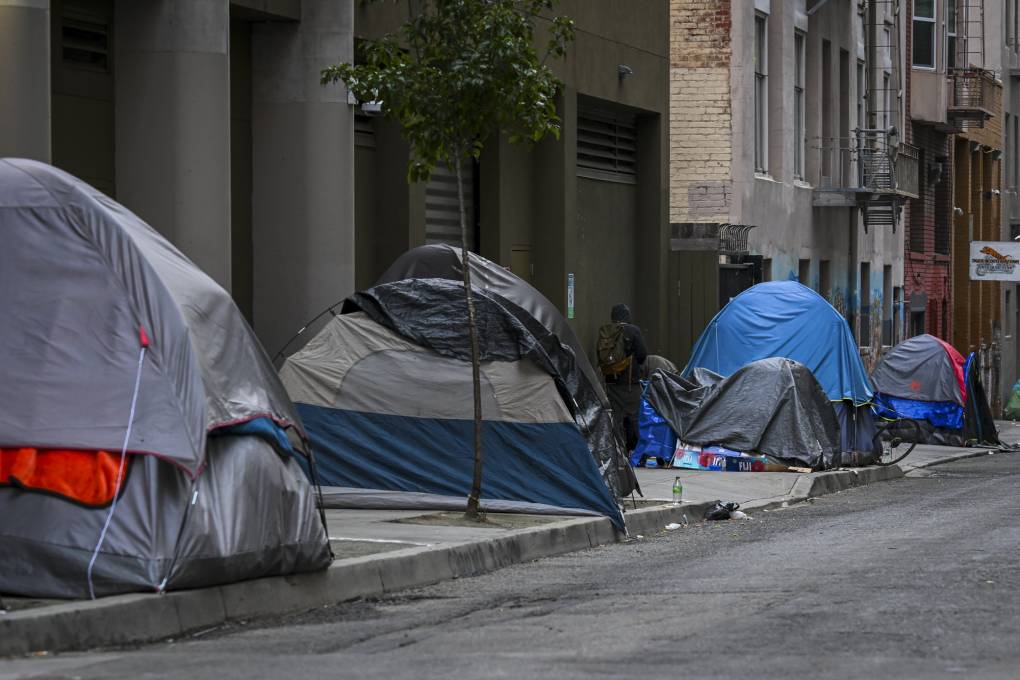
"caption": "A tent encampment is seen near City Hall in San Francisco on June 6, 2023.",
"description": null,
"title": "Homelessness in San Francisco",
"credit": "Tayfun Coskun/Anadolu Agency via Getty Images",
"status": "inherit",
"altTag": "A street scene, with cars, people, and tents on the sidewalk.",
"isLoading": false,
"fetchFailed": false
},
"news_11962415": {
"type": "attachments",
"id": "news_11962415",
"meta": {
"index": "attachments_1716263798",
"site": "news",
"id": "11962415",
"found": true
},
"title": "Homelessness and drug situations in San Francisco",
"publishDate": 1695680058,
"status": "inherit",
"parent": 12058779,
"modified": 1759868528,
"caption": "A homeless encampment on a sidewalk in San Francisco on Sept. 2, 2023.",
"credit": "Tayfun Coskun/Anadolu Agency via Getty Images",
"altTag": "A series of tents lined up along a city sidewalk.",
"description": null,
"imgSizes": {
"medium": {
"file": "https://cdn.kqed.org/wp-content/uploads/sites/10/2023/09/230925-ENCAMPMENT-SAN-FRANCISCO-GETTY-KQED-800x533.jpg",
"width": 800,
"height": 533,
"mimeType": "image/jpeg"
},
"large": {
"file": "https://cdn.kqed.org/wp-content/uploads/sites/10/2023/09/230925-ENCAMPMENT-SAN-FRANCISCO-GETTY-KQED-1020x680.jpg",
"width": 1020,
"height": 680,
"mimeType": "image/jpeg"
},
"thumbnail": {
"file": "https://cdn.kqed.org/wp-content/uploads/sites/10/2023/09/230925-ENCAMPMENT-SAN-FRANCISCO-GETTY-KQED-160x107.jpg",
"width": 160,
"height": 107,
"mimeType": "image/jpeg"
},
"1536x1536": {
"file": "https://cdn.kqed.org/wp-content/uploads/sites/10/2023/09/230925-ENCAMPMENT-SAN-FRANCISCO-GETTY-KQED-1536x1024.jpg",
"width": 1536,
"height": 1024,
"mimeType": "image/jpeg"
},
"post-thumbnail": {
"file": "https://cdn.kqed.org/wp-content/uploads/sites/10/2023/09/230925-ENCAMPMENT-SAN-FRANCISCO-GETTY-KQED-672x372.jpg",
"width": 672,
"height": 372,
"mimeType": "image/jpeg"
},
"twentyfourteen-full-width": {
"file": "https://cdn.kqed.org/wp-content/uploads/sites/10/2023/09/230925-ENCAMPMENT-SAN-FRANCISCO-GETTY-KQED-1038x576.jpg",
"width": 1038,
"height": 576,
"mimeType": "image/jpeg"
},
"full-width": {
"file": "https://cdn.kqed.org/wp-content/uploads/sites/10/2023/09/230925-ENCAMPMENT-SAN-FRANCISCO-GETTY-KQED-1920x1280.jpg",
"width": 1920,
"height": 1280,
"mimeType": "image/jpeg"
},
"kqedFullSize": {
"file": "https://cdn.kqed.org/wp-content/uploads/sites/10/2023/09/230925-ENCAMPMENT-SAN-FRANCISCO-GETTY-KQED.jpg",
"width": 2000,
"height": 1333
}
},
"isLoading": false,
"fetchFailed": false
},
"news_11961827": {
"type": "attachments",
"id": "news_11961827",
"meta": {
"index": "attachments_1716263798",
"site": "news",
"id": "11961827",
"found": true
},
"parent": 11961820,
"imgSizes": {
"twentyfourteen-full-width": {
"file": "https://ww2.kqed.org/app/uploads/sites/10/2023/09/009_KQED_Oakland_CoronavirusHomelessRelief_03252020_0028-qut-1038x576.jpg",
"width": 1038,
"mimeType": "image/jpeg",
"height": 576
},
"thumbnail": {
"file": "https://ww2.kqed.org/app/uploads/sites/10/2023/09/009_KQED_Oakland_CoronavirusHomelessRelief_03252020_0028-qut-160x107.jpg",
"width": 160,
"mimeType": "image/jpeg",
"height": 107
},
"post-thumbnail": {
"file": "https://ww2.kqed.org/app/uploads/sites/10/2023/09/009_KQED_Oakland_CoronavirusHomelessRelief_03252020_0028-qut-672x372.jpg",
"width": 672,
"mimeType": "image/jpeg",
"height": 372
},
"kqedFullSize": {
"file": "https://ww2.kqed.org/app/uploads/sites/10/2023/09/009_KQED_Oakland_CoronavirusHomelessRelief_03252020_0028-qut.jpg",
"width": 1920,
"height": 1280
},
"large": {
"file": "https://ww2.kqed.org/app/uploads/sites/10/2023/09/009_KQED_Oakland_CoronavirusHomelessRelief_03252020_0028-qut-1020x680.jpg",
"width": 1020,
"mimeType": "image/jpeg",
"height": 680
},
"1536x1536": {
"file": "https://ww2.kqed.org/app/uploads/sites/10/2023/09/009_KQED_Oakland_CoronavirusHomelessRelief_03252020_0028-qut-1536x1024.jpg",
"width": 1536,
"mimeType": "image/jpeg",
"height": 1024
},
"medium": {
"file": "https://ww2.kqed.org/app/uploads/sites/10/2023/09/009_KQED_Oakland_CoronavirusHomelessRelief_03252020_0028-qut-800x533.jpg",
"width": 800,
"mimeType": "image/jpeg",
"height": 533
}
},
"publishDate": 1695167983,
"modified": 1695169444,
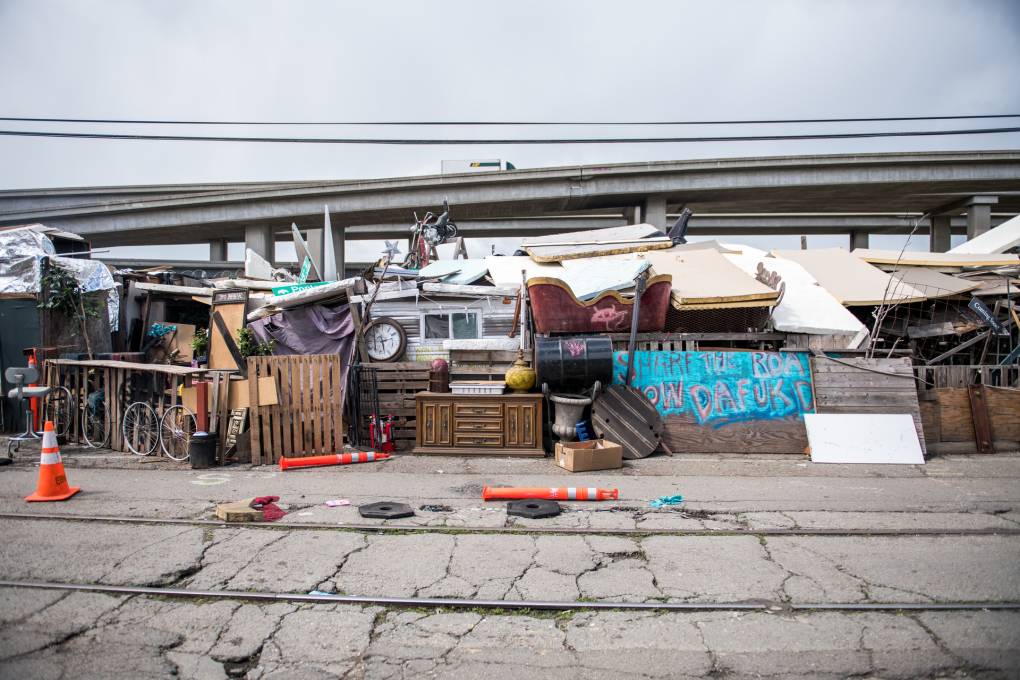
"caption": "Encampments and motor homes near 24th Street in West Oakland.",
"description": null,
"title": "009_KQED_Oakland_CoronavirusHomelessRelief_03252020_0028-qut",
"credit": "Beth LaBerge/KQED",
"status": "inherit",
"altTag": "a row of tents and wood boards up against motor homes under a freeway overpass",
"isLoading": false,
"fetchFailed": false
},
"news_11961810": {
"type": "attachments",
"id": "news_11961810",
"meta": {
"index": "attachments_1716263798",
"site": "news",
"id": "11961810",
"found": true
},
"parent": 0,
"imgSizes": {
"twentyfourteen-full-width": {
"file": "https://ww2.kqed.org/app/uploads/sites/10/2023/09/IMG_1902-1038x576.jpg",
"width": 1038,
"mimeType": "image/jpeg",
"height": 576
},
"thumbnail": {
"file": "https://ww2.kqed.org/app/uploads/sites/10/2023/09/IMG_1902-160x120.jpg",
"width": 160,
"mimeType": "image/jpeg",
"height": 120
},
"post-thumbnail": {
"file": "https://ww2.kqed.org/app/uploads/sites/10/2023/09/IMG_1902-672x372.jpg",
"width": 672,
"mimeType": "image/jpeg",
"height": 372
},
"kqedFullSize": {
"file": "https://ww2.kqed.org/app/uploads/sites/10/2023/09/IMG_1902.jpg",
"width": 2272,
"height": 1704
},
"2048x2048": {
"file": "https://ww2.kqed.org/app/uploads/sites/10/2023/09/IMG_1902-2048x1536.jpg",
"width": 2048,
"mimeType": "image/jpeg",
"height": 1536
},
"large": {
"file": "https://ww2.kqed.org/app/uploads/sites/10/2023/09/IMG_1902-1020x765.jpg",
"width": 1020,
"mimeType": "image/jpeg",
"height": 765
},
"1536x1536": {
"file": "https://ww2.kqed.org/app/uploads/sites/10/2023/09/IMG_1902-1536x1152.jpg",
"width": 1536,
"mimeType": "image/jpeg",
"height": 1152
},
"full-width": {
"file": "https://ww2.kqed.org/app/uploads/sites/10/2023/09/IMG_1902-1920x1440.jpg",
"width": 1920,
"mimeType": "image/jpeg",
"height": 1440
},
"medium": {
"file": "https://ww2.kqed.org/app/uploads/sites/10/2023/09/IMG_1902-800x600.jpg",
"width": 800,
"mimeType": "image/jpeg",
"height": 600
}
},
"publishDate": 1695164183,
"modified": 1695167754,
"caption": "Sacramento’s top prosecutor is suing the city’s leaders over failure to cleanup homeless encampments, escalating a monthslong dispute with leaders in the state capital.",
"description": null,
"title": "IMG_1902",
"credit": "Craig Miller/KQED",
"status": "inherit",
"altTag": "A tall, white, capital building is seen with an American flag raised on a pole.",
"isLoading": false,
"fetchFailed": false
},
"news_11961358": {
"type": "attachments",
"id": "news_11961358",
"meta": {
"index": "attachments_1716263798",
"site": "news",
"id": "11961358",
"found": true
},
"parent": 0,
"imgSizes": {
"twentyfourteen-full-width": {
"file": "https://ww2.kqed.org/app/uploads/sites/10/2023/09/CMNewsom01-1038x576.jpg",
"width": 1038,
"mimeType": "image/jpeg",
"height": 576
},
"thumbnail": {
"file": "https://ww2.kqed.org/app/uploads/sites/10/2023/09/CMNewsom01-160x99.jpg",
"width": 160,
"mimeType": "image/jpeg",
"height": 99
},
"post-thumbnail": {
"file": "https://ww2.kqed.org/app/uploads/sites/10/2023/09/CMNewsom01-672x372.jpg",
"width": 672,
"mimeType": "image/jpeg",
"height": 372
},
"kqedFullSize": {
"file": "https://ww2.kqed.org/app/uploads/sites/10/2023/09/CMNewsom01.jpg",
"width": 2000,
"height": 1238
},
"large": {
"file": "https://ww2.kqed.org/app/uploads/sites/10/2023/09/CMNewsom01-1020x631.jpg",
"width": 1020,
"mimeType": "image/jpeg",
"height": 631
},
"1536x1536": {
"file": "https://ww2.kqed.org/app/uploads/sites/10/2023/09/CMNewsom01-1536x951.jpg",
"width": 1536,
"mimeType": "image/jpeg",
"height": 951
},
"full-width": {
"file": "https://ww2.kqed.org/app/uploads/sites/10/2023/09/CMNewsom01-1920x1188.jpg",
"width": 1920,
"mimeType": "image/jpeg",
"height": 1188
},
"medium": {
"file": "https://ww2.kqed.org/app/uploads/sites/10/2023/09/CMNewsom01-800x495.jpg",
"width": 800,
"mimeType": "image/jpeg",
"height": 495
}
},
"publishDate": 1694802193,
"modified": 1694809839,
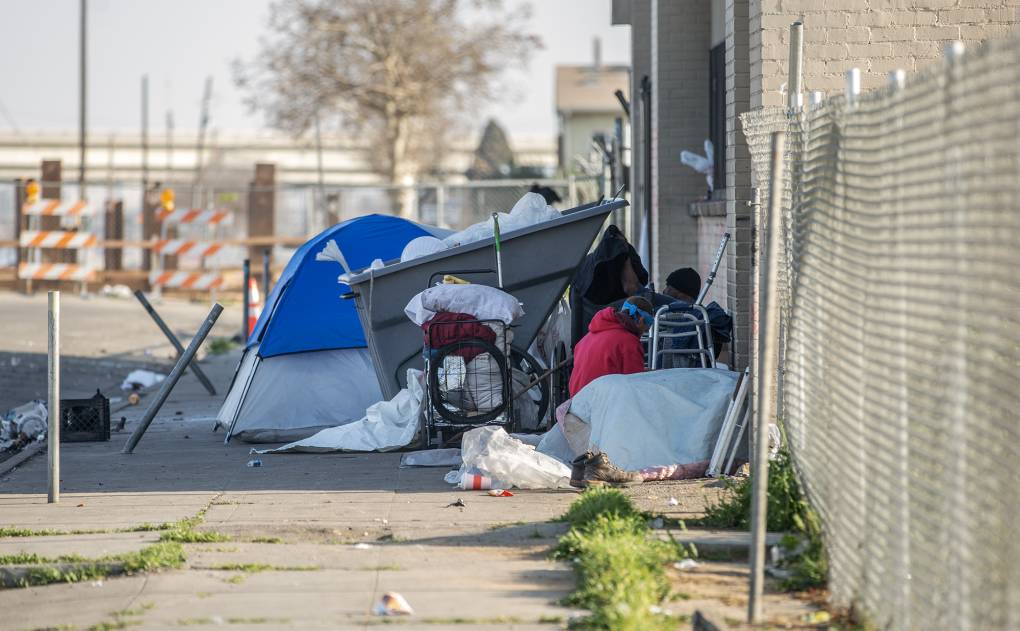
"caption": "People sit on the sidewalk of G Street in a small homeless encampment in the Chinatown neighborhood of Fresno on Feb. 10, 2022. ",
"description": null,
"title": "CMNewsom01",
"credit": "Larry Valenzuela/CalMatters",
"status": "inherit",
"altTag": "An encampment is seen with a tent, pillows and other belongings arranged on a sidewalk next to a building lined with a chain-link fence.",
"isLoading": false,
"fetchFailed": false
},
"news_11960832": {
"type": "attachments",
"id": "news_11960832",
"meta": {
"index": "attachments_1716263798",
"site": "news",
"id": "11960832",
"found": true
},
"parent": 11960819,
"imgSizes": {
"twentyfourteen-full-width": {
"file": "https://ww2.kqed.org/app/uploads/sites/10/2023/09/090623_Chico_Homeless_FG_CM_18-1038x576.jpg",
"width": 1038,
"mimeType": "image/jpeg",
"height": 576
},
"thumbnail": {
"file": "https://ww2.kqed.org/app/uploads/sites/10/2023/09/090623_Chico_Homeless_FG_CM_18-160x107.jpg",
"width": 160,
"mimeType": "image/jpeg",
"height": 107
},
"post-thumbnail": {
"file": "https://ww2.kqed.org/app/uploads/sites/10/2023/09/090623_Chico_Homeless_FG_CM_18-672x372.jpg",
"width": 672,
"mimeType": "image/jpeg",
"height": 372
},
"kqedFullSize": {
"file": "https://ww2.kqed.org/app/uploads/sites/10/2023/09/090623_Chico_Homeless_FG_CM_18.jpg",
"width": 2000,
"height": 1333
},
"large": {
"file": "https://ww2.kqed.org/app/uploads/sites/10/2023/09/090623_Chico_Homeless_FG_CM_18-1020x680.jpg",
"width": 1020,
"mimeType": "image/jpeg",
"height": 680
},
"1536x1536": {
"file": "https://ww2.kqed.org/app/uploads/sites/10/2023/09/090623_Chico_Homeless_FG_CM_18-1536x1024.jpg",
"width": 1536,
"mimeType": "image/jpeg",
"height": 1024
},
"full-width": {
"file": "https://ww2.kqed.org/app/uploads/sites/10/2023/09/090623_Chico_Homeless_FG_CM_18-1920x1280.jpg",
"width": 1920,
"mimeType": "image/jpeg",
"height": 1280
},
"medium": {
"file": "https://ww2.kqed.org/app/uploads/sites/10/2023/09/090623_Chico_Homeless_FG_CM_18-800x533.jpg",
"width": 800,
"mimeType": "image/jpeg",
"height": 533
}
},
"publishDate": 1694544728,
"modified": 1694545400,
"caption": "An emergency non-congregate housing site in Chico on Sept. 6, 2023.",
"description": null,
"title": "090623_Chico_Homeless_FG_CM_18",
"credit": "Fred Greaves/CalMatters",
"status": "inherit",
"altTag": "An aerial view of a housing site.",
"isLoading": false,
"fetchFailed": false
},
"news_11960318": {
"type": "attachments",
"id": "news_11960318",
"meta": {
"index": "attachments_1716263798",
"site": "news",
"id": "11960318",
"found": true
},
"parent": 11960279,
"imgSizes": {
"twentyfourteen-full-width": {
"file": "https://ww2.kqed.org/app/uploads/sites/10/2023/09/GettyImages-1644665358-1024x576.jpg",
"width": 1024,
"mimeType": "image/jpeg",
"height": 576
},
"thumbnail": {
"file": "https://ww2.kqed.org/app/uploads/sites/10/2023/09/GettyImages-1644665358-160x107.jpg",
"width": 160,
"mimeType": "image/jpeg",
"height": 107
},
"post-thumbnail": {
"file": "https://ww2.kqed.org/app/uploads/sites/10/2023/09/GettyImages-1644665358-672x372.jpg",
"width": 672,
"mimeType": "image/jpeg",
"height": 372
},
"kqedFullSize": {
"file": "https://ww2.kqed.org/app/uploads/sites/10/2023/09/GettyImages-1644665358.jpg",
"width": 1024,
"height": 683
},
"large": {
"file": "https://ww2.kqed.org/app/uploads/sites/10/2023/09/GettyImages-1644665358-1020x680.jpg",
"width": 1020,
"mimeType": "image/jpeg",
"height": 680
},
"medium": {
"file": "https://ww2.kqed.org/app/uploads/sites/10/2023/09/GettyImages-1644665358-800x534.jpg",
"width": 800,
"mimeType": "image/jpeg",
"height": 534
}
},
"publishDate": 1694110744,
"modified": 1694111074,
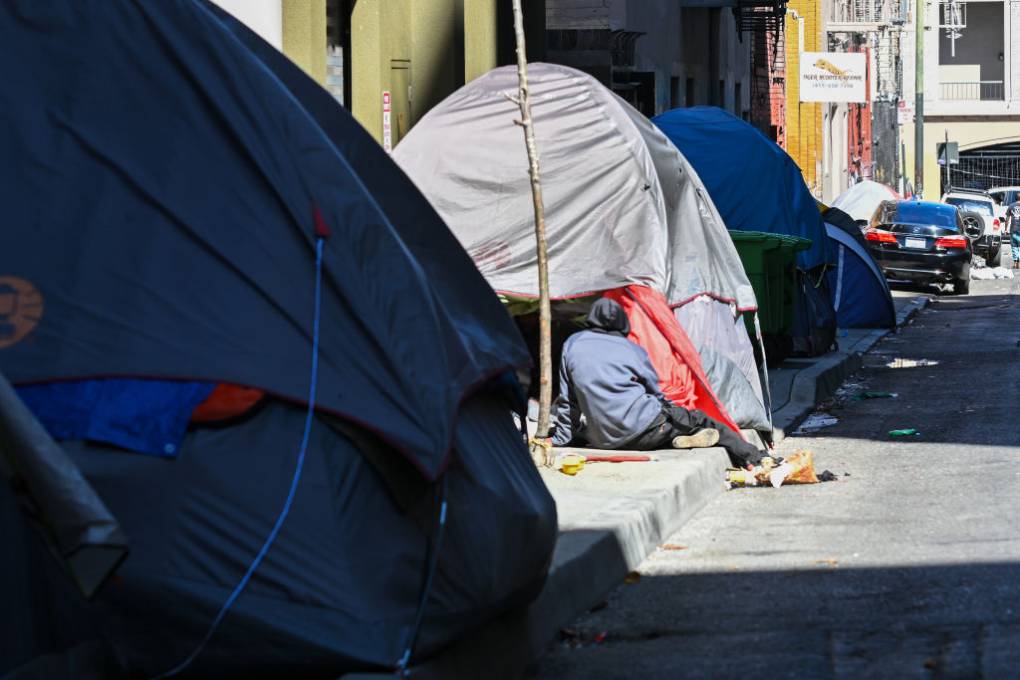
"caption": "A small tent encampment lines a sidewalk in San Francisco's Tenderloin neighborhood on Aug. 28, 2023.",
"description": null,
"title": "Homelessness and drug situations in San Francisco",
"credit": "Tayfun Coskun/Anadolu Agency via Getty Images",
"status": "inherit",
"altTag": "Three tents line a sidewalk, with a person - back to camera - sitting on the curb in front of one of the tents.",
"isLoading": false,
"fetchFailed": false
},
"news_11959491": {
"type": "attachments",
"id": "news_11959491",
"meta": {
"index": "attachments_1716263798",
"site": "news",
"id": "11959491",
"found": true
},
"parent": 11959490,
"imgSizes": {
"twentyfourteen-full-width": {
"file": "https://ww2.kqed.org/app/uploads/sites/10/2023/08/RS68257_20230822-HomelessLawsuit-15-JY-qut-1-1038x576.jpg",
"width": 1038,
"mimeType": "image/jpeg",
"height": 576
},
"thumbnail": {
"file": "https://ww2.kqed.org/app/uploads/sites/10/2023/08/RS68257_20230822-HomelessLawsuit-15-JY-qut-1-160x107.jpg",
"width": 160,
"mimeType": "image/jpeg",
"height": 107
},
"post-thumbnail": {
"file": "https://ww2.kqed.org/app/uploads/sites/10/2023/08/RS68257_20230822-HomelessLawsuit-15-JY-qut-1-672x372.jpg",
"width": 672,
"mimeType": "image/jpeg",
"height": 372
},
"kqedFullSize": {
"file": "https://ww2.kqed.org/app/uploads/sites/10/2023/08/RS68257_20230822-HomelessLawsuit-15-JY-qut-1.jpg",
"width": 1920,
"height": 1280
},
"large": {
"file": "https://ww2.kqed.org/app/uploads/sites/10/2023/08/RS68257_20230822-HomelessLawsuit-15-JY-qut-1-1020x680.jpg",
"width": 1020,
"mimeType": "image/jpeg",
"height": 680
},
"1536x1536": {
"file": "https://ww2.kqed.org/app/uploads/sites/10/2023/08/RS68257_20230822-HomelessLawsuit-15-JY-qut-1-1536x1024.jpg",
"width": 1536,
"mimeType": "image/jpeg",
"height": 1024
},
"medium": {
"file": "https://ww2.kqed.org/app/uploads/sites/10/2023/08/RS68257_20230822-HomelessLawsuit-15-JY-qut-1-800x533.jpg",
"width": 800,
"mimeType": "image/jpeg",
"height": 533
}
},
"publishDate": 1693342526,
"modified": 1693415083,
"caption": "District 6 Supervisor Matt Dorsey speaks at a rally in front of the Ninth Circuit Court of Appeals in San Francisco on Aug. 23, 2023. Dorsey voiced his opposition of the injunction filed by the Coalition on Homelessness, which has temporarily kept city workers from removing encampments on the streets.",
"description": null,
"title": "RS68257_20230822-HomelessLawsuit-15-JY-qut",
"credit": "Juliana Yamada/KQED",
"status": "inherit",
"altTag": "An African American woman in a blue suit dress looks on with a crowd of protesters holding signs as a white man in a suit and tie pumps his fist in the air while speaking into a microphone outside of a building.",
"isLoading": false,
"fetchFailed": false
},
"news_11959131": {
"type": "attachments",
"id": "news_11959131",
"meta": {
"index": "attachments_1716263798",
"site": "news",
"id": "11959131",
"found": true
},
"parent": 11959120,
"imgSizes": {
"twentyfourteen-full-width": {
"file": "https://ww2.kqed.org/app/uploads/sites/10/2023/08/RS43040_011_KQED_SanFrancisco_TentEncampments_05052020-qut-1038x576.jpg",
"width": 1038,
"mimeType": "image/jpeg",
"height": 576
},
"thumbnail": {
"file": "https://ww2.kqed.org/app/uploads/sites/10/2023/08/RS43040_011_KQED_SanFrancisco_TentEncampments_05052020-qut-160x107.jpg",
"width": 160,
"mimeType": "image/jpeg",
"height": 107
},
"post-thumbnail": {
"file": "https://ww2.kqed.org/app/uploads/sites/10/2023/08/RS43040_011_KQED_SanFrancisco_TentEncampments_05052020-qut-672x372.jpg",
"width": 672,
"mimeType": "image/jpeg",
"height": 372
},
"kqedFullSize": {
"file": "https://ww2.kqed.org/app/uploads/sites/10/2023/08/RS43040_011_KQED_SanFrancisco_TentEncampments_05052020-qut.jpg",
"width": 1920,
"height": 1280
},
"large": {
"file": "https://ww2.kqed.org/app/uploads/sites/10/2023/08/RS43040_011_KQED_SanFrancisco_TentEncampments_05052020-qut-1020x680.jpg",
"width": 1020,
"mimeType": "image/jpeg",
"height": 680
},
"1536x1536": {
"file": "https://ww2.kqed.org/app/uploads/sites/10/2023/08/RS43040_011_KQED_SanFrancisco_TentEncampments_05052020-qut-1536x1024.jpg",
"width": 1536,
"mimeType": "image/jpeg",
"height": 1024
},
"medium": {
"file": "https://ww2.kqed.org/app/uploads/sites/10/2023/08/RS43040_011_KQED_SanFrancisco_TentEncampments_05052020-qut-800x533.jpg",
"width": 800,
"mimeType": "image/jpeg",
"height": 533
}
},
"publishDate": 1692921727,
"modified": 1692922266,
"caption": "Tents line Fulton Street near San Francisco City Hall in 2020.",
"description": null,
"title": "Tents line Fulton Street near City Hall on April 5, 2020.",
"credit": "Beth LaBerge/KQED",
"status": "inherit",
"altTag": "a row of tents in a plaza in front of city hall",
"isLoading": false,
"fetchFailed": false
},
"news_11958938": {
"type": "attachments",
"id": "news_11958938",
"meta": {
"index": "attachments_1716263798",
"site": "news",
"id": "11958938",
"found": true
},
"parent": 0,
"imgSizes": {
"twentyfourteen-full-width": {
"file": "https://ww2.kqed.org/app/uploads/sites/10/2023/08/RS68250_20230822-HomelessLawsuit-09-JY-KQED-1038x576.jpg",
"width": 1038,
"mimeType": "image/jpeg",
"height": 576
},
"thumbnail": {
"file": "https://ww2.kqed.org/app/uploads/sites/10/2023/08/RS68250_20230822-HomelessLawsuit-09-JY-KQED-160x107.jpg",
"width": 160,
"mimeType": "image/jpeg",
"height": 107
},
"post-thumbnail": {
"file": "https://ww2.kqed.org/app/uploads/sites/10/2023/08/RS68250_20230822-HomelessLawsuit-09-JY-KQED-672x372.jpg",
"width": 672,
"mimeType": "image/jpeg",
"height": 372
},
"kqedFullSize": {
"file": "https://ww2.kqed.org/app/uploads/sites/10/2023/08/RS68250_20230822-HomelessLawsuit-09-JY-KQED.jpg",
"width": 2000,
"height": 1333
},
"large": {
"file": "https://ww2.kqed.org/app/uploads/sites/10/2023/08/RS68250_20230822-HomelessLawsuit-09-JY-KQED-1020x680.jpg",
"width": 1020,
"mimeType": "image/jpeg",
"height": 680
},
"1536x1536": {
"file": "https://ww2.kqed.org/app/uploads/sites/10/2023/08/RS68250_20230822-HomelessLawsuit-09-JY-KQED-1536x1024.jpg",
"width": 1536,
"mimeType": "image/jpeg",
"height": 1024
},
"full-width": {
"file": "https://ww2.kqed.org/app/uploads/sites/10/2023/08/RS68250_20230822-HomelessLawsuit-09-JY-KQED-1920x1280.jpg",
"width": 1920,
"mimeType": "image/jpeg",
"height": 1280
},
"medium": {
"file": "https://ww2.kqed.org/app/uploads/sites/10/2023/08/RS68250_20230822-HomelessLawsuit-09-JY-KQED-800x533.jpg",
"width": 800,
"mimeType": "image/jpeg",
"height": 533
}
},
"publishDate": 1692825517,
"modified": 1692829980,
"caption": "Mayor London Breed (left) and Supervisor Joel Engardio (right) are seen at a rally in front of the Ninth Circuit Court of Appeals in San Francisco on Wednesday, Aug. 23, 2023. Mayor Breed and Supervisor Engardio strongly oppose the injunction filed by the Coalition on Homelessness, which has temporarily kept city workers from removing encampments on the streets.",
"description": null,
"title": "RS68250_20230822-HomelessLawsuit-09-JY-KQED",
"credit": "Juliana Yamada/KQED",
"status": "inherit",
"altTag": "A woman in blue stands next to a man in a suit with signs protesting and supporting homelessness in the background.",
"isLoading": false,
"fetchFailed": false
},
"news_11958565": {
"type": "attachments",
"id": "news_11958565",
"meta": {
"index": "attachments_1716263798",
"site": "news",
"id": "11958565",
"found": true
},
"parent": 11958561,
"imgSizes": {
"twentyfourteen-full-width": {
"file": "https://ww2.kqed.org/app/uploads/sites/10/2023/08/081822_NewsomFresno_LV_CM_006-copy-1038x576.jpg",
"width": 1038,
"mimeType": "image/jpeg",
"height": 576
},
"thumbnail": {
"file": "https://ww2.kqed.org/app/uploads/sites/10/2023/08/081822_NewsomFresno_LV_CM_006-copy-160x107.jpg",
"width": 160,
"mimeType": "image/jpeg",
"height": 107
},
"post-thumbnail": {
"file": "https://ww2.kqed.org/app/uploads/sites/10/2023/08/081822_NewsomFresno_LV_CM_006-copy-672x372.jpg",
"width": 672,
"mimeType": "image/jpeg",
"height": 372
},
"kqedFullSize": {
"file": "https://ww2.kqed.org/app/uploads/sites/10/2023/08/081822_NewsomFresno_LV_CM_006-copy.jpg",
"width": 2000,
"height": 1333
},
"large": {
"file": "https://ww2.kqed.org/app/uploads/sites/10/2023/08/081822_NewsomFresno_LV_CM_006-copy-1020x680.jpg",
"width": 1020,
"mimeType": "image/jpeg",
"height": 680
},
"1536x1536": {
"file": "https://ww2.kqed.org/app/uploads/sites/10/2023/08/081822_NewsomFresno_LV_CM_006-copy-1536x1024.jpg",
"width": 1536,
"mimeType": "image/jpeg",
"height": 1024
},
"full-width": {
"file": "https://ww2.kqed.org/app/uploads/sites/10/2023/08/081822_NewsomFresno_LV_CM_006-copy-1920x1280.jpg",
"width": 1920,
"mimeType": "image/jpeg",
"height": 1280
},
"medium": {
"file": "https://ww2.kqed.org/app/uploads/sites/10/2023/08/081822_NewsomFresno_LV_CM_006-copy-800x533.jpg",
"width": 800,
"mimeType": "image/jpeg",
"height": 533
}
},
"publishDate": 1692383651,
"modified": 1692383792,
"caption": "Gov. Gavin Newsom outlined new efforts to support the mental health of students at McLane High School in Fresno on Aug. 18, 2022.",
"description": null,
"title": "081822_NewsomFresno_LV_CM_006 copy",
"credit": "Larry Valenzuela, CalMatters/CatchLight Local",
"status": "inherit",
"altTag": "A white middle-aged man in a blue suit and blue tie speaks behind a dais that says \"Healthy Minds For California Kids\" surrounded by people.",
"isLoading": false,
"fetchFailed": false
},
"news_11955872": {
"type": "attachments",
"id": "news_11955872",
"meta": {
"index": "attachments_1716263798",
"site": "news",
"id": "11955872",
"found": true
},
"parent": 0,
"imgSizes": {
"twentyfourteen-full-width": {
"file": "https://ww2.kqed.org/app/uploads/sites/10/2023/07/CalMattersNewsom-1038x576.jpg",
"width": 1038,
"mimeType": "image/jpeg",
"height": 576
},
"thumbnail": {
"file": "https://ww2.kqed.org/app/uploads/sites/10/2023/07/CalMattersNewsom-160x107.jpg",
"width": 160,
"mimeType": "image/jpeg",
"height": 107
},
"post-thumbnail": {
"file": "https://ww2.kqed.org/app/uploads/sites/10/2023/07/CalMattersNewsom-672x372.jpg",
"width": 672,
"mimeType": "image/jpeg",
"height": 372
},
"kqedFullSize": {
"file": "https://ww2.kqed.org/app/uploads/sites/10/2023/07/CalMattersNewsom.jpg",
"width": 2000,
"height": 1334
},
"large": {
"file": "https://ww2.kqed.org/app/uploads/sites/10/2023/07/CalMattersNewsom-1020x680.jpg",
"width": 1020,
"mimeType": "image/jpeg",
"height": 680
},
"1536x1536": {
"file": "https://ww2.kqed.org/app/uploads/sites/10/2023/07/CalMattersNewsom-1536x1025.jpg",
"width": 1536,
"mimeType": "image/jpeg",
"height": 1025
},
"full-width": {
"file": "https://ww2.kqed.org/app/uploads/sites/10/2023/07/CalMattersNewsom-1920x1281.jpg",
"width": 1920,
"mimeType": "image/jpeg",
"height": 1281
},
"medium": {
"file": "https://ww2.kqed.org/app/uploads/sites/10/2023/07/CalMattersNewsom-800x534.jpg",
"width": 800,
"mimeType": "image/jpeg",
"height": 534
}
},
"publishDate": 1689620343,
"modified": 1689620468,
"caption": "Gov. Gavin Newsom speaks at a news conference announcing a proposed a 2024 ballot initiative to improve mental health services across the state, at Alvarado Hospital in San Diego, on March 19, 2023.",
"description": null,
"title": "Califorina Governor",
"credit": "Adriana Heldiz/The San Diego Union-Tribune via AP, Pool",
"status": "inherit",
"altTag": "California Gov. Gavin Newsom in a navy blazer and white shirt speaks from behind a black podium with a sign on the front that reads, \"Better Mental Health Treatment.\" Eight men and women in business attire stand solemn-faced behind him.",
"isLoading": false,
"fetchFailed": false
}
},
"audioPlayerReducer": {
"postId": "stream_live",
"isPaused": true,
"isPlaying": false,
"pfsActive": false,
"pledgeModalIsOpen": true,
"playerDrawerIsOpen": false,
"liveAudioPlayStartedAt": 0,
"liveAudioPlayContext": ""
},
"authorsReducer": {
"byline_news_11961802": {
"type": "authors",
"id": "byline_news_11961802",
"meta": {
"override": true
},
"slug": "byline_news_11961802",
"name": "\u003ca href=\"https://twitter.com/nguyenntrann\">Trân Nguyễn\u003c/a>\u003cbr>The Associated Press",
"isLoading": false
},
"byline_news_11961346": {
"type": "authors",
"id": "byline_news_11961346",
"meta": {
"override": true
},
"slug": "byline_news_11961346",
"name": "\u003ca href=\"https://calmatters.org/author/kristen-hwang/\">Kristen Hwang\u003c/a>",
"isLoading": false
},
"byline_news_11960819": {
"type": "authors",
"id": "byline_news_11960819",
"meta": {
"override": true
},
"slug": "byline_news_11960819",
"name": "\u003ca href=\"https://calmatters.org/author/jeanne-kuang/\">Jeanne Kuang\u003c/a>",
"isLoading": false
},
"byline_news_11958561": {
"type": "authors",
"id": "byline_news_11958561",
"meta": {
"override": true
},
"slug": "byline_news_11958561",
"name": "\u003ca href=\"https://calmatters.org/author/kristen-hwang/\">Kristen Hwang\u003c/a>",
"isLoading": false
},
"byline_news_11955844": {
"type": "authors",
"id": "byline_news_11955844",
"meta": {
"override": true
},
"slug": "byline_news_11955844",
"name": "\u003ca href=\"https://calmatters.org/author/kristen-hwang/\">Kristen Hwang\u003c/a>",
"isLoading": false
},
"ecruzguevarra": {
"type": "authors",
"id": "8654",
"meta": {
"index": "authors_1716337520",
"id": "8654",
"found": true
},
"name": "Ericka Cruz Guevarra",
"firstName": "Ericka",
"lastName": "Cruz Guevarra",
"slug": "ecruzguevarra",
"email": "ecruzguevarra@kqed.org",
"display_author_email": true,
"staff_mastheads": [
"news"
],
"title": "Producer, The Bay Podcast",
"bio": "Ericka Cruz Guevarra is host of \u003ca href=\"https://www.kqed.org/podcasts/thebay\">\u003cem>The Bay\u003c/em>\u003c/a> podcast at KQED. Before host, she was the show’s producer. Her work in that capacity includes a three-part reported series on policing in Vallejo, which won a 2020 excellence in journalism award from the Society of Professional Journalists. Ericka has worked as a breaking news reporter at Oregon Public Broadcasting, helped produce the Code Switch podcast, and was KQED’s inaugural Raul Ramirez Diversity Fund intern. She’s also an alumna of NPR’s Next Generation Radio program. Send her an email if you have strong feelings about whether Fairfield and Suisun City are the Bay. Ericka is represented by SAG-AFTRA.",
"avatar": "https://secure.gravatar.com/avatar/25e5ab8d3d53fad2dcc7bb2b5c506b1a?s=600&d=blank&r=g",
"twitter": "NotoriousECG",
"facebook": null,
"instagram": null,
"linkedin": null,
"sites": [
{
"site": "arts",
"roles": [
"subscriber"
]
},
{
"site": "news",
"roles": [
"editor",
"manage_categories"
]
},
{
"site": "futureofyou",
"roles": [
"subscriber"
]
},
{
"site": "stateofhealth",
"roles": [
"subscriber"
]
},
{
"site": "science",
"roles": [
"editor"
]
},
{
"site": "forum",
"roles": [
"subscriber"
]
}
],
"headData": {
"title": "Ericka Cruz Guevarra | KQED",
"description": "Producer, The Bay Podcast",
"ogImgSrc": "https://secure.gravatar.com/avatar/25e5ab8d3d53fad2dcc7bb2b5c506b1a?s=600&d=blank&r=g",
"twImgSrc": "https://secure.gravatar.com/avatar/25e5ab8d3d53fad2dcc7bb2b5c506b1a?s=600&d=blank&r=g"
},
"isLoading": false,
"link": "/author/ecruzguevarra"
},
"amontecillo": {
"type": "authors",
"id": "11649",
"meta": {
"index": "authors_1716337520",
"id": "11649",
"found": true
},
"name": "Alan Montecillo",
"firstName": "Alan",
"lastName": "Montecillo",
"slug": "amontecillo",
"email": "amontecillo@kqed.org",
"display_author_email": false,
"staff_mastheads": [
"news"
],
"title": "KQED Contributor",
"bio": "Alan Montecillo is the senior editor of \u003cem>\u003ca href=\"http://kqed.org/thebay\">The Bay\u003c/a>, \u003c/em> KQED's local news podcast. Before moving to the Bay Area, he worked as a senior talk show producer for WILL in Champaign-Urbana, Illinois and at Oregon Public Broadcasting in Portland, Oregon. He has won journalism awards from the Society of Professional Journalists Northern California, the Public Media Journalists Association, The Signal Awards, and has also received a regional Edward R. Murrow award. Alan is a Filipino American from Hong Kong and a graduate of Reed College.",
"avatar": "https://secure.gravatar.com/avatar/d5e4e7a76481969ccba76f4e2b5ccabc?s=600&d=blank&r=g",
"twitter": "alanmontecillo",
"facebook": null,
"instagram": null,
"linkedin": null,
"sites": [
{
"site": "",
"roles": [
"editor"
]
},
{
"site": "news",
"roles": [
"editor",
"manage_categories"
]
}
],
"headData": {
"title": "Alan Montecillo | KQED",
"description": "KQED Contributor",
"ogImgSrc": "https://secure.gravatar.com/avatar/d5e4e7a76481969ccba76f4e2b5ccabc?s=600&d=blank&r=g",
"twImgSrc": "https://secure.gravatar.com/avatar/d5e4e7a76481969ccba76f4e2b5ccabc?s=600&d=blank&r=g"
},
"isLoading": false,
"link": "/author/amontecillo"
},
"mesquinca": {
"type": "authors",
"id": "11802",
"meta": {
"index": "authors_1716337520",
"id": "11802",
"found": true
},
"name": "Maria Esquinca",
"firstName": "Maria",
"lastName": "Esquinca",
"slug": "mesquinca",
"email": "mesquinca@kqed.org",
"display_author_email": false,
"staff_mastheads": [],
"title": "Producer, The Bay",
"bio": "María Esquinca is a producer of The Bay. Before that, she was a New York Women’s Foundation IGNITE Fellow at Latino USA. She worked at Radio Bilingue where she covered the San Joaquin Valley. Maria has interned at WLRN, News 21, The New York Times Student Journalism Institute and at Crain’s Detroit Business as a Dow Jones News Fund Business Reporting Intern. She is an MFA graduate from the University of Miami. In 2017, she graduated from the Walter Cronkite School of Journalism and Mass Communication with a Master of Mass Communication. A fronteriza, she was born in Ciudad Juárez, Chihuahua, Mexico and grew up in El Paso, Texas.",
"avatar": "https://secure.gravatar.com/avatar/77cedba18aae91da775038ba06dcd8d0?s=600&d=blank&r=g",
"twitter": "@m_esquinca",
"facebook": null,
"instagram": null,
"linkedin": null,
"sites": [
{
"site": "news",
"roles": []
}
],
"headData": {
"title": "Maria Esquinca | KQED",
"description": "Producer, The Bay",
"ogImgSrc": "https://secure.gravatar.com/avatar/77cedba18aae91da775038ba06dcd8d0?s=600&d=blank&r=g",
"twImgSrc": "https://secure.gravatar.com/avatar/77cedba18aae91da775038ba06dcd8d0?s=600&d=blank&r=g"
},
"isLoading": false,
"link": "/author/mesquinca"
},
"sjohnson": {
"type": "authors",
"id": "11840",
"meta": {
"index": "authors_1716337520",
"id": "11840",
"found": true
},
"name": "Sydney Johnson",
"firstName": "Sydney",
"lastName": "Johnson",
"slug": "sjohnson",
"email": "sjohnson@kqed.org",
"display_author_email": false,
"staff_mastheads": [
"news"
],
"title": "KQED Reporter",
"bio": "Sydney Johnson is a general assignment reporter at KQED. She previously reported on public health and city government at the San Francisco Examiner, and before that, she covered statewide education policy for EdSource. Her reporting has won multiple local, state and national awards. Sydney is a graduate of the University of California, Berkeley and lives in San Francisco.",
"avatar": "https://secure.gravatar.com/avatar/97855f2719b72ad6190b7c535fe642c8?s=600&d=blank&r=g",
"twitter": "sydneyfjohnson",
"facebook": null,
"instagram": null,
"linkedin": null,
"sites": [
{
"site": "news",
"roles": [
"editor"
]
}
],
"headData": {
"title": "Sydney Johnson | KQED",
"description": "KQED Reporter",
"ogImgSrc": "https://secure.gravatar.com/avatar/97855f2719b72ad6190b7c535fe642c8?s=600&d=blank&r=g",
"twImgSrc": "https://secure.gravatar.com/avatar/97855f2719b72ad6190b7c535fe642c8?s=600&d=blank&r=g"
},
"isLoading": false,
"link": "/author/sjohnson"
}
},
"pagesReducer": {
"news_tag_homelessness": {
"type": "terms",
"id": "news_4020",
"meta": {
"index": "terms_1716263798",
"site": "news",
"id": "4020",
"score": 8.555192
},
"name": "Homelessness",
"slug": "homelessness",
"taxonomy": "tag",
"description": null,
"featImg": null,
"headData": {
"title": "Homelessness | KQED News",
"description": null,
"ogTitle": null,
"ogDescription": null,
"ogImgId": null,
"twTitle": null,
"twDescription": null,
"twImgId": null,
"metaRobotsNoIndex": "index"
},
"ttid": 4039,
"isLoading": false,
"title": "Homelessness",
"pageMeta": {
"site": "news",
"WpPageTemplate": "page-topic-editorial",
"currentPage": 20
},
"blocks": [
{
"blockName": "kqed/post-list",
"attrs": {
"layout": "cardArticle2",
"query": "posts/news?tag=homelessness",
"seeMore": false,
"paginated": true,
"page": 20
}
},
{
"blockName": "kqed/ad"
}
]
}
},
"pfsSessionReducer": {},
"postsReducer": {
"stream_live": {
"type": "live",
"id": "stream_live",
"audioUrl": "https://streams.kqed.org/kqedradio",
"title": "Live Stream",
"excerpt": "Live Stream information currently unavailable.",
"link": "/radio",
"featImg": "",
"label": {
"name": "KQED Live",
"link": "/"
}
},
"stream_kqedNewscast": {
"type": "posts",
"id": "stream_kqedNewscast",
"audioUrl": "https://www.kqed.org/.stream/anon/radio/RDnews/newscast.mp3?_=1",
"title": "KQED Newscast",
"featImg": "",
"label": {
"name": "88.5 FM",
"link": "/"
}
},
"news_11963482": {
"type": "posts",
"id": "news_11963482",
"meta": {
"index": "posts_1716263798",
"site": "news",
"id": "11963482",
"score": null,
"sort": [
1696503656000
]
},
"guestAuthors": [],
"slug": "housing-first-paperwork-later-san-francisco-looks-to-move-people-off-the-streets-more-quickly",
"title": "Housing First, Paperwork Later: San Francisco Looks to Move People Off the Streets More Quickly",
"publishDate": 1696503656,
"format": "standard",
"headTitle": "Housing First, Paperwork Later: San Francisco Looks to Move People Off the Streets More Quickly | KQED",
"labelTerm": {
"site": "news"
},
"content": "\u003cp>San Francisco’s homelessness department is hoping to move more people who are living on the street into the city’s hundreds of vacant city-subsidized housing units.\u003c/p>\n\u003cp>Officials on Wednesday announced a plan where people living on the street can move into available units before completing necessary paperwork proving their eligibility, which can often stall the housing placement process or deter people altogether.\u003c/p>\n\u003cp>“Somebody can move from living unsheltered on the streets and in two hours be home,” Emily Cohen, deputy director for communications and legislative affairs at the Dept. of Homelessness and Supportive Housing (HSH), told reporters at a press conference Wednesday. “The homeless outreach team is out on the street. They are identifying people who are already prioritized for housing but don’t have their documents together at all yet.”\u003c/p>\n\u003cp>[ad fullwidth]\u003c/p>\n\u003cp>In 2022, San Francisco had an estimated 7,754 people experiencing homelessness, a 3.5% decrease from the last point-in-time count in 2019, according to city data. More than 4,000 of those counted were unsheltered, meaning they didn’t have access to any temporary shelter.\u003c/p>\n\u003cp>[pullquote size=\"medium\" align=\"right\" citation=\"Shireen McSpadden, executive director, Dept. of Homelessness and Supportive Housing\"]‘This is a real opportunity for us to move people directly off the street and into housing.’[/pullquote]Meanwhile, reports have also shown that \u003ca href=\"https://www.propublica.org/article/in-san-francisco-hundreds-of-homes-for-the-homeless-sit-vacant\">hundreds of the city’s permanent supportive housing units may sit vacant on any given day\u003c/a>. Advocates for unhoused San Franciscans have criticized the stark contrast between the volume of vacant units and the city’s well-documented need for housing.\u003c/p>\n\u003cp>San Francisco’s vacancy rate for units that are eligible for the rapid housing program is currently at around 9.5%, or around 1,000 units, according to Chris Block, housing placement manager at HSH. Only about a third of those units are immediately available, he said.\u003c/p>\n\u003cp>“This is a real opportunity for us to move people directly off the street and into housing,” said Shireen McSpadden, executive director of HSH. “It really helps with our vacancy rate in permanent supportive housing.”\u003c/p>\n\u003cp>The city’s main housing pipeline will continue to function as-is. That program, \u003ca href=\"https://hsh.sfgov.org/services/the-homelessness-response-system/coordinated-entry/\">called Coordinated Entry\u003c/a>, is used to assess someone’s needs and prioritize their placement for limited subsidized housing slots.\u003c/p>\n\u003cp>This new effort comes after San Francisco and other cities in California opened up hotels for people experiencing homelessness during the pandemic and were able to rapidly house thousands of people by reducing some bureaucratic barriers before moving them in, Cohen said.\u003c/p>\n\u003cfigure id=\"attachment_11963502\" class=\"wp-caption aligncenter\" style=\"max-width: 1920px\">\u003cimg loading=\"lazy\" decoding=\"async\" class=\"size-full wp-image-11963502\" src=\"https://ww2.kqed.org/app/uploads/sites/10/2023/10/004_SanFrancisco_AbigailHotel_10222021-qut.jpg\" alt=\"\" width=\"1920\" height=\"1280\" srcset=\"https://cdn.kqed.org/wp-content/uploads/sites/10/2023/10/004_SanFrancisco_AbigailHotel_10222021-qut.jpg 1920w, https://cdn.kqed.org/wp-content/uploads/sites/10/2023/10/004_SanFrancisco_AbigailHotel_10222021-qut-800x533.jpg 800w, https://cdn.kqed.org/wp-content/uploads/sites/10/2023/10/004_SanFrancisco_AbigailHotel_10222021-qut-1020x680.jpg 1020w, https://cdn.kqed.org/wp-content/uploads/sites/10/2023/10/004_SanFrancisco_AbigailHotel_10222021-qut-160x107.jpg 160w, https://cdn.kqed.org/wp-content/uploads/sites/10/2023/10/004_SanFrancisco_AbigailHotel_10222021-qut-1536x1024.jpg 1536w\" sizes=\"auto, (max-width: 1920px) 100vw, 1920px\">\u003cfigcaption class=\"wp-caption-text\">Shireen McSpadden, director of the Dept. of Homelessness and Supportive Housing, sits in a newly renovated room at the Abigail Hotel in San Francisco on Oct. 22, 2021. \u003ccite>(Beth LaBerge/KQED)\u003c/cite>\u003c/figcaption>\u003c/figure>\n\u003cp>The city has already started using the so-called “presumptive eligibility” approach and housed seven people in September, Block said.\u003c/p>\n\u003cp>The approach focuses on people who are engaged with social services but may not have all their necessary documents to show they qualify for housing.\u003c/p>\n\u003cp>HSH is currently using the approach for vacant units funded directly by the city. Cohen said that her department has requested permission from federal officials to use the same process for some federally funded housing sites.\u003c/p>\n\u003cp>Although the city sheltered thousands of people through short-term pandemic relief programs, San Francisco still has a higher portion of its unhoused population living outdoors compared to cities such as San José, Long Beach, Denver, Boston and Washington, D.C., \u003ca href=\"https://sf.gov/sites/default/files/2023-07/2023%20Homelessness%20Benchmarking%20Report.pdf\">according to a 2023 report from the city’s controller (PDF)\u003c/a>.\u003c/p>\n\u003cp>In addition, more than 340 people were on \u003ca href=\"https://hsh.sfgov.org/services/how-to-get-services/accessing-temporary-shelter/adult-temporary-shelter/shelter-reservation-waitlist/\">the city’s waiting list for temporary shelter\u003c/a> as of Wednesday morning.\u003c/p>\n\u003cp>[aside label='More Housing Stories' tag='housing']Cohen said that the new approach would not be a “silver bullet” to the city’s homelessness crisis, but a way to make it easier and faster for people to move into available units.\u003c/p>\n\u003cp>The \u003ca href=\"https://hsh.sfgov.org/wp-content/uploads/2023/02/Home-by-the-Bay-Single_Page-Layout.pdf\">city’s strategic plan (PDF)\u003c/a> aims to cut unsheltered homelessness in half and total homelessness by 15% by June 2028. To get there, the city still needs at least 3,250 units of permanent supportive housing, 1,075 shelter beds, and services to prevent homelessness for more than 4,000 households, the plan reads.\u003c/p>\n\u003cp>Efforts to more quickly move people into housing come as \u003ca href=\"https://www.kqed.org/news/11960279/where-things-stand-in-san-franciscos-legal-battle-over-street-encampments\">San Francisco is fighting a lawsuit over how it responds to street homelessness\u003c/a>.\u003c/p>\n\u003cp>In September 2022, the Coalition on Homelessness sued the city for allegedly failing to adhere to its own policies around how to clear tent encampments on sidewalks, arguing that personal belongings were repeatedly thrown away and people were not first offered shelter. A judge has since banned San Francisco from sweeping homeless encampments unless it followed those policies. \u003ca href=\"https://www.kqed.org/news/11960279/where-things-stand-in-san-franciscos-legal-battle-over-street-encampments\">The city is now appealing the judge’s temporary order\u003c/a> while the broader lawsuit is under review.\u003c/p>\n\u003cp>“This was the natural next step,” to furthering some of the city’s housing goals, said Cohen. “We are going to presume you meet the needs in eligibility for this housing based on everything we know about you, and we’ll worry about the paperwork later.”\u003c/p>\n\u003cp>\u003c/p>\n",
"blocks": [],
"excerpt": "Nearly 1,000 units of subsidized housing are currently vacant in San Francisco as a homelessness crisis persists.",
"status": "publish",
"parent": 0,
"modified": 1740530295,
"stats": {
"hasAudio": false,
"hasVideo": false,
"hasChartOrMap": false,
"iframeSrcs": [],
"hasGoogleForm": false,
"hasGallery": false,
"hasHearkenModule": false,
"hasPolis": false,
"paragraphCount": 21,
"wordCount": 880
},
"headData": {
"title": "Housing First, Paperwork Later: San Francisco Looks to Move People Off the Streets More Quickly | KQED",
"description": "Nearly 1,000 units of subsidized housing are currently vacant in San Francisco as a homelessness crisis persists.",
"ogTitle": "",
"ogDescription": "",
"ogImgId": "",
"twTitle": "",
"twDescription": "",
"twImgId": "",
"schema": {
"@context": "https://schema.org",
"@type": "NewsArticle",
"headline": "Housing First, Paperwork Later: San Francisco Looks to Move People Off the Streets More Quickly",
"datePublished": "2023-10-05T04:00:56-07:00",
"dateModified": "2025-02-25T16:38:15-08:00",
"image": "https://cdn.kqed.org/wp-content/uploads/2020/02/KQED-OG-Image@1x.png",
"isAccessibleForFree": "True",
"publisher": {
"@type": "NewsMediaOrganization",
"@id": "https://www.kqed.org/#organization",
"name": "KQED",
"logo": "https://cdn.kqed.org/wp-content/uploads/2020/02/KQED-OG-Image@1x.png",
"url": "https://www.kqed.org",
"sameAs": [
"https://www.facebook.com/KQED",
"https://twitter.com/KQED",
"https://www.instagram.com/kqed/",
"https://www.tiktok.com/@kqedofficial",
"https://www.linkedin.com/company/kqed",
"https://www.youtube.com/channel/UCeC0IOo7i1P_61zVUWbJ4nw"
]
}
}
},
"sticky": false,
"excludeFromSiteSearch": "Include",
"articleAge": "0",
"path": "/news/11963482/housing-first-paperwork-later-san-francisco-looks-to-move-people-off-the-streets-more-quickly",
"audioTrackLength": null,
"parsedContent": [
{
"type": "contentString",
"content": "\u003cdiv class=\"post-body\">\u003cp>\u003cp>San Francisco’s homelessness department is hoping to move more people who are living on the street into the city’s hundreds of vacant city-subsidized housing units.\u003c/p>\n\u003cp>Officials on Wednesday announced a plan where people living on the street can move into available units before completing necessary paperwork proving their eligibility, which can often stall the housing placement process or deter people altogether.\u003c/p>\n\u003cp>“Somebody can move from living unsheltered on the streets and in two hours be home,” Emily Cohen, deputy director for communications and legislative affairs at the Dept. of Homelessness and Supportive Housing (HSH), told reporters at a press conference Wednesday. “The homeless outreach team is out on the street. They are identifying people who are already prioritized for housing but don’t have their documents together at all yet.”\u003c/p>\n\u003cp>\u003c/p>\u003c/div>",
"attributes": {
"named": {},
"numeric": []
}
},
{
"type": "component",
"content": "",
"name": "ad",
"attributes": {
"named": {
"label": "fullwidth"
},
"numeric": [
"fullwidth"
]
}
},
{
"type": "contentString",
"content": "\u003cdiv class=\"post-body\">\u003cp>\u003c/p>\n\u003cp>In 2022, San Francisco had an estimated 7,754 people experiencing homelessness, a 3.5% decrease from the last point-in-time count in 2019, according to city data. More than 4,000 of those counted were unsheltered, meaning they didn’t have access to any temporary shelter.\u003c/p>\n\u003cp>\u003c/p>\u003c/div>",
"attributes": {
"named": {},
"numeric": []
}
},
{
"type": "component",
"content": "‘This is a real opportunity for us to move people directly off the street and into housing.’",
"name": "pullquote",
"attributes": {
"named": {
"size": "medium",
"align": "right",
"citation": "Shireen McSpadden, executive director, Dept. of Homelessness and Supportive Housing",
"label": ""
},
"numeric": []
}
},
{
"type": "contentString",
"content": "\u003cdiv class=\"post-body\">\u003cp>Meanwhile, reports have also shown that \u003ca href=\"https://www.propublica.org/article/in-san-francisco-hundreds-of-homes-for-the-homeless-sit-vacant\">hundreds of the city’s permanent supportive housing units may sit vacant on any given day\u003c/a>. Advocates for unhoused San Franciscans have criticized the stark contrast between the volume of vacant units and the city’s well-documented need for housing.\u003c/p>\n\u003cp>San Francisco’s vacancy rate for units that are eligible for the rapid housing program is currently at around 9.5%, or around 1,000 units, according to Chris Block, housing placement manager at HSH. Only about a third of those units are immediately available, he said.\u003c/p>\n\u003cp>“This is a real opportunity for us to move people directly off the street and into housing,” said Shireen McSpadden, executive director of HSH. “It really helps with our vacancy rate in permanent supportive housing.”\u003c/p>\n\u003cp>The city’s main housing pipeline will continue to function as-is. That program, \u003ca href=\"https://hsh.sfgov.org/services/the-homelessness-response-system/coordinated-entry/\">called Coordinated Entry\u003c/a>, is used to assess someone’s needs and prioritize their placement for limited subsidized housing slots.\u003c/p>\n\u003cp>This new effort comes after San Francisco and other cities in California opened up hotels for people experiencing homelessness during the pandemic and were able to rapidly house thousands of people by reducing some bureaucratic barriers before moving them in, Cohen said.\u003c/p>\n\u003cfigure id=\"attachment_11963502\" class=\"wp-caption aligncenter\" style=\"max-width: 1920px\">\u003cimg loading=\"lazy\" decoding=\"async\" class=\"size-full wp-image-11963502\" src=\"https://ww2.kqed.org/app/uploads/sites/10/2023/10/004_SanFrancisco_AbigailHotel_10222021-qut.jpg\" alt=\"\" width=\"1920\" height=\"1280\" srcset=\"https://cdn.kqed.org/wp-content/uploads/sites/10/2023/10/004_SanFrancisco_AbigailHotel_10222021-qut.jpg 1920w, https://cdn.kqed.org/wp-content/uploads/sites/10/2023/10/004_SanFrancisco_AbigailHotel_10222021-qut-800x533.jpg 800w, https://cdn.kqed.org/wp-content/uploads/sites/10/2023/10/004_SanFrancisco_AbigailHotel_10222021-qut-1020x680.jpg 1020w, https://cdn.kqed.org/wp-content/uploads/sites/10/2023/10/004_SanFrancisco_AbigailHotel_10222021-qut-160x107.jpg 160w, https://cdn.kqed.org/wp-content/uploads/sites/10/2023/10/004_SanFrancisco_AbigailHotel_10222021-qut-1536x1024.jpg 1536w\" sizes=\"auto, (max-width: 1920px) 100vw, 1920px\">\u003cfigcaption class=\"wp-caption-text\">Shireen McSpadden, director of the Dept. of Homelessness and Supportive Housing, sits in a newly renovated room at the Abigail Hotel in San Francisco on Oct. 22, 2021. \u003ccite>(Beth LaBerge/KQED)\u003c/cite>\u003c/figcaption>\u003c/figure>\n\u003cp>The city has already started using the so-called “presumptive eligibility” approach and housed seven people in September, Block said.\u003c/p>\n\u003cp>The approach focuses on people who are engaged with social services but may not have all their necessary documents to show they qualify for housing.\u003c/p>\n\u003cp>HSH is currently using the approach for vacant units funded directly by the city. Cohen said that her department has requested permission from federal officials to use the same process for some federally funded housing sites.\u003c/p>\n\u003cp>Although the city sheltered thousands of people through short-term pandemic relief programs, San Francisco still has a higher portion of its unhoused population living outdoors compared to cities such as San José, Long Beach, Denver, Boston and Washington, D.C., \u003ca href=\"https://sf.gov/sites/default/files/2023-07/2023%20Homelessness%20Benchmarking%20Report.pdf\">according to a 2023 report from the city’s controller (PDF)\u003c/a>.\u003c/p>\n\u003cp>In addition, more than 340 people were on \u003ca href=\"https://hsh.sfgov.org/services/how-to-get-services/accessing-temporary-shelter/adult-temporary-shelter/shelter-reservation-waitlist/\">the city’s waiting list for temporary shelter\u003c/a> as of Wednesday morning.\u003c/p>\n\u003cp>\u003c/p>\u003c/div>",
"attributes": {
"named": {},
"numeric": []
}
},
{
"type": "component",
"content": "",
"name": "aside",
"attributes": {
"named": {
"label": "More Housing Stories ",
"tag": "housing"
},
"numeric": []
}
},
{
"type": "contentString",
"content": "\u003cdiv class=\"post-body\">\u003cp>Cohen said that the new approach would not be a “silver bullet” to the city’s homelessness crisis, but a way to make it easier and faster for people to move into available units.\u003c/p>\n\u003cp>The \u003ca href=\"https://hsh.sfgov.org/wp-content/uploads/2023/02/Home-by-the-Bay-Single_Page-Layout.pdf\">city’s strategic plan (PDF)\u003c/a> aims to cut unsheltered homelessness in half and total homelessness by 15% by June 2028. To get there, the city still needs at least 3,250 units of permanent supportive housing, 1,075 shelter beds, and services to prevent homelessness for more than 4,000 households, the plan reads.\u003c/p>\n\u003cp>Efforts to more quickly move people into housing come as \u003ca href=\"https://www.kqed.org/news/11960279/where-things-stand-in-san-franciscos-legal-battle-over-street-encampments\">San Francisco is fighting a lawsuit over how it responds to street homelessness\u003c/a>.\u003c/p>\n\u003cp>In September 2022, the Coalition on Homelessness sued the city for allegedly failing to adhere to its own policies around how to clear tent encampments on sidewalks, arguing that personal belongings were repeatedly thrown away and people were not first offered shelter. A judge has since banned San Francisco from sweeping homeless encampments unless it followed those policies. \u003ca href=\"https://www.kqed.org/news/11960279/where-things-stand-in-san-franciscos-legal-battle-over-street-encampments\">The city is now appealing the judge’s temporary order\u003c/a> while the broader lawsuit is under review.\u003c/p>\n\u003cp>“This was the natural next step,” to furthering some of the city’s housing goals, said Cohen. “We are going to presume you meet the needs in eligibility for this housing based on everything we know about you, and we’ll worry about the paperwork later.”\u003c/p>\n\u003cp>\u003c/p>\n\u003c/div>\u003c/p>",
"attributes": {
"named": {},
"numeric": []
}
}
],
"link": "/news/11963482/housing-first-paperwork-later-san-francisco-looks-to-move-people-off-the-streets-more-quickly",
"authors": [
"11840"
],
"categories": [
"news_6266",
"news_8",
"news_13"
],
"tags": [
"news_4020",
"news_1775",
"news_38",
"news_29607"
],
"featImg": "news_11963497",
"label": "news"
},
"news_11962388": {
"type": "posts",
"id": "news_11962388",
"meta": {
"index": "posts_1716263798",
"site": "news",
"id": "11962388",
"score": null,
"sort": [
1695680896000
]
},
"guestAuthors": [],
"slug": "san-francisco-will-enforce-sit-lie-laws-when-people-refuse-shelter",
"title": "San Francisco Will Enforce Sit-Lie Laws When People Refuse Shelter",
"publishDate": 1695680896,
"format": "standard",
"headTitle": "San Francisco Will Enforce Sit-Lie Laws When People Refuse Shelter | KQED",
"labelTerm": {
"site": "news"
},
"content": "\u003cp>San Francisco will continue clearing tents from sidewalks and enforce the city’s sit-lie laws when people refuse offers of shelter, Mayor London Breed declared Monday.\u003c/p>\n\u003cp>Breed’s announcement follows recent \u003ca href=\"https://www.kqed.org/news/11959120/judge-partially-denies-motion-to-more-strictly-enforce-ban-on-homeless-encampment-sweeps\">guidance from the Ninth Circuit Court of Appeals\u003c/a> on a \u003ca href=\"https://www.kqed.org/news/11958939/sf-homelessness-lawsuit-faces-critical-hearing-over-sweeps-ban\">lawsuit started in September 2022\u003c/a>, when the Coalition on Homelessness sued the city of San Francisco for violating its own ordinances around clearing homeless encampments.\u003c/p>\n\u003cp>In December 2022, U.S. Magistrate Judge Donna Ryu ordered an injunction to prevent the city from enforcing sit-lie laws if no shelter is offered.\u003c/p>\n\u003cp>“For this entire year, a federal injunction has limited the city from enforcing certain laws against those who refuse shelter on our streets,” Breed tweeted on Monday. “The good news: a recent clarification from the court now sets a path forward for us.”\u003c/p>\n\u003cp>The mayor underscored that city workers will receive updated training on how to clear sidewalks and engage with unhoused people in a way that complies with the temporary injunction barring the city from forcefully moving someone living on the street without first offering them a genuine shelter option.\u003c/p>\n\u003cp>Last month, Judge Ryu ordered the city to do exactly that, while \u003ca href=\"https://www.kqed.org/news/11959120/judge-partially-denies-motion-to-more-strictly-enforce-ban-on-homeless-encampment-sweeps\">the city’s appeal against the overall injunction is under review\u003c/a>.\u003c/p>\n\u003cp>[ad fullwidth]\u003c/p>\n\u003cp>“Our city workers have been doing the best job they can in carrying out encampment resolutions under the injunction, and they are now getting prepared to enforce these laws in light of this recent clarification by the Ninth Circuit,” \u003ca href=\"https://twitter.com/LondonBreed/status/1706354197409698280?s=20\">Breed wrote on Monday on X\u003c/a>, the social media website formerly known as Twitter. “This preparation is necessary so our workers understand what has changed, but also because the plaintiffs in this case will still be out interfering with their work. Filming them. Trying to tell our workers what they can and cannot do.”\u003c/p>\n\u003cp>Attorneys for the Coalition on Homelessness, representing both the ACLU and Lawyers’ Committee for Civil Rights of the San Francisco Bay Area, argue that the city has violated federal precedent by not providing appropriate shelter before removing unhoused people, and that the city trashed personal belongings during its sweeps.\u003c/p>\n\u003cp>“Where we continue to see political theater from the city is this assumption or at least this articulation in the press that there are mass shelter refusals,” Zal Shroff, interim legal director for the Lawyers’ Committee for Civil Rights of the San Francisco Bay Area, told KQED on Monday. “That doesn’t actually pan out in the data, even remotely.”\u003c/p>\n\u003cp>The city is still thousands of temporary shelter beds and housing units short of meeting the current need. There are only about 3,500 shelter beds in San Francisco’s overloaded system, and as of Thursday, \u003ca href=\"https://hsh.sfgov.org/services/how-to-get-services/accessing-temporary-shelter/adult-temporary-shelter/shelter-reservation-waitlist/\">nearly 400 people were on the online shelter wait list\u003c/a>.\u003c/p>\n\u003cp>Officials representing the city, including the mayor and City Attorney David Chiu, said that the lawsuit and temporary ban on sweeps when shelter is not available have thwarted the city’s ability to keep sidewalks clean and free of hazards.\u003c/p>\n\u003cp>An issue throughout the legal conflict has been whether or not the city can forcefully move people who are considered “involuntarily homeless” and what that means.\u003c/p>\n\u003cp>[aside label='Related Stories' tag='homelessness']Last month, the Ninth Circuit clarified that people who reject a valid shelter offering cannot be considered involuntarily homeless and, therefore, the city can enforce its laws against public sleeping and camping on sidewalks and in parks, in those cases.\u003c/p>\n\u003cp>In reviewing San Francisco’s appeal, Ryu asked the city to report how it trains law enforcement and street clearing crews, and to also identify which city workers have and have not been trained on the specifics of the injunction.\u003c/p>\n\u003cp>Regardless of the injunction, the city has been able to carry out most of its street cleaning and public safety operations, and can enforce many of its laws governing street and sidewalk activity. For example, under the injunction, the city can still clear encampments for accessibility, such as in the case of an emergency or providing room for a wheelchair passage, if they give 72 hours notice. The injunction does not impact law enforcement around health and safety codes, including drug use, and the city can still clear encampments for certain health or safety reasons.\u003c/p>\n\u003cp>Gov. Gavin Newsom — formerly the mayor of San Francisco — \u003ca href=\"https://twitter.com/GavinNewsom/status/1696600790188822690\">meanwhile has also criticized the judge’s rulings\u003c/a> in San Francisco’s homelessness lawsuit, as well as similar cases and rulings that have provided the basis for Ryu’s decisions.\u003c/p>\n\u003cp>Those cases include \u003ca href=\"https://homelesslaw.org/supreme-court-martin-v-boise/\">Martin v. Boise\u003c/a> and \u003ca href=\"https://cdn.ca9.uscourts.gov/datastore/opinions/2022/09/28/20-35752.pdf\">Johnson v. Grants Pass (PDF)\u003c/a>, which both have directed cities not to force unhoused residents to move unless they are offered shelter.\u003c/p>\n\u003cp>On Friday, \u003ca href=\"https://www.supremecourt.gov/DocketPDF/23/23-175/280288/20230922163648635_Amicus%20Brief%20for%20Governor%20Newsom%20-%20Grants%20Pass_Final.pdf\">Newsom issued an amicus brief (PDF)\u003c/a> asking the U.S. Supreme Court to review the Grants Pass, Oregon case and urging the court to give cities more freedom to clear encampments.\u003c/p>\n\u003cp>“While I agree with the basic principle that a city shouldn’t criminalize homeless individuals for sleeping outside when they have nowhere else to go within that city’s boundaries, courts continue to reach well beyond that narrow limit to block any number of reasonable efforts to protect homeless individuals and the broader public from the harms of uncontrolled encampments,” Newsom said in a press announcement. “It’s time for the courts to stop these confusing, impractical and costly rulings that only serve to worsen this humanitarian crisis.”\u003c/p>\n\u003cp>Breed \u003ca href=\"https://londonbreed.medium.com/injunction-update-our-path-forward-11b7a7ce9f14\">wrote on Monday on Medium\u003c/a> that “over the next few weeks we will be reiterating and updating [city workers’] training and making sure they understand what they can and cannot do in line with the injunction and Ninth Circuit’s recent clarification.”\u003c/p>\n\u003cp>Shroff, the plaintiffs’ attorney, said that there’s never been any dispute over the definition of involuntarily homeless, and agreed the city can enforce sit-lie laws when someone rejects an appropriate shelter option.\u003c/p>\n\u003cp>He disagreed, however, with the idea that shelter is commonly rejected. Instead, he argues that the city has continued to sweep encampments without following protocols outlined in the city’s own policies, which include to offer shelter and to “bag and tag” personal belongings rather than disposing of them.\u003c/p>\n\u003cp>“The shelter system is at capacity every single day of the year because there is such a high demand for shelter and because for decades the city has failed to meaningfully invest in affordable housing for vulnerable residents of the city during the time of a tech boom and unprecedented and skyrocketing rents,” Shroff said. “They’re clearly seeking some justification for their continuing enforcement operations.”\u003c/p>\n\u003cp>[ad floatright]\u003c/p>\n",
"blocks": [],
"excerpt": "Mayor London Breed's announcement Monday comes amid a legal conflict about whether or not the city can forcefully move people who are 'involuntarily homeless,' and what that means.",
"status": "publish",
"parent": 0,
"modified": 1740611656,
"stats": {
"hasAudio": false,
"hasVideo": false,
"hasChartOrMap": false,
"iframeSrcs": [],
"hasGoogleForm": false,
"hasGallery": false,
"hasHearkenModule": false,
"hasPolis": false,
"paragraphCount": 25,
"wordCount": 1136
},
"headData": {
"title": "San Francisco Will Enforce Sit-Lie Laws When People Refuse Shelter | KQED",
"description": "Mayor London Breed's announcement Monday comes amid a legal conflict about whether or not the city can forcefully move people who are 'involuntarily homeless,' and what that means.",
"ogTitle": "",
"ogDescription": "",
"ogImgId": "",
"twTitle": "",
"twDescription": "",
"twImgId": "",
"schema": {
"@context": "https://schema.org",
"@type": "NewsArticle",
"headline": "San Francisco Will Enforce Sit-Lie Laws When People Refuse Shelter",
"datePublished": "2023-09-25T15:28:16-07:00",
"dateModified": "2025-02-26T15:14:16-08:00",
"image": "https://cdn.kqed.org/wp-content/uploads/2020/02/KQED-OG-Image@1x.png",
"isAccessibleForFree": "True",
"publisher": {
"@type": "NewsMediaOrganization",
"@id": "https://www.kqed.org/#organization",
"name": "KQED",
"logo": "https://cdn.kqed.org/wp-content/uploads/2020/02/KQED-OG-Image@1x.png",
"url": "https://www.kqed.org",
"sameAs": [
"https://www.facebook.com/KQED",
"https://twitter.com/KQED",
"https://www.instagram.com/kqed/",
"https://www.tiktok.com/@kqedofficial",
"https://www.linkedin.com/company/kqed",
"https://www.youtube.com/channel/UCeC0IOo7i1P_61zVUWbJ4nw"
]
}
}
},
"sticky": false,
"excludeFromSiteSearch": "Include",
"articleAge": "0",
"path": "/news/11962388/san-francisco-will-enforce-sit-lie-laws-when-people-refuse-shelter",
"audioTrackLength": null,
"parsedContent": [
{
"type": "contentString",
"content": "\u003cdiv class=\"post-body\">\u003cp>\u003cp>San Francisco will continue clearing tents from sidewalks and enforce the city’s sit-lie laws when people refuse offers of shelter, Mayor London Breed declared Monday.\u003c/p>\n\u003cp>Breed’s announcement follows recent \u003ca href=\"https://www.kqed.org/news/11959120/judge-partially-denies-motion-to-more-strictly-enforce-ban-on-homeless-encampment-sweeps\">guidance from the Ninth Circuit Court of Appeals\u003c/a> on a \u003ca href=\"https://www.kqed.org/news/11958939/sf-homelessness-lawsuit-faces-critical-hearing-over-sweeps-ban\">lawsuit started in September 2022\u003c/a>, when the Coalition on Homelessness sued the city of San Francisco for violating its own ordinances around clearing homeless encampments.\u003c/p>\n\u003cp>In December 2022, U.S. Magistrate Judge Donna Ryu ordered an injunction to prevent the city from enforcing sit-lie laws if no shelter is offered.\u003c/p>\n\u003cp>“For this entire year, a federal injunction has limited the city from enforcing certain laws against those who refuse shelter on our streets,” Breed tweeted on Monday. “The good news: a recent clarification from the court now sets a path forward for us.”\u003c/p>\n\u003cp>The mayor underscored that city workers will receive updated training on how to clear sidewalks and engage with unhoused people in a way that complies with the temporary injunction barring the city from forcefully moving someone living on the street without first offering them a genuine shelter option.\u003c/p>\n\u003cp>Last month, Judge Ryu ordered the city to do exactly that, while \u003ca href=\"https://www.kqed.org/news/11959120/judge-partially-denies-motion-to-more-strictly-enforce-ban-on-homeless-encampment-sweeps\">the city’s appeal against the overall injunction is under review\u003c/a>.\u003c/p>\n\u003cp>\u003c/p>\u003c/div>",
"attributes": {
"named": {},
"numeric": []
}
},
{
"type": "component",
"content": "",
"name": "ad",
"attributes": {
"named": {
"label": "fullwidth"
},
"numeric": [
"fullwidth"
]
}
},
{
"type": "contentString",
"content": "\u003cdiv class=\"post-body\">\u003cp>\u003c/p>\n\u003cp>“Our city workers have been doing the best job they can in carrying out encampment resolutions under the injunction, and they are now getting prepared to enforce these laws in light of this recent clarification by the Ninth Circuit,” \u003ca href=\"https://twitter.com/LondonBreed/status/1706354197409698280?s=20\">Breed wrote on Monday on X\u003c/a>, the social media website formerly known as Twitter. “This preparation is necessary so our workers understand what has changed, but also because the plaintiffs in this case will still be out interfering with their work. Filming them. Trying to tell our workers what they can and cannot do.”\u003c/p>\n\u003cp>Attorneys for the Coalition on Homelessness, representing both the ACLU and Lawyers’ Committee for Civil Rights of the San Francisco Bay Area, argue that the city has violated federal precedent by not providing appropriate shelter before removing unhoused people, and that the city trashed personal belongings during its sweeps.\u003c/p>\n\u003cp>“Where we continue to see political theater from the city is this assumption or at least this articulation in the press that there are mass shelter refusals,” Zal Shroff, interim legal director for the Lawyers’ Committee for Civil Rights of the San Francisco Bay Area, told KQED on Monday. “That doesn’t actually pan out in the data, even remotely.”\u003c/p>\n\u003cp>The city is still thousands of temporary shelter beds and housing units short of meeting the current need. There are only about 3,500 shelter beds in San Francisco’s overloaded system, and as of Thursday, \u003ca href=\"https://hsh.sfgov.org/services/how-to-get-services/accessing-temporary-shelter/adult-temporary-shelter/shelter-reservation-waitlist/\">nearly 400 people were on the online shelter wait list\u003c/a>.\u003c/p>\n\u003cp>Officials representing the city, including the mayor and City Attorney David Chiu, said that the lawsuit and temporary ban on sweeps when shelter is not available have thwarted the city’s ability to keep sidewalks clean and free of hazards.\u003c/p>\n\u003cp>An issue throughout the legal conflict has been whether or not the city can forcefully move people who are considered “involuntarily homeless” and what that means.\u003c/p>\n\u003cp>\u003c/p>\u003c/div>",
"attributes": {
"named": {},
"numeric": []
}
},
{
"type": "component",
"content": "",
"name": "aside",
"attributes": {
"named": {
"label": "Related Stories ",
"tag": "homelessness"
},
"numeric": []
}
},
{
"type": "contentString",
"content": "\u003cdiv class=\"post-body\">\u003cp>Last month, the Ninth Circuit clarified that people who reject a valid shelter offering cannot be considered involuntarily homeless and, therefore, the city can enforce its laws against public sleeping and camping on sidewalks and in parks, in those cases.\u003c/p>\n\u003cp>In reviewing San Francisco’s appeal, Ryu asked the city to report how it trains law enforcement and street clearing crews, and to also identify which city workers have and have not been trained on the specifics of the injunction.\u003c/p>\n\u003cp>Regardless of the injunction, the city has been able to carry out most of its street cleaning and public safety operations, and can enforce many of its laws governing street and sidewalk activity. For example, under the injunction, the city can still clear encampments for accessibility, such as in the case of an emergency or providing room for a wheelchair passage, if they give 72 hours notice. The injunction does not impact law enforcement around health and safety codes, including drug use, and the city can still clear encampments for certain health or safety reasons.\u003c/p>\n\u003cp>Gov. Gavin Newsom — formerly the mayor of San Francisco — \u003ca href=\"https://twitter.com/GavinNewsom/status/1696600790188822690\">meanwhile has also criticized the judge’s rulings\u003c/a> in San Francisco’s homelessness lawsuit, as well as similar cases and rulings that have provided the basis for Ryu’s decisions.\u003c/p>\n\u003cp>Those cases include \u003ca href=\"https://homelesslaw.org/supreme-court-martin-v-boise/\">Martin v. Boise\u003c/a> and \u003ca href=\"https://cdn.ca9.uscourts.gov/datastore/opinions/2022/09/28/20-35752.pdf\">Johnson v. Grants Pass (PDF)\u003c/a>, which both have directed cities not to force unhoused residents to move unless they are offered shelter.\u003c/p>\n\u003cp>On Friday, \u003ca href=\"https://www.supremecourt.gov/DocketPDF/23/23-175/280288/20230922163648635_Amicus%20Brief%20for%20Governor%20Newsom%20-%20Grants%20Pass_Final.pdf\">Newsom issued an amicus brief (PDF)\u003c/a> asking the U.S. Supreme Court to review the Grants Pass, Oregon case and urging the court to give cities more freedom to clear encampments.\u003c/p>\n\u003cp>“While I agree with the basic principle that a city shouldn’t criminalize homeless individuals for sleeping outside when they have nowhere else to go within that city’s boundaries, courts continue to reach well beyond that narrow limit to block any number of reasonable efforts to protect homeless individuals and the broader public from the harms of uncontrolled encampments,” Newsom said in a press announcement. “It’s time for the courts to stop these confusing, impractical and costly rulings that only serve to worsen this humanitarian crisis.”\u003c/p>\n\u003cp>Breed \u003ca href=\"https://londonbreed.medium.com/injunction-update-our-path-forward-11b7a7ce9f14\">wrote on Monday on Medium\u003c/a> that “over the next few weeks we will be reiterating and updating [city workers’] training and making sure they understand what they can and cannot do in line with the injunction and Ninth Circuit’s recent clarification.”\u003c/p>\n\u003cp>Shroff, the plaintiffs’ attorney, said that there’s never been any dispute over the definition of involuntarily homeless, and agreed the city can enforce sit-lie laws when someone rejects an appropriate shelter option.\u003c/p>\n\u003cp>He disagreed, however, with the idea that shelter is commonly rejected. Instead, he argues that the city has continued to sweep encampments without following protocols outlined in the city’s own policies, which include to offer shelter and to “bag and tag” personal belongings rather than disposing of them.\u003c/p>\n\u003cp>“The shelter system is at capacity every single day of the year because there is such a high demand for shelter and because for decades the city has failed to meaningfully invest in affordable housing for vulnerable residents of the city during the time of a tech boom and unprecedented and skyrocketing rents,” Shroff said. “They’re clearly seeking some justification for their continuing enforcement operations.”\u003c/p>\n\u003cp>\u003c/p>\u003c/div>",
"attributes": {
"named": {},
"numeric": []
}
},
{
"type": "component",
"content": "",
"name": "ad",
"attributes": {
"named": {
"label": "floatright"
},
"numeric": [
"floatright"
]
}
},
{
"type": "contentString",
"content": "\u003cdiv class=\"post-body\">\u003cp>\u003c/p>\n\u003c/div>\u003c/p>",
"attributes": {
"named": {},
"numeric": []
}
}
],
"link": "/news/11962388/san-francisco-will-enforce-sit-lie-laws-when-people-refuse-shelter",
"authors": [
"11840"
],
"categories": [
"news_6266",
"news_8"
],
"tags": [
"news_27626",
"news_21214",
"news_4020",
"news_1775",
"news_6931",
"news_17968",
"news_38",
"news_29607"
],
"featImg": "news_11962415",
"label": "news"
},
"news_11961820": {
"type": "posts",
"id": "news_11961820",
"meta": {
"index": "posts_1716263798",
"site": "news",
"id": "11961820",
"score": null,
"sort": [
1695169809000
]
},
"guestAuthors": [],
"slug": "alameda-county-declares-state-of-emergency-on-homelessness-what-does-that-mean",
"title": "Alameda County Declares State of Emergency on Homelessness. What Does That Mean?",
"publishDate": 1695169809,
"format": "standard",
"headTitle": "Alameda County Declares State of Emergency on Homelessness. What Does That Mean? | KQED",
"labelTerm": {
"site": "news"
},
"content": "\u003cp>The Alameda County Board of Supervisors on Tuesday unanimously approved \u003ca href=\"https://www.acgov.org/board/bos_calendar/documents/DocsAgendaReg_09_19_23/GENERAL%20ADMINISTRATION/Set%20Matter%20Calendar/President%20Miley_356939.pdf\">a countywide state of emergency (PDF)\u003c/a> on homelessness in the East Bay.\u003c/p>\n\u003cp>The order directs county staff at the Office of Homeless Care and Coordination to develop an emergency response plan, including determining how much funding is needed to significantly decrease homelessness and where to direct those resources. Supervisors said the hope is to fast-track funding and bypass regulations. But specifics around what that means have largely not yet been determined.\u003c/p>\n\u003cp>“I introduced this resolution because the number of people experiencing homelessness is surging, creating dangerous, inhumane situations across the county,” said Alameda County Board of Supervisors President Nate Miley, who represents parts of Oakland, Pleasanton, Ashland, Castro Valley and Fairview. “Alameda County is in crisis — this is an emergency, and it’s our job to respond accordingly!”\u003c/p>\n\u003cp>According to the latest \u003ca href=\"https://homelessness.acgov.org/homelessness-assets/docs/reports/2022-Alameda-County-PIT-Report_9.22.22-FINAL-3.pdf\">county Point-in-Time data (PDF)\u003c/a>, the number of unhoused people in Alameda County increased by 22% from 2017 to 2022, going up from 5,629 to 9,747. The majority (73%) of unhoused residents in the county live outside, in cars or otherwise without access to shelter.\u003c/p>\n\u003cp>[aside postID=news_11955554,news_11954909,news_11764548,news_11953216]Alameda County’s decision follows similar moves in places like \u003ca href=\"https://www.cbsnews.com/news/los-angeles-county-state-of-emergency-homeless-crisis/\">Los Angeles County\u003c/a>, which in January of this year also declared a state of emergency over its homelessness crisis.\u003c/p>\n\u003cp>Supporters of the emergency order called the situation a health issue, and pointed to the fact that people in Alameda County who are unhoused have significantly higher mortality rates than Alameda residents on average. More than 1,100 Alameda County residents died while homeless between 2018 and 2021 — 5.8 times greater than the number who died in the general population, according to county data.\u003c/p>\n\u003cp>Across the Bay Area and in Alameda County, homelessness also disproportionately impacts communities of color. Black residents make up nearly 43% of the county’s unhoused population but only 10% of the county’s overall population.\u003c/p>\n\u003cp>Since 2020, Alameda County has allocated more than $200 million to address homelessness through programs ranging from assisted living support to adding new units, in addition to crafting \u003ca href=\"https://homelessness.acgov.org/homelessness-assets/docs/reports/Home-Together-2026_Executive-Summary_050922.pdf\">the Home Together Plan (PDF)\u003c/a> last year. That plan provides a blueprint for the county to significantly reduce homelessness by 2026, from prevention efforts that would keep people housed to increasing housing and shelter placements for people who are unhoused.\u003c/p>\n\u003cp>At the Board of Supervisors hearing on Tuesday, Miley said that the Home Together Plan has “some very good deliverables,” but that “there still is a situation that’s pressing upon us here in Alameda County.”\u003c/p>\n\u003cp>[ad fullwidth]\u003c/p>\n\u003cp>Authors of the Home Together Plan estimate that the county needs to add more than 24,000 housing units and subsidy slots, more temporary shelters, and a variety of programs like short-term support to prevent eviction, rental subsidies and supportive services within housing.\u003c/p>\n\u003cp>The total cost for increasing the shelter and housing opportunities across Alameda is about $2.5 billion, according to the plan, plus one-time development costs for acquiring and constructing new buildings.\u003c/p>\n\u003cp>“Despite the enormous efforts by the county, homelessness continues to increase. Combined with an\u003ca href=\"https://www.kqed.org/news/11955733/oaklands-eviction-moratorium-just-ended-whats-next-for-renters-and-landlords\"> expected wave of evictions as pandemic-era renter protections end\u003c/a>, and we believe the situation is only going to get worse,” Erin Armstrong, senior policy advisor for Miley, wrote in an email to KQED. “Our hope is that this emergency [declaration] will unlock the tools and resources needed to fully address the crisis.”\u003c/p>\n\u003cp>[pullquote size=\"medium\" align=\"right\" citation=\"Erin Armstrong, senior policy advisor\"]‘Despite the enormous efforts by the county, homelessness continues to increase.’[/pullquote]The first phase of the emergency response will be looking into what the county can actually do with such an order. (At Tuesday’s meeting Miley misspoke, saying the proposal would only require the county to explore an emergency plan, but his aid and legal council noted the actual item being voted on was the emergency declaration itself).\u003c/p>\n\u003cp>Miley said he hopes that Alameda County will be able to potentially accelerate hiring workers on the frontlines for homelessness and behavioral health needs, as well as to more efficiently build or convert housing and request resources from the state and federal government.\u003c/p>\n\u003cp>Kerry Abbot, who directs the Office of Homeless Care and Coordination, said at the meeting on Thursday that it currently takes about six to nine months for the staff recruitment process to get underway.\u003c/p>\n\u003cp>The board’s legal council said at the meeting that they still need to review what specific ways the emergency declaration will allow the county to circumvent certain rules and legislation, and that will look different for cities that have their own planning and hiring procedures as opposed to unincorporated areas of the county.\u003c/p>\n\u003cp>“All our respective districts are reaching out about this issue,” said Supervisor Keith Carson. “When we come back in 60 days, I hope we can be more specific about what we can do as well as what we want to do.”\u003c/p>\n\u003cp>\u003c/p>\n",
"blocks": [],
"excerpt": "The order directs county staff at the Office of Homeless Care and Coordination to develop an emergency response plan.",
"status": "publish",
"parent": 0,
"modified": 1740530297,
"stats": {
"hasAudio": false,
"hasVideo": false,
"hasChartOrMap": false,
"iframeSrcs": [],
"hasGoogleForm": false,
"hasGallery": false,
"hasHearkenModule": false,
"hasPolis": false,
"paragraphCount": 19,
"wordCount": 856
},
"headData": {
"title": "Alameda County Declares State of Emergency on Homelessness. What Does That Mean? | KQED",
"description": "The order directs county staff at the Office of Homeless Care and Coordination to develop an emergency response plan.",
"ogTitle": "",
"ogDescription": "",
"ogImgId": "",
"twTitle": "",
"twDescription": "",
"twImgId": "",
"schema": {
"@context": "https://schema.org",
"@type": "NewsArticle",
"headline": "Alameda County Declares State of Emergency on Homelessness. What Does That Mean?",
"datePublished": "2023-09-19T17:30:09-07:00",
"dateModified": "2025-02-25T16:38:17-08:00",
"image": "https://cdn.kqed.org/wp-content/uploads/2020/02/KQED-OG-Image@1x.png",
"isAccessibleForFree": "True",
"publisher": {
"@type": "NewsMediaOrganization",
"@id": "https://www.kqed.org/#organization",
"name": "KQED",
"logo": "https://cdn.kqed.org/wp-content/uploads/2020/02/KQED-OG-Image@1x.png",
"url": "https://www.kqed.org",
"sameAs": [
"https://www.facebook.com/KQED",
"https://twitter.com/KQED",
"https://www.instagram.com/kqed/",
"https://www.tiktok.com/@kqedofficial",
"https://www.linkedin.com/company/kqed",
"https://www.youtube.com/channel/UCeC0IOo7i1P_61zVUWbJ4nw"
]
}
}
},
"sticky": false,
"excludeFromSiteSearch": "Include",
"articleAge": "0",
"path": "/news/11961820/alameda-county-declares-state-of-emergency-on-homelessness-what-does-that-mean",
"audioTrackLength": null,
"parsedContent": [
{
"type": "contentString",
"content": "\u003cdiv class=\"post-body\">\u003cp>\u003cp>The Alameda County Board of Supervisors on Tuesday unanimously approved \u003ca href=\"https://www.acgov.org/board/bos_calendar/documents/DocsAgendaReg_09_19_23/GENERAL%20ADMINISTRATION/Set%20Matter%20Calendar/President%20Miley_356939.pdf\">a countywide state of emergency (PDF)\u003c/a> on homelessness in the East Bay.\u003c/p>\n\u003cp>The order directs county staff at the Office of Homeless Care and Coordination to develop an emergency response plan, including determining how much funding is needed to significantly decrease homelessness and where to direct those resources. Supervisors said the hope is to fast-track funding and bypass regulations. But specifics around what that means have largely not yet been determined.\u003c/p>\n\u003cp>“I introduced this resolution because the number of people experiencing homelessness is surging, creating dangerous, inhumane situations across the county,” said Alameda County Board of Supervisors President Nate Miley, who represents parts of Oakland, Pleasanton, Ashland, Castro Valley and Fairview. “Alameda County is in crisis — this is an emergency, and it’s our job to respond accordingly!”\u003c/p>\n\u003cp>According to the latest \u003ca href=\"https://homelessness.acgov.org/homelessness-assets/docs/reports/2022-Alameda-County-PIT-Report_9.22.22-FINAL-3.pdf\">county Point-in-Time data (PDF)\u003c/a>, the number of unhoused people in Alameda County increased by 22% from 2017 to 2022, going up from 5,629 to 9,747. The majority (73%) of unhoused residents in the county live outside, in cars or otherwise without access to shelter.\u003c/p>\n\u003cp>\u003c/p>\u003c/div>",
"attributes": {
"named": {},
"numeric": []
}
},
{
"type": "component",
"content": "",
"name": "aside",
"attributes": {
"named": {
"postid": "news_11955554,news_11954909,news_11764548,news_11953216",
"label": ""
},
"numeric": []
}
},
{
"type": "contentString",
"content": "\u003cdiv class=\"post-body\">\u003cp>Alameda County’s decision follows similar moves in places like \u003ca href=\"https://www.cbsnews.com/news/los-angeles-county-state-of-emergency-homeless-crisis/\">Los Angeles County\u003c/a>, which in January of this year also declared a state of emergency over its homelessness crisis.\u003c/p>\n\u003cp>Supporters of the emergency order called the situation a health issue, and pointed to the fact that people in Alameda County who are unhoused have significantly higher mortality rates than Alameda residents on average. More than 1,100 Alameda County residents died while homeless between 2018 and 2021 — 5.8 times greater than the number who died in the general population, according to county data.\u003c/p>\n\u003cp>Across the Bay Area and in Alameda County, homelessness also disproportionately impacts communities of color. Black residents make up nearly 43% of the county’s unhoused population but only 10% of the county’s overall population.\u003c/p>\n\u003cp>Since 2020, Alameda County has allocated more than $200 million to address homelessness through programs ranging from assisted living support to adding new units, in addition to crafting \u003ca href=\"https://homelessness.acgov.org/homelessness-assets/docs/reports/Home-Together-2026_Executive-Summary_050922.pdf\">the Home Together Plan (PDF)\u003c/a> last year. That plan provides a blueprint for the county to significantly reduce homelessness by 2026, from prevention efforts that would keep people housed to increasing housing and shelter placements for people who are unhoused.\u003c/p>\n\u003cp>At the Board of Supervisors hearing on Tuesday, Miley said that the Home Together Plan has “some very good deliverables,” but that “there still is a situation that’s pressing upon us here in Alameda County.”\u003c/p>\n\u003cp>\u003c/p>\u003c/div>",
"attributes": {
"named": {},
"numeric": []
}
},
{
"type": "component",
"content": "",
"name": "ad",
"attributes": {
"named": {
"label": "fullwidth"
},
"numeric": [
"fullwidth"
]
}
},
{
"type": "contentString",
"content": "\u003cdiv class=\"post-body\">\u003cp>\u003c/p>\n\u003cp>Authors of the Home Together Plan estimate that the county needs to add more than 24,000 housing units and subsidy slots, more temporary shelters, and a variety of programs like short-term support to prevent eviction, rental subsidies and supportive services within housing.\u003c/p>\n\u003cp>The total cost for increasing the shelter and housing opportunities across Alameda is about $2.5 billion, according to the plan, plus one-time development costs for acquiring and constructing new buildings.\u003c/p>\n\u003cp>“Despite the enormous efforts by the county, homelessness continues to increase. Combined with an\u003ca href=\"https://www.kqed.org/news/11955733/oaklands-eviction-moratorium-just-ended-whats-next-for-renters-and-landlords\"> expected wave of evictions as pandemic-era renter protections end\u003c/a>, and we believe the situation is only going to get worse,” Erin Armstrong, senior policy advisor for Miley, wrote in an email to KQED. “Our hope is that this emergency [declaration] will unlock the tools and resources needed to fully address the crisis.”\u003c/p>\n\u003cp>\u003c/p>\u003c/div>",
"attributes": {
"named": {},
"numeric": []
}
},
{
"type": "component",
"content": "‘Despite the enormous efforts by the county, homelessness continues to increase.’",
"name": "pullquote",
"attributes": {
"named": {
"size": "medium",
"align": "right",
"citation": "Erin Armstrong, senior policy advisor",
"label": ""
},
"numeric": []
}
},
{
"type": "contentString",
"content": "\u003cdiv class=\"post-body\">\u003cp>The first phase of the emergency response will be looking into what the county can actually do with such an order. (At Tuesday’s meeting Miley misspoke, saying the proposal would only require the county to explore an emergency plan, but his aid and legal council noted the actual item being voted on was the emergency declaration itself).\u003c/p>\n\u003cp>Miley said he hopes that Alameda County will be able to potentially accelerate hiring workers on the frontlines for homelessness and behavioral health needs, as well as to more efficiently build or convert housing and request resources from the state and federal government.\u003c/p>\n\u003cp>Kerry Abbot, who directs the Office of Homeless Care and Coordination, said at the meeting on Thursday that it currently takes about six to nine months for the staff recruitment process to get underway.\u003c/p>\n\u003cp>The board’s legal council said at the meeting that they still need to review what specific ways the emergency declaration will allow the county to circumvent certain rules and legislation, and that will look different for cities that have their own planning and hiring procedures as opposed to unincorporated areas of the county.\u003c/p>\n\u003cp>“All our respective districts are reaching out about this issue,” said Supervisor Keith Carson. “When we come back in 60 days, I hope we can be more specific about what we can do as well as what we want to do.”\u003c/p>\n\u003cp>\u003c/p>\n\u003c/div>\u003c/p>",
"attributes": {
"named": {},
"numeric": []
}
}
],
"link": "/news/11961820/alameda-county-declares-state-of-emergency-on-homelessness-what-does-that-mean",
"authors": [
"11840"
],
"categories": [
"news_6266",
"news_8"
],
"tags": [
"news_260",
"news_27626",
"news_4020",
"news_1775"
],
"featImg": "news_11961827",
"label": "news"
},
"news_11961802": {
"type": "posts",
"id": "news_11961802",
"meta": {
"index": "posts_1716263798",
"site": "news",
"id": "11961802",
"score": null,
"sort": [
1695167892000
]
},
"guestAuthors": [],
"slug": "sacramento-da-sues-city-over-failure-to-sweep-homeless-encampments",
"title": "Sacramento DA Sues City Over Failure to Sweep Homeless Encampments",
"publishDate": 1695167892,
"format": "standard",
"headTitle": "Sacramento DA Sues City Over Failure to Sweep Homeless Encampments | KQED",
"labelTerm": {
"site": "news"
},
"content": "\u003cp>Sacramento’s top prosecutor is suing the city’s leaders over failure to clean up homeless encampments, escalating a monthslong dispute with leaders in the state capital.\u003c/p>\n\u003cp>County District Attorney Thien Ho announced the lawsuit Tuesday during a news conference in Sacramento, noting the homeless population in the city has jumped 250% in the last seven years. A group of residents and business owners also filed a companion lawsuit against the city.\u003c/p>\n\u003cp>Ho said his office had asked the city to enforce local laws around sidewalk obstruction and to create additional professionally operated camping sites, but that the city did not.\u003c/p>\n\u003cp>Ho said the city is seeing a “collapse into chaos” and an “erosion of everyday life.” Courthouse workers have been harassed and assaulted downtown, and residents and businesses have to deal with drug users and property break-ins, while calls for help to city officials went unanswered, the lawsuit said.\u003c/p>\n\u003cp>[ad fullwidth]\u003c/p>\n\u003cp>“It’s not compassionate to allow unsafe conditions to fester so badly that a 14-year-old boy cannot ride his bike to school or a group of little girls can’t play soccer on a field littered with needles,” the lawsuit said. “It’s not compassionate when someone in a wheelchair cannot use a sidewalk blocked by tents or a small business is forced to close forever due to repeated broken windows and vandalism.”\u003c/p>\n\u003cp>Sacramento County had nearly 9,300 homeless people in 2022, based on data from the annual Point-in-Time count. That was up 67% from 2019. Roughly three-quarters of the county’s homeless population is unsheltered, and the majority of that group is living on Sacramento streets.\u003c/p>\n\u003cp>Homeless tent encampments have grown visibly in cities across the U.S. but especially in California, which is home to \u003ca href=\"https://apnews.com/article/homeless-california-study-poverty-high-rent-a2a4bfc9b386cb70fdd14d593f31b68c\">nearly one-third of unhoused people\u003c/a> in the country. [pullquote size=\"medium\" align=\"right\" citation=\"Sacramento Mayor Darrell Steinberg\"]‘The city needs real partnership from the region’s leaders, not politics and lawsuits.’[/pullquote] Ho \u003ca href=\"https://apnews.com/article/homelessness-sacramento-district-attorney-mayor-lawsuit-b01d68283afea8a3010fc959180a5a5f\">had threatened in August\u003c/a> to file charges against city officials if they didn’t implement changes within 30 days. In a letter to the city, Ho demanded that Sacramento implement a daytime camping ban where homeless people have to put their belongings in storage between 6 a.m. and 9 p.m.\u003c/p>\n\u003cp>Sacramento Mayor Darrell Steinberg said Ho was politicizing the issue. The city has added 1,200 emergency shelter beds, passed ordinances to protect sidewalks and schools and has created more affordable housing, Steinberg said in a statement.\u003c/p>\n\u003cp>The city is trying to avoid “the futile trap of just moving people endlessly from one block to the next,” Steinberg said. People’s frustrations are “absolutely justified” but Ho’s actions are a “performative distraction,” he said.\u003c/p>\n\u003cp>“The city needs real partnership from the region’s leaders, not politics and lawsuits,” he said.\u003c/p>\n\u003cp>City Attorney Susana Alcala Wood’s office has also repeatedly urged Ho to work with the city to address the issue, she said.\u003c/p>\n\u003cp>“It sadly appears the DA would rather point fingers and cast blame than partner to achieve meaningful solutions for our community,” Alcala Wood said in a statement.\u003c/p>\n\u003cp>Ho, elected in 2022 after vowing on the campaign trail to address the city’s homelessness crisis, said he’s asked the city to share real-time data about available shelter beds with law enforcement.\u003c/p>\n\u003cp>“This is a rare opportunity — a rare opportunity — for us to effectuate meaningful, efficient means of getting the critically, chronically unhoused off the streets,” Ho said.\u003c/p>\n\u003cp>Ho said he supports a variety of solutions including enforcing laws and establishing new programs to provide services to people facing addiction or mental health issues. He said he supports a \u003ca href=\"https://apnews.com/article/mental-health-reform-investment-ballot-measure-eaed6702d5dd8e9a7d611029fdb0667c\">statewide bond measure\u003c/a> that would go toward building more treatment facilities. Voters will weigh in on that measure next year.\u003c/p>\n\u003cp>The dispute between the district attorney and the city was further complicated by a lawsuit filed by a homeless advocacy group earlier this year that resulted in an order from a federal judge \u003ca href=\"https://apnews.com/article/heat-wave-homeless-sweeps-judge-order-58173a538f07b113557bf89ed8017309\">temporarily banning the city from clearing homeless encampments\u003c/a> during extreme heat. That order is now lifted but the group wants to see it extended.\u003c/p>\n\u003cp>The attorney for the homeless coalition also filed a complaint with the state bar this month, saying Ho abused his power by pushing the city to clear encampments when the order was in place. [aside label='More Stories on California’s Unhoused Community' tag='homelessness'] Ho’s news conference included testimony from residents who say the city is not providing resources to deal with homelessness. Emily Webb said people living in an encampment near her home have trespassed on her property, blocked her driveway and threatened her family, but city officials have done little to clear the camp.\u003c/p>\n\u003cp>“We’re losing sleep and exhausted from this stress,” she said Tuesday. “We are beyond frustrated and no longer feel comfortable or safe in our home.”\u003c/p>\n\u003cp>Critics have said encampments are unsanitary and lawless, and block children, older residents and disabled people from using public space such as sidewalks. They say allowing people to deteriorate outdoors is neither humane nor compassionate.\u003c/p>\n\u003cp>But advocates for homeless people say they can’t alleviate the crisis without more investment in affordable housing and services, and that camping bans and encampment sweeps unnecessarily traumatize homeless people.\u003c/p>\n\u003cp>\u003c/p>\n",
"blocks": [],
"excerpt": "Sacramento District Attorney Thien Ho announced the lawsuit Tuesday during a news conference in Sacramento.",
"status": "publish",
"parent": 0,
"modified": 1725922168,
"stats": {
"hasAudio": false,
"hasVideo": false,
"hasChartOrMap": false,
"iframeSrcs": [],
"hasGoogleForm": false,
"hasGallery": false,
"hasHearkenModule": false,
"hasPolis": false,
"paragraphCount": 22,
"wordCount": 936
},
"headData": {
"title": "Sacramento DA Sues City Over Failure to Sweep Homeless Encampments | KQED",
"description": "Sacramento District Attorney Thien Ho announced the lawsuit Tuesday during a news conference in Sacramento.",
"ogTitle": "",
"ogDescription": "",
"ogImgId": "",
"twTitle": "",
"twDescription": "",
"twImgId": "",
"schema": {
"@context": "https://schema.org",
"@type": "NewsArticle",
"headline": "Sacramento DA Sues City Over Failure to Sweep Homeless Encampments",
"datePublished": "2023-09-19T16:58:12-07:00",
"dateModified": "2024-09-09T15:49:28-07:00",
"image": "https://cdn.kqed.org/wp-content/uploads/2020/02/KQED-OG-Image@1x.png",
"isAccessibleForFree": "True",
"publisher": {
"@type": "NewsMediaOrganization",
"@id": "https://www.kqed.org/#organization",
"name": "KQED",
"logo": "https://cdn.kqed.org/wp-content/uploads/2020/02/KQED-OG-Image@1x.png",
"url": "https://www.kqed.org",
"sameAs": [
"https://www.facebook.com/KQED",
"https://twitter.com/KQED",
"https://www.instagram.com/kqed/",
"https://www.tiktok.com/@kqedofficial",
"https://www.linkedin.com/company/kqed",
"https://www.youtube.com/channel/UCeC0IOo7i1P_61zVUWbJ4nw"
]
}
}
},
"sticky": false,
"nprByline": "\u003ca href=\"https://twitter.com/nguyenntrann\">Trân Nguyễn\u003c/a>\u003cbr>The Associated Press",
"excludeFromSiteSearch": "Include",
"showOnAuthorArchivePages": "No",
"articleAge": "0",
"path": "/news/11961802/sacramento-da-sues-city-over-failure-to-sweep-homeless-encampments",
"audioTrackLength": null,
"parsedContent": [
{
"type": "contentString",
"content": "\u003cdiv class=\"post-body\">\u003cp>\u003cp>Sacramento’s top prosecutor is suing the city’s leaders over failure to clean up homeless encampments, escalating a monthslong dispute with leaders in the state capital.\u003c/p>\n\u003cp>County District Attorney Thien Ho announced the lawsuit Tuesday during a news conference in Sacramento, noting the homeless population in the city has jumped 250% in the last seven years. A group of residents and business owners also filed a companion lawsuit against the city.\u003c/p>\n\u003cp>Ho said his office had asked the city to enforce local laws around sidewalk obstruction and to create additional professionally operated camping sites, but that the city did not.\u003c/p>\n\u003cp>Ho said the city is seeing a “collapse into chaos” and an “erosion of everyday life.” Courthouse workers have been harassed and assaulted downtown, and residents and businesses have to deal with drug users and property break-ins, while calls for help to city officials went unanswered, the lawsuit said.\u003c/p>\n\u003cp>\u003c/p>\u003c/div>",
"attributes": {
"named": {},
"numeric": []
}
},
{
"type": "component",
"content": "",
"name": "ad",
"attributes": {
"named": {
"label": "fullwidth"
},
"numeric": [
"fullwidth"
]
}
},
{
"type": "contentString",
"content": "\u003cdiv class=\"post-body\">\u003cp>\u003c/p>\n\u003cp>“It’s not compassionate to allow unsafe conditions to fester so badly that a 14-year-old boy cannot ride his bike to school or a group of little girls can’t play soccer on a field littered with needles,” the lawsuit said. “It’s not compassionate when someone in a wheelchair cannot use a sidewalk blocked by tents or a small business is forced to close forever due to repeated broken windows and vandalism.”\u003c/p>\n\u003cp>Sacramento County had nearly 9,300 homeless people in 2022, based on data from the annual Point-in-Time count. That was up 67% from 2019. Roughly three-quarters of the county’s homeless population is unsheltered, and the majority of that group is living on Sacramento streets.\u003c/p>\n\u003cp>Homeless tent encampments have grown visibly in cities across the U.S. but especially in California, which is home to \u003ca href=\"https://apnews.com/article/homeless-california-study-poverty-high-rent-a2a4bfc9b386cb70fdd14d593f31b68c\">nearly one-third of unhoused people\u003c/a> in the country. \u003c/p>\u003c/div>",
"attributes": {
"named": {},
"numeric": []
}
},
{
"type": "component",
"content": "‘The city needs real partnership from the region’s leaders, not politics and lawsuits.’",
"name": "pullquote",
"attributes": {
"named": {
"size": "medium",
"align": "right",
"citation": "Sacramento Mayor Darrell Steinberg",
"label": ""
},
"numeric": []
}
},
{
"type": "contentString",
"content": "\u003cdiv class=\"post-body\">\u003cp> Ho \u003ca href=\"https://apnews.com/article/homelessness-sacramento-district-attorney-mayor-lawsuit-b01d68283afea8a3010fc959180a5a5f\">had threatened in August\u003c/a> to file charges against city officials if they didn’t implement changes within 30 days. In a letter to the city, Ho demanded that Sacramento implement a daytime camping ban where homeless people have to put their belongings in storage between 6 a.m. and 9 p.m.\u003c/p>\n\u003cp>Sacramento Mayor Darrell Steinberg said Ho was politicizing the issue. The city has added 1,200 emergency shelter beds, passed ordinances to protect sidewalks and schools and has created more affordable housing, Steinberg said in a statement.\u003c/p>\n\u003cp>The city is trying to avoid “the futile trap of just moving people endlessly from one block to the next,” Steinberg said. People’s frustrations are “absolutely justified” but Ho’s actions are a “performative distraction,” he said.\u003c/p>\n\u003cp>“The city needs real partnership from the region’s leaders, not politics and lawsuits,” he said.\u003c/p>\n\u003cp>City Attorney Susana Alcala Wood’s office has also repeatedly urged Ho to work with the city to address the issue, she said.\u003c/p>\n\u003cp>“It sadly appears the DA would rather point fingers and cast blame than partner to achieve meaningful solutions for our community,” Alcala Wood said in a statement.\u003c/p>\n\u003cp>Ho, elected in 2022 after vowing on the campaign trail to address the city’s homelessness crisis, said he’s asked the city to share real-time data about available shelter beds with law enforcement.\u003c/p>\n\u003cp>“This is a rare opportunity — a rare opportunity — for us to effectuate meaningful, efficient means of getting the critically, chronically unhoused off the streets,” Ho said.\u003c/p>\n\u003cp>Ho said he supports a variety of solutions including enforcing laws and establishing new programs to provide services to people facing addiction or mental health issues. He said he supports a \u003ca href=\"https://apnews.com/article/mental-health-reform-investment-ballot-measure-eaed6702d5dd8e9a7d611029fdb0667c\">statewide bond measure\u003c/a> that would go toward building more treatment facilities. Voters will weigh in on that measure next year.\u003c/p>\n\u003cp>The dispute between the district attorney and the city was further complicated by a lawsuit filed by a homeless advocacy group earlier this year that resulted in an order from a federal judge \u003ca href=\"https://apnews.com/article/heat-wave-homeless-sweeps-judge-order-58173a538f07b113557bf89ed8017309\">temporarily banning the city from clearing homeless encampments\u003c/a> during extreme heat. That order is now lifted but the group wants to see it extended.\u003c/p>\n\u003cp>The attorney for the homeless coalition also filed a complaint with the state bar this month, saying Ho abused his power by pushing the city to clear encampments when the order was in place. \u003c/p>\u003c/div>",
"attributes": {
"named": {},
"numeric": []
}
},
{
"type": "component",
"content": "",
"name": "aside",
"attributes": {
"named": {
"label": "More Stories on Californias Unhoused Community ",
"tag": "homelessness"
},
"numeric": []
}
},
{
"type": "contentString",
"content": "\u003cdiv class=\"post-body\">\u003cp> Ho’s news conference included testimony from residents who say the city is not providing resources to deal with homelessness. Emily Webb said people living in an encampment near her home have trespassed on her property, blocked her driveway and threatened her family, but city officials have done little to clear the camp.\u003c/p>\n\u003cp>“We’re losing sleep and exhausted from this stress,” she said Tuesday. “We are beyond frustrated and no longer feel comfortable or safe in our home.”\u003c/p>\n\u003cp>Critics have said encampments are unsanitary and lawless, and block children, older residents and disabled people from using public space such as sidewalks. They say allowing people to deteriorate outdoors is neither humane nor compassionate.\u003c/p>\n\u003cp>But advocates for homeless people say they can’t alleviate the crisis without more investment in affordable housing and services, and that camping bans and encampment sweeps unnecessarily traumatize homeless people.\u003c/p>\n\u003cp>\u003c/p>\n\u003c/div>\u003c/p>",
"attributes": {
"named": {},
"numeric": []
}
}
],
"link": "/news/11961802/sacramento-da-sues-city-over-failure-to-sweep-homeless-encampments",
"authors": [
"byline_news_11961802"
],
"categories": [
"news_31795",
"news_6266",
"news_8"
],
"tags": [
"news_18538",
"news_596",
"news_21214",
"news_4020",
"news_1775",
"news_95"
],
"featImg": "news_11961810",
"label": "news"
},
"news_11961346": {
"type": "posts",
"id": "news_11961346",
"meta": {
"index": "posts_1716263798",
"site": "news",
"id": "11961346",
"score": null,
"sort": [
1694874610000
]
},
"guestAuthors": [],
"slug": "gavin-newsoms-mental-health-plan-heads-to-voters-heres-what-to-know",
"title": "Gavin Newsom's Mental Health Plan Heads to Voters. Here's What to Know",
"publishDate": 1694874610,
"format": "standard",
"headTitle": "Gavin Newsom’s Mental Health Plan Heads to Voters. Here’s What to Know | KQED",
"labelTerm": {
"term": 18481,
"site": "news"
},
"content": "\u003cp>California voters next spring will get to decide on a ballot measure to create housing and treatment options for unhoused individuals with serious mental illness. If it passes, the measure championed by Gov. Gavin Newsom would mark the first major overhaul of the state’s community mental health system in 20 years.\u003c/p>\n\u003cp>The two-pronged proposition on the March primary election ballot includes a nearly $6.4 billion bond to build 10,000 psychiatric treatment units. It also asks voters to redefine how counties spend money collected from a special “millionaire’s tax” to allocate a share of it for housing.\u003c/p>\n\u003cp>Newsom and supporters have promoted Proposition 1 as a way to help address the state’s deteriorating homelessness and addiction crises. They contend that increased investment and an update to the state’s Mental Health Services Act are “long overdue.”\u003c/p>\n\u003cp>The Legislature on Thursday overwhelmingly backed his proposal, with lopsided votes to place it on the 2024 ballot. Newsom still must sign the bills, and he said he would in a written statement after a late-night vote in the Assembly.\u003c/p>\n\u003cp>[ad fullwidth]\u003c/p>\n\u003cp>“These measures represent a key part of the solution to our homelessness crisis, and improving mental health for kids and families,” Newsom said. “Now, it will be up to voters to ratify the most significant changes to California’s mental health system in more than 50 years.”\u003c/p>\n\u003cp>Opponents of the ballot measure say diverting money in the Mental Health Services Act for housing will result in up to $1 billion in cuts to\u003ca href=\"https://lao.ca.gov/Publications/Report/4782\"> current mental health programs\u003c/a> like outpatient care and crisis response. Other advocates criticize the governor for making last-minute changes to the bond, allowing the money to be spent on involuntary treatment institutions.\u003c/p>\n\u003cp>So what exactly are voters being asked to consider? Here’s how the proposal breaks down.\u003c/p>\n\u003ch2>What is the Mental Health Services Act?\u003c/h2>\n\u003cp>The Mental Health Services Act, which voters passed as a ballot measure in 2004, levies a 1% tax on personal income over $1 million. It passed at a time when the state’s mental health system was severely underfunded. Since then, the tax has generated an estimated $26 billion for county mental health programs. Last year the tax garnered more than $3 billion. It supports roughly one-third of the state’s mental health system. [pullquote size=\"medium\" align=\"right\" citation=\"Gov. Gavin Newsom\"]‘These measures represent a key part of the solution to our homelessness crisis, and improving mental health for kids and families.’[/pullquote] The tax is not California’s only source of revenue for mental health programs. The state also receives money from Medi-Cal, and it spends a portion of its general fund on those services. Those sources come with strict spending limitations. For example, Medi-Cal primarily pays for treatment of mental health disorders but will not cover prevention programs. It also will not pay for inpatient treatment at a facility with more than 16 beds.\u003c/p>\n\u003cp>Counties have come to rely on the relative flexibility of Mental Health Services Act dollars to pay for core services like outpatient care, outreach and engagement, school-based counseling, youth wellness programs, family resource centers, and crisis response teams.\u003c/p>\n\u003ch2>What does Newsom want to do?\u003c/h2>\n\u003cp>The most significant change put forth by the governor is a requirement that counties invest 30% of their Mental Health Services Act tax dollars — roughly $1 billion based on last year’s revenue — in housing programs, including rental subsidies and navigation services. Counties would have to spend half this money on people who are chronically homeless or living in encampments. They could also use up to one-quarter of the money to build or purchase housing units.\u003c/p>\n\u003cp>Sacramento Mayor Darrell Steinberg has been a staunch supporter of Newsom’s proposal. Steinberg was one of the co-authors of the Mental Health Services Act when he was an Assembly member in 2004.\u003c/p>\n\u003cp>“To put it plainly, not enough of the Mental Health Services Act dollars are getting out to the people with the most persistent mental illnesses, specifically people who are chronically homeless and living with those underlying conditions,” Steinberg said during a press call in August. “So that’s where you start.”\u003c/p>\n\u003cp>The ballot measure puts counties on the hook for paying for substance use disorder treatment with Mental Health Services Act money. Counties have historically paid for addiction treatment with other funding.\u003c/p>\n\u003cp>And, it\u003cstrong> \u003c/strong>renames the program as the Behavioral Health Services Act.\u003c/p>\n\u003cfigure id=\"attachment_11961360\" class=\"wp-caption aligncenter\" style=\"max-width: 2400px\">\u003cimg loading=\"lazy\" decoding=\"async\" class=\"size-full wp-image-11961360\" src=\"https://ww2.kqed.org/app/uploads/sites/10/2023/09/CMNewsom02.jpeg\" alt=\"Gov. Gavin Newsom is pictured with his hands out as he speak to many folks in a warehouse in front of a microphone.\" width=\"2400\" height=\"1600\" srcset=\"https://cdn.kqed.org/wp-content/uploads/sites/10/2023/09/CMNewsom02.jpeg 2400w, https://cdn.kqed.org/wp-content/uploads/sites/10/2023/09/CMNewsom02-800x533.jpeg 800w, https://cdn.kqed.org/wp-content/uploads/sites/10/2023/09/CMNewsom02-1020x680.jpeg 1020w, https://cdn.kqed.org/wp-content/uploads/sites/10/2023/09/CMNewsom02-160x107.jpeg 160w, https://cdn.kqed.org/wp-content/uploads/sites/10/2023/09/CMNewsom02-1536x1024.jpeg 1536w, https://cdn.kqed.org/wp-content/uploads/sites/10/2023/09/CMNewsom02-2048x1365.jpeg 2048w, https://cdn.kqed.org/wp-content/uploads/sites/10/2023/09/CMNewsom02-1920x1280.jpeg 1920w\" sizes=\"auto, (max-width: 2400px) 100vw, 2400px\">\u003cfigcaption class=\"wp-caption-text\">Flanked by state and local politicians, Newsom announced the state’s plan to address homelessness across the state at Cal Expo in Sacramento, on March 16, 2023. \u003ccite>(Miguel Gutierrez Jr./CalMatters)\u003c/cite>\u003c/figcaption>\u003c/figure>\n\u003ch2>What will the bond measure do?\u003c/h2>\n\u003cp>The second half of Newsom’s proposal places a $6.4 billion general obligation bond before voters to dramatically expand the state’s psychiatric and addiction treatment infrastructure. [pullquote size=\"medium\" align=\"right\" citation=\"Sacramento Mayor Darrell Steinberg\"]‘To put it plainly, not enough of the Mental Health Services Act dollars are getting out to the people with the most persistent mental illnesses, specifically people who are chronically homeless and living with those underlying conditions.’[/pullquote] Nearly $4.4 billion would go toward building inpatient and residential treatment beds and could serve 100,000 people annually, officials said. California faces a shortage of \u003ca href=\"https://www.rand.org/content/dam/rand/pubs/testimonies/CTA2700/CTA2742-1/RAND_CTA2742-1.pdf\">nearly 8,000 adult psychiatric beds (PDF)\u003c/a>, said Nicole Eberhart, senior behavioral health scientist for the RAND Corporation, during testimony to an Assembly budget subcommittee in May. Long waitlists plague the state’s inpatient mental health system, and doctors say there’s nowhere to send stable patients who need long-term treatment focused on recovery.\u003c/p>\n\u003cp>Another $2 billion will go toward building permanent supportive housing, with half set aside for veterans with mental health diagnoses or addiction disorders.\u003c/p>\n\u003ch2>How many people are unhoused in California?\u003c/h2>\n\u003cp>More than 170,000 Californians are unhoused, the vast majority of whom live in street encampments. California has the highest homeless rate per 10,000 people, second only to the District of Columbia, and the highest proportion of unsheltered homeless individuals in the country, according to federal data.\u003c/p>\n\u003cp>A \u003ca href=\"https://calmatters.org/housing/2023/06/california-homeless-growth-report/\">landmark study by the UCSF Benioff Homelessness and Housing Initiative\u003c/a> found about two-thirds of unhoused Californians surveyed suffered from a mental health disorder but only 19% had received recent treatment. The driving force behind homelessness, however, was most often income loss, not mental illness or addiction, \u003ca href=\"https://homelessness.ucsf.edu/our-impact/our-studies/california-statewide-study-people-experiencing-homelessness\">according to the study\u003c/a>. [aside label='More Around California' tag='california-law']\u003c/p>\n\u003ch2>Who are the supporters?\u003c/h2>\n\u003cp>Sen. Susan Talamantes-Eggman, a Democrat from Stockton, carried the proposed reform of the Mental Health Services Act in the Legislature. During Thursday’s Senate concurrence vote, Talamantes-Eggman said the way counties spend state mental health funding needs to address changes that have happened in the two decades since the act was first designed.\u003c/p>\n\u003cp>Assemblymember Jacqui Irwin, a Democrat from Thousand Oaks, carried the bond proposal in the Legislature.\u003c/p>\n\u003cp>Mayors and county supervisors from eight major regions, including San Francisco and Los Angeles, successfully lobbied to increase funding for the bond measure by $1.5 billion. City leaders were early supporters of the measure with more than two dozen submitting letters of support along with housing and homeless advocates and the National Alliance on Mental Illness California.\u003c/p>\n\u003ch2>Who are the opponents?\u003c/h2>\n\u003cp>Peer-run and disability organizations have been the staunchest opponents of the changes proposed in the ballot measure. They argue current clients will lose treatment options and accuse Newsom’s administration of using the proposal to fund his \u003ca href=\"https://calmatters.org/housing/2023/08/care-court-california-start/\">CARE Court initiative\u003c/a> that passed last year. That law allows a court to place someone with a serious mental illness into an involuntary treatment program. [pullquote size=\"medium\" align=\"right\" citation=\"Paul Simmons, executive director, Depression and Bipolar Support Alliance\"]‘This is a really tough time for our communities. Our concern with [the proposition] is massive increases in involuntary and forced treatment.’[/pullquote] Groups representing people of color and LGBTQ+ communities also oppose the measure. They say it will eliminate prevention resources and worsen already stark disparities in access to treatment. Resource centers that target these populations are among the services most likely to get cut, county behavioral health leaders have said in public hearing.\u003c/p>\n\u003cp>The bond measure, which previously faced no opposition, drew fierce criticism from peer and disability advocates after last-minute amendments \u003ca href=\"https://calmatters.org/health/mental-health/2023/09/mental-health-bond-gavin-newsom-amendments/\">allowed the money to be used on involuntary treatment facilities\u003c/a>.\u003c/p>\n\u003cp>“This is a really tough time for our communities,” said Paul Simmons, executive director of the Depression and Bipolar Support Alliance. “Our concern with [the proposition] is massive increases in involuntary and forced treatment.”\u003c/p>\n\u003cp>Children and family advocates withdrew previous opposition after securing significant concessions from the governor requiring 51% of spending on early intervention be targeted toward children and youth.\u003c/p>\n\u003cp>[ad floatright]\u003c/p>\n",
"blocks": [],
"excerpt": "Some of the money from a state tax on high incomes supporting mental health services will aid housing for those experiencing homelessness and mental illness. ",
"status": "publish",
"parent": 0,
"modified": 1740517057,
"stats": {
"hasAudio": false,
"hasVideo": false,
"hasChartOrMap": false,
"iframeSrcs": [],
"hasGoogleForm": false,
"hasGallery": false,
"hasHearkenModule": false,
"hasPolis": false,
"paragraphCount": 27,
"wordCount": 1509
},
"headData": {
"title": "Gavin Newsom's Mental Health Plan Heads to Voters. Here's What to Know | KQED",
"description": "Some of the money from a state tax on high incomes supporting mental health services will aid housing for those experiencing homelessness and mental illness. ",
"ogTitle": "",
"ogDescription": "",
"ogImgId": "",
"twTitle": "",
"twDescription": "",
"twImgId": "",
"schema": {
"@context": "https://schema.org",
"@type": "NewsArticle",
"headline": "Gavin Newsom's Mental Health Plan Heads to Voters. Here's What to Know",
"datePublished": "2023-09-16T07:30:10-07:00",
"dateModified": "2025-02-25T12:57:37-08:00",
"image": "https://cdn.kqed.org/wp-content/uploads/2020/02/KQED-OG-Image@1x.png",
"isAccessibleForFree": "True",
"publisher": {
"@type": "NewsMediaOrganization",
"@id": "https://www.kqed.org/#organization",
"name": "KQED",
"logo": "https://cdn.kqed.org/wp-content/uploads/2020/02/KQED-OG-Image@1x.png",
"url": "https://www.kqed.org",
"sameAs": [
"https://www.facebook.com/KQED",
"https://twitter.com/KQED",
"https://www.instagram.com/kqed/",
"https://www.tiktok.com/@kqedofficial",
"https://www.linkedin.com/company/kqed",
"https://www.youtube.com/channel/UCeC0IOo7i1P_61zVUWbJ4nw"
]
}
}
},
"sticky": false,
"nprByline": "\u003ca href=\"https://calmatters.org/author/kristen-hwang/\">Kristen Hwang\u003c/a>",
"excludeFromSiteSearch": "Include",
"showOnAuthorArchivePages": "No",
"articleAge": "0",
"path": "/news/11961346/gavin-newsoms-mental-health-plan-heads-to-voters-heres-what-to-know",
"audioTrackLength": null,
"parsedContent": [
{
"type": "contentString",
"content": "\u003cdiv class=\"post-body\">\u003cp>\u003cp>California voters next spring will get to decide on a ballot measure to create housing and treatment options for unhoused individuals with serious mental illness. If it passes, the measure championed by Gov. Gavin Newsom would mark the first major overhaul of the state’s community mental health system in 20 years.\u003c/p>\n\u003cp>The two-pronged proposition on the March primary election ballot includes a nearly $6.4 billion bond to build 10,000 psychiatric treatment units. It also asks voters to redefine how counties spend money collected from a special “millionaire’s tax” to allocate a share of it for housing.\u003c/p>\n\u003cp>Newsom and supporters have promoted Proposition 1 as a way to help address the state’s deteriorating homelessness and addiction crises. They contend that increased investment and an update to the state’s Mental Health Services Act are “long overdue.”\u003c/p>\n\u003cp>The Legislature on Thursday overwhelmingly backed his proposal, with lopsided votes to place it on the 2024 ballot. Newsom still must sign the bills, and he said he would in a written statement after a late-night vote in the Assembly.\u003c/p>\n\u003cp>\u003c/p>\u003c/div>",
"attributes": {
"named": {},
"numeric": []
}
},
{
"type": "component",
"content": "",
"name": "ad",
"attributes": {
"named": {
"label": "fullwidth"
},
"numeric": [
"fullwidth"
]
}
},
{
"type": "contentString",
"content": "\u003cdiv class=\"post-body\">\u003cp>\u003c/p>\n\u003cp>“These measures represent a key part of the solution to our homelessness crisis, and improving mental health for kids and families,” Newsom said. “Now, it will be up to voters to ratify the most significant changes to California’s mental health system in more than 50 years.”\u003c/p>\n\u003cp>Opponents of the ballot measure say diverting money in the Mental Health Services Act for housing will result in up to $1 billion in cuts to\u003ca href=\"https://lao.ca.gov/Publications/Report/4782\"> current mental health programs\u003c/a> like outpatient care and crisis response. Other advocates criticize the governor for making last-minute changes to the bond, allowing the money to be spent on involuntary treatment institutions.\u003c/p>\n\u003cp>So what exactly are voters being asked to consider? Here’s how the proposal breaks down.\u003c/p>\n\u003ch2>What is the Mental Health Services Act?\u003c/h2>\n\u003cp>The Mental Health Services Act, which voters passed as a ballot measure in 2004, levies a 1% tax on personal income over $1 million. It passed at a time when the state’s mental health system was severely underfunded. Since then, the tax has generated an estimated $26 billion for county mental health programs. Last year the tax garnered more than $3 billion. It supports roughly one-third of the state’s mental health system. \u003c/p>\u003c/div>",
"attributes": {
"named": {},
"numeric": []
}
},
{
"type": "component",
"content": "‘These measures represent a key part of the solution to our homelessness crisis, and improving mental health for kids and families.’",
"name": "pullquote",
"attributes": {
"named": {
"size": "medium",
"align": "right",
"citation": "Gov. Gavin Newsom",
"label": ""
},
"numeric": []
}
},
{
"type": "contentString",
"content": "\u003cdiv class=\"post-body\">\u003cp> The tax is not California’s only source of revenue for mental health programs. The state also receives money from Medi-Cal, and it spends a portion of its general fund on those services. Those sources come with strict spending limitations. For example, Medi-Cal primarily pays for treatment of mental health disorders but will not cover prevention programs. It also will not pay for inpatient treatment at a facility with more than 16 beds.\u003c/p>\n\u003cp>Counties have come to rely on the relative flexibility of Mental Health Services Act dollars to pay for core services like outpatient care, outreach and engagement, school-based counseling, youth wellness programs, family resource centers, and crisis response teams.\u003c/p>\n\u003ch2>What does Newsom want to do?\u003c/h2>\n\u003cp>The most significant change put forth by the governor is a requirement that counties invest 30% of their Mental Health Services Act tax dollars — roughly $1 billion based on last year’s revenue — in housing programs, including rental subsidies and navigation services. Counties would have to spend half this money on people who are chronically homeless or living in encampments. They could also use up to one-quarter of the money to build or purchase housing units.\u003c/p>\n\u003cp>Sacramento Mayor Darrell Steinberg has been a staunch supporter of Newsom’s proposal. Steinberg was one of the co-authors of the Mental Health Services Act when he was an Assembly member in 2004.\u003c/p>\n\u003cp>“To put it plainly, not enough of the Mental Health Services Act dollars are getting out to the people with the most persistent mental illnesses, specifically people who are chronically homeless and living with those underlying conditions,” Steinberg said during a press call in August. “So that’s where you start.”\u003c/p>\n\u003cp>The ballot measure puts counties on the hook for paying for substance use disorder treatment with Mental Health Services Act money. Counties have historically paid for addiction treatment with other funding.\u003c/p>\n\u003cp>And, it\u003cstrong> \u003c/strong>renames the program as the Behavioral Health Services Act.\u003c/p>\n\u003cfigure id=\"attachment_11961360\" class=\"wp-caption aligncenter\" style=\"max-width: 2400px\">\u003cimg loading=\"lazy\" decoding=\"async\" class=\"size-full wp-image-11961360\" src=\"https://ww2.kqed.org/app/uploads/sites/10/2023/09/CMNewsom02.jpeg\" alt=\"Gov. Gavin Newsom is pictured with his hands out as he speak to many folks in a warehouse in front of a microphone.\" width=\"2400\" height=\"1600\" srcset=\"https://cdn.kqed.org/wp-content/uploads/sites/10/2023/09/CMNewsom02.jpeg 2400w, https://cdn.kqed.org/wp-content/uploads/sites/10/2023/09/CMNewsom02-800x533.jpeg 800w, https://cdn.kqed.org/wp-content/uploads/sites/10/2023/09/CMNewsom02-1020x680.jpeg 1020w, https://cdn.kqed.org/wp-content/uploads/sites/10/2023/09/CMNewsom02-160x107.jpeg 160w, https://cdn.kqed.org/wp-content/uploads/sites/10/2023/09/CMNewsom02-1536x1024.jpeg 1536w, https://cdn.kqed.org/wp-content/uploads/sites/10/2023/09/CMNewsom02-2048x1365.jpeg 2048w, https://cdn.kqed.org/wp-content/uploads/sites/10/2023/09/CMNewsom02-1920x1280.jpeg 1920w\" sizes=\"auto, (max-width: 2400px) 100vw, 2400px\">\u003cfigcaption class=\"wp-caption-text\">Flanked by state and local politicians, Newsom announced the state’s plan to address homelessness across the state at Cal Expo in Sacramento, on March 16, 2023. \u003ccite>(Miguel Gutierrez Jr./CalMatters)\u003c/cite>\u003c/figcaption>\u003c/figure>\n\u003ch2>What will the bond measure do?\u003c/h2>\n\u003cp>The second half of Newsom’s proposal places a $6.4 billion general obligation bond before voters to dramatically expand the state’s psychiatric and addiction treatment infrastructure. \u003c/p>\u003c/div>",
"attributes": {
"named": {},
"numeric": []
}
},
{
"type": "component",
"content": "‘To put it plainly, not enough of the Mental Health Services Act dollars are getting out to the people with the most persistent mental illnesses, specifically people who are chronically homeless and living with those underlying conditions.’",
"name": "pullquote",
"attributes": {
"named": {
"size": "medium",
"align": "right",
"citation": "Sacramento Mayor Darrell Steinberg",
"label": ""
},
"numeric": []
}
},
{
"type": "contentString",
"content": "\u003cdiv class=\"post-body\">\u003cp> Nearly $4.4 billion would go toward building inpatient and residential treatment beds and could serve 100,000 people annually, officials said. California faces a shortage of \u003ca href=\"https://www.rand.org/content/dam/rand/pubs/testimonies/CTA2700/CTA2742-1/RAND_CTA2742-1.pdf\">nearly 8,000 adult psychiatric beds (PDF)\u003c/a>, said Nicole Eberhart, senior behavioral health scientist for the RAND Corporation, during testimony to an Assembly budget subcommittee in May. Long waitlists plague the state’s inpatient mental health system, and doctors say there’s nowhere to send stable patients who need long-term treatment focused on recovery.\u003c/p>\n\u003cp>Another $2 billion will go toward building permanent supportive housing, with half set aside for veterans with mental health diagnoses or addiction disorders.\u003c/p>\n\u003ch2>How many people are unhoused in California?\u003c/h2>\n\u003cp>More than 170,000 Californians are unhoused, the vast majority of whom live in street encampments. California has the highest homeless rate per 10,000 people, second only to the District of Columbia, and the highest proportion of unsheltered homeless individuals in the country, according to federal data.\u003c/p>\n\u003cp>A \u003ca href=\"https://calmatters.org/housing/2023/06/california-homeless-growth-report/\">landmark study by the UCSF Benioff Homelessness and Housing Initiative\u003c/a> found about two-thirds of unhoused Californians surveyed suffered from a mental health disorder but only 19% had received recent treatment. The driving force behind homelessness, however, was most often income loss, not mental illness or addiction, \u003ca href=\"https://homelessness.ucsf.edu/our-impact/our-studies/california-statewide-study-people-experiencing-homelessness\">according to the study\u003c/a>. \u003c/p>\u003c/div>",
"attributes": {
"named": {},
"numeric": []
}
},
{
"type": "component",
"content": "",
"name": "aside",
"attributes": {
"named": {
"label": "More Around California ",
"tag": "california-law"
},
"numeric": []
}
},
{
"type": "contentString",
"content": "\u003cdiv class=\"post-body\">\u003cp>\u003c/p>\n\u003ch2>Who are the supporters?\u003c/h2>\n\u003cp>Sen. Susan Talamantes-Eggman, a Democrat from Stockton, carried the proposed reform of the Mental Health Services Act in the Legislature. During Thursday’s Senate concurrence vote, Talamantes-Eggman said the way counties spend state mental health funding needs to address changes that have happened in the two decades since the act was first designed.\u003c/p>\n\u003cp>Assemblymember Jacqui Irwin, a Democrat from Thousand Oaks, carried the bond proposal in the Legislature.\u003c/p>\n\u003cp>Mayors and county supervisors from eight major regions, including San Francisco and Los Angeles, successfully lobbied to increase funding for the bond measure by $1.5 billion. City leaders were early supporters of the measure with more than two dozen submitting letters of support along with housing and homeless advocates and the National Alliance on Mental Illness California.\u003c/p>\n\u003ch2>Who are the opponents?\u003c/h2>\n\u003cp>Peer-run and disability organizations have been the staunchest opponents of the changes proposed in the ballot measure. They argue current clients will lose treatment options and accuse Newsom’s administration of using the proposal to fund his \u003ca href=\"https://calmatters.org/housing/2023/08/care-court-california-start/\">CARE Court initiative\u003c/a> that passed last year. That law allows a court to place someone with a serious mental illness into an involuntary treatment program. \u003c/p>\u003c/div>",
"attributes": {
"named": {},
"numeric": []
}
},
{
"type": "component",
"content": "‘This is a really tough time for our communities. Our concern with [the proposition] is massive increases in involuntary and forced treatment.’",
"name": "pullquote",
"attributes": {
"named": {
"size": "medium",
"align": "right",
"citation": "Paul Simmons, executive director, Depression and Bipolar Support Alliance",
"label": ""
},
"numeric": []
}
},
{
"type": "contentString",
"content": "\u003cdiv class=\"post-body\">\u003cp> Groups representing people of color and LGBTQ+ communities also oppose the measure. They say it will eliminate prevention resources and worsen already stark disparities in access to treatment. Resource centers that target these populations are among the services most likely to get cut, county behavioral health leaders have said in public hearing.\u003c/p>\n\u003cp>The bond measure, which previously faced no opposition, drew fierce criticism from peer and disability advocates after last-minute amendments \u003ca href=\"https://calmatters.org/health/mental-health/2023/09/mental-health-bond-gavin-newsom-amendments/\">allowed the money to be used on involuntary treatment facilities\u003c/a>.\u003c/p>\n\u003cp>“This is a really tough time for our communities,” said Paul Simmons, executive director of the Depression and Bipolar Support Alliance. “Our concern with [the proposition] is massive increases in involuntary and forced treatment.”\u003c/p>\n\u003cp>Children and family advocates withdrew previous opposition after securing significant concessions from the governor requiring 51% of spending on early intervention be targeted toward children and youth.\u003c/p>\n\u003cp>\u003c/p>\u003c/div>",
"attributes": {
"named": {},
"numeric": []
}
},
{
"type": "component",
"content": "",
"name": "ad",
"attributes": {
"named": {
"label": "floatright"
},
"numeric": [
"floatright"
]
}
},
{
"type": "contentString",
"content": "\u003cdiv class=\"post-body\">\u003cp>\u003c/p>\n\u003c/div>\u003c/p>",
"attributes": {
"named": {},
"numeric": []
}
}
],
"link": "/news/11961346/gavin-newsoms-mental-health-plan-heads-to-voters-heres-what-to-know",
"authors": [
"byline_news_11961346"
],
"categories": [
"news_31795",
"news_457",
"news_6266",
"news_8"
],
"tags": [
"news_16",
"news_18543",
"news_4020",
"news_1775",
"news_2605",
"news_33195",
"news_29607"
],
"affiliates": [
"news_18481"
],
"featImg": "news_11961358",
"label": "news_18481"
},
"news_11960819": {
"type": "posts",
"id": "news_11960819",
"meta": {
"index": "posts_1716263798",
"site": "news",
"id": "11960819",
"score": null,
"sort": [
1694548467000
]
},
"guestAuthors": [],
"slug": "to-sweep-homeless-camps-california-cities-have-to-offer-shelter-but-what-that-means-is-debatable",
"title": "To Sweep Homeless Camps, California Cities Have to Offer Shelter. But What That Means Is Debatable",
"publishDate": 1694548467,
"format": "standard",
"headTitle": "To Sweep Homeless Camps, California Cities Have to Offer Shelter. But What That Means Is Debatable | KQED",
"labelTerm": {
"term": 18481,
"site": "news"
},
"content": "\u003cp>Cities in the West can’t legally clear encampments unless they can provide adequate alternative shelter to the camp residents. But what, precisely, constitutes “adequate shelter?”\u003c/p>\n\u003cp>Is it one cot among dozens in a congregate shelter? A top bunk for an elderly person? An individual tiny home? A strip of asphalt, without electricity or water, where rows of people can set up their tents?\u003c/p>\n\u003cp>[pullquote size=\"medium\" align=\"right\" citation=\"Shawn Takeuchi, San Diego Police Captain\"]‘We cannot enforce our way through homelessness; it’s not the proper way to address homelessness.’[/pullquote]The definition is at the heart of debates raging across California in the five years since a federal appeals court ruled that it’s cruel and unusual punishment to evict homeless people from public spaces when they have no other options. The 2018 \u003ca href=\"https://cdn.ca9.uscourts.gov/datastore/opinions/2018/09/04/15-35845.pdf\">decision on that Boise, Idaho case (PDF)\u003c/a> by the 9th U.S. Circuit Court of Appeals, binding on states in the West, did not require cities to set up enough shelter beds for their entire homeless population, but said it would be unconstitutional to criminally penalize people camping in public when they lack “access to adequate temporary shelter.”\u003c/p>\n\u003cp>Last week a three-judge panel of that same court took another crack at the issue — this time declining to lift a temporary order that has, for nine months, halted San Francisco officials from sweeping the city’s homeless camps.\u003c/p>\n\u003cp>The most recent order gave San Francisco officials confirmation that the city can sweep sites and cite residents who are “voluntarily” homeless: those refusing legitimate, adequate shelter offers. Officials said they haven’t yet decided whether to do that.\u003c/p>\n\u003cfigure id=\"attachment_11960830\" class=\"wp-caption aligncenter\" style=\"max-width: 800px\">\u003ca href=\"https://ww2.kqed.org/app/uploads/sites/10/2023/09/090623_Chico_Homeless_FG_CM_12.jpg\">\u003cimg loading=\"lazy\" decoding=\"async\" class=\"size-medium wp-image-11960830\" src=\"https://ww2.kqed.org/app/uploads/sites/10/2023/09/090623_Chico_Homeless_FG_CM_12-800x533.jpg\" alt=\"An aerial view of a housing site.\" width=\"800\" height=\"533\" srcset=\"https://cdn.kqed.org/wp-content/uploads/sites/10/2023/09/090623_Chico_Homeless_FG_CM_12-800x533.jpg 800w, https://cdn.kqed.org/wp-content/uploads/sites/10/2023/09/090623_Chico_Homeless_FG_CM_12-1020x680.jpg 1020w, https://cdn.kqed.org/wp-content/uploads/sites/10/2023/09/090623_Chico_Homeless_FG_CM_12-160x107.jpg 160w, https://cdn.kqed.org/wp-content/uploads/sites/10/2023/09/090623_Chico_Homeless_FG_CM_12-1536x1024.jpg 1536w, https://cdn.kqed.org/wp-content/uploads/sites/10/2023/09/090623_Chico_Homeless_FG_CM_12-1920x1280.jpg 1920w, https://cdn.kqed.org/wp-content/uploads/sites/10/2023/09/090623_Chico_Homeless_FG_CM_12.jpg 2000w\" sizes=\"auto, (max-width: 800px) 100vw, 800px\">\u003c/a>\u003cfigcaption class=\"wp-caption-text\">An aerial view of Chico’s emergency non-congregate housing site. \u003ccite>(Fred Greaves/CalMatters)\u003c/cite>\u003c/figcaption>\u003c/figure>\n\u003cp>California cities have been itching to get around the technical bounds of the Idaho ruling as constituents with homes complain about encampments in public spaces, citing public health and other concerns. Many local governments say they can ban encampments and that they have the alternative shelter options to enforce it.\u003c/p>\n\u003cp>Calling it a necessary form of tough love, they’re cracking down on public camps, pairing an offer of shelter — or a stern prodding toward it — with the threat of arrest or fine. San Diego in late July began enforcing a ban on camps in most public places during the day; other cities that have recently passed camping restrictions include Sacramento, San Rafael and Culver City.\u003c/p>\n\u003cp>Some say the carrot-and-stick approach is too weak a response to flagrant public health and safety concerns on the streets. Others say it’s an infringement on the rights of unhoused people who, if they refuse shelter because of personal circumstances, will get shuffled around town, lose belongings and contact with social workers, or be pushed to more remote or dangerous places to sleep.\u003c/p>\n\u003cp>In San Francisco, both advocates for the homeless and the city claimed the latest court decision supported their side.\u003c/p>\n\u003cp>[ad fullwidth]\u003c/p>\n\u003cp>“We are pleased that the 9th Circuit agreed with the City that the preliminary injunction does not apply to those who refuse shelter or those who have a shelter bed and choose to maintain a tent on the street,” City Attorney David Chiu said in a statement.\u003c/p>\n\u003cp>An attorney for the plaintiffs, a group of unsheltered San Franciscans and the nonprofit Coalition on Homelessness, said that was always the case — but with shelters often near capacity, the city hasn’t shown it is truly providing adequate offers to those on the streets. More than 4,000 people live unsheltered on the streets in San Francisco, while the city has \u003ca href=\"https://hsh.sfgov.org/services/the-homelessness-response-system/shelter/\">just over 3,000 beds\u003c/a>, and notes that not all unoccupied beds are immediately available for someone to be placed.\u003c/p>\n\u003cp>“The question is, are those people actually voluntarily homeless, did they actually give them a specific offer?” said Zal Shroff, interim legal director of the Lawyers’ Committee for Civil Rights of the San Francisco Bay Area. “The city is representing that 4,000 people on the streets are there by choice.”\u003c/p>\n\u003ch2>New bans with new tents\u003c/h2>\n\u003cp>In San Diego, police have for more than a month been enforcing a controversial new ban on camps on most public property during the day, or when shelter is available. The July ban prohibits camping near schools or shelters and in parks regardless of whether there’s shelter available. Enforcement coincided with \u003ca href=\"https://www.sandiego.gov/homelessness-strategies-and-solutions/services/safe-sleeping-program\">a new “Safe Sleeping site”\u003c/a> near a city park as a nod to adequate shelter options.\u003c/p>\n\u003cp>Though police have also recently ramped up enforcement of an older law banning camps from blocking sidewalks, they say they haven’t yet made an arrest under the new one, instead issuing 85 warnings and four citations in August. Police say they’re employing a progressive strategy by which city staff and then police offer shelter first and issue a warning, then step up to a misdemeanor charge or even an arrest if an unhoused person continues to camp in a prohibited spot.\u003c/p>\n\u003cp>San Diego Police Capt. Shawn Takeuchi of the Neighborhood Policing Division acknowledges it’s an imperfect approach to the needs of the \u003ca href=\"https://www.rtfhsd.org/wp-content/uploads/2023-City-of-San-Diego-Region-Breakdown.pdf\">6,500 city residents (PDF)\u003c/a> who are homeless any given night this year.\u003c/p>\n\u003cp>Of those, about 2,600 were in shelter beds. Nearly 3,300 were unsheltered — more than a 30% increase from last year. There are about 1,800 city-funded \u003ca href=\"https://www.sandiego.gov/sites/default/files/hssd-comprehensive-shelter-strategy.pdf\">shelter beds in San Diego (PDF)\u003c/a> and about 600 others that are not funded by the city.\u003c/p>\n\u003cp>[aside postID=\"news_11959120,news_11950967,news_11954909\" label=\"Related Stories\"]“We cannot enforce our way through homelessness; it’s not the proper way to address homelessness,” Takeuchi said.\u003c/p>\n\u003cp>But for those who refuse a shelter placement or willingly flaunt other laws such as those against public drug use, Takeuchi said, “enough’s enough. Government intervention needs to happen.”\u003c/p>\n\u003cp>The new “safe sleeping site” — a fenced asphalt lot with 136 tents that fit up to two people each — is located in a city maintenance yard tucked into the southern edge of the storied Balboa Park. The park and areas near schools have been the city’s first enforcement targets.\u003c/p>\n\u003cp>The city-funded site offers two meals a day, showers and services to help residents with their housing search. Couples can stay together. Folks can stay indefinitely.\u003c/p>\n\u003cp>It’s a new option in a city that has historically offered only large congregate shelters, which many refuse or find unsuitable. Mayor Todd Gloria said it comes with the “expectation” that more people will choose it over living on the streets when beds are available.\u003c/p>\n\u003cp>“We have put out a tremendous amount of carrots and we do need a few sticks,” he said. “It is the expectations of taxpayers funding these efforts that folks avail themselves of it.”\u003c/p>\n\u003cp>As of last week, the site had seven tents open, a spokesperson for Gloria said. The city’s other shelters are all nearly full any given night, said Sofia Cardenas, data and compliance manager at the Alpha Project, a San Diego nonprofit that runs five other shelters.\u003c/p>\n\u003cp>Neighboring cities have \u003ca href=\"https://www.nbcsandiego.com/news/local/huge-influx-of-homeless-in-chula-vista-after-san-diegos-camping-ban-begins-nonprofit-director/3279891/\">reported increases\u003c/a> in encampments in their own borders in the wake of San Diego’s new law, and Cardenas said the nonprofit’s outreach workers are having a harder time finding clients who have scattered around the city.\u003c/p>\n\u003cp>Takeuchi acknowledged when officers approach a person with a warning or to cite them for violating the camping ban, they don’t necessarily know if there’s a placement for that person’s specific circumstances.\u003c/p>\n\u003cp>“It’s not as simple as, okay, there’s a bed available for every person we contact because there are certain beds that are not available to certain populations of folks,” he said.\u003c/p>\n\u003cp>When considering the new ordinance, the city’s attorneys \u003ca href=\"https://docs.sandiego.gov/memooflaw/MS-2023-4.pdf\">in a legal memo (PDF)\u003c/a> noted that certain shelter options would be inadequate and put the city in danger of violating the Idaho ruling — such as an offer of a top bunk for an elderly or disabled person.\u003c/p>\n\u003cp>In the first month of enforcement, Takeuchi said out of 85 warnings only three people told police they would agree to a shelter placement, though people who are interested can call the city directly and do not have to accept the offer directly from police.\u003c/p>\n\u003cp>Cardenas said the city should have increased the number and variety of shelter beds before starting the enforcement, and said existing shelter spaces, including the tent site, may still be inadequate for the elderly or those with disabilities or mental illness.\u003c/p>\n\u003cp>“Mostly we see people shuffling around,” trying to avoid police, Cardenas said. “When we’re asking them to accept sanctioned campgrounds … is that the best we can do? Accept this, or go to jail?”\u003c/p>\n\u003cp>Cities contend they’ve been increasing the options. In San Diego, Gloria said officials have another sanctioned campsite planned to open this year that will be able to accommodate up to 400, and have loosened rules on the city’s congregate shelters so that residents can bring in a pet and are not required to be sober.\u003c/p>\n\u003cp>Mirroring other California politicians on the matter, Gloria criticized activists who call the shelter offerings inadequate as an “infinitesimally small number of voices who seemingly enjoy seeing encampments on the streets.”\u003c/p>\n\u003cp>“It’s never enough for them,” he said.\u003c/p>\n\u003ch2>‘Better for who?’\u003c/h2>\n\u003cp>Even if shelter spaces are open, unhoused people sometimes opt out.\u003c/p>\n\u003cp>Under the din of the Highway 99 overpass along the edge of Sacramento’s urban core, a man emerged from his tent on a recent weekend morning and sat at a makeshift breakfast table, shaking a box of cereal.\u003c/p>\n\u003cp>The man, who would only identify himself as 53-year-old Eric D., said he’d lived at this encampment of about five tents for about a month. His last campsite was a few blocks away near a freeway exit, and highway patrol officers told him he had to leave. The officers had given him a pamphlet with information about social services and shelter; he said “most of the information, a lot of the homeless people already know.”\u003c/p>\n\u003cp>“Better for who?” he said, when asked whether he would consider a shelter placement better than the encampment. “It depends on the individual.”\u003c/p>\n\u003cfigure id=\"attachment_11960831\" class=\"wp-caption aligncenter\" style=\"max-width: 800px\">\u003ca href=\"https://ww2.kqed.org/app/uploads/sites/10/2023/09/090623_Chico_Homeless_FG_CM_15.jpg\">\u003cimg loading=\"lazy\" decoding=\"async\" class=\"size-medium wp-image-11960831\" src=\"https://ww2.kqed.org/app/uploads/sites/10/2023/09/090623_Chico_Homeless_FG_CM_15-800x533.jpg\" alt=\"An aerial view of a housing site with a few people walking around.\" width=\"800\" height=\"533\" srcset=\"https://cdn.kqed.org/wp-content/uploads/sites/10/2023/09/090623_Chico_Homeless_FG_CM_15-800x533.jpg 800w, https://cdn.kqed.org/wp-content/uploads/sites/10/2023/09/090623_Chico_Homeless_FG_CM_15-1020x680.jpg 1020w, https://cdn.kqed.org/wp-content/uploads/sites/10/2023/09/090623_Chico_Homeless_FG_CM_15-160x107.jpg 160w, https://cdn.kqed.org/wp-content/uploads/sites/10/2023/09/090623_Chico_Homeless_FG_CM_15-1536x1024.jpg 1536w, https://cdn.kqed.org/wp-content/uploads/sites/10/2023/09/090623_Chico_Homeless_FG_CM_15.jpg 1568w\" sizes=\"auto, (max-width: 800px) 100vw, 800px\">\u003c/a>\u003cfigcaption class=\"wp-caption-text\">People and dogs walking between pallet shelters at an emergency non-congregate housing site in Chico on Sept. 6, 2023. \u003ccite>(Fred Greaves/CalMatters)\u003c/cite>\u003c/figcaption>\u003c/figure>\n\u003cp>Before the freeway exit site, Eric said he’d stayed at a shelter near downtown Sacramento for about two months, but said he got kicked out after missing the curfew three times. The third time, he said he had been staying with relatives while attending a family funeral. Now, he walks or takes the bus two miles from the tent to the community college where he takes classes twice a week, and a social worker visits him occasionally, helping him search for an apartment.\u003c/p>\n\u003cp>Eric said not all shelter experiences are comfortable and some people chafe at the rules. If he tries one again, he would want it to be near the community college.\u003c/p>\n\u003cp>“A lot of people are living harder than they need to,” he said of life on the streets. “Me, I can’t stand it.”\u003c/p>\n\u003cp>His neighbor, Joel Martinez, bagged up trash on the sidewalk before sitting down to light a cigarette.\u003c/p>\n\u003cp>Martinez, 63, considers himself a caretaker for a friend he’s met on the streets. She lives around the corner in a van, and that morning she was leaning on its hood partially clothed, chattering to herself. Martinez worries about leaving her alone.\u003c/p>\n\u003cp>“She talks to people we don’t see or hear,” he said. “People were taking advantage of her. I don’t know if she’d fit in at a shelter.”\u003c/p>\n\u003cp>Still, Martinez said, he’s trying to talk her into moving indoors or to a sanctioned campground with him.\u003c/p>\n\u003cp>He said he understands why cities are moving to ban encampments, and said not all residents keep their camps clean, though some, he said, “police ourselves.”\u003c/p>\n\u003cp>“I know people don’t like to be reminded of the homelessness,” he said. “But it’s here, and it seems like the COVID thing really brought it all out.”\u003c/p>\n\u003ch2>Asphalt next to an airport doesn’t count\u003c/h2>\n\u003cp>Federal courts have rarely defined the adequacy of specific types of shelter — though in one extreme case a judge said some things simply don’t count.\u003c/p>\n\u003cp>In Chico, a group of unhoused residents sued the city in 2021 over its enforcement of a ban on camping on any public property. At the time, the city had 120 congregate shelter beds (capacity was diminished during the pandemic) and more than 570 unsheltered residents.\u003c/p>\n\u003cp>In response to the suit, officials opened a temporary sanctioned campground that summer where residents were allowed to park trailers or pitch tents. The city said it could accommodate its entire homeless population.\u003c/p>\n\u003cfigure id=\"attachment_11960829\" class=\"wp-caption aligncenter\" style=\"max-width: 800px\">\u003ca href=\"https://ww2.kqed.org/app/uploads/sites/10/2023/09/090623_Chico_Homeless_FG_CM_07.jpg\">\u003cimg loading=\"lazy\" decoding=\"async\" class=\"size-medium wp-image-11960829\" src=\"https://ww2.kqed.org/app/uploads/sites/10/2023/09/090623_Chico_Homeless_FG_CM_07-800x533.jpg\" alt=\"Airplanes and a control tower in the distance.\" width=\"800\" height=\"533\" srcset=\"https://cdn.kqed.org/wp-content/uploads/sites/10/2023/09/090623_Chico_Homeless_FG_CM_07-800x533.jpg 800w, https://cdn.kqed.org/wp-content/uploads/sites/10/2023/09/090623_Chico_Homeless_FG_CM_07-1020x680.jpg 1020w, https://cdn.kqed.org/wp-content/uploads/sites/10/2023/09/090623_Chico_Homeless_FG_CM_07-160x107.jpg 160w, https://cdn.kqed.org/wp-content/uploads/sites/10/2023/09/090623_Chico_Homeless_FG_CM_07-1536x1024.jpg 1536w, https://cdn.kqed.org/wp-content/uploads/sites/10/2023/09/090623_Chico_Homeless_FG_CM_07-1920x1280.jpg 1920w, https://cdn.kqed.org/wp-content/uploads/sites/10/2023/09/090623_Chico_Homeless_FG_CM_07.jpg 2000w\" sizes=\"auto, (max-width: 800px) 100vw, 800px\">\u003c/a>\u003cfigcaption class=\"wp-caption-text\">Airplanes and the control tower of the Chico Regional Airport in Chico on Sept. 6, 2023. \u003ccite>(Fred Greaves/CalMatters)\u003c/cite>\u003c/figcaption>\u003c/figure>\n\u003cp>Federal District Court Judge Morrison C. England — upon finding that the campground was a strip of asphalt alongside the local airport on the outskirts of town, with one awning erected for shade — \u003ca href=\"https://calmatters.org/wp-content/uploads/2023/09/Chico-preliminary-injunction.pdf\">was unconvinced (PDF)\u003c/a>.\u003c/p>\n\u003cp>“This raises the question, ‘What is shelter?’” he wrote, before quickly dismissing Chico’s “asphalt tarmac with no roof and no walls, no water and no electricity.”\u003c/p>\n\u003cp>Chico officials closed the airport site after less than three months, and last year settled the suit by agreeing to build a “pallet shelter” — 177 tiny homes — where those who are camping in a prohibited spot can be directed by outreach workers or police.\u003c/p>\n\u003cp>Under the settlement, when the city \u003ca href=\"https://chico.ca.us/sites/main/files/file-attachments/camping_enforcement_timline-2022-08-19.pdf?1660944310\">plans to sweep a camp (PDF)\u003c/a>, it must count the number of people living there and confirm there’s enough open shelter beds for them, then notify the plaintiffs’ attorneys and conduct outreach to offer the residents shelter in a process that could take 17 days.\u003c/p>\n\u003cp>More than 300 people have stayed at the new site since April, either because the city was about to sweep their campsites or because they called the city shelter intake line themselves, said Amber Abney-Bass, executive director of the nonprofit Jesus Center which is contracted by the city to run the site. More than 140 of them left either for violating program rules or not returning to their bed for 72 hours, prompting the shelter to give the slot to somebody else, she said. Fourteen have moved on to more stable housing.\u003c/p>\n\u003cp>Abney-Bass said she’s glad the case caused the city to create more beds, but she’s wary that as congregate shelters fall out of favor, some will remain on the streets believing “nothing else is good enough” compared to a tiny home placement.\u003c/p>\n\u003cp>Her nonprofit has assessed more than 100 other people living on the streets since the settlement who have refused a shelter placement if they couldn’t get into the tiny homes site.\u003c/p>\n\u003ch2>Waiting for more judicial guidance\u003c/h2>\n\u003cp>In another case, in Sacramento, a federal judge has temporarily halted encampment sweeps during heat waves twice since last year, after advocates pointed out in court that the city had been directing unhoused people to a sanctioned campground on unshaded asphalt. The site, city attorney Susana Alcala Wood said, does have meals, showers, restrooms and social services.\u003c/p>\n\u003cp>The city has asked the 9th Circuit to weigh in.\u003c/p>\n\u003cp>“In order to advise my client as to what constitutes sufficient shelter, I need the court to tell me,” Alcala Wood said.\u003c/p>\n\u003cp>For the most part, Sacramento has not issued criminal citations against unhoused people violating new camping restrictions passed last year, including bans on camping near schools or for blocking sidewalks. Instead, assistant City Manager Mario Lara said city workers focus on “voluntary compliance,” which does include ordering people to move their tents.\u003c/p>\n\u003cp>That’s drawn the ire of residents and other local politicians who want camps cleared faster and more frequently. Sacramento County District Attorney Thien Ho has \u003ca href=\"https://www.sacbee.com/news/local/article279073229.html\">threatened city officials \u003c/a>with legal action if they don’t enforce the camping bans more aggressively.\u003c/p>\n\u003cp>Whether California’s shelter options are “adequate” alternatives to encampments remains an open question. Will Knight, decriminalization director at the National Homelessness Law Center, who opposes the bans, said that’s the next legal frontier for cities hoping to enforce camping restrictions.\u003c/p>\n\u003cp>Knight defines adequate shelter as accommodating of the personal reasons someone might refuse a traditional shelter bed — including proximity to their children’s school, transportation options or wanting to stay with a pet or partner.\u003c/p>\n\u003cp>“It has to be done from an extremely humane and individualized level,” he said, of enforcing camping bans.\u003c/p>\n\u003cp>Meanwhile, the Idaho ruling undergirding the debate may go before the Supreme Court. The Oregon city of Grants Pass, after losing its bid to enforce its camping ban in a similar case before the 9th Circuit this year, \u003ca href=\"https://www.supremecourt.gov/DocketPDF/23/23-175/275911/20230823153037814_Grants%20Pass%20v.%20Johnson_cert%20petition_corrected.pdf\">has appealed (PDF)\u003c/a> to the high court.\u003c/p>\n\u003cp>Alcala Wood, of Sacramento, said she’s among a number of city attorneys who plan to sign on to a brief asking the U.S. Supreme Court to weigh in.\u003c/p>\n\u003cp>“Is a shelter not adequate if it doesn’t provide a place for your pets? Is a shelter not adequate if it doesn’t provide a place for you to store all your excess personal belongings?” she said, ticking off cities’ questions about their obligations. “Should we allow a person to be able to cook in a shelter? What about open flames? These are all questions we do not have the answers to.”\u003c/p>\n\u003cp>[ad floatright]\u003c/p>\n",
"blocks": [],
"excerpt": "Police can’t force homeless people from encampments unless the city in question has 'adequate shelter' to offer the people getting forced off the street, according to courts. Now everyone involved wants to know what 'adequate shelter' is.",
"status": "publish",
"parent": 0,
"modified": 1740521044,
"stats": {
"hasAudio": false,
"hasVideo": false,
"hasChartOrMap": false,
"iframeSrcs": [],
"hasGoogleForm": false,
"hasGallery": false,
"hasHearkenModule": false,
"hasPolis": false,
"paragraphCount": 69,
"wordCount": 3067
},
"headData": {
"title": "To Sweep Homeless Camps, California Cities Have to Offer Shelter. But What That Means Is Debatable | KQED",
"description": "Police can’t force homeless people from encampments unless the city in question has 'adequate shelter' to offer the people getting forced off the street, according to courts. Now everyone involved wants to know what 'adequate shelter' is.",
"ogTitle": "",
"ogDescription": "",
"ogImgId": "",
"twTitle": "",
"twDescription": "",
"twImgId": "",
"schema": {
"@context": "https://schema.org",
"@type": "NewsArticle",
"headline": "To Sweep Homeless Camps, California Cities Have to Offer Shelter. But What That Means Is Debatable",
"datePublished": "2023-09-12T12:54:27-07:00",
"dateModified": "2025-02-25T14:04:04-08:00",
"image": "https://cdn.kqed.org/wp-content/uploads/2020/02/KQED-OG-Image@1x.png",
"isAccessibleForFree": "True",
"publisher": {
"@type": "NewsMediaOrganization",
"@id": "https://www.kqed.org/#organization",
"name": "KQED",
"logo": "https://cdn.kqed.org/wp-content/uploads/2020/02/KQED-OG-Image@1x.png",
"url": "https://www.kqed.org",
"sameAs": [
"https://www.facebook.com/KQED",
"https://twitter.com/KQED",
"https://www.instagram.com/kqed/",
"https://www.tiktok.com/@kqedofficial",
"https://www.linkedin.com/company/kqed",
"https://www.youtube.com/channel/UCeC0IOo7i1P_61zVUWbJ4nw"
]
}
}
},
"sticky": false,
"nprByline": "\u003ca href=\"https://calmatters.org/author/jeanne-kuang/\">Jeanne Kuang\u003c/a>",
"excludeFromSiteSearch": "Include",
"showOnAuthorArchivePages": "No",
"articleAge": "0",
"path": "/news/11960819/to-sweep-homeless-camps-california-cities-have-to-offer-shelter-but-what-that-means-is-debatable",
"audioTrackLength": null,
"parsedContent": [
{
"type": "contentString",
"content": "\u003cdiv class=\"post-body\">\u003cp>\u003cp>Cities in the West can’t legally clear encampments unless they can provide adequate alternative shelter to the camp residents. But what, precisely, constitutes “adequate shelter?”\u003c/p>\n\u003cp>Is it one cot among dozens in a congregate shelter? A top bunk for an elderly person? An individual tiny home? A strip of asphalt, without electricity or water, where rows of people can set up their tents?\u003c/p>\n\u003cp>\u003c/p>\u003c/div>",
"attributes": {
"named": {},
"numeric": []
}
},
{
"type": "component",
"content": "‘We cannot enforce our way through homelessness; it’s not the proper way to address homelessness.’",
"name": "pullquote",
"attributes": {
"named": {
"size": "medium",
"align": "right",
"citation": "Shawn Takeuchi, San Diego Police Captain",
"label": ""
},
"numeric": []
}
},
{
"type": "contentString",
"content": "\u003cdiv class=\"post-body\">\u003cp>The definition is at the heart of debates raging across California in the five years since a federal appeals court ruled that it’s cruel and unusual punishment to evict homeless people from public spaces when they have no other options. The 2018 \u003ca href=\"https://cdn.ca9.uscourts.gov/datastore/opinions/2018/09/04/15-35845.pdf\">decision on that Boise, Idaho case (PDF)\u003c/a> by the 9th U.S. Circuit Court of Appeals, binding on states in the West, did not require cities to set up enough shelter beds for their entire homeless population, but said it would be unconstitutional to criminally penalize people camping in public when they lack “access to adequate temporary shelter.”\u003c/p>\n\u003cp>Last week a three-judge panel of that same court took another crack at the issue — this time declining to lift a temporary order that has, for nine months, halted San Francisco officials from sweeping the city’s homeless camps.\u003c/p>\n\u003cp>The most recent order gave San Francisco officials confirmation that the city can sweep sites and cite residents who are “voluntarily” homeless: those refusing legitimate, adequate shelter offers. Officials said they haven’t yet decided whether to do that.\u003c/p>\n\u003cfigure id=\"attachment_11960830\" class=\"wp-caption aligncenter\" style=\"max-width: 800px\">\u003ca href=\"https://ww2.kqed.org/app/uploads/sites/10/2023/09/090623_Chico_Homeless_FG_CM_12.jpg\">\u003cimg loading=\"lazy\" decoding=\"async\" class=\"size-medium wp-image-11960830\" src=\"https://ww2.kqed.org/app/uploads/sites/10/2023/09/090623_Chico_Homeless_FG_CM_12-800x533.jpg\" alt=\"An aerial view of a housing site.\" width=\"800\" height=\"533\" srcset=\"https://cdn.kqed.org/wp-content/uploads/sites/10/2023/09/090623_Chico_Homeless_FG_CM_12-800x533.jpg 800w, https://cdn.kqed.org/wp-content/uploads/sites/10/2023/09/090623_Chico_Homeless_FG_CM_12-1020x680.jpg 1020w, https://cdn.kqed.org/wp-content/uploads/sites/10/2023/09/090623_Chico_Homeless_FG_CM_12-160x107.jpg 160w, https://cdn.kqed.org/wp-content/uploads/sites/10/2023/09/090623_Chico_Homeless_FG_CM_12-1536x1024.jpg 1536w, https://cdn.kqed.org/wp-content/uploads/sites/10/2023/09/090623_Chico_Homeless_FG_CM_12-1920x1280.jpg 1920w, https://cdn.kqed.org/wp-content/uploads/sites/10/2023/09/090623_Chico_Homeless_FG_CM_12.jpg 2000w\" sizes=\"auto, (max-width: 800px) 100vw, 800px\">\u003c/a>\u003cfigcaption class=\"wp-caption-text\">An aerial view of Chico’s emergency non-congregate housing site. \u003ccite>(Fred Greaves/CalMatters)\u003c/cite>\u003c/figcaption>\u003c/figure>\n\u003cp>California cities have been itching to get around the technical bounds of the Idaho ruling as constituents with homes complain about encampments in public spaces, citing public health and other concerns. Many local governments say they can ban encampments and that they have the alternative shelter options to enforce it.\u003c/p>\n\u003cp>Calling it a necessary form of tough love, they’re cracking down on public camps, pairing an offer of shelter — or a stern prodding toward it — with the threat of arrest or fine. San Diego in late July began enforcing a ban on camps in most public places during the day; other cities that have recently passed camping restrictions include Sacramento, San Rafael and Culver City.\u003c/p>\n\u003cp>Some say the carrot-and-stick approach is too weak a response to flagrant public health and safety concerns on the streets. Others say it’s an infringement on the rights of unhoused people who, if they refuse shelter because of personal circumstances, will get shuffled around town, lose belongings and contact with social workers, or be pushed to more remote or dangerous places to sleep.\u003c/p>\n\u003cp>In San Francisco, both advocates for the homeless and the city claimed the latest court decision supported their side.\u003c/p>\n\u003cp>\u003c/p>\u003c/div>",
"attributes": {
"named": {},
"numeric": []
}
},
{
"type": "component",
"content": "",
"name": "ad",
"attributes": {
"named": {
"label": "fullwidth"
},
"numeric": [
"fullwidth"
]
}
},
{
"type": "contentString",
"content": "\u003cdiv class=\"post-body\">\u003cp>\u003c/p>\n\u003cp>“We are pleased that the 9th Circuit agreed with the City that the preliminary injunction does not apply to those who refuse shelter or those who have a shelter bed and choose to maintain a tent on the street,” City Attorney David Chiu said in a statement.\u003c/p>\n\u003cp>An attorney for the plaintiffs, a group of unsheltered San Franciscans and the nonprofit Coalition on Homelessness, said that was always the case — but with shelters often near capacity, the city hasn’t shown it is truly providing adequate offers to those on the streets. More than 4,000 people live unsheltered on the streets in San Francisco, while the city has \u003ca href=\"https://hsh.sfgov.org/services/the-homelessness-response-system/shelter/\">just over 3,000 beds\u003c/a>, and notes that not all unoccupied beds are immediately available for someone to be placed.\u003c/p>\n\u003cp>“The question is, are those people actually voluntarily homeless, did they actually give them a specific offer?” said Zal Shroff, interim legal director of the Lawyers’ Committee for Civil Rights of the San Francisco Bay Area. “The city is representing that 4,000 people on the streets are there by choice.”\u003c/p>\n\u003ch2>New bans with new tents\u003c/h2>\n\u003cp>In San Diego, police have for more than a month been enforcing a controversial new ban on camps on most public property during the day, or when shelter is available. The July ban prohibits camping near schools or shelters and in parks regardless of whether there’s shelter available. Enforcement coincided with \u003ca href=\"https://www.sandiego.gov/homelessness-strategies-and-solutions/services/safe-sleeping-program\">a new “Safe Sleeping site”\u003c/a> near a city park as a nod to adequate shelter options.\u003c/p>\n\u003cp>Though police have also recently ramped up enforcement of an older law banning camps from blocking sidewalks, they say they haven’t yet made an arrest under the new one, instead issuing 85 warnings and four citations in August. Police say they’re employing a progressive strategy by which city staff and then police offer shelter first and issue a warning, then step up to a misdemeanor charge or even an arrest if an unhoused person continues to camp in a prohibited spot.\u003c/p>\n\u003cp>San Diego Police Capt. Shawn Takeuchi of the Neighborhood Policing Division acknowledges it’s an imperfect approach to the needs of the \u003ca href=\"https://www.rtfhsd.org/wp-content/uploads/2023-City-of-San-Diego-Region-Breakdown.pdf\">6,500 city residents (PDF)\u003c/a> who are homeless any given night this year.\u003c/p>\n\u003cp>Of those, about 2,600 were in shelter beds. Nearly 3,300 were unsheltered — more than a 30% increase from last year. There are about 1,800 city-funded \u003ca href=\"https://www.sandiego.gov/sites/default/files/hssd-comprehensive-shelter-strategy.pdf\">shelter beds in San Diego (PDF)\u003c/a> and about 600 others that are not funded by the city.\u003c/p>\n\u003cp>\u003c/p>\u003c/div>",
"attributes": {
"named": {},
"numeric": []
}
},
{
"type": "component",
"content": "",
"name": "aside",
"attributes": {
"named": {
"postid": "news_11959120,news_11950967,news_11954909",
"label": "Related Stories "
},
"numeric": []
}
},
{
"type": "contentString",
"content": "\u003cdiv class=\"post-body\">\u003cp>“We cannot enforce our way through homelessness; it’s not the proper way to address homelessness,” Takeuchi said.\u003c/p>\n\u003cp>But for those who refuse a shelter placement or willingly flaunt other laws such as those against public drug use, Takeuchi said, “enough’s enough. Government intervention needs to happen.”\u003c/p>\n\u003cp>The new “safe sleeping site” — a fenced asphalt lot with 136 tents that fit up to two people each — is located in a city maintenance yard tucked into the southern edge of the storied Balboa Park. The park and areas near schools have been the city’s first enforcement targets.\u003c/p>\n\u003cp>The city-funded site offers two meals a day, showers and services to help residents with their housing search. Couples can stay together. Folks can stay indefinitely.\u003c/p>\n\u003cp>It’s a new option in a city that has historically offered only large congregate shelters, which many refuse or find unsuitable. Mayor Todd Gloria said it comes with the “expectation” that more people will choose it over living on the streets when beds are available.\u003c/p>\n\u003cp>“We have put out a tremendous amount of carrots and we do need a few sticks,” he said. “It is the expectations of taxpayers funding these efforts that folks avail themselves of it.”\u003c/p>\n\u003cp>As of last week, the site had seven tents open, a spokesperson for Gloria said. The city’s other shelters are all nearly full any given night, said Sofia Cardenas, data and compliance manager at the Alpha Project, a San Diego nonprofit that runs five other shelters.\u003c/p>\n\u003cp>Neighboring cities have \u003ca href=\"https://www.nbcsandiego.com/news/local/huge-influx-of-homeless-in-chula-vista-after-san-diegos-camping-ban-begins-nonprofit-director/3279891/\">reported increases\u003c/a> in encampments in their own borders in the wake of San Diego’s new law, and Cardenas said the nonprofit’s outreach workers are having a harder time finding clients who have scattered around the city.\u003c/p>\n\u003cp>Takeuchi acknowledged when officers approach a person with a warning or to cite them for violating the camping ban, they don’t necessarily know if there’s a placement for that person’s specific circumstances.\u003c/p>\n\u003cp>“It’s not as simple as, okay, there’s a bed available for every person we contact because there are certain beds that are not available to certain populations of folks,” he said.\u003c/p>\n\u003cp>When considering the new ordinance, the city’s attorneys \u003ca href=\"https://docs.sandiego.gov/memooflaw/MS-2023-4.pdf\">in a legal memo (PDF)\u003c/a> noted that certain shelter options would be inadequate and put the city in danger of violating the Idaho ruling — such as an offer of a top bunk for an elderly or disabled person.\u003c/p>\n\u003cp>In the first month of enforcement, Takeuchi said out of 85 warnings only three people told police they would agree to a shelter placement, though people who are interested can call the city directly and do not have to accept the offer directly from police.\u003c/p>\n\u003cp>Cardenas said the city should have increased the number and variety of shelter beds before starting the enforcement, and said existing shelter spaces, including the tent site, may still be inadequate for the elderly or those with disabilities or mental illness.\u003c/p>\n\u003cp>“Mostly we see people shuffling around,” trying to avoid police, Cardenas said. “When we’re asking them to accept sanctioned campgrounds … is that the best we can do? Accept this, or go to jail?”\u003c/p>\n\u003cp>Cities contend they’ve been increasing the options. In San Diego, Gloria said officials have another sanctioned campsite planned to open this year that will be able to accommodate up to 400, and have loosened rules on the city’s congregate shelters so that residents can bring in a pet and are not required to be sober.\u003c/p>\n\u003cp>Mirroring other California politicians on the matter, Gloria criticized activists who call the shelter offerings inadequate as an “infinitesimally small number of voices who seemingly enjoy seeing encampments on the streets.”\u003c/p>\n\u003cp>“It’s never enough for them,” he said.\u003c/p>\n\u003ch2>‘Better for who?’\u003c/h2>\n\u003cp>Even if shelter spaces are open, unhoused people sometimes opt out.\u003c/p>\n\u003cp>Under the din of the Highway 99 overpass along the edge of Sacramento’s urban core, a man emerged from his tent on a recent weekend morning and sat at a makeshift breakfast table, shaking a box of cereal.\u003c/p>\n\u003cp>The man, who would only identify himself as 53-year-old Eric D., said he’d lived at this encampment of about five tents for about a month. His last campsite was a few blocks away near a freeway exit, and highway patrol officers told him he had to leave. The officers had given him a pamphlet with information about social services and shelter; he said “most of the information, a lot of the homeless people already know.”\u003c/p>\n\u003cp>“Better for who?” he said, when asked whether he would consider a shelter placement better than the encampment. “It depends on the individual.”\u003c/p>\n\u003cfigure id=\"attachment_11960831\" class=\"wp-caption aligncenter\" style=\"max-width: 800px\">\u003ca href=\"https://ww2.kqed.org/app/uploads/sites/10/2023/09/090623_Chico_Homeless_FG_CM_15.jpg\">\u003cimg loading=\"lazy\" decoding=\"async\" class=\"size-medium wp-image-11960831\" src=\"https://ww2.kqed.org/app/uploads/sites/10/2023/09/090623_Chico_Homeless_FG_CM_15-800x533.jpg\" alt=\"An aerial view of a housing site with a few people walking around.\" width=\"800\" height=\"533\" srcset=\"https://cdn.kqed.org/wp-content/uploads/sites/10/2023/09/090623_Chico_Homeless_FG_CM_15-800x533.jpg 800w, https://cdn.kqed.org/wp-content/uploads/sites/10/2023/09/090623_Chico_Homeless_FG_CM_15-1020x680.jpg 1020w, https://cdn.kqed.org/wp-content/uploads/sites/10/2023/09/090623_Chico_Homeless_FG_CM_15-160x107.jpg 160w, https://cdn.kqed.org/wp-content/uploads/sites/10/2023/09/090623_Chico_Homeless_FG_CM_15-1536x1024.jpg 1536w, https://cdn.kqed.org/wp-content/uploads/sites/10/2023/09/090623_Chico_Homeless_FG_CM_15.jpg 1568w\" sizes=\"auto, (max-width: 800px) 100vw, 800px\">\u003c/a>\u003cfigcaption class=\"wp-caption-text\">People and dogs walking between pallet shelters at an emergency non-congregate housing site in Chico on Sept. 6, 2023. \u003ccite>(Fred Greaves/CalMatters)\u003c/cite>\u003c/figcaption>\u003c/figure>\n\u003cp>Before the freeway exit site, Eric said he’d stayed at a shelter near downtown Sacramento for about two months, but said he got kicked out after missing the curfew three times. The third time, he said he had been staying with relatives while attending a family funeral. Now, he walks or takes the bus two miles from the tent to the community college where he takes classes twice a week, and a social worker visits him occasionally, helping him search for an apartment.\u003c/p>\n\u003cp>Eric said not all shelter experiences are comfortable and some people chafe at the rules. If he tries one again, he would want it to be near the community college.\u003c/p>\n\u003cp>“A lot of people are living harder than they need to,” he said of life on the streets. “Me, I can’t stand it.”\u003c/p>\n\u003cp>His neighbor, Joel Martinez, bagged up trash on the sidewalk before sitting down to light a cigarette.\u003c/p>\n\u003cp>Martinez, 63, considers himself a caretaker for a friend he’s met on the streets. She lives around the corner in a van, and that morning she was leaning on its hood partially clothed, chattering to herself. Martinez worries about leaving her alone.\u003c/p>\n\u003cp>“She talks to people we don’t see or hear,” he said. “People were taking advantage of her. I don’t know if she’d fit in at a shelter.”\u003c/p>\n\u003cp>Still, Martinez said, he’s trying to talk her into moving indoors or to a sanctioned campground with him.\u003c/p>\n\u003cp>He said he understands why cities are moving to ban encampments, and said not all residents keep their camps clean, though some, he said, “police ourselves.”\u003c/p>\n\u003cp>“I know people don’t like to be reminded of the homelessness,” he said. “But it’s here, and it seems like the COVID thing really brought it all out.”\u003c/p>\n\u003ch2>Asphalt next to an airport doesn’t count\u003c/h2>\n\u003cp>Federal courts have rarely defined the adequacy of specific types of shelter — though in one extreme case a judge said some things simply don’t count.\u003c/p>\n\u003cp>In Chico, a group of unhoused residents sued the city in 2021 over its enforcement of a ban on camping on any public property. At the time, the city had 120 congregate shelter beds (capacity was diminished during the pandemic) and more than 570 unsheltered residents.\u003c/p>\n\u003cp>In response to the suit, officials opened a temporary sanctioned campground that summer where residents were allowed to park trailers or pitch tents. The city said it could accommodate its entire homeless population.\u003c/p>\n\u003cfigure id=\"attachment_11960829\" class=\"wp-caption aligncenter\" style=\"max-width: 800px\">\u003ca href=\"https://ww2.kqed.org/app/uploads/sites/10/2023/09/090623_Chico_Homeless_FG_CM_07.jpg\">\u003cimg loading=\"lazy\" decoding=\"async\" class=\"size-medium wp-image-11960829\" src=\"https://ww2.kqed.org/app/uploads/sites/10/2023/09/090623_Chico_Homeless_FG_CM_07-800x533.jpg\" alt=\"Airplanes and a control tower in the distance.\" width=\"800\" height=\"533\" srcset=\"https://cdn.kqed.org/wp-content/uploads/sites/10/2023/09/090623_Chico_Homeless_FG_CM_07-800x533.jpg 800w, https://cdn.kqed.org/wp-content/uploads/sites/10/2023/09/090623_Chico_Homeless_FG_CM_07-1020x680.jpg 1020w, https://cdn.kqed.org/wp-content/uploads/sites/10/2023/09/090623_Chico_Homeless_FG_CM_07-160x107.jpg 160w, https://cdn.kqed.org/wp-content/uploads/sites/10/2023/09/090623_Chico_Homeless_FG_CM_07-1536x1024.jpg 1536w, https://cdn.kqed.org/wp-content/uploads/sites/10/2023/09/090623_Chico_Homeless_FG_CM_07-1920x1280.jpg 1920w, https://cdn.kqed.org/wp-content/uploads/sites/10/2023/09/090623_Chico_Homeless_FG_CM_07.jpg 2000w\" sizes=\"auto, (max-width: 800px) 100vw, 800px\">\u003c/a>\u003cfigcaption class=\"wp-caption-text\">Airplanes and the control tower of the Chico Regional Airport in Chico on Sept. 6, 2023. \u003ccite>(Fred Greaves/CalMatters)\u003c/cite>\u003c/figcaption>\u003c/figure>\n\u003cp>Federal District Court Judge Morrison C. England — upon finding that the campground was a strip of asphalt alongside the local airport on the outskirts of town, with one awning erected for shade — \u003ca href=\"https://calmatters.org/wp-content/uploads/2023/09/Chico-preliminary-injunction.pdf\">was unconvinced (PDF)\u003c/a>.\u003c/p>\n\u003cp>“This raises the question, ‘What is shelter?’” he wrote, before quickly dismissing Chico’s “asphalt tarmac with no roof and no walls, no water and no electricity.”\u003c/p>\n\u003cp>Chico officials closed the airport site after less than three months, and last year settled the suit by agreeing to build a “pallet shelter” — 177 tiny homes — where those who are camping in a prohibited spot can be directed by outreach workers or police.\u003c/p>\n\u003cp>Under the settlement, when the city \u003ca href=\"https://chico.ca.us/sites/main/files/file-attachments/camping_enforcement_timline-2022-08-19.pdf?1660944310\">plans to sweep a camp (PDF)\u003c/a>, it must count the number of people living there and confirm there’s enough open shelter beds for them, then notify the plaintiffs’ attorneys and conduct outreach to offer the residents shelter in a process that could take 17 days.\u003c/p>\n\u003cp>More than 300 people have stayed at the new site since April, either because the city was about to sweep their campsites or because they called the city shelter intake line themselves, said Amber Abney-Bass, executive director of the nonprofit Jesus Center which is contracted by the city to run the site. More than 140 of them left either for violating program rules or not returning to their bed for 72 hours, prompting the shelter to give the slot to somebody else, she said. Fourteen have moved on to more stable housing.\u003c/p>\n\u003cp>Abney-Bass said she’s glad the case caused the city to create more beds, but she’s wary that as congregate shelters fall out of favor, some will remain on the streets believing “nothing else is good enough” compared to a tiny home placement.\u003c/p>\n\u003cp>Her nonprofit has assessed more than 100 other people living on the streets since the settlement who have refused a shelter placement if they couldn’t get into the tiny homes site.\u003c/p>\n\u003ch2>Waiting for more judicial guidance\u003c/h2>\n\u003cp>In another case, in Sacramento, a federal judge has temporarily halted encampment sweeps during heat waves twice since last year, after advocates pointed out in court that the city had been directing unhoused people to a sanctioned campground on unshaded asphalt. The site, city attorney Susana Alcala Wood said, does have meals, showers, restrooms and social services.\u003c/p>\n\u003cp>The city has asked the 9th Circuit to weigh in.\u003c/p>\n\u003cp>“In order to advise my client as to what constitutes sufficient shelter, I need the court to tell me,” Alcala Wood said.\u003c/p>\n\u003cp>For the most part, Sacramento has not issued criminal citations against unhoused people violating new camping restrictions passed last year, including bans on camping near schools or for blocking sidewalks. Instead, assistant City Manager Mario Lara said city workers focus on “voluntary compliance,” which does include ordering people to move their tents.\u003c/p>\n\u003cp>That’s drawn the ire of residents and other local politicians who want camps cleared faster and more frequently. Sacramento County District Attorney Thien Ho has \u003ca href=\"https://www.sacbee.com/news/local/article279073229.html\">threatened city officials \u003c/a>with legal action if they don’t enforce the camping bans more aggressively.\u003c/p>\n\u003cp>Whether California’s shelter options are “adequate” alternatives to encampments remains an open question. Will Knight, decriminalization director at the National Homelessness Law Center, who opposes the bans, said that’s the next legal frontier for cities hoping to enforce camping restrictions.\u003c/p>\n\u003cp>Knight defines adequate shelter as accommodating of the personal reasons someone might refuse a traditional shelter bed — including proximity to their children’s school, transportation options or wanting to stay with a pet or partner.\u003c/p>\n\u003cp>“It has to be done from an extremely humane and individualized level,” he said, of enforcing camping bans.\u003c/p>\n\u003cp>Meanwhile, the Idaho ruling undergirding the debate may go before the Supreme Court. The Oregon city of Grants Pass, after losing its bid to enforce its camping ban in a similar case before the 9th Circuit this year, \u003ca href=\"https://www.supremecourt.gov/DocketPDF/23/23-175/275911/20230823153037814_Grants%20Pass%20v.%20Johnson_cert%20petition_corrected.pdf\">has appealed (PDF)\u003c/a> to the high court.\u003c/p>\n\u003cp>Alcala Wood, of Sacramento, said she’s among a number of city attorneys who plan to sign on to a brief asking the U.S. Supreme Court to weigh in.\u003c/p>\n\u003cp>“Is a shelter not adequate if it doesn’t provide a place for your pets? Is a shelter not adequate if it doesn’t provide a place for you to store all your excess personal belongings?” she said, ticking off cities’ questions about their obligations. “Should we allow a person to be able to cook in a shelter? What about open flames? These are all questions we do not have the answers to.”\u003c/p>\n\u003cp>\u003c/p>\u003c/div>",
"attributes": {
"named": {},
"numeric": []
}
},
{
"type": "component",
"content": "",
"name": "ad",
"attributes": {
"named": {
"label": "floatright"
},
"numeric": [
"floatright"
]
}
},
{
"type": "contentString",
"content": "\u003cdiv class=\"post-body\">\u003cp>\u003c/p>\n\u003c/div>\u003c/p>",
"attributes": {
"named": {},
"numeric": []
}
}
],
"link": "/news/11960819/to-sweep-homeless-camps-california-cities-have-to-offer-shelter-but-what-that-means-is-debatable",
"authors": [
"byline_news_11960819"
],
"categories": [
"news_6266",
"news_8"
],
"tags": [
"news_21214",
"news_4020"
],
"affiliates": [
"news_18481"
],
"featImg": "news_11960832",
"label": "news_18481"
},
"news_11960279": {
"type": "posts",
"id": "news_11960279",
"meta": {
"index": "posts_1716263798",
"site": "news",
"id": "11960279",
"score": null,
"sort": [
1694120322000
]
},
"guestAuthors": [],
"slug": "where-things-stand-in-san-franciscos-legal-battle-over-street-encampments",
"title": "Where Things Stand in San Francisco's Legal Battle Over Street Encampments",
"publishDate": 1694120322,
"format": "standard",
"headTitle": "Where Things Stand in San Francisco’s Legal Battle Over Street Encampments | KQED",
"labelTerm": {
"site": "news"
},
"content": "\u003cp>A federal court this week denied \u003ca href=\"https://www.kqed.org/news/11958939/sf-homelessness-lawsuit-faces-critical-hearing-over-sweeps-ban\">San Francisco’s request to modify an order\u003c/a> that temporarily bans the city from clearing street encampments without first offering people alternative shelter options.\u003c/p>\n\u003cp>Tuesday’s ruling is the latest chapter in an ongoing battle over the city’s widespread homeless encampments and what to do with the thousands of people who live in them.\u003c/p>\n\u003cp>The ban — or injunction — in question was issued by a federal judge late last year, several months after the nonprofit Coalition on Homelessness \u003ca href=\"https://www.kqed.org/news/11926891/unhoused-san-francisco-residents-sue-city-over-displacement-rights-violations\">sued the city\u003c/a>, alleging it was violating its own encampment clearing policies.\u003c/p>\n\u003cp>“It is real progress,” Zal Shroff, interim legal director for the Lawyers’ Committee for Civil Rights, said of Tuesday’s ruling by a three-judge panel of the Ninth Circuit Court of Appeals. “The law has been perfectly clear that you cannot punish someone who doesn’t have access to shelter.”\u003c/p>\n\u003cp>San Francisco, however, said this latest decision — which effectively kicks the most contentious decisions on the issue down the road — was actually in its favor, as it allows the city to resume some encampment sweeps and, if necessary, renew its motion in the future.\u003c/p>\n\u003ch2>\u003cstrong>How’d we get here?\u003c/strong>\u003c/h2>\n\u003cp>When the Coalition on Homelessness sued San Francisco last September, it argued the city was threatening to cite and arrest encampment occupants who refused to move, without first offering them adequate shelter options, in violation of its own policies.\u003c/p>\n\u003cp>The plaintiffs also argued the city had failed to regularly adhere to its \u003ca href=\"https://sfpublicworks.org/services/bag-and-tag-process\">“bag and tag” policy\u003c/a> that directs its workers to offer people in encampments the option of labeling and storing their personal items before their camps are cleared.\u003c/p>\n\u003cp>“The law is very clear, and the city needs to follow its own policies,” Jennifer Friedenbach, executive director of the Coalition on Homelessness, told KQED after Tuesday’s ruling. “Everything is in place, it’s the practices on the ground that need more work.”[aside postID=news_11959120,news_11950967,news_11958939 label='More on SF Encampment Sweeps']In December, U.S. Magistrate Judge Donna Ryu sided with the plaintiffs by issuing a temporary injunction, ordering the city to stop clearing encampments occupied by people who are “involuntarily homeless” \u003cem>unless \u003c/em>a genuine offer of shelter has been made. She also ordered the city to follow its existing “bag and tag” policies.\u003c/p>\n\u003cp>In its appeal to the Ninth Circuit panel last month, the city argued the injunction was overly broad and had prevented it from addressing problematic street conditions that have led to major safety and health issues. As part of that appeal, the city filed a motion to modify part of the injunction by making clear that unhoused people who reject shelter or housing offers should not be considered “involuntarily homeless.”\u003c/p>\n\u003cp>That clarification is important, the city argued, because the injunction only applies to those who are “involuntarily homeless.”\u003c/p>\n\u003cp>Although the Ninth Circuit panel on Tuesday technically denied the city’s motion, it only did so because the plaintiffs had already subsequently agreed on that clarification.\u003c/p>\n\u003cp>The ruling effectively means that, under the existing injunction, the city can continue to clear encampments and enforce its “sit-lie” laws as long as it first offers occupants suitable shelter options and the opportunity to store their belongings.\u003c/p>\n\u003cp>“We are pleased that the Ninth Circuit agreed with the City that the preliminary injunction does not apply to those who refuse shelter or those who have a shelter bed and choose to maintain a tent on the street,” Chiu said in an email to KQED. “We look forward to the Court’s decision on the other substantive issues raised in our appeal.”\u003c/p>\n\u003cp>But Friedenbach, from the Coalition on Homelessness, said the latest ruling holds the city accountable.\u003c/p>\n\u003cp>“This means the city needs to continue following the law and following their own policies, meaning they can’t throw away people’s property and they have a process for that they need to follow, and the city can’t threaten to arrest or cite people for lodging or sleeping unless they have a firm offer of shelter first,” she said.\u003c/p>\n\u003cp>Additional court proceedings are expected to continue over the next year, as the Ninth Circuit panel considers the city’s challenge to the injunction as a whole.\u003c/p>\n\u003ch2>\u003cstrong>What is the basis for last year’s injunction?\u003c/strong>\u003c/h2>\n\u003cp>In issuing the injunction, Judge Ryu cited \u003cem>Martin v. Boise\u003c/em>, a 2018 ruling that blocked the city of Boise, Idaho from enforcing its street camping and other sit-lie laws unless it first offered unhoused people alternative shelter options.\u003c/p>\n\u003cp>Plaintiffs in the San Francisco case argued that the city often disregarded its own similar policy — of first offering shelter options — when pursuing encampment sweeps.\u003c/p>\n\u003cp>Both sides recognize that San Francisco simply does not have enough housing or emergency shelter to meet current demand. More than half of the city’s \u003ca href=\"https://hsh.sfgov.org/wp-content/uploads/2022/08/2022-PIT-Count-Report-San-Francisco-Updated-8.19.22.pdf\">roughly 7,800 people experiencing homelessness (PDF)\u003c/a> live outside, according to the latest citywide count.\u003c/p>\n\u003cp>The city, however, has only about 3,500 shelter beds in its overloaded system, and as of Thursday, some \u003ca href=\"https://hsh.sfgov.org/services/how-to-get-services/accessing-temporary-shelter/adult-temporary-shelter/shelter-reservation-waitlist/\">470 people\u003c/a> were on the shelter waitlist.\u003c/p>\n\u003cp>In her ruling, Judge Ryu asked San Francisco to detail how it trains law enforcement and street-clearing crews, and identify which city workers have not been trained on the specifics of the injunction.\u003c/p>\n\u003cp>[ad fullwidth]\u003c/p>\n\u003cp>A similar legal battle also \u003ca href=\"https://www.courthousenews.com/federal-judge-halts-sweep-of-berkeley-homeless-encampments/\">recently played out in Berkeley\u003c/a>, where a federal judge on Tuesday issued a temporary restraining order blocking the city from clearing a homeless encampment on the west side of the city, near the freeway. The plaintiffs in the case, who are residents of the encampment, argued that they were notified by the city, via a sign posted on a nearby light post, just three days before the scheduled Labor Day sweep was to take place.\u003c/p>\n\u003cp>In that case, U.S. District Judge Yvonne Gonzalez Rogers ruled that “the potential loss of personal property, community, and safety, particularly in the absence of access to resources and services is an irreparable harm.”\u003c/p>\n\u003cp>The judge said that because of the holiday weekend, plaintiffs would not have the necessary time or availability of resources to help them move, “placing them in danger and in violation of their right to due process.”\u003c/p>\n\u003cp>The temporary order in Berkeley, however, is set to expire on Sept. 15.\u003c/p>\n\u003cp>[ad floatright]\u003c/p>\n",
"blocks": [],
"excerpt": "Tuesday's ruling, denying the city's request to modify a ban on street sweeps, is the latest chapter in an ongoing battle over the city’s widespread homeless encampments and what to do with the thousands of people who live in them.",
"status": "publish",
"parent": 0,
"modified": 1740520885,
"stats": {
"hasAudio": false,
"hasVideo": false,
"hasChartOrMap": false,
"iframeSrcs": [],
"hasGoogleForm": false,
"hasGallery": false,
"hasHearkenModule": false,
"hasPolis": false,
"paragraphCount": 27,
"wordCount": 1099
},
"headData": {
"title": "Where Things Stand in San Francisco's Legal Battle Over Street Encampments | KQED",
"description": "Tuesday's ruling, denying the city's request to modify a ban on street sweeps, is the latest chapter in an ongoing battle over the city’s widespread homeless encampments and what to do with the thousands of people who live in them.",
"ogTitle": "",
"ogDescription": "",
"ogImgId": "",
"twTitle": "",
"twDescription": "",
"twImgId": "",
"schema": {
"@context": "https://schema.org",
"@type": "NewsArticle",
"headline": "Where Things Stand in San Francisco's Legal Battle Over Street Encampments",
"datePublished": "2023-09-07T13:58:42-07:00",
"dateModified": "2025-02-25T14:01:25-08:00",
"image": "https://cdn.kqed.org/wp-content/uploads/2020/02/KQED-OG-Image@1x.png",
"isAccessibleForFree": "True",
"publisher": {
"@type": "NewsMediaOrganization",
"@id": "https://www.kqed.org/#organization",
"name": "KQED",
"logo": "https://cdn.kqed.org/wp-content/uploads/2020/02/KQED-OG-Image@1x.png",
"url": "https://www.kqed.org",
"sameAs": [
"https://www.facebook.com/KQED",
"https://twitter.com/KQED",
"https://www.instagram.com/kqed/",
"https://www.tiktok.com/@kqedofficial",
"https://www.linkedin.com/company/kqed",
"https://www.youtube.com/channel/UCeC0IOo7i1P_61zVUWbJ4nw"
]
}
}
},
"sticky": false,
"excludeFromSiteSearch": "Include",
"articleAge": "0",
"path": "/news/11960279/where-things-stand-in-san-franciscos-legal-battle-over-street-encampments",
"audioTrackLength": null,
"parsedContent": [
{
"type": "contentString",
"content": "\u003cdiv class=\"post-body\">\u003cp>\u003cp>A federal court this week denied \u003ca href=\"https://www.kqed.org/news/11958939/sf-homelessness-lawsuit-faces-critical-hearing-over-sweeps-ban\">San Francisco’s request to modify an order\u003c/a> that temporarily bans the city from clearing street encampments without first offering people alternative shelter options.\u003c/p>\n\u003cp>Tuesday’s ruling is the latest chapter in an ongoing battle over the city’s widespread homeless encampments and what to do with the thousands of people who live in them.\u003c/p>\n\u003cp>The ban — or injunction — in question was issued by a federal judge late last year, several months after the nonprofit Coalition on Homelessness \u003ca href=\"https://www.kqed.org/news/11926891/unhoused-san-francisco-residents-sue-city-over-displacement-rights-violations\">sued the city\u003c/a>, alleging it was violating its own encampment clearing policies.\u003c/p>\n\u003cp>“It is real progress,” Zal Shroff, interim legal director for the Lawyers’ Committee for Civil Rights, said of Tuesday’s ruling by a three-judge panel of the Ninth Circuit Court of Appeals. “The law has been perfectly clear that you cannot punish someone who doesn’t have access to shelter.”\u003c/p>\n\u003cp>San Francisco, however, said this latest decision — which effectively kicks the most contentious decisions on the issue down the road — was actually in its favor, as it allows the city to resume some encampment sweeps and, if necessary, renew its motion in the future.\u003c/p>\n\u003ch2>\u003cstrong>How’d we get here?\u003c/strong>\u003c/h2>\n\u003cp>When the Coalition on Homelessness sued San Francisco last September, it argued the city was threatening to cite and arrest encampment occupants who refused to move, without first offering them adequate shelter options, in violation of its own policies.\u003c/p>\n\u003cp>The plaintiffs also argued the city had failed to regularly adhere to its \u003ca href=\"https://sfpublicworks.org/services/bag-and-tag-process\">“bag and tag” policy\u003c/a> that directs its workers to offer people in encampments the option of labeling and storing their personal items before their camps are cleared.\u003c/p>\n\u003cp>“The law is very clear, and the city needs to follow its own policies,” Jennifer Friedenbach, executive director of the Coalition on Homelessness, told KQED after Tuesday’s ruling. “Everything is in place, it’s the practices on the ground that need more work.”\u003c/p>\u003c/div>",
"attributes": {
"named": {},
"numeric": []
}
},
{
"type": "component",
"content": "",
"name": "aside",
"attributes": {
"named": {
"postid": "news_11959120,news_11950967,news_11958939",
"label": "More on SF Encampment Sweeps "
},
"numeric": []
}
},
{
"type": "contentString",
"content": "\u003cdiv class=\"post-body\">\u003cp>In December, U.S. Magistrate Judge Donna Ryu sided with the plaintiffs by issuing a temporary injunction, ordering the city to stop clearing encampments occupied by people who are “involuntarily homeless” \u003cem>unless \u003c/em>a genuine offer of shelter has been made. She also ordered the city to follow its existing “bag and tag” policies.\u003c/p>\n\u003cp>In its appeal to the Ninth Circuit panel last month, the city argued the injunction was overly broad and had prevented it from addressing problematic street conditions that have led to major safety and health issues. As part of that appeal, the city filed a motion to modify part of the injunction by making clear that unhoused people who reject shelter or housing offers should not be considered “involuntarily homeless.”\u003c/p>\n\u003cp>That clarification is important, the city argued, because the injunction only applies to those who are “involuntarily homeless.”\u003c/p>\n\u003cp>Although the Ninth Circuit panel on Tuesday technically denied the city’s motion, it only did so because the plaintiffs had already subsequently agreed on that clarification.\u003c/p>\n\u003cp>The ruling effectively means that, under the existing injunction, the city can continue to clear encampments and enforce its “sit-lie” laws as long as it first offers occupants suitable shelter options and the opportunity to store their belongings.\u003c/p>\n\u003cp>“We are pleased that the Ninth Circuit agreed with the City that the preliminary injunction does not apply to those who refuse shelter or those who have a shelter bed and choose to maintain a tent on the street,” Chiu said in an email to KQED. “We look forward to the Court’s decision on the other substantive issues raised in our appeal.”\u003c/p>\n\u003cp>But Friedenbach, from the Coalition on Homelessness, said the latest ruling holds the city accountable.\u003c/p>\n\u003cp>“This means the city needs to continue following the law and following their own policies, meaning they can’t throw away people’s property and they have a process for that they need to follow, and the city can’t threaten to arrest or cite people for lodging or sleeping unless they have a firm offer of shelter first,” she said.\u003c/p>\n\u003cp>Additional court proceedings are expected to continue over the next year, as the Ninth Circuit panel considers the city’s challenge to the injunction as a whole.\u003c/p>\n\u003ch2>\u003cstrong>What is the basis for last year’s injunction?\u003c/strong>\u003c/h2>\n\u003cp>In issuing the injunction, Judge Ryu cited \u003cem>Martin v. Boise\u003c/em>, a 2018 ruling that blocked the city of Boise, Idaho from enforcing its street camping and other sit-lie laws unless it first offered unhoused people alternative shelter options.\u003c/p>\n\u003cp>Plaintiffs in the San Francisco case argued that the city often disregarded its own similar policy — of first offering shelter options — when pursuing encampment sweeps.\u003c/p>\n\u003cp>Both sides recognize that San Francisco simply does not have enough housing or emergency shelter to meet current demand. More than half of the city’s \u003ca href=\"https://hsh.sfgov.org/wp-content/uploads/2022/08/2022-PIT-Count-Report-San-Francisco-Updated-8.19.22.pdf\">roughly 7,800 people experiencing homelessness (PDF)\u003c/a> live outside, according to the latest citywide count.\u003c/p>\n\u003cp>The city, however, has only about 3,500 shelter beds in its overloaded system, and as of Thursday, some \u003ca href=\"https://hsh.sfgov.org/services/how-to-get-services/accessing-temporary-shelter/adult-temporary-shelter/shelter-reservation-waitlist/\">470 people\u003c/a> were on the shelter waitlist.\u003c/p>\n\u003cp>In her ruling, Judge Ryu asked San Francisco to detail how it trains law enforcement and street-clearing crews, and identify which city workers have not been trained on the specifics of the injunction.\u003c/p>\n\u003cp>\u003c/p>\u003c/div>",
"attributes": {
"named": {},
"numeric": []
}
},
{
"type": "component",
"content": "",
"name": "ad",
"attributes": {
"named": {
"label": "fullwidth"
},
"numeric": [
"fullwidth"
]
}
},
{
"type": "contentString",
"content": "\u003cdiv class=\"post-body\">\u003cp>\u003c/p>\n\u003cp>A similar legal battle also \u003ca href=\"https://www.courthousenews.com/federal-judge-halts-sweep-of-berkeley-homeless-encampments/\">recently played out in Berkeley\u003c/a>, where a federal judge on Tuesday issued a temporary restraining order blocking the city from clearing a homeless encampment on the west side of the city, near the freeway. The plaintiffs in the case, who are residents of the encampment, argued that they were notified by the city, via a sign posted on a nearby light post, just three days before the scheduled Labor Day sweep was to take place.\u003c/p>\n\u003cp>In that case, U.S. District Judge Yvonne Gonzalez Rogers ruled that “the potential loss of personal property, community, and safety, particularly in the absence of access to resources and services is an irreparable harm.”\u003c/p>\n\u003cp>The judge said that because of the holiday weekend, plaintiffs would not have the necessary time or availability of resources to help them move, “placing them in danger and in violation of their right to due process.”\u003c/p>\n\u003cp>The temporary order in Berkeley, however, is set to expire on Sept. 15.\u003c/p>\n\u003cp>\u003c/p>\u003c/div>",
"attributes": {
"named": {},
"numeric": []
}
},
{
"type": "component",
"content": "",
"name": "ad",
"attributes": {
"named": {
"label": "floatright"
},
"numeric": [
"floatright"
]
}
},
{
"type": "contentString",
"content": "\u003cdiv class=\"post-body\">\u003cp>\u003c/p>\n\u003c/div>\u003c/p>",
"attributes": {
"named": {},
"numeric": []
}
}
],
"link": "/news/11960279/where-things-stand-in-san-franciscos-legal-battle-over-street-encampments",
"authors": [
"11840"
],
"categories": [
"news_6266",
"news_8"
],
"tags": [
"news_21214",
"news_4020",
"news_38"
],
"featImg": "news_11960318",
"label": "news"
},
"news_11959490": {
"type": "posts",
"id": "news_11959490",
"meta": {
"index": "posts_1716263798",
"site": "news",
"id": "11959490",
"score": null,
"sort": [
1693389617000
]
},
"guestAuthors": [],
"slug": "s-f-s-encampment-sweep-debate",
"title": "SF's Encampment Sweep Debate",
"publishDate": 1693389617,
"format": "audio",
"headTitle": "SF’s Encampment Sweep Debate | KQED",
"labelTerm": {},
"content": "\u003cp>\u003cspan style=\"font-weight: 400\">\u003ca href=\"#episode-transcript\">\u003ci>View the full episode transcript.\u003c/i>\u003c/a>\u003c/span>\u003c/p>\n\u003cp>Under what circumstances should San Francisco be able to clear homeless encampments? Last week, protesters and counter-protesters went head-to-head outside the Ninth Circuit Court of Appeals over an injunction that limits the city’s ability to do that. KQED’s Sydney Johnson unpacks this legal battle, and explains why it has sparked such strong feelings.\u003c/p>\n\u003cp>\u003c!-- iframe plugin v.4.3 wordpress.org/plugins/iframe/ -->\u003cbr>\n\u003ciframe loading=\"lazy\" frameborder=\"0\" height=\"200\" scrolling=\"no\" src=\"https://playlist.megaphone.fm/?e=KQINC7775726450\" width=\"100%\" class=\"iframe-class\">\u003c/iframe>\u003c/p>\n\u003ch2 id=\"episode-transcript\">Episode Transcript\u003c/h2>\n\u003cp>\u003ci>\u003cspan style=\"font-weight: 400\">This is a computer-generated transcript. While our team has reviewed it, there may be errors.\u003c/span>\u003c/i>\u003c/p>\n\u003cp style=\"font-weight: 400\">\u003cstrong>Ericka Cruz Guevarra: \u003c/strong>I’m Ericka Cruz Guevarra, and welcome to The Bay. Local news to keep you rooted.\u003c/p>\n\u003cp>[ad fullwidth]\u003c/p>\n\u003cp style=\"font-weight: 400\">\u003cstrong>London Breed: \u003c/strong>We are compassionate, we are supportive. We continue to help people. But this is not the way anything goes in San Francisco. It’s not the way.\u003c/p>\n\u003cp style=\"font-weight: 400\">\u003cstrong>Ericka Cruz Guevarra: \u003c/strong>It was a pretty tense scene outside a courthouse in San Francisco last week where Mayor London Breed and city leaders were protesting over one big question How much should the city be able to clear homeless encampments and move the people living there? The city has been under a court order that puts limits on encampment sweeps. And people in San Francisco have strong feelings about it.\u003c/p>\n\u003cp style=\"font-weight: 400\">\u003cstrong>Fred Winograd: \u003c/strong>Outside of my door, someone can camp and stay there and not be moved because of this injunction. But that’s harmed the residents and the businesses of this city.\u003c/p>\n\u003cp style=\"font-weight: 400\">\u003cstrong>Terri Beswick: \u003c/strong>I love that the court took a stand on this and I hope that they stick to it and say, you know, you if you want people off the streets, you have to give them somewhere to stay.\u003c/p>\n\u003cp style=\"font-weight: 400\">\u003cstrong>Ericka Cruz Guevarra: \u003c/strong>Today, what this legal battle means for encampment sweeps in San Francisco and beyond.\u003c/p>\n\u003cp style=\"font-weight: 400\">\u003cstrong>Sydney Johnson: \u003c/strong>So essentially you have the Coalition on Homelessness, which is representing a group of individuals who are or were recently experiencing homelessness, who sued the city of San Francisco for essentially not following its own laws as it relates to clearing homeless encampments.\u003c/p>\n\u003cp style=\"font-weight: 400\">\u003cstrong>Ericka Cruz Guevarra: \u003c/strong>Sydney Johnson is a reporter for KQED.\u003c/p>\n\u003cp style=\"font-weight: 400\">\u003cstrong>Sydney Johnson: \u003c/strong>People representing different city agencies are meant to approach the people or person who lives there and ask them, you know, would you like shelter or some sort of housing option that has to happen in these sweeps. If there isn’t someone, you know, at the their belongings, but it’s clear that someone probably is staying there. The city also has a process that is called bag and tag, where they’re supposed to actually label the items and bring them to a place in the city where individuals can actually go and retrieve them. So all of those policies that we talked about offering shelter, bagging and tagging personal items, you know, these steps that are supposed to happen before an encampment is cleared. The plaintiffs in this case argued that the city had not been doing. Now, the city argues that it does lead with services, that it does do this, it understands and it does not deny that there is a huge additional need for more housing and for more temporary shelter. But the city says, you know, we do make these offers, we do follow our policies. But it’s arguing that the lawsuit has made it even more difficult for the city to respond to those calls that it gets from residents saying, hey, I’m concerned about this, you know, encampment.\u003c/p>\n\u003cp style=\"font-weight: 400\">\u003cstrong>Ericka Cruz Guevarra: \u003c/strong>The news last week was about this injunction. Can you explain to me what is it and what did it do exactly?\u003c/p>\n\u003cp style=\"font-weight: 400\">\u003cstrong>Sydney Johnson: \u003c/strong>Last September and 2022, that was when the lawsuit was first filed. That was when the coalition on homelessness sued the city of San Francisco just before Christmas Eve, also of last year. The judge granted a temporary injunction, which basically was a temporary order that said, hey, San Francisco, you cannot keep doing these encampment sweeps in the way that you’ve been doing it until you know this next step in the case. And that temporary injunction is still active right now. That doesn’t always mean that the city just can’t do anything right. If someone is breaking other laws while they’re sitting or lying. You know, that is a way that the city can still enforce its laws. The lawsuit came a bit to a head because there were two hearings. The city had tried to get the judge to release them from this injunction, and that was heard in a court. There were rallies happening outside on both ends, and it got pretty intense.\u003c/p>\n\u003cp style=\"font-weight: 400\">\u003cstrong>Protesters: \u003c/strong>[Chanting] Save our streets!\u003c/p>\n\u003cp style=\"font-weight: 400\">\u003cstrong>News Anchor: \u003c/strong>Even before the hearing before the Ninth Circuit Court of Appeals got underway. Both sides were arguing…\u003c/p>\n\u003cp style=\"font-weight: 400\">\u003cstrong>Sydney Johnson: \u003c/strong>There were some videos of people shouting directly at each other. However, you know, it did, I think, speak to just some of the frustration and also passion that people in San Francisco and across California right now really are feeling about this issue.\u003c/p>\n\u003cp style=\"font-weight: 400\">\u003cstrong>Ericka Cruz Guevarra: \u003c/strong>Well, let’s dig into that a little bit more. Sydney, I want to start with the people who came out for this injunction, which to be clear means that they oppose the city doing sweeps more aggressively. Who came out last week on this side? Like, who is at the courthouse?\u003c/p>\n\u003cp style=\"font-weight: 400\">\u003cstrong>Sydney Johnson: \u003c/strong>So definitely lawyers from the ACLU and other attorneys who are representing the Coalition on homelessness were there. So all of those policies that we talked about just a minute ago, you know, these steps that are supposed to happen before an encampment is cleared. The plaintiffs in this case argued that the city had not been doing. In some circumstances, they said that city agencies would maybe just sort of wave a hand at shelter, not really genuinely offer it. In addition, they also had a lot of evidence showing that that bagging and tagging process was not being followed as well.\u003c/p>\n\u003cp style=\"font-weight: 400\">\u003cstrong>Zal Shroff \u003c/strong>Unhoused folks have a constitutional right against being policed out of sight just because they have no housing to go to.\u003c/p>\n\u003cp style=\"font-weight: 400\">\u003cstrong>Sydney Johnson: \u003c/strong>Zal Shroff is the interim legal director with the Lawyers Committee for Civil Rights of the San Francisco Bay Area. He’s been really involved in this case and essentially argues that San Francisco has not been following its own laws that are on the books and its own policies around what it can and can’t do to clear homeless encampments.\u003c/p>\n\u003cp style=\"font-weight: 400\">\u003cstrong>Zal Shroff \u003c/strong>So you can’t go around seizing and destroying people’s tents. You have to safeguard their property. You have to store it. You have to give an opportunity to recover it.\u003c/p>\n\u003cp style=\"font-weight: 400\">\u003cstrong>Sydney Johnson: \u003c/strong>It’s all essentially walked me through some examples where the city has, you know, flagrantly just disregarded some of those bag and tag policies. You know, told me some pretty heartbreaking stories of people who had lost really important medications, devices that they use to contact family members or even sign up for shelter, since that’s an online system now and that they had lost these items without much recourse.\u003c/p>\n\u003cp style=\"font-weight: 400\">\u003cstrong>Zal Shroff \u003c/strong>The injunction goal was to have a disciplining effect to make sure the city’s goals were actually aligned with its actions, to make sure that when we actually approach an encampment, we have enough shelter. Folks, we are successful in getting them off the streets and into shelter and housing and the actually improving street homelessness conditions. That has not been the experience since the injunction because it’s very unclear whether or not they’re following it.\u003c/p>\n\u003cp style=\"font-weight: 400\">\u003cstrong>Sydney Johnson: \u003c/strong>He is is really trying to underscore. Or that this lawsuit is not about just allowing the streets to delve into chaos. I don’t think anyone wants that. But, you know, he and others who are supporting this case say that the city needs to come up with actual solutions if it’s going to force people to move. And also just acknowledging the harm that is caused by forcing people to move.\u003c/p>\n\u003cp style=\"font-weight: 400\">\u003cstrong>Zal Shroff \u003c/strong>You know, I think we are, in a way talking past each other about the root causes of the homelessness crisis and also what causes street homelessness, because, of course, we know that a lack of access to shelter and a lack of access to affordable housing is the cause of the street homelessness crisis. And yet we have a huge gap in terms of what the city has been able to offer to actually mitigate that issue. And we see a real scapegoating about how people who are a problem that is really decades in the making.\u003c/p>\n\u003cp style=\"font-weight: 400\">\u003cstrong>Ericka Cruz Guevarra: \u003c/strong>Well, let’s talk about the other side of this debate. Who was at the courthouse on that side.\u003c/p>\n\u003cp style=\"font-weight: 400\">\u003cstrong>Sydney Johnson: \u003c/strong>The opposing rally that was there last week was really arguing for being able to clear encampments under most circumstances.\u003c/p>\n\u003cp style=\"font-weight: 400\">\u003cstrong>London Breed: \u003c/strong>We are compassionate. We are supportive.\u003c/p>\n\u003cp style=\"font-weight: 400\">\u003cstrong>Sydney Johnson: \u003c/strong>Outside the courthouse, we saw signs that said, you know, streets are not homes. We had a very fiery mayor London breed against the injunction, saying that the city should be able to clear encampments.\u003c/p>\n\u003cp style=\"font-weight: 400\">\u003cstrong>London Breed: \u003c/strong>We had prepared through our city attorney to do whatever it takes to make sure we are able to do our jobs.\u003c/p>\n\u003cp style=\"font-weight: 400\">\u003cstrong>Sydney Johnson: \u003c/strong>She brought up some pretty hard examples that are really, I think, get to the emotion at the core of this issue.\u003c/p>\n\u003cp style=\"font-weight: 400\">\u003cstrong>London Breed: \u003c/strong>It is not humane to let people live on our streets in tents, use drugs. We have found dead bodies. We have found a dead baby in these tents. We have seen people in really awful conditions and we are not standing for it anymore. I am sick and tired of being sick and tired.\u003c/p>\n\u003cp style=\"font-weight: 400\">\u003cstrong>Sydney Johnson: \u003c/strong>You know, some pretty horrific and heartbreaking stories. You know, she did really rally a lot of that anger that people are having with seeing the poverty that they do see on the streets of San Francisco.\u003c/p>\n\u003cp style=\"font-weight: 400\">\u003cstrong>David Chiu \u003c/strong>Today, the city presented our case on why this injunction has been so difficult for San Francisco.\u003c/p>\n\u003cp style=\"font-weight: 400\">\u003cstrong>Sydney Johnson: \u003c/strong>City attorney David Chiu was also there. He has been leading the case against this lawsuit and also the appeal against the injunction. You know, similarly, he said that the city’s hands have been tied when it comes to resolving these encampments that many people are complaining about.\u003c/p>\n\u003cp style=\"font-weight: 400\">\u003cstrong>David Chiu \u003c/strong>I think everyone understands how incredibly challenging the situation is on the streets, how frustrating it has been. You only have to look out of the windows of the Ninth Circuit Courthouse building to see what’s happening in our streets. What the city’s hoping to do is balance the compassionate care and services that we want to provide to unhoused individuals with addressing the significant street conditions that we have throughout the city.\u003c/p>\n\u003cp style=\"font-weight: 400\">\u003cstrong>Sydney Johnson: \u003c/strong>We also saw three of the city’s more moderate supervisors, their supervisor, Mandelman, Engardio, and Dorsey. They were also there supporting David Chiu and supporting Mayor Breed, essentially arguing for the city to have more flexibility to carry out these sweeps.\u003c/p>\n\u003cp style=\"font-weight: 400\">\u003cstrong>Ericka Cruz Guevarra: \u003c/strong>And I know the city says that it should have the right to sweep people out of an encampment, especially if they refuse offers of shelter or housing. Do we know how often that happens?\u003c/p>\n\u003cp style=\"font-weight: 400\">\u003cstrong>Sydney Johnson: \u003c/strong>That’s a hard question to answer. There are, of course, some individuals who may reject a shelter option for them. I think that that’s a reality that shouldn’t be denied. However, I think that more often there is just not shelter available or offered, or if there is shelter that’s offered, it’s not always appropriate if it’s a congregate group home where someone had stayed out previously and maybe had a really horrible experience that might not be an appropriate shelter for them. If someone is transgender and offered a shelter for a home that they do not identify with, if it’s separated by gender, that can be really harmful as well. Not to mention families or people with pets or, you know, certain disabilities that may prevent them from getting on a top bunk or something like that. This question of like what is genuine shelter and what is a real shelter offer, I think is a really important one because we know that shelter in general and housing in general is so scarce.\u003c/p>\n\u003cp style=\"font-weight: 400\">\u003cstrong>Ericka Cruz Guevarra: \u003c/strong>Well, it sounds like the city very much believes its hands are sort of tied under this injunction and also that a lot of the anger on this side comes from this sense that, like the city is being too lenient or too compassionate by having this injunction in place. Is that a good way, maybe to summarize?\u003c/p>\n\u003cp style=\"font-weight: 400\">\u003cstrong>Sydney Johnson: \u003c/strong>Yeah, I think so. I’d say that that side is is really arguing for basically putting cleaning the streets before the rights of people who are homeless and are forced to live on those streets.\u003c/p>\n\u003cp style=\"font-weight: 400\">\u003cstrong>Ericka Cruz Guevarra: \u003c/strong>What’s next, Sydney?\u003c/p>\n\u003cp style=\"font-weight: 400\">\u003cstrong>Sydney Johnson: \u003c/strong>There’s still a long way to go for this case. The judge is now considering the arguments over whether to appeal the injunction, but we probably won’t have an answer on that for a couple of weeks, maybe even a couple of months. And again, that is just for the injunction. So this temporary rule that the city cannot carry out sweeps in the way that it has been doing the full lawsuit and litigating, that is going to take even longer.\u003c/p>\n\u003cp style=\"font-weight: 400\">\u003cstrong>Ericka Cruz Guevarra: \u003c/strong>I mean, do we know certainly whether there are implications beyond San Francisco here? Could this maybe escalate or even spread to other parts of the state that are dealing with, I mean, really the same problems that we’re seeing in San Francisco?\u003c/p>\n\u003cp style=\"font-weight: 400\">\u003cstrong>Sydney Johnson: \u003c/strong>Yeah, I think that this has big implications for the West Coast in general. I think, you know, whether you are a lawyer trying to think about civil rights in this space, whether you are a resident trying to be compassionate or better, understand homelessness in your area and looking for solutions. I think that there is a lot of interest and certainly a lot of feelings associated with this. And I think that that has also been part of why this has gripped so many people.\u003c/p>\n\u003cp style=\"font-weight: 400\">\u003cstrong>Ericka Cruz Guevarra: \u003c/strong>Sydney, thanks so much.\u003c/p>\n\u003cp style=\"font-weight: 400\">\u003cstrong>Sydney Johnson: \u003c/strong>Thanks, Ericka.\u003c/p>\n\u003cp style=\"font-weight: 400\">\u003cstrong>Ericka Cruz Guevarra: \u003c/strong>That was Sydney Johnson, a reporter for KQED. This 38-minute conversation with Sydney was cut down and edited by Maria Esquinca. It was produced and scored by senior editor Alan Montecillo. Thanks as well to Billy Cruz and KTVU for some of the tape that you heard in this episode. If you’re new to The Bay, what’s up? Make sure to hit subscribe wherever you are listening so you don’t miss a beat. I’m Ericka Cruz Guevarra. Thank you so much for listening. Talk to you next time.\u003c/p>\n\u003cp>[ad floatright]\u003c/p>\n\u003cp style=\"font-weight: 400\">\n\u003c/p>\n",
"blocks": [],
"excerpt": "How much should San Francisco be able to clear homeless encampments?",
"status": "publish",
"parent": 0,
"modified": 1740527482,
"stats": {
"hasAudio": true,
"hasVideo": false,
"hasChartOrMap": false,
"iframeSrcs": [],
"hasGoogleForm": false,
"hasGallery": false,
"hasHearkenModule": false,
"hasPolis": false,
"paragraphCount": 6,
"wordCount": 2588
},
"headData": {
"title": "SF's Encampment Sweep Debate | KQED",
"description": "How much should San Francisco be able to clear homeless encampments?",
"ogTitle": "",
"ogDescription": "",
"ogImgId": "",
"twTitle": "",
"twDescription": "",
"twImgId": "",
"schema": {
"@context": "https://schema.org",
"@type": "NewsArticle",
"headline": "SF's Encampment Sweep Debate",
"datePublished": "2023-08-30T03:00:17-07:00",
"dateModified": "2025-02-25T15:51:22-08:00",
"image": "https://cdn.kqed.org/wp-content/uploads/2020/02/KQED-OG-Image@1x.png",
"isAccessibleForFree": "True",
"publisher": {
"@type": "NewsMediaOrganization",
"@id": "https://www.kqed.org/#organization",
"name": "KQED",
"logo": "https://cdn.kqed.org/wp-content/uploads/2020/02/KQED-OG-Image@1x.png",
"url": "https://www.kqed.org",
"sameAs": [
"https://www.facebook.com/KQED",
"https://twitter.com/KQED",
"https://www.instagram.com/kqed/",
"https://www.tiktok.com/@kqedofficial",
"https://www.linkedin.com/company/kqed",
"https://www.youtube.com/channel/UCeC0IOo7i1P_61zVUWbJ4nw"
]
}
}
},
"source": "The Bay",
"sourceUrl": "https://www.kqed.org/podcasts/thebay",
"audioUrl": "https://www.podtrac.com/pts/redirect.mp3/chrt.fm/track/G6C7C3/traffic.megaphone.fm/KQINC7775726450.mp3?updated=1693342951",
"sticky": false,
"excludeFromSiteSearch": "Include",
"articleAge": "0",
"path": "/news/11959490/s-f-s-encampment-sweep-debate",
"audioTrackLength": null,
"parsedContent": [
{
"type": "contentString",
"content": "\u003cdiv class=\"post-body\">\u003cp>\u003cp>\u003cspan style=\"font-weight: 400\">\u003ca href=\"#episode-transcript\">\u003ci>View the full episode transcript.\u003c/i>\u003c/a>\u003c/span>\u003c/p>\n\u003cp>Under what circumstances should San Francisco be able to clear homeless encampments? Last week, protesters and counter-protesters went head-to-head outside the Ninth Circuit Court of Appeals over an injunction that limits the city’s ability to do that. KQED’s Sydney Johnson unpacks this legal battle, and explains why it has sparked such strong feelings.\u003c/p>\n\u003cp>\u003c!-- iframe plugin v.4.3 wordpress.org/plugins/iframe/ -->\u003cbr>\n\u003ciframe loading=\"lazy\" frameborder=\"0\" height=\"200\" scrolling=\"no\" src=\"https://playlist.megaphone.fm/?e=KQINC7775726450\" width=\"100%\" class=\"iframe-class\">\u003c/iframe>\u003c/div>",
"attributes": {
"named": {},
"numeric": []
}
},
{
"type": "contentString",
"content": "\u003cdiv class=\"post-content post-body\">\u003ch2 id=\"episode-transcript\">Episode Transcript\u003c/h2>\n\u003cp>\u003ci>\u003cspan style=\"font-weight: 400\">This is a computer-generated transcript. While our team has reviewed it, there may be errors.\u003c/span>\u003c/i>\u003c/p>\n\u003cp style=\"font-weight: 400\">\u003cstrong>Ericka Cruz Guevarra: \u003c/strong>I’m Ericka Cruz Guevarra, and welcome to The Bay. Local news to keep you rooted.\u003c/p>\n\u003cp>\u003c/p>\n\u003cp style=\"font-weight: 400\">\u003cstrong>London Breed: \u003c/strong>We are compassionate, we are supportive. We continue to help people. But this is not the way anything goes in San Francisco. It’s not the way.\u003c/p>\n\u003cp style=\"font-weight: 400\">\u003cstrong>Ericka Cruz Guevarra: \u003c/strong>It was a pretty tense scene outside a courthouse in San Francisco last week where Mayor London Breed and city leaders were protesting over one big question How much should the city be able to clear homeless encampments and move the people living there? The city has been under a court order that puts limits on encampment sweeps. And people in San Francisco have strong feelings about it.\u003c/p>\n\u003cp style=\"font-weight: 400\">\u003cstrong>Fred Winograd: \u003c/strong>Outside of my door, someone can camp and stay there and not be moved because of this injunction. But that’s harmed the residents and the businesses of this city.\u003c/p>\n\u003cp style=\"font-weight: 400\">\u003cstrong>Terri Beswick: \u003c/strong>I love that the court took a stand on this and I hope that they stick to it and say, you know, you if you want people off the streets, you have to give them somewhere to stay.\u003c/p>\n\u003cp style=\"font-weight: 400\">\u003cstrong>Ericka Cruz Guevarra: \u003c/strong>Today, what this legal battle means for encampment sweeps in San Francisco and beyond.\u003c/p>\n\u003cp style=\"font-weight: 400\">\u003cstrong>Sydney Johnson: \u003c/strong>So essentially you have the Coalition on Homelessness, which is representing a group of individuals who are or were recently experiencing homelessness, who sued the city of San Francisco for essentially not following its own laws as it relates to clearing homeless encampments.\u003c/p>\n\u003cp style=\"font-weight: 400\">\u003cstrong>Ericka Cruz Guevarra: \u003c/strong>Sydney Johnson is a reporter for KQED.\u003c/p>\n\u003cp style=\"font-weight: 400\">\u003cstrong>Sydney Johnson: \u003c/strong>People representing different city agencies are meant to approach the people or person who lives there and ask them, you know, would you like shelter or some sort of housing option that has to happen in these sweeps. If there isn’t someone, you know, at the their belongings, but it’s clear that someone probably is staying there. The city also has a process that is called bag and tag, where they’re supposed to actually label the items and bring them to a place in the city where individuals can actually go and retrieve them. So all of those policies that we talked about offering shelter, bagging and tagging personal items, you know, these steps that are supposed to happen before an encampment is cleared. The plaintiffs in this case argued that the city had not been doing. Now, the city argues that it does lead with services, that it does do this, it understands and it does not deny that there is a huge additional need for more housing and for more temporary shelter. But the city says, you know, we do make these offers, we do follow our policies. But it’s arguing that the lawsuit has made it even more difficult for the city to respond to those calls that it gets from residents saying, hey, I’m concerned about this, you know, encampment.\u003c/p>\n\u003cp style=\"font-weight: 400\">\u003cstrong>Ericka Cruz Guevarra: \u003c/strong>The news last week was about this injunction. Can you explain to me what is it and what did it do exactly?\u003c/p>\n\u003cp style=\"font-weight: 400\">\u003cstrong>Sydney Johnson: \u003c/strong>Last September and 2022, that was when the lawsuit was first filed. That was when the coalition on homelessness sued the city of San Francisco just before Christmas Eve, also of last year. The judge granted a temporary injunction, which basically was a temporary order that said, hey, San Francisco, you cannot keep doing these encampment sweeps in the way that you’ve been doing it until you know this next step in the case. And that temporary injunction is still active right now. That doesn’t always mean that the city just can’t do anything right. If someone is breaking other laws while they’re sitting or lying. You know, that is a way that the city can still enforce its laws. The lawsuit came a bit to a head because there were two hearings. The city had tried to get the judge to release them from this injunction, and that was heard in a court. There were rallies happening outside on both ends, and it got pretty intense.\u003c/p>\n\u003cp style=\"font-weight: 400\">\u003cstrong>Protesters: \u003c/strong>[Chanting] Save our streets!\u003c/p>\n\u003cp style=\"font-weight: 400\">\u003cstrong>News Anchor: \u003c/strong>Even before the hearing before the Ninth Circuit Court of Appeals got underway. Both sides were arguing…\u003c/p>\n\u003cp style=\"font-weight: 400\">\u003cstrong>Sydney Johnson: \u003c/strong>There were some videos of people shouting directly at each other. However, you know, it did, I think, speak to just some of the frustration and also passion that people in San Francisco and across California right now really are feeling about this issue.\u003c/p>\n\u003cp style=\"font-weight: 400\">\u003cstrong>Ericka Cruz Guevarra: \u003c/strong>Well, let’s dig into that a little bit more. Sydney, I want to start with the people who came out for this injunction, which to be clear means that they oppose the city doing sweeps more aggressively. Who came out last week on this side? Like, who is at the courthouse?\u003c/p>\n\u003cp style=\"font-weight: 400\">\u003cstrong>Sydney Johnson: \u003c/strong>So definitely lawyers from the ACLU and other attorneys who are representing the Coalition on homelessness were there. So all of those policies that we talked about just a minute ago, you know, these steps that are supposed to happen before an encampment is cleared. The plaintiffs in this case argued that the city had not been doing. In some circumstances, they said that city agencies would maybe just sort of wave a hand at shelter, not really genuinely offer it. In addition, they also had a lot of evidence showing that that bagging and tagging process was not being followed as well.\u003c/p>\n\u003cp style=\"font-weight: 400\">\u003cstrong>Zal Shroff \u003c/strong>Unhoused folks have a constitutional right against being policed out of sight just because they have no housing to go to.\u003c/p>\n\u003cp style=\"font-weight: 400\">\u003cstrong>Sydney Johnson: \u003c/strong>Zal Shroff is the interim legal director with the Lawyers Committee for Civil Rights of the San Francisco Bay Area. He’s been really involved in this case and essentially argues that San Francisco has not been following its own laws that are on the books and its own policies around what it can and can’t do to clear homeless encampments.\u003c/p>\n\u003cp style=\"font-weight: 400\">\u003cstrong>Zal Shroff \u003c/strong>So you can’t go around seizing and destroying people’s tents. You have to safeguard their property. You have to store it. You have to give an opportunity to recover it.\u003c/p>\n\u003cp style=\"font-weight: 400\">\u003cstrong>Sydney Johnson: \u003c/strong>It’s all essentially walked me through some examples where the city has, you know, flagrantly just disregarded some of those bag and tag policies. You know, told me some pretty heartbreaking stories of people who had lost really important medications, devices that they use to contact family members or even sign up for shelter, since that’s an online system now and that they had lost these items without much recourse.\u003c/p>\n\u003cp style=\"font-weight: 400\">\u003cstrong>Zal Shroff \u003c/strong>The injunction goal was to have a disciplining effect to make sure the city’s goals were actually aligned with its actions, to make sure that when we actually approach an encampment, we have enough shelter. Folks, we are successful in getting them off the streets and into shelter and housing and the actually improving street homelessness conditions. That has not been the experience since the injunction because it’s very unclear whether or not they’re following it.\u003c/p>\n\u003cp style=\"font-weight: 400\">\u003cstrong>Sydney Johnson: \u003c/strong>He is is really trying to underscore. Or that this lawsuit is not about just allowing the streets to delve into chaos. I don’t think anyone wants that. But, you know, he and others who are supporting this case say that the city needs to come up with actual solutions if it’s going to force people to move. And also just acknowledging the harm that is caused by forcing people to move.\u003c/p>\n\u003cp style=\"font-weight: 400\">\u003cstrong>Zal Shroff \u003c/strong>You know, I think we are, in a way talking past each other about the root causes of the homelessness crisis and also what causes street homelessness, because, of course, we know that a lack of access to shelter and a lack of access to affordable housing is the cause of the street homelessness crisis. And yet we have a huge gap in terms of what the city has been able to offer to actually mitigate that issue. And we see a real scapegoating about how people who are a problem that is really decades in the making.\u003c/p>\n\u003cp style=\"font-weight: 400\">\u003cstrong>Ericka Cruz Guevarra: \u003c/strong>Well, let’s talk about the other side of this debate. Who was at the courthouse on that side.\u003c/p>\n\u003cp style=\"font-weight: 400\">\u003cstrong>Sydney Johnson: \u003c/strong>The opposing rally that was there last week was really arguing for being able to clear encampments under most circumstances.\u003c/p>\n\u003cp style=\"font-weight: 400\">\u003cstrong>London Breed: \u003c/strong>We are compassionate. We are supportive.\u003c/p>\n\u003cp style=\"font-weight: 400\">\u003cstrong>Sydney Johnson: \u003c/strong>Outside the courthouse, we saw signs that said, you know, streets are not homes. We had a very fiery mayor London breed against the injunction, saying that the city should be able to clear encampments.\u003c/p>\n\u003cp style=\"font-weight: 400\">\u003cstrong>London Breed: \u003c/strong>We had prepared through our city attorney to do whatever it takes to make sure we are able to do our jobs.\u003c/p>\n\u003cp style=\"font-weight: 400\">\u003cstrong>Sydney Johnson: \u003c/strong>She brought up some pretty hard examples that are really, I think, get to the emotion at the core of this issue.\u003c/p>\n\u003cp style=\"font-weight: 400\">\u003cstrong>London Breed: \u003c/strong>It is not humane to let people live on our streets in tents, use drugs. We have found dead bodies. We have found a dead baby in these tents. We have seen people in really awful conditions and we are not standing for it anymore. I am sick and tired of being sick and tired.\u003c/p>\n\u003cp style=\"font-weight: 400\">\u003cstrong>Sydney Johnson: \u003c/strong>You know, some pretty horrific and heartbreaking stories. You know, she did really rally a lot of that anger that people are having with seeing the poverty that they do see on the streets of San Francisco.\u003c/p>\n\u003cp style=\"font-weight: 400\">\u003cstrong>David Chiu \u003c/strong>Today, the city presented our case on why this injunction has been so difficult for San Francisco.\u003c/p>\n\u003cp style=\"font-weight: 400\">\u003cstrong>Sydney Johnson: \u003c/strong>City attorney David Chiu was also there. He has been leading the case against this lawsuit and also the appeal against the injunction. You know, similarly, he said that the city’s hands have been tied when it comes to resolving these encampments that many people are complaining about.\u003c/p>\n\u003cp style=\"font-weight: 400\">\u003cstrong>David Chiu \u003c/strong>I think everyone understands how incredibly challenging the situation is on the streets, how frustrating it has been. You only have to look out of the windows of the Ninth Circuit Courthouse building to see what’s happening in our streets. What the city’s hoping to do is balance the compassionate care and services that we want to provide to unhoused individuals with addressing the significant street conditions that we have throughout the city.\u003c/p>\n\u003cp style=\"font-weight: 400\">\u003cstrong>Sydney Johnson: \u003c/strong>We also saw three of the city’s more moderate supervisors, their supervisor, Mandelman, Engardio, and Dorsey. They were also there supporting David Chiu and supporting Mayor Breed, essentially arguing for the city to have more flexibility to carry out these sweeps.\u003c/p>\n\u003cp style=\"font-weight: 400\">\u003cstrong>Ericka Cruz Guevarra: \u003c/strong>And I know the city says that it should have the right to sweep people out of an encampment, especially if they refuse offers of shelter or housing. Do we know how often that happens?\u003c/p>\n\u003cp style=\"font-weight: 400\">\u003cstrong>Sydney Johnson: \u003c/strong>That’s a hard question to answer. There are, of course, some individuals who may reject a shelter option for them. I think that that’s a reality that shouldn’t be denied. However, I think that more often there is just not shelter available or offered, or if there is shelter that’s offered, it’s not always appropriate if it’s a congregate group home where someone had stayed out previously and maybe had a really horrible experience that might not be an appropriate shelter for them. If someone is transgender and offered a shelter for a home that they do not identify with, if it’s separated by gender, that can be really harmful as well. Not to mention families or people with pets or, you know, certain disabilities that may prevent them from getting on a top bunk or something like that. This question of like what is genuine shelter and what is a real shelter offer, I think is a really important one because we know that shelter in general and housing in general is so scarce.\u003c/p>\n\u003cp style=\"font-weight: 400\">\u003cstrong>Ericka Cruz Guevarra: \u003c/strong>Well, it sounds like the city very much believes its hands are sort of tied under this injunction and also that a lot of the anger on this side comes from this sense that, like the city is being too lenient or too compassionate by having this injunction in place. Is that a good way, maybe to summarize?\u003c/p>\n\u003cp style=\"font-weight: 400\">\u003cstrong>Sydney Johnson: \u003c/strong>Yeah, I think so. I’d say that that side is is really arguing for basically putting cleaning the streets before the rights of people who are homeless and are forced to live on those streets.\u003c/p>\n\u003cp style=\"font-weight: 400\">\u003cstrong>Ericka Cruz Guevarra: \u003c/strong>What’s next, Sydney?\u003c/p>\n\u003cp style=\"font-weight: 400\">\u003cstrong>Sydney Johnson: \u003c/strong>There’s still a long way to go for this case. The judge is now considering the arguments over whether to appeal the injunction, but we probably won’t have an answer on that for a couple of weeks, maybe even a couple of months. And again, that is just for the injunction. So this temporary rule that the city cannot carry out sweeps in the way that it has been doing the full lawsuit and litigating, that is going to take even longer.\u003c/p>\n\u003cp style=\"font-weight: 400\">\u003cstrong>Ericka Cruz Guevarra: \u003c/strong>I mean, do we know certainly whether there are implications beyond San Francisco here? Could this maybe escalate or even spread to other parts of the state that are dealing with, I mean, really the same problems that we’re seeing in San Francisco?\u003c/p>\n\u003cp style=\"font-weight: 400\">\u003cstrong>Sydney Johnson: \u003c/strong>Yeah, I think that this has big implications for the West Coast in general. I think, you know, whether you are a lawyer trying to think about civil rights in this space, whether you are a resident trying to be compassionate or better, understand homelessness in your area and looking for solutions. I think that there is a lot of interest and certainly a lot of feelings associated with this. And I think that that has also been part of why this has gripped so many people.\u003c/p>\n\u003cp style=\"font-weight: 400\">\u003cstrong>Ericka Cruz Guevarra: \u003c/strong>Sydney, thanks so much.\u003c/p>\n\u003cp style=\"font-weight: 400\">\u003cstrong>Sydney Johnson: \u003c/strong>Thanks, Ericka.\u003c/p>\n\u003cp style=\"font-weight: 400\">\u003cstrong>Ericka Cruz Guevarra: \u003c/strong>That was Sydney Johnson, a reporter for KQED. This 38-minute conversation with Sydney was cut down and edited by Maria Esquinca. It was produced and scored by senior editor Alan Montecillo. Thanks as well to Billy Cruz and KTVU for some of the tape that you heard in this episode. If you’re new to The Bay, what’s up? Make sure to hit subscribe wherever you are listening so you don’t miss a beat. I’m Ericka Cruz Guevarra. Thank you so much for listening. Talk to you next time.\u003c/p>\n\u003cp>\u003c/p>\n\u003cp style=\"font-weight: 400\">\n\u003c/p>\n\u003c/div>"
}
],
"link": "/news/11959490/s-f-s-encampment-sweep-debate",
"authors": [
"8654",
"11840",
"11649",
"11802"
],
"programs": [
"news_28779"
],
"categories": [
"news_6266",
"news_8",
"news_33520"
],
"tags": [
"news_24805",
"news_21214",
"news_4020",
"news_6931",
"news_22598"
],
"featImg": "news_11959491",
"label": "source_news_11959490"
},
"news_11959120": {
"type": "posts",
"id": "news_11959120",
"meta": {
"index": "posts_1716263798",
"site": "news",
"id": "11959120",
"score": null,
"sort": [
1692923125000
]
},
"guestAuthors": [],
"slug": "judge-partially-denies-motion-to-more-strictly-enforce-ban-on-homeless-encampment-sweeps",
"title": "Advocates Argue San Francisco is Violating Encampment Clearing Ban; Judge Says They're Not — For Now",
"publishDate": 1692923125,
"format": "standard",
"headTitle": "Advocates Argue San Francisco is Violating Encampment Clearing Ban; Judge Says They’re Not — For Now | KQED",
"labelTerm": {
"site": "news"
},
"content": "\u003cp>An effort to more strongly enforce an ongoing ban on homeless encampment sweeps in San Francisco won’t be happening just yet.\u003c/p>\n\u003cp>On Thursday, a district court judge said the city was not violating some of its policies when it came to a ban on clearing homeless encampments — but she requested more information on other policies before she could rule on the entire motion.\u003c/p>\n\u003cp>The hearing on Thursday was held over a \u003ca href=\"https://lccrsf.org/wp-content/uploads/2023/06/Ps-Motion-to-Enforce-PI-Order-and-Declarations.pdf\">motion (PDF)\u003c/a> meant to more strongly enforce a \u003ca href=\"https://lccrsf.org/wp-content/uploads/2023/06/2022.12.23-65-ORDER-on-Preliminary-Injunction.pdf\">temporary injunction (PDF)\u003c/a>, which stops the city from \u003ca href=\"https://www.kqed.org/news/11958939/sf-homelessness-lawsuit-faces-critical-hearing-over-sweeps-ban\">indiscriminately sweeping the streets of people who are unhoused\u003c/a>. This is just part of an ongoing legal battle, which had a separate hearing earlier in the week over whether the injunction should be lifted or not.[aside postID=news_11950967,news_11958939,news_11926891 label='More on Homeless Encampment Sweeps']The Coalition on Homelessness, who \u003ca href=\"https://www.kqed.org/news/11926891/unhoused-san-francisco-residents-sue-city-over-displacement-rights-violations\">sued San Francisco in September 2022\u003c/a>, brought forward this motion. They’re arguing that the city has been violating the temporary ban on clearing homeless encampments, which was originally ordered by the same U.S. Magistrate Judge, Donna Ryu, in December 2022.\u003c/p>\n\u003cp>Today, Ryu ruled that the city was not violating a clause in the injunction that stops the city from “threatening to enforce” certain laws that prevent someone from sitting, lying or camping on sidewalks or other public spaces.\u003c/p>\n\u003cp>However, the judge delayed ruling on claims that the city has been violating its own so-called \u003ca href=\"https://www.sfpublicworks.org/services/bag-and-tag-process#:~:text=Public%20Works%20%E2%80%9Cbag%20and%20tag,will%20record%20thedate%20of%20disposal.\">“bag and tag” policies\u003c/a> during routine street cleanups and permissible encampment resolutions. The judge will review those claims after receiving additional information from the defendants.\u003c/p>\n\u003cp>When city agencies, like the Department of Public Works, clear a homeless encampment or an individual’s sleeping site but no one is present, they are required to bag and tag personal belongings so the individual can later retrieve them. Whether they are doing so or not is what’s under review.\u003c/p>\n\u003cp>“It’s likely there are DPW workers who bag and tag, but it also appears some are not. Some of the instances I called out are pretty clear and pretty blatant,” Ryu said in Thursday’s hearing. “I have a concern that at least the training should be more robust.”\u003c/p>\n\u003cp>The judge ordered attorneys representing the city to submit more information by Sept. 22 on how it responds to calls regarding homeless encampments — including how many officers interact with unhoused people and if the city would consider adding more training for those officers.\u003c/p>\n\u003cp>[ad fullwidth]\u003c/p>\n\u003cp>The judge also requested more information on what type of training DPW workers received about the original injunction.\u003c/p>\n\u003cp>Ryu said that plaintiffs could retry their motion around threats of enforcement, but that they would need stronger arguments and analysis.\u003c/p>\n\u003cp>“It seems to me that clearer communication, uniform communication, would be helpful across the board to the people of San Francisco,” Ryu said.\u003c/p>\n\u003cp>Thursday’s hearing followed another major hearing in the lawsuit that took place on Wednesday, when \u003ca href=\"https://www.kqed.org/news/11958939/sf-homelessness-lawsuit-faces-critical-hearing-over-sweeps-ban\">a three-judge panel heard arguments\u003c/a> over whether to consider appealing the same temporary injunction \u003ca href=\"https://www.kqed.org/news/11950967/advocates-for-unhoused-san-franciscans-say-encampment-sweeps-continue-despite-court-order-call-on-judge-to-rein-city-in\">that prevents the city from moving unhoused people under certain circumstances\u003c/a>.\u003c/p>\n\u003cfigure id=\"attachment_11959129\" class=\"wp-caption aligncenter\" style=\"max-width: 1920px\">\u003ca href=\"https://ww2.kqed.org/news/2023/08/24/judge-partially-denies-motion-to-more-strictly-enforce-ban-on-homeless-encampment-sweeps/rs68257_20230822-homelesslawsuit-15-jy-qut/\" rel=\"attachment wp-att-11959129\">\u003cimg loading=\"lazy\" decoding=\"async\" class=\"size-full wp-image-11959129\" src=\"https://ww2.kqed.org/app/uploads/sites/10/2023/08/RS68257_20230822-HomelessLawsuit-15-JY-qut.jpg\" alt=\"a group of people hold up signs in front of a court building, one man yells into a megaphone\" width=\"1920\" height=\"1280\" srcset=\"https://cdn.kqed.org/wp-content/uploads/sites/10/2023/08/RS68257_20230822-HomelessLawsuit-15-JY-qut.jpg 1920w, https://cdn.kqed.org/wp-content/uploads/sites/10/2023/08/RS68257_20230822-HomelessLawsuit-15-JY-qut-800x533.jpg 800w, https://cdn.kqed.org/wp-content/uploads/sites/10/2023/08/RS68257_20230822-HomelessLawsuit-15-JY-qut-1020x680.jpg 1020w, https://cdn.kqed.org/wp-content/uploads/sites/10/2023/08/RS68257_20230822-HomelessLawsuit-15-JY-qut-160x107.jpg 160w, https://cdn.kqed.org/wp-content/uploads/sites/10/2023/08/RS68257_20230822-HomelessLawsuit-15-JY-qut-1536x1024.jpg 1536w\" sizes=\"auto, (max-width: 1920px) 100vw, 1920px\">\u003c/a>\u003cfigcaption class=\"wp-caption-text\">District 6 Supervisor Matt Dorsey speaks at a rally in front of the Ninth Circuit Court of Appeals in San Francisco on Wednesday, Aug. 23, 2023. Dorsey voiced his opposition of the injunction filed by the Coalition on Homelessness, which has temporarily kept city workers from removing encampments on the streets. \u003ccite>(Juliana Yamada/KQED)\u003c/cite>\u003c/figcaption>\u003c/figure>\n\u003cp>In that hearing, plaintiffs and judges clarified that a person who denies genuine offers of shelter during an encampment clearing would no longer be considered “involuntarily homeless.”\u003c/p>\n\u003cp>The distinction between who is or isn’t involuntarily homeless is important because the injunction only bans sweeps of those who are involuntarily homeless, meaning that if someone refuses shelter, the city can proceed to enforce its laws against sitting, lying or camping in public spaces.\u003c/p>\n\u003cp>The city’s appeal to remove the injunction is still processing, and it will likely be several months before a decision is made.\u003c/p>\n\u003cp>Several city leaders showed up to support the city attorney’s effort to appeal the injunction on Wednesday, including Mayor Breed and three moderate supervisors, saying the ban has stymied the city’s ability to clear streets and sidewalks.\u003c/p>\n\u003cp>Community members and homeless advocates also rallied in front of the courthouse Wednesday, saying that the injunction is necessary to stop unlawful sweeps and bring about more effective solutions to the homeless crisis.\u003c/p>\n\u003cp>After Thursday’s hearing, Gov. Gavin Newsom released a public statement in support of striking down the injunction.\u003c/p>\n\u003cp>“In California, we are cutting red tape and making unprecedented investments to address homelessness, but with each hard-fought step forward, the courts are creating costly delays that slow progress,” Newsom said. “I urge the courts to empower local communities to address street encampments quickly and comprehensively.”\u003c/p>\n\u003cp>\u003c/p>\n",
"blocks": [],
"excerpt": "A district judge found the city was not violating some of its policies, but others aspects remain undecided. ",
"status": "publish",
"parent": 0,
"modified": 1740527490,
"stats": {
"hasAudio": false,
"hasVideo": false,
"hasChartOrMap": false,
"iframeSrcs": [],
"hasGoogleForm": false,
"hasGallery": false,
"hasHearkenModule": false,
"hasPolis": false,
"paragraphCount": 21,
"wordCount": 830
},
"headData": {
"title": "Advocates Argue San Francisco is Violating Encampment Clearing Ban; Judge Says They're Not — For Now | KQED",
"description": "A district judge found the city was not violating some of its policies, but others aspects remain undecided. ",
"ogTitle": "",
"ogDescription": "",
"ogImgId": "",
"twTitle": "",
"twDescription": "",
"twImgId": "",
"schema": {
"@context": "https://schema.org",
"@type": "NewsArticle",
"headline": "Advocates Argue San Francisco is Violating Encampment Clearing Ban; Judge Says They're Not — For Now",
"datePublished": "2023-08-24T17:25:25-07:00",
"dateModified": "2025-02-25T15:51:30-08:00",
"image": "https://cdn.kqed.org/wp-content/uploads/2020/02/KQED-OG-Image@1x.png",
"isAccessibleForFree": "True",
"publisher": {
"@type": "NewsMediaOrganization",
"@id": "https://www.kqed.org/#organization",
"name": "KQED",
"logo": "https://cdn.kqed.org/wp-content/uploads/2020/02/KQED-OG-Image@1x.png",
"url": "https://www.kqed.org",
"sameAs": [
"https://www.facebook.com/KQED",
"https://twitter.com/KQED",
"https://www.instagram.com/kqed/",
"https://www.tiktok.com/@kqedofficial",
"https://www.linkedin.com/company/kqed",
"https://www.youtube.com/channel/UCeC0IOo7i1P_61zVUWbJ4nw"
]
}
}
},
"sticky": false,
"excludeFromSiteSearch": "Include",
"articleAge": "0",
"path": "/news/11959120/judge-partially-denies-motion-to-more-strictly-enforce-ban-on-homeless-encampment-sweeps",
"audioTrackLength": null,
"parsedContent": [
{
"type": "contentString",
"content": "\u003cdiv class=\"post-body\">\u003cp>\u003cp>An effort to more strongly enforce an ongoing ban on homeless encampment sweeps in San Francisco won’t be happening just yet.\u003c/p>\n\u003cp>On Thursday, a district court judge said the city was not violating some of its policies when it came to a ban on clearing homeless encampments — but she requested more information on other policies before she could rule on the entire motion.\u003c/p>\n\u003cp>The hearing on Thursday was held over a \u003ca href=\"https://lccrsf.org/wp-content/uploads/2023/06/Ps-Motion-to-Enforce-PI-Order-and-Declarations.pdf\">motion (PDF)\u003c/a> meant to more strongly enforce a \u003ca href=\"https://lccrsf.org/wp-content/uploads/2023/06/2022.12.23-65-ORDER-on-Preliminary-Injunction.pdf\">temporary injunction (PDF)\u003c/a>, which stops the city from \u003ca href=\"https://www.kqed.org/news/11958939/sf-homelessness-lawsuit-faces-critical-hearing-over-sweeps-ban\">indiscriminately sweeping the streets of people who are unhoused\u003c/a>. This is just part of an ongoing legal battle, which had a separate hearing earlier in the week over whether the injunction should be lifted or not.\u003c/p>\u003c/div>",
"attributes": {
"named": {},
"numeric": []
}
},
{
"type": "component",
"content": "",
"name": "aside",
"attributes": {
"named": {
"postid": "news_11950967,news_11958939,news_11926891",
"label": "More on Homeless Encampment Sweeps "
},
"numeric": []
}
},
{
"type": "contentString",
"content": "\u003cdiv class=\"post-body\">\u003cp>The Coalition on Homelessness, who \u003ca href=\"https://www.kqed.org/news/11926891/unhoused-san-francisco-residents-sue-city-over-displacement-rights-violations\">sued San Francisco in September 2022\u003c/a>, brought forward this motion. They’re arguing that the city has been violating the temporary ban on clearing homeless encampments, which was originally ordered by the same U.S. Magistrate Judge, Donna Ryu, in December 2022.\u003c/p>\n\u003cp>Today, Ryu ruled that the city was not violating a clause in the injunction that stops the city from “threatening to enforce” certain laws that prevent someone from sitting, lying or camping on sidewalks or other public spaces.\u003c/p>\n\u003cp>However, the judge delayed ruling on claims that the city has been violating its own so-called \u003ca href=\"https://www.sfpublicworks.org/services/bag-and-tag-process#:~:text=Public%20Works%20%E2%80%9Cbag%20and%20tag,will%20record%20thedate%20of%20disposal.\">“bag and tag” policies\u003c/a> during routine street cleanups and permissible encampment resolutions. The judge will review those claims after receiving additional information from the defendants.\u003c/p>\n\u003cp>When city agencies, like the Department of Public Works, clear a homeless encampment or an individual’s sleeping site but no one is present, they are required to bag and tag personal belongings so the individual can later retrieve them. Whether they are doing so or not is what’s under review.\u003c/p>\n\u003cp>“It’s likely there are DPW workers who bag and tag, but it also appears some are not. Some of the instances I called out are pretty clear and pretty blatant,” Ryu said in Thursday’s hearing. “I have a concern that at least the training should be more robust.”\u003c/p>\n\u003cp>The judge ordered attorneys representing the city to submit more information by Sept. 22 on how it responds to calls regarding homeless encampments — including how many officers interact with unhoused people and if the city would consider adding more training for those officers.\u003c/p>\n\u003cp>\u003c/p>\u003c/div>",
"attributes": {
"named": {},
"numeric": []
}
},
{
"type": "component",
"content": "",
"name": "ad",
"attributes": {
"named": {
"label": "fullwidth"
},
"numeric": [
"fullwidth"
]
}
},
{
"type": "contentString",
"content": "\u003cdiv class=\"post-body\">\u003cp>\u003c/p>\n\u003cp>The judge also requested more information on what type of training DPW workers received about the original injunction.\u003c/p>\n\u003cp>Ryu said that plaintiffs could retry their motion around threats of enforcement, but that they would need stronger arguments and analysis.\u003c/p>\n\u003cp>“It seems to me that clearer communication, uniform communication, would be helpful across the board to the people of San Francisco,” Ryu said.\u003c/p>\n\u003cp>Thursday’s hearing followed another major hearing in the lawsuit that took place on Wednesday, when \u003ca href=\"https://www.kqed.org/news/11958939/sf-homelessness-lawsuit-faces-critical-hearing-over-sweeps-ban\">a three-judge panel heard arguments\u003c/a> over whether to consider appealing the same temporary injunction \u003ca href=\"https://www.kqed.org/news/11950967/advocates-for-unhoused-san-franciscans-say-encampment-sweeps-continue-despite-court-order-call-on-judge-to-rein-city-in\">that prevents the city from moving unhoused people under certain circumstances\u003c/a>.\u003c/p>\n\u003cfigure id=\"attachment_11959129\" class=\"wp-caption aligncenter\" style=\"max-width: 1920px\">\u003ca href=\"https://ww2.kqed.org/news/2023/08/24/judge-partially-denies-motion-to-more-strictly-enforce-ban-on-homeless-encampment-sweeps/rs68257_20230822-homelesslawsuit-15-jy-qut/\" rel=\"attachment wp-att-11959129\">\u003cimg loading=\"lazy\" decoding=\"async\" class=\"size-full wp-image-11959129\" src=\"https://ww2.kqed.org/app/uploads/sites/10/2023/08/RS68257_20230822-HomelessLawsuit-15-JY-qut.jpg\" alt=\"a group of people hold up signs in front of a court building, one man yells into a megaphone\" width=\"1920\" height=\"1280\" srcset=\"https://cdn.kqed.org/wp-content/uploads/sites/10/2023/08/RS68257_20230822-HomelessLawsuit-15-JY-qut.jpg 1920w, https://cdn.kqed.org/wp-content/uploads/sites/10/2023/08/RS68257_20230822-HomelessLawsuit-15-JY-qut-800x533.jpg 800w, https://cdn.kqed.org/wp-content/uploads/sites/10/2023/08/RS68257_20230822-HomelessLawsuit-15-JY-qut-1020x680.jpg 1020w, https://cdn.kqed.org/wp-content/uploads/sites/10/2023/08/RS68257_20230822-HomelessLawsuit-15-JY-qut-160x107.jpg 160w, https://cdn.kqed.org/wp-content/uploads/sites/10/2023/08/RS68257_20230822-HomelessLawsuit-15-JY-qut-1536x1024.jpg 1536w\" sizes=\"auto, (max-width: 1920px) 100vw, 1920px\">\u003c/a>\u003cfigcaption class=\"wp-caption-text\">District 6 Supervisor Matt Dorsey speaks at a rally in front of the Ninth Circuit Court of Appeals in San Francisco on Wednesday, Aug. 23, 2023. Dorsey voiced his opposition of the injunction filed by the Coalition on Homelessness, which has temporarily kept city workers from removing encampments on the streets. \u003ccite>(Juliana Yamada/KQED)\u003c/cite>\u003c/figcaption>\u003c/figure>\n\u003cp>In that hearing, plaintiffs and judges clarified that a person who denies genuine offers of shelter during an encampment clearing would no longer be considered “involuntarily homeless.”\u003c/p>\n\u003cp>The distinction between who is or isn’t involuntarily homeless is important because the injunction only bans sweeps of those who are involuntarily homeless, meaning that if someone refuses shelter, the city can proceed to enforce its laws against sitting, lying or camping in public spaces.\u003c/p>\n\u003cp>The city’s appeal to remove the injunction is still processing, and it will likely be several months before a decision is made.\u003c/p>\n\u003cp>Several city leaders showed up to support the city attorney’s effort to appeal the injunction on Wednesday, including Mayor Breed and three moderate supervisors, saying the ban has stymied the city’s ability to clear streets and sidewalks.\u003c/p>\n\u003cp>Community members and homeless advocates also rallied in front of the courthouse Wednesday, saying that the injunction is necessary to stop unlawful sweeps and bring about more effective solutions to the homeless crisis.\u003c/p>\n\u003cp>After Thursday’s hearing, Gov. Gavin Newsom released a public statement in support of striking down the injunction.\u003c/p>\n\u003cp>“In California, we are cutting red tape and making unprecedented investments to address homelessness, but with each hard-fought step forward, the courts are creating costly delays that slow progress,” Newsom said. “I urge the courts to empower local communities to address street encampments quickly and comprehensively.”\u003c/p>\n\u003cp>\u003c/p>\n\u003c/div>\u003c/p>",
"attributes": {
"named": {},
"numeric": []
}
}
],
"link": "/news/11959120/judge-partially-denies-motion-to-more-strictly-enforce-ban-on-homeless-encampment-sweeps",
"authors": [
"11840"
],
"categories": [
"news_6266",
"news_8"
],
"tags": [
"news_21214",
"news_4020",
"news_6931",
"news_38",
"news_29607"
],
"featImg": "news_11959131",
"label": "news"
},
"news_11958939": {
"type": "posts",
"id": "news_11958939",
"meta": {
"index": "posts_1716263798",
"site": "news",
"id": "11958939",
"score": null,
"sort": [
1692830767000
]
},
"guestAuthors": [],
"slug": "sf-homelessness-lawsuit-faces-critical-hearing-over-sweeps-ban",
"title": "'An Impossible Situation': Tensions Rise as Federal Court Weighs Legality of SF Encampment Sweeps",
"publishDate": 1692830767,
"format": "standard",
"headTitle": "‘An Impossible Situation’: Tensions Rise as Federal Court Weighs Legality of SF Encampment Sweeps | KQED",
"labelTerm": {
"site": "news"
},
"content": "\u003cp>Protesters and counterprotesters went head-to-head outside the Ninth Circuit Court of Appeals in San Francisco on Wednesday, where a panel of three judges heard arguments over whether to appeal \u003ca href=\"https://www.kqed.org/news/11950967/advocates-for-unhoused-san-franciscans-say-encampment-sweeps-continue-despite-court-order-call-on-judge-to-rein-city-in\">an injunction that prevents the city from moving unhoused people\u003c/a> under certain circumstances.\u003c/p>\n\u003cp>\u003ca href=\"https://www.kqed.org/news/11926891/unhoused-san-francisco-residents-sue-city-over-displacement-rights-violations\">The legal battle started in September 2022\u003c/a>, when the Coalition on Homelessness sued San Francisco for violating the city’s own ordinances around clearing encampments. Attorneys for the coalition, representing both the ACLU and Lawyers’ Committee for Civil Rights of the San Francisco Bay Area, argue that the city has violated federal precedent by not providing appropriate shelter before removing unhoused people, and that it trashed personal belongings during its sweeps.[pullquote size=\"medium\" align=\"right\" citation=\"Zal Shroff, interim legal director for the Lawyers Committee\"]‘They have cited and arrested thousands of unhoused people whose only crime was having nowhere else to go when the city obviously did not have shelter to offer them.’[/pullquote]“They have cited and arrested thousands of unhoused people whose only crime was having nowhere else to go when the city obviously did not have shelter to offer them,” Zal Shroff, interim legal director for the Lawyers Committee, told KQED in an interview before the hearing. “You can still clean the streets, you can enforce your drug laws, you can enforce your accessibility laws, clear all safety hazards, but you can’t keep policing unhoused people from block to block solely for the crime of being too poor to afford a home, when you obviously haven’t given them a place to go.”\u003c/p>\n\u003cp>Tensions were high outside the packed courthouse, where more than 100 people rallied both for and against the injunction while surrounded by a significant police presence.\u003c/p>\n\u003cp>“We are compassionate, we are supportive, we continue to help people. But this is not the way,” Mayor London Breed said outside the courthouse on Wednesday. “It is not humane to let people live on our streets in tents, use drugs. We have found dead bodies, we found a dead body in these tents. We have seen people in really awful conditions and we are not standing for it anymore. The goal here is to make sure that the court of appeals understands we want a reversal of this injunction that makes it impossible for us to do our jobs.”\u003c/p>\n\u003cfigure id=\"attachment_11958935\" class=\"wp-caption alignnone\" style=\"max-width: 800px\">\u003cimg loading=\"lazy\" decoding=\"async\" class=\"wp-image-11958935 size-medium\" src=\"https://ww2.kqed.org/app/uploads/sites/10/2023/08/RS68263_20230822-HomelessLawsuit-17-JY-KQED-800x533.jpg\" alt=\"Police and protesters with sign stand in front of a San Francisco building.\" width=\"800\" height=\"533\" srcset=\"https://cdn.kqed.org/wp-content/uploads/sites/10/2023/08/RS68263_20230822-HomelessLawsuit-17-JY-KQED-800x533.jpg 800w, https://cdn.kqed.org/wp-content/uploads/sites/10/2023/08/RS68263_20230822-HomelessLawsuit-17-JY-KQED-1020x680.jpg 1020w, https://cdn.kqed.org/wp-content/uploads/sites/10/2023/08/RS68263_20230822-HomelessLawsuit-17-JY-KQED-160x107.jpg 160w, https://cdn.kqed.org/wp-content/uploads/sites/10/2023/08/RS68263_20230822-HomelessLawsuit-17-JY-KQED-1536x1024.jpg 1536w, https://cdn.kqed.org/wp-content/uploads/sites/10/2023/08/RS68263_20230822-HomelessLawsuit-17-JY-KQED-1920x1280.jpg 1920w, https://cdn.kqed.org/wp-content/uploads/sites/10/2023/08/RS68263_20230822-HomelessLawsuit-17-JY-KQED.jpg 2000w\" sizes=\"auto, (max-width: 800px) 100vw, 800px\">\u003cfigcaption class=\"wp-caption-text\">Protesters, counterprotesters, and SFPD are seen at a rally in front of the Ninth Circuit Court of Appeals in San Francisco on Wednesday, Aug. 23, 2023. The court is hearing arguments for the city’s appeal of an injunction filed by the Coalition on Homelessness, which has temporarily kept city workers from removing encampments on the streets. \u003ccite>(Juliana Yamada/KQED)\u003c/cite>\u003c/figcaption>\u003c/figure>\n\u003cp>San Francisco resident Fred Winograd showed up to the rally to protest the injunction. “It’s unfair to the people on the street and it’s unfair to the city,” Winograd told KQED. “Outside of my door someone can camp and stay there and not be moved because of this injunction. That’s harmful to the residents and businesses of this city, and it’s got to stop.”\u003c/p>\n\u003cp>Others, like Terri Beswick, came to show their support for the Coalition on Homelessness and its lawsuit. “I love that the court took a stand on this and I hope they stick to it,” Beswick said. “If you want people off the streets, you have to give them somewhere to stay.”\u003c/p>\n\u003cp>Wednesday’s hearing laid out initial arguments, but it could be several months before the panel of judges issue their ruling over the injunction, which was first issued by U.S. Magistrate Judge Donna Ryu.\u003c/p>\n\u003cp>City Attorney David Chiu formally appealed the injunction in January 2023, with the backing of Mayor Breed, multiple city supervisors and a coalition of residents and business owners.\u003c/p>\n\u003cp>“We are trying to address the conditions on the street and this lawsuit makes it harder to do so,” Chiu told KQED. “There are a number of issues with the injunction, which we believe is unnecessarily broad, exceeds legal precedent and has strained our city’s ability to meet practical and legal obligations.”\u003c/p>\n\u003cp>Plaintiffs maintain that the city can clean its sidewalks and enforce its sit-lie laws so long as shelter is offered and personal belongings are protected. If someone refuses shelter, the plaintiffs said the city could then enforce its laws.\u003c/p>\n\u003cp>But the city is far from meeting the need for temporary shelter beds or permanent supportive housing.[pullquote size=\"medium\" align=\"right\" citation=\"Mayor London Breed\"]‘It is not humane to let people live on our streets in tents, use drugs.’[/pullquote]As of Aug. 23, there were \u003ca href=\"https://hsh.sfgov.org/services/how-to-get-services/accessing-temporary-shelter/adult-temporary-shelter/shelter-reservation-waitlist/\">448 people\u003c/a> on the waiting list for the city’s recently-opened shelter request system. San Francisco has 7,754 people experiencing homelessness, and at least 4,397 of them living outside as opposed to a shelter, according to the latest citywide count.\u003c/p>\n\u003cp>Meanwhile, the city has roughly 3,500 shelter beds in its system. (During the COVID-19 pandemic, more than 2,000 additional beds were brought online through programs like the Shelter-In-Place Hotel program, but that program has since ended.)\u003c/p>\n\u003cp>In an email, Chiu estimated that it could cost $1.45 billion, on top of several years of building and planning, to erect enough shelter for everyone who needs it in the city.\u003c/p>\n\u003cp>“The injunction has put our City in an impossible situation, ignoring the necessary balance between providing compassionate services and shelter to unhoused people and maintaining safe and healthy streets for all,” Chiu said.\u003c/p>\n\u003cp>On Wednesday, attorneys representing the city said the injunction was overly broad and left questions as to what options the city has to address street homelessness.\u003c/p>\n\u003cp>[ad fullwidth]\u003c/p>\n\u003cp>In particular, defendants questioned the judges’ definition of “involuntarily homeless,” arguing that the injunction language is not clear.\u003c/p>\n\u003cp>The injunction “does not define ‘involuntarily homeless,’ which has created uncertainty about whether the City can enforce laws against those who refuse shelter or have shelter beds but choose to maintain tents on the street,” Chiu said in a press statement ahead of the hearing.\u003c/p>\n\u003cp>“This is especially problematic as over half of the unhoused individuals approached by City workers reject offers of shelter.”\u003c/p>\n\u003cp>Joseph Lee, the attorney representing the plaintiffs, said at the hearing that a person could no longer be considered “involuntarily homeless” if they are offered but decline a genuine shelter option.\u003c/p>\n\u003cp>“The actual limitation for who the injunction protects is limited to involuntarily homeless individuals,” Lee said. “The city used these laws not in the way that they are intended or in the way that their policy describes they can be used, but used it as a pretext to criminalize homeless individuals.”\u003c/p>\n\u003cfigure id=\"attachment_11958936\" class=\"wp-caption alignnone\" style=\"max-width: 800px\">\u003cimg loading=\"lazy\" decoding=\"async\" class=\"size-medium wp-image-11958936\" src=\"https://ww2.kqed.org/app/uploads/sites/10/2023/08/RS68264_20230822-HomelessLawsuit-24-JY-KQED-800x533.jpg\" alt=\"People holding signs stand in front of a grey building.\" width=\"800\" height=\"533\" srcset=\"https://cdn.kqed.org/wp-content/uploads/sites/10/2023/08/RS68264_20230822-HomelessLawsuit-24-JY-KQED-800x533.jpg 800w, https://cdn.kqed.org/wp-content/uploads/sites/10/2023/08/RS68264_20230822-HomelessLawsuit-24-JY-KQED-1020x680.jpg 1020w, https://cdn.kqed.org/wp-content/uploads/sites/10/2023/08/RS68264_20230822-HomelessLawsuit-24-JY-KQED-160x107.jpg 160w, https://cdn.kqed.org/wp-content/uploads/sites/10/2023/08/RS68264_20230822-HomelessLawsuit-24-JY-KQED-1536x1024.jpg 1536w, https://cdn.kqed.org/wp-content/uploads/sites/10/2023/08/RS68264_20230822-HomelessLawsuit-24-JY-KQED-1920x1280.jpg 1920w, https://cdn.kqed.org/wp-content/uploads/sites/10/2023/08/RS68264_20230822-HomelessLawsuit-24-JY-KQED.jpg 2000w\" sizes=\"auto, (max-width: 800px) 100vw, 800px\">\u003cfigcaption class=\"wp-caption-text\">Protesters and counterprotesters gather at a rally in front of the Ninth Circuit Court of Appeals in San Francisco on Wednesday. \u003ccite>(Juliana Yamada/KQED)\u003c/cite>\u003c/figcaption>\u003c/figure>\n\u003cp>Right after the hearing, Chiu said that his team was “pleasantly surprised to receive this major concession from Plaintiffs during oral argument today,” referring to the clarity over involuntary homelessness. “It never made sense that a person who rejected a shelter offer or had a shelter bed but chose to maintain tents on the street should be considered ‘involuntarily homeless,’” he wrote in a press release.\u003c/p>\n\u003cp>The city also argued that precedents established in similar cases including \u003ca href=\"https://homelesslaw.org/supreme-court-martin-v-boise/\">Martin v. Boise\u003c/a> and \u003ca href=\"https://cdn.ca9.uscourts.gov/datastore/opinions/2022/09/28/20-35752.pdf\">Johnson v. Grants Pass (PDF)\u003c/a> should not apply to San Francisco. In broad terms, those cases found that public agencies can’t enforce public sidewalk sleeping or camping laws if there is no shelter or housing alternative available. The city’s attorney said San Francisco is different because its laws allow for people to sleep outside in certain settings.\u003c/p>\n\u003cp>But San Francisco has several laws governing and preventing sidewalk camping and sleeping.\u003c/p>\n\u003cp>In 2010, voters approved a “sit-lie” law that prohibits sitting or lying on public sidewalks between 7 a.m. and 11 p.m., with certain exceptions. In 2013, the city amended another ordinance to ban sleeping in parks from 8 p.m. to 8 a.m.\u003c/p>\n\u003cp>If someone is not with their belongings, the city is required to bag and tag items rather than tossing them to the dump during an encampment sweep.\u003c/p>\n\u003cfigure id=\"attachment_11958937\" class=\"wp-caption alignnone\" style=\"max-width: 800px\">\u003cimg loading=\"lazy\" decoding=\"async\" class=\"size-medium wp-image-11958937\" src=\"https://ww2.kqed.org/app/uploads/sites/10/2023/08/RS68271_20230822-HomelessLawsuit-31-JY-KQED-800x533.jpg\" alt=\"'More homes less cops' is written in pink chalk\" width=\"800\" height=\"533\" srcset=\"https://cdn.kqed.org/wp-content/uploads/sites/10/2023/08/RS68271_20230822-HomelessLawsuit-31-JY-KQED-800x533.jpg 800w, https://cdn.kqed.org/wp-content/uploads/sites/10/2023/08/RS68271_20230822-HomelessLawsuit-31-JY-KQED-1020x680.jpg 1020w, https://cdn.kqed.org/wp-content/uploads/sites/10/2023/08/RS68271_20230822-HomelessLawsuit-31-JY-KQED-160x107.jpg 160w, https://cdn.kqed.org/wp-content/uploads/sites/10/2023/08/RS68271_20230822-HomelessLawsuit-31-JY-KQED-1536x1024.jpg 1536w, https://cdn.kqed.org/wp-content/uploads/sites/10/2023/08/RS68271_20230822-HomelessLawsuit-31-JY-KQED-1920x1280.jpg 1920w, https://cdn.kqed.org/wp-content/uploads/sites/10/2023/08/RS68271_20230822-HomelessLawsuit-31-JY-KQED.jpg 2000w\" sizes=\"auto, (max-width: 800px) 100vw, 800px\">\u003cfigcaption class=\"wp-caption-text\">‘More homes less cops’ is written in chalk on the sidewalk during a rally in front of the Ninth Circuit Court of Appeals in San Francisco on Wednesday. \u003ccite>(Juliana Yamada/KQED)\u003c/cite>\u003c/figcaption>\u003c/figure>\n\u003cp>Multiple lawsuits were filed earlier this year on behalf of homeless residents who said they lost clothes, cell phones or laptops, sleeping gear, family heirlooms and other important personal items during sweeps. As of February, the city had paid out more than $100,000 in claims to unhoused people in more than 20 different cases, the \u003ca href=\"https://sfstandard.com/2023/02/21/gold-chains-designer-clothes-family-heirlooms-homeless-san-franciscans-sue-the-city-for-thousands-in-lost-property/\">\u003cem>San Francisco Standard\u003c/em> reports\u003c/a>.[aside tag=\"homeless, unhoused\" label=\"More Related Stories\"]Supervisor Rafael Mandelman, who spoke at the rally on Wednesday in support of ending the injunction, has proposed legislation, called “A Place for All,” that would dramatically expand the number of temporary shelter beds, including the use of tiny homes and other non-congregate options. But reception to that response has been mixed.\u003c/p>\n\u003cp>“Yes, we need more shelter, but it needs to be coupled with housing and prevention, otherwise it’s inefficient and we waste city dollars,” said Jennifer Friedenbach, executive director of the Coalition on Homelessness. “Most (permanent) housing options are cheaper than shelter. And it’s not faster to create a shelter program than it would be to expand our section 8 program either.”\u003c/p>\n\u003cp>Next, on Thursday, August 24, the district court will hear a motion to enforce the injunction brought by plaintiffs, alleging the city violated the sweeps ban.\u003c/p>\n\u003cp>\u003cem>KQED’s Billy Cruz contributed to this report.\u003c/em>\u003c/p>\n\u003cp>[ad floatright]\u003c/p>\n",
"blocks": [],
"excerpt": "City leaders say the lawsuit stops them from clearing homeless encampments on sidewalks. Plaintiffs say the city isn’t following its own laws. ",
"status": "publish",
"parent": 0,
"modified": 1740611659,
"stats": {
"hasAudio": false,
"hasVideo": false,
"hasChartOrMap": false,
"iframeSrcs": [],
"hasGoogleForm": false,
"hasGallery": false,
"hasHearkenModule": false,
"hasPolis": false,
"paragraphCount": 31,
"wordCount": 1690
},
"headData": {
"title": "'An Impossible Situation': Tensions Rise as Federal Court Weighs Legality of SF Encampment Sweeps | KQED",
"description": "City leaders say the lawsuit stops them from clearing homeless encampments on sidewalks. Plaintiffs say the city isn’t following its own laws. ",
"ogTitle": "",
"ogDescription": "",
"ogImgId": "",
"twTitle": "",
"twDescription": "",
"twImgId": "",
"schema": {
"@context": "https://schema.org",
"@type": "NewsArticle",
"headline": "'An Impossible Situation': Tensions Rise as Federal Court Weighs Legality of SF Encampment Sweeps",
"datePublished": "2023-08-23T15:46:07-07:00",
"dateModified": "2025-02-26T15:14:19-08:00",
"image": "https://cdn.kqed.org/wp-content/uploads/2020/02/KQED-OG-Image@1x.png",
"isAccessibleForFree": "True",
"publisher": {
"@type": "NewsMediaOrganization",
"@id": "https://www.kqed.org/#organization",
"name": "KQED",
"logo": "https://cdn.kqed.org/wp-content/uploads/2020/02/KQED-OG-Image@1x.png",
"url": "https://www.kqed.org",
"sameAs": [
"https://www.facebook.com/KQED",
"https://twitter.com/KQED",
"https://www.instagram.com/kqed/",
"https://www.tiktok.com/@kqedofficial",
"https://www.linkedin.com/company/kqed",
"https://www.youtube.com/channel/UCeC0IOo7i1P_61zVUWbJ4nw"
]
}
}
},
"sticky": false,
"excludeFromSiteSearch": "Include",
"articleAge": "0",
"path": "/news/11958939/sf-homelessness-lawsuit-faces-critical-hearing-over-sweeps-ban",
"audioTrackLength": null,
"parsedContent": [
{
"type": "contentString",
"content": "\u003cdiv class=\"post-body\">\u003cp>\u003cp>Protesters and counterprotesters went head-to-head outside the Ninth Circuit Court of Appeals in San Francisco on Wednesday, where a panel of three judges heard arguments over whether to appeal \u003ca href=\"https://www.kqed.org/news/11950967/advocates-for-unhoused-san-franciscans-say-encampment-sweeps-continue-despite-court-order-call-on-judge-to-rein-city-in\">an injunction that prevents the city from moving unhoused people\u003c/a> under certain circumstances.\u003c/p>\n\u003cp>\u003ca href=\"https://www.kqed.org/news/11926891/unhoused-san-francisco-residents-sue-city-over-displacement-rights-violations\">The legal battle started in September 2022\u003c/a>, when the Coalition on Homelessness sued San Francisco for violating the city’s own ordinances around clearing encampments. Attorneys for the coalition, representing both the ACLU and Lawyers’ Committee for Civil Rights of the San Francisco Bay Area, argue that the city has violated federal precedent by not providing appropriate shelter before removing unhoused people, and that it trashed personal belongings during its sweeps.\u003c/p>\u003c/div>",
"attributes": {
"named": {},
"numeric": []
}
},
{
"type": "component",
"content": "‘They have cited and arrested thousands of unhoused people whose only crime was having nowhere else to go when the city obviously did not have shelter to offer them.’",
"name": "pullquote",
"attributes": {
"named": {
"size": "medium",
"align": "right",
"citation": "Zal Shroff, interim legal director for the Lawyers Committee",
"label": ""
},
"numeric": []
}
},
{
"type": "contentString",
"content": "\u003cdiv class=\"post-body\">\u003cp>“They have cited and arrested thousands of unhoused people whose only crime was having nowhere else to go when the city obviously did not have shelter to offer them,” Zal Shroff, interim legal director for the Lawyers Committee, told KQED in an interview before the hearing. “You can still clean the streets, you can enforce your drug laws, you can enforce your accessibility laws, clear all safety hazards, but you can’t keep policing unhoused people from block to block solely for the crime of being too poor to afford a home, when you obviously haven’t given them a place to go.”\u003c/p>\n\u003cp>Tensions were high outside the packed courthouse, where more than 100 people rallied both for and against the injunction while surrounded by a significant police presence.\u003c/p>\n\u003cp>“We are compassionate, we are supportive, we continue to help people. But this is not the way,” Mayor London Breed said outside the courthouse on Wednesday. “It is not humane to let people live on our streets in tents, use drugs. We have found dead bodies, we found a dead body in these tents. We have seen people in really awful conditions and we are not standing for it anymore. The goal here is to make sure that the court of appeals understands we want a reversal of this injunction that makes it impossible for us to do our jobs.”\u003c/p>\n\u003cfigure id=\"attachment_11958935\" class=\"wp-caption alignnone\" style=\"max-width: 800px\">\u003cimg loading=\"lazy\" decoding=\"async\" class=\"wp-image-11958935 size-medium\" src=\"https://ww2.kqed.org/app/uploads/sites/10/2023/08/RS68263_20230822-HomelessLawsuit-17-JY-KQED-800x533.jpg\" alt=\"Police and protesters with sign stand in front of a San Francisco building.\" width=\"800\" height=\"533\" srcset=\"https://cdn.kqed.org/wp-content/uploads/sites/10/2023/08/RS68263_20230822-HomelessLawsuit-17-JY-KQED-800x533.jpg 800w, https://cdn.kqed.org/wp-content/uploads/sites/10/2023/08/RS68263_20230822-HomelessLawsuit-17-JY-KQED-1020x680.jpg 1020w, https://cdn.kqed.org/wp-content/uploads/sites/10/2023/08/RS68263_20230822-HomelessLawsuit-17-JY-KQED-160x107.jpg 160w, https://cdn.kqed.org/wp-content/uploads/sites/10/2023/08/RS68263_20230822-HomelessLawsuit-17-JY-KQED-1536x1024.jpg 1536w, https://cdn.kqed.org/wp-content/uploads/sites/10/2023/08/RS68263_20230822-HomelessLawsuit-17-JY-KQED-1920x1280.jpg 1920w, https://cdn.kqed.org/wp-content/uploads/sites/10/2023/08/RS68263_20230822-HomelessLawsuit-17-JY-KQED.jpg 2000w\" sizes=\"auto, (max-width: 800px) 100vw, 800px\">\u003cfigcaption class=\"wp-caption-text\">Protesters, counterprotesters, and SFPD are seen at a rally in front of the Ninth Circuit Court of Appeals in San Francisco on Wednesday, Aug. 23, 2023. The court is hearing arguments for the city’s appeal of an injunction filed by the Coalition on Homelessness, which has temporarily kept city workers from removing encampments on the streets. \u003ccite>(Juliana Yamada/KQED)\u003c/cite>\u003c/figcaption>\u003c/figure>\n\u003cp>San Francisco resident Fred Winograd showed up to the rally to protest the injunction. “It’s unfair to the people on the street and it’s unfair to the city,” Winograd told KQED. “Outside of my door someone can camp and stay there and not be moved because of this injunction. That’s harmful to the residents and businesses of this city, and it’s got to stop.”\u003c/p>\n\u003cp>Others, like Terri Beswick, came to show their support for the Coalition on Homelessness and its lawsuit. “I love that the court took a stand on this and I hope they stick to it,” Beswick said. “If you want people off the streets, you have to give them somewhere to stay.”\u003c/p>\n\u003cp>Wednesday’s hearing laid out initial arguments, but it could be several months before the panel of judges issue their ruling over the injunction, which was first issued by U.S. Magistrate Judge Donna Ryu.\u003c/p>\n\u003cp>City Attorney David Chiu formally appealed the injunction in January 2023, with the backing of Mayor Breed, multiple city supervisors and a coalition of residents and business owners.\u003c/p>\n\u003cp>“We are trying to address the conditions on the street and this lawsuit makes it harder to do so,” Chiu told KQED. “There are a number of issues with the injunction, which we believe is unnecessarily broad, exceeds legal precedent and has strained our city’s ability to meet practical and legal obligations.”\u003c/p>\n\u003cp>Plaintiffs maintain that the city can clean its sidewalks and enforce its sit-lie laws so long as shelter is offered and personal belongings are protected. If someone refuses shelter, the plaintiffs said the city could then enforce its laws.\u003c/p>\n\u003cp>But the city is far from meeting the need for temporary shelter beds or permanent supportive housing.\u003c/p>\u003c/div>",
"attributes": {
"named": {},
"numeric": []
}
},
{
"type": "component",
"content": "‘It is not humane to let people live on our streets in tents, use drugs.’",
"name": "pullquote",
"attributes": {
"named": {
"size": "medium",
"align": "right",
"citation": "Mayor London Breed",
"label": ""
},
"numeric": []
}
},
{
"type": "contentString",
"content": "\u003cdiv class=\"post-body\">\u003cp>As of Aug. 23, there were \u003ca href=\"https://hsh.sfgov.org/services/how-to-get-services/accessing-temporary-shelter/adult-temporary-shelter/shelter-reservation-waitlist/\">448 people\u003c/a> on the waiting list for the city’s recently-opened shelter request system. San Francisco has 7,754 people experiencing homelessness, and at least 4,397 of them living outside as opposed to a shelter, according to the latest citywide count.\u003c/p>\n\u003cp>Meanwhile, the city has roughly 3,500 shelter beds in its system. (During the COVID-19 pandemic, more than 2,000 additional beds were brought online through programs like the Shelter-In-Place Hotel program, but that program has since ended.)\u003c/p>\n\u003cp>In an email, Chiu estimated that it could cost $1.45 billion, on top of several years of building and planning, to erect enough shelter for everyone who needs it in the city.\u003c/p>\n\u003cp>“The injunction has put our City in an impossible situation, ignoring the necessary balance between providing compassionate services and shelter to unhoused people and maintaining safe and healthy streets for all,” Chiu said.\u003c/p>\n\u003cp>On Wednesday, attorneys representing the city said the injunction was overly broad and left questions as to what options the city has to address street homelessness.\u003c/p>\n\u003cp>\u003c/p>\u003c/div>",
"attributes": {
"named": {},
"numeric": []
}
},
{
"type": "component",
"content": "",
"name": "ad",
"attributes": {
"named": {
"label": "fullwidth"
},
"numeric": [
"fullwidth"
]
}
},
{
"type": "contentString",
"content": "\u003cdiv class=\"post-body\">\u003cp>\u003c/p>\n\u003cp>In particular, defendants questioned the judges’ definition of “involuntarily homeless,” arguing that the injunction language is not clear.\u003c/p>\n\u003cp>The injunction “does not define ‘involuntarily homeless,’ which has created uncertainty about whether the City can enforce laws against those who refuse shelter or have shelter beds but choose to maintain tents on the street,” Chiu said in a press statement ahead of the hearing.\u003c/p>\n\u003cp>“This is especially problematic as over half of the unhoused individuals approached by City workers reject offers of shelter.”\u003c/p>\n\u003cp>Joseph Lee, the attorney representing the plaintiffs, said at the hearing that a person could no longer be considered “involuntarily homeless” if they are offered but decline a genuine shelter option.\u003c/p>\n\u003cp>“The actual limitation for who the injunction protects is limited to involuntarily homeless individuals,” Lee said. “The city used these laws not in the way that they are intended or in the way that their policy describes they can be used, but used it as a pretext to criminalize homeless individuals.”\u003c/p>\n\u003cfigure id=\"attachment_11958936\" class=\"wp-caption alignnone\" style=\"max-width: 800px\">\u003cimg loading=\"lazy\" decoding=\"async\" class=\"size-medium wp-image-11958936\" src=\"https://ww2.kqed.org/app/uploads/sites/10/2023/08/RS68264_20230822-HomelessLawsuit-24-JY-KQED-800x533.jpg\" alt=\"People holding signs stand in front of a grey building.\" width=\"800\" height=\"533\" srcset=\"https://cdn.kqed.org/wp-content/uploads/sites/10/2023/08/RS68264_20230822-HomelessLawsuit-24-JY-KQED-800x533.jpg 800w, https://cdn.kqed.org/wp-content/uploads/sites/10/2023/08/RS68264_20230822-HomelessLawsuit-24-JY-KQED-1020x680.jpg 1020w, https://cdn.kqed.org/wp-content/uploads/sites/10/2023/08/RS68264_20230822-HomelessLawsuit-24-JY-KQED-160x107.jpg 160w, https://cdn.kqed.org/wp-content/uploads/sites/10/2023/08/RS68264_20230822-HomelessLawsuit-24-JY-KQED-1536x1024.jpg 1536w, https://cdn.kqed.org/wp-content/uploads/sites/10/2023/08/RS68264_20230822-HomelessLawsuit-24-JY-KQED-1920x1280.jpg 1920w, https://cdn.kqed.org/wp-content/uploads/sites/10/2023/08/RS68264_20230822-HomelessLawsuit-24-JY-KQED.jpg 2000w\" sizes=\"auto, (max-width: 800px) 100vw, 800px\">\u003cfigcaption class=\"wp-caption-text\">Protesters and counterprotesters gather at a rally in front of the Ninth Circuit Court of Appeals in San Francisco on Wednesday. \u003ccite>(Juliana Yamada/KQED)\u003c/cite>\u003c/figcaption>\u003c/figure>\n\u003cp>Right after the hearing, Chiu said that his team was “pleasantly surprised to receive this major concession from Plaintiffs during oral argument today,” referring to the clarity over involuntary homelessness. “It never made sense that a person who rejected a shelter offer or had a shelter bed but chose to maintain tents on the street should be considered ‘involuntarily homeless,’” he wrote in a press release.\u003c/p>\n\u003cp>The city also argued that precedents established in similar cases including \u003ca href=\"https://homelesslaw.org/supreme-court-martin-v-boise/\">Martin v. Boise\u003c/a> and \u003ca href=\"https://cdn.ca9.uscourts.gov/datastore/opinions/2022/09/28/20-35752.pdf\">Johnson v. Grants Pass (PDF)\u003c/a> should not apply to San Francisco. In broad terms, those cases found that public agencies can’t enforce public sidewalk sleeping or camping laws if there is no shelter or housing alternative available. The city’s attorney said San Francisco is different because its laws allow for people to sleep outside in certain settings.\u003c/p>\n\u003cp>But San Francisco has several laws governing and preventing sidewalk camping and sleeping.\u003c/p>\n\u003cp>In 2010, voters approved a “sit-lie” law that prohibits sitting or lying on public sidewalks between 7 a.m. and 11 p.m., with certain exceptions. In 2013, the city amended another ordinance to ban sleeping in parks from 8 p.m. to 8 a.m.\u003c/p>\n\u003cp>If someone is not with their belongings, the city is required to bag and tag items rather than tossing them to the dump during an encampment sweep.\u003c/p>\n\u003cfigure id=\"attachment_11958937\" class=\"wp-caption alignnone\" style=\"max-width: 800px\">\u003cimg loading=\"lazy\" decoding=\"async\" class=\"size-medium wp-image-11958937\" src=\"https://ww2.kqed.org/app/uploads/sites/10/2023/08/RS68271_20230822-HomelessLawsuit-31-JY-KQED-800x533.jpg\" alt=\"'More homes less cops' is written in pink chalk\" width=\"800\" height=\"533\" srcset=\"https://cdn.kqed.org/wp-content/uploads/sites/10/2023/08/RS68271_20230822-HomelessLawsuit-31-JY-KQED-800x533.jpg 800w, https://cdn.kqed.org/wp-content/uploads/sites/10/2023/08/RS68271_20230822-HomelessLawsuit-31-JY-KQED-1020x680.jpg 1020w, https://cdn.kqed.org/wp-content/uploads/sites/10/2023/08/RS68271_20230822-HomelessLawsuit-31-JY-KQED-160x107.jpg 160w, https://cdn.kqed.org/wp-content/uploads/sites/10/2023/08/RS68271_20230822-HomelessLawsuit-31-JY-KQED-1536x1024.jpg 1536w, https://cdn.kqed.org/wp-content/uploads/sites/10/2023/08/RS68271_20230822-HomelessLawsuit-31-JY-KQED-1920x1280.jpg 1920w, https://cdn.kqed.org/wp-content/uploads/sites/10/2023/08/RS68271_20230822-HomelessLawsuit-31-JY-KQED.jpg 2000w\" sizes=\"auto, (max-width: 800px) 100vw, 800px\">\u003cfigcaption class=\"wp-caption-text\">‘More homes less cops’ is written in chalk on the sidewalk during a rally in front of the Ninth Circuit Court of Appeals in San Francisco on Wednesday. \u003ccite>(Juliana Yamada/KQED)\u003c/cite>\u003c/figcaption>\u003c/figure>\n\u003cp>Multiple lawsuits were filed earlier this year on behalf of homeless residents who said they lost clothes, cell phones or laptops, sleeping gear, family heirlooms and other important personal items during sweeps. As of February, the city had paid out more than $100,000 in claims to unhoused people in more than 20 different cases, the \u003ca href=\"https://sfstandard.com/2023/02/21/gold-chains-designer-clothes-family-heirlooms-homeless-san-franciscans-sue-the-city-for-thousands-in-lost-property/\">\u003cem>San Francisco Standard\u003c/em> reports\u003c/a>.\u003c/p>\u003c/div>",
"attributes": {
"named": {},
"numeric": []
}
},
{
"type": "component",
"content": "",
"name": "aside",
"attributes": {
"named": {
"tag": "homeless, unhoused",
"label": "More Related Stories "
},
"numeric": []
}
},
{
"type": "contentString",
"content": "\u003cdiv class=\"post-body\">\u003cp>Supervisor Rafael Mandelman, who spoke at the rally on Wednesday in support of ending the injunction, has proposed legislation, called “A Place for All,” that would dramatically expand the number of temporary shelter beds, including the use of tiny homes and other non-congregate options. But reception to that response has been mixed.\u003c/p>\n\u003cp>“Yes, we need more shelter, but it needs to be coupled with housing and prevention, otherwise it’s inefficient and we waste city dollars,” said Jennifer Friedenbach, executive director of the Coalition on Homelessness. “Most (permanent) housing options are cheaper than shelter. And it’s not faster to create a shelter program than it would be to expand our section 8 program either.”\u003c/p>\n\u003cp>Next, on Thursday, August 24, the district court will hear a motion to enforce the injunction brought by plaintiffs, alleging the city violated the sweeps ban.\u003c/p>\n\u003cp>\u003cem>KQED’s Billy Cruz contributed to this report.\u003c/em>\u003c/p>\n\u003cp>\u003c/p>\u003c/div>",
"attributes": {
"named": {},
"numeric": []
}
},
{
"type": "component",
"content": "",
"name": "ad",
"attributes": {
"named": {
"label": "floatright"
},
"numeric": [
"floatright"
]
}
},
{
"type": "contentString",
"content": "\u003cdiv class=\"post-body\">\u003cp>\u003c/p>\n\u003c/div>\u003c/p>",
"attributes": {
"named": {},
"numeric": []
}
}
],
"link": "/news/11958939/sf-homelessness-lawsuit-faces-critical-hearing-over-sweeps-ban",
"authors": [
"11840"
],
"categories": [
"news_6266",
"news_6188",
"news_28250",
"news_8",
"news_13"
],
"tags": [
"news_167",
"news_27626",
"news_4020",
"news_20530",
"news_25113",
"news_29607"
],
"featImg": "news_11958938",
"label": "news"
},
"news_11958561": {
"type": "posts",
"id": "news_11958561",
"meta": {
"index": "posts_1716263798",
"site": "news",
"id": "11958561",
"score": null,
"sort": [
1692392452000
]
},
"guestAuthors": [],
"slug": "gov-newsom-gives-ground-to-critics-on-mental-health-plan-but-will-voters-support-it",
"title": "Gov. Newsom Gives Ground to Critics on Mental Health Plan — but Will Voters Support It?",
"publishDate": 1692392452,
"format": "standard",
"headTitle": "Gov. Newsom Gives Ground to Critics on Mental Health Plan — but Will Voters Support It? | KQED",
"labelTerm": {
"term": 18481,
"site": "news"
},
"content": "\u003cp>In a major about-face, Gov. Gavin Newsom gave ground this week on his signature mental health plan, aiming to appease critics who have argued his overhaul would starve youth services and other county-run programs of millions of dollars of tax revenue.\u003c/p>\n\u003cp>The proposal is the second time in as many years that Newsom has advocated for significant changes to the state’s behavioral health system, following the passage of last year’s \u003ca href=\"https://calmatters.org/health/2022/07/care-court-california/\">controversial CARE Court law\u003c/a>. This year’s proposal aims to update the Mental Health Services Act, a 20-year-old ballot initiative that has raised billions of dollars per year for mental health programs through a tax on high incomes. The tax funds nearly one-third of the state’s mental health infrastructure and raised $4.8 billion last year.\u003c/p>\n\u003cp>At its crux, Newsom’s proposal would require counties to spend two-thirds of revenue from the tax on housing and 24/7 services for the state’s severely mentally ill homeless population. That equates to roughly $3.1 billion based on last year’s Mental Health Services Act revenue.\u003c/p>\n\u003cp>[ad fullwidth]\u003c/p>\n\u003cp>Some of the concessions introduced this week would loosen the definition of the “housing interventions” counties would be required to fund, reinstate some local spending flexibility, remove a requirement to add services for people suffering from addiction, and carve out money for children and youth programs.\u003c/p>\n\u003cp>Newsom’s reform needs more than legislative buy-in. It also requires voter support to change the original ballot initiative. His pitch to voters: Redirect some of the money in an effort to help address California’s out-of-control homelessness crisis. The \u003ca href=\"https://calmatters.org/housing/homelessness/2023/04/california-homeless-spending-audit/\">state has spent more than $20 billion\u003c/a> on homelessness in the past five years with little impact.\u003c/p>\n\u003cp>However, key mental health advocates remain skeptical. Many of the organizations that voiced concerns with the initial proposal say the recent amendments are “weak” and continue to stretch vital resources too thin.\u003c/p>\n\u003cp>“We’re still slicing up the too-small pie,” said Clare Cortright, policy director for Cal Voices, a coalition of mental health peer support organizations. “What happens to the people with services now? What happens to the people with housing now?”\u003c/p>\n\u003cp>The plan, which mental health groups have criticized for being rushed, will get its first full legislative hearing next week. Lawmakers then would have four weeks before the end of the session to decide whether to place the measure on the March 2024 ballot.\u003c/p>\n\u003cp>Newsom argues that his administration has spent “years preparing for this” overhaul in tandem with other major changes to the state’s health care delivery system.\u003c/p>\n\u003cp>“We’ve organized this very deliberatively,” Newsom told reporters last week. “This is very methodical, very focused. It’s not ready, fire, aim. It’s ready, aim, fire. It’s long overdue, and the consequences of neglect, delay denial — it’s too great.”\u003c/p>\n\u003ch2>What Newsom’s mental health amendments allow\u003c/h2>\n\u003cp>While Tuesday night’s amendments preserve the most significant change Newsom put forward — that a majority of the money be used on housing interventions and intensive services for unhoused people — it offers counties more local control.\u003c/p>\n\u003cp>The amended proposal:\u003c/p>\n\u003cul>\n\u003cli>Allows counties to transfer some money between spending categories like housing and prevention.\u003c/li>\n\u003cli>Offers small counties with more volatile year-to-year budgets exemptions from meeting some mandates.\u003c/li>\n\u003cli>Increases the amount of money allocated to the “flexible” spending bucket by 5%.\u003c/li>\n\u003cli>Expands the definition of housing interventions to include a wide range of social services like housing navigation rather than only “hard” costs like rent.\u003c/li>\n\u003cli>Requires 51% of money spent on prevention programs go toward children and youth.\u003c/li>\n\u003cli>Reinstates some of the power previously stripped from the Mental Health Services Oversight and Accountability Committee.\u003c/li>\n\u003c/ul>\n\u003cp>“We’ve seen some changes and certainly changes that seem helpful in moving to ameliorate some of the concerns that we’ve had. However, there’s also a bunch of new stuff in here that we’re trying to figure out,” said Jacqueline Wong-Hernandez, chief policy officer for the California State Association of Counties.\u003c/p>\n\u003cp>County leaders and behavioral health directors are most concerned with proposed minimum spending mandates that are funded through volatile income tax revenue. The Mental Health Services Act levies a 1% tax on earnings over $1 million, an income bracket that depends on capital gains. They have also questioned how many existing services would be cut to meet the new housing mandate.\u003c/p>\n\u003cp>The amendments come on the heels of several \u003ca href=\"https://lao.ca.gov/Publications/Report/4782\">Legislative Analyst’s Office briefs\u003c/a> that estimated $718 million would be stripped from existing county mental health programs, including children and youth early intervention services, to fund the proposed housing mandate. The briefs said the Newsom administration gave “incomplete justification” for the changes without an impact analysis.\u003c/p>\n\u003ch2>Momentum builds from youth advocates\u003c/h2>\n\u003cp>Despite Newsom investing significant political capital into pushing this reform, it became increasingly difficult to ignore the \u003ca href=\"https://calmatters.org/health/mental-health/2023/06/mental-health-funding-2/\">opposition of children’s mental health advocates,\u003c/a> who said the governor was unnecessarily pitting the needs of the state’s homeless population against children’s mental services. Prevention and early intervention services would take the biggest cuts, they said, ultimately \u003ca href=\"https://calmatters.org/series/california-mental-health/\">worsening a parallel mental health crisis\u003c/a>.[pullquote align=\"right\" size=\"medium\" citation=\"Adrienne Shilton, lobbyist, California Alliance of Child and Family Services\"]‘We’re moving in a positive direction here … The administration has come a long way in partnership with us.’[/pullquote]Last week a coalition of nearly 300 groups representing local mental health agencies, school districts, and family resource centers among others, sent a letter to Newsom and Senate Health Committee Chair Susan Talamantes-Eggman, urging them to continue funding programs targeting ages 0 to 25. Eggman, a Democrat from Stockton, is carrying the bill that would place Newsom’s proposal on the ballot and was instrumental in passing Newsom’s CARE Court legislation last year. Eggman has not responded to multiple requests for comment.\u003c/p>\n\u003cp>“For years, children’s advocates have worked to ensure (this) funding prioritizes children and youth given the historic lack of focus on this population,” the letter states. “We are deeply concerned by the current proposal … to severely limit and reroute hard fought investments away from child-serving programs.”\u003c/p>\n\u003cp>The amendments address the primary concerns raised by the coalition and preserve a majority of the roughly $448 million spent on children and youth mental health programs annually, said Adrienne Shilton, a lobbyist for the California Alliance of Child and Family Services.\u003c/p>\n\u003cp>“We’re moving in a positive direction here,” Shilton said. “The administration has come a long way in partnership with us.”\u003c/p>\n\u003cp>Newsom administration officials contend that the proposal is part of a larger effort to remake the state’s health care system. They point to last year’s \u003ca href=\"https://calmatters.org/health/2022/03/california-children-mental-health-crisis/?series=california-mental-health\">$4.3 billion budget allocation for children and youth mental health services\u003c/a> and Medi-Cal as alternate funding sources for current programs. But advocates say a majority of that investment comes from one-time allocations and integral programs like family support groups, parenting classes and suicide prevention programs don’t qualify for Medi-Cal reimbursement.\u003c/p>\n\u003cp>Courtney Armstrong, director of government affairs with the First 5 Association of California, said roughly 95% of programs statewide that serve infants and children up to age 5 are not reimbursable through Medi-Cal.\u003c/p>\n\u003ch2>Who is still left out in mental health plan\u003c/h2>\n\u003cp>Despite the concessions, disability rights groups, peer support advocates, and many of the advocates that opposed last year’s CARE Court legislation are still against this version of Newsom’s overhaul. They want more assurances that the money won’t be used to place homeless people in locked treatment facilities against their will.\u003c/p>\n\u003cp>“The average Californian absolutely wants more services and more housing for those who need it most, but they don’t want to be duped into funding the legal system and criminalization of communities of color and more involuntary institutionalization,” said Carolina Valle, senior policy director with the California Pan Ethnic Health Network.\u003c/p>\n\u003cp>Historically institutionalization and jail-based services have disproportionately impacted \u003ca href=\"https://cpehn.org/assets/uploads/2021/09/A-Right-To-Heal-Report_final.pdf\">communities of color (PDF)\u003c/a>, Valle said. Critics also point out that \u003ca href=\"https://calmatters.org/housing/2023/06/california-homeless-growth-report/\">California’s homelessness crisis\u003c/a> is primarily driven by lack of affordable housing and incomes that have not kept pace with the cost of living, not mental illness.\u003c/p>\n\u003cp>“This budget fight around the (Mental Health Services Act) is not a moment in time. It’s a continuation of failed mental health policy and failed housing policy in California,” Valle said.\u003c/p>\n\u003cp>[ad floatright]\u003c/p>\n",
"blocks": [],
"excerpt": "Gov. Newsom wants counties to spend some revenue from California’s so-called 'millionaire’s tax' on the state’s homeless crisis. That alarms advocates for programs that are getting that money today.",
"status": "publish",
"parent": 0,
"modified": 1740530302,
"stats": {
"hasAudio": false,
"hasVideo": false,
"hasChartOrMap": false,
"iframeSrcs": [],
"hasGoogleForm": false,
"hasGallery": false,
"hasHearkenModule": false,
"hasPolis": false,
"paragraphCount": 27,
"wordCount": 1494
},
"headData": {
"title": "Gov. Newsom Gives Ground to Critics on Mental Health Plan — but Will Voters Support It? | KQED",
"description": "Gov. Newsom wants counties to spend some revenue from California’s so-called 'millionaire’s tax' on the state’s homeless crisis. That alarms advocates for programs that are getting that money today.",
"ogTitle": "",
"ogDescription": "",
"ogImgId": "",
"twTitle": "",
"twDescription": "",
"twImgId": "",
"schema": {
"@context": "https://schema.org",
"@type": "NewsArticle",
"headline": "Gov. Newsom Gives Ground to Critics on Mental Health Plan — but Will Voters Support It?",
"datePublished": "2023-08-18T14:00:52-07:00",
"dateModified": "2025-02-25T16:38:22-08:00",
"image": "https://cdn.kqed.org/wp-content/uploads/2020/02/KQED-OG-Image@1x.png",
"isAccessibleForFree": "True",
"publisher": {
"@type": "NewsMediaOrganization",
"@id": "https://www.kqed.org/#organization",
"name": "KQED",
"logo": "https://cdn.kqed.org/wp-content/uploads/2020/02/KQED-OG-Image@1x.png",
"url": "https://www.kqed.org",
"sameAs": [
"https://www.facebook.com/KQED",
"https://twitter.com/KQED",
"https://www.instagram.com/kqed/",
"https://www.tiktok.com/@kqedofficial",
"https://www.linkedin.com/company/kqed",
"https://www.youtube.com/channel/UCeC0IOo7i1P_61zVUWbJ4nw"
]
}
}
},
"sticky": false,
"nprByline": "\u003ca href=\"https://calmatters.org/author/kristen-hwang/\">Kristen Hwang\u003c/a>",
"excludeFromSiteSearch": "Include",
"showOnAuthorArchivePages": "No",
"articleAge": "0",
"path": "/news/11958561/gov-newsom-gives-ground-to-critics-on-mental-health-plan-but-will-voters-support-it",
"audioTrackLength": null,
"parsedContent": [
{
"type": "contentString",
"content": "\u003cdiv class=\"post-body\">\u003cp>\u003cp>In a major about-face, Gov. Gavin Newsom gave ground this week on his signature mental health plan, aiming to appease critics who have argued his overhaul would starve youth services and other county-run programs of millions of dollars of tax revenue.\u003c/p>\n\u003cp>The proposal is the second time in as many years that Newsom has advocated for significant changes to the state’s behavioral health system, following the passage of last year’s \u003ca href=\"https://calmatters.org/health/2022/07/care-court-california/\">controversial CARE Court law\u003c/a>. This year’s proposal aims to update the Mental Health Services Act, a 20-year-old ballot initiative that has raised billions of dollars per year for mental health programs through a tax on high incomes. The tax funds nearly one-third of the state’s mental health infrastructure and raised $4.8 billion last year.\u003c/p>\n\u003cp>At its crux, Newsom’s proposal would require counties to spend two-thirds of revenue from the tax on housing and 24/7 services for the state’s severely mentally ill homeless population. That equates to roughly $3.1 billion based on last year’s Mental Health Services Act revenue.\u003c/p>\n\u003cp>\u003c/p>\u003c/div>",
"attributes": {
"named": {},
"numeric": []
}
},
{
"type": "component",
"content": "",
"name": "ad",
"attributes": {
"named": {
"label": "fullwidth"
},
"numeric": [
"fullwidth"
]
}
},
{
"type": "contentString",
"content": "\u003cdiv class=\"post-body\">\u003cp>\u003c/p>\n\u003cp>Some of the concessions introduced this week would loosen the definition of the “housing interventions” counties would be required to fund, reinstate some local spending flexibility, remove a requirement to add services for people suffering from addiction, and carve out money for children and youth programs.\u003c/p>\n\u003cp>Newsom’s reform needs more than legislative buy-in. It also requires voter support to change the original ballot initiative. His pitch to voters: Redirect some of the money in an effort to help address California’s out-of-control homelessness crisis. The \u003ca href=\"https://calmatters.org/housing/homelessness/2023/04/california-homeless-spending-audit/\">state has spent more than $20 billion\u003c/a> on homelessness in the past five years with little impact.\u003c/p>\n\u003cp>However, key mental health advocates remain skeptical. Many of the organizations that voiced concerns with the initial proposal say the recent amendments are “weak” and continue to stretch vital resources too thin.\u003c/p>\n\u003cp>“We’re still slicing up the too-small pie,” said Clare Cortright, policy director for Cal Voices, a coalition of mental health peer support organizations. “What happens to the people with services now? What happens to the people with housing now?”\u003c/p>\n\u003cp>The plan, which mental health groups have criticized for being rushed, will get its first full legislative hearing next week. Lawmakers then would have four weeks before the end of the session to decide whether to place the measure on the March 2024 ballot.\u003c/p>\n\u003cp>Newsom argues that his administration has spent “years preparing for this” overhaul in tandem with other major changes to the state’s health care delivery system.\u003c/p>\n\u003cp>“We’ve organized this very deliberatively,” Newsom told reporters last week. “This is very methodical, very focused. It’s not ready, fire, aim. It’s ready, aim, fire. It’s long overdue, and the consequences of neglect, delay denial — it’s too great.”\u003c/p>\n\u003ch2>What Newsom’s mental health amendments allow\u003c/h2>\n\u003cp>While Tuesday night’s amendments preserve the most significant change Newsom put forward — that a majority of the money be used on housing interventions and intensive services for unhoused people — it offers counties more local control.\u003c/p>\n\u003cp>The amended proposal:\u003c/p>\n\u003cul>\n\u003cli>Allows counties to transfer some money between spending categories like housing and prevention.\u003c/li>\n\u003cli>Offers small counties with more volatile year-to-year budgets exemptions from meeting some mandates.\u003c/li>\n\u003cli>Increases the amount of money allocated to the “flexible” spending bucket by 5%.\u003c/li>\n\u003cli>Expands the definition of housing interventions to include a wide range of social services like housing navigation rather than only “hard” costs like rent.\u003c/li>\n\u003cli>Requires 51% of money spent on prevention programs go toward children and youth.\u003c/li>\n\u003cli>Reinstates some of the power previously stripped from the Mental Health Services Oversight and Accountability Committee.\u003c/li>\n\u003c/ul>\n\u003cp>“We’ve seen some changes and certainly changes that seem helpful in moving to ameliorate some of the concerns that we’ve had. However, there’s also a bunch of new stuff in here that we’re trying to figure out,” said Jacqueline Wong-Hernandez, chief policy officer for the California State Association of Counties.\u003c/p>\n\u003cp>County leaders and behavioral health directors are most concerned with proposed minimum spending mandates that are funded through volatile income tax revenue. The Mental Health Services Act levies a 1% tax on earnings over $1 million, an income bracket that depends on capital gains. They have also questioned how many existing services would be cut to meet the new housing mandate.\u003c/p>\n\u003cp>The amendments come on the heels of several \u003ca href=\"https://lao.ca.gov/Publications/Report/4782\">Legislative Analyst’s Office briefs\u003c/a> that estimated $718 million would be stripped from existing county mental health programs, including children and youth early intervention services, to fund the proposed housing mandate. The briefs said the Newsom administration gave “incomplete justification” for the changes without an impact analysis.\u003c/p>\n\u003ch2>Momentum builds from youth advocates\u003c/h2>\n\u003cp>Despite Newsom investing significant political capital into pushing this reform, it became increasingly difficult to ignore the \u003ca href=\"https://calmatters.org/health/mental-health/2023/06/mental-health-funding-2/\">opposition of children’s mental health advocates,\u003c/a> who said the governor was unnecessarily pitting the needs of the state’s homeless population against children’s mental services. Prevention and early intervention services would take the biggest cuts, they said, ultimately \u003ca href=\"https://calmatters.org/series/california-mental-health/\">worsening a parallel mental health crisis\u003c/a>.\u003c/p>\u003c/div>",
"attributes": {
"named": {},
"numeric": []
}
},
{
"type": "component",
"content": "‘We’re moving in a positive direction here … The administration has come a long way in partnership with us.’",
"name": "pullquote",
"attributes": {
"named": {
"align": "right",
"size": "medium",
"citation": "Adrienne Shilton, lobbyist, California Alliance of Child and Family Services",
"label": ""
},
"numeric": []
}
},
{
"type": "contentString",
"content": "\u003cdiv class=\"post-body\">\u003cp>Last week a coalition of nearly 300 groups representing local mental health agencies, school districts, and family resource centers among others, sent a letter to Newsom and Senate Health Committee Chair Susan Talamantes-Eggman, urging them to continue funding programs targeting ages 0 to 25. Eggman, a Democrat from Stockton, is carrying the bill that would place Newsom’s proposal on the ballot and was instrumental in passing Newsom’s CARE Court legislation last year. Eggman has not responded to multiple requests for comment.\u003c/p>\n\u003cp>“For years, children’s advocates have worked to ensure (this) funding prioritizes children and youth given the historic lack of focus on this population,” the letter states. “We are deeply concerned by the current proposal … to severely limit and reroute hard fought investments away from child-serving programs.”\u003c/p>\n\u003cp>The amendments address the primary concerns raised by the coalition and preserve a majority of the roughly $448 million spent on children and youth mental health programs annually, said Adrienne Shilton, a lobbyist for the California Alliance of Child and Family Services.\u003c/p>\n\u003cp>“We’re moving in a positive direction here,” Shilton said. “The administration has come a long way in partnership with us.”\u003c/p>\n\u003cp>Newsom administration officials contend that the proposal is part of a larger effort to remake the state’s health care system. They point to last year’s \u003ca href=\"https://calmatters.org/health/2022/03/california-children-mental-health-crisis/?series=california-mental-health\">$4.3 billion budget allocation for children and youth mental health services\u003c/a> and Medi-Cal as alternate funding sources for current programs. But advocates say a majority of that investment comes from one-time allocations and integral programs like family support groups, parenting classes and suicide prevention programs don’t qualify for Medi-Cal reimbursement.\u003c/p>\n\u003cp>Courtney Armstrong, director of government affairs with the First 5 Association of California, said roughly 95% of programs statewide that serve infants and children up to age 5 are not reimbursable through Medi-Cal.\u003c/p>\n\u003ch2>Who is still left out in mental health plan\u003c/h2>\n\u003cp>Despite the concessions, disability rights groups, peer support advocates, and many of the advocates that opposed last year’s CARE Court legislation are still against this version of Newsom’s overhaul. They want more assurances that the money won’t be used to place homeless people in locked treatment facilities against their will.\u003c/p>\n\u003cp>“The average Californian absolutely wants more services and more housing for those who need it most, but they don’t want to be duped into funding the legal system and criminalization of communities of color and more involuntary institutionalization,” said Carolina Valle, senior policy director with the California Pan Ethnic Health Network.\u003c/p>\n\u003cp>Historically institutionalization and jail-based services have disproportionately impacted \u003ca href=\"https://cpehn.org/assets/uploads/2021/09/A-Right-To-Heal-Report_final.pdf\">communities of color (PDF)\u003c/a>, Valle said. Critics also point out that \u003ca href=\"https://calmatters.org/housing/2023/06/california-homeless-growth-report/\">California’s homelessness crisis\u003c/a> is primarily driven by lack of affordable housing and incomes that have not kept pace with the cost of living, not mental illness.\u003c/p>\n\u003cp>“This budget fight around the (Mental Health Services Act) is not a moment in time. It’s a continuation of failed mental health policy and failed housing policy in California,” Valle said.\u003c/p>\n\u003cp>\u003c/p>\u003c/div>",
"attributes": {
"named": {},
"numeric": []
}
},
{
"type": "component",
"content": "",
"name": "ad",
"attributes": {
"named": {
"label": "floatright"
},
"numeric": [
"floatright"
]
}
},
{
"type": "contentString",
"content": "\u003cdiv class=\"post-body\">\u003cp>\u003c/p>\n\u003c/div>\u003c/p>",
"attributes": {
"named": {},
"numeric": []
}
}
],
"link": "/news/11958561/gov-newsom-gives-ground-to-critics-on-mental-health-plan-but-will-voters-support-it",
"authors": [
"byline_news_11958561"
],
"categories": [
"news_31795",
"news_18540",
"news_6266",
"news_8"
],
"tags": [
"news_30826",
"news_16",
"news_4020"
],
"affiliates": [
"news_18481"
],
"featImg": "news_11958565",
"label": "news_18481"
},
"news_11955844": {
"type": "posts",
"id": "news_11955844",
"meta": {
"index": "posts_1716263798",
"site": "news",
"id": "11955844",
"score": null,
"sort": [
1689628193000
]
},
"guestAuthors": [],
"slug": "newsom-mental-health-plan-strips-700-million-in-services",
"title": "Newsom’s Mental Health Plan Could Strip Over $700 Million in Services",
"publishDate": 1689628193,
"format": "standard",
"headTitle": "Newsom’s Mental Health Plan Could Strip Over $700 Million in Services | KQED",
"labelTerm": {},
"content": "\u003cp>A \u003ca href=\"https://www.kqed.org/news/11954314/3-big-takeaways-from-californias-311-billion-budget-deal\">major proposal from Gov. Gavin Newsom\u003c/a> to overhaul the state’s behavioral and mental health system is likely to take nearly $720 million away from services provided by county governments annually, according to a \u003ca href=\"https://lao.ca.gov/Publications/Report/4782\">new analysis\u003c/a> from the Legislative Analyst’s Office.\u003c/p>\n\u003cp>Although that money would be reallocated within the system, in part to \u003ca href=\"https://calmatters.org/health/mental-health/2023/06/mental-health-funding-2/\">house homeless individuals with severe mental illness\u003c/a> and addiction disorders, the report authors note that Newsom and key legislators supporting the proposal have neither provided a complete justification for the changes nor have they published an analysis on how the changes may “negatively impact current services.”\u003c/p>\n\u003cp>“Consequently, as the Legislature considers the proposal, we recommend asking the administration certain questions to assess whether the proposal is warranted,” the report states.\u003c/p>\n\u003cp>Newsom wants the Legislature to put his proposal before voters next year in tandem with a $4.68 billion bond measure to add psychiatric treatment beds. It would change how the state allocates money under the Mental Health Services Act, which levies a 1% tax on income above $1 million to fund behavioral health services.\u003c/p>\n\u003cp>[ad fullwidth]\u003c/p>\n\u003cp>Homelessness has become one of the most \u003ca href=\"https://calmatters.org/housing/homelessness/2023/04/california-homeless-spending-audit/\">high-profile challenges plaguing California\u003c/a>, increasing 32% in the past four years. Newsom, who promised to reduce homelessness, announced his intent during his \u003ca href=\"https://calmatters.org/politics/2023/03/gavin-newsom-legacy-tour/\">State of the State tour\u003c/a> to divert nearly one-third of the state’s Mental Health Services Act money to help address homelessness.\u003c/p>\n\u003cp>Since that time, \u003ca href=\"https://calmatters.org/health/2023/04/mental-health-funding/\">local behavioral health providers and county officials\u003c/a> have criticized the proposal because of its potential to cut services and pit mental health programs against homeless services. The state has spent more than $20 billion on \u003ca href=\"https://calmatters.org/housing/homelessness/2023/04/california-homeless-spending-audit/\">housing and homelessness since 2018\u003c/a>.\u003c/p>\n\u003cp>Supporters, meanwhile, say reprioritizing how the money is spent is long overdue in light of the growing needs of the state’s homeless population as well as the addition of new funding sources for mental health programs.\u003c/p>\n\u003cp>In a statement, Newsom’s Deputy Communications Director Brandon Richards said “upsetting the status quo” was necessary in light of California’s changing health care needs.\u003c/p>\n\u003ch2>Mental health needs among California homeless\u003c/h2>\n\u003cp>A recent study from UC San Francisco found that two-thirds of \u003ca href=\"https://calmatters.org/housing/2023/06/california-homeless-growth-report/\">homeless individuals experience mental health conditions\u003c/a>, although income loss is the driving force behind the state’s homelessness crisis.\u003c/p>\n\u003cp>“What’s more upsetting is watching people continue to suffer on the streets with ineffective interventions and inability to access much-needed treatment,” Richards said. “A California behavioral health system of care that is more focused, more transparent, and more accountable for results is what all Californians deserve and what this historic reform aims to achieve.”\u003c/p>\n\u003cp>Roughly one-third of the county mental health infrastructure in the state is supported by the Mental Health Services Act, which was approved by voters in 2004 as a ballot initiative. Substantial changes to the act, like the ones Newsom proposed, require voter approval. Last year the tax generated about $3.8 billion.\u003c/p>\n\u003cp>[pullquote size=\"medium\" align=\"right\" citation=\"Brandon Richards, deputy communications director, Gov. Gavin Newsom\"]‘What’s more upsetting, is watching people continue to suffer on the streets with ineffective interventions and inability to access much-needed treatment.’[/pullquote]\u003c/p>\n\u003cp>Critics of Newsom’s proposal say the new analysis bolsters their argument that the changes will result in significant cuts to current programs, particularly those that \u003ca href=\"https://calmatters.org/health/mental-health/2023/06/mental-health-funding-2/\">support children\u003c/a>.\u003c/p>\n\u003cp>Newsom’s office has so far “danced around” how much money would be cut, said Adrienne Shilton, a lobbyist for the California Alliance of Children and Family Services, which represents behavioral health providers in every county. The report is the first to quantify how the proposal would impact programs statewide.\u003c/p>\n\u003cp>“We’re seeing in real dollars what the impact would be,” Shilton said.\u003c/p>\n\u003cp>The analysis estimates spending on current programs would be reduced from $1.34 billion to $621 million under the plan.\u003c/p>\n\u003ch2>Housing money in Gavin Newsom’s plan\u003c/h2>\n\u003cp>The report identified several key changes and unanswered questions for the Legislature to consider in \u003ca href=\"https://lao.ca.gov/Publications/Series/3\">Newsom’s plan\u003c/a>:\u003c/p>\n\u003cul>\n\u003cli>\u003cstrong>Reduced flexibility: \u003c/strong>Counties would have less flexibility to determine how money is spent. Based on current expenditures, counties would be required to increase spending on housing by $493 million and on “full-service partnerships” by $121 million. “Full-service partnerships” include intensive wraparound services like case management, housing and employment support as well as clinical care.\u003c/li>\n\u003cli>\u003cstrong>Program cuts likely: \u003c/strong>To meet spending targets and caps, counties would likely need to reduce spending on current programs including “outpatient services, crisis response, prevention services, and outreach.”\u003c/li>\n\u003cli>\u003cstrong>Less independent oversight: \u003c/strong>The proposed restructuring moves much of the program implementation and oversight authority to the Department of Health Care Services. The change “significantly limits” the independent oversight of the current Mental Health Services Oversight and Accountability Commission.[aside label='More on Mental Health Care' tag='mental-health']Sacramento Mayor Darrell Steinberg, who helped author the original law and has been a key supporter of the changes, said the law was always meant to prioritize “the plight of people living with serious mental illness on our streets.”\u003c/li>\n\u003c/ul>\n\u003cp>“It’s appropriate, in fact, it’s necessary to set priority status,” Steinberg said.\u003c/p>\n\u003cp>Steinberg and Newsom’s office also contend that the state has invested heavily in the mental health safety net in other ways, including changes to the Medi-Cal system and a $4.4 billion one-time infusion into the \u003ca href=\"https://calmatters.org/health/2022/03/california-children-mental-health-crisis/\">Children and Youth Behavioral Health Initiative\u003c/a>.\u003c/p>\n\u003cp>“It’s no longer a funding source that stands alone,” Steinberg said. “[Now], the opportunity is to weave all these pieces together so that everyone has access to care, and nobody is left out or left behind.”\u003c/p>\n\u003cp>Still, advocates say it is premature to assume those investments have had a positive impact and that many have not yet been implemented. In an opposition letter, Lishaun Francis, senior director for behavioral health at Children Now said the state “has yet to demonstrate that it has delivered” on its promises and that the proposal deprioritizes children and youth.[pullquote size=\"medium\" align=\"right\" citation=\"Sacramento Mayor Darrell Steinberg\"]‘The opportunity is to weave all these pieces together so that everyone has access to care — and nobody is left out or left behind.’[/pullquote]Advocates also say those funding sources, particularly Medi-Cal, won’t reimburse for the non-clinical programs like classroom interventions and family resource centers that have historically been supported by the Mental Health Services Act. Medi-Cal is the state’s health insurance program for extremely low-income Californians.\u003c/p>\n\u003cp>“Families need flexibility,” said Christine Stoner-Mertz, chief executive officer of the California Alliance of Child and Family Services. “We need community-designed practices, and we haven’t been successful in doing that with just Medi-Cal.”\u003c/p>\n\u003cp>[ad floatright]\u003c/p>\n",
"blocks": [],
"excerpt": "Gov. Gavin Newsom wants to direct more funds from California's millionaire’s tax toward housing. Some county-run mental health programs could lose out.",
"status": "publish",
"parent": 0,
"modified": 1726004910,
"stats": {
"hasAudio": false,
"hasVideo": false,
"hasChartOrMap": false,
"iframeSrcs": [],
"hasGoogleForm": false,
"hasGallery": false,
"hasHearkenModule": false,
"hasPolis": false,
"paragraphCount": 24,
"wordCount": 1188
},
"headData": {
"title": "Newsom’s Mental Health Plan Could Strip Over $700 Million in Services | KQED",
"description": "Gov. Gavin Newsom wants to direct more funds from California's millionaire’s tax toward housing. Some county-run mental health programs could lose out.",
"ogTitle": "",
"ogDescription": "",
"ogImgId": "",
"twTitle": "",
"twDescription": "",
"twImgId": "",
"schema": {
"@context": "https://schema.org",
"@type": "NewsArticle",
"headline": "Newsom’s Mental Health Plan Could Strip Over $700 Million in Services",
"datePublished": "2023-07-17T14:09:53-07:00",
"dateModified": "2024-09-10T14:48:30-07:00",
"image": "https://cdn.kqed.org/wp-content/uploads/2020/02/KQED-OG-Image@1x.png",
"isAccessibleForFree": "True",
"publisher": {
"@type": "NewsMediaOrganization",
"@id": "https://www.kqed.org/#organization",
"name": "KQED",
"logo": "https://cdn.kqed.org/wp-content/uploads/2020/02/KQED-OG-Image@1x.png",
"url": "https://www.kqed.org",
"sameAs": [
"https://www.facebook.com/KQED",
"https://twitter.com/KQED",
"https://www.instagram.com/kqed/",
"https://www.tiktok.com/@kqedofficial",
"https://www.linkedin.com/company/kqed",
"https://www.youtube.com/channel/UCeC0IOo7i1P_61zVUWbJ4nw"
]
}
}
},
"source": "CalMatters",
"sourceUrl": "https://calmatters.org/",
"sticky": false,
"nprByline": "\u003ca href=\"https://calmatters.org/author/kristen-hwang/\">Kristen Hwang\u003c/a>",
"excludeFromSiteSearch": "Include",
"showOnAuthorArchivePages": "No",
"articleAge": "0",
"path": "/news/11955844/newsom-mental-health-plan-strips-700-million-in-services",
"audioTrackLength": null,
"parsedContent": [
{
"type": "contentString",
"content": "\u003cdiv class=\"post-body\">\u003cp>\u003cp>A \u003ca href=\"https://www.kqed.org/news/11954314/3-big-takeaways-from-californias-311-billion-budget-deal\">major proposal from Gov. Gavin Newsom\u003c/a> to overhaul the state’s behavioral and mental health system is likely to take nearly $720 million away from services provided by county governments annually, according to a \u003ca href=\"https://lao.ca.gov/Publications/Report/4782\">new analysis\u003c/a> from the Legislative Analyst’s Office.\u003c/p>\n\u003cp>Although that money would be reallocated within the system, in part to \u003ca href=\"https://calmatters.org/health/mental-health/2023/06/mental-health-funding-2/\">house homeless individuals with severe mental illness\u003c/a> and addiction disorders, the report authors note that Newsom and key legislators supporting the proposal have neither provided a complete justification for the changes nor have they published an analysis on how the changes may “negatively impact current services.”\u003c/p>\n\u003cp>“Consequently, as the Legislature considers the proposal, we recommend asking the administration certain questions to assess whether the proposal is warranted,” the report states.\u003c/p>\n\u003cp>Newsom wants the Legislature to put his proposal before voters next year in tandem with a $4.68 billion bond measure to add psychiatric treatment beds. It would change how the state allocates money under the Mental Health Services Act, which levies a 1% tax on income above $1 million to fund behavioral health services.\u003c/p>\n\u003cp>\u003c/p>\u003c/div>",
"attributes": {
"named": {},
"numeric": []
}
},
{
"type": "component",
"content": "",
"name": "ad",
"attributes": {
"named": {
"label": "fullwidth"
},
"numeric": [
"fullwidth"
]
}
},
{
"type": "contentString",
"content": "\u003cdiv class=\"post-body\">\u003cp>\u003c/p>\n\u003cp>Homelessness has become one of the most \u003ca href=\"https://calmatters.org/housing/homelessness/2023/04/california-homeless-spending-audit/\">high-profile challenges plaguing California\u003c/a>, increasing 32% in the past four years. Newsom, who promised to reduce homelessness, announced his intent during his \u003ca href=\"https://calmatters.org/politics/2023/03/gavin-newsom-legacy-tour/\">State of the State tour\u003c/a> to divert nearly one-third of the state’s Mental Health Services Act money to help address homelessness.\u003c/p>\n\u003cp>Since that time, \u003ca href=\"https://calmatters.org/health/2023/04/mental-health-funding/\">local behavioral health providers and county officials\u003c/a> have criticized the proposal because of its potential to cut services and pit mental health programs against homeless services. The state has spent more than $20 billion on \u003ca href=\"https://calmatters.org/housing/homelessness/2023/04/california-homeless-spending-audit/\">housing and homelessness since 2018\u003c/a>.\u003c/p>\n\u003cp>Supporters, meanwhile, say reprioritizing how the money is spent is long overdue in light of the growing needs of the state’s homeless population as well as the addition of new funding sources for mental health programs.\u003c/p>\n\u003cp>In a statement, Newsom’s Deputy Communications Director Brandon Richards said “upsetting the status quo” was necessary in light of California’s changing health care needs.\u003c/p>\n\u003ch2>Mental health needs among California homeless\u003c/h2>\n\u003cp>A recent study from UC San Francisco found that two-thirds of \u003ca href=\"https://calmatters.org/housing/2023/06/california-homeless-growth-report/\">homeless individuals experience mental health conditions\u003c/a>, although income loss is the driving force behind the state’s homelessness crisis.\u003c/p>\n\u003cp>“What’s more upsetting is watching people continue to suffer on the streets with ineffective interventions and inability to access much-needed treatment,” Richards said. “A California behavioral health system of care that is more focused, more transparent, and more accountable for results is what all Californians deserve and what this historic reform aims to achieve.”\u003c/p>\n\u003cp>Roughly one-third of the county mental health infrastructure in the state is supported by the Mental Health Services Act, which was approved by voters in 2004 as a ballot initiative. Substantial changes to the act, like the ones Newsom proposed, require voter approval. Last year the tax generated about $3.8 billion.\u003c/p>\n\u003cp>\u003c/p>\u003c/div>",
"attributes": {
"named": {},
"numeric": []
}
},
{
"type": "component",
"content": "‘What’s more upsetting, is watching people continue to suffer on the streets with ineffective interventions and inability to access much-needed treatment.’",
"name": "pullquote",
"attributes": {
"named": {
"size": "medium",
"align": "right",
"citation": "Brandon Richards, deputy communications director, Gov. Gavin Newsom",
"label": ""
},
"numeric": []
}
},
{
"type": "contentString",
"content": "\u003cdiv class=\"post-body\">\u003cp>\u003c/p>\n\u003cp>Critics of Newsom’s proposal say the new analysis bolsters their argument that the changes will result in significant cuts to current programs, particularly those that \u003ca href=\"https://calmatters.org/health/mental-health/2023/06/mental-health-funding-2/\">support children\u003c/a>.\u003c/p>\n\u003cp>Newsom’s office has so far “danced around” how much money would be cut, said Adrienne Shilton, a lobbyist for the California Alliance of Children and Family Services, which represents behavioral health providers in every county. The report is the first to quantify how the proposal would impact programs statewide.\u003c/p>\n\u003cp>“We’re seeing in real dollars what the impact would be,” Shilton said.\u003c/p>\n\u003cp>The analysis estimates spending on current programs would be reduced from $1.34 billion to $621 million under the plan.\u003c/p>\n\u003ch2>Housing money in Gavin Newsom’s plan\u003c/h2>\n\u003cp>The report identified several key changes and unanswered questions for the Legislature to consider in \u003ca href=\"https://lao.ca.gov/Publications/Series/3\">Newsom’s plan\u003c/a>:\u003c/p>\n\u003cul>\n\u003cli>\u003cstrong>Reduced flexibility: \u003c/strong>Counties would have less flexibility to determine how money is spent. Based on current expenditures, counties would be required to increase spending on housing by $493 million and on “full-service partnerships” by $121 million. “Full-service partnerships” include intensive wraparound services like case management, housing and employment support as well as clinical care.\u003c/li>\n\u003cli>\u003cstrong>Program cuts likely: \u003c/strong>To meet spending targets and caps, counties would likely need to reduce spending on current programs including “outpatient services, crisis response, prevention services, and outreach.”\u003c/li>\n\u003cli>\u003cstrong>Less independent oversight: \u003c/strong>The proposed restructuring moves much of the program implementation and oversight authority to the Department of Health Care Services. The change “significantly limits” the independent oversight of the current Mental Health Services Oversight and Accountability Commission.\u003c/p>\u003c/div>",
"attributes": {
"named": {},
"numeric": []
}
},
{
"type": "component",
"content": "",
"name": "aside",
"attributes": {
"named": {
"label": "More on Mental Health Care ",
"tag": "mental-health"
},
"numeric": []
}
},
{
"type": "contentString",
"content": "\u003cdiv class=\"post-body\">\u003cp>Sacramento Mayor Darrell Steinberg, who helped author the original law and has been a key supporter of the changes, said the law was always meant to prioritize “the plight of people living with serious mental illness on our streets.”\u003c/li>\n\u003c/ul>\n\u003cp>“It’s appropriate, in fact, it’s necessary to set priority status,” Steinberg said.\u003c/p>\n\u003cp>Steinberg and Newsom’s office also contend that the state has invested heavily in the mental health safety net in other ways, including changes to the Medi-Cal system and a $4.4 billion one-time infusion into the \u003ca href=\"https://calmatters.org/health/2022/03/california-children-mental-health-crisis/\">Children and Youth Behavioral Health Initiative\u003c/a>.\u003c/p>\n\u003cp>“It’s no longer a funding source that stands alone,” Steinberg said. “[Now], the opportunity is to weave all these pieces together so that everyone has access to care, and nobody is left out or left behind.”\u003c/p>\n\u003cp>Still, advocates say it is premature to assume those investments have had a positive impact and that many have not yet been implemented. In an opposition letter, Lishaun Francis, senior director for behavioral health at Children Now said the state “has yet to demonstrate that it has delivered” on its promises and that the proposal deprioritizes children and youth.\u003c/p>\u003c/div>",
"attributes": {
"named": {},
"numeric": []
}
},
{
"type": "component",
"content": "‘The opportunity is to weave all these pieces together so that everyone has access to care — and nobody is left out or left behind.’",
"name": "pullquote",
"attributes": {
"named": {
"size": "medium",
"align": "right",
"citation": "Sacramento Mayor Darrell Steinberg",
"label": ""
},
"numeric": []
}
},
{
"type": "contentString",
"content": "\u003cdiv class=\"post-body\">\u003cp>Advocates also say those funding sources, particularly Medi-Cal, won’t reimburse for the non-clinical programs like classroom interventions and family resource centers that have historically been supported by the Mental Health Services Act. Medi-Cal is the state’s health insurance program for extremely low-income Californians.\u003c/p>\n\u003cp>“Families need flexibility,” said Christine Stoner-Mertz, chief executive officer of the California Alliance of Child and Family Services. “We need community-designed practices, and we haven’t been successful in doing that with just Medi-Cal.”\u003c/p>\n\u003cp>\u003c/p>\u003c/div>",
"attributes": {
"named": {},
"numeric": []
}
},
{
"type": "component",
"content": "",
"name": "ad",
"attributes": {
"named": {
"label": "floatright"
},
"numeric": [
"floatright"
]
}
},
{
"type": "contentString",
"content": "\u003cdiv class=\"post-body\">\u003cp>\u003c/p>\n\u003c/div>\u003c/p>",
"attributes": {
"named": {},
"numeric": []
}
}
],
"link": "/news/11955844/newsom-mental-health-plan-strips-700-million-in-services",
"authors": [
"byline_news_11955844"
],
"categories": [
"news_457",
"news_6266",
"news_8"
],
"tags": [
"news_18538",
"news_596",
"news_16",
"news_18543",
"news_4020",
"news_1775",
"news_2109",
"news_17983"
],
"affiliates": [
"news_18481"
],
"featImg": "news_11955872",
"label": "source_news_11955844"
}
},
"podcastsReducer": {
"isFetching": false,
"fetchFailed": false,
"hasFetched": false,
"podcasts": {}
},
"radioProgramsReducer": {
"isFetching": false,
"fetchFailed": false,
"hasFetched": false,
"radioPrograms": {}
},
"programsReducer": {
"all-things-considered": {
"id": "all-things-considered",
"title": "All Things Considered",
"info": "Every weekday, \u003cem>All Things Considered\u003c/em> hosts Robert Siegel, Audie Cornish, Ari Shapiro, and Kelly McEvers present the program's trademark mix of news, interviews, commentaries, reviews, and offbeat features. Michel Martin hosts on the weekends.",
"airtime": "MON-FRI 1pm-2pm, 4:30pm-6:30pm\u003cbr />SAT-SUN 5pm-6pm",
"imageSrc": "https://cdn.kqed.org/wp-content/uploads/2024/04/All-Things-Considered-Podcast-Tile-360x360-1.jpg",
"officialWebsiteLink": "https://www.npr.org/programs/all-things-considered/",
"meta": {
"site": "news",
"source": "npr"
},
"link": "/radio/program/all-things-considered"
},
"american-suburb-podcast": {
"id": "american-suburb-podcast",
"title": "American Suburb: The Podcast",
"tagline": "The flip side of gentrification, told through one town",
"info": "Gentrification is changing cities across America, forcing people from neighborhoods they have long called home. Call them the displaced. Now those priced out of the Bay Area are looking for a better life in an unlikely place. American Suburb follows this migration to one California town along the Delta, 45 miles from San Francisco. But is this once sleepy suburb ready for them?",
"imageSrc": "https://cdn.kqed.org/wp-content/uploads/2024/04/American-Suburb-Podcast-Tile-703x703-1.jpg",
"officialWebsiteLink": "/news/series/american-suburb-podcast",
"meta": {
"site": "news",
"source": "kqed",
"order": 19
},
"link": "/news/series/american-suburb-podcast/",
"subscribe": {
"npr": "https://rpb3r.app.goo.gl/RBrW",
"apple": "https://itunes.apple.com/WebObjects/MZStore.woa/wa/viewPodcast?mt=2&id=1287748328",
"tuneIn": "https://tunein.com/radio/American-Suburb-p1086805/",
"rss": "https://ww2.kqed.org/news/series/american-suburb-podcast/feed/podcast",
"google": "https://podcasts.google.com/feed/aHR0cHM6Ly9mZWVkcy5tZWdhcGhvbmUuZm0vS1FJTkMzMDExODgxNjA5"
}
},
"baycurious": {
"id": "baycurious",
"title": "Bay Curious",
"tagline": "Exploring the Bay Area, one question at a time",
"info": "KQED’s new podcast, Bay Curious, gets to the bottom of the mysteries — both profound and peculiar — that give the Bay Area its unique identity. And we’ll do it with your help! You ask the questions. You decide what Bay Curious investigates. And you join us on the journey to find the answers.",
"imageSrc": "https://cdn.kqed.org/wp-content/uploads/2024/04/Bay-Curious-Podcast-Tile-703x703-1.jpg",
"imageAlt": "KQED Bay Curious",
"officialWebsiteLink": "/news/series/baycurious",
"meta": {
"site": "news",
"source": "kqed",
"order": 3
},
"link": "/podcasts/baycurious",
"subscribe": {
"apple": "https://podcasts.apple.com/us/podcast/bay-curious/id1172473406",
"npr": "https://www.npr.org/podcasts/500557090/bay-curious",
"rss": "https://ww2.kqed.org/news/category/bay-curious-podcast/feed/podcast",
"amazon": "https://music.amazon.com/podcasts/9a90d476-aa04-455d-9a4c-0871ed6216d4/bay-curious",
"stitcher": "https://www.stitcher.com/podcast/kqed/bay-curious",
"spotify": "https://open.spotify.com/show/6O76IdmhixfijmhTZLIJ8k"
}
},
"bbc-world-service": {
"id": "bbc-world-service",
"title": "BBC World Service",
"info": "The day's top stories from BBC News compiled twice daily in the week, once at weekends.",
"airtime": "MON-FRI 9pm-10pm, TUE-FRI 1am-2am",
"imageSrc": "https://cdn.kqed.org/wp-content/uploads/2024/04/BBC-World-Service-Podcast-Tile-360x360-1.jpg",
"officialWebsiteLink": "https://www.bbc.co.uk/sounds/play/live:bbc_world_service",
"meta": {
"site": "news",
"source": "BBC World Service"
},
"link": "/radio/program/bbc-world-service",
"subscribe": {
"apple": "https://itunes.apple.com/us/podcast/global-news-podcast/id135067274?mt=2",
"tuneIn": "https://tunein.com/radio/BBC-World-Service-p455581/",
"rss": "https://podcasts.files.bbci.co.uk/p02nq0gn.rss"
}
},
"californiareport": {
"id": "californiareport",
"title": "The California Report",
"tagline": "California, day by day",
"info": "KQED’s statewide radio news program providing daily coverage of issues, trends and public policy decisions.",
"imageSrc": "https://cdn.kqed.org/wp-content/uploads/2024/04/The-California-Report-Podcast-Tile-703x703-1.jpg",
"imageAlt": "KQED The California Report",
"officialWebsiteLink": "/californiareport",
"meta": {
"site": "news",
"source": "kqed",
"order": 8
},
"link": "/californiareport",
"subscribe": {
"apple": "https://podcasts.apple.com/us/podcast/kqeds-the-california-report/id79681292",
"amazon": "https://music.amazon.com/podcasts/26099305-72af-4542-9dde-ac1807fe36d5/kqed-s-the-california-report",
"npr": "https://www.npr.org/podcasts/432285393/the-california-report",
"stitcher": "https://www.stitcher.com/podcast/kqedfm-kqeds-the-california-report-podcast-8838",
"rss": "https://ww2.kqed.org/news/tag/tcram/feed/podcast"
}
},
"californiareportmagazine": {
"id": "californiareportmagazine",
"title": "The California Report Magazine",
"tagline": "Your state, your stories",
"info": "Every week, The California Report Magazine takes you on a road trip for the ears: to visit the places and meet the people who make California unique. The in-depth storytelling podcast from the California Report.",
"airtime": "FRI 4:30pm-5pm, 6:30pm-7pm, 11pm-11:30pm",
"imageSrc": "https://cdn.kqed.org/wp-content/uploads/2024/04/The-California-Report-Magazine-Podcast-Tile-703x703-1.jpg",
"imageAlt": "KQED The California Report Magazine",
"officialWebsiteLink": "/californiareportmagazine",
"meta": {
"site": "news",
"source": "kqed",
"order": 10
},
"link": "/californiareportmagazine",
"subscribe": {
"apple": "https://podcasts.apple.com/us/podcast/the-california-report-magazine/id1314750545",
"google": "https://podcasts.google.com/feed/aHR0cHM6Ly9mZWVkcy5tZWdhcGhvbmUuZm0vS1FJTkM3NjkwNjk1OTAz",
"npr": "https://www.npr.org/podcasts/564733126/the-california-report-magazine",
"stitcher": "https://www.stitcher.com/podcast/kqed/the-california-report-magazine",
"rss": "https://ww2.kqed.org/news/tag/tcrmag/feed/podcast"
}
},
"city-arts": {
"id": "city-arts",
"title": "City Arts & Lectures",
"info": "A one-hour radio program to hear celebrated writers, artists and thinkers address contemporary ideas and values, often discussing the creative process. Please note: tapes or transcripts are not available",
"imageSrc": "https://ww2.kqed.org/radio/wp-content/uploads/sites/50/2018/05/cityartsandlecture-300x300.jpg",
"officialWebsiteLink": "https://www.cityarts.net/",
"airtime": "SUN 1pm-2pm, TUE 10pm, WED 1am",
"meta": {
"site": "news",
"source": "City Arts & Lectures"
},
"link": "https://www.cityarts.net",
"subscribe": {
"tuneIn": "https://tunein.com/radio/City-Arts-and-Lectures-p692/",
"rss": "https://www.cityarts.net/feed/"
}
},
"closealltabs": {
"id": "closealltabs",
"title": "Close All Tabs",
"tagline": "Your irreverent guide to the trends redefining our world",
"info": "Close All Tabs breaks down how digital culture shapes our world through thoughtful insights and irreverent humor.",
"imageSrc": "https://cdn.kqed.org/wp-content/uploads/2025/02/CAT_2_Tile-scaled.jpg",
"imageAlt": "KQED Close All Tabs",
"officialWebsiteLink": "/podcasts/closealltabs",
"meta": {
"site": "news",
"source": "kqed",
"order": 1
},
"link": "/podcasts/closealltabs",
"subscribe": {
"apple": "https://podcasts.apple.com/us/podcast/close-all-tabs/id214663465",
"rss": "https://feeds.megaphone.fm/KQINC6993880386",
"amazon": "https://music.amazon.com/podcasts/92d9d4ac-67a3-4eed-b10a-fb45d45b1ef2/close-all-tabs",
"spotify": "https://open.spotify.com/show/6LAJFHnGK1pYXYzv6SIol6?si=deb0cae19813417c"
}
},
"code-switch-life-kit": {
"id": "code-switch-life-kit",
"title": "Code Switch / Life Kit",
"info": "\u003cem>Code Switch\u003c/em>, which listeners will hear in the first part of the hour, has fearless and much-needed conversations about race. Hosted by journalists of color, the show tackles the subject of race head-on, exploring how it impacts every part of society — from politics and pop culture to history, sports and more.\u003cbr />\u003cbr />\u003cem>Life Kit\u003c/em>, which will be in the second part of the hour, guides you through spaces and feelings no one prepares you for — from finances to mental health, from workplace microaggressions to imposter syndrome, from relationships to parenting. The show features experts with real world experience and shares their knowledge. Because everyone needs a little help being human.\u003cbr />\u003cbr />\u003ca href=\"https://www.npr.org/podcasts/510312/codeswitch\">\u003cem>Code Switch\u003c/em> offical site and podcast\u003c/a>\u003cbr />\u003ca href=\"https://www.npr.org/lifekit\">\u003cem>Life Kit\u003c/em> offical site and podcast\u003c/a>\u003cbr />",
"airtime": "SUN 9pm-10pm",
"imageSrc": "https://cdn.kqed.org/wp-content/uploads/2024/04/Code-Switch-Life-Kit-Podcast-Tile-360x360-1.jpg",
"meta": {
"site": "radio",
"source": "npr"
},
"link": "/radio/program/code-switch-life-kit",
"subscribe": {
"apple": "https://podcasts.apple.com/podcast/1112190608?mt=2&at=11l79Y&ct=nprdirectory",
"google": "https://podcasts.google.com/feed/aHR0cHM6Ly93d3cubnByLm9yZy9yc3MvcG9kY2FzdC5waHA_aWQ9NTEwMzEy",
"spotify": "https://open.spotify.com/show/3bExJ9JQpkwNhoHvaIIuyV",
"rss": "https://feeds.npr.org/510312/podcast.xml"
}
},
"commonwealth-club": {
"id": "commonwealth-club",
"title": "Commonwealth Club of California Podcast",
"info": "The Commonwealth Club of California is the nation's oldest and largest public affairs forum. As a non-partisan forum, The Club brings to the public airwaves diverse viewpoints on important topics. The Club's weekly radio broadcast - the oldest in the U.S., dating back to 1924 - is carried across the nation on public radio stations and is now podcasting. Our website archive features audio of our recent programs, as well as selected speeches from our long and distinguished history. This podcast feed is usually updated twice a week and is always un-edited.",
"airtime": "THU 10pm, FRI 1am",
"imageSrc": "https://cdn.kqed.org/wp-content/uploads/2024/04/Commonwealth-Club-Podcast-Tile-360x360-1.jpg",
"officialWebsiteLink": "https://www.commonwealthclub.org/podcasts",
"meta": {
"site": "news",
"source": "Commonwealth Club of California"
},
"link": "/radio/program/commonwealth-club",
"subscribe": {
"apple": "https://itunes.apple.com/us/podcast/commonwealth-club-of-california-podcast/id976334034?mt=2",
"google": "https://podcasts.google.com/feed/aHR0cDovL3d3dy5jb21tb253ZWFsdGhjbHViLm9yZy9hdWRpby9wb2RjYXN0L3dlZWtseS54bWw",
"tuneIn": "https://tunein.com/radio/Commonwealth-Club-of-California-p1060/"
}
},
"forum": {
"id": "forum",
"title": "Forum",
"tagline": "The conversation starts here",
"info": "KQED’s live call-in program discussing local, state, national and international issues, as well as in-depth interviews.",
"airtime": "MON-FRI 9am-11am, 10pm-11pm",
"imageSrc": "https://cdn.kqed.org/wp-content/uploads/2024/04/Forum-Podcast-Tile-703x703-1.jpg",
"imageAlt": "KQED Forum with Mina Kim and Alexis Madrigal",
"officialWebsiteLink": "/forum",
"meta": {
"site": "news",
"source": "kqed",
"order": 9
},
"link": "/forum",
"subscribe": {
"apple": "https://podcasts.apple.com/us/podcast/kqeds-forum/id73329719",
"google": "https://podcasts.google.com/feed/aHR0cHM6Ly9mZWVkcy5tZWdhcGhvbmUuZm0vS1FJTkM5NTU3MzgxNjMz",
"npr": "https://www.npr.org/podcasts/432307980/forum",
"stitcher": "https://www.stitcher.com/podcast/kqedfm-kqeds-forum-podcast",
"rss": "https://feeds.megaphone.fm/KQINC9557381633"
}
},
"freakonomics-radio": {
"id": "freakonomics-radio",
"title": "Freakonomics Radio",
"info": "Freakonomics Radio is a one-hour award-winning podcast and public-radio project hosted by Stephen Dubner, with co-author Steve Levitt as a regular guest. It is produced in partnership with WNYC.",
"imageSrc": "https://ww2.kqed.org/news/wp-content/uploads/sites/10/2018/05/freakonomicsRadio.png",
"officialWebsiteLink": "http://freakonomics.com/",
"airtime": "SUN 1am-2am, SAT 3pm-4pm",
"meta": {
"site": "radio",
"source": "WNYC"
},
"link": "/radio/program/freakonomics-radio",
"subscribe": {
"npr": "https://rpb3r.app.goo.gl/4s8b",
"apple": "https://itunes.apple.com/us/podcast/freakonomics-radio/id354668519",
"tuneIn": "https://tunein.com/podcasts/WNYC-Podcasts/Freakonomics-Radio-p272293/",
"rss": "https://feeds.feedburner.com/freakonomicsradio"
}
},
"fresh-air": {
"id": "fresh-air",
"title": "Fresh Air",
"info": "Hosted by Terry Gross, \u003cem>Fresh Air from WHYY\u003c/em> is the Peabody Award-winning weekday magazine of contemporary arts and issues. One of public radio's most popular programs, Fresh Air features intimate conversations with today's biggest luminaries.",
"airtime": "MON-FRI 7pm-8pm",
"imageSrc": "https://cdn.kqed.org/wp-content/uploads/2024/04/Fresh-Air-Podcast-Tile-360x360-1.jpg",
"officialWebsiteLink": "https://www.npr.org/programs/fresh-air/",
"meta": {
"site": "radio",
"source": "npr"
},
"link": "/radio/program/fresh-air",
"subscribe": {
"npr": "https://rpb3r.app.goo.gl/4s8b",
"apple": "https://itunes.apple.com/WebObjects/MZStore.woa/wa/viewPodcast?s=143441&mt=2&id=214089682&at=11l79Y&ct=nprdirectory",
"tuneIn": "https://tunein.com/radio/Fresh-Air-p17/",
"rss": "https://feeds.npr.org/381444908/podcast.xml"
}
},
"here-and-now": {
"id": "here-and-now",
"title": "Here & Now",
"info": "A live production of NPR and WBUR Boston, in collaboration with stations across the country, Here & Now reflects the fluid world of news as it's happening in the middle of the day, with timely, in-depth news, interviews and conversation. Hosted by Robin Young, Jeremy Hobson and Tonya Mosley.",
"airtime": "MON-THU 11am-12pm",
"imageSrc": "https://cdn.kqed.org/wp-content/uploads/2024/04/Here-And-Now-Podcast-Tile-360x360-1.jpg",
"officialWebsiteLink": "http://www.wbur.org/hereandnow",
"meta": {
"site": "news",
"source": "npr"
},
"link": "/radio/program/here-and-now",
"subsdcribe": {
"apple": "https://itunes.apple.com/WebObjects/MZStore.woa/wa/viewPodcast?mt=2&id=426698661",
"tuneIn": "https://tunein.com/radio/Here--Now-p211/",
"rss": "https://feeds.npr.org/510051/podcast.xml"
}
},
"hidden-brain": {
"id": "hidden-brain",
"title": "Hidden Brain",
"info": "Shankar Vedantam uses science and storytelling to reveal the unconscious patterns that drive human behavior, shape our choices and direct our relationships.",
"imageSrc": "https://ww2.kqed.org/radio/wp-content/uploads/sites/50/2018/05/hiddenbrain.jpg",
"officialWebsiteLink": "https://www.npr.org/series/423302056/hidden-brain",
"airtime": "SUN 7pm-8pm",
"meta": {
"site": "news",
"source": "NPR"
},
"link": "/radio/program/hidden-brain",
"subscribe": {
"apple": "https://itunes.apple.com/us/podcast/hidden-brain/id1028908750?mt=2",
"tuneIn": "https://tunein.com/podcasts/Science-Podcasts/Hidden-Brain-p787503/",
"rss": "https://feeds.npr.org/510308/podcast.xml"
}
},
"how-i-built-this": {
"id": "how-i-built-this",
"title": "How I Built This with Guy Raz",
"info": "Guy Raz dives into the stories behind some of the world's best known companies. How I Built This weaves a narrative journey about innovators, entrepreneurs and idealists—and the movements they built.",
"imageSrc": "https://ww2.kqed.org/news/wp-content/uploads/sites/10/2018/05/howIBuiltThis.png",
"officialWebsiteLink": "https://www.npr.org/podcasts/510313/how-i-built-this",
"airtime": "SUN 7:30pm-8pm",
"meta": {
"site": "news",
"source": "npr"
},
"link": "/radio/program/how-i-built-this",
"subscribe": {
"npr": "https://rpb3r.app.goo.gl/3zxy",
"apple": "https://itunes.apple.com/us/podcast/how-i-built-this-with-guy-raz/id1150510297?mt=2",
"tuneIn": "https://tunein.com/podcasts/Arts--Culture-Podcasts/How-I-Built-This-p910896/",
"rss": "https://feeds.npr.org/510313/podcast.xml"
}
},
"hyphenacion": {
"id": "hyphenacion",
"title": "Hyphenación",
"tagline": "Where conversation and cultura meet",
"info": "What kind of no sabo word is Hyphenación? For us, it’s about living within a hyphenation. Like being a third-gen Mexican-American from the Texas border now living that Bay Area Chicano life. Like Xorje! Each week we bring together a couple of hyphenated Latinos to talk all about personal life choices: family, careers, relationships, belonging … everything is on the table. ",
"imageSrc": "https://cdn.kqed.org/wp-content/uploads/2025/03/Hyphenacion_FinalAssets_PodcastTile.png",
"imageAlt": "KQED Hyphenación",
"officialWebsiteLink": "/podcasts/hyphenacion",
"meta": {
"site": "news",
"source": "kqed",
"order": 15
},
"link": "/podcasts/hyphenacion",
"subscribe": {
"apple": "https://podcasts.apple.com/us/podcast/hyphenaci%C3%B3n/id1191591838",
"spotify": "https://open.spotify.com/show/2p3Fifq96nw9BPcmFdIq0o?si=39209f7b25774f38",
"youtube": "https://www.youtube.com/c/kqedarts",
"amazon": "https://music.amazon.com/podcasts/6c3dd23c-93fb-4aab-97ba-1725fa6315f1/hyphenaci%C3%B3n",
"rss": "https://feeds.megaphone.fm/KQINC2275451163"
}
},
"jerrybrown": {
"id": "jerrybrown",
"title": "The Political Mind of Jerry Brown",
"tagline": "Lessons from a lifetime in politics",
"info": "The Political Mind of Jerry Brown brings listeners the wisdom of the former Governor, Mayor, and presidential candidate. Scott Shafer interviewed Brown for more than 40 hours, covering the former governor's life and half-century in the political game – and Brown has some lessons he'd like to share. ",
"imageSrc": "https://cdn.kqed.org/wp-content/uploads/2024/04/The-Political-Mind-of-Jerry-Brown-Podcast-Tile-703x703-1.jpg",
"imageAlt": "KQED The Political Mind of Jerry Brown",
"officialWebsiteLink": "/podcasts/jerrybrown",
"meta": {
"site": "news",
"source": "kqed",
"order": 18
},
"link": "/podcasts/jerrybrown",
"subscribe": {
"npr": "https://www.npr.org/podcasts/790253322/the-political-mind-of-jerry-brown",
"apple": "https://itunes.apple.com/us/podcast/id1492194549",
"rss": "https://ww2.kqed.org/news/series/jerrybrown/feed/podcast/",
"tuneIn": "http://tun.in/pjGcK",
"stitcher": "https://www.stitcher.com/podcast/kqed/the-political-mind-of-jerry-brown",
"spotify": "https://open.spotify.com/show/54C1dmuyFyKMFttY6X2j6r?si=K8SgRCoISNK6ZbjpXrX5-w",
"amazon": "https://music.amazon.com/podcasts/44420f75-3b0e-4301-ab3b-16da6b09e543/the-political-mind-of-jerry-brown"
}
},
"latino-usa": {
"id": "latino-usa",
"title": "Latino USA",
"airtime": "MON 1am-2am, SUN 6pm-7pm",
"info": "Latino USA, the radio journal of news and culture, is the only national, English-language radio program produced from a Latino perspective.",
"imageSrc": "https://ww2.kqed.org/radio/wp-content/uploads/sites/50/2018/04/latinoUsa.jpg",
"officialWebsiteLink": "http://latinousa.org/",
"meta": {
"site": "news",
"source": "npr"
},
"link": "/radio/program/latino-usa",
"subscribe": {
"npr": "https://rpb3r.app.goo.gl/xtTd",
"apple": "https://itunes.apple.com/WebObjects/MZStore.woa/wa/viewPodcast?s=143441&mt=2&id=79681317&at=11l79Y&ct=nprdirectory",
"tuneIn": "https://tunein.com/radio/Latino-USA-p621/",
"rss": "https://feeds.npr.org/510016/podcast.xml"
}
},
"marketplace": {
"id": "marketplace",
"title": "Marketplace",
"info": "Our flagship program, helmed by Kai Ryssdal, examines what the day in money delivered, through stories, conversations, newsworthy numbers and more. Updated Monday through Friday at about 3:30 p.m. PT.",
"airtime": "MON-FRI 4pm-4:30pm, MON-WED 6:30pm-7pm",
"imageSrc": "https://cdn.kqed.org/wp-content/uploads/2024/04/Marketplace-Podcast-Tile-360x360-1.jpg",
"officialWebsiteLink": "https://www.marketplace.org/",
"meta": {
"site": "news",
"source": "American Public Media"
},
"link": "/radio/program/marketplace",
"subscribe": {
"apple": "https://itunes.apple.com/WebObjects/MZStore.woa/wa/viewPodcast?s=143441&mt=2&id=201853034&at=11l79Y&ct=nprdirectory",
"tuneIn": "https://tunein.com/radio/APM-Marketplace-p88/",
"rss": "https://feeds.publicradio.org/public_feeds/marketplace-pm/rss/rss"
}
},
"masters-of-scale": {
"id": "masters-of-scale",
"title": "Masters of Scale",
"info": "Masters of Scale is an original podcast in which LinkedIn co-founder and Greylock Partner Reid Hoffman sets out to describe and prove theories that explain how great entrepreneurs take their companies from zero to a gazillion in ingenious fashion.",
"airtime": "Every other Wednesday June 12 through October 16 at 8pm (repeats Thursdays at 2am)",
"imageSrc": "https://cdn.kqed.org/wp-content/uploads/2024/04/Masters-of-Scale-Podcast-Tile-360x360-1.jpg",
"officialWebsiteLink": "https://mastersofscale.com/",
"meta": {
"site": "radio",
"source": "WaitWhat"
},
"link": "/radio/program/masters-of-scale",
"subscribe": {
"apple": "http://mastersofscale.app.link/",
"rss": "https://rss.art19.com/masters-of-scale"
}
},
"mindshift": {
"id": "mindshift",
"title": "MindShift",
"tagline": "A podcast about the future of learning and how we raise our kids",
"info": "The MindShift podcast explores the innovations in education that are shaping how kids learn. Hosts Ki Sung and Katrina Schwartz introduce listeners to educators, researchers, parents and students who are developing effective ways to improve how kids learn. We cover topics like how fed-up administrators are developing surprising tactics to deal with classroom disruptions; how listening to podcasts are helping kids develop reading skills; the consequences of overparenting; and why interdisciplinary learning can engage students on all ends of the traditional achievement spectrum. This podcast is part of the MindShift education site, a division of KQED News. KQED is an NPR/PBS member station based in San Francisco. You can also visit the MindShift website for episodes and supplemental blog posts or tweet us \u003ca href=\"https://twitter.com/MindShiftKQED\">@MindShiftKQED\u003c/a> or visit us at \u003ca href=\"/mindshift\">MindShift.KQED.org\u003c/a>",
"imageSrc": "https://cdn.kqed.org/wp-content/uploads/2024/04/Mindshift-Podcast-Tile-703x703-1.jpg",
"imageAlt": "KQED MindShift: How We Will Learn",
"officialWebsiteLink": "/mindshift/",
"meta": {
"site": "news",
"source": "kqed",
"order": 12
},
"link": "/podcasts/mindshift",
"subscribe": {
"apple": "https://podcasts.apple.com/us/podcast/mindshift-podcast/id1078765985",
"google": "https://podcasts.google.com/feed/aHR0cHM6Ly9mZWVkcy5tZWdhcGhvbmUuZm0vS1FJTkM1NzY0NjAwNDI5",
"npr": "https://www.npr.org/podcasts/464615685/mind-shift-podcast",
"stitcher": "https://www.stitcher.com/podcast/kqed/stories-teachers-share",
"spotify": "https://open.spotify.com/show/0MxSpNYZKNprFLCl7eEtyx"
}
},
"morning-edition": {
"id": "morning-edition",
"title": "Morning Edition",
"info": "\u003cem>Morning Edition\u003c/em> takes listeners around the country and the world with multi-faceted stories and commentaries every weekday. Hosts Steve Inskeep, David Greene and Rachel Martin bring you the latest breaking news and features to prepare you for the day.",
"airtime": "MON-FRI 3am-9am",
"imageSrc": "https://cdn.kqed.org/wp-content/uploads/2024/04/Morning-Edition-Podcast-Tile-360x360-1.jpg",
"officialWebsiteLink": "https://www.npr.org/programs/morning-edition/",
"meta": {
"site": "news",
"source": "npr"
},
"link": "/radio/program/morning-edition"
},
"onourwatch": {
"id": "onourwatch",
"title": "On Our Watch",
"tagline": "Deeply-reported investigative journalism",
"info": "For decades, the process for how police police themselves has been inconsistent – if not opaque. In some states, like California, these proceedings were completely hidden. After a new police transparency law unsealed scores of internal affairs files, our reporters set out to examine these cases and the shadow world of police discipline. On Our Watch brings listeners into the rooms where officers are questioned and witnesses are interrogated to find out who this system is really protecting. Is it the officers, or the public they've sworn to serve?",
"imageSrc": "https://cdn.kqed.org/wp-content/uploads/2024/04/On-Our-Watch-Podcast-Tile-703x703-1.jpg",
"imageAlt": "On Our Watch from NPR and KQED",
"officialWebsiteLink": "/podcasts/onourwatch",
"meta": {
"site": "news",
"source": "kqed",
"order": 11
},
"link": "/podcasts/onourwatch",
"subscribe": {
"apple": "https://podcasts.apple.com/podcast/id1567098962",
"google": "https://podcasts.google.com/feed/aHR0cHM6Ly9mZWVkcy5ucHIub3JnLzUxMDM2MC9wb2RjYXN0LnhtbD9zYz1nb29nbGVwb2RjYXN0cw",
"npr": "https://rpb3r.app.goo.gl/onourwatch",
"spotify": "https://open.spotify.com/show/0OLWoyizopu6tY1XiuX70x",
"tuneIn": "https://tunein.com/radio/On-Our-Watch-p1436229/",
"stitcher": "https://www.stitcher.com/show/on-our-watch",
"rss": "https://feeds.npr.org/510360/podcast.xml"
}
},
"on-the-media": {
"id": "on-the-media",
"title": "On The Media",
"info": "Our weekly podcast explores how the media 'sausage' is made, casts an incisive eye on fluctuations in the marketplace of ideas, and examines threats to the freedom of information and expression in America and abroad. For one hour a week, the show tries to lift the veil from the process of \"making media,\" especially news media, because it's through that lens that we see the world and the world sees us",
"airtime": "SUN 2pm-3pm, MON 12am-1am",
"imageSrc": "https://ww2.kqed.org/radio/wp-content/uploads/sites/50/2018/04/onTheMedia.png",
"officialWebsiteLink": "https://www.wnycstudios.org/shows/otm",
"meta": {
"site": "news",
"source": "wnyc"
},
"link": "/radio/program/on-the-media",
"subscribe": {
"apple": "https://itunes.apple.com/us/podcast/on-the-media/id73330715?mt=2",
"tuneIn": "https://tunein.com/radio/On-the-Media-p69/",
"rss": "http://feeds.wnyc.org/onthemedia"
}
},
"pbs-newshour": {
"id": "pbs-newshour",
"title": "PBS NewsHour",
"info": "Analysis, background reports and updates from the PBS NewsHour putting today's news in context.",
"airtime": "MON-FRI 3pm-4pm",
"imageSrc": "https://cdn.kqed.org/wp-content/uploads/2024/04/PBS-News-Hour-Podcast-Tile-360x360-1.jpg",
"officialWebsiteLink": "https://www.pbs.org/newshour/",
"meta": {
"site": "news",
"source": "pbs"
},
"link": "/radio/program/pbs-newshour",
"subscribe": {
"apple": "https://itunes.apple.com/us/podcast/pbs-newshour-full-show/id394432287?mt=2",
"tuneIn": "https://tunein.com/radio/PBS-NewsHour---Full-Show-p425698/",
"rss": "https://www.pbs.org/newshour/feeds/rss/podcasts/show"
}
},
"perspectives": {
"id": "perspectives",
"title": "Perspectives",
"tagline": "KQED's series of daily listener commentaries since 1991",
"info": "KQED's series of daily listener commentaries since 1991.",
"imageSrc": "https://cdn.kqed.org/wp-content/uploads/2025/01/Perspectives_Tile_Final.jpg",
"imageAlt": "KQED Perspectives",
"officialWebsiteLink": "/perspectives/",
"meta": {
"site": "radio",
"source": "kqed",
"order": 14
},
"link": "/perspectives",
"subscribe": {
"apple": "https://podcasts.apple.com/us/podcast/id73801135",
"npr": "https://www.npr.org/podcasts/432309616/perspectives",
"rss": "https://ww2.kqed.org/perspectives/category/perspectives/feed/",
"google": "https://podcasts.google.com/feed/aHR0cHM6Ly93dzIua3FlZC5vcmcvcGVyc3BlY3RpdmVzL2NhdGVnb3J5L3BlcnNwZWN0aXZlcy9mZWVkLw"
}
},
"planet-money": {
"id": "planet-money",
"title": "Planet Money",
"info": "The economy explained. Imagine you could call up a friend and say, Meet me at the bar and tell me what's going on with the economy. Now imagine that's actually a fun evening.",
"airtime": "SUN 3pm-4pm",
"imageSrc": "https://ww2.kqed.org/radio/wp-content/uploads/sites/50/2018/04/planetmoney.jpg",
"officialWebsiteLink": "https://www.npr.org/sections/money/",
"meta": {
"site": "news",
"source": "npr"
},
"link": "/radio/program/planet-money",
"subscribe": {
"npr": "https://rpb3r.app.goo.gl/M4f5",
"apple": "https://itunes.apple.com/us/podcast/planet-money/id290783428?mt=2",
"tuneIn": "https://tunein.com/podcasts/Business--Economics-Podcasts/Planet-Money-p164680/",
"rss": "https://feeds.npr.org/510289/podcast.xml"
}
},
"politicalbreakdown": {
"id": "politicalbreakdown",
"title": "Political Breakdown",
"tagline": "Politics from a personal perspective",
"info": "Political Breakdown is a new series that explores the political intersection of California and the nation. Each week hosts Scott Shafer and Marisa Lagos are joined with a new special guest to unpack politics -- with personality — and offer an insider’s glimpse at how politics happens.",
"airtime": "THU 6:30pm-7pm",
"imageSrc": "https://cdn.kqed.org/wp-content/uploads/2024/04/Political-Breakdown-2024-Podcast-Tile-703x703-1.jpg",
"imageAlt": "KQED Political Breakdown",
"officialWebsiteLink": "/podcasts/politicalbreakdown",
"meta": {
"site": "radio",
"source": "kqed",
"order": 5
},
"link": "/podcasts/politicalbreakdown",
"subscribe": {
"apple": "https://podcasts.apple.com/us/podcast/political-breakdown/id1327641087",
"amazon": "https://music.amazon.com/podcasts/e0c2d153-ad36-4c8d-901d-f1da6a724824/political-breakdown",
"npr": "https://www.npr.org/podcasts/572155894/political-breakdown",
"stitcher": "https://www.stitcher.com/podcast/kqed/political-breakdown",
"spotify": "https://open.spotify.com/show/07RVyIjIdk2WDuVehvBMoN",
"rss": "https://ww2.kqed.org/news/tag/political-breakdown/feed/podcast"
}
},
"possible": {
"id": "possible",
"title": "Possible",
"info": "Possible is hosted by entrepreneur Reid Hoffman and writer Aria Finger. Together in Possible, Hoffman and Finger lead enlightening discussions about building a brighter collective future. The show features interviews with visionary guests like Trevor Noah, Sam Altman and Janette Sadik-Khan. Possible paints an optimistic portrait of the world we can create through science, policy, business, art and our shared humanity. It asks: What if everything goes right for once? How can we get there? Each episode also includes a short fiction story generated by advanced AI GPT-4, serving as a thought-provoking springboard to speculate how humanity could leverage technology for good.",
"airtime": "SUN 2pm",
"imageSrc": "https://cdn.kqed.org/wp-content/uploads/2024/04/Possible-Podcast-Tile-360x360-1.jpg",
"officialWebsiteLink": "https://www.possible.fm/",
"meta": {
"site": "news",
"source": "Possible"
},
"link": "/radio/program/possible",
"subscribe": {
"apple": "https://podcasts.apple.com/us/podcast/possible/id1677184070",
"spotify": "https://open.spotify.com/show/730YpdUSNlMyPQwNnyjp4k"
}
},
"pri-the-world": {
"id": "pri-the-world",
"title": "PRI's The World: Latest Edition",
"info": "Each weekday, host Marco Werman and his team of producers bring you the world's most interesting stories in an hour of radio that reminds us just how small our planet really is.",
"airtime": "MON-FRI 2pm-3pm",
"imageSrc": "https://cdn.kqed.org/wp-content/uploads/2024/04/The-World-Podcast-Tile-360x360-1.jpg",
"officialWebsiteLink": "https://www.pri.org/programs/the-world",
"meta": {
"site": "news",
"source": "PRI"
},
"link": "/radio/program/pri-the-world",
"subscribe": {
"apple": "https://itunes.apple.com/us/podcast/pris-the-world-latest-edition/id278196007?mt=2",
"tuneIn": "https://tunein.com/podcasts/News--Politics-Podcasts/PRIs-The-World-p24/",
"rss": "http://feeds.feedburner.com/pri/theworld"
}
},
"radiolab": {
"id": "radiolab",
"title": "Radiolab",
"info": "A two-time Peabody Award-winner, Radiolab is an investigation told through sounds and stories, and centered around one big idea. In the Radiolab world, information sounds like music and science and culture collide. Hosted by Jad Abumrad and Robert Krulwich, the show is designed for listeners who demand skepticism, but appreciate wonder. WNYC Studios is the producer of other leading podcasts including Freakonomics Radio, Death, Sex & Money, On the Media and many more.",
"airtime": "SUN 12am-1am, SAT 2pm-3pm",
"imageSrc": "https://ww2.kqed.org/radio/wp-content/uploads/sites/50/2018/04/radiolab1400.png",
"officialWebsiteLink": "https://www.wnycstudios.org/shows/radiolab/",
"meta": {
"site": "science",
"source": "WNYC"
},
"link": "/radio/program/radiolab",
"subscribe": {
"apple": "https://itunes.apple.com/us/podcast/radiolab/id152249110?mt=2",
"tuneIn": "https://tunein.com/radio/RadioLab-p68032/",
"rss": "https://feeds.wnyc.org/radiolab"
}
},
"reveal": {
"id": "reveal",
"title": "Reveal",
"info": "Created by The Center for Investigative Reporting and PRX, Reveal is public radios first one-hour weekly radio show and podcast dedicated to investigative reporting. Credible, fact based and without a partisan agenda, Reveal combines the power and artistry of driveway moment storytelling with data-rich reporting on critically important issues. The result is stories that inform and inspire, arming our listeners with information to right injustices, hold the powerful accountable and improve lives.Reveal is hosted by Al Letson and showcases the award-winning work of CIR and newsrooms large and small across the nation. In a radio and podcast market crowded with choices, Reveal focuses on important and often surprising stories that illuminate the world for our listeners.",
"airtime": "SAT 4pm-5pm",
"imageSrc": "https://ww2.kqed.org/radio/wp-content/uploads/sites/50/2018/04/reveal300px.png",
"officialWebsiteLink": "https://www.revealnews.org/episodes/",
"meta": {
"site": "news",
"source": "npr"
},
"link": "/radio/program/reveal",
"subscribe": {
"apple": "https://itunes.apple.com/us/podcast/reveal/id886009669",
"tuneIn": "https://tunein.com/radio/Reveal-p679597/",
"rss": "http://feeds.revealradio.org/revealpodcast"
}
},
"rightnowish": {
"id": "rightnowish",
"title": "Rightnowish",
"tagline": "Art is where you find it",
"info": "Rightnowish digs into life in the Bay Area right now… ish. Journalist Pendarvis Harshaw takes us to galleries painted on the sides of liquor stores in West Oakland. We'll dance in warehouses in the Bayview, make smoothies with kids in South Berkeley, and listen to classical music in a 1984 Cutlass Supreme in Richmond. Every week, Pen talks to movers and shakers about how the Bay Area shapes what they create, and how they shape the place we call home.",
"imageSrc": "https://cdn.kqed.org/wp-content/uploads/2024/04/Rightnowish-Podcast-Tile-500x500-1.jpg",
"imageAlt": "KQED Rightnowish with Pendarvis Harshaw",
"officialWebsiteLink": "/podcasts/rightnowish",
"meta": {
"site": "arts",
"source": "kqed",
"order": 16
},
"link": "/podcasts/rightnowish",
"subscribe": {
"npr": "https://www.npr.org/podcasts/721590300/rightnowish",
"rss": "https://ww2.kqed.org/arts/programs/rightnowish/feed/podcast",
"apple": "https://podcasts.apple.com/us/podcast/rightnowish/id1482187648",
"stitcher": "https://www.stitcher.com/podcast/kqed/rightnowish",
"google": "https://podcasts.google.com/feed/aHR0cHM6Ly9mZWVkcy5tZWdhcGhvbmUuZm0vS1FJTkMxMjU5MTY3NDc4",
"spotify": "https://open.spotify.com/show/7kEJuafTzTVan7B78ttz1I"
}
},
"science-friday": {
"id": "science-friday",
"title": "Science Friday",
"info": "Science Friday is a weekly science talk show, broadcast live over public radio stations nationwide. Each week, the show focuses on science topics that are in the news and tries to bring an educated, balanced discussion to bear on the scientific issues at hand. Panels of expert guests join host Ira Flatow, a veteran science journalist, to discuss science and to take questions from listeners during the call-in portion of the program.",
"airtime": "FRI 11am-1pm",
"imageSrc": "https://cdn.kqed.org/wp-content/uploads/2024/04/Science-Friday-Podcast-Tile-360x360-1.jpg",
"officialWebsiteLink": "https://www.wnycstudios.org/shows/science-friday",
"meta": {
"site": "news",
"source": "npr"
},
"link": "/radio/program/science-friday",
"subscribe": {
"apple": "https://itunes.apple.com/WebObjects/MZStore.woa/wa/viewPodcast?s=143441&mt=2&id=73329284&at=11l79Y&ct=nprdirectory",
"tuneIn": "https://tunein.com/radio/Science-Friday-p394/",
"rss": "http://feeds.wnyc.org/science-friday"
}
},
"snap-judgment": {
"id": "snap-judgment",
"title": "Snap Judgment",
"tagline": "Real stories with killer beats",
"info": "The Snap Judgment radio show and podcast mixes real stories with killer beats to produce cinematic, dramatic radio. Snap's musical brand of storytelling dares listeners to see the world through the eyes of another. This is storytelling... with a BEAT!! Snap first aired on public radio stations nationwide in July 2010. Today, Snap Judgment airs on over 450 public radio stations and is brought to the airwaves by KQED & PRX.",
"airtime": "SAT 1pm-2pm, 9pm-10pm",
"imageSrc": "https://cdn.kqed.org/wp-content/uploads/2024/05/Snap-Judgment-Podcast-Tile-703x703-1.jpg",
"imageAlt": "KQED Snap Judgment",
"officialWebsiteLink": "https://snapjudgment.org",
"meta": {
"site": "arts",
"source": "kqed",
"order": 4
},
"link": "https://snapjudgment.org",
"subscribe": {
"apple": "https://podcasts.apple.com/us/podcast/snap-judgment/id283657561",
"npr": "https://www.npr.org/podcasts/449018144/snap-judgment",
"stitcher": "https://www.pandora.com/podcast/snap-judgment/PC:241?source=stitcher-sunset",
"spotify": "https://open.spotify.com/show/3Cct7ZWmxHNAtLgBTqjC5v",
"rss": "https://snap.feed.snapjudgment.org/"
}
},
"soldout": {
"id": "soldout",
"title": "SOLD OUT: Rethinking Housing in America",
"tagline": "A new future for housing",
"info": "Sold Out: Rethinking Housing in America",
"imageSrc": "https://cdn.kqed.org/wp-content/uploads/2024/04/Sold-Out-Podcast-Tile-703x703-1.jpg",
"imageAlt": "KQED Sold Out: Rethinking Housing in America",
"officialWebsiteLink": "/podcasts/soldout",
"meta": {
"site": "news",
"source": "kqed",
"order": 13
},
"link": "/podcasts/soldout",
"subscribe": {
"npr": "https://www.npr.org/podcasts/911586047/s-o-l-d-o-u-t-a-new-future-for-housing",
"apple": "https://podcasts.apple.com/us/podcast/introducing-sold-out-rethinking-housing-in-america/id1531354937",
"rss": "https://feeds.megaphone.fm/soldout",
"spotify": "https://open.spotify.com/show/38dTBSk2ISFoPiyYNoKn1X",
"stitcher": "https://www.stitcher.com/podcast/kqed/sold-out-rethinking-housing-in-america",
"tunein": "https://tunein.com/radio/SOLD-OUT-Rethinking-Housing-in-America-p1365871/"
}
},
"spooked": {
"id": "spooked",
"title": "Spooked",
"tagline": "True-life supernatural stories",
"info": "",
"imageSrc": "https://cdn.kqed.org/wp-content/uploads/2024/10/Spooked-Podcast-Tile-703x703-1.jpg",
"imageAlt": "KQED Spooked",
"officialWebsiteLink": "https://spookedpodcast.org/",
"meta": {
"site": "news",
"source": "kqed",
"order": 7
},
"link": "https://spookedpodcast.org/",
"subscribe": {
"apple": "https://podcasts.apple.com/us/podcast/spooked/id1279361017",
"npr": "https://www.npr.org/podcasts/549547848/snap-judgment-presents-spooked",
"spotify": "https://open.spotify.com/show/76571Rfl3m7PLJQZKQIGCT",
"rss": "https://feeds.simplecast.com/TBotaapn"
}
},
"tech-nation": {
"id": "tech-nation",
"title": "Tech Nation Radio Podcast",
"info": "Tech Nation is a weekly public radio program, hosted by Dr. Moira Gunn. Founded in 1993, it has grown from a simple interview show to a multi-faceted production, featuring conversations with noted technology and science leaders, and a weekly science and technology-related commentary.",
"airtime": "FRI 10pm",
"imageSrc": "https://cdn.kqed.org/wp-content/uploads/2024/04/Tech-Nation-Radio-Podcast-Tile-360x360-1.jpg",
"officialWebsiteLink": "http://technation.podomatic.com/",
"meta": {
"site": "science",
"source": "Tech Nation Media"
},
"link": "/radio/program/tech-nation",
"subscribe": {
"rss": "https://technation.podomatic.com/rss2.xml"
}
},
"ted-radio-hour": {
"id": "ted-radio-hour",
"title": "TED Radio Hour",
"info": "The TED Radio Hour is a journey through fascinating ideas, astonishing inventions, fresh approaches to old problems, and new ways to think and create.",
"airtime": "SUN 3pm-4pm, SAT 10pm-11pm",
"imageSrc": "https://ww2.kqed.org/radio/wp-content/uploads/sites/50/2018/04/tedRadioHour.jpg",
"officialWebsiteLink": "https://www.npr.org/programs/ted-radio-hour/?showDate=2018-06-22",
"meta": {
"site": "news",
"source": "npr"
},
"link": "/radio/program/ted-radio-hour",
"subscribe": {
"npr": "https://rpb3r.app.goo.gl/8vsS",
"apple": "https://itunes.apple.com/WebObjects/MZStore.woa/wa/viewPodcast?s=143441&mt=2&id=523121474&at=11l79Y&ct=nprdirectory",
"tuneIn": "https://tunein.com/radio/TED-Radio-Hour-p418021/",
"rss": "https://feeds.npr.org/510298/podcast.xml"
}
},
"thebay": {
"id": "thebay",
"title": "The Bay",
"tagline": "Local news to keep you rooted",
"info": "Host Devin Katayama walks you through the biggest story of the day with reporters and newsmakers.",
"imageSrc": "https://cdn.kqed.org/wp-content/uploads/2024/04/The-Bay-Podcast-Tile-703x703-1.jpg",
"imageAlt": "KQED The Bay",
"officialWebsiteLink": "/podcasts/thebay",
"meta": {
"site": "radio",
"source": "kqed",
"order": 2
},
"link": "/podcasts/thebay",
"subscribe": {
"apple": "https://podcasts.apple.com/us/podcast/the-bay/id1350043452",
"amazon": "https://music.amazon.com/podcasts/d800ea4c-7a2c-42f2-b861-edaf78a5db0b/the-bay",
"npr": "https://www.npr.org/podcasts/586725995/the-bay",
"stitcher": "https://www.stitcher.com/podcast/kqed/the-bay",
"spotify": "https://open.spotify.com/show/4BIKBKIujizLHlIlBNaAqQ",
"rss": "https://feeds.megaphone.fm/KQINC8259786327"
}
},
"thelatest": {
"id": "thelatest",
"title": "The Latest",
"tagline": "Trusted local news in real time",
"info": "",
"imageSrc": "https://cdn.kqed.org/wp-content/uploads/2025/05/The-Latest-2025-Podcast-Tile-703x703-1.jpg",
"imageAlt": "KQED The Latest",
"officialWebsiteLink": "/thelatest",
"meta": {
"site": "news",
"source": "kqed",
"order": 6
},
"link": "/thelatest",
"subscribe": {
"apple": "https://podcasts.apple.com/us/podcast/the-latest-from-kqed/id1197721799",
"npr": "https://www.npr.org/podcasts/1257949365/the-latest-from-k-q-e-d",
"spotify": "https://open.spotify.com/show/5KIIXMgM9GTi5AepwOYvIZ?si=bd3053fec7244dba",
"rss": "https://feeds.megaphone.fm/KQINC9137121918"
}
},
"theleap": {
"id": "theleap",
"title": "The Leap",
"tagline": "What if you closed your eyes, and jumped?",
"info": "Stories about people making dramatic, risky changes, told by award-winning public radio reporter Judy Campbell.",
"imageSrc": "https://cdn.kqed.org/wp-content/uploads/2024/04/The-Leap-Podcast-Tile-703x703-1.jpg",
"imageAlt": "KQED The Leap",
"officialWebsiteLink": "/podcasts/theleap",
"meta": {
"site": "news",
"source": "kqed",
"order": 17
},
"link": "/podcasts/theleap",
"subscribe": {
"apple": "https://podcasts.apple.com/us/podcast/the-leap/id1046668171",
"npr": "https://www.npr.org/podcasts/447248267/the-leap",
"stitcher": "https://www.stitcher.com/podcast/kqed/the-leap",
"spotify": "https://open.spotify.com/show/3sSlVHHzU0ytLwuGs1SD1U",
"rss": "https://ww2.kqed.org/news/programs/the-leap/feed/podcast"
}
},
"the-moth-radio-hour": {
"id": "the-moth-radio-hour",
"title": "The Moth Radio Hour",
"info": "Since its launch in 1997, The Moth has presented thousands of true stories, told live and without notes, to standing-room-only crowds worldwide. Moth storytellers stand alone, under a spotlight, with only a microphone and a roomful of strangers. The storyteller and the audience embark on a high-wire act of shared experience which is both terrifying and exhilarating. Since 2008, The Moth podcast has featured many of our favorite stories told live on Moth stages around the country. For information on all of our programs and live events, visit themoth.org.",
"airtime": "SAT 8pm-9pm and SUN 11am-12pm",
"imageSrc": "https://ww2.kqed.org/radio/wp-content/uploads/sites/50/2018/04/theMoth.jpg",
"officialWebsiteLink": "https://themoth.org/",
"meta": {
"site": "arts",
"source": "prx"
},
"link": "/radio/program/the-moth-radio-hour",
"subscribe": {
"apple": "https://itunes.apple.com/us/podcast/the-moth-podcast/id275699983?mt=2",
"tuneIn": "https://tunein.com/radio/The-Moth-p273888/",
"rss": "http://feeds.themoth.org/themothpodcast"
}
},
"the-new-yorker-radio-hour": {
"id": "the-new-yorker-radio-hour",
"title": "The New Yorker Radio Hour",
"info": "The New Yorker Radio Hour is a weekly program presented by the magazine's editor, David Remnick, and produced by WNYC Studios and The New Yorker. Each episode features a diverse mix of interviews, profiles, storytelling, and an occasional burst of humor inspired by the magazine, and shaped by its writers, artists, and editors. This isn't a radio version of a magazine, but something all its own, reflecting the rich possibilities of audio storytelling and conversation. Theme music for the show was composed and performed by Merrill Garbus of tUnE-YArDs.",
"airtime": "SAT 10am-11am",
"imageSrc": "https://cdn.kqed.org/wp-content/uploads/2024/04/The-New-Yorker-Podcast-Tile-360x360-1.jpg",
"officialWebsiteLink": "https://www.wnycstudios.org/shows/tnyradiohour",
"meta": {
"site": "arts",
"source": "WNYC"
},
"link": "/radio/program/the-new-yorker-radio-hour",
"subscribe": {
"apple": "https://itunes.apple.com/us/podcast/id1050430296",
"tuneIn": "https://tunein.com/podcasts/WNYC-Podcasts/New-Yorker-Radio-Hour-p803804/",
"rss": "https://feeds.feedburner.com/newyorkerradiohour"
}
},
"the-sam-sanders-show": {
"id": "the-sam-sanders-show",
"title": "The Sam Sanders Show",
"info": "One of public radio's most dynamic voices, Sam Sanders helped launch The NPR Politics Podcast and hosted NPR's hit show It's Been A Minute. Now, the award-winning host returns with something brand new, The Sam Sanders Show. Every week, Sam Sanders and friends dig into the culture that shapes our lives: what's driving the biggest trends, how artists really think, and even the memes you can't stop scrolling past. Sam is beloved for his way of unpacking the world and bringing you up close to fresh currents and engaging conversations. The Sam Sanders Show is smart, funny and always a good time.",
"airtime": "FRI 12-1pm AND SAT 11am-12pm",
"imageSrc": "https://cdn.kqed.org/wp-content/uploads/2025/11/The-Sam-Sanders-Show-Podcast-Tile-400x400-1.jpg",
"officialWebsiteLink": "https://www.kcrw.com/shows/the-sam-sanders-show/latest",
"meta": {
"site": "arts",
"source": "KCRW"
},
"link": "https://www.kcrw.com/shows/the-sam-sanders-show/latest",
"subscribe": {
"rss": "https://feed.cdnstream1.com/zjb/feed/download/ac/28/59/ac28594c-e1d0-4231-8728-61865cdc80e8.xml"
}
},
"the-splendid-table": {
"id": "the-splendid-table",
"title": "The Splendid Table",
"info": "\u003cem>The Splendid Table\u003c/em> hosts our nation's conversations about cooking, sustainability and food culture.",
"imageSrc": "https://cdn.kqed.org/wp-content/uploads/2024/04/The-Splendid-Table-Podcast-Tile-360x360-1.jpg",
"officialWebsiteLink": "https://www.splendidtable.org/",
"airtime": "SUN 10-11 pm",
"meta": {
"site": "radio",
"source": "npr"
},
"link": "/radio/program/the-splendid-table"
},
"this-american-life": {
"id": "this-american-life",
"title": "This American Life",
"info": "This American Life is a weekly public radio show, heard by 2.2 million people on more than 500 stations. Another 2.5 million people download the weekly podcast. It is hosted by Ira Glass, produced in collaboration with Chicago Public Media, delivered to stations by PRX The Public Radio Exchange, and has won all of the major broadcasting awards.",
"airtime": "SAT 12pm-1pm, 7pm-8pm",
"imageSrc": "https://ww2.kqed.org/radio/wp-content/uploads/sites/50/2018/04/thisAmericanLife.png",
"officialWebsiteLink": "https://www.thisamericanlife.org/",
"meta": {
"site": "news",
"source": "wbez"
},
"link": "/radio/program/this-american-life",
"subscribe": {
"apple": "https://itunes.apple.com/WebObjects/MZStore.woa/wa/viewPodcast?s=143441&mt=2&id=201671138&at=11l79Y&ct=nprdirectory",
"rss": "https://www.thisamericanlife.org/podcast/rss.xml"
}
},
"tinydeskradio": {
"id": "tinydeskradio",
"title": "Tiny Desk Radio",
"info": "We're bringing the best of Tiny Desk to the airwaves, only on public radio.",
"airtime": "SUN 8pm and SAT 9pm",
"imageSrc": "https://cdn.kqed.org/wp-content/uploads/2025/04/300x300-For-Member-Station-Logo-Tiny-Desk-Radio-@2x.png",
"officialWebsiteLink": "https://www.npr.org/series/g-s1-52030/tiny-desk-radio",
"meta": {
"site": "news",
"source": "npr"
},
"link": "/radio/program/tinydeskradio",
"subscribe": {
"rss": "https://feeds.npr.org/g-s1-52030/rss.xml"
}
},
"wait-wait-dont-tell-me": {
"id": "wait-wait-dont-tell-me",
"title": "Wait Wait... Don't Tell Me!",
"info": "Peter Sagal and Bill Kurtis host the weekly NPR News quiz show alongside some of the best and brightest news and entertainment personalities.",
"airtime": "SUN 10am-11am, SAT 11am-12pm, SAT 6pm-7pm",
"imageSrc": "https://cdn.kqed.org/wp-content/uploads/2024/04/Wait-Wait-Podcast-Tile-300x300-1.jpg",
"officialWebsiteLink": "https://www.npr.org/programs/wait-wait-dont-tell-me/",
"meta": {
"site": "news",
"source": "npr"
},
"link": "/radio/program/wait-wait-dont-tell-me",
"subscribe": {
"npr": "https://rpb3r.app.goo.gl/Xogv",
"apple": "https://itunes.apple.com/WebObjects/MZStore.woa/wa/viewPodcast?s=143441&mt=2&id=121493804&at=11l79Y&ct=nprdirectory",
"tuneIn": "https://tunein.com/radio/Wait-Wait-Dont-Tell-Me-p46/",
"rss": "https://feeds.npr.org/344098539/podcast.xml"
}
},
"weekend-edition-saturday": {
"id": "weekend-edition-saturday",
"title": "Weekend Edition Saturday",
"info": "Weekend Edition Saturday wraps up the week's news and offers a mix of analysis and features on a wide range of topics, including arts, sports, entertainment, and human interest stories. The two-hour program is hosted by NPR's Peabody Award-winning Scott Simon.",
"airtime": "SAT 5am-10am",
"imageSrc": "https://cdn.kqed.org/wp-content/uploads/2024/04/Weekend-Edition-Podcast-Tile-360x360-1.jpg",
"officialWebsiteLink": "https://www.npr.org/programs/weekend-edition-saturday/",
"meta": {
"site": "news",
"source": "npr"
},
"link": "/radio/program/weekend-edition-saturday"
},
"weekend-edition-sunday": {
"id": "weekend-edition-sunday",
"title": "Weekend Edition Sunday",
"info": "Weekend Edition Sunday features interviews with newsmakers, artists, scientists, politicians, musicians, writers, theologians and historians. The program has covered news events from Nelson Mandela's 1990 release from a South African prison to the capture of Saddam Hussein.",
"airtime": "SUN 5am-10am",
"imageSrc": "https://cdn.kqed.org/wp-content/uploads/2024/04/Weekend-Edition-Podcast-Tile-360x360-1.jpg",
"officialWebsiteLink": "https://www.npr.org/programs/weekend-edition-sunday/",
"meta": {
"site": "news",
"source": "npr"
},
"link": "/radio/program/weekend-edition-sunday"
}
},
"racesReducer": {},
"racesGenElectionReducer": {},
"racesGenElection2026Reducer": {},
"radioSchedulesReducer": {},
"listsReducer": {
"posts/news?tag=homelessness": {
"isFetching": false,
"latestQuery": {
"from": 228,
"size": 12
},
"vitalsOnly": false,
"totalRequested": 12,
"isLoading": false,
"isLoadingMore": true,
"total": {
"value": 799,
"relation": "eq"
},
"items": [
"news_11963482",
"news_11962388",
"news_11961820",
"news_11961802",
"news_11961346",
"news_11960819",
"news_11960279",
"news_11959490",
"news_11959120",
"news_11958939",
"news_11958561",
"news_11955844"
],
"complete": true
}
},
"recallGuideReducer": {
"intros": {},
"policy": {},
"candidates": {}
},
"savedArticleReducer": {
"articles": [],
"status": {}
},
"newslettersReducer": {
"isFetching": false,
"fetchFailed": false,
"hasFetched": false,
"newsletters": {},
"isSubscribing": false,
"isUnsubscribing": false,
"subscribedNewsletters": {}
},
"termsReducer": {
"about": {
"name": "About",
"type": "terms",
"id": "about",
"slug": "about",
"link": "/about",
"taxonomy": "site"
},
"arts": {
"name": "Arts & Culture",
"grouping": [
"arts",
"pop",
"trulyca"
],
"description": "KQED Arts provides daily in-depth coverage of the Bay Area's music, art, film, performing arts, literature and arts news, as well as cultural commentary and criticism.",
"type": "terms",
"id": "arts",
"slug": "arts",
"link": "/arts",
"taxonomy": "site"
},
"artschool": {
"name": "Art School",
"parent": "arts",
"type": "terms",
"id": "artschool",
"slug": "artschool",
"link": "/artschool",
"taxonomy": "site"
},
"bayareabites": {
"name": "KQED food",
"grouping": [
"food",
"bayareabites",
"checkplease"
],
"parent": "food",
"type": "terms",
"id": "bayareabites",
"slug": "bayareabites",
"link": "/food",
"taxonomy": "site"
},
"bayareahiphop": {
"name": "Bay Area Hiphop",
"type": "terms",
"id": "bayareahiphop",
"slug": "bayareahiphop",
"link": "/bayareahiphop",
"taxonomy": "site"
},
"campaign21": {
"name": "Campaign 21",
"type": "terms",
"id": "campaign21",
"slug": "campaign21",
"link": "/campaign21",
"taxonomy": "site"
},
"careers": {
"name": "Careers",
"type": "terms",
"id": "careers",
"slug": "careers",
"link": "/careers",
"taxonomy": "site"
},
"checkplease": {
"name": "KQED food",
"grouping": [
"food",
"bayareabites",
"checkplease"
],
"parent": "food",
"type": "terms",
"id": "checkplease",
"slug": "checkplease",
"link": "/food",
"taxonomy": "site"
},
"education": {
"name": "Education",
"grouping": [
"education"
],
"type": "terms",
"id": "education",
"slug": "education",
"link": "/education",
"taxonomy": "site"
},
"elections": {
"name": "Elections",
"type": "terms",
"id": "elections",
"slug": "elections",
"link": "/elections",
"taxonomy": "site"
},
"events": {
"name": "Events",
"type": "terms",
"id": "events",
"slug": "events",
"link": "/events",
"taxonomy": "site"
},
"event": {
"name": "Event",
"alias": "events",
"type": "terms",
"id": "event",
"slug": "event",
"link": "/event",
"taxonomy": "site"
},
"filmschoolshorts": {
"name": "Film School Shorts",
"type": "terms",
"id": "filmschoolshorts",
"slug": "filmschoolshorts",
"link": "/filmschoolshorts",
"taxonomy": "site"
},
"food": {
"name": "KQED food",
"grouping": [
"food",
"bayareabites",
"checkplease"
],
"type": "terms",
"id": "food",
"slug": "food",
"link": "/food",
"taxonomy": "site"
},
"forum": {
"name": "Forum",
"relatedContentQuery": "posts/forum?",
"parent": "news",
"type": "terms",
"id": "forum",
"slug": "forum",
"link": "/forum",
"taxonomy": "site"
},
"futureofyou": {
"name": "Future of You",
"grouping": [
"science",
"futureofyou"
],
"parent": "science",
"type": "terms",
"id": "futureofyou",
"slug": "futureofyou",
"link": "/futureofyou",
"taxonomy": "site"
},
"jpepinheart": {
"name": "KQED food",
"relatedContentQuery": "posts/food,bayareabites,checkplease",
"parent": "food",
"type": "terms",
"id": "jpepinheart",
"slug": "jpepinheart",
"link": "/food",
"taxonomy": "site"
},
"liveblog": {
"name": "Live Blog",
"type": "terms",
"id": "liveblog",
"slug": "liveblog",
"link": "/liveblog",
"taxonomy": "site"
},
"livetv": {
"name": "Live TV",
"parent": "tv",
"type": "terms",
"id": "livetv",
"slug": "livetv",
"link": "/livetv",
"taxonomy": "site"
},
"lowdown": {
"name": "The Lowdown",
"relatedContentQuery": "posts/lowdown?",
"parent": "news",
"type": "terms",
"id": "lowdown",
"slug": "lowdown",
"link": "/lowdown",
"taxonomy": "site"
},
"mindshift": {
"name": "Mindshift",
"parent": "news",
"description": "MindShift explores the future of education by highlighting the innovative – and sometimes counterintuitive – ways educators and parents are helping all children succeed.",
"type": "terms",
"id": "mindshift",
"slug": "mindshift",
"link": "/mindshift",
"taxonomy": "site"
},
"news": {
"name": "News",
"grouping": [
"news",
"forum"
],
"type": "terms",
"id": "news",
"slug": "news",
"link": "/news",
"taxonomy": "site"
},
"newsletters": {
"name": "newsletters",
"type": "terms",
"id": "newsletters",
"slug": "newsletters",
"link": "/newsletters",
"taxonomy": "site"
},
"perspectives": {
"name": "Perspectives",
"parent": "radio",
"type": "terms",
"id": "perspectives",
"slug": "perspectives",
"link": "/perspectives",
"taxonomy": "site"
},
"podcasts": {
"name": "Podcasts",
"type": "terms",
"id": "podcasts",
"slug": "podcasts",
"link": "/podcasts",
"taxonomy": "site"
},
"pop": {
"name": "Pop",
"parent": "arts",
"type": "terms",
"id": "pop",
"slug": "pop",
"link": "/pop",
"taxonomy": "site"
},
"pressroom": {
"name": "Pressroom",
"type": "terms",
"id": "pressroom",
"slug": "pressroom",
"link": "/pressroom",
"taxonomy": "site"
},
"quest": {
"name": "Quest",
"parent": "science",
"type": "terms",
"id": "quest",
"slug": "quest",
"link": "/quest",
"taxonomy": "site"
},
"radio": {
"name": "Radio",
"grouping": [
"forum",
"perspectives"
],
"description": "Listen to KQED Public Radio – home of Forum and The California Report – on 88.5 FM in San Francisco, 89.3 FM in Sacramento, 88.3 FM in Santa Rosa and 88.1 FM in Martinez.",
"type": "terms",
"id": "radio",
"slug": "radio",
"link": "/radio",
"taxonomy": "site"
},
"root": {
"name": "KQED",
"image": "https://ww2.kqed.org/app/uploads/2020/02/KQED-OG-Image@1x.png",
"imageWidth": 1200,
"imageHeight": 630,
"headData": {
"title": "KQED | News, Radio, Podcasts, TV | Public Media for Northern California",
"description": "KQED provides public radio, television, and independent reporting on issues that matter to the Bay Area. We’re the NPR and PBS member station for Northern California."
},
"type": "terms",
"id": "root",
"slug": "root",
"link": "/root",
"taxonomy": "site"
},
"science": {
"name": "Science",
"grouping": [
"science",
"futureofyou"
],
"description": "KQED Science brings you award-winning science and environment coverage from the Bay Area and beyond.",
"type": "terms",
"id": "science",
"slug": "science",
"link": "/science",
"taxonomy": "site"
},
"stateofhealth": {
"name": "State of Health",
"parent": "science",
"type": "terms",
"id": "stateofhealth",
"slug": "stateofhealth",
"link": "/stateofhealth",
"taxonomy": "site"
},
"support": {
"name": "Support",
"type": "terms",
"id": "support",
"slug": "support",
"link": "/support",
"taxonomy": "site"
},
"thedolist": {
"name": "The Do List",
"parent": "arts",
"type": "terms",
"id": "thedolist",
"slug": "thedolist",
"link": "/thedolist",
"taxonomy": "site"
},
"trulyca": {
"name": "Truly CA",
"grouping": [
"arts",
"pop",
"trulyca"
],
"parent": "arts",
"type": "terms",
"id": "trulyca",
"slug": "trulyca",
"link": "/trulyca",
"taxonomy": "site"
},
"tv": {
"name": "TV",
"type": "terms",
"id": "tv",
"slug": "tv",
"link": "/tv",
"taxonomy": "site"
},
"voterguide": {
"name": "Voter Guide",
"parent": "elections",
"alias": "elections",
"type": "terms",
"id": "voterguide",
"slug": "voterguide",
"link": "/voterguide",
"taxonomy": "site"
},
"guiaelectoral": {
"name": "Guia Electoral",
"parent": "elections",
"alias": "elections",
"type": "terms",
"id": "guiaelectoral",
"slug": "guiaelectoral",
"link": "/guiaelectoral",
"taxonomy": "site"
},
"news_tag_homelessness": {
"isLoading": true
},
"news_4020": {
"type": "terms",
"id": "news_4020",
"meta": {
"index": "terms_1716263798",
"site": "news",
"id": "4020",
"found": true
},
"relationships": {},
"name": "Homelessness",
"slug": "homelessness",
"taxonomy": "tag",
"description": null,
"featImg": null,
"headData": {
"title": "Homelessness | KQED News",
"description": null,
"ogTitle": null,
"ogDescription": null,
"ogImgId": null,
"twTitle": null,
"twDescription": null,
"twImgId": null,
"metaRobotsNoIndex": "index"
},
"ttid": 4039,
"isLoading": false,
"link": "/news/tag/homelessness"
},
"source_news_11959490": {
"type": "terms",
"id": "source_news_11959490",
"meta": {
"override": true
},
"name": "The Bay",
"link": "https://www.kqed.org/podcasts/thebay",
"isLoading": false
},
"source_news_11955844": {
"type": "terms",
"id": "source_news_11955844",
"meta": {
"override": true
},
"name": "CalMatters",
"link": "https://calmatters.org/",
"isLoading": false
},
"news_6266": {
"type": "terms",
"id": "news_6266",
"meta": {
"index": "terms_1716263798",
"site": "news",
"id": "6266",
"found": true
},
"relationships": {},
"featImg": null,
"name": "Housing",
"description": null,
"taxonomy": "category",
"headData": {
"twImgId": null,
"twTitle": null,
"ogTitle": null,
"ogImgId": null,
"twDescription": null,
"description": null,
"title": "Housing Archives | KQED News",
"ogDescription": null
},
"ttid": 6290,
"slug": "housing",
"isLoading": false,
"link": "/news/category/housing"
},
"news_8": {
"type": "terms",
"id": "news_8",
"meta": {
"index": "terms_1716263798",
"site": "news",
"id": "8",
"found": true
},
"relationships": {},
"featImg": null,
"name": "News",
"description": null,
"taxonomy": "category",
"headData": {
"twImgId": null,
"twTitle": null,
"ogTitle": null,
"ogImgId": null,
"twDescription": null,
"description": null,
"title": "News Archives | KQED News",
"ogDescription": null
},
"ttid": 8,
"slug": "news",
"isLoading": false,
"link": "/news/category/news"
},
"news_13": {
"type": "terms",
"id": "news_13",
"meta": {
"index": "terms_1716263798",
"site": "news",
"id": "13",
"found": true
},
"relationships": {},
"name": "Politics",
"slug": "politics",
"taxonomy": "category",
"description": null,
"featImg": null,
"headData": {
"title": "Politics | KQED News",
"description": null,
"ogTitle": null,
"ogDescription": null,
"ogImgId": null,
"twTitle": null,
"twDescription": null,
"twImgId": null
},
"ttid": 13,
"isLoading": false,
"link": "/news/category/politics"
},
"news_1775": {
"type": "terms",
"id": "news_1775",
"meta": {
"index": "terms_1716263798",
"site": "news",
"id": "1775",
"found": true
},
"relationships": {},
"featImg": null,
"name": "housing",
"description": null,
"taxonomy": "tag",
"headData": {
"twImgId": null,
"twTitle": null,
"ogTitle": null,
"ogImgId": null,
"twDescription": null,
"description": null,
"title": "housing Archives | KQED News",
"ogDescription": null
},
"ttid": 1790,
"slug": "housing",
"isLoading": false,
"link": "/news/tag/housing"
},
"news_38": {
"type": "terms",
"id": "news_38",
"meta": {
"index": "terms_1716263798",
"site": "news",
"id": "38",
"found": true
},
"relationships": {},
"featImg": null,
"name": "San Francisco",
"description": null,
"taxonomy": "tag",
"headData": {
"twImgId": null,
"twTitle": null,
"ogTitle": null,
"ogImgId": null,
"twDescription": null,
"description": null,
"title": "San Francisco Archives | KQED News",
"ogDescription": null
},
"ttid": 58,
"slug": "san-francisco",
"isLoading": false,
"link": "/news/tag/san-francisco"
},
"news_29607": {
"type": "terms",
"id": "news_29607",
"meta": {
"index": "terms_1716263798",
"site": "news",
"id": "29607",
"found": true
},
"relationships": {},
"featImg": null,
"name": "unhoused",
"description": null,
"taxonomy": "tag",
"headData": {
"twImgId": null,
"twTitle": null,
"ogTitle": null,
"ogImgId": null,
"twDescription": null,
"description": null,
"title": "unhoused Archives | KQED News",
"ogDescription": null
},
"ttid": 29624,
"slug": "unhoused",
"isLoading": false,
"link": "/news/tag/unhoused"
},
"news_27626": {
"type": "terms",
"id": "news_27626",
"meta": {
"index": "terms_1716263798",
"site": "news",
"id": "27626",
"found": true
},
"relationships": {},
"featImg": null,
"name": "featured-news",
"description": null,
"taxonomy": "tag",
"headData": {
"twImgId": null,
"twTitle": null,
"ogTitle": null,
"ogImgId": null,
"twDescription": null,
"description": null,
"title": "featured-news Archives | KQED News",
"ogDescription": null
},
"ttid": 27643,
"slug": "featured-news",
"isLoading": false,
"link": "/news/tag/featured-news"
},
"news_21214": {
"type": "terms",
"id": "news_21214",
"meta": {
"index": "terms_1716263798",
"site": "news",
"id": "21214",
"found": true
},
"relationships": {},
"featImg": null,
"name": "homeless encampments",
"description": null,
"taxonomy": "tag",
"headData": {
"twImgId": null,
"twTitle": null,
"ogTitle": null,
"ogImgId": null,
"twDescription": null,
"description": null,
"title": "homeless encampments Archives | KQED News",
"ogDescription": null
},
"ttid": 21231,
"slug": "homeless-encampments",
"isLoading": false,
"link": "/news/tag/homeless-encampments"
},
"news_6931": {
"type": "terms",
"id": "news_6931",
"meta": {
"index": "terms_1716263798",
"site": "news",
"id": "6931",
"found": true
},
"relationships": {},
"featImg": null,
"name": "London Breed",
"description": null,
"taxonomy": "tag",
"headData": {
"twImgId": null,
"twTitle": null,
"ogTitle": null,
"ogImgId": null,
"twDescription": null,
"description": null,
"title": "London Breed Archives | KQED News",
"ogDescription": null
},
"ttid": 6955,
"slug": "london-breed",
"isLoading": false,
"link": "/news/tag/london-breed"
},
"news_17968": {
"type": "terms",
"id": "news_17968",
"meta": {
"index": "terms_1716263798",
"site": "news",
"id": "17968",
"found": true
},
"relationships": {},
"name": "Politics",
"slug": "politics",
"taxonomy": "tag",
"description": null,
"featImg": null,
"headData": {
"title": "Politics | KQED News",
"description": null,
"ogTitle": null,
"ogDescription": null,
"ogImgId": null,
"twTitle": null,
"twDescription": null,
"twImgId": null
},
"ttid": 18002,
"isLoading": false,
"link": "/news/tag/politics"
},
"news_260": {
"type": "terms",
"id": "news_260",
"meta": {
"index": "terms_1716263798",
"site": "news",
"id": "260",
"found": true
},
"relationships": {},
"featImg": null,
"name": "Alameda County",
"description": null,
"taxonomy": "tag",
"headData": {
"twImgId": null,
"twTitle": null,
"ogTitle": null,
"ogImgId": null,
"twDescription": null,
"description": null,
"title": "Alameda County Archives | KQED News",
"ogDescription": null
},
"ttid": 268,
"slug": "alameda-county",
"isLoading": false,
"link": "/news/tag/alameda-county"
},
"news_31795": {
"type": "terms",
"id": "news_31795",
"meta": {
"index": "terms_1716263798",
"site": "news",
"id": "31795",
"found": true
},
"relationships": {},
"featImg": null,
"name": "California",
"description": null,
"taxonomy": "category",
"headData": {
"twImgId": null,
"twTitle": null,
"ogTitle": null,
"ogImgId": null,
"twDescription": null,
"description": null,
"title": "California Archives | KQED News",
"ogDescription": null
},
"ttid": 31812,
"slug": "california",
"isLoading": false,
"link": "/news/category/california"
},
"news_18538": {
"type": "terms",
"id": "news_18538",
"meta": {
"index": "terms_1716263798",
"site": "news",
"id": "18538",
"found": true
},
"relationships": {},
"featImg": null,
"name": "California",
"description": null,
"taxonomy": "tag",
"headData": {
"twImgId": null,
"twTitle": null,
"ogTitle": null,
"ogImgId": null,
"twDescription": null,
"description": null,
"title": "California Archives | KQED News",
"ogDescription": null
},
"ttid": 31,
"slug": "california",
"isLoading": false,
"link": "/news/tag/california"
},
"news_596": {
"type": "terms",
"id": "news_596",
"meta": {
"index": "terms_1716263798",
"site": "news",
"id": "596",
"found": true
},
"relationships": {},
"featImg": null,
"name": "Darrell Steinberg",
"description": null,
"taxonomy": "tag",
"headData": {
"twImgId": null,
"twTitle": null,
"ogTitle": null,
"ogImgId": null,
"twDescription": null,
"description": null,
"title": "Darrell Steinberg Archives | KQED News",
"ogDescription": null
},
"ttid": 605,
"slug": "darrell-steinberg",
"isLoading": false,
"link": "/news/tag/darrell-steinberg"
},
"news_95": {
"type": "terms",
"id": "news_95",
"meta": {
"index": "terms_1716263798",
"site": "news",
"id": "95",
"found": true
},
"relationships": {},
"featImg": null,
"name": "Sacramento",
"description": null,
"taxonomy": "tag",
"headData": {
"twImgId": null,
"twTitle": null,
"ogTitle": null,
"ogImgId": null,
"twDescription": null,
"description": null,
"title": "Sacramento Archives | KQED News",
"ogDescription": null
},
"ttid": 411,
"slug": "sacramento",
"isLoading": false,
"link": "/news/tag/sacramento"
},
"news_457": {
"type": "terms",
"id": "news_457",
"meta": {
"index": "terms_1716263798",
"site": "news",
"id": "457",
"found": true
},
"relationships": {},
"featImg": null,
"name": "Health",
"description": null,
"taxonomy": "category",
"headData": {
"twImgId": null,
"twTitle": null,
"ogTitle": null,
"ogImgId": null,
"twDescription": null,
"description": null,
"title": "Health Archives | KQED News",
"ogDescription": null
},
"ttid": 16998,
"slug": "health",
"isLoading": false,
"link": "/news/category/health"
},
"news_16": {
"type": "terms",
"id": "news_16",
"meta": {
"index": "terms_1716263798",
"site": "news",
"id": "16",
"found": true
},
"relationships": {},
"featImg": null,
"name": "Gavin Newsom",
"description": null,
"taxonomy": "tag",
"headData": {
"twImgId": null,
"twTitle": null,
"ogTitle": null,
"ogImgId": null,
"twDescription": null,
"description": null,
"title": "Gavin Newsom Archives | KQED News",
"ogDescription": null
},
"ttid": 16,
"slug": "gavin-newsom",
"isLoading": false,
"link": "/news/tag/gavin-newsom"
},
"news_18543": {
"type": "terms",
"id": "news_18543",
"meta": {
"index": "terms_1716263798",
"site": "news",
"id": "18543",
"found": true
},
"relationships": {},
"featImg": null,
"name": "Health",
"description": null,
"taxonomy": "tag",
"headData": {
"twImgId": null,
"twTitle": null,
"ogTitle": null,
"ogImgId": null,
"twDescription": null,
"description": null,
"title": "Health Archives | KQED News",
"ogDescription": null
},
"ttid": 466,
"slug": "health",
"isLoading": false,
"link": "/news/tag/health"
},
"news_2605": {
"type": "terms",
"id": "news_2605",
"meta": {
"index": "terms_1716263798",
"site": "news",
"id": "2605",
"found": true
},
"relationships": {},
"featImg": null,
"name": "Medi-Cal",
"description": null,
"taxonomy": "tag",
"headData": {
"twImgId": null,
"twTitle": null,
"ogTitle": null,
"ogImgId": null,
"twDescription": null,
"description": null,
"title": "Medi-Cal Archives | KQED News",
"ogDescription": null
},
"ttid": 2621,
"slug": "medi-cal",
"isLoading": false,
"link": "/news/tag/medi-cal"
},
"news_33195": {
"type": "terms",
"id": "news_33195",
"meta": {
"index": "terms_1716263798",
"site": "news",
"id": "33195",
"found": true
},
"relationships": {},
"name": "mental health services act",
"slug": "mental-health-services-act",
"taxonomy": "tag",
"description": null,
"featImg": null,
"headData": {
"title": "mental health services act | KQED News",
"description": null,
"ogTitle": null,
"ogDescription": null,
"ogImgId": null,
"twTitle": null,
"twDescription": null,
"twImgId": null,
"metaRobotsNoIndex": "noindex"
},
"ttid": 33212,
"isLoading": false,
"link": "/news/tag/mental-health-services-act"
},
"news_18481": {
"type": "terms",
"id": "news_18481",
"meta": {
"index": "terms_1716263798",
"site": "news",
"id": "18481",
"found": true
},
"relationships": {},
"featImg": null,
"name": "CALmatters",
"description": null,
"taxonomy": "affiliate",
"headData": {
"twImgId": null,
"twTitle": null,
"ogTitle": null,
"ogImgId": null,
"twDescription": null,
"description": null,
"title": "CALmatters Archives | KQED Arts",
"ogDescription": null
},
"ttid": 18515,
"slug": "calmatters",
"isLoading": false,
"link": "/news/affiliate/calmatters"
},
"news_28779": {
"type": "terms",
"id": "news_28779",
"meta": {
"index": "terms_1716263798",
"site": "news",
"id": "28779",
"found": true
},
"relationships": {},
"featImg": null,
"name": "The Bay",
"description": null,
"taxonomy": "program",
"headData": {
"twImgId": null,
"twTitle": null,
"ogTitle": null,
"ogImgId": null,
"twDescription": null,
"description": "The Bay is a daily news and culture program from KQED that covers the latest headlines, trends, and stories that matter to the Bay Area.",
"title": "The Bay Area Archives | KQED",
"ogDescription": null
},
"ttid": 28796,
"slug": "the-bay",
"isLoading": false,
"link": "/news/program/the-bay"
},
"news_33520": {
"type": "terms",
"id": "news_33520",
"meta": {
"index": "terms_1716263798",
"site": "news",
"id": "33520",
"found": true
},
"relationships": {},
"featImg": null,
"name": "Podcast",
"description": null,
"taxonomy": "category",
"headData": {
"twImgId": null,
"twTitle": null,
"ogTitle": null,
"ogImgId": null,
"twDescription": null,
"description": null,
"title": "Podcast Archives | KQED News",
"ogDescription": null
},
"ttid": 33537,
"slug": "podcast",
"isLoading": false,
"link": "/news/category/podcast"
},
"news_24805": {
"type": "terms",
"id": "news_24805",
"meta": {
"index": "terms_1716263798",
"site": "news",
"id": "24805",
"found": true
},
"relationships": {},
"featImg": null,
"name": "affordable housing crisis",
"description": null,
"taxonomy": "tag",
"headData": {
"twImgId": null,
"twTitle": null,
"ogTitle": null,
"ogImgId": null,
"twDescription": null,
"description": null,
"title": "affordable housing crisis Archives | KQED News",
"ogDescription": null
},
"ttid": 24822,
"slug": "affordable-housing-crisis",
"isLoading": false,
"link": "/news/tag/affordable-housing-crisis"
},
"news_22598": {
"type": "terms",
"id": "news_22598",
"meta": {
"index": "terms_1716263798",
"site": "news",
"id": "22598",
"found": true
},
"relationships": {},
"featImg": null,
"name": "The Bay",
"description": "\u003cimg class=\"alignnone size-medium wp-image-11638190\" src=\"https://ww2.kqed.org/news/wp-content/uploads/sites/10/2018/02/TheBay_1200x6301.png\" alt=\"\" />\r\n\u003cbr/>\r\n\r\nEvery good story starts local. So that’s where we start. \u003ci>The Bay\u003c/i> is storytelling for daily news. KQED host Devin Katayama talks with reporters to help us make sense of what’s happening in the Bay Area. One story. One conversation. One idea.\r\n\r\n\u003cstrong>Subscribe to The Bay:\u003c/strong>\r\n\r\n\u003ca href=\"https://itunes.apple.com/us/podcast/the-bay/id1350043452?mt=2\">\u003cimg src=\"https://ww2.kqed.org/news/wp-content/uploads/sites/10/2018/01/Listen_on_Apple_Podcasts_sRGB_US-e1515635079510.png\" />\u003c/a>",
"taxonomy": "tag",
"headData": {
"twImgId": null,
"twTitle": null,
"ogTitle": null,
"ogImgId": null,
"twDescription": null,
"description": "Every good story starts local. So that’s where we start. The Bay is storytelling for daily news. KQED host Devin Katayama talks with reporters to help us make sense of what’s happening in the Bay Area. One story. One conversation. One idea. Subscribe to The Bay:",
"title": "The Bay Archives | KQED News",
"ogDescription": null
},
"ttid": 22615,
"slug": "the-bay",
"isLoading": false,
"link": "/news/tag/the-bay"
},
"news_6188": {
"type": "terms",
"id": "news_6188",
"meta": {
"index": "terms_1716263798",
"site": "news",
"id": "6188",
"found": true
},
"relationships": {},
"featImg": null,
"name": "Law and Justice",
"description": null,
"taxonomy": "category",
"headData": {
"twImgId": null,
"twTitle": null,
"ogTitle": null,
"ogImgId": null,
"twDescription": null,
"description": null,
"title": "Law and Justice Archives | KQED News",
"ogDescription": null
},
"ttid": 6212,
"slug": "law-and-justice",
"isLoading": false,
"link": "/news/category/law-and-justice"
},
"news_28250": {
"type": "terms",
"id": "news_28250",
"meta": {
"index": "terms_1716263798",
"site": "news",
"id": "28250",
"found": true
},
"relationships": {},
"featImg": null,
"name": "Local",
"description": null,
"taxonomy": "category",
"headData": {
"twImgId": null,
"twTitle": null,
"ogTitle": null,
"ogImgId": null,
"twDescription": null,
"description": null,
"title": "Local Archives | KQED News",
"ogDescription": null
},
"ttid": 28267,
"slug": "local",
"isLoading": false,
"link": "/news/category/local"
},
"news_167": {
"type": "terms",
"id": "news_167",
"meta": {
"index": "terms_1716263798",
"site": "news",
"id": "167",
"found": true
},
"relationships": {},
"featImg": null,
"name": "David Chiu",
"description": null,
"taxonomy": "tag",
"headData": {
"twImgId": null,
"twTitle": null,
"ogTitle": null,
"ogImgId": null,
"twDescription": null,
"description": null,
"title": "David Chiu Archives | KQED News",
"ogDescription": null
},
"ttid": 174,
"slug": "david-chiu",
"isLoading": false,
"link": "/news/tag/david-chiu"
},
"news_20530": {
"type": "terms",
"id": "news_20530",
"meta": {
"index": "terms_1716263798",
"site": "news",
"id": "20530",
"found": true
},
"relationships": {},
"featImg": null,
"name": "ninth circuit",
"description": null,
"taxonomy": "tag",
"headData": {
"twImgId": null,
"twTitle": null,
"ogTitle": null,
"ogImgId": null,
"twDescription": null,
"description": null,
"title": "ninth circuit Archives | KQED News",
"ogDescription": null
},
"ttid": 20547,
"slug": "ninth-circuit",
"isLoading": false,
"link": "/news/tag/ninth-circuit"
},
"news_25113": {
"type": "terms",
"id": "news_25113",
"meta": {
"index": "terms_1716263798",
"site": "news",
"id": "25113",
"found": true
},
"relationships": {},
"featImg": null,
"name": "Rafael Mandelman",
"description": null,
"taxonomy": "tag",
"headData": {
"twImgId": null,
"twTitle": null,
"ogTitle": null,
"ogImgId": null,
"twDescription": null,
"description": null,
"title": "Rafael Mandelman Archives | KQED News",
"ogDescription": null
},
"ttid": 25130,
"slug": "rafael-mandelman",
"isLoading": false,
"link": "/news/tag/rafael-mandelman"
},
"news_18540": {
"type": "terms",
"id": "news_18540",
"meta": {
"index": "terms_1716263798",
"site": "news",
"id": "18540",
"found": true
},
"relationships": {},
"featImg": null,
"name": "Education",
"description": null,
"taxonomy": "category",
"headData": {
"twImgId": null,
"twTitle": null,
"ogTitle": null,
"ogImgId": null,
"twDescription": null,
"description": null,
"title": "Education Archives | KQED News",
"ogDescription": null
},
"ttid": 2595,
"slug": "education",
"isLoading": false,
"link": "/news/category/education"
},
"news_30826": {
"type": "terms",
"id": "news_30826",
"meta": {
"index": "terms_1716263798",
"site": "news",
"id": "30826",
"found": true
},
"relationships": {},
"featImg": null,
"name": "children's mental health",
"description": null,
"taxonomy": "tag",
"headData": {
"twImgId": null,
"twTitle": null,
"ogTitle": null,
"ogImgId": null,
"twDescription": null,
"description": null,
"title": "children's mental health Archives | KQED News",
"ogDescription": null
},
"ttid": 30843,
"slug": "childrens-mental-health",
"isLoading": false,
"link": "/news/tag/childrens-mental-health"
},
"news_2109": {
"type": "terms",
"id": "news_2109",
"meta": {
"index": "terms_1716263798",
"site": "news",
"id": "2109",
"found": true
},
"relationships": {},
"featImg": null,
"name": "mental health",
"description": null,
"taxonomy": "tag",
"headData": {
"twImgId": null,
"twTitle": null,
"ogTitle": null,
"ogImgId": null,
"twDescription": null,
"description": null,
"title": "mental health Archives | KQED News",
"ogDescription": null
},
"ttid": 2124,
"slug": "mental-health",
"isLoading": false,
"link": "/news/tag/mental-health"
},
"news_17983": {
"type": "terms",
"id": "news_17983",
"meta": {
"index": "terms_1716263798",
"site": "news",
"id": "17983",
"found": true
},
"relationships": {},
"featImg": null,
"name": "mental illness",
"description": null,
"taxonomy": "tag",
"headData": {
"twImgId": null,
"twTitle": null,
"ogTitle": null,
"ogImgId": null,
"twDescription": null,
"description": null,
"title": "mental illness Archives | KQED News",
"ogDescription": null
},
"ttid": 18017,
"slug": "mental-illness",
"isLoading": false,
"link": "/news/tag/mental-illness"
}
},
"userPermissionsReducer": {
"wpLoggedIn": false
},
"eventsReducer": {},
"fssReducer": {},
"tvDailyScheduleReducer": {},
"tvWeeklyScheduleReducer": {},
"tvPrimetimeScheduleReducer": {},
"tvMonthlyScheduleReducer": {},
"userAccountReducer": {
"user": {
"email": null,
"emailStatus": "EMAIL_UNVALIDATED",
"loggedStatus": "LOGGED_OUT",
"loggingChecked": false,
"articles": [],
"firstName": null,
"lastName": null,
"phoneNumber": null,
"fetchingMembership": false,
"membershipError": false,
"memberships": [
{
"id": null,
"startDate": null,
"firstName": null,
"lastName": null,
"familyNumber": null,
"memberNumber": null,
"memberSince": null,
"expirationDate": null,
"pfsEligible": false,
"isSustaining": false,
"membershipLevel": "Prospect",
"membershipStatus": "Non Member",
"lastGiftDate": null,
"renewalDate": null,
"lastDonationAmount": null
}
]
},
"authModal": {
"isOpen": false,
"view": "LANDING_VIEW"
},
"error": null
},
"youthMediaReducer": {},
"checkPleaseReducer": {
"filterData": {
"region": {
"key": "Restaurant Region",
"filters": [
"Any Region"
]
},
"cuisine": {
"key": "Restaurant Cuisine",
"filters": [
"Any Cuisine"
]
}
},
"restaurantDataById": {},
"restaurantIdsSorted": [],
"error": null
},
"userAgentReducer": {
"userAgent": "Mozilla/5.0 AppleWebKit/537.36 (KHTML, like Gecko; compatible; ClaudeBot/1.0; +claudebot@anthropic.com)",
"isBot": true
}
}