window.__IS_SSR__=true
window.__INITIAL_STATE__={
"attachmentsReducer": {
"audio_0": {
"type": "attachments",
"id": "audio_0",
"imgSizes": {
"kqedFullSize": {
"file": "https://ww2.kqed.org/news/wp-content/themes/KQED-unified/img/audio_bgs/background0.jpg"
}
}
},
"audio_1": {
"type": "attachments",
"id": "audio_1",
"imgSizes": {
"kqedFullSize": {
"file": "https://ww2.kqed.org/news/wp-content/themes/KQED-unified/img/audio_bgs/background1.jpg"
}
}
},
"audio_2": {
"type": "attachments",
"id": "audio_2",
"imgSizes": {
"kqedFullSize": {
"file": "https://ww2.kqed.org/news/wp-content/themes/KQED-unified/img/audio_bgs/background2.jpg"
}
}
},
"audio_3": {
"type": "attachments",
"id": "audio_3",
"imgSizes": {
"kqedFullSize": {
"file": "https://ww2.kqed.org/news/wp-content/themes/KQED-unified/img/audio_bgs/background3.jpg"
}
}
},
"audio_4": {
"type": "attachments",
"id": "audio_4",
"imgSizes": {
"kqedFullSize": {
"file": "https://ww2.kqed.org/news/wp-content/themes/KQED-unified/img/audio_bgs/background4.jpg"
}
}
},
"placeholder": {
"type": "attachments",
"id": "placeholder",
"imgSizes": {
"thumbnail": {
"file": "https://cdn.kqed.org/wp-content/uploads/2024/12/KQED-Default-Image-816638274-2000x1333-1-160x107.jpg",
"width": 160,
"height": 107,
"mimeType": "image/jpeg"
},
"medium": {
"file": "https://cdn.kqed.org/wp-content/uploads/2024/12/KQED-Default-Image-816638274-2000x1333-1-800x533.jpg",
"width": 800,
"height": 533,
"mimeType": "image/jpeg"
},
"medium_large": {
"file": "https://cdn.kqed.org/wp-content/uploads/2024/12/KQED-Default-Image-816638274-2000x1333-1-768x512.jpg",
"width": 768,
"height": 512,
"mimeType": "image/jpeg"
},
"large": {
"file": "https://cdn.kqed.org/wp-content/uploads/2024/12/KQED-Default-Image-816638274-2000x1333-1-1020x680.jpg",
"width": 1020,
"height": 680,
"mimeType": "image/jpeg"
},
"1536x1536": {
"file": "https://cdn.kqed.org/wp-content/uploads/2024/12/KQED-Default-Image-816638274-2000x1333-1-1536x1024.jpg",
"width": 1536,
"height": 1024,
"mimeType": "image/jpeg"
},
"fd-lrg": {
"file": "https://cdn.kqed.org/wp-content/uploads/2024/12/KQED-Default-Image-816638274-2000x1333-1-1536x1024.jpg",
"width": 1536,
"height": 1024,
"mimeType": "image/jpeg"
},
"fd-med": {
"file": "https://cdn.kqed.org/wp-content/uploads/2024/12/KQED-Default-Image-816638274-2000x1333-1-1020x680.jpg",
"width": 1020,
"height": 680,
"mimeType": "image/jpeg"
},
"fd-sm": {
"file": "https://cdn.kqed.org/wp-content/uploads/2024/12/KQED-Default-Image-816638274-2000x1333-1-800x533.jpg",
"width": 800,
"height": 533,
"mimeType": "image/jpeg"
},
"post-thumbnail": {
"file": "https://cdn.kqed.org/wp-content/uploads/2024/12/KQED-Default-Image-816638274-2000x1333-1-672x372.jpg",
"width": 672,
"height": 372,
"mimeType": "image/jpeg"
},
"twentyfourteen-full-width": {
"file": "https://cdn.kqed.org/wp-content/uploads/2024/12/KQED-Default-Image-816638274-2000x1333-1-1038x576.jpg",
"width": 1038,
"height": 576,
"mimeType": "image/jpeg"
},
"xxsmall": {
"file": "https://cdn.kqed.org/wp-content/uploads/2024/12/KQED-Default-Image-816638274-2000x1333-1-160x107.jpg",
"width": 160,
"height": 107,
"mimeType": "image/jpeg"
},
"xsmall": {
"file": "https://cdn.kqed.org/wp-content/uploads/2024/12/KQED-Default-Image-816638274-2000x1333-1-672x372.jpg",
"width": 672,
"height": 372,
"mimeType": "image/jpeg"
},
"small": {
"file": "https://cdn.kqed.org/wp-content/uploads/2024/12/KQED-Default-Image-816638274-2000x1333-1-672x372.jpg",
"width": 672,
"height": 372,
"mimeType": "image/jpeg"
},
"xlarge": {
"file": "https://cdn.kqed.org/wp-content/uploads/2024/12/KQED-Default-Image-816638274-2000x1333-1-1020x680.jpg",
"width": 1020,
"height": 680,
"mimeType": "image/jpeg"
},
"full-width": {
"file": "https://cdn.kqed.org/wp-content/uploads/2024/12/KQED-Default-Image-816638274-2000x1333-1-1920x1280.jpg",
"width": 1920,
"height": 1280,
"mimeType": "image/jpeg"
},
"guest-author-32": {
"file": "https://cdn.kqed.org/wp-content/uploads/2025/01/KQED-Default-Image-816638274-1333x1333-1-160x160.jpg",
"width": 32,
"height": 32,
"mimeType": "image/jpeg"
},
"guest-author-50": {
"file": "https://cdn.kqed.org/wp-content/uploads/2025/01/KQED-Default-Image-816638274-1333x1333-1-160x160.jpg",
"width": 50,
"height": 50,
"mimeType": "image/jpeg"
},
"guest-author-64": {
"file": "https://cdn.kqed.org/wp-content/uploads/2025/01/KQED-Default-Image-816638274-1333x1333-1-160x160.jpg",
"width": 64,
"height": 64,
"mimeType": "image/jpeg"
},
"guest-author-96": {
"file": "https://cdn.kqed.org/wp-content/uploads/2025/01/KQED-Default-Image-816638274-1333x1333-1-160x160.jpg",
"width": 96,
"height": 96,
"mimeType": "image/jpeg"
},
"guest-author-128": {
"file": "https://cdn.kqed.org/wp-content/uploads/2025/01/KQED-Default-Image-816638274-1333x1333-1-160x160.jpg",
"width": 128,
"height": 128,
"mimeType": "image/jpeg"
},
"detail": {
"file": "https://cdn.kqed.org/wp-content/uploads/2025/01/KQED-Default-Image-816638274-1333x1333-1-160x160.jpg",
"width": 160,
"height": 160,
"mimeType": "image/jpeg"
},
"kqedFullSize": {
"file": "https://cdn.kqed.org/wp-content/uploads/2024/12/KQED-Default-Image-816638274-2000x1333-1.jpg",
"width": 2000,
"height": 1333
}
}
},
"news_11978450": {
"type": "attachments",
"id": "news_11978450",
"meta": {
"index": "attachments_1716263798",
"site": "news",
"id": "11978450",
"found": true
},
"parent": 11978448,
"imgSizes": {
"twentyfourteen-full-width": {
"file": "https://cdn.kqed.org/wp-content/uploads/sites/10/2024/03/CMHousingAI01-1038x576.jpg",
"width": 1038,
"mimeType": "image/jpeg",
"height": 576
},
"thumbnail": {
"file": "https://cdn.kqed.org/wp-content/uploads/sites/10/2024/03/CMHousingAI01-160x107.jpg",
"width": 160,
"mimeType": "image/jpeg",
"height": 107
},
"post-thumbnail": {
"file": "https://cdn.kqed.org/wp-content/uploads/sites/10/2024/03/CMHousingAI01-672x372.jpg",
"width": 672,
"mimeType": "image/jpeg",
"height": 372
},
"kqedFullSize": {
"file": "https://cdn.kqed.org/wp-content/uploads/sites/10/2024/03/CMHousingAI01.jpg",
"width": 2000,
"height": 1333
},
"large": {
"file": "https://cdn.kqed.org/wp-content/uploads/sites/10/2024/03/CMHousingAI01-1020x680.jpg",
"width": 1020,
"mimeType": "image/jpeg",
"height": 680
},
"1536x1536": {
"file": "https://cdn.kqed.org/wp-content/uploads/sites/10/2024/03/CMHousingAI01-1536x1024.jpg",
"width": 1536,
"mimeType": "image/jpeg",
"height": 1024
},
"full-width": {
"file": "https://cdn.kqed.org/wp-content/uploads/sites/10/2024/03/CMHousingAI01-1920x1280.jpg",
"width": 1920,
"mimeType": "image/jpeg",
"height": 1280
},
"medium": {
"file": "https://cdn.kqed.org/wp-content/uploads/sites/10/2024/03/CMHousingAI01-800x533.jpg",
"width": 800,
"mimeType": "image/jpeg",
"height": 533
}
},
"publishDate": 1709759665,
"modified": 1709759802,
"caption": "Sandricka Henderson receives support through Los Angeles County's Housing for Health Division's Homeless Prevention program. Feb. 29, 2024.",
"description": null,
"title": "CMHousingAI01",
"credit": "Jules Hotz/CalMatters",
"status": "inherit",
"altTag": null,
"isLoading": false,
"fetchFailed": false
},
"news_11977619": {
"type": "attachments",
"id": "news_11977619",
"meta": {
"index": "attachments_1716263798",
"site": "news",
"id": "11977619",
"found": true
},
"parent": 11977614,
"imgSizes": {
"twentyfourteen-full-width": {
"file": "https://cdn.kqed.org/wp-content/uploads/sites/10/2024/03/021422-FRESNO-HOMELESS-LV-08-CM-1038x576.jpg",
"width": 1038,
"mimeType": "image/jpeg",
"height": 576
},
"thumbnail": {
"file": "https://cdn.kqed.org/wp-content/uploads/sites/10/2024/03/021422-FRESNO-HOMELESS-LV-08-CM-160x107.jpg",
"width": 160,
"mimeType": "image/jpeg",
"height": 107
},
"post-thumbnail": {
"file": "https://cdn.kqed.org/wp-content/uploads/sites/10/2024/03/021422-FRESNO-HOMELESS-LV-08-CM-672x372.jpg",
"width": 672,
"mimeType": "image/jpeg",
"height": 372
},
"kqedFullSize": {
"file": "https://cdn.kqed.org/wp-content/uploads/sites/10/2024/03/021422-FRESNO-HOMELESS-LV-08-CM.jpg",
"width": 2000,
"height": 1333
},
"large": {
"file": "https://cdn.kqed.org/wp-content/uploads/sites/10/2024/03/021422-FRESNO-HOMELESS-LV-08-CM-1020x680.jpg",
"width": 1020,
"mimeType": "image/jpeg",
"height": 680
},
"1536x1536": {
"file": "https://cdn.kqed.org/wp-content/uploads/sites/10/2024/03/021422-FRESNO-HOMELESS-LV-08-CM-1536x1024.jpg",
"width": 1536,
"mimeType": "image/jpeg",
"height": 1024
},
"full-width": {
"file": "https://cdn.kqed.org/wp-content/uploads/sites/10/2024/03/021422-FRESNO-HOMELESS-LV-08-CM-1920x1280.jpg",
"width": 1920,
"mimeType": "image/jpeg",
"height": 1280
},
"medium": {
"file": "https://cdn.kqed.org/wp-content/uploads/sites/10/2024/03/021422-FRESNO-HOMELESS-LV-08-CM-800x533.jpg",
"width": 800,
"mimeType": "image/jpeg",
"height": 533
}
},
"publishDate": 1709240880,
"modified": 1709244112,
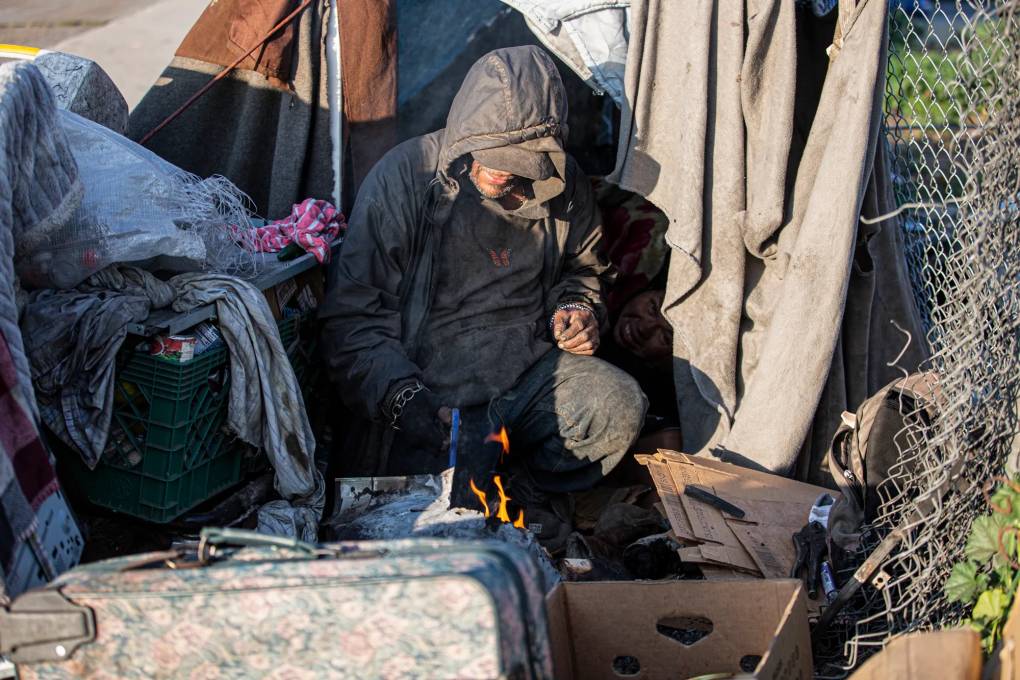
"caption": "A man starts a fire in his makeshift tent along a barbed wire fence near Highway 99 in southwest Fresno on Feb. 11, 2022.",
"description": null,
"title": "021422-FRESNO-HOMELESS-LV-08-CM",
"credit": "Larry Valenzuela/CalMatters",
"status": "inherit",
"altTag": "A seated man wearing a hooded jacket starts a fire in his makeshift tent.",
"isLoading": false,
"fetchFailed": false
},
"news_11977283": {
"type": "attachments",
"id": "news_11977283",
"meta": {
"index": "attachments_1716263798",
"site": "news",
"id": "11977283",
"found": true
},
"parent": 11977258,
"imgSizes": {
"twentyfourteen-full-width": {
"file": "https://cdn.kqed.org/wp-content/uploads/sites/10/2024/02/GettyImages-1238901343-1024x576.jpg",
"width": 1024,
"mimeType": "image/jpeg",
"height": 576
},
"thumbnail": {
"file": "https://cdn.kqed.org/wp-content/uploads/sites/10/2024/02/GettyImages-1238901343-160x107.jpg",
"width": 160,
"mimeType": "image/jpeg",
"height": 107
},
"post-thumbnail": {
"file": "https://cdn.kqed.org/wp-content/uploads/sites/10/2024/02/GettyImages-1238901343-672x372.jpg",
"width": 672,
"mimeType": "image/jpeg",
"height": 372
},
"kqedFullSize": {
"file": "https://cdn.kqed.org/wp-content/uploads/sites/10/2024/02/GettyImages-1238901343.jpg",
"width": 1024,
"height": 683
},
"large": {
"file": "https://cdn.kqed.org/wp-content/uploads/sites/10/2024/02/GettyImages-1238901343-1020x680.jpg",
"width": 1020,
"mimeType": "image/jpeg",
"height": 680
},
"medium": {
"file": "https://cdn.kqed.org/wp-content/uploads/sites/10/2024/02/GettyImages-1238901343-800x534.jpg",
"width": 800,
"mimeType": "image/jpeg",
"height": 534
}
},
"publishDate": 1709067682,
"modified": 1709067775,
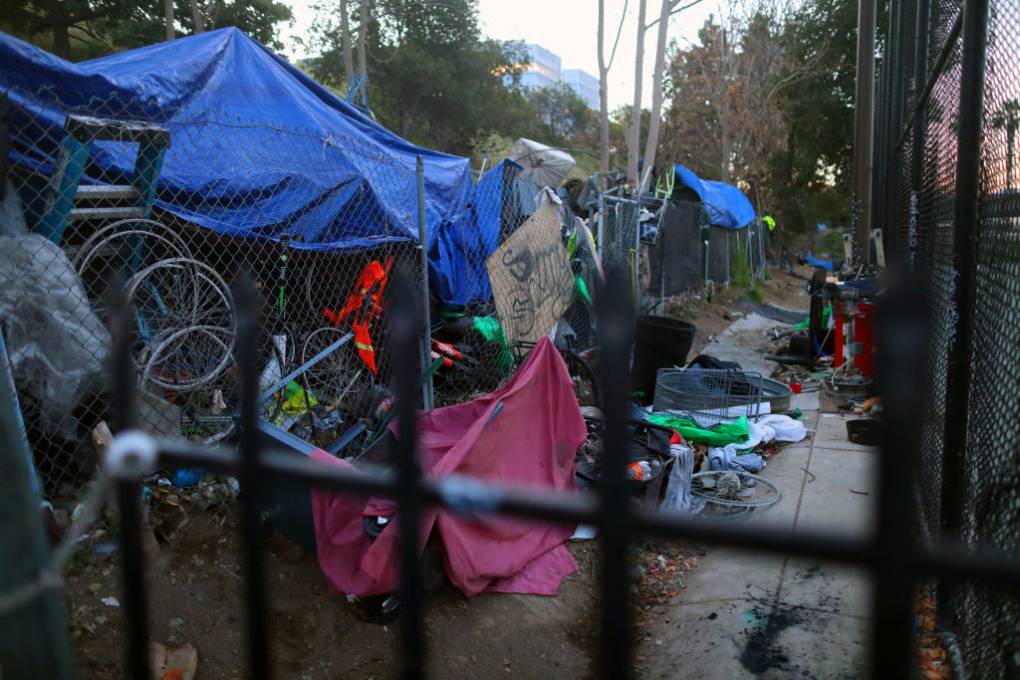
"caption": "A homeless encampment is photographed on Wednesday, Feb. 23, 2022, in San Jose.",
"description": null,
"title": "Point in Time San Jose Count",
"credit": "Aric Crabb/MediaNews Group/East Bay Times via Getty Images",
"status": "inherit",
"altTag": "A collection of bikes, tarps and other materials forming an encampment.",
"isLoading": false,
"fetchFailed": false
},
"news_11975333": {
"type": "attachments",
"id": "news_11975333",
"meta": {
"index": "attachments_1716263798",
"site": "news",
"id": "11975333",
"found": true
},
"parent": 11975319,
"imgSizes": {
"twentyfourteen-full-width": {
"file": "https://cdn.kqed.org/wp-content/uploads/sites/10/2024/02/image-1-1038x576.png",
"width": 1038,
"mimeType": "image/png",
"height": 576
},
"thumbnail": {
"file": "https://cdn.kqed.org/wp-content/uploads/sites/10/2024/02/image-1-160x107.png",
"width": 160,
"mimeType": "image/png",
"height": 107
},
"post-thumbnail": {
"file": "https://cdn.kqed.org/wp-content/uploads/sites/10/2024/02/image-1-672x372.png",
"width": 672,
"mimeType": "image/png",
"height": 372
},
"kqedFullSize": {
"file": "https://cdn.kqed.org/wp-content/uploads/sites/10/2024/02/image-1.png",
"width": 1280,
"height": 853
},
"large": {
"file": "https://cdn.kqed.org/wp-content/uploads/sites/10/2024/02/image-1-1020x680.png",
"width": 1020,
"mimeType": "image/png",
"height": 680
},
"medium": {
"file": "https://cdn.kqed.org/wp-content/uploads/sites/10/2024/02/image-1-800x533.png",
"width": 800,
"mimeType": "image/png",
"height": 533
}
},
"publishDate": 1707528792,
"modified": 1707530102,
"caption": "San José Mayor Matt Mahan (left) joined Governor Gavin Newsom at Cal Expo in Sacramento on March 16, 2023, for the announcement of a program gifting small homes to California jurisdictions to house people experiencing homelessness.",
"description": null,
"title": "image (1)",
"credit": "Courtesy of the Governor's Office",
"status": "inherit",
"altTag": "Two men in suits, including Gov. Newsom, consult with a group of people in a tent.",
"isLoading": false,
"fetchFailed": false
},
"news_11975274": {
"type": "attachments",
"id": "news_11975274",
"meta": {
"index": "attachments_1716263798",
"site": "news",
"id": "11975274",
"found": true
},
"parent": 11975256,
"imgSizes": {
"twentyfourteen-full-width": {
"file": "https://cdn.kqed.org/wp-content/uploads/sites/10/2024/02/070523-Street-Medicine-Project-LV-CM_09-copy-1038x576.jpg",
"width": 1038,
"mimeType": "image/jpeg",
"height": 576
},
"thumbnail": {
"file": "https://cdn.kqed.org/wp-content/uploads/sites/10/2024/02/070523-Street-Medicine-Project-LV-CM_09-copy-160x107.jpg",
"width": 160,
"mimeType": "image/jpeg",
"height": 107
},
"post-thumbnail": {
"file": "https://cdn.kqed.org/wp-content/uploads/sites/10/2024/02/070523-Street-Medicine-Project-LV-CM_09-copy-672x372.jpg",
"width": 672,
"mimeType": "image/jpeg",
"height": 372
},
"kqedFullSize": {
"file": "https://cdn.kqed.org/wp-content/uploads/sites/10/2024/02/070523-Street-Medicine-Project-LV-CM_09-copy.jpg",
"width": 2000,
"height": 1333
},
"large": {
"file": "https://cdn.kqed.org/wp-content/uploads/sites/10/2024/02/070523-Street-Medicine-Project-LV-CM_09-copy-1020x680.jpg",
"width": 1020,
"mimeType": "image/jpeg",
"height": 680
},
"1536x1536": {
"file": "https://cdn.kqed.org/wp-content/uploads/sites/10/2024/02/070523-Street-Medicine-Project-LV-CM_09-copy-1536x1024.jpg",
"width": 1536,
"mimeType": "image/jpeg",
"height": 1024
},
"full-width": {
"file": "https://cdn.kqed.org/wp-content/uploads/sites/10/2024/02/070523-Street-Medicine-Project-LV-CM_09-copy-1920x1280.jpg",
"width": 1920,
"mimeType": "image/jpeg",
"height": 1280
},
"medium": {
"file": "https://cdn.kqed.org/wp-content/uploads/sites/10/2024/02/070523-Street-Medicine-Project-LV-CM_09-copy-800x533.jpg",
"width": 800,
"mimeType": "image/jpeg",
"height": 533
}
},
"publishDate": 1707510203,
"modified": 1707518158,
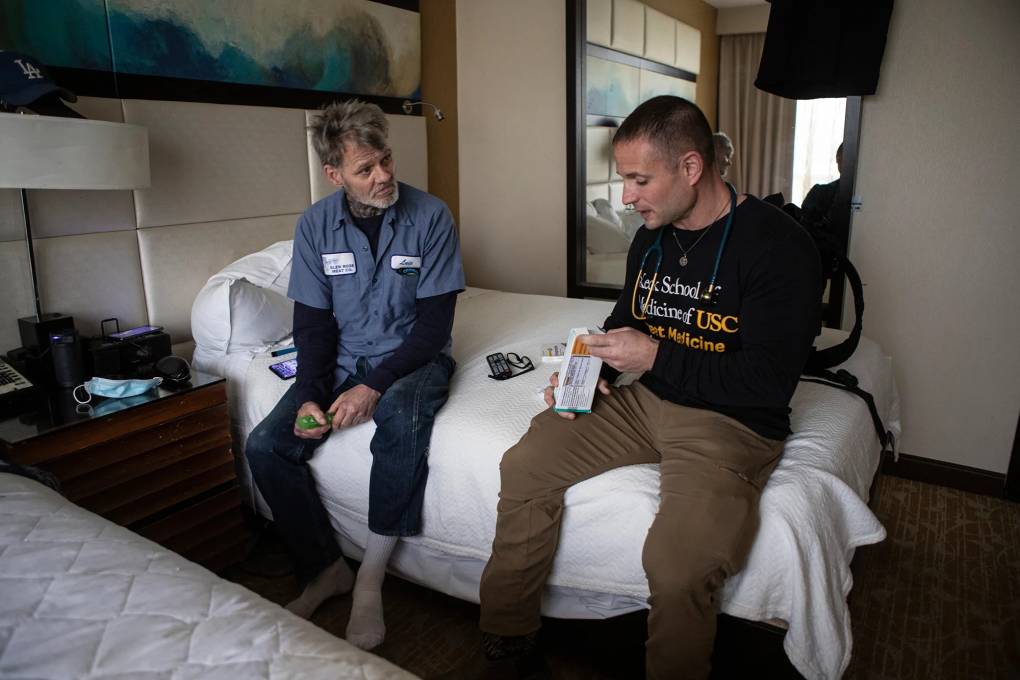
"caption": "Patient Steven Dombrowski, 'Cowboy,' speaking with physician assistant Brett Feldman in his hotel room at the LA Grand Hotel on Feb. 13, 2023. The hotel was turned into an emergency shelter for unhoused people through Project Roomkey.",
"description": null,
"title": "070523-Street-Medicine-Project-LV-CM_09 copy",
"credit": "Larry Valenzuela/CalMatters/CatchLight Local",
"status": "inherit",
"altTag": "Two men sit on a bed in a hotel room — one with a doctor's stethoscope.",
"isLoading": false,
"fetchFailed": false
},
"news_11975179": {
"type": "attachments",
"id": "news_11975179",
"meta": {
"index": "attachments_1716263798",
"site": "news",
"id": "11975179",
"found": true
},
"parent": 11975156,
"imgSizes": {
"twentyfourteen-full-width": {
"file": "https://cdn.kqed.org/wp-content/uploads/sites/10/2024/02/IMG_5659-1038x576.jpg",
"width": 1038,
"mimeType": "image/jpeg",
"height": 576
},
"thumbnail": {
"file": "https://cdn.kqed.org/wp-content/uploads/sites/10/2024/02/IMG_5659-160x120.jpg",
"width": 160,
"mimeType": "image/jpeg",
"height": 120
},
"post-thumbnail": {
"file": "https://cdn.kqed.org/wp-content/uploads/sites/10/2024/02/IMG_5659-672x372.jpg",
"width": 672,
"mimeType": "image/jpeg",
"height": 372
},
"kqedFullSize": {
"file": "https://cdn.kqed.org/wp-content/uploads/sites/10/2024/02/IMG_5659-scaled.jpg",
"width": 2560,
"height": 1920
},
"2048x2048": {
"file": "https://cdn.kqed.org/wp-content/uploads/sites/10/2024/02/IMG_5659-2048x1536.jpg",
"width": 2048,
"mimeType": "image/jpeg",
"height": 1536
},
"large": {
"file": "https://cdn.kqed.org/wp-content/uploads/sites/10/2024/02/IMG_5659-1020x765.jpg",
"width": 1020,
"mimeType": "image/jpeg",
"height": 765
},
"1536x1536": {
"file": "https://cdn.kqed.org/wp-content/uploads/sites/10/2024/02/IMG_5659-1536x1152.jpg",
"width": 1536,
"mimeType": "image/jpeg",
"height": 1152
},
"full-width": {
"file": "https://cdn.kqed.org/wp-content/uploads/sites/10/2024/02/IMG_5659-1920x1440.jpg",
"width": 1920,
"mimeType": "image/jpeg",
"height": 1440
},
"medium": {
"file": "https://cdn.kqed.org/wp-content/uploads/sites/10/2024/02/IMG_5659-800x600.jpg",
"width": 800,
"mimeType": "image/jpeg",
"height": 600
}
},
"publishDate": 1707436919,
"modified": 1708478350,
"caption": "Mayor London Breed walked back plans to open the permanent supportive housing site at Hotel North Beach, 935 Kearny St., just days after first announcing the idea.",
"description": null,
"title": "IMG_5659",
"credit": "Sydney Johnson/KQED",
"status": "inherit",
"altTag": "The exterior signage of the North Beach Hotel.",
"isLoading": false,
"fetchFailed": false
},
"news_11975014": {
"type": "attachments",
"id": "news_11975014",
"meta": {
"index": "attachments_1716263798",
"site": "news",
"id": "11975014",
"found": true
},
"parent": 11974991,
"imgSizes": {
"twentyfourteen-full-width": {
"file": "https://cdn.kqed.org/wp-content/uploads/sites/10/2024/02/Prop1-behavioral-health-spending-1038x576.jpg",
"width": 1038,
"mimeType": "image/jpeg",
"height": 576
},
"thumbnail": {
"file": "https://cdn.kqed.org/wp-content/uploads/sites/10/2024/02/Prop1-behavioral-health-spending-160x107.jpg",
"width": 160,
"mimeType": "image/jpeg",
"height": 107
},
"post-thumbnail": {
"file": "https://cdn.kqed.org/wp-content/uploads/sites/10/2024/02/Prop1-behavioral-health-spending-672x372.jpg",
"width": 672,
"mimeType": "image/jpeg",
"height": 372
},
"kqedFullSize": {
"file": "https://cdn.kqed.org/wp-content/uploads/sites/10/2024/02/Prop1-behavioral-health-spending.jpg",
"width": 1920,
"height": 1280
},
"large": {
"file": "https://cdn.kqed.org/wp-content/uploads/sites/10/2024/02/Prop1-behavioral-health-spending-1020x680.jpg",
"width": 1020,
"mimeType": "image/jpeg",
"height": 680
},
"1536x1536": {
"file": "https://cdn.kqed.org/wp-content/uploads/sites/10/2024/02/Prop1-behavioral-health-spending-1536x1024.jpg",
"width": 1536,
"mimeType": "image/jpeg",
"height": 1024
},
"medium": {
"file": "https://cdn.kqed.org/wp-content/uploads/sites/10/2024/02/Prop1-behavioral-health-spending-800x533.jpg",
"width": 800,
"mimeType": "image/jpeg",
"height": 533
}
},
"publishDate": 1707337731,
"modified": 1707337822,
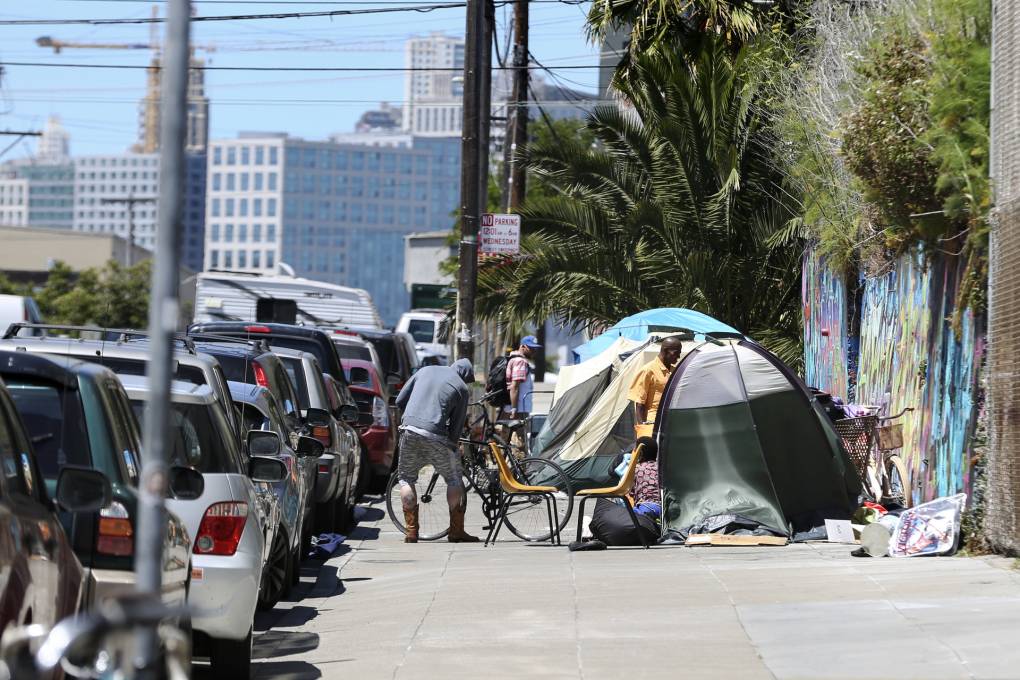
"caption": "A homeless encampment located on Florida St in the Mission District of San Francisco, Calif.",
"description": null,
"title": "Prop1-behavioral-health-spending",
"credit": "Brittany Hosea-Small/KQED",
"status": "inherit",
"altTag": "A wide San Francisco with a tent encampment.",
"isLoading": false,
"fetchFailed": false
},
"news_11974433": {
"type": "attachments",
"id": "news_11974433",
"meta": {
"index": "attachments_1716263798",
"site": "news",
"id": "11974433",
"found": true
},
"parent": 0,
"imgSizes": {
"twentyfourteen-full-width": {
"file": "https://cdn.kqed.org/wp-content/uploads/sites/10/2024/01/240130-HomelessCount-51-BL-1038x576.jpg",
"width": 1038,
"mimeType": "image/jpeg",
"height": 576
},
"thumbnail": {
"file": "https://cdn.kqed.org/wp-content/uploads/sites/10/2024/01/240130-HomelessCount-51-BL-160x107.jpg",
"width": 160,
"mimeType": "image/jpeg",
"height": 107
},
"post-thumbnail": {
"file": "https://cdn.kqed.org/wp-content/uploads/sites/10/2024/01/240130-HomelessCount-51-BL-672x372.jpg",
"width": 672,
"mimeType": "image/jpeg",
"height": 372
},
"kqedFullSize": {
"file": "https://cdn.kqed.org/wp-content/uploads/sites/10/2024/01/240130-HomelessCount-51-BL.jpg",
"width": 2000,
"height": 1333
},
"large": {
"file": "https://cdn.kqed.org/wp-content/uploads/sites/10/2024/01/240130-HomelessCount-51-BL-1020x680.jpg",
"width": 1020,
"mimeType": "image/jpeg",
"height": 680
},
"1536x1536": {
"file": "https://cdn.kqed.org/wp-content/uploads/sites/10/2024/01/240130-HomelessCount-51-BL-1536x1024.jpg",
"width": 1536,
"mimeType": "image/jpeg",
"height": 1024
},
"full-width": {
"file": "https://cdn.kqed.org/wp-content/uploads/sites/10/2024/01/240130-HomelessCount-51-BL-1920x1280.jpg",
"width": 1920,
"mimeType": "image/jpeg",
"height": 1280
},
"medium": {
"file": "https://cdn.kqed.org/wp-content/uploads/sites/10/2024/01/240130-HomelessCount-51-BL-800x533.jpg",
"width": 800,
"mimeType": "image/jpeg",
"height": 533
}
},
"publishDate": 1706752591,
"modified": 1706752609,
"caption": "Outreach specialist Sean Bullock inputs data during a point-in-time homeless population count in the Bayview Hunters Point neighborhood in San Francisco on Jan. 30, 2024. Teams spread out through San Francisco to count sheltered and unsheltered people experiencing homelessness on a single night.",
"description": null,
"title": "240130-HomelessCount-51-BL",
"credit": "Beth LaBerge/KQED",
"status": "inherit",
"altTag": null,
"isLoading": false,
"fetchFailed": false
},
"news_11974434": {
"type": "attachments",
"id": "news_11974434",
"meta": {
"index": "attachments_1716263798",
"site": "news",
"id": "11974434",
"found": true
},
"parent": 0,
"imgSizes": {
"twentyfourteen-full-width": {
"file": "https://cdn.kqed.org/wp-content/uploads/sites/10/2024/01/240130-HomelessCount-02-BL-1038x576.jpg",
"width": 1038,
"mimeType": "image/jpeg",
"height": 576
},
"thumbnail": {
"file": "https://cdn.kqed.org/wp-content/uploads/sites/10/2024/01/240130-HomelessCount-02-BL-160x107.jpg",
"width": 160,
"mimeType": "image/jpeg",
"height": 107
},
"post-thumbnail": {
"file": "https://cdn.kqed.org/wp-content/uploads/sites/10/2024/01/240130-HomelessCount-02-BL-672x372.jpg",
"width": 672,
"mimeType": "image/jpeg",
"height": 372
},
"kqedFullSize": {
"file": "https://cdn.kqed.org/wp-content/uploads/sites/10/2024/01/240130-HomelessCount-02-BL.jpg",
"width": 2000,
"height": 1333
},
"large": {
"file": "https://cdn.kqed.org/wp-content/uploads/sites/10/2024/01/240130-HomelessCount-02-BL-1020x680.jpg",
"width": 1020,
"mimeType": "image/jpeg",
"height": 680
},
"1536x1536": {
"file": "https://cdn.kqed.org/wp-content/uploads/sites/10/2024/01/240130-HomelessCount-02-BL-1536x1024.jpg",
"width": 1536,
"mimeType": "image/jpeg",
"height": 1024
},
"full-width": {
"file": "https://cdn.kqed.org/wp-content/uploads/sites/10/2024/01/240130-HomelessCount-02-BL-1920x1280.jpg",
"width": 1920,
"mimeType": "image/jpeg",
"height": 1280
},
"medium": {
"file": "https://cdn.kqed.org/wp-content/uploads/sites/10/2024/01/240130-HomelessCount-02-BL-800x533.jpg",
"width": 800,
"mimeType": "image/jpeg",
"height": 533
}
},
"publishDate": 1706753004,
"modified": 1706770305,
"caption": "Teams from the city look at a map designating the point-in-time count of people experiencing homelessnesses in San Francisco. ",
"description": null,
"title": "240130-HomelessCount-02-BL",
"credit": "Beth LaBerge/KQED",
"status": "inherit",
"altTag": "Two hans holding a map of a neighborhood",
"isLoading": false,
"fetchFailed": false
},
"news_11962789": {
"type": "attachments",
"id": "news_11962789",
"meta": {
"index": "attachments_1716263798",
"site": "news",
"id": "11962789",
"found": true
},
"parent": 11962776,
"imgSizes": {
"thumbnail": {
"file": "https://ww2.kqed.org/app/uploads/sites/10/2023/09/KQED_Podcast_tiles_-_NPR_network_The_Bay-1-160x160.png",
"width": 160,
"mimeType": "image/png",
"height": 160
},
"kqedFullSize": {
"file": "https://ww2.kqed.org/app/uploads/sites/10/2023/09/KQED_Podcast_tiles_-_NPR_network_The_Bay-1.png",
"width": 300,
"height": 300
}
},
"publishDate": 1695936674,
"modified": 1695936674,
"caption": null,
"description": null,
"title": "KQED_Podcast_tiles_-_NPR_network_The_Bay",
"credit": null,
"status": "inherit",
"altTag": null,
"isLoading": false,
"fetchFailed": false
},
"news_11973862": {
"type": "attachments",
"id": "news_11973862",
"meta": {
"index": "attachments_1716263798",
"site": "news",
"id": "11973862",
"found": true
},
"parent": 11973859,
"imgSizes": {
"twentyfourteen-full-width": {
"file": "https://cdn.kqed.org/wp-content/uploads/sites/10/2024/01/012524_Alameda-PIT-Count_LE_CM_11-1038x576.jpg",
"width": 1038,
"mimeType": "image/jpeg",
"height": 576
},
"thumbnail": {
"file": "https://cdn.kqed.org/wp-content/uploads/sites/10/2024/01/012524_Alameda-PIT-Count_LE_CM_11-160x107.jpg",
"width": 160,
"mimeType": "image/jpeg",
"height": 107
},
"post-thumbnail": {
"file": "https://cdn.kqed.org/wp-content/uploads/sites/10/2024/01/012524_Alameda-PIT-Count_LE_CM_11-672x372.jpg",
"width": 672,
"mimeType": "image/jpeg",
"height": 372
},
"kqedFullSize": {
"file": "https://cdn.kqed.org/wp-content/uploads/sites/10/2024/01/012524_Alameda-PIT-Count_LE_CM_11.jpg",
"width": 2000,
"height": 1333
},
"large": {
"file": "https://cdn.kqed.org/wp-content/uploads/sites/10/2024/01/012524_Alameda-PIT-Count_LE_CM_11-1020x680.jpg",
"width": 1020,
"mimeType": "image/jpeg",
"height": 680
},
"1536x1536": {
"file": "https://cdn.kqed.org/wp-content/uploads/sites/10/2024/01/012524_Alameda-PIT-Count_LE_CM_11-1536x1024.jpg",
"width": 1536,
"mimeType": "image/jpeg",
"height": 1024
},
"full-width": {
"file": "https://cdn.kqed.org/wp-content/uploads/sites/10/2024/01/012524_Alameda-PIT-Count_LE_CM_11-1920x1280.jpg",
"width": 1920,
"mimeType": "image/jpeg",
"height": 1280
},
"medium": {
"file": "https://cdn.kqed.org/wp-content/uploads/sites/10/2024/01/012524_Alameda-PIT-Count_LE_CM_11-800x533.jpg",
"width": 800,
"mimeType": "image/jpeg",
"height": 533
}
},
"publishDate": 1706299338,
"modified": 1706318327,
"caption": "Deidra Perry, program financial manager for Alameda County Healthcare for the Homeless, takes part in Alameda County’s 2024 point-in-time count in Berkeley on Jan. 25, 2024. The PIT count, which included a voluntary survey, gathers data on the county’s homeless population.",
"description": null,
"title": "012524_Alameda-PIT-Count_LE_CM_11",
"credit": "Loren Elliott for CalMatters",
"status": "inherit",
"altTag": "A Black woman in a sweatshirt stands outside an RV on a street, looking at her phone in the dark.",
"isLoading": false,
"fetchFailed": false
},
"news_11973305": {
"type": "attachments",
"id": "news_11973305",
"meta": {
"index": "attachments_1716263798",
"site": "news",
"id": "11973305",
"found": true
},
"parent": 0,
"imgSizes": {
"twentyfourteen-full-width": {
"file": "https://cdn.kqed.org/wp-content/uploads/sites/10/2024/01/240122-OAKLAND-TENT-BJ-KQED-1038x576.jpg",
"width": 1038,
"mimeType": "image/jpeg",
"height": 576
},
"thumbnail": {
"file": "https://cdn.kqed.org/wp-content/uploads/sites/10/2024/01/240122-OAKLAND-TENT-BJ-KQED-160x107.jpg",
"width": 160,
"mimeType": "image/jpeg",
"height": 107
},
"post-thumbnail": {
"file": "https://cdn.kqed.org/wp-content/uploads/sites/10/2024/01/240122-OAKLAND-TENT-BJ-KQED-672x372.jpg",
"width": 672,
"mimeType": "image/jpeg",
"height": 372
},
"kqedFullSize": {
"file": "https://cdn.kqed.org/wp-content/uploads/sites/10/2024/01/240122-OAKLAND-TENT-BJ-KQED.jpg",
"width": 2000,
"height": 1333
},
"large": {
"file": "https://cdn.kqed.org/wp-content/uploads/sites/10/2024/01/240122-OAKLAND-TENT-BJ-KQED-1020x680.jpg",
"width": 1020,
"mimeType": "image/jpeg",
"height": 680
},
"1536x1536": {
"file": "https://cdn.kqed.org/wp-content/uploads/sites/10/2024/01/240122-OAKLAND-TENT-BJ-KQED-1536x1024.jpg",
"width": 1536,
"mimeType": "image/jpeg",
"height": 1024
},
"full-width": {
"file": "https://cdn.kqed.org/wp-content/uploads/sites/10/2024/01/240122-OAKLAND-TENT-BJ-KQED-1920x1280.jpg",
"width": 1920,
"mimeType": "image/jpeg",
"height": 1280
},
"medium": {
"file": "https://cdn.kqed.org/wp-content/uploads/sites/10/2024/01/240122-OAKLAND-TENT-BJ-KQED-800x533.jpg",
"width": 800,
"mimeType": "image/jpeg",
"height": 533
}
},
"publishDate": 1705968246,
"modified": 1705973831,
"caption": "A tent under a freeway overpass in Oakland on Tuesday, Jan. 31, 2017.",
"description": null,
"title": "A tent under a freeway overpass in Oakland on Tuesday, Jan. 31, 2017.",
"credit": "Bert Johnson/KQED",
"status": "inherit",
"altTag": "A tent and several armchairs under a freeway overpass at night.",
"isLoading": false,
"fetchFailed": false
}
},
"audioPlayerReducer": {
"postId": "stream_live",
"isPaused": true,
"isPlaying": false,
"pfsActive": false,
"pledgeModalIsOpen": true,
"playerDrawerIsOpen": false,
"liveAudioPlayStartedAt": 0,
"liveAudioPlayContext": ""
},
"authorsReducer": {
"byline_news_11978448": {
"type": "authors",
"id": "byline_news_11978448",
"meta": {
"override": true
},
"slug": "byline_news_11978448",
"name": "\u003ca href=\"https://calmatters.org/author/marisa-kendall/\">Marisa Kendall\u003c/a>",
"isLoading": false
},
"byline_news_11977614": {
"type": "authors",
"id": "byline_news_11977614",
"meta": {
"override": true
},
"slug": "byline_news_11977614",
"name": "\u003ca href=\"https://calmatters.org/author/marisa-kendall/\">Marisa Kendall\u003c/a>",
"isLoading": false
},
"byline_news_11975256": {
"type": "authors",
"id": "byline_news_11975256",
"meta": {
"override": true
},
"slug": "byline_news_11975256",
"name": "\u003ca href=\"https://calmatters.org/author/marisa-kendall/\">Marisa Kendall\u003c/a>",
"isLoading": false
},
"byline_news_11973859": {
"type": "authors",
"id": "byline_news_11973859",
"meta": {
"override": true
},
"slug": "byline_news_11973859",
"name": "\u003ca href=\"https://calmatters.org/author/marisa-kendall/\">Marisa Kendall\u003c/a>",
"isLoading": false
},
"ohubertallen": {
"type": "authors",
"id": "102",
"meta": {
"index": "authors_1716337520",
"id": "102",
"found": true
},
"name": "Olivia Allen-Price",
"firstName": "Olivia",
"lastName": "Allen-Price",
"slug": "ohubertallen",
"email": "oallenprice@kqed.org",
"display_author_email": false,
"staff_mastheads": [
"news"
],
"title": "Senior Editor",
"bio": "Olivia Allen-Price is senior editor and host of the award-winning Bay Curious podcast. Prior to joining KQED in 2013, Olivia worked at The Baltimore Sun and The Virginian-Pilot in Norfolk, Va. She holds degrees in journalism and political science from Elon University. Her work has earned awards from the Society of Professional Journalists, the Hearst Foundation and Hearken. She loves to talk about running and curly hair.\r\n\r\nFollow: \u003ca href=\"https://twitter.com/oallenprice\">@oallenprice\u003c/a>\r\nEmail: \u003ca href=\"mailto:oallenprice@kqed.org\">oallenprice@kqed.org\u003c/a>",
"avatar": "https://secure.gravatar.com/avatar/07f7803c1f6be56f3be58ef276dfa64dce898502e0554408ef4858451a8294f7?s=600&d=blank&r=g",
"twitter": "oallenprice",
"bluesky": null,
"facebook": null,
"instagram": null,
"linkedin": null,
"sites": [
{
"site": "",
"roles": [
"editor"
]
},
{
"site": "arts",
"roles": [
"subscriber"
]
},
{
"site": "news",
"roles": [
"administrator"
]
},
{
"site": "pop",
"roles": [
"administrator"
]
},
{
"site": "bayareabites",
"roles": [
"contributor"
]
},
{
"site": "stateofhealth",
"roles": [
"administrator"
]
},
{
"site": "science",
"roles": [
"editor"
]
}
],
"headData": {
"title": "Olivia Allen-Price | KQED",
"description": "Senior Editor",
"ogImgSrc": "https://secure.gravatar.com/avatar/07f7803c1f6be56f3be58ef276dfa64dce898502e0554408ef4858451a8294f7?s=600&d=blank&r=g",
"twImgSrc": "https://secure.gravatar.com/avatar/07f7803c1f6be56f3be58ef276dfa64dce898502e0554408ef4858451a8294f7?s=600&d=blank&r=g"
},
"isLoading": false,
"link": "/author/ohubertallen"
},
"gmarzorati": {
"type": "authors",
"id": "227",
"meta": {
"index": "authors_1716337520",
"id": "227",
"found": true
},
"name": "Guy Marzorati",
"firstName": "Guy",
"lastName": "Marzorati",
"slug": "gmarzorati",
"email": "gmarzorati@KQED.org",
"display_author_email": true,
"staff_mastheads": [
"news"
],
"title": "Correspondent",
"bio": "Guy Marzorati is a correspondent on KQED's California Politics and Government Desk, based in San Jose. A graduate of Santa Clara University, Guy joined KQED in 2013. He reports on state and local politics and produces KQED's digital voter guide.",
"avatar": "https://secure.gravatar.com/avatar/e7038b8dbfd55b104369b76b1cd0b9de?s=600&d=blank&r=g",
"twitter": "guymarzorati",
"facebook": null,
"instagram": null,
"linkedin": null,
"sites": [
{
"site": "",
"roles": [
"editor"
]
},
{
"site": "news",
"roles": [
"editor"
]
},
{
"site": "science",
"roles": [
"editor"
]
},
{
"site": "forum",
"roles": [
"editor"
]
},
{
"site": "elections",
"roles": [
"editor"
]
},
{
"site": "liveblog",
"roles": [
"editor"
]
}
],
"headData": {
"title": "Guy Marzorati | KQED",
"description": "Correspondent",
"ogImgSrc": "https://secure.gravatar.com/avatar/e7038b8dbfd55b104369b76b1cd0b9de?s=600&d=blank&r=g",
"twImgSrc": "https://secure.gravatar.com/avatar/e7038b8dbfd55b104369b76b1cd0b9de?s=600&d=blank&r=g"
},
"isLoading": false,
"link": "/author/gmarzorati"
},
"ecruzguevarra": {
"type": "authors",
"id": "8654",
"meta": {
"index": "authors_1716337520",
"id": "8654",
"found": true
},
"name": "Ericka Cruz Guevarra",
"firstName": "Ericka",
"lastName": "Cruz Guevarra",
"slug": "ecruzguevarra",
"email": "ecruzguevarra@kqed.org",
"display_author_email": true,
"staff_mastheads": [
"news"
],
"title": "Producer, The Bay Podcast",
"bio": "Ericka Cruz Guevarra is host of \u003ca href=\"https://www.kqed.org/podcasts/thebay\">\u003cem>The Bay\u003c/em>\u003c/a> podcast at KQED. Before host, she was the show’s producer. Her work in that capacity includes a three-part reported series on policing in Vallejo, which won a 2020 excellence in journalism award from the Society of Professional Journalists. Ericka has worked as a breaking news reporter at Oregon Public Broadcasting, helped produce the Code Switch podcast, and was KQED’s inaugural Raul Ramirez Diversity Fund intern. She’s also an alumna of NPR’s Next Generation Radio program. Send her an email if you have strong feelings about whether Fairfield and Suisun City are the Bay. Ericka is represented by SAG-AFTRA.",
"avatar": "https://secure.gravatar.com/avatar/25e5ab8d3d53fad2dcc7bb2b5c506b1a?s=600&d=blank&r=g",
"twitter": "NotoriousECG",
"facebook": null,
"instagram": null,
"linkedin": null,
"sites": [
{
"site": "arts",
"roles": [
"subscriber"
]
},
{
"site": "news",
"roles": [
"editor",
"manage_categories"
]
},
{
"site": "futureofyou",
"roles": [
"subscriber"
]
},
{
"site": "stateofhealth",
"roles": [
"subscriber"
]
},
{
"site": "science",
"roles": [
"editor"
]
},
{
"site": "forum",
"roles": [
"subscriber"
]
}
],
"headData": {
"title": "Ericka Cruz Guevarra | KQED",
"description": "Producer, The Bay Podcast",
"ogImgSrc": "https://secure.gravatar.com/avatar/25e5ab8d3d53fad2dcc7bb2b5c506b1a?s=600&d=blank&r=g",
"twImgSrc": "https://secure.gravatar.com/avatar/25e5ab8d3d53fad2dcc7bb2b5c506b1a?s=600&d=blank&r=g"
},
"isLoading": false,
"link": "/author/ecruzguevarra"
},
"vrancano": {
"type": "authors",
"id": "11276",
"meta": {
"index": "authors_1716337520",
"id": "11276",
"found": true
},
"name": "Vanessa Rancaño",
"firstName": "Vanessa",
"lastName": "Rancaño",
"slug": "vrancano",
"email": "vrancano@kqed.org",
"display_author_email": false,
"staff_mastheads": [
"news"
],
"title": "Reporter",
"bio": "Vanessa Rancaño is a features reporter for KQED. She’s also covered homelessness and education for the station and reported from the Central Valley. Her work has aired across public radio, from flagship national news shows to longform narrative podcasts. Before taking up a mic, she worked as a freelance print journalist. She’s been recognized with a number of national and regional awards. Vanessa grew up in California's Central Valley. She's a former NPR Kroc Fellow, and a graduate of the UC Berkeley Graduate School of Journalism.",
"avatar": "https://secure.gravatar.com/avatar/b3a383dfb0e7ee1c17568f2cf067904ab654d6e3de9743fc661f3c788ade1bed?s=600&d=blank&r=g",
"twitter": "vanessarancano",
"bluesky": null,
"facebook": null,
"instagram": null,
"linkedin": null,
"sites": [
{
"site": "arts",
"roles": [
"editor"
]
},
{
"site": "news",
"roles": [
"editor"
]
},
{
"site": "liveblog",
"roles": [
"contributor"
]
}
],
"headData": {
"title": "Vanessa Rancaño | KQED",
"description": "Reporter",
"ogImgSrc": "https://secure.gravatar.com/avatar/b3a383dfb0e7ee1c17568f2cf067904ab654d6e3de9743fc661f3c788ade1bed?s=600&d=blank&r=g",
"twImgSrc": "https://secure.gravatar.com/avatar/b3a383dfb0e7ee1c17568f2cf067904ab654d6e3de9743fc661f3c788ade1bed?s=600&d=blank&r=g"
},
"isLoading": false,
"link": "/author/vrancano"
},
"amontecillo": {
"type": "authors",
"id": "11649",
"meta": {
"index": "authors_1716337520",
"id": "11649",
"found": true
},
"name": "Alan Montecillo",
"firstName": "Alan",
"lastName": "Montecillo",
"slug": "amontecillo",
"email": "amontecillo@kqed.org",
"display_author_email": false,
"staff_mastheads": [
"news"
],
"title": "KQED Contributor",
"bio": "Alan Montecillo is the senior editor of \u003cem>\u003ca href=\"http://kqed.org/thebay\">The Bay\u003c/a>, \u003c/em> KQED's local news podcast. Before moving to the Bay Area, he worked as a senior talk show producer for WILL in Champaign-Urbana, Illinois and at Oregon Public Broadcasting in Portland, Oregon. He has won journalism awards from the Society of Professional Journalists Northern California, the Public Media Journalists Association, The Signal Awards, and has also received a regional Edward R. Murrow award. Alan is a Filipino American from Hong Kong and a graduate of Reed College.",
"avatar": "https://secure.gravatar.com/avatar/d5e4e7a76481969ccba76f4e2b5ccabc?s=600&d=blank&r=g",
"twitter": "alanmontecillo",
"facebook": null,
"instagram": null,
"linkedin": null,
"sites": [
{
"site": "",
"roles": [
"editor"
]
},
{
"site": "news",
"roles": [
"editor",
"manage_categories"
]
}
],
"headData": {
"title": "Alan Montecillo | KQED",
"description": "KQED Contributor",
"ogImgSrc": "https://secure.gravatar.com/avatar/d5e4e7a76481969ccba76f4e2b5ccabc?s=600&d=blank&r=g",
"twImgSrc": "https://secure.gravatar.com/avatar/d5e4e7a76481969ccba76f4e2b5ccabc?s=600&d=blank&r=g"
},
"isLoading": false,
"link": "/author/amontecillo"
},
"mesquinca": {
"type": "authors",
"id": "11802",
"meta": {
"index": "authors_1716337520",
"id": "11802",
"found": true
},
"name": "Maria Esquinca",
"firstName": "Maria",
"lastName": "Esquinca",
"slug": "mesquinca",
"email": "mesquinca@kqed.org",
"display_author_email": false,
"staff_mastheads": [],
"title": "Producer, The Bay",
"bio": "María Esquinca is a producer of The Bay. Before that, she was a New York Women’s Foundation IGNITE Fellow at Latino USA. She worked at Radio Bilingue where she covered the San Joaquin Valley. Maria has interned at WLRN, News 21, The New York Times Student Journalism Institute and at Crain’s Detroit Business as a Dow Jones News Fund Business Reporting Intern. She is an MFA graduate from the University of Miami. In 2017, she graduated from the Walter Cronkite School of Journalism and Mass Communication with a Master of Mass Communication. A fronteriza, she was born in Ciudad Juárez, Chihuahua, Mexico and grew up in El Paso, Texas.",
"avatar": "https://secure.gravatar.com/avatar/77cedba18aae91da775038ba06dcd8d0?s=600&d=blank&r=g",
"twitter": "@m_esquinca",
"facebook": null,
"instagram": null,
"linkedin": null,
"sites": [
{
"site": "news",
"roles": []
}
],
"headData": {
"title": "Maria Esquinca | KQED",
"description": "Producer, The Bay",
"ogImgSrc": "https://secure.gravatar.com/avatar/77cedba18aae91da775038ba06dcd8d0?s=600&d=blank&r=g",
"twImgSrc": "https://secure.gravatar.com/avatar/77cedba18aae91da775038ba06dcd8d0?s=600&d=blank&r=g"
},
"isLoading": false,
"link": "/author/mesquinca"
},
"sjohnson": {
"type": "authors",
"id": "11840",
"meta": {
"index": "authors_1716337520",
"id": "11840",
"found": true
},
"name": "Sydney Johnson",
"firstName": "Sydney",
"lastName": "Johnson",
"slug": "sjohnson",
"email": "sjohnson@kqed.org",
"display_author_email": false,
"staff_mastheads": [
"news"
],
"title": "KQED Reporter",
"bio": "Sydney Johnson is a general assignment reporter at KQED. She previously reported on public health and city government at the San Francisco Examiner, and before that, she covered statewide education policy for EdSource. Her reporting has won multiple local, state and national awards. Sydney is a graduate of the University of California, Berkeley and lives in San Francisco.",
"avatar": "https://secure.gravatar.com/avatar/97855f2719b72ad6190b7c535fe642c8?s=600&d=blank&r=g",
"twitter": "sydneyfjohnson",
"facebook": null,
"instagram": null,
"linkedin": null,
"sites": [
{
"site": "news",
"roles": [
"editor"
]
}
],
"headData": {
"title": "Sydney Johnson | KQED",
"description": "KQED Reporter",
"ogImgSrc": "https://secure.gravatar.com/avatar/97855f2719b72ad6190b7c535fe642c8?s=600&d=blank&r=g",
"twImgSrc": "https://secure.gravatar.com/avatar/97855f2719b72ad6190b7c535fe642c8?s=600&d=blank&r=g"
},
"isLoading": false,
"link": "/author/sjohnson"
}
},
"pagesReducer": {
"news_tag_homelessness": {
"type": "terms",
"id": "news_4020",
"meta": {
"index": "terms_1716263798",
"site": "news",
"id": "4020",
"score": 8.555192
},
"name": "Homelessness",
"slug": "homelessness",
"taxonomy": "tag",
"description": null,
"featImg": null,
"headData": {
"title": "Homelessness | KQED News",
"description": null,
"ogTitle": null,
"ogDescription": null,
"ogImgId": null,
"twTitle": null,
"twDescription": null,
"twImgId": null,
"metaRobotsNoIndex": "index"
},
"ttid": 4039,
"isLoading": false,
"title": "Homelessness",
"pageMeta": {
"site": "news",
"WpPageTemplate": "page-topic-editorial",
"currentPage": 18
},
"blocks": [
{
"blockName": "kqed/post-list",
"attrs": {
"layout": "cardArticle2",
"query": "posts/news?tag=homelessness",
"seeMore": false,
"paginated": true,
"page": 18
}
},
{
"blockName": "kqed/ad"
}
]
}
},
"pfsSessionReducer": {},
"postsReducer": {
"stream_live": {
"type": "live",
"id": "stream_live",
"audioUrl": "https://streams.kqed.org/kqedradio",
"title": "Live Stream",
"excerpt": "Live Stream information currently unavailable.",
"link": "/radio",
"featImg": "",
"label": {
"name": "KQED Live",
"link": "/"
}
},
"stream_kqedNewscast": {
"type": "posts",
"id": "stream_kqedNewscast",
"audioUrl": "https://www.kqed.org/.stream/anon/radio/RDnews/newscast.mp3?_=1",
"title": "KQED Newscast",
"featImg": "",
"label": {
"name": "88.5 FM",
"link": "/"
}
},
"news_11978448": {
"type": "posts",
"id": "news_11978448",
"meta": {
"index": "posts_1716263798",
"site": "news",
"id": "11978448",
"score": null,
"sort": [
1709825423000
]
},
"guestAuthors": [],
"slug": "los-angeles-county-uses-ai-to-prevent-homelessness-and-offers-assistance",
"title": "Los Angeles County Uses AI to Prevent Homelessness and Offers Assistance",
"publishDate": 1709825423,
"format": "standard",
"headTitle": "Los Angeles County Uses AI to Prevent Homelessness and Offers Assistance | KQED",
"labelTerm": {},
"content": "\u003cp>You’ve likely heard about AI powering driverless cars, writing term papers and creating unsettling deep fakes.\u003c/p>\n\u003cp>Can that same technology also prevent people from becoming homeless?\u003c/p>\n\u003cp>That’s what Los Angeles County is trying to find out. Officials there are using \u003ca href=\"https://calmatters.org/politics/elections/2024/02/ai-elections-bill-package/\">AI technology\u003c/a> to predict who in the county is most likely to lose their housing — and then stepping in to help those people with their rent, utility bills, car payments and more.[pullquote size=\"medium\" align=\"right\" citation=\"Dana Vanderford, associate director of homelessness prevention, LA County’s Department of Health Services\"]‘If we know who people are who unfortunately are going to have that experience … it’s a real opportunity to do something early on in their lives to prevent that from happening.’[/pullquote]It’s still an experimental strategy. But the program has served more than 700 clients since 2021, and 86% have retained their housing. It comes at a time when \u003ca href=\"https://calmatters.org/housing/homelessness/2024/01/california-homeless-point-in-time-count-2024/\">more than 180,000 Californians have no place to call home\u003c/a>, and people are ending up on the streets faster than government agencies and nonprofits can get them into housing. Officials all over the state are turning to methods aimed at preventing homelessness before it happens.\u003c/p>\n\u003cp>LA County’s algorithm analyzes data from residents’ emergency room visits, jail stays, use of food assistance and more, and has sparked interest from Silicon Valley to San Diego. Final data on the program — which has roughly $26 million in federal COVID funds and is expected to end in 2026 — aren’t yet out. If it’s successful, it could have major implications for helping cities and counties spend their limited resources more efficiently.\u003c/p>\n\u003cp>“If we know who people are who unfortunately are going to have that experience, and they’re already county clients, it’s a real opportunity to do something early on in their lives to prevent that from happening,” said Dana Vanderford, associate director of homelessness prevention for LA County’s Department of Health Services.\u003c/p>\n\u003cfigure id=\"attachment_11978466\" class=\"wp-caption aligncenter\" style=\"max-width: 2000px\">\u003cimg loading=\"lazy\" decoding=\"async\" class=\"size-full wp-image-11978466\" src=\"https://cdn.kqed.org/wp-content/uploads/sites/10/2024/03/CMHousingAI02.jpg\" alt=\"\" width=\"2000\" height=\"1333\" srcset=\"https://cdn.kqed.org/wp-content/uploads/sites/10/2024/03/CMHousingAI02.jpg 2000w, https://cdn.kqed.org/wp-content/uploads/sites/10/2024/03/CMHousingAI02-800x533.jpg 800w, https://cdn.kqed.org/wp-content/uploads/sites/10/2024/03/CMHousingAI02-1020x680.jpg 1020w, https://cdn.kqed.org/wp-content/uploads/sites/10/2024/03/CMHousingAI02-160x107.jpg 160w, https://cdn.kqed.org/wp-content/uploads/sites/10/2024/03/CMHousingAI02-1536x1024.jpg 1536w, https://cdn.kqed.org/wp-content/uploads/sites/10/2024/03/CMHousingAI02-1920x1280.jpg 1920w\" sizes=\"(max-width: 2000px) 100vw, 2000px\">\u003cfigcaption class=\"wp-caption-text\">Dana Vanderford, Associate Director of Homelessness Prevention at Housing for Health at Los Angeles County Department of Health Services, in Los Angeles, on Feb. 29, 2024. \u003ccite>(Jules Hotz/CalMatters)\u003c/cite>\u003c/figcaption>\u003c/figure>\n\u003ch2>How does artificial intelligence predict homelessness?\u003c/h2>\n\u003cp>The idea started in 2019, when UCLA’s California Policy Lab began experimenting to see if it could use machine learning, combined with LA County data, to predict homelessness. Then, the county paired that with money to intervene before people ended up on the street — the program is predominantly funded with $26 million in COVID-era \u003ca href=\"https://www.whitehouse.gov/american-rescue-plan/\">funds from the federal American Rescue Plan\u003c/a>.\u003c/p>\n\u003cp>The UCLA researchers start with a list of 90,000 people who recently used services from the county’s Health Services or Mental Health departments. Using 580 factors, the computer ranks those people from 1 to 90,000 based on their risk of becoming homeless. The people deemed to be highest-risk tend to show up in emergency rooms and jails at high rates and have high usage of services such as CalFresh food benefits. However, the model considers many more data points.\u003c/p>\n\u003cp>[ad fullwidth]\u003c/p>\n\u003cp>For example, if people receive services in many different geographic areas, it could mean they’re couch surfing — bouncing from one precarious living situation to the next.\u003c/p>\n\u003cp>“You sort of let the computer learn what it finds to be predictive over time,” said Janey Rountree, executive director of the California Policy Lab at UCLA.\u003c/p>\n\u003cp>To train the algorithm, the researchers showed it a list of people who became homeless along with the services they used before losing their housing. Then, they had the algorithm practice “predicting” homelessness using old data and checked to see if it was accurate. When they were satisfied, they started using it for real predictions.\u003c/p>\n\u003cp>How well does it work? Among the 90,000 people the researchers started with, 7% became homeless in 18 months. Among the 10,000 people the algorithm deemed to be the highest risk, 24% became homeless.\u003c/p>\n\u003cp>If they were targeting fewer people (say 1,000 instead of 10,000), it would be even more accurate, Rountree said. But social workers aren’t able to get in touch with many of the people on the list, and others don’t agree to participate in the aid program, so they have to cast a broader net.[pullquote size=\"medium\" align=\"right\" citation=\"Janey Rountree, executive director, UCLA’s California Policy Lab\"]‘You sort of let the computer learn what it finds to be predictive over time.’[/pullquote]Is a computer really better at guessing who will become homeless than human social workers trained in this work? Rountree says yes — 3.5 times better, to be exact.\u003c/p>\n\u003cp>The problem with humans, she said, is that they’re biased toward the people they know.\u003c/p>\n\u003cp>“It’s just human nature to want to help the people that you’re in contact with,” she said. “They all seem housing-unstable and at high risk. You want to help those individuals or those families in front of you. But not all of them are going to become homeless and be on the street or use shelter if they don’t get assistance.”\u003c/p>\n\u003cp>Caseworkers also often prioritize people with lower needs, Rountree said. Someone who recently lost their job but otherwise is stable gets preference over someone facing ongoing struggles with their mental health or addiction because the stable person is easier to help. However, the stable person may not be the one who needs the help the most.\u003c/p>\n\u003cp>Rountree said there’s also a belief that people with higher needs will not spend the money they’re given wisely. But AI doesn’t have that bias, so it ensures the money goes to those who need it most.\u003c/p>\n\u003cp>The results are apparent. People the algorithm targets are much more likely to have been incarcerated, sought substance use treatment, had mental health issues or been hospitalized than the people who seek aid through LA County’s other homelessness prevention programs, Rountree said. In that way, this program fills a hole in LA County’s net of services, she said.\u003c/p>\n\u003cp>LA County’s other, more traditional programs geared to prevent homelessness rely on people reaching out to request help or on caseworkers referring clients.\u003c/p>\n\u003cp>Interestingly, they aren’t duplicating efforts. There’s almost no overlap between the people targeted by the AI algorithm and those served by traditional prevention programs, Vanderford said.\u003c/p>\n\u003cp>“We know there’s a significant population of folks, who if somebody doesn’t reach out to them to offer assistance, they might lose their housing right out from under them without reaching out for assistance themselves,” she said.\u003c/p>\n\u003ch2>Then, a human steps in\u003c/h2>\n\u003cp>Four times a year, the Policy Lab researchers send LA County a list of residents the AI program has deemed most likely to become homeless. The county then mails those people letters, telling them they’ve been selected to participate in the program. After that, a social worker cold-calls them to tell them the good news.\u003c/p>\n\u003cp>The person at the other end of the line is often convinced it’s a scam. After all, how often does someone legitimate call out of the blue to offer free money?\u003c/p>\n\u003cp>When that happens, case worker Genice Brown usually asks if she can email them—a move she hopes lends a bit more credence to her pitch. Once she convinces them the program is real, nine out of 10 people agree to sign up, she said.\u003c/p>\n\u003cfigure id=\"attachment_11978489\" class=\"wp-caption aligncenter\" style=\"max-width: 2000px\">\u003cimg loading=\"lazy\" decoding=\"async\" class=\"size-full wp-image-11978489\" src=\"https://cdn.kqed.org/wp-content/uploads/sites/10/2024/03/CMHousingAI03.jpg\" alt=\"\" width=\"2000\" height=\"1333\" srcset=\"https://cdn.kqed.org/wp-content/uploads/sites/10/2024/03/CMHousingAI03.jpg 2000w, https://cdn.kqed.org/wp-content/uploads/sites/10/2024/03/CMHousingAI03-800x533.jpg 800w, https://cdn.kqed.org/wp-content/uploads/sites/10/2024/03/CMHousingAI03-1020x680.jpg 1020w, https://cdn.kqed.org/wp-content/uploads/sites/10/2024/03/CMHousingAI03-160x107.jpg 160w, https://cdn.kqed.org/wp-content/uploads/sites/10/2024/03/CMHousingAI03-1536x1024.jpg 1536w, https://cdn.kqed.org/wp-content/uploads/sites/10/2024/03/CMHousingAI03-1920x1280.jpg 1920w\" sizes=\"(max-width: 2000px) 100vw, 2000px\">\u003cfigcaption class=\"wp-caption-text\">Genice Brown, a medical case worker with the Housing Stabilization and Homelessness Prevention Unit, in Los Angeles on Feb. 29, 2024. \u003ccite>(Jules Hotz/CalMatters)\u003c/cite>\u003c/figcaption>\u003c/figure>\n\u003cp>Individuals enrolled in the program receive a base sum of either $4,000 or $6,000 (the amount is randomly assigned so researchers can assess the impacts of different amounts of money). Families start at $6,000 or $8,000, with larger families receiving more.\u003c/p>\n\u003cp>Brown can use that money for whatever her clients need most. Usually, rent comes first, but it also can cover other bills. In addition, she helps connect her clients to doctors, dentists and mental health services. If they’re looking for work, Brown gets them gift cards for interview outfits, helps them with their resumes and role-plays interview questions.\u003c/p>\n\u003cp>She works with each client for three or four months.\u003c/p>\n\u003ch2>‘I just really needed the help’\u003c/h2>\n\u003cp>For 38-year-old Sandricka Henderson, help came just in time.\u003c/p>\n\u003cp>Diagnosed with lupus at the start of the COVID-19 pandemic, Henderson could no longer work her physically demanding warehouse job. Disability benefits gave her barely more than $1,000 a month — just a quarter of what she made while she was working. With an 8-year-old son to support, Henderson found she was at least $400 behind on her bills every month.\u003c/p>\n\u003cp>Just before Christmas last year, Henderson received a call from a woman offering free money. Henderson was sure it was a scam and braced for the woman to ask for her Social Security number.[aside label='More Stories on Artificial Intelligence' tag='artificial-intelligence']But the social worker (who turned out to be Genice Brown) didn’t, and Henderson eventually realized the program was real. The first thing Brown gave her was a $100 gift card to a local grocery store — a blessing, Henderson said because she had nothing in her refrigerator.\u003c/p>\n\u003cp>Shortly after, Henderson’s landlord sent her a letter warning she had 10 days to pay her rent or be evicted. About a week later, Brown sent the rent money and helped Henderson avoid catastrophe. She also helped Henderson catch up on her car payment.\u003c/p>\n\u003cp>Now, Henderson no longer feels like she’s teetering on the edge of homelessness. She has some money in her savings account, and her rent is prepaid for several months.\u003c/p>\n\u003cp>“I just really needed the help,” Henderson said. Because she’s used to working hard and taking care of herself, she added, she never would have reached out and asked for it.\u003c/p>\n\u003cp>“It really did change my whole circumstances,” she said. “My son had a Christmas that I didn’t think I was going to be able to give him.”\u003c/p>\n\u003ch2>The future of AI in homelessness services\u003c/h2>\n\u003cp>Throughout California, new people are becoming homeless faster than aid workers can find existing homeless residents housing. \u003ca href=\"https://destinationhomesv.org/community-plan/\">In Santa Clara County, for example, for every one homeless household that moved into housing last year, another 1.7 became newly homeless\u003c/a>, according to \u003ca href=\"https://destinationhomesv.org/who-we-are/\">Destination: Home, a Santa Clara County-based organization focused on ending homelessness\u003c/a>.[pullquote size=\"medium\" align=\"right\" citation=\"Consuelo Hernandez, director, LA County’s Office of Supportive Housing\"]‘Without having additional resources, what is the true benefit of knowing there are more people out there who are in need?’[/pullquote]The LA County team has met with government agencies from all over the country who are interested in its AI model, including Santa Clara and San Diego counties, Vanderford said.\u003c/p>\n\u003cp>San Diego County is working on a plan for homelessness prevention, Tim McClain, spokesman for the county’s Health and Human Services Agency, said in an email to CalMatters. He wouldn’t provide any additional updates.\u003c/p>\n\u003cp>Santa Clara County met with the California Policy Lab earlier this year and hopes to schedule another informational meeting soon, said Consuelo Hernandez, director of the county’s Office of Supportive Housing. The county’s homelessness prevention program relies on humans triaging clients. If artificial intelligence can do that work more efficiently, it’s worth exploring, Hernandez said.\u003c/p>\n\u003cp>But at the end of the day, what they want is more money to help the people who already fill their queues.\u003c/p>\n\u003cp>“Without having additional resources,” Hernandez said, “what is the true benefit of knowing there are more people out there who are in need?”\u003c/p>\n\u003cp>[ad floatright]\u003c/p>\n",
"blocks": [],
"excerpt": "It’s an experiment still in progress: machine learning predicts who will end up on the street — and then social workers step in to offer help. So far, nearly 90% of participants kept their housing. ",
"status": "publish",
"parent": 0,
"modified": 1726245156,
"stats": {
"hasAudio": false,
"hasVideo": false,
"hasChartOrMap": false,
"iframeSrcs": [],
"hasGoogleForm": false,
"hasGallery": false,
"hasHearkenModule": false,
"hasPolis": false,
"paragraphCount": 40,
"wordCount": 2049
},
"headData": {
"title": "Los Angeles County Uses AI to Prevent Homelessness and Offers Assistance | KQED",
"description": "It’s an experiment still in progress: machine learning predicts who will end up on the street — and then social workers step in to offer help. So far, nearly 90% of participants kept their housing. ",
"ogTitle": "",
"ogDescription": "",
"ogImgId": "",
"twTitle": "",
"twDescription": "",
"twImgId": "",
"schema": {
"@context": "https://schema.org",
"@type": "NewsArticle",
"headline": "Los Angeles County Uses AI to Prevent Homelessness and Offers Assistance",
"datePublished": "2024-03-07T07:30:23-08:00",
"dateModified": "2024-09-13T09:32:36-07:00",
"image": "https://cdn.kqed.org/wp-content/uploads/2020/02/KQED-OG-Image@1x.png",
"isAccessibleForFree": "True",
"publisher": {
"@type": "NewsMediaOrganization",
"@id": "https://www.kqed.org/#organization",
"name": "KQED",
"logo": "https://cdn.kqed.org/wp-content/uploads/2020/02/KQED-OG-Image@1x.png",
"url": "https://www.kqed.org",
"sameAs": [
"https://www.facebook.com/KQED",
"https://twitter.com/KQED",
"https://www.instagram.com/kqed/",
"https://www.tiktok.com/@kqedofficial",
"https://www.linkedin.com/company/kqed",
"https://www.youtube.com/channel/UCeC0IOo7i1P_61zVUWbJ4nw"
]
}
}
},
"source": "CalMatters",
"sourceUrl": "https://calmatters.org/",
"sticky": false,
"nprByline": "\u003ca href=\"https://calmatters.org/author/marisa-kendall/\">Marisa Kendall\u003c/a>",
"excludeFromSiteSearch": "Include",
"showOnAuthorArchivePages": "No",
"articleAge": "0",
"path": "/news/11978448/los-angeles-county-uses-ai-to-prevent-homelessness-and-offers-assistance",
"audioTrackLength": null,
"parsedContent": [
{
"type": "contentString",
"content": "\u003cdiv class=\"post-body\">\u003cp>\u003cp>You’ve likely heard about AI powering driverless cars, writing term papers and creating unsettling deep fakes.\u003c/p>\n\u003cp>Can that same technology also prevent people from becoming homeless?\u003c/p>\n\u003cp>That’s what Los Angeles County is trying to find out. Officials there are using \u003ca href=\"https://calmatters.org/politics/elections/2024/02/ai-elections-bill-package/\">AI technology\u003c/a> to predict who in the county is most likely to lose their housing — and then stepping in to help those people with their rent, utility bills, car payments and more.\u003c/p>\u003c/div>",
"attributes": {
"named": {},
"numeric": []
}
},
{
"type": "component",
"content": "‘If we know who people are who unfortunately are going to have that experience … it’s a real opportunity to do something early on in their lives to prevent that from happening.’",
"name": "pullquote",
"attributes": {
"named": {
"size": "medium",
"align": "right",
"citation": "Dana Vanderford, associate director of homelessness prevention, LA County’s Department of Health Services",
"label": ""
},
"numeric": []
}
},
{
"type": "contentString",
"content": "\u003cdiv class=\"post-body\">\u003cp>It’s still an experimental strategy. But the program has served more than 700 clients since 2021, and 86% have retained their housing. It comes at a time when \u003ca href=\"https://calmatters.org/housing/homelessness/2024/01/california-homeless-point-in-time-count-2024/\">more than 180,000 Californians have no place to call home\u003c/a>, and people are ending up on the streets faster than government agencies and nonprofits can get them into housing. Officials all over the state are turning to methods aimed at preventing homelessness before it happens.\u003c/p>\n\u003cp>LA County’s algorithm analyzes data from residents’ emergency room visits, jail stays, use of food assistance and more, and has sparked interest from Silicon Valley to San Diego. Final data on the program — which has roughly $26 million in federal COVID funds and is expected to end in 2026 — aren’t yet out. If it’s successful, it could have major implications for helping cities and counties spend their limited resources more efficiently.\u003c/p>\n\u003cp>“If we know who people are who unfortunately are going to have that experience, and they’re already county clients, it’s a real opportunity to do something early on in their lives to prevent that from happening,” said Dana Vanderford, associate director of homelessness prevention for LA County’s Department of Health Services.\u003c/p>\n\u003cfigure id=\"attachment_11978466\" class=\"wp-caption aligncenter\" style=\"max-width: 2000px\">\u003cimg loading=\"lazy\" decoding=\"async\" class=\"size-full wp-image-11978466\" src=\"https://cdn.kqed.org/wp-content/uploads/sites/10/2024/03/CMHousingAI02.jpg\" alt=\"\" width=\"2000\" height=\"1333\" srcset=\"https://cdn.kqed.org/wp-content/uploads/sites/10/2024/03/CMHousingAI02.jpg 2000w, https://cdn.kqed.org/wp-content/uploads/sites/10/2024/03/CMHousingAI02-800x533.jpg 800w, https://cdn.kqed.org/wp-content/uploads/sites/10/2024/03/CMHousingAI02-1020x680.jpg 1020w, https://cdn.kqed.org/wp-content/uploads/sites/10/2024/03/CMHousingAI02-160x107.jpg 160w, https://cdn.kqed.org/wp-content/uploads/sites/10/2024/03/CMHousingAI02-1536x1024.jpg 1536w, https://cdn.kqed.org/wp-content/uploads/sites/10/2024/03/CMHousingAI02-1920x1280.jpg 1920w\" sizes=\"(max-width: 2000px) 100vw, 2000px\">\u003cfigcaption class=\"wp-caption-text\">Dana Vanderford, Associate Director of Homelessness Prevention at Housing for Health at Los Angeles County Department of Health Services, in Los Angeles, on Feb. 29, 2024. \u003ccite>(Jules Hotz/CalMatters)\u003c/cite>\u003c/figcaption>\u003c/figure>\n\u003ch2>How does artificial intelligence predict homelessness?\u003c/h2>\n\u003cp>The idea started in 2019, when UCLA’s California Policy Lab began experimenting to see if it could use machine learning, combined with LA County data, to predict homelessness. Then, the county paired that with money to intervene before people ended up on the street — the program is predominantly funded with $26 million in COVID-era \u003ca href=\"https://www.whitehouse.gov/american-rescue-plan/\">funds from the federal American Rescue Plan\u003c/a>.\u003c/p>\n\u003cp>The UCLA researchers start with a list of 90,000 people who recently used services from the county’s Health Services or Mental Health departments. Using 580 factors, the computer ranks those people from 1 to 90,000 based on their risk of becoming homeless. The people deemed to be highest-risk tend to show up in emergency rooms and jails at high rates and have high usage of services such as CalFresh food benefits. However, the model considers many more data points.\u003c/p>\n\u003cp>\u003c/p>\u003c/div>",
"attributes": {
"named": {},
"numeric": []
}
},
{
"type": "component",
"content": "",
"name": "ad",
"attributes": {
"named": {
"label": "fullwidth"
},
"numeric": [
"fullwidth"
]
}
},
{
"type": "contentString",
"content": "\u003cdiv class=\"post-body\">\u003cp>\u003c/p>\n\u003cp>For example, if people receive services in many different geographic areas, it could mean they’re couch surfing — bouncing from one precarious living situation to the next.\u003c/p>\n\u003cp>“You sort of let the computer learn what it finds to be predictive over time,” said Janey Rountree, executive director of the California Policy Lab at UCLA.\u003c/p>\n\u003cp>To train the algorithm, the researchers showed it a list of people who became homeless along with the services they used before losing their housing. Then, they had the algorithm practice “predicting” homelessness using old data and checked to see if it was accurate. When they were satisfied, they started using it for real predictions.\u003c/p>\n\u003cp>How well does it work? Among the 90,000 people the researchers started with, 7% became homeless in 18 months. Among the 10,000 people the algorithm deemed to be the highest risk, 24% became homeless.\u003c/p>\n\u003cp>If they were targeting fewer people (say 1,000 instead of 10,000), it would be even more accurate, Rountree said. But social workers aren’t able to get in touch with many of the people on the list, and others don’t agree to participate in the aid program, so they have to cast a broader net.\u003c/p>\u003c/div>",
"attributes": {
"named": {},
"numeric": []
}
},
{
"type": "component",
"content": "‘You sort of let the computer learn what it finds to be predictive over time.’",
"name": "pullquote",
"attributes": {
"named": {
"size": "medium",
"align": "right",
"citation": "Janey Rountree, executive director, UCLA’s California Policy Lab",
"label": ""
},
"numeric": []
}
},
{
"type": "contentString",
"content": "\u003cdiv class=\"post-body\">\u003cp>Is a computer really better at guessing who will become homeless than human social workers trained in this work? Rountree says yes — 3.5 times better, to be exact.\u003c/p>\n\u003cp>The problem with humans, she said, is that they’re biased toward the people they know.\u003c/p>\n\u003cp>“It’s just human nature to want to help the people that you’re in contact with,” she said. “They all seem housing-unstable and at high risk. You want to help those individuals or those families in front of you. But not all of them are going to become homeless and be on the street or use shelter if they don’t get assistance.”\u003c/p>\n\u003cp>Caseworkers also often prioritize people with lower needs, Rountree said. Someone who recently lost their job but otherwise is stable gets preference over someone facing ongoing struggles with their mental health or addiction because the stable person is easier to help. However, the stable person may not be the one who needs the help the most.\u003c/p>\n\u003cp>Rountree said there’s also a belief that people with higher needs will not spend the money they’re given wisely. But AI doesn’t have that bias, so it ensures the money goes to those who need it most.\u003c/p>\n\u003cp>The results are apparent. People the algorithm targets are much more likely to have been incarcerated, sought substance use treatment, had mental health issues or been hospitalized than the people who seek aid through LA County’s other homelessness prevention programs, Rountree said. In that way, this program fills a hole in LA County’s net of services, she said.\u003c/p>\n\u003cp>LA County’s other, more traditional programs geared to prevent homelessness rely on people reaching out to request help or on caseworkers referring clients.\u003c/p>\n\u003cp>Interestingly, they aren’t duplicating efforts. There’s almost no overlap between the people targeted by the AI algorithm and those served by traditional prevention programs, Vanderford said.\u003c/p>\n\u003cp>“We know there’s a significant population of folks, who if somebody doesn’t reach out to them to offer assistance, they might lose their housing right out from under them without reaching out for assistance themselves,” she said.\u003c/p>\n\u003ch2>Then, a human steps in\u003c/h2>\n\u003cp>Four times a year, the Policy Lab researchers send LA County a list of residents the AI program has deemed most likely to become homeless. The county then mails those people letters, telling them they’ve been selected to participate in the program. After that, a social worker cold-calls them to tell them the good news.\u003c/p>\n\u003cp>The person at the other end of the line is often convinced it’s a scam. After all, how often does someone legitimate call out of the blue to offer free money?\u003c/p>\n\u003cp>When that happens, case worker Genice Brown usually asks if she can email them—a move she hopes lends a bit more credence to her pitch. Once she convinces them the program is real, nine out of 10 people agree to sign up, she said.\u003c/p>\n\u003cfigure id=\"attachment_11978489\" class=\"wp-caption aligncenter\" style=\"max-width: 2000px\">\u003cimg loading=\"lazy\" decoding=\"async\" class=\"size-full wp-image-11978489\" src=\"https://cdn.kqed.org/wp-content/uploads/sites/10/2024/03/CMHousingAI03.jpg\" alt=\"\" width=\"2000\" height=\"1333\" srcset=\"https://cdn.kqed.org/wp-content/uploads/sites/10/2024/03/CMHousingAI03.jpg 2000w, https://cdn.kqed.org/wp-content/uploads/sites/10/2024/03/CMHousingAI03-800x533.jpg 800w, https://cdn.kqed.org/wp-content/uploads/sites/10/2024/03/CMHousingAI03-1020x680.jpg 1020w, https://cdn.kqed.org/wp-content/uploads/sites/10/2024/03/CMHousingAI03-160x107.jpg 160w, https://cdn.kqed.org/wp-content/uploads/sites/10/2024/03/CMHousingAI03-1536x1024.jpg 1536w, https://cdn.kqed.org/wp-content/uploads/sites/10/2024/03/CMHousingAI03-1920x1280.jpg 1920w\" sizes=\"(max-width: 2000px) 100vw, 2000px\">\u003cfigcaption class=\"wp-caption-text\">Genice Brown, a medical case worker with the Housing Stabilization and Homelessness Prevention Unit, in Los Angeles on Feb. 29, 2024. \u003ccite>(Jules Hotz/CalMatters)\u003c/cite>\u003c/figcaption>\u003c/figure>\n\u003cp>Individuals enrolled in the program receive a base sum of either $4,000 or $6,000 (the amount is randomly assigned so researchers can assess the impacts of different amounts of money). Families start at $6,000 or $8,000, with larger families receiving more.\u003c/p>\n\u003cp>Brown can use that money for whatever her clients need most. Usually, rent comes first, but it also can cover other bills. In addition, she helps connect her clients to doctors, dentists and mental health services. If they’re looking for work, Brown gets them gift cards for interview outfits, helps them with their resumes and role-plays interview questions.\u003c/p>\n\u003cp>She works with each client for three or four months.\u003c/p>\n\u003ch2>‘I just really needed the help’\u003c/h2>\n\u003cp>For 38-year-old Sandricka Henderson, help came just in time.\u003c/p>\n\u003cp>Diagnosed with lupus at the start of the COVID-19 pandemic, Henderson could no longer work her physically demanding warehouse job. Disability benefits gave her barely more than $1,000 a month — just a quarter of what she made while she was working. With an 8-year-old son to support, Henderson found she was at least $400 behind on her bills every month.\u003c/p>\n\u003cp>Just before Christmas last year, Henderson received a call from a woman offering free money. Henderson was sure it was a scam and braced for the woman to ask for her Social Security number.\u003c/p>\u003c/div>",
"attributes": {
"named": {},
"numeric": []
}
},
{
"type": "component",
"content": "",
"name": "aside",
"attributes": {
"named": {
"label": "More Stories on Artificial Intelligence ",
"tag": "artificial-intelligence"
},
"numeric": []
}
},
{
"type": "contentString",
"content": "\u003cdiv class=\"post-body\">\u003cp>But the social worker (who turned out to be Genice Brown) didn’t, and Henderson eventually realized the program was real. The first thing Brown gave her was a $100 gift card to a local grocery store — a blessing, Henderson said because she had nothing in her refrigerator.\u003c/p>\n\u003cp>Shortly after, Henderson’s landlord sent her a letter warning she had 10 days to pay her rent or be evicted. About a week later, Brown sent the rent money and helped Henderson avoid catastrophe. She also helped Henderson catch up on her car payment.\u003c/p>\n\u003cp>Now, Henderson no longer feels like she’s teetering on the edge of homelessness. She has some money in her savings account, and her rent is prepaid for several months.\u003c/p>\n\u003cp>“I just really needed the help,” Henderson said. Because she’s used to working hard and taking care of herself, she added, she never would have reached out and asked for it.\u003c/p>\n\u003cp>“It really did change my whole circumstances,” she said. “My son had a Christmas that I didn’t think I was going to be able to give him.”\u003c/p>\n\u003ch2>The future of AI in homelessness services\u003c/h2>\n\u003cp>Throughout California, new people are becoming homeless faster than aid workers can find existing homeless residents housing. \u003ca href=\"https://destinationhomesv.org/community-plan/\">In Santa Clara County, for example, for every one homeless household that moved into housing last year, another 1.7 became newly homeless\u003c/a>, according to \u003ca href=\"https://destinationhomesv.org/who-we-are/\">Destination: Home, a Santa Clara County-based organization focused on ending homelessness\u003c/a>.\u003c/p>\u003c/div>",
"attributes": {
"named": {},
"numeric": []
}
},
{
"type": "component",
"content": "‘Without having additional resources, what is the true benefit of knowing there are more people out there who are in need?’",
"name": "pullquote",
"attributes": {
"named": {
"size": "medium",
"align": "right",
"citation": "Consuelo Hernandez, director, LA County’s Office of Supportive Housing",
"label": ""
},
"numeric": []
}
},
{
"type": "contentString",
"content": "\u003cdiv class=\"post-body\">\u003cp>The LA County team has met with government agencies from all over the country who are interested in its AI model, including Santa Clara and San Diego counties, Vanderford said.\u003c/p>\n\u003cp>San Diego County is working on a plan for homelessness prevention, Tim McClain, spokesman for the county’s Health and Human Services Agency, said in an email to CalMatters. He wouldn’t provide any additional updates.\u003c/p>\n\u003cp>Santa Clara County met with the California Policy Lab earlier this year and hopes to schedule another informational meeting soon, said Consuelo Hernandez, director of the county’s Office of Supportive Housing. The county’s homelessness prevention program relies on humans triaging clients. If artificial intelligence can do that work more efficiently, it’s worth exploring, Hernandez said.\u003c/p>\n\u003cp>But at the end of the day, what they want is more money to help the people who already fill their queues.\u003c/p>\n\u003cp>“Without having additional resources,” Hernandez said, “what is the true benefit of knowing there are more people out there who are in need?”\u003c/p>\n\u003cp>\u003c/p>\u003c/div>",
"attributes": {
"named": {},
"numeric": []
}
},
{
"type": "component",
"content": "",
"name": "ad",
"attributes": {
"named": {
"label": "floatright"
},
"numeric": [
"floatright"
]
}
},
{
"type": "contentString",
"content": "\u003cdiv class=\"post-body\">\u003cp>\u003c/p>\n\u003c/div>\u003c/p>",
"attributes": {
"named": {},
"numeric": []
}
}
],
"link": "/news/11978448/los-angeles-county-uses-ai-to-prevent-homelessness-and-offers-assistance",
"authors": [
"byline_news_11978448"
],
"categories": [
"news_6266",
"news_8"
],
"tags": [
"news_25184",
"news_18538",
"news_4020",
"news_1775",
"news_1631"
],
"affiliates": [
"news_18481"
],
"featImg": "news_11978450",
"label": "source_news_11978448"
},
"news_11977614": {
"type": "posts",
"id": "news_11977614",
"meta": {
"index": "posts_1716263798",
"site": "news",
"id": "11977614",
"score": null,
"sort": [
1709323228000
]
},
"guestAuthors": [],
"slug": "its-now-significantly-more-deadly-to-be-homeless-why-are-so-many-people-dying",
"title": "Death Rate Among America's Unhoused Population Akin to 'Natural Disaster or War,' New Study Finds",
"publishDate": 1709323228,
"format": "standard",
"headTitle": "Death Rate Among America’s Unhoused Population Akin to ‘Natural Disaster or War,’ New Study Finds | KQED",
"labelTerm": {
"term": 18481,
"site": "news"
},
"content": "\u003cp>For many people, living on the streets of California is a death sentence.\u003c/p>\n\u003cp>That’s according to a \u003ca href=\"https://www.healthaffairs.org/doi/full/10.1377/hlthaff.2023.01039\">recent study\u003c/a> that took the first deep look into mortality rates in unhoused communities throughout the country. It found the death rate more than tripled between 2011 and 2020. The findings make clear that as the number of unhoused Californians is soaring, it’s also becoming more dangerous to be unhoused. And it means the stakes are sky-high when it comes to state and local efforts to combat the crisis: People’s lives are on the line.\u003c/p>\n\u003cp>The study’s co-author, Matthew Fowle of the University of Pennsylvania, said the 238% increase was “astonishing.”\u003c/p>\n\u003cp>“It’s unlike any other mortality trend that we really see in demography,” he said. “It’s comparable to something like a natural disaster or war.”[pullquote align=\"right\" size=\"medium\" citation=\"Dr. Margot Kushel, director of UCSF Benioff Homelessness and Housing Initiative\"]‘There is increasing evidence that you can prevent a lot of these deaths just by getting people housed.’[/pullquote]Overdoses played a major role in the deaths studied. But people also are dying at increased rates of things that might be avoided if they had a home or regular access to preventative medical care, such as exposure to heat and cold, traffic injuries, cardiovascular disease and diabetes.\u003c/p>\n\u003cp>“It’s just so hard to do that when you’re living on the streets or living in a shelter,” said Fowle, a postdoctoral fellow at the university’s Housing Initiative at Penn program. “Your main concern is, ‘Can I stay warm and dry for the night? Can I get enough food to eat?’ You can’t think about these other longer-term things that might be affecting your health until, in many cases, it’s too late.”\u003c/p>\n\u003cp>Some of the increase in the mortality rate may be attributable to county death records keeping better track of who is unhoused, Fowle said. Other than that, he and his team aren’t sure what else is behind the rising death rates — more research is needed, he said.\u003c/p>\n\u003cp>“Clearly, something is occurring across the country,” Fowle said.\u003c/p>\n\u003cp>The study, published this month in the health policy research journal Health Affairs, appears to be the first to look at death rates and causes of death in homeless communities nationwide. Data on this subject is spotty, as the feds and most states (including California) don’t require medical examiners to list someone’s housing status in their death records.\u003c/p>\n\u003cp>Fowle’s study looked at 22,143 deaths of unhoused residents in 22 localities across 10 states and Washington, D.C. — including eight California counties. The death rate among unhoused residents across all 22 localities increased from 814 per 100,000 in 2011 to 2,752 per 100,000 in 2020.\u003c/p>\n\u003cp>Among the general population, the nationwide mortality rate was much lower: 1,027 deaths per 100,000 people in 2020, \u003ca href=\"https://wonder.cdc.gov/controller/datarequest/D158;jsessionid=1D9C4FFB8CB6C9272489654C4B6A\">according to the Centers for Disease Control and Prevention\u003c/a>.\u003c/p>\n\u003cp>In California, the study looked at Alameda, Los Angeles, Orange, Sacramento, San Diego, San Mateo, Santa Clara and Solano counties. In those counties, the mortality rate more than doubled between 2015 and 2020. Some of those counties didn’t start collecting data until 2015.\u003c/p>\n\u003cp>Like most information on unhoused populations, the data has limitations. For example, it uses mortality rates based on the \u003ca href=\"https://calmatters.org/housing/2024/01/california-homeless-point-in-time-count-2024/\">federally mandated point-in-time population counts\u003c/a>, which are inexact estimates of the country’s homeless communities.\u003c/p>\n\u003cp>[ad fullwidth]\u003c/p>\n\u003cp>Nationwide, drug and alcohol overdoses were the leading cause of fatalities among unhoused people, accounting for nearly a third of all deaths. Overdoses caused 986 deaths per 100,000 unhoused people in 2020, a 488% increase from 2011.\u003c/p>\n\u003cp>The \u003ca href=\"https://calmatters.org/explainers/california-opioid-crisis/\">opioid crisis and the increased prevalence of fentanyl\u003c/a> played a huge role in those numbers, Fowle said. But deaths also may be driven by \u003ca href=\"https://calmatters.org/housing/2023/04/california-homeless-city-laws/\">new efforts throughout California and beyond to crack down on people sleeping in public places\u003c/a>, he said. When people use drugs in a homeless encampment surrounded by people they know and trust, or even alone on a busy downtown street, there’s a greater chance someone will see them and intervene if they overdose. If law enforcement breaks up their camps and pushes them out of downtown, they often go to isolated areas such as creek beds, where they’re harder to help in an emergency.\u003c/p>\n\u003cp>When someone is displaced from their camp, they also become less able to access a safe supply of drugs — putting them at greater risk for consuming something laced with fentanyl, said Dr. Margot Kushel, director of the UCSF Benioff Homelessness and Housing Initiative.\u003c/p>\n\u003cp>Another reason being homeless has become more deadly? The homeless population is getting older, Kushel said.\u003c/p>\n\u003cp>\u003ca href=\"https://calmatters.org/health/2023/02/california-homeless-seniors/\">The number of Californians 55 and older who sought homelessness services soared 84% between 2017 and 2021\u003c/a>, according to the state’s Homeless Data Integration System. That’s compared to a 43% increase across all age groups. In other words, more people older than 50 are becoming unhoused for the first time.\u003c/p>\n\u003cp>“As the homeless population continues to age, you’re just going to see death rates keep going up and up and up,” Kushel said. “You expect that, and it’s horrendous.”[aside label=\"more homelessness coverage\" tag=\"homelessness\"]The average age of death in the University of Pennsylvania study was 51 — more than 27 years younger than the average U.S. life expectancy during that period.\u003c/p>\n\u003cp>Deaths attributed to cardiovascular disease, the second-leading cause of death, increased 172% between 2011 and 2020. Other causes that saw major increases include diabetes, infection, cancer, homicide and exposure.\u003c/p>\n\u003cp>Being homeless is incredibly bad for your health, Kushel said. As soon as someone loses their housing, everything else starts to fall apart. Drug use tends to get worse, people lose the medication that treats their chronic illnesses, and they don’t go to the doctor for preventative care because they’re too busy worrying about where they’ll sleep or what they’ll eat. That means something like a small infection can turn life-threatening quickly.\u003c/p>\n\u003cp>And once someone is diagnosed with a serious illness, treatment is much harder on the street. A \u003ca href=\"https://www.healthaffairs.org/doi/full/10.1377/hlthaff.2023.01003\">recent study of veterans with cancer, co-authored by Kushel\u003c/a>, found that those without housing were 10% to 20% more likely to die than those with housing. And among formerly unhoused veterans who had since found housing, the risk of dying plummeted, the study found.\u003c/p>\n\u003cp>“There is increasing evidence that you can prevent a lot of these deaths just by getting people housed,” Kushel said.\u003c/p>\n\u003cp>Clinicians who treat people on the street watch in real time as conditions for their patients become more deadly. Whenever outreach workers call Dr. Susan Partovi, medical director of Homeless Health Care Los Angeles and author of the memoir \u003cem>Renegade MD\u003c/em>, the first thing she asks is, “Who died?”\u003c/p>\n\u003cp>All too often, it’s someone she knew.\u003c/p>\n\u003cp>“It’s really heartbreaking when you know someone, and you know their humor, and you know their dreams, and you know their past history, and you know their ups and downs in life,” she said. “And you’re kind of in the trenches with them and their struggles. And then they die. It’s just so disheartening. It’s just so sad.”\u003c/p>\n\u003cp>[ad floatright]\u003c/p>\n",
"blocks": [],
"excerpt": "The death rate among unhoused people throughout the country more than tripled between 2011 and 2020, with overdoses playing a major role, according to the report.",
"status": "publish",
"parent": 0,
"modified": 1726004410,
"stats": {
"hasAudio": false,
"hasVideo": false,
"hasChartOrMap": false,
"iframeSrcs": [],
"hasGoogleForm": false,
"hasGallery": false,
"hasHearkenModule": false,
"hasPolis": false,
"paragraphCount": 27,
"wordCount": 1286
},
"headData": {
"title": "Death Rate Among America's Unhoused Population Akin to 'Natural Disaster or War,' New Study Finds | KQED",
"description": "The death rate among unhoused people throughout the country more than tripled between 2011 and 2020, with overdoses playing a major role, according to the report.",
"ogTitle": "",
"ogDescription": "",
"ogImgId": "",
"twTitle": "",
"twDescription": "",
"twImgId": "",
"schema": {
"@context": "https://schema.org",
"@type": "NewsArticle",
"headline": "Death Rate Among America's Unhoused Population Akin to 'Natural Disaster or War,' New Study Finds",
"datePublished": "2024-03-01T12:00:28-08:00",
"dateModified": "2024-09-10T14:40:10-07:00",
"image": "https://cdn.kqed.org/wp-content/uploads/2020/02/KQED-OG-Image@1x.png",
"isAccessibleForFree": "True",
"publisher": {
"@type": "NewsMediaOrganization",
"@id": "https://www.kqed.org/#organization",
"name": "KQED",
"logo": "https://cdn.kqed.org/wp-content/uploads/2020/02/KQED-OG-Image@1x.png",
"url": "https://www.kqed.org",
"sameAs": [
"https://www.facebook.com/KQED",
"https://twitter.com/KQED",
"https://www.instagram.com/kqed/",
"https://www.tiktok.com/@kqedofficial",
"https://www.linkedin.com/company/kqed",
"https://www.youtube.com/channel/UCeC0IOo7i1P_61zVUWbJ4nw"
]
}
}
},
"sticky": false,
"nprByline": "\u003ca href=\"https://calmatters.org/author/marisa-kendall/\">Marisa Kendall\u003c/a>",
"excludeFromSiteSearch": "Include",
"showOnAuthorArchivePages": "No",
"articleAge": "0",
"path": "/news/11977614/its-now-significantly-more-deadly-to-be-homeless-why-are-so-many-people-dying",
"audioTrackLength": null,
"parsedContent": [
{
"type": "contentString",
"content": "\u003cdiv class=\"post-body\">\u003cp>\u003cp>For many people, living on the streets of California is a death sentence.\u003c/p>\n\u003cp>That’s according to a \u003ca href=\"https://www.healthaffairs.org/doi/full/10.1377/hlthaff.2023.01039\">recent study\u003c/a> that took the first deep look into mortality rates in unhoused communities throughout the country. It found the death rate more than tripled between 2011 and 2020. The findings make clear that as the number of unhoused Californians is soaring, it’s also becoming more dangerous to be unhoused. And it means the stakes are sky-high when it comes to state and local efforts to combat the crisis: People’s lives are on the line.\u003c/p>\n\u003cp>The study’s co-author, Matthew Fowle of the University of Pennsylvania, said the 238% increase was “astonishing.”\u003c/p>\n\u003cp>“It’s unlike any other mortality trend that we really see in demography,” he said. “It’s comparable to something like a natural disaster or war.”\u003c/p>\u003c/div>",
"attributes": {
"named": {},
"numeric": []
}
},
{
"type": "component",
"content": "‘There is increasing evidence that you can prevent a lot of these deaths just by getting people housed.’",
"name": "pullquote",
"attributes": {
"named": {
"align": "right",
"size": "medium",
"citation": "Dr. Margot Kushel, director of UCSF Benioff Homelessness and Housing Initiative",
"label": ""
},
"numeric": []
}
},
{
"type": "contentString",
"content": "\u003cdiv class=\"post-body\">\u003cp>Overdoses played a major role in the deaths studied. But people also are dying at increased rates of things that might be avoided if they had a home or regular access to preventative medical care, such as exposure to heat and cold, traffic injuries, cardiovascular disease and diabetes.\u003c/p>\n\u003cp>“It’s just so hard to do that when you’re living on the streets or living in a shelter,” said Fowle, a postdoctoral fellow at the university’s Housing Initiative at Penn program. “Your main concern is, ‘Can I stay warm and dry for the night? Can I get enough food to eat?’ You can’t think about these other longer-term things that might be affecting your health until, in many cases, it’s too late.”\u003c/p>\n\u003cp>Some of the increase in the mortality rate may be attributable to county death records keeping better track of who is unhoused, Fowle said. Other than that, he and his team aren’t sure what else is behind the rising death rates — more research is needed, he said.\u003c/p>\n\u003cp>“Clearly, something is occurring across the country,” Fowle said.\u003c/p>\n\u003cp>The study, published this month in the health policy research journal Health Affairs, appears to be the first to look at death rates and causes of death in homeless communities nationwide. Data on this subject is spotty, as the feds and most states (including California) don’t require medical examiners to list someone’s housing status in their death records.\u003c/p>\n\u003cp>Fowle’s study looked at 22,143 deaths of unhoused residents in 22 localities across 10 states and Washington, D.C. — including eight California counties. The death rate among unhoused residents across all 22 localities increased from 814 per 100,000 in 2011 to 2,752 per 100,000 in 2020.\u003c/p>\n\u003cp>Among the general population, the nationwide mortality rate was much lower: 1,027 deaths per 100,000 people in 2020, \u003ca href=\"https://wonder.cdc.gov/controller/datarequest/D158;jsessionid=1D9C4FFB8CB6C9272489654C4B6A\">according to the Centers for Disease Control and Prevention\u003c/a>.\u003c/p>\n\u003cp>In California, the study looked at Alameda, Los Angeles, Orange, Sacramento, San Diego, San Mateo, Santa Clara and Solano counties. In those counties, the mortality rate more than doubled between 2015 and 2020. Some of those counties didn’t start collecting data until 2015.\u003c/p>\n\u003cp>Like most information on unhoused populations, the data has limitations. For example, it uses mortality rates based on the \u003ca href=\"https://calmatters.org/housing/2024/01/california-homeless-point-in-time-count-2024/\">federally mandated point-in-time population counts\u003c/a>, which are inexact estimates of the country’s homeless communities.\u003c/p>\n\u003cp>\u003c/p>\u003c/div>",
"attributes": {
"named": {},
"numeric": []
}
},
{
"type": "component",
"content": "",
"name": "ad",
"attributes": {
"named": {
"label": "fullwidth"
},
"numeric": [
"fullwidth"
]
}
},
{
"type": "contentString",
"content": "\u003cdiv class=\"post-body\">\u003cp>\u003c/p>\n\u003cp>Nationwide, drug and alcohol overdoses were the leading cause of fatalities among unhoused people, accounting for nearly a third of all deaths. Overdoses caused 986 deaths per 100,000 unhoused people in 2020, a 488% increase from 2011.\u003c/p>\n\u003cp>The \u003ca href=\"https://calmatters.org/explainers/california-opioid-crisis/\">opioid crisis and the increased prevalence of fentanyl\u003c/a> played a huge role in those numbers, Fowle said. But deaths also may be driven by \u003ca href=\"https://calmatters.org/housing/2023/04/california-homeless-city-laws/\">new efforts throughout California and beyond to crack down on people sleeping in public places\u003c/a>, he said. When people use drugs in a homeless encampment surrounded by people they know and trust, or even alone on a busy downtown street, there’s a greater chance someone will see them and intervene if they overdose. If law enforcement breaks up their camps and pushes them out of downtown, they often go to isolated areas such as creek beds, where they’re harder to help in an emergency.\u003c/p>\n\u003cp>When someone is displaced from their camp, they also become less able to access a safe supply of drugs — putting them at greater risk for consuming something laced with fentanyl, said Dr. Margot Kushel, director of the UCSF Benioff Homelessness and Housing Initiative.\u003c/p>\n\u003cp>Another reason being homeless has become more deadly? The homeless population is getting older, Kushel said.\u003c/p>\n\u003cp>\u003ca href=\"https://calmatters.org/health/2023/02/california-homeless-seniors/\">The number of Californians 55 and older who sought homelessness services soared 84% between 2017 and 2021\u003c/a>, according to the state’s Homeless Data Integration System. That’s compared to a 43% increase across all age groups. In other words, more people older than 50 are becoming unhoused for the first time.\u003c/p>\n\u003cp>“As the homeless population continues to age, you’re just going to see death rates keep going up and up and up,” Kushel said. “You expect that, and it’s horrendous.”\u003c/p>\u003c/div>",
"attributes": {
"named": {},
"numeric": []
}
},
{
"type": "component",
"content": "",
"name": "aside",
"attributes": {
"named": {
"label": "more homelessness coverage ",
"tag": "homelessness"
},
"numeric": []
}
},
{
"type": "contentString",
"content": "\u003cdiv class=\"post-body\">\u003cp>The average age of death in the University of Pennsylvania study was 51 — more than 27 years younger than the average U.S. life expectancy during that period.\u003c/p>\n\u003cp>Deaths attributed to cardiovascular disease, the second-leading cause of death, increased 172% between 2011 and 2020. Other causes that saw major increases include diabetes, infection, cancer, homicide and exposure.\u003c/p>\n\u003cp>Being homeless is incredibly bad for your health, Kushel said. As soon as someone loses their housing, everything else starts to fall apart. Drug use tends to get worse, people lose the medication that treats their chronic illnesses, and they don’t go to the doctor for preventative care because they’re too busy worrying about where they’ll sleep or what they’ll eat. That means something like a small infection can turn life-threatening quickly.\u003c/p>\n\u003cp>And once someone is diagnosed with a serious illness, treatment is much harder on the street. A \u003ca href=\"https://www.healthaffairs.org/doi/full/10.1377/hlthaff.2023.01003\">recent study of veterans with cancer, co-authored by Kushel\u003c/a>, found that those without housing were 10% to 20% more likely to die than those with housing. And among formerly unhoused veterans who had since found housing, the risk of dying plummeted, the study found.\u003c/p>\n\u003cp>“There is increasing evidence that you can prevent a lot of these deaths just by getting people housed,” Kushel said.\u003c/p>\n\u003cp>Clinicians who treat people on the street watch in real time as conditions for their patients become more deadly. Whenever outreach workers call Dr. Susan Partovi, medical director of Homeless Health Care Los Angeles and author of the memoir \u003cem>Renegade MD\u003c/em>, the first thing she asks is, “Who died?”\u003c/p>\n\u003cp>All too often, it’s someone she knew.\u003c/p>\n\u003cp>“It’s really heartbreaking when you know someone, and you know their humor, and you know their dreams, and you know their past history, and you know their ups and downs in life,” she said. “And you’re kind of in the trenches with them and their struggles. And then they die. It’s just so disheartening. It’s just so sad.”\u003c/p>\n\u003cp>\u003c/p>\u003c/div>",
"attributes": {
"named": {},
"numeric": []
}
},
{
"type": "component",
"content": "",
"name": "ad",
"attributes": {
"named": {
"label": "floatright"
},
"numeric": [
"floatright"
]
}
},
{
"type": "contentString",
"content": "\u003cdiv class=\"post-body\">\u003cp>\u003c/p>\n\u003c/div>\u003c/p>",
"attributes": {
"named": {},
"numeric": []
}
}
],
"link": "/news/11977614/its-now-significantly-more-deadly-to-be-homeless-why-are-so-many-people-dying",
"authors": [
"byline_news_11977614"
],
"categories": [
"news_457",
"news_6266",
"news_8"
],
"tags": [
"news_27626",
"news_18543",
"news_4020",
"news_1775"
],
"affiliates": [
"news_18481"
],
"featImg": "news_11977619",
"label": "news_18481"
},
"news_11977258": {
"type": "posts",
"id": "news_11977258",
"meta": {
"index": "posts_1716263798",
"site": "news",
"id": "11977258",
"score": null,
"sort": [
1709071234000
]
},
"parent": 0,
"labelTerm": {
"site": "news"
},
"blocks": [],
"publishDate": 1709071234,
"format": "standard",
"title": "Despite Progress, Santa Clara County Sees Sharp Rise in First-Time Homelessness",
"headTitle": "Despite Progress, Santa Clara County Sees Sharp Rise in First-Time Homelessness | KQED",
"content": "\u003cp>The rate of new people falling into homelessness in Santa Clara County spiked 24% last year, even as the county housed more people than ever before in a single year, according to a \u003ca href=\"https://destinationhomesv.org/documents/2024/02/2023-year-end-progress-report.pdf/\">report released Tuesday\u003c/a>.\u003c/p>\n\u003cp>The report from The Santa Clara County Continuum of Care and Destination Home details the county’s progress toward meeting the goals of its 2020–25 Community Plan to End Homelessness. It found that the county was able to place nearly 4,500 people into permanent homes in 2023, a 29% increase from 2022. But more people were falling into homelessness.\u003c/p>\n\u003cp>“What this data tells us is families are under a great deal of stress,” said Jennifer Loving, CEO of Destination Home, a research and advocacy organization that helps implement the county plan.\u003c/p>\n\u003cp>[pullquote size=\"medium\" align=\"right\" citation=\"Consuelo Hernandez, director, Santa Clara County Office of Supportive Housing\"]‘Our countywide efforts to create new housing and end experiences of homelessness are clearly working, but we need more investments in these scalable solutions to keep pace with the increase in people being pushed into homelessness.’[/pullquote]The number of households becoming unhoused for the first time in Santa Clara County rose by 824. Loving said the jump is the result of ongoing rent increases, stagnant wages, and the expiration of pandemic-era protections that aren’t just impacting Santa Clara County but the entire nation. A \u003ca href=\"https://www.jchs.harvard.edu/americas-rental-housing-2024\">recent report\u003c/a> from Harvard’s Joint Center for Housing Studies found half of Americans cannot pay their rent.\u003c/p>\n\u003cp>“It’s not a surprise because we as a nation have not ever in our nation’s history prioritized the building of deeply affordable housing at scale,” she said. “This is not about individual failings. This is not about crime. This is not about any of the myths that people like to throw in the way of simply addressing our affordable housing crisis.”\u003c/p>\n\u003cp>[ad fullwidth]\u003c/p>\n\u003cp>[aside postID=\"news_11974385,news_11975319,news_11973859\" label=\"Related Stories\"]Despite the recent spike in people becoming unhoused, Tuesday’s report shows the rate is still an improvement since 2019. For every household placed into housing in 2019, 2.5 became unhoused. In 2023, the ratio was 1 to 1.7. Officials credit those gains to a significant investment in housing production and subsidies over the past decade.\u003c/p>\n\u003cp>“We will never be able to catch up to the need if we don’t get more pragmatic with our approach,” San Jose Mayor Matt Mahan said in a statement. “We need to treat homelessness like the crisis it is — and that means challenging the status quo approach that says the only solution to the situation on our streets is standing up brand new apartments that cost $1 million per door and take five-plus years to build. We need to pivot fast and prioritize prevention and basic, safe shelter that takes a fraction of the time and cost.”\u003c/p>\n\u003cp>Since 2020, the county has moved 13,817 people into permanent housing, 19,575 people into temporary housing and shelter, and provided homelessness prevention assistance to 28,235 people. Shelter options have increased 44% since 2020.\u003c/p>\n\u003cp>“Our countywide efforts to create new housing and end experiences of homelessness are clearly working, but we need more investments in these scalable solutions to keep pace with the increase in people being pushed into homelessness,” Consuelo Hernandez, director of the Santa Clara County Office of Supportive Housing, said in a statement.\u003c/p>\n\u003cp>Loving is an advocate for cash aid and guaranteed income programs that prevent homelessness. A \u003ca href=\"https://destinationhomesv.org/news/2023/08/02/new-6-year-randomized-control-trial-prevention-is-a-proven-solution-to-keeping-families-from-becoming-homeless/\">six-year study\u003c/a> of the Santa Clara County Homelessness Prevention System, which Destination Home helps administer, found that giving $2,000 each month to people who were at imminent risk of getting evicted or becoming homeless reduced their chances of ending up unhoused by 81% within six months and 73% within a year.\u003c/p>\n\u003cp>“It’s far cheaper than what it costs to address the needs of a family once they become unhoused, and it is far more humane to keep a family home rather than having them enter homelessness,” Loving said, noting that Santa Clara County is investing in a number of guaranteed income pilot programs.\u003c/p>\n\u003cp>\u003c/p>\n\u003cp>The Community Plan to End Homelessness calls for reducing the annual inflow into homelessness by 30%, doubling temporary housing and shelter capacity, and housing 20,000 people by 2025.\u003c/p>\n\n",
"stats": {
"hasVideo": false,
"hasChartOrMap": false,
"hasAudio": false,
"hasPolis": false,
"wordCount": 744,
"hasGoogleForm": false,
"hasGallery": false,
"hasHearkenModule": false,
"iframeSrcs": [],
"paragraphCount": 14
},
"modified": 1709168747,
"excerpt": "The number of households becoming homeless for the first time spiked last year. Advocates say ongoing rent increases, stagnant wages and the expiration of pandemic-era protections are to blame.",
"headData": {
"twImgId": "",
"twTitle": "",
"ogTitle": "",
"ogImgId": "",
"twDescription": "",
"description": "The number of households becoming homeless for the first time spiked last year. Advocates say ongoing rent increases, stagnant wages and the expiration of pandemic-era protections are to blame.",
"title": "Despite Progress, Santa Clara County Sees Sharp Rise in First-Time Homelessness | KQED",
"ogDescription": "",
"schema": {
"@context": "https://schema.org",
"@type": "NewsArticle",
"headline": "Despite Progress, Santa Clara County Sees Sharp Rise in First-Time Homelessness",
"datePublished": "2024-02-27T14:00:34-08:00",
"dateModified": "2024-02-28T17:05:47-08:00",
"image": "https://cdn.kqed.org/wp-content/uploads/2020/02/KQED-OG-Image@1x.png",
"isAccessibleForFree": "True",
"publisher": {
"@type": "NewsMediaOrganization",
"@id": "https://www.kqed.org/#organization",
"name": "KQED",
"logo": "https://cdn.kqed.org/wp-content/uploads/2020/02/KQED-OG-Image@1x.png",
"url": "https://www.kqed.org",
"sameAs": [
"https://www.facebook.com/KQED",
"https://twitter.com/KQED",
"https://www.instagram.com/kqed/",
"https://www.tiktok.com/@kqedofficial",
"https://www.linkedin.com/company/kqed",
"https://www.youtube.com/channel/UCeC0IOo7i1P_61zVUWbJ4nw"
]
}
}
},
"guestAuthors": [],
"slug": "despite-progress-santa-clara-county-sees-sharp-rise-in-first-time-homelessness",
"status": "publish",
"excludeFromSiteSearch": "Include",
"sticky": false,
"articleAge": "0",
"path": "/news/11977258/despite-progress-santa-clara-county-sees-sharp-rise-in-first-time-homelessness",
"audioTrackLength": null,
"parsedContent": [
{
"type": "contentString",
"content": "\u003cdiv class=\"post-body\">\u003cp>\u003cp>The rate of new people falling into homelessness in Santa Clara County spiked 24% last year, even as the county housed more people than ever before in a single year, according to a \u003ca href=\"https://destinationhomesv.org/documents/2024/02/2023-year-end-progress-report.pdf/\">report released Tuesday\u003c/a>.\u003c/p>\n\u003cp>The report from The Santa Clara County Continuum of Care and Destination Home details the county’s progress toward meeting the goals of its 2020–25 Community Plan to End Homelessness. It found that the county was able to place nearly 4,500 people into permanent homes in 2023, a 29% increase from 2022. But more people were falling into homelessness.\u003c/p>\n\u003cp>“What this data tells us is families are under a great deal of stress,” said Jennifer Loving, CEO of Destination Home, a research and advocacy organization that helps implement the county plan.\u003c/p>\n\u003cp>\u003c/p>\u003c/div>",
"attributes": {
"named": {},
"numeric": []
}
},
{
"type": "component",
"content": "‘Our countywide efforts to create new housing and end experiences of homelessness are clearly working, but we need more investments in these scalable solutions to keep pace with the increase in people being pushed into homelessness.’",
"name": "pullquote",
"attributes": {
"named": {
"size": "medium",
"align": "right",
"citation": "Consuelo Hernandez, director, Santa Clara County Office of Supportive Housing",
"label": ""
},
"numeric": []
}
},
{
"type": "contentString",
"content": "\u003cdiv class=\"post-body\">\u003cp>The number of households becoming unhoused for the first time in Santa Clara County rose by 824. Loving said the jump is the result of ongoing rent increases, stagnant wages, and the expiration of pandemic-era protections that aren’t just impacting Santa Clara County but the entire nation. A \u003ca href=\"https://www.jchs.harvard.edu/americas-rental-housing-2024\">recent report\u003c/a> from Harvard’s Joint Center for Housing Studies found half of Americans cannot pay their rent.\u003c/p>\n\u003cp>“It’s not a surprise because we as a nation have not ever in our nation’s history prioritized the building of deeply affordable housing at scale,” she said. “This is not about individual failings. This is not about crime. This is not about any of the myths that people like to throw in the way of simply addressing our affordable housing crisis.”\u003c/p>\n\u003cp>\u003c/p>\u003c/div>",
"attributes": {
"named": {},
"numeric": []
}
},
{
"type": "component",
"content": "",
"name": "ad",
"attributes": {
"named": {
"label": "fullwidth"
},
"numeric": [
"fullwidth"
]
}
},
{
"type": "contentString",
"content": "\u003cdiv class=\"post-body\">\u003cp>\u003c/p>\n\u003cp>\u003c/p>\u003c/div>",
"attributes": {
"named": {},
"numeric": []
}
},
{
"type": "component",
"content": "",
"name": "aside",
"attributes": {
"named": {
"postid": "news_11974385,news_11975319,news_11973859",
"label": "Related Stories "
},
"numeric": []
}
},
{
"type": "contentString",
"content": "\u003cdiv class=\"post-body\">\u003cp>Despite the recent spike in people becoming unhoused, Tuesday’s report shows the rate is still an improvement since 2019. For every household placed into housing in 2019, 2.5 became unhoused. In 2023, the ratio was 1 to 1.7. Officials credit those gains to a significant investment in housing production and subsidies over the past decade.\u003c/p>\n\u003cp>“We will never be able to catch up to the need if we don’t get more pragmatic with our approach,” San Jose Mayor Matt Mahan said in a statement. “We need to treat homelessness like the crisis it is — and that means challenging the status quo approach that says the only solution to the situation on our streets is standing up brand new apartments that cost $1 million per door and take five-plus years to build. We need to pivot fast and prioritize prevention and basic, safe shelter that takes a fraction of the time and cost.”\u003c/p>\n\u003cp>Since 2020, the county has moved 13,817 people into permanent housing, 19,575 people into temporary housing and shelter, and provided homelessness prevention assistance to 28,235 people. Shelter options have increased 44% since 2020.\u003c/p>\n\u003cp>“Our countywide efforts to create new housing and end experiences of homelessness are clearly working, but we need more investments in these scalable solutions to keep pace with the increase in people being pushed into homelessness,” Consuelo Hernandez, director of the Santa Clara County Office of Supportive Housing, said in a statement.\u003c/p>\n\u003cp>Loving is an advocate for cash aid and guaranteed income programs that prevent homelessness. A \u003ca href=\"https://destinationhomesv.org/news/2023/08/02/new-6-year-randomized-control-trial-prevention-is-a-proven-solution-to-keeping-families-from-becoming-homeless/\">six-year study\u003c/a> of the Santa Clara County Homelessness Prevention System, which Destination Home helps administer, found that giving $2,000 each month to people who were at imminent risk of getting evicted or becoming homeless reduced their chances of ending up unhoused by 81% within six months and 73% within a year.\u003c/p>\n\u003cp>“It’s far cheaper than what it costs to address the needs of a family once they become unhoused, and it is far more humane to keep a family home rather than having them enter homelessness,” Loving said, noting that Santa Clara County is investing in a number of guaranteed income pilot programs.\u003c/p>\n\u003cp>\u003c/p>\n\u003cp>The Community Plan to End Homelessness calls for reducing the annual inflow into homelessness by 30%, doubling temporary housing and shelter capacity, and housing 20,000 people by 2025.\u003c/p>\n\n\u003c/div>\u003c/p>",
"attributes": {
"named": {},
"numeric": []
}
}
],
"link": "/news/11977258/despite-progress-santa-clara-county-sees-sharp-rise-in-first-time-homelessness",
"authors": [
"11276"
],
"categories": [
"news_6266",
"news_8"
],
"tags": [
"news_3921",
"news_27626",
"news_4020",
"news_1775",
"news_18188"
],
"featImg": "news_11977283",
"label": "news"
},
"news_11975319": {
"type": "posts",
"id": "news_11975319",
"meta": {
"index": "posts_1716263798",
"site": "news",
"id": "11975319",
"score": null,
"sort": [
1707739204000
]
},
"parent": 0,
"labelTerm": {
"site": "news"
},
"blocks": [],
"publishDate": 1707739204,
"format": "standard",
"title": "Newsom Reneges on Sending San José Free Tiny Homes for the Unhoused",
"headTitle": "Newsom Reneges on Sending San José Free Tiny Homes for the Unhoused | KQED",
"content": "\u003cp>In March 2023, Gov. Gavin Newsom gathered with the mayors of San José and Sacramento at Cal Expo, home of the state fair, to announce a generous gift \u003ca href=\"https://www.kqed.org/news/11943746/newsom-will-mobilize-national-guard-to-deliver-1200-tiny-homes-to-address-homelessness-crisis\">to alleviate homelessness\u003c/a> in the state’s largest cities. The Newsom administration would send four jurisdictions a total of 1,200 tiny homes — pre-modular sheds that could serve as a stepping stone for unhoused individuals on the path from tents to permanent housing.\u003c/p>\n\u003cp>Perhaps the best part of the deal for cities like San José: the homes would arrive already built, free of charge.\u003c/p>\n\u003cp>“The California National Guard will assist in the preparation and delivery of 1,200 small homes to Los Angeles, San Diego County, San José and Sacramento, free of charge and ready for occupancy,” \u003ca href=\"https://www.gov.ca.gov/2023/03/16/governor-newsom-announces-1-billion-in-homelessness-funding-launches-states-largest-mobilization-of-small-homes/\">read a press release from Newsom’s office\u003c/a>.\u003c/p>\n\u003cp>But nearly a year later, the governor’s promise is coming with new costs for San José taxpayers.\u003c/p>\n\u003cp>A memo reviewed by the city council last week revealed that the governor’s office no longer plans to construct or deliver the 200 prefabricated homes to San José. Instead, the administration will send the city a fixed payment of $12.7 million that city officials estimate won’t cover the full cost of constructing the interim housing. The change in plans leaves the city on the hook for new costs and could further stretch the timeline of opening a long-delayed homeless housing site in north San José.\u003c/p>\n\u003cp>[aside postID=news_11964985 hero='https://cdn.kqed.org/wp-content/uploads/sites/10/2023/10/100323-DignityMoves-Tiny-Homes-LE-CM-08-1020x680.jpg']“We’re going to roll with the punches,” San José Mayor Matt Mahan said in an interview. “We need the interim units, and I’m grateful to the state for kicking in most of the cost, and we’re going to fill that gap.”\u003c/p>\n\u003cp>The city planned to put the units at the Santa Clara Valley Transportation Authority’s Cerone Yard, near Highway 237 and Zanker Road. Mahan has \u003ca href=\"https://www.kqed.org/news/11953155/california-mayors-increasingly-turn-to-temporary-housing-solutions\">championed the interim housing program as a way to provide shelter\u003c/a> for people experiencing unsheltered homelessness in the city — a population last tallied at 4,411, according to the city’s 2023 point-in-time count.\u003c/p>\n\u003cp>The governor’s office did not respond directly to questions of why the state was sending San José a payment instead of the 200 homes.\u003c/p>\n\u003cp>A spokesperson for the governor’s office said \u003ca href=\"https://www.kqed.org/news/11972474/newsom-administration-makes-progress-on-tiny-home-promise\">the Department of General Services reached agreements with several small home vendors\u003c/a>, which will allow cities like San José to purchase the homes at the state-negotiated rate.\u003c/p>\n\u003cp>“The state has supplied the framework, leverage, and financial support for our local partners to deliver their share of small homes for people experiencing homelessness,” the spokesperson said in a statement.\u003c/p>\n\u003cp>San José officials said they first learned in December that the state was changing its plan. Now, the city will need to source the units for the Cerone site as it works to build a handful of other short-term housing sites approved by the city council.\u003c/p>\n\u003cp>“The $12.7 million from the state will not be sufficient to construct units for 200 people at Cerone,” said the memo from city staff. “While staff continues to evaluate building and design options, additional financial contributions likely ranging from $5 to $10 million from the city or other funding sources will be necessary.”\u003c/p>\n\u003cp>The need for new funds to build short-term housing at the Cerone site comes as the city is confronting the rising costs of providing temporary housing and shelter to people experiencing homelessness. Recent city estimates put the cost of San Jose’s Emergency Interim Housing program at $38 million in the upcoming budget year, rising to $70 million by 2028–29.\u003c/p>\n\u003cp>In north San José, efforts to build interim housing have hit repeated speed bumps. After an earlier proposal was squashed due to neighborhood opposition, the city council signed off on the Cerone site in November 2022.\u003c/p>\n\u003cp>Months of negotiations with the VTA ensued as transit employee unions voiced concerns about hosting formerly unhoused individuals at their work site.\u003c/p>\n\u003cp>Finally, in October, \u003ca href=\"https://omny.fm/shows/kqed-segmented-audio/kqed-newscast-f0f0921e-c32d-4b74-a5a8-254f0339113e?t=47s\">the VTA board of directors signed off on the housing plan\u003c/a>, and on Tuesday, the San José council voted to move ahead with a lease agreement.\u003c/p>\n\u003cp>“The Cerone site is really important in our long-term plans to address street homelessness,” District 4 City Councilmember David Cohen said. “We need a site in north San José in order to offer places to people that are living in our part of the city to move away from creeks and neighborhoods and off of our roads and into something better.”\u003c/p>\n\u003cp>Cohen said it’s unclear whether the Newsom administration’s pivot away from direct delivery of the housing could lengthen the timeline to opening the Cerone site — or whether the city will save time by handling the design and construction of the site without state involvement.\u003c/p>\n\u003cp>“I was just slightly concerned that given that the city public works department is engineering three different [interim housing] sites all at the same time, that if the state wasn’t there to help with the engineering at the site, then there may be a slippage in timeline,” Cohen added. “But that remains to be seen.”\u003c/p>\n\u003cp>In Sacramento, the Newsom administration \u003ca href=\"https://apnews.com/article/california-governor-gavin-newsom-tiny-homes-4ff201e339631cfb6190c78a5014774e\">announced late last year that 175 tiny homes will be placed in an abandoned office park\u003c/a> — the first batch of units to be delivered through the Small Homes Initiative.\u003c/p>\n\u003cp>[ad fullwidth]\u003c/p>\n\u003cp>\u003c/p>\n",
"stats": {
"hasVideo": false,
"hasChartOrMap": false,
"hasAudio": false,
"hasPolis": false,
"wordCount": 966,
"hasGoogleForm": false,
"hasGallery": false,
"hasHearkenModule": false,
"iframeSrcs": [],
"paragraphCount": 22
},
"modified": 1709166737,
"excerpt": "After promising 200 units “already built, free of charge,” the administration is instead sending the city partial payment that won’t cover the project's full cost.",
"headData": {
"twImgId": "",
"twTitle": "",
"ogTitle": "",
"ogImgId": "",
"twDescription": "",
"description": "After promising 200 units “already built, free of charge,” the administration is instead sending the city partial payment that won’t cover the project's full cost.",
"title": "Newsom Reneges on Sending San José Free Tiny Homes for the Unhoused | KQED",
"ogDescription": "",
"schema": {
"@context": "https://schema.org",
"@type": "NewsArticle",
"headline": "Newsom Reneges on Sending San José Free Tiny Homes for the Unhoused",
"datePublished": "2024-02-12T04:00:04-08:00",
"dateModified": "2024-02-28T16:32:17-08:00",
"image": "https://cdn.kqed.org/wp-content/uploads/2020/02/KQED-OG-Image@1x.png",
"isAccessibleForFree": "True",
"publisher": {
"@type": "NewsMediaOrganization",
"@id": "https://www.kqed.org/#organization",
"name": "KQED",
"logo": "https://cdn.kqed.org/wp-content/uploads/2020/02/KQED-OG-Image@1x.png",
"url": "https://www.kqed.org",
"sameAs": [
"https://www.facebook.com/KQED",
"https://twitter.com/KQED",
"https://www.instagram.com/kqed/",
"https://www.tiktok.com/@kqedofficial",
"https://www.linkedin.com/company/kqed",
"https://www.youtube.com/channel/UCeC0IOo7i1P_61zVUWbJ4nw"
]
}
}
},
"guestAuthors": [],
"slug": "newsom-reneges-on-sending-san-jose-tiny-homes-for-the-unhoused",
"status": "publish",
"excludeFromSiteSearch": "Include",
"sticky": false,
"articleAge": "0",
"path": "/news/11975319/newsom-reneges-on-sending-san-jose-tiny-homes-for-the-unhoused",
"audioTrackLength": null,
"parsedContent": [
{
"type": "contentString",
"content": "\u003cdiv class=\"post-body\">\u003cp>\u003cp>In March 2023, Gov. Gavin Newsom gathered with the mayors of San José and Sacramento at Cal Expo, home of the state fair, to announce a generous gift \u003ca href=\"https://www.kqed.org/news/11943746/newsom-will-mobilize-national-guard-to-deliver-1200-tiny-homes-to-address-homelessness-crisis\">to alleviate homelessness\u003c/a> in the state’s largest cities. The Newsom administration would send four jurisdictions a total of 1,200 tiny homes — pre-modular sheds that could serve as a stepping stone for unhoused individuals on the path from tents to permanent housing.\u003c/p>\n\u003cp>Perhaps the best part of the deal for cities like San José: the homes would arrive already built, free of charge.\u003c/p>\n\u003cp>“The California National Guard will assist in the preparation and delivery of 1,200 small homes to Los Angeles, San Diego County, San José and Sacramento, free of charge and ready for occupancy,” \u003ca href=\"https://www.gov.ca.gov/2023/03/16/governor-newsom-announces-1-billion-in-homelessness-funding-launches-states-largest-mobilization-of-small-homes/\">read a press release from Newsom’s office\u003c/a>.\u003c/p>\n\u003cp>But nearly a year later, the governor’s promise is coming with new costs for San José taxpayers.\u003c/p>\n\u003cp>A memo reviewed by the city council last week revealed that the governor’s office no longer plans to construct or deliver the 200 prefabricated homes to San José. Instead, the administration will send the city a fixed payment of $12.7 million that city officials estimate won’t cover the full cost of constructing the interim housing. The change in plans leaves the city on the hook for new costs and could further stretch the timeline of opening a long-delayed homeless housing site in north San José.\u003c/p>\n\u003cp>\u003c/p>\u003c/div>",
"attributes": {
"named": {},
"numeric": []
}
},
{
"type": "component",
"content": "",
"name": "aside",
"attributes": {
"named": {
"postid": "news_11964985",
"hero": "https://cdn.kqed.org/wp-content/uploads/sites/10/2023/10/100323-DignityMoves-Tiny-Homes-LE-CM-08-1020x680.jpg",
"label": ""
},
"numeric": []
}
},
{
"type": "contentString",
"content": "\u003cdiv class=\"post-body\">\u003cp>“We’re going to roll with the punches,” San José Mayor Matt Mahan said in an interview. “We need the interim units, and I’m grateful to the state for kicking in most of the cost, and we’re going to fill that gap.”\u003c/p>\n\u003cp>The city planned to put the units at the Santa Clara Valley Transportation Authority’s Cerone Yard, near Highway 237 and Zanker Road. Mahan has \u003ca href=\"https://www.kqed.org/news/11953155/california-mayors-increasingly-turn-to-temporary-housing-solutions\">championed the interim housing program as a way to provide shelter\u003c/a> for people experiencing unsheltered homelessness in the city — a population last tallied at 4,411, according to the city’s 2023 point-in-time count.\u003c/p>\n\u003cp>The governor’s office did not respond directly to questions of why the state was sending San José a payment instead of the 200 homes.\u003c/p>\n\u003cp>A spokesperson for the governor’s office said \u003ca href=\"https://www.kqed.org/news/11972474/newsom-administration-makes-progress-on-tiny-home-promise\">the Department of General Services reached agreements with several small home vendors\u003c/a>, which will allow cities like San José to purchase the homes at the state-negotiated rate.\u003c/p>\n\u003cp>“The state has supplied the framework, leverage, and financial support for our local partners to deliver their share of small homes for people experiencing homelessness,” the spokesperson said in a statement.\u003c/p>\n\u003cp>San José officials said they first learned in December that the state was changing its plan. Now, the city will need to source the units for the Cerone site as it works to build a handful of other short-term housing sites approved by the city council.\u003c/p>\n\u003cp>“The $12.7 million from the state will not be sufficient to construct units for 200 people at Cerone,” said the memo from city staff. “While staff continues to evaluate building and design options, additional financial contributions likely ranging from $5 to $10 million from the city or other funding sources will be necessary.”\u003c/p>\n\u003cp>The need for new funds to build short-term housing at the Cerone site comes as the city is confronting the rising costs of providing temporary housing and shelter to people experiencing homelessness. Recent city estimates put the cost of San Jose’s Emergency Interim Housing program at $38 million in the upcoming budget year, rising to $70 million by 2028–29.\u003c/p>\n\u003cp>In north San José, efforts to build interim housing have hit repeated speed bumps. After an earlier proposal was squashed due to neighborhood opposition, the city council signed off on the Cerone site in November 2022.\u003c/p>\n\u003cp>Months of negotiations with the VTA ensued as transit employee unions voiced concerns about hosting formerly unhoused individuals at their work site.\u003c/p>\n\u003cp>Finally, in October, \u003ca href=\"https://omny.fm/shows/kqed-segmented-audio/kqed-newscast-f0f0921e-c32d-4b74-a5a8-254f0339113e?t=47s\">the VTA board of directors signed off on the housing plan\u003c/a>, and on Tuesday, the San José council voted to move ahead with a lease agreement.\u003c/p>\n\u003cp>“The Cerone site is really important in our long-term plans to address street homelessness,” District 4 City Councilmember David Cohen said. “We need a site in north San José in order to offer places to people that are living in our part of the city to move away from creeks and neighborhoods and off of our roads and into something better.”\u003c/p>\n\u003cp>Cohen said it’s unclear whether the Newsom administration’s pivot away from direct delivery of the housing could lengthen the timeline to opening the Cerone site — or whether the city will save time by handling the design and construction of the site without state involvement.\u003c/p>\n\u003cp>“I was just slightly concerned that given that the city public works department is engineering three different [interim housing] sites all at the same time, that if the state wasn’t there to help with the engineering at the site, then there may be a slippage in timeline,” Cohen added. “But that remains to be seen.”\u003c/p>\n\u003cp>In Sacramento, the Newsom administration \u003ca href=\"https://apnews.com/article/california-governor-gavin-newsom-tiny-homes-4ff201e339631cfb6190c78a5014774e\">announced late last year that 175 tiny homes will be placed in an abandoned office park\u003c/a> — the first batch of units to be delivered through the Small Homes Initiative.\u003c/p>\n\u003cp>\u003c/p>\u003c/div>",
"attributes": {
"named": {},
"numeric": []
}
},
{
"type": "component",
"content": "",
"name": "ad",
"attributes": {
"named": {
"label": "fullwidth"
},
"numeric": [
"fullwidth"
]
}
},
{
"type": "contentString",
"content": "\u003cdiv class=\"post-body\">\u003cp>\u003c/p>\n\u003cp>\u003c/p>\n\u003c/div>\u003c/p>",
"attributes": {
"named": {},
"numeric": []
}
}
],
"link": "/news/11975319/newsom-reneges-on-sending-san-jose-tiny-homes-for-the-unhoused",
"authors": [
"227"
],
"categories": [
"news_6266",
"news_8"
],
"tags": [
"news_27626",
"news_16",
"news_4020",
"news_1775",
"news_17968",
"news_18541",
"news_22864"
],
"featImg": "news_11975333",
"label": "news"
},
"news_11975256": {
"type": "posts",
"id": "news_11975256",
"meta": {
"index": "posts_1716263798",
"site": "news",
"id": "11975256",
"score": null,
"sort": [
1707516010000
]
},
"parent": 0,
"labelTerm": {},
"blocks": [],
"publishDate": 1707516010,
"format": "standard",
"title": "California Stuck With $300 Million Tab as FEMA Denies COVID Housing Program Expenses",
"headTitle": "California Stuck With $300 Million Tab as FEMA Denies COVID Housing Program Expenses | KQED",
"content": "\u003cp>When California took the unprecedented step in the spring of 2020 to move thousands of homeless residents into hotels to protect them from the ravages of COVID-19, it did so believing the federal government would foot a large chunk of the bill.\u003c/p>\n\u003cp>Now, following what California officials say is an abrupt about-face from the Federal Emergency Management Agency, cities and counties suddenly are on the hook for hundreds of millions of dollars they expected FEMA to cover. At a time when budgets already are tight, it’s left local governments scrambling.\u003c/p>\n\u003cp>“It’s going to be quite a problem in the next few years if something doesn’t change to fix it,” said Wendy Huff Ellard, a disaster recovery lawyer with Baker Donelson who represents several California counties seeking compensation from FEMA.\u003c/p>\n\u003cp>At issue is a \u003ca href=\"https://calmatters.org/wp-content/uploads/2024/02/FEMA-Oct.-16-2023-reimbursement-letter.pdf\">letter (PDF)\u003c/a> FEMA sent the state in October, saying it would not pay for hotel stays of longer than 20 days between June 11, 2021 and May 11, 2023.\u003c/p>\n\u003cp>That will cost California state and local governments more than $300 million collectively, according to an estimate from the Governor’s Office of Emergency Services.\u003c/p>\n\u003cp>That means individual cities and counties throughout the state could be out tens of millions (Sonoma County has $32 million at risk, while San Diego County has up to $28 million) or even more (San Francisco estimates the change will cost it $114 million).\u003c/p>\n\u003ch2>Limiting hotel stays\u003c/h2>\n\u003cp>Gov. Gavin Newsom \u003ca href=\"https://www.gov.ca.gov/2020/04/03/at-newly-converted-motel-governor-newsom-launches-project-roomkey-a-first-in-the-nation-initiative-to-secure-hotel-motel-rooms-to-protect-homeless-individuals-from-covid-19/\">launched the hotel shelter program\u003c/a> — dubbed Project Roomkey — in April 2020, just a month after the COVID-19 pandemic prompted him to \u003ca href=\"https://www.gov.ca.gov/wp-content/uploads/2020/03/3.4.20-Coronavirus-SOE-Proclamation.pdf\">declare a state of emergency (PDF)\u003c/a>. Health experts were terrified that California, with its massive homeless population, would see the virus wreak havoc in crowded shelters and unsanitary encampments. The state rolled out a plan to move unhoused people with COVID-19, as well as those particularly vulnerable to the virus — people who were over 65 or had pre-existing respiratory, immune or other chronic diseases — into empty hotel rooms.\u003c/p>\n\u003cp>[aside postID=news_11847782,news_11914346,news_11927968 label='Homelessness During COVID']Individual cities and counties leased and paid for those hotel rooms with the expectation that FEMA would reimburse them. At first, the federal agency agreed to cover 75% of the cost for eligible expenses, including the rooms and services such as meals, security and cleaning. By January 2021, FEMA agreed to reimburse 100% of those costs.\u003c/p>\n\u003cp>In all, \u003ca href=\"https://www.kqed.org/news/11825653/california-found-hotels-for-10000-homeless-residents-what-next\">Roomkey served about 62,000 people throughout the pandemic\u003c/a>.\u003c/p>\n\u003cp>When Roomkey launched, FEMA had no rules governing how long someone could stay in a hotel room, according to the Governor’s Office of Emergency Services. Officials there claim FEMA didn’t set the 20-day limit until October 2023, long after the unhoused residents had moved out.\u003c/p>\n\u003cp>In its letter, FEMA said it capped stays between June 2021 and May 2023 because by that time, transmission rates were down, and 20 days were the Centers for Disease Control and Prevention’s maximum recommended period of quarantine. Newsom \u003ca href=\"https://www.gov.ca.gov/2021/06/11/as-california-fully-reopens-governor-newsom-announces-plans-to-lift-pandemic-executive-orders/\">lifted the state’s stay-at-home order in June 2021\u003c/a>.\u003c/p>\n\u003cp>“Things had changed,” said Robert Fenton, regional administrator for FEMA Region 9, in a phone call with CalMatters. “The vaccine was readily available. Testing was readily available.”\u003c/p>\n\u003cp>Fenton, who wrote the October letter, insisted FEMA’s policy has not changed — despite the assertions of state officials and multiple cities and counties. Fenton said that from the beginning, the federal agency said it would pay for shelter stays that were based on “health guidance” and limited to what was needed to address immediate threats to health and safety. State and local officials should have known that referred to the CDC guideline of quarantining for up to 20 days — because that’s the policy Newsom and local health departments followed themselves, Fenton said. But there is no evidence FEMA made that 20-day rule explicit prior to October.\u003c/p>\n\u003cp>The CDC’s 20-day quarantine recommendation was for people who had or were exposed to COVID-19. But the state, and California cities and counties, interpreted FEMA’s rules to mean the federal agency would pay for hotel rooms for unhoused people who were unusually susceptible to the virus — but had not been infected or exposed.\u003c/p>\n\u003cp>[pullquote size=\"medium\" align=\"right\" citation=\"Randy Scott\"]‘[Project Roomkey] changed my life, really.’[/pullquote]Fenton said he sent the October letter spelling out the 20-day cap after seeing the reimbursement requests submitted by California cities and counties.\u003c/p>\n\u003cp>“It’s not new,” he said. “What I’m doing is clarifying the original guidance of the original policy and providing that back to them.”\u003c/p>\n\u003cp>California officials disagree.\u003c/p>\n\u003cp>The state sent FEMA a letter last month asking the federal agency to reconsider the 20-day cap.\u003c/p>\n\u003cp>“California is committed to maximizing federal aid to local communities and intends to aggressively advocate for FEMA to rescind the decision to deny public assistance to local governments,” Brian Ferguson, a spokesman for the Governor’s Office of Emergency Services, said in an email to CalMatters.\u003c/p>\n\u003cp>The governor’s office looks forward to the federal government “honoring its commitments,” spokesman Daniel Lopez added in an email.\u003c/p>\n\u003cp>But while the state, which serves as an intermediary between local officials and FEMA, can put pressure on FEMA, it has no authority to force the federal agency to change its mind, Ellard said.\u003c/p>\n\u003cp>“When everything was really bad, and it was top of mind for everyone, FEMA was advising a lot of the applicants that it would provide the necessary support, that the federal government would be there to support the need,” Ellard said. “And now that things have calmed down a bit, the story has changed. I think FEMA and the federal government generally has seen the size and scale of the recovery and the expenses and now is walking back some of the earlier approvals.”\u003c/p>\n\u003cp>The October letter also clarified that FEMA would not reimburse cities and counties for unoccupied rooms leased through Roomkey. That’s a tough pill to swallow for local officials, who sometimes had empty quarantine rooms as virus transmission rates fluctuated.\u003c/p>\n\u003cp>[ad fullwidth]\u003c/p>\n\u003ch2>‘Blindsided’ by FEMA’s letter\u003c/h2>\n\u003cp>Sacramento County didn’t limit how long people could stay in its Roomkey hotel rooms, said Kyle Hammon with the Sacramento County Department of Human Assistance. Until the program ended, people generally were allowed to stay until they got permanent housing or wanted to leave for other reasons.\u003c/p>\n\u003cp>“Our county, for sure, and other counties, I’m sure we all were pretty blindsided by this,” he said of FEMA’s letter.\u003c/p>\n\u003cp>The 20-day cap could force Sacramento County to forfeit nearly $9 million in FEMA reimbursements officials there had been counting on.\u003c/p>\n\u003cp>That’s about 1% of the county’s annual discretionary revenue.\u003c/p>\n\u003cp>“It is difficult to say where exactly the impacts would be felt, but there would be either cuts or, at the very least, missed opportunities,” Patrick Kennedy, chair of the county Board of Supervisors, said in an email.\u003c/p>\n\u003cp>In all, the county spent more than $50 million on Project Roomkey — $8.8 million of which FEMA already reimbursed.\u003c/p>\n\u003cp>FEMA’s choice to introduce a new rule years after counties spent the Roomkey money is “indefensible,” said Susan Ellenberg, president of the Santa Clara County Board of Supervisors. Her county could lose nearly $16 million thanks to the 20-day rule and FEMA’s refusal to reimburse for vacant rooms. To make matters worse, the county anticipates a $250 million budget deficit in the next fiscal year, \u003ca href=\"https://www.mercurynews.com/2024/02/06/labor-health-costs-lead-santa-clara-county-to-project-250-million-deficit-in-upcoming-fiscal-year\">according to The Mercury News\u003c/a>.\u003c/p>\n\u003cp>“Unfortunately, the message is that we can’t count on our federal government to be accountable for promises that have been made and money that was spent in reliance on those promises,” Ellenberg said.\u003c/p>\n\u003cp>Using hotel rooms as shelter is not cheap: \u003ca href=\"https://homelessness.acgov.org/homelessness-assets/img/reports/Final%20PRK%20Report%20Summary.pdf\">Alameda County estimated Project Roomkey costs about $260 per participant per night (PDF)\u003c/a>.\u003c/p>\n\u003cp>There were other options to help pay. The state kicked in over $260 million, and counties also used federal CARES Act and American Rescue Plan funding. Some counties, including San Benito, Sutter and Calaveras, ran hotel programs without applying for FEMA funds.\u003c/p>\n\u003cp>[pullquote size=\"medium\" align=\"right\" citation=\"Scott Murray, California Department of Social Services\"]‘The success of the program in keeping people safe outside of hospital settings is well documented.’[/pullquote]But for most local governments, especially those with the largest homeless populations, FEMA was intended to be a big part of their Roomkey strategy.\u003c/p>\n\u003cp>Now that the federal agency is poised to deny California governments hundreds of millions of dollars, local officials have limited options. If FEMA denies their claims, they can appeal and even go to arbitration at an administrative court in Washington, D.C.\u003c/p>\n\u003cp>The process could take a year or more, Ellard said.\u003c/p>\n\u003cp>She worries FEMA might even use the 20-day cap to claw back money already paid to counties. If a county can’t pay, it could mean they get less funding during the next disaster, she said.\u003c/p>\n\u003ch2>What would local governments have done differently?\u003c/h2>\n\u003cp>When Roomkey launched in 2020, it was meant as an emergency health measure to prevent homeless Californians from dying on the street or in crowded shelters — not as an ongoing housing program. Throughout all of 2020, state officials had to ask FEMA every month to extend the program another 30 days.\u003c/p>\n\u003cp>But as the pandemic dragged on, cities and counties saw the federally funded hotel rooms as a unique opportunity to stabilize their vulnerable homeless populations. They brought in social workers to help residents get their identification and other paperwork in order and tried to find them permanent housing.\u003c/p>\n\u003cp>“We were more successful at engaging individuals because we had a set location and because they had access to food and shelter,” said Wendy Osikafo, director of the Kings County Human Services Agency.\u003c/p>\n\u003cp>While the county’s “primary objective” was providing temporary shelter for 386 people at high risk of COVID-19 complications, Osikafo said the continuity provided by motel rooms helped 95 people move on to long-term housing.\u003c/p>\n\u003cp>Kings County is still waiting for more than $8 million from FEMA — the vast majority of the $9.9 million that the Central Valley county spent to shelter people. Changes to the federal agency’s funding rules could “drastically reduce” how much is reimbursed, Osikafo said.\u003c/p>\n\u003cp>Attempts to move people from Roomkey hotels into long-term housing were far from perfect. In Sacramento County, just 25% of people who left the hotels ended up in permanent homes, compared to 32% who went into other temporary shelters and 41% who landed back on the streets or weren’t tracked.\u003c/p>\n\u003cp>But the program made a major difference for some people. Randy Scott, 59, lived off and on inside a drainage culvert along a San Pablo creek for 10 years. When he wasn’t sleeping there, he was usually in jail — picked up for parole violations stemming from past offenses, including a 2017 assault case.\u003c/p>\n\u003cp>In 2020, he landed a motel room in the East Bay suburb of Pittsburg through Project Roomkey. Scott lived there for about a year. Having a stable place to live allowed him to hold down a job and buy a car.\u003c/p>\n\u003cp>“It changed my life, really,” Scott said.\u003c/p>\n\u003cp>Now, he works nights as a security guard at a storage facility in Richmond, where he lives in a trailer on the property. During the day, he works for a nonprofit doing outreach at homeless encampments. He has health insurance and paid vacation time, he’s filing taxes, and for the first time in about three decades, he’s no longer under any kind of court supervision.\u003c/p>\n\u003cp>There’s no way any of that would have happened if he’d been kicked out of his motel room after 20 days, Scott said.\u003c/p>\n\u003cp>[aside postID=news_11953216 hero='https://cdn.kqed.org/wp-content/uploads/sites/10/2023/06/061623-UNHOUSED-LOS-ANGELES-AP-DD-KQED-1020x680.jpg']“I needed that time to get a job and help me with my mental health and to get me in contact with services,” he said. “Nothing happens in 20 days in government. Nothing.”\u003c/p>\n\u003cp>Would state and local officials in California have acted differently if they knew FEMA wouldn’t reimburse lengthy Project Roomkey stays? That’s a tough question, say those involved.\u003c/p>\n\u003cp>“The success of the program in keeping people safe outside of hospital settings is well documented,” Scott Murray, deputy director of public affairs and outreach programs for the California Department of Social Services, said in an email.\u003c/p>\n\u003cp>California did not see widespread COVID-19 deaths among its unhoused communities, as experts initially feared. Roomkey also helped set a new standard of care in the state. After seeing how homeless occupants benefited from having a private space with a door that locked — instead of sleeping on a cot in a traditional, crowded shelter — many California homeless service providers are opting to use similar models. Newsom’s latest plan is to \u003ca href=\"https://www.kqed.org/news/11972474/newsom-administration-makes-progress-on-tiny-home-promise\">deploy 1,200 tiny homes\u003c/a> throughout the state as another way to give homeless occupants a private place to shelter.\u003c/p>\n\u003cp>Ellenberg said she’s sure Roomkey saved lives in Santa Clara County. If they had known from the beginning FEMA wouldn’t pay for longer stays, they might have imposed limits. But it’s hard to imagine a blanket 20-day cap, she said.\u003c/p>\n\u003cp>“When we think about what the impact would have been on people with health vulnerabilities, older adults, people with underlying conditions, if we had told them we can help and support you but only for three weeks,” Ellenberg said, “that would have been disastrous.”\u003c/p>\n\u003cp>\u003cem>Lauren Hepler contributed to this article.\u003c/em>\u003c/p>\n\u003cp>[ad floatright]\u003c/p>\n",
"stats": {
"hasVideo": false,
"hasChartOrMap": false,
"hasAudio": false,
"hasPolis": false,
"wordCount": 2379,
"hasGoogleForm": false,
"hasGallery": false,
"hasHearkenModule": false,
"iframeSrcs": [],
"paragraphCount": 57
},
"modified": 1709166764,
"excerpt": "When Gov. Newsom launched a plan in 2020 to move unhoused residents into empty hotel rooms to prevent the spread of COVID-19, cities and counties were counting on federal government reimbursements. Now, FEMA says it won't be paying for long-term stays from mid-2021 to 2023.",
"headData": {
"twImgId": "",
"twTitle": "",
"ogTitle": "",
"ogImgId": "",
"twDescription": "",
"description": "When Gov. Newsom launched a plan in 2020 to move unhoused residents into empty hotel rooms to prevent the spread of COVID-19, cities and counties were counting on federal government reimbursements. Now, FEMA says it won't be paying for long-term stays from mid-2021 to 2023.",
"title": "California Stuck With $300 Million Tab as FEMA Denies COVID Housing Program Expenses | KQED",
"ogDescription": "",
"schema": {
"@context": "https://schema.org",
"@type": "NewsArticle",
"headline": "California Stuck With $300 Million Tab as FEMA Denies COVID Housing Program Expenses",
"datePublished": "2024-02-09T14:00:10-08:00",
"dateModified": "2024-02-28T16:32:44-08:00",
"image": "https://cdn.kqed.org/wp-content/uploads/2020/02/KQED-OG-Image@1x.png",
"isAccessibleForFree": "True",
"publisher": {
"@type": "NewsMediaOrganization",
"@id": "https://www.kqed.org/#organization",
"name": "KQED",
"logo": "https://cdn.kqed.org/wp-content/uploads/2020/02/KQED-OG-Image@1x.png",
"url": "https://www.kqed.org",
"sameAs": [
"https://www.facebook.com/KQED",
"https://twitter.com/KQED",
"https://www.instagram.com/kqed/",
"https://www.tiktok.com/@kqedofficial",
"https://www.linkedin.com/company/kqed",
"https://www.youtube.com/channel/UCeC0IOo7i1P_61zVUWbJ4nw"
]
}
}
},
"guestAuthors": [],
"slug": "california-stuck-with-300-million-tab-as-fema-denies-covid-housing-program-expenses",
"status": "publish",
"sourceUrl": "https://calmatters.org/housing/homelessness/2024/02/fema-roomkey-october-letter/",
"nprByline": "\u003ca href=\"https://calmatters.org/author/marisa-kendall/\">Marisa Kendall\u003c/a>",
"excludeFromSiteSearch": "Include",
"sticky": false,
"source": "CalMatters",
"showOnAuthorArchivePages": "No",
"articleAge": "0",
"path": "/news/11975256/california-stuck-with-300-million-tab-as-fema-denies-covid-housing-program-expenses",
"audioTrackLength": null,
"parsedContent": [
{
"type": "contentString",
"content": "\u003cdiv class=\"post-body\">\u003cp>\u003cp>When California took the unprecedented step in the spring of 2020 to move thousands of homeless residents into hotels to protect them from the ravages of COVID-19, it did so believing the federal government would foot a large chunk of the bill.\u003c/p>\n\u003cp>Now, following what California officials say is an abrupt about-face from the Federal Emergency Management Agency, cities and counties suddenly are on the hook for hundreds of millions of dollars they expected FEMA to cover. At a time when budgets already are tight, it’s left local governments scrambling.\u003c/p>\n\u003cp>“It’s going to be quite a problem in the next few years if something doesn’t change to fix it,” said Wendy Huff Ellard, a disaster recovery lawyer with Baker Donelson who represents several California counties seeking compensation from FEMA.\u003c/p>\n\u003cp>At issue is a \u003ca href=\"https://calmatters.org/wp-content/uploads/2024/02/FEMA-Oct.-16-2023-reimbursement-letter.pdf\">letter (PDF)\u003c/a> FEMA sent the state in October, saying it would not pay for hotel stays of longer than 20 days between June 11, 2021 and May 11, 2023.\u003c/p>\n\u003cp>That will cost California state and local governments more than $300 million collectively, according to an estimate from the Governor’s Office of Emergency Services.\u003c/p>\n\u003cp>That means individual cities and counties throughout the state could be out tens of millions (Sonoma County has $32 million at risk, while San Diego County has up to $28 million) or even more (San Francisco estimates the change will cost it $114 million).\u003c/p>\n\u003ch2>Limiting hotel stays\u003c/h2>\n\u003cp>Gov. Gavin Newsom \u003ca href=\"https://www.gov.ca.gov/2020/04/03/at-newly-converted-motel-governor-newsom-launches-project-roomkey-a-first-in-the-nation-initiative-to-secure-hotel-motel-rooms-to-protect-homeless-individuals-from-covid-19/\">launched the hotel shelter program\u003c/a> — dubbed Project Roomkey — in April 2020, just a month after the COVID-19 pandemic prompted him to \u003ca href=\"https://www.gov.ca.gov/wp-content/uploads/2020/03/3.4.20-Coronavirus-SOE-Proclamation.pdf\">declare a state of emergency (PDF)\u003c/a>. Health experts were terrified that California, with its massive homeless population, would see the virus wreak havoc in crowded shelters and unsanitary encampments. The state rolled out a plan to move unhoused people with COVID-19, as well as those particularly vulnerable to the virus — people who were over 65 or had pre-existing respiratory, immune or other chronic diseases — into empty hotel rooms.\u003c/p>\n\u003cp>\u003c/p>\u003c/div>",
"attributes": {
"named": {},
"numeric": []
}
},
{
"type": "component",
"content": "",
"name": "aside",
"attributes": {
"named": {
"postid": "news_11847782,news_11914346,news_11927968",
"label": "Homelessness During COVID "
},
"numeric": []
}
},
{
"type": "contentString",
"content": "\u003cdiv class=\"post-body\">\u003cp>Individual cities and counties leased and paid for those hotel rooms with the expectation that FEMA would reimburse them. At first, the federal agency agreed to cover 75% of the cost for eligible expenses, including the rooms and services such as meals, security and cleaning. By January 2021, FEMA agreed to reimburse 100% of those costs.\u003c/p>\n\u003cp>In all, \u003ca href=\"https://www.kqed.org/news/11825653/california-found-hotels-for-10000-homeless-residents-what-next\">Roomkey served about 62,000 people throughout the pandemic\u003c/a>.\u003c/p>\n\u003cp>When Roomkey launched, FEMA had no rules governing how long someone could stay in a hotel room, according to the Governor’s Office of Emergency Services. Officials there claim FEMA didn’t set the 20-day limit until October 2023, long after the unhoused residents had moved out.\u003c/p>\n\u003cp>In its letter, FEMA said it capped stays between June 2021 and May 2023 because by that time, transmission rates were down, and 20 days were the Centers for Disease Control and Prevention’s maximum recommended period of quarantine. Newsom \u003ca href=\"https://www.gov.ca.gov/2021/06/11/as-california-fully-reopens-governor-newsom-announces-plans-to-lift-pandemic-executive-orders/\">lifted the state’s stay-at-home order in June 2021\u003c/a>.\u003c/p>\n\u003cp>“Things had changed,” said Robert Fenton, regional administrator for FEMA Region 9, in a phone call with CalMatters. “The vaccine was readily available. Testing was readily available.”\u003c/p>\n\u003cp>Fenton, who wrote the October letter, insisted FEMA’s policy has not changed — despite the assertions of state officials and multiple cities and counties. Fenton said that from the beginning, the federal agency said it would pay for shelter stays that were based on “health guidance” and limited to what was needed to address immediate threats to health and safety. State and local officials should have known that referred to the CDC guideline of quarantining for up to 20 days — because that’s the policy Newsom and local health departments followed themselves, Fenton said. But there is no evidence FEMA made that 20-day rule explicit prior to October.\u003c/p>\n\u003cp>The CDC’s 20-day quarantine recommendation was for people who had or were exposed to COVID-19. But the state, and California cities and counties, interpreted FEMA’s rules to mean the federal agency would pay for hotel rooms for unhoused people who were unusually susceptible to the virus — but had not been infected or exposed.\u003c/p>\n\u003cp>\u003c/p>\u003c/div>",
"attributes": {
"named": {},
"numeric": []
}
},
{
"type": "component",
"content": "‘[Project Roomkey] changed my life, really.’",
"name": "pullquote",
"attributes": {
"named": {
"size": "medium",
"align": "right",
"citation": "Randy Scott",
"label": ""
},
"numeric": []
}
},
{
"type": "contentString",
"content": "\u003cdiv class=\"post-body\">\u003cp>Fenton said he sent the October letter spelling out the 20-day cap after seeing the reimbursement requests submitted by California cities and counties.\u003c/p>\n\u003cp>“It’s not new,” he said. “What I’m doing is clarifying the original guidance of the original policy and providing that back to them.”\u003c/p>\n\u003cp>California officials disagree.\u003c/p>\n\u003cp>The state sent FEMA a letter last month asking the federal agency to reconsider the 20-day cap.\u003c/p>\n\u003cp>“California is committed to maximizing federal aid to local communities and intends to aggressively advocate for FEMA to rescind the decision to deny public assistance to local governments,” Brian Ferguson, a spokesman for the Governor’s Office of Emergency Services, said in an email to CalMatters.\u003c/p>\n\u003cp>The governor’s office looks forward to the federal government “honoring its commitments,” spokesman Daniel Lopez added in an email.\u003c/p>\n\u003cp>But while the state, which serves as an intermediary between local officials and FEMA, can put pressure on FEMA, it has no authority to force the federal agency to change its mind, Ellard said.\u003c/p>\n\u003cp>“When everything was really bad, and it was top of mind for everyone, FEMA was advising a lot of the applicants that it would provide the necessary support, that the federal government would be there to support the need,” Ellard said. “And now that things have calmed down a bit, the story has changed. I think FEMA and the federal government generally has seen the size and scale of the recovery and the expenses and now is walking back some of the earlier approvals.”\u003c/p>\n\u003cp>The October letter also clarified that FEMA would not reimburse cities and counties for unoccupied rooms leased through Roomkey. That’s a tough pill to swallow for local officials, who sometimes had empty quarantine rooms as virus transmission rates fluctuated.\u003c/p>\n\u003cp>\u003c/p>\u003c/div>",
"attributes": {
"named": {},
"numeric": []
}
},
{
"type": "component",
"content": "",
"name": "ad",
"attributes": {
"named": {
"label": "fullwidth"
},
"numeric": [
"fullwidth"
]
}
},
{
"type": "contentString",
"content": "\u003cdiv class=\"post-body\">\u003cp>\u003c/p>\n\u003ch2>‘Blindsided’ by FEMA’s letter\u003c/h2>\n\u003cp>Sacramento County didn’t limit how long people could stay in its Roomkey hotel rooms, said Kyle Hammon with the Sacramento County Department of Human Assistance. Until the program ended, people generally were allowed to stay until they got permanent housing or wanted to leave for other reasons.\u003c/p>\n\u003cp>“Our county, for sure, and other counties, I’m sure we all were pretty blindsided by this,” he said of FEMA’s letter.\u003c/p>\n\u003cp>The 20-day cap could force Sacramento County to forfeit nearly $9 million in FEMA reimbursements officials there had been counting on.\u003c/p>\n\u003cp>That’s about 1% of the county’s annual discretionary revenue.\u003c/p>\n\u003cp>“It is difficult to say where exactly the impacts would be felt, but there would be either cuts or, at the very least, missed opportunities,” Patrick Kennedy, chair of the county Board of Supervisors, said in an email.\u003c/p>\n\u003cp>In all, the county spent more than $50 million on Project Roomkey — $8.8 million of which FEMA already reimbursed.\u003c/p>\n\u003cp>FEMA’s choice to introduce a new rule years after counties spent the Roomkey money is “indefensible,” said Susan Ellenberg, president of the Santa Clara County Board of Supervisors. Her county could lose nearly $16 million thanks to the 20-day rule and FEMA’s refusal to reimburse for vacant rooms. To make matters worse, the county anticipates a $250 million budget deficit in the next fiscal year, \u003ca href=\"https://www.mercurynews.com/2024/02/06/labor-health-costs-lead-santa-clara-county-to-project-250-million-deficit-in-upcoming-fiscal-year\">according to The Mercury News\u003c/a>.\u003c/p>\n\u003cp>“Unfortunately, the message is that we can’t count on our federal government to be accountable for promises that have been made and money that was spent in reliance on those promises,” Ellenberg said.\u003c/p>\n\u003cp>Using hotel rooms as shelter is not cheap: \u003ca href=\"https://homelessness.acgov.org/homelessness-assets/img/reports/Final%20PRK%20Report%20Summary.pdf\">Alameda County estimated Project Roomkey costs about $260 per participant per night (PDF)\u003c/a>.\u003c/p>\n\u003cp>There were other options to help pay. The state kicked in over $260 million, and counties also used federal CARES Act and American Rescue Plan funding. Some counties, including San Benito, Sutter and Calaveras, ran hotel programs without applying for FEMA funds.\u003c/p>\n\u003cp>\u003c/p>\u003c/div>",
"attributes": {
"named": {},
"numeric": []
}
},
{
"type": "component",
"content": "‘The success of the program in keeping people safe outside of hospital settings is well documented.’",
"name": "pullquote",
"attributes": {
"named": {
"size": "medium",
"align": "right",
"citation": "Scott Murray, California Department of Social Services",
"label": ""
},
"numeric": []
}
},
{
"type": "contentString",
"content": "\u003cdiv class=\"post-body\">\u003cp>But for most local governments, especially those with the largest homeless populations, FEMA was intended to be a big part of their Roomkey strategy.\u003c/p>\n\u003cp>Now that the federal agency is poised to deny California governments hundreds of millions of dollars, local officials have limited options. If FEMA denies their claims, they can appeal and even go to arbitration at an administrative court in Washington, D.C.\u003c/p>\n\u003cp>The process could take a year or more, Ellard said.\u003c/p>\n\u003cp>She worries FEMA might even use the 20-day cap to claw back money already paid to counties. If a county can’t pay, it could mean they get less funding during the next disaster, she said.\u003c/p>\n\u003ch2>What would local governments have done differently?\u003c/h2>\n\u003cp>When Roomkey launched in 2020, it was meant as an emergency health measure to prevent homeless Californians from dying on the street or in crowded shelters — not as an ongoing housing program. Throughout all of 2020, state officials had to ask FEMA every month to extend the program another 30 days.\u003c/p>\n\u003cp>But as the pandemic dragged on, cities and counties saw the federally funded hotel rooms as a unique opportunity to stabilize their vulnerable homeless populations. They brought in social workers to help residents get their identification and other paperwork in order and tried to find them permanent housing.\u003c/p>\n\u003cp>“We were more successful at engaging individuals because we had a set location and because they had access to food and shelter,” said Wendy Osikafo, director of the Kings County Human Services Agency.\u003c/p>\n\u003cp>While the county’s “primary objective” was providing temporary shelter for 386 people at high risk of COVID-19 complications, Osikafo said the continuity provided by motel rooms helped 95 people move on to long-term housing.\u003c/p>\n\u003cp>Kings County is still waiting for more than $8 million from FEMA — the vast majority of the $9.9 million that the Central Valley county spent to shelter people. Changes to the federal agency’s funding rules could “drastically reduce” how much is reimbursed, Osikafo said.\u003c/p>\n\u003cp>Attempts to move people from Roomkey hotels into long-term housing were far from perfect. In Sacramento County, just 25% of people who left the hotels ended up in permanent homes, compared to 32% who went into other temporary shelters and 41% who landed back on the streets or weren’t tracked.\u003c/p>\n\u003cp>But the program made a major difference for some people. Randy Scott, 59, lived off and on inside a drainage culvert along a San Pablo creek for 10 years. When he wasn’t sleeping there, he was usually in jail — picked up for parole violations stemming from past offenses, including a 2017 assault case.\u003c/p>\n\u003cp>In 2020, he landed a motel room in the East Bay suburb of Pittsburg through Project Roomkey. Scott lived there for about a year. Having a stable place to live allowed him to hold down a job and buy a car.\u003c/p>\n\u003cp>“It changed my life, really,” Scott said.\u003c/p>\n\u003cp>Now, he works nights as a security guard at a storage facility in Richmond, where he lives in a trailer on the property. During the day, he works for a nonprofit doing outreach at homeless encampments. He has health insurance and paid vacation time, he’s filing taxes, and for the first time in about three decades, he’s no longer under any kind of court supervision.\u003c/p>\n\u003cp>There’s no way any of that would have happened if he’d been kicked out of his motel room after 20 days, Scott said.\u003c/p>\n\u003cp>\u003c/p>\u003c/div>",
"attributes": {
"named": {},
"numeric": []
}
},
{
"type": "component",
"content": "",
"name": "aside",
"attributes": {
"named": {
"postid": "news_11953216",
"hero": "https://cdn.kqed.org/wp-content/uploads/sites/10/2023/06/061623-UNHOUSED-LOS-ANGELES-AP-DD-KQED-1020x680.jpg",
"label": ""
},
"numeric": []
}
},
{
"type": "contentString",
"content": "\u003cdiv class=\"post-body\">\u003cp>“I needed that time to get a job and help me with my mental health and to get me in contact with services,” he said. “Nothing happens in 20 days in government. Nothing.”\u003c/p>\n\u003cp>Would state and local officials in California have acted differently if they knew FEMA wouldn’t reimburse lengthy Project Roomkey stays? That’s a tough question, say those involved.\u003c/p>\n\u003cp>“The success of the program in keeping people safe outside of hospital settings is well documented,” Scott Murray, deputy director of public affairs and outreach programs for the California Department of Social Services, said in an email.\u003c/p>\n\u003cp>California did not see widespread COVID-19 deaths among its unhoused communities, as experts initially feared. Roomkey also helped set a new standard of care in the state. After seeing how homeless occupants benefited from having a private space with a door that locked — instead of sleeping on a cot in a traditional, crowded shelter — many California homeless service providers are opting to use similar models. Newsom’s latest plan is to \u003ca href=\"https://www.kqed.org/news/11972474/newsom-administration-makes-progress-on-tiny-home-promise\">deploy 1,200 tiny homes\u003c/a> throughout the state as another way to give homeless occupants a private place to shelter.\u003c/p>\n\u003cp>Ellenberg said she’s sure Roomkey saved lives in Santa Clara County. If they had known from the beginning FEMA wouldn’t pay for longer stays, they might have imposed limits. But it’s hard to imagine a blanket 20-day cap, she said.\u003c/p>\n\u003cp>“When we think about what the impact would have been on people with health vulnerabilities, older adults, people with underlying conditions, if we had told them we can help and support you but only for three weeks,” Ellenberg said, “that would have been disastrous.”\u003c/p>\n\u003cp>\u003cem>Lauren Hepler contributed to this article.\u003c/em>\u003c/p>\n\u003cp>\u003c/p>\u003c/div>",
"attributes": {
"named": {},
"numeric": []
}
},
{
"type": "component",
"content": "",
"name": "ad",
"attributes": {
"named": {
"label": "floatright"
},
"numeric": [
"floatright"
]
}
},
{
"type": "contentString",
"content": "\u003cdiv class=\"post-body\">\u003cp>\u003c/p>\n\u003c/div>\u003c/p>",
"attributes": {
"named": {},
"numeric": []
}
}
],
"link": "/news/11975256/california-stuck-with-300-million-tab-as-fema-denies-covid-housing-program-expenses",
"authors": [
"byline_news_11975256"
],
"categories": [
"news_6266",
"news_8"
],
"tags": [
"news_27989",
"news_29546",
"news_27626",
"news_21917",
"news_16",
"news_4020",
"news_1775"
],
"affiliates": [
"news_18481"
],
"featImg": "news_11975274",
"label": "source_news_11975256"
},
"news_11975156": {
"type": "posts",
"id": "news_11975156",
"meta": {
"index": "posts_1716263798",
"site": "news",
"id": "11975156",
"score": null,
"sort": [
1707437904000
]
},
"guestAuthors": [],
"slug": "san-francisco-to-open-first-permanent-supportive-housing-for-the-sober-community",
"title": "San Francisco to Open First Permanent Supportive Housing for the Sober Community",
"publishDate": 1707437904,
"format": "standard",
"headTitle": "San Francisco to Open First Permanent Supportive Housing for the Sober Community | KQED",
"labelTerm": {
"site": "news"
},
"content": "\u003cp>San Francisco plans to open its first permanent supportive housing for residents who are sober and in recovery from drug or alcohol addiction, Mayor London Breed announced Thursday alongside recovery advocates.\u003c/p>\n\u003cp>The 149 units at 935 Kearny St. come as overdose deaths have continued to rise in San Francisco and across the West Coast. San Francisco recorded \u003ca href=\"https://www.kqed.org/news/11972898/2023-was-san-franciscos-deadliest-year-for-drug-overdoses-new-data-confirms\">806 drug overdose deaths\u003c/a> in 2023 — more than in any other year on record. [pullquote size=\"medium\" align=\"right\" citation=\"Shireen McSpadden, executive director, Department of Homelessness and Supportive Housing\"]‘… It’s very hard to be in recovery when you’re around people who are not like-minded. We hope this new model will better support people in achieving their goals.’[/pullquote]“We all know it’s very hard to be in recovery when you’re around people who are not like-minded,” said Shireen McSpadden, executive director of the Department of Homelessness and Supportive Housing, at a press conference Thursday at Hotel North Beach, where the city’s new units will be located. “We hope this new model will better support people in achieving their goals.”\u003c/p>\n\u003cp>Sober living units will be prioritized for people experiencing homelessness who have completed drug treatment programs, as well as people who already live in any of the city’s existing 10,000-plus units of permanent supportive housing and are seeking a sober environment.\u003c/p>\n\u003cp>Residents will be required to meet with social workers on-site to develop “recovery prevention plans,” according to Richard Beal, a recovery advocate and director at the Tenderloin Housing Clinic, which the city contracts with to provide low-income housing. At Hotel North Beach, there will also be recovery-focused group meetings on-site and case workers to support residents in their recovery journey and other health and social needs.\u003c/p>\n\u003cp>[ad fullwidth]\u003c/p>\n\u003cp>Tenderloin Housing Clinic and the city’s Department of Homelessness and Supportive Housing will oversee the new program.\u003c/p>\n\u003cp>“We have so much work to do. We know,” Mayor London Breed said on Thursday. “But I think a project like this could be a game-changer and very transformative and exciting for so many people who deserve a second chance.”\u003c/p>\n\u003cp>Recovery advocates in the city have pushed for Breed to open more housing units for people seeking sober environments. Many people who are sober live in the city’s existing permanent supportive housing, but some say having a community dedicated to supporting their recovery journey could be beneficial. [pullquote size=\"medium\" align=\"right\" citation=\"San Francisco Mayor London Breed\"]‘We have so much work to do … But I think a project like this could be a game-changer and very transformative and exciting for so many people who deserve a second chance.’[/pullquote]A recent survey of 450 Tenderloin Housing Clinic residents found that 71% said they would prefer to live in a sober hotel, according to Randy Shaw, director of the Tenderloin Housing Clinic, who shared the findings at Thursday’s press conference.\u003c/p>\n\u003cp>“We have had a lot of people tell us this is what they want,” McSpadden said.\u003c/p>\n\u003cp>But opening up an all-sober housing option within the city’s permanent supportive housing inventory hasn’t been easy.\u003c/p>\n\u003cp>Fair housing laws prevent local governments from mandating residents to be sober to access public housing — because that could discriminate against people who are in recovery and make it even harder to access shelter.\u003c/p>\n\u003cp>To get around state law barriers, the sober living program at Hotel North Beach will be paid through city dollars from the general fund, city officials said.\u003c/p>\n\u003cp>“I thank God that London Breed listened to the community, listened to the people, for having more transitional housing and helping people get to permanent housing,” said Cedric Akbar, a recovery advocate and executive director of Positive Directions Equals Changes. “One size does not fit all.”\u003c/p>\n\u003cp>San Francisco recently reopened 70 units of permanent supportive housing on \u003ca href=\"https://www.kqed.org/news/11970663/san-franciscos-hope-for-expanding-supportive-housing-treasure-island\">Treasure Island\u003c/a> for people in recovery who had just completed a residential drug treatment program. Residents, however, can’t stay there long term and must leave between six months to two years.\u003c/p>\n\u003cp>One resident at the Treasure Island site named Craig H. told KQED that having a like-minded community has supported his sobriety. But, he said it can be difficult to maintain sobriety after exiting transitional housing programs.\u003c/p>\n\u003cp>“San Francisco can help those of us that are getting ready to go back into the world. We need some housing,” Craig H. said. “We don’t need to be thrown back on 16th and Mission. We don’t need just SROs in the Tenderloin. We need a shot at it.”\u003c/p>\n\u003cp>At North Beach Hotel, the hope is to create more spaces for people who are at a stage of their recovery where a sober community could help.\u003c/p>\n\u003cp>Case managers and social workers at the hotel will also support residents if they relapse. [aside postID=news_11959733 hero='https://ww2.kqed.org/app/uploads/sites/10/2023/08/RS68436_230829-ODAwareness-26-BL-KQED-1020x680.jpg']If someone does relapse, Breed said, “Our goal is not to throw them out and put them on the streets, but to take them out of the environment and place them in another location that could provide more wraparound support services.”\u003c/p>\n\u003cp>Thursday’s press conference was interrupted by six residents and business owners who complained that they were not notified ahead of time of plans to open the sober living site in the neighborhood. The group chanted “no” as Breed walked up to speak and asked why they weren’t informed of the plans before the press conference.\u003c/p>\n\u003cp>McSpadden of HSH said that the city is following its normal process by identifying the site first and then inviting the community to provide feedback.\u003c/p>\n\u003cp>The purchase of the building has yet to be finalized, and the city has until March 7 to conduct outreach and community engagement about concerns and hopes for the site.\u003c/p>\n\u003cp>There will be a public meeting on Feb. 20 at the City College Chinatown campus to discuss the plans and gather local input.\u003c/p>\n\u003cp>“We know there have been some people who have not been directly outreached to, but we want to make that commitment today, that our goal is to sit down and have that conversation as we go through the process,” Breed said directly to critics at the press conference Thursday. “This is not about providing anything other than a safe living environment to be clean and sober and to contribute to the businesses and surrounding community.”\u003c/p>\n\u003cp>[ad floatright]\u003c/p>\n",
"blocks": [],
"excerpt": "San Francisco city officials hope to offer a supportive living environment for low-income residents in recovery from addiction at this North Beach hotel.",
"status": "publish",
"parent": 0,
"modified": 1721145736,
"stats": {
"hasAudio": false,
"hasVideo": false,
"hasChartOrMap": false,
"iframeSrcs": [],
"hasGoogleForm": false,
"hasGallery": false,
"hasHearkenModule": false,
"hasPolis": false,
"paragraphCount": 24,
"wordCount": 1135
},
"headData": {
"title": "San Francisco to Open First Permanent Supportive Housing for the Sober Community | KQED",
"description": "San Francisco city officials hope to offer a supportive living environment for low-income residents in recovery from addiction at this North Beach hotel.",
"ogTitle": "",
"ogDescription": "",
"ogImgId": "",
"twTitle": "",
"twDescription": "",
"twImgId": "",
"schema": {
"@context": "https://schema.org",
"@type": "NewsArticle",
"headline": "San Francisco to Open First Permanent Supportive Housing for the Sober Community",
"datePublished": "2024-02-08T16:18:24-08:00",
"dateModified": "2024-07-16T09:02:16-07:00",
"image": "https://cdn.kqed.org/wp-content/uploads/2020/02/KQED-OG-Image@1x.png",
"isAccessibleForFree": "True",
"publisher": {
"@type": "NewsMediaOrganization",
"@id": "https://www.kqed.org/#organization",
"name": "KQED",
"logo": "https://cdn.kqed.org/wp-content/uploads/2020/02/KQED-OG-Image@1x.png",
"url": "https://www.kqed.org",
"sameAs": [
"https://www.facebook.com/KQED",
"https://twitter.com/KQED",
"https://www.instagram.com/kqed/",
"https://www.tiktok.com/@kqedofficial",
"https://www.linkedin.com/company/kqed",
"https://www.youtube.com/channel/UCeC0IOo7i1P_61zVUWbJ4nw"
]
}
}
},
"sticky": false,
"excludeFromSiteSearch": "Include",
"articleAge": "0",
"path": "/news/11975156/san-francisco-to-open-first-permanent-supportive-housing-for-the-sober-community",
"audioTrackLength": null,
"parsedContent": [
{
"type": "contentString",
"content": "\u003cdiv class=\"post-body\">\u003cp>\u003cp>San Francisco plans to open its first permanent supportive housing for residents who are sober and in recovery from drug or alcohol addiction, Mayor London Breed announced Thursday alongside recovery advocates.\u003c/p>\n\u003cp>The 149 units at 935 Kearny St. come as overdose deaths have continued to rise in San Francisco and across the West Coast. San Francisco recorded \u003ca href=\"https://www.kqed.org/news/11972898/2023-was-san-franciscos-deadliest-year-for-drug-overdoses-new-data-confirms\">806 drug overdose deaths\u003c/a> in 2023 — more than in any other year on record. \u003c/p>\u003c/div>",
"attributes": {
"named": {},
"numeric": []
}
},
{
"type": "component",
"content": "‘… It’s very hard to be in recovery when you’re around people who are not like-minded. We hope this new model will better support people in achieving their goals.’",
"name": "pullquote",
"attributes": {
"named": {
"size": "medium",
"align": "right",
"citation": "Shireen McSpadden, executive director, Department of Homelessness and Supportive Housing",
"label": ""
},
"numeric": []
}
},
{
"type": "contentString",
"content": "\u003cdiv class=\"post-body\">\u003cp>“We all know it’s very hard to be in recovery when you’re around people who are not like-minded,” said Shireen McSpadden, executive director of the Department of Homelessness and Supportive Housing, at a press conference Thursday at Hotel North Beach, where the city’s new units will be located. “We hope this new model will better support people in achieving their goals.”\u003c/p>\n\u003cp>Sober living units will be prioritized for people experiencing homelessness who have completed drug treatment programs, as well as people who already live in any of the city’s existing 10,000-plus units of permanent supportive housing and are seeking a sober environment.\u003c/p>\n\u003cp>Residents will be required to meet with social workers on-site to develop “recovery prevention plans,” according to Richard Beal, a recovery advocate and director at the Tenderloin Housing Clinic, which the city contracts with to provide low-income housing. At Hotel North Beach, there will also be recovery-focused group meetings on-site and case workers to support residents in their recovery journey and other health and social needs.\u003c/p>\n\u003cp>\u003c/p>\u003c/div>",
"attributes": {
"named": {},
"numeric": []
}
},
{
"type": "component",
"content": "",
"name": "ad",
"attributes": {
"named": {
"label": "fullwidth"
},
"numeric": [
"fullwidth"
]
}
},
{
"type": "contentString",
"content": "\u003cdiv class=\"post-body\">\u003cp>\u003c/p>\n\u003cp>Tenderloin Housing Clinic and the city’s Department of Homelessness and Supportive Housing will oversee the new program.\u003c/p>\n\u003cp>“We have so much work to do. We know,” Mayor London Breed said on Thursday. “But I think a project like this could be a game-changer and very transformative and exciting for so many people who deserve a second chance.”\u003c/p>\n\u003cp>Recovery advocates in the city have pushed for Breed to open more housing units for people seeking sober environments. Many people who are sober live in the city’s existing permanent supportive housing, but some say having a community dedicated to supporting their recovery journey could be beneficial. \u003c/p>\u003c/div>",
"attributes": {
"named": {},
"numeric": []
}
},
{
"type": "component",
"content": "‘We have so much work to do … But I think a project like this could be a game-changer and very transformative and exciting for so many people who deserve a second chance.’",
"name": "pullquote",
"attributes": {
"named": {
"size": "medium",
"align": "right",
"citation": "San Francisco Mayor London Breed",
"label": ""
},
"numeric": []
}
},
{
"type": "contentString",
"content": "\u003cdiv class=\"post-body\">\u003cp>A recent survey of 450 Tenderloin Housing Clinic residents found that 71% said they would prefer to live in a sober hotel, according to Randy Shaw, director of the Tenderloin Housing Clinic, who shared the findings at Thursday’s press conference.\u003c/p>\n\u003cp>“We have had a lot of people tell us this is what they want,” McSpadden said.\u003c/p>\n\u003cp>But opening up an all-sober housing option within the city’s permanent supportive housing inventory hasn’t been easy.\u003c/p>\n\u003cp>Fair housing laws prevent local governments from mandating residents to be sober to access public housing — because that could discriminate against people who are in recovery and make it even harder to access shelter.\u003c/p>\n\u003cp>To get around state law barriers, the sober living program at Hotel North Beach will be paid through city dollars from the general fund, city officials said.\u003c/p>\n\u003cp>“I thank God that London Breed listened to the community, listened to the people, for having more transitional housing and helping people get to permanent housing,” said Cedric Akbar, a recovery advocate and executive director of Positive Directions Equals Changes. “One size does not fit all.”\u003c/p>\n\u003cp>San Francisco recently reopened 70 units of permanent supportive housing on \u003ca href=\"https://www.kqed.org/news/11970663/san-franciscos-hope-for-expanding-supportive-housing-treasure-island\">Treasure Island\u003c/a> for people in recovery who had just completed a residential drug treatment program. Residents, however, can’t stay there long term and must leave between six months to two years.\u003c/p>\n\u003cp>One resident at the Treasure Island site named Craig H. told KQED that having a like-minded community has supported his sobriety. But, he said it can be difficult to maintain sobriety after exiting transitional housing programs.\u003c/p>\n\u003cp>“San Francisco can help those of us that are getting ready to go back into the world. We need some housing,” Craig H. said. “We don’t need to be thrown back on 16th and Mission. We don’t need just SROs in the Tenderloin. We need a shot at it.”\u003c/p>\n\u003cp>At North Beach Hotel, the hope is to create more spaces for people who are at a stage of their recovery where a sober community could help.\u003c/p>\n\u003cp>Case managers and social workers at the hotel will also support residents if they relapse. \u003c/p>\u003c/div>",
"attributes": {
"named": {},
"numeric": []
}
},
{
"type": "component",
"content": "",
"name": "aside",
"attributes": {
"named": {
"postid": "news_11959733",
"hero": "https://ww2.kqed.org/app/uploads/sites/10/2023/08/RS68436_230829-ODAwareness-26-BL-KQED-1020x680.jpg",
"label": ""
},
"numeric": []
}
},
{
"type": "contentString",
"content": "\u003cdiv class=\"post-body\">\u003cp>If someone does relapse, Breed said, “Our goal is not to throw them out and put them on the streets, but to take them out of the environment and place them in another location that could provide more wraparound support services.”\u003c/p>\n\u003cp>Thursday’s press conference was interrupted by six residents and business owners who complained that they were not notified ahead of time of plans to open the sober living site in the neighborhood. The group chanted “no” as Breed walked up to speak and asked why they weren’t informed of the plans before the press conference.\u003c/p>\n\u003cp>McSpadden of HSH said that the city is following its normal process by identifying the site first and then inviting the community to provide feedback.\u003c/p>\n\u003cp>The purchase of the building has yet to be finalized, and the city has until March 7 to conduct outreach and community engagement about concerns and hopes for the site.\u003c/p>\n\u003cp>There will be a public meeting on Feb. 20 at the City College Chinatown campus to discuss the plans and gather local input.\u003c/p>\n\u003cp>“We know there have been some people who have not been directly outreached to, but we want to make that commitment today, that our goal is to sit down and have that conversation as we go through the process,” Breed said directly to critics at the press conference Thursday. “This is not about providing anything other than a safe living environment to be clean and sober and to contribute to the businesses and surrounding community.”\u003c/p>\n\u003cp>\u003c/p>\u003c/div>",
"attributes": {
"named": {},
"numeric": []
}
},
{
"type": "component",
"content": "",
"name": "ad",
"attributes": {
"named": {
"label": "floatright"
},
"numeric": [
"floatright"
]
}
},
{
"type": "contentString",
"content": "\u003cdiv class=\"post-body\">\u003cp>\u003c/p>\n\u003c/div>\u003c/p>",
"attributes": {
"named": {},
"numeric": []
}
}
],
"link": "/news/11975156/san-francisco-to-open-first-permanent-supportive-housing-for-the-sober-community",
"authors": [
"11840"
],
"categories": [
"news_6266",
"news_8"
],
"tags": [
"news_21434",
"news_25968",
"news_25959",
"news_27626",
"news_4020",
"news_1775",
"news_19960",
"news_29051",
"news_38"
],
"featImg": "news_11975179",
"label": "news"
},
"news_11974991": {
"type": "posts",
"id": "news_11974991",
"meta": {
"index": "posts_1716263798",
"site": "news",
"id": "11974991",
"score": null,
"sort": [
1707390011000
]
},
"guestAuthors": [],
"slug": "transcript-proposition-1-behavioral-health-funding",
"title": "Transcript: Proposition 1 — Behavioral Health Funding",
"publishDate": 1707390011,
"format": "standard",
"headTitle": "Transcript: Proposition 1 — Behavioral Health Funding | KQED",
"labelTerm": {},
"content": "\u003cp>\u003ca href=\"#episode-transcript\">View the full episode transcript.\u003c/a>\u003c/p>\n\u003cp>California’s primary is just around the corner, on March 5, 2024. This year, there’s a statewide Proposition on your primary ballot, but don’t worry we’ve got you covered. Prop. 1 asks voters two big questions: Should mental health funding be used for housing? And should the state borrow money to build more housing and treatment facilities? There’s tons of interesting stuff to dig into on this one.\u003c/p>\n\u003ch2 id=\"episode-transcript\">Episode Transcript\u003c/h2>\n\u003cp>\u003cem>This is a computer-generated transcript. While our team has reviewed it, there may be errors.\u003c/em>\u003c/p>\n\u003cp>\u003cstrong>Olivia Allen-Price:\u003c/strong> California. Primary day is just around the corner on March 5th, and this year Californians have a lot to consider. We’ve got the presidential primary. Of course, there’s a contentious Senate race and lots happening on the local level. And then we’ve got proposition one all about funding for mental health care and housing for the state’s most vulnerable residents. Here’s how prop one will read on your ballot.\u003c/p>\n\u003cp>\u003cstrong>Voice Over:\u003c/strong> Authorizes $6.38 billion in bonds to build mental health treatment facilities for those with mental health and substance use challenges. It provides housing for the homeless.\u003c/p>\n\u003cp>[ad fullwidth]\u003c/p>\n\u003cp>[baycuriouspodcastinfo]\u003c/p>\n\u003cp>\u003cstrong>Olivia Allen-Price:\u003c/strong> Now, there are two big questions being asked in this prop should mental health funding be used for housing? And should the state borrow money to build more housing and treatment facilities? There is lots of interesting stuff to discuss here. We’ll dig in just ahead on be curious. I’m Olivia Allen Price. It is always a pleasure when prop voting time rolls around, because it means I get to talk to KQED politics correspondent guy Maserati. Hey, Guy.\u003c/p>\n\u003cp>\u003cstrong>Guy Marzorati:\u003c/strong> Hey, Olivia.\u003c/p>\n\u003cp>\u003cstrong>Olivia Allen-Price:\u003c/strong> It’s been a minute, but here we are in a big election year. One of the first decisions that California voters are going to make is which way to go on prop one.\u003c/p>\n\u003cp>\u003cstrong>Guy Marzorati:\u003c/strong> That’s right. Proposition one is actually two pretty big ideas that are rolled up into one proposition. So it’s a bond measure. It’s also a reallocation of existing funds. So this was placed on the ballot by the state legislature because they need to go to the voters to get approval if they want to issue a bond. They also need to go to the voters to make a change to a ballot measure that voters previously approved back in 2004. So here we are.\u003c/p>\n\u003cp>\u003cstrong>Olivia Allen-Price:\u003c/strong> We’ll go step by step through all the moving parts of this one. But first, guy, can you walk us through the problems that proposition one is aiming to solve?\u003c/p>\n\u003cp>\u003cstrong>Guy Marzorati:\u003c/strong> Yeah. The big idea behind the proposition is focusing state dollars on people who are experiencing homelessness and who have severe behavioral health issues. So we know Californians who are experiencing homelessness. It’s not a monolith. You have people who maybe, you know, fell behind on rent, maybe people who are just looking for an affordable place to live. Prop one is not focused on those folks. But, there are a lot of people who are experiencing homelessness in California who have added challenges on top of that. UCSF did their massive study of the state’s homeless population. They found 27% of people living without shelter have been hospitalized for a mental health issue. They also found 65% of those people who are living without shelter have reported heavy substance abuse. These are the kinds of people who are prop one is aimed at helping.\u003c/p>\n\u003cp>So the idea is that of all the people in the state who are facing mental health challenges, these Californians, the ones who are living on the streets or at risk of living on the streets, are the ones who need to be prioritized. And so that’s where you get to kind of the political piece of all of this, which is that homelessness is a top priority for voters, especially kind of the visible suffering of people that you see on the streets. That’s become such a huge political issue, and it’s become a big issue for the man who is backing prop one. Governor Gavin Newsom, this is part of his kind of big swing to try to fix this issue.\u003c/p>\n\u003cp>\u003cstrong>Olivia Allen-Price:\u003c/strong> Okay. And broadly, what are we considering in proposition one?\u003c/p>\n\u003cp>\u003cstrong>Guy Marzorati:\u003c/strong> So voters are being asked if the state should borrow money to build treatment facilities, build supportive housing, and if it should also change how existing mental health money gets spent, mainly by using more of that mental health money to build housing.\u003c/p>\n\u003cp>\u003cstrong>Olivia Allen-Price:\u003c/strong> Let’s dig into the details a bit more now. Like we said a minute ago, this prop has sort of two arms. And I want to start with that first arm the bond. Now a quick bond refresher. A bond is essentially a loan the government takes out to fund certain projects. In this case, it’s a loan the state will pay back with interest over the next 30 years.\u003c/p>\n\u003cp>\u003cstrong>Guy Marzorati:\u003c/strong> Right. So prop one would allow the state to borrow money by issuing $6.38 billion in bonds. Most of that money, about $4.4 billion, is going to go towards building treatment facilities. Now, this is for, like we mentioned, the thousands of Californians who have mental health needs, who have substance abuse issues, who are at risk or are actually living on the street. So that could be kind of a short term crisis care facility or longer term, you know, residential facilities, rehab communities and even, you know, some outpatient services. So that’s about 4.4 billion.\u003c/p>\n\u003cp>Then the rest of the measure, roughly 2 billion, that’s going to go towards building affordable apartments that come with kind of onsite behavioral health services. Of that 2 billion. Now we’re breaking this down further. Of that 2 billion. About 1 billion would be specifically for veterans who have behavioral health challenges. So again, we’re talking about helping people who are most visibly suffering, people who are having, you know, psychotic episodes on the street, people who are living in tents.\u003c/p>\n\u003cp>\u003cstrong>Olivia Allen-Price:\u003c/strong> So what is all this investment actually going to do?\u003c/p>\n\u003cp>\u003cstrong>Guy Marzorati:\u003c/strong> Supporters of prop one say by spending this bond money, they’re going to be able to create 4350 housing units, another 6800 treatment slots. Obviously, this is all a drop in the bucket for the overall homeless population in California, which is estimated to be more than 180,000 people. But again, the idea of prop one is a focus less focus on a subgroup of people who are experiencing homelessness. Newsom says prop one is the solution to the decades of unintended consequences that kicked off when California closed its state mental hospitals, but didn’t create alternative places for people to live and get care. Here’s Newsom.\u003c/p>\n\u003cp>\u003cstrong>Gavin Newsom:\u003c/strong> The reforms that took place in the late 50s, in the 60s and the 70s, that bipartisan endeavor around deinstitutionalization. We had a peak 37,000, beds in the state of California in the 60s, 37,000 beds. Today, it’s about 5500.\u003c/p>\n\u003cp>\u003cstrong>Olivia Allen-Price:\u003c/strong> We actually do have a \u003ca href=\"https://www.kqed.org/news/11209729/did-the-emptying-of-mental-hospitals-contribute-to-homelessness-here\">Bay Curious episode about the closing of state mental hospitals and its impact on homelessness\u003c/a>. We’ll put a link in the show notes and transcript for this episode if you want to check that out. Guy, is there more detail on how this money will be allocated, like specific projects or even how much would go to, say, Alameda County versus Los Angeles County or anything like that? Right.\u003c/p>\n\u003cp>\u003cstrong>Guy Marzorati:\u003c/strong> That all hasn’t been laid out yet. I will say Newsom’s chief of staff, toxic KQED last summer about this prop. She said the administration, even though this had just started to move towards the ballot, they’re already looking at locations to build or refurbish, potential places with this bond money. I think really acknowledging that the process of building anything in California just takes a really long time.\u003c/p>\n\u003cp>\u003cstrong>Olivia Allen-Price:\u003c/strong> [00:06:50] Another discussion for another time. I think it’s always worth remembering that bond money isn’t free if voters approve it. How will this bond impact Californians over time?\u003c/p>\n\u003cp>\u003cstrong>Guy Marzorati:\u003c/strong> Right. So California would have to repay the bonds back over 30 years out of the state’s general fund. That’s where all our tax money ends up. And that works out to about $310 million a year, which because we’re talking about a really massive state budget, it’s actually only about one half of 1% of the general fund. Now, the state would have to pay interest on top of all of that. So over the course of three decades, we’d pay about $9 billion, not adjusted for inflation, to pay back what is a $6.38 billion bond on the ballot?\u003c/p>\n\u003cp>\u003cstrong>Olivia Allen-Price:\u003c/strong> Okay, now on to the second arm of proposition one. So this measure would change how money collected for mental health services under Prop 63, which passed in 2004, is distributed. Okay. Start by taking us back 20 years to when voters approved the Mental Health Services Act.\u003c/p>\n\u003cp>\u003cstrong>Guy Marzorati:\u003c/strong> Yeah, this was really wild for me. Going back and looking at the coverage of that campaign back in 2004, because the issues that the supporters of Prop 63 were trying to address are so similar to what supporters of prop one are talking about right now. It’s basically a feeling that since those state hospitals closed, California really stopped providing the necessary care for people who have these severe mental health challenges. And the result has been those same people end up on the streets, in tents in our county jails. So what the Mental Health Services Act did back in 2004 was create this 1% tax on income over $1 million. It’s since been kind of colloquially known as the millionaires tax. And that created this new bucket of money that the state could use for mental health services.\u003c/p>\n\u003cp>\u003cstrong>Olivia Allen-Price:\u003c/strong> So voters passed the Mental Health Services Act, which generates between two and a half and $3 billion per year. And that money now funds about a third of mental health services budgets for counties around the state. What counties especially like about this money is they have a lot of say in how it gets used. There aren’t a lot of strings attached.\u003c/p>\n\u003cp>\u003cstrong>Guy Marzorati:\u003c/strong> Darrell Steinberg, who is currently the mayor of Sacramento back then in 2004, he was in the legislature and actually helped write the original Mental Health Services Act. He says the measure has been successful. It’s paid for a lot of services all across the state, from counseling to drop in centers to early intervention, having people come in to schools and classrooms and help teachers identify kids who might have mental health challenges. But he says the reason that all these years later, he’s now one of the leading supporters of changing it is because there hasn’t been enough focus on housing.\u003c/p>\n\u003cp>\u003cstrong>Darrell Steinberg:\u003c/strong> I think the counties have actually spent the money well, but what they haven’t done is spent it in a way that was focused on the most critical issues affecting our state.\u003c/p>\n\u003cp>\u003cstrong>Guy Marzorati:\u003c/strong> So the trade off that supporters of prop one are pitching to voters is basically, let’s give up the flexibility in how this money is spent in exchange for adding greater focus, specifically focus on housing.\u003c/p>\n\u003cp>\u003cstrong>Olivia Allen-Price:\u003c/strong> Tell me more about how they would limit flexibility that the counties have.\u003c/p>\n\u003cp>\u003cstrong>Guy Marzorati:\u003c/strong> So under prop one, if it passes, counties would be required to spend 30% of that millionaire tax money they get from the state, specifically on housing. So that could mean providing rental subsidies, building new housing, converting things like motels into housing with supportive services. So this would leave counties then with less money to spend on some of the other programs and services they’ve been providing in the mental health space. So they need to find the money elsewhere. Or in the case a lot of opponents are concerned about, they would need to scale back or cut some of these programs. Paul Simmons is one of the leaders of the No on prop one campaign. He recently led Depression and Bipolar Support Alliance California, which provides peer support for people with depression bipolar disorder. He says service providers in similar positions are really worried.\u003c/p>\n\u003cp>\u003cstrong>Paul Simmons:\u003c/strong> Adult respite centers and wellness centers are very, very much at risk. All peer support programs are just scared to death right now that they’re going to lose any funding they got from from the MSA funding.\u003c/p>\n\u003cp>\u003cstrong>Guy Marzorati:\u003c/strong> And you also have county governments who are really concerned about prop one, because right now they’re the ones that are getting this millionaires tax money. They are concerned that more of this money would go to the state. The state wants more say on how the millionaires tax money is spent. So you have many county supervisors who have come out against prop one. They’re concerned that if it passes, they’re going to have to cancel contracts with community based organizations or even perhaps reduce county staff.\u003c/p>\n\u003cp>\u003cstrong>Olivia Allen-Price:\u003c/strong> Right now, 95% of that million in our tax money goes to counties. What would that look like under prop one?\u003c/p>\n\u003cp>\u003cstrong>Guy Marzorati:\u003c/strong> Under prop one, it would be more like 90% with the state using its cut for things like increasing just the number of mental health care workers. And one other change I should note here is that counties under prop one would be able to spend some of this money on housing for folks who just have drug and alcohol addiction challenges, you know, substance abuse issues. They may not have a dual diagnosis, mental health issue. And right now, all the Mental Health Services Act funding under Prop 63, the millionaires tax, all of that has to be used for people with mental health conditions. This would actually change the name of the entire thing to the Behavioral Health Services Act.\u003c/p>\n\u003cp>\u003cstrong>Olivia Allen-Price:\u003c/strong> I see, so by calling it the behavioral rather than the Mental Health Services Act, it really broadens out the group of people who could be served by the money guy. Would this increase taxes for anybody?\u003c/p>\n\u003cp>\u003cstrong>Guy Marzorati:\u003c/strong> No. And this is actually what makes this kind of controversial. It doesn’t increase the millionaires tax that funds the current Mental Health Services Act. So opponents of prop one say you have the same pot of money. You’re just stretching it in all these new directions by trying to focus on housing. Now, supporters like Newsom will say, that’s not the whole picture. There are all these other initiatives happening, you know, like Cal Aim, which try to get, for example, health plans to pay for some of these mental health services that prop 63, the Mental Health Services Act, has been doing for the last two. Years.\u003c/p>\n\u003cp>\u003cstrong>Olivia Allen-Price:\u003c/strong> What else do opponents have to say about this one?\u003c/p>\n\u003cp>\u003cstrong>Guy Marzorati:\u003c/strong> So I think just like we broke down the measure into a couple parts, it might be helpful to break down where opponents are coming from on this pretty, pretty complex measure. So let’s start with the bonds. You have the state borrowing a lot of money to build these treatment facilities, supportive apartments. So you have conservatives, anti-tax groups like the Howard Jarvis Taxpayers Association. They oppose taking on that debt. And then there’s other conservatives who kind of jump on and say, we also don’t agree with the Housing First policy here, which is when someone with, say, a substance abuse problem is given housing before going through treatment.\u003c/p>\n\u003cp>And then there’s another piece of this, which is about what kind of housing can be built with this bond money, because prop one actually allows the money to be spent on locked facilities. These are, you know, places where people might get placed as a result of a conservatorship, where treatment is not voluntary. And this is pretty controversial. You get opposition not from conservatives on this, but you get opposition from groups like Disability Rights California, for example, who say these kind of lock facilities violate civil liberties and don’t have proven outcomes. Now, supporters of prop one say this is not going to be a huge piece of all the new facilities that get built, but that’s really an open question going forward.\u003c/p>\n\u003cp>\u003cstrong>Olivia Allen-Price:\u003c/strong> And what about the changes to how the existing prop 63 millionaires tax money is spent? Who is opposed to that?\u003c/p>\n\u003cp>\u003cstrong>Guy Marzorati:\u003c/strong> Yeah, that piece of prop one is opposed by some service providers, folks like Paul Simmons, who say if you’re focusing on helping people who are the most visible have the most acute needs, that’s a poor investment. If you’re taking that money from programs that try to provide help with mental health, substance abuse, when people are in school or when they’re in counseling.\u003c/p>\n\u003cp>\u003cstrong>Paul Simmons:\u003c/strong> But really, what they’re doing, from my perspective, is to take the money from the early intervention, take it from the upstream part and throw it all into downstream. You know, where people are having more trouble and in fact, forcing more people downstream.\u003c/p>\n\u003cp>\u003cstrong>Guy Marzorati:\u003c/strong> And so folks like Simmons are worried that if California puts less funding toward preventative upstream programs that support people you know, before their problems are most severe, we’re actually going to worsen some of the state’s problems.\u003c/p>\n\u003cp>\u003cstrong>Olivia Allen-Price:\u003c/strong> And who is in support of proposition one?\u003c/p>\n\u003cp>\u003cstrong>Guy Marzorati:\u003c/strong> Yeah, the biggest name in support is Governor Gavin Newsom. You know, for all the attention he’s gotten on political stunts, campaigning across the country, debating Florida Governor Ron DeSantis, the biggest policy focus he’s had in Sacramento has been at this intersection of behavioral health and homelessness. So just in the last few years, the governor signed bills to create care courts. So this kind of compels treatment, housing for people with severe mental illness. He also signed bills making it easier to place people in a conservative ship. Prop one is the latest step in that direction.\u003c/p>\n\u003cp>\u003cstrong>Gavin Newsom:\u003c/strong> This is, I think, the last big piece. We’ve got we’ve just we’ve radically changed the way we’re doing business. We created more flexibility, more tools, more accountability, more resources. Now we just we need more beds.\u003c/p>\n\u003cp>\u003cstrong>Guy Marzorati:\u003c/strong> And I think what’s notable about prop one is just the size of the coalition supporting it. So both these ideas, the bond measure and then these changes to mental health spending. They both passed with huge majorities in the legislature last year. Support from Democrats, support from Republicans. Now, you might say like, oh, when the governor comes out and says, this is my top priority, everyone’s going to get in line. But I also think it’s a fact that the broken status quo, we see people just visibly suffering on the street. That touches a lot of different parts of society. So you have, you know, leaders of California hospitals supporting this. They see many of these residents end up in their emergency rooms. You have groups representing firefighters, law enforcement behind this. They often get called to respond when someone is having a mental health episode. And then you have what might be the biggest group of backers, which are mayors. You know, they feel directly, you know, accountable to voters for what residents see on the street. And it’s why you have mayors like London Breed in San Francisco so vocally in support of prop one.\u003c/p>\n\u003cp>\u003cstrong>London Breed:\u003c/strong> I was just out in the Tenderloin and San Francisco, and it is clear that we need people to get the support that they need, especially those suffering from mental health and substance use disorder. Let’s get into campaign spending. What does it look like on this?\u003c/p>\n\u003cp>\u003cstrong>Guy Marzorati:\u003c/strong> Prop spending is very lopsided for this prop. You have supporters having raised more than $11 million to help push this measure through. Opponents, on the other hand, just about $1,000.\u003c/p>\n\u003cp>\u003cstrong>Olivia Allen-Price:\u003c/strong> Wow. So really kind of David and Goliath on the on spending.\u003c/p>\n\u003cp>\u003cstrong>Guy Marzorati:\u003c/strong> On the spending front for sure. Yeah.\u003c/p>\n\u003cp>\u003cstrong>Olivia Allen-Price:\u003c/strong> All right. Well, KQED political correspondent Guy Maserati, always a pleasure. Thank you.\u003c/p>\n\u003cp>\u003cstrong>Guy Marzorati:\u003c/strong> Thanks, Olivia.\u003c/p>\n\u003cp>\u003cstrong>Olivia Allen-Price:\u003c/strong> In a nutshell, a vote yes on proposition one means you’d like to see funds from an existing tax on millionaires used not just for mental health care, but also people facing drug or alcohol challenges. You’d also like those funds to be used for housing people needing mental health or substance abuse care. Finally, you’d like California to borrow $6.4 billion to pay for more mental health and substance abuse treatment facilities and housing.\u003c/p>\n\u003cp>A vote no on proposition one means you’d like to keep the Mental Health Services Act in its current form, and or you do not want California to issue that $6.4 billion bond.\u003c/p>\n\u003cp>All right. We really hope that helped you make sense of what you’ll be voting on. Again, Election Day is March 5th, but ballots should be in your mailbox soon if they haven’t arrived yet. If you found this episode helpful, do us a favor and tell your friends all about it or share it out on your social media accounts. Thanks.\u003c/p>\n\u003cp>We’re already gearing up for our full sized Prop Fest series during the upcoming general election. If you’ve got questions about a prop, another race, or any other voting issue in California, head over to Bay curious.org and use the form at the top of the page to send that question our way.\u003c/p>\n\u003cp>Bay curious is made in San Francisco at member supported KQED. Our show is produced by Katrina Schwartz, Christopher Bill and me Olivia Allen Price. Additional support from Jen Chen, Katie Springer, Cesar Saldana, Maha Sanford, Hollie Kernan and the whole KQED family. I’m Olivia Ellen Price. Best of luck in your decision.\u003c/p>\n\u003cp>[ad floatright]\u003c/p>\n\u003cp>[baycuriousquestion]\u003c/p>\n\n",
"blocks": [],
"excerpt": "Prop 1 asks voters two big questions: Should mental health funding be used for housing? And should the state borrow money to build more housing and treatment facilities?",
"status": "publish",
"parent": 0,
"modified": 1726004419,
"stats": {
"hasAudio": false,
"hasVideo": false,
"hasChartOrMap": false,
"iframeSrcs": [],
"hasGoogleForm": false,
"hasGallery": false,
"hasHearkenModule": true,
"hasPolis": false,
"paragraphCount": 64,
"wordCount": 3885
},
"headData": {
"title": "Transcript: Proposition 1 — Behavioral Health Funding | KQED",
"description": "Prop 1 asks voters two big questions: Should mental health funding be used for housing? And should the state borrow money to build more housing and treatment facilities?",
"ogTitle": "",
"ogDescription": "",
"ogImgId": "",
"twTitle": "",
"twDescription": "",
"twImgId": "",
"schema": {
"@context": "https://schema.org",
"@type": "NewsArticle",
"headline": "Transcript: Proposition 1 — Behavioral Health Funding",
"datePublished": "2024-02-08T03:00:11-08:00",
"dateModified": "2024-09-10T14:40:19-07:00",
"image": "https://cdn.kqed.org/wp-content/uploads/2020/02/KQED-OG-Image@1x.png",
"isAccessibleForFree": "True",
"publisher": {
"@type": "NewsMediaOrganization",
"@id": "https://www.kqed.org/#organization",
"name": "KQED",
"logo": "https://cdn.kqed.org/wp-content/uploads/2020/02/KQED-OG-Image@1x.png",
"url": "https://www.kqed.org",
"sameAs": [
"https://www.facebook.com/KQED",
"https://twitter.com/KQED",
"https://www.instagram.com/kqed/",
"https://www.tiktok.com/@kqedofficial",
"https://www.linkedin.com/company/kqed",
"https://www.youtube.com/channel/UCeC0IOo7i1P_61zVUWbJ4nw"
]
}
}
},
"source": "Bay Curious",
"sourceUrl": "https://www.kqed.org/podcasts/baycurious/",
"audioUrl": "https://dcs.megaphone.fm/KQINC7312865958.mp3?key=005faa55b46035dd20a2f1605e1df508&request_event_id=6e7abe17-c80f-426c-acb3-d80be9b321fb",
"sticky": false,
"excludeFromSiteSearch": "Include",
"articleAge": "0",
"path": "/news/11974991/transcript-proposition-1-behavioral-health-funding",
"audioTrackLength": null,
"parsedContent": [
{
"type": "contentString",
"content": "\u003cdiv class=\"post-body\">\u003cp>\u003cp>\u003ca href=\"#episode-transcript\">View the full episode transcript.\u003c/a>\u003c/p>\n\u003cp>California’s primary is just around the corner, on March 5, 2024. This year, there’s a statewide Proposition on your primary ballot, but don’t worry we’ve got you covered. Prop. 1 asks voters two big questions: Should mental health funding be used for housing? And should the state borrow money to build more housing and treatment facilities? There’s tons of interesting stuff to dig into on this one.\u003c/div>",
"attributes": {
"named": {},
"numeric": []
}
},
{
"type": "contentString",
"content": "\u003cdiv class=\"post-content post-body\">\u003ch2 id=\"episode-transcript\">Episode Transcript\u003c/h2>\n\u003cp>\u003cem>This is a computer-generated transcript. While our team has reviewed it, there may be errors.\u003c/em>\u003c/p>\n\u003cp>\u003cstrong>Olivia Allen-Price:\u003c/strong> California. Primary day is just around the corner on March 5th, and this year Californians have a lot to consider. We’ve got the presidential primary. Of course, there’s a contentious Senate race and lots happening on the local level. And then we’ve got proposition one all about funding for mental health care and housing for the state’s most vulnerable residents. Here’s how prop one will read on your ballot.\u003c/p>\n\u003cp>\u003cstrong>Voice Over:\u003c/strong> Authorizes $6.38 billion in bonds to build mental health treatment facilities for those with mental health and substance use challenges. It provides housing for the homeless.\u003c/p>\n\u003cp>\u003c/p>\n\u003cp>\u003caside class=\"alignleft utils-parseShortcode-shortcodes-__bayCuriousPodcastShortcode__bayCurious\">\u003cimg src=https://cdn.kqed.org/wp-content/uploads/2023/02/bayCuriousLogo.png alt=\"Bay Curious Podcast\" loading=\"lazy\" />\n \u003ca href=\"/news/series/baycurious\">Bay Curious\u003c/a> is a podcast that answers your questions about the Bay Area.\n Subscribe on \u003ca href=\"https://itunes.apple.com/us/podcast/bay-curious/id1172473406\" target=\"_blank\" rel=\"noopener noreferrer\">Apple Podcasts\u003c/a>,\n \u003ca href=\"http://www.npr.org/podcasts/500557090/bay-curious\" target=\"_blank\" rel=\"noopener noreferrer\">NPR One\u003c/a> or your favorite podcast platform.\u003c/aside>\u003c/p>\n\u003cp>\u003cstrong>Olivia Allen-Price:\u003c/strong> Now, there are two big questions being asked in this prop should mental health funding be used for housing? And should the state borrow money to build more housing and treatment facilities? There is lots of interesting stuff to discuss here. We’ll dig in just ahead on be curious. I’m Olivia Allen Price. It is always a pleasure when prop voting time rolls around, because it means I get to talk to KQED politics correspondent guy Maserati. Hey, Guy.\u003c/p>\n\u003cp>\u003cstrong>Guy Marzorati:\u003c/strong> Hey, Olivia.\u003c/p>\n\u003cp>\u003cstrong>Olivia Allen-Price:\u003c/strong> It’s been a minute, but here we are in a big election year. One of the first decisions that California voters are going to make is which way to go on prop one.\u003c/p>\n\u003cp>\u003cstrong>Guy Marzorati:\u003c/strong> That’s right. Proposition one is actually two pretty big ideas that are rolled up into one proposition. So it’s a bond measure. It’s also a reallocation of existing funds. So this was placed on the ballot by the state legislature because they need to go to the voters to get approval if they want to issue a bond. They also need to go to the voters to make a change to a ballot measure that voters previously approved back in 2004. So here we are.\u003c/p>\n\u003cp>\u003cstrong>Olivia Allen-Price:\u003c/strong> We’ll go step by step through all the moving parts of this one. But first, guy, can you walk us through the problems that proposition one is aiming to solve?\u003c/p>\n\u003cp>\u003cstrong>Guy Marzorati:\u003c/strong> Yeah. The big idea behind the proposition is focusing state dollars on people who are experiencing homelessness and who have severe behavioral health issues. So we know Californians who are experiencing homelessness. It’s not a monolith. You have people who maybe, you know, fell behind on rent, maybe people who are just looking for an affordable place to live. Prop one is not focused on those folks. But, there are a lot of people who are experiencing homelessness in California who have added challenges on top of that. UCSF did their massive study of the state’s homeless population. They found 27% of people living without shelter have been hospitalized for a mental health issue. They also found 65% of those people who are living without shelter have reported heavy substance abuse. These are the kinds of people who are prop one is aimed at helping.\u003c/p>\n\u003cp>So the idea is that of all the people in the state who are facing mental health challenges, these Californians, the ones who are living on the streets or at risk of living on the streets, are the ones who need to be prioritized. And so that’s where you get to kind of the political piece of all of this, which is that homelessness is a top priority for voters, especially kind of the visible suffering of people that you see on the streets. That’s become such a huge political issue, and it’s become a big issue for the man who is backing prop one. Governor Gavin Newsom, this is part of his kind of big swing to try to fix this issue.\u003c/p>\n\u003cp>\u003cstrong>Olivia Allen-Price:\u003c/strong> Okay. And broadly, what are we considering in proposition one?\u003c/p>\n\u003cp>\u003cstrong>Guy Marzorati:\u003c/strong> So voters are being asked if the state should borrow money to build treatment facilities, build supportive housing, and if it should also change how existing mental health money gets spent, mainly by using more of that mental health money to build housing.\u003c/p>\n\u003cp>\u003cstrong>Olivia Allen-Price:\u003c/strong> Let’s dig into the details a bit more now. Like we said a minute ago, this prop has sort of two arms. And I want to start with that first arm the bond. Now a quick bond refresher. A bond is essentially a loan the government takes out to fund certain projects. In this case, it’s a loan the state will pay back with interest over the next 30 years.\u003c/p>\n\u003cp>\u003cstrong>Guy Marzorati:\u003c/strong> Right. So prop one would allow the state to borrow money by issuing $6.38 billion in bonds. Most of that money, about $4.4 billion, is going to go towards building treatment facilities. Now, this is for, like we mentioned, the thousands of Californians who have mental health needs, who have substance abuse issues, who are at risk or are actually living on the street. So that could be kind of a short term crisis care facility or longer term, you know, residential facilities, rehab communities and even, you know, some outpatient services. So that’s about 4.4 billion.\u003c/p>\n\u003cp>Then the rest of the measure, roughly 2 billion, that’s going to go towards building affordable apartments that come with kind of onsite behavioral health services. Of that 2 billion. Now we’re breaking this down further. Of that 2 billion. About 1 billion would be specifically for veterans who have behavioral health challenges. So again, we’re talking about helping people who are most visibly suffering, people who are having, you know, psychotic episodes on the street, people who are living in tents.\u003c/p>\n\u003cp>\u003cstrong>Olivia Allen-Price:\u003c/strong> So what is all this investment actually going to do?\u003c/p>\n\u003cp>\u003cstrong>Guy Marzorati:\u003c/strong> Supporters of prop one say by spending this bond money, they’re going to be able to create 4350 housing units, another 6800 treatment slots. Obviously, this is all a drop in the bucket for the overall homeless population in California, which is estimated to be more than 180,000 people. But again, the idea of prop one is a focus less focus on a subgroup of people who are experiencing homelessness. Newsom says prop one is the solution to the decades of unintended consequences that kicked off when California closed its state mental hospitals, but didn’t create alternative places for people to live and get care. Here’s Newsom.\u003c/p>\n\u003cp>\u003cstrong>Gavin Newsom:\u003c/strong> The reforms that took place in the late 50s, in the 60s and the 70s, that bipartisan endeavor around deinstitutionalization. We had a peak 37,000, beds in the state of California in the 60s, 37,000 beds. Today, it’s about 5500.\u003c/p>\n\u003cp>\u003cstrong>Olivia Allen-Price:\u003c/strong> We actually do have a \u003ca href=\"https://www.kqed.org/news/11209729/did-the-emptying-of-mental-hospitals-contribute-to-homelessness-here\">Bay Curious episode about the closing of state mental hospitals and its impact on homelessness\u003c/a>. We’ll put a link in the show notes and transcript for this episode if you want to check that out. Guy, is there more detail on how this money will be allocated, like specific projects or even how much would go to, say, Alameda County versus Los Angeles County or anything like that? Right.\u003c/p>\n\u003cp>\u003cstrong>Guy Marzorati:\u003c/strong> That all hasn’t been laid out yet. I will say Newsom’s chief of staff, toxic KQED last summer about this prop. She said the administration, even though this had just started to move towards the ballot, they’re already looking at locations to build or refurbish, potential places with this bond money. I think really acknowledging that the process of building anything in California just takes a really long time.\u003c/p>\n\u003cp>\u003cstrong>Olivia Allen-Price:\u003c/strong> [00:06:50] Another discussion for another time. I think it’s always worth remembering that bond money isn’t free if voters approve it. How will this bond impact Californians over time?\u003c/p>\n\u003cp>\u003cstrong>Guy Marzorati:\u003c/strong> Right. So California would have to repay the bonds back over 30 years out of the state’s general fund. That’s where all our tax money ends up. And that works out to about $310 million a year, which because we’re talking about a really massive state budget, it’s actually only about one half of 1% of the general fund. Now, the state would have to pay interest on top of all of that. So over the course of three decades, we’d pay about $9 billion, not adjusted for inflation, to pay back what is a $6.38 billion bond on the ballot?\u003c/p>\n\u003cp>\u003cstrong>Olivia Allen-Price:\u003c/strong> Okay, now on to the second arm of proposition one. So this measure would change how money collected for mental health services under Prop 63, which passed in 2004, is distributed. Okay. Start by taking us back 20 years to when voters approved the Mental Health Services Act.\u003c/p>\n\u003cp>\u003cstrong>Guy Marzorati:\u003c/strong> Yeah, this was really wild for me. Going back and looking at the coverage of that campaign back in 2004, because the issues that the supporters of Prop 63 were trying to address are so similar to what supporters of prop one are talking about right now. It’s basically a feeling that since those state hospitals closed, California really stopped providing the necessary care for people who have these severe mental health challenges. And the result has been those same people end up on the streets, in tents in our county jails. So what the Mental Health Services Act did back in 2004 was create this 1% tax on income over $1 million. It’s since been kind of colloquially known as the millionaires tax. And that created this new bucket of money that the state could use for mental health services.\u003c/p>\n\u003cp>\u003cstrong>Olivia Allen-Price:\u003c/strong> So voters passed the Mental Health Services Act, which generates between two and a half and $3 billion per year. And that money now funds about a third of mental health services budgets for counties around the state. What counties especially like about this money is they have a lot of say in how it gets used. There aren’t a lot of strings attached.\u003c/p>\n\u003cp>\u003cstrong>Guy Marzorati:\u003c/strong> Darrell Steinberg, who is currently the mayor of Sacramento back then in 2004, he was in the legislature and actually helped write the original Mental Health Services Act. He says the measure has been successful. It’s paid for a lot of services all across the state, from counseling to drop in centers to early intervention, having people come in to schools and classrooms and help teachers identify kids who might have mental health challenges. But he says the reason that all these years later, he’s now one of the leading supporters of changing it is because there hasn’t been enough focus on housing.\u003c/p>\n\u003cp>\u003cstrong>Darrell Steinberg:\u003c/strong> I think the counties have actually spent the money well, but what they haven’t done is spent it in a way that was focused on the most critical issues affecting our state.\u003c/p>\n\u003cp>\u003cstrong>Guy Marzorati:\u003c/strong> So the trade off that supporters of prop one are pitching to voters is basically, let’s give up the flexibility in how this money is spent in exchange for adding greater focus, specifically focus on housing.\u003c/p>\n\u003cp>\u003cstrong>Olivia Allen-Price:\u003c/strong> Tell me more about how they would limit flexibility that the counties have.\u003c/p>\n\u003cp>\u003cstrong>Guy Marzorati:\u003c/strong> So under prop one, if it passes, counties would be required to spend 30% of that millionaire tax money they get from the state, specifically on housing. So that could mean providing rental subsidies, building new housing, converting things like motels into housing with supportive services. So this would leave counties then with less money to spend on some of the other programs and services they’ve been providing in the mental health space. So they need to find the money elsewhere. Or in the case a lot of opponents are concerned about, they would need to scale back or cut some of these programs. Paul Simmons is one of the leaders of the No on prop one campaign. He recently led Depression and Bipolar Support Alliance California, which provides peer support for people with depression bipolar disorder. He says service providers in similar positions are really worried.\u003c/p>\n\u003cp>\u003cstrong>Paul Simmons:\u003c/strong> Adult respite centers and wellness centers are very, very much at risk. All peer support programs are just scared to death right now that they’re going to lose any funding they got from from the MSA funding.\u003c/p>\n\u003cp>\u003cstrong>Guy Marzorati:\u003c/strong> And you also have county governments who are really concerned about prop one, because right now they’re the ones that are getting this millionaires tax money. They are concerned that more of this money would go to the state. The state wants more say on how the millionaires tax money is spent. So you have many county supervisors who have come out against prop one. They’re concerned that if it passes, they’re going to have to cancel contracts with community based organizations or even perhaps reduce county staff.\u003c/p>\n\u003cp>\u003cstrong>Olivia Allen-Price:\u003c/strong> Right now, 95% of that million in our tax money goes to counties. What would that look like under prop one?\u003c/p>\n\u003cp>\u003cstrong>Guy Marzorati:\u003c/strong> Under prop one, it would be more like 90% with the state using its cut for things like increasing just the number of mental health care workers. And one other change I should note here is that counties under prop one would be able to spend some of this money on housing for folks who just have drug and alcohol addiction challenges, you know, substance abuse issues. They may not have a dual diagnosis, mental health issue. And right now, all the Mental Health Services Act funding under Prop 63, the millionaires tax, all of that has to be used for people with mental health conditions. This would actually change the name of the entire thing to the Behavioral Health Services Act.\u003c/p>\n\u003cp>\u003cstrong>Olivia Allen-Price:\u003c/strong> I see, so by calling it the behavioral rather than the Mental Health Services Act, it really broadens out the group of people who could be served by the money guy. Would this increase taxes for anybody?\u003c/p>\n\u003cp>\u003cstrong>Guy Marzorati:\u003c/strong> No. And this is actually what makes this kind of controversial. It doesn’t increase the millionaires tax that funds the current Mental Health Services Act. So opponents of prop one say you have the same pot of money. You’re just stretching it in all these new directions by trying to focus on housing. Now, supporters like Newsom will say, that’s not the whole picture. There are all these other initiatives happening, you know, like Cal Aim, which try to get, for example, health plans to pay for some of these mental health services that prop 63, the Mental Health Services Act, has been doing for the last two. Years.\u003c/p>\n\u003cp>\u003cstrong>Olivia Allen-Price:\u003c/strong> What else do opponents have to say about this one?\u003c/p>\n\u003cp>\u003cstrong>Guy Marzorati:\u003c/strong> So I think just like we broke down the measure into a couple parts, it might be helpful to break down where opponents are coming from on this pretty, pretty complex measure. So let’s start with the bonds. You have the state borrowing a lot of money to build these treatment facilities, supportive apartments. So you have conservatives, anti-tax groups like the Howard Jarvis Taxpayers Association. They oppose taking on that debt. And then there’s other conservatives who kind of jump on and say, we also don’t agree with the Housing First policy here, which is when someone with, say, a substance abuse problem is given housing before going through treatment.\u003c/p>\n\u003cp>And then there’s another piece of this, which is about what kind of housing can be built with this bond money, because prop one actually allows the money to be spent on locked facilities. These are, you know, places where people might get placed as a result of a conservatorship, where treatment is not voluntary. And this is pretty controversial. You get opposition not from conservatives on this, but you get opposition from groups like Disability Rights California, for example, who say these kind of lock facilities violate civil liberties and don’t have proven outcomes. Now, supporters of prop one say this is not going to be a huge piece of all the new facilities that get built, but that’s really an open question going forward.\u003c/p>\n\u003cp>\u003cstrong>Olivia Allen-Price:\u003c/strong> And what about the changes to how the existing prop 63 millionaires tax money is spent? Who is opposed to that?\u003c/p>\n\u003cp>\u003cstrong>Guy Marzorati:\u003c/strong> Yeah, that piece of prop one is opposed by some service providers, folks like Paul Simmons, who say if you’re focusing on helping people who are the most visible have the most acute needs, that’s a poor investment. If you’re taking that money from programs that try to provide help with mental health, substance abuse, when people are in school or when they’re in counseling.\u003c/p>\n\u003cp>\u003cstrong>Paul Simmons:\u003c/strong> But really, what they’re doing, from my perspective, is to take the money from the early intervention, take it from the upstream part and throw it all into downstream. You know, where people are having more trouble and in fact, forcing more people downstream.\u003c/p>\n\u003cp>\u003cstrong>Guy Marzorati:\u003c/strong> And so folks like Simmons are worried that if California puts less funding toward preventative upstream programs that support people you know, before their problems are most severe, we’re actually going to worsen some of the state’s problems.\u003c/p>\n\u003cp>\u003cstrong>Olivia Allen-Price:\u003c/strong> And who is in support of proposition one?\u003c/p>\n\u003cp>\u003cstrong>Guy Marzorati:\u003c/strong> Yeah, the biggest name in support is Governor Gavin Newsom. You know, for all the attention he’s gotten on political stunts, campaigning across the country, debating Florida Governor Ron DeSantis, the biggest policy focus he’s had in Sacramento has been at this intersection of behavioral health and homelessness. So just in the last few years, the governor signed bills to create care courts. So this kind of compels treatment, housing for people with severe mental illness. He also signed bills making it easier to place people in a conservative ship. Prop one is the latest step in that direction.\u003c/p>\n\u003cp>\u003cstrong>Gavin Newsom:\u003c/strong> This is, I think, the last big piece. We’ve got we’ve just we’ve radically changed the way we’re doing business. We created more flexibility, more tools, more accountability, more resources. Now we just we need more beds.\u003c/p>\n\u003cp>\u003cstrong>Guy Marzorati:\u003c/strong> And I think what’s notable about prop one is just the size of the coalition supporting it. So both these ideas, the bond measure and then these changes to mental health spending. They both passed with huge majorities in the legislature last year. Support from Democrats, support from Republicans. Now, you might say like, oh, when the governor comes out and says, this is my top priority, everyone’s going to get in line. But I also think it’s a fact that the broken status quo, we see people just visibly suffering on the street. That touches a lot of different parts of society. So you have, you know, leaders of California hospitals supporting this. They see many of these residents end up in their emergency rooms. You have groups representing firefighters, law enforcement behind this. They often get called to respond when someone is having a mental health episode. And then you have what might be the biggest group of backers, which are mayors. You know, they feel directly, you know, accountable to voters for what residents see on the street. And it’s why you have mayors like London Breed in San Francisco so vocally in support of prop one.\u003c/p>\n\u003cp>\u003cstrong>London Breed:\u003c/strong> I was just out in the Tenderloin and San Francisco, and it is clear that we need people to get the support that they need, especially those suffering from mental health and substance use disorder. Let’s get into campaign spending. What does it look like on this?\u003c/p>\n\u003cp>\u003cstrong>Guy Marzorati:\u003c/strong> Prop spending is very lopsided for this prop. You have supporters having raised more than $11 million to help push this measure through. Opponents, on the other hand, just about $1,000.\u003c/p>\n\u003cp>\u003cstrong>Olivia Allen-Price:\u003c/strong> Wow. So really kind of David and Goliath on the on spending.\u003c/p>\n\u003cp>\u003cstrong>Guy Marzorati:\u003c/strong> On the spending front for sure. Yeah.\u003c/p>\n\u003cp>\u003cstrong>Olivia Allen-Price:\u003c/strong> All right. Well, KQED political correspondent Guy Maserati, always a pleasure. Thank you.\u003c/p>\n\u003cp>\u003cstrong>Guy Marzorati:\u003c/strong> Thanks, Olivia.\u003c/p>\n\u003cp>\u003cstrong>Olivia Allen-Price:\u003c/strong> In a nutshell, a vote yes on proposition one means you’d like to see funds from an existing tax on millionaires used not just for mental health care, but also people facing drug or alcohol challenges. You’d also like those funds to be used for housing people needing mental health or substance abuse care. Finally, you’d like California to borrow $6.4 billion to pay for more mental health and substance abuse treatment facilities and housing.\u003c/p>\n\u003cp>A vote no on proposition one means you’d like to keep the Mental Health Services Act in its current form, and or you do not want California to issue that $6.4 billion bond.\u003c/p>\n\u003cp>All right. We really hope that helped you make sense of what you’ll be voting on. Again, Election Day is March 5th, but ballots should be in your mailbox soon if they haven’t arrived yet. If you found this episode helpful, do us a favor and tell your friends all about it or share it out on your social media accounts. Thanks.\u003c/p>\n\u003cp>We’re already gearing up for our full sized Prop Fest series during the upcoming general election. If you’ve got questions about a prop, another race, or any other voting issue in California, head over to Bay curious.org and use the form at the top of the page to send that question our way.\u003c/p>\n\u003cp>Bay curious is made in San Francisco at member supported KQED. Our show is produced by Katrina Schwartz, Christopher Bill and me Olivia Allen Price. Additional support from Jen Chen, Katie Springer, Cesar Saldana, Maha Sanford, Hollie Kernan and the whole KQED family. I’m Olivia Ellen Price. Best of luck in your decision.\u003c/p>\n\u003cp>\u003c/p>\n\u003cp>\u003c/p>\n\n\u003c/div>\u003c/div>"
},
{
"type": "component",
"content": "",
"name": "baycuriousquestion",
"attributes": {
"named": {
"label": ""
},
"numeric": []
}
}
],
"link": "/news/11974991/transcript-proposition-1-behavioral-health-funding",
"authors": [
"102",
"227"
],
"programs": [
"news_33523"
],
"series": [
"news_17986"
],
"categories": [
"news_457",
"news_6266",
"news_8"
],
"tags": [
"news_28606",
"news_32839",
"news_18543",
"news_4020",
"news_1775",
"news_17968",
"news_28645",
"news_17101"
],
"featImg": "news_11975014",
"label": "source_news_11974991"
},
"news_11974640": {
"type": "posts",
"id": "news_11974640",
"meta": {
"index": "posts_1716263798",
"site": "news",
"id": "11974640",
"score": null,
"sort": [
1707130843000
]
},
"guestAuthors": [],
"slug": "how-san-francisco-counts-unhoused-residents",
"title": "How San Francisco Counts Unhoused Residents",
"publishDate": 1707130843,
"format": "audio",
"headTitle": "How San Francisco Counts Unhoused Residents | KQED",
"labelTerm": {},
"content": "\u003cp class=\"p1\">\u003ca href=\"#episode-transcript\">\u003ci>View the full episode transcript.\u003c/i>\u003c/a>\u003c/p>\n\u003cp>The biannual “point in time” count of unhoused residents is imperfect but an important part of tracking the homelessness crisis in cities across the country. KQED’s Sydney Johnson joined city workers as they drove around one San Francisco neighborhood to count the number of people living on the streets.\u003c/p>\n\u003cp>\u003c!-- iframe plugin v.4.3 wordpress.org/plugins/iframe/ -->\u003cbr>\n\u003ciframe loading=\"lazy\" frameborder=\"0\" height=\"200\" scrolling=\"no\" src=\"https://playlist.megaphone.fm/?e=KQINC1679610696\" width=\"100%\" class=\"iframe-class\">\u003c/iframe>\u003c/p>\n\u003ch2 id=\"episode-transcript\">Episode Transcript\u003c/h2>\n\u003cp>\u003ci>This is a computer-generated transcript. While our team has reviewed it, there may be errors.\u003c/i>\u003c/p>\n\u003cp>\u003cstrong>Ericka Cruz Guevarra: \u003c/strong>I’m Ericka Cruz Guevarra, and welcome to the Bay. Local news to keep you rooted. Every two years, cities around the country are tasked with counting the number of people living on the streets on a single night. Everyone agrees it’s hard to be exact, but these numbers matter, and it’s this point in time count that helps the federal government decide how to dole out money for homeless services.\u003c/p>\n\u003cp>[ad fullwidth]\u003c/p>\n\u003cp>\u003cstrong>Sydney Johnson: \u003c/strong>So I think about it as a really important spot check of are we doing better or are we doing worse today?\u003c/p>\n\u003cp>\u003cstrong>Ericka Cruz Guevarra: \u003c/strong>KQED reporter Sydney Johnson takes us to Bayview Hunters Point to see how city workers count San Francisco’s unhoused population. I know you recently went out with the team doing a headcount in Bayview Hunters Point. Can you take us to the scene? Where did you go first?\u003c/p>\n\u003cp>\u003cstrong>Sydney Johnson: \u003c/strong>I and several other folks gathered in a conference room downtown in a public health clinic.\u003c/p>\n\u003cp>\u003cstrong>Jose Torres: \u003c/strong>Where are you going to be? Seeing as many vehicles. You know, anything that’s abandoned? You gonna count those anyways? Of course. Tents and definitely people. So you might see people.\u003c/p>\n\u003cp>\u003cstrong>Sydney Johnson: \u003c/strong>And that’s where we received our instructions from Jose Torres. He’s a program manager at the SF Homeless Outreach team, and he told us what to look out for.\u003c/p>\n\u003cp>\u003cstrong>Jose Torres: \u003c/strong>When we see a light in the baby right now is, RVs, vehicles, people sleeping in vehicles. So.\u003c/p>\n\u003cp>\u003cstrong>Sydney Johnson: \u003c/strong>It was a one night assignment, and folks were pretty ready to just go out and do their job. I think many folks who were there had done it before. For the most part, I think these are professionals who were eager to go out and kind of see their line of work from a different perspective for one night.\u003c/p>\n\u003cp>\u003cstrong>Ericka Cruz Guevarra: \u003c/strong>Okay, so after you get these instructions, you leave the clinic. Where do you go next?\u003c/p>\n\u003cp>\u003cstrong>Sydney Johnson: \u003c/strong>So after we received our instructions, some teams took off by foot to more dense neighborhoods like the tenderloin. So I piled into the back of a small corolla with three of those city workers.\u003c/p>\n\u003cp>\u003cstrong>Sydney Johnson: \u003c/strong>We drove to the Bayview. It’s a pretty residential neighborhood in the city’s southeast corner. I didn’t get both of your names up in the front. Well, I’m Sydney, by the way.\u003c/p>\n\u003cp>\u003cstrong>Elester Hubbard: \u003c/strong>My name is Elester.\u003c/p>\n\u003cp>\u003cstrong>Sydney Johnson: \u003c/strong>Elester, would you spell it for me?\u003c/p>\n\u003cp>\u003cstrong>Elester Hubbard: \u003c/strong>Sure. It’s.\u003c/p>\n\u003cp>\u003cstrong>Sydney Johnson: \u003c/strong>Elester Hubbard is a San Francisco native. He drove us around all night, and he works in the Bayview, often connecting folks to homelessness services and also overseeing other outreach workers who do that same work as well.\u003c/p>\n\u003cp>\u003cstrong>Sean Bullock: \u003c/strong>I’m Sean, S E A N, and.\u003c/p>\n\u003cp>\u003cstrong>Sydney Johnson: \u003c/strong>Riding passenger was Sean Bullock, who is also an outreach worker for the city. Here’s a little bit younger than I am.\u003c/p>\n\u003cp>\u003cstrong>Sean Bullock: \u003c/strong>Really new.\u003c/p>\n\u003cp>\u003cstrong>Sydney Johnson: \u003c/strong>When did you start?\u003c/p>\n\u003cp>\u003cstrong>Sean Bullock: \u003c/strong>January 8th.\u003c/p>\n\u003cp>\u003cstrong>Sydney Johnson: \u003c/strong>Oh, awesome. And then in the back seat with me was another city worker nam ed Elizabeth Hudson. You already told me. What is your title?\u003c/p>\n\u003cp>\u003cstrong>Elizabeth Hudson \u003c/strong>You just h manager of supportive housing programs. Great. Okay.\u003c/p>\n\u003cp>\u003cstrong>Sydney Johnson: \u003c/strong>And she was highlighting the parts of the map that we would complete as we drove around, block by block, alleyway by alleyway. Yes, we do need to go down, Miranda. Depends on if you want to.\u003c/p>\n\u003cp>\u003cstrong>Elester Hubbard: \u003c/strong>Just like however you would like.\u003c/p>\n\u003cp>\u003cstrong>Sydney Johnson: \u003c/strong>Sure. Go down.\u003c/p>\n\u003cp>\u003cstrong>Ericka Cruz Guevarra: \u003c/strong>Here. In what exactly were the workers looking for? I assume just these more visible signs of homelessness, like tents.\u003c/p>\n\u003cp>\u003cstrong>Sydney Johnson: \u003c/strong>Right? We were told to count every individual that we saw, but also every RV and vehicle that appeared to be lived in as well. Half of the area that we were covering were, you know, single family homes and apartment buildings. But a lot of the area that we were covering, too, was super industrial. You know, we were scanning between warehouses and factories. There were a lot of arv’s that we were looking for.\u003c/p>\n\u003cp>\u003cstrong>Sydney Johnson: \u003c/strong>Many of the RVs that we saw were believed to be lived in because they had personal belongings. You know, maybe there was someone visible. So in some areas, like when we pulled up kind of behind a Amazon warehouse, there was a line of more than a dozen RVs. And our task was to drive through and try and identify which ones might have people in them. And that was really tricky.\u003c/p>\n\u003cp>\u003cstrong>Sean Bullock: \u003c/strong>Well, because we we didn’t see anyone. So on the app here, we just have a suspected, Tanner vehicle you believe to be inhabited but cannot confirm because of privacy.\u003c/p>\n\u003cp>\u003cstrong>Elester Hubbard: \u003c/strong>Okay, so I’m going to go down here because I think that’s part of it, and then I’ll come back up.\u003c/p>\n\u003cp>\u003cstrong>Sydney Johnson: \u003c/strong>You know, some of them, it was obvious we saw someone outside. Maybe they were listening to music or there was a light on others. It was hard to tell, you know, they were boarded up, or maybe it looked like they hadn’t been touched in years. And so some of those trickier judgment calls, a Lester and Sean would kind of go back and forth on a little bit and have to decide, what they thought at the end of it.\u003c/p>\n\u003cp>\u003cstrong>Elester Hubbard: \u003c/strong>People around us.\u003c/p>\n\u003cp>\u003cstrong>Sean Bullock: \u003c/strong>You don’t think this is you think that’s storage? Yeah. Yeah, it’s one storage. So that one.\u003c/p>\n\u003cp>\u003cstrong>Sydney Johnson: \u003c/strong>One of them, Elester says, no, I think that’s just storage. And it was a small trailer that was boarded up, but there was a window in the back that you could see. There was just a lot of equipment, bike parts, things like that. So I asked a Lester, I said, how did you make that call? Like, how do you know someone’s not sleeping in there?\u003c/p>\n\u003cp>\u003cstrong>Elester Hubbard: \u003c/strong>I’ve been through here like so many times, just like, you see, like the cart there. And then it’s you see that the tarp that’s poking out. So it’s more equipment. They would have a really hard time if somebody was to sleep in there, but there’s not. But if there was it, they would have have a really hard time because they would be sleeping on like pointing bike parts or tools or things like.\u003c/p>\n\u003cp>\u003cstrong>Sydney Johnson: \u003c/strong>And then for cars, we were told to look out for things like foggy windows or having belongings next to the car or on top of the car that may look like someone is living there. And then of course, we also saw encampments. You know, we walked by a group of people who were huddled around a fire under a freeway overpass because it was a really cold night.\u003c/p>\n\u003cp>\u003cstrong>Sean Bullock: \u003c/strong>We’ve already got fairly kind of 20.\u003c/p>\n\u003cp>\u003cstrong>Elester Hubbard: \u003c/strong>And so much more to go. Yeah.\u003c/p>\n\u003cp>\u003cstrong>Ericka Cruz Guevarra: \u003c/strong>So once you actually spotted an RV or people, what happens? How do how do you actually count that?\u003c/p>\n\u003cp>\u003cstrong>Sydney Johnson: \u003c/strong>So a Elester was driving the vehicle while Sean was riding passenger and marking our findings in the app. So for an individual, it’s pretty straightforward. They’ll try to collect as much data as possible, so they’ll guess if it is a male or female and maybe what age they are. But you know, it’s not a direct science.\u003c/p>\n\u003cp>\u003cstrong>Sydney Johnson: \u003c/strong>They aren’t going up and asking these people these questions. For the RVs, though, and for cars, the counters would mark the license plate and that was only to duplicates. So when the data gets uploaded, they’ll include the license plate for vehicles that have one, and then try to non duplicate those vehicles if they happen to be counted more than once. And that’s really how it’s done.\u003c/p>\n\u003cp>\u003cstrong>Ericka Cruz Guevarra: \u003c/strong>Their experience in these neighborhoods and in this work seems like very important, very informative in how this county works.\u003c/p>\n\u003cp>\u003cstrong>Sydney Johnson: \u003c/strong>There’s no disagreement that this count is imperfect. Even the national experts that I spoke to who use this data understand that it is rife with human error, that these judgment calls are imperfect, that different people might assume different things. So having folks like Alastor who work in that community, who literally know some of the people that they’re talking to, you know, I think it does help with the accuracy, for sure, but I think it also helps with just the process of the count itself. You know, there were times where we were rolling past encampments, kind of slow.\u003c/p>\n\u003cp>\u003cstrong>Sydney Johnson: \u003c/strong>And frankly, if I were the other person, you know, seeing some car roll up to me, I would be wondering what the heck is going on and maybe a little bit on edge. And a Lester and Sean, to their credit, were really gentle and trying to just be mindful of these people’s spaces and that it was at night. And I think that comes from having experience in that community as well.\u003c/p>\n\u003cp>\u003cstrong>Ericka Cruz Guevarra: \u003c/strong>Well, Sydney, how long did you do this for how long were you in the car?\u003c/p>\n\u003cp>\u003cstrong>Sydney Johnson: \u003c/strong>Oh, boy. We were in the car for four hours. Wow. And we wrapped up just after midnight.\u003c/p>\n\u003cp>\u003cstrong>Ericka Cruz Guevarra: \u003c/strong>And how many people did the team count by the end of the night?\u003c/p>\n\u003cp>\u003cstrong>Sydney Johnson: \u003c/strong>So the team counted 257.\u003c/p>\n\u003cp>\u003cstrong>Ericka Cruz Guevarra: \u003c/strong>Coming up, what happens after the headcount is done across the entire city?\u003c/p>\n\u003cp>\u003cstrong>Ericka Cruz Guevarra: \u003c/strong>Sydney. This was, of course, just one neighborhood in San Francisco. What happens from here? Like once this count in this single neighborhood is done? Like, how do we go from that to then the final number.\u003c/p>\n\u003cp>\u003cstrong>Sydney Johnson: \u003c/strong>Next, there’s going to be this follow up report where researchers are going to go out and gather more qualitative data. They’re going to ask folks in the communities that we surveyed more about their age, their race, their gender, and try and get just a little bit more rich information to add to the count. And then there will be preliminary data released in the spring, and then the full report will be released in the summer.\u003c/p>\n\u003cp>\u003cstrong>Ericka Cruz Guevarra: \u003c/strong>And I do wonder, is it harder to get an accurate count in the Bay area versus maybe other places around the country?\u003c/p>\n\u003cp>\u003cstrong>Sydney Johnson: \u003c/strong>You know, in some ways it is. And that’s because here in San Francisco and really on the West Coast, the majority of people who are experiencing homelessness are unsheltered, meaning they don’t have access to any kind of roof over their heads. Whereas in New York, the majority of people who are experiencing homelessness have access to shelters.\u003c/p>\n\u003cp>\u003cstrong>Sydney Johnson: \u003c/strong>Now, that doesn’t necessarily mean that there’s less homelessness. I think it’s also, you know, really different wherever you look like in a much more rural state, it might be harder to find people there, too, because, you know, you don’t have such dense housing where you can spot people, but people might be more easily hidden.\u003c/p>\n\u003cp>\u003cstrong>Ericka Cruz Guevarra: \u003c/strong>Is there a better way to do this? Like what I guess is is missing?\u003c/p>\n\u003cp>\u003cstrong>Sydney Johnson: \u003c/strong>You know, I think it really depends who you ask on what the right way to do this is.\u003c/p>\n\u003cp>\u003cstrong>Dr. Margot Kushel \u003c/strong>It has been criticized for a few things. For one, it doesn’t do a good job counting young adults and homeless youth. It doesn’t do a good job of finding people, let’s say, who are couch surfing. Someone who is going from one.\u003c/p>\n\u003cp>\u003cstrong>Sydney Johnson: \u003c/strong>I spoke with Doctor Margot Kaushal at UCSF, who last year released the largest study of its kind looking at the unhoused population across California. And they took months to go out and talk to thousands of people who are experiencing homelessness in California and produced these really in-depth interviews. So they got somewhat of a count, but they also were looking at how people became homeless. They also asked about things like their health, you know, things like drug use, things like mental health and all sorts of attributes that may be a factor in their housing status.\u003c/p>\n\u003cp>\u003cstrong>Dr. Margot Kushel \u003c/strong>We learned a lot from our statewide study, but there’s more to be learned so that we can actually get to people before they become homeless and keep them in the housing.\u003c/p>\n\u003cp>\u003cstrong>Sydney Johnson: \u003c/strong>The experts that I spoke to said that this data really should be triangulated with other data sets that look at things like how people became homeless and what their experience with homelessness is like over a year, you know, are they going in and out of homelessness? Was there something that could have prevented their homelessness? So even though the head count from the point in time count may not be totally accurate, Doctor Kaushal said that it is still important as just one piece of the puzzle for trying to get a sense of what this population looks like, but also how we can better serve it.\u003c/p>\n\u003cp>\u003cstrong>Dr. Margot Kushel \u003c/strong>So I think about it as a really important, you know, spot check of are we doing better or are we doing worse?\u003c/p>\n\u003cp>\u003cstrong>Ericka Cruz Guevarra: \u003c/strong>Well, Sidney, it sounds like the numbers are imperfect and kind of always have been. But what is the value of this count? Aside from the fact that federal dollars are at stake? Like how else are these numbers used?\u003c/p>\n\u003cp>\u003cstrong>Sydney Johnson: \u003c/strong>Well, these numbers are used for, you know, a lot of different purposes. I use them as a journalist and reporting. Doctor Kaushal uses them as a university researcher who is looking at this issue as well. The city uses it to get a sense of how much, you know, resources it needs to allocate to different neighborhoods.\u003c/p>\n\u003cp>\u003cstrong>Sydney Johnson: \u003c/strong>This data is important for seeing how and whether San Francisco or any local municipality is doing in terms of improving on serving its homeless population as well. We can see if homelessness is going up and whether it’s sheltered versus unsheltered is going up or down, even if the exact number is not totally accurate. If we can compare it to the past, it can tell a really interesting story.\u003c/p>\n\u003cp>\u003cstrong>Ericka Cruz Guevarra: \u003c/strong>Sydney, thank you so much.\u003c/p>\n\u003cp>\u003cstrong>Sydney Johnson: \u003c/strong>Thank you.\u003c/p>\n\u003cp>\u003cstrong>Ericka Cruz Guevarra: \u003c/strong>That was Sydney Johnson, a reporter for KQED. This 28 minute conversation with Sydney was cut down and edited by producer Maria Esquinca. Alan Montecillo is our senior editor. He scored this episode and added all the tape music courtesy of First Come Music, Bluedot Sessions and Audio Network.\u003c/p>\n\u003cp>[ad floatright]\u003c/p>\n\u003cp>\u003cstrong>Ericka Cruz Guevarra: \u003c/strong>By the way, Alan is going to take over in the host chair while I’m out on vacation for the next few days. Don’t miss me too much. The Bay is a production of listener supported KQED. I’m Ericka Cruz Guevarra. Thanks for listening. Peace.\u003c/p>\n\n",
"blocks": [],
"excerpt": null,
"status": "publish",
"parent": 0,
"modified": 1725923723,
"stats": {
"hasAudio": true,
"hasVideo": false,
"hasChartOrMap": false,
"iframeSrcs": [],
"hasGoogleForm": false,
"hasGallery": false,
"hasHearkenModule": false,
"hasPolis": false,
"paragraphCount": 73,
"wordCount": 2722
},
"headData": {
"title": "How San Francisco Counts Unhoused Residents | KQED",
"description": "View the full episode transcript. The biannual “point in time” count of unhoused residents is imperfect but an important part of tracking the homelessness crisis in cities across the country. KQED’s Sydney Johnson joined city workers as they drove around one San Francisco neighborhood to count the number of people living on the streets. Episode Transcript This is a computer-generated transcript. While our team has reviewed it, there may be errors. Ericka Cruz Guevarra: I'm Ericka Cruz Guevarra, and welcome to the Bay. Local news to keep you rooted. Every two years, cities around the country are tasked with counting",
"ogTitle": "",
"ogDescription": "",
"ogImgId": "",
"twTitle": "",
"twDescription": "",
"twImgId": "",
"schema": {
"@context": "https://schema.org",
"@type": "NewsArticle",
"headline": "How San Francisco Counts Unhoused Residents",
"datePublished": "2024-02-05T03:00:43-08:00",
"dateModified": "2024-09-09T16:15:23-07:00",
"image": "https://cdn.kqed.org/wp-content/uploads/2020/02/KQED-OG-Image@1x.png",
"isAccessibleForFree": "True",
"publisher": {
"@type": "NewsMediaOrganization",
"@id": "https://www.kqed.org/#organization",
"name": "KQED",
"logo": "https://cdn.kqed.org/wp-content/uploads/2020/02/KQED-OG-Image@1x.png",
"url": "https://www.kqed.org",
"sameAs": [
"https://www.facebook.com/KQED",
"https://twitter.com/KQED",
"https://www.instagram.com/kqed/",
"https://www.tiktok.com/@kqedofficial",
"https://www.linkedin.com/company/kqed",
"https://www.youtube.com/channel/UCeC0IOo7i1P_61zVUWbJ4nw"
]
}
}
},
"source": "The Bay",
"sourceUrl": "https://www.kqed.org/podcasts/thebay",
"audioUrl": "https://www.podtrac.com/pts/redirect.mp3/chrt.fm/track/G6C7C3/traffic.megaphone.fm/KQINC1679610696.mp3?updated=1706914353",
"sticky": false,
"excludeFromSiteSearch": "Include",
"articleAge": "0",
"path": "/news/11974640/how-san-francisco-counts-unhoused-residents",
"audioTrackLength": null,
"parsedContent": [
{
"type": "contentString",
"content": "\u003cdiv class=\"post-body\">\u003cp>\u003cp class=\"p1\">\u003ca href=\"#episode-transcript\">\u003ci>View the full episode transcript.\u003c/i>\u003c/a>\u003c/p>\n\u003cp>The biannual “point in time” count of unhoused residents is imperfect but an important part of tracking the homelessness crisis in cities across the country. KQED’s Sydney Johnson joined city workers as they drove around one San Francisco neighborhood to count the number of people living on the streets.\u003c/p>\n\u003cp>\u003c!-- iframe plugin v.4.3 wordpress.org/plugins/iframe/ -->\u003cbr>\n\u003ciframe loading=\"lazy\" frameborder=\"0\" height=\"200\" scrolling=\"no\" src=\"https://playlist.megaphone.fm/?e=KQINC1679610696\" width=\"100%\" class=\"iframe-class\">\u003c/iframe>\u003c/div>",
"attributes": {
"named": {},
"numeric": []
}
},
{
"type": "contentString",
"content": "\u003cdiv class=\"post-content post-body\">\u003ch2 id=\"episode-transcript\">Episode Transcript\u003c/h2>\n\u003cp>\u003ci>This is a computer-generated transcript. While our team has reviewed it, there may be errors.\u003c/i>\u003c/p>\n\u003cp>\u003cstrong>Ericka Cruz Guevarra: \u003c/strong>I’m Ericka Cruz Guevarra, and welcome to the Bay. Local news to keep you rooted. Every two years, cities around the country are tasked with counting the number of people living on the streets on a single night. Everyone agrees it’s hard to be exact, but these numbers matter, and it’s this point in time count that helps the federal government decide how to dole out money for homeless services.\u003c/p>\n\u003cp>\u003c/p>\n\u003cp>\u003cstrong>Sydney Johnson: \u003c/strong>So I think about it as a really important spot check of are we doing better or are we doing worse today?\u003c/p>\n\u003cp>\u003cstrong>Ericka Cruz Guevarra: \u003c/strong>KQED reporter Sydney Johnson takes us to Bayview Hunters Point to see how city workers count San Francisco’s unhoused population. I know you recently went out with the team doing a headcount in Bayview Hunters Point. Can you take us to the scene? Where did you go first?\u003c/p>\n\u003cp>\u003cstrong>Sydney Johnson: \u003c/strong>I and several other folks gathered in a conference room downtown in a public health clinic.\u003c/p>\n\u003cp>\u003cstrong>Jose Torres: \u003c/strong>Where are you going to be? Seeing as many vehicles. You know, anything that’s abandoned? You gonna count those anyways? Of course. Tents and definitely people. So you might see people.\u003c/p>\n\u003cp>\u003cstrong>Sydney Johnson: \u003c/strong>And that’s where we received our instructions from Jose Torres. He’s a program manager at the SF Homeless Outreach team, and he told us what to look out for.\u003c/p>\n\u003cp>\u003cstrong>Jose Torres: \u003c/strong>When we see a light in the baby right now is, RVs, vehicles, people sleeping in vehicles. So.\u003c/p>\n\u003cp>\u003cstrong>Sydney Johnson: \u003c/strong>It was a one night assignment, and folks were pretty ready to just go out and do their job. I think many folks who were there had done it before. For the most part, I think these are professionals who were eager to go out and kind of see their line of work from a different perspective for one night.\u003c/p>\n\u003cp>\u003cstrong>Ericka Cruz Guevarra: \u003c/strong>Okay, so after you get these instructions, you leave the clinic. Where do you go next?\u003c/p>\n\u003cp>\u003cstrong>Sydney Johnson: \u003c/strong>So after we received our instructions, some teams took off by foot to more dense neighborhoods like the tenderloin. So I piled into the back of a small corolla with three of those city workers.\u003c/p>\n\u003cp>\u003cstrong>Sydney Johnson: \u003c/strong>We drove to the Bayview. It’s a pretty residential neighborhood in the city’s southeast corner. I didn’t get both of your names up in the front. Well, I’m Sydney, by the way.\u003c/p>\n\u003cp>\u003cstrong>Elester Hubbard: \u003c/strong>My name is Elester.\u003c/p>\n\u003cp>\u003cstrong>Sydney Johnson: \u003c/strong>Elester, would you spell it for me?\u003c/p>\n\u003cp>\u003cstrong>Elester Hubbard: \u003c/strong>Sure. It’s.\u003c/p>\n\u003cp>\u003cstrong>Sydney Johnson: \u003c/strong>Elester Hubbard is a San Francisco native. He drove us around all night, and he works in the Bayview, often connecting folks to homelessness services and also overseeing other outreach workers who do that same work as well.\u003c/p>\n\u003cp>\u003cstrong>Sean Bullock: \u003c/strong>I’m Sean, S E A N, and.\u003c/p>\n\u003cp>\u003cstrong>Sydney Johnson: \u003c/strong>Riding passenger was Sean Bullock, who is also an outreach worker for the city. Here’s a little bit younger than I am.\u003c/p>\n\u003cp>\u003cstrong>Sean Bullock: \u003c/strong>Really new.\u003c/p>\n\u003cp>\u003cstrong>Sydney Johnson: \u003c/strong>When did you start?\u003c/p>\n\u003cp>\u003cstrong>Sean Bullock: \u003c/strong>January 8th.\u003c/p>\n\u003cp>\u003cstrong>Sydney Johnson: \u003c/strong>Oh, awesome. And then in the back seat with me was another city worker nam ed Elizabeth Hudson. You already told me. What is your title?\u003c/p>\n\u003cp>\u003cstrong>Elizabeth Hudson \u003c/strong>You just h manager of supportive housing programs. Great. Okay.\u003c/p>\n\u003cp>\u003cstrong>Sydney Johnson: \u003c/strong>And she was highlighting the parts of the map that we would complete as we drove around, block by block, alleyway by alleyway. Yes, we do need to go down, Miranda. Depends on if you want to.\u003c/p>\n\u003cp>\u003cstrong>Elester Hubbard: \u003c/strong>Just like however you would like.\u003c/p>\n\u003cp>\u003cstrong>Sydney Johnson: \u003c/strong>Sure. Go down.\u003c/p>\n\u003cp>\u003cstrong>Ericka Cruz Guevarra: \u003c/strong>Here. In what exactly were the workers looking for? I assume just these more visible signs of homelessness, like tents.\u003c/p>\n\u003cp>\u003cstrong>Sydney Johnson: \u003c/strong>Right? We were told to count every individual that we saw, but also every RV and vehicle that appeared to be lived in as well. Half of the area that we were covering were, you know, single family homes and apartment buildings. But a lot of the area that we were covering, too, was super industrial. You know, we were scanning between warehouses and factories. There were a lot of arv’s that we were looking for.\u003c/p>\n\u003cp>\u003cstrong>Sydney Johnson: \u003c/strong>Many of the RVs that we saw were believed to be lived in because they had personal belongings. You know, maybe there was someone visible. So in some areas, like when we pulled up kind of behind a Amazon warehouse, there was a line of more than a dozen RVs. And our task was to drive through and try and identify which ones might have people in them. And that was really tricky.\u003c/p>\n\u003cp>\u003cstrong>Sean Bullock: \u003c/strong>Well, because we we didn’t see anyone. So on the app here, we just have a suspected, Tanner vehicle you believe to be inhabited but cannot confirm because of privacy.\u003c/p>\n\u003cp>\u003cstrong>Elester Hubbard: \u003c/strong>Okay, so I’m going to go down here because I think that’s part of it, and then I’ll come back up.\u003c/p>\n\u003cp>\u003cstrong>Sydney Johnson: \u003c/strong>You know, some of them, it was obvious we saw someone outside. Maybe they were listening to music or there was a light on others. It was hard to tell, you know, they were boarded up, or maybe it looked like they hadn’t been touched in years. And so some of those trickier judgment calls, a Lester and Sean would kind of go back and forth on a little bit and have to decide, what they thought at the end of it.\u003c/p>\n\u003cp>\u003cstrong>Elester Hubbard: \u003c/strong>People around us.\u003c/p>\n\u003cp>\u003cstrong>Sean Bullock: \u003c/strong>You don’t think this is you think that’s storage? Yeah. Yeah, it’s one storage. So that one.\u003c/p>\n\u003cp>\u003cstrong>Sydney Johnson: \u003c/strong>One of them, Elester says, no, I think that’s just storage. And it was a small trailer that was boarded up, but there was a window in the back that you could see. There was just a lot of equipment, bike parts, things like that. So I asked a Lester, I said, how did you make that call? Like, how do you know someone’s not sleeping in there?\u003c/p>\n\u003cp>\u003cstrong>Elester Hubbard: \u003c/strong>I’ve been through here like so many times, just like, you see, like the cart there. And then it’s you see that the tarp that’s poking out. So it’s more equipment. They would have a really hard time if somebody was to sleep in there, but there’s not. But if there was it, they would have have a really hard time because they would be sleeping on like pointing bike parts or tools or things like.\u003c/p>\n\u003cp>\u003cstrong>Sydney Johnson: \u003c/strong>And then for cars, we were told to look out for things like foggy windows or having belongings next to the car or on top of the car that may look like someone is living there. And then of course, we also saw encampments. You know, we walked by a group of people who were huddled around a fire under a freeway overpass because it was a really cold night.\u003c/p>\n\u003cp>\u003cstrong>Sean Bullock: \u003c/strong>We’ve already got fairly kind of 20.\u003c/p>\n\u003cp>\u003cstrong>Elester Hubbard: \u003c/strong>And so much more to go. Yeah.\u003c/p>\n\u003cp>\u003cstrong>Ericka Cruz Guevarra: \u003c/strong>So once you actually spotted an RV or people, what happens? How do how do you actually count that?\u003c/p>\n\u003cp>\u003cstrong>Sydney Johnson: \u003c/strong>So a Elester was driving the vehicle while Sean was riding passenger and marking our findings in the app. So for an individual, it’s pretty straightforward. They’ll try to collect as much data as possible, so they’ll guess if it is a male or female and maybe what age they are. But you know, it’s not a direct science.\u003c/p>\n\u003cp>\u003cstrong>Sydney Johnson: \u003c/strong>They aren’t going up and asking these people these questions. For the RVs, though, and for cars, the counters would mark the license plate and that was only to duplicates. So when the data gets uploaded, they’ll include the license plate for vehicles that have one, and then try to non duplicate those vehicles if they happen to be counted more than once. And that’s really how it’s done.\u003c/p>\n\u003cp>\u003cstrong>Ericka Cruz Guevarra: \u003c/strong>Their experience in these neighborhoods and in this work seems like very important, very informative in how this county works.\u003c/p>\n\u003cp>\u003cstrong>Sydney Johnson: \u003c/strong>There’s no disagreement that this count is imperfect. Even the national experts that I spoke to who use this data understand that it is rife with human error, that these judgment calls are imperfect, that different people might assume different things. So having folks like Alastor who work in that community, who literally know some of the people that they’re talking to, you know, I think it does help with the accuracy, for sure, but I think it also helps with just the process of the count itself. You know, there were times where we were rolling past encampments, kind of slow.\u003c/p>\n\u003cp>\u003cstrong>Sydney Johnson: \u003c/strong>And frankly, if I were the other person, you know, seeing some car roll up to me, I would be wondering what the heck is going on and maybe a little bit on edge. And a Lester and Sean, to their credit, were really gentle and trying to just be mindful of these people’s spaces and that it was at night. And I think that comes from having experience in that community as well.\u003c/p>\n\u003cp>\u003cstrong>Ericka Cruz Guevarra: \u003c/strong>Well, Sydney, how long did you do this for how long were you in the car?\u003c/p>\n\u003cp>\u003cstrong>Sydney Johnson: \u003c/strong>Oh, boy. We were in the car for four hours. Wow. And we wrapped up just after midnight.\u003c/p>\n\u003cp>\u003cstrong>Ericka Cruz Guevarra: \u003c/strong>And how many people did the team count by the end of the night?\u003c/p>\n\u003cp>\u003cstrong>Sydney Johnson: \u003c/strong>So the team counted 257.\u003c/p>\n\u003cp>\u003cstrong>Ericka Cruz Guevarra: \u003c/strong>Coming up, what happens after the headcount is done across the entire city?\u003c/p>\n\u003cp>\u003cstrong>Ericka Cruz Guevarra: \u003c/strong>Sydney. This was, of course, just one neighborhood in San Francisco. What happens from here? Like once this count in this single neighborhood is done? Like, how do we go from that to then the final number.\u003c/p>\n\u003cp>\u003cstrong>Sydney Johnson: \u003c/strong>Next, there’s going to be this follow up report where researchers are going to go out and gather more qualitative data. They’re going to ask folks in the communities that we surveyed more about their age, their race, their gender, and try and get just a little bit more rich information to add to the count. And then there will be preliminary data released in the spring, and then the full report will be released in the summer.\u003c/p>\n\u003cp>\u003cstrong>Ericka Cruz Guevarra: \u003c/strong>And I do wonder, is it harder to get an accurate count in the Bay area versus maybe other places around the country?\u003c/p>\n\u003cp>\u003cstrong>Sydney Johnson: \u003c/strong>You know, in some ways it is. And that’s because here in San Francisco and really on the West Coast, the majority of people who are experiencing homelessness are unsheltered, meaning they don’t have access to any kind of roof over their heads. Whereas in New York, the majority of people who are experiencing homelessness have access to shelters.\u003c/p>\n\u003cp>\u003cstrong>Sydney Johnson: \u003c/strong>Now, that doesn’t necessarily mean that there’s less homelessness. I think it’s also, you know, really different wherever you look like in a much more rural state, it might be harder to find people there, too, because, you know, you don’t have such dense housing where you can spot people, but people might be more easily hidden.\u003c/p>\n\u003cp>\u003cstrong>Ericka Cruz Guevarra: \u003c/strong>Is there a better way to do this? Like what I guess is is missing?\u003c/p>\n\u003cp>\u003cstrong>Sydney Johnson: \u003c/strong>You know, I think it really depends who you ask on what the right way to do this is.\u003c/p>\n\u003cp>\u003cstrong>Dr. Margot Kushel \u003c/strong>It has been criticized for a few things. For one, it doesn’t do a good job counting young adults and homeless youth. It doesn’t do a good job of finding people, let’s say, who are couch surfing. Someone who is going from one.\u003c/p>\n\u003cp>\u003cstrong>Sydney Johnson: \u003c/strong>I spoke with Doctor Margot Kaushal at UCSF, who last year released the largest study of its kind looking at the unhoused population across California. And they took months to go out and talk to thousands of people who are experiencing homelessness in California and produced these really in-depth interviews. So they got somewhat of a count, but they also were looking at how people became homeless. They also asked about things like their health, you know, things like drug use, things like mental health and all sorts of attributes that may be a factor in their housing status.\u003c/p>\n\u003cp>\u003cstrong>Dr. Margot Kushel \u003c/strong>We learned a lot from our statewide study, but there’s more to be learned so that we can actually get to people before they become homeless and keep them in the housing.\u003c/p>\n\u003cp>\u003cstrong>Sydney Johnson: \u003c/strong>The experts that I spoke to said that this data really should be triangulated with other data sets that look at things like how people became homeless and what their experience with homelessness is like over a year, you know, are they going in and out of homelessness? Was there something that could have prevented their homelessness? So even though the head count from the point in time count may not be totally accurate, Doctor Kaushal said that it is still important as just one piece of the puzzle for trying to get a sense of what this population looks like, but also how we can better serve it.\u003c/p>\n\u003cp>\u003cstrong>Dr. Margot Kushel \u003c/strong>So I think about it as a really important, you know, spot check of are we doing better or are we doing worse?\u003c/p>\n\u003cp>\u003cstrong>Ericka Cruz Guevarra: \u003c/strong>Well, Sidney, it sounds like the numbers are imperfect and kind of always have been. But what is the value of this count? Aside from the fact that federal dollars are at stake? Like how else are these numbers used?\u003c/p>\n\u003cp>\u003cstrong>Sydney Johnson: \u003c/strong>Well, these numbers are used for, you know, a lot of different purposes. I use them as a journalist and reporting. Doctor Kaushal uses them as a university researcher who is looking at this issue as well. The city uses it to get a sense of how much, you know, resources it needs to allocate to different neighborhoods.\u003c/p>\n\u003cp>\u003cstrong>Sydney Johnson: \u003c/strong>This data is important for seeing how and whether San Francisco or any local municipality is doing in terms of improving on serving its homeless population as well. We can see if homelessness is going up and whether it’s sheltered versus unsheltered is going up or down, even if the exact number is not totally accurate. If we can compare it to the past, it can tell a really interesting story.\u003c/p>\n\u003cp>\u003cstrong>Ericka Cruz Guevarra: \u003c/strong>Sydney, thank you so much.\u003c/p>\n\u003cp>\u003cstrong>Sydney Johnson: \u003c/strong>Thank you.\u003c/p>\n\u003cp>\u003cstrong>Ericka Cruz Guevarra: \u003c/strong>That was Sydney Johnson, a reporter for KQED. This 28 minute conversation with Sydney was cut down and edited by producer Maria Esquinca. Alan Montecillo is our senior editor. He scored this episode and added all the tape music courtesy of First Come Music, Bluedot Sessions and Audio Network.\u003c/p>\n\u003cp>\u003c/p>\n\u003cp>\u003cstrong>Ericka Cruz Guevarra: \u003c/strong>By the way, Alan is going to take over in the host chair while I’m out on vacation for the next few days. Don’t miss me too much. The Bay is a production of listener supported KQED. I’m Ericka Cruz Guevarra. Thanks for listening. Peace.\u003c/p>\n\n\u003c/div>"
}
],
"link": "/news/11974640/how-san-francisco-counts-unhoused-residents",
"authors": [
"8654",
"11840",
"11802",
"11649"
],
"categories": [
"news_6266",
"news_8"
],
"tags": [
"news_4020",
"news_22598"
],
"featImg": "news_11974433",
"label": "source_news_11974640"
},
"news_11974385": {
"type": "posts",
"id": "news_11974385",
"meta": {
"index": "posts_1716263798",
"site": "news",
"id": "11974385",
"score": null,
"sort": [
1706788803000
]
},
"guestAuthors": [],
"slug": "heres-how-san-francisco-counts-unhoused-residents",
"title": "Here's How San Francisco Counts Unhoused Residents",
"publishDate": 1706788803,
"format": "standard",
"headTitle": "Here’s How San Francisco Counts Unhoused Residents | KQED",
"labelTerm": {
"site": "news"
},
"content": "\u003cp>Elester Hubbard sees San Francisco’s housing crisis up close on a daily basis. As a supervisor for San Francisco’s homelessness outreach team, he works every day to connect unhoused people with social services.\u003c/p>\n\u003cp>But late in the night on Tuesday, while winding through residential and industrial areas of the Bayview neighborhood, Hubbard had a realization.\u003c/p>\n\u003cp>“We see homelessness all the time. But actually counting it, and just seeing those numbers go up and keep growing, you really see how there’s always work to do,” he said.\u003c/p>\n\u003cp>Hubbard, who grew up in San Francisco, was among dozens of workers who fanned out across the city to pursue an almost impossible task: estimate the number of unhoused people in the city.\u003c/p>\n\u003cfigure id=\"attachment_11974370\" class=\"wp-caption aligncenter\" style=\"max-width: 2000px\">\u003cimg loading=\"lazy\" decoding=\"async\" class=\"size-full wp-image-11974370\" src=\"https://cdn.kqed.org/wp-content/uploads/sites/10/2024/01/240130-HOMELESSCOUNT-51-BL-KQED.jpg\" alt=\"Two people stand beside an official-looking car, holding a map in the dark.\" width=\"2000\" height=\"1333\" srcset=\"https://cdn.kqed.org/wp-content/uploads/sites/10/2024/01/240130-HOMELESSCOUNT-51-BL-KQED.jpg 2000w, https://cdn.kqed.org/wp-content/uploads/sites/10/2024/01/240130-HOMELESSCOUNT-51-BL-KQED-800x533.jpg 800w, https://cdn.kqed.org/wp-content/uploads/sites/10/2024/01/240130-HOMELESSCOUNT-51-BL-KQED-1020x680.jpg 1020w, https://cdn.kqed.org/wp-content/uploads/sites/10/2024/01/240130-HOMELESSCOUNT-51-BL-KQED-160x107.jpg 160w, https://cdn.kqed.org/wp-content/uploads/sites/10/2024/01/240130-HOMELESSCOUNT-51-BL-KQED-1536x1024.jpg 1536w, https://cdn.kqed.org/wp-content/uploads/sites/10/2024/01/240130-HOMELESSCOUNT-51-BL-KQED-1920x1280.jpg 1920w\" sizes=\"(max-width: 2000px) 100vw, 2000px\">\u003cfigcaption class=\"wp-caption-text\">Elizabeth Hewson (left), manager at the Department of Homelessness and Supportive Housing, and Elester Hubbard, Outreach Supervisor with SFHOT, look at a map after their team completed their assigned area during a point-in-time homeless population count in San Francisco on Jan. 30, 2024. \u003ccite>(Beth LaBerge/KQED)\u003c/cite>\u003c/figcaption>\u003c/figure>\n\u003cp>Known as \u003ca href=\"https://hsh.sfgov.org/about/research-and-reports/pit/#:~:text=The%20PIT%20Count%20is%20a,course%20of%20a%20full%20year.\">the point-in-time count\u003c/a>, the survey measures the number of people staying in shelters, as well as those who are living in cars, tents, sleeping bags or other places not meant for human habitation. The U.S. government requires all local regions and counties to participate in the count every two years in order to receive federal dollars for homelessness services.\u003c/p>\n\u003cp>[aside postID=news_11973859,news_11812665,news_11799833 label='The Point-in-Time Count']Preliminary data from San Francisco’s survey will be released in Spring 2024, and the full report will be available this summer.\u003c/p>\n\u003cp>Last time around, in 2021, San Francisco and the many Bay Area counties canceled the count due to the COVID-19 pandemic. In 2022, another winter surge of COVID-19 delayed the count from its usual January date to February.\u003c/p>\n\u003cp>Ultimately, city workers tallied 7,754 people experiencing homelessness two years ago — a 3.5% decrease from 2019. Also, during that period, the number of people staying in San Francisco’s shelters, rather than sleeping outside, increased as the city simultaneously grew its inventory of shelter beds.\u003c/p>\n\u003cp>In any year, the survey is widely considered an undercount because counters have to make judgment calls and can also easily overlook people who are couch surfing or simply hidden from plain sight.\u003c/p>\n\u003cp>\u003c!-- iframe plugin v.4.3 wordpress.org/plugins/iframe/ -->\u003cbr>\n\u003ciframe loading=\"lazy\" title=\"San Francisco Point-in-Time Homeless Count Since 2005\" aria-label=\"Stacked Columns\" id=\"datawrapper-chart-Qx8jm\" src=\"https://datawrapper.dwcdn.net/Qx8jm/3/\" scrolling=\"no\" frameborder=\"0\" style=\"width: 0; min-width: 100% !important; border: none;\" height=\"600\" data-external=\"1\" width=\"100%\" class=\"iframe-class\">\u003c/iframe>\u003c/p>\n\u003cp>“There are several well-known limitations of the point-in-time count,” said Margot Kushel, director of the Benioff Homelessness and Housing Initiative at UCSF. “It doesn’t do a good job counting young adults and homeless youth, or people who are cycling in and out of homelessness.”\u003c/p>\n\u003cp>But the information from the count is still valuable, Kushel said, especially when compared to other data sets.\u003c/p>\n\u003cp>Last year, Kushel and a team of researchers at UCSF released the largest of its kind \u003ca href=\"https://www.kqed.org/news/11953216/lack-of-affordable-housing-is-driving-older-californians-into-homelessness\">study\u003c/a> on homelessness in California, which asked thousands of unhoused people in-depth questions about how they became homeless, their health, drug use, family history, work history and more.\u003c/p>\n\u003cp>“It’s easy to understand that there are way too many people experiencing homelessness, but it would help us to understand what is happening in people’s lives right before they’re homeless,” Kushel said. “What are the signals just before someone becomes homeless, and how can we get them legal services or funding to pay back rent? How do we end their homelessness quickly?”\u003c/p>\n\u003ch2>How San Francisco conducts its point-in-time count\u003c/h2>\n\u003cp>In San Francisco, teams of workers and volunteers — most of whom work within the city’s homeless services agencies — gathered downtown around 7:30 p.m. on Tuesday to hear instructions. Each crew was handed a detailed map of streets and alleyways to scan for signs of life, along with instructions to record findings in a mobile app.\u003c/p>\n\u003cp>Counters did not conduct interviews with people they identified but were given tips before the assignment on visual cues to look out for and others to be wary of.\u003c/p>\n\u003cfigure id=\"attachment_11974436\" class=\"wp-caption aligncenter\" style=\"max-width: 2000px\">\u003cimg loading=\"lazy\" decoding=\"async\" class=\"size-full wp-image-11974436\" src=\"https://cdn.kqed.org/wp-content/uploads/sites/10/2024/01/240130-HomelessCount-47-BL.jpg\" alt=\"A man inputs data into a phone, while sitting in the passenger seat of a car\" width=\"2000\" height=\"1333\" srcset=\"https://cdn.kqed.org/wp-content/uploads/sites/10/2024/01/240130-HomelessCount-47-BL.jpg 2000w, https://cdn.kqed.org/wp-content/uploads/sites/10/2024/01/240130-HomelessCount-47-BL-800x533.jpg 800w, https://cdn.kqed.org/wp-content/uploads/sites/10/2024/01/240130-HomelessCount-47-BL-1020x680.jpg 1020w, https://cdn.kqed.org/wp-content/uploads/sites/10/2024/01/240130-HomelessCount-47-BL-160x107.jpg 160w, https://cdn.kqed.org/wp-content/uploads/sites/10/2024/01/240130-HomelessCount-47-BL-1536x1024.jpg 1536w, https://cdn.kqed.org/wp-content/uploads/sites/10/2024/01/240130-HomelessCount-47-BL-1920x1280.jpg 1920w\" sizes=\"(max-width: 2000px) 100vw, 2000px\">\u003cfigcaption class=\"wp-caption-text\">Outreach specialist Sean Bullock inputs data into an app as teams spread out through San Francisco to count sheltered and unsheltered people experiencing homelessness on a single night. \u003ccite>(Beth LaBerge/KQED)\u003c/cite>\u003c/figcaption>\u003c/figure>\n\u003cp>“You might see people laying down, count them. People walking around, count them,” Jose Torres, program manager for the SF Homeless Outreach Team, said to surveyors before they took off for the night. “If they are carrying a lot of stuff and bags, that might tell you the person is unhoused. Shoes can tell you a lot about a person too, seeing if they have really old shoes or no shoes at all.”\u003c/p>\n\u003cp>Groups took off by foot in densely populated areas like the Tenderloin and Mission. But out in the sprawling Bayview neighborhood, where RVs are much more common, Hubbard and his team drove in a city vehicle to cover more ground.\u003c/p>\n\u003cp>Immediately upon getting to the group’s map area, the team spotted a line of RVs with tents and other makeshift shelters scattered between a FedEx distribution center and Amazon warehouses.\u003c/p>\n\u003cp>“I’m going to say that RV is confirmed because there’s music playing inside,” said Sean Bullock, an outreach specialist with SFHOT who was riding in the passenger seat while recording the data. At another row of RVs, the team stopped beside a smaller trailer packed with items but dark inside. “That looks like storage; let’s move on,” Hubbard said.\u003c/p>\n\u003cp>Block by block, the team scanned the streets, making these types of judgments over whether a person or multiple people may be living in a vehicle or tent. But some calls were easier than others. As the team drove slowly under a freeway overpass, four people stood beside their tents and huddled around a small fire to keep warm.\u003c/p>\n\u003cp>After nearly four hours, Hubbard’s crew called it a night. They recorded 257 encounters, including individuals confirmed and vehicles and RVs that appeared to be lived in.\u003c/p>\n\u003cfigure id=\"attachment_11974365\" class=\"wp-caption aligncenter\" style=\"max-width: 2000px\">\u003cimg loading=\"lazy\" decoding=\"async\" class=\"size-full wp-image-11974365\" src=\"https://cdn.kqed.org/wp-content/uploads/sites/10/2024/01/240130-HOMELESSCOUNT-12-BL-KQED.jpg\" alt=\"a line of RVs in a car mirror\" width=\"2000\" height=\"1333\" srcset=\"https://cdn.kqed.org/wp-content/uploads/sites/10/2024/01/240130-HOMELESSCOUNT-12-BL-KQED.jpg 2000w, https://cdn.kqed.org/wp-content/uploads/sites/10/2024/01/240130-HOMELESSCOUNT-12-BL-KQED-800x533.jpg 800w, https://cdn.kqed.org/wp-content/uploads/sites/10/2024/01/240130-HOMELESSCOUNT-12-BL-KQED-1020x680.jpg 1020w, https://cdn.kqed.org/wp-content/uploads/sites/10/2024/01/240130-HOMELESSCOUNT-12-BL-KQED-160x107.jpg 160w, https://cdn.kqed.org/wp-content/uploads/sites/10/2024/01/240130-HOMELESSCOUNT-12-BL-KQED-1536x1024.jpg 1536w, https://cdn.kqed.org/wp-content/uploads/sites/10/2024/01/240130-HOMELESSCOUNT-12-BL-KQED-1920x1280.jpg 1920w\" sizes=\"(max-width: 2000px) 100vw, 2000px\">\u003cfigcaption class=\"wp-caption-text\">San Francisco Homeless Outreach Team members look for vehicles and RVs serving as shelters, but many have to make judgment calls as they count. \u003ccite>(Beth LaBerge/KQED)\u003c/cite>\u003c/figcaption>\u003c/figure>\n\u003cp>Unlike counties that conduct their point-in-time count in the early morning hours, San Francisco does its count at night. It also relies on trained workers, as opposed to a volunteer crew, to perform the tallies. Other cities across the country, and even across California, do it differently — another challenge researchers have with the accuracy of the count.\u003c/p>\n\u003cp>In New York City, 95% of people experiencing homelessness are in shelters, according to Kushel, whereas the majority of unhoused people in San Francisco are unsheltered. And in more rural parts of the country, “it’s way easier to not be counted or found,” Kushel said.\u003c/p>\n\u003cp>Looking at highlighted maps and the final tally on his phone, Hubbard said the count itself made him appreciate the work that’s done beyond just number-gathering.\u003c/p>\n\u003cp>“We’ll come back 10 times to build rapport with a client to make progress,” Hubbard said. “Some people may think that’s wasted time, but we don’t think of it as that. That’s how we get results with clients we work with.”\u003c/p>\n\u003cp>[ad fullwidth]\u003c/p>\n\u003cp>[ad floatright]\u003c/p>\n",
"blocks": [],
"excerpt": "San Francisco is required by law to count the number of people who are homeless every 2 years — but it’s more complicated than it seems.",
"status": "publish",
"parent": 0,
"modified": 1721121200,
"stats": {
"hasAudio": false,
"hasVideo": false,
"hasChartOrMap": true,
"iframeSrcs": [
"https://datawrapper.dwcdn.net/Qx8jm/3/"
],
"hasGoogleForm": false,
"hasGallery": false,
"hasHearkenModule": false,
"hasPolis": false,
"paragraphCount": 28,
"wordCount": 1241
},
"headData": {
"title": "Here's How San Francisco Counts Unhoused Residents | KQED",
"description": "San Francisco is required by law to count the number of people who are homeless every 2 years — but it’s more complicated than it seems.",
"ogTitle": "",
"ogDescription": "",
"ogImgId": "",
"twTitle": "",
"twDescription": "",
"twImgId": "",
"schema": {
"@context": "https://schema.org",
"@type": "NewsArticle",
"headline": "Here's How San Francisco Counts Unhoused Residents",
"datePublished": "2024-02-01T04:00:03-08:00",
"dateModified": "2024-07-16T02:13:20-07:00",
"image": "https://cdn.kqed.org/wp-content/uploads/2020/02/KQED-OG-Image@1x.png",
"isAccessibleForFree": "True",
"publisher": {
"@type": "NewsMediaOrganization",
"@id": "https://www.kqed.org/#organization",
"name": "KQED",
"logo": "https://cdn.kqed.org/wp-content/uploads/2020/02/KQED-OG-Image@1x.png",
"url": "https://www.kqed.org",
"sameAs": [
"https://www.facebook.com/KQED",
"https://twitter.com/KQED",
"https://www.instagram.com/kqed/",
"https://www.tiktok.com/@kqedofficial",
"https://www.linkedin.com/company/kqed",
"https://www.youtube.com/channel/UCeC0IOo7i1P_61zVUWbJ4nw"
]
}
}
},
"audioUrl": "https://traffic.omny.fm/d/clips/0af137ef-751e-4b19-a055-aaef00d2d578/ffca7e9f-6831-41c5-bcaf-aaef00f5a073/6f3387e6-684b-4593-a2f5-b10f011af2ff/audio.mp3?download=true",
"sticky": false,
"excludeFromSiteSearch": "Include",
"articleAge": "0",
"path": "/news/11974385/heres-how-san-francisco-counts-unhoused-residents",
"audioTrackLength": null,
"parsedContent": [
{
"type": "contentString",
"content": "\u003cdiv class=\"post-body\">\u003cp>\u003cp>Elester Hubbard sees San Francisco’s housing crisis up close on a daily basis. As a supervisor for San Francisco’s homelessness outreach team, he works every day to connect unhoused people with social services.\u003c/p>\n\u003cp>But late in the night on Tuesday, while winding through residential and industrial areas of the Bayview neighborhood, Hubbard had a realization.\u003c/p>\n\u003cp>“We see homelessness all the time. But actually counting it, and just seeing those numbers go up and keep growing, you really see how there’s always work to do,” he said.\u003c/p>\n\u003cp>Hubbard, who grew up in San Francisco, was among dozens of workers who fanned out across the city to pursue an almost impossible task: estimate the number of unhoused people in the city.\u003c/p>\n\u003cfigure id=\"attachment_11974370\" class=\"wp-caption aligncenter\" style=\"max-width: 2000px\">\u003cimg loading=\"lazy\" decoding=\"async\" class=\"size-full wp-image-11974370\" src=\"https://cdn.kqed.org/wp-content/uploads/sites/10/2024/01/240130-HOMELESSCOUNT-51-BL-KQED.jpg\" alt=\"Two people stand beside an official-looking car, holding a map in the dark.\" width=\"2000\" height=\"1333\" srcset=\"https://cdn.kqed.org/wp-content/uploads/sites/10/2024/01/240130-HOMELESSCOUNT-51-BL-KQED.jpg 2000w, https://cdn.kqed.org/wp-content/uploads/sites/10/2024/01/240130-HOMELESSCOUNT-51-BL-KQED-800x533.jpg 800w, https://cdn.kqed.org/wp-content/uploads/sites/10/2024/01/240130-HOMELESSCOUNT-51-BL-KQED-1020x680.jpg 1020w, https://cdn.kqed.org/wp-content/uploads/sites/10/2024/01/240130-HOMELESSCOUNT-51-BL-KQED-160x107.jpg 160w, https://cdn.kqed.org/wp-content/uploads/sites/10/2024/01/240130-HOMELESSCOUNT-51-BL-KQED-1536x1024.jpg 1536w, https://cdn.kqed.org/wp-content/uploads/sites/10/2024/01/240130-HOMELESSCOUNT-51-BL-KQED-1920x1280.jpg 1920w\" sizes=\"(max-width: 2000px) 100vw, 2000px\">\u003cfigcaption class=\"wp-caption-text\">Elizabeth Hewson (left), manager at the Department of Homelessness and Supportive Housing, and Elester Hubbard, Outreach Supervisor with SFHOT, look at a map after their team completed their assigned area during a point-in-time homeless population count in San Francisco on Jan. 30, 2024. \u003ccite>(Beth LaBerge/KQED)\u003c/cite>\u003c/figcaption>\u003c/figure>\n\u003cp>Known as \u003ca href=\"https://hsh.sfgov.org/about/research-and-reports/pit/#:~:text=The%20PIT%20Count%20is%20a,course%20of%20a%20full%20year.\">the point-in-time count\u003c/a>, the survey measures the number of people staying in shelters, as well as those who are living in cars, tents, sleeping bags or other places not meant for human habitation. The U.S. government requires all local regions and counties to participate in the count every two years in order to receive federal dollars for homelessness services.\u003c/p>\n\u003cp>\u003c/p>\u003c/div>",
"attributes": {
"named": {},
"numeric": []
}
},
{
"type": "component",
"content": "",
"name": "aside",
"attributes": {
"named": {
"postid": "news_11973859,news_11812665,news_11799833",
"label": "The Point-in-Time Count "
},
"numeric": []
}
},
{
"type": "contentString",
"content": "\u003cdiv class=\"post-body\">\u003cp>Preliminary data from San Francisco’s survey will be released in Spring 2024, and the full report will be available this summer.\u003c/p>\n\u003cp>Last time around, in 2021, San Francisco and the many Bay Area counties canceled the count due to the COVID-19 pandemic. In 2022, another winter surge of COVID-19 delayed the count from its usual January date to February.\u003c/p>\n\u003cp>Ultimately, city workers tallied 7,754 people experiencing homelessness two years ago — a 3.5% decrease from 2019. Also, during that period, the number of people staying in San Francisco’s shelters, rather than sleeping outside, increased as the city simultaneously grew its inventory of shelter beds.\u003c/p>\n\u003cp>In any year, the survey is widely considered an undercount because counters have to make judgment calls and can also easily overlook people who are couch surfing or simply hidden from plain sight.\u003c/p>\n\u003cp>\u003c!-- iframe plugin v.4.3 wordpress.org/plugins/iframe/ -->\u003cbr>\n\u003ciframe loading=\"lazy\" title=\"San Francisco Point-in-Time Homeless Count Since 2005\" aria-label=\"Stacked Columns\" id=\"datawrapper-chart-Qx8jm\" src=\"https://datawrapper.dwcdn.net/Qx8jm/3/\" scrolling=\"no\" frameborder=\"0\" style=\"width: 0; min-width: 100% !important; border: none;\" height=\"600\" data-external=\"1\" width=\"100%\" class=\"iframe-class\">\u003c/iframe>\u003c/p>\n\u003cp>“There are several well-known limitations of the point-in-time count,” said Margot Kushel, director of the Benioff Homelessness and Housing Initiative at UCSF. “It doesn’t do a good job counting young adults and homeless youth, or people who are cycling in and out of homelessness.”\u003c/p>\n\u003cp>But the information from the count is still valuable, Kushel said, especially when compared to other data sets.\u003c/p>\n\u003cp>Last year, Kushel and a team of researchers at UCSF released the largest of its kind \u003ca href=\"https://www.kqed.org/news/11953216/lack-of-affordable-housing-is-driving-older-californians-into-homelessness\">study\u003c/a> on homelessness in California, which asked thousands of unhoused people in-depth questions about how they became homeless, their health, drug use, family history, work history and more.\u003c/p>\n\u003cp>“It’s easy to understand that there are way too many people experiencing homelessness, but it would help us to understand what is happening in people’s lives right before they’re homeless,” Kushel said. “What are the signals just before someone becomes homeless, and how can we get them legal services or funding to pay back rent? How do we end their homelessness quickly?”\u003c/p>\n\u003ch2>How San Francisco conducts its point-in-time count\u003c/h2>\n\u003cp>In San Francisco, teams of workers and volunteers — most of whom work within the city’s homeless services agencies — gathered downtown around 7:30 p.m. on Tuesday to hear instructions. Each crew was handed a detailed map of streets and alleyways to scan for signs of life, along with instructions to record findings in a mobile app.\u003c/p>\n\u003cp>Counters did not conduct interviews with people they identified but were given tips before the assignment on visual cues to look out for and others to be wary of.\u003c/p>\n\u003cfigure id=\"attachment_11974436\" class=\"wp-caption aligncenter\" style=\"max-width: 2000px\">\u003cimg loading=\"lazy\" decoding=\"async\" class=\"size-full wp-image-11974436\" src=\"https://cdn.kqed.org/wp-content/uploads/sites/10/2024/01/240130-HomelessCount-47-BL.jpg\" alt=\"A man inputs data into a phone, while sitting in the passenger seat of a car\" width=\"2000\" height=\"1333\" srcset=\"https://cdn.kqed.org/wp-content/uploads/sites/10/2024/01/240130-HomelessCount-47-BL.jpg 2000w, https://cdn.kqed.org/wp-content/uploads/sites/10/2024/01/240130-HomelessCount-47-BL-800x533.jpg 800w, https://cdn.kqed.org/wp-content/uploads/sites/10/2024/01/240130-HomelessCount-47-BL-1020x680.jpg 1020w, https://cdn.kqed.org/wp-content/uploads/sites/10/2024/01/240130-HomelessCount-47-BL-160x107.jpg 160w, https://cdn.kqed.org/wp-content/uploads/sites/10/2024/01/240130-HomelessCount-47-BL-1536x1024.jpg 1536w, https://cdn.kqed.org/wp-content/uploads/sites/10/2024/01/240130-HomelessCount-47-BL-1920x1280.jpg 1920w\" sizes=\"(max-width: 2000px) 100vw, 2000px\">\u003cfigcaption class=\"wp-caption-text\">Outreach specialist Sean Bullock inputs data into an app as teams spread out through San Francisco to count sheltered and unsheltered people experiencing homelessness on a single night. \u003ccite>(Beth LaBerge/KQED)\u003c/cite>\u003c/figcaption>\u003c/figure>\n\u003cp>“You might see people laying down, count them. People walking around, count them,” Jose Torres, program manager for the SF Homeless Outreach Team, said to surveyors before they took off for the night. “If they are carrying a lot of stuff and bags, that might tell you the person is unhoused. Shoes can tell you a lot about a person too, seeing if they have really old shoes or no shoes at all.”\u003c/p>\n\u003cp>Groups took off by foot in densely populated areas like the Tenderloin and Mission. But out in the sprawling Bayview neighborhood, where RVs are much more common, Hubbard and his team drove in a city vehicle to cover more ground.\u003c/p>\n\u003cp>Immediately upon getting to the group’s map area, the team spotted a line of RVs with tents and other makeshift shelters scattered between a FedEx distribution center and Amazon warehouses.\u003c/p>\n\u003cp>“I’m going to say that RV is confirmed because there’s music playing inside,” said Sean Bullock, an outreach specialist with SFHOT who was riding in the passenger seat while recording the data. At another row of RVs, the team stopped beside a smaller trailer packed with items but dark inside. “That looks like storage; let’s move on,” Hubbard said.\u003c/p>\n\u003cp>Block by block, the team scanned the streets, making these types of judgments over whether a person or multiple people may be living in a vehicle or tent. But some calls were easier than others. As the team drove slowly under a freeway overpass, four people stood beside their tents and huddled around a small fire to keep warm.\u003c/p>\n\u003cp>After nearly four hours, Hubbard’s crew called it a night. They recorded 257 encounters, including individuals confirmed and vehicles and RVs that appeared to be lived in.\u003c/p>\n\u003cfigure id=\"attachment_11974365\" class=\"wp-caption aligncenter\" style=\"max-width: 2000px\">\u003cimg loading=\"lazy\" decoding=\"async\" class=\"size-full wp-image-11974365\" src=\"https://cdn.kqed.org/wp-content/uploads/sites/10/2024/01/240130-HOMELESSCOUNT-12-BL-KQED.jpg\" alt=\"a line of RVs in a car mirror\" width=\"2000\" height=\"1333\" srcset=\"https://cdn.kqed.org/wp-content/uploads/sites/10/2024/01/240130-HOMELESSCOUNT-12-BL-KQED.jpg 2000w, https://cdn.kqed.org/wp-content/uploads/sites/10/2024/01/240130-HOMELESSCOUNT-12-BL-KQED-800x533.jpg 800w, https://cdn.kqed.org/wp-content/uploads/sites/10/2024/01/240130-HOMELESSCOUNT-12-BL-KQED-1020x680.jpg 1020w, https://cdn.kqed.org/wp-content/uploads/sites/10/2024/01/240130-HOMELESSCOUNT-12-BL-KQED-160x107.jpg 160w, https://cdn.kqed.org/wp-content/uploads/sites/10/2024/01/240130-HOMELESSCOUNT-12-BL-KQED-1536x1024.jpg 1536w, https://cdn.kqed.org/wp-content/uploads/sites/10/2024/01/240130-HOMELESSCOUNT-12-BL-KQED-1920x1280.jpg 1920w\" sizes=\"(max-width: 2000px) 100vw, 2000px\">\u003cfigcaption class=\"wp-caption-text\">San Francisco Homeless Outreach Team members look for vehicles and RVs serving as shelters, but many have to make judgment calls as they count. \u003ccite>(Beth LaBerge/KQED)\u003c/cite>\u003c/figcaption>\u003c/figure>\n\u003cp>Unlike counties that conduct their point-in-time count in the early morning hours, San Francisco does its count at night. It also relies on trained workers, as opposed to a volunteer crew, to perform the tallies. Other cities across the country, and even across California, do it differently — another challenge researchers have with the accuracy of the count.\u003c/p>\n\u003cp>In New York City, 95% of people experiencing homelessness are in shelters, according to Kushel, whereas the majority of unhoused people in San Francisco are unsheltered. And in more rural parts of the country, “it’s way easier to not be counted or found,” Kushel said.\u003c/p>\n\u003cp>Looking at highlighted maps and the final tally on his phone, Hubbard said the count itself made him appreciate the work that’s done beyond just number-gathering.\u003c/p>\n\u003cp>“We’ll come back 10 times to build rapport with a client to make progress,” Hubbard said. “Some people may think that’s wasted time, but we don’t think of it as that. That’s how we get results with clients we work with.”\u003c/p>\n\u003cp>\u003c/p>\u003c/div>",
"attributes": {
"named": {},
"numeric": []
}
},
{
"type": "component",
"content": "",
"name": "ad",
"attributes": {
"named": {
"label": "fullwidth"
},
"numeric": [
"fullwidth"
]
}
},
{
"type": "contentString",
"content": "\u003cdiv class=\"post-body\">\u003cp>\u003c/p>\n\u003cp>\u003c/p>\u003c/div>",
"attributes": {
"named": {},
"numeric": []
}
},
{
"type": "component",
"content": "",
"name": "ad",
"attributes": {
"named": {
"label": "floatright"
},
"numeric": [
"floatright"
]
}
},
{
"type": "contentString",
"content": "\u003cdiv class=\"post-body\">\u003cp>\u003c/p>\n\u003c/div>\u003c/p>",
"attributes": {
"named": {},
"numeric": []
}
}
],
"link": "/news/11974385/heres-how-san-francisco-counts-unhoused-residents",
"authors": [
"11840"
],
"categories": [
"news_6266",
"news_8"
],
"tags": [
"news_27626",
"news_4020",
"news_1775"
],
"featImg": "news_11974434",
"label": "news"
},
"news_11974251": {
"type": "posts",
"id": "news_11974251",
"meta": {
"index": "posts_1716263798",
"site": "news",
"id": "11974251",
"score": null,
"sort": [
1706698859000
]
},
"guestAuthors": [],
"slug": "january-news-roundup-techs-role-in-media-layoffs-san-mateo-county-criminalizes-camping-sfs-district-attorney-race",
"title": "January News Roundup: Tech's Role in Media Layoffs, San Mateo County Criminalizes Camping, SF's District Attorney Race",
"publishDate": 1706698859,
"format": "audio",
"headTitle": "January News Roundup: Tech’s Role in Media Layoffs, San Mateo County Criminalizes Camping, SF’s District Attorney Race | KQED",
"labelTerm": {},
"content": "\u003cp class=\"p2\">\u003ca href=\"#episode-transcript\">\u003ci>View the full episode transcript.\u003c/i>\u003c/a>\u003c/p>\n\u003cp>In this edition of The Bay’s monthly news roundup, Ericka, Maria and Alan discuss how mass layoffs at the \u003cem>L.A. Times\u003c/em> have brought renewed attention to a California bill that would force tech companies to pay news outlets, San Mateo County’s vote to make it a crime to camp in certain areas when shelter beds are available, and a former prosecutor under Chesa Boudin who’s decided to enter the race for San Francisco District Attorney. Plus, we introduce our new intern!\u003c/p>\n\u003cp>\u003c!-- iframe plugin v.4.3 wordpress.org/plugins/iframe/ -->\u003cbr>\n\u003ciframe loading=\"lazy\" frameborder=\"0\" height=\"200\" scrolling=\"no\" src=\"https://playlist.megaphone.fm/?e=KQINC9460852209\" width=\"100%\" class=\"iframe-class\">\u003c/iframe>\u003c/p>\n\u003cp>Links:\u003c/p>\n\u003cul>\n\u003cli>\u003ca href=\"https://www.sfchronicle.com/politics/article/la-times-layoffs-bill-18624182.php\" target=\"_blank\" rel=\"noopener noreferrer\">As layoffs batter L.A. Times, California lawmaker renews push to force Google, Facebook to pay for news\u003c/a>\u003c/li>\n\u003cli>\u003ca href=\"https://www.sfchronicle.com/bayarea/article/sf-district-attorney-race-khojasteh-18626462.php\" target=\"_blank\" rel=\"noopener noreferrer\">S.F. D.A. Brooke Jenkins fired him. Now he’s running against her\u003c/a>\u003c/li>\n\u003cli>\u003ca href=\"https://www.kqed.org/news/11973307/san-mateo-county-supes-vote-to-criminalize-camping-in-unincorporated-areas\" target=\"_blank\" rel=\"noopener noreferrer\">San Mateo County Supes Vote to Criminalize Camping in Unincorporated Areas\u003c/a>\u003c/li>\n\u003c/ul>\n\u003ch2 id=\"episode-transcript\">Episode Transcript\u003c/h2>\n\u003cp>\u003ci>This is a computer-generated transcript. While our team has reviewed it, there may be errors.\u003c/i>\u003c/p>\n\u003cp>[ad fullwidth]\u003c/p>\n\u003cp>\u003cstrong>Ericka Cruz Guevarra: \u003c/strong>I’m Ericka Cruz Guevarra, and welcome to the Bay and local news to keep you rooted. And welcome to our first news roundup of the New Year. I don’t know if it’s weird to say Happy New Year anymore, but happy New year.\u003c/p>\n\u003cp>\u003cstrong>Maria Esquinca: \u003c/strong>Happy new year.\u003c/p>\n\u003cp>\u003cstrong>Alan Montecillo: \u003c/strong>It’s still okay.\u003c/p>\n\u003cp>\u003cstrong>Ericka Cruz Guevarra: \u003c/strong>This is where we take some time at the end of the month to sit down with the entire Bay production team, to talk about some of the other stories around the Bay area that we’ve been following this month that we maybe didn’t get to make an episode on. I’m joined by our senior editor, Alan Montecillo What’s up? Alan?\u003c/p>\n\u003cp>\u003cstrong>Alan Montecillo: \u003c/strong>Hello.\u003c/p>\n\u003cp>\u003cstrong>Ericka Cruz Guevarra: \u003c/strong>And our producer, Maria Esquinca. And also a very special guest, our intern, Eleanor Prickett-Morgan, who is in their second week with us here at KQED. Welcome, Ellie.\u003c/p>\n\u003cp>\u003cstrong>Ellie Prickett-Morgan: \u003c/strong>Hi. Very excited to be here.\u003c/p>\n\u003cp>\u003cstrong>Ericka Cruz Guevarra: \u003c/strong>Well, before we dive into our news roundup, l’m wondering if you can just tell us a little bit about yourself and your background.\u003c/p>\n\u003cp>\u003cstrong>Ellie Prickett-Morgan: \u003c/strong>I’m a bay transplant by way of Santa Cruz, and I have spent the past couple of years doing some reporting with KPFA on housing and homelessness. I followed the Wood Street encampment for somewhere around a year through their eviction, and then I’ve continued to follow the community. And, yeah, I’m just really passionate about local news.\u003c/p>\n\u003cp>\u003cstrong>Ericka Cruz Guevarra: \u003c/strong>And I know you’ve done a lot of stories out of the East Bay, in particular homelessness and housing. What kind of stories are you excited about working on on our show?\u003c/p>\n\u003cp>\u003cstrong>Ellie Prickett-Morgan: \u003c/strong>I’m really excited to kind of expand the different areas of coverage and pretty rooted in Oakland right now. And I’m also really excited to talk about potentially more labor issues, obviously, like the election coming up and maybe some transit stuff too.\u003c/p>\n\u003cp>\u003cstrong>Ericka Cruz Guevarra: \u003c/strong>Well, Ellie, thank you so much. It’s really exciting to have you here, and we are so excited to see all the things we make with you. Likewise. And right after the break, we’ll talk about the three stories that the Bay team has been following this month. Stay with us.\u003c/p>\n\u003cp>\u003cstrong>Ericka Cruz Guevarra: \u003c/strong>And welcome back to The Bay’s monthly news roundup, our first of the year. We’re going to go ahead and start with my story, which is about a recent wave of layoffs in the media industry and the role that some local lawmakers here in the Bay actually believe that tech can and should play in saving the industry from further catastrophe. Last week, the L.A. times laid off 115 journalists, which amounts to more than 20% of the newsroom. Many of the cuts were to culture writers, the team covering LA’s Latino community, the Washington, D.C. bureau, which I mean, of course, is really crazy to think about in an election year.\u003c/p>\n\u003cp>\u003cstrong>Ericka Cruz Guevarra: \u003c/strong>The union says that the cuts also disproportionately affected black, Latino and Asian American employees, and the paper’s owner, Doctor Patrick Soon-shiong, said the cuts were necessary because the times could no longer lose up to $40 million a year without boosting advertising. It’s also bringing renewed attention to efforts by some California lawmakers to hold tech companies accountable for their role in the plight of the media industry.\u003c/p>\n\u003cp>\u003cstrong>Maria Esquinca: \u003c/strong>Can you explain to us how is the tech industry connected to the news layoffs?\u003c/p>\n\u003cp>\u003cstrong>Ericka Cruz Guevarra: \u003c/strong>So, I mean, if you think about back in the day, right, when everyone needs to get newspapers and the main source of revenue for those newspapers was the advertising, the internet platforms like Google and Facebook. As we all know, those platforms have changed the entire industry. Many of these newspapers are no longer making money from advertising in their newspapers. Right, because everyone’s advertising online. And so the logic is that these platforms have contributed to this really devastating climate for news, while at the same time benefiting from the news articles that are posted to their websites.\u003c/p>\n\u003cp>\u003cstrong>Alan Montecillo: \u003c/strong>In some ways, this is part of a much longer story of local news getting cut and cut and cut. And when you say, you know, California lawmakers are trying to hold tech accountable, how does that factor in to this recent news about the L.A. times?\u003c/p>\n\u003cp>\u003cstrong>Ericka Cruz Guevarra: \u003c/strong>There is at least one local lawmaker, Buffy Wicks, Democrat from Oakland, who believes that tech companies including Google, Facebook and Microsoft have really benefited from the work of journalists whose stories end up on these platforms. And basically, there’s this bill called the Journalism Preservation Act, or AB 886 that would require platforms to pay a journalism usage fee to news organizations.\u003c/p>\n\u003cp>\u003cstrong>Alan Montecillo: \u003c/strong>This isn’t totally new idea, and from what I know, the tech industry is pretty hostile to any notion of paying for content that appears on their platforms. I have to assume something similar is happening in California.\u003c/p>\n\u003cp>\u003cstrong>Ericka Cruz Guevarra: \u003c/strong>Yeah, I mean, this bill actually stalled in the legislature last year, and its author, Buffy Wicks, decided to table it essentially in part because tech companies spent lots of money in 2023 lobbying California lawmakers and regulators against the bill. The LA times ironically reported that Google had spent $1.2 million and ad campaign against AB 886 last year, and that proved to be successful.\u003c/p>\n\u003cp>\u003cstrong>Ericka Cruz Guevarra: \u003c/strong>I mean, despite being passed in the Assembly in June of last year with notably bipartisan support, the bill stalled in the Senate Judiciary Committee. And also meta went as far as to threaten removing news from its platforms last year. In particular Facebook and Instagram. If the bill became law.\u003c/p>\n\u003cp>\u003cstrong>Maria Esquinca: \u003c/strong>So I imagine the tech industry is going to pour a lot of money into trying to fight this bill again. What’s next for this bill?\u003c/p>\n\u003cp>\u003cstrong>Ericka Cruz Guevarra: \u003c/strong>With the recent news out of the L.A. times and this round of layoffs, it’s sort of come up again. Buffy Wicks told the San Francisco Chronicle that this bill and passing it will be a top priority of hers in the coming year. All right. Well, that was my story for the month. Now I want to transition over to our senior editor, Alan Monticello. Alan, what have you been following this month?\u003c/p>\n\u003cp>\u003cstrong>Alan Montecillo: \u003c/strong>My story is, I would say, the latest chapter in the ongoing fights, argument, public debate, whatever you want to call it. About homeless encampments. San Mateo County will soon make it a crime to camp in public and unincorporated areas where shelter beds are available.\u003c/p>\n\u003cp>\u003cstrong>Ericka Cruz Guevarra: \u003c/strong>Can you tell us a little bit more about the particular context around homelessness in San Mateo County? Like, why is this happening?\u003c/p>\n\u003cp>\u003cstrong>Alan Montecillo: \u003c/strong>Well, like all regions in the Bay area, San Mateo County has a housing crisis. It has a homelessness crisis. The most recent data, we have estimated about 1800 people who don’t have a place to live. About a third of those are estimated to be living outside or on the streets. Let’s be clear this law is specific to unincorporated parts of the county, that is, parts of the county that are not part of a city. But it does hit at this issue that residents and advocates and public officials are debating over, which is. And what do you do about homeless encampments?\u003c/p>\n\u003cp>\u003cstrong>Maria Esquinca: \u003c/strong>How is this law going to work?\u003c/p>\n\u003cp>\u003cstrong>Alan Montecillo: \u003c/strong>There’s a number of criteria that you’d have to meet in order to be charged with a crime. You need to have been given two written warnings and you have to have refused shelter twice. And then on top of that, last week they added a couple more provisions, including that there must be mental health screening before the first warning, and that unhoused people won’t be charged money for storing their belongings. Because what happens a lot during homeless encampments is that people’s belongings get taken away or thrown out or destroyed.\u003c/p>\n\u003cp>\u003cstrong>Ericka Cruz Guevarra: \u003c/strong>How do supervisors explain why they want to do this?\u003c/p>\n\u003cp>\u003cstrong>Alan Montecillo: \u003c/strong>I think it is striking that the board voted unanimously. Our colleague Vanessa Rancaño reported on this for KQED, and one of the people she spoke to was board president Warren Slocum. He really frames it as an issue of public health and safety, saying that, you know, laws like this will help compel people who are otherwise resistant into getting the help that they need resources and, crucially, off the streets.\u003c/p>\n\u003cp>\u003cstrong>Warren Slocum: \u003c/strong>This is a, I think, a positive way to encourage homeless residents to get the mental health and drug. Counseling that they need. Plus, get a roof over their heads.\u003c/p>\n\u003cp>\u003cstrong>Alan Montecillo: \u003c/strong>I think the operative word there is encourage. There is, I think, much more political will to compel people into shelter, into mental health treatment. If the authorities can show that they’ve refused it.\u003c/p>\n\u003cp>\u003cstrong>Maria Esquinca: \u003c/strong>That’s what the supporters say. But I imagine a lot of people have something to say about that.\u003c/p>\n\u003cp>\u003cstrong>Alan Montecillo: \u003c/strong>Homelessness advocates are strongly against this, and they and other residents came out and said as much at the Board of Supervisors meeting last week. One of the people who spoke was Tristia Bauman. She’s the directing attorney of housing for the Law Foundation of Silicon Valley. She also spoke with our colleague Vanessa Rancaño about this.\u003c/p>\n\u003cp>\u003cstrong>Tristia Bauman: \u003c/strong>In many ways, it is an example of the failed punitive strategy that, cities and counties have attempted to implement in response to, the growing homelessness crisis.\u003c/p>\n\u003cp>\u003cstrong>Alan Montecillo: \u003c/strong>And you know, what Tristia and others are saying is, look, you’re just cracking down on people for living outside. You’re not actually getting at the root causes of homelessness. Again, this is a debate we’re very familiar with in the Bay area. Supporters of law like this will say, well, they’ve refused shelter a few times. So we now have the right to clear the encampment and in some cases, charge them with a crime.\u003c/p>\n\u003cp>\u003cstrong>Alan Montecillo: \u003c/strong>Advocates and others would say people refuse congregate shelter for a variety of reasons. People don’t feel safe. Some people might not want to leave their stuff there. Maybe they have pets and they’re not allowed. Shelters have all kinds of different rules. You have to leave during certain hours. And so there’s a whole host of reasons why somebody would much rather live outside than live in a congregate shelter.\u003c/p>\n\u003cp>\u003cstrong>Alan Montecillo: \u003c/strong>So this debate played out in San Mateo County. It’s played out in Alameda County, Los Angeles, all over the state, and of course, in San Francisco, where, you know, this is a different story, but the US Supreme Court recently agreed to take up a case that gets at a similar question about what authorities can and can’t do with homeless encampments.\u003c/p>\n\u003cp>\u003cstrong>Ericka Cruz Guevarra: \u003c/strong>Well, thank you so much for that, Alan. And last but not least, Maria, what do you got for us today?\u003c/p>\n\u003cp>\u003cstrong>Maria Esquinca: \u003c/strong>We have a another election story, but this time out of San Francisco, where Ryan Khojasteh has officially filed paperwork to declare himself a candidate against Brooke Jenkins in the race for district attorney.\u003c/p>\n\u003cp>\u003cstrong>Ericka Cruz Guevarra: \u003c/strong>Okay, honestly, that is not a name that I know. Who is this guy? What is his background? What’s his deal?\u003c/p>\n\u003cp>\u003cstrong>Maria Esquinca: \u003c/strong>So he is currently a prosecutor out of Alameda County. He’s 30 years old, which I think is pretty young. And when we’re talking about politics, but I think he’s most known for because he served under Chesa Boudin. But then he was one of 14 other staffers to be fired under Brooke Jenkins when she was appointed as a D.A. by Mayor London Breed.\u003c/p>\n\u003cp>\u003cstrong>Maria Esquinca: \u003c/strong>And according to the San Francisco Chronicle, he did say that he believes that he was fired because he wrote an article that was published in SFGate, where he basically talks about reforms that were implemented under Chesa Boudin. That should have continued.\u003c/p>\n\u003cp>\u003cstrong>Alan Montecillo: \u003c/strong>Well, that’s a good segue to the to my next question, Maria, which is what is Ryan Khojasteh: running on?\u003c/p>\n\u003cp>\u003cstrong>Maria Esquinca: \u003c/strong>So this is interesting because he describes himself as having a moderate approach between Chesa Boudin and Brooke Jenkins. And he talked to our colleague Erika Kelly a little bit about this.\u003c/p>\n\u003cp>\u003cstrong>Ryan Khojasteh: \u003c/strong>I would view the past D.A. as progressive and the current DA’s conservative. And I hope to bring a balance and be a responsible, moderating voice on public safety.\u003c/p>\n\u003cp>\u003cstrong>Maria Esquinca: \u003c/strong>He talks about both being someone that is willing to prosecute, but he also, at the policy level, is pushing against some of the things that Brooke Jenkins has done.\u003c/p>\n\u003cp>\u003cstrong>Ryan Khojasteh: \u003c/strong>You look at Brooke Jenkins reviving failed policies like the war on drugs. Of course, drug overdose deaths will reach a record level if you just arrest drug users.\u003c/p>\n\u003cp>\u003cstrong>Maria Esquinca: \u003c/strong>Yet he’s also willing to prosecute and work with police.\u003c/p>\n\u003cp>\u003cstrong>Ryan Khojasteh: \u003c/strong>I’ve actually prosecuted crime and made difficult decisions to hold people in custody. I’ve asked for jail time and have asked for prison time. I’ve worked directly with police and victims.\u003c/p>\n\u003cp>\u003cstrong>Ericka Cruz Guevarra: \u003c/strong>While San Francisco voters won’t be voting on a Da this March, they will be in November. Right? And he is essentially the first candidate to announce that he’s running against Brooke Jenkins. Is that right? What is the significance of this announcement?\u003c/p>\n\u003cp>\u003cstrong>Maria Esquinca: \u003c/strong>Right now, San Francisco really has risen to the national spotlight when it comes to things like crime and addiction and homelessness. So I imagine that this is particularly a race that is going to get a lot of eyes, a lot of attention, a lot of coverage. And we have our first contender here. I imagine there’s going to be more. And so I think this is really getting the wheels in motion. And, you know, it’s almost feels like the engine is starting to turn on for one of the biggest races this season.\u003c/p>\n\u003cp>\u003cstrong>Ericka Cruz Guevarra: \u003c/strong>And that is it for The Bay’s monthly news roundup this January. Producer Maria Esquinca, thank you so much.\u003c/p>\n\u003cp>\u003cstrong>Maria Esquinca: \u003c/strong>Thank you.\u003c/p>\n\u003cp>\u003cstrong>Ericka Cruz Guevarra: \u003c/strong>And senior editor Alan Montecillo. Thank you.\u003c/p>\n\u003cp>\u003cstrong>Alan Montecillo: \u003c/strong>Go, Niners.\u003c/p>\n\u003cp>[ad floatright]\u003c/p>\n\u003cp>\u003cstrong>Ericka Cruz Guevarra: \u003c/strong>The Bay is a production of member supported KQED. I’m Ericka Cruz Guevarra, thanks so much for listening. Talk to you next time.\u003c/p>\n\n",
"blocks": [],
"excerpt": null,
"status": "publish",
"parent": 0,
"modified": 1740517037,
"stats": {
"hasAudio": true,
"hasVideo": false,
"hasChartOrMap": false,
"iframeSrcs": [],
"hasGoogleForm": false,
"hasGallery": false,
"hasHearkenModule": false,
"hasPolis": false,
"paragraphCount": 63,
"wordCount": 2737
},
"headData": {
"title": "January News Roundup: Tech's Role in Media Layoffs, San Mateo County Criminalizes Camping, SF's District Attorney Race | KQED",
"description": "View the full episode transcript. In this edition of The Bay’s monthly news roundup, Ericka, Maria and Alan discuss how mass layoffs at the L.A. Times have brought renewed attention to a California bill that would force tech companies to pay news outlets, San Mateo County’s vote to make it a crime to camp in certain areas when shelter beds are available, and a former prosecutor under Chesa Boudin who’s decided to enter the race for San Francisco District Attorney. Plus, we introduce our new intern! Links: As layoffs batter L.A. Times, California lawmaker renews push to force Google, Facebook",
"ogTitle": "",
"ogDescription": "",
"ogImgId": "",
"twTitle": "",
"twDescription": "",
"twImgId": "",
"schema": {
"@context": "https://schema.org",
"@type": "NewsArticle",
"headline": "January News Roundup: Tech's Role in Media Layoffs, San Mateo County Criminalizes Camping, SF's District Attorney Race",
"datePublished": "2024-01-31T03:00:59-08:00",
"dateModified": "2025-02-25T12:57:17-08:00",
"image": "https://cdn.kqed.org/wp-content/uploads/2020/02/KQED-OG-Image@1x.png",
"isAccessibleForFree": "True",
"publisher": {
"@type": "NewsMediaOrganization",
"@id": "https://www.kqed.org/#organization",
"name": "KQED",
"logo": "https://cdn.kqed.org/wp-content/uploads/2020/02/KQED-OG-Image@1x.png",
"url": "https://www.kqed.org",
"sameAs": [
"https://www.facebook.com/KQED",
"https://twitter.com/KQED",
"https://www.instagram.com/kqed/",
"https://www.tiktok.com/@kqedofficial",
"https://www.linkedin.com/company/kqed",
"https://www.youtube.com/channel/UCeC0IOo7i1P_61zVUWbJ4nw"
]
}
}
},
"source": "The Bay",
"sourceUrl": "https://www.kqed.org/podcasts/thebay",
"audioUrl": "https://www.podtrac.com/pts/redirect.mp3/chrt.fm/track/G6C7C3/traffic.megaphone.fm/KQINC9460852209.mp3?updated=1706651093",
"sticky": false,
"excludeFromSiteSearch": "Include",
"articleAge": "0",
"path": "/news/11974251/january-news-roundup-techs-role-in-media-layoffs-san-mateo-county-criminalizes-camping-sfs-district-attorney-race",
"audioTrackLength": null,
"parsedContent": [
{
"type": "contentString",
"content": "\u003cdiv class=\"post-body\">\u003cp>\u003cp class=\"p2\">\u003ca href=\"#episode-transcript\">\u003ci>View the full episode transcript.\u003c/i>\u003c/a>\u003c/p>\n\u003cp>In this edition of The Bay’s monthly news roundup, Ericka, Maria and Alan discuss how mass layoffs at the \u003cem>L.A. Times\u003c/em> have brought renewed attention to a California bill that would force tech companies to pay news outlets, San Mateo County’s vote to make it a crime to camp in certain areas when shelter beds are available, and a former prosecutor under Chesa Boudin who’s decided to enter the race for San Francisco District Attorney. Plus, we introduce our new intern!\u003c/p>\n\u003cp>\u003c!-- iframe plugin v.4.3 wordpress.org/plugins/iframe/ -->\u003cbr>\n\u003ciframe loading=\"lazy\" frameborder=\"0\" height=\"200\" scrolling=\"no\" src=\"https://playlist.megaphone.fm/?e=KQINC9460852209\" width=\"100%\" class=\"iframe-class\">\u003c/iframe>\u003c/p>\n\u003cp>Links:\u003c/p>\n\u003cul>\n\u003cli>\u003ca href=\"https://www.sfchronicle.com/politics/article/la-times-layoffs-bill-18624182.php\" target=\"_blank\" rel=\"noopener noreferrer\">As layoffs batter L.A. Times, California lawmaker renews push to force Google, Facebook to pay for news\u003c/a>\u003c/li>\n\u003cli>\u003ca href=\"https://www.sfchronicle.com/bayarea/article/sf-district-attorney-race-khojasteh-18626462.php\" target=\"_blank\" rel=\"noopener noreferrer\">S.F. D.A. Brooke Jenkins fired him. Now he’s running against her\u003c/a>\u003c/li>\n\u003cli>\u003ca href=\"https://www.kqed.org/news/11973307/san-mateo-county-supes-vote-to-criminalize-camping-in-unincorporated-areas\" target=\"_blank\" rel=\"noopener noreferrer\">San Mateo County Supes Vote to Criminalize Camping in Unincorporated Areas\u003c/a>\u003c/li>\n\u003c/ul>\u003c/div>",
"attributes": {
"named": {},
"numeric": []
}
},
{
"type": "contentString",
"content": "\u003cdiv class=\"post-content post-body\">\u003ch2 id=\"episode-transcript\">Episode Transcript\u003c/h2>\n\u003cp>\u003ci>This is a computer-generated transcript. While our team has reviewed it, there may be errors.\u003c/i>\u003c/p>\n\u003cp>\u003c/p>\n\u003cp>\u003cstrong>Ericka Cruz Guevarra: \u003c/strong>I’m Ericka Cruz Guevarra, and welcome to the Bay and local news to keep you rooted. And welcome to our first news roundup of the New Year. I don’t know if it’s weird to say Happy New Year anymore, but happy New year.\u003c/p>\n\u003cp>\u003cstrong>Maria Esquinca: \u003c/strong>Happy new year.\u003c/p>\n\u003cp>\u003cstrong>Alan Montecillo: \u003c/strong>It’s still okay.\u003c/p>\n\u003cp>\u003cstrong>Ericka Cruz Guevarra: \u003c/strong>This is where we take some time at the end of the month to sit down with the entire Bay production team, to talk about some of the other stories around the Bay area that we’ve been following this month that we maybe didn’t get to make an episode on. I’m joined by our senior editor, Alan Montecillo What’s up? Alan?\u003c/p>\n\u003cp>\u003cstrong>Alan Montecillo: \u003c/strong>Hello.\u003c/p>\n\u003cp>\u003cstrong>Ericka Cruz Guevarra: \u003c/strong>And our producer, Maria Esquinca. And also a very special guest, our intern, Eleanor Prickett-Morgan, who is in their second week with us here at KQED. Welcome, Ellie.\u003c/p>\n\u003cp>\u003cstrong>Ellie Prickett-Morgan: \u003c/strong>Hi. Very excited to be here.\u003c/p>\n\u003cp>\u003cstrong>Ericka Cruz Guevarra: \u003c/strong>Well, before we dive into our news roundup, l’m wondering if you can just tell us a little bit about yourself and your background.\u003c/p>\n\u003cp>\u003cstrong>Ellie Prickett-Morgan: \u003c/strong>I’m a bay transplant by way of Santa Cruz, and I have spent the past couple of years doing some reporting with KPFA on housing and homelessness. I followed the Wood Street encampment for somewhere around a year through their eviction, and then I’ve continued to follow the community. And, yeah, I’m just really passionate about local news.\u003c/p>\n\u003cp>\u003cstrong>Ericka Cruz Guevarra: \u003c/strong>And I know you’ve done a lot of stories out of the East Bay, in particular homelessness and housing. What kind of stories are you excited about working on on our show?\u003c/p>\n\u003cp>\u003cstrong>Ellie Prickett-Morgan: \u003c/strong>I’m really excited to kind of expand the different areas of coverage and pretty rooted in Oakland right now. And I’m also really excited to talk about potentially more labor issues, obviously, like the election coming up and maybe some transit stuff too.\u003c/p>\n\u003cp>\u003cstrong>Ericka Cruz Guevarra: \u003c/strong>Well, Ellie, thank you so much. It’s really exciting to have you here, and we are so excited to see all the things we make with you. Likewise. And right after the break, we’ll talk about the three stories that the Bay team has been following this month. Stay with us.\u003c/p>\n\u003cp>\u003cstrong>Ericka Cruz Guevarra: \u003c/strong>And welcome back to The Bay’s monthly news roundup, our first of the year. We’re going to go ahead and start with my story, which is about a recent wave of layoffs in the media industry and the role that some local lawmakers here in the Bay actually believe that tech can and should play in saving the industry from further catastrophe. Last week, the L.A. times laid off 115 journalists, which amounts to more than 20% of the newsroom. Many of the cuts were to culture writers, the team covering LA’s Latino community, the Washington, D.C. bureau, which I mean, of course, is really crazy to think about in an election year.\u003c/p>\n\u003cp>\u003cstrong>Ericka Cruz Guevarra: \u003c/strong>The union says that the cuts also disproportionately affected black, Latino and Asian American employees, and the paper’s owner, Doctor Patrick Soon-shiong, said the cuts were necessary because the times could no longer lose up to $40 million a year without boosting advertising. It’s also bringing renewed attention to efforts by some California lawmakers to hold tech companies accountable for their role in the plight of the media industry.\u003c/p>\n\u003cp>\u003cstrong>Maria Esquinca: \u003c/strong>Can you explain to us how is the tech industry connected to the news layoffs?\u003c/p>\n\u003cp>\u003cstrong>Ericka Cruz Guevarra: \u003c/strong>So, I mean, if you think about back in the day, right, when everyone needs to get newspapers and the main source of revenue for those newspapers was the advertising, the internet platforms like Google and Facebook. As we all know, those platforms have changed the entire industry. Many of these newspapers are no longer making money from advertising in their newspapers. Right, because everyone’s advertising online. And so the logic is that these platforms have contributed to this really devastating climate for news, while at the same time benefiting from the news articles that are posted to their websites.\u003c/p>\n\u003cp>\u003cstrong>Alan Montecillo: \u003c/strong>In some ways, this is part of a much longer story of local news getting cut and cut and cut. And when you say, you know, California lawmakers are trying to hold tech accountable, how does that factor in to this recent news about the L.A. times?\u003c/p>\n\u003cp>\u003cstrong>Ericka Cruz Guevarra: \u003c/strong>There is at least one local lawmaker, Buffy Wicks, Democrat from Oakland, who believes that tech companies including Google, Facebook and Microsoft have really benefited from the work of journalists whose stories end up on these platforms. And basically, there’s this bill called the Journalism Preservation Act, or AB 886 that would require platforms to pay a journalism usage fee to news organizations.\u003c/p>\n\u003cp>\u003cstrong>Alan Montecillo: \u003c/strong>This isn’t totally new idea, and from what I know, the tech industry is pretty hostile to any notion of paying for content that appears on their platforms. I have to assume something similar is happening in California.\u003c/p>\n\u003cp>\u003cstrong>Ericka Cruz Guevarra: \u003c/strong>Yeah, I mean, this bill actually stalled in the legislature last year, and its author, Buffy Wicks, decided to table it essentially in part because tech companies spent lots of money in 2023 lobbying California lawmakers and regulators against the bill. The LA times ironically reported that Google had spent $1.2 million and ad campaign against AB 886 last year, and that proved to be successful.\u003c/p>\n\u003cp>\u003cstrong>Ericka Cruz Guevarra: \u003c/strong>I mean, despite being passed in the Assembly in June of last year with notably bipartisan support, the bill stalled in the Senate Judiciary Committee. And also meta went as far as to threaten removing news from its platforms last year. In particular Facebook and Instagram. If the bill became law.\u003c/p>\n\u003cp>\u003cstrong>Maria Esquinca: \u003c/strong>So I imagine the tech industry is going to pour a lot of money into trying to fight this bill again. What’s next for this bill?\u003c/p>\n\u003cp>\u003cstrong>Ericka Cruz Guevarra: \u003c/strong>With the recent news out of the L.A. times and this round of layoffs, it’s sort of come up again. Buffy Wicks told the San Francisco Chronicle that this bill and passing it will be a top priority of hers in the coming year. All right. Well, that was my story for the month. Now I want to transition over to our senior editor, Alan Monticello. Alan, what have you been following this month?\u003c/p>\n\u003cp>\u003cstrong>Alan Montecillo: \u003c/strong>My story is, I would say, the latest chapter in the ongoing fights, argument, public debate, whatever you want to call it. About homeless encampments. San Mateo County will soon make it a crime to camp in public and unincorporated areas where shelter beds are available.\u003c/p>\n\u003cp>\u003cstrong>Ericka Cruz Guevarra: \u003c/strong>Can you tell us a little bit more about the particular context around homelessness in San Mateo County? Like, why is this happening?\u003c/p>\n\u003cp>\u003cstrong>Alan Montecillo: \u003c/strong>Well, like all regions in the Bay area, San Mateo County has a housing crisis. It has a homelessness crisis. The most recent data, we have estimated about 1800 people who don’t have a place to live. About a third of those are estimated to be living outside or on the streets. Let’s be clear this law is specific to unincorporated parts of the county, that is, parts of the county that are not part of a city. But it does hit at this issue that residents and advocates and public officials are debating over, which is. And what do you do about homeless encampments?\u003c/p>\n\u003cp>\u003cstrong>Maria Esquinca: \u003c/strong>How is this law going to work?\u003c/p>\n\u003cp>\u003cstrong>Alan Montecillo: \u003c/strong>There’s a number of criteria that you’d have to meet in order to be charged with a crime. You need to have been given two written warnings and you have to have refused shelter twice. And then on top of that, last week they added a couple more provisions, including that there must be mental health screening before the first warning, and that unhoused people won’t be charged money for storing their belongings. Because what happens a lot during homeless encampments is that people’s belongings get taken away or thrown out or destroyed.\u003c/p>\n\u003cp>\u003cstrong>Ericka Cruz Guevarra: \u003c/strong>How do supervisors explain why they want to do this?\u003c/p>\n\u003cp>\u003cstrong>Alan Montecillo: \u003c/strong>I think it is striking that the board voted unanimously. Our colleague Vanessa Rancaño reported on this for KQED, and one of the people she spoke to was board president Warren Slocum. He really frames it as an issue of public health and safety, saying that, you know, laws like this will help compel people who are otherwise resistant into getting the help that they need resources and, crucially, off the streets.\u003c/p>\n\u003cp>\u003cstrong>Warren Slocum: \u003c/strong>This is a, I think, a positive way to encourage homeless residents to get the mental health and drug. Counseling that they need. Plus, get a roof over their heads.\u003c/p>\n\u003cp>\u003cstrong>Alan Montecillo: \u003c/strong>I think the operative word there is encourage. There is, I think, much more political will to compel people into shelter, into mental health treatment. If the authorities can show that they’ve refused it.\u003c/p>\n\u003cp>\u003cstrong>Maria Esquinca: \u003c/strong>That’s what the supporters say. But I imagine a lot of people have something to say about that.\u003c/p>\n\u003cp>\u003cstrong>Alan Montecillo: \u003c/strong>Homelessness advocates are strongly against this, and they and other residents came out and said as much at the Board of Supervisors meeting last week. One of the people who spoke was Tristia Bauman. She’s the directing attorney of housing for the Law Foundation of Silicon Valley. She also spoke with our colleague Vanessa Rancaño about this.\u003c/p>\n\u003cp>\u003cstrong>Tristia Bauman: \u003c/strong>In many ways, it is an example of the failed punitive strategy that, cities and counties have attempted to implement in response to, the growing homelessness crisis.\u003c/p>\n\u003cp>\u003cstrong>Alan Montecillo: \u003c/strong>And you know, what Tristia and others are saying is, look, you’re just cracking down on people for living outside. You’re not actually getting at the root causes of homelessness. Again, this is a debate we’re very familiar with in the Bay area. Supporters of law like this will say, well, they’ve refused shelter a few times. So we now have the right to clear the encampment and in some cases, charge them with a crime.\u003c/p>\n\u003cp>\u003cstrong>Alan Montecillo: \u003c/strong>Advocates and others would say people refuse congregate shelter for a variety of reasons. People don’t feel safe. Some people might not want to leave their stuff there. Maybe they have pets and they’re not allowed. Shelters have all kinds of different rules. You have to leave during certain hours. And so there’s a whole host of reasons why somebody would much rather live outside than live in a congregate shelter.\u003c/p>\n\u003cp>\u003cstrong>Alan Montecillo: \u003c/strong>So this debate played out in San Mateo County. It’s played out in Alameda County, Los Angeles, all over the state, and of course, in San Francisco, where, you know, this is a different story, but the US Supreme Court recently agreed to take up a case that gets at a similar question about what authorities can and can’t do with homeless encampments.\u003c/p>\n\u003cp>\u003cstrong>Ericka Cruz Guevarra: \u003c/strong>Well, thank you so much for that, Alan. And last but not least, Maria, what do you got for us today?\u003c/p>\n\u003cp>\u003cstrong>Maria Esquinca: \u003c/strong>We have a another election story, but this time out of San Francisco, where Ryan Khojasteh has officially filed paperwork to declare himself a candidate against Brooke Jenkins in the race for district attorney.\u003c/p>\n\u003cp>\u003cstrong>Ericka Cruz Guevarra: \u003c/strong>Okay, honestly, that is not a name that I know. Who is this guy? What is his background? What’s his deal?\u003c/p>\n\u003cp>\u003cstrong>Maria Esquinca: \u003c/strong>So he is currently a prosecutor out of Alameda County. He’s 30 years old, which I think is pretty young. And when we’re talking about politics, but I think he’s most known for because he served under Chesa Boudin. But then he was one of 14 other staffers to be fired under Brooke Jenkins when she was appointed as a D.A. by Mayor London Breed.\u003c/p>\n\u003cp>\u003cstrong>Maria Esquinca: \u003c/strong>And according to the San Francisco Chronicle, he did say that he believes that he was fired because he wrote an article that was published in SFGate, where he basically talks about reforms that were implemented under Chesa Boudin. That should have continued.\u003c/p>\n\u003cp>\u003cstrong>Alan Montecillo: \u003c/strong>Well, that’s a good segue to the to my next question, Maria, which is what is Ryan Khojasteh: running on?\u003c/p>\n\u003cp>\u003cstrong>Maria Esquinca: \u003c/strong>So this is interesting because he describes himself as having a moderate approach between Chesa Boudin and Brooke Jenkins. And he talked to our colleague Erika Kelly a little bit about this.\u003c/p>\n\u003cp>\u003cstrong>Ryan Khojasteh: \u003c/strong>I would view the past D.A. as progressive and the current DA’s conservative. And I hope to bring a balance and be a responsible, moderating voice on public safety.\u003c/p>\n\u003cp>\u003cstrong>Maria Esquinca: \u003c/strong>He talks about both being someone that is willing to prosecute, but he also, at the policy level, is pushing against some of the things that Brooke Jenkins has done.\u003c/p>\n\u003cp>\u003cstrong>Ryan Khojasteh: \u003c/strong>You look at Brooke Jenkins reviving failed policies like the war on drugs. Of course, drug overdose deaths will reach a record level if you just arrest drug users.\u003c/p>\n\u003cp>\u003cstrong>Maria Esquinca: \u003c/strong>Yet he’s also willing to prosecute and work with police.\u003c/p>\n\u003cp>\u003cstrong>Ryan Khojasteh: \u003c/strong>I’ve actually prosecuted crime and made difficult decisions to hold people in custody. I’ve asked for jail time and have asked for prison time. I’ve worked directly with police and victims.\u003c/p>\n\u003cp>\u003cstrong>Ericka Cruz Guevarra: \u003c/strong>While San Francisco voters won’t be voting on a Da this March, they will be in November. Right? And he is essentially the first candidate to announce that he’s running against Brooke Jenkins. Is that right? What is the significance of this announcement?\u003c/p>\n\u003cp>\u003cstrong>Maria Esquinca: \u003c/strong>Right now, San Francisco really has risen to the national spotlight when it comes to things like crime and addiction and homelessness. So I imagine that this is particularly a race that is going to get a lot of eyes, a lot of attention, a lot of coverage. And we have our first contender here. I imagine there’s going to be more. And so I think this is really getting the wheels in motion. And, you know, it’s almost feels like the engine is starting to turn on for one of the biggest races this season.\u003c/p>\n\u003cp>\u003cstrong>Ericka Cruz Guevarra: \u003c/strong>And that is it for The Bay’s monthly news roundup this January. Producer Maria Esquinca, thank you so much.\u003c/p>\n\u003cp>\u003cstrong>Maria Esquinca: \u003c/strong>Thank you.\u003c/p>\n\u003cp>\u003cstrong>Ericka Cruz Guevarra: \u003c/strong>And senior editor Alan Montecillo. Thank you.\u003c/p>\n\u003cp>\u003cstrong>Alan Montecillo: \u003c/strong>Go, Niners.\u003c/p>\n\u003cp>\u003c/p>\n\u003cp>\u003cstrong>Ericka Cruz Guevarra: \u003c/strong>The Bay is a production of member supported KQED. I’m Ericka Cruz Guevarra, thanks so much for listening. Talk to you next time.\u003c/p>\n\n\u003c/div>"
}
],
"link": "/news/11974251/january-news-roundup-techs-role-in-media-layoffs-san-mateo-county-criminalizes-camping-sfs-district-attorney-race",
"authors": [
"8654",
"11802",
"11649"
],
"programs": [
"news_28779"
],
"categories": [
"news_8",
"news_33520"
],
"tags": [
"news_93",
"news_4020",
"news_33628",
"news_31041",
"news_22598"
],
"featImg": "news_11962789",
"label": "source_news_11974251"
},
"news_11973859": {
"type": "posts",
"id": "news_11973859",
"meta": {
"index": "posts_1716263798",
"site": "news",
"id": "11973859",
"score": null,
"sort": [
1706369411000
]
},
"guestAuthors": [],
"slug": "inside-californias-massive-statewide-effort-to-count-the-unhoused-population",
"title": "Inside California's Massive Statewide Effort to Count the Unhoused Population",
"publishDate": 1706369411,
"format": "standard",
"headTitle": "Inside California’s Massive Statewide Effort to Count the Unhoused Population | KQED",
"labelTerm": {},
"content": "\u003cp>Thousands of volunteers fanned out across California this week, peering down alleyways, into parked cars and along creek beds in a mass effort to count the state’s homeless population.\u003c/p>\n\u003cp>The federally mandated census, done every two years and dubbed the point-in-time count, serves as the main framework Californians use to understand their state’s homelessness crisis. The data it produces influences everything from allocations of state funding, to local policy decisions, to the way politicians talk about homelessness in campaign speeches.\u003c/p>\n\u003cp>The U.S. Department of Housing and Urban Development, which requires \u003ca href=\"https://www.kqed.org/news/11927968/california-unhoused-population-grew-by-more-than-22000-since-start-of-pandemic\">the counts every other year\u003c/a>, compiles the data from across the country into \u003ca href=\"https://www.huduser.gov/portal/sites/default/files/pdf/2023-AHAR-Part-1.pdf\">an annual report submitted to Congress (PDF)\u003c/a>. Last year, the department tallied 181,399 unhoused Californians — 28% of the nation’s total homeless population. That’s up nearly 40% from five years ago.\u003c/p>\n\u003cp>[aside postID=news_11927968,news_11914346 label='Previous Homelessness Counts']But the counts, despite being mandated by federal law and serving as the basis for any number of decisions on California housing and homelessness policy, rely on unpaid volunteers and are far from an exact science. Different counties in California tally their numbers differently. Some attempt to talk to each person they count, while others use algorithms to estimate how many people live inside each tent and RV. Experts agree the real number is higher than the count.\u003c/p>\n\u003cp>“It is not a finite count,” said Tamera Kohler, CEO of the Regional Task Force on Homelessness in San Diego County. “It is at a minimum, you know you have this many people. …You’re going to miss some folks. You’re just not going to be able to get in every little area in that period of time.”\u003c/p>\n\u003cp>Several counties tested out new methods this year in an attempt to improve accuracy. In the last count, Alameda County volunteers were instructed to tally tents and RVs without bothering the people inside. This year, volunteers instead tried to talk to everyone inside those tents and RVs and get them to answer a 15-minute survey.\u003c/p>\n\u003ch2>Surveying the unhoused\u003c/h2>\n\u003cp>The sun hadn’t yet risen Thursday morning when Andrea Zeppa, homeless services regional coordinator at Alameda County Healthcare for the Homeless, led her team down a row of RVs parked along the side of a street in Berkeley. Each volunteer was equipped with a map speckled with red dots that signified known encampments. Bundled up against the early morning chill, they picked around piles of trash as a fluffy cat with a bell on its collar darted back and forth between the vehicles.\u003c/p>\n\u003cfigure id=\"attachment_11973863\" class=\"wp-caption aligncenter\" style=\"max-width: 1568px\">\u003ca href=\"https://ww2.kqed.org/news/2024/01/27/inside-californias-massive-statewide-effort-to-count-the-unhoused-population/012524_alameda-pit-count_le_cm_04/\" rel=\"attachment wp-att-11973863\">\u003cimg loading=\"lazy\" decoding=\"async\" class=\"size-full wp-image-11973863\" src=\"https://cdn.kqed.org/wp-content/uploads/sites/10/2024/01/012524_Alameda-PIT-Count_LE_CM_04.jpg\" alt=\"Two women in sweatshirts and jackets stand outside an RV on the street, talking to someone inside\" width=\"1568\" height=\"1045\" srcset=\"https://cdn.kqed.org/wp-content/uploads/sites/10/2024/01/012524_Alameda-PIT-Count_LE_CM_04.jpg 1568w, https://cdn.kqed.org/wp-content/uploads/sites/10/2024/01/012524_Alameda-PIT-Count_LE_CM_04-800x533.jpg 800w, https://cdn.kqed.org/wp-content/uploads/sites/10/2024/01/012524_Alameda-PIT-Count_LE_CM_04-1020x680.jpg 1020w, https://cdn.kqed.org/wp-content/uploads/sites/10/2024/01/012524_Alameda-PIT-Count_LE_CM_04-160x107.jpg 160w, https://cdn.kqed.org/wp-content/uploads/sites/10/2024/01/012524_Alameda-PIT-Count_LE_CM_04-1536x1024.jpg 1536w\" sizes=\"(max-width: 1568px) 100vw, 1568px\">\u003c/a>\u003cfigcaption class=\"wp-caption-text\">Andrea Zeppa, homeless services regional coordinator for Alameda County Healthcare for the Homeless, and Deidra Perry (far right) program financial manager for Alameda County Healthcare for the Homeless, team up during Alameda County’s 2024 point-in-time count in Berkeley on Jan. 25, 2024. The PIT count, which included a voluntary survey, gathers data on the county’s homeless population.\u003c/figcaption>\u003c/figure>\n\u003cp>“Hello, hello,” Zeppa called softly. “I’m here for the homeless count. Anybody awake?” A generator powering one of the RVs droned in the background.\u003c/p>\n\u003cp>Across the street, 61-year-old volunteer Deidra Perry met a young woman in a long peasant skirt. who was living in a SUV. As Perry asked her a series of increasingly personal questions about everything from her mental health to her HIV status, the woman revealed a glimpse into her life, and how she ended up on the street. She survived domestic violence, she said, and her post-traumatic stress disorder makes it impossible for her to sleep in a crowded homeless shelter. She sleeps on the streets when she isn’t working. At one point she’d had a tent, but it was stolen before she even had a chance to set it up.\u003c/p>\n\u003cp>As the sky began to lighten and birds started chirping, Perry typed the woman’s answers into an app on her phone. At the end of the interview, Perry handed her a $10 Safeway gift card. The woman thanked her, and Perry moved on.\u003c/p>\n\u003cp>“They’re tough questions to ask,” Perry said afterward. It was her first time participating in a point-in-time count. “It feels very intrusive.”\u003c/p>\n\u003cfigure id=\"attachment_11973864\" class=\"wp-caption aligncenter\" style=\"max-width: 1568px\">\u003ca href=\"https://ww2.kqed.org/news/2024/01/27/inside-californias-massive-statewide-effort-to-count-the-unhoused-population/012524_alameda-pit-count_le_cm_10/\" rel=\"attachment wp-att-11973864\">\u003cimg loading=\"lazy\" decoding=\"async\" class=\"size-full wp-image-11973864\" src=\"https://cdn.kqed.org/wp-content/uploads/sites/10/2024/01/012524_Alameda-PIT-Count_LE_CM_10.jpg\" alt=\"a younger woman with a clipboard talks to a man whose back is turned, standing in the middle of the street\" width=\"1568\" height=\"1045\" srcset=\"https://cdn.kqed.org/wp-content/uploads/sites/10/2024/01/012524_Alameda-PIT-Count_LE_CM_10.jpg 1568w, https://cdn.kqed.org/wp-content/uploads/sites/10/2024/01/012524_Alameda-PIT-Count_LE_CM_10-800x533.jpg 800w, https://cdn.kqed.org/wp-content/uploads/sites/10/2024/01/012524_Alameda-PIT-Count_LE_CM_10-1020x680.jpg 1020w, https://cdn.kqed.org/wp-content/uploads/sites/10/2024/01/012524_Alameda-PIT-Count_LE_CM_10-160x107.jpg 160w, https://cdn.kqed.org/wp-content/uploads/sites/10/2024/01/012524_Alameda-PIT-Count_LE_CM_10-1536x1024.jpg 1536w\" sizes=\"(max-width: 1568px) 100vw, 1568px\">\u003c/a>\u003cfigcaption class=\"wp-caption-text\">Aneeka Chaudhry, assistant director of Alameda County Health Care Services Agency, speaks with a homeless person during Alameda County’s 2024 point-in-time count in Berkeley on Jan. 25, 2024. The PIT count, which included a voluntary survey, gathers data on the county’s homeless population.\u003c/figcaption>\u003c/figure>\n\u003cp>Most of the vehicles they approached remained dark and silent. Starting the count before dawn helps ensure people aren’t moving around town and at risk of being counted twice, but it means many people are still sleeping.\u003c/p>\n\u003cp>Even so, by mid-morning, Zeppa said the surveys were going “really well.” The people who were awake were receptive to sharing their stories — which Zeppa hopes leads to more accurate information about the region’s homeless population and helps agencies like hers plan better programming and spend their money more effectively.\u003c/p>\n\u003ch2>Busting myths\u003c/h2>\n\u003cp>After the last census, there were concerns that Black and Indigenous unhoused people were undercounted in Alameda County, said Sharon Cornu, executive director of St. Mary’s Center, which provides housing and support services for homeless seniors in Oakland.\u003c/p>\n\u003cp>“We are hopeful this year that the count will provide us better data that helps us design and run a stronger system to bring people home,” Cornu said.\u003c/p>\n\u003cp>St. Mary’s Center uses the point-in-time count data in its funding applications, Cornu said. The data also helps them learn about the people falling through the cracks in the area’s net of social services.\u003c/p>\n\u003cp>“It really busts a lot of the myths,” Cornu said. For example, the 2022 count showed that 65% of people surveyed had lived in Alameda County for 10 or more years, compared to just 8% who had lived there a year or less — contrary to speculation that unhoused people are traveling there from out of the area to take advantage of social services.\u003c/p>\n\u003cp>But lingering impacts from the COVID-19 pandemic have complicated efforts to paint a statewide picture of the homelessness crisis. Counts that were supposed to happen in 2021 were delayed until the following year over fears that they could put unhoused people and volunteers at risk of catching the virus.\u003c/p>\n\u003cfigure id=\"attachment_11973865\" class=\"wp-caption aligncenter\" style=\"max-width: 1568px\">\u003ca href=\"https://ww2.kqed.org/news/2024/01/27/inside-californias-massive-statewide-effort-to-count-the-unhoused-population/012524_alameda-pit-count_le_cm_06/\" rel=\"attachment wp-att-11973865\">\u003cimg loading=\"lazy\" decoding=\"async\" class=\"size-full wp-image-11973865\" src=\"https://cdn.kqed.org/wp-content/uploads/sites/10/2024/01/012524_Alameda-PIT-Count_LE_CM_06.jpg\" alt=\"two women talk to a man sitting behind a shopping cart with belongings in it\" width=\"1568\" height=\"1045\" srcset=\"https://cdn.kqed.org/wp-content/uploads/sites/10/2024/01/012524_Alameda-PIT-Count_LE_CM_06.jpg 1568w, https://cdn.kqed.org/wp-content/uploads/sites/10/2024/01/012524_Alameda-PIT-Count_LE_CM_06-800x533.jpg 800w, https://cdn.kqed.org/wp-content/uploads/sites/10/2024/01/012524_Alameda-PIT-Count_LE_CM_06-1020x680.jpg 1020w, https://cdn.kqed.org/wp-content/uploads/sites/10/2024/01/012524_Alameda-PIT-Count_LE_CM_06-160x107.jpg 160w, https://cdn.kqed.org/wp-content/uploads/sites/10/2024/01/012524_Alameda-PIT-Count_LE_CM_06-1536x1024.jpg 1536w\" sizes=\"(max-width: 1568px) 100vw, 1568px\">\u003c/a>\u003cfigcaption class=\"wp-caption-text\">Zeppa speaks with an unhoused person during Alameda County’s 2024 point-in-time count in Berkeley on Jan. 25. \u003ccite>(Loren Elliott for CalMatters)\u003c/cite>\u003c/figcaption>\u003c/figure>\n\u003cp>The counts went ahead in 2022. But then things got messy. Some counties, such as Santa Clara, opted to count again in 2023 — reasoning counts in the past had happened in odd-numbered years. Others, including the rest of the Bay Area and Sacramento, chose to count this year instead.\u003c/p>\n\u003cp>As a result, parts of the state are out of sync. Even the federal government doesn’t know which counties are counting when.\u003c/p>\n\u003cp>[aside postID=news_11721460 hero='https://cdn.kqed.org/wp-content/uploads/sites/10/2019/01/RS19958_160623_Florida-St-Encampment_bhs01-qut.jpg']“It is not easy to predict which (continuums of care) will conduct a count every year,” Andra Higgs and Andrew Ten said in an emailed statement on behalf of the housing department. “COVID-19 complicated the regularity of counts. Most of Southern California has historically counted every single year. However, the Inland Empire upwards to Northern California follow less-clear patterns.”\u003c/p>\n\u003cp>In Los Angeles County, about 6,000 volunteers spent three nights counting.\u003c/p>\n\u003cp>The “coolest feature” of this year’s count was new geo-fencing technology on volunteers’ smartphones that alerted them if they strayed outside their assigned area, said Ahmad Chapman, communications director for the Los Angeles Homeless Services Authority. It also alerted count organizers if streets were skipped so they could go back and count them later.\u003c/p>\n\u003cp>Volunteers in Los Angeles County don’t try to survey every unhoused person they meet. Instead, they tally the number of people, tents and vehicles they see. That data then goes to researchers at USC, who use it to estimate how many people live in each tent and vehicle.\u003c/p>\n\u003cp>The result isn’t a precise count, said Ben Henwood, project lead for the homeless count at USC. However, the estimate can pinpoint trends, such as places where the population is going up or down.\u003c/p>\n\u003cp>And the count has other benefits, Henwood said.\u003c/p>\n\u003cp>“This is a mass civic engagement project that gets people out of their house and involved in thinking about homelessness,” he said, “which serves its own purposes.”\u003c/p>\n\u003cp>[ad fullwidth]\u003c/p>\n\u003cp>[ad floatright]\u003c/p>\n",
"blocks": [],
"excerpt": "California is counting its homeless population. Here’s a look at how the state gets the numbers that impact everything from program funding to stump speeches.",
"status": "publish",
"parent": 0,
"modified": 1721121205,
"stats": {
"hasAudio": false,
"hasVideo": false,
"hasChartOrMap": false,
"iframeSrcs": [],
"hasGoogleForm": false,
"hasGallery": false,
"hasHearkenModule": false,
"hasPolis": false,
"paragraphCount": 29,
"wordCount": 1486
},
"headData": {
"title": "Inside California's Massive Statewide Effort to Count the Unhoused Population | KQED",
"description": "California is counting its homeless population. Here’s a look at how the state gets the numbers that impact everything from program funding to stump speeches.",
"ogTitle": "",
"ogDescription": "",
"ogImgId": "",
"twTitle": "",
"twDescription": "",
"twImgId": "",
"schema": {
"@context": "https://schema.org",
"@type": "NewsArticle",
"headline": "Inside California's Massive Statewide Effort to Count the Unhoused Population",
"datePublished": "2024-01-27T07:30:11-08:00",
"dateModified": "2024-07-16T02:13:25-07:00",
"image": "https://cdn.kqed.org/wp-content/uploads/2020/02/KQED-OG-Image@1x.png",
"isAccessibleForFree": "True",
"publisher": {
"@type": "NewsMediaOrganization",
"@id": "https://www.kqed.org/#organization",
"name": "KQED",
"logo": "https://cdn.kqed.org/wp-content/uploads/2020/02/KQED-OG-Image@1x.png",
"url": "https://www.kqed.org",
"sameAs": [
"https://www.facebook.com/KQED",
"https://twitter.com/KQED",
"https://www.instagram.com/kqed/",
"https://www.tiktok.com/@kqedofficial",
"https://www.linkedin.com/company/kqed",
"https://www.youtube.com/channel/UCeC0IOo7i1P_61zVUWbJ4nw"
]
}
}
},
"source": "CalMatters",
"sourceUrl": "https://calmatters.org/housing/homelessness/2024/01/california-homeless-point-in-time-count-2024/",
"sticky": false,
"nprByline": "\u003ca href=\"https://calmatters.org/author/marisa-kendall/\">Marisa Kendall\u003c/a>",
"excludeFromSiteSearch": "Include",
"showOnAuthorArchivePages": "No",
"articleAge": "0",
"path": "/news/11973859/inside-californias-massive-statewide-effort-to-count-the-unhoused-population",
"audioTrackLength": null,
"parsedContent": [
{
"type": "contentString",
"content": "\u003cdiv class=\"post-body\">\u003cp>\u003cp>Thousands of volunteers fanned out across California this week, peering down alleyways, into parked cars and along creek beds in a mass effort to count the state’s homeless population.\u003c/p>\n\u003cp>The federally mandated census, done every two years and dubbed the point-in-time count, serves as the main framework Californians use to understand their state’s homelessness crisis. The data it produces influences everything from allocations of state funding, to local policy decisions, to the way politicians talk about homelessness in campaign speeches.\u003c/p>\n\u003cp>The U.S. Department of Housing and Urban Development, which requires \u003ca href=\"https://www.kqed.org/news/11927968/california-unhoused-population-grew-by-more-than-22000-since-start-of-pandemic\">the counts every other year\u003c/a>, compiles the data from across the country into \u003ca href=\"https://www.huduser.gov/portal/sites/default/files/pdf/2023-AHAR-Part-1.pdf\">an annual report submitted to Congress (PDF)\u003c/a>. Last year, the department tallied 181,399 unhoused Californians — 28% of the nation’s total homeless population. That’s up nearly 40% from five years ago.\u003c/p>\n\u003cp>\u003c/p>\u003c/div>",
"attributes": {
"named": {},
"numeric": []
}
},
{
"type": "component",
"content": "",
"name": "aside",
"attributes": {
"named": {
"postid": "news_11927968,news_11914346",
"label": "Previous Homelessness Counts "
},
"numeric": []
}
},
{
"type": "contentString",
"content": "\u003cdiv class=\"post-body\">\u003cp>But the counts, despite being mandated by federal law and serving as the basis for any number of decisions on California housing and homelessness policy, rely on unpaid volunteers and are far from an exact science. Different counties in California tally their numbers differently. Some attempt to talk to each person they count, while others use algorithms to estimate how many people live inside each tent and RV. Experts agree the real number is higher than the count.\u003c/p>\n\u003cp>“It is not a finite count,” said Tamera Kohler, CEO of the Regional Task Force on Homelessness in San Diego County. “It is at a minimum, you know you have this many people. …You’re going to miss some folks. You’re just not going to be able to get in every little area in that period of time.”\u003c/p>\n\u003cp>Several counties tested out new methods this year in an attempt to improve accuracy. In the last count, Alameda County volunteers were instructed to tally tents and RVs without bothering the people inside. This year, volunteers instead tried to talk to everyone inside those tents and RVs and get them to answer a 15-minute survey.\u003c/p>\n\u003ch2>Surveying the unhoused\u003c/h2>\n\u003cp>The sun hadn’t yet risen Thursday morning when Andrea Zeppa, homeless services regional coordinator at Alameda County Healthcare for the Homeless, led her team down a row of RVs parked along the side of a street in Berkeley. Each volunteer was equipped with a map speckled with red dots that signified known encampments. Bundled up against the early morning chill, they picked around piles of trash as a fluffy cat with a bell on its collar darted back and forth between the vehicles.\u003c/p>\n\u003cfigure id=\"attachment_11973863\" class=\"wp-caption aligncenter\" style=\"max-width: 1568px\">\u003ca href=\"https://ww2.kqed.org/news/2024/01/27/inside-californias-massive-statewide-effort-to-count-the-unhoused-population/012524_alameda-pit-count_le_cm_04/\" rel=\"attachment wp-att-11973863\">\u003cimg loading=\"lazy\" decoding=\"async\" class=\"size-full wp-image-11973863\" src=\"https://cdn.kqed.org/wp-content/uploads/sites/10/2024/01/012524_Alameda-PIT-Count_LE_CM_04.jpg\" alt=\"Two women in sweatshirts and jackets stand outside an RV on the street, talking to someone inside\" width=\"1568\" height=\"1045\" srcset=\"https://cdn.kqed.org/wp-content/uploads/sites/10/2024/01/012524_Alameda-PIT-Count_LE_CM_04.jpg 1568w, https://cdn.kqed.org/wp-content/uploads/sites/10/2024/01/012524_Alameda-PIT-Count_LE_CM_04-800x533.jpg 800w, https://cdn.kqed.org/wp-content/uploads/sites/10/2024/01/012524_Alameda-PIT-Count_LE_CM_04-1020x680.jpg 1020w, https://cdn.kqed.org/wp-content/uploads/sites/10/2024/01/012524_Alameda-PIT-Count_LE_CM_04-160x107.jpg 160w, https://cdn.kqed.org/wp-content/uploads/sites/10/2024/01/012524_Alameda-PIT-Count_LE_CM_04-1536x1024.jpg 1536w\" sizes=\"(max-width: 1568px) 100vw, 1568px\">\u003c/a>\u003cfigcaption class=\"wp-caption-text\">Andrea Zeppa, homeless services regional coordinator for Alameda County Healthcare for the Homeless, and Deidra Perry (far right) program financial manager for Alameda County Healthcare for the Homeless, team up during Alameda County’s 2024 point-in-time count in Berkeley on Jan. 25, 2024. The PIT count, which included a voluntary survey, gathers data on the county’s homeless population.\u003c/figcaption>\u003c/figure>\n\u003cp>“Hello, hello,” Zeppa called softly. “I’m here for the homeless count. Anybody awake?” A generator powering one of the RVs droned in the background.\u003c/p>\n\u003cp>Across the street, 61-year-old volunteer Deidra Perry met a young woman in a long peasant skirt. who was living in a SUV. As Perry asked her a series of increasingly personal questions about everything from her mental health to her HIV status, the woman revealed a glimpse into her life, and how she ended up on the street. She survived domestic violence, she said, and her post-traumatic stress disorder makes it impossible for her to sleep in a crowded homeless shelter. She sleeps on the streets when she isn’t working. At one point she’d had a tent, but it was stolen before she even had a chance to set it up.\u003c/p>\n\u003cp>As the sky began to lighten and birds started chirping, Perry typed the woman’s answers into an app on her phone. At the end of the interview, Perry handed her a $10 Safeway gift card. The woman thanked her, and Perry moved on.\u003c/p>\n\u003cp>“They’re tough questions to ask,” Perry said afterward. It was her first time participating in a point-in-time count. “It feels very intrusive.”\u003c/p>\n\u003cfigure id=\"attachment_11973864\" class=\"wp-caption aligncenter\" style=\"max-width: 1568px\">\u003ca href=\"https://ww2.kqed.org/news/2024/01/27/inside-californias-massive-statewide-effort-to-count-the-unhoused-population/012524_alameda-pit-count_le_cm_10/\" rel=\"attachment wp-att-11973864\">\u003cimg loading=\"lazy\" decoding=\"async\" class=\"size-full wp-image-11973864\" src=\"https://cdn.kqed.org/wp-content/uploads/sites/10/2024/01/012524_Alameda-PIT-Count_LE_CM_10.jpg\" alt=\"a younger woman with a clipboard talks to a man whose back is turned, standing in the middle of the street\" width=\"1568\" height=\"1045\" srcset=\"https://cdn.kqed.org/wp-content/uploads/sites/10/2024/01/012524_Alameda-PIT-Count_LE_CM_10.jpg 1568w, https://cdn.kqed.org/wp-content/uploads/sites/10/2024/01/012524_Alameda-PIT-Count_LE_CM_10-800x533.jpg 800w, https://cdn.kqed.org/wp-content/uploads/sites/10/2024/01/012524_Alameda-PIT-Count_LE_CM_10-1020x680.jpg 1020w, https://cdn.kqed.org/wp-content/uploads/sites/10/2024/01/012524_Alameda-PIT-Count_LE_CM_10-160x107.jpg 160w, https://cdn.kqed.org/wp-content/uploads/sites/10/2024/01/012524_Alameda-PIT-Count_LE_CM_10-1536x1024.jpg 1536w\" sizes=\"(max-width: 1568px) 100vw, 1568px\">\u003c/a>\u003cfigcaption class=\"wp-caption-text\">Aneeka Chaudhry, assistant director of Alameda County Health Care Services Agency, speaks with a homeless person during Alameda County’s 2024 point-in-time count in Berkeley on Jan. 25, 2024. The PIT count, which included a voluntary survey, gathers data on the county’s homeless population.\u003c/figcaption>\u003c/figure>\n\u003cp>Most of the vehicles they approached remained dark and silent. Starting the count before dawn helps ensure people aren’t moving around town and at risk of being counted twice, but it means many people are still sleeping.\u003c/p>\n\u003cp>Even so, by mid-morning, Zeppa said the surveys were going “really well.” The people who were awake were receptive to sharing their stories — which Zeppa hopes leads to more accurate information about the region’s homeless population and helps agencies like hers plan better programming and spend their money more effectively.\u003c/p>\n\u003ch2>Busting myths\u003c/h2>\n\u003cp>After the last census, there were concerns that Black and Indigenous unhoused people were undercounted in Alameda County, said Sharon Cornu, executive director of St. Mary’s Center, which provides housing and support services for homeless seniors in Oakland.\u003c/p>\n\u003cp>“We are hopeful this year that the count will provide us better data that helps us design and run a stronger system to bring people home,” Cornu said.\u003c/p>\n\u003cp>St. Mary’s Center uses the point-in-time count data in its funding applications, Cornu said. The data also helps them learn about the people falling through the cracks in the area’s net of social services.\u003c/p>\n\u003cp>“It really busts a lot of the myths,” Cornu said. For example, the 2022 count showed that 65% of people surveyed had lived in Alameda County for 10 or more years, compared to just 8% who had lived there a year or less — contrary to speculation that unhoused people are traveling there from out of the area to take advantage of social services.\u003c/p>\n\u003cp>But lingering impacts from the COVID-19 pandemic have complicated efforts to paint a statewide picture of the homelessness crisis. Counts that were supposed to happen in 2021 were delayed until the following year over fears that they could put unhoused people and volunteers at risk of catching the virus.\u003c/p>\n\u003cfigure id=\"attachment_11973865\" class=\"wp-caption aligncenter\" style=\"max-width: 1568px\">\u003ca href=\"https://ww2.kqed.org/news/2024/01/27/inside-californias-massive-statewide-effort-to-count-the-unhoused-population/012524_alameda-pit-count_le_cm_06/\" rel=\"attachment wp-att-11973865\">\u003cimg loading=\"lazy\" decoding=\"async\" class=\"size-full wp-image-11973865\" src=\"https://cdn.kqed.org/wp-content/uploads/sites/10/2024/01/012524_Alameda-PIT-Count_LE_CM_06.jpg\" alt=\"two women talk to a man sitting behind a shopping cart with belongings in it\" width=\"1568\" height=\"1045\" srcset=\"https://cdn.kqed.org/wp-content/uploads/sites/10/2024/01/012524_Alameda-PIT-Count_LE_CM_06.jpg 1568w, https://cdn.kqed.org/wp-content/uploads/sites/10/2024/01/012524_Alameda-PIT-Count_LE_CM_06-800x533.jpg 800w, https://cdn.kqed.org/wp-content/uploads/sites/10/2024/01/012524_Alameda-PIT-Count_LE_CM_06-1020x680.jpg 1020w, https://cdn.kqed.org/wp-content/uploads/sites/10/2024/01/012524_Alameda-PIT-Count_LE_CM_06-160x107.jpg 160w, https://cdn.kqed.org/wp-content/uploads/sites/10/2024/01/012524_Alameda-PIT-Count_LE_CM_06-1536x1024.jpg 1536w\" sizes=\"(max-width: 1568px) 100vw, 1568px\">\u003c/a>\u003cfigcaption class=\"wp-caption-text\">Zeppa speaks with an unhoused person during Alameda County’s 2024 point-in-time count in Berkeley on Jan. 25. \u003ccite>(Loren Elliott for CalMatters)\u003c/cite>\u003c/figcaption>\u003c/figure>\n\u003cp>The counts went ahead in 2022. But then things got messy. Some counties, such as Santa Clara, opted to count again in 2023 — reasoning counts in the past had happened in odd-numbered years. Others, including the rest of the Bay Area and Sacramento, chose to count this year instead.\u003c/p>\n\u003cp>As a result, parts of the state are out of sync. Even the federal government doesn’t know which counties are counting when.\u003c/p>\n\u003cp>\u003c/p>\u003c/div>",
"attributes": {
"named": {},
"numeric": []
}
},
{
"type": "component",
"content": "",
"name": "aside",
"attributes": {
"named": {
"postid": "news_11721460",
"hero": "https://cdn.kqed.org/wp-content/uploads/sites/10/2019/01/RS19958_160623_Florida-St-Encampment_bhs01-qut.jpg",
"label": ""
},
"numeric": []
}
},
{
"type": "contentString",
"content": "\u003cdiv class=\"post-body\">\u003cp>“It is not easy to predict which (continuums of care) will conduct a count every year,” Andra Higgs and Andrew Ten said in an emailed statement on behalf of the housing department. “COVID-19 complicated the regularity of counts. Most of Southern California has historically counted every single year. However, the Inland Empire upwards to Northern California follow less-clear patterns.”\u003c/p>\n\u003cp>In Los Angeles County, about 6,000 volunteers spent three nights counting.\u003c/p>\n\u003cp>The “coolest feature” of this year’s count was new geo-fencing technology on volunteers’ smartphones that alerted them if they strayed outside their assigned area, said Ahmad Chapman, communications director for the Los Angeles Homeless Services Authority. It also alerted count organizers if streets were skipped so they could go back and count them later.\u003c/p>\n\u003cp>Volunteers in Los Angeles County don’t try to survey every unhoused person they meet. Instead, they tally the number of people, tents and vehicles they see. That data then goes to researchers at USC, who use it to estimate how many people live in each tent and vehicle.\u003c/p>\n\u003cp>The result isn’t a precise count, said Ben Henwood, project lead for the homeless count at USC. However, the estimate can pinpoint trends, such as places where the population is going up or down.\u003c/p>\n\u003cp>And the count has other benefits, Henwood said.\u003c/p>\n\u003cp>“This is a mass civic engagement project that gets people out of their house and involved in thinking about homelessness,” he said, “which serves its own purposes.”\u003c/p>\n\u003cp>\u003c/p>\u003c/div>",
"attributes": {
"named": {},
"numeric": []
}
},
{
"type": "component",
"content": "",
"name": "ad",
"attributes": {
"named": {
"label": "fullwidth"
},
"numeric": [
"fullwidth"
]
}
},
{
"type": "contentString",
"content": "\u003cdiv class=\"post-body\">\u003cp>\u003c/p>\n\u003cp>\u003c/p>\u003c/div>",
"attributes": {
"named": {},
"numeric": []
}
},
{
"type": "component",
"content": "",
"name": "ad",
"attributes": {
"named": {
"label": "floatright"
},
"numeric": [
"floatright"
]
}
},
{
"type": "contentString",
"content": "\u003cdiv class=\"post-body\">\u003cp>\u003c/p>\n\u003c/div>\u003c/p>",
"attributes": {
"named": {},
"numeric": []
}
}
],
"link": "/news/11973859/inside-californias-massive-statewide-effort-to-count-the-unhoused-population",
"authors": [
"byline_news_11973859"
],
"categories": [
"news_6266",
"news_8"
],
"tags": [
"news_27626",
"news_4020",
"news_1775"
],
"affiliates": [
"news_18481"
],
"featImg": "news_11973862",
"label": "source_news_11973859"
},
"news_11973307": {
"type": "posts",
"id": "news_11973307",
"meta": {
"index": "posts_1716263798",
"site": "news",
"id": "11973307",
"score": null,
"sort": [
1706011223000
]
},
"guestAuthors": [],
"slug": "san-mateo-county-supes-vote-to-criminalize-camping-in-unincorporated-areas",
"title": "San Mateo County Supes Vote to Criminalize Camping in Unincorporated Areas",
"publishDate": 1706011223,
"format": "standard",
"headTitle": "San Mateo County Supes Vote to Criminalize Camping in Unincorporated Areas | KQED",
"labelTerm": {
"site": "news"
},
"content": "\u003cp>\u003cem>Updated 2:55 p.m. Tuesday\u003c/em>\u003c/p>\n\u003cp>San Mateo County Supervisors voted today to make it a crime to camp in public in unincorporated areas when shelter beds are available.\u003c/p>\n\u003cp>After two-and-a-half hours of discussion and public comment, the proposal got unanimous support from the board over the strong opposition of some advocates and community members.\u003c/p>\n\u003cp>“I think what we’re doing today with this legislation is we’re saving lives,” said Supervisor David Canepa. “I am confident that when the board gets a report back from staff that, we will see a drop in those who die on the streets of San Mateo County.”\u003c/p>\n\u003cp>Resident Paul Bocanegra was among those who expressed his opposition. “We’ve been down this road where we’ve criminalized addiction; we’ve been down this road where we’ve criminalized mental health,” he said. “We can’t go down that same road.”\u003c/p>\n\u003cp>The supervisors made additions to the ordinance to include the requirement that the county conduct a mental health screening before issuing a first warning and clarifying that unhoused individuals won’t be charged for storage of their belongings.\u003c/p>\n\u003cp>The ordinance will get a second vote in the coming weeks — generally a formality — and take effect 30 days after final approval.\u003c/p>\n\u003cp>San Mateo County Supervisors \u003ca href=\"https://sanmateocounty.legistar.com/View.ashx?M=F&ID=12591544&GUID=D550237B-612D-48B8-AF32-9B926C4A9D64\">took up a proposal \u003c/a>Tuesday that would make it a crime to camp in public spaces in unincorporated parts of the county when shelter space is available.\u003c/p>\n\u003cp>Under the plan, officials could charge a person staying in an encampment with a misdemeanor if they’ve been given two written warnings and twice refused offers of shelter.\u003c/p>\n\u003cp>[pullquote size=\"medium\" align=\"right\" citation=\"Bill Freeman, senior counsel, ACLU of Northern California\"]‘It’s inhumane to criminalize homelessness, and it increases trauma. If we’re trying to find solutions to the problem and to help people, this is the wrong approach.’[/pullquote]Board of Supervisors President Warren Slocum introduced the proposal with Supervisor Dave Pine, citing public health and safety hazards in camps and impacts on surrounding communities.\u003c/p>\n\u003cp>“This is a positive way to encourage homeless residents to get the mental health and drug counseling that they need,” he said. “Plus, get a roof over their heads.”\u003c/p>\n\u003cp>But, advocates warn the approach is cruel, ineffective and costly.\u003c/p>\n\u003cp>“It is an example of the failed punitive strategy that cities and counties have attempted to implement in response to the growing homelessness crisis across the country,” said Tristia Bauman, directing attorney of housing for the Law Foundation of Silicon Valley.\u003c/p>\n\u003cp>[ad fullwidth]\u003c/p>\n\u003cp>Nothing about the proposal makes it more likely to find success in reducing homelessness, said Bauman, whose previous job as an attorney with the National Homelessness Law Center \u003ca href=\"https://homelesslaw.org/wp-content/uploads/2019/12/HOUSING-NOT-HANDCUFFS-2019-FINAL.pdf\">involved tracking\u003c/a> the \u003ca href=\"https://homelesslaw.org/wp-content/uploads/2018/10/Housing-Not-Handcuffs.pdf\">effects of camping bans\u003c/a> around the county.\u003c/p>\n\u003cp>“These policies don’t address the underlying causes of homelessness. They punish people for displaying the symptoms of homelessness,” she said.\u003c/p>\n\u003cp>The proposal specifies that encampments can’t be cleared unless the county has shelter available for all residents. Once a camp is slated to be dismantled, officials say the county holds shelter beds for 72 hours for residents.\u003c/p>\n\u003cp>[aside postID=\"news_11972519,news_11972474,news_11961820\" label=\"Related Stories\"]As the county pursues its goal of ensuring that interim or permanent housing is available to every person experiencing homelessness, the ordinance takes aim at recalcitrant encampments made up of “a segment of the homeless population that just are treatment resistant and don’t want to be in shelters,” according to Slocum.\u003c/p>\n\u003cp>Advocates warn that’s a faulty premise and argue that simply providing enough beds to house camp residents fails to address the many reasons people experiencing homelessness might reject an offer of emergency shelter.\u003c/p>\n\u003cp>Some shun congregate shelters because of past trauma. Some find them unmanageable because of intellectual or physical disabilities or mental health issues, and others have pets or belongings they don’t want to leave behind.\u003c/p>\n\u003cp>And, crucially, shelter beds are often temporary offerings. Shelters frequently require residents to leave for hours a day and have rules that some unhoused people feel restrict their rights.\u003c/p>\n\u003cp>“So a person would essentially be put in the position of moving from a location where they can stably be 24 hours a day, despite its rudimentary nature, to a shelter where the setting is very temporary,” Bauman said. “Once that time comes to an end, what is that person’s alternative?”\u003c/p>\n\u003cp>Unless they have an offer of permanent housing, it’s likely the street — only without many of their belongings or the community they’d established.\u003c/p>\n\u003cp>“We know that that type of approach is destabilizing,” Bauman said. “It perpetuates homelessness, makes it harder to escape, and it’s expensive to implement.”\u003c/p>\n\u003cp>With limited shelter space available, she also said the proposed ordinance could end up forcing people who’ve determined shelters don’t work for them into beds that could otherwise be available to those who want to access them.\u003c/p>\n\u003cp>“It’s disappointing because I think San Mateo is doing a lot of things right,” said William Freeman, senior counsel at the ACLU of Northern California. “It’s inhumane to criminalize homelessness, and it increases trauma. If we’re trying to find solutions to the problem and to help people, this is the wrong approach.”\u003c/p>\n\u003cp>Freeman, who lives in San Mateo County, said the ACLU raised concerns with county officials about a draft of the ordinance last summer, but the current proposal reflects few meaningful changes. He worries about how the ordinance would be used in practice if it’s approved.\u003c/p>\n\u003cp>“It has a lot of vague terminology, and it opens up a lot of opportunities for abuse,” he said. “When you give law enforcement a tool, you open up the possibility of abuse if you don’t have really strong protections in place.”\u003c/p>\n\u003cp>In San Francisco, a federal magistrate granted\u003ca href=\"https://www.kqed.org/news/11960279/where-things-stand-in-san-franciscos-legal-battle-over-street-encampments#:~:text=When%20the%20Coalition%20on%20Homelessness,violation%20of%20its%20own%20policies.\"> a preliminary injunction\u003c/a> limiting encampment sweeps, in part because of evidence that the city wasn’t following its own policies in clearing camps.\u003c/p>\n\u003cp>\u003ca href=\"https://www.smcgov.org/hsa/2022-one-day-homeless-count\">At last count\u003c/a>, there were 1,808 people experiencing homelessness in the county, nearly a third of those on the streets or in tents. Slocum estimates the ordinance would impact about 44 people in eight encampments in the county’s unincorporated regions.\u003c/p>\n\u003cp>The move comes as cities around California are grappling with rising homelessness and widespread encampments and struggling to clean up their streets and move people indoors.\u003c/p>\n\u003cp>A 2022 court decision bars local governments from punishing unhoused people who sleep in public when no shelter is available. Earlier this month, \u003ca href=\"https://www.kqed.org/news/11972519/supreme-court-to-decide-if-local-laws-preventing-people-from-sleeping-on-streets-are-cruel-and-unusual\">the Supreme Court agreed to review that ruling\u003c/a>.\u003c/p>\n\u003cp>Under San Mateo’s proposal, anyone charged with a misdemeanor violation under the ordinance would qualify for diversion programs offered by the San Mateo County Superior Court, which could help them avoid jail time.\u003c/p>\n\u003cp>“The County has worked hard to implement the goal of functional zero homelessness, whereby individuals experiencing homelessness have access to appropriate shelter opportunities,” Pine, who introduced the proposal alongside Slocum, said in a statement. “This proposal helps incentivize individuals to take advantage of these opportunities in a compassionate way while also regulating critical operational details.”\u003c/p>\n\u003cp>The Board of Supervisors will \u003ca href=\"https://sanmateocounty.legistar.com/Calendar.aspx\">meet at 9 a.m. Tuesday\u003c/a>.\u003c/p>\n\u003cp>[ad floatright]\u003c/p>\n",
"blocks": [],
"excerpt": "San Mateo County Supervisors voted today to make it a crime to camp in public spaces in unincorporated parts of the county when shelter space is available.",
"status": "publish",
"parent": 0,
"modified": 1725923730,
"stats": {
"hasAudio": false,
"hasVideo": false,
"hasChartOrMap": false,
"iframeSrcs": [],
"hasGoogleForm": false,
"hasGallery": false,
"hasHearkenModule": false,
"hasPolis": false,
"paragraphCount": 36,
"wordCount": 1268
},
"headData": {
"title": "San Mateo County Supes Vote to Criminalize Camping in Unincorporated Areas | KQED",
"description": "San Mateo County Supervisors voted today to make it a crime to camp in public spaces in unincorporated parts of the county when shelter space is available.",
"ogTitle": "",
"ogDescription": "",
"ogImgId": "",
"twTitle": "",
"twDescription": "",
"twImgId": "",
"schema": {
"@context": "https://schema.org",
"@type": "NewsArticle",
"headline": "San Mateo County Supes Vote to Criminalize Camping in Unincorporated Areas",
"datePublished": "2024-01-23T04:00:23-08:00",
"dateModified": "2024-09-09T16:15:30-07:00",
"image": "https://cdn.kqed.org/wp-content/uploads/2020/02/KQED-OG-Image@1x.png",
"isAccessibleForFree": "True",
"publisher": {
"@type": "NewsMediaOrganization",
"@id": "https://www.kqed.org/#organization",
"name": "KQED",
"logo": "https://cdn.kqed.org/wp-content/uploads/2020/02/KQED-OG-Image@1x.png",
"url": "https://www.kqed.org",
"sameAs": [
"https://www.facebook.com/KQED",
"https://twitter.com/KQED",
"https://www.instagram.com/kqed/",
"https://www.tiktok.com/@kqedofficial",
"https://www.linkedin.com/company/kqed",
"https://www.youtube.com/channel/UCeC0IOo7i1P_61zVUWbJ4nw"
]
}
}
},
"sticky": false,
"WpOldSlug": "san-mateo-county-supes-to-debate-criminalizing-camping-in-unincorporated-areas",
"excludeFromSiteSearch": "Include",
"articleAge": "0",
"path": "/news/11973307/san-mateo-county-supes-vote-to-criminalize-camping-in-unincorporated-areas",
"audioTrackLength": null,
"parsedContent": [
{
"type": "contentString",
"content": "\u003cdiv class=\"post-body\">\u003cp>\u003cp>\u003cem>Updated 2:55 p.m. Tuesday\u003c/em>\u003c/p>\n\u003cp>San Mateo County Supervisors voted today to make it a crime to camp in public in unincorporated areas when shelter beds are available.\u003c/p>\n\u003cp>After two-and-a-half hours of discussion and public comment, the proposal got unanimous support from the board over the strong opposition of some advocates and community members.\u003c/p>\n\u003cp>“I think what we’re doing today with this legislation is we’re saving lives,” said Supervisor David Canepa. “I am confident that when the board gets a report back from staff that, we will see a drop in those who die on the streets of San Mateo County.”\u003c/p>\n\u003cp>Resident Paul Bocanegra was among those who expressed his opposition. “We’ve been down this road where we’ve criminalized addiction; we’ve been down this road where we’ve criminalized mental health,” he said. “We can’t go down that same road.”\u003c/p>\n\u003cp>The supervisors made additions to the ordinance to include the requirement that the county conduct a mental health screening before issuing a first warning and clarifying that unhoused individuals won’t be charged for storage of their belongings.\u003c/p>\n\u003cp>The ordinance will get a second vote in the coming weeks — generally a formality — and take effect 30 days after final approval.\u003c/p>\n\u003cp>San Mateo County Supervisors \u003ca href=\"https://sanmateocounty.legistar.com/View.ashx?M=F&ID=12591544&GUID=D550237B-612D-48B8-AF32-9B926C4A9D64\">took up a proposal \u003c/a>Tuesday that would make it a crime to camp in public spaces in unincorporated parts of the county when shelter space is available.\u003c/p>\n\u003cp>Under the plan, officials could charge a person staying in an encampment with a misdemeanor if they’ve been given two written warnings and twice refused offers of shelter.\u003c/p>\n\u003cp>\u003c/p>\u003c/div>",
"attributes": {
"named": {},
"numeric": []
}
},
{
"type": "component",
"content": "‘It’s inhumane to criminalize homelessness, and it increases trauma. If we’re trying to find solutions to the problem and to help people, this is the wrong approach.’",
"name": "pullquote",
"attributes": {
"named": {
"size": "medium",
"align": "right",
"citation": "Bill Freeman, senior counsel, ACLU of Northern California",
"label": ""
},
"numeric": []
}
},
{
"type": "contentString",
"content": "\u003cdiv class=\"post-body\">\u003cp>Board of Supervisors President Warren Slocum introduced the proposal with Supervisor Dave Pine, citing public health and safety hazards in camps and impacts on surrounding communities.\u003c/p>\n\u003cp>“This is a positive way to encourage homeless residents to get the mental health and drug counseling that they need,” he said. “Plus, get a roof over their heads.”\u003c/p>\n\u003cp>But, advocates warn the approach is cruel, ineffective and costly.\u003c/p>\n\u003cp>“It is an example of the failed punitive strategy that cities and counties have attempted to implement in response to the growing homelessness crisis across the country,” said Tristia Bauman, directing attorney of housing for the Law Foundation of Silicon Valley.\u003c/p>\n\u003cp>\u003c/p>\u003c/div>",
"attributes": {
"named": {},
"numeric": []
}
},
{
"type": "component",
"content": "",
"name": "ad",
"attributes": {
"named": {
"label": "fullwidth"
},
"numeric": [
"fullwidth"
]
}
},
{
"type": "contentString",
"content": "\u003cdiv class=\"post-body\">\u003cp>\u003c/p>\n\u003cp>Nothing about the proposal makes it more likely to find success in reducing homelessness, said Bauman, whose previous job as an attorney with the National Homelessness Law Center \u003ca href=\"https://homelesslaw.org/wp-content/uploads/2019/12/HOUSING-NOT-HANDCUFFS-2019-FINAL.pdf\">involved tracking\u003c/a> the \u003ca href=\"https://homelesslaw.org/wp-content/uploads/2018/10/Housing-Not-Handcuffs.pdf\">effects of camping bans\u003c/a> around the county.\u003c/p>\n\u003cp>“These policies don’t address the underlying causes of homelessness. They punish people for displaying the symptoms of homelessness,” she said.\u003c/p>\n\u003cp>The proposal specifies that encampments can’t be cleared unless the county has shelter available for all residents. Once a camp is slated to be dismantled, officials say the county holds shelter beds for 72 hours for residents.\u003c/p>\n\u003cp>\u003c/p>\u003c/div>",
"attributes": {
"named": {},
"numeric": []
}
},
{
"type": "component",
"content": "",
"name": "aside",
"attributes": {
"named": {
"postid": "news_11972519,news_11972474,news_11961820",
"label": "Related Stories "
},
"numeric": []
}
},
{
"type": "contentString",
"content": "\u003cdiv class=\"post-body\">\u003cp>As the county pursues its goal of ensuring that interim or permanent housing is available to every person experiencing homelessness, the ordinance takes aim at recalcitrant encampments made up of “a segment of the homeless population that just are treatment resistant and don’t want to be in shelters,” according to Slocum.\u003c/p>\n\u003cp>Advocates warn that’s a faulty premise and argue that simply providing enough beds to house camp residents fails to address the many reasons people experiencing homelessness might reject an offer of emergency shelter.\u003c/p>\n\u003cp>Some shun congregate shelters because of past trauma. Some find them unmanageable because of intellectual or physical disabilities or mental health issues, and others have pets or belongings they don’t want to leave behind.\u003c/p>\n\u003cp>And, crucially, shelter beds are often temporary offerings. Shelters frequently require residents to leave for hours a day and have rules that some unhoused people feel restrict their rights.\u003c/p>\n\u003cp>“So a person would essentially be put in the position of moving from a location where they can stably be 24 hours a day, despite its rudimentary nature, to a shelter where the setting is very temporary,” Bauman said. “Once that time comes to an end, what is that person’s alternative?”\u003c/p>\n\u003cp>Unless they have an offer of permanent housing, it’s likely the street — only without many of their belongings or the community they’d established.\u003c/p>\n\u003cp>“We know that that type of approach is destabilizing,” Bauman said. “It perpetuates homelessness, makes it harder to escape, and it’s expensive to implement.”\u003c/p>\n\u003cp>With limited shelter space available, she also said the proposed ordinance could end up forcing people who’ve determined shelters don’t work for them into beds that could otherwise be available to those who want to access them.\u003c/p>\n\u003cp>“It’s disappointing because I think San Mateo is doing a lot of things right,” said William Freeman, senior counsel at the ACLU of Northern California. “It’s inhumane to criminalize homelessness, and it increases trauma. If we’re trying to find solutions to the problem and to help people, this is the wrong approach.”\u003c/p>\n\u003cp>Freeman, who lives in San Mateo County, said the ACLU raised concerns with county officials about a draft of the ordinance last summer, but the current proposal reflects few meaningful changes. He worries about how the ordinance would be used in practice if it’s approved.\u003c/p>\n\u003cp>“It has a lot of vague terminology, and it opens up a lot of opportunities for abuse,” he said. “When you give law enforcement a tool, you open up the possibility of abuse if you don’t have really strong protections in place.”\u003c/p>\n\u003cp>In San Francisco, a federal magistrate granted\u003ca href=\"https://www.kqed.org/news/11960279/where-things-stand-in-san-franciscos-legal-battle-over-street-encampments#:~:text=When%20the%20Coalition%20on%20Homelessness,violation%20of%20its%20own%20policies.\"> a preliminary injunction\u003c/a> limiting encampment sweeps, in part because of evidence that the city wasn’t following its own policies in clearing camps.\u003c/p>\n\u003cp>\u003ca href=\"https://www.smcgov.org/hsa/2022-one-day-homeless-count\">At last count\u003c/a>, there were 1,808 people experiencing homelessness in the county, nearly a third of those on the streets or in tents. Slocum estimates the ordinance would impact about 44 people in eight encampments in the county’s unincorporated regions.\u003c/p>\n\u003cp>The move comes as cities around California are grappling with rising homelessness and widespread encampments and struggling to clean up their streets and move people indoors.\u003c/p>\n\u003cp>A 2022 court decision bars local governments from punishing unhoused people who sleep in public when no shelter is available. Earlier this month, \u003ca href=\"https://www.kqed.org/news/11972519/supreme-court-to-decide-if-local-laws-preventing-people-from-sleeping-on-streets-are-cruel-and-unusual\">the Supreme Court agreed to review that ruling\u003c/a>.\u003c/p>\n\u003cp>Under San Mateo’s proposal, anyone charged with a misdemeanor violation under the ordinance would qualify for diversion programs offered by the San Mateo County Superior Court, which could help them avoid jail time.\u003c/p>\n\u003cp>“The County has worked hard to implement the goal of functional zero homelessness, whereby individuals experiencing homelessness have access to appropriate shelter opportunities,” Pine, who introduced the proposal alongside Slocum, said in a statement. “This proposal helps incentivize individuals to take advantage of these opportunities in a compassionate way while also regulating critical operational details.”\u003c/p>\n\u003cp>The Board of Supervisors will \u003ca href=\"https://sanmateocounty.legistar.com/Calendar.aspx\">meet at 9 a.m. Tuesday\u003c/a>.\u003c/p>\n\u003cp>\u003c/p>\u003c/div>",
"attributes": {
"named": {},
"numeric": []
}
},
{
"type": "component",
"content": "",
"name": "ad",
"attributes": {
"named": {
"label": "floatright"
},
"numeric": [
"floatright"
]
}
},
{
"type": "contentString",
"content": "\u003cdiv class=\"post-body\">\u003cp>\u003c/p>\n\u003c/div>\u003c/p>",
"attributes": {
"named": {},
"numeric": []
}
}
],
"link": "/news/11973307/san-mateo-county-supes-vote-to-criminalize-camping-in-unincorporated-areas",
"authors": [
"11276"
],
"categories": [
"news_6266",
"news_8"
],
"tags": [
"news_27626",
"news_4020",
"news_551"
],
"featImg": "news_11973305",
"label": "news"
}
},
"podcastsReducer": {
"isFetching": false,
"fetchFailed": false,
"hasFetched": false,
"podcasts": {}
},
"radioProgramsReducer": {
"isFetching": false,
"fetchFailed": false,
"hasFetched": false,
"radioPrograms": {}
},
"programsReducer": {
"all-things-considered": {
"id": "all-things-considered",
"title": "All Things Considered",
"info": "Every weekday, \u003cem>All Things Considered\u003c/em> hosts Robert Siegel, Audie Cornish, Ari Shapiro, and Kelly McEvers present the program's trademark mix of news, interviews, commentaries, reviews, and offbeat features. Michel Martin hosts on the weekends.",
"airtime": "MON-FRI 1pm-2pm, 4:30pm-6:30pm\u003cbr />SAT-SUN 5pm-6pm",
"imageSrc": "https://cdn.kqed.org/wp-content/uploads/2024/04/All-Things-Considered-Podcast-Tile-360x360-1.jpg",
"officialWebsiteLink": "https://www.npr.org/programs/all-things-considered/",
"meta": {
"site": "news",
"source": "npr"
},
"link": "/radio/program/all-things-considered"
},
"american-suburb-podcast": {
"id": "american-suburb-podcast",
"title": "American Suburb: The Podcast",
"tagline": "The flip side of gentrification, told through one town",
"info": "Gentrification is changing cities across America, forcing people from neighborhoods they have long called home. Call them the displaced. Now those priced out of the Bay Area are looking for a better life in an unlikely place. American Suburb follows this migration to one California town along the Delta, 45 miles from San Francisco. But is this once sleepy suburb ready for them?",
"imageSrc": "https://cdn.kqed.org/wp-content/uploads/2024/04/American-Suburb-Podcast-Tile-703x703-1.jpg",
"officialWebsiteLink": "/news/series/american-suburb-podcast",
"meta": {
"site": "news",
"source": "kqed",
"order": 19
},
"link": "/news/series/american-suburb-podcast/",
"subscribe": {
"npr": "https://rpb3r.app.goo.gl/RBrW",
"apple": "https://itunes.apple.com/WebObjects/MZStore.woa/wa/viewPodcast?mt=2&id=1287748328",
"tuneIn": "https://tunein.com/radio/American-Suburb-p1086805/",
"rss": "https://ww2.kqed.org/news/series/american-suburb-podcast/feed/podcast",
"google": "https://podcasts.google.com/feed/aHR0cHM6Ly9mZWVkcy5tZWdhcGhvbmUuZm0vS1FJTkMzMDExODgxNjA5"
}
},
"baycurious": {
"id": "baycurious",
"title": "Bay Curious",
"tagline": "Exploring the Bay Area, one question at a time",
"info": "KQED’s new podcast, Bay Curious, gets to the bottom of the mysteries — both profound and peculiar — that give the Bay Area its unique identity. And we’ll do it with your help! You ask the questions. You decide what Bay Curious investigates. And you join us on the journey to find the answers.",
"imageSrc": "https://cdn.kqed.org/wp-content/uploads/2024/04/Bay-Curious-Podcast-Tile-703x703-1.jpg",
"imageAlt": "KQED Bay Curious",
"officialWebsiteLink": "/news/series/baycurious",
"meta": {
"site": "news",
"source": "kqed",
"order": 3
},
"link": "/podcasts/baycurious",
"subscribe": {
"apple": "https://podcasts.apple.com/us/podcast/bay-curious/id1172473406",
"npr": "https://www.npr.org/podcasts/500557090/bay-curious",
"rss": "https://ww2.kqed.org/news/category/bay-curious-podcast/feed/podcast",
"amazon": "https://music.amazon.com/podcasts/9a90d476-aa04-455d-9a4c-0871ed6216d4/bay-curious",
"stitcher": "https://www.stitcher.com/podcast/kqed/bay-curious",
"spotify": "https://open.spotify.com/show/6O76IdmhixfijmhTZLIJ8k"
}
},
"bbc-world-service": {
"id": "bbc-world-service",
"title": "BBC World Service",
"info": "The day's top stories from BBC News compiled twice daily in the week, once at weekends.",
"airtime": "MON-FRI 9pm-10pm, TUE-FRI 1am-2am",
"imageSrc": "https://cdn.kqed.org/wp-content/uploads/2024/04/BBC-World-Service-Podcast-Tile-360x360-1.jpg",
"officialWebsiteLink": "https://www.bbc.co.uk/sounds/play/live:bbc_world_service",
"meta": {
"site": "news",
"source": "BBC World Service"
},
"link": "/radio/program/bbc-world-service",
"subscribe": {
"apple": "https://itunes.apple.com/us/podcast/global-news-podcast/id135067274?mt=2",
"tuneIn": "https://tunein.com/radio/BBC-World-Service-p455581/",
"rss": "https://podcasts.files.bbci.co.uk/p02nq0gn.rss"
}
},
"californiareport": {
"id": "californiareport",
"title": "The California Report",
"tagline": "California, day by day",
"info": "KQED’s statewide radio news program providing daily coverage of issues, trends and public policy decisions.",
"imageSrc": "https://cdn.kqed.org/wp-content/uploads/2024/04/The-California-Report-Podcast-Tile-703x703-1.jpg",
"imageAlt": "KQED The California Report",
"officialWebsiteLink": "/californiareport",
"meta": {
"site": "news",
"source": "kqed",
"order": 8
},
"link": "/californiareport",
"subscribe": {
"apple": "https://podcasts.apple.com/us/podcast/kqeds-the-california-report/id79681292",
"amazon": "https://music.amazon.com/podcasts/26099305-72af-4542-9dde-ac1807fe36d5/kqed-s-the-california-report",
"npr": "https://www.npr.org/podcasts/432285393/the-california-report",
"stitcher": "https://www.stitcher.com/podcast/kqedfm-kqeds-the-california-report-podcast-8838",
"rss": "https://ww2.kqed.org/news/tag/tcram/feed/podcast"
}
},
"californiareportmagazine": {
"id": "californiareportmagazine",
"title": "The California Report Magazine",
"tagline": "Your state, your stories",
"info": "Every week, The California Report Magazine takes you on a road trip for the ears: to visit the places and meet the people who make California unique. The in-depth storytelling podcast from the California Report.",
"airtime": "FRI 4:30pm-5pm, 6:30pm-7pm, 11pm-11:30pm",
"imageSrc": "https://cdn.kqed.org/wp-content/uploads/2024/04/The-California-Report-Magazine-Podcast-Tile-703x703-1.jpg",
"imageAlt": "KQED The California Report Magazine",
"officialWebsiteLink": "/californiareportmagazine",
"meta": {
"site": "news",
"source": "kqed",
"order": 10
},
"link": "/californiareportmagazine",
"subscribe": {
"apple": "https://podcasts.apple.com/us/podcast/the-california-report-magazine/id1314750545",
"google": "https://podcasts.google.com/feed/aHR0cHM6Ly9mZWVkcy5tZWdhcGhvbmUuZm0vS1FJTkM3NjkwNjk1OTAz",
"npr": "https://www.npr.org/podcasts/564733126/the-california-report-magazine",
"stitcher": "https://www.stitcher.com/podcast/kqed/the-california-report-magazine",
"rss": "https://ww2.kqed.org/news/tag/tcrmag/feed/podcast"
}
},
"city-arts": {
"id": "city-arts",
"title": "City Arts & Lectures",
"info": "A one-hour radio program to hear celebrated writers, artists and thinkers address contemporary ideas and values, often discussing the creative process. Please note: tapes or transcripts are not available",
"imageSrc": "https://ww2.kqed.org/radio/wp-content/uploads/sites/50/2018/05/cityartsandlecture-300x300.jpg",
"officialWebsiteLink": "https://www.cityarts.net/",
"airtime": "SUN 1pm-2pm, TUE 10pm, WED 1am",
"meta": {
"site": "news",
"source": "City Arts & Lectures"
},
"link": "https://www.cityarts.net",
"subscribe": {
"tuneIn": "https://tunein.com/radio/City-Arts-and-Lectures-p692/",
"rss": "https://www.cityarts.net/feed/"
}
},
"closealltabs": {
"id": "closealltabs",
"title": "Close All Tabs",
"tagline": "Your irreverent guide to the trends redefining our world",
"info": "Close All Tabs breaks down how digital culture shapes our world through thoughtful insights and irreverent humor.",
"imageSrc": "https://cdn.kqed.org/wp-content/uploads/2025/02/CAT_2_Tile-scaled.jpg",
"imageAlt": "KQED Close All Tabs",
"officialWebsiteLink": "/podcasts/closealltabs",
"meta": {
"site": "news",
"source": "kqed",
"order": 1
},
"link": "/podcasts/closealltabs",
"subscribe": {
"apple": "https://podcasts.apple.com/us/podcast/close-all-tabs/id214663465",
"rss": "https://feeds.megaphone.fm/KQINC6993880386",
"amazon": "https://music.amazon.com/podcasts/92d9d4ac-67a3-4eed-b10a-fb45d45b1ef2/close-all-tabs",
"spotify": "https://open.spotify.com/show/6LAJFHnGK1pYXYzv6SIol6?si=deb0cae19813417c"
}
},
"code-switch-life-kit": {
"id": "code-switch-life-kit",
"title": "Code Switch / Life Kit",
"info": "\u003cem>Code Switch\u003c/em>, which listeners will hear in the first part of the hour, has fearless and much-needed conversations about race. Hosted by journalists of color, the show tackles the subject of race head-on, exploring how it impacts every part of society — from politics and pop culture to history, sports and more.\u003cbr />\u003cbr />\u003cem>Life Kit\u003c/em>, which will be in the second part of the hour, guides you through spaces and feelings no one prepares you for — from finances to mental health, from workplace microaggressions to imposter syndrome, from relationships to parenting. The show features experts with real world experience and shares their knowledge. Because everyone needs a little help being human.\u003cbr />\u003cbr />\u003ca href=\"https://www.npr.org/podcasts/510312/codeswitch\">\u003cem>Code Switch\u003c/em> offical site and podcast\u003c/a>\u003cbr />\u003ca href=\"https://www.npr.org/lifekit\">\u003cem>Life Kit\u003c/em> offical site and podcast\u003c/a>\u003cbr />",
"airtime": "SUN 9pm-10pm",
"imageSrc": "https://cdn.kqed.org/wp-content/uploads/2024/04/Code-Switch-Life-Kit-Podcast-Tile-360x360-1.jpg",
"meta": {
"site": "radio",
"source": "npr"
},
"link": "/radio/program/code-switch-life-kit",
"subscribe": {
"apple": "https://podcasts.apple.com/podcast/1112190608?mt=2&at=11l79Y&ct=nprdirectory",
"google": "https://podcasts.google.com/feed/aHR0cHM6Ly93d3cubnByLm9yZy9yc3MvcG9kY2FzdC5waHA_aWQ9NTEwMzEy",
"spotify": "https://open.spotify.com/show/3bExJ9JQpkwNhoHvaIIuyV",
"rss": "https://feeds.npr.org/510312/podcast.xml"
}
},
"commonwealth-club": {
"id": "commonwealth-club",
"title": "Commonwealth Club of California Podcast",
"info": "The Commonwealth Club of California is the nation's oldest and largest public affairs forum. As a non-partisan forum, The Club brings to the public airwaves diverse viewpoints on important topics. The Club's weekly radio broadcast - the oldest in the U.S., dating back to 1924 - is carried across the nation on public radio stations and is now podcasting. Our website archive features audio of our recent programs, as well as selected speeches from our long and distinguished history. This podcast feed is usually updated twice a week and is always un-edited.",
"airtime": "THU 10pm, FRI 1am",
"imageSrc": "https://cdn.kqed.org/wp-content/uploads/2024/04/Commonwealth-Club-Podcast-Tile-360x360-1.jpg",
"officialWebsiteLink": "https://www.commonwealthclub.org/podcasts",
"meta": {
"site": "news",
"source": "Commonwealth Club of California"
},
"link": "/radio/program/commonwealth-club",
"subscribe": {
"apple": "https://itunes.apple.com/us/podcast/commonwealth-club-of-california-podcast/id976334034?mt=2",
"google": "https://podcasts.google.com/feed/aHR0cDovL3d3dy5jb21tb253ZWFsdGhjbHViLm9yZy9hdWRpby9wb2RjYXN0L3dlZWtseS54bWw",
"tuneIn": "https://tunein.com/radio/Commonwealth-Club-of-California-p1060/"
}
},
"forum": {
"id": "forum",
"title": "Forum",
"tagline": "The conversation starts here",
"info": "KQED’s live call-in program discussing local, state, national and international issues, as well as in-depth interviews.",
"airtime": "MON-FRI 9am-11am, 10pm-11pm",
"imageSrc": "https://cdn.kqed.org/wp-content/uploads/2024/04/Forum-Podcast-Tile-703x703-1.jpg",
"imageAlt": "KQED Forum with Mina Kim and Alexis Madrigal",
"officialWebsiteLink": "/forum",
"meta": {
"site": "news",
"source": "kqed",
"order": 9
},
"link": "/forum",
"subscribe": {
"apple": "https://podcasts.apple.com/us/podcast/kqeds-forum/id73329719",
"google": "https://podcasts.google.com/feed/aHR0cHM6Ly9mZWVkcy5tZWdhcGhvbmUuZm0vS1FJTkM5NTU3MzgxNjMz",
"npr": "https://www.npr.org/podcasts/432307980/forum",
"stitcher": "https://www.stitcher.com/podcast/kqedfm-kqeds-forum-podcast",
"rss": "https://feeds.megaphone.fm/KQINC9557381633"
}
},
"freakonomics-radio": {
"id": "freakonomics-radio",
"title": "Freakonomics Radio",
"info": "Freakonomics Radio is a one-hour award-winning podcast and public-radio project hosted by Stephen Dubner, with co-author Steve Levitt as a regular guest. It is produced in partnership with WNYC.",
"imageSrc": "https://ww2.kqed.org/news/wp-content/uploads/sites/10/2018/05/freakonomicsRadio.png",
"officialWebsiteLink": "http://freakonomics.com/",
"airtime": "SUN 1am-2am, SAT 3pm-4pm",
"meta": {
"site": "radio",
"source": "WNYC"
},
"link": "/radio/program/freakonomics-radio",
"subscribe": {
"npr": "https://rpb3r.app.goo.gl/4s8b",
"apple": "https://itunes.apple.com/us/podcast/freakonomics-radio/id354668519",
"tuneIn": "https://tunein.com/podcasts/WNYC-Podcasts/Freakonomics-Radio-p272293/",
"rss": "https://feeds.feedburner.com/freakonomicsradio"
}
},
"fresh-air": {
"id": "fresh-air",
"title": "Fresh Air",
"info": "Hosted by Terry Gross, \u003cem>Fresh Air from WHYY\u003c/em> is the Peabody Award-winning weekday magazine of contemporary arts and issues. One of public radio's most popular programs, Fresh Air features intimate conversations with today's biggest luminaries.",
"airtime": "MON-FRI 7pm-8pm",
"imageSrc": "https://cdn.kqed.org/wp-content/uploads/2024/04/Fresh-Air-Podcast-Tile-360x360-1.jpg",
"officialWebsiteLink": "https://www.npr.org/programs/fresh-air/",
"meta": {
"site": "radio",
"source": "npr"
},
"link": "/radio/program/fresh-air",
"subscribe": {
"npr": "https://rpb3r.app.goo.gl/4s8b",
"apple": "https://itunes.apple.com/WebObjects/MZStore.woa/wa/viewPodcast?s=143441&mt=2&id=214089682&at=11l79Y&ct=nprdirectory",
"tuneIn": "https://tunein.com/radio/Fresh-Air-p17/",
"rss": "https://feeds.npr.org/381444908/podcast.xml"
}
},
"here-and-now": {
"id": "here-and-now",
"title": "Here & Now",
"info": "A live production of NPR and WBUR Boston, in collaboration with stations across the country, Here & Now reflects the fluid world of news as it's happening in the middle of the day, with timely, in-depth news, interviews and conversation. Hosted by Robin Young, Jeremy Hobson and Tonya Mosley.",
"airtime": "MON-THU 11am-12pm",
"imageSrc": "https://cdn.kqed.org/wp-content/uploads/2024/04/Here-And-Now-Podcast-Tile-360x360-1.jpg",
"officialWebsiteLink": "http://www.wbur.org/hereandnow",
"meta": {
"site": "news",
"source": "npr"
},
"link": "/radio/program/here-and-now",
"subsdcribe": {
"apple": "https://itunes.apple.com/WebObjects/MZStore.woa/wa/viewPodcast?mt=2&id=426698661",
"tuneIn": "https://tunein.com/radio/Here--Now-p211/",
"rss": "https://feeds.npr.org/510051/podcast.xml"
}
},
"hidden-brain": {
"id": "hidden-brain",
"title": "Hidden Brain",
"info": "Shankar Vedantam uses science and storytelling to reveal the unconscious patterns that drive human behavior, shape our choices and direct our relationships.",
"imageSrc": "https://ww2.kqed.org/radio/wp-content/uploads/sites/50/2018/05/hiddenbrain.jpg",
"officialWebsiteLink": "https://www.npr.org/series/423302056/hidden-brain",
"airtime": "SUN 7pm-8pm",
"meta": {
"site": "news",
"source": "NPR"
},
"link": "/radio/program/hidden-brain",
"subscribe": {
"apple": "https://itunes.apple.com/us/podcast/hidden-brain/id1028908750?mt=2",
"tuneIn": "https://tunein.com/podcasts/Science-Podcasts/Hidden-Brain-p787503/",
"rss": "https://feeds.npr.org/510308/podcast.xml"
}
},
"how-i-built-this": {
"id": "how-i-built-this",
"title": "How I Built This with Guy Raz",
"info": "Guy Raz dives into the stories behind some of the world's best known companies. How I Built This weaves a narrative journey about innovators, entrepreneurs and idealists—and the movements they built.",
"imageSrc": "https://ww2.kqed.org/news/wp-content/uploads/sites/10/2018/05/howIBuiltThis.png",
"officialWebsiteLink": "https://www.npr.org/podcasts/510313/how-i-built-this",
"airtime": "SUN 7:30pm-8pm",
"meta": {
"site": "news",
"source": "npr"
},
"link": "/radio/program/how-i-built-this",
"subscribe": {
"npr": "https://rpb3r.app.goo.gl/3zxy",
"apple": "https://itunes.apple.com/us/podcast/how-i-built-this-with-guy-raz/id1150510297?mt=2",
"tuneIn": "https://tunein.com/podcasts/Arts--Culture-Podcasts/How-I-Built-This-p910896/",
"rss": "https://feeds.npr.org/510313/podcast.xml"
}
},
"hyphenacion": {
"id": "hyphenacion",
"title": "Hyphenación",
"tagline": "Where conversation and cultura meet",
"info": "What kind of no sabo word is Hyphenación? For us, it’s about living within a hyphenation. Like being a third-gen Mexican-American from the Texas border now living that Bay Area Chicano life. Like Xorje! Each week we bring together a couple of hyphenated Latinos to talk all about personal life choices: family, careers, relationships, belonging … everything is on the table. ",
"imageSrc": "https://cdn.kqed.org/wp-content/uploads/2025/03/Hyphenacion_FinalAssets_PodcastTile.png",
"imageAlt": "KQED Hyphenación",
"officialWebsiteLink": "/podcasts/hyphenacion",
"meta": {
"site": "news",
"source": "kqed",
"order": 15
},
"link": "/podcasts/hyphenacion",
"subscribe": {
"apple": "https://podcasts.apple.com/us/podcast/hyphenaci%C3%B3n/id1191591838",
"spotify": "https://open.spotify.com/show/2p3Fifq96nw9BPcmFdIq0o?si=39209f7b25774f38",
"youtube": "https://www.youtube.com/c/kqedarts",
"amazon": "https://music.amazon.com/podcasts/6c3dd23c-93fb-4aab-97ba-1725fa6315f1/hyphenaci%C3%B3n",
"rss": "https://feeds.megaphone.fm/KQINC2275451163"
}
},
"jerrybrown": {
"id": "jerrybrown",
"title": "The Political Mind of Jerry Brown",
"tagline": "Lessons from a lifetime in politics",
"info": "The Political Mind of Jerry Brown brings listeners the wisdom of the former Governor, Mayor, and presidential candidate. Scott Shafer interviewed Brown for more than 40 hours, covering the former governor's life and half-century in the political game – and Brown has some lessons he'd like to share. ",
"imageSrc": "https://cdn.kqed.org/wp-content/uploads/2024/04/The-Political-Mind-of-Jerry-Brown-Podcast-Tile-703x703-1.jpg",
"imageAlt": "KQED The Political Mind of Jerry Brown",
"officialWebsiteLink": "/podcasts/jerrybrown",
"meta": {
"site": "news",
"source": "kqed",
"order": 18
},
"link": "/podcasts/jerrybrown",
"subscribe": {
"npr": "https://www.npr.org/podcasts/790253322/the-political-mind-of-jerry-brown",
"apple": "https://itunes.apple.com/us/podcast/id1492194549",
"rss": "https://ww2.kqed.org/news/series/jerrybrown/feed/podcast/",
"tuneIn": "http://tun.in/pjGcK",
"stitcher": "https://www.stitcher.com/podcast/kqed/the-political-mind-of-jerry-brown",
"spotify": "https://open.spotify.com/show/54C1dmuyFyKMFttY6X2j6r?si=K8SgRCoISNK6ZbjpXrX5-w",
"amazon": "https://music.amazon.com/podcasts/44420f75-3b0e-4301-ab3b-16da6b09e543/the-political-mind-of-jerry-brown"
}
},
"latino-usa": {
"id": "latino-usa",
"title": "Latino USA",
"airtime": "MON 1am-2am, SUN 6pm-7pm",
"info": "Latino USA, the radio journal of news and culture, is the only national, English-language radio program produced from a Latino perspective.",
"imageSrc": "https://ww2.kqed.org/radio/wp-content/uploads/sites/50/2018/04/latinoUsa.jpg",
"officialWebsiteLink": "http://latinousa.org/",
"meta": {
"site": "news",
"source": "npr"
},
"link": "/radio/program/latino-usa",
"subscribe": {
"npr": "https://rpb3r.app.goo.gl/xtTd",
"apple": "https://itunes.apple.com/WebObjects/MZStore.woa/wa/viewPodcast?s=143441&mt=2&id=79681317&at=11l79Y&ct=nprdirectory",
"tuneIn": "https://tunein.com/radio/Latino-USA-p621/",
"rss": "https://feeds.npr.org/510016/podcast.xml"
}
},
"marketplace": {
"id": "marketplace",
"title": "Marketplace",
"info": "Our flagship program, helmed by Kai Ryssdal, examines what the day in money delivered, through stories, conversations, newsworthy numbers and more. Updated Monday through Friday at about 3:30 p.m. PT.",
"airtime": "MON-FRI 4pm-4:30pm, MON-WED 6:30pm-7pm",
"imageSrc": "https://cdn.kqed.org/wp-content/uploads/2024/04/Marketplace-Podcast-Tile-360x360-1.jpg",
"officialWebsiteLink": "https://www.marketplace.org/",
"meta": {
"site": "news",
"source": "American Public Media"
},
"link": "/radio/program/marketplace",
"subscribe": {
"apple": "https://itunes.apple.com/WebObjects/MZStore.woa/wa/viewPodcast?s=143441&mt=2&id=201853034&at=11l79Y&ct=nprdirectory",
"tuneIn": "https://tunein.com/radio/APM-Marketplace-p88/",
"rss": "https://feeds.publicradio.org/public_feeds/marketplace-pm/rss/rss"
}
},
"masters-of-scale": {
"id": "masters-of-scale",
"title": "Masters of Scale",
"info": "Masters of Scale is an original podcast in which LinkedIn co-founder and Greylock Partner Reid Hoffman sets out to describe and prove theories that explain how great entrepreneurs take their companies from zero to a gazillion in ingenious fashion.",
"airtime": "Every other Wednesday June 12 through October 16 at 8pm (repeats Thursdays at 2am)",
"imageSrc": "https://cdn.kqed.org/wp-content/uploads/2024/04/Masters-of-Scale-Podcast-Tile-360x360-1.jpg",
"officialWebsiteLink": "https://mastersofscale.com/",
"meta": {
"site": "radio",
"source": "WaitWhat"
},
"link": "/radio/program/masters-of-scale",
"subscribe": {
"apple": "http://mastersofscale.app.link/",
"rss": "https://rss.art19.com/masters-of-scale"
}
},
"mindshift": {
"id": "mindshift",
"title": "MindShift",
"tagline": "A podcast about the future of learning and how we raise our kids",
"info": "The MindShift podcast explores the innovations in education that are shaping how kids learn. Hosts Ki Sung and Katrina Schwartz introduce listeners to educators, researchers, parents and students who are developing effective ways to improve how kids learn. We cover topics like how fed-up administrators are developing surprising tactics to deal with classroom disruptions; how listening to podcasts are helping kids develop reading skills; the consequences of overparenting; and why interdisciplinary learning can engage students on all ends of the traditional achievement spectrum. This podcast is part of the MindShift education site, a division of KQED News. KQED is an NPR/PBS member station based in San Francisco. You can also visit the MindShift website for episodes and supplemental blog posts or tweet us \u003ca href=\"https://twitter.com/MindShiftKQED\">@MindShiftKQED\u003c/a> or visit us at \u003ca href=\"/mindshift\">MindShift.KQED.org\u003c/a>",
"imageSrc": "https://cdn.kqed.org/wp-content/uploads/2024/04/Mindshift-Podcast-Tile-703x703-1.jpg",
"imageAlt": "KQED MindShift: How We Will Learn",
"officialWebsiteLink": "/mindshift/",
"meta": {
"site": "news",
"source": "kqed",
"order": 12
},
"link": "/podcasts/mindshift",
"subscribe": {
"apple": "https://podcasts.apple.com/us/podcast/mindshift-podcast/id1078765985",
"google": "https://podcasts.google.com/feed/aHR0cHM6Ly9mZWVkcy5tZWdhcGhvbmUuZm0vS1FJTkM1NzY0NjAwNDI5",
"npr": "https://www.npr.org/podcasts/464615685/mind-shift-podcast",
"stitcher": "https://www.stitcher.com/podcast/kqed/stories-teachers-share",
"spotify": "https://open.spotify.com/show/0MxSpNYZKNprFLCl7eEtyx"
}
},
"morning-edition": {
"id": "morning-edition",
"title": "Morning Edition",
"info": "\u003cem>Morning Edition\u003c/em> takes listeners around the country and the world with multi-faceted stories and commentaries every weekday. Hosts Steve Inskeep, David Greene and Rachel Martin bring you the latest breaking news and features to prepare you for the day.",
"airtime": "MON-FRI 3am-9am",
"imageSrc": "https://cdn.kqed.org/wp-content/uploads/2024/04/Morning-Edition-Podcast-Tile-360x360-1.jpg",
"officialWebsiteLink": "https://www.npr.org/programs/morning-edition/",
"meta": {
"site": "news",
"source": "npr"
},
"link": "/radio/program/morning-edition"
},
"onourwatch": {
"id": "onourwatch",
"title": "On Our Watch",
"tagline": "Deeply-reported investigative journalism",
"info": "For decades, the process for how police police themselves has been inconsistent – if not opaque. In some states, like California, these proceedings were completely hidden. After a new police transparency law unsealed scores of internal affairs files, our reporters set out to examine these cases and the shadow world of police discipline. On Our Watch brings listeners into the rooms where officers are questioned and witnesses are interrogated to find out who this system is really protecting. Is it the officers, or the public they've sworn to serve?",
"imageSrc": "https://cdn.kqed.org/wp-content/uploads/2024/04/On-Our-Watch-Podcast-Tile-703x703-1.jpg",
"imageAlt": "On Our Watch from NPR and KQED",
"officialWebsiteLink": "/podcasts/onourwatch",
"meta": {
"site": "news",
"source": "kqed",
"order": 11
},
"link": "/podcasts/onourwatch",
"subscribe": {
"apple": "https://podcasts.apple.com/podcast/id1567098962",
"google": "https://podcasts.google.com/feed/aHR0cHM6Ly9mZWVkcy5ucHIub3JnLzUxMDM2MC9wb2RjYXN0LnhtbD9zYz1nb29nbGVwb2RjYXN0cw",
"npr": "https://rpb3r.app.goo.gl/onourwatch",
"spotify": "https://open.spotify.com/show/0OLWoyizopu6tY1XiuX70x",
"tuneIn": "https://tunein.com/radio/On-Our-Watch-p1436229/",
"stitcher": "https://www.stitcher.com/show/on-our-watch",
"rss": "https://feeds.npr.org/510360/podcast.xml"
}
},
"on-the-media": {
"id": "on-the-media",
"title": "On The Media",
"info": "Our weekly podcast explores how the media 'sausage' is made, casts an incisive eye on fluctuations in the marketplace of ideas, and examines threats to the freedom of information and expression in America and abroad. For one hour a week, the show tries to lift the veil from the process of \"making media,\" especially news media, because it's through that lens that we see the world and the world sees us",
"airtime": "SUN 2pm-3pm, MON 12am-1am",
"imageSrc": "https://ww2.kqed.org/radio/wp-content/uploads/sites/50/2018/04/onTheMedia.png",
"officialWebsiteLink": "https://www.wnycstudios.org/shows/otm",
"meta": {
"site": "news",
"source": "wnyc"
},
"link": "/radio/program/on-the-media",
"subscribe": {
"apple": "https://itunes.apple.com/us/podcast/on-the-media/id73330715?mt=2",
"tuneIn": "https://tunein.com/radio/On-the-Media-p69/",
"rss": "http://feeds.wnyc.org/onthemedia"
}
},
"pbs-newshour": {
"id": "pbs-newshour",
"title": "PBS NewsHour",
"info": "Analysis, background reports and updates from the PBS NewsHour putting today's news in context.",
"airtime": "MON-FRI 3pm-4pm",
"imageSrc": "https://cdn.kqed.org/wp-content/uploads/2024/04/PBS-News-Hour-Podcast-Tile-360x360-1.jpg",
"officialWebsiteLink": "https://www.pbs.org/newshour/",
"meta": {
"site": "news",
"source": "pbs"
},
"link": "/radio/program/pbs-newshour",
"subscribe": {
"apple": "https://itunes.apple.com/us/podcast/pbs-newshour-full-show/id394432287?mt=2",
"tuneIn": "https://tunein.com/radio/PBS-NewsHour---Full-Show-p425698/",
"rss": "https://www.pbs.org/newshour/feeds/rss/podcasts/show"
}
},
"perspectives": {
"id": "perspectives",
"title": "Perspectives",
"tagline": "KQED's series of daily listener commentaries since 1991",
"info": "KQED's series of daily listener commentaries since 1991.",
"imageSrc": "https://cdn.kqed.org/wp-content/uploads/2025/01/Perspectives_Tile_Final.jpg",
"imageAlt": "KQED Perspectives",
"officialWebsiteLink": "/perspectives/",
"meta": {
"site": "radio",
"source": "kqed",
"order": 14
},
"link": "/perspectives",
"subscribe": {
"apple": "https://podcasts.apple.com/us/podcast/id73801135",
"npr": "https://www.npr.org/podcasts/432309616/perspectives",
"rss": "https://ww2.kqed.org/perspectives/category/perspectives/feed/",
"google": "https://podcasts.google.com/feed/aHR0cHM6Ly93dzIua3FlZC5vcmcvcGVyc3BlY3RpdmVzL2NhdGVnb3J5L3BlcnNwZWN0aXZlcy9mZWVkLw"
}
},
"planet-money": {
"id": "planet-money",
"title": "Planet Money",
"info": "The economy explained. Imagine you could call up a friend and say, Meet me at the bar and tell me what's going on with the economy. Now imagine that's actually a fun evening.",
"airtime": "SUN 3pm-4pm",
"imageSrc": "https://ww2.kqed.org/radio/wp-content/uploads/sites/50/2018/04/planetmoney.jpg",
"officialWebsiteLink": "https://www.npr.org/sections/money/",
"meta": {
"site": "news",
"source": "npr"
},
"link": "/radio/program/planet-money",
"subscribe": {
"npr": "https://rpb3r.app.goo.gl/M4f5",
"apple": "https://itunes.apple.com/us/podcast/planet-money/id290783428?mt=2",
"tuneIn": "https://tunein.com/podcasts/Business--Economics-Podcasts/Planet-Money-p164680/",
"rss": "https://feeds.npr.org/510289/podcast.xml"
}
},
"politicalbreakdown": {
"id": "politicalbreakdown",
"title": "Political Breakdown",
"tagline": "Politics from a personal perspective",
"info": "Political Breakdown is a new series that explores the political intersection of California and the nation. Each week hosts Scott Shafer and Marisa Lagos are joined with a new special guest to unpack politics -- with personality — and offer an insider’s glimpse at how politics happens.",
"airtime": "THU 6:30pm-7pm",
"imageSrc": "https://cdn.kqed.org/wp-content/uploads/2024/04/Political-Breakdown-2024-Podcast-Tile-703x703-1.jpg",
"imageAlt": "KQED Political Breakdown",
"officialWebsiteLink": "/podcasts/politicalbreakdown",
"meta": {
"site": "radio",
"source": "kqed",
"order": 5
},
"link": "/podcasts/politicalbreakdown",
"subscribe": {
"apple": "https://podcasts.apple.com/us/podcast/political-breakdown/id1327641087",
"amazon": "https://music.amazon.com/podcasts/e0c2d153-ad36-4c8d-901d-f1da6a724824/political-breakdown",
"npr": "https://www.npr.org/podcasts/572155894/political-breakdown",
"stitcher": "https://www.stitcher.com/podcast/kqed/political-breakdown",
"spotify": "https://open.spotify.com/show/07RVyIjIdk2WDuVehvBMoN",
"rss": "https://ww2.kqed.org/news/tag/political-breakdown/feed/podcast"
}
},
"possible": {
"id": "possible",
"title": "Possible",
"info": "Possible is hosted by entrepreneur Reid Hoffman and writer Aria Finger. Together in Possible, Hoffman and Finger lead enlightening discussions about building a brighter collective future. The show features interviews with visionary guests like Trevor Noah, Sam Altman and Janette Sadik-Khan. Possible paints an optimistic portrait of the world we can create through science, policy, business, art and our shared humanity. It asks: What if everything goes right for once? How can we get there? Each episode also includes a short fiction story generated by advanced AI GPT-4, serving as a thought-provoking springboard to speculate how humanity could leverage technology for good.",
"airtime": "SUN 2pm",
"imageSrc": "https://cdn.kqed.org/wp-content/uploads/2024/04/Possible-Podcast-Tile-360x360-1.jpg",
"officialWebsiteLink": "https://www.possible.fm/",
"meta": {
"site": "news",
"source": "Possible"
},
"link": "/radio/program/possible",
"subscribe": {
"apple": "https://podcasts.apple.com/us/podcast/possible/id1677184070",
"spotify": "https://open.spotify.com/show/730YpdUSNlMyPQwNnyjp4k"
}
},
"pri-the-world": {
"id": "pri-the-world",
"title": "PRI's The World: Latest Edition",
"info": "Each weekday, host Marco Werman and his team of producers bring you the world's most interesting stories in an hour of radio that reminds us just how small our planet really is.",
"airtime": "MON-FRI 2pm-3pm",
"imageSrc": "https://cdn.kqed.org/wp-content/uploads/2024/04/The-World-Podcast-Tile-360x360-1.jpg",
"officialWebsiteLink": "https://www.pri.org/programs/the-world",
"meta": {
"site": "news",
"source": "PRI"
},
"link": "/radio/program/pri-the-world",
"subscribe": {
"apple": "https://itunes.apple.com/us/podcast/pris-the-world-latest-edition/id278196007?mt=2",
"tuneIn": "https://tunein.com/podcasts/News--Politics-Podcasts/PRIs-The-World-p24/",
"rss": "http://feeds.feedburner.com/pri/theworld"
}
},
"radiolab": {
"id": "radiolab",
"title": "Radiolab",
"info": "A two-time Peabody Award-winner, Radiolab is an investigation told through sounds and stories, and centered around one big idea. In the Radiolab world, information sounds like music and science and culture collide. Hosted by Jad Abumrad and Robert Krulwich, the show is designed for listeners who demand skepticism, but appreciate wonder. WNYC Studios is the producer of other leading podcasts including Freakonomics Radio, Death, Sex & Money, On the Media and many more.",
"airtime": "SUN 12am-1am, SAT 2pm-3pm",
"imageSrc": "https://ww2.kqed.org/radio/wp-content/uploads/sites/50/2018/04/radiolab1400.png",
"officialWebsiteLink": "https://www.wnycstudios.org/shows/radiolab/",
"meta": {
"site": "science",
"source": "WNYC"
},
"link": "/radio/program/radiolab",
"subscribe": {
"apple": "https://itunes.apple.com/us/podcast/radiolab/id152249110?mt=2",
"tuneIn": "https://tunein.com/radio/RadioLab-p68032/",
"rss": "https://feeds.wnyc.org/radiolab"
}
},
"reveal": {
"id": "reveal",
"title": "Reveal",
"info": "Created by The Center for Investigative Reporting and PRX, Reveal is public radios first one-hour weekly radio show and podcast dedicated to investigative reporting. Credible, fact based and without a partisan agenda, Reveal combines the power and artistry of driveway moment storytelling with data-rich reporting on critically important issues. The result is stories that inform and inspire, arming our listeners with information to right injustices, hold the powerful accountable and improve lives.Reveal is hosted by Al Letson and showcases the award-winning work of CIR and newsrooms large and small across the nation. In a radio and podcast market crowded with choices, Reveal focuses on important and often surprising stories that illuminate the world for our listeners.",
"airtime": "SAT 4pm-5pm",
"imageSrc": "https://ww2.kqed.org/radio/wp-content/uploads/sites/50/2018/04/reveal300px.png",
"officialWebsiteLink": "https://www.revealnews.org/episodes/",
"meta": {
"site": "news",
"source": "npr"
},
"link": "/radio/program/reveal",
"subscribe": {
"apple": "https://itunes.apple.com/us/podcast/reveal/id886009669",
"tuneIn": "https://tunein.com/radio/Reveal-p679597/",
"rss": "http://feeds.revealradio.org/revealpodcast"
}
},
"rightnowish": {
"id": "rightnowish",
"title": "Rightnowish",
"tagline": "Art is where you find it",
"info": "Rightnowish digs into life in the Bay Area right now… ish. Journalist Pendarvis Harshaw takes us to galleries painted on the sides of liquor stores in West Oakland. We'll dance in warehouses in the Bayview, make smoothies with kids in South Berkeley, and listen to classical music in a 1984 Cutlass Supreme in Richmond. Every week, Pen talks to movers and shakers about how the Bay Area shapes what they create, and how they shape the place we call home.",
"imageSrc": "https://cdn.kqed.org/wp-content/uploads/2024/04/Rightnowish-Podcast-Tile-500x500-1.jpg",
"imageAlt": "KQED Rightnowish with Pendarvis Harshaw",
"officialWebsiteLink": "/podcasts/rightnowish",
"meta": {
"site": "arts",
"source": "kqed",
"order": 16
},
"link": "/podcasts/rightnowish",
"subscribe": {
"npr": "https://www.npr.org/podcasts/721590300/rightnowish",
"rss": "https://ww2.kqed.org/arts/programs/rightnowish/feed/podcast",
"apple": "https://podcasts.apple.com/us/podcast/rightnowish/id1482187648",
"stitcher": "https://www.stitcher.com/podcast/kqed/rightnowish",
"google": "https://podcasts.google.com/feed/aHR0cHM6Ly9mZWVkcy5tZWdhcGhvbmUuZm0vS1FJTkMxMjU5MTY3NDc4",
"spotify": "https://open.spotify.com/show/7kEJuafTzTVan7B78ttz1I"
}
},
"science-friday": {
"id": "science-friday",
"title": "Science Friday",
"info": "Science Friday is a weekly science talk show, broadcast live over public radio stations nationwide. Each week, the show focuses on science topics that are in the news and tries to bring an educated, balanced discussion to bear on the scientific issues at hand. Panels of expert guests join host Ira Flatow, a veteran science journalist, to discuss science and to take questions from listeners during the call-in portion of the program.",
"airtime": "FRI 11am-1pm",
"imageSrc": "https://cdn.kqed.org/wp-content/uploads/2024/04/Science-Friday-Podcast-Tile-360x360-1.jpg",
"officialWebsiteLink": "https://www.wnycstudios.org/shows/science-friday",
"meta": {
"site": "news",
"source": "npr"
},
"link": "/radio/program/science-friday",
"subscribe": {
"apple": "https://itunes.apple.com/WebObjects/MZStore.woa/wa/viewPodcast?s=143441&mt=2&id=73329284&at=11l79Y&ct=nprdirectory",
"tuneIn": "https://tunein.com/radio/Science-Friday-p394/",
"rss": "http://feeds.wnyc.org/science-friday"
}
},
"snap-judgment": {
"id": "snap-judgment",
"title": "Snap Judgment",
"tagline": "Real stories with killer beats",
"info": "The Snap Judgment radio show and podcast mixes real stories with killer beats to produce cinematic, dramatic radio. Snap's musical brand of storytelling dares listeners to see the world through the eyes of another. This is storytelling... with a BEAT!! Snap first aired on public radio stations nationwide in July 2010. Today, Snap Judgment airs on over 450 public radio stations and is brought to the airwaves by KQED & PRX.",
"airtime": "SAT 1pm-2pm, 9pm-10pm",
"imageSrc": "https://cdn.kqed.org/wp-content/uploads/2024/05/Snap-Judgment-Podcast-Tile-703x703-1.jpg",
"imageAlt": "KQED Snap Judgment",
"officialWebsiteLink": "https://snapjudgment.org",
"meta": {
"site": "arts",
"source": "kqed",
"order": 4
},
"link": "https://snapjudgment.org",
"subscribe": {
"apple": "https://podcasts.apple.com/us/podcast/snap-judgment/id283657561",
"npr": "https://www.npr.org/podcasts/449018144/snap-judgment",
"stitcher": "https://www.pandora.com/podcast/snap-judgment/PC:241?source=stitcher-sunset",
"spotify": "https://open.spotify.com/show/3Cct7ZWmxHNAtLgBTqjC5v",
"rss": "https://snap.feed.snapjudgment.org/"
}
},
"soldout": {
"id": "soldout",
"title": "SOLD OUT: Rethinking Housing in America",
"tagline": "A new future for housing",
"info": "Sold Out: Rethinking Housing in America",
"imageSrc": "https://cdn.kqed.org/wp-content/uploads/2024/04/Sold-Out-Podcast-Tile-703x703-1.jpg",
"imageAlt": "KQED Sold Out: Rethinking Housing in America",
"officialWebsiteLink": "/podcasts/soldout",
"meta": {
"site": "news",
"source": "kqed",
"order": 13
},
"link": "/podcasts/soldout",
"subscribe": {
"npr": "https://www.npr.org/podcasts/911586047/s-o-l-d-o-u-t-a-new-future-for-housing",
"apple": "https://podcasts.apple.com/us/podcast/introducing-sold-out-rethinking-housing-in-america/id1531354937",
"rss": "https://feeds.megaphone.fm/soldout",
"spotify": "https://open.spotify.com/show/38dTBSk2ISFoPiyYNoKn1X",
"stitcher": "https://www.stitcher.com/podcast/kqed/sold-out-rethinking-housing-in-america",
"tunein": "https://tunein.com/radio/SOLD-OUT-Rethinking-Housing-in-America-p1365871/"
}
},
"spooked": {
"id": "spooked",
"title": "Spooked",
"tagline": "True-life supernatural stories",
"info": "",
"imageSrc": "https://cdn.kqed.org/wp-content/uploads/2024/10/Spooked-Podcast-Tile-703x703-1.jpg",
"imageAlt": "KQED Spooked",
"officialWebsiteLink": "https://spookedpodcast.org/",
"meta": {
"site": "news",
"source": "kqed",
"order": 7
},
"link": "https://spookedpodcast.org/",
"subscribe": {
"apple": "https://podcasts.apple.com/us/podcast/spooked/id1279361017",
"npr": "https://www.npr.org/podcasts/549547848/snap-judgment-presents-spooked",
"spotify": "https://open.spotify.com/show/76571Rfl3m7PLJQZKQIGCT",
"rss": "https://feeds.simplecast.com/TBotaapn"
}
},
"tech-nation": {
"id": "tech-nation",
"title": "Tech Nation Radio Podcast",
"info": "Tech Nation is a weekly public radio program, hosted by Dr. Moira Gunn. Founded in 1993, it has grown from a simple interview show to a multi-faceted production, featuring conversations with noted technology and science leaders, and a weekly science and technology-related commentary.",
"airtime": "FRI 10pm",
"imageSrc": "https://cdn.kqed.org/wp-content/uploads/2024/04/Tech-Nation-Radio-Podcast-Tile-360x360-1.jpg",
"officialWebsiteLink": "http://technation.podomatic.com/",
"meta": {
"site": "science",
"source": "Tech Nation Media"
},
"link": "/radio/program/tech-nation",
"subscribe": {
"rss": "https://technation.podomatic.com/rss2.xml"
}
},
"ted-radio-hour": {
"id": "ted-radio-hour",
"title": "TED Radio Hour",
"info": "The TED Radio Hour is a journey through fascinating ideas, astonishing inventions, fresh approaches to old problems, and new ways to think and create.",
"airtime": "SUN 3pm-4pm, SAT 10pm-11pm",
"imageSrc": "https://ww2.kqed.org/radio/wp-content/uploads/sites/50/2018/04/tedRadioHour.jpg",
"officialWebsiteLink": "https://www.npr.org/programs/ted-radio-hour/?showDate=2018-06-22",
"meta": {
"site": "news",
"source": "npr"
},
"link": "/radio/program/ted-radio-hour",
"subscribe": {
"npr": "https://rpb3r.app.goo.gl/8vsS",
"apple": "https://itunes.apple.com/WebObjects/MZStore.woa/wa/viewPodcast?s=143441&mt=2&id=523121474&at=11l79Y&ct=nprdirectory",
"tuneIn": "https://tunein.com/radio/TED-Radio-Hour-p418021/",
"rss": "https://feeds.npr.org/510298/podcast.xml"
}
},
"thebay": {
"id": "thebay",
"title": "The Bay",
"tagline": "Local news to keep you rooted",
"info": "Host Devin Katayama walks you through the biggest story of the day with reporters and newsmakers.",
"imageSrc": "https://cdn.kqed.org/wp-content/uploads/2024/04/The-Bay-Podcast-Tile-703x703-1.jpg",
"imageAlt": "KQED The Bay",
"officialWebsiteLink": "/podcasts/thebay",
"meta": {
"site": "radio",
"source": "kqed",
"order": 2
},
"link": "/podcasts/thebay",
"subscribe": {
"apple": "https://podcasts.apple.com/us/podcast/the-bay/id1350043452",
"amazon": "https://music.amazon.com/podcasts/d800ea4c-7a2c-42f2-b861-edaf78a5db0b/the-bay",
"npr": "https://www.npr.org/podcasts/586725995/the-bay",
"stitcher": "https://www.stitcher.com/podcast/kqed/the-bay",
"spotify": "https://open.spotify.com/show/4BIKBKIujizLHlIlBNaAqQ",
"rss": "https://feeds.megaphone.fm/KQINC8259786327"
}
},
"thelatest": {
"id": "thelatest",
"title": "The Latest",
"tagline": "Trusted local news in real time",
"info": "",
"imageSrc": "https://cdn.kqed.org/wp-content/uploads/2025/05/The-Latest-2025-Podcast-Tile-703x703-1.jpg",
"imageAlt": "KQED The Latest",
"officialWebsiteLink": "/thelatest",
"meta": {
"site": "news",
"source": "kqed",
"order": 6
},
"link": "/thelatest",
"subscribe": {
"apple": "https://podcasts.apple.com/us/podcast/the-latest-from-kqed/id1197721799",
"npr": "https://www.npr.org/podcasts/1257949365/the-latest-from-k-q-e-d",
"spotify": "https://open.spotify.com/show/5KIIXMgM9GTi5AepwOYvIZ?si=bd3053fec7244dba",
"rss": "https://feeds.megaphone.fm/KQINC9137121918"
}
},
"theleap": {
"id": "theleap",
"title": "The Leap",
"tagline": "What if you closed your eyes, and jumped?",
"info": "Stories about people making dramatic, risky changes, told by award-winning public radio reporter Judy Campbell.",
"imageSrc": "https://cdn.kqed.org/wp-content/uploads/2024/04/The-Leap-Podcast-Tile-703x703-1.jpg",
"imageAlt": "KQED The Leap",
"officialWebsiteLink": "/podcasts/theleap",
"meta": {
"site": "news",
"source": "kqed",
"order": 17
},
"link": "/podcasts/theleap",
"subscribe": {
"apple": "https://podcasts.apple.com/us/podcast/the-leap/id1046668171",
"npr": "https://www.npr.org/podcasts/447248267/the-leap",
"stitcher": "https://www.stitcher.com/podcast/kqed/the-leap",
"spotify": "https://open.spotify.com/show/3sSlVHHzU0ytLwuGs1SD1U",
"rss": "https://ww2.kqed.org/news/programs/the-leap/feed/podcast"
}
},
"the-moth-radio-hour": {
"id": "the-moth-radio-hour",
"title": "The Moth Radio Hour",
"info": "Since its launch in 1997, The Moth has presented thousands of true stories, told live and without notes, to standing-room-only crowds worldwide. Moth storytellers stand alone, under a spotlight, with only a microphone and a roomful of strangers. The storyteller and the audience embark on a high-wire act of shared experience which is both terrifying and exhilarating. Since 2008, The Moth podcast has featured many of our favorite stories told live on Moth stages around the country. For information on all of our programs and live events, visit themoth.org.",
"airtime": "SAT 8pm-9pm and SUN 11am-12pm",
"imageSrc": "https://ww2.kqed.org/radio/wp-content/uploads/sites/50/2018/04/theMoth.jpg",
"officialWebsiteLink": "https://themoth.org/",
"meta": {
"site": "arts",
"source": "prx"
},
"link": "/radio/program/the-moth-radio-hour",
"subscribe": {
"apple": "https://itunes.apple.com/us/podcast/the-moth-podcast/id275699983?mt=2",
"tuneIn": "https://tunein.com/radio/The-Moth-p273888/",
"rss": "http://feeds.themoth.org/themothpodcast"
}
},
"the-new-yorker-radio-hour": {
"id": "the-new-yorker-radio-hour",
"title": "The New Yorker Radio Hour",
"info": "The New Yorker Radio Hour is a weekly program presented by the magazine's editor, David Remnick, and produced by WNYC Studios and The New Yorker. Each episode features a diverse mix of interviews, profiles, storytelling, and an occasional burst of humor inspired by the magazine, and shaped by its writers, artists, and editors. This isn't a radio version of a magazine, but something all its own, reflecting the rich possibilities of audio storytelling and conversation. Theme music for the show was composed and performed by Merrill Garbus of tUnE-YArDs.",
"airtime": "SAT 10am-11am",
"imageSrc": "https://cdn.kqed.org/wp-content/uploads/2024/04/The-New-Yorker-Podcast-Tile-360x360-1.jpg",
"officialWebsiteLink": "https://www.wnycstudios.org/shows/tnyradiohour",
"meta": {
"site": "arts",
"source": "WNYC"
},
"link": "/radio/program/the-new-yorker-radio-hour",
"subscribe": {
"apple": "https://itunes.apple.com/us/podcast/id1050430296",
"tuneIn": "https://tunein.com/podcasts/WNYC-Podcasts/New-Yorker-Radio-Hour-p803804/",
"rss": "https://feeds.feedburner.com/newyorkerradiohour"
}
},
"the-sam-sanders-show": {
"id": "the-sam-sanders-show",
"title": "The Sam Sanders Show",
"info": "One of public radio's most dynamic voices, Sam Sanders helped launch The NPR Politics Podcast and hosted NPR's hit show It's Been A Minute. Now, the award-winning host returns with something brand new, The Sam Sanders Show. Every week, Sam Sanders and friends dig into the culture that shapes our lives: what's driving the biggest trends, how artists really think, and even the memes you can't stop scrolling past. Sam is beloved for his way of unpacking the world and bringing you up close to fresh currents and engaging conversations. The Sam Sanders Show is smart, funny and always a good time.",
"airtime": "FRI 12-1pm AND SAT 11am-12pm",
"imageSrc": "https://cdn.kqed.org/wp-content/uploads/2025/11/The-Sam-Sanders-Show-Podcast-Tile-400x400-1.jpg",
"officialWebsiteLink": "https://www.kcrw.com/shows/the-sam-sanders-show/latest",
"meta": {
"site": "arts",
"source": "KCRW"
},
"link": "https://www.kcrw.com/shows/the-sam-sanders-show/latest",
"subscribe": {
"rss": "https://feed.cdnstream1.com/zjb/feed/download/ac/28/59/ac28594c-e1d0-4231-8728-61865cdc80e8.xml"
}
},
"the-splendid-table": {
"id": "the-splendid-table",
"title": "The Splendid Table",
"info": "\u003cem>The Splendid Table\u003c/em> hosts our nation's conversations about cooking, sustainability and food culture.",
"imageSrc": "https://cdn.kqed.org/wp-content/uploads/2024/04/The-Splendid-Table-Podcast-Tile-360x360-1.jpg",
"officialWebsiteLink": "https://www.splendidtable.org/",
"airtime": "SUN 10-11 pm",
"meta": {
"site": "radio",
"source": "npr"
},
"link": "/radio/program/the-splendid-table"
},
"this-american-life": {
"id": "this-american-life",
"title": "This American Life",
"info": "This American Life is a weekly public radio show, heard by 2.2 million people on more than 500 stations. Another 2.5 million people download the weekly podcast. It is hosted by Ira Glass, produced in collaboration with Chicago Public Media, delivered to stations by PRX The Public Radio Exchange, and has won all of the major broadcasting awards.",
"airtime": "SAT 12pm-1pm, 7pm-8pm",
"imageSrc": "https://ww2.kqed.org/radio/wp-content/uploads/sites/50/2018/04/thisAmericanLife.png",
"officialWebsiteLink": "https://www.thisamericanlife.org/",
"meta": {
"site": "news",
"source": "wbez"
},
"link": "/radio/program/this-american-life",
"subscribe": {
"apple": "https://itunes.apple.com/WebObjects/MZStore.woa/wa/viewPodcast?s=143441&mt=2&id=201671138&at=11l79Y&ct=nprdirectory",
"rss": "https://www.thisamericanlife.org/podcast/rss.xml"
}
},
"tinydeskradio": {
"id": "tinydeskradio",
"title": "Tiny Desk Radio",
"info": "We're bringing the best of Tiny Desk to the airwaves, only on public radio.",
"airtime": "SUN 8pm and SAT 9pm",
"imageSrc": "https://cdn.kqed.org/wp-content/uploads/2025/04/300x300-For-Member-Station-Logo-Tiny-Desk-Radio-@2x.png",
"officialWebsiteLink": "https://www.npr.org/series/g-s1-52030/tiny-desk-radio",
"meta": {
"site": "news",
"source": "npr"
},
"link": "/radio/program/tinydeskradio",
"subscribe": {
"rss": "https://feeds.npr.org/g-s1-52030/rss.xml"
}
},
"wait-wait-dont-tell-me": {
"id": "wait-wait-dont-tell-me",
"title": "Wait Wait... Don't Tell Me!",
"info": "Peter Sagal and Bill Kurtis host the weekly NPR News quiz show alongside some of the best and brightest news and entertainment personalities.",
"airtime": "SUN 10am-11am, SAT 11am-12pm, SAT 6pm-7pm",
"imageSrc": "https://cdn.kqed.org/wp-content/uploads/2024/04/Wait-Wait-Podcast-Tile-300x300-1.jpg",
"officialWebsiteLink": "https://www.npr.org/programs/wait-wait-dont-tell-me/",
"meta": {
"site": "news",
"source": "npr"
},
"link": "/radio/program/wait-wait-dont-tell-me",
"subscribe": {
"npr": "https://rpb3r.app.goo.gl/Xogv",
"apple": "https://itunes.apple.com/WebObjects/MZStore.woa/wa/viewPodcast?s=143441&mt=2&id=121493804&at=11l79Y&ct=nprdirectory",
"tuneIn": "https://tunein.com/radio/Wait-Wait-Dont-Tell-Me-p46/",
"rss": "https://feeds.npr.org/344098539/podcast.xml"
}
},
"weekend-edition-saturday": {
"id": "weekend-edition-saturday",
"title": "Weekend Edition Saturday",
"info": "Weekend Edition Saturday wraps up the week's news and offers a mix of analysis and features on a wide range of topics, including arts, sports, entertainment, and human interest stories. The two-hour program is hosted by NPR's Peabody Award-winning Scott Simon.",
"airtime": "SAT 5am-10am",
"imageSrc": "https://cdn.kqed.org/wp-content/uploads/2024/04/Weekend-Edition-Podcast-Tile-360x360-1.jpg",
"officialWebsiteLink": "https://www.npr.org/programs/weekend-edition-saturday/",
"meta": {
"site": "news",
"source": "npr"
},
"link": "/radio/program/weekend-edition-saturday"
},
"weekend-edition-sunday": {
"id": "weekend-edition-sunday",
"title": "Weekend Edition Sunday",
"info": "Weekend Edition Sunday features interviews with newsmakers, artists, scientists, politicians, musicians, writers, theologians and historians. The program has covered news events from Nelson Mandela's 1990 release from a South African prison to the capture of Saddam Hussein.",
"airtime": "SUN 5am-10am",
"imageSrc": "https://cdn.kqed.org/wp-content/uploads/2024/04/Weekend-Edition-Podcast-Tile-360x360-1.jpg",
"officialWebsiteLink": "https://www.npr.org/programs/weekend-edition-sunday/",
"meta": {
"site": "news",
"source": "npr"
},
"link": "/radio/program/weekend-edition-sunday"
}
},
"racesReducer": {},
"racesGenElectionReducer": {},
"racesGenElection2026Reducer": {},
"radioSchedulesReducer": {},
"listsReducer": {
"posts/news?tag=homelessness": {
"isFetching": false,
"latestQuery": {
"from": 204,
"size": 12
},
"vitalsOnly": false,
"totalRequested": 12,
"isLoading": false,
"isLoadingMore": true,
"total": {
"value": 799,
"relation": "eq"
},
"items": [
"news_11978448",
"news_11977614",
"news_11977258",
"news_11975319",
"news_11975256",
"news_11975156",
"news_11974991",
"news_11974640",
"news_11974385",
"news_11974251",
"news_11973859",
"news_11973307"
],
"complete": true
}
},
"recallGuideReducer": {
"intros": {},
"policy": {},
"candidates": {}
},
"savedArticleReducer": {
"articles": [],
"status": {}
},
"newslettersReducer": {
"isFetching": false,
"fetchFailed": false,
"hasFetched": false,
"newsletters": {},
"isSubscribing": false,
"isUnsubscribing": false,
"subscribedNewsletters": {}
},
"termsReducer": {
"about": {
"name": "About",
"type": "terms",
"id": "about",
"slug": "about",
"link": "/about",
"taxonomy": "site"
},
"arts": {
"name": "Arts & Culture",
"grouping": [
"arts",
"pop",
"trulyca"
],
"description": "KQED Arts provides daily in-depth coverage of the Bay Area's music, art, film, performing arts, literature and arts news, as well as cultural commentary and criticism.",
"type": "terms",
"id": "arts",
"slug": "arts",
"link": "/arts",
"taxonomy": "site"
},
"artschool": {
"name": "Art School",
"parent": "arts",
"type": "terms",
"id": "artschool",
"slug": "artschool",
"link": "/artschool",
"taxonomy": "site"
},
"bayareabites": {
"name": "KQED food",
"grouping": [
"food",
"bayareabites",
"checkplease"
],
"parent": "food",
"type": "terms",
"id": "bayareabites",
"slug": "bayareabites",
"link": "/food",
"taxonomy": "site"
},
"bayareahiphop": {
"name": "Bay Area Hiphop",
"type": "terms",
"id": "bayareahiphop",
"slug": "bayareahiphop",
"link": "/bayareahiphop",
"taxonomy": "site"
},
"campaign21": {
"name": "Campaign 21",
"type": "terms",
"id": "campaign21",
"slug": "campaign21",
"link": "/campaign21",
"taxonomy": "site"
},
"careers": {
"name": "Careers",
"type": "terms",
"id": "careers",
"slug": "careers",
"link": "/careers",
"taxonomy": "site"
},
"checkplease": {
"name": "KQED food",
"grouping": [
"food",
"bayareabites",
"checkplease"
],
"parent": "food",
"type": "terms",
"id": "checkplease",
"slug": "checkplease",
"link": "/food",
"taxonomy": "site"
},
"education": {
"name": "Education",
"grouping": [
"education"
],
"type": "terms",
"id": "education",
"slug": "education",
"link": "/education",
"taxonomy": "site"
},
"elections": {
"name": "Elections",
"type": "terms",
"id": "elections",
"slug": "elections",
"link": "/elections",
"taxonomy": "site"
},
"events": {
"name": "Events",
"type": "terms",
"id": "events",
"slug": "events",
"link": "/events",
"taxonomy": "site"
},
"event": {
"name": "Event",
"alias": "events",
"type": "terms",
"id": "event",
"slug": "event",
"link": "/event",
"taxonomy": "site"
},
"filmschoolshorts": {
"name": "Film School Shorts",
"type": "terms",
"id": "filmschoolshorts",
"slug": "filmschoolshorts",
"link": "/filmschoolshorts",
"taxonomy": "site"
},
"food": {
"name": "KQED food",
"grouping": [
"food",
"bayareabites",
"checkplease"
],
"type": "terms",
"id": "food",
"slug": "food",
"link": "/food",
"taxonomy": "site"
},
"forum": {
"name": "Forum",
"relatedContentQuery": "posts/forum?",
"parent": "news",
"type": "terms",
"id": "forum",
"slug": "forum",
"link": "/forum",
"taxonomy": "site"
},
"futureofyou": {
"name": "Future of You",
"grouping": [
"science",
"futureofyou"
],
"parent": "science",
"type": "terms",
"id": "futureofyou",
"slug": "futureofyou",
"link": "/futureofyou",
"taxonomy": "site"
},
"jpepinheart": {
"name": "KQED food",
"relatedContentQuery": "posts/food,bayareabites,checkplease",
"parent": "food",
"type": "terms",
"id": "jpepinheart",
"slug": "jpepinheart",
"link": "/food",
"taxonomy": "site"
},
"liveblog": {
"name": "Live Blog",
"type": "terms",
"id": "liveblog",
"slug": "liveblog",
"link": "/liveblog",
"taxonomy": "site"
},
"livetv": {
"name": "Live TV",
"parent": "tv",
"type": "terms",
"id": "livetv",
"slug": "livetv",
"link": "/livetv",
"taxonomy": "site"
},
"lowdown": {
"name": "The Lowdown",
"relatedContentQuery": "posts/lowdown?",
"parent": "news",
"type": "terms",
"id": "lowdown",
"slug": "lowdown",
"link": "/lowdown",
"taxonomy": "site"
},
"mindshift": {
"name": "Mindshift",
"parent": "news",
"description": "MindShift explores the future of education by highlighting the innovative – and sometimes counterintuitive – ways educators and parents are helping all children succeed.",
"type": "terms",
"id": "mindshift",
"slug": "mindshift",
"link": "/mindshift",
"taxonomy": "site"
},
"news": {
"name": "News",
"grouping": [
"news",
"forum"
],
"type": "terms",
"id": "news",
"slug": "news",
"link": "/news",
"taxonomy": "site"
},
"newsletters": {
"name": "newsletters",
"type": "terms",
"id": "newsletters",
"slug": "newsletters",
"link": "/newsletters",
"taxonomy": "site"
},
"perspectives": {
"name": "Perspectives",
"parent": "radio",
"type": "terms",
"id": "perspectives",
"slug": "perspectives",
"link": "/perspectives",
"taxonomy": "site"
},
"podcasts": {
"name": "Podcasts",
"type": "terms",
"id": "podcasts",
"slug": "podcasts",
"link": "/podcasts",
"taxonomy": "site"
},
"pop": {
"name": "Pop",
"parent": "arts",
"type": "terms",
"id": "pop",
"slug": "pop",
"link": "/pop",
"taxonomy": "site"
},
"pressroom": {
"name": "Pressroom",
"type": "terms",
"id": "pressroom",
"slug": "pressroom",
"link": "/pressroom",
"taxonomy": "site"
},
"quest": {
"name": "Quest",
"parent": "science",
"type": "terms",
"id": "quest",
"slug": "quest",
"link": "/quest",
"taxonomy": "site"
},
"radio": {
"name": "Radio",
"grouping": [
"forum",
"perspectives"
],
"description": "Listen to KQED Public Radio – home of Forum and The California Report – on 88.5 FM in San Francisco, 89.3 FM in Sacramento, 88.3 FM in Santa Rosa and 88.1 FM in Martinez.",
"type": "terms",
"id": "radio",
"slug": "radio",
"link": "/radio",
"taxonomy": "site"
},
"root": {
"name": "KQED",
"image": "https://ww2.kqed.org/app/uploads/2020/02/KQED-OG-Image@1x.png",
"imageWidth": 1200,
"imageHeight": 630,
"headData": {
"title": "KQED | News, Radio, Podcasts, TV | Public Media for Northern California",
"description": "KQED provides public radio, television, and independent reporting on issues that matter to the Bay Area. We’re the NPR and PBS member station for Northern California."
},
"type": "terms",
"id": "root",
"slug": "root",
"link": "/root",
"taxonomy": "site"
},
"science": {
"name": "Science",
"grouping": [
"science",
"futureofyou"
],
"description": "KQED Science brings you award-winning science and environment coverage from the Bay Area and beyond.",
"type": "terms",
"id": "science",
"slug": "science",
"link": "/science",
"taxonomy": "site"
},
"stateofhealth": {
"name": "State of Health",
"parent": "science",
"type": "terms",
"id": "stateofhealth",
"slug": "stateofhealth",
"link": "/stateofhealth",
"taxonomy": "site"
},
"support": {
"name": "Support",
"type": "terms",
"id": "support",
"slug": "support",
"link": "/support",
"taxonomy": "site"
},
"thedolist": {
"name": "The Do List",
"parent": "arts",
"type": "terms",
"id": "thedolist",
"slug": "thedolist",
"link": "/thedolist",
"taxonomy": "site"
},
"trulyca": {
"name": "Truly CA",
"grouping": [
"arts",
"pop",
"trulyca"
],
"parent": "arts",
"type": "terms",
"id": "trulyca",
"slug": "trulyca",
"link": "/trulyca",
"taxonomy": "site"
},
"tv": {
"name": "TV",
"type": "terms",
"id": "tv",
"slug": "tv",
"link": "/tv",
"taxonomy": "site"
},
"voterguide": {
"name": "Voter Guide",
"parent": "elections",
"alias": "elections",
"type": "terms",
"id": "voterguide",
"slug": "voterguide",
"link": "/voterguide",
"taxonomy": "site"
},
"guiaelectoral": {
"name": "Guia Electoral",
"parent": "elections",
"alias": "elections",
"type": "terms",
"id": "guiaelectoral",
"slug": "guiaelectoral",
"link": "/guiaelectoral",
"taxonomy": "site"
},
"news_tag_homelessness": {
"isLoading": true
},
"news_4020": {
"type": "terms",
"id": "news_4020",
"meta": {
"index": "terms_1716263798",
"site": "news",
"id": "4020",
"found": true
},
"relationships": {},
"name": "Homelessness",
"slug": "homelessness",
"taxonomy": "tag",
"description": null,
"featImg": null,
"headData": {
"title": "Homelessness | KQED News",
"description": null,
"ogTitle": null,
"ogDescription": null,
"ogImgId": null,
"twTitle": null,
"twDescription": null,
"twImgId": null,
"metaRobotsNoIndex": "index"
},
"ttid": 4039,
"isLoading": false,
"link": "/news/tag/homelessness"
},
"source_news_11978448": {
"type": "terms",
"id": "source_news_11978448",
"meta": {
"override": true
},
"name": "CalMatters",
"link": "https://calmatters.org/",
"isLoading": false
},
"source_news_11975256": {
"type": "terms",
"id": "source_news_11975256",
"meta": {
"override": true
},
"name": "CalMatters",
"link": "https://calmatters.org/housing/homelessness/2024/02/fema-roomkey-october-letter/",
"isLoading": false
},
"source_news_11974991": {
"type": "terms",
"id": "source_news_11974991",
"meta": {
"override": true
},
"name": "Bay Curious",
"link": "https://www.kqed.org/podcasts/baycurious/",
"isLoading": false
},
"source_news_11974640": {
"type": "terms",
"id": "source_news_11974640",
"meta": {
"override": true
},
"name": "The Bay",
"link": "https://www.kqed.org/podcasts/thebay",
"isLoading": false
},
"source_news_11974251": {
"type": "terms",
"id": "source_news_11974251",
"meta": {
"override": true
},
"name": "The Bay",
"link": "https://www.kqed.org/podcasts/thebay",
"isLoading": false
},
"source_news_11973859": {
"type": "terms",
"id": "source_news_11973859",
"meta": {
"override": true
},
"name": "CalMatters",
"link": "https://calmatters.org/housing/homelessness/2024/01/california-homeless-point-in-time-count-2024/",
"isLoading": false
},
"news_6266": {
"type": "terms",
"id": "news_6266",
"meta": {
"index": "terms_1716263798",
"site": "news",
"id": "6266",
"found": true
},
"relationships": {},
"featImg": null,
"name": "Housing",
"description": null,
"taxonomy": "category",
"headData": {
"twImgId": null,
"twTitle": null,
"ogTitle": null,
"ogImgId": null,
"twDescription": null,
"description": null,
"title": "Housing Archives | KQED News",
"ogDescription": null
},
"ttid": 6290,
"slug": "housing",
"isLoading": false,
"link": "/news/category/housing"
},
"news_8": {
"type": "terms",
"id": "news_8",
"meta": {
"index": "terms_1716263798",
"site": "news",
"id": "8",
"found": true
},
"relationships": {},
"featImg": null,
"name": "News",
"description": null,
"taxonomy": "category",
"headData": {
"twImgId": null,
"twTitle": null,
"ogTitle": null,
"ogImgId": null,
"twDescription": null,
"description": null,
"title": "News Archives | KQED News",
"ogDescription": null
},
"ttid": 8,
"slug": "news",
"isLoading": false,
"link": "/news/category/news"
},
"news_25184": {
"type": "terms",
"id": "news_25184",
"meta": {
"index": "terms_1716263798",
"site": "news",
"id": "25184",
"found": true
},
"relationships": {},
"featImg": null,
"name": "AI",
"description": null,
"taxonomy": "tag",
"headData": {
"twImgId": null,
"twTitle": null,
"ogTitle": null,
"ogImgId": null,
"twDescription": null,
"description": null,
"title": "AI Archives | KQED News",
"ogDescription": null
},
"ttid": 25201,
"slug": "ai",
"isLoading": false,
"link": "/news/tag/ai"
},
"news_18538": {
"type": "terms",
"id": "news_18538",
"meta": {
"index": "terms_1716263798",
"site": "news",
"id": "18538",
"found": true
},
"relationships": {},
"featImg": null,
"name": "California",
"description": null,
"taxonomy": "tag",
"headData": {
"twImgId": null,
"twTitle": null,
"ogTitle": null,
"ogImgId": null,
"twDescription": null,
"description": null,
"title": "California Archives | KQED News",
"ogDescription": null
},
"ttid": 31,
"slug": "california",
"isLoading": false,
"link": "/news/tag/california"
},
"news_1775": {
"type": "terms",
"id": "news_1775",
"meta": {
"index": "terms_1716263798",
"site": "news",
"id": "1775",
"found": true
},
"relationships": {},
"featImg": null,
"name": "housing",
"description": null,
"taxonomy": "tag",
"headData": {
"twImgId": null,
"twTitle": null,
"ogTitle": null,
"ogImgId": null,
"twDescription": null,
"description": null,
"title": "housing Archives | KQED News",
"ogDescription": null
},
"ttid": 1790,
"slug": "housing",
"isLoading": false,
"link": "/news/tag/housing"
},
"news_1631": {
"type": "terms",
"id": "news_1631",
"meta": {
"index": "terms_1716263798",
"site": "news",
"id": "1631",
"found": true
},
"relationships": {},
"name": "Technology",
"slug": "technology",
"taxonomy": "tag",
"description": null,
"featImg": null,
"headData": {
"title": "Technology | KQED News",
"description": null,
"ogTitle": null,
"ogDescription": null,
"ogImgId": null,
"twTitle": null,
"twDescription": null,
"twImgId": null
},
"ttid": 1643,
"isLoading": false,
"link": "/news/tag/technology"
},
"news_18481": {
"type": "terms",
"id": "news_18481",
"meta": {
"index": "terms_1716263798",
"site": "news",
"id": "18481",
"found": true
},
"relationships": {},
"featImg": null,
"name": "CALmatters",
"description": null,
"taxonomy": "affiliate",
"headData": {
"twImgId": null,
"twTitle": null,
"ogTitle": null,
"ogImgId": null,
"twDescription": null,
"description": null,
"title": "CALmatters Archives | KQED Arts",
"ogDescription": null
},
"ttid": 18515,
"slug": "calmatters",
"isLoading": false,
"link": "/news/affiliate/calmatters"
},
"news_33739": {
"type": "terms",
"id": "news_33739",
"meta": {
"index": "terms_1716263798",
"site": "news",
"id": "33739",
"found": true
},
"relationships": {},
"featImg": null,
"name": "Housing",
"description": null,
"taxonomy": "interest",
"headData": {
"twImgId": null,
"twTitle": null,
"ogTitle": null,
"ogImgId": null,
"twDescription": null,
"description": null,
"title": "Housing Archives | KQED News",
"ogDescription": null
},
"ttid": 33756,
"slug": "housing",
"isLoading": false,
"link": "/news/interest/housing"
},
"news_457": {
"type": "terms",
"id": "news_457",
"meta": {
"index": "terms_1716263798",
"site": "news",
"id": "457",
"found": true
},
"relationships": {},
"featImg": null,
"name": "Health",
"description": null,
"taxonomy": "category",
"headData": {
"twImgId": null,
"twTitle": null,
"ogTitle": null,
"ogImgId": null,
"twDescription": null,
"description": null,
"title": "Health Archives | KQED News",
"ogDescription": null
},
"ttid": 16998,
"slug": "health",
"isLoading": false,
"link": "/news/category/health"
},
"news_27626": {
"type": "terms",
"id": "news_27626",
"meta": {
"index": "terms_1716263798",
"site": "news",
"id": "27626",
"found": true
},
"relationships": {},
"featImg": null,
"name": "featured-news",
"description": null,
"taxonomy": "tag",
"headData": {
"twImgId": null,
"twTitle": null,
"ogTitle": null,
"ogImgId": null,
"twDescription": null,
"description": null,
"title": "featured-news Archives | KQED News",
"ogDescription": null
},
"ttid": 27643,
"slug": "featured-news",
"isLoading": false,
"link": "/news/tag/featured-news"
},
"news_18543": {
"type": "terms",
"id": "news_18543",
"meta": {
"index": "terms_1716263798",
"site": "news",
"id": "18543",
"found": true
},
"relationships": {},
"featImg": null,
"name": "Health",
"description": null,
"taxonomy": "tag",
"headData": {
"twImgId": null,
"twTitle": null,
"ogTitle": null,
"ogImgId": null,
"twDescription": null,
"description": null,
"title": "Health Archives | KQED News",
"ogDescription": null
},
"ttid": 466,
"slug": "health",
"isLoading": false,
"link": "/news/tag/health"
},
"news_3921": {
"type": "terms",
"id": "news_3921",
"meta": {
"index": "terms_1716263798",
"site": "news",
"id": "3921",
"found": true
},
"relationships": {},
"featImg": null,
"name": "affordable housing",
"description": null,
"taxonomy": "tag",
"headData": {
"twImgId": null,
"twTitle": null,
"ogTitle": null,
"ogImgId": null,
"twDescription": null,
"description": null,
"title": "affordable housing Archives | KQED News",
"ogDescription": null
},
"ttid": 3940,
"slug": "affordable-housing",
"isLoading": false,
"link": "/news/tag/affordable-housing"
},
"news_18188": {
"type": "terms",
"id": "news_18188",
"meta": {
"index": "terms_1716263798",
"site": "news",
"id": "18188",
"found": true
},
"relationships": {},
"featImg": null,
"name": "Santa Clara County",
"description": null,
"taxonomy": "tag",
"headData": {
"twImgId": null,
"twTitle": null,
"ogTitle": null,
"ogImgId": null,
"twDescription": null,
"description": null,
"title": "Santa Clara County Archives | KQED News",
"ogDescription": null
},
"ttid": 18222,
"slug": "santa-clara-county",
"isLoading": false,
"link": "/news/tag/santa-clara-county"
},
"news_33731": {
"type": "terms",
"id": "news_33731",
"meta": {
"index": "terms_1716263798",
"site": "news",
"id": "33731",
"found": true
},
"relationships": {},
"featImg": null,
"name": "South Bay",
"description": null,
"taxonomy": "interest",
"headData": {
"twImgId": null,
"twTitle": null,
"ogTitle": null,
"ogImgId": null,
"twDescription": null,
"description": null,
"title": "South Bay Archives | KQED News",
"ogDescription": null
},
"ttid": 33748,
"slug": "south-bay",
"isLoading": false,
"link": "/news/interest/south-bay"
},
"news_16": {
"type": "terms",
"id": "news_16",
"meta": {
"index": "terms_1716263798",
"site": "news",
"id": "16",
"found": true
},
"relationships": {},
"featImg": null,
"name": "Gavin Newsom",
"description": null,
"taxonomy": "tag",
"headData": {
"twImgId": null,
"twTitle": null,
"ogTitle": null,
"ogImgId": null,
"twDescription": null,
"description": null,
"title": "Gavin Newsom Archives | KQED News",
"ogDescription": null
},
"ttid": 16,
"slug": "gavin-newsom",
"isLoading": false,
"link": "/news/tag/gavin-newsom"
},
"news_17968": {
"type": "terms",
"id": "news_17968",
"meta": {
"index": "terms_1716263798",
"site": "news",
"id": "17968",
"found": true
},
"relationships": {},
"name": "Politics",
"slug": "politics",
"taxonomy": "tag",
"description": null,
"featImg": null,
"headData": {
"title": "Politics | KQED News",
"description": null,
"ogTitle": null,
"ogDescription": null,
"ogImgId": null,
"twTitle": null,
"twDescription": null,
"twImgId": null
},
"ttid": 18002,
"isLoading": false,
"link": "/news/tag/politics"
},
"news_18541": {
"type": "terms",
"id": "news_18541",
"meta": {
"index": "terms_1716263798",
"site": "news",
"id": "18541",
"found": true
},
"relationships": {},
"featImg": null,
"name": "San Jose",
"description": null,
"taxonomy": "tag",
"headData": {
"twImgId": null,
"twTitle": null,
"ogTitle": null,
"ogImgId": null,
"twDescription": null,
"description": null,
"title": "San Jose Archives | KQED News",
"ogDescription": null
},
"ttid": 91,
"slug": "san-jose",
"isLoading": false,
"link": "/news/tag/san-jose"
},
"news_22864": {
"type": "terms",
"id": "news_22864",
"meta": {
"index": "terms_1716263798",
"site": "news",
"id": "22864",
"found": true
},
"relationships": {},
"featImg": null,
"name": "Tiny Homes",
"description": null,
"taxonomy": "tag",
"headData": {
"twImgId": null,
"twTitle": null,
"ogTitle": null,
"ogImgId": null,
"twDescription": null,
"description": null,
"title": "Tiny Homes Archives | KQED News",
"ogDescription": null
},
"ttid": 22881,
"slug": "tiny-homes",
"isLoading": false,
"link": "/news/tag/tiny-homes"
},
"news_27989": {
"type": "terms",
"id": "news_27989",
"meta": {
"index": "terms_1716263798",
"site": "news",
"id": "27989",
"found": true
},
"relationships": {},
"featImg": null,
"name": "covid",
"description": null,
"taxonomy": "tag",
"headData": {
"twImgId": null,
"twTitle": null,
"ogTitle": null,
"ogImgId": null,
"twDescription": null,
"description": null,
"title": "covid Archives | KQED News",
"ogDescription": null
},
"ttid": 28006,
"slug": "covid",
"isLoading": false,
"link": "/news/tag/covid"
},
"news_29546": {
"type": "terms",
"id": "news_29546",
"meta": {
"index": "terms_1716263798",
"site": "news",
"id": "29546",
"found": true
},
"relationships": {},
"featImg": null,
"name": "Covid 19 Pandemic",
"description": null,
"taxonomy": "tag",
"headData": {
"twImgId": null,
"twTitle": null,
"ogTitle": null,
"ogImgId": null,
"twDescription": null,
"description": null,
"title": "Covid 19 Pandemic Archives | KQED News",
"ogDescription": null
},
"ttid": 29563,
"slug": "covid-19-pandemic",
"isLoading": false,
"link": "/news/tag/covid-19-pandemic"
},
"news_21917": {
"type": "terms",
"id": "news_21917",
"meta": {
"index": "terms_1716263798",
"site": "news",
"id": "21917",
"found": true
},
"relationships": {},
"featImg": null,
"name": "FEMA",
"description": null,
"taxonomy": "tag",
"headData": {
"twImgId": null,
"twTitle": null,
"ogTitle": null,
"ogImgId": null,
"twDescription": null,
"description": null,
"title": "FEMA Archives | KQED News",
"ogDescription": null
},
"ttid": 21934,
"slug": "fema",
"isLoading": false,
"link": "/news/tag/fema"
},
"news_21434": {
"type": "terms",
"id": "news_21434",
"meta": {
"index": "terms_1716263798",
"site": "news",
"id": "21434",
"found": true
},
"relationships": {},
"featImg": null,
"name": "addiction",
"description": null,
"taxonomy": "tag",
"headData": {
"twImgId": null,
"twTitle": null,
"ogTitle": null,
"ogImgId": null,
"twDescription": null,
"description": null,
"title": "addiction Archives | KQED News",
"ogDescription": null
},
"ttid": 21451,
"slug": "addiction",
"isLoading": false,
"link": "/news/tag/addiction"
},
"news_25968": {
"type": "terms",
"id": "news_25968",
"meta": {
"index": "terms_1716263798",
"site": "news",
"id": "25968",
"found": true
},
"relationships": {},
"featImg": null,
"name": "drug addiction",
"description": null,
"taxonomy": "tag",
"headData": {
"twImgId": null,
"twTitle": null,
"ogTitle": null,
"ogImgId": null,
"twDescription": null,
"description": null,
"title": "drug addiction Archives | KQED News",
"ogDescription": null
},
"ttid": 25985,
"slug": "drug-addiction",
"isLoading": false,
"link": "/news/tag/drug-addiction"
},
"news_25959": {
"type": "terms",
"id": "news_25959",
"meta": {
"index": "terms_1716263798",
"site": "news",
"id": "25959",
"found": true
},
"relationships": {},
"featImg": null,
"name": "drug treatment",
"description": null,
"taxonomy": "tag",
"headData": {
"twImgId": null,
"twTitle": null,
"ogTitle": null,
"ogImgId": null,
"twDescription": null,
"description": null,
"title": "drug treatment Archives | KQED News",
"ogDescription": null
},
"ttid": 25976,
"slug": "drug-treatment",
"isLoading": false,
"link": "/news/tag/drug-treatment"
},
"news_19960": {
"type": "terms",
"id": "news_19960",
"meta": {
"index": "terms_1716263798",
"site": "news",
"id": "19960",
"found": true
},
"relationships": {},
"featImg": null,
"name": "public health",
"description": null,
"taxonomy": "tag",
"headData": {
"twImgId": null,
"twTitle": null,
"ogTitle": null,
"ogImgId": null,
"twDescription": null,
"description": null,
"title": "public health Archives | KQED News",
"ogDescription": null
},
"ttid": 19977,
"slug": "public-health",
"isLoading": false,
"link": "/news/tag/public-health"
},
"news_29051": {
"type": "terms",
"id": "news_29051",
"meta": {
"index": "terms_1716263798",
"site": "news",
"id": "29051",
"found": true
},
"relationships": {},
"featImg": null,
"name": "recovery",
"description": null,
"taxonomy": "tag",
"headData": {
"twImgId": null,
"twTitle": null,
"ogTitle": null,
"ogImgId": null,
"twDescription": null,
"description": null,
"title": "recovery Archives | KQED News",
"ogDescription": null
},
"ttid": 29068,
"slug": "recovery",
"isLoading": false,
"link": "/news/tag/recovery"
},
"news_38": {
"type": "terms",
"id": "news_38",
"meta": {
"index": "terms_1716263798",
"site": "news",
"id": "38",
"found": true
},
"relationships": {},
"featImg": null,
"name": "San Francisco",
"description": null,
"taxonomy": "tag",
"headData": {
"twImgId": null,
"twTitle": null,
"ogTitle": null,
"ogImgId": null,
"twDescription": null,
"description": null,
"title": "San Francisco Archives | KQED News",
"ogDescription": null
},
"ttid": 58,
"slug": "san-francisco",
"isLoading": false,
"link": "/news/tag/san-francisco"
},
"news_33523": {
"type": "terms",
"id": "news_33523",
"meta": {
"index": "terms_1716263798",
"site": "news",
"id": "33523",
"found": true
},
"relationships": {},
"featImg": null,
"name": "Bay Curious",
"description": null,
"taxonomy": "program",
"headData": {
"twImgId": null,
"twTitle": null,
"ogTitle": null,
"ogImgId": null,
"twDescription": null,
"description": null,
"title": "Bay Curious Archives | KQED News",
"ogDescription": null
},
"ttid": 33540,
"slug": "bay-curious",
"isLoading": false,
"link": "/news/program/bay-curious"
},
"news_17986": {
"type": "terms",
"id": "news_17986",
"meta": {
"index": "terms_1716263798",
"site": "news",
"id": "17986",
"found": true
},
"relationships": {},
"featImg": "https://ww2.kqed.org/app/uploads/sites/10/2016/11/BayCuriousLogoFinal01-e1493662037229.png",
"name": "Bay Curious",
"description": "\u003ch2>A podcast exploring the Bay Area one question at a time\u003c/h2>\r\n\r\n\u003caside>\r\n\u003cdiv style=\"width: 100%; padding-right: 20px;\">\r\n\r\nKQED’s \u003cstrong>Bay Curious\u003c/strong> gets to the bottom of the mysteries — both profound and peculiar — that give the Bay Area its unique identity. And we’ll do it with your help! You ask the questions. You decide what Bay Curious investigates. And you join us on the journey to find the answers.\r\n\u003cbr />\r\n\u003cspan class=\"alignleft\">\u003ca href=\"https://itunes.apple.com/us/podcast/id1172473406\">\u003cimg width=\"75px\" src=\"https://ww2.kqed.org/news/wp-content/uploads/sites/10/2016/11/DownloadOniTunes_100x100.png\">\u003c/a> \u003ca href=\"https://goo.gl/app/playmusic?ibi=com.google.PlayMusic&isi=691797987&ius=googleplaymusic&link=https://play.google.com/music/m/Ipi2mc5aqfen4nr2daayiziiyuy?t%3DBay_Curious\">\u003cimg width=\"75px\" src=\"https://ww2.kqed.org/news/wp-content/uploads/sites/10/2016/11/Google_Play_100x100.png\">\u003c/a>\u003c/span>\u003c/div>\r\n\u003c/aside> \r\n\u003ch2>What's your question?\u003c/h2>\r\n\u003cdiv id=\"huxq6\" class=\"curiosity-module\" data-pym-src=\"//modules.wearehearken.com/kqed/curiosity_modules/133\">\u003c/div>\r\n\u003cscript src=\"//assets.wearehearken.com/production/thirdparty/p.m.js\">\u003c/script>\r\n\u003ch2>Bay Curious monthly newsletter\u003c/h2>\r\nWe're launching it soon! \u003ca href=\"https://docs.google.com/forms/d/e/1FAIpQLSdEtzbyNbSQkRHCCAkKhoGiAl3Bd0zWxhk0ZseJ1KH_o_ZDjQ/viewform\" target=\"_blank\">Sign up\u003c/a> so you don't miss it when it drops.\r\n",
"taxonomy": "series",
"headData": {
"twImgId": null,
"twTitle": null,
"ogTitle": null,
"ogImgId": null,
"twDescription": null,
"description": "A podcast exploring the Bay Area one question at a time KQED’s Bay Curious gets to the bottom of the mysteries — both profound and peculiar — that give the Bay Area its unique identity. And we’ll do it with your help! You ask the questions. You decide what Bay Curious investigates. And you join us on the journey to find the answers. What's your question? Bay Curious monthly newsletter We're launching it soon! Sign up so you don't miss it when it drops.",
"title": "Bay Curious Archives | KQED News",
"ogDescription": null
},
"ttid": 18020,
"slug": "baycurious",
"isLoading": false,
"link": "/news/series/baycurious"
},
"news_28606": {
"type": "terms",
"id": "news_28606",
"meta": {
"index": "terms_1716263798",
"site": "news",
"id": "28606",
"found": true
},
"relationships": {},
"featImg": null,
"name": "Bay Curious Prop Fest",
"description": null,
"taxonomy": "tag",
"headData": {
"twImgId": null,
"twTitle": null,
"ogTitle": null,
"ogImgId": null,
"twDescription": null,
"description": null,
"title": "Bay Curious Prop Fest Archives | KQED News",
"ogDescription": null
},
"ttid": 28623,
"slug": "bay-curious-prop-fest",
"isLoading": false,
"link": "/news/tag/bay-curious-prop-fest"
},
"news_32839": {
"type": "terms",
"id": "news_32839",
"meta": {
"index": "terms_1716263798",
"site": "news",
"id": "32839",
"found": true
},
"relationships": {},
"featImg": null,
"name": "Election 2024",
"description": null,
"taxonomy": "tag",
"headData": {
"twImgId": null,
"twTitle": null,
"ogTitle": null,
"ogImgId": null,
"twDescription": null,
"description": null,
"title": "Election 2024 Archives | KQED News",
"ogDescription": null
},
"ttid": 32856,
"slug": "election-2024",
"isLoading": false,
"link": "/news/tag/election-2024"
},
"news_28645": {
"type": "terms",
"id": "news_28645",
"meta": {
"index": "terms_1716263798",
"site": "news",
"id": "28645",
"found": true
},
"relationships": {},
"featImg": null,
"name": "prop fest",
"description": null,
"taxonomy": "tag",
"headData": {
"twImgId": null,
"twTitle": null,
"ogTitle": null,
"ogImgId": null,
"twDescription": null,
"description": null,
"title": "prop fest Archives | KQED News",
"ogDescription": null
},
"ttid": 28662,
"slug": "prop-fest",
"isLoading": false,
"link": "/news/tag/prop-fest"
},
"news_17101": {
"type": "terms",
"id": "news_17101",
"meta": {
"index": "terms_1716263798",
"site": "news",
"id": "17101",
"found": true
},
"relationships": {},
"featImg": null,
"name": "Proposition 1",
"description": null,
"taxonomy": "tag",
"headData": {
"twImgId": null,
"twTitle": null,
"ogTitle": null,
"ogImgId": null,
"twDescription": null,
"description": null,
"title": "Proposition 1 Archives | KQED News",
"ogDescription": null
},
"ttid": 17130,
"slug": "proposition-1",
"isLoading": false,
"link": "/news/tag/proposition-1"
},
"news_22598": {
"type": "terms",
"id": "news_22598",
"meta": {
"index": "terms_1716263798",
"site": "news",
"id": "22598",
"found": true
},
"relationships": {},
"featImg": null,
"name": "The Bay",
"description": "\u003cimg class=\"alignnone size-medium wp-image-11638190\" src=\"https://ww2.kqed.org/news/wp-content/uploads/sites/10/2018/02/TheBay_1200x6301.png\" alt=\"\" />\r\n\u003cbr/>\r\n\r\nEvery good story starts local. So that’s where we start. \u003ci>The Bay\u003c/i> is storytelling for daily news. KQED host Devin Katayama talks with reporters to help us make sense of what’s happening in the Bay Area. One story. One conversation. One idea.\r\n\r\n\u003cstrong>Subscribe to The Bay:\u003c/strong>\r\n\r\n\u003ca href=\"https://itunes.apple.com/us/podcast/the-bay/id1350043452?mt=2\">\u003cimg src=\"https://ww2.kqed.org/news/wp-content/uploads/sites/10/2018/01/Listen_on_Apple_Podcasts_sRGB_US-e1515635079510.png\" />\u003c/a>",
"taxonomy": "tag",
"headData": {
"twImgId": null,
"twTitle": null,
"ogTitle": null,
"ogImgId": null,
"twDescription": null,
"description": "Every good story starts local. So that’s where we start. The Bay is storytelling for daily news. KQED host Devin Katayama talks with reporters to help us make sense of what’s happening in the Bay Area. One story. One conversation. One idea. Subscribe to The Bay:",
"title": "The Bay Archives | KQED News",
"ogDescription": null
},
"ttid": 22615,
"slug": "the-bay",
"isLoading": false,
"link": "/news/tag/the-bay"
},
"news_28779": {
"type": "terms",
"id": "news_28779",
"meta": {
"index": "terms_1716263798",
"site": "news",
"id": "28779",
"found": true
},
"relationships": {},
"featImg": null,
"name": "The Bay",
"description": null,
"taxonomy": "program",
"headData": {
"twImgId": null,
"twTitle": null,
"ogTitle": null,
"ogImgId": null,
"twDescription": null,
"description": "The Bay is a daily news and culture program from KQED that covers the latest headlines, trends, and stories that matter to the Bay Area.",
"title": "The Bay Area Archives | KQED",
"ogDescription": null
},
"ttid": 28796,
"slug": "the-bay",
"isLoading": false,
"link": "/news/program/the-bay"
},
"news_33520": {
"type": "terms",
"id": "news_33520",
"meta": {
"index": "terms_1716263798",
"site": "news",
"id": "33520",
"found": true
},
"relationships": {},
"featImg": null,
"name": "Podcast",
"description": null,
"taxonomy": "category",
"headData": {
"twImgId": null,
"twTitle": null,
"ogTitle": null,
"ogImgId": null,
"twDescription": null,
"description": null,
"title": "Podcast Archives | KQED News",
"ogDescription": null
},
"ttid": 33537,
"slug": "podcast",
"isLoading": false,
"link": "/news/category/podcast"
},
"news_93": {
"type": "terms",
"id": "news_93",
"meta": {
"index": "terms_1716263798",
"site": "news",
"id": "93",
"found": true
},
"relationships": {},
"featImg": null,
"name": "Google",
"description": null,
"taxonomy": "tag",
"headData": {
"twImgId": null,
"twTitle": null,
"ogTitle": null,
"ogImgId": null,
"twDescription": null,
"description": null,
"title": "Google Archives | KQED News",
"ogDescription": null
},
"ttid": 96,
"slug": "google",
"isLoading": false,
"link": "/news/tag/google"
},
"news_33628": {
"type": "terms",
"id": "news_33628",
"meta": {
"index": "terms_1716263798",
"site": "news",
"id": "33628",
"found": true
},
"relationships": {},
"featImg": null,
"name": "San Mateo County Board of Supervisors",
"description": null,
"taxonomy": "tag",
"headData": {
"twImgId": null,
"twTitle": null,
"ogTitle": null,
"ogImgId": null,
"twDescription": null,
"description": null,
"title": "San Mateo County Board of Supervisors Archives | KQED News",
"ogDescription": null
},
"ttid": 33645,
"slug": "san-mateo-county-board-of-supervisors",
"isLoading": false,
"link": "/news/tag/san-mateo-county-board-of-supervisors"
},
"news_31041": {
"type": "terms",
"id": "news_31041",
"meta": {
"index": "terms_1716263798",
"site": "news",
"id": "31041",
"found": true
},
"relationships": {},
"name": "SF DA recall",
"slug": "sf-da-recall",
"taxonomy": "tag",
"description": null,
"featImg": null,
"headData": {
"title": "SF DA recall | KQED News",
"description": null,
"ogTitle": null,
"ogDescription": null,
"ogImgId": null,
"twTitle": null,
"twDescription": null,
"twImgId": null,
"metaRobotsNoIndex": "noindex"
},
"ttid": 31058,
"isLoading": false,
"link": "/news/tag/sf-da-recall"
},
"news_551": {
"type": "terms",
"id": "news_551",
"meta": {
"index": "terms_1716263798",
"site": "news",
"id": "551",
"found": true
},
"relationships": {},
"featImg": null,
"name": "San Mateo County",
"description": null,
"taxonomy": "tag",
"headData": {
"twImgId": null,
"twTitle": null,
"ogTitle": null,
"ogImgId": null,
"twDescription": null,
"description": null,
"title": "San Mateo County Archives | KQED News",
"ogDescription": null
},
"ttid": 560,
"slug": "san-mateo-county",
"isLoading": false,
"link": "/news/tag/san-mateo-county"
}
},
"userPermissionsReducer": {
"wpLoggedIn": false
},
"eventsReducer": {},
"fssReducer": {},
"tvDailyScheduleReducer": {},
"tvWeeklyScheduleReducer": {},
"tvPrimetimeScheduleReducer": {},
"tvMonthlyScheduleReducer": {},
"userAccountReducer": {
"user": {
"email": null,
"emailStatus": "EMAIL_UNVALIDATED",
"loggedStatus": "LOGGED_OUT",
"loggingChecked": false,
"articles": [],
"firstName": null,
"lastName": null,
"phoneNumber": null,
"fetchingMembership": false,
"membershipError": false,
"memberships": [
{
"id": null,
"startDate": null,
"firstName": null,
"lastName": null,
"familyNumber": null,
"memberNumber": null,
"memberSince": null,
"expirationDate": null,
"pfsEligible": false,
"isSustaining": false,
"membershipLevel": "Prospect",
"membershipStatus": "Non Member",
"lastGiftDate": null,
"renewalDate": null,
"lastDonationAmount": null
}
]
},
"authModal": {
"isOpen": false,
"view": "LANDING_VIEW"
},
"error": null
},
"youthMediaReducer": {},
"checkPleaseReducer": {
"filterData": {
"region": {
"key": "Restaurant Region",
"filters": [
"Any Region"
]
},
"cuisine": {
"key": "Restaurant Cuisine",
"filters": [
"Any Cuisine"
]
}
},
"restaurantDataById": {},
"restaurantIdsSorted": [],
"error": null
},
"userAgentReducer": {
"userAgent": "Mozilla/5.0 AppleWebKit/537.36 (KHTML, like Gecko; compatible; ClaudeBot/1.0; +claudebot@anthropic.com)",
"isBot": true
}
}