window.__IS_SSR__=true
window.__INITIAL_STATE__={
"attachmentsReducer": {
"audio_0": {
"type": "attachments",
"id": "audio_0",
"imgSizes": {
"kqedFullSize": {
"file": "https://ww2.kqed.org/news/wp-content/themes/KQED-unified/img/audio_bgs/background0.jpg"
}
}
},
"audio_1": {
"type": "attachments",
"id": "audio_1",
"imgSizes": {
"kqedFullSize": {
"file": "https://ww2.kqed.org/news/wp-content/themes/KQED-unified/img/audio_bgs/background1.jpg"
}
}
},
"audio_2": {
"type": "attachments",
"id": "audio_2",
"imgSizes": {
"kqedFullSize": {
"file": "https://ww2.kqed.org/news/wp-content/themes/KQED-unified/img/audio_bgs/background2.jpg"
}
}
},
"audio_3": {
"type": "attachments",
"id": "audio_3",
"imgSizes": {
"kqedFullSize": {
"file": "https://ww2.kqed.org/news/wp-content/themes/KQED-unified/img/audio_bgs/background3.jpg"
}
}
},
"audio_4": {
"type": "attachments",
"id": "audio_4",
"imgSizes": {
"kqedFullSize": {
"file": "https://ww2.kqed.org/news/wp-content/themes/KQED-unified/img/audio_bgs/background4.jpg"
}
}
},
"placeholder": {
"type": "attachments",
"id": "placeholder",
"imgSizes": {
"thumbnail": {
"file": "https://cdn.kqed.org/wp-content/uploads/2024/12/KQED-Default-Image-816638274-2000x1333-1-160x107.jpg",
"width": 160,
"height": 107,
"mimeType": "image/jpeg"
},
"medium": {
"file": "https://cdn.kqed.org/wp-content/uploads/2024/12/KQED-Default-Image-816638274-2000x1333-1-800x533.jpg",
"width": 800,
"height": 533,
"mimeType": "image/jpeg"
},
"medium_large": {
"file": "https://cdn.kqed.org/wp-content/uploads/2024/12/KQED-Default-Image-816638274-2000x1333-1-768x512.jpg",
"width": 768,
"height": 512,
"mimeType": "image/jpeg"
},
"large": {
"file": "https://cdn.kqed.org/wp-content/uploads/2024/12/KQED-Default-Image-816638274-2000x1333-1-1020x680.jpg",
"width": 1020,
"height": 680,
"mimeType": "image/jpeg"
},
"1536x1536": {
"file": "https://cdn.kqed.org/wp-content/uploads/2024/12/KQED-Default-Image-816638274-2000x1333-1-1536x1024.jpg",
"width": 1536,
"height": 1024,
"mimeType": "image/jpeg"
},
"fd-lrg": {
"file": "https://cdn.kqed.org/wp-content/uploads/2024/12/KQED-Default-Image-816638274-2000x1333-1-1536x1024.jpg",
"width": 1536,
"height": 1024,
"mimeType": "image/jpeg"
},
"fd-med": {
"file": "https://cdn.kqed.org/wp-content/uploads/2024/12/KQED-Default-Image-816638274-2000x1333-1-1020x680.jpg",
"width": 1020,
"height": 680,
"mimeType": "image/jpeg"
},
"fd-sm": {
"file": "https://cdn.kqed.org/wp-content/uploads/2024/12/KQED-Default-Image-816638274-2000x1333-1-800x533.jpg",
"width": 800,
"height": 533,
"mimeType": "image/jpeg"
},
"post-thumbnail": {
"file": "https://cdn.kqed.org/wp-content/uploads/2024/12/KQED-Default-Image-816638274-2000x1333-1-672x372.jpg",
"width": 672,
"height": 372,
"mimeType": "image/jpeg"
},
"twentyfourteen-full-width": {
"file": "https://cdn.kqed.org/wp-content/uploads/2024/12/KQED-Default-Image-816638274-2000x1333-1-1038x576.jpg",
"width": 1038,
"height": 576,
"mimeType": "image/jpeg"
},
"xxsmall": {
"file": "https://cdn.kqed.org/wp-content/uploads/2024/12/KQED-Default-Image-816638274-2000x1333-1-160x107.jpg",
"width": 160,
"height": 107,
"mimeType": "image/jpeg"
},
"xsmall": {
"file": "https://cdn.kqed.org/wp-content/uploads/2024/12/KQED-Default-Image-816638274-2000x1333-1-672x372.jpg",
"width": 672,
"height": 372,
"mimeType": "image/jpeg"
},
"small": {
"file": "https://cdn.kqed.org/wp-content/uploads/2024/12/KQED-Default-Image-816638274-2000x1333-1-672x372.jpg",
"width": 672,
"height": 372,
"mimeType": "image/jpeg"
},
"xlarge": {
"file": "https://cdn.kqed.org/wp-content/uploads/2024/12/KQED-Default-Image-816638274-2000x1333-1-1020x680.jpg",
"width": 1020,
"height": 680,
"mimeType": "image/jpeg"
},
"full-width": {
"file": "https://cdn.kqed.org/wp-content/uploads/2024/12/KQED-Default-Image-816638274-2000x1333-1-1920x1280.jpg",
"width": 1920,
"height": 1280,
"mimeType": "image/jpeg"
},
"guest-author-32": {
"file": "https://cdn.kqed.org/wp-content/uploads/2025/01/KQED-Default-Image-816638274-1333x1333-1-160x160.jpg",
"width": 32,
"height": 32,
"mimeType": "image/jpeg"
},
"guest-author-50": {
"file": "https://cdn.kqed.org/wp-content/uploads/2025/01/KQED-Default-Image-816638274-1333x1333-1-160x160.jpg",
"width": 50,
"height": 50,
"mimeType": "image/jpeg"
},
"guest-author-64": {
"file": "https://cdn.kqed.org/wp-content/uploads/2025/01/KQED-Default-Image-816638274-1333x1333-1-160x160.jpg",
"width": 64,
"height": 64,
"mimeType": "image/jpeg"
},
"guest-author-96": {
"file": "https://cdn.kqed.org/wp-content/uploads/2025/01/KQED-Default-Image-816638274-1333x1333-1-160x160.jpg",
"width": 96,
"height": 96,
"mimeType": "image/jpeg"
},
"guest-author-128": {
"file": "https://cdn.kqed.org/wp-content/uploads/2025/01/KQED-Default-Image-816638274-1333x1333-1-160x160.jpg",
"width": 128,
"height": 128,
"mimeType": "image/jpeg"
},
"detail": {
"file": "https://cdn.kqed.org/wp-content/uploads/2025/01/KQED-Default-Image-816638274-1333x1333-1-160x160.jpg",
"width": 160,
"height": 160,
"mimeType": "image/jpeg"
},
"kqedFullSize": {
"file": "https://cdn.kqed.org/wp-content/uploads/2024/12/KQED-Default-Image-816638274-2000x1333-1.jpg",
"width": 2000,
"height": 1333
}
}
},
"news_11625178": {
"type": "attachments",
"id": "news_11625178",
"meta": {
"index": "attachments_1716263798",
"site": "news",
"id": "11625178",
"found": true
},
"parent": 11625176,
"imgSizes": {
"small": {
"file": "https://ww2.kqed.org/app/uploads/sites/10/2017/10/MARQUEE_SHOW-520x293.jpg",
"width": 520,
"mimeType": "image/jpeg",
"height": 293
},
"twentyfourteen-full-width": {
"file": "https://ww2.kqed.org/app/uploads/sites/10/2017/10/MARQUEE_SHOW-1038x576.jpg",
"width": 1038,
"mimeType": "image/jpeg",
"height": 576
},
"thumbnail": {
"file": "https://ww2.kqed.org/app/uploads/sites/10/2017/10/MARQUEE_SHOW-160x90.jpg",
"width": 160,
"mimeType": "image/jpeg",
"height": 90
},
"fd-sm": {
"file": "https://ww2.kqed.org/app/uploads/sites/10/2017/10/MARQUEE_SHOW-960x540.jpg",
"width": 960,
"mimeType": "image/jpeg",
"height": 540
},
"post-thumbnail": {
"file": "https://ww2.kqed.org/app/uploads/sites/10/2017/10/MARQUEE_SHOW-672x372.jpg",
"width": 672,
"mimeType": "image/jpeg",
"height": 372
},
"xsmall": {
"file": "https://ww2.kqed.org/app/uploads/sites/10/2017/10/MARQUEE_SHOW-375x211.jpg",
"width": 375,
"mimeType": "image/jpeg",
"height": 211
},
"kqedFullSize": {
"file": "https://ww2.kqed.org/app/uploads/sites/10/2017/10/MARQUEE_SHOW.jpg",
"width": 1280,
"height": 720
},
"large": {
"file": "https://ww2.kqed.org/app/uploads/sites/10/2017/10/MARQUEE_SHOW-1020x574.jpg",
"width": 1020,
"mimeType": "image/jpeg",
"height": 574
},
"xlarge": {
"file": "https://ww2.kqed.org/app/uploads/sites/10/2017/10/MARQUEE_SHOW-1180x664.jpg",
"width": 1180,
"mimeType": "image/jpeg",
"height": 664
},
"guest-author-50": {
"file": "https://ww2.kqed.org/app/uploads/sites/10/2017/10/MARQUEE_SHOW-50x50.jpg",
"width": 50,
"mimeType": "image/jpeg",
"height": 50
},
"guest-author-96": {
"file": "https://ww2.kqed.org/app/uploads/sites/10/2017/10/MARQUEE_SHOW-96x96.jpg",
"width": 96,
"mimeType": "image/jpeg",
"height": 96
},
"medium": {
"file": "https://ww2.kqed.org/app/uploads/sites/10/2017/10/MARQUEE_SHOW-800x450.jpg",
"width": 800,
"mimeType": "image/jpeg",
"height": 450
},
"guest-author-64": {
"file": "https://ww2.kqed.org/app/uploads/sites/10/2017/10/MARQUEE_SHOW-64x64.jpg",
"width": 64,
"mimeType": "image/jpeg",
"height": 64
},
"guest-author-32": {
"file": "https://ww2.kqed.org/app/uploads/sites/10/2017/10/MARQUEE_SHOW-32x32.jpg",
"width": 32,
"mimeType": "image/jpeg",
"height": 32
},
"fd-med": {
"file": "https://ww2.kqed.org/app/uploads/sites/10/2017/10/MARQUEE_SHOW-1180x664.jpg",
"width": 1180,
"mimeType": "image/jpeg",
"height": 664
},
"detail": {
"file": "https://ww2.kqed.org/app/uploads/sites/10/2017/10/MARQUEE_SHOW-150x150.jpg",
"width": 150,
"mimeType": "image/jpeg",
"height": 150
},
"guest-author-128": {
"file": "https://ww2.kqed.org/app/uploads/sites/10/2017/10/MARQUEE_SHOW-128x128.jpg",
"width": 128,
"mimeType": "image/jpeg",
"height": 128
},
"xxsmall": {
"file": "https://ww2.kqed.org/app/uploads/sites/10/2017/10/MARQUEE_SHOW-240x135.jpg",
"width": 240,
"mimeType": "image/jpeg",
"height": 135
}
},
"publishDate": 1508543223,
"modified": 1508543223,
"caption": null,
"description": null,
"title": "MARQUEE_SHOW",
"credit": null,
"status": "inherit",
"isLoading": false,
"fetchFailed": false
},
"news_11625012": {
"type": "attachments",
"id": "news_11625012",
"meta": {
"index": "attachments_1716263798",
"site": "news",
"id": "11625012",
"found": true
},
"parent": 11625011,
"imgSizes": {
"small": {
"file": "https://ww2.kqed.org/app/uploads/sites/10/2017/10/gettyimages-682655866_custom-4407274b2f7d7ce7ed70db2dd79721f46cae11d4-520x327.jpg",
"width": 520,
"mimeType": "image/jpeg",
"height": 327
},
"twentyfourteen-full-width": {
"file": "https://ww2.kqed.org/app/uploads/sites/10/2017/10/gettyimages-682655866_custom-4407274b2f7d7ce7ed70db2dd79721f46cae11d4-1038x576.jpg",
"width": 1038,
"mimeType": "image/jpeg",
"height": 576
},
"thumbnail": {
"file": "https://ww2.kqed.org/app/uploads/sites/10/2017/10/gettyimages-682655866_custom-4407274b2f7d7ce7ed70db2dd79721f46cae11d4-160x101.jpg",
"width": 160,
"mimeType": "image/jpeg",
"height": 101
},
"fd-sm": {
"file": "https://ww2.kqed.org/app/uploads/sites/10/2017/10/gettyimages-682655866_custom-4407274b2f7d7ce7ed70db2dd79721f46cae11d4-960x604.jpg",
"width": 960,
"mimeType": "image/jpeg",
"height": 604
},
"post-thumbnail": {
"file": "https://ww2.kqed.org/app/uploads/sites/10/2017/10/gettyimages-682655866_custom-4407274b2f7d7ce7ed70db2dd79721f46cae11d4-672x372.jpg",
"width": 672,
"mimeType": "image/jpeg",
"height": 372
},
"xsmall": {
"file": "https://ww2.kqed.org/app/uploads/sites/10/2017/10/gettyimages-682655866_custom-4407274b2f7d7ce7ed70db2dd79721f46cae11d4-375x236.jpg",
"width": 375,
"mimeType": "image/jpeg",
"height": 236
},
"kqedFullSize": {
"file": "https://ww2.kqed.org/app/uploads/sites/10/2017/10/gettyimages-682655866_custom-4407274b2f7d7ce7ed70db2dd79721f46cae11d4-e1508529668612.jpg",
"width": 1920,
"height": 1207
},
"large": {
"file": "https://ww2.kqed.org/app/uploads/sites/10/2017/10/gettyimages-682655866_custom-4407274b2f7d7ce7ed70db2dd79721f46cae11d4-1020x641.jpg",
"width": 1020,
"mimeType": "image/jpeg",
"height": 641
},
"xlarge": {
"file": "https://ww2.kqed.org/app/uploads/sites/10/2017/10/gettyimages-682655866_custom-4407274b2f7d7ce7ed70db2dd79721f46cae11d4-1180x742.jpg",
"width": 1180,
"mimeType": "image/jpeg",
"height": 742
},
"guest-author-50": {
"file": "https://ww2.kqed.org/app/uploads/sites/10/2017/10/gettyimages-682655866_custom-4407274b2f7d7ce7ed70db2dd79721f46cae11d4-50x50.jpg",
"width": 50,
"mimeType": "image/jpeg",
"height": 50
},
"guest-author-96": {
"file": "https://ww2.kqed.org/app/uploads/sites/10/2017/10/gettyimages-682655866_custom-4407274b2f7d7ce7ed70db2dd79721f46cae11d4-96x96.jpg",
"width": 96,
"mimeType": "image/jpeg",
"height": 96
},
"medium": {
"file": "https://ww2.kqed.org/app/uploads/sites/10/2017/10/gettyimages-682655866_custom-4407274b2f7d7ce7ed70db2dd79721f46cae11d4-800x503.jpg",
"width": 800,
"mimeType": "image/jpeg",
"height": 503
},
"guest-author-64": {
"file": "https://ww2.kqed.org/app/uploads/sites/10/2017/10/gettyimages-682655866_custom-4407274b2f7d7ce7ed70db2dd79721f46cae11d4-64x64.jpg",
"width": 64,
"mimeType": "image/jpeg",
"height": 64
},
"guest-author-32": {
"file": "https://ww2.kqed.org/app/uploads/sites/10/2017/10/gettyimages-682655866_custom-4407274b2f7d7ce7ed70db2dd79721f46cae11d4-32x32.jpg",
"width": 32,
"mimeType": "image/jpeg",
"height": 32
},
"fd-lrg": {
"file": "https://ww2.kqed.org/app/uploads/sites/10/2017/10/gettyimages-682655866_custom-4407274b2f7d7ce7ed70db2dd79721f46cae11d4-1920x1207.jpg",
"width": 1920,
"mimeType": "image/jpeg",
"height": 1207
},
"fd-med": {
"file": "https://ww2.kqed.org/app/uploads/sites/10/2017/10/gettyimages-682655866_custom-4407274b2f7d7ce7ed70db2dd79721f46cae11d4-1180x742.jpg",
"width": 1180,
"mimeType": "image/jpeg",
"height": 742
},
"full-width": {
"file": "https://ww2.kqed.org/app/uploads/sites/10/2017/10/gettyimages-682655866_custom-4407274b2f7d7ce7ed70db2dd79721f46cae11d4-1920x1207.jpg",
"width": 1920,
"mimeType": "image/jpeg",
"height": 1207
},
"detail": {
"file": "https://ww2.kqed.org/app/uploads/sites/10/2017/10/gettyimages-682655866_custom-4407274b2f7d7ce7ed70db2dd79721f46cae11d4-150x150.jpg",
"width": 150,
"mimeType": "image/jpeg",
"height": 150
},
"guest-author-128": {
"file": "https://ww2.kqed.org/app/uploads/sites/10/2017/10/gettyimages-682655866_custom-4407274b2f7d7ce7ed70db2dd79721f46cae11d4-128x128.jpg",
"width": 128,
"mimeType": "image/jpeg",
"height": 128
},
"xxsmall": {
"file": "https://ww2.kqed.org/app/uploads/sites/10/2017/10/gettyimages-682655866_custom-4407274b2f7d7ce7ed70db2dd79721f46cae11d4-240x151.jpg",
"width": 240,
"mimeType": "image/jpeg",
"height": 151
}
},
"publishDate": 1508529571,
"modified": 1508529690,
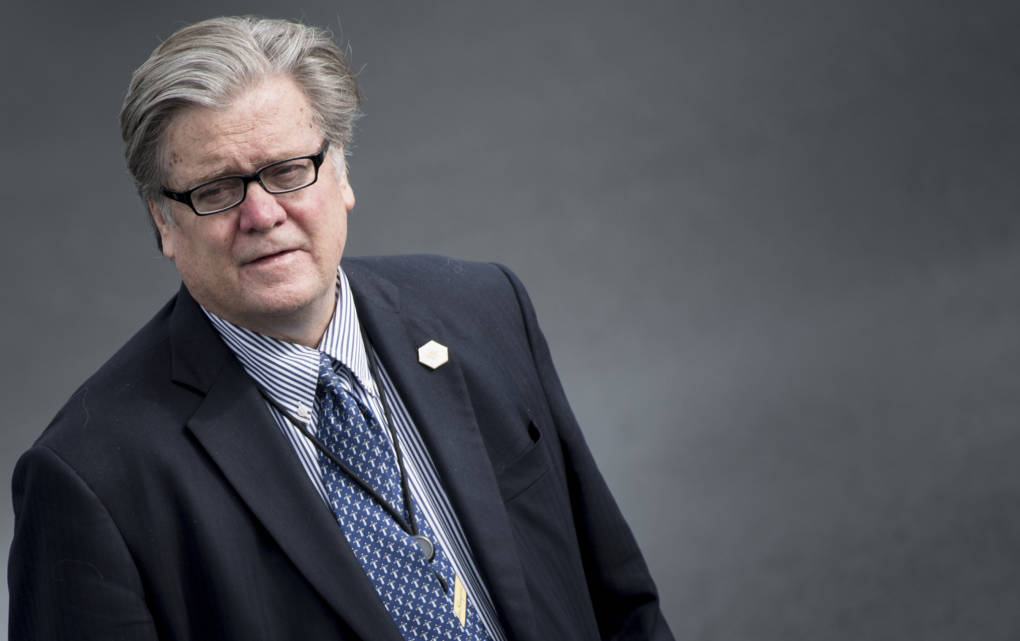
"caption": "Steve Bannon, former chief strategist for President Trump, has reinvented himself multiple times throughout his career.",
"description": "Steve Bannon, former chief strategist for President Trump, has reinvented himself multiple times throughout his career.",
"title": "Steve Bannon, former chief strategist for President Trump, has reinvented himself multiple times throughout his career.",
"credit": "Brendan Smialowski/AFP/Getty Images",
"status": "inherit",
"isLoading": false,
"fetchFailed": false
},
"news_11625668": {
"type": "attachments",
"id": "news_11625668",
"meta": {
"index": "attachments_1716263798",
"site": "news",
"id": "11625668",
"found": true
},
"parent": 11625667,
"imgSizes": {
"small": {
"file": "https://ww2.kqed.org/app/uploads/sites/10/2017/10/metoo-520x292.jpg",
"width": 520,
"mimeType": "image/jpeg",
"height": 292
},
"twentyfourteen-full-width": {
"file": "https://ww2.kqed.org/app/uploads/sites/10/2017/10/metoo-1038x576.jpg",
"width": 1038,
"mimeType": "image/jpeg",
"height": 576
},
"thumbnail": {
"file": "https://ww2.kqed.org/app/uploads/sites/10/2017/10/metoo-160x90.jpg",
"width": 160,
"mimeType": "image/jpeg",
"height": 90
},
"fd-sm": {
"file": "https://ww2.kqed.org/app/uploads/sites/10/2017/10/metoo-960x539.jpg",
"width": 960,
"mimeType": "image/jpeg",
"height": 539
},
"post-thumbnail": {
"file": "https://ww2.kqed.org/app/uploads/sites/10/2017/10/metoo-672x372.jpg",
"width": 672,
"mimeType": "image/jpeg",
"height": 372
},
"xsmall": {
"file": "https://ww2.kqed.org/app/uploads/sites/10/2017/10/metoo-375x211.jpg",
"width": 375,
"mimeType": "image/jpeg",
"height": 211
},
"kqedFullSize": {
"file": "https://ww2.kqed.org/app/uploads/sites/10/2017/10/metoo.jpg",
"width": 1579,
"height": 887
},
"large": {
"file": "https://ww2.kqed.org/app/uploads/sites/10/2017/10/metoo-1020x573.jpg",
"width": 1020,
"mimeType": "image/jpeg",
"height": 573
},
"xlarge": {
"file": "https://ww2.kqed.org/app/uploads/sites/10/2017/10/metoo-1180x663.jpg",
"width": 1180,
"mimeType": "image/jpeg",
"height": 663
},
"guest-author-50": {
"file": "https://ww2.kqed.org/app/uploads/sites/10/2017/10/metoo-50x50.jpg",
"width": 50,
"mimeType": "image/jpeg",
"height": 50
},
"guest-author-96": {
"file": "https://ww2.kqed.org/app/uploads/sites/10/2017/10/metoo-96x96.jpg",
"width": 96,
"mimeType": "image/jpeg",
"height": 96
},
"medium": {
"file": "https://ww2.kqed.org/app/uploads/sites/10/2017/10/metoo-800x449.jpg",
"width": 800,
"mimeType": "image/jpeg",
"height": 449
},
"guest-author-64": {
"file": "https://ww2.kqed.org/app/uploads/sites/10/2017/10/metoo-64x64.jpg",
"width": 64,
"mimeType": "image/jpeg",
"height": 64
},
"guest-author-32": {
"file": "https://ww2.kqed.org/app/uploads/sites/10/2017/10/metoo-32x32.jpg",
"width": 32,
"mimeType": "image/jpeg",
"height": 32
},
"fd-med": {
"file": "https://ww2.kqed.org/app/uploads/sites/10/2017/10/metoo-1180x663.jpg",
"width": 1180,
"mimeType": "image/jpeg",
"height": 663
},
"detail": {
"file": "https://ww2.kqed.org/app/uploads/sites/10/2017/10/metoo-150x150.jpg",
"width": 150,
"mimeType": "image/jpeg",
"height": 150
},
"guest-author-128": {
"file": "https://ww2.kqed.org/app/uploads/sites/10/2017/10/metoo-128x128.jpg",
"width": 128,
"mimeType": "image/jpeg",
"height": 128
},
"xxsmall": {
"file": "https://ww2.kqed.org/app/uploads/sites/10/2017/10/metoo-240x135.jpg",
"width": 240,
"mimeType": "image/jpeg",
"height": 135
}
},
"publishDate": 1508876332,
"modified": 1508876332,
"caption": null,
"description": null,
"title": "metoo",
"credit": null,
"status": "inherit",
"isLoading": false,
"fetchFailed": false
},
"news_11624865": {
"type": "attachments",
"id": "news_11624865",
"meta": {
"index": "attachments_1716263798",
"site": "news",
"id": "11624865",
"found": true
},
"parent": 11624862,
"imgSizes": {
"small": {
"file": "https://ww2.kqed.org/app/uploads/sites/10/2017/10/HarveyWeinstein-520x427.jpg",
"width": 520,
"mimeType": "image/jpeg",
"height": 427
},
"twentyfourteen-full-width": {
"file": "https://ww2.kqed.org/app/uploads/sites/10/2017/10/HarveyWeinstein-1038x576.jpg",
"width": 1038,
"mimeType": "image/jpeg",
"height": 576
},
"thumbnail": {
"file": "https://ww2.kqed.org/app/uploads/sites/10/2017/10/HarveyWeinstein-160x131.jpg",
"width": 160,
"mimeType": "image/jpeg",
"height": 131
},
"fd-sm": {
"file": "https://ww2.kqed.org/app/uploads/sites/10/2017/10/HarveyWeinstein-960x788.jpg",
"width": 960,
"mimeType": "image/jpeg",
"height": 788
},
"post-thumbnail": {
"file": "https://ww2.kqed.org/app/uploads/sites/10/2017/10/HarveyWeinstein-672x372.jpg",
"width": 672,
"mimeType": "image/jpeg",
"height": 372
},
"xsmall": {
"file": "https://ww2.kqed.org/app/uploads/sites/10/2017/10/HarveyWeinstein-375x308.jpg",
"width": 375,
"mimeType": "image/jpeg",
"height": 308
},
"kqedFullSize": {
"file": "https://ww2.kqed.org/app/uploads/sites/10/2017/10/HarveyWeinstein.jpg",
"width": 1920,
"height": 1576
},
"large": {
"file": "https://ww2.kqed.org/app/uploads/sites/10/2017/10/HarveyWeinstein-1020x837.jpg",
"width": 1020,
"mimeType": "image/jpeg",
"height": 837
},
"xlarge": {
"file": "https://ww2.kqed.org/app/uploads/sites/10/2017/10/HarveyWeinstein-1180x969.jpg",
"width": 1180,
"mimeType": "image/jpeg",
"height": 969
},
"guest-author-50": {
"file": "https://ww2.kqed.org/app/uploads/sites/10/2017/10/HarveyWeinstein-50x50.jpg",
"width": 50,
"mimeType": "image/jpeg",
"height": 50
},
"guest-author-96": {
"file": "https://ww2.kqed.org/app/uploads/sites/10/2017/10/HarveyWeinstein-96x96.jpg",
"width": 96,
"mimeType": "image/jpeg",
"height": 96
},
"medium": {
"file": "https://ww2.kqed.org/app/uploads/sites/10/2017/10/HarveyWeinstein-800x657.jpg",
"width": 800,
"mimeType": "image/jpeg",
"height": 657
},
"guest-author-64": {
"file": "https://ww2.kqed.org/app/uploads/sites/10/2017/10/HarveyWeinstein-64x64.jpg",
"width": 64,
"mimeType": "image/jpeg",
"height": 64
},
"guest-author-32": {
"file": "https://ww2.kqed.org/app/uploads/sites/10/2017/10/HarveyWeinstein-32x32.jpg",
"width": 32,
"mimeType": "image/jpeg",
"height": 32
},
"fd-lrg": {
"file": "https://ww2.kqed.org/app/uploads/sites/10/2017/10/HarveyWeinstein-1920x1576.jpg",
"width": 1920,
"mimeType": "image/jpeg",
"height": 1576
},
"fd-med": {
"file": "https://ww2.kqed.org/app/uploads/sites/10/2017/10/HarveyWeinstein-1180x969.jpg",
"width": 1180,
"mimeType": "image/jpeg",
"height": 969
},
"full-width": {
"file": "https://ww2.kqed.org/app/uploads/sites/10/2017/10/HarveyWeinstein-1920x1576.jpg",
"width": 1920,
"mimeType": "image/jpeg",
"height": 1576
},
"detail": {
"file": "https://ww2.kqed.org/app/uploads/sites/10/2017/10/HarveyWeinstein-150x150.jpg",
"width": 150,
"mimeType": "image/jpeg",
"height": 150
},
"guest-author-128": {
"file": "https://ww2.kqed.org/app/uploads/sites/10/2017/10/HarveyWeinstein-128x128.jpg",
"width": 128,
"mimeType": "image/jpeg",
"height": 128
},
"xxsmall": {
"file": "https://ww2.kqed.org/app/uploads/sites/10/2017/10/HarveyWeinstein-240x197.jpg",
"width": 240,
"mimeType": "image/jpeg",
"height": 197
}
},
"publishDate": 1508464680,
"modified": 1508464769,
"caption": "Harvey Weinstein arrives for a dinner for Kennedy honorees hosted by then-U.S. Secretary of State Hillary Clinton in 2012.",
"description": "Harvey Weinstein arrives for a dinner for Kennedy honorees hosted by then-U.S. Secretary of State Hillary Clinton in 2012.",
"title": "HarveyWeinstein",
"credit": "Ron Sachs - Pool/Getty Images",
"status": "inherit",
"isLoading": false,
"fetchFailed": false
},
"news_11491376": {
"type": "attachments",
"id": "news_11491376",
"meta": {
"index": "attachments_1716263798",
"site": "news",
"id": "11491376",
"found": true
},
"parent": 11491292,
"imgSizes": {
"small": {
"file": "https://ww2.kqed.org/app/uploads/sites/10/2017/06/CSNYBillboard-520x342.jpg",
"width": 520,
"mimeType": "image/jpeg",
"height": 342
},
"twentyfourteen-full-width": {
"file": "https://ww2.kqed.org/app/uploads/sites/10/2017/06/CSNYBillboard-1038x576.jpg",
"width": 1038,
"mimeType": "image/jpeg",
"height": 576
},
"thumbnail": {
"file": "https://ww2.kqed.org/app/uploads/sites/10/2017/06/CSNYBillboard-160x105.jpg",
"width": 160,
"mimeType": "image/jpeg",
"height": 105
},
"fd-sm": {
"file": "https://ww2.kqed.org/app/uploads/sites/10/2017/06/CSNYBillboard-960x632.jpg",
"width": 960,
"mimeType": "image/jpeg",
"height": 632
},
"post-thumbnail": {
"file": "https://ww2.kqed.org/app/uploads/sites/10/2017/06/CSNYBillboard-672x372.jpg",
"width": 672,
"mimeType": "image/jpeg",
"height": 372
},
"xsmall": {
"file": "https://ww2.kqed.org/app/uploads/sites/10/2017/06/CSNYBillboard-375x247.jpg",
"width": 375,
"mimeType": "image/jpeg",
"height": 247
},
"kqedFullSize": {
"file": "https://ww2.kqed.org/app/uploads/sites/10/2017/06/CSNYBillboard.jpg",
"width": 1920,
"height": 1264
},
"large": {
"file": "https://ww2.kqed.org/app/uploads/sites/10/2017/06/CSNYBillboard-1020x672.jpg",
"width": 1020,
"mimeType": "image/jpeg",
"height": 672
},
"xlarge": {
"file": "https://ww2.kqed.org/app/uploads/sites/10/2017/06/CSNYBillboard-1180x777.jpg",
"width": 1180,
"mimeType": "image/jpeg",
"height": 777
},
"guest-author-50": {
"file": "https://ww2.kqed.org/app/uploads/sites/10/2017/06/CSNYBillboard-50x50.jpg",
"width": 50,
"mimeType": "image/jpeg",
"height": 50
},
"guest-author-96": {
"file": "https://ww2.kqed.org/app/uploads/sites/10/2017/06/CSNYBillboard-96x96.jpg",
"width": 96,
"mimeType": "image/jpeg",
"height": 96
},
"medium": {
"file": "https://ww2.kqed.org/app/uploads/sites/10/2017/06/CSNYBillboard-800x527.jpg",
"width": 800,
"mimeType": "image/jpeg",
"height": 527
},
"guest-author-64": {
"file": "https://ww2.kqed.org/app/uploads/sites/10/2017/06/CSNYBillboard-64x64.jpg",
"width": 64,
"mimeType": "image/jpeg",
"height": 64
},
"guest-author-32": {
"file": "https://ww2.kqed.org/app/uploads/sites/10/2017/06/CSNYBillboard-32x32.jpg",
"width": 32,
"mimeType": "image/jpeg",
"height": 32
},
"fd-lrg": {
"file": "https://ww2.kqed.org/app/uploads/sites/10/2017/06/CSNYBillboard-1920x1264.jpg",
"width": 1920,
"mimeType": "image/jpeg",
"height": 1264
},
"fd-med": {
"file": "https://ww2.kqed.org/app/uploads/sites/10/2017/06/CSNYBillboard-1180x777.jpg",
"width": 1180,
"mimeType": "image/jpeg",
"height": 777
},
"full-width": {
"file": "https://ww2.kqed.org/app/uploads/sites/10/2017/06/CSNYBillboard-1920x1264.jpg",
"width": 1920,
"mimeType": "image/jpeg",
"height": 1264
},
"detail": {
"file": "https://ww2.kqed.org/app/uploads/sites/10/2017/06/CSNYBillboard-150x150.jpg",
"width": 150,
"mimeType": "image/jpeg",
"height": 150
},
"guest-author-128": {
"file": "https://ww2.kqed.org/app/uploads/sites/10/2017/06/CSNYBillboard-128x128.jpg",
"width": 128,
"mimeType": "image/jpeg",
"height": 128
},
"xxsmall": {
"file": "https://ww2.kqed.org/app/uploads/sites/10/2017/06/CSNYBillboard-240x158.jpg",
"width": 240,
"mimeType": "image/jpeg",
"height": 158
}
},
"publishDate": 1496450444,
"modified": 1496697993,
"caption": "A Crosby Stills & Nash billboard on the Sunset Strip, circa 1977.",
"description": "A Crosby Stills and Nash billboard on the Sunset Strip, circa 1977.",
"title": "CSNYBillboard",
"credit": "Robert Landau",
"status": "inherit",
"isLoading": false,
"fetchFailed": false
},
"news_11437506": {
"type": "attachments",
"id": "news_11437506",
"meta": {
"index": "attachments_1716263798",
"site": "news",
"id": "11437506",
"found": true
},
"parent": 11437499,
"imgSizes": {
"small": {
"file": "https://ww2.kqed.org/app/uploads/sites/10/2017/05/WritersStrike-520x347.jpg",
"width": 520,
"mimeType": "image/jpeg",
"height": 347
},
"twentyfourteen-full-width": {
"file": "https://ww2.kqed.org/app/uploads/sites/10/2017/05/WritersStrike-1038x576.jpg",
"width": 1038,
"mimeType": "image/jpeg",
"height": 576
},
"thumbnail": {
"file": "https://ww2.kqed.org/app/uploads/sites/10/2017/05/WritersStrike-160x107.jpg",
"width": 160,
"mimeType": "image/jpeg",
"height": 107
},
"fd-sm": {
"file": "https://ww2.kqed.org/app/uploads/sites/10/2017/05/WritersStrike-960x640.jpg",
"width": 960,
"mimeType": "image/jpeg",
"height": 640
},
"post-thumbnail": {
"file": "https://ww2.kqed.org/app/uploads/sites/10/2017/05/WritersStrike-672x372.jpg",
"width": 672,
"mimeType": "image/jpeg",
"height": 372
},
"xsmall": {
"file": "https://ww2.kqed.org/app/uploads/sites/10/2017/05/WritersStrike-375x250.jpg",
"width": 375,
"mimeType": "image/jpeg",
"height": 250
},
"kqedFullSize": {
"file": "https://ww2.kqed.org/app/uploads/sites/10/2017/05/WritersStrike.jpg",
"width": 1920,
"height": 1280
},
"large": {
"file": "https://ww2.kqed.org/app/uploads/sites/10/2017/05/WritersStrike-1020x680.jpg",
"width": 1020,
"mimeType": "image/jpeg",
"height": 680
},
"xlarge": {
"file": "https://ww2.kqed.org/app/uploads/sites/10/2017/05/WritersStrike-1180x787.jpg",
"width": 1180,
"mimeType": "image/jpeg",
"height": 787
},
"guest-author-50": {
"file": "https://ww2.kqed.org/app/uploads/sites/10/2017/05/WritersStrike-50x50.jpg",
"width": 50,
"mimeType": "image/jpeg",
"height": 50
},
"guest-author-96": {
"file": "https://ww2.kqed.org/app/uploads/sites/10/2017/05/WritersStrike-96x96.jpg",
"width": 96,
"mimeType": "image/jpeg",
"height": 96
},
"medium": {
"file": "https://ww2.kqed.org/app/uploads/sites/10/2017/05/WritersStrike-800x533.jpg",
"width": 800,
"mimeType": "image/jpeg",
"height": 533
},
"guest-author-64": {
"file": "https://ww2.kqed.org/app/uploads/sites/10/2017/05/WritersStrike-64x64.jpg",
"width": 64,
"mimeType": "image/jpeg",
"height": 64
},
"guest-author-32": {
"file": "https://ww2.kqed.org/app/uploads/sites/10/2017/05/WritersStrike-32x32.jpg",
"width": 32,
"mimeType": "image/jpeg",
"height": 32
},
"fd-lrg": {
"file": "https://ww2.kqed.org/app/uploads/sites/10/2017/05/WritersStrike-1920x1280.jpg",
"width": 1920,
"mimeType": "image/jpeg",
"height": 1280
},
"fd-med": {
"file": "https://ww2.kqed.org/app/uploads/sites/10/2017/05/WritersStrike-1180x787.jpg",
"width": 1180,
"mimeType": "image/jpeg",
"height": 787
},
"full-width": {
"file": "https://ww2.kqed.org/app/uploads/sites/10/2017/05/WritersStrike-1920x1280.jpg",
"width": 1920,
"mimeType": "image/jpeg",
"height": 1280
},
"detail": {
"file": "https://ww2.kqed.org/app/uploads/sites/10/2017/05/WritersStrike-150x150.jpg",
"width": 150,
"mimeType": "image/jpeg",
"height": 150
},
"guest-author-128": {
"file": "https://ww2.kqed.org/app/uploads/sites/10/2017/05/WritersStrike-128x128.jpg",
"width": 128,
"mimeType": "image/jpeg",
"height": 128
},
"xxsmall": {
"file": "https://ww2.kqed.org/app/uploads/sites/10/2017/05/WritersStrike-240x160.jpg",
"width": 240,
"mimeType": "image/jpeg",
"height": 160
}
},
"publishDate": 1493763014,
"modified": 1493765135,
"caption": "Writers Guild of America members and supporters picket in front of NBC studios during a strike in February 2008.",
"description": "Writers Guild of America members and supporters picket in front of NBC studios during a strike in 2008.",
"title": "WritersStrike",
"credit": "David McNew/Getty Images",
"status": "inherit",
"isLoading": false,
"fetchFailed": false
},
"arts_10286283": {
"type": "attachments",
"id": "arts_10286283",
"meta": {
"index": "attachments_1716263798",
"site": "arts",
"id": "10286283",
"found": true
},
"parent": 13263887,
"imgSizes": {
"twentyfourteen-full-width": {
"file": "https://ww2.kqed.org/app/uploads/sites/2/2014/12/selma02-62452763187ce7260782f661f723bcbc1143130a-e1471475466594-1038x576.jpg",
"width": 1038,
"mimeType": "image/jpeg",
"height": 576
},
"thumbnail": {
"file": "https://ww2.kqed.org/app/uploads/sites/2/2014/12/selma02-62452763187ce7260782f661f723bcbc1143130a-e1471475466594-400x225.jpg",
"width": 400,
"mimeType": "image/jpeg",
"height": 225
},
"post-thumbnail": {
"file": "https://ww2.kqed.org/app/uploads/sites/2/2014/12/selma02-62452763187ce7260782f661f723bcbc1143130a-e1471475466594-672x372.jpg",
"width": 672,
"mimeType": "image/jpeg",
"height": 372
},
"fd-sm": {
"file": "https://ww2.kqed.org/app/uploads/sites/2/2014/12/selma02-62452763187ce7260782f661f723bcbc1143130a-e1471475466594-960x540.jpg",
"width": 960,
"mimeType": "image/jpeg",
"height": 540
},
"kqedFullSize": {
"file": "https://ww2.kqed.org/app/uploads/sites/2/2014/12/selma02-62452763187ce7260782f661f723bcbc1143130a-e1471475466594.jpg",
"width": 1243,
"height": 699
},
"large": {
"file": "https://ww2.kqed.org/app/uploads/sites/2/2014/12/selma02-62452763187ce7260782f661f723bcbc1143130a-e1471475466594-1180x664.jpg",
"width": 1180,
"mimeType": "image/jpeg",
"height": 664
},
"guest-author-50": {
"file": "https://ww2.kqed.org/app/uploads/sites/2/2014/12/selma02-62452763187ce7260782f661f723bcbc1143130a-e1471475466594-50x50.jpg",
"width": 50,
"mimeType": "image/jpeg",
"height": 50
},
"guest-author-96": {
"file": "https://ww2.kqed.org/app/uploads/sites/2/2014/12/selma02-62452763187ce7260782f661f723bcbc1143130a-e1471475466594-96x96.jpg",
"width": 96,
"mimeType": "image/jpeg",
"height": 96
},
"medium": {
"file": "https://ww2.kqed.org/app/uploads/sites/2/2014/12/selma02-62452763187ce7260782f661f723bcbc1143130a-e1471475466594-800x450.jpg",
"width": 800,
"mimeType": "image/jpeg",
"height": 450
},
"guest-author-64": {
"file": "https://ww2.kqed.org/app/uploads/sites/2/2014/12/selma02-62452763187ce7260782f661f723bcbc1143130a-e1471475466594-64x64.jpg",
"width": 64,
"mimeType": "image/jpeg",
"height": 64
},
"guest-author-32": {
"file": "https://ww2.kqed.org/app/uploads/sites/2/2014/12/selma02-62452763187ce7260782f661f723bcbc1143130a-e1471475466594-32x32.jpg",
"width": 32,
"mimeType": "image/jpeg",
"height": 32
},
"fd-med": {
"file": "https://ww2.kqed.org/app/uploads/sites/2/2014/12/selma02-62452763187ce7260782f661f723bcbc1143130a-e1471475466594-1180x664.jpg",
"width": 1180,
"mimeType": "image/jpeg",
"height": 664
},
"detail": {
"file": "https://ww2.kqed.org/app/uploads/sites/2/2014/12/selma02-62452763187ce7260782f661f723bcbc1143130a-e1471475466594-150x150.jpg",
"width": 150,
"mimeType": "image/jpeg",
"height": 150
},
"guest-author-128": {
"file": "https://ww2.kqed.org/app/uploads/sites/2/2014/12/selma02-62452763187ce7260782f661f723bcbc1143130a-e1471475466594-128x128.jpg",
"width": 128,
"mimeType": "image/jpeg",
"height": 128
},
"medium_large": {
"file": "https://ww2.kqed.org/app/uploads/sites/2/2014/12/selma02-62452763187ce7260782f661f723bcbc1143130a-e1471475466594-768x432.jpg",
"width": 768,
"mimeType": "image/jpeg",
"height": 432
}
},
"publishDate": 1420762154,
"modified": 1495529518,
"caption": "Director Ava DuVernay on the set of 'Selma'",
"description": "Director Ava DuVernay on the set of \u003cem>Selma\u003c/em>.",
"title": "Director Ava DuVernay on the set of Selma.",
"credit": null,
"status": "inherit",
"isLoading": false,
"fetchFailed": false
},
"news_10874739": {
"type": "attachments",
"id": "news_10874739",
"meta": {
"index": "attachments_1716263798",
"site": "news",
"id": "10874739",
"found": true
},
"parent": 10874738,
"imgSizes": {
"twentyfourteen-full-width": {
"file": "https://ww2.kqed.org/app/uploads/sites/10/2016/02/hollywood-edit_custom-9545e04d76b5cf2c2c987937fe6afe8d8a859a44-1038x576.jpg",
"width": 1038,
"mimeType": "image/jpeg",
"height": 576
},
"thumbnail": {
"file": "https://ww2.kqed.org/app/uploads/sites/10/2016/02/hollywood-edit_custom-9545e04d76b5cf2c2c987937fe6afe8d8a859a44-400x265.jpg",
"width": 400,
"mimeType": "image/jpeg",
"height": 265
},
"fd-sm": {
"file": "https://ww2.kqed.org/app/uploads/sites/10/2016/02/hollywood-edit_custom-9545e04d76b5cf2c2c987937fe6afe8d8a859a44-960x636.jpg",
"width": 960,
"mimeType": "image/jpeg",
"height": 636
},
"post-thumbnail": {
"file": "https://ww2.kqed.org/app/uploads/sites/10/2016/02/hollywood-edit_custom-9545e04d76b5cf2c2c987937fe6afe8d8a859a44-672x372.jpg",
"width": 672,
"mimeType": "image/jpeg",
"height": 372
},
"kqedFullSize": {
"file": "https://ww2.kqed.org/app/uploads/sites/10/2016/02/hollywood-edit_custom-9545e04d76b5cf2c2c987937fe6afe8d8a859a44.jpg",
"width": 3000,
"height": 1987
},
"large": {
"file": "https://ww2.kqed.org/app/uploads/sites/10/2016/02/hollywood-edit_custom-9545e04d76b5cf2c2c987937fe6afe8d8a859a44-1920x1272.jpg",
"width": 1920,
"mimeType": "image/jpeg",
"height": 1272
},
"guest-author-96": {
"file": "https://ww2.kqed.org/app/uploads/sites/10/2016/02/hollywood-edit_custom-9545e04d76b5cf2c2c987937fe6afe8d8a859a44-96x96.jpg",
"width": 96,
"mimeType": "image/jpeg",
"height": 96
},
"medium": {
"file": "https://ww2.kqed.org/app/uploads/sites/10/2016/02/hollywood-edit_custom-9545e04d76b5cf2c2c987937fe6afe8d8a859a44-800x530.jpg",
"width": 800,
"mimeType": "image/jpeg",
"height": 530
},
"guest-author-64": {
"file": "https://ww2.kqed.org/app/uploads/sites/10/2016/02/hollywood-edit_custom-9545e04d76b5cf2c2c987937fe6afe8d8a859a44-64x64.jpg",
"width": 64,
"mimeType": "image/jpeg",
"height": 64
},
"guest-author-32": {
"file": "https://ww2.kqed.org/app/uploads/sites/10/2016/02/hollywood-edit_custom-9545e04d76b5cf2c2c987937fe6afe8d8a859a44-32x32.jpg",
"width": 32,
"mimeType": "image/jpeg",
"height": 32
},
"jmtc-small-thumb": {
"file": "https://ww2.kqed.org/app/uploads/sites/10/2016/02/hollywood-edit_custom-9545e04d76b5cf2c2c987937fe6afe8d8a859a44-280x150.jpg",
"width": 280,
"mimeType": "image/jpeg",
"height": 150
},
"fd-lrg": {
"file": "https://ww2.kqed.org/app/uploads/sites/10/2016/02/hollywood-edit_custom-9545e04d76b5cf2c2c987937fe6afe8d8a859a44-1920x1272.jpg",
"width": 1920,
"mimeType": "image/jpeg",
"height": 1272
},
"fd-med": {
"file": "https://ww2.kqed.org/app/uploads/sites/10/2016/02/hollywood-edit_custom-9545e04d76b5cf2c2c987937fe6afe8d8a859a44-1180x782.jpg",
"width": 1180,
"mimeType": "image/jpeg",
"height": 782
},
"detail": {
"file": "https://ww2.kqed.org/app/uploads/sites/10/2016/02/hollywood-edit_custom-9545e04d76b5cf2c2c987937fe6afe8d8a859a44-75x75.jpg",
"width": 75,
"mimeType": "image/jpeg",
"height": 75
},
"guest-author-128": {
"file": "https://ww2.kqed.org/app/uploads/sites/10/2016/02/hollywood-edit_custom-9545e04d76b5cf2c2c987937fe6afe8d8a859a44-128x128.jpg",
"width": 128,
"mimeType": "image/jpeg",
"height": 128
}
},
"publishDate": 1456178102,
"modified": 1456180775,
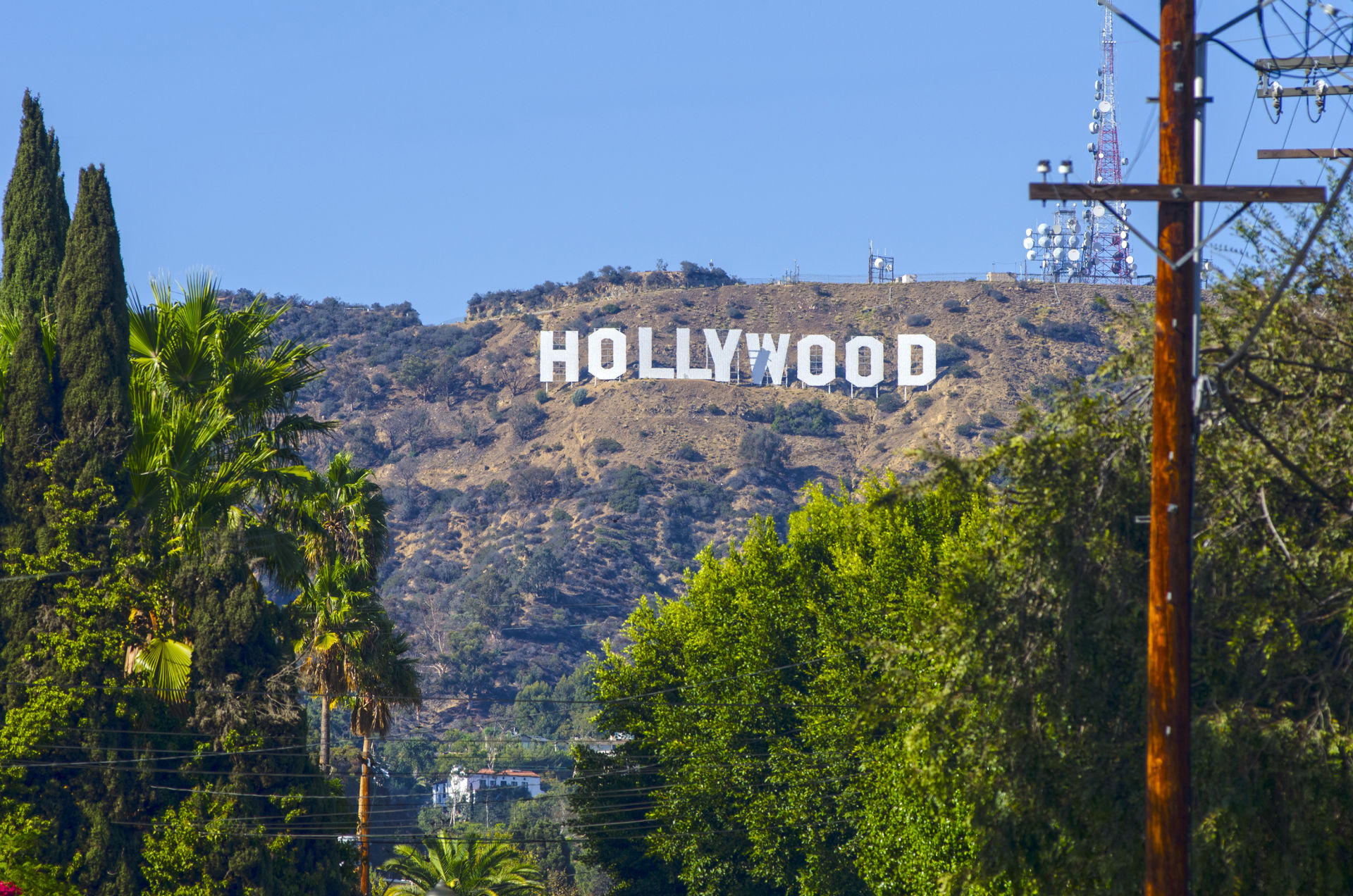
"caption": "The world-famous Hollywood sign in the Hollywood Hills in Los Angeles.",
"description": "The world-famous Hollywood sign in the Hollywood Hills in Los Angeles.",
"title": "The world-famous Hollywood sign in the Hollywood Hills in Los Angeles.",
"credit": "Chris Sattlberger/Getty Images",
"status": "inherit",
"isLoading": false,
"fetchFailed": false
},
"news_10634570": {
"type": "attachments",
"id": "news_10634570",
"meta": {
"index": "attachments_1716263798",
"site": "news",
"id": "10634570",
"found": true
},
"parent": 10633058,
"imgSizes": {
"twentyfourteen-full-width": {
"file": "https://ww2.kqed.org/app/uploads/sites/10/2015/08/Freer-1038x576.jpg",
"width": 1038,
"mimeType": "image/jpeg",
"height": 576
},
"thumbnail": {
"file": "https://ww2.kqed.org/app/uploads/sites/10/2015/08/Freer-400x287.jpg",
"width": 400,
"mimeType": "image/jpeg",
"height": 287
},
"fd-sm": {
"file": "https://ww2.kqed.org/app/uploads/sites/10/2015/08/Freer-960x689.jpg",
"width": 960,
"mimeType": "image/jpeg",
"height": 689
},
"post-thumbnail": {
"file": "https://ww2.kqed.org/app/uploads/sites/10/2015/08/Freer-672x372.jpg",
"width": 672,
"mimeType": "image/jpeg",
"height": 372
},
"kqedFullSize": {
"file": "https://ww2.kqed.org/app/uploads/sites/10/2015/08/Freer.jpg",
"width": 1920,
"height": 1377
},
"large": {
"file": "https://ww2.kqed.org/app/uploads/sites/10/2015/08/Freer-1440x1033.jpg",
"width": 1440,
"mimeType": "image/jpeg",
"height": 1033
},
"guest-author-96": {
"file": "https://ww2.kqed.org/app/uploads/sites/10/2015/08/Freer-96x96.jpg",
"width": 96,
"mimeType": "image/jpeg",
"height": 96
},
"medium": {
"file": "https://ww2.kqed.org/app/uploads/sites/10/2015/08/Freer-800x574.jpg",
"width": 800,
"mimeType": "image/jpeg",
"height": 574
},
"guest-author-64": {
"file": "https://ww2.kqed.org/app/uploads/sites/10/2015/08/Freer-64x64.jpg",
"width": 64,
"mimeType": "image/jpeg",
"height": 64
},
"guest-author-32": {
"file": "https://ww2.kqed.org/app/uploads/sites/10/2015/08/Freer-32x32.jpg",
"width": 32,
"mimeType": "image/jpeg",
"height": 32
},
"jmtc-small-thumb": {
"file": "https://ww2.kqed.org/app/uploads/sites/10/2015/08/Freer-280x150.jpg",
"width": 280,
"mimeType": "image/jpeg",
"height": 150
},
"fd-lrg": {
"file": "https://ww2.kqed.org/app/uploads/sites/10/2015/08/Freer-1920x1377.jpg",
"width": 1920,
"mimeType": "image/jpeg",
"height": 1377
},
"fd-med": {
"file": "https://ww2.kqed.org/app/uploads/sites/10/2015/08/Freer-1180x846.jpg",
"width": 1180,
"mimeType": "image/jpeg",
"height": 846
},
"detail": {
"file": "https://ww2.kqed.org/app/uploads/sites/10/2015/08/Freer-75x75.jpg",
"width": 75,
"mimeType": "image/jpeg",
"height": 75
},
"guest-author-128": {
"file": "https://ww2.kqed.org/app/uploads/sites/10/2015/08/Freer-128x128.jpg",
"width": 128,
"mimeType": "image/jpeg",
"height": 128
}
},
"publishDate": 1438999463,
"modified": 1438999488,
"caption": "Costume designer Alison Freer in her closet. ",
"description": "Costume designer Alison Freer in her closet. ",
"title": "Freer",
"credit": "Courtesy Alison Freer",
"status": "inherit",
"isLoading": false,
"fetchFailed": false
}
},
"audioPlayerReducer": {
"postId": "stream_live",
"isPaused": true,
"isPlaying": false,
"pfsActive": false,
"pledgeModalIsOpen": true,
"playerDrawerIsOpen": false,
"liveAudioPlayStartedAt": 0,
"liveAudioPlayContext": ""
},
"authorsReducer": {
"byline_news_11625011": {
"type": "authors",
"id": "byline_news_11625011",
"meta": {
"override": true
},
"slug": "byline_news_11625011",
"name": "Kelly McEvers",
"isLoading": false
},
"byline_news_11624862": {
"type": "authors",
"id": "byline_news_11624862",
"meta": {
"override": true
},
"slug": "byline_news_11624862",
"name": "Richard Gonzales",
"isLoading": false
},
"byline_news_11491292": {
"type": "authors",
"id": "byline_news_11491292",
"meta": {
"override": true
},
"slug": "byline_news_11491292",
"name": "Anny Celsi \u003cbr> \u003cstrong>\u003ca href=\"http://www.scpr.org/\">KPCC\u003c/a>\u003c/strong>",
"isLoading": false
},
"byline_news_11437499": {
"type": "authors",
"id": "byline_news_11437499",
"meta": {
"override": true
},
"slug": "byline_news_11437499",
"name": "\u003cstrong>\u003ca href=\"http://www.scpr.org/\">KPCC's\u003c/a> \u003ca href=\"http://www.scpr.org/about/people/staff/ben-bergman\">Ben Bergman\u003c/a>\u003c/strong> and The Associated Press",
"isLoading": false
},
"byline_arts_12033678": {
"type": "authors",
"id": "byline_arts_12033678",
"meta": {
"override": true
},
"slug": "byline_arts_12033678",
"name": "Jake Coyle, Associated Press",
"isLoading": false
},
"byline_news_10874738": {
"type": "authors",
"id": "byline_news_10874738",
"meta": {
"override": true
},
"slug": "byline_news_10874738",
"name": "\u003cstrong>\u003ca href=\"http://www.npr.org/people/243254424/eric-deggans\">Eric Deggans\u003c/a>\u003cbr>NPR\u003c/strong>",
"isLoading": false
},
"byline_news_10633058": {
"type": "authors",
"id": "byline_news_10633058",
"meta": {
"override": true
},
"slug": "byline_news_10633058",
"name": "Peter Gilstrap",
"isLoading": false
},
"byline_news_10341486": {
"type": "authors",
"id": "byline_news_10341486",
"meta": {
"override": true
},
"slug": "byline_news_10341486",
"name": "Caitlin Esch",
"isLoading": false
},
"kqed": {
"type": "authors",
"id": "236",
"meta": {
"index": "authors_1716337520",
"id": "236",
"found": true
},
"name": "KQED News Staff",
"firstName": "KQED News Staff",
"lastName": null,
"slug": "kqed",
"email": "faq@kqed.org",
"display_author_email": false,
"staff_mastheads": [],
"title": null,
"bio": null,
"avatar": "https://secure.gravatar.com/avatar/ef0e801a68c4c54afa9180db14084167?s=600&d=blank&r=g",
"twitter": null,
"facebook": null,
"instagram": null,
"linkedin": null,
"sites": [
{
"site": "arts",
"roles": [
"contributor"
]
},
{
"site": "news",
"roles": [
"editor"
]
},
{
"site": "futureofyou",
"roles": [
"author"
]
}
],
"headData": {
"title": "KQED News Staff | KQED",
"description": null,
"ogImgSrc": "https://secure.gravatar.com/avatar/ef0e801a68c4c54afa9180db14084167?s=600&d=blank&r=g",
"twImgSrc": "https://secure.gravatar.com/avatar/ef0e801a68c4c54afa9180db14084167?s=600&d=blank&r=g"
},
"isLoading": false,
"link": "/author/kqed"
},
"scottshafer": {
"type": "authors",
"id": "255",
"meta": {
"index": "authors_1716337520",
"id": "255",
"found": true
},
"name": "Scott Shafer",
"firstName": "Scott",
"lastName": "Shafer",
"slug": "scottshafer",
"email": "sshafer@kqed.org",
"display_author_email": false,
"staff_mastheads": [
"news"
],
"title": "KQED Contributor",
"bio": "Scott Shafer is a senior editor with the KQED Politics and Government desk. He is co-host of Political Breakdown, the award-winning radio show and podcast with a personal take on the world of politics. Scott came to KQED in 1998 to host the statewide\u003cem> California Report\u003c/em>. Prior to that he had extended stints in politics and government\u003cem>.\u003c/em> He uses that inside experience at KQED in his, reporting, hosting and analysis for the politics desk. Scott collaborated \u003cem>Political Breakdown a\u003c/em>nd on \u003cem>The Political Mind of Jerry Brown, \u003c/em>an eight-part series about the life and extraordinary political career of the former governor. For fun, he plays water polo with the San Francisco Tsunami.",
"avatar": "https://secure.gravatar.com/avatar/a62ebae45b79d7aed1a39a0e3bf68104?s=600&d=blank&r=g",
"twitter": "scottshafer",
"bluesky": null,
"facebook": null,
"instagram": null,
"linkedin": null,
"sites": [
{
"site": "news",
"roles": [
"editor"
]
},
{
"site": "stateofhealth",
"roles": [
"author"
]
},
{
"site": "science",
"roles": [
"author"
]
},
{
"site": "forum",
"roles": [
"subscriber"
]
},
{
"site": "liveblog",
"roles": [
"author"
]
}
],
"headData": {
"title": "Scott Shafer | KQED",
"description": "KQED Contributor",
"ogImgSrc": "https://secure.gravatar.com/avatar/a62ebae45b79d7aed1a39a0e3bf68104?s=600&d=blank&r=g",
"twImgSrc": "https://secure.gravatar.com/avatar/a62ebae45b79d7aed1a39a0e3bf68104?s=600&d=blank&r=g"
},
"isLoading": false,
"link": "/author/scottshafer"
}
},
"pagesReducer": {
"news_tag_hollywood": {
"type": "terms",
"id": "news_5396",
"meta": {
"index": "terms_1716263798",
"site": "news",
"id": "5396",
"score": 8.79519
},
"featImg": null,
"name": "hollywood",
"description": null,
"taxonomy": "tag",
"headData": {
"twImgId": null,
"twTitle": null,
"ogTitle": null,
"ogImgId": null,
"twDescription": null,
"description": null,
"title": "hollywood Archives | KQED News",
"ogDescription": null
},
"ttid": 5419,
"slug": "hollywood",
"isLoading": false,
"title": "hollywood",
"pageMeta": {
"site": "news",
"WpPageTemplate": "page-topic-editorial",
"currentPage": 3
},
"blocks": [
{
"blockName": "kqed/post-list",
"attrs": {
"layout": "cardArticle2",
"query": "posts/news?tag=hollywood",
"seeMore": false,
"paginated": true,
"page": 3
}
},
{
"blockName": "kqed/ad"
}
]
}
},
"pfsSessionReducer": {},
"postsReducer": {
"stream_live": {
"type": "live",
"id": "stream_live",
"audioUrl": "https://streams.kqed.org/kqedradio",
"title": "Live Stream",
"excerpt": "Live Stream information currently unavailable.",
"link": "/radio",
"featImg": "",
"label": {
"name": "KQED Live",
"link": "/"
}
},
"stream_kqedNewscast": {
"type": "posts",
"id": "stream_kqedNewscast",
"audioUrl": "https://www.kqed.org/.stream/anon/radio/RDnews/newscast.mp3?_=1",
"title": "KQED Newscast",
"featImg": "",
"label": {
"name": "88.5 FM",
"link": "/"
}
},
"news_11625176": {
"type": "posts",
"id": "news_11625176",
"meta": {
"index": "posts_1716263798",
"site": "news",
"id": "11625176",
"score": null,
"sort": [
1508548203000
]
},
"guestAuthors": [],
"slug": "metoo-organizing-to-end-sexual-harassment-hazardous-wildfire-waste-ai-weiweis-human-flow",
"title": "#MeToo: Organizing to End Sexual Harassment, Hazardous Wildfire Waste, Ai Weiwei’s “Human Flow”",
"publishDate": 1508548203,
"format": "video",
"headTitle": "#MeToo: Organizing to End Sexual Harassment, Hazardous Wildfire Waste, Ai Weiwei’s “Human Flow” | KQED",
"labelTerm": {
"term": 7052,
"site": "news"
},
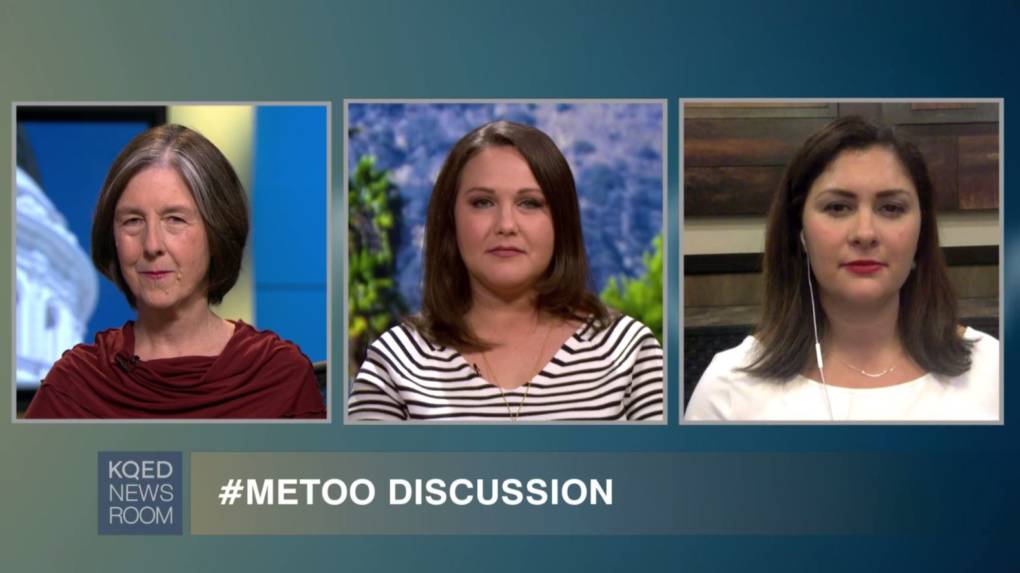
"content": "\u003cp>\u003cstrong>#MeToo: Organizing to End Sexual Harassment\u003cbr>\n\u003c/strong>Hollywood has been forced to take a hard look at itself as sexual assault allegations against Harvey Weinstein spiraled into a scandal. This week, women in California politics added their voices: More than 140 women, from lobbyists to elected officials, signed a letter calling out the culture of sexual harassment and assault in the halls of state government.\u003c/p>\n\u003cp>\u003cspan style=\"font-weight: 400\">Guests:\u003c/span>\u003c/p>\n\u003cul>\n\u003cli style=\"font-weight: 400\">\u003cspan style=\"font-weight: 400\">Marisa Lagos, KQED politics and government reporter\u003c/span>\u003c/li>\n\u003cli style=\"font-weight: 400\">\u003cspan style=\"font-weight: 400\">Pamela Lopez, K Street Consulting partner\u003c/span>\u003c/li>\n\u003cli style=\"font-weight: 400\">\u003cspan style=\"font-weight: 400\">State Sen. Nancy Skinner (D-Berkeley)\u003c/span>\u003c/li>\n\u003c/ul>\n\u003cp>\u003cstrong>Hazardous Wildfire Waste\u003cbr>\n\u003c/strong>In the wake of the devastating California wildfires, another hazard remains: toxic chemicals left lingering in the ash and debris. We’ll hear about what threats they pose to residents and the environment.\u003c/p>\n\u003cp>Guests:\u003c/p>\n\u003cul>\n\u003cli>Dr. Robert Blount, UCSF professor of pulmonology\u003c/li>\n\u003cli>Christine Sosko, Sonoma County director of environmental health\u003c/li>\n\u003c/ul>\n\u003cp>\u003cstrong>Ai Weiwei’s “Human Flow”\u003cbr>\n\u003c/strong>\u003cspan style=\"line-height: inherit\">Chinese dissident and artist Ai Weiwei has long tackled politically controversial subjects, from government corruption to incarceration at Alcatraz Island. His latest film, “Human Flow,” tackles the global refugee crisis. KQED’s Monica Lam talks to Ai about the film, which opens in Bay Area theaters this weekend.\u003c/span>\u003c/p>\n\u003cp>[ad fullwidth]\u003c/p>\n\u003cp>\u003c/p>\n\u003cp>\u003cem>Additional Credit Info: \u003c/em>\u003cbr>\n\u003cem>\u003cspan style=\"font-weight: 400\">\u003ca href=\"https://www.dvidshub.net/\">Defense Video & Imagery Distribution System\u003c/a> \u003c/span>\u003c/em>\u003cbr>\n\u003cem>\u003ca href=\"https://www.flickr.com/photos/archer10/\">\u003cspan style=\"font-weight: 400\">Dennis Jarvis\u003c/span>\u003c/a> \u003c/em>\u003c/p>\n\n",
"blocks": [],
"excerpt": "More than 140 women, from lobbyists to elected officials, signed a letter calling out the culture of sexual harassment and assault in the halls of state government. ",
"status": "publish",
"parent": 0,
"modified": 1722635735,
"stats": {
"hasAudio": false,
"hasVideo": false,
"hasChartOrMap": false,
"iframeSrcs": [],
"hasGoogleForm": false,
"hasGallery": false,
"hasHearkenModule": false,
"hasPolis": false,
"paragraphCount": 8,
"wordCount": 211
},
"headData": {
"title": "#MeToo: Organizing to End Sexual Harassment, Hazardous Wildfire Waste, Ai Weiwei’s “Human Flow” | KQED",
"description": "More than 140 women, from lobbyists to elected officials, signed a letter calling out the culture of sexual harassment and assault in the halls of state government. ",
"ogTitle": "",
"ogDescription": "",
"ogImgId": "",
"twTitle": "",
"twDescription": "",
"twImgId": "",
"schema": {
"@context": "https://schema.org",
"@type": "NewsArticle",
"headline": "#MeToo: Organizing to End Sexual Harassment, Hazardous Wildfire Waste, Ai Weiwei’s “Human Flow”",
"datePublished": "2017-10-20T18:10:03-07:00",
"dateModified": "2024-08-02T14:55:35-07:00",
"image": "https://cdn.kqed.org/wp-content/uploads/2020/02/KQED-OG-Image@1x.png",
"isAccessibleForFree": "True",
"publisher": {
"@type": "NewsMediaOrganization",
"@id": "https://www.kqed.org/#organization",
"name": "KQED",
"logo": "https://cdn.kqed.org/wp-content/uploads/2020/02/KQED-OG-Image@1x.png",
"url": "https://www.kqed.org",
"sameAs": [
"https://www.facebook.com/KQED",
"https://twitter.com/KQED",
"https://www.instagram.com/kqed/",
"https://www.tiktok.com/@kqedofficial",
"https://www.linkedin.com/company/kqed",
"https://www.youtube.com/channel/UCeC0IOo7i1P_61zVUWbJ4nw"
]
}
}
},
"videoEmbed": "https://youtu.be/B3L1_p3JxXE",
"sticky": false,
"path": "/news/11625176/metoo-organizing-to-end-sexual-harassment-hazardous-wildfire-waste-ai-weiweis-human-flow",
"audioTrackLength": null,
"parsedContent": [
{
"type": "contentString",
"content": "\u003cdiv class=\"post-body\">\u003cp>\u003cp>\u003cstrong>#MeToo: Organizing to End Sexual Harassment\u003cbr>\n\u003c/strong>Hollywood has been forced to take a hard look at itself as sexual assault allegations against Harvey Weinstein spiraled into a scandal. This week, women in California politics added their voices: More than 140 women, from lobbyists to elected officials, signed a letter calling out the culture of sexual harassment and assault in the halls of state government.\u003c/p>\n\u003cp>\u003cspan style=\"font-weight: 400\">Guests:\u003c/span>\u003c/p>\n\u003cul>\n\u003cli style=\"font-weight: 400\">\u003cspan style=\"font-weight: 400\">Marisa Lagos, KQED politics and government reporter\u003c/span>\u003c/li>\n\u003cli style=\"font-weight: 400\">\u003cspan style=\"font-weight: 400\">Pamela Lopez, K Street Consulting partner\u003c/span>\u003c/li>\n\u003cli style=\"font-weight: 400\">\u003cspan style=\"font-weight: 400\">State Sen. Nancy Skinner (D-Berkeley)\u003c/span>\u003c/li>\n\u003c/ul>\n\u003cp>\u003cstrong>Hazardous Wildfire Waste\u003cbr>\n\u003c/strong>In the wake of the devastating California wildfires, another hazard remains: toxic chemicals left lingering in the ash and debris. We’ll hear about what threats they pose to residents and the environment.\u003c/p>\n\u003cp>Guests:\u003c/p>\n\u003cul>\n\u003cli>Dr. Robert Blount, UCSF professor of pulmonology\u003c/li>\n\u003cli>Christine Sosko, Sonoma County director of environmental health\u003c/li>\n\u003c/ul>\n\u003cp>\u003cstrong>Ai Weiwei’s “Human Flow”\u003cbr>\n\u003c/strong>\u003cspan style=\"line-height: inherit\">Chinese dissident and artist Ai Weiwei has long tackled politically controversial subjects, from government corruption to incarceration at Alcatraz Island. His latest film, “Human Flow,” tackles the global refugee crisis. KQED’s Monica Lam talks to Ai about the film, which opens in Bay Area theaters this weekend.\u003c/span>\u003c/p>\n\u003cp>\u003c/p>\u003c/div>",
"attributes": {
"named": {},
"numeric": []
}
},
{
"type": "component",
"content": "",
"name": "ad",
"attributes": {
"named": {
"label": "fullwidth"
},
"numeric": [
"fullwidth"
]
}
},
{
"type": "contentString",
"content": "\u003cdiv class=\"post-body\">\u003cp>\u003c/p>\n\u003cp>\u003c/p>\n\u003cp>\u003cem>Additional Credit Info: \u003c/em>\u003cbr>\n\u003cem>\u003cspan style=\"font-weight: 400\">\u003ca href=\"https://www.dvidshub.net/\">Defense Video & Imagery Distribution System\u003c/a> \u003c/span>\u003c/em>\u003cbr>\n\u003cem>\u003ca href=\"https://www.flickr.com/photos/archer10/\">\u003cspan style=\"font-weight: 400\">Dennis Jarvis\u003c/span>\u003c/a> \u003c/em>\u003c/p>\n\n\u003c/div>\u003c/p>",
"attributes": {
"named": {},
"numeric": []
}
}
],
"link": "/news/11625176/metoo-organizing-to-end-sexual-harassment-hazardous-wildfire-waste-ai-weiweis-human-flow",
"authors": [
"236"
],
"programs": [
"news_7052"
],
"categories": [
"news_223",
"news_19906",
"news_457",
"news_6266",
"news_8",
"news_13"
],
"tags": [
"news_21818",
"news_16987",
"news_18538",
"news_17725",
"news_20023",
"news_21812",
"news_5396",
"news_20202",
"news_20297",
"news_20052",
"news_19177",
"news_21804",
"news_17968",
"news_1527",
"news_2838",
"news_4463"
],
"featImg": "news_11625178",
"label": "news_7052"
},
"news_11625011": {
"type": "posts",
"id": "news_11625011",
"meta": {
"index": "posts_1716263798",
"site": "news",
"id": "11625011",
"score": null,
"sort": [
1508530662000
]
},
"parent": 0,
"labelTerm": {},
"blocks": [],
"publishDate": 1508530662,
"format": "standard",
"disqusTitle": "How Steve Bannon's Time in Hollywood Changed Him",
"title": "How Steve Bannon's Time in Hollywood Changed Him",
"headTitle": "The California Report | KQED News",
"content": "\u003cp>If there's one constant throughout Steve Bannon's career, it's his ability to reinvent himself. His resume includes time in the U.S. Navy plus jobs working with Goldman Sachs; Biosphere 2; a Florida maker of nasal sprays; and a Hong Kong company that employed real people to earn virtual gold in the online video game World Of Warcraft.\u003c/p>\n\u003cp>In August, Bannon returned to run Breitbart News after leaving his job as President Trump's chief strategist, and he is encouraging primary challenges against establishment-leaning Republicans around the country, including some vulnerable GOP incumbents in Senate seats the party needs to hold onto in 2018.\u003c/p>\n\u003cp>[contextly_sidebar id=\"DAlIoUa0rZ2jgB25YkzVVAf9lx10kbnc\"]\u003c/p>\n\u003cp>\"Right now, it's a season of war against the GOP establishment,\" \u003ca href=\"http://www.npr.org/2017/10/14/557805965/bannon-it-s-a-season-of-war-against-the-gop-establishment\">Bannon said\u003c/a> at the recent Values Voter Summit, an annual gathering of Christian conservatives in Washington, D.C.\u003c/p>\n\u003cp>But this effort is just the latest chapter in Bannon's ever-changing career, which raises the question: How long has Bannon held his well-known populist and nationalist beliefs?\u003c/p>\n\u003cp>[ad fullwidth]\u003c/p>\n\u003cp>The NPR podcast \u003cem>\u003ca href=\"http://www.npr.org/series/469833353/embedded\" target=\"_blank\" rel=\"noopener\">Embedded\u003c/a>\u003c/em> has found new evidence that the man who helped engineer the Trump political juggernaut underwent a major evolution during his time in, of all places, Hollywood.\u003c/p>\n\u003cp>\u003c!-- iframe plugin v.4.3 wordpress.org/plugins/iframe/ -->\u003cbr>\n\u003ciframe src=\"https://www.npr.org/player/embed/558679167/558682688\" width=\"100%\" height=\"290\" frameborder=\"0\" scrolling=\"no\" title=\"NPR embedded audio player\" class=\"iframe-class\">\u003c/iframe>\u003c/p>\n\u003ch2>Before Politics, a Search for the Next Barney the Dinosaur\u003c/h2>\n\u003cp>Exhibit A in Steve Bannon's evolution might be a 30-minute highlight reel featuring the comedic hijinks of the sports mascot the San Diego Chicken.\u003c/p>\n\u003cp>First, some back story.\u003c/p>\n\u003cp>Bannon came to Los Angeles in the late 1980s, while he was working for Goldman Sachs. As \u003ca href=\"https://www.newyorker.com/magazine/2017/05/01/how-hollywood-remembers-steve-bannon\">the New Yorker reported\u003c/a>, the investment bank wanted to \"expand its presence in the entertainment business.\" Soon after, Bannon decided to start his own investment company, and got interested in producing films himself.\u003c/p>\n\u003cp>Around that time, Bannon created his own film company, called Bannon Film Industries, where he worked with his brother, Christopher T. Bannon.\u003c/p>\n\u003cp>The film company, like Bannon himself, went on to focus on politics. Its most famous production is probably the anti-Hillary Clinton film \u003cem>Clinton Cash\u003c/em>, based on a book released around the time Clinton launched her 2016 presidential campaign.\u003c/p>\n\u003cp>But that's not how it started.\u003c/p>\n\u003cp>NPR's Embedded team unearthed a 1993 article in the \u003cem>Richmond Times-Dispatch\u003c/em>, Bannon's hometown newspaper, featuring the kind of headline you don't usually see associated with Steve Bannon: \"THE FAMOUS CHICKEN IS POISED FOR BARNEY-STYLE CAREER LAUNCH\".\u003c/p>\n\u003cp>The Famous Chicken is also known as The San Diego Chicken, who is also known as Ted Giannoulas, who is also known as \"a guy who dons a chicken suit for fun and notoriety.\"\u003c/p>\n\u003cp>In 1993, Christopher Bannon co-wrote \u003cem>The Chicken's Greatest Bits\u003c/em>, a 37-minute tape, available by mail order, featuring highlights of some of Giannoulas' act.\u003c/p>\n\u003cp>\"We have a lot of film products we're shopping around,\" Christopher Bannon told the newspaper, \"but 'The Chicken's Greatest Bits' is the first one to carry the Bannon Film Industries banner.\"\u003c/p>\n\u003cfigure id=\"attachment_11625021\" class=\"wp-caption aligncenter\" style=\"max-width: 800px\">\u003cimg class=\"size-medium wp-image-11625021\" src=\"https://ww2.kqed.org/news/wp-content/uploads/sites/10/2017/10/BannonChicken-800x530.jpg\" alt=\"The Chicken's Greatest Bits, featuring sports mascot the San Diego Chicken, was produced by Bannon Film Industries in 1993.\" width=\"800\" height=\"530\" srcset=\"https://ww2.kqed.org/app/uploads/sites/10/2017/10/BannonChicken.jpg 800w, https://ww2.kqed.org/app/uploads/sites/10/2017/10/BannonChicken-160x106.jpg 160w, https://ww2.kqed.org/app/uploads/sites/10/2017/10/BannonChicken-240x159.jpg 240w, https://ww2.kqed.org/app/uploads/sites/10/2017/10/BannonChicken-375x248.jpg 375w, https://ww2.kqed.org/app/uploads/sites/10/2017/10/BannonChicken-520x345.jpg 520w\" sizes=\"(max-width: 800px) 100vw, 800px\">\u003cfigcaption class=\"wp-caption-text\">The 'Chicken's Greatest Bits,' featuring sports mascot the San Diego Chicken, was produced by Bannon Film Industries in 1993. \u003ccite>(Tom Dreiscbach/NPR)\u003c/cite>\u003c/figcaption>\u003c/figure>\n\u003cp>According to the paper, Bannon Film Industries had big plans for The Famous Chicken, including \"a series of videos, a possible TV show, toys, games and maybe a low-budget movie along the lines of '\u003ca href=\"https://www.youtube.com/watch?v=Je3jfepymQM\">Ernest Goes to Camp\u003c/a>.' \"\u003c/p>\n\u003cp>\"Ultimately our goal is to build a Barney-the-dinosaur-like industry,\" Christopher Bannon said\u003cstrong>.\u003c/strong> \"This video is really just the gateway event into The Chicken industry, as silly as it sounds.\"\u003c/p>\n\u003cp>NPR was able to buy the used VHS tape from Amazon for $2.99.\u003c/p>\n\u003cp>Here are some highlights:\u003c/p>\n\u003cul>\n\u003cli>The Famous Chicken \"laying\" a baseball like an egg.\u003c/li>\n\u003cli>The \"Grand Hatching,\" where, \"with all the pomp and circumstance of a coronation\" the Chicken punches through a giant 10-foot egg to the soundtrack of \"Thus Spake Zarathustra.\"\u003c/li>\n\u003cli>And \"The Homebird Rap,\" where the Chicken performs an \"Ice Ice Baby\" parody song while wearing an American flag jumpsuit, black sunglasses and a Vanilla Ice-esque toupee.\u003c/li>\n\u003c/ul>\n\u003cp>\u003c!-- iframe plugin v.4.3 wordpress.org/plugins/iframe/ -->\u003cbr>\n\u003ciframe width=\"800\" height=\"500\" src=\"https://www.npr.org/templates/event/embeddedVideo.php?storyId=558906151&mediaId=559057077\" frameborder=\"0\" scrolling=\"no\" class=\"iframe-class\">\u003c/iframe>\u003c/p>\n\u003cp>It's unclear how much direct involvement Steve Bannon had with \u003cem>The Chicken's Greatest Bits\u003c/em>.\u003c/p>\n\u003cp>Ted Giannoulas told NPR in an email, \"Thanks for the interest, but I don't have anything to add to your story.\" And Christopher and Steve Bannon did not respond to multiple requests for comment.\u003c/p>\n\u003cp>But the fact that the film was the first to have the Bannon Film Industries banner suggests the company was not launched with politics in mind.\u003c/p>\n\u003cp>Mindy Affrime, a producer of independent films who describes herself as a \"big lefty,\" met Bannon in the early 1990s. Affrime says she saw no hints of Bannon's ideology in those days. Instead, she says, he focused on projects with buzz or money attached.\u003c/p>\n\u003cp>\"My opinion about Steve and why he did anything he did while he was in Hollywood was it was the lowest-hanging fruit,\" says Affrime.\u003c/p>\n\u003ch2>'Big Thinkers' and Shakespeare in Space\u003c/h2>\n\u003cp>Another piece of evidence that Bannon's views evolved in Hollywood comes from Julia Jones, a screenwriter who worked on and off with Steve Bannon for more than a decade.\u003c/p>\n\u003cp>Jones, who is a Bernie Sanders supporter, met Bannon in the early 1990s, and says that she and Bannon planned dozens of projects that had little or nothing to do with politics.\u003c/p>\n\u003cp>\"We adapted Titus Andronicus in outer space,\" Jones says. \"It was a horrible script. Oh, so embarrassing. And we thought it was brilliant!\"\u003c/p>\n\u003cp>[contextly_sidebar id=\"DRufHtyGfnF7ZjXU2Mm8awGkv8whwUcy\"]\u003c/p>\n\u003cp>Jones provided NPR with a document listing their planned projects as of March 2004, none of which are overtly partisan. This document has not previously been reported.\u003c/p>\n\u003cp>On that list was a TV show about ancient philosophers and \"big thinkers\" called \"Those Who Knew.\" (\"He was very into Plato, very into Marcus Aurelius,\" Jones says.)\u003c/p>\n\u003cp>Jones says they also talked about developing a film about the Carter family — but not the political Carters. They wanted to make a film about the musical Carters (as in June Carter).\u003c/p>\n\u003cp>There are multiple projects on the list featuring melodramatic storylines about naval officers, like \"That Hamilton Woman\" and \"Navy Cross.\" (Bannon was himself a lieutenant in the Navy.)\u003c/p>\n\u003cp>There are some hints of Bannon's ideology in that list, like \"Weedpatch,\" a documentary series that would tell the true stories of working-class struggle that inspired \u003cem>The Grapes Of Wrath\u003c/em>.\u003c/p>\n\u003cp>None of these projects ever came to fruition.\u003c/p>\n\u003ch2>How Ronald Reagan Changed Bannon's Trajectory\u003c/h2>\n\u003cp>Later in 2004, Bannon got involved with a project that actually got made.\u003c/p>\n\u003cp>It was a documentary about Ronald Reagan called \u003cem>In The Face Of Evil: Reagan's War In Word And Deed\u003c/em>, and the film dramatically changed his trajectory.\u003c/p>\n\u003cp>The film casts Reagan's struggle against the Soviet Union as a war between good and evil. The film's narrator describes communism as just one more example of \"the beast,\" a kind of recurrent evil force that gave the world Bolshevism, fascism and Nazism.\u003c/p>\n\u003cp>The film was not a major success. It has an 11 percent rating on the review aggregator \u003ca href=\"https://www.rottentomatoes.com/m/reagan_in_the_face_of_evil\">Rotten Tomatoes\u003c/a>, and the film grossed only $110,000, according to \u003ca href=\"http://www.boxofficemojo.com/movies/?page=weekend&id=inthefaceofevil.htm\">Box Office Mojo\u003c/a>.\u003c/p>\n\u003cp>[contextly_sidebar id=\"ZxOpmOi54CF9gVKosJbpzL8N9m6WWOaE\"]\u003c/p>\n\u003cp>But then Bannon screened the film at a conservative film festival in Los Angeles, and according to Joshua Green, author of \u003cem>Devil's Bargain: Steve Bannon, Donald Trump, and the Storming of the Presidency\u003c/em>, that's where Bannon met Andrew Breitbart. At the time, Breitbart had just co-written a book that excoriated Hollywood's culture of celebrity, and would soon start making plans for his own website.\u003c/p>\n\u003cp>Breitbart often described using the tools of Hollywood to take down what he saw as the liberal media and political elite. Bannon was attracted to that.\u003c/p>\n\u003cp>\"Breitbart had this effect on a lot of people, not just Steve Bannon,\" Joshua Green says, \"the idea that he was this kind of pied piper, who was doing something very fun and exciting and important and doing it, you know, in the belly of the beast — in liberal Hollywood.\"\u003c/p>\n\u003cp>Around that same time, Bannon also met David Bossie, the head of the conservative group Citizens United, a key source of funding for conservative documentaries. Bannon and Bossie would both go on years later to hold top positions in Donald Trump's 2016 presidential campaign.\u003c/p>\n\u003cp>And at that point, the list of projects from Steve Bannon and Julia Jones changes. Jones provided NPR with a second document from November 2004, which includes many overtly partisan projects.\u003c/p>\n\u003cp>Here are some examples:\u003c/p>\n\u003cul>\n\u003cli>\"Michael Moore Hates America\"\u003c/li>\n\u003cli>\"Jihad: The War Against the West\"\u003c/li>\n\u003cli>\"Is It True What They Say About Ann (The Ann Coulter Project)\"\u003c/li>\n\u003c/ul>\n\u003cp>The bottom of the document also includes this paragraph, \"The key to the success of the conservative documentary lies in tying together compatible funding sources, e.g., the NRA, church and political groups, while leveraging off the media base of AM Talk Radio and Cable news.\"\u003c/p>\n\u003cp>At some point, Jones says, Bannon told her he wanted to be \"the Leni Riefenstahl of the GOP.\"\u003c/p>\n\u003cp>Riefenstahl was an infamous and highly effective German propagandist, who made films for the Nazis. And it seems Bannon has \u003ca href=\"http://www.politico.com/magazine/story/2016/12/steve-bannon-films-movies-documentaries-trump-hollywood-214495\">embraced the association.\u003c/a>\u003c/p>\n\u003cp>Jones says Bannon simply became too political for her, and the two eventually parted ways.\u003c/p>\n\u003cp>[contextly_sidebar id=\"sr2iCqD79CTaxuIvAZFJECKCyehDKALI\"]\u003c/p>\n\u003cp>Subsequently, Bannon focused on political documentaries like \u003cem>District of Corruption\u003c/em>,\u003cem> Generation Zero \u003c/em>and \u003cem>Battle for America\u003c/em>. And while obtaining funding for independent films proved difficult, Bannon found a steadier stream of funding for conservative films.\u003c/p>\n\u003cp>That strategy ended up propelling Bannon to Breitbart News and eventually his job as chief strategist at the White House.\u003c/p>\n\u003cp>[ad floatright]\u003c/p>\n\u003cp>Bannon learned from Andrew Breitbart how to use the tools of Hollywood against its elites. Now he's trying to take those lessons to blow up the Republican establishment and keep himself at the center of American politics.\u003c/p>\n\u003cdiv class=\"fullattribution\">Copyright 2017 NPR. To see more, visit http://www.npr.org/.\u003cimg src=\"https://www.google-analytics.com/__utm.gif?utmac=UA-5828686-4&utmdt=How+Steve+Bannon%27s+Time+In+Hollywood+Changed+Him&utme=8(APIKey)9(MDAxOTAwOTE4MDEyMTkxMDAzNjczZDljZA004)\">\u003c/div>\n\n",
"disqusIdentifier": "11625011 https://ww2.kqed.org/news/?p=11625011",
"disqusUrl": "https://ww2.kqed.org/news/2017/10/20/how-steve-bannons-time-in-hollywood-changed-him/",
"stats": {
"hasVideo": false,
"hasChartOrMap": false,
"hasAudio": false,
"hasPolis": false,
"wordCount": 1654,
"hasGoogleForm": false,
"hasGallery": false,
"hasHearkenModule": false,
"iframeSrcs": [],
"paragraphCount": 58
},
"modified": 1508541704,
"excerpt": "Bannon, the man who helped steer and engineer President Trump's recent political success, underwent an evolution during his time in — of all places — Hollywood.",
"headData": {
"twImgId": "",
"twTitle": "",
"ogTitle": "",
"ogImgId": "",
"twDescription": "",
"description": "Bannon, the man who helped steer and engineer President Trump's recent political success, underwent an evolution during his time in — of all places — Hollywood.",
"title": "How Steve Bannon's Time in Hollywood Changed Him | KQED",
"ogDescription": "",
"schema": {
"@context": "https://schema.org",
"@type": "NewsArticle",
"headline": "How Steve Bannon's Time in Hollywood Changed Him",
"datePublished": "2017-10-20T13:17:42-07:00",
"dateModified": "2017-10-20T16:21:44-07:00",
"image": "https://cdn.kqed.org/wp-content/uploads/2020/02/KQED-OG-Image@1x.png",
"isAccessibleForFree": "True",
"publisher": {
"@type": "NewsMediaOrganization",
"@id": "https://www.kqed.org/#organization",
"name": "KQED",
"logo": "https://cdn.kqed.org/wp-content/uploads/2020/02/KQED-OG-Image@1x.png",
"url": "https://www.kqed.org",
"sameAs": [
"https://www.facebook.com/KQED",
"https://twitter.com/KQED",
"https://www.instagram.com/kqed/",
"https://www.tiktok.com/@kqedofficial",
"https://www.linkedin.com/company/kqed",
"https://www.youtube.com/channel/UCeC0IOo7i1P_61zVUWbJ4nw"
]
}
}
},
"guestAuthors": [],
"slug": "how-steve-bannons-time-in-hollywood-changed-him",
"status": "publish",
"sourceUrl": "http://www.npr.org/",
"nprApiLink": "http://api.npr.org/query?id=558906151&apiKey=MDAxOTAwOTE4MDEyMTkxMDAzNjczZDljZA004",
"nprByline": "Kelly McEvers",
"nprStoryDate": "Fri, 20 Oct 2017 14:02:04 -0400",
"nprLastModifiedDate": "Fri, 20 Oct 2017 15:36:55 -0400",
"nprHtmlLink": "http://www.npr.org/2017/10/20/558906151/how-steve-bannon-s-time-in-hollywood-changed-him?ft=nprml&f=558906151",
"nprImageAgency": "AFP/Getty Images",
"nprImageCredit": "Brendan Smialowski",
"source": "NPR",
"nprStoryId": "558906151",
"nprRetrievedStory": "1",
"nprPubDate": "Fri, 20 Oct 2017 15:36:00 -0400",
"path": "/news/11625011/how-steve-bannons-time-in-hollywood-changed-him",
"audioTrackLength": null,
"parsedContent": [
{
"type": "contentString",
"content": "\u003cdiv class=\"post-body\">\u003cp>\u003cp>If there's one constant throughout Steve Bannon's career, it's his ability to reinvent himself. His resume includes time in the U.S. Navy plus jobs working with Goldman Sachs; Biosphere 2; a Florida maker of nasal sprays; and a Hong Kong company that employed real people to earn virtual gold in the online video game World Of Warcraft.\u003c/p>\n\u003cp>In August, Bannon returned to run Breitbart News after leaving his job as President Trump's chief strategist, and he is encouraging primary challenges against establishment-leaning Republicans around the country, including some vulnerable GOP incumbents in Senate seats the party needs to hold onto in 2018.\u003c/p>\n\u003cp>\u003c/p>\u003cp>\u003c/p>\u003cp>\u003c/p>\n\u003cp>\"Right now, it's a season of war against the GOP establishment,\" \u003ca href=\"http://www.npr.org/2017/10/14/557805965/bannon-it-s-a-season-of-war-against-the-gop-establishment\">Bannon said\u003c/a> at the recent Values Voter Summit, an annual gathering of Christian conservatives in Washington, D.C.\u003c/p>\n\u003cp>But this effort is just the latest chapter in Bannon's ever-changing career, which raises the question: How long has Bannon held his well-known populist and nationalist beliefs?\u003c/p>\n\u003cp>\u003c/p>\u003c/div>",
"attributes": {
"named": {},
"numeric": []
}
},
{
"type": "component",
"content": "",
"name": "ad",
"attributes": {
"named": {
"label": "fullwidth"
},
"numeric": [
"fullwidth"
]
}
},
{
"type": "contentString",
"content": "\u003cdiv class=\"post-body\">\u003cp>\u003c/p>\n\u003cp>The NPR podcast \u003cem>\u003ca href=\"http://www.npr.org/series/469833353/embedded\" target=\"_blank\" rel=\"noopener\">Embedded\u003c/a>\u003c/em> has found new evidence that the man who helped engineer the Trump political juggernaut underwent a major evolution during his time in, of all places, Hollywood.\u003c/p>\n\u003cp>\u003c!-- iframe plugin v.4.3 wordpress.org/plugins/iframe/ -->\u003cbr>\n\u003ciframe src=\"https://www.npr.org/player/embed/558679167/558682688\" width=\"100%\" height=\"290\" frameborder=\"0\" scrolling=\"no\" title=\"NPR embedded audio player\" class=\"iframe-class\">\u003c/iframe>\u003c/p>\n\u003ch2>Before Politics, a Search for the Next Barney the Dinosaur\u003c/h2>\n\u003cp>Exhibit A in Steve Bannon's evolution might be a 30-minute highlight reel featuring the comedic hijinks of the sports mascot the San Diego Chicken.\u003c/p>\n\u003cp>First, some back story.\u003c/p>\n\u003cp>Bannon came to Los Angeles in the late 1980s, while he was working for Goldman Sachs. As \u003ca href=\"https://www.newyorker.com/magazine/2017/05/01/how-hollywood-remembers-steve-bannon\">the New Yorker reported\u003c/a>, the investment bank wanted to \"expand its presence in the entertainment business.\" Soon after, Bannon decided to start his own investment company, and got interested in producing films himself.\u003c/p>\n\u003cp>Around that time, Bannon created his own film company, called Bannon Film Industries, where he worked with his brother, Christopher T. Bannon.\u003c/p>\n\u003cp>The film company, like Bannon himself, went on to focus on politics. Its most famous production is probably the anti-Hillary Clinton film \u003cem>Clinton Cash\u003c/em>, based on a book released around the time Clinton launched her 2016 presidential campaign.\u003c/p>\n\u003cp>But that's not how it started.\u003c/p>\n\u003cp>NPR's Embedded team unearthed a 1993 article in the \u003cem>Richmond Times-Dispatch\u003c/em>, Bannon's hometown newspaper, featuring the kind of headline you don't usually see associated with Steve Bannon: \"THE FAMOUS CHICKEN IS POISED FOR BARNEY-STYLE CAREER LAUNCH\".\u003c/p>\n\u003cp>The Famous Chicken is also known as The San Diego Chicken, who is also known as Ted Giannoulas, who is also known as \"a guy who dons a chicken suit for fun and notoriety.\"\u003c/p>\n\u003cp>In 1993, Christopher Bannon co-wrote \u003cem>The Chicken's Greatest Bits\u003c/em>, a 37-minute tape, available by mail order, featuring highlights of some of Giannoulas' act.\u003c/p>\n\u003cp>\"We have a lot of film products we're shopping around,\" Christopher Bannon told the newspaper, \"but 'The Chicken's Greatest Bits' is the first one to carry the Bannon Film Industries banner.\"\u003c/p>\n\u003cfigure id=\"attachment_11625021\" class=\"wp-caption aligncenter\" style=\"max-width: 800px\">\u003cimg class=\"size-medium wp-image-11625021\" src=\"https://ww2.kqed.org/news/wp-content/uploads/sites/10/2017/10/BannonChicken-800x530.jpg\" alt=\"The Chicken's Greatest Bits, featuring sports mascot the San Diego Chicken, was produced by Bannon Film Industries in 1993.\" width=\"800\" height=\"530\" srcset=\"https://ww2.kqed.org/app/uploads/sites/10/2017/10/BannonChicken.jpg 800w, https://ww2.kqed.org/app/uploads/sites/10/2017/10/BannonChicken-160x106.jpg 160w, https://ww2.kqed.org/app/uploads/sites/10/2017/10/BannonChicken-240x159.jpg 240w, https://ww2.kqed.org/app/uploads/sites/10/2017/10/BannonChicken-375x248.jpg 375w, https://ww2.kqed.org/app/uploads/sites/10/2017/10/BannonChicken-520x345.jpg 520w\" sizes=\"(max-width: 800px) 100vw, 800px\">\u003cfigcaption class=\"wp-caption-text\">The 'Chicken's Greatest Bits,' featuring sports mascot the San Diego Chicken, was produced by Bannon Film Industries in 1993. \u003ccite>(Tom Dreiscbach/NPR)\u003c/cite>\u003c/figcaption>\u003c/figure>\n\u003cp>According to the paper, Bannon Film Industries had big plans for The Famous Chicken, including \"a series of videos, a possible TV show, toys, games and maybe a low-budget movie along the lines of '\u003ca href=\"https://www.youtube.com/watch?v=Je3jfepymQM\">Ernest Goes to Camp\u003c/a>.' \"\u003c/p>\n\u003cp>\"Ultimately our goal is to build a Barney-the-dinosaur-like industry,\" Christopher Bannon said\u003cstrong>.\u003c/strong> \"This video is really just the gateway event into The Chicken industry, as silly as it sounds.\"\u003c/p>\n\u003cp>NPR was able to buy the used VHS tape from Amazon for $2.99.\u003c/p>\n\u003cp>Here are some highlights:\u003c/p>\n\u003cul>\n\u003cli>The Famous Chicken \"laying\" a baseball like an egg.\u003c/li>\n\u003cli>The \"Grand Hatching,\" where, \"with all the pomp and circumstance of a coronation\" the Chicken punches through a giant 10-foot egg to the soundtrack of \"Thus Spake Zarathustra.\"\u003c/li>\n\u003cli>And \"The Homebird Rap,\" where the Chicken performs an \"Ice Ice Baby\" parody song while wearing an American flag jumpsuit, black sunglasses and a Vanilla Ice-esque toupee.\u003c/li>\n\u003c/ul>\n\u003cp>\u003c!-- iframe plugin v.4.3 wordpress.org/plugins/iframe/ -->\u003cbr>\n\u003ciframe width=\"800\" height=\"500\" src=\"https://www.npr.org/templates/event/embeddedVideo.php?storyId=558906151&mediaId=559057077\" frameborder=\"0\" scrolling=\"no\" class=\"iframe-class\">\u003c/iframe>\u003c/p>\n\u003cp>It's unclear how much direct involvement Steve Bannon had with \u003cem>The Chicken's Greatest Bits\u003c/em>.\u003c/p>\n\u003cp>Ted Giannoulas told NPR in an email, \"Thanks for the interest, but I don't have anything to add to your story.\" And Christopher and Steve Bannon did not respond to multiple requests for comment.\u003c/p>\n\u003cp>But the fact that the film was the first to have the Bannon Film Industries banner suggests the company was not launched with politics in mind.\u003c/p>\n\u003cp>Mindy Affrime, a producer of independent films who describes herself as a \"big lefty,\" met Bannon in the early 1990s. Affrime says she saw no hints of Bannon's ideology in those days. Instead, she says, he focused on projects with buzz or money attached.\u003c/p>\n\u003cp>\"My opinion about Steve and why he did anything he did while he was in Hollywood was it was the lowest-hanging fruit,\" says Affrime.\u003c/p>\n\u003ch2>'Big Thinkers' and Shakespeare in Space\u003c/h2>\n\u003cp>Another piece of evidence that Bannon's views evolved in Hollywood comes from Julia Jones, a screenwriter who worked on and off with Steve Bannon for more than a decade.\u003c/p>\n\u003cp>Jones, who is a Bernie Sanders supporter, met Bannon in the early 1990s, and says that she and Bannon planned dozens of projects that had little or nothing to do with politics.\u003c/p>\n\u003cp>\"We adapted Titus Andronicus in outer space,\" Jones says. \"It was a horrible script. Oh, so embarrassing. And we thought it was brilliant!\"\u003c/p>\n\u003cp>\u003c/p>\u003cp>\u003c/p>\u003cp>\u003c/p>\n\u003cp>Jones provided NPR with a document listing their planned projects as of March 2004, none of which are overtly partisan. This document has not previously been reported.\u003c/p>\n\u003cp>On that list was a TV show about ancient philosophers and \"big thinkers\" called \"Those Who Knew.\" (\"He was very into Plato, very into Marcus Aurelius,\" Jones says.)\u003c/p>\n\u003cp>Jones says they also talked about developing a film about the Carter family — but not the political Carters. They wanted to make a film about the musical Carters (as in June Carter).\u003c/p>\n\u003cp>There are multiple projects on the list featuring melodramatic storylines about naval officers, like \"That Hamilton Woman\" and \"Navy Cross.\" (Bannon was himself a lieutenant in the Navy.)\u003c/p>\n\u003cp>There are some hints of Bannon's ideology in that list, like \"Weedpatch,\" a documentary series that would tell the true stories of working-class struggle that inspired \u003cem>The Grapes Of Wrath\u003c/em>.\u003c/p>\n\u003cp>None of these projects ever came to fruition.\u003c/p>\n\u003ch2>How Ronald Reagan Changed Bannon's Trajectory\u003c/h2>\n\u003cp>Later in 2004, Bannon got involved with a project that actually got made.\u003c/p>\n\u003cp>It was a documentary about Ronald Reagan called \u003cem>In The Face Of Evil: Reagan's War In Word And Deed\u003c/em>, and the film dramatically changed his trajectory.\u003c/p>\n\u003cp>The film casts Reagan's struggle against the Soviet Union as a war between good and evil. The film's narrator describes communism as just one more example of \"the beast,\" a kind of recurrent evil force that gave the world Bolshevism, fascism and Nazism.\u003c/p>\n\u003cp>The film was not a major success. It has an 11 percent rating on the review aggregator \u003ca href=\"https://www.rottentomatoes.com/m/reagan_in_the_face_of_evil\">Rotten Tomatoes\u003c/a>, and the film grossed only $110,000, according to \u003ca href=\"http://www.boxofficemojo.com/movies/?page=weekend&id=inthefaceofevil.htm\">Box Office Mojo\u003c/a>.\u003c/p>\n\u003cp>\u003c/p>\u003cp>\u003c/p>\u003cp>\u003c/p>\n\u003cp>But then Bannon screened the film at a conservative film festival in Los Angeles, and according to Joshua Green, author of \u003cem>Devil's Bargain: Steve Bannon, Donald Trump, and the Storming of the Presidency\u003c/em>, that's where Bannon met Andrew Breitbart. At the time, Breitbart had just co-written a book that excoriated Hollywood's culture of celebrity, and would soon start making plans for his own website.\u003c/p>\n\u003cp>Breitbart often described using the tools of Hollywood to take down what he saw as the liberal media and political elite. Bannon was attracted to that.\u003c/p>\n\u003cp>\"Breitbart had this effect on a lot of people, not just Steve Bannon,\" Joshua Green says, \"the idea that he was this kind of pied piper, who was doing something very fun and exciting and important and doing it, you know, in the belly of the beast — in liberal Hollywood.\"\u003c/p>\n\u003cp>Around that same time, Bannon also met David Bossie, the head of the conservative group Citizens United, a key source of funding for conservative documentaries. Bannon and Bossie would both go on years later to hold top positions in Donald Trump's 2016 presidential campaign.\u003c/p>\n\u003cp>And at that point, the list of projects from Steve Bannon and Julia Jones changes. Jones provided NPR with a second document from November 2004, which includes many overtly partisan projects.\u003c/p>\n\u003cp>Here are some examples:\u003c/p>\n\u003cul>\n\u003cli>\"Michael Moore Hates America\"\u003c/li>\n\u003cli>\"Jihad: The War Against the West\"\u003c/li>\n\u003cli>\"Is It True What They Say About Ann (The Ann Coulter Project)\"\u003c/li>\n\u003c/ul>\n\u003cp>The bottom of the document also includes this paragraph, \"The key to the success of the conservative documentary lies in tying together compatible funding sources, e.g., the NRA, church and political groups, while leveraging off the media base of AM Talk Radio and Cable news.\"\u003c/p>\n\u003cp>At some point, Jones says, Bannon told her he wanted to be \"the Leni Riefenstahl of the GOP.\"\u003c/p>\n\u003cp>Riefenstahl was an infamous and highly effective German propagandist, who made films for the Nazis. And it seems Bannon has \u003ca href=\"http://www.politico.com/magazine/story/2016/12/steve-bannon-films-movies-documentaries-trump-hollywood-214495\">embraced the association.\u003c/a>\u003c/p>\n\u003cp>Jones says Bannon simply became too political for her, and the two eventually parted ways.\u003c/p>\n\u003cp>\u003c/p>\u003cp>\u003c/p>\u003cp>\u003c/p>\n\u003cp>Subsequently, Bannon focused on political documentaries like \u003cem>District of Corruption\u003c/em>,\u003cem> Generation Zero \u003c/em>and \u003cem>Battle for America\u003c/em>. And while obtaining funding for independent films proved difficult, Bannon found a steadier stream of funding for conservative films.\u003c/p>\n\u003cp>That strategy ended up propelling Bannon to Breitbart News and eventually his job as chief strategist at the White House.\u003c/p>\n\u003cp>\u003c/p>\u003c/div>",
"attributes": {
"named": {},
"numeric": []
}
},
{
"type": "component",
"content": "",
"name": "ad",
"attributes": {
"named": {
"label": "floatright"
},
"numeric": [
"floatright"
]
}
},
{
"type": "contentString",
"content": "\u003cdiv class=\"post-body\">\u003cp>\u003c/p>\n\u003cp>Bannon learned from Andrew Breitbart how to use the tools of Hollywood against its elites. Now he's trying to take those lessons to blow up the Republican establishment and keep himself at the center of American politics.\u003c/p>\n\u003cdiv class=\"fullattribution\">Copyright 2017 NPR. To see more, visit http://www.npr.org/.\u003cimg src=\"https://www.google-analytics.com/__utm.gif?utmac=UA-5828686-4&utmdt=How+Steve+Bannon%27s+Time+In+Hollywood+Changed+Him&utme=8(APIKey)9(MDAxOTAwOTE4MDEyMTkxMDAzNjczZDljZA004)\">\u003c/div>\n\n\u003c/div>\u003c/p>",
"attributes": {
"named": {},
"numeric": []
}
}
],
"link": "/news/11625011/how-steve-bannons-time-in-hollywood-changed-him",
"authors": [
"byline_news_11625011"
],
"programs": [
"news_6944",
"news_72"
],
"categories": [
"news_223",
"news_8",
"news_13"
],
"tags": [
"news_1323",
"news_5396",
"news_20198",
"news_17286"
],
"affiliates": [
"news_253"
],
"featImg": "news_11625012",
"label": "source_news_11625011"
},
"news_11625667": {
"type": "posts",
"id": "news_11625667",
"meta": {
"index": "posts_1716263798",
"site": "news",
"id": "11625667",
"score": null,
"sort": [
1508530536000
]
},
"guestAuthors": [],
"slug": "metoo-organizing-to-end-sexual-harassment",
"title": "#MeToo: Organizing to End Sexual Harassment",
"publishDate": 1508530536,
"format": "video",
"headTitle": "#MeToo: Organizing to End Sexual Harassment | KQED",
"labelTerm": {
"term": 7052,
"site": "news"
},
"content": "\u003cp>Hollywood has been forced to take a hard look at itself as sexual assault allegations against Harvey Weinstein spiraled into a scandal. This week, women in California politics added their voices: More than 140 women, from lobbyists to elected officials, signed a letter calling out the culture of sexual harassment and assault in the halls of state government.\u003c/p>\n\u003cp>Guests:\u003c/p>\n\u003cul>\n\u003cli>Marisa Lagos, KQED politics and government reporter\u003c/li>\n\u003cli>Pamela Lopez, K Street Consulting partner\u003c/li>\n\u003cli>State Sen. Nancy Skinner (D-Berkeley)\u003c/li>\n\u003c/ul>\n\u003cp>[ad fullwidth]\u003c/p>\u003cp>\u003c/p>\n",
"blocks": [],
"excerpt": "More than 140 women in state politics signed a letter calling out the culture of sexual harassment and assault in the halls of state government.",
"status": "publish",
"parent": 0,
"modified": 1728425699,
"stats": {
"hasAudio": false,
"hasVideo": false,
"hasChartOrMap": false,
"iframeSrcs": [],
"hasGoogleForm": false,
"hasGallery": false,
"hasHearkenModule": false,
"hasPolis": false,
"paragraphCount": 4,
"wordCount": 80
},
"headData": {
"title": "#MeToo: Organizing to End Sexual Harassment | KQED",
"description": "More than 140 women in state politics signed a letter calling out the culture of sexual harassment and assault in the halls of state government.",
"ogTitle": "",
"ogDescription": "",
"ogImgId": "",
"twTitle": "",
"twDescription": "",
"twImgId": "",
"schema": {
"@context": "https://schema.org",
"@type": "NewsArticle",
"headline": "#MeToo: Organizing to End Sexual Harassment",
"datePublished": "2017-10-20T13:15:36-07:00",
"dateModified": "2024-10-08T15:14:59-07:00",
"image": "https://cdn.kqed.org/wp-content/uploads/2020/02/KQED-OG-Image@1x.png",
"isAccessibleForFree": "True",
"publisher": {
"@type": "NewsMediaOrganization",
"@id": "https://www.kqed.org/#organization",
"name": "KQED",
"logo": "https://cdn.kqed.org/wp-content/uploads/2020/02/KQED-OG-Image@1x.png",
"url": "https://www.kqed.org",
"sameAs": [
"https://www.facebook.com/KQED",
"https://twitter.com/KQED",
"https://www.instagram.com/kqed/",
"https://www.tiktok.com/@kqedofficial",
"https://www.linkedin.com/company/kqed",
"https://www.youtube.com/channel/UCeC0IOo7i1P_61zVUWbJ4nw"
]
}
}
},
"videoEmbed": "https://youtu.be/AwnhFxhdruE",
"sticky": false,
"path": "/news/11625667/metoo-organizing-to-end-sexual-harassment",
"audioTrackLength": null,
"parsedContent": [
{
"type": "contentString",
"content": "\u003cdiv class=\"post-body\">\u003cp>\u003cp>Hollywood has been forced to take a hard look at itself as sexual assault allegations against Harvey Weinstein spiraled into a scandal. This week, women in California politics added their voices: More than 140 women, from lobbyists to elected officials, signed a letter calling out the culture of sexual harassment and assault in the halls of state government.\u003c/p>\n\u003cp>Guests:\u003c/p>\n\u003cul>\n\u003cli>Marisa Lagos, KQED politics and government reporter\u003c/li>\n\u003cli>Pamela Lopez, K Street Consulting partner\u003c/li>\n\u003cli>State Sen. Nancy Skinner (D-Berkeley)\u003c/li>\n\u003c/ul>\n\u003cp>\u003c/p>\u003c/div>",
"attributes": {
"named": {},
"numeric": []
}
},
{
"type": "component",
"content": "",
"name": "ad",
"attributes": {
"named": {
"label": "fullwidth"
},
"numeric": [
"fullwidth"
]
}
},
{
"type": "contentString",
"content": "\u003cdiv class=\"post-body\">\u003cp>\u003c/p>\u003cp>\u003c/p>\n\u003c/div>\u003c/p>",
"attributes": {
"named": {},
"numeric": []
}
}
],
"link": "/news/11625667/metoo-organizing-to-end-sexual-harassment",
"authors": [
"236"
],
"programs": [
"news_7052"
],
"categories": [
"news_34167",
"news_6188",
"news_8",
"news_13"
],
"tags": [
"news_21818",
"news_17725",
"news_21812",
"news_5396",
"news_21804",
"news_17968",
"news_1527",
"news_20614"
],
"featImg": "news_11625668",
"label": "news_7052"
},
"news_11624862": {
"type": "posts",
"id": "news_11624862",
"meta": {
"index": "posts_1716263798",
"site": "news",
"id": "11624862",
"score": null,
"sort": [
1508465432000
]
},
"parent": 0,
"labelTerm": {},
"blocks": [],
"publishDate": 1508465432,
"format": "standard",
"disqusTitle": "LAPD Investigating Accusation of 2013 Rape by Harvey Weinstein",
"title": "LAPD Investigating Accusation of 2013 Rape by Harvey Weinstein",
"headTitle": "The California Report | KQED News",
"content": "\u003cp>The Los Angeles Police Department is investigating Hollywood movie mogul Harvey Weinstein after an Italian model-actress alleged that he raped her at her hotel in 2013.\u003c/p>\n\u003cp>As NPR's Mandalit Del Barco reports, \"A spokesman for the LAPD says the department is interviewing a 'potential victim' of sexual assault by Harvey Weinstein in 2013.\"\u003c/p>\n\u003cp>The allegations of sexual assault are the first reported in Los Angeles. Police in New York and London are investigating allegations that Weinstein sexually assaulted five women in those cities.\u003c/p>\n\u003cp>The Los Angeles allegations are significant because the case falls within the 10-year statute of limitations for criminal prosecution.\u003c/p>\n\u003cp>\u003c!-- iframe plugin v.4.3 wordpress.org/plugins/iframe/ -->\u003cbr>\n\u003ciframe src=\"https://www.npr.org/player/embed/558495749/558499642\" width=\"100%\" height=\"290\" frameborder=\"0\" scrolling=\"no\" title=\"NPR embedded audio player\" class=\"iframe-class\">\u003c/iframe>\u003c/p>\n\u003cp>[ad fullwidth]\u003c/p>\n\u003cp>\"It could 'open the door to a prosecution if the evidence exists,' said defense attorney Dmitry Gorin, a former L.A. sex crimes prosecutor. Until now, most of the allegations against Weinstein that could lead to criminal charges concerned incidents that are more than a decade old,\" \u003ca href=\"http://www.latimes.com/local/lanow/la-fi-ct-weinstein-lapd-victim-20171019-story.html\">reported\u003c/a> the \u003cem>Los Angeles Times\u003c/em>.\u003c/p>\n\u003cp>Weinstein \"unequivocally denied the allegations of non-consensual sex,\" wrote his spokeswoman Sallie Hofmeister in a statement quoted by the \u003ca href=\"https://www.apnews.com/1766c485965d4924a3e9a25c474cc552/Los-Angeles-police-open-Weinstein-sex-assault-investigation\">Associated Press\u003c/a>.\u003c/p>\n\u003cp>The accusations were brought by a 38-year-old woman who asked not to be identified for privacy reasons, according to the \u003cem>Times\u003c/em>.\u003c/p>\n\u003cp>[contextly_sidebar id=\"QMSw1QMpl1IdtljjnOEvL3YO9dsDpheg\"]\u003c/p>\n\u003cp>The incident is alleged to have occurred in February 2013 at a Beverly Hills hotel. Weinstein \"bullied his way into my hotel room ... became very aggressive and demanding ... He then dragged me to the bathroom and forcibly raped me,\" she told the \u003cem>Times\u003c/em>.\u003c/p>\n\u003cp>Rumors of sexual misconduct by Weinstein have circulated through Hollywood for decades. But the allegations came to wider attention through a \u003cem>New York Times\u003c/em> \u003ca href=\"https://www.nytimes.com/2017/10/05/us/harvey-weinstein-harassment-allegations.html?_r=0\">article\u003c/a> published earlier this month.\u003c/p>\n\u003cp>\u003c/p>\n\u003cp>Since then more than \u003ca href=\"http://www.latimes.com/entertainment/la-et-weinstein-accusers-list-20171011-htmlstory.html\">40 women\u003c/a> have accused the movie producer of sexually harassing or raping them. \u003c/p>\n\u003cdiv class=\"fullattribution\">Copyright 2017 NPR. To see more, visit http://www.npr.org/.\u003cimg src=\"https://www.google-analytics.com/__utm.gif?utmac=UA-5828686-4&utmdt=LAPD+Investigating+Accusation+Of+2013+Rape+By+Harvey+Weinstein&utme=8(APIKey)9(MDAxOTAwOTE4MDEyMTkxMDAzNjczZDljZA004)\">\u003c/div>\n\n",
"disqusIdentifier": "11624862 https://ww2.kqed.org/news/?p=11624862",
"disqusUrl": "https://ww2.kqed.org/news/2017/10/19/lapd-investigating-accusation-of-2013-rape-by-harvey-weinstein/",
"stats": {
"hasVideo": false,
"hasChartOrMap": false,
"hasAudio": false,
"hasPolis": false,
"wordCount": 307,
"hasGoogleForm": false,
"hasGallery": false,
"hasHearkenModule": false,
"iframeSrcs": [],
"paragraphCount": 14
},
"modified": 1508465432,
"excerpt": "Weinstein has been dogged by a litany of allegations of sexual misconduct ever since the \u003cem>New York Times\u003c/em> reported earlier this month that he has paid off accusers for decades.",
"headData": {
"twImgId": "",
"twTitle": "",
"ogTitle": "",
"ogImgId": "",
"twDescription": "",
"description": "Weinstein has been dogged by a litany of allegations of sexual misconduct ever since the New York Times reported earlier this month that he has paid off accusers for decades.",
"title": "LAPD Investigating Accusation of 2013 Rape by Harvey Weinstein | KQED",
"ogDescription": "",
"schema": {
"@context": "https://schema.org",
"@type": "NewsArticle",
"headline": "LAPD Investigating Accusation of 2013 Rape by Harvey Weinstein",
"datePublished": "2017-10-19T19:10:32-07:00",
"dateModified": "2017-10-19T19:10:32-07:00",
"image": "https://cdn.kqed.org/wp-content/uploads/2020/02/KQED-OG-Image@1x.png",
"isAccessibleForFree": "True",
"publisher": {
"@type": "NewsMediaOrganization",
"@id": "https://www.kqed.org/#organization",
"name": "KQED",
"logo": "https://cdn.kqed.org/wp-content/uploads/2020/02/KQED-OG-Image@1x.png",
"url": "https://www.kqed.org",
"sameAs": [
"https://www.facebook.com/KQED",
"https://twitter.com/KQED",
"https://www.instagram.com/kqed/",
"https://www.tiktok.com/@kqedofficial",
"https://www.linkedin.com/company/kqed",
"https://www.youtube.com/channel/UCeC0IOo7i1P_61zVUWbJ4nw"
]
}
}
},
"guestAuthors": [],
"slug": "lapd-investigating-accusation-of-2013-rape-by-harvey-weinstein",
"status": "publish",
"sourceUrl": "http://www.npr.org/",
"nprApiLink": "http://api.npr.org/query?id=558910752&apiKey=MDAxOTAwOTE4MDEyMTkxMDAzNjczZDljZA004",
"nprByline": "Richard Gonzales",
"nprStoryDate": "Thu, 19 Oct 2017 20:53:33 -0400",
"nprLastModifiedDate": "Thu, 19 Oct 2017 20:53:46 -0400",
"nprHtmlLink": "http://www.npr.org/sections/thetwo-way/2017/10/19/558910752/lapd-investigating-accusation-of-2013-rape-by-harvey-weinstein?ft=nprml&f=558910752",
"source": "NPR",
"nprStoryId": "558910752",
"nprRetrievedStory": "1",
"nprPubDate": "Thu, 19 Oct 2017 20:53:00 -0400",
"path": "/news/11624862/lapd-investigating-accusation-of-2013-rape-by-harvey-weinstein",
"audioTrackLength": null,
"parsedContent": [
{
"type": "contentString",
"content": "\u003cdiv class=\"post-body\">\u003cp>\u003cp>The Los Angeles Police Department is investigating Hollywood movie mogul Harvey Weinstein after an Italian model-actress alleged that he raped her at her hotel in 2013.\u003c/p>\n\u003cp>As NPR's Mandalit Del Barco reports, \"A spokesman for the LAPD says the department is interviewing a 'potential victim' of sexual assault by Harvey Weinstein in 2013.\"\u003c/p>\n\u003cp>The allegations of sexual assault are the first reported in Los Angeles. Police in New York and London are investigating allegations that Weinstein sexually assaulted five women in those cities.\u003c/p>\n\u003cp>The Los Angeles allegations are significant because the case falls within the 10-year statute of limitations for criminal prosecution.\u003c/p>\n\u003cp>\u003c!-- iframe plugin v.4.3 wordpress.org/plugins/iframe/ -->\u003cbr>\n\u003ciframe src=\"https://www.npr.org/player/embed/558495749/558499642\" width=\"100%\" height=\"290\" frameborder=\"0\" scrolling=\"no\" title=\"NPR embedded audio player\" class=\"iframe-class\">\u003c/iframe>\u003c/p>\n\u003cp>\u003c/p>\u003c/div>",
"attributes": {
"named": {},
"numeric": []
}
},
{
"type": "component",
"content": "",
"name": "ad",
"attributes": {
"named": {
"label": "fullwidth"
},
"numeric": [
"fullwidth"
]
}
},
{
"type": "contentString",
"content": "\u003cdiv class=\"post-body\">\u003cp>\u003c/p>\n\u003cp>\"It could 'open the door to a prosecution if the evidence exists,' said defense attorney Dmitry Gorin, a former L.A. sex crimes prosecutor. Until now, most of the allegations against Weinstein that could lead to criminal charges concerned incidents that are more than a decade old,\" \u003ca href=\"http://www.latimes.com/local/lanow/la-fi-ct-weinstein-lapd-victim-20171019-story.html\">reported\u003c/a> the \u003cem>Los Angeles Times\u003c/em>.\u003c/p>\n\u003cp>Weinstein \"unequivocally denied the allegations of non-consensual sex,\" wrote his spokeswoman Sallie Hofmeister in a statement quoted by the \u003ca href=\"https://www.apnews.com/1766c485965d4924a3e9a25c474cc552/Los-Angeles-police-open-Weinstein-sex-assault-investigation\">Associated Press\u003c/a>.\u003c/p>\n\u003cp>The accusations were brought by a 38-year-old woman who asked not to be identified for privacy reasons, according to the \u003cem>Times\u003c/em>.\u003c/p>\n\u003cp>\u003c/p>\u003cp>\u003c/p>\u003cp>\u003c/p>\n\u003cp>The incident is alleged to have occurred in February 2013 at a Beverly Hills hotel. Weinstein \"bullied his way into my hotel room ... became very aggressive and demanding ... He then dragged me to the bathroom and forcibly raped me,\" she told the \u003cem>Times\u003c/em>.\u003c/p>\n\u003cp>Rumors of sexual misconduct by Weinstein have circulated through Hollywood for decades. But the allegations came to wider attention through a \u003cem>New York Times\u003c/em> \u003ca href=\"https://www.nytimes.com/2017/10/05/us/harvey-weinstein-harassment-allegations.html?_r=0\">article\u003c/a> published earlier this month.\u003c/p>\n\u003cp>\u003c/p>\n\u003cp>Since then more than \u003ca href=\"http://www.latimes.com/entertainment/la-et-weinstein-accusers-list-20171011-htmlstory.html\">40 women\u003c/a> have accused the movie producer of sexually harassing or raping them. \u003c/p>\n\u003cdiv class=\"fullattribution\">Copyright 2017 NPR. To see more, visit http://www.npr.org/.\u003cimg src=\"https://www.google-analytics.com/__utm.gif?utmac=UA-5828686-4&utmdt=LAPD+Investigating+Accusation+Of+2013+Rape+By+Harvey+Weinstein&utme=8(APIKey)9(MDAxOTAwOTE4MDEyMTkxMDAzNjczZDljZA004)\">\u003c/div>\n\n\u003c/div>\u003c/p>",
"attributes": {
"named": {},
"numeric": []
}
}
],
"link": "/news/11624862/lapd-investigating-accusation-of-2013-rape-by-harvey-weinstein",
"authors": [
"byline_news_11624862"
],
"programs": [
"news_6944",
"news_72"
],
"categories": [
"news_223",
"news_6188",
"news_8"
],
"tags": [
"news_21812",
"news_5396",
"news_1527",
"news_17286"
],
"featImg": "news_11624865",
"label": "source_news_11624862"
},
"news_11491292": {
"type": "posts",
"id": "news_11491292",
"meta": {
"index": "posts_1716263798",
"site": "news",
"id": "11491292",
"score": null,
"sort": [
1496561446000
]
},
"parent": 0,
"labelTerm": {
"site": "news",
"term": 72
},
"blocks": [],
"publishDate": 1496561446,
"format": "image",
"disqusTitle": "Revisiting the Golden Age of Rock Billboards on the Sunset Strip",
"title": "Revisiting the Golden Age of Rock Billboards on the Sunset Strip",
"headTitle": "The California Report | KQED News",
"content": "\u003cp>If you drove down the Sunset Strip in the late 1960s, you were treated to what was essentially an outdoor rock 'n' roll art gallery.\u003c/p>\n\u003cp>While psychedelic music poured out of the clubs, record stores and head shops along Sunset, the latest albums were being celebrated on gigantic billboards high above the street. But it wasn’t always that way. The very first rock billboard arrived on the strip 50 years ago -- just in time for the Summer of Love.\u003c/p>\n\u003cp>“It was this really unique period where art and culture merged and the '60s generation was sort of coming of age,” says photographer Robert Landau. “I think it was a really special time in a lot of ways.”\u003c/p>\n\u003cp>Landau spent 10 years photographing the billboards on the Strip -- producing what might be the most complete record of this largely unheralded art form. His photographs are collected in his book, “\u003ca href=\"https://www.angelcitypress.com/products/rbss\">Rock ‘N’ Roll Billboards of the Sunset Strip\u003c/a>” (Angel City Press). It all started in 1969, when Landau was just a shy teenager with a camera -- and the Sunset Strip was his front yard.\u003c/p>\n\u003cp>“My dad had a bachelor pad right above the Strip here,” Landau recalls. “And I was 15. I'd walk down here with my camera, getting into photography. And I'd see John Lennon and the Beatles 15-feet-high, and some guy up there painting them.”\u003c/p>\n\u003cp>[ad fullwidth]\u003c/p>\n\u003cp>[audio src=\"http://www.kqed.org/.stream/anon/radio/tcrmag/2017/06/2017-06-02a-tcrmag.mp3\" Image=\"https://u.s.kqed.net/2017/06/02/Abbbey800.jpg\" Title=\"Revisiting the Golden Age of Rock Billboards on the Sunset Strip\" program=\"The California Report\"]\u003c/p>\n\u003cp>Each day on his way to school, Landau watched as his rock heroes took over the billboards on the strip, changing every month.\u003c/p>\n\u003cp>“About three weeks later, they’d paint it over with a new message,” he continues. “I knew they weren't around long. So I knew when I saw one I liked, I'd better get a picture or it'd be gone. I just started photographing them, and it became kind of an obsession for about 10 years.”\u003c/p>\n\u003cp>Of course, there have been billboards on Sunset as long as there have been cars. But up until the '60s, they were mainly ads for the usual products -- cars, whiskey, TV shows and Vegas acts.\u003c/p>\n\u003cp>Then, in 1967, an executive at Elektra Records had a radical idea. He’d noticed that all the radio DJ took Sunset on their way to work in Hollywood -- and he wanted their attention.\u003c/p>\n\u003cp>“Jac Holzman got the idea that a rock 'n' roll billboard should be up there, selling a record album,” Landau says. “And he had the perfect album.”\u003c/p>\n\u003cp>The Doors were an L.A. band, born on the strip, wildly popular and about to make it big -- Elektra was releasing the debut album. And when Holzman hung their four faces high above Sunset, he wasn’t so much trying to sell records as making a statement: The Doors are here, and Elektra’s got 'em!\u003c/p>\n\u003cfigure id=\"attachment_11491384\" class=\"wp-caption aligncenter\" style=\"max-width: 800px\">\u003cimg class=\"size-medium wp-image-11491384\" src=\"https://ww2.kqed.org/news/wp-content/uploads/sites/10/2017/06/Doors800-800x489.jpg\" alt=\"The Doors band members pose in front of their billboard for their debut album at Foster and Kleiser studios in Los Angeles.\" width=\"800\" height=\"489\" srcset=\"https://ww2.kqed.org/app/uploads/sites/10/2017/06/Doors800.jpg 800w, https://ww2.kqed.org/app/uploads/sites/10/2017/06/Doors800-160x98.jpg 160w, https://ww2.kqed.org/app/uploads/sites/10/2017/06/Doors800-240x147.jpg 240w, https://ww2.kqed.org/app/uploads/sites/10/2017/06/Doors800-375x229.jpg 375w, https://ww2.kqed.org/app/uploads/sites/10/2017/06/Doors800-520x318.jpg 520w\" sizes=\"(max-width: 800px) 100vw, 800px\">\u003cfigcaption class=\"wp-caption-text\">The Doors band members pose in front of their billboard for their debut album at Foster and Kleiser studios in Los Angeles. \u003ccite>(Robert Landau)\u003c/cite>\u003c/figcaption>\u003c/figure>\n\u003cp>“No other company was doing that,” recalls Robbie Krieger, the band’s guitarist. “They didn't know if they were gonna make their money back on something like that. It was just more of an ego trip, I would say, for the record company and us.”\u003c/p>\n\u003cp>“We used to drive by every day and look at it — kinda hold up traffic.\"\u003c/p>\n\u003cp>As Krieger leafs through Landau’s book, he recalls the day the billboard was erected on the Strip. With the entire band on hand, Elektra made sure the event was well publicized. Krieger stops at an image of the four of them — Jim Morrison, Ray Manzarek, John Densmore and himself — perched high on top of the billboard.\u003c/p>\n\u003cp>“Oh yeah, they let us go up on top!” Krieger chuckles. “That would never happen today. But we hung out there for probably half-an-hour while they were putting it up. … I'm amazed they let us sit there like that.”\u003c/p>\n\u003cp>Other labels caught on, and soon every major act saw its latest album immortalized on the Strip -- The Who, the Rolling Stones, Crosby, Stills & Nash, Jimi Hendrix, Pink Floyd. And while promoting rock music with just an image might seem counterintuitive, for a generation used to obsessing over album covers in detail, music and art were almost the same thing. And, Landau adds, the billboards weren’t really about advertising, they were about communication — almost like sending a secret message to the fans.\u003c/p>\n\u003cfigure id=\"attachment_11491386\" class=\"wp-caption aligncenter\" style=\"max-width: 800px\">\u003cimg class=\"size-medium wp-image-11491386\" src=\"https://ww2.kqed.org/news/wp-content/uploads/sites/10/2017/06/Animals800-800x531.jpg\" alt=\"\" width=\"800\" height=\"531\" srcset=\"https://ww2.kqed.org/app/uploads/sites/10/2017/06/Animals800.jpg 800w, https://ww2.kqed.org/app/uploads/sites/10/2017/06/Animals800-160x106.jpg 160w, https://ww2.kqed.org/app/uploads/sites/10/2017/06/Animals800-240x159.jpg 240w, https://ww2.kqed.org/app/uploads/sites/10/2017/06/Animals800-375x249.jpg 375w, https://ww2.kqed.org/app/uploads/sites/10/2017/06/Animals800-520x345.jpg 520w\" sizes=\"(max-width: 800px) 100vw, 800px\">\u003cfigcaption class=\"wp-caption-text\">A billboard for Pink Floyd's 'Animals' on the Sunset Strip, 1977. \u003ccite>(Robert Landau)\u003c/cite>\u003c/figcaption>\u003c/figure>\n\u003cp>“In a lot of cases they're not even telling you what they're selling,” Landau points out. We’re standing on the corner of Sunset and Holloway, where a selection of Landau’s images is on display throughout this year. He points to one image: a billboard showing a pig, a dog and a sheep – and not a word of text.\u003c/p>\n\u003cp>“If you didn't know that Pink Floyd had a record out called 'Animals,' you didn't know what they were advertising,” Landau remarks. “And they didn't care. It really wasn't about that.”\u003c/p>\n\u003cp>In the pre-MTV, pre-YouTube and pre-iTunes era, “the first way to get people's attention was through the album cover, the visual,” Landau adds. “And those visuals also became the billboards. So that's the connection.”\u003c/p>\n\u003cp>Landau photographed hundreds of billboards during rock’s heyday. His book is dedicated to the artists who created the billboards, many of which were hand-painted. Landau holds a special reverence for those artists, many of whom he got to know as he watched them at work on his daily walks.\u003c/p>\n\u003cfigure id=\"attachment_11491448\" class=\"wp-caption aligncenter\" style=\"max-width: 800px\">\u003cimg class=\"wp-image-11491448 size-medium\" src=\"https://ww2.kqed.org/news/wp-content/uploads/sites/10/2017/06/LandauBeatles-800x605.jpg\" alt=\"\" width=\"800\" height=\"605\" srcset=\"https://ww2.kqed.org/app/uploads/sites/10/2017/06/LandauBeatles-800x605.jpg 800w, https://ww2.kqed.org/app/uploads/sites/10/2017/06/LandauBeatles-160x121.jpg 160w, https://ww2.kqed.org/app/uploads/sites/10/2017/06/LandauBeatles-1020x771.jpg 1020w, https://ww2.kqed.org/app/uploads/sites/10/2017/06/LandauBeatles.jpg 1920w, https://ww2.kqed.org/app/uploads/sites/10/2017/06/LandauBeatles-1180x892.jpg 1180w, https://ww2.kqed.org/app/uploads/sites/10/2017/06/LandauBeatles-960x726.jpg 960w, https://ww2.kqed.org/app/uploads/sites/10/2017/06/LandauBeatles-240x181.jpg 240w, https://ww2.kqed.org/app/uploads/sites/10/2017/06/LandauBeatles-375x283.jpg 375w, https://ww2.kqed.org/app/uploads/sites/10/2017/06/LandauBeatles-520x393.jpg 520w\" sizes=\"(max-width: 800px) 100vw, 800px\">\u003cfigcaption class=\"wp-caption-text\">Robert Landau poses in front of his photo of a Beatles billboard. \u003ccite>(Anny Celsi/KQED)\u003c/cite>\u003c/figcaption>\u003c/figure>\n\u003cp>“The billboards were an uncredited art form,” he says. “Nobody said who painted 'em, who designed 'em. Just the art of rendering these heads, at that size, was an incredible bit of craftsmanship, artistry, whatever you want to say, but it was really spectacular.\u003c/p>\n\u003cp>\"Because when you get right up to any billboard, it looks like a series of splotches. These things are huge. And you don't really notice it driving by in your car, but you get up close and they're really large.\"\u003c/p>\n\u003cp>One billboard was famously at the center of a crime that went unsolved for over four decades -- Paul McCartney’s missing head. It all started with the release of the Beatles’ album, “Abbey Road,” in 1969. That year, you couldn’t escape the bizarre rumor that “Paul was dead.”\u003c/p>\n\u003cp>“People were playing the records backwards, looking for clues, and they even said that this image was sort of a funeral march because he's barefoot,” recalls Landau, as we look at a photograph of the album’s billboard. Like the album cover, it features the Beatles in single file, crossing Abbey Road. Their heads are cutouts that extend above the billboard, silhouetted against the sky.\u003c/p>\n\u003cp>On the morning of Dec. 23, 1969, Sunset Strip commuters saw what looked like the latest clue to McCartney’s demise – Paul’s head was missing from the billboard. Capitol Records sent the art director, Roland Young, out to investigate.\u003c/p>\n\u003cp>“He looks at it and they say, 'What do you want us to do? Should we replace the head?' ” says Landau. “And he says, 'No, leave it like that — it'll get a lot more attention!' ”\u003c/p>\n\u003cp>Young was right — the publicity certainly didn’t hurt record sales. But who was behind McCartney’s decapitation?\u003c/p>\n\u003cfigure id=\"attachment_11491451\" class=\"wp-caption aligncenter\" style=\"max-width: 800px\">\u003cimg class=\"size-medium wp-image-11491451\" src=\"https://ww2.kqed.org/news/wp-content/uploads/sites/10/2017/06/PaulsHead-800x600.jpg\" alt=\"Robert Quinn with Paul McCartney's head, which was cut off from the 'Abbey Road' billboard.\" width=\"800\" height=\"600\" srcset=\"https://ww2.kqed.org/app/uploads/sites/10/2017/06/PaulsHead-800x600.jpg 800w, https://ww2.kqed.org/app/uploads/sites/10/2017/06/PaulsHead-160x120.jpg 160w, https://ww2.kqed.org/app/uploads/sites/10/2017/06/PaulsHead-1020x765.jpg 1020w, https://ww2.kqed.org/app/uploads/sites/10/2017/06/PaulsHead.jpg 1920w, https://ww2.kqed.org/app/uploads/sites/10/2017/06/PaulsHead-1180x885.jpg 1180w, https://ww2.kqed.org/app/uploads/sites/10/2017/06/PaulsHead-960x720.jpg 960w, https://ww2.kqed.org/app/uploads/sites/10/2017/06/PaulsHead-240x180.jpg 240w, https://ww2.kqed.org/app/uploads/sites/10/2017/06/PaulsHead-375x281.jpg 375w, https://ww2.kqed.org/app/uploads/sites/10/2017/06/PaulsHead-520x390.jpg 520w\" sizes=\"(max-width: 800px) 100vw, 800px\">\u003cfigcaption class=\"wp-caption-text\">Robert Quinn with Paul McCartney's head, which was cut off from the 'Abbey Road' billboard. \u003ccite>(Anny Celsi/KQED)\u003c/cite>\u003c/figcaption>\u003c/figure>\n\u003cp>“My buddies helped me, and we did it on Dec. 22, which was my birthday,” admits Robert Quinn. He was just turning 19 when he got the idea to pull off the heist. Quinn enlisted two accomplices, and around 2 a.m., they pulled up underneath the billboard in his vintage Volvo. One of the crew had brought along a Skilsaw. Within minutes, they had their prize.\u003c/p>\n\u003cp>“So we threw Paul’s head into the trunk of my car and took off,” Quinn laughs. “It was quick! If you were driving by, one second it was up there and the next it was gone.”\u003c/p>\n\u003cp>[ad floatright]\u003c/p>\n\u003cp>McCartney’s head hangs on Quinn’s living room wall to this day. And he may have unknowingly salvaged the only remaining relic of this chapter in rock history. Because once a rock star’s billboard came down at the end of the month, it was destroyed, gone forever -- and replaced by the Next Big Thing.\u003c/p>\n\n",
"disqusIdentifier": "11491292 https://ww2.kqed.org/news/?p=11491292",
"disqusUrl": "https://ww2.kqed.org/news/2017/06/04/revisiting-the-golden-age-of-rock-billboards-on-the-sunset-strip/",
"stats": {
"hasVideo": false,
"hasChartOrMap": false,
"hasAudio": true,
"hasPolis": false,
"wordCount": 1571,
"hasGoogleForm": false,
"hasGallery": false,
"hasHearkenModule": false,
"iframeSrcs": [],
"paragraphCount": 32
},
"modified": 1496698202,
"excerpt": "If you drove down the Sunset Strip in the late 1960s, you were treated to what was essentially an outdoor rock 'n' roll art gallery.",
"headData": {
"twImgId": "",
"twTitle": "",
"ogTitle": "",
"ogImgId": "",
"twDescription": "",
"description": "If you drove down the Sunset Strip in the late 1960s, you were treated to what was essentially an outdoor rock 'n' roll art gallery.",
"title": "Revisiting the Golden Age of Rock Billboards on the Sunset Strip | KQED",
"ogDescription": "",
"schema": {
"@context": "https://schema.org",
"@type": "NewsArticle",
"headline": "Revisiting the Golden Age of Rock Billboards on the Sunset Strip",
"datePublished": "2017-06-04T00:30:46-07:00",
"dateModified": "2017-06-05T14:30:02-07:00",
"image": "https://cdn.kqed.org/wp-content/uploads/2020/02/KQED-OG-Image@1x.png",
"isAccessibleForFree": "True",
"publisher": {
"@type": "NewsMediaOrganization",
"@id": "https://www.kqed.org/#organization",
"name": "KQED",
"logo": "https://cdn.kqed.org/wp-content/uploads/2020/02/KQED-OG-Image@1x.png",
"url": "https://www.kqed.org",
"sameAs": [
"https://www.facebook.com/KQED",
"https://twitter.com/KQED",
"https://www.instagram.com/kqed/",
"https://www.tiktok.com/@kqedofficial",
"https://www.linkedin.com/company/kqed",
"https://www.youtube.com/channel/UCeC0IOo7i1P_61zVUWbJ4nw"
]
}
}
},
"guestAuthors": [],
"slug": "revisiting-the-golden-age-of-rock-billboards-on-the-sunset-strip",
"status": "publish",
"audioUrl": "http://www.kqed.org/.stream/anon/radio/tcrmag/2017/06/2017-06-02a-tcrmag.mp3",
"nprByline": "Anny Celsi \u003cbr> \u003cstrong>\u003ca href=\"http://www.scpr.org/\">KPCC\u003c/a>\u003c/strong>",
"guestFields": "0",
"path": "/news/11491292/revisiting-the-golden-age-of-rock-billboards-on-the-sunset-strip",
"audioTrackLength": null,
"parsedContent": [
{
"type": "contentString",
"content": "\u003cdiv class=\"post-body\">\u003cp>\u003cp>If you drove down the Sunset Strip in the late 1960s, you were treated to what was essentially an outdoor rock 'n' roll art gallery.\u003c/p>\n\u003cp>While psychedelic music poured out of the clubs, record stores and head shops along Sunset, the latest albums were being celebrated on gigantic billboards high above the street. But it wasn’t always that way. The very first rock billboard arrived on the strip 50 years ago -- just in time for the Summer of Love.\u003c/p>\n\u003cp>“It was this really unique period where art and culture merged and the '60s generation was sort of coming of age,” says photographer Robert Landau. “I think it was a really special time in a lot of ways.”\u003c/p>\n\u003cp>Landau spent 10 years photographing the billboards on the Strip -- producing what might be the most complete record of this largely unheralded art form. His photographs are collected in his book, “\u003ca href=\"https://www.angelcitypress.com/products/rbss\">Rock ‘N’ Roll Billboards of the Sunset Strip\u003c/a>” (Angel City Press). It all started in 1969, when Landau was just a shy teenager with a camera -- and the Sunset Strip was his front yard.\u003c/p>\n\u003cp>“My dad had a bachelor pad right above the Strip here,” Landau recalls. “And I was 15. I'd walk down here with my camera, getting into photography. And I'd see John Lennon and the Beatles 15-feet-high, and some guy up there painting them.”\u003c/p>\n\u003cp>\u003c/p>\u003c/div>",
"attributes": {
"named": {},
"numeric": []
}
},
{
"type": "component",
"content": "",
"name": "ad",
"attributes": {
"named": {
"label": "fullwidth"
},
"numeric": [
"fullwidth"
]
}
},
{
"type": "contentString",
"content": "\u003cdiv class=\"post-body\">\u003cp>\u003c/p>\n\u003cp>\u003c/p>\u003c/div>",
"attributes": {
"named": {},
"numeric": []
}
},
{
"type": "component",
"content": "",
"name": "audio",
"attributes": {
"named": {
"src": "http://www.kqed.org/.stream/anon/radio/tcrmag/2017/06/2017-06-02a-tcrmag.mp3",
"image": "https://u.s.kqed.net/2017/06/02/Abbbey800.jpg",
"title": "Revisiting the Golden Age of Rock Billboards on the Sunset Strip",
"program": "The California Report",
"label": ""
},
"numeric": []
}
},
{
"type": "contentString",
"content": "\u003cdiv class=\"post-body\">\u003cp>\u003c/p>\n\u003cp>Each day on his way to school, Landau watched as his rock heroes took over the billboards on the strip, changing every month.\u003c/p>\n\u003cp>“About three weeks later, they’d paint it over with a new message,” he continues. “I knew they weren't around long. So I knew when I saw one I liked, I'd better get a picture or it'd be gone. I just started photographing them, and it became kind of an obsession for about 10 years.”\u003c/p>\n\u003cp>Of course, there have been billboards on Sunset as long as there have been cars. But up until the '60s, they were mainly ads for the usual products -- cars, whiskey, TV shows and Vegas acts.\u003c/p>\n\u003cp>Then, in 1967, an executive at Elektra Records had a radical idea. He’d noticed that all the radio DJ took Sunset on their way to work in Hollywood -- and he wanted their attention.\u003c/p>\n\u003cp>“Jac Holzman got the idea that a rock 'n' roll billboard should be up there, selling a record album,” Landau says. “And he had the perfect album.”\u003c/p>\n\u003cp>The Doors were an L.A. band, born on the strip, wildly popular and about to make it big -- Elektra was releasing the debut album. And when Holzman hung their four faces high above Sunset, he wasn’t so much trying to sell records as making a statement: The Doors are here, and Elektra’s got 'em!\u003c/p>\n\u003cfigure id=\"attachment_11491384\" class=\"wp-caption aligncenter\" style=\"max-width: 800px\">\u003cimg class=\"size-medium wp-image-11491384\" src=\"https://ww2.kqed.org/news/wp-content/uploads/sites/10/2017/06/Doors800-800x489.jpg\" alt=\"The Doors band members pose in front of their billboard for their debut album at Foster and Kleiser studios in Los Angeles.\" width=\"800\" height=\"489\" srcset=\"https://ww2.kqed.org/app/uploads/sites/10/2017/06/Doors800.jpg 800w, https://ww2.kqed.org/app/uploads/sites/10/2017/06/Doors800-160x98.jpg 160w, https://ww2.kqed.org/app/uploads/sites/10/2017/06/Doors800-240x147.jpg 240w, https://ww2.kqed.org/app/uploads/sites/10/2017/06/Doors800-375x229.jpg 375w, https://ww2.kqed.org/app/uploads/sites/10/2017/06/Doors800-520x318.jpg 520w\" sizes=\"(max-width: 800px) 100vw, 800px\">\u003cfigcaption class=\"wp-caption-text\">The Doors band members pose in front of their billboard for their debut album at Foster and Kleiser studios in Los Angeles. \u003ccite>(Robert Landau)\u003c/cite>\u003c/figcaption>\u003c/figure>\n\u003cp>“No other company was doing that,” recalls Robbie Krieger, the band’s guitarist. “They didn't know if they were gonna make their money back on something like that. It was just more of an ego trip, I would say, for the record company and us.”\u003c/p>\n\u003cp>“We used to drive by every day and look at it — kinda hold up traffic.\"\u003c/p>\n\u003cp>As Krieger leafs through Landau’s book, he recalls the day the billboard was erected on the Strip. With the entire band on hand, Elektra made sure the event was well publicized. Krieger stops at an image of the four of them — Jim Morrison, Ray Manzarek, John Densmore and himself — perched high on top of the billboard.\u003c/p>\n\u003cp>“Oh yeah, they let us go up on top!” Krieger chuckles. “That would never happen today. But we hung out there for probably half-an-hour while they were putting it up. … I'm amazed they let us sit there like that.”\u003c/p>\n\u003cp>Other labels caught on, and soon every major act saw its latest album immortalized on the Strip -- The Who, the Rolling Stones, Crosby, Stills & Nash, Jimi Hendrix, Pink Floyd. And while promoting rock music with just an image might seem counterintuitive, for a generation used to obsessing over album covers in detail, music and art were almost the same thing. And, Landau adds, the billboards weren’t really about advertising, they were about communication — almost like sending a secret message to the fans.\u003c/p>\n\u003cfigure id=\"attachment_11491386\" class=\"wp-caption aligncenter\" style=\"max-width: 800px\">\u003cimg class=\"size-medium wp-image-11491386\" src=\"https://ww2.kqed.org/news/wp-content/uploads/sites/10/2017/06/Animals800-800x531.jpg\" alt=\"\" width=\"800\" height=\"531\" srcset=\"https://ww2.kqed.org/app/uploads/sites/10/2017/06/Animals800.jpg 800w, https://ww2.kqed.org/app/uploads/sites/10/2017/06/Animals800-160x106.jpg 160w, https://ww2.kqed.org/app/uploads/sites/10/2017/06/Animals800-240x159.jpg 240w, https://ww2.kqed.org/app/uploads/sites/10/2017/06/Animals800-375x249.jpg 375w, https://ww2.kqed.org/app/uploads/sites/10/2017/06/Animals800-520x345.jpg 520w\" sizes=\"(max-width: 800px) 100vw, 800px\">\u003cfigcaption class=\"wp-caption-text\">A billboard for Pink Floyd's 'Animals' on the Sunset Strip, 1977. \u003ccite>(Robert Landau)\u003c/cite>\u003c/figcaption>\u003c/figure>\n\u003cp>“In a lot of cases they're not even telling you what they're selling,” Landau points out. We’re standing on the corner of Sunset and Holloway, where a selection of Landau’s images is on display throughout this year. He points to one image: a billboard showing a pig, a dog and a sheep – and not a word of text.\u003c/p>\n\u003cp>“If you didn't know that Pink Floyd had a record out called 'Animals,' you didn't know what they were advertising,” Landau remarks. “And they didn't care. It really wasn't about that.”\u003c/p>\n\u003cp>In the pre-MTV, pre-YouTube and pre-iTunes era, “the first way to get people's attention was through the album cover, the visual,” Landau adds. “And those visuals also became the billboards. So that's the connection.”\u003c/p>\n\u003cp>Landau photographed hundreds of billboards during rock’s heyday. His book is dedicated to the artists who created the billboards, many of which were hand-painted. Landau holds a special reverence for those artists, many of whom he got to know as he watched them at work on his daily walks.\u003c/p>\n\u003cfigure id=\"attachment_11491448\" class=\"wp-caption aligncenter\" style=\"max-width: 800px\">\u003cimg class=\"wp-image-11491448 size-medium\" src=\"https://ww2.kqed.org/news/wp-content/uploads/sites/10/2017/06/LandauBeatles-800x605.jpg\" alt=\"\" width=\"800\" height=\"605\" srcset=\"https://ww2.kqed.org/app/uploads/sites/10/2017/06/LandauBeatles-800x605.jpg 800w, https://ww2.kqed.org/app/uploads/sites/10/2017/06/LandauBeatles-160x121.jpg 160w, https://ww2.kqed.org/app/uploads/sites/10/2017/06/LandauBeatles-1020x771.jpg 1020w, https://ww2.kqed.org/app/uploads/sites/10/2017/06/LandauBeatles.jpg 1920w, https://ww2.kqed.org/app/uploads/sites/10/2017/06/LandauBeatles-1180x892.jpg 1180w, https://ww2.kqed.org/app/uploads/sites/10/2017/06/LandauBeatles-960x726.jpg 960w, https://ww2.kqed.org/app/uploads/sites/10/2017/06/LandauBeatles-240x181.jpg 240w, https://ww2.kqed.org/app/uploads/sites/10/2017/06/LandauBeatles-375x283.jpg 375w, https://ww2.kqed.org/app/uploads/sites/10/2017/06/LandauBeatles-520x393.jpg 520w\" sizes=\"(max-width: 800px) 100vw, 800px\">\u003cfigcaption class=\"wp-caption-text\">Robert Landau poses in front of his photo of a Beatles billboard. \u003ccite>(Anny Celsi/KQED)\u003c/cite>\u003c/figcaption>\u003c/figure>\n\u003cp>“The billboards were an uncredited art form,” he says. “Nobody said who painted 'em, who designed 'em. Just the art of rendering these heads, at that size, was an incredible bit of craftsmanship, artistry, whatever you want to say, but it was really spectacular.\u003c/p>\n\u003cp>\"Because when you get right up to any billboard, it looks like a series of splotches. These things are huge. And you don't really notice it driving by in your car, but you get up close and they're really large.\"\u003c/p>\n\u003cp>One billboard was famously at the center of a crime that went unsolved for over four decades -- Paul McCartney’s missing head. It all started with the release of the Beatles’ album, “Abbey Road,” in 1969. That year, you couldn’t escape the bizarre rumor that “Paul was dead.”\u003c/p>\n\u003cp>“People were playing the records backwards, looking for clues, and they even said that this image was sort of a funeral march because he's barefoot,” recalls Landau, as we look at a photograph of the album’s billboard. Like the album cover, it features the Beatles in single file, crossing Abbey Road. Their heads are cutouts that extend above the billboard, silhouetted against the sky.\u003c/p>\n\u003cp>On the morning of Dec. 23, 1969, Sunset Strip commuters saw what looked like the latest clue to McCartney’s demise – Paul’s head was missing from the billboard. Capitol Records sent the art director, Roland Young, out to investigate.\u003c/p>\n\u003cp>“He looks at it and they say, 'What do you want us to do? Should we replace the head?' ” says Landau. “And he says, 'No, leave it like that — it'll get a lot more attention!' ”\u003c/p>\n\u003cp>Young was right — the publicity certainly didn’t hurt record sales. But who was behind McCartney’s decapitation?\u003c/p>\n\u003cfigure id=\"attachment_11491451\" class=\"wp-caption aligncenter\" style=\"max-width: 800px\">\u003cimg class=\"size-medium wp-image-11491451\" src=\"https://ww2.kqed.org/news/wp-content/uploads/sites/10/2017/06/PaulsHead-800x600.jpg\" alt=\"Robert Quinn with Paul McCartney's head, which was cut off from the 'Abbey Road' billboard.\" width=\"800\" height=\"600\" srcset=\"https://ww2.kqed.org/app/uploads/sites/10/2017/06/PaulsHead-800x600.jpg 800w, https://ww2.kqed.org/app/uploads/sites/10/2017/06/PaulsHead-160x120.jpg 160w, https://ww2.kqed.org/app/uploads/sites/10/2017/06/PaulsHead-1020x765.jpg 1020w, https://ww2.kqed.org/app/uploads/sites/10/2017/06/PaulsHead.jpg 1920w, https://ww2.kqed.org/app/uploads/sites/10/2017/06/PaulsHead-1180x885.jpg 1180w, https://ww2.kqed.org/app/uploads/sites/10/2017/06/PaulsHead-960x720.jpg 960w, https://ww2.kqed.org/app/uploads/sites/10/2017/06/PaulsHead-240x180.jpg 240w, https://ww2.kqed.org/app/uploads/sites/10/2017/06/PaulsHead-375x281.jpg 375w, https://ww2.kqed.org/app/uploads/sites/10/2017/06/PaulsHead-520x390.jpg 520w\" sizes=\"(max-width: 800px) 100vw, 800px\">\u003cfigcaption class=\"wp-caption-text\">Robert Quinn with Paul McCartney's head, which was cut off from the 'Abbey Road' billboard. \u003ccite>(Anny Celsi/KQED)\u003c/cite>\u003c/figcaption>\u003c/figure>\n\u003cp>“My buddies helped me, and we did it on Dec. 22, which was my birthday,” admits Robert Quinn. He was just turning 19 when he got the idea to pull off the heist. Quinn enlisted two accomplices, and around 2 a.m., they pulled up underneath the billboard in his vintage Volvo. One of the crew had brought along a Skilsaw. Within minutes, they had their prize.\u003c/p>\n\u003cp>“So we threw Paul’s head into the trunk of my car and took off,” Quinn laughs. “It was quick! If you were driving by, one second it was up there and the next it was gone.”\u003c/p>\n\u003cp>\u003c/p>\u003c/div>",
"attributes": {
"named": {},
"numeric": []
}
},
{
"type": "component",
"content": "",
"name": "ad",
"attributes": {
"named": {
"label": "floatright"
},
"numeric": [
"floatright"
]
}
},
{
"type": "contentString",
"content": "\u003cdiv class=\"post-body\">\u003cp>\u003c/p>\n\u003cp>McCartney’s head hangs on Quinn’s living room wall to this day. And he may have unknowingly salvaged the only remaining relic of this chapter in rock history. Because once a rock star’s billboard came down at the end of the month, it was destroyed, gone forever -- and replaced by the Next Big Thing.\u003c/p>\n\n\u003c/div>\u003c/p>",
"attributes": {
"named": {},
"numeric": []
}
}
],
"link": "/news/11491292/revisiting-the-golden-age-of-rock-billboards-on-the-sunset-strip",
"authors": [
"byline_news_11491292"
],
"programs": [
"news_72"
],
"categories": [
"news_223"
],
"tags": [
"news_5396",
"news_1425",
"news_17286",
"news_17041"
],
"featImg": "news_11491376",
"label": "news_72"
},
"news_11437499": {
"type": "posts",
"id": "news_11437499",
"meta": {
"index": "posts_1716263798",
"site": "news",
"id": "11437499",
"score": null,
"sort": [
1493764385000
]
},
"parent": 0,
"labelTerm": {},
"blocks": [],
"publishDate": 1493764385,
"format": "standard",
"disqusTitle": "Hollywood Writers, Producers Reach Deal Averting Strike",
"title": "Hollywood Writers, Producers Reach Deal Averting Strike",
"headTitle": "The California Report | KQED News",
"content": "\u003cp>Hollywood writers and producers reached a tentative deal early Tuesday, averting a strike that could have crippled TV and film production and inflicted harm on the wider California economy.\u003c/p>\n\u003cp>The three-year agreement, which requires ratification by members of the Writers Guild of America, was confirmed by the union and Alliance of Motion Picture and Television Producers spokesman Jarryd Gonzales shortly after the current contract expired early Tuesday. The deal followed a flurry of last-minute bargaining, conducted during a media blackout that offered no tangible details about whether picket lines would go up Tuesday morning.\u003c/p>\n\u003cp>\"There was a collective applause when it happened,\" said screenwriter Bert V. Royal. \"I think we’re all relieved and excited to get back to the work at hand.\"\u003c/p>\n\u003cp>https://twitter.com/Travon/status/859322462240198656\u003c/p>\n\u003cp>In a memo to its members, the Guild said gains were made across the board, including contributions to the union's health plan that should \"ensure its solvency for years to come\" — an issue that writers considered key.\u003c/p>\n\u003cp>[ad fullwidth]\u003c/p>\n\u003cp>The Guild said it also made strides in pay for series with fewer episodes per season, and in residuals. Members overall will net $130 million more over the contract's life than they were expected to accept, according to the memo.\u003c/p>\n\u003cp>It's hard to know what the figure means; The Guild said on Friday it was seeking $156 million annually in enhancements from the studios.\u003c/p>\n\u003cp>\"There's a lot of messaging here,\" said Jonathan Handel, an entertainment lawyer and editor at the Hollywood Reporter.\u003c/p>\n\u003cp>Handel said the deal includes important gains for Guild members, most notably increased contributions for health insurance and raises for TV writers. However, he said the deal does not appear to be as favorable for screenwriters, noting that \u003ca href=\"http://www.wga.org/members/membership-information/contract-2017/bulletin/\">the Guild had removed a contract bulletin from its website that talked about declining income for screenwriters.\u003c/a>\u003c/p>\n\u003cp>\"That page is gone,\" said Handel. \"The other bulletins are still up there.\"\u003c/p>\n\u003cp>The producers did not release any details regarding the agreement.\u003c/p>\n\u003cp>https://twitter.com/ellenstutzman/status/859329077529858048\u003c/p>\n\u003cp>The agreement spares the late-night shows that would immediately have gone dark without writers, and allows the networks to pursue their schedules for the upcoming TV season without interruption. Movie production would have felt a strike's sting more gradually.\u003c/p>\n\u003cp>Guild members voted overwhelmingly last month to authorize a strike, and the WGA could have called for an immediate walkout Tuesday absent a deal. The previous writers' strike exacted an estimated $2 billion toll on the state. The producers group said the 2007-08 strike cost writers $287 million in lost compensation.\u003c/p>\n\u003cp>Russ DeVol, the chief research officer at the Milken Institute, estimated a strike of similar duration would have cost California $2.5 billion today.\u003c/p>\n\u003cp>After the 2007-08 strike, the two sides reached agreements in 2010 and 2013, but TV writers in particular have seen their earnings slide since then and wanted to claw back some of those losses.\u003c/p>\n\u003cp>Driving the dispute were changes in how television is distributed, with streaming platforms, including Netflix and Amazon, joining broadcast and cable TV and rising in importance.\u003c/p>\n\u003cp>More outlets have led to more shows, but the TV season model is greatly changed. Despite the fact that there are more series than ever -- 455 this season, more than double the number six years ago -- shows run for fewer episodes than the traditional 22-24 episode broadcast series.\u003c/p>\n\u003cp>Short seasons of eight, 10 or 12 episodes means less pay for writers whose payment is structured on a per-episode basis.\u003c/p>\n\u003cp>To address that, the guild said it won additional compensation for writers who spend more than 2.4 weeks working on a script.\u003c/p>\n\u003cp>https://twitter.com/sheilacalla/status/859307942176210944\u003c/p>\n\u003cp>https://twitter.com/travishelwig/status/859302117055512576\u003c/p>\n\u003cp>https://twitter.com/saraschaefer1/status/859311332021030912\u003c/p>\n\u003cp>The guild also touted first-time job protection for writers on parental leave.\u003c/p>\n\u003cp>\"That shows that there is a cultural shift that’s happening in the industry in terms of who writers are -- there are women working in the industry,\" said Miranda Banks, author of \"The Writers: A History of American Screenwriters and Their Guild.\"\u003c/p>\n\u003cp>The agreement avoided a repeat of the 2007-08 strike, which played out in true Hollywood style. Writers took to social media to make their case, entertainingly. Stars, including Julia Louis-Dreyfus and Tina Fey, joined picket lines, and then-\"Tonight Show\" host Jay Leno brought doughnuts for strikers.\u003c/p>\n\u003cp>Before Tuesday's deal was announced, writer-actress Lena Dunham said she would back a strike this time.\u003c/p>\n\u003cp>\"I would never have had the health coverage I had without the union, and that's one of the main points in this,\" Dunham said at the Met Gala on Monday night.\u003c/p>\n\u003cp>Actress Debra Winger said she would support any reasonable job action by the writers, but was mindful of the damage it would cause.\u003c/p>\n\u003cp>\"I'm thinking of all the businesses that I work with at Warner Bros. for several months out of the year and (the) restaurants, shoe repair, dry cleaners,\" Winger said during an interview promoting her new film, \"The Lovers.\" ''The last writers' strike affected the city of Los Angeles in a devastating way.\"\u003c/p>\n\u003cp>\u003c/p>\n\u003cp>At the Met Gala, CBS chairman and CEO Les Moonves said he was guardedly optimistic that a deal would be reached without a strike.\u003c/p>\n\n",
"disqusIdentifier": "11437499 https://ww2.kqed.org/news/?p=11437499",
"disqusUrl": "https://ww2.kqed.org/news/2017/05/02/%e2%80%8bhollywood-writers-producers-reach-deal-averting-strike/",
"stats": {
"hasVideo": false,
"hasChartOrMap": false,
"hasAudio": false,
"hasPolis": false,
"wordCount": 890,
"hasGoogleForm": false,
"hasGallery": false,
"hasHearkenModule": false,
"iframeSrcs": [],
"paragraphCount": 28
},
"modified": 1493767302,
"excerpt": "The three-year agreement averts a strike that could have crippled TV and film production and inflicted harm on the wider California economy.",
"headData": {
"twImgId": "",
"twTitle": "",
"ogTitle": "",
"ogImgId": "",
"twDescription": "",
"description": "The three-year agreement averts a strike that could have crippled TV and film production and inflicted harm on the wider California economy.",
"title": "Hollywood Writers, Producers Reach Deal Averting Strike | KQED",
"ogDescription": "",
"schema": {
"@context": "https://schema.org",
"@type": "NewsArticle",
"headline": "Hollywood Writers, Producers Reach Deal Averting Strike",
"datePublished": "2017-05-02T15:33:05-07:00",
"dateModified": "2017-05-02T16:21:42-07:00",
"image": "https://cdn.kqed.org/wp-content/uploads/2020/02/KQED-OG-Image@1x.png",
"isAccessibleForFree": "True",
"publisher": {
"@type": "NewsMediaOrganization",
"@id": "https://www.kqed.org/#organization",
"name": "KQED",
"logo": "https://cdn.kqed.org/wp-content/uploads/2020/02/KQED-OG-Image@1x.png",
"url": "https://www.kqed.org",
"sameAs": [
"https://www.facebook.com/KQED",
"https://twitter.com/KQED",
"https://www.instagram.com/kqed/",
"https://www.tiktok.com/@kqedofficial",
"https://www.linkedin.com/company/kqed",
"https://www.youtube.com/channel/UCeC0IOo7i1P_61zVUWbJ4nw"
]
}
}
},
"guestAuthors": [],
"slug": "%e2%80%8bhollywood-writers-producers-reach-deal-averting-strike",
"status": "publish",
"nprByline": "\u003cstrong>\u003ca href=\"http://www.scpr.org/\">KPCC's\u003c/a> \u003ca href=\"http://www.scpr.org/about/people/staff/ben-bergman\">Ben Bergman\u003c/a>\u003c/strong> and The Associated Press",
"source": "KPCC",
"path": "/news/11437499/%e2%80%8bhollywood-writers-producers-reach-deal-averting-strike",
"audioTrackLength": null,
"parsedContent": [
{
"type": "contentString",
"content": "\u003cdiv class=\"post-body\">\u003cp>\u003cp>Hollywood writers and producers reached a tentative deal early Tuesday, averting a strike that could have crippled TV and film production and inflicted harm on the wider California economy.\u003c/p>\n\u003cp>The three-year agreement, which requires ratification by members of the Writers Guild of America, was confirmed by the union and Alliance of Motion Picture and Television Producers spokesman Jarryd Gonzales shortly after the current contract expired early Tuesday. The deal followed a flurry of last-minute bargaining, conducted during a media blackout that offered no tangible details about whether picket lines would go up Tuesday morning.\u003c/p>\n\u003cp>\"There was a collective applause when it happened,\" said screenwriter Bert V. Royal. \"I think we’re all relieved and excited to get back to the work at hand.\"\u003c/p>\u003c/p>\u003c/div>",
"attributes": {
"named": {},
"numeric": []
}
},
{
"type": "component",
"content": "",
"name": "singleTwitterStatus",
"attributes": {
"named": {
"id": "859322462240198656"
},
"numeric": []
}
},
{
"type": "contentString",
"content": "\u003cdiv class=\"post-body\">\u003cp>\n\u003cp>In a memo to its members, the Guild said gains were made across the board, including contributions to the union's health plan that should \"ensure its solvency for years to come\" — an issue that writers considered key.\u003c/p>\n\u003cp>\u003c/p>\u003c/div>",
"attributes": {
"named": {},
"numeric": []
}
},
{
"type": "component",
"content": "",
"name": "ad",
"attributes": {
"named": {
"label": "fullwidth"
},
"numeric": [
"fullwidth"
]
}
},
{
"type": "contentString",
"content": "\u003cdiv class=\"post-body\">\u003cp>\u003c/p>\n\u003cp>The Guild said it also made strides in pay for series with fewer episodes per season, and in residuals. Members overall will net $130 million more over the contract's life than they were expected to accept, according to the memo.\u003c/p>\n\u003cp>It's hard to know what the figure means; The Guild said on Friday it was seeking $156 million annually in enhancements from the studios.\u003c/p>\n\u003cp>\"There's a lot of messaging here,\" said Jonathan Handel, an entertainment lawyer and editor at the Hollywood Reporter.\u003c/p>\n\u003cp>Handel said the deal includes important gains for Guild members, most notably increased contributions for health insurance and raises for TV writers. However, he said the deal does not appear to be as favorable for screenwriters, noting that \u003ca href=\"http://www.wga.org/members/membership-information/contract-2017/bulletin/\">the Guild had removed a contract bulletin from its website that talked about declining income for screenwriters.\u003c/a>\u003c/p>\n\u003cp>\"That page is gone,\" said Handel. \"The other bulletins are still up there.\"\u003c/p>\n\u003cp>The producers did not release any details regarding the agreement.\u003c/p>\u003c/p>\u003c/div>",
"attributes": {
"named": {},
"numeric": []
}
},
{
"type": "component",
"content": "",
"name": "singleTwitterStatus",
"attributes": {
"named": {
"id": "859329077529858048"
},
"numeric": []
}
},
{
"type": "contentString",
"content": "\u003cdiv class=\"post-body\">\u003cp>\n\u003cp>The agreement spares the late-night shows that would immediately have gone dark without writers, and allows the networks to pursue their schedules for the upcoming TV season without interruption. Movie production would have felt a strike's sting more gradually.\u003c/p>\n\u003cp>Guild members voted overwhelmingly last month to authorize a strike, and the WGA could have called for an immediate walkout Tuesday absent a deal. The previous writers' strike exacted an estimated $2 billion toll on the state. The producers group said the 2007-08 strike cost writers $287 million in lost compensation.\u003c/p>\n\u003cp>Russ DeVol, the chief research officer at the Milken Institute, estimated a strike of similar duration would have cost California $2.5 billion today.\u003c/p>\n\u003cp>After the 2007-08 strike, the two sides reached agreements in 2010 and 2013, but TV writers in particular have seen their earnings slide since then and wanted to claw back some of those losses.\u003c/p>\n\u003cp>Driving the dispute were changes in how television is distributed, with streaming platforms, including Netflix and Amazon, joining broadcast and cable TV and rising in importance.\u003c/p>\n\u003cp>More outlets have led to more shows, but the TV season model is greatly changed. Despite the fact that there are more series than ever -- 455 this season, more than double the number six years ago -- shows run for fewer episodes than the traditional 22-24 episode broadcast series.\u003c/p>\n\u003cp>Short seasons of eight, 10 or 12 episodes means less pay for writers whose payment is structured on a per-episode basis.\u003c/p>\n\u003cp>To address that, the guild said it won additional compensation for writers who spend more than 2.4 weeks working on a script.\u003c/p>\u003c/p>\u003c/div>",
"attributes": {
"named": {},
"numeric": []
}
},
{
"type": "component",
"content": "",
"name": "singleTwitterStatus",
"attributes": {
"named": {
"id": "859307942176210944"
},
"numeric": []
}
},
{
"type": "contentString",
"content": "\u003cdiv class=\"post-body\">\u003cp>\u003c/p>\u003c/div>",
"attributes": {
"named": {},
"numeric": []
}
},
{
"type": "component",
"content": "",
"name": "singleTwitterStatus",
"attributes": {
"named": {
"id": "859302117055512576"
},
"numeric": []
}
},
{
"type": "contentString",
"content": "\u003cdiv class=\"post-body\">\u003cp>\u003c/p>\u003c/div>",
"attributes": {
"named": {},
"numeric": []
}
},
{
"type": "component",
"content": "",
"name": "singleTwitterStatus",
"attributes": {
"named": {
"id": "859311332021030912"
},
"numeric": []
}
},
{
"type": "contentString",
"content": "\u003cdiv class=\"post-body\">\u003cp>\n\u003cp>The guild also touted first-time job protection for writers on parental leave.\u003c/p>\n\u003cp>\"That shows that there is a cultural shift that’s happening in the industry in terms of who writers are -- there are women working in the industry,\" said Miranda Banks, author of \"The Writers: A History of American Screenwriters and Their Guild.\"\u003c/p>\n\u003cp>The agreement avoided a repeat of the 2007-08 strike, which played out in true Hollywood style. Writers took to social media to make their case, entertainingly. Stars, including Julia Louis-Dreyfus and Tina Fey, joined picket lines, and then-\"Tonight Show\" host Jay Leno brought doughnuts for strikers.\u003c/p>\n\u003cp>Before Tuesday's deal was announced, writer-actress Lena Dunham said she would back a strike this time.\u003c/p>\n\u003cp>\"I would never have had the health coverage I had without the union, and that's one of the main points in this,\" Dunham said at the Met Gala on Monday night.\u003c/p>\n\u003cp>Actress Debra Winger said she would support any reasonable job action by the writers, but was mindful of the damage it would cause.\u003c/p>\n\u003cp>\"I'm thinking of all the businesses that I work with at Warner Bros. for several months out of the year and (the) restaurants, shoe repair, dry cleaners,\" Winger said during an interview promoting her new film, \"The Lovers.\" ''The last writers' strike affected the city of Los Angeles in a devastating way.\"\u003c/p>\n\u003cp>\u003c/p>\n\u003cp>At the Met Gala, CBS chairman and CEO Les Moonves said he was guardedly optimistic that a deal would be reached without a strike.\u003c/p>\n\n\u003c/div>\u003c/p>",
"attributes": {
"named": {},
"numeric": []
}
}
],
"link": "/news/11437499/%e2%80%8bhollywood-writers-producers-reach-deal-averting-strike",
"authors": [
"byline_news_11437499"
],
"programs": [
"news_72"
],
"categories": [
"news_223",
"news_1758",
"news_8"
],
"tags": [
"news_5396",
"news_19904",
"news_17286"
],
"featImg": "news_11437506",
"label": "source_news_11437499"
},
"arts_12033678": {
"type": "posts",
"id": "arts_12033678",
"meta": {
"index": "posts_1716263798",
"site": "arts",
"id": "12033678",
"score": null,
"sort": [
1473208952000
]
},
"guestAuthors": [],
"slug": "ap-exclusive-study-finds-inequality-unchanged-in-hollywood",
"title": "AP EXCLUSIVE: Study Finds Inequality Unchanged in Hollywood",
"publishDate": 1473208952,
"format": "standard",
"headTitle": "AP EXCLUSIVE: Study Finds Inequality Unchanged in Hollywood | KQED",
"labelTerm": {
"site": "arts"
},
"content": "\u003cp>Despite widespread attention over diversity in the movie business, a new study finds that little is changing in Hollywood for women, minorities, LGBT people and others who continue to find themselves on the outside of an industry where researchers say inequality is “the norm.”\u003c/p>\n\u003cp>A report to be released Wednesday by the Media, Diversity and Social Change Initiative at the University of Southern California’s Annenberg School for Communication and Journalism offers a stark portrait of Hollywood’s feeble to nonexistent progress in eradicating what researchers call “pervasive and systematic” problems in inclusiveness in front of and behind the camera.\u003c/p>\n\u003cp>Since 2007, USC has analyzed the demographic makeup of the actors, directors, writers and more from each year’s 100 most popular films. Its latest addition adds data from 2015’s top films, but finds little change.\u003c/p>\n\u003cp>For example, 31.4 percent of speaking characters in the analyzed films were female in 2015 — roughly the same number as in 2007. That’s a ratio of 2.2 men for every single woman.\u003c/p>\n\u003cp>Characters identified as lesbian, gay or transgender accounted for less than 1 percent of all speaking parts, or 32 out of 4,370 characters studied. That was a slight increase from 19 portrayals in 2014. After finding zero transgender characters in 2014, researchers could pinpoint one in 2015.\u003c/p>\n\u003cp>[ad fullwidth]\u003c/p>\n\u003cp>From 2007 to 2015, the study finds no significant change in the percentage of black (12.2 percent), Latino (5.3 percent) or Asian (3.9 percent) characters in the most popular films.\u003c/p>\n\u003cp>Off screen, of the 107 directors of 2015 films, four were black or African American and six were Asian or Asian American. Just eight were women, still the most since 2008.\u003c/p>\n\u003cp>“We’re seeing entrenched inequality,” Stacy L. Smith, a USC professor and the study’s lead author, said in an interview. “Whether we’re studying gender, race, ethnicity, LGBT or characters with disabilities, we’re really seeing exclusionary forces leaving out anybody that’s not a straight, white, able-bodied man. Despite all the chatter and all the activism and all the press attention, it’s another year where the status quo has been maintained.”\u003c/p>\n\u003cp>USC researchers stressed that the study’s results didn’t just offer a portrait of inequality, but captured the invisibility of many from American popular cinema. Hollywood, the study concludes, is “an epicenter of cultural inequality.”\u003c/p>\n\u003cp>Issues of exclusion and gender gaps have gained more attention in recent years following two straight seasons of all-white acting nominees at the Oscars and leaked studio emails from Sony Pictures that suggested evidence of disparity in salaries between male and female stars.\u003c/p>\n\u003cp>The fallout has led the Academy of Motion Pictures Arts and Sciences to diversity its membership. Some have individually taken action; TV producer Ryan Murphy in February launched a foundation to diversify the directors of his shows. Last month, even Michelle Obama spoke of the importance “for the world to see different images of each other.”\u003c/p>\n\u003cp>But the USC researchers say not enough is being done by the upper echelons of the movie industry. Earlier this year, the researchers scored 10 major media companies on their diversity record across mediums. None passed.\u003c/p>\n\u003cp>“We’ve seen a lot of talk and little action,” says Smith. “What we need now is for companies to take the same leadership position, be transparent in their inclusion goals and be accountable to representing the actual world we live in when it comes to the demography of the U.S.”\u003c/p>\n\u003cp>Many of last year’s most profitable movies, however, boasted diverse casts. The appeal of the “Fast and Furious” franchise, which released its seventh installment in 2015, has long been based on both high-octane races and a much varied cast. The year’s top film, “Star Wars: The Force Awakens,” ushered in more diverse characters to George Lucas’ galaxy. Female empowerment was also a big seller for “Mad Max: Fury Road,” ”The Hunger Games: Mockingjay Part 2″ and “Pitch Perfect 2.”\u003c/p>\n\u003cp>As a result, female lead or co-leads improved by 11 percent from 2014 to 2015, one of the rare signs of improved inclusivity in the study. But even such bright spots revealed other areas still wanting. There were still just three films featuring a female lead or co-lead from an underrepresented racial or ethnic group, and there wasn’t one leading part for an Asian, man or woman.\u003c/p>\n\u003cp>“When we really drill down in the numbers, we see a perpetuation of the same groups getting access to the most visible roles, whether that’s in the director’s chair or on screen, and that continues to be the problem plaguing Hollywood’s hiring practices,” said Smith.\u003c/p>\n\u003cp>Issues over the type of representation also still remain. Though LGBT characters increased in 2015, only two were depicted as parents. “Film still has a way to go when it comes to representing all types of families in America,” said Katherine Pieper, who co-authored the study with Smith and Marc Choueiti.\u003c/p>\n\u003cp>Females also continue to be overwhelmingly more likely to be sexualized. Women are more than three times as likely as men to be shown in sexually revealing clothing or nude.\u003c/p>\n\u003cp>“When there are few women — less than 32 percent of characters are female — and they are more sexualized than their male counterparts, then females are really filling a particular role in film content and sending a particular message to audiences,” said Pieper.\u003c/p>\n\u003cp>The researchers added two new metrics to the study this year. They are now tracking characters with disabilities. They made up just 2.4 percent of all speaking roles in 2015’s top films, even though 18.7 percent of the U.S. population reported having a disability in the 2010 census.\u003c/p>\n\u003cp>To dovetail with an upcoming initiative on women in music, USC researchers also began studying the rate of female composers in film. They found 12 total in the 877 films studied over eight years, and only one in 2015.\u003c/p>\n\u003cp>“When a group clocks in at 1.4 percent,” says Smith, “I think it merits more investigation.”\u003c/p>\n\u003cp>___\u003c/p>\n\u003cp>\u003c/p>\n\u003cp>Copyright 2016 The Associated Press. All rights reserved.\u003c/p>\n\n",
"blocks": [],
"excerpt": "Despite widespread attention over diversity, a new study finds that little is changing in Hollywood",
"status": "publish",
"parent": 0,
"modified": 1726709092,
"stats": {
"hasAudio": false,
"hasVideo": false,
"hasChartOrMap": false,
"iframeSrcs": [],
"hasGoogleForm": false,
"hasGallery": false,
"hasHearkenModule": false,
"hasPolis": false,
"paragraphCount": 26,
"wordCount": 1087
},
"headData": {
"title": "AP EXCLUSIVE: Study Finds Inequality Unchanged in Hollywood | KQED",
"description": "Despite widespread attention over diversity, a new study finds that little is changing in Hollywood",
"ogTitle": "",
"ogDescription": "",
"ogImgId": "",
"twTitle": "",
"twDescription": "",
"twImgId": "",
"schema": {
"@context": "https://schema.org",
"@type": "Article",
"headline": "AP EXCLUSIVE: Study Finds Inequality Unchanged in Hollywood",
"datePublished": "2016-09-06T17:42:32-07:00",
"dateModified": "2024-09-18T18:24:52-07:00",
"image": "https://cdn.kqed.org/wp-content/uploads/2020/02/KQED-OG-Image@1x.png"
}
},
"sticky": false,
"nprByline": "Jake Coyle, Associated Press",
"nprStoryId": "492897800",
"path": "/arts/12033678/ap-exclusive-study-finds-inequality-unchanged-in-hollywood",
"audioTrackLength": null,
"parsedContent": [
{
"type": "contentString",
"content": "\u003cdiv class=\"post-body\">\u003cp>\u003cp>Despite widespread attention over diversity in the movie business, a new study finds that little is changing in Hollywood for women, minorities, LGBT people and others who continue to find themselves on the outside of an industry where researchers say inequality is “the norm.”\u003c/p>\n\u003cp>A report to be released Wednesday by the Media, Diversity and Social Change Initiative at the University of Southern California’s Annenberg School for Communication and Journalism offers a stark portrait of Hollywood’s feeble to nonexistent progress in eradicating what researchers call “pervasive and systematic” problems in inclusiveness in front of and behind the camera.\u003c/p>\n\u003cp>Since 2007, USC has analyzed the demographic makeup of the actors, directors, writers and more from each year’s 100 most popular films. Its latest addition adds data from 2015’s top films, but finds little change.\u003c/p>\n\u003cp>For example, 31.4 percent of speaking characters in the analyzed films were female in 2015 — roughly the same number as in 2007. That’s a ratio of 2.2 men for every single woman.\u003c/p>\n\u003cp>Characters identified as lesbian, gay or transgender accounted for less than 1 percent of all speaking parts, or 32 out of 4,370 characters studied. That was a slight increase from 19 portrayals in 2014. After finding zero transgender characters in 2014, researchers could pinpoint one in 2015.\u003c/p>\n\u003cp>\u003c/p>\u003c/div>",
"attributes": {
"named": {},
"numeric": []
}
},
{
"type": "component",
"content": "",
"name": "ad",
"attributes": {
"named": {
"label": "fullwidth"
},
"numeric": [
"fullwidth"
]
}
},
{
"type": "contentString",
"content": "\u003cdiv class=\"post-body\">\u003cp>\u003c/p>\n\u003cp>From 2007 to 2015, the study finds no significant change in the percentage of black (12.2 percent), Latino (5.3 percent) or Asian (3.9 percent) characters in the most popular films.\u003c/p>\n\u003cp>Off screen, of the 107 directors of 2015 films, four were black or African American and six were Asian or Asian American. Just eight were women, still the most since 2008.\u003c/p>\n\u003cp>“We’re seeing entrenched inequality,” Stacy L. Smith, a USC professor and the study’s lead author, said in an interview. “Whether we’re studying gender, race, ethnicity, LGBT or characters with disabilities, we’re really seeing exclusionary forces leaving out anybody that’s not a straight, white, able-bodied man. Despite all the chatter and all the activism and all the press attention, it’s another year where the status quo has been maintained.”\u003c/p>\n\u003cp>USC researchers stressed that the study’s results didn’t just offer a portrait of inequality, but captured the invisibility of many from American popular cinema. Hollywood, the study concludes, is “an epicenter of cultural inequality.”\u003c/p>\n\u003cp>Issues of exclusion and gender gaps have gained more attention in recent years following two straight seasons of all-white acting nominees at the Oscars and leaked studio emails from Sony Pictures that suggested evidence of disparity in salaries between male and female stars.\u003c/p>\n\u003cp>The fallout has led the Academy of Motion Pictures Arts and Sciences to diversity its membership. Some have individually taken action; TV producer Ryan Murphy in February launched a foundation to diversify the directors of his shows. Last month, even Michelle Obama spoke of the importance “for the world to see different images of each other.”\u003c/p>\n\u003cp>But the USC researchers say not enough is being done by the upper echelons of the movie industry. Earlier this year, the researchers scored 10 major media companies on their diversity record across mediums. None passed.\u003c/p>\n\u003cp>“We’ve seen a lot of talk and little action,” says Smith. “What we need now is for companies to take the same leadership position, be transparent in their inclusion goals and be accountable to representing the actual world we live in when it comes to the demography of the U.S.”\u003c/p>\n\u003cp>Many of last year’s most profitable movies, however, boasted diverse casts. The appeal of the “Fast and Furious” franchise, which released its seventh installment in 2015, has long been based on both high-octane races and a much varied cast. The year’s top film, “Star Wars: The Force Awakens,” ushered in more diverse characters to George Lucas’ galaxy. Female empowerment was also a big seller for “Mad Max: Fury Road,” ”The Hunger Games: Mockingjay Part 2″ and “Pitch Perfect 2.”\u003c/p>\n\u003cp>As a result, female lead or co-leads improved by 11 percent from 2014 to 2015, one of the rare signs of improved inclusivity in the study. But even such bright spots revealed other areas still wanting. There were still just three films featuring a female lead or co-lead from an underrepresented racial or ethnic group, and there wasn’t one leading part for an Asian, man or woman.\u003c/p>\n\u003cp>“When we really drill down in the numbers, we see a perpetuation of the same groups getting access to the most visible roles, whether that’s in the director’s chair or on screen, and that continues to be the problem plaguing Hollywood’s hiring practices,” said Smith.\u003c/p>\n\u003cp>Issues over the type of representation also still remain. Though LGBT characters increased in 2015, only two were depicted as parents. “Film still has a way to go when it comes to representing all types of families in America,” said Katherine Pieper, who co-authored the study with Smith and Marc Choueiti.\u003c/p>\n\u003cp>Females also continue to be overwhelmingly more likely to be sexualized. Women are more than three times as likely as men to be shown in sexually revealing clothing or nude.\u003c/p>\n\u003cp>“When there are few women — less than 32 percent of characters are female — and they are more sexualized than their male counterparts, then females are really filling a particular role in film content and sending a particular message to audiences,” said Pieper.\u003c/p>\n\u003cp>The researchers added two new metrics to the study this year. They are now tracking characters with disabilities. They made up just 2.4 percent of all speaking roles in 2015’s top films, even though 18.7 percent of the U.S. population reported having a disability in the 2010 census.\u003c/p>\n\u003cp>To dovetail with an upcoming initiative on women in music, USC researchers also began studying the rate of female composers in film. They found 12 total in the 877 films studied over eight years, and only one in 2015.\u003c/p>\n\u003cp>“When a group clocks in at 1.4 percent,” says Smith, “I think it merits more investigation.”\u003c/p>\n\u003cp>___\u003c/p>\n\u003cp>\u003c/p>\n\u003cp>Copyright 2016 The Associated Press. All rights reserved.\u003c/p>\n\n\u003c/div>\u003c/p>",
"attributes": {
"named": {},
"numeric": []
}
}
],
"link": "/arts/12033678/ap-exclusive-study-finds-inequality-unchanged-in-hollywood",
"authors": [
"byline_arts_12033678"
],
"categories": [
"arts_74",
"arts_235"
],
"tags": [
"arts_596",
"arts_1427"
],
"featImg": "arts_10286283",
"label": "arts"
},
"news_10874738": {
"type": "posts",
"id": "news_10874738",
"meta": {
"index": "posts_1716263798",
"site": "news",
"id": "10874738",
"score": null,
"sort": [
1456179341000
]
},
"guestAuthors": [],
"slug": "usc-study-hollywood-has-a-major-diversity-problem",
"title": "USC Study: Hollywood Has a Major Diversity Problem",
"publishDate": 1456179341,
"format": "standard",
"headTitle": "USC Study: Hollywood Has a Major Diversity Problem | KQED",
"labelTerm": {},
"content": "\u003cp>A newly released study suggests diversity in TV and film is so bad that the hashtag #OscarsSoWhite should probably be changed to #HollywoodSoWhite.\u003c/p>\n\u003cp>That’s because of an “epidemic of invisibility” cited by researchers at the University of Southern California, who analyzed more than 21,000 characters and behind-the-scenes workers on more than 400 films and TV shows released from September 2014 through August 2015. They tabulated representations of gender, race, ethnicity and sexual status.\u003c/p>\n\u003cp>“We’re seeing that there’s not just a diversity problem in Hollywood; there’s actually an inclusion crisis,” Stacy L. Smith, one of the study’s authors and founding director of the Media, Diversity and Social Change Initiative at USC’s Annenberg School for Communication and Journalism, said in an interview.\u003c/p>\n\u003cp>The study, \u003ca href=\"http://annenberg.usc.edu/pages/~/media/MDSCI/CARDReport%20FINAL%2022216.ashx\">titled “Inclusion or Invisibility? Comprehensive Annenberg Report on Diversity in Entertainment,”\u003c/a> found just one-third of speaking characters were female (33.5 percent), despite the fact that women represent just over half the population in America. Just 28.3 percent of characters with dialogue were from nonwhite racial/ethnic groups, though such groups are nearly 40 percent of the U.S. population.\u003c/p>\n\u003caside class=\"pullquote alignright\">‘I think we’re seeing, across the landscape, an erasure of certain groups… This is really [an] epidemic of invisibility.’\u003ccite>USC study author Stacy L. Smith\u003c/cite>\u003c/aside>\n\u003cp>With less than a week before an Oscars ceremony that has already been criticized for an all-white slate of acting nominees, the study shows the film industry does worse than television.\u003c/p>\n\u003cp>[ad fullwidth]\u003c/p>\n\u003cp>Just 3.4 percent of film directors were female, and only 7 percent of films had a cast whose balance of race and ethnicity reflected the country’s diversity. In broadcast TV, 17 percent of directors were female and 19 percent of programs were ethnically balanced.\u003c/p>\n\u003cp>Broadcast TV also saw a number of TV shows featuring characters of color debut during the study’s tabulation period, including \u003cem>Black-ish\u003c/em> and \u003cem>Fresh Off the Boat\u003c/em> on ABC, \u003cem>Jane the Virgin\u003c/em> on The CW, and \u003cem>Empire\u003c/em> on Fox.\u003c/p>\n\u003cp>Still, when researchers looked at all TV shows — including broadcast, cable and streaming services — they also found underrepresentation, noting that women of color over 40 were deemed “largely invisible” and just 22 percent of TV series creators were female.\u003c/p>\n\u003cp>Overall, the study found half the films and TV shows they analyzed had no Asian-speaking characters and more than one-fifth of them had no black characters with dialogue. Just 2 percent of speaking characters were identified as lesbian, gay, bisexual or transsexual, and more than half the LGBT characters in all the films they examined came from two movies.\u003c/p>\n\u003cp>“The film industry still functions as a straight, white, boy’s club,” the study states. In the interview, Smith says, “I think we’re seeing, across the landscape, an erasure of certain groups; women, people of color, the LGBT community … this is really [an] epidemic of invisibility that points to a lack of inclusivity across [film and TV].”\u003c/p>\n\u003cp>[contextly_sidebar id=”H0tNBlaRREak7fdaT3Do83mArhct2tNW”]\u003c/p>\n\u003cp>When looking at how women are depicted, the study found female characters were four times more likely to be shown in sexy attire, three times more likely to show some nudity and nearly four times as likely to be referred to as physically attractive.\u003c/p>\n\u003cp>But their results also indicated films and TV shows with women or people of color in the important jobs behind the scenes — director, producer or writer — tended to have better diversity numbers.\u003c/p>\n\u003cp>Across TV and film, the underrepresentation of nonwhite characters falls mostly on Hispanics. Among more than 10,000 characters whose race or ethnicity could be identified, proportions of white, black and Asian characters came close to U.S. population figures. But Hispanics were just 5.8 percent of characters, despite being about 17 percent of the U.S. population, according to Census Bureau data.\u003c/p>\n\u003cp>Researchers examined 109 films and 305 TV series across broadcast, cable and digital platforms. They also looked at more than 1,500 executives and graded 10 media companies for their onscreen and behind-the-scenes representation of women and people of color.\u003c/p>\n\u003cp>None of the six film distributors evaluated — 21st Century Fox, NBC Universal, Sony, the Walt Disney Company, Time Warner or Viacom — received a passing grade for inclusion. But among the TV companies they examined, Disney and the CW performed best, at 70 percent.\u003c/p>\n\u003cp>The study’s authors also suggest solutions for the lack of diversity, including creating target goals for inclusion that would be public and drawing up lists of potential hires for writing and directing jobs that would be 50 percent female and 38 percent people of color.\u003c/p>\n\u003cp>“It’s about who is greenlighting those decisions and who is giving the OK for certain stories to be told,” Smith says. “When a very narrow slice of the population is in control of power and has the ability to greenlight a project, then we are going to see products and stories that reflect that narrow worldview.”\u003c/p>\n\u003cp>\u003c/p>\n\u003cp>Copyright 2016 NPR. To see more, visit http://www.npr.org/.\u003c/p>\n\n",
"blocks": [],
"excerpt": "The study examined more than 21,000 characters and behind-the-scenes workers on films and TV, and found an 'epidemic of invisibility.'",
"status": "publish",
"parent": 0,
"modified": 1729712989,
"stats": {
"hasAudio": false,
"hasVideo": false,
"hasChartOrMap": false,
"iframeSrcs": [],
"hasGoogleForm": false,
"hasGallery": false,
"hasHearkenModule": false,
"hasPolis": false,
"paragraphCount": 21,
"wordCount": 880
},
"headData": {
"title": "USC Study: Hollywood Has a Major Diversity Problem | KQED",
"description": "The study examined more than 21,000 characters and behind-the-scenes workers on films and TV, and found an 'epidemic of invisibility.'",
"ogTitle": "",
"ogDescription": "",
"ogImgId": "",
"twTitle": "",
"twDescription": "",
"twImgId": "",
"schema": {
"@context": "https://schema.org",
"@type": "NewsArticle",
"headline": "USC Study: Hollywood Has a Major Diversity Problem",
"datePublished": "2016-02-22T14:15:41-08:00",
"dateModified": "2024-10-23T12:49:49-07:00",
"image": "https://cdn.kqed.org/wp-content/uploads/2020/02/KQED-OG-Image@1x.png",
"isAccessibleForFree": "True",
"publisher": {
"@type": "NewsMediaOrganization",
"@id": "https://www.kqed.org/#organization",
"name": "KQED",
"logo": "https://cdn.kqed.org/wp-content/uploads/2020/02/KQED-OG-Image@1x.png",
"url": "https://www.kqed.org",
"sameAs": [
"https://www.facebook.com/KQED",
"https://twitter.com/KQED",
"https://www.instagram.com/kqed/",
"https://www.tiktok.com/@kqedofficial",
"https://www.linkedin.com/company/kqed",
"https://www.youtube.com/channel/UCeC0IOo7i1P_61zVUWbJ4nw"
]
}
}
},
"source": "NPR",
"sourceUrl": "http://www.npr.org/",
"sticky": false,
"nprImageCredit": "Chris Sattlberger",
"nprByline": "\u003cstrong>\u003ca href=\"http://www.npr.org/people/243254424/eric-deggans\">Eric Deggans\u003c/a>\u003cbr>NPR\u003c/strong>",
"nprImageAgency": "Getty Images",
"nprStoryId": "467665890",
"nprApiLink": "http://api.npr.org/query?id=467665890&apiKey=MDAxOTAwOTE4MDEyMTkxMDAzNjczZDljZA004",
"nprHtmlLink": "http://www.npr.org/sections/thetwo-way/2016/02/22/467665890/hollywood-has-a-major-diversity-problem-usc-study-finds?ft=nprml&f=467665890",
"nprRetrievedStory": "1",
"nprPubDate": "Mon, 22 Feb 2016 14:08:00 -0500",
"nprStoryDate": "Mon, 22 Feb 2016 13:19:00 -0500",
"nprLastModifiedDate": "Mon, 22 Feb 2016 14:08:31 -0500",
"nprAudio": "http://pd.npr.org/anon.npr-mp3/npr/me/2016/02/20160222_me_film_and_tv_diversity_study.mp3?orgId=1&topicId=1015&d=231&story=467665890&ft=nprml&f=467665890",
"nprAudioM3u": "http://api.npr.org/m3u/1467687248-becbb9.m3u?orgId=1&topicId=1015&d=231&story=467665890&ft=nprml&f=467665890",
"path": "/news/10874738/usc-study-hollywood-has-a-major-diversity-problem",
"audioUrl": "http://pd.npr.org/anon.npr-mp3/npr/me/2016/02/20160222_me_film_and_tv_diversity_study.mp3?orgId=1&topicId=1015&d=231&story=467665890&ft=nprml&f=467665890",
"audioTrackLength": null,
"parsedContent": [
{
"type": "contentString",
"content": "\u003cdiv class=\"post-body\">\u003cp>\u003cp>A newly released study suggests diversity in TV and film is so bad that the hashtag #OscarsSoWhite should probably be changed to #HollywoodSoWhite.\u003c/p>\n\u003cp>That’s because of an “epidemic of invisibility” cited by researchers at the University of Southern California, who analyzed more than 21,000 characters and behind-the-scenes workers on more than 400 films and TV shows released from September 2014 through August 2015. They tabulated representations of gender, race, ethnicity and sexual status.\u003c/p>\n\u003cp>“We’re seeing that there’s not just a diversity problem in Hollywood; there’s actually an inclusion crisis,” Stacy L. Smith, one of the study’s authors and founding director of the Media, Diversity and Social Change Initiative at USC’s Annenberg School for Communication and Journalism, said in an interview.\u003c/p>\n\u003cp>The study, \u003ca href=\"http://annenberg.usc.edu/pages/~/media/MDSCI/CARDReport%20FINAL%2022216.ashx\">titled “Inclusion or Invisibility? Comprehensive Annenberg Report on Diversity in Entertainment,”\u003c/a> found just one-third of speaking characters were female (33.5 percent), despite the fact that women represent just over half the population in America. Just 28.3 percent of characters with dialogue were from nonwhite racial/ethnic groups, though such groups are nearly 40 percent of the U.S. population.\u003c/p>\n\u003caside class=\"pullquote alignright\">‘I think we’re seeing, across the landscape, an erasure of certain groups… This is really [an] epidemic of invisibility.’\u003ccite>USC study author Stacy L. Smith\u003c/cite>\u003c/aside>\n\u003cp>With less than a week before an Oscars ceremony that has already been criticized for an all-white slate of acting nominees, the study shows the film industry does worse than television.\u003c/p>\n\u003cp>\u003c/p>\u003c/div>",
"attributes": {
"named": {},
"numeric": []
}
},
{
"type": "component",
"content": "",
"name": "ad",
"attributes": {
"named": {
"label": "fullwidth"
},
"numeric": [
"fullwidth"
]
}
},
{
"type": "contentString",
"content": "\u003cdiv class=\"post-body\">\u003cp>\u003c/p>\n\u003cp>Just 3.4 percent of film directors were female, and only 7 percent of films had a cast whose balance of race and ethnicity reflected the country’s diversity. In broadcast TV, 17 percent of directors were female and 19 percent of programs were ethnically balanced.\u003c/p>\n\u003cp>Broadcast TV also saw a number of TV shows featuring characters of color debut during the study’s tabulation period, including \u003cem>Black-ish\u003c/em> and \u003cem>Fresh Off the Boat\u003c/em> on ABC, \u003cem>Jane the Virgin\u003c/em> on The CW, and \u003cem>Empire\u003c/em> on Fox.\u003c/p>\n\u003cp>Still, when researchers looked at all TV shows — including broadcast, cable and streaming services — they also found underrepresentation, noting that women of color over 40 were deemed “largely invisible” and just 22 percent of TV series creators were female.\u003c/p>\n\u003cp>Overall, the study found half the films and TV shows they analyzed had no Asian-speaking characters and more than one-fifth of them had no black characters with dialogue. Just 2 percent of speaking characters were identified as lesbian, gay, bisexual or transsexual, and more than half the LGBT characters in all the films they examined came from two movies.\u003c/p>\n\u003cp>“The film industry still functions as a straight, white, boy’s club,” the study states. In the interview, Smith says, “I think we’re seeing, across the landscape, an erasure of certain groups; women, people of color, the LGBT community … this is really [an] epidemic of invisibility that points to a lack of inclusivity across [film and TV].”\u003c/p>\n\u003cp>\u003c/p>\u003cp>\u003c/p>\u003cp>\u003c/p>\n\u003cp>When looking at how women are depicted, the study found female characters were four times more likely to be shown in sexy attire, three times more likely to show some nudity and nearly four times as likely to be referred to as physically attractive.\u003c/p>\n\u003cp>But their results also indicated films and TV shows with women or people of color in the important jobs behind the scenes — director, producer or writer — tended to have better diversity numbers.\u003c/p>\n\u003cp>Across TV and film, the underrepresentation of nonwhite characters falls mostly on Hispanics. Among more than 10,000 characters whose race or ethnicity could be identified, proportions of white, black and Asian characters came close to U.S. population figures. But Hispanics were just 5.8 percent of characters, despite being about 17 percent of the U.S. population, according to Census Bureau data.\u003c/p>\n\u003cp>Researchers examined 109 films and 305 TV series across broadcast, cable and digital platforms. They also looked at more than 1,500 executives and graded 10 media companies for their onscreen and behind-the-scenes representation of women and people of color.\u003c/p>\n\u003cp>None of the six film distributors evaluated — 21st Century Fox, NBC Universal, Sony, the Walt Disney Company, Time Warner or Viacom — received a passing grade for inclusion. But among the TV companies they examined, Disney and the CW performed best, at 70 percent.\u003c/p>\n\u003cp>The study’s authors also suggest solutions for the lack of diversity, including creating target goals for inclusion that would be public and drawing up lists of potential hires for writing and directing jobs that would be 50 percent female and 38 percent people of color.\u003c/p>\n\u003cp>“It’s about who is greenlighting those decisions and who is giving the OK for certain stories to be told,” Smith says. “When a very narrow slice of the population is in control of power and has the ability to greenlight a project, then we are going to see products and stories that reflect that narrow worldview.”\u003c/p>\n\u003cp>\u003c/p>\n\u003cp>Copyright 2016 NPR. To see more, visit http://www.npr.org/.\u003c/p>\n\n\u003c/div>\u003c/p>",
"attributes": {
"named": {},
"numeric": []
}
}
],
"link": "/news/10874738/usc-study-hollywood-has-a-major-diversity-problem",
"authors": [
"byline_news_10874738"
],
"programs": [
"news_72"
],
"categories": [
"news_223",
"news_8",
"news_33520"
],
"tags": [
"news_17687",
"news_17719",
"news_5396",
"news_2336",
"news_20219",
"news_17286",
"news_472"
],
"featImg": "news_10874739",
"label": "source_news_10874738"
},
"news_10633058": {
"type": "posts",
"id": "news_10633058",
"meta": {
"index": "posts_1716263798",
"site": "news",
"id": "10633058",
"score": null,
"sort": [
1439125249000
]
},
"parent": 0,
"labelTerm": {
"site": "news",
"term": 72
},
"blocks": [],
"publishDate": 1439125249,
"format": "standard",
"disqusTitle": "A Hollywood Costume Designer's Tips for Dressing on a Budget",
"title": "A Hollywood Costume Designer's Tips for Dressing on a Budget",
"headTitle": "The California Report | KQED News",
"content": "\u003cp>Alison Freer once turned a man into a bush. She made another guy into a jalapeno, and yet another into a taco. But she’s not a vengeful practitioner of sorcery. Freer is a Hollywood costume designer. \u003c/p>\n\u003cp>For 15 years she’s worked in the show biz trenches, nipping, ripping and tucking on desperate deadlines in a job based more on big imagination than big budgets. Now she’s written \u003ca href=\"http://www.amazon.com/How-Get-Dressed-Costume-Designers/dp/1607747065/ref=sr_1_1?ie=UTF8&qid=1438904226&sr=8-1&keywords=how+to+get+dressed+alison+freer\" target=\"_blank\">\"How to Get Dressed\u003c/a>,\" a book utilizing her creative insider knowledge on making the most of what you wear.\u003c/p>\n\u003cp>It’s 6 a.m. at a studio in east Hollywood. In the dressing room of the Amazon kid’s show \u003ca href=\"http://www.amazon.com/Gortimer-vs-Frog-Ultimate-Doom/dp/B00I3MPMPA\" target=\"_blank\">Gortimer Gibbons' Life on Normal Street\u003c/a>, Freer and her three-woman team are already hard at work on actor Nate Torrence.\u003c/p>\n\u003cp>“Nate is playing a fictional character who is half pirate, half fireman,” explains Freer between slugs of coffee. “He lives in another state and flew in for his fitting this morning, and he works in about an hour and a half, so we’re frantically figuring out something for him to wear.”\u003c/p>\n\u003cp>[soundcloud url=\"https://api.soundcloud.com/tracks/218278187\" params=\"color=ff5500&auto_play=false&hide_related=false&show_comments=true&show_user=true&show_reposts=false\" width=\"100%\" height=\"166\" iframe=\"true\" /]\u003c/p>\n\u003cp>When the appropriate fireman/pirate look has been achieved, Freer grabs her java and follows costumes that are racked and rolled to the soundstage. The show’s director, Luke Matheny, huddles briefly with Freer over the last minute script changes.\u003c/p>\n\u003cp>[ad fullwidth]\u003c/p>\n\u003cp>“We have a kids’ show that we move pretty fast on,” says Matheny. “We don’t have much time and not much money, so you need a really resourceful person to make those characters come to life. I think Scorsese says that the character is the costume, and Alison can really roll with the punches and make something out of nothing very quickly.”\u003c/p>\n\u003cp>Improvisation and ingenuity rule the day in Freer’s world.\u003c/p>\n\u003cp>“It’s very much like the A-Team,” she explains. “What do we have? We have a coat hanger and some gum and this weird piece of wood. What can we make out of it? To this day, it’s still the same. Every job.”\u003c/p>\n\u003cp>Costume design is in her blood.\u003c/p>\n\u003cp>“My great-great-grandmother was a seamstress for the Ringling Bros. circus in Sarasota, Florida,” says Freer, “and my great-grandmother, a child at the time, worked in complete violation of child labor laws making bridles for show ponies and clown costumes. So they taught me certain heritage skills that I feel like have fallen by the wayside a little bit -- skills that helped me as a costumer and now are really the backbone of this book.”\u003c/p>\n\u003cp>With sections like “Ironing Is for Suckers,” “How to Frankenstein a Bra that Works for You,” and “Spit Removes Blood Like, Whoa,” Freer’s \"How to Get Dressed\" updates that heritage. And, after reading some 60 previous books on the self-help fashion shelf, she came to a realization:\u003c/p>\n\u003cp>“They were not practical for the everyday girl. They talked about buying investment pieces, which, if you can afford it, is a great thing to do. But if you’re a 19-year-old girl entering the workforce, what you want to hear is how to have the sleeves taken up on a blazer from Forever 21 so you don’t look like you’re wearing your mom’s clothing.\u003c/p>\n\u003cp>“What’s happening at Chanel and Givenchy and all these places doesn’t apply to you. I realized there wasn’t anything intensely practical, and in my day job I traffic in the practical only. It’s results oriented or it goes out the door.”\u003c/p>\n\u003cp>In her 1918 Craftsman house near downtown Los Angeles, Freer has a bedroom-turned-wardrobe vault devoted to her obsessive lust for fashion.\u003c/p>\n\u003cp>“This is my horrifying closet,” she says, chuckling. “This is my life’s work, this is my greatest accomplishment.”\u003c/p>\n\u003cp>It’s wall-to-wall clothing. All manner of stuff. Dresses, hats, kimonos, a pickle costume. And boxes of shoes. Lots of boxes of shoes. Freer has them stacked and labeled meticulously. She hunkers down to examine one.\u003c/p>\n\u003cp>“What do we have right here? Grey Doc Martens, floral. Blue Doc Martens, floral. Black and gold lace-up heels. I like this: silver glitter boots times two. That tells me I have a double of those. I liked those so much I bought them twice.”\u003c/p>\n\u003cp>It was this closet that launched her career. A friend of a friend was a commercial director. He dropped by one day, “And he said, ‘Wow, look at all these clothes. Are you a costume designer?' And I had no idea what that meant, but it sounded very glamorous and I said yes, yes I am. I lied, basically.”\u003c/p>\n\u003cp>The truth is, Freer’s previous career taught her invaluable skills for the jump to laboring in Tinseltown.\u003c/p>\n\u003cp>“I worked retail for 15 years of my life. Anybody who walked into the door of any store that I worked at, I could tell immediately, should I be nice to them? Should I be a little bit mean? Should I be coquettish? What personality should I take on to sell them on my ideas? Because that’s really all it is. Psychology and salesmanship really are the two skills I use daily.”\u003c/p>\n\u003cp>\u003c/p>\n\u003cp>Freer works constantly and her book has climbed quickly up the Amazon rankings, although she says she’s happy working behind the scenes, far from the red carpet. But think of her the next time you’re watching TV -- and you see a man dressed as a taco.\u003c/p>\n\n",
"disqusIdentifier": "10633058 http://ww2.kqed.org/news/?p=10633058",
"disqusUrl": "https://ww2.kqed.org/news/2015/08/09/hollywood-tips-for-dressing-on-a-budget-but-maybe-as-a-taco/",
"stats": {
"hasVideo": false,
"hasChartOrMap": false,
"hasAudio": false,
"hasPolis": false,
"wordCount": 1009,
"hasGoogleForm": false,
"hasGallery": false,
"hasHearkenModule": false,
"iframeSrcs": [],
"paragraphCount": 24
},
"modified": 1439240143,
"excerpt": null,
"headData": {
"twImgId": "",
"twTitle": "",
"ogTitle": "",
"ogImgId": "",
"twDescription": "",
"description": "Alison Freer once turned a man into a bush. She made another guy into a jalapeno, and yet another into a taco. But she’s not a vengeful practitioner of sorcery. Freer is a Hollywood costume designer. For 15 years she’s worked in the show biz trenches, nipping, ripping and tucking on desperate deadlines in a",
"title": "A Hollywood Costume Designer's Tips for Dressing on a Budget | KQED",
"ogDescription": "",
"schema": {
"@context": "https://schema.org",
"@type": "NewsArticle",
"headline": "A Hollywood Costume Designer's Tips for Dressing on a Budget",
"datePublished": "2015-08-09T06:00:49-07:00",
"dateModified": "2015-08-10T13:55:43-07:00",
"image": "https://cdn.kqed.org/wp-content/uploads/2020/02/KQED-OG-Image@1x.png",
"isAccessibleForFree": "True",
"publisher": {
"@type": "NewsMediaOrganization",
"@id": "https://www.kqed.org/#organization",
"name": "KQED",
"logo": "https://cdn.kqed.org/wp-content/uploads/2020/02/KQED-OG-Image@1x.png",
"url": "https://www.kqed.org",
"sameAs": [
"https://www.facebook.com/KQED",
"https://twitter.com/KQED",
"https://www.instagram.com/kqed/",
"https://www.tiktok.com/@kqedofficial",
"https://www.linkedin.com/company/kqed",
"https://www.youtube.com/channel/UCeC0IOo7i1P_61zVUWbJ4nw"
]
}
}
},
"guestAuthors": [],
"slug": "hollywood-tips-for-dressing-on-a-budget-but-maybe-as-a-taco",
"status": "publish",
"nprByline": "Peter Gilstrap",
"path": "/news/10633058/hollywood-tips-for-dressing-on-a-budget-but-maybe-as-a-taco",
"audioTrackLength": null,
"parsedContent": [
{
"type": "contentString",
"content": "\u003cdiv class=\"post-body\">\u003cp>\u003cp>Alison Freer once turned a man into a bush. She made another guy into a jalapeno, and yet another into a taco. But she’s not a vengeful practitioner of sorcery. Freer is a Hollywood costume designer. \u003c/p>\n\u003cp>For 15 years she’s worked in the show biz trenches, nipping, ripping and tucking on desperate deadlines in a job based more on big imagination than big budgets. Now she’s written \u003ca href=\"http://www.amazon.com/How-Get-Dressed-Costume-Designers/dp/1607747065/ref=sr_1_1?ie=UTF8&qid=1438904226&sr=8-1&keywords=how+to+get+dressed+alison+freer\" target=\"_blank\">\"How to Get Dressed\u003c/a>,\" a book utilizing her creative insider knowledge on making the most of what you wear.\u003c/p>\n\u003cp>It’s 6 a.m. at a studio in east Hollywood. In the dressing room of the Amazon kid’s show \u003ca href=\"http://www.amazon.com/Gortimer-vs-Frog-Ultimate-Doom/dp/B00I3MPMPA\" target=\"_blank\">Gortimer Gibbons' Life on Normal Street\u003c/a>, Freer and her three-woman team are already hard at work on actor Nate Torrence.\u003c/p>\n\u003cp>“Nate is playing a fictional character who is half pirate, half fireman,” explains Freer between slugs of coffee. “He lives in another state and flew in for his fitting this morning, and he works in about an hour and a half, so we’re frantically figuring out something for him to wear.”\u003c/p>\n\u003cp>\u003c/p>\u003cp>\u003cdiv class='utils-parseShortcode-shortcodes-__shortcodes__shortcodeWrapper'>\n \u003ciframe width='100%' height='166'\n scrolling='no' frameborder='no'\n src='https://w.soundcloud.com/player/?url=https://api.soundcloud.com/tracks/218278187&visual=true&color=ff5500&auto_play=false&hide_related=false&show_comments=true&show_user=true&show_reposts=false'\n title='https://api.soundcloud.com/tracks/218278187'>\n \u003c/iframe>\n \u003c/div>\u003c/p>\u003cp>\u003c/p>\n\u003cp>When the appropriate fireman/pirate look has been achieved, Freer grabs her java and follows costumes that are racked and rolled to the soundstage. The show’s director, Luke Matheny, huddles briefly with Freer over the last minute script changes.\u003c/p>\n\u003cp>\u003c/p>\u003c/div>",
"attributes": {
"named": {},
"numeric": []
}
},
{
"type": "component",
"content": "",
"name": "ad",
"attributes": {
"named": {
"label": "fullwidth"
},
"numeric": [
"fullwidth"
]
}
},
{
"type": "contentString",
"content": "\u003cdiv class=\"post-body\">\u003cp>\u003c/p>\n\u003cp>“We have a kids’ show that we move pretty fast on,” says Matheny. “We don’t have much time and not much money, so you need a really resourceful person to make those characters come to life. I think Scorsese says that the character is the costume, and Alison can really roll with the punches and make something out of nothing very quickly.”\u003c/p>\n\u003cp>Improvisation and ingenuity rule the day in Freer’s world.\u003c/p>\n\u003cp>“It’s very much like the A-Team,” she explains. “What do we have? We have a coat hanger and some gum and this weird piece of wood. What can we make out of it? To this day, it’s still the same. Every job.”\u003c/p>\n\u003cp>Costume design is in her blood.\u003c/p>\n\u003cp>“My great-great-grandmother was a seamstress for the Ringling Bros. circus in Sarasota, Florida,” says Freer, “and my great-grandmother, a child at the time, worked in complete violation of child labor laws making bridles for show ponies and clown costumes. So they taught me certain heritage skills that I feel like have fallen by the wayside a little bit -- skills that helped me as a costumer and now are really the backbone of this book.”\u003c/p>\n\u003cp>With sections like “Ironing Is for Suckers,” “How to Frankenstein a Bra that Works for You,” and “Spit Removes Blood Like, Whoa,” Freer’s \"How to Get Dressed\" updates that heritage. And, after reading some 60 previous books on the self-help fashion shelf, she came to a realization:\u003c/p>\n\u003cp>“They were not practical for the everyday girl. They talked about buying investment pieces, which, if you can afford it, is a great thing to do. But if you’re a 19-year-old girl entering the workforce, what you want to hear is how to have the sleeves taken up on a blazer from Forever 21 so you don’t look like you’re wearing your mom’s clothing.\u003c/p>\n\u003cp>“What’s happening at Chanel and Givenchy and all these places doesn’t apply to you. I realized there wasn’t anything intensely practical, and in my day job I traffic in the practical only. It’s results oriented or it goes out the door.”\u003c/p>\n\u003cp>In her 1918 Craftsman house near downtown Los Angeles, Freer has a bedroom-turned-wardrobe vault devoted to her obsessive lust for fashion.\u003c/p>\n\u003cp>“This is my horrifying closet,” she says, chuckling. “This is my life’s work, this is my greatest accomplishment.”\u003c/p>\n\u003cp>It’s wall-to-wall clothing. All manner of stuff. Dresses, hats, kimonos, a pickle costume. And boxes of shoes. Lots of boxes of shoes. Freer has them stacked and labeled meticulously. She hunkers down to examine one.\u003c/p>\n\u003cp>“What do we have right here? Grey Doc Martens, floral. Blue Doc Martens, floral. Black and gold lace-up heels. I like this: silver glitter boots times two. That tells me I have a double of those. I liked those so much I bought them twice.”\u003c/p>\n\u003cp>It was this closet that launched her career. A friend of a friend was a commercial director. He dropped by one day, “And he said, ‘Wow, look at all these clothes. Are you a costume designer?' And I had no idea what that meant, but it sounded very glamorous and I said yes, yes I am. I lied, basically.”\u003c/p>\n\u003cp>The truth is, Freer’s previous career taught her invaluable skills for the jump to laboring in Tinseltown.\u003c/p>\n\u003cp>“I worked retail for 15 years of my life. Anybody who walked into the door of any store that I worked at, I could tell immediately, should I be nice to them? Should I be a little bit mean? Should I be coquettish? What personality should I take on to sell them on my ideas? Because that’s really all it is. Psychology and salesmanship really are the two skills I use daily.”\u003c/p>\n\u003cp>\u003c/p>\n\u003cp>Freer works constantly and her book has climbed quickly up the Amazon rankings, although she says she’s happy working behind the scenes, far from the red carpet. But think of her the next time you’re watching TV -- and you see a man dressed as a taco.\u003c/p>\n\n\u003c/div>\u003c/p>",
"attributes": {
"named": {},
"numeric": []
}
}
],
"link": "/news/10633058/hollywood-tips-for-dressing-on-a-budget-but-maybe-as-a-taco",
"authors": [
"byline_news_10633058"
],
"programs": [
"news_72"
],
"categories": [
"news_223"
],
"tags": [
"news_5396",
"news_17286"
],
"featImg": "news_10634570",
"label": "news_72"
},
"news_10341486": {
"type": "posts",
"id": "news_10341486",
"meta": {
"index": "posts_1716263798",
"site": "news",
"id": "10341486",
"score": null,
"sort": [
1393607149000
]
},
"parent": 0,
"labelTerm": {
"site": "news",
"term": 72
},
"blocks": [],
"publishDate": 1393607149,
"format": "aside",
"disqusTitle": "Craftsmen Create Fantasy Worlds for Set of Oscars",
"title": "Craftsmen Create Fantasy Worlds for Set of Oscars",
"headTitle": "The California Report | KQED News",
"content": "\u003cp>http://www.kqed.org/.stream/anon/radio/tcrmag/2014/02/20140228ctcrmag.mp3\u003c/p>\n\u003cfigure id=\"attachment_10141487\" class=\"wp-caption alignright\" style=\"max-width: 400px\">\u003ca href=\"http://ww2.kqed.org/news/wp-content/uploads/sites/10/2014/09/Beth2.jpg\">\u003cimg class=\"wp-image-10141487 size-thumbnail\" src=\"http://ww2.kqed.org/news/wp-content/uploads/sites/10/2014/09/Beth2-400x225.jpg\" alt=\"Beth Goodnight, owner of Goodnight & Co. (Caitlin Esch/KQED)\" width=\"400\" height=\"225\">\u003c/a>\u003cfigcaption class=\"wp-caption-text\">Beth Goodnight, owner of Goodnight & Co. (Caitlin Esch/KQED)\u003c/figcaption>\u003c/figure>\n\u003cp>The Academy Awards are all about glitz and glamour, but it takes real people to build all that fantasy. As film and TV productions are \u003ca href=\"http://www.latimes.com/entertainment/envelope/cotown/la-et-ct-fi-film-tax-credits-20140831-story.html#page=1\" target=\"_blank\">lured out of state by tax\u003c/a> and other incentives, awards season is a real boon for the carpenters, welders and sculptors who build the stages and props.\u003c/p>\n\u003cp>At Goodnight & Co., a set-building shop in the San Fernando Valley, sculptor Tim Baker is putting the finishing touches on small replicas of the Oscar statue. They look like they’re made out of ice. They’re actually made out of resin.\u003c/p>\n\u003cp>“It’s nice and clear,” Baker says. “I use a vacuum chamber and suck out all the bubbles.”\u003c/p>\n\u003cp>Baker says he’s been up all night long working on the statues.\u003c/p>\n\u003cp>[ad fullwidth]\u003c/p>\n\u003cp>“It takes about three hours for each one, so I have just enough time to get a little nap in and run the next one,” Baker says. “I have a little cot in the back.”\u003c/p>\n\u003cp>Owner Beth Goodnight says her shop builds sets for just about everything: TV shows, commercials, music videos.\u003c/p>\n\u003cp>“The jobs I enjoy the most are always the ones that are the most challenging,” she says. “And one of the more difficult pieces was the 30-foot-wide Lamborghini from the BET awards. We had 10 days to build a 30-foot Lamborghini they could dance on, with a 30-foot windshield and 25-foot suicide doors, and it was fun.”\u003c/p>\n\u003cp>And for the \u003ca href=\"http://www.thewire.com/entertainment/2014/03/2013-oscar-winners-live-blog/358707/\" target=\"_blank\">86th Academy Awards\u003c/a>, Goodnight production designer Sam Rhymes built 1,208 oversized roses made from stiffened and treated polyester fabric.\u003c/p>\n\u003cp>This boost in business is coming at a great time for craftsmen like Rhymes. Production work has steadily been leaving for other states. But AB1839, introduced last week, would offer incentives for big-budget films to move production back to California, and provide more tax breaks to the entertainment industry.\u003c/p>\n\u003cp>“There really has been an exodus of feature film work, large TV shows. There’s been a lot of that going out of state,” Goodnight says. “There are a ton of guys living very this gypsylike existence.”\u003c/p>\n\u003cp>Beth Goodnight says the Oscars and other awards shows make up about a quarter of the year’s business. This season, Goodnight’s mostly freelance workforce swelled from about 25 positions to more than 100.\u003c/p>\n\u003cp>Craftsmen at shops like Goodnight & Co. are executing the artistic vision of Oscar set designer Derek McLane. The theme this year is heroes in cinema.\u003c/p>\n\u003cp>“Designing for the theme of heroes is a tricky theme to actually design for,” McLane says. “Because if you’re too literal about it, I think you end up designing something that looks simply grandiose.”\u003c/p>\n\u003cp>McLane typically designs sets for Broadway, but last year he ventured into live TV. For the 85th Academy Awards, he designed a stunning stage inspired by the musicals of the 1930s and '40s.\u003c/p>\n\u003cp>“Finding ways that evoke that -- that don’t feel pompous -- was the biggest challenge,” he says. “And that, for me, requires trying to come up with something that you don’t quite feel like you’ve seen before.\"\u003c/p>\n\u003cp>While McLane cannot give too much away about what this year’s Oscars stage will look like, he can say it was a challenge. There will be about 10 different looks to the stage, rotated out during commercial breaks.\u003c/p>\n\u003cp>Growing up in Oklahoma, Rhymes says, he dreamed about working on movie sets.\u003c/p>\n\u003cp>“I remember being a kid and watching Disney movies, and I didn’t know the words for it, didn’t know the terminology for it, but seeing these lands that they created. And uh, and just going wow, I wanna do that.”\u003c/p>\n\u003cp>\u003c/p>\n\u003cp>Rhymes says this Sunday, he’ll be watching the Oscars with all of his friends, feeling a special kind of pride.\u003c/p>\n\n",
"disqusIdentifier": "10341486 http://ww2.kqed.org/news/?p=10141486",
"disqusUrl": "https://ww2.kqed.org/news/2014/02/28/craftsmen-create-fantasy-worlds-for-set-of-oscars/",
"stats": {
"hasVideo": false,
"hasChartOrMap": false,
"hasAudio": true,
"hasPolis": false,
"wordCount": 697,
"hasGoogleForm": false,
"hasGallery": false,
"hasHearkenModule": false,
"iframeSrcs": [],
"paragraphCount": 21
},
"modified": 1412122101,
"excerpt": "Academy Awards provide needed work for Hollywood set builders as film industry shoots out of state.",
"headData": {
"twImgId": "",
"twTitle": "",
"ogTitle": "",
"ogImgId": "",
"twDescription": "",
"description": "Academy Awards provide needed work for Hollywood set builders as film industry shoots out of state.",
"title": "Craftsmen Create Fantasy Worlds for Set of Oscars | KQED",
"ogDescription": "",
"schema": {
"@context": "https://schema.org",
"@type": "NewsArticle",
"headline": "Craftsmen Create Fantasy Worlds for Set of Oscars",
"datePublished": "2014-02-28T09:05:49-08:00",
"dateModified": "2014-09-30T17:08:21-07:00",
"image": "https://cdn.kqed.org/wp-content/uploads/2020/02/KQED-OG-Image@1x.png",
"isAccessibleForFree": "True",
"publisher": {
"@type": "NewsMediaOrganization",
"@id": "https://www.kqed.org/#organization",
"name": "KQED",
"logo": "https://cdn.kqed.org/wp-content/uploads/2020/02/KQED-OG-Image@1x.png",
"url": "https://www.kqed.org",
"sameAs": [
"https://www.facebook.com/KQED",
"https://twitter.com/KQED",
"https://www.instagram.com/kqed/",
"https://www.tiktok.com/@kqedofficial",
"https://www.linkedin.com/company/kqed",
"https://www.youtube.com/channel/UCeC0IOo7i1P_61zVUWbJ4nw"
]
}
}
},
"guestAuthors": [],
"slug": "craftsmen-create-fantasy-worlds-for-set-of-oscars",
"status": "publish",
"nprByline": "Caitlin Esch",
"path": "/news/10341486/craftsmen-create-fantasy-worlds-for-set-of-oscars",
"audioUrl": "http://www.kqed.org/.stream/anon/radio/tcrmag/2014/02/20140228ctcrmag.mp3",
"audioDuration": null,
"audioTrackLength": null,
"parsedContent": [
{
"type": "contentString",
"content": "\u003cdiv class=\"post-body\">\u003cp>\u003c/p>\u003c/div>",
"attributes": {
"named": {},
"numeric": []
}
},
{
"type": "component",
"content": "",
"name": "audioLink",
"attributes": {
"named": {
"src": "http://www.kqed.org/.stream/anon/radio/tcrmag/2014/02/20140228ctcrmag.mp3"
},
"numeric": []
}
},
{
"type": "contentString",
"content": "\u003cdiv class=\"post-body\">\u003cp>\u003cfigure id=\"attachment_10141487\" class=\"wp-caption alignright\" style=\"max-width: 400px\">\u003ca href=\"http://ww2.kqed.org/news/wp-content/uploads/sites/10/2014/09/Beth2.jpg\">\u003cimg class=\"wp-image-10141487 size-thumbnail\" src=\"http://ww2.kqed.org/news/wp-content/uploads/sites/10/2014/09/Beth2-400x225.jpg\" alt=\"Beth Goodnight, owner of Goodnight & Co. (Caitlin Esch/KQED)\" width=\"400\" height=\"225\">\u003c/a>\u003cfigcaption class=\"wp-caption-text\">Beth Goodnight, owner of Goodnight & Co. (Caitlin Esch/KQED)\u003c/figcaption>\u003c/figure>\n\u003cp>The Academy Awards are all about glitz and glamour, but it takes real people to build all that fantasy. As film and TV productions are \u003ca href=\"http://www.latimes.com/entertainment/envelope/cotown/la-et-ct-fi-film-tax-credits-20140831-story.html#page=1\" target=\"_blank\">lured out of state by tax\u003c/a> and other incentives, awards season is a real boon for the carpenters, welders and sculptors who build the stages and props.\u003c/p>\n\u003cp>At Goodnight & Co., a set-building shop in the San Fernando Valley, sculptor Tim Baker is putting the finishing touches on small replicas of the Oscar statue. They look like they’re made out of ice. They’re actually made out of resin.\u003c/p>\n\u003cp>“It’s nice and clear,” Baker says. “I use a vacuum chamber and suck out all the bubbles.”\u003c/p>\n\u003cp>Baker says he’s been up all night long working on the statues.\u003c/p>\n\u003cp>\u003c/p>\u003c/div>",
"attributes": {
"named": {},
"numeric": []
}
},
{
"type": "component",
"content": "",
"name": "ad",
"attributes": {
"named": {
"label": "fullwidth"
},
"numeric": [
"fullwidth"
]
}
},
{
"type": "contentString",
"content": "\u003cdiv class=\"post-body\">\u003cp>\u003c/p>\n\u003cp>“It takes about three hours for each one, so I have just enough time to get a little nap in and run the next one,” Baker says. “I have a little cot in the back.”\u003c/p>\n\u003cp>Owner Beth Goodnight says her shop builds sets for just about everything: TV shows, commercials, music videos.\u003c/p>\n\u003cp>“The jobs I enjoy the most are always the ones that are the most challenging,” she says. “And one of the more difficult pieces was the 30-foot-wide Lamborghini from the BET awards. We had 10 days to build a 30-foot Lamborghini they could dance on, with a 30-foot windshield and 25-foot suicide doors, and it was fun.”\u003c/p>\n\u003cp>And for the \u003ca href=\"http://www.thewire.com/entertainment/2014/03/2013-oscar-winners-live-blog/358707/\" target=\"_blank\">86th Academy Awards\u003c/a>, Goodnight production designer Sam Rhymes built 1,208 oversized roses made from stiffened and treated polyester fabric.\u003c/p>\n\u003cp>This boost in business is coming at a great time for craftsmen like Rhymes. Production work has steadily been leaving for other states. But AB1839, introduced last week, would offer incentives for big-budget films to move production back to California, and provide more tax breaks to the entertainment industry.\u003c/p>\n\u003cp>“There really has been an exodus of feature film work, large TV shows. There’s been a lot of that going out of state,” Goodnight says. “There are a ton of guys living very this gypsylike existence.”\u003c/p>\n\u003cp>Beth Goodnight says the Oscars and other awards shows make up about a quarter of the year’s business. This season, Goodnight’s mostly freelance workforce swelled from about 25 positions to more than 100.\u003c/p>\n\u003cp>Craftsmen at shops like Goodnight & Co. are executing the artistic vision of Oscar set designer Derek McLane. The theme this year is heroes in cinema.\u003c/p>\n\u003cp>“Designing for the theme of heroes is a tricky theme to actually design for,” McLane says. “Because if you’re too literal about it, I think you end up designing something that looks simply grandiose.”\u003c/p>\n\u003cp>McLane typically designs sets for Broadway, but last year he ventured into live TV. For the 85th Academy Awards, he designed a stunning stage inspired by the musicals of the 1930s and '40s.\u003c/p>\n\u003cp>“Finding ways that evoke that -- that don’t feel pompous -- was the biggest challenge,” he says. “And that, for me, requires trying to come up with something that you don’t quite feel like you’ve seen before.\"\u003c/p>\n\u003cp>While McLane cannot give too much away about what this year’s Oscars stage will look like, he can say it was a challenge. There will be about 10 different looks to the stage, rotated out during commercial breaks.\u003c/p>\n\u003cp>Growing up in Oklahoma, Rhymes says, he dreamed about working on movie sets.\u003c/p>\n\u003cp>“I remember being a kid and watching Disney movies, and I didn’t know the words for it, didn’t know the terminology for it, but seeing these lands that they created. And uh, and just going wow, I wanna do that.”\u003c/p>\n\u003cp>\u003c/p>\n\u003cp>Rhymes says this Sunday, he’ll be watching the Oscars with all of his friends, feeling a special kind of pride.\u003c/p>\n\n\u003c/div>\u003c/p>",
"attributes": {
"named": {},
"numeric": []
}
}
],
"link": "/news/10341486/craftsmen-create-fantasy-worlds-for-set-of-oscars",
"authors": [
"byline_news_10341486"
],
"programs": [
"news_72"
],
"categories": [
"news_223",
"news_8",
"news_13"
],
"tags": [
"news_917",
"news_5396"
],
"label": "news_72"
},
"news_121746": {
"type": "posts",
"id": "news_121746",
"meta": {
"index": "posts_1716263798",
"site": "news",
"id": "121746",
"score": null,
"sort": [
1388160015000
]
},
"parent": 0,
"labelTerm": {
"site": "news",
"term": 6944
},
"blocks": [],
"publishDate": 1388160015,
"format": "aside",
"disqusTitle": "Tacky, Ghoulish, Undignified: Hey, Everyone! Into the 'Dead Pool'!",
"title": "Tacky, Ghoulish, Undignified: Hey, Everyone! Into the 'Dead Pool'!",
"headTitle": "News Fix | KQED News",
"content": "\u003cfigure id=\"attachment_121749\" class=\"wp-caption aligncenter\" style=\"max-width: 640px\">\u003ca href=\"http://ww2.kqed.org/news/2013/12/23/celebrity-dead-pools-year-end-contest-attracts-macabre/deadpool/\" rel=\"attachment wp-att-121749\">\u003cimg class=\"size-medium wp-image-121749\" src=\"http://ww2.kqed.org/news/wp-content/uploads/sites/10/2013/12/Deadpool-640x480.jpg\" alt=\"Contestants Joel (left) and Jamie (right) join teammate Lisa at Ritual Café in San Francisco as they huddle over spreadsheets and data before making their 2014 Dead Pool picks. (Scott Shafer/KQED)\" width=\"640\" height=\"480\">\u003c/a>\u003cfigcaption class=\"wp-caption-text\">Contestants Joel (left) and Jamie (right) join teammate Lisa at Ritual Café in San Francisco as they huddle over spreadsheets and data before making their 2014 Dead Pool picks. (Scott Shafer/KQED)\u003c/figcaption>\u003c/figure>\n\u003cp>Let’s acknowledge right at the outset: This is tacky, ghoulish and definitely beneath the standards of a classy public media organization like KQED.\u003c/p>\n\u003cp>OK, now let’s get started.\u003c/p>\n\u003cp>For the past 35 years, a shadowy organization has sponsored an annual contest where participants predict which celebrities will die in the coming year. The organizer of this “Dead Pool\" — “Jim” — claims it’s the oldest contest of its type, with about 150 players across the country.\u003c/p>\n\u003cp>The rules are relatively simple. With a $30 entry fee, each team submits the names of 10 famous people from any field — politics, arts, sports, entertainment, etc. — predicted to pass along to the next life in the next calendar year.\u003c/p>\n\u003cp>Nine of the 10 celebrities can be old, infirm, sick, reckless, drug-abusing or ideologically vulnerable (victims of political assassination count). But one must be a “wild card” — someone under age 50 with no apparent vulnerabilities, illnesses, risky hobbies or affiliations (like gangs, organized crime, etc).\u003c/p>\n\u003cp>[ad fullwidth]\u003c/p>\n\u003cp>The team with the most correct choices by year’s end wins the pot, which can approach $5,000. However, any team that correctly picks a wild card (apparently this is rare; the last was John F. Kennedy Jr. in 1999) also gets half the pot.\u003c/p>\n\u003cp>I was recently invited to observe one team mulling over its list for 2014 at a San Francisco café. The first thing I noticed: \u003cem>Nothing is sacred.\u003c/em>\u003c/p>\n\u003cp>“They’ve taken off so many body parts from her, how can she still be alive?,” asks team member, Lisa. (All ask to be identified by their first names only. I wonder why?) The object of her disbelief is 96-year-old\u003ca href=\"http://www.biography.com/people/zsa-zsa-gabor-9542566\" target=\"_blank\"> Zsa Zsa Gabor\u003c/a>, who has survived a car crash, strokes and debilitating surgeries, and is on their 2013 Dead Pool list.\u003c/p>\n\u003cp>Referring to a health emergency the Hungarian-born actress had in 2011, team member Jamie adds “her right leg was amputated \u003cem>above\u003c/em> the knee.” Despite Gabor’s apparent immortality, she seems a shoo-in to make the list again next year.\u003c/p>\n\u003caside class=\"pullquote alignleft\">'They've taken off so many body parts from her, how can she still be alive?'\u003c/aside>\n\u003cp>Also returning to this list: former Israeli Prime Minister \u003ca href=\"http://www.cnn.com/2013/01/28/world/meast/israel-sharon-brain-activity/\" target=\"_blank\">Ariel Sharon\u003c/a>, who’s been on life support since 2006. Reading over \u003ca href=\"http://en.wikipedia.org/wiki/Ariel_Sharon\" target=\"_blank\">Sharon’s Wikipedia entry\u003c/a> on his iPad, Jamie exclaims “What the hell?” He’s \u003cem>already\u003c/em> dead!.” But Sharon's still a viable pick for the contest.\u003c/p>\n\u003cp>Someone notes that \u003ca href=\"http://www.pbs.org/wgbh/pages/frontline/shows/mandela/\" target=\"_blank\">Nelson Mandela\u003c/a>, who died the previous week, was on 66 teams’ lists this year. “If you don’t have people like that on your list, you’re not a serious contender,” says Jamie.\u003c/p>\n\u003cp>The group pores over a master spreadsheet compiled and updated by team member Joel. It lists and rates dozens of candidates, ranging from former Supreme Court Justice \u003ca href=\"http://www.oyez.org/justices/john_paul_stevens\" target=\"_blank\">John Paul Stevens\u003c/a> (age 93) to blues virtuoso \u003ca href=\"http://www.biography.com/people/bb-king-9364839\" target=\"_blank\">B.B. King\u003c/a> (88). Each candidate’s birth year is listed, along with any known diseases, the presence of “hard living” (an added risk) or “healthy living” (a plus) and random notes. Among those rated most likely to die, in addition to Sharon, are author \u003ca href=\"http://www.kennedy-center.org/explorer/artists/?entity_id=3687&source_type=A\" target=\"_blank\">Edward Albee\u003c/a>, singer \u003ca href=\"http://www.arethafranklin.net/us/biography\" target=\"_blank\">Aretha Franklin\u003c/a> and \u003ca href=\"http://www.senate.gov/artandhistory/history/common/generic/VP_Richard_Cheney.htm\" target=\"_blank\">former Vice President Dick Cheney\u003c/a>.\u003c/p>\n\u003cp>The group spends a few minutes focusing on 88-year-old actress \u003ca href=\"http://www.imdb.com/name/nm0834626/\" target=\"_blank\">Elaine Stritch\u003c/a>.\u003c/p>\n\u003cp>Lisa: “She \u003cem>does\u003c/em> walk with a cane.” Joel adds, “A recent \u003ca href=\"http://www.nytimes.com/2013/09/21/theater/as-fierce-as-she-is-fragile-elaine-stritch-in-michigan.html?_r=0\" target=\"_blank\">New York Times profile \u003c/a>of her read like a swan song interview.” Not a good sign. Or in this case, perhaps a notable sign worth considering.\u003c/p>\n\u003cp>“She’s struggled with alcohol,” says Jamie, with an odd combination of concern and enthusiasm, “and Stritch doesn’t have a companion.”\u003c/p>\n\u003cp>These kinds of details are important, others note, because the presence of things like intimate relationships, grandchildren, just-released books, Oscar nominations and the like can add time to a person’s desire to live, thus making them less \"attractive\" for the dead list.\u003c/p>\n\u003cp>The toughest part of the contest of course is the Wild Card pick. Trying to explain who would be eligible and who would not, Jamie says, “\u003ca href=\"http://www.tmz.com/person/charlie-sheen/\" target=\"_blank\">Charlie Sheen\u003c/a> won’t count” because of his repeated bouts with alcohol and substance abuse.\u003c/p>\n\u003cp>There are written guidelines for Wild Card picks, including the \"\u003ca href=\"http://www.officiallizaminnelli.com/blog/?page_id=177\" target=\"_blank\">Liza Minnelli Rule\u003c/a>\": \u003cem>“\u003c/em>\u003cem>A substance-abusing celebrity who has managed to stay clean and sober for five years since his or her last stay at \u003ca href=\"http://www.bettyfordcenter.org/index.php\" target=\"_blank\">Betty Ford’s place\u003c/a> will be eligible as a wild card. In other words, if they have cleaned up the old act, you can use them.”\u003c/em>\u003cem>\u003c/em>\u003c/p>\n\u003cp>Lisa admits they sometimes choose as Wild Cards celebrities who “travel a lot or who annoy us.” Enter \u003ca href=\"http://www.mileycyrus.com/\" target=\"_blank\">Miley Cyrus\u003c/a>. In addition to Wikipedia, the group turns to \"authoritative\" background source material on the rich and famous. “Star magazine, People and religious readings are all good stuff,” says Lisa.\u003c/p>\n\u003cp>When I met with the group in early December, it had had four “hits” in 2013, including Mandela.\u003c/p>\n\u003cp>It turns out that a spate of celebrities died in the closing weeks of 2013, complicating matters for these Dead Pool contestants. Within 24 hours of our meeting, several celebrities died, including actor Peter O’Toole and actress Joan Fontaine. Neither was on this team’s 2013 or 2014 list.\u003c/p>\n\u003cp>Not so for two others. In the past week, famous train robber \u003ca href=\"http://www.cnn.com/2013/12/18/world/europe/uk-ronnie-biggs-death/\" target=\"_blank\">Ronnie Biggs\u003c/a> and \u003ca href=\"http://www.nytimes.com/2013/12/24/world/europe/mikhail-kalashnikov-creator-of-soviet-era-ak-47-weapon-is-dead-at-age-94.html\" target=\"_blank\">Mikhail Kalashnikov\u003c/a>, the Russian inventor of the AK-47 , died, and both had made the group’s 2014 Dead Pool list. But because they died before January 1, it won’t count.\u003c/p>\n\u003cp>“They had the nerve to die on us too early,” Jamie wrote in a tongue-in-cheek email.\u003c/p>\n\u003cp>There are of course different ways to look at this contest. Jamie tries to put the best spin on it. “It’s life-affirming,” he says. “You want others’ picks to live.”\u003c/p>\n\u003cp>\u003c/p>\n\u003cp>“It’s healthy to discuss this,” adds Joel. “We’re all going to die after all.”\u003c/p>\n\n",
"disqusIdentifier": "121746 http://ww2.kqed.org/news/?p=121746",
"disqusUrl": "https://ww2.kqed.org/news/2013/12/27/tacky-ghoulish-undignified-hey-everyone-into-the-dead-pool/",
"stats": {
"hasVideo": false,
"hasChartOrMap": false,
"hasAudio": false,
"hasPolis": false,
"wordCount": 1099,
"hasGoogleForm": false,
"hasGallery": false,
"hasHearkenModule": false,
"iframeSrcs": [],
"paragraphCount": 27
},
"modified": 1388098572,
"excerpt": "One contestant calls it 'life-affirming': an annual competition to guess upcoming celebrity deaths. ",
"headData": {
"twImgId": "",
"twTitle": "",
"ogTitle": "",
"ogImgId": "",
"twDescription": "",
"description": "One contestant calls it 'life-affirming': an annual competition to guess upcoming celebrity deaths. ",
"title": "Tacky, Ghoulish, Undignified: Hey, Everyone! Into the 'Dead Pool'! | KQED",
"ogDescription": "",
"schema": {
"@context": "https://schema.org",
"@type": "NewsArticle",
"headline": "Tacky, Ghoulish, Undignified: Hey, Everyone! Into the 'Dead Pool'!",
"datePublished": "2013-12-27T08:00:15-08:00",
"dateModified": "2013-12-26T14:56:12-08:00",
"image": "https://cdn.kqed.org/wp-content/uploads/2020/02/KQED-OG-Image@1x.png",
"isAccessibleForFree": "True",
"publisher": {
"@type": "NewsMediaOrganization",
"@id": "https://www.kqed.org/#organization",
"name": "KQED",
"logo": "https://cdn.kqed.org/wp-content/uploads/2020/02/KQED-OG-Image@1x.png",
"url": "https://www.kqed.org",
"sameAs": [
"https://www.facebook.com/KQED",
"https://twitter.com/KQED",
"https://www.instagram.com/kqed/",
"https://www.tiktok.com/@kqedofficial",
"https://www.linkedin.com/company/kqed",
"https://www.youtube.com/channel/UCeC0IOo7i1P_61zVUWbJ4nw"
]
}
}
},
"guestAuthors": [],
"slug": "tacky-ghoulish-undignified-hey-everyone-into-the-dead-pool",
"status": "publish",
"customPermalink": "2013/12/23/celebrity-dead-pools-year-end-contest-attracts-macabre/",
"path": "/news/121746/tacky-ghoulish-undignified-hey-everyone-into-the-dead-pool",
"audioTrackLength": null,
"parsedContent": [
{
"type": "contentString",
"content": "\u003cdiv class=\"post-body\">\u003cp>\u003cfigure id=\"attachment_121749\" class=\"wp-caption aligncenter\" style=\"max-width: 640px\">\u003ca href=\"http://ww2.kqed.org/news/2013/12/23/celebrity-dead-pools-year-end-contest-attracts-macabre/deadpool/\" rel=\"attachment wp-att-121749\">\u003cimg class=\"size-medium wp-image-121749\" src=\"http://ww2.kqed.org/news/wp-content/uploads/sites/10/2013/12/Deadpool-640x480.jpg\" alt=\"Contestants Joel (left) and Jamie (right) join teammate Lisa at Ritual Café in San Francisco as they huddle over spreadsheets and data before making their 2014 Dead Pool picks. (Scott Shafer/KQED)\" width=\"640\" height=\"480\">\u003c/a>\u003cfigcaption class=\"wp-caption-text\">Contestants Joel (left) and Jamie (right) join teammate Lisa at Ritual Café in San Francisco as they huddle over spreadsheets and data before making their 2014 Dead Pool picks. (Scott Shafer/KQED)\u003c/figcaption>\u003c/figure>\n\u003cp>Let’s acknowledge right at the outset: This is tacky, ghoulish and definitely beneath the standards of a classy public media organization like KQED.\u003c/p>\n\u003cp>OK, now let’s get started.\u003c/p>\n\u003cp>For the past 35 years, a shadowy organization has sponsored an annual contest where participants predict which celebrities will die in the coming year. The organizer of this “Dead Pool\" — “Jim” — claims it’s the oldest contest of its type, with about 150 players across the country.\u003c/p>\n\u003cp>The rules are relatively simple. With a $30 entry fee, each team submits the names of 10 famous people from any field — politics, arts, sports, entertainment, etc. — predicted to pass along to the next life in the next calendar year.\u003c/p>\n\u003cp>Nine of the 10 celebrities can be old, infirm, sick, reckless, drug-abusing or ideologically vulnerable (victims of political assassination count). But one must be a “wild card” — someone under age 50 with no apparent vulnerabilities, illnesses, risky hobbies or affiliations (like gangs, organized crime, etc).\u003c/p>\n\u003cp>\u003c/p>\u003c/div>",
"attributes": {
"named": {},
"numeric": []
}
},
{
"type": "component",
"content": "",
"name": "ad",
"attributes": {
"named": {
"label": "fullwidth"
},
"numeric": [
"fullwidth"
]
}
},
{
"type": "contentString",
"content": "\u003cdiv class=\"post-body\">\u003cp>\u003c/p>\n\u003cp>The team with the most correct choices by year’s end wins the pot, which can approach $5,000. However, any team that correctly picks a wild card (apparently this is rare; the last was John F. Kennedy Jr. in 1999) also gets half the pot.\u003c/p>\n\u003cp>I was recently invited to observe one team mulling over its list for 2014 at a San Francisco café. The first thing I noticed: \u003cem>Nothing is sacred.\u003c/em>\u003c/p>\n\u003cp>“They’ve taken off so many body parts from her, how can she still be alive?,” asks team member, Lisa. (All ask to be identified by their first names only. I wonder why?) The object of her disbelief is 96-year-old\u003ca href=\"http://www.biography.com/people/zsa-zsa-gabor-9542566\" target=\"_blank\"> Zsa Zsa Gabor\u003c/a>, who has survived a car crash, strokes and debilitating surgeries, and is on their 2013 Dead Pool list.\u003c/p>\n\u003cp>Referring to a health emergency the Hungarian-born actress had in 2011, team member Jamie adds “her right leg was amputated \u003cem>above\u003c/em> the knee.” Despite Gabor’s apparent immortality, she seems a shoo-in to make the list again next year.\u003c/p>\n\u003caside class=\"pullquote alignleft\">'They've taken off so many body parts from her, how can she still be alive?'\u003c/aside>\n\u003cp>Also returning to this list: former Israeli Prime Minister \u003ca href=\"http://www.cnn.com/2013/01/28/world/meast/israel-sharon-brain-activity/\" target=\"_blank\">Ariel Sharon\u003c/a>, who’s been on life support since 2006. Reading over \u003ca href=\"http://en.wikipedia.org/wiki/Ariel_Sharon\" target=\"_blank\">Sharon’s Wikipedia entry\u003c/a> on his iPad, Jamie exclaims “What the hell?” He’s \u003cem>already\u003c/em> dead!.” But Sharon's still a viable pick for the contest.\u003c/p>\n\u003cp>Someone notes that \u003ca href=\"http://www.pbs.org/wgbh/pages/frontline/shows/mandela/\" target=\"_blank\">Nelson Mandela\u003c/a>, who died the previous week, was on 66 teams’ lists this year. “If you don’t have people like that on your list, you’re not a serious contender,” says Jamie.\u003c/p>\n\u003cp>The group pores over a master spreadsheet compiled and updated by team member Joel. It lists and rates dozens of candidates, ranging from former Supreme Court Justice \u003ca href=\"http://www.oyez.org/justices/john_paul_stevens\" target=\"_blank\">John Paul Stevens\u003c/a> (age 93) to blues virtuoso \u003ca href=\"http://www.biography.com/people/bb-king-9364839\" target=\"_blank\">B.B. King\u003c/a> (88). Each candidate’s birth year is listed, along with any known diseases, the presence of “hard living” (an added risk) or “healthy living” (a plus) and random notes. Among those rated most likely to die, in addition to Sharon, are author \u003ca href=\"http://www.kennedy-center.org/explorer/artists/?entity_id=3687&source_type=A\" target=\"_blank\">Edward Albee\u003c/a>, singer \u003ca href=\"http://www.arethafranklin.net/us/biography\" target=\"_blank\">Aretha Franklin\u003c/a> and \u003ca href=\"http://www.senate.gov/artandhistory/history/common/generic/VP_Richard_Cheney.htm\" target=\"_blank\">former Vice President Dick Cheney\u003c/a>.\u003c/p>\n\u003cp>The group spends a few minutes focusing on 88-year-old actress \u003ca href=\"http://www.imdb.com/name/nm0834626/\" target=\"_blank\">Elaine Stritch\u003c/a>.\u003c/p>\n\u003cp>Lisa: “She \u003cem>does\u003c/em> walk with a cane.” Joel adds, “A recent \u003ca href=\"http://www.nytimes.com/2013/09/21/theater/as-fierce-as-she-is-fragile-elaine-stritch-in-michigan.html?_r=0\" target=\"_blank\">New York Times profile \u003c/a>of her read like a swan song interview.” Not a good sign. Or in this case, perhaps a notable sign worth considering.\u003c/p>\n\u003cp>“She’s struggled with alcohol,” says Jamie, with an odd combination of concern and enthusiasm, “and Stritch doesn’t have a companion.”\u003c/p>\n\u003cp>These kinds of details are important, others note, because the presence of things like intimate relationships, grandchildren, just-released books, Oscar nominations and the like can add time to a person’s desire to live, thus making them less \"attractive\" for the dead list.\u003c/p>\n\u003cp>The toughest part of the contest of course is the Wild Card pick. Trying to explain who would be eligible and who would not, Jamie says, “\u003ca href=\"http://www.tmz.com/person/charlie-sheen/\" target=\"_blank\">Charlie Sheen\u003c/a> won’t count” because of his repeated bouts with alcohol and substance abuse.\u003c/p>\n\u003cp>There are written guidelines for Wild Card picks, including the \"\u003ca href=\"http://www.officiallizaminnelli.com/blog/?page_id=177\" target=\"_blank\">Liza Minnelli Rule\u003c/a>\": \u003cem>“\u003c/em>\u003cem>A substance-abusing celebrity who has managed to stay clean and sober for five years since his or her last stay at \u003ca href=\"http://www.bettyfordcenter.org/index.php\" target=\"_blank\">Betty Ford’s place\u003c/a> will be eligible as a wild card. In other words, if they have cleaned up the old act, you can use them.”\u003c/em>\u003cem>\u003c/em>\u003c/p>\n\u003cp>Lisa admits they sometimes choose as Wild Cards celebrities who “travel a lot or who annoy us.” Enter \u003ca href=\"http://www.mileycyrus.com/\" target=\"_blank\">Miley Cyrus\u003c/a>. In addition to Wikipedia, the group turns to \"authoritative\" background source material on the rich and famous. “Star magazine, People and religious readings are all good stuff,” says Lisa.\u003c/p>\n\u003cp>When I met with the group in early December, it had had four “hits” in 2013, including Mandela.\u003c/p>\n\u003cp>It turns out that a spate of celebrities died in the closing weeks of 2013, complicating matters for these Dead Pool contestants. Within 24 hours of our meeting, several celebrities died, including actor Peter O’Toole and actress Joan Fontaine. Neither was on this team’s 2013 or 2014 list.\u003c/p>\n\u003cp>Not so for two others. In the past week, famous train robber \u003ca href=\"http://www.cnn.com/2013/12/18/world/europe/uk-ronnie-biggs-death/\" target=\"_blank\">Ronnie Biggs\u003c/a> and \u003ca href=\"http://www.nytimes.com/2013/12/24/world/europe/mikhail-kalashnikov-creator-of-soviet-era-ak-47-weapon-is-dead-at-age-94.html\" target=\"_blank\">Mikhail Kalashnikov\u003c/a>, the Russian inventor of the AK-47 , died, and both had made the group’s 2014 Dead Pool list. But because they died before January 1, it won’t count.\u003c/p>\n\u003cp>“They had the nerve to die on us too early,” Jamie wrote in a tongue-in-cheek email.\u003c/p>\n\u003cp>There are of course different ways to look at this contest. Jamie tries to put the best spin on it. “It’s life-affirming,” he says. “You want others’ picks to live.”\u003c/p>\n\u003cp>\u003c/p>\n\u003cp>“It’s healthy to discuss this,” adds Joel. “We’re all going to die after all.”\u003c/p>\n\n\u003c/div>\u003c/p>",
"attributes": {
"named": {},
"numeric": []
}
}
],
"link": "/news/121746/tacky-ghoulish-undignified-hey-everyone-into-the-dead-pool",
"authors": [
"255"
],
"programs": [
"news_6944"
],
"categories": [
"news_223"
],
"tags": [
"news_5394",
"news_5395",
"news_5396",
"news_5400",
"news_5399"
],
"label": "news_6944"
}
},
"podcastsReducer": {
"isFetching": false,
"fetchFailed": false,
"hasFetched": false,
"podcasts": {}
},
"radioProgramsReducer": {
"isFetching": false,
"fetchFailed": false,
"hasFetched": false,
"radioPrograms": {}
},
"radioSearchSegmentsReducer": {},
"programsReducer": {
"all-things-considered": {
"id": "all-things-considered",
"title": "All Things Considered",
"info": "Every weekday, \u003cem>All Things Considered\u003c/em> hosts Robert Siegel, Audie Cornish, Ari Shapiro, and Kelly McEvers present the program's trademark mix of news, interviews, commentaries, reviews, and offbeat features. Michel Martin hosts on the weekends.",
"airtime": "MON-FRI 1pm-2pm, 4:30pm-6:30pm\u003cbr />SAT-SUN 5pm-6pm",
"imageSrc": "https://cdn.kqed.org/wp-content/uploads/2024/04/All-Things-Considered-Podcast-Tile-360x360-1.jpg",
"officialWebsiteLink": "https://www.npr.org/programs/all-things-considered/",
"meta": {
"site": "news",
"source": "npr"
},
"link": "/radio/program/all-things-considered"
},
"american-suburb-podcast": {
"id": "american-suburb-podcast",
"title": "American Suburb: The Podcast",
"tagline": "The flip side of gentrification, told through one town",
"info": "Gentrification is changing cities across America, forcing people from neighborhoods they have long called home. Call them the displaced. Now those priced out of the Bay Area are looking for a better life in an unlikely place. American Suburb follows this migration to one California town along the Delta, 45 miles from San Francisco. But is this once sleepy suburb ready for them?",
"imageSrc": "https://cdn.kqed.org/wp-content/uploads/2024/04/American-Suburb-Podcast-Tile-703x703-1.jpg",
"officialWebsiteLink": "/news/series/american-suburb-podcast",
"meta": {
"site": "news",
"source": "kqed",
"order": 19
},
"link": "/news/series/american-suburb-podcast/",
"subscribe": {
"npr": "https://rpb3r.app.goo.gl/RBrW",
"apple": "https://itunes.apple.com/WebObjects/MZStore.woa/wa/viewPodcast?mt=2&id=1287748328",
"tuneIn": "https://tunein.com/radio/American-Suburb-p1086805/",
"rss": "https://ww2.kqed.org/news/series/american-suburb-podcast/feed/podcast",
"google": "https://podcasts.google.com/feed/aHR0cHM6Ly9mZWVkcy5tZWdhcGhvbmUuZm0vS1FJTkMzMDExODgxNjA5"
}
},
"baycurious": {
"id": "baycurious",
"title": "Bay Curious",
"tagline": "Exploring the Bay Area, one question at a time",
"info": "KQED’s new podcast, Bay Curious, gets to the bottom of the mysteries — both profound and peculiar — that give the Bay Area its unique identity. And we’ll do it with your help! You ask the questions. You decide what Bay Curious investigates. And you join us on the journey to find the answers.",
"imageSrc": "https://cdn.kqed.org/wp-content/uploads/2024/04/Bay-Curious-Podcast-Tile-703x703-1.jpg",
"imageAlt": "KQED Bay Curious",
"officialWebsiteLink": "/news/series/baycurious",
"meta": {
"site": "news",
"source": "kqed",
"order": 3
},
"link": "/podcasts/baycurious",
"subscribe": {
"apple": "https://podcasts.apple.com/us/podcast/bay-curious/id1172473406",
"npr": "https://www.npr.org/podcasts/500557090/bay-curious",
"rss": "https://ww2.kqed.org/news/category/bay-curious-podcast/feed/podcast",
"amazon": "https://music.amazon.com/podcasts/9a90d476-aa04-455d-9a4c-0871ed6216d4/bay-curious",
"stitcher": "https://www.stitcher.com/podcast/kqed/bay-curious",
"spotify": "https://open.spotify.com/show/6O76IdmhixfijmhTZLIJ8k"
}
},
"bbc-world-service": {
"id": "bbc-world-service",
"title": "BBC World Service",
"info": "The day's top stories from BBC News compiled twice daily in the week, once at weekends.",
"airtime": "MON-FRI 9pm-10pm, TUE-FRI 1am-2am",
"imageSrc": "https://cdn.kqed.org/wp-content/uploads/2024/04/BBC-World-Service-Podcast-Tile-360x360-1.jpg",
"officialWebsiteLink": "https://www.bbc.co.uk/sounds/play/live:bbc_world_service",
"meta": {
"site": "news",
"source": "BBC World Service"
},
"link": "/radio/program/bbc-world-service",
"subscribe": {
"apple": "https://itunes.apple.com/us/podcast/global-news-podcast/id135067274?mt=2",
"tuneIn": "https://tunein.com/radio/BBC-World-Service-p455581/",
"rss": "https://podcasts.files.bbci.co.uk/p02nq0gn.rss"
}
},
"californiareport": {
"id": "californiareport",
"title": "The California Report",
"tagline": "California, day by day",
"info": "KQED’s statewide radio news program providing daily coverage of issues, trends and public policy decisions.",
"imageSrc": "https://cdn.kqed.org/wp-content/uploads/2024/04/The-California-Report-Podcast-Tile-703x703-1.jpg",
"imageAlt": "KQED The California Report",
"officialWebsiteLink": "/californiareport",
"meta": {
"site": "news",
"source": "kqed",
"order": 8
},
"link": "/californiareport",
"subscribe": {
"apple": "https://podcasts.apple.com/us/podcast/kqeds-the-california-report/id79681292",
"amazon": "https://music.amazon.com/podcasts/26099305-72af-4542-9dde-ac1807fe36d5/kqed-s-the-california-report",
"npr": "https://www.npr.org/podcasts/432285393/the-california-report",
"stitcher": "https://www.stitcher.com/podcast/kqedfm-kqeds-the-california-report-podcast-8838",
"rss": "https://ww2.kqed.org/news/tag/tcram/feed/podcast"
}
},
"californiareportmagazine": {
"id": "californiareportmagazine",
"title": "The California Report Magazine",
"tagline": "Your state, your stories",
"info": "Every week, The California Report Magazine takes you on a road trip for the ears: to visit the places and meet the people who make California unique. The in-depth storytelling podcast from the California Report.",
"airtime": "FRI 4:30pm-5pm, 6:30pm-7pm, 11pm-11:30pm",
"imageSrc": "https://cdn.kqed.org/wp-content/uploads/2024/04/The-California-Report-Magazine-Podcast-Tile-703x703-1.jpg",
"imageAlt": "KQED The California Report Magazine",
"officialWebsiteLink": "/californiareportmagazine",
"meta": {
"site": "news",
"source": "kqed",
"order": 10
},
"link": "/californiareportmagazine",
"subscribe": {
"apple": "https://podcasts.apple.com/us/podcast/the-california-report-magazine/id1314750545",
"google": "https://podcasts.google.com/feed/aHR0cHM6Ly9mZWVkcy5tZWdhcGhvbmUuZm0vS1FJTkM3NjkwNjk1OTAz",
"npr": "https://www.npr.org/podcasts/564733126/the-california-report-magazine",
"stitcher": "https://www.stitcher.com/podcast/kqed/the-california-report-magazine",
"rss": "https://ww2.kqed.org/news/tag/tcrmag/feed/podcast"
}
},
"city-arts": {
"id": "city-arts",
"title": "City Arts & Lectures",
"info": "A one-hour radio program to hear celebrated writers, artists and thinkers address contemporary ideas and values, often discussing the creative process. Please note: tapes or transcripts are not available",
"imageSrc": "https://ww2.kqed.org/radio/wp-content/uploads/sites/50/2018/05/cityartsandlecture-300x300.jpg",
"officialWebsiteLink": "https://www.cityarts.net/",
"airtime": "SUN 1pm-2pm, TUE 10pm, WED 1am",
"meta": {
"site": "news",
"source": "City Arts & Lectures"
},
"link": "https://www.cityarts.net",
"subscribe": {
"tuneIn": "https://tunein.com/radio/City-Arts-and-Lectures-p692/",
"rss": "https://www.cityarts.net/feed/"
}
},
"closealltabs": {
"id": "closealltabs",
"title": "Close All Tabs",
"tagline": "Your irreverent guide to the trends redefining our world",
"info": "Close All Tabs breaks down how digital culture shapes our world through thoughtful insights and irreverent humor.",
"imageSrc": "https://cdn.kqed.org/wp-content/uploads/2025/02/CAT_2_Tile-scaled.jpg",
"imageAlt": "KQED Close All Tabs",
"officialWebsiteLink": "/podcasts/closealltabs",
"meta": {
"site": "news",
"source": "kqed",
"order": 1
},
"link": "/podcasts/closealltabs",
"subscribe": {
"apple": "https://podcasts.apple.com/us/podcast/close-all-tabs/id214663465",
"rss": "https://feeds.megaphone.fm/KQINC6993880386",
"amazon": "https://music.amazon.com/podcasts/92d9d4ac-67a3-4eed-b10a-fb45d45b1ef2/close-all-tabs",
"spotify": "https://open.spotify.com/show/6LAJFHnGK1pYXYzv6SIol6?si=deb0cae19813417c"
}
},
"code-switch-life-kit": {
"id": "code-switch-life-kit",
"title": "Code Switch / Life Kit",
"info": "\u003cem>Code Switch\u003c/em>, which listeners will hear in the first part of the hour, has fearless and much-needed conversations about race. Hosted by journalists of color, the show tackles the subject of race head-on, exploring how it impacts every part of society — from politics and pop culture to history, sports and more.\u003cbr />\u003cbr />\u003cem>Life Kit\u003c/em>, which will be in the second part of the hour, guides you through spaces and feelings no one prepares you for — from finances to mental health, from workplace microaggressions to imposter syndrome, from relationships to parenting. The show features experts with real world experience and shares their knowledge. Because everyone needs a little help being human.\u003cbr />\u003cbr />\u003ca href=\"https://www.npr.org/podcasts/510312/codeswitch\">\u003cem>Code Switch\u003c/em> offical site and podcast\u003c/a>\u003cbr />\u003ca href=\"https://www.npr.org/lifekit\">\u003cem>Life Kit\u003c/em> offical site and podcast\u003c/a>\u003cbr />",
"airtime": "SUN 9pm-10pm",
"imageSrc": "https://cdn.kqed.org/wp-content/uploads/2024/04/Code-Switch-Life-Kit-Podcast-Tile-360x360-1.jpg",
"meta": {
"site": "radio",
"source": "npr"
},
"link": "/radio/program/code-switch-life-kit",
"subscribe": {
"apple": "https://podcasts.apple.com/podcast/1112190608?mt=2&at=11l79Y&ct=nprdirectory",
"google": "https://podcasts.google.com/feed/aHR0cHM6Ly93d3cubnByLm9yZy9yc3MvcG9kY2FzdC5waHA_aWQ9NTEwMzEy",
"spotify": "https://open.spotify.com/show/3bExJ9JQpkwNhoHvaIIuyV",
"rss": "https://feeds.npr.org/510312/podcast.xml"
}
},
"commonwealth-club": {
"id": "commonwealth-club",
"title": "Commonwealth Club of California Podcast",
"info": "The Commonwealth Club of California is the nation's oldest and largest public affairs forum. As a non-partisan forum, The Club brings to the public airwaves diverse viewpoints on important topics. The Club's weekly radio broadcast - the oldest in the U.S., dating back to 1924 - is carried across the nation on public radio stations and is now podcasting. Our website archive features audio of our recent programs, as well as selected speeches from our long and distinguished history. This podcast feed is usually updated twice a week and is always un-edited.",
"airtime": "THU 10pm, FRI 1am",
"imageSrc": "https://cdn.kqed.org/wp-content/uploads/2024/04/Commonwealth-Club-Podcast-Tile-360x360-1.jpg",
"officialWebsiteLink": "https://www.commonwealthclub.org/podcasts",
"meta": {
"site": "news",
"source": "Commonwealth Club of California"
},
"link": "/radio/program/commonwealth-club",
"subscribe": {
"apple": "https://itunes.apple.com/us/podcast/commonwealth-club-of-california-podcast/id976334034?mt=2",
"google": "https://podcasts.google.com/feed/aHR0cDovL3d3dy5jb21tb253ZWFsdGhjbHViLm9yZy9hdWRpby9wb2RjYXN0L3dlZWtseS54bWw",
"tuneIn": "https://tunein.com/radio/Commonwealth-Club-of-California-p1060/"
}
},
"forum": {
"id": "forum",
"title": "Forum",
"tagline": "The conversation starts here",
"info": "KQED’s live call-in program discussing local, state, national and international issues, as well as in-depth interviews.",
"airtime": "MON-FRI 9am-11am, 10pm-11pm",
"imageSrc": "https://cdn.kqed.org/wp-content/uploads/2024/04/Forum-Podcast-Tile-703x703-1.jpg",
"imageAlt": "KQED Forum with Mina Kim and Alexis Madrigal",
"officialWebsiteLink": "/forum",
"meta": {
"site": "news",
"source": "kqed",
"order": 9
},
"link": "/forum",
"subscribe": {
"apple": "https://podcasts.apple.com/us/podcast/kqeds-forum/id73329719",
"google": "https://podcasts.google.com/feed/aHR0cHM6Ly9mZWVkcy5tZWdhcGhvbmUuZm0vS1FJTkM5NTU3MzgxNjMz",
"npr": "https://www.npr.org/podcasts/432307980/forum",
"stitcher": "https://www.stitcher.com/podcast/kqedfm-kqeds-forum-podcast",
"rss": "https://feeds.megaphone.fm/KQINC9557381633"
}
},
"freakonomics-radio": {
"id": "freakonomics-radio",
"title": "Freakonomics Radio",
"info": "Freakonomics Radio is a one-hour award-winning podcast and public-radio project hosted by Stephen Dubner, with co-author Steve Levitt as a regular guest. It is produced in partnership with WNYC.",
"imageSrc": "https://ww2.kqed.org/news/wp-content/uploads/sites/10/2018/05/freakonomicsRadio.png",
"officialWebsiteLink": "http://freakonomics.com/",
"airtime": "SUN 1am-2am, SAT 3pm-4pm",
"meta": {
"site": "radio",
"source": "WNYC"
},
"link": "/radio/program/freakonomics-radio",
"subscribe": {
"npr": "https://rpb3r.app.goo.gl/4s8b",
"apple": "https://itunes.apple.com/us/podcast/freakonomics-radio/id354668519",
"tuneIn": "https://tunein.com/podcasts/WNYC-Podcasts/Freakonomics-Radio-p272293/",
"rss": "https://feeds.feedburner.com/freakonomicsradio"
}
},
"fresh-air": {
"id": "fresh-air",
"title": "Fresh Air",
"info": "Hosted by Terry Gross, \u003cem>Fresh Air from WHYY\u003c/em> is the Peabody Award-winning weekday magazine of contemporary arts and issues. One of public radio's most popular programs, Fresh Air features intimate conversations with today's biggest luminaries.",
"airtime": "MON-FRI 7pm-8pm",
"imageSrc": "https://cdn.kqed.org/wp-content/uploads/2024/04/Fresh-Air-Podcast-Tile-360x360-1.jpg",
"officialWebsiteLink": "https://www.npr.org/programs/fresh-air/",
"meta": {
"site": "radio",
"source": "npr"
},
"link": "/radio/program/fresh-air",
"subscribe": {
"npr": "https://rpb3r.app.goo.gl/4s8b",
"apple": "https://itunes.apple.com/WebObjects/MZStore.woa/wa/viewPodcast?s=143441&mt=2&id=214089682&at=11l79Y&ct=nprdirectory",
"tuneIn": "https://tunein.com/radio/Fresh-Air-p17/",
"rss": "https://feeds.npr.org/381444908/podcast.xml"
}
},
"here-and-now": {
"id": "here-and-now",
"title": "Here & Now",
"info": "A live production of NPR and WBUR Boston, in collaboration with stations across the country, Here & Now reflects the fluid world of news as it's happening in the middle of the day, with timely, in-depth news, interviews and conversation. Hosted by Robin Young, Jeremy Hobson and Tonya Mosley.",
"airtime": "MON-THU 11am-12pm",
"imageSrc": "https://cdn.kqed.org/wp-content/uploads/2024/04/Here-And-Now-Podcast-Tile-360x360-1.jpg",
"officialWebsiteLink": "http://www.wbur.org/hereandnow",
"meta": {
"site": "news",
"source": "npr"
},
"link": "/radio/program/here-and-now",
"subsdcribe": {
"apple": "https://itunes.apple.com/WebObjects/MZStore.woa/wa/viewPodcast?mt=2&id=426698661",
"tuneIn": "https://tunein.com/radio/Here--Now-p211/",
"rss": "https://feeds.npr.org/510051/podcast.xml"
}
},
"hidden-brain": {
"id": "hidden-brain",
"title": "Hidden Brain",
"info": "Shankar Vedantam uses science and storytelling to reveal the unconscious patterns that drive human behavior, shape our choices and direct our relationships.",
"imageSrc": "https://ww2.kqed.org/radio/wp-content/uploads/sites/50/2018/05/hiddenbrain.jpg",
"officialWebsiteLink": "https://www.npr.org/series/423302056/hidden-brain",
"airtime": "SUN 7pm-8pm",
"meta": {
"site": "news",
"source": "NPR"
},
"link": "/radio/program/hidden-brain",
"subscribe": {
"apple": "https://itunes.apple.com/us/podcast/hidden-brain/id1028908750?mt=2",
"tuneIn": "https://tunein.com/podcasts/Science-Podcasts/Hidden-Brain-p787503/",
"rss": "https://feeds.npr.org/510308/podcast.xml"
}
},
"how-i-built-this": {
"id": "how-i-built-this",
"title": "How I Built This with Guy Raz",
"info": "Guy Raz dives into the stories behind some of the world's best known companies. How I Built This weaves a narrative journey about innovators, entrepreneurs and idealists—and the movements they built.",
"imageSrc": "https://ww2.kqed.org/news/wp-content/uploads/sites/10/2018/05/howIBuiltThis.png",
"officialWebsiteLink": "https://www.npr.org/podcasts/510313/how-i-built-this",
"airtime": "SUN 7:30pm-8pm",
"meta": {
"site": "news",
"source": "npr"
},
"link": "/radio/program/how-i-built-this",
"subscribe": {
"npr": "https://rpb3r.app.goo.gl/3zxy",
"apple": "https://itunes.apple.com/us/podcast/how-i-built-this-with-guy-raz/id1150510297?mt=2",
"tuneIn": "https://tunein.com/podcasts/Arts--Culture-Podcasts/How-I-Built-This-p910896/",
"rss": "https://feeds.npr.org/510313/podcast.xml"
}
},
"hyphenacion": {
"id": "hyphenacion",
"title": "Hyphenación",
"tagline": "Where conversation and cultura meet",
"info": "What kind of no sabo word is Hyphenación? For us, it’s about living within a hyphenation. Like being a third-gen Mexican-American from the Texas border now living that Bay Area Chicano life. Like Xorje! Each week we bring together a couple of hyphenated Latinos to talk all about personal life choices: family, careers, relationships, belonging … everything is on the table. ",
"imageSrc": "https://cdn.kqed.org/wp-content/uploads/2025/03/Hyphenacion_FinalAssets_PodcastTile.png",
"imageAlt": "KQED Hyphenación",
"officialWebsiteLink": "/podcasts/hyphenacion",
"meta": {
"site": "news",
"source": "kqed",
"order": 15
},
"link": "/podcasts/hyphenacion",
"subscribe": {
"apple": "https://podcasts.apple.com/us/podcast/hyphenaci%C3%B3n/id1191591838",
"spotify": "https://open.spotify.com/show/2p3Fifq96nw9BPcmFdIq0o?si=39209f7b25774f38",
"youtube": "https://www.youtube.com/c/kqedarts",
"amazon": "https://music.amazon.com/podcasts/6c3dd23c-93fb-4aab-97ba-1725fa6315f1/hyphenaci%C3%B3n",
"rss": "https://feeds.megaphone.fm/KQINC2275451163"
}
},
"jerrybrown": {
"id": "jerrybrown",
"title": "The Political Mind of Jerry Brown",
"tagline": "Lessons from a lifetime in politics",
"info": "The Political Mind of Jerry Brown brings listeners the wisdom of the former Governor, Mayor, and presidential candidate. Scott Shafer interviewed Brown for more than 40 hours, covering the former governor's life and half-century in the political game – and Brown has some lessons he'd like to share. ",
"imageSrc": "https://cdn.kqed.org/wp-content/uploads/2024/04/The-Political-Mind-of-Jerry-Brown-Podcast-Tile-703x703-1.jpg",
"imageAlt": "KQED The Political Mind of Jerry Brown",
"officialWebsiteLink": "/podcasts/jerrybrown",
"meta": {
"site": "news",
"source": "kqed",
"order": 18
},
"link": "/podcasts/jerrybrown",
"subscribe": {
"npr": "https://www.npr.org/podcasts/790253322/the-political-mind-of-jerry-brown",
"apple": "https://itunes.apple.com/us/podcast/id1492194549",
"rss": "https://ww2.kqed.org/news/series/jerrybrown/feed/podcast/",
"tuneIn": "http://tun.in/pjGcK",
"stitcher": "https://www.stitcher.com/podcast/kqed/the-political-mind-of-jerry-brown",
"spotify": "https://open.spotify.com/show/54C1dmuyFyKMFttY6X2j6r?si=K8SgRCoISNK6ZbjpXrX5-w",
"amazon": "https://music.amazon.com/podcasts/44420f75-3b0e-4301-ab3b-16da6b09e543/the-political-mind-of-jerry-brown"
}
},
"latino-usa": {
"id": "latino-usa",
"title": "Latino USA",
"airtime": "MON 1am-2am, SUN 6pm-7pm",
"info": "Latino USA, the radio journal of news and culture, is the only national, English-language radio program produced from a Latino perspective.",
"imageSrc": "https://ww2.kqed.org/radio/wp-content/uploads/sites/50/2018/04/latinoUsa.jpg",
"officialWebsiteLink": "http://latinousa.org/",
"meta": {
"site": "news",
"source": "npr"
},
"link": "/radio/program/latino-usa",
"subscribe": {
"npr": "https://rpb3r.app.goo.gl/xtTd",
"apple": "https://itunes.apple.com/WebObjects/MZStore.woa/wa/viewPodcast?s=143441&mt=2&id=79681317&at=11l79Y&ct=nprdirectory",
"tuneIn": "https://tunein.com/radio/Latino-USA-p621/",
"rss": "https://feeds.npr.org/510016/podcast.xml"
}
},
"marketplace": {
"id": "marketplace",
"title": "Marketplace",
"info": "Our flagship program, helmed by Kai Ryssdal, examines what the day in money delivered, through stories, conversations, newsworthy numbers and more. Updated Monday through Friday at about 3:30 p.m. PT.",
"airtime": "MON-FRI 4pm-4:30pm, MON-WED 6:30pm-7pm",
"imageSrc": "https://cdn.kqed.org/wp-content/uploads/2024/04/Marketplace-Podcast-Tile-360x360-1.jpg",
"officialWebsiteLink": "https://www.marketplace.org/",
"meta": {
"site": "news",
"source": "American Public Media"
},
"link": "/radio/program/marketplace",
"subscribe": {
"apple": "https://itunes.apple.com/WebObjects/MZStore.woa/wa/viewPodcast?s=143441&mt=2&id=201853034&at=11l79Y&ct=nprdirectory",
"tuneIn": "https://tunein.com/radio/APM-Marketplace-p88/",
"rss": "https://feeds.publicradio.org/public_feeds/marketplace-pm/rss/rss"
}
},
"masters-of-scale": {
"id": "masters-of-scale",
"title": "Masters of Scale",
"info": "Masters of Scale is an original podcast in which LinkedIn co-founder and Greylock Partner Reid Hoffman sets out to describe and prove theories that explain how great entrepreneurs take their companies from zero to a gazillion in ingenious fashion.",
"airtime": "Every other Wednesday June 12 through October 16 at 8pm (repeats Thursdays at 2am)",
"imageSrc": "https://cdn.kqed.org/wp-content/uploads/2024/04/Masters-of-Scale-Podcast-Tile-360x360-1.jpg",
"officialWebsiteLink": "https://mastersofscale.com/",
"meta": {
"site": "radio",
"source": "WaitWhat"
},
"link": "/radio/program/masters-of-scale",
"subscribe": {
"apple": "http://mastersofscale.app.link/",
"rss": "https://rss.art19.com/masters-of-scale"
}
},
"mindshift": {
"id": "mindshift",
"title": "MindShift",
"tagline": "A podcast about the future of learning and how we raise our kids",
"info": "The MindShift podcast explores the innovations in education that are shaping how kids learn. Hosts Ki Sung and Katrina Schwartz introduce listeners to educators, researchers, parents and students who are developing effective ways to improve how kids learn. We cover topics like how fed-up administrators are developing surprising tactics to deal with classroom disruptions; how listening to podcasts are helping kids develop reading skills; the consequences of overparenting; and why interdisciplinary learning can engage students on all ends of the traditional achievement spectrum. This podcast is part of the MindShift education site, a division of KQED News. KQED is an NPR/PBS member station based in San Francisco. You can also visit the MindShift website for episodes and supplemental blog posts or tweet us \u003ca href=\"https://twitter.com/MindShiftKQED\">@MindShiftKQED\u003c/a> or visit us at \u003ca href=\"/mindshift\">MindShift.KQED.org\u003c/a>",
"imageSrc": "https://cdn.kqed.org/wp-content/uploads/2024/04/Mindshift-Podcast-Tile-703x703-1.jpg",
"imageAlt": "KQED MindShift: How We Will Learn",
"officialWebsiteLink": "/mindshift/",
"meta": {
"site": "news",
"source": "kqed",
"order": 12
},
"link": "/podcasts/mindshift",
"subscribe": {
"apple": "https://podcasts.apple.com/us/podcast/mindshift-podcast/id1078765985",
"google": "https://podcasts.google.com/feed/aHR0cHM6Ly9mZWVkcy5tZWdhcGhvbmUuZm0vS1FJTkM1NzY0NjAwNDI5",
"npr": "https://www.npr.org/podcasts/464615685/mind-shift-podcast",
"stitcher": "https://www.stitcher.com/podcast/kqed/stories-teachers-share",
"spotify": "https://open.spotify.com/show/0MxSpNYZKNprFLCl7eEtyx"
}
},
"morning-edition": {
"id": "morning-edition",
"title": "Morning Edition",
"info": "\u003cem>Morning Edition\u003c/em> takes listeners around the country and the world with multi-faceted stories and commentaries every weekday. Hosts Steve Inskeep, David Greene and Rachel Martin bring you the latest breaking news and features to prepare you for the day.",
"airtime": "MON-FRI 3am-9am",
"imageSrc": "https://cdn.kqed.org/wp-content/uploads/2024/04/Morning-Edition-Podcast-Tile-360x360-1.jpg",
"officialWebsiteLink": "https://www.npr.org/programs/morning-edition/",
"meta": {
"site": "news",
"source": "npr"
},
"link": "/radio/program/morning-edition"
},
"onourwatch": {
"id": "onourwatch",
"title": "On Our Watch",
"tagline": "Deeply-reported investigative journalism",
"info": "For decades, the process for how police police themselves has been inconsistent – if not opaque. In some states, like California, these proceedings were completely hidden. After a new police transparency law unsealed scores of internal affairs files, our reporters set out to examine these cases and the shadow world of police discipline. On Our Watch brings listeners into the rooms where officers are questioned and witnesses are interrogated to find out who this system is really protecting. Is it the officers, or the public they've sworn to serve?",
"imageSrc": "https://cdn.kqed.org/wp-content/uploads/2024/04/On-Our-Watch-Podcast-Tile-703x703-1.jpg",
"imageAlt": "On Our Watch from NPR and KQED",
"officialWebsiteLink": "/podcasts/onourwatch",
"meta": {
"site": "news",
"source": "kqed",
"order": 11
},
"link": "/podcasts/onourwatch",
"subscribe": {
"apple": "https://podcasts.apple.com/podcast/id1567098962",
"google": "https://podcasts.google.com/feed/aHR0cHM6Ly9mZWVkcy5ucHIub3JnLzUxMDM2MC9wb2RjYXN0LnhtbD9zYz1nb29nbGVwb2RjYXN0cw",
"npr": "https://rpb3r.app.goo.gl/onourwatch",
"spotify": "https://open.spotify.com/show/0OLWoyizopu6tY1XiuX70x",
"tuneIn": "https://tunein.com/radio/On-Our-Watch-p1436229/",
"stitcher": "https://www.stitcher.com/show/on-our-watch",
"rss": "https://feeds.npr.org/510360/podcast.xml"
}
},
"on-the-media": {
"id": "on-the-media",
"title": "On The Media",
"info": "Our weekly podcast explores how the media 'sausage' is made, casts an incisive eye on fluctuations in the marketplace of ideas, and examines threats to the freedom of information and expression in America and abroad. For one hour a week, the show tries to lift the veil from the process of \"making media,\" especially news media, because it's through that lens that we see the world and the world sees us",
"airtime": "SUN 2pm-3pm, MON 12am-1am",
"imageSrc": "https://ww2.kqed.org/radio/wp-content/uploads/sites/50/2018/04/onTheMedia.png",
"officialWebsiteLink": "https://www.wnycstudios.org/shows/otm",
"meta": {
"site": "news",
"source": "wnyc"
},
"link": "/radio/program/on-the-media",
"subscribe": {
"apple": "https://itunes.apple.com/us/podcast/on-the-media/id73330715?mt=2",
"tuneIn": "https://tunein.com/radio/On-the-Media-p69/",
"rss": "http://feeds.wnyc.org/onthemedia"
}
},
"pbs-newshour": {
"id": "pbs-newshour",
"title": "PBS NewsHour",
"info": "Analysis, background reports and updates from the PBS NewsHour putting today's news in context.",
"airtime": "MON-FRI 3pm-4pm",
"imageSrc": "https://cdn.kqed.org/wp-content/uploads/2024/04/PBS-News-Hour-Podcast-Tile-360x360-1.jpg",
"officialWebsiteLink": "https://www.pbs.org/newshour/",
"meta": {
"site": "news",
"source": "pbs"
},
"link": "/radio/program/pbs-newshour",
"subscribe": {
"apple": "https://itunes.apple.com/us/podcast/pbs-newshour-full-show/id394432287?mt=2",
"tuneIn": "https://tunein.com/radio/PBS-NewsHour---Full-Show-p425698/",
"rss": "https://www.pbs.org/newshour/feeds/rss/podcasts/show"
}
},
"perspectives": {
"id": "perspectives",
"title": "Perspectives",
"tagline": "KQED's series of daily listener commentaries since 1991",
"info": "KQED's series of daily listener commentaries since 1991.",
"imageSrc": "https://cdn.kqed.org/wp-content/uploads/2025/01/Perspectives_Tile_Final.jpg",
"imageAlt": "KQED Perspectives",
"officialWebsiteLink": "/perspectives/",
"meta": {
"site": "radio",
"source": "kqed",
"order": 14
},
"link": "/perspectives",
"subscribe": {
"apple": "https://podcasts.apple.com/us/podcast/id73801135",
"npr": "https://www.npr.org/podcasts/432309616/perspectives",
"rss": "https://ww2.kqed.org/perspectives/category/perspectives/feed/",
"google": "https://podcasts.google.com/feed/aHR0cHM6Ly93dzIua3FlZC5vcmcvcGVyc3BlY3RpdmVzL2NhdGVnb3J5L3BlcnNwZWN0aXZlcy9mZWVkLw"
}
},
"planet-money": {
"id": "planet-money",
"title": "Planet Money",
"info": "The economy explained. Imagine you could call up a friend and say, Meet me at the bar and tell me what's going on with the economy. Now imagine that's actually a fun evening.",
"airtime": "SUN 3pm-4pm",
"imageSrc": "https://ww2.kqed.org/radio/wp-content/uploads/sites/50/2018/04/planetmoney.jpg",
"officialWebsiteLink": "https://www.npr.org/sections/money/",
"meta": {
"site": "news",
"source": "npr"
},
"link": "/radio/program/planet-money",
"subscribe": {
"npr": "https://rpb3r.app.goo.gl/M4f5",
"apple": "https://itunes.apple.com/us/podcast/planet-money/id290783428?mt=2",
"tuneIn": "https://tunein.com/podcasts/Business--Economics-Podcasts/Planet-Money-p164680/",
"rss": "https://feeds.npr.org/510289/podcast.xml"
}
},
"politicalbreakdown": {
"id": "politicalbreakdown",
"title": "Political Breakdown",
"tagline": "Politics from a personal perspective",
"info": "Political Breakdown is a new series that explores the political intersection of California and the nation. Each week hosts Scott Shafer and Marisa Lagos are joined with a new special guest to unpack politics -- with personality — and offer an insider’s glimpse at how politics happens.",
"airtime": "THU 6:30pm-7pm",
"imageSrc": "https://cdn.kqed.org/wp-content/uploads/2024/04/Political-Breakdown-2024-Podcast-Tile-703x703-1.jpg",
"imageAlt": "KQED Political Breakdown",
"officialWebsiteLink": "/podcasts/politicalbreakdown",
"meta": {
"site": "radio",
"source": "kqed",
"order": 5
},
"link": "/podcasts/politicalbreakdown",
"subscribe": {
"apple": "https://podcasts.apple.com/us/podcast/political-breakdown/id1327641087",
"amazon": "https://music.amazon.com/podcasts/e0c2d153-ad36-4c8d-901d-f1da6a724824/political-breakdown",
"npr": "https://www.npr.org/podcasts/572155894/political-breakdown",
"stitcher": "https://www.stitcher.com/podcast/kqed/political-breakdown",
"spotify": "https://open.spotify.com/show/07RVyIjIdk2WDuVehvBMoN",
"rss": "https://ww2.kqed.org/news/tag/political-breakdown/feed/podcast"
}
},
"possible": {
"id": "possible",
"title": "Possible",
"info": "Possible is hosted by entrepreneur Reid Hoffman and writer Aria Finger. Together in Possible, Hoffman and Finger lead enlightening discussions about building a brighter collective future. The show features interviews with visionary guests like Trevor Noah, Sam Altman and Janette Sadik-Khan. Possible paints an optimistic portrait of the world we can create through science, policy, business, art and our shared humanity. It asks: What if everything goes right for once? How can we get there? Each episode also includes a short fiction story generated by advanced AI GPT-4, serving as a thought-provoking springboard to speculate how humanity could leverage technology for good.",
"airtime": "SUN 2pm",
"imageSrc": "https://cdn.kqed.org/wp-content/uploads/2024/04/Possible-Podcast-Tile-360x360-1.jpg",
"officialWebsiteLink": "https://www.possible.fm/",
"meta": {
"site": "news",
"source": "Possible"
},
"link": "/radio/program/possible",
"subscribe": {
"apple": "https://podcasts.apple.com/us/podcast/possible/id1677184070",
"spotify": "https://open.spotify.com/show/730YpdUSNlMyPQwNnyjp4k"
}
},
"pri-the-world": {
"id": "pri-the-world",
"title": "PRI's The World: Latest Edition",
"info": "Each weekday, host Marco Werman and his team of producers bring you the world's most interesting stories in an hour of radio that reminds us just how small our planet really is.",
"airtime": "MON-FRI 2pm-3pm",
"imageSrc": "https://cdn.kqed.org/wp-content/uploads/2024/04/The-World-Podcast-Tile-360x360-1.jpg",
"officialWebsiteLink": "https://www.pri.org/programs/the-world",
"meta": {
"site": "news",
"source": "PRI"
},
"link": "/radio/program/pri-the-world",
"subscribe": {
"apple": "https://itunes.apple.com/us/podcast/pris-the-world-latest-edition/id278196007?mt=2",
"tuneIn": "https://tunein.com/podcasts/News--Politics-Podcasts/PRIs-The-World-p24/",
"rss": "http://feeds.feedburner.com/pri/theworld"
}
},
"radiolab": {
"id": "radiolab",
"title": "Radiolab",
"info": "A two-time Peabody Award-winner, Radiolab is an investigation told through sounds and stories, and centered around one big idea. In the Radiolab world, information sounds like music and science and culture collide. Hosted by Jad Abumrad and Robert Krulwich, the show is designed for listeners who demand skepticism, but appreciate wonder. WNYC Studios is the producer of other leading podcasts including Freakonomics Radio, Death, Sex & Money, On the Media and many more.",
"airtime": "SUN 12am-1am, SAT 2pm-3pm",
"imageSrc": "https://ww2.kqed.org/radio/wp-content/uploads/sites/50/2018/04/radiolab1400.png",
"officialWebsiteLink": "https://www.wnycstudios.org/shows/radiolab/",
"meta": {
"site": "science",
"source": "WNYC"
},
"link": "/radio/program/radiolab",
"subscribe": {
"apple": "https://itunes.apple.com/us/podcast/radiolab/id152249110?mt=2",
"tuneIn": "https://tunein.com/radio/RadioLab-p68032/",
"rss": "https://feeds.wnyc.org/radiolab"
}
},
"reveal": {
"id": "reveal",
"title": "Reveal",
"info": "Created by The Center for Investigative Reporting and PRX, Reveal is public radios first one-hour weekly radio show and podcast dedicated to investigative reporting. Credible, fact based and without a partisan agenda, Reveal combines the power and artistry of driveway moment storytelling with data-rich reporting on critically important issues. The result is stories that inform and inspire, arming our listeners with information to right injustices, hold the powerful accountable and improve lives.Reveal is hosted by Al Letson and showcases the award-winning work of CIR and newsrooms large and small across the nation. In a radio and podcast market crowded with choices, Reveal focuses on important and often surprising stories that illuminate the world for our listeners.",
"airtime": "SAT 4pm-5pm",
"imageSrc": "https://ww2.kqed.org/radio/wp-content/uploads/sites/50/2018/04/reveal300px.png",
"officialWebsiteLink": "https://www.revealnews.org/episodes/",
"meta": {
"site": "news",
"source": "npr"
},
"link": "/radio/program/reveal",
"subscribe": {
"apple": "https://itunes.apple.com/us/podcast/reveal/id886009669",
"tuneIn": "https://tunein.com/radio/Reveal-p679597/",
"rss": "http://feeds.revealradio.org/revealpodcast"
}
},
"rightnowish": {
"id": "rightnowish",
"title": "Rightnowish",
"tagline": "Art is where you find it",
"info": "Rightnowish digs into life in the Bay Area right now… ish. Journalist Pendarvis Harshaw takes us to galleries painted on the sides of liquor stores in West Oakland. We'll dance in warehouses in the Bayview, make smoothies with kids in South Berkeley, and listen to classical music in a 1984 Cutlass Supreme in Richmond. Every week, Pen talks to movers and shakers about how the Bay Area shapes what they create, and how they shape the place we call home.",
"imageSrc": "https://cdn.kqed.org/wp-content/uploads/2024/04/Rightnowish-Podcast-Tile-500x500-1.jpg",
"imageAlt": "KQED Rightnowish with Pendarvis Harshaw",
"officialWebsiteLink": "/podcasts/rightnowish",
"meta": {
"site": "arts",
"source": "kqed",
"order": 16
},
"link": "/podcasts/rightnowish",
"subscribe": {
"npr": "https://www.npr.org/podcasts/721590300/rightnowish",
"rss": "https://ww2.kqed.org/arts/programs/rightnowish/feed/podcast",
"apple": "https://podcasts.apple.com/us/podcast/rightnowish/id1482187648",
"stitcher": "https://www.stitcher.com/podcast/kqed/rightnowish",
"google": "https://podcasts.google.com/feed/aHR0cHM6Ly9mZWVkcy5tZWdhcGhvbmUuZm0vS1FJTkMxMjU5MTY3NDc4",
"spotify": "https://open.spotify.com/show/7kEJuafTzTVan7B78ttz1I"
}
},
"science-friday": {
"id": "science-friday",
"title": "Science Friday",
"info": "Science Friday is a weekly science talk show, broadcast live over public radio stations nationwide. Each week, the show focuses on science topics that are in the news and tries to bring an educated, balanced discussion to bear on the scientific issues at hand. Panels of expert guests join host Ira Flatow, a veteran science journalist, to discuss science and to take questions from listeners during the call-in portion of the program.",
"airtime": "FRI 11am-1pm",
"imageSrc": "https://cdn.kqed.org/wp-content/uploads/2024/04/Science-Friday-Podcast-Tile-360x360-1.jpg",
"officialWebsiteLink": "https://www.wnycstudios.org/shows/science-friday",
"meta": {
"site": "news",
"source": "npr"
},
"link": "/radio/program/science-friday",
"subscribe": {
"apple": "https://itunes.apple.com/WebObjects/MZStore.woa/wa/viewPodcast?s=143441&mt=2&id=73329284&at=11l79Y&ct=nprdirectory",
"tuneIn": "https://tunein.com/radio/Science-Friday-p394/",
"rss": "http://feeds.wnyc.org/science-friday"
}
},
"snap-judgment": {
"id": "snap-judgment",
"title": "Snap Judgment",
"tagline": "Real stories with killer beats",
"info": "The Snap Judgment radio show and podcast mixes real stories with killer beats to produce cinematic, dramatic radio. Snap's musical brand of storytelling dares listeners to see the world through the eyes of another. This is storytelling... with a BEAT!! Snap first aired on public radio stations nationwide in July 2010. Today, Snap Judgment airs on over 450 public radio stations and is brought to the airwaves by KQED & PRX.",
"airtime": "SAT 1pm-2pm, 9pm-10pm",
"imageSrc": "https://cdn.kqed.org/wp-content/uploads/2024/05/Snap-Judgment-Podcast-Tile-703x703-1.jpg",
"imageAlt": "KQED Snap Judgment",
"officialWebsiteLink": "https://snapjudgment.org",
"meta": {
"site": "arts",
"source": "kqed",
"order": 4
},
"link": "https://snapjudgment.org",
"subscribe": {
"apple": "https://podcasts.apple.com/us/podcast/snap-judgment/id283657561",
"npr": "https://www.npr.org/podcasts/449018144/snap-judgment",
"stitcher": "https://www.pandora.com/podcast/snap-judgment/PC:241?source=stitcher-sunset",
"spotify": "https://open.spotify.com/show/3Cct7ZWmxHNAtLgBTqjC5v",
"rss": "https://snap.feed.snapjudgment.org/"
}
},
"soldout": {
"id": "soldout",
"title": "SOLD OUT: Rethinking Housing in America",
"tagline": "A new future for housing",
"info": "Sold Out: Rethinking Housing in America",
"imageSrc": "https://cdn.kqed.org/wp-content/uploads/2024/04/Sold-Out-Podcast-Tile-703x703-1.jpg",
"imageAlt": "KQED Sold Out: Rethinking Housing in America",
"officialWebsiteLink": "/podcasts/soldout",
"meta": {
"site": "news",
"source": "kqed",
"order": 13
},
"link": "/podcasts/soldout",
"subscribe": {
"npr": "https://www.npr.org/podcasts/911586047/s-o-l-d-o-u-t-a-new-future-for-housing",
"apple": "https://podcasts.apple.com/us/podcast/introducing-sold-out-rethinking-housing-in-america/id1531354937",
"rss": "https://feeds.megaphone.fm/soldout",
"spotify": "https://open.spotify.com/show/38dTBSk2ISFoPiyYNoKn1X",
"stitcher": "https://www.stitcher.com/podcast/kqed/sold-out-rethinking-housing-in-america",
"tunein": "https://tunein.com/radio/SOLD-OUT-Rethinking-Housing-in-America-p1365871/"
}
},
"spooked": {
"id": "spooked",
"title": "Spooked",
"tagline": "True-life supernatural stories",
"info": "",
"imageSrc": "https://cdn.kqed.org/wp-content/uploads/2024/10/Spooked-Podcast-Tile-703x703-1.jpg",
"imageAlt": "KQED Spooked",
"officialWebsiteLink": "https://spookedpodcast.org/",
"meta": {
"site": "news",
"source": "kqed",
"order": 7
},
"link": "https://spookedpodcast.org/",
"subscribe": {
"apple": "https://podcasts.apple.com/us/podcast/spooked/id1279361017",
"npr": "https://www.npr.org/podcasts/549547848/snap-judgment-presents-spooked",
"spotify": "https://open.spotify.com/show/76571Rfl3m7PLJQZKQIGCT",
"rss": "https://feeds.simplecast.com/TBotaapn"
}
},
"tech-nation": {
"id": "tech-nation",
"title": "Tech Nation Radio Podcast",
"info": "Tech Nation is a weekly public radio program, hosted by Dr. Moira Gunn. Founded in 1993, it has grown from a simple interview show to a multi-faceted production, featuring conversations with noted technology and science leaders, and a weekly science and technology-related commentary.",
"airtime": "FRI 10pm",
"imageSrc": "https://cdn.kqed.org/wp-content/uploads/2024/04/Tech-Nation-Radio-Podcast-Tile-360x360-1.jpg",
"officialWebsiteLink": "http://technation.podomatic.com/",
"meta": {
"site": "science",
"source": "Tech Nation Media"
},
"link": "/radio/program/tech-nation",
"subscribe": {
"rss": "https://technation.podomatic.com/rss2.xml"
}
},
"ted-radio-hour": {
"id": "ted-radio-hour",
"title": "TED Radio Hour",
"info": "The TED Radio Hour is a journey through fascinating ideas, astonishing inventions, fresh approaches to old problems, and new ways to think and create.",
"airtime": "SUN 3pm-4pm, SAT 10pm-11pm",
"imageSrc": "https://ww2.kqed.org/radio/wp-content/uploads/sites/50/2018/04/tedRadioHour.jpg",
"officialWebsiteLink": "https://www.npr.org/programs/ted-radio-hour/?showDate=2018-06-22",
"meta": {
"site": "news",
"source": "npr"
},
"link": "/radio/program/ted-radio-hour",
"subscribe": {
"npr": "https://rpb3r.app.goo.gl/8vsS",
"apple": "https://itunes.apple.com/WebObjects/MZStore.woa/wa/viewPodcast?s=143441&mt=2&id=523121474&at=11l79Y&ct=nprdirectory",
"tuneIn": "https://tunein.com/radio/TED-Radio-Hour-p418021/",
"rss": "https://feeds.npr.org/510298/podcast.xml"
}
},
"thebay": {
"id": "thebay",
"title": "The Bay",
"tagline": "Local news to keep you rooted",
"info": "Host Devin Katayama walks you through the biggest story of the day with reporters and newsmakers.",
"imageSrc": "https://cdn.kqed.org/wp-content/uploads/2024/04/The-Bay-Podcast-Tile-703x703-1.jpg",
"imageAlt": "KQED The Bay",
"officialWebsiteLink": "/podcasts/thebay",
"meta": {
"site": "radio",
"source": "kqed",
"order": 2
},
"link": "/podcasts/thebay",
"subscribe": {
"apple": "https://podcasts.apple.com/us/podcast/the-bay/id1350043452",
"amazon": "https://music.amazon.com/podcasts/d800ea4c-7a2c-42f2-b861-edaf78a5db0b/the-bay",
"npr": "https://www.npr.org/podcasts/586725995/the-bay",
"stitcher": "https://www.stitcher.com/podcast/kqed/the-bay",
"spotify": "https://open.spotify.com/show/4BIKBKIujizLHlIlBNaAqQ",
"rss": "https://feeds.megaphone.fm/KQINC8259786327"
}
},
"thelatest": {
"id": "thelatest",
"title": "The Latest",
"tagline": "Trusted local news in real time",
"info": "",
"imageSrc": "https://cdn.kqed.org/wp-content/uploads/2025/05/The-Latest-2025-Podcast-Tile-703x703-1.jpg",
"imageAlt": "KQED The Latest",
"officialWebsiteLink": "/thelatest",
"meta": {
"site": "news",
"source": "kqed",
"order": 6
},
"link": "/thelatest",
"subscribe": {
"apple": "https://podcasts.apple.com/us/podcast/the-latest-from-kqed/id1197721799",
"npr": "https://www.npr.org/podcasts/1257949365/the-latest-from-k-q-e-d",
"spotify": "https://open.spotify.com/show/5KIIXMgM9GTi5AepwOYvIZ?si=bd3053fec7244dba",
"rss": "https://feeds.megaphone.fm/KQINC9137121918"
}
},
"theleap": {
"id": "theleap",
"title": "The Leap",
"tagline": "What if you closed your eyes, and jumped?",
"info": "Stories about people making dramatic, risky changes, told by award-winning public radio reporter Judy Campbell.",
"imageSrc": "https://cdn.kqed.org/wp-content/uploads/2024/04/The-Leap-Podcast-Tile-703x703-1.jpg",
"imageAlt": "KQED The Leap",
"officialWebsiteLink": "/podcasts/theleap",
"meta": {
"site": "news",
"source": "kqed",
"order": 17
},
"link": "/podcasts/theleap",
"subscribe": {
"apple": "https://podcasts.apple.com/us/podcast/the-leap/id1046668171",
"npr": "https://www.npr.org/podcasts/447248267/the-leap",
"stitcher": "https://www.stitcher.com/podcast/kqed/the-leap",
"spotify": "https://open.spotify.com/show/3sSlVHHzU0ytLwuGs1SD1U",
"rss": "https://ww2.kqed.org/news/programs/the-leap/feed/podcast"
}
},
"the-moth-radio-hour": {
"id": "the-moth-radio-hour",
"title": "The Moth Radio Hour",
"info": "Since its launch in 1997, The Moth has presented thousands of true stories, told live and without notes, to standing-room-only crowds worldwide. Moth storytellers stand alone, under a spotlight, with only a microphone and a roomful of strangers. The storyteller and the audience embark on a high-wire act of shared experience which is both terrifying and exhilarating. Since 2008, The Moth podcast has featured many of our favorite stories told live on Moth stages around the country. For information on all of our programs and live events, visit themoth.org.",
"airtime": "SAT 8pm-9pm and SUN 11am-12pm",
"imageSrc": "https://ww2.kqed.org/radio/wp-content/uploads/sites/50/2018/04/theMoth.jpg",
"officialWebsiteLink": "https://themoth.org/",
"meta": {
"site": "arts",
"source": "prx"
},
"link": "/radio/program/the-moth-radio-hour",
"subscribe": {
"apple": "https://itunes.apple.com/us/podcast/the-moth-podcast/id275699983?mt=2",
"tuneIn": "https://tunein.com/radio/The-Moth-p273888/",
"rss": "http://feeds.themoth.org/themothpodcast"
}
},
"the-new-yorker-radio-hour": {
"id": "the-new-yorker-radio-hour",
"title": "The New Yorker Radio Hour",
"info": "The New Yorker Radio Hour is a weekly program presented by the magazine's editor, David Remnick, and produced by WNYC Studios and The New Yorker. Each episode features a diverse mix of interviews, profiles, storytelling, and an occasional burst of humor inspired by the magazine, and shaped by its writers, artists, and editors. This isn't a radio version of a magazine, but something all its own, reflecting the rich possibilities of audio storytelling and conversation. Theme music for the show was composed and performed by Merrill Garbus of tUnE-YArDs.",
"airtime": "SAT 10am-11am",
"imageSrc": "https://cdn.kqed.org/wp-content/uploads/2024/04/The-New-Yorker-Podcast-Tile-360x360-1.jpg",
"officialWebsiteLink": "https://www.wnycstudios.org/shows/tnyradiohour",
"meta": {
"site": "arts",
"source": "WNYC"
},
"link": "/radio/program/the-new-yorker-radio-hour",
"subscribe": {
"apple": "https://itunes.apple.com/us/podcast/id1050430296",
"tuneIn": "https://tunein.com/podcasts/WNYC-Podcasts/New-Yorker-Radio-Hour-p803804/",
"rss": "https://feeds.feedburner.com/newyorkerradiohour"
}
},
"the-sam-sanders-show": {
"id": "the-sam-sanders-show",
"title": "The Sam Sanders Show",
"info": "One of public radio's most dynamic voices, Sam Sanders helped launch The NPR Politics Podcast and hosted NPR's hit show It's Been A Minute. Now, the award-winning host returns with something brand new, The Sam Sanders Show. Every week, Sam Sanders and friends dig into the culture that shapes our lives: what's driving the biggest trends, how artists really think, and even the memes you can't stop scrolling past. Sam is beloved for his way of unpacking the world and bringing you up close to fresh currents and engaging conversations. The Sam Sanders Show is smart, funny and always a good time.",
"airtime": "FRI 12-1pm AND SAT 11am-12pm",
"imageSrc": "https://cdn.kqed.org/wp-content/uploads/2025/11/The-Sam-Sanders-Show-Podcast-Tile-400x400-1.jpg",
"officialWebsiteLink": "https://www.kcrw.com/shows/the-sam-sanders-show/latest",
"meta": {
"site": "arts",
"source": "KCRW"
},
"link": "https://www.kcrw.com/shows/the-sam-sanders-show/latest",
"subscribe": {
"rss": "https://feed.cdnstream1.com/zjb/feed/download/ac/28/59/ac28594c-e1d0-4231-8728-61865cdc80e8.xml"
}
},
"the-splendid-table": {
"id": "the-splendid-table",
"title": "The Splendid Table",
"info": "\u003cem>The Splendid Table\u003c/em> hosts our nation's conversations about cooking, sustainability and food culture.",
"imageSrc": "https://cdn.kqed.org/wp-content/uploads/2024/04/The-Splendid-Table-Podcast-Tile-360x360-1.jpg",
"officialWebsiteLink": "https://www.splendidtable.org/",
"airtime": "SUN 10-11 pm",
"meta": {
"site": "radio",
"source": "npr"
},
"link": "/radio/program/the-splendid-table"
},
"this-american-life": {
"id": "this-american-life",
"title": "This American Life",
"info": "This American Life is a weekly public radio show, heard by 2.2 million people on more than 500 stations. Another 2.5 million people download the weekly podcast. It is hosted by Ira Glass, produced in collaboration with Chicago Public Media, delivered to stations by PRX The Public Radio Exchange, and has won all of the major broadcasting awards.",
"airtime": "SAT 12pm-1pm, 7pm-8pm",
"imageSrc": "https://ww2.kqed.org/radio/wp-content/uploads/sites/50/2018/04/thisAmericanLife.png",
"officialWebsiteLink": "https://www.thisamericanlife.org/",
"meta": {
"site": "news",
"source": "wbez"
},
"link": "/radio/program/this-american-life",
"subscribe": {
"apple": "https://itunes.apple.com/WebObjects/MZStore.woa/wa/viewPodcast?s=143441&mt=2&id=201671138&at=11l79Y&ct=nprdirectory",
"rss": "https://www.thisamericanlife.org/podcast/rss.xml"
}
},
"tinydeskradio": {
"id": "tinydeskradio",
"title": "Tiny Desk Radio",
"info": "We're bringing the best of Tiny Desk to the airwaves, only on public radio.",
"airtime": "SUN 8pm and SAT 9pm",
"imageSrc": "https://cdn.kqed.org/wp-content/uploads/2025/04/300x300-For-Member-Station-Logo-Tiny-Desk-Radio-@2x.png",
"officialWebsiteLink": "https://www.npr.org/series/g-s1-52030/tiny-desk-radio",
"meta": {
"site": "news",
"source": "npr"
},
"link": "/radio/program/tinydeskradio",
"subscribe": {
"rss": "https://feeds.npr.org/g-s1-52030/rss.xml"
}
},
"wait-wait-dont-tell-me": {
"id": "wait-wait-dont-tell-me",
"title": "Wait Wait... Don't Tell Me!",
"info": "Peter Sagal and Bill Kurtis host the weekly NPR News quiz show alongside some of the best and brightest news and entertainment personalities.",
"airtime": "SUN 10am-11am, SAT 11am-12pm, SAT 6pm-7pm",
"imageSrc": "https://cdn.kqed.org/wp-content/uploads/2024/04/Wait-Wait-Podcast-Tile-300x300-1.jpg",
"officialWebsiteLink": "https://www.npr.org/programs/wait-wait-dont-tell-me/",
"meta": {
"site": "news",
"source": "npr"
},
"link": "/radio/program/wait-wait-dont-tell-me",
"subscribe": {
"npr": "https://rpb3r.app.goo.gl/Xogv",
"apple": "https://itunes.apple.com/WebObjects/MZStore.woa/wa/viewPodcast?s=143441&mt=2&id=121493804&at=11l79Y&ct=nprdirectory",
"tuneIn": "https://tunein.com/radio/Wait-Wait-Dont-Tell-Me-p46/",
"rss": "https://feeds.npr.org/344098539/podcast.xml"
}
},
"weekend-edition-saturday": {
"id": "weekend-edition-saturday",
"title": "Weekend Edition Saturday",
"info": "Weekend Edition Saturday wraps up the week's news and offers a mix of analysis and features on a wide range of topics, including arts, sports, entertainment, and human interest stories. The two-hour program is hosted by NPR's Peabody Award-winning Scott Simon.",
"airtime": "SAT 5am-10am",
"imageSrc": "https://cdn.kqed.org/wp-content/uploads/2024/04/Weekend-Edition-Podcast-Tile-360x360-1.jpg",
"officialWebsiteLink": "https://www.npr.org/programs/weekend-edition-saturday/",
"meta": {
"site": "news",
"source": "npr"
},
"link": "/radio/program/weekend-edition-saturday"
},
"weekend-edition-sunday": {
"id": "weekend-edition-sunday",
"title": "Weekend Edition Sunday",
"info": "Weekend Edition Sunday features interviews with newsmakers, artists, scientists, politicians, musicians, writers, theologians and historians. The program has covered news events from Nelson Mandela's 1990 release from a South African prison to the capture of Saddam Hussein.",
"airtime": "SUN 5am-10am",
"imageSrc": "https://cdn.kqed.org/wp-content/uploads/2024/04/Weekend-Edition-Podcast-Tile-360x360-1.jpg",
"officialWebsiteLink": "https://www.npr.org/programs/weekend-edition-sunday/",
"meta": {
"site": "news",
"source": "npr"
},
"link": "/radio/program/weekend-edition-sunday"
}
},
"racesReducer": {},
"racesGenElectionReducer": {},
"racesGenElection2026Reducer": {},
"racesGenElection2026PresidentialReducer": {},
"radioSchedulesReducer": {},
"listsReducer": {
"posts/news?tag=hollywood": {
"isFetching": false,
"latestQuery": {
"from": 24,
"size": 12
},
"vitalsOnly": false,
"totalRequested": 11,
"isLoading": false,
"isLoadingMore": true,
"total": {
"value": 35,
"relation": "eq"
},
"items": [
"news_11625176",
"news_11625011",
"news_11625667",
"news_11624862",
"news_11491292",
"news_11437499",
"arts_12033678",
"news_10874738",
"news_10633058",
"news_10341486",
"news_121746"
],
"complete": true
}
},
"recallGuideReducer": {
"intros": {},
"policy": {},
"candidates": {}
},
"savedArticleReducer": {
"articles": [],
"status": {}
},
"newslettersReducer": {
"isFetching": false,
"fetchFailed": false,
"hasFetched": false,
"newsletters": {},
"isSubscribing": false,
"isUnsubscribing": false,
"subscribedNewsletters": {}
},
"termsReducer": {
"about": {
"name": "About",
"type": "terms",
"id": "about",
"slug": "about",
"link": "/about",
"taxonomy": "site"
},
"arts": {
"name": "Arts & Culture",
"grouping": [
"arts",
"pop",
"trulyca"
],
"description": "KQED Arts provides daily in-depth coverage of the Bay Area's music, art, film, performing arts, literature and arts news, as well as cultural commentary and criticism.",
"type": "terms",
"id": "arts",
"slug": "arts",
"link": "/arts",
"taxonomy": "site"
},
"artschool": {
"name": "Art School",
"parent": "arts",
"type": "terms",
"id": "artschool",
"slug": "artschool",
"link": "/artschool",
"taxonomy": "site"
},
"bayareabites": {
"name": "KQED food",
"grouping": [
"food",
"bayareabites",
"checkplease"
],
"parent": "food",
"type": "terms",
"id": "bayareabites",
"slug": "bayareabites",
"link": "/food",
"taxonomy": "site"
},
"bayareahiphop": {
"name": "Bay Area Hiphop",
"type": "terms",
"id": "bayareahiphop",
"slug": "bayareahiphop",
"link": "/bayareahiphop",
"taxonomy": "site"
},
"campaign21": {
"name": "Campaign 21",
"type": "terms",
"id": "campaign21",
"slug": "campaign21",
"link": "/campaign21",
"taxonomy": "site"
},
"careers": {
"name": "Careers",
"type": "terms",
"id": "careers",
"slug": "careers",
"link": "/careers",
"taxonomy": "site"
},
"checkplease": {
"name": "KQED food",
"grouping": [
"food",
"bayareabites",
"checkplease"
],
"parent": "food",
"type": "terms",
"id": "checkplease",
"slug": "checkplease",
"link": "/food",
"taxonomy": "site"
},
"education": {
"name": "Education",
"grouping": [
"education"
],
"type": "terms",
"id": "education",
"slug": "education",
"link": "/education",
"taxonomy": "site"
},
"elections": {
"name": "Elections",
"type": "terms",
"id": "elections",
"slug": "elections",
"link": "/elections",
"taxonomy": "site"
},
"events": {
"name": "Events",
"type": "terms",
"id": "events",
"slug": "events",
"link": "/events",
"taxonomy": "site"
},
"event": {
"name": "Event",
"alias": "events",
"type": "terms",
"id": "event",
"slug": "event",
"link": "/event",
"taxonomy": "site"
},
"filmschoolshorts": {
"name": "Film School Shorts",
"type": "terms",
"id": "filmschoolshorts",
"slug": "filmschoolshorts",
"link": "/filmschoolshorts",
"taxonomy": "site"
},
"food": {
"name": "KQED food",
"grouping": [
"food",
"bayareabites",
"checkplease"
],
"type": "terms",
"id": "food",
"slug": "food",
"link": "/food",
"taxonomy": "site"
},
"forum": {
"name": "Forum",
"relatedContentQuery": "posts/forum?",
"parent": "news",
"type": "terms",
"id": "forum",
"slug": "forum",
"link": "/forum",
"taxonomy": "site"
},
"futureofyou": {
"name": "Future of You",
"grouping": [
"science",
"futureofyou"
],
"parent": "science",
"type": "terms",
"id": "futureofyou",
"slug": "futureofyou",
"link": "/futureofyou",
"taxonomy": "site"
},
"jpepinheart": {
"name": "KQED food",
"relatedContentQuery": "posts/food,bayareabites,checkplease",
"parent": "food",
"type": "terms",
"id": "jpepinheart",
"slug": "jpepinheart",
"link": "/food",
"taxonomy": "site"
},
"liveblog": {
"name": "Live Blog",
"type": "terms",
"id": "liveblog",
"slug": "liveblog",
"link": "/liveblog",
"taxonomy": "site"
},
"livetv": {
"name": "Live TV",
"parent": "tv",
"type": "terms",
"id": "livetv",
"slug": "livetv",
"link": "/livetv",
"taxonomy": "site"
},
"lowdown": {
"name": "The Lowdown",
"relatedContentQuery": "posts/lowdown?",
"parent": "news",
"type": "terms",
"id": "lowdown",
"slug": "lowdown",
"link": "/lowdown",
"taxonomy": "site"
},
"mindshift": {
"name": "Mindshift",
"parent": "news",
"description": "MindShift explores the future of education by highlighting the innovative – and sometimes counterintuitive – ways educators and parents are helping all children succeed.",
"type": "terms",
"id": "mindshift",
"slug": "mindshift",
"link": "/mindshift",
"taxonomy": "site"
},
"news": {
"name": "News",
"grouping": [
"news",
"forum"
],
"type": "terms",
"id": "news",
"slug": "news",
"link": "/news",
"taxonomy": "site"
},
"newsletters": {
"name": "newsletters",
"type": "terms",
"id": "newsletters",
"slug": "newsletters",
"link": "/newsletters",
"taxonomy": "site"
},
"perspectives": {
"name": "Perspectives",
"parent": "radio",
"type": "terms",
"id": "perspectives",
"slug": "perspectives",
"link": "/perspectives",
"taxonomy": "site"
},
"podcasts": {
"name": "Podcasts",
"type": "terms",
"id": "podcasts",
"slug": "podcasts",
"link": "/podcasts",
"taxonomy": "site"
},
"pop": {
"name": "Pop",
"parent": "arts",
"type": "terms",
"id": "pop",
"slug": "pop",
"link": "/pop",
"taxonomy": "site"
},
"pressroom": {
"name": "Pressroom",
"type": "terms",
"id": "pressroom",
"slug": "pressroom",
"link": "/pressroom",
"taxonomy": "site"
},
"quest": {
"name": "Quest",
"parent": "science",
"type": "terms",
"id": "quest",
"slug": "quest",
"link": "/quest",
"taxonomy": "site"
},
"radio": {
"name": "Radio",
"grouping": [
"forum",
"perspectives"
],
"description": "Listen to KQED Public Radio – home of Forum and The California Report – on 88.5 FM in San Francisco, 89.3 FM in Sacramento, 88.3 FM in Santa Rosa and 88.1 FM in Martinez.",
"type": "terms",
"id": "radio",
"slug": "radio",
"link": "/radio",
"taxonomy": "site"
},
"root": {
"name": "KQED",
"image": "https://ww2.kqed.org/app/uploads/2020/02/KQED-OG-Image@1x.png",
"imageWidth": 1200,
"imageHeight": 630,
"headData": {
"title": "KQED | News, Radio, Podcasts, TV | Public Media for Northern California",
"description": "KQED provides public radio, television, and independent reporting on issues that matter to the Bay Area. We’re the NPR and PBS member station for Northern California."
},
"type": "terms",
"id": "root",
"slug": "root",
"link": "/root",
"taxonomy": "site"
},
"science": {
"name": "Science",
"grouping": [
"science",
"futureofyou"
],
"description": "KQED Science brings you award-winning science and environment coverage from the Bay Area and beyond.",
"type": "terms",
"id": "science",
"slug": "science",
"link": "/science",
"taxonomy": "site"
},
"stateofhealth": {
"name": "State of Health",
"parent": "science",
"type": "terms",
"id": "stateofhealth",
"slug": "stateofhealth",
"link": "/stateofhealth",
"taxonomy": "site"
},
"support": {
"name": "Support",
"type": "terms",
"id": "support",
"slug": "support",
"link": "/support",
"taxonomy": "site"
},
"thedolist": {
"name": "The Do List",
"parent": "arts",
"type": "terms",
"id": "thedolist",
"slug": "thedolist",
"link": "/thedolist",
"taxonomy": "site"
},
"trulyca": {
"name": "Truly CA",
"grouping": [
"arts",
"pop",
"trulyca"
],
"parent": "arts",
"type": "terms",
"id": "trulyca",
"slug": "trulyca",
"link": "/trulyca",
"taxonomy": "site"
},
"tv": {
"name": "TV",
"type": "terms",
"id": "tv",
"slug": "tv",
"link": "/tv",
"taxonomy": "site"
},
"voterguide": {
"name": "Voter Guide",
"parent": "elections",
"alias": "elections",
"type": "terms",
"id": "voterguide",
"slug": "voterguide",
"link": "/voterguide",
"taxonomy": "site"
},
"guiaelectoral": {
"name": "Guia Electoral",
"parent": "elections",
"alias": "elections",
"type": "terms",
"id": "guiaelectoral",
"slug": "guiaelectoral",
"link": "/guiaelectoral",
"taxonomy": "site"
},
"news_tag_hollywood": {
"isLoading": true
},
"news_5396": {
"type": "terms",
"id": "news_5396",
"meta": {
"index": "terms_1716263798",
"site": "news",
"id": "5396",
"found": true
},
"relationships": {},
"featImg": null,
"name": "hollywood",
"description": null,
"taxonomy": "tag",
"headData": {
"twImgId": null,
"twTitle": null,
"ogTitle": null,
"ogImgId": null,
"twDescription": null,
"description": null,
"title": "hollywood Archives | KQED News",
"ogDescription": null
},
"ttid": 5419,
"slug": "hollywood",
"isLoading": false,
"link": "/news/tag/hollywood"
},
"source_news_11625011": {
"type": "terms",
"id": "source_news_11625011",
"meta": {
"override": true
},
"name": "NPR",
"link": "http://www.npr.org/",
"isLoading": false
},
"source_news_11624862": {
"type": "terms",
"id": "source_news_11624862",
"meta": {
"override": true
},
"name": "NPR",
"link": "http://www.npr.org/",
"isLoading": false
},
"source_news_11437499": {
"type": "terms",
"id": "source_news_11437499",
"meta": {
"override": true
},
"name": "KPCC",
"isLoading": false
},
"source_news_10874738": {
"type": "terms",
"id": "source_news_10874738",
"meta": {
"override": true
},
"name": "NPR",
"link": "http://www.npr.org/",
"isLoading": false
},
"news_7052": {
"type": "terms",
"id": "news_7052",
"meta": {
"index": "terms_1716263798",
"site": "news",
"id": "7052",
"found": true
},
"relationships": {
"ogImgId": {
"data": {
"type": "attachments",
"id": "news_117396"
}
}
},
"featImg": "https://ww2.kqed.org/app/uploads/sites/10/2014/10/KQED-Newsroom-Logo-Web-Banners-051.png",
"name": "KQED Newsroom",
"description": null,
"taxonomy": "program",
"headData": {
"twImgId": null,
"twTitle": null,
"ogTitle": "KQED Newsroom",
"ogImgId": "news_117396",
"twDescription": null,
"description": "KQED Newsroom airs every Friday on KQED-9",
"title": "KQED Newsroom | KQED Arts",
"ogDescription": "KQED Newsroom is our weekly show highlighting the issues that matter most to the people of Northern California."
},
"ttid": 7078,
"slug": "kqed-newsroom",
"isLoading": false,
"link": "/news/program/kqed-newsroom"
},
"news_223": {
"type": "terms",
"id": "news_223",
"meta": {
"index": "terms_1716263798",
"site": "news",
"id": "223",
"found": true
},
"relationships": {},
"featImg": null,
"name": "Arts and Culture",
"description": null,
"taxonomy": "category",
"headData": {
"twImgId": null,
"twTitle": null,
"ogTitle": null,
"ogImgId": null,
"twDescription": null,
"description": null,
"title": "Arts and Culture Archives | KQED News",
"ogDescription": null
},
"ttid": 231,
"slug": "arts-and-culture",
"isLoading": false,
"link": "/news/category/arts-and-culture"
},
"news_19906": {
"type": "terms",
"id": "news_19906",
"meta": {
"index": "terms_1716263798",
"site": "news",
"id": "19906",
"found": true
},
"relationships": {},
"featImg": null,
"name": "Environment",
"description": null,
"taxonomy": "category",
"headData": {
"twImgId": null,
"twTitle": null,
"ogTitle": null,
"ogImgId": null,
"twDescription": null,
"description": null,
"title": "Environment Archives | KQED News",
"ogDescription": null
},
"ttid": 19923,
"slug": "environment",
"isLoading": false,
"link": "/news/category/environment"
},
"news_457": {
"type": "terms",
"id": "news_457",
"meta": {
"index": "terms_1716263798",
"site": "news",
"id": "457",
"found": true
},
"relationships": {},
"featImg": null,
"name": "Health",
"description": null,
"taxonomy": "category",
"headData": {
"twImgId": null,
"twTitle": null,
"ogTitle": null,
"ogImgId": null,
"twDescription": null,
"description": null,
"title": "Health Archives | KQED News",
"ogDescription": null
},
"ttid": 16998,
"slug": "health",
"isLoading": false,
"link": "/news/category/health"
},
"news_6266": {
"type": "terms",
"id": "news_6266",
"meta": {
"index": "terms_1716263798",
"site": "news",
"id": "6266",
"found": true
},
"relationships": {},
"featImg": null,
"name": "Housing",
"description": null,
"taxonomy": "category",
"headData": {
"twImgId": null,
"twTitle": null,
"ogTitle": null,
"ogImgId": null,
"twDescription": null,
"description": null,
"title": "Housing Archives | KQED News",
"ogDescription": null
},
"ttid": 6290,
"slug": "housing",
"isLoading": false,
"link": "/news/category/housing"
},
"news_8": {
"type": "terms",
"id": "news_8",
"meta": {
"index": "terms_1716263798",
"site": "news",
"id": "8",
"found": true
},
"relationships": {},
"featImg": null,
"name": "News",
"description": null,
"taxonomy": "category",
"headData": {
"twImgId": null,
"twTitle": null,
"ogTitle": null,
"ogImgId": null,
"twDescription": null,
"description": null,
"title": "News Archives | KQED News",
"ogDescription": null
},
"ttid": 8,
"slug": "news",
"isLoading": false,
"link": "/news/category/news"
},
"news_13": {
"type": "terms",
"id": "news_13",
"meta": {
"index": "terms_1716263798",
"site": "news",
"id": "13",
"found": true
},
"relationships": {},
"name": "Politics",
"slug": "politics",
"taxonomy": "category",
"description": null,
"featImg": null,
"headData": {
"title": "Politics | KQED News",
"description": null,
"ogTitle": null,
"ogDescription": null,
"ogImgId": null,
"twTitle": null,
"twDescription": null,
"twImgId": null
},
"ttid": 13,
"isLoading": false,
"link": "/news/category/politics"
},
"news_21818": {
"type": "terms",
"id": "news_21818",
"meta": {
"index": "terms_1716263798",
"site": "news",
"id": "21818",
"found": true
},
"relationships": {},
"name": "#ustoo",
"slug": "ustoo",
"taxonomy": "tag",
"description": null,
"featImg": null,
"headData": {
"title": "#ustoo | KQED News",
"description": null,
"ogTitle": null,
"ogDescription": null,
"ogImgId": null,
"twTitle": null,
"twDescription": null,
"twImgId": null
},
"ttid": 21835,
"isLoading": false,
"link": "/news/tag/ustoo"
},
"news_16987": {
"type": "terms",
"id": "news_16987",
"meta": {
"index": "terms_1716263798",
"site": "news",
"id": "16987",
"found": true
},
"relationships": {},
"featImg": null,
"name": "Ai Weiwei",
"description": null,
"taxonomy": "tag",
"headData": {
"twImgId": null,
"twTitle": null,
"ogTitle": null,
"ogImgId": null,
"twDescription": null,
"description": null,
"title": "Ai Weiwei Archives | KQED News",
"ogDescription": null
},
"ttid": 17013,
"slug": "ai-weiwei",
"isLoading": false,
"link": "/news/tag/ai-weiwei"
},
"news_18538": {
"type": "terms",
"id": "news_18538",
"meta": {
"index": "terms_1716263798",
"site": "news",
"id": "18538",
"found": true
},
"relationships": {},
"featImg": null,
"name": "California",
"description": null,
"taxonomy": "tag",
"headData": {
"twImgId": null,
"twTitle": null,
"ogTitle": null,
"ogImgId": null,
"twDescription": null,
"description": null,
"title": "California Archives | KQED News",
"ogDescription": null
},
"ttid": 31,
"slug": "california",
"isLoading": false,
"link": "/news/tag/california"
},
"news_17725": {
"type": "terms",
"id": "news_17725",
"meta": {
"index": "terms_1716263798",
"site": "news",
"id": "17725",
"found": true
},
"relationships": {},
"featImg": null,
"name": "criminal justice",
"description": null,
"taxonomy": "tag",
"headData": {
"twImgId": null,
"twTitle": null,
"ogTitle": null,
"ogImgId": null,
"twDescription": null,
"description": null,
"title": "criminal justice Archives | KQED News",
"ogDescription": null
},
"ttid": 17759,
"slug": "criminal-justice",
"isLoading": false,
"link": "/news/tag/criminal-justice"
},
"news_20023": {
"type": "terms",
"id": "news_20023",
"meta": {
"index": "terms_1716263798",
"site": "news",
"id": "20023",
"found": true
},
"relationships": {},
"featImg": null,
"name": "environment",
"description": null,
"taxonomy": "tag",
"headData": {
"twImgId": null,
"twTitle": null,
"ogTitle": null,
"ogImgId": null,
"twDescription": null,
"description": null,
"title": "environment Archives | KQED News",
"ogDescription": null
},
"ttid": 20040,
"slug": "environment",
"isLoading": false,
"link": "/news/tag/environment"
},
"news_21812": {
"type": "terms",
"id": "news_21812",
"meta": {
"index": "terms_1716263798",
"site": "news",
"id": "21812",
"found": true
},
"relationships": {},
"featImg": null,
"name": "harvey weinstein",
"description": null,
"taxonomy": "tag",
"headData": {
"twImgId": null,
"twTitle": null,
"ogTitle": null,
"ogImgId": null,
"twDescription": null,
"description": null,
"title": "harvey weinstein Archives | KQED News",
"ogDescription": null
},
"ttid": 21829,
"slug": "harvey-weinstein",
"isLoading": false,
"link": "/news/tag/harvey-weinstein"
},
"news_20202": {
"type": "terms",
"id": "news_20202",
"meta": {
"index": "terms_1716263798",
"site": "news",
"id": "20202",
"found": true
},
"relationships": {},
"featImg": null,
"name": "immigration",
"description": null,
"taxonomy": "tag",
"headData": {
"twImgId": null,
"twTitle": null,
"ogTitle": null,
"ogImgId": null,
"twDescription": null,
"description": null,
"title": "immigration Archives | KQED News",
"ogDescription": null
},
"ttid": 20219,
"slug": "immigration",
"isLoading": false,
"link": "/news/tag/immigration"
},
"news_20297": {
"type": "terms",
"id": "news_20297",
"meta": {
"index": "terms_1716263798",
"site": "news",
"id": "20297",
"found": true
},
"relationships": {},
"featImg": "https://ww2.kqed.org/app/uploads/sites/10/2014/10/KQED-Newsroom-Logo-Web-Banners-051.png",
"name": "KQED Newsroom Full Episodes",
"description": null,
"taxonomy": "tag",
"headData": {
"twImgId": null,
"twTitle": null,
"ogTitle": null,
"ogImgId": null,
"twDescription": null,
"description": null,
"title": "KQED Newsroom Full Episodes Archives | KQED News",
"ogDescription": null
},
"ttid": 20314,
"slug": "kqed-newsroom-episode",
"isLoading": false,
"link": "/news/tag/kqed-newsroom-episode"
},
"news_20052": {
"type": "terms",
"id": "news_20052",
"meta": {
"index": "terms_1716263798",
"site": "news",
"id": "20052",
"found": true
},
"relationships": {},
"featImg": null,
"name": "KQED Newsroom Segments",
"description": null,
"taxonomy": "tag",
"headData": {
"twImgId": null,
"twTitle": null,
"ogTitle": null,
"ogImgId": null,
"twDescription": null,
"description": null,
"title": "KQED Newsroom Segments Archives | KQED News",
"ogDescription": null
},
"ttid": 20069,
"slug": "kqed-newsroom-video",
"isLoading": false,
"link": "/news/tag/kqed-newsroom-video"
},
"news_19177": {
"type": "terms",
"id": "news_19177",
"meta": {
"index": "terms_1716263798",
"site": "news",
"id": "19177",
"found": true
},
"relationships": {},
"featImg": null,
"name": "kqed-newsroom-featured",
"description": null,
"taxonomy": "tag",
"headData": {
"twImgId": null,
"twTitle": null,
"ogTitle": null,
"ogImgId": null,
"twDescription": null,
"description": null,
"title": "kqed-newsroom-featured Archives | KQED News",
"ogDescription": null
},
"ttid": 19194,
"slug": "kqed-newsroom-featured",
"isLoading": false,
"link": "/news/tag/kqed-newsroom-featured"
},
"news_21804": {
"type": "terms",
"id": "news_21804",
"meta": {
"index": "terms_1716263798",
"site": "news",
"id": "21804",
"found": true
},
"relationships": {},
"featImg": null,
"name": "MeToo",
"description": null,
"taxonomy": "tag",
"headData": {
"twImgId": null,
"twTitle": null,
"ogTitle": null,
"ogImgId": null,
"twDescription": null,
"description": null,
"title": "MeToo Archives | KQED News",
"ogDescription": null
},
"ttid": 21821,
"slug": "metoo",
"isLoading": false,
"link": "/news/tag/metoo"
},
"news_17968": {
"type": "terms",
"id": "news_17968",
"meta": {
"index": "terms_1716263798",
"site": "news",
"id": "17968",
"found": true
},
"relationships": {},
"name": "Politics",
"slug": "politics",
"taxonomy": "tag",
"description": null,
"featImg": null,
"headData": {
"title": "Politics | KQED News",
"description": null,
"ogTitle": null,
"ogDescription": null,
"ogImgId": null,
"twTitle": null,
"twDescription": null,
"twImgId": null
},
"ttid": 18002,
"isLoading": false,
"link": "/news/tag/politics"
},
"news_1527": {
"type": "terms",
"id": "news_1527",
"meta": {
"index": "terms_1716263798",
"site": "news",
"id": "1527",
"found": true
},
"relationships": {},
"featImg": null,
"name": "sexual assault",
"description": null,
"taxonomy": "tag",
"headData": {
"twImgId": null,
"twTitle": null,
"ogTitle": null,
"ogImgId": null,
"twDescription": null,
"description": null,
"title": "sexual assault Archives | KQED News",
"ogDescription": null
},
"ttid": 1539,
"slug": "sexual-assault",
"isLoading": false,
"link": "/news/tag/sexual-assault"
},
"news_2838": {
"type": "terms",
"id": "news_2838",
"meta": {
"index": "terms_1716263798",
"site": "news",
"id": "2838",
"found": true
},
"relationships": {},
"featImg": null,
"name": "sexual harassment",
"description": null,
"taxonomy": "tag",
"headData": {
"twImgId": null,
"twTitle": null,
"ogTitle": null,
"ogImgId": null,
"twDescription": null,
"description": null,
"title": "sexual harassment Archives | KQED News",
"ogDescription": null
},
"ttid": 2856,
"slug": "sexual-harassment",
"isLoading": false,
"link": "/news/tag/sexual-harassment"
},
"news_4463": {
"type": "terms",
"id": "news_4463",
"meta": {
"index": "terms_1716263798",
"site": "news",
"id": "4463",
"found": true
},
"relationships": {},
"featImg": null,
"name": "wildfires",
"description": null,
"taxonomy": "tag",
"headData": {
"twImgId": null,
"twTitle": null,
"ogTitle": null,
"ogImgId": null,
"twDescription": null,
"description": null,
"title": "wildfires Archives | KQED News",
"ogDescription": null
},
"ttid": 4482,
"slug": "wildfires",
"isLoading": false,
"link": "/news/tag/wildfires"
},
"news_6944": {
"type": "terms",
"id": "news_6944",
"meta": {
"index": "terms_1716263798",
"site": "news",
"id": "6944",
"found": true
},
"relationships": {},
"featImg": "https://ww2.kqed.org/app/uploads/sites/10/2014/10/News-Fix-Logo-Web-Banners-04.png",
"name": "News Fix",
"description": null,
"taxonomy": "program",
"headData": {
"twImgId": null,
"twTitle": null,
"ogTitle": null,
"ogImgId": null,
"twDescription": null,
"description": "The News Fix is a daily news podcast from KQED that breaks down the latest headlines and provides in-depth analysis of the stories that matter to the Bay Area.",
"title": "News Fix - Daily Dose of Bay Area News | KQED",
"ogDescription": null
},
"ttid": 6968,
"slug": "news-fix",
"isLoading": false,
"link": "/news/program/news-fix"
},
"news_72": {
"type": "terms",
"id": "news_72",
"meta": {
"index": "terms_1716263798",
"site": "news",
"id": "72",
"found": true
},
"relationships": {},
"featImg": "https://ww2.kqed.org/app/uploads/sites/10/2014/10/TCR-2-Logo-Web-Banners-03.png",
"name": "The California Report",
"description": null,
"taxonomy": "program",
"headData": {
"twImgId": null,
"twTitle": null,
"ogTitle": null,
"ogImgId": null,
"twDescription": null,
"description": null,
"title": "The California Report Archives | KQED News",
"ogDescription": null
},
"ttid": 6969,
"slug": "the-california-report",
"isLoading": false,
"link": "/news/program/the-california-report"
},
"news_1323": {
"type": "terms",
"id": "news_1323",
"meta": {
"index": "terms_1716263798",
"site": "news",
"id": "1323",
"found": true
},
"relationships": {},
"featImg": null,
"name": "Donald Trump",
"description": null,
"taxonomy": "tag",
"headData": {
"twImgId": null,
"twTitle": null,
"ogTitle": null,
"ogImgId": null,
"twDescription": null,
"description": null,
"title": "Donald Trump Archives | KQED News",
"ogDescription": null
},
"ttid": 1335,
"slug": "donald-trump",
"isLoading": false,
"link": "/news/tag/donald-trump"
},
"news_20198": {
"type": "terms",
"id": "news_20198",
"meta": {
"index": "terms_1716263798",
"site": "news",
"id": "20198",
"found": true
},
"relationships": {},
"featImg": null,
"name": "Steve Bannon",
"description": null,
"taxonomy": "tag",
"headData": {
"twImgId": null,
"twTitle": null,
"ogTitle": null,
"ogImgId": null,
"twDescription": null,
"description": null,
"title": "Steve Bannon Archives | KQED News",
"ogDescription": null
},
"ttid": 20215,
"slug": "steve-bannon",
"isLoading": false,
"link": "/news/tag/steve-bannon"
},
"news_17286": {
"type": "terms",
"id": "news_17286",
"meta": {
"index": "terms_1716263798",
"site": "news",
"id": "17286",
"found": true
},
"relationships": {},
"featImg": null,
"name": "tcr",
"description": null,
"taxonomy": "tag",
"headData": {
"twImgId": null,
"twTitle": null,
"ogTitle": null,
"ogImgId": null,
"twDescription": null,
"description": null,
"title": "tcr Archives | KQED News",
"ogDescription": null
},
"ttid": 17318,
"slug": "tcr",
"isLoading": false,
"link": "/news/tag/tcr"
},
"news_253": {
"type": "terms",
"id": "news_253",
"meta": {
"index": "terms_1716263798",
"site": "news",
"id": "253",
"found": true
},
"relationships": {},
"featImg": null,
"name": "NPR",
"description": null,
"taxonomy": "affiliate",
"headData": {
"twImgId": null,
"twTitle": null,
"ogTitle": null,
"ogImgId": null,
"twDescription": null,
"description": "KQED is the NPR station for the Bay Area, providing award-winning news, programming, and community engagement.",
"title": "NPR Archives - Get the Latest News and Reports from California | KQED",
"ogDescription": null
},
"ttid": 7083,
"slug": "npr",
"isLoading": false,
"link": "/news/affiliate/npr"
},
"news_34167": {
"type": "terms",
"id": "news_34167",
"meta": {
"index": "terms_1716263798",
"site": "news",
"id": "34167",
"found": true
},
"relationships": {},
"name": "Criminal Justice",
"slug": "criminal-justice",
"taxonomy": "category",
"description": null,
"featImg": null,
"headData": {
"title": "Criminal Justice Archives | KQED News",
"description": null,
"ogTitle": null,
"ogDescription": null,
"ogImgId": null,
"twTitle": null,
"twDescription": null,
"twImgId": null
},
"ttid": 34184,
"isLoading": false,
"link": "/news/category/criminal-justice"
},
"news_6188": {
"type": "terms",
"id": "news_6188",
"meta": {
"index": "terms_1716263798",
"site": "news",
"id": "6188",
"found": true
},
"relationships": {},
"featImg": null,
"name": "Law and Justice",
"description": null,
"taxonomy": "category",
"headData": {
"twImgId": null,
"twTitle": null,
"ogTitle": null,
"ogImgId": null,
"twDescription": null,
"description": null,
"title": "Law and Justice Archives | KQED News",
"ogDescription": null
},
"ttid": 6212,
"slug": "law-and-justice",
"isLoading": false,
"link": "/news/category/law-and-justice"
},
"news_20614": {
"type": "terms",
"id": "news_20614",
"meta": {
"index": "terms_1716263798",
"site": "news",
"id": "20614",
"found": true
},
"relationships": {},
"featImg": null,
"name": "sexual harrassment",
"description": null,
"taxonomy": "tag",
"headData": {
"twImgId": null,
"twTitle": null,
"ogTitle": null,
"ogImgId": null,
"twDescription": null,
"description": null,
"title": "sexual harrassment Archives | KQED News",
"ogDescription": null
},
"ttid": 20631,
"slug": "sexual-harrassment",
"isLoading": false,
"link": "/news/tag/sexual-harrassment"
},
"news_1425": {
"type": "terms",
"id": "news_1425",
"meta": {
"index": "terms_1716263798",
"site": "news",
"id": "1425",
"found": true
},
"relationships": {},
"featImg": null,
"name": "music",
"description": null,
"taxonomy": "tag",
"headData": {
"twImgId": null,
"twTitle": null,
"ogTitle": null,
"ogImgId": null,
"twDescription": null,
"description": null,
"title": "music Archives | KQED News",
"ogDescription": null
},
"ttid": 1437,
"slug": "music",
"isLoading": false,
"link": "/news/tag/music"
},
"news_17041": {
"type": "terms",
"id": "news_17041",
"meta": {
"index": "terms_1716263798",
"site": "news",
"id": "17041",
"found": true
},
"relationships": {},
"featImg": null,
"name": "the-california-report-featured",
"description": null,
"taxonomy": "tag",
"headData": {
"twImgId": null,
"twTitle": null,
"ogTitle": null,
"ogImgId": null,
"twDescription": null,
"description": null,
"title": "the-california-report-featured Archives | KQED News",
"ogDescription": null
},
"ttid": 17067,
"slug": "the-california-report-featured",
"isLoading": false,
"link": "/news/tag/the-california-report-featured"
},
"news_1758": {
"type": "terms",
"id": "news_1758",
"meta": {
"index": "terms_1716263798",
"site": "news",
"id": "1758",
"found": true
},
"relationships": {},
"featImg": null,
"name": "Economy",
"description": null,
"taxonomy": "category",
"headData": {
"twImgId": null,
"twTitle": null,
"ogTitle": null,
"ogImgId": null,
"twDescription": null,
"description": "Full coverage of the economy",
"title": "Economy Archives | KQED News",
"ogDescription": null
},
"ttid": 2648,
"slug": "economy",
"isLoading": false,
"link": "/news/category/economy"
},
"news_19904": {
"type": "terms",
"id": "news_19904",
"meta": {
"index": "terms_1716263798",
"site": "news",
"id": "19904",
"found": true
},
"relationships": {},
"name": "Labor",
"slug": "labor",
"taxonomy": "tag",
"description": null,
"featImg": null,
"headData": {
"title": "Labor | KQED News",
"description": null,
"ogTitle": null,
"ogDescription": null,
"ogImgId": null,
"twTitle": null,
"twDescription": null,
"twImgId": null
},
"ttid": 19921,
"isLoading": false,
"link": "/news/tag/labor"
},
"arts_74": {
"type": "terms",
"id": "arts_74",
"meta": {
"index": "terms_1716263798",
"site": "arts",
"id": "74",
"found": true
},
"relationships": {},
"featImg": null,
"name": "Movies",
"description": null,
"taxonomy": "category",
"headData": {
"twImgId": null,
"twTitle": null,
"ogTitle": null,
"ogImgId": null,
"twDescription": null,
"description": null,
"title": "Movies Archives | KQED Arts",
"ogDescription": null
},
"ttid": 75,
"slug": "movies",
"isLoading": false,
"link": "/arts/category/movies"
},
"arts_235": {
"type": "terms",
"id": "arts_235",
"meta": {
"index": "terms_1716263798",
"site": "arts",
"id": "235",
"found": true
},
"relationships": {},
"featImg": null,
"name": "News",
"description": null,
"taxonomy": "category",
"headData": {
"twImgId": null,
"twTitle": null,
"ogTitle": null,
"ogImgId": null,
"twDescription": null,
"description": null,
"title": "News Archives | KQED Arts",
"ogDescription": null
},
"ttid": 236,
"slug": "news",
"isLoading": false,
"link": "/arts/category/news"
},
"arts_596": {
"type": "terms",
"id": "arts_596",
"meta": {
"index": "terms_1716263798",
"site": "arts",
"id": "596",
"found": true
},
"relationships": {},
"featImg": null,
"name": "ntv",
"description": null,
"taxonomy": "tag",
"headData": {
"twImgId": null,
"twTitle": null,
"ogTitle": null,
"ogImgId": null,
"twDescription": null,
"description": null,
"title": "ntv Archives | KQED Arts",
"ogDescription": null
},
"ttid": 602,
"slug": "ntv",
"isLoading": false,
"link": "/arts/tag/ntv"
},
"arts_1427": {
"type": "terms",
"id": "arts_1427",
"meta": {
"index": "terms_1716263798",
"site": "arts",
"id": "1427",
"found": true
},
"relationships": {},
"featImg": null,
"name": "wire",
"description": null,
"taxonomy": "tag",
"headData": {
"twImgId": null,
"twTitle": null,
"ogTitle": null,
"ogImgId": null,
"twDescription": null,
"description": null,
"title": "wire Archives | KQED Arts",
"ogDescription": null
},
"ttid": 1439,
"slug": "wire",
"isLoading": false,
"link": "/arts/tag/wire"
},
"news_33520": {
"type": "terms",
"id": "news_33520",
"meta": {
"index": "terms_1716263798",
"site": "news",
"id": "33520",
"found": true
},
"relationships": {},
"featImg": null,
"name": "Podcast",
"description": null,
"taxonomy": "category",
"headData": {
"twImgId": null,
"twTitle": null,
"ogTitle": null,
"ogImgId": null,
"twDescription": null,
"description": null,
"title": "Podcast Archives | KQED News",
"ogDescription": null
},
"ttid": 33537,
"slug": "podcast",
"isLoading": false,
"link": "/news/category/podcast"
},
"news_17687": {
"type": "terms",
"id": "news_17687",
"meta": {
"index": "terms_1716263798",
"site": "news",
"id": "17687",
"found": true
},
"relationships": {},
"featImg": null,
"name": "diversity",
"description": null,
"taxonomy": "tag",
"headData": {
"twImgId": null,
"twTitle": null,
"ogTitle": null,
"ogImgId": null,
"twDescription": null,
"description": null,
"title": "diversity Archives | KQED News",
"ogDescription": null
},
"ttid": 17721,
"slug": "diversity",
"isLoading": false,
"link": "/news/tag/diversity"
},
"news_17719": {
"type": "terms",
"id": "news_17719",
"meta": {
"index": "terms_1716263798",
"site": "news",
"id": "17719",
"found": true
},
"relationships": {},
"featImg": null,
"name": "film",
"description": null,
"taxonomy": "tag",
"headData": {
"twImgId": null,
"twTitle": null,
"ogTitle": null,
"ogImgId": null,
"twDescription": null,
"description": null,
"title": "film Archives | KQED News",
"ogDescription": null
},
"ttid": 17753,
"slug": "film",
"isLoading": false,
"link": "/news/tag/film"
},
"news_2336": {
"type": "terms",
"id": "news_2336",
"meta": {
"index": "terms_1716263798",
"site": "news",
"id": "2336",
"found": true
},
"relationships": {},
"featImg": null,
"name": "Oscars",
"description": null,
"taxonomy": "tag",
"headData": {
"twImgId": null,
"twTitle": null,
"ogTitle": null,
"ogImgId": null,
"twDescription": null,
"description": null,
"title": "Oscars Archives | KQED News",
"ogDescription": null
},
"ttid": 2351,
"slug": "oscars",
"isLoading": false,
"link": "/news/tag/oscars"
},
"news_20219": {
"type": "terms",
"id": "news_20219",
"meta": {
"index": "terms_1716263798",
"site": "news",
"id": "20219",
"found": true
},
"relationships": {},
"featImg": null,
"name": "race",
"description": null,
"taxonomy": "tag",
"headData": {
"twImgId": null,
"twTitle": null,
"ogTitle": null,
"ogImgId": null,
"twDescription": null,
"description": null,
"title": "race Archives | KQED News",
"ogDescription": null
},
"ttid": 20236,
"slug": "race",
"isLoading": false,
"link": "/news/tag/race"
},
"news_472": {
"type": "terms",
"id": "news_472",
"meta": {
"index": "terms_1716263798",
"site": "news",
"id": "472",
"found": true
},
"relationships": {},
"featImg": null,
"name": "television",
"description": null,
"taxonomy": "tag",
"headData": {
"twImgId": null,
"twTitle": null,
"ogTitle": null,
"ogImgId": null,
"twDescription": null,
"description": null,
"title": "television Archives | KQED News",
"ogDescription": null
},
"ttid": 481,
"slug": "television",
"isLoading": false,
"link": "/news/tag/television"
},
"news_917": {
"type": "terms",
"id": "news_917",
"meta": {
"index": "terms_1716263798",
"site": "news",
"id": "917",
"found": true
},
"relationships": {},
"name": "Academy Awards",
"slug": "academy-awards",
"taxonomy": "tag",
"description": null,
"featImg": null,
"headData": {
"title": "Academy Awards | KQED News",
"description": null,
"ogTitle": null,
"ogDescription": null,
"ogImgId": null,
"twTitle": null,
"twDescription": null,
"twImgId": null,
"metaRobotsNoIndex": "noindex"
},
"ttid": 927,
"isLoading": false,
"link": "/news/tag/academy-awards"
},
"news_5394": {
"type": "terms",
"id": "news_5394",
"meta": {
"index": "terms_1716263798",
"site": "news",
"id": "5394",
"found": true
},
"relationships": {},
"name": "celebrities",
"slug": "celebrities",
"taxonomy": "tag",
"description": null,
"featImg": null,
"headData": {
"title": "celebrities | KQED News",
"description": null,
"ogTitle": null,
"ogDescription": null,
"ogImgId": null,
"twTitle": null,
"twDescription": null,
"twImgId": null,
"metaRobotsNoIndex": "noindex"
},
"ttid": 5417,
"isLoading": false,
"link": "/news/tag/celebrities"
},
"news_5395": {
"type": "terms",
"id": "news_5395",
"meta": {
"index": "terms_1716263798",
"site": "news",
"id": "5395",
"found": true
},
"relationships": {},
"featImg": null,
"name": "gossip",
"description": null,
"taxonomy": "tag",
"headData": {
"twImgId": null,
"twTitle": null,
"ogTitle": null,
"ogImgId": null,
"twDescription": null,
"description": null,
"title": "gossip Archives | KQED News",
"ogDescription": null
},
"ttid": 5418,
"slug": "gossip",
"isLoading": false,
"link": "/news/tag/gossip"
},
"news_5400": {
"type": "terms",
"id": "news_5400",
"meta": {
"index": "terms_1716263798",
"site": "news",
"id": "5400",
"found": true
},
"relationships": {},
"featImg": null,
"name": "noble",
"description": null,
"taxonomy": "tag",
"headData": {
"twImgId": null,
"twTitle": null,
"ogTitle": null,
"ogImgId": null,
"twDescription": null,
"description": null,
"title": "noble Archives | KQED News",
"ogDescription": null
},
"ttid": 5423,
"slug": "noble",
"isLoading": false,
"link": "/news/tag/noble"
},
"news_5399": {
"type": "terms",
"id": "news_5399",
"meta": {
"index": "terms_1716263798",
"site": "news",
"id": "5399",
"found": true
},
"relationships": {},
"featImg": null,
"name": "politicians",
"description": null,
"taxonomy": "tag",
"headData": {
"twImgId": null,
"twTitle": null,
"ogTitle": null,
"ogImgId": null,
"twDescription": null,
"description": null,
"title": "politicians Archives | KQED News",
"ogDescription": null
},
"ttid": 5422,
"slug": "politicians",
"isLoading": false,
"link": "/news/tag/politicians"
}
},
"userPermissionsReducer": {
"wpLoggedIn": false
},
"eventsReducer": {},
"fssReducer": {},
"tvDailyScheduleReducer": {},
"tvWeeklyScheduleReducer": {},
"tvPrimetimeScheduleReducer": {},
"tvMonthlyScheduleReducer": {},
"userAccountReducer": {
"user": {
"email": null,
"emailStatus": "EMAIL_UNVALIDATED",
"loggedStatus": "LOGGED_OUT",
"loggingChecked": false,
"articles": [],
"firstName": null,
"lastName": null,
"phoneNumber": null,
"fetchingMembership": false,
"membershipError": false,
"memberships": [
{
"id": null,
"startDate": null,
"firstName": null,
"lastName": null,
"familyNumber": null,
"memberNumber": null,
"memberSince": null,
"expirationDate": null,
"pfsEligible": false,
"isSustaining": false,
"membershipLevel": "Prospect",
"membershipStatus": "Non Member",
"lastGiftDate": null,
"renewalDate": null,
"lastDonationAmount": null
}
]
},
"authModal": {
"isOpen": false,
"view": "LANDING_VIEW"
},
"error": null
},
"youthMediaReducer": {},
"checkPleaseReducer": {
"filterData": {
"region": {
"key": "Restaurant Region",
"filters": [
"Any Region"
]
},
"cuisine": {
"key": "Restaurant Cuisine",
"filters": [
"Any Cuisine"
]
}
},
"restaurantDataById": {},
"restaurantIdsSorted": [],
"error": null
},
"userAgentReducer": {
"userAgent": "Mozilla/5.0 AppleWebKit/537.36 (KHTML, like Gecko; compatible; ClaudeBot/1.0; +claudebot@anthropic.com)",
"isBot": true
},
"requestOutcomesReducer": {
"notFound": []
}
}