window.__IS_SSR__=true
window.__INITIAL_STATE__={
"attachmentsReducer": {
"audio_0": {
"type": "attachments",
"id": "audio_0",
"imgSizes": {
"kqedFullSize": {
"file": "https://ww2.kqed.org/news/wp-content/themes/KQED-unified/img/audio_bgs/background0.jpg"
}
}
},
"audio_1": {
"type": "attachments",
"id": "audio_1",
"imgSizes": {
"kqedFullSize": {
"file": "https://ww2.kqed.org/news/wp-content/themes/KQED-unified/img/audio_bgs/background1.jpg"
}
}
},
"audio_2": {
"type": "attachments",
"id": "audio_2",
"imgSizes": {
"kqedFullSize": {
"file": "https://ww2.kqed.org/news/wp-content/themes/KQED-unified/img/audio_bgs/background2.jpg"
}
}
},
"audio_3": {
"type": "attachments",
"id": "audio_3",
"imgSizes": {
"kqedFullSize": {
"file": "https://ww2.kqed.org/news/wp-content/themes/KQED-unified/img/audio_bgs/background3.jpg"
}
}
},
"audio_4": {
"type": "attachments",
"id": "audio_4",
"imgSizes": {
"kqedFullSize": {
"file": "https://ww2.kqed.org/news/wp-content/themes/KQED-unified/img/audio_bgs/background4.jpg"
}
}
},
"placeholder": {
"type": "attachments",
"id": "placeholder",
"imgSizes": {
"thumbnail": {
"file": "https://cdn.kqed.org/wp-content/uploads/2024/12/KQED-Default-Image-816638274-2000x1333-1-160x107.jpg",
"width": 160,
"height": 107,
"mimeType": "image/jpeg"
},
"medium": {
"file": "https://cdn.kqed.org/wp-content/uploads/2024/12/KQED-Default-Image-816638274-2000x1333-1-800x533.jpg",
"width": 800,
"height": 533,
"mimeType": "image/jpeg"
},
"medium_large": {
"file": "https://cdn.kqed.org/wp-content/uploads/2024/12/KQED-Default-Image-816638274-2000x1333-1-768x512.jpg",
"width": 768,
"height": 512,
"mimeType": "image/jpeg"
},
"large": {
"file": "https://cdn.kqed.org/wp-content/uploads/2024/12/KQED-Default-Image-816638274-2000x1333-1-1020x680.jpg",
"width": 1020,
"height": 680,
"mimeType": "image/jpeg"
},
"1536x1536": {
"file": "https://cdn.kqed.org/wp-content/uploads/2024/12/KQED-Default-Image-816638274-2000x1333-1-1536x1024.jpg",
"width": 1536,
"height": 1024,
"mimeType": "image/jpeg"
},
"fd-lrg": {
"file": "https://cdn.kqed.org/wp-content/uploads/2024/12/KQED-Default-Image-816638274-2000x1333-1-1536x1024.jpg",
"width": 1536,
"height": 1024,
"mimeType": "image/jpeg"
},
"fd-med": {
"file": "https://cdn.kqed.org/wp-content/uploads/2024/12/KQED-Default-Image-816638274-2000x1333-1-1020x680.jpg",
"width": 1020,
"height": 680,
"mimeType": "image/jpeg"
},
"fd-sm": {
"file": "https://cdn.kqed.org/wp-content/uploads/2024/12/KQED-Default-Image-816638274-2000x1333-1-800x533.jpg",
"width": 800,
"height": 533,
"mimeType": "image/jpeg"
},
"post-thumbnail": {
"file": "https://cdn.kqed.org/wp-content/uploads/2024/12/KQED-Default-Image-816638274-2000x1333-1-672x372.jpg",
"width": 672,
"height": 372,
"mimeType": "image/jpeg"
},
"twentyfourteen-full-width": {
"file": "https://cdn.kqed.org/wp-content/uploads/2024/12/KQED-Default-Image-816638274-2000x1333-1-1038x576.jpg",
"width": 1038,
"height": 576,
"mimeType": "image/jpeg"
},
"xxsmall": {
"file": "https://cdn.kqed.org/wp-content/uploads/2024/12/KQED-Default-Image-816638274-2000x1333-1-160x107.jpg",
"width": 160,
"height": 107,
"mimeType": "image/jpeg"
},
"xsmall": {
"file": "https://cdn.kqed.org/wp-content/uploads/2024/12/KQED-Default-Image-816638274-2000x1333-1-672x372.jpg",
"width": 672,
"height": 372,
"mimeType": "image/jpeg"
},
"small": {
"file": "https://cdn.kqed.org/wp-content/uploads/2024/12/KQED-Default-Image-816638274-2000x1333-1-672x372.jpg",
"width": 672,
"height": 372,
"mimeType": "image/jpeg"
},
"xlarge": {
"file": "https://cdn.kqed.org/wp-content/uploads/2024/12/KQED-Default-Image-816638274-2000x1333-1-1020x680.jpg",
"width": 1020,
"height": 680,
"mimeType": "image/jpeg"
},
"full-width": {
"file": "https://cdn.kqed.org/wp-content/uploads/2024/12/KQED-Default-Image-816638274-2000x1333-1-1920x1280.jpg",
"width": 1920,
"height": 1280,
"mimeType": "image/jpeg"
},
"guest-author-32": {
"file": "https://cdn.kqed.org/wp-content/uploads/2025/01/KQED-Default-Image-816638274-1333x1333-1-160x160.jpg",
"width": 32,
"height": 32,
"mimeType": "image/jpeg"
},
"guest-author-50": {
"file": "https://cdn.kqed.org/wp-content/uploads/2025/01/KQED-Default-Image-816638274-1333x1333-1-160x160.jpg",
"width": 50,
"height": 50,
"mimeType": "image/jpeg"
},
"guest-author-64": {
"file": "https://cdn.kqed.org/wp-content/uploads/2025/01/KQED-Default-Image-816638274-1333x1333-1-160x160.jpg",
"width": 64,
"height": 64,
"mimeType": "image/jpeg"
},
"guest-author-96": {
"file": "https://cdn.kqed.org/wp-content/uploads/2025/01/KQED-Default-Image-816638274-1333x1333-1-160x160.jpg",
"width": 96,
"height": 96,
"mimeType": "image/jpeg"
},
"guest-author-128": {
"file": "https://cdn.kqed.org/wp-content/uploads/2025/01/KQED-Default-Image-816638274-1333x1333-1-160x160.jpg",
"width": 128,
"height": 128,
"mimeType": "image/jpeg"
},
"detail": {
"file": "https://cdn.kqed.org/wp-content/uploads/2025/01/KQED-Default-Image-816638274-1333x1333-1-160x160.jpg",
"width": 160,
"height": 160,
"mimeType": "image/jpeg"
},
"kqedFullSize": {
"file": "https://cdn.kqed.org/wp-content/uploads/2024/12/KQED-Default-Image-816638274-2000x1333-1.jpg",
"width": 2000,
"height": 1333
}
}
},
"news_12026672": {
"type": "attachments",
"id": "news_12026672",
"meta": {
"index": "attachments_1716263798",
"site": "news",
"id": "12026672",
"found": true
},
"title": "014_KQED_LagunaHondaHospital_01312023_qed",
"publishDate": 1739320054,
"status": "inherit",
"parent": 12026662,
"modified": 1739320078,
"caption": "San Francisco’s largest skilled nursing facility, Laguna Honda, has hundreds of beds available as the city scrambles to open various health care beds across the city. ",
"credit": "Beth LaBerge/KQED",
"altTag": null,
"description": null,
"imgSizes": {
"medium": {
"file": "https://cdn.kqed.org/wp-content/uploads/sites/10/2025/02/014_KQED_LagunaHondaHospital_01312023_qed-800x533.jpg",
"width": 800,
"height": 533,
"mimeType": "image/jpeg"
},
"large": {
"file": "https://cdn.kqed.org/wp-content/uploads/sites/10/2025/02/014_KQED_LagunaHondaHospital_01312023_qed-1020x680.jpg",
"width": 1020,
"height": 680,
"mimeType": "image/jpeg"
},
"thumbnail": {
"file": "https://cdn.kqed.org/wp-content/uploads/sites/10/2025/02/014_KQED_LagunaHondaHospital_01312023_qed-160x107.jpg",
"width": 160,
"height": 107,
"mimeType": "image/jpeg"
},
"1536x1536": {
"file": "https://cdn.kqed.org/wp-content/uploads/sites/10/2025/02/014_KQED_LagunaHondaHospital_01312023_qed-1536x1024.jpg",
"width": 1536,
"height": 1024,
"mimeType": "image/jpeg"
},
"post-thumbnail": {
"file": "https://cdn.kqed.org/wp-content/uploads/sites/10/2025/02/014_KQED_LagunaHondaHospital_01312023_qed-672x372.jpg",
"width": 672,
"height": 372,
"mimeType": "image/jpeg"
},
"twentyfourteen-full-width": {
"file": "https://cdn.kqed.org/wp-content/uploads/sites/10/2025/02/014_KQED_LagunaHondaHospital_01312023_qed-1038x576.jpg",
"width": 1038,
"height": 576,
"mimeType": "image/jpeg"
},
"full-width": {
"file": "https://cdn.kqed.org/wp-content/uploads/sites/10/2025/02/014_KQED_LagunaHondaHospital_01312023_qed-1920x1280.jpg",
"width": 1920,
"height": 1280,
"mimeType": "image/jpeg"
},
"kqedFullSize": {
"file": "https://cdn.kqed.org/wp-content/uploads/sites/10/2025/02/014_KQED_LagunaHondaHospital_01312023_qed.jpg",
"width": 2000,
"height": 1333
}
},
"isLoading": false,
"fetchFailed": false
},
"news_12025559": {
"type": "attachments",
"id": "news_12025559",
"meta": {
"index": "attachments_1716263798",
"site": "news",
"id": "12025559",
"found": true
},
"title": "20250203_MartinezRefineryFolo_GC-46",
"publishDate": 1738651778,
"status": "inherit",
"parent": 0,
"modified": 1739293638,
"caption": "Ronald Thomas looks toward the Martinez Refining Company, where a fire broke out over the weekend in Martinez, California, on Feb. 3, 2025. Thomas lives across the street from the refinery and said he had to evacuate on Saturday during the fire. He has lived there for four years.",
"credit": "Gina Castro/KQED",
"altTag": null,
"description": null,
"imgSizes": {
"medium": {
"file": "https://cdn.kqed.org/wp-content/uploads/sites/10/2025/02/20250203_MartinezRefineryFolo_GC-46-800x533.jpg",
"width": 800,
"height": 533,
"mimeType": "image/jpeg"
},
"large": {
"file": "https://cdn.kqed.org/wp-content/uploads/sites/10/2025/02/20250203_MartinezRefineryFolo_GC-46-1020x680.jpg",
"width": 1020,
"height": 680,
"mimeType": "image/jpeg"
},
"thumbnail": {
"file": "https://cdn.kqed.org/wp-content/uploads/sites/10/2025/02/20250203_MartinezRefineryFolo_GC-46-160x107.jpg",
"width": 160,
"height": 107,
"mimeType": "image/jpeg"
},
"1536x1536": {
"file": "https://cdn.kqed.org/wp-content/uploads/sites/10/2025/02/20250203_MartinezRefineryFolo_GC-46-1536x1024.jpg",
"width": 1536,
"height": 1024,
"mimeType": "image/jpeg"
},
"post-thumbnail": {
"file": "https://cdn.kqed.org/wp-content/uploads/sites/10/2025/02/20250203_MartinezRefineryFolo_GC-46-672x372.jpg",
"width": 672,
"height": 372,
"mimeType": "image/jpeg"
},
"twentyfourteen-full-width": {
"file": "https://cdn.kqed.org/wp-content/uploads/sites/10/2025/02/20250203_MartinezRefineryFolo_GC-46-1038x576.jpg",
"width": 1038,
"height": 576,
"mimeType": "image/jpeg"
},
"full-width": {
"file": "https://cdn.kqed.org/wp-content/uploads/sites/10/2025/02/20250203_MartinezRefineryFolo_GC-46-1920x1280.jpg",
"width": 1920,
"height": 1280,
"mimeType": "image/jpeg"
},
"kqedFullSize": {
"file": "https://cdn.kqed.org/wp-content/uploads/sites/10/2025/02/20250203_MartinezRefineryFolo_GC-46.jpg",
"width": 2000,
"height": 1333
}
},
"isLoading": false,
"fetchFailed": false
},
"news_12026209": {
"type": "attachments",
"id": "news_12026209",
"meta": {
"index": "attachments_1716263798",
"site": "news",
"id": "12026209",
"found": true
},
"title": "npr.brightspotcdn copy",
"publishDate": 1738956729,
"status": "inherit",
"parent": 12026208,
"modified": 1738956751,
"caption": "Joe Ciulla handles Ript gummies before they're packaged at the Ripple Cannabis Co.'s production facility in Commerce City, Colo.",
"credit": "Kevn J. Beaty/Denverite",
"altTag": null,
"description": null,
"imgSizes": {
"medium": {
"file": "https://cdn.kqed.org/wp-content/uploads/sites/10/2025/02/npr.brightspotcdn-copy-1-800x533.jpg",
"width": 800,
"height": 533,
"mimeType": "image/jpeg"
},
"large": {
"file": "https://cdn.kqed.org/wp-content/uploads/sites/10/2025/02/npr.brightspotcdn-copy-1-1020x680.jpg",
"width": 1020,
"height": 680,
"mimeType": "image/jpeg"
},
"thumbnail": {
"file": "https://cdn.kqed.org/wp-content/uploads/sites/10/2025/02/npr.brightspotcdn-copy-1-160x107.jpg",
"width": 160,
"height": 107,
"mimeType": "image/jpeg"
},
"1536x1536": {
"file": "https://cdn.kqed.org/wp-content/uploads/sites/10/2025/02/npr.brightspotcdn-copy-1-1536x1023.jpg",
"width": 1536,
"height": 1023,
"mimeType": "image/jpeg"
},
"post-thumbnail": {
"file": "https://cdn.kqed.org/wp-content/uploads/sites/10/2025/02/npr.brightspotcdn-copy-1-672x372.jpg",
"width": 672,
"height": 372,
"mimeType": "image/jpeg"
},
"twentyfourteen-full-width": {
"file": "https://cdn.kqed.org/wp-content/uploads/sites/10/2025/02/npr.brightspotcdn-copy-1-1038x576.jpg",
"width": 1038,
"height": 576,
"mimeType": "image/jpeg"
},
"kqedFullSize": {
"file": "https://cdn.kqed.org/wp-content/uploads/sites/10/2025/02/npr.brightspotcdn-copy-1.jpg",
"width": 1600,
"height": 1066
}
},
"isLoading": false,
"fetchFailed": false
},
"news_12026197": {
"type": "attachments",
"id": "news_12026197",
"meta": {
"index": "attachments_1716263798",
"site": "news",
"id": "12026197",
"found": true
},
"title": "npr.brightspotcdn copy",
"publishDate": 1738955017,
"status": "inherit",
"parent": 12026195,
"modified": 1738955039,
"caption": "Cannabis is legal in many states but not federally. As more Americans consume weed products, concern is growing about the risks of traces of contaminants such as pesticides and heavy metals.",
"credit": "Cecilia Sanchez/AFP via Getty Images",
"altTag": null,
"description": null,
"imgSizes": {
"medium": {
"file": "https://cdn.kqed.org/wp-content/uploads/sites/10/2025/02/npr.brightspotcdn-copy-800x534.jpg",
"width": 800,
"height": 534,
"mimeType": "image/jpeg"
},
"large": {
"file": "https://cdn.kqed.org/wp-content/uploads/sites/10/2025/02/npr.brightspotcdn-copy-1020x681.jpg",
"width": 1020,
"height": 681,
"mimeType": "image/jpeg"
},
"thumbnail": {
"file": "https://cdn.kqed.org/wp-content/uploads/sites/10/2025/02/npr.brightspotcdn-copy-160x107.jpg",
"width": 160,
"height": 107,
"mimeType": "image/jpeg"
},
"post-thumbnail": {
"file": "https://cdn.kqed.org/wp-content/uploads/sites/10/2025/02/npr.brightspotcdn-copy-672x372.jpg",
"width": 672,
"height": 372,
"mimeType": "image/jpeg"
},
"twentyfourteen-full-width": {
"file": "https://cdn.kqed.org/wp-content/uploads/sites/10/2025/02/npr.brightspotcdn-copy-1038x576.jpg",
"width": 1038,
"height": 576,
"mimeType": "image/jpeg"
},
"kqedFullSize": {
"file": "https://cdn.kqed.org/wp-content/uploads/sites/10/2025/02/npr.brightspotcdn-copy.jpg",
"width": 1100,
"height": 734
}
},
"isLoading": false,
"fetchFailed": false
},
"news_11670472": {
"type": "attachments",
"id": "news_11670472",
"meta": {
"index": "attachments_1716263798",
"site": "news",
"id": "11670472",
"found": true
},
"parent": 11670463,
"imgSizes": {
"small": {
"file": "https://ww2.kqed.org/app/uploads/sites/10/2018/05/HoldingHands-520x353.jpg",
"width": 520,
"mimeType": "image/jpeg",
"height": 353
},
"twentyfourteen-full-width": {
"file": "https://ww2.kqed.org/app/uploads/sites/10/2018/05/HoldingHands-1038x576.jpg",
"width": 1038,
"mimeType": "image/jpeg",
"height": 576
},
"thumbnail": {
"file": "https://ww2.kqed.org/app/uploads/sites/10/2018/05/HoldingHands-160x109.jpg",
"width": 160,
"mimeType": "image/jpeg",
"height": 109
},
"fd-sm": {
"file": "https://ww2.kqed.org/app/uploads/sites/10/2018/05/HoldingHands-960x651.jpg",
"width": 960,
"mimeType": "image/jpeg",
"height": 651
},
"post-thumbnail": {
"file": "https://ww2.kqed.org/app/uploads/sites/10/2018/05/HoldingHands-672x372.jpg",
"width": 672,
"mimeType": "image/jpeg",
"height": 372
},
"xsmall": {
"file": "https://ww2.kqed.org/app/uploads/sites/10/2018/05/HoldingHands-375x254.jpg",
"width": 375,
"mimeType": "image/jpeg",
"height": 254
},
"kqedFullSize": {
"file": "https://ww2.kqed.org/app/uploads/sites/10/2018/05/HoldingHands.jpg",
"width": 1920,
"height": 1302
},
"large": {
"file": "https://ww2.kqed.org/app/uploads/sites/10/2018/05/HoldingHands-1020x692.jpg",
"width": 1020,
"mimeType": "image/jpeg",
"height": 692
},
"xlarge": {
"file": "https://ww2.kqed.org/app/uploads/sites/10/2018/05/HoldingHands-1180x800.jpg",
"width": 1180,
"mimeType": "image/jpeg",
"height": 800
},
"complete_open_graph": {
"file": "https://ww2.kqed.org/app/uploads/sites/10/2018/05/HoldingHands-1200x814.jpg",
"width": 1200,
"mimeType": "image/jpeg",
"height": 814
},
"guest-author-50": {
"file": "https://ww2.kqed.org/app/uploads/sites/10/2018/05/HoldingHands-50x50.jpg",
"width": 50,
"mimeType": "image/jpeg",
"height": 50
},
"guest-author-96": {
"file": "https://ww2.kqed.org/app/uploads/sites/10/2018/05/HoldingHands-96x96.jpg",
"width": 96,
"mimeType": "image/jpeg",
"height": 96
},
"medium": {
"file": "https://ww2.kqed.org/app/uploads/sites/10/2018/05/HoldingHands-800x543.jpg",
"width": 800,
"mimeType": "image/jpeg",
"height": 543
},
"guest-author-64": {
"file": "https://ww2.kqed.org/app/uploads/sites/10/2018/05/HoldingHands-64x64.jpg",
"width": 64,
"mimeType": "image/jpeg",
"height": 64
},
"guest-author-32": {
"file": "https://ww2.kqed.org/app/uploads/sites/10/2018/05/HoldingHands-32x32.jpg",
"width": 32,
"mimeType": "image/jpeg",
"height": 32
},
"fd-lrg": {
"file": "https://ww2.kqed.org/app/uploads/sites/10/2018/05/HoldingHands-1920x1302.jpg",
"width": 1920,
"mimeType": "image/jpeg",
"height": 1302
},
"fd-med": {
"file": "https://ww2.kqed.org/app/uploads/sites/10/2018/05/HoldingHands-1180x800.jpg",
"width": 1180,
"mimeType": "image/jpeg",
"height": 800
},
"full-width": {
"file": "https://ww2.kqed.org/app/uploads/sites/10/2018/05/HoldingHands-1920x1302.jpg",
"width": 1920,
"mimeType": "image/jpeg",
"height": 1302
},
"detail": {
"file": "https://ww2.kqed.org/app/uploads/sites/10/2018/05/HoldingHands-150x150.jpg",
"width": 150,
"mimeType": "image/jpeg",
"height": 150
},
"guest-author-128": {
"file": "https://ww2.kqed.org/app/uploads/sites/10/2018/05/HoldingHands-128x128.jpg",
"width": 128,
"mimeType": "image/jpeg",
"height": 128
},
"xxsmall": {
"file": "https://ww2.kqed.org/app/uploads/sites/10/2018/05/HoldingHands-240x163.jpg",
"width": 240,
"mimeType": "image/jpeg",
"height": 163
}
},
"publishDate": 1527189249,
"modified": 1527197030,
"caption": "Youssef Cohen, a cancer patient and advocate for physician-assisted suicide, holds hands with his wife on the way to a doctor's appointment.",
"description": "Youssef Cohen, a cancer patient and advocate for physician assisted suicide, holds hands with his wife on the way to a doctor's appointment.",
"title": "HoldingHands",
"credit": "John Moore/Getty Images",
"status": "inherit",
"isLoading": false,
"fetchFailed": false
},
"news_12025500": {
"type": "attachments",
"id": "news_12025500",
"meta": {
"index": "attachments_1716263798",
"site": "news",
"id": "12025500",
"found": true
},
"title": "250107-LurieInterfaithCeremony-31_qed",
"publishDate": 1738625170,
"status": "inherit",
"parent": 12025495,
"modified": 1738625187,
"caption": "Mayor-elect Daniel Lurie speaks during an Interfaith Ceremony at Congregation Emanu-El in San Francisco on Jan. 7, 2025, the evening before his inauguration.",
"credit": "Beth LaBerge/KQED",
"altTag": null,
"description": null,
"imgSizes": {
"medium": {
"file": "https://cdn.kqed.org/wp-content/uploads/sites/10/2025/02/250107-LurieInterfaithCeremony-31_qed-800x533.jpg",
"width": 800,
"height": 533,
"mimeType": "image/jpeg"
},
"large": {
"file": "https://cdn.kqed.org/wp-content/uploads/sites/10/2025/02/250107-LurieInterfaithCeremony-31_qed-1020x680.jpg",
"width": 1020,
"height": 680,
"mimeType": "image/jpeg"
},
"thumbnail": {
"file": "https://cdn.kqed.org/wp-content/uploads/sites/10/2025/02/250107-LurieInterfaithCeremony-31_qed-160x107.jpg",
"width": 160,
"height": 107,
"mimeType": "image/jpeg"
},
"1536x1536": {
"file": "https://cdn.kqed.org/wp-content/uploads/sites/10/2025/02/250107-LurieInterfaithCeremony-31_qed-1536x1024.jpg",
"width": 1536,
"height": 1024,
"mimeType": "image/jpeg"
},
"post-thumbnail": {
"file": "https://cdn.kqed.org/wp-content/uploads/sites/10/2025/02/250107-LurieInterfaithCeremony-31_qed-672x372.jpg",
"width": 672,
"height": 372,
"mimeType": "image/jpeg"
},
"twentyfourteen-full-width": {
"file": "https://cdn.kqed.org/wp-content/uploads/sites/10/2025/02/250107-LurieInterfaithCeremony-31_qed-1038x576.jpg",
"width": 1038,
"height": 576,
"mimeType": "image/jpeg"
},
"full-width": {
"file": "https://cdn.kqed.org/wp-content/uploads/sites/10/2025/02/250107-LurieInterfaithCeremony-31_qed-1920x1280.jpg",
"width": 1920,
"height": 1280,
"mimeType": "image/jpeg"
},
"kqedFullSize": {
"file": "https://cdn.kqed.org/wp-content/uploads/sites/10/2025/02/250107-LurieInterfaithCeremony-31_qed.jpg",
"width": 2000,
"height": 1333
}
},
"isLoading": false,
"fetchFailed": false
},
"news_12025394": {
"type": "attachments",
"id": "news_12025394",
"meta": {
"index": "attachments_1716263798",
"site": "news",
"id": "12025394",
"found": true
},
"title": "The PBF refinery in Martinez abuts residential neighborhoods on Sept. 21, 2023.",
"publishDate": 1738607137,
"status": "inherit",
"parent": 12025377,
"modified": 1742511883,
"caption": "The Martinez Refinery Co., owned by PBF Energy, in Martinez, touches residential neighborhoods on Sept. 21, 2023.",
"credit": "Martin do Nascimento/KQED",
"altTag": null,
"description": null,
"imgSizes": {
"medium": {
"file": "https://cdn.kqed.org/wp-content/uploads/sites/10/2025/02/230921-PBF-MARTINEZ-REFINERY-MD-04_qed-800x533.jpg",
"width": 800,
"height": 533,
"mimeType": "image/jpeg"
},
"large": {
"file": "https://cdn.kqed.org/wp-content/uploads/sites/10/2025/02/230921-PBF-MARTINEZ-REFINERY-MD-04_qed-1020x680.jpg",
"width": 1020,
"height": 680,
"mimeType": "image/jpeg"
},
"thumbnail": {
"file": "https://cdn.kqed.org/wp-content/uploads/sites/10/2025/02/230921-PBF-MARTINEZ-REFINERY-MD-04_qed-160x107.jpg",
"width": 160,
"height": 107,
"mimeType": "image/jpeg"
},
"1536x1536": {
"file": "https://cdn.kqed.org/wp-content/uploads/sites/10/2025/02/230921-PBF-MARTINEZ-REFINERY-MD-04_qed-1536x1024.jpg",
"width": 1536,
"height": 1024,
"mimeType": "image/jpeg"
},
"post-thumbnail": {
"file": "https://cdn.kqed.org/wp-content/uploads/sites/10/2025/02/230921-PBF-MARTINEZ-REFINERY-MD-04_qed-672x372.jpg",
"width": 672,
"height": 372,
"mimeType": "image/jpeg"
},
"twentyfourteen-full-width": {
"file": "https://cdn.kqed.org/wp-content/uploads/sites/10/2025/02/230921-PBF-MARTINEZ-REFINERY-MD-04_qed-1038x576.jpg",
"width": 1038,
"height": 576,
"mimeType": "image/jpeg"
},
"full-width": {
"file": "https://cdn.kqed.org/wp-content/uploads/sites/10/2025/02/230921-PBF-MARTINEZ-REFINERY-MD-04_qed-1920x1280.jpg",
"width": 1920,
"height": 1280,
"mimeType": "image/jpeg"
},
"kqedFullSize": {
"file": "https://cdn.kqed.org/wp-content/uploads/sites/10/2025/02/230921-PBF-MARTINEZ-REFINERY-MD-04_qed.jpg",
"width": 1999,
"height": 1333
}
},
"isLoading": false,
"fetchFailed": false
},
"news_12024436": {
"type": "attachments",
"id": "news_12024436",
"meta": {
"index": "attachments_1716263798",
"site": "news",
"id": "12024436",
"found": true
},
"title": "250128-SFImmigration-33-BL",
"publishDate": 1738105133,
"status": "inherit",
"parent": 12048357,
"modified": 1752702021,
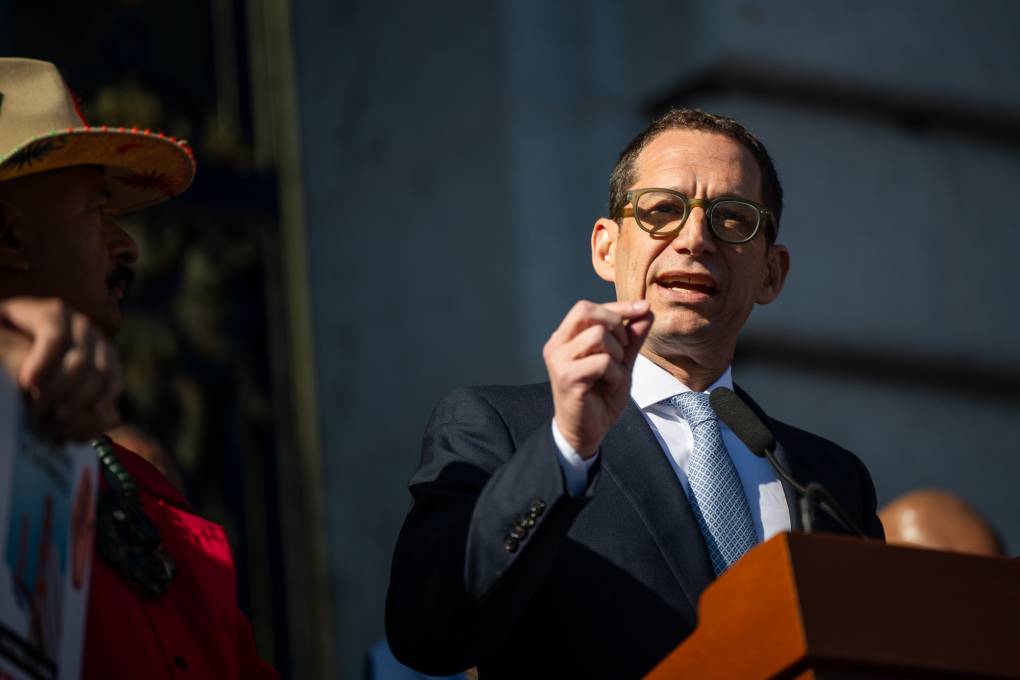
"caption": "San Francisco Mayor Daniel Lurie speaks during a press conference with elected and public safety officials and labor leaders in front of City Hall in San Francisco on Tuesday, Jan. 28, 2025. San Francisco Mayor Daniel Lurie has vowed the city will protect immigrants. ",
"credit": "Beth LaBerge/KQED",
"altTag": null,
"description": null,
"imgSizes": {
"medium": {
"file": "https://cdn.kqed.org/wp-content/uploads/sites/10/2025/01/250128-SFImmigration-33-BL-800x533.jpg",
"width": 800,
"height": 533,
"mimeType": "image/jpeg"
},
"large": {
"file": "https://cdn.kqed.org/wp-content/uploads/sites/10/2025/01/250128-SFImmigration-33-BL-1020x680.jpg",
"width": 1020,
"height": 680,
"mimeType": "image/jpeg"
},
"thumbnail": {
"file": "https://cdn.kqed.org/wp-content/uploads/sites/10/2025/01/250128-SFImmigration-33-BL-160x107.jpg",
"width": 160,
"height": 107,
"mimeType": "image/jpeg"
},
"1536x1536": {
"file": "https://cdn.kqed.org/wp-content/uploads/sites/10/2025/01/250128-SFImmigration-33-BL-1536x1024.jpg",
"width": 1536,
"height": 1024,
"mimeType": "image/jpeg"
},
"post-thumbnail": {
"file": "https://cdn.kqed.org/wp-content/uploads/sites/10/2025/01/250128-SFImmigration-33-BL-672x372.jpg",
"width": 672,
"height": 372,
"mimeType": "image/jpeg"
},
"twentyfourteen-full-width": {
"file": "https://cdn.kqed.org/wp-content/uploads/sites/10/2025/01/250128-SFImmigration-33-BL-1038x576.jpg",
"width": 1038,
"height": 576,
"mimeType": "image/jpeg"
},
"full-width": {
"file": "https://cdn.kqed.org/wp-content/uploads/sites/10/2025/01/250128-SFImmigration-33-BL-1920x1280.jpg",
"width": 1920,
"height": 1280,
"mimeType": "image/jpeg"
},
"kqedFullSize": {
"file": "https://cdn.kqed.org/wp-content/uploads/sites/10/2025/01/250128-SFImmigration-33-BL.jpg",
"width": 2000,
"height": 1333
}
},
"isLoading": false,
"fetchFailed": false
},
"news_11974804": {
"type": "attachments",
"id": "news_11974804",
"meta": {
"index": "attachments_1716263798",
"site": "news",
"id": "11974804",
"found": true
},
"title": "UCSF Health",
"publishDate": 1707236451,
"status": "inherit",
"parent": 11974782,
"modified": 1730397198,
"caption": "The outside of UCSF Health in San Francisco.",
"credit": "Smith Collection/Gado/Getty Images",
"altTag": "The exterior shot of the UCSF Health building in San Francisco.",
"description": null,
"imgSizes": {
"medium": {
"file": "https://cdn.kqed.org/wp-content/uploads/sites/10/2024/02/UCSFHealth-800x533.jpg",
"width": 800,
"height": 533,
"mimeType": "image/jpeg"
},
"large": {
"file": "https://cdn.kqed.org/wp-content/uploads/sites/10/2024/02/UCSFHealth-1020x680.jpg",
"width": 1020,
"height": 680,
"mimeType": "image/jpeg"
},
"thumbnail": {
"file": "https://cdn.kqed.org/wp-content/uploads/sites/10/2024/02/UCSFHealth-160x107.jpg",
"width": 160,
"height": 107,
"mimeType": "image/jpeg"
},
"1536x1536": {
"file": "https://cdn.kqed.org/wp-content/uploads/sites/10/2024/02/UCSFHealth-1536x1024.jpg",
"width": 1536,
"height": 1024,
"mimeType": "image/jpeg"
},
"post-thumbnail": {
"file": "https://cdn.kqed.org/wp-content/uploads/sites/10/2024/02/UCSFHealth-672x372.jpg",
"width": 672,
"height": 372,
"mimeType": "image/jpeg"
},
"twentyfourteen-full-width": {
"file": "https://cdn.kqed.org/wp-content/uploads/sites/10/2024/02/UCSFHealth-1038x576.jpg",
"width": 1038,
"height": 576,
"mimeType": "image/jpeg"
},
"kqedFullSize": {
"file": "https://cdn.kqed.org/wp-content/uploads/sites/10/2024/02/UCSFHealth.jpg",
"width": 1920,
"height": 1280
}
},
"isLoading": false,
"fetchFailed": false
},
"news_12024239": {
"type": "attachments",
"id": "news_12024239",
"meta": {
"index": "attachments_1716263798",
"site": "news",
"id": "12024239",
"found": true
},
"title": "009_KQED_MargaretGordonOakland_03042022_qed",
"publishDate": 1738013634,
"status": "inherit",
"parent": 12024217,
"modified": 1738013684,
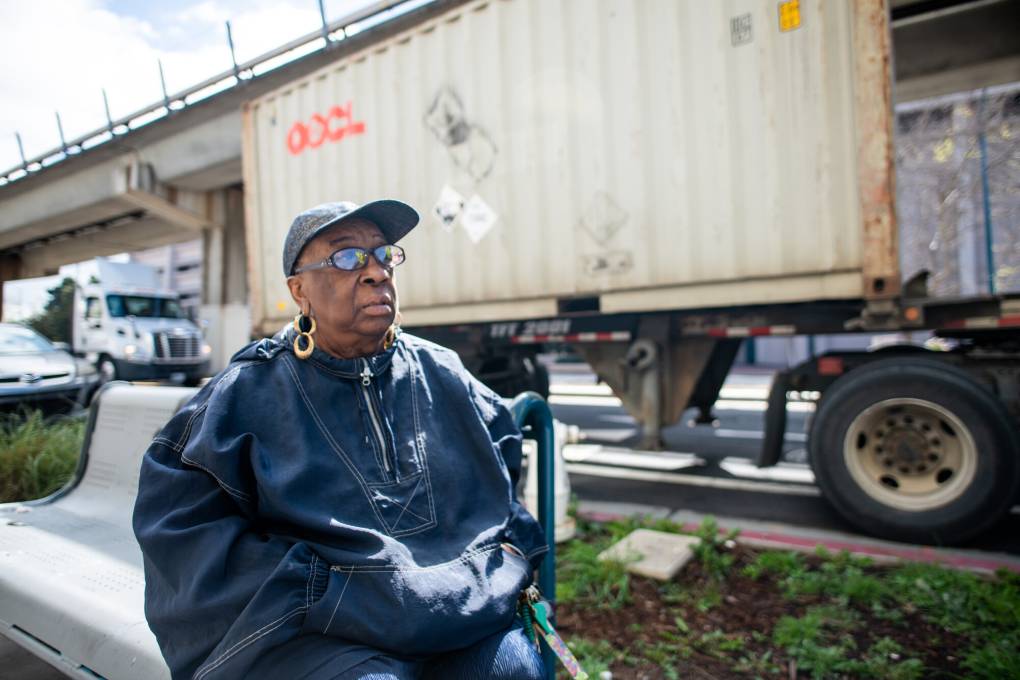
"caption": "Climate activist Margaret Gordon sits on a bench in West Oakland with the BART tracks behind her on March 4, 2022, as a semi-truck stops on 7th Street. The route is a popular trucking route to the nearby Port of Oakland.",
"credit": "Beth LaBerge/KQED",
"altTag": null,
"description": null,
"imgSizes": {
"medium": {
"file": "https://cdn.kqed.org/wp-content/uploads/sites/10/2025/01/009_KQED_MargaretGordonOakland_03042022_qed-800x533.jpg",
"width": 800,
"height": 533,
"mimeType": "image/jpeg"
},
"large": {
"file": "https://cdn.kqed.org/wp-content/uploads/sites/10/2025/01/009_KQED_MargaretGordonOakland_03042022_qed-1020x680.jpg",
"width": 1020,
"height": 680,
"mimeType": "image/jpeg"
},
"thumbnail": {
"file": "https://cdn.kqed.org/wp-content/uploads/sites/10/2025/01/009_KQED_MargaretGordonOakland_03042022_qed-160x107.jpg",
"width": 160,
"height": 107,
"mimeType": "image/jpeg"
},
"1536x1536": {
"file": "https://cdn.kqed.org/wp-content/uploads/sites/10/2025/01/009_KQED_MargaretGordonOakland_03042022_qed-1536x1024.jpg",
"width": 1536,
"height": 1024,
"mimeType": "image/jpeg"
},
"post-thumbnail": {
"file": "https://cdn.kqed.org/wp-content/uploads/sites/10/2025/01/009_KQED_MargaretGordonOakland_03042022_qed-672x372.jpg",
"width": 672,
"height": 372,
"mimeType": "image/jpeg"
},
"twentyfourteen-full-width": {
"file": "https://cdn.kqed.org/wp-content/uploads/sites/10/2025/01/009_KQED_MargaretGordonOakland_03042022_qed-1038x576.jpg",
"width": 1038,
"height": 576,
"mimeType": "image/jpeg"
},
"full-width": {
"file": "https://cdn.kqed.org/wp-content/uploads/sites/10/2025/01/009_KQED_MargaretGordonOakland_03042022_qed-1920x1280.jpg",
"width": 1920,
"height": 1280,
"mimeType": "image/jpeg"
},
"kqedFullSize": {
"file": "https://cdn.kqed.org/wp-content/uploads/sites/10/2025/01/009_KQED_MargaretGordonOakland_03042022_qed.jpg",
"width": 2000,
"height": 1333
}
},
"isLoading": false,
"fetchFailed": false
},
"news_11992370": {
"type": "attachments",
"id": "news_11992370",
"meta": {
"index": "attachments_1716263798",
"site": "news",
"id": "11992370",
"found": true
},
"title": "Purdue Pharma Still Faces Hundreds Of Lawsuits Related To OxyContin",
"publishDate": 1719592999,
"status": "inherit",
"parent": 11992365,
"modified": 1737657926,
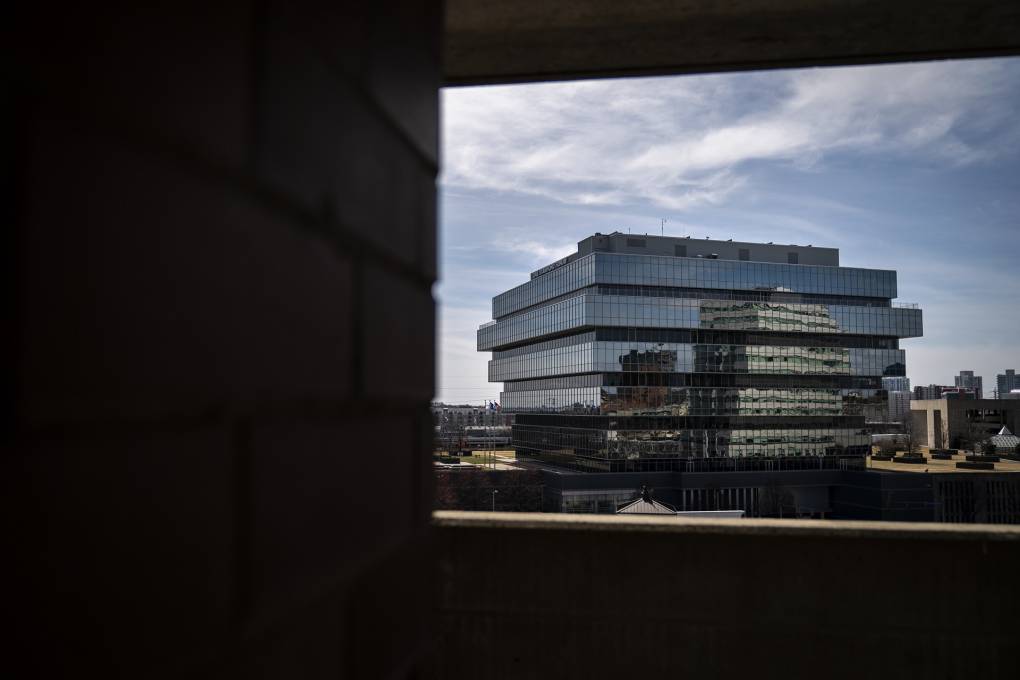
"caption": "Purdue Pharma headquarters in Stamford, Connecticut. Purdue Pharma, the maker of OxyContin, and its owners, the Sackler family, are facing hundreds of lawsuits across the country for the company's alleged role in the opioid epidemic that has killed more than 200,000 Americans over the past 20 years. ",
"credit": "Drew Angerer/Getty Images",
"altTag": null,
"description": null,
"imgSizes": {
"medium": {
"file": "https://cdn.kqed.org/wp-content/uploads/sites/10/2024/06/PurduePharmaHeadquarters01-800x533.jpg",
"width": 800,
"height": 533,
"mimeType": "image/jpeg"
},
"large": {
"file": "https://cdn.kqed.org/wp-content/uploads/sites/10/2024/06/PurduePharmaHeadquarters01-1020x680.jpg",
"width": 1020,
"height": 680,
"mimeType": "image/jpeg"
},
"thumbnail": {
"file": "https://cdn.kqed.org/wp-content/uploads/sites/10/2024/06/PurduePharmaHeadquarters01-160x107.jpg",
"width": 160,
"height": 107,
"mimeType": "image/jpeg"
},
"1536x1536": {
"file": "https://cdn.kqed.org/wp-content/uploads/sites/10/2024/06/PurduePharmaHeadquarters01-1536x1024.jpg",
"width": 1536,
"height": 1024,
"mimeType": "image/jpeg"
},
"post-thumbnail": {
"file": "https://cdn.kqed.org/wp-content/uploads/sites/10/2024/06/PurduePharmaHeadquarters01-672x372.jpg",
"width": 672,
"height": 372,
"mimeType": "image/jpeg"
},
"twentyfourteen-full-width": {
"file": "https://cdn.kqed.org/wp-content/uploads/sites/10/2024/06/PurduePharmaHeadquarters01-1038x576.jpg",
"width": 1038,
"height": 576,
"mimeType": "image/jpeg"
},
"kqedFullSize": {
"file": "https://cdn.kqed.org/wp-content/uploads/sites/10/2024/06/PurduePharmaHeadquarters01.jpg",
"width": 1920,
"height": 1280
}
},
"isLoading": false,
"fetchFailed": false
},
"news_12023430": {
"type": "attachments",
"id": "news_12023430",
"meta": {
"index": "attachments_1716263798",
"site": "news",
"id": "12023430",
"found": true
},
"title": "20250121_Gender-Exec-Order_DB_00459",
"publishDate": 1737560758,
"status": "inherit",
"parent": 0,
"modified": 1737584425,
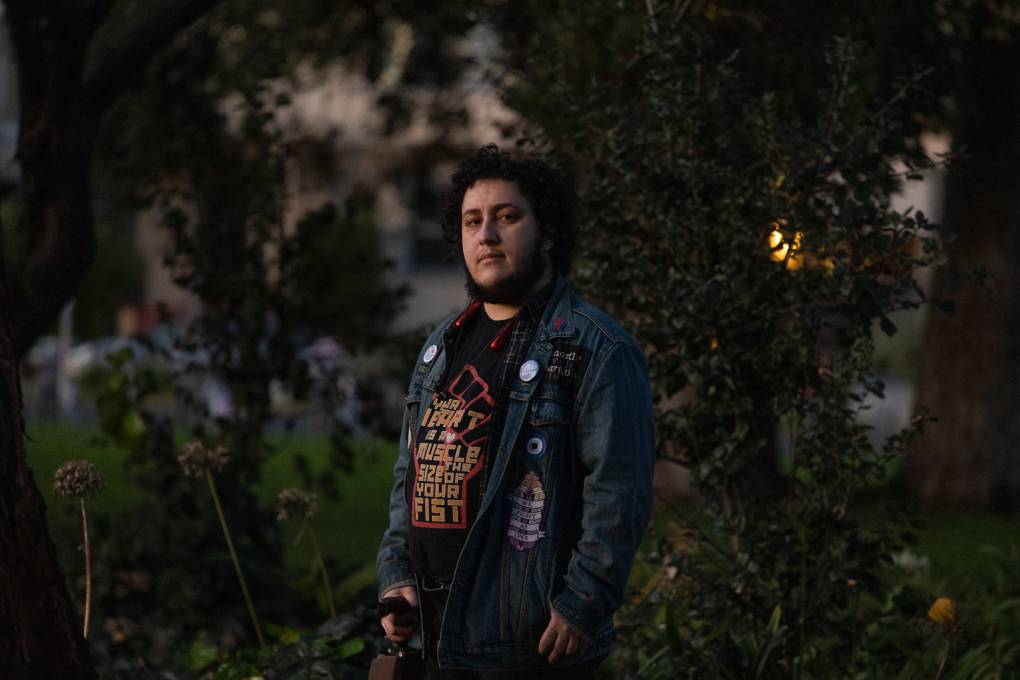
"caption": "Ari Yovel, 30, in Mosswood Park, Oakland, on Tuesday, Jan. 21, 2025. Yovel is a queer, autistic/disabled, Israeli Jewish writer, community educator and changemaker based in Berkeley.",
"credit": "David M. Barreda/KQED",
"altTag": null,
"description": null,
"imgSizes": {
"medium": {
"file": "https://cdn.kqed.org/wp-content/uploads/sites/10/2025/01/20250121_Gender-Exec-Order_DB_00459-800x533.jpg",
"width": 800,
"height": 533,
"mimeType": "image/jpeg"
},
"large": {
"file": "https://cdn.kqed.org/wp-content/uploads/sites/10/2025/01/20250121_Gender-Exec-Order_DB_00459-1020x680.jpg",
"width": 1020,
"height": 680,
"mimeType": "image/jpeg"
},
"thumbnail": {
"file": "https://cdn.kqed.org/wp-content/uploads/sites/10/2025/01/20250121_Gender-Exec-Order_DB_00459-160x107.jpg",
"width": 160,
"height": 107,
"mimeType": "image/jpeg"
},
"1536x1536": {
"file": "https://cdn.kqed.org/wp-content/uploads/sites/10/2025/01/20250121_Gender-Exec-Order_DB_00459-1536x1024.jpg",
"width": 1536,
"height": 1024,
"mimeType": "image/jpeg"
},
"post-thumbnail": {
"file": "https://cdn.kqed.org/wp-content/uploads/sites/10/2025/01/20250121_Gender-Exec-Order_DB_00459-672x372.jpg",
"width": 672,
"height": 372,
"mimeType": "image/jpeg"
},
"twentyfourteen-full-width": {
"file": "https://cdn.kqed.org/wp-content/uploads/sites/10/2025/01/20250121_Gender-Exec-Order_DB_00459-1038x576.jpg",
"width": 1038,
"height": 576,
"mimeType": "image/jpeg"
},
"full-width": {
"file": "https://cdn.kqed.org/wp-content/uploads/sites/10/2025/01/20250121_Gender-Exec-Order_DB_00459-1920x1280.jpg",
"width": 1920,
"height": 1280,
"mimeType": "image/jpeg"
},
"kqedFullSize": {
"file": "https://cdn.kqed.org/wp-content/uploads/sites/10/2025/01/20250121_Gender-Exec-Order_DB_00459.jpg",
"width": 2000,
"height": 1333
}
},
"isLoading": false,
"fetchFailed": false
}
},
"audioPlayerReducer": {
"postId": "stream_live",
"isPaused": true,
"isPlaying": false,
"pfsActive": false,
"pledgeModalIsOpen": true,
"playerDrawerIsOpen": false,
"liveAudioPlayStartedAt": 0,
"liveAudioPlayContext": ""
},
"authorsReducer": {
"byline_news_12026208": {
"type": "authors",
"id": "byline_news_12026208",
"meta": {
"override": true
},
"slug": "byline_news_12026208",
"name": "\u003ca href=\"https://www.npr.org/people/g-s1-46377/ben-markus-colorado-public-radio\">Ben Markus\u003c/a>, Colorado Public Radio/NPR",
"isLoading": false
},
"byline_news_12026195": {
"type": "authors",
"id": "byline_news_12026195",
"meta": {
"override": true
},
"slug": "byline_news_12026195",
"name": "\u003ca href=\"https://www.npr.org/people/825275572/sydney-lupkin\">Sydney Lupkin\u003c/a> and \u003ca href=\"https://www.npr.org/people/935764762/brian-mann\">Brian Mann\u003c/a>, NPR",
"isLoading": false
},
"byline_news_12024217": {
"type": "authors",
"id": "byline_news_12024217",
"meta": {
"override": true
},
"slug": "byline_news_12024217",
"name": "Michael Phillis and Alexa St. John, Associated Press",
"isLoading": false
},
"byline_news_12023728": {
"type": "authors",
"id": "byline_news_12023728",
"meta": {
"override": true
},
"slug": "byline_news_12023728",
"name": " Geoff Mulvihill, Associated Press",
"isLoading": false
},
"jsmall": {
"type": "authors",
"id": "6625",
"meta": {
"index": "authors_1716337520",
"id": "6625",
"found": true
},
"name": "Julie Small",
"firstName": "Julie",
"lastName": "Small",
"slug": "jsmall",
"email": "jsmall@kqed.org",
"display_author_email": true,
"staff_mastheads": [
"news"
],
"title": "KQED Contributor",
"bio": "Julie Small reports on criminal justice and immigration.\r\n\r\nShe was part of a team at KQED awarded a regional 2019 Edward R. Murrow award for continuing coverage of the Trump Administration's family separation policy.\r\n\r\nThe Society for Professional Journalists recognized Julie's 2018 \u003ca href=\"https://www.kqed.org/news/11636262/the-officer-tased-him-31-times-the-sheriff-called-his-death-an-accident\">reporting\u003c/a> on the San Joaquin County Sheriff's \u003ca href=\"https://www.kqed.org/news/11634689/autopsy-doctors-sheriff-overrode-death-findings-to-protect-law-enforcement\">interference\u003c/a> in death investigations with an Excellence in Journalism Award for Ongoing Coverage.\r\n\r\nJulie's\u003ca href=\"https://www.kqed.org/news/11039666/two-mentally-ill-inmates-died-one-month-in-santa-clara\"> reporting\u003c/a> with Lisa Pickoff-White on the treatment of mentally ill offenders in California jails earned a 2017 regional Edward R. Murrow Award for news reporting and an investigative reporting award from the SPJ of Northern California.\r\n\r\nBefore joining KQED, Julie covered government and politics in Sacramento for Southern California Public Radio (SCPR). Her 2010 \u003ca href=\"https://www.scpr.org/specials/prisonmedical/\">series\u003c/a> on lapses in California’s prison medical care also won a regional Edward R. Murrow Award for investigative reporting and a Golden Mic Award from the RTNDA of Southern California.\r\n\r\nJulie began her career in journalism in 2000 as the deputy foreign editor for public radio's \u003cem>Marketplace, \u003c/em>while earning her master's degree in journalism from USC’s Annenberg School of Communication.",
"avatar": "https://secure.gravatar.com/avatar/4baedf201468df97be97c2a9dd7585d0?s=600&d=blank&r=g",
"twitter": "@SmallRadio2",
"facebook": null,
"instagram": null,
"linkedin": null,
"sites": [
{
"site": "news",
"roles": [
"editor"
]
},
{
"site": "stateofhealth",
"roles": [
"author"
]
},
{
"site": "science",
"roles": [
"author"
]
}
],
"headData": {
"title": "Julie Small | KQED",
"description": "KQED Contributor",
"ogImgSrc": "https://secure.gravatar.com/avatar/4baedf201468df97be97c2a9dd7585d0?s=600&d=blank&r=g",
"twImgSrc": "https://secure.gravatar.com/avatar/4baedf201468df97be97c2a9dd7585d0?s=600&d=blank&r=g"
},
"isLoading": false,
"link": "/author/jsmall"
},
"lesleymcclurg": {
"type": "authors",
"id": "11229",
"meta": {
"index": "authors_1716337520",
"id": "11229",
"found": true
},
"name": "Lesley McClurg",
"firstName": "Lesley",
"lastName": "McClurg",
"slug": "lesleymcclurg",
"email": "lmcclurg@KQED.org",
"display_author_email": false,
"staff_mastheads": [
"news",
"science"
],
"title": "KQED Health Correspondent",
"bio": "Lesley McClurg is a health correspondent and fill-in host whose work is regularly rebroadcast on NPR and PBS programs. She’s earned multiple regional Emmy awards, a national and a regional Edward R. Murrow award, and was named Best Beat Reporter by the Association of Health Care Journalists. The Society of Professional Journalists has recognized her work several times, and the Society of Environmental Journalists spotlighted her coverage of California’s historic drought.\r\n\r\nBefore joining KQED in 2016, Lesley covered food and sustainability for Capital Public Radio, environmental issues for Colorado Public Radio, and reported for KUOW and KCTS 9 in Seattle. Away from the newsroom, she loves skiing with her daughter, mountain biking with her partner, and playing with Ollie, the family’s goldendoodle. On deadline, she runs almost entirely on chocolate chips.\r\n\r\n ",
"avatar": "https://secure.gravatar.com/avatar/bab49e972ea10c774fe0f5e29dba1722b158f7c0d58a360923d1389d380b2978?s=600&d=blank&r=g",
"twitter": "lesleywmcclurg",
"bluesky": null,
"facebook": null,
"instagram": null,
"linkedin": null,
"sites": [
{
"site": "arts",
"roles": [
"author"
]
},
{
"site": "news",
"roles": [
"editor"
]
},
{
"site": "futureofyou",
"roles": [
"editor"
]
},
{
"site": "stateofhealth",
"roles": [
"author"
]
},
{
"site": "science",
"roles": [
"editor"
]
},
{
"site": "quest",
"roles": [
"subscriber"
]
},
{
"site": "forum",
"roles": [
"administrator"
]
},
{
"site": "liveblog",
"roles": [
"author"
]
}
],
"headData": {
"title": "Lesley McClurg | KQED",
"description": "KQED Health Correspondent",
"ogImgSrc": "https://secure.gravatar.com/avatar/bab49e972ea10c774fe0f5e29dba1722b158f7c0d58a360923d1389d380b2978?s=600&d=blank&r=g",
"twImgSrc": "https://secure.gravatar.com/avatar/bab49e972ea10c774fe0f5e29dba1722b158f7c0d58a360923d1389d380b2978?s=600&d=blank&r=g"
},
"isLoading": false,
"link": "/author/lesleymcclurg"
},
"sjohnson": {
"type": "authors",
"id": "11840",
"meta": {
"index": "authors_1716337520",
"id": "11840",
"found": true
},
"name": "Sydney Johnson",
"firstName": "Sydney",
"lastName": "Johnson",
"slug": "sjohnson",
"email": "sjohnson@kqed.org",
"display_author_email": false,
"staff_mastheads": [
"news"
],
"title": "KQED Reporter",
"bio": "Sydney Johnson is a general assignment reporter at KQED. She previously reported on public health and city government at the San Francisco Examiner, and before that, she covered statewide education policy for EdSource. Her reporting has won multiple local, state and national awards. Sydney is a graduate of the University of California, Berkeley and lives in San Francisco.",
"avatar": "https://secure.gravatar.com/avatar/97855f2719b72ad6190b7c535fe642c8?s=600&d=blank&r=g",
"twitter": "sydneyfjohnson",
"facebook": null,
"instagram": null,
"linkedin": null,
"sites": [
{
"site": "news",
"roles": [
"editor"
]
}
],
"headData": {
"title": "Sydney Johnson | KQED",
"description": "KQED Reporter",
"ogImgSrc": "https://secure.gravatar.com/avatar/97855f2719b72ad6190b7c535fe642c8?s=600&d=blank&r=g",
"twImgSrc": "https://secure.gravatar.com/avatar/97855f2719b72ad6190b7c535fe642c8?s=600&d=blank&r=g"
},
"isLoading": false,
"link": "/author/sjohnson"
},
"kdebenedetti": {
"type": "authors",
"id": "11913",
"meta": {
"index": "authors_1716337520",
"id": "11913",
"found": true
},
"name": "Katie DeBenedetti",
"firstName": "Katie",
"lastName": "DeBenedetti",
"slug": "kdebenedetti",
"email": "kdebenedetti@kqed.org",
"display_author_email": false,
"staff_mastheads": [
"news",
"science"
],
"title": "KQED Contributor",
"bio": "Katie DeBenedetti is a digital reporter covering daily news for the Express Desk. Prior to joining KQED as a culture reporting intern in January 2024, she covered education and city government for the Napa Valley Register.",
"avatar": "https://secure.gravatar.com/avatar/6e31073cb8f7e4214ab03f42771d0f45?s=600&d=blank&r=g",
"twitter": null,
"facebook": null,
"instagram": null,
"linkedin": null,
"sites": [
{
"site": "news",
"roles": [
"author"
]
},
{
"site": "science",
"roles": [
"author"
]
},
{
"site": "liveblog",
"roles": [
"author"
]
}
],
"headData": {
"title": "Katie DeBenedetti | KQED",
"description": "KQED Contributor",
"ogImgSrc": "https://secure.gravatar.com/avatar/6e31073cb8f7e4214ab03f42771d0f45?s=600&d=blank&r=g",
"twImgSrc": "https://secure.gravatar.com/avatar/6e31073cb8f7e4214ab03f42771d0f45?s=600&d=blank&r=g"
},
"isLoading": false,
"link": "/author/kdebenedetti"
}
},
"pagesReducer": {
"news_tag_health": {
"type": "terms",
"id": "news_18543",
"meta": {
"index": "terms_1716263798",
"site": "news",
"id": "18543",
"score": 6.886659
},
"featImg": null,
"name": "Health",
"description": null,
"taxonomy": "tag",
"headData": {
"twImgId": null,
"twTitle": null,
"ogTitle": null,
"ogImgId": null,
"twDescription": null,
"description": null,
"title": "Health Archives | KQED News",
"ogDescription": null
},
"ttid": 466,
"slug": "health",
"isLoading": false,
"title": "Health",
"pageMeta": {
"site": "news",
"WpPageTemplate": "page-topic-editorial",
"currentPage": 23
},
"blocks": [
{
"blockName": "kqed/post-list",
"attrs": {
"layout": "cardArticle2",
"query": "posts/news?tag=health",
"seeMore": false,
"paginated": true,
"page": 23
}
},
{
"blockName": "kqed/ad"
}
]
}
},
"pfsSessionReducer": {},
"postsReducer": {
"stream_live": {
"type": "live",
"id": "stream_live",
"audioUrl": "https://streams.kqed.org/kqedradio",
"title": "Live Stream",
"excerpt": "Live Stream information currently unavailable.",
"link": "/radio",
"featImg": "",
"label": {
"name": "KQED Live",
"link": "/"
}
},
"stream_kqedNewscast": {
"type": "posts",
"id": "stream_kqedNewscast",
"audioUrl": "https://www.kqed.org/.stream/anon/radio/RDnews/newscast.mp3?_=1",
"title": "KQED Newscast",
"featImg": "",
"label": {
"name": "88.5 FM",
"link": "/"
}
},
"news_12026662": {
"type": "posts",
"id": "news_12026662",
"meta": {
"index": "posts_1716263798",
"site": "news",
"id": "12026662",
"score": null,
"sort": [
1739361604000
]
},
"guestAuthors": [],
"slug": "why-are-more-than-200-beds-empty-at-this-san-francisco-nursing-home",
"title": "Why Are More Than 200 Beds Empty at This San Francisco Nursing Home?",
"publishDate": 1739361604,
"format": "standard",
"headTitle": "Why Are More Than 200 Beds Empty at This San Francisco Nursing Home? | KQED",
"labelTerm": {
"site": "news"
},
"content": "\u003cp>As one of the city’s remaining nursing homes prepares to close in April, nearly 250 beds are currently sitting empty in San Francisco’s largest public skilled nursing facility.\u003c/p>\n\u003cp>Following a multi-year scandal that \u003ca href=\"https://www.kqed.org/forum/2010101889843/laguna-honda-hospital-has-60-days-to-move-over-600-patients-before-it-shuts-down-its-only-placed-58-so-far\">nearly shuttered the more than 150-year-old facility\u003c/a>, Laguna Honda Hospital and Rehabilitation Center resumed admitting new patients last July after two years of internal reforms and working with federal officials to make good on past infractions.\u003c/p>\n\u003cp>Now, the \u003ca href=\"https://www.kqed.org/news/11952012/san-francisco-to-pay-2-2-million-settlement-to-victims-in-laguna-honda-patient-abuse-scandal\">beleaguered\u003c/a> nursing home \u003ca href=\"https://www.kqed.org/news/11991292/laguna-honda-recertified-by-medicare-in-major-milestone-for-san-francisco-hospital\">is back open for new residents\u003c/a>. However, admissions are off to a slow pace as Laguna Honda remains under the microscope of state and federal regulators despite a growing need for skilled nursing care in San Francisco and across the region.\u003c/p>\n\u003cp>“It is a well-known fact that there is a dearth of nursing home beds in San Francisco,” said Tony Chicotel, an attorney with California Advocates for Nursing Home Reform. “It’s jarring that the facility is allowed to admit residents now and still has so many open beds when we hear from people all the time in the Bay Area that there is no nursing home space for people to go to.”\u003c/p>\n\u003cp>Nursing home experts say San Francisco has a large population of low-income seniors who need round-the-clock care in their community, and \u003ca href=\"https://www.sf.gov/sites/default/files/2024-06/Skilled%20Nursing%20Transfer%20Ordinance%20-%202023%20-%20HC%20Presentation.pdf\">many people have to move out of the county\u003c/a> away from loved ones due to the region’s scant affordable nursing home options.\u003c/p>\n\u003cp>[ad fullwidth]\u003c/p>\n\u003cp>The need is about to get compounded as dozens of elderly residents at St. Anne’s Home on Lake Street near the Presidio \u003ca href=\"https://sfstandard.com/2025/01/09/st-annes-home-little-sisters-poor-to-close-sf/\">will need to find new housing before the facility closes on April 8\u003c/a> due to staffing shortages.\u003c/p>\n\u003cp>Laguna Honda is working with St. Anne’s to bring over residents who are about to lose their homes and has offered beds to past residents who were discharged during Laguna Honda’s recertification process.\u003c/p>\n\u003cp>“I know this is a challenging time, and you have my commitment that the city will support you in this transition,” Mayor Daniel Lurie said at a recent Board of Supervisors meeting, addressing the closure of St. Anne’s. “We must have a broader strategy for seniors to live safely and actively engaged in their community.”\u003c/p>\n\u003cp>There are currently 435 residents at Laguna Honda, compared with the hospital’s licensed bed capacity of 649. The hospital previously had a capacity for nearly 800 residents. However, federal regulation changes after the pandemic required rooms to have no more than three residents, stripping the hospital of 120 beds. Officials at Laguna Honda said they are trying to recertify the 120 beds to bring capacity back up.\u003c/p>\n\u003cp>Laguna Honda has welcomed a total of 78 new residents out of 179 referrals since resuming admissions on July 31, 2024, according to San Francisco’s Department of Public Health.\u003c/p>\n\u003cp>The majority of denials were due to patients deemed to have “behavioral health needs too complex” for a nursing home, including substance use or mental disorders. Others were due to being “too medically complex” and for needing lower levels of care than residential skilled nursing, according to a \u003ca href=\"https://media.api.sf.gov/documents/02032025_LHH_JCC_Exec_Report_Presentation.pdf\">report\u003c/a> shared at the Health Commission meeting on February 3.\u003c/p>\n\u003cp>However, Laguna Honda officials say they are actively welcoming new residents and that there is no waitlist for those who meet its criteria, with a goal to fill the remaining beds by December 2025.\u003c/p>\n\u003cp>“We are admitting anybody who meets the criteria to be in a skilled nursing facility, and we are ramping up admissions,” Laguna Honda CEO Diltar Sidhu told KQED. “Laguna Honda is back.”\u003c/p>\n\u003cp>[aside postID=news_11991292]\u003c/p>\n\u003cp>New patients at Laguna Honda must meet industry-standard nursing home criteria, including being a resident of San Francisco whose primary diagnosis is a medical condition — not psychiatric — who requires nursing facility care, physical or cognitive impairment requiring higher attention than a lower-level board and care facility, or daily rehabilitation.\u003c/p>\n\u003cp>However, after several years of intense oversight, Laguna Honda is taking caution as it moves forward. Officials must walk a fine line to remain in good standing with regulators while responding to the community’s needs in a timely manner. Bringing on new patients is also necessary to receive federal dollars for patients, especially as the city faces a nearly $800 million budget shortfall.\u003c/p>\n\u003cp>“With every bed that sits empty, that’s also reimbursement we aren’t getting, so it’s also a financial issue during a tough budget season,” said Supervisor Myrna Melgar, whose district encompasses Laguna Honda. “I’m hoping the pace of admissions is at least maintained.”\u003c/p>\n\u003cp>Laguna Honda was already under intense scrutiny following a \u003ca href=\"https://www.kqed.org/news/11782161/newly-uncovered-cases-of-patient-abuse-at-laguna-honda-bring-incident-count-to-130\">massive abuse case\u003c/a> affecting nearly 130 patients from 2016 to 2019. Then, in 2022, after two nonfatal overdoses took place at Laguna Honda, the hospital failed to pass a series of inspections and \u003ca href=\"https://www.kqed.org/news/11958392/medi-cal-reinstates-laguna-honda-in-major-win-for-the-states-largest-public-nursing-home\">lost its standing with Medicare and Medi-Cal\u003c/a>, which covers the vast majority of patients at Laguna Honda.\u003c/p>\n\u003cp>“They have to be very careful about people who have behavioral problems,” said Teresa Palmer, a retired physician at Laguna Honda and nursing home advocate. “In a traditional nursing home with frail elders, you need to protect them.”\u003c/p>\n\u003cp>[aside postID=news_11952012]\u003c/p>\n\u003cp>A lawsuit against the hospital \u003ca href=\"https://www.kqed.org/news/11920121/sf-officials-outraged-over-laguna-honda-patient-deaths-following-federally-mandated-transfers\">over deaths and poorly managed discharges\u003c/a> during the recertification process is still active.\u003c/p>\n\u003cp>“The number one issue was that we were admitting dual-diagnosed patients and running Laguna Honda like a hospital instead of a nursing home, which is the license we have,” Melgar said. “So that got us into trouble in the first place. They dinged us.”\u003c/p>\n\u003cp>The empty beds sit at Laguna Honda as Lurie has vowed to open up more treatment facilities and various types of behavioral health and emergency shelter beds. But those efforts are separate from the skilled nursing beds available at Laguna Honda specifically for “traditional” nursing home patients — such as elderly people with chronic illness, dementia and other acute medical or rehabilitation needs.\u003c/p>\n\u003cp>Still, these are not mutually exclusive populations in need of round-the-clock care. Seniors make up the fastest-growing portion of the homeless population, and substance use disorder exists across age groups and other demographics.\u003c/p>\n\u003cp>People who primarily need medical skilled nursing care but also have behavioral or mental health challenges can be admitted, officials said.\u003c/p>\n\u003cp>[ad floatright]\u003c/p>\n\u003cp>“From the perspective of maintaining the federal certification and not creating any waves that could cause more regulatory scrutiny, it would be smart to admit a more traditional nursing home resident,” Chicotel said. “But from the perspective of an institution that is set up to care for the vulnerable residents of the community, I would think they would welcome residents who have skilled nursing needs and other needs as well.”\u003c/p>\n\n",
"blocks": [],
"excerpt": "San Francisco’s largest skilled nursing facility, Laguna Honda, has hundreds of beds available as the city scrambles to open various health care beds across the city. ",
"status": "publish",
"parent": 0,
"modified": 1739923063,
"stats": {
"hasAudio": false,
"hasVideo": false,
"hasChartOrMap": false,
"iframeSrcs": [],
"hasGoogleForm": false,
"hasGallery": false,
"hasHearkenModule": false,
"hasPolis": false,
"paragraphCount": 28,
"wordCount": 1167
},
"headData": {
"title": "Why Are More Than 200 Beds Empty at This San Francisco Nursing Home? | KQED",
"description": "San Francisco’s largest skilled nursing facility, Laguna Honda, has hundreds of beds available as the city scrambles to open various health care beds across the city. ",
"ogTitle": "",
"ogDescription": "",
"ogImgId": "",
"twTitle": "",
"twDescription": "",
"twImgId": "",
"schema": {
"@context": "https://schema.org",
"@type": "NewsArticle",
"headline": "Why Are More Than 200 Beds Empty at This San Francisco Nursing Home?",
"datePublished": "2025-02-12T04:00:04-08:00",
"dateModified": "2025-02-18T15:57:43-08:00",
"image": "https://cdn.kqed.org/wp-content/uploads/2020/02/KQED-OG-Image@1x.png",
"isAccessibleForFree": "True",
"publisher": {
"@type": "NewsMediaOrganization",
"@id": "https://www.kqed.org/#organization",
"name": "KQED",
"logo": "https://cdn.kqed.org/wp-content/uploads/2020/02/KQED-OG-Image@1x.png",
"url": "https://www.kqed.org",
"sameAs": [
"https://www.facebook.com/KQED",
"https://twitter.com/KQED",
"https://www.instagram.com/kqed/",
"https://www.tiktok.com/@kqedofficial",
"https://www.linkedin.com/company/kqed",
"https://www.youtube.com/channel/UCeC0IOo7i1P_61zVUWbJ4nw"
]
}
}
},
"audioUrl": "https://traffic.omny.fm/d/clips/0af137ef-751e-4b19-a055-aaef00d2d578/ffca7e9f-6831-41c5-bcaf-aaef00f5a073/1c212f46-e28d-414f-95d0-b28801176595/audio.mp3",
"sticky": false,
"nprStoryId": "kqed-12026662",
"excludeFromSiteSearch": "Include",
"articleAge": "0",
"path": "/news/12026662/why-are-more-than-200-beds-empty-at-this-san-francisco-nursing-home",
"audioTrackLength": null,
"parsedContent": [
{
"type": "contentString",
"content": "\u003cdiv class=\"post-body\">\u003cp>\u003cp>As one of the city’s remaining nursing homes prepares to close in April, nearly 250 beds are currently sitting empty in San Francisco’s largest public skilled nursing facility.\u003c/p>\n\u003cp>Following a multi-year scandal that \u003ca href=\"https://www.kqed.org/forum/2010101889843/laguna-honda-hospital-has-60-days-to-move-over-600-patients-before-it-shuts-down-its-only-placed-58-so-far\">nearly shuttered the more than 150-year-old facility\u003c/a>, Laguna Honda Hospital and Rehabilitation Center resumed admitting new patients last July after two years of internal reforms and working with federal officials to make good on past infractions.\u003c/p>\n\u003cp>Now, the \u003ca href=\"https://www.kqed.org/news/11952012/san-francisco-to-pay-2-2-million-settlement-to-victims-in-laguna-honda-patient-abuse-scandal\">beleaguered\u003c/a> nursing home \u003ca href=\"https://www.kqed.org/news/11991292/laguna-honda-recertified-by-medicare-in-major-milestone-for-san-francisco-hospital\">is back open for new residents\u003c/a>. However, admissions are off to a slow pace as Laguna Honda remains under the microscope of state and federal regulators despite a growing need for skilled nursing care in San Francisco and across the region.\u003c/p>\n\u003cp>“It is a well-known fact that there is a dearth of nursing home beds in San Francisco,” said Tony Chicotel, an attorney with California Advocates for Nursing Home Reform. “It’s jarring that the facility is allowed to admit residents now and still has so many open beds when we hear from people all the time in the Bay Area that there is no nursing home space for people to go to.”\u003c/p>\n\u003cp>Nursing home experts say San Francisco has a large population of low-income seniors who need round-the-clock care in their community, and \u003ca href=\"https://www.sf.gov/sites/default/files/2024-06/Skilled%20Nursing%20Transfer%20Ordinance%20-%202023%20-%20HC%20Presentation.pdf\">many people have to move out of the county\u003c/a> away from loved ones due to the region’s scant affordable nursing home options.\u003c/p>\n\u003cp>\u003c/p>\u003c/div>",
"attributes": {
"named": {},
"numeric": []
}
},
{
"type": "component",
"content": "",
"name": "ad",
"attributes": {
"named": {
"label": "fullwidth"
},
"numeric": [
"fullwidth"
]
}
},
{
"type": "contentString",
"content": "\u003cdiv class=\"post-body\">\u003cp>\u003c/p>\n\u003cp>The need is about to get compounded as dozens of elderly residents at St. Anne’s Home on Lake Street near the Presidio \u003ca href=\"https://sfstandard.com/2025/01/09/st-annes-home-little-sisters-poor-to-close-sf/\">will need to find new housing before the facility closes on April 8\u003c/a> due to staffing shortages.\u003c/p>\n\u003cp>Laguna Honda is working with St. Anne’s to bring over residents who are about to lose their homes and has offered beds to past residents who were discharged during Laguna Honda’s recertification process.\u003c/p>\n\u003cp>“I know this is a challenging time, and you have my commitment that the city will support you in this transition,” Mayor Daniel Lurie said at a recent Board of Supervisors meeting, addressing the closure of St. Anne’s. “We must have a broader strategy for seniors to live safely and actively engaged in their community.”\u003c/p>\n\u003cp>There are currently 435 residents at Laguna Honda, compared with the hospital’s licensed bed capacity of 649. The hospital previously had a capacity for nearly 800 residents. However, federal regulation changes after the pandemic required rooms to have no more than three residents, stripping the hospital of 120 beds. Officials at Laguna Honda said they are trying to recertify the 120 beds to bring capacity back up.\u003c/p>\n\u003cp>Laguna Honda has welcomed a total of 78 new residents out of 179 referrals since resuming admissions on July 31, 2024, according to San Francisco’s Department of Public Health.\u003c/p>\n\u003cp>The majority of denials were due to patients deemed to have “behavioral health needs too complex” for a nursing home, including substance use or mental disorders. Others were due to being “too medically complex” and for needing lower levels of care than residential skilled nursing, according to a \u003ca href=\"https://media.api.sf.gov/documents/02032025_LHH_JCC_Exec_Report_Presentation.pdf\">report\u003c/a> shared at the Health Commission meeting on February 3.\u003c/p>\n\u003cp>However, Laguna Honda officials say they are actively welcoming new residents and that there is no waitlist for those who meet its criteria, with a goal to fill the remaining beds by December 2025.\u003c/p>\n\u003cp>“We are admitting anybody who meets the criteria to be in a skilled nursing facility, and we are ramping up admissions,” Laguna Honda CEO Diltar Sidhu told KQED. “Laguna Honda is back.”\u003c/p>\n\u003cp>\u003c/p>\u003c/div>",
"attributes": {
"named": {},
"numeric": []
}
},
{
"type": "component",
"content": "",
"name": "aside",
"attributes": {
"named": {
"postid": "news_11991292",
"label": ""
},
"numeric": []
}
},
{
"type": "contentString",
"content": "\u003cdiv class=\"post-body\">\u003cp>\u003c/p>\n\u003cp>New patients at Laguna Honda must meet industry-standard nursing home criteria, including being a resident of San Francisco whose primary diagnosis is a medical condition — not psychiatric — who requires nursing facility care, physical or cognitive impairment requiring higher attention than a lower-level board and care facility, or daily rehabilitation.\u003c/p>\n\u003cp>However, after several years of intense oversight, Laguna Honda is taking caution as it moves forward. Officials must walk a fine line to remain in good standing with regulators while responding to the community’s needs in a timely manner. Bringing on new patients is also necessary to receive federal dollars for patients, especially as the city faces a nearly $800 million budget shortfall.\u003c/p>\n\u003cp>“With every bed that sits empty, that’s also reimbursement we aren’t getting, so it’s also a financial issue during a tough budget season,” said Supervisor Myrna Melgar, whose district encompasses Laguna Honda. “I’m hoping the pace of admissions is at least maintained.”\u003c/p>\n\u003cp>Laguna Honda was already under intense scrutiny following a \u003ca href=\"https://www.kqed.org/news/11782161/newly-uncovered-cases-of-patient-abuse-at-laguna-honda-bring-incident-count-to-130\">massive abuse case\u003c/a> affecting nearly 130 patients from 2016 to 2019. Then, in 2022, after two nonfatal overdoses took place at Laguna Honda, the hospital failed to pass a series of inspections and \u003ca href=\"https://www.kqed.org/news/11958392/medi-cal-reinstates-laguna-honda-in-major-win-for-the-states-largest-public-nursing-home\">lost its standing with Medicare and Medi-Cal\u003c/a>, which covers the vast majority of patients at Laguna Honda.\u003c/p>\n\u003cp>“They have to be very careful about people who have behavioral problems,” said Teresa Palmer, a retired physician at Laguna Honda and nursing home advocate. “In a traditional nursing home with frail elders, you need to protect them.”\u003c/p>\n\u003cp>\u003c/p>\u003c/div>",
"attributes": {
"named": {},
"numeric": []
}
},
{
"type": "component",
"content": "",
"name": "aside",
"attributes": {
"named": {
"postid": "news_11952012",
"label": ""
},
"numeric": []
}
},
{
"type": "contentString",
"content": "\u003cdiv class=\"post-body\">\u003cp>\u003c/p>\n\u003cp>A lawsuit against the hospital \u003ca href=\"https://www.kqed.org/news/11920121/sf-officials-outraged-over-laguna-honda-patient-deaths-following-federally-mandated-transfers\">over deaths and poorly managed discharges\u003c/a> during the recertification process is still active.\u003c/p>\n\u003cp>“The number one issue was that we were admitting dual-diagnosed patients and running Laguna Honda like a hospital instead of a nursing home, which is the license we have,” Melgar said. “So that got us into trouble in the first place. They dinged us.”\u003c/p>\n\u003cp>The empty beds sit at Laguna Honda as Lurie has vowed to open up more treatment facilities and various types of behavioral health and emergency shelter beds. But those efforts are separate from the skilled nursing beds available at Laguna Honda specifically for “traditional” nursing home patients — such as elderly people with chronic illness, dementia and other acute medical or rehabilitation needs.\u003c/p>\n\u003cp>Still, these are not mutually exclusive populations in need of round-the-clock care. Seniors make up the fastest-growing portion of the homeless population, and substance use disorder exists across age groups and other demographics.\u003c/p>\n\u003cp>People who primarily need medical skilled nursing care but also have behavioral or mental health challenges can be admitted, officials said.\u003c/p>\n\u003cp>\u003c/p>\u003c/div>",
"attributes": {
"named": {},
"numeric": []
}
},
{
"type": "component",
"content": "",
"name": "ad",
"attributes": {
"named": {
"label": "floatright"
},
"numeric": [
"floatright"
]
}
},
{
"type": "contentString",
"content": "\u003cdiv class=\"post-body\">\u003cp>\u003c/p>\n\u003cp>“From the perspective of maintaining the federal certification and not creating any waves that could cause more regulatory scrutiny, it would be smart to admit a more traditional nursing home resident,” Chicotel said. “But from the perspective of an institution that is set up to care for the vulnerable residents of the community, I would think they would welcome residents who have skilled nursing needs and other needs as well.”\u003c/p>\n\n\u003c/div>\u003c/p>",
"attributes": {
"named": {},
"numeric": []
}
}
],
"link": "/news/12026662/why-are-more-than-200-beds-empty-at-this-san-francisco-nursing-home",
"authors": [
"11840"
],
"categories": [
"news_457",
"news_6266",
"news_28250",
"news_8",
"news_13"
],
"tags": [
"news_34055",
"news_22072",
"news_18543",
"news_26092",
"news_2813",
"news_38"
],
"featImg": "news_12026672",
"label": "news"
},
"news_12026572": {
"type": "posts",
"id": "news_12026572",
"meta": {
"index": "posts_1716263798",
"site": "news",
"id": "12026572",
"score": null,
"sort": [
1739317373000
]
},
"guestAuthors": [],
"slug": "10-days-after-martinez-refinery-fire-new-details-toxic-chemicals-released",
"title": "10 Days After Martinez Refinery Fire, New Details of Toxic Chemicals Released",
"publishDate": 1739317373,
"format": "standard",
"headTitle": "10 Days After Martinez Refinery Fire, New Details of Toxic Chemicals Released | KQED",
"labelTerm": {
"site": "news"
},
"content": "\u003cp>Ten days after \u003ca href=\"https://www.kqed.org/news/12025377/huge-martinez-refinery-fire-renews-neighbors-fear-frustration\">a refinery fire\u003c/a> injured six employees and prompted a shelter-in-place order for thousands of Martinez residents, Contra Costa County health officials released new details on Tuesday about toxic chemicals released during the four days it took to put the fire out.\u003c/p>\n\u003cp>The county said in \u003ca href=\"https://www.cchealth.org/Home/Components/News/News/886/415\">a statement \u003c/a>on the incident that the Martinez Refining Co., which operates the facility where the Feb. 1 fire occurred, reported that the cloud of thick black smoke that billowed over the East Bay community contained petroleum products at various stages of refinement and several other hazardous chemicals, including benzene, hydrogen sulfide, sulfur dioxide and xylene.\u003c/p>\n\u003cp>Health officials said some of the substances that were released can cause cancer and heart and lung disease, but they also noted that weather conditions at the time of the fire may have limited local exposure.\u003c/p>\n\u003cp>[ad fullwidth]\u003c/p>\n\u003cp>County Health Director Dr. Ori Tzvieli said the wind blew most of the smoke away from populated areas.\u003c/p>\n\u003cp>“This could have been much worse,” Tzvieli said. “We got lucky this time. But our community shouldn’t have to rely on luck.”\u003c/p>\n\u003cp>Tuesday’s disclosure marks the first time health authorities have gotten a detailed look at what was in the plume that wafted over the city.\u003c/p>\n\u003cfigure id=\"attachment_12025394\" class=\"wp-caption aligncenter\" style=\"max-width: 1999px\">\u003cimg loading=\"lazy\" decoding=\"async\" class=\"size-full wp-image-12025394\" src=\"https://cdn.kqed.org/wp-content/uploads/sites/10/2025/02/230921-PBF-MARTINEZ-REFINERY-MD-04_qed.jpg\" alt=\"\" width=\"1999\" height=\"1333\" srcset=\"https://cdn.kqed.org/wp-content/uploads/sites/10/2025/02/230921-PBF-MARTINEZ-REFINERY-MD-04_qed.jpg 1999w, https://cdn.kqed.org/wp-content/uploads/sites/10/2025/02/230921-PBF-MARTINEZ-REFINERY-MD-04_qed-800x533.jpg 800w, https://cdn.kqed.org/wp-content/uploads/sites/10/2025/02/230921-PBF-MARTINEZ-REFINERY-MD-04_qed-1020x680.jpg 1020w, https://cdn.kqed.org/wp-content/uploads/sites/10/2025/02/230921-PBF-MARTINEZ-REFINERY-MD-04_qed-160x107.jpg 160w, https://cdn.kqed.org/wp-content/uploads/sites/10/2025/02/230921-PBF-MARTINEZ-REFINERY-MD-04_qed-1536x1024.jpg 1536w, https://cdn.kqed.org/wp-content/uploads/sites/10/2025/02/230921-PBF-MARTINEZ-REFINERY-MD-04_qed-1920x1280.jpg 1920w\" sizes=\"auto, (max-width: 1999px) 100vw, 1999px\">\u003cfigcaption class=\"wp-caption-text\">The Martinez Refinery Co., owned by PBF Energy in Martinez, California, touches residential neighborhoods on Sept. 21, 2023. \u003ccite>(Martin do Nascimento/KQED)\u003c/cite>\u003c/figcaption>\u003c/figure>\n\u003cp>Fifteen minutes after the fire started on Feb. 1, a refinery employee told the Governor’s Office of Emergency Services that a flaring incident had released more than 500 pounds of sulfur dioxide. The report also noted that it was “unknown if any other material is releasing due to the fire other than sulfur dioxide.”\u003c/p>\n\u003cp>Sulfur dioxide has adverse health effects on humans and animals, and high-level exposure can result in heart problems and an increased risk of death, according to studies cited by the \u003ca href=\"https://ww2.arb.ca.gov/resources/sulfur-dioxide-and-health#:~:text=Sulfur%20dioxide%20(SO2)%20is,sulfur%20oxides%20(SOX).\">California Air Resources Board\u003c/a>.\u003c/p>\n\u003cp>The actual effects on residents, refinery workers and first responders depended on how much sulfur dioxide they were exposed to and for how long.\u003c/p>\n\u003cp>[aside postID=news_12024233 hero='https://cdn.kqed.org/wp-content/uploads/sites/10/2025/01/ElkhornSlough-1020x765.jpg']\u003c/p>\n\u003cp>A day after the fire started, Contra Costa Health hazardous materials employees who were investigating reports of a sulfur smell near the refinery reported feeling dizzy and left the area.\u003c/p>\n\u003cp>Seventy-two hours after the start of the fire, the refinery company filed a report with the county, attributing the fire to an incident involving two workers who tried to restart an idle unit.\u003c/p>\n\u003cp>“While opening the equipment, hydrocarbon material \u003ca href=\"https://www.kqed.org/news/12025273/martinez-refining-company-investigating-if-leak-during-maintenance-contributed-to-fire\">started to leak\u003c/a>,” the report said. “The two workers immediately evacuated the area, and the material subsequently caught fire.”\u003c/p>\n\u003cp>However, the report lacked any new information about what substances might have burned during the fire. The report also lacked chemical safety data sheets required by the California Division of Occupational Safety and Health.\u003c/p>\n\u003cp>County health officials responded last Wednesday with a \u003ca href=\"https://www.cchealth.org/home/showpublisheddocument/31494\">letter\u003c/a> to the company requesting a list of everything inside the refinery that might have burned and giving the company until Monday to respond.\u003c/p>\n\u003cp>“The information being requested has been deemed essential for assessing health impacts that may have occurred as a result of that incident,” the letter said.\u003c/p>\n\u003cfigure id=\"attachment_12025560\" class=\"wp-caption aligncenter\" style=\"max-width: 2000px\">\u003cimg loading=\"lazy\" decoding=\"async\" class=\"size-full wp-image-12025560\" src=\"https://cdn.kqed.org/wp-content/uploads/sites/10/2025/02/20250203_MartinezRefineryFolo_GC-7.jpg\" alt=\"\" width=\"2000\" height=\"1333\" srcset=\"https://cdn.kqed.org/wp-content/uploads/sites/10/2025/02/20250203_MartinezRefineryFolo_GC-7.jpg 2000w, https://cdn.kqed.org/wp-content/uploads/sites/10/2025/02/20250203_MartinezRefineryFolo_GC-7-800x533.jpg 800w, https://cdn.kqed.org/wp-content/uploads/sites/10/2025/02/20250203_MartinezRefineryFolo_GC-7-1020x680.jpg 1020w, https://cdn.kqed.org/wp-content/uploads/sites/10/2025/02/20250203_MartinezRefineryFolo_GC-7-160x107.jpg 160w, https://cdn.kqed.org/wp-content/uploads/sites/10/2025/02/20250203_MartinezRefineryFolo_GC-7-1536x1024.jpg 1536w, https://cdn.kqed.org/wp-content/uploads/sites/10/2025/02/20250203_MartinezRefineryFolo_GC-7-1920x1280.jpg 1920w\" sizes=\"auto, (max-width: 2000px) 100vw, 2000px\">\u003cfigcaption class=\"wp-caption-text\">The Martinez Refining Company in Martinez, California, on Feb. 3, 2025. \u003ccite>(Gina Castro/KQED)\u003c/cite>\u003c/figcaption>\u003c/figure>\n\u003cp>In its response, the refinery reported that the fire released several substances produced in the refining process, including naphtha and petroleum distillates.\u003c/p>\n\u003cp>The combustion byproducts from the fire — including benzene, hydrogen sulfide, sulfur dioxide and xylene — pose the greatest public health concern, Contra Costa Health’s statement said.\u003c/p>\n\u003cp>It added that the department is assessing whether there may be any long-term health effects from the chemicals, including potential impacts to soil and water.\u003c/p>\n\u003cp>The refinery is scheduled to provide a 30-day follow-up report in early March. The county said it would hire an outside firm to investigate how the incident happened and what steps can be taken to prevent it from happening again.\u003c/p>\n\u003cp>The Bay Area Air District and Contra Costa Health have each launched an investigation into the fire and have restricted access to the area where the fire burned.\u003c/p>\n\u003cfigure id=\"attachment_12025294\" class=\"wp-caption aligncenter\" style=\"max-width: 1440px\">\u003cimg loading=\"lazy\" decoding=\"async\" class=\"size-full wp-image-12025294\" src=\"https://cdn.kqed.org/wp-content/uploads/sites/10/2025/02/475966196_17941090172958161_4612211217959910985_n-e1738464480621.jpg\" alt=\"\" width=\"1440\" height=\"996\" srcset=\"https://cdn.kqed.org/wp-content/uploads/sites/10/2025/02/475966196_17941090172958161_4612211217959910985_n-e1738464480621.jpg 1440w, https://cdn.kqed.org/wp-content/uploads/sites/10/2025/02/475966196_17941090172958161_4612211217959910985_n-e1738464480621-800x553.jpg 800w, https://cdn.kqed.org/wp-content/uploads/sites/10/2025/02/475966196_17941090172958161_4612211217959910985_n-e1738464480621-1020x706.jpg 1020w, https://cdn.kqed.org/wp-content/uploads/sites/10/2025/02/475966196_17941090172958161_4612211217959910985_n-e1738464480621-160x111.jpg 160w\" sizes=\"auto, (max-width: 1440px) 100vw, 1440px\">\u003cfigcaption class=\"wp-caption-text\">Contra Costa County Fire Department firefighters outside the Martinez Refining Company as smoke billows from the refinery on Saturday in Martinez. \u003ccite>(Courtesy of the city of Martinez)\u003c/cite>\u003c/figcaption>\u003c/figure>\n\u003cp>The refinery, which operates as the Martinez Refining Co., also has an incident investigation into the fire.\u003c/p>\n\u003cp>“We are working urgently and thoroughly to identify the root cause(s) and take appropriate corrective actions,” an update on the company’s website reads. “Personnel continue to monitor the scene of the recent incident to assess equipment and ensure the safety of the general area.”\u003c/p>\n\u003cp>Nearly all of the refinery’s operating units have been shut down, but MRC warned there could be more flaring over the next several weeks as workers drain operating units.[aside postID=news_11998887 hero='https://cdn.kqed.org/wp-content/uploads/sites/10/2024/08/ShellRefineryMartinez-1020x765.jpg']The Martinez refinery, which is more than a century old, was owned by Shell until 2020 when it was acquired by the current owners, New Jersey’s PBF Energy. The company describes itself as “one of the largest independent petroleum refiners and suppliers of unbranded transportation fuels, heating oil, petrochemical feedstocks, lubricants and other petroleum products in the United States.”\u003c/p>\n\u003cp>PBF owns six refineries, including one in the Los Angeles suburb of Torrance.\u003c/p>\n\u003cp>The company describes its Martinez refinery as “one of the most complex refineries in the United States” in statements filed with the Securities and Exchange Commission.\u003c/p>\n\u003cp>The refinery has had a series of incidents that have drawn widespread criticism in the community.\u003c/p>\n\u003cp>On Nov. 24, 2022, the refinery released a cloud of spent catalyst that blanked the town in a powdery white substance that looked like ash.\u003c/p>\n\u003cp>On July 11, 2023, and Oct. 6, 2023, the refinery unintentionally released petroleum coke dust — a refining byproduct that looks like soot and is made up of particulate matter that can irritate lungs.\u003c/p>\n\u003cp>\u003c/p>\n",
"blocks": [],
"excerpt": "Contra Costa County says a range of harmful chemicals were released, including some that pose risks for cancer and cardiovascular disease. ",
"status": "publish",
"parent": 0,
"modified": 1739319506,
"stats": {
"hasAudio": false,
"hasVideo": false,
"hasChartOrMap": false,
"iframeSrcs": [],
"hasGoogleForm": false,
"hasGallery": false,
"hasHearkenModule": false,
"hasPolis": false,
"paragraphCount": 31,
"wordCount": 1044
},
"headData": {
"title": "10 Days After Martinez Refinery Fire, New Details of Toxic Chemicals Released | KQED",
"description": "Contra Costa County says a range of harmful chemicals were released, including some that pose risks for cancer and cardiovascular disease. ",
"ogTitle": "",
"ogDescription": "",
"ogImgId": "",
"twTitle": "",
"twDescription": "",
"twImgId": "",
"schema": {
"@context": "https://schema.org",
"@type": "NewsArticle",
"headline": "10 Days After Martinez Refinery Fire, New Details of Toxic Chemicals Released",
"datePublished": "2025-02-11T15:42:53-08:00",
"dateModified": "2025-02-11T16:18:26-08:00",
"image": "https://cdn.kqed.org/wp-content/uploads/2020/02/KQED-OG-Image@1x.png",
"isAccessibleForFree": "True",
"publisher": {
"@type": "NewsMediaOrganization",
"@id": "https://www.kqed.org/#organization",
"name": "KQED",
"logo": "https://cdn.kqed.org/wp-content/uploads/2020/02/KQED-OG-Image@1x.png",
"url": "https://www.kqed.org",
"sameAs": [
"https://www.facebook.com/KQED",
"https://twitter.com/KQED",
"https://www.instagram.com/kqed/",
"https://www.tiktok.com/@kqedofficial",
"https://www.linkedin.com/company/kqed",
"https://www.youtube.com/channel/UCeC0IOo7i1P_61zVUWbJ4nw"
]
}
}
},
"sticky": false,
"nprStoryId": "kqed-12026572",
"excludeFromSiteSearch": "Include",
"articleAge": "0",
"path": "/news/12026572/10-days-after-martinez-refinery-fire-new-details-toxic-chemicals-released",
"audioTrackLength": null,
"parsedContent": [
{
"type": "contentString",
"content": "\u003cdiv class=\"post-body\">\u003cp>\u003cp>Ten days after \u003ca href=\"https://www.kqed.org/news/12025377/huge-martinez-refinery-fire-renews-neighbors-fear-frustration\">a refinery fire\u003c/a> injured six employees and prompted a shelter-in-place order for thousands of Martinez residents, Contra Costa County health officials released new details on Tuesday about toxic chemicals released during the four days it took to put the fire out.\u003c/p>\n\u003cp>The county said in \u003ca href=\"https://www.cchealth.org/Home/Components/News/News/886/415\">a statement \u003c/a>on the incident that the Martinez Refining Co., which operates the facility where the Feb. 1 fire occurred, reported that the cloud of thick black smoke that billowed over the East Bay community contained petroleum products at various stages of refinement and several other hazardous chemicals, including benzene, hydrogen sulfide, sulfur dioxide and xylene.\u003c/p>\n\u003cp>Health officials said some of the substances that were released can cause cancer and heart and lung disease, but they also noted that weather conditions at the time of the fire may have limited local exposure.\u003c/p>\n\u003cp>\u003c/p>\u003c/div>",
"attributes": {
"named": {},
"numeric": []
}
},
{
"type": "component",
"content": "",
"name": "ad",
"attributes": {
"named": {
"label": "fullwidth"
},
"numeric": [
"fullwidth"
]
}
},
{
"type": "contentString",
"content": "\u003cdiv class=\"post-body\">\u003cp>\u003c/p>\n\u003cp>County Health Director Dr. Ori Tzvieli said the wind blew most of the smoke away from populated areas.\u003c/p>\n\u003cp>“This could have been much worse,” Tzvieli said. “We got lucky this time. But our community shouldn’t have to rely on luck.”\u003c/p>\n\u003cp>Tuesday’s disclosure marks the first time health authorities have gotten a detailed look at what was in the plume that wafted over the city.\u003c/p>\n\u003cfigure id=\"attachment_12025394\" class=\"wp-caption aligncenter\" style=\"max-width: 1999px\">\u003cimg loading=\"lazy\" decoding=\"async\" class=\"size-full wp-image-12025394\" src=\"https://cdn.kqed.org/wp-content/uploads/sites/10/2025/02/230921-PBF-MARTINEZ-REFINERY-MD-04_qed.jpg\" alt=\"\" width=\"1999\" height=\"1333\" srcset=\"https://cdn.kqed.org/wp-content/uploads/sites/10/2025/02/230921-PBF-MARTINEZ-REFINERY-MD-04_qed.jpg 1999w, https://cdn.kqed.org/wp-content/uploads/sites/10/2025/02/230921-PBF-MARTINEZ-REFINERY-MD-04_qed-800x533.jpg 800w, https://cdn.kqed.org/wp-content/uploads/sites/10/2025/02/230921-PBF-MARTINEZ-REFINERY-MD-04_qed-1020x680.jpg 1020w, https://cdn.kqed.org/wp-content/uploads/sites/10/2025/02/230921-PBF-MARTINEZ-REFINERY-MD-04_qed-160x107.jpg 160w, https://cdn.kqed.org/wp-content/uploads/sites/10/2025/02/230921-PBF-MARTINEZ-REFINERY-MD-04_qed-1536x1024.jpg 1536w, https://cdn.kqed.org/wp-content/uploads/sites/10/2025/02/230921-PBF-MARTINEZ-REFINERY-MD-04_qed-1920x1280.jpg 1920w\" sizes=\"auto, (max-width: 1999px) 100vw, 1999px\">\u003cfigcaption class=\"wp-caption-text\">The Martinez Refinery Co., owned by PBF Energy in Martinez, California, touches residential neighborhoods on Sept. 21, 2023. \u003ccite>(Martin do Nascimento/KQED)\u003c/cite>\u003c/figcaption>\u003c/figure>\n\u003cp>Fifteen minutes after the fire started on Feb. 1, a refinery employee told the Governor’s Office of Emergency Services that a flaring incident had released more than 500 pounds of sulfur dioxide. The report also noted that it was “unknown if any other material is releasing due to the fire other than sulfur dioxide.”\u003c/p>\n\u003cp>Sulfur dioxide has adverse health effects on humans and animals, and high-level exposure can result in heart problems and an increased risk of death, according to studies cited by the \u003ca href=\"https://ww2.arb.ca.gov/resources/sulfur-dioxide-and-health#:~:text=Sulfur%20dioxide%20(SO2)%20is,sulfur%20oxides%20(SOX).\">California Air Resources Board\u003c/a>.\u003c/p>\n\u003cp>The actual effects on residents, refinery workers and first responders depended on how much sulfur dioxide they were exposed to and for how long.\u003c/p>\n\u003cp>\u003c/p>\u003c/div>",
"attributes": {
"named": {},
"numeric": []
}
},
{
"type": "component",
"content": "",
"name": "aside",
"attributes": {
"named": {
"postid": "news_12024233",
"hero": "https://cdn.kqed.org/wp-content/uploads/sites/10/2025/01/ElkhornSlough-1020x765.jpg",
"label": ""
},
"numeric": []
}
},
{
"type": "contentString",
"content": "\u003cdiv class=\"post-body\">\u003cp>\u003c/p>\n\u003cp>A day after the fire started, Contra Costa Health hazardous materials employees who were investigating reports of a sulfur smell near the refinery reported feeling dizzy and left the area.\u003c/p>\n\u003cp>Seventy-two hours after the start of the fire, the refinery company filed a report with the county, attributing the fire to an incident involving two workers who tried to restart an idle unit.\u003c/p>\n\u003cp>“While opening the equipment, hydrocarbon material \u003ca href=\"https://www.kqed.org/news/12025273/martinez-refining-company-investigating-if-leak-during-maintenance-contributed-to-fire\">started to leak\u003c/a>,” the report said. “The two workers immediately evacuated the area, and the material subsequently caught fire.”\u003c/p>\n\u003cp>However, the report lacked any new information about what substances might have burned during the fire. The report also lacked chemical safety data sheets required by the California Division of Occupational Safety and Health.\u003c/p>\n\u003cp>County health officials responded last Wednesday with a \u003ca href=\"https://www.cchealth.org/home/showpublisheddocument/31494\">letter\u003c/a> to the company requesting a list of everything inside the refinery that might have burned and giving the company until Monday to respond.\u003c/p>\n\u003cp>“The information being requested has been deemed essential for assessing health impacts that may have occurred as a result of that incident,” the letter said.\u003c/p>\n\u003cfigure id=\"attachment_12025560\" class=\"wp-caption aligncenter\" style=\"max-width: 2000px\">\u003cimg loading=\"lazy\" decoding=\"async\" class=\"size-full wp-image-12025560\" src=\"https://cdn.kqed.org/wp-content/uploads/sites/10/2025/02/20250203_MartinezRefineryFolo_GC-7.jpg\" alt=\"\" width=\"2000\" height=\"1333\" srcset=\"https://cdn.kqed.org/wp-content/uploads/sites/10/2025/02/20250203_MartinezRefineryFolo_GC-7.jpg 2000w, https://cdn.kqed.org/wp-content/uploads/sites/10/2025/02/20250203_MartinezRefineryFolo_GC-7-800x533.jpg 800w, https://cdn.kqed.org/wp-content/uploads/sites/10/2025/02/20250203_MartinezRefineryFolo_GC-7-1020x680.jpg 1020w, https://cdn.kqed.org/wp-content/uploads/sites/10/2025/02/20250203_MartinezRefineryFolo_GC-7-160x107.jpg 160w, https://cdn.kqed.org/wp-content/uploads/sites/10/2025/02/20250203_MartinezRefineryFolo_GC-7-1536x1024.jpg 1536w, https://cdn.kqed.org/wp-content/uploads/sites/10/2025/02/20250203_MartinezRefineryFolo_GC-7-1920x1280.jpg 1920w\" sizes=\"auto, (max-width: 2000px) 100vw, 2000px\">\u003cfigcaption class=\"wp-caption-text\">The Martinez Refining Company in Martinez, California, on Feb. 3, 2025. \u003ccite>(Gina Castro/KQED)\u003c/cite>\u003c/figcaption>\u003c/figure>\n\u003cp>In its response, the refinery reported that the fire released several substances produced in the refining process, including naphtha and petroleum distillates.\u003c/p>\n\u003cp>The combustion byproducts from the fire — including benzene, hydrogen sulfide, sulfur dioxide and xylene — pose the greatest public health concern, Contra Costa Health’s statement said.\u003c/p>\n\u003cp>It added that the department is assessing whether there may be any long-term health effects from the chemicals, including potential impacts to soil and water.\u003c/p>\n\u003cp>The refinery is scheduled to provide a 30-day follow-up report in early March. The county said it would hire an outside firm to investigate how the incident happened and what steps can be taken to prevent it from happening again.\u003c/p>\n\u003cp>The Bay Area Air District and Contra Costa Health have each launched an investigation into the fire and have restricted access to the area where the fire burned.\u003c/p>\n\u003cfigure id=\"attachment_12025294\" class=\"wp-caption aligncenter\" style=\"max-width: 1440px\">\u003cimg loading=\"lazy\" decoding=\"async\" class=\"size-full wp-image-12025294\" src=\"https://cdn.kqed.org/wp-content/uploads/sites/10/2025/02/475966196_17941090172958161_4612211217959910985_n-e1738464480621.jpg\" alt=\"\" width=\"1440\" height=\"996\" srcset=\"https://cdn.kqed.org/wp-content/uploads/sites/10/2025/02/475966196_17941090172958161_4612211217959910985_n-e1738464480621.jpg 1440w, https://cdn.kqed.org/wp-content/uploads/sites/10/2025/02/475966196_17941090172958161_4612211217959910985_n-e1738464480621-800x553.jpg 800w, https://cdn.kqed.org/wp-content/uploads/sites/10/2025/02/475966196_17941090172958161_4612211217959910985_n-e1738464480621-1020x706.jpg 1020w, https://cdn.kqed.org/wp-content/uploads/sites/10/2025/02/475966196_17941090172958161_4612211217959910985_n-e1738464480621-160x111.jpg 160w\" sizes=\"auto, (max-width: 1440px) 100vw, 1440px\">\u003cfigcaption class=\"wp-caption-text\">Contra Costa County Fire Department firefighters outside the Martinez Refining Company as smoke billows from the refinery on Saturday in Martinez. \u003ccite>(Courtesy of the city of Martinez)\u003c/cite>\u003c/figcaption>\u003c/figure>\n\u003cp>The refinery, which operates as the Martinez Refining Co., also has an incident investigation into the fire.\u003c/p>\n\u003cp>“We are working urgently and thoroughly to identify the root cause(s) and take appropriate corrective actions,” an update on the company’s website reads. “Personnel continue to monitor the scene of the recent incident to assess equipment and ensure the safety of the general area.”\u003c/p>\n\u003cp>Nearly all of the refinery’s operating units have been shut down, but MRC warned there could be more flaring over the next several weeks as workers drain operating units.\u003c/p>\u003c/div>",
"attributes": {
"named": {},
"numeric": []
}
},
{
"type": "component",
"content": "",
"name": "aside",
"attributes": {
"named": {
"postid": "news_11998887",
"hero": "https://cdn.kqed.org/wp-content/uploads/sites/10/2024/08/ShellRefineryMartinez-1020x765.jpg",
"label": ""
},
"numeric": []
}
},
{
"type": "contentString",
"content": "\u003cdiv class=\"post-body\">\u003cp>The Martinez refinery, which is more than a century old, was owned by Shell until 2020 when it was acquired by the current owners, New Jersey’s PBF Energy. The company describes itself as “one of the largest independent petroleum refiners and suppliers of unbranded transportation fuels, heating oil, petrochemical feedstocks, lubricants and other petroleum products in the United States.”\u003c/p>\n\u003cp>PBF owns six refineries, including one in the Los Angeles suburb of Torrance.\u003c/p>\n\u003cp>The company describes its Martinez refinery as “one of the most complex refineries in the United States” in statements filed with the Securities and Exchange Commission.\u003c/p>\n\u003cp>The refinery has had a series of incidents that have drawn widespread criticism in the community.\u003c/p>\n\u003cp>On Nov. 24, 2022, the refinery released a cloud of spent catalyst that blanked the town in a powdery white substance that looked like ash.\u003c/p>\n\u003cp>On July 11, 2023, and Oct. 6, 2023, the refinery unintentionally released petroleum coke dust — a refining byproduct that looks like soot and is made up of particulate matter that can irritate lungs.\u003c/p>\n\u003cp>\u003c/p>\n\u003c/div>\u003c/p>",
"attributes": {
"named": {},
"numeric": []
}
}
],
"link": "/news/12026572/10-days-after-martinez-refinery-fire-new-details-toxic-chemicals-released",
"authors": [
"6625"
],
"categories": [
"news_31795",
"news_19906",
"news_8"
],
"tags": [
"news_18538",
"news_18352",
"news_20023",
"news_31830",
"news_27626",
"news_18543",
"news_227",
"news_20455",
"news_19960"
],
"featImg": "news_12025559",
"label": "news"
},
"news_12026208": {
"type": "posts",
"id": "news_12026208",
"meta": {
"index": "posts_1716263798",
"site": "news",
"id": "12026208",
"score": null,
"sort": [
1739115040000
]
},
"guestAuthors": [],
"slug": "even-where-weed-is-legal-product-safety-isnt-guaranteed",
"title": "Even Where Weed Is Legal, Product Safety Isn't Guaranteed",
"publishDate": 1739115040,
"format": "standard",
"headTitle": "Even Where Weed Is Legal, Product Safety Isn’t Guaranteed | KQED",
"labelTerm": {
"term": 253,
"site": "news"
},
"content": "\u003cp>Justin Singer makes edible cannabis products in Colorado under the names Ripple and Ript, and over the years, he has become increasingly concerned about the state’s lack of enforcement of the industry and what that means for the safety of the marijuana supply.\u003c/p>\n\u003cp>Forty states allow the sale of some form of cannabis for medical or recreational use. But cannabis remains illegal under federal law. That means agencies like the Food and Drug Administration don’t regulate the growing or testing of the product.\u003c/p>\n\u003cp>A breaking point came when Singer released a much cheaper product to the market and increased sales by 500%, a spike he expected would certainly trigger an inspection from the state Marijuana Enforcement Division.\u003c/p>\n\u003cp>“They never showed up,” Singer said.\u003c/p>\n\u003cfigure id=\"attachment_12026211\" class=\"wp-caption aligncenter\" style=\"max-width: 1600px\">\u003cimg loading=\"lazy\" decoding=\"async\" class=\"size-full wp-image-12026211\" src=\"https://cdn.kqed.org/wp-content/uploads/sites/10/2025/02/npr.brightspotcdn-copy-2.jpg\" alt=\"\" width=\"1600\" height=\"1066\" srcset=\"https://cdn.kqed.org/wp-content/uploads/sites/10/2025/02/npr.brightspotcdn-copy-2.jpg 1600w, https://cdn.kqed.org/wp-content/uploads/sites/10/2025/02/npr.brightspotcdn-copy-2-800x533.jpg 800w, https://cdn.kqed.org/wp-content/uploads/sites/10/2025/02/npr.brightspotcdn-copy-2-1020x680.jpg 1020w, https://cdn.kqed.org/wp-content/uploads/sites/10/2025/02/npr.brightspotcdn-copy-2-160x107.jpg 160w, https://cdn.kqed.org/wp-content/uploads/sites/10/2025/02/npr.brightspotcdn-copy-2-1536x1023.jpg 1536w\" sizes=\"auto, (max-width: 1600px) 100vw, 1600px\">\u003cfigcaption class=\"wp-caption-text\">Ripple Cannabis Co. co-founder Justin Singer stands in a clean production room in his Commerce City headquarters in December 2024. \u003ccite>(Kevn J. Beaty/Denverite)\u003c/cite>\u003c/figcaption>\u003c/figure>\n\u003cp>What kind of guy wants an inspection from the state?\u003c/p>\n\u003cp>“The kind of guy who wants an honest playing field,” Singer said. “Professional sports would not be fun if there were no referees and one team was allowed to cheat, while one team tried to follow the rules. It would be very not fun to watch, to participate in.”\u003c/p>\n\u003cp>So he had people buy 15 different marijuana products from dispensary shelves and tested them at a lab. The testing data, \u003ca href=\"https://drive.google.com/file/d/1n4evjMmJ1u1SKZEvepcscIvmgeusFg_w/view?usp=drive_link\">which he shared with NPR\u003c/a>, shows four products would have failed state limits for yeasts and mold, one by more than six times the state limit.\u003c/p>\n\u003cp>And Singer looked for things Colorado doesn’t require testing for, like coliform bacteria, which signals unsanitary conditions in the grow house or in storage. Four of the 15 products had high levels of coliform. Chemical components of pesticides were found in four of the products — inhaling certain pesticides through marijuana smoking poses a risk of harmful toxicants entering the lungs and bloodstream. Singer says it reminds him of the bad old days, before weed was legal.\u003c/p>\n\u003cp>“I consider Colorado weed today to be on par with New York street weed in 2008. In fact, I think the cartels probably cared more about their consumers than a lot of people here,” said Singer. “I’ve got the data to back it.”\u003c/p>\n\u003cfigure id=\"attachment_12026213\" class=\"wp-caption aligncenter\" style=\"max-width: 1600px\">\u003cimg loading=\"lazy\" decoding=\"async\" class=\"size-full wp-image-12026213\" src=\"https://cdn.kqed.org/wp-content/uploads/sites/10/2025/02/npr.brightspotcdn-copy-3.jpg\" alt=\"\" width=\"1600\" height=\"1066\" srcset=\"https://cdn.kqed.org/wp-content/uploads/sites/10/2025/02/npr.brightspotcdn-copy-3.jpg 1600w, https://cdn.kqed.org/wp-content/uploads/sites/10/2025/02/npr.brightspotcdn-copy-3-800x533.jpg 800w, https://cdn.kqed.org/wp-content/uploads/sites/10/2025/02/npr.brightspotcdn-copy-3-1020x680.jpg 1020w, https://cdn.kqed.org/wp-content/uploads/sites/10/2025/02/npr.brightspotcdn-copy-3-160x107.jpg 160w, https://cdn.kqed.org/wp-content/uploads/sites/10/2025/02/npr.brightspotcdn-copy-3-1536x1023.jpg 1536w\" sizes=\"auto, (max-width: 1600px) 100vw, 1600px\">\u003cfigcaption class=\"wp-caption-text\">A machine doles out gummies for packaging in the Ripple Cannabis Co.’s Commerce City production facility. \u003ccite>(Kevn J. Beaty/Denverite)\u003c/cite>\u003c/figcaption>\u003c/figure>\n\u003ch2>A national patchwork of rules and testing standards\u003c/h2>\n\u003cp>Every state that has \u003ca href=\"https://www.cdc.gov/cannabis/about/state-medical-cannabis-laws.html\">legal marijuana has its own regulations\u003c/a>. In Massachusetts and Alabama, for instance, state marijuana authorities require testing for coliform. Colorado does not. Even if states test for the same microbes, they often have different limits. Colorado’s standard for total yeasts and molds is 10 times lower than Michigan’s limits for recreational cannabis flower.[aside postID=news_12026195 hero='https://cdn.kqed.org/wp-content/uploads/sites/10/2025/02/npr.brightspotcdn-copy.jpg']Recalls grabbed headlines across the country last year. In Missouri, state authorities issued recalls covering more than 132,000 marijuana products due to noncompliant lab testing and tracking. In California, Mike Tyson’s branded cannabis flower products were recalled due to molds. And Maine issued its first recalls last year due to yeast and mold in pre-rolled joints and other products sold at two dozen stores.\u003c/p>\n\u003cp>Still, there have been no widespread reports of people getting sick or dropping dead from using cannabis products, despite an estimated $30 billion in sales last year \u003ca href=\"https://www.cannabisbusinesstimes.com/business-issues-benchmarks/cannabis-sales-trends/news/15686835/whitney-economics-forecasts-us-regulated-cannabis-sales-to-top-314-billion-in-2024\">alone\u003c/a>. But some in the industry and health and safety experts say the long-term ramifications of smoking contaminated weed are not known, and they are urging the state to do more to protect consumers.\u003c/p>\n\u003ch2>Colorado was the gold standard for legal cannabis\u003c/h2>\n\u003cp>In 2014, Colorado became the first state to legalize the sale of recreational marijuana; many states use its regulations as a model. The rules were written with a primary purpose: keep it off the black market. There’s a seed-to-sale tracking system and cameras all through the grow warehouses. Safety rules came later.\u003c/p>\n\u003cp>As the industry became well established, Colorado’s Marijuana Enforcement Division increased its staff and started to require testing of marijuana for things like heavy metals and yeasts and molds, and it set limits for the contaminants. The MED issues health and safety advisories when contaminants are found.\u003c/p>\n\u003cp>The director of the Marijuana Enforcement Division, Dominique Mendiola, would not comment directly on data from Ripple co-founder Justin Singer, nor on whether the supply of marijuana is safe, but said there is a robust process in place for ensuring marijuana is free of contaminants.\u003c/p>\n\u003cp>“There are instances where we identify those risks and act,” said Mendiola.\u003c/p>\n\u003cp>[ad fullwidth]\u003c/p>\n\u003cp>The MED has issued 97 health and safety notices since 2016. But the advisories at times include marijuana products that were sold and likely consumed months, or even years, before. That suggests either the product was contaminated at some point after it left the grow or in storage — or testing is not always finding dirty weed.\u003c/p>\n\u003cp>“We do see ongoing need to continue to work on that,” said Mendiola. “And ensure that we are reaching consumers effectively, that we are providing information that they ultimately need to determine: Do they have certain products that we’ve identified as a potential threat to health and safety?”\u003c/p>\n\u003cp>She said in recent months they updated the health and safety notice page online and will soon distribute flyers to help educate consumers on safety issues.\u003c/p>\n\u003cp>Mendiola acknowledged that the marijuana industry is suffering; \u003ca href=\"https://www.npr.org/2022/12/29/1145952385/colorados-nearly-2-billion-marijuana-industry-finally-has-had-a-bad-year\">prices for cannabis have crashed\u003c/a> after a huge infusion of investment during the pandemic lockdowns when sales were rising quickly. Now businesses are closing, limiting license revenue that funds MED enforcement. She noted that they are downsizing their offices in Lakewood to reduce costs.\u003c/p>\n\u003cp>“We’ve been, for a few years now, looking at those opportunities to save costs, cut expenses, in a way that still allows us and ensures that we’re able to carry out our regulatory obligations,” said Mendiola.\u003c/p>\n\u003cfigure id=\"attachment_12026214\" class=\"wp-caption aligncenter\" style=\"max-width: 1600px\">\u003cimg loading=\"lazy\" decoding=\"async\" class=\"size-full wp-image-12026214\" src=\"https://cdn.kqed.org/wp-content/uploads/sites/10/2025/02/npr.brightspotcdn-copy-4.jpg\" alt=\"\" width=\"1600\" height=\"1066\" srcset=\"https://cdn.kqed.org/wp-content/uploads/sites/10/2025/02/npr.brightspotcdn-copy-4.jpg 1600w, https://cdn.kqed.org/wp-content/uploads/sites/10/2025/02/npr.brightspotcdn-copy-4-800x533.jpg 800w, https://cdn.kqed.org/wp-content/uploads/sites/10/2025/02/npr.brightspotcdn-copy-4-1020x680.jpg 1020w, https://cdn.kqed.org/wp-content/uploads/sites/10/2025/02/npr.brightspotcdn-copy-4-160x107.jpg 160w, https://cdn.kqed.org/wp-content/uploads/sites/10/2025/02/npr.brightspotcdn-copy-4-1536x1023.jpg 1536w\" sizes=\"auto, (max-width: 1600px) 100vw, 1600px\">\u003cfigcaption class=\"wp-caption-text\">The Ripple Cannabis Co.’s Commerce City production facility. \u003ccite>(Kevn J. Beaty/Denverite)\u003c/cite>\u003c/figcaption>\u003c/figure>\n\u003cp>Colorado marijuana growers, meanwhile, insist unequivocally that the supply is safe and that MED is active in inspecting their operations.\u003c/p>\n\u003cp>“I think at this point in Colorado you’re dealing with the safest weed you can have in the United States,” said Ethan Shaw, co-founder of The Flower Collective. “At the end of the day there’s a lot of things Colorado’s learned that other states haven’t learned yet, and one of those, the big one’s, heavy metals.”\u003c/p>\n\u003cp>Cannabis, Shaw said, is “an extreme bio-accumulator, so it takes up everything that’s in the soil and it stores it in the plant.” Research has identified heavy metal concentrations in smokable products like cigarettes, and cannabis, as \u003ca href=\"https://pmc.ncbi.nlm.nih.gov/articles/PMC10519194/\">a major long-term health concern\u003c/a>.\u003c/p>\n\u003cp>Shaw, who said he was inspected a few months ago by the state, said anything outside of the regulated market in Colorado, like hemp-derived products, have little to no safety regulations and should be avoided.\u003c/p>\n\u003cp>“That is really where you need to be worried about heavy metals, mold, mildew, filth, all of these other things,” said Shaw.\u003c/p>\n\u003cp>Shaw also noted that the rate of recalls in Colorado has slowed, after a major increase in 2023. He said that the financial struggles of the industry in Colorado means fewer producers.\u003c/p>\n\u003cp>\u003c!-- iframe plugin v.4.3 wordpress.org/plugins/iframe/ -->\u003cbr>\n\u003ciframe loading=\"lazy\" src=\"https://apps.npr.org/datawrapper/URIO3/3/?initialWidth=889&childId=responsive-embed-URIO3&parentTitle=Product%20safety%20regulations%20for%20legal%20weed%20vary%20widely%20%3A%20NPR&parentUrl=https%3A%2F%2Fwww.npr.org%2F2025%2F02%2F04%2Fg-s1-46374%2Fweed-cannabis-safety-marijuana-legal-recreational-states\" width=\"800\" height=\"550\" scrolling=\"yes\" class=\"iframe-class\" frameborder=\"0\">\u003c/iframe>\u003c/p>\n\u003cp>“The ones who are leftover, they’re producing [cannabis] that’s the best that you’ve been able to get in terms of consumer safety,” Shaw said.\u003c/p>\n\u003ch2>Scientists say more consumer protections are needed\u003c/h2>\n\u003cp>Outside experts are deeply concerned about marijuana product safety, even in the regulated market. They don’t totally blame state regulators, since there is little to no research on health impacts of different contaminants in cannabis. It’s not definitely known if any state’s testing system is looking for the right things at the right levels.\u003c/p>\n\u003cp>“It’s hard to make judgments on if it’s right or wrong when there’s like zero data to really go into the health impacts,” said Tess Eidem, a senior research scientist at the University of Colorado, Boulder’s lab for aerobiology and disinfection.\u003c/p>\n\u003cp>She said there’s some research on molds like \u003cem>Aspergillus\u003c/em>, which can in rare cases lead to serious medical issues, \u003ca href=\"https://pmc.ncbi.nlm.nih.gov/articles/PMC7258471/\">especially for immunocompromised marijuana users\u003c/a>. But there’s no data on how smoking versus vaping, for instance, affects the amount of contaminants that ends up in the lungs.\u003c/p>\n\u003cp>What is clear, said Eidem, is that marijuana growers in Colorado and other states are allowed to use irradiation technology to treat their product when it fails testing. The process is approved in food, with required labeling. She said that a grower can hit the cannabis buds with X-ray until it passes testing. The process breaks down the chemical bonds of molds and bacteria, enough for them to die or stop multiplying, \u003ca href=\"https://www.epa.gov/radtown/food-irradiation\">according to the EPA\u003c/a>.\u003c/p>\n\u003cp>The marijuana industry insists that irradiation is safe, but Eidem said there’s no research on that with cannabis.\u003c/p>\n\u003cp>“I think the first step there is labeling, being transparent about what has been treated,” Eidem said.\u003c/p>\n\u003cp>The Food and Drug Administration \u003ca href=\"https://www.fda.gov/food/buy-store-serve-safe-food/food-irradiation-what-you-need-know\">has endorsed irradiation as safe\u003c/a> for food products, citing 30 years of research, but labeling is required when used. That’s not the case with Colorado cannabis, where the industry successfully fought \u003ca href=\"https://leg.colorado.gov/bills/sb24-076\">a labeling law\u003c/a> last year.\u003c/p>\n\u003cp>Because marijuana is still illegal under federal law, federal safety agencies, like the FDA, do not regulate grow operations. If they did, there would likely be rules about how the marijuana is grown — good manufacturing practices. The basic formula is that a clean facility, clean air and water, equals clean product. That’s what’s required for things like salad greens. Right now, none of that is required in marijuana in any state, not just Colorado.\u003c/p>\n\u003cp>“If we require that dog food follow this, but we don’t require that for cannabis — something that many people are using as medicine — to follow these kind of basic food safety guidelines, then I don’t know what the industry is doing,” said Eidem. “And I know that the industry already feels like it’s overregulated and in some ways it very much is.”\u003c/p>\n\u003cp>Currently, what’s required is that products pass a final test. The process can be onerous, though, on growers, who are already suffering a prolonged downturn in sales prices. Stores and grows are closing.\u003c/p>\n\u003cp>Shaun Opie, with E4 Bioscience in Michigan, is an expert in marijuana contaminants and lab testing. He said the money sunk into a harvest means there’s tremendous pressure to get it to market.\u003c/p>\n\u003cp>“The desire to have a $250,000 harvest pass (an inspection for contaminants) is very high,” said Opie.\u003c/p>\n\u003cp>Opie said it would be a good idea for states to implement a shelf surveillance testing program, to monitor the product that actually makes it to consumers.\u003c/p>\n\u003ch2>Buyer beware\u003c/h2>\n\u003cp>Thomas Mitchell reviewed cannabis products for \u003cem>Westword \u003c/em>and is now an editor for the Colorado weekly. He’s written extensively on health and safety advisories and recalls issued by the state. He said it’s a buyer beware market.\u003c/p>\n\u003cp>“People assume it’s safe because of guardrails that are in place by state enforcement,” said Mitchell. “But when you actually look at the end result, I think that’s up for debate definitely.”\u003c/p>\n\u003cp>There’s a dispensary he can walk to, but he gets in his car to drive to a place that has marijuana he can trust. That’s a luxury available to someone who has deep knowledge of the industry.\u003c/p>\n\u003cp>“You’re not gonna keel over if you buy some cheap suspect weed,” said Mitchell. “But 10 years down the road maybe you develop a lung problem that someone who was smoking cleaner weed won’t.”\u003c/p>\n\u003cp>[ad floatright]\u003c/p>\n",
"blocks": [],
"excerpt": "Some in the industry and health and safety experts are urging the state to do more to protect consumers, saying the long-term ramifications of smoking contaminated weed are not known.",
"status": "publish",
"parent": 0,
"modified": 1738967607,
"stats": {
"hasAudio": false,
"hasVideo": false,
"hasChartOrMap": true,
"iframeSrcs": [
"https://apps.npr.org/datawrapper/URIO3/3/"
],
"hasGoogleForm": false,
"hasGallery": false,
"hasHearkenModule": false,
"hasPolis": false,
"paragraphCount": 47,
"wordCount": 2095
},
"headData": {
"title": "Even Where Weed Is Legal, Product Safety Isn't Guaranteed | KQED",
"description": "Some in the industry and health and safety experts are urging the state to do more to protect consumers, saying the long-term ramifications of smoking contaminated weed are not known.",
"ogTitle": "",
"ogDescription": "",
"ogImgId": "",
"twTitle": "",
"twDescription": "",
"twImgId": "",
"schema": {
"@context": "https://schema.org",
"@type": "NewsArticle",
"headline": "Even Where Weed Is Legal, Product Safety Isn't Guaranteed",
"datePublished": "2025-02-09T07:30:40-08:00",
"dateModified": "2025-02-07T14:33:27-08:00",
"image": "https://cdn.kqed.org/wp-content/uploads/2020/02/KQED-OG-Image@1x.png",
"isAccessibleForFree": "True",
"publisher": {
"@type": "NewsMediaOrganization",
"@id": "https://www.kqed.org/#organization",
"name": "KQED",
"logo": "https://cdn.kqed.org/wp-content/uploads/2020/02/KQED-OG-Image@1x.png",
"url": "https://www.kqed.org",
"sameAs": [
"https://www.facebook.com/KQED",
"https://twitter.com/KQED",
"https://www.instagram.com/kqed/",
"https://www.tiktok.com/@kqedofficial",
"https://www.linkedin.com/company/kqed",
"https://www.youtube.com/channel/UCeC0IOo7i1P_61zVUWbJ4nw"
]
}
}
},
"sticky": false,
"nprByline": "\u003ca href=\"https://www.npr.org/people/g-s1-46377/ben-markus-colorado-public-radio\">Ben Markus\u003c/a>, Colorado Public Radio/NPR",
"excludeFromSiteSearch": "Include",
"showOnAuthorArchivePages": "No",
"articleAge": "0",
"path": "/news/12026208/even-where-weed-is-legal-product-safety-isnt-guaranteed",
"audioTrackLength": null,
"parsedContent": [
{
"type": "contentString",
"content": "\u003cdiv class=\"post-body\">\u003cp>\u003cp>Justin Singer makes edible cannabis products in Colorado under the names Ripple and Ript, and over the years, he has become increasingly concerned about the state’s lack of enforcement of the industry and what that means for the safety of the marijuana supply.\u003c/p>\n\u003cp>Forty states allow the sale of some form of cannabis for medical or recreational use. But cannabis remains illegal under federal law. That means agencies like the Food and Drug Administration don’t regulate the growing or testing of the product.\u003c/p>\n\u003cp>A breaking point came when Singer released a much cheaper product to the market and increased sales by 500%, a spike he expected would certainly trigger an inspection from the state Marijuana Enforcement Division.\u003c/p>\n\u003cp>“They never showed up,” Singer said.\u003c/p>\n\u003cfigure id=\"attachment_12026211\" class=\"wp-caption aligncenter\" style=\"max-width: 1600px\">\u003cimg loading=\"lazy\" decoding=\"async\" class=\"size-full wp-image-12026211\" src=\"https://cdn.kqed.org/wp-content/uploads/sites/10/2025/02/npr.brightspotcdn-copy-2.jpg\" alt=\"\" width=\"1600\" height=\"1066\" srcset=\"https://cdn.kqed.org/wp-content/uploads/sites/10/2025/02/npr.brightspotcdn-copy-2.jpg 1600w, https://cdn.kqed.org/wp-content/uploads/sites/10/2025/02/npr.brightspotcdn-copy-2-800x533.jpg 800w, https://cdn.kqed.org/wp-content/uploads/sites/10/2025/02/npr.brightspotcdn-copy-2-1020x680.jpg 1020w, https://cdn.kqed.org/wp-content/uploads/sites/10/2025/02/npr.brightspotcdn-copy-2-160x107.jpg 160w, https://cdn.kqed.org/wp-content/uploads/sites/10/2025/02/npr.brightspotcdn-copy-2-1536x1023.jpg 1536w\" sizes=\"auto, (max-width: 1600px) 100vw, 1600px\">\u003cfigcaption class=\"wp-caption-text\">Ripple Cannabis Co. co-founder Justin Singer stands in a clean production room in his Commerce City headquarters in December 2024. \u003ccite>(Kevn J. Beaty/Denverite)\u003c/cite>\u003c/figcaption>\u003c/figure>\n\u003cp>What kind of guy wants an inspection from the state?\u003c/p>\n\u003cp>“The kind of guy who wants an honest playing field,” Singer said. “Professional sports would not be fun if there were no referees and one team was allowed to cheat, while one team tried to follow the rules. It would be very not fun to watch, to participate in.”\u003c/p>\n\u003cp>So he had people buy 15 different marijuana products from dispensary shelves and tested them at a lab. The testing data, \u003ca href=\"https://drive.google.com/file/d/1n4evjMmJ1u1SKZEvepcscIvmgeusFg_w/view?usp=drive_link\">which he shared with NPR\u003c/a>, shows four products would have failed state limits for yeasts and mold, one by more than six times the state limit.\u003c/p>\n\u003cp>And Singer looked for things Colorado doesn’t require testing for, like coliform bacteria, which signals unsanitary conditions in the grow house or in storage. Four of the 15 products had high levels of coliform. Chemical components of pesticides were found in four of the products — inhaling certain pesticides through marijuana smoking poses a risk of harmful toxicants entering the lungs and bloodstream. Singer says it reminds him of the bad old days, before weed was legal.\u003c/p>\n\u003cp>“I consider Colorado weed today to be on par with New York street weed in 2008. In fact, I think the cartels probably cared more about their consumers than a lot of people here,” said Singer. “I’ve got the data to back it.”\u003c/p>\n\u003cfigure id=\"attachment_12026213\" class=\"wp-caption aligncenter\" style=\"max-width: 1600px\">\u003cimg loading=\"lazy\" decoding=\"async\" class=\"size-full wp-image-12026213\" src=\"https://cdn.kqed.org/wp-content/uploads/sites/10/2025/02/npr.brightspotcdn-copy-3.jpg\" alt=\"\" width=\"1600\" height=\"1066\" srcset=\"https://cdn.kqed.org/wp-content/uploads/sites/10/2025/02/npr.brightspotcdn-copy-3.jpg 1600w, https://cdn.kqed.org/wp-content/uploads/sites/10/2025/02/npr.brightspotcdn-copy-3-800x533.jpg 800w, https://cdn.kqed.org/wp-content/uploads/sites/10/2025/02/npr.brightspotcdn-copy-3-1020x680.jpg 1020w, https://cdn.kqed.org/wp-content/uploads/sites/10/2025/02/npr.brightspotcdn-copy-3-160x107.jpg 160w, https://cdn.kqed.org/wp-content/uploads/sites/10/2025/02/npr.brightspotcdn-copy-3-1536x1023.jpg 1536w\" sizes=\"auto, (max-width: 1600px) 100vw, 1600px\">\u003cfigcaption class=\"wp-caption-text\">A machine doles out gummies for packaging in the Ripple Cannabis Co.’s Commerce City production facility. \u003ccite>(Kevn J. Beaty/Denverite)\u003c/cite>\u003c/figcaption>\u003c/figure>\n\u003ch2>A national patchwork of rules and testing standards\u003c/h2>\n\u003cp>Every state that has \u003ca href=\"https://www.cdc.gov/cannabis/about/state-medical-cannabis-laws.html\">legal marijuana has its own regulations\u003c/a>. In Massachusetts and Alabama, for instance, state marijuana authorities require testing for coliform. Colorado does not. Even if states test for the same microbes, they often have different limits. Colorado’s standard for total yeasts and molds is 10 times lower than Michigan’s limits for recreational cannabis flower.\u003c/p>\u003c/div>",
"attributes": {
"named": {},
"numeric": []
}
},
{
"type": "component",
"content": "",
"name": "aside",
"attributes": {
"named": {
"postid": "news_12026195",
"hero": "https://cdn.kqed.org/wp-content/uploads/sites/10/2025/02/npr.brightspotcdn-copy.jpg",
"label": ""
},
"numeric": []
}
},
{
"type": "contentString",
"content": "\u003cdiv class=\"post-body\">\u003cp>Recalls grabbed headlines across the country last year. In Missouri, state authorities issued recalls covering more than 132,000 marijuana products due to noncompliant lab testing and tracking. In California, Mike Tyson’s branded cannabis flower products were recalled due to molds. And Maine issued its first recalls last year due to yeast and mold in pre-rolled joints and other products sold at two dozen stores.\u003c/p>\n\u003cp>Still, there have been no widespread reports of people getting sick or dropping dead from using cannabis products, despite an estimated $30 billion in sales last year \u003ca href=\"https://www.cannabisbusinesstimes.com/business-issues-benchmarks/cannabis-sales-trends/news/15686835/whitney-economics-forecasts-us-regulated-cannabis-sales-to-top-314-billion-in-2024\">alone\u003c/a>. But some in the industry and health and safety experts say the long-term ramifications of smoking contaminated weed are not known, and they are urging the state to do more to protect consumers.\u003c/p>\n\u003ch2>Colorado was the gold standard for legal cannabis\u003c/h2>\n\u003cp>In 2014, Colorado became the first state to legalize the sale of recreational marijuana; many states use its regulations as a model. The rules were written with a primary purpose: keep it off the black market. There’s a seed-to-sale tracking system and cameras all through the grow warehouses. Safety rules came later.\u003c/p>\n\u003cp>As the industry became well established, Colorado’s Marijuana Enforcement Division increased its staff and started to require testing of marijuana for things like heavy metals and yeasts and molds, and it set limits for the contaminants. The MED issues health and safety advisories when contaminants are found.\u003c/p>\n\u003cp>The director of the Marijuana Enforcement Division, Dominique Mendiola, would not comment directly on data from Ripple co-founder Justin Singer, nor on whether the supply of marijuana is safe, but said there is a robust process in place for ensuring marijuana is free of contaminants.\u003c/p>\n\u003cp>“There are instances where we identify those risks and act,” said Mendiola.\u003c/p>\n\u003cp>\u003c/p>\u003c/div>",
"attributes": {
"named": {},
"numeric": []
}
},
{
"type": "component",
"content": "",
"name": "ad",
"attributes": {
"named": {
"label": "fullwidth"
},
"numeric": [
"fullwidth"
]
}
},
{
"type": "contentString",
"content": "\u003cdiv class=\"post-body\">\u003cp>\u003c/p>\n\u003cp>The MED has issued 97 health and safety notices since 2016. But the advisories at times include marijuana products that were sold and likely consumed months, or even years, before. That suggests either the product was contaminated at some point after it left the grow or in storage — or testing is not always finding dirty weed.\u003c/p>\n\u003cp>“We do see ongoing need to continue to work on that,” said Mendiola. “And ensure that we are reaching consumers effectively, that we are providing information that they ultimately need to determine: Do they have certain products that we’ve identified as a potential threat to health and safety?”\u003c/p>\n\u003cp>She said in recent months they updated the health and safety notice page online and will soon distribute flyers to help educate consumers on safety issues.\u003c/p>\n\u003cp>Mendiola acknowledged that the marijuana industry is suffering; \u003ca href=\"https://www.npr.org/2022/12/29/1145952385/colorados-nearly-2-billion-marijuana-industry-finally-has-had-a-bad-year\">prices for cannabis have crashed\u003c/a> after a huge infusion of investment during the pandemic lockdowns when sales were rising quickly. Now businesses are closing, limiting license revenue that funds MED enforcement. She noted that they are downsizing their offices in Lakewood to reduce costs.\u003c/p>\n\u003cp>“We’ve been, for a few years now, looking at those opportunities to save costs, cut expenses, in a way that still allows us and ensures that we’re able to carry out our regulatory obligations,” said Mendiola.\u003c/p>\n\u003cfigure id=\"attachment_12026214\" class=\"wp-caption aligncenter\" style=\"max-width: 1600px\">\u003cimg loading=\"lazy\" decoding=\"async\" class=\"size-full wp-image-12026214\" src=\"https://cdn.kqed.org/wp-content/uploads/sites/10/2025/02/npr.brightspotcdn-copy-4.jpg\" alt=\"\" width=\"1600\" height=\"1066\" srcset=\"https://cdn.kqed.org/wp-content/uploads/sites/10/2025/02/npr.brightspotcdn-copy-4.jpg 1600w, https://cdn.kqed.org/wp-content/uploads/sites/10/2025/02/npr.brightspotcdn-copy-4-800x533.jpg 800w, https://cdn.kqed.org/wp-content/uploads/sites/10/2025/02/npr.brightspotcdn-copy-4-1020x680.jpg 1020w, https://cdn.kqed.org/wp-content/uploads/sites/10/2025/02/npr.brightspotcdn-copy-4-160x107.jpg 160w, https://cdn.kqed.org/wp-content/uploads/sites/10/2025/02/npr.brightspotcdn-copy-4-1536x1023.jpg 1536w\" sizes=\"auto, (max-width: 1600px) 100vw, 1600px\">\u003cfigcaption class=\"wp-caption-text\">The Ripple Cannabis Co.’s Commerce City production facility. \u003ccite>(Kevn J. Beaty/Denverite)\u003c/cite>\u003c/figcaption>\u003c/figure>\n\u003cp>Colorado marijuana growers, meanwhile, insist unequivocally that the supply is safe and that MED is active in inspecting their operations.\u003c/p>\n\u003cp>“I think at this point in Colorado you’re dealing with the safest weed you can have in the United States,” said Ethan Shaw, co-founder of The Flower Collective. “At the end of the day there’s a lot of things Colorado’s learned that other states haven’t learned yet, and one of those, the big one’s, heavy metals.”\u003c/p>\n\u003cp>Cannabis, Shaw said, is “an extreme bio-accumulator, so it takes up everything that’s in the soil and it stores it in the plant.” Research has identified heavy metal concentrations in smokable products like cigarettes, and cannabis, as \u003ca href=\"https://pmc.ncbi.nlm.nih.gov/articles/PMC10519194/\">a major long-term health concern\u003c/a>.\u003c/p>\n\u003cp>Shaw, who said he was inspected a few months ago by the state, said anything outside of the regulated market in Colorado, like hemp-derived products, have little to no safety regulations and should be avoided.\u003c/p>\n\u003cp>“That is really where you need to be worried about heavy metals, mold, mildew, filth, all of these other things,” said Shaw.\u003c/p>\n\u003cp>Shaw also noted that the rate of recalls in Colorado has slowed, after a major increase in 2023. He said that the financial struggles of the industry in Colorado means fewer producers.\u003c/p>\n\u003cp>\u003c!-- iframe plugin v.4.3 wordpress.org/plugins/iframe/ -->\u003cbr>\n\u003ciframe loading=\"lazy\" src=\"https://apps.npr.org/datawrapper/URIO3/3/?initialWidth=889&childId=responsive-embed-URIO3&parentTitle=Product%20safety%20regulations%20for%20legal%20weed%20vary%20widely%20%3A%20NPR&parentUrl=https%3A%2F%2Fwww.npr.org%2F2025%2F02%2F04%2Fg-s1-46374%2Fweed-cannabis-safety-marijuana-legal-recreational-states\" width=\"800\" height=\"550\" scrolling=\"yes\" class=\"iframe-class\" frameborder=\"0\">\u003c/iframe>\u003c/p>\n\u003cp>“The ones who are leftover, they’re producing [cannabis] that’s the best that you’ve been able to get in terms of consumer safety,” Shaw said.\u003c/p>\n\u003ch2>Scientists say more consumer protections are needed\u003c/h2>\n\u003cp>Outside experts are deeply concerned about marijuana product safety, even in the regulated market. They don’t totally blame state regulators, since there is little to no research on health impacts of different contaminants in cannabis. It’s not definitely known if any state’s testing system is looking for the right things at the right levels.\u003c/p>\n\u003cp>“It’s hard to make judgments on if it’s right or wrong when there’s like zero data to really go into the health impacts,” said Tess Eidem, a senior research scientist at the University of Colorado, Boulder’s lab for aerobiology and disinfection.\u003c/p>\n\u003cp>She said there’s some research on molds like \u003cem>Aspergillus\u003c/em>, which can in rare cases lead to serious medical issues, \u003ca href=\"https://pmc.ncbi.nlm.nih.gov/articles/PMC7258471/\">especially for immunocompromised marijuana users\u003c/a>. But there’s no data on how smoking versus vaping, for instance, affects the amount of contaminants that ends up in the lungs.\u003c/p>\n\u003cp>What is clear, said Eidem, is that marijuana growers in Colorado and other states are allowed to use irradiation technology to treat their product when it fails testing. The process is approved in food, with required labeling. She said that a grower can hit the cannabis buds with X-ray until it passes testing. The process breaks down the chemical bonds of molds and bacteria, enough for them to die or stop multiplying, \u003ca href=\"https://www.epa.gov/radtown/food-irradiation\">according to the EPA\u003c/a>.\u003c/p>\n\u003cp>The marijuana industry insists that irradiation is safe, but Eidem said there’s no research on that with cannabis.\u003c/p>\n\u003cp>“I think the first step there is labeling, being transparent about what has been treated,” Eidem said.\u003c/p>\n\u003cp>The Food and Drug Administration \u003ca href=\"https://www.fda.gov/food/buy-store-serve-safe-food/food-irradiation-what-you-need-know\">has endorsed irradiation as safe\u003c/a> for food products, citing 30 years of research, but labeling is required when used. That’s not the case with Colorado cannabis, where the industry successfully fought \u003ca href=\"https://leg.colorado.gov/bills/sb24-076\">a labeling law\u003c/a> last year.\u003c/p>\n\u003cp>Because marijuana is still illegal under federal law, federal safety agencies, like the FDA, do not regulate grow operations. If they did, there would likely be rules about how the marijuana is grown — good manufacturing practices. The basic formula is that a clean facility, clean air and water, equals clean product. That’s what’s required for things like salad greens. Right now, none of that is required in marijuana in any state, not just Colorado.\u003c/p>\n\u003cp>“If we require that dog food follow this, but we don’t require that for cannabis — something that many people are using as medicine — to follow these kind of basic food safety guidelines, then I don’t know what the industry is doing,” said Eidem. “And I know that the industry already feels like it’s overregulated and in some ways it very much is.”\u003c/p>\n\u003cp>Currently, what’s required is that products pass a final test. The process can be onerous, though, on growers, who are already suffering a prolonged downturn in sales prices. Stores and grows are closing.\u003c/p>\n\u003cp>Shaun Opie, with E4 Bioscience in Michigan, is an expert in marijuana contaminants and lab testing. He said the money sunk into a harvest means there’s tremendous pressure to get it to market.\u003c/p>\n\u003cp>“The desire to have a $250,000 harvest pass (an inspection for contaminants) is very high,” said Opie.\u003c/p>\n\u003cp>Opie said it would be a good idea for states to implement a shelf surveillance testing program, to monitor the product that actually makes it to consumers.\u003c/p>\n\u003ch2>Buyer beware\u003c/h2>\n\u003cp>Thomas Mitchell reviewed cannabis products for \u003cem>Westword \u003c/em>and is now an editor for the Colorado weekly. He’s written extensively on health and safety advisories and recalls issued by the state. He said it’s a buyer beware market.\u003c/p>\n\u003cp>“People assume it’s safe because of guardrails that are in place by state enforcement,” said Mitchell. “But when you actually look at the end result, I think that’s up for debate definitely.”\u003c/p>\n\u003cp>There’s a dispensary he can walk to, but he gets in his car to drive to a place that has marijuana he can trust. That’s a luxury available to someone who has deep knowledge of the industry.\u003c/p>\n\u003cp>“You’re not gonna keel over if you buy some cheap suspect weed,” said Mitchell. “But 10 years down the road maybe you develop a lung problem that someone who was smoking cleaner weed won’t.”\u003c/p>\n\u003cp>\u003c/p>\u003c/div>",
"attributes": {
"named": {},
"numeric": []
}
},
{
"type": "component",
"content": "",
"name": "ad",
"attributes": {
"named": {
"label": "floatright"
},
"numeric": [
"floatright"
]
}
},
{
"type": "contentString",
"content": "\u003cdiv class=\"post-body\">\u003cp>\u003c/p>\n\u003c/div>\u003c/p>",
"attributes": {
"named": {},
"numeric": []
}
}
],
"link": "/news/12026208/even-where-weed-is-legal-product-safety-isnt-guaranteed",
"authors": [
"byline_news_12026208"
],
"categories": [
"news_457",
"news_6188",
"news_8",
"news_356"
],
"tags": [
"news_18543",
"news_102",
"news_431",
"news_20089"
],
"affiliates": [
"news_253"
],
"featImg": "news_12026209",
"label": "news_253"
},
"news_12026195": {
"type": "posts",
"id": "news_12026195",
"meta": {
"index": "posts_1716263798",
"site": "news",
"id": "12026195",
"score": null,
"sort": [
1738965657000
]
},
"guestAuthors": [],
"slug": "how-safe-is-your-weed-patchy-regulations-may-leave-contaminants-in-the-weed-supply",
"title": "How Safe Is Your Weed? Patchy Regulations May Leave Contaminants in the Weed Supply",
"publishDate": 1738965657,
"format": "standard",
"headTitle": "How Safe Is Your Weed? Patchy Regulations May Leave Contaminants in the Weed Supply | KQED",
"labelTerm": {
"term": 253,
"site": "news"
},
"content": "\u003cp>The number of Americans who use marijuana \u003ca href=\"https://news.gallup.com/poll/284135/percentage-americans-smoke-marijuana.aspx\">has doubled\u003c/a> over the past decade, according to a survey by Gallup. In many parts of the U.S., weed is legal under state law — and many Americans now use it as casually as they might have a beer or glass of wine.\u003c/p>\n\u003cp>However, finding cannabis products that are safely sourced and properly regulated can be tricky.\u003c/p>\n\u003cp>In a new series, NPR is looking at what consumers should know about the safety of the weed supply.\u003c/p>\n\u003cp>Of course, cannabis itself is associated with \u003ca href=\"https://www.npr.org/sections/health-shots/2019/08/29/755423290/surgeon-general-sounds-alarm-on-risk-of-marijuana-addiction-and-harm\">health risks\u003c/a>, whether it’s contaminated or not. As cannabis products \u003ca href=\"https://www.npr.org/sections/health-shots/2019/05/15/723656629/highly-potent-weed-has-swept-the-market-raising-concerns-about-health-risks\">become more potent\u003c/a> and as more Americans consume greater quantities of them, researchers say there are \u003ca href=\"https://www.npr.org/sections/shots-health-news/2024/09/27/g-s1-25243/weed-cannabis-marijuana-legal-risks\">significant risks\u003c/a> to brain function and mental health.\u003c/p>\n\u003cp>[ad fullwidth]\u003c/p>\n\u003cp>But for consumers who do choose to partake, there’s another layer of concern: Traces of other harmful substances like pesticides, molds and heavy metals, might be lurking in a tasty-looking edible or nicely packaged vape. State regulators are trying to get their arms around the problem, but researchers say they have a ways to go.\u003c/p>\n\u003cp>Here are four things to know about the safety of marijuana products and the landscape of regulation today.\u003c/p>\n\u003ch2>1. States disagree about which contaminants to test for\u003c/h2>\n\u003cp>Overall, state regulators are looking to keep cannabis products free of contaminants that can be introduced during the growing and producing process, including pesticides, mold, bacteria, solvent residues and heavy metals like arsenic, which can come from the soil.\u003c/p>\n\u003cp>All of those things have the potential to cause harm either in the short term — with an ER visit for vomiting, for example, which microorganisms could trigger — or in the long term, increasing your risk for certain cancers or neurological problems.\u003c/p>\n\u003cp>But regulation is tricky because, on the federal level, cannabis is still illegal. Not every state has legalized cannabis, and those that have may regulate it very differently.\u003c/p>\n\u003cp>Maxwell Leung, an assistant professor at Arizona State University, did a \u003ca href=\"https://ehp.niehs.nih.gov/doi/10.1289/EHP11206\">study in 2022\u003c/a> about that patchwork of cannabis regulations.\u003c/p>\n\u003cp>“We found that there are over 600 contaminants that are regulated across some 30 states that had legalized cannabis at that time,” Leung says. “But interestingly, in each jurisdiction, there’s only anywhere between 60 to 120 contaminants that are regulated.”\u003c/p>\n\u003cp>So, a pesticide that might prompt one state to pull cannabis off the shelf, another state might not even be looking for.\u003c/p>\n\u003cp>Still, simply testing for more contaminants doesn’t necessarily make a state’s cannabis products safer. That’s because it’s early days when it comes to the research, so it’s hard to say which contaminants are the most hazardous to human health.\u003c/p>\n\u003ch2>2. The black market is still booming\u003c/h2>\n\u003cp>Not only are there conflicting regulations state by state, cannabis is still illegal under federal law, which means properly regulated products can’t be shipped legally from one state to the next.\u003c/p>\n\u003cp>Those restrictions have left a huge opening for underground producers and distributors, some backed by criminal gangs. NPR has found that these products are often grown and processed in unsanitary conditions, with banned pesticides and unhealthy working conditions. They also typically lack trustworthy potency guidelines.\u003c/p>\n\u003cp>“We’re talking about a market that lacks transparency and accountability. Whether I was getting cannabis or alcohol or my broccoli from an unregulated market, I’d be concerned about any number of issues,” says Paul Armentano, deputy director of \u003ca href=\"https://norml.org/about-norml/\">NORML\u003c/a>, the National Organization for the Reform of Marijuana Laws.\u003c/p>\n\u003cp>Even many storefront shops around the U.S. are selling black-market weed. This is one of the biggest challenges for consumers right now. If you want legal, regulated weed, you have to do your research and really understand how your cannabis products are sourced. That’s not always easy.\u003c/p>\n\u003ch2>3. It will get easier for consumers\u003c/h2>\n\u003cp>Activists, historians and drug policy experts NPR spoke with expect the legal cannabis landscape to get easier to navigate.\u003c/p>\n\u003cp>“When you move from prohibition to legalization, it takes time to significantly reduce the size of the illegal market,” said Beau Kilmer at the RAND Drug Policy Research Center.\u003c/p>\n\u003cp>Drug policy experts point out the end of alcohol prohibition in the 1930s was also messy. It took years for legal alcohol brewers and distillers to push out the illegal moonshine operators.\u003c/p>\n\u003cp>“There was a black market for years for moonshine” after Prohibition ended, said Daniel Okrent, a historian whose book \u003cem>Last Call\u003c/em> is a history of alcohol bans in the U.S. “Statewide prohibition laws in some states lasted into the 1950s and 1960s. They were ignored, but they existed.”\u003c/p>\n\u003cp>Legal cannabis producers say they think over time, the safer, regulated marijuana brands will win out. That’ll make it easier for consumers to know which products to grab off the shelf.\u003c/p>\n\u003ch2>4. Legal weed offers some comfort\u003c/h2>\n\u003cp>In states and communities where it’s available, legal weed is probably more likely to be free of many contaminants like pesticides and mold because states are testing them and pulling them off the shelves. And the people growing the marijuana plants, making the products and selling them legally want to keep their customers safe and stay in business.[aside label=\"Related Stories\" postID=\"news_11982170,news_11981277,news_12002332\"]In California, there were more than 60 recalls in 2024. That includes cannabis flower buds, pre-rolled marijuana cigarettes, edibles and vape products. That’s up from just four cannabis recalls the year before in the state. Officials tell NPR that’s due to an increase in testing.\u003c/p>\n\u003cp>Zarha Ruiz, who’s in charge of environmental compliance and manufacturing safety at the California Department of Cannabis Control, says the uptick in recalls is a sign the system is working and makes her proud of the hard work her teams have done.\u003c/p>\n\u003cp>“I think it’s indicative of the fact that the department is [pulling] out all the stops to make sure that the tools and resources that we have are being used to keep consumers safe,” she says.\u003c/p>\n\u003cp>Maine, which has a newer system, just issued its first-ever cannabis recall last year. It was a recall over mold.\u003c/p>\n\u003cp>Armentano, with the group NORML, says he believes this kind of regulation is building trust with consumers who want healthier, more regulated weed:\u003c/p>\n\u003cp>“The general public largely assumes, ‘Hey, it’s in a state-regulated store. It’s got to be as pure and regulated as any other product I buy in a state-regulated market.'”\u003c/p>\n\u003cp>Researchers are still looking at how effective these consumer protections might be, but for now, if you’re getting your cannabis in a store that has regulated products, there’s less risk of encountering many contaminants.\u003c/p>\n\u003cp>[ad floatright]\u003c/p>\n",
"blocks": [],
"excerpt": "Traces of harmful substances like pesticides, molds and heavy metals might be lurking in marijuana as states struggle to enforce safety regulations amid ongoing federal ban.",
"status": "publish",
"parent": 0,
"modified": 1738968799,
"stats": {
"hasAudio": false,
"hasVideo": false,
"hasChartOrMap": false,
"iframeSrcs": [],
"hasGoogleForm": false,
"hasGallery": false,
"hasHearkenModule": false,
"hasPolis": false,
"paragraphCount": 31,
"wordCount": 1167
},
"headData": {
"title": "How Safe Is Your Weed? Patchy Regulations May Leave Contaminants in the Weed Supply | KQED",
"description": "Traces of harmful substances like pesticides, molds and heavy metals might be lurking in marijuana as states struggle to enforce safety regulations amid ongoing federal ban.",
"ogTitle": "",
"ogDescription": "",
"ogImgId": "",
"twTitle": "",
"twDescription": "",
"twImgId": "",
"schema": {
"@context": "https://schema.org",
"@type": "NewsArticle",
"headline": "How Safe Is Your Weed? Patchy Regulations May Leave Contaminants in the Weed Supply",
"datePublished": "2025-02-07T14:00:57-08:00",
"dateModified": "2025-02-07T14:53:19-08:00",
"image": "https://cdn.kqed.org/wp-content/uploads/2020/02/KQED-OG-Image@1x.png",
"isAccessibleForFree": "True",
"publisher": {
"@type": "NewsMediaOrganization",
"@id": "https://www.kqed.org/#organization",
"name": "KQED",
"logo": "https://cdn.kqed.org/wp-content/uploads/2020/02/KQED-OG-Image@1x.png",
"url": "https://www.kqed.org",
"sameAs": [
"https://www.facebook.com/KQED",
"https://twitter.com/KQED",
"https://www.instagram.com/kqed/",
"https://www.tiktok.com/@kqedofficial",
"https://www.linkedin.com/company/kqed",
"https://www.youtube.com/channel/UCeC0IOo7i1P_61zVUWbJ4nw"
]
}
}
},
"sticky": false,
"nprByline": "\u003ca href=\"https://www.npr.org/people/825275572/sydney-lupkin\">Sydney Lupkin\u003c/a> and \u003ca href=\"https://www.npr.org/people/935764762/brian-mann\">Brian Mann\u003c/a>, NPR",
"nprStoryId": "kqed-12026195",
"excludeFromSiteSearch": "Include",
"showOnAuthorArchivePages": "No",
"articleAge": "0",
"path": "/news/12026195/how-safe-is-your-weed-patchy-regulations-may-leave-contaminants-in-the-weed-supply",
"audioTrackLength": null,
"parsedContent": [
{
"type": "contentString",
"content": "\u003cdiv class=\"post-body\">\u003cp>\u003cp>The number of Americans who use marijuana \u003ca href=\"https://news.gallup.com/poll/284135/percentage-americans-smoke-marijuana.aspx\">has doubled\u003c/a> over the past decade, according to a survey by Gallup. In many parts of the U.S., weed is legal under state law — and many Americans now use it as casually as they might have a beer or glass of wine.\u003c/p>\n\u003cp>However, finding cannabis products that are safely sourced and properly regulated can be tricky.\u003c/p>\n\u003cp>In a new series, NPR is looking at what consumers should know about the safety of the weed supply.\u003c/p>\n\u003cp>Of course, cannabis itself is associated with \u003ca href=\"https://www.npr.org/sections/health-shots/2019/08/29/755423290/surgeon-general-sounds-alarm-on-risk-of-marijuana-addiction-and-harm\">health risks\u003c/a>, whether it’s contaminated or not. As cannabis products \u003ca href=\"https://www.npr.org/sections/health-shots/2019/05/15/723656629/highly-potent-weed-has-swept-the-market-raising-concerns-about-health-risks\">become more potent\u003c/a> and as more Americans consume greater quantities of them, researchers say there are \u003ca href=\"https://www.npr.org/sections/shots-health-news/2024/09/27/g-s1-25243/weed-cannabis-marijuana-legal-risks\">significant risks\u003c/a> to brain function and mental health.\u003c/p>\n\u003cp>\u003c/p>\u003c/div>",
"attributes": {
"named": {},
"numeric": []
}
},
{
"type": "component",
"content": "",
"name": "ad",
"attributes": {
"named": {
"label": "fullwidth"
},
"numeric": [
"fullwidth"
]
}
},
{
"type": "contentString",
"content": "\u003cdiv class=\"post-body\">\u003cp>\u003c/p>\n\u003cp>But for consumers who do choose to partake, there’s another layer of concern: Traces of other harmful substances like pesticides, molds and heavy metals, might be lurking in a tasty-looking edible or nicely packaged vape. State regulators are trying to get their arms around the problem, but researchers say they have a ways to go.\u003c/p>\n\u003cp>Here are four things to know about the safety of marijuana products and the landscape of regulation today.\u003c/p>\n\u003ch2>1. States disagree about which contaminants to test for\u003c/h2>\n\u003cp>Overall, state regulators are looking to keep cannabis products free of contaminants that can be introduced during the growing and producing process, including pesticides, mold, bacteria, solvent residues and heavy metals like arsenic, which can come from the soil.\u003c/p>\n\u003cp>All of those things have the potential to cause harm either in the short term — with an ER visit for vomiting, for example, which microorganisms could trigger — or in the long term, increasing your risk for certain cancers or neurological problems.\u003c/p>\n\u003cp>But regulation is tricky because, on the federal level, cannabis is still illegal. Not every state has legalized cannabis, and those that have may regulate it very differently.\u003c/p>\n\u003cp>Maxwell Leung, an assistant professor at Arizona State University, did a \u003ca href=\"https://ehp.niehs.nih.gov/doi/10.1289/EHP11206\">study in 2022\u003c/a> about that patchwork of cannabis regulations.\u003c/p>\n\u003cp>“We found that there are over 600 contaminants that are regulated across some 30 states that had legalized cannabis at that time,” Leung says. “But interestingly, in each jurisdiction, there’s only anywhere between 60 to 120 contaminants that are regulated.”\u003c/p>\n\u003cp>So, a pesticide that might prompt one state to pull cannabis off the shelf, another state might not even be looking for.\u003c/p>\n\u003cp>Still, simply testing for more contaminants doesn’t necessarily make a state’s cannabis products safer. That’s because it’s early days when it comes to the research, so it’s hard to say which contaminants are the most hazardous to human health.\u003c/p>\n\u003ch2>2. The black market is still booming\u003c/h2>\n\u003cp>Not only are there conflicting regulations state by state, cannabis is still illegal under federal law, which means properly regulated products can’t be shipped legally from one state to the next.\u003c/p>\n\u003cp>Those restrictions have left a huge opening for underground producers and distributors, some backed by criminal gangs. NPR has found that these products are often grown and processed in unsanitary conditions, with banned pesticides and unhealthy working conditions. They also typically lack trustworthy potency guidelines.\u003c/p>\n\u003cp>“We’re talking about a market that lacks transparency and accountability. Whether I was getting cannabis or alcohol or my broccoli from an unregulated market, I’d be concerned about any number of issues,” says Paul Armentano, deputy director of \u003ca href=\"https://norml.org/about-norml/\">NORML\u003c/a>, the National Organization for the Reform of Marijuana Laws.\u003c/p>\n\u003cp>Even many storefront shops around the U.S. are selling black-market weed. This is one of the biggest challenges for consumers right now. If you want legal, regulated weed, you have to do your research and really understand how your cannabis products are sourced. That’s not always easy.\u003c/p>\n\u003ch2>3. It will get easier for consumers\u003c/h2>\n\u003cp>Activists, historians and drug policy experts NPR spoke with expect the legal cannabis landscape to get easier to navigate.\u003c/p>\n\u003cp>“When you move from prohibition to legalization, it takes time to significantly reduce the size of the illegal market,” said Beau Kilmer at the RAND Drug Policy Research Center.\u003c/p>\n\u003cp>Drug policy experts point out the end of alcohol prohibition in the 1930s was also messy. It took years for legal alcohol brewers and distillers to push out the illegal moonshine operators.\u003c/p>\n\u003cp>“There was a black market for years for moonshine” after Prohibition ended, said Daniel Okrent, a historian whose book \u003cem>Last Call\u003c/em> is a history of alcohol bans in the U.S. “Statewide prohibition laws in some states lasted into the 1950s and 1960s. They were ignored, but they existed.”\u003c/p>\n\u003cp>Legal cannabis producers say they think over time, the safer, regulated marijuana brands will win out. That’ll make it easier for consumers to know which products to grab off the shelf.\u003c/p>\n\u003ch2>4. Legal weed offers some comfort\u003c/h2>\n\u003cp>In states and communities where it’s available, legal weed is probably more likely to be free of many contaminants like pesticides and mold because states are testing them and pulling them off the shelves. And the people growing the marijuana plants, making the products and selling them legally want to keep their customers safe and stay in business.\u003c/p>\u003c/div>",
"attributes": {
"named": {},
"numeric": []
}
},
{
"type": "component",
"content": "",
"name": "aside",
"attributes": {
"named": {
"label": "Related Stories ",
"postid": "news_11982170,news_11981277,news_12002332"
},
"numeric": []
}
},
{
"type": "contentString",
"content": "\u003cdiv class=\"post-body\">\u003cp>In California, there were more than 60 recalls in 2024. That includes cannabis flower buds, pre-rolled marijuana cigarettes, edibles and vape products. That’s up from just four cannabis recalls the year before in the state. Officials tell NPR that’s due to an increase in testing.\u003c/p>\n\u003cp>Zarha Ruiz, who’s in charge of environmental compliance and manufacturing safety at the California Department of Cannabis Control, says the uptick in recalls is a sign the system is working and makes her proud of the hard work her teams have done.\u003c/p>\n\u003cp>“I think it’s indicative of the fact that the department is [pulling] out all the stops to make sure that the tools and resources that we have are being used to keep consumers safe,” she says.\u003c/p>\n\u003cp>Maine, which has a newer system, just issued its first-ever cannabis recall last year. It was a recall over mold.\u003c/p>\n\u003cp>Armentano, with the group NORML, says he believes this kind of regulation is building trust with consumers who want healthier, more regulated weed:\u003c/p>\n\u003cp>“The general public largely assumes, ‘Hey, it’s in a state-regulated store. It’s got to be as pure and regulated as any other product I buy in a state-regulated market.'”\u003c/p>\n\u003cp>Researchers are still looking at how effective these consumer protections might be, but for now, if you’re getting your cannabis in a store that has regulated products, there’s less risk of encountering many contaminants.\u003c/p>\n\u003cp>\u003c/p>\u003c/div>",
"attributes": {
"named": {},
"numeric": []
}
},
{
"type": "component",
"content": "",
"name": "ad",
"attributes": {
"named": {
"label": "floatright"
},
"numeric": [
"floatright"
]
}
},
{
"type": "contentString",
"content": "\u003cdiv class=\"post-body\">\u003cp>\u003c/p>\n\u003c/div>\u003c/p>",
"attributes": {
"named": {},
"numeric": []
}
}
],
"link": "/news/12026195/how-safe-is-your-weed-patchy-regulations-may-leave-contaminants-in-the-weed-supply",
"authors": [
"byline_news_12026195"
],
"categories": [
"news_457",
"news_8",
"news_356"
],
"tags": [
"news_18543",
"news_102",
"news_431",
"news_20089"
],
"affiliates": [
"news_253"
],
"featImg": "news_12026197",
"label": "news_253"
},
"news_12025880": {
"type": "posts",
"id": "news_12025880",
"meta": {
"index": "posts_1716263798",
"site": "news",
"id": "12025880",
"score": null,
"sort": [
1738850426000
]
},
"guestAuthors": [],
"slug": "aggressive-prostate-cancer-surging-california-what-you-need-to-know",
"title": "Advanced Prostate Cancer Is Surging in California. Here’s What You Need to Know",
"publishDate": 1738850426,
"format": "standard",
"headTitle": "Advanced Prostate Cancer Is Surging in California. Here’s What You Need to Know | KQED",
"labelTerm": {
"site": "news"
},
"content": "\u003cp>Advanced prostate cancer cases are rising sharply in California, outpacing national trends, according to a new study from \u003ca href=\"https://www.kqed.org/news/tag/ucsf\">UCSF\u003c/a>.\u003c/p>\n\u003cp>The alarming trend underscores the need for smarter screening to catch aggressive cases early without simultaneously triggering care for harmless tumors, experts said.\u003c/p>\n\u003cp>“This rise is happening across all ages, ethnicities and regions in California,” said Erin Van Blarigan, a UCSF epidemiologist and the study’s lead author.\u003c/p>\n\u003cp>[ad fullwidth]\u003c/p>\n\u003cp>Researchers found that between 2011 and 2021, the number of men diagnosed with late-stage prostate cancer increased by 6.7% per year in California — significantly higher than the national rate of 4.5% per year over roughly the same period. The \u003ca href=\"https://jamanetwork.com/journals/jamanetworkopen/fullarticle/2829547?utm_source=For_The_Media&utm_medium=referral&utm_campaign=ftm_links&utm_term=012725\">study\u003c/a>, published last week in \u003cem>JAMA Network Open\u003c/em>, also found that after years of decline, prostate cancer mortality rates have stalled in much of the state.\u003c/p>\n\u003cp>Prostate cancer is the \u003ca href=\"https://www.cancer.org/cancer/risk-prevention/understanding-cancer-risk/cancer-facts/cancer-facts-for-men.html#:~:text=Prostate%20cancer%20is%20the%20most,as%20a%20man%20gets%20older.\">most common cancer among men in the U.S.\u003c/a> and a leading cause of cancer-related deaths. Some tumors grow so slowly that they never cause harm, while others spread quickly and require urgent treatment. The go-to screening method — the prostate-specific antigen (PSA) test — can’t always tell the difference, which has led to concerns about unnecessary procedures.\u003c/p>\n\u003cfigure id=\"attachment_11974804\" class=\"wp-caption aligncenter\" style=\"max-width: 1920px\">\u003cimg loading=\"lazy\" decoding=\"async\" class=\"size-full wp-image-11974804\" src=\"https://cdn.kqed.org/wp-content/uploads/sites/10/2024/02/UCSFHealth.jpg\" alt=\"The exterior shot of the UCSF Health building in San Francisco.\" width=\"1920\" height=\"1280\" srcset=\"https://cdn.kqed.org/wp-content/uploads/sites/10/2024/02/UCSFHealth.jpg 1920w, https://cdn.kqed.org/wp-content/uploads/sites/10/2024/02/UCSFHealth-800x533.jpg 800w, https://cdn.kqed.org/wp-content/uploads/sites/10/2024/02/UCSFHealth-1020x680.jpg 1020w, https://cdn.kqed.org/wp-content/uploads/sites/10/2024/02/UCSFHealth-160x107.jpg 160w, https://cdn.kqed.org/wp-content/uploads/sites/10/2024/02/UCSFHealth-1536x1024.jpg 1536w\" sizes=\"auto, (max-width: 1920px) 100vw, 1920px\">\u003cfigcaption class=\"wp-caption-text\">The outside of UCSF Health in San Francisco. \u003ccite>(Smith Collection/Gado/Getty Images)\u003c/cite>\u003c/figcaption>\u003c/figure>\n\u003cp>In 2012, the U.S. Preventive Services Task Force recommended stopping routine PSA screenings to prevent unnecessary surgeries and complications. However, in 2018, the panel adjusted its stance, advising men between 55 and 69 to talk with their doctors about screening options. Despite this, Van Blarigan said rates continue to rise.\u003c/p>\n\u003cp>“We absolutely need to screen — that’s the bottom line,” she said. “But we have to do it smarter.”\u003c/p>\n\u003cp>The UCSF study analyzed nearly 388,000 prostate cancer cases in California from 2004 to 2021. Researchers found that 7.2% of those cases were diagnosed at an advanced stage, where the five-year survival rate drops to just 37%. Over the same period, nearly 59,000 men in California died from the disease.\u003c/p>\n\u003cp>[aside postID=news_12023867 hero='https://cdn.kqed.org/wp-content/uploads/sites/10/2024/11/BirdFluAP-1020x654.jpg']\u003c/p>\n\u003cp>The Central Coast saw the fastest increase in advanced cases, rising 9.1% per year, while the Southern San Joaquin Valley had the slowest rise at 2.3% per year. The highest mortality rates were in the Inland Empire, San Diego-Imperial and North Coast regions, while the San Francisco Bay Area had the lowest.\u003c/p>\n\u003cp>Van Blarigan said the next step is to find out why rates vary geographically.\u003c/p>\n\u003cp>Scientists are studying advanced imaging technologies and biomarker tests that could help doctors determine a patient’s risk more accurately, reducing the need for one-size-fits-all screening approaches. Van Blarigan emphasized the importance of staying informed and proactive about personal health.\u003c/p>\n\u003cp>“It’s worth asking [your doctor] if a PSA test makes sense for you,” she said. “Then, based on your results, you and your doctor can decide the next steps.”\u003c/p>\n\u003cp>The Preventive Services Task Force is reviewing its prostate cancer screening guidelines again, with updates expected soon. In the meantime, California’s rising late-stage diagnoses are a wake-up call: Early detection still matters, and knowing your risks could save your life.\u003c/p>\n\u003cp>\u003c/p>\n",
"blocks": [],
"excerpt": "Advanced prostate cancer cases in California are rising faster than the national average, according to a UCSF study. Experts urge smarter screening to catch aggressive cases early.",
"status": "publish",
"parent": 0,
"modified": 1739294222,
"stats": {
"hasAudio": false,
"hasVideo": false,
"hasChartOrMap": false,
"iframeSrcs": [],
"hasGoogleForm": false,
"hasGallery": false,
"hasHearkenModule": false,
"hasPolis": false,
"paragraphCount": 16,
"wordCount": 561
},
"headData": {
"title": "Advanced Prostate Cancer Is Surging in California. Here’s What You Need to Know | KQED",
"description": "Advanced prostate cancer cases in California are rising faster than the national average, according to a UCSF study. Experts urge smarter screening to catch aggressive cases early.",
"ogTitle": "",
"ogDescription": "",
"ogImgId": "",
"twTitle": "",
"twDescription": "",
"twImgId": "",
"schema": {
"@context": "https://schema.org",
"@type": "NewsArticle",
"headline": "Advanced Prostate Cancer Is Surging in California. Here’s What You Need to Know",
"datePublished": "2025-02-06T06:00:26-08:00",
"dateModified": "2025-02-11T09:17:02-08:00",
"image": "https://cdn.kqed.org/wp-content/uploads/2020/02/KQED-OG-Image@1x.png",
"isAccessibleForFree": "True",
"publisher": {
"@type": "NewsMediaOrganization",
"@id": "https://www.kqed.org/#organization",
"name": "KQED",
"logo": "https://cdn.kqed.org/wp-content/uploads/2020/02/KQED-OG-Image@1x.png",
"url": "https://www.kqed.org",
"sameAs": [
"https://www.facebook.com/KQED",
"https://twitter.com/KQED",
"https://www.instagram.com/kqed/",
"https://www.tiktok.com/@kqedofficial",
"https://www.linkedin.com/company/kqed",
"https://www.youtube.com/channel/UCeC0IOo7i1P_61zVUWbJ4nw"
]
}
}
},
"audioUrl": "https://traffic.omny.fm/d/clips/0af137ef-751e-4b19-a055-aaef00d2d578/ffca7e9f-6831-41c5-bcaf-aaef00f5a073/78b1b613-cecd-475a-a616-b27c013fbd3f/audio.mp3",
"sticky": false,
"nprStoryId": "kqed-12025880",
"excludeFromSiteSearch": "Include",
"articleAge": "0",
"path": "/news/12025880/aggressive-prostate-cancer-surging-california-what-you-need-to-know",
"audioTrackLength": null,
"parsedContent": [
{
"type": "contentString",
"content": "\u003cdiv class=\"post-body\">\u003cp>\u003cp>Advanced prostate cancer cases are rising sharply in California, outpacing national trends, according to a new study from \u003ca href=\"https://www.kqed.org/news/tag/ucsf\">UCSF\u003c/a>.\u003c/p>\n\u003cp>The alarming trend underscores the need for smarter screening to catch aggressive cases early without simultaneously triggering care for harmless tumors, experts said.\u003c/p>\n\u003cp>“This rise is happening across all ages, ethnicities and regions in California,” said Erin Van Blarigan, a UCSF epidemiologist and the study’s lead author.\u003c/p>\n\u003cp>\u003c/p>\u003c/div>",
"attributes": {
"named": {},
"numeric": []
}
},
{
"type": "component",
"content": "",
"name": "ad",
"attributes": {
"named": {
"label": "fullwidth"
},
"numeric": [
"fullwidth"
]
}
},
{
"type": "contentString",
"content": "\u003cdiv class=\"post-body\">\u003cp>\u003c/p>\n\u003cp>Researchers found that between 2011 and 2021, the number of men diagnosed with late-stage prostate cancer increased by 6.7% per year in California — significantly higher than the national rate of 4.5% per year over roughly the same period. The \u003ca href=\"https://jamanetwork.com/journals/jamanetworkopen/fullarticle/2829547?utm_source=For_The_Media&utm_medium=referral&utm_campaign=ftm_links&utm_term=012725\">study\u003c/a>, published last week in \u003cem>JAMA Network Open\u003c/em>, also found that after years of decline, prostate cancer mortality rates have stalled in much of the state.\u003c/p>\n\u003cp>Prostate cancer is the \u003ca href=\"https://www.cancer.org/cancer/risk-prevention/understanding-cancer-risk/cancer-facts/cancer-facts-for-men.html#:~:text=Prostate%20cancer%20is%20the%20most,as%20a%20man%20gets%20older.\">most common cancer among men in the U.S.\u003c/a> and a leading cause of cancer-related deaths. Some tumors grow so slowly that they never cause harm, while others spread quickly and require urgent treatment. The go-to screening method — the prostate-specific antigen (PSA) test — can’t always tell the difference, which has led to concerns about unnecessary procedures.\u003c/p>\n\u003cfigure id=\"attachment_11974804\" class=\"wp-caption aligncenter\" style=\"max-width: 1920px\">\u003cimg loading=\"lazy\" decoding=\"async\" class=\"size-full wp-image-11974804\" src=\"https://cdn.kqed.org/wp-content/uploads/sites/10/2024/02/UCSFHealth.jpg\" alt=\"The exterior shot of the UCSF Health building in San Francisco.\" width=\"1920\" height=\"1280\" srcset=\"https://cdn.kqed.org/wp-content/uploads/sites/10/2024/02/UCSFHealth.jpg 1920w, https://cdn.kqed.org/wp-content/uploads/sites/10/2024/02/UCSFHealth-800x533.jpg 800w, https://cdn.kqed.org/wp-content/uploads/sites/10/2024/02/UCSFHealth-1020x680.jpg 1020w, https://cdn.kqed.org/wp-content/uploads/sites/10/2024/02/UCSFHealth-160x107.jpg 160w, https://cdn.kqed.org/wp-content/uploads/sites/10/2024/02/UCSFHealth-1536x1024.jpg 1536w\" sizes=\"auto, (max-width: 1920px) 100vw, 1920px\">\u003cfigcaption class=\"wp-caption-text\">The outside of UCSF Health in San Francisco. \u003ccite>(Smith Collection/Gado/Getty Images)\u003c/cite>\u003c/figcaption>\u003c/figure>\n\u003cp>In 2012, the U.S. Preventive Services Task Force recommended stopping routine PSA screenings to prevent unnecessary surgeries and complications. However, in 2018, the panel adjusted its stance, advising men between 55 and 69 to talk with their doctors about screening options. Despite this, Van Blarigan said rates continue to rise.\u003c/p>\n\u003cp>“We absolutely need to screen — that’s the bottom line,” she said. “But we have to do it smarter.”\u003c/p>\n\u003cp>The UCSF study analyzed nearly 388,000 prostate cancer cases in California from 2004 to 2021. Researchers found that 7.2% of those cases were diagnosed at an advanced stage, where the five-year survival rate drops to just 37%. Over the same period, nearly 59,000 men in California died from the disease.\u003c/p>\n\u003cp>\u003c/p>\u003c/div>",
"attributes": {
"named": {},
"numeric": []
}
},
{
"type": "component",
"content": "",
"name": "aside",
"attributes": {
"named": {
"postid": "news_12023867",
"hero": "https://cdn.kqed.org/wp-content/uploads/sites/10/2024/11/BirdFluAP-1020x654.jpg",
"label": ""
},
"numeric": []
}
},
{
"type": "contentString",
"content": "\u003cdiv class=\"post-body\">\u003cp>\u003c/p>\n\u003cp>The Central Coast saw the fastest increase in advanced cases, rising 9.1% per year, while the Southern San Joaquin Valley had the slowest rise at 2.3% per year. The highest mortality rates were in the Inland Empire, San Diego-Imperial and North Coast regions, while the San Francisco Bay Area had the lowest.\u003c/p>\n\u003cp>Van Blarigan said the next step is to find out why rates vary geographically.\u003c/p>\n\u003cp>Scientists are studying advanced imaging technologies and biomarker tests that could help doctors determine a patient’s risk more accurately, reducing the need for one-size-fits-all screening approaches. Van Blarigan emphasized the importance of staying informed and proactive about personal health.\u003c/p>\n\u003cp>“It’s worth asking [your doctor] if a PSA test makes sense for you,” she said. “Then, based on your results, you and your doctor can decide the next steps.”\u003c/p>\n\u003cp>The Preventive Services Task Force is reviewing its prostate cancer screening guidelines again, with updates expected soon. In the meantime, California’s rising late-stage diagnoses are a wake-up call: Early detection still matters, and knowing your risks could save your life.\u003c/p>\n\u003cp>\u003c/p>\n\u003c/div>\u003c/p>",
"attributes": {
"named": {},
"numeric": []
}
}
],
"link": "/news/12025880/aggressive-prostate-cancer-surging-california-what-you-need-to-know",
"authors": [
"11229"
],
"categories": [
"news_31795",
"news_457",
"news_8"
],
"tags": [
"news_18538",
"news_17617",
"news_28199",
"news_18543",
"news_19960",
"news_38",
"news_922"
],
"featImg": "news_11670472",
"label": "news"
},
"news_12025495": {
"type": "posts",
"id": "news_12025495",
"meta": {
"index": "posts_1716263798",
"site": "news",
"id": "12025495",
"score": null,
"sort": [
1738756817000
]
},
"guestAuthors": [],
"slug": "luries-fentanyl-response-clears-san-francisco-board-of-supervisors",
"title": "Lurie’s Fentanyl Response Clears San Francisco Board of Supervisors",
"publishDate": 1738756817,
"format": "standard",
"headTitle": "Lurie’s Fentanyl Response Clears San Francisco Board of Supervisors | KQED",
"labelTerm": {
"site": "news"
},
"content": "\u003cp>\u003ca href=\"https://www.kqed.org/news/tag/daniel-lurie\">Mayor Daniel Lurie’s\u003c/a> legislative push to speed up city responses to overdoses and drug dealing will move forward after passing its first reading at the Board of Supervisors on Tuesday.\u003c/p>\n\u003cp>The legislation — dubbed the “Fentanyl State of Emergency Ordinance,” although not an official government emergency declaration — allows the mayor’s office and certain city departments to skip over the Board of Supervisors’ approval to issue certain contracts. It would allow the city to solicit private donations to fund things like an emergency drop-in center and shelter beds, a tenant of Lurie’s campaign platform.\u003c/p>\n\u003cp>“As a candidate for mayor, I promised San Franciscans that I would work in partnership with the Board of Supervisors to take action on the critical issues facing our city,” Lurie said. “As mayor, I am proud to be delivering on that promise today. The Fentanyl State of Emergency Ordinance gives us the tools to treat this crisis with the urgency it demands. And with our partners on the board, that’s exactly what we will do.”\u003c/p>\n\u003cp>[ad fullwidth]\u003c/p>\n\u003cp>Lurie’s ordinance arrived after receiving a unanimous vote of support last week from the Budget and Finance Committee. Supervisor Shamann Walton was the only no-vote at Tuesday’s meeting, and the District 10 representative had previously criticized the idea for lacking a substantial plan for how loosening government checks and balances will directly support the city’s overdose and homelessness crises.\u003c/p>\n\u003cp>Some legislative watchdogs have raised concerns about Lurie’s approach, pointing to past examples of corruption in City Hall, including wrongfully awarding contracts, bribery and other misspending.\u003c/p>\n\u003cfigure id=\"attachment_12020971\" class=\"wp-caption aligncenter\" style=\"max-width: 2000px\">\u003cimg loading=\"lazy\" decoding=\"async\" class=\"size-full wp-image-12020971\" src=\"https://cdn.kqed.org/wp-content/uploads/sites/10/2025/01/20250108_LurieInauguration_GC-18.jpg\" alt=\"\" width=\"2000\" height=\"1333\" srcset=\"https://cdn.kqed.org/wp-content/uploads/sites/10/2025/01/20250108_LurieInauguration_GC-18.jpg 2000w, https://cdn.kqed.org/wp-content/uploads/sites/10/2025/01/20250108_LurieInauguration_GC-18-800x533.jpg 800w, https://cdn.kqed.org/wp-content/uploads/sites/10/2025/01/20250108_LurieInauguration_GC-18-1020x680.jpg 1020w, https://cdn.kqed.org/wp-content/uploads/sites/10/2025/01/20250108_LurieInauguration_GC-18-160x107.jpg 160w, https://cdn.kqed.org/wp-content/uploads/sites/10/2025/01/20250108_LurieInauguration_GC-18-1536x1024.jpg 1536w, https://cdn.kqed.org/wp-content/uploads/sites/10/2025/01/20250108_LurieInauguration_GC-18-1920x1280.jpg 1920w\" sizes=\"auto, (max-width: 2000px) 100vw, 2000px\">\u003cfigcaption class=\"wp-caption-text\">Mayor Daniel Lurie and his family cheer after his signing of the oath to office inside City Hall, during his Inauguration Day, in San Francisco on Jan. 8, 2025. \u003ccite>(Gina Castro/KQED)\u003c/cite>\u003c/figcaption>\u003c/figure>\n\u003cp>In 2022, after a major public scandal involving the city’s Public Works department, San Francisco voters passed a law to make it harder for city officials to solicit donations to limit financial misconduct.\u003c/p>\n\u003cp>Supervisor Jackie Fielder, who voted yes on the ordinance, expressed similar desires as Walton for a more thorough plan.\u003c/p>\n\u003cp>“I am putting a great deal of faith in Mayor Lurie’s Administration to utilize these extraordinary powers to carry out the will of the voters, and provide housing, shelter, and treatment to our most vulnerable, and to do so without repeating the corrupt practices that have tainted the public’s trust in city government for years,” Fielder said in a statement. “I also eagerly await comprehensive details about the Mayor’s plans to stand up and staff the hundreds of treatment beds that the City needs to make lasting progress on this issue.”\u003c/p>\n\u003cp>[aside postID=news_12023569 hero='https://cdn.kqed.org/wp-content/uploads/sites/10/2025/01/240108-LurieInaugurationDay-34_qed-1020x680.jpg']\u003c/p>\n\u003cp>The ordinance will return to the Board of Supervisors on Feb. 11 for a second and final reading. If it passes, it will head to Lurie’s desk for a signature.\u003c/p>\n\u003cp>Several supervisors expressed support for the mayor’s approach.\u003c/p>\n\u003cp>“I’m happy to support the result — a package of sensible reforms to streamline the City’s response to the crisis on our streets that also preserves an oversight role for the Board,” board President Rafael Mandelman, who co-sponsored the legislation, said in a statement. “I look forward to working with Mayor Lurie and his team to advance policies that will support recovery in San Francisco and reclaim our public spaces for use by all members of the public.”\u003c/p>\n\u003cp>District 5 Supervisor Bilal Mahmood, who represents the Tenderloin, where the majority of overdose deaths have taken place in recent years, also co-sponsored the ordinance.\u003c/p>\n\u003cp>“This initiative helps the city get out of its own way to deliver lifesaving resources to those of our neighbors who need it most. It will streamline the city’s ability to quickly address homelessness, addiction, mental health and public safety,” Mahmood said at Tuesday’s meeting. “Our departments will be able to move faster and establish shelter beds, expand services, and provide critical resources. These are the tool kits we need to get the job done. And now the hard work begins.”\u003c/p>\n\u003cp>\u003c/p>\n",
"blocks": [],
"excerpt": "With only one no vote, San Francisco Mayor Daniel Lurie’s proposal to limit supervisor approval for certain contracts and solicit donations for public services moves forward. ",
"status": "publish",
"parent": 0,
"modified": 1738721802,
"stats": {
"hasAudio": false,
"hasVideo": false,
"hasChartOrMap": false,
"iframeSrcs": [],
"hasGoogleForm": false,
"hasGallery": false,
"hasHearkenModule": false,
"hasPolis": false,
"paragraphCount": 16,
"wordCount": 733
},
"headData": {
"title": "Lurie’s Fentanyl Response Clears San Francisco Board of Supervisors | KQED",
"description": "With only one no vote, San Francisco Mayor Daniel Lurie’s proposal to limit supervisor approval for certain contracts and solicit donations for public services moves forward. ",
"ogTitle": "",
"ogDescription": "",
"ogImgId": "",
"twTitle": "",
"twDescription": "",
"twImgId": "",
"schema": {
"@context": "https://schema.org",
"@type": "NewsArticle",
"headline": "Lurie’s Fentanyl Response Clears San Francisco Board of Supervisors",
"datePublished": "2025-02-05T04:00:17-08:00",
"dateModified": "2025-02-04T18:16:42-08:00",
"image": "https://cdn.kqed.org/wp-content/uploads/2020/02/KQED-OG-Image@1x.png",
"isAccessibleForFree": "True",
"publisher": {
"@type": "NewsMediaOrganization",
"@id": "https://www.kqed.org/#organization",
"name": "KQED",
"logo": "https://cdn.kqed.org/wp-content/uploads/2020/02/KQED-OG-Image@1x.png",
"url": "https://www.kqed.org",
"sameAs": [
"https://www.facebook.com/KQED",
"https://twitter.com/KQED",
"https://www.instagram.com/kqed/",
"https://www.tiktok.com/@kqedofficial",
"https://www.linkedin.com/company/kqed",
"https://www.youtube.com/channel/UCeC0IOo7i1P_61zVUWbJ4nw"
]
}
}
},
"audioUrl": "https://traffic.omny.fm/d/clips/0af137ef-751e-4b19-a055-aaef00d2d578/ffca7e9f-6831-41c5-bcaf-aaef00f5a073/6afdfdcb-875c-447f-b547-b27a01133c2e/audio.mp3",
"sticky": false,
"excludeFromSiteSearch": "Include",
"articleAge": "0",
"path": "/news/12025495/luries-fentanyl-response-clears-san-francisco-board-of-supervisors",
"audioTrackLength": null,
"parsedContent": [
{
"type": "contentString",
"content": "\u003cdiv class=\"post-body\">\u003cp>\u003cp>\u003ca href=\"https://www.kqed.org/news/tag/daniel-lurie\">Mayor Daniel Lurie’s\u003c/a> legislative push to speed up city responses to overdoses and drug dealing will move forward after passing its first reading at the Board of Supervisors on Tuesday.\u003c/p>\n\u003cp>The legislation — dubbed the “Fentanyl State of Emergency Ordinance,” although not an official government emergency declaration — allows the mayor’s office and certain city departments to skip over the Board of Supervisors’ approval to issue certain contracts. It would allow the city to solicit private donations to fund things like an emergency drop-in center and shelter beds, a tenant of Lurie’s campaign platform.\u003c/p>\n\u003cp>“As a candidate for mayor, I promised San Franciscans that I would work in partnership with the Board of Supervisors to take action on the critical issues facing our city,” Lurie said. “As mayor, I am proud to be delivering on that promise today. The Fentanyl State of Emergency Ordinance gives us the tools to treat this crisis with the urgency it demands. And with our partners on the board, that’s exactly what we will do.”\u003c/p>\n\u003cp>\u003c/p>\u003c/div>",
"attributes": {
"named": {},
"numeric": []
}
},
{
"type": "component",
"content": "",
"name": "ad",
"attributes": {
"named": {
"label": "fullwidth"
},
"numeric": [
"fullwidth"
]
}
},
{
"type": "contentString",
"content": "\u003cdiv class=\"post-body\">\u003cp>\u003c/p>\n\u003cp>Lurie’s ordinance arrived after receiving a unanimous vote of support last week from the Budget and Finance Committee. Supervisor Shamann Walton was the only no-vote at Tuesday’s meeting, and the District 10 representative had previously criticized the idea for lacking a substantial plan for how loosening government checks and balances will directly support the city’s overdose and homelessness crises.\u003c/p>\n\u003cp>Some legislative watchdogs have raised concerns about Lurie’s approach, pointing to past examples of corruption in City Hall, including wrongfully awarding contracts, bribery and other misspending.\u003c/p>\n\u003cfigure id=\"attachment_12020971\" class=\"wp-caption aligncenter\" style=\"max-width: 2000px\">\u003cimg loading=\"lazy\" decoding=\"async\" class=\"size-full wp-image-12020971\" src=\"https://cdn.kqed.org/wp-content/uploads/sites/10/2025/01/20250108_LurieInauguration_GC-18.jpg\" alt=\"\" width=\"2000\" height=\"1333\" srcset=\"https://cdn.kqed.org/wp-content/uploads/sites/10/2025/01/20250108_LurieInauguration_GC-18.jpg 2000w, https://cdn.kqed.org/wp-content/uploads/sites/10/2025/01/20250108_LurieInauguration_GC-18-800x533.jpg 800w, https://cdn.kqed.org/wp-content/uploads/sites/10/2025/01/20250108_LurieInauguration_GC-18-1020x680.jpg 1020w, https://cdn.kqed.org/wp-content/uploads/sites/10/2025/01/20250108_LurieInauguration_GC-18-160x107.jpg 160w, https://cdn.kqed.org/wp-content/uploads/sites/10/2025/01/20250108_LurieInauguration_GC-18-1536x1024.jpg 1536w, https://cdn.kqed.org/wp-content/uploads/sites/10/2025/01/20250108_LurieInauguration_GC-18-1920x1280.jpg 1920w\" sizes=\"auto, (max-width: 2000px) 100vw, 2000px\">\u003cfigcaption class=\"wp-caption-text\">Mayor Daniel Lurie and his family cheer after his signing of the oath to office inside City Hall, during his Inauguration Day, in San Francisco on Jan. 8, 2025. \u003ccite>(Gina Castro/KQED)\u003c/cite>\u003c/figcaption>\u003c/figure>\n\u003cp>In 2022, after a major public scandal involving the city’s Public Works department, San Francisco voters passed a law to make it harder for city officials to solicit donations to limit financial misconduct.\u003c/p>\n\u003cp>Supervisor Jackie Fielder, who voted yes on the ordinance, expressed similar desires as Walton for a more thorough plan.\u003c/p>\n\u003cp>“I am putting a great deal of faith in Mayor Lurie’s Administration to utilize these extraordinary powers to carry out the will of the voters, and provide housing, shelter, and treatment to our most vulnerable, and to do so without repeating the corrupt practices that have tainted the public’s trust in city government for years,” Fielder said in a statement. “I also eagerly await comprehensive details about the Mayor’s plans to stand up and staff the hundreds of treatment beds that the City needs to make lasting progress on this issue.”\u003c/p>\n\u003cp>\u003c/p>\u003c/div>",
"attributes": {
"named": {},
"numeric": []
}
},
{
"type": "component",
"content": "",
"name": "aside",
"attributes": {
"named": {
"postid": "news_12023569",
"hero": "https://cdn.kqed.org/wp-content/uploads/sites/10/2025/01/240108-LurieInaugurationDay-34_qed-1020x680.jpg",
"label": ""
},
"numeric": []
}
},
{
"type": "contentString",
"content": "\u003cdiv class=\"post-body\">\u003cp>\u003c/p>\n\u003cp>The ordinance will return to the Board of Supervisors on Feb. 11 for a second and final reading. If it passes, it will head to Lurie’s desk for a signature.\u003c/p>\n\u003cp>Several supervisors expressed support for the mayor’s approach.\u003c/p>\n\u003cp>“I’m happy to support the result — a package of sensible reforms to streamline the City’s response to the crisis on our streets that also preserves an oversight role for the Board,” board President Rafael Mandelman, who co-sponsored the legislation, said in a statement. “I look forward to working with Mayor Lurie and his team to advance policies that will support recovery in San Francisco and reclaim our public spaces for use by all members of the public.”\u003c/p>\n\u003cp>District 5 Supervisor Bilal Mahmood, who represents the Tenderloin, where the majority of overdose deaths have taken place in recent years, also co-sponsored the ordinance.\u003c/p>\n\u003cp>“This initiative helps the city get out of its own way to deliver lifesaving resources to those of our neighbors who need it most. It will streamline the city’s ability to quickly address homelessness, addiction, mental health and public safety,” Mahmood said at Tuesday’s meeting. “Our departments will be able to move faster and establish shelter beds, expand services, and provide critical resources. These are the tool kits we need to get the job done. And now the hard work begins.”\u003c/p>\n\u003cp>\u003c/p>\n\u003c/div>\u003c/p>",
"attributes": {
"named": {},
"numeric": []
}
}
],
"link": "/news/12025495/luries-fentanyl-response-clears-san-francisco-board-of-supervisors",
"authors": [
"11840"
],
"categories": [
"news_31795",
"news_457",
"news_8",
"news_13"
],
"tags": [
"news_34055",
"news_34377",
"news_23051",
"news_33045",
"news_18543",
"news_22774",
"news_17968",
"news_19960",
"news_22456",
"news_38"
],
"featImg": "news_12025500",
"label": "news"
},
"news_12025377": {
"type": "posts",
"id": "news_12025377",
"meta": {
"index": "posts_1716263798",
"site": "news",
"id": "12025377",
"score": null,
"sort": [
1738621007000
]
},
"guestAuthors": [],
"slug": "huge-martinez-refinery-fire-renews-neighbors-fear-frustration",
"title": "Huge Martinez Refinery Fire Renews Neighbors’ Fear and Frustration",
"publishDate": 1738621007,
"format": "standard",
"headTitle": "Huge Martinez Refinery Fire Renews Neighbors’ Fear and Frustration | KQED",
"labelTerm": {
"site": "news"
},
"content": "\u003cp>\u003cem>Updated 5:27 p.m. Monday\u003c/em>\u003c/p>\n\u003cp>Last weekend’s major \u003ca href=\"https://www.kqed.org/news/12025273/martinez-refining-company-investigating-if-leak-during-maintenance-contributed-to-fire\">fire at an East Bay refinery\u003c/a>, which caused dangerous air conditions and spurred a shelter-in-place order, has reignited concern from community members over the facility’s rocky few years and impact on their neighborhoods.\u003c/p>\n\u003cp>The blaze at \u003ca href=\"https://www.kqed.org/news/tag/martinez-refinery\">Martinez Refining Co.’s petroleum refinery\u003c/a> was reported by the company around 1:45 p.m. Saturday, hours after the Bay Area Air District began receiving complaints of odors in the area. It sent plumes of black smoke into the air for hours and forced much of Martinez and the surrounding communities of Pacheco and Clyde to shelter in place until late Saturday night.\u003c/p>\n\u003cp>Fire officials mostly extinguished the fire by 11 a.m. Sunday and Martinez Refining Co. said it was fully contained to the refinery site. However, dangerous airborne chemicals released by the fire could spread much farther and linger for days, adding to the burden already faced by neighboring communities.\u003c/p>\n\u003cp>[ad fullwidth]\u003c/p>\n\u003cp>“I think it’s a constant issue with the refinery that people are concerned about — what’s escaping the stacks?” asked Dawn Elton, who manages an ACE Hardware store less than a mile from the refinery. She shut down her store Saturday afternoon after seeing the huge black cloud.\u003c/p>\n\u003cp>On Monday afternoon, the Bay Area Air District issued two notices of violation to the Martinez refinery for public nuisance, excessive smoke and soot fallout. The agency said more violations are possible as it continues to investigate. \u003c/p>\n\u003cp>The fire started after two workers discovered a leak of hydrocarbon material while preparing for planned maintenance at one of the refinery’s process units. They evacuated the area before the material caught on fire and spread within the immediate vicinity, according to the company.\u003c/p>\n\u003cfigure id=\"attachment_11968800\" class=\"wp-caption aligncenter\" style=\"max-width: 2000px\">\u003cimg loading=\"lazy\" decoding=\"async\" class=\"size-full wp-image-11968800\" src=\"https://cdn.kqed.org/wp-content/uploads/sites/10/2023/12/GettyImages-1467777894-e1738620843534.jpg\" alt=\"A view of two large industrial facilities — both refineries — each with many smokestacks - with hills in the background.\" width=\"2000\" height=\"1333\">\u003cfigcaption class=\"wp-caption-text\">A view of the Martinez Refining Company in the foreground and the Marathon Refinery in the background, on Nov. 24, 2019, in Martinez, California. \u003ccite>(Michael R. Lopez/Getty Images)\u003c/cite>\u003c/figcaption>\u003c/figure>\n\u003cp>At least six people have been treated for health concerns related to the fire, including three who were taken to hospitals with minor injuries. Workers who were taking air quality readings experienced dizziness, the company said.\u003c/p>\n\u003cp>Although most of the visible smoke had cleared by late Sunday and the shelter-in-place was downgraded to a health advisory — meaning conditions were mostly dangerous to elderly and immuno-compromised people — Elton is worried that there could also be longer-term effects for her and other locals.\u003c/p>\n\u003cp>“It was raining, so did [rainwater] go into the soil? Was anything dangerous to us that will come back later to harm us in some way?” she asked.\u003c/p>\n\u003cp>Living near oil refineries like the one in Martinez is already hazardous, even without a fire or flaring incident.\u003c/p>\n\u003cp>[aside postID=news_12025273 hero='https://cdn.kqed.org/wp-content/uploads/sites/10/2025/02/475966196_17941090172958161_4612211217959910985_n-e1738464480621-1020x706.jpg']\u003c/p>\n\u003cp>According to the Environmental Protection Agency, petroleum refineries can release thousands of pounds of BTEX compounds — benzene, toluene, ethylbenzene and xylene, as well as carbon monoxide, hydrogen sulfide and sulfur dioxide — each year. Many of these are known or suspected to cause cancer and developmental or reproductive problems and worsen pre-existing respiratory conditions.\u003c/p>\n\u003cp>“There can be potentially more risk for people living nearby because they have chronic exposure to hazardous chemicals and then these spikes of exposure that could exacerbate many different types of health risks,” said David Gonzalez, an assistant professor at the UC Berkeley School of Public Health. “This is something that people living near the refinery have been calling attention to for a long time.”\u003c/p>\n\u003cp>Saturday’s fire was the third major incident at the Martinez refinery since Shell sold it to PBF Energy in 2020.\u003c/p>\n\u003cp>In 2022, the refinery released \u003ca href=\"https://www.kqed.org/news/11952517/martinez-refinery-chemical-release-poses-no-long-term-hazard-tests-find\">nearly 50,000 pounds of powdered industrial chemicals\u003c/a> into the air. There were also more than a dozen notices that hazardous materials were released or spilled by the site in 2023, and flaring occurred at least three times last year.\u003c/p>\n\u003cp>Martinez Refining Co. said in a statement that it would investigate the root cause of the fire and apologized “for the disruption and concern” it caused to the community.\u003c/p>\n\u003cp>However, many residents want the site to be shut down, and some, like Samantha Viano, are hoping local officials will step in to make sure this trend doesn’t continue.\u003c/p>\n\u003cp>“It just seems like this kind of stuff is happening more and more, which is really scary,” said Viano.\u003c/p>\n\u003cp>Most of her extended family lives in Martinez, and she said in her 30 years in the city, there have been many spills, but only one other shelter-in-place order.\u003c/p>\n\u003cp>“How are they going to stop this from happening?” she said. “Because I think the whole community is really scared now.”\u003c/p>\n\u003cp>\u003cem>KQED’s \u003c/em>\u003ca href=\"https://www.kqed.org/author/shossaini\">\u003cem>Sara Hossaini\u003c/em>\u003c/a>\u003cem> contributed to this report. \u003c/em>\u003c/p>\n\u003cp>\u003c/p>\n",
"blocks": [],
"excerpt": "Last weekend’s East Bay refinery fire caused dangerous air conditions and led to a shelter-in-place order. People living nearby have long raised concerns about the facility.",
"status": "publish",
"parent": 0,
"modified": 1738632456,
"stats": {
"hasAudio": false,
"hasVideo": false,
"hasChartOrMap": false,
"iframeSrcs": [],
"hasGoogleForm": false,
"hasGallery": false,
"hasHearkenModule": false,
"hasPolis": false,
"paragraphCount": 24,
"wordCount": 829
},
"headData": {
"title": "Huge Martinez Refinery Fire Renews Neighbors’ Fear and Frustration | KQED",
"description": "Last weekend’s East Bay refinery fire caused dangerous air conditions and led to a shelter-in-place order. People living nearby have long raised concerns about the facility.",
"ogTitle": "",
"ogDescription": "",
"ogImgId": "",
"twTitle": "",
"twDescription": "",
"twImgId": "",
"schema": {
"@context": "https://schema.org",
"@type": "NewsArticle",
"headline": "Huge Martinez Refinery Fire Renews Neighbors’ Fear and Frustration",
"datePublished": "2025-02-03T14:16:47-08:00",
"dateModified": "2025-02-03T17:27:36-08:00",
"image": "https://cdn.kqed.org/wp-content/uploads/2020/02/KQED-OG-Image@1x.png",
"isAccessibleForFree": "True",
"publisher": {
"@type": "NewsMediaOrganization",
"@id": "https://www.kqed.org/#organization",
"name": "KQED",
"logo": "https://cdn.kqed.org/wp-content/uploads/2020/02/KQED-OG-Image@1x.png",
"url": "https://www.kqed.org",
"sameAs": [
"https://www.facebook.com/KQED",
"https://twitter.com/KQED",
"https://www.instagram.com/kqed/",
"https://www.tiktok.com/@kqedofficial",
"https://www.linkedin.com/company/kqed",
"https://www.youtube.com/channel/UCeC0IOo7i1P_61zVUWbJ4nw"
]
}
}
},
"sticky": false,
"nprStoryId": "kqed-12025377",
"excludeFromSiteSearch": "Include",
"articleAge": "0",
"path": "/news/12025377/huge-martinez-refinery-fire-renews-neighbors-fear-frustration",
"audioTrackLength": null,
"parsedContent": [
{
"type": "contentString",
"content": "\u003cdiv class=\"post-body\">\u003cp>\u003cp>\u003cem>Updated 5:27 p.m. Monday\u003c/em>\u003c/p>\n\u003cp>Last weekend’s major \u003ca href=\"https://www.kqed.org/news/12025273/martinez-refining-company-investigating-if-leak-during-maintenance-contributed-to-fire\">fire at an East Bay refinery\u003c/a>, which caused dangerous air conditions and spurred a shelter-in-place order, has reignited concern from community members over the facility’s rocky few years and impact on their neighborhoods.\u003c/p>\n\u003cp>The blaze at \u003ca href=\"https://www.kqed.org/news/tag/martinez-refinery\">Martinez Refining Co.’s petroleum refinery\u003c/a> was reported by the company around 1:45 p.m. Saturday, hours after the Bay Area Air District began receiving complaints of odors in the area. It sent plumes of black smoke into the air for hours and forced much of Martinez and the surrounding communities of Pacheco and Clyde to shelter in place until late Saturday night.\u003c/p>\n\u003cp>Fire officials mostly extinguished the fire by 11 a.m. Sunday and Martinez Refining Co. said it was fully contained to the refinery site. However, dangerous airborne chemicals released by the fire could spread much farther and linger for days, adding to the burden already faced by neighboring communities.\u003c/p>\n\u003cp>\u003c/p>\u003c/div>",
"attributes": {
"named": {},
"numeric": []
}
},
{
"type": "component",
"content": "",
"name": "ad",
"attributes": {
"named": {
"label": "fullwidth"
},
"numeric": [
"fullwidth"
]
}
},
{
"type": "contentString",
"content": "\u003cdiv class=\"post-body\">\u003cp>\u003c/p>\n\u003cp>“I think it’s a constant issue with the refinery that people are concerned about — what’s escaping the stacks?” asked Dawn Elton, who manages an ACE Hardware store less than a mile from the refinery. She shut down her store Saturday afternoon after seeing the huge black cloud.\u003c/p>\n\u003cp>On Monday afternoon, the Bay Area Air District issued two notices of violation to the Martinez refinery for public nuisance, excessive smoke and soot fallout. The agency said more violations are possible as it continues to investigate. \u003c/p>\n\u003cp>The fire started after two workers discovered a leak of hydrocarbon material while preparing for planned maintenance at one of the refinery’s process units. They evacuated the area before the material caught on fire and spread within the immediate vicinity, according to the company.\u003c/p>\n\u003cfigure id=\"attachment_11968800\" class=\"wp-caption aligncenter\" style=\"max-width: 2000px\">\u003cimg loading=\"lazy\" decoding=\"async\" class=\"size-full wp-image-11968800\" src=\"https://cdn.kqed.org/wp-content/uploads/sites/10/2023/12/GettyImages-1467777894-e1738620843534.jpg\" alt=\"A view of two large industrial facilities — both refineries — each with many smokestacks - with hills in the background.\" width=\"2000\" height=\"1333\">\u003cfigcaption class=\"wp-caption-text\">A view of the Martinez Refining Company in the foreground and the Marathon Refinery in the background, on Nov. 24, 2019, in Martinez, California. \u003ccite>(Michael R. Lopez/Getty Images)\u003c/cite>\u003c/figcaption>\u003c/figure>\n\u003cp>At least six people have been treated for health concerns related to the fire, including three who were taken to hospitals with minor injuries. Workers who were taking air quality readings experienced dizziness, the company said.\u003c/p>\n\u003cp>Although most of the visible smoke had cleared by late Sunday and the shelter-in-place was downgraded to a health advisory — meaning conditions were mostly dangerous to elderly and immuno-compromised people — Elton is worried that there could also be longer-term effects for her and other locals.\u003c/p>\n\u003cp>“It was raining, so did [rainwater] go into the soil? Was anything dangerous to us that will come back later to harm us in some way?” she asked.\u003c/p>\n\u003cp>Living near oil refineries like the one in Martinez is already hazardous, even without a fire or flaring incident.\u003c/p>\n\u003cp>\u003c/p>\u003c/div>",
"attributes": {
"named": {},
"numeric": []
}
},
{
"type": "component",
"content": "",
"name": "aside",
"attributes": {
"named": {
"postid": "news_12025273",
"hero": "https://cdn.kqed.org/wp-content/uploads/sites/10/2025/02/475966196_17941090172958161_4612211217959910985_n-e1738464480621-1020x706.jpg",
"label": ""
},
"numeric": []
}
},
{
"type": "contentString",
"content": "\u003cdiv class=\"post-body\">\u003cp>\u003c/p>\n\u003cp>According to the Environmental Protection Agency, petroleum refineries can release thousands of pounds of BTEX compounds — benzene, toluene, ethylbenzene and xylene, as well as carbon monoxide, hydrogen sulfide and sulfur dioxide — each year. Many of these are known or suspected to cause cancer and developmental or reproductive problems and worsen pre-existing respiratory conditions.\u003c/p>\n\u003cp>“There can be potentially more risk for people living nearby because they have chronic exposure to hazardous chemicals and then these spikes of exposure that could exacerbate many different types of health risks,” said David Gonzalez, an assistant professor at the UC Berkeley School of Public Health. “This is something that people living near the refinery have been calling attention to for a long time.”\u003c/p>\n\u003cp>Saturday’s fire was the third major incident at the Martinez refinery since Shell sold it to PBF Energy in 2020.\u003c/p>\n\u003cp>In 2022, the refinery released \u003ca href=\"https://www.kqed.org/news/11952517/martinez-refinery-chemical-release-poses-no-long-term-hazard-tests-find\">nearly 50,000 pounds of powdered industrial chemicals\u003c/a> into the air. There were also more than a dozen notices that hazardous materials were released or spilled by the site in 2023, and flaring occurred at least three times last year.\u003c/p>\n\u003cp>Martinez Refining Co. said in a statement that it would investigate the root cause of the fire and apologized “for the disruption and concern” it caused to the community.\u003c/p>\n\u003cp>However, many residents want the site to be shut down, and some, like Samantha Viano, are hoping local officials will step in to make sure this trend doesn’t continue.\u003c/p>\n\u003cp>“It just seems like this kind of stuff is happening more and more, which is really scary,” said Viano.\u003c/p>\n\u003cp>Most of her extended family lives in Martinez, and she said in her 30 years in the city, there have been many spills, but only one other shelter-in-place order.\u003c/p>\n\u003cp>“How are they going to stop this from happening?” she said. “Because I think the whole community is really scared now.”\u003c/p>\n\u003cp>\u003cem>KQED’s \u003c/em>\u003ca href=\"https://www.kqed.org/author/shossaini\">\u003cem>Sara Hossaini\u003c/em>\u003c/a>\u003cem> contributed to this report. \u003c/em>\u003c/p>\n\u003cp>\u003c/p>\n\u003c/div>\u003c/p>",
"attributes": {
"named": {},
"numeric": []
}
}
],
"link": "/news/12025377/huge-martinez-refinery-fire-renews-neighbors-fear-frustration",
"authors": [
"11913"
],
"categories": [
"news_31795",
"news_19906",
"news_457",
"news_8"
],
"tags": [
"news_2036",
"news_6145",
"news_1467",
"news_18352",
"news_31830",
"news_27626",
"news_18543",
"news_227",
"news_20455",
"news_19960",
"news_22456"
],
"featImg": "news_12025394",
"label": "news"
},
"news_12024579": {
"type": "posts",
"id": "news_12024579",
"meta": {
"index": "posts_1716263798",
"site": "news",
"id": "12024579",
"score": null,
"sort": [
1738191954000
]
},
"guestAuthors": [],
"slug": "luries-sf-fentanyl-emergency-ordinance-sails-through-its-first-test",
"title": "Lurie’s SF Fentanyl Emergency Ordinance Sails Through Its 1st Test",
"publishDate": 1738191954,
"format": "standard",
"headTitle": "Lurie’s SF Fentanyl Emergency Ordinance Sails Through Its 1st Test | KQED",
"labelTerm": {
"site": "news"
},
"content": "\u003cp>San Francisco \u003ca href=\"https://www.kqed.org/news/tag/daniel-lurie\">Mayor Daniel Lurie\u003c/a>’s fentanyl ordinance sailed through its first legislative test on Wednesday, gaining approval from all three members of the city’s Budget and Finance Committee to go before the full board.\u003c/p>\n\u003cp>The ordinance — labeled “Fentanyl State of Emergency” but not technically an emergency proclamation — represents Lurie’s \u003ca href=\"https://www.kqed.org/news/12021879/sf-mayor-lurie-launches-1st-legislative-push-fentanyl-emergency-response\">first major legislative push\u003c/a>. It would give the mayor’s office and certain city departments permission to sidestep the Board of Supervisors’ approval on some city contracts and allow for soliciting private donations to support efforts to combat the fentanyl epidemic.\u003c/p>\n\u003cp>The board’s legislative analyst warned that the changes would come with “significant risks,” but Lurie, supervisors and members of the recovery community said the ordinance is necessary as the city faces an unprecedented drug and homelessness crisis.\u003c/p>\n\u003cp>“People in San Francisco are suffering,” Lurie said during a rally ahead of the committee hearing. “Every day that we don’t act is another day of life lost to addiction, to overdose and to despair. Our response must be just as urgent as the crisis that we are facing.”\u003c/p>\n\u003cp>[ad fullwidth]\u003c/p>\n\u003cp>If passed, Lurie’s proposed policy changes would \u003ca href=\"https://www.kqed.org/news/12020848/now-sf-mayor-lurie-unveils-emergency-plans-drug-homelessness-crises\">allow his office to bypass\u003c/a> the competitive contract bidding process as well as board approval for new contracts related to certain “core initiatives,” including homelessness, drug overdose and abuse, mental health, and public safety hiring.\u003c/p>\n\u003cp>The ordinance could speed up permitting to build about 1,500 new shelter beds, which Lurie promised to deliver within his first six months in office, and a new 24-hour drop-off center on Geary Street where police officers would be able to take people in distress who don’t need to go to the emergency room or be taken to jail.\u003c/p>\n\u003cfigure id=\"attachment_11995962\" class=\"wp-caption aligncenter\" style=\"max-width: 2000px\">\u003cimg loading=\"lazy\" decoding=\"async\" class=\"size-full wp-image-11995962\" src=\"https://cdn.kqed.org/wp-content/uploads/sites/10/2024/07/SFOverdoseDeathDecline.jpg\" alt=\"\" width=\"2000\" height=\"1333\" srcset=\"https://cdn.kqed.org/wp-content/uploads/sites/10/2024/07/SFOverdoseDeathDecline.jpg 2000w, https://cdn.kqed.org/wp-content/uploads/sites/10/2024/07/SFOverdoseDeathDecline-800x533.jpg 800w, https://cdn.kqed.org/wp-content/uploads/sites/10/2024/07/SFOverdoseDeathDecline-1020x680.jpg 1020w, https://cdn.kqed.org/wp-content/uploads/sites/10/2024/07/SFOverdoseDeathDecline-160x107.jpg 160w, https://cdn.kqed.org/wp-content/uploads/sites/10/2024/07/SFOverdoseDeathDecline-1536x1024.jpg 1536w, https://cdn.kqed.org/wp-content/uploads/sites/10/2024/07/SFOverdoseDeathDecline-1920x1280.jpg 1920w\" sizes=\"auto, (max-width: 2000px) 100vw, 2000px\">\u003cfigcaption class=\"wp-caption-text\">A harm reduction program representative speaks with people on a popular alleyway in the Tenderloin neighborhood to hand out Narcan, fentanyl detection packets and tinfoil to those who need them as a part of drug addiction outreach in San Francisco. \u003ccite>(Nick Otto/Washington Post via Getty Images)\u003c/cite>\u003c/figcaption>\u003c/figure>\n\u003cp>Lurie has expressed that he first wants to extend the nighttime hours of the \u003ca href=\"https://www.kqed.org/news/11989112/can-san-francisco-arrest-its-way-out-of-tenderloins-drug-crisis\">Drug Market Agency Coordination Center\u003c/a>, which streamlines efforts by local law enforcement and other city departments to shut down open-air drug dealing in the Tenderloin and South of Market neighborhoods. Lurie has tasked Police Chief Bill Scott with creating a permanent budget for the operation and expanding it to the Sixth Street corridor, which has been a center of the city’s open drug use in recent months.\u003c/p>\n\u003cp>The legislative analyst’s office said that the policy changes aimed at efficiency would have trade-offs — including the potential to increase costs by eliminating competitive contract bidding and infringing on the Board of Supervisors’ legislative authority.\u003c/p>\n\u003cp>“The proposed changes would result in an extraordinary diminishment of Board of Supervisors Authority,” the report reads.\u003c/p>\n\u003cp>[aside postID=news_12023569 hero='https://cdn.kqed.org/wp-content/uploads/sites/10/2025/01/240108-LurieInaugurationDay-34_qed-1020x680.jpg']\u003c/p>\n\u003cp>It recommended lowering the maximum cost of contracts eligible for expedited approval, removing the competitive solicitations waiver, requesting more information about Lurie’s plan to solicit donations from private groups and limiting the scope of services eligible for streamlined contracting, “such as just for opioid treatment or shelter services.”\u003c/p>\n\u003cp>The committee approved some amendments, including lowering the dollar amount of contracts that can be entered into or amended without the Board of Supervisors’ approval from $50 million to $25 million and capping private donations at $10 million.\u003c/p>\n\u003cp>Still, the supervisors on the committee seemed prepared to sacrifice some oversight in the “unprecedented times” of the fentanyl crisis and aftermath of the COVID-19 pandemic.\u003c/p>\n\u003cp>“At first, I was trying to figure out how to react to this legislation because so much of it is to suspend a significant portion of the legislative process, which is really the function of the legislative branch,” Supervisor Connie Chan, who heads the budget committee, said during the hearing. “And yet, with the recognition of how difficult [of a] situation that we’re in, [there are] things that a brand new administration must do to tackle that.”\u003c/p>\n\u003cp>Committee members unanimously agreed to forward the package to the full Board of Supervisors with a positive recommendation.\u003c/p>\n\u003cp>“We’re giving up a lot in terms of oversights, not just from the board to the executive branch, but I think, generally speaking, really from the public process,” Chan said. “I would assume that Mayor Lurie and [his budget team] clearly understand that and will … continue to make sure that you have community outreach and public noticing for the things that you’re doing.”\u003c/p>\n\u003cp>The ordinance is scheduled to go before the full board next Tuesday.\u003c/p>\n\u003cp>\u003c/p>\n",
"blocks": [],
"excerpt": "San Francisco supervisors advanced Mayor Daniel Lurie’s ordinance, even though they acknowledged they would sacrifice some oversight powers under it.",
"status": "publish",
"parent": 0,
"modified": 1738198260,
"stats": {
"hasAudio": false,
"hasVideo": false,
"hasChartOrMap": false,
"iframeSrcs": [],
"hasGoogleForm": false,
"hasGallery": false,
"hasHearkenModule": false,
"hasPolis": false,
"paragraphCount": 19,
"wordCount": 825
},
"headData": {
"title": "Lurie’s SF Fentanyl Emergency Ordinance Sails Through Its 1st Test | KQED",
"description": "San Francisco supervisors advanced Mayor Daniel Lurie’s ordinance, even though they acknowledged they would sacrifice some oversight powers under it.",
"ogTitle": "",
"ogDescription": "",
"ogImgId": "",
"twTitle": "",
"twDescription": "",
"twImgId": "",
"schema": {
"@context": "https://schema.org",
"@type": "NewsArticle",
"headline": "Lurie’s SF Fentanyl Emergency Ordinance Sails Through Its 1st Test",
"datePublished": "2025-01-29T15:05:54-08:00",
"dateModified": "2025-01-29T16:51:00-08:00",
"image": "https://cdn.kqed.org/wp-content/uploads/2020/02/KQED-OG-Image@1x.png",
"isAccessibleForFree": "True",
"publisher": {
"@type": "NewsMediaOrganization",
"@id": "https://www.kqed.org/#organization",
"name": "KQED",
"logo": "https://cdn.kqed.org/wp-content/uploads/2020/02/KQED-OG-Image@1x.png",
"url": "https://www.kqed.org",
"sameAs": [
"https://www.facebook.com/KQED",
"https://twitter.com/KQED",
"https://www.instagram.com/kqed/",
"https://www.tiktok.com/@kqedofficial",
"https://www.linkedin.com/company/kqed",
"https://www.youtube.com/channel/UCeC0IOo7i1P_61zVUWbJ4nw"
]
}
}
},
"sticky": false,
"nprStoryId": "kqed-12024579",
"excludeFromSiteSearch": "Include",
"articleAge": "0",
"path": "/news/12024579/luries-sf-fentanyl-emergency-ordinance-sails-through-its-first-test",
"audioTrackLength": null,
"parsedContent": [
{
"type": "contentString",
"content": "\u003cdiv class=\"post-body\">\u003cp>\u003cp>San Francisco \u003ca href=\"https://www.kqed.org/news/tag/daniel-lurie\">Mayor Daniel Lurie\u003c/a>’s fentanyl ordinance sailed through its first legislative test on Wednesday, gaining approval from all three members of the city’s Budget and Finance Committee to go before the full board.\u003c/p>\n\u003cp>The ordinance — labeled “Fentanyl State of Emergency” but not technically an emergency proclamation — represents Lurie’s \u003ca href=\"https://www.kqed.org/news/12021879/sf-mayor-lurie-launches-1st-legislative-push-fentanyl-emergency-response\">first major legislative push\u003c/a>. It would give the mayor’s office and certain city departments permission to sidestep the Board of Supervisors’ approval on some city contracts and allow for soliciting private donations to support efforts to combat the fentanyl epidemic.\u003c/p>\n\u003cp>The board’s legislative analyst warned that the changes would come with “significant risks,” but Lurie, supervisors and members of the recovery community said the ordinance is necessary as the city faces an unprecedented drug and homelessness crisis.\u003c/p>\n\u003cp>“People in San Francisco are suffering,” Lurie said during a rally ahead of the committee hearing. “Every day that we don’t act is another day of life lost to addiction, to overdose and to despair. Our response must be just as urgent as the crisis that we are facing.”\u003c/p>\n\u003cp>\u003c/p>\u003c/div>",
"attributes": {
"named": {},
"numeric": []
}
},
{
"type": "component",
"content": "",
"name": "ad",
"attributes": {
"named": {
"label": "fullwidth"
},
"numeric": [
"fullwidth"
]
}
},
{
"type": "contentString",
"content": "\u003cdiv class=\"post-body\">\u003cp>\u003c/p>\n\u003cp>If passed, Lurie’s proposed policy changes would \u003ca href=\"https://www.kqed.org/news/12020848/now-sf-mayor-lurie-unveils-emergency-plans-drug-homelessness-crises\">allow his office to bypass\u003c/a> the competitive contract bidding process as well as board approval for new contracts related to certain “core initiatives,” including homelessness, drug overdose and abuse, mental health, and public safety hiring.\u003c/p>\n\u003cp>The ordinance could speed up permitting to build about 1,500 new shelter beds, which Lurie promised to deliver within his first six months in office, and a new 24-hour drop-off center on Geary Street where police officers would be able to take people in distress who don’t need to go to the emergency room or be taken to jail.\u003c/p>\n\u003cfigure id=\"attachment_11995962\" class=\"wp-caption aligncenter\" style=\"max-width: 2000px\">\u003cimg loading=\"lazy\" decoding=\"async\" class=\"size-full wp-image-11995962\" src=\"https://cdn.kqed.org/wp-content/uploads/sites/10/2024/07/SFOverdoseDeathDecline.jpg\" alt=\"\" width=\"2000\" height=\"1333\" srcset=\"https://cdn.kqed.org/wp-content/uploads/sites/10/2024/07/SFOverdoseDeathDecline.jpg 2000w, https://cdn.kqed.org/wp-content/uploads/sites/10/2024/07/SFOverdoseDeathDecline-800x533.jpg 800w, https://cdn.kqed.org/wp-content/uploads/sites/10/2024/07/SFOverdoseDeathDecline-1020x680.jpg 1020w, https://cdn.kqed.org/wp-content/uploads/sites/10/2024/07/SFOverdoseDeathDecline-160x107.jpg 160w, https://cdn.kqed.org/wp-content/uploads/sites/10/2024/07/SFOverdoseDeathDecline-1536x1024.jpg 1536w, https://cdn.kqed.org/wp-content/uploads/sites/10/2024/07/SFOverdoseDeathDecline-1920x1280.jpg 1920w\" sizes=\"auto, (max-width: 2000px) 100vw, 2000px\">\u003cfigcaption class=\"wp-caption-text\">A harm reduction program representative speaks with people on a popular alleyway in the Tenderloin neighborhood to hand out Narcan, fentanyl detection packets and tinfoil to those who need them as a part of drug addiction outreach in San Francisco. \u003ccite>(Nick Otto/Washington Post via Getty Images)\u003c/cite>\u003c/figcaption>\u003c/figure>\n\u003cp>Lurie has expressed that he first wants to extend the nighttime hours of the \u003ca href=\"https://www.kqed.org/news/11989112/can-san-francisco-arrest-its-way-out-of-tenderloins-drug-crisis\">Drug Market Agency Coordination Center\u003c/a>, which streamlines efforts by local law enforcement and other city departments to shut down open-air drug dealing in the Tenderloin and South of Market neighborhoods. Lurie has tasked Police Chief Bill Scott with creating a permanent budget for the operation and expanding it to the Sixth Street corridor, which has been a center of the city’s open drug use in recent months.\u003c/p>\n\u003cp>The legislative analyst’s office said that the policy changes aimed at efficiency would have trade-offs — including the potential to increase costs by eliminating competitive contract bidding and infringing on the Board of Supervisors’ legislative authority.\u003c/p>\n\u003cp>“The proposed changes would result in an extraordinary diminishment of Board of Supervisors Authority,” the report reads.\u003c/p>\n\u003cp>\u003c/p>\u003c/div>",
"attributes": {
"named": {},
"numeric": []
}
},
{
"type": "component",
"content": "",
"name": "aside",
"attributes": {
"named": {
"postid": "news_12023569",
"hero": "https://cdn.kqed.org/wp-content/uploads/sites/10/2025/01/240108-LurieInaugurationDay-34_qed-1020x680.jpg",
"label": ""
},
"numeric": []
}
},
{
"type": "contentString",
"content": "\u003cdiv class=\"post-body\">\u003cp>\u003c/p>\n\u003cp>It recommended lowering the maximum cost of contracts eligible for expedited approval, removing the competitive solicitations waiver, requesting more information about Lurie’s plan to solicit donations from private groups and limiting the scope of services eligible for streamlined contracting, “such as just for opioid treatment or shelter services.”\u003c/p>\n\u003cp>The committee approved some amendments, including lowering the dollar amount of contracts that can be entered into or amended without the Board of Supervisors’ approval from $50 million to $25 million and capping private donations at $10 million.\u003c/p>\n\u003cp>Still, the supervisors on the committee seemed prepared to sacrifice some oversight in the “unprecedented times” of the fentanyl crisis and aftermath of the COVID-19 pandemic.\u003c/p>\n\u003cp>“At first, I was trying to figure out how to react to this legislation because so much of it is to suspend a significant portion of the legislative process, which is really the function of the legislative branch,” Supervisor Connie Chan, who heads the budget committee, said during the hearing. “And yet, with the recognition of how difficult [of a] situation that we’re in, [there are] things that a brand new administration must do to tackle that.”\u003c/p>\n\u003cp>Committee members unanimously agreed to forward the package to the full Board of Supervisors with a positive recommendation.\u003c/p>\n\u003cp>“We’re giving up a lot in terms of oversights, not just from the board to the executive branch, but I think, generally speaking, really from the public process,” Chan said. “I would assume that Mayor Lurie and [his budget team] clearly understand that and will … continue to make sure that you have community outreach and public noticing for the things that you’re doing.”\u003c/p>\n\u003cp>The ordinance is scheduled to go before the full board next Tuesday.\u003c/p>\n\u003cp>\u003c/p>\n\u003c/div>\u003c/p>",
"attributes": {
"named": {},
"numeric": []
}
}
],
"link": "/news/12024579/luries-sf-fentanyl-emergency-ordinance-sails-through-its-first-test",
"authors": [
"11913"
],
"categories": [
"news_31795",
"news_8",
"news_13"
],
"tags": [
"news_34055",
"news_25968",
"news_27626",
"news_34377",
"news_23051",
"news_33045",
"news_18543",
"news_22774",
"news_17968",
"news_19960",
"news_38"
],
"featImg": "news_12024436",
"label": "news"
},
"news_12024582": {
"type": "posts",
"id": "news_12024582",
"meta": {
"index": "posts_1716263798",
"site": "news",
"id": "12024582",
"score": null,
"sort": [
1738184443000
]
},
"guestAuthors": [],
"slug": "bay-area-doctors-warn-cancer-patients-cant-afford-delays-under-trumps-directives",
"title": "Bay Area Doctors Warn Cancer Patients Can’t Afford Delays Under Trump’s Directives",
"publishDate": 1738184443,
"format": "audio",
"headTitle": "Bay Area Doctors Warn Cancer Patients Can’t Afford Delays Under Trump’s Directives | KQED",
"labelTerm": {
"site": "news"
},
"content": "\u003cp>Dr. Adil Daud, a \u003ca href=\"https://www.kqed.org/news/tag/cancer\">cancer\u003c/a> researcher, is scrambling to keep a critical clinical trial afloat.\u003c/p>\n\u003cp>His team is developing a treatment for mucosal melanoma, a rare and aggressive cancer. In December, they submitted a proposal to the Department of Defense to test a novel checkpoint inhibitor for patients who don’t respond to current immunotherapies.\u003c/p>\n\u003cp>“If I can’t secure alternative funding in the next few months, I don’t know if these patients will get a chance,” Daud said. “If you only have a few months to live, a pause in research could mean the difference between accessing a potentially life-saving trial and not having that option at all.”\u003c/p>\n\u003cp>[ad fullwidth]\u003c/p>\n\u003cp>Daud and other researchers are caught in the crosshairs of a dizzying number of directives pouring out of the White House.\u003c/p>\n\u003cp>Since taking office, \u003ca href=\"https://www.kqed.org/news/tag/donald-trump\">President Donald Trump\u003c/a> has announced plans for the U.S. to withdraw from the World Health Organization, suspended public reports from the Centers for Disease Control and Prevention and abruptly halted grant review panels at the National Institutes of Health — all without explanation.\u003c/p>\n\u003cp>Then, on Monday night, the administration sent further shockwaves through federal agencies, issuing \u003ca href=\"https://static01.nyt.com/newsgraphics/documenttools/da3a3829590efbb7/b0c025ff-full.pdf\">a memo\u003c/a> that halted all federal financial assistance. The order was accompanied by a spreadsheet listing about \u003ca href=\"https://www.nytimes.com/interactive/2025/01/28/upshot/federal-programs-funding-trump-omb.html\">2,600 initiatives\u003c/a> now under review. A federal judge has temporarily paused the directive. By Wednesday morning, the administration \u003ca href=\"https://www.nytimes.com/live/2025/01/29/us/trump-federal-freeze-funding-news#nih-trials-research\">rescinded the freeze\u003c/a>, according to the \u003cem>New York Times\u003c/em>.\u003c/p>\n\u003cfigure id=\"attachment_12023747\" class=\"wp-caption aligncenter\" style=\"max-width: 2000px\">\u003cimg loading=\"lazy\" decoding=\"async\" class=\"size-full wp-image-12023747\" src=\"https://cdn.kqed.org/wp-content/uploads/sites/10/2025/01/DonaldTrumpEOGetty.jpg\" alt=\"\" width=\"2000\" height=\"1302\" srcset=\"https://cdn.kqed.org/wp-content/uploads/sites/10/2025/01/DonaldTrumpEOGetty.jpg 2000w, https://cdn.kqed.org/wp-content/uploads/sites/10/2025/01/DonaldTrumpEOGetty-800x521.jpg 800w, https://cdn.kqed.org/wp-content/uploads/sites/10/2025/01/DonaldTrumpEOGetty-1020x664.jpg 1020w, https://cdn.kqed.org/wp-content/uploads/sites/10/2025/01/DonaldTrumpEOGetty-160x104.jpg 160w, https://cdn.kqed.org/wp-content/uploads/sites/10/2025/01/DonaldTrumpEOGetty-1536x1000.jpg 1536w, https://cdn.kqed.org/wp-content/uploads/sites/10/2025/01/DonaldTrumpEOGetty-1920x1250.jpg 1920w\" sizes=\"auto, (max-width: 2000px) 100vw, 2000px\">\u003cfigcaption class=\"wp-caption-text\">U.S. President Donald Trump signs an executive order in the Oval Office of the White House in Washington, D.C., on Jan. 20, 2025. \u003ccite>(Jim Watson/Pool/AFP via Getty Images)\u003c/cite>\u003c/figcaption>\u003c/figure>\n\u003cp>The disruption coincides with this week’s Senate hearings evaluating Robert F. Kennedy Jr.’s nomination to lead the Department of Health and Human Services, which oversees the NIH.\u003c/p>\n\u003cp>Dr. Pamela Munster, a cancer researcher, said she has never seen anything like it.\u003c/p>\n\u003cp>“I’ve been here since 1992, through multiple presidents — Clinton, Bush, Obama. This is completely new territory,” she said. “Scientific meetings aren’t just paused, halted or delayed like this. Even during COVID, we found ways to continue virtually.”\u003c/p>\n\u003cp>At institutions such as UCSF, where NIH funding supports grants, the consequences could be devastating. In 2023 alone, UCSF received $789 million in NIH funding — more than any other public university in the nation, a distinction it has held for 17 consecutive years.\u003c/p>\n\u003cfigure id=\"attachment_12011885\" class=\"wp-caption aligncenter\" style=\"max-width: 2000px\">\u003cimg loading=\"lazy\" decoding=\"async\" class=\"wp-image-12011885 size-full\" src=\"https://cdn.kqed.org/wp-content/uploads/sites/10/2024/10/3050240908_520abecbfb_o_qed.jpg\" alt=\"\" width=\"2000\" height=\"1156\" srcset=\"https://cdn.kqed.org/wp-content/uploads/sites/10/2024/10/3050240908_520abecbfb_o_qed.jpg 2000w, https://cdn.kqed.org/wp-content/uploads/sites/10/2024/10/3050240908_520abecbfb_o_qed-800x462.jpg 800w, https://cdn.kqed.org/wp-content/uploads/sites/10/2024/10/3050240908_520abecbfb_o_qed-1020x590.jpg 1020w, https://cdn.kqed.org/wp-content/uploads/sites/10/2024/10/3050240908_520abecbfb_o_qed-160x92.jpg 160w, https://cdn.kqed.org/wp-content/uploads/sites/10/2024/10/3050240908_520abecbfb_o_qed-1536x888.jpg 1536w, https://cdn.kqed.org/wp-content/uploads/sites/10/2024/10/3050240908_520abecbfb_o_qed-1920x1110.jpg 1920w\" sizes=\"auto, (max-width: 2000px) 100vw, 2000px\">\u003cfigcaption class=\"wp-caption-text\">UCSF, the nation’s top public recipient of NIH funding for 17 years, received $789 million in 2023 — vital support that could face serious consequences if funding is cut. \u003ccite>(Thomas Hawk/Flickr)\u003c/cite>\u003c/figcaption>\u003c/figure>\n\u003cp>“It’s almost like PTSD,” said Dr. Peter Chin-Hong, an infectious disease expert. “I’m really activated because it’s all so uncertain. I think it’s leading to confusion, a decrease in morale and chronic stress because you don’t know what’s coming.”\u003c/p>\n\u003cp>Securing NIH funding is grueling, even under normal circumstances. Researchers spend months crafting grant applications that can span hundreds of pages, undergoing rigorous reviews by numerous expert panels. The entire system depends on intricate scheduling and coordination.\u003c/p>\n\u003cp>“It’s not easy to just postpone them,” Munster said. “I’m not sure how we make up for these delays.”\u003c/p>\n\u003cp>Adding to the chaos, NIH staff were reportedly instructed to cease communication with external scientists, halt travel to scientific conferences and cancel meetings between researchers and NIH program officers.\u003c/p>\n\u003cp>The University of California is evaluating the deluge of orders issued by Trump and the subsequent agency guidance to understand their potential impact, according to a statement from the Office of the President.\u003c/p>\n\u003cp>For physician-scientists who split their time between treating patients and conducting research, the instability is particularly concerning. Munster said she and her colleagues translate discoveries from the lab into treatments for patients and bring insights from patient care back to the lab.\u003c/p>\n\u003cp>[aside postID=news_12024591 hero='https://cdn.kqed.org/wp-content/uploads/sites/10/2025/01/DonaldTrumpJanuary6PardonsGetty-1020x686.jpg']\u003c/p>\n\u003cp>“We’re somewhat of an endangered species already,” Munster explained. “I bring a lot of bedside-to-bench expertise. That will be lost if people like me don’t see academic medicine as a viable career path.”\u003c/p>\n\u003cp>Munster predicts more scientists will abandon academia for the private sector, where salaries are often significantly higher.\u003c/p>\n\u003cp>“We put our hearts and souls into medical research,” she said. “Don’t get me wrong — I make a decent salary as a physician-scientist. But I could make a lot more money if I went into industry.”\u003c/p>\n\u003cp>Kennedy has publicly stated his intent to fire and replace 600 of NIH’s 20,000 employees and shift half of the NIH budget toward “preventive, alternative and holistic approaches to health.” While experts agree lifestyle changes are important, they stress that exercise and nutrition won’t be enough for terminal cancer patients who need breakthrough treatments.\u003c/p>\n\u003cp>Dr. Elad Sharon, an oncologist at Harvard University, likens the current situation to a government shutdown.\u003c/p>\n\u003cp>“The reason why there is so much confusion in the scientific community is that there is no purported end date associated with this decision to stop some aspect of grant review and public communication,” he said.\u003c/p>\n\u003cp>While he acknowledges that a short pause may not immediately derail scientific progress, the broader implications of these disruptions raise serious concerns.\u003c/p>\n\u003cp>“Public health agencies like the NIH play a critical role not just in supporting researchers but in addressing the needs of vulnerable populations,” Sharon said. “Without federal support, many critical questions, especially those affecting individuals overlooked by commercial interests, simply won’t be answered.”\u003c/p>\n\u003cp>He said the more federal health agencies are restricted, the greater the impact on people’s lives.\u003c/p>\n\u003cp>“We serve the public regardless of political ideology,” Sharon said. “Cancer research shouldn’t be turned on and off based on politics.”\u003c/p>\n\u003cp>\u003c/p>\n",
"blocks": [],
"excerpt": "After the Trump administration froze federal funding, scientists are bracing for more potential disruptions to cancer trials.",
"status": "publish",
"parent": 0,
"modified": 1738698469,
"stats": {
"hasAudio": false,
"hasVideo": false,
"hasChartOrMap": false,
"iframeSrcs": [],
"hasGoogleForm": false,
"hasGallery": false,
"hasHearkenModule": false,
"hasPolis": false,
"paragraphCount": 29,
"wordCount": 1025
},
"headData": {
"title": "Bay Area Doctors Warn Cancer Patients Can’t Afford Delays Under Trump’s Directives | KQED",
"description": "After the Trump administration froze federal funding, scientists are bracing for more potential disruptions to cancer trials.",
"ogTitle": "",
"ogDescription": "",
"ogImgId": "",
"twTitle": "",
"twDescription": "",
"twImgId": "",
"schema": {
"@context": "https://schema.org",
"@type": "NewsArticle",
"headline": "Bay Area Doctors Warn Cancer Patients Can’t Afford Delays Under Trump’s Directives",
"datePublished": "2025-01-29T13:00:43-08:00",
"dateModified": "2025-02-04T11:47:49-08:00",
"image": "https://cdn.kqed.org/wp-content/uploads/2020/02/KQED-OG-Image@1x.png",
"isAccessibleForFree": "True",
"publisher": {
"@type": "NewsMediaOrganization",
"@id": "https://www.kqed.org/#organization",
"name": "KQED",
"logo": "https://cdn.kqed.org/wp-content/uploads/2020/02/KQED-OG-Image@1x.png",
"url": "https://www.kqed.org",
"sameAs": [
"https://www.facebook.com/KQED",
"https://twitter.com/KQED",
"https://www.instagram.com/kqed/",
"https://www.tiktok.com/@kqedofficial",
"https://www.linkedin.com/company/kqed",
"https://www.youtube.com/channel/UCeC0IOo7i1P_61zVUWbJ4nw"
]
}
}
},
"audioUrl": "https://traffic.omny.fm/d/clips/0af137ef-751e-4b19-a055-aaef00d2d578/ffca7e9f-6831-4[…]f-aaef00f5a073/d08e67a3-1c40-4a1c-bb65-b27a01133c2e/audio.mp3",
"sticky": false,
"nprStoryId": "kqed-12024582",
"excludeFromSiteSearch": "Include",
"articleAge": "0",
"path": "/news/12024582/bay-area-doctors-warn-cancer-patients-cant-afford-delays-under-trumps-directives",
"audioTrackLength": null,
"parsedContent": [
{
"type": "contentString",
"content": "\u003cdiv class=\"post-body\">\u003cp>\u003cp>Dr. Adil Daud, a \u003ca href=\"https://www.kqed.org/news/tag/cancer\">cancer\u003c/a> researcher, is scrambling to keep a critical clinical trial afloat.\u003c/p>\n\u003cp>His team is developing a treatment for mucosal melanoma, a rare and aggressive cancer. In December, they submitted a proposal to the Department of Defense to test a novel checkpoint inhibitor for patients who don’t respond to current immunotherapies.\u003c/p>\n\u003cp>“If I can’t secure alternative funding in the next few months, I don’t know if these patients will get a chance,” Daud said. “If you only have a few months to live, a pause in research could mean the difference between accessing a potentially life-saving trial and not having that option at all.”\u003c/p>\n\u003cp>\u003c/p>\u003c/div>",
"attributes": {
"named": {},
"numeric": []
}
},
{
"type": "component",
"content": "",
"name": "ad",
"attributes": {
"named": {
"label": "fullwidth"
},
"numeric": [
"fullwidth"
]
}
},
{
"type": "contentString",
"content": "\u003cdiv class=\"post-body\">\u003cp>\u003c/p>\n\u003cp>Daud and other researchers are caught in the crosshairs of a dizzying number of directives pouring out of the White House.\u003c/p>\n\u003cp>Since taking office, \u003ca href=\"https://www.kqed.org/news/tag/donald-trump\">President Donald Trump\u003c/a> has announced plans for the U.S. to withdraw from the World Health Organization, suspended public reports from the Centers for Disease Control and Prevention and abruptly halted grant review panels at the National Institutes of Health — all without explanation.\u003c/p>\n\u003cp>Then, on Monday night, the administration sent further shockwaves through federal agencies, issuing \u003ca href=\"https://static01.nyt.com/newsgraphics/documenttools/da3a3829590efbb7/b0c025ff-full.pdf\">a memo\u003c/a> that halted all federal financial assistance. The order was accompanied by a spreadsheet listing about \u003ca href=\"https://www.nytimes.com/interactive/2025/01/28/upshot/federal-programs-funding-trump-omb.html\">2,600 initiatives\u003c/a> now under review. A federal judge has temporarily paused the directive. By Wednesday morning, the administration \u003ca href=\"https://www.nytimes.com/live/2025/01/29/us/trump-federal-freeze-funding-news#nih-trials-research\">rescinded the freeze\u003c/a>, according to the \u003cem>New York Times\u003c/em>.\u003c/p>\n\u003cfigure id=\"attachment_12023747\" class=\"wp-caption aligncenter\" style=\"max-width: 2000px\">\u003cimg loading=\"lazy\" decoding=\"async\" class=\"size-full wp-image-12023747\" src=\"https://cdn.kqed.org/wp-content/uploads/sites/10/2025/01/DonaldTrumpEOGetty.jpg\" alt=\"\" width=\"2000\" height=\"1302\" srcset=\"https://cdn.kqed.org/wp-content/uploads/sites/10/2025/01/DonaldTrumpEOGetty.jpg 2000w, https://cdn.kqed.org/wp-content/uploads/sites/10/2025/01/DonaldTrumpEOGetty-800x521.jpg 800w, https://cdn.kqed.org/wp-content/uploads/sites/10/2025/01/DonaldTrumpEOGetty-1020x664.jpg 1020w, https://cdn.kqed.org/wp-content/uploads/sites/10/2025/01/DonaldTrumpEOGetty-160x104.jpg 160w, https://cdn.kqed.org/wp-content/uploads/sites/10/2025/01/DonaldTrumpEOGetty-1536x1000.jpg 1536w, https://cdn.kqed.org/wp-content/uploads/sites/10/2025/01/DonaldTrumpEOGetty-1920x1250.jpg 1920w\" sizes=\"auto, (max-width: 2000px) 100vw, 2000px\">\u003cfigcaption class=\"wp-caption-text\">U.S. President Donald Trump signs an executive order in the Oval Office of the White House in Washington, D.C., on Jan. 20, 2025. \u003ccite>(Jim Watson/Pool/AFP via Getty Images)\u003c/cite>\u003c/figcaption>\u003c/figure>\n\u003cp>The disruption coincides with this week’s Senate hearings evaluating Robert F. Kennedy Jr.’s nomination to lead the Department of Health and Human Services, which oversees the NIH.\u003c/p>\n\u003cp>Dr. Pamela Munster, a cancer researcher, said she has never seen anything like it.\u003c/p>\n\u003cp>“I’ve been here since 1992, through multiple presidents — Clinton, Bush, Obama. This is completely new territory,” she said. “Scientific meetings aren’t just paused, halted or delayed like this. Even during COVID, we found ways to continue virtually.”\u003c/p>\n\u003cp>At institutions such as UCSF, where NIH funding supports grants, the consequences could be devastating. In 2023 alone, UCSF received $789 million in NIH funding — more than any other public university in the nation, a distinction it has held for 17 consecutive years.\u003c/p>\n\u003cfigure id=\"attachment_12011885\" class=\"wp-caption aligncenter\" style=\"max-width: 2000px\">\u003cimg loading=\"lazy\" decoding=\"async\" class=\"wp-image-12011885 size-full\" src=\"https://cdn.kqed.org/wp-content/uploads/sites/10/2024/10/3050240908_520abecbfb_o_qed.jpg\" alt=\"\" width=\"2000\" height=\"1156\" srcset=\"https://cdn.kqed.org/wp-content/uploads/sites/10/2024/10/3050240908_520abecbfb_o_qed.jpg 2000w, https://cdn.kqed.org/wp-content/uploads/sites/10/2024/10/3050240908_520abecbfb_o_qed-800x462.jpg 800w, https://cdn.kqed.org/wp-content/uploads/sites/10/2024/10/3050240908_520abecbfb_o_qed-1020x590.jpg 1020w, https://cdn.kqed.org/wp-content/uploads/sites/10/2024/10/3050240908_520abecbfb_o_qed-160x92.jpg 160w, https://cdn.kqed.org/wp-content/uploads/sites/10/2024/10/3050240908_520abecbfb_o_qed-1536x888.jpg 1536w, https://cdn.kqed.org/wp-content/uploads/sites/10/2024/10/3050240908_520abecbfb_o_qed-1920x1110.jpg 1920w\" sizes=\"auto, (max-width: 2000px) 100vw, 2000px\">\u003cfigcaption class=\"wp-caption-text\">UCSF, the nation’s top public recipient of NIH funding for 17 years, received $789 million in 2023 — vital support that could face serious consequences if funding is cut. \u003ccite>(Thomas Hawk/Flickr)\u003c/cite>\u003c/figcaption>\u003c/figure>\n\u003cp>“It’s almost like PTSD,” said Dr. Peter Chin-Hong, an infectious disease expert. “I’m really activated because it’s all so uncertain. I think it’s leading to confusion, a decrease in morale and chronic stress because you don’t know what’s coming.”\u003c/p>\n\u003cp>Securing NIH funding is grueling, even under normal circumstances. Researchers spend months crafting grant applications that can span hundreds of pages, undergoing rigorous reviews by numerous expert panels. The entire system depends on intricate scheduling and coordination.\u003c/p>\n\u003cp>“It’s not easy to just postpone them,” Munster said. “I’m not sure how we make up for these delays.”\u003c/p>\n\u003cp>Adding to the chaos, NIH staff were reportedly instructed to cease communication with external scientists, halt travel to scientific conferences and cancel meetings between researchers and NIH program officers.\u003c/p>\n\u003cp>The University of California is evaluating the deluge of orders issued by Trump and the subsequent agency guidance to understand their potential impact, according to a statement from the Office of the President.\u003c/p>\n\u003cp>For physician-scientists who split their time between treating patients and conducting research, the instability is particularly concerning. Munster said she and her colleagues translate discoveries from the lab into treatments for patients and bring insights from patient care back to the lab.\u003c/p>\n\u003cp>\u003c/p>\u003c/div>",
"attributes": {
"named": {},
"numeric": []
}
},
{
"type": "component",
"content": "",
"name": "aside",
"attributes": {
"named": {
"postid": "news_12024591",
"hero": "https://cdn.kqed.org/wp-content/uploads/sites/10/2025/01/DonaldTrumpJanuary6PardonsGetty-1020x686.jpg",
"label": ""
},
"numeric": []
}
},
{
"type": "contentString",
"content": "\u003cdiv class=\"post-body\">\u003cp>\u003c/p>\n\u003cp>“We’re somewhat of an endangered species already,” Munster explained. “I bring a lot of bedside-to-bench expertise. That will be lost if people like me don’t see academic medicine as a viable career path.”\u003c/p>\n\u003cp>Munster predicts more scientists will abandon academia for the private sector, where salaries are often significantly higher.\u003c/p>\n\u003cp>“We put our hearts and souls into medical research,” she said. “Don’t get me wrong — I make a decent salary as a physician-scientist. But I could make a lot more money if I went into industry.”\u003c/p>\n\u003cp>Kennedy has publicly stated his intent to fire and replace 600 of NIH’s 20,000 employees and shift half of the NIH budget toward “preventive, alternative and holistic approaches to health.” While experts agree lifestyle changes are important, they stress that exercise and nutrition won’t be enough for terminal cancer patients who need breakthrough treatments.\u003c/p>\n\u003cp>Dr. Elad Sharon, an oncologist at Harvard University, likens the current situation to a government shutdown.\u003c/p>\n\u003cp>“The reason why there is so much confusion in the scientific community is that there is no purported end date associated with this decision to stop some aspect of grant review and public communication,” he said.\u003c/p>\n\u003cp>While he acknowledges that a short pause may not immediately derail scientific progress, the broader implications of these disruptions raise serious concerns.\u003c/p>\n\u003cp>“Public health agencies like the NIH play a critical role not just in supporting researchers but in addressing the needs of vulnerable populations,” Sharon said. “Without federal support, many critical questions, especially those affecting individuals overlooked by commercial interests, simply won’t be answered.”\u003c/p>\n\u003cp>He said the more federal health agencies are restricted, the greater the impact on people’s lives.\u003c/p>\n\u003cp>“We serve the public regardless of political ideology,” Sharon said. “Cancer research shouldn’t be turned on and off based on politics.”\u003c/p>\n\u003cp>\u003c/p>\n\u003c/div>\u003c/p>",
"attributes": {
"named": {},
"numeric": []
}
}
],
"link": "/news/12024582/bay-area-doctors-warn-cancer-patients-cant-afford-delays-under-trumps-directives",
"authors": [
"11229"
],
"categories": [
"news_31795",
"news_457",
"news_8",
"news_13"
],
"tags": [
"news_2275",
"news_32547",
"news_17617",
"news_17606",
"news_1323",
"news_27626",
"news_34377",
"news_28199",
"news_34927",
"news_18543",
"news_17968",
"news_922",
"news_31295"
],
"featImg": "news_11974804",
"label": "news"
},
"news_12024217": {
"type": "posts",
"id": "news_12024217",
"meta": {
"index": "posts_1716263798",
"site": "news",
"id": "12024217",
"score": null,
"sort": [
1738020632000
]
},
"guestAuthors": [],
"slug": "trump-eliminates-epa-protections-for-heavily-polluted-black-and-latino-communities",
"title": "Trump Eliminates Protections for Black and Latino Communities Hit Harder by Pollution",
"publishDate": 1738020632,
"format": "standard",
"headTitle": "Trump Eliminates Protections for Black and Latino Communities Hit Harder by Pollution | KQED",
"labelTerm": {
"site": "news"
},
"content": "\u003cp>For four years, the Environmental Protection Agency made environmental justice \u003ca href=\"https://apnews.com/article/biden-environmental-justice-climate-change-a0575c5d26502d562d44411b7b0bf7b2\">one of its biggest priorities\u003c/a>, working to improve health conditions in heavily polluted communities often made up largely of Black, Latino and low-income Americans. Now that short-lived era is over.\u003c/p>\n\u003cp>President Donald Trump, in his first week, eliminated a team of White House advisors whose job it was to ensure the entire federal government helped communities located near heavy industry, ports and roadways. Trump eliminated the “Justice40” initiative the Biden administration had created. It required 40% of the benefits from certain environmental programs go to hard-hit communities.\u003c/p>\n\u003cp>When the government reviews new facilities now, experts say officials are likely to ignore how any pollution they create may exacerbate what communities already experience. Trump’s actions will likely halt funds from the Biden administration’s signature climate law, the Inflation Reduction Act, for climate programs and environmental justice.\u003c/p>\n\u003cp>In making the decision this week, Trump eliminated federal \u003ca href=\"https://www.whitehouse.gov/presidential-actions/2025/01/ending-illegal-discrimination-and-restoring-merit-based-opportunity/\">policy dating back to the Clinton era\u003c/a>, which had established a government priority of addressing environmental health problems for low-income and minority groups. He also withdrew \u003ca href=\"https://apnews.com/article/trump-paris-agreement-climate-change-788907bb89fe307a964be757313cdfb0\">the nation from the Paris\u003c/a> Agreement aimed at combatting climate change.\u003c/p>\n\u003cp>The new administration’s moves combine two goals: clawing back what Trump officials say are onerous environmental policies that constrain development and fighting \u003ca href=\"https://apnews.com/article/trump-executive-orders-dei-7ef0bf4ce1d465f6b61f3fcfde544593\">diversity, equity and inclusion\u003c/a>, according to Joe Luppino-Esposito, federal policy chief with the free-market law firm Pacific Legal Foundation.\u003c/p>\n\u003cp>[ad fullwidth]\u003c/p>\n\u003cp>“We’ve had this discussion at the Supreme Court and otherwise for many years, past discrimination is not an excuse for future discrimination,” he said, adding that Trump’s executive orders allow the law to be enforced “without a specific racial tinge to it.”\u003c/p>\n\u003cp>Many experts say Biden accomplished more than any previous administration in this area.\u003c/p>\n\u003cp>An EPA-funded study found, for example, that Black people at all income levels are more likely to breathe pollution that causes heart and lung problems. Under Biden, regulators wrote public health rules, tighter air pollution standards and proposed mandates for harmful lead pipes. The EPA issued the largest-ever fine under the federal Clean Air Act and \u003ca href=\"https://apnews.com/article/epa-enforcement-inspections-environmental-justice-75c7997b101632d4666d879772261fd8\">said it slashed more than 225 million pounds of pollution\u003c/a> in overburdened communities. Federal grants went to communities to clean up Superfund sites or buy low-emissions school buses. The EPA set up an office to facilitate its substantial environmental justice work.\u003c/p>\n\u003cp>“What I’m grappling right now with is both the grief of these losses and the fact that we were on an upward swing, if you will, just weeks ago,” said Jade Begay, an Indigenous rights and climate organizer in New Mexico.\u003c/p>\n\u003cp>For years, government support for grassroots environmental justice efforts rose and fell depending on who occupied the White House. Scrappy, local groups found ways, sometimes with help from foundations, to get their work done regardless. The Biden administration spent time, attention and resources on the issue, making it higher profile — and a bigger target, according to Christophe Courchesne, a law professor and interim director of the Environmental Law Center at the Vermont Law and Graduate School.\u003c/p>\n\u003cp>Environmental justice got swept up into “this pitched battle over diversity, equity and inclusion,” Courchesne said. “This developed over time into a target of conservative activism.”\u003c/p>\n\u003cp>Daniel Gall, an EPA spokesman, said the agency under Trump would work for clean air, land and water.\u003c/p>\n\u003cp>“EPA is working to diligently implement President Trump’s executive orders,” he said.\u003c/p>\n\u003cp>The policy changes diverge from the last time Trump was president. Scott Pruitt, who headed the EPA for part of Trump’s first term, once called environmental justice conversations “critical to improving environmental and public health outcomes.” Trump’s new orders are more sweeping; moves that Rena Payan, chief program officer at the Oakland, California nonprofit Justice Outside, called “rolling back decades of progress in addressing environmental discrimination.”\u003c/p>\n\u003cp>The Trump administration is not only ditching long-standing policies, it is directing agencies to eliminate jobs dedicated to environmental justice and diversity, equity and inclusion issues, \u003ca href=\"https://www.opm.gov/media/0gpnja24/opm-memo-guidance-regarding-rifs-of-deia-offices-1-24-2025.pdf\">according to a recent memo.\u003c/a>\u003c/p>\n\u003cp>They are not limited to the public sphere. The new administration is also looking to remove diversity, equity and inclusion efforts in the private sector — a step that goes further than some anticipated, according to Julius Redd, an environmental attorney at Beveridge & Diamond P.C.\u003c/p>\n\u003cp>Anne Rolfes, director of the Louisiana Bucket Brigade, which helps communities in the heart of the petrochemical industry, echoed other advocates and said the Biden administration did some great things but didn’t do nearly enough to enforce the law, allowing polluters too much free reign in heavily industrialized Louisiana.\u003c/p>\n\u003cp>Now it’ll get worse, and an already industry-friendly state is likely to let polluters build even more quickly. “We just have to buckle up and get ready,” she said.\u003c/p>\n\u003cp>[aside label='Related Coverage' tag='environmental-justice']\u003c/p>\n\u003cp>That change feels disheartening to Ash LaMont, national campaigns director for Honor The Earth, a nonprofit focused on raising awareness and support for environmental issues in Native American communities.\u003c/p>\n\u003cp>“We’ve been spending a lot of time really figuring out what is our next step, what are the things that we can do that will last, despite the administration, and what are the very apparent needs of our community members,” she said.\u003c/p>\n\u003cp>Trump’s decision to cut off support will hurt, but many of these local organizations will return to operating without federal support, said Peggy Shepard, co-founder and executive director of WE ACT for Environmental Justice in New York.\u003c/p>\n\u003cp>Advocacy will shift to the state and local level. That might work in some places, but it’ll be an uphill battle in Republican-controlled states like Louisiana and Texas, where there’s little receptivity to that advocacy, she said.\u003c/p>\n\u003cp>\u003c/p>\n\u003cp>“They were finally beginning to get support at the EPA and at the White House,” she said, “and this is a big step back for the communities who are front line to some of these issues.”\u003c/p>\n\n",
"blocks": [],
"excerpt": "President Trump is reversing his predecessor’s efforts at the EPA to clean up areas hardest hit by pollution from heavy industry, ports and roadways — communities that are often largely Black, Latino and low-income.",
"status": "publish",
"parent": 0,
"modified": 1738109310,
"stats": {
"hasAudio": false,
"hasVideo": false,
"hasChartOrMap": false,
"iframeSrcs": [],
"hasGoogleForm": false,
"hasGallery": false,
"hasHearkenModule": false,
"hasPolis": false,
"paragraphCount": 26,
"wordCount": 1047
},
"headData": {
"title": "Trump Eliminates Protections for Black and Latino Communities Hit Harder by Pollution | KQED",
"description": "President Trump is reversing his predecessor’s efforts at the EPA to clean up areas hardest hit by pollution from heavy industry, ports and roadways — communities that are often largely Black, Latino and low-income.",
"ogTitle": "",
"ogDescription": "",
"ogImgId": "",
"twTitle": "",
"twDescription": "",
"twImgId": "",
"schema": {
"@context": "https://schema.org",
"@type": "NewsArticle",
"headline": "Trump Eliminates Protections for Black and Latino Communities Hit Harder by Pollution",
"datePublished": "2025-01-27T15:30:32-08:00",
"dateModified": "2025-01-28T16:08:30-08:00",
"image": "https://cdn.kqed.org/wp-content/uploads/2020/02/KQED-OG-Image@1x.png",
"isAccessibleForFree": "True",
"publisher": {
"@type": "NewsMediaOrganization",
"@id": "https://www.kqed.org/#organization",
"name": "KQED",
"logo": "https://cdn.kqed.org/wp-content/uploads/2020/02/KQED-OG-Image@1x.png",
"url": "https://www.kqed.org",
"sameAs": [
"https://www.facebook.com/KQED",
"https://twitter.com/KQED",
"https://www.instagram.com/kqed/",
"https://www.tiktok.com/@kqedofficial",
"https://www.linkedin.com/company/kqed",
"https://www.youtube.com/channel/UCeC0IOo7i1P_61zVUWbJ4nw"
]
}
}
},
"sticky": false,
"nprByline": "Michael Phillis and Alexa St. John, Associated Press",
"excludeFromSiteSearch": "Include",
"showOnAuthorArchivePages": "No",
"articleAge": "0",
"path": "/news/12024217/trump-eliminates-epa-protections-for-heavily-polluted-black-and-latino-communities",
"audioTrackLength": null,
"parsedContent": [
{
"type": "contentString",
"content": "\u003cdiv class=\"post-body\">\u003cp>\u003cp>For four years, the Environmental Protection Agency made environmental justice \u003ca href=\"https://apnews.com/article/biden-environmental-justice-climate-change-a0575c5d26502d562d44411b7b0bf7b2\">one of its biggest priorities\u003c/a>, working to improve health conditions in heavily polluted communities often made up largely of Black, Latino and low-income Americans. Now that short-lived era is over.\u003c/p>\n\u003cp>President Donald Trump, in his first week, eliminated a team of White House advisors whose job it was to ensure the entire federal government helped communities located near heavy industry, ports and roadways. Trump eliminated the “Justice40” initiative the Biden administration had created. It required 40% of the benefits from certain environmental programs go to hard-hit communities.\u003c/p>\n\u003cp>When the government reviews new facilities now, experts say officials are likely to ignore how any pollution they create may exacerbate what communities already experience. Trump’s actions will likely halt funds from the Biden administration’s signature climate law, the Inflation Reduction Act, for climate programs and environmental justice.\u003c/p>\n\u003cp>In making the decision this week, Trump eliminated federal \u003ca href=\"https://www.whitehouse.gov/presidential-actions/2025/01/ending-illegal-discrimination-and-restoring-merit-based-opportunity/\">policy dating back to the Clinton era\u003c/a>, which had established a government priority of addressing environmental health problems for low-income and minority groups. He also withdrew \u003ca href=\"https://apnews.com/article/trump-paris-agreement-climate-change-788907bb89fe307a964be757313cdfb0\">the nation from the Paris\u003c/a> Agreement aimed at combatting climate change.\u003c/p>\n\u003cp>The new administration’s moves combine two goals: clawing back what Trump officials say are onerous environmental policies that constrain development and fighting \u003ca href=\"https://apnews.com/article/trump-executive-orders-dei-7ef0bf4ce1d465f6b61f3fcfde544593\">diversity, equity and inclusion\u003c/a>, according to Joe Luppino-Esposito, federal policy chief with the free-market law firm Pacific Legal Foundation.\u003c/p>\n\u003cp>\u003c/p>\u003c/div>",
"attributes": {
"named": {},
"numeric": []
}
},
{
"type": "component",
"content": "",
"name": "ad",
"attributes": {
"named": {
"label": "fullwidth"
},
"numeric": [
"fullwidth"
]
}
},
{
"type": "contentString",
"content": "\u003cdiv class=\"post-body\">\u003cp>\u003c/p>\n\u003cp>“We’ve had this discussion at the Supreme Court and otherwise for many years, past discrimination is not an excuse for future discrimination,” he said, adding that Trump’s executive orders allow the law to be enforced “without a specific racial tinge to it.”\u003c/p>\n\u003cp>Many experts say Biden accomplished more than any previous administration in this area.\u003c/p>\n\u003cp>An EPA-funded study found, for example, that Black people at all income levels are more likely to breathe pollution that causes heart and lung problems. Under Biden, regulators wrote public health rules, tighter air pollution standards and proposed mandates for harmful lead pipes. The EPA issued the largest-ever fine under the federal Clean Air Act and \u003ca href=\"https://apnews.com/article/epa-enforcement-inspections-environmental-justice-75c7997b101632d4666d879772261fd8\">said it slashed more than 225 million pounds of pollution\u003c/a> in overburdened communities. Federal grants went to communities to clean up Superfund sites or buy low-emissions school buses. The EPA set up an office to facilitate its substantial environmental justice work.\u003c/p>\n\u003cp>“What I’m grappling right now with is both the grief of these losses and the fact that we were on an upward swing, if you will, just weeks ago,” said Jade Begay, an Indigenous rights and climate organizer in New Mexico.\u003c/p>\n\u003cp>For years, government support for grassroots environmental justice efforts rose and fell depending on who occupied the White House. Scrappy, local groups found ways, sometimes with help from foundations, to get their work done regardless. The Biden administration spent time, attention and resources on the issue, making it higher profile — and a bigger target, according to Christophe Courchesne, a law professor and interim director of the Environmental Law Center at the Vermont Law and Graduate School.\u003c/p>\n\u003cp>Environmental justice got swept up into “this pitched battle over diversity, equity and inclusion,” Courchesne said. “This developed over time into a target of conservative activism.”\u003c/p>\n\u003cp>Daniel Gall, an EPA spokesman, said the agency under Trump would work for clean air, land and water.\u003c/p>\n\u003cp>“EPA is working to diligently implement President Trump’s executive orders,” he said.\u003c/p>\n\u003cp>The policy changes diverge from the last time Trump was president. Scott Pruitt, who headed the EPA for part of Trump’s first term, once called environmental justice conversations “critical to improving environmental and public health outcomes.” Trump’s new orders are more sweeping; moves that Rena Payan, chief program officer at the Oakland, California nonprofit Justice Outside, called “rolling back decades of progress in addressing environmental discrimination.”\u003c/p>\n\u003cp>The Trump administration is not only ditching long-standing policies, it is directing agencies to eliminate jobs dedicated to environmental justice and diversity, equity and inclusion issues, \u003ca href=\"https://www.opm.gov/media/0gpnja24/opm-memo-guidance-regarding-rifs-of-deia-offices-1-24-2025.pdf\">according to a recent memo.\u003c/a>\u003c/p>\n\u003cp>They are not limited to the public sphere. The new administration is also looking to remove diversity, equity and inclusion efforts in the private sector — a step that goes further than some anticipated, according to Julius Redd, an environmental attorney at Beveridge & Diamond P.C.\u003c/p>\n\u003cp>Anne Rolfes, director of the Louisiana Bucket Brigade, which helps communities in the heart of the petrochemical industry, echoed other advocates and said the Biden administration did some great things but didn’t do nearly enough to enforce the law, allowing polluters too much free reign in heavily industrialized Louisiana.\u003c/p>\n\u003cp>Now it’ll get worse, and an already industry-friendly state is likely to let polluters build even more quickly. “We just have to buckle up and get ready,” she said.\u003c/p>\n\u003cp>\u003c/p>\u003c/div>",
"attributes": {
"named": {},
"numeric": []
}
},
{
"type": "component",
"content": "",
"name": "aside",
"attributes": {
"named": {
"label": "Related Coverage ",
"tag": "environmental-justice"
},
"numeric": []
}
},
{
"type": "contentString",
"content": "\u003cdiv class=\"post-body\">\u003cp>\u003c/p>\n\u003cp>That change feels disheartening to Ash LaMont, national campaigns director for Honor The Earth, a nonprofit focused on raising awareness and support for environmental issues in Native American communities.\u003c/p>\n\u003cp>“We’ve been spending a lot of time really figuring out what is our next step, what are the things that we can do that will last, despite the administration, and what are the very apparent needs of our community members,” she said.\u003c/p>\n\u003cp>Trump’s decision to cut off support will hurt, but many of these local organizations will return to operating without federal support, said Peggy Shepard, co-founder and executive director of WE ACT for Environmental Justice in New York.\u003c/p>\n\u003cp>Advocacy will shift to the state and local level. That might work in some places, but it’ll be an uphill battle in Republican-controlled states like Louisiana and Texas, where there’s little receptivity to that advocacy, she said.\u003c/p>\n\u003cp>\u003c/p>\n\u003cp>“They were finally beginning to get support at the EPA and at the White House,” she said, “and this is a big step back for the communities who are front line to some of these issues.”\u003c/p>\n\n\u003c/div>\u003c/p>",
"attributes": {
"named": {},
"numeric": []
}
}
],
"link": "/news/12024217/trump-eliminates-epa-protections-for-heavily-polluted-black-and-latino-communities",
"authors": [
"byline_news_12024217"
],
"categories": [
"news_31795",
"news_19906",
"news_457",
"news_8",
"news_13"
],
"tags": [
"news_1323",
"news_18299",
"news_31830",
"news_18543",
"news_28211"
],
"featImg": "news_12024239",
"label": "news"
},
"news_12023728": {
"type": "posts",
"id": "news_12023728",
"meta": {
"index": "posts_1716263798",
"site": "news",
"id": "12023728",
"score": null,
"sort": [
1737658321000
]
},
"guestAuthors": [],
"slug": "purdue-pharma-to-pay-7-4-billion-over-the-toll-of-oxycontin",
"title": "Purdue Pharma to Pay $7.4 Billion Over the Toll of OxyContin",
"publishDate": 1737658321,
"format": "standard",
"headTitle": "Purdue Pharma to Pay $7.4 Billion Over the Toll of OxyContin | KQED",
"labelTerm": {
"site": "news"
},
"content": "\u003cp>Members of the family who own OxyContin maker Purdue Pharma, and the company itself, agreed to pay up to $7.4 billion in a new settlement to lawsuits over the toll of the powerful prescription painkiller, California Attorney General Rob Bonta \u003ca href=\"https://oag.ca.gov/news/press-releases/attorney-general-bonta-helps-secure-74-billion-purdue-pharma-and-sackler-family\">announced Thursday\u003c/a>.\u003c/p>\n\u003cp>The deal, agreed to by Purdue Pharma, the Sackler family members who own the company and lawyers representing state and local governments and thousands of victims of the opioid crisis, represents an increase of more than $1 billion over a previous settlement deal that was rejected last year by the U.S. Supreme Court.\u003c/p>\n\u003cp>The Sacklers agreed to pay up to $6.5 billion, and Purdue to pay $900 million, for a total of $7.4 billion.\u003c/p>\n\u003cp>It’s among the largest settlements reached over the past several years in a series of lawsuits by local, state, Native American tribal governments and others seeking to hold companies responsible for a deadly epidemic. Aside from the Purdue deal, others worth around $50 billion have been announced — and most of the money is required to be used to stem the crisis.\u003c/p>\n\u003cp>“We are holding accountable two of the worst perpetrators: Purdue Pharma and the Sackler Family,” said Bonta in a statement. “I want to thank my … fellow attorneys general for making this historic settlement possible. Those who prioritize profits over people will continue to face serious consequences.”\u003c/p>\n\u003cp>[ad fullwidth]\u003c/p>\n\u003cp>Joining Bonta in securing the settlement in principle are the attorneys general of New York, Colorado, Connecticut, Delaware, Florida, Illinois, Massachusetts, Oregon, Pennsylvania, Tennessee, Texas, Vermont, Virginia, and West Virginia.\u003c/p>\n\u003cp>The deal still needs court approval, and some of the details are yet to be ironed out. An arm of the federal Department of Justice opposed the previous settlement, even after every state got on board, and took the battle to the U.S. Supreme Court. But under President Donald Trump, the federal government is not expected to oppose the new deal.\u003c/p>\n\u003cp>“We are extremely pleased that a new agreement has been reached that will deliver billions of dollars to compensate victims, abate the opioid crisis, and deliver treatment and overdose rescue medicines that will save lives,” Stamford, Connecticut-based Purdue said in a statement.\u003c/p>\n\u003cp>Kara Trainor, a Michigan woman in recovery for 17 years, said she became addicted to opioids after receiving a prescription for OxyContin to deal with a back injury 23 years ago, praised the deal.\u003c/p>\n\u003cp>“Everything in my life is shaped by a company that put profits over human lives,” she said.\u003c/p>\n\u003cp>[aside label='Related Coverage' tag='opioids']\u003c/p>\n\u003cp>Under the new proposal, members of the Sackler family would contribute up to $6.5 billion over 15 years and give up ownership of Purdue, which would become a new entity with its board appointed by states and others who sued the company. Purdue is to pay $900 million. A portion of the money is also to go to victims of the opioid crisis or their survivors.\u003c/p>\n\u003cp>The family’s contribution will be higher than the $6 billion agreed to under the previous version. The Supreme Court blocked the agreement last year because it protected members of the wealthy family from civil lawsuits over OxyContin — even though the family members themselves were not in bankruptcy. The new agreement protects family members from lawsuits only from entities that agree to the settlement.\u003c/p>\n\u003cp>There’s been mediation seeking a new deal since the court’s ruling was delivered. If one is not reached, it could open the floodgates to lawsuits against Sackler family members.\u003c/p>\n\u003cp>A court order blocking lawsuits against Sackler family members is set to expire Friday, but the parties are asking a U.S. Bankruptcy Court judge to keep that in place through February to iron out the final details. The deadline has already been extended several times.\u003cbr>\nA few governments, including the states of Maryland and Washington, have routinely opposed the extensions.\u003c/p>\n\u003cp>The new settlement could bring to a close a chapter in a long legal saga over the toll of an opioid crisis that some experts assert began after the blockbuster painkiller OxyContin hit the market in 1996. Since then, opioids have been linked to hundreds of thousands of deaths in the U.S. The deadliest stretch has been since 2020, when illicit fentanyl has been found as a factor in more than 70,000 deaths annually.\u003c/p>\n\u003cp>Members of the Sackler family been cast as villains and have seen their name removed from art galleries and universities around the world because of their role in the privately held company. They’ve continued to deny claims of any wrongdoing.\u003c/p>\n\u003cp>Collectively, family members have been estimated to be worth billions more than they’d contribute in the settlement, but much of the wealth is in offshore accounts and might be impossible to access through lawsuits.\u003c/p>\n\u003cp>Purdue sought bankruptcy protection in 2019 as it faced thousands of lawsuits over the opioid crisis. Among the claims are that the company targeted doctors with a message that the addiction risk to the powerful painkillers was low.\u003c/p>\n\u003cp>\u003c/p>\n\u003cp>In an October 2024 filing, one branch of the family pledged to defend itself in any cases that are allowed to move ahead, saying that the legal theory at the heart of the lawsuits — that Purdue and Sackler family members created a “public nuisance” — “is utterly devoid of merits.”\u003c/p>\n\n",
"blocks": [],
"excerpt": "Members of the family who own the OxyContin maker, and the company itself, agreed to pay up to $7.4 billion in a new settlement, California Attorney General Rob Bonta announced.",
"status": "publish",
"parent": 0,
"modified": 1738095839,
"stats": {
"hasAudio": false,
"hasVideo": false,
"hasChartOrMap": false,
"iframeSrcs": [],
"hasGoogleForm": false,
"hasGallery": false,
"hasHearkenModule": false,
"hasPolis": false,
"paragraphCount": 22,
"wordCount": 907
},
"headData": {
"title": "Purdue Pharma to Pay $7.4 Billion Over the Toll of OxyContin | KQED",
"description": "Members of the family who own the OxyContin maker, and the company itself, agreed to pay up to $7.4 billion in a new settlement, California Attorney General Rob Bonta announced.",
"ogTitle": "",
"ogDescription": "",
"ogImgId": "",
"twTitle": "",
"twDescription": "",
"twImgId": "",
"schema": {
"@context": "https://schema.org",
"@type": "NewsArticle",
"headline": "Purdue Pharma to Pay $7.4 Billion Over the Toll of OxyContin",
"datePublished": "2025-01-23T10:52:01-08:00",
"dateModified": "2025-01-28T12:23:59-08:00",
"image": "https://cdn.kqed.org/wp-content/uploads/2020/02/KQED-OG-Image@1x.png",
"isAccessibleForFree": "True",
"publisher": {
"@type": "NewsMediaOrganization",
"@id": "https://www.kqed.org/#organization",
"name": "KQED",
"logo": "https://cdn.kqed.org/wp-content/uploads/2020/02/KQED-OG-Image@1x.png",
"url": "https://www.kqed.org",
"sameAs": [
"https://www.facebook.com/KQED",
"https://twitter.com/KQED",
"https://www.instagram.com/kqed/",
"https://www.tiktok.com/@kqedofficial",
"https://www.linkedin.com/company/kqed",
"https://www.youtube.com/channel/UCeC0IOo7i1P_61zVUWbJ4nw"
]
}
}
},
"sticky": false,
"nprByline": " Geoff Mulvihill, Associated Press",
"nprStoryId": "kqed-12023728",
"excludeFromSiteSearch": "Include",
"showOnAuthorArchivePages": "No",
"articleAge": "0",
"path": "/news/12023728/purdue-pharma-to-pay-7-4-billion-over-the-toll-of-oxycontin",
"audioTrackLength": null,
"parsedContent": [
{
"type": "contentString",
"content": "\u003cdiv class=\"post-body\">\u003cp>\u003cp>Members of the family who own OxyContin maker Purdue Pharma, and the company itself, agreed to pay up to $7.4 billion in a new settlement to lawsuits over the toll of the powerful prescription painkiller, California Attorney General Rob Bonta \u003ca href=\"https://oag.ca.gov/news/press-releases/attorney-general-bonta-helps-secure-74-billion-purdue-pharma-and-sackler-family\">announced Thursday\u003c/a>.\u003c/p>\n\u003cp>The deal, agreed to by Purdue Pharma, the Sackler family members who own the company and lawyers representing state and local governments and thousands of victims of the opioid crisis, represents an increase of more than $1 billion over a previous settlement deal that was rejected last year by the U.S. Supreme Court.\u003c/p>\n\u003cp>The Sacklers agreed to pay up to $6.5 billion, and Purdue to pay $900 million, for a total of $7.4 billion.\u003c/p>\n\u003cp>It’s among the largest settlements reached over the past several years in a series of lawsuits by local, state, Native American tribal governments and others seeking to hold companies responsible for a deadly epidemic. Aside from the Purdue deal, others worth around $50 billion have been announced — and most of the money is required to be used to stem the crisis.\u003c/p>\n\u003cp>“We are holding accountable two of the worst perpetrators: Purdue Pharma and the Sackler Family,” said Bonta in a statement. “I want to thank my … fellow attorneys general for making this historic settlement possible. Those who prioritize profits over people will continue to face serious consequences.”\u003c/p>\n\u003cp>\u003c/p>\u003c/div>",
"attributes": {
"named": {},
"numeric": []
}
},
{
"type": "component",
"content": "",
"name": "ad",
"attributes": {
"named": {
"label": "fullwidth"
},
"numeric": [
"fullwidth"
]
}
},
{
"type": "contentString",
"content": "\u003cdiv class=\"post-body\">\u003cp>\u003c/p>\n\u003cp>Joining Bonta in securing the settlement in principle are the attorneys general of New York, Colorado, Connecticut, Delaware, Florida, Illinois, Massachusetts, Oregon, Pennsylvania, Tennessee, Texas, Vermont, Virginia, and West Virginia.\u003c/p>\n\u003cp>The deal still needs court approval, and some of the details are yet to be ironed out. An arm of the federal Department of Justice opposed the previous settlement, even after every state got on board, and took the battle to the U.S. Supreme Court. But under President Donald Trump, the federal government is not expected to oppose the new deal.\u003c/p>\n\u003cp>“We are extremely pleased that a new agreement has been reached that will deliver billions of dollars to compensate victims, abate the opioid crisis, and deliver treatment and overdose rescue medicines that will save lives,” Stamford, Connecticut-based Purdue said in a statement.\u003c/p>\n\u003cp>Kara Trainor, a Michigan woman in recovery for 17 years, said she became addicted to opioids after receiving a prescription for OxyContin to deal with a back injury 23 years ago, praised the deal.\u003c/p>\n\u003cp>“Everything in my life is shaped by a company that put profits over human lives,” she said.\u003c/p>\n\u003cp>\u003c/p>\u003c/div>",
"attributes": {
"named": {},
"numeric": []
}
},
{
"type": "component",
"content": "",
"name": "aside",
"attributes": {
"named": {
"label": "Related Coverage ",
"tag": "opioids"
},
"numeric": []
}
},
{
"type": "contentString",
"content": "\u003cdiv class=\"post-body\">\u003cp>\u003c/p>\n\u003cp>Under the new proposal, members of the Sackler family would contribute up to $6.5 billion over 15 years and give up ownership of Purdue, which would become a new entity with its board appointed by states and others who sued the company. Purdue is to pay $900 million. A portion of the money is also to go to victims of the opioid crisis or their survivors.\u003c/p>\n\u003cp>The family’s contribution will be higher than the $6 billion agreed to under the previous version. The Supreme Court blocked the agreement last year because it protected members of the wealthy family from civil lawsuits over OxyContin — even though the family members themselves were not in bankruptcy. The new agreement protects family members from lawsuits only from entities that agree to the settlement.\u003c/p>\n\u003cp>There’s been mediation seeking a new deal since the court’s ruling was delivered. If one is not reached, it could open the floodgates to lawsuits against Sackler family members.\u003c/p>\n\u003cp>A court order blocking lawsuits against Sackler family members is set to expire Friday, but the parties are asking a U.S. Bankruptcy Court judge to keep that in place through February to iron out the final details. The deadline has already been extended several times.\u003cbr>\nA few governments, including the states of Maryland and Washington, have routinely opposed the extensions.\u003c/p>\n\u003cp>The new settlement could bring to a close a chapter in a long legal saga over the toll of an opioid crisis that some experts assert began after the blockbuster painkiller OxyContin hit the market in 1996. Since then, opioids have been linked to hundreds of thousands of deaths in the U.S. The deadliest stretch has been since 2020, when illicit fentanyl has been found as a factor in more than 70,000 deaths annually.\u003c/p>\n\u003cp>Members of the Sackler family been cast as villains and have seen their name removed from art galleries and universities around the world because of their role in the privately held company. They’ve continued to deny claims of any wrongdoing.\u003c/p>\n\u003cp>Collectively, family members have been estimated to be worth billions more than they’d contribute in the settlement, but much of the wealth is in offshore accounts and might be impossible to access through lawsuits.\u003c/p>\n\u003cp>Purdue sought bankruptcy protection in 2019 as it faced thousands of lawsuits over the opioid crisis. Among the claims are that the company targeted doctors with a message that the addiction risk to the powerful painkillers was low.\u003c/p>\n\u003cp>\u003c/p>\n\u003cp>In an October 2024 filing, one branch of the family pledged to defend itself in any cases that are allowed to move ahead, saying that the legal theory at the heart of the lawsuits — that Purdue and Sackler family members created a “public nuisance” — “is utterly devoid of merits.”\u003c/p>\n\n\u003c/div>\u003c/p>",
"attributes": {
"named": {},
"numeric": []
}
}
],
"link": "/news/12023728/purdue-pharma-to-pay-7-4-billion-over-the-toll-of-oxycontin",
"authors": [
"byline_news_12023728"
],
"categories": [
"news_457",
"news_6188",
"news_8",
"news_356"
],
"tags": [
"news_18543",
"news_22774",
"news_3674"
],
"featImg": "news_11992370",
"label": "news"
},
"news_12023321": {
"type": "posts",
"id": "news_12023321",
"meta": {
"index": "posts_1716263798",
"site": "news",
"id": "12023321",
"score": null,
"sort": [
1737649422000
]
},
"guestAuthors": [],
"slug": "trumps-binary-gender-mandate-leaves-trans-californians-facing-mounting-risks",
"title": "Trump’s Binary Gender Mandate Leaves Trans Californians Facing Mounting Risks",
"publishDate": 1737649422,
"format": "standard",
"headTitle": "Trump’s Binary Gender Mandate Leaves Trans Californians Facing Mounting Risks | KQED",
"labelTerm": {
"site": "news"
},
"content": "\u003cp>Ari Yovel, a 30-year-old rabbinical student in Oakland, said the world felt bigger the day they received a passport with an “X” because it offered legal proof of their transmasculine nonbinary identity.\u003c/p>\n\u003cp>This week, that world shrunk.\u003c/p>\n\u003cp>Among \u003ca href=\"https://www.kqed.org/news/tag/donald-trump\">President Trump\u003c/a>’s raft of actions on his first day back in office was an \u003ca href=\"https://www.whitehouse.gov/presidential-actions/2025/01/defending-women-from-gender-ideology-extremism-and-restoring-biological-truth-to-the-federal-government/\">executive order\u003c/a> mandating that all federal documents \u003ca href=\"https://www.kqed.org/news/12023124/trump-says-us-will-honor-only-two-genders-after-anti-trans-campaign-rhetoric\">recognize only two genders\u003c/a>: male and female. In its wake, many nonbinary and transgender Californians are grappling with uncertainty about their ability to travel freely.\u003c/p>\n\u003cp>[ad fullwidth]\u003c/p>\n\u003cp>For Yovel, the change poses immediate practical challenges.\u003c/p>\n\u003cp>“Now, we’re back to hoping TSA officials will be understanding if our documents don’t align with their expectations,” Yovel said. “Understanding your risk profile becomes a constant calculation. Traveling across state lines for a friend’s wedding, let alone leaving the country, requires careful consideration of safety.”\u003c/p>\n\u003cp>The executive order requires federal agencies to eliminate references to gender identity on official forms and policies, mandating that federal documents reflect what it terms the “immutable biological reality of sex.” That poses more than an inconvenience for gender-nonconforming people, advocates say — it creates risks for those whose legal documents no longer align with their identities.\u003c/p>\n\u003cp>“This is a big deal,” said Shannon Minter, legal director for the National Center for Lesbian Rights. “To say that transgender people have to carry a passport that misidentifies them not only invades their privacy; it forces them to disclose that they are transgender to anyone that they are interacting with. That is a pretty draconian policy that could lead to harassment and, in some countries, death.”\u003c/p>\n\u003cp>Lambda Legal, a civil rights organization, plans to file litigation arguing that targeting transgender, intersex and nonbinary people violates the Equal Protection Clause of the Constitution. The group also said that the language of the executive order constitutes a due process violation, citing its lack of specifics and vague directives.\u003c/p>\n\u003cp>“There will be litigation to test whether and where the federal government can impose discrimination contrary to California law,” said Jennifer C. Pizer, Lambda’s chief legal officer. “As well as contrary to the Constitution and existing federal statutes and the Supreme Court’s decision agreeing with us that discriminatory treatment based on transgender status or sexual orientation constitutes sex discrimination in violation of the federal employment nondiscrimination law.”\u003c/p>\n\u003cp>\u003ca href=\"https://www.kqed.org/news/11713470/for-transgender-and-non-binary-protections-california-came-first\">California led the way\u003c/a> in providing gender-inclusive identification. Since 2019, the state has allowed residents to choose “X” as a gender marker on driver’s licenses and IDs. Jarys Maragopoulos, a San Francisco high school teacher who identifies as intersex and nonbinary, changed their gender marker on their California driver’s license.\u003c/p>\n\u003cp>“I risked the scrutiny of a future intolerant government,” Maragopoulos said. “Now that hypothetical government is quite real, and I am afraid there may be legal consequences for trans and intersex people who have left a paper trail such as a changed ID. But I have to face those consequences without giving up on my integrity.”\u003c/p>\n\u003cp>[aside postID=news_12021521 hero='https://cdn.kqed.org/wp-content/uploads/sites/10/2025/01/GettyImages-1158696624-1020x681.jpg']\u003c/p>\n\u003cp>Although state-issued IDs remain unaffected by Trump’s executive order, advocates worry about its broader implications.\u003c/p>\n\u003cp>“The intended impact on transgender people is to strip them of all legal protections in every arena, from government-issued identification documents to workplace protections, to education, housing, and health care,” Minter said. “The passport policy is instantaneous. The federal prison policy is instantaneous. These are areas where the president has the authority to merely change the policy.”\u003c/p>\n\u003cp>The State Department’s passport application system removed the “X” marker on Wednesday, but the agency has not issued formal guidance regarding how the nonbinary marker on existing passports or in-progress applications will be handled. The change leaves transgender people in a precarious position, as adult passports expire every ten years, forcing many to make difficult decisions about future travel and safety.\u003c/p>\n\u003cp>“President Trump does not have the power to erase LGBTQ+ people or deny them the right to exist freely and safely,” said Tony Hoang, executive director of Equality California. “We stand unwavering, ready to fight alongside our partners against any unjust and harmful action this administration may take toward our community.”\u003c/p>\n\u003cp>The executive order also aims to reestablish multiple policies regarding trans Americans that were in place during Trump’s first term, including \u003ca href=\"https://www.kqed.org/news/11794221/could-changing-how-transgender-inmates-are-housed-make-prison-safer-for-them\">housing trans people in federal prisons\u003c/a> based on their sex assigned at birth.\u003c/p>\n\u003cp>Minter said he is already hearing reports from transgender people inside prisons that doctors are denying them medically necessary care for gender dysphoria. Transgender women, in particular, are preparing for transfers to men’s prisons, where they face increased risks of violence and harassment.\u003c/p>\n\u003cp>“You cannot legislate trans people out of existence,” Yovel said. “You can only legislate them out of law. For many of us, this is quite literally our bodies on the line.”\u003c/p>\n\u003cp>\u003c/p>\n",
"blocks": [],
"excerpt": "President Trump’s executive order erasing nonbinary recognition is already having effects, as passports lose ‘X’ markers and safety concerns for travel and daily life escalate.",
"status": "publish",
"parent": 0,
"modified": 1738777406,
"stats": {
"hasAudio": false,
"hasVideo": false,
"hasChartOrMap": false,
"iframeSrcs": [],
"hasGoogleForm": false,
"hasGallery": false,
"hasHearkenModule": false,
"hasPolis": false,
"paragraphCount": 21,
"wordCount": 865
},
"headData": {
"title": "Trump’s Binary Gender Mandate Leaves Trans Californians Facing Mounting Risks | KQED",
"description": "President Trump’s executive order erasing nonbinary recognition is already having effects, as passports lose ‘X’ markers and safety concerns for travel and daily life escalate.",
"ogTitle": "",
"ogDescription": "",
"ogImgId": "",
"twTitle": "",
"twDescription": "",
"twImgId": "",
"schema": {
"@context": "https://schema.org",
"@type": "NewsArticle",
"headline": "Trump’s Binary Gender Mandate Leaves Trans Californians Facing Mounting Risks",
"datePublished": "2025-01-23T08:23:42-08:00",
"dateModified": "2025-02-05T09:43:26-08:00",
"image": "https://cdn.kqed.org/wp-content/uploads/2020/02/KQED-OG-Image@1x.png",
"isAccessibleForFree": "True",
"publisher": {
"@type": "NewsMediaOrganization",
"@id": "https://www.kqed.org/#organization",
"name": "KQED",
"logo": "https://cdn.kqed.org/wp-content/uploads/2020/02/KQED-OG-Image@1x.png",
"url": "https://www.kqed.org",
"sameAs": [
"https://www.facebook.com/KQED",
"https://twitter.com/KQED",
"https://www.instagram.com/kqed/",
"https://www.tiktok.com/@kqedofficial",
"https://www.linkedin.com/company/kqed",
"https://www.youtube.com/channel/UCeC0IOo7i1P_61zVUWbJ4nw"
]
}
}
},
"sticky": false,
"nprStoryId": "kqed-12023321",
"excludeFromSiteSearch": "Include",
"articleAge": "0",
"path": "/news/12023321/trumps-binary-gender-mandate-leaves-trans-californians-facing-mounting-risks",
"audioTrackLength": null,
"parsedContent": [
{
"type": "contentString",
"content": "\u003cdiv class=\"post-body\">\u003cp>\u003cp>Ari Yovel, a 30-year-old rabbinical student in Oakland, said the world felt bigger the day they received a passport with an “X” because it offered legal proof of their transmasculine nonbinary identity.\u003c/p>\n\u003cp>This week, that world shrunk.\u003c/p>\n\u003cp>Among \u003ca href=\"https://www.kqed.org/news/tag/donald-trump\">President Trump\u003c/a>’s raft of actions on his first day back in office was an \u003ca href=\"https://www.whitehouse.gov/presidential-actions/2025/01/defending-women-from-gender-ideology-extremism-and-restoring-biological-truth-to-the-federal-government/\">executive order\u003c/a> mandating that all federal documents \u003ca href=\"https://www.kqed.org/news/12023124/trump-says-us-will-honor-only-two-genders-after-anti-trans-campaign-rhetoric\">recognize only two genders\u003c/a>: male and female. In its wake, many nonbinary and transgender Californians are grappling with uncertainty about their ability to travel freely.\u003c/p>\n\u003cp>\u003c/p>\u003c/div>",
"attributes": {
"named": {},
"numeric": []
}
},
{
"type": "component",
"content": "",
"name": "ad",
"attributes": {
"named": {
"label": "fullwidth"
},
"numeric": [
"fullwidth"
]
}
},
{
"type": "contentString",
"content": "\u003cdiv class=\"post-body\">\u003cp>\u003c/p>\n\u003cp>For Yovel, the change poses immediate practical challenges.\u003c/p>\n\u003cp>“Now, we’re back to hoping TSA officials will be understanding if our documents don’t align with their expectations,” Yovel said. “Understanding your risk profile becomes a constant calculation. Traveling across state lines for a friend’s wedding, let alone leaving the country, requires careful consideration of safety.”\u003c/p>\n\u003cp>The executive order requires federal agencies to eliminate references to gender identity on official forms and policies, mandating that federal documents reflect what it terms the “immutable biological reality of sex.” That poses more than an inconvenience for gender-nonconforming people, advocates say — it creates risks for those whose legal documents no longer align with their identities.\u003c/p>\n\u003cp>“This is a big deal,” said Shannon Minter, legal director for the National Center for Lesbian Rights. “To say that transgender people have to carry a passport that misidentifies them not only invades their privacy; it forces them to disclose that they are transgender to anyone that they are interacting with. That is a pretty draconian policy that could lead to harassment and, in some countries, death.”\u003c/p>\n\u003cp>Lambda Legal, a civil rights organization, plans to file litigation arguing that targeting transgender, intersex and nonbinary people violates the Equal Protection Clause of the Constitution. The group also said that the language of the executive order constitutes a due process violation, citing its lack of specifics and vague directives.\u003c/p>\n\u003cp>“There will be litigation to test whether and where the federal government can impose discrimination contrary to California law,” said Jennifer C. Pizer, Lambda’s chief legal officer. “As well as contrary to the Constitution and existing federal statutes and the Supreme Court’s decision agreeing with us that discriminatory treatment based on transgender status or sexual orientation constitutes sex discrimination in violation of the federal employment nondiscrimination law.”\u003c/p>\n\u003cp>\u003ca href=\"https://www.kqed.org/news/11713470/for-transgender-and-non-binary-protections-california-came-first\">California led the way\u003c/a> in providing gender-inclusive identification. Since 2019, the state has allowed residents to choose “X” as a gender marker on driver’s licenses and IDs. Jarys Maragopoulos, a San Francisco high school teacher who identifies as intersex and nonbinary, changed their gender marker on their California driver’s license.\u003c/p>\n\u003cp>“I risked the scrutiny of a future intolerant government,” Maragopoulos said. “Now that hypothetical government is quite real, and I am afraid there may be legal consequences for trans and intersex people who have left a paper trail such as a changed ID. But I have to face those consequences without giving up on my integrity.”\u003c/p>\n\u003cp>\u003c/p>\u003c/div>",
"attributes": {
"named": {},
"numeric": []
}
},
{
"type": "component",
"content": "",
"name": "aside",
"attributes": {
"named": {
"postid": "news_12021521",
"hero": "https://cdn.kqed.org/wp-content/uploads/sites/10/2025/01/GettyImages-1158696624-1020x681.jpg",
"label": ""
},
"numeric": []
}
},
{
"type": "contentString",
"content": "\u003cdiv class=\"post-body\">\u003cp>\u003c/p>\n\u003cp>Although state-issued IDs remain unaffected by Trump’s executive order, advocates worry about its broader implications.\u003c/p>\n\u003cp>“The intended impact on transgender people is to strip them of all legal protections in every arena, from government-issued identification documents to workplace protections, to education, housing, and health care,” Minter said. “The passport policy is instantaneous. The federal prison policy is instantaneous. These are areas where the president has the authority to merely change the policy.”\u003c/p>\n\u003cp>The State Department’s passport application system removed the “X” marker on Wednesday, but the agency has not issued formal guidance regarding how the nonbinary marker on existing passports or in-progress applications will be handled. The change leaves transgender people in a precarious position, as adult passports expire every ten years, forcing many to make difficult decisions about future travel and safety.\u003c/p>\n\u003cp>“President Trump does not have the power to erase LGBTQ+ people or deny them the right to exist freely and safely,” said Tony Hoang, executive director of Equality California. “We stand unwavering, ready to fight alongside our partners against any unjust and harmful action this administration may take toward our community.”\u003c/p>\n\u003cp>The executive order also aims to reestablish multiple policies regarding trans Americans that were in place during Trump’s first term, including \u003ca href=\"https://www.kqed.org/news/11794221/could-changing-how-transgender-inmates-are-housed-make-prison-safer-for-them\">housing trans people in federal prisons\u003c/a> based on their sex assigned at birth.\u003c/p>\n\u003cp>Minter said he is already hearing reports from transgender people inside prisons that doctors are denying them medically necessary care for gender dysphoria. Transgender women, in particular, are preparing for transfers to men’s prisons, where they face increased risks of violence and harassment.\u003c/p>\n\u003cp>“You cannot legislate trans people out of existence,” Yovel said. “You can only legislate them out of law. For many of us, this is quite literally our bodies on the line.”\u003c/p>\n\u003cp>\u003c/p>\n\u003c/div>\u003c/p>",
"attributes": {
"named": {},
"numeric": []
}
}
],
"link": "/news/12023321/trumps-binary-gender-mandate-leaves-trans-californians-facing-mounting-risks",
"authors": [
"11229"
],
"categories": [
"news_31795",
"news_8",
"news_13"
],
"tags": [
"news_1323",
"news_20466",
"news_34377",
"news_28199",
"news_31843",
"news_17911",
"news_851",
"news_18543",
"news_20004",
"news_20003",
"news_19345",
"news_17968",
"news_22456",
"news_2486"
],
"featImg": "news_12023430",
"label": "news"
}
},
"podcastsReducer": {
"isFetching": false,
"fetchFailed": false,
"hasFetched": false,
"podcasts": {}
},
"radioProgramsReducer": {
"isFetching": false,
"fetchFailed": false,
"hasFetched": false,
"radioPrograms": {}
},
"radioSearchSegmentsReducer": {},
"programsReducer": {
"all-things-considered": {
"id": "all-things-considered",
"title": "All Things Considered",
"info": "Every weekday, \u003cem>All Things Considered\u003c/em> hosts Robert Siegel, Audie Cornish, Ari Shapiro, and Kelly McEvers present the program's trademark mix of news, interviews, commentaries, reviews, and offbeat features. Michel Martin hosts on the weekends.",
"airtime": "MON-FRI 1pm-2pm, 4:30pm-6:30pm\u003cbr />SAT-SUN 5pm-6pm",
"imageSrc": "https://cdn.kqed.org/wp-content/uploads/2024/04/All-Things-Considered-Podcast-Tile-360x360-1.jpg",
"officialWebsiteLink": "https://www.npr.org/programs/all-things-considered/",
"meta": {
"site": "news",
"source": "npr"
},
"link": "/radio/program/all-things-considered"
},
"american-suburb-podcast": {
"id": "american-suburb-podcast",
"title": "American Suburb: The Podcast",
"tagline": "The flip side of gentrification, told through one town",
"info": "Gentrification is changing cities across America, forcing people from neighborhoods they have long called home. Call them the displaced. Now those priced out of the Bay Area are looking for a better life in an unlikely place. American Suburb follows this migration to one California town along the Delta, 45 miles from San Francisco. But is this once sleepy suburb ready for them?",
"imageSrc": "https://cdn.kqed.org/wp-content/uploads/2024/04/American-Suburb-Podcast-Tile-703x703-1.jpg",
"officialWebsiteLink": "/news/series/american-suburb-podcast",
"meta": {
"site": "news",
"source": "kqed",
"order": 19
},
"link": "/news/series/american-suburb-podcast/",
"subscribe": {
"npr": "https://rpb3r.app.goo.gl/RBrW",
"apple": "https://itunes.apple.com/WebObjects/MZStore.woa/wa/viewPodcast?mt=2&id=1287748328",
"tuneIn": "https://tunein.com/radio/American-Suburb-p1086805/",
"rss": "https://ww2.kqed.org/news/series/american-suburb-podcast/feed/podcast",
"google": "https://podcasts.google.com/feed/aHR0cHM6Ly9mZWVkcy5tZWdhcGhvbmUuZm0vS1FJTkMzMDExODgxNjA5"
}
},
"baycurious": {
"id": "baycurious",
"title": "Bay Curious",
"tagline": "Exploring the Bay Area, one question at a time",
"info": "KQED’s new podcast, Bay Curious, gets to the bottom of the mysteries — both profound and peculiar — that give the Bay Area its unique identity. And we’ll do it with your help! You ask the questions. You decide what Bay Curious investigates. And you join us on the journey to find the answers.",
"imageSrc": "https://cdn.kqed.org/wp-content/uploads/2024/04/Bay-Curious-Podcast-Tile-703x703-1.jpg",
"imageAlt": "KQED Bay Curious",
"officialWebsiteLink": "/news/series/baycurious",
"meta": {
"site": "news",
"source": "kqed",
"order": 3
},
"link": "/podcasts/baycurious",
"subscribe": {
"apple": "https://podcasts.apple.com/us/podcast/bay-curious/id1172473406",
"npr": "https://www.npr.org/podcasts/500557090/bay-curious",
"rss": "https://ww2.kqed.org/news/category/bay-curious-podcast/feed/podcast",
"amazon": "https://music.amazon.com/podcasts/9a90d476-aa04-455d-9a4c-0871ed6216d4/bay-curious",
"stitcher": "https://www.stitcher.com/podcast/kqed/bay-curious",
"spotify": "https://open.spotify.com/show/6O76IdmhixfijmhTZLIJ8k"
}
},
"bbc-world-service": {
"id": "bbc-world-service",
"title": "BBC World Service",
"info": "The day's top stories from BBC News compiled twice daily in the week, once at weekends.",
"airtime": "MON-FRI 9pm-10pm, TUE-FRI 1am-2am",
"imageSrc": "https://cdn.kqed.org/wp-content/uploads/2024/04/BBC-World-Service-Podcast-Tile-360x360-1.jpg",
"officialWebsiteLink": "https://www.bbc.co.uk/sounds/play/live:bbc_world_service",
"meta": {
"site": "news",
"source": "BBC World Service"
},
"link": "/radio/program/bbc-world-service",
"subscribe": {
"apple": "https://itunes.apple.com/us/podcast/global-news-podcast/id135067274?mt=2",
"tuneIn": "https://tunein.com/radio/BBC-World-Service-p455581/",
"rss": "https://podcasts.files.bbci.co.uk/p02nq0gn.rss"
}
},
"californiareport": {
"id": "californiareport",
"title": "The California Report",
"tagline": "California, day by day",
"info": "KQED’s statewide radio news program providing daily coverage of issues, trends and public policy decisions.",
"imageSrc": "https://cdn.kqed.org/wp-content/uploads/2024/04/The-California-Report-Podcast-Tile-703x703-1.jpg",
"imageAlt": "KQED The California Report",
"officialWebsiteLink": "/californiareport",
"meta": {
"site": "news",
"source": "kqed",
"order": 8
},
"link": "/californiareport",
"subscribe": {
"apple": "https://podcasts.apple.com/us/podcast/kqeds-the-california-report/id79681292",
"amazon": "https://music.amazon.com/podcasts/26099305-72af-4542-9dde-ac1807fe36d5/kqed-s-the-california-report",
"npr": "https://www.npr.org/podcasts/432285393/the-california-report",
"stitcher": "https://www.stitcher.com/podcast/kqedfm-kqeds-the-california-report-podcast-8838",
"rss": "https://ww2.kqed.org/news/tag/tcram/feed/podcast"
}
},
"californiareportmagazine": {
"id": "californiareportmagazine",
"title": "The California Report Magazine",
"tagline": "Your state, your stories",
"info": "Every week, The California Report Magazine takes you on a road trip for the ears: to visit the places and meet the people who make California unique. The in-depth storytelling podcast from the California Report.",
"airtime": "FRI 4:30pm-5pm, 6:30pm-7pm, 11pm-11:30pm",
"imageSrc": "https://cdn.kqed.org/wp-content/uploads/2024/04/The-California-Report-Magazine-Podcast-Tile-703x703-1.jpg",
"imageAlt": "KQED The California Report Magazine",
"officialWebsiteLink": "/californiareportmagazine",
"meta": {
"site": "news",
"source": "kqed",
"order": 10
},
"link": "/californiareportmagazine",
"subscribe": {
"apple": "https://podcasts.apple.com/us/podcast/the-california-report-magazine/id1314750545",
"google": "https://podcasts.google.com/feed/aHR0cHM6Ly9mZWVkcy5tZWdhcGhvbmUuZm0vS1FJTkM3NjkwNjk1OTAz",
"npr": "https://www.npr.org/podcasts/564733126/the-california-report-magazine",
"stitcher": "https://www.stitcher.com/podcast/kqed/the-california-report-magazine",
"rss": "https://ww2.kqed.org/news/tag/tcrmag/feed/podcast"
}
},
"city-arts": {
"id": "city-arts",
"title": "City Arts & Lectures",
"info": "A one-hour radio program to hear celebrated writers, artists and thinkers address contemporary ideas and values, often discussing the creative process. Please note: tapes or transcripts are not available",
"imageSrc": "https://ww2.kqed.org/radio/wp-content/uploads/sites/50/2018/05/cityartsandlecture-300x300.jpg",
"officialWebsiteLink": "https://www.cityarts.net/",
"airtime": "SUN 1pm-2pm, TUE 10pm, WED 1am",
"meta": {
"site": "news",
"source": "City Arts & Lectures"
},
"link": "https://www.cityarts.net",
"subscribe": {
"tuneIn": "https://tunein.com/radio/City-Arts-and-Lectures-p692/",
"rss": "https://www.cityarts.net/feed/"
}
},
"closealltabs": {
"id": "closealltabs",
"title": "Close All Tabs",
"tagline": "Your irreverent guide to the trends redefining our world",
"info": "Close All Tabs breaks down how digital culture shapes our world through thoughtful insights and irreverent humor.",
"imageSrc": "https://cdn.kqed.org/wp-content/uploads/2025/02/CAT_2_Tile-scaled.jpg",
"imageAlt": "KQED Close All Tabs",
"officialWebsiteLink": "/podcasts/closealltabs",
"meta": {
"site": "news",
"source": "kqed",
"order": 1
},
"link": "/podcasts/closealltabs",
"subscribe": {
"apple": "https://podcasts.apple.com/us/podcast/close-all-tabs/id214663465",
"rss": "https://feeds.megaphone.fm/KQINC6993880386",
"amazon": "https://music.amazon.com/podcasts/92d9d4ac-67a3-4eed-b10a-fb45d45b1ef2/close-all-tabs",
"spotify": "https://open.spotify.com/show/6LAJFHnGK1pYXYzv6SIol6?si=deb0cae19813417c"
}
},
"code-switch-life-kit": {
"id": "code-switch-life-kit",
"title": "Code Switch / Life Kit",
"info": "\u003cem>Code Switch\u003c/em>, which listeners will hear in the first part of the hour, has fearless and much-needed conversations about race. Hosted by journalists of color, the show tackles the subject of race head-on, exploring how it impacts every part of society — from politics and pop culture to history, sports and more.\u003cbr />\u003cbr />\u003cem>Life Kit\u003c/em>, which will be in the second part of the hour, guides you through spaces and feelings no one prepares you for — from finances to mental health, from workplace microaggressions to imposter syndrome, from relationships to parenting. The show features experts with real world experience and shares their knowledge. Because everyone needs a little help being human.\u003cbr />\u003cbr />\u003ca href=\"https://www.npr.org/podcasts/510312/codeswitch\">\u003cem>Code Switch\u003c/em> offical site and podcast\u003c/a>\u003cbr />\u003ca href=\"https://www.npr.org/lifekit\">\u003cem>Life Kit\u003c/em> offical site and podcast\u003c/a>\u003cbr />",
"airtime": "SUN 9pm-10pm",
"imageSrc": "https://cdn.kqed.org/wp-content/uploads/2024/04/Code-Switch-Life-Kit-Podcast-Tile-360x360-1.jpg",
"meta": {
"site": "radio",
"source": "npr"
},
"link": "/radio/program/code-switch-life-kit",
"subscribe": {
"apple": "https://podcasts.apple.com/podcast/1112190608?mt=2&at=11l79Y&ct=nprdirectory",
"google": "https://podcasts.google.com/feed/aHR0cHM6Ly93d3cubnByLm9yZy9yc3MvcG9kY2FzdC5waHA_aWQ9NTEwMzEy",
"spotify": "https://open.spotify.com/show/3bExJ9JQpkwNhoHvaIIuyV",
"rss": "https://feeds.npr.org/510312/podcast.xml"
}
},
"commonwealth-club": {
"id": "commonwealth-club",
"title": "Commonwealth Club of California Podcast",
"info": "The Commonwealth Club of California is the nation's oldest and largest public affairs forum. As a non-partisan forum, The Club brings to the public airwaves diverse viewpoints on important topics. The Club's weekly radio broadcast - the oldest in the U.S., dating back to 1924 - is carried across the nation on public radio stations and is now podcasting. Our website archive features audio of our recent programs, as well as selected speeches from our long and distinguished history. This podcast feed is usually updated twice a week and is always un-edited.",
"airtime": "THU 10pm, FRI 1am",
"imageSrc": "https://cdn.kqed.org/wp-content/uploads/2024/04/Commonwealth-Club-Podcast-Tile-360x360-1.jpg",
"officialWebsiteLink": "https://www.commonwealthclub.org/podcasts",
"meta": {
"site": "news",
"source": "Commonwealth Club of California"
},
"link": "/radio/program/commonwealth-club",
"subscribe": {
"apple": "https://itunes.apple.com/us/podcast/commonwealth-club-of-california-podcast/id976334034?mt=2",
"google": "https://podcasts.google.com/feed/aHR0cDovL3d3dy5jb21tb253ZWFsdGhjbHViLm9yZy9hdWRpby9wb2RjYXN0L3dlZWtseS54bWw",
"tuneIn": "https://tunein.com/radio/Commonwealth-Club-of-California-p1060/"
}
},
"forum": {
"id": "forum",
"title": "Forum",
"tagline": "The conversation starts here",
"info": "KQED’s live call-in program discussing local, state, national and international issues, as well as in-depth interviews.",
"airtime": "MON-FRI 9am-11am, 10pm-11pm",
"imageSrc": "https://cdn.kqed.org/wp-content/uploads/2024/04/Forum-Podcast-Tile-703x703-1.jpg",
"imageAlt": "KQED Forum with Mina Kim and Alexis Madrigal",
"officialWebsiteLink": "/forum",
"meta": {
"site": "news",
"source": "kqed",
"order": 9
},
"link": "/forum",
"subscribe": {
"apple": "https://podcasts.apple.com/us/podcast/kqeds-forum/id73329719",
"google": "https://podcasts.google.com/feed/aHR0cHM6Ly9mZWVkcy5tZWdhcGhvbmUuZm0vS1FJTkM5NTU3MzgxNjMz",
"npr": "https://www.npr.org/podcasts/432307980/forum",
"stitcher": "https://www.stitcher.com/podcast/kqedfm-kqeds-forum-podcast",
"rss": "https://feeds.megaphone.fm/KQINC9557381633"
}
},
"freakonomics-radio": {
"id": "freakonomics-radio",
"title": "Freakonomics Radio",
"info": "Freakonomics Radio is a one-hour award-winning podcast and public-radio project hosted by Stephen Dubner, with co-author Steve Levitt as a regular guest. It is produced in partnership with WNYC.",
"imageSrc": "https://ww2.kqed.org/news/wp-content/uploads/sites/10/2018/05/freakonomicsRadio.png",
"officialWebsiteLink": "http://freakonomics.com/",
"airtime": "SUN 1am-2am, SAT 3pm-4pm",
"meta": {
"site": "radio",
"source": "WNYC"
},
"link": "/radio/program/freakonomics-radio",
"subscribe": {
"npr": "https://rpb3r.app.goo.gl/4s8b",
"apple": "https://itunes.apple.com/us/podcast/freakonomics-radio/id354668519",
"tuneIn": "https://tunein.com/podcasts/WNYC-Podcasts/Freakonomics-Radio-p272293/",
"rss": "https://feeds.feedburner.com/freakonomicsradio"
}
},
"fresh-air": {
"id": "fresh-air",
"title": "Fresh Air",
"info": "Hosted by Terry Gross, \u003cem>Fresh Air from WHYY\u003c/em> is the Peabody Award-winning weekday magazine of contemporary arts and issues. One of public radio's most popular programs, Fresh Air features intimate conversations with today's biggest luminaries.",
"airtime": "MON-FRI 7pm-8pm",
"imageSrc": "https://cdn.kqed.org/wp-content/uploads/2024/04/Fresh-Air-Podcast-Tile-360x360-1.jpg",
"officialWebsiteLink": "https://www.npr.org/programs/fresh-air/",
"meta": {
"site": "radio",
"source": "npr"
},
"link": "/radio/program/fresh-air",
"subscribe": {
"npr": "https://rpb3r.app.goo.gl/4s8b",
"apple": "https://itunes.apple.com/WebObjects/MZStore.woa/wa/viewPodcast?s=143441&mt=2&id=214089682&at=11l79Y&ct=nprdirectory",
"tuneIn": "https://tunein.com/radio/Fresh-Air-p17/",
"rss": "https://feeds.npr.org/381444908/podcast.xml"
}
},
"here-and-now": {
"id": "here-and-now",
"title": "Here & Now",
"info": "A live production of NPR and WBUR Boston, in collaboration with stations across the country, Here & Now reflects the fluid world of news as it's happening in the middle of the day, with timely, in-depth news, interviews and conversation. Hosted by Robin Young, Jeremy Hobson and Tonya Mosley.",
"airtime": "MON-THU 11am-12pm",
"imageSrc": "https://cdn.kqed.org/wp-content/uploads/2024/04/Here-And-Now-Podcast-Tile-360x360-1.jpg",
"officialWebsiteLink": "http://www.wbur.org/hereandnow",
"meta": {
"site": "news",
"source": "npr"
},
"link": "/radio/program/here-and-now",
"subsdcribe": {
"apple": "https://itunes.apple.com/WebObjects/MZStore.woa/wa/viewPodcast?mt=2&id=426698661",
"tuneIn": "https://tunein.com/radio/Here--Now-p211/",
"rss": "https://feeds.npr.org/510051/podcast.xml"
}
},
"hidden-brain": {
"id": "hidden-brain",
"title": "Hidden Brain",
"info": "Shankar Vedantam uses science and storytelling to reveal the unconscious patterns that drive human behavior, shape our choices and direct our relationships.",
"imageSrc": "https://ww2.kqed.org/radio/wp-content/uploads/sites/50/2018/05/hiddenbrain.jpg",
"officialWebsiteLink": "https://www.npr.org/series/423302056/hidden-brain",
"airtime": "SUN 7pm-8pm",
"meta": {
"site": "news",
"source": "NPR"
},
"link": "/radio/program/hidden-brain",
"subscribe": {
"apple": "https://itunes.apple.com/us/podcast/hidden-brain/id1028908750?mt=2",
"tuneIn": "https://tunein.com/podcasts/Science-Podcasts/Hidden-Brain-p787503/",
"rss": "https://feeds.npr.org/510308/podcast.xml"
}
},
"how-i-built-this": {
"id": "how-i-built-this",
"title": "How I Built This with Guy Raz",
"info": "Guy Raz dives into the stories behind some of the world's best known companies. How I Built This weaves a narrative journey about innovators, entrepreneurs and idealists—and the movements they built.",
"imageSrc": "https://ww2.kqed.org/news/wp-content/uploads/sites/10/2018/05/howIBuiltThis.png",
"officialWebsiteLink": "https://www.npr.org/podcasts/510313/how-i-built-this",
"airtime": "SUN 7:30pm-8pm",
"meta": {
"site": "news",
"source": "npr"
},
"link": "/radio/program/how-i-built-this",
"subscribe": {
"npr": "https://rpb3r.app.goo.gl/3zxy",
"apple": "https://itunes.apple.com/us/podcast/how-i-built-this-with-guy-raz/id1150510297?mt=2",
"tuneIn": "https://tunein.com/podcasts/Arts--Culture-Podcasts/How-I-Built-This-p910896/",
"rss": "https://feeds.npr.org/510313/podcast.xml"
}
},
"hyphenacion": {
"id": "hyphenacion",
"title": "Hyphenación",
"tagline": "Where conversation and cultura meet",
"info": "What kind of no sabo word is Hyphenación? For us, it’s about living within a hyphenation. Like being a third-gen Mexican-American from the Texas border now living that Bay Area Chicano life. Like Xorje! Each week we bring together a couple of hyphenated Latinos to talk all about personal life choices: family, careers, relationships, belonging … everything is on the table. ",
"imageSrc": "https://cdn.kqed.org/wp-content/uploads/2025/03/Hyphenacion_FinalAssets_PodcastTile.png",
"imageAlt": "KQED Hyphenación",
"officialWebsiteLink": "/podcasts/hyphenacion",
"meta": {
"site": "news",
"source": "kqed",
"order": 15
},
"link": "/podcasts/hyphenacion",
"subscribe": {
"apple": "https://podcasts.apple.com/us/podcast/hyphenaci%C3%B3n/id1191591838",
"spotify": "https://open.spotify.com/show/2p3Fifq96nw9BPcmFdIq0o?si=39209f7b25774f38",
"youtube": "https://www.youtube.com/c/kqedarts",
"amazon": "https://music.amazon.com/podcasts/6c3dd23c-93fb-4aab-97ba-1725fa6315f1/hyphenaci%C3%B3n",
"rss": "https://feeds.megaphone.fm/KQINC2275451163"
}
},
"jerrybrown": {
"id": "jerrybrown",
"title": "The Political Mind of Jerry Brown",
"tagline": "Lessons from a lifetime in politics",
"info": "The Political Mind of Jerry Brown brings listeners the wisdom of the former Governor, Mayor, and presidential candidate. Scott Shafer interviewed Brown for more than 40 hours, covering the former governor's life and half-century in the political game – and Brown has some lessons he'd like to share. ",
"imageSrc": "https://cdn.kqed.org/wp-content/uploads/2024/04/The-Political-Mind-of-Jerry-Brown-Podcast-Tile-703x703-1.jpg",
"imageAlt": "KQED The Political Mind of Jerry Brown",
"officialWebsiteLink": "/podcasts/jerrybrown",
"meta": {
"site": "news",
"source": "kqed",
"order": 18
},
"link": "/podcasts/jerrybrown",
"subscribe": {
"npr": "https://www.npr.org/podcasts/790253322/the-political-mind-of-jerry-brown",
"apple": "https://itunes.apple.com/us/podcast/id1492194549",
"rss": "https://ww2.kqed.org/news/series/jerrybrown/feed/podcast/",
"tuneIn": "http://tun.in/pjGcK",
"stitcher": "https://www.stitcher.com/podcast/kqed/the-political-mind-of-jerry-brown",
"spotify": "https://open.spotify.com/show/54C1dmuyFyKMFttY6X2j6r?si=K8SgRCoISNK6ZbjpXrX5-w",
"amazon": "https://music.amazon.com/podcasts/44420f75-3b0e-4301-ab3b-16da6b09e543/the-political-mind-of-jerry-brown"
}
},
"latino-usa": {
"id": "latino-usa",
"title": "Latino USA",
"airtime": "MON 1am-2am, SUN 6pm-7pm",
"info": "Latino USA, the radio journal of news and culture, is the only national, English-language radio program produced from a Latino perspective.",
"imageSrc": "https://ww2.kqed.org/radio/wp-content/uploads/sites/50/2018/04/latinoUsa.jpg",
"officialWebsiteLink": "http://latinousa.org/",
"meta": {
"site": "news",
"source": "npr"
},
"link": "/radio/program/latino-usa",
"subscribe": {
"npr": "https://rpb3r.app.goo.gl/xtTd",
"apple": "https://itunes.apple.com/WebObjects/MZStore.woa/wa/viewPodcast?s=143441&mt=2&id=79681317&at=11l79Y&ct=nprdirectory",
"tuneIn": "https://tunein.com/radio/Latino-USA-p621/",
"rss": "https://feeds.npr.org/510016/podcast.xml"
}
},
"marketplace": {
"id": "marketplace",
"title": "Marketplace",
"info": "Our flagship program, helmed by Kai Ryssdal, examines what the day in money delivered, through stories, conversations, newsworthy numbers and more. Updated Monday through Friday at about 3:30 p.m. PT.",
"airtime": "MON-FRI 4pm-4:30pm, MON-WED 6:30pm-7pm",
"imageSrc": "https://cdn.kqed.org/wp-content/uploads/2024/04/Marketplace-Podcast-Tile-360x360-1.jpg",
"officialWebsiteLink": "https://www.marketplace.org/",
"meta": {
"site": "news",
"source": "American Public Media"
},
"link": "/radio/program/marketplace",
"subscribe": {
"apple": "https://itunes.apple.com/WebObjects/MZStore.woa/wa/viewPodcast?s=143441&mt=2&id=201853034&at=11l79Y&ct=nprdirectory",
"tuneIn": "https://tunein.com/radio/APM-Marketplace-p88/",
"rss": "https://feeds.publicradio.org/public_feeds/marketplace-pm/rss/rss"
}
},
"masters-of-scale": {
"id": "masters-of-scale",
"title": "Masters of Scale",
"info": "Masters of Scale is an original podcast in which LinkedIn co-founder and Greylock Partner Reid Hoffman sets out to describe and prove theories that explain how great entrepreneurs take their companies from zero to a gazillion in ingenious fashion.",
"airtime": "Every other Wednesday June 12 through October 16 at 8pm (repeats Thursdays at 2am)",
"imageSrc": "https://cdn.kqed.org/wp-content/uploads/2024/04/Masters-of-Scale-Podcast-Tile-360x360-1.jpg",
"officialWebsiteLink": "https://mastersofscale.com/",
"meta": {
"site": "radio",
"source": "WaitWhat"
},
"link": "/radio/program/masters-of-scale",
"subscribe": {
"apple": "http://mastersofscale.app.link/",
"rss": "https://rss.art19.com/masters-of-scale"
}
},
"mindshift": {
"id": "mindshift",
"title": "MindShift",
"tagline": "A podcast about the future of learning and how we raise our kids",
"info": "The MindShift podcast explores the innovations in education that are shaping how kids learn. Hosts Ki Sung and Katrina Schwartz introduce listeners to educators, researchers, parents and students who are developing effective ways to improve how kids learn. We cover topics like how fed-up administrators are developing surprising tactics to deal with classroom disruptions; how listening to podcasts are helping kids develop reading skills; the consequences of overparenting; and why interdisciplinary learning can engage students on all ends of the traditional achievement spectrum. This podcast is part of the MindShift education site, a division of KQED News. KQED is an NPR/PBS member station based in San Francisco. You can also visit the MindShift website for episodes and supplemental blog posts or tweet us \u003ca href=\"https://twitter.com/MindShiftKQED\">@MindShiftKQED\u003c/a> or visit us at \u003ca href=\"/mindshift\">MindShift.KQED.org\u003c/a>",
"imageSrc": "https://cdn.kqed.org/wp-content/uploads/2024/04/Mindshift-Podcast-Tile-703x703-1.jpg",
"imageAlt": "KQED MindShift: How We Will Learn",
"officialWebsiteLink": "/mindshift/",
"meta": {
"site": "news",
"source": "kqed",
"order": 12
},
"link": "/podcasts/mindshift",
"subscribe": {
"apple": "https://podcasts.apple.com/us/podcast/mindshift-podcast/id1078765985",
"google": "https://podcasts.google.com/feed/aHR0cHM6Ly9mZWVkcy5tZWdhcGhvbmUuZm0vS1FJTkM1NzY0NjAwNDI5",
"npr": "https://www.npr.org/podcasts/464615685/mind-shift-podcast",
"stitcher": "https://www.stitcher.com/podcast/kqed/stories-teachers-share",
"spotify": "https://open.spotify.com/show/0MxSpNYZKNprFLCl7eEtyx"
}
},
"morning-edition": {
"id": "morning-edition",
"title": "Morning Edition",
"info": "\u003cem>Morning Edition\u003c/em> takes listeners around the country and the world with multi-faceted stories and commentaries every weekday. Hosts Steve Inskeep, David Greene and Rachel Martin bring you the latest breaking news and features to prepare you for the day.",
"airtime": "MON-FRI 3am-9am",
"imageSrc": "https://cdn.kqed.org/wp-content/uploads/2024/04/Morning-Edition-Podcast-Tile-360x360-1.jpg",
"officialWebsiteLink": "https://www.npr.org/programs/morning-edition/",
"meta": {
"site": "news",
"source": "npr"
},
"link": "/radio/program/morning-edition"
},
"onourwatch": {
"id": "onourwatch",
"title": "On Our Watch",
"tagline": "Deeply-reported investigative journalism",
"info": "For decades, the process for how police police themselves has been inconsistent – if not opaque. In some states, like California, these proceedings were completely hidden. After a new police transparency law unsealed scores of internal affairs files, our reporters set out to examine these cases and the shadow world of police discipline. On Our Watch brings listeners into the rooms where officers are questioned and witnesses are interrogated to find out who this system is really protecting. Is it the officers, or the public they've sworn to serve?",
"imageSrc": "https://cdn.kqed.org/wp-content/uploads/2024/04/On-Our-Watch-Podcast-Tile-703x703-1.jpg",
"imageAlt": "On Our Watch from NPR and KQED",
"officialWebsiteLink": "/podcasts/onourwatch",
"meta": {
"site": "news",
"source": "kqed",
"order": 11
},
"link": "/podcasts/onourwatch",
"subscribe": {
"apple": "https://podcasts.apple.com/podcast/id1567098962",
"google": "https://podcasts.google.com/feed/aHR0cHM6Ly9mZWVkcy5ucHIub3JnLzUxMDM2MC9wb2RjYXN0LnhtbD9zYz1nb29nbGVwb2RjYXN0cw",
"npr": "https://rpb3r.app.goo.gl/onourwatch",
"spotify": "https://open.spotify.com/show/0OLWoyizopu6tY1XiuX70x",
"tuneIn": "https://tunein.com/radio/On-Our-Watch-p1436229/",
"stitcher": "https://www.stitcher.com/show/on-our-watch",
"rss": "https://feeds.npr.org/510360/podcast.xml"
}
},
"on-the-media": {
"id": "on-the-media",
"title": "On The Media",
"info": "Our weekly podcast explores how the media 'sausage' is made, casts an incisive eye on fluctuations in the marketplace of ideas, and examines threats to the freedom of information and expression in America and abroad. For one hour a week, the show tries to lift the veil from the process of \"making media,\" especially news media, because it's through that lens that we see the world and the world sees us",
"airtime": "SUN 2pm-3pm, MON 12am-1am",
"imageSrc": "https://ww2.kqed.org/radio/wp-content/uploads/sites/50/2018/04/onTheMedia.png",
"officialWebsiteLink": "https://www.wnycstudios.org/shows/otm",
"meta": {
"site": "news",
"source": "wnyc"
},
"link": "/radio/program/on-the-media",
"subscribe": {
"apple": "https://itunes.apple.com/us/podcast/on-the-media/id73330715?mt=2",
"tuneIn": "https://tunein.com/radio/On-the-Media-p69/",
"rss": "http://feeds.wnyc.org/onthemedia"
}
},
"pbs-newshour": {
"id": "pbs-newshour",
"title": "PBS NewsHour",
"info": "Analysis, background reports and updates from the PBS NewsHour putting today's news in context.",
"airtime": "MON-FRI 3pm-4pm",
"imageSrc": "https://cdn.kqed.org/wp-content/uploads/2024/04/PBS-News-Hour-Podcast-Tile-360x360-1.jpg",
"officialWebsiteLink": "https://www.pbs.org/newshour/",
"meta": {
"site": "news",
"source": "pbs"
},
"link": "/radio/program/pbs-newshour",
"subscribe": {
"apple": "https://itunes.apple.com/us/podcast/pbs-newshour-full-show/id394432287?mt=2",
"tuneIn": "https://tunein.com/radio/PBS-NewsHour---Full-Show-p425698/",
"rss": "https://www.pbs.org/newshour/feeds/rss/podcasts/show"
}
},
"perspectives": {
"id": "perspectives",
"title": "Perspectives",
"tagline": "KQED's series of daily listener commentaries since 1991",
"info": "KQED's series of daily listener commentaries since 1991.",
"imageSrc": "https://cdn.kqed.org/wp-content/uploads/2025/01/Perspectives_Tile_Final.jpg",
"imageAlt": "KQED Perspectives",
"officialWebsiteLink": "/perspectives/",
"meta": {
"site": "radio",
"source": "kqed",
"order": 14
},
"link": "/perspectives",
"subscribe": {
"apple": "https://podcasts.apple.com/us/podcast/id73801135",
"npr": "https://www.npr.org/podcasts/432309616/perspectives",
"rss": "https://ww2.kqed.org/perspectives/category/perspectives/feed/",
"google": "https://podcasts.google.com/feed/aHR0cHM6Ly93dzIua3FlZC5vcmcvcGVyc3BlY3RpdmVzL2NhdGVnb3J5L3BlcnNwZWN0aXZlcy9mZWVkLw"
}
},
"planet-money": {
"id": "planet-money",
"title": "Planet Money",
"info": "The economy explained. Imagine you could call up a friend and say, Meet me at the bar and tell me what's going on with the economy. Now imagine that's actually a fun evening.",
"airtime": "SUN 3pm-4pm",
"imageSrc": "https://ww2.kqed.org/radio/wp-content/uploads/sites/50/2018/04/planetmoney.jpg",
"officialWebsiteLink": "https://www.npr.org/sections/money/",
"meta": {
"site": "news",
"source": "npr"
},
"link": "/radio/program/planet-money",
"subscribe": {
"npr": "https://rpb3r.app.goo.gl/M4f5",
"apple": "https://itunes.apple.com/us/podcast/planet-money/id290783428?mt=2",
"tuneIn": "https://tunein.com/podcasts/Business--Economics-Podcasts/Planet-Money-p164680/",
"rss": "https://feeds.npr.org/510289/podcast.xml"
}
},
"politicalbreakdown": {
"id": "politicalbreakdown",
"title": "Political Breakdown",
"tagline": "Politics from a personal perspective",
"info": "Political Breakdown is a new series that explores the political intersection of California and the nation. Each week hosts Scott Shafer and Marisa Lagos are joined with a new special guest to unpack politics -- with personality — and offer an insider’s glimpse at how politics happens.",
"airtime": "THU 6:30pm-7pm",
"imageSrc": "https://cdn.kqed.org/wp-content/uploads/2024/04/Political-Breakdown-2024-Podcast-Tile-703x703-1.jpg",
"imageAlt": "KQED Political Breakdown",
"officialWebsiteLink": "/podcasts/politicalbreakdown",
"meta": {
"site": "radio",
"source": "kqed",
"order": 5
},
"link": "/podcasts/politicalbreakdown",
"subscribe": {
"apple": "https://podcasts.apple.com/us/podcast/political-breakdown/id1327641087",
"amazon": "https://music.amazon.com/podcasts/e0c2d153-ad36-4c8d-901d-f1da6a724824/political-breakdown",
"npr": "https://www.npr.org/podcasts/572155894/political-breakdown",
"stitcher": "https://www.stitcher.com/podcast/kqed/political-breakdown",
"spotify": "https://open.spotify.com/show/07RVyIjIdk2WDuVehvBMoN",
"rss": "https://ww2.kqed.org/news/tag/political-breakdown/feed/podcast"
}
},
"possible": {
"id": "possible",
"title": "Possible",
"info": "Possible is hosted by entrepreneur Reid Hoffman and writer Aria Finger. Together in Possible, Hoffman and Finger lead enlightening discussions about building a brighter collective future. The show features interviews with visionary guests like Trevor Noah, Sam Altman and Janette Sadik-Khan. Possible paints an optimistic portrait of the world we can create through science, policy, business, art and our shared humanity. It asks: What if everything goes right for once? How can we get there? Each episode also includes a short fiction story generated by advanced AI GPT-4, serving as a thought-provoking springboard to speculate how humanity could leverage technology for good.",
"airtime": "SUN 2pm",
"imageSrc": "https://cdn.kqed.org/wp-content/uploads/2024/04/Possible-Podcast-Tile-360x360-1.jpg",
"officialWebsiteLink": "https://www.possible.fm/",
"meta": {
"site": "news",
"source": "Possible"
},
"link": "/radio/program/possible",
"subscribe": {
"apple": "https://podcasts.apple.com/us/podcast/possible/id1677184070",
"spotify": "https://open.spotify.com/show/730YpdUSNlMyPQwNnyjp4k"
}
},
"pri-the-world": {
"id": "pri-the-world",
"title": "PRI's The World: Latest Edition",
"info": "Each weekday, host Marco Werman and his team of producers bring you the world's most interesting stories in an hour of radio that reminds us just how small our planet really is.",
"airtime": "MON-FRI 2pm-3pm",
"imageSrc": "https://cdn.kqed.org/wp-content/uploads/2024/04/The-World-Podcast-Tile-360x360-1.jpg",
"officialWebsiteLink": "https://www.pri.org/programs/the-world",
"meta": {
"site": "news",
"source": "PRI"
},
"link": "/radio/program/pri-the-world",
"subscribe": {
"apple": "https://itunes.apple.com/us/podcast/pris-the-world-latest-edition/id278196007?mt=2",
"tuneIn": "https://tunein.com/podcasts/News--Politics-Podcasts/PRIs-The-World-p24/",
"rss": "http://feeds.feedburner.com/pri/theworld"
}
},
"radiolab": {
"id": "radiolab",
"title": "Radiolab",
"info": "A two-time Peabody Award-winner, Radiolab is an investigation told through sounds and stories, and centered around one big idea. In the Radiolab world, information sounds like music and science and culture collide. Hosted by Jad Abumrad and Robert Krulwich, the show is designed for listeners who demand skepticism, but appreciate wonder. WNYC Studios is the producer of other leading podcasts including Freakonomics Radio, Death, Sex & Money, On the Media and many more.",
"airtime": "SUN 12am-1am, SAT 2pm-3pm",
"imageSrc": "https://ww2.kqed.org/radio/wp-content/uploads/sites/50/2018/04/radiolab1400.png",
"officialWebsiteLink": "https://www.wnycstudios.org/shows/radiolab/",
"meta": {
"site": "science",
"source": "WNYC"
},
"link": "/radio/program/radiolab",
"subscribe": {
"apple": "https://itunes.apple.com/us/podcast/radiolab/id152249110?mt=2",
"tuneIn": "https://tunein.com/radio/RadioLab-p68032/",
"rss": "https://feeds.wnyc.org/radiolab"
}
},
"reveal": {
"id": "reveal",
"title": "Reveal",
"info": "Created by The Center for Investigative Reporting and PRX, Reveal is public radios first one-hour weekly radio show and podcast dedicated to investigative reporting. Credible, fact based and without a partisan agenda, Reveal combines the power and artistry of driveway moment storytelling with data-rich reporting on critically important issues. The result is stories that inform and inspire, arming our listeners with information to right injustices, hold the powerful accountable and improve lives.Reveal is hosted by Al Letson and showcases the award-winning work of CIR and newsrooms large and small across the nation. In a radio and podcast market crowded with choices, Reveal focuses on important and often surprising stories that illuminate the world for our listeners.",
"airtime": "SAT 4pm-5pm",
"imageSrc": "https://ww2.kqed.org/radio/wp-content/uploads/sites/50/2018/04/reveal300px.png",
"officialWebsiteLink": "https://www.revealnews.org/episodes/",
"meta": {
"site": "news",
"source": "npr"
},
"link": "/radio/program/reveal",
"subscribe": {
"apple": "https://itunes.apple.com/us/podcast/reveal/id886009669",
"tuneIn": "https://tunein.com/radio/Reveal-p679597/",
"rss": "http://feeds.revealradio.org/revealpodcast"
}
},
"rightnowish": {
"id": "rightnowish",
"title": "Rightnowish",
"tagline": "Art is where you find it",
"info": "Rightnowish digs into life in the Bay Area right now… ish. Journalist Pendarvis Harshaw takes us to galleries painted on the sides of liquor stores in West Oakland. We'll dance in warehouses in the Bayview, make smoothies with kids in South Berkeley, and listen to classical music in a 1984 Cutlass Supreme in Richmond. Every week, Pen talks to movers and shakers about how the Bay Area shapes what they create, and how they shape the place we call home.",
"imageSrc": "https://cdn.kqed.org/wp-content/uploads/2024/04/Rightnowish-Podcast-Tile-500x500-1.jpg",
"imageAlt": "KQED Rightnowish with Pendarvis Harshaw",
"officialWebsiteLink": "/podcasts/rightnowish",
"meta": {
"site": "arts",
"source": "kqed",
"order": 16
},
"link": "/podcasts/rightnowish",
"subscribe": {
"npr": "https://www.npr.org/podcasts/721590300/rightnowish",
"rss": "https://ww2.kqed.org/arts/programs/rightnowish/feed/podcast",
"apple": "https://podcasts.apple.com/us/podcast/rightnowish/id1482187648",
"stitcher": "https://www.stitcher.com/podcast/kqed/rightnowish",
"google": "https://podcasts.google.com/feed/aHR0cHM6Ly9mZWVkcy5tZWdhcGhvbmUuZm0vS1FJTkMxMjU5MTY3NDc4",
"spotify": "https://open.spotify.com/show/7kEJuafTzTVan7B78ttz1I"
}
},
"science-friday": {
"id": "science-friday",
"title": "Science Friday",
"info": "Science Friday is a weekly science talk show, broadcast live over public radio stations nationwide. Each week, the show focuses on science topics that are in the news and tries to bring an educated, balanced discussion to bear on the scientific issues at hand. Panels of expert guests join host Ira Flatow, a veteran science journalist, to discuss science and to take questions from listeners during the call-in portion of the program.",
"airtime": "FRI 11am-1pm",
"imageSrc": "https://cdn.kqed.org/wp-content/uploads/2024/04/Science-Friday-Podcast-Tile-360x360-1.jpg",
"officialWebsiteLink": "https://www.wnycstudios.org/shows/science-friday",
"meta": {
"site": "news",
"source": "npr"
},
"link": "/radio/program/science-friday",
"subscribe": {
"apple": "https://itunes.apple.com/WebObjects/MZStore.woa/wa/viewPodcast?s=143441&mt=2&id=73329284&at=11l79Y&ct=nprdirectory",
"tuneIn": "https://tunein.com/radio/Science-Friday-p394/",
"rss": "http://feeds.wnyc.org/science-friday"
}
},
"snap-judgment": {
"id": "snap-judgment",
"title": "Snap Judgment",
"tagline": "Real stories with killer beats",
"info": "The Snap Judgment radio show and podcast mixes real stories with killer beats to produce cinematic, dramatic radio. Snap's musical brand of storytelling dares listeners to see the world through the eyes of another. This is storytelling... with a BEAT!! Snap first aired on public radio stations nationwide in July 2010. Today, Snap Judgment airs on over 450 public radio stations and is brought to the airwaves by KQED & PRX.",
"airtime": "SAT 1pm-2pm, 9pm-10pm",
"imageSrc": "https://cdn.kqed.org/wp-content/uploads/2024/05/Snap-Judgment-Podcast-Tile-703x703-1.jpg",
"imageAlt": "KQED Snap Judgment",
"officialWebsiteLink": "https://snapjudgment.org",
"meta": {
"site": "arts",
"source": "kqed",
"order": 4
},
"link": "https://snapjudgment.org",
"subscribe": {
"apple": "https://podcasts.apple.com/us/podcast/snap-judgment/id283657561",
"npr": "https://www.npr.org/podcasts/449018144/snap-judgment",
"stitcher": "https://www.pandora.com/podcast/snap-judgment/PC:241?source=stitcher-sunset",
"spotify": "https://open.spotify.com/show/3Cct7ZWmxHNAtLgBTqjC5v",
"rss": "https://snap.feed.snapjudgment.org/"
}
},
"soldout": {
"id": "soldout",
"title": "SOLD OUT: Rethinking Housing in America",
"tagline": "A new future for housing",
"info": "Sold Out: Rethinking Housing in America",
"imageSrc": "https://cdn.kqed.org/wp-content/uploads/2024/04/Sold-Out-Podcast-Tile-703x703-1.jpg",
"imageAlt": "KQED Sold Out: Rethinking Housing in America",
"officialWebsiteLink": "/podcasts/soldout",
"meta": {
"site": "news",
"source": "kqed",
"order": 13
},
"link": "/podcasts/soldout",
"subscribe": {
"npr": "https://www.npr.org/podcasts/911586047/s-o-l-d-o-u-t-a-new-future-for-housing",
"apple": "https://podcasts.apple.com/us/podcast/introducing-sold-out-rethinking-housing-in-america/id1531354937",
"rss": "https://feeds.megaphone.fm/soldout",
"spotify": "https://open.spotify.com/show/38dTBSk2ISFoPiyYNoKn1X",
"stitcher": "https://www.stitcher.com/podcast/kqed/sold-out-rethinking-housing-in-america",
"tunein": "https://tunein.com/radio/SOLD-OUT-Rethinking-Housing-in-America-p1365871/"
}
},
"spooked": {
"id": "spooked",
"title": "Spooked",
"tagline": "True-life supernatural stories",
"info": "",
"imageSrc": "https://cdn.kqed.org/wp-content/uploads/2024/10/Spooked-Podcast-Tile-703x703-1.jpg",
"imageAlt": "KQED Spooked",
"officialWebsiteLink": "https://spookedpodcast.org/",
"meta": {
"site": "news",
"source": "kqed",
"order": 7
},
"link": "https://spookedpodcast.org/",
"subscribe": {
"apple": "https://podcasts.apple.com/us/podcast/spooked/id1279361017",
"npr": "https://www.npr.org/podcasts/549547848/snap-judgment-presents-spooked",
"spotify": "https://open.spotify.com/show/76571Rfl3m7PLJQZKQIGCT",
"rss": "https://feeds.simplecast.com/TBotaapn"
}
},
"tech-nation": {
"id": "tech-nation",
"title": "Tech Nation Radio Podcast",
"info": "Tech Nation is a weekly public radio program, hosted by Dr. Moira Gunn. Founded in 1993, it has grown from a simple interview show to a multi-faceted production, featuring conversations with noted technology and science leaders, and a weekly science and technology-related commentary.",
"airtime": "FRI 10pm",
"imageSrc": "https://cdn.kqed.org/wp-content/uploads/2024/04/Tech-Nation-Radio-Podcast-Tile-360x360-1.jpg",
"officialWebsiteLink": "http://technation.podomatic.com/",
"meta": {
"site": "science",
"source": "Tech Nation Media"
},
"link": "/radio/program/tech-nation",
"subscribe": {
"rss": "https://technation.podomatic.com/rss2.xml"
}
},
"ted-radio-hour": {
"id": "ted-radio-hour",
"title": "TED Radio Hour",
"info": "The TED Radio Hour is a journey through fascinating ideas, astonishing inventions, fresh approaches to old problems, and new ways to think and create.",
"airtime": "SUN 3pm-4pm, SAT 10pm-11pm",
"imageSrc": "https://ww2.kqed.org/radio/wp-content/uploads/sites/50/2018/04/tedRadioHour.jpg",
"officialWebsiteLink": "https://www.npr.org/programs/ted-radio-hour/?showDate=2018-06-22",
"meta": {
"site": "news",
"source": "npr"
},
"link": "/radio/program/ted-radio-hour",
"subscribe": {
"npr": "https://rpb3r.app.goo.gl/8vsS",
"apple": "https://itunes.apple.com/WebObjects/MZStore.woa/wa/viewPodcast?s=143441&mt=2&id=523121474&at=11l79Y&ct=nprdirectory",
"tuneIn": "https://tunein.com/radio/TED-Radio-Hour-p418021/",
"rss": "https://feeds.npr.org/510298/podcast.xml"
}
},
"thebay": {
"id": "thebay",
"title": "The Bay",
"tagline": "Local news to keep you rooted",
"info": "Host Devin Katayama walks you through the biggest story of the day with reporters and newsmakers.",
"imageSrc": "https://cdn.kqed.org/wp-content/uploads/2024/04/The-Bay-Podcast-Tile-703x703-1.jpg",
"imageAlt": "KQED The Bay",
"officialWebsiteLink": "/podcasts/thebay",
"meta": {
"site": "radio",
"source": "kqed",
"order": 2
},
"link": "/podcasts/thebay",
"subscribe": {
"apple": "https://podcasts.apple.com/us/podcast/the-bay/id1350043452",
"amazon": "https://music.amazon.com/podcasts/d800ea4c-7a2c-42f2-b861-edaf78a5db0b/the-bay",
"npr": "https://www.npr.org/podcasts/586725995/the-bay",
"stitcher": "https://www.stitcher.com/podcast/kqed/the-bay",
"spotify": "https://open.spotify.com/show/4BIKBKIujizLHlIlBNaAqQ",
"rss": "https://feeds.megaphone.fm/KQINC8259786327"
}
},
"thelatest": {
"id": "thelatest",
"title": "The Latest",
"tagline": "Trusted local news in real time",
"info": "",
"imageSrc": "https://cdn.kqed.org/wp-content/uploads/2025/05/The-Latest-2025-Podcast-Tile-703x703-1.jpg",
"imageAlt": "KQED The Latest",
"officialWebsiteLink": "/thelatest",
"meta": {
"site": "news",
"source": "kqed",
"order": 6
},
"link": "/thelatest",
"subscribe": {
"apple": "https://podcasts.apple.com/us/podcast/the-latest-from-kqed/id1197721799",
"npr": "https://www.npr.org/podcasts/1257949365/the-latest-from-k-q-e-d",
"spotify": "https://open.spotify.com/show/5KIIXMgM9GTi5AepwOYvIZ?si=bd3053fec7244dba",
"rss": "https://feeds.megaphone.fm/KQINC9137121918"
}
},
"theleap": {
"id": "theleap",
"title": "The Leap",
"tagline": "What if you closed your eyes, and jumped?",
"info": "Stories about people making dramatic, risky changes, told by award-winning public radio reporter Judy Campbell.",
"imageSrc": "https://cdn.kqed.org/wp-content/uploads/2024/04/The-Leap-Podcast-Tile-703x703-1.jpg",
"imageAlt": "KQED The Leap",
"officialWebsiteLink": "/podcasts/theleap",
"meta": {
"site": "news",
"source": "kqed",
"order": 17
},
"link": "/podcasts/theleap",
"subscribe": {
"apple": "https://podcasts.apple.com/us/podcast/the-leap/id1046668171",
"npr": "https://www.npr.org/podcasts/447248267/the-leap",
"stitcher": "https://www.stitcher.com/podcast/kqed/the-leap",
"spotify": "https://open.spotify.com/show/3sSlVHHzU0ytLwuGs1SD1U",
"rss": "https://ww2.kqed.org/news/programs/the-leap/feed/podcast"
}
},
"the-moth-radio-hour": {
"id": "the-moth-radio-hour",
"title": "The Moth Radio Hour",
"info": "Since its launch in 1997, The Moth has presented thousands of true stories, told live and without notes, to standing-room-only crowds worldwide. Moth storytellers stand alone, under a spotlight, with only a microphone and a roomful of strangers. The storyteller and the audience embark on a high-wire act of shared experience which is both terrifying and exhilarating. Since 2008, The Moth podcast has featured many of our favorite stories told live on Moth stages around the country. For information on all of our programs and live events, visit themoth.org.",
"airtime": "SAT 8pm-9pm and SUN 11am-12pm",
"imageSrc": "https://ww2.kqed.org/radio/wp-content/uploads/sites/50/2018/04/theMoth.jpg",
"officialWebsiteLink": "https://themoth.org/",
"meta": {
"site": "arts",
"source": "prx"
},
"link": "/radio/program/the-moth-radio-hour",
"subscribe": {
"apple": "https://itunes.apple.com/us/podcast/the-moth-podcast/id275699983?mt=2",
"tuneIn": "https://tunein.com/radio/The-Moth-p273888/",
"rss": "http://feeds.themoth.org/themothpodcast"
}
},
"the-new-yorker-radio-hour": {
"id": "the-new-yorker-radio-hour",
"title": "The New Yorker Radio Hour",
"info": "The New Yorker Radio Hour is a weekly program presented by the magazine's editor, David Remnick, and produced by WNYC Studios and The New Yorker. Each episode features a diverse mix of interviews, profiles, storytelling, and an occasional burst of humor inspired by the magazine, and shaped by its writers, artists, and editors. This isn't a radio version of a magazine, but something all its own, reflecting the rich possibilities of audio storytelling and conversation. Theme music for the show was composed and performed by Merrill Garbus of tUnE-YArDs.",
"airtime": "SAT 10am-11am",
"imageSrc": "https://cdn.kqed.org/wp-content/uploads/2024/04/The-New-Yorker-Podcast-Tile-360x360-1.jpg",
"officialWebsiteLink": "https://www.wnycstudios.org/shows/tnyradiohour",
"meta": {
"site": "arts",
"source": "WNYC"
},
"link": "/radio/program/the-new-yorker-radio-hour",
"subscribe": {
"apple": "https://itunes.apple.com/us/podcast/id1050430296",
"tuneIn": "https://tunein.com/podcasts/WNYC-Podcasts/New-Yorker-Radio-Hour-p803804/",
"rss": "https://feeds.feedburner.com/newyorkerradiohour"
}
},
"the-sam-sanders-show": {
"id": "the-sam-sanders-show",
"title": "The Sam Sanders Show",
"info": "One of public radio's most dynamic voices, Sam Sanders helped launch The NPR Politics Podcast and hosted NPR's hit show It's Been A Minute. Now, the award-winning host returns with something brand new, The Sam Sanders Show. Every week, Sam Sanders and friends dig into the culture that shapes our lives: what's driving the biggest trends, how artists really think, and even the memes you can't stop scrolling past. Sam is beloved for his way of unpacking the world and bringing you up close to fresh currents and engaging conversations. The Sam Sanders Show is smart, funny and always a good time.",
"airtime": "FRI 12-1pm AND SAT 11am-12pm",
"imageSrc": "https://cdn.kqed.org/wp-content/uploads/2025/11/The-Sam-Sanders-Show-Podcast-Tile-400x400-1.jpg",
"officialWebsiteLink": "https://www.kcrw.com/shows/the-sam-sanders-show/latest",
"meta": {
"site": "arts",
"source": "KCRW"
},
"link": "https://www.kcrw.com/shows/the-sam-sanders-show/latest",
"subscribe": {
"rss": "https://feed.cdnstream1.com/zjb/feed/download/ac/28/59/ac28594c-e1d0-4231-8728-61865cdc80e8.xml"
}
},
"the-splendid-table": {
"id": "the-splendid-table",
"title": "The Splendid Table",
"info": "\u003cem>The Splendid Table\u003c/em> hosts our nation's conversations about cooking, sustainability and food culture.",
"imageSrc": "https://cdn.kqed.org/wp-content/uploads/2024/04/The-Splendid-Table-Podcast-Tile-360x360-1.jpg",
"officialWebsiteLink": "https://www.splendidtable.org/",
"airtime": "SUN 10-11 pm",
"meta": {
"site": "radio",
"source": "npr"
},
"link": "/radio/program/the-splendid-table"
},
"this-american-life": {
"id": "this-american-life",
"title": "This American Life",
"info": "This American Life is a weekly public radio show, heard by 2.2 million people on more than 500 stations. Another 2.5 million people download the weekly podcast. It is hosted by Ira Glass, produced in collaboration with Chicago Public Media, delivered to stations by PRX The Public Radio Exchange, and has won all of the major broadcasting awards.",
"airtime": "SAT 12pm-1pm, 7pm-8pm",
"imageSrc": "https://ww2.kqed.org/radio/wp-content/uploads/sites/50/2018/04/thisAmericanLife.png",
"officialWebsiteLink": "https://www.thisamericanlife.org/",
"meta": {
"site": "news",
"source": "wbez"
},
"link": "/radio/program/this-american-life",
"subscribe": {
"apple": "https://itunes.apple.com/WebObjects/MZStore.woa/wa/viewPodcast?s=143441&mt=2&id=201671138&at=11l79Y&ct=nprdirectory",
"rss": "https://www.thisamericanlife.org/podcast/rss.xml"
}
},
"tinydeskradio": {
"id": "tinydeskradio",
"title": "Tiny Desk Radio",
"info": "We're bringing the best of Tiny Desk to the airwaves, only on public radio.",
"airtime": "SUN 8pm and SAT 9pm",
"imageSrc": "https://cdn.kqed.org/wp-content/uploads/2025/04/300x300-For-Member-Station-Logo-Tiny-Desk-Radio-@2x.png",
"officialWebsiteLink": "https://www.npr.org/series/g-s1-52030/tiny-desk-radio",
"meta": {
"site": "news",
"source": "npr"
},
"link": "/radio/program/tinydeskradio",
"subscribe": {
"rss": "https://feeds.npr.org/g-s1-52030/rss.xml"
}
},
"wait-wait-dont-tell-me": {
"id": "wait-wait-dont-tell-me",
"title": "Wait Wait... Don't Tell Me!",
"info": "Peter Sagal and Bill Kurtis host the weekly NPR News quiz show alongside some of the best and brightest news and entertainment personalities.",
"airtime": "SUN 10am-11am, SAT 11am-12pm, SAT 6pm-7pm",
"imageSrc": "https://cdn.kqed.org/wp-content/uploads/2024/04/Wait-Wait-Podcast-Tile-300x300-1.jpg",
"officialWebsiteLink": "https://www.npr.org/programs/wait-wait-dont-tell-me/",
"meta": {
"site": "news",
"source": "npr"
},
"link": "/radio/program/wait-wait-dont-tell-me",
"subscribe": {
"npr": "https://rpb3r.app.goo.gl/Xogv",
"apple": "https://itunes.apple.com/WebObjects/MZStore.woa/wa/viewPodcast?s=143441&mt=2&id=121493804&at=11l79Y&ct=nprdirectory",
"tuneIn": "https://tunein.com/radio/Wait-Wait-Dont-Tell-Me-p46/",
"rss": "https://feeds.npr.org/344098539/podcast.xml"
}
},
"weekend-edition-saturday": {
"id": "weekend-edition-saturday",
"title": "Weekend Edition Saturday",
"info": "Weekend Edition Saturday wraps up the week's news and offers a mix of analysis and features on a wide range of topics, including arts, sports, entertainment, and human interest stories. The two-hour program is hosted by NPR's Peabody Award-winning Scott Simon.",
"airtime": "SAT 5am-10am",
"imageSrc": "https://cdn.kqed.org/wp-content/uploads/2024/04/Weekend-Edition-Podcast-Tile-360x360-1.jpg",
"officialWebsiteLink": "https://www.npr.org/programs/weekend-edition-saturday/",
"meta": {
"site": "news",
"source": "npr"
},
"link": "/radio/program/weekend-edition-saturday"
},
"weekend-edition-sunday": {
"id": "weekend-edition-sunday",
"title": "Weekend Edition Sunday",
"info": "Weekend Edition Sunday features interviews with newsmakers, artists, scientists, politicians, musicians, writers, theologians and historians. The program has covered news events from Nelson Mandela's 1990 release from a South African prison to the capture of Saddam Hussein.",
"airtime": "SUN 5am-10am",
"imageSrc": "https://cdn.kqed.org/wp-content/uploads/2024/04/Weekend-Edition-Podcast-Tile-360x360-1.jpg",
"officialWebsiteLink": "https://www.npr.org/programs/weekend-edition-sunday/",
"meta": {
"site": "news",
"source": "npr"
},
"link": "/radio/program/weekend-edition-sunday"
}
},
"racesReducer": {},
"racesGenElectionReducer": {},
"racesGenElection2026Reducer": {},
"radioSchedulesReducer": {},
"listsReducer": {
"posts/news?tag=health": {
"isFetching": false,
"latestQuery": {
"from": 264,
"size": 12
},
"vitalsOnly": false,
"totalRequested": 12,
"isLoading": false,
"isLoadingMore": true,
"total": {
"value": 1633,
"relation": "eq"
},
"items": [
"news_12026662",
"news_12026572",
"news_12026208",
"news_12026195",
"news_12025880",
"news_12025495",
"news_12025377",
"news_12024579",
"news_12024582",
"news_12024217",
"news_12023728",
"news_12023321"
],
"complete": true
}
},
"recallGuideReducer": {
"intros": {},
"policy": {},
"candidates": {}
},
"savedArticleReducer": {
"articles": [],
"status": {}
},
"newslettersReducer": {
"isFetching": false,
"fetchFailed": false,
"hasFetched": false,
"newsletters": {},
"isSubscribing": false,
"isUnsubscribing": false,
"subscribedNewsletters": {}
},
"termsReducer": {
"about": {
"name": "About",
"type": "terms",
"id": "about",
"slug": "about",
"link": "/about",
"taxonomy": "site"
},
"arts": {
"name": "Arts & Culture",
"grouping": [
"arts",
"pop",
"trulyca"
],
"description": "KQED Arts provides daily in-depth coverage of the Bay Area's music, art, film, performing arts, literature and arts news, as well as cultural commentary and criticism.",
"type": "terms",
"id": "arts",
"slug": "arts",
"link": "/arts",
"taxonomy": "site"
},
"artschool": {
"name": "Art School",
"parent": "arts",
"type": "terms",
"id": "artschool",
"slug": "artschool",
"link": "/artschool",
"taxonomy": "site"
},
"bayareabites": {
"name": "KQED food",
"grouping": [
"food",
"bayareabites",
"checkplease"
],
"parent": "food",
"type": "terms",
"id": "bayareabites",
"slug": "bayareabites",
"link": "/food",
"taxonomy": "site"
},
"bayareahiphop": {
"name": "Bay Area Hiphop",
"type": "terms",
"id": "bayareahiphop",
"slug": "bayareahiphop",
"link": "/bayareahiphop",
"taxonomy": "site"
},
"campaign21": {
"name": "Campaign 21",
"type": "terms",
"id": "campaign21",
"slug": "campaign21",
"link": "/campaign21",
"taxonomy": "site"
},
"careers": {
"name": "Careers",
"type": "terms",
"id": "careers",
"slug": "careers",
"link": "/careers",
"taxonomy": "site"
},
"checkplease": {
"name": "KQED food",
"grouping": [
"food",
"bayareabites",
"checkplease"
],
"parent": "food",
"type": "terms",
"id": "checkplease",
"slug": "checkplease",
"link": "/food",
"taxonomy": "site"
},
"education": {
"name": "Education",
"grouping": [
"education"
],
"type": "terms",
"id": "education",
"slug": "education",
"link": "/education",
"taxonomy": "site"
},
"elections": {
"name": "Elections",
"type": "terms",
"id": "elections",
"slug": "elections",
"link": "/elections",
"taxonomy": "site"
},
"events": {
"name": "Events",
"type": "terms",
"id": "events",
"slug": "events",
"link": "/events",
"taxonomy": "site"
},
"event": {
"name": "Event",
"alias": "events",
"type": "terms",
"id": "event",
"slug": "event",
"link": "/event",
"taxonomy": "site"
},
"filmschoolshorts": {
"name": "Film School Shorts",
"type": "terms",
"id": "filmschoolshorts",
"slug": "filmschoolshorts",
"link": "/filmschoolshorts",
"taxonomy": "site"
},
"food": {
"name": "KQED food",
"grouping": [
"food",
"bayareabites",
"checkplease"
],
"type": "terms",
"id": "food",
"slug": "food",
"link": "/food",
"taxonomy": "site"
},
"forum": {
"name": "Forum",
"relatedContentQuery": "posts/forum?",
"parent": "news",
"type": "terms",
"id": "forum",
"slug": "forum",
"link": "/forum",
"taxonomy": "site"
},
"futureofyou": {
"name": "Future of You",
"grouping": [
"science",
"futureofyou"
],
"parent": "science",
"type": "terms",
"id": "futureofyou",
"slug": "futureofyou",
"link": "/futureofyou",
"taxonomy": "site"
},
"jpepinheart": {
"name": "KQED food",
"relatedContentQuery": "posts/food,bayareabites,checkplease",
"parent": "food",
"type": "terms",
"id": "jpepinheart",
"slug": "jpepinheart",
"link": "/food",
"taxonomy": "site"
},
"liveblog": {
"name": "Live Blog",
"type": "terms",
"id": "liveblog",
"slug": "liveblog",
"link": "/liveblog",
"taxonomy": "site"
},
"livetv": {
"name": "Live TV",
"parent": "tv",
"type": "terms",
"id": "livetv",
"slug": "livetv",
"link": "/livetv",
"taxonomy": "site"
},
"lowdown": {
"name": "The Lowdown",
"relatedContentQuery": "posts/lowdown?",
"parent": "news",
"type": "terms",
"id": "lowdown",
"slug": "lowdown",
"link": "/lowdown",
"taxonomy": "site"
},
"mindshift": {
"name": "Mindshift",
"parent": "news",
"description": "MindShift explores the future of education by highlighting the innovative – and sometimes counterintuitive – ways educators and parents are helping all children succeed.",
"type": "terms",
"id": "mindshift",
"slug": "mindshift",
"link": "/mindshift",
"taxonomy": "site"
},
"news": {
"name": "News",
"grouping": [
"news",
"forum"
],
"type": "terms",
"id": "news",
"slug": "news",
"link": "/news",
"taxonomy": "site"
},
"newsletters": {
"name": "newsletters",
"type": "terms",
"id": "newsletters",
"slug": "newsletters",
"link": "/newsletters",
"taxonomy": "site"
},
"perspectives": {
"name": "Perspectives",
"parent": "radio",
"type": "terms",
"id": "perspectives",
"slug": "perspectives",
"link": "/perspectives",
"taxonomy": "site"
},
"podcasts": {
"name": "Podcasts",
"type": "terms",
"id": "podcasts",
"slug": "podcasts",
"link": "/podcasts",
"taxonomy": "site"
},
"pop": {
"name": "Pop",
"parent": "arts",
"type": "terms",
"id": "pop",
"slug": "pop",
"link": "/pop",
"taxonomy": "site"
},
"pressroom": {
"name": "Pressroom",
"type": "terms",
"id": "pressroom",
"slug": "pressroom",
"link": "/pressroom",
"taxonomy": "site"
},
"quest": {
"name": "Quest",
"parent": "science",
"type": "terms",
"id": "quest",
"slug": "quest",
"link": "/quest",
"taxonomy": "site"
},
"radio": {
"name": "Radio",
"grouping": [
"forum",
"perspectives"
],
"description": "Listen to KQED Public Radio – home of Forum and The California Report – on 88.5 FM in San Francisco, 89.3 FM in Sacramento, 88.3 FM in Santa Rosa and 88.1 FM in Martinez.",
"type": "terms",
"id": "radio",
"slug": "radio",
"link": "/radio",
"taxonomy": "site"
},
"root": {
"name": "KQED",
"image": "https://ww2.kqed.org/app/uploads/2020/02/KQED-OG-Image@1x.png",
"imageWidth": 1200,
"imageHeight": 630,
"headData": {
"title": "KQED | News, Radio, Podcasts, TV | Public Media for Northern California",
"description": "KQED provides public radio, television, and independent reporting on issues that matter to the Bay Area. We’re the NPR and PBS member station for Northern California."
},
"type": "terms",
"id": "root",
"slug": "root",
"link": "/root",
"taxonomy": "site"
},
"science": {
"name": "Science",
"grouping": [
"science",
"futureofyou"
],
"description": "KQED Science brings you award-winning science and environment coverage from the Bay Area and beyond.",
"type": "terms",
"id": "science",
"slug": "science",
"link": "/science",
"taxonomy": "site"
},
"stateofhealth": {
"name": "State of Health",
"parent": "science",
"type": "terms",
"id": "stateofhealth",
"slug": "stateofhealth",
"link": "/stateofhealth",
"taxonomy": "site"
},
"support": {
"name": "Support",
"type": "terms",
"id": "support",
"slug": "support",
"link": "/support",
"taxonomy": "site"
},
"thedolist": {
"name": "The Do List",
"parent": "arts",
"type": "terms",
"id": "thedolist",
"slug": "thedolist",
"link": "/thedolist",
"taxonomy": "site"
},
"trulyca": {
"name": "Truly CA",
"grouping": [
"arts",
"pop",
"trulyca"
],
"parent": "arts",
"type": "terms",
"id": "trulyca",
"slug": "trulyca",
"link": "/trulyca",
"taxonomy": "site"
},
"tv": {
"name": "TV",
"type": "terms",
"id": "tv",
"slug": "tv",
"link": "/tv",
"taxonomy": "site"
},
"voterguide": {
"name": "Voter Guide",
"parent": "elections",
"alias": "elections",
"type": "terms",
"id": "voterguide",
"slug": "voterguide",
"link": "/voterguide",
"taxonomy": "site"
},
"guiaelectoral": {
"name": "Guia Electoral",
"parent": "elections",
"alias": "elections",
"type": "terms",
"id": "guiaelectoral",
"slug": "guiaelectoral",
"link": "/guiaelectoral",
"taxonomy": "site"
},
"news_tag_health": {
"isLoading": true
},
"news_18543": {
"type": "terms",
"id": "news_18543",
"meta": {
"index": "terms_1716263798",
"site": "news",
"id": "18543",
"found": true
},
"relationships": {},
"featImg": null,
"name": "Health",
"description": null,
"taxonomy": "tag",
"headData": {
"twImgId": null,
"twTitle": null,
"ogTitle": null,
"ogImgId": null,
"twDescription": null,
"description": null,
"title": "Health Archives | KQED News",
"ogDescription": null
},
"ttid": 466,
"slug": "health",
"isLoading": false,
"link": "/news/tag/health"
},
"news_457": {
"type": "terms",
"id": "news_457",
"meta": {
"index": "terms_1716263798",
"site": "news",
"id": "457",
"found": true
},
"relationships": {},
"featImg": null,
"name": "Health",
"description": null,
"taxonomy": "category",
"headData": {
"twImgId": null,
"twTitle": null,
"ogTitle": null,
"ogImgId": null,
"twDescription": null,
"description": null,
"title": "Health Archives | KQED News",
"ogDescription": null
},
"ttid": 16998,
"slug": "health",
"isLoading": false,
"link": "/news/category/health"
},
"news_6266": {
"type": "terms",
"id": "news_6266",
"meta": {
"index": "terms_1716263798",
"site": "news",
"id": "6266",
"found": true
},
"relationships": {},
"featImg": null,
"name": "Housing",
"description": null,
"taxonomy": "category",
"headData": {
"twImgId": null,
"twTitle": null,
"ogTitle": null,
"ogImgId": null,
"twDescription": null,
"description": null,
"title": "Housing Archives | KQED News",
"ogDescription": null
},
"ttid": 6290,
"slug": "housing",
"isLoading": false,
"link": "/news/category/housing"
},
"news_28250": {
"type": "terms",
"id": "news_28250",
"meta": {
"index": "terms_1716263798",
"site": "news",
"id": "28250",
"found": true
},
"relationships": {},
"featImg": null,
"name": "Local",
"description": null,
"taxonomy": "category",
"headData": {
"twImgId": null,
"twTitle": null,
"ogTitle": null,
"ogImgId": null,
"twDescription": null,
"description": null,
"title": "Local Archives | KQED News",
"ogDescription": null
},
"ttid": 28267,
"slug": "local",
"isLoading": false,
"link": "/news/category/local"
},
"news_8": {
"type": "terms",
"id": "news_8",
"meta": {
"index": "terms_1716263798",
"site": "news",
"id": "8",
"found": true
},
"relationships": {},
"featImg": null,
"name": "News",
"description": null,
"taxonomy": "category",
"headData": {
"twImgId": null,
"twTitle": null,
"ogTitle": null,
"ogImgId": null,
"twDescription": null,
"description": null,
"title": "News Archives | KQED News",
"ogDescription": null
},
"ttid": 8,
"slug": "news",
"isLoading": false,
"link": "/news/category/news"
},
"news_13": {
"type": "terms",
"id": "news_13",
"meta": {
"index": "terms_1716263798",
"site": "news",
"id": "13",
"found": true
},
"relationships": {},
"name": "Politics",
"slug": "politics",
"taxonomy": "category",
"description": null,
"featImg": null,
"headData": {
"title": "Politics | KQED News",
"description": null,
"ogTitle": null,
"ogDescription": null,
"ogImgId": null,
"twTitle": null,
"twDescription": null,
"twImgId": null
},
"ttid": 13,
"isLoading": false,
"link": "/news/category/politics"
},
"news_34055": {
"type": "terms",
"id": "news_34055",
"meta": {
"index": "terms_1716263798",
"site": "news",
"id": "34055",
"found": true
},
"relationships": {},
"name": "Daniel Lurie",
"slug": "daniel-lurie",
"taxonomy": "tag",
"description": null,
"featImg": null,
"headData": {
"title": "Daniel Lurie | KQED News",
"description": null,
"ogTitle": null,
"ogDescription": null,
"ogImgId": null,
"twTitle": null,
"twDescription": null,
"twImgId": null
},
"ttid": 34072,
"isLoading": false,
"link": "/news/tag/daniel-lurie"
},
"news_22072": {
"type": "terms",
"id": "news_22072",
"meta": {
"index": "terms_1716263798",
"site": "news",
"id": "22072",
"found": true
},
"relationships": {},
"featImg": null,
"name": "elderly",
"description": null,
"taxonomy": "tag",
"headData": {
"twImgId": null,
"twTitle": null,
"ogTitle": null,
"ogImgId": null,
"twDescription": null,
"description": null,
"title": "elderly Archives | KQED News",
"ogDescription": null
},
"ttid": 22089,
"slug": "elderly",
"isLoading": false,
"link": "/news/tag/elderly"
},
"news_26092": {
"type": "terms",
"id": "news_26092",
"meta": {
"index": "terms_1716263798",
"site": "news",
"id": "26092",
"found": true
},
"relationships": {},
"featImg": null,
"name": "laguna honda hospital",
"description": null,
"taxonomy": "tag",
"headData": {
"twImgId": null,
"twTitle": null,
"ogTitle": null,
"ogImgId": null,
"twDescription": null,
"description": null,
"title": "laguna honda hospital Archives | KQED News",
"ogDescription": null
},
"ttid": 26109,
"slug": "laguna-honda-hospital",
"isLoading": false,
"link": "/news/tag/laguna-honda-hospital"
},
"news_2813": {
"type": "terms",
"id": "news_2813",
"meta": {
"index": "terms_1716263798",
"site": "news",
"id": "2813",
"found": true
},
"relationships": {},
"featImg": null,
"name": "nursing homes",
"description": null,
"taxonomy": "tag",
"headData": {
"twImgId": null,
"twTitle": null,
"ogTitle": null,
"ogImgId": null,
"twDescription": null,
"description": null,
"title": "nursing homes Archives | KQED News",
"ogDescription": null
},
"ttid": 2831,
"slug": "nursing-homes",
"isLoading": false,
"link": "/news/tag/nursing-homes"
},
"news_38": {
"type": "terms",
"id": "news_38",
"meta": {
"index": "terms_1716263798",
"site": "news",
"id": "38",
"found": true
},
"relationships": {},
"featImg": null,
"name": "San Francisco",
"description": null,
"taxonomy": "tag",
"headData": {
"twImgId": null,
"twTitle": null,
"ogTitle": null,
"ogImgId": null,
"twDescription": null,
"description": null,
"title": "San Francisco Archives | KQED News",
"ogDescription": null
},
"ttid": 58,
"slug": "san-francisco",
"isLoading": false,
"link": "/news/tag/san-francisco"
},
"news_33747": {
"type": "terms",
"id": "news_33747",
"meta": {
"index": "terms_1716263798",
"site": "news",
"id": "33747",
"found": true
},
"relationships": {},
"featImg": null,
"name": "Health",
"description": null,
"taxonomy": "interest",
"headData": {
"twImgId": null,
"twTitle": null,
"ogTitle": null,
"ogImgId": null,
"twDescription": null,
"description": null,
"title": "Health Archives | KQED News",
"ogDescription": null
},
"ttid": 33764,
"slug": "health",
"isLoading": false,
"link": "/news/interest/health"
},
"news_33739": {
"type": "terms",
"id": "news_33739",
"meta": {
"index": "terms_1716263798",
"site": "news",
"id": "33739",
"found": true
},
"relationships": {},
"featImg": null,
"name": "Housing",
"description": null,
"taxonomy": "interest",
"headData": {
"twImgId": null,
"twTitle": null,
"ogTitle": null,
"ogImgId": null,
"twDescription": null,
"description": null,
"title": "Housing Archives | KQED News",
"ogDescription": null
},
"ttid": 33756,
"slug": "housing",
"isLoading": false,
"link": "/news/interest/housing"
},
"news_33734": {
"type": "terms",
"id": "news_33734",
"meta": {
"index": "terms_1716263798",
"site": "news",
"id": "33734",
"found": true
},
"relationships": {},
"featImg": null,
"name": "Local Politics",
"description": null,
"taxonomy": "interest",
"headData": {
"twImgId": null,
"twTitle": null,
"ogTitle": null,
"ogImgId": null,
"twDescription": null,
"description": null,
"title": "Local Politics Archives | KQED News",
"ogDescription": null
},
"ttid": 33751,
"slug": "local-politics",
"isLoading": false,
"link": "/news/interest/local-politics"
},
"news_33733": {
"type": "terms",
"id": "news_33733",
"meta": {
"index": "terms_1716263798",
"site": "news",
"id": "33733",
"found": true
},
"relationships": {},
"featImg": null,
"name": "News",
"description": null,
"taxonomy": "interest",
"headData": {
"twImgId": null,
"twTitle": null,
"ogTitle": null,
"ogImgId": null,
"twDescription": null,
"description": null,
"title": "News Archives | KQED News",
"ogDescription": null
},
"ttid": 33750,
"slug": "news",
"isLoading": false,
"link": "/news/interest/news"
},
"news_33729": {
"type": "terms",
"id": "news_33729",
"meta": {
"index": "terms_1716263798",
"site": "news",
"id": "33729",
"found": true
},
"relationships": {},
"featImg": null,
"name": "San Francisco",
"description": null,
"taxonomy": "interest",
"headData": {
"twImgId": null,
"twTitle": null,
"ogTitle": null,
"ogImgId": null,
"twDescription": null,
"description": null,
"title": "San Francisco Archives | KQED News",
"ogDescription": null
},
"ttid": 33746,
"slug": "san-francisco",
"isLoading": false,
"link": "/news/interest/san-francisco"
},
"news_31795": {
"type": "terms",
"id": "news_31795",
"meta": {
"index": "terms_1716263798",
"site": "news",
"id": "31795",
"found": true
},
"relationships": {},
"featImg": null,
"name": "California",
"description": null,
"taxonomy": "category",
"headData": {
"twImgId": null,
"twTitle": null,
"ogTitle": null,
"ogImgId": null,
"twDescription": null,
"description": null,
"title": "California Archives | KQED News",
"ogDescription": null
},
"ttid": 31812,
"slug": "california",
"isLoading": false,
"link": "/news/category/california"
},
"news_19906": {
"type": "terms",
"id": "news_19906",
"meta": {
"index": "terms_1716263798",
"site": "news",
"id": "19906",
"found": true
},
"relationships": {},
"featImg": null,
"name": "Environment",
"description": null,
"taxonomy": "category",
"headData": {
"twImgId": null,
"twTitle": null,
"ogTitle": null,
"ogImgId": null,
"twDescription": null,
"description": null,
"title": "Environment Archives | KQED News",
"ogDescription": null
},
"ttid": 19923,
"slug": "environment",
"isLoading": false,
"link": "/news/category/environment"
},
"news_18538": {
"type": "terms",
"id": "news_18538",
"meta": {
"index": "terms_1716263798",
"site": "news",
"id": "18538",
"found": true
},
"relationships": {},
"featImg": null,
"name": "California",
"description": null,
"taxonomy": "tag",
"headData": {
"twImgId": null,
"twTitle": null,
"ogTitle": null,
"ogImgId": null,
"twDescription": null,
"description": null,
"title": "California Archives | KQED News",
"ogDescription": null
},
"ttid": 31,
"slug": "california",
"isLoading": false,
"link": "/news/tag/california"
},
"news_18352": {
"type": "terms",
"id": "news_18352",
"meta": {
"index": "terms_1716263798",
"site": "news",
"id": "18352",
"found": true
},
"relationships": {},
"featImg": null,
"name": "East Bay",
"description": null,
"taxonomy": "tag",
"headData": {
"twImgId": null,
"twTitle": null,
"ogTitle": null,
"ogImgId": null,
"twDescription": null,
"description": null,
"title": "East Bay Archives | KQED News",
"ogDescription": null
},
"ttid": 18386,
"slug": "east-bay",
"isLoading": false,
"link": "/news/tag/east-bay"
},
"news_20023": {
"type": "terms",
"id": "news_20023",
"meta": {
"index": "terms_1716263798",
"site": "news",
"id": "20023",
"found": true
},
"relationships": {},
"featImg": null,
"name": "environment",
"description": null,
"taxonomy": "tag",
"headData": {
"twImgId": null,
"twTitle": null,
"ogTitle": null,
"ogImgId": null,
"twDescription": null,
"description": null,
"title": "environment Archives | KQED News",
"ogDescription": null
},
"ttid": 20040,
"slug": "environment",
"isLoading": false,
"link": "/news/tag/environment"
},
"news_31830": {
"type": "terms",
"id": "news_31830",
"meta": {
"index": "terms_1716263798",
"site": "news",
"id": "31830",
"found": true
},
"relationships": {},
"featImg": null,
"name": "environmental pollution",
"description": null,
"taxonomy": "tag",
"headData": {
"twImgId": null,
"twTitle": null,
"ogTitle": null,
"ogImgId": null,
"twDescription": null,
"description": null,
"title": "environmental pollution Archives | KQED News",
"ogDescription": null
},
"ttid": 31847,
"slug": "environmental-pollution",
"isLoading": false,
"link": "/news/tag/environmental-pollution"
},
"news_27626": {
"type": "terms",
"id": "news_27626",
"meta": {
"index": "terms_1716263798",
"site": "news",
"id": "27626",
"found": true
},
"relationships": {},
"featImg": null,
"name": "featured-news",
"description": null,
"taxonomy": "tag",
"headData": {
"twImgId": null,
"twTitle": null,
"ogTitle": null,
"ogImgId": null,
"twDescription": null,
"description": null,
"title": "featured-news Archives | KQED News",
"ogDescription": null
},
"ttid": 27643,
"slug": "featured-news",
"isLoading": false,
"link": "/news/tag/featured-news"
},
"news_227": {
"type": "terms",
"id": "news_227",
"meta": {
"index": "terms_1716263798",
"site": "news",
"id": "227",
"found": true
},
"relationships": {},
"featImg": null,
"name": "Martinez",
"description": null,
"taxonomy": "tag",
"headData": {
"twImgId": null,
"twTitle": null,
"ogTitle": null,
"ogImgId": null,
"twDescription": null,
"description": null,
"title": "Martinez Archives | KQED News",
"ogDescription": null
},
"ttid": 235,
"slug": "martinez",
"isLoading": false,
"link": "/news/tag/martinez"
},
"news_20455": {
"type": "terms",
"id": "news_20455",
"meta": {
"index": "terms_1716263798",
"site": "news",
"id": "20455",
"found": true
},
"relationships": {},
"featImg": null,
"name": "Martinez Refinery",
"description": null,
"taxonomy": "tag",
"headData": {
"twImgId": null,
"twTitle": null,
"ogTitle": null,
"ogImgId": null,
"twDescription": null,
"description": null,
"title": "Martinez Refinery Archives | KQED News",
"ogDescription": null
},
"ttid": 20472,
"slug": "martinez-refinery",
"isLoading": false,
"link": "/news/tag/martinez-refinery"
},
"news_19960": {
"type": "terms",
"id": "news_19960",
"meta": {
"index": "terms_1716263798",
"site": "news",
"id": "19960",
"found": true
},
"relationships": {},
"featImg": null,
"name": "public health",
"description": null,
"taxonomy": "tag",
"headData": {
"twImgId": null,
"twTitle": null,
"ogTitle": null,
"ogImgId": null,
"twDescription": null,
"description": null,
"title": "public health Archives | KQED News",
"ogDescription": null
},
"ttid": 19977,
"slug": "public-health",
"isLoading": false,
"link": "/news/tag/public-health"
},
"news_33738": {
"type": "terms",
"id": "news_33738",
"meta": {
"index": "terms_1716263798",
"site": "news",
"id": "33738",
"found": true
},
"relationships": {},
"featImg": null,
"name": "California",
"description": null,
"taxonomy": "interest",
"headData": {
"twImgId": null,
"twTitle": null,
"ogTitle": null,
"ogImgId": null,
"twDescription": null,
"description": null,
"title": "California Archives | KQED News",
"ogDescription": null
},
"ttid": 33755,
"slug": "california",
"isLoading": false,
"link": "/news/interest/california"
},
"news_33741": {
"type": "terms",
"id": "news_33741",
"meta": {
"index": "terms_1716263798",
"site": "news",
"id": "33741",
"found": true
},
"relationships": {},
"featImg": null,
"name": "East Bay",
"description": null,
"taxonomy": "interest",
"headData": {
"twImgId": null,
"twTitle": null,
"ogTitle": null,
"ogImgId": null,
"twDescription": null,
"description": null,
"title": "East Bay Archives | KQED News",
"ogDescription": null
},
"ttid": 33758,
"slug": "east-bay",
"isLoading": false,
"link": "/news/interest/east-bay"
},
"news_6188": {
"type": "terms",
"id": "news_6188",
"meta": {
"index": "terms_1716263798",
"site": "news",
"id": "6188",
"found": true
},
"relationships": {},
"featImg": null,
"name": "Law and Justice",
"description": null,
"taxonomy": "category",
"headData": {
"twImgId": null,
"twTitle": null,
"ogTitle": null,
"ogImgId": null,
"twDescription": null,
"description": null,
"title": "Law and Justice Archives | KQED News",
"ogDescription": null
},
"ttid": 6212,
"slug": "law-and-justice",
"isLoading": false,
"link": "/news/category/law-and-justice"
},
"news_356": {
"type": "terms",
"id": "news_356",
"meta": {
"index": "terms_1716263798",
"site": "news",
"id": "356",
"found": true
},
"relationships": {},
"featImg": null,
"name": "Science",
"description": null,
"taxonomy": "category",
"headData": {
"twImgId": null,
"twTitle": null,
"ogTitle": null,
"ogImgId": null,
"twDescription": null,
"description": null,
"title": "Science Archives | KQED News",
"ogDescription": null
},
"ttid": 364,
"slug": "science",
"isLoading": false,
"link": "/news/category/science"
},
"news_102": {
"type": "terms",
"id": "news_102",
"meta": {
"index": "terms_1716263798",
"site": "news",
"id": "102",
"found": true
},
"relationships": {},
"featImg": null,
"name": "marijuana",
"description": null,
"taxonomy": "tag",
"headData": {
"twImgId": null,
"twTitle": null,
"ogTitle": null,
"ogImgId": null,
"twDescription": null,
"description": null,
"title": "marijuana Archives | KQED News",
"ogDescription": null
},
"ttid": 106,
"slug": "marijuana",
"isLoading": false,
"link": "/news/tag/marijuana"
},
"news_431": {
"type": "terms",
"id": "news_431",
"meta": {
"index": "terms_1716263798",
"site": "news",
"id": "431",
"found": true
},
"relationships": {},
"featImg": null,
"name": "medical marijuana",
"description": null,
"taxonomy": "tag",
"headData": {
"twImgId": null,
"twTitle": null,
"ogTitle": null,
"ogImgId": null,
"twDescription": null,
"description": null,
"title": "medical marijuana Archives | KQED News",
"ogDescription": null
},
"ttid": 440,
"slug": "medical-marijuana",
"isLoading": false,
"link": "/news/tag/medical-marijuana"
},
"news_20089": {
"type": "terms",
"id": "news_20089",
"meta": {
"index": "terms_1716263798",
"site": "news",
"id": "20089",
"found": true
},
"relationships": {},
"featImg": null,
"name": "recreational marijuana",
"description": null,
"taxonomy": "tag",
"headData": {
"twImgId": null,
"twTitle": null,
"ogTitle": null,
"ogImgId": null,
"twDescription": null,
"description": null,
"title": "recreational marijuana Archives | KQED News",
"ogDescription": null
},
"ttid": 20106,
"slug": "recreational-marijuana",
"isLoading": false,
"link": "/news/tag/recreational-marijuana"
},
"news_253": {
"type": "terms",
"id": "news_253",
"meta": {
"index": "terms_1716263798",
"site": "news",
"id": "253",
"found": true
},
"relationships": {},
"featImg": null,
"name": "NPR",
"description": null,
"taxonomy": "affiliate",
"headData": {
"twImgId": null,
"twTitle": null,
"ogTitle": null,
"ogImgId": null,
"twDescription": null,
"description": "KQED is the NPR station for the Bay Area, providing award-winning news, programming, and community engagement.",
"title": "NPR Archives - Get the Latest News and Reports from California | KQED",
"ogDescription": null
},
"ttid": 7083,
"slug": "npr",
"isLoading": false,
"link": "/news/affiliate/npr"
},
"news_33737": {
"type": "terms",
"id": "news_33737",
"meta": {
"index": "terms_1716263798",
"site": "news",
"id": "33737",
"found": true
},
"relationships": {},
"featImg": null,
"name": "Science",
"description": null,
"taxonomy": "interest",
"headData": {
"twImgId": null,
"twTitle": null,
"ogTitle": null,
"ogImgId": null,
"twDescription": null,
"description": null,
"title": "Science Archives | KQED News",
"ogDescription": null
},
"ttid": 33754,
"slug": "science",
"isLoading": false,
"link": "/news/interest/science"
},
"news_17617": {
"type": "terms",
"id": "news_17617",
"meta": {
"index": "terms_1716263798",
"site": "news",
"id": "17617",
"found": true
},
"relationships": {},
"featImg": null,
"name": "cancer",
"description": null,
"taxonomy": "tag",
"headData": {
"twImgId": null,
"twTitle": null,
"ogTitle": null,
"ogImgId": null,
"twDescription": null,
"description": null,
"title": "cancer Archives | KQED News",
"ogDescription": null
},
"ttid": 17651,
"slug": "cancer",
"isLoading": false,
"link": "/news/tag/cancer"
},
"news_28199": {
"type": "terms",
"id": "news_28199",
"meta": {
"index": "terms_1716263798",
"site": "news",
"id": "28199",
"found": true
},
"relationships": {},
"featImg": null,
"name": "featured-science",
"description": null,
"taxonomy": "tag",
"headData": {
"twImgId": null,
"twTitle": null,
"ogTitle": null,
"ogImgId": null,
"twDescription": null,
"description": null,
"title": "featured-science Archives | KQED News",
"ogDescription": null
},
"ttid": 28216,
"slug": "featured-science",
"isLoading": false,
"link": "/news/tag/featured-science"
},
"news_922": {
"type": "terms",
"id": "news_922",
"meta": {
"index": "terms_1716263798",
"site": "news",
"id": "922",
"found": true
},
"relationships": {},
"featImg": null,
"name": "ucsf",
"description": null,
"taxonomy": "tag",
"headData": {
"twImgId": null,
"twTitle": null,
"ogTitle": null,
"ogImgId": null,
"twDescription": null,
"description": null,
"title": "ucsf Archives | KQED News",
"ogDescription": null
},
"ttid": 932,
"slug": "ucsf",
"isLoading": false,
"link": "/news/tag/ucsf"
},
"news_34377": {
"type": "terms",
"id": "news_34377",
"meta": {
"index": "terms_1716263798",
"site": "news",
"id": "34377",
"found": true
},
"relationships": {},
"name": "featured-politics",
"slug": "featured-politics",
"taxonomy": "tag",
"description": null,
"featImg": null,
"headData": {
"title": "featured-politics Archives | KQED News",
"description": null,
"ogTitle": null,
"ogDescription": null,
"ogImgId": null,
"twTitle": null,
"twDescription": null,
"twImgId": null
},
"ttid": 34394,
"isLoading": false,
"link": "/news/tag/featured-politics"
},
"news_23051": {
"type": "terms",
"id": "news_23051",
"meta": {
"index": "terms_1716263798",
"site": "news",
"id": "23051",
"found": true
},
"relationships": {},
"featImg": null,
"name": "fentanyl",
"description": null,
"taxonomy": "tag",
"headData": {
"twImgId": null,
"twTitle": null,
"ogTitle": null,
"ogImgId": null,
"twDescription": null,
"description": null,
"title": "fentanyl Archives | KQED News",
"ogDescription": null
},
"ttid": 23068,
"slug": "fentanyl",
"isLoading": false,
"link": "/news/tag/fentanyl"
},
"news_33045": {
"type": "terms",
"id": "news_33045",
"meta": {
"index": "terms_1716263798",
"site": "news",
"id": "33045",
"found": true
},
"relationships": {},
"featImg": null,
"name": "fentanyl crisis",
"description": null,
"taxonomy": "tag",
"headData": {
"twImgId": null,
"twTitle": null,
"ogTitle": null,
"ogImgId": null,
"twDescription": null,
"description": null,
"title": "fentanyl crisis Archives | KQED News",
"ogDescription": null
},
"ttid": 33062,
"slug": "fentanyl-crisis",
"isLoading": false,
"link": "/news/tag/fentanyl-crisis"
},
"news_22774": {
"type": "terms",
"id": "news_22774",
"meta": {
"index": "terms_1716263798",
"site": "news",
"id": "22774",
"found": true
},
"relationships": {},
"featImg": null,
"name": "opioids",
"description": null,
"taxonomy": "tag",
"headData": {
"twImgId": null,
"twTitle": null,
"ogTitle": null,
"ogImgId": null,
"twDescription": null,
"description": null,
"title": "opioids Archives | KQED News",
"ogDescription": null
},
"ttid": 22791,
"slug": "opioids",
"isLoading": false,
"link": "/news/tag/opioids"
},
"news_17968": {
"type": "terms",
"id": "news_17968",
"meta": {
"index": "terms_1716263798",
"site": "news",
"id": "17968",
"found": true
},
"relationships": {},
"name": "Politics",
"slug": "politics",
"taxonomy": "tag",
"description": null,
"featImg": null,
"headData": {
"title": "Politics | KQED News",
"description": null,
"ogTitle": null,
"ogDescription": null,
"ogImgId": null,
"twTitle": null,
"twDescription": null,
"twImgId": null
},
"ttid": 18002,
"isLoading": false,
"link": "/news/tag/politics"
},
"news_22456": {
"type": "terms",
"id": "news_22456",
"meta": {
"index": "terms_1716263798",
"site": "news",
"id": "22456",
"found": true
},
"relationships": {},
"featImg": null,
"name": "public safety",
"description": null,
"taxonomy": "tag",
"headData": {
"twImgId": null,
"twTitle": null,
"ogTitle": null,
"ogImgId": null,
"twDescription": null,
"description": null,
"title": "public safety Archives | KQED News",
"ogDescription": null
},
"ttid": 22473,
"slug": "public-safety",
"isLoading": false,
"link": "/news/tag/public-safety"
},
"news_2036": {
"type": "terms",
"id": "news_2036",
"meta": {
"index": "terms_1716263798",
"site": "news",
"id": "2036",
"found": true
},
"relationships": {},
"featImg": null,
"name": "air pollution",
"description": null,
"taxonomy": "tag",
"headData": {
"twImgId": null,
"twTitle": null,
"ogTitle": null,
"ogImgId": null,
"twDescription": null,
"description": null,
"title": "air pollution Archives | KQED News",
"ogDescription": null
},
"ttid": 2051,
"slug": "air-pollution",
"isLoading": false,
"link": "/news/tag/air-pollution"
},
"news_6145": {
"type": "terms",
"id": "news_6145",
"meta": {
"index": "terms_1716263798",
"site": "news",
"id": "6145",
"found": true
},
"relationships": {},
"featImg": null,
"name": "Cal-OSHA",
"description": null,
"taxonomy": "tag",
"headData": {
"twImgId": null,
"twTitle": null,
"ogTitle": null,
"ogImgId": null,
"twDescription": null,
"description": null,
"title": "Cal-OSHA Archives | KQED News",
"ogDescription": null
},
"ttid": 6169,
"slug": "cal-osha",
"isLoading": false,
"link": "/news/tag/cal-osha"
},
"news_1467": {
"type": "terms",
"id": "news_1467",
"meta": {
"index": "terms_1716263798",
"site": "news",
"id": "1467",
"found": true
},
"relationships": {},
"featImg": null,
"name": "Contra Costa County",
"description": null,
"taxonomy": "tag",
"headData": {
"twImgId": null,
"twTitle": null,
"ogTitle": null,
"ogImgId": null,
"twDescription": null,
"description": null,
"title": "Contra Costa County Archives | KQED News",
"ogDescription": null
},
"ttid": 1479,
"slug": "contra-costa-county",
"isLoading": false,
"link": "/news/tag/contra-costa-county"
},
"news_25968": {
"type": "terms",
"id": "news_25968",
"meta": {
"index": "terms_1716263798",
"site": "news",
"id": "25968",
"found": true
},
"relationships": {},
"featImg": null,
"name": "drug addiction",
"description": null,
"taxonomy": "tag",
"headData": {
"twImgId": null,
"twTitle": null,
"ogTitle": null,
"ogImgId": null,
"twDescription": null,
"description": null,
"title": "drug addiction Archives | KQED News",
"ogDescription": null
},
"ttid": 25985,
"slug": "drug-addiction",
"isLoading": false,
"link": "/news/tag/drug-addiction"
},
"news_2275": {
"type": "terms",
"id": "news_2275",
"meta": {
"index": "terms_1716263798",
"site": "news",
"id": "2275",
"found": true
},
"relationships": {},
"featImg": null,
"name": "breast cancer",
"description": null,
"taxonomy": "tag",
"headData": {
"twImgId": null,
"twTitle": null,
"ogTitle": null,
"ogImgId": null,
"twDescription": null,
"description": null,
"title": "breast cancer Archives | KQED News",
"ogDescription": null
},
"ttid": 2290,
"slug": "breast-cancer",
"isLoading": false,
"link": "/news/tag/breast-cancer"
},
"news_32547": {
"type": "terms",
"id": "news_32547",
"meta": {
"index": "terms_1716263798",
"site": "news",
"id": "32547",
"found": true
},
"relationships": {},
"featImg": null,
"name": "California doctors",
"description": null,
"taxonomy": "tag",
"headData": {
"twImgId": null,
"twTitle": null,
"ogTitle": null,
"ogImgId": null,
"twDescription": null,
"description": null,
"title": "California doctors Archives | KQED News",
"ogDescription": null
},
"ttid": 32564,
"slug": "california-doctors",
"isLoading": false,
"link": "/news/tag/california-doctors"
},
"news_17606": {
"type": "terms",
"id": "news_17606",
"meta": {
"index": "terms_1716263798",
"site": "news",
"id": "17606",
"found": true
},
"relationships": {},
"featImg": null,
"name": "doctors",
"description": null,
"taxonomy": "tag",
"headData": {
"twImgId": null,
"twTitle": null,
"ogTitle": null,
"ogImgId": null,
"twDescription": null,
"description": null,
"title": "doctors Archives | KQED News",
"ogDescription": null
},
"ttid": 17640,
"slug": "doctors",
"isLoading": false,
"link": "/news/tag/doctors"
},
"news_1323": {
"type": "terms",
"id": "news_1323",
"meta": {
"index": "terms_1716263798",
"site": "news",
"id": "1323",
"found": true
},
"relationships": {},
"featImg": null,
"name": "Donald Trump",
"description": null,
"taxonomy": "tag",
"headData": {
"twImgId": null,
"twTitle": null,
"ogTitle": null,
"ogImgId": null,
"twDescription": null,
"description": null,
"title": "Donald Trump Archives | KQED News",
"ogDescription": null
},
"ttid": 1335,
"slug": "donald-trump",
"isLoading": false,
"link": "/news/tag/donald-trump"
},
"news_34927": {
"type": "terms",
"id": "news_34927",
"meta": {
"index": "terms_1716263798",
"site": "news",
"id": "34927",
"found": true
},
"relationships": {},
"name": "federal funds",
"slug": "federal-funds",
"taxonomy": "tag",
"description": null,
"featImg": null,
"headData": {
"title": "federal funds | KQED News",
"description": null,
"ogTitle": null,
"ogDescription": null,
"ogImgId": null,
"twTitle": null,
"twDescription": null,
"twImgId": null
},
"ttid": 34944,
"isLoading": false,
"link": "/news/tag/federal-funds"
},
"news_31295": {
"type": "terms",
"id": "news_31295",
"meta": {
"index": "terms_1716263798",
"site": "news",
"id": "31295",
"found": true
},
"relationships": {},
"featImg": null,
"name": "UCSF Benioff Children's Hospital San Francisco",
"description": null,
"taxonomy": "tag",
"headData": {
"twImgId": null,
"twTitle": null,
"ogTitle": null,
"ogImgId": null,
"twDescription": null,
"description": null,
"title": "UCSF Benioff Children's Hospital San Francisco Archives | KQED News",
"ogDescription": null
},
"ttid": 31312,
"slug": "ucsf-benioff-childrens-hospital-san-francisco",
"isLoading": false,
"link": "/news/tag/ucsf-benioff-childrens-hospital-san-francisco"
},
"news_18299": {
"type": "terms",
"id": "news_18299",
"meta": {
"index": "terms_1716263798",
"site": "news",
"id": "18299",
"found": true
},
"relationships": {},
"featImg": null,
"name": "environmental justice",
"description": null,
"taxonomy": "tag",
"headData": {
"twImgId": null,
"twTitle": null,
"ogTitle": null,
"ogImgId": null,
"twDescription": null,
"description": null,
"title": "environmental justice Archives | KQED News",
"ogDescription": null
},
"ttid": 18333,
"slug": "environmental-justice",
"isLoading": false,
"link": "/news/tag/environmental-justice"
},
"news_28211": {
"type": "terms",
"id": "news_28211",
"meta": {
"index": "terms_1716263798",
"site": "news",
"id": "28211",
"found": true
},
"relationships": {},
"featImg": null,
"name": "racial justice",
"description": null,
"taxonomy": "tag",
"headData": {
"twImgId": null,
"twTitle": null,
"ogTitle": null,
"ogImgId": null,
"twDescription": null,
"description": null,
"title": "racial justice Archives | KQED News",
"ogDescription": null
},
"ttid": 28228,
"slug": "racial-justice",
"isLoading": false,
"link": "/news/tag/racial-justice"
},
"news_33750": {
"type": "terms",
"id": "news_33750",
"meta": {
"index": "terms_1716263798",
"site": "news",
"id": "33750",
"found": true
},
"relationships": {},
"featImg": null,
"name": "Climate",
"description": null,
"taxonomy": "interest",
"headData": {
"twImgId": null,
"twTitle": null,
"ogTitle": null,
"ogImgId": null,
"twDescription": null,
"description": null,
"title": "Climate Archives | KQED News",
"ogDescription": null
},
"ttid": 33767,
"slug": "climate",
"isLoading": false,
"link": "/news/interest/climate"
},
"news_33730": {
"type": "terms",
"id": "news_33730",
"meta": {
"index": "terms_1716263798",
"site": "news",
"id": "33730",
"found": true
},
"relationships": {},
"featImg": null,
"name": "Oakland",
"description": null,
"taxonomy": "interest",
"headData": {
"twImgId": null,
"twTitle": null,
"ogTitle": null,
"ogImgId": null,
"twDescription": null,
"description": null,
"title": "Oakland Archives | KQED News",
"ogDescription": null
},
"ttid": 33747,
"slug": "oakland",
"isLoading": false,
"link": "/news/interest/oakland"
},
"news_3674": {
"type": "terms",
"id": "news_3674",
"meta": {
"index": "terms_1716263798",
"site": "news",
"id": "3674",
"found": true
},
"relationships": {},
"featImg": null,
"name": "Rob Bonta",
"description": null,
"taxonomy": "tag",
"headData": {
"twImgId": null,
"twTitle": null,
"ogTitle": null,
"ogImgId": null,
"twDescription": null,
"description": null,
"title": "Rob Bonta Archives | KQED News",
"ogDescription": null
},
"ttid": 3692,
"slug": "rob-bonta",
"isLoading": false,
"link": "/news/tag/rob-bonta"
},
"news_20466": {
"type": "terms",
"id": "news_20466",
"meta": {
"index": "terms_1716263798",
"site": "news",
"id": "20466",
"found": true
},
"relationships": {},
"featImg": null,
"name": "Executive Order",
"description": null,
"taxonomy": "tag",
"headData": {
"twImgId": null,
"twTitle": null,
"ogTitle": null,
"ogImgId": null,
"twDescription": null,
"description": null,
"title": "Executive Order Archives | KQED News",
"ogDescription": null
},
"ttid": 20483,
"slug": "executive-order",
"isLoading": false,
"link": "/news/tag/executive-order"
},
"news_31843": {
"type": "terms",
"id": "news_31843",
"meta": {
"index": "terms_1716263798",
"site": "news",
"id": "31843",
"found": true
},
"relationships": {},
"featImg": null,
"name": "gender affirming care",
"description": null,
"taxonomy": "tag",
"headData": {
"twImgId": null,
"twTitle": null,
"ogTitle": null,
"ogImgId": null,
"twDescription": null,
"description": null,
"title": "gender affirming care Archives | KQED News",
"ogDescription": null
},
"ttid": 31860,
"slug": "gender-affirming-care",
"isLoading": false,
"link": "/news/tag/gender-affirming-care"
},
"news_17911": {
"type": "terms",
"id": "news_17911",
"meta": {
"index": "terms_1716263798",
"site": "news",
"id": "17911",
"found": true
},
"relationships": {},
"featImg": null,
"name": "gender discrimination",
"description": null,
"taxonomy": "tag",
"headData": {
"twImgId": null,
"twTitle": null,
"ogTitle": null,
"ogImgId": null,
"twDescription": null,
"description": null,
"title": "gender discrimination Archives | KQED News",
"ogDescription": null
},
"ttid": 17945,
"slug": "gender-discrimination",
"isLoading": false,
"link": "/news/tag/gender-discrimination"
},
"news_851": {
"type": "terms",
"id": "news_851",
"meta": {
"index": "terms_1716263798",
"site": "news",
"id": "851",
"found": true
},
"relationships": {},
"featImg": null,
"name": "Gender Issues",
"description": null,
"taxonomy": "tag",
"headData": {
"twImgId": null,
"twTitle": null,
"ogTitle": null,
"ogImgId": null,
"twDescription": null,
"description": null,
"title": "Gender Issues Archives | KQED News",
"ogDescription": null
},
"ttid": 861,
"slug": "gender-issues",
"isLoading": false,
"link": "/news/tag/gender-issues"
},
"news_20004": {
"type": "terms",
"id": "news_20004",
"meta": {
"index": "terms_1716263798",
"site": "news",
"id": "20004",
"found": true
},
"relationships": {},
"featImg": null,
"name": "LGBTQ",
"description": null,
"taxonomy": "tag",
"headData": {
"twImgId": null,
"twTitle": null,
"ogTitle": null,
"ogImgId": null,
"twDescription": null,
"description": null,
"title": "LGBTQ Archives | KQED News",
"ogDescription": null
},
"ttid": 20021,
"slug": "lgbtq",
"isLoading": false,
"link": "/news/tag/lgbtq"
},
"news_20003": {
"type": "terms",
"id": "news_20003",
"meta": {
"index": "terms_1716263798",
"site": "news",
"id": "20003",
"found": true
},
"relationships": {},
"featImg": null,
"name": "LGBTQ community",
"description": null,
"taxonomy": "tag",
"headData": {
"twImgId": null,
"twTitle": null,
"ogTitle": null,
"ogImgId": null,
"twDescription": null,
"description": null,
"title": "LGBTQ community Archives | KQED News",
"ogDescription": null
},
"ttid": 20020,
"slug": "lgbtq-community",
"isLoading": false,
"link": "/news/tag/lgbtq-community"
},
"news_19345": {
"type": "terms",
"id": "news_19345",
"meta": {
"index": "terms_1716263798",
"site": "news",
"id": "19345",
"found": true
},
"relationships": {},
"featImg": null,
"name": "LGBTQ rights",
"description": null,
"taxonomy": "tag",
"headData": {
"twImgId": null,
"twTitle": null,
"ogTitle": null,
"ogImgId": null,
"twDescription": null,
"description": null,
"title": "LGBTQ rights Archives | KQED News",
"ogDescription": null
},
"ttid": 19362,
"slug": "lgbtq-rights",
"isLoading": false,
"link": "/news/tag/lgbtq-rights"
},
"news_2486": {
"type": "terms",
"id": "news_2486",
"meta": {
"index": "terms_1716263798",
"site": "news",
"id": "2486",
"found": true
},
"relationships": {},
"featImg": null,
"name": "transgender",
"description": null,
"taxonomy": "tag",
"headData": {
"twImgId": null,
"twTitle": null,
"ogTitle": null,
"ogImgId": null,
"twDescription": null,
"description": null,
"title": "transgender Archives | KQED News",
"ogDescription": null
},
"ttid": 2501,
"slug": "transgender",
"isLoading": false,
"link": "/news/tag/transgender"
}
},
"userPermissionsReducer": {
"wpLoggedIn": false
},
"eventsReducer": {},
"fssReducer": {},
"tvDailyScheduleReducer": {},
"tvWeeklyScheduleReducer": {},
"tvPrimetimeScheduleReducer": {},
"tvMonthlyScheduleReducer": {},
"userAccountReducer": {
"user": {
"email": null,
"emailStatus": "EMAIL_UNVALIDATED",
"loggedStatus": "LOGGED_OUT",
"loggingChecked": false,
"articles": [],
"firstName": null,
"lastName": null,
"phoneNumber": null,
"fetchingMembership": false,
"membershipError": false,
"memberships": [
{
"id": null,
"startDate": null,
"firstName": null,
"lastName": null,
"familyNumber": null,
"memberNumber": null,
"memberSince": null,
"expirationDate": null,
"pfsEligible": false,
"isSustaining": false,
"membershipLevel": "Prospect",
"membershipStatus": "Non Member",
"lastGiftDate": null,
"renewalDate": null,
"lastDonationAmount": null
}
]
},
"authModal": {
"isOpen": false,
"view": "LANDING_VIEW"
},
"error": null
},
"youthMediaReducer": {},
"checkPleaseReducer": {
"filterData": {
"region": {
"key": "Restaurant Region",
"filters": [
"Any Region"
]
},
"cuisine": {
"key": "Restaurant Cuisine",
"filters": [
"Any Cuisine"
]
}
},
"restaurantDataById": {},
"restaurantIdsSorted": [],
"error": null
},
"userAgentReducer": {
"userAgent": "Mozilla/5.0 AppleWebKit/537.36 (KHTML, like Gecko; compatible; ClaudeBot/1.0; +claudebot@anthropic.com)",
"isBot": true
},
"requestOutcomesReducer": {
"notFound": []
}
}