window.__IS_SSR__=true
window.__INITIAL_STATE__={
"attachmentsReducer": {
"audio_0": {
"type": "attachments",
"id": "audio_0",
"imgSizes": {
"kqedFullSize": {
"file": "https://ww2.kqed.org/news/wp-content/themes/KQED-unified/img/audio_bgs/background0.jpg"
}
}
},
"audio_1": {
"type": "attachments",
"id": "audio_1",
"imgSizes": {
"kqedFullSize": {
"file": "https://ww2.kqed.org/news/wp-content/themes/KQED-unified/img/audio_bgs/background1.jpg"
}
}
},
"audio_2": {
"type": "attachments",
"id": "audio_2",
"imgSizes": {
"kqedFullSize": {
"file": "https://ww2.kqed.org/news/wp-content/themes/KQED-unified/img/audio_bgs/background2.jpg"
}
}
},
"audio_3": {
"type": "attachments",
"id": "audio_3",
"imgSizes": {
"kqedFullSize": {
"file": "https://ww2.kqed.org/news/wp-content/themes/KQED-unified/img/audio_bgs/background3.jpg"
}
}
},
"audio_4": {
"type": "attachments",
"id": "audio_4",
"imgSizes": {
"kqedFullSize": {
"file": "https://ww2.kqed.org/news/wp-content/themes/KQED-unified/img/audio_bgs/background4.jpg"
}
}
},
"placeholder": {
"type": "attachments",
"id": "placeholder",
"imgSizes": {
"thumbnail": {
"file": "https://cdn.kqed.org/wp-content/uploads/2024/12/KQED-Default-Image-816638274-2000x1333-1-160x107.jpg",
"width": 160,
"height": 107,
"mimeType": "image/jpeg"
},
"medium": {
"file": "https://cdn.kqed.org/wp-content/uploads/2024/12/KQED-Default-Image-816638274-2000x1333-1-800x533.jpg",
"width": 800,
"height": 533,
"mimeType": "image/jpeg"
},
"medium_large": {
"file": "https://cdn.kqed.org/wp-content/uploads/2024/12/KQED-Default-Image-816638274-2000x1333-1-768x512.jpg",
"width": 768,
"height": 512,
"mimeType": "image/jpeg"
},
"large": {
"file": "https://cdn.kqed.org/wp-content/uploads/2024/12/KQED-Default-Image-816638274-2000x1333-1-1020x680.jpg",
"width": 1020,
"height": 680,
"mimeType": "image/jpeg"
},
"1536x1536": {
"file": "https://cdn.kqed.org/wp-content/uploads/2024/12/KQED-Default-Image-816638274-2000x1333-1-1536x1024.jpg",
"width": 1536,
"height": 1024,
"mimeType": "image/jpeg"
},
"fd-lrg": {
"file": "https://cdn.kqed.org/wp-content/uploads/2024/12/KQED-Default-Image-816638274-2000x1333-1-1536x1024.jpg",
"width": 1536,
"height": 1024,
"mimeType": "image/jpeg"
},
"fd-med": {
"file": "https://cdn.kqed.org/wp-content/uploads/2024/12/KQED-Default-Image-816638274-2000x1333-1-1020x680.jpg",
"width": 1020,
"height": 680,
"mimeType": "image/jpeg"
},
"fd-sm": {
"file": "https://cdn.kqed.org/wp-content/uploads/2024/12/KQED-Default-Image-816638274-2000x1333-1-800x533.jpg",
"width": 800,
"height": 533,
"mimeType": "image/jpeg"
},
"post-thumbnail": {
"file": "https://cdn.kqed.org/wp-content/uploads/2024/12/KQED-Default-Image-816638274-2000x1333-1-672x372.jpg",
"width": 672,
"height": 372,
"mimeType": "image/jpeg"
},
"twentyfourteen-full-width": {
"file": "https://cdn.kqed.org/wp-content/uploads/2024/12/KQED-Default-Image-816638274-2000x1333-1-1038x576.jpg",
"width": 1038,
"height": 576,
"mimeType": "image/jpeg"
},
"xxsmall": {
"file": "https://cdn.kqed.org/wp-content/uploads/2024/12/KQED-Default-Image-816638274-2000x1333-1-160x107.jpg",
"width": 160,
"height": 107,
"mimeType": "image/jpeg"
},
"xsmall": {
"file": "https://cdn.kqed.org/wp-content/uploads/2024/12/KQED-Default-Image-816638274-2000x1333-1-672x372.jpg",
"width": 672,
"height": 372,
"mimeType": "image/jpeg"
},
"small": {
"file": "https://cdn.kqed.org/wp-content/uploads/2024/12/KQED-Default-Image-816638274-2000x1333-1-672x372.jpg",
"width": 672,
"height": 372,
"mimeType": "image/jpeg"
},
"xlarge": {
"file": "https://cdn.kqed.org/wp-content/uploads/2024/12/KQED-Default-Image-816638274-2000x1333-1-1020x680.jpg",
"width": 1020,
"height": 680,
"mimeType": "image/jpeg"
},
"full-width": {
"file": "https://cdn.kqed.org/wp-content/uploads/2024/12/KQED-Default-Image-816638274-2000x1333-1-1920x1280.jpg",
"width": 1920,
"height": 1280,
"mimeType": "image/jpeg"
},
"guest-author-32": {
"file": "https://cdn.kqed.org/wp-content/uploads/2025/01/KQED-Default-Image-816638274-1333x1333-1-160x160.jpg",
"width": 32,
"height": 32,
"mimeType": "image/jpeg"
},
"guest-author-50": {
"file": "https://cdn.kqed.org/wp-content/uploads/2025/01/KQED-Default-Image-816638274-1333x1333-1-160x160.jpg",
"width": 50,
"height": 50,
"mimeType": "image/jpeg"
},
"guest-author-64": {
"file": "https://cdn.kqed.org/wp-content/uploads/2025/01/KQED-Default-Image-816638274-1333x1333-1-160x160.jpg",
"width": 64,
"height": 64,
"mimeType": "image/jpeg"
},
"guest-author-96": {
"file": "https://cdn.kqed.org/wp-content/uploads/2025/01/KQED-Default-Image-816638274-1333x1333-1-160x160.jpg",
"width": 96,
"height": 96,
"mimeType": "image/jpeg"
},
"guest-author-128": {
"file": "https://cdn.kqed.org/wp-content/uploads/2025/01/KQED-Default-Image-816638274-1333x1333-1-160x160.jpg",
"width": 128,
"height": 128,
"mimeType": "image/jpeg"
},
"detail": {
"file": "https://cdn.kqed.org/wp-content/uploads/2025/01/KQED-Default-Image-816638274-1333x1333-1-160x160.jpg",
"width": 160,
"height": 160,
"mimeType": "image/jpeg"
},
"kqedFullSize": {
"file": "https://cdn.kqed.org/wp-content/uploads/2024/12/KQED-Default-Image-816638274-2000x1333-1.jpg",
"width": 2000,
"height": 1333
}
}
},
"news_125663": {
"type": "attachments",
"id": "news_125663",
"meta": {
"index": "attachments_1716263798",
"site": "news",
"id": "125663",
"found": true
},
"parent": 125652,
"imgSizes": {
"kqedFullSize": {
"file": "https://ww2.kqed.org/app/uploads/sites/10/2014/02/Buke_kid_red5-e1391814538150.jpg",
"width": 640,
"height": 480
}
},
"publishDate": 1391814498,
"modified": 1391814498,
"caption": "Dr. Nadine Burke Harris.",
"description": null,
"title": "Buke_kid_red[5]",
"credit": null,
"status": "inherit",
"isLoading": false,
"fetchFailed": false
},
"news_124156": {
"type": "attachments",
"id": "news_124156",
"meta": {
"index": "attachments_1716263798",
"site": "news",
"id": "124156",
"found": true
},
"parent": 124153,
"imgSizes": {
"kqedFullSize": {
"file": "https://ww2.kqed.org/app/uploads/sites/10/2014/01/RS6635_MD002506.jpg",
"width": 1536,
"height": 1536
}
},
"publishDate": 1390414782,
"modified": 1559224855,
"caption": null,
"description": "State are looking into a backlog of elder abuse cases after years of questionable practices ((Keith Brofsky/Thinkstock)",
"title": "RS6635_MD002506",
"credit": "Keith Brofsky/Thinkstock",
"status": "inherit",
"isLoading": false,
"fetchFailed": false
},
"news_122166": {
"type": "attachments",
"id": "news_122166",
"meta": {
"index": "attachments_1716263798",
"site": "news",
"id": "122166",
"found": true
},
"parent": 122157,
"imgSizes": {
"kqedFullSize": {
"file": "https://ww2.kqed.org/app/uploads/sites/10/2013/12/jahimcmath-e1388533941569.jpg",
"width": 400,
"height": 258
}
},
"publishDate": 1388425625,
"modified": 1388425625,
"caption": "(Photo: Jahi McMath Fund)",
"description": "(Photo: Jahi McMath Fund)",
"title": "jahimcmath",
"credit": null,
"status": "inherit",
"isLoading": false,
"fetchFailed": false
},
"news_123227": {
"type": "attachments",
"id": "news_123227",
"meta": {
"index": "attachments_1716263798",
"site": "news",
"id": "123227",
"found": true
},
"parent": 123210,
"imgSizes": {
"kqedFullSize": {
"file": "https://ww2.kqed.org/app/uploads/sites/10/2014/01/RS8197_185721083-hpf.jpg",
"width": 640,
"height": 427
}
},
"publishDate": 1389398725,
"modified": 1389398725,
"caption": "Gov. Jerry Brown (Chip Somodevilla/Getty Images)",
"description": null,
"title": "RS8197_185721083-hpf",
"credit": null,
"status": "inherit",
"isLoading": false,
"fetchFailed": false
},
"news_88992": {
"type": "attachments",
"id": "news_88992",
"meta": {
"index": "attachments_1716263798",
"site": "news",
"id": "88992",
"found": true
},
"parent": 88876,
"imgSizes": {
"kqedFullSize": {
"file": "https://ww2.kqed.org/app/uploads/sites/10/2013/02/obama640.jpg",
"width": 640,
"height": 430
}
},
"publishDate": 1360720664,
"modified": 1360720664,
"caption": "President Obama (Win McNamee/Getty Images",
"description": "Pres. Obama (Win McNamee/Getty Images)",
"title": "obama640",
"credit": null,
"status": "inherit",
"isLoading": false,
"fetchFailed": false
},
"news_120745": {
"type": "attachments",
"id": "news_120745",
"meta": {
"index": "attachments_1716263798",
"site": "news",
"id": "120745",
"found": true
},
"parent": 120611,
"imgSizes": {
"kqedFullSize": {
"file": "https://ww2.kqed.org/app/uploads/sites/10/2013/12/Homeless.jpg",
"width": 640,
"height": 360
}
},
"publishDate": 1386969372,
"modified": 1386969372,
"caption": null,
"description": null,
"title": "Homeless",
"credit": null,
"status": "inherit",
"isLoading": false,
"fetchFailed": false
},
"news_119447": {
"type": "attachments",
"id": "news_119447",
"meta": {
"index": "attachments_1716263798",
"site": "news",
"id": "119447",
"found": true
},
"parent": 119446,
"imgSizes": {
"kqedFullSize": {
"file": "https://ww2.kqed.org/app/uploads/sites/10/2013/11/7767_transform.jpg",
"width": 1024,
"height": 717
}
},
"publishDate": 1385515345,
"modified": 1385515345,
"caption": "(Justin Sullivan/Getty Images)",
"description": "A donation bin sits near shelves with canned foods at the San Francisco Food Bank in 2008. (Justin Sullivan/Getty Images)",
"title": "California Food Bank Struggles To Keep Stock Up Amid Economic Climate",
"credit": null,
"status": "inherit",
"isLoading": false,
"fetchFailed": false
},
"news_119267": {
"type": "attachments",
"id": "news_119267",
"meta": {
"index": "attachments_1716263798",
"site": "news",
"id": "119267",
"found": true
},
"parent": 119265,
"imgSizes": {
"kqedFullSize": {
"file": "https://ww2.kqed.org/app/uploads/sites/10/2013/11/code-informationisbeautiful.png",
"width": 640,
"height": 352
}
},
"publishDate": 1385420175,
"modified": 1385420175,
"caption": "(Screenshot/\u003ca href=\"http://www.informationisbeautiful.net/visualizations/million-lines-of-code/\" target=\"_blank\">Informationisbeautiful.net)",
"description": null,
"title": "Codebases",
"credit": null,
"status": "inherit",
"isLoading": false,
"fetchFailed": false
}
},
"audioPlayerReducer": {
"postId": "stream_live",
"isPaused": true,
"isPlaying": false,
"pfsActive": false,
"pledgeModalIsOpen": true,
"playerDrawerIsOpen": false,
"liveAudioPlayStartedAt": 0,
"liveAudioPlayContext": ""
},
"authorsReducer": {
"jbrooks": {
"type": "authors",
"id": "80",
"meta": {
"index": "authors_1716337520",
"id": "80",
"found": true
},
"name": "Jon Brooks",
"firstName": "Jon",
"lastName": "Brooks",
"slug": "jbrooks",
"email": "jbrooks@kqed.org",
"display_author_email": true,
"staff_mastheads": [
"science"
],
"title": "Digital Editor",
"bio": "Jon Brooks is a former Digital Editor for KQED Science. He is the former editor of KQED’s daily news blog, News Fix. In 2014, he won a California Journalism Award for his coverage of ride services like Uber and Lyft and the taxi industry. A veteran blogger, he previously worked for Yahoo! in various news writing and editing roles. Jon is also a playwright whose work has been produced in San Francisco, New York, Italy, and around the U.S. He has written about film for his own blog and studied film at Boston University.",
"avatar": "https://secure.gravatar.com/avatar/98887f7ed1c876ed414d4c915e969584?s=600&d=blank&r=g",
"twitter": "jbrooksfoy",
"facebook": null,
"instagram": null,
"linkedin": null,
"sites": [
{
"site": "arts",
"roles": [
"Contributor",
"editor"
]
},
{
"site": "news",
"roles": [
"author"
]
},
{
"site": "futureofyou",
"roles": [
"administrator"
]
},
{
"site": "mindshift",
"roles": [
"editor"
]
},
{
"site": "stateofhealth",
"roles": [
"editor"
]
},
{
"site": "science",
"roles": [
"administrator"
]
},
{
"site": "quest",
"roles": [
"editor"
]
}
],
"headData": {
"title": "Jon Brooks | KQED",
"description": "Digital Editor",
"ogImgSrc": "https://secure.gravatar.com/avatar/98887f7ed1c876ed414d4c915e969584?s=600&d=blank&r=g",
"twImgSrc": "https://secure.gravatar.com/avatar/98887f7ed1c876ed414d4c915e969584?s=600&d=blank&r=g"
},
"isLoading": false,
"link": "/author/jbrooks"
},
"danbrekke": {
"type": "authors",
"id": "222",
"meta": {
"index": "authors_1716337520",
"id": "222",
"found": true
},
"name": "Dan Brekke",
"firstName": "Dan",
"lastName": "Brekke",
"slug": "danbrekke",
"email": "dbrekke@kqed.org",
"display_author_email": true,
"staff_mastheads": [
"news",
"science"
],
"title": "KQED Editor and Reporter",
"bio": "Dan Brekke is a reporter and editor for KQED News, responsible for coverage of topics ranging from California water issues to the Bay Area's transportation challenges. In a newsroom career that began in Chicago in 1972, Dan has worked for \u003cem>The San Francisco Examiner,\u003c/em> Wired and TechTV and has been published in The New York Times, The New York Times Magazine, Business 2.0, Salon and elsewhere.\r\n\r\nSince joining KQED in 2007, Dan has reported, edited and produced both radio and online features and breaking news pieces. He has shared as both editor and reporter in four Society of Professional Journalists Norcal Excellence in Journalism awards and one Edward R. Murrow regional award. He was chosen for a spring 2017 residency at the Mesa Refuge to advance his research on California salmon.\r\n\r\nEmail Dan at: \u003ca href=\"mailto:dbrekke@kqed.org\">dbrekke@kqed.org\u003c/a>\r\n\r\n\u003cstrong>Twitter:\u003c/strong> \u003ca href=\"https://twitter.com/danbrekke\" rel=\"noopener noreferrer\">twitter.com/danbrekke\u003c/a>\r\n\u003cstrong>Facebook:\u003c/strong> \u003ca href=\"https://www.facebook.com/danbrekke\" rel=\"noopener noreferrer\">www.facebook.com/danbrekke\u003c/a>\r\n\u003cstrong>LinkedIn:\u003c/strong> \u003ca href=\"https://www.linkedin.com/in/danbrekke\" rel=\"noopener noreferrer\">www.linkedin.com/in/danbrekke\u003c/a>",
"avatar": "https://secure.gravatar.com/avatar/c8126230345efca3f7aa89b1a402be45?s=600&d=mm&r=g",
"twitter": "danbrekke",
"facebook": null,
"instagram": "https://www.instagram.com/dan.brekke/",
"linkedin": "https://www.linkedin.com/in/danbrekke/",
"sites": [
{
"site": "news",
"roles": [
"administrator",
"create_posts"
]
},
{
"site": "stateofhealth",
"roles": [
"editor"
]
},
{
"site": "science",
"roles": [
"editor"
]
},
{
"site": "quest",
"roles": [
"contributor"
]
},
{
"site": "food",
"roles": [
"contributor"
]
},
{
"site": "forum",
"roles": [
"contributor"
]
},
{
"site": "liveblog",
"roles": [
"editor"
]
}
],
"headData": {
"title": "Dan Brekke | KQED",
"description": "KQED Editor and Reporter",
"ogImgSrc": "https://secure.gravatar.com/avatar/c8126230345efca3f7aa89b1a402be45?s=600&d=mm&r=g",
"twImgSrc": "https://secure.gravatar.com/avatar/c8126230345efca3f7aa89b1a402be45?s=600&d=mm&r=g"
},
"isLoading": false,
"link": "/author/danbrekke"
},
"kqed": {
"type": "authors",
"id": "236",
"meta": {
"index": "authors_1716337520",
"id": "236",
"found": true
},
"name": "KQED News Staff",
"firstName": "KQED News Staff",
"lastName": null,
"slug": "kqed",
"email": "faq@kqed.org",
"display_author_email": false,
"staff_mastheads": [],
"title": null,
"bio": null,
"avatar": "https://secure.gravatar.com/avatar/ef0e801a68c4c54afa9180db14084167?s=600&d=blank&r=g",
"twitter": null,
"facebook": null,
"instagram": null,
"linkedin": null,
"sites": [
{
"site": "arts",
"roles": [
"contributor"
]
},
{
"site": "news",
"roles": [
"editor"
]
},
{
"site": "futureofyou",
"roles": [
"author"
]
}
],
"headData": {
"title": "KQED News Staff | KQED",
"description": null,
"ogImgSrc": "https://secure.gravatar.com/avatar/ef0e801a68c4c54afa9180db14084167?s=600&d=blank&r=g",
"twImgSrc": "https://secure.gravatar.com/avatar/ef0e801a68c4c54afa9180db14084167?s=600&d=blank&r=g"
},
"isLoading": false,
"link": "/author/kqed"
},
"kqednewsstaffandwires": {
"type": "authors",
"id": "237",
"meta": {
"index": "authors_1716337520",
"id": "237",
"found": true
},
"name": "KQED News Staff and Wires",
"firstName": "KQED News Staff and Wires",
"lastName": null,
"slug": "kqednewsstaffandwires",
"email": "onlinenewsstaff@kqed.org",
"display_author_email": false,
"staff_mastheads": [],
"title": null,
"bio": null,
"avatar": "https://secure.gravatar.com/avatar/72295af8ebbfbd19a4948f5271285664?s=600&d=blank&r=g",
"twitter": null,
"facebook": null,
"instagram": null,
"linkedin": null,
"sites": [
{
"site": "arts",
"roles": [
"contributor"
]
},
{
"site": "news",
"roles": [
"contributor"
]
},
{
"site": "lowdown",
"roles": [
"author"
]
},
{
"site": "stateofhealth",
"roles": [
"contributor"
]
},
{
"site": "food",
"roles": [
"author"
]
}
],
"headData": {
"title": "KQED News Staff and Wires | KQED",
"description": null,
"ogImgSrc": "https://secure.gravatar.com/avatar/72295af8ebbfbd19a4948f5271285664?s=600&d=blank&r=g",
"twImgSrc": "https://secure.gravatar.com/avatar/72295af8ebbfbd19a4948f5271285664?s=600&d=blank&r=g"
},
"isLoading": false,
"link": "/author/kqednewsstaffandwires"
},
"scottshafer": {
"type": "authors",
"id": "255",
"meta": {
"index": "authors_1716337520",
"id": "255",
"found": true
},
"name": "Scott Shafer",
"firstName": "Scott",
"lastName": "Shafer",
"slug": "scottshafer",
"email": "sshafer@kqed.org",
"display_author_email": false,
"staff_mastheads": [
"news"
],
"title": "KQED Contributor",
"bio": "Scott Shafer is a senior editor with the KQED Politics and Government desk. He is co-host of Political Breakdown, the award-winning radio show and podcast with a personal take on the world of politics. Scott came to KQED in 1998 to host the statewide\u003cem> California Report\u003c/em>. Prior to that he had extended stints in politics and government\u003cem>.\u003c/em> He uses that inside experience at KQED in his, reporting, hosting and analysis for the politics desk. Scott collaborated \u003cem>Political Breakdown a\u003c/em>nd on \u003cem>The Political Mind of Jerry Brown, \u003c/em>an eight-part series about the life and extraordinary political career of the former governor. For fun, he plays water polo with the San Francisco Tsunami.",
"avatar": "https://secure.gravatar.com/avatar/a62ebae45b79d7aed1a39a0e3bf68104?s=600&d=blank&r=g",
"twitter": "scottshafer",
"bluesky": null,
"facebook": null,
"instagram": null,
"linkedin": null,
"sites": [
{
"site": "news",
"roles": [
"editor"
]
},
{
"site": "stateofhealth",
"roles": [
"author"
]
},
{
"site": "science",
"roles": [
"author"
]
},
{
"site": "forum",
"roles": [
"subscriber"
]
},
{
"site": "liveblog",
"roles": [
"author"
]
}
],
"headData": {
"title": "Scott Shafer | KQED",
"description": "KQED Contributor",
"ogImgSrc": "https://secure.gravatar.com/avatar/a62ebae45b79d7aed1a39a0e3bf68104?s=600&d=blank&r=g",
"twImgSrc": "https://secure.gravatar.com/avatar/a62ebae45b79d7aed1a39a0e3bf68104?s=600&d=blank&r=g"
},
"isLoading": false,
"link": "/author/scottshafer"
}
},
"pagesReducer": {
"news_tag_health": {
"type": "terms",
"id": "news_18543",
"meta": {
"index": "terms_1716263798",
"site": "news",
"id": "18543",
"score": 6.886679
},
"featImg": null,
"name": "Health",
"description": null,
"taxonomy": "tag",
"headData": {
"twImgId": null,
"twTitle": null,
"ogTitle": null,
"ogImgId": null,
"twDescription": null,
"description": null,
"title": "Health Archives | KQED News",
"ogDescription": null
},
"ttid": 466,
"slug": "health",
"isLoading": false,
"title": "Health",
"pageMeta": {
"site": "news",
"WpPageTemplate": "page-topic-editorial",
"currentPage": 111
},
"blocks": [
{
"blockName": "kqed/post-list",
"attrs": {
"layout": "cardArticle2",
"query": "posts/news?tag=health",
"seeMore": false,
"paginated": true,
"page": 111
}
},
{
"blockName": "kqed/ad"
}
]
}
},
"pfsSessionReducer": {},
"postsReducer": {
"stream_live": {
"type": "live",
"id": "stream_live",
"audioUrl": "https://streams.kqed.org/kqedradio",
"title": "Live Stream",
"excerpt": "Live Stream information currently unavailable.",
"link": "/radio",
"featImg": "",
"label": {
"name": "KQED Live",
"link": "/"
}
},
"stream_kqedNewscast": {
"type": "posts",
"id": "stream_kqedNewscast",
"audioUrl": "https://www.kqed.org/.stream/anon/radio/RDnews/newscast.mp3?_=1",
"title": "KQED Newscast",
"featImg": "",
"label": {
"name": "88.5 FM",
"link": "/"
}
},
"news_125652": {
"type": "posts",
"id": "news_125652",
"meta": {
"index": "posts_1716263798",
"site": "news",
"id": "125652",
"score": null,
"sort": [
1392046207000
]
},
"guestAuthors": [],
"slug": "s-f-pediatrician-says-toxic-stress-affects-childrens-health-education",
"title": "S.F. Pediatrician on How 'Toxic Stress' Affects Children's Health, Education",
"publishDate": 1392046207,
"format": "aside",
"headTitle": "S.F. Pediatrician on How ‘Toxic Stress’ Affects Children’s Health, Education | KQED",
"labelTerm": {
"term": 6944,
"site": "news"
},
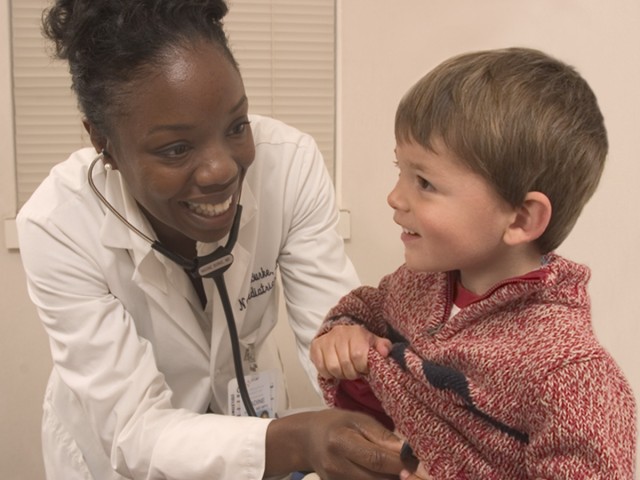
"content": "\u003cfigure id=\"attachment_125663\" class=\"wp-caption alignnone\" style=\"max-width: 640px\">\u003ca href=\"http://ww2.kqed.org/news/2014/02/07/bayview-pediatrician-breaks-new-ground-on-child-health/buke_kid_red5/\" rel=\"attachment wp-att-125663\">\u003cimg loading=\"lazy\" decoding=\"async\" class=\"size-medium wp-image-125663 \" src=\"http://ww2.kqed.org/news/wp-content/uploads/sites/10/2014/02/Buke_kid_red5-640x480.jpg\" alt=\"Dr. Nadine Burke Harris.\" width=\"640\" height=\"480\">\u003c/a>\u003cfigcaption class=\"wp-caption-text\">Dr. Nadine Burke Harris’ pioneering work is getting a lot of attention these days. (Courtesy of Center for Youth Wellness)\u003c/figcaption>\u003c/figure>\n\u003cp>Poverty sucks.\u003c/p>\n\u003cp>By almost any measure, people living in poor neighborhoods, especially children, get the short end of the stick.\u003c/p>\n\u003cp>They’re exposed to more gun violence, less open space, more dysfunctional homes and schools, fewer neighborhood services and more undesirable infrastructure (freeways, power plants, water treatment facilities, etc.) than their counterparts in more affluent places.\u003c/p>\n\u003cp>That’s why the work of a dynamic inner-city pediatrician named \u003ca href=\"http://nadineburke.com/\">Nadine Burke Harris\u003c/a> is getting so much attention. Since opening a clinic in San Francisco’s Bayview neighborhood a few years ago, Burke Harris has won plenty of praise — and funding that she’s used to open the \u003ca href=\"http://centerforyouthwellness.org/\">Center for Youth Wellness\u003c/a> on Third Street.\u003c/p>\n\u003cp>Building on research by Kaiser Permanente, Burke Harris is pioneering a study of how chronic exposure to “\u003ca href=\"http://www.cdc.gov/ncipc/pub-res/pdf/childhood_stress.pdf\">toxic stress\u003c/a>” affects people, starting in infancy. Toxic stress among youth is caused by “adverse childhood experiences,” things like having a parent with mental illness, a father behind bars, domestic violence, friends shot or killed by gangs. These situations trigger the “fight or flight” response, according to Burke Harris. With that comes the long-term release of higher levels of stress hormones such as adrenaline and cortisol.\u003c/p>\n\u003cp>[ad fullwidth]\u003c/p>\n\u003cp>“It affects the brain architecture of younger children, and it can affect not just psychological health, but also the immune system,” says Burke Harris in an interview for “KQED Newsroom.” Toxic stress, she says, can also explain kids acting out in school. That in turn can lead to children being misdiagnosed with things like attention deficit hyperactivity disorder (ADHD) when in fact it’s their brains reacting — normally — to chronic stress.\u003c/p>\n\u003cp>\u003ciframe loading=\"lazy\" width=\"375\" align=\"right\" style=\"margin-left:20px\" height=\"211\" src=\"//www.youtube.com/embed/eQEFcM5NXRI?rel=0\" frameborder=\"0\">\u003c/iframe>\u003c/p>\n\u003cp>This is a big deal and it’s pushing school administrators to rethink policies that lead kids – especially African American students – to be suspended for a vague category of behavior known as “willful disobedience.” \u003c/p>\n\u003cp>Data compiled by EdSource from the 30 largest school districts in California found that nearly half – 48 percent — of student suspensions in California during the 2011-12 school year were for \u003ca href=\"http://edsource.org/today/2013/largest-school-districts-vary-widely-in-use-of-willful-defiance-to-suspend-students/54381#.UvVdC0JdXEk\" target=\"_blank\" rel=\"noopener\">willful defiance.\u003c/a>\u003c/p>\n\u003cp>Statistics show that kids of color are disproportionately targeted. A \u003ca href=\"http://www.sfgate.com/education/article/S-F-schools-move-away-from-suspensions-5180328.php\" target=\"_blank\" rel=\"noopener\">San Francisco Chronicle article \u003c/a>noted that 58 percent of the San Francisco students suspended for willful disobedience in 2011-12 were African-American, although they account for just 11 percent of district enrollment.\u003c/p>\n\u003cp>Los Angeles has banned the use of the willful disobedience suspension altogether. And other school districts are following suit. (In a related issue, KQED has reported on how some Bay Area school districts are using mindfulness and meditation to help kids break cycles of self-destructive behaviors). In fact, school suspensions are now falling statewide as policies change and administrators realize they simply don’t work.\u003c/p>\n\u003cp>\u003cem>Scott Shafer\u003c/em> \u003cem>reported on this story for “KQED Newsroom,” which is a weekly news magazine program on television, radio and online. Watch Fridays at 8 p.m. on KQED Public Television 9, listen on Sundays at 6 p.m. on KQED Public Radio 88.5 FM and watch on demand \u003ca href=\"http://www.kqed.org/tv/programs/newsroom/\" target=\"_blank\" rel=\"noopener\">here\u003c/a>.\u003c/em>\u003c/p>\n\u003cp>\u003c/p>\n\u003cp> \u003c/p>\n\n",
"blocks": [],
"excerpt": "At the Center for Youth Wellness on Third Street, Dr. Nadine Burke Harris works with poor children.",
"status": "publish",
"parent": 0,
"modified": 1726009644,
"stats": {
"hasAudio": false,
"hasVideo": true,
"hasChartOrMap": false,
"iframeSrcs": [],
"hasGoogleForm": false,
"hasGallery": false,
"hasHearkenModule": false,
"hasPolis": false,
"paragraphCount": 14,
"wordCount": 551
},
"headData": {
"title": "S.F. Pediatrician on How 'Toxic Stress' Affects Children's Health, Education | KQED",
"description": "At the Center for Youth Wellness on Third Street, Dr. Nadine Burke Harris works with poor children.",
"ogTitle": "",
"ogDescription": "",
"ogImgId": "",
"twTitle": "",
"twDescription": "",
"twImgId": "",
"schema": {
"@context": "https://schema.org",
"@type": "NewsArticle",
"headline": "S.F. Pediatrician on How 'Toxic Stress' Affects Children's Health, Education",
"datePublished": "2014-02-10T07:30:07-08:00",
"dateModified": "2024-09-10T16:07:24-07:00",
"image": "https://cdn.kqed.org/wp-content/uploads/2020/02/KQED-OG-Image@1x.png",
"isAccessibleForFree": "True",
"publisher": {
"@type": "NewsMediaOrganization",
"@id": "https://www.kqed.org/#organization",
"name": "KQED",
"logo": "https://cdn.kqed.org/wp-content/uploads/2020/02/KQED-OG-Image@1x.png",
"url": "https://www.kqed.org",
"sameAs": [
"https://www.facebook.com/KQED",
"https://twitter.com/KQED",
"https://www.instagram.com/kqed/",
"https://www.tiktok.com/@kqedofficial",
"https://www.linkedin.com/company/kqed",
"https://www.youtube.com/channel/UCeC0IOo7i1P_61zVUWbJ4nw"
]
}
}
},
"sticky": false,
"customPermalink": "2014/02/07/bayview-pediatrician-on-how-toxic-stress-harms-kids/",
"path": "/news/125652/s-f-pediatrician-says-toxic-stress-affects-childrens-health-education",
"audioTrackLength": null,
"parsedContent": [
{
"type": "contentString",
"content": "\u003cdiv class=\"post-body\">\u003cp>\u003cfigure id=\"attachment_125663\" class=\"wp-caption alignnone\" style=\"max-width: 640px\">\u003ca href=\"http://ww2.kqed.org/news/2014/02/07/bayview-pediatrician-breaks-new-ground-on-child-health/buke_kid_red5/\" rel=\"attachment wp-att-125663\">\u003cimg loading=\"lazy\" decoding=\"async\" class=\"size-medium wp-image-125663 \" src=\"http://ww2.kqed.org/news/wp-content/uploads/sites/10/2014/02/Buke_kid_red5-640x480.jpg\" alt=\"Dr. Nadine Burke Harris.\" width=\"640\" height=\"480\">\u003c/a>\u003cfigcaption class=\"wp-caption-text\">Dr. Nadine Burke Harris’ pioneering work is getting a lot of attention these days. (Courtesy of Center for Youth Wellness)\u003c/figcaption>\u003c/figure>\n\u003cp>Poverty sucks.\u003c/p>\n\u003cp>By almost any measure, people living in poor neighborhoods, especially children, get the short end of the stick.\u003c/p>\n\u003cp>They’re exposed to more gun violence, less open space, more dysfunctional homes and schools, fewer neighborhood services and more undesirable infrastructure (freeways, power plants, water treatment facilities, etc.) than their counterparts in more affluent places.\u003c/p>\n\u003cp>That’s why the work of a dynamic inner-city pediatrician named \u003ca href=\"http://nadineburke.com/\">Nadine Burke Harris\u003c/a> is getting so much attention. Since opening a clinic in San Francisco’s Bayview neighborhood a few years ago, Burke Harris has won plenty of praise — and funding that she’s used to open the \u003ca href=\"http://centerforyouthwellness.org/\">Center for Youth Wellness\u003c/a> on Third Street.\u003c/p>\n\u003cp>Building on research by Kaiser Permanente, Burke Harris is pioneering a study of how chronic exposure to “\u003ca href=\"http://www.cdc.gov/ncipc/pub-res/pdf/childhood_stress.pdf\">toxic stress\u003c/a>” affects people, starting in infancy. Toxic stress among youth is caused by “adverse childhood experiences,” things like having a parent with mental illness, a father behind bars, domestic violence, friends shot or killed by gangs. These situations trigger the “fight or flight” response, according to Burke Harris. With that comes the long-term release of higher levels of stress hormones such as adrenaline and cortisol.\u003c/p>\n\u003cp>\u003c/p>\u003c/div>",
"attributes": {
"named": {},
"numeric": []
}
},
{
"type": "component",
"content": "",
"name": "ad",
"attributes": {
"named": {
"label": "fullwidth"
},
"numeric": [
"fullwidth"
]
}
},
{
"type": "contentString",
"content": "\u003cdiv class=\"post-body\">\u003cp>\u003c/p>\n\u003cp>“It affects the brain architecture of younger children, and it can affect not just psychological health, but also the immune system,” says Burke Harris in an interview for “KQED Newsroom.” Toxic stress, she says, can also explain kids acting out in school. That in turn can lead to children being misdiagnosed with things like attention deficit hyperactivity disorder (ADHD) when in fact it’s their brains reacting — normally — to chronic stress.\u003c/p>\n\u003cp>\u003ciframe loading=\"lazy\" width=\"375\" align=\"right\" style=\"margin-left:20px\" height=\"211\" src=\"//www.youtube.com/embed/eQEFcM5NXRI?rel=0\" frameborder=\"0\">\u003c/iframe>\u003c/p>\n\u003cp>This is a big deal and it’s pushing school administrators to rethink policies that lead kids – especially African American students – to be suspended for a vague category of behavior known as “willful disobedience.” \u003c/p>\n\u003cp>Data compiled by EdSource from the 30 largest school districts in California found that nearly half – 48 percent — of student suspensions in California during the 2011-12 school year were for \u003ca href=\"http://edsource.org/today/2013/largest-school-districts-vary-widely-in-use-of-willful-defiance-to-suspend-students/54381#.UvVdC0JdXEk\" target=\"_blank\" rel=\"noopener\">willful defiance.\u003c/a>\u003c/p>\n\u003cp>Statistics show that kids of color are disproportionately targeted. A \u003ca href=\"http://www.sfgate.com/education/article/S-F-schools-move-away-from-suspensions-5180328.php\" target=\"_blank\" rel=\"noopener\">San Francisco Chronicle article \u003c/a>noted that 58 percent of the San Francisco students suspended for willful disobedience in 2011-12 were African-American, although they account for just 11 percent of district enrollment.\u003c/p>\n\u003cp>Los Angeles has banned the use of the willful disobedience suspension altogether. And other school districts are following suit. (In a related issue, KQED has reported on how some Bay Area school districts are using mindfulness and meditation to help kids break cycles of self-destructive behaviors). In fact, school suspensions are now falling statewide as policies change and administrators realize they simply don’t work.\u003c/p>\n\u003cp>\u003cem>Scott Shafer\u003c/em> \u003cem>reported on this story for “KQED Newsroom,” which is a weekly news magazine program on television, radio and online. Watch Fridays at 8 p.m. on KQED Public Television 9, listen on Sundays at 6 p.m. on KQED Public Radio 88.5 FM and watch on demand \u003ca href=\"http://www.kqed.org/tv/programs/newsroom/\" target=\"_blank\" rel=\"noopener\">here\u003c/a>.\u003c/em>\u003c/p>\n\u003cp>\u003c/p>\n\u003cp> \u003c/p>\n\n\u003c/div>\u003c/p>",
"attributes": {
"named": {},
"numeric": []
}
}
],
"link": "/news/125652/s-f-pediatrician-says-toxic-stress-affects-childrens-health-education",
"authors": [
"255"
],
"programs": [
"news_6944"
],
"categories": [
"news_18540",
"news_19906",
"news_457"
],
"tags": [
"news_5706",
"news_18543",
"news_854",
"news_2162",
"news_38",
"news_5707",
"news_98"
],
"featImg": "news_125663",
"label": "news_6944"
},
"news_124153": {
"type": "posts",
"id": "news_124153",
"meta": {
"index": "posts_1716263798",
"site": "news",
"id": "124153",
"score": null,
"sort": [
1390418035000
]
},
"guestAuthors": [],
"slug": "state-officials-patient-advocates-clash-over-caregiver-abuse-cases",
"title": "State Officials, Patient Advocates Clash Over Caregiver Abuse Cases",
"publishDate": 1390418035,
"format": "aside",
"headTitle": "State Officials, Patient Advocates Clash Over Caregiver Abuse Cases | KQED",
"labelTerm": {
"term": 6944,
"site": "news"
},
"content": "\u003cfigure id=\"attachment_124156\" class=\"wp-caption aligncenter\" style=\"max-width: 640px\">\u003ca href=\"http://ww2.kqed.org/news/wp-content/uploads/sites/10/2014/01/RS6635_MD002506.jpg\">\u003cimg loading=\"lazy\" decoding=\"async\" class=\"size-medium wp-image-124156 \" src=\"http://ww2.kqed.org/news/wp-content/uploads/sites/10/2014/01/RS6635_MD002506-640x640.jpg\" alt=\"State are looking into a backlog of elder abuse cases after advocates complained of years of questionable practices. ((Keith Brofsky/Thinkstock)\" width=\"640\" height=\"640\">\u003c/a>\u003cfigcaption class=\"wp-caption-text\">State lawmakers are looking into a backlog of elder abuse cases after advocates complained about years of questionable practices (Keith Brofsky/Thinkstock) \u003ccite>(Keith Brofsky/Thinkstock)\u003c/cite>\u003c/figcaption>\u003c/figure>\n\u003cp>\u003cstrong>By Rachael Bale\u003c/strong>\u003c/p>\n\u003cp>\u003ca href=\"http://cironline.org/\" target=\"_blank\" rel=\"noopener\">The Center For Investigative Reporting\u003c/a>\u003c/p>\n\u003cp>Officials from the California Department of Public Health and long-term care advocates clashed today at an Assembly oversight hearing over regulators’ ability to process complaints of abuse against nursing assistants.\u003c/p>\n\u003cp>They couldn’t even agree on the number of abuse allegations that have yet to be investigated.\u003c/p>\n\u003cp>[contextly_sidebar id=”894bc74afd27f07541a2b316812935d3″]\u003c/p>\n\u003cp>Evon Lenerd, a state health department official whose branch oversees investigations into caregiver abuse, said the state has a backlog of about 700 complaints that are more than a year old.\u003c/p>\n\u003cp>[ad fullwidth]\u003c/p>\n\u003cp>“What’s taking so long? It’s just the process,” Lenerd told lawmakers. “We are investigating every complaint we receive.”\u003c/p>\n\u003cp>But Patricia L. McGinnis, the executive director of California Advocates for Nursing Home Reform, said she had received private assurances from people within Lenerd’s professional certification branch that there were nearly 10,000. McGinnis said the department has been “extraordinarily unresponsive and has a long history of noncompliance.”\u003c/p>\n\u003cp>“Their pattern has been to do nothing and hope no one notices,” she testified.\u003c/p>\n\u003cp>Another witness at today’s hearing, the state ombudsman for long-term care, Joseph Rodrigues, said local ombudsmen have problems with their complaint referrals getting stuck on desks at the public health department and not having phone calls returned. Once, one was told to stop investigating a complaint even though allegations continued to come in from that particular facility.\u003c/p>\n\u003cfigure id=\"attachment_124160\" class=\"wp-caption alignright\" style=\"max-width: 300px\">\u003ca href=\"http://ww2.kqed.org/news/wp-content/uploads/sites/10/2014/01/CIR-Public-Health_6.jpg\">\u003cimg loading=\"lazy\" decoding=\"async\" class=\"size-thumbnail wp-image-124160\" src=\"http://ww2.kqed.org/news/wp-content/uploads/sites/10/2014/01/CIR-Public-Health_6-300x300.jpg\" alt=\"California Advocates for Nusing Home Reform Executive Director Pat McGinnis speaks a the Joint Oversight Hearing of the Assembly Committee on Aging & Long-Term Care and Assembly Committee on Health held at the State Captiol on Tuesday, January 21, 2014. (Randy Allen/The Center for Investigative Reporting)\" width=\"300\" height=\"300\">\u003c/a>\u003cfigcaption class=\"wp-caption-text\">California Advocates for Nusing Home Reform Executive Director Pat McGinnis speaks a the Joint Oversight Hearing of the Assembly Committee on Aging & Long-Term Care and Assembly Committee on Health held at the State Captiol on Tuesday, January 21, 2014. (Randy Allen/The Center for Investigative Reporting)\u003c/figcaption>\u003c/figure>\n\u003cp>The backlog is especially problematic, both officials and advocates testified, because as time goes on, substantiating allegations becomes more difficult as staff moves, evidence disappears and those who complain die.\u003c/p>\n\u003cp>The hearing, held by the Assembly Committee on Health and Committee on Aging and Long-Term Care, comes four months after The Center for Investigative Reporting \u003ca href=\"http://cironline.org/reports/quick-dismissal-caregiver-abuse-cases-puts-calif-patients-risk-5158\" target=\"_blank\" rel=\"noopener\">found state health regulators had routinely conducted delayed and superficial investigations\u003c/a> into complaints of abuse and neglect at the state’s long-term care facilities for the elderly and developmentally disabled.\u003c/p>\n\u003cp>At the hearing, Assemblyman Dr. Richard Pan, D-Sacramento, asked where the choke points of the investigative process were, saying his goal was to determine how the Legislature could assist the department.\u003c/p>\n\u003cp>Ron Chapman, the director of the Department of Public Health, did not provide specifics, though the committee and officials set a March deadline for a progress report on an improvement plan.\u003c/p>\n\u003cp>“There are significant process complexities that are involved here,” he said. Chapman testified that the department is looking to hire more staff members to help process complaints but that past staff hires haven’t helped the backlog significantly.\u003c/p>\n\u003cp>The \u003ca href=\"http://cironline.org/reports/quick-dismissal-caregiver-abuse-cases-puts-calif-patients-risk-5158\" target=\"_blank\" rel=\"noopener\">CIR investigation\u003c/a> focused on the role of public health department investigators within the Licensing and Certification division, which has oversight over the quality of care in residential facilities.\u003c/p>\n\u003cfigure id=\"attachment_124162\" class=\"wp-caption alignleft\" style=\"max-width: 300px\">\u003ca href=\"http://ww2.kqed.org/news/wp-content/uploads/sites/10/2014/01/CIR-Public-Health.jpg\">\u003cimg loading=\"lazy\" decoding=\"async\" class=\"size-thumbnail wp-image-124162\" src=\"http://ww2.kqed.org/news/wp-content/uploads/sites/10/2014/01/CIR-Public-Health-300x300.jpg\" alt=\"Ron Chapman, MD, State Health Officer and Director of the California Department of Public Health speaks a the Joint Oversight Hearing of the Assembly Committee on Aging & Long-Term Care and Assembly Committee on Health held at the State Captiol on Tuesday, January 21, 2014. (Randy Allen/The Center for Investigative Reporting)\" width=\"300\" height=\"300\">\u003c/a>\u003cfigcaption class=\"wp-caption-text\">Ron Chapman, MD, State Health Officer and Director of the California Department of Public Health speaks a the Joint Oversight Hearing of the Assembly Committee on Aging & Long-Term Care and Assembly Committee on Health held at the State Captiol on Tuesday, January 21, 2014. (Randy Allen/The Center for Investigative Reporting)\u003c/figcaption>\u003c/figure>\n\u003cp>Over the past several years, the Department of Public Health has closed the vast majority of abuse and misconduct cases without action, CIR found. And the agency mostly has stopped referring cases to the California Department of Justice for prosecution and cut back on revoking licenses of nursing aides suspected of abuse.\u003c/p>\n\u003cp>In Southern California, abuse cases often are sent to Sacramento headquarters, where investigators rarely receive approval from supervisors to make site visits. During a mass dismissal of nearly 1,000 cases in 2009, many complaints were closed with a single phone call from the investigator, CIR learned.\u003c/p>\n\u003cp>When asked about this mass dismissal, Lenerd said that not every complaint warrants a site visit but that all 1,000 cases were investigated.\u003c/p>\n\u003cp>“At no time did we dismiss complaints with just one phone call. There were investigation steps used for every complaint allegation received,” she said. “As the cases got older, there (was) less evidence, less witnesses to interview. But we investigated every complaint allegation received.”\u003c/p>\n\u003cp>California law requires that the Department of Public Health perform on-site, in-person investigations.\u003c/p>\n\u003cp>Assemblywoman Mariko Yamada, D-Davis, requested a disposition of the 1,000 cases, which Chapman said he would provide.\u003c/p>\n\u003cp>In one case from 2008, which demonstrates the department’s slow investigative process, nursing aide Jason Joslin physically abused at least one patient at a facility in Riverside County. Although the public health department opened an investigation right away, it wasn’t until 2011 that \u003ca href=\"https://www.documentcloud.org/documents/782744-cna-jjoslin-status.html\" target=\"_blank\" rel=\"noopener\">the state took away his certification\u003c/a> and decided to add him to a nationwide exclusion list.\u003c/p>\n\u003cp>But by then, Joslin had moved to Seattle, obtained a temporary nursing assistant license from Washington and was fully credentialed within months.\u003c/p>\n\u003cfigure id=\"attachment_124164\" class=\"wp-caption alignright\" style=\"max-width: 300px\">\u003ca href=\"http://ww2.kqed.org/news/wp-content/uploads/sites/10/2014/01/RS6633_photo.jpg\">\u003cimg loading=\"lazy\" decoding=\"async\" class=\"size-thumbnail wp-image-124164\" src=\"http://ww2.kqed.org/news/wp-content/uploads/sites/10/2014/01/RS6633_photo-300x300.jpg\" alt=\"Elsie Fossum’s nieces and nephews look at family photos of their aunt, on the seventh anniversary of her death. (Mina Kim/KQED)\" width=\"300\" height=\"300\">\u003c/a>\u003cfigcaption class=\"wp-caption-text\">Elsie Fossum’s nieces and nephews look at family photos of their aunt, on the seventh anniversary of her death. (Mina Kim/KQED)\u003c/figcaption>\u003c/figure>\n\u003cp>Another particularly egregious case involved the suspicious death of Elsie Fossum in 2006, who was then 95 and living at Claremont Place Assisted Living in Southern California. She was found severely injured on the floor of her bedroom. Several caregivers at the facility made it clear that they believed a nursing assistant had attacked Fossum. But the health department dismissed it as an accidental fall from her bed.\u003c/p>\n\u003cp>Because of the severity of her mouth injuries, Fossum died of dehydration a few weeks later.\u003c/p>\n\u003cp>The case was closed as unsubstantiated. The nursing assistant, who had in the past made disparaging comments about the elderly, quit soon after the incident and took a job at a nearby facility.\u003c/p>\n\u003cp>Seven years after Fossum’s death, the Los Angeles County Sheriff’s Department opened a criminal investigation, in part, following questions from reporters. The case remains unsolved, and the nursing assistant has not been charged with a crime.\u003c/p>\n\u003cp>The legislative hearing came about a week after a task force convened by the California Health and Human Services Agency, which oversees the Department of Public Health, \u003ca href=\"http://www.chhs.ca.gov/DCTFDocs/PlanfortheFutureofDevelopmentalCenters.pdf\" target=\"_blank\" rel=\"noopener\">released a report\u003c/a> on the future of California’s developmental centers.\u003c/p>\n\u003cp>Essentially, the agency’s goal is for state-operated residential facilities to play a decreasing role in caring for the California’s developmentally disabled residents. As such, the task force’s report focuses on how to transition more residents from the state’s five board-and-care facilities into smaller, more specialized community programs.\u003c/p>\n\u003cp>In particular, it recommends establishing health resource centers where people who have transitioned to community homes would receive coordinated health services, ranging from mental health care to medication management to medical equipment and other services.\u003c/p>\n\u003cp>The report also recommends that the state operate smaller acute crisis facilities and crisis response teams, provide funding to regional facilities to expand care for those with enduring and advanced medical needs, and continue operating the Canyon Springs Community Facility and the Porterville Developmental Center’s Secure Treatment Program for those in the criminal justice system.\u003c/p>\n\u003cp>[ad floatright]\u003c/p>\n\u003cp>\u003cem>This story was edited by Robert Salladay and copy edited by Nikki Frick and Christine Lee.\u003c/em>\u003c/p>\n\n",
"blocks": [],
"excerpt": "State officials dispute charges that they're too slow to handle complaints of patient abuse in nursing homes. ",
"status": "publish",
"parent": 0,
"modified": 1726009647,
"stats": {
"hasAudio": false,
"hasVideo": false,
"hasChartOrMap": false,
"iframeSrcs": [],
"hasGoogleForm": false,
"hasGallery": false,
"hasHearkenModule": false,
"hasPolis": false,
"paragraphCount": 35,
"wordCount": 1275
},
"headData": {
"title": "State Officials, Patient Advocates Clash Over Caregiver Abuse Cases | KQED",
"description": "State officials dispute charges that they're too slow to handle complaints of patient abuse in nursing homes. ",
"ogTitle": "",
"ogDescription": "",
"ogImgId": "",
"twTitle": "",
"twDescription": "",
"twImgId": "",
"schema": {
"@context": "https://schema.org",
"@type": "NewsArticle",
"headline": "State Officials, Patient Advocates Clash Over Caregiver Abuse Cases",
"datePublished": "2014-01-22T11:13:55-08:00",
"dateModified": "2024-09-10T16:07:27-07:00",
"image": "https://cdn.kqed.org/wp-content/uploads/2020/02/KQED-OG-Image@1x.png",
"isAccessibleForFree": "True",
"publisher": {
"@type": "NewsMediaOrganization",
"@id": "https://www.kqed.org/#organization",
"name": "KQED",
"logo": "https://cdn.kqed.org/wp-content/uploads/2020/02/KQED-OG-Image@1x.png",
"url": "https://www.kqed.org",
"sameAs": [
"https://www.facebook.com/KQED",
"https://twitter.com/KQED",
"https://www.instagram.com/kqed/",
"https://www.tiktok.com/@kqedofficial",
"https://www.linkedin.com/company/kqed",
"https://www.youtube.com/channel/UCeC0IOo7i1P_61zVUWbJ4nw"
]
}
}
},
"sticky": false,
"customPermalink": "2014/01/22/state-health-officials-dispute-chargers-of-delays-in-handling-abuse-cases/",
"path": "/news/124153/state-officials-patient-advocates-clash-over-caregiver-abuse-cases",
"audioTrackLength": null,
"parsedContent": [
{
"type": "contentString",
"content": "\u003cdiv class=\"post-body\">\u003cp>\u003cfigure id=\"attachment_124156\" class=\"wp-caption aligncenter\" style=\"max-width: 640px\">\u003ca href=\"http://ww2.kqed.org/news/wp-content/uploads/sites/10/2014/01/RS6635_MD002506.jpg\">\u003cimg loading=\"lazy\" decoding=\"async\" class=\"size-medium wp-image-124156 \" src=\"http://ww2.kqed.org/news/wp-content/uploads/sites/10/2014/01/RS6635_MD002506-640x640.jpg\" alt=\"State are looking into a backlog of elder abuse cases after advocates complained of years of questionable practices. ((Keith Brofsky/Thinkstock)\" width=\"640\" height=\"640\">\u003c/a>\u003cfigcaption class=\"wp-caption-text\">State lawmakers are looking into a backlog of elder abuse cases after advocates complained about years of questionable practices (Keith Brofsky/Thinkstock) \u003ccite>(Keith Brofsky/Thinkstock)\u003c/cite>\u003c/figcaption>\u003c/figure>\n\u003cp>\u003cstrong>By Rachael Bale\u003c/strong>\u003c/p>\n\u003cp>\u003ca href=\"http://cironline.org/\" target=\"_blank\" rel=\"noopener\">The Center For Investigative Reporting\u003c/a>\u003c/p>\n\u003cp>Officials from the California Department of Public Health and long-term care advocates clashed today at an Assembly oversight hearing over regulators’ ability to process complaints of abuse against nursing assistants.\u003c/p>\n\u003cp>They couldn’t even agree on the number of abuse allegations that have yet to be investigated.\u003c/p>\n\u003cp>\u003c/p>\u003cp>\u003c/p>\u003cp>\u003c/p>\n\u003cp>Evon Lenerd, a state health department official whose branch oversees investigations into caregiver abuse, said the state has a backlog of about 700 complaints that are more than a year old.\u003c/p>\n\u003cp>\u003c/p>\u003c/div>",
"attributes": {
"named": {},
"numeric": []
}
},
{
"type": "component",
"content": "",
"name": "ad",
"attributes": {
"named": {
"label": "fullwidth"
},
"numeric": [
"fullwidth"
]
}
},
{
"type": "contentString",
"content": "\u003cdiv class=\"post-body\">\u003cp>\u003c/p>\n\u003cp>“What’s taking so long? It’s just the process,” Lenerd told lawmakers. “We are investigating every complaint we receive.”\u003c/p>\n\u003cp>But Patricia L. McGinnis, the executive director of California Advocates for Nursing Home Reform, said she had received private assurances from people within Lenerd’s professional certification branch that there were nearly 10,000. McGinnis said the department has been “extraordinarily unresponsive and has a long history of noncompliance.”\u003c/p>\n\u003cp>“Their pattern has been to do nothing and hope no one notices,” she testified.\u003c/p>\n\u003cp>Another witness at today’s hearing, the state ombudsman for long-term care, Joseph Rodrigues, said local ombudsmen have problems with their complaint referrals getting stuck on desks at the public health department and not having phone calls returned. Once, one was told to stop investigating a complaint even though allegations continued to come in from that particular facility.\u003c/p>\n\u003cfigure id=\"attachment_124160\" class=\"wp-caption alignright\" style=\"max-width: 300px\">\u003ca href=\"http://ww2.kqed.org/news/wp-content/uploads/sites/10/2014/01/CIR-Public-Health_6.jpg\">\u003cimg loading=\"lazy\" decoding=\"async\" class=\"size-thumbnail wp-image-124160\" src=\"http://ww2.kqed.org/news/wp-content/uploads/sites/10/2014/01/CIR-Public-Health_6-300x300.jpg\" alt=\"California Advocates for Nusing Home Reform Executive Director Pat McGinnis speaks a the Joint Oversight Hearing of the Assembly Committee on Aging & Long-Term Care and Assembly Committee on Health held at the State Captiol on Tuesday, January 21, 2014. (Randy Allen/The Center for Investigative Reporting)\" width=\"300\" height=\"300\">\u003c/a>\u003cfigcaption class=\"wp-caption-text\">California Advocates for Nusing Home Reform Executive Director Pat McGinnis speaks a the Joint Oversight Hearing of the Assembly Committee on Aging & Long-Term Care and Assembly Committee on Health held at the State Captiol on Tuesday, January 21, 2014. (Randy Allen/The Center for Investigative Reporting)\u003c/figcaption>\u003c/figure>\n\u003cp>The backlog is especially problematic, both officials and advocates testified, because as time goes on, substantiating allegations becomes more difficult as staff moves, evidence disappears and those who complain die.\u003c/p>\n\u003cp>The hearing, held by the Assembly Committee on Health and Committee on Aging and Long-Term Care, comes four months after The Center for Investigative Reporting \u003ca href=\"http://cironline.org/reports/quick-dismissal-caregiver-abuse-cases-puts-calif-patients-risk-5158\" target=\"_blank\" rel=\"noopener\">found state health regulators had routinely conducted delayed and superficial investigations\u003c/a> into complaints of abuse and neglect at the state’s long-term care facilities for the elderly and developmentally disabled.\u003c/p>\n\u003cp>At the hearing, Assemblyman Dr. Richard Pan, D-Sacramento, asked where the choke points of the investigative process were, saying his goal was to determine how the Legislature could assist the department.\u003c/p>\n\u003cp>Ron Chapman, the director of the Department of Public Health, did not provide specifics, though the committee and officials set a March deadline for a progress report on an improvement plan.\u003c/p>\n\u003cp>“There are significant process complexities that are involved here,” he said. Chapman testified that the department is looking to hire more staff members to help process complaints but that past staff hires haven’t helped the backlog significantly.\u003c/p>\n\u003cp>The \u003ca href=\"http://cironline.org/reports/quick-dismissal-caregiver-abuse-cases-puts-calif-patients-risk-5158\" target=\"_blank\" rel=\"noopener\">CIR investigation\u003c/a> focused on the role of public health department investigators within the Licensing and Certification division, which has oversight over the quality of care in residential facilities.\u003c/p>\n\u003cfigure id=\"attachment_124162\" class=\"wp-caption alignleft\" style=\"max-width: 300px\">\u003ca href=\"http://ww2.kqed.org/news/wp-content/uploads/sites/10/2014/01/CIR-Public-Health.jpg\">\u003cimg loading=\"lazy\" decoding=\"async\" class=\"size-thumbnail wp-image-124162\" src=\"http://ww2.kqed.org/news/wp-content/uploads/sites/10/2014/01/CIR-Public-Health-300x300.jpg\" alt=\"Ron Chapman, MD, State Health Officer and Director of the California Department of Public Health speaks a the Joint Oversight Hearing of the Assembly Committee on Aging & Long-Term Care and Assembly Committee on Health held at the State Captiol on Tuesday, January 21, 2014. (Randy Allen/The Center for Investigative Reporting)\" width=\"300\" height=\"300\">\u003c/a>\u003cfigcaption class=\"wp-caption-text\">Ron Chapman, MD, State Health Officer and Director of the California Department of Public Health speaks a the Joint Oversight Hearing of the Assembly Committee on Aging & Long-Term Care and Assembly Committee on Health held at the State Captiol on Tuesday, January 21, 2014. (Randy Allen/The Center for Investigative Reporting)\u003c/figcaption>\u003c/figure>\n\u003cp>Over the past several years, the Department of Public Health has closed the vast majority of abuse and misconduct cases without action, CIR found. And the agency mostly has stopped referring cases to the California Department of Justice for prosecution and cut back on revoking licenses of nursing aides suspected of abuse.\u003c/p>\n\u003cp>In Southern California, abuse cases often are sent to Sacramento headquarters, where investigators rarely receive approval from supervisors to make site visits. During a mass dismissal of nearly 1,000 cases in 2009, many complaints were closed with a single phone call from the investigator, CIR learned.\u003c/p>\n\u003cp>When asked about this mass dismissal, Lenerd said that not every complaint warrants a site visit but that all 1,000 cases were investigated.\u003c/p>\n\u003cp>“At no time did we dismiss complaints with just one phone call. There were investigation steps used for every complaint allegation received,” she said. “As the cases got older, there (was) less evidence, less witnesses to interview. But we investigated every complaint allegation received.”\u003c/p>\n\u003cp>California law requires that the Department of Public Health perform on-site, in-person investigations.\u003c/p>\n\u003cp>Assemblywoman Mariko Yamada, D-Davis, requested a disposition of the 1,000 cases, which Chapman said he would provide.\u003c/p>\n\u003cp>In one case from 2008, which demonstrates the department’s slow investigative process, nursing aide Jason Joslin physically abused at least one patient at a facility in Riverside County. Although the public health department opened an investigation right away, it wasn’t until 2011 that \u003ca href=\"https://www.documentcloud.org/documents/782744-cna-jjoslin-status.html\" target=\"_blank\" rel=\"noopener\">the state took away his certification\u003c/a> and decided to add him to a nationwide exclusion list.\u003c/p>\n\u003cp>But by then, Joslin had moved to Seattle, obtained a temporary nursing assistant license from Washington and was fully credentialed within months.\u003c/p>\n\u003cfigure id=\"attachment_124164\" class=\"wp-caption alignright\" style=\"max-width: 300px\">\u003ca href=\"http://ww2.kqed.org/news/wp-content/uploads/sites/10/2014/01/RS6633_photo.jpg\">\u003cimg loading=\"lazy\" decoding=\"async\" class=\"size-thumbnail wp-image-124164\" src=\"http://ww2.kqed.org/news/wp-content/uploads/sites/10/2014/01/RS6633_photo-300x300.jpg\" alt=\"Elsie Fossum’s nieces and nephews look at family photos of their aunt, on the seventh anniversary of her death. (Mina Kim/KQED)\" width=\"300\" height=\"300\">\u003c/a>\u003cfigcaption class=\"wp-caption-text\">Elsie Fossum’s nieces and nephews look at family photos of their aunt, on the seventh anniversary of her death. (Mina Kim/KQED)\u003c/figcaption>\u003c/figure>\n\u003cp>Another particularly egregious case involved the suspicious death of Elsie Fossum in 2006, who was then 95 and living at Claremont Place Assisted Living in Southern California. She was found severely injured on the floor of her bedroom. Several caregivers at the facility made it clear that they believed a nursing assistant had attacked Fossum. But the health department dismissed it as an accidental fall from her bed.\u003c/p>\n\u003cp>Because of the severity of her mouth injuries, Fossum died of dehydration a few weeks later.\u003c/p>\n\u003cp>The case was closed as unsubstantiated. The nursing assistant, who had in the past made disparaging comments about the elderly, quit soon after the incident and took a job at a nearby facility.\u003c/p>\n\u003cp>Seven years after Fossum’s death, the Los Angeles County Sheriff’s Department opened a criminal investigation, in part, following questions from reporters. The case remains unsolved, and the nursing assistant has not been charged with a crime.\u003c/p>\n\u003cp>The legislative hearing came about a week after a task force convened by the California Health and Human Services Agency, which oversees the Department of Public Health, \u003ca href=\"http://www.chhs.ca.gov/DCTFDocs/PlanfortheFutureofDevelopmentalCenters.pdf\" target=\"_blank\" rel=\"noopener\">released a report\u003c/a> on the future of California’s developmental centers.\u003c/p>\n\u003cp>Essentially, the agency’s goal is for state-operated residential facilities to play a decreasing role in caring for the California’s developmentally disabled residents. As such, the task force’s report focuses on how to transition more residents from the state’s five board-and-care facilities into smaller, more specialized community programs.\u003c/p>\n\u003cp>In particular, it recommends establishing health resource centers where people who have transitioned to community homes would receive coordinated health services, ranging from mental health care to medication management to medical equipment and other services.\u003c/p>\n\u003cp>The report also recommends that the state operate smaller acute crisis facilities and crisis response teams, provide funding to regional facilities to expand care for those with enduring and advanced medical needs, and continue operating the Canyon Springs Community Facility and the Porterville Developmental Center’s Secure Treatment Program for those in the criminal justice system.\u003c/p>\n\u003cp>\u003c/p>\u003c/div>",
"attributes": {
"named": {},
"numeric": []
}
},
{
"type": "component",
"content": "",
"name": "ad",
"attributes": {
"named": {
"label": "floatright"
},
"numeric": [
"floatright"
]
}
},
{
"type": "contentString",
"content": "\u003cdiv class=\"post-body\">\u003cp>\u003c/p>\n\u003cp>\u003cem>This story was edited by Robert Salladay and copy edited by Nikki Frick and Christine Lee.\u003c/em>\u003c/p>\n\n\u003c/div>\u003c/p>",
"attributes": {
"named": {},
"numeric": []
}
}
],
"link": "/news/124153/state-officials-patient-advocates-clash-over-caregiver-abuse-cases",
"authors": [
"236"
],
"programs": [
"news_6944"
],
"categories": [
"news_457"
],
"tags": [
"news_1153",
"news_18543",
"news_2081"
],
"featImg": "news_124156",
"label": "news_6944"
},
"news_123461": {
"type": "posts",
"id": "news_123461",
"meta": {
"index": "posts_1716263798",
"site": "news",
"id": "123461",
"score": null,
"sort": [
1389819542000
]
},
"guestAuthors": [],
"slug": "watch-jahi-mcmath-lawyer-discusses-case",
"title": "Jahi McMath Lawyer: 'There's Always Hope'",
"publishDate": 1389819542,
"format": "aside",
"headTitle": "Jahi McMath Lawyer: ‘There’s Always Hope’ | KQED",
"labelTerm": {
"term": 6944,
"site": "news"
},
"content": "\u003cfigure id=\"attachment_122765\" class=\"wp-caption alignright\" style=\"max-width: 215px\">\u003ca href=\"http://ww2.kqed.org/news/wp-content/uploads/sites/10/2014/01/jahimcmath-e1389121301914.jpg\">\u003cimg loading=\"lazy\" decoding=\"async\" class=\"size-full wp-image-122765\" src=\"http://ww2.kqed.org/news/wp-content/uploads/sites/10/2014/01/jahimcmath-e1389121301914.jpg\" alt=\"(Jahi McMath Fund)\" width=\"215\" height=\"142\">\u003c/a>\u003cfigcaption class=\"wp-caption-text\">(Jahi McMath Fund)\u003c/figcaption>\u003c/figure>\n\u003cp>Christopher Dolan, the San Francisco lawyer representing the family of Jahi McMath, appeared today on a Huffington Post Live panel to discuss the brain-dead Oakland teenager and the ethical and legal issues surrounding the case.\u003c/p>\n\u003cp>He said that while it would be inappropriate for him to offer a medical opinion, “There’s always hope that there could be life that will be returned to Jahi. … There are several documented cases where there have been individuals who have been diagnosed with brain death who have evolved from that.”\u003c/p>\n\u003cp>Jahi, 13, was declared brain dead last month after surgery at Children’s Hospital & Research Center Oakland. Her cardiopulmonary function has been sustained by a ventilator since then. Dolan won a court order on behalf of Jahi’s mother, Latasha Winkfield, preventing the hospital from removing the ventilator, and Jahi was transferred last week to another facility.\u003c/p>\n\u003caside class=\"pullquote alignleft\">‘There are several documented cases where there have been individuals who have been diagnosed with brain death who have evolved from that.’\u003cbr>\n\u003ccite>— Christopher Dolan\u003c/cite>\u003c/aside>\n\u003cp>Dolan acknowledged after the move that Jahi “\u003ca href=\"http://ww2.kqed.org/news/2014/01/06/brain-dead-jahi-mcmath-removed-from-childrens-hospital-oakland\" target=\"_blank\" rel=\"noopener\">is in very bad shape\u003c/a>.” But \u003ca href=\"https://twitter.com/cbdlaw\" target=\"_blank\" rel=\"noopener\">he later reported via Twitter\u003c/a> that doctors had performed a tracheostomy and insert a feeding tube, and that physicians “are optimistic that her condition has stabilized and that her health is improving from when she was taken from CHO.”\u003c/p>\n\u003cp>Since Jahi is legally dead, Children’s Hospital had refused to perform those procedures.\u003c/p>\n\u003cp>[ad fullwidth]\u003c/p>\n\u003cp>Dolan argued today that the case can’t be fully understood without considering the religious faith of Jahi’s family and the New Testament’s story of Jesus Christ:\u003c/p>\n\u003cblockquote>\u003cp>I don’t think you can separate the family’s beliefs from the family’s hopes. And I think that the context of this case as it happened during the holiday season, the Christmas season for them, is important, because we were praying to a god who brought his son here by a miracle, who then committed miracles including raising of the dead, who died and was resurrected by a miracle. So when you bring in their beliefs as Christian beliefs, you have to call your own beliefs into question and wonder, ‘Do we practice a fiction, which is that miracles happened only once, a long time ago? Or do we practice a real belief?’\u003c/p>\u003c/blockquote>\n\u003cp>Asked what the family’s “end game” is in the case, Dolan said: “Well, I think if there’s not a radical recovery, the family’s going to evaluate what the condition of Jahi is and have an opportunity to then make a decision. The mother has publicly stated that if her daughter deteriorates or if her daughter becomes in pain, that she will make the decision as any responsible parent would to remove her from the ventilator.”\u003c/p>\n\u003cp>Doctors consulted about the case inside and outside Children’s Hospital have said the condition of the girl’s body will degrade over time despite any intervention. A summary of one opinion \u003ca href=\"http://www.latimes.com/local/lanow/la-me-ln-jahi-mcmath-body-deteriorating-20140108,0,4831276.story#axzz2qVfTrEac\" target=\"_blank\" rel=\"noopener\">reported by the Los Angeles Times\u003c/a>:\u003c/p>\n\u003cblockquote>\u003cp>The deterioration of Jahi’s body is now the only possible course and “became inevitable the moment she died,” according to a court declaration from Dr. Heidi Flori, a critical care physician at Children’s Hospital & Research Center Oakland, which had sought to remove the teen from the ventilator after she was declared brain dead Dec. 12.\u003c/p>\n\u003cp>“The medical team and I believe that additional and more dramatic signs of the body’s deterioration will continue to manifest over time, regardless of any procedures and regardless of any heroic measures that any facility in the country might attempt,” Flori said in the declaration filed in U.S. District Court.\u003c/p>\n\u003cp>“Mechanical support and other measures taken to maintain an illusion of life where none exists cannot maintain that illusion indefinitely,” she added.\u003c/p>\u003c/blockquote>\n\u003cp>\u003c/p>\n\u003cp>Here’s the video from Huffington Post Live:\u003c/p>\n\u003cdiv class=\"single-video\">\u003ciframe loading=\"lazy\" src=\"http://embed.live.huffingtonpost.com/HPLEmbedPlayer/?segmentId=52d062b502a76077a60004eb\" frameborder=\"0\" width=\"480\" height=\"270\">\u003c/iframe>\u003c/div>\n\n",
"blocks": [],
"excerpt": "Attorney says main issue in brain-death case is respecting the rights and beliefs of family. ",
"status": "publish",
"parent": 0,
"modified": 1738187339,
"stats": {
"hasAudio": false,
"hasVideo": false,
"hasChartOrMap": true,
"iframeSrcs": [
"http://embed.live.huffingtonpost.com/HPLEmbedPlayer/"
],
"hasGoogleForm": false,
"hasGallery": false,
"hasHearkenModule": false,
"hasPolis": false,
"paragraphCount": 15,
"wordCount": 682
},
"headData": {
"title": "Jahi McMath Lawyer: 'There's Always Hope' | KQED",
"description": "Attorney says main issue in brain-death case is respecting the rights and beliefs of family. ",
"ogTitle": "",
"ogDescription": "",
"ogImgId": "",
"twTitle": "",
"twDescription": "",
"twImgId": "",
"schema": {
"@context": "https://schema.org",
"@type": "NewsArticle",
"headline": "Jahi McMath Lawyer: 'There's Always Hope'",
"datePublished": "2014-01-15T12:59:02-08:00",
"dateModified": "2025-01-29T13:48:59-08:00",
"image": "https://cdn.kqed.org/wp-content/uploads/2020/02/KQED-OG-Image@1x.png",
"isAccessibleForFree": "True",
"publisher": {
"@type": "NewsMediaOrganization",
"@id": "https://www.kqed.org/#organization",
"name": "KQED",
"logo": "https://cdn.kqed.org/wp-content/uploads/2020/02/KQED-OG-Image@1x.png",
"url": "https://www.kqed.org",
"sameAs": [
"https://www.facebook.com/KQED",
"https://twitter.com/KQED",
"https://www.instagram.com/kqed/",
"https://www.tiktok.com/@kqedofficial",
"https://www.linkedin.com/company/kqed",
"https://www.youtube.com/channel/UCeC0IOo7i1P_61zVUWbJ4nw"
]
}
}
},
"sticky": false,
"path": "/news/123461/watch-jahi-mcmath-lawyer-discusses-case",
"audioTrackLength": null,
"parsedContent": [
{
"type": "contentString",
"content": "\u003cdiv class=\"post-body\">\u003cp>\u003cfigure id=\"attachment_122765\" class=\"wp-caption alignright\" style=\"max-width: 215px\">\u003ca href=\"http://ww2.kqed.org/news/wp-content/uploads/sites/10/2014/01/jahimcmath-e1389121301914.jpg\">\u003cimg loading=\"lazy\" decoding=\"async\" class=\"size-full wp-image-122765\" src=\"http://ww2.kqed.org/news/wp-content/uploads/sites/10/2014/01/jahimcmath-e1389121301914.jpg\" alt=\"(Jahi McMath Fund)\" width=\"215\" height=\"142\">\u003c/a>\u003cfigcaption class=\"wp-caption-text\">(Jahi McMath Fund)\u003c/figcaption>\u003c/figure>\n\u003cp>Christopher Dolan, the San Francisco lawyer representing the family of Jahi McMath, appeared today on a Huffington Post Live panel to discuss the brain-dead Oakland teenager and the ethical and legal issues surrounding the case.\u003c/p>\n\u003cp>He said that while it would be inappropriate for him to offer a medical opinion, “There’s always hope that there could be life that will be returned to Jahi. … There are several documented cases where there have been individuals who have been diagnosed with brain death who have evolved from that.”\u003c/p>\n\u003cp>Jahi, 13, was declared brain dead last month after surgery at Children’s Hospital & Research Center Oakland. Her cardiopulmonary function has been sustained by a ventilator since then. Dolan won a court order on behalf of Jahi’s mother, Latasha Winkfield, preventing the hospital from removing the ventilator, and Jahi was transferred last week to another facility.\u003c/p>\n\u003caside class=\"pullquote alignleft\">‘There are several documented cases where there have been individuals who have been diagnosed with brain death who have evolved from that.’\u003cbr>\n\u003ccite>— Christopher Dolan\u003c/cite>\u003c/aside>\n\u003cp>Dolan acknowledged after the move that Jahi “\u003ca href=\"http://ww2.kqed.org/news/2014/01/06/brain-dead-jahi-mcmath-removed-from-childrens-hospital-oakland\" target=\"_blank\" rel=\"noopener\">is in very bad shape\u003c/a>.” But \u003ca href=\"https://twitter.com/cbdlaw\" target=\"_blank\" rel=\"noopener\">he later reported via Twitter\u003c/a> that doctors had performed a tracheostomy and insert a feeding tube, and that physicians “are optimistic that her condition has stabilized and that her health is improving from when she was taken from CHO.”\u003c/p>\n\u003cp>Since Jahi is legally dead, Children’s Hospital had refused to perform those procedures.\u003c/p>\n\u003cp>\u003c/p>\u003c/div>",
"attributes": {
"named": {},
"numeric": []
}
},
{
"type": "component",
"content": "",
"name": "ad",
"attributes": {
"named": {
"label": "fullwidth"
},
"numeric": [
"fullwidth"
]
}
},
{
"type": "contentString",
"content": "\u003cdiv class=\"post-body\">\u003cp>\u003c/p>\n\u003cp>Dolan argued today that the case can’t be fully understood without considering the religious faith of Jahi’s family and the New Testament’s story of Jesus Christ:\u003c/p>\n\u003cblockquote>\u003cp>I don’t think you can separate the family’s beliefs from the family’s hopes. And I think that the context of this case as it happened during the holiday season, the Christmas season for them, is important, because we were praying to a god who brought his son here by a miracle, who then committed miracles including raising of the dead, who died and was resurrected by a miracle. So when you bring in their beliefs as Christian beliefs, you have to call your own beliefs into question and wonder, ‘Do we practice a fiction, which is that miracles happened only once, a long time ago? Or do we practice a real belief?’\u003c/p>\u003c/blockquote>\n\u003cp>Asked what the family’s “end game” is in the case, Dolan said: “Well, I think if there’s not a radical recovery, the family’s going to evaluate what the condition of Jahi is and have an opportunity to then make a decision. The mother has publicly stated that if her daughter deteriorates or if her daughter becomes in pain, that she will make the decision as any responsible parent would to remove her from the ventilator.”\u003c/p>\n\u003cp>Doctors consulted about the case inside and outside Children’s Hospital have said the condition of the girl’s body will degrade over time despite any intervention. A summary of one opinion \u003ca href=\"http://www.latimes.com/local/lanow/la-me-ln-jahi-mcmath-body-deteriorating-20140108,0,4831276.story#axzz2qVfTrEac\" target=\"_blank\" rel=\"noopener\">reported by the Los Angeles Times\u003c/a>:\u003c/p>\n\u003cblockquote>\u003cp>The deterioration of Jahi’s body is now the only possible course and “became inevitable the moment she died,” according to a court declaration from Dr. Heidi Flori, a critical care physician at Children’s Hospital & Research Center Oakland, which had sought to remove the teen from the ventilator after she was declared brain dead Dec. 12.\u003c/p>\n\u003cp>“The medical team and I believe that additional and more dramatic signs of the body’s deterioration will continue to manifest over time, regardless of any procedures and regardless of any heroic measures that any facility in the country might attempt,” Flori said in the declaration filed in U.S. District Court.\u003c/p>\n\u003cp>“Mechanical support and other measures taken to maintain an illusion of life where none exists cannot maintain that illusion indefinitely,” she added.\u003c/p>\u003c/blockquote>\n\u003cp>\u003c/p>\n\u003cp>Here’s the video from Huffington Post Live:\u003c/p>\n\u003cdiv class=\"single-video\">\u003ciframe loading=\"lazy\" src=\"http://embed.live.huffingtonpost.com/HPLEmbedPlayer/?segmentId=52d062b502a76077a60004eb\" frameborder=\"0\" width=\"480\" height=\"270\">\u003c/iframe>\u003c/div>\n\n\u003c/div>\u003c/p>",
"attributes": {
"named": {},
"numeric": []
}
}
],
"link": "/news/123461/watch-jahi-mcmath-lawyer-discusses-case",
"authors": [
"222"
],
"programs": [
"news_6944"
],
"categories": [
"news_18540",
"news_457"
],
"tags": [
"news_20013",
"news_18543",
"news_5401",
"news_5402"
],
"featImg": "news_122166",
"label": "news_6944"
},
"news_123210": {
"type": "posts",
"id": "news_123210",
"meta": {
"index": "posts_1716263798",
"site": "news",
"id": "123210",
"score": null,
"sort": [
1389632406000
]
},
"guestAuthors": [],
"slug": "gov-browns-budget-are-kids-getting-short-shrift",
"title": "Gov. Brown's Budget: Are Kids Getting Short Shrift?",
"publishDate": 1389632406,
"format": "aside",
"headTitle": "Gov. Brown’s Budget: Are Kids Getting Short Shrift? | KQED",
"labelTerm": {
"term": 6944,
"site": "news"
},
"content": "\u003cp>[youtube http://www.youtube.com/watch?v=http://youtu.be/WdES62rzZoY?rel=0&start=1080&end=1443&autoplay=0&w=640&h=360]\u003c/p>\n\u003cp>The release this week of Gov. Jerry Brown’s new \u003ca href=\"http://ww2.kqed.org/news/2014/01/09/happy-days-are-here-again-brown-unveils-106-billion-budget-draft/\">state budget\u003c/a> coincides with the 50\u003csup>th\u003c/sup> anniversary of LBJ’s declaration of a “\u003ca href=\"http://www.kqed.org/news/story/2014/01/08/132235/for_lbj_the_war_on_poverty_was_personal?category=u.s.\">War on Poverty\u003c/a>.”\u003c/p>\n\u003cp>To mark the occasion, Children Now, an Oakland-based advocacy organization, released its \u003ca href=\"http://www.childrennow.org/index.php/learn/2014_report_card_assets\">2014 California Children’s Report Card\u003c/a>. It’s an assessment of 27 child welfare areas, ranging from health to foster care to education. And for state elected officials, policymakers, educators and others, it’s not the kind of report card they can brag about. It’s full of C’s and D’s with a smattering of B’s.\u003c/p>\n\u003cp>For starters, it notes that nearly half (48 percent) of California’s 9.3 million kids live in low-income or poor households. (Note this is twice as high as the U.S. Census estimates of poor children because it includes those living in low-income households, which is less than $46,000 annual income for a family of four.)\u003c/p>\n\u003cp>That’s an astonishing number as the state’s economic recovery gains strength, which brings us to that budget surplus.\u003c/p>\n\u003cp>[ad fullwidth]\u003c/p>\n\u003cp>The governor this week noted that despite the relatively good news, “by no means are we out of the wilderness.” For California’s kids living in poverty, the wilderness has been especially dark, with years of cuts to health and welfare programs, K-12 public schools and higher education.\u003c/p>\n\u003cp>That might explain another child advocacy group’s rather harsh reaction to the governor’s call for prudence, caution and fiscal restraint.\u003c/p>\n\u003caside class=\"pullquote alignleft\"> There are plenty of policies Democrats could change or reinstate if they wanted to.\u003c/aside>\n\u003cp>“We understand the wisdom of preparing for the future; however, it is irresponsible to allocate billions to pay down state debt and build a rainy-day fund when one in four California children live in poverty,” said Michele Stillwell-Parvensky of \u003ca href=\"http://www.cdfca.org/\">Children’s Defense Fund-California\u003c/a>.\u003c/p>\n\u003cp>In a statement, Stillwell-Parvensky said the governor’s budget “fails to recognize the dire need to repair a social safety net that was shredded during five years of budget cuts to critical programs.”\u003c/p>\n\u003cp>These assessments by two leading children’s organizations – Children Now and Children’s Defense Fund – are in some ways an indictment of Democrats. If \u003cem>California\u003c/em> has failed children, as both groups say, should not \u003cem>Democrats\u003c/em> be held accountable?\u003c/p>\n\u003cp>The party controls every statewide office from governor on down, and it now has overwhelming majorities in the state Assembly and Senate. While the recession and Sacramento Republicans (before voters allowed budgets to pass with a simple majority, leaving the GOP with less power) drove recent spending cuts, there are plenty of policies Democrats could change or reinstate if they wanted to.\u003c/p>\n\u003cp>Take these assessments from the Children Now report:\u003c/p>\n\u003cul>\n\u003cli>Teacher Training & Evaluation: D\u003c/li>\n\u003cli>School Climate & Discipline: C –\u003c/li>\n\u003cli>Education of Foster Youth: D –\u003c/li>\n\u003c/ul>\n\u003cp>More money – especially for early childhood programs — would surely help some. But \u003ca href=\"http://blogs.sacbee.com/capitolalertlatest/2013/09/linda-ronstadt-recalls-jerry-brown-who-lived-with-discipline-repurposed-flo.html\">infamously frugal\u003c/a> Jerry Brown seems unlikely to add any more money to social programs on his own. For that to happen, other Democratic leaders are going to have to step in before the budget becomes final.\u003c/p>\n\u003cp>\u003c/p>\n\u003cp> \u003c/p>\n\n",
"blocks": [],
"excerpt": "Two advocacy groups give the state low marks in many areas, including health and education.",
"status": "publish",
"parent": 0,
"modified": 1726009652,
"stats": {
"hasAudio": false,
"hasVideo": true,
"hasChartOrMap": false,
"iframeSrcs": [],
"hasGoogleForm": false,
"hasGallery": false,
"hasHearkenModule": false,
"hasPolis": false,
"paragraphCount": 15,
"wordCount": 577
},
"headData": {
"title": "Gov. Brown's Budget: Are Kids Getting Short Shrift? | KQED",
"description": "Two advocacy groups give the state low marks in many areas, including health and education.",
"ogTitle": "",
"ogDescription": "",
"ogImgId": "",
"twTitle": "",
"twDescription": "",
"twImgId": "",
"schema": {
"@context": "https://schema.org",
"@type": "NewsArticle",
"headline": "Gov. Brown's Budget: Are Kids Getting Short Shrift?",
"datePublished": "2014-01-13T09:00:06-08:00",
"dateModified": "2024-09-10T16:07:32-07:00",
"image": "https://cdn.kqed.org/wp-content/uploads/2020/02/KQED-OG-Image@1x.png",
"isAccessibleForFree": "True",
"publisher": {
"@type": "NewsMediaOrganization",
"@id": "https://www.kqed.org/#organization",
"name": "KQED",
"logo": "https://cdn.kqed.org/wp-content/uploads/2020/02/KQED-OG-Image@1x.png",
"url": "https://www.kqed.org",
"sameAs": [
"https://www.facebook.com/KQED",
"https://twitter.com/KQED",
"https://www.instagram.com/kqed/",
"https://www.tiktok.com/@kqedofficial",
"https://www.linkedin.com/company/kqed",
"https://www.youtube.com/channel/UCeC0IOo7i1P_61zVUWbJ4nw"
]
}
}
},
"sticky": false,
"customPermalink": "2014/01/10/123210/gov-brown-state-budget-shortchanges+children/",
"path": "/news/123210/gov-browns-budget-are-kids-getting-short-shrift",
"audioTrackLength": null,
"parsedContent": [
{
"type": "contentString",
"content": "\u003cdiv class=\"post-body\">\u003cp>\u003cp>\u003c/p>\u003cp>\u003cspan class='utils-parseShortcode-shortcodes-__youtubeShortcode__embedYoutube'>\n \u003cspan class='utils-parseShortcode-shortcodes-__youtubeShortcode__embedYoutubeInside'>\n \u003ciframe\n loading='lazy'\n class='utils-parseShortcode-shortcodes-__youtubeShortcode__youtubePlayer'\n type='text/html'\n src='//www.youtube.com/embed/http://youtu.be/WdES62rzZoY?rel=0'\n title='//www.youtube.com/embed/http://youtu.be/WdES62rzZoY?rel=0'\n allowfullscreen='true'\n style='border:0;'>\u003c/iframe>\n \u003c/span>\n \u003c/span>\u003c/p>\u003cp>\u003c/p>\n\u003cp>The release this week of Gov. Jerry Brown’s new \u003ca href=\"http://ww2.kqed.org/news/2014/01/09/happy-days-are-here-again-brown-unveils-106-billion-budget-draft/\">state budget\u003c/a> coincides with the 50\u003csup>th\u003c/sup> anniversary of LBJ’s declaration of a “\u003ca href=\"http://www.kqed.org/news/story/2014/01/08/132235/for_lbj_the_war_on_poverty_was_personal?category=u.s.\">War on Poverty\u003c/a>.”\u003c/p>\n\u003cp>To mark the occasion, Children Now, an Oakland-based advocacy organization, released its \u003ca href=\"http://www.childrennow.org/index.php/learn/2014_report_card_assets\">2014 California Children’s Report Card\u003c/a>. It’s an assessment of 27 child welfare areas, ranging from health to foster care to education. And for state elected officials, policymakers, educators and others, it’s not the kind of report card they can brag about. It’s full of C’s and D’s with a smattering of B’s.\u003c/p>\n\u003cp>For starters, it notes that nearly half (48 percent) of California’s 9.3 million kids live in low-income or poor households. (Note this is twice as high as the U.S. Census estimates of poor children because it includes those living in low-income households, which is less than $46,000 annual income for a family of four.)\u003c/p>\n\u003cp>That’s an astonishing number as the state’s economic recovery gains strength, which brings us to that budget surplus.\u003c/p>\n\u003cp>\u003c/p>\u003c/div>",
"attributes": {
"named": {},
"numeric": []
}
},
{
"type": "component",
"content": "",
"name": "ad",
"attributes": {
"named": {
"label": "fullwidth"
},
"numeric": [
"fullwidth"
]
}
},
{
"type": "contentString",
"content": "\u003cdiv class=\"post-body\">\u003cp>\u003c/p>\n\u003cp>The governor this week noted that despite the relatively good news, “by no means are we out of the wilderness.” For California’s kids living in poverty, the wilderness has been especially dark, with years of cuts to health and welfare programs, K-12 public schools and higher education.\u003c/p>\n\u003cp>That might explain another child advocacy group’s rather harsh reaction to the governor’s call for prudence, caution and fiscal restraint.\u003c/p>\n\u003caside class=\"pullquote alignleft\"> There are plenty of policies Democrats could change or reinstate if they wanted to.\u003c/aside>\n\u003cp>“We understand the wisdom of preparing for the future; however, it is irresponsible to allocate billions to pay down state debt and build a rainy-day fund when one in four California children live in poverty,” said Michele Stillwell-Parvensky of \u003ca href=\"http://www.cdfca.org/\">Children’s Defense Fund-California\u003c/a>.\u003c/p>\n\u003cp>In a statement, Stillwell-Parvensky said the governor’s budget “fails to recognize the dire need to repair a social safety net that was shredded during five years of budget cuts to critical programs.”\u003c/p>\n\u003cp>These assessments by two leading children’s organizations – Children Now and Children’s Defense Fund – are in some ways an indictment of Democrats. If \u003cem>California\u003c/em> has failed children, as both groups say, should not \u003cem>Democrats\u003c/em> be held accountable?\u003c/p>\n\u003cp>The party controls every statewide office from governor on down, and it now has overwhelming majorities in the state Assembly and Senate. While the recession and Sacramento Republicans (before voters allowed budgets to pass with a simple majority, leaving the GOP with less power) drove recent spending cuts, there are plenty of policies Democrats could change or reinstate if they wanted to.\u003c/p>\n\u003cp>Take these assessments from the Children Now report:\u003c/p>\n\u003cul>\n\u003cli>Teacher Training & Evaluation: D\u003c/li>\n\u003cli>School Climate & Discipline: C –\u003c/li>\n\u003cli>Education of Foster Youth: D –\u003c/li>\n\u003c/ul>\n\u003cp>More money – especially for early childhood programs — would surely help some. But \u003ca href=\"http://blogs.sacbee.com/capitolalertlatest/2013/09/linda-ronstadt-recalls-jerry-brown-who-lived-with-discipline-repurposed-flo.html\">infamously frugal\u003c/a> Jerry Brown seems unlikely to add any more money to social programs on his own. For that to happen, other Democratic leaders are going to have to step in before the budget becomes final.\u003c/p>\n\u003cp>\u003c/p>\n\u003cp> \u003c/p>\n\n\u003c/div>\u003c/p>",
"attributes": {
"named": {},
"numeric": []
}
}
],
"link": "/news/123210/gov-browns-budget-are-kids-getting-short-shrift",
"authors": [
"255"
],
"programs": [
"news_6944"
],
"categories": [
"news_18540",
"news_457",
"news_8"
],
"tags": [
"news_5491",
"news_3306",
"news_18543",
"news_30",
"news_70",
"news_98"
],
"featImg": "news_123227",
"label": "news_6944"
},
"news_122763": {
"type": "posts",
"id": "news_122763",
"meta": {
"index": "posts_1716263798",
"site": "news",
"id": "122763",
"score": null,
"sort": [
1389139209000
]
},
"guestAuthors": [],
"slug": "family-moves-jahi-mcmath-from-oakland-hospital",
"title": "Jahi McMath Update: Teen in New Facility, in 'Very Bad Shape'",
"publishDate": 1389139209,
"format": "aside",
"headTitle": "Jahi McMath Update: Teen in New Facility, in ‘Very Bad Shape’ | KQED",
"labelTerm": {
"term": 6944,
"site": "news"
},
"content": "\u003cp>\u003cstrong>Update, Feb. 20, 2014:\u003c/strong> \u003ca href=\"http://ww2.kqed.org/news/2014/02/19/jahi-mcmath-doing-much-better-physically-mom-says\" target=\"_blank\" rel=\"noopener\">Jahi McMath ‘Doing Much Better Physically,’ Mom Says\u003c/a>\u003c/p>\n\u003cfigure id=\"attachment_122765\" class=\"wp-caption alignright\" style=\"max-width: 215px\">\u003ca href=\"http://ww2.kqed.org/news/wp-content/uploads/sites/10/2014/01/jahimcmath-e1389121301914.jpg\">\u003cimg loading=\"lazy\" decoding=\"async\" src=\"http://ww2.kqed.org/news/wp-content/uploads/sites/10/2014/01/jahimcmath-e1389121301914.jpg\" alt=\"(Jahi McMath Fund)\" width=\"215\" height=\"142\" class=\"size-full wp-image-122765\">\u003c/a>\u003cfigcaption class=\"wp-caption-text\">(Jahi McMath Fund)\u003c/figcaption>\u003c/figure>\n\u003cp>The family of Jahi McMath isn’t disclosing where the brain-dead 13-year-old has been transferred, saying only that she was transported via ground after she was removed from Children’s Hospital and Research Center in Oakland on Sunday and that she’s at a facility that shares their belief that Jahi is still alive. \u003c/p>\n\u003cp>In legal filings last month, the attorney for the family said it had heard from two facilities willing to accept Jahi — an unnamed one in Arizona and one on Long Island, east of New York City. Attorney Christopher Dolan’s filing included a $32,000 estimate for an air ambulance that would take the girl to the \u003ca href=\"http://www.nbli.org/\" target=\"_blank\" rel=\"noopener\">New Beginnings Community Center for Brain Injury Rehabilitation\u003c/a> in Medford, N.Y. \u003c/p>\n\u003cp>Jahi’s uncle, Omari Sealey, joined Dolan in a press conference in San Francisco Monday to discuss the transfer. From an Associated Press account: \u003c/p>\n\u003cblockquote>\u003cp>[Sealey] told reporters Monday that Jahi traveled by ground and that there were no complications in the transfer, suggesting she may still be in California. Nurses and doctors are working to stabilize her with intravenous antibiotics, minerals and supplements while she remains on the ventilator, but her condition is too precarious for additional measures, lawyer Christopher Dolan said.\u003c/p>\n\u003cp>The new facility has “been very welcoming with open arms. They have beliefs just like ours,” Sealey said. “They believe as we do … It’s a place where she is going to get the treatment she deserves.”\u003c/p>\n\u003cp>The nearly $50,000 in private donations the family has raised since taking the case public helped cover the carefully choreographed handoff to the critical care team and transportation to the new location, Sealey said. The facility, where Jahi is expected to remain for some time, is run by a charitable organization that so far hasn’t sought payment, Dolan said.\u003c/p>\n\u003cp>Both men refused to name the facility or reveal where it was located, saying they wanted to prevent staff members and the families of other patients from being harassed.\u003c/p>\u003c/blockquote>\n\u003cp>Dolan also addressed Jahi’s physical condition. According to the San Jose Mercury News: \u003c/p>\n\u003cblockquote>\u003cp>“Right now, we don’t know if she’s going to make it,” said Dolan.\u003c/p>\n\u003cp>“She’s in very bad shape,” he said. “What I can tell you is that those examinations show that her medical condition, separate from the brain issue, is not good.”\u003c/p>\n\u003cp>Dolan’s frank and sober assessment echoes a Friday legal declaration by Children’s Hospital Oakland critical care pediatrician Dr. Heidi R. Flori, who opposed surgical insertion of a feeding tube because the girl’s body was deteriorating.\u003c/p>\n\u003cp>Brain-dead for 25 days, Jahi has been sustained under court order with a breathing machine and other medical interventions since complications arose after surgery to remove her tonsils and other tissue.\u003c/p>\n\u003cp>Until Monday, she had gone without nourishment because the hospital had diagnosed her as legally and medically dead. Dolan said Monday that Jahi is now receiving potassium, minerals and hormones through an IV, in addition to antibiotics.\u003c/p>\u003c/blockquote>\n\u003cp>\u003cstrong>Original post on Jahi McMath’s removal from Oakland Children’s Hospital, from the Associated Press:\u003c/strong>\u003c/p>\n\u003cp>[ad fullwidth]\u003c/p>\n\u003cp>\u003cstrong>By Terry Collins\u003cbr>\nAssociated Press\u003c/strong>\u003c/p>\n\u003cp>The family of Jahi McMath has had the brain-dead 13-year-old taken from Children’s Hospital in Oakland to an undisclosed location. The girl was moved by a critical care team about 8 p.m. Sunday while attached to a ventilator but without a feeding tube, family attorney Christopher Dolan said.\u003c/p>\n\u003cp>“It was a very tense situation,” said Dolan. “Everybody played by the rules.”\u003c/p>\n\u003cfigure id=\"attachment_122765\" class=\"wp-caption alignright\" style=\"max-width: 300px\">\u003ca href=\"http://ww2.kqed.org/news/2014/01/06/122763/jahimcmath-2/\" rel=\"attachment wp-att-122765\">\u003cimg loading=\"lazy\" decoding=\"async\" class=\" wp-image-122765 \" src=\"http://ww2.kqed.org/news/wp-content/uploads/sites/10/2014/01/jahimcmath.jpg\" alt=\"(Jahi McMath Fund)\" width=\"300\" height=\"198\">\u003c/a>\u003cfigcaption class=\"wp-caption-text\">(Jahi McMath Fund)\u003c/figcaption>\u003c/figure>\n\u003cp>David Durand, the hospital’s chief of pediatrics, said the girl was released to the coroner. The coroner then released her into the custody of her mother, Nailah Winkfield, as per court order, Durand said in an email.\u003c/p>\n\u003cp>On Friday, Alameda County Superior Court Judge Evelio Grillo said Jahi could be transferred under an agreement with Children’s Hospital and the girl’s mother will be held accountable for developments that could include Jahi going into cardiac arrest.\u003c/p>\n\u003cp>The Alameda County coroner’s office issued a death certificate for the girl Friday but said the document is incomplete because no cause of death has been determined pending an autopsy.\u003c/p>\n\u003cp>“They may have issued one but we don’t have it. We don’t think she’s dead,” Dolan said. “We got all the necessary legal paperwork in order to get Jahi out of there.” He said the deal to move the girl came together Sunday.\u003c/p>\n\u003cp>A court injunction prohibiting Children’s Hospital from removing the ventilator that has kept Jahi’s heart pumping since her Dec. 9 surgery expires at 5 p.m. Tuesday.\u003c/p>\n\u003cp>Dolan wouldn’t specify where the girl was taken but he said “they are going to care for her, respect her and love her. And they’re going to call her Jahi, not ‘the body.””\u003c/p>\n\u003cp>He told reporters at his office in San Francisco late Sunday that the girl will be getting a feeding tube before she is transferred to a permanent facility.\u003c/p>\n\u003cp>Dolan asked for privacy for the caregivers because the issue has raised such strong emotions.\u003c/p>\n\u003cp>“It’s brought out the best in people and the worst in people,” he said. “We’ve had people make threats from around the country. It’s sad people act that way, so for Jahi’s safety and for those around her, we will not be saying where she went or where she is.”\u003c/p>\n\u003cp>The girl’s uncle, Omari Seeley, told reporters that “we’re very grateful. We’re very proud. We want to thank everyone who supported us, everyone who stood in our corner, everyone who prayed for us, everyone who donated to make this possible. Without you guys, none of this would be possible.”\u003c/p>\n\u003cp>After spending weeks in a very public and tense fight with the hospital, Jahi’s family does not plan to disclose any more about their plans for her continued care until she is resettled, her uncle, Sealey said Friday.\u003c/p>\n\u003cp>Jahi went into cardiac arrest while recovering from surgery to remove her tonsils, adenoids and uvula along with bony structures from her nose and throat and palate tissue. Three doctors have declared the girl brain dead based on exams and tests showing no blood flow or electrical activity in either her cerebrum or the brain stem that controls breathing.\u003c/p>\n\u003cp>Multiple outside doctors and bioethicists observing the case have confirmed that a patient in that condition meets the legal criteria for death and has no chance of recovering.\u003c/p>\n\u003cp>The hospital that has sought to remove the girl from a ventilator refused to fit her with a feeding tube or a breathing tube that would help stabilize her during a move, saying it was unethical to perform medical procedures on a dead person.\u003c/p>\n\u003cp>Winkfield, refusing to believe her daughter is dead as long as her heart is beating, has gone to court to stop the machine from being disconnected. She has wanted to transfer Jahi to another facility and hoped to force Children’s Hospital either to insert the tubes or to allow an outside doctor to do the procedures.\u003c/p>\n\u003cp>Grillo on Friday rejected the family’s move to have the hospital insert the tubes, noting the girl could be moved with the ventilator and intravenous fluid lines she has now. He also refused to compel the hospital to permit an outside doctor to perform the procedures on its premises.\u003c/p>\n\u003cp>Dolan said Friday the family had located an unaffiliated physician to put in the tubes and that an outpatient clinic in New York that treats people with traumatic brain injures has expressed willingness to care for Jahi.\u003c/p>\n\u003cp>Hospital spokesman Sam Singer said officials were not informed where the girl was being taken.\u003c/p>\n\u003cp>[ad floatright]\u003c/p>\n\u003cp>“We hope that the family finds peace in this very, very tragic story,” he said.\u003c/p>\n\n",
"blocks": [],
"excerpt": "The brain-dead teen was taken to an undisclosed location after weeks of legal maneuvering. ",
"status": "publish",
"parent": 0,
"modified": 1726009655,
"stats": {
"hasAudio": false,
"hasVideo": false,
"hasChartOrMap": false,
"iframeSrcs": [],
"hasGoogleForm": false,
"hasGallery": false,
"hasHearkenModule": false,
"hasPolis": false,
"paragraphCount": 39,
"wordCount": 1394
},
"headData": {
"title": "Jahi McMath Update: Teen in New Facility, in 'Very Bad Shape' | KQED",
"description": "The brain-dead teen was taken to an undisclosed location after weeks of legal maneuvering. ",
"ogTitle": "",
"ogDescription": "",
"ogImgId": "",
"twTitle": "",
"twDescription": "",
"twImgId": "",
"schema": {
"@context": "https://schema.org",
"@type": "NewsArticle",
"headline": "Jahi McMath Update: Teen in New Facility, in 'Very Bad Shape'",
"datePublished": "2014-01-07T16:00:09-08:00",
"dateModified": "2024-09-10T16:07:35-07:00",
"image": "https://cdn.kqed.org/wp-content/uploads/2020/02/KQED-OG-Image@1x.png",
"isAccessibleForFree": "True",
"publisher": {
"@type": "NewsMediaOrganization",
"@id": "https://www.kqed.org/#organization",
"name": "KQED",
"logo": "https://cdn.kqed.org/wp-content/uploads/2020/02/KQED-OG-Image@1x.png",
"url": "https://www.kqed.org",
"sameAs": [
"https://www.facebook.com/KQED",
"https://twitter.com/KQED",
"https://www.instagram.com/kqed/",
"https://www.tiktok.com/@kqedofficial",
"https://www.linkedin.com/company/kqed",
"https://www.youtube.com/channel/UCeC0IOo7i1P_61zVUWbJ4nw"
]
}
}
},
"sticky": false,
"customPermalink": "2014/01/06/brain-dead-jahi-mcmath-removed-from-childrens-hospital-oakland/",
"path": "/news/122763/family-moves-jahi-mcmath-from-oakland-hospital",
"audioTrackLength": null,
"parsedContent": [
{
"type": "contentString",
"content": "\u003cdiv class=\"post-body\">\u003cp>\u003cp>\u003cstrong>Update, Feb. 20, 2014:\u003c/strong> \u003ca href=\"http://ww2.kqed.org/news/2014/02/19/jahi-mcmath-doing-much-better-physically-mom-says\" target=\"_blank\" rel=\"noopener\">Jahi McMath ‘Doing Much Better Physically,’ Mom Says\u003c/a>\u003c/p>\n\u003cfigure id=\"attachment_122765\" class=\"wp-caption alignright\" style=\"max-width: 215px\">\u003ca href=\"http://ww2.kqed.org/news/wp-content/uploads/sites/10/2014/01/jahimcmath-e1389121301914.jpg\">\u003cimg loading=\"lazy\" decoding=\"async\" src=\"http://ww2.kqed.org/news/wp-content/uploads/sites/10/2014/01/jahimcmath-e1389121301914.jpg\" alt=\"(Jahi McMath Fund)\" width=\"215\" height=\"142\" class=\"size-full wp-image-122765\">\u003c/a>\u003cfigcaption class=\"wp-caption-text\">(Jahi McMath Fund)\u003c/figcaption>\u003c/figure>\n\u003cp>The family of Jahi McMath isn’t disclosing where the brain-dead 13-year-old has been transferred, saying only that she was transported via ground after she was removed from Children’s Hospital and Research Center in Oakland on Sunday and that she’s at a facility that shares their belief that Jahi is still alive. \u003c/p>\n\u003cp>In legal filings last month, the attorney for the family said it had heard from two facilities willing to accept Jahi — an unnamed one in Arizona and one on Long Island, east of New York City. Attorney Christopher Dolan’s filing included a $32,000 estimate for an air ambulance that would take the girl to the \u003ca href=\"http://www.nbli.org/\" target=\"_blank\" rel=\"noopener\">New Beginnings Community Center for Brain Injury Rehabilitation\u003c/a> in Medford, N.Y. \u003c/p>\n\u003cp>Jahi’s uncle, Omari Sealey, joined Dolan in a press conference in San Francisco Monday to discuss the transfer. From an Associated Press account: \u003c/p>\n\u003cblockquote>\u003cp>[Sealey] told reporters Monday that Jahi traveled by ground and that there were no complications in the transfer, suggesting she may still be in California. Nurses and doctors are working to stabilize her with intravenous antibiotics, minerals and supplements while she remains on the ventilator, but her condition is too precarious for additional measures, lawyer Christopher Dolan said.\u003c/p>\n\u003cp>The new facility has “been very welcoming with open arms. They have beliefs just like ours,” Sealey said. “They believe as we do … It’s a place where she is going to get the treatment she deserves.”\u003c/p>\n\u003cp>The nearly $50,000 in private donations the family has raised since taking the case public helped cover the carefully choreographed handoff to the critical care team and transportation to the new location, Sealey said. The facility, where Jahi is expected to remain for some time, is run by a charitable organization that so far hasn’t sought payment, Dolan said.\u003c/p>\n\u003cp>Both men refused to name the facility or reveal where it was located, saying they wanted to prevent staff members and the families of other patients from being harassed.\u003c/p>\u003c/blockquote>\n\u003cp>Dolan also addressed Jahi’s physical condition. According to the San Jose Mercury News: \u003c/p>\n\u003cblockquote>\u003cp>“Right now, we don’t know if she’s going to make it,” said Dolan.\u003c/p>\n\u003cp>“She’s in very bad shape,” he said. “What I can tell you is that those examinations show that her medical condition, separate from the brain issue, is not good.”\u003c/p>\n\u003cp>Dolan’s frank and sober assessment echoes a Friday legal declaration by Children’s Hospital Oakland critical care pediatrician Dr. Heidi R. Flori, who opposed surgical insertion of a feeding tube because the girl’s body was deteriorating.\u003c/p>\n\u003cp>Brain-dead for 25 days, Jahi has been sustained under court order with a breathing machine and other medical interventions since complications arose after surgery to remove her tonsils and other tissue.\u003c/p>\n\u003cp>Until Monday, she had gone without nourishment because the hospital had diagnosed her as legally and medically dead. Dolan said Monday that Jahi is now receiving potassium, minerals and hormones through an IV, in addition to antibiotics.\u003c/p>\u003c/blockquote>\n\u003cp>\u003cstrong>Original post on Jahi McMath’s removal from Oakland Children’s Hospital, from the Associated Press:\u003c/strong>\u003c/p>\n\u003cp>\u003c/p>\u003c/div>",
"attributes": {
"named": {},
"numeric": []
}
},
{
"type": "component",
"content": "",
"name": "ad",
"attributes": {
"named": {
"label": "fullwidth"
},
"numeric": [
"fullwidth"
]
}
},
{
"type": "contentString",
"content": "\u003cdiv class=\"post-body\">\u003cp>\u003c/p>\n\u003cp>\u003cstrong>By Terry Collins\u003cbr>\nAssociated Press\u003c/strong>\u003c/p>\n\u003cp>The family of Jahi McMath has had the brain-dead 13-year-old taken from Children’s Hospital in Oakland to an undisclosed location. The girl was moved by a critical care team about 8 p.m. Sunday while attached to a ventilator but without a feeding tube, family attorney Christopher Dolan said.\u003c/p>\n\u003cp>“It was a very tense situation,” said Dolan. “Everybody played by the rules.”\u003c/p>\n\u003cfigure id=\"attachment_122765\" class=\"wp-caption alignright\" style=\"max-width: 300px\">\u003ca href=\"http://ww2.kqed.org/news/2014/01/06/122763/jahimcmath-2/\" rel=\"attachment wp-att-122765\">\u003cimg loading=\"lazy\" decoding=\"async\" class=\" wp-image-122765 \" src=\"http://ww2.kqed.org/news/wp-content/uploads/sites/10/2014/01/jahimcmath.jpg\" alt=\"(Jahi McMath Fund)\" width=\"300\" height=\"198\">\u003c/a>\u003cfigcaption class=\"wp-caption-text\">(Jahi McMath Fund)\u003c/figcaption>\u003c/figure>\n\u003cp>David Durand, the hospital’s chief of pediatrics, said the girl was released to the coroner. The coroner then released her into the custody of her mother, Nailah Winkfield, as per court order, Durand said in an email.\u003c/p>\n\u003cp>On Friday, Alameda County Superior Court Judge Evelio Grillo said Jahi could be transferred under an agreement with Children’s Hospital and the girl’s mother will be held accountable for developments that could include Jahi going into cardiac arrest.\u003c/p>\n\u003cp>The Alameda County coroner’s office issued a death certificate for the girl Friday but said the document is incomplete because no cause of death has been determined pending an autopsy.\u003c/p>\n\u003cp>“They may have issued one but we don’t have it. We don’t think she’s dead,” Dolan said. “We got all the necessary legal paperwork in order to get Jahi out of there.” He said the deal to move the girl came together Sunday.\u003c/p>\n\u003cp>A court injunction prohibiting Children’s Hospital from removing the ventilator that has kept Jahi’s heart pumping since her Dec. 9 surgery expires at 5 p.m. Tuesday.\u003c/p>\n\u003cp>Dolan wouldn’t specify where the girl was taken but he said “they are going to care for her, respect her and love her. And they’re going to call her Jahi, not ‘the body.””\u003c/p>\n\u003cp>He told reporters at his office in San Francisco late Sunday that the girl will be getting a feeding tube before she is transferred to a permanent facility.\u003c/p>\n\u003cp>Dolan asked for privacy for the caregivers because the issue has raised such strong emotions.\u003c/p>\n\u003cp>“It’s brought out the best in people and the worst in people,” he said. “We’ve had people make threats from around the country. It’s sad people act that way, so for Jahi’s safety and for those around her, we will not be saying where she went or where she is.”\u003c/p>\n\u003cp>The girl’s uncle, Omari Seeley, told reporters that “we’re very grateful. We’re very proud. We want to thank everyone who supported us, everyone who stood in our corner, everyone who prayed for us, everyone who donated to make this possible. Without you guys, none of this would be possible.”\u003c/p>\n\u003cp>After spending weeks in a very public and tense fight with the hospital, Jahi’s family does not plan to disclose any more about their plans for her continued care until she is resettled, her uncle, Sealey said Friday.\u003c/p>\n\u003cp>Jahi went into cardiac arrest while recovering from surgery to remove her tonsils, adenoids and uvula along with bony structures from her nose and throat and palate tissue. Three doctors have declared the girl brain dead based on exams and tests showing no blood flow or electrical activity in either her cerebrum or the brain stem that controls breathing.\u003c/p>\n\u003cp>Multiple outside doctors and bioethicists observing the case have confirmed that a patient in that condition meets the legal criteria for death and has no chance of recovering.\u003c/p>\n\u003cp>The hospital that has sought to remove the girl from a ventilator refused to fit her with a feeding tube or a breathing tube that would help stabilize her during a move, saying it was unethical to perform medical procedures on a dead person.\u003c/p>\n\u003cp>Winkfield, refusing to believe her daughter is dead as long as her heart is beating, has gone to court to stop the machine from being disconnected. She has wanted to transfer Jahi to another facility and hoped to force Children’s Hospital either to insert the tubes or to allow an outside doctor to do the procedures.\u003c/p>\n\u003cp>Grillo on Friday rejected the family’s move to have the hospital insert the tubes, noting the girl could be moved with the ventilator and intravenous fluid lines she has now. He also refused to compel the hospital to permit an outside doctor to perform the procedures on its premises.\u003c/p>\n\u003cp>Dolan said Friday the family had located an unaffiliated physician to put in the tubes and that an outpatient clinic in New York that treats people with traumatic brain injures has expressed willingness to care for Jahi.\u003c/p>\n\u003cp>Hospital spokesman Sam Singer said officials were not informed where the girl was being taken.\u003c/p>\n\u003cp>\u003c/p>\u003c/div>",
"attributes": {
"named": {},
"numeric": []
}
},
{
"type": "component",
"content": "",
"name": "ad",
"attributes": {
"named": {
"label": "floatright"
},
"numeric": [
"floatright"
]
}
},
{
"type": "contentString",
"content": "\u003cdiv class=\"post-body\">\u003cp>\u003c/p>\n\u003cp>“We hope that the family finds peace in this very, very tragic story,” he said.\u003c/p>\n\n\u003c/div>\u003c/p>",
"attributes": {
"named": {},
"numeric": []
}
}
],
"link": "/news/122763/family-moves-jahi-mcmath-from-oakland-hospital",
"authors": [
"222"
],
"programs": [
"news_6944"
],
"categories": [
"news_457",
"news_8"
],
"tags": [
"news_5403",
"news_18543",
"news_5401",
"news_5402"
],
"featImg": "news_122166",
"label": "news_6944"
},
"news_122682": {
"type": "posts",
"id": "news_122682",
"meta": {
"index": "posts_1716263798",
"site": "news",
"id": "122682",
"score": null,
"sort": [
1388784330000
]
},
"guestAuthors": [],
"slug": "judge-rules-family-can-remove-jahi-mcmath-from-hospital",
"title": "Judge Rules Family Can Remove Jahi McMath From Hospital",
"publishDate": 1388784330,
"format": "aside",
"headTitle": "Judge Rules Family Can Remove Jahi McMath From Hospital | KQED",
"labelTerm": {
"term": 6944,
"site": "news"
},
"content": "\u003cp>More than three weeks ago, 13-year-old Jahai McMath of Oakland was \u003ca href=\"http://ww2.kqed.org/news/2013/12/23/new-medical-tests-ordered-for-brain-dead-oakland-girl\" target=\"_blank\" rel=\"noopener\">declared brain dead \u003c/a>after tonsil surgery.\u003c/p>\n\u003cp>Now her mother, Nailah Winkfield, reportedly will be able to remove Jahi from Children’s Hospital, assuming full responsibility for Jahi, according to an agreement between attorneys for the family and Children’s Hospital Oakland.\u003c/p>\n\u003cp>At a hearing in Alameda County Superior Court, Children’s Hospital attorney Douglas Straus said the two sides have reached a stipulation for the “possible removal” of McMath to another facility.\u003c/p>\n\u003cfigure id=\"attachment_122166\" class=\"wp-caption alignright\" style=\"max-width: 400px\">\u003ca href=\"http://ww2.kqed.org/news/wp-content/uploads/sites/10/2013/12/jahimcmath-e1388533941569.jpg\">\u003cimg loading=\"lazy\" decoding=\"async\" class=\"size-full wp-image-122166\" src=\"http://ww2.kqed.org/news/wp-content/uploads/sites/10/2013/12/jahimcmath-e1388533941569.jpg\" alt=\"From the Jahi McMath Fund.\" width=\"400\" height=\"258\">\u003c/a>\u003cfigcaption class=\"wp-caption-text\">From the Jahi McMath Fund.\u003c/figcaption>\u003c/figure>\n\u003cp>The Alameda County coroner must sign a document accepting Jahi’s body. The coroner’s office issued a death certificate this morning. The date and time of death and the cause of death are unspecified, pending an autopsy, but the death certificate is nonetheless official.\u003c/p>\n\u003cp>Christopher Dolan, the attorney for Jahi’s family, asked Judge Evelio Grillo to order Children’s Hospital to insert a gastric feeding tube to provide nutrition and a tracheostomy tube to oxygenate her body while she’s transferred to another facility.\u003c/p>\n\u003cp>[ad fullwidth]\u003c/p>\n\u003cp>Grillo denied that request, saying that inserting the tubes is “a medical determination that has to be made by physicians.” The judge also would not force the Children’s Hospital to allow an outside doctor to perform those procedures.\u003c/p>\n\u003cp>Jahi’s family has until 5 p.m. Tuesday to take full responsibility for the body. Sam Singer, the hospital’s spokesperson, says the family cannot simply take the body home, it needs to go to a medical facility.\u003c/p>\n\u003cp>The family says that a \u003ca href=\"http://www.nbli.org/\" target=\"_blank\" rel=\"noopener\">facility in Medford, N.Y.\u003c/a> is willing to take Jahi.\u003c/p>\n\u003cp>\u003cstrong>Comparison to Terri Schiavo Case\u003c/strong>\u003c/p>\n\u003cp>\u003ca href=\"http://med.stanford.edu/profiles/bioethics/faculty/David_Magnus/\" target=\"_blank\" rel=\"noopener\">David Magnus\u003c/a>, professor of pediatrics and director of the Stanford Center for Biomedical Ethics, says that this case is \u003ca href=\"http://ww2.kqed.org/news/2013/12/23/new-medical-tests-ordered-for-brain-dead-oakland-girl\" target=\"_blank\" rel=\"noopener\">very different\u003c/a> from the widely publicized \u003ca href=\"http://en.wikipedia.org/wiki/Terri_Schiavo_case\">Terri Schaivo case\u003c/a>. Schiavo had a poor prognosis, but was in a vegetative state and still alive for 15 years until life support was terminated.\u003c/p>\n\u003cp>“In this case, if the patient is in fact brain dead, then sadly the tragedy has already happened. The patient is gone and a lot of the talk that people have about her being on life support and being kept alive is very misleading,” Magnus said. “This patient passed away quite awhile ago.”\u003c/p>\n\u003cp>A federal judge in Oakland is scheduled hold a separate hearing on Jahi’s situation later Friday morning and there also is scheduled to be a hearing in an appellate court in San Francisco on Friday afternoon.\u003c/p>\n\u003cp>\u003cem>Bay City News, Jon Brooks, Don Clyde, Mina Kim, Lisa Pickoff-White and Grace Rubenstein contributed to this report.\u003c/em>\u003c/p>\n\u003cp style=\"margin: 12px auto 6px auto;font-family: Helvetica,Arial,Sans-serif;font-style: normal;font-variant: normal;font-weight: normal;font-size: 14px;line-height: normal\"> \u003ca title=\"View McMath Agreement on Scribd\" href=\"http://www.scribd.com/doc/195672292/McMath-Agreement\" style=\"text-decoration: underline\">McMath Agreement\u003c/a>\u003c/p>\n\u003cp>\u003c/p>\n\u003cp>\u003ciframe loading=\"lazy\" class=\"scribd_iframe_embed\" src=\"//www.scribd.com/embeds/195672292/content?start_page=1&view_mode=scroll&show_recommendations=true\" scrolling=\"no\" id=\"doc_45729\" width=\"100%\" height=\"600\" frameborder=\"0\">\u003c/iframe>\u003c/p>\n\n",
"blocks": [],
"excerpt": "Agreement between girl's family and Oakland's Children's Hospital reached Friday morning.",
"status": "publish",
"parent": 0,
"modified": 1726009658,
"stats": {
"hasAudio": false,
"hasVideo": false,
"hasChartOrMap": true,
"iframeSrcs": [
"//www.scribd.com/embeds/195672292/content"
],
"hasGoogleForm": false,
"hasGallery": false,
"hasHearkenModule": false,
"hasPolis": false,
"paragraphCount": 16,
"wordCount": 457
},
"headData": {
"title": "Judge Rules Family Can Remove Jahi McMath From Hospital | KQED",
"description": "Agreement between girl's family and Oakland's Children's Hospital reached Friday morning.",
"ogTitle": "",
"ogDescription": "",
"ogImgId": "",
"twTitle": "",
"twDescription": "",
"twImgId": "",
"schema": {
"@context": "https://schema.org",
"@type": "NewsArticle",
"headline": "Judge Rules Family Can Remove Jahi McMath From Hospital",
"datePublished": "2014-01-03T13:25:30-08:00",
"dateModified": "2024-09-10T16:07:38-07:00",
"image": "https://cdn.kqed.org/wp-content/uploads/2020/02/KQED-OG-Image@1x.png",
"isAccessibleForFree": "True",
"publisher": {
"@type": "NewsMediaOrganization",
"@id": "https://www.kqed.org/#organization",
"name": "KQED",
"logo": "https://cdn.kqed.org/wp-content/uploads/2020/02/KQED-OG-Image@1x.png",
"url": "https://www.kqed.org",
"sameAs": [
"https://www.facebook.com/KQED",
"https://twitter.com/KQED",
"https://www.instagram.com/kqed/",
"https://www.tiktok.com/@kqedofficial",
"https://www.linkedin.com/company/kqed",
"https://www.youtube.com/channel/UCeC0IOo7i1P_61zVUWbJ4nw"
]
}
}
},
"sticky": false,
"customPermalink": "2014/01/03/jahi-mcmath-release/",
"path": "/news/122682/judge-rules-family-can-remove-jahi-mcmath-from-hospital",
"audioTrackLength": null,
"parsedContent": [
{
"type": "contentString",
"content": "\u003cdiv class=\"post-body\">\u003cp>\u003cp>More than three weeks ago, 13-year-old Jahai McMath of Oakland was \u003ca href=\"http://ww2.kqed.org/news/2013/12/23/new-medical-tests-ordered-for-brain-dead-oakland-girl\" target=\"_blank\" rel=\"noopener\">declared brain dead \u003c/a>after tonsil surgery.\u003c/p>\n\u003cp>Now her mother, Nailah Winkfield, reportedly will be able to remove Jahi from Children’s Hospital, assuming full responsibility for Jahi, according to an agreement between attorneys for the family and Children’s Hospital Oakland.\u003c/p>\n\u003cp>At a hearing in Alameda County Superior Court, Children’s Hospital attorney Douglas Straus said the two sides have reached a stipulation for the “possible removal” of McMath to another facility.\u003c/p>\n\u003cfigure id=\"attachment_122166\" class=\"wp-caption alignright\" style=\"max-width: 400px\">\u003ca href=\"http://ww2.kqed.org/news/wp-content/uploads/sites/10/2013/12/jahimcmath-e1388533941569.jpg\">\u003cimg loading=\"lazy\" decoding=\"async\" class=\"size-full wp-image-122166\" src=\"http://ww2.kqed.org/news/wp-content/uploads/sites/10/2013/12/jahimcmath-e1388533941569.jpg\" alt=\"From the Jahi McMath Fund.\" width=\"400\" height=\"258\">\u003c/a>\u003cfigcaption class=\"wp-caption-text\">From the Jahi McMath Fund.\u003c/figcaption>\u003c/figure>\n\u003cp>The Alameda County coroner must sign a document accepting Jahi’s body. The coroner’s office issued a death certificate this morning. The date and time of death and the cause of death are unspecified, pending an autopsy, but the death certificate is nonetheless official.\u003c/p>\n\u003cp>Christopher Dolan, the attorney for Jahi’s family, asked Judge Evelio Grillo to order Children’s Hospital to insert a gastric feeding tube to provide nutrition and a tracheostomy tube to oxygenate her body while she’s transferred to another facility.\u003c/p>\n\u003cp>\u003c/p>\u003c/div>",
"attributes": {
"named": {},
"numeric": []
}
},
{
"type": "component",
"content": "",
"name": "ad",
"attributes": {
"named": {
"label": "fullwidth"
},
"numeric": [
"fullwidth"
]
}
},
{
"type": "contentString",
"content": "\u003cdiv class=\"post-body\">\u003cp>\u003c/p>\n\u003cp>Grillo denied that request, saying that inserting the tubes is “a medical determination that has to be made by physicians.” The judge also would not force the Children’s Hospital to allow an outside doctor to perform those procedures.\u003c/p>\n\u003cp>Jahi’s family has until 5 p.m. Tuesday to take full responsibility for the body. Sam Singer, the hospital’s spokesperson, says the family cannot simply take the body home, it needs to go to a medical facility.\u003c/p>\n\u003cp>The family says that a \u003ca href=\"http://www.nbli.org/\" target=\"_blank\" rel=\"noopener\">facility in Medford, N.Y.\u003c/a> is willing to take Jahi.\u003c/p>\n\u003cp>\u003cstrong>Comparison to Terri Schiavo Case\u003c/strong>\u003c/p>\n\u003cp>\u003ca href=\"http://med.stanford.edu/profiles/bioethics/faculty/David_Magnus/\" target=\"_blank\" rel=\"noopener\">David Magnus\u003c/a>, professor of pediatrics and director of the Stanford Center for Biomedical Ethics, says that this case is \u003ca href=\"http://ww2.kqed.org/news/2013/12/23/new-medical-tests-ordered-for-brain-dead-oakland-girl\" target=\"_blank\" rel=\"noopener\">very different\u003c/a> from the widely publicized \u003ca href=\"http://en.wikipedia.org/wiki/Terri_Schiavo_case\">Terri Schaivo case\u003c/a>. Schiavo had a poor prognosis, but was in a vegetative state and still alive for 15 years until life support was terminated.\u003c/p>\n\u003cp>“In this case, if the patient is in fact brain dead, then sadly the tragedy has already happened. The patient is gone and a lot of the talk that people have about her being on life support and being kept alive is very misleading,” Magnus said. “This patient passed away quite awhile ago.”\u003c/p>\n\u003cp>A federal judge in Oakland is scheduled hold a separate hearing on Jahi’s situation later Friday morning and there also is scheduled to be a hearing in an appellate court in San Francisco on Friday afternoon.\u003c/p>\n\u003cp>\u003cem>Bay City News, Jon Brooks, Don Clyde, Mina Kim, Lisa Pickoff-White and Grace Rubenstein contributed to this report.\u003c/em>\u003c/p>\n\u003cp style=\"margin: 12px auto 6px auto;font-family: Helvetica,Arial,Sans-serif;font-style: normal;font-variant: normal;font-weight: normal;font-size: 14px;line-height: normal\"> \u003ca title=\"View McMath Agreement on Scribd\" href=\"http://www.scribd.com/doc/195672292/McMath-Agreement\" style=\"text-decoration: underline\">McMath Agreement\u003c/a>\u003c/p>\n\u003cp>\u003c/p>\n\u003cp>\u003ciframe loading=\"lazy\" class=\"scribd_iframe_embed\" src=\"//www.scribd.com/embeds/195672292/content?start_page=1&view_mode=scroll&show_recommendations=true\" scrolling=\"no\" id=\"doc_45729\" width=\"100%\" height=\"600\" frameborder=\"0\">\u003c/iframe>\u003c/p>\n\n\u003c/div>\u003c/p>",
"attributes": {
"named": {},
"numeric": []
}
}
],
"link": "/news/122682/judge-rules-family-can-remove-jahi-mcmath-from-hospital",
"authors": [
"237"
],
"programs": [
"news_6944"
],
"categories": [
"news_457",
"news_6188"
],
"tags": [
"news_20013",
"news_18543",
"news_5401",
"news_34054"
],
"featImg": "news_122166",
"label": "news_6944"
},
"news_122359": {
"type": "posts",
"id": "news_122359",
"meta": {
"index": "posts_1716263798",
"site": "news",
"id": "122359",
"score": null,
"sort": [
1388531032000
]
},
"guestAuthors": [],
"slug": "jahi-mcmath-update-hospital-requests-lifting-of-restraining-order-facility-profiled",
"title": "Jahi McMath Update: Hospital Fights Restraining Order; Terri Schiavo Connection",
"publishDate": 1388531032,
"format": "aside",
"headTitle": "Jahi McMath Update: Hospital Fights Restraining Order; Terri Schiavo Connection | KQED",
"labelTerm": {
"term": 6944,
"site": "news"
},
"content": "\u003cfigure id=\"attachment_122166\" class=\"wp-caption alignright\" style=\"max-width: 251px\">\u003cimg loading=\"lazy\" decoding=\"async\" class=\"size-full wp-image-122166\" src=\"http://ww2.kqed.org/news/wp-content/uploads/sites/10/2013/12/jahimcmath-e1388426086872.jpg\" alt=\"jahimcmath\" width=\"251\" height=\"163\">\u003cfigcaption class=\"wp-caption-text\">From Jahi McMath Fund\u003c/figcaption>\u003c/figure>\n\u003cp>\u003cstrong>Update Wednesday\u003c/strong>: \u003ca href=\"http://www.foxnews.com/health/2013/12/30/family-california-teen-declared-brain-dead-says-ny-facility-is-last-last-hope/\" target=\"_blank\" rel=\"noopener\">Fox News\u003c/a> is reporting on another complication in the attempt of Jahi McMath’s family to move her to a new facility:\u003c/p>\n\u003cblockquote>\u003cp>A California hospital is unwilling to allow an outside doctor to fit a 13-year-old declared brain dead after tonsil surgery with the breathing and feeding tubes that would allow her to be safely transferred to another facility, its lawyer said Tuesday.\u003c/p>\n\u003cp>Children’s Hospital Oakland will not permit the procedures to be performed on its premises because Jahi McMath is legally dead in the view of doctors who have examined her, lawyer Douglas Straus wrote in a letter to the girl’s family.\u003c/p>\n\u003cp>“Performing medical procedures on the body of a deceased human being is simply not something Children’s Hospital can do or ask its staff to assist in doing,” he said. \u003ca href=\"http://www.foxnews.com/health/2013/12/30/family-california-teen-declared-brain-dead-says-ny-facility-is-last-last-hope/\" target=\"_blank\" rel=\"noopener\">Full story\u003c/a>\u003c/p>\u003c/blockquote>\n\u003cp>\u003cem>Original post\u003c/em>\u003c/p>\n\u003cp>On Monday, a judge ordered Children’s Hospital Oakland to keep the brain-dead, 13-year-old Oakland girl on a ventilator past the 5 p.m. deadline set in a previous order, prolonging it to Jan. 7. In a motion filed Tuesday with the California First District Court of Appeal, the hospital is requesting that order be overturned.\u003c/p>\n\u003cp>From the \u003ca href=\"http://www.mercurynews.com/breaking-news/ci_24823896/jahi-mcmath-hospital-fights-court-remove-brain-dead\" target=\"_blank\" rel=\"noopener\">Oakland Tribune\u003c/a>:\u003c/p>\n\u003cblockquote>\u003cp>The hospital’s motion states that Nailah Winkfield, Jahi’s mother, has had enough time to find a facility that would accept her daughter. “No such facility has been identified and it’s not plausible that a medical facility will be identified to care for such a person,” according to the hospital.\u003c/p>\n\u003cp>The family’s court filings said a facility in Medford, N.Y., is willing to take Jahi and provide 24-hour medical care, but the facility did not return calls for comment on Tuesday.\u003c/p>\u003c/blockquote>\n\u003cp>The hospital is also fighting the family’s request for a federal court to order Jahi be kept on a ventilator. The hospital’s filing argued that because she had already died, no irreparable harm would be suffered from turning it off.\u003c/p>\n\u003cp>[ad fullwidth]\u003c/p>\n\u003cp>Jahi’s brain damage occurred after she went into cardiac arrest following post-surgical bleeding. The procedures aimed to cure severe sleep apnea.\u003c/p>\n\u003cp>Meanwhile, the \u003ca href=\"http://www.mercurynews.com/breaking-news/ci_24825161/jahi-mcmath-terri-schiavo-group-secretly-leading-transfer\" target=\"_blank\" rel=\"noopener\">Contra Costa Times\u003c/a> is reporting there’s a \u003ca href=\"http://en.wikipedia.org/wiki/Terri_Schiavo_case\" target=\"_blank\" rel=\"noopener\">Terri Schiavo\u003c/a> connection in the case: the Medford brain-injury treatment center that will take Jahi is dedicated to Schiavo:\u003c/p>\n\u003cblockquote>\u003cp>On Tuesday, the Terri Schiavo Life & Hope Network said publicly for the first time that it has been helping Jahi’s family for weeks to find a place to transfer the 13-year-old Oakland girl declared brain-dead by doctors. The network has worked “in relative silence for the sake of the sensitivity of her case….”\u003c/p>\n\u003cp>The brother and mother of Schiavo participated in the ribbon-cutting ceremony, marking the first medical facility in the country dedicated to the Florida woman.\u003c/p>\u003c/blockquote>\n\u003cp>Schiavo, languishing in a persistent vegetative state, was the subject of fierce and prolonged legal, political, and cultural battles in the 1990s and 2000s. She died in 2005 after her feeding tube was removed. Her case is different from McMath’s because she was not declared brain dead.\u003c/p>\n\u003cp>Here’s the link to the \u003ca href=\"http://www.nbli.org/\" target=\"_blank\" rel=\"noopener\">New Beginnings Community Center for Brain Injury Rehabilitation\u003c/a>, where the family wants Jahi to be moved. Its online mission statement says the organization’s goal is “to help develop state of the art long-term rehabilitation services to survivors of traumatic brain injury and other cognitive and physical disorders. In order to help those who are on a journey of recovery, New Beginnings will help facilitate a holistic approach to survivors of traumatic brain injury (TBI) and other physical and cognitive disorders, offer support for their families, and raise awareness for the needs of this growing community.” \u003c!--more-->\u003c/p>\n\u003cp>The website says owner Allyson Scerri started the center after her father suffered a traumatic brain injury in an accident. Her bio says she “has worked with the public for three decades as owner of a thriving beauty salon and successful hair and make-up platform artist. Her work as a social advocate and leader in the health field began years ago when she started a support group for women with infertility problems.”\u003c/p>\n\u003cp>From \u003ca href=\"http://www.nbcbayarea.com/news/local/Jahi-McMatch-Family-Seeks-Care-at-New-Beginnings-Traumatic-Brain-Injury-Center-in-Medford-NY-238236061.html\" target=\"_blank\" rel=\"noopener\">NBC Bay Area\u003c/a>:\u003c/p>\n\u003cblockquote>\u003cp>In a Dec. 29 letter to (the family’s lawyer) Dolan, Scerri wrote that she was “aware of Jahi McMath’s dire situation and we are willing to open our outpatient facility” to her in a new facility called The Brendan House, which is “near completion.” She wrote that she would provide Jahi with nursing staff, licensed respiratory therapists and a pediatrician. Her letter does not address cost, or who would pay for the services. On a New Beginnings Facebook post, the organization notes that “this child has been defined as a deceased person yet she has all the functional attributes of a living person despite her brain injury.”\u003c/p>\u003c/blockquote>\n\u003cp>New Beginnings has been posting about the case on its \u003ca href=\"https://www.facebook.com/www.nbli.org\" target=\"_blank\" rel=\"noopener\">Facebook page\u003c/a>, where some commenters have been leaving confrontational posts.\u003c/p>\n\u003cp>Two California facilities have previously turned down requests to take Jahi.\u003c/p>\n\u003cp>NBC Bay Area has posted a \u003ca href=\"http://www.nbcbayarea.com/news/local/Jahi-McMatch-Family-Seeks-Care-at-New-Beginnings-Traumatic-Brain-Injury-Center-in-Medford-NY-238236061.html\" target=\"_blank\" rel=\"noopener\">video of an interview with Dr. Paul Byrne\u003c/a>, who filed a declaration with the motion by Jahi’s family in federal court. AP reports that Byrne states that he visited Jahi’s bedside and observed her responding to her grandmother’s voice and touch by moving. In the video, Byrne, who does not believe brain death is equivalent to the end of life, says Jahi is “not truly dead.”\u003c/p>\n\u003cp>ABC7’s Dan Ashley spoke yesterday with a grief-stricken Nailah Winkfield, Jahi McMath’s mother, after the court extended the restraining order against removing the ventilator. Winkfield says she believes Jahi will wake up. “There’s too many cases that I’ve read, that I’ve seen, of people having brain damage and they’re waking up. And it’s not like a myth, these are actual things that have happened. So I just feel like why can’t they happen to my daughter?”\u003c/p>\n\u003cp>Arthur Caplan, director of the Division of Medical Ethics at NYU Langone Medical Center, told CNN last week that this particular case is “giving the impression that dead people can come back to life.”\u003c/p>\n\u003cp>Notes from Paul Graham Fisher, the Stanford doctor who assessed Jahi’s neurological activity, state there is a “complete absence of cerebral function and complete absence of brainstem function. Child meets all criteria for brain death, by professional societies and state of California.” The \u003ca href=\"http://media.nbcbayarea.com/documents/Fisher+-+Redacted+Rpt_1.pdf\" target=\"_blank\" rel=\"noopener\">notes\u003c/a> were obtained by NBC Bay Area.\u003c/p>\n\u003cp>[ad floatright]\u003c/p>\n\u003cp>Finally, KPIX has posted \u003ca href=\"http://sanfrancisco.cbslocal.com/video?autoStart=true&topVideoCatNo=default&clipId=9677113\" target=\"_blank\" rel=\"noopener\">raw video\u003c/a> of a finger-pointing confrontation between family lawyer Chris Dolan and Children’s Hospital Oakland spokesman Sam Singer. Singer said Dolan was helping to “perpetuate a hoax.” Dolan, a personal injury attorney who said he had taken the McMath case for free, called Singer a “spin doctor.” \u003ca href=\"http://sanfrancisco.cbslocal.com/video/9677113-raw-video-mcmath-lawyer-hospital-spokesperson-confront-each-other/\" target=\"_blank\" rel=\"noopener\">Click here for that video\u003c/a>.\u003c/p>\n\n",
"blocks": [],
"excerpt": "Developments in the case of the 13-year-old, brain dead girl whom her family wants kept connected to a ventilator.",
"status": "publish",
"parent": 0,
"modified": 1726009661,
"stats": {
"hasAudio": false,
"hasVideo": false,
"hasChartOrMap": false,
"iframeSrcs": [],
"hasGoogleForm": false,
"hasGallery": false,
"hasHearkenModule": false,
"hasPolis": false,
"paragraphCount": 28,
"wordCount": 1212
},
"headData": {
"title": "Jahi McMath Update: Hospital Fights Restraining Order; Terri Schiavo Connection | KQED",
"description": "Developments in the case of the 13-year-old, brain dead girl whom her family wants kept connected to a ventilator.",
"ogTitle": "",
"ogDescription": "",
"ogImgId": "",
"twTitle": "",
"twDescription": "",
"twImgId": "",
"schema": {
"@context": "https://schema.org",
"@type": "NewsArticle",
"headline": "Jahi McMath Update: Hospital Fights Restraining Order; Terri Schiavo Connection",
"datePublished": "2013-12-31T15:03:52-08:00",
"dateModified": "2024-09-10T16:07:41-07:00",
"image": "https://cdn.kqed.org/wp-content/uploads/2020/02/KQED-OG-Image@1x.png",
"isAccessibleForFree": "True",
"publisher": {
"@type": "NewsMediaOrganization",
"@id": "https://www.kqed.org/#organization",
"name": "KQED",
"logo": "https://cdn.kqed.org/wp-content/uploads/2020/02/KQED-OG-Image@1x.png",
"url": "https://www.kqed.org",
"sameAs": [
"https://www.facebook.com/KQED",
"https://twitter.com/KQED",
"https://www.instagram.com/kqed/",
"https://www.tiktok.com/@kqedofficial",
"https://www.linkedin.com/company/kqed",
"https://www.youtube.com/channel/UCeC0IOo7i1P_61zVUWbJ4nw"
]
}
}
},
"sticky": false,
"customPermalink": "2013/12/31/jahi-mcmath/",
"templateType": "standard",
"featuredImageType": "standard",
"excludeFromSiteSearch": "Include",
"articleAge": "0",
"path": "/news/122359/jahi-mcmath-update-hospital-requests-lifting-of-restraining-order-facility-profiled",
"audioTrackLength": null,
"parsedContent": [
{
"type": "contentString",
"content": "\u003cdiv class=\"post-body\">\u003cp>\u003cfigure id=\"attachment_122166\" class=\"wp-caption alignright\" style=\"max-width: 251px\">\u003cimg loading=\"lazy\" decoding=\"async\" class=\"size-full wp-image-122166\" src=\"http://ww2.kqed.org/news/wp-content/uploads/sites/10/2013/12/jahimcmath-e1388426086872.jpg\" alt=\"jahimcmath\" width=\"251\" height=\"163\">\u003cfigcaption class=\"wp-caption-text\">From Jahi McMath Fund\u003c/figcaption>\u003c/figure>\n\u003cp>\u003cstrong>Update Wednesday\u003c/strong>: \u003ca href=\"http://www.foxnews.com/health/2013/12/30/family-california-teen-declared-brain-dead-says-ny-facility-is-last-last-hope/\" target=\"_blank\" rel=\"noopener\">Fox News\u003c/a> is reporting on another complication in the attempt of Jahi McMath’s family to move her to a new facility:\u003c/p>\n\u003cblockquote>\u003cp>A California hospital is unwilling to allow an outside doctor to fit a 13-year-old declared brain dead after tonsil surgery with the breathing and feeding tubes that would allow her to be safely transferred to another facility, its lawyer said Tuesday.\u003c/p>\n\u003cp>Children’s Hospital Oakland will not permit the procedures to be performed on its premises because Jahi McMath is legally dead in the view of doctors who have examined her, lawyer Douglas Straus wrote in a letter to the girl’s family.\u003c/p>\n\u003cp>“Performing medical procedures on the body of a deceased human being is simply not something Children’s Hospital can do or ask its staff to assist in doing,” he said. \u003ca href=\"http://www.foxnews.com/health/2013/12/30/family-california-teen-declared-brain-dead-says-ny-facility-is-last-last-hope/\" target=\"_blank\" rel=\"noopener\">Full story\u003c/a>\u003c/p>\u003c/blockquote>\n\u003cp>\u003cem>Original post\u003c/em>\u003c/p>\n\u003cp>On Monday, a judge ordered Children’s Hospital Oakland to keep the brain-dead, 13-year-old Oakland girl on a ventilator past the 5 p.m. deadline set in a previous order, prolonging it to Jan. 7. In a motion filed Tuesday with the California First District Court of Appeal, the hospital is requesting that order be overturned.\u003c/p>\n\u003cp>From the \u003ca href=\"http://www.mercurynews.com/breaking-news/ci_24823896/jahi-mcmath-hospital-fights-court-remove-brain-dead\" target=\"_blank\" rel=\"noopener\">Oakland Tribune\u003c/a>:\u003c/p>\n\u003cblockquote>\u003cp>The hospital’s motion states that Nailah Winkfield, Jahi’s mother, has had enough time to find a facility that would accept her daughter. “No such facility has been identified and it’s not plausible that a medical facility will be identified to care for such a person,” according to the hospital.\u003c/p>\n\u003cp>The family’s court filings said a facility in Medford, N.Y., is willing to take Jahi and provide 24-hour medical care, but the facility did not return calls for comment on Tuesday.\u003c/p>\u003c/blockquote>\n\u003cp>The hospital is also fighting the family’s request for a federal court to order Jahi be kept on a ventilator. The hospital’s filing argued that because she had already died, no irreparable harm would be suffered from turning it off.\u003c/p>\n\u003cp>\u003c/p>\u003c/div>",
"attributes": {
"named": {},
"numeric": []
}
},
{
"type": "component",
"content": "",
"name": "ad",
"attributes": {
"named": {
"label": "fullwidth"
},
"numeric": [
"fullwidth"
]
}
},
{
"type": "contentString",
"content": "\u003cdiv class=\"post-body\">\u003cp>\u003c/p>\n\u003cp>Jahi’s brain damage occurred after she went into cardiac arrest following post-surgical bleeding. The procedures aimed to cure severe sleep apnea.\u003c/p>\n\u003cp>Meanwhile, the \u003ca href=\"http://www.mercurynews.com/breaking-news/ci_24825161/jahi-mcmath-terri-schiavo-group-secretly-leading-transfer\" target=\"_blank\" rel=\"noopener\">Contra Costa Times\u003c/a> is reporting there’s a \u003ca href=\"http://en.wikipedia.org/wiki/Terri_Schiavo_case\" target=\"_blank\" rel=\"noopener\">Terri Schiavo\u003c/a> connection in the case: the Medford brain-injury treatment center that will take Jahi is dedicated to Schiavo:\u003c/p>\n\u003cblockquote>\u003cp>On Tuesday, the Terri Schiavo Life & Hope Network said publicly for the first time that it has been helping Jahi’s family for weeks to find a place to transfer the 13-year-old Oakland girl declared brain-dead by doctors. The network has worked “in relative silence for the sake of the sensitivity of her case….”\u003c/p>\n\u003cp>The brother and mother of Schiavo participated in the ribbon-cutting ceremony, marking the first medical facility in the country dedicated to the Florida woman.\u003c/p>\u003c/blockquote>\n\u003cp>Schiavo, languishing in a persistent vegetative state, was the subject of fierce and prolonged legal, political, and cultural battles in the 1990s and 2000s. She died in 2005 after her feeding tube was removed. Her case is different from McMath’s because she was not declared brain dead.\u003c/p>\n\u003cp>Here’s the link to the \u003ca href=\"http://www.nbli.org/\" target=\"_blank\" rel=\"noopener\">New Beginnings Community Center for Brain Injury Rehabilitation\u003c/a>, where the family wants Jahi to be moved. Its online mission statement says the organization’s goal is “to help develop state of the art long-term rehabilitation services to survivors of traumatic brain injury and other cognitive and physical disorders. In order to help those who are on a journey of recovery, New Beginnings will help facilitate a holistic approach to survivors of traumatic brain injury (TBI) and other physical and cognitive disorders, offer support for their families, and raise awareness for the needs of this growing community.” \u003c!--more-->\u003c/p>\n\u003cp>The website says owner Allyson Scerri started the center after her father suffered a traumatic brain injury in an accident. Her bio says she “has worked with the public for three decades as owner of a thriving beauty salon and successful hair and make-up platform artist. Her work as a social advocate and leader in the health field began years ago when she started a support group for women with infertility problems.”\u003c/p>\n\u003cp>From \u003ca href=\"http://www.nbcbayarea.com/news/local/Jahi-McMatch-Family-Seeks-Care-at-New-Beginnings-Traumatic-Brain-Injury-Center-in-Medford-NY-238236061.html\" target=\"_blank\" rel=\"noopener\">NBC Bay Area\u003c/a>:\u003c/p>\n\u003cblockquote>\u003cp>In a Dec. 29 letter to (the family’s lawyer) Dolan, Scerri wrote that she was “aware of Jahi McMath’s dire situation and we are willing to open our outpatient facility” to her in a new facility called The Brendan House, which is “near completion.” She wrote that she would provide Jahi with nursing staff, licensed respiratory therapists and a pediatrician. Her letter does not address cost, or who would pay for the services. On a New Beginnings Facebook post, the organization notes that “this child has been defined as a deceased person yet she has all the functional attributes of a living person despite her brain injury.”\u003c/p>\u003c/blockquote>\n\u003cp>New Beginnings has been posting about the case on its \u003ca href=\"https://www.facebook.com/www.nbli.org\" target=\"_blank\" rel=\"noopener\">Facebook page\u003c/a>, where some commenters have been leaving confrontational posts.\u003c/p>\n\u003cp>Two California facilities have previously turned down requests to take Jahi.\u003c/p>\n\u003cp>NBC Bay Area has posted a \u003ca href=\"http://www.nbcbayarea.com/news/local/Jahi-McMatch-Family-Seeks-Care-at-New-Beginnings-Traumatic-Brain-Injury-Center-in-Medford-NY-238236061.html\" target=\"_blank\" rel=\"noopener\">video of an interview with Dr. Paul Byrne\u003c/a>, who filed a declaration with the motion by Jahi’s family in federal court. AP reports that Byrne states that he visited Jahi’s bedside and observed her responding to her grandmother’s voice and touch by moving. In the video, Byrne, who does not believe brain death is equivalent to the end of life, says Jahi is “not truly dead.”\u003c/p>\n\u003cp>ABC7’s Dan Ashley spoke yesterday with a grief-stricken Nailah Winkfield, Jahi McMath’s mother, after the court extended the restraining order against removing the ventilator. Winkfield says she believes Jahi will wake up. “There’s too many cases that I’ve read, that I’ve seen, of people having brain damage and they’re waking up. And it’s not like a myth, these are actual things that have happened. So I just feel like why can’t they happen to my daughter?”\u003c/p>\n\u003cp>Arthur Caplan, director of the Division of Medical Ethics at NYU Langone Medical Center, told CNN last week that this particular case is “giving the impression that dead people can come back to life.”\u003c/p>\n\u003cp>Notes from Paul Graham Fisher, the Stanford doctor who assessed Jahi’s neurological activity, state there is a “complete absence of cerebral function and complete absence of brainstem function. Child meets all criteria for brain death, by professional societies and state of California.” The \u003ca href=\"http://media.nbcbayarea.com/documents/Fisher+-+Redacted+Rpt_1.pdf\" target=\"_blank\" rel=\"noopener\">notes\u003c/a> were obtained by NBC Bay Area.\u003c/p>\n\u003cp>\u003c/p>\u003c/div>",
"attributes": {
"named": {},
"numeric": []
}
},
{
"type": "component",
"content": "",
"name": "ad",
"attributes": {
"named": {
"label": "floatright"
},
"numeric": [
"floatright"
]
}
},
{
"type": "contentString",
"content": "\u003cdiv class=\"post-body\">\u003cp>\u003c/p>\n\u003cp>Finally, KPIX has posted \u003ca href=\"http://sanfrancisco.cbslocal.com/video?autoStart=true&topVideoCatNo=default&clipId=9677113\" target=\"_blank\" rel=\"noopener\">raw video\u003c/a> of a finger-pointing confrontation between family lawyer Chris Dolan and Children’s Hospital Oakland spokesman Sam Singer. Singer said Dolan was helping to “perpetuate a hoax.” Dolan, a personal injury attorney who said he had taken the McMath case for free, called Singer a “spin doctor.” \u003ca href=\"http://sanfrancisco.cbslocal.com/video/9677113-raw-video-mcmath-lawyer-hospital-spokesperson-confront-each-other/\" target=\"_blank\" rel=\"noopener\">Click here for that video\u003c/a>.\u003c/p>\n\n\u003c/div>\u003c/p>",
"attributes": {
"named": {},
"numeric": []
}
}
],
"link": "/news/122359/jahi-mcmath-update-hospital-requests-lifting-of-restraining-order-facility-profiled",
"authors": [
"80"
],
"programs": [
"news_6944"
],
"categories": [
"news_457",
"news_8"
],
"tags": [
"news_20013",
"news_18543",
"news_5401"
],
"featImg": "news_122166",
"label": "news_6944"
},
"news_121464": {
"type": "posts",
"id": "news_121464",
"meta": {
"index": "posts_1716263798",
"site": "news",
"id": "121464",
"score": null,
"sort": [
1387567346000
]
},
"guestAuthors": [],
"slug": "watch-live-president-obamas-news-conference",
"title": "Watch Live: President Obama's News Conference",
"publishDate": 1387567346,
"format": "aside",
"headTitle": "Watch Live: President Obama’s News Conference | KQED",
"labelTerm": {
"term": 6944,
"site": "news"
},
"content": "\u003cp>The first questioner notes the president’s low job approval rating, problems enacting his legislative agenda, and the embarrassment surrounding the poor early performance of the new federal health care website, then asks: “Has this been the worst year of your presidency?”\u003c/p>\n\u003cp>[ad fullwidth]\u003c/p>\u003cp>\u003c/p>\n",
"blocks": [],
"excerpt": "The president talks about rollout of Affordable Care Act, economy and other subjects. ",
"status": "publish",
"parent": 0,
"modified": 1738187344,
"stats": {
"hasAudio": false,
"hasVideo": false,
"hasChartOrMap": false,
"iframeSrcs": [],
"hasGoogleForm": false,
"hasGallery": false,
"hasHearkenModule": false,
"hasPolis": false,
"paragraphCount": 3,
"wordCount": 47
},
"headData": {
"title": "Watch Live: President Obama's News Conference | KQED",
"description": "The president talks about rollout of Affordable Care Act, economy and other subjects. ",
"ogTitle": "",
"ogDescription": "",
"ogImgId": "",
"twTitle": "",
"twDescription": "",
"twImgId": "",
"schema": {
"@context": "https://schema.org",
"@type": "NewsArticle",
"headline": "Watch Live: President Obama's News Conference",
"datePublished": "2013-12-20T11:22:26-08:00",
"dateModified": "2025-01-29T13:49:04-08:00",
"image": "https://cdn.kqed.org/wp-content/uploads/2020/02/KQED-OG-Image@1x.png",
"isAccessibleForFree": "True",
"publisher": {
"@type": "NewsMediaOrganization",
"@id": "https://www.kqed.org/#organization",
"name": "KQED",
"logo": "https://cdn.kqed.org/wp-content/uploads/2020/02/KQED-OG-Image@1x.png",
"url": "https://www.kqed.org",
"sameAs": [
"https://www.facebook.com/KQED",
"https://twitter.com/KQED",
"https://www.instagram.com/kqed/",
"https://www.tiktok.com/@kqedofficial",
"https://www.linkedin.com/company/kqed",
"https://www.youtube.com/channel/UCeC0IOo7i1P_61zVUWbJ4nw"
]
}
}
},
"sticky": false,
"templateType": "standard",
"featuredImageType": "standard",
"excludeFromSiteSearch": "Include",
"articleAge": "0",
"path": "/news/121464/watch-live-president-obamas-news-conference",
"audioTrackLength": null,
"parsedContent": [
{
"type": "contentString",
"content": "\u003cdiv class=\"post-body\">\u003cp>\u003cp>The first questioner notes the president’s low job approval rating, problems enacting his legislative agenda, and the embarrassment surrounding the poor early performance of the new federal health care website, then asks: “Has this been the worst year of your presidency?”\u003c/p>\n\u003cp>\u003c/p>\u003c/div>",
"attributes": {
"named": {},
"numeric": []
}
},
{
"type": "component",
"content": "",
"name": "ad",
"attributes": {
"named": {
"label": "fullwidth"
},
"numeric": [
"fullwidth"
]
}
},
{
"type": "contentString",
"content": "\u003cdiv class=\"post-body\">\u003cp>\u003c/p>\u003cp>\u003c/p>\n\u003c/div>\u003c/p>",
"attributes": {
"named": {},
"numeric": []
}
}
],
"link": "/news/121464/watch-live-president-obamas-news-conference",
"authors": [
"222"
],
"programs": [
"news_6944"
],
"categories": [
"news_8"
],
"tags": [
"news_18543",
"news_1737"
],
"featImg": "news_88992",
"label": "news_6944"
},
"news_120611": {
"type": "posts",
"id": "news_120611",
"meta": {
"index": "posts_1716263798",
"site": "news",
"id": "120611",
"score": null,
"sort": [
1386946824000
]
},
"guestAuthors": [],
"slug": "living-homeless-and-cold-in-san-francisco",
"title": "Living Homeless, and Cold, in San Francisco",
"publishDate": 1386946824,
"format": "aside",
"headTitle": "Living Homeless, and Cold, in San Francisco | KQED",
"labelTerm": {
"term": 6944,
"site": "news"
},
"content": "\u003cp>We always qualify our complaints about the cold in the Bay Area: Oh, it’s cold — but this is \u003cem>nothing\u003c/em> compared to (name of hometown here). It’s true that the closer you live to the water here, the less insulation your home will have and the weaker the heating will be, and it’s occasionally uncomfortable on those few nights every year the temperature dips into the 30s. That just comes with the territory.\u003c/p>\n\u003cp>But for one group of Bay Area residents, the cold weather is brutal and occasionally deadly. Those who live without reliable shelter face a night-to-night struggle to find some way, any way, to stay warm. For many, that means a pile of blankets, lots of layers of clothing and a piece of cardboard between them and the concrete they lie on. Two of our staffers, reporter \u003cstrong>Alex Emslie\u003c/strong> and photographer \u003cstrong>Sara Bloomberg\u003c/strong>, visited with unsheltered San Franciscans earlier this week to hear how they were contending with the elements. Here are the pictures and voices they brought back:\u003c/p>\n\u003cp>\u003ca href=\"http://ww2.kqed.org/news/wp-content/uploads/sites/10/2013/12/RS7936_freezing_temps_10dec2013_0329_web.jpg\">\u003cimg loading=\"lazy\" decoding=\"async\" class=\"size-medium wp-image-120648\" src=\"http://ww2.kqed.org/news/wp-content/uploads/sites/10/2013/12/RS7936_freezing_temps_10dec2013_0329_web-640x426.jpg\" alt=\"Qat Astrophic says she feels safer sleeping in her tent on the sidewalk than staying in a shelter. (Sara Bloomberg/KQED)\" width=\"640\" height=\"426\">\u003c/a>\u003c/p>\n\u003cp>[soundcloud url=”https://api.soundcloud.com/tracks/124586713″ params=”color=ff5500&inverse=false&auto_play=false&show_user=true” width=”100%” height=”20″ iframe=”true” /]\u003c/p>\n\u003cp>\u003cstrong>Qat Astrophic: \u003c/strong> We met Qat Astrophic, 37, on 17th Street. She says she’s been in San Francisco for five years and homeless off and on for 20 years. She says her tent helps in the cold: “If you light a couple candles, it’s like a heater. Like I can light a candle and it’ll warm up the whole tent. Not to mention if you got a couple sleeping bags, one inside the other, I was homeless in the snow in Portland, and put one sleeping bag inside of the other one, and managed to stay warm sleeping outside in the snow.”\u003c/p>\n\u003cp>[ad fullwidth]\u003c/p>\n\u003cp>\u003ca href=\"http://ww2.kqed.org/news/wp-content/uploads/sites/10/2013/12/RS7931_freezing_temps_10dec2013_0192_web.jpg\">\u003cimg loading=\"lazy\" decoding=\"async\" class=\"size-medium wp-image-120646\" src=\"http://ww2.kqed.org/news/wp-content/uploads/sites/10/2013/12/RS7931_freezing_temps_10dec2013_0192_web-640x426.jpg\" alt=\"Michael Smith battles the freezing temperatures that have hit San Francisco with layers of sweaters and blankets. (Sara Bloomberg/KQED)\" width=\"640\" height=\"426\">\u003c/a>\u003c/p>\n\u003cp>[soundcloud url=”https://api.soundcloud.com/tracks/124586714″ params=”color=ff5500&inverse=false&auto_play=false&show_user=true” width=”100%” height=”20″ iframe=”true” /]\u003c/p>\n\u003cp>\u003cstrong>Michael Smith:\u003c/strong> Michael Smith is 56, has been in San Francisco for 20 years and living on the streets around the Civic Center for four months. He wound up at San Francisco General Hospital during the cold snap: “I had been laying on a blanket for about maybe four or five hours. It was about 3:45 in the morning when I finally just got up and I walked down to Carl’s Jr. Luckily I was able to go inside. It was unbelievable. It was really, it was painful.”\u003c/p>\n\u003cp>\u003ca href=\"http://ww2.kqed.org/news/wp-content/uploads/sites/10/2013/12/RS7925_freezing_temps_10dec2013_0002_web.jpg\">\u003cimg loading=\"lazy\" decoding=\"async\" class=\"size-medium wp-image-120642\" src=\"http://ww2.kqed.org/news/wp-content/uploads/sites/10/2013/12/RS7925_freezing_temps_10dec2013_0002_web-640x426.jpg\" alt=\"Fred Kelly Law says he tries to “curl up and try to get as warm as I can.” (Sara Bloomberg)\" width=\"640\" height=\"426\">\u003c/a>\u003c/p>\n\u003cp>[soundcloud url=”https://api.soundcloud.com/tracks/124586715″ params=”color=ff5500&inverse=false&auto_play=false&show_user=true” width=”100%” height=”20″ iframe=”true” /]\u003c/p>\n\u003cp>\u003cstrong>Fred Kelly Law: \u003c/strong>We caught up with Fred Kelly Law in the Civic Center area. He’s 61 and has been in San Francisco “for years.” His tactic for staying warm on recent cold nights: “Curl up and try to get as warm as I can.”\u003c/p>\n\u003cp>\u003ca href=\"http://ww2.kqed.org/news/wp-content/uploads/sites/10/2013/12/RS7934_freezing_temps_10dec2013_0267_web.jpg\">\u003cimg loading=\"lazy\" decoding=\"async\" class=\"size-medium wp-image-120647\" src=\"http://ww2.kqed.org/news/wp-content/uploads/sites/10/2013/12/RS7934_freezing_temps_10dec2013_0267_web-640x426.jpg\" alt=\"Nyla Bonner, 2, enjoys a free meal with her mother Chelan Cassidy at U.N. Plaza in San Francisco. (Sara Bloomberg/KQED)\" width=\"640\" height=\"426\">\u003c/a>\u003c/p>\n\u003cp>[soundcloud url=”https://api.soundcloud.com/tracks/124589678″ params=”color=ff5500&inverse=false&auto_play=false&show_user=true” width=”100%” height=”20″ iframe=”true” /]\u003c/p>\n\u003cp>\u003cstrong>Chelan Cassidy: \u003c/strong> Chelan Cassidy told us she’s not homeless, but was in a soup line near the Civic Center to get a meal for her and her two-year-old daughter, Nyla. “I feel it’s like one hot meal a day for you know, it helps people sleep at night, and just to give you something warm in your stomach.”\u003c/p>\n\u003cp>\u003ca href=\"http://ww2.kqed.org/news/wp-content/uploads/sites/10/2013/12/RS7930_freezing_temps_10dec2013_0142_web.jpg\">\u003cimg loading=\"lazy\" decoding=\"async\" class=\"size-medium wp-image-120645\" src=\"http://ww2.kqed.org/news/wp-content/uploads/sites/10/2013/12/RS7930_freezing_temps_10dec2013_0142_web-640x426.jpg\" alt=\"Denise Lewis now lives in an SRO on 6th St. But frequently, her heater doesn't work: "I have another coat I put on, but it’s still cold." (Sara Bloomberg/KQED)\" width=\"640\" height=\"426\">\u003c/a>\u003c/p>\n\u003cp>[soundcloud url=”https://api.soundcloud.com/tracks/124589794″ params=”color=ff5500&inverse=false&auto_play=false&show_user=true” width=”100%” height=”20″ iframe=”true” /]\u003c/p>\n\u003cp>\u003cstrong>Denise Lewis: \u003c/strong>Denise Lewis is 57 and stays at the \u003ca href=\"http://sfhomeless.wikia.com/wiki/Bayanihan_House\" target=\"_blank\" rel=\"noopener\">Bayanihan House\u003c/a> SRO on 6th Street, just south of Market. She’s lived in San Francisco her whole life. She was homeless for 10 years, went into the hospital and care homes about five years ago. She’s been at Bayanihan about a year and says it’s cold there, too. “I’ve been getting my heater fixed. It comes on it goes off it comes on and goes off, so I turn the stove on. … I have another coat I put on, but it’s still cold.”\u003c/p>\n\u003cp>\u003ca href=\"http://ww2.kqed.org/news/wp-content/uploads/sites/10/2013/12/RS7929_freezing_temps_10dec2013_0113_web.jpg\">\u003cimg loading=\"lazy\" decoding=\"async\" class=\"size-medium wp-image-120644\" src=\"http://ww2.kqed.org/news/wp-content/uploads/sites/10/2013/12/RS7929_freezing_temps_10dec2013_0113_web-640x426.jpg\" alt=\"Mauricio Solies lives on the street and faces the freezing temperatures at night: "We need blankets. That's the most important thing. And love." (Sara Bloomberg/KQED)\" width=\"640\" height=\"426\">\u003c/a>\u003c/p>\n\u003cp>[soundcloud url=”https://api.soundcloud.com/tracks/124586712″ params=”color=ff5500&inverse=false&auto_play=false&show_user=true” width=”100%” height=”20″ iframe=”true” /]\u003c/p>\n\u003cp>\u003cstrong>Mauricio Solies \u003c/strong>– Maurico Solies is 56, and we met him near St. Anthony’s, in the Tenderloin. He’s been in San Francisco since 1975 and has been living on the streets for about a year. He lost his place in a shelter. “I have to get it back … because the rain is coming. It’s going to pour. I’m going to ask for the shelter again. I was there for four months. It beautiful. You have to do the same thing, respect, respect, don’t fight, and that’s it. Don’t fight with nobody.”\u003c/p>\n\u003cp>\u003ca href=\"http://ww2.kqed.org/news/wp-content/uploads/sites/10/2013/12/RS7928_freezing_temps_10dec2013_0095_web.jpg\">\u003cimg loading=\"lazy\" decoding=\"async\" class=\"size-medium wp-image-120643\" src=\"http://ww2.kqed.org/news/wp-content/uploads/sites/10/2013/12/RS7928_freezing_temps_10dec2013_0095_web-640x426.jpg\" alt=\"Charles Thomas works at Saint Boniface Church on Golden Gate Avenue. (Sara Bloomberg/KQED)\" width=\"640\" height=\"426\">\u003c/a>\u003c/p>\n\u003cp>[soundcloud url=”https://api.soundcloud.com/tracks/124586717″ params=”color=ff5500&inverse=false&auto_play=false&show_user=true” width=”100%” height=”20″ iframe=”true” /]\u003c/p>\n\u003cp>\u003c/p>\n\u003cp>\u003cstrong>Charles Thomas:\u003c/strong> Works with \u003ca href=\"http://www.sfgate.com/bayarea/article/Project-Gubbio-at-St-Boniface-sanctuary-of-sleep-3407103.php\" target=\"_blank\" rel=\"noopener\">Project Gubbio\u003c/a> at St. Boniface Church, near the Civic Center. He’s been in San Francisco since 1992 and spent years on the street before going to work for agencies helping the homeless and poor. Here’s what he says about Project Gubbio: “Well it’s a sanctuary for somebody who’s been up all night or just tired throughout the day, a safe place to come rest your head.”\u003c/p>\n\n",
"blocks": [],
"excerpt": "Many Bay Area homeless have been sleeping outdoors during the cold snap. We ask how they're coping. ",
"status": "publish",
"parent": 0,
"modified": 1726009663,
"stats": {
"hasAudio": false,
"hasVideo": false,
"hasChartOrMap": false,
"iframeSrcs": [],
"hasGoogleForm": false,
"hasGallery": false,
"hasHearkenModule": false,
"hasPolis": false,
"paragraphCount": 25,
"wordCount": 1046
},
"headData": {
"title": "Living Homeless, and Cold, in San Francisco | KQED",
"description": "Many Bay Area homeless have been sleeping outdoors during the cold snap. We ask how they're coping. ",
"ogTitle": "",
"ogDescription": "",
"ogImgId": "",
"twTitle": "",
"twDescription": "",
"twImgId": "",
"schema": {
"@context": "https://schema.org",
"@type": "NewsArticle",
"headline": "Living Homeless, and Cold, in San Francisco",
"datePublished": "2013-12-13T07:00:24-08:00",
"dateModified": "2024-09-10T16:07:43-07:00",
"image": "https://cdn.kqed.org/wp-content/uploads/2020/02/KQED-OG-Image@1x.png",
"isAccessibleForFree": "True",
"publisher": {
"@type": "NewsMediaOrganization",
"@id": "https://www.kqed.org/#organization",
"name": "KQED",
"logo": "https://cdn.kqed.org/wp-content/uploads/2020/02/KQED-OG-Image@1x.png",
"url": "https://www.kqed.org",
"sameAs": [
"https://www.facebook.com/KQED",
"https://twitter.com/KQED",
"https://www.instagram.com/kqed/",
"https://www.tiktok.com/@kqedofficial",
"https://www.linkedin.com/company/kqed",
"https://www.youtube.com/channel/UCeC0IOo7i1P_61zVUWbJ4nw"
]
}
}
},
"sticky": false,
"customPermalink": "2013/12/12/homeless-san-franciscans-cope-with-cold-weather/",
"path": "/news/120611/living-homeless-and-cold-in-san-francisco",
"audioTrackLength": null,
"parsedContent": [
{
"type": "contentString",
"content": "\u003cdiv class=\"post-body\">\u003cp>\u003cp>We always qualify our complaints about the cold in the Bay Area: Oh, it’s cold — but this is \u003cem>nothing\u003c/em> compared to (name of hometown here). It’s true that the closer you live to the water here, the less insulation your home will have and the weaker the heating will be, and it’s occasionally uncomfortable on those few nights every year the temperature dips into the 30s. That just comes with the territory.\u003c/p>\n\u003cp>But for one group of Bay Area residents, the cold weather is brutal and occasionally deadly. Those who live without reliable shelter face a night-to-night struggle to find some way, any way, to stay warm. For many, that means a pile of blankets, lots of layers of clothing and a piece of cardboard between them and the concrete they lie on. Two of our staffers, reporter \u003cstrong>Alex Emslie\u003c/strong> and photographer \u003cstrong>Sara Bloomberg\u003c/strong>, visited with unsheltered San Franciscans earlier this week to hear how they were contending with the elements. Here are the pictures and voices they brought back:\u003c/p>\n\u003cp>\u003ca href=\"http://ww2.kqed.org/news/wp-content/uploads/sites/10/2013/12/RS7936_freezing_temps_10dec2013_0329_web.jpg\">\u003cimg loading=\"lazy\" decoding=\"async\" class=\"size-medium wp-image-120648\" src=\"http://ww2.kqed.org/news/wp-content/uploads/sites/10/2013/12/RS7936_freezing_temps_10dec2013_0329_web-640x426.jpg\" alt=\"Qat Astrophic says she feels safer sleeping in her tent on the sidewalk than staying in a shelter. (Sara Bloomberg/KQED)\" width=\"640\" height=\"426\">\u003c/a>\u003c/p>\n\u003cp>\u003c/p>\u003cp>\u003cdiv class='utils-parseShortcode-shortcodes-__shortcodes__shortcodeWrapper'>\n \u003ciframe width='”100%”' height='”20″'\n scrolling='no' frameborder='no'\n src='https://w.soundcloud.com/player/?url=”https://api.soundcloud.com/tracks/124586713″&visual=true&”color=ff5500&inverse=false&auto_play=false&show_user=true”'\n title='”https://api.soundcloud.com/tracks/124586713″'>\n \u003c/iframe>\n \u003c/div>\u003c/p>\u003cp>\u003c/p>\n\u003cp>\u003cstrong>Qat Astrophic: \u003c/strong> We met Qat Astrophic, 37, on 17th Street. She says she’s been in San Francisco for five years and homeless off and on for 20 years. She says her tent helps in the cold: “If you light a couple candles, it’s like a heater. Like I can light a candle and it’ll warm up the whole tent. Not to mention if you got a couple sleeping bags, one inside the other, I was homeless in the snow in Portland, and put one sleeping bag inside of the other one, and managed to stay warm sleeping outside in the snow.”\u003c/p>\n\u003cp>\u003c/p>\u003c/div>",
"attributes": {
"named": {},
"numeric": []
}
},
{
"type": "component",
"content": "",
"name": "ad",
"attributes": {
"named": {
"label": "fullwidth"
},
"numeric": [
"fullwidth"
]
}
},
{
"type": "contentString",
"content": "\u003cdiv class=\"post-body\">\u003cp>\u003c/p>\n\u003cp>\u003ca href=\"http://ww2.kqed.org/news/wp-content/uploads/sites/10/2013/12/RS7931_freezing_temps_10dec2013_0192_web.jpg\">\u003cimg loading=\"lazy\" decoding=\"async\" class=\"size-medium wp-image-120646\" src=\"http://ww2.kqed.org/news/wp-content/uploads/sites/10/2013/12/RS7931_freezing_temps_10dec2013_0192_web-640x426.jpg\" alt=\"Michael Smith battles the freezing temperatures that have hit San Francisco with layers of sweaters and blankets. (Sara Bloomberg/KQED)\" width=\"640\" height=\"426\">\u003c/a>\u003c/p>\n\u003cp>\u003c/p>\u003cp>\u003cdiv class='utils-parseShortcode-shortcodes-__shortcodes__shortcodeWrapper'>\n \u003ciframe width='”100%”' height='”20″'\n scrolling='no' frameborder='no'\n src='https://w.soundcloud.com/player/?url=”https://api.soundcloud.com/tracks/124586714″&visual=true&”color=ff5500&inverse=false&auto_play=false&show_user=true”'\n title='”https://api.soundcloud.com/tracks/124586714″'>\n \u003c/iframe>\n \u003c/div>\u003c/p>\u003cp>\u003c/p>\n\u003cp>\u003cstrong>Michael Smith:\u003c/strong> Michael Smith is 56, has been in San Francisco for 20 years and living on the streets around the Civic Center for four months. He wound up at San Francisco General Hospital during the cold snap: “I had been laying on a blanket for about maybe four or five hours. It was about 3:45 in the morning when I finally just got up and I walked down to Carl’s Jr. Luckily I was able to go inside. It was unbelievable. It was really, it was painful.”\u003c/p>\n\u003cp>\u003ca href=\"http://ww2.kqed.org/news/wp-content/uploads/sites/10/2013/12/RS7925_freezing_temps_10dec2013_0002_web.jpg\">\u003cimg loading=\"lazy\" decoding=\"async\" class=\"size-medium wp-image-120642\" src=\"http://ww2.kqed.org/news/wp-content/uploads/sites/10/2013/12/RS7925_freezing_temps_10dec2013_0002_web-640x426.jpg\" alt=\"Fred Kelly Law says he tries to “curl up and try to get as warm as I can.” (Sara Bloomberg)\" width=\"640\" height=\"426\">\u003c/a>\u003c/p>\n\u003cp>\u003c/p>\u003cp>\u003cdiv class='utils-parseShortcode-shortcodes-__shortcodes__shortcodeWrapper'>\n \u003ciframe width='”100%”' height='”20″'\n scrolling='no' frameborder='no'\n src='https://w.soundcloud.com/player/?url=”https://api.soundcloud.com/tracks/124586715″&visual=true&”color=ff5500&inverse=false&auto_play=false&show_user=true”'\n title='”https://api.soundcloud.com/tracks/124586715″'>\n \u003c/iframe>\n \u003c/div>\u003c/p>\u003cp>\u003c/p>\n\u003cp>\u003cstrong>Fred Kelly Law: \u003c/strong>We caught up with Fred Kelly Law in the Civic Center area. He’s 61 and has been in San Francisco “for years.” His tactic for staying warm on recent cold nights: “Curl up and try to get as warm as I can.”\u003c/p>\n\u003cp>\u003ca href=\"http://ww2.kqed.org/news/wp-content/uploads/sites/10/2013/12/RS7934_freezing_temps_10dec2013_0267_web.jpg\">\u003cimg loading=\"lazy\" decoding=\"async\" class=\"size-medium wp-image-120647\" src=\"http://ww2.kqed.org/news/wp-content/uploads/sites/10/2013/12/RS7934_freezing_temps_10dec2013_0267_web-640x426.jpg\" alt=\"Nyla Bonner, 2, enjoys a free meal with her mother Chelan Cassidy at U.N. Plaza in San Francisco. (Sara Bloomberg/KQED)\" width=\"640\" height=\"426\">\u003c/a>\u003c/p>\n\u003cp>\u003c/p>\u003cp>\u003cdiv class='utils-parseShortcode-shortcodes-__shortcodes__shortcodeWrapper'>\n \u003ciframe width='”100%”' height='”20″'\n scrolling='no' frameborder='no'\n src='https://w.soundcloud.com/player/?url=”https://api.soundcloud.com/tracks/124589678″&visual=true&”color=ff5500&inverse=false&auto_play=false&show_user=true”'\n title='”https://api.soundcloud.com/tracks/124589678″'>\n \u003c/iframe>\n \u003c/div>\u003c/p>\u003cp>\u003c/p>\n\u003cp>\u003cstrong>Chelan Cassidy: \u003c/strong> Chelan Cassidy told us she’s not homeless, but was in a soup line near the Civic Center to get a meal for her and her two-year-old daughter, Nyla. “I feel it’s like one hot meal a day for you know, it helps people sleep at night, and just to give you something warm in your stomach.”\u003c/p>\n\u003cp>\u003ca href=\"http://ww2.kqed.org/news/wp-content/uploads/sites/10/2013/12/RS7930_freezing_temps_10dec2013_0142_web.jpg\">\u003cimg loading=\"lazy\" decoding=\"async\" class=\"size-medium wp-image-120645\" src=\"http://ww2.kqed.org/news/wp-content/uploads/sites/10/2013/12/RS7930_freezing_temps_10dec2013_0142_web-640x426.jpg\" alt=\"Denise Lewis now lives in an SRO on 6th St. But frequently, her heater doesn't work: "I have another coat I put on, but it’s still cold." (Sara Bloomberg/KQED)\" width=\"640\" height=\"426\">\u003c/a>\u003c/p>\n\u003cp>\u003c/p>\u003cp>\u003cdiv class='utils-parseShortcode-shortcodes-__shortcodes__shortcodeWrapper'>\n \u003ciframe width='”100%”' height='”20″'\n scrolling='no' frameborder='no'\n src='https://w.soundcloud.com/player/?url=”https://api.soundcloud.com/tracks/124589794″&visual=true&”color=ff5500&inverse=false&auto_play=false&show_user=true”'\n title='”https://api.soundcloud.com/tracks/124589794″'>\n \u003c/iframe>\n \u003c/div>\u003c/p>\u003cp>\u003c/p>\n\u003cp>\u003cstrong>Denise Lewis: \u003c/strong>Denise Lewis is 57 and stays at the \u003ca href=\"http://sfhomeless.wikia.com/wiki/Bayanihan_House\" target=\"_blank\" rel=\"noopener\">Bayanihan House\u003c/a> SRO on 6th Street, just south of Market. She’s lived in San Francisco her whole life. She was homeless for 10 years, went into the hospital and care homes about five years ago. She’s been at Bayanihan about a year and says it’s cold there, too. “I’ve been getting my heater fixed. It comes on it goes off it comes on and goes off, so I turn the stove on. … I have another coat I put on, but it’s still cold.”\u003c/p>\n\u003cp>\u003ca href=\"http://ww2.kqed.org/news/wp-content/uploads/sites/10/2013/12/RS7929_freezing_temps_10dec2013_0113_web.jpg\">\u003cimg loading=\"lazy\" decoding=\"async\" class=\"size-medium wp-image-120644\" src=\"http://ww2.kqed.org/news/wp-content/uploads/sites/10/2013/12/RS7929_freezing_temps_10dec2013_0113_web-640x426.jpg\" alt=\"Mauricio Solies lives on the street and faces the freezing temperatures at night: "We need blankets. That's the most important thing. And love." (Sara Bloomberg/KQED)\" width=\"640\" height=\"426\">\u003c/a>\u003c/p>\n\u003cp>\u003c/p>\u003cp>\u003cdiv class='utils-parseShortcode-shortcodes-__shortcodes__shortcodeWrapper'>\n \u003ciframe width='”100%”' height='”20″'\n scrolling='no' frameborder='no'\n src='https://w.soundcloud.com/player/?url=”https://api.soundcloud.com/tracks/124586712″&visual=true&”color=ff5500&inverse=false&auto_play=false&show_user=true”'\n title='”https://api.soundcloud.com/tracks/124586712″'>\n \u003c/iframe>\n \u003c/div>\u003c/p>\u003cp>\u003c/p>\n\u003cp>\u003cstrong>Mauricio Solies \u003c/strong>– Maurico Solies is 56, and we met him near St. Anthony’s, in the Tenderloin. He’s been in San Francisco since 1975 and has been living on the streets for about a year. He lost his place in a shelter. “I have to get it back … because the rain is coming. It’s going to pour. I’m going to ask for the shelter again. I was there for four months. It beautiful. You have to do the same thing, respect, respect, don’t fight, and that’s it. Don’t fight with nobody.”\u003c/p>\n\u003cp>\u003ca href=\"http://ww2.kqed.org/news/wp-content/uploads/sites/10/2013/12/RS7928_freezing_temps_10dec2013_0095_web.jpg\">\u003cimg loading=\"lazy\" decoding=\"async\" class=\"size-medium wp-image-120643\" src=\"http://ww2.kqed.org/news/wp-content/uploads/sites/10/2013/12/RS7928_freezing_temps_10dec2013_0095_web-640x426.jpg\" alt=\"Charles Thomas works at Saint Boniface Church on Golden Gate Avenue. (Sara Bloomberg/KQED)\" width=\"640\" height=\"426\">\u003c/a>\u003c/p>\n\u003cp>\u003c/p>\u003cp>\u003cdiv class='utils-parseShortcode-shortcodes-__shortcodes__shortcodeWrapper'>\n \u003ciframe width='”100%”' height='”20″'\n scrolling='no' frameborder='no'\n src='https://w.soundcloud.com/player/?url=”https://api.soundcloud.com/tracks/124586717″&visual=true&”color=ff5500&inverse=false&auto_play=false&show_user=true”'\n title='”https://api.soundcloud.com/tracks/124586717″'>\n \u003c/iframe>\n \u003c/div>\u003c/p>\u003cp>\u003c/p>\n\u003cp>\u003c/p>\n\u003cp>\u003cstrong>Charles Thomas:\u003c/strong> Works with \u003ca href=\"http://www.sfgate.com/bayarea/article/Project-Gubbio-at-St-Boniface-sanctuary-of-sleep-3407103.php\" target=\"_blank\" rel=\"noopener\">Project Gubbio\u003c/a> at St. Boniface Church, near the Civic Center. He’s been in San Francisco since 1992 and spent years on the street before going to work for agencies helping the homeless and poor. Here’s what he says about Project Gubbio: “Well it’s a sanctuary for somebody who’s been up all night or just tired throughout the day, a safe place to come rest your head.”\u003c/p>\n\n\u003c/div>\u003c/p>",
"attributes": {
"named": {},
"numeric": []
}
}
],
"link": "/news/120611/living-homeless-and-cold-in-san-francisco",
"authors": [
"236"
],
"programs": [
"news_6944"
],
"series": [
"news_19491"
],
"categories": [
"news_457",
"news_6266"
],
"tags": [
"news_18543",
"news_4020",
"news_854",
"news_38"
],
"featImg": "news_120745",
"label": "news_6944"
},
"news_120136": {
"type": "posts",
"id": "news_120136",
"meta": {
"index": "posts_1716263798",
"site": "news",
"id": "120136",
"score": null,
"sort": [
1386355531000
]
},
"guestAuthors": [],
"slug": "berkeley-passes-residential-smoking-ban-and-takes-steps-to-enforce-it",
"title": "Berkeley Passes Residential Smoking Ban -- and Takes Steps to Enforce It",
"publishDate": 1386355531,
"format": "aside",
"headTitle": "Berkeley Passes Residential Smoking Ban — and Takes Steps to Enforce It | KQED",
"labelTerm": {
"term": 6944,
"site": "news"
},
"content": "\u003cp>\u003cstrong>By Emilie Raguso\u003cbr>\n\u003ca href=\"http://www.berkeleyside.com/2013/12/05/berkeley-bans-tobacco-smoking-in-apartments-condos/\">Berkeleyside\u003c/a>\u003c/strong>\u003c/p>\n\u003cfigure id=\"attachment_120138\" class=\"wp-caption aligncenter\" style=\"max-width: 640px\">\u003ca href=\"http://ww2.kqed.org/news/wp-content/uploads/sites/10/2013/12/smoking-ban.jpg\">\u003cimg loading=\"lazy\" decoding=\"async\" class=\"size-full wp-image-120138\" src=\"http://ww2.kqed.org/news/wp-content/uploads/sites/10/2013/12/smoking-ban.jpg\" alt=\"smoking-ban\" width=\"640\" height=\"360\">\u003c/a>\u003cfigcaption class=\"wp-caption-text\">Berkeley residents who live in buildings with more than one unit will not be allowed to smoke inside beginning in May 2014. (Damian Kennedy/Berkeleyside)\u003c/figcaption>\u003c/figure>\n\u003cp>Smoking cigarettes will no longer be allowed inside the units of multi-family housing developments in Berkeley, effective May 2014, after a unanimous vote by the \u003ca href=\"http://www.berkeleyside.com/tag/berkeley-city-council/\">Berkeley City Council\u003c/a> on Tuesday night.\u003c/p>\n\u003cp>The council decision, once it’s adopted on second reading, would \u003ca href=\"http://www.berkeleyside.com/wp-content/uploads/2013/12/2013-12-03-Item-30-Tobacco-Free-Multi-Unit-Housing.pdf\">prohibit tobacco smoke inside all residential buildings that have more than one unit\u003c/a>, and in all common areas of those buildings as well.\u003c/p>\n\u003cp>After considering the issue twice earlier this year, the council voted, on first reading, to approve the \u003ca href=\"http://www.berkeleyside.com/wp-content/uploads/2013/12/2013-12-03-Item-30-Tobacco-Free-Multi-Unit-Housing.pdf\">new ordinance\u003c/a>, which puts forward enforcement guidelines that officials hope will protect the rights of both non-smoking neighbors as well as residents who receive complaints.\u003c/p>\n\u003cp>Under the ordinance, the city’s Public Health Department will provide smoking cessation classes and education through December 2016. City staff will provide sample language about the ordinance and its enforcement to landlords to help spread the word.\u003c/p>\n\u003cp>[ad fullwidth]\u003c/p>\n\u003cp>Serena Chen, regional advocacy director in Oakland of the American Lung Association, told the council that, by her count, Berkeley would be the \u003ca href=\"http://www.berkeleyside.com/wp-content/uploads/2013/12/Grid-of-EB-cities10.-by-provision.pdf\">17th city in the nation\u003c/a> to pass an effective smoke-free multi-unit housing ordinance.\u003c/p>\n\u003cp>“But you will be the first city to enforce it right,” she added.\u003c/p>\n\u003cp>Beginning in May, new leases for all tenants will include mandatory non-smoking clauses. Existing tenants will be offered a voluntary non-smoking addendum to their leases. (\u003ca href=\"http://www.berkeleyside.com/wp-content/uploads/2013/12/Item-30-Pres.pdf\">Read an overview \u003c/a>presented by city staff to council Tuesday night.)\u003c/p>\n\u003cp>One challenge to the ordinance previously had been how it would be enforced equitably and who would be responsible for enforcement. Staff explained the process to council members Tuesday night.\u003c/p>\n\u003cfigure id=\"attachment_120139\" class=\"wp-caption aligncenter\" style=\"max-width: 640px\">\u003cimg loading=\"lazy\" decoding=\"async\" class=\"size-medium wp-image-120139\" src=\"http://ww2.kqed.org/news/wp-content/uploads/sites/10/2013/12/graph-640x383.png\" alt=\"Under Berkeley’s new tobacco-free multi-unit housing ordinance, a smoking resident would not receive a citation unless the city receives complaints from multiple residents. (City of Berkeley)\" width=\"640\" height=\"383\">\u003cfigcaption class=\"wp-caption-text\">Under Berkeley’s new tobacco-free multi-unit housing ordinance, a smoking resident would not receive a citation unless the city receives complaints from multiple residents. (City of Berkeley)\u003c/figcaption>\u003c/figure>\n\u003cp>Under the new law, upon receipt of the first complaint about a resident smoking indoors — which must be made in writing using a city form — staff would send a notice to alert the resident about the complaint and provide information about the rules.\u003c/p>\n\u003cp>If, within six months, the city receives additional complaints from two residents in two separate units about that same smoker, the city could issue a ticket or an infraction.\u003c/p>\n\u003cp>Smoking is already banned in the city’s commercial zones, and “Berkeley has implemented bans on smoking in public places such as restaurants, bars, grocery stores, and parks,” according to Tuesday night’s staff report.\u003c/p>\n\u003cp>Council members \u003ca href=\"http://www.berkeleyside.com/tag/jesse-arreguin/\">Jesse Arreguín\u003c/a> and \u003ca href=\"http://www.berkeleyside.com/tag/max-anderson/\">Max Anderson\u003c/a> expressed concern about the use of the infraction as a method of enforcement, because it would send involved parties to court and potentially pose significant problems for residents singled out as smokers, justly or otherwise.\u003c/p>\n\u003cp>Arreguín asked staff to include language that would require complaints to made under penalty of perjury to raise the bar for honesty in the process.\u003c/p>\n\u003cp>“One of my concerns was, what’s there to stop someone who just doesn’t like their neighbor from using this to file a complaint,” Arreguín said Wednesday. “We don’t want to create incentives for the ordinance to be abused.”\u003c/p>\n\u003cp>(Arreguín also clarified Wednesday that \u003ca href=\"http://www.berkeleyside.com/wp-content/uploads/2013/12/Item-28-Rev.pdf\">he is not seeking a city-wide smoking ban\u003c/a> in all Berkeley housing, an idea that was raised in a \u003ca href=\"http://www.sfgate.com/bayarea/article/Berkeley-s-next-smoking-ban-may-hit-home-4984302.php\">San Francisco Chronicle story\u003c/a> in November. Arreguín staffer Anthony Sanchez said Wednesday that the idea had been raised rhetorically to question why the council had limited the scope of the smoking ban to residents of multi-family housing, and whether this signaled an unfair focus on tenants vs. single-family homeowners. Sanchez said the idea had not been an official proposal of any kind, despite what he described as its mischaracterization in the Chronicle.)\u003c/p>\n\u003cp>\u003ca href=\"http://www.berkeleyside.com/tag/zach-cowan/\">City attorney Zach Cowan\u003c/a> and \u003ca href=\"http://www.berkeleyside.com/tag/christine-daniel/\">city manager Christine Daniel\u003c/a> assured council members that, under most circumstances involving code enforcement, the city sticks with citations rather than infractions because they’re much easier for staff to deal with and have a lower standard of proof.\u003c/p>\n\u003cp>Cowan said an infraction could be pursued when violations are severe or repeated, or when administrative citations are ignored, and said the city should wait to see how the new program works before speculating on problems that could arise.\u003c/p>\n\u003cp>From the staff report: “Under current state law, potential penalties, whether pursued as an infraction or an administrative citation, would be in an amount not to exceed one hundred dollars ($100) for a first violation, two hundred dollars ($200) for a second violation within one year, and five hundred dollars ($500) for each additional violation within one year.”\u003c/p>\n\u003cp>Said \u003ca href=\"http://www.berkeleyside.com/tag/mayor-tom-bates/\">Mayor Tom Bates\u003c/a>: “This is not a perfect law, but I’m committed, and council is committed, to monitor it and make sure it’s getting properly implemented.”\u003c/p>\n\u003cp>“We might be able to tinker around the edges down the road” if changes are needed, Bates added. “It’s, like, 95% there.”\u003c/p>\n\u003cp>Berkeley resident Carol Denney told the council during public comment that she is a cancer patient who lives next door to two chain smokers. She said she was glad Bates promised continued attention to the issue and that the city strengthened an earlier version of the ordinance, and was thrilled to see the new law win unanimous support.\u003c/p>\n\u003cp>“I have hope for the first time that my building will be cleared of secondhand smoke,” she said after the meeting. “I’m really hoping for success here.”\u003c/p>\n\u003cp>\u003c/p>\n\u003cp>\u003cem>KQED News Associate \u003ca href=\"http://www.berkeleyside.com/\">Berkeleyside\u003c/a> is an independently owned news website based in Berkeley, Calif. \u003ca href=\"http://eepurl.com/lh_3b\">Click here\u003c/a> if you would you like to receive the latest Berkeley news in your inbox once a day for free with Berkeleyside’s Daily Briefing email.\u003c/em>\u003c/p>\n\n",
"blocks": [],
"excerpt": "Ordinance forbids smoking in multi-unit buildings. The law includes measures to get smokers on board. ",
"status": "publish",
"parent": 0,
"modified": 1726009666,
"stats": {
"hasAudio": false,
"hasVideo": false,
"hasChartOrMap": false,
"iframeSrcs": [],
"hasGoogleForm": false,
"hasGallery": false,
"hasHearkenModule": false,
"hasPolis": false,
"paragraphCount": 26,
"wordCount": 1006
},
"headData": {
"title": "Berkeley Passes Residential Smoking Ban -- and Takes Steps to Enforce It | KQED",
"description": "Ordinance forbids smoking in multi-unit buildings. The law includes measures to get smokers on board. ",
"ogTitle": "",
"ogDescription": "",
"ogImgId": "",
"twTitle": "",
"twDescription": "",
"twImgId": "",
"schema": {
"@context": "https://schema.org",
"@type": "NewsArticle",
"headline": "Berkeley Passes Residential Smoking Ban -- and Takes Steps to Enforce It",
"datePublished": "2013-12-06T10:45:31-08:00",
"dateModified": "2024-09-10T16:07:46-07:00",
"image": "https://cdn.kqed.org/wp-content/uploads/2020/02/KQED-OG-Image@1x.png",
"isAccessibleForFree": "True",
"publisher": {
"@type": "NewsMediaOrganization",
"@id": "https://www.kqed.org/#organization",
"name": "KQED",
"logo": "https://cdn.kqed.org/wp-content/uploads/2020/02/KQED-OG-Image@1x.png",
"url": "https://www.kqed.org",
"sameAs": [
"https://www.facebook.com/KQED",
"https://twitter.com/KQED",
"https://www.instagram.com/kqed/",
"https://www.tiktok.com/@kqedofficial",
"https://www.linkedin.com/company/kqed",
"https://www.youtube.com/channel/UCeC0IOo7i1P_61zVUWbJ4nw"
]
}
}
},
"sticky": false,
"customPermalink": "2013/12/06/berkeley-approves-smoking-ban/",
"path": "/news/120136/berkeley-passes-residential-smoking-ban-and-takes-steps-to-enforce-it",
"audioTrackLength": null,
"parsedContent": [
{
"type": "contentString",
"content": "\u003cdiv class=\"post-body\">\u003cp>\u003cp>\u003cstrong>By Emilie Raguso\u003cbr>\n\u003ca href=\"http://www.berkeleyside.com/2013/12/05/berkeley-bans-tobacco-smoking-in-apartments-condos/\">Berkeleyside\u003c/a>\u003c/strong>\u003c/p>\n\u003cfigure id=\"attachment_120138\" class=\"wp-caption aligncenter\" style=\"max-width: 640px\">\u003ca href=\"http://ww2.kqed.org/news/wp-content/uploads/sites/10/2013/12/smoking-ban.jpg\">\u003cimg loading=\"lazy\" decoding=\"async\" class=\"size-full wp-image-120138\" src=\"http://ww2.kqed.org/news/wp-content/uploads/sites/10/2013/12/smoking-ban.jpg\" alt=\"smoking-ban\" width=\"640\" height=\"360\">\u003c/a>\u003cfigcaption class=\"wp-caption-text\">Berkeley residents who live in buildings with more than one unit will not be allowed to smoke inside beginning in May 2014. (Damian Kennedy/Berkeleyside)\u003c/figcaption>\u003c/figure>\n\u003cp>Smoking cigarettes will no longer be allowed inside the units of multi-family housing developments in Berkeley, effective May 2014, after a unanimous vote by the \u003ca href=\"http://www.berkeleyside.com/tag/berkeley-city-council/\">Berkeley City Council\u003c/a> on Tuesday night.\u003c/p>\n\u003cp>The council decision, once it’s adopted on second reading, would \u003ca href=\"http://www.berkeleyside.com/wp-content/uploads/2013/12/2013-12-03-Item-30-Tobacco-Free-Multi-Unit-Housing.pdf\">prohibit tobacco smoke inside all residential buildings that have more than one unit\u003c/a>, and in all common areas of those buildings as well.\u003c/p>\n\u003cp>After considering the issue twice earlier this year, the council voted, on first reading, to approve the \u003ca href=\"http://www.berkeleyside.com/wp-content/uploads/2013/12/2013-12-03-Item-30-Tobacco-Free-Multi-Unit-Housing.pdf\">new ordinance\u003c/a>, which puts forward enforcement guidelines that officials hope will protect the rights of both non-smoking neighbors as well as residents who receive complaints.\u003c/p>\n\u003cp>Under the ordinance, the city’s Public Health Department will provide smoking cessation classes and education through December 2016. City staff will provide sample language about the ordinance and its enforcement to landlords to help spread the word.\u003c/p>\n\u003cp>\u003c/p>\u003c/div>",
"attributes": {
"named": {},
"numeric": []
}
},
{
"type": "component",
"content": "",
"name": "ad",
"attributes": {
"named": {
"label": "fullwidth"
},
"numeric": [
"fullwidth"
]
}
},
{
"type": "contentString",
"content": "\u003cdiv class=\"post-body\">\u003cp>\u003c/p>\n\u003cp>Serena Chen, regional advocacy director in Oakland of the American Lung Association, told the council that, by her count, Berkeley would be the \u003ca href=\"http://www.berkeleyside.com/wp-content/uploads/2013/12/Grid-of-EB-cities10.-by-provision.pdf\">17th city in the nation\u003c/a> to pass an effective smoke-free multi-unit housing ordinance.\u003c/p>\n\u003cp>“But you will be the first city to enforce it right,” she added.\u003c/p>\n\u003cp>Beginning in May, new leases for all tenants will include mandatory non-smoking clauses. Existing tenants will be offered a voluntary non-smoking addendum to their leases. (\u003ca href=\"http://www.berkeleyside.com/wp-content/uploads/2013/12/Item-30-Pres.pdf\">Read an overview \u003c/a>presented by city staff to council Tuesday night.)\u003c/p>\n\u003cp>One challenge to the ordinance previously had been how it would be enforced equitably and who would be responsible for enforcement. Staff explained the process to council members Tuesday night.\u003c/p>\n\u003cfigure id=\"attachment_120139\" class=\"wp-caption aligncenter\" style=\"max-width: 640px\">\u003cimg loading=\"lazy\" decoding=\"async\" class=\"size-medium wp-image-120139\" src=\"http://ww2.kqed.org/news/wp-content/uploads/sites/10/2013/12/graph-640x383.png\" alt=\"Under Berkeley’s new tobacco-free multi-unit housing ordinance, a smoking resident would not receive a citation unless the city receives complaints from multiple residents. (City of Berkeley)\" width=\"640\" height=\"383\">\u003cfigcaption class=\"wp-caption-text\">Under Berkeley’s new tobacco-free multi-unit housing ordinance, a smoking resident would not receive a citation unless the city receives complaints from multiple residents. (City of Berkeley)\u003c/figcaption>\u003c/figure>\n\u003cp>Under the new law, upon receipt of the first complaint about a resident smoking indoors — which must be made in writing using a city form — staff would send a notice to alert the resident about the complaint and provide information about the rules.\u003c/p>\n\u003cp>If, within six months, the city receives additional complaints from two residents in two separate units about that same smoker, the city could issue a ticket or an infraction.\u003c/p>\n\u003cp>Smoking is already banned in the city’s commercial zones, and “Berkeley has implemented bans on smoking in public places such as restaurants, bars, grocery stores, and parks,” according to Tuesday night’s staff report.\u003c/p>\n\u003cp>Council members \u003ca href=\"http://www.berkeleyside.com/tag/jesse-arreguin/\">Jesse Arreguín\u003c/a> and \u003ca href=\"http://www.berkeleyside.com/tag/max-anderson/\">Max Anderson\u003c/a> expressed concern about the use of the infraction as a method of enforcement, because it would send involved parties to court and potentially pose significant problems for residents singled out as smokers, justly or otherwise.\u003c/p>\n\u003cp>Arreguín asked staff to include language that would require complaints to made under penalty of perjury to raise the bar for honesty in the process.\u003c/p>\n\u003cp>“One of my concerns was, what’s there to stop someone who just doesn’t like their neighbor from using this to file a complaint,” Arreguín said Wednesday. “We don’t want to create incentives for the ordinance to be abused.”\u003c/p>\n\u003cp>(Arreguín also clarified Wednesday that \u003ca href=\"http://www.berkeleyside.com/wp-content/uploads/2013/12/Item-28-Rev.pdf\">he is not seeking a city-wide smoking ban\u003c/a> in all Berkeley housing, an idea that was raised in a \u003ca href=\"http://www.sfgate.com/bayarea/article/Berkeley-s-next-smoking-ban-may-hit-home-4984302.php\">San Francisco Chronicle story\u003c/a> in November. Arreguín staffer Anthony Sanchez said Wednesday that the idea had been raised rhetorically to question why the council had limited the scope of the smoking ban to residents of multi-family housing, and whether this signaled an unfair focus on tenants vs. single-family homeowners. Sanchez said the idea had not been an official proposal of any kind, despite what he described as its mischaracterization in the Chronicle.)\u003c/p>\n\u003cp>\u003ca href=\"http://www.berkeleyside.com/tag/zach-cowan/\">City attorney Zach Cowan\u003c/a> and \u003ca href=\"http://www.berkeleyside.com/tag/christine-daniel/\">city manager Christine Daniel\u003c/a> assured council members that, under most circumstances involving code enforcement, the city sticks with citations rather than infractions because they’re much easier for staff to deal with and have a lower standard of proof.\u003c/p>\n\u003cp>Cowan said an infraction could be pursued when violations are severe or repeated, or when administrative citations are ignored, and said the city should wait to see how the new program works before speculating on problems that could arise.\u003c/p>\n\u003cp>From the staff report: “Under current state law, potential penalties, whether pursued as an infraction or an administrative citation, would be in an amount not to exceed one hundred dollars ($100) for a first violation, two hundred dollars ($200) for a second violation within one year, and five hundred dollars ($500) for each additional violation within one year.”\u003c/p>\n\u003cp>Said \u003ca href=\"http://www.berkeleyside.com/tag/mayor-tom-bates/\">Mayor Tom Bates\u003c/a>: “This is not a perfect law, but I’m committed, and council is committed, to monitor it and make sure it’s getting properly implemented.”\u003c/p>\n\u003cp>“We might be able to tinker around the edges down the road” if changes are needed, Bates added. “It’s, like, 95% there.”\u003c/p>\n\u003cp>Berkeley resident Carol Denney told the council during public comment that she is a cancer patient who lives next door to two chain smokers. She said she was glad Bates promised continued attention to the issue and that the city strengthened an earlier version of the ordinance, and was thrilled to see the new law win unanimous support.\u003c/p>\n\u003cp>“I have hope for the first time that my building will be cleared of secondhand smoke,” she said after the meeting. “I’m really hoping for success here.”\u003c/p>\n\u003cp>\u003c/p>\n\u003cp>\u003cem>KQED News Associate \u003ca href=\"http://www.berkeleyside.com/\">Berkeleyside\u003c/a> is an independently owned news website based in Berkeley, Calif. \u003ca href=\"http://eepurl.com/lh_3b\">Click here\u003c/a> if you would you like to receive the latest Berkeley news in your inbox once a day for free with Berkeleyside’s Daily Briefing email.\u003c/em>\u003c/p>\n\n\u003c/div>\u003c/p>",
"attributes": {
"named": {},
"numeric": []
}
}
],
"link": "/news/120136/berkeley-passes-residential-smoking-ban-and-takes-steps-to-enforce-it",
"authors": [
"237"
],
"programs": [
"news_6944"
],
"categories": [
"news_457",
"news_8"
],
"tags": [
"news_129",
"news_18543",
"news_19960",
"news_458",
"news_2629"
],
"affiliates": [
"news_5078"
],
"label": "news_6944"
},
"news_119446": {
"type": "posts",
"id": "news_119446",
"meta": {
"index": "posts_1716263798",
"site": "news",
"id": "119446",
"score": null,
"sort": [
1385518693000
]
},
"guestAuthors": [],
"slug": "as-need-increases-at-food-banks-donations-are-dropping",
"title": "As Need Increases at Food Banks, Donations Are Dropping",
"publishDate": 1385518693,
"format": "aside",
"headTitle": "As Need Increases at Food Banks, Donations Are Dropping | KQED",
"labelTerm": {
"term": 6944,
"site": "news"
},
"content": "\u003cp>\u003cstrong>by Mina Kim and Erika Maldonado\u003c/strong>\u003c/p>\n\u003cfigure id=\"attachment_119447\" class=\"wp-caption aligncenter\" style=\"max-width: 640px\">\u003ca href=\"http://ww2.kqed.org/news/wp-content/uploads/sites/10/2013/11/7767_transform.jpg\">\u003cimg loading=\"lazy\" decoding=\"async\" class=\"size-medium wp-image-119447\" src=\"http://ww2.kqed.org/news/wp-content/uploads/sites/10/2013/11/7767_transform-640x448.jpg\" alt=\"A donation bin sits near shelves with canned foods at the San Francisco Food Bank in 2008. (Justin Sullivan/Getty Images)\" width=\"640\" height=\"448\">\u003c/a>\u003cfigcaption class=\"wp-caption-text\">A donation bin sits near shelves with canned foods at the San Francisco Food Bank in 2008. (Justin Sullivan/Getty Images)\u003c/figcaption>\u003c/figure>\n\u003cp>Bay Area food banks are falling short on Thanksgiving this year. Though we’re climbing out of the economic downturn, more Bay Area residents are struggling to put holiday meals on the table, according to the leaders of several food banks throughout the region.\u003c/p>\n\u003cp>“It’s a reality many people in the community just don’t see,” says \u003ca href=\"http://www.shfb.org/\">Second Harvest Food Bank\u003c/a> CEO Kathy Jackson.\u003c/p>\n\u003cp>Jackson says that lack of awareness partially accounts for low donations this year. The \u003ca href=\"http://www.sffoodbank.org/\">San Francisco and Marin County Food Banks\u003c/a> are 200 turkeys shy of their goal as of Tuesday, says Media Manager Blaine Johnson. The birds are distributed to local agencies and community groups, including Saint Anthony’s.\u003c/p>\n\u003cp>“We have more people at different places on the income spectrum. We have more people at the bottom who have very little and the people who used to be at the middle are moving toward the bottom. In an expensive place like San Francisco you can make $30,000, $40,000, which may kind of sound like a good income, but if you have two or three kids and you have to rent a place you can find yourself running out of food before the end of the month,” says Paul Ash, executive director of San Francisco and Marin Food Banks.\u003c/p>\n\u003cp>[ad fullwidth]\u003c/p>\n\u003cp>Ash says that monetary donations are also way down. The nonprofit is about $900,000 short from where it should be this time of year.\u003c/p>\n\u003cp>Thanksgiving’s date at the end of the month also makes it harder for people to afford a holiday meal. People often receive support at the beginning of the month and have to make that stretch out longer this year. Federal food stamp cuts could also be having an impact — a family of four received on average $30 less this month. Ash says that food banks will have a better idea of the impact on the cuts next month.\u003c/p>\n\u003cp>“We had hoped that as the recession has ended we might see that the lines at our pantries recede. But what we’ve seen is the same high level, and in fact maybe a few more people coming to our pantries asking for help,” Ash says.\u003c/p>\n\u003cp>Beyond the birds, money donations can help families long after the holidays. A $1 donation can feed a person two nutritious meals, Jackson says. Protein-rich foods are always in demand among food banks, including canned tuna, peanut butter and granola bars. Volunteers are also in demand after the holidays to help distribute donated goods to the community.\u003c/p>\n\u003cp>\u003ciframe loading=\"lazy\" src=\"https://w.soundcloud.com/player/?url=https%3A//api.soundcloud.com/tracks/122073981\" frameborder=\"no\" scrolling=\"no\" width=\"100%\" height=\"166\">\u003c/iframe>\u003c/p>\n\u003cp>\u003c/p>\n\u003cp>\u003cstrong>Many food banks are still accepting donations for Thanksgiving:\u003c/strong>\u003c/p>\n\u003cul>\n\u003cli>\u003ca href=\"http://www.sffoodbank.org/\">San Francisco and Marin Food Banks\u003c/a>: 900 Pennsylvania Ave., San Francisco. Call (415) 282-1907 for hours.\u003c/li>\n\u003cli>\u003ca href=\"http://www.accfb.org/\">Alameda County Food Bank\u003c/a>: 7900 Edgewater Dr., Oakland. Call (510) 635-3663 for hours.\u003c/li>\n\u003cli>\u003ca href=\"http://www.stanthonysf.org/DiningRoom\">St. Anthony’s Dining Room\u003c/a>: 150 Golden Gate Ave., San Francisco. Call (415) 241-2600 for hours.\u003c/li>\n\u003cli>\u003ca href=\"http://66.211.107.100/home\">Glide Memorial United Methodist Church\u003c/a>, 330 Ellis St., San Francisco. Call (415) 674-6000 for hours.\u003c/li>\n\u003cli>\u003ca href=\"http://www.foodbankccs.org/\">Food Bank of Contra Costa and Solano\u003c/a>, 4010 Nelson Ave., Concord. Call (925) 676-7543 for hours.\u003c/li>\n\u003cli>\u003ca href=\"http://www.shfb.org/\">Second Harvest Food Bank of Santa Clara and San Mateo counties\u003c/a>: Call (866) 234-3663 or email donor.relations@shfb.org for locations and hours.\u003c/li>\n\u003c/ul>\n\n",
"blocks": [],
"excerpt": "Bay Area food banks are falling short on Thanksgiving this year.",
"status": "publish",
"parent": 0,
"modified": 1726009668,
"stats": {
"hasAudio": true,
"hasVideo": false,
"hasChartOrMap": false,
"iframeSrcs": [],
"hasGoogleForm": false,
"hasGallery": false,
"hasHearkenModule": false,
"hasPolis": false,
"paragraphCount": 13,
"wordCount": 582
},
"headData": {
"title": "As Need Increases at Food Banks, Donations Are Dropping | KQED",
"description": "Bay Area food banks are falling short on Thanksgiving this year.",
"ogTitle": "",
"ogDescription": "",
"ogImgId": "",
"twTitle": "",
"twDescription": "",
"twImgId": "",
"schema": {
"@context": "https://schema.org",
"@type": "NewsArticle",
"headline": "As Need Increases at Food Banks, Donations Are Dropping",
"datePublished": "2013-11-26T18:18:13-08:00",
"dateModified": "2024-09-10T16:07:48-07:00",
"image": "https://cdn.kqed.org/wp-content/uploads/2020/02/KQED-OG-Image@1x.png",
"isAccessibleForFree": "True",
"publisher": {
"@type": "NewsMediaOrganization",
"@id": "https://www.kqed.org/#organization",
"name": "KQED",
"logo": "https://cdn.kqed.org/wp-content/uploads/2020/02/KQED-OG-Image@1x.png",
"url": "https://www.kqed.org",
"sameAs": [
"https://www.facebook.com/KQED",
"https://twitter.com/KQED",
"https://www.instagram.com/kqed/",
"https://www.tiktok.com/@kqedofficial",
"https://www.linkedin.com/company/kqed",
"https://www.youtube.com/channel/UCeC0IOo7i1P_61zVUWbJ4nw"
]
}
}
},
"sticky": false,
"customPermalink": "2013/11/26/119446/food-bank-donations-down/",
"path": "/news/119446/as-need-increases-at-food-banks-donations-are-dropping",
"audioTrackLength": null,
"parsedContent": [
{
"type": "contentString",
"content": "\u003cdiv class=\"post-body\">\u003cp>\u003cp>\u003cstrong>by Mina Kim and Erika Maldonado\u003c/strong>\u003c/p>\n\u003cfigure id=\"attachment_119447\" class=\"wp-caption aligncenter\" style=\"max-width: 640px\">\u003ca href=\"http://ww2.kqed.org/news/wp-content/uploads/sites/10/2013/11/7767_transform.jpg\">\u003cimg loading=\"lazy\" decoding=\"async\" class=\"size-medium wp-image-119447\" src=\"http://ww2.kqed.org/news/wp-content/uploads/sites/10/2013/11/7767_transform-640x448.jpg\" alt=\"A donation bin sits near shelves with canned foods at the San Francisco Food Bank in 2008. (Justin Sullivan/Getty Images)\" width=\"640\" height=\"448\">\u003c/a>\u003cfigcaption class=\"wp-caption-text\">A donation bin sits near shelves with canned foods at the San Francisco Food Bank in 2008. (Justin Sullivan/Getty Images)\u003c/figcaption>\u003c/figure>\n\u003cp>Bay Area food banks are falling short on Thanksgiving this year. Though we’re climbing out of the economic downturn, more Bay Area residents are struggling to put holiday meals on the table, according to the leaders of several food banks throughout the region.\u003c/p>\n\u003cp>“It’s a reality many people in the community just don’t see,” says \u003ca href=\"http://www.shfb.org/\">Second Harvest Food Bank\u003c/a> CEO Kathy Jackson.\u003c/p>\n\u003cp>Jackson says that lack of awareness partially accounts for low donations this year. The \u003ca href=\"http://www.sffoodbank.org/\">San Francisco and Marin County Food Banks\u003c/a> are 200 turkeys shy of their goal as of Tuesday, says Media Manager Blaine Johnson. The birds are distributed to local agencies and community groups, including Saint Anthony’s.\u003c/p>\n\u003cp>“We have more people at different places on the income spectrum. We have more people at the bottom who have very little and the people who used to be at the middle are moving toward the bottom. In an expensive place like San Francisco you can make $30,000, $40,000, which may kind of sound like a good income, but if you have two or three kids and you have to rent a place you can find yourself running out of food before the end of the month,” says Paul Ash, executive director of San Francisco and Marin Food Banks.\u003c/p>\n\u003cp>\u003c/p>\u003c/div>",
"attributes": {
"named": {},
"numeric": []
}
},
{
"type": "component",
"content": "",
"name": "ad",
"attributes": {
"named": {
"label": "fullwidth"
},
"numeric": [
"fullwidth"
]
}
},
{
"type": "contentString",
"content": "\u003cdiv class=\"post-body\">\u003cp>\u003c/p>\n\u003cp>Ash says that monetary donations are also way down. The nonprofit is about $900,000 short from where it should be this time of year.\u003c/p>\n\u003cp>Thanksgiving’s date at the end of the month also makes it harder for people to afford a holiday meal. People often receive support at the beginning of the month and have to make that stretch out longer this year. Federal food stamp cuts could also be having an impact — a family of four received on average $30 less this month. Ash says that food banks will have a better idea of the impact on the cuts next month.\u003c/p>\n\u003cp>“We had hoped that as the recession has ended we might see that the lines at our pantries recede. But what we’ve seen is the same high level, and in fact maybe a few more people coming to our pantries asking for help,” Ash says.\u003c/p>\n\u003cp>Beyond the birds, money donations can help families long after the holidays. A $1 donation can feed a person two nutritious meals, Jackson says. Protein-rich foods are always in demand among food banks, including canned tuna, peanut butter and granola bars. Volunteers are also in demand after the holidays to help distribute donated goods to the community.\u003c/p>\n\u003cp>\u003ciframe loading=\"lazy\" src=\"https://w.soundcloud.com/player/?url=https%3A//api.soundcloud.com/tracks/122073981\" frameborder=\"no\" scrolling=\"no\" width=\"100%\" height=\"166\">\u003c/iframe>\u003c/p>\n\u003cp>\u003c/p>\n\u003cp>\u003cstrong>Many food banks are still accepting donations for Thanksgiving:\u003c/strong>\u003c/p>\n\u003cul>\n\u003cli>\u003ca href=\"http://www.sffoodbank.org/\">San Francisco and Marin Food Banks\u003c/a>: 900 Pennsylvania Ave., San Francisco. Call (415) 282-1907 for hours.\u003c/li>\n\u003cli>\u003ca href=\"http://www.accfb.org/\">Alameda County Food Bank\u003c/a>: 7900 Edgewater Dr., Oakland. Call (510) 635-3663 for hours.\u003c/li>\n\u003cli>\u003ca href=\"http://www.stanthonysf.org/DiningRoom\">St. Anthony’s Dining Room\u003c/a>: 150 Golden Gate Ave., San Francisco. Call (415) 241-2600 for hours.\u003c/li>\n\u003cli>\u003ca href=\"http://66.211.107.100/home\">Glide Memorial United Methodist Church\u003c/a>, 330 Ellis St., San Francisco. Call (415) 674-6000 for hours.\u003c/li>\n\u003cli>\u003ca href=\"http://www.foodbankccs.org/\">Food Bank of Contra Costa and Solano\u003c/a>, 4010 Nelson Ave., Concord. Call (925) 676-7543 for hours.\u003c/li>\n\u003cli>\u003ca href=\"http://www.shfb.org/\">Second Harvest Food Bank of Santa Clara and San Mateo counties\u003c/a>: Call (866) 234-3663 or email donor.relations@shfb.org for locations and hours.\u003c/li>\n\u003c/ul>\n\n\u003c/div>\u003c/p>",
"attributes": {
"named": {},
"numeric": []
}
}
],
"link": "/news/119446/as-need-increases-at-food-banks-donations-are-dropping",
"authors": [
"236"
],
"programs": [
"news_6944"
],
"categories": [
"news_457"
],
"tags": [
"news_333",
"news_18543",
"news_1585",
"news_854",
"news_293"
],
"featImg": "news_119447",
"label": "news_6944"
},
"news_119265": {
"type": "posts",
"id": "news_119265",
"meta": {
"index": "posts_1716263798",
"site": "news",
"id": "119265",
"score": null,
"sort": [
1385422804000
]
},
"guestAuthors": [],
"slug": "visualizing-the-horrible-complexity-of-healthcare-gov",
"title": "Visualizing the Horrible Complexity of Healthcare.gov",
"publishDate": 1385422804,
"format": "aside",
"headTitle": "Visualizing the Horrible Complexity of Healthcare.gov | KQED",
"labelTerm": {
"term": 6944,
"site": "news"
},
"content": "\u003cfigure id=\"attachment_119267\" class=\"wp-caption aligncenter\" style=\"max-width: 640px\">\u003ca href=\"http://ww2.kqed.org/news/2013/11/25/visualizing-complexity-of-health-care-dot-gov/code-informationisbeautiful/\" rel=\"attachment wp-att-119267\">\u003cimg loading=\"lazy\" decoding=\"async\" class=\"size-full wp-image-119267\" src=\"http://ww2.kqed.org/news/wp-content/uploads/sites/10/2013/11/code-informationisbeautiful.png\" alt=\"(Screenshot/Informationisbeautiful.net)\" width=\"640\" height=\"352\">\u003c/a>\u003cfigcaption class=\"wp-caption-text\">(Screenshot/\u003ca href=\"http://www.informationisbeautiful.net/visualizations/million-lines-of-code/\" target=\"_blank\" rel=\"noopener\">Informationisbeautiful.net)\u003c/a>\u003c/figcaption>\u003c/figure>\n\u003cp>Whether you’ve tried to enroll for medical insurance or not on the much-maligned \u003ca href=\"https://www.healthcare.gov/\" target=\"_blank\" rel=\"noopener\">Healthcare.gov\u003c/a> website, you’re sure to have heard \u003ca href=\"http://www.nytimes.com/2013/10/13/us/politics/from-the-start-signs-of-trouble-at-health-portal.html\" target=\"_blank\" rel=\"noopener\">how bad it is\u003c/a>. Those who have tried to use the federal site have found the sign-up process long and involved, if it works at all. And \u003ca href=\"http://www.nytimes.com/2013/10/21/us/insurance-site-seen-needing-weeks-to-fix.html?_r=0\" target=\"_blank\" rel=\"noopener\">news reports have suggested\u003c/a> that the code that supports the site runs to 500 million lines.\u003c/p>\n\u003cp>I’m not a programmer, but I will go out on a limb and say that sounds like a lot of Red Bull, pizza, all-nighters and chair massages at Healthcare.gov code headquarters, wherever that is.\u003c/p>\n\u003cp>The data visualization site \u003ca href=\"http://www.informationisbeautiful.net/\" target=\"_blank\" rel=\"noopener\">Information Is Beautiful\u003c/a> tried to put that mountain of software instructions into context with \u003ca href=\"http://www.informationisbeautiful.net/visualizations/million-lines-of-code/\" target=\"_blank\" rel=\"noopener\">a graphic\u003c/a> that compares that 500 million lines with software that runs other systems we’re familiar with — everything from a typical iPhone app (about 30,000 lines of code) to a cardiac pacemaker (100,000) to a military drone (about 3 million) to Facebook’s back-end code (about 60 million lines) to the genome of the mouse (about 120 million base pairs of DNA).\u003c/p>\n\u003cp>So: 500 million lines? Yes — that’s a whole mess of code.\u003c/p>\n\u003cp>But on further review, programmers quoted by other media sources, such as \u003ca href=\"http://dish.andrewsullivan.com/2013/11/21/the-sheer-size-of-healthcare-gov-ctd/\" target=\"_blank\" rel=\"noopener\">blogger Andrew Sullivan\u003c/a>, say the idea that the software driving Healthcare.gov employs a half-billion lines of code is ludicrous. Here’s the reasoning behind one of the programmer critiques whom Sullivan cites:\u003c/p>\n\u003cblockquote>\u003cp>Over many years of research, programmer productivity in lines of code has been observed to range from 3,200 lines per year for small projects, down to just 1,600 lines per year for very large projects. Using the typical numbers for large projects, 500 million lines of code would require 312,500 man-years of programming effort. If true, that would involve the participation of just about all programmers in the US for a full year, and at an average $100K in salary and benefits, an investment of an amount approaching the entire defense budget!\u003c/p>\u003c/blockquote>\n\u003cp>That programmer also notes that the real scandal behind Healthcare.gov is that “the Healthcare.gov web site is a project of moderate scale and complexity. If it really were such a monster, the failure could be excused – but given the modest scale of the actual project, screwing it up so badly is inexcusable!”\u003c/p>\n\u003cp>[ad fullwidth]\u003c/p>\u003cp>\u003c/p>\n",
"blocks": [],
"excerpt": "We've heard tales of 500 million lines of computer code. That sounds like a lot — but is it? ",
"status": "publish",
"parent": 0,
"modified": 1738187349,
"stats": {
"hasAudio": false,
"hasVideo": false,
"hasChartOrMap": false,
"iframeSrcs": [],
"hasGoogleForm": false,
"hasGallery": false,
"hasHearkenModule": false,
"hasPolis": false,
"paragraphCount": 9,
"wordCount": 416
},
"headData": {
"title": "Visualizing the Horrible Complexity of Healthcare.gov | KQED",
"description": "We've heard tales of 500 million lines of computer code. That sounds like a lot — but is it? ",
"ogTitle": "",
"ogDescription": "",
"ogImgId": "",
"twTitle": "",
"twDescription": "",
"twImgId": "",
"schema": {
"@context": "https://schema.org",
"@type": "NewsArticle",
"headline": "Visualizing the Horrible Complexity of Healthcare.gov",
"datePublished": "2013-11-25T15:40:04-08:00",
"dateModified": "2025-01-29T13:49:09-08:00",
"image": "https://cdn.kqed.org/wp-content/uploads/2020/02/KQED-OG-Image@1x.png",
"isAccessibleForFree": "True",
"publisher": {
"@type": "NewsMediaOrganization",
"@id": "https://www.kqed.org/#organization",
"name": "KQED",
"logo": "https://cdn.kqed.org/wp-content/uploads/2020/02/KQED-OG-Image@1x.png",
"url": "https://www.kqed.org",
"sameAs": [
"https://www.facebook.com/KQED",
"https://twitter.com/KQED",
"https://www.instagram.com/kqed/",
"https://www.tiktok.com/@kqedofficial",
"https://www.linkedin.com/company/kqed",
"https://www.youtube.com/channel/UCeC0IOo7i1P_61zVUWbJ4nw"
]
}
}
},
"sticky": false,
"customPermalink": "2013/11/25/visualizing-complexity-of-health-care-dot-gov/",
"path": "/news/119265/visualizing-the-horrible-complexity-of-healthcare-gov",
"audioTrackLength": null,
"parsedContent": [
{
"type": "contentString",
"content": "\u003cdiv class=\"post-body\">\u003cp>\u003cfigure id=\"attachment_119267\" class=\"wp-caption aligncenter\" style=\"max-width: 640px\">\u003ca href=\"http://ww2.kqed.org/news/2013/11/25/visualizing-complexity-of-health-care-dot-gov/code-informationisbeautiful/\" rel=\"attachment wp-att-119267\">\u003cimg loading=\"lazy\" decoding=\"async\" class=\"size-full wp-image-119267\" src=\"http://ww2.kqed.org/news/wp-content/uploads/sites/10/2013/11/code-informationisbeautiful.png\" alt=\"(Screenshot/Informationisbeautiful.net)\" width=\"640\" height=\"352\">\u003c/a>\u003cfigcaption class=\"wp-caption-text\">(Screenshot/\u003ca href=\"http://www.informationisbeautiful.net/visualizations/million-lines-of-code/\" target=\"_blank\" rel=\"noopener\">Informationisbeautiful.net)\u003c/a>\u003c/figcaption>\u003c/figure>\n\u003cp>Whether you’ve tried to enroll for medical insurance or not on the much-maligned \u003ca href=\"https://www.healthcare.gov/\" target=\"_blank\" rel=\"noopener\">Healthcare.gov\u003c/a> website, you’re sure to have heard \u003ca href=\"http://www.nytimes.com/2013/10/13/us/politics/from-the-start-signs-of-trouble-at-health-portal.html\" target=\"_blank\" rel=\"noopener\">how bad it is\u003c/a>. Those who have tried to use the federal site have found the sign-up process long and involved, if it works at all. And \u003ca href=\"http://www.nytimes.com/2013/10/21/us/insurance-site-seen-needing-weeks-to-fix.html?_r=0\" target=\"_blank\" rel=\"noopener\">news reports have suggested\u003c/a> that the code that supports the site runs to 500 million lines.\u003c/p>\n\u003cp>I’m not a programmer, but I will go out on a limb and say that sounds like a lot of Red Bull, pizza, all-nighters and chair massages at Healthcare.gov code headquarters, wherever that is.\u003c/p>\n\u003cp>The data visualization site \u003ca href=\"http://www.informationisbeautiful.net/\" target=\"_blank\" rel=\"noopener\">Information Is Beautiful\u003c/a> tried to put that mountain of software instructions into context with \u003ca href=\"http://www.informationisbeautiful.net/visualizations/million-lines-of-code/\" target=\"_blank\" rel=\"noopener\">a graphic\u003c/a> that compares that 500 million lines with software that runs other systems we’re familiar with — everything from a typical iPhone app (about 30,000 lines of code) to a cardiac pacemaker (100,000) to a military drone (about 3 million) to Facebook’s back-end code (about 60 million lines) to the genome of the mouse (about 120 million base pairs of DNA).\u003c/p>\n\u003cp>So: 500 million lines? Yes — that’s a whole mess of code.\u003c/p>\n\u003cp>But on further review, programmers quoted by other media sources, such as \u003ca href=\"http://dish.andrewsullivan.com/2013/11/21/the-sheer-size-of-healthcare-gov-ctd/\" target=\"_blank\" rel=\"noopener\">blogger Andrew Sullivan\u003c/a>, say the idea that the software driving Healthcare.gov employs a half-billion lines of code is ludicrous. Here’s the reasoning behind one of the programmer critiques whom Sullivan cites:\u003c/p>\n\u003cblockquote>\u003cp>Over many years of research, programmer productivity in lines of code has been observed to range from 3,200 lines per year for small projects, down to just 1,600 lines per year for very large projects. Using the typical numbers for large projects, 500 million lines of code would require 312,500 man-years of programming effort. If true, that would involve the participation of just about all programmers in the US for a full year, and at an average $100K in salary and benefits, an investment of an amount approaching the entire defense budget!\u003c/p>\u003c/blockquote>\n\u003cp>That programmer also notes that the real scandal behind Healthcare.gov is that “the Healthcare.gov web site is a project of moderate scale and complexity. If it really were such a monster, the failure could be excused – but given the modest scale of the actual project, screwing it up so badly is inexcusable!”\u003c/p>\n\u003cp>\u003c/p>\u003c/div>",
"attributes": {
"named": {},
"numeric": []
}
},
{
"type": "component",
"content": "",
"name": "ad",
"attributes": {
"named": {
"label": "fullwidth"
},
"numeric": [
"fullwidth"
]
}
},
{
"type": "contentString",
"content": "\u003cdiv class=\"post-body\">\u003cp>\u003c/p>\u003cp>\u003c/p>\n\u003c/div>\u003c/p>",
"attributes": {
"named": {},
"numeric": []
}
}
],
"link": "/news/119265/visualizing-the-horrible-complexity-of-healthcare-gov",
"authors": [
"222"
],
"programs": [
"news_6944"
],
"categories": [
"news_457",
"news_248"
],
"tags": [
"news_1318",
"news_5164",
"news_18543",
"news_5165",
"news_3890"
],
"featImg": "news_119267",
"label": "news_6944"
}
},
"podcastsReducer": {
"isFetching": false,
"fetchFailed": false,
"hasFetched": false,
"podcasts": {}
},
"radioProgramsReducer": {
"isFetching": false,
"fetchFailed": false,
"hasFetched": false,
"radioPrograms": {}
},
"radioSearchSegmentsReducer": {},
"programsReducer": {
"all-things-considered": {
"id": "all-things-considered",
"title": "All Things Considered",
"info": "Every weekday, \u003cem>All Things Considered\u003c/em> hosts Robert Siegel, Audie Cornish, Ari Shapiro, and Kelly McEvers present the program's trademark mix of news, interviews, commentaries, reviews, and offbeat features. Michel Martin hosts on the weekends.",
"airtime": "MON-FRI 1pm-2pm, 4:30pm-6:30pm\u003cbr />SAT-SUN 5pm-6pm",
"imageSrc": "https://cdn.kqed.org/wp-content/uploads/2024/04/All-Things-Considered-Podcast-Tile-360x360-1.jpg",
"officialWebsiteLink": "https://www.npr.org/programs/all-things-considered/",
"meta": {
"site": "news",
"source": "npr"
},
"link": "/radio/program/all-things-considered"
},
"american-suburb-podcast": {
"id": "american-suburb-podcast",
"title": "American Suburb: The Podcast",
"tagline": "The flip side of gentrification, told through one town",
"info": "Gentrification is changing cities across America, forcing people from neighborhoods they have long called home. Call them the displaced. Now those priced out of the Bay Area are looking for a better life in an unlikely place. American Suburb follows this migration to one California town along the Delta, 45 miles from San Francisco. But is this once sleepy suburb ready for them?",
"imageSrc": "https://cdn.kqed.org/wp-content/uploads/2024/04/American-Suburb-Podcast-Tile-703x703-1.jpg",
"officialWebsiteLink": "/news/series/american-suburb-podcast",
"meta": {
"site": "news",
"source": "kqed",
"order": 19
},
"link": "/news/series/american-suburb-podcast/",
"subscribe": {
"npr": "https://rpb3r.app.goo.gl/RBrW",
"apple": "https://itunes.apple.com/WebObjects/MZStore.woa/wa/viewPodcast?mt=2&id=1287748328",
"tuneIn": "https://tunein.com/radio/American-Suburb-p1086805/",
"rss": "https://ww2.kqed.org/news/series/american-suburb-podcast/feed/podcast",
"google": "https://podcasts.google.com/feed/aHR0cHM6Ly9mZWVkcy5tZWdhcGhvbmUuZm0vS1FJTkMzMDExODgxNjA5"
}
},
"baycurious": {
"id": "baycurious",
"title": "Bay Curious",
"tagline": "Exploring the Bay Area, one question at a time",
"info": "KQED’s new podcast, Bay Curious, gets to the bottom of the mysteries — both profound and peculiar — that give the Bay Area its unique identity. And we’ll do it with your help! You ask the questions. You decide what Bay Curious investigates. And you join us on the journey to find the answers.",
"imageSrc": "https://cdn.kqed.org/wp-content/uploads/2024/04/Bay-Curious-Podcast-Tile-703x703-1.jpg",
"imageAlt": "KQED Bay Curious",
"officialWebsiteLink": "/news/series/baycurious",
"meta": {
"site": "news",
"source": "kqed",
"order": 3
},
"link": "/podcasts/baycurious",
"subscribe": {
"apple": "https://podcasts.apple.com/us/podcast/bay-curious/id1172473406",
"npr": "https://www.npr.org/podcasts/500557090/bay-curious",
"rss": "https://ww2.kqed.org/news/category/bay-curious-podcast/feed/podcast",
"amazon": "https://music.amazon.com/podcasts/9a90d476-aa04-455d-9a4c-0871ed6216d4/bay-curious",
"stitcher": "https://www.stitcher.com/podcast/kqed/bay-curious",
"spotify": "https://open.spotify.com/show/6O76IdmhixfijmhTZLIJ8k"
}
},
"bbc-world-service": {
"id": "bbc-world-service",
"title": "BBC World Service",
"info": "The day's top stories from BBC News compiled twice daily in the week, once at weekends.",
"airtime": "MON-FRI 9pm-10pm, TUE-FRI 1am-2am",
"imageSrc": "https://cdn.kqed.org/wp-content/uploads/2024/04/BBC-World-Service-Podcast-Tile-360x360-1.jpg",
"officialWebsiteLink": "https://www.bbc.co.uk/sounds/play/live:bbc_world_service",
"meta": {
"site": "news",
"source": "BBC World Service"
},
"link": "/radio/program/bbc-world-service",
"subscribe": {
"apple": "https://itunes.apple.com/us/podcast/global-news-podcast/id135067274?mt=2",
"tuneIn": "https://tunein.com/radio/BBC-World-Service-p455581/",
"rss": "https://podcasts.files.bbci.co.uk/p02nq0gn.rss"
}
},
"californiareport": {
"id": "californiareport",
"title": "The California Report",
"tagline": "California, day by day",
"info": "KQED’s statewide radio news program providing daily coverage of issues, trends and public policy decisions.",
"imageSrc": "https://cdn.kqed.org/wp-content/uploads/2024/04/The-California-Report-Podcast-Tile-703x703-1.jpg",
"imageAlt": "KQED The California Report",
"officialWebsiteLink": "/californiareport",
"meta": {
"site": "news",
"source": "kqed",
"order": 8
},
"link": "/californiareport",
"subscribe": {
"apple": "https://podcasts.apple.com/us/podcast/kqeds-the-california-report/id79681292",
"amazon": "https://music.amazon.com/podcasts/26099305-72af-4542-9dde-ac1807fe36d5/kqed-s-the-california-report",
"npr": "https://www.npr.org/podcasts/432285393/the-california-report",
"stitcher": "https://www.stitcher.com/podcast/kqedfm-kqeds-the-california-report-podcast-8838",
"rss": "https://ww2.kqed.org/news/tag/tcram/feed/podcast"
}
},
"californiareportmagazine": {
"id": "californiareportmagazine",
"title": "The California Report Magazine",
"tagline": "Your state, your stories",
"info": "Every week, The California Report Magazine takes you on a road trip for the ears: to visit the places and meet the people who make California unique. The in-depth storytelling podcast from the California Report.",
"airtime": "FRI 4:30pm-5pm, 6:30pm-7pm, 11pm-11:30pm",
"imageSrc": "https://cdn.kqed.org/wp-content/uploads/2024/04/The-California-Report-Magazine-Podcast-Tile-703x703-1.jpg",
"imageAlt": "KQED The California Report Magazine",
"officialWebsiteLink": "/californiareportmagazine",
"meta": {
"site": "news",
"source": "kqed",
"order": 10
},
"link": "/californiareportmagazine",
"subscribe": {
"apple": "https://podcasts.apple.com/us/podcast/the-california-report-magazine/id1314750545",
"google": "https://podcasts.google.com/feed/aHR0cHM6Ly9mZWVkcy5tZWdhcGhvbmUuZm0vS1FJTkM3NjkwNjk1OTAz",
"npr": "https://www.npr.org/podcasts/564733126/the-california-report-magazine",
"stitcher": "https://www.stitcher.com/podcast/kqed/the-california-report-magazine",
"rss": "https://ww2.kqed.org/news/tag/tcrmag/feed/podcast"
}
},
"city-arts": {
"id": "city-arts",
"title": "City Arts & Lectures",
"info": "A one-hour radio program to hear celebrated writers, artists and thinkers address contemporary ideas and values, often discussing the creative process. Please note: tapes or transcripts are not available",
"imageSrc": "https://ww2.kqed.org/radio/wp-content/uploads/sites/50/2018/05/cityartsandlecture-300x300.jpg",
"officialWebsiteLink": "https://www.cityarts.net/",
"airtime": "SUN 1pm-2pm, TUE 10pm, WED 1am",
"meta": {
"site": "news",
"source": "City Arts & Lectures"
},
"link": "https://www.cityarts.net",
"subscribe": {
"tuneIn": "https://tunein.com/radio/City-Arts-and-Lectures-p692/",
"rss": "https://www.cityarts.net/feed/"
}
},
"closealltabs": {
"id": "closealltabs",
"title": "Close All Tabs",
"tagline": "Your irreverent guide to the trends redefining our world",
"info": "Close All Tabs breaks down how digital culture shapes our world through thoughtful insights and irreverent humor.",
"imageSrc": "https://cdn.kqed.org/wp-content/uploads/2025/02/CAT_2_Tile-scaled.jpg",
"imageAlt": "KQED Close All Tabs",
"officialWebsiteLink": "/podcasts/closealltabs",
"meta": {
"site": "news",
"source": "kqed",
"order": 1
},
"link": "/podcasts/closealltabs",
"subscribe": {
"apple": "https://podcasts.apple.com/us/podcast/close-all-tabs/id214663465",
"rss": "https://feeds.megaphone.fm/KQINC6993880386",
"amazon": "https://music.amazon.com/podcasts/92d9d4ac-67a3-4eed-b10a-fb45d45b1ef2/close-all-tabs",
"spotify": "https://open.spotify.com/show/6LAJFHnGK1pYXYzv6SIol6?si=deb0cae19813417c"
}
},
"code-switch-life-kit": {
"id": "code-switch-life-kit",
"title": "Code Switch / Life Kit",
"info": "\u003cem>Code Switch\u003c/em>, which listeners will hear in the first part of the hour, has fearless and much-needed conversations about race. Hosted by journalists of color, the show tackles the subject of race head-on, exploring how it impacts every part of society — from politics and pop culture to history, sports and more.\u003cbr />\u003cbr />\u003cem>Life Kit\u003c/em>, which will be in the second part of the hour, guides you through spaces and feelings no one prepares you for — from finances to mental health, from workplace microaggressions to imposter syndrome, from relationships to parenting. The show features experts with real world experience and shares their knowledge. Because everyone needs a little help being human.\u003cbr />\u003cbr />\u003ca href=\"https://www.npr.org/podcasts/510312/codeswitch\">\u003cem>Code Switch\u003c/em> offical site and podcast\u003c/a>\u003cbr />\u003ca href=\"https://www.npr.org/lifekit\">\u003cem>Life Kit\u003c/em> offical site and podcast\u003c/a>\u003cbr />",
"airtime": "SUN 9pm-10pm",
"imageSrc": "https://cdn.kqed.org/wp-content/uploads/2024/04/Code-Switch-Life-Kit-Podcast-Tile-360x360-1.jpg",
"meta": {
"site": "radio",
"source": "npr"
},
"link": "/radio/program/code-switch-life-kit",
"subscribe": {
"apple": "https://podcasts.apple.com/podcast/1112190608?mt=2&at=11l79Y&ct=nprdirectory",
"google": "https://podcasts.google.com/feed/aHR0cHM6Ly93d3cubnByLm9yZy9yc3MvcG9kY2FzdC5waHA_aWQ9NTEwMzEy",
"spotify": "https://open.spotify.com/show/3bExJ9JQpkwNhoHvaIIuyV",
"rss": "https://feeds.npr.org/510312/podcast.xml"
}
},
"commonwealth-club": {
"id": "commonwealth-club",
"title": "Commonwealth Club of California Podcast",
"info": "The Commonwealth Club of California is the nation's oldest and largest public affairs forum. As a non-partisan forum, The Club brings to the public airwaves diverse viewpoints on important topics. The Club's weekly radio broadcast - the oldest in the U.S., dating back to 1924 - is carried across the nation on public radio stations and is now podcasting. Our website archive features audio of our recent programs, as well as selected speeches from our long and distinguished history. This podcast feed is usually updated twice a week and is always un-edited.",
"airtime": "THU 10pm, FRI 1am",
"imageSrc": "https://cdn.kqed.org/wp-content/uploads/2024/04/Commonwealth-Club-Podcast-Tile-360x360-1.jpg",
"officialWebsiteLink": "https://www.commonwealthclub.org/podcasts",
"meta": {
"site": "news",
"source": "Commonwealth Club of California"
},
"link": "/radio/program/commonwealth-club",
"subscribe": {
"apple": "https://itunes.apple.com/us/podcast/commonwealth-club-of-california-podcast/id976334034?mt=2",
"google": "https://podcasts.google.com/feed/aHR0cDovL3d3dy5jb21tb253ZWFsdGhjbHViLm9yZy9hdWRpby9wb2RjYXN0L3dlZWtseS54bWw",
"tuneIn": "https://tunein.com/radio/Commonwealth-Club-of-California-p1060/"
}
},
"forum": {
"id": "forum",
"title": "Forum",
"tagline": "The conversation starts here",
"info": "KQED’s live call-in program discussing local, state, national and international issues, as well as in-depth interviews.",
"airtime": "MON-FRI 9am-11am, 10pm-11pm",
"imageSrc": "https://cdn.kqed.org/wp-content/uploads/2024/04/Forum-Podcast-Tile-703x703-1.jpg",
"imageAlt": "KQED Forum with Mina Kim and Alexis Madrigal",
"officialWebsiteLink": "/forum",
"meta": {
"site": "news",
"source": "kqed",
"order": 9
},
"link": "/forum",
"subscribe": {
"apple": "https://podcasts.apple.com/us/podcast/kqeds-forum/id73329719",
"google": "https://podcasts.google.com/feed/aHR0cHM6Ly9mZWVkcy5tZWdhcGhvbmUuZm0vS1FJTkM5NTU3MzgxNjMz",
"npr": "https://www.npr.org/podcasts/432307980/forum",
"stitcher": "https://www.stitcher.com/podcast/kqedfm-kqeds-forum-podcast",
"rss": "https://feeds.megaphone.fm/KQINC9557381633"
}
},
"freakonomics-radio": {
"id": "freakonomics-radio",
"title": "Freakonomics Radio",
"info": "Freakonomics Radio is a one-hour award-winning podcast and public-radio project hosted by Stephen Dubner, with co-author Steve Levitt as a regular guest. It is produced in partnership with WNYC.",
"imageSrc": "https://ww2.kqed.org/news/wp-content/uploads/sites/10/2018/05/freakonomicsRadio.png",
"officialWebsiteLink": "http://freakonomics.com/",
"airtime": "SUN 1am-2am, SAT 3pm-4pm",
"meta": {
"site": "radio",
"source": "WNYC"
},
"link": "/radio/program/freakonomics-radio",
"subscribe": {
"npr": "https://rpb3r.app.goo.gl/4s8b",
"apple": "https://itunes.apple.com/us/podcast/freakonomics-radio/id354668519",
"tuneIn": "https://tunein.com/podcasts/WNYC-Podcasts/Freakonomics-Radio-p272293/",
"rss": "https://feeds.feedburner.com/freakonomicsradio"
}
},
"fresh-air": {
"id": "fresh-air",
"title": "Fresh Air",
"info": "Hosted by Terry Gross, \u003cem>Fresh Air from WHYY\u003c/em> is the Peabody Award-winning weekday magazine of contemporary arts and issues. One of public radio's most popular programs, Fresh Air features intimate conversations with today's biggest luminaries.",
"airtime": "MON-FRI 7pm-8pm",
"imageSrc": "https://cdn.kqed.org/wp-content/uploads/2024/04/Fresh-Air-Podcast-Tile-360x360-1.jpg",
"officialWebsiteLink": "https://www.npr.org/programs/fresh-air/",
"meta": {
"site": "radio",
"source": "npr"
},
"link": "/radio/program/fresh-air",
"subscribe": {
"npr": "https://rpb3r.app.goo.gl/4s8b",
"apple": "https://itunes.apple.com/WebObjects/MZStore.woa/wa/viewPodcast?s=143441&mt=2&id=214089682&at=11l79Y&ct=nprdirectory",
"tuneIn": "https://tunein.com/radio/Fresh-Air-p17/",
"rss": "https://feeds.npr.org/381444908/podcast.xml"
}
},
"here-and-now": {
"id": "here-and-now",
"title": "Here & Now",
"info": "A live production of NPR and WBUR Boston, in collaboration with stations across the country, Here & Now reflects the fluid world of news as it's happening in the middle of the day, with timely, in-depth news, interviews and conversation. Hosted by Robin Young, Jeremy Hobson and Tonya Mosley.",
"airtime": "MON-THU 11am-12pm",
"imageSrc": "https://cdn.kqed.org/wp-content/uploads/2024/04/Here-And-Now-Podcast-Tile-360x360-1.jpg",
"officialWebsiteLink": "http://www.wbur.org/hereandnow",
"meta": {
"site": "news",
"source": "npr"
},
"link": "/radio/program/here-and-now",
"subsdcribe": {
"apple": "https://itunes.apple.com/WebObjects/MZStore.woa/wa/viewPodcast?mt=2&id=426698661",
"tuneIn": "https://tunein.com/radio/Here--Now-p211/",
"rss": "https://feeds.npr.org/510051/podcast.xml"
}
},
"hidden-brain": {
"id": "hidden-brain",
"title": "Hidden Brain",
"info": "Shankar Vedantam uses science and storytelling to reveal the unconscious patterns that drive human behavior, shape our choices and direct our relationships.",
"imageSrc": "https://ww2.kqed.org/radio/wp-content/uploads/sites/50/2018/05/hiddenbrain.jpg",
"officialWebsiteLink": "https://www.npr.org/series/423302056/hidden-brain",
"airtime": "SUN 7pm-8pm",
"meta": {
"site": "news",
"source": "NPR"
},
"link": "/radio/program/hidden-brain",
"subscribe": {
"apple": "https://itunes.apple.com/us/podcast/hidden-brain/id1028908750?mt=2",
"tuneIn": "https://tunein.com/podcasts/Science-Podcasts/Hidden-Brain-p787503/",
"rss": "https://feeds.npr.org/510308/podcast.xml"
}
},
"how-i-built-this": {
"id": "how-i-built-this",
"title": "How I Built This with Guy Raz",
"info": "Guy Raz dives into the stories behind some of the world's best known companies. How I Built This weaves a narrative journey about innovators, entrepreneurs and idealists—and the movements they built.",
"imageSrc": "https://ww2.kqed.org/news/wp-content/uploads/sites/10/2018/05/howIBuiltThis.png",
"officialWebsiteLink": "https://www.npr.org/podcasts/510313/how-i-built-this",
"airtime": "SUN 7:30pm-8pm",
"meta": {
"site": "news",
"source": "npr"
},
"link": "/radio/program/how-i-built-this",
"subscribe": {
"npr": "https://rpb3r.app.goo.gl/3zxy",
"apple": "https://itunes.apple.com/us/podcast/how-i-built-this-with-guy-raz/id1150510297?mt=2",
"tuneIn": "https://tunein.com/podcasts/Arts--Culture-Podcasts/How-I-Built-This-p910896/",
"rss": "https://feeds.npr.org/510313/podcast.xml"
}
},
"hyphenacion": {
"id": "hyphenacion",
"title": "Hyphenación",
"tagline": "Where conversation and cultura meet",
"info": "What kind of no sabo word is Hyphenación? For us, it’s about living within a hyphenation. Like being a third-gen Mexican-American from the Texas border now living that Bay Area Chicano life. Like Xorje! Each week we bring together a couple of hyphenated Latinos to talk all about personal life choices: family, careers, relationships, belonging … everything is on the table. ",
"imageSrc": "https://cdn.kqed.org/wp-content/uploads/2025/03/Hyphenacion_FinalAssets_PodcastTile.png",
"imageAlt": "KQED Hyphenación",
"officialWebsiteLink": "/podcasts/hyphenacion",
"meta": {
"site": "news",
"source": "kqed",
"order": 15
},
"link": "/podcasts/hyphenacion",
"subscribe": {
"apple": "https://podcasts.apple.com/us/podcast/hyphenaci%C3%B3n/id1191591838",
"spotify": "https://open.spotify.com/show/2p3Fifq96nw9BPcmFdIq0o?si=39209f7b25774f38",
"youtube": "https://www.youtube.com/c/kqedarts",
"amazon": "https://music.amazon.com/podcasts/6c3dd23c-93fb-4aab-97ba-1725fa6315f1/hyphenaci%C3%B3n",
"rss": "https://feeds.megaphone.fm/KQINC2275451163"
}
},
"jerrybrown": {
"id": "jerrybrown",
"title": "The Political Mind of Jerry Brown",
"tagline": "Lessons from a lifetime in politics",
"info": "The Political Mind of Jerry Brown brings listeners the wisdom of the former Governor, Mayor, and presidential candidate. Scott Shafer interviewed Brown for more than 40 hours, covering the former governor's life and half-century in the political game – and Brown has some lessons he'd like to share. ",
"imageSrc": "https://cdn.kqed.org/wp-content/uploads/2024/04/The-Political-Mind-of-Jerry-Brown-Podcast-Tile-703x703-1.jpg",
"imageAlt": "KQED The Political Mind of Jerry Brown",
"officialWebsiteLink": "/podcasts/jerrybrown",
"meta": {
"site": "news",
"source": "kqed",
"order": 18
},
"link": "/podcasts/jerrybrown",
"subscribe": {
"npr": "https://www.npr.org/podcasts/790253322/the-political-mind-of-jerry-brown",
"apple": "https://itunes.apple.com/us/podcast/id1492194549",
"rss": "https://ww2.kqed.org/news/series/jerrybrown/feed/podcast/",
"tuneIn": "http://tun.in/pjGcK",
"stitcher": "https://www.stitcher.com/podcast/kqed/the-political-mind-of-jerry-brown",
"spotify": "https://open.spotify.com/show/54C1dmuyFyKMFttY6X2j6r?si=K8SgRCoISNK6ZbjpXrX5-w",
"amazon": "https://music.amazon.com/podcasts/44420f75-3b0e-4301-ab3b-16da6b09e543/the-political-mind-of-jerry-brown"
}
},
"latino-usa": {
"id": "latino-usa",
"title": "Latino USA",
"airtime": "MON 1am-2am, SUN 6pm-7pm",
"info": "Latino USA, the radio journal of news and culture, is the only national, English-language radio program produced from a Latino perspective.",
"imageSrc": "https://ww2.kqed.org/radio/wp-content/uploads/sites/50/2018/04/latinoUsa.jpg",
"officialWebsiteLink": "http://latinousa.org/",
"meta": {
"site": "news",
"source": "npr"
},
"link": "/radio/program/latino-usa",
"subscribe": {
"npr": "https://rpb3r.app.goo.gl/xtTd",
"apple": "https://itunes.apple.com/WebObjects/MZStore.woa/wa/viewPodcast?s=143441&mt=2&id=79681317&at=11l79Y&ct=nprdirectory",
"tuneIn": "https://tunein.com/radio/Latino-USA-p621/",
"rss": "https://feeds.npr.org/510016/podcast.xml"
}
},
"marketplace": {
"id": "marketplace",
"title": "Marketplace",
"info": "Our flagship program, helmed by Kai Ryssdal, examines what the day in money delivered, through stories, conversations, newsworthy numbers and more. Updated Monday through Friday at about 3:30 p.m. PT.",
"airtime": "MON-FRI 4pm-4:30pm, MON-WED 6:30pm-7pm",
"imageSrc": "https://cdn.kqed.org/wp-content/uploads/2024/04/Marketplace-Podcast-Tile-360x360-1.jpg",
"officialWebsiteLink": "https://www.marketplace.org/",
"meta": {
"site": "news",
"source": "American Public Media"
},
"link": "/radio/program/marketplace",
"subscribe": {
"apple": "https://itunes.apple.com/WebObjects/MZStore.woa/wa/viewPodcast?s=143441&mt=2&id=201853034&at=11l79Y&ct=nprdirectory",
"tuneIn": "https://tunein.com/radio/APM-Marketplace-p88/",
"rss": "https://feeds.publicradio.org/public_feeds/marketplace-pm/rss/rss"
}
},
"masters-of-scale": {
"id": "masters-of-scale",
"title": "Masters of Scale",
"info": "Masters of Scale is an original podcast in which LinkedIn co-founder and Greylock Partner Reid Hoffman sets out to describe and prove theories that explain how great entrepreneurs take their companies from zero to a gazillion in ingenious fashion.",
"airtime": "Every other Wednesday June 12 through October 16 at 8pm (repeats Thursdays at 2am)",
"imageSrc": "https://cdn.kqed.org/wp-content/uploads/2024/04/Masters-of-Scale-Podcast-Tile-360x360-1.jpg",
"officialWebsiteLink": "https://mastersofscale.com/",
"meta": {
"site": "radio",
"source": "WaitWhat"
},
"link": "/radio/program/masters-of-scale",
"subscribe": {
"apple": "http://mastersofscale.app.link/",
"rss": "https://rss.art19.com/masters-of-scale"
}
},
"mindshift": {
"id": "mindshift",
"title": "MindShift",
"tagline": "A podcast about the future of learning and how we raise our kids",
"info": "The MindShift podcast explores the innovations in education that are shaping how kids learn. Hosts Ki Sung and Katrina Schwartz introduce listeners to educators, researchers, parents and students who are developing effective ways to improve how kids learn. We cover topics like how fed-up administrators are developing surprising tactics to deal with classroom disruptions; how listening to podcasts are helping kids develop reading skills; the consequences of overparenting; and why interdisciplinary learning can engage students on all ends of the traditional achievement spectrum. This podcast is part of the MindShift education site, a division of KQED News. KQED is an NPR/PBS member station based in San Francisco. You can also visit the MindShift website for episodes and supplemental blog posts or tweet us \u003ca href=\"https://twitter.com/MindShiftKQED\">@MindShiftKQED\u003c/a> or visit us at \u003ca href=\"/mindshift\">MindShift.KQED.org\u003c/a>",
"imageSrc": "https://cdn.kqed.org/wp-content/uploads/2024/04/Mindshift-Podcast-Tile-703x703-1.jpg",
"imageAlt": "KQED MindShift: How We Will Learn",
"officialWebsiteLink": "/mindshift/",
"meta": {
"site": "news",
"source": "kqed",
"order": 12
},
"link": "/podcasts/mindshift",
"subscribe": {
"apple": "https://podcasts.apple.com/us/podcast/mindshift-podcast/id1078765985",
"google": "https://podcasts.google.com/feed/aHR0cHM6Ly9mZWVkcy5tZWdhcGhvbmUuZm0vS1FJTkM1NzY0NjAwNDI5",
"npr": "https://www.npr.org/podcasts/464615685/mind-shift-podcast",
"stitcher": "https://www.stitcher.com/podcast/kqed/stories-teachers-share",
"spotify": "https://open.spotify.com/show/0MxSpNYZKNprFLCl7eEtyx"
}
},
"morning-edition": {
"id": "morning-edition",
"title": "Morning Edition",
"info": "\u003cem>Morning Edition\u003c/em> takes listeners around the country and the world with multi-faceted stories and commentaries every weekday. Hosts Steve Inskeep, David Greene and Rachel Martin bring you the latest breaking news and features to prepare you for the day.",
"airtime": "MON-FRI 3am-9am",
"imageSrc": "https://cdn.kqed.org/wp-content/uploads/2024/04/Morning-Edition-Podcast-Tile-360x360-1.jpg",
"officialWebsiteLink": "https://www.npr.org/programs/morning-edition/",
"meta": {
"site": "news",
"source": "npr"
},
"link": "/radio/program/morning-edition"
},
"onourwatch": {
"id": "onourwatch",
"title": "On Our Watch",
"tagline": "Deeply-reported investigative journalism",
"info": "For decades, the process for how police police themselves has been inconsistent – if not opaque. In some states, like California, these proceedings were completely hidden. After a new police transparency law unsealed scores of internal affairs files, our reporters set out to examine these cases and the shadow world of police discipline. On Our Watch brings listeners into the rooms where officers are questioned and witnesses are interrogated to find out who this system is really protecting. Is it the officers, or the public they've sworn to serve?",
"imageSrc": "https://cdn.kqed.org/wp-content/uploads/2024/04/On-Our-Watch-Podcast-Tile-703x703-1.jpg",
"imageAlt": "On Our Watch from NPR and KQED",
"officialWebsiteLink": "/podcasts/onourwatch",
"meta": {
"site": "news",
"source": "kqed",
"order": 11
},
"link": "/podcasts/onourwatch",
"subscribe": {
"apple": "https://podcasts.apple.com/podcast/id1567098962",
"google": "https://podcasts.google.com/feed/aHR0cHM6Ly9mZWVkcy5ucHIub3JnLzUxMDM2MC9wb2RjYXN0LnhtbD9zYz1nb29nbGVwb2RjYXN0cw",
"npr": "https://rpb3r.app.goo.gl/onourwatch",
"spotify": "https://open.spotify.com/show/0OLWoyizopu6tY1XiuX70x",
"tuneIn": "https://tunein.com/radio/On-Our-Watch-p1436229/",
"stitcher": "https://www.stitcher.com/show/on-our-watch",
"rss": "https://feeds.npr.org/510360/podcast.xml"
}
},
"on-the-media": {
"id": "on-the-media",
"title": "On The Media",
"info": "Our weekly podcast explores how the media 'sausage' is made, casts an incisive eye on fluctuations in the marketplace of ideas, and examines threats to the freedom of information and expression in America and abroad. For one hour a week, the show tries to lift the veil from the process of \"making media,\" especially news media, because it's through that lens that we see the world and the world sees us",
"airtime": "SUN 2pm-3pm, MON 12am-1am",
"imageSrc": "https://ww2.kqed.org/radio/wp-content/uploads/sites/50/2018/04/onTheMedia.png",
"officialWebsiteLink": "https://www.wnycstudios.org/shows/otm",
"meta": {
"site": "news",
"source": "wnyc"
},
"link": "/radio/program/on-the-media",
"subscribe": {
"apple": "https://itunes.apple.com/us/podcast/on-the-media/id73330715?mt=2",
"tuneIn": "https://tunein.com/radio/On-the-Media-p69/",
"rss": "http://feeds.wnyc.org/onthemedia"
}
},
"pbs-newshour": {
"id": "pbs-newshour",
"title": "PBS NewsHour",
"info": "Analysis, background reports and updates from the PBS NewsHour putting today's news in context.",
"airtime": "MON-FRI 3pm-4pm",
"imageSrc": "https://cdn.kqed.org/wp-content/uploads/2024/04/PBS-News-Hour-Podcast-Tile-360x360-1.jpg",
"officialWebsiteLink": "https://www.pbs.org/newshour/",
"meta": {
"site": "news",
"source": "pbs"
},
"link": "/radio/program/pbs-newshour",
"subscribe": {
"apple": "https://itunes.apple.com/us/podcast/pbs-newshour-full-show/id394432287?mt=2",
"tuneIn": "https://tunein.com/radio/PBS-NewsHour---Full-Show-p425698/",
"rss": "https://www.pbs.org/newshour/feeds/rss/podcasts/show"
}
},
"perspectives": {
"id": "perspectives",
"title": "Perspectives",
"tagline": "KQED's series of daily listener commentaries since 1991",
"info": "KQED's series of daily listener commentaries since 1991.",
"imageSrc": "https://cdn.kqed.org/wp-content/uploads/2025/01/Perspectives_Tile_Final.jpg",
"imageAlt": "KQED Perspectives",
"officialWebsiteLink": "/perspectives/",
"meta": {
"site": "radio",
"source": "kqed",
"order": 14
},
"link": "/perspectives",
"subscribe": {
"apple": "https://podcasts.apple.com/us/podcast/id73801135",
"npr": "https://www.npr.org/podcasts/432309616/perspectives",
"rss": "https://ww2.kqed.org/perspectives/category/perspectives/feed/",
"google": "https://podcasts.google.com/feed/aHR0cHM6Ly93dzIua3FlZC5vcmcvcGVyc3BlY3RpdmVzL2NhdGVnb3J5L3BlcnNwZWN0aXZlcy9mZWVkLw"
}
},
"planet-money": {
"id": "planet-money",
"title": "Planet Money",
"info": "The economy explained. Imagine you could call up a friend and say, Meet me at the bar and tell me what's going on with the economy. Now imagine that's actually a fun evening.",
"airtime": "SUN 3pm-4pm",
"imageSrc": "https://ww2.kqed.org/radio/wp-content/uploads/sites/50/2018/04/planetmoney.jpg",
"officialWebsiteLink": "https://www.npr.org/sections/money/",
"meta": {
"site": "news",
"source": "npr"
},
"link": "/radio/program/planet-money",
"subscribe": {
"npr": "https://rpb3r.app.goo.gl/M4f5",
"apple": "https://itunes.apple.com/us/podcast/planet-money/id290783428?mt=2",
"tuneIn": "https://tunein.com/podcasts/Business--Economics-Podcasts/Planet-Money-p164680/",
"rss": "https://feeds.npr.org/510289/podcast.xml"
}
},
"politicalbreakdown": {
"id": "politicalbreakdown",
"title": "Political Breakdown",
"tagline": "Politics from a personal perspective",
"info": "Political Breakdown is a new series that explores the political intersection of California and the nation. Each week hosts Scott Shafer and Marisa Lagos are joined with a new special guest to unpack politics -- with personality — and offer an insider’s glimpse at how politics happens.",
"airtime": "THU 6:30pm-7pm",
"imageSrc": "https://cdn.kqed.org/wp-content/uploads/2024/04/Political-Breakdown-2024-Podcast-Tile-703x703-1.jpg",
"imageAlt": "KQED Political Breakdown",
"officialWebsiteLink": "/podcasts/politicalbreakdown",
"meta": {
"site": "radio",
"source": "kqed",
"order": 5
},
"link": "/podcasts/politicalbreakdown",
"subscribe": {
"apple": "https://podcasts.apple.com/us/podcast/political-breakdown/id1327641087",
"amazon": "https://music.amazon.com/podcasts/e0c2d153-ad36-4c8d-901d-f1da6a724824/political-breakdown",
"npr": "https://www.npr.org/podcasts/572155894/political-breakdown",
"stitcher": "https://www.stitcher.com/podcast/kqed/political-breakdown",
"spotify": "https://open.spotify.com/show/07RVyIjIdk2WDuVehvBMoN",
"rss": "https://ww2.kqed.org/news/tag/political-breakdown/feed/podcast"
}
},
"possible": {
"id": "possible",
"title": "Possible",
"info": "Possible is hosted by entrepreneur Reid Hoffman and writer Aria Finger. Together in Possible, Hoffman and Finger lead enlightening discussions about building a brighter collective future. The show features interviews with visionary guests like Trevor Noah, Sam Altman and Janette Sadik-Khan. Possible paints an optimistic portrait of the world we can create through science, policy, business, art and our shared humanity. It asks: What if everything goes right for once? How can we get there? Each episode also includes a short fiction story generated by advanced AI GPT-4, serving as a thought-provoking springboard to speculate how humanity could leverage technology for good.",
"airtime": "SUN 2pm",
"imageSrc": "https://cdn.kqed.org/wp-content/uploads/2024/04/Possible-Podcast-Tile-360x360-1.jpg",
"officialWebsiteLink": "https://www.possible.fm/",
"meta": {
"site": "news",
"source": "Possible"
},
"link": "/radio/program/possible",
"subscribe": {
"apple": "https://podcasts.apple.com/us/podcast/possible/id1677184070",
"spotify": "https://open.spotify.com/show/730YpdUSNlMyPQwNnyjp4k"
}
},
"pri-the-world": {
"id": "pri-the-world",
"title": "PRI's The World: Latest Edition",
"info": "Each weekday, host Marco Werman and his team of producers bring you the world's most interesting stories in an hour of radio that reminds us just how small our planet really is.",
"airtime": "MON-FRI 2pm-3pm",
"imageSrc": "https://cdn.kqed.org/wp-content/uploads/2024/04/The-World-Podcast-Tile-360x360-1.jpg",
"officialWebsiteLink": "https://www.pri.org/programs/the-world",
"meta": {
"site": "news",
"source": "PRI"
},
"link": "/radio/program/pri-the-world",
"subscribe": {
"apple": "https://itunes.apple.com/us/podcast/pris-the-world-latest-edition/id278196007?mt=2",
"tuneIn": "https://tunein.com/podcasts/News--Politics-Podcasts/PRIs-The-World-p24/",
"rss": "http://feeds.feedburner.com/pri/theworld"
}
},
"radiolab": {
"id": "radiolab",
"title": "Radiolab",
"info": "A two-time Peabody Award-winner, Radiolab is an investigation told through sounds and stories, and centered around one big idea. In the Radiolab world, information sounds like music and science and culture collide. Hosted by Jad Abumrad and Robert Krulwich, the show is designed for listeners who demand skepticism, but appreciate wonder. WNYC Studios is the producer of other leading podcasts including Freakonomics Radio, Death, Sex & Money, On the Media and many more.",
"airtime": "SUN 12am-1am, SAT 2pm-3pm",
"imageSrc": "https://ww2.kqed.org/radio/wp-content/uploads/sites/50/2018/04/radiolab1400.png",
"officialWebsiteLink": "https://www.wnycstudios.org/shows/radiolab/",
"meta": {
"site": "science",
"source": "WNYC"
},
"link": "/radio/program/radiolab",
"subscribe": {
"apple": "https://itunes.apple.com/us/podcast/radiolab/id152249110?mt=2",
"tuneIn": "https://tunein.com/radio/RadioLab-p68032/",
"rss": "https://feeds.wnyc.org/radiolab"
}
},
"reveal": {
"id": "reveal",
"title": "Reveal",
"info": "Created by The Center for Investigative Reporting and PRX, Reveal is public radios first one-hour weekly radio show and podcast dedicated to investigative reporting. Credible, fact based and without a partisan agenda, Reveal combines the power and artistry of driveway moment storytelling with data-rich reporting on critically important issues. The result is stories that inform and inspire, arming our listeners with information to right injustices, hold the powerful accountable and improve lives.Reveal is hosted by Al Letson and showcases the award-winning work of CIR and newsrooms large and small across the nation. In a radio and podcast market crowded with choices, Reveal focuses on important and often surprising stories that illuminate the world for our listeners.",
"airtime": "SAT 4pm-5pm",
"imageSrc": "https://ww2.kqed.org/radio/wp-content/uploads/sites/50/2018/04/reveal300px.png",
"officialWebsiteLink": "https://www.revealnews.org/episodes/",
"meta": {
"site": "news",
"source": "npr"
},
"link": "/radio/program/reveal",
"subscribe": {
"apple": "https://itunes.apple.com/us/podcast/reveal/id886009669",
"tuneIn": "https://tunein.com/radio/Reveal-p679597/",
"rss": "http://feeds.revealradio.org/revealpodcast"
}
},
"rightnowish": {
"id": "rightnowish",
"title": "Rightnowish",
"tagline": "Art is where you find it",
"info": "Rightnowish digs into life in the Bay Area right now… ish. Journalist Pendarvis Harshaw takes us to galleries painted on the sides of liquor stores in West Oakland. We'll dance in warehouses in the Bayview, make smoothies with kids in South Berkeley, and listen to classical music in a 1984 Cutlass Supreme in Richmond. Every week, Pen talks to movers and shakers about how the Bay Area shapes what they create, and how they shape the place we call home.",
"imageSrc": "https://cdn.kqed.org/wp-content/uploads/2024/04/Rightnowish-Podcast-Tile-500x500-1.jpg",
"imageAlt": "KQED Rightnowish with Pendarvis Harshaw",
"officialWebsiteLink": "/podcasts/rightnowish",
"meta": {
"site": "arts",
"source": "kqed",
"order": 16
},
"link": "/podcasts/rightnowish",
"subscribe": {
"npr": "https://www.npr.org/podcasts/721590300/rightnowish",
"rss": "https://ww2.kqed.org/arts/programs/rightnowish/feed/podcast",
"apple": "https://podcasts.apple.com/us/podcast/rightnowish/id1482187648",
"stitcher": "https://www.stitcher.com/podcast/kqed/rightnowish",
"google": "https://podcasts.google.com/feed/aHR0cHM6Ly9mZWVkcy5tZWdhcGhvbmUuZm0vS1FJTkMxMjU5MTY3NDc4",
"spotify": "https://open.spotify.com/show/7kEJuafTzTVan7B78ttz1I"
}
},
"science-friday": {
"id": "science-friday",
"title": "Science Friday",
"info": "Science Friday is a weekly science talk show, broadcast live over public radio stations nationwide. Each week, the show focuses on science topics that are in the news and tries to bring an educated, balanced discussion to bear on the scientific issues at hand. Panels of expert guests join host Ira Flatow, a veteran science journalist, to discuss science and to take questions from listeners during the call-in portion of the program.",
"airtime": "FRI 11am-1pm",
"imageSrc": "https://cdn.kqed.org/wp-content/uploads/2024/04/Science-Friday-Podcast-Tile-360x360-1.jpg",
"officialWebsiteLink": "https://www.wnycstudios.org/shows/science-friday",
"meta": {
"site": "news",
"source": "npr"
},
"link": "/radio/program/science-friday",
"subscribe": {
"apple": "https://itunes.apple.com/WebObjects/MZStore.woa/wa/viewPodcast?s=143441&mt=2&id=73329284&at=11l79Y&ct=nprdirectory",
"tuneIn": "https://tunein.com/radio/Science-Friday-p394/",
"rss": "http://feeds.wnyc.org/science-friday"
}
},
"snap-judgment": {
"id": "snap-judgment",
"title": "Snap Judgment",
"tagline": "Real stories with killer beats",
"info": "The Snap Judgment radio show and podcast mixes real stories with killer beats to produce cinematic, dramatic radio. Snap's musical brand of storytelling dares listeners to see the world through the eyes of another. This is storytelling... with a BEAT!! Snap first aired on public radio stations nationwide in July 2010. Today, Snap Judgment airs on over 450 public radio stations and is brought to the airwaves by KQED & PRX.",
"airtime": "SAT 1pm-2pm, 9pm-10pm",
"imageSrc": "https://cdn.kqed.org/wp-content/uploads/2024/05/Snap-Judgment-Podcast-Tile-703x703-1.jpg",
"imageAlt": "KQED Snap Judgment",
"officialWebsiteLink": "https://snapjudgment.org",
"meta": {
"site": "arts",
"source": "kqed",
"order": 4
},
"link": "https://snapjudgment.org",
"subscribe": {
"apple": "https://podcasts.apple.com/us/podcast/snap-judgment/id283657561",
"npr": "https://www.npr.org/podcasts/449018144/snap-judgment",
"stitcher": "https://www.pandora.com/podcast/snap-judgment/PC:241?source=stitcher-sunset",
"spotify": "https://open.spotify.com/show/3Cct7ZWmxHNAtLgBTqjC5v",
"rss": "https://snap.feed.snapjudgment.org/"
}
},
"soldout": {
"id": "soldout",
"title": "SOLD OUT: Rethinking Housing in America",
"tagline": "A new future for housing",
"info": "Sold Out: Rethinking Housing in America",
"imageSrc": "https://cdn.kqed.org/wp-content/uploads/2024/04/Sold-Out-Podcast-Tile-703x703-1.jpg",
"imageAlt": "KQED Sold Out: Rethinking Housing in America",
"officialWebsiteLink": "/podcasts/soldout",
"meta": {
"site": "news",
"source": "kqed",
"order": 13
},
"link": "/podcasts/soldout",
"subscribe": {
"npr": "https://www.npr.org/podcasts/911586047/s-o-l-d-o-u-t-a-new-future-for-housing",
"apple": "https://podcasts.apple.com/us/podcast/introducing-sold-out-rethinking-housing-in-america/id1531354937",
"rss": "https://feeds.megaphone.fm/soldout",
"spotify": "https://open.spotify.com/show/38dTBSk2ISFoPiyYNoKn1X",
"stitcher": "https://www.stitcher.com/podcast/kqed/sold-out-rethinking-housing-in-america",
"tunein": "https://tunein.com/radio/SOLD-OUT-Rethinking-Housing-in-America-p1365871/"
}
},
"spooked": {
"id": "spooked",
"title": "Spooked",
"tagline": "True-life supernatural stories",
"info": "",
"imageSrc": "https://cdn.kqed.org/wp-content/uploads/2024/10/Spooked-Podcast-Tile-703x703-1.jpg",
"imageAlt": "KQED Spooked",
"officialWebsiteLink": "https://spookedpodcast.org/",
"meta": {
"site": "news",
"source": "kqed",
"order": 7
},
"link": "https://spookedpodcast.org/",
"subscribe": {
"apple": "https://podcasts.apple.com/us/podcast/spooked/id1279361017",
"npr": "https://www.npr.org/podcasts/549547848/snap-judgment-presents-spooked",
"spotify": "https://open.spotify.com/show/76571Rfl3m7PLJQZKQIGCT",
"rss": "https://feeds.simplecast.com/TBotaapn"
}
},
"tech-nation": {
"id": "tech-nation",
"title": "Tech Nation Radio Podcast",
"info": "Tech Nation is a weekly public radio program, hosted by Dr. Moira Gunn. Founded in 1993, it has grown from a simple interview show to a multi-faceted production, featuring conversations with noted technology and science leaders, and a weekly science and technology-related commentary.",
"airtime": "FRI 10pm",
"imageSrc": "https://cdn.kqed.org/wp-content/uploads/2024/04/Tech-Nation-Radio-Podcast-Tile-360x360-1.jpg",
"officialWebsiteLink": "http://technation.podomatic.com/",
"meta": {
"site": "science",
"source": "Tech Nation Media"
},
"link": "/radio/program/tech-nation",
"subscribe": {
"rss": "https://technation.podomatic.com/rss2.xml"
}
},
"ted-radio-hour": {
"id": "ted-radio-hour",
"title": "TED Radio Hour",
"info": "The TED Radio Hour is a journey through fascinating ideas, astonishing inventions, fresh approaches to old problems, and new ways to think and create.",
"airtime": "SUN 3pm-4pm, SAT 10pm-11pm",
"imageSrc": "https://ww2.kqed.org/radio/wp-content/uploads/sites/50/2018/04/tedRadioHour.jpg",
"officialWebsiteLink": "https://www.npr.org/programs/ted-radio-hour/?showDate=2018-06-22",
"meta": {
"site": "news",
"source": "npr"
},
"link": "/radio/program/ted-radio-hour",
"subscribe": {
"npr": "https://rpb3r.app.goo.gl/8vsS",
"apple": "https://itunes.apple.com/WebObjects/MZStore.woa/wa/viewPodcast?s=143441&mt=2&id=523121474&at=11l79Y&ct=nprdirectory",
"tuneIn": "https://tunein.com/radio/TED-Radio-Hour-p418021/",
"rss": "https://feeds.npr.org/510298/podcast.xml"
}
},
"thebay": {
"id": "thebay",
"title": "The Bay",
"tagline": "Local news to keep you rooted",
"info": "Host Devin Katayama walks you through the biggest story of the day with reporters and newsmakers.",
"imageSrc": "https://cdn.kqed.org/wp-content/uploads/2024/04/The-Bay-Podcast-Tile-703x703-1.jpg",
"imageAlt": "KQED The Bay",
"officialWebsiteLink": "/podcasts/thebay",
"meta": {
"site": "radio",
"source": "kqed",
"order": 2
},
"link": "/podcasts/thebay",
"subscribe": {
"apple": "https://podcasts.apple.com/us/podcast/the-bay/id1350043452",
"amazon": "https://music.amazon.com/podcasts/d800ea4c-7a2c-42f2-b861-edaf78a5db0b/the-bay",
"npr": "https://www.npr.org/podcasts/586725995/the-bay",
"stitcher": "https://www.stitcher.com/podcast/kqed/the-bay",
"spotify": "https://open.spotify.com/show/4BIKBKIujizLHlIlBNaAqQ",
"rss": "https://feeds.megaphone.fm/KQINC8259786327"
}
},
"thelatest": {
"id": "thelatest",
"title": "The Latest",
"tagline": "Trusted local news in real time",
"info": "",
"imageSrc": "https://cdn.kqed.org/wp-content/uploads/2025/05/The-Latest-2025-Podcast-Tile-703x703-1.jpg",
"imageAlt": "KQED The Latest",
"officialWebsiteLink": "/thelatest",
"meta": {
"site": "news",
"source": "kqed",
"order": 6
},
"link": "/thelatest",
"subscribe": {
"apple": "https://podcasts.apple.com/us/podcast/the-latest-from-kqed/id1197721799",
"npr": "https://www.npr.org/podcasts/1257949365/the-latest-from-k-q-e-d",
"spotify": "https://open.spotify.com/show/5KIIXMgM9GTi5AepwOYvIZ?si=bd3053fec7244dba",
"rss": "https://feeds.megaphone.fm/KQINC9137121918"
}
},
"theleap": {
"id": "theleap",
"title": "The Leap",
"tagline": "What if you closed your eyes, and jumped?",
"info": "Stories about people making dramatic, risky changes, told by award-winning public radio reporter Judy Campbell.",
"imageSrc": "https://cdn.kqed.org/wp-content/uploads/2024/04/The-Leap-Podcast-Tile-703x703-1.jpg",
"imageAlt": "KQED The Leap",
"officialWebsiteLink": "/podcasts/theleap",
"meta": {
"site": "news",
"source": "kqed",
"order": 17
},
"link": "/podcasts/theleap",
"subscribe": {
"apple": "https://podcasts.apple.com/us/podcast/the-leap/id1046668171",
"npr": "https://www.npr.org/podcasts/447248267/the-leap",
"stitcher": "https://www.stitcher.com/podcast/kqed/the-leap",
"spotify": "https://open.spotify.com/show/3sSlVHHzU0ytLwuGs1SD1U",
"rss": "https://ww2.kqed.org/news/programs/the-leap/feed/podcast"
}
},
"the-moth-radio-hour": {
"id": "the-moth-radio-hour",
"title": "The Moth Radio Hour",
"info": "Since its launch in 1997, The Moth has presented thousands of true stories, told live and without notes, to standing-room-only crowds worldwide. Moth storytellers stand alone, under a spotlight, with only a microphone and a roomful of strangers. The storyteller and the audience embark on a high-wire act of shared experience which is both terrifying and exhilarating. Since 2008, The Moth podcast has featured many of our favorite stories told live on Moth stages around the country. For information on all of our programs and live events, visit themoth.org.",
"airtime": "SAT 8pm-9pm and SUN 11am-12pm",
"imageSrc": "https://ww2.kqed.org/radio/wp-content/uploads/sites/50/2018/04/theMoth.jpg",
"officialWebsiteLink": "https://themoth.org/",
"meta": {
"site": "arts",
"source": "prx"
},
"link": "/radio/program/the-moth-radio-hour",
"subscribe": {
"apple": "https://itunes.apple.com/us/podcast/the-moth-podcast/id275699983?mt=2",
"tuneIn": "https://tunein.com/radio/The-Moth-p273888/",
"rss": "http://feeds.themoth.org/themothpodcast"
}
},
"the-new-yorker-radio-hour": {
"id": "the-new-yorker-radio-hour",
"title": "The New Yorker Radio Hour",
"info": "The New Yorker Radio Hour is a weekly program presented by the magazine's editor, David Remnick, and produced by WNYC Studios and The New Yorker. Each episode features a diverse mix of interviews, profiles, storytelling, and an occasional burst of humor inspired by the magazine, and shaped by its writers, artists, and editors. This isn't a radio version of a magazine, but something all its own, reflecting the rich possibilities of audio storytelling and conversation. Theme music for the show was composed and performed by Merrill Garbus of tUnE-YArDs.",
"airtime": "SAT 10am-11am",
"imageSrc": "https://cdn.kqed.org/wp-content/uploads/2024/04/The-New-Yorker-Podcast-Tile-360x360-1.jpg",
"officialWebsiteLink": "https://www.wnycstudios.org/shows/tnyradiohour",
"meta": {
"site": "arts",
"source": "WNYC"
},
"link": "/radio/program/the-new-yorker-radio-hour",
"subscribe": {
"apple": "https://itunes.apple.com/us/podcast/id1050430296",
"tuneIn": "https://tunein.com/podcasts/WNYC-Podcasts/New-Yorker-Radio-Hour-p803804/",
"rss": "https://feeds.feedburner.com/newyorkerradiohour"
}
},
"the-sam-sanders-show": {
"id": "the-sam-sanders-show",
"title": "The Sam Sanders Show",
"info": "One of public radio's most dynamic voices, Sam Sanders helped launch The NPR Politics Podcast and hosted NPR's hit show It's Been A Minute. Now, the award-winning host returns with something brand new, The Sam Sanders Show. Every week, Sam Sanders and friends dig into the culture that shapes our lives: what's driving the biggest trends, how artists really think, and even the memes you can't stop scrolling past. Sam is beloved for his way of unpacking the world and bringing you up close to fresh currents and engaging conversations. The Sam Sanders Show is smart, funny and always a good time.",
"airtime": "FRI 12-1pm AND SAT 11am-12pm",
"imageSrc": "https://cdn.kqed.org/wp-content/uploads/2025/11/The-Sam-Sanders-Show-Podcast-Tile-400x400-1.jpg",
"officialWebsiteLink": "https://www.kcrw.com/shows/the-sam-sanders-show/latest",
"meta": {
"site": "arts",
"source": "KCRW"
},
"link": "https://www.kcrw.com/shows/the-sam-sanders-show/latest",
"subscribe": {
"rss": "https://feed.cdnstream1.com/zjb/feed/download/ac/28/59/ac28594c-e1d0-4231-8728-61865cdc80e8.xml"
}
},
"the-splendid-table": {
"id": "the-splendid-table",
"title": "The Splendid Table",
"info": "\u003cem>The Splendid Table\u003c/em> hosts our nation's conversations about cooking, sustainability and food culture.",
"imageSrc": "https://cdn.kqed.org/wp-content/uploads/2024/04/The-Splendid-Table-Podcast-Tile-360x360-1.jpg",
"officialWebsiteLink": "https://www.splendidtable.org/",
"airtime": "SUN 10-11 pm",
"meta": {
"site": "radio",
"source": "npr"
},
"link": "/radio/program/the-splendid-table"
},
"this-american-life": {
"id": "this-american-life",
"title": "This American Life",
"info": "This American Life is a weekly public radio show, heard by 2.2 million people on more than 500 stations. Another 2.5 million people download the weekly podcast. It is hosted by Ira Glass, produced in collaboration with Chicago Public Media, delivered to stations by PRX The Public Radio Exchange, and has won all of the major broadcasting awards.",
"airtime": "SAT 12pm-1pm, 7pm-8pm",
"imageSrc": "https://ww2.kqed.org/radio/wp-content/uploads/sites/50/2018/04/thisAmericanLife.png",
"officialWebsiteLink": "https://www.thisamericanlife.org/",
"meta": {
"site": "news",
"source": "wbez"
},
"link": "/radio/program/this-american-life",
"subscribe": {
"apple": "https://itunes.apple.com/WebObjects/MZStore.woa/wa/viewPodcast?s=143441&mt=2&id=201671138&at=11l79Y&ct=nprdirectory",
"rss": "https://www.thisamericanlife.org/podcast/rss.xml"
}
},
"tinydeskradio": {
"id": "tinydeskradio",
"title": "Tiny Desk Radio",
"info": "We're bringing the best of Tiny Desk to the airwaves, only on public radio.",
"airtime": "SUN 8pm and SAT 9pm",
"imageSrc": "https://cdn.kqed.org/wp-content/uploads/2025/04/300x300-For-Member-Station-Logo-Tiny-Desk-Radio-@2x.png",
"officialWebsiteLink": "https://www.npr.org/series/g-s1-52030/tiny-desk-radio",
"meta": {
"site": "news",
"source": "npr"
},
"link": "/radio/program/tinydeskradio",
"subscribe": {
"rss": "https://feeds.npr.org/g-s1-52030/rss.xml"
}
},
"wait-wait-dont-tell-me": {
"id": "wait-wait-dont-tell-me",
"title": "Wait Wait... Don't Tell Me!",
"info": "Peter Sagal and Bill Kurtis host the weekly NPR News quiz show alongside some of the best and brightest news and entertainment personalities.",
"airtime": "SUN 10am-11am, SAT 11am-12pm, SAT 6pm-7pm",
"imageSrc": "https://cdn.kqed.org/wp-content/uploads/2024/04/Wait-Wait-Podcast-Tile-300x300-1.jpg",
"officialWebsiteLink": "https://www.npr.org/programs/wait-wait-dont-tell-me/",
"meta": {
"site": "news",
"source": "npr"
},
"link": "/radio/program/wait-wait-dont-tell-me",
"subscribe": {
"npr": "https://rpb3r.app.goo.gl/Xogv",
"apple": "https://itunes.apple.com/WebObjects/MZStore.woa/wa/viewPodcast?s=143441&mt=2&id=121493804&at=11l79Y&ct=nprdirectory",
"tuneIn": "https://tunein.com/radio/Wait-Wait-Dont-Tell-Me-p46/",
"rss": "https://feeds.npr.org/344098539/podcast.xml"
}
},
"weekend-edition-saturday": {
"id": "weekend-edition-saturday",
"title": "Weekend Edition Saturday",
"info": "Weekend Edition Saturday wraps up the week's news and offers a mix of analysis and features on a wide range of topics, including arts, sports, entertainment, and human interest stories. The two-hour program is hosted by NPR's Peabody Award-winning Scott Simon.",
"airtime": "SAT 5am-10am",
"imageSrc": "https://cdn.kqed.org/wp-content/uploads/2024/04/Weekend-Edition-Podcast-Tile-360x360-1.jpg",
"officialWebsiteLink": "https://www.npr.org/programs/weekend-edition-saturday/",
"meta": {
"site": "news",
"source": "npr"
},
"link": "/radio/program/weekend-edition-saturday"
},
"weekend-edition-sunday": {
"id": "weekend-edition-sunday",
"title": "Weekend Edition Sunday",
"info": "Weekend Edition Sunday features interviews with newsmakers, artists, scientists, politicians, musicians, writers, theologians and historians. The program has covered news events from Nelson Mandela's 1990 release from a South African prison to the capture of Saddam Hussein.",
"airtime": "SUN 5am-10am",
"imageSrc": "https://cdn.kqed.org/wp-content/uploads/2024/04/Weekend-Edition-Podcast-Tile-360x360-1.jpg",
"officialWebsiteLink": "https://www.npr.org/programs/weekend-edition-sunday/",
"meta": {
"site": "news",
"source": "npr"
},
"link": "/radio/program/weekend-edition-sunday"
}
},
"racesReducer": {},
"racesGenElectionReducer": {},
"racesGenElection2026Reducer": {},
"radioSchedulesReducer": {},
"listsReducer": {
"posts/news?tag=health": {
"isFetching": false,
"latestQuery": {
"from": 1320,
"size": 12
},
"vitalsOnly": false,
"totalRequested": 12,
"isLoading": false,
"isLoadingMore": true,
"total": {
"value": 1634,
"relation": "eq"
},
"items": [
"news_125652",
"news_124153",
"news_123461",
"news_123210",
"news_122763",
"news_122682",
"news_122359",
"news_121464",
"news_120611",
"news_120136",
"news_119446",
"news_119265"
],
"complete": true
}
},
"recallGuideReducer": {
"intros": {},
"policy": {},
"candidates": {}
},
"savedArticleReducer": {
"articles": [],
"status": {}
},
"newslettersReducer": {
"isFetching": false,
"fetchFailed": false,
"hasFetched": false,
"newsletters": {},
"isSubscribing": false,
"isUnsubscribing": false,
"subscribedNewsletters": {}
},
"termsReducer": {
"about": {
"name": "About",
"type": "terms",
"id": "about",
"slug": "about",
"link": "/about",
"taxonomy": "site"
},
"arts": {
"name": "Arts & Culture",
"grouping": [
"arts",
"pop",
"trulyca"
],
"description": "KQED Arts provides daily in-depth coverage of the Bay Area's music, art, film, performing arts, literature and arts news, as well as cultural commentary and criticism.",
"type": "terms",
"id": "arts",
"slug": "arts",
"link": "/arts",
"taxonomy": "site"
},
"artschool": {
"name": "Art School",
"parent": "arts",
"type": "terms",
"id": "artschool",
"slug": "artschool",
"link": "/artschool",
"taxonomy": "site"
},
"bayareabites": {
"name": "KQED food",
"grouping": [
"food",
"bayareabites",
"checkplease"
],
"parent": "food",
"type": "terms",
"id": "bayareabites",
"slug": "bayareabites",
"link": "/food",
"taxonomy": "site"
},
"bayareahiphop": {
"name": "Bay Area Hiphop",
"type": "terms",
"id": "bayareahiphop",
"slug": "bayareahiphop",
"link": "/bayareahiphop",
"taxonomy": "site"
},
"campaign21": {
"name": "Campaign 21",
"type": "terms",
"id": "campaign21",
"slug": "campaign21",
"link": "/campaign21",
"taxonomy": "site"
},
"careers": {
"name": "Careers",
"type": "terms",
"id": "careers",
"slug": "careers",
"link": "/careers",
"taxonomy": "site"
},
"checkplease": {
"name": "KQED food",
"grouping": [
"food",
"bayareabites",
"checkplease"
],
"parent": "food",
"type": "terms",
"id": "checkplease",
"slug": "checkplease",
"link": "/food",
"taxonomy": "site"
},
"education": {
"name": "Education",
"grouping": [
"education"
],
"type": "terms",
"id": "education",
"slug": "education",
"link": "/education",
"taxonomy": "site"
},
"elections": {
"name": "Elections",
"type": "terms",
"id": "elections",
"slug": "elections",
"link": "/elections",
"taxonomy": "site"
},
"events": {
"name": "Events",
"type": "terms",
"id": "events",
"slug": "events",
"link": "/events",
"taxonomy": "site"
},
"event": {
"name": "Event",
"alias": "events",
"type": "terms",
"id": "event",
"slug": "event",
"link": "/event",
"taxonomy": "site"
},
"filmschoolshorts": {
"name": "Film School Shorts",
"type": "terms",
"id": "filmschoolshorts",
"slug": "filmschoolshorts",
"link": "/filmschoolshorts",
"taxonomy": "site"
},
"food": {
"name": "KQED food",
"grouping": [
"food",
"bayareabites",
"checkplease"
],
"type": "terms",
"id": "food",
"slug": "food",
"link": "/food",
"taxonomy": "site"
},
"forum": {
"name": "Forum",
"relatedContentQuery": "posts/forum?",
"parent": "news",
"type": "terms",
"id": "forum",
"slug": "forum",
"link": "/forum",
"taxonomy": "site"
},
"futureofyou": {
"name": "Future of You",
"grouping": [
"science",
"futureofyou"
],
"parent": "science",
"type": "terms",
"id": "futureofyou",
"slug": "futureofyou",
"link": "/futureofyou",
"taxonomy": "site"
},
"jpepinheart": {
"name": "KQED food",
"relatedContentQuery": "posts/food,bayareabites,checkplease",
"parent": "food",
"type": "terms",
"id": "jpepinheart",
"slug": "jpepinheart",
"link": "/food",
"taxonomy": "site"
},
"liveblog": {
"name": "Live Blog",
"type": "terms",
"id": "liveblog",
"slug": "liveblog",
"link": "/liveblog",
"taxonomy": "site"
},
"livetv": {
"name": "Live TV",
"parent": "tv",
"type": "terms",
"id": "livetv",
"slug": "livetv",
"link": "/livetv",
"taxonomy": "site"
},
"lowdown": {
"name": "The Lowdown",
"relatedContentQuery": "posts/lowdown?",
"parent": "news",
"type": "terms",
"id": "lowdown",
"slug": "lowdown",
"link": "/lowdown",
"taxonomy": "site"
},
"mindshift": {
"name": "Mindshift",
"parent": "news",
"description": "MindShift explores the future of education by highlighting the innovative – and sometimes counterintuitive – ways educators and parents are helping all children succeed.",
"type": "terms",
"id": "mindshift",
"slug": "mindshift",
"link": "/mindshift",
"taxonomy": "site"
},
"news": {
"name": "News",
"grouping": [
"news",
"forum"
],
"type": "terms",
"id": "news",
"slug": "news",
"link": "/news",
"taxonomy": "site"
},
"newsletters": {
"name": "newsletters",
"type": "terms",
"id": "newsletters",
"slug": "newsletters",
"link": "/newsletters",
"taxonomy": "site"
},
"perspectives": {
"name": "Perspectives",
"parent": "radio",
"type": "terms",
"id": "perspectives",
"slug": "perspectives",
"link": "/perspectives",
"taxonomy": "site"
},
"podcasts": {
"name": "Podcasts",
"type": "terms",
"id": "podcasts",
"slug": "podcasts",
"link": "/podcasts",
"taxonomy": "site"
},
"pop": {
"name": "Pop",
"parent": "arts",
"type": "terms",
"id": "pop",
"slug": "pop",
"link": "/pop",
"taxonomy": "site"
},
"pressroom": {
"name": "Pressroom",
"type": "terms",
"id": "pressroom",
"slug": "pressroom",
"link": "/pressroom",
"taxonomy": "site"
},
"quest": {
"name": "Quest",
"parent": "science",
"type": "terms",
"id": "quest",
"slug": "quest",
"link": "/quest",
"taxonomy": "site"
},
"radio": {
"name": "Radio",
"grouping": [
"forum",
"perspectives"
],
"description": "Listen to KQED Public Radio – home of Forum and The California Report – on 88.5 FM in San Francisco, 89.3 FM in Sacramento, 88.3 FM in Santa Rosa and 88.1 FM in Martinez.",
"type": "terms",
"id": "radio",
"slug": "radio",
"link": "/radio",
"taxonomy": "site"
},
"root": {
"name": "KQED",
"image": "https://ww2.kqed.org/app/uploads/2020/02/KQED-OG-Image@1x.png",
"imageWidth": 1200,
"imageHeight": 630,
"headData": {
"title": "KQED | News, Radio, Podcasts, TV | Public Media for Northern California",
"description": "KQED provides public radio, television, and independent reporting on issues that matter to the Bay Area. We’re the NPR and PBS member station for Northern California."
},
"type": "terms",
"id": "root",
"slug": "root",
"link": "/root",
"taxonomy": "site"
},
"science": {
"name": "Science",
"grouping": [
"science",
"futureofyou"
],
"description": "KQED Science brings you award-winning science and environment coverage from the Bay Area and beyond.",
"type": "terms",
"id": "science",
"slug": "science",
"link": "/science",
"taxonomy": "site"
},
"stateofhealth": {
"name": "State of Health",
"parent": "science",
"type": "terms",
"id": "stateofhealth",
"slug": "stateofhealth",
"link": "/stateofhealth",
"taxonomy": "site"
},
"support": {
"name": "Support",
"type": "terms",
"id": "support",
"slug": "support",
"link": "/support",
"taxonomy": "site"
},
"thedolist": {
"name": "The Do List",
"parent": "arts",
"type": "terms",
"id": "thedolist",
"slug": "thedolist",
"link": "/thedolist",
"taxonomy": "site"
},
"trulyca": {
"name": "Truly CA",
"grouping": [
"arts",
"pop",
"trulyca"
],
"parent": "arts",
"type": "terms",
"id": "trulyca",
"slug": "trulyca",
"link": "/trulyca",
"taxonomy": "site"
},
"tv": {
"name": "TV",
"type": "terms",
"id": "tv",
"slug": "tv",
"link": "/tv",
"taxonomy": "site"
},
"voterguide": {
"name": "Voter Guide",
"parent": "elections",
"alias": "elections",
"type": "terms",
"id": "voterguide",
"slug": "voterguide",
"link": "/voterguide",
"taxonomy": "site"
},
"guiaelectoral": {
"name": "Guia Electoral",
"parent": "elections",
"alias": "elections",
"type": "terms",
"id": "guiaelectoral",
"slug": "guiaelectoral",
"link": "/guiaelectoral",
"taxonomy": "site"
},
"news_tag_health": {
"isLoading": true
},
"news_18543": {
"type": "terms",
"id": "news_18543",
"meta": {
"index": "terms_1716263798",
"site": "news",
"id": "18543",
"found": true
},
"relationships": {},
"featImg": null,
"name": "Health",
"description": null,
"taxonomy": "tag",
"headData": {
"twImgId": null,
"twTitle": null,
"ogTitle": null,
"ogImgId": null,
"twDescription": null,
"description": null,
"title": "Health Archives | KQED News",
"ogDescription": null
},
"ttid": 466,
"slug": "health",
"isLoading": false,
"link": "/news/tag/health"
},
"news_6944": {
"type": "terms",
"id": "news_6944",
"meta": {
"index": "terms_1716263798",
"site": "news",
"id": "6944",
"found": true
},
"relationships": {},
"featImg": "https://ww2.kqed.org/app/uploads/sites/10/2014/10/News-Fix-Logo-Web-Banners-04.png",
"name": "News Fix",
"description": null,
"taxonomy": "program",
"headData": {
"twImgId": null,
"twTitle": null,
"ogTitle": null,
"ogImgId": null,
"twDescription": null,
"description": "The News Fix is a daily news podcast from KQED that breaks down the latest headlines and provides in-depth analysis of the stories that matter to the Bay Area.",
"title": "News Fix - Daily Dose of Bay Area News | KQED",
"ogDescription": null
},
"ttid": 6968,
"slug": "news-fix",
"isLoading": false,
"link": "/news/program/news-fix"
},
"news_18540": {
"type": "terms",
"id": "news_18540",
"meta": {
"index": "terms_1716263798",
"site": "news",
"id": "18540",
"found": true
},
"relationships": {},
"featImg": null,
"name": "Education",
"description": null,
"taxonomy": "category",
"headData": {
"twImgId": null,
"twTitle": null,
"ogTitle": null,
"ogImgId": null,
"twDescription": null,
"description": null,
"title": "Education Archives | KQED News",
"ogDescription": null
},
"ttid": 2595,
"slug": "education",
"isLoading": false,
"link": "/news/category/education"
},
"news_19906": {
"type": "terms",
"id": "news_19906",
"meta": {
"index": "terms_1716263798",
"site": "news",
"id": "19906",
"found": true
},
"relationships": {},
"featImg": null,
"name": "Environment",
"description": null,
"taxonomy": "category",
"headData": {
"twImgId": null,
"twTitle": null,
"ogTitle": null,
"ogImgId": null,
"twDescription": null,
"description": null,
"title": "Environment Archives | KQED News",
"ogDescription": null
},
"ttid": 19923,
"slug": "environment",
"isLoading": false,
"link": "/news/category/environment"
},
"news_457": {
"type": "terms",
"id": "news_457",
"meta": {
"index": "terms_1716263798",
"site": "news",
"id": "457",
"found": true
},
"relationships": {},
"featImg": null,
"name": "Health",
"description": null,
"taxonomy": "category",
"headData": {
"twImgId": null,
"twTitle": null,
"ogTitle": null,
"ogImgId": null,
"twDescription": null,
"description": null,
"title": "Health Archives | KQED News",
"ogDescription": null
},
"ttid": 16998,
"slug": "health",
"isLoading": false,
"link": "/news/category/health"
},
"news_5706": {
"type": "terms",
"id": "news_5706",
"meta": {
"index": "terms_1716263798",
"site": "news",
"id": "5706",
"found": true
},
"relationships": {},
"featImg": null,
"name": "Bayview",
"description": null,
"taxonomy": "tag",
"headData": {
"twImgId": null,
"twTitle": null,
"ogTitle": null,
"ogImgId": null,
"twDescription": null,
"description": null,
"title": "Bayview Archives | KQED News",
"ogDescription": null
},
"ttid": 5730,
"slug": "bayview",
"isLoading": false,
"link": "/news/tag/bayview"
},
"news_854": {
"type": "terms",
"id": "news_854",
"meta": {
"index": "terms_1716263798",
"site": "news",
"id": "854",
"found": true
},
"relationships": {},
"featImg": null,
"name": "Poverty Issues",
"description": null,
"taxonomy": "tag",
"headData": {
"twImgId": null,
"twTitle": null,
"ogTitle": null,
"ogImgId": null,
"twDescription": null,
"description": null,
"title": "Poverty Issues Archives | KQED News",
"ogDescription": null
},
"ttid": 864,
"slug": "poverty-issues",
"isLoading": false,
"link": "/news/tag/poverty-issues"
},
"news_2162": {
"type": "terms",
"id": "news_2162",
"meta": {
"index": "terms_1716263798",
"site": "news",
"id": "2162",
"found": true
},
"relationships": {},
"featImg": null,
"name": "Racial Issues",
"description": null,
"taxonomy": "tag",
"headData": {
"twImgId": null,
"twTitle": null,
"ogTitle": null,
"ogImgId": null,
"twDescription": null,
"description": null,
"title": "Racial Issues Archives | KQED News",
"ogDescription": null
},
"ttid": 2177,
"slug": "racial-issues",
"isLoading": false,
"link": "/news/tag/racial-issues"
},
"news_38": {
"type": "terms",
"id": "news_38",
"meta": {
"index": "terms_1716263798",
"site": "news",
"id": "38",
"found": true
},
"relationships": {},
"featImg": null,
"name": "San Francisco",
"description": null,
"taxonomy": "tag",
"headData": {
"twImgId": null,
"twTitle": null,
"ogTitle": null,
"ogImgId": null,
"twDescription": null,
"description": null,
"title": "San Francisco Archives | KQED News",
"ogDescription": null
},
"ttid": 58,
"slug": "san-francisco",
"isLoading": false,
"link": "/news/tag/san-francisco"
},
"news_5707": {
"type": "terms",
"id": "news_5707",
"meta": {
"index": "terms_1716263798",
"site": "news",
"id": "5707",
"found": true
},
"relationships": {},
"name": "toxic stress",
"slug": "toxic-stress",
"taxonomy": "tag",
"description": null,
"featImg": null,
"headData": {
"title": "toxic stress | KQED News",
"description": null,
"ogTitle": null,
"ogDescription": null,
"ogImgId": null,
"twTitle": null,
"twDescription": null,
"twImgId": null,
"metaRobotsNoIndex": "noindex"
},
"ttid": 5731,
"isLoading": false,
"link": "/news/tag/toxic-stress"
},
"news_98": {
"type": "terms",
"id": "news_98",
"meta": {
"index": "terms_1716263798",
"site": "news",
"id": "98",
"found": true
},
"relationships": {},
"featImg": null,
"name": "Youth",
"description": null,
"taxonomy": "tag",
"headData": {
"twImgId": null,
"twTitle": null,
"ogTitle": null,
"ogImgId": null,
"twDescription": null,
"description": null,
"title": "Youth Archives | KQED News",
"ogDescription": null
},
"ttid": 101,
"slug": "youth",
"isLoading": false,
"link": "/news/tag/youth"
},
"news_1153": {
"type": "terms",
"id": "news_1153",
"meta": {
"index": "terms_1716263798",
"site": "news",
"id": "1153",
"found": true
},
"relationships": {},
"featImg": null,
"name": "California Department of Public Health",
"description": null,
"taxonomy": "tag",
"headData": {
"twImgId": null,
"twTitle": null,
"ogTitle": null,
"ogImgId": null,
"twDescription": null,
"description": null,
"title": "California Department of Public Health Archives | KQED News",
"ogDescription": null
},
"ttid": 1164,
"slug": "california-department-of-public-health",
"isLoading": false,
"link": "/news/tag/california-department-of-public-health"
},
"news_2081": {
"type": "terms",
"id": "news_2081",
"meta": {
"index": "terms_1716263798",
"site": "news",
"id": "2081",
"found": true
},
"relationships": {},
"featImg": null,
"name": "Seniors",
"description": null,
"taxonomy": "tag",
"headData": {
"twImgId": null,
"twTitle": null,
"ogTitle": null,
"ogImgId": null,
"twDescription": null,
"description": null,
"title": "Seniors Archives | KQED News",
"ogDescription": null
},
"ttid": 2096,
"slug": "seniors",
"isLoading": false,
"link": "/news/tag/seniors"
},
"news_20013": {
"type": "terms",
"id": "news_20013",
"meta": {
"index": "terms_1716263798",
"site": "news",
"id": "20013",
"found": true
},
"relationships": {},
"featImg": null,
"name": "education",
"description": null,
"taxonomy": "tag",
"headData": {
"twImgId": null,
"twTitle": null,
"ogTitle": null,
"ogImgId": null,
"twDescription": null,
"description": null,
"title": "education Archives | KQED News",
"ogDescription": null
},
"ttid": 20030,
"slug": "education",
"isLoading": false,
"link": "/news/tag/education"
},
"news_5401": {
"type": "terms",
"id": "news_5401",
"meta": {
"index": "terms_1716263798",
"site": "news",
"id": "5401",
"found": true
},
"relationships": {},
"featImg": null,
"name": "Jahi McMath",
"description": null,
"taxonomy": "tag",
"headData": {
"twImgId": null,
"twTitle": null,
"ogTitle": null,
"ogImgId": null,
"twDescription": null,
"description": null,
"title": "Jahi McMath Archives | KQED News",
"ogDescription": null
},
"ttid": 5424,
"slug": "jahi-mcmath",
"isLoading": false,
"link": "/news/tag/jahi-mcmath"
},
"news_5402": {
"type": "terms",
"id": "news_5402",
"meta": {
"index": "terms_1716263798",
"site": "news",
"id": "5402",
"found": true
},
"relationships": {},
"featImg": null,
"name": "medical ethics",
"description": null,
"taxonomy": "tag",
"headData": {
"twImgId": null,
"twTitle": null,
"ogTitle": null,
"ogImgId": null,
"twDescription": null,
"description": null,
"title": "medical ethics Archives | KQED News",
"ogDescription": null
},
"ttid": 5425,
"slug": "medical-ethics",
"isLoading": false,
"link": "/news/tag/medical-ethics"
},
"news_8": {
"type": "terms",
"id": "news_8",
"meta": {
"index": "terms_1716263798",
"site": "news",
"id": "8",
"found": true
},
"relationships": {},
"featImg": null,
"name": "News",
"description": null,
"taxonomy": "category",
"headData": {
"twImgId": null,
"twTitle": null,
"ogTitle": null,
"ogImgId": null,
"twDescription": null,
"description": null,
"title": "News Archives | KQED News",
"ogDescription": null
},
"ttid": 8,
"slug": "news",
"isLoading": false,
"link": "/news/category/news"
},
"news_5491": {
"type": "terms",
"id": "news_5491",
"meta": {
"index": "terms_1716263798",
"site": "news",
"id": "5491",
"found": true
},
"relationships": {},
"name": "2014 budget",
"slug": "2014-budget",
"taxonomy": "tag",
"description": null,
"featImg": null,
"headData": {
"title": "2014 budget | KQED News",
"description": null,
"ogTitle": null,
"ogDescription": null,
"ogImgId": null,
"twTitle": null,
"twDescription": null,
"twImgId": null,
"metaRobotsNoIndex": "noindex"
},
"ttid": 5514,
"isLoading": false,
"link": "/news/tag/2014-budget"
},
"news_3306": {
"type": "terms",
"id": "news_3306",
"meta": {
"index": "terms_1716263798",
"site": "news",
"id": "3306",
"found": true
},
"relationships": {},
"featImg": null,
"name": "Children Now",
"description": null,
"taxonomy": "tag",
"headData": {
"twImgId": null,
"twTitle": null,
"ogTitle": null,
"ogImgId": null,
"twDescription": null,
"description": null,
"title": "Children Now Archives | KQED News",
"ogDescription": null
},
"ttid": 3324,
"slug": "children-now",
"isLoading": false,
"link": "/news/tag/children-now"
},
"news_30": {
"type": "terms",
"id": "news_30",
"meta": {
"index": "terms_1716263798",
"site": "news",
"id": "30",
"found": true
},
"relationships": {},
"featImg": null,
"name": "Jerry Brown",
"description": null,
"taxonomy": "tag",
"headData": {
"twImgId": null,
"twTitle": null,
"ogTitle": null,
"ogImgId": null,
"twDescription": null,
"description": null,
"title": "Jerry Brown Archives | KQED News",
"ogDescription": null
},
"ttid": 30,
"slug": "jerry-brown",
"isLoading": false,
"link": "/news/tag/jerry-brown"
},
"news_70": {
"type": "terms",
"id": "news_70",
"meta": {
"index": "terms_1716263798",
"site": "news",
"id": "70",
"found": true
},
"relationships": {},
"featImg": null,
"name": "state budget",
"description": null,
"taxonomy": "tag",
"headData": {
"twImgId": null,
"twTitle": null,
"ogTitle": null,
"ogImgId": null,
"twDescription": null,
"description": null,
"title": "state budget Archives | KQED News",
"ogDescription": null
},
"ttid": 71,
"slug": "state-budget",
"isLoading": false,
"link": "/news/tag/state-budget"
},
"news_5403": {
"type": "terms",
"id": "news_5403",
"meta": {
"index": "terms_1716263798",
"site": "news",
"id": "5403",
"found": true
},
"relationships": {},
"featImg": null,
"name": "Children's Hospital Oakland",
"description": null,
"taxonomy": "tag",
"headData": {
"twImgId": null,
"twTitle": null,
"ogTitle": null,
"ogImgId": null,
"twDescription": null,
"description": null,
"title": "Children's Hospital Oakland Archives | KQED News",
"ogDescription": null
},
"ttid": 5426,
"slug": "childrens-hospital-oakland",
"isLoading": false,
"link": "/news/tag/childrens-hospital-oakland"
},
"news_6188": {
"type": "terms",
"id": "news_6188",
"meta": {
"index": "terms_1716263798",
"site": "news",
"id": "6188",
"found": true
},
"relationships": {},
"featImg": null,
"name": "Law and Justice",
"description": null,
"taxonomy": "category",
"headData": {
"twImgId": null,
"twTitle": null,
"ogTitle": null,
"ogImgId": null,
"twDescription": null,
"description": null,
"title": "Law and Justice Archives | KQED News",
"ogDescription": null
},
"ttid": 6212,
"slug": "law-and-justice",
"isLoading": false,
"link": "/news/category/law-and-justice"
},
"news_34054": {
"type": "terms",
"id": "news_34054",
"meta": {
"index": "terms_1716263798",
"site": "news",
"id": "34054",
"found": true
},
"relationships": {},
"featImg": null,
"name": "oakland",
"description": null,
"taxonomy": "tag",
"headData": {
"twImgId": null,
"twTitle": null,
"ogTitle": null,
"ogImgId": null,
"twDescription": null,
"description": null,
"title": "oakland Archives | KQED News",
"ogDescription": null
},
"ttid": 34071,
"slug": "oakland",
"isLoading": false,
"link": "/news/tag/oakland"
},
"news_1737": {
"type": "terms",
"id": "news_1737",
"meta": {
"index": "terms_1716263798",
"site": "news",
"id": "1737",
"found": true
},
"relationships": {},
"featImg": null,
"name": "President Obama",
"description": null,
"taxonomy": "tag",
"headData": {
"twImgId": null,
"twTitle": null,
"ogTitle": null,
"ogImgId": null,
"twDescription": null,
"description": null,
"title": "President Obama Archives | KQED News",
"ogDescription": null
},
"ttid": 1749,
"slug": "president-obama",
"isLoading": false,
"link": "/news/tag/president-obama"
},
"news_19491": {
"type": "terms",
"id": "news_19491",
"meta": {
"index": "terms_1716263798",
"site": "news",
"id": "19491",
"found": true
},
"relationships": {},
"featImg": "https://ww2.kqed.org/app/uploads/sites/10/2016/06/SFHomeless_long_Horizontal-02-e1467163328567.png",
"name": "SF Homeless Project",
"description": "Thousands of people are homeless in San Francisco, and even more throughout the Bay Area. Despite years of concern and millions of dollars of investment, the problem persists.\r\n\r\nWho are the people who live on the streets and on the edge of homelessness? Why have we failed to create lasting change? And are there solutions that offer hope for the future? \u003cstrong>As part of a collaboration with dozens of Bay Area news organizations, KQED is exploring these questions, and more.\u003c/strong>",
"taxonomy": "series",
"headData": {
"twImgId": null,
"twTitle": null,
"ogTitle": null,
"ogImgId": null,
"twDescription": null,
"description": "KQED's SF Homeless Project is an in-depth look at homelessness in SF. We explore the causes, the challenges, and the efforts being made to address this crisis.",
"title": "SF Homeless Project: Diving into Homelessness in SF | KQED",
"ogDescription": null
},
"ttid": 19508,
"slug": "sf-homeless-project",
"isLoading": false,
"link": "/news/series/sf-homeless-project"
},
"news_6266": {
"type": "terms",
"id": "news_6266",
"meta": {
"index": "terms_1716263798",
"site": "news",
"id": "6266",
"found": true
},
"relationships": {},
"featImg": null,
"name": "Housing",
"description": null,
"taxonomy": "category",
"headData": {
"twImgId": null,
"twTitle": null,
"ogTitle": null,
"ogImgId": null,
"twDescription": null,
"description": null,
"title": "Housing Archives | KQED News",
"ogDescription": null
},
"ttid": 6290,
"slug": "housing",
"isLoading": false,
"link": "/news/category/housing"
},
"news_4020": {
"type": "terms",
"id": "news_4020",
"meta": {
"index": "terms_1716263798",
"site": "news",
"id": "4020",
"found": true
},
"relationships": {},
"name": "Homelessness",
"slug": "homelessness",
"taxonomy": "tag",
"description": null,
"featImg": null,
"headData": {
"title": "Homelessness | KQED News",
"description": null,
"ogTitle": null,
"ogDescription": null,
"ogImgId": null,
"twTitle": null,
"twDescription": null,
"twImgId": null,
"metaRobotsNoIndex": "index"
},
"ttid": 4039,
"isLoading": false,
"link": "/news/tag/homelessness"
},
"news_129": {
"type": "terms",
"id": "news_129",
"meta": {
"index": "terms_1716263798",
"site": "news",
"id": "129",
"found": true
},
"relationships": {},
"featImg": null,
"name": "Berkeley",
"description": null,
"taxonomy": "tag",
"headData": {
"twImgId": null,
"twTitle": null,
"ogTitle": null,
"ogImgId": null,
"twDescription": null,
"description": null,
"title": "Berkeley Archives | KQED News",
"ogDescription": null
},
"ttid": 133,
"slug": "berkeley",
"isLoading": false,
"link": "/news/tag/berkeley"
},
"news_19960": {
"type": "terms",
"id": "news_19960",
"meta": {
"index": "terms_1716263798",
"site": "news",
"id": "19960",
"found": true
},
"relationships": {},
"featImg": null,
"name": "public health",
"description": null,
"taxonomy": "tag",
"headData": {
"twImgId": null,
"twTitle": null,
"ogTitle": null,
"ogImgId": null,
"twDescription": null,
"description": null,
"title": "public health Archives | KQED News",
"ogDescription": null
},
"ttid": 19977,
"slug": "public-health",
"isLoading": false,
"link": "/news/tag/public-health"
},
"news_458": {
"type": "terms",
"id": "news_458",
"meta": {
"index": "terms_1716263798",
"site": "news",
"id": "458",
"found": true
},
"relationships": {},
"featImg": null,
"name": "smoking",
"description": null,
"taxonomy": "tag",
"headData": {
"twImgId": null,
"twTitle": null,
"ogTitle": null,
"ogImgId": null,
"twDescription": null,
"description": null,
"title": "smoking Archives | KQED News",
"ogDescription": null
},
"ttid": 467,
"slug": "smoking",
"isLoading": false,
"link": "/news/tag/smoking"
},
"news_2629": {
"type": "terms",
"id": "news_2629",
"meta": {
"index": "terms_1716263798",
"site": "news",
"id": "2629",
"found": true
},
"relationships": {},
"featImg": null,
"name": "tobacco",
"description": null,
"taxonomy": "tag",
"headData": {
"twImgId": null,
"twTitle": null,
"ogTitle": null,
"ogImgId": null,
"twDescription": null,
"description": null,
"title": "tobacco Archives | KQED News",
"ogDescription": null
},
"ttid": 2645,
"slug": "tobacco",
"isLoading": false,
"link": "/news/tag/tobacco"
},
"news_5078": {
"type": "terms",
"id": "news_5078",
"meta": {
"index": "terms_1716263798",
"site": "news",
"id": "5078",
"found": true
},
"relationships": {},
"featImg": null,
"name": "Berkeleyside",
"description": "Berkeleyside is Berkeley, California’s independently owned local news site. We report on the extraordinary diversity of people, issues, events, food and environment in our city on the Bay.",
"taxonomy": "affiliate",
"headData": {
"twImgId": null,
"twTitle": null,
"ogTitle": null,
"ogImgId": null,
"twDescription": null,
"description": "Berkeleyside is Berkeley, California’s independently owned local news site. We report on the extraordinary diversity of people, issues, events, food and environment in our city on the Bay.",
"title": "Berkeleyside Archives | KQED Arts",
"ogDescription": null
},
"ttid": 5099,
"slug": "berkeleyside-2",
"isLoading": false,
"link": "/news/affiliate/berkeleyside-2"
},
"news_333": {
"type": "terms",
"id": "news_333",
"meta": {
"index": "terms_1716263798",
"site": "news",
"id": "333",
"found": true
},
"relationships": {},
"featImg": null,
"name": "Food",
"description": null,
"taxonomy": "tag",
"headData": {
"twImgId": null,
"twTitle": null,
"ogTitle": null,
"ogImgId": null,
"twDescription": null,
"description": null,
"title": "Food Archives | KQED News",
"ogDescription": null
},
"ttid": 341,
"slug": "food",
"isLoading": false,
"link": "/news/tag/food"
},
"news_1585": {
"type": "terms",
"id": "news_1585",
"meta": {
"index": "terms_1716263798",
"site": "news",
"id": "1585",
"found": true
},
"relationships": {},
"featImg": null,
"name": "poverty",
"description": null,
"taxonomy": "tag",
"headData": {
"twImgId": null,
"twTitle": null,
"ogTitle": null,
"ogImgId": null,
"twDescription": null,
"description": null,
"title": "poverty Archives | KQED News",
"ogDescription": null
},
"ttid": 1597,
"slug": "poverty",
"isLoading": false,
"link": "/news/tag/poverty"
},
"news_293": {
"type": "terms",
"id": "news_293",
"meta": {
"index": "terms_1716263798",
"site": "news",
"id": "293",
"found": true
},
"relationships": {},
"featImg": null,
"name": "Thanksgiving",
"description": null,
"taxonomy": "tag",
"headData": {
"twImgId": null,
"twTitle": null,
"ogTitle": null,
"ogImgId": null,
"twDescription": null,
"description": null,
"title": "Thanksgiving Archives | KQED News",
"ogDescription": null
},
"ttid": 301,
"slug": "thanksgiving",
"isLoading": false,
"link": "/news/tag/thanksgiving"
},
"news_248": {
"type": "terms",
"id": "news_248",
"meta": {
"index": "terms_1716263798",
"site": "news",
"id": "248",
"found": true
},
"relationships": {},
"featImg": null,
"name": "Technology",
"description": null,
"taxonomy": "category",
"headData": {
"twImgId": null,
"twTitle": null,
"ogTitle": null,
"ogImgId": null,
"twDescription": null,
"description": null,
"title": "Technology Archives | KQED News",
"ogDescription": null
},
"ttid": 256,
"slug": "technology",
"isLoading": false,
"link": "/news/category/technology"
},
"news_1318": {
"type": "terms",
"id": "news_1318",
"meta": {
"index": "terms_1716263798",
"site": "news",
"id": "1318",
"found": true
},
"relationships": {},
"name": "Andrew Sullivan",
"slug": "andrew-sullivan",
"taxonomy": "tag",
"description": null,
"featImg": null,
"headData": {
"title": "Andrew Sullivan | KQED News",
"description": null,
"ogTitle": null,
"ogDescription": null,
"ogImgId": null,
"twTitle": null,
"twDescription": null,
"twImgId": null,
"metaRobotsNoIndex": "noindex"
},
"ttid": 1330,
"isLoading": false,
"link": "/news/tag/andrew-sullivan"
},
"news_5164": {
"type": "terms",
"id": "news_5164",
"meta": {
"index": "terms_1716263798",
"site": "news",
"id": "5164",
"found": true
},
"relationships": {},
"featImg": null,
"name": "Covered California",
"description": null,
"taxonomy": "tag",
"headData": {
"twImgId": null,
"twTitle": null,
"ogTitle": null,
"ogImgId": null,
"twDescription": null,
"description": null,
"title": "Covered California Archives | KQED News",
"ogDescription": null
},
"ttid": 5185,
"slug": "covered-california",
"isLoading": false,
"link": "/news/tag/covered-california"
},
"news_5165": {
"type": "terms",
"id": "news_5165",
"meta": {
"index": "terms_1716263798",
"site": "news",
"id": "5165",
"found": true
},
"relationships": {},
"name": "Information is Beautiful",
"slug": "information-is-beautiful",
"taxonomy": "tag",
"description": null,
"featImg": null,
"headData": {
"title": "Information is Beautiful | KQED News",
"description": null,
"ogTitle": null,
"ogDescription": null,
"ogImgId": null,
"twTitle": null,
"twDescription": null,
"twImgId": null,
"metaRobotsNoIndex": "noindex"
},
"ttid": 5186,
"isLoading": false,
"link": "/news/tag/information-is-beautiful"
},
"news_3890": {
"type": "terms",
"id": "news_3890",
"meta": {
"index": "terms_1716263798",
"site": "news",
"id": "3890",
"found": true
},
"relationships": {},
"featImg": null,
"name": "Obamacare",
"description": null,
"taxonomy": "tag",
"headData": {
"twImgId": null,
"twTitle": null,
"ogTitle": null,
"ogImgId": null,
"twDescription": null,
"description": null,
"title": "Obamacare Archives | KQED News",
"ogDescription": null
},
"ttid": 3909,
"slug": "obamacare",
"isLoading": false,
"link": "/news/tag/obamacare"
}
},
"userPermissionsReducer": {
"wpLoggedIn": false
},
"eventsReducer": {},
"fssReducer": {},
"tvDailyScheduleReducer": {},
"tvWeeklyScheduleReducer": {},
"tvPrimetimeScheduleReducer": {},
"tvMonthlyScheduleReducer": {},
"userAccountReducer": {
"user": {
"email": null,
"emailStatus": "EMAIL_UNVALIDATED",
"loggedStatus": "LOGGED_OUT",
"loggingChecked": false,
"articles": [],
"firstName": null,
"lastName": null,
"phoneNumber": null,
"fetchingMembership": false,
"membershipError": false,
"memberships": [
{
"id": null,
"startDate": null,
"firstName": null,
"lastName": null,
"familyNumber": null,
"memberNumber": null,
"memberSince": null,
"expirationDate": null,
"pfsEligible": false,
"isSustaining": false,
"membershipLevel": "Prospect",
"membershipStatus": "Non Member",
"lastGiftDate": null,
"renewalDate": null,
"lastDonationAmount": null
}
]
},
"authModal": {
"isOpen": false,
"view": "LANDING_VIEW"
},
"error": null
},
"youthMediaReducer": {},
"checkPleaseReducer": {
"filterData": {
"region": {
"key": "Restaurant Region",
"filters": [
"Any Region"
]
},
"cuisine": {
"key": "Restaurant Cuisine",
"filters": [
"Any Cuisine"
]
}
},
"restaurantDataById": {},
"restaurantIdsSorted": [],
"error": null
},
"userAgentReducer": {
"userAgent": "Mozilla/5.0 AppleWebKit/537.36 (KHTML, like Gecko; compatible; ClaudeBot/1.0; +claudebot@anthropic.com)",
"isBot": true
},
"requestOutcomesReducer": {
"notFound": []
}
}