window.__IS_SSR__=true
window.__INITIAL_STATE__={
"attachmentsReducer": {
"audio_0": {
"type": "attachments",
"id": "audio_0",
"imgSizes": {
"kqedFullSize": {
"file": "https://ww2.kqed.org/news/wp-content/themes/KQED-unified/img/audio_bgs/background0.jpg"
}
}
},
"audio_1": {
"type": "attachments",
"id": "audio_1",
"imgSizes": {
"kqedFullSize": {
"file": "https://ww2.kqed.org/news/wp-content/themes/KQED-unified/img/audio_bgs/background1.jpg"
}
}
},
"audio_2": {
"type": "attachments",
"id": "audio_2",
"imgSizes": {
"kqedFullSize": {
"file": "https://ww2.kqed.org/news/wp-content/themes/KQED-unified/img/audio_bgs/background2.jpg"
}
}
},
"audio_3": {
"type": "attachments",
"id": "audio_3",
"imgSizes": {
"kqedFullSize": {
"file": "https://ww2.kqed.org/news/wp-content/themes/KQED-unified/img/audio_bgs/background3.jpg"
}
}
},
"audio_4": {
"type": "attachments",
"id": "audio_4",
"imgSizes": {
"kqedFullSize": {
"file": "https://ww2.kqed.org/news/wp-content/themes/KQED-unified/img/audio_bgs/background4.jpg"
}
}
},
"placeholder": {
"type": "attachments",
"id": "placeholder",
"imgSizes": {
"thumbnail": {
"file": "https://cdn.kqed.org/wp-content/uploads/2024/12/KQED-Default-Image-816638274-2000x1333-1-160x107.jpg",
"width": 160,
"height": 107,
"mimeType": "image/jpeg"
},
"medium": {
"file": "https://cdn.kqed.org/wp-content/uploads/2024/12/KQED-Default-Image-816638274-2000x1333-1-800x533.jpg",
"width": 800,
"height": 533,
"mimeType": "image/jpeg"
},
"medium_large": {
"file": "https://cdn.kqed.org/wp-content/uploads/2024/12/KQED-Default-Image-816638274-2000x1333-1-768x512.jpg",
"width": 768,
"height": 512,
"mimeType": "image/jpeg"
},
"large": {
"file": "https://cdn.kqed.org/wp-content/uploads/2024/12/KQED-Default-Image-816638274-2000x1333-1-1020x680.jpg",
"width": 1020,
"height": 680,
"mimeType": "image/jpeg"
},
"1536x1536": {
"file": "https://cdn.kqed.org/wp-content/uploads/2024/12/KQED-Default-Image-816638274-2000x1333-1-1536x1024.jpg",
"width": 1536,
"height": 1024,
"mimeType": "image/jpeg"
},
"fd-lrg": {
"file": "https://cdn.kqed.org/wp-content/uploads/2024/12/KQED-Default-Image-816638274-2000x1333-1-1536x1024.jpg",
"width": 1536,
"height": 1024,
"mimeType": "image/jpeg"
},
"fd-med": {
"file": "https://cdn.kqed.org/wp-content/uploads/2024/12/KQED-Default-Image-816638274-2000x1333-1-1020x680.jpg",
"width": 1020,
"height": 680,
"mimeType": "image/jpeg"
},
"fd-sm": {
"file": "https://cdn.kqed.org/wp-content/uploads/2024/12/KQED-Default-Image-816638274-2000x1333-1-800x533.jpg",
"width": 800,
"height": 533,
"mimeType": "image/jpeg"
},
"post-thumbnail": {
"file": "https://cdn.kqed.org/wp-content/uploads/2024/12/KQED-Default-Image-816638274-2000x1333-1-672x372.jpg",
"width": 672,
"height": 372,
"mimeType": "image/jpeg"
},
"twentyfourteen-full-width": {
"file": "https://cdn.kqed.org/wp-content/uploads/2024/12/KQED-Default-Image-816638274-2000x1333-1-1038x576.jpg",
"width": 1038,
"height": 576,
"mimeType": "image/jpeg"
},
"xxsmall": {
"file": "https://cdn.kqed.org/wp-content/uploads/2024/12/KQED-Default-Image-816638274-2000x1333-1-160x107.jpg",
"width": 160,
"height": 107,
"mimeType": "image/jpeg"
},
"xsmall": {
"file": "https://cdn.kqed.org/wp-content/uploads/2024/12/KQED-Default-Image-816638274-2000x1333-1-672x372.jpg",
"width": 672,
"height": 372,
"mimeType": "image/jpeg"
},
"small": {
"file": "https://cdn.kqed.org/wp-content/uploads/2024/12/KQED-Default-Image-816638274-2000x1333-1-672x372.jpg",
"width": 672,
"height": 372,
"mimeType": "image/jpeg"
},
"xlarge": {
"file": "https://cdn.kqed.org/wp-content/uploads/2024/12/KQED-Default-Image-816638274-2000x1333-1-1020x680.jpg",
"width": 1020,
"height": 680,
"mimeType": "image/jpeg"
},
"full-width": {
"file": "https://cdn.kqed.org/wp-content/uploads/2024/12/KQED-Default-Image-816638274-2000x1333-1-1920x1280.jpg",
"width": 1920,
"height": 1280,
"mimeType": "image/jpeg"
},
"guest-author-32": {
"file": "https://cdn.kqed.org/wp-content/uploads/2025/01/KQED-Default-Image-816638274-1333x1333-1-160x160.jpg",
"width": 32,
"height": 32,
"mimeType": "image/jpeg"
},
"guest-author-50": {
"file": "https://cdn.kqed.org/wp-content/uploads/2025/01/KQED-Default-Image-816638274-1333x1333-1-160x160.jpg",
"width": 50,
"height": 50,
"mimeType": "image/jpeg"
},
"guest-author-64": {
"file": "https://cdn.kqed.org/wp-content/uploads/2025/01/KQED-Default-Image-816638274-1333x1333-1-160x160.jpg",
"width": 64,
"height": 64,
"mimeType": "image/jpeg"
},
"guest-author-96": {
"file": "https://cdn.kqed.org/wp-content/uploads/2025/01/KQED-Default-Image-816638274-1333x1333-1-160x160.jpg",
"width": 96,
"height": 96,
"mimeType": "image/jpeg"
},
"guest-author-128": {
"file": "https://cdn.kqed.org/wp-content/uploads/2025/01/KQED-Default-Image-816638274-1333x1333-1-160x160.jpg",
"width": 128,
"height": 128,
"mimeType": "image/jpeg"
},
"detail": {
"file": "https://cdn.kqed.org/wp-content/uploads/2025/01/KQED-Default-Image-816638274-1333x1333-1-160x160.jpg",
"width": 160,
"height": 160,
"mimeType": "image/jpeg"
},
"kqedFullSize": {
"file": "https://cdn.kqed.org/wp-content/uploads/2024/12/KQED-Default-Image-816638274-2000x1333-1.jpg",
"width": 2000,
"height": 1333
}
}
},
"news_118943": {
"type": "attachments",
"id": "news_118943",
"meta": {
"index": "attachments_1716263798",
"site": "news",
"id": "118943",
"found": true
},
"parent": 118901,
"imgSizes": {
"kqedFullSize": {
"file": "https://ww2.kqed.org/app/uploads/sites/10/2013/11/6545954621_cb647443de_z.jpg",
"width": 640,
"height": 422
}
},
"publishDate": 1385006044,
"modified": 1385006044,
"caption": "The U.S. Fish & Wildlife Service may remove the gray wolf from the Endangered Species List. (U.S. Fish & Wildlife Service - Midwest Region / Flickr)",
"description": null,
"title": "6545954621_cb647443de_z",
"credit": null,
"status": "inherit",
"isLoading": false,
"fetchFailed": false
},
"news_118916": {
"type": "attachments",
"id": "news_118916",
"meta": {
"index": "attachments_1716263798",
"site": "news",
"id": "118916",
"found": true
},
"parent": 118904,
"imgSizes": {
"kqedFullSize": {
"file": "https://ww2.kqed.org/app/uploads/sites/10/2013/11/RS146_IMG_0236-scr-e1551040741247.jpg",
"width": 640,
"height": 360
}
},
"publishDate": 1384994737,
"modified": 1551040244,
"caption": "Sacramento Capitol Dome. ",
"description": "Sacramento Capitol Dome.",
"title": "RS146_IMG_0236-scr",
"credit": "Craig Miller/KQED",
"status": "inherit",
"isLoading": false,
"fetchFailed": false
},
"news_118370": {
"type": "attachments",
"id": "news_118370",
"meta": {
"index": "attachments_1716263798",
"site": "news",
"id": "118370",
"found": true
},
"parent": 118343,
"imgSizes": {
"kqedFullSize": {
"file": "https://ww2.kqed.org/app/uploads/sites/10/2013/11/RS7602_threestrikers03_adi-hpf.jpg",
"width": 640,
"height": 427
}
},
"publishDate": 1384500664,
"modified": 1384500664,
"caption": "Pete Marin, 52, served 18 years for petty theft under California's 1994 Three Strikes law. (Adithya Sambamurthy/KQED)",
"description": null,
"title": "RS7602_threestrikers03_adi-hpf",
"credit": null,
"status": "inherit",
"isLoading": false,
"fetchFailed": false
},
"news_117195": {
"type": "attachments",
"id": "news_117195",
"meta": {
"index": "attachments_1716263798",
"site": "news",
"id": "117195",
"found": true
},
"parent": 117105,
"imgSizes": {
"kqedFullSize": {
"file": "https://ww2.kqed.org/app/uploads/sites/10/2013/11/3527_transform.jpg",
"width": 640,
"height": 360
}
},
"publishDate": 1383617207,
"modified": 1383617207,
"caption": "File photo. (David McNew/Getty Images)",
"description": "LOS ANGELES, CA - FEBRUARY 05: A sign reading, \"Se habla Espanol\", identifies a bilingual election official as voters go to the polls for Super Tuesday primaries in the predominantly Latino neighborhood of Boyle Heights on February 5, 2008 in Los Angeles, California. Latinos are an increasingly important factor in California where they are expected to account for 14 percent of the vote and tend to favor presidential hopeful Sen. Hillary Clinton (D-NY) over rival Sen. Barack Obama (D-IL). At 44 million, Latinos make up15 percent of the US population, the nation's largest minority group according to the latest Census Bureau estimates. (Photo by David McNew/Getty Images)",
"title": "California Voters Participate In The State's Pivotal Primary",
"credit": null,
"status": "inherit",
"isLoading": false,
"fetchFailed": false
},
"news_110461": {
"type": "attachments",
"id": "news_110461",
"meta": {
"index": "attachments_1716263798",
"site": "news",
"id": "110461",
"found": true
},
"parent": 110455,
"imgSizes": {
"kqedFullSize": {
"file": "https://ww2.kqed.org/app/uploads/sites/10/2013/09/RS50_ChinoStatePrisonInmates20130108-scr-e1424225060713.jpg",
"width": 640,
"height": 460
}
},
"publishDate": 1378754853,
"modified": 1424225028,
"caption": "FILE PHOTO: Prisoners at Chino State Prison, one of many California correctional institutions with a history of severe overcrowding. ",
"description": null,
"title": "California Prisons",
"credit": null,
"status": "inherit",
"isLoading": false,
"fetchFailed": false
},
"news_116655": {
"type": "attachments",
"id": "news_116655",
"meta": {
"index": "attachments_1716263798",
"site": "news",
"id": "116655",
"found": true
},
"parent": 116645,
"imgSizes": {
"kqedFullSize": {
"file": "https://ww2.kqed.org/app/uploads/sites/10/2013/10/calderon.jpg",
"width": 568,
"height": 640
}
},
"publishDate": 1383236793,
"modified": 1383236793,
"caption": "State Sen. Ronald Calderon",
"description": null,
"title": "calderon",
"credit": null,
"status": "inherit",
"isLoading": false,
"fetchFailed": false
},
"news_116396": {
"type": "attachments",
"id": "news_116396",
"meta": {
"index": "attachments_1716263798",
"site": "news",
"id": "116396",
"found": true
},
"parent": 116389,
"imgSizes": {
"kqedFullSize": {
"file": "https://ww2.kqed.org/app/uploads/sites/10/2013/10/RS4483_432945997_2f334dafab_o-scr1-e1383095535761.jpg",
"width": 640,
"height": 428
}
},
"publishDate": 1383095525,
"modified": 1383095525,
"caption": "Michael Glasgow/Flickr",
"description": "Michael Glasgow/Flickr",
"title": "Michael Glasgow/Flickr",
"credit": null,
"status": "inherit",
"isLoading": false,
"fetchFailed": false
},
"news_116271": {
"type": "attachments",
"id": "news_116271",
"meta": {
"index": "attachments_1716263798",
"site": "news",
"id": "116271",
"found": true
},
"parent": 116258,
"imgSizes": {
"kqedFullSize": {
"file": "https://ww2.kqed.org/app/uploads/sites/10/2013/10/dolores.jpg",
"width": 640,
"height": 360
}
},
"publishDate": 1383066809,
"modified": 1383066809,
"caption": "The legislation would allow police to ask people to leave the park between midnight and 5 a.m. (Olivia Hubert-Allen/KQED)",
"description": "The legislation would allow police to ask people to leave the park between midnight and 5 a.m. (Olivia Hubert-Allen/KQED)",
"title": "dolores park",
"credit": null,
"status": "inherit",
"isLoading": false,
"fetchFailed": false
},
"news_116264": {
"type": "attachments",
"id": "news_116264",
"meta": {
"index": "attachments_1716263798",
"site": "news",
"id": "116264",
"found": true
},
"parent": 116260,
"imgSizes": {
"kqedFullSize": {
"file": "https://ww2.kqed.org/app/uploads/sites/10/2013/10/Pensions-e1383065850599.jpg",
"width": 640,
"height": 427
}
},
"publishDate": 1383065834,
"modified": 1383065834,
"caption": "The city of Richmond issued a $36 million pension obligation bond in 1999. Today, it owes more than $12 million on the bond, plus about $5 million in interest, and its pension fund remains roughly $12.5 million short. (Ramin Rahimian for The Center for Investigative Reporting)",
"description": null,
"title": "Pensions",
"credit": null,
"status": "inherit",
"isLoading": false,
"fetchFailed": false
},
"news_36359": {
"type": "attachments",
"id": "news_36359",
"meta": {
"index": "attachments_1716263798",
"site": "news",
"id": "36359",
"found": true
},
"parent": 36321,
"imgSizes": {
"kqedFullSize": {
"file": "https://ww2.kqed.org/app/uploads/sites/10/2011/08/107515794-e1382397760276.jpg",
"width": 640,
"height": 431
}
},
"publishDate": 1312582750,
"modified": 1312582750,
"caption": "A gymnasium that was modified to house prisoners on December 10, 2010, at Chino State Prison — one of many California correctional institutions with a history of severe overcrowding. (Kevork Djansezian/Getty Images)",
"description": "A gymnasium that was modified to house prisoners on December 10, 2010, at Chino State Prison — one of many California correctional institutions with a history of severe overcrowding. (Kevork Djansezian/Getty Images)",
"title": null,
"credit": null,
"status": "inherit",
"isLoading": false,
"fetchFailed": false
},
"news_115292": {
"type": "attachments",
"id": "news_115292",
"meta": {
"index": "attachments_1716263798",
"site": "news",
"id": "115292",
"found": true
},
"parent": 115263,
"imgSizes": {
"kqedFullSize": {
"file": "https://ww2.kqed.org/app/uploads/sites/10/2013/10/RS6975_172765550-hpf.jpg",
"width": 640,
"height": 425
}
},
"publishDate": 1382046586,
"modified": 1382046586,
"caption": null,
"description": null,
"title": "Dollars ",
"credit": null,
"status": "inherit",
"isLoading": false,
"fetchFailed": false
},
"news_105477": {
"type": "attachments",
"id": "news_105477",
"meta": {
"index": "attachments_1716263798",
"site": "news",
"id": "105477",
"found": true
},
"parent": 105475,
"imgSizes": {
"kqedFullSize": {
"file": "https://ww2.kqed.org/app/uploads/sites/10/2013/08/RS50_ChinoStatePrisonInmates20130108-scr-e1375475166921.jpg",
"width": 640,
"height": 460
}
},
"publishDate": 1375474540,
"modified": 1375474540,
"caption": "Inmates at Chino State Prison. (Kevork Djansezian/Getty Images)",
"description": "Inmates at Chino State Prison. (Kevork Djansezian/Getty Images)",
"title": "RS50_ChinoStatePrisonInmates20130108-scr",
"credit": null,
"status": "inherit",
"isLoading": false,
"fetchFailed": false
}
},
"audioPlayerReducer": {
"postId": "stream_live",
"isPaused": true,
"isPlaying": false,
"pfsActive": false,
"pledgeModalIsOpen": true,
"playerDrawerIsOpen": false,
"liveAudioPlayStartedAt": 0,
"liveAudioPlayContext": ""
},
"authorsReducer": {
"ohubertallen": {
"type": "authors",
"id": "102",
"meta": {
"index": "authors_1716337520",
"id": "102",
"found": true
},
"name": "Olivia Allen-Price",
"firstName": "Olivia",
"lastName": "Allen-Price",
"slug": "ohubertallen",
"email": "oallenprice@kqed.org",
"display_author_email": false,
"staff_mastheads": [
"news"
],
"title": "Senior Editor",
"bio": "Olivia Allen-Price is senior editor and host of the award-winning Bay Curious podcast. Prior to joining KQED in 2013, Olivia worked at The Baltimore Sun and The Virginian-Pilot in Norfolk, Va. She holds degrees in journalism and political science from Elon University. Her work has earned awards from the Society of Professional Journalists, the Hearst Foundation and Hearken. She loves to talk about running and curly hair.\r\n\r\nFollow: \u003ca href=\"https://twitter.com/oallenprice\">@oallenprice\u003c/a>\r\nEmail: \u003ca href=\"mailto:oallenprice@kqed.org\">oallenprice@kqed.org\u003c/a>",
"avatar": "https://secure.gravatar.com/avatar/07f7803c1f6be56f3be58ef276dfa64dce898502e0554408ef4858451a8294f7?s=600&d=blank&r=g",
"twitter": "oallenprice",
"bluesky": null,
"facebook": null,
"instagram": null,
"linkedin": null,
"sites": [
{
"site": "",
"roles": [
"editor"
]
},
{
"site": "arts",
"roles": [
"subscriber"
]
},
{
"site": "news",
"roles": [
"administrator"
]
},
{
"site": "pop",
"roles": [
"administrator"
]
},
{
"site": "bayareabites",
"roles": [
"contributor"
]
},
{
"site": "stateofhealth",
"roles": [
"administrator"
]
},
{
"site": "science",
"roles": [
"editor"
]
}
],
"headData": {
"title": "Olivia Allen-Price | KQED",
"description": "Senior Editor",
"ogImgSrc": "https://secure.gravatar.com/avatar/07f7803c1f6be56f3be58ef276dfa64dce898502e0554408ef4858451a8294f7?s=600&d=blank&r=g",
"twImgSrc": "https://secure.gravatar.com/avatar/07f7803c1f6be56f3be58ef276dfa64dce898502e0554408ef4858451a8294f7?s=600&d=blank&r=g"
},
"isLoading": false,
"link": "/author/ohubertallen"
},
"danbrekke": {
"type": "authors",
"id": "222",
"meta": {
"index": "authors_1716337520",
"id": "222",
"found": true
},
"name": "Dan Brekke",
"firstName": "Dan",
"lastName": "Brekke",
"slug": "danbrekke",
"email": "dbrekke@kqed.org",
"display_author_email": true,
"staff_mastheads": [
"news",
"science"
],
"title": "KQED Editor and Reporter",
"bio": "Dan Brekke is a reporter and editor for KQED News, responsible for coverage of topics ranging from California water issues to the Bay Area's transportation challenges. In a newsroom career that began in Chicago in 1972, Dan has worked for \u003cem>The San Francisco Examiner,\u003c/em> Wired and TechTV and has been published in The New York Times, The New York Times Magazine, Business 2.0, Salon and elsewhere.\r\n\r\nSince joining KQED in 2007, Dan has reported, edited and produced both radio and online features and breaking news pieces. He has shared as both editor and reporter in four Society of Professional Journalists Norcal Excellence in Journalism awards and one Edward R. Murrow regional award. He was chosen for a spring 2017 residency at the Mesa Refuge to advance his research on California salmon.\r\n\r\nEmail Dan at: \u003ca href=\"mailto:dbrekke@kqed.org\">dbrekke@kqed.org\u003c/a>\r\n\r\n\u003cstrong>Twitter:\u003c/strong> \u003ca href=\"https://twitter.com/danbrekke\" rel=\"noopener noreferrer\">twitter.com/danbrekke\u003c/a>\r\n\u003cstrong>Facebook:\u003c/strong> \u003ca href=\"https://www.facebook.com/danbrekke\" rel=\"noopener noreferrer\">www.facebook.com/danbrekke\u003c/a>\r\n\u003cstrong>LinkedIn:\u003c/strong> \u003ca href=\"https://www.linkedin.com/in/danbrekke\" rel=\"noopener noreferrer\">www.linkedin.com/in/danbrekke\u003c/a>",
"avatar": "https://secure.gravatar.com/avatar/c8126230345efca3f7aa89b1a402be45?s=600&d=mm&r=g",
"twitter": "danbrekke",
"facebook": null,
"instagram": "https://www.instagram.com/dan.brekke/",
"linkedin": "https://www.linkedin.com/in/danbrekke/",
"sites": [
{
"site": "news",
"roles": [
"administrator",
"create_posts"
]
},
{
"site": "stateofhealth",
"roles": [
"editor"
]
},
{
"site": "science",
"roles": [
"editor"
]
},
{
"site": "quest",
"roles": [
"contributor"
]
},
{
"site": "food",
"roles": [
"contributor"
]
},
{
"site": "forum",
"roles": [
"contributor"
]
},
{
"site": "liveblog",
"roles": [
"editor"
]
}
],
"headData": {
"title": "Dan Brekke | KQED",
"description": "KQED Editor and Reporter",
"ogImgSrc": "https://secure.gravatar.com/avatar/c8126230345efca3f7aa89b1a402be45?s=600&d=mm&r=g",
"twImgSrc": "https://secure.gravatar.com/avatar/c8126230345efca3f7aa89b1a402be45?s=600&d=mm&r=g"
},
"isLoading": false,
"link": "/author/danbrekke"
},
"kqed": {
"type": "authors",
"id": "236",
"meta": {
"index": "authors_1716337520",
"id": "236",
"found": true
},
"name": "KQED News Staff",
"firstName": "KQED News Staff",
"lastName": null,
"slug": "kqed",
"email": "faq@kqed.org",
"display_author_email": false,
"staff_mastheads": [],
"title": null,
"bio": null,
"avatar": "https://secure.gravatar.com/avatar/ef0e801a68c4c54afa9180db14084167?s=600&d=blank&r=g",
"twitter": null,
"facebook": null,
"instagram": null,
"linkedin": null,
"sites": [
{
"site": "arts",
"roles": [
"contributor"
]
},
{
"site": "news",
"roles": [
"editor"
]
},
{
"site": "futureofyou",
"roles": [
"author"
]
}
],
"headData": {
"title": "KQED News Staff | KQED",
"description": null,
"ogImgSrc": "https://secure.gravatar.com/avatar/ef0e801a68c4c54afa9180db14084167?s=600&d=blank&r=g",
"twImgSrc": "https://secure.gravatar.com/avatar/ef0e801a68c4c54afa9180db14084167?s=600&d=blank&r=g"
},
"isLoading": false,
"link": "/author/kqed"
},
"kqednewsstaffandwires": {
"type": "authors",
"id": "237",
"meta": {
"index": "authors_1716337520",
"id": "237",
"found": true
},
"name": "KQED News Staff and Wires",
"firstName": "KQED News Staff and Wires",
"lastName": null,
"slug": "kqednewsstaffandwires",
"email": "onlinenewsstaff@kqed.org",
"display_author_email": false,
"staff_mastheads": [],
"title": null,
"bio": null,
"avatar": "https://secure.gravatar.com/avatar/72295af8ebbfbd19a4948f5271285664?s=600&d=blank&r=g",
"twitter": null,
"facebook": null,
"instagram": null,
"linkedin": null,
"sites": [
{
"site": "arts",
"roles": [
"contributor"
]
},
{
"site": "news",
"roles": [
"contributor"
]
},
{
"site": "lowdown",
"roles": [
"author"
]
},
{
"site": "stateofhealth",
"roles": [
"contributor"
]
},
{
"site": "food",
"roles": [
"author"
]
}
],
"headData": {
"title": "KQED News Staff and Wires | KQED",
"description": null,
"ogImgSrc": "https://secure.gravatar.com/avatar/72295af8ebbfbd19a4948f5271285664?s=600&d=blank&r=g",
"twImgSrc": "https://secure.gravatar.com/avatar/72295af8ebbfbd19a4948f5271285664?s=600&d=blank&r=g"
},
"isLoading": false,
"link": "/author/kqednewsstaffandwires"
},
"mmontgomery": {
"type": "authors",
"id": "245",
"meta": {
"index": "authors_1716337520",
"id": "245",
"found": true
},
"name": "Michael Montgomery",
"firstName": "Michael",
"lastName": "Montgomery",
"slug": "mmontgomery",
"email": "t4monk@gmail.com",
"display_author_email": false,
"staff_mastheads": [],
"title": null,
"bio": null,
"avatar": "https://secure.gravatar.com/avatar/79a5f79d5aa798ddff903c26834bb398?s=600&d=blank&r=g",
"twitter": null,
"facebook": null,
"instagram": null,
"linkedin": null,
"sites": [
{
"site": "news",
"roles": [
"contributor"
]
}
],
"headData": {
"title": "Michael Montgomery | KQED",
"description": null,
"ogImgSrc": "https://secure.gravatar.com/avatar/79a5f79d5aa798ddff903c26834bb398?s=600&d=blank&r=g",
"twImgSrc": "https://secure.gravatar.com/avatar/79a5f79d5aa798ddff903c26834bb398?s=600&d=blank&r=g"
},
"isLoading": false,
"link": "/author/mmontgomery"
},
"sdetrow": {
"type": "authors",
"id": "256",
"meta": {
"index": "authors_1716337520",
"id": "256",
"found": true
},
"name": "Scott Detrow",
"firstName": "Scott",
"lastName": "Detrow",
"slug": "sdetrow",
"email": "sdetrow@kqed.org",
"display_author_email": false,
"staff_mastheads": [],
"title": null,
"bio": "Sacramento bureau chief Scott Detrow covers state government, politics and policy for KQED News and its statewide news program, The California Report.",
"avatar": "https://secure.gravatar.com/avatar/3271d0c151ba26452e3417f5ac251c30?s=600&d=blank&r=g",
"twitter": null,
"facebook": null,
"instagram": null,
"linkedin": null,
"sites": [
{
"site": "news",
"roles": [
"subscriber"
]
},
{
"site": "science",
"roles": [
"subscriber"
]
}
],
"headData": {
"title": "Scott Detrow | KQED",
"description": null,
"ogImgSrc": "https://secure.gravatar.com/avatar/3271d0c151ba26452e3417f5ac251c30?s=600&d=blank&r=g",
"twImgSrc": "https://secure.gravatar.com/avatar/3271d0c151ba26452e3417f5ac251c30?s=600&d=blank&r=g"
},
"isLoading": false,
"link": "/author/sdetrow"
},
"katharinefong": {
"type": "authors",
"id": "1479",
"meta": {
"index": "authors_1716337520",
"id": "1479",
"found": true
},
"name": "Katharine Fong",
"firstName": "Katharine",
"lastName": "Fong",
"slug": "katharinefong",
"email": "katharinefong@gmail.com",
"display_author_email": false,
"staff_mastheads": [],
"title": null,
"bio": null,
"avatar": "https://secure.gravatar.com/avatar/7ee290207889c71d9adcaf3591853a92?s=600&d=blank&r=g",
"twitter": null,
"facebook": null,
"instagram": null,
"linkedin": null,
"sites": [
{
"site": "news",
"roles": [
"subscriber"
]
},
{
"site": "lowdown",
"roles": [
"editor"
]
},
{
"site": "stateofhealth",
"roles": [
"subscriber"
]
}
],
"headData": {
"title": "Katharine Fong | KQED",
"description": null,
"ogImgSrc": "https://secure.gravatar.com/avatar/7ee290207889c71d9adcaf3591853a92?s=600&d=blank&r=g",
"twImgSrc": "https://secure.gravatar.com/avatar/7ee290207889c71d9adcaf3591853a92?s=600&d=blank&r=g"
},
"isLoading": false,
"link": "/author/katharinefong"
}
},
"pagesReducer": {
"news_tag_government": {
"type": "terms",
"id": "news_152",
"meta": {
"index": "terms_1716263798",
"site": "news",
"id": "152",
"score": 8.668607
},
"featImg": null,
"name": "Government",
"description": null,
"taxonomy": "tag",
"headData": {
"twImgId": null,
"twTitle": null,
"ogTitle": null,
"ogImgId": null,
"twDescription": null,
"description": null,
"title": "Government Archives | KQED News",
"ogDescription": null
},
"ttid": 159,
"slug": "government",
"isLoading": false,
"title": "Government",
"pageMeta": {
"site": "news",
"WpPageTemplate": "page-topic-editorial",
"currentPage": 6
},
"blocks": [
{
"blockName": "kqed/post-list",
"attrs": {
"layout": "cardArticle2",
"query": "posts/news?tag=government",
"seeMore": false,
"paginated": true,
"page": 6
}
},
{
"blockName": "kqed/ad"
}
]
}
},
"pfsSessionReducer": {},
"postsReducer": {
"stream_live": {
"type": "live",
"id": "stream_live",
"audioUrl": "https://streams.kqed.org/kqedradio",
"title": "Live Stream",
"excerpt": "Live Stream information currently unavailable.",
"link": "/radio",
"featImg": "",
"label": {
"name": "KQED Live",
"link": "/"
}
},
"stream_kqedNewscast": {
"type": "posts",
"id": "stream_kqedNewscast",
"audioUrl": "https://www.kqed.org/.stream/anon/radio/RDnews/newscast.mp3?_=1",
"title": "KQED Newscast",
"featImg": "",
"label": {
"name": "88.5 FM",
"link": "/"
}
},
"news_118901": {
"type": "posts",
"id": "news_118901",
"meta": {
"index": "posts_1716263798",
"site": "news",
"id": "118901",
"score": null,
"sort": [
1385085311000
]
},
"parent": 0,
"labelTerm": {
"site": "news",
"term": 6944
},
"blocks": [],
"publishDate": 1385085311,
"format": "aside",
"disqusTitle": "Reviled, Revered: Is the Gray Wolf Still An Endangered Species?",
"title": "Reviled, Revered: Is the Gray Wolf Still An Endangered Species?",
"headTitle": "News Fix | KQED News",
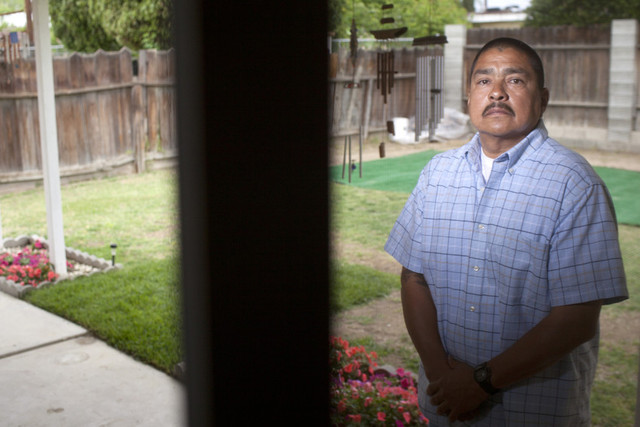
"content": "\u003cfigure id=\"attachment_118943\" class=\"wp-caption alignnone\" style=\"max-width: 640px\">\u003ca href=\"http://ww2.kqed.org/news/2013/11/20/118901/gray-wolf-endangered-species/6545954621_cb647443de_z/\" rel=\"attachment wp-att-118943\">\u003cimg class=\"size-full wp-image-118943\" src=\"http://ww2.kqed.org/news/wp-content/uploads/sites/10/2013/11/6545954621_cb647443de_z.jpg\" alt=\"The U.S. Fish & Wildlife Service may remove the gray wolf from the Endangered Species List. (U.S. Fish & Wildlife Service - Midwest Region / Flickr)\" width=\"640\" height=\"422\">\u003c/a>\u003cfigcaption class=\"wp-caption-text\">The U.S. Fish & Wildlife Service may remove the gray wolf from the Endangered Species List. (U.S. Fish & Wildlife Service - Midwest Region / Flickr)\u003c/figcaption>\u003c/figure>\n\u003cp>\u003cstrong>\u003cem>This post was updated on Nov. 21 to include more detail about California's wolf listing process.\u003c/em>\u003c/strong>\u003c/p>\n\u003cp>\u003cstrong>By Katharine Fong and Lauren Sommer\u003c/strong>\u003c/p>\n\u003cp>\u003ca href=\"http://science.kqed.org/quest/2012/02/06/california%E2%80%99s-gray-wolves/\">OR7\u003c/a> wandered into California in December 2011, the first known gray wolf in the state in decades. Known by the code name given to him when he was tagged with a GPS collar, he caused \u003ca href=\"http://science.kqed.org/quest/audio/lone-wolf%E2%80%99s-historic-trek-provokes-questions-and-concerns/\">quite a stir\u003c/a> among everyone from environmentalists to cattle ranchers. \u003ca href=\"http://science.kqed.org/quest/2013/01/23/fear-and-loathing-in-wolf-country/\">Conflicting feelings ran deep\u003c/a>, rooted in various cultures and histories: some revere the wolf; many fear it. OR7 has since returned to Oregon.\u003c/p>\n\u003cp>Our lone wolf notwithstanding, the gray wolf has made a healthy comeback since its listing under the Endangered Species Act over three decades ago — so much so that the U.S. Fish & Wildlife Service (FWS) is \u003ca href=\"http://www.fws.gov/home/wolfrecovery/\">proposing\u003c/a> to remove the animal from federal protections in the lower 48 states.\u003c/p>\n\u003cp>Wolf activists think the move to delist is premature, and are planning a \u003ca href=\"http://org.salsalabs.com/o/2167/p/salsa/event/common/public/?event_KEY=81110\">rally\u003c/a> in Sacramento on Friday, Nov. 22, to voice their opposition. The rally precedes an FWS \u003ca href=\"http://www.fws.gov/home/wolfrecovery/\">public hearing\u003c/a> on the proposal, one of several being held across the country. \u003c/p>\n\u003caside class=\"pullquote alignleft\">'We need to restore the gray wolf to the numbers where it's fulfilling its ecological role.'\u003c/aside>\n\u003cp>FWS \u003ca href=\"http://www.fws.gov/home/wolfrecovery/pdf/FrequentlyAskedQuestions11-19-13.pdf\">states\u003c/a> on its website that there are now 5,360 gray wolves in the lower 48, with a current estimate of 1,674 in the northern Rocky Mountains and 3,686 in the western Great Lakes. The numbers, say FWS, far exceed the minimum numbers set at the outset of the recovery plan, and it is now time to \"focus our limited resources on the Mexican wolf population in the Southwest.\"\u003c/p>\n\u003cp>[ad fullwidth]\u003c/p>\n\u003cp>But activists say the numbers are not nearly enough to ensure full recovery. \"They're utterly deficient,\" says Amaroq Weiss of the \u003ca href=\"http://www.biologicaldiversity.org/\">Center for Biological Diversity\u003c/a>, one of the groups behind Friday's rally.\u003c/p>\n\u003cp>\"We need to restore the gray wolf to the numbers where it's fulfilling its ecological role,\" Weiss adds. She points out what happened at \u003ca href=\"http://en.wikipedia.org/wiki/History_of_wolves_in_Yellowstone\">Yellowstone National Park\u003c/a>, when the gray wolf population was decimated in the 1920s. This resulted in elk — wolves' prey — proliferating and overgrazing on the area flora and fauna, which had a detrimental effect on the larger animal and plant environment. (The gray wolf was reintroduced to Yellowstone in 1995.)\u003c/p>\n\u003cp>FWS says the gray wolf population is \"robust\" in eight states – Michigan, Minnesota, Wisconsin, Idaho, Montana, Wyoming, Washington and Oregon. If it does delist the animal, wolf recovery efforts will be left almost entirely to the states.\u003c/p>\n\u003cp>Which brings us back to OR7. When he crossed into California in December 2011, the Center for Biological Diversity and several other groups petitioned the state to add the gray wolf to its endangered species list. After several years of study, the prospects of state action do not look good, says Weiss. In an op-ed that ran in the \u003ca href=\"http://www.mercurynews.com/opinion/ci_24557440/wolves-california-needs-help-save-endangered-species\">Mercury News\u003c/a> today she wrote:\u003c/p>\n\u003cblockquote>\u003cp>The word out of Sacramento this week is that a preliminary state study undergoing peer review tries to make a case against protecting wolves. In fact, OR-7's historic 500-mile journey from Oregon to California makes a very strong case for why wolves need protecting here, offering on-the-ground proof of what top researchers have said for decades: Recovering populations will return to California's thousands of acres of prime, upland wolf habitat.\u003c/p>\n\u003cp>The question is, will California be prepared to manage them when they get here?\u003c/p>\u003c/blockquote>\n\u003cp>The \u003ca href=\"http://www.fgc.ca.gov/\">California Fish and Game Commission\u003c/a> is expected to decide in February whether wolves should be protected under the state’s Endangered Species Act. They’ll be using the preliminary state study that Weiss mentioned in her op-ed. According to a \u003ca href=\"http://www.capitalpress.com/article/20131119/ARTICLE/131119888\">report from Capital Press\u003c/a>, the study recommends against endangered species protections because currently, there aren’t any wolves in the state.\u003c/p>\n\u003cp>Should a wolf wander into California without being protected as a state or federal endangered species, it would be considered a “non-game” mammal, which means it can’t be hunted, but could be killed for causing property damage.\u003c/p>\n\u003cp>California is planning for more wolves. State officials have convened stakeholders including ranching, hunting and environmental groups to put together a \u003ca href=\"http://www.dfg.ca.gov/wildlife/nongame/wolf/Stakeholders.html\">statewide wolf management plan\u003c/a>. The plan would look at where wolves could expand to in California and will examine how other states have managed conflicts between wolves and livestock.\u003c/p>\n\u003cp>Hunting wolves is already allowed in the northern Rockies, and about 56 were killed in Wyoming this year, according to the \u003ca href=\"http://www.denverpost.com/environment/ci_24559595/feds-push-end-endangered-protection-gray-wolves-ignites\">Denver Post\u003c/a>. Michigan held its \u003ca href=\"http://www.usatoday.com/story/news/nation/2013/11/15/mich-prepares-for-first-wolf-hunt/3561529/\">first-ever wolf hunt\u003c/a> last Friday -- an effort, say state officials, to reduce wolf depredation.\u003c/p>\n\u003cp>A \u003cstrong>public hearing\u003c/strong> on the U.S. Fish & Wildlife Service proposal to delist the gray wolf from the Endangered Species Act will be held on Friday, Nov. 22, 6-8:30 p.m., the Marriott Courtyard Sacramento Cal Expo, Golden State Ballroom, 1782 Tribute Road, Sacramento. A \u003cstrong>rally\u003c/strong> by those opposed to the delisting is scheduled the same day at 4 p.m. at the entrance to the Marriott.\u003c/p>\n\u003cp>\u003c/p>\n\u003cp> \u003c/p>\n\n",
"disqusIdentifier": "118901 http://ww2.kqed.org/news/?p=118901",
"disqusUrl": "https://ww2.kqed.org/news/2013/11/21/reviled-revered-is-the-gray-wolf-still-an-endangered-species/",
"stats": {
"hasVideo": false,
"hasChartOrMap": false,
"hasAudio": false,
"hasPolis": false,
"wordCount": 883,
"hasGoogleForm": false,
"hasGallery": false,
"hasHearkenModule": false,
"iframeSrcs": [],
"paragraphCount": 19
},
"modified": 1385085206,
"excerpt": "The federal government is proposing to delist the animal; activists are staunchly opposed.",
"headData": {
"twImgId": "",
"twTitle": "",
"ogTitle": "",
"ogImgId": "",
"twDescription": "",
"description": "The federal government is proposing to delist the animal; activists are staunchly opposed.",
"title": "Reviled, Revered: Is the Gray Wolf Still An Endangered Species? | KQED",
"ogDescription": "",
"schema": {
"@context": "https://schema.org",
"@type": "NewsArticle",
"headline": "Reviled, Revered: Is the Gray Wolf Still An Endangered Species?",
"datePublished": "2013-11-21T17:55:11-08:00",
"dateModified": "2013-11-21T17:53:26-08:00",
"image": "https://cdn.kqed.org/wp-content/uploads/2020/02/KQED-OG-Image@1x.png",
"isAccessibleForFree": "True",
"publisher": {
"@type": "NewsMediaOrganization",
"@id": "https://www.kqed.org/#organization",
"name": "KQED",
"logo": "https://cdn.kqed.org/wp-content/uploads/2020/02/KQED-OG-Image@1x.png",
"url": "https://www.kqed.org",
"sameAs": [
"https://www.facebook.com/KQED",
"https://twitter.com/KQED",
"https://www.instagram.com/kqed/",
"https://www.tiktok.com/@kqedofficial",
"https://www.linkedin.com/company/kqed",
"https://www.youtube.com/channel/UCeC0IOo7i1P_61zVUWbJ4nw"
]
}
}
},
"guestAuthors": [],
"slug": "reviled-revered-is-the-gray-wolf-still-an-endangered-species",
"status": "publish",
"customPermalink": "2013/11/20/118901/gray-wolf-endangered-species/",
"path": "/news/118901/reviled-revered-is-the-gray-wolf-still-an-endangered-species",
"audioTrackLength": null,
"parsedContent": [
{
"type": "contentString",
"content": "\u003cdiv class=\"post-body\">\u003cp>\u003cfigure id=\"attachment_118943\" class=\"wp-caption alignnone\" style=\"max-width: 640px\">\u003ca href=\"http://ww2.kqed.org/news/2013/11/20/118901/gray-wolf-endangered-species/6545954621_cb647443de_z/\" rel=\"attachment wp-att-118943\">\u003cimg class=\"size-full wp-image-118943\" src=\"http://ww2.kqed.org/news/wp-content/uploads/sites/10/2013/11/6545954621_cb647443de_z.jpg\" alt=\"The U.S. Fish & Wildlife Service may remove the gray wolf from the Endangered Species List. (U.S. Fish & Wildlife Service - Midwest Region / Flickr)\" width=\"640\" height=\"422\">\u003c/a>\u003cfigcaption class=\"wp-caption-text\">The U.S. Fish & Wildlife Service may remove the gray wolf from the Endangered Species List. (U.S. Fish & Wildlife Service - Midwest Region / Flickr)\u003c/figcaption>\u003c/figure>\n\u003cp>\u003cstrong>\u003cem>This post was updated on Nov. 21 to include more detail about California's wolf listing process.\u003c/em>\u003c/strong>\u003c/p>\n\u003cp>\u003cstrong>By Katharine Fong and Lauren Sommer\u003c/strong>\u003c/p>\n\u003cp>\u003ca href=\"http://science.kqed.org/quest/2012/02/06/california%E2%80%99s-gray-wolves/\">OR7\u003c/a> wandered into California in December 2011, the first known gray wolf in the state in decades. Known by the code name given to him when he was tagged with a GPS collar, he caused \u003ca href=\"http://science.kqed.org/quest/audio/lone-wolf%E2%80%99s-historic-trek-provokes-questions-and-concerns/\">quite a stir\u003c/a> among everyone from environmentalists to cattle ranchers. \u003ca href=\"http://science.kqed.org/quest/2013/01/23/fear-and-loathing-in-wolf-country/\">Conflicting feelings ran deep\u003c/a>, rooted in various cultures and histories: some revere the wolf; many fear it. OR7 has since returned to Oregon.\u003c/p>\n\u003cp>Our lone wolf notwithstanding, the gray wolf has made a healthy comeback since its listing under the Endangered Species Act over three decades ago — so much so that the U.S. Fish & Wildlife Service (FWS) is \u003ca href=\"http://www.fws.gov/home/wolfrecovery/\">proposing\u003c/a> to remove the animal from federal protections in the lower 48 states.\u003c/p>\n\u003cp>Wolf activists think the move to delist is premature, and are planning a \u003ca href=\"http://org.salsalabs.com/o/2167/p/salsa/event/common/public/?event_KEY=81110\">rally\u003c/a> in Sacramento on Friday, Nov. 22, to voice their opposition. The rally precedes an FWS \u003ca href=\"http://www.fws.gov/home/wolfrecovery/\">public hearing\u003c/a> on the proposal, one of several being held across the country. \u003c/p>\n\u003caside class=\"pullquote alignleft\">'We need to restore the gray wolf to the numbers where it's fulfilling its ecological role.'\u003c/aside>\n\u003cp>FWS \u003ca href=\"http://www.fws.gov/home/wolfrecovery/pdf/FrequentlyAskedQuestions11-19-13.pdf\">states\u003c/a> on its website that there are now 5,360 gray wolves in the lower 48, with a current estimate of 1,674 in the northern Rocky Mountains and 3,686 in the western Great Lakes. The numbers, say FWS, far exceed the minimum numbers set at the outset of the recovery plan, and it is now time to \"focus our limited resources on the Mexican wolf population in the Southwest.\"\u003c/p>\n\u003cp>\u003c/p>\u003c/div>",
"attributes": {
"named": {},
"numeric": []
}
},
{
"type": "component",
"content": "",
"name": "ad",
"attributes": {
"named": {
"label": "fullwidth"
},
"numeric": [
"fullwidth"
]
}
},
{
"type": "contentString",
"content": "\u003cdiv class=\"post-body\">\u003cp>\u003c/p>\n\u003cp>But activists say the numbers are not nearly enough to ensure full recovery. \"They're utterly deficient,\" says Amaroq Weiss of the \u003ca href=\"http://www.biologicaldiversity.org/\">Center for Biological Diversity\u003c/a>, one of the groups behind Friday's rally.\u003c/p>\n\u003cp>\"We need to restore the gray wolf to the numbers where it's fulfilling its ecological role,\" Weiss adds. She points out what happened at \u003ca href=\"http://en.wikipedia.org/wiki/History_of_wolves_in_Yellowstone\">Yellowstone National Park\u003c/a>, when the gray wolf population was decimated in the 1920s. This resulted in elk — wolves' prey — proliferating and overgrazing on the area flora and fauna, which had a detrimental effect on the larger animal and plant environment. (The gray wolf was reintroduced to Yellowstone in 1995.)\u003c/p>\n\u003cp>FWS says the gray wolf population is \"robust\" in eight states – Michigan, Minnesota, Wisconsin, Idaho, Montana, Wyoming, Washington and Oregon. If it does delist the animal, wolf recovery efforts will be left almost entirely to the states.\u003c/p>\n\u003cp>Which brings us back to OR7. When he crossed into California in December 2011, the Center for Biological Diversity and several other groups petitioned the state to add the gray wolf to its endangered species list. After several years of study, the prospects of state action do not look good, says Weiss. In an op-ed that ran in the \u003ca href=\"http://www.mercurynews.com/opinion/ci_24557440/wolves-california-needs-help-save-endangered-species\">Mercury News\u003c/a> today she wrote:\u003c/p>\n\u003cblockquote>\u003cp>The word out of Sacramento this week is that a preliminary state study undergoing peer review tries to make a case against protecting wolves. In fact, OR-7's historic 500-mile journey from Oregon to California makes a very strong case for why wolves need protecting here, offering on-the-ground proof of what top researchers have said for decades: Recovering populations will return to California's thousands of acres of prime, upland wolf habitat.\u003c/p>\n\u003cp>The question is, will California be prepared to manage them when they get here?\u003c/p>\u003c/blockquote>\n\u003cp>The \u003ca href=\"http://www.fgc.ca.gov/\">California Fish and Game Commission\u003c/a> is expected to decide in February whether wolves should be protected under the state’s Endangered Species Act. They’ll be using the preliminary state study that Weiss mentioned in her op-ed. According to a \u003ca href=\"http://www.capitalpress.com/article/20131119/ARTICLE/131119888\">report from Capital Press\u003c/a>, the study recommends against endangered species protections because currently, there aren’t any wolves in the state.\u003c/p>\n\u003cp>Should a wolf wander into California without being protected as a state or federal endangered species, it would be considered a “non-game” mammal, which means it can’t be hunted, but could be killed for causing property damage.\u003c/p>\n\u003cp>California is planning for more wolves. State officials have convened stakeholders including ranching, hunting and environmental groups to put together a \u003ca href=\"http://www.dfg.ca.gov/wildlife/nongame/wolf/Stakeholders.html\">statewide wolf management plan\u003c/a>. The plan would look at where wolves could expand to in California and will examine how other states have managed conflicts between wolves and livestock.\u003c/p>\n\u003cp>Hunting wolves is already allowed in the northern Rockies, and about 56 were killed in Wyoming this year, according to the \u003ca href=\"http://www.denverpost.com/environment/ci_24559595/feds-push-end-endangered-protection-gray-wolves-ignites\">Denver Post\u003c/a>. Michigan held its \u003ca href=\"http://www.usatoday.com/story/news/nation/2013/11/15/mich-prepares-for-first-wolf-hunt/3561529/\">first-ever wolf hunt\u003c/a> last Friday -- an effort, say state officials, to reduce wolf depredation.\u003c/p>\n\u003cp>A \u003cstrong>public hearing\u003c/strong> on the U.S. Fish & Wildlife Service proposal to delist the gray wolf from the Endangered Species Act will be held on Friday, Nov. 22, 6-8:30 p.m., the Marriott Courtyard Sacramento Cal Expo, Golden State Ballroom, 1782 Tribute Road, Sacramento. A \u003cstrong>rally\u003c/strong> by those opposed to the delisting is scheduled the same day at 4 p.m. at the entrance to the Marriott.\u003c/p>\n\u003cp>\u003c/p>\n\u003cp> \u003c/p>\n\n\u003c/div>\u003c/p>",
"attributes": {
"named": {},
"numeric": []
}
}
],
"link": "/news/118901/reviled-revered-is-the-gray-wolf-still-an-endangered-species",
"authors": [
"1479"
],
"programs": [
"news_6944"
],
"categories": [
"news_19906",
"news_8"
],
"tags": [
"news_152",
"news_5139"
],
"featImg": "news_118943",
"label": "news_6944"
},
"news_118904": {
"type": "posts",
"id": "news_118904",
"meta": {
"index": "posts_1716263798",
"site": "news",
"id": "118904",
"score": null,
"sort": [
1384995288000
]
},
"parent": 0,
"labelTerm": {
"site": "news",
"term": 6944
},
"blocks": [],
"publishDate": 1384995288,
"format": "aside",
"disqusTitle": "California's Sudden Surplus — and Why It May Not Last",
"title": "California's Sudden Surplus — and Why It May Not Last",
"headTitle": "News Fix | KQED News",
"content": "\u003cfigure id=\"attachment_118917\" class=\"wp-caption aligncenter\" style=\"max-width: 594px\">\u003ca href=\"http://ww2.kqed.org/news/wp-content/uploads/sites/10/2013/11/RS3293_brownbudget20130110.jpg\">\u003cimg class=\"size-full wp-image-118917\" src=\"http://ww2.kqed.org/news/wp-content/uploads/sites/10/2013/11/RS3293_brownbudget20130110.jpg\" alt=\"Gov. Jerry Brown announced the passing of Prop. 30 in November of 2012. (Randy Pench/Sacramento Bee/MCT via Getty Images)\" width=\"594\" height=\"422\">\u003c/a>\u003cfigcaption class=\"wp-caption-text\">Gov. Jerry Brown announced the passing of Prop. 30 in November of 2012. (Randy Pench/Sacramento Bee/MCT via Getty Images)\u003c/figcaption>\u003c/figure>\n\u003cp>Sacramento is flush with cash. That’s no typo – for the first time since the end of the dot-com boom, the Legislative Analyst’s Office is projecting multibillion dollar cash surpluses over the coming fiscal years.\u003c/p>\n\u003cp>The LAO’s report on California’s fiscal outlook serves as an unofficial start to next year’s budget cycle, which will kick off in early January when Gov. Jerry Brown unveils his proposed state budget. The LAO predicts Brown and lawmakers will have a lot of money to work with: a projected $2.4 billion surplus next year, and another $3.2 billion in extra revenue in 2015.\u003c/p>\n\u003cp>Where did the extra money come from? Analyst Mac Taylor credited three factors: “We finally have an economic recovery — the best way to grow yourself out of problems,” he said. “We had [tax measure] Proposition 30, which has obviously provided relief and revenues. …And all of the efforts the legislature took during the bad years, of slowing the growth in many programs, and in some cases taking reductions in programs.”\u003c/p>\n\u003cp>That includes this year’s relatively conservative state budget, which Brown built on cautious tax estimates.\u003c/p>\n\u003cp>But Taylor is telling lawmakers not to get too excited about the additional income. The LAO’s report warns things can always turn south quickly, so the office is recommending the legislature use the surplus to build up a rainy day fund and pay down California’s debt.\u003c/p>\n\u003cp>[ad fullwidth]\u003c/p>\n\u003cp>\u003ciframe src=\"https://w.soundcloud.com/player/?url=https%3A//api.soundcloud.com/tracks/121136432\" frameborder=\"no\" scrolling=\"no\" width=\"100%\" height=\"166\">\u003c/iframe>\u003c/p>\n\u003cp>The Brown administration agrees with the restrained approach. Spokesman H.D. Palmer pointed out just 1 percent of state residents pay 40 percent of California’s income tax revenue. “And for that narrow band of taxpayers, most of their income doesn’t come from salaries and wages,” he said. “It comes from things like capital gains. Which are the most volatile and difficult-to-forecast revenues that we have in California.”\u003c/p>\n\u003cp>To put it another way, if the market goes south again, California would quickly be in the red.\u003c/p>\n\u003cp>Still, many rank-and-file Democrats were frustrated that this year’s budget didn’t do more to restore the deep cuts lawmakers instituted during the recession. And if the surplus keeps growing, you can bet pressure will mount to hike spending.\u003c/p>\n\u003cp>Senate President Pro Tem Darrell Steinberg’s response to the LAO hints at that. He agreed with Brown and the LAO’s cautious approach, saying, “There is ample room to pay down debt, build a healthy reserve to hedge against an economic downturn, address long-term pension and health obligations,” but the Democrat said there’s also money to “expand worthy programs for people and our economy.”\u003c/p>\n\u003cp>Read the LAO report:\u003c/p>\n\u003cp>\u003c/p>\n\u003cp>\u003ciframe id=\"doc_13506\" src=\"//www.scribd.com/embeds/185892105/content?start_page=1&view_mode=scroll&show_recommendations=true\" frameborder=\"0\" scrolling=\"no\" width=\"100%\" height=\"600\">\u003c/iframe>\u003c/p>\n\n",
"disqusIdentifier": "118904 http://ww2.kqed.org/news/?p=118904",
"disqusUrl": "https://ww2.kqed.org/news/2013/11/20/californias-sudden-surplus-and-why-it-may-not-last/",
"stats": {
"hasVideo": false,
"hasChartOrMap": false,
"hasAudio": true,
"hasPolis": false,
"wordCount": 498,
"hasGoogleForm": false,
"hasGallery": false,
"hasHearkenModule": false,
"iframeSrcs": [],
"paragraphCount": 14
},
"modified": 1384998434,
"excerpt": "State to get multibillion dollar cash surpluses in next fiscal years, but cautions against spending.",
"headData": {
"twImgId": "",
"twTitle": "",
"ogTitle": "",
"ogImgId": "",
"twDescription": "",
"description": "State to get multibillion dollar cash surpluses in next fiscal years, but cautions against spending.",
"title": "California's Sudden Surplus — and Why It May Not Last | KQED",
"ogDescription": "",
"schema": {
"@context": "https://schema.org",
"@type": "NewsArticle",
"headline": "California's Sudden Surplus — and Why It May Not Last",
"datePublished": "2013-11-20T16:54:48-08:00",
"dateModified": "2013-11-20T17:47:14-08:00",
"image": "https://cdn.kqed.org/wp-content/uploads/2020/02/KQED-OG-Image@1x.png",
"isAccessibleForFree": "True",
"publisher": {
"@type": "NewsMediaOrganization",
"@id": "https://www.kqed.org/#organization",
"name": "KQED",
"logo": "https://cdn.kqed.org/wp-content/uploads/2020/02/KQED-OG-Image@1x.png",
"url": "https://www.kqed.org",
"sameAs": [
"https://www.facebook.com/KQED",
"https://twitter.com/KQED",
"https://www.instagram.com/kqed/",
"https://www.tiktok.com/@kqedofficial",
"https://www.linkedin.com/company/kqed",
"https://www.youtube.com/channel/UCeC0IOo7i1P_61zVUWbJ4nw"
]
}
}
},
"guestAuthors": [],
"slug": "californias-sudden-surplus-and-why-it-may-not-last",
"status": "publish",
"customPermalink": "2013/11/20/draft-californias-in-store-for-huge-tax-surplus/",
"path": "/news/118904/californias-sudden-surplus-and-why-it-may-not-last",
"audioTrackLength": null,
"parsedContent": [
{
"type": "contentString",
"content": "\u003cdiv class=\"post-body\">\u003cp>\u003cfigure id=\"attachment_118917\" class=\"wp-caption aligncenter\" style=\"max-width: 594px\">\u003ca href=\"http://ww2.kqed.org/news/wp-content/uploads/sites/10/2013/11/RS3293_brownbudget20130110.jpg\">\u003cimg class=\"size-full wp-image-118917\" src=\"http://ww2.kqed.org/news/wp-content/uploads/sites/10/2013/11/RS3293_brownbudget20130110.jpg\" alt=\"Gov. Jerry Brown announced the passing of Prop. 30 in November of 2012. (Randy Pench/Sacramento Bee/MCT via Getty Images)\" width=\"594\" height=\"422\">\u003c/a>\u003cfigcaption class=\"wp-caption-text\">Gov. Jerry Brown announced the passing of Prop. 30 in November of 2012. (Randy Pench/Sacramento Bee/MCT via Getty Images)\u003c/figcaption>\u003c/figure>\n\u003cp>Sacramento is flush with cash. That’s no typo – for the first time since the end of the dot-com boom, the Legislative Analyst’s Office is projecting multibillion dollar cash surpluses over the coming fiscal years.\u003c/p>\n\u003cp>The LAO’s report on California’s fiscal outlook serves as an unofficial start to next year’s budget cycle, which will kick off in early January when Gov. Jerry Brown unveils his proposed state budget. The LAO predicts Brown and lawmakers will have a lot of money to work with: a projected $2.4 billion surplus next year, and another $3.2 billion in extra revenue in 2015.\u003c/p>\n\u003cp>Where did the extra money come from? Analyst Mac Taylor credited three factors: “We finally have an economic recovery — the best way to grow yourself out of problems,” he said. “We had [tax measure] Proposition 30, which has obviously provided relief and revenues. …And all of the efforts the legislature took during the bad years, of slowing the growth in many programs, and in some cases taking reductions in programs.”\u003c/p>\n\u003cp>That includes this year’s relatively conservative state budget, which Brown built on cautious tax estimates.\u003c/p>\n\u003cp>But Taylor is telling lawmakers not to get too excited about the additional income. The LAO’s report warns things can always turn south quickly, so the office is recommending the legislature use the surplus to build up a rainy day fund and pay down California’s debt.\u003c/p>\n\u003cp>\u003c/p>\u003c/div>",
"attributes": {
"named": {},
"numeric": []
}
},
{
"type": "component",
"content": "",
"name": "ad",
"attributes": {
"named": {
"label": "fullwidth"
},
"numeric": [
"fullwidth"
]
}
},
{
"type": "contentString",
"content": "\u003cdiv class=\"post-body\">\u003cp>\u003c/p>\n\u003cp>\u003ciframe src=\"https://w.soundcloud.com/player/?url=https%3A//api.soundcloud.com/tracks/121136432\" frameborder=\"no\" scrolling=\"no\" width=\"100%\" height=\"166\">\u003c/iframe>\u003c/p>\n\u003cp>The Brown administration agrees with the restrained approach. Spokesman H.D. Palmer pointed out just 1 percent of state residents pay 40 percent of California’s income tax revenue. “And for that narrow band of taxpayers, most of their income doesn’t come from salaries and wages,” he said. “It comes from things like capital gains. Which are the most volatile and difficult-to-forecast revenues that we have in California.”\u003c/p>\n\u003cp>To put it another way, if the market goes south again, California would quickly be in the red.\u003c/p>\n\u003cp>Still, many rank-and-file Democrats were frustrated that this year’s budget didn’t do more to restore the deep cuts lawmakers instituted during the recession. And if the surplus keeps growing, you can bet pressure will mount to hike spending.\u003c/p>\n\u003cp>Senate President Pro Tem Darrell Steinberg’s response to the LAO hints at that. He agreed with Brown and the LAO’s cautious approach, saying, “There is ample room to pay down debt, build a healthy reserve to hedge against an economic downturn, address long-term pension and health obligations,” but the Democrat said there’s also money to “expand worthy programs for people and our economy.”\u003c/p>\n\u003cp>Read the LAO report:\u003c/p>\n\u003cp>\u003c/p>\n\u003cp>\u003ciframe id=\"doc_13506\" src=\"//www.scribd.com/embeds/185892105/content?start_page=1&view_mode=scroll&show_recommendations=true\" frameborder=\"0\" scrolling=\"no\" width=\"100%\" height=\"600\">\u003c/iframe>\u003c/p>\n\n\u003c/div>\u003c/p>",
"attributes": {
"named": {},
"numeric": []
}
}
],
"link": "/news/118904/californias-sudden-surplus-and-why-it-may-not-last",
"authors": [
"256"
],
"programs": [
"news_6944"
],
"categories": [
"news_1758",
"news_8"
],
"tags": [
"news_152",
"news_95",
"news_70",
"news_71"
],
"featImg": "news_118916",
"label": "news_6944"
},
"news_118282": {
"type": "posts",
"id": "news_118282",
"meta": {
"index": "posts_1716263798",
"site": "news",
"id": "118282",
"score": null,
"sort": [
1384539846000
]
},
"guestAuthors": [],
"slug": "a-year-after-release-only-2-percent-of-three-strikers-have-committed-new-crimes",
"title": "A Year After Release, Only 2 Percent of Three Strikers Charged With New Crimes",
"publishDate": 1384539846,
"format": "aside",
"headTitle": "A Year After Release, Only 2 Percent of Three Strikers Charged With New Crimes | KQED",
"labelTerm": {
"term": 6944,
"site": "news"
},
"content": "\u003cfigure id=\"attachment_118370\" class=\"wp-caption aligncenter\" style=\"max-width: 640px\">\u003ca href=\"http://ww2.kqed.org/news/wp-content/uploads/sites/10/2013/11/RS7602_threestrikers03_adi-hpf.jpg\">\u003cimg loading=\"lazy\" decoding=\"async\" class=\"size-full wp-image-118370\" src=\"http://ww2.kqed.org/news/wp-content/uploads/sites/10/2013/11/RS7602_threestrikers03_adi-hpf.jpg\" alt=\"Pete Marin, 52, served 18 years for petty theft under California's 1994 Three Strikes law. (Adithya Sambamurthy/KQED)\" width=\"640\" height=\"427\">\u003c/a>\u003cfigcaption class=\"wp-caption-text\">Pete Marin, 52, served 18 years for petty theft under California’s 1994 Three Strikes law. (Adithya Sambamurthy/The Center for Investigative Reporting)\u003c/figcaption>\u003c/figure>\n\u003cp>\u003cem>A little more than a year ago, Californians voted for Proposition 36, allowing the release of three-strikers convicted of non-violent, non-serious crimes. Since then, about 1,000 people have been released. \u003cstrong>KQED’s Michael Montgomery\u003c/strong> followed three men as they left prison and adapted to their new lives outside, and interviewed multiple experts and stakeholders about the state’s criminal justice system.\u003c/em>\u003c/p>\n\u003cp>\u003ciframe loading=\"lazy\" src=\"https://w.soundcloud.com/player/?url=https%3A//api.soundcloud.com/tracks/120493008\" frameborder=\"no\" scrolling=\"no\" width=\"100%\" height=\"166\">\u003c/iframe>\u003c/p>\n\u003cp>\u003cspan style=\"font-size: 4.6875em;float: left;line-height: 0.733em;padding: 0.05em 0.1em 0 0;font-family: times, serif, georgia\">C\u003c/span>onvicted of stealing two car alarms from a Walgreens store, Richard Brown spent 18 years in prison under California’s notorious Three Strikes law. Then, quite suddenly, he was standing outside the gates of San Quentin earlier this year, a free man.\u003c/p>\n\u003cp>“They told me to get off the property,” he says. “I asked if there was a phone booth or something. They said no.”\u003c/p>\n\u003cp>For Robert Watts, who served 13 years for receiving stolen property, getting out of prison involved an emotional legal tangle with local prosecutors who insisted he was an unredeemed career criminal and should remain behind bars.\u003c/p>\n\u003cp>[ad fullwidth]\u003c/p>\n\u003cp>“It was unpleasant,” he says. “But at least it’s over.”\u003c/p>\n\u003caside class=\"pullquote alignleft\">The measure does not appear to be endangering public safety.\u003c/aside>\n\u003cp>For both men, freedom came as the result of Proposition 36, the ballot initiative approved last year by voters in every county in California.\u003c/p>\n\u003cp>The measure changed the 1994 law that had allowed judges to impose life sentences for low-level felonies such as petty theft and drug possession. The new law focuses on serious and violent crimes. It’s also retroactive, allowing current inmates whose third strike was non-violent and non-serious to petition the courts for resentencing and possible release.\u003c/p>\n\u003cp>Opponents of the measure have argued that the original Three Strikes law worked well and contributed to a dramatic fall in violent crime over the past two decades. Granting some inmates early release, they said, would lead to a spike in crime.\u003c/p>\n\u003cp>“I guarantee that a significant percentage of them are going to re-offend, and re-offend in serious ways,” said Ed Jagels, the former District Attorney for Kern County.\u003c/p>\n\u003cp>Opponents also said prosecutors today are using the law judiciously, pointing out that more than 80 percent of three strikers were sentenced prior to 2000. Changing the law, they said, would remove an important tool from the prosecutorial toolbox.\u003c/p>\n\u003cp>But so far, Prop. 36 does not appear to be endangering public safety, according to a recent report by Stanford Law School and the NAACP Legal Defense and Education Fund.\u003c/p>\n\u003cp>Citing state data, the report concluded that of the more than 1,000 inmates released from prison under the measure, fewer than 2 percent have been charged with new crimes. By comparison, the average recidivism rate over a similar time period for non-Prop. 36 inmates is 16 percent.\u003c/p>\n\u003cfigure id=\"attachment_118400\" class=\"wp-caption alignleft\" style=\"max-width: 242px\">\u003ca href=\"http://ww2.kqed.org/news/wp-content/uploads/sites/10/2013/11/RS7606_RichardBrown17-hpf.jpg\">\u003cimg loading=\"lazy\" decoding=\"async\" class=\"size-medium wp-image-118400\" src=\"http://ww2.kqed.org/news/wp-content/uploads/sites/10/2013/11/RS7606_RichardBrown17-hpf-242x300.jpg\" alt=\"From left: Minard Roorda, Richard Brown and Vivian Roorda\" width=\"242\" height=\"300\">\u003c/a>\u003cfigcaption class=\"wp-caption-text\">From left: Minard Roorda, Richard Brown and Vivian Roorda\u003c/figcaption>\u003c/figure>\n\u003cp>Opponents’ prediction of the measure unleashing “blood in the streets” was hyperbole, said David Mills, a Stanford law professor who helped fund the initiative. “Millions of dollars have been saved and many lives changed, hopefully for the better,” he says.\u003c/p>\n\u003cp>\u003cstrong>Like their adopted son\u003cbr>\n\u003c/strong>\u003c/p>\n\u003cp>“It’s a blessing,” says Richard Brown, a 61-year-old former drug addict.\u003c/p>\n\u003cp>At the time of his arrest in 1995, Brown says he was unaware that the Three Strikes law had been implemented the previous year. “I heard about it but I didn’t think they’d be that out of control with the sentencing guidelines,” he says.\u003c/p>\n\u003cp>After his release, Brown moved to Ripon, a small farming community south of Stockton, where he found a job with a company that assembles agricultural machinery. An aspiring gospel musician, he also sings in a local church.\u003c/p>\n\u003cp>Brown was drawn to Ripon by Minard and Vivian Roorda, local farmers who learned of his case from a neighbor 18 years ago. The Roordas supported Brown like an adopted son, visiting him regularly in prisons around the state.\u003c/p>\n\u003cp>Minard Roorda says he voted for the original Three Strikes law but realized it cast too wide a net and left men like Brown languishing in prison.\u003c/p>\n\u003cp>“Are they not deserved a second chance?” he said. “Are they not deserving our help? Are they not deserving our love?”\u003c/p>\n\u003cp>[contextly_sidebar id=”65205eb25f5e5994cdf081bee3ffdbd1″]\u003c/p>\n\u003cp>While prosecutors have challenged some Prop. 36 petitions, arguing that the inmates pose an unacceptable public safety risk, few of those efforts have been successful.\u003c/p>\n\u003cp>In Robert Watts’ case, Kern County prosecutors sought to block his release, citing evidence of marijuana use in prison and his prior convictions for robbery and assault. But the effort failed and the judge ordered Watts’ release.\u003c/p>\n\u003cp>Still, after a flurry of releases earlier this year, the pace has slowed to a trickle. In Los Angeles and some other counties, inmate petitions are getting stuck in the courts, creating a backlog of inmates who are still in prison even though they are eligible for resentencing.\u003c/p>\n\u003cp>“There’s been a steady decline in the number of petitions that have been reviewed,” said Bonnie Dumanis, district attorney for San Diego County.\u003c/p>\n\u003cp>The initial round of Prop. 36 reviews mainly involved low-risk inmates who were being fast-tracked for release. Now, courts are facing “hard, challenging cases where people have mental health issues or have some issues that need to be dealt with,” she said.\u003c/p>\n\u003cp>Recently, California Chief Justice Tani Cantil-Sakauye met with officials from several large counties to discuss ways to make the petition process “more efficient and effective,” Dumanis said.\u003c/p>\n\u003cp>An estimated 2,000 inmates eligible for resentencing under Prop. 36 remain in prison.\u003c/p>\n\u003cp>\u003cstrong>‘They give you $200 and kick you out’\u003cbr>\n\u003c/strong>\u003c/p>\n\u003cp>Several former three strikers say their challenge has been coping with life on the streets without the structure of prison and support normally provided to newly released felons.\u003c/p>\n\u003cp>Most three strikers who qualify for release have served so much extra time they’re not placed on parole or probation. Often that means that don’t have access to substance abuse, mental health and other re-entry programs as well as housing.\u003c/p>\n\u003cp>“They give you $200 and kick you out, and they don’t give you any type of papers to indicate that you can go down to this program or (that) program,” said Brown. He considers himself lucky to have a job, home and support network.\u003c/p>\n\u003cp>“For many people coming out, it’s a nightmare,” he said.\u003c/p>\n\u003caside class=\"pullquote alignleft\">Most three strikers have served so much time they aren’t placed on parole or probation when released.\u003c/aside>\n\u003cp>In some counties, prosecutors, public defenders and legal aid groups are starting to develop support networks for three strikers coming out of prison.\u003c/p>\n\u003cp>Former inmates are also supporting each other. Twice each week Pete Marin of Bakersfield checks in on his friend Eddie Alwell. Marin and Alwell served 18 years behind bars, one for petty theft, the other for drug possession.\u003c/p>\n\u003cp>Alwell, 65, is frail and was recently diagnosed with Parkinson’s disease. Much of his day is spent looking after six grandchildren. He met them for the first time after leaving prison.\u003c/p>\n\u003cp>Marin says he helps out Alwell around his house and drives him to the store and to church.\u003c/p>\n\u003cp>[ad floatright]\u003c/p>\n\u003cp>“A lot of men who were sentenced under three strikes…have realized that their life before was bad,” he said. “So a lot of them want to change. I think some kind of program to help them get on their feet and lead them in the right way…would be very important.”\u003c/p>\n\n",
"blocks": [],
"excerpt": "More than 1,000 three strikers have been released since voters passed Prop. 36, softening the law.",
"status": "publish",
"parent": 0,
"modified": 1738778487,
"stats": {
"hasAudio": true,
"hasVideo": false,
"hasChartOrMap": false,
"iframeSrcs": [],
"hasGoogleForm": false,
"hasGallery": false,
"hasHearkenModule": false,
"hasPolis": false,
"paragraphCount": 41,
"wordCount": 1323
},
"headData": {
"title": "A Year After Release, Only 2 Percent of Three Strikers Charged With New Crimes | KQED",
"description": "More than 1,000 three strikers have been released since voters passed Prop. 36, softening the law.",
"ogTitle": "",
"ogDescription": "",
"ogImgId": "",
"twTitle": "",
"twDescription": "",
"twImgId": "",
"schema": {
"@context": "https://schema.org",
"@type": "NewsArticle",
"headline": "A Year After Release, Only 2 Percent of Three Strikers Charged With New Crimes",
"datePublished": "2013-11-15T10:24:06-08:00",
"dateModified": "2025-02-05T10:01:27-08:00",
"image": "https://cdn.kqed.org/wp-content/uploads/2020/02/KQED-OG-Image@1x.png",
"isAccessibleForFree": "True",
"publisher": {
"@type": "NewsMediaOrganization",
"@id": "https://www.kqed.org/#organization",
"name": "KQED",
"logo": "https://cdn.kqed.org/wp-content/uploads/2020/02/KQED-OG-Image@1x.png",
"url": "https://www.kqed.org",
"sameAs": [
"https://www.facebook.com/KQED",
"https://twitter.com/KQED",
"https://www.instagram.com/kqed/",
"https://www.tiktok.com/@kqedofficial",
"https://www.linkedin.com/company/kqed",
"https://www.youtube.com/channel/UCeC0IOo7i1P_61zVUWbJ4nw"
]
}
}
},
"sticky": false,
"customPermalink": "2013/11/14/a-year-after-three-strikes-california/",
"path": "/news/118282/a-year-after-release-only-2-percent-of-three-strikers-have-committed-new-crimes",
"audioTrackLength": null,
"parsedContent": [
{
"type": "contentString",
"content": "\u003cdiv class=\"post-body\">\u003cp>\u003cfigure id=\"attachment_118370\" class=\"wp-caption aligncenter\" style=\"max-width: 640px\">\u003ca href=\"http://ww2.kqed.org/news/wp-content/uploads/sites/10/2013/11/RS7602_threestrikers03_adi-hpf.jpg\">\u003cimg loading=\"lazy\" decoding=\"async\" class=\"size-full wp-image-118370\" src=\"http://ww2.kqed.org/news/wp-content/uploads/sites/10/2013/11/RS7602_threestrikers03_adi-hpf.jpg\" alt=\"Pete Marin, 52, served 18 years for petty theft under California's 1994 Three Strikes law. (Adithya Sambamurthy/KQED)\" width=\"640\" height=\"427\">\u003c/a>\u003cfigcaption class=\"wp-caption-text\">Pete Marin, 52, served 18 years for petty theft under California’s 1994 Three Strikes law. (Adithya Sambamurthy/The Center for Investigative Reporting)\u003c/figcaption>\u003c/figure>\n\u003cp>\u003cem>A little more than a year ago, Californians voted for Proposition 36, allowing the release of three-strikers convicted of non-violent, non-serious crimes. Since then, about 1,000 people have been released. \u003cstrong>KQED’s Michael Montgomery\u003c/strong> followed three men as they left prison and adapted to their new lives outside, and interviewed multiple experts and stakeholders about the state’s criminal justice system.\u003c/em>\u003c/p>\n\u003cp>\u003ciframe loading=\"lazy\" src=\"https://w.soundcloud.com/player/?url=https%3A//api.soundcloud.com/tracks/120493008\" frameborder=\"no\" scrolling=\"no\" width=\"100%\" height=\"166\">\u003c/iframe>\u003c/p>\n\u003cp>\u003cspan style=\"font-size: 4.6875em;float: left;line-height: 0.733em;padding: 0.05em 0.1em 0 0;font-family: times, serif, georgia\">C\u003c/span>onvicted of stealing two car alarms from a Walgreens store, Richard Brown spent 18 years in prison under California’s notorious Three Strikes law. Then, quite suddenly, he was standing outside the gates of San Quentin earlier this year, a free man.\u003c/p>\n\u003cp>“They told me to get off the property,” he says. “I asked if there was a phone booth or something. They said no.”\u003c/p>\n\u003cp>For Robert Watts, who served 13 years for receiving stolen property, getting out of prison involved an emotional legal tangle with local prosecutors who insisted he was an unredeemed career criminal and should remain behind bars.\u003c/p>\n\u003cp>\u003c/p>\u003c/div>",
"attributes": {
"named": {},
"numeric": []
}
},
{
"type": "component",
"content": "",
"name": "ad",
"attributes": {
"named": {
"label": "fullwidth"
},
"numeric": [
"fullwidth"
]
}
},
{
"type": "contentString",
"content": "\u003cdiv class=\"post-body\">\u003cp>\u003c/p>\n\u003cp>“It was unpleasant,” he says. “But at least it’s over.”\u003c/p>\n\u003caside class=\"pullquote alignleft\">The measure does not appear to be endangering public safety.\u003c/aside>\n\u003cp>For both men, freedom came as the result of Proposition 36, the ballot initiative approved last year by voters in every county in California.\u003c/p>\n\u003cp>The measure changed the 1994 law that had allowed judges to impose life sentences for low-level felonies such as petty theft and drug possession. The new law focuses on serious and violent crimes. It’s also retroactive, allowing current inmates whose third strike was non-violent and non-serious to petition the courts for resentencing and possible release.\u003c/p>\n\u003cp>Opponents of the measure have argued that the original Three Strikes law worked well and contributed to a dramatic fall in violent crime over the past two decades. Granting some inmates early release, they said, would lead to a spike in crime.\u003c/p>\n\u003cp>“I guarantee that a significant percentage of them are going to re-offend, and re-offend in serious ways,” said Ed Jagels, the former District Attorney for Kern County.\u003c/p>\n\u003cp>Opponents also said prosecutors today are using the law judiciously, pointing out that more than 80 percent of three strikers were sentenced prior to 2000. Changing the law, they said, would remove an important tool from the prosecutorial toolbox.\u003c/p>\n\u003cp>But so far, Prop. 36 does not appear to be endangering public safety, according to a recent report by Stanford Law School and the NAACP Legal Defense and Education Fund.\u003c/p>\n\u003cp>Citing state data, the report concluded that of the more than 1,000 inmates released from prison under the measure, fewer than 2 percent have been charged with new crimes. By comparison, the average recidivism rate over a similar time period for non-Prop. 36 inmates is 16 percent.\u003c/p>\n\u003cfigure id=\"attachment_118400\" class=\"wp-caption alignleft\" style=\"max-width: 242px\">\u003ca href=\"http://ww2.kqed.org/news/wp-content/uploads/sites/10/2013/11/RS7606_RichardBrown17-hpf.jpg\">\u003cimg loading=\"lazy\" decoding=\"async\" class=\"size-medium wp-image-118400\" src=\"http://ww2.kqed.org/news/wp-content/uploads/sites/10/2013/11/RS7606_RichardBrown17-hpf-242x300.jpg\" alt=\"From left: Minard Roorda, Richard Brown and Vivian Roorda\" width=\"242\" height=\"300\">\u003c/a>\u003cfigcaption class=\"wp-caption-text\">From left: Minard Roorda, Richard Brown and Vivian Roorda\u003c/figcaption>\u003c/figure>\n\u003cp>Opponents’ prediction of the measure unleashing “blood in the streets” was hyperbole, said David Mills, a Stanford law professor who helped fund the initiative. “Millions of dollars have been saved and many lives changed, hopefully for the better,” he says.\u003c/p>\n\u003cp>\u003cstrong>Like their adopted son\u003cbr>\n\u003c/strong>\u003c/p>\n\u003cp>“It’s a blessing,” says Richard Brown, a 61-year-old former drug addict.\u003c/p>\n\u003cp>At the time of his arrest in 1995, Brown says he was unaware that the Three Strikes law had been implemented the previous year. “I heard about it but I didn’t think they’d be that out of control with the sentencing guidelines,” he says.\u003c/p>\n\u003cp>After his release, Brown moved to Ripon, a small farming community south of Stockton, where he found a job with a company that assembles agricultural machinery. An aspiring gospel musician, he also sings in a local church.\u003c/p>\n\u003cp>Brown was drawn to Ripon by Minard and Vivian Roorda, local farmers who learned of his case from a neighbor 18 years ago. The Roordas supported Brown like an adopted son, visiting him regularly in prisons around the state.\u003c/p>\n\u003cp>Minard Roorda says he voted for the original Three Strikes law but realized it cast too wide a net and left men like Brown languishing in prison.\u003c/p>\n\u003cp>“Are they not deserved a second chance?” he said. “Are they not deserving our help? Are they not deserving our love?”\u003c/p>\n\u003cp>\u003c/p>\u003cp>\u003c/p>\u003cp>\u003c/p>\n\u003cp>While prosecutors have challenged some Prop. 36 petitions, arguing that the inmates pose an unacceptable public safety risk, few of those efforts have been successful.\u003c/p>\n\u003cp>In Robert Watts’ case, Kern County prosecutors sought to block his release, citing evidence of marijuana use in prison and his prior convictions for robbery and assault. But the effort failed and the judge ordered Watts’ release.\u003c/p>\n\u003cp>Still, after a flurry of releases earlier this year, the pace has slowed to a trickle. In Los Angeles and some other counties, inmate petitions are getting stuck in the courts, creating a backlog of inmates who are still in prison even though they are eligible for resentencing.\u003c/p>\n\u003cp>“There’s been a steady decline in the number of petitions that have been reviewed,” said Bonnie Dumanis, district attorney for San Diego County.\u003c/p>\n\u003cp>The initial round of Prop. 36 reviews mainly involved low-risk inmates who were being fast-tracked for release. Now, courts are facing “hard, challenging cases where people have mental health issues or have some issues that need to be dealt with,” she said.\u003c/p>\n\u003cp>Recently, California Chief Justice Tani Cantil-Sakauye met with officials from several large counties to discuss ways to make the petition process “more efficient and effective,” Dumanis said.\u003c/p>\n\u003cp>An estimated 2,000 inmates eligible for resentencing under Prop. 36 remain in prison.\u003c/p>\n\u003cp>\u003cstrong>‘They give you $200 and kick you out’\u003cbr>\n\u003c/strong>\u003c/p>\n\u003cp>Several former three strikers say their challenge has been coping with life on the streets without the structure of prison and support normally provided to newly released felons.\u003c/p>\n\u003cp>Most three strikers who qualify for release have served so much extra time they’re not placed on parole or probation. Often that means that don’t have access to substance abuse, mental health and other re-entry programs as well as housing.\u003c/p>\n\u003cp>“They give you $200 and kick you out, and they don’t give you any type of papers to indicate that you can go down to this program or (that) program,” said Brown. He considers himself lucky to have a job, home and support network.\u003c/p>\n\u003cp>“For many people coming out, it’s a nightmare,” he said.\u003c/p>\n\u003caside class=\"pullquote alignleft\">Most three strikers have served so much time they aren’t placed on parole or probation when released.\u003c/aside>\n\u003cp>In some counties, prosecutors, public defenders and legal aid groups are starting to develop support networks for three strikers coming out of prison.\u003c/p>\n\u003cp>Former inmates are also supporting each other. Twice each week Pete Marin of Bakersfield checks in on his friend Eddie Alwell. Marin and Alwell served 18 years behind bars, one for petty theft, the other for drug possession.\u003c/p>\n\u003cp>Alwell, 65, is frail and was recently diagnosed with Parkinson’s disease. Much of his day is spent looking after six grandchildren. He met them for the first time after leaving prison.\u003c/p>\n\u003cp>Marin says he helps out Alwell around his house and drives him to the store and to church.\u003c/p>\n\u003cp>\u003c/p>\u003c/div>",
"attributes": {
"named": {},
"numeric": []
}
},
{
"type": "component",
"content": "",
"name": "ad",
"attributes": {
"named": {
"label": "floatright"
},
"numeric": [
"floatright"
]
}
},
{
"type": "contentString",
"content": "\u003cdiv class=\"post-body\">\u003cp>\u003c/p>\n\u003cp>“A lot of men who were sentenced under three strikes…have realized that their life before was bad,” he said. “So a lot of them want to change. I think some kind of program to help them get on their feet and lead them in the right way…would be very important.”\u003c/p>\n\n\u003c/div>\u003c/p>",
"attributes": {
"named": {},
"numeric": []
}
}
],
"link": "/news/118282/a-year-after-release-only-2-percent-of-three-strikers-have-committed-new-crimes",
"authors": [
"245"
],
"programs": [
"news_6944"
],
"categories": [
"news_34167",
"news_6188"
],
"tags": [
"news_1629",
"news_17725",
"news_152",
"news_1471",
"news_3611"
],
"featImg": "news_118370",
"label": "news_6944"
},
"news_117360": {
"type": "posts",
"id": "news_117360",
"meta": {
"index": "posts_1716263798",
"site": "news",
"id": "117360",
"score": null,
"sort": [
1383760400000
]
},
"parent": 0,
"labelTerm": {
"site": "news",
"term": 6944
},
"blocks": [],
"publishDate": 1383760400,
"format": "aside",
"disqusTitle": "Voters Say Yes to Gun Control, Sales Taxes and Some School Bonds",
"title": "Voters Say Yes to Gun Control, Sales Taxes and Some School Bonds",
"headTitle": "News Fix | KQED News",
"content": "\u003cp>In an election year marked with low voter turnout, voters passed a controversial measure on gun control in Sunnyvale, struck down waterfront development plans in San Francisco and largely said yes to school bonds across the Bay Area.\u003c/p>\n\u003cp>\u003ciframe src=\"https://w.soundcloud.com/player/?url=https%3A//api.soundcloud.com/tracks/118853084\" frameborder=\"no\" scrolling=\"no\" width=\"100%\" height=\"166\">\u003c/iframe>\u003c/p>\n\u003cp>A quick overview of Bay Area election results:\u003c/p>\n\u003cp>\u003cstrong>San Francisco\u003c/strong>\u003c/p>\n\u003cul>\n\u003cli>Prop. A - Passed - This ensures city retiree health care funds are not used for other budget items.\u003c/li>\n\u003cli>Prop. B - Rejected - Voters said no to a new luxury housing, retail and recreational development along the waterfront. (\u003ca href=\"http://ww2.kqed.org/news/2013/11/06/election-2013-sf-waterfront-development-measures-lose\">More on the defeat of Props. B and C\u003c/a>.)\u003c/li>\n\u003cli>Prop. C - Rejected - Voters said no to the Board of Supervisors' decision to allow the 8 Washington development to exceed height limits.\u003c/li>\n\u003cli>Prop. D - Passed - This non-binding measure urges city lawmakers to work toward reducing prescription drug costs.\u003c/li>\n\u003c/ul>\n\u003cp>\u003c!--more-->\u003c/p>\n\u003cp>[ad fullwidth]\u003c/p>\n\u003cp>\u003cstrong>Sunnyvale\u003c/strong>\u003c/p>\n\u003cul>\n\u003cli>Measure A - Passed - This puts and end to odd-year elections in Sunnyvale, syncing their local elections with the county and state election cycles. Several current elected officials will gain an additional year in office.\u003c/li>\n\u003cli>Measure B - Passed - Sunnyvale's hotel tax will be increased by 1 percent.\u003c/li>\n\u003cli>Measure C - Passed - Sunnyvale gun owners must lock up their firearms when not in their possession and report a missing or stolen firearm within 48 hours. In the city, you can’t possess magazines with more than 10 rounds and ammunition sales will be tracked.\u003c/li>\n\u003c/ul>\n\u003cp>\u003cstrong>San Mateo\u003cbr>\n\u003c/strong>\u003c/p>\n\u003cp>\u003cem>School Measures\u003c/em>\u003c/p>\n\u003cul>\n\u003cli>Prop. P - Rejected - Voters said no to a $130 million bond measure that would reopen and renovate several schools.\u003c/li>\n\u003cli>Prop. R - Passed - Renews existing parcel taxes for Belmont-Redwood Shores Elementary School District for 10years.\u003c/li>\n\u003cli>Prop. S - Passed - Gives Las Lomitas (K-3) in Atherton and La Entrada (4-8) in Menlo Park a $60 million bond for facility improvements.\u003c/li>\n\u003cli>Prop. W - Passed - Voters approved a $23 million bond to rebuild O'Connor Elementary School in Menlo Park.\u003c/li>\n\u003c/ul>\n\u003cp>\u003cem>City measures\u003c/em>\u003c/p>\n\u003cul>\n\u003cli>Prop. Q - Passed - Reduces the utility tax from 5.5 percent to 4.5 percent for four years.\u003c/li>\n\u003cli>Prop. T - Passed - Increases the business license tax to $115.28 per 1,000 cubic feet of liquid storage capacity. This is expected to put $400,000 in the city's coffers.\u003c/li>\n\u003cli>Prop. U - Passed - Increases the business license tax over a period of years.\u003c/li>\n\u003cli>Prop. V - Rejected - Voters rejected a measure that would have placed a tax on telecommunications in Pacifica.\u003c/li>\n\u003cli>Prop. X - Passed - Continues a special parcel tax for four years.\u003c/li>\n\u003c/ul>\n\u003cp>\u003cstrong>Marin County\u003c/strong>\u003c/p>\n\u003cul>\n\u003cli>Measure A - Passed - Voters approved a $5 million bond measure for upgrades, modernization and repairs for Lagunitas School District campuses.\u003c/li>\n\u003cli>Measure B - Passed - Adds a half-percent to the sales tax for six years in Corte Madera.\u003c/li>\n\u003cli>Measure C - Passed - Adds a half-percent to sales tax for five years in Larkspur.\u003c/li>\n\u003cli>Measure D - Passed - Adds a half-percent to sales tax for 10 years in San Anselmo.\u003c/li>\n\u003cli>Measure E - Passed - Extends and increases the San Rafael sales tax, setting it at three-quarters of a percent for 20 years.\u003c/li>\n\u003cli>Measure F - Passed - Voters approved a $394 million bond measure for seismic-safety upgrades for Marin General Hospital and to enhance and modernize emergency and medical facilities.\u003c/li>\n\u003cli>Measure G - Passed - Increases the annual fire tax for the Kentfield Fire Department to 10 cents for every square foot of building space.\u003c/li>\n\u003cli>Measure H - Passed - Extends the Marinwood Community Services District's special tax for parks maintenance through the 2016-17 fiscal year.\u003c/li>\n\u003cli>Measure I - Passed - Authorizes a $49 parcel tax for Mesa Park.\u003c/li>\n\u003cli>Measure J - Rejected - Denies a $7 million bond measure to upgrade Strawberry Recreation District.\u003c/li>\n\u003c/ul>\n\u003cp>\u003cstrong>Other Elections\u003cbr>\n\u003c/strong>Don't see what you're looking for? More results can be found on local government websites.\u003c/p>\n\u003cul>\n\u003cli>\u003ca href=\"http://results.enr.clarityelections.com/CA/Contra_Costa/49566/122611/Web01/en/summary.html\" target=\"_blank\">Contra Costa County\u003c/a>\u003c/li>\n\u003cli>\u003ca href=\"http://www.marincounty.org/DEPTS/RV/ELECTION-INFO/ELECTION-RESULTS\" target=\"_blank\">Marin County\u003cbr>\n\u003c/a>\u003c/li>\n\u003cli>\u003ca href=\"http://vote.sonoma-county.org/CONTENT.ASPX?SID=1009&ID=2456\" target=\"_blank\">Sonoma County\u003c/a>\u003c/li>\n\u003cli>\u003ca href=\"http://www.sfgov2.org/INDEX.ASPX?PAGE=3979\" target=\"_blank\">San Francisco\u003c/a>\u003c/li>\n\u003cli>\u003ca href=\"http://racetracker.shapethefuture.org/SUMMARY_RESULTS.ASPX?ELECTION_ID=1\" target=\"_blank\">San Mateo County\u003c/a>\u003c/li>\n\u003cli>\u003ca href=\"http://results.enr.clarityelections.com/CA/SANTA_CLARA/49877/121005/WEB01/EN/SUMMARY.HTML\" target=\"_blank\">Santa Clara County\u003c/a>\u003c/li>\n\u003cli>\u003ca href=\"http://%20http//WWW.VOTESCOUNT.COM/NOV13/RESULTS.HTM\" target=\"_blank\">Santa Cruz County\u003c/a>\u003c/li>\n\u003c/ul>\n\u003cp>\u003c/p>\n\u003cp> \u003c/p>\n\n",
"disqusIdentifier": "117360 http://ww2.kqed.org/news/?p=117360",
"disqusUrl": "https://ww2.kqed.org/news/2013/11/06/voters-say-yes-to-gun-control-sales-taxes-and-some-school-bonds/",
"stats": {
"hasVideo": false,
"hasChartOrMap": false,
"hasAudio": true,
"hasPolis": false,
"wordCount": 660,
"hasGoogleForm": false,
"hasGallery": false,
"hasHearkenModule": false,
"iframeSrcs": [],
"paragraphCount": 13
},
"modified": 1383782919,
"excerpt": "Controversial measure on gun control passes in Sunnyvale, school bonds across the Bay Area prevail.",
"headData": {
"twImgId": "",
"twTitle": "",
"ogTitle": "",
"ogImgId": "",
"twDescription": "",
"description": "Controversial measure on gun control passes in Sunnyvale, school bonds across the Bay Area prevail.",
"title": "Voters Say Yes to Gun Control, Sales Taxes and Some School Bonds | KQED",
"ogDescription": "",
"schema": {
"@context": "https://schema.org",
"@type": "NewsArticle",
"headline": "Voters Say Yes to Gun Control, Sales Taxes and Some School Bonds",
"datePublished": "2013-11-06T09:53:20-08:00",
"dateModified": "2013-11-06T16:08:39-08:00",
"image": "https://cdn.kqed.org/wp-content/uploads/2020/02/KQED-OG-Image@1x.png",
"isAccessibleForFree": "True",
"publisher": {
"@type": "NewsMediaOrganization",
"@id": "https://www.kqed.org/#organization",
"name": "KQED",
"logo": "https://cdn.kqed.org/wp-content/uploads/2020/02/KQED-OG-Image@1x.png",
"url": "https://www.kqed.org",
"sameAs": [
"https://www.facebook.com/KQED",
"https://twitter.com/KQED",
"https://www.instagram.com/kqed/",
"https://www.tiktok.com/@kqedofficial",
"https://www.linkedin.com/company/kqed",
"https://www.youtube.com/channel/UCeC0IOo7i1P_61zVUWbJ4nw"
]
}
}
},
"guestAuthors": [],
"slug": "voters-say-yes-to-gun-control-sales-taxes-and-some-school-bonds",
"status": "publish",
"customPermalink": "2013/11/06/bay-area-election-results-2013/",
"path": "/news/117360/voters-say-yes-to-gun-control-sales-taxes-and-some-school-bonds",
"audioTrackLength": null,
"parsedContent": [
{
"type": "contentString",
"content": "\u003cdiv class=\"post-body\">\u003cp>\u003cp>In an election year marked with low voter turnout, voters passed a controversial measure on gun control in Sunnyvale, struck down waterfront development plans in San Francisco and largely said yes to school bonds across the Bay Area.\u003c/p>\n\u003cp>\u003ciframe src=\"https://w.soundcloud.com/player/?url=https%3A//api.soundcloud.com/tracks/118853084\" frameborder=\"no\" scrolling=\"no\" width=\"100%\" height=\"166\">\u003c/iframe>\u003c/p>\n\u003cp>A quick overview of Bay Area election results:\u003c/p>\n\u003cp>\u003cstrong>San Francisco\u003c/strong>\u003c/p>\n\u003cul>\n\u003cli>Prop. A - Passed - This ensures city retiree health care funds are not used for other budget items.\u003c/li>\n\u003cli>Prop. B - Rejected - Voters said no to a new luxury housing, retail and recreational development along the waterfront. (\u003ca href=\"http://ww2.kqed.org/news/2013/11/06/election-2013-sf-waterfront-development-measures-lose\">More on the defeat of Props. B and C\u003c/a>.)\u003c/li>\n\u003cli>Prop. C - Rejected - Voters said no to the Board of Supervisors' decision to allow the 8 Washington development to exceed height limits.\u003c/li>\n\u003cli>Prop. D - Passed - This non-binding measure urges city lawmakers to work toward reducing prescription drug costs.\u003c/li>\n\u003c/ul>\n\u003cp>\u003c!--more-->\u003c/p>\n\u003cp>\u003c/p>\u003c/div>",
"attributes": {
"named": {},
"numeric": []
}
},
{
"type": "component",
"content": "",
"name": "ad",
"attributes": {
"named": {
"label": "fullwidth"
},
"numeric": [
"fullwidth"
]
}
},
{
"type": "contentString",
"content": "\u003cdiv class=\"post-body\">\u003cp>\u003c/p>\n\u003cp>\u003cstrong>Sunnyvale\u003c/strong>\u003c/p>\n\u003cul>\n\u003cli>Measure A - Passed - This puts and end to odd-year elections in Sunnyvale, syncing their local elections with the county and state election cycles. Several current elected officials will gain an additional year in office.\u003c/li>\n\u003cli>Measure B - Passed - Sunnyvale's hotel tax will be increased by 1 percent.\u003c/li>\n\u003cli>Measure C - Passed - Sunnyvale gun owners must lock up their firearms when not in their possession and report a missing or stolen firearm within 48 hours. In the city, you can’t possess magazines with more than 10 rounds and ammunition sales will be tracked.\u003c/li>\n\u003c/ul>\n\u003cp>\u003cstrong>San Mateo\u003cbr>\n\u003c/strong>\u003c/p>\n\u003cp>\u003cem>School Measures\u003c/em>\u003c/p>\n\u003cul>\n\u003cli>Prop. P - Rejected - Voters said no to a $130 million bond measure that would reopen and renovate several schools.\u003c/li>\n\u003cli>Prop. R - Passed - Renews existing parcel taxes for Belmont-Redwood Shores Elementary School District for 10years.\u003c/li>\n\u003cli>Prop. S - Passed - Gives Las Lomitas (K-3) in Atherton and La Entrada (4-8) in Menlo Park a $60 million bond for facility improvements.\u003c/li>\n\u003cli>Prop. W - Passed - Voters approved a $23 million bond to rebuild O'Connor Elementary School in Menlo Park.\u003c/li>\n\u003c/ul>\n\u003cp>\u003cem>City measures\u003c/em>\u003c/p>\n\u003cul>\n\u003cli>Prop. Q - Passed - Reduces the utility tax from 5.5 percent to 4.5 percent for four years.\u003c/li>\n\u003cli>Prop. T - Passed - Increases the business license tax to $115.28 per 1,000 cubic feet of liquid storage capacity. This is expected to put $400,000 in the city's coffers.\u003c/li>\n\u003cli>Prop. U - Passed - Increases the business license tax over a period of years.\u003c/li>\n\u003cli>Prop. V - Rejected - Voters rejected a measure that would have placed a tax on telecommunications in Pacifica.\u003c/li>\n\u003cli>Prop. X - Passed - Continues a special parcel tax for four years.\u003c/li>\n\u003c/ul>\n\u003cp>\u003cstrong>Marin County\u003c/strong>\u003c/p>\n\u003cul>\n\u003cli>Measure A - Passed - Voters approved a $5 million bond measure for upgrades, modernization and repairs for Lagunitas School District campuses.\u003c/li>\n\u003cli>Measure B - Passed - Adds a half-percent to the sales tax for six years in Corte Madera.\u003c/li>\n\u003cli>Measure C - Passed - Adds a half-percent to sales tax for five years in Larkspur.\u003c/li>\n\u003cli>Measure D - Passed - Adds a half-percent to sales tax for 10 years in San Anselmo.\u003c/li>\n\u003cli>Measure E - Passed - Extends and increases the San Rafael sales tax, setting it at three-quarters of a percent for 20 years.\u003c/li>\n\u003cli>Measure F - Passed - Voters approved a $394 million bond measure for seismic-safety upgrades for Marin General Hospital and to enhance and modernize emergency and medical facilities.\u003c/li>\n\u003cli>Measure G - Passed - Increases the annual fire tax for the Kentfield Fire Department to 10 cents for every square foot of building space.\u003c/li>\n\u003cli>Measure H - Passed - Extends the Marinwood Community Services District's special tax for parks maintenance through the 2016-17 fiscal year.\u003c/li>\n\u003cli>Measure I - Passed - Authorizes a $49 parcel tax for Mesa Park.\u003c/li>\n\u003cli>Measure J - Rejected - Denies a $7 million bond measure to upgrade Strawberry Recreation District.\u003c/li>\n\u003c/ul>\n\u003cp>\u003cstrong>Other Elections\u003cbr>\n\u003c/strong>Don't see what you're looking for? More results can be found on local government websites.\u003c/p>\n\u003cul>\n\u003cli>\u003ca href=\"http://results.enr.clarityelections.com/CA/Contra_Costa/49566/122611/Web01/en/summary.html\" target=\"_blank\">Contra Costa County\u003c/a>\u003c/li>\n\u003cli>\u003ca href=\"http://www.marincounty.org/DEPTS/RV/ELECTION-INFO/ELECTION-RESULTS\" target=\"_blank\">Marin County\u003cbr>\n\u003c/a>\u003c/li>\n\u003cli>\u003ca href=\"http://vote.sonoma-county.org/CONTENT.ASPX?SID=1009&ID=2456\" target=\"_blank\">Sonoma County\u003c/a>\u003c/li>\n\u003cli>\u003ca href=\"http://www.sfgov2.org/INDEX.ASPX?PAGE=3979\" target=\"_blank\">San Francisco\u003c/a>\u003c/li>\n\u003cli>\u003ca href=\"http://racetracker.shapethefuture.org/SUMMARY_RESULTS.ASPX?ELECTION_ID=1\" target=\"_blank\">San Mateo County\u003c/a>\u003c/li>\n\u003cli>\u003ca href=\"http://results.enr.clarityelections.com/CA/SANTA_CLARA/49877/121005/WEB01/EN/SUMMARY.HTML\" target=\"_blank\">Santa Clara County\u003c/a>\u003c/li>\n\u003cli>\u003ca href=\"http://%20http//WWW.VOTESCOUNT.COM/NOV13/RESULTS.HTM\" target=\"_blank\">Santa Cruz County\u003c/a>\u003c/li>\n\u003c/ul>\n\u003cp>\u003c/p>\n\u003cp> \u003c/p>\n\n\u003c/div>\u003c/p>",
"attributes": {
"named": {},
"numeric": []
}
}
],
"link": "/news/117360/voters-say-yes-to-gun-control-sales-taxes-and-some-school-bonds",
"authors": [
"102"
],
"programs": [
"news_6944"
],
"categories": [
"news_8",
"news_13"
],
"tags": [
"news_152",
"news_2865",
"news_3729",
"news_38"
],
"featImg": "news_117195",
"label": "news_6944"
},
"news_116951": {
"type": "posts",
"id": "news_116951",
"meta": {
"index": "posts_1716263798",
"site": "news",
"id": "116951",
"score": null,
"sort": [
1383571838000
]
},
"parent": 0,
"labelTerm": {
"site": "news",
"term": 6944
},
"blocks": [],
"publishDate": 1383571838,
"format": "aside",
"disqusTitle": "California's Corrections Secretary Faces Steep Challenges",
"title": "California's Corrections Secretary Faces Steep Challenges",
"headTitle": "News Fix | KQED News",
"content": "\u003cp>It wouldn’t be a stretch to say Corrections Secretary Jeffrey Beard has the toughest job in California politics.\u003c/p>\n\u003cfigure id=\"attachment_117027\" class=\"wp-caption alignleft\" style=\"max-width: 300px\">\u003cimg class=\"size-medium wp-image-117027\" src=\"http://ww2.kqed.org/news/wp-content/uploads/sites/10/2013/11/beard-stockton-2-300x200.jpg\" alt=\"Beard unveiled a new medical prison in Stockton this summer (Scott Detrow / KQED News)\" width=\"300\" height=\"200\">\u003cfigcaption class=\"wp-caption-text\">Beard unveiled a new medical prison in Stockton this summer (Scott Detrow / KQED News)\u003c/figcaption>\u003c/figure>\n\u003cp>From \u003ca href=\"http://ww2.kqed.org/news/2013/09/05/110028/california-prison-hunger-strike-ends\">a widespread\u003c/a> hunger \u003ca href=\"http://ww2.kqed.org/news/2013/07/30/105074/\">strike\u003c/a> to a never-ending battle with federal judges over control of health care in California’s prisons, Beard has faced crisis after crisis since he joined the Brown Administration late last year.\u003c/p>\n\u003cp>With all those problems, you’d forgive Beard for having second thoughts about his new job. But the secretary’s response is pretty understated. “You know, I think they make the job just – very interesting,” he told KQED during a lengthy interview.\u003c/p>\n\u003cp>It’s a typical response from Beard, who developed a reputation as a policy-obsessed, always-serious technocrat over his four-decade career in corrections.\u003c/p>\n\u003cp>Beard has been on the job in California since last December. But before that, he spent a decade running Pennsylvania’s prison system. There, he fought many of the same battles he’s fighting in California.\u003c/p>\n\u003cp>[ad fullwidth]\u003c/p>\n\u003cp>\u003cstrong>Cleaning up after a riot\u003c/strong>\u003c/p>\n\u003cp>Beard’s first big test came in October 1989. That’s when \u003ca href=\"http://www.nytimes.com/1989/10/28/us/rioters-destroy-nearly-half-the-buildings-in-a-pennsylvania-prison.html\">inmates seized control of an overcrowded suburban Harrisburg prison during two days of vicious riots\u003c/a>. Inmates burned down more than half the State Correctional Institution at Camp Hill. They took five hostages. The riot shocked Pennsylvania, and forced Governor Bob Casey to launch a blue-ribbon commission aimed at uncovering where things went wrong.\u003c/p>\n\u003cfigure id=\"attachment_116966\" class=\"wp-caption alignright\" style=\"max-width: 272px\">\u003cimg class=\"size-medium wp-image-116966\" src=\"http://ww2.kqed.org/news/wp-content/uploads/sites/10/2013/11/beard93-272x300.jpg\" alt=\"Beard in 1993, when he was rebuilding Pennsylvania's Camp Hill prison after a riot. (Carlisle Sentinel)\" width=\"272\" height=\"300\">\u003cfigcaption class=\"wp-caption-text\">Beard in 1993, when he was rebuilding Pennsylvania's Camp Hill prison after a riot. (Carlisle Sentinel)\u003c/figcaption>\u003c/figure>\n\u003cp>But before the commission even got started, Beard was charged with cleaning up the mess. He was plucked from an assignment running a Western Pennsylvania prison and named Camp Hill’s acting warden. “I had hostile inmates, I had staff who were very traumatized, and I had a broken institution,” recalled Beard. “So I had to balance all of that and do things to psychologically support the staff, to calm the inmates down, while we were also at the same time rebuilding the facility.”\u003c/p>\n\u003cp>It was a near-impossible task, but a job Beard did well. He rebuilt and reorganized the prison. He was soon promoted to a regional management job, and by 2001 he was running Pennsylvania’s entire corrections system.\u003c/p>\n\u003cp>Reporter Don Gilliland, who covers corrections for the Harrisburg Patriot-News, said Beard got high marks from the corrections community. “Beard consistently was saying the right things,” he said. “He maintained a top-flight data department in the state prison. He really had a good sense of what was happening in the prisons.”\u003c/p>\n\u003cp>\u003c!--more-->\u003c/p>\n\u003cp>\u003cstrong>An uphill fight against prison overcrowding\u003c/strong>\u003c/p>\n\u003cp>Beard used his position to push for sentencing reforms – less hard time and more treatment for drug offenders. He\u003cstrong> \u003c/strong>was one of the first Pennsylvania corrections secretaries to say the state needed less mandatory sentencing and more treatment options.\u003c/p>\n\u003cp>Pennsylvania’s prisons were too packed. That’s a lesson Beard learned when he was rebuilding after the Camp Hill riots, which had been largely caused by overcrowding. Three years after the fact, Camp Hill was still above capacity. Beard told a local reporter at the time that the $60 million rebuilding dollar effort wouldn’t work unless the state scaled back mandatory prison sentences.\u003c/p>\n\u003cp>He said, “We can’t afford to keep locking everybody up.” That’s a battle Beard fought – and for the most part lost – for most of his career.\u003c/p>\n\u003cp>Between 1980 and 2010, the state’s prison population went from about 8,000 inmates to more than 50,000. Beard blamed “tough on crime” sentencing trends, and spent his time as corrections secretary lobbying lawmakers to undo them.\u003c/p>\n\u003cp>Gilliland doesn’t blame Beard for the spike. “Prisons are like a bucket of water,” he explained. “Where you have a couple of hoses feeding water into the top, you have a variety of spigots letting water out. The problem is the people who control the water coming in are a completely different bureaucracy than [those who] control the spigot coming out. And the secretary of corrections has no control over either bureaucracy.”\u003c/p>\n\u003cp>Beard did play a major role in passing a slate of sentencing reforms in 2008 – the first Pennsylvania had seen in decades. But they didn’t quite work. During his last year, Pennsylvania had to export 2 thousand prisoners to other states.\u003c/p>\n\u003cp>\u003cstrong>“Historically, we have overused segregation”\u003c/strong>\u003c/p>\n\u003cp>Beard, of course, is facing much larger population problems in California. He and Gov. Jerry Brown spent most of the year \u003ca href=\"http://ww2.kqed.org/news/2013/04/12/court-ruling-on-prisons-a-setback-for-gov-brown/\">losing a series of legal challenges\u003c/a> over federal control of California prisons’ health care. The state now has until mid-February to move more than 8,000 people out of California’s prisons in order to reduce overcrowding.\u003c/p>\n\u003cfigure id=\"attachment_113826\" class=\"wp-caption alignleft\" style=\"max-width: 300px\">\u003cimg class=\"size-medium wp-image-113826\" src=\"http://ww2.kqed.org/news/wp-content/uploads/sites/10/2013/10/RS1076_PelicanBaySHU-scr1-e1380903557958-300x172.jpg\" alt=\"A 2011 view of Pelican Bay State Prisons Security Housing Unit. (SHU). August 17, 2011. (Michael Montgomery/KQED) \" width=\"300\" height=\"172\">\u003cfigcaption class=\"wp-caption-text\">A 2011 view of Pelican Bay State Prisons Security Housing Unit. (SHU). August 17, 2011. (Michael Montgomery/KQED)\u003c/figcaption>\u003c/figure>\n\u003cp>And while Beard and Brown fought with judges this summer, thousands of inmates launched a system-wide hunger strike. The protest was aimed at ending California’s practice of locking up suspected prison gang leaders in segregated housing – sometimes for decades at a time. Critics call it torture.\u003c/p>\n\u003cp>Beard said he understands why segregated confinement stirs up so much anger. He defended the practice as necessary, to protect other inmates and to control gangs. But in our interview, Beard did make an admission.\u003c/p>\n\u003cp>“I think that probably historically we have overused segregation a little too much everywhere,” he said. “I think we did back in Pennsylvania. I think there’s other states that have done it, perhaps in the past in California. And that’s why California now has the new gang management policy.”\u003c/p>\n\u003cp>This is the new plan the state rolled out that re-evaluates who’s being kept in security housing, and provides a years’-long path out of isolation for inmates who cooperate.\u003c/p>\n\u003cp>\u003cstrong>Caring for mentally-ill inmates\u003c/strong>\u003c/p>\n\u003cfigure id=\"attachment_117029\" class=\"wp-caption alignright\" style=\"max-width: 300px\">\u003cimg class=\"size-medium wp-image-117029\" src=\"http://ww2.kqed.org/news/wp-content/uploads/sites/10/2013/11/beard-stockton-3-300x200.jpg\" alt=\"Beard facing questions from reporters in June (Scott Detrow / KQED)\" width=\"300\" height=\"200\">\u003cfigcaption class=\"wp-caption-text\">Beard facing questions from reporters in June (Scott Detrow / KQED)\u003c/figcaption>\u003c/figure>\n\u003cp>The hunger strike is now long over, but controversies are still dogging the Department of Corrections and Rehabilitation. A Sacramento trial is shining a light on how the state treats mentally ill inmates. \u003ca href=\"http://www.californiareport.org/archive/R201310020850/a\">Graphic videos aired in court recently\u003c/a>, showing guards dousing screaming prisoners with pepper spray.\u003c/p>\n\u003cp>Again, Beard faced similar controversy in Pennsylvania. Bob Meek is an attorney with the Disability Rights Network. He spent years investigating how Pennsylvania dealt with mentally-ill inmates. \u003ca href=\"https://www.drnpa.org/wp-content/uploads/2013/03/RHUFinalComplaint.pdf\">In a lawsuit\u003c/a>, the group alleged the state simply locked many of them up in segregated housing, rather than treat them. “They would just continue to act out and continue to act up, and they would never get out,” he said.\u003c/p>\n\u003cp>Beard disputed the charge and pointed to programs he launched aimed at treating mentally ill inmates.\u003c/p>\n\u003cp>\u003cstrong>Adjusting to California\u003c/strong>\u003c/p>\n\u003cp>Beard is approaching one year on the job here in California. And with all the crises on his plate, he’s yet to really put his stamp on department policies.\u003c/p>\n\u003cp>\u003ca href=\"http://articles.latimes.com/print/2013/jan/30/local/la-me-ff-prisons-20130129\">Beard came to the job as an outsider and a critic\u003c/a>. He was a key witness in the 2008 trial ordering California to lower its prison population. At the time he blasted the state’s prisons as overcrowded and dangerous — conditions \u003ca href=\"http://ww2.kqed.org/news/2013/06/25/ca-corrections-chief-new-medical-center-proves-federal-judges-wrong/\">he now insists the state has since turned around\u003c/a>. After retiring from his Pennsylvania post in 2010, Beard began working with California as a consultant. (The Department of Corrections and Rehabilitation denied KQED's public records request for copies of memos Beard produced during this period.)\u003c/p>\n\u003cp>Beard admitted it’s hard to figure out a new state after 38 years somewhere else. For one thing, he says he doesn’t know the longtime staffers like he did in Pennsylvania. And the rules are different. “A lot of times when something comes up about a policy or something, I have to ask somebody or I have to go and look it up. Whereas in Pennsylvania, I wrote a lot of the policies.”\u003c/p>\n\u003cp>And there’s the unique experience of working with Jerry Brown. Beard served under two high-profile Pennsylvania governors: Republican Tom Ridge and Democrat Ed Rendell. But he said Brown is different – much more hands-on. “He’s interested in what I do,” Beard said. “And doesn’t just say, hey do the job and keep things quiet. I see him as being more actively engaged. But it’s not just with me. It’s with every facet of government. And I think that’s a good thing.”\u003c/p>\n\u003cp>The two of them share the same goal: ending federal control of California’s prisons as soon as possible.\u003c/p>\n\u003cp>\u003cem>\u003cstrong>Listen to the California Report audio:\u003c/strong>\u003c/em>\u003c/p>\n\u003cp>[ad floatright]\u003c/p>\n\u003cp>\u003ciframe width=\"100%\" height=\"166\" scrolling=\"no\" frameborder=\"no\" src=\"https://w.soundcloud.com/player/?url=https%3A//api.soundcloud.com/tracks/118549230\">\u003c/iframe>\u003c/p>\n\n",
"disqusIdentifier": "116951 http://ww2.kqed.org/news/?p=116951",
"disqusUrl": "https://ww2.kqed.org/news/2013/11/04/californias-corrections-secretary-faces-steep-challenges/",
"stats": {
"hasVideo": false,
"hasChartOrMap": false,
"hasAudio": true,
"hasPolis": false,
"wordCount": 1525,
"hasGoogleForm": false,
"hasGallery": false,
"hasHearkenModule": false,
"iframeSrcs": [],
"paragraphCount": 38
},
"modified": 1383589448,
"excerpt": "Jeffrey Beard may have the toughest job in state politics, facing multiple crises since taking the job.",
"headData": {
"twImgId": "",
"twTitle": "",
"ogTitle": "",
"ogImgId": "",
"twDescription": "",
"description": "Jeffrey Beard may have the toughest job in state politics, facing multiple crises since taking the job.",
"title": "California's Corrections Secretary Faces Steep Challenges | KQED",
"ogDescription": "",
"schema": {
"@context": "https://schema.org",
"@type": "NewsArticle",
"headline": "California's Corrections Secretary Faces Steep Challenges",
"datePublished": "2013-11-04T05:30:38-08:00",
"dateModified": "2013-11-04T10:24:08-08:00",
"image": "https://cdn.kqed.org/wp-content/uploads/2020/02/KQED-OG-Image@1x.png",
"isAccessibleForFree": "True",
"publisher": {
"@type": "NewsMediaOrganization",
"@id": "https://www.kqed.org/#organization",
"name": "KQED",
"logo": "https://cdn.kqed.org/wp-content/uploads/2020/02/KQED-OG-Image@1x.png",
"url": "https://www.kqed.org",
"sameAs": [
"https://www.facebook.com/KQED",
"https://twitter.com/KQED",
"https://www.instagram.com/kqed/",
"https://www.tiktok.com/@kqedofficial",
"https://www.linkedin.com/company/kqed",
"https://www.youtube.com/channel/UCeC0IOo7i1P_61zVUWbJ4nw"
]
}
}
},
"guestAuthors": [],
"slug": "californias-corrections-secretary-faces-steep-challenges",
"status": "publish",
"customPermalink": "2013/11/01/116951/California-Corrections-Secretary-Jeffrey-Beard/",
"path": "/news/116951/californias-corrections-secretary-faces-steep-challenges",
"audioTrackLength": null,
"parsedContent": [
{
"type": "contentString",
"content": "\u003cdiv class=\"post-body\">\u003cp>\u003cp>It wouldn’t be a stretch to say Corrections Secretary Jeffrey Beard has the toughest job in California politics.\u003c/p>\n\u003cfigure id=\"attachment_117027\" class=\"wp-caption alignleft\" style=\"max-width: 300px\">\u003cimg class=\"size-medium wp-image-117027\" src=\"http://ww2.kqed.org/news/wp-content/uploads/sites/10/2013/11/beard-stockton-2-300x200.jpg\" alt=\"Beard unveiled a new medical prison in Stockton this summer (Scott Detrow / KQED News)\" width=\"300\" height=\"200\">\u003cfigcaption class=\"wp-caption-text\">Beard unveiled a new medical prison in Stockton this summer (Scott Detrow / KQED News)\u003c/figcaption>\u003c/figure>\n\u003cp>From \u003ca href=\"http://ww2.kqed.org/news/2013/09/05/110028/california-prison-hunger-strike-ends\">a widespread\u003c/a> hunger \u003ca href=\"http://ww2.kqed.org/news/2013/07/30/105074/\">strike\u003c/a> to a never-ending battle with federal judges over control of health care in California’s prisons, Beard has faced crisis after crisis since he joined the Brown Administration late last year.\u003c/p>\n\u003cp>With all those problems, you’d forgive Beard for having second thoughts about his new job. But the secretary’s response is pretty understated. “You know, I think they make the job just – very interesting,” he told KQED during a lengthy interview.\u003c/p>\n\u003cp>It’s a typical response from Beard, who developed a reputation as a policy-obsessed, always-serious technocrat over his four-decade career in corrections.\u003c/p>\n\u003cp>Beard has been on the job in California since last December. But before that, he spent a decade running Pennsylvania’s prison system. There, he fought many of the same battles he’s fighting in California.\u003c/p>\n\u003cp>\u003c/p>\u003c/div>",
"attributes": {
"named": {},
"numeric": []
}
},
{
"type": "component",
"content": "",
"name": "ad",
"attributes": {
"named": {
"label": "fullwidth"
},
"numeric": [
"fullwidth"
]
}
},
{
"type": "contentString",
"content": "\u003cdiv class=\"post-body\">\u003cp>\u003c/p>\n\u003cp>\u003cstrong>Cleaning up after a riot\u003c/strong>\u003c/p>\n\u003cp>Beard’s first big test came in October 1989. That’s when \u003ca href=\"http://www.nytimes.com/1989/10/28/us/rioters-destroy-nearly-half-the-buildings-in-a-pennsylvania-prison.html\">inmates seized control of an overcrowded suburban Harrisburg prison during two days of vicious riots\u003c/a>. Inmates burned down more than half the State Correctional Institution at Camp Hill. They took five hostages. The riot shocked Pennsylvania, and forced Governor Bob Casey to launch a blue-ribbon commission aimed at uncovering where things went wrong.\u003c/p>\n\u003cfigure id=\"attachment_116966\" class=\"wp-caption alignright\" style=\"max-width: 272px\">\u003cimg class=\"size-medium wp-image-116966\" src=\"http://ww2.kqed.org/news/wp-content/uploads/sites/10/2013/11/beard93-272x300.jpg\" alt=\"Beard in 1993, when he was rebuilding Pennsylvania's Camp Hill prison after a riot. (Carlisle Sentinel)\" width=\"272\" height=\"300\">\u003cfigcaption class=\"wp-caption-text\">Beard in 1993, when he was rebuilding Pennsylvania's Camp Hill prison after a riot. (Carlisle Sentinel)\u003c/figcaption>\u003c/figure>\n\u003cp>But before the commission even got started, Beard was charged with cleaning up the mess. He was plucked from an assignment running a Western Pennsylvania prison and named Camp Hill’s acting warden. “I had hostile inmates, I had staff who were very traumatized, and I had a broken institution,” recalled Beard. “So I had to balance all of that and do things to psychologically support the staff, to calm the inmates down, while we were also at the same time rebuilding the facility.”\u003c/p>\n\u003cp>It was a near-impossible task, but a job Beard did well. He rebuilt and reorganized the prison. He was soon promoted to a regional management job, and by 2001 he was running Pennsylvania’s entire corrections system.\u003c/p>\n\u003cp>Reporter Don Gilliland, who covers corrections for the Harrisburg Patriot-News, said Beard got high marks from the corrections community. “Beard consistently was saying the right things,” he said. “He maintained a top-flight data department in the state prison. He really had a good sense of what was happening in the prisons.”\u003c/p>\n\u003cp>\u003c!--more-->\u003c/p>\n\u003cp>\u003cstrong>An uphill fight against prison overcrowding\u003c/strong>\u003c/p>\n\u003cp>Beard used his position to push for sentencing reforms – less hard time and more treatment for drug offenders. He\u003cstrong> \u003c/strong>was one of the first Pennsylvania corrections secretaries to say the state needed less mandatory sentencing and more treatment options.\u003c/p>\n\u003cp>Pennsylvania’s prisons were too packed. That’s a lesson Beard learned when he was rebuilding after the Camp Hill riots, which had been largely caused by overcrowding. Three years after the fact, Camp Hill was still above capacity. Beard told a local reporter at the time that the $60 million rebuilding dollar effort wouldn’t work unless the state scaled back mandatory prison sentences.\u003c/p>\n\u003cp>He said, “We can’t afford to keep locking everybody up.” That’s a battle Beard fought – and for the most part lost – for most of his career.\u003c/p>\n\u003cp>Between 1980 and 2010, the state’s prison population went from about 8,000 inmates to more than 50,000. Beard blamed “tough on crime” sentencing trends, and spent his time as corrections secretary lobbying lawmakers to undo them.\u003c/p>\n\u003cp>Gilliland doesn’t blame Beard for the spike. “Prisons are like a bucket of water,” he explained. “Where you have a couple of hoses feeding water into the top, you have a variety of spigots letting water out. The problem is the people who control the water coming in are a completely different bureaucracy than [those who] control the spigot coming out. And the secretary of corrections has no control over either bureaucracy.”\u003c/p>\n\u003cp>Beard did play a major role in passing a slate of sentencing reforms in 2008 – the first Pennsylvania had seen in decades. But they didn’t quite work. During his last year, Pennsylvania had to export 2 thousand prisoners to other states.\u003c/p>\n\u003cp>\u003cstrong>“Historically, we have overused segregation”\u003c/strong>\u003c/p>\n\u003cp>Beard, of course, is facing much larger population problems in California. He and Gov. Jerry Brown spent most of the year \u003ca href=\"http://ww2.kqed.org/news/2013/04/12/court-ruling-on-prisons-a-setback-for-gov-brown/\">losing a series of legal challenges\u003c/a> over federal control of California prisons’ health care. The state now has until mid-February to move more than 8,000 people out of California’s prisons in order to reduce overcrowding.\u003c/p>\n\u003cfigure id=\"attachment_113826\" class=\"wp-caption alignleft\" style=\"max-width: 300px\">\u003cimg class=\"size-medium wp-image-113826\" src=\"http://ww2.kqed.org/news/wp-content/uploads/sites/10/2013/10/RS1076_PelicanBaySHU-scr1-e1380903557958-300x172.jpg\" alt=\"A 2011 view of Pelican Bay State Prisons Security Housing Unit. (SHU). August 17, 2011. (Michael Montgomery/KQED) \" width=\"300\" height=\"172\">\u003cfigcaption class=\"wp-caption-text\">A 2011 view of Pelican Bay State Prisons Security Housing Unit. (SHU). August 17, 2011. (Michael Montgomery/KQED)\u003c/figcaption>\u003c/figure>\n\u003cp>And while Beard and Brown fought with judges this summer, thousands of inmates launched a system-wide hunger strike. The protest was aimed at ending California’s practice of locking up suspected prison gang leaders in segregated housing – sometimes for decades at a time. Critics call it torture.\u003c/p>\n\u003cp>Beard said he understands why segregated confinement stirs up so much anger. He defended the practice as necessary, to protect other inmates and to control gangs. But in our interview, Beard did make an admission.\u003c/p>\n\u003cp>“I think that probably historically we have overused segregation a little too much everywhere,” he said. “I think we did back in Pennsylvania. I think there’s other states that have done it, perhaps in the past in California. And that’s why California now has the new gang management policy.”\u003c/p>\n\u003cp>This is the new plan the state rolled out that re-evaluates who’s being kept in security housing, and provides a years’-long path out of isolation for inmates who cooperate.\u003c/p>\n\u003cp>\u003cstrong>Caring for mentally-ill inmates\u003c/strong>\u003c/p>\n\u003cfigure id=\"attachment_117029\" class=\"wp-caption alignright\" style=\"max-width: 300px\">\u003cimg class=\"size-medium wp-image-117029\" src=\"http://ww2.kqed.org/news/wp-content/uploads/sites/10/2013/11/beard-stockton-3-300x200.jpg\" alt=\"Beard facing questions from reporters in June (Scott Detrow / KQED)\" width=\"300\" height=\"200\">\u003cfigcaption class=\"wp-caption-text\">Beard facing questions from reporters in June (Scott Detrow / KQED)\u003c/figcaption>\u003c/figure>\n\u003cp>The hunger strike is now long over, but controversies are still dogging the Department of Corrections and Rehabilitation. A Sacramento trial is shining a light on how the state treats mentally ill inmates. \u003ca href=\"http://www.californiareport.org/archive/R201310020850/a\">Graphic videos aired in court recently\u003c/a>, showing guards dousing screaming prisoners with pepper spray.\u003c/p>\n\u003cp>Again, Beard faced similar controversy in Pennsylvania. Bob Meek is an attorney with the Disability Rights Network. He spent years investigating how Pennsylvania dealt with mentally-ill inmates. \u003ca href=\"https://www.drnpa.org/wp-content/uploads/2013/03/RHUFinalComplaint.pdf\">In a lawsuit\u003c/a>, the group alleged the state simply locked many of them up in segregated housing, rather than treat them. “They would just continue to act out and continue to act up, and they would never get out,” he said.\u003c/p>\n\u003cp>Beard disputed the charge and pointed to programs he launched aimed at treating mentally ill inmates.\u003c/p>\n\u003cp>\u003cstrong>Adjusting to California\u003c/strong>\u003c/p>\n\u003cp>Beard is approaching one year on the job here in California. And with all the crises on his plate, he’s yet to really put his stamp on department policies.\u003c/p>\n\u003cp>\u003ca href=\"http://articles.latimes.com/print/2013/jan/30/local/la-me-ff-prisons-20130129\">Beard came to the job as an outsider and a critic\u003c/a>. He was a key witness in the 2008 trial ordering California to lower its prison population. At the time he blasted the state’s prisons as overcrowded and dangerous — conditions \u003ca href=\"http://ww2.kqed.org/news/2013/06/25/ca-corrections-chief-new-medical-center-proves-federal-judges-wrong/\">he now insists the state has since turned around\u003c/a>. After retiring from his Pennsylvania post in 2010, Beard began working with California as a consultant. (The Department of Corrections and Rehabilitation denied KQED's public records request for copies of memos Beard produced during this period.)\u003c/p>\n\u003cp>Beard admitted it’s hard to figure out a new state after 38 years somewhere else. For one thing, he says he doesn’t know the longtime staffers like he did in Pennsylvania. And the rules are different. “A lot of times when something comes up about a policy or something, I have to ask somebody or I have to go and look it up. Whereas in Pennsylvania, I wrote a lot of the policies.”\u003c/p>\n\u003cp>And there’s the unique experience of working with Jerry Brown. Beard served under two high-profile Pennsylvania governors: Republican Tom Ridge and Democrat Ed Rendell. But he said Brown is different – much more hands-on. “He’s interested in what I do,” Beard said. “And doesn’t just say, hey do the job and keep things quiet. I see him as being more actively engaged. But it’s not just with me. It’s with every facet of government. And I think that’s a good thing.”\u003c/p>\n\u003cp>The two of them share the same goal: ending federal control of California’s prisons as soon as possible.\u003c/p>\n\u003cp>\u003cem>\u003cstrong>Listen to the California Report audio:\u003c/strong>\u003c/em>\u003c/p>\n\u003cp>\u003c/p>\u003c/div>",
"attributes": {
"named": {},
"numeric": []
}
},
{
"type": "component",
"content": "",
"name": "ad",
"attributes": {
"named": {
"label": "floatright"
},
"numeric": [
"floatright"
]
}
},
{
"type": "contentString",
"content": "\u003cdiv class=\"post-body\">\u003cp>\u003c/p>\n\u003cp>\u003ciframe width=\"100%\" height=\"166\" scrolling=\"no\" frameborder=\"no\" src=\"https://w.soundcloud.com/player/?url=https%3A//api.soundcloud.com/tracks/118549230\">\u003c/iframe>\u003c/p>\n\n\u003c/div>\u003c/p>",
"attributes": {
"named": {},
"numeric": []
}
}
],
"link": "/news/116951/californias-corrections-secretary-faces-steep-challenges",
"authors": [
"256"
],
"programs": [
"news_6944"
],
"categories": [
"news_6188",
"news_8",
"news_13"
],
"tags": [
"news_616",
"news_152",
"news_95"
],
"featImg": "news_110461",
"label": "news_6944"
},
"news_116645": {
"type": "posts",
"id": "news_116645",
"meta": {
"index": "posts_1716263798",
"site": "news",
"id": "116645",
"score": null,
"sort": [
1383260420000
]
},
"parent": 0,
"labelTerm": {
"site": "news",
"term": 6944
},
"blocks": [],
"publishDate": 1383260420,
"format": "aside",
"disqusTitle": "Video: Al Jazeera Report on FBI Bribery Sting of Ronald Calderon",
"title": "Video: Al Jazeera Report on FBI Bribery Sting of Ronald Calderon",
"headTitle": "News Fix | KQED News",
"content": "\u003cfigure id=\"attachment_116655\" class=\"wp-caption alignleft\" style=\"max-width: 172px\">\u003cimg class=\"size-medium wp-image-116655\" src=\"http://ww2.kqed.org/news/wp-content/uploads/sites/10/2013/10/calderon-266x300.jpg\" alt=\"State Sen. Ronald Calderon\" width=\"172\" height=\"194\">\u003cfigcaption class=\"wp-caption-text\">State Sen. Ronald Calderon\u003c/figcaption>\u003c/figure>\n\u003cp>The state capitol is abuzz over a report that aired Wednesday night on Al Jazeera America. The story cites a sealed federal affidavit, claiming State Senator Ronald Calderon allegedly accepted about $88,000 in bribes from an undercover FBI agent posing as a movie studio executive lobbying for legislation to expand tax credits, part of a wide-ranging sting operation.\u003c/p>\n\u003cp>In the report, which aired on the cable TV network's show \"America Tonight,\" former FBI special agent James Wedick says, \"He not only tried to affect the legislation, but did affect the legislation, and he accepted money in so doing.\"\u003c/p>\n\u003cp>No charges have been filed against Calderon.\u003c/p>\n\u003cp>\u003ca href=\"http://www.latimes.com/local/political/la-me-pc-fbi-used-twitter-persona-to-help-deceive-in-calderon-probe-20131031,0,6400353.story?track=rss&utm_source=dlvr.it&utm_medium=twitter&dlvrit=1115932#axzz2jG6u2tR0\" target=\"_blank\">More on the FBI sting\u003c/a> from the LA Times.\u003c/p>\n\u003caside class=\"pullquote alignleft\">\n\u003cul>\n\u003cli>\u003cstrong>\u003ca href=\"http://america.aljazeera.com/articles/calderon-dynasty.html\" target=\"_blank\">Al Jazeera investigates the Calderon dynasty\u003c/a>\u003c/strong>\u003c/li>\n\u003cli>\u003ca href=\"http://america.aljazeera.com/articles/2013/10/30/sealed-fbi-affidavitsupportingsearchofcalderonoffices.html\" target=\"_blank\">\u003cstrong>Read the affidavit laying out the allegations\u003c/strong>\u003c/a>\u003c/li>\u003c/ul>\u003c/aside>\n\u003cp>The affidavit was filed in support of a widely noted search warrant served in June on Calderon's Capitol office. An attorney for Calderon asked to comment by the \u003ca href=\"http://www.latimes.com/local/la-me-calderon-20131031,0,5136850.story#axzz2jJbCNAJP\" target=\"_blank\">LA Times\u003c/a> said, \"The only illegal act I see is committed either by somebody who released a sealed affidavit or somebody who claims they got a sealed affidavit. Releasing a sealed affidavit is a federal crime.\"\n\n\u003c/p>\u003cp>[ad fullwidth]\u003c/p>\n\u003cp> \u003c/p>\n\u003cp>\u003cstrong>\u003ca href=\"http://america.aljazeera.com/articles/2013/10/30/exclusive-hollywoodsting.html\" target=\"_blank\">Watch Part 1\u003c/a>\u003c/strong>\u003cbr>\n\u003cobject id=\"flashObj\" width=\"480\" height=\"270\" classid=\"d27cdb6e-ae6d-11cf-96b8-444553540000\" codebase=\"http://download.macromedia.com/pub/shockwave/cabs/flash/swflash.cab#version=6,0,40,0\">\u003cparam name=\"flashVars\" value=\"videoId=2784982743001&playerID=782520247001&playerKey=AQ~~,AAAAtjNgHek~,gY5azj3VyJiOzq9qmTI1LrH5_7rYOgjW&domain=embed&dynamicStreaming=true\">\u003cparam name=\"base\" value=\"http://admin.brightcove.com\">\u003cparam name=\"seamlesstabbing\" value=\"false\">\u003cparam name=\"allowFullScreen\" value=\"true\">\u003cparam name=\"swLiveConnect\" value=\"true\">\u003cparam name=\"allowScriptAccess\" value=\"always\">\u003cparam name=\"src\" value=\"http://c.brightcove.com/services/viewer/federated_f9?isVid=1&isUI=1\">\u003cparam name=\"flashvars\" value=\"videoId=2784982743001&playerID=782520247001&playerKey=AQ~~,AAAAtjNgHek~,gY5azj3VyJiOzq9qmTI1LrH5_7rYOgjW&domain=embed&dynamicStreaming=true\">\u003cparam name=\"allowfullscreen\" value=\"true\">\u003cparam name=\"allowscriptaccess\" value=\"always\">\u003cparam name=\"swliveconnect\" value=\"true\">\u003cparam name=\"pluginspage\" value=\"http://www.macromedia.com/shockwave/download/index.cgi?P1_Prod_Version=ShockwaveFlash\">\u003cembed id=\"flashObj\" width=\"480\" height=\"270\" type=\"application/x-shockwave-flash\" src=\"http://c.brightcove.com/services/viewer/federated_f9?isVid=1&isUI=1\" flashvars=\"videoId=2784982743001&playerID=782520247001&playerKey=AQ~~,AAAAtjNgHek~,gY5azj3VyJiOzq9qmTI1LrH5_7rYOgjW&domain=embed&dynamicStreaming=true\" base=\"http://admin.brightcove.com\" seamlesstabbing=\"false\" pluginspage=\"http://www.macromedia.com/shockwave/download/index.cgi?P1_Prod_Version=ShockwaveFlash\" bgcolor=\"#FFFFFF\">\u003c/embed>\u003c/object>\u003c/p>\n\u003cp>\u003c/p>\n\u003cp>\u003cstrong>\u003ca href=\"http://america.aljazeera.com/content/ajam/watch/shows/america-tonight/2013/10/capitol-corruptioninsideanfbistingparttwo.html\" target=\"_blank\">\u003cstrong>Watch Part 2\u003c/strong>\u003c/a>\u003c/strong>\u003cbr>\n\u003cobject id=\"flashObj\" width=\"480\" height=\"270\" classid=\"d27cdb6e-ae6d-11cf-96b8-444553540000\" codebase=\"http://download.macromedia.com/pub/shockwave/cabs/flash/swflash.cab#version=6,0,40,0\">\u003cparam name=\"flashVars\" value=\"videoId=2784976166001&playerID=782520247001&playerKey=AQ~~,AAAAtjNgHek~,gY5azj3VyJiOzq9qmTI1LrH5_7rYOgjW&domain=embed&dynamicStreaming=true\">\u003cparam name=\"base\" value=\"http://admin.brightcove.com\">\u003cparam name=\"seamlesstabbing\" value=\"false\">\u003cparam name=\"allowFullScreen\" value=\"true\">\u003cparam name=\"swLiveConnect\" value=\"true\">\u003cparam name=\"allowScriptAccess\" value=\"always\">\u003cparam name=\"src\" value=\"http://c.brightcove.com/services/viewer/federated_f9?isVid=1&isUI=1\">\u003cparam name=\"flashvars\" value=\"videoId=2784976166001&playerID=782520247001&playerKey=AQ~~,AAAAtjNgHek~,gY5azj3VyJiOzq9qmTI1LrH5_7rYOgjW&domain=embed&dynamicStreaming=true\">\u003cparam name=\"allowfullscreen\" value=\"true\">\u003cparam name=\"allowscriptaccess\" value=\"always\">\u003cparam name=\"swliveconnect\" value=\"true\">\u003cparam name=\"pluginspage\" value=\"http://www.macromedia.com/shockwave/download/index.cgi?P1_Prod_Version=ShockwaveFlash\">\u003cembed id=\"flashObj\" width=\"480\" height=\"270\" type=\"application/x-shockwave-flash\" src=\"http://c.brightcove.com/services/viewer/federated_f9?isVid=1&isUI=1\" flashvars=\"videoId=2784976166001&playerID=782520247001&playerKey=AQ~~,AAAAtjNgHek~,gY5azj3VyJiOzq9qmTI1LrH5_7rYOgjW&domain=embed&dynamicStreaming=true\" base=\"http://admin.brightcove.com\" seamlesstabbing=\"false\" pluginspage=\"http://www.macromedia.com/shockwave/download/index.cgi?P1_Prod_Version=ShockwaveFlash\" bgcolor=\"#FFFFFF\">\u003c/embed>\u003c/object>\u003c/p>\n\n",
"disqusIdentifier": "116645 http://ww2.kqed.org/news/?p=116645",
"disqusUrl": "https://ww2.kqed.org/news/2013/10/31/video-al-jazeera-america-report-on-fbi-sting-of-state-sen-ronald-calderon/",
"stats": {
"hasVideo": false,
"hasChartOrMap": false,
"hasAudio": false,
"hasPolis": false,
"wordCount": 208,
"hasGoogleForm": false,
"hasGallery": false,
"hasHearkenModule": false,
"iframeSrcs": [],
"paragraphCount": 9
},
"modified": 1383261443,
"excerpt": "Al Jazeera America says a sealed federal affidavit claims State Sen. Ronald Calderon accepted more than $60,000 in bribes from an undercover FBI agent.",
"headData": {
"twImgId": "",
"twTitle": "",
"ogTitle": "",
"ogImgId": "",
"twDescription": "",
"description": "Al Jazeera America says a sealed federal affidavit claims State Sen. Ronald Calderon accepted more than $60,000 in bribes from an undercover FBI agent.",
"title": "Video: Al Jazeera Report on FBI Bribery Sting of Ronald Calderon | KQED",
"ogDescription": "",
"schema": {
"@context": "https://schema.org",
"@type": "NewsArticle",
"headline": "Video: Al Jazeera Report on FBI Bribery Sting of Ronald Calderon",
"datePublished": "2013-10-31T16:00:20-07:00",
"dateModified": "2013-10-31T16:17:23-07:00",
"image": "https://cdn.kqed.org/wp-content/uploads/2020/02/KQED-OG-Image@1x.png",
"isAccessibleForFree": "True",
"publisher": {
"@type": "NewsMediaOrganization",
"@id": "https://www.kqed.org/#organization",
"name": "KQED",
"logo": "https://cdn.kqed.org/wp-content/uploads/2020/02/KQED-OG-Image@1x.png",
"url": "https://www.kqed.org",
"sameAs": [
"https://www.facebook.com/KQED",
"https://twitter.com/KQED",
"https://www.instagram.com/kqed/",
"https://www.tiktok.com/@kqedofficial",
"https://www.linkedin.com/company/kqed",
"https://www.youtube.com/channel/UCeC0IOo7i1P_61zVUWbJ4nw"
]
}
}
},
"guestAuthors": [],
"slug": "video-al-jazeera-america-report-on-fbi-sting-of-state-sen-ronald-calderon",
"status": "publish",
"customPermalink": "2013/10/31/calderon-al-jazeera/",
"path": "/news/116645/video-al-jazeera-america-report-on-fbi-sting-of-state-sen-ronald-calderon",
"audioTrackLength": null,
"parsedContent": [
{
"type": "contentString",
"content": "\u003cdiv class=\"post-body\">\u003cp>\u003cfigure id=\"attachment_116655\" class=\"wp-caption alignleft\" style=\"max-width: 172px\">\u003cimg class=\"size-medium wp-image-116655\" src=\"http://ww2.kqed.org/news/wp-content/uploads/sites/10/2013/10/calderon-266x300.jpg\" alt=\"State Sen. Ronald Calderon\" width=\"172\" height=\"194\">\u003cfigcaption class=\"wp-caption-text\">State Sen. Ronald Calderon\u003c/figcaption>\u003c/figure>\n\u003cp>The state capitol is abuzz over a report that aired Wednesday night on Al Jazeera America. The story cites a sealed federal affidavit, claiming State Senator Ronald Calderon allegedly accepted about $88,000 in bribes from an undercover FBI agent posing as a movie studio executive lobbying for legislation to expand tax credits, part of a wide-ranging sting operation.\u003c/p>\n\u003cp>In the report, which aired on the cable TV network's show \"America Tonight,\" former FBI special agent James Wedick says, \"He not only tried to affect the legislation, but did affect the legislation, and he accepted money in so doing.\"\u003c/p>\n\u003cp>No charges have been filed against Calderon.\u003c/p>\n\u003cp>\u003ca href=\"http://www.latimes.com/local/political/la-me-pc-fbi-used-twitter-persona-to-help-deceive-in-calderon-probe-20131031,0,6400353.story?track=rss&utm_source=dlvr.it&utm_medium=twitter&dlvrit=1115932#axzz2jG6u2tR0\" target=\"_blank\">More on the FBI sting\u003c/a> from the LA Times.\u003c/p>\n\u003caside class=\"pullquote alignleft\">\n\u003cul>\n\u003cli>\u003cstrong>\u003ca href=\"http://america.aljazeera.com/articles/calderon-dynasty.html\" target=\"_blank\">Al Jazeera investigates the Calderon dynasty\u003c/a>\u003c/strong>\u003c/li>\n\u003cli>\u003ca href=\"http://america.aljazeera.com/articles/2013/10/30/sealed-fbi-affidavitsupportingsearchofcalderonoffices.html\" target=\"_blank\">\u003cstrong>Read the affidavit laying out the allegations\u003c/strong>\u003c/a>\u003c/li>\u003c/ul>\u003c/aside>\n\u003cp>The affidavit was filed in support of a widely noted search warrant served in June on Calderon's Capitol office. An attorney for Calderon asked to comment by the \u003ca href=\"http://www.latimes.com/local/la-me-calderon-20131031,0,5136850.story#axzz2jJbCNAJP\" target=\"_blank\">LA Times\u003c/a> said, \"The only illegal act I see is committed either by somebody who released a sealed affidavit or somebody who claims they got a sealed affidavit. Releasing a sealed affidavit is a federal crime.\"\n\n\u003c/p>\u003cp>\u003c/p>\u003c/div>",
"attributes": {
"named": {},
"numeric": []
}
},
{
"type": "component",
"content": "",
"name": "ad",
"attributes": {
"named": {
"label": "fullwidth"
},
"numeric": [
"fullwidth"
]
}
},
{
"type": "contentString",
"content": "\u003cdiv class=\"post-body\">\u003cp>\u003c/p>\n\u003cp> \u003c/p>\n\u003cp>\u003cstrong>\u003ca href=\"http://america.aljazeera.com/articles/2013/10/30/exclusive-hollywoodsting.html\" target=\"_blank\">Watch Part 1\u003c/a>\u003c/strong>\u003cbr>\n\u003cobject id=\"flashObj\" width=\"480\" height=\"270\" classid=\"d27cdb6e-ae6d-11cf-96b8-444553540000\" codebase=\"http://download.macromedia.com/pub/shockwave/cabs/flash/swflash.cab#version=6,0,40,0\">\u003cparam name=\"flashVars\" value=\"videoId=2784982743001&playerID=782520247001&playerKey=AQ~~,AAAAtjNgHek~,gY5azj3VyJiOzq9qmTI1LrH5_7rYOgjW&domain=embed&dynamicStreaming=true\">\u003cparam name=\"base\" value=\"http://admin.brightcove.com\">\u003cparam name=\"seamlesstabbing\" value=\"false\">\u003cparam name=\"allowFullScreen\" value=\"true\">\u003cparam name=\"swLiveConnect\" value=\"true\">\u003cparam name=\"allowScriptAccess\" value=\"always\">\u003cparam name=\"src\" value=\"http://c.brightcove.com/services/viewer/federated_f9?isVid=1&isUI=1\">\u003cparam name=\"flashvars\" value=\"videoId=2784982743001&playerID=782520247001&playerKey=AQ~~,AAAAtjNgHek~,gY5azj3VyJiOzq9qmTI1LrH5_7rYOgjW&domain=embed&dynamicStreaming=true\">\u003cparam name=\"allowfullscreen\" value=\"true\">\u003cparam name=\"allowscriptaccess\" value=\"always\">\u003cparam name=\"swliveconnect\" value=\"true\">\u003cparam name=\"pluginspage\" value=\"http://www.macromedia.com/shockwave/download/index.cgi?P1_Prod_Version=ShockwaveFlash\">\u003cembed id=\"flashObj\" width=\"480\" height=\"270\" type=\"application/x-shockwave-flash\" src=\"http://c.brightcove.com/services/viewer/federated_f9?isVid=1&isUI=1\" flashvars=\"videoId=2784982743001&playerID=782520247001&playerKey=AQ~~,AAAAtjNgHek~,gY5azj3VyJiOzq9qmTI1LrH5_7rYOgjW&domain=embed&dynamicStreaming=true\" base=\"http://admin.brightcove.com\" seamlesstabbing=\"false\" pluginspage=\"http://www.macromedia.com/shockwave/download/index.cgi?P1_Prod_Version=ShockwaveFlash\" bgcolor=\"#FFFFFF\">\u003c/embed>\u003c/object>\u003c/p>\n\u003cp>\u003c/p>\n\u003cp>\u003cstrong>\u003ca href=\"http://america.aljazeera.com/content/ajam/watch/shows/america-tonight/2013/10/capitol-corruptioninsideanfbistingparttwo.html\" target=\"_blank\">\u003cstrong>Watch Part 2\u003c/strong>\u003c/a>\u003c/strong>\u003cbr>\n\u003cobject id=\"flashObj\" width=\"480\" height=\"270\" classid=\"d27cdb6e-ae6d-11cf-96b8-444553540000\" codebase=\"http://download.macromedia.com/pub/shockwave/cabs/flash/swflash.cab#version=6,0,40,0\">\u003cparam name=\"flashVars\" value=\"videoId=2784976166001&playerID=782520247001&playerKey=AQ~~,AAAAtjNgHek~,gY5azj3VyJiOzq9qmTI1LrH5_7rYOgjW&domain=embed&dynamicStreaming=true\">\u003cparam name=\"base\" value=\"http://admin.brightcove.com\">\u003cparam name=\"seamlesstabbing\" value=\"false\">\u003cparam name=\"allowFullScreen\" value=\"true\">\u003cparam name=\"swLiveConnect\" value=\"true\">\u003cparam name=\"allowScriptAccess\" value=\"always\">\u003cparam name=\"src\" value=\"http://c.brightcove.com/services/viewer/federated_f9?isVid=1&isUI=1\">\u003cparam name=\"flashvars\" value=\"videoId=2784976166001&playerID=782520247001&playerKey=AQ~~,AAAAtjNgHek~,gY5azj3VyJiOzq9qmTI1LrH5_7rYOgjW&domain=embed&dynamicStreaming=true\">\u003cparam name=\"allowfullscreen\" value=\"true\">\u003cparam name=\"allowscriptaccess\" value=\"always\">\u003cparam name=\"swliveconnect\" value=\"true\">\u003cparam name=\"pluginspage\" value=\"http://www.macromedia.com/shockwave/download/index.cgi?P1_Prod_Version=ShockwaveFlash\">\u003cembed id=\"flashObj\" width=\"480\" height=\"270\" type=\"application/x-shockwave-flash\" src=\"http://c.brightcove.com/services/viewer/federated_f9?isVid=1&isUI=1\" flashvars=\"videoId=2784976166001&playerID=782520247001&playerKey=AQ~~,AAAAtjNgHek~,gY5azj3VyJiOzq9qmTI1LrH5_7rYOgjW&domain=embed&dynamicStreaming=true\" base=\"http://admin.brightcove.com\" seamlesstabbing=\"false\" pluginspage=\"http://www.macromedia.com/shockwave/download/index.cgi?P1_Prod_Version=ShockwaveFlash\" bgcolor=\"#FFFFFF\">\u003c/embed>\u003c/object>\u003c/p>\n\n\u003c/div>\u003c/p>",
"attributes": {
"named": {},
"numeric": []
}
}
],
"link": "/news/116645/video-al-jazeera-america-report-on-fbi-sting-of-state-sen-ronald-calderon",
"authors": [
"236"
],
"programs": [
"news_6944"
],
"categories": [
"news_13"
],
"tags": [
"news_152",
"news_5010",
"news_71"
],
"featImg": "news_116655",
"label": "news_6944"
},
"news_116389": {
"type": "posts",
"id": "news_116389",
"meta": {
"index": "posts_1716263798",
"site": "news",
"id": "116389",
"score": null,
"sort": [
1383095719000
]
},
"parent": 0,
"labelTerm": {
"site": "news",
"term": 6944
},
"blocks": [],
"publishDate": 1383095719,
"format": "aside",
"disqusTitle": "Courts' Failure to Follow Law Could Leave Guns in Wrong Hands",
"title": "Courts' Failure to Follow Law Could Leave Guns in Wrong Hands",
"headTitle": "News Fix | KQED News",
"content": "\u003cp>\u003cstrong>By Don Thompson, Associated Press\u003c/strong>\u003c/p>\n\u003cfigure id=\"attachment_116396\" class=\"wp-caption alignnone\" style=\"max-width: 640px\">\u003ca href=\"http://ww2.kqed.org/news/2013/10/29/116389/California-courts-gun-law-mentally-ill/rs4483_432945997_2f334dafab_o-scr-2/\" rel=\"attachment wp-att-116396\">\u003cimg class=\"size-full wp-image-116396\" src=\"http://ww2.kqed.org/news/wp-content/uploads/sites/10/2013/10/RS4483_432945997_2f334dafab_o-scr1-e1383095535761.jpg\" alt=\"Michael Glasgow/Flickr\" width=\"640\" height=\"428\">\u003c/a>\u003cfigcaption class=\"wp-caption-text\">Michael Glasgow/Flickr\u003c/figcaption>\u003c/figure>\n\u003cp>SACRAMENTO — Many California courts fail to tell state justice officials when someone is determined to be mentally ill, undermining efforts to take guns away from potentially dangerous owners, according to a state audit released Tuesday.\u003c/p>\n\u003cp>State law requires courts to tell the Department of Justice when it makes certain mental health determinations.\u003c/p>\n\u003cp>The department uses that information as part of a program unique to California that seizes guns from people who are prohibited from having them, including the mentally ill.\u003c/p>\n\u003cp>Auditors discovered that many courts were not aware of the reporting requirements.\u003c/p>\n\u003cp>[ad fullwidth]\u003c/p>\n\u003cp>They surveyed 34 of California's 58 superior courts and found that only five knew of the law. The 34 courts collectively failed to report at least 2,300 mental health determinations over a three-year period ending in 2012.\u003c/p>\n\u003cp>Other courts only reported some of the information required by law.\u003c/p>\n\u003cp>The audit said San Bernardino County failed to report all 15 cases involving defendants deemed mentally incompetent to stand trial. Los Angeles County Superior Court failed to report nearly half the 27 cases reviewed by auditors, while Santa Clara County's largest courthouse made just nine of 15 required reports.\u003c/p>\n\u003cp>\u003c!--more-->Courts are required to report the information immediately, but auditors found some took up to seven days. They recommended that state law be changed to require reporting within 24 hours.\u003c/p>\n\u003cp>Meanwhile, Justice Department officials failed to remind courts of their responsibility, even when they knew reports were missing.\u003c/p>\n\u003cp>The department also failed to keep proper track of mental health facilities that also are required to report problems, and employees' judgments on who should be prohibited from owning firearms were sometimes flawed. Of eight decisions reviewed by auditors, three were incorrect.\u003c/p>\n\u003cp>The audit also criticized the department's backlog of cases, though the state this year allocated $24 million to eliminate the delays by 2016.\u003c/p>\n\u003cp>The Justice Department agreed with every finding, but spokesman Nick Pacilio declined further comment. The department sent a notice in August reminding courts of their responsibilities.\u003c/p>\n\u003cp>Court officials generally agreed with the findings, according to responses in the audit. However, the Administrative Office of the Courts raised concerns about changing state law to require reporting within 24 hours, citing budget cuts and court closures on nights and weekends. A new law gives the courts two days to report.\u003c/p>\n\u003cp>Republican Assemblymen Katcho Achadjian of San Luis Obispo and Allan Mansoor of Costa Mesa had sought the review by the nonpartisan Bureau of State Audits.\u003c/p>\n\u003cp>\u003c/p>\n\u003cp>The audit \"confirmed our worst fears,'' Achadjian said in a statement. \"The safety of our communities relies upon government at every level doing better job of reporting this information.''\u003c/p>\n\n",
"disqusIdentifier": "116389 http://ww2.kqed.org/news/?p=116389",
"disqusUrl": "https://ww2.kqed.org/news/2013/10/29/courts-failure-to-comply-with-law-could-leave-guns-in-wrong-hands/",
"stats": {
"hasVideo": false,
"hasChartOrMap": false,
"hasAudio": false,
"hasPolis": false,
"wordCount": 450,
"hasGoogleForm": false,
"hasGallery": false,
"hasHearkenModule": false,
"iframeSrcs": [],
"paragraphCount": 18
},
"modified": 1398733187,
"excerpt": "State law aims to take guns away from potentially dangerous owners, including the mentally ill.",
"headData": {
"twImgId": "",
"twTitle": "",
"ogTitle": "",
"ogImgId": "",
"twDescription": "",
"description": "State law aims to take guns away from potentially dangerous owners, including the mentally ill.",
"title": "Courts' Failure to Follow Law Could Leave Guns in Wrong Hands | KQED",
"ogDescription": "",
"schema": {
"@context": "https://schema.org",
"@type": "NewsArticle",
"headline": "Courts' Failure to Follow Law Could Leave Guns in Wrong Hands",
"datePublished": "2013-10-29T18:15:19-07:00",
"dateModified": "2014-04-28T17:59:47-07:00",
"image": "https://cdn.kqed.org/wp-content/uploads/2020/02/KQED-OG-Image@1x.png",
"isAccessibleForFree": "True",
"publisher": {
"@type": "NewsMediaOrganization",
"@id": "https://www.kqed.org/#organization",
"name": "KQED",
"logo": "https://cdn.kqed.org/wp-content/uploads/2020/02/KQED-OG-Image@1x.png",
"url": "https://www.kqed.org",
"sameAs": [
"https://www.facebook.com/KQED",
"https://twitter.com/KQED",
"https://www.instagram.com/kqed/",
"https://www.tiktok.com/@kqedofficial",
"https://www.linkedin.com/company/kqed",
"https://www.youtube.com/channel/UCeC0IOo7i1P_61zVUWbJ4nw"
]
}
}
},
"guestAuthors": [],
"slug": "courts-failure-to-comply-with-law-could-leave-guns-in-wrong-hands",
"status": "publish",
"customPermalink": "2013/10/29/116389/California-courts-gun-law-mentally-ill/",
"path": "/news/116389/courts-failure-to-comply-with-law-could-leave-guns-in-wrong-hands",
"audioTrackLength": null,
"parsedContent": [
{
"type": "contentString",
"content": "\u003cdiv class=\"post-body\">\u003cp>\u003cp>\u003cstrong>By Don Thompson, Associated Press\u003c/strong>\u003c/p>\n\u003cfigure id=\"attachment_116396\" class=\"wp-caption alignnone\" style=\"max-width: 640px\">\u003ca href=\"http://ww2.kqed.org/news/2013/10/29/116389/California-courts-gun-law-mentally-ill/rs4483_432945997_2f334dafab_o-scr-2/\" rel=\"attachment wp-att-116396\">\u003cimg class=\"size-full wp-image-116396\" src=\"http://ww2.kqed.org/news/wp-content/uploads/sites/10/2013/10/RS4483_432945997_2f334dafab_o-scr1-e1383095535761.jpg\" alt=\"Michael Glasgow/Flickr\" width=\"640\" height=\"428\">\u003c/a>\u003cfigcaption class=\"wp-caption-text\">Michael Glasgow/Flickr\u003c/figcaption>\u003c/figure>\n\u003cp>SACRAMENTO — Many California courts fail to tell state justice officials when someone is determined to be mentally ill, undermining efforts to take guns away from potentially dangerous owners, according to a state audit released Tuesday.\u003c/p>\n\u003cp>State law requires courts to tell the Department of Justice when it makes certain mental health determinations.\u003c/p>\n\u003cp>The department uses that information as part of a program unique to California that seizes guns from people who are prohibited from having them, including the mentally ill.\u003c/p>\n\u003cp>Auditors discovered that many courts were not aware of the reporting requirements.\u003c/p>\n\u003cp>\u003c/p>\u003c/div>",
"attributes": {
"named": {},
"numeric": []
}
},
{
"type": "component",
"content": "",
"name": "ad",
"attributes": {
"named": {
"label": "fullwidth"
},
"numeric": [
"fullwidth"
]
}
},
{
"type": "contentString",
"content": "\u003cdiv class=\"post-body\">\u003cp>\u003c/p>\n\u003cp>They surveyed 34 of California's 58 superior courts and found that only five knew of the law. The 34 courts collectively failed to report at least 2,300 mental health determinations over a three-year period ending in 2012.\u003c/p>\n\u003cp>Other courts only reported some of the information required by law.\u003c/p>\n\u003cp>The audit said San Bernardino County failed to report all 15 cases involving defendants deemed mentally incompetent to stand trial. Los Angeles County Superior Court failed to report nearly half the 27 cases reviewed by auditors, while Santa Clara County's largest courthouse made just nine of 15 required reports.\u003c/p>\n\u003cp>\u003c!--more-->Courts are required to report the information immediately, but auditors found some took up to seven days. They recommended that state law be changed to require reporting within 24 hours.\u003c/p>\n\u003cp>Meanwhile, Justice Department officials failed to remind courts of their responsibility, even when they knew reports were missing.\u003c/p>\n\u003cp>The department also failed to keep proper track of mental health facilities that also are required to report problems, and employees' judgments on who should be prohibited from owning firearms were sometimes flawed. Of eight decisions reviewed by auditors, three were incorrect.\u003c/p>\n\u003cp>The audit also criticized the department's backlog of cases, though the state this year allocated $24 million to eliminate the delays by 2016.\u003c/p>\n\u003cp>The Justice Department agreed with every finding, but spokesman Nick Pacilio declined further comment. The department sent a notice in August reminding courts of their responsibilities.\u003c/p>\n\u003cp>Court officials generally agreed with the findings, according to responses in the audit. However, the Administrative Office of the Courts raised concerns about changing state law to require reporting within 24 hours, citing budget cuts and court closures on nights and weekends. A new law gives the courts two days to report.\u003c/p>\n\u003cp>Republican Assemblymen Katcho Achadjian of San Luis Obispo and Allan Mansoor of Costa Mesa had sought the review by the nonpartisan Bureau of State Audits.\u003c/p>\n\u003cp>\u003c/p>\n\u003cp>The audit \"confirmed our worst fears,'' Achadjian said in a statement. \"The safety of our communities relies upon government at every level doing better job of reporting this information.''\u003c/p>\n\n\u003c/div>\u003c/p>",
"attributes": {
"named": {},
"numeric": []
}
}
],
"link": "/news/116389/courts-failure-to-comply-with-law-could-leave-guns-in-wrong-hands",
"authors": [
"1479"
],
"programs": [
"news_6944"
],
"categories": [
"news_6188",
"news_8"
],
"tags": [
"news_152",
"news_2795",
"news_2865",
"news_1103"
],
"featImg": "news_116396",
"label": "news_6944"
},
"news_116258": {
"type": "posts",
"id": "news_116258",
"meta": {
"index": "posts_1716263798",
"site": "news",
"id": "116258",
"score": null,
"sort": [
1383067386000
]
},
"guestAuthors": [],
"slug": "homeless-advocates-oppose-sf-park-curfew",
"title": "Homeless Advocates Oppose SF Park Curfew",
"publishDate": 1383067386,
"format": "aside",
"headTitle": "Homeless Advocates Oppose SF Park Curfew | KQED",
"labelTerm": {
"term": 6944,
"site": "news"
},
"content": "\u003cfigure id=\"attachment_116271\" class=\"wp-caption aligncenter\" style=\"max-width: 640px\">\u003ca href=\"http://ww2.kqed.org/news/2013/10/29/park-curfew/dolores/\" rel=\"attachment wp-att-116271\">\u003cimg loading=\"lazy\" decoding=\"async\" class=\"size-full wp-image-116271\" src=\"http://ww2.kqed.org/news/wp-content/uploads/sites/10/2013/10/dolores.jpg\" alt=\"The legislation would allow police to ask people to leave the park between midnight and 5 a.m. (Olivia Hubert-Allen/KQED)\" width=\"640\" height=\"360\">\u003c/a>\u003cfigcaption class=\"wp-caption-text\">The legislation would allow police to ask people to leave the park between midnight and 5 a.m. (Olivia Hubert-Allen/KQED)\u003c/figcaption>\u003c/figure>\n\u003cp>The San Francisco Board of Supervisors will hear a proposal Tuesday that would close all city parks from midnight to 5 a.m. each day.\u003c/p>\n\u003cp>Supporters say the law is meant to cut down on park vandalism and dumping, which has become a daily problem costing the city about $1 million each year. Vandals have moved beyond graffiti, smashing toilets with sledgehammers and lighting trees on fire in recent weeks, \u003ca href=\"http://www.sfexaminer.com/sanfrancisco/supervisor-scott-wiener-seeks-to-close-parks-at-night/Content?oid=2520352\">according to the SF Examiner\u003c/a>.\u003c/p>\n\u003cp>\u003cem>\u003c/em>But homeless advocates worry the legislation will be used to displace those who rely on the parks as a place to sleep each night.\u003c/p>\n\u003cp>Supervisor Scott Wiener, who is introducing the legislation, says his proposal has nothing to do with hurting the homeless.\u003c/p>\n\u003cp>\u003c!--more-->\u003c/p>\n\u003caside class=\"pullquote alignleft\"> The mayor went off script and said he was going to use this law to displace homeless people out of the park.\u003cbr>\n– Jennifer Friedenbach\u003c/aside>\n\u003cp>“It is already illegal today to sleep and camp in parks and it has been for a number of years,” he said, noting that the law is not often enforced. “This legislation is not going to change how the police approach homelessness in our parks. ”\u003c/p>\n\u003cp>[ad fullwidth]\u003c/p>\n\u003cp>Jennifer Friedenbach with the Coalition on Homelessness says the law would do little to prevent vandalism, but would instead be used to force homeless people out of parks at night.\u003c/p>\n\u003cp>“Vandalism is a huge problem in the city and we don’t think this law is going to go anywhere close to addressing it,” she said on \u003ca href=\"http://www.kqed.org/a/forum/R201310290900\" target=\"_blank\" rel=\"noopener\">KQED Forum\u003c/a>.\u003c/p>\n\u003cp>Friedenbach suggested the board consider enforcing curfews around park structures where vandalism occurs, instead of closing entire parks.\u003c/p>\n\u003cp>\u003ca href=\"http://www.sfgate.com/bayarea/article/Curfew-opponents-camp-in-Dolores-Park-4935407.php#photo-5383637\">Dozens camped \u003c/a>in Dolores Park Monday night to protest the legislation.\u003c/p>\n\u003cp>\u003cstrong>Details of the p\u003c/strong>\u003cspan style=\"color: #000000\">\u003cstrong>roposal\u003c/strong>\u003c/span>\u003c/p>\n\u003cul>\n\u003cli>Some roadways and sidewalks that go through parks would remain open at all hours (like those through Golden Gate Park).\u003c/li>\n\u003cli>Violators of the curfew could be subject to a fine and could face misdemeanor charges.\u003c/li>\n\u003cli>Though many parks already have posted hours, this would set open and closing times for all the parks in the city.\u003c/li>\n\u003c/ul>\n\u003cp>\u003c/p>\n\u003cp> \u003c/p>\n\n",
"blocks": [],
"excerpt": "Board of Supervisors will hear a proposal Tuesday to close all city parks from midnight to 5 a.m. daily.",
"status": "publish",
"parent": 0,
"modified": 1721149287,
"stats": {
"hasAudio": false,
"hasVideo": false,
"hasChartOrMap": false,
"iframeSrcs": [],
"hasGoogleForm": false,
"hasGallery": false,
"hasHearkenModule": false,
"hasPolis": false,
"paragraphCount": 13,
"wordCount": 370
},
"headData": {
"title": "Homeless Advocates Oppose SF Park Curfew | KQED",
"description": "Board of Supervisors will hear a proposal Tuesday to close all city parks from midnight to 5 a.m. daily.",
"ogTitle": "",
"ogDescription": "",
"ogImgId": "",
"twTitle": "",
"twDescription": "",
"twImgId": "",
"schema": {
"@context": "https://schema.org",
"@type": "NewsArticle",
"headline": "Homeless Advocates Oppose SF Park Curfew",
"datePublished": "2013-10-29T10:23:06-07:00",
"dateModified": "2024-07-16T10:01:27-07:00",
"image": "https://cdn.kqed.org/wp-content/uploads/2020/02/KQED-OG-Image@1x.png",
"isAccessibleForFree": "True",
"publisher": {
"@type": "NewsMediaOrganization",
"@id": "https://www.kqed.org/#organization",
"name": "KQED",
"logo": "https://cdn.kqed.org/wp-content/uploads/2020/02/KQED-OG-Image@1x.png",
"url": "https://www.kqed.org",
"sameAs": [
"https://www.facebook.com/KQED",
"https://twitter.com/KQED",
"https://www.instagram.com/kqed/",
"https://www.tiktok.com/@kqedofficial",
"https://www.linkedin.com/company/kqed",
"https://www.youtube.com/channel/UCeC0IOo7i1P_61zVUWbJ4nw"
]
}
}
},
"sticky": false,
"customPermalink": "2013/10/29/san-francisco-park-curfew-homeless-advocates-oppose/",
"path": "/news/116258/homeless-advocates-oppose-sf-park-curfew",
"audioTrackLength": null,
"parsedContent": [
{
"type": "contentString",
"content": "\u003cdiv class=\"post-body\">\u003cp>\u003cfigure id=\"attachment_116271\" class=\"wp-caption aligncenter\" style=\"max-width: 640px\">\u003ca href=\"http://ww2.kqed.org/news/2013/10/29/park-curfew/dolores/\" rel=\"attachment wp-att-116271\">\u003cimg loading=\"lazy\" decoding=\"async\" class=\"size-full wp-image-116271\" src=\"http://ww2.kqed.org/news/wp-content/uploads/sites/10/2013/10/dolores.jpg\" alt=\"The legislation would allow police to ask people to leave the park between midnight and 5 a.m. (Olivia Hubert-Allen/KQED)\" width=\"640\" height=\"360\">\u003c/a>\u003cfigcaption class=\"wp-caption-text\">The legislation would allow police to ask people to leave the park between midnight and 5 a.m. (Olivia Hubert-Allen/KQED)\u003c/figcaption>\u003c/figure>\n\u003cp>The San Francisco Board of Supervisors will hear a proposal Tuesday that would close all city parks from midnight to 5 a.m. each day.\u003c/p>\n\u003cp>Supporters say the law is meant to cut down on park vandalism and dumping, which has become a daily problem costing the city about $1 million each year. Vandals have moved beyond graffiti, smashing toilets with sledgehammers and lighting trees on fire in recent weeks, \u003ca href=\"http://www.sfexaminer.com/sanfrancisco/supervisor-scott-wiener-seeks-to-close-parks-at-night/Content?oid=2520352\">according to the SF Examiner\u003c/a>.\u003c/p>\n\u003cp>\u003cem>\u003c/em>But homeless advocates worry the legislation will be used to displace those who rely on the parks as a place to sleep each night.\u003c/p>\n\u003cp>Supervisor Scott Wiener, who is introducing the legislation, says his proposal has nothing to do with hurting the homeless.\u003c/p>\n\u003cp>\u003c!--more-->\u003c/p>\n\u003caside class=\"pullquote alignleft\"> The mayor went off script and said he was going to use this law to displace homeless people out of the park.\u003cbr>\n– Jennifer Friedenbach\u003c/aside>\n\u003cp>“It is already illegal today to sleep and camp in parks and it has been for a number of years,” he said, noting that the law is not often enforced. “This legislation is not going to change how the police approach homelessness in our parks. ”\u003c/p>\n\u003cp>\u003c/p>\u003c/div>",
"attributes": {
"named": {},
"numeric": []
}
},
{
"type": "component",
"content": "",
"name": "ad",
"attributes": {
"named": {
"label": "fullwidth"
},
"numeric": [
"fullwidth"
]
}
},
{
"type": "contentString",
"content": "\u003cdiv class=\"post-body\">\u003cp>\u003c/p>\n\u003cp>Jennifer Friedenbach with the Coalition on Homelessness says the law would do little to prevent vandalism, but would instead be used to force homeless people out of parks at night.\u003c/p>\n\u003cp>“Vandalism is a huge problem in the city and we don’t think this law is going to go anywhere close to addressing it,” she said on \u003ca href=\"http://www.kqed.org/a/forum/R201310290900\" target=\"_blank\" rel=\"noopener\">KQED Forum\u003c/a>.\u003c/p>\n\u003cp>Friedenbach suggested the board consider enforcing curfews around park structures where vandalism occurs, instead of closing entire parks.\u003c/p>\n\u003cp>\u003ca href=\"http://www.sfgate.com/bayarea/article/Curfew-opponents-camp-in-Dolores-Park-4935407.php#photo-5383637\">Dozens camped \u003c/a>in Dolores Park Monday night to protest the legislation.\u003c/p>\n\u003cp>\u003cstrong>Details of the p\u003c/strong>\u003cspan style=\"color: #000000\">\u003cstrong>roposal\u003c/strong>\u003c/span>\u003c/p>\n\u003cul>\n\u003cli>Some roadways and sidewalks that go through parks would remain open at all hours (like those through Golden Gate Park).\u003c/li>\n\u003cli>Violators of the curfew could be subject to a fine and could face misdemeanor charges.\u003c/li>\n\u003cli>Though many parks already have posted hours, this would set open and closing times for all the parks in the city.\u003c/li>\n\u003c/ul>\n\u003cp>\u003c/p>\n\u003cp> \u003c/p>\n\n\u003c/div>\u003c/p>",
"attributes": {
"named": {},
"numeric": []
}
}
],
"link": "/news/116258/homeless-advocates-oppose-sf-park-curfew",
"authors": [
"102"
],
"programs": [
"news_6944"
],
"categories": [
"news_8",
"news_13"
],
"tags": [
"news_152",
"news_854",
"news_383",
"news_38"
],
"featImg": "news_116271",
"label": "news_6944"
},
"news_116260": {
"type": "posts",
"id": "news_116260",
"meta": {
"index": "posts_1716263798",
"site": "news",
"id": "116260",
"score": null,
"sort": [
1383066847000
]
},
"parent": 0,
"labelTerm": {
"site": "news",
"term": 6944
},
"blocks": [],
"publishDate": 1383066847,
"format": "aside",
"disqusTitle": "California Agencies Gamble on Pension Bonds — And Lose",
"title": "California Agencies Gamble on Pension Bonds — And Lose",
"headTitle": "News Fix | KQED News",
"content": "\u003cfigure id=\"attachment_116264\" class=\"wp-caption aligncenter\" style=\"max-width: 640px\">\u003cimg class=\"size-large wp-image-116264\" src=\"http://ww2.kqed.org/news/wp-content/uploads/sites/10/2013/10/Pensions-1024x682.jpg\" alt=\"The city of Richmond issued a $36 million pension obligation bond in 1999. Today, it owes more than $12 million on the bond, plus about $5 million in interest, and its pension fund remains roughly $12.5 million short. (Ramin Rahimian for The Center for Investigative Reporting)\" width=\"640\" height=\"426\">\u003cfigcaption class=\"wp-caption-text\">The city of Richmond issued a $36 million pension obligation bond in 1999. Today, it owes more than $12 million on the bond, plus about $5 million in interest, and its pension fund remains roughly $12.5 million short. (Ramin Rahimian for The Center for Investigative Reporting)\u003c/figcaption>\u003c/figure>\n\u003cp>\u003cstrong>By Jennifer Gollan, \u003ca href=\"http://cironline.org/\" target=\"_blank\">The Center for Investigative Reporting\u003c/a>\u003c/strong>\u003c/p>\n\u003cp>Desperate to cover a $40 million shortfall in its pension fund for retired police officers and firefighters, the city of Richmond, Calif., turned to an exotic loan.\u003c/p>\n\u003cp>But instead of tightening spending after it issued the $36 million pension obligation bond in 1999, city leaders increased the retirees’ pensions.\u003c/p>\n\u003cp>\u003cstrong>\u003c/strong>Today, Richmond still owes more than $12 million on the bond, plus about $5 million in interest, and its pension fund remains roughly $12.5 million short. To narrow that gap and cover the debt, the city is dipping into proceeds from a supplemental property tax on residents and businesses.\u003c/p>\n\u003cp>The city’s fiscal approach has residents like Joe Bako scratching their heads. “When you’re short on funds, you don’t start spending more,” said Bako, 33.\u003c/p>\n\u003cp>[ad fullwidth]\u003c/p>\n\u003cp>Some public officials and investment bankers have portrayed pension obligation bonds as a good way to shore up pension funds. The proceeds can be invested in the stock market, reaping returns potentially higher than the bonds’ interest rate.\u003c/p>\n\u003cp>But that gamble is not panning out so far for at least five pension obligation bonds issued by California public agencies between 1999 and January, an analysis by The Center for Investigative Reporting has found.\u003c/p>\n\u003cp>In addition to the City of Richmond Police and Firemen’s Pension Fund, agencies with bonds in the red include Merced County and the Pasadena Fire and Police Retirement System. \u003c!--more-->Average returns on investments also have not kept pace with net interest costs on recent bonds in two other California counties: San Diego and San Bernardino. Because those bonds were issued within the past six years, it is too soon to determine how they will perform.\u003c/p>\n\u003caside class=\"pullquote alignleft\">\u003cstrong>Moody's has downgraded pension bonds in Santa Clara, Marin, Contra Costa and Sacramento counties.\u003c/strong>\u003c/aside>\n\u003cp>Since 1999, local governments and special taxing districts in California have sold more than $11 billion in bonds to shore up their pension obligations, according to the state treasurer’s office.\u003c/p>\n\u003cp>Emboldened by the infusion of cash from pension bonds, some municipalities have enhanced employee pensions or buttressed needs elsewhere by suspending pension contributions.\u003c/p>\n\u003cp>“It is basically a principle where they’re printing money,” said Chester Spatt, a former chief economist for the U.S. Securities and Exchange Commission and a finance professor at Carnegie Mellon University. “These (bonds) strike me as irresponsible, especially in light of what we’ve learned” from the 2008 financial crisis.\u003c/p>\n\u003cp>The bonds do not require voter approval and, by the time they are paid off, many of the public officials who approved them are long gone.\u003c/p>\n\u003cp>“The decision happened before I got here,” said Bill Lindsay, who became Richmond’s city manager in 2005. “Applying hindsight to investment returns, I wish I could do that for my entire life.”\u003c/p>\n\u003cp>Yet even after the downturn, and with growing knowledge of the risk involved, many governments continued to rely on pension bonds.\u003c/p>\n\u003cp>In the five places in California where pension bonds are underperforming so far, the shortfall also warns of deeper financial problems, said Thad Calabrese, assistant professor of public and nonprofit financial management at New York University. Residents of such areas might face service cuts and higher taxes, he said – or worse.\u003c/p>\n\u003cp>“Instead of negotiating with the unions and imposing pension reforms, for example, this is a way of kicking the can,” Calabrese said.\u003c/p>\n\u003cp>\u003cstrong>\u003c/strong>Pension obligation bonds figured prominently in last year’s bankruptcy in Stockton, which issued $125 million in pension bonds in 2007 – after it had improved retirement benefits and compensation several times. Stockton’s invested pension bond proceeds lost about a third of their value in the stock market crash.\u003c/p>\n\u003cp>Detroit, the largest U.S. city to file for bankruptcy because of a shrinking tax base, declining population and other factors, failed to realize expected returns after issuing pension bonds in 2005 and 2006.\u003c/p>\n\u003cp>Credit rating agencies increasingly are downgrading the creditworthiness of public agencies with pension bonds, which can make future borrowing more expensive. Earlier this year, Moody's downgraded pension bonds in California’s Santa Clara, Marin, Contra Costa and Sacramento counties.\u003c/p>\n\u003cp>In 2010, lawmakers in Pennsylvania prohibited the state from using pension obligation bonds, citing the financial risks. And the federal Government Accountability Office has warned that pension bonds can leave some governments “worse off than they were before.”\u003c/p>\n\u003cp>The nation’s first pension obligation bond was issued in 1985 for $222 million by the city of Oakland, Calif., with the help of Wall Street.\u003c/p>\n\u003cp>\u003cstrong>\u003c/strong>Roger Davis, a lawyer who consulted on the deal, said it was pulled together by the then-city manager and Goldman Sachs, with assistance from his firm, Orrick, Herrington & Sutcliffe. It may well have been conceived, he said, to enrich the pension fund without adding to the debt load.\u003c/p>\n\u003cp>At the time, that was a safer bet. Public agencies could issue bonds at a tax-exempt interest rate and invest in annuities, in most cases guaranteeing a rate of return higher than the owed bond interest. The following year, federal legislation removed the tax-exempt option.\u003c/p>\n\u003cp>A growing number of jurisdictions continued to turn\u003cstrong> \u003c/strong>to the bonds to cover raises and benefit increases given out in flush years. Then economic downturns sapped the investments.\u003c/p>\n\u003cp>That was the case in Oakland, which issued another pension bond for $436 million in 1997 and suffered heavy losses when the stock market plunged 11 years later.\u003c/p>\n\u003cp>Debt deepened when the city took a 15-year break from making police and fire pension contributions. The payments resumed\u003cstrong> \u003c/strong>in 2011, but last year, the city issued\u003cstrong> \u003c/strong>another pension bond for $212 million.\u003c/p>\n\u003cp>“They’re on their third credit card,” said Alameda City Manager John Russo, who voted against the 1997 bond when he was a member of the Oakland City Council.\u003c/p>\n\u003cp>Oakland’s current plan is to help balance the budget by taking another pension contribution holiday through June 2017. Budget problems also have forced the city to shed a quarter of its police force since 2008\u003cstrong>.\u003c/strong>\u003c/p>\n\u003cp>A supplementary tax on property owners in the city will generate an estimated $68 million this fiscal year, said Scott Johnson, who until earlier this month\u003cstrong> \u003c/strong>was Oakland’s assistant city administrator. That will help repay some of the bond and the system’s unfunded pension obligations, he said.\u003c/p>\n\u003cp>“I feel we’re in a strong position,” Johnson said.\u003c/p>\n\u003cp>Richmond City Councilman Nathaniel Bates was concerned about going into such deep debt to close the gap in promised retirement benefits.\u003c/p>\n\u003cp>But minutes of a 1998 council meeting the finance director reassured him that the $36 million in pension bonds would establish a reserve.\u003c/p>\n\u003cp>Bates joined the council in a unanimous vote. Later, he also agreed to inflation adjustments for police and firefighters, which under the city’s charter meant increases also went to the roughly 65 retirees and spouses in the city’s police and fire pension plan.\u003c/p>\n\u003cp>Through 2012, the return on Richmond’s pension investments averaged 4.9 percent, falling short of the bond’s net interest costs, 7.4 percent. The bond will not be paid off until August 2029.\u003c/p>\n\u003cp>The $2.3 million the city owes for debt payments on the bond this fiscal year would cover compensation\u003cstrong> \u003c/strong>and health and other benefits for 15 police officers. Meanwhile, lower-than-expected property tax revenue will force the city next month to consider slicing $3 million from this year’s budget.\u003c/p>\n\u003cp>And the pension bond is not the only negative drain on the pension fix-it plan. Since the city issued that pension bond, police pensioners have received nine benefit increases ranging from 2.5 to 5 percent, and fire pensioners have received six bumps.\u003c/p>\n\u003cp>[ad floatright]\u003c/p>\n\u003cp>\u003cem>This story was edited by Amy Pyle. It was copy edited by Nikki Frick and Christine Lee. \u003c/em>\u003c/p>\n\n",
"disqusIdentifier": "116260 http://ww2.kqed.org/news/?p=116260",
"disqusUrl": "https://ww2.kqed.org/news/2013/10/29/california-agencies-gamble-on-pension-bonds-and-lose/",
"stats": {
"hasVideo": false,
"hasChartOrMap": false,
"hasAudio": false,
"hasPolis": false,
"wordCount": 1388,
"hasGoogleForm": false,
"hasGallery": false,
"hasHearkenModule": false,
"iframeSrcs": [],
"paragraphCount": 39
},
"modified": 1383069379,
"excerpt": "Pension obligation bonds issued by Richmond, Oakland, other cities have proved to be a financial drain. ",
"headData": {
"twImgId": "",
"twTitle": "",
"ogTitle": "",
"ogImgId": "",
"twDescription": "",
"description": "Pension obligation bonds issued by Richmond, Oakland, other cities have proved to be a financial drain. ",
"title": "California Agencies Gamble on Pension Bonds — And Lose | KQED",
"ogDescription": "",
"schema": {
"@context": "https://schema.org",
"@type": "NewsArticle",
"headline": "California Agencies Gamble on Pension Bonds — And Lose",
"datePublished": "2013-10-29T10:14:07-07:00",
"dateModified": "2013-10-29T10:56:19-07:00",
"image": "https://cdn.kqed.org/wp-content/uploads/2020/02/KQED-OG-Image@1x.png",
"isAccessibleForFree": "True",
"publisher": {
"@type": "NewsMediaOrganization",
"@id": "https://www.kqed.org/#organization",
"name": "KQED",
"logo": "https://cdn.kqed.org/wp-content/uploads/2020/02/KQED-OG-Image@1x.png",
"url": "https://www.kqed.org",
"sameAs": [
"https://www.facebook.com/KQED",
"https://twitter.com/KQED",
"https://www.instagram.com/kqed/",
"https://www.tiktok.com/@kqedofficial",
"https://www.linkedin.com/company/kqed",
"https://www.youtube.com/channel/UCeC0IOo7i1P_61zVUWbJ4nw"
]
}
}
},
"guestAuthors": [],
"slug": "california-agencies-gamble-on-pension-bonds-and-lose",
"status": "publish",
"customPermalink": "2013/10/29/california-pension-bonds/",
"path": "/news/116260/california-agencies-gamble-on-pension-bonds-and-lose",
"audioTrackLength": null,
"parsedContent": [
{
"type": "contentString",
"content": "\u003cdiv class=\"post-body\">\u003cp>\u003cfigure id=\"attachment_116264\" class=\"wp-caption aligncenter\" style=\"max-width: 640px\">\u003cimg class=\"size-large wp-image-116264\" src=\"http://ww2.kqed.org/news/wp-content/uploads/sites/10/2013/10/Pensions-1024x682.jpg\" alt=\"The city of Richmond issued a $36 million pension obligation bond in 1999. Today, it owes more than $12 million on the bond, plus about $5 million in interest, and its pension fund remains roughly $12.5 million short. (Ramin Rahimian for The Center for Investigative Reporting)\" width=\"640\" height=\"426\">\u003cfigcaption class=\"wp-caption-text\">The city of Richmond issued a $36 million pension obligation bond in 1999. Today, it owes more than $12 million on the bond, plus about $5 million in interest, and its pension fund remains roughly $12.5 million short. (Ramin Rahimian for The Center for Investigative Reporting)\u003c/figcaption>\u003c/figure>\n\u003cp>\u003cstrong>By Jennifer Gollan, \u003ca href=\"http://cironline.org/\" target=\"_blank\">The Center for Investigative Reporting\u003c/a>\u003c/strong>\u003c/p>\n\u003cp>Desperate to cover a $40 million shortfall in its pension fund for retired police officers and firefighters, the city of Richmond, Calif., turned to an exotic loan.\u003c/p>\n\u003cp>But instead of tightening spending after it issued the $36 million pension obligation bond in 1999, city leaders increased the retirees’ pensions.\u003c/p>\n\u003cp>\u003cstrong>\u003c/strong>Today, Richmond still owes more than $12 million on the bond, plus about $5 million in interest, and its pension fund remains roughly $12.5 million short. To narrow that gap and cover the debt, the city is dipping into proceeds from a supplemental property tax on residents and businesses.\u003c/p>\n\u003cp>The city’s fiscal approach has residents like Joe Bako scratching their heads. “When you’re short on funds, you don’t start spending more,” said Bako, 33.\u003c/p>\n\u003cp>\u003c/p>\u003c/div>",
"attributes": {
"named": {},
"numeric": []
}
},
{
"type": "component",
"content": "",
"name": "ad",
"attributes": {
"named": {
"label": "fullwidth"
},
"numeric": [
"fullwidth"
]
}
},
{
"type": "contentString",
"content": "\u003cdiv class=\"post-body\">\u003cp>\u003c/p>\n\u003cp>Some public officials and investment bankers have portrayed pension obligation bonds as a good way to shore up pension funds. The proceeds can be invested in the stock market, reaping returns potentially higher than the bonds’ interest rate.\u003c/p>\n\u003cp>But that gamble is not panning out so far for at least five pension obligation bonds issued by California public agencies between 1999 and January, an analysis by The Center for Investigative Reporting has found.\u003c/p>\n\u003cp>In addition to the City of Richmond Police and Firemen’s Pension Fund, agencies with bonds in the red include Merced County and the Pasadena Fire and Police Retirement System. \u003c!--more-->Average returns on investments also have not kept pace with net interest costs on recent bonds in two other California counties: San Diego and San Bernardino. Because those bonds were issued within the past six years, it is too soon to determine how they will perform.\u003c/p>\n\u003caside class=\"pullquote alignleft\">\u003cstrong>Moody's has downgraded pension bonds in Santa Clara, Marin, Contra Costa and Sacramento counties.\u003c/strong>\u003c/aside>\n\u003cp>Since 1999, local governments and special taxing districts in California have sold more than $11 billion in bonds to shore up their pension obligations, according to the state treasurer’s office.\u003c/p>\n\u003cp>Emboldened by the infusion of cash from pension bonds, some municipalities have enhanced employee pensions or buttressed needs elsewhere by suspending pension contributions.\u003c/p>\n\u003cp>“It is basically a principle where they’re printing money,” said Chester Spatt, a former chief economist for the U.S. Securities and Exchange Commission and a finance professor at Carnegie Mellon University. “These (bonds) strike me as irresponsible, especially in light of what we’ve learned” from the 2008 financial crisis.\u003c/p>\n\u003cp>The bonds do not require voter approval and, by the time they are paid off, many of the public officials who approved them are long gone.\u003c/p>\n\u003cp>“The decision happened before I got here,” said Bill Lindsay, who became Richmond’s city manager in 2005. “Applying hindsight to investment returns, I wish I could do that for my entire life.”\u003c/p>\n\u003cp>Yet even after the downturn, and with growing knowledge of the risk involved, many governments continued to rely on pension bonds.\u003c/p>\n\u003cp>In the five places in California where pension bonds are underperforming so far, the shortfall also warns of deeper financial problems, said Thad Calabrese, assistant professor of public and nonprofit financial management at New York University. Residents of such areas might face service cuts and higher taxes, he said – or worse.\u003c/p>\n\u003cp>“Instead of negotiating with the unions and imposing pension reforms, for example, this is a way of kicking the can,” Calabrese said.\u003c/p>\n\u003cp>\u003cstrong>\u003c/strong>Pension obligation bonds figured prominently in last year’s bankruptcy in Stockton, which issued $125 million in pension bonds in 2007 – after it had improved retirement benefits and compensation several times. Stockton’s invested pension bond proceeds lost about a third of their value in the stock market crash.\u003c/p>\n\u003cp>Detroit, the largest U.S. city to file for bankruptcy because of a shrinking tax base, declining population and other factors, failed to realize expected returns after issuing pension bonds in 2005 and 2006.\u003c/p>\n\u003cp>Credit rating agencies increasingly are downgrading the creditworthiness of public agencies with pension bonds, which can make future borrowing more expensive. Earlier this year, Moody's downgraded pension bonds in California’s Santa Clara, Marin, Contra Costa and Sacramento counties.\u003c/p>\n\u003cp>In 2010, lawmakers in Pennsylvania prohibited the state from using pension obligation bonds, citing the financial risks. And the federal Government Accountability Office has warned that pension bonds can leave some governments “worse off than they were before.”\u003c/p>\n\u003cp>The nation’s first pension obligation bond was issued in 1985 for $222 million by the city of Oakland, Calif., with the help of Wall Street.\u003c/p>\n\u003cp>\u003cstrong>\u003c/strong>Roger Davis, a lawyer who consulted on the deal, said it was pulled together by the then-city manager and Goldman Sachs, with assistance from his firm, Orrick, Herrington & Sutcliffe. It may well have been conceived, he said, to enrich the pension fund without adding to the debt load.\u003c/p>\n\u003cp>At the time, that was a safer bet. Public agencies could issue bonds at a tax-exempt interest rate and invest in annuities, in most cases guaranteeing a rate of return higher than the owed bond interest. The following year, federal legislation removed the tax-exempt option.\u003c/p>\n\u003cp>A growing number of jurisdictions continued to turn\u003cstrong> \u003c/strong>to the bonds to cover raises and benefit increases given out in flush years. Then economic downturns sapped the investments.\u003c/p>\n\u003cp>That was the case in Oakland, which issued another pension bond for $436 million in 1997 and suffered heavy losses when the stock market plunged 11 years later.\u003c/p>\n\u003cp>Debt deepened when the city took a 15-year break from making police and fire pension contributions. The payments resumed\u003cstrong> \u003c/strong>in 2011, but last year, the city issued\u003cstrong> \u003c/strong>another pension bond for $212 million.\u003c/p>\n\u003cp>“They’re on their third credit card,” said Alameda City Manager John Russo, who voted against the 1997 bond when he was a member of the Oakland City Council.\u003c/p>\n\u003cp>Oakland’s current plan is to help balance the budget by taking another pension contribution holiday through June 2017. Budget problems also have forced the city to shed a quarter of its police force since 2008\u003cstrong>.\u003c/strong>\u003c/p>\n\u003cp>A supplementary tax on property owners in the city will generate an estimated $68 million this fiscal year, said Scott Johnson, who until earlier this month\u003cstrong> \u003c/strong>was Oakland’s assistant city administrator. That will help repay some of the bond and the system’s unfunded pension obligations, he said.\u003c/p>\n\u003cp>“I feel we’re in a strong position,” Johnson said.\u003c/p>\n\u003cp>Richmond City Councilman Nathaniel Bates was concerned about going into such deep debt to close the gap in promised retirement benefits.\u003c/p>\n\u003cp>But minutes of a 1998 council meeting the finance director reassured him that the $36 million in pension bonds would establish a reserve.\u003c/p>\n\u003cp>Bates joined the council in a unanimous vote. Later, he also agreed to inflation adjustments for police and firefighters, which under the city’s charter meant increases also went to the roughly 65 retirees and spouses in the city’s police and fire pension plan.\u003c/p>\n\u003cp>Through 2012, the return on Richmond’s pension investments averaged 4.9 percent, falling short of the bond’s net interest costs, 7.4 percent. The bond will not be paid off until August 2029.\u003c/p>\n\u003cp>The $2.3 million the city owes for debt payments on the bond this fiscal year would cover compensation\u003cstrong> \u003c/strong>and health and other benefits for 15 police officers. Meanwhile, lower-than-expected property tax revenue will force the city next month to consider slicing $3 million from this year’s budget.\u003c/p>\n\u003cp>And the pension bond is not the only negative drain on the pension fix-it plan. Since the city issued that pension bond, police pensioners have received nine benefit increases ranging from 2.5 to 5 percent, and fire pensioners have received six bumps.\u003c/p>\n\u003cp>\u003c/p>\u003c/div>",
"attributes": {
"named": {},
"numeric": []
}
},
{
"type": "component",
"content": "",
"name": "ad",
"attributes": {
"named": {
"label": "floatright"
},
"numeric": [
"floatright"
]
}
},
{
"type": "contentString",
"content": "\u003cdiv class=\"post-body\">\u003cp>\u003c/p>\n\u003cp>\u003cem>This story was edited by Amy Pyle. It was copy edited by Nikki Frick and Christine Lee. \u003c/em>\u003c/p>\n\n\u003c/div>\u003c/p>",
"attributes": {
"named": {},
"numeric": []
}
}
],
"link": "/news/116260/california-agencies-gamble-on-pension-bonds-and-lose",
"authors": [
"236"
],
"programs": [
"news_6944"
],
"tags": [
"news_152",
"news_118"
],
"featImg": "news_116264",
"label": "news_6944"
},
"news_115701": {
"type": "posts",
"id": "news_115701",
"meta": {
"index": "posts_1716263798",
"site": "news",
"id": "115701",
"score": null,
"sort": [
1382398176000
]
},
"parent": 0,
"labelTerm": {
"site": "news",
"term": 6944
},
"blocks": [],
"publishDate": 1382398176,
"format": "aside",
"disqusTitle": "State Prison Overcrowding Deadline Extended One Month",
"title": "State Prison Overcrowding Deadline Extended One Month",
"headTitle": "News Fix | KQED News",
"content": "\u003cfigure id=\"attachment_36359\" class=\"wp-caption alignnone\" style=\"max-width: 640px\">\u003ca href=\"http://ww2.kqed.org/news/2011/08/05/lao-publishes-status-report-recommendations-on-prison-overcrowding/supreme-court-to-rule-on-californias-overcrowded-prisons-2/\" rel=\"attachment wp-att-36359\">\u003cimg class=\"size-full wp-image-36359\" src=\"http://ww2.kqed.org/news/wp-content/uploads/sites/10/2011/08/107515794-e1382397760276.jpg\" alt=\"A gymnasium that was modified to house prisoners on December 10, 2010, at Chino State Prison — one of many California correctional institutions with a history of severe overcrowding. (Kevork Djansezian/Getty Images)\" width=\"640\" height=\"431\">\u003c/a>\u003cfigcaption class=\"wp-caption-text\">A gymnasium that was modified to house prisoners on December 10, 2010, at Chino State Prison — one of many California correctional institutions with a history of severe overcrowding. (Kevork Djansezian/Getty Images)\u003c/figcaption>\u003c/figure>\n\u003cp>\u003cstrong>By Don Thompson\u003c/strong>\u003c/p>\n\u003cp>SACRAMENTO (AP) Federal judges on Monday gave California an additional month to reduce its prison population, as negotiations continue over a longer-term delay.\u003c/p>\n\u003cp>The judges said in a one-paragraph order, without comment, that a court-appointed mediator needs more time to seek agreement on how the state should reduce inmate crowding.\u003c/p>\n\u003cp>The delay could signal that the judges see some progress in talks orchestrated by state Appellate Judge Peter Siggins, based on his confidential report and recommendations to the court.\u003c/p>\n\u003cp>It came a week after the \u003ca href=\"http://ww2.kqed.org/news/2013/10/15/115011/supreme-court-dismisses-prison-overcrowding-appeal\">U.S. Supreme Court refused to hear the state's appeal of a lower court's order\u003c/a> requiring California to reduce crowding to improve conditions for sick and mentally ill inmates.\u003c/p>\n\u003cp>[ad fullwidth]\u003c/p>\n\u003cp>However, Michael Bien, an attorney representing inmates, said that to his knowledge there have been no meetings with Gov. Jerry Brown's administration and none were scheduled.\u003c/p>\n\u003cp>\"Justice Siggins is a very experienced mediator and we assume that he sees a reason to continue the process. Based on that, we're hopeful,'' Bien said.\u003c/p>\n\u003cp>Deborah Hoffman, a spokeswoman for the administration and state corrections department, said she could not immediately comment.\u003c/p>\n\u003cp>Brown and state lawmakers want a three-year delay to give proposed rehabilitation programs time to work. Under a new state law, the alternative is to spend $315 million this fiscal year to house thousands of inmates in private prisons and county jails.\u003c/p>\n\u003cp>If the judges grant the delay, part of the money that would have gone to lease cells would instead go to fund programs designed to keep criminals out of prisons.\u003c/p>\n\u003cp>Under the court order, the state must reduce the population of its major prisons to about 110,000 inmates by the end of February. It has taken steps to comply but still is about 4,400 inmates above the population cap set by the courts.\u003c/p>\n\u003cp>Meanwhile, a state Assembly committee on Monday had the first of a planned series of hearings on problems with the state prisons system that led to the judges' orders.\u003c/p>\n\u003cp>\u003c/p>\n\u003cp> \u003c/p>\n\n",
"disqusIdentifier": "115701 http://ww2.kqed.org/news/?p=115701",
"disqusUrl": "https://ww2.kqed.org/news/2013/10/21/state-prison-overcrowding-deadline-extended-one-month/",
"stats": {
"hasVideo": false,
"hasChartOrMap": false,
"hasAudio": false,
"hasPolis": false,
"wordCount": 376,
"hasGoogleForm": false,
"hasGallery": false,
"hasHearkenModule": false,
"iframeSrcs": [],
"paragraphCount": 14
},
"modified": 1398733189,
"excerpt": "Judges say court-appointed mediator needs more time to reach agreement on how to reduce inmate crowding.",
"headData": {
"twImgId": "",
"twTitle": "",
"ogTitle": "",
"ogImgId": "",
"twDescription": "",
"description": "Judges say court-appointed mediator needs more time to reach agreement on how to reduce inmate crowding.",
"title": "State Prison Overcrowding Deadline Extended One Month | KQED",
"ogDescription": "",
"schema": {
"@context": "https://schema.org",
"@type": "NewsArticle",
"headline": "State Prison Overcrowding Deadline Extended One Month",
"datePublished": "2013-10-21T16:29:36-07:00",
"dateModified": "2014-04-28T17:59:49-07:00",
"image": "https://cdn.kqed.org/wp-content/uploads/2020/02/KQED-OG-Image@1x.png",
"isAccessibleForFree": "True",
"publisher": {
"@type": "NewsMediaOrganization",
"@id": "https://www.kqed.org/#organization",
"name": "KQED",
"logo": "https://cdn.kqed.org/wp-content/uploads/2020/02/KQED-OG-Image@1x.png",
"url": "https://www.kqed.org",
"sameAs": [
"https://www.facebook.com/KQED",
"https://twitter.com/KQED",
"https://www.instagram.com/kqed/",
"https://www.tiktok.com/@kqedofficial",
"https://www.linkedin.com/company/kqed",
"https://www.youtube.com/channel/UCeC0IOo7i1P_61zVUWbJ4nw"
]
}
}
},
"guestAuthors": [],
"slug": "state-prison-overcrowding-deadline-extended-one-month",
"status": "publish",
"customPermalink": "2013/10/21/state-prison-overcrowding-deadline-extended/",
"path": "/news/115701/state-prison-overcrowding-deadline-extended-one-month",
"audioTrackLength": null,
"parsedContent": [
{
"type": "contentString",
"content": "\u003cdiv class=\"post-body\">\u003cp>\u003cfigure id=\"attachment_36359\" class=\"wp-caption alignnone\" style=\"max-width: 640px\">\u003ca href=\"http://ww2.kqed.org/news/2011/08/05/lao-publishes-status-report-recommendations-on-prison-overcrowding/supreme-court-to-rule-on-californias-overcrowded-prisons-2/\" rel=\"attachment wp-att-36359\">\u003cimg class=\"size-full wp-image-36359\" src=\"http://ww2.kqed.org/news/wp-content/uploads/sites/10/2011/08/107515794-e1382397760276.jpg\" alt=\"A gymnasium that was modified to house prisoners on December 10, 2010, at Chino State Prison — one of many California correctional institutions with a history of severe overcrowding. (Kevork Djansezian/Getty Images)\" width=\"640\" height=\"431\">\u003c/a>\u003cfigcaption class=\"wp-caption-text\">A gymnasium that was modified to house prisoners on December 10, 2010, at Chino State Prison — one of many California correctional institutions with a history of severe overcrowding. (Kevork Djansezian/Getty Images)\u003c/figcaption>\u003c/figure>\n\u003cp>\u003cstrong>By Don Thompson\u003c/strong>\u003c/p>\n\u003cp>SACRAMENTO (AP) Federal judges on Monday gave California an additional month to reduce its prison population, as negotiations continue over a longer-term delay.\u003c/p>\n\u003cp>The judges said in a one-paragraph order, without comment, that a court-appointed mediator needs more time to seek agreement on how the state should reduce inmate crowding.\u003c/p>\n\u003cp>The delay could signal that the judges see some progress in talks orchestrated by state Appellate Judge Peter Siggins, based on his confidential report and recommendations to the court.\u003c/p>\n\u003cp>It came a week after the \u003ca href=\"http://ww2.kqed.org/news/2013/10/15/115011/supreme-court-dismisses-prison-overcrowding-appeal\">U.S. Supreme Court refused to hear the state's appeal of a lower court's order\u003c/a> requiring California to reduce crowding to improve conditions for sick and mentally ill inmates.\u003c/p>\n\u003cp>\u003c/p>\u003c/div>",
"attributes": {
"named": {},
"numeric": []
}
},
{
"type": "component",
"content": "",
"name": "ad",
"attributes": {
"named": {
"label": "fullwidth"
},
"numeric": [
"fullwidth"
]
}
},
{
"type": "contentString",
"content": "\u003cdiv class=\"post-body\">\u003cp>\u003c/p>\n\u003cp>However, Michael Bien, an attorney representing inmates, said that to his knowledge there have been no meetings with Gov. Jerry Brown's administration and none were scheduled.\u003c/p>\n\u003cp>\"Justice Siggins is a very experienced mediator and we assume that he sees a reason to continue the process. Based on that, we're hopeful,'' Bien said.\u003c/p>\n\u003cp>Deborah Hoffman, a spokeswoman for the administration and state corrections department, said she could not immediately comment.\u003c/p>\n\u003cp>Brown and state lawmakers want a three-year delay to give proposed rehabilitation programs time to work. Under a new state law, the alternative is to spend $315 million this fiscal year to house thousands of inmates in private prisons and county jails.\u003c/p>\n\u003cp>If the judges grant the delay, part of the money that would have gone to lease cells would instead go to fund programs designed to keep criminals out of prisons.\u003c/p>\n\u003cp>Under the court order, the state must reduce the population of its major prisons to about 110,000 inmates by the end of February. It has taken steps to comply but still is about 4,400 inmates above the population cap set by the courts.\u003c/p>\n\u003cp>Meanwhile, a state Assembly committee on Monday had the first of a planned series of hearings on problems with the state prisons system that led to the judges' orders.\u003c/p>\n\u003cp>\u003c/p>\n\u003cp> \u003c/p>\n\n\u003c/div>\u003c/p>",
"attributes": {
"named": {},
"numeric": []
}
}
],
"link": "/news/115701/state-prison-overcrowding-deadline-extended-one-month",
"authors": [
"237"
],
"programs": [
"news_6944"
],
"categories": [
"news_6188",
"news_8"
],
"tags": [
"news_616",
"news_152",
"news_1472"
],
"featImg": "news_36359",
"label": "news_6944"
},
"news_115263": {
"type": "posts",
"id": "news_115263",
"meta": {
"index": "posts_1716263798",
"site": "news",
"id": "115263",
"score": null,
"sort": [
1382047096000
]
},
"guestAuthors": [],
"slug": "controller-tells-cities-agencies-hand-over-your-spending-info",
"title": "Controller Tells Cities, Agencies: Hand Over Your Spending Info",
"publishDate": 1382047096,
"format": "aside",
"headTitle": "Controller Tells Cities, Agencies: Hand Over Your Spending Info | KQED",
"labelTerm": {
"term": 6944,
"site": "news"
},
"content": "\u003cp>\u003ca href=\"http://ww2.kqed.org/news/2013/10/17/115263/rs6975_172765550-hpf/\" rel=\"attachment wp-att-115292\">\u003cimg loading=\"lazy\" decoding=\"async\" class=\"aligncenter size-full wp-image-115292\" src=\"http://ww2.kqed.org/news/wp-content/uploads/sites/10/2013/10/RS6975_172765550-hpf.jpg\" alt=\"Dollars \" width=\"640\" height=\"425\">\u003c/a>The State Controller’s office is scolding more than 100 local governments and special districts for failing to turn over financial data — including detailed information on employee salaries — as required by state law.\u003c/p>\n\u003cp>Sasha Khokha, the Central Valley bureau chief for KQED’s The California Report, says the controller has called out 126 agencies for being more than a year late with financial disclosures. The delinquent governments are mostly small water, fire and utility districts, but also include the Bay Area Air Quality Management District. And nine cities, including bankrupt Stockton and the Kern county oil town of Taft, population 6,900.\u003c/p>\n\u003cp>Local governments have long been required to send financial reports to the state. But after the scandal in the city of Bell over inflated salaries, they now have to include more detailed information about employee wages and benefits, too.\u003c/p>\n\u003cp>The salary data from agencies across the state goes into the controller’s public pay website, \u003ca href=\"http://www.publicpay.ca.gov/\" target=\"_blank\" rel=\"noopener\">Government Compensation in California\u003c/a>. The site contains lots of juicy tidbits about who’s making what in government service, including the unnamed \u003ca href=\"http://www.publicpay.ca.gov/Reports/PositionDetail.aspx?employeeid=3994519\" target=\"_blank\" rel=\"noopener\">Beverly Hills cop\u003c/a> who cleared $433,000 in 2011 (most of that in a lump-sum payment, presumably on retirement) or the \u003ca href=\"http://www.publicpay.ca.gov/Reports/PositionDetail.aspx?employeeid=4647170\" target=\"_blank\" rel=\"noopener\">former city manage\u003c/a>r in Indian Wells, Riverside County, who made $677,000 (a payment that \u003ca href=\"http://www.publicpay.ca.gov/Reports/PositionDetail.aspx?employeeid=3994519\" target=\"_blank\" rel=\"noopener\">included $446,000 in “other pay,”\u003c/a> mostly from a severance package that paid him an extra year’s salary).\u003c/p>\n\u003cp>Jacob Roper, a spokesman for the State Controller John Chiang, says the 126 agencies on the list are all more than a year late with their financial reports. “This is very valuable data,” Roper said. “The taxpayers, the policymakers, the leaders in these local governments, really get a disservice if this information isn’t provided to them.”\u003c/p>\n\u003cp>[ad fullwidth]\u003c/p>\n\u003cp>Taft City Manager Craig Jones says the city is late because of some staff changes in the accounting department at City Hall. He says Taft has nothing to hide.\u003c/p>\n\u003cp>“We are a very small city and we have limited staff,” Jones said. “We definitely don’t like making the naughty list for any reason, so we’re working very diligently to compile the information.”\u003c/p>\n\u003cp>Connie Cochran, public information officer for Stockton, says the city has already acknowledged that it’s tardy in filing financial data with the controller. She says the city will file the overdue reports by the end of the year.\u003c/p>\n\u003cp>\u003cstrong>Here’s the audio for Sasha Khokha’s story:\u003c/strong>\u003c/p>\n\u003cp>\u003c/p>\n\u003cp>\u003ciframe loading=\"lazy\" src=\"https://w.soundcloud.com/player/?url=https%3A//api.soundcloud.com/tracks/115818024\" frameborder=\"no\" scrolling=\"no\" width=\"100%\" height=\"166\">\u003c/iframe>\u003c/p>\n\n",
"blocks": [],
"excerpt": "More than 100 agencies are late filing reports, some of which details the salaries of public employees. ",
"status": "publish",
"parent": 0,
"modified": 1721105543,
"stats": {
"hasAudio": true,
"hasVideo": false,
"hasChartOrMap": false,
"iframeSrcs": [],
"hasGoogleForm": false,
"hasGallery": false,
"hasHearkenModule": false,
"hasPolis": false,
"paragraphCount": 12,
"wordCount": 429
},
"headData": {
"title": "Controller Tells Cities, Agencies: Hand Over Your Spending Info | KQED",
"description": "More than 100 agencies are late filing reports, some of which details the salaries of public employees. ",
"ogTitle": "",
"ogDescription": "",
"ogImgId": "",
"twTitle": "",
"twDescription": "",
"twImgId": "",
"schema": {
"@context": "https://schema.org",
"@type": "NewsArticle",
"headline": "Controller Tells Cities, Agencies: Hand Over Your Spending Info",
"datePublished": "2013-10-17T14:58:16-07:00",
"dateModified": "2024-07-15T21:52:23-07:00",
"image": "https://cdn.kqed.org/wp-content/uploads/2020/02/KQED-OG-Image@1x.png",
"isAccessibleForFree": "True",
"publisher": {
"@type": "NewsMediaOrganization",
"@id": "https://www.kqed.org/#organization",
"name": "KQED",
"logo": "https://cdn.kqed.org/wp-content/uploads/2020/02/KQED-OG-Image@1x.png",
"url": "https://www.kqed.org",
"sameAs": [
"https://www.facebook.com/KQED",
"https://twitter.com/KQED",
"https://www.instagram.com/kqed/",
"https://www.tiktok.com/@kqedofficial",
"https://www.linkedin.com/company/kqed",
"https://www.youtube.com/channel/UCeC0IOo7i1P_61zVUWbJ4nw"
]
}
}
},
"sticky": false,
"customPermalink": "2013/10/17/115263/",
"path": "/news/115263/controller-tells-cities-agencies-hand-over-your-spending-info",
"audioTrackLength": null,
"parsedContent": [
{
"type": "contentString",
"content": "\u003cdiv class=\"post-body\">\u003cp>\u003cp>\u003ca href=\"http://ww2.kqed.org/news/2013/10/17/115263/rs6975_172765550-hpf/\" rel=\"attachment wp-att-115292\">\u003cimg loading=\"lazy\" decoding=\"async\" class=\"aligncenter size-full wp-image-115292\" src=\"http://ww2.kqed.org/news/wp-content/uploads/sites/10/2013/10/RS6975_172765550-hpf.jpg\" alt=\"Dollars \" width=\"640\" height=\"425\">\u003c/a>The State Controller’s office is scolding more than 100 local governments and special districts for failing to turn over financial data — including detailed information on employee salaries — as required by state law.\u003c/p>\n\u003cp>Sasha Khokha, the Central Valley bureau chief for KQED’s The California Report, says the controller has called out 126 agencies for being more than a year late with financial disclosures. The delinquent governments are mostly small water, fire and utility districts, but also include the Bay Area Air Quality Management District. And nine cities, including bankrupt Stockton and the Kern county oil town of Taft, population 6,900.\u003c/p>\n\u003cp>Local governments have long been required to send financial reports to the state. But after the scandal in the city of Bell over inflated salaries, they now have to include more detailed information about employee wages and benefits, too.\u003c/p>\n\u003cp>The salary data from agencies across the state goes into the controller’s public pay website, \u003ca href=\"http://www.publicpay.ca.gov/\" target=\"_blank\" rel=\"noopener\">Government Compensation in California\u003c/a>. The site contains lots of juicy tidbits about who’s making what in government service, including the unnamed \u003ca href=\"http://www.publicpay.ca.gov/Reports/PositionDetail.aspx?employeeid=3994519\" target=\"_blank\" rel=\"noopener\">Beverly Hills cop\u003c/a> who cleared $433,000 in 2011 (most of that in a lump-sum payment, presumably on retirement) or the \u003ca href=\"http://www.publicpay.ca.gov/Reports/PositionDetail.aspx?employeeid=4647170\" target=\"_blank\" rel=\"noopener\">former city manage\u003c/a>r in Indian Wells, Riverside County, who made $677,000 (a payment that \u003ca href=\"http://www.publicpay.ca.gov/Reports/PositionDetail.aspx?employeeid=3994519\" target=\"_blank\" rel=\"noopener\">included $446,000 in “other pay,”\u003c/a> mostly from a severance package that paid him an extra year’s salary).\u003c/p>\n\u003cp>Jacob Roper, a spokesman for the State Controller John Chiang, says the 126 agencies on the list are all more than a year late with their financial reports. “This is very valuable data,” Roper said. “The taxpayers, the policymakers, the leaders in these local governments, really get a disservice if this information isn’t provided to them.”\u003c/p>\n\u003cp>\u003c/p>\u003c/div>",
"attributes": {
"named": {},
"numeric": []
}
},
{
"type": "component",
"content": "",
"name": "ad",
"attributes": {
"named": {
"label": "fullwidth"
},
"numeric": [
"fullwidth"
]
}
},
{
"type": "contentString",
"content": "\u003cdiv class=\"post-body\">\u003cp>\u003c/p>\n\u003cp>Taft City Manager Craig Jones says the city is late because of some staff changes in the accounting department at City Hall. He says Taft has nothing to hide.\u003c/p>\n\u003cp>“We are a very small city and we have limited staff,” Jones said. “We definitely don’t like making the naughty list for any reason, so we’re working very diligently to compile the information.”\u003c/p>\n\u003cp>Connie Cochran, public information officer for Stockton, says the city has already acknowledged that it’s tardy in filing financial data with the controller. She says the city will file the overdue reports by the end of the year.\u003c/p>\n\u003cp>\u003cstrong>Here’s the audio for Sasha Khokha’s story:\u003c/strong>\u003c/p>\n\u003cp>\u003c/p>\n\u003cp>\u003ciframe loading=\"lazy\" src=\"https://w.soundcloud.com/player/?url=https%3A//api.soundcloud.com/tracks/115818024\" frameborder=\"no\" scrolling=\"no\" width=\"100%\" height=\"166\">\u003c/iframe>\u003c/p>\n\n\u003c/div>\u003c/p>",
"attributes": {
"named": {},
"numeric": []
}
}
],
"link": "/news/115263/controller-tells-cities-agencies-hand-over-your-spending-info",
"authors": [
"222"
],
"programs": [
"news_6944"
],
"categories": [
"news_8"
],
"tags": [
"news_152",
"news_592",
"news_17968",
"news_4969"
],
"featImg": "news_115292",
"label": "news_6944"
},
"news_115011": {
"type": "posts",
"id": "news_115011",
"meta": {
"index": "posts_1716263798",
"site": "news",
"id": "115011",
"score": null,
"sort": [
1381860998000
]
},
"guestAuthors": [],
"slug": "supreme-court-dismisses-states-prison-overcrowding-appeal",
"title": "Supreme Court Dismisses State's Prison Overcrowding Appeal",
"publishDate": 1381860998,
"format": "aside",
"headTitle": "Supreme Court Dismisses State’s Prison Overcrowding Appeal | KQED",
"labelTerm": {
"term": 6944,
"site": "news"
},
"content": "\u003cfigure id=\"attachment_105477\" class=\"wp-caption alignnone\" style=\"max-width: 640px\">\u003ca href=\"http://ww2.kqed.org/news/2013/08/02/105475/supreme-court-state-prisoner-release/rs50_chinostateprisoninmates20130108-scr-2/\" rel=\"attachment wp-att-105477\">\u003cimg loading=\"lazy\" decoding=\"async\" class=\"size-full wp-image-105477\" src=\"http://ww2.kqed.org/news/wp-content/uploads/sites/10/2013/08/RS50_ChinoStatePrisonInmates20130108-scr-e1375475166921.jpg\" alt=\"Inmates at Chino State Prison. (Kevork Djansezian/Getty Images)\" width=\"640\" height=\"460\">\u003c/a>\u003cfigcaption class=\"wp-caption-text\">Inmates at Chino State Prison. (Kevork Djansezian/Getty Images)\u003c/figcaption>\u003c/figure>\n\u003cp>\u003cstrong>Update:\u003c/strong> KQED’s Peter Lollo spoke with Michael Bien, lead counsel for the class of mentally ill prisoners in Coleman vs. Brown, about today’s ruling.\u003cem>\u003cbr>\n\u003c/em>\u003c/p>\n\u003cp>“The key now is implementation,” Bien said. “The state needs to show that it’s really willing to stop putting its brake on these reforms and actually redouble its efforts to implement them.\u003c/p>\n\u003cp>“It’s time to face up to the three judge’s court orders and sit down and get the job done. There’s much more that needs to be done in California’s prisons to really bring them to a constitutional level.”\u003c/p>\n\u003cp>\u003cem> Original post…\u003c/em>\u003c/p>\n\u003cp>\u003cstrong>By Don Thompson\u003c/strong>\u003c/p>\n\u003cp>[ad fullwidth]\u003c/p>\n\u003cp>SACRAMENTO (AP) The Supreme Court said Tuesday it will not interfere with a previous order requiring California to cut its prison population by thousands of inmates, leaving Gov. Jerry Brown with just one more chance to persuade a lower court to delay or stop the releases.\u003c/p>\n\u003cp>The justices did not comment on their order, which leaves in place the earlier \u003ca href=\"http://ww2.kqed.org/news/2011/05/23/supreme-courts-prison-ruling-the-highlights/\">ruling\u003c/a> by a panel of three federal judges requiring California to reduce its prison population by an additional 9,600 inmates to improve medical and mental health treatment.\u003c/p>\n\u003cp>Spokesmen for Brown and the state Department of Corrections and Rehabilitation said they could not immediately comment.\u003c!--more-->\u003c/p>\n\u003cp>\u003cstrong>Settlement talks continue\u003c/strong>\u003c/p>\n\u003cp>The decision came as state officials are in settlement talks with attorneys representing inmates. The state hopes to persuade the skeptical lower court judges that its latest plan will work.\u003c/p>\n\u003cp>Last month, Brown signed a \u003ca href=\"http://ww2.kqed.org/news/2013/09/09/gov-brown-legislative-leaders-announce-deal-on-prison-overcrowding-plans/\">bill\u003c/a> allowing the state to spend $315 million this fiscal year to house thousands of inmates in private prisons and county jails unless the lower court postpones its deadline for reducing the prison population.\u003c/p>\n\u003cp>If the court agrees to a three-year delay, as the Legislature wants, the bill requires the state to spent part of the money on rehabilitation programs intended to reduce the inmate count over time.\u003c/p>\n\u003caside class=\"pullquote alignleft\"> ‘The appeal is dismissed for want of jurisdiction,’ the court said, without further explanation. \u003c/aside>\n\u003cp>Both proposals would replace a previous ruling that said the state can safely release more than 4,000 inmates by increasing good-behavior credits. The ruling also calls for early releases for elderly and medically incapacitated inmates and sending more inmates to firefighting camps and new facilities.\u003c/p>\n\u003cp>The lower court had threatened to cite Brown for contempt if he did not comply, but last month the judges ordered the state to negotiate with inmates’ attorneys toward a possible compromise.\u003c/p>\n\u003cp>In 2011, Supreme Court justices ruled that the lower court panel had the authority to order California to reduce inmate overcrowding as the key condition for improving conditions.\u003c/p>\n\u003cp>\u003cstrong>Court had three options\u003c/strong>\u003c/p>\n\u003cp>In considering the state’s appeal a second time, the high court had three options: affirming the three-judge court’s decision, dismissing it because of a lack of jurisdiction, or accepting the case on appeal.\u003c/p>\n\u003cp>“The appeal is dismissed for want of jurisdiction,” the court said, without further explanation. The court earlier this year rejected the state’s request to delay the lower court’s order, signaling that it was unlikely to consider the appeal.\u003c/p>\n\u003cp>At the heart of the case is a 2001 lawsuit filed on behalf of inmates who claimed medical treatment in the prisons was so poor it was leading to a death a week through neglect or malpractice.\u003c/p>\n\u003cp>The federal courts agreed, saying conditions were so bad that they violated inmates’ constitutional rights against cruel and unusual punishment.\u003c/p>\n\u003caside class=\"pullquote alignleft\"> The state’s prison population already has been reduced by more than 46,000 inmates since 2006 to meet the federal court mandates. \u003c/aside>\n\u003cp>In addition to spending billions of dollars on new medical facilities and staff, the state also has been ordered to reduce \u003ca href=\"http://ww2.kqed.org/news/tag/prison-overcrowding/\">overcrowding\u003c/a>, which was seen as a main obstacle to providing better health care. The state has also been forced to take similar steps to improve inmate mental health treatment, the subject of a separate lawsuit.\u003c/p>\n\u003cp>\u003cstrong>110,000 more inmates to be released\u003c/strong>\u003c/p>\n\u003cp>California’s state prison population already has been reduced by more than 46,000 inmates since 2006 to meet the federal court mandates. The judges have ordered that the population in the state’s 33 adult prisons be reduced to 137.5 percent of design capacity — or 110,000 inmates — by the end of this year.\u003c/p>\n\u003cp>In arguing against the inmate-reduction order, the Brown administration said the state would have to release serious and violent offenders. The governor also argued in court filings that the lower court has overstepped its authority under federal law.\u003c/p>\n\u003cp>Brown remained combative even after the lower court gave the state a one month reprieve from its year-end deadline for releasing prisoners, to allow time for the negotiations. Brown immediately filed a supplemental appeal with the Supreme Court objecting that the lower court simultaneously blocked the state from contracting to send more inmates to private prisons in other states.\u003c/p>\n\u003cp>“The (lower) court’s interest appears to be in legislating criminal justice policy by reducing the prison population through outright releases of inmates,” the administration said in its filing.\u003c/p>\n\u003cp>Brown argues that the population cap is no longer needed because prison health care has improved significantly. He also contends that the state lacks lower-risk offenders who could safely be released early because most of those already being sentenced to county jails instead of state prisons under a two-year-old state law — commonly referred to as realignment — that is designed to reduce prison overcrowding in response to earlier court orders.\u003c/p>\n\u003cp>But the high court’s refusal to intervene gives him little choice, unless he can negotiate more favorable terms with inmates’ attorneys.\u003c/p>\n\u003cp>\u003c/p>\n\u003cp>“We hope that this means that the governor will finally realize that he has to comply with the court’s order and stop litigating, and use his energy and resources to reform the prison system,” said Don Specter, director of the Prison Law Office that filed the lawsuit over prison medical care.\u003c/p>\n\n",
"blocks": [],
"excerpt": "The decision leaves Gov. Jerry Brown with one last option to persuade a lower court to intervene.",
"status": "publish",
"parent": 0,
"modified": 1721149205,
"stats": {
"hasAudio": false,
"hasVideo": false,
"hasChartOrMap": false,
"iframeSrcs": [],
"hasGoogleForm": false,
"hasGallery": false,
"hasHearkenModule": false,
"hasPolis": false,
"paragraphCount": 31,
"wordCount": 1043
},
"headData": {
"title": "Supreme Court Dismisses State's Prison Overcrowding Appeal | KQED",
"description": "The decision leaves Gov. Jerry Brown with one last option to persuade a lower court to intervene.",
"ogTitle": "",
"ogDescription": "",
"ogImgId": "",
"twTitle": "",
"twDescription": "",
"twImgId": "",
"schema": {
"@context": "https://schema.org",
"@type": "NewsArticle",
"headline": "Supreme Court Dismisses State's Prison Overcrowding Appeal",
"datePublished": "2013-10-15T11:16:38-07:00",
"dateModified": "2024-07-16T10:00:05-07:00",
"image": "https://cdn.kqed.org/wp-content/uploads/2020/02/KQED-OG-Image@1x.png",
"isAccessibleForFree": "True",
"publisher": {
"@type": "NewsMediaOrganization",
"@id": "https://www.kqed.org/#organization",
"name": "KQED",
"logo": "https://cdn.kqed.org/wp-content/uploads/2020/02/KQED-OG-Image@1x.png",
"url": "https://www.kqed.org",
"sameAs": [
"https://www.facebook.com/KQED",
"https://twitter.com/KQED",
"https://www.instagram.com/kqed/",
"https://www.tiktok.com/@kqedofficial",
"https://www.linkedin.com/company/kqed",
"https://www.youtube.com/channel/UCeC0IOo7i1P_61zVUWbJ4nw"
]
}
}
},
"sticky": false,
"customPermalink": "2013/10/15/115011/supreme-court-dismisses-prison-overcrowding-appeal/",
"path": "/news/115011/supreme-court-dismisses-states-prison-overcrowding-appeal",
"audioTrackLength": null,
"parsedContent": [
{
"type": "contentString",
"content": "\u003cdiv class=\"post-body\">\u003cp>\u003cfigure id=\"attachment_105477\" class=\"wp-caption alignnone\" style=\"max-width: 640px\">\u003ca href=\"http://ww2.kqed.org/news/2013/08/02/105475/supreme-court-state-prisoner-release/rs50_chinostateprisoninmates20130108-scr-2/\" rel=\"attachment wp-att-105477\">\u003cimg loading=\"lazy\" decoding=\"async\" class=\"size-full wp-image-105477\" src=\"http://ww2.kqed.org/news/wp-content/uploads/sites/10/2013/08/RS50_ChinoStatePrisonInmates20130108-scr-e1375475166921.jpg\" alt=\"Inmates at Chino State Prison. (Kevork Djansezian/Getty Images)\" width=\"640\" height=\"460\">\u003c/a>\u003cfigcaption class=\"wp-caption-text\">Inmates at Chino State Prison. (Kevork Djansezian/Getty Images)\u003c/figcaption>\u003c/figure>\n\u003cp>\u003cstrong>Update:\u003c/strong> KQED’s Peter Lollo spoke with Michael Bien, lead counsel for the class of mentally ill prisoners in Coleman vs. Brown, about today’s ruling.\u003cem>\u003cbr>\n\u003c/em>\u003c/p>\n\u003cp>“The key now is implementation,” Bien said. “The state needs to show that it’s really willing to stop putting its brake on these reforms and actually redouble its efforts to implement them.\u003c/p>\n\u003cp>“It’s time to face up to the three judge’s court orders and sit down and get the job done. There’s much more that needs to be done in California’s prisons to really bring them to a constitutional level.”\u003c/p>\n\u003cp>\u003cem> Original post…\u003c/em>\u003c/p>\n\u003cp>\u003cstrong>By Don Thompson\u003c/strong>\u003c/p>\n\u003cp>\u003c/p>\u003c/div>",
"attributes": {
"named": {},
"numeric": []
}
},
{
"type": "component",
"content": "",
"name": "ad",
"attributes": {
"named": {
"label": "fullwidth"
},
"numeric": [
"fullwidth"
]
}
},
{
"type": "contentString",
"content": "\u003cdiv class=\"post-body\">\u003cp>\u003c/p>\n\u003cp>SACRAMENTO (AP) The Supreme Court said Tuesday it will not interfere with a previous order requiring California to cut its prison population by thousands of inmates, leaving Gov. Jerry Brown with just one more chance to persuade a lower court to delay or stop the releases.\u003c/p>\n\u003cp>The justices did not comment on their order, which leaves in place the earlier \u003ca href=\"http://ww2.kqed.org/news/2011/05/23/supreme-courts-prison-ruling-the-highlights/\">ruling\u003c/a> by a panel of three federal judges requiring California to reduce its prison population by an additional 9,600 inmates to improve medical and mental health treatment.\u003c/p>\n\u003cp>Spokesmen for Brown and the state Department of Corrections and Rehabilitation said they could not immediately comment.\u003c!--more-->\u003c/p>\n\u003cp>\u003cstrong>Settlement talks continue\u003c/strong>\u003c/p>\n\u003cp>The decision came as state officials are in settlement talks with attorneys representing inmates. The state hopes to persuade the skeptical lower court judges that its latest plan will work.\u003c/p>\n\u003cp>Last month, Brown signed a \u003ca href=\"http://ww2.kqed.org/news/2013/09/09/gov-brown-legislative-leaders-announce-deal-on-prison-overcrowding-plans/\">bill\u003c/a> allowing the state to spend $315 million this fiscal year to house thousands of inmates in private prisons and county jails unless the lower court postpones its deadline for reducing the prison population.\u003c/p>\n\u003cp>If the court agrees to a three-year delay, as the Legislature wants, the bill requires the state to spent part of the money on rehabilitation programs intended to reduce the inmate count over time.\u003c/p>\n\u003caside class=\"pullquote alignleft\"> ‘The appeal is dismissed for want of jurisdiction,’ the court said, without further explanation. \u003c/aside>\n\u003cp>Both proposals would replace a previous ruling that said the state can safely release more than 4,000 inmates by increasing good-behavior credits. The ruling also calls for early releases for elderly and medically incapacitated inmates and sending more inmates to firefighting camps and new facilities.\u003c/p>\n\u003cp>The lower court had threatened to cite Brown for contempt if he did not comply, but last month the judges ordered the state to negotiate with inmates’ attorneys toward a possible compromise.\u003c/p>\n\u003cp>In 2011, Supreme Court justices ruled that the lower court panel had the authority to order California to reduce inmate overcrowding as the key condition for improving conditions.\u003c/p>\n\u003cp>\u003cstrong>Court had three options\u003c/strong>\u003c/p>\n\u003cp>In considering the state’s appeal a second time, the high court had three options: affirming the three-judge court’s decision, dismissing it because of a lack of jurisdiction, or accepting the case on appeal.\u003c/p>\n\u003cp>“The appeal is dismissed for want of jurisdiction,” the court said, without further explanation. The court earlier this year rejected the state’s request to delay the lower court’s order, signaling that it was unlikely to consider the appeal.\u003c/p>\n\u003cp>At the heart of the case is a 2001 lawsuit filed on behalf of inmates who claimed medical treatment in the prisons was so poor it was leading to a death a week through neglect or malpractice.\u003c/p>\n\u003cp>The federal courts agreed, saying conditions were so bad that they violated inmates’ constitutional rights against cruel and unusual punishment.\u003c/p>\n\u003caside class=\"pullquote alignleft\"> The state’s prison population already has been reduced by more than 46,000 inmates since 2006 to meet the federal court mandates. \u003c/aside>\n\u003cp>In addition to spending billions of dollars on new medical facilities and staff, the state also has been ordered to reduce \u003ca href=\"http://ww2.kqed.org/news/tag/prison-overcrowding/\">overcrowding\u003c/a>, which was seen as a main obstacle to providing better health care. The state has also been forced to take similar steps to improve inmate mental health treatment, the subject of a separate lawsuit.\u003c/p>\n\u003cp>\u003cstrong>110,000 more inmates to be released\u003c/strong>\u003c/p>\n\u003cp>California’s state prison population already has been reduced by more than 46,000 inmates since 2006 to meet the federal court mandates. The judges have ordered that the population in the state’s 33 adult prisons be reduced to 137.5 percent of design capacity — or 110,000 inmates — by the end of this year.\u003c/p>\n\u003cp>In arguing against the inmate-reduction order, the Brown administration said the state would have to release serious and violent offenders. The governor also argued in court filings that the lower court has overstepped its authority under federal law.\u003c/p>\n\u003cp>Brown remained combative even after the lower court gave the state a one month reprieve from its year-end deadline for releasing prisoners, to allow time for the negotiations. Brown immediately filed a supplemental appeal with the Supreme Court objecting that the lower court simultaneously blocked the state from contracting to send more inmates to private prisons in other states.\u003c/p>\n\u003cp>“The (lower) court’s interest appears to be in legislating criminal justice policy by reducing the prison population through outright releases of inmates,” the administration said in its filing.\u003c/p>\n\u003cp>Brown argues that the population cap is no longer needed because prison health care has improved significantly. He also contends that the state lacks lower-risk offenders who could safely be released early because most of those already being sentenced to county jails instead of state prisons under a two-year-old state law — commonly referred to as realignment — that is designed to reduce prison overcrowding in response to earlier court orders.\u003c/p>\n\u003cp>But the high court’s refusal to intervene gives him little choice, unless he can negotiate more favorable terms with inmates’ attorneys.\u003c/p>\n\u003cp>\u003c/p>\n\u003cp>“We hope that this means that the governor will finally realize that he has to comply with the court’s order and stop litigating, and use his energy and resources to reform the prison system,” said Don Specter, director of the Prison Law Office that filed the lawsuit over prison medical care.\u003c/p>\n\n\u003c/div>\u003c/p>",
"attributes": {
"named": {},
"numeric": []
}
}
],
"link": "/news/115011/supreme-court-dismisses-states-prison-overcrowding-appeal",
"authors": [
"237"
],
"programs": [
"news_6944"
],
"categories": [
"news_6188"
],
"tags": [
"news_152",
"news_1471"
],
"featImg": "news_105477",
"label": "news_6944"
}
},
"podcastsReducer": {
"isFetching": false,
"fetchFailed": false,
"hasFetched": false,
"podcasts": {}
},
"radioProgramsReducer": {
"isFetching": false,
"fetchFailed": false,
"hasFetched": false,
"radioPrograms": {}
},
"radioSearchSegmentsReducer": {},
"programsReducer": {
"all-things-considered": {
"id": "all-things-considered",
"title": "All Things Considered",
"info": "Every weekday, \u003cem>All Things Considered\u003c/em> hosts Robert Siegel, Audie Cornish, Ari Shapiro, and Kelly McEvers present the program's trademark mix of news, interviews, commentaries, reviews, and offbeat features. Michel Martin hosts on the weekends.",
"airtime": "MON-FRI 1pm-2pm, 4:30pm-6:30pm\u003cbr />SAT-SUN 5pm-6pm",
"imageSrc": "https://cdn.kqed.org/wp-content/uploads/2024/04/All-Things-Considered-Podcast-Tile-360x360-1.jpg",
"officialWebsiteLink": "https://www.npr.org/programs/all-things-considered/",
"meta": {
"site": "news",
"source": "npr"
},
"link": "/radio/program/all-things-considered"
},
"american-suburb-podcast": {
"id": "american-suburb-podcast",
"title": "American Suburb: The Podcast",
"tagline": "The flip side of gentrification, told through one town",
"info": "Gentrification is changing cities across America, forcing people from neighborhoods they have long called home. Call them the displaced. Now those priced out of the Bay Area are looking for a better life in an unlikely place. American Suburb follows this migration to one California town along the Delta, 45 miles from San Francisco. But is this once sleepy suburb ready for them?",
"imageSrc": "https://cdn.kqed.org/wp-content/uploads/2024/04/American-Suburb-Podcast-Tile-703x703-1.jpg",
"officialWebsiteLink": "/news/series/american-suburb-podcast",
"meta": {
"site": "news",
"source": "kqed",
"order": 19
},
"link": "/news/series/american-suburb-podcast/",
"subscribe": {
"npr": "https://rpb3r.app.goo.gl/RBrW",
"apple": "https://itunes.apple.com/WebObjects/MZStore.woa/wa/viewPodcast?mt=2&id=1287748328",
"tuneIn": "https://tunein.com/radio/American-Suburb-p1086805/",
"rss": "https://ww2.kqed.org/news/series/american-suburb-podcast/feed/podcast",
"google": "https://podcasts.google.com/feed/aHR0cHM6Ly9mZWVkcy5tZWdhcGhvbmUuZm0vS1FJTkMzMDExODgxNjA5"
}
},
"baycurious": {
"id": "baycurious",
"title": "Bay Curious",
"tagline": "Exploring the Bay Area, one question at a time",
"info": "KQED’s new podcast, Bay Curious, gets to the bottom of the mysteries — both profound and peculiar — that give the Bay Area its unique identity. And we’ll do it with your help! You ask the questions. You decide what Bay Curious investigates. And you join us on the journey to find the answers.",
"imageSrc": "https://cdn.kqed.org/wp-content/uploads/2024/04/Bay-Curious-Podcast-Tile-703x703-1.jpg",
"imageAlt": "KQED Bay Curious",
"officialWebsiteLink": "/news/series/baycurious",
"meta": {
"site": "news",
"source": "kqed",
"order": 3
},
"link": "/podcasts/baycurious",
"subscribe": {
"apple": "https://podcasts.apple.com/us/podcast/bay-curious/id1172473406",
"npr": "https://www.npr.org/podcasts/500557090/bay-curious",
"rss": "https://ww2.kqed.org/news/category/bay-curious-podcast/feed/podcast",
"amazon": "https://music.amazon.com/podcasts/9a90d476-aa04-455d-9a4c-0871ed6216d4/bay-curious",
"stitcher": "https://www.stitcher.com/podcast/kqed/bay-curious",
"spotify": "https://open.spotify.com/show/6O76IdmhixfijmhTZLIJ8k"
}
},
"bbc-world-service": {
"id": "bbc-world-service",
"title": "BBC World Service",
"info": "The day's top stories from BBC News compiled twice daily in the week, once at weekends.",
"airtime": "MON-FRI 9pm-10pm, TUE-FRI 1am-2am",
"imageSrc": "https://cdn.kqed.org/wp-content/uploads/2024/04/BBC-World-Service-Podcast-Tile-360x360-1.jpg",
"officialWebsiteLink": "https://www.bbc.co.uk/sounds/play/live:bbc_world_service",
"meta": {
"site": "news",
"source": "BBC World Service"
},
"link": "/radio/program/bbc-world-service",
"subscribe": {
"apple": "https://itunes.apple.com/us/podcast/global-news-podcast/id135067274?mt=2",
"tuneIn": "https://tunein.com/radio/BBC-World-Service-p455581/",
"rss": "https://podcasts.files.bbci.co.uk/p02nq0gn.rss"
}
},
"californiareport": {
"id": "californiareport",
"title": "The California Report",
"tagline": "California, day by day",
"info": "KQED’s statewide radio news program providing daily coverage of issues, trends and public policy decisions.",
"imageSrc": "https://cdn.kqed.org/wp-content/uploads/2024/04/The-California-Report-Podcast-Tile-703x703-1.jpg",
"imageAlt": "KQED The California Report",
"officialWebsiteLink": "/californiareport",
"meta": {
"site": "news",
"source": "kqed",
"order": 8
},
"link": "/californiareport",
"subscribe": {
"apple": "https://podcasts.apple.com/us/podcast/kqeds-the-california-report/id79681292",
"amazon": "https://music.amazon.com/podcasts/26099305-72af-4542-9dde-ac1807fe36d5/kqed-s-the-california-report",
"npr": "https://www.npr.org/podcasts/432285393/the-california-report",
"stitcher": "https://www.stitcher.com/podcast/kqedfm-kqeds-the-california-report-podcast-8838",
"rss": "https://ww2.kqed.org/news/tag/tcram/feed/podcast"
}
},
"californiareportmagazine": {
"id": "californiareportmagazine",
"title": "The California Report Magazine",
"tagline": "Your state, your stories",
"info": "Every week, The California Report Magazine takes you on a road trip for the ears: to visit the places and meet the people who make California unique. The in-depth storytelling podcast from the California Report.",
"airtime": "FRI 4:30pm-5pm, 6:30pm-7pm, 11pm-11:30pm",
"imageSrc": "https://cdn.kqed.org/wp-content/uploads/2024/04/The-California-Report-Magazine-Podcast-Tile-703x703-1.jpg",
"imageAlt": "KQED The California Report Magazine",
"officialWebsiteLink": "/californiareportmagazine",
"meta": {
"site": "news",
"source": "kqed",
"order": 10
},
"link": "/californiareportmagazine",
"subscribe": {
"apple": "https://podcasts.apple.com/us/podcast/the-california-report-magazine/id1314750545",
"google": "https://podcasts.google.com/feed/aHR0cHM6Ly9mZWVkcy5tZWdhcGhvbmUuZm0vS1FJTkM3NjkwNjk1OTAz",
"npr": "https://www.npr.org/podcasts/564733126/the-california-report-magazine",
"stitcher": "https://www.stitcher.com/podcast/kqed/the-california-report-magazine",
"rss": "https://ww2.kqed.org/news/tag/tcrmag/feed/podcast"
}
},
"city-arts": {
"id": "city-arts",
"title": "City Arts & Lectures",
"info": "A one-hour radio program to hear celebrated writers, artists and thinkers address contemporary ideas and values, often discussing the creative process. Please note: tapes or transcripts are not available",
"imageSrc": "https://ww2.kqed.org/radio/wp-content/uploads/sites/50/2018/05/cityartsandlecture-300x300.jpg",
"officialWebsiteLink": "https://www.cityarts.net/",
"airtime": "SUN 1pm-2pm, TUE 10pm, WED 1am",
"meta": {
"site": "news",
"source": "City Arts & Lectures"
},
"link": "https://www.cityarts.net",
"subscribe": {
"tuneIn": "https://tunein.com/radio/City-Arts-and-Lectures-p692/",
"rss": "https://www.cityarts.net/feed/"
}
},
"closealltabs": {
"id": "closealltabs",
"title": "Close All Tabs",
"tagline": "Your irreverent guide to the trends redefining our world",
"info": "Close All Tabs breaks down how digital culture shapes our world through thoughtful insights and irreverent humor.",
"imageSrc": "https://cdn.kqed.org/wp-content/uploads/2025/02/CAT_2_Tile-scaled.jpg",
"imageAlt": "KQED Close All Tabs",
"officialWebsiteLink": "/podcasts/closealltabs",
"meta": {
"site": "news",
"source": "kqed",
"order": 1
},
"link": "/podcasts/closealltabs",
"subscribe": {
"apple": "https://podcasts.apple.com/us/podcast/close-all-tabs/id214663465",
"rss": "https://feeds.megaphone.fm/KQINC6993880386",
"amazon": "https://music.amazon.com/podcasts/92d9d4ac-67a3-4eed-b10a-fb45d45b1ef2/close-all-tabs",
"spotify": "https://open.spotify.com/show/6LAJFHnGK1pYXYzv6SIol6?si=deb0cae19813417c"
}
},
"code-switch-life-kit": {
"id": "code-switch-life-kit",
"title": "Code Switch / Life Kit",
"info": "\u003cem>Code Switch\u003c/em>, which listeners will hear in the first part of the hour, has fearless and much-needed conversations about race. Hosted by journalists of color, the show tackles the subject of race head-on, exploring how it impacts every part of society — from politics and pop culture to history, sports and more.\u003cbr />\u003cbr />\u003cem>Life Kit\u003c/em>, which will be in the second part of the hour, guides you through spaces and feelings no one prepares you for — from finances to mental health, from workplace microaggressions to imposter syndrome, from relationships to parenting. The show features experts with real world experience and shares their knowledge. Because everyone needs a little help being human.\u003cbr />\u003cbr />\u003ca href=\"https://www.npr.org/podcasts/510312/codeswitch\">\u003cem>Code Switch\u003c/em> offical site and podcast\u003c/a>\u003cbr />\u003ca href=\"https://www.npr.org/lifekit\">\u003cem>Life Kit\u003c/em> offical site and podcast\u003c/a>\u003cbr />",
"airtime": "SUN 9pm-10pm",
"imageSrc": "https://cdn.kqed.org/wp-content/uploads/2024/04/Code-Switch-Life-Kit-Podcast-Tile-360x360-1.jpg",
"meta": {
"site": "radio",
"source": "npr"
},
"link": "/radio/program/code-switch-life-kit",
"subscribe": {
"apple": "https://podcasts.apple.com/podcast/1112190608?mt=2&at=11l79Y&ct=nprdirectory",
"google": "https://podcasts.google.com/feed/aHR0cHM6Ly93d3cubnByLm9yZy9yc3MvcG9kY2FzdC5waHA_aWQ9NTEwMzEy",
"spotify": "https://open.spotify.com/show/3bExJ9JQpkwNhoHvaIIuyV",
"rss": "https://feeds.npr.org/510312/podcast.xml"
}
},
"commonwealth-club": {
"id": "commonwealth-club",
"title": "Commonwealth Club of California Podcast",
"info": "The Commonwealth Club of California is the nation's oldest and largest public affairs forum. As a non-partisan forum, The Club brings to the public airwaves diverse viewpoints on important topics. The Club's weekly radio broadcast - the oldest in the U.S., dating back to 1924 - is carried across the nation on public radio stations and is now podcasting. Our website archive features audio of our recent programs, as well as selected speeches from our long and distinguished history. This podcast feed is usually updated twice a week and is always un-edited.",
"airtime": "THU 10pm, FRI 1am",
"imageSrc": "https://cdn.kqed.org/wp-content/uploads/2024/04/Commonwealth-Club-Podcast-Tile-360x360-1.jpg",
"officialWebsiteLink": "https://www.commonwealthclub.org/podcasts",
"meta": {
"site": "news",
"source": "Commonwealth Club of California"
},
"link": "/radio/program/commonwealth-club",
"subscribe": {
"apple": "https://itunes.apple.com/us/podcast/commonwealth-club-of-california-podcast/id976334034?mt=2",
"google": "https://podcasts.google.com/feed/aHR0cDovL3d3dy5jb21tb253ZWFsdGhjbHViLm9yZy9hdWRpby9wb2RjYXN0L3dlZWtseS54bWw",
"tuneIn": "https://tunein.com/radio/Commonwealth-Club-of-California-p1060/"
}
},
"forum": {
"id": "forum",
"title": "Forum",
"tagline": "The conversation starts here",
"info": "KQED’s live call-in program discussing local, state, national and international issues, as well as in-depth interviews.",
"airtime": "MON-FRI 9am-11am, 10pm-11pm",
"imageSrc": "https://cdn.kqed.org/wp-content/uploads/2024/04/Forum-Podcast-Tile-703x703-1.jpg",
"imageAlt": "KQED Forum with Mina Kim and Alexis Madrigal",
"officialWebsiteLink": "/forum",
"meta": {
"site": "news",
"source": "kqed",
"order": 9
},
"link": "/forum",
"subscribe": {
"apple": "https://podcasts.apple.com/us/podcast/kqeds-forum/id73329719",
"google": "https://podcasts.google.com/feed/aHR0cHM6Ly9mZWVkcy5tZWdhcGhvbmUuZm0vS1FJTkM5NTU3MzgxNjMz",
"npr": "https://www.npr.org/podcasts/432307980/forum",
"stitcher": "https://www.stitcher.com/podcast/kqedfm-kqeds-forum-podcast",
"rss": "https://feeds.megaphone.fm/KQINC9557381633"
}
},
"freakonomics-radio": {
"id": "freakonomics-radio",
"title": "Freakonomics Radio",
"info": "Freakonomics Radio is a one-hour award-winning podcast and public-radio project hosted by Stephen Dubner, with co-author Steve Levitt as a regular guest. It is produced in partnership with WNYC.",
"imageSrc": "https://ww2.kqed.org/news/wp-content/uploads/sites/10/2018/05/freakonomicsRadio.png",
"officialWebsiteLink": "http://freakonomics.com/",
"airtime": "SUN 1am-2am, SAT 3pm-4pm",
"meta": {
"site": "radio",
"source": "WNYC"
},
"link": "/radio/program/freakonomics-radio",
"subscribe": {
"npr": "https://rpb3r.app.goo.gl/4s8b",
"apple": "https://itunes.apple.com/us/podcast/freakonomics-radio/id354668519",
"tuneIn": "https://tunein.com/podcasts/WNYC-Podcasts/Freakonomics-Radio-p272293/",
"rss": "https://feeds.feedburner.com/freakonomicsradio"
}
},
"fresh-air": {
"id": "fresh-air",
"title": "Fresh Air",
"info": "Hosted by Terry Gross, \u003cem>Fresh Air from WHYY\u003c/em> is the Peabody Award-winning weekday magazine of contemporary arts and issues. One of public radio's most popular programs, Fresh Air features intimate conversations with today's biggest luminaries.",
"airtime": "MON-FRI 7pm-8pm",
"imageSrc": "https://cdn.kqed.org/wp-content/uploads/2024/04/Fresh-Air-Podcast-Tile-360x360-1.jpg",
"officialWebsiteLink": "https://www.npr.org/programs/fresh-air/",
"meta": {
"site": "radio",
"source": "npr"
},
"link": "/radio/program/fresh-air",
"subscribe": {
"npr": "https://rpb3r.app.goo.gl/4s8b",
"apple": "https://itunes.apple.com/WebObjects/MZStore.woa/wa/viewPodcast?s=143441&mt=2&id=214089682&at=11l79Y&ct=nprdirectory",
"tuneIn": "https://tunein.com/radio/Fresh-Air-p17/",
"rss": "https://feeds.npr.org/381444908/podcast.xml"
}
},
"here-and-now": {
"id": "here-and-now",
"title": "Here & Now",
"info": "A live production of NPR and WBUR Boston, in collaboration with stations across the country, Here & Now reflects the fluid world of news as it's happening in the middle of the day, with timely, in-depth news, interviews and conversation. Hosted by Robin Young, Jeremy Hobson and Tonya Mosley.",
"airtime": "MON-THU 11am-12pm",
"imageSrc": "https://cdn.kqed.org/wp-content/uploads/2024/04/Here-And-Now-Podcast-Tile-360x360-1.jpg",
"officialWebsiteLink": "http://www.wbur.org/hereandnow",
"meta": {
"site": "news",
"source": "npr"
},
"link": "/radio/program/here-and-now",
"subsdcribe": {
"apple": "https://itunes.apple.com/WebObjects/MZStore.woa/wa/viewPodcast?mt=2&id=426698661",
"tuneIn": "https://tunein.com/radio/Here--Now-p211/",
"rss": "https://feeds.npr.org/510051/podcast.xml"
}
},
"hidden-brain": {
"id": "hidden-brain",
"title": "Hidden Brain",
"info": "Shankar Vedantam uses science and storytelling to reveal the unconscious patterns that drive human behavior, shape our choices and direct our relationships.",
"imageSrc": "https://ww2.kqed.org/radio/wp-content/uploads/sites/50/2018/05/hiddenbrain.jpg",
"officialWebsiteLink": "https://www.npr.org/series/423302056/hidden-brain",
"airtime": "SUN 7pm-8pm",
"meta": {
"site": "news",
"source": "NPR"
},
"link": "/radio/program/hidden-brain",
"subscribe": {
"apple": "https://itunes.apple.com/us/podcast/hidden-brain/id1028908750?mt=2",
"tuneIn": "https://tunein.com/podcasts/Science-Podcasts/Hidden-Brain-p787503/",
"rss": "https://feeds.npr.org/510308/podcast.xml"
}
},
"how-i-built-this": {
"id": "how-i-built-this",
"title": "How I Built This with Guy Raz",
"info": "Guy Raz dives into the stories behind some of the world's best known companies. How I Built This weaves a narrative journey about innovators, entrepreneurs and idealists—and the movements they built.",
"imageSrc": "https://ww2.kqed.org/news/wp-content/uploads/sites/10/2018/05/howIBuiltThis.png",
"officialWebsiteLink": "https://www.npr.org/podcasts/510313/how-i-built-this",
"airtime": "SUN 7:30pm-8pm",
"meta": {
"site": "news",
"source": "npr"
},
"link": "/radio/program/how-i-built-this",
"subscribe": {
"npr": "https://rpb3r.app.goo.gl/3zxy",
"apple": "https://itunes.apple.com/us/podcast/how-i-built-this-with-guy-raz/id1150510297?mt=2",
"tuneIn": "https://tunein.com/podcasts/Arts--Culture-Podcasts/How-I-Built-This-p910896/",
"rss": "https://feeds.npr.org/510313/podcast.xml"
}
},
"hyphenacion": {
"id": "hyphenacion",
"title": "Hyphenación",
"tagline": "Where conversation and cultura meet",
"info": "What kind of no sabo word is Hyphenación? For us, it’s about living within a hyphenation. Like being a third-gen Mexican-American from the Texas border now living that Bay Area Chicano life. Like Xorje! Each week we bring together a couple of hyphenated Latinos to talk all about personal life choices: family, careers, relationships, belonging … everything is on the table. ",
"imageSrc": "https://cdn.kqed.org/wp-content/uploads/2025/03/Hyphenacion_FinalAssets_PodcastTile.png",
"imageAlt": "KQED Hyphenación",
"officialWebsiteLink": "/podcasts/hyphenacion",
"meta": {
"site": "news",
"source": "kqed",
"order": 15
},
"link": "/podcasts/hyphenacion",
"subscribe": {
"apple": "https://podcasts.apple.com/us/podcast/hyphenaci%C3%B3n/id1191591838",
"spotify": "https://open.spotify.com/show/2p3Fifq96nw9BPcmFdIq0o?si=39209f7b25774f38",
"youtube": "https://www.youtube.com/c/kqedarts",
"amazon": "https://music.amazon.com/podcasts/6c3dd23c-93fb-4aab-97ba-1725fa6315f1/hyphenaci%C3%B3n",
"rss": "https://feeds.megaphone.fm/KQINC2275451163"
}
},
"jerrybrown": {
"id": "jerrybrown",
"title": "The Political Mind of Jerry Brown",
"tagline": "Lessons from a lifetime in politics",
"info": "The Political Mind of Jerry Brown brings listeners the wisdom of the former Governor, Mayor, and presidential candidate. Scott Shafer interviewed Brown for more than 40 hours, covering the former governor's life and half-century in the political game – and Brown has some lessons he'd like to share. ",
"imageSrc": "https://cdn.kqed.org/wp-content/uploads/2024/04/The-Political-Mind-of-Jerry-Brown-Podcast-Tile-703x703-1.jpg",
"imageAlt": "KQED The Political Mind of Jerry Brown",
"officialWebsiteLink": "/podcasts/jerrybrown",
"meta": {
"site": "news",
"source": "kqed",
"order": 18
},
"link": "/podcasts/jerrybrown",
"subscribe": {
"npr": "https://www.npr.org/podcasts/790253322/the-political-mind-of-jerry-brown",
"apple": "https://itunes.apple.com/us/podcast/id1492194549",
"rss": "https://ww2.kqed.org/news/series/jerrybrown/feed/podcast/",
"tuneIn": "http://tun.in/pjGcK",
"stitcher": "https://www.stitcher.com/podcast/kqed/the-political-mind-of-jerry-brown",
"spotify": "https://open.spotify.com/show/54C1dmuyFyKMFttY6X2j6r?si=K8SgRCoISNK6ZbjpXrX5-w",
"amazon": "https://music.amazon.com/podcasts/44420f75-3b0e-4301-ab3b-16da6b09e543/the-political-mind-of-jerry-brown"
}
},
"latino-usa": {
"id": "latino-usa",
"title": "Latino USA",
"airtime": "MON 1am-2am, SUN 6pm-7pm",
"info": "Latino USA, the radio journal of news and culture, is the only national, English-language radio program produced from a Latino perspective.",
"imageSrc": "https://ww2.kqed.org/radio/wp-content/uploads/sites/50/2018/04/latinoUsa.jpg",
"officialWebsiteLink": "http://latinousa.org/",
"meta": {
"site": "news",
"source": "npr"
},
"link": "/radio/program/latino-usa",
"subscribe": {
"npr": "https://rpb3r.app.goo.gl/xtTd",
"apple": "https://itunes.apple.com/WebObjects/MZStore.woa/wa/viewPodcast?s=143441&mt=2&id=79681317&at=11l79Y&ct=nprdirectory",
"tuneIn": "https://tunein.com/radio/Latino-USA-p621/",
"rss": "https://feeds.npr.org/510016/podcast.xml"
}
},
"marketplace": {
"id": "marketplace",
"title": "Marketplace",
"info": "Our flagship program, helmed by Kai Ryssdal, examines what the day in money delivered, through stories, conversations, newsworthy numbers and more. Updated Monday through Friday at about 3:30 p.m. PT.",
"airtime": "MON-FRI 4pm-4:30pm, MON-WED 6:30pm-7pm",
"imageSrc": "https://cdn.kqed.org/wp-content/uploads/2024/04/Marketplace-Podcast-Tile-360x360-1.jpg",
"officialWebsiteLink": "https://www.marketplace.org/",
"meta": {
"site": "news",
"source": "American Public Media"
},
"link": "/radio/program/marketplace",
"subscribe": {
"apple": "https://itunes.apple.com/WebObjects/MZStore.woa/wa/viewPodcast?s=143441&mt=2&id=201853034&at=11l79Y&ct=nprdirectory",
"tuneIn": "https://tunein.com/radio/APM-Marketplace-p88/",
"rss": "https://feeds.publicradio.org/public_feeds/marketplace-pm/rss/rss"
}
},
"masters-of-scale": {
"id": "masters-of-scale",
"title": "Masters of Scale",
"info": "Masters of Scale is an original podcast in which LinkedIn co-founder and Greylock Partner Reid Hoffman sets out to describe and prove theories that explain how great entrepreneurs take their companies from zero to a gazillion in ingenious fashion.",
"airtime": "Every other Wednesday June 12 through October 16 at 8pm (repeats Thursdays at 2am)",
"imageSrc": "https://cdn.kqed.org/wp-content/uploads/2024/04/Masters-of-Scale-Podcast-Tile-360x360-1.jpg",
"officialWebsiteLink": "https://mastersofscale.com/",
"meta": {
"site": "radio",
"source": "WaitWhat"
},
"link": "/radio/program/masters-of-scale",
"subscribe": {
"apple": "http://mastersofscale.app.link/",
"rss": "https://rss.art19.com/masters-of-scale"
}
},
"mindshift": {
"id": "mindshift",
"title": "MindShift",
"tagline": "A podcast about the future of learning and how we raise our kids",
"info": "The MindShift podcast explores the innovations in education that are shaping how kids learn. Hosts Ki Sung and Katrina Schwartz introduce listeners to educators, researchers, parents and students who are developing effective ways to improve how kids learn. We cover topics like how fed-up administrators are developing surprising tactics to deal with classroom disruptions; how listening to podcasts are helping kids develop reading skills; the consequences of overparenting; and why interdisciplinary learning can engage students on all ends of the traditional achievement spectrum. This podcast is part of the MindShift education site, a division of KQED News. KQED is an NPR/PBS member station based in San Francisco. You can also visit the MindShift website for episodes and supplemental blog posts or tweet us \u003ca href=\"https://twitter.com/MindShiftKQED\">@MindShiftKQED\u003c/a> or visit us at \u003ca href=\"/mindshift\">MindShift.KQED.org\u003c/a>",
"imageSrc": "https://cdn.kqed.org/wp-content/uploads/2024/04/Mindshift-Podcast-Tile-703x703-1.jpg",
"imageAlt": "KQED MindShift: How We Will Learn",
"officialWebsiteLink": "/mindshift/",
"meta": {
"site": "news",
"source": "kqed",
"order": 12
},
"link": "/podcasts/mindshift",
"subscribe": {
"apple": "https://podcasts.apple.com/us/podcast/mindshift-podcast/id1078765985",
"google": "https://podcasts.google.com/feed/aHR0cHM6Ly9mZWVkcy5tZWdhcGhvbmUuZm0vS1FJTkM1NzY0NjAwNDI5",
"npr": "https://www.npr.org/podcasts/464615685/mind-shift-podcast",
"stitcher": "https://www.stitcher.com/podcast/kqed/stories-teachers-share",
"spotify": "https://open.spotify.com/show/0MxSpNYZKNprFLCl7eEtyx"
}
},
"morning-edition": {
"id": "morning-edition",
"title": "Morning Edition",
"info": "\u003cem>Morning Edition\u003c/em> takes listeners around the country and the world with multi-faceted stories and commentaries every weekday. Hosts Steve Inskeep, David Greene and Rachel Martin bring you the latest breaking news and features to prepare you for the day.",
"airtime": "MON-FRI 3am-9am",
"imageSrc": "https://cdn.kqed.org/wp-content/uploads/2024/04/Morning-Edition-Podcast-Tile-360x360-1.jpg",
"officialWebsiteLink": "https://www.npr.org/programs/morning-edition/",
"meta": {
"site": "news",
"source": "npr"
},
"link": "/radio/program/morning-edition"
},
"onourwatch": {
"id": "onourwatch",
"title": "On Our Watch",
"tagline": "Deeply-reported investigative journalism",
"info": "For decades, the process for how police police themselves has been inconsistent – if not opaque. In some states, like California, these proceedings were completely hidden. After a new police transparency law unsealed scores of internal affairs files, our reporters set out to examine these cases and the shadow world of police discipline. On Our Watch brings listeners into the rooms where officers are questioned and witnesses are interrogated to find out who this system is really protecting. Is it the officers, or the public they've sworn to serve?",
"imageSrc": "https://cdn.kqed.org/wp-content/uploads/2024/04/On-Our-Watch-Podcast-Tile-703x703-1.jpg",
"imageAlt": "On Our Watch from NPR and KQED",
"officialWebsiteLink": "/podcasts/onourwatch",
"meta": {
"site": "news",
"source": "kqed",
"order": 11
},
"link": "/podcasts/onourwatch",
"subscribe": {
"apple": "https://podcasts.apple.com/podcast/id1567098962",
"google": "https://podcasts.google.com/feed/aHR0cHM6Ly9mZWVkcy5ucHIub3JnLzUxMDM2MC9wb2RjYXN0LnhtbD9zYz1nb29nbGVwb2RjYXN0cw",
"npr": "https://rpb3r.app.goo.gl/onourwatch",
"spotify": "https://open.spotify.com/show/0OLWoyizopu6tY1XiuX70x",
"tuneIn": "https://tunein.com/radio/On-Our-Watch-p1436229/",
"stitcher": "https://www.stitcher.com/show/on-our-watch",
"rss": "https://feeds.npr.org/510360/podcast.xml"
}
},
"on-the-media": {
"id": "on-the-media",
"title": "On The Media",
"info": "Our weekly podcast explores how the media 'sausage' is made, casts an incisive eye on fluctuations in the marketplace of ideas, and examines threats to the freedom of information and expression in America and abroad. For one hour a week, the show tries to lift the veil from the process of \"making media,\" especially news media, because it's through that lens that we see the world and the world sees us",
"airtime": "SUN 2pm-3pm, MON 12am-1am",
"imageSrc": "https://ww2.kqed.org/radio/wp-content/uploads/sites/50/2018/04/onTheMedia.png",
"officialWebsiteLink": "https://www.wnycstudios.org/shows/otm",
"meta": {
"site": "news",
"source": "wnyc"
},
"link": "/radio/program/on-the-media",
"subscribe": {
"apple": "https://itunes.apple.com/us/podcast/on-the-media/id73330715?mt=2",
"tuneIn": "https://tunein.com/radio/On-the-Media-p69/",
"rss": "http://feeds.wnyc.org/onthemedia"
}
},
"pbs-newshour": {
"id": "pbs-newshour",
"title": "PBS NewsHour",
"info": "Analysis, background reports and updates from the PBS NewsHour putting today's news in context.",
"airtime": "MON-FRI 3pm-4pm",
"imageSrc": "https://cdn.kqed.org/wp-content/uploads/2024/04/PBS-News-Hour-Podcast-Tile-360x360-1.jpg",
"officialWebsiteLink": "https://www.pbs.org/newshour/",
"meta": {
"site": "news",
"source": "pbs"
},
"link": "/radio/program/pbs-newshour",
"subscribe": {
"apple": "https://itunes.apple.com/us/podcast/pbs-newshour-full-show/id394432287?mt=2",
"tuneIn": "https://tunein.com/radio/PBS-NewsHour---Full-Show-p425698/",
"rss": "https://www.pbs.org/newshour/feeds/rss/podcasts/show"
}
},
"perspectives": {
"id": "perspectives",
"title": "Perspectives",
"tagline": "KQED's series of daily listener commentaries since 1991",
"info": "KQED's series of daily listener commentaries since 1991.",
"imageSrc": "https://cdn.kqed.org/wp-content/uploads/2025/01/Perspectives_Tile_Final.jpg",
"imageAlt": "KQED Perspectives",
"officialWebsiteLink": "/perspectives/",
"meta": {
"site": "radio",
"source": "kqed",
"order": 14
},
"link": "/perspectives",
"subscribe": {
"apple": "https://podcasts.apple.com/us/podcast/id73801135",
"npr": "https://www.npr.org/podcasts/432309616/perspectives",
"rss": "https://ww2.kqed.org/perspectives/category/perspectives/feed/",
"google": "https://podcasts.google.com/feed/aHR0cHM6Ly93dzIua3FlZC5vcmcvcGVyc3BlY3RpdmVzL2NhdGVnb3J5L3BlcnNwZWN0aXZlcy9mZWVkLw"
}
},
"planet-money": {
"id": "planet-money",
"title": "Planet Money",
"info": "The economy explained. Imagine you could call up a friend and say, Meet me at the bar and tell me what's going on with the economy. Now imagine that's actually a fun evening.",
"airtime": "SUN 3pm-4pm",
"imageSrc": "https://ww2.kqed.org/radio/wp-content/uploads/sites/50/2018/04/planetmoney.jpg",
"officialWebsiteLink": "https://www.npr.org/sections/money/",
"meta": {
"site": "news",
"source": "npr"
},
"link": "/radio/program/planet-money",
"subscribe": {
"npr": "https://rpb3r.app.goo.gl/M4f5",
"apple": "https://itunes.apple.com/us/podcast/planet-money/id290783428?mt=2",
"tuneIn": "https://tunein.com/podcasts/Business--Economics-Podcasts/Planet-Money-p164680/",
"rss": "https://feeds.npr.org/510289/podcast.xml"
}
},
"politicalbreakdown": {
"id": "politicalbreakdown",
"title": "Political Breakdown",
"tagline": "Politics from a personal perspective",
"info": "Political Breakdown is a new series that explores the political intersection of California and the nation. Each week hosts Scott Shafer and Marisa Lagos are joined with a new special guest to unpack politics -- with personality — and offer an insider’s glimpse at how politics happens.",
"airtime": "THU 6:30pm-7pm",
"imageSrc": "https://cdn.kqed.org/wp-content/uploads/2024/04/Political-Breakdown-2024-Podcast-Tile-703x703-1.jpg",
"imageAlt": "KQED Political Breakdown",
"officialWebsiteLink": "/podcasts/politicalbreakdown",
"meta": {
"site": "radio",
"source": "kqed",
"order": 5
},
"link": "/podcasts/politicalbreakdown",
"subscribe": {
"apple": "https://podcasts.apple.com/us/podcast/political-breakdown/id1327641087",
"amazon": "https://music.amazon.com/podcasts/e0c2d153-ad36-4c8d-901d-f1da6a724824/political-breakdown",
"npr": "https://www.npr.org/podcasts/572155894/political-breakdown",
"stitcher": "https://www.stitcher.com/podcast/kqed/political-breakdown",
"spotify": "https://open.spotify.com/show/07RVyIjIdk2WDuVehvBMoN",
"rss": "https://ww2.kqed.org/news/tag/political-breakdown/feed/podcast"
}
},
"possible": {
"id": "possible",
"title": "Possible",
"info": "Possible is hosted by entrepreneur Reid Hoffman and writer Aria Finger. Together in Possible, Hoffman and Finger lead enlightening discussions about building a brighter collective future. The show features interviews with visionary guests like Trevor Noah, Sam Altman and Janette Sadik-Khan. Possible paints an optimistic portrait of the world we can create through science, policy, business, art and our shared humanity. It asks: What if everything goes right for once? How can we get there? Each episode also includes a short fiction story generated by advanced AI GPT-4, serving as a thought-provoking springboard to speculate how humanity could leverage technology for good.",
"airtime": "SUN 2pm",
"imageSrc": "https://cdn.kqed.org/wp-content/uploads/2024/04/Possible-Podcast-Tile-360x360-1.jpg",
"officialWebsiteLink": "https://www.possible.fm/",
"meta": {
"site": "news",
"source": "Possible"
},
"link": "/radio/program/possible",
"subscribe": {
"apple": "https://podcasts.apple.com/us/podcast/possible/id1677184070",
"spotify": "https://open.spotify.com/show/730YpdUSNlMyPQwNnyjp4k"
}
},
"pri-the-world": {
"id": "pri-the-world",
"title": "PRI's The World: Latest Edition",
"info": "Each weekday, host Marco Werman and his team of producers bring you the world's most interesting stories in an hour of radio that reminds us just how small our planet really is.",
"airtime": "MON-FRI 2pm-3pm",
"imageSrc": "https://cdn.kqed.org/wp-content/uploads/2024/04/The-World-Podcast-Tile-360x360-1.jpg",
"officialWebsiteLink": "https://www.pri.org/programs/the-world",
"meta": {
"site": "news",
"source": "PRI"
},
"link": "/radio/program/pri-the-world",
"subscribe": {
"apple": "https://itunes.apple.com/us/podcast/pris-the-world-latest-edition/id278196007?mt=2",
"tuneIn": "https://tunein.com/podcasts/News--Politics-Podcasts/PRIs-The-World-p24/",
"rss": "http://feeds.feedburner.com/pri/theworld"
}
},
"radiolab": {
"id": "radiolab",
"title": "Radiolab",
"info": "A two-time Peabody Award-winner, Radiolab is an investigation told through sounds and stories, and centered around one big idea. In the Radiolab world, information sounds like music and science and culture collide. Hosted by Jad Abumrad and Robert Krulwich, the show is designed for listeners who demand skepticism, but appreciate wonder. WNYC Studios is the producer of other leading podcasts including Freakonomics Radio, Death, Sex & Money, On the Media and many more.",
"airtime": "SUN 12am-1am, SAT 2pm-3pm",
"imageSrc": "https://ww2.kqed.org/radio/wp-content/uploads/sites/50/2018/04/radiolab1400.png",
"officialWebsiteLink": "https://www.wnycstudios.org/shows/radiolab/",
"meta": {
"site": "science",
"source": "WNYC"
},
"link": "/radio/program/radiolab",
"subscribe": {
"apple": "https://itunes.apple.com/us/podcast/radiolab/id152249110?mt=2",
"tuneIn": "https://tunein.com/radio/RadioLab-p68032/",
"rss": "https://feeds.wnyc.org/radiolab"
}
},
"reveal": {
"id": "reveal",
"title": "Reveal",
"info": "Created by The Center for Investigative Reporting and PRX, Reveal is public radios first one-hour weekly radio show and podcast dedicated to investigative reporting. Credible, fact based and without a partisan agenda, Reveal combines the power and artistry of driveway moment storytelling with data-rich reporting on critically important issues. The result is stories that inform and inspire, arming our listeners with information to right injustices, hold the powerful accountable and improve lives.Reveal is hosted by Al Letson and showcases the award-winning work of CIR and newsrooms large and small across the nation. In a radio and podcast market crowded with choices, Reveal focuses on important and often surprising stories that illuminate the world for our listeners.",
"airtime": "SAT 4pm-5pm",
"imageSrc": "https://ww2.kqed.org/radio/wp-content/uploads/sites/50/2018/04/reveal300px.png",
"officialWebsiteLink": "https://www.revealnews.org/episodes/",
"meta": {
"site": "news",
"source": "npr"
},
"link": "/radio/program/reveal",
"subscribe": {
"apple": "https://itunes.apple.com/us/podcast/reveal/id886009669",
"tuneIn": "https://tunein.com/radio/Reveal-p679597/",
"rss": "http://feeds.revealradio.org/revealpodcast"
}
},
"rightnowish": {
"id": "rightnowish",
"title": "Rightnowish",
"tagline": "Art is where you find it",
"info": "Rightnowish digs into life in the Bay Area right now… ish. Journalist Pendarvis Harshaw takes us to galleries painted on the sides of liquor stores in West Oakland. We'll dance in warehouses in the Bayview, make smoothies with kids in South Berkeley, and listen to classical music in a 1984 Cutlass Supreme in Richmond. Every week, Pen talks to movers and shakers about how the Bay Area shapes what they create, and how they shape the place we call home.",
"imageSrc": "https://cdn.kqed.org/wp-content/uploads/2024/04/Rightnowish-Podcast-Tile-500x500-1.jpg",
"imageAlt": "KQED Rightnowish with Pendarvis Harshaw",
"officialWebsiteLink": "/podcasts/rightnowish",
"meta": {
"site": "arts",
"source": "kqed",
"order": 16
},
"link": "/podcasts/rightnowish",
"subscribe": {
"npr": "https://www.npr.org/podcasts/721590300/rightnowish",
"rss": "https://ww2.kqed.org/arts/programs/rightnowish/feed/podcast",
"apple": "https://podcasts.apple.com/us/podcast/rightnowish/id1482187648",
"stitcher": "https://www.stitcher.com/podcast/kqed/rightnowish",
"google": "https://podcasts.google.com/feed/aHR0cHM6Ly9mZWVkcy5tZWdhcGhvbmUuZm0vS1FJTkMxMjU5MTY3NDc4",
"spotify": "https://open.spotify.com/show/7kEJuafTzTVan7B78ttz1I"
}
},
"science-friday": {
"id": "science-friday",
"title": "Science Friday",
"info": "Science Friday is a weekly science talk show, broadcast live over public radio stations nationwide. Each week, the show focuses on science topics that are in the news and tries to bring an educated, balanced discussion to bear on the scientific issues at hand. Panels of expert guests join host Ira Flatow, a veteran science journalist, to discuss science and to take questions from listeners during the call-in portion of the program.",
"airtime": "FRI 11am-1pm",
"imageSrc": "https://cdn.kqed.org/wp-content/uploads/2024/04/Science-Friday-Podcast-Tile-360x360-1.jpg",
"officialWebsiteLink": "https://www.wnycstudios.org/shows/science-friday",
"meta": {
"site": "news",
"source": "npr"
},
"link": "/radio/program/science-friday",
"subscribe": {
"apple": "https://itunes.apple.com/WebObjects/MZStore.woa/wa/viewPodcast?s=143441&mt=2&id=73329284&at=11l79Y&ct=nprdirectory",
"tuneIn": "https://tunein.com/radio/Science-Friday-p394/",
"rss": "http://feeds.wnyc.org/science-friday"
}
},
"snap-judgment": {
"id": "snap-judgment",
"title": "Snap Judgment",
"tagline": "Real stories with killer beats",
"info": "The Snap Judgment radio show and podcast mixes real stories with killer beats to produce cinematic, dramatic radio. Snap's musical brand of storytelling dares listeners to see the world through the eyes of another. This is storytelling... with a BEAT!! Snap first aired on public radio stations nationwide in July 2010. Today, Snap Judgment airs on over 450 public radio stations and is brought to the airwaves by KQED & PRX.",
"airtime": "SAT 1pm-2pm, 9pm-10pm",
"imageSrc": "https://cdn.kqed.org/wp-content/uploads/2024/05/Snap-Judgment-Podcast-Tile-703x703-1.jpg",
"imageAlt": "KQED Snap Judgment",
"officialWebsiteLink": "https://snapjudgment.org",
"meta": {
"site": "arts",
"source": "kqed",
"order": 4
},
"link": "https://snapjudgment.org",
"subscribe": {
"apple": "https://podcasts.apple.com/us/podcast/snap-judgment/id283657561",
"npr": "https://www.npr.org/podcasts/449018144/snap-judgment",
"stitcher": "https://www.pandora.com/podcast/snap-judgment/PC:241?source=stitcher-sunset",
"spotify": "https://open.spotify.com/show/3Cct7ZWmxHNAtLgBTqjC5v",
"rss": "https://snap.feed.snapjudgment.org/"
}
},
"soldout": {
"id": "soldout",
"title": "SOLD OUT: Rethinking Housing in America",
"tagline": "A new future for housing",
"info": "Sold Out: Rethinking Housing in America",
"imageSrc": "https://cdn.kqed.org/wp-content/uploads/2024/04/Sold-Out-Podcast-Tile-703x703-1.jpg",
"imageAlt": "KQED Sold Out: Rethinking Housing in America",
"officialWebsiteLink": "/podcasts/soldout",
"meta": {
"site": "news",
"source": "kqed",
"order": 13
},
"link": "/podcasts/soldout",
"subscribe": {
"npr": "https://www.npr.org/podcasts/911586047/s-o-l-d-o-u-t-a-new-future-for-housing",
"apple": "https://podcasts.apple.com/us/podcast/introducing-sold-out-rethinking-housing-in-america/id1531354937",
"rss": "https://feeds.megaphone.fm/soldout",
"spotify": "https://open.spotify.com/show/38dTBSk2ISFoPiyYNoKn1X",
"stitcher": "https://www.stitcher.com/podcast/kqed/sold-out-rethinking-housing-in-america",
"tunein": "https://tunein.com/radio/SOLD-OUT-Rethinking-Housing-in-America-p1365871/"
}
},
"spooked": {
"id": "spooked",
"title": "Spooked",
"tagline": "True-life supernatural stories",
"info": "",
"imageSrc": "https://cdn.kqed.org/wp-content/uploads/2024/10/Spooked-Podcast-Tile-703x703-1.jpg",
"imageAlt": "KQED Spooked",
"officialWebsiteLink": "https://spookedpodcast.org/",
"meta": {
"site": "news",
"source": "kqed",
"order": 7
},
"link": "https://spookedpodcast.org/",
"subscribe": {
"apple": "https://podcasts.apple.com/us/podcast/spooked/id1279361017",
"npr": "https://www.npr.org/podcasts/549547848/snap-judgment-presents-spooked",
"spotify": "https://open.spotify.com/show/76571Rfl3m7PLJQZKQIGCT",
"rss": "https://feeds.simplecast.com/TBotaapn"
}
},
"tech-nation": {
"id": "tech-nation",
"title": "Tech Nation Radio Podcast",
"info": "Tech Nation is a weekly public radio program, hosted by Dr. Moira Gunn. Founded in 1993, it has grown from a simple interview show to a multi-faceted production, featuring conversations with noted technology and science leaders, and a weekly science and technology-related commentary.",
"airtime": "FRI 10pm",
"imageSrc": "https://cdn.kqed.org/wp-content/uploads/2024/04/Tech-Nation-Radio-Podcast-Tile-360x360-1.jpg",
"officialWebsiteLink": "http://technation.podomatic.com/",
"meta": {
"site": "science",
"source": "Tech Nation Media"
},
"link": "/radio/program/tech-nation",
"subscribe": {
"rss": "https://technation.podomatic.com/rss2.xml"
}
},
"ted-radio-hour": {
"id": "ted-radio-hour",
"title": "TED Radio Hour",
"info": "The TED Radio Hour is a journey through fascinating ideas, astonishing inventions, fresh approaches to old problems, and new ways to think and create.",
"airtime": "SUN 3pm-4pm, SAT 10pm-11pm",
"imageSrc": "https://ww2.kqed.org/radio/wp-content/uploads/sites/50/2018/04/tedRadioHour.jpg",
"officialWebsiteLink": "https://www.npr.org/programs/ted-radio-hour/?showDate=2018-06-22",
"meta": {
"site": "news",
"source": "npr"
},
"link": "/radio/program/ted-radio-hour",
"subscribe": {
"npr": "https://rpb3r.app.goo.gl/8vsS",
"apple": "https://itunes.apple.com/WebObjects/MZStore.woa/wa/viewPodcast?s=143441&mt=2&id=523121474&at=11l79Y&ct=nprdirectory",
"tuneIn": "https://tunein.com/radio/TED-Radio-Hour-p418021/",
"rss": "https://feeds.npr.org/510298/podcast.xml"
}
},
"thebay": {
"id": "thebay",
"title": "The Bay",
"tagline": "Local news to keep you rooted",
"info": "Host Devin Katayama walks you through the biggest story of the day with reporters and newsmakers.",
"imageSrc": "https://cdn.kqed.org/wp-content/uploads/2024/04/The-Bay-Podcast-Tile-703x703-1.jpg",
"imageAlt": "KQED The Bay",
"officialWebsiteLink": "/podcasts/thebay",
"meta": {
"site": "radio",
"source": "kqed",
"order": 2
},
"link": "/podcasts/thebay",
"subscribe": {
"apple": "https://podcasts.apple.com/us/podcast/the-bay/id1350043452",
"amazon": "https://music.amazon.com/podcasts/d800ea4c-7a2c-42f2-b861-edaf78a5db0b/the-bay",
"npr": "https://www.npr.org/podcasts/586725995/the-bay",
"stitcher": "https://www.stitcher.com/podcast/kqed/the-bay",
"spotify": "https://open.spotify.com/show/4BIKBKIujizLHlIlBNaAqQ",
"rss": "https://feeds.megaphone.fm/KQINC8259786327"
}
},
"thelatest": {
"id": "thelatest",
"title": "The Latest",
"tagline": "Trusted local news in real time",
"info": "",
"imageSrc": "https://cdn.kqed.org/wp-content/uploads/2025/05/The-Latest-2025-Podcast-Tile-703x703-1.jpg",
"imageAlt": "KQED The Latest",
"officialWebsiteLink": "/thelatest",
"meta": {
"site": "news",
"source": "kqed",
"order": 6
},
"link": "/thelatest",
"subscribe": {
"apple": "https://podcasts.apple.com/us/podcast/the-latest-from-kqed/id1197721799",
"npr": "https://www.npr.org/podcasts/1257949365/the-latest-from-k-q-e-d",
"spotify": "https://open.spotify.com/show/5KIIXMgM9GTi5AepwOYvIZ?si=bd3053fec7244dba",
"rss": "https://feeds.megaphone.fm/KQINC9137121918"
}
},
"theleap": {
"id": "theleap",
"title": "The Leap",
"tagline": "What if you closed your eyes, and jumped?",
"info": "Stories about people making dramatic, risky changes, told by award-winning public radio reporter Judy Campbell.",
"imageSrc": "https://cdn.kqed.org/wp-content/uploads/2024/04/The-Leap-Podcast-Tile-703x703-1.jpg",
"imageAlt": "KQED The Leap",
"officialWebsiteLink": "/podcasts/theleap",
"meta": {
"site": "news",
"source": "kqed",
"order": 17
},
"link": "/podcasts/theleap",
"subscribe": {
"apple": "https://podcasts.apple.com/us/podcast/the-leap/id1046668171",
"npr": "https://www.npr.org/podcasts/447248267/the-leap",
"stitcher": "https://www.stitcher.com/podcast/kqed/the-leap",
"spotify": "https://open.spotify.com/show/3sSlVHHzU0ytLwuGs1SD1U",
"rss": "https://ww2.kqed.org/news/programs/the-leap/feed/podcast"
}
},
"the-moth-radio-hour": {
"id": "the-moth-radio-hour",
"title": "The Moth Radio Hour",
"info": "Since its launch in 1997, The Moth has presented thousands of true stories, told live and without notes, to standing-room-only crowds worldwide. Moth storytellers stand alone, under a spotlight, with only a microphone and a roomful of strangers. The storyteller and the audience embark on a high-wire act of shared experience which is both terrifying and exhilarating. Since 2008, The Moth podcast has featured many of our favorite stories told live on Moth stages around the country. For information on all of our programs and live events, visit themoth.org.",
"airtime": "SAT 8pm-9pm and SUN 11am-12pm",
"imageSrc": "https://ww2.kqed.org/radio/wp-content/uploads/sites/50/2018/04/theMoth.jpg",
"officialWebsiteLink": "https://themoth.org/",
"meta": {
"site": "arts",
"source": "prx"
},
"link": "/radio/program/the-moth-radio-hour",
"subscribe": {
"apple": "https://itunes.apple.com/us/podcast/the-moth-podcast/id275699983?mt=2",
"tuneIn": "https://tunein.com/radio/The-Moth-p273888/",
"rss": "http://feeds.themoth.org/themothpodcast"
}
},
"the-new-yorker-radio-hour": {
"id": "the-new-yorker-radio-hour",
"title": "The New Yorker Radio Hour",
"info": "The New Yorker Radio Hour is a weekly program presented by the magazine's editor, David Remnick, and produced by WNYC Studios and The New Yorker. Each episode features a diverse mix of interviews, profiles, storytelling, and an occasional burst of humor inspired by the magazine, and shaped by its writers, artists, and editors. This isn't a radio version of a magazine, but something all its own, reflecting the rich possibilities of audio storytelling and conversation. Theme music for the show was composed and performed by Merrill Garbus of tUnE-YArDs.",
"airtime": "SAT 10am-11am",
"imageSrc": "https://cdn.kqed.org/wp-content/uploads/2024/04/The-New-Yorker-Podcast-Tile-360x360-1.jpg",
"officialWebsiteLink": "https://www.wnycstudios.org/shows/tnyradiohour",
"meta": {
"site": "arts",
"source": "WNYC"
},
"link": "/radio/program/the-new-yorker-radio-hour",
"subscribe": {
"apple": "https://itunes.apple.com/us/podcast/id1050430296",
"tuneIn": "https://tunein.com/podcasts/WNYC-Podcasts/New-Yorker-Radio-Hour-p803804/",
"rss": "https://feeds.feedburner.com/newyorkerradiohour"
}
},
"the-sam-sanders-show": {
"id": "the-sam-sanders-show",
"title": "The Sam Sanders Show",
"info": "One of public radio's most dynamic voices, Sam Sanders helped launch The NPR Politics Podcast and hosted NPR's hit show It's Been A Minute. Now, the award-winning host returns with something brand new, The Sam Sanders Show. Every week, Sam Sanders and friends dig into the culture that shapes our lives: what's driving the biggest trends, how artists really think, and even the memes you can't stop scrolling past. Sam is beloved for his way of unpacking the world and bringing you up close to fresh currents and engaging conversations. The Sam Sanders Show is smart, funny and always a good time.",
"airtime": "FRI 12-1pm AND SAT 11am-12pm",
"imageSrc": "https://cdn.kqed.org/wp-content/uploads/2025/11/The-Sam-Sanders-Show-Podcast-Tile-400x400-1.jpg",
"officialWebsiteLink": "https://www.kcrw.com/shows/the-sam-sanders-show/latest",
"meta": {
"site": "arts",
"source": "KCRW"
},
"link": "https://www.kcrw.com/shows/the-sam-sanders-show/latest",
"subscribe": {
"rss": "https://feed.cdnstream1.com/zjb/feed/download/ac/28/59/ac28594c-e1d0-4231-8728-61865cdc80e8.xml"
}
},
"the-splendid-table": {
"id": "the-splendid-table",
"title": "The Splendid Table",
"info": "\u003cem>The Splendid Table\u003c/em> hosts our nation's conversations about cooking, sustainability and food culture.",
"imageSrc": "https://cdn.kqed.org/wp-content/uploads/2024/04/The-Splendid-Table-Podcast-Tile-360x360-1.jpg",
"officialWebsiteLink": "https://www.splendidtable.org/",
"airtime": "SUN 10-11 pm",
"meta": {
"site": "radio",
"source": "npr"
},
"link": "/radio/program/the-splendid-table"
},
"this-american-life": {
"id": "this-american-life",
"title": "This American Life",
"info": "This American Life is a weekly public radio show, heard by 2.2 million people on more than 500 stations. Another 2.5 million people download the weekly podcast. It is hosted by Ira Glass, produced in collaboration with Chicago Public Media, delivered to stations by PRX The Public Radio Exchange, and has won all of the major broadcasting awards.",
"airtime": "SAT 12pm-1pm, 7pm-8pm",
"imageSrc": "https://ww2.kqed.org/radio/wp-content/uploads/sites/50/2018/04/thisAmericanLife.png",
"officialWebsiteLink": "https://www.thisamericanlife.org/",
"meta": {
"site": "news",
"source": "wbez"
},
"link": "/radio/program/this-american-life",
"subscribe": {
"apple": "https://itunes.apple.com/WebObjects/MZStore.woa/wa/viewPodcast?s=143441&mt=2&id=201671138&at=11l79Y&ct=nprdirectory",
"rss": "https://www.thisamericanlife.org/podcast/rss.xml"
}
},
"tinydeskradio": {
"id": "tinydeskradio",
"title": "Tiny Desk Radio",
"info": "We're bringing the best of Tiny Desk to the airwaves, only on public radio.",
"airtime": "SUN 8pm and SAT 9pm",
"imageSrc": "https://cdn.kqed.org/wp-content/uploads/2025/04/300x300-For-Member-Station-Logo-Tiny-Desk-Radio-@2x.png",
"officialWebsiteLink": "https://www.npr.org/series/g-s1-52030/tiny-desk-radio",
"meta": {
"site": "news",
"source": "npr"
},
"link": "/radio/program/tinydeskradio",
"subscribe": {
"rss": "https://feeds.npr.org/g-s1-52030/rss.xml"
}
},
"wait-wait-dont-tell-me": {
"id": "wait-wait-dont-tell-me",
"title": "Wait Wait... Don't Tell Me!",
"info": "Peter Sagal and Bill Kurtis host the weekly NPR News quiz show alongside some of the best and brightest news and entertainment personalities.",
"airtime": "SUN 10am-11am, SAT 11am-12pm, SAT 6pm-7pm",
"imageSrc": "https://cdn.kqed.org/wp-content/uploads/2024/04/Wait-Wait-Podcast-Tile-300x300-1.jpg",
"officialWebsiteLink": "https://www.npr.org/programs/wait-wait-dont-tell-me/",
"meta": {
"site": "news",
"source": "npr"
},
"link": "/radio/program/wait-wait-dont-tell-me",
"subscribe": {
"npr": "https://rpb3r.app.goo.gl/Xogv",
"apple": "https://itunes.apple.com/WebObjects/MZStore.woa/wa/viewPodcast?s=143441&mt=2&id=121493804&at=11l79Y&ct=nprdirectory",
"tuneIn": "https://tunein.com/radio/Wait-Wait-Dont-Tell-Me-p46/",
"rss": "https://feeds.npr.org/344098539/podcast.xml"
}
},
"weekend-edition-saturday": {
"id": "weekend-edition-saturday",
"title": "Weekend Edition Saturday",
"info": "Weekend Edition Saturday wraps up the week's news and offers a mix of analysis and features on a wide range of topics, including arts, sports, entertainment, and human interest stories. The two-hour program is hosted by NPR's Peabody Award-winning Scott Simon.",
"airtime": "SAT 5am-10am",
"imageSrc": "https://cdn.kqed.org/wp-content/uploads/2024/04/Weekend-Edition-Podcast-Tile-360x360-1.jpg",
"officialWebsiteLink": "https://www.npr.org/programs/weekend-edition-saturday/",
"meta": {
"site": "news",
"source": "npr"
},
"link": "/radio/program/weekend-edition-saturday"
},
"weekend-edition-sunday": {
"id": "weekend-edition-sunday",
"title": "Weekend Edition Sunday",
"info": "Weekend Edition Sunday features interviews with newsmakers, artists, scientists, politicians, musicians, writers, theologians and historians. The program has covered news events from Nelson Mandela's 1990 release from a South African prison to the capture of Saddam Hussein.",
"airtime": "SUN 5am-10am",
"imageSrc": "https://cdn.kqed.org/wp-content/uploads/2024/04/Weekend-Edition-Podcast-Tile-360x360-1.jpg",
"officialWebsiteLink": "https://www.npr.org/programs/weekend-edition-sunday/",
"meta": {
"site": "news",
"source": "npr"
},
"link": "/radio/program/weekend-edition-sunday"
}
},
"racesReducer": {},
"racesGenElectionReducer": {},
"racesGenElection2026Reducer": {},
"radioSchedulesReducer": {},
"listsReducer": {
"posts/news?tag=government": {
"isFetching": false,
"latestQuery": {
"from": 60,
"size": 12
},
"vitalsOnly": false,
"totalRequested": 12,
"isLoading": false,
"isLoadingMore": true,
"total": {
"value": 503,
"relation": "eq"
},
"items": [
"news_118901",
"news_118904",
"news_118282",
"news_117360",
"news_116951",
"news_116645",
"news_116389",
"news_116258",
"news_116260",
"news_115701",
"news_115263",
"news_115011"
],
"complete": true
}
},
"recallGuideReducer": {
"intros": {},
"policy": {},
"candidates": {}
},
"savedArticleReducer": {
"articles": [],
"status": {}
},
"newslettersReducer": {
"isFetching": false,
"fetchFailed": false,
"hasFetched": false,
"newsletters": {},
"isSubscribing": false,
"isUnsubscribing": false,
"subscribedNewsletters": {}
},
"termsReducer": {
"about": {
"name": "About",
"type": "terms",
"id": "about",
"slug": "about",
"link": "/about",
"taxonomy": "site"
},
"arts": {
"name": "Arts & Culture",
"grouping": [
"arts",
"pop",
"trulyca"
],
"description": "KQED Arts provides daily in-depth coverage of the Bay Area's music, art, film, performing arts, literature and arts news, as well as cultural commentary and criticism.",
"type": "terms",
"id": "arts",
"slug": "arts",
"link": "/arts",
"taxonomy": "site"
},
"artschool": {
"name": "Art School",
"parent": "arts",
"type": "terms",
"id": "artschool",
"slug": "artschool",
"link": "/artschool",
"taxonomy": "site"
},
"bayareabites": {
"name": "KQED food",
"grouping": [
"food",
"bayareabites",
"checkplease"
],
"parent": "food",
"type": "terms",
"id": "bayareabites",
"slug": "bayareabites",
"link": "/food",
"taxonomy": "site"
},
"bayareahiphop": {
"name": "Bay Area Hiphop",
"type": "terms",
"id": "bayareahiphop",
"slug": "bayareahiphop",
"link": "/bayareahiphop",
"taxonomy": "site"
},
"campaign21": {
"name": "Campaign 21",
"type": "terms",
"id": "campaign21",
"slug": "campaign21",
"link": "/campaign21",
"taxonomy": "site"
},
"careers": {
"name": "Careers",
"type": "terms",
"id": "careers",
"slug": "careers",
"link": "/careers",
"taxonomy": "site"
},
"checkplease": {
"name": "KQED food",
"grouping": [
"food",
"bayareabites",
"checkplease"
],
"parent": "food",
"type": "terms",
"id": "checkplease",
"slug": "checkplease",
"link": "/food",
"taxonomy": "site"
},
"education": {
"name": "Education",
"grouping": [
"education"
],
"type": "terms",
"id": "education",
"slug": "education",
"link": "/education",
"taxonomy": "site"
},
"elections": {
"name": "Elections",
"type": "terms",
"id": "elections",
"slug": "elections",
"link": "/elections",
"taxonomy": "site"
},
"events": {
"name": "Events",
"type": "terms",
"id": "events",
"slug": "events",
"link": "/events",
"taxonomy": "site"
},
"event": {
"name": "Event",
"alias": "events",
"type": "terms",
"id": "event",
"slug": "event",
"link": "/event",
"taxonomy": "site"
},
"filmschoolshorts": {
"name": "Film School Shorts",
"type": "terms",
"id": "filmschoolshorts",
"slug": "filmschoolshorts",
"link": "/filmschoolshorts",
"taxonomy": "site"
},
"food": {
"name": "KQED food",
"grouping": [
"food",
"bayareabites",
"checkplease"
],
"type": "terms",
"id": "food",
"slug": "food",
"link": "/food",
"taxonomy": "site"
},
"forum": {
"name": "Forum",
"relatedContentQuery": "posts/forum?",
"parent": "news",
"type": "terms",
"id": "forum",
"slug": "forum",
"link": "/forum",
"taxonomy": "site"
},
"futureofyou": {
"name": "Future of You",
"grouping": [
"science",
"futureofyou"
],
"parent": "science",
"type": "terms",
"id": "futureofyou",
"slug": "futureofyou",
"link": "/futureofyou",
"taxonomy": "site"
},
"jpepinheart": {
"name": "KQED food",
"relatedContentQuery": "posts/food,bayareabites,checkplease",
"parent": "food",
"type": "terms",
"id": "jpepinheart",
"slug": "jpepinheart",
"link": "/food",
"taxonomy": "site"
},
"liveblog": {
"name": "Live Blog",
"type": "terms",
"id": "liveblog",
"slug": "liveblog",
"link": "/liveblog",
"taxonomy": "site"
},
"livetv": {
"name": "Live TV",
"parent": "tv",
"type": "terms",
"id": "livetv",
"slug": "livetv",
"link": "/livetv",
"taxonomy": "site"
},
"lowdown": {
"name": "The Lowdown",
"relatedContentQuery": "posts/lowdown?",
"parent": "news",
"type": "terms",
"id": "lowdown",
"slug": "lowdown",
"link": "/lowdown",
"taxonomy": "site"
},
"mindshift": {
"name": "Mindshift",
"parent": "news",
"description": "MindShift explores the future of education by highlighting the innovative – and sometimes counterintuitive – ways educators and parents are helping all children succeed.",
"type": "terms",
"id": "mindshift",
"slug": "mindshift",
"link": "/mindshift",
"taxonomy": "site"
},
"news": {
"name": "News",
"grouping": [
"news",
"forum"
],
"type": "terms",
"id": "news",
"slug": "news",
"link": "/news",
"taxonomy": "site"
},
"newsletters": {
"name": "newsletters",
"type": "terms",
"id": "newsletters",
"slug": "newsletters",
"link": "/newsletters",
"taxonomy": "site"
},
"perspectives": {
"name": "Perspectives",
"parent": "radio",
"type": "terms",
"id": "perspectives",
"slug": "perspectives",
"link": "/perspectives",
"taxonomy": "site"
},
"podcasts": {
"name": "Podcasts",
"type": "terms",
"id": "podcasts",
"slug": "podcasts",
"link": "/podcasts",
"taxonomy": "site"
},
"pop": {
"name": "Pop",
"parent": "arts",
"type": "terms",
"id": "pop",
"slug": "pop",
"link": "/pop",
"taxonomy": "site"
},
"pressroom": {
"name": "Pressroom",
"type": "terms",
"id": "pressroom",
"slug": "pressroom",
"link": "/pressroom",
"taxonomy": "site"
},
"quest": {
"name": "Quest",
"parent": "science",
"type": "terms",
"id": "quest",
"slug": "quest",
"link": "/quest",
"taxonomy": "site"
},
"radio": {
"name": "Radio",
"grouping": [
"forum",
"perspectives"
],
"description": "Listen to KQED Public Radio – home of Forum and The California Report – on 88.5 FM in San Francisco, 89.3 FM in Sacramento, 88.3 FM in Santa Rosa and 88.1 FM in Martinez.",
"type": "terms",
"id": "radio",
"slug": "radio",
"link": "/radio",
"taxonomy": "site"
},
"root": {
"name": "KQED",
"image": "https://ww2.kqed.org/app/uploads/2020/02/KQED-OG-Image@1x.png",
"imageWidth": 1200,
"imageHeight": 630,
"headData": {
"title": "KQED | News, Radio, Podcasts, TV | Public Media for Northern California",
"description": "KQED provides public radio, television, and independent reporting on issues that matter to the Bay Area. We’re the NPR and PBS member station for Northern California."
},
"type": "terms",
"id": "root",
"slug": "root",
"link": "/root",
"taxonomy": "site"
},
"science": {
"name": "Science",
"grouping": [
"science",
"futureofyou"
],
"description": "KQED Science brings you award-winning science and environment coverage from the Bay Area and beyond.",
"type": "terms",
"id": "science",
"slug": "science",
"link": "/science",
"taxonomy": "site"
},
"stateofhealth": {
"name": "State of Health",
"parent": "science",
"type": "terms",
"id": "stateofhealth",
"slug": "stateofhealth",
"link": "/stateofhealth",
"taxonomy": "site"
},
"support": {
"name": "Support",
"type": "terms",
"id": "support",
"slug": "support",
"link": "/support",
"taxonomy": "site"
},
"thedolist": {
"name": "The Do List",
"parent": "arts",
"type": "terms",
"id": "thedolist",
"slug": "thedolist",
"link": "/thedolist",
"taxonomy": "site"
},
"trulyca": {
"name": "Truly CA",
"grouping": [
"arts",
"pop",
"trulyca"
],
"parent": "arts",
"type": "terms",
"id": "trulyca",
"slug": "trulyca",
"link": "/trulyca",
"taxonomy": "site"
},
"tv": {
"name": "TV",
"type": "terms",
"id": "tv",
"slug": "tv",
"link": "/tv",
"taxonomy": "site"
},
"voterguide": {
"name": "Voter Guide",
"parent": "elections",
"alias": "elections",
"type": "terms",
"id": "voterguide",
"slug": "voterguide",
"link": "/voterguide",
"taxonomy": "site"
},
"guiaelectoral": {
"name": "Guia Electoral",
"parent": "elections",
"alias": "elections",
"type": "terms",
"id": "guiaelectoral",
"slug": "guiaelectoral",
"link": "/guiaelectoral",
"taxonomy": "site"
},
"news_tag_government": {
"isLoading": true
},
"news_152": {
"type": "terms",
"id": "news_152",
"meta": {
"index": "terms_1716263798",
"site": "news",
"id": "152",
"found": true
},
"relationships": {},
"featImg": null,
"name": "Government",
"description": null,
"taxonomy": "tag",
"headData": {
"twImgId": null,
"twTitle": null,
"ogTitle": null,
"ogImgId": null,
"twDescription": null,
"description": null,
"title": "Government Archives | KQED News",
"ogDescription": null
},
"ttid": 159,
"slug": "government",
"isLoading": false,
"link": "/news/tag/government"
},
"news_6944": {
"type": "terms",
"id": "news_6944",
"meta": {
"index": "terms_1716263798",
"site": "news",
"id": "6944",
"found": true
},
"relationships": {},
"featImg": "https://ww2.kqed.org/app/uploads/sites/10/2014/10/News-Fix-Logo-Web-Banners-04.png",
"name": "News Fix",
"description": null,
"taxonomy": "program",
"headData": {
"twImgId": null,
"twTitle": null,
"ogTitle": null,
"ogImgId": null,
"twDescription": null,
"description": "The News Fix is a daily news podcast from KQED that breaks down the latest headlines and provides in-depth analysis of the stories that matter to the Bay Area.",
"title": "News Fix - Daily Dose of Bay Area News | KQED",
"ogDescription": null
},
"ttid": 6968,
"slug": "news-fix",
"isLoading": false,
"link": "/news/program/news-fix"
},
"news_19906": {
"type": "terms",
"id": "news_19906",
"meta": {
"index": "terms_1716263798",
"site": "news",
"id": "19906",
"found": true
},
"relationships": {},
"featImg": null,
"name": "Environment",
"description": null,
"taxonomy": "category",
"headData": {
"twImgId": null,
"twTitle": null,
"ogTitle": null,
"ogImgId": null,
"twDescription": null,
"description": null,
"title": "Environment Archives | KQED News",
"ogDescription": null
},
"ttid": 19923,
"slug": "environment",
"isLoading": false,
"link": "/news/category/environment"
},
"news_8": {
"type": "terms",
"id": "news_8",
"meta": {
"index": "terms_1716263798",
"site": "news",
"id": "8",
"found": true
},
"relationships": {},
"featImg": null,
"name": "News",
"description": null,
"taxonomy": "category",
"headData": {
"twImgId": null,
"twTitle": null,
"ogTitle": null,
"ogImgId": null,
"twDescription": null,
"description": null,
"title": "News Archives | KQED News",
"ogDescription": null
},
"ttid": 8,
"slug": "news",
"isLoading": false,
"link": "/news/category/news"
},
"news_5139": {
"type": "terms",
"id": "news_5139",
"meta": {
"index": "terms_1716263798",
"site": "news",
"id": "5139",
"found": true
},
"relationships": {},
"featImg": null,
"name": "gray wolf",
"description": null,
"taxonomy": "tag",
"headData": {
"twImgId": null,
"twTitle": null,
"ogTitle": null,
"ogImgId": null,
"twDescription": null,
"description": null,
"title": "gray wolf Archives | KQED News",
"ogDescription": null
},
"ttid": 5160,
"slug": "gray-wolf",
"isLoading": false,
"link": "/news/tag/gray-wolf"
},
"news_1758": {
"type": "terms",
"id": "news_1758",
"meta": {
"index": "terms_1716263798",
"site": "news",
"id": "1758",
"found": true
},
"relationships": {},
"featImg": null,
"name": "Economy",
"description": null,
"taxonomy": "category",
"headData": {
"twImgId": null,
"twTitle": null,
"ogTitle": null,
"ogImgId": null,
"twDescription": null,
"description": "Full coverage of the economy",
"title": "Economy Archives | KQED News",
"ogDescription": null
},
"ttid": 2648,
"slug": "economy",
"isLoading": false,
"link": "/news/category/economy"
},
"news_95": {
"type": "terms",
"id": "news_95",
"meta": {
"index": "terms_1716263798",
"site": "news",
"id": "95",
"found": true
},
"relationships": {},
"featImg": null,
"name": "Sacramento",
"description": null,
"taxonomy": "tag",
"headData": {
"twImgId": null,
"twTitle": null,
"ogTitle": null,
"ogImgId": null,
"twDescription": null,
"description": null,
"title": "Sacramento Archives | KQED News",
"ogDescription": null
},
"ttid": 411,
"slug": "sacramento",
"isLoading": false,
"link": "/news/tag/sacramento"
},
"news_70": {
"type": "terms",
"id": "news_70",
"meta": {
"index": "terms_1716263798",
"site": "news",
"id": "70",
"found": true
},
"relationships": {},
"featImg": null,
"name": "state budget",
"description": null,
"taxonomy": "tag",
"headData": {
"twImgId": null,
"twTitle": null,
"ogTitle": null,
"ogImgId": null,
"twDescription": null,
"description": null,
"title": "state budget Archives | KQED News",
"ogDescription": null
},
"ttid": 71,
"slug": "state-budget",
"isLoading": false,
"link": "/news/tag/state-budget"
},
"news_71": {
"type": "terms",
"id": "news_71",
"meta": {
"index": "terms_1716263798",
"site": "news",
"id": "71",
"found": true
},
"relationships": {},
"featImg": null,
"name": "State Budget",
"description": null,
"taxonomy": "tag",
"headData": {
"twImgId": null,
"twTitle": null,
"ogTitle": null,
"ogImgId": null,
"twDescription": null,
"description": null,
"title": "State Budget Archives | KQED News",
"ogDescription": null
},
"ttid": 72,
"slug": "state-budget-2",
"isLoading": false,
"link": "/news/tag/state-budget-2"
},
"news_34167": {
"type": "terms",
"id": "news_34167",
"meta": {
"index": "terms_1716263798",
"site": "news",
"id": "34167",
"found": true
},
"relationships": {},
"name": "Criminal Justice",
"slug": "criminal-justice",
"taxonomy": "category",
"description": null,
"featImg": null,
"headData": {
"title": "Criminal Justice Archives | KQED News",
"description": null,
"ogTitle": null,
"ogDescription": null,
"ogImgId": null,
"twTitle": null,
"twDescription": null,
"twImgId": null
},
"ttid": 34184,
"isLoading": false,
"link": "/news/category/criminal-justice"
},
"news_6188": {
"type": "terms",
"id": "news_6188",
"meta": {
"index": "terms_1716263798",
"site": "news",
"id": "6188",
"found": true
},
"relationships": {},
"featImg": null,
"name": "Law and Justice",
"description": null,
"taxonomy": "category",
"headData": {
"twImgId": null,
"twTitle": null,
"ogTitle": null,
"ogImgId": null,
"twDescription": null,
"description": null,
"title": "Law and Justice Archives | KQED News",
"ogDescription": null
},
"ttid": 6212,
"slug": "law-and-justice",
"isLoading": false,
"link": "/news/category/law-and-justice"
},
"news_1629": {
"type": "terms",
"id": "news_1629",
"meta": {
"index": "terms_1716263798",
"site": "news",
"id": "1629",
"found": true
},
"relationships": {},
"featImg": null,
"name": "CDCR",
"description": null,
"taxonomy": "tag",
"headData": {
"twImgId": null,
"twTitle": null,
"ogTitle": null,
"ogImgId": null,
"twDescription": null,
"description": null,
"title": "CDCR Archives | KQED News",
"ogDescription": null
},
"ttid": 1641,
"slug": "cdcr",
"isLoading": false,
"link": "/news/tag/cdcr"
},
"news_17725": {
"type": "terms",
"id": "news_17725",
"meta": {
"index": "terms_1716263798",
"site": "news",
"id": "17725",
"found": true
},
"relationships": {},
"featImg": null,
"name": "criminal justice",
"description": null,
"taxonomy": "tag",
"headData": {
"twImgId": null,
"twTitle": null,
"ogTitle": null,
"ogImgId": null,
"twDescription": null,
"description": null,
"title": "criminal justice Archives | KQED News",
"ogDescription": null
},
"ttid": 17759,
"slug": "criminal-justice",
"isLoading": false,
"link": "/news/tag/criminal-justice"
},
"news_1471": {
"type": "terms",
"id": "news_1471",
"meta": {
"index": "terms_1716263798",
"site": "news",
"id": "1471",
"found": true
},
"relationships": {},
"featImg": null,
"name": "prisons",
"description": null,
"taxonomy": "tag",
"headData": {
"twImgId": null,
"twTitle": null,
"ogTitle": null,
"ogImgId": null,
"twDescription": null,
"description": null,
"title": "prisons Archives | KQED News",
"ogDescription": null
},
"ttid": 1483,
"slug": "prisons",
"isLoading": false,
"link": "/news/tag/prisons"
},
"news_3611": {
"type": "terms",
"id": "news_3611",
"meta": {
"index": "terms_1716263798",
"site": "news",
"id": "3611",
"found": true
},
"relationships": {},
"featImg": null,
"name": "Proposition 36",
"description": null,
"taxonomy": "tag",
"headData": {
"twImgId": null,
"twTitle": null,
"ogTitle": null,
"ogImgId": null,
"twDescription": null,
"description": null,
"title": "Proposition 36 Archives | KQED News",
"ogDescription": null
},
"ttid": 3629,
"slug": "proposition-36",
"isLoading": false,
"link": "/news/tag/proposition-36"
},
"news_13": {
"type": "terms",
"id": "news_13",
"meta": {
"index": "terms_1716263798",
"site": "news",
"id": "13",
"found": true
},
"relationships": {},
"name": "Politics",
"slug": "politics",
"taxonomy": "category",
"description": null,
"featImg": null,
"headData": {
"title": "Politics | KQED News",
"description": null,
"ogTitle": null,
"ogDescription": null,
"ogImgId": null,
"twTitle": null,
"twDescription": null,
"twImgId": null
},
"ttid": 13,
"isLoading": false,
"link": "/news/category/politics"
},
"news_2865": {
"type": "terms",
"id": "news_2865",
"meta": {
"index": "terms_1716263798",
"site": "news",
"id": "2865",
"found": true
},
"relationships": {},
"featImg": null,
"name": "Gun Issues",
"description": null,
"taxonomy": "tag",
"headData": {
"twImgId": null,
"twTitle": null,
"ogTitle": null,
"ogImgId": null,
"twDescription": null,
"description": null,
"title": "Gun Issues Archives | KQED News",
"ogDescription": null
},
"ttid": 2883,
"slug": "gun-issues",
"isLoading": false,
"link": "/news/tag/gun-issues"
},
"news_3729": {
"type": "terms",
"id": "news_3729",
"meta": {
"index": "terms_1716263798",
"site": "news",
"id": "3729",
"found": true
},
"relationships": {},
"featImg": null,
"name": "Marin County",
"description": null,
"taxonomy": "tag",
"headData": {
"twImgId": null,
"twTitle": null,
"ogTitle": null,
"ogImgId": null,
"twDescription": null,
"description": null,
"title": "Marin County Archives | KQED News",
"ogDescription": null
},
"ttid": 3747,
"slug": "marin-county",
"isLoading": false,
"link": "/news/tag/marin-county"
},
"news_38": {
"type": "terms",
"id": "news_38",
"meta": {
"index": "terms_1716263798",
"site": "news",
"id": "38",
"found": true
},
"relationships": {},
"featImg": null,
"name": "San Francisco",
"description": null,
"taxonomy": "tag",
"headData": {
"twImgId": null,
"twTitle": null,
"ogTitle": null,
"ogImgId": null,
"twDescription": null,
"description": null,
"title": "San Francisco Archives | KQED News",
"ogDescription": null
},
"ttid": 58,
"slug": "san-francisco",
"isLoading": false,
"link": "/news/tag/san-francisco"
},
"news_616": {
"type": "terms",
"id": "news_616",
"meta": {
"index": "terms_1716263798",
"site": "news",
"id": "616",
"found": true
},
"relationships": {},
"featImg": null,
"name": "California prisons",
"description": null,
"taxonomy": "tag",
"headData": {
"twImgId": null,
"twTitle": null,
"ogTitle": null,
"ogImgId": null,
"twDescription": null,
"description": null,
"title": "California prisons Archives | KQED News",
"ogDescription": null
},
"ttid": 625,
"slug": "california-prisons",
"isLoading": false,
"link": "/news/tag/california-prisons"
},
"news_5010": {
"type": "terms",
"id": "news_5010",
"meta": {
"index": "terms_1716263798",
"site": "news",
"id": "5010",
"found": true
},
"relationships": {},
"featImg": null,
"name": "Ronald Calderon",
"description": null,
"taxonomy": "tag",
"headData": {
"twImgId": null,
"twTitle": null,
"ogTitle": null,
"ogImgId": null,
"twDescription": null,
"description": null,
"title": "Ronald Calderon Archives | KQED News",
"ogDescription": null
},
"ttid": 5029,
"slug": "ronald-calderon",
"isLoading": false,
"link": "/news/tag/ronald-calderon"
},
"news_2795": {
"type": "terms",
"id": "news_2795",
"meta": {
"index": "terms_1716263798",
"site": "news",
"id": "2795",
"found": true
},
"relationships": {},
"featImg": null,
"name": "gun control",
"description": null,
"taxonomy": "tag",
"headData": {
"twImgId": null,
"twTitle": null,
"ogTitle": null,
"ogImgId": null,
"twDescription": null,
"description": null,
"title": "gun control Archives | KQED News",
"ogDescription": null
},
"ttid": 2813,
"slug": "gun-control",
"isLoading": false,
"link": "/news/tag/gun-control"
},
"news_1103": {
"type": "terms",
"id": "news_1103",
"meta": {
"index": "terms_1716263798",
"site": "news",
"id": "1103",
"found": true
},
"relationships": {},
"featImg": null,
"name": "guns",
"description": null,
"taxonomy": "tag",
"headData": {
"twImgId": null,
"twTitle": null,
"ogTitle": null,
"ogImgId": null,
"twDescription": null,
"description": null,
"title": "guns Archives | KQED News",
"ogDescription": null
},
"ttid": 1114,
"slug": "guns",
"isLoading": false,
"link": "/news/tag/guns"
},
"news_854": {
"type": "terms",
"id": "news_854",
"meta": {
"index": "terms_1716263798",
"site": "news",
"id": "854",
"found": true
},
"relationships": {},
"featImg": null,
"name": "Poverty Issues",
"description": null,
"taxonomy": "tag",
"headData": {
"twImgId": null,
"twTitle": null,
"ogTitle": null,
"ogImgId": null,
"twDescription": null,
"description": null,
"title": "Poverty Issues Archives | KQED News",
"ogDescription": null
},
"ttid": 864,
"slug": "poverty-issues",
"isLoading": false,
"link": "/news/tag/poverty-issues"
},
"news_383": {
"type": "terms",
"id": "news_383",
"meta": {
"index": "terms_1716263798",
"site": "news",
"id": "383",
"found": true
},
"relationships": {},
"featImg": null,
"name": "Recreation",
"description": null,
"taxonomy": "tag",
"headData": {
"twImgId": null,
"twTitle": null,
"ogTitle": null,
"ogImgId": null,
"twDescription": null,
"description": null,
"title": "Recreation Archives | KQED News",
"ogDescription": null
},
"ttid": 391,
"slug": "recreation",
"isLoading": false,
"link": "/news/tag/recreation"
},
"news_118": {
"type": "terms",
"id": "news_118",
"meta": {
"index": "terms_1716263798",
"site": "news",
"id": "118",
"found": true
},
"relationships": {},
"featImg": null,
"name": "pensions",
"description": null,
"taxonomy": "tag",
"headData": {
"twImgId": null,
"twTitle": null,
"ogTitle": null,
"ogImgId": null,
"twDescription": null,
"description": null,
"title": "pensions Archives | KQED News",
"ogDescription": null
},
"ttid": 122,
"slug": "pensions",
"isLoading": false,
"link": "/news/tag/pensions"
},
"news_1472": {
"type": "terms",
"id": "news_1472",
"meta": {
"index": "terms_1716263798",
"site": "news",
"id": "1472",
"found": true
},
"relationships": {},
"featImg": null,
"name": "prison overcrowding",
"description": null,
"taxonomy": "tag",
"headData": {
"twImgId": null,
"twTitle": null,
"ogTitle": null,
"ogImgId": null,
"twDescription": null,
"description": null,
"title": "prison overcrowding Archives | KQED News",
"ogDescription": null
},
"ttid": 1484,
"slug": "prison-overcrowding",
"isLoading": false,
"link": "/news/tag/prison-overcrowding"
},
"news_592": {
"type": "terms",
"id": "news_592",
"meta": {
"index": "terms_1716263798",
"site": "news",
"id": "592",
"found": true
},
"relationships": {},
"featImg": null,
"name": "John Chiang",
"description": null,
"taxonomy": "tag",
"headData": {
"twImgId": null,
"twTitle": null,
"ogTitle": null,
"ogImgId": null,
"twDescription": null,
"description": null,
"title": "John Chiang Archives | KQED News",
"ogDescription": null
},
"ttid": 601,
"slug": "john-chiang",
"isLoading": false,
"link": "/news/tag/john-chiang"
},
"news_17968": {
"type": "terms",
"id": "news_17968",
"meta": {
"index": "terms_1716263798",
"site": "news",
"id": "17968",
"found": true
},
"relationships": {},
"name": "Politics",
"slug": "politics",
"taxonomy": "tag",
"description": null,
"featImg": null,
"headData": {
"title": "Politics | KQED News",
"description": null,
"ogTitle": null,
"ogDescription": null,
"ogImgId": null,
"twTitle": null,
"twDescription": null,
"twImgId": null
},
"ttid": 18002,
"isLoading": false,
"link": "/news/tag/politics"
},
"news_4969": {
"type": "terms",
"id": "news_4969",
"meta": {
"index": "terms_1716263798",
"site": "news",
"id": "4969",
"found": true
},
"relationships": {},
"featImg": null,
"name": "state controller",
"description": null,
"taxonomy": "tag",
"headData": {
"twImgId": null,
"twTitle": null,
"ogTitle": null,
"ogImgId": null,
"twDescription": null,
"description": null,
"title": "state controller Archives | KQED News",
"ogDescription": null
},
"ttid": 4988,
"slug": "state-controller",
"isLoading": false,
"link": "/news/tag/state-controller"
}
},
"userPermissionsReducer": {
"wpLoggedIn": false
},
"eventsReducer": {},
"fssReducer": {},
"tvDailyScheduleReducer": {},
"tvWeeklyScheduleReducer": {},
"tvPrimetimeScheduleReducer": {},
"tvMonthlyScheduleReducer": {},
"userAccountReducer": {
"user": {
"email": null,
"emailStatus": "EMAIL_UNVALIDATED",
"loggedStatus": "LOGGED_OUT",
"loggingChecked": false,
"articles": [],
"firstName": null,
"lastName": null,
"phoneNumber": null,
"fetchingMembership": false,
"membershipError": false,
"memberships": [
{
"id": null,
"startDate": null,
"firstName": null,
"lastName": null,
"familyNumber": null,
"memberNumber": null,
"memberSince": null,
"expirationDate": null,
"pfsEligible": false,
"isSustaining": false,
"membershipLevel": "Prospect",
"membershipStatus": "Non Member",
"lastGiftDate": null,
"renewalDate": null,
"lastDonationAmount": null
}
]
},
"authModal": {
"isOpen": false,
"view": "LANDING_VIEW"
},
"error": null
},
"youthMediaReducer": {},
"checkPleaseReducer": {
"filterData": {
"region": {
"key": "Restaurant Region",
"filters": [
"Any Region"
]
},
"cuisine": {
"key": "Restaurant Cuisine",
"filters": [
"Any Cuisine"
]
}
},
"restaurantDataById": {},
"restaurantIdsSorted": [],
"error": null
},
"userAgentReducer": {
"userAgent": "Mozilla/5.0 AppleWebKit/537.36 (KHTML, like Gecko; compatible; ClaudeBot/1.0; +claudebot@anthropic.com)",
"isBot": true
},
"requestOutcomesReducer": {
"notFound": []
}
}