window.__IS_SSR__=true
window.__INITIAL_STATE__={
"attachmentsReducer": {
"audio_0": {
"type": "attachments",
"id": "audio_0",
"imgSizes": {
"kqedFullSize": {
"file": "https://ww2.kqed.org/news/wp-content/themes/KQED-unified/img/audio_bgs/background0.jpg"
}
}
},
"audio_1": {
"type": "attachments",
"id": "audio_1",
"imgSizes": {
"kqedFullSize": {
"file": "https://ww2.kqed.org/news/wp-content/themes/KQED-unified/img/audio_bgs/background1.jpg"
}
}
},
"audio_2": {
"type": "attachments",
"id": "audio_2",
"imgSizes": {
"kqedFullSize": {
"file": "https://ww2.kqed.org/news/wp-content/themes/KQED-unified/img/audio_bgs/background2.jpg"
}
}
},
"audio_3": {
"type": "attachments",
"id": "audio_3",
"imgSizes": {
"kqedFullSize": {
"file": "https://ww2.kqed.org/news/wp-content/themes/KQED-unified/img/audio_bgs/background3.jpg"
}
}
},
"audio_4": {
"type": "attachments",
"id": "audio_4",
"imgSizes": {
"kqedFullSize": {
"file": "https://ww2.kqed.org/news/wp-content/themes/KQED-unified/img/audio_bgs/background4.jpg"
}
}
},
"placeholder": {
"type": "attachments",
"id": "placeholder",
"imgSizes": {
"thumbnail": {
"file": "https://cdn.kqed.org/wp-content/uploads/2024/12/KQED-Default-Image-816638274-2000x1333-1-160x107.jpg",
"width": 160,
"height": 107,
"mimeType": "image/jpeg"
},
"medium": {
"file": "https://cdn.kqed.org/wp-content/uploads/2024/12/KQED-Default-Image-816638274-2000x1333-1-800x533.jpg",
"width": 800,
"height": 533,
"mimeType": "image/jpeg"
},
"medium_large": {
"file": "https://cdn.kqed.org/wp-content/uploads/2024/12/KQED-Default-Image-816638274-2000x1333-1-768x512.jpg",
"width": 768,
"height": 512,
"mimeType": "image/jpeg"
},
"large": {
"file": "https://cdn.kqed.org/wp-content/uploads/2024/12/KQED-Default-Image-816638274-2000x1333-1-1020x680.jpg",
"width": 1020,
"height": 680,
"mimeType": "image/jpeg"
},
"1536x1536": {
"file": "https://cdn.kqed.org/wp-content/uploads/2024/12/KQED-Default-Image-816638274-2000x1333-1-1536x1024.jpg",
"width": 1536,
"height": 1024,
"mimeType": "image/jpeg"
},
"fd-lrg": {
"file": "https://cdn.kqed.org/wp-content/uploads/2024/12/KQED-Default-Image-816638274-2000x1333-1-1536x1024.jpg",
"width": 1536,
"height": 1024,
"mimeType": "image/jpeg"
},
"fd-med": {
"file": "https://cdn.kqed.org/wp-content/uploads/2024/12/KQED-Default-Image-816638274-2000x1333-1-1020x680.jpg",
"width": 1020,
"height": 680,
"mimeType": "image/jpeg"
},
"fd-sm": {
"file": "https://cdn.kqed.org/wp-content/uploads/2024/12/KQED-Default-Image-816638274-2000x1333-1-800x533.jpg",
"width": 800,
"height": 533,
"mimeType": "image/jpeg"
},
"post-thumbnail": {
"file": "https://cdn.kqed.org/wp-content/uploads/2024/12/KQED-Default-Image-816638274-2000x1333-1-672x372.jpg",
"width": 672,
"height": 372,
"mimeType": "image/jpeg"
},
"twentyfourteen-full-width": {
"file": "https://cdn.kqed.org/wp-content/uploads/2024/12/KQED-Default-Image-816638274-2000x1333-1-1038x576.jpg",
"width": 1038,
"height": 576,
"mimeType": "image/jpeg"
},
"xxsmall": {
"file": "https://cdn.kqed.org/wp-content/uploads/2024/12/KQED-Default-Image-816638274-2000x1333-1-160x107.jpg",
"width": 160,
"height": 107,
"mimeType": "image/jpeg"
},
"xsmall": {
"file": "https://cdn.kqed.org/wp-content/uploads/2024/12/KQED-Default-Image-816638274-2000x1333-1-672x372.jpg",
"width": 672,
"height": 372,
"mimeType": "image/jpeg"
},
"small": {
"file": "https://cdn.kqed.org/wp-content/uploads/2024/12/KQED-Default-Image-816638274-2000x1333-1-672x372.jpg",
"width": 672,
"height": 372,
"mimeType": "image/jpeg"
},
"xlarge": {
"file": "https://cdn.kqed.org/wp-content/uploads/2024/12/KQED-Default-Image-816638274-2000x1333-1-1020x680.jpg",
"width": 1020,
"height": 680,
"mimeType": "image/jpeg"
},
"full-width": {
"file": "https://cdn.kqed.org/wp-content/uploads/2024/12/KQED-Default-Image-816638274-2000x1333-1-1920x1280.jpg",
"width": 1920,
"height": 1280,
"mimeType": "image/jpeg"
},
"guest-author-32": {
"file": "https://cdn.kqed.org/wp-content/uploads/2025/01/KQED-Default-Image-816638274-1333x1333-1-160x160.jpg",
"width": 32,
"height": 32,
"mimeType": "image/jpeg"
},
"guest-author-50": {
"file": "https://cdn.kqed.org/wp-content/uploads/2025/01/KQED-Default-Image-816638274-1333x1333-1-160x160.jpg",
"width": 50,
"height": 50,
"mimeType": "image/jpeg"
},
"guest-author-64": {
"file": "https://cdn.kqed.org/wp-content/uploads/2025/01/KQED-Default-Image-816638274-1333x1333-1-160x160.jpg",
"width": 64,
"height": 64,
"mimeType": "image/jpeg"
},
"guest-author-96": {
"file": "https://cdn.kqed.org/wp-content/uploads/2025/01/KQED-Default-Image-816638274-1333x1333-1-160x160.jpg",
"width": 96,
"height": 96,
"mimeType": "image/jpeg"
},
"guest-author-128": {
"file": "https://cdn.kqed.org/wp-content/uploads/2025/01/KQED-Default-Image-816638274-1333x1333-1-160x160.jpg",
"width": 128,
"height": 128,
"mimeType": "image/jpeg"
},
"detail": {
"file": "https://cdn.kqed.org/wp-content/uploads/2025/01/KQED-Default-Image-816638274-1333x1333-1-160x160.jpg",
"width": 160,
"height": 160,
"mimeType": "image/jpeg"
},
"kqedFullSize": {
"file": "https://cdn.kqed.org/wp-content/uploads/2024/12/KQED-Default-Image-816638274-2000x1333-1.jpg",
"width": 2000,
"height": 1333
}
}
},
"news_12008708": {
"type": "attachments",
"id": "news_12008708",
"meta": {
"index": "attachments_1716263798",
"site": "news",
"id": "12008708",
"found": true
},
"title": "Google logo",
"publishDate": 1728491508,
"status": "inherit",
"parent": 12008707,
"modified": 1728491749,
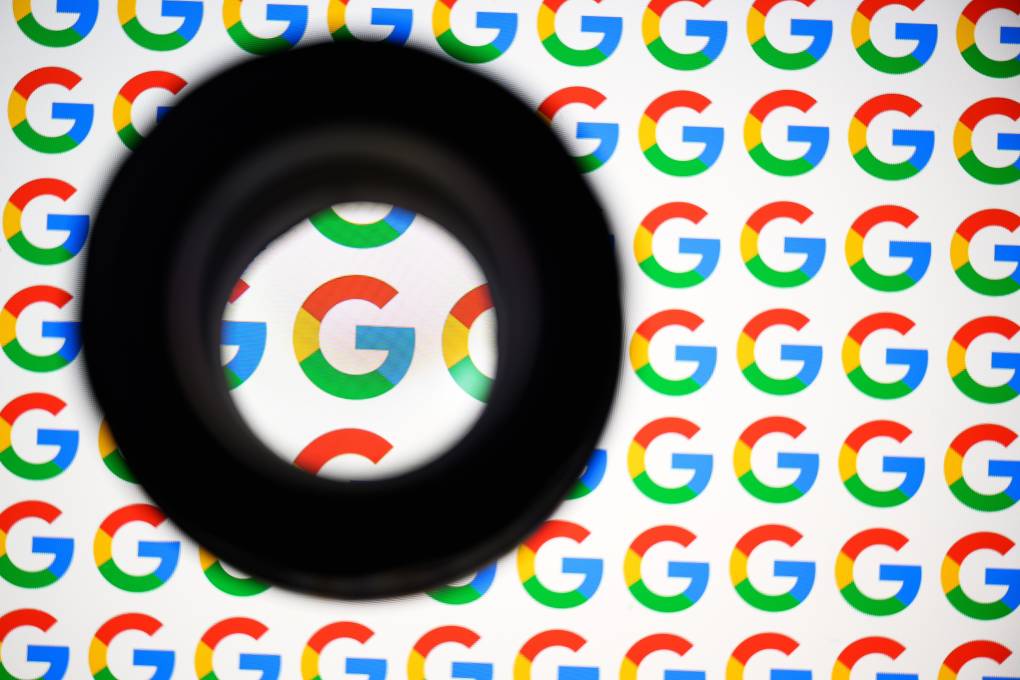
"caption": "The Justice Department sued Google for allegedly using its dominance to control the search engine market. In August, a federal judge ruled in favor of the government and now must decide how to sanction the company.",
"credit": "Leon Neal/Getty Images Europe",
"altTag": "An illustration of the multicolored Google logos with a magnifying glass over one 'G' in particular.",
"description": "LONDON, ENGLAND - SEPTEMBER 17: In this photo illustration, the Google logo is seen through a magnifying loupe on a screen on September 17, 2024 in London, England. Tomorrow the Competition Appeal Tribunal hears a £7bn class action suit against Google on behalf of UK consumers - CAT hearing brought by Consumer Voice. They accuse Google of anti-competitive practices and abuse of market dominance and seek £7.3 billion in compensation to be split between all UK consumers. The claim centres around Google setting its own services as the default on almost all mobile phones in the UK, driving up advertising prices and forcing consumers to pay more than they would in a more competitive market. (Photo Illustration by Leon Neal/Getty Images)",
"imgSizes": {
"medium": {
"file": "https://cdn.kqed.org/wp-content/uploads/sites/10/2024/10/gettyimages-2172554211-800x533.jpeg",
"width": 800,
"height": 533,
"mimeType": "image/jpeg"
},
"large": {
"file": "https://cdn.kqed.org/wp-content/uploads/sites/10/2024/10/gettyimages-2172554211-1020x680.jpeg",
"width": 1020,
"height": 680,
"mimeType": "image/jpeg"
},
"thumbnail": {
"file": "https://cdn.kqed.org/wp-content/uploads/sites/10/2024/10/gettyimages-2172554211-160x107.jpeg",
"width": 160,
"height": 107,
"mimeType": "image/jpeg"
},
"1536x1536": {
"file": "https://cdn.kqed.org/wp-content/uploads/sites/10/2024/10/gettyimages-2172554211-1536x1024.jpeg",
"width": 1536,
"height": 1024,
"mimeType": "image/jpeg"
},
"2048x2048": {
"file": "https://cdn.kqed.org/wp-content/uploads/sites/10/2024/10/gettyimages-2172554211-2048x1365.jpeg",
"width": 2048,
"height": 1365,
"mimeType": "image/jpeg"
},
"post-thumbnail": {
"file": "https://cdn.kqed.org/wp-content/uploads/sites/10/2024/10/gettyimages-2172554211-672x372.jpeg",
"width": 672,
"height": 372,
"mimeType": "image/jpeg"
},
"twentyfourteen-full-width": {
"file": "https://cdn.kqed.org/wp-content/uploads/sites/10/2024/10/gettyimages-2172554211-1038x576.jpeg",
"width": 1038,
"height": 576,
"mimeType": "image/jpeg"
},
"full-width": {
"file": "https://cdn.kqed.org/wp-content/uploads/sites/10/2024/10/gettyimages-2172554211-1920x1280.jpeg",
"width": 1920,
"height": 1280,
"mimeType": "image/jpeg"
},
"kqedFullSize": {
"file": "https://cdn.kqed.org/wp-content/uploads/sites/10/2024/10/gettyimages-2172554211-scaled.jpeg",
"width": 2560,
"height": 1707
}
},
"isLoading": false,
"fetchFailed": false
},
"news_12002386": {
"type": "attachments",
"id": "news_12002386",
"meta": {
"index": "attachments_1716263798",
"site": "news",
"id": "12002386",
"found": true
},
"title": "LOGO_THEBAY",
"publishDate": 1724964767,
"status": "inherit",
"parent": 12002385,
"modified": 1724964767,
"caption": null,
"credit": null,
"altTag": null,
"description": null,
"imgSizes": {
"thumbnail": {
"file": "https://cdn.kqed.org/wp-content/uploads/sites/10/2024/08/LOGO_THEBAY-160x160.png",
"width": 160,
"height": 160,
"mimeType": "image/png"
},
"kqedFullSize": {
"file": "https://cdn.kqed.org/wp-content/uploads/sites/10/2024/08/LOGO_THEBAY.png",
"width": 300,
"height": 300
}
},
"isLoading": false,
"fetchFailed": false
},
"news_12001328": {
"type": "attachments",
"id": "news_12001328",
"meta": {
"index": "attachments_1716263798",
"site": "news",
"id": "12001328",
"found": true
},
"title": "diabetes-cafe-66c740ce5446a",
"publishDate": 1724334384,
"status": "inherit",
"parent": 12001327,
"modified": 1724334423,
"caption": "A baker takes sugarless turnovers out of the oven at Sweet Nothings Pastry and Coffee Shoppe in El Centro, Calif. on June 26, 2024. ",
"credit": "Philip Salata/inewsource",
"altTag": "diabetes cafe",
"description": null,
"imgSizes": {
"medium": {
"file": "https://cdn.kqed.org/wp-content/uploads/sites/10/2024/08/diabetes-cafe-66c740ce5446a-800x534.jpg",
"width": 800,
"height": 534,
"mimeType": "image/jpeg"
},
"large": {
"file": "https://cdn.kqed.org/wp-content/uploads/sites/10/2024/08/diabetes-cafe-66c740ce5446a-1020x680.jpg",
"width": 1020,
"height": 680,
"mimeType": "image/jpeg"
},
"thumbnail": {
"file": "https://cdn.kqed.org/wp-content/uploads/sites/10/2024/08/diabetes-cafe-66c740ce5446a-160x107.jpg",
"width": 160,
"height": 107,
"mimeType": "image/jpeg"
},
"post-thumbnail": {
"file": "https://cdn.kqed.org/wp-content/uploads/sites/10/2024/08/diabetes-cafe-66c740ce5446a-672x372.jpg",
"width": 672,
"height": 372,
"mimeType": "image/jpeg"
},
"twentyfourteen-full-width": {
"file": "https://cdn.kqed.org/wp-content/uploads/sites/10/2024/08/diabetes-cafe-66c740ce5446a-1024x576.jpg",
"width": 1024,
"height": 576,
"mimeType": "image/jpeg"
},
"kqedFullSize": {
"file": "https://cdn.kqed.org/wp-content/uploads/sites/10/2024/08/diabetes-cafe-66c740ce5446a.jpg",
"width": 1024,
"height": 683
}
},
"isLoading": false,
"fetchFailed": false
},
"news_12001241": {
"type": "attachments",
"id": "news_12001241",
"meta": {
"index": "attachments_1716263798",
"site": "news",
"id": "12001241",
"found": true
},
"title": "Google's Bay View Campus In Silicon Valley",
"publishDate": 1724277349,
"status": "inherit",
"parent": 12055854,
"modified": 1757720142,
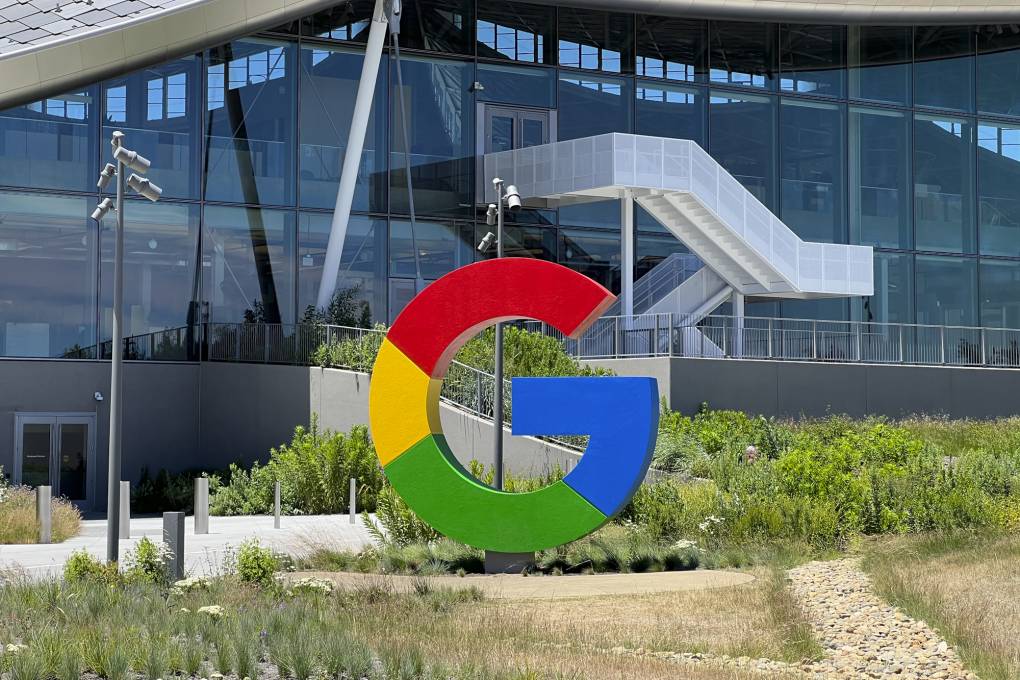
"caption": "Google's Bay View campus in Mountain View on June 16, 2022.",
"credit": "Zhang Yi/VCG via Getty Images",
"altTag": null,
"description": null,
"imgSizes": {
"medium": {
"file": "https://cdn.kqed.org/wp-content/uploads/sites/10/2024/08/GETTYIMAGES-1411232503-KQED-800x533.jpg",
"width": 800,
"height": 533,
"mimeType": "image/jpeg"
},
"large": {
"file": "https://cdn.kqed.org/wp-content/uploads/sites/10/2024/08/GETTYIMAGES-1411232503-KQED-1020x680.jpg",
"width": 1020,
"height": 680,
"mimeType": "image/jpeg"
},
"thumbnail": {
"file": "https://cdn.kqed.org/wp-content/uploads/sites/10/2024/08/GETTYIMAGES-1411232503-KQED-160x107.jpg",
"width": 160,
"height": 107,
"mimeType": "image/jpeg"
},
"1536x1536": {
"file": "https://cdn.kqed.org/wp-content/uploads/sites/10/2024/08/GETTYIMAGES-1411232503-KQED-1536x1024.jpg",
"width": 1536,
"height": 1024,
"mimeType": "image/jpeg"
},
"post-thumbnail": {
"file": "https://cdn.kqed.org/wp-content/uploads/sites/10/2024/08/GETTYIMAGES-1411232503-KQED-672x372.jpg",
"width": 672,
"height": 372,
"mimeType": "image/jpeg"
},
"twentyfourteen-full-width": {
"file": "https://cdn.kqed.org/wp-content/uploads/sites/10/2024/08/GETTYIMAGES-1411232503-KQED-1038x576.jpg",
"width": 1038,
"height": 576,
"mimeType": "image/jpeg"
},
"full-width": {
"file": "https://cdn.kqed.org/wp-content/uploads/sites/10/2024/08/GETTYIMAGES-1411232503-KQED-1920x1280.jpg",
"width": 1920,
"height": 1280,
"mimeType": "image/jpeg"
},
"kqedFullSize": {
"file": "https://cdn.kqed.org/wp-content/uploads/sites/10/2024/08/GETTYIMAGES-1411232503-KQED.jpg",
"width": 2000,
"height": 1333
}
},
"isLoading": false,
"fetchFailed": false
},
"news_11999732": {
"type": "attachments",
"id": "news_11999732",
"meta": {
"index": "attachments_1716263798",
"site": "news",
"id": "11999732",
"found": true
},
"title": "SWITZERLAND-ECONOMY-DIPLOMACY-BANKING-DAVOS",
"publishDate": 1723302694,
"status": "inherit",
"parent": 11999731,
"modified": 1723302874,
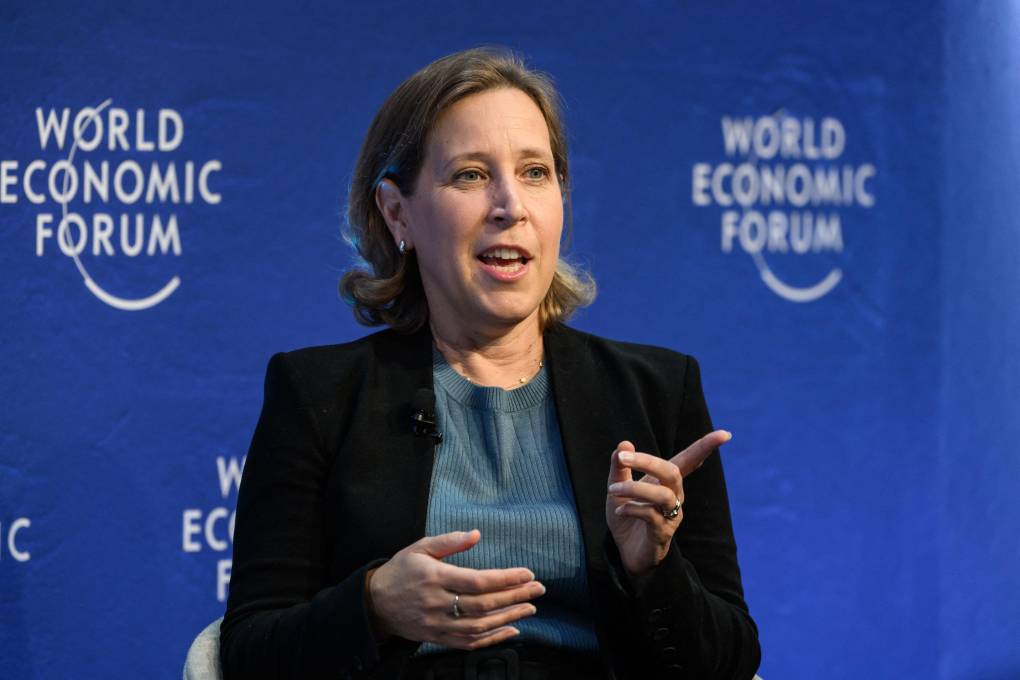
"caption": "You Tube CEO Susan Wojcicki gestures during a session at the World Economic Forum annual meeting in Davos on May 24, 2022. (Fabrice COFFRINI / AFP) ",
"credit": null,
"altTag": "A blonde woman in a black suit jacket speaks with a periwinkle background.",
"description": "You Tube CEO Susan Wojcicki gestures during a session at the World Economic Forum annual meeting in Davos on May 24, 2022. (Photo by Fabrice COFFRINI / AFP) (Photo by FABRICE COFFRINI/AFP via Getty Images)",
"imgSizes": {
"medium": {
"file": "https://cdn.kqed.org/wp-content/uploads/sites/10/2024/08/gettyimages-1240874764-800x533.jpeg",
"width": 800,
"height": 533,
"mimeType": "image/jpeg"
},
"large": {
"file": "https://cdn.kqed.org/wp-content/uploads/sites/10/2024/08/gettyimages-1240874764-1020x680.jpeg",
"width": 1020,
"height": 680,
"mimeType": "image/jpeg"
},
"thumbnail": {
"file": "https://cdn.kqed.org/wp-content/uploads/sites/10/2024/08/gettyimages-1240874764-160x107.jpeg",
"width": 160,
"height": 107,
"mimeType": "image/jpeg"
},
"1536x1536": {
"file": "https://cdn.kqed.org/wp-content/uploads/sites/10/2024/08/gettyimages-1240874764-1536x1024.jpeg",
"width": 1536,
"height": 1024,
"mimeType": "image/jpeg"
},
"2048x2048": {
"file": "https://cdn.kqed.org/wp-content/uploads/sites/10/2024/08/gettyimages-1240874764-2048x1365.jpeg",
"width": 2048,
"height": 1365,
"mimeType": "image/jpeg"
},
"post-thumbnail": {
"file": "https://cdn.kqed.org/wp-content/uploads/sites/10/2024/08/gettyimages-1240874764-672x372.jpeg",
"width": 672,
"height": 372,
"mimeType": "image/jpeg"
},
"twentyfourteen-full-width": {
"file": "https://cdn.kqed.org/wp-content/uploads/sites/10/2024/08/gettyimages-1240874764-1038x576.jpeg",
"width": 1038,
"height": 576,
"mimeType": "image/jpeg"
},
"full-width": {
"file": "https://cdn.kqed.org/wp-content/uploads/sites/10/2024/08/gettyimages-1240874764-1920x1280.jpeg",
"width": 1920,
"height": 1280,
"mimeType": "image/jpeg"
},
"kqedFullSize": {
"file": "https://cdn.kqed.org/wp-content/uploads/sites/10/2024/08/gettyimages-1240874764-scaled.jpeg",
"width": 2560,
"height": 1706
}
},
"isLoading": false,
"fetchFailed": false
},
"news_11999023": {
"type": "attachments",
"id": "news_11999023",
"meta": {
"index": "attachments_1716263798",
"site": "news",
"id": "11999023",
"found": true
},
"title": "Department Of Justice Expected To Launch New Anti-Trust Investigation Of Google",
"publishDate": 1722971661,
"status": "inherit",
"parent": 11999009,
"modified": 1745269612,
"caption": "After a judge ruled that Google held an illegal monopoly on search, legal analysts are split on whether the case will break up the company or influence other antitrust lawsuits.",
"credit": "Drew Angerer/Getty Images",
"altTag": null,
"description": null,
"imgSizes": {
"medium": {
"file": "https://cdn.kqed.org/wp-content/uploads/sites/10/2024/08/GoogleAntitrustGetty-800x533.jpg",
"width": 800,
"height": 533,
"mimeType": "image/jpeg"
},
"large": {
"file": "https://cdn.kqed.org/wp-content/uploads/sites/10/2024/08/GoogleAntitrustGetty-1020x680.jpg",
"width": 1020,
"height": 680,
"mimeType": "image/jpeg"
},
"thumbnail": {
"file": "https://cdn.kqed.org/wp-content/uploads/sites/10/2024/08/GoogleAntitrustGetty-160x107.jpg",
"width": 160,
"height": 107,
"mimeType": "image/jpeg"
},
"1536x1536": {
"file": "https://cdn.kqed.org/wp-content/uploads/sites/10/2024/08/GoogleAntitrustGetty-1536x1024.jpg",
"width": 1536,
"height": 1024,
"mimeType": "image/jpeg"
},
"post-thumbnail": {
"file": "https://cdn.kqed.org/wp-content/uploads/sites/10/2024/08/GoogleAntitrustGetty-672x372.jpg",
"width": 672,
"height": 372,
"mimeType": "image/jpeg"
},
"twentyfourteen-full-width": {
"file": "https://cdn.kqed.org/wp-content/uploads/sites/10/2024/08/GoogleAntitrustGetty-1038x576.jpg",
"width": 1038,
"height": 576,
"mimeType": "image/jpeg"
},
"full-width": {
"file": "https://cdn.kqed.org/wp-content/uploads/sites/10/2024/08/GoogleAntitrustGetty-1920x1280.jpg",
"width": 1920,
"height": 1280,
"mimeType": "image/jpeg"
},
"kqedFullSize": {
"file": "https://cdn.kqed.org/wp-content/uploads/sites/10/2024/08/GoogleAntitrustGetty.jpg",
"width": 2000,
"height": 1333
}
},
"isLoading": false,
"fetchFailed": false
},
"news_11989313": {
"type": "attachments",
"id": "news_11989313",
"meta": {
"index": "attachments_1716263798",
"site": "news",
"id": "11989313",
"found": true
},
"title": "Tech AI Illustrations",
"publishDate": 1717711326,
"status": "inherit",
"parent": 11989308,
"modified": 1787170163,
"caption": "The ChatGPT logo is displayed on an iPhone in New York, May 18, 2023. ",
"credit": "Jaap Arriens/NurPhoto via Getty Images",
"altTag": null,
"description": null,
"imgSizes": {
"medium": {
"file": "https://cdn.kqed.org/wp-content/uploads/sites/10/2024/06/GettyImages-2155035557-800x533.jpg",
"width": 800,
"height": 533,
"mimeType": "image/jpeg"
},
"large": {
"file": "https://cdn.kqed.org/wp-content/uploads/sites/10/2024/06/GettyImages-2155035557-1020x680.jpg",
"width": 1020,
"height": 680,
"mimeType": "image/jpeg"
},
"thumbnail": {
"file": "https://cdn.kqed.org/wp-content/uploads/sites/10/2024/06/GettyImages-2155035557-160x107.jpg",
"width": 160,
"height": 107,
"mimeType": "image/jpeg"
},
"1536x1536": {
"file": "https://cdn.kqed.org/wp-content/uploads/sites/10/2024/06/GettyImages-2155035557-1536x1024.jpg",
"width": 1536,
"height": 1024,
"mimeType": "image/jpeg"
},
"2048x2048": {
"file": "https://cdn.kqed.org/wp-content/uploads/sites/10/2024/06/GettyImages-2155035557-2048x1365.jpg",
"width": 2048,
"height": 1365,
"mimeType": "image/jpeg"
},
"post-thumbnail": {
"file": "https://cdn.kqed.org/wp-content/uploads/sites/10/2024/06/GettyImages-2155035557-672x372.jpg",
"width": 672,
"height": 372,
"mimeType": "image/jpeg"
},
"twentyfourteen-full-width": {
"file": "https://cdn.kqed.org/wp-content/uploads/sites/10/2024/06/GettyImages-2155035557-1038x576.jpg",
"width": 1038,
"height": 576,
"mimeType": "image/jpeg"
},
"full-width": {
"file": "https://cdn.kqed.org/wp-content/uploads/sites/10/2024/06/GettyImages-2155035557-1920x1280.jpg",
"width": 1920,
"height": 1280,
"mimeType": "image/jpeg"
},
"kqedFullSize": {
"file": "https://cdn.kqed.org/wp-content/uploads/sites/10/2024/06/GettyImages-2155035557-scaled-e1760733694503.jpg",
"width": 2000,
"height": 1334
}
},
"isLoading": false,
"fetchFailed": false
},
"news_11986144": {
"type": "attachments",
"id": "news_11986144",
"meta": {
"index": "attachments_1716263798",
"site": "news",
"id": "11986144",
"found": true
},
"parent": 11986136,
"imgSizes": {
"twentyfourteen-full-width": {
"file": "https://cdn.kqed.org/wp-content/uploads/sites/10/2024/05/240514-Google-Protest-JG-03-1038x576.jpg",
"width": 1038,
"mimeType": "image/jpeg",
"height": 576
},
"thumbnail": {
"file": "https://cdn.kqed.org/wp-content/uploads/sites/10/2024/05/240514-Google-Protest-JG-03-160x107.jpg",
"width": 160,
"mimeType": "image/jpeg",
"height": 107
},
"post-thumbnail": {
"file": "https://cdn.kqed.org/wp-content/uploads/sites/10/2024/05/240514-Google-Protest-JG-03-672x372.jpg",
"width": 672,
"mimeType": "image/jpeg",
"height": 372
},
"kqedFullSize": {
"file": "https://cdn.kqed.org/wp-content/uploads/sites/10/2024/05/240514-Google-Protest-JG-03.jpg",
"width": 2000,
"height": 1333
},
"large": {
"file": "https://cdn.kqed.org/wp-content/uploads/sites/10/2024/05/240514-Google-Protest-JG-03-1020x680.jpg",
"width": 1020,
"mimeType": "image/jpeg",
"height": 680
},
"1536x1536": {
"file": "https://cdn.kqed.org/wp-content/uploads/sites/10/2024/05/240514-Google-Protest-JG-03-1536x1024.jpg",
"width": 1536,
"mimeType": "image/jpeg",
"height": 1024
},
"full-width": {
"file": "https://cdn.kqed.org/wp-content/uploads/sites/10/2024/05/240514-Google-Protest-JG-03-1920x1280.jpg",
"width": 1920,
"mimeType": "image/jpeg",
"height": 1280
},
"medium": {
"file": "https://cdn.kqed.org/wp-content/uploads/sites/10/2024/05/240514-Google-Protest-JG-03-800x533.jpg",
"width": 800,
"mimeType": "image/jpeg",
"height": 533
}
},
"publishDate": 1715716903,
"modified": 1715718241,
"caption": "People hold up a banner that reads \"No Tech for Apartheid\" during a protest outside of Google's Gradient Canopy building in Mountain View on May 14, 2024.",
"description": null,
"title": "240514-Google Protest-JG-03",
"credit": "Joseph Geha/KQED",
"status": "inherit",
"altTag": "Several people hold up a blue banner with a Google icon over an eye that reads \"No Tech for Apartheid.\"",
"isLoading": false,
"fetchFailed": false
},
"news_11986187": {
"type": "attachments",
"id": "news_11986187",
"meta": {
"index": "attachments_1716263798",
"site": "news",
"id": "11986187",
"found": true
},
"parent": 11986133,
"imgSizes": {
"twentyfourteen-full-width": {
"file": "https://cdn.kqed.org/wp-content/uploads/sites/10/2024/05/AP24135653220235-1038x576.jpg",
"width": 1038,
"mimeType": "image/jpeg",
"height": 576
},
"thumbnail": {
"file": "https://cdn.kqed.org/wp-content/uploads/sites/10/2024/05/AP24135653220235-160x107.jpg",
"width": 160,
"mimeType": "image/jpeg",
"height": 107
},
"post-thumbnail": {
"file": "https://cdn.kqed.org/wp-content/uploads/sites/10/2024/05/AP24135653220235-672x372.jpg",
"width": 672,
"mimeType": "image/jpeg",
"height": 372
},
"kqedFullSize": {
"file": "https://cdn.kqed.org/wp-content/uploads/sites/10/2024/05/AP24135653220235-scaled.jpg",
"width": 2560,
"height": 1707
},
"2048x2048": {
"file": "https://cdn.kqed.org/wp-content/uploads/sites/10/2024/05/AP24135653220235-2048x1365.jpg",
"width": 2048,
"mimeType": "image/jpeg",
"height": 1365
},
"large": {
"file": "https://cdn.kqed.org/wp-content/uploads/sites/10/2024/05/AP24135653220235-1020x680.jpg",
"width": 1020,
"mimeType": "image/jpeg",
"height": 680
},
"1536x1536": {
"file": "https://cdn.kqed.org/wp-content/uploads/sites/10/2024/05/AP24135653220235-1536x1024.jpg",
"width": 1536,
"mimeType": "image/jpeg",
"height": 1024
},
"full-width": {
"file": "https://cdn.kqed.org/wp-content/uploads/sites/10/2024/05/AP24135653220235-1920x1280.jpg",
"width": 1920,
"mimeType": "image/jpeg",
"height": 1280
},
"medium": {
"file": "https://cdn.kqed.org/wp-content/uploads/sites/10/2024/05/AP24135653220235-800x533.jpg",
"width": 800,
"mimeType": "image/jpeg",
"height": 533
}
},
"publishDate": 1715722755,
"modified": 1715731201,
"caption": "Alphabet CEO Sundar Pichai speaks at a Google I/O event in Mountain View on Tuesday, May 14, 2024. ",
"description": null,
"title": "Sundar Pichai",
"credit": "Jeff Chiu/The Associated Press",
"status": "inherit",
"altTag": "Hundreds of people sit at an amphitheater, looking at one person on stage.",
"isLoading": false,
"fetchFailed": false
},
"news_11986142": {
"type": "attachments",
"id": "news_11986142",
"meta": {
"index": "attachments_1716263798",
"site": "news",
"id": "11986142",
"found": true
},
"parent": 0,
"imgSizes": {
"twentyfourteen-full-width": {
"file": "https://cdn.kqed.org/wp-content/uploads/sites/10/2024/05/240514-Google-Protest-JG-01-1038x576.jpg",
"width": 1038,
"mimeType": "image/jpeg",
"height": 576
},
"thumbnail": {
"file": "https://cdn.kqed.org/wp-content/uploads/sites/10/2024/05/240514-Google-Protest-JG-01-160x107.jpg",
"width": 160,
"mimeType": "image/jpeg",
"height": 107
},
"post-thumbnail": {
"file": "https://cdn.kqed.org/wp-content/uploads/sites/10/2024/05/240514-Google-Protest-JG-01-672x372.jpg",
"width": 672,
"mimeType": "image/jpeg",
"height": 372
},
"kqedFullSize": {
"file": "https://cdn.kqed.org/wp-content/uploads/sites/10/2024/05/240514-Google-Protest-JG-01.jpg",
"width": 2000,
"height": 1333
},
"large": {
"file": "https://cdn.kqed.org/wp-content/uploads/sites/10/2024/05/240514-Google-Protest-JG-01-1020x680.jpg",
"width": 1020,
"mimeType": "image/jpeg",
"height": 680
},
"1536x1536": {
"file": "https://cdn.kqed.org/wp-content/uploads/sites/10/2024/05/240514-Google-Protest-JG-01-1536x1024.jpg",
"width": 1536,
"mimeType": "image/jpeg",
"height": 1024
},
"full-width": {
"file": "https://cdn.kqed.org/wp-content/uploads/sites/10/2024/05/240514-Google-Protest-JG-01-1920x1280.jpg",
"width": 1920,
"mimeType": "image/jpeg",
"height": 1280
},
"medium": {
"file": "https://cdn.kqed.org/wp-content/uploads/sites/10/2024/05/240514-Google-Protest-JG-01-800x533.jpg",
"width": 800,
"mimeType": "image/jpeg",
"height": 533
}
},
"publishDate": 1715716895,
"modified": 1715718181,
"caption": "People play drums and chant during a protest outside of Google's offices in Mountain View on May 14, 2024.",
"description": null,
"title": "240514-Google Protest-JG-01",
"credit": "Joseph Geha/KQED",
"status": "inherit",
"altTag": "A group of people wearing masks and holding drums walk down the street.",
"isLoading": false,
"fetchFailed": false
},
"news_11983468": {
"type": "attachments",
"id": "news_11983468",
"meta": {
"index": "attachments_1716263798",
"site": "news",
"id": "11983468",
"found": true
},
"parent": 11983466,
"imgSizes": {
"twentyfourteen-full-width": {
"file": "https://cdn.kqed.org/wp-content/uploads/sites/10/2024/04/gettyimages-1251913187_custom-4cf98e7cfdda0665161255254c53a411bd492428-s1600-c85-copy-1038x576.jpg",
"width": 1038,
"mimeType": "image/jpeg",
"height": 576
},
"thumbnail": {
"file": "https://cdn.kqed.org/wp-content/uploads/sites/10/2024/04/gettyimages-1251913187_custom-4cf98e7cfdda0665161255254c53a411bd492428-s1600-c85-copy-160x107.jpg",
"width": 160,
"mimeType": "image/jpeg",
"height": 107
},
"post-thumbnail": {
"file": "https://cdn.kqed.org/wp-content/uploads/sites/10/2024/04/gettyimages-1251913187_custom-4cf98e7cfdda0665161255254c53a411bd492428-s1600-c85-copy-672x372.jpg",
"width": 672,
"mimeType": "image/jpeg",
"height": 372
},
"kqedFullSize": {
"file": "https://cdn.kqed.org/wp-content/uploads/sites/10/2024/04/gettyimages-1251913187_custom-4cf98e7cfdda0665161255254c53a411bd492428-s1600-c85-copy.jpg",
"width": 1600,
"height": 1067
},
"large": {
"file": "https://cdn.kqed.org/wp-content/uploads/sites/10/2024/04/gettyimages-1251913187_custom-4cf98e7cfdda0665161255254c53a411bd492428-s1600-c85-copy-1020x680.jpg",
"width": 1020,
"mimeType": "image/jpeg",
"height": 680
},
"1536x1536": {
"file": "https://cdn.kqed.org/wp-content/uploads/sites/10/2024/04/gettyimages-1251913187_custom-4cf98e7cfdda0665161255254c53a411bd492428-s1600-c85-copy-1536x1024.jpg",
"width": 1536,
"mimeType": "image/jpeg",
"height": 1024
},
"medium": {
"file": "https://cdn.kqed.org/wp-content/uploads/sites/10/2024/04/gettyimages-1251913187_custom-4cf98e7cfdda0665161255254c53a411bd492428-s1600-c85-copy-800x534.jpg",
"width": 800,
"mimeType": "image/jpeg",
"height": 534
}
},
"publishDate": 1713549595,
"modified": 1713555912,
"caption": "Google has a contract with the Israeli government to provide the country with cloud computing services. Not all Google employees are happy about that.",
"description": null,
"title": "gettyimages-1251913187_custom-4cf98e7cfdda0665161255254c53a411bd492428-s1600-c85 copy",
"credit": "Alexander Koerner/Getty Images",
"status": "inherit",
"altTag": "A big white screen with \"Google Cloud\" written across it.",
"isLoading": false,
"fetchFailed": false
},
"news_11983347": {
"type": "attachments",
"id": "news_11983347",
"meta": {
"index": "attachments_1716263798",
"site": "news",
"id": "11983347",
"found": true
},
"parent": 0,
"imgSizes": {
"twentyfourteen-full-width": {
"file": "https://cdn.kqed.org/wp-content/uploads/sites/10/2024/04/GETTYIMAGES-2104164214-KQED-1038x576.jpg",
"width": 1038,
"mimeType": "image/jpeg",
"height": 576
},
"thumbnail": {
"file": "https://cdn.kqed.org/wp-content/uploads/sites/10/2024/04/GETTYIMAGES-2104164214-KQED-160x107.jpg",
"width": 160,
"mimeType": "image/jpeg",
"height": 107
},
"post-thumbnail": {
"file": "https://cdn.kqed.org/wp-content/uploads/sites/10/2024/04/GETTYIMAGES-2104164214-KQED-672x372.jpg",
"width": 672,
"mimeType": "image/jpeg",
"height": 372
},
"kqedFullSize": {
"file": "https://cdn.kqed.org/wp-content/uploads/sites/10/2024/04/GETTYIMAGES-2104164214-KQED.jpg",
"width": 2000,
"height": 1333
},
"large": {
"file": "https://cdn.kqed.org/wp-content/uploads/sites/10/2024/04/GETTYIMAGES-2104164214-KQED-1020x680.jpg",
"width": 1020,
"mimeType": "image/jpeg",
"height": 680
},
"1536x1536": {
"file": "https://cdn.kqed.org/wp-content/uploads/sites/10/2024/04/GETTYIMAGES-2104164214-KQED-1536x1024.jpg",
"width": 1536,
"mimeType": "image/jpeg",
"height": 1024
},
"full-width": {
"file": "https://cdn.kqed.org/wp-content/uploads/sites/10/2024/04/GETTYIMAGES-2104164214-KQED-1920x1280.jpg",
"width": 1920,
"mimeType": "image/jpeg",
"height": 1280
},
"medium": {
"file": "https://cdn.kqed.org/wp-content/uploads/sites/10/2024/04/GETTYIMAGES-2104164214-KQED-800x533.jpg",
"width": 800,
"mimeType": "image/jpeg",
"height": 533
}
},
"publishDate": 1713464943,
"modified": 1713465186,
"caption": "A view of Google Headquarters in Mountain View on March 23, 2024.",
"description": null,
"title": "Google Headquarters in California's Mountain View",
"credit": "Tayfun Coskun/Anadolu via Getty Images",
"status": "inherit",
"altTag": "A building with glass windows and a huge multicolored logo reads, \"Google.\"",
"isLoading": false,
"fetchFailed": false
}
},
"audioPlayerReducer": {
"postId": "stream_live",
"isPaused": true,
"isPlaying": false,
"pfsActive": false,
"pledgeModalIsOpen": true,
"playerDrawerIsOpen": false,
"liveAudioPlayStartedAt": 0,
"liveAudioPlayContext": ""
},
"authorsReducer": {
"byline_news_12008707": {
"type": "authors",
"id": "byline_news_12008707",
"meta": {
"override": true
},
"slug": "byline_news_12008707",
"name": "Dara Kerr, NPR",
"isLoading": false
},
"byline_news_11999731": {
"type": "authors",
"id": "byline_news_11999731",
"meta": {
"override": true
},
"slug": "byline_news_11999731",
"name": "Juliana Kim, NPR",
"isLoading": false
},
"byline_news_11989308": {
"type": "authors",
"id": "byline_news_11989308",
"meta": {
"override": true
},
"slug": "byline_news_11989308",
"name": "Ericka Cruz Guevarra, Tamuna Chkareuli, Ellie Prickett-Morgan and Alan Montecillo",
"isLoading": false
},
"byline_news_11986133": {
"type": "authors",
"id": "byline_news_11986133",
"meta": {
"override": true
},
"slug": "byline_news_11986133",
"name": "Michael Liedtke, The Associated Press",
"isLoading": false
},
"byline_news_11983466": {
"type": "authors",
"id": "byline_news_11983466",
"meta": {
"override": true
},
"slug": "byline_news_11983466",
"name": "\u003ca href=\"https://www.npr.org/people/1147860766/dara-kerr\">Dana Kerr\u003c/a>, NPR",
"isLoading": false
},
"rachael-myrow": {
"type": "authors",
"id": "251",
"meta": {
"index": "authors_1716337520",
"id": "251",
"found": true
},
"name": "Rachael Myrow",
"firstName": "Rachael",
"lastName": "Myrow",
"slug": "rachael-myrow",
"email": "rmyrow@kqed.org",
"display_author_email": true,
"staff_mastheads": [
"news"
],
"title": "Senior Editor of KQED's Silicon Valley News Desk",
"bio": "• I write and edit stories about how Silicon Valley power and policies shape everyday life in California. I’m also passionate about making Bay Area history and culture more accessible to a broad public. • I’ve been a journalist for most of my life, starting in high school with The Franklin Press in Los Angeles, where I grew up. While earning my first degree in English at UC Berkeley, I got my start in public radio at KALX-FM. After completing a second degree in journalism at Cal, I landed my first professional job at Marketplace, then moved on to KPCC (now LAist), and then KQED, where I hosted The California Report for more than seven years. • My reporting has appeared on NPR, The World, WBUR’s \u003ci>Here & Now\u003c/i>, and the BBC. I also guest host for KQED’s \u003ci>Forum\u003c/i>, as well as the Commonwealth Club in San Francisco. • I speak periodically on media, democracy and technology issues, and do voiceover work for documentaries and educational video projects. • Outside of the studio, you'll find me hiking Bay Area trails and whipping up Insta-ready meals in my kitchen. • I do not accept gifts, money, or favors from anyone connected to my reporting, I don't pay people for information, and I do not support or donate to political causes. • I strive to treat the people I report on with fairness, honesty, and respect. I also recognize there are often multiple sides to a story and work to verify information through multiple sources and documentation. If I get something wrong, I correct it.",
"avatar": "https://secure.gravatar.com/avatar/3ed8a3c5f26025e4a805ba634cda8cd764906b97438a6d9ce216b044e340da4e?s=600&d=blank&r=g",
"twitter": "rachaelmyrow",
"bluesky": null,
"facebook": null,
"instagram": null,
"linkedin": "https://www.linkedin.com/in/rachaelmyrow/",
"sites": [
{
"site": "arts",
"roles": [
"administrator"
]
},
{
"site": "news",
"roles": [
"edit_others_posts",
"editor"
]
},
{
"site": "futureofyou",
"roles": [
"editor"
]
},
{
"site": "bayareabites",
"roles": [
"editor"
]
},
{
"site": "stateofhealth",
"roles": [
"editor"
]
},
{
"site": "science",
"roles": [
"editor"
]
},
{
"site": "food",
"roles": [
"editor"
]
},
{
"site": "forum",
"roles": [
"editor"
]
},
{
"site": "liveblog",
"roles": [
"author"
]
}
],
"headData": {
"title": "Rachael Myrow | KQED",
"description": "Senior Editor of KQED's Silicon Valley News Desk",
"ogImgSrc": "https://secure.gravatar.com/avatar/3ed8a3c5f26025e4a805ba634cda8cd764906b97438a6d9ce216b044e340da4e?s=600&d=blank&r=g",
"twImgSrc": "https://secure.gravatar.com/avatar/3ed8a3c5f26025e4a805ba634cda8cd764906b97438a6d9ce216b044e340da4e?s=600&d=blank&r=g"
},
"isLoading": false,
"link": "/author/rachael-myrow"
},
"ecruzguevarra": {
"type": "authors",
"id": "8654",
"meta": {
"index": "authors_1716337520",
"id": "8654",
"found": true
},
"name": "Ericka Cruz Guevarra",
"firstName": "Ericka",
"lastName": "Cruz Guevarra",
"slug": "ecruzguevarra",
"email": "ecruzguevarra@kqed.org",
"display_author_email": true,
"staff_mastheads": [
"news"
],
"title": "Producer, The Bay Podcast",
"bio": "Ericka Cruz Guevarra is host of \u003ca href=\"https://www.kqed.org/podcasts/thebay\">\u003cem>The Bay\u003c/em>\u003c/a> podcast at KQED. Before host, she was the show’s producer. Her work in that capacity includes a three-part reported series on policing in Vallejo, which won a 2020 excellence in journalism award from the Society of Professional Journalists. Ericka has worked as a breaking news reporter at Oregon Public Broadcasting, helped produce the Code Switch podcast, and was KQED’s inaugural Raul Ramirez Diversity Fund intern. She’s also an alumna of NPR’s Next Generation Radio program. Send her an email if you have strong feelings about whether Fairfield and Suisun City are the Bay. Ericka is represented by SAG-AFTRA.",
"avatar": "https://secure.gravatar.com/avatar/accefc1de4bafc7e234b69bcb9b6f6536c130fd84709bc3069ef11a78787e1bb?s=600&d=blank&r=g",
"twitter": "NotoriousECG",
"bluesky": null,
"facebook": null,
"instagram": null,
"linkedin": null,
"sites": [
{
"site": "arts",
"roles": [
"subscriber"
]
},
{
"site": "news",
"roles": [
"editor",
"manage_categories"
]
},
{
"site": "futureofyou",
"roles": [
"subscriber"
]
},
{
"site": "stateofhealth",
"roles": [
"subscriber"
]
},
{
"site": "science",
"roles": [
"editor"
]
},
{
"site": "forum",
"roles": [
"subscriber"
]
}
],
"headData": {
"title": "Ericka Cruz Guevarra | KQED",
"description": "Producer, The Bay Podcast",
"ogImgSrc": "https://secure.gravatar.com/avatar/accefc1de4bafc7e234b69bcb9b6f6536c130fd84709bc3069ef11a78787e1bb?s=600&d=blank&r=g",
"twImgSrc": "https://secure.gravatar.com/avatar/accefc1de4bafc7e234b69bcb9b6f6536c130fd84709bc3069ef11a78787e1bb?s=600&d=blank&r=g"
},
"isLoading": false,
"link": "/author/ecruzguevarra"
},
"amontecillo": {
"type": "authors",
"id": "11649",
"meta": {
"index": "authors_1716337520",
"id": "11649",
"found": true
},
"name": "Alan Montecillo",
"firstName": "Alan",
"lastName": "Montecillo",
"slug": "amontecillo",
"email": "amontecillo@kqed.org",
"display_author_email": false,
"staff_mastheads": [
"news"
],
"title": "KQED Contributor",
"bio": "Alan Montecillo is the senior editor of \u003cem>\u003ca href=\"http://kqed.org/thebay\">The Bay\u003c/a>, \u003c/em> KQED's local news podcast. Before moving to the Bay Area, he worked as a senior talk show producer for WILL in Champaign-Urbana, Illinois and at Oregon Public Broadcasting in Portland, Oregon. He has won journalism awards from the Society of Professional Journalists Northern California, the Public Media Journalists Association, The Signal Awards, and has also received a regional Edward R. Murrow award. Alan is a Filipino American from Hong Kong and a graduate of Reed College.",
"avatar": "https://secure.gravatar.com/avatar/268f53a2066899ea9efdd8a5900218b17c822d9862cbc9326cccec53ef41d349?s=600&d=blank&r=g",
"twitter": "alanmontecillo",
"bluesky": null,
"facebook": null,
"instagram": null,
"linkedin": null,
"sites": [
{
"site": "",
"roles": [
"editor"
]
},
{
"site": "news",
"roles": [
"editor",
"manage_categories"
]
}
],
"headData": {
"title": "Alan Montecillo | KQED",
"description": "KQED Contributor",
"ogImgSrc": "https://secure.gravatar.com/avatar/268f53a2066899ea9efdd8a5900218b17c822d9862cbc9326cccec53ef41d349?s=600&d=blank&r=g",
"twImgSrc": "https://secure.gravatar.com/avatar/268f53a2066899ea9efdd8a5900218b17c822d9862cbc9326cccec53ef41d349?s=600&d=blank&r=g"
},
"isLoading": false,
"link": "/author/amontecillo"
},
"msolomon": {
"type": "authors",
"id": "11651",
"meta": {
"index": "authors_1716337520",
"id": "11651",
"found": true
},
"name": "Molly Solomon",
"firstName": "Molly",
"lastName": "Solomon",
"slug": "msolomon",
"email": "msolomon@KQED.org",
"display_author_email": false,
"staff_mastheads": [
"news"
],
"title": "Senior Editor",
"bio": "Molly Solomon is the senior editor of KQED's California Politics and Government Desk. Previously, she was the station's editor-at-large, with a focus on editing early childhood education, politics, and criminal justice. Before that, she managed and edited statewide election coverage for The California Newsroom, a collaboration of local public radio stations, CalMatters and NPR. Molly joined KQED in 2019 to launch the station’s housing affordability desk, where she reported on homelessness, evictions and is the co-host of KQED’s housing podcast, SOLD OUT: Rethinking Housing in America. Before that, she was the Southwest Washington Bureau Chief for Oregon Public Broadcasting and a reporter at Hawaii Public Radio. Her stories have aired on NPR’s \u003cem>Morning Edition\u003c/em>, \u003cem>All Things Considered\u003c/em>, \u003cem>Here & Now\u003c/em>, \u003cem>Science Friday\u003c/em> and \u003cem>Marketplace\u003c/em>. Molly's award-winning reporting has been honored by the Best of the West, Edward R. Murrow awards, Society of Professional Journalists, National Headliner Awards, and the Asian American Journalists Association. Born and raised in Berkeley, Molly is a big fan of burritos and her scruffy terrier, Ollie.",
"avatar": "https://secure.gravatar.com/avatar/9ad9794616923d81c9a79897161545bd?s=600&d=blank&r=g",
"twitter": "solomonout",
"facebook": null,
"instagram": null,
"linkedin": null,
"sites": [
{
"site": "news",
"roles": [
"editor"
]
},
{
"site": "science",
"roles": [
"editor"
]
}
],
"headData": {
"title": "Molly Solomon | KQED",
"description": "Senior Editor",
"ogImgSrc": "https://secure.gravatar.com/avatar/9ad9794616923d81c9a79897161545bd?s=600&d=blank&r=g",
"twImgSrc": "https://secure.gravatar.com/avatar/9ad9794616923d81c9a79897161545bd?s=600&d=blank&r=g"
},
"isLoading": false,
"link": "/author/msolomon"
},
"kmizuguchi": {
"type": "authors",
"id": "11739",
"meta": {
"index": "authors_1716337520",
"id": "11739",
"found": true
},
"name": "Keith Mizuguchi",
"firstName": "Keith",
"lastName": "Mizuguchi",
"slug": "kmizuguchi",
"email": "kmizuguchi@kqed.org",
"display_author_email": false,
"staff_mastheads": [],
"title": "KQED Contributor",
"bio": null,
"avatar": "https://secure.gravatar.com/avatar/64d8a7de0723d4099b9fe4e915136103febcc20809abce228ee4415bcb237023?s=600&d=blank&r=g",
"twitter": null,
"bluesky": null,
"facebook": null,
"instagram": null,
"linkedin": null,
"sites": [
{
"site": "news",
"roles": [
"editor"
]
},
{
"site": "science",
"roles": [
"editor"
]
}
],
"headData": {
"title": "Keith Mizuguchi | KQED",
"description": "KQED Contributor",
"ogImgSrc": "https://secure.gravatar.com/avatar/64d8a7de0723d4099b9fe4e915136103febcc20809abce228ee4415bcb237023?s=600&d=blank&r=g",
"twImgSrc": "https://secure.gravatar.com/avatar/64d8a7de0723d4099b9fe4e915136103febcc20809abce228ee4415bcb237023?s=600&d=blank&r=g"
},
"isLoading": false,
"link": "/author/kmizuguchi"
},
"mesquinca": {
"type": "authors",
"id": "11802",
"meta": {
"index": "authors_1716337520",
"id": "11802",
"found": true
},
"name": "Maria Esquinca",
"firstName": "Maria",
"lastName": "Esquinca",
"slug": "mesquinca",
"email": "mesquinca@kqed.org",
"display_author_email": false,
"staff_mastheads": [],
"title": "Producer, The Bay",
"bio": "María Esquinca is a producer of The Bay. Before that, she was a New York Women’s Foundation IGNITE Fellow at Latino USA. She worked at Radio Bilingue where she covered the San Joaquin Valley. Maria has interned at WLRN, News 21, The New York Times Student Journalism Institute and at Crain’s Detroit Business as a Dow Jones News Fund Business Reporting Intern. She is an MFA graduate from the University of Miami. In 2017, she graduated from the Walter Cronkite School of Journalism and Mass Communication with a Master of Mass Communication. A fronteriza, she was born in Ciudad Juárez, Chihuahua, Mexico and grew up in El Paso, Texas.",
"avatar": "https://secure.gravatar.com/avatar/77cedba18aae91da775038ba06dcd8d0?s=600&d=blank&r=g",
"twitter": "@m_esquinca",
"facebook": null,
"instagram": null,
"linkedin": null,
"sites": [
{
"site": "news",
"roles": []
}
],
"headData": {
"title": "Maria Esquinca | KQED",
"description": "Producer, The Bay",
"ogImgSrc": "https://secure.gravatar.com/avatar/77cedba18aae91da775038ba06dcd8d0?s=600&d=blank&r=g",
"twImgSrc": "https://secure.gravatar.com/avatar/77cedba18aae91da775038ba06dcd8d0?s=600&d=blank&r=g"
},
"isLoading": false,
"link": "/author/mesquinca"
},
"nkhan": {
"type": "authors",
"id": "11867",
"meta": {
"index": "authors_1716337520",
"id": "11867",
"found": true
},
"name": "Nisa Khan",
"firstName": "Nisa",
"lastName": "Khan",
"slug": "nkhan",
"email": "nkhan@kqed.org",
"display_author_email": false,
"staff_mastheads": [],
"title": "KQED Contributor",
"bio": "Nisa Khan is a reporter for KQED's Audience News Desk. She was formerly a data reporter at Michigan Radio. She earned a Bachelor of Science in Information from the University of Michigan and a Master of Arts in Communication from Stanford University.",
"avatar": "https://secure.gravatar.com/avatar/8720459eef081ff64582b3506b124d58523e80e120704a0cbd9892533c914991?s=600&d=blank&r=g",
"twitter": "mnisakhan",
"bluesky": null,
"facebook": null,
"instagram": null,
"linkedin": null,
"sites": [
{
"site": "arts",
"roles": [
"editor"
]
},
{
"site": "news",
"roles": [
"editor"
]
},
{
"site": "science",
"roles": [
"editor",
"author"
]
},
{
"site": "forum",
"roles": [
"editor"
]
},
{
"site": "liveblog",
"roles": [
"contributor"
]
}
],
"headData": {
"title": "Nisa Khan | KQED",
"description": "KQED Contributor",
"ogImgSrc": "https://secure.gravatar.com/avatar/8720459eef081ff64582b3506b124d58523e80e120704a0cbd9892533c914991?s=600&d=blank&r=g",
"twImgSrc": "https://secure.gravatar.com/avatar/8720459eef081ff64582b3506b124d58523e80e120704a0cbd9892533c914991?s=600&d=blank&r=g"
},
"isLoading": false,
"link": "/author/nkhan"
},
"jgeha": {
"type": "authors",
"id": "11906",
"meta": {
"index": "authors_1716337520",
"id": "11906",
"found": true
},
"name": "Joseph Geha",
"firstName": "Joseph",
"lastName": "Geha",
"slug": "jgeha",
"email": "jgeha@kqed.org",
"display_author_email": false,
"staff_mastheads": [
"news",
"science"
],
"title": "KQED Contributor",
"bio": null,
"avatar": "https://secure.gravatar.com/avatar/ea84d2b6dd93d6369d453edf19dd583f117cd1759d2d9c9c92f9de77017354fe?s=600&d=blank&r=g",
"twitter": null,
"bluesky": null,
"facebook": null,
"instagram": null,
"linkedin": null,
"sites": [
{
"site": "news",
"roles": [
"editor"
]
},
{
"site": "liveblog",
"roles": [
"author"
]
}
],
"headData": {
"title": "Joseph Geha | KQED",
"description": "KQED Contributor",
"ogImgSrc": "https://secure.gravatar.com/avatar/ea84d2b6dd93d6369d453edf19dd583f117cd1759d2d9c9c92f9de77017354fe?s=600&d=blank&r=g",
"twImgSrc": "https://secure.gravatar.com/avatar/ea84d2b6dd93d6369d453edf19dd583f117cd1759d2d9c9c92f9de77017354fe?s=600&d=blank&r=g"
},
"isLoading": false,
"link": "/author/jgeha"
}
},
"pagesReducer": {
"news_tag_google": {
"type": "terms",
"id": "news_93",
"meta": {
"index": "terms_1716263798",
"site": "news",
"id": "93",
"score": 8.458717
},
"featImg": null,
"name": "Google",
"description": null,
"taxonomy": "tag",
"headData": {
"twImgId": null,
"twTitle": null,
"ogTitle": null,
"ogImgId": null,
"twDescription": null,
"description": null,
"title": "Google Archives | KQED News",
"ogDescription": null
},
"ttid": 96,
"slug": "google",
"isLoading": false,
"title": "Google",
"pageMeta": {
"site": "news",
"WpPageTemplate": "page-topic-editorial",
"currentPage": 3
},
"blocks": [
{
"blockName": "kqed/post-list",
"attrs": {
"layout": "cardArticle2",
"query": "posts/news?tag=google",
"seeMore": false,
"paginated": true,
"page": 3
}
},
{
"blockName": "kqed/ad"
}
]
}
},
"pfsSessionReducer": {},
"postsReducer": {
"stream_live": {
"type": "live",
"id": "stream_live",
"audioUrl": "https://streams.kqed.org/kqedradio",
"title": "Live Stream",
"excerpt": "Live Stream information currently unavailable.",
"link": "/radio",
"featImg": "",
"label": {
"name": "KQED Live",
"link": "/"
}
},
"stream_kqedNewscast": {
"type": "posts",
"id": "stream_kqedNewscast",
"audioUrl": "https://www.kqed.org/.stream/anon/radio/RDnews/newscast.mp3?_=1",
"title": "KQED Newscast",
"featImg": "",
"label": {
"name": "88.5 FM",
"link": "/"
}
},
"news_12008707": {
"type": "posts",
"id": "news_12008707",
"meta": {
"index": "posts_1716263798",
"site": "news",
"id": "12008707",
"score": null,
"sort": [
1728496813000
]
},
"guestAuthors": [],
"slug": "justice-department-calls-for-sanctions-against-google-in-landmark-antitrust-case",
"title": "Justice Department Calls for Sanctions Against Google in Landmark Antitrust Case",
"publishDate": 1728496813,
"format": "standard",
"headTitle": "Justice Department Calls for Sanctions Against Google in Landmark Antitrust Case | KQED",
"labelTerm": {
"term": 253,
"site": "news"
},
"content": "\u003cp>The Department of Justice is proposing a series of sanctions against Google to ensure it can no longer monopolize the search engine market. In a filing late Tuesday night, the government laid out its framework for reining in the tech giant.\u003c/p>\n\u003cp>Proposals include possibly putting an end to exclusive agreements Google has with companies like Apple and Samsung, and prohibiting certain kinds of data tracking. The government wrote that it’s considering “behavioral and structural” remedies that would ensure Google couldn’t use its Chrome browser or Android phone in a way that advantages its search engine, but didn’t outline what the structural remedies would be.\u003c/p>\n\u003cp>“Google’s anticompetitive conduct resulted in interlocking and pernicious harms,” reads the filing. The markets Google controls, it continues, “are indispensable to the lives of all Americans, whether as individuals or as business owners, and the importance of effectively unfettering these markets and restoring competition cannot be overstated.”\u003c/p>\n\u003cp>The 32-page filing follows federal Judge Amit Mehta’s ruling in August that Google had acted illegally to maintain a monopoly on the search engine market. That ruling was the culmination of an antitrust lawsuit that the Justice Department \u003ca href=\"https://www.npr.org/2020/10/20/925736276/google-abuses-its-monopoly-power-over-search-justice-department-says-in-lawsuit\">\u003cu>filed against Google in 2020\u003c/u>\u003c/a>, which was joined by 38 state attorneys general.\u003c/p>\n\u003cp>The Justice Department accused Google of illegally orchestrating its business dealings to ensure its search engine dominated the market. After a \u003ca href=\"https://www.npr.org/2023/09/12/1198558372/doj-google-monopoly-antitrust-trial-search-engine\">\u003cu>10-week trial last fall\u003c/u>\u003c/a>, Mehta ruled in favor of the Justice Department. Google has said it will appeal this decision.\u003c/p>\n\u003cp>[ad fullwidth]\u003c/p>\n\u003cp>The government’s filing on Tuesday is its initial set of proposals to seek remedies against Google. In the filing, the Justice Department said it intends to go through court-ordered discovery for further evidence to support its stance. It will file a more refined framework in November and Google will have a chance to propose its own remedies in December.\u003c/p>\n\u003cp>In a \u003ca href=\"https://blog.google/outreach-initiatives/public-policy/doj-search-remedies-framework/\">blog post\u003c/a> published Tuesday night, Google’s vice president of global affairs, Lee-Anne Mulholland, wrote, “We are concerned the DOJ is already signaling requests that go far beyond the specific legal issues in this case.”\u003c/p>\n\u003cp>Mulholland appears to be interpreting the government’s filing as calling for the breakup of Google’s Chrome and Android businesses. She argues that those businesses have cost the company billions to develop. They are free and have open-source code that has benefited competitors and customers, she wrote.\u003c/p>\n\u003cp>“Make no mistake: Breaking them off would change their business models, raise the cost of devices, and undermine Android and Google Play in their robust competition with Apple’s iPhone and App Store,” she continued.\u003c/p>\n\u003cp>This is a major turning point in the regulation of Big Tech. Monopolies aren’t illegal in and of themselves, but using monopoly power to maintain market dominance is against the law.\u003c/p>\n\u003cp>The last antitrust case of this magnitude to make it to trial was in 1998 when the \u003ca href=\"https://www.justice.gov/atr/us-v-microsoft-courts-findings-fact\">\u003cu>Justice Department sued Microsoft\u003c/u>\u003c/a>. That lawsuit centered around claims that Microsoft illegally grouped its various products together in a way that both stifled competition and compelled people to use its products.\u003c/p>\n\u003cp>A judge ruled in favor of the Justice Department back then, saying \u003ca href=\"https://www.nytimes.com/2000/04/04/business/us-vs-microsoft-overview-us-judge-says-microsoft-violated-antitrust-laws-with.html\">\u003cu>Microsoft violated antitrust laws\u003c/u>\u003c/a> and held “an oppressive thumb on the scale of competitive fortune.”\u003c/p>\n\u003cp>Over the last quarter of a century, tech companies have amassed enormous power and now play a crucial part in most people’s daily lives. Google’s parent Alphabet is one of the most valuable companies in the world – now worth more than $2 trillion — and the word “Google” is synonymous with searching the internet.\u003c/p>\n\u003cp>The company controls around \u003ca href=\"https://www.similarweb.com/engines/\">\u003cu>90% of the U.S. search engine market\u003c/u>\u003c/a>, while its closest competitors, Bing and Yahoo, each have around 3% of the market share.\u003c/p>\n\u003cp>If Mehta agrees with the Justice Department and decides to put stringent limits on Google’s reach, it could have a ripple effect throughout the industry.\u003c/p>\n\u003ch2>What the Justice Department wants from Google\u003c/h2>\n\u003cp>The thrust of the Justice Department’s case against Google focused on exclusive agreements the company made with device manufacturers, like Apple and Samsung. During the trial, internal documents and witnesses revealed that Google had paid billions of dollars per year to ensure it was the default search engine on smartphones, like the iPhone, and on web browsers, like Mozilla’s Firefox.\u003c/p>\n\u003cp>Witness testimony revealed the eye-popping sums Google paid its partners. For example, in 2021 alone, Google\u003ca href=\"https://www.npr.org/2024/05/02/1248152695/google-doj-monopoly-trial-antitrust-closing-arguments\">\u003cu> spent a total of $26.3 billion on its deals\u003c/u>\u003c/a> to be the default search engine. Apple had the most lucrative partnership with Google, bringing in $18 billion from the search giant that one year, \u003ca href=\"https://www.nytimes.com/2023/10/26/technology/google-apple-search-spotlight.html?partner=slack&smid=sl-share\">\u003cu>according to the\u003c/u>\u003cem>\u003cu> New York Times\u003c/u>\u003c/em>\u003c/a>.\u003c/p>\n\u003cp>The government argued that these exclusive agreements made it difficult for rivals to edge in and left consumers with fewer choices. Google’s lawyers argued these were agreements that the search engine’s partners chose to enter on their own accords.\u003c/p>\n\u003cp>The Justice Department wrote in its Tuesday night filing that one of the remedies it’s evaluating is limiting or prohibiting the agreements. “Fully remedying these harms requires not only ending Google’s control of distribution today but also ensuring Google cannot control the distribution of tomorrow,” the filing states.\u003c/p>\n\u003cp>During the monthslong trial last year, Google argued that its search engine is the most popular because it is the best product out there and that people prefer it. When Google’s CEO Sundar Pichai testified, he said paying billions of dollars to ensure its search is the default made sense. [aside postID=\"news_11999009,news_11986133,news_11983333\" label=\"Related Stories\"]\u003c/p>\n\u003cp>“We want to make it very, very seamless and easy for users to use our service,” Pichai said.\u003c/p>\n\u003cp>The search engine DuckDuckGo is a much smaller rival to Google. In a \u003ca href=\"https://spreadprivacy.com/creating-enduring-competition-in-the-search-market/\">\u003cu>blog post\u003c/u>\u003c/a> last month, CEO Gabriel Weinberg wrote that restricting Google’s exclusive contracts would level the playing field.\u003c/p>\n\u003cp>“Google likes to claim everyone chooses Google,” Weinberg wrote. “But most consumers don’t: They just go with the default.”\u003c/p>\n\u003cp>In its filing, the Justice Department says it is evaluating other remedies, such as controlling how much data tracking Google carries out online. The government says the tracking raises “genuine privacy concerns” that could not only harm users but “deny scale to rivals.” Additionally, the Justice Department evaluated Google’s advertising business and said it’s considering remedies that would “create more competition and lower the barriers to entry.”\u003c/p>\n\u003cp>Once the Justice Department and Google issue further proposals in November and December, another trial will take place next April. Mehta will also preside over that case and will hear both sides as they argue their cases for possible remedies.\u003c/p>\n\u003cp>Google just \u003ca href=\"https://www.theverge.com/24237832/google-monopoly-trial-ad-tech-antitrust-us-search\">\u003cu>wrapped up the bulk of another trial\u003c/u>\u003c/a> brought by the Justice Department over its advertising business, in which the government alleged that the company illegally controls ad tools for publishers and advertisers. Closing arguments for that case are expected in November.\u003c/p>\n\u003cp>The U.S. government has targeted several other Big Tech companies in antitrust cases. Over the past few years, it’s sued \u003ca href=\"https://www.npr.org/2023/09/26/1191099421/amazon-ftc-lawsuit-antitrust-monopoly\">\u003cu>Amazon\u003c/u>\u003c/a>, \u003ca href=\"https://www.npr.org/2024/03/21/1239802162/apple-iphone-doj-monopoly-antitrust-lawsuit\">\u003cu>Apple\u003c/u>\u003c/a> and Facebook parent \u003ca href=\"https://www.npr.org/2021/08/19/1029310979/federal-trade-commission-refiles-suit-accusing-facebook-of-illegal-monopoly\">\u003cu>Meta\u003c/u>\u003c/a>, which owns Facebook and Instagram, over business practices the government says hurt both rivals and consumers.\u003c/p>\n\u003cp>In its case against Google, the government used the 1998 Microsoft suit as a blueprint. Bill Kovacic, an antitrust law professor at the George Washington University Law School and a former chair of the Federal Trade Commission, told NPR in August that the Justice Department’s win against Google could pave the way for other lawsuits.\u003c/p>\n\u003cp>“It establishes a foundation for obtaining a notable remedy in this case involving Google,” he said. “And it gives momentum to the Department of Justice and Federal Trade Commission prosecutions of other major tech companies.”\u003c/p>\n\u003cp>[ad floatright]\u003c/p>\n\u003cp>\u003cem>Editor’s note: Apple Card and Apple News are among NPR’s financial supporters.\u003c/em>\u003c/p>\n\n",
"blocks": [],
"excerpt": "After a federal judge ruled in August that Google illegally monopolizes the search engine market, the Department of Justice now says the company must be reined in.",
"status": "publish",
"parent": 0,
"modified": 1740181238,
"stats": {
"hasAudio": false,
"hasVideo": false,
"hasChartOrMap": false,
"iframeSrcs": [],
"hasGoogleForm": false,
"hasGallery": false,
"hasHearkenModule": false,
"hasPolis": false,
"paragraphCount": 32,
"wordCount": 1363
},
"headData": {
"title": "Justice Department Calls for Sanctions Against Google in Landmark Antitrust Case | KQED",
"description": "After a federal judge ruled in August that Google illegally monopolizes the search engine market, the Department of Justice now says the company must be reined in.",
"ogTitle": "",
"ogDescription": "",
"ogImgId": "",
"twTitle": "",
"twDescription": "",
"twImgId": "",
"schema": {
"@context": "https://schema.org",
"@type": "NewsArticle",
"headline": "Justice Department Calls for Sanctions Against Google in Landmark Antitrust Case",
"datePublished": "2024-10-09T11:00:13-07:00",
"dateModified": "2025-02-21T15:40:38-08:00",
"image": "https://cdn.kqed.org/wp-content/uploads/2020/02/KQED-OG-Image@1x.png",
"isAccessibleForFree": "True",
"publisher": {
"@type": "NewsMediaOrganization",
"@id": "https://www.kqed.org/#organization",
"name": "KQED",
"logo": "https://cdn.kqed.org/wp-content/uploads/2020/02/KQED-OG-Image@1x.png",
"url": "https://www.kqed.org",
"sameAs": [
"https://www.facebook.com/KQED",
"https://twitter.com/KQED",
"https://www.instagram.com/kqed/",
"https://www.tiktok.com/@kqedofficial",
"https://www.linkedin.com/company/kqed",
"https://www.youtube.com/channel/UCeC0IOo7i1P_61zVUWbJ4nw"
]
}
}
},
"sticky": false,
"nprByline": "Dara Kerr, NPR",
"nprStoryId": "nx-s1-5146006",
"nprHtmlLink": "https://www.npr.org/2024/10/09/nx-s1-5146006/justice-department-sanctions-google-search-engine-lawsuit",
"nprRetrievedStory": "1",
"nprPubDate": "2024-10-09T00:38:03.762-04:00",
"nprStoryDate": "2024-10-09T00:38:03.762-04:00",
"nprLastModifiedDate": "2024-10-09T00:38:03.762-04:00",
"excludeFromSiteSearch": "Include",
"showOnAuthorArchivePages": "No",
"articleAge": "0",
"path": "/news/12008707/justice-department-calls-for-sanctions-against-google-in-landmark-antitrust-case",
"audioTrackLength": null,
"parsedContent": [
{
"type": "contentString",
"content": "\u003cdiv class=\"post-body\">\u003cp>\u003cp>The Department of Justice is proposing a series of sanctions against Google to ensure it can no longer monopolize the search engine market. In a filing late Tuesday night, the government laid out its framework for reining in the tech giant.\u003c/p>\n\u003cp>Proposals include possibly putting an end to exclusive agreements Google has with companies like Apple and Samsung, and prohibiting certain kinds of data tracking. The government wrote that it’s considering “behavioral and structural” remedies that would ensure Google couldn’t use its Chrome browser or Android phone in a way that advantages its search engine, but didn’t outline what the structural remedies would be.\u003c/p>\n\u003cp>“Google’s anticompetitive conduct resulted in interlocking and pernicious harms,” reads the filing. The markets Google controls, it continues, “are indispensable to the lives of all Americans, whether as individuals or as business owners, and the importance of effectively unfettering these markets and restoring competition cannot be overstated.”\u003c/p>\n\u003cp>The 32-page filing follows federal Judge Amit Mehta’s ruling in August that Google had acted illegally to maintain a monopoly on the search engine market. That ruling was the culmination of an antitrust lawsuit that the Justice Department \u003ca href=\"https://www.npr.org/2020/10/20/925736276/google-abuses-its-monopoly-power-over-search-justice-department-says-in-lawsuit\">\u003cu>filed against Google in 2020\u003c/u>\u003c/a>, which was joined by 38 state attorneys general.\u003c/p>\n\u003cp>The Justice Department accused Google of illegally orchestrating its business dealings to ensure its search engine dominated the market. After a \u003ca href=\"https://www.npr.org/2023/09/12/1198558372/doj-google-monopoly-antitrust-trial-search-engine\">\u003cu>10-week trial last fall\u003c/u>\u003c/a>, Mehta ruled in favor of the Justice Department. Google has said it will appeal this decision.\u003c/p>\n\u003cp>\u003c/p>\u003c/div>",
"attributes": {
"named": {},
"numeric": []
}
},
{
"type": "component",
"content": "",
"name": "ad",
"attributes": {
"named": {
"label": "fullwidth"
},
"numeric": [
"fullwidth"
]
}
},
{
"type": "contentString",
"content": "\u003cdiv class=\"post-body\">\u003cp>\u003c/p>\n\u003cp>The government’s filing on Tuesday is its initial set of proposals to seek remedies against Google. In the filing, the Justice Department said it intends to go through court-ordered discovery for further evidence to support its stance. It will file a more refined framework in November and Google will have a chance to propose its own remedies in December.\u003c/p>\n\u003cp>In a \u003ca href=\"https://blog.google/outreach-initiatives/public-policy/doj-search-remedies-framework/\">blog post\u003c/a> published Tuesday night, Google’s vice president of global affairs, Lee-Anne Mulholland, wrote, “We are concerned the DOJ is already signaling requests that go far beyond the specific legal issues in this case.”\u003c/p>\n\u003cp>Mulholland appears to be interpreting the government’s filing as calling for the breakup of Google’s Chrome and Android businesses. She argues that those businesses have cost the company billions to develop. They are free and have open-source code that has benefited competitors and customers, she wrote.\u003c/p>\n\u003cp>“Make no mistake: Breaking them off would change their business models, raise the cost of devices, and undermine Android and Google Play in their robust competition with Apple’s iPhone and App Store,” she continued.\u003c/p>\n\u003cp>This is a major turning point in the regulation of Big Tech. Monopolies aren’t illegal in and of themselves, but using monopoly power to maintain market dominance is against the law.\u003c/p>\n\u003cp>The last antitrust case of this magnitude to make it to trial was in 1998 when the \u003ca href=\"https://www.justice.gov/atr/us-v-microsoft-courts-findings-fact\">\u003cu>Justice Department sued Microsoft\u003c/u>\u003c/a>. That lawsuit centered around claims that Microsoft illegally grouped its various products together in a way that both stifled competition and compelled people to use its products.\u003c/p>\n\u003cp>A judge ruled in favor of the Justice Department back then, saying \u003ca href=\"https://www.nytimes.com/2000/04/04/business/us-vs-microsoft-overview-us-judge-says-microsoft-violated-antitrust-laws-with.html\">\u003cu>Microsoft violated antitrust laws\u003c/u>\u003c/a> and held “an oppressive thumb on the scale of competitive fortune.”\u003c/p>\n\u003cp>Over the last quarter of a century, tech companies have amassed enormous power and now play a crucial part in most people’s daily lives. Google’s parent Alphabet is one of the most valuable companies in the world – now worth more than $2 trillion — and the word “Google” is synonymous with searching the internet.\u003c/p>\n\u003cp>The company controls around \u003ca href=\"https://www.similarweb.com/engines/\">\u003cu>90% of the U.S. search engine market\u003c/u>\u003c/a>, while its closest competitors, Bing and Yahoo, each have around 3% of the market share.\u003c/p>\n\u003cp>If Mehta agrees with the Justice Department and decides to put stringent limits on Google’s reach, it could have a ripple effect throughout the industry.\u003c/p>\n\u003ch2>What the Justice Department wants from Google\u003c/h2>\n\u003cp>The thrust of the Justice Department’s case against Google focused on exclusive agreements the company made with device manufacturers, like Apple and Samsung. During the trial, internal documents and witnesses revealed that Google had paid billions of dollars per year to ensure it was the default search engine on smartphones, like the iPhone, and on web browsers, like Mozilla’s Firefox.\u003c/p>\n\u003cp>Witness testimony revealed the eye-popping sums Google paid its partners. For example, in 2021 alone, Google\u003ca href=\"https://www.npr.org/2024/05/02/1248152695/google-doj-monopoly-trial-antitrust-closing-arguments\">\u003cu> spent a total of $26.3 billion on its deals\u003c/u>\u003c/a> to be the default search engine. Apple had the most lucrative partnership with Google, bringing in $18 billion from the search giant that one year, \u003ca href=\"https://www.nytimes.com/2023/10/26/technology/google-apple-search-spotlight.html?partner=slack&smid=sl-share\">\u003cu>according to the\u003c/u>\u003cem>\u003cu> New York Times\u003c/u>\u003c/em>\u003c/a>.\u003c/p>\n\u003cp>The government argued that these exclusive agreements made it difficult for rivals to edge in and left consumers with fewer choices. Google’s lawyers argued these were agreements that the search engine’s partners chose to enter on their own accords.\u003c/p>\n\u003cp>The Justice Department wrote in its Tuesday night filing that one of the remedies it’s evaluating is limiting or prohibiting the agreements. “Fully remedying these harms requires not only ending Google’s control of distribution today but also ensuring Google cannot control the distribution of tomorrow,” the filing states.\u003c/p>\n\u003cp>During the monthslong trial last year, Google argued that its search engine is the most popular because it is the best product out there and that people prefer it. When Google’s CEO Sundar Pichai testified, he said paying billions of dollars to ensure its search is the default made sense. \u003c/p>\u003c/div>",
"attributes": {
"named": {},
"numeric": []
}
},
{
"type": "component",
"content": "",
"name": "aside",
"attributes": {
"named": {
"postid": "news_11999009,news_11986133,news_11983333",
"label": "Related Stories "
},
"numeric": []
}
},
{
"type": "contentString",
"content": "\u003cdiv class=\"post-body\">\u003cp>\u003c/p>\n\u003cp>“We want to make it very, very seamless and easy for users to use our service,” Pichai said.\u003c/p>\n\u003cp>The search engine DuckDuckGo is a much smaller rival to Google. In a \u003ca href=\"https://spreadprivacy.com/creating-enduring-competition-in-the-search-market/\">\u003cu>blog post\u003c/u>\u003c/a> last month, CEO Gabriel Weinberg wrote that restricting Google’s exclusive contracts would level the playing field.\u003c/p>\n\u003cp>“Google likes to claim everyone chooses Google,” Weinberg wrote. “But most consumers don’t: They just go with the default.”\u003c/p>\n\u003cp>In its filing, the Justice Department says it is evaluating other remedies, such as controlling how much data tracking Google carries out online. The government says the tracking raises “genuine privacy concerns” that could not only harm users but “deny scale to rivals.” Additionally, the Justice Department evaluated Google’s advertising business and said it’s considering remedies that would “create more competition and lower the barriers to entry.”\u003c/p>\n\u003cp>Once the Justice Department and Google issue further proposals in November and December, another trial will take place next April. Mehta will also preside over that case and will hear both sides as they argue their cases for possible remedies.\u003c/p>\n\u003cp>Google just \u003ca href=\"https://www.theverge.com/24237832/google-monopoly-trial-ad-tech-antitrust-us-search\">\u003cu>wrapped up the bulk of another trial\u003c/u>\u003c/a> brought by the Justice Department over its advertising business, in which the government alleged that the company illegally controls ad tools for publishers and advertisers. Closing arguments for that case are expected in November.\u003c/p>\n\u003cp>The U.S. government has targeted several other Big Tech companies in antitrust cases. Over the past few years, it’s sued \u003ca href=\"https://www.npr.org/2023/09/26/1191099421/amazon-ftc-lawsuit-antitrust-monopoly\">\u003cu>Amazon\u003c/u>\u003c/a>, \u003ca href=\"https://www.npr.org/2024/03/21/1239802162/apple-iphone-doj-monopoly-antitrust-lawsuit\">\u003cu>Apple\u003c/u>\u003c/a> and Facebook parent \u003ca href=\"https://www.npr.org/2021/08/19/1029310979/federal-trade-commission-refiles-suit-accusing-facebook-of-illegal-monopoly\">\u003cu>Meta\u003c/u>\u003c/a>, which owns Facebook and Instagram, over business practices the government says hurt both rivals and consumers.\u003c/p>\n\u003cp>In its case against Google, the government used the 1998 Microsoft suit as a blueprint. Bill Kovacic, an antitrust law professor at the George Washington University Law School and a former chair of the Federal Trade Commission, told NPR in August that the Justice Department’s win against Google could pave the way for other lawsuits.\u003c/p>\n\u003cp>“It establishes a foundation for obtaining a notable remedy in this case involving Google,” he said. “And it gives momentum to the Department of Justice and Federal Trade Commission prosecutions of other major tech companies.”\u003c/p>\n\u003cp>\u003c/p>\u003c/div>",
"attributes": {
"named": {},
"numeric": []
}
},
{
"type": "component",
"content": "",
"name": "ad",
"attributes": {
"named": {
"label": "floatright"
},
"numeric": [
"floatright"
]
}
},
{
"type": "contentString",
"content": "\u003cdiv class=\"post-body\">\u003cp>\u003c/p>\n\u003cp>\u003cem>Editor’s note: Apple Card and Apple News are among NPR’s financial supporters.\u003c/em>\u003c/p>\n\n\u003c/div>\u003c/p>",
"attributes": {
"named": {},
"numeric": []
}
}
],
"link": "/news/12008707/justice-department-calls-for-sanctions-against-google-in-landmark-antitrust-case",
"authors": [
"byline_news_12008707"
],
"categories": [
"news_8",
"news_248"
],
"tags": [
"news_23736",
"news_93",
"news_34626",
"news_2240",
"news_34627",
"news_33170",
"news_34586"
],
"affiliates": [
"news_253"
],
"featImg": "news_12008708",
"label": "news_253"
},
"news_12002385": {
"type": "posts",
"id": "news_12002385",
"meta": {
"index": "posts_1716263798",
"site": "news",
"id": "12002385",
"score": null,
"sort": [
1725012041000
]
},
"guestAuthors": [],
"slug": "the-bays-august-news-roundup",
"title": "The Bay’s August News Roundup",
"publishDate": 1725012041,
"format": "audio",
"headTitle": "The Bay’s August News Roundup | KQED",
"labelTerm": {},
"content": "\u003cp class=\"p1\">\u003ca href=\"#episode-transcript\">\u003ci>View the full episode transcript.\u003c/i>\u003c/a>\u003c/p>\n\u003cp class=\"p1\">\u003cspan style=\"font-weight: 400\">In this edition of The Bay’s monthly news roundup, California politics and government senior editor Molly Solomon joins us to talk about how Kamala Harris tells her life story to a national audience — and why she might be reluctant to mention Berkeley. Also, we discuss a lead water crisis at Oakland schools, and why some journalists are dismayed with a deal Google just reached with state lawmakers to pay millions of dollars to support local news.\u003c/span>\u003c/p>\n\u003cdiv class=\"card card--enclosed grey\">\n\u003cp id=\"embed-code\" class=\"inconsolata\">\n\u003c!-- iframe plugin v.4.3 wordpress.org/plugins/iframe/ -->\u003cbr>\n\u003ciframe loading=\"lazy\" frameborder=\"0\" height=\"200\" scrolling=\"no\" src=\"https://playlist.megaphone.fm/?e=KQINC3489421666&light=true\" width=\"100%\" class=\"iframe-class\">\u003c/iframe>\n\u003c/p>\n\u003c/div>\n\u003cp>\u003cstrong>Links:\u003c/strong>\u003c/p>\n\u003cul>\n\u003cli>\n\u003cul>\n\u003cli>\u003ca href=\"https://www.nytimes.com/2024/08/25/us/politics/kamala-harris-berkeley-hometown.html\" target=\"_blank\" rel=\"noopener noreferrer\">As Kamala Harris Claims Oakland, Berkeley Forgives\u003c/a>\u003c/li>\n\u003cli>\u003ca href=\"https://oaklandside.org/2024/08/29/ousd-has-failed-at-its-most-basic-job-families-teachers-demand-answers-on-lead/\" target=\"_blank\" rel=\"noopener noreferrer\">‘OUSD has failed at its most basic job’: Families, teachers demand answers on lead\u003c/a>\u003c/li>\n\u003cli>\u003ca href=\"https://calmatters.org/politics/capitol/2024/08/california-journalism-deal-legislature-google/\" target=\"_blank\" rel=\"noopener noreferrer\">California tried to make Google pay news outlets. The company cut a deal that includes funding AI\u003c/a>\u003c/li>\n\u003c/ul>\n\u003c/li>\n\u003c/ul>\n\u003ch2 id=\"episode-transcript\">Episode Transcript\u003c/h2>\n\u003cp class=\"p1\">\u003ci>This is a computer-generated transcript. While our team has reviewed it, there may be errors.\u003c/i>\u003c/p>\n\u003cp>\u003cstrong>Ericka Cruz Guevarra: \u003c/strong>I’m Ericka Cruz Guevarra and welcome to the Bay. Local news to keep you rooted and welcome to our August news roundup where me and the rest of the Bay team sit down to talk about some of the other stories that we have been following this month. I am joined by our senior editor, Alan Montecillo. What’s up, Alan?\u003c/p>\n\u003cp>[ad fullwidth]\u003c/p>\n\u003cp>\u003cstrong>Alan Montecillo: \u003c/strong>Hey. Hey.\u003c/p>\n\u003cp>\u003cstrong>Ericka Cruz Guevarra: \u003c/strong>And we’re also joined by a very special guest today, senior editor of KQED’s California politics and government desk, Molly Solomon. What’s up, Molly?\u003c/p>\n\u003cp>\u003cstrong>Molly Solomon: \u003c/strong>Hey, thanks for having me.\u003c/p>\n\u003cp>\u003cstrong>Ericka Cruz Guevarra: \u003c/strong>My thank you so much for taking the time. You guys have been super busy over there at the Politics desk, and I know your time is very precious. Can you talk about what you all have been up to this last month?\u003c/p>\n\u003cp>\u003cstrong>Molly Solomon: \u003c/strong>Yeah. Busy is like the understatement of the year. It has been a busy, busy week slash man slash. This election has probably aged me like a decade, but this I think more recently, the excitement on our team was being able to go to Chicago to cover in person the Democratic National Convention.\u003c/p>\n\u003cp>\u003cstrong>Molly Solomon: \u003c/strong>I think clearly the big story for us has also been this really quick, sudden ascension of Kamala Harris to the top of the Democratic ticket, replacing Biden. So obviously with her connections and her roots to San Francisco politics, to the Bay Area, that’s been a big story for us.\u003c/p>\n\u003cp>\u003cstrong>Alan Montecillo: \u003c/strong>There are times when I go throughout my day and I realize, again, that that happened, that Biden dropped out and that Harris is the nominee. And I still kind of can’t believe that happened.\u003c/p>\n\u003cp>\u003cstrong>Molly Solomon: \u003c/strong>And that was a month ago. Allen What is time? Yeah, it’s wild. The last two months have been have been a roller coaster ride.\u003c/p>\n\u003cp>\u003cstrong>Ericka Cruz Guevarra: \u003c/strong>And I mean, while we are on the topic, why don’t you kick us off with the first story of our news roundup, Molly, that you’ve been watching very closely this month.\u003c/p>\n\u003cp>\u003cstrong>Molly Solomon: \u003c/strong>The story that caught my eye. This last month is really this issue of how Kamala Harris is telling her story. And I think more specifically how she seems to be, as some people say, downplaying or even just saying the name of her hometown where she’s from, Berkeley. I just think it’s been fascinating because all of us, you know, reporters here, especially some of the local reporters on our team, have been covering her for decades.\u003c/p>\n\u003cp>\u003cstrong>Molly Solomon: \u003c/strong>So I just find it very fascinating the way she decides to tell her story, especially now that she’s on this national stage, including, you know, more recently, I was kind of watching for that when she was giving her speech at the Democratic National Convention.\u003c/p>\n\u003cp>\u003cstrong>Kamala Harris: \u003c/strong>Before she could finally afford to buy a home. She rented a small apartment in the east bay. In the bay, in the bay, you either live in the hills or the flatlands. We lived in the flats.\u003c/p>\n\u003cp>\u003cstrong>Molly Solomon: \u003c/strong>A beautiful I think I had actually sent out a tweet when we got the transcript of her speech and I was like, Hey, like, shout out to Berkeley Flatlands. And people immediately, even just in that tweet that I sent out were like, actually, she did not specifically say Berkeley in her speech. So they were already really, like keen to, like, highlight what she was and was not saying.\u003c/p>\n\u003cp>\u003cstrong>Molly Solomon: \u003c/strong>She was actually born in a hospital in Oakland. You know, when she was younger, they did spend some time actually, and then moved to the Midwest. She did end up moving back to Berkeley when her parents divorced and she lived with her mom in this now iconic yellow duplex house on Bancroft in kind of a southwest corner of Berkeley. After that, you know, she spent some of her adolescence actually in Canada.\u003c/p>\n\u003cp>\u003cstrong>Molly Solomon: \u003c/strong>Her mom had gotten a teaching research job at one of the universities there before. You know, the stage that she’s on now, like Harris has talked about growing up in Berkeley, like she wrote about it in her autobiography. She’s talked about, you know, going to protests with her parents in a stroller. Obviously, she moved back and was an adult and lived in Oakland as she was a prosecutor in Alameda County.\u003c/p>\n\u003cp>\u003cstrong>Molly Solomon: \u003c/strong>And she was also, I think, as a young child, she was part of this integrated bussing program in Berkeley. And she was actually bussed from, you know, her home in southwest Berkeley up to the wealthier North Berkeley Hills to go to school. So it has played a part in, you know, how she’s talked about her childhood in the past.\u003c/p>\n\u003cp>\u003cstrong>Molly Solomon: \u003c/strong>I just think it’s more interesting because it seems like there has been this deliberate omission of it. I mean, even in just how she referred to where she’s from in her speech, she said the bay and other times, you know, she’s called herself a daughter of Oakland. So for whatever reason and we can talk about it, it seems like she’s downplaying naming the city that she spent most of her time growing up.\u003c/p>\n\u003cp>\u003cstrong>Ericka Cruz Guevarra: \u003c/strong>Why is that? Like, why not? Claim Berkeley as much now, or even Oakland explicitly for that matter.\u003c/p>\n\u003cp>\u003cstrong>Molly Solomon: \u003c/strong>I think it’s pretty strategic. You know, there is a political strategy here of emphasizing, you know, Oakland over Berkeley or maybe neither and just saying East Bay, there’s this idea that it’s just a bunch of like hippies and radical leftist that are in Berkeley. It’s got the nickname, bizarrely.\u003c/p>\n\u003cp>\u003cstrong>Molly Solomon: \u003c/strong>So I think if she is trying to, you know, as a candidate, make herself palatable to people that don’t live in the Bay Area, especially like one of the more progressive parts of California, she might want to distance herself from that.\u003c/p>\n\u003cp>\u003cstrong>Molly Solomon: \u003c/strong>So I think from a political strategy standpoint, I could see her either wanting to paint herself with a broader brush or just maybe not even naming that city as a way to connect herself to to this bigger audience that she’s now speaking to.\u003c/p>\n\u003cp>\u003cstrong>Alan Montecillo: \u003c/strong>But, you know, it’s not like Harris is the first candidate to overplay or downplay certain parts of her background as someone from Berkeley. Molly, how does this make you feel?\u003c/p>\n\u003cp>\u003cstrong>Molly Solomon: \u003c/strong>I think there’s like an immense amount of pride for this place for people that have grown up in Berkeley. I mean, for people that have grown up in the Bay, I’m sure you feel this, too, from where you grew up. But, you know, to me, it’s like that is always been this thing that you claim, you know, and that you tell everybody about.\u003c/p>\n\u003cp>\u003cstrong>Molly Solomon: \u003c/strong>I’m from Berkeley, I’m from the bay, you know, almost to the point of like annoyance from my husband or anyone else that is not grown up here. So so I think about it with with this, you know, I think this is something that’s interesting to me and sort of stood out to me because, you know, it tells me a little bit also about how Kamala Harris is choosing to show different parts of her identity.\u003c/p>\n\u003cp>\u003cstrong>Molly Solomon: \u003c/strong>I mean, not just with the hometown thing and being from Berkeley. And I’m sure that, like they were quoted in this article that I read to a lot of people in Berkeley were like, we get it. It’s fine. Our feelings are not hurt. We understand you got an election to win, whatever. But I think it’s just interesting to see the way that like what she chooses to claim and reveal about herself. You know, she’s really leaned into this law and order prosecutor role.\u003c/p>\n\u003cp>\u003cstrong>Molly Solomon: \u003c/strong>I think that has a lot to do with the current climate around crime being a mixed race woman, South Asian, black woman. I think these are parts of her identity, what she is publicly claiming and telling us who she is as a national candidate says something. So that’s why it stood out to me.\u003c/p>\n\u003cp>\u003cstrong>Ericka Cruz Guevarra: \u003c/strong>All right. Well, Molly, thank you so much.\u003c/p>\n\u003cp>\u003cstrong>Molly Solomon: \u003c/strong>Thanks for having me.\u003c/p>\n\u003cp>\u003cstrong>Ericka Cruz Guevarra: \u003c/strong>And after the break, we’ll talk about a lead crisis at Oakland schools and a deal that Google just cut with the state to help California’s struggling local news industry. Stay with us.\u003c/p>\n\u003cp>\u003cstrong>Ericka Cruz Guevarra: \u003c/strong>And welcome back to the Bay’s Monthly News roundup, where we sit down to talk about some of the other stories that we’ve been following this month. Alan Kids are back to school and it’s been a pretty chaotic return for students in Oakland. What’s going on?\u003c/p>\n\u003cp>\u003cstrong>Alan Montecillo: \u003c/strong>Well, there is lead in the drinking water at dozens of Oakland public schools. You know, it has obviously kids, parents, teachers, very frustrated with the district, afraid for their kids safety. I mean, not a great start to the school year in Oakland.\u003c/p>\n\u003cp>\u003cstrong>Ericka Cruz Guevarra: \u003c/strong>And how many schools are we talking about here? How bad and widespread is this problem?\u003c/p>\n\u003cp>\u003cstrong>Alan Montecillo: \u003c/strong>Well, as of now, we know of at least 30. There’s been a lot of reporting on this from the Oakland side. KQED has done some reporting as well. Now, the district has a policy that if the lead in drinking water is five parts per billion, just the concentration of lead or higher that the district needs to basically get rid of the fountains and replace them.\u003c/p>\n\u003cp>\u003cstrong>Alan Montecillo: \u003c/strong>We know of more than 30 schools in Oakland that are above that five parts per billion number. Some of the schools have much, much higher concentrations of lead. One school, a Lincoln Elementary, tested for 930 parts per billion. And there are at least a dozen that have about 50 parts per million, which is, you know, ten times the district’s sort of minimum level.\u003c/p>\n\u003cp>\u003cstrong>Ericka Cruz Guevarra: \u003c/strong>So how were parents and students finding out about these high levels of lead in the school’s drinking water?\u003c/p>\n\u003cp>\u003cstrong>Alan Montecillo: \u003c/strong>So in mid-August, when almost was starting the new school year, families were getting notified that that there was lead or unsafe levels of lead in the drinking water in some of their schools. In many cases, the testing had actually been done much, much earlier. One example of this is at the Frick United Academy of Language.\u003c/p>\n\u003cp>\u003cstrong>Alan Montecillo: \u003c/strong>So on August 12th, which is, you know, the first day of school, teachers say they found out that six water fixtures at their schools tested over the safe limit of lead. But the testing was done in April. So teachers find this out on day one and they’re furious because, A, we have to now tell all of the kids on the first day of school, hey, do not drink the water from the fountain.\u003c/p>\n\u003cp>\u003cstrong>Alan Montecillo: \u003c/strong>And B, kids were probably drinking it during the end of the school year during summer school. So the firestorm of anger in the district is not just about the fact that there is lead in the water. I mean, it should get fixed.\u003c/p>\n\u003cp>\u003cstrong>Alan Montecillo: \u003c/strong>You know, this happens when pipes are old, but that the notification didn’t happen in an efficient way. They found out months later. And that’s something that the district has even copped to, that they did not communicate the test results fast enough to families.\u003c/p>\n\u003cp>\u003cstrong>Molly Solomon: \u003c/strong>I think, like if I’m a parent and I have a kid in an Oakland school that has like, you know, maybe one of these schools that has a high amount, like you mentioned, should I be worried? I mean, is this dangerous? Is my child affected by this?\u003c/p>\n\u003cp>\u003cstrong>Alan Montecillo: \u003c/strong>Well, there are no safe levels of lead in drinking water. I mean, the county health department even recommended that parents who have kids at one of these schools have them tested for lead exposure and that they actually bring along the communication from the district to their primary care doctor’s office.\u003c/p>\n\u003cp>\u003cstrong>Alan Montecillo: \u003c/strong>The fountains that are known to have this lead in it have been shut down. But, you know, in in many cases, it’s possible that the kids have already drink the water that has led in it, because the way the district communicated this was so late.\u003c/p>\n\u003cp>\u003cstrong>Ericka Cruz Guevarra: \u003c/strong>I mean, what has the district said about why it took them so long to notify parents, students and sounds like even teachers?\u003c/p>\n\u003cp>\u003cstrong>Alan Montecillo: \u003c/strong>As of now, we don’t totally know what went wrong here with the notification process. I should say we’re taping this before. Superintendent Kyla Johnson Tremmel is set to give a presentation to the public. The district has promised now that they will notify families within three days of testing and they will publish all of the results on a public dashboard. They say they’ll get this set up by January, but right now we don’t really know why this happened.\u003c/p>\n\u003cp>\u003cstrong>Molly Solomon: \u003c/strong>Okay. So it sounds like there’s some plans in the works a little farther off. But what’s being done now about all of this?\u003c/p>\n\u003cp>\u003cstrong>Alan Montecillo: \u003c/strong>Well, I think for the district, just in the immediate term, there’s just the basic like explaining to families what happened here and trying to reassure them. In the meantime, there’s still more testing going on as of this taping. Not all of that. Schools have been fully tested yet.\u003c/p>\n\u003cp>\u003cstrong>Alan Montecillo: \u003c/strong>And in terms of just being at school, the district is also providing filtered water dispensers at schools that have been affected. I think for teachers and kids, it’s just trying to get through the first month of school with this, you know, huge inconvenience that in many cases a lot of your drinking fountains are unsafe.\u003c/p>\n\u003cp>\u003cstrong>Ericka Cruz Guevarra: \u003c/strong>All right. Well, we’ll definitely continue to follow that story as it develops. Thank you so much, Alan.\u003c/p>\n\u003cp>\u003cstrong>Alan Montecillo: \u003c/strong>Thank you.\u003c/p>\n\u003cp>\u003cstrong>Ericka Cruz Guevarra: \u003c/strong>And last but not least, will cap off our news roundup with a story about an effort to try and force big tech to help the state’s struggling local news industry. This is a story that I have been following this month in a deal with state lawmakers. Google has agreed to pay $55 million over five years to a fund that would be distributed to local newsrooms and also fund AA technology.\u003c/p>\n\u003cp>\u003cstrong>Ericka Cruz Guevarra: \u003c/strong>This deal comes after this effort by two Bay Area lawmakers to try and force the biggest tech companies in Silicon Valley to really pay up essentially for the impact that some of these tech companies have had on our really I mean, faltering local news industry here in California.\u003c/p>\n\u003cp>\u003cstrong>Alan Montecillo: \u003c/strong>What role have they played specifically that led to some state lawmakers in California saying, hey, you guys got to pay up or at least help?\u003c/p>\n\u003cp>\u003cstrong>Ericka Cruz Guevarra: \u003c/strong>Yeah. So some of the context here, I mean, the state of California has lost like about a third of its local newspapers since 2005. And as we know very well, I mean, news organizations are really trying to keep up with the changing media ecosystem. I mean, advertising has always been a huge source of revenue for newspapers.\u003c/p>\n\u003cp>\u003cstrong>Ericka Cruz Guevarra: \u003c/strong>But now publishers argue that search engines and social media platforms have really harmed the journalism business by hogging up all that advertising revenue while also benefiting from news content that they don’t pay for. And so to local lawmakers in the Bay Area tried to put forward these two laws that were really set up to try and secure a cut of tech money, really to kind of help prop up California’s struggling local news industry.\u003c/p>\n\u003cp>\u003cstrong>Ericka Cruz Guevarra: \u003c/strong>So one of them would have forced Google and Medha to negotiate a so-called usage fee with news outlets directly. Basically, Google pays a local news outlet for how many clicks it gets on Google when a user searches for a story.\u003c/p>\n\u003cp>\u003cstrong>Ericka Cruz Guevarra: \u003c/strong>Another lawmaker from the Bay Area proposed a separate law that would have enforced a fee on major platforms like Google and Meta to basically provide a news outlet tax credit to help employ local journalists. And that ad actually would have raised $500 million a year, according to some estimates.\u003c/p>\n\u003cp>\u003cstrong>Molly Solomon: \u003c/strong>I mean, it sounds like the original idea is not exactly what they ended up agreeing on in the end. Could you kind of walk us through what those changes were? Was there pushback and how they ended up landing on this new deal? That has, you know, I as a part of it as well?\u003c/p>\n\u003cp>\u003cstrong>Ericka Cruz Guevarra: \u003c/strong>Yeah. Basically, Google is going to be paying much less than this. The original two bills that these lawmakers proposed. What’s happening instead is that the tech giant has agreed to pay $55 million over five years to support local media outlets. This money is going to be administered by UC Berkeley and kind of distributed to local news outlets from there.\u003c/p>\n\u003cp>\u003cstrong>Ericka Cruz Guevarra: \u003c/strong>And it’s also going to help start an artificial intelligence program. The idea is to basically give some of these outlets some financial support to see how I can help them in their work. And there are kind of two big reasons I’d say why the original plan kind of failed. One being that Google has spent a lot of money lobbying against these bills. They spent about $2.1 million in response to Buffy Wicks bill.\u003c/p>\n\u003cp>\u003cstrong>Ericka Cruz Guevarra: \u003c/strong>And once Buffy Wicks is, Bill actually passed it in the state Assembly. Google actually retaliated and temporarily removed some links to California news websites from its search results. So there was just a lot of concern about how willing Google would be to kind of go along with this idea. And there was concern about whether Governor Newsom would have been willing to support this idea to.\u003c/p>\n\u003cp>\u003cstrong>Ericka Cruz Guevarra: \u003c/strong>Calmatters actually reported that proponents said that it was actually really unlikely that Newsom would support any one of these bills because he pledged no tax increases this year. So those are two kind of big reasons why their original idea didn’t kind of come to fruition.\u003c/p>\n\u003cp>\u003cstrong>Alan Montecillo: \u003c/strong>Where were journalists in these negotiations? I mean, you know, this is a little bit of a meta conversation. I didn’t get a call about going to talk about this bill. I assume neither of you did either. What groups, if any, were weighing in on behalf of journalists who would be affected by this? Well, this now new law.\u003c/p>\n\u003cp>\u003cstrong>Ericka Cruz Guevarra: \u003c/strong>Some groups representing journalists across California are really not happy about this deal. One really outspoken opponent is the Media Guild of the West, which represents reporters down in Southern California. The guild said that it was particularly concerned about this part of the deal involving artificial intelligence.\u003c/p>\n\u003cp>\u003cstrong>Ericka Cruz Guevarra: \u003c/strong>And they sort of have concerns about what promoting A.I. could further do to the local news industry. They saw it as sort of a concession to the tech industry in that way that could actually lead to even more devastation to the local news industry and maybe even a further loss of of jobs among, like, reporters.\u003c/p>\n\u003cp>\u003cstrong>Ericka Cruz Guevarra: \u003c/strong>So, yeah, I mean, basically, like there are a bunch of unions and and other groups sort of representing journalists across the the state who are accusing California lawmakers of kind of settling and others who say that, you know, local media is not really in a position to say no to more money either.\u003c/p>\n\u003cp>\u003cstrong>Ericka Cruz Guevarra: \u003c/strong>So there’s a lot more work to be done to kind of help local news organizations across the state to to be as healthy as we need them to be, especially in an election year. And that is it for our August news roundup. Thank you so much, Alan and Molly, for joining me, it was fun guys.\u003c/p>\n\u003cp>\u003cstrong>Alan Montecillo: \u003c/strong> Thank you.\u003c/p>\n\u003cp>\u003cstrong>Molly Solomon: \u003c/strong>Thanks so much for having me. This was fun, you guys.\u003c/p>\n\u003cp>[ad floatright]\u003c/p>\n\u003cp>\u003cstrong>Ericka Cruz Guevarra: \u003c/strong>The Bay is made by me and Alan Montecillo. We get support from Jen Chien, Katie Sprenger, Maha Sanad and Holly Kernan Music courtesy of Audio Network. The Bay is a production of listener supported KQED in San Francisco. I’m Ericka Cruz Guevarra…peace.\u003c/p>\n\n",
"blocks": [],
"excerpt": "In this episode of The Bay, KQED's California politics and government senior editor Molly Solomon joins Ericka and Alan for the show's monthly news roundup.",
"status": "publish",
"parent": 0,
"modified": 1729892290,
"stats": {
"hasAudio": true,
"hasVideo": false,
"hasChartOrMap": false,
"iframeSrcs": [],
"hasGoogleForm": false,
"hasGallery": false,
"hasHearkenModule": false,
"hasPolis": false,
"paragraphCount": 73,
"wordCount": 3746
},
"headData": {
"title": "The Bay’s August News Roundup | KQED",
"description": "In this episode of The Bay, KQED's California politics and government senior editor Molly Solomon joins Ericka and Alan for the show's monthly news roundup.",
"ogTitle": "",
"ogDescription": "",
"ogImgId": "",
"twTitle": "",
"twDescription": "",
"twImgId": "",
"schema": {
"@context": "https://schema.org",
"@type": "NewsArticle",
"headline": "The Bay’s August News Roundup",
"datePublished": "2024-08-30T03:00:41-07:00",
"dateModified": "2024-10-25T14:38:10-07:00",
"image": "https://cdn.kqed.org/wp-content/uploads/2020/02/KQED-OG-Image@1x.png",
"isAccessibleForFree": "True",
"publisher": {
"@type": "NewsMediaOrganization",
"@id": "https://www.kqed.org/#organization",
"name": "KQED",
"logo": "https://cdn.kqed.org/wp-content/uploads/2020/02/KQED-OG-Image@1x.png",
"url": "https://www.kqed.org",
"sameAs": [
"https://www.facebook.com/KQED",
"https://twitter.com/KQED",
"https://www.instagram.com/kqed/",
"https://www.tiktok.com/@kqedofficial",
"https://www.linkedin.com/company/kqed",
"https://www.youtube.com/channel/UCeC0IOo7i1P_61zVUWbJ4nw"
]
}
}
},
"source": "The Bay",
"sourceUrl": "https://www.kqed.org/podcasts/thebay",
"audioUrl": "https://www.podtrac.com/pts/redirect.mp3/chrt.fm/track/G6C7C3/traffic.megaphone.fm/KQINC3489421666.mp3?updated=1724965147",
"sticky": false,
"nprStoryId": "kqed-12002385",
"excludeFromSiteSearch": "Include",
"articleAge": "0",
"path": "/news/12002385/the-bays-august-news-roundup",
"audioTrackLength": null,
"parsedContent": [
{
"type": "contentString",
"content": "\u003cdiv class=\"post-body\">\u003cp>\u003cp class=\"p1\">\u003ca href=\"#episode-transcript\">\u003ci>View the full episode transcript.\u003c/i>\u003c/a>\u003c/p>\n\u003cp class=\"p1\">\u003cspan style=\"font-weight: 400\">In this edition of The Bay’s monthly news roundup, California politics and government senior editor Molly Solomon joins us to talk about how Kamala Harris tells her life story to a national audience — and why she might be reluctant to mention Berkeley. Also, we discuss a lead water crisis at Oakland schools, and why some journalists are dismayed with a deal Google just reached with state lawmakers to pay millions of dollars to support local news.\u003c/span>\u003c/p>\n\u003cdiv class=\"card card--enclosed grey\">\n\u003cp id=\"embed-code\" class=\"inconsolata\">\n\u003c!-- iframe plugin v.4.3 wordpress.org/plugins/iframe/ -->\u003cbr>\n\u003ciframe loading=\"lazy\" frameborder=\"0\" height=\"200\" scrolling=\"no\" src=\"https://playlist.megaphone.fm/?e=KQINC3489421666&light=true\" width=\"100%\" class=\"iframe-class\">\u003c/iframe>\n\u003c/p>\n\u003c/div>\n\u003cp>\u003cstrong>Links:\u003c/strong>\u003c/p>\n\u003cul>\n\u003cli>\n\u003cul>\n\u003cli>\u003ca href=\"https://www.nytimes.com/2024/08/25/us/politics/kamala-harris-berkeley-hometown.html\" target=\"_blank\" rel=\"noopener noreferrer\">As Kamala Harris Claims Oakland, Berkeley Forgives\u003c/a>\u003c/li>\n\u003cli>\u003ca href=\"https://oaklandside.org/2024/08/29/ousd-has-failed-at-its-most-basic-job-families-teachers-demand-answers-on-lead/\" target=\"_blank\" rel=\"noopener noreferrer\">‘OUSD has failed at its most basic job’: Families, teachers demand answers on lead\u003c/a>\u003c/li>\n\u003cli>\u003ca href=\"https://calmatters.org/politics/capitol/2024/08/california-journalism-deal-legislature-google/\" target=\"_blank\" rel=\"noopener noreferrer\">California tried to make Google pay news outlets. The company cut a deal that includes funding AI\u003c/a>\u003c/li>\n\u003c/ul>\n\u003c/li>\n\u003c/ul>\u003c/div>",
"attributes": {
"named": {},
"numeric": []
}
},
{
"type": "contentString",
"content": "\u003cdiv class=\"post-content post-body\">\u003ch2 id=\"episode-transcript\">Episode Transcript\u003c/h2>\n\u003cp class=\"p1\">\u003ci>This is a computer-generated transcript. While our team has reviewed it, there may be errors.\u003c/i>\u003c/p>\n\u003cp>\u003cstrong>Ericka Cruz Guevarra: \u003c/strong>I’m Ericka Cruz Guevarra and welcome to the Bay. Local news to keep you rooted and welcome to our August news roundup where me and the rest of the Bay team sit down to talk about some of the other stories that we have been following this month. I am joined by our senior editor, Alan Montecillo. What’s up, Alan?\u003c/p>\n\u003cp>\u003c/p>\n\u003cp>\u003cstrong>Alan Montecillo: \u003c/strong>Hey. Hey.\u003c/p>\n\u003cp>\u003cstrong>Ericka Cruz Guevarra: \u003c/strong>And we’re also joined by a very special guest today, senior editor of KQED’s California politics and government desk, Molly Solomon. What’s up, Molly?\u003c/p>\n\u003cp>\u003cstrong>Molly Solomon: \u003c/strong>Hey, thanks for having me.\u003c/p>\n\u003cp>\u003cstrong>Ericka Cruz Guevarra: \u003c/strong>My thank you so much for taking the time. You guys have been super busy over there at the Politics desk, and I know your time is very precious. Can you talk about what you all have been up to this last month?\u003c/p>\n\u003cp>\u003cstrong>Molly Solomon: \u003c/strong>Yeah. Busy is like the understatement of the year. It has been a busy, busy week slash man slash. This election has probably aged me like a decade, but this I think more recently, the excitement on our team was being able to go to Chicago to cover in person the Democratic National Convention.\u003c/p>\n\u003cp>\u003cstrong>Molly Solomon: \u003c/strong>I think clearly the big story for us has also been this really quick, sudden ascension of Kamala Harris to the top of the Democratic ticket, replacing Biden. So obviously with her connections and her roots to San Francisco politics, to the Bay Area, that’s been a big story for us.\u003c/p>\n\u003cp>\u003cstrong>Alan Montecillo: \u003c/strong>There are times when I go throughout my day and I realize, again, that that happened, that Biden dropped out and that Harris is the nominee. And I still kind of can’t believe that happened.\u003c/p>\n\u003cp>\u003cstrong>Molly Solomon: \u003c/strong>And that was a month ago. Allen What is time? Yeah, it’s wild. The last two months have been have been a roller coaster ride.\u003c/p>\n\u003cp>\u003cstrong>Ericka Cruz Guevarra: \u003c/strong>And I mean, while we are on the topic, why don’t you kick us off with the first story of our news roundup, Molly, that you’ve been watching very closely this month.\u003c/p>\n\u003cp>\u003cstrong>Molly Solomon: \u003c/strong>The story that caught my eye. This last month is really this issue of how Kamala Harris is telling her story. And I think more specifically how she seems to be, as some people say, downplaying or even just saying the name of her hometown where she’s from, Berkeley. I just think it’s been fascinating because all of us, you know, reporters here, especially some of the local reporters on our team, have been covering her for decades.\u003c/p>\n\u003cp>\u003cstrong>Molly Solomon: \u003c/strong>So I just find it very fascinating the way she decides to tell her story, especially now that she’s on this national stage, including, you know, more recently, I was kind of watching for that when she was giving her speech at the Democratic National Convention.\u003c/p>\n\u003cp>\u003cstrong>Kamala Harris: \u003c/strong>Before she could finally afford to buy a home. She rented a small apartment in the east bay. In the bay, in the bay, you either live in the hills or the flatlands. We lived in the flats.\u003c/p>\n\u003cp>\u003cstrong>Molly Solomon: \u003c/strong>A beautiful I think I had actually sent out a tweet when we got the transcript of her speech and I was like, Hey, like, shout out to Berkeley Flatlands. And people immediately, even just in that tweet that I sent out were like, actually, she did not specifically say Berkeley in her speech. So they were already really, like keen to, like, highlight what she was and was not saying.\u003c/p>\n\u003cp>\u003cstrong>Molly Solomon: \u003c/strong>She was actually born in a hospital in Oakland. You know, when she was younger, they did spend some time actually, and then moved to the Midwest. She did end up moving back to Berkeley when her parents divorced and she lived with her mom in this now iconic yellow duplex house on Bancroft in kind of a southwest corner of Berkeley. After that, you know, she spent some of her adolescence actually in Canada.\u003c/p>\n\u003cp>\u003cstrong>Molly Solomon: \u003c/strong>Her mom had gotten a teaching research job at one of the universities there before. You know, the stage that she’s on now, like Harris has talked about growing up in Berkeley, like she wrote about it in her autobiography. She’s talked about, you know, going to protests with her parents in a stroller. Obviously, she moved back and was an adult and lived in Oakland as she was a prosecutor in Alameda County.\u003c/p>\n\u003cp>\u003cstrong>Molly Solomon: \u003c/strong>And she was also, I think, as a young child, she was part of this integrated bussing program in Berkeley. And she was actually bussed from, you know, her home in southwest Berkeley up to the wealthier North Berkeley Hills to go to school. So it has played a part in, you know, how she’s talked about her childhood in the past.\u003c/p>\n\u003cp>\u003cstrong>Molly Solomon: \u003c/strong>I just think it’s more interesting because it seems like there has been this deliberate omission of it. I mean, even in just how she referred to where she’s from in her speech, she said the bay and other times, you know, she’s called herself a daughter of Oakland. So for whatever reason and we can talk about it, it seems like she’s downplaying naming the city that she spent most of her time growing up.\u003c/p>\n\u003cp>\u003cstrong>Ericka Cruz Guevarra: \u003c/strong>Why is that? Like, why not? Claim Berkeley as much now, or even Oakland explicitly for that matter.\u003c/p>\n\u003cp>\u003cstrong>Molly Solomon: \u003c/strong>I think it’s pretty strategic. You know, there is a political strategy here of emphasizing, you know, Oakland over Berkeley or maybe neither and just saying East Bay, there’s this idea that it’s just a bunch of like hippies and radical leftist that are in Berkeley. It’s got the nickname, bizarrely.\u003c/p>\n\u003cp>\u003cstrong>Molly Solomon: \u003c/strong>So I think if she is trying to, you know, as a candidate, make herself palatable to people that don’t live in the Bay Area, especially like one of the more progressive parts of California, she might want to distance herself from that.\u003c/p>\n\u003cp>\u003cstrong>Molly Solomon: \u003c/strong>So I think from a political strategy standpoint, I could see her either wanting to paint herself with a broader brush or just maybe not even naming that city as a way to connect herself to to this bigger audience that she’s now speaking to.\u003c/p>\n\u003cp>\u003cstrong>Alan Montecillo: \u003c/strong>But, you know, it’s not like Harris is the first candidate to overplay or downplay certain parts of her background as someone from Berkeley. Molly, how does this make you feel?\u003c/p>\n\u003cp>\u003cstrong>Molly Solomon: \u003c/strong>I think there’s like an immense amount of pride for this place for people that have grown up in Berkeley. I mean, for people that have grown up in the Bay, I’m sure you feel this, too, from where you grew up. But, you know, to me, it’s like that is always been this thing that you claim, you know, and that you tell everybody about.\u003c/p>\n\u003cp>\u003cstrong>Molly Solomon: \u003c/strong>I’m from Berkeley, I’m from the bay, you know, almost to the point of like annoyance from my husband or anyone else that is not grown up here. So so I think about it with with this, you know, I think this is something that’s interesting to me and sort of stood out to me because, you know, it tells me a little bit also about how Kamala Harris is choosing to show different parts of her identity.\u003c/p>\n\u003cp>\u003cstrong>Molly Solomon: \u003c/strong>I mean, not just with the hometown thing and being from Berkeley. And I’m sure that, like they were quoted in this article that I read to a lot of people in Berkeley were like, we get it. It’s fine. Our feelings are not hurt. We understand you got an election to win, whatever. But I think it’s just interesting to see the way that like what she chooses to claim and reveal about herself. You know, she’s really leaned into this law and order prosecutor role.\u003c/p>\n\u003cp>\u003cstrong>Molly Solomon: \u003c/strong>I think that has a lot to do with the current climate around crime being a mixed race woman, South Asian, black woman. I think these are parts of her identity, what she is publicly claiming and telling us who she is as a national candidate says something. So that’s why it stood out to me.\u003c/p>\n\u003cp>\u003cstrong>Ericka Cruz Guevarra: \u003c/strong>All right. Well, Molly, thank you so much.\u003c/p>\n\u003cp>\u003cstrong>Molly Solomon: \u003c/strong>Thanks for having me.\u003c/p>\n\u003cp>\u003cstrong>Ericka Cruz Guevarra: \u003c/strong>And after the break, we’ll talk about a lead crisis at Oakland schools and a deal that Google just cut with the state to help California’s struggling local news industry. Stay with us.\u003c/p>\n\u003cp>\u003cstrong>Ericka Cruz Guevarra: \u003c/strong>And welcome back to the Bay’s Monthly News roundup, where we sit down to talk about some of the other stories that we’ve been following this month. Alan Kids are back to school and it’s been a pretty chaotic return for students in Oakland. What’s going on?\u003c/p>\n\u003cp>\u003cstrong>Alan Montecillo: \u003c/strong>Well, there is lead in the drinking water at dozens of Oakland public schools. You know, it has obviously kids, parents, teachers, very frustrated with the district, afraid for their kids safety. I mean, not a great start to the school year in Oakland.\u003c/p>\n\u003cp>\u003cstrong>Ericka Cruz Guevarra: \u003c/strong>And how many schools are we talking about here? How bad and widespread is this problem?\u003c/p>\n\u003cp>\u003cstrong>Alan Montecillo: \u003c/strong>Well, as of now, we know of at least 30. There’s been a lot of reporting on this from the Oakland side. KQED has done some reporting as well. Now, the district has a policy that if the lead in drinking water is five parts per billion, just the concentration of lead or higher that the district needs to basically get rid of the fountains and replace them.\u003c/p>\n\u003cp>\u003cstrong>Alan Montecillo: \u003c/strong>We know of more than 30 schools in Oakland that are above that five parts per billion number. Some of the schools have much, much higher concentrations of lead. One school, a Lincoln Elementary, tested for 930 parts per billion. And there are at least a dozen that have about 50 parts per million, which is, you know, ten times the district’s sort of minimum level.\u003c/p>\n\u003cp>\u003cstrong>Ericka Cruz Guevarra: \u003c/strong>So how were parents and students finding out about these high levels of lead in the school’s drinking water?\u003c/p>\n\u003cp>\u003cstrong>Alan Montecillo: \u003c/strong>So in mid-August, when almost was starting the new school year, families were getting notified that that there was lead or unsafe levels of lead in the drinking water in some of their schools. In many cases, the testing had actually been done much, much earlier. One example of this is at the Frick United Academy of Language.\u003c/p>\n\u003cp>\u003cstrong>Alan Montecillo: \u003c/strong>So on August 12th, which is, you know, the first day of school, teachers say they found out that six water fixtures at their schools tested over the safe limit of lead. But the testing was done in April. So teachers find this out on day one and they’re furious because, A, we have to now tell all of the kids on the first day of school, hey, do not drink the water from the fountain.\u003c/p>\n\u003cp>\u003cstrong>Alan Montecillo: \u003c/strong>And B, kids were probably drinking it during the end of the school year during summer school. So the firestorm of anger in the district is not just about the fact that there is lead in the water. I mean, it should get fixed.\u003c/p>\n\u003cp>\u003cstrong>Alan Montecillo: \u003c/strong>You know, this happens when pipes are old, but that the notification didn’t happen in an efficient way. They found out months later. And that’s something that the district has even copped to, that they did not communicate the test results fast enough to families.\u003c/p>\n\u003cp>\u003cstrong>Molly Solomon: \u003c/strong>I think, like if I’m a parent and I have a kid in an Oakland school that has like, you know, maybe one of these schools that has a high amount, like you mentioned, should I be worried? I mean, is this dangerous? Is my child affected by this?\u003c/p>\n\u003cp>\u003cstrong>Alan Montecillo: \u003c/strong>Well, there are no safe levels of lead in drinking water. I mean, the county health department even recommended that parents who have kids at one of these schools have them tested for lead exposure and that they actually bring along the communication from the district to their primary care doctor’s office.\u003c/p>\n\u003cp>\u003cstrong>Alan Montecillo: \u003c/strong>The fountains that are known to have this lead in it have been shut down. But, you know, in in many cases, it’s possible that the kids have already drink the water that has led in it, because the way the district communicated this was so late.\u003c/p>\n\u003cp>\u003cstrong>Ericka Cruz Guevarra: \u003c/strong>I mean, what has the district said about why it took them so long to notify parents, students and sounds like even teachers?\u003c/p>\n\u003cp>\u003cstrong>Alan Montecillo: \u003c/strong>As of now, we don’t totally know what went wrong here with the notification process. I should say we’re taping this before. Superintendent Kyla Johnson Tremmel is set to give a presentation to the public. The district has promised now that they will notify families within three days of testing and they will publish all of the results on a public dashboard. They say they’ll get this set up by January, but right now we don’t really know why this happened.\u003c/p>\n\u003cp>\u003cstrong>Molly Solomon: \u003c/strong>Okay. So it sounds like there’s some plans in the works a little farther off. But what’s being done now about all of this?\u003c/p>\n\u003cp>\u003cstrong>Alan Montecillo: \u003c/strong>Well, I think for the district, just in the immediate term, there’s just the basic like explaining to families what happened here and trying to reassure them. In the meantime, there’s still more testing going on as of this taping. Not all of that. Schools have been fully tested yet.\u003c/p>\n\u003cp>\u003cstrong>Alan Montecillo: \u003c/strong>And in terms of just being at school, the district is also providing filtered water dispensers at schools that have been affected. I think for teachers and kids, it’s just trying to get through the first month of school with this, you know, huge inconvenience that in many cases a lot of your drinking fountains are unsafe.\u003c/p>\n\u003cp>\u003cstrong>Ericka Cruz Guevarra: \u003c/strong>All right. Well, we’ll definitely continue to follow that story as it develops. Thank you so much, Alan.\u003c/p>\n\u003cp>\u003cstrong>Alan Montecillo: \u003c/strong>Thank you.\u003c/p>\n\u003cp>\u003cstrong>Ericka Cruz Guevarra: \u003c/strong>And last but not least, will cap off our news roundup with a story about an effort to try and force big tech to help the state’s struggling local news industry. This is a story that I have been following this month in a deal with state lawmakers. Google has agreed to pay $55 million over five years to a fund that would be distributed to local newsrooms and also fund AA technology.\u003c/p>\n\u003cp>\u003cstrong>Ericka Cruz Guevarra: \u003c/strong>This deal comes after this effort by two Bay Area lawmakers to try and force the biggest tech companies in Silicon Valley to really pay up essentially for the impact that some of these tech companies have had on our really I mean, faltering local news industry here in California.\u003c/p>\n\u003cp>\u003cstrong>Alan Montecillo: \u003c/strong>What role have they played specifically that led to some state lawmakers in California saying, hey, you guys got to pay up or at least help?\u003c/p>\n\u003cp>\u003cstrong>Ericka Cruz Guevarra: \u003c/strong>Yeah. So some of the context here, I mean, the state of California has lost like about a third of its local newspapers since 2005. And as we know very well, I mean, news organizations are really trying to keep up with the changing media ecosystem. I mean, advertising has always been a huge source of revenue for newspapers.\u003c/p>\n\u003cp>\u003cstrong>Ericka Cruz Guevarra: \u003c/strong>But now publishers argue that search engines and social media platforms have really harmed the journalism business by hogging up all that advertising revenue while also benefiting from news content that they don’t pay for. And so to local lawmakers in the Bay Area tried to put forward these two laws that were really set up to try and secure a cut of tech money, really to kind of help prop up California’s struggling local news industry.\u003c/p>\n\u003cp>\u003cstrong>Ericka Cruz Guevarra: \u003c/strong>So one of them would have forced Google and Medha to negotiate a so-called usage fee with news outlets directly. Basically, Google pays a local news outlet for how many clicks it gets on Google when a user searches for a story.\u003c/p>\n\u003cp>\u003cstrong>Ericka Cruz Guevarra: \u003c/strong>Another lawmaker from the Bay Area proposed a separate law that would have enforced a fee on major platforms like Google and Meta to basically provide a news outlet tax credit to help employ local journalists. And that ad actually would have raised $500 million a year, according to some estimates.\u003c/p>\n\u003cp>\u003cstrong>Molly Solomon: \u003c/strong>I mean, it sounds like the original idea is not exactly what they ended up agreeing on in the end. Could you kind of walk us through what those changes were? Was there pushback and how they ended up landing on this new deal? That has, you know, I as a part of it as well?\u003c/p>\n\u003cp>\u003cstrong>Ericka Cruz Guevarra: \u003c/strong>Yeah. Basically, Google is going to be paying much less than this. The original two bills that these lawmakers proposed. What’s happening instead is that the tech giant has agreed to pay $55 million over five years to support local media outlets. This money is going to be administered by UC Berkeley and kind of distributed to local news outlets from there.\u003c/p>\n\u003cp>\u003cstrong>Ericka Cruz Guevarra: \u003c/strong>And it’s also going to help start an artificial intelligence program. The idea is to basically give some of these outlets some financial support to see how I can help them in their work. And there are kind of two big reasons I’d say why the original plan kind of failed. One being that Google has spent a lot of money lobbying against these bills. They spent about $2.1 million in response to Buffy Wicks bill.\u003c/p>\n\u003cp>\u003cstrong>Ericka Cruz Guevarra: \u003c/strong>And once Buffy Wicks is, Bill actually passed it in the state Assembly. Google actually retaliated and temporarily removed some links to California news websites from its search results. So there was just a lot of concern about how willing Google would be to kind of go along with this idea. And there was concern about whether Governor Newsom would have been willing to support this idea to.\u003c/p>\n\u003cp>\u003cstrong>Ericka Cruz Guevarra: \u003c/strong>Calmatters actually reported that proponents said that it was actually really unlikely that Newsom would support any one of these bills because he pledged no tax increases this year. So those are two kind of big reasons why their original idea didn’t kind of come to fruition.\u003c/p>\n\u003cp>\u003cstrong>Alan Montecillo: \u003c/strong>Where were journalists in these negotiations? I mean, you know, this is a little bit of a meta conversation. I didn’t get a call about going to talk about this bill. I assume neither of you did either. What groups, if any, were weighing in on behalf of journalists who would be affected by this? Well, this now new law.\u003c/p>\n\u003cp>\u003cstrong>Ericka Cruz Guevarra: \u003c/strong>Some groups representing journalists across California are really not happy about this deal. One really outspoken opponent is the Media Guild of the West, which represents reporters down in Southern California. The guild said that it was particularly concerned about this part of the deal involving artificial intelligence.\u003c/p>\n\u003cp>\u003cstrong>Ericka Cruz Guevarra: \u003c/strong>And they sort of have concerns about what promoting A.I. could further do to the local news industry. They saw it as sort of a concession to the tech industry in that way that could actually lead to even more devastation to the local news industry and maybe even a further loss of of jobs among, like, reporters.\u003c/p>\n\u003cp>\u003cstrong>Ericka Cruz Guevarra: \u003c/strong>So, yeah, I mean, basically, like there are a bunch of unions and and other groups sort of representing journalists across the the state who are accusing California lawmakers of kind of settling and others who say that, you know, local media is not really in a position to say no to more money either.\u003c/p>\n\u003cp>\u003cstrong>Ericka Cruz Guevarra: \u003c/strong>So there’s a lot more work to be done to kind of help local news organizations across the state to to be as healthy as we need them to be, especially in an election year. And that is it for our August news roundup. Thank you so much, Alan and Molly, for joining me, it was fun guys.\u003c/p>\n\u003cp>\u003cstrong>Alan Montecillo: \u003c/strong> Thank you.\u003c/p>\n\u003cp>\u003cstrong>Molly Solomon: \u003c/strong>Thanks so much for having me. This was fun, you guys.\u003c/p>\n\u003cp>\u003c/p>\n\u003cp>\u003cstrong>Ericka Cruz Guevarra: \u003c/strong>The Bay is made by me and Alan Montecillo. We get support from Jen Chien, Katie Sprenger, Maha Sanad and Holly Kernan Music courtesy of Audio Network. The Bay is a production of listener supported KQED in San Francisco. I’m Ericka Cruz Guevarra…peace.\u003c/p>\n\n\u003c/div>"
}
],
"link": "/news/12002385/the-bays-august-news-roundup",
"authors": [
"8654",
"11651",
"11649"
],
"programs": [
"news_28779"
],
"categories": [
"news_18540",
"news_8",
"news_33520"
],
"tags": [
"news_20013",
"news_93",
"news_33812",
"news_17996",
"news_17968",
"news_22598"
],
"featImg": "news_12002386",
"label": "source_news_12002385"
},
"news_12001327": {
"type": "posts",
"id": "news_12001327",
"meta": {
"index": "posts_1716263798",
"site": "news",
"id": "12001327",
"score": null,
"sort": [
1724345226000
]
},
"guestAuthors": [],
"slug": "imperial-valley-bakery-offers-treats-for-people-with-diabetes",
"title": "Imperial Valley Bakery Offers Treats For People With Diabetes",
"publishDate": 1724345226,
"format": "standard",
"headTitle": "Imperial Valley Bakery Offers Treats For People With Diabetes | KQED",
"labelTerm": {},
"content": "\u003cp>\u003cb>Here are the morning’s top stories on Thursday, August 22, 2024…\u003c/b>\u003c/p>\n\u003cul>\n\u003cli style=\"font-weight: 400\">\u003cspan style=\"font-weight: 400\">As record-breaking temperatures melt California this summer, medical professionals are sounding the alarm about the added risks extreme heat poses to people with diabetes. But \u003c/span>\u003ca href=\"https://inewsource.org/2024/07/18/el-centro-cafe-diabetes-sugar-free-health-bakery-latinos-food/\">\u003cspan style=\"font-weight: 400\">one bakery and cafe in Imperial County\u003c/span>\u003c/a>\u003cspan style=\"font-weight: 400\"> has some solutions.\u003c/span>\u003c/li>\n\u003cli style=\"font-weight: 400\">\u003cspan style=\"font-weight: 400\">The Newsom administration \u003c/span>\u003ca href=\"https://www.kqed.org/news/12001227/newsom-strikes-deal-with-google-and-openai-to-support-california-newsrooms\">\u003cspan style=\"font-weight: 400\">has cut a deal with Google and OpenAI\u003c/span>\u003c/a>\u003cspan style=\"font-weight: 400\"> to kill two state bills that would have made tech platforms share ad revenues with news organizations. \u003c/span>\u003c/li>\n\u003cli>San Bernardino County is California’s largest county in terms of size, with a population of just over 2 million people. The county has studied the idea of seceding from the rest of California, arguing that San Bernardino County doesn’t get its fair share of state money. But \u003ca href=\"https://www.kvcrnews.org/local-news/2024-08-21/report-finds-san-bernardino-county-better-off-in-california-despite-some-resource-gaps\">a new independent study\u003c/a> that’s out says that argument is just wrong.\u003c/li>\n\u003c/ul>\n\u003ch2>\u003ca href=\"https://inewsource.org/2024/07/18/el-centro-cafe-diabetes-sugar-free-health-bakery-latinos-food/\">\u003cb>An El Centro Cafe Brings Sweet Solutions For People With Diabetes\u003c/b>\u003c/a>\u003c/h2>\n\u003cp>\u003cspan style=\"font-weight: 400\">Diabetes is a chronic disease that occurs when the body can’t regulate high blood sugar levels, and has long been correlated with obesity. The disease attacks blood vessels, can cause nerve and organ damage, and can lead to blindness, amputations and death.\u003c/span>\u003c/p>\n\u003cp>\u003cspan style=\"font-weight: 400\">Diabetes death rates in Imperial Valley are almost double that of California. The number of people with diabetes in the Valley hovers just under half the population. Over 60% of adults and almost 40% of children are overweight or obese. More than a third of Imperial Valley adults drink one or more sugary sodas a day.\u003c/span>\u003c/p>\n\u003cp>\u003cspan style=\"font-weight: 400\">Elsa Ordona’s \u003ca href=\"https://www.facebook.com/people/Sweet-Nothings-Pastry-Coffee-Shoppe/100070918352312/\">bakery cafe in El Centro\u003c/a> has turned out to be a life changer for many people with diabetes. Her treats are diabetes friendly. Keto friendly. All sugarless and low in carbohydrates which break down into sugars in the body. Like many of her patrons Ordona has diabetes, but she has made it her business to help her customers cut their weight without losing the flavors they love.\u003c/span>\u003c/p>\n\u003ch2>\u003ca href=\"https://www.kqed.org/news/12001227/newsom-strikes-deal-with-google-and-openai-to-support-california-newsrooms\">\u003cb>Newsom Strikes Deal With Google And OpenAI To Support California Newsrooms\u003c/b>\u003c/a>\u003c/h2>\n\u003cp>\u003cspan style=\"font-weight: 400\">The Newsom Administration, news publishers and major tech players, most notably Google and OpenAI, have reached a deal that will kill two state bills that would have forced tech platforms to share ad revenues with news organizations.\u003c/span>\u003c/p>\n\u003cp>[ad fullwidth]\u003c/p>\n\u003cp>\u003cspan style=\"font-weight: 400\">The five-year, $250 million agreement promises to provide funding over the next five years to newsrooms across California and launch a “National AI Innovation Accelerator.” The accelerator would provide financial resources “and other support” to enable newsrooms to experiment with AI to bolster their work.\u003c/span>\u003c/p>\n\u003cp>\u003cspan style=\"font-weight: 400\">In a statement, Gov. Gavin Newsom wrote the agreement leverages “substantial tech industry resources without imposing new taxes on Californians.” As part of the deal, the Newsom Administration is committing $70 million from the state’s general fund.\u003c/span>\u003c/p>\n\u003ch2 class=\"ArtP-headline\">\u003ca href=\"https://www.kvcrnews.org/local-news/2024-08-21/report-finds-san-bernardino-county-better-off-in-california-despite-some-resource-gaps\">Report Finds San Bernardino County Better Off In California, Despite Some Resource Gaps\u003c/a>\u003c/h2>\n\u003cp>San Bernardino County is better off \u003ca class=\"Link\" href=\"https://sanbernardino.legistar.com/View.ashx?M=F&ID=13241943&GUID=F086A4CE-9702-4AFE-981C-9DE6DFDBA1FE\" target=\"_blank\" rel=\"noopener\" data-cms-ai=\"0\">\u003cu>not leaving\u003c/u>\u003c/a> California. In fact, the County generally gets its fair share of state and federal resources, despite some hurdles with some services, according to a recently released independent report.\u003c/p>\n\u003cp>Voters in 2022 supported a ballot measure that required County officials to look at options for secession. Last year, the County Board of Supervisors hired Blue Sky Consulting Group to get answers on whether the County was receiving its fair share of state and federal dollars.\u003c/p>\n\u003cp>The county receives about $66 per person more than the average statewide. Blue Sky’s ‘Fair Share’ analysis also shows that the County is getting funding to support jails, school districts and law enforcement in the region.\u003c/p>\n\u003cp>\u003c/p>\n\u003cp> \u003c/p>\n\n",
"blocks": [],
"excerpt": null,
"status": "publish",
"parent": 0,
"modified": 1724345226,
"stats": {
"hasAudio": false,
"hasVideo": false,
"hasChartOrMap": false,
"iframeSrcs": [],
"hasGoogleForm": false,
"hasGallery": false,
"hasHearkenModule": false,
"hasPolis": false,
"paragraphCount": 12,
"wordCount": 605
},
"headData": {
"title": "Imperial Valley Bakery Offers Treats For People With Diabetes | KQED",
"description": "Here are the morning’s top stories on Thursday, August 22, 2024… As record-breaking temperatures melt California this summer, medical professionals are sounding the alarm about the added risks extreme heat poses to people with diabetes. But one bakery and cafe in Imperial County has some solutions. The Newsom administration has cut a deal with Google and OpenAI to kill two state bills that would have made tech platforms share ad revenues with news organizations. San Bernardino County is California’s largest county in terms of size, with a population of just over 2 million people. The county has studied the idea",
"ogTitle": "",
"ogDescription": "",
"ogImgId": "",
"twTitle": "",
"twDescription": "",
"twImgId": "",
"schema": {
"@context": "https://schema.org",
"@type": "NewsArticle",
"headline": "Imperial Valley Bakery Offers Treats For People With Diabetes",
"datePublished": "2024-08-22T09:47:06-07:00",
"dateModified": "2024-08-22T09:47:06-07:00",
"image": "https://cdn.kqed.org/wp-content/uploads/2020/02/KQED-OG-Image@1x.png",
"isAccessibleForFree": "True",
"publisher": {
"@type": "NewsMediaOrganization",
"@id": "https://www.kqed.org/#organization",
"name": "KQED",
"logo": "https://cdn.kqed.org/wp-content/uploads/2020/02/KQED-OG-Image@1x.png",
"url": "https://www.kqed.org",
"sameAs": [
"https://www.facebook.com/KQED",
"https://twitter.com/KQED",
"https://www.instagram.com/kqed/",
"https://www.tiktok.com/@kqedofficial",
"https://www.linkedin.com/company/kqed",
"https://www.youtube.com/channel/UCeC0IOo7i1P_61zVUWbJ4nw"
]
}
}
},
"source": "The California Report",
"sourceUrl": "https://www.kqed.org/news/tag/tcrarchive/",
"audioUrl": "https://www.podtrac.com/pts/redirect.mp3/chrt.fm/track/G6C7C3/traffic.megaphone.fm/KQINC7013631228.mp3?updated=1724336205",
"sticky": false,
"nprStoryId": "kqed-12001327",
"excludeFromSiteSearch": "Include",
"articleAge": "0",
"path": "/news/12001327/imperial-valley-bakery-offers-treats-for-people-with-diabetes",
"audioTrackLength": null,
"parsedContent": [
{
"type": "contentString",
"content": "\u003cdiv class=\"post-body\">\u003cp>\u003cp>\u003cb>Here are the morning’s top stories on Thursday, August 22, 2024…\u003c/b>\u003c/p>\n\u003cul>\n\u003cli style=\"font-weight: 400\">\u003cspan style=\"font-weight: 400\">As record-breaking temperatures melt California this summer, medical professionals are sounding the alarm about the added risks extreme heat poses to people with diabetes. But \u003c/span>\u003ca href=\"https://inewsource.org/2024/07/18/el-centro-cafe-diabetes-sugar-free-health-bakery-latinos-food/\">\u003cspan style=\"font-weight: 400\">one bakery and cafe in Imperial County\u003c/span>\u003c/a>\u003cspan style=\"font-weight: 400\"> has some solutions.\u003c/span>\u003c/li>\n\u003cli style=\"font-weight: 400\">\u003cspan style=\"font-weight: 400\">The Newsom administration \u003c/span>\u003ca href=\"https://www.kqed.org/news/12001227/newsom-strikes-deal-with-google-and-openai-to-support-california-newsrooms\">\u003cspan style=\"font-weight: 400\">has cut a deal with Google and OpenAI\u003c/span>\u003c/a>\u003cspan style=\"font-weight: 400\"> to kill two state bills that would have made tech platforms share ad revenues with news organizations. \u003c/span>\u003c/li>\n\u003cli>San Bernardino County is California’s largest county in terms of size, with a population of just over 2 million people. The county has studied the idea of seceding from the rest of California, arguing that San Bernardino County doesn’t get its fair share of state money. But \u003ca href=\"https://www.kvcrnews.org/local-news/2024-08-21/report-finds-san-bernardino-county-better-off-in-california-despite-some-resource-gaps\">a new independent study\u003c/a> that’s out says that argument is just wrong.\u003c/li>\n\u003c/ul>\n\u003ch2>\u003ca href=\"https://inewsource.org/2024/07/18/el-centro-cafe-diabetes-sugar-free-health-bakery-latinos-food/\">\u003cb>An El Centro Cafe Brings Sweet Solutions For People With Diabetes\u003c/b>\u003c/a>\u003c/h2>\n\u003cp>\u003cspan style=\"font-weight: 400\">Diabetes is a chronic disease that occurs when the body can’t regulate high blood sugar levels, and has long been correlated with obesity. The disease attacks blood vessels, can cause nerve and organ damage, and can lead to blindness, amputations and death.\u003c/span>\u003c/p>\n\u003cp>\u003cspan style=\"font-weight: 400\">Diabetes death rates in Imperial Valley are almost double that of California. The number of people with diabetes in the Valley hovers just under half the population. Over 60% of adults and almost 40% of children are overweight or obese. More than a third of Imperial Valley adults drink one or more sugary sodas a day.\u003c/span>\u003c/p>\n\u003cp>\u003cspan style=\"font-weight: 400\">Elsa Ordona’s \u003ca href=\"https://www.facebook.com/people/Sweet-Nothings-Pastry-Coffee-Shoppe/100070918352312/\">bakery cafe in El Centro\u003c/a> has turned out to be a life changer for many people with diabetes. Her treats are diabetes friendly. Keto friendly. All sugarless and low in carbohydrates which break down into sugars in the body. Like many of her patrons Ordona has diabetes, but she has made it her business to help her customers cut their weight without losing the flavors they love.\u003c/span>\u003c/p>\n\u003ch2>\u003ca href=\"https://www.kqed.org/news/12001227/newsom-strikes-deal-with-google-and-openai-to-support-california-newsrooms\">\u003cb>Newsom Strikes Deal With Google And OpenAI To Support California Newsrooms\u003c/b>\u003c/a>\u003c/h2>\n\u003cp>\u003cspan style=\"font-weight: 400\">The Newsom Administration, news publishers and major tech players, most notably Google and OpenAI, have reached a deal that will kill two state bills that would have forced tech platforms to share ad revenues with news organizations.\u003c/span>\u003c/p>\n\u003cp>\u003c/p>\u003c/div>",
"attributes": {
"named": {},
"numeric": []
}
},
{
"type": "component",
"content": "",
"name": "ad",
"attributes": {
"named": {
"label": "fullwidth"
},
"numeric": [
"fullwidth"
]
}
},
{
"type": "contentString",
"content": "\u003cdiv class=\"post-body\">\u003cp>\u003c/p>\n\u003cp>\u003cspan style=\"font-weight: 400\">The five-year, $250 million agreement promises to provide funding over the next five years to newsrooms across California and launch a “National AI Innovation Accelerator.” The accelerator would provide financial resources “and other support” to enable newsrooms to experiment with AI to bolster their work.\u003c/span>\u003c/p>\n\u003cp>\u003cspan style=\"font-weight: 400\">In a statement, Gov. Gavin Newsom wrote the agreement leverages “substantial tech industry resources without imposing new taxes on Californians.” As part of the deal, the Newsom Administration is committing $70 million from the state’s general fund.\u003c/span>\u003c/p>\n\u003ch2 class=\"ArtP-headline\">\u003ca href=\"https://www.kvcrnews.org/local-news/2024-08-21/report-finds-san-bernardino-county-better-off-in-california-despite-some-resource-gaps\">Report Finds San Bernardino County Better Off In California, Despite Some Resource Gaps\u003c/a>\u003c/h2>\n\u003cp>San Bernardino County is better off \u003ca class=\"Link\" href=\"https://sanbernardino.legistar.com/View.ashx?M=F&ID=13241943&GUID=F086A4CE-9702-4AFE-981C-9DE6DFDBA1FE\" target=\"_blank\" rel=\"noopener\" data-cms-ai=\"0\">\u003cu>not leaving\u003c/u>\u003c/a> California. In fact, the County generally gets its fair share of state and federal resources, despite some hurdles with some services, according to a recently released independent report.\u003c/p>\n\u003cp>Voters in 2022 supported a ballot measure that required County officials to look at options for secession. Last year, the County Board of Supervisors hired Blue Sky Consulting Group to get answers on whether the County was receiving its fair share of state and federal dollars.\u003c/p>\n\u003cp>The county receives about $66 per person more than the average statewide. Blue Sky’s ‘Fair Share’ analysis also shows that the County is getting funding to support jails, school districts and law enforcement in the region.\u003c/p>\n\u003cp>\u003c/p>\n\u003cp> \u003c/p>\n\n\u003c/div>\u003c/p>",
"attributes": {
"named": {},
"numeric": []
}
}
],
"link": "/news/12001327/imperial-valley-bakery-offers-treats-for-people-with-diabetes",
"authors": [
"11739"
],
"programs": [
"news_72"
],
"categories": [
"news_34018"
],
"tags": [
"news_34440",
"news_34441",
"news_34442",
"news_34439",
"news_93",
"news_17996",
"news_33542",
"news_34444",
"news_34443",
"news_21998",
"news_21268"
],
"featImg": "news_12001328",
"label": "source_news_12001327"
},
"news_12001227": {
"type": "posts",
"id": "news_12001227",
"meta": {
"index": "posts_1716263798",
"site": "news",
"id": "12001227",
"score": null,
"sort": [
1724283393000
]
},
"guestAuthors": [],
"slug": "newsom-strikes-deal-with-google-and-openai-to-support-california-newsrooms",
"title": "California's Deal With Big Tech on Newsroom Funding Kills Revenue-Sharing Legislation",
"publishDate": 1724283393,
"format": "standard",
"headTitle": "California’s Deal With Big Tech on Newsroom Funding Kills Revenue-Sharing Legislation | KQED",
"labelTerm": {
"site": "news"
},
"content": "\u003cp>The Newsom administration, news publishers and major tech players, most notably Google and OpenAI, have reached a deal that will kill two state bills that would have forced tech platforms to share ad revenues with news organizations.\u003c/p>\n\u003cp>The $250 million agreement promises to provide funding over the next five years to newsrooms across California and launch a “National AI Innovation Accelerator.” The accelerator would provide financial resources “and other support” to enable newsrooms to experiment with AI to bolster their work.\u003c/p>\n\u003cp>In a statement, Gov. Gavin Newsom wrote the agreement leverages “substantial tech industry resources without imposing new taxes on Californians.” As part of the deal, the Newsom administration is committing $70 million from the state’s general fund.\u003c/p>\n\u003cp>“You know, politics is about the art of the possible,” said Assemblymember Buffy Wicks (D-Oakland), whose bill, \u003ca href=\"https://leginfo.legislature.ca.gov/faces/billNavClient.xhtml?bill_id=202320240AB886\">AB 886\u003c/a>, would have forced large tech platforms to pay California newsrooms a portion of their online advertising revenues in exchange for using their content. \u003ca href=\"https://leginfo.legislature.ca.gov/faces/billNavClient.xhtml?bill_id=202320240SB1327\">SB 1327\u003c/a>, by state Sen. Steve Glazer (D-East Bay), would have levied a 7.25% tax on digital advertising revenue to create a tax credit for newsrooms. This deal effectively tables both bills less than two weeks before the deadline for both to make it to the governor’s desk.\u003c/p>\n\u003cp>“I did not want to do something that was going to spend five years in the courts being litigated,” Wicks told KQED. “I’ve taken on tech before, and I’ve had other bills sit in court cases for a long time and in the court system.” \u003c/p>\n\u003cp>[ad fullwidth]\u003c/p>\n\u003cp>She added that the state of California is losing newsrooms “every single day. We don’t have time for that. This really, I think, will enable us to get resources into newsrooms quickly.”\u003c/p>\n\u003cp>But Glazer was less conciliatory. “This agreement, unfortunately, seriously undercuts our work toward a long term solution to rescue independent journalism,” he wrote in a statement. “There is a stark absence in this announcement of any support for journalism from Meta and Amazon. These platforms have captured the intimate data from Californians without paying for it. Their use of that data in advertising is the harm to news outlets that this agreement should mitigate.”\u003c/p>\n\u003cp>The “News Transformation Fund” established by the deal will be administered by the UC Berkeley School of Journalism, which would distribute funding to California-based state and local news organizations, particularly those serving “news deserts” and underserved and underrepresented communities. “The University and specifically the UC Berkeley School of Journalism stand ready to support this endeavor,” UC President Michael V. Drake said.\u003c/p>\n\u003cp>In the first year, Google will deposit $15 million into the new journalism fund, $5 million into the AI accelerator and $10 million toward existing journalism grants.\u003c/p>\n\u003cp>In a statement, Kent Walker, president of global affairs and chief legal officer for Alphabet, the umbrella company that owns Google, wrote, “California lawmakers have worked with the tech and news sectors to develop a collaborative framework to accelerate AI innovation and support local and national businesses and nonprofit organizations.”\u003c/p>\n\u003cp>Google ran an aggressive lobbying campaign against both bills in Sacramento and\u003ca href=\"https://www.kqed.org/news/11983333/why-is-google-removing-news-links-for-some-californians\"> even temporarily removed news links\u003c/a> from its search engine in California in reaction to AB 886.\u003c/p>\n\u003cp>The company made similar threats in both \u003ca href=\"https://apnews.com/article/google-news-canada-0c12334603bad9d150e6a7ade7002eb1\">Canada\u003c/a> and \u003ca href=\"https://www.bbc.com/news/world-australia-55760673#\">Australia\u003c/a> before coming to agreements to contribute to news organizations in both countries.\u003c/p>\n\u003cp>Meta followed through on threats to remove news links in both Australia and Canada in response to specific legislative actions in order to influence the terms of legislation. Meta did not respond to a request for comment.\u003c/p>\n\u003cp>The agreement has the support of the California News Publishers Association, which represents 700-plus member newsrooms. “This is a first step toward what we hope will become a comprehensive program to sustain local news in the long term, and we will push to see it grow in future years,” CEO Chuck Champion and Board Chair Julie Makinen wrote.\u003c/p>\n\u003cp>But the deal has critics, including Free Press Action Co-CEO Jessica J. Gonzàlez, who wrote: “We are disappointed in this outcome and this process. Good policy is made out in the open, where people can see and participate in the democratic process.” \u003c/p>\n\u003cp>The group said the agreement fails to address the harms Silicon Valley has done to journalism in California, noting that “Since 2004, the state has lost 25 percent of its newspapers, total news circulation has plummeted more than 50 percent, and many ethnic media outlets and nonprofit newsrooms have struggled to survive.”\u003c/p>\n\u003cp>\u003c/p>\n\u003cp>Work will begin immediately to set up the AI accelerator and the UC Berkeley-administered fund, with plans to go live in 2025.\u003c/p>\n\n",
"blocks": [],
"excerpt": "The agreement effectively tables two legislative efforts that would have forced Silicon Valley to offset the damage done to journalism in the state by the loss of ad revenue.",
"status": "publish",
"parent": 0,
"modified": 1729027022,
"stats": {
"hasAudio": false,
"hasVideo": false,
"hasChartOrMap": false,
"iframeSrcs": [],
"hasGoogleForm": false,
"hasGallery": false,
"hasHearkenModule": false,
"hasPolis": false,
"paragraphCount": 19,
"wordCount": 812
},
"headData": {
"title": "California's Deal With Big Tech on Newsroom Funding Kills Revenue-Sharing Legislation | KQED",
"description": "The agreement effectively tables two legislative efforts that would have forced Silicon Valley to offset the damage done to journalism in the state by the loss of ad revenue.",
"ogTitle": "",
"ogDescription": "",
"ogImgId": "",
"twTitle": "",
"twDescription": "",
"twImgId": "",
"schema": {
"@context": "https://schema.org",
"@type": "NewsArticle",
"headline": "California's Deal With Big Tech on Newsroom Funding Kills Revenue-Sharing Legislation",
"datePublished": "2024-08-21T16:36:33-07:00",
"dateModified": "2024-10-15T14:17:02-07:00",
"image": "https://cdn.kqed.org/wp-content/uploads/2020/02/KQED-OG-Image@1x.png",
"isAccessibleForFree": "True",
"publisher": {
"@type": "NewsMediaOrganization",
"@id": "https://www.kqed.org/#organization",
"name": "KQED",
"logo": "https://cdn.kqed.org/wp-content/uploads/2020/02/KQED-OG-Image@1x.png",
"url": "https://www.kqed.org",
"sameAs": [
"https://www.facebook.com/KQED",
"https://twitter.com/KQED",
"https://www.instagram.com/kqed/",
"https://www.tiktok.com/@kqedofficial",
"https://www.linkedin.com/company/kqed",
"https://www.youtube.com/channel/UCeC0IOo7i1P_61zVUWbJ4nw"
]
}
}
},
"sticky": false,
"nprStoryId": "kqed-12001227",
"excludeFromSiteSearch": "Include",
"articleAge": "0",
"path": "/news/12001227/newsom-strikes-deal-with-google-and-openai-to-support-california-newsrooms",
"audioTrackLength": null,
"parsedContent": [
{
"type": "contentString",
"content": "\u003cdiv class=\"post-body\">\u003cp>\u003cp>The Newsom administration, news publishers and major tech players, most notably Google and OpenAI, have reached a deal that will kill two state bills that would have forced tech platforms to share ad revenues with news organizations.\u003c/p>\n\u003cp>The $250 million agreement promises to provide funding over the next five years to newsrooms across California and launch a “National AI Innovation Accelerator.” The accelerator would provide financial resources “and other support” to enable newsrooms to experiment with AI to bolster their work.\u003c/p>\n\u003cp>In a statement, Gov. Gavin Newsom wrote the agreement leverages “substantial tech industry resources without imposing new taxes on Californians.” As part of the deal, the Newsom administration is committing $70 million from the state’s general fund.\u003c/p>\n\u003cp>“You know, politics is about the art of the possible,” said Assemblymember Buffy Wicks (D-Oakland), whose bill, \u003ca href=\"https://leginfo.legislature.ca.gov/faces/billNavClient.xhtml?bill_id=202320240AB886\">AB 886\u003c/a>, would have forced large tech platforms to pay California newsrooms a portion of their online advertising revenues in exchange for using their content. \u003ca href=\"https://leginfo.legislature.ca.gov/faces/billNavClient.xhtml?bill_id=202320240SB1327\">SB 1327\u003c/a>, by state Sen. Steve Glazer (D-East Bay), would have levied a 7.25% tax on digital advertising revenue to create a tax credit for newsrooms. This deal effectively tables both bills less than two weeks before the deadline for both to make it to the governor’s desk.\u003c/p>\n\u003cp>“I did not want to do something that was going to spend five years in the courts being litigated,” Wicks told KQED. “I’ve taken on tech before, and I’ve had other bills sit in court cases for a long time and in the court system.” \u003c/p>\n\u003cp>\u003c/p>\u003c/div>",
"attributes": {
"named": {},
"numeric": []
}
},
{
"type": "component",
"content": "",
"name": "ad",
"attributes": {
"named": {
"label": "fullwidth"
},
"numeric": [
"fullwidth"
]
}
},
{
"type": "contentString",
"content": "\u003cdiv class=\"post-body\">\u003cp>\u003c/p>\n\u003cp>She added that the state of California is losing newsrooms “every single day. We don’t have time for that. This really, I think, will enable us to get resources into newsrooms quickly.”\u003c/p>\n\u003cp>But Glazer was less conciliatory. “This agreement, unfortunately, seriously undercuts our work toward a long term solution to rescue independent journalism,” he wrote in a statement. “There is a stark absence in this announcement of any support for journalism from Meta and Amazon. These platforms have captured the intimate data from Californians without paying for it. Their use of that data in advertising is the harm to news outlets that this agreement should mitigate.”\u003c/p>\n\u003cp>The “News Transformation Fund” established by the deal will be administered by the UC Berkeley School of Journalism, which would distribute funding to California-based state and local news organizations, particularly those serving “news deserts” and underserved and underrepresented communities. “The University and specifically the UC Berkeley School of Journalism stand ready to support this endeavor,” UC President Michael V. Drake said.\u003c/p>\n\u003cp>In the first year, Google will deposit $15 million into the new journalism fund, $5 million into the AI accelerator and $10 million toward existing journalism grants.\u003c/p>\n\u003cp>In a statement, Kent Walker, president of global affairs and chief legal officer for Alphabet, the umbrella company that owns Google, wrote, “California lawmakers have worked with the tech and news sectors to develop a collaborative framework to accelerate AI innovation and support local and national businesses and nonprofit organizations.”\u003c/p>\n\u003cp>Google ran an aggressive lobbying campaign against both bills in Sacramento and\u003ca href=\"https://www.kqed.org/news/11983333/why-is-google-removing-news-links-for-some-californians\"> even temporarily removed news links\u003c/a> from its search engine in California in reaction to AB 886.\u003c/p>\n\u003cp>The company made similar threats in both \u003ca href=\"https://apnews.com/article/google-news-canada-0c12334603bad9d150e6a7ade7002eb1\">Canada\u003c/a> and \u003ca href=\"https://www.bbc.com/news/world-australia-55760673#\">Australia\u003c/a> before coming to agreements to contribute to news organizations in both countries.\u003c/p>\n\u003cp>Meta followed through on threats to remove news links in both Australia and Canada in response to specific legislative actions in order to influence the terms of legislation. Meta did not respond to a request for comment.\u003c/p>\n\u003cp>The agreement has the support of the California News Publishers Association, which represents 700-plus member newsrooms. “This is a first step toward what we hope will become a comprehensive program to sustain local news in the long term, and we will push to see it grow in future years,” CEO Chuck Champion and Board Chair Julie Makinen wrote.\u003c/p>\n\u003cp>But the deal has critics, including Free Press Action Co-CEO Jessica J. Gonzàlez, who wrote: “We are disappointed in this outcome and this process. Good policy is made out in the open, where people can see and participate in the democratic process.” \u003c/p>\n\u003cp>The group said the agreement fails to address the harms Silicon Valley has done to journalism in California, noting that “Since 2004, the state has lost 25 percent of its newspapers, total news circulation has plummeted more than 50 percent, and many ethnic media outlets and nonprofit newsrooms have struggled to survive.”\u003c/p>\n\u003cp>\u003c/p>\n\u003cp>Work will begin immediately to set up the AI accelerator and the UC Berkeley-administered fund, with plans to go live in 2025.\u003c/p>\n\n\u003c/div>\u003c/p>",
"attributes": {
"named": {},
"numeric": []
}
}
],
"link": "/news/12001227/newsom-strikes-deal-with-google-and-openai-to-support-california-newsrooms",
"authors": [
"251"
],
"categories": [
"news_31795",
"news_8",
"news_248"
],
"tags": [
"news_20179",
"news_16",
"news_93",
"news_2670",
"news_33542",
"news_1631"
],
"featImg": "news_12001241",
"label": "news"
},
"news_11999731": {
"type": "posts",
"id": "news_11999731",
"meta": {
"index": "posts_1716263798",
"site": "news",
"id": "11999731",
"score": null,
"sort": [
1723302991000
]
},
"guestAuthors": [],
"slug": "susan-wojcicki-former-youtube-ceo-and-silicon-valley-visionary-dies-at-56",
"title": "Susan Wojcicki, Former YouTube CEO and Silicon Valley Visionary, Dies at 56",
"publishDate": 1723302991,
"format": "standard",
"headTitle": "Susan Wojcicki, Former YouTube CEO and Silicon Valley Visionary, Dies at 56 | KQED",
"labelTerm": {},
"content": "\u003cp>Susan Wojcicki, a Silicon Valley visionary who helped shape Google and YouTube, died Friday after a two-year battle with non-small cell lung cancer, according to her husband. She was 56.\u003c/p>\n\u003cp>“Susan was not just my best friend and partner in life, but a brilliant mind, a loving mother, and a dear friend to many,” her husband, Dennis Troper, wrote in a Facebook post. “Her impact on our family and the world was immeasurable.”\u003c/p>\n\u003cp>Wojcicki, born in Santa Clara, Calif., \u003ca href=\"https://www.cnbc.com/2018/06/18/how-the-wojcickis-parents-raised-23andme-founder-youtube-ceo.html\">grew up\u003c/a> on Stanford University’s campus, where her father was a physicist. There, she developed a passion for innovation and making a difference in the world. (Her two younger sisters, Anne and Janet, also went on to become powerhouses in their own respective fields.)\u003c/p>\n\u003cp>In 1998, Wojcicki rented her garage to Larry Page and Sergey Brin, a pair of Stanford grad students on the cusp of building the search giant Google.\u003c/p>\n\u003cp>Wojcicki quickly saw the company’s potential and left her job at Intel to become Google’s first marketing manager. In the years to follow, she quickly moved up the ranks, having a hand at growing the platform’s consumer products and building its advertising business.\u003c/p>\n\u003cp>[ad fullwidth]\u003c/p>\n\u003cp>Later, Wojcicki played a major role in Google’s purchase of YouTube in 2006 when it was just a small startup. She was appointed YouTube’s CEO in 2014 and led its explosive growth over the past decade. She also oversaw the platform as it grappled with hate speech, misinformation and inappropriate content.\u003c/p>\n\u003cp>In 2023, Wojcicki announced she would step down from her role to ” start a new chapter focused on my family, health, and personal projects.”\u003c/p>\n\u003cp>“I took on each challenge that came my way because it had a mission that benefited so many people’s lives around the world: finding information, telling stories and supporting creators, artists, and small businesses. I’m so proud of everything we’ve achieved. It’s been exhilarating, meaningful, and all-consuming,” she said in a \u003ca href=\"https://blog.youtube/inside-youtube/a-personal-update-from-susan/\">blog post\u003c/a>.\u003c/p>\n\u003cp>Aside from growing two tech behemoths, Wojcicki also devoted herself to improving the workplace for women and parents. At Google, she was the first to take parental leave and continued to advocate for such policies in the workforce.\u003c/p>\n\u003cp>On Saturday, Google CEO Sundar Pichai said Wojcicki will be remembered for how she “always put others first.”\u003c/p>\n\u003cp>“I’ll never forget her kindness to me as a prospective ‘Noogler’ 20 years ago. During my Google interview she took me out for an ice cream and a walk around campus. I was sold – on Google and Susan,” he said in a \u003ca href=\"https://blog.google/inside-google/message-ceo/an-incredible-life-and-career/\">statement\u003c/a>.\u003c/p>\n\u003cp>Wojcicki was also known for her \u003ca href=\"https://hub.jhu.edu/2014/05/22/commencement-2014-wojcicki/\">compelling graduation speech\u003c/a> at John Hopkins University in 2014. There, she reflected on her career and the nature of opportunities.\u003c/p>\n\u003cp>\u003c/p>\n\u003cp>“Rarely are opportunities presented to you in the perfect way, in a nice little box with a yellow bow on top,” she said. “Opportunities, the good ones, they’re messy and confusing and hard to recognize. They’re risky. They challenge you.”\u003c/p>\n\n",
"blocks": [],
"excerpt": "Over the past three decades, Susan Wojcicki had a knack for seeing a startup's potential. Her intuition helped shape the growth of YouTube and Google. ",
"status": "publish",
"parent": 0,
"modified": 1729027046,
"stats": {
"hasAudio": false,
"hasVideo": false,
"hasChartOrMap": false,
"iframeSrcs": [],
"hasGoogleForm": false,
"hasGallery": false,
"hasHearkenModule": false,
"hasPolis": false,
"paragraphCount": 15,
"wordCount": 537
},
"headData": {
"title": "Susan Wojcicki, Former YouTube CEO and Silicon Valley Visionary, Dies at 56 | KQED",
"description": "Over the past three decades, Susan Wojcicki had a knack for seeing a startup's potential. Her intuition helped shape the growth of YouTube and Google. ",
"ogTitle": "",
"ogDescription": "",
"ogImgId": "",
"twTitle": "",
"twDescription": "",
"twImgId": "",
"schema": {
"@context": "https://schema.org",
"@type": "NewsArticle",
"headline": "Susan Wojcicki, Former YouTube CEO and Silicon Valley Visionary, Dies at 56",
"datePublished": "2024-08-10T08:16:31-07:00",
"dateModified": "2024-10-15T14:17:26-07:00",
"image": "https://cdn.kqed.org/wp-content/uploads/2020/02/KQED-OG-Image@1x.png",
"isAccessibleForFree": "True",
"publisher": {
"@type": "NewsMediaOrganization",
"@id": "https://www.kqed.org/#organization",
"name": "KQED",
"logo": "https://cdn.kqed.org/wp-content/uploads/2020/02/KQED-OG-Image@1x.png",
"url": "https://www.kqed.org",
"sameAs": [
"https://www.facebook.com/KQED",
"https://twitter.com/KQED",
"https://www.instagram.com/kqed/",
"https://www.tiktok.com/@kqedofficial",
"https://www.linkedin.com/company/kqed",
"https://www.youtube.com/channel/UCeC0IOo7i1P_61zVUWbJ4nw"
]
}
}
},
"source": "NPR",
"sourceUrl": "https://www.npr.org/",
"sticky": false,
"nprByline": "Juliana Kim, NPR",
"nprStoryId": "nx-s1-5070524",
"nprHtmlLink": "https://www.npr.org/2024/08/10/nx-s1-5070524/susan-wojcicki-youtube-dies-lung-cancer",
"nprRetrievedStory": "1",
"nprPubDate": "2024-08-10T10:38:43.556-04:00",
"nprStoryDate": "2024-08-10T10:38:43.556-04:00",
"nprLastModifiedDate": "2024-08-10T10:38:43.556-04:00",
"excludeFromSiteSearch": "Include",
"showOnAuthorArchivePages": "No",
"articleAge": "0",
"path": "/news/11999731/susan-wojcicki-former-youtube-ceo-and-silicon-valley-visionary-dies-at-56",
"audioTrackLength": null,
"parsedContent": [
{
"type": "contentString",
"content": "\u003cdiv class=\"post-body\">\u003cp>\u003cp>Susan Wojcicki, a Silicon Valley visionary who helped shape Google and YouTube, died Friday after a two-year battle with non-small cell lung cancer, according to her husband. She was 56.\u003c/p>\n\u003cp>“Susan was not just my best friend and partner in life, but a brilliant mind, a loving mother, and a dear friend to many,” her husband, Dennis Troper, wrote in a Facebook post. “Her impact on our family and the world was immeasurable.”\u003c/p>\n\u003cp>Wojcicki, born in Santa Clara, Calif., \u003ca href=\"https://www.cnbc.com/2018/06/18/how-the-wojcickis-parents-raised-23andme-founder-youtube-ceo.html\">grew up\u003c/a> on Stanford University’s campus, where her father was a physicist. There, she developed a passion for innovation and making a difference in the world. (Her two younger sisters, Anne and Janet, also went on to become powerhouses in their own respective fields.)\u003c/p>\n\u003cp>In 1998, Wojcicki rented her garage to Larry Page and Sergey Brin, a pair of Stanford grad students on the cusp of building the search giant Google.\u003c/p>\n\u003cp>Wojcicki quickly saw the company’s potential and left her job at Intel to become Google’s first marketing manager. In the years to follow, she quickly moved up the ranks, having a hand at growing the platform’s consumer products and building its advertising business.\u003c/p>\n\u003cp>\u003c/p>\u003c/div>",
"attributes": {
"named": {},
"numeric": []
}
},
{
"type": "component",
"content": "",
"name": "ad",
"attributes": {
"named": {
"label": "fullwidth"
},
"numeric": [
"fullwidth"
]
}
},
{
"type": "contentString",
"content": "\u003cdiv class=\"post-body\">\u003cp>\u003c/p>\n\u003cp>Later, Wojcicki played a major role in Google’s purchase of YouTube in 2006 when it was just a small startup. She was appointed YouTube’s CEO in 2014 and led its explosive growth over the past decade. She also oversaw the platform as it grappled with hate speech, misinformation and inappropriate content.\u003c/p>\n\u003cp>In 2023, Wojcicki announced she would step down from her role to ” start a new chapter focused on my family, health, and personal projects.”\u003c/p>\n\u003cp>“I took on each challenge that came my way because it had a mission that benefited so many people’s lives around the world: finding information, telling stories and supporting creators, artists, and small businesses. I’m so proud of everything we’ve achieved. It’s been exhilarating, meaningful, and all-consuming,” she said in a \u003ca href=\"https://blog.youtube/inside-youtube/a-personal-update-from-susan/\">blog post\u003c/a>.\u003c/p>\n\u003cp>Aside from growing two tech behemoths, Wojcicki also devoted herself to improving the workplace for women and parents. At Google, she was the first to take parental leave and continued to advocate for such policies in the workforce.\u003c/p>\n\u003cp>On Saturday, Google CEO Sundar Pichai said Wojcicki will be remembered for how she “always put others first.”\u003c/p>\n\u003cp>“I’ll never forget her kindness to me as a prospective ‘Noogler’ 20 years ago. During my Google interview she took me out for an ice cream and a walk around campus. I was sold – on Google and Susan,” he said in a \u003ca href=\"https://blog.google/inside-google/message-ceo/an-incredible-life-and-career/\">statement\u003c/a>.\u003c/p>\n\u003cp>Wojcicki was also known for her \u003ca href=\"https://hub.jhu.edu/2014/05/22/commencement-2014-wojcicki/\">compelling graduation speech\u003c/a> at John Hopkins University in 2014. There, she reflected on her career and the nature of opportunities.\u003c/p>\n\u003cp>\u003c/p>\n\u003cp>“Rarely are opportunities presented to you in the perfect way, in a nice little box with a yellow bow on top,” she said. “Opportunities, the good ones, they’re messy and confusing and hard to recognize. They’re risky. They challenge you.”\u003c/p>\n\n\u003c/div>\u003c/p>",
"attributes": {
"named": {},
"numeric": []
}
}
],
"link": "/news/11999731/susan-wojcicki-former-youtube-ceo-and-silicon-valley-visionary-dies-at-56",
"authors": [
"byline_news_11999731"
],
"categories": [
"news_8",
"news_248"
],
"tags": [
"news_93",
"news_1631",
"news_22585"
],
"featImg": "news_11999732",
"label": "source_news_11999731"
},
"news_11999009": {
"type": "posts",
"id": "news_11999009",
"meta": {
"index": "posts_1716263798",
"site": "news",
"id": "11999009",
"score": null,
"sort": [
1722972890000
]
},
"guestAuthors": [],
"slug": "landmark-google-antitrust-case-could-shake-up-silicon-valley-heres-what-to-know",
"title": "Landmark Google Antitrust Case Could Shake Up Silicon Valley. Here’s What to Know",
"publishDate": 1722972890,
"format": "standard",
"headTitle": "Landmark Google Antitrust Case Could Shake Up Silicon Valley. Here’s What to Know | KQED",
"labelTerm": {
"site": "news"
},
"content": "\u003cp>For more than a decade, a federal judge ruled this week, Google held a \u003ca href=\"https://www.kqed.org/forum/2010101894391/what-dojs-landmark-antitrust-case-against-google-could-mean-for-consumersand-big-tech\">monopoly over internet searches\u003c/a> that allowed it to inflate prices for ads, bringing in billions of dollars a year, which it used to pay for prime placement deals for its search engine — a feedback loop that gave the Mountain View tech giant “access to scale that its rivals cannot match.”\u003c/p>\n\u003cp>Legal analysts say the ruling released Monday by U.S. District Judge Amit Mehta could shake up Silicon Valley to a degree not seen in more than two decades when the Justice Department\u003ca href=\"https://www.washingtonpost.com/wp-srv/business/longterm/microsoft/basics.htm?itid=lk_inline_manual_4\"> took Microsoft to court\u003c/a> on similar charges.\u003c/p>\n\u003cp>But they’re split on whether this case is likely to influence\u003ca href=\"https://www.nytimes.com/2024/05/03/technology/google-apple-amazon-meta-antitrust.html\"> other government antitrust lawsuits\u003c/a> against Google, Apple, Amazon and Meta, the owner of Facebook, Instagram and WhatsApp.\u003c/p>\n\u003cp>Also unclear is whether this ruling will chasten Google and slow its roll as it attempts to dominate rivals in generative AI.\u003c/p>\n\u003cp>[ad fullwidth]\u003c/p>\n\u003ch2>Why this matters\u003c/h2>\n\u003cp>The government’s case relies on the Sherman Antitrust Act, a 19th-century law that made it illegal for a monopoly to engage in corporate conduct to thwart competition. But that law, designed for companies like Standard Oil, has not always succeeded with modern-day judges considering modern-day technology markets. The FTC, for instance, has\u003ca href=\"https://www.washingtonpost.com/technology/2023/07/11/microsoft-activision-ftc-decision/?itid=lk_inline_manual_36\"> had trouble\u003c/a> meeting\u003ca href=\"https://www.washingtonpost.com/technology/2023/02/01/facebook-meta-app-purchase-ruling/?itid=lk_inline_manual_36\"> thresholds of proof\u003c/a> in some of its recent efforts to rein in Silicon Valley giants.\u003c/p>\n\u003cp>The Microsoft antitrust case, which \u003ca href=\"https://www.nytimes.com/2023/11/14/business/google-antitrust-microsoft-precedent.html\">alleged that practices\u003c/a> like bullying smaller players into contracts and leveraging the popularity of its digital platform to stifle competition should be illegal, was a clear win for the Justice Department. That case, antitrust experts say, moderated the company’s behavior and prevented Microsoft from using its dominance in personal computers to establish dominance over the development of the internet.\u003c/p>\n\u003cp>While the Google ruling doesn’t set a new precedent or “fundamentally change” the use of antitrust laws, it shows they “can and do work to rein in the market power of modern technology companies … and it will encourage the DOJ and the FTC to continue bringing such cases,” according to Florian Ederer, a professor of markets, public policy and law for Boston University.\u003c/p>\n\u003ch2>What’s next?\u003c/h2>\n\u003cp>Mehta’s ruling focused solely on whether the Mountain View-based tech giant broke the law. Now, a separate trial will focus on a remedy, or perhaps more than one.\u003c/p>\n\u003cp>\u003cspan style=\"font-weight: 400\">[aside postID=news_11998817 hero='https://cdn.kqed.org/wp-content/uploads/sites/10/2024/08/ChatGPTGetty-1020x680.jpg']\u003c/span>\u003c/p>\n\u003cp>The judge might opt to force Google to separate its search engine from other parts of its business. Alternatively, Mehta could order “conduct remedies,” like requiring Google to end legally provocative deals such as the one it has with Apple, making it the default search option on iPhones. Google might also be required to license parts of its search business or present consumers with a “choice screen” that prompts users to consider a different default browser.\u003c/p>\n\u003cp>Google plans to appeal, according to Kent Walker, president of global affairs. “This decision recognizes that Google offers the best search engine but concludes that we shouldn’t be allowed to make it easily available,” he wrote in a\u003ca href=\"https://x.com/Google_Comms/status/1820558371285508123\"> post on X.\u003c/a>\u003c/p>\n\u003cp>Yale School of Management economics professor Fiona Scott Morton said the government’s case has a good chance of holding up.\u003c/p>\n\u003cp>“The reliance on the Microsoft decision was a shrewd choice by DOJ,” Scott Morton said. “In many ways, this is a mainstream decision that does not take any risks, so it should be very robust on appeal.”\u003c/p>\n\u003ch2>What experts are watching\u003c/h2>\n\u003cp>After the Microsoft ruling, a judge ordered the company to be split in two. Although that remedy was reversed on appeal, it’s being closely watched in the Google case.\u003c/p>\n\u003cp>“The remedy must match the Court’s striking verdict in this case,” Lee Hepner, senior legal counsel at the American Economic Liberties Project, said in a\u003ca href=\"https://www.economicliberties.us/press-release/aag-kanters-antitrust-division-beats-google-in-biggest-antitrust-trial-of-the-century/\"> statement\u003c/a> online praising the ruling. “At a minimum, that means an end to Google’s exclusive default agreements and breaking up business lines that have allowed Google to extend its monopoly into every corner of the internet.”\u003c/p>\n\u003cp>The DOJ’s antitrust chief, Jonathan Kanter, has expressed support for so-called structural remedies, which typically mean a break. But many antitrust experts aren’t so sure about that.\u003c/p>\n\u003cp>“A structural remedy, like a breakup of Google, is very unlikely,” wrote professor Rebecca Haw Allensworth of Vanderbilt Law School, adding that “whatever happens, it’s going to take a long time – the remedy phase will take a while, then there will be an appeal. It could be years before we know the end of the story.”\u003c/p>\n\u003ch2>Driving the story\u003c/h2>\n\u003cp>\u003cspan style=\"font-weight: 400\">[aside postID=news_11983333 hero='https://cdn.kqed.org/wp-content/uploads/sites/10/2024/04/GETTYIMAGES-2104164214-KQED-1020x680.jpg']\u003c/span>\u003c/p>\n\u003cp>Key to \u003ca href=\"https://www.washingtonpost.com/documents/d42ab8b2-e648-45f9-a4a5-0e0d147be918.pdf?utm_campaign=wp_the_technology_202&utm_medium=email&utm_source=newsletter&wpisrc=nl_technology202&itid=lk_inline_manual_3\">Mehta’s ruling\u003c/a> is Google’s position as the default search engine for many operating systems, web browsers, mobile carriers and more — an advantage that the company “pays huge sums to secure,” the judge wrote.\u003c/p>\n\u003cp>Mehta pointed to “the power of defaults,” writing, “The field of behavioral economics teaches that a consumer’s choice can be heavily influenced by how it is presented.”\u003c/p>\n\u003cp>“The finding that defaults substantially affect consumer behavior has been long known in the economics literature and has overwhelming evidence, so it’s nice to see a court find that they matter in a competition setting,” said Scott Morton, a Yale professor.\u003c/p>\n\u003ch2>Zoom out\u003c/h2>\n\u003cp>The ruling comes against the backdrop of the battle for dominance in generative artificial intelligence. “The race to become a or even the dominant player in AI is still wide open and many competitors are jostling for position,” wrote Ederer, the Boston University professor. “There has been tremendous scrutiny of all acquisitions and contracting decisions of the big tech companies in the last few years. That scrutiny will surely not diminish.”\u003c/p>\n\u003cp>Ederer added it remains unclear how this latest ruling will affect Google’s efforts in this space, depending “entirely on the sanctions and remedies imposed on Google. And at this point, we really don’t know what those will be.”\u003c/p>\n\u003cp>Professor Scott Morton argued the decision may slow down Google’s deployment of AI through its search engine “if that was a plan the company had, because its search engine distribution contracts will now have to be re-designed.”\u003c/p>\n\u003cp>[ad floatright]\u003c/p>\n",
"blocks": [],
"excerpt": "After a judge ruled that Google held an illegal monopoly on search, legal analysts are split on whether the case will break up the company or influence other antitrust lawsuits.",
"status": "publish",
"parent": 0,
"modified": 1729027066,
"stats": {
"hasAudio": false,
"hasVideo": false,
"hasChartOrMap": false,
"iframeSrcs": [],
"hasGoogleForm": false,
"hasGallery": false,
"hasHearkenModule": false,
"hasPolis": false,
"paragraphCount": 26,
"wordCount": 1123
},
"headData": {
"title": "Landmark Google Antitrust Case Could Shake Up Silicon Valley. Here’s What to Know | KQED",
"description": "After a judge ruled that Google held an illegal monopoly on search, legal analysts are split on whether the case will break up the company or influence other antitrust lawsuits.",
"ogTitle": "",
"ogDescription": "",
"ogImgId": "",
"twTitle": "",
"twDescription": "",
"twImgId": "",
"schema": {
"@context": "https://schema.org",
"@type": "NewsArticle",
"headline": "Landmark Google Antitrust Case Could Shake Up Silicon Valley. Here’s What to Know",
"datePublished": "2024-08-06T12:34:50-07:00",
"dateModified": "2024-10-15T14:17:46-07:00",
"image": "https://cdn.kqed.org/wp-content/uploads/2020/02/KQED-OG-Image@1x.png",
"isAccessibleForFree": "True",
"publisher": {
"@type": "NewsMediaOrganization",
"@id": "https://www.kqed.org/#organization",
"name": "KQED",
"logo": "https://cdn.kqed.org/wp-content/uploads/2020/02/KQED-OG-Image@1x.png",
"url": "https://www.kqed.org",
"sameAs": [
"https://www.facebook.com/KQED",
"https://twitter.com/KQED",
"https://www.instagram.com/kqed/",
"https://www.tiktok.com/@kqedofficial",
"https://www.linkedin.com/company/kqed",
"https://www.youtube.com/channel/UCeC0IOo7i1P_61zVUWbJ4nw"
]
}
}
},
"sticky": false,
"nprStoryId": "kqed-11999009",
"excludeFromSiteSearch": "Include",
"articleAge": "0",
"path": "/news/11999009/landmark-google-antitrust-case-could-shake-up-silicon-valley-heres-what-to-know",
"audioTrackLength": null,
"parsedContent": [
{
"type": "contentString",
"content": "\u003cdiv class=\"post-body\">\u003cp>\u003cp>For more than a decade, a federal judge ruled this week, Google held a \u003ca href=\"https://www.kqed.org/forum/2010101894391/what-dojs-landmark-antitrust-case-against-google-could-mean-for-consumersand-big-tech\">monopoly over internet searches\u003c/a> that allowed it to inflate prices for ads, bringing in billions of dollars a year, which it used to pay for prime placement deals for its search engine — a feedback loop that gave the Mountain View tech giant “access to scale that its rivals cannot match.”\u003c/p>\n\u003cp>Legal analysts say the ruling released Monday by U.S. District Judge Amit Mehta could shake up Silicon Valley to a degree not seen in more than two decades when the Justice Department\u003ca href=\"https://www.washingtonpost.com/wp-srv/business/longterm/microsoft/basics.htm?itid=lk_inline_manual_4\"> took Microsoft to court\u003c/a> on similar charges.\u003c/p>\n\u003cp>But they’re split on whether this case is likely to influence\u003ca href=\"https://www.nytimes.com/2024/05/03/technology/google-apple-amazon-meta-antitrust.html\"> other government antitrust lawsuits\u003c/a> against Google, Apple, Amazon and Meta, the owner of Facebook, Instagram and WhatsApp.\u003c/p>\n\u003cp>Also unclear is whether this ruling will chasten Google and slow its roll as it attempts to dominate rivals in generative AI.\u003c/p>\n\u003cp>\u003c/p>\u003c/div>",
"attributes": {
"named": {},
"numeric": []
}
},
{
"type": "component",
"content": "",
"name": "ad",
"attributes": {
"named": {
"label": "fullwidth"
},
"numeric": [
"fullwidth"
]
}
},
{
"type": "contentString",
"content": "\u003cdiv class=\"post-body\">\u003cp>\u003c/p>\n\u003ch2>Why this matters\u003c/h2>\n\u003cp>The government’s case relies on the Sherman Antitrust Act, a 19th-century law that made it illegal for a monopoly to engage in corporate conduct to thwart competition. But that law, designed for companies like Standard Oil, has not always succeeded with modern-day judges considering modern-day technology markets. The FTC, for instance, has\u003ca href=\"https://www.washingtonpost.com/technology/2023/07/11/microsoft-activision-ftc-decision/?itid=lk_inline_manual_36\"> had trouble\u003c/a> meeting\u003ca href=\"https://www.washingtonpost.com/technology/2023/02/01/facebook-meta-app-purchase-ruling/?itid=lk_inline_manual_36\"> thresholds of proof\u003c/a> in some of its recent efforts to rein in Silicon Valley giants.\u003c/p>\n\u003cp>The Microsoft antitrust case, which \u003ca href=\"https://www.nytimes.com/2023/11/14/business/google-antitrust-microsoft-precedent.html\">alleged that practices\u003c/a> like bullying smaller players into contracts and leveraging the popularity of its digital platform to stifle competition should be illegal, was a clear win for the Justice Department. That case, antitrust experts say, moderated the company’s behavior and prevented Microsoft from using its dominance in personal computers to establish dominance over the development of the internet.\u003c/p>\n\u003cp>While the Google ruling doesn’t set a new precedent or “fundamentally change” the use of antitrust laws, it shows they “can and do work to rein in the market power of modern technology companies … and it will encourage the DOJ and the FTC to continue bringing such cases,” according to Florian Ederer, a professor of markets, public policy and law for Boston University.\u003c/p>\n\u003ch2>What’s next?\u003c/h2>\n\u003cp>Mehta’s ruling focused solely on whether the Mountain View-based tech giant broke the law. Now, a separate trial will focus on a remedy, or perhaps more than one.\u003c/p>\n\u003cp>\u003cspan style=\"font-weight: 400\">\u003c/p>\u003c/div>",
"attributes": {
"named": {},
"numeric": []
}
},
{
"type": "component",
"content": "",
"name": "aside",
"attributes": {
"named": {
"postid": "news_11998817",
"hero": "https://cdn.kqed.org/wp-content/uploads/sites/10/2024/08/ChatGPTGetty-1020x680.jpg",
"label": ""
},
"numeric": []
}
},
{
"type": "contentString",
"content": "\u003cdiv class=\"post-body\">\u003cp>\u003c/span>\u003c/p>\n\u003cp>The judge might opt to force Google to separate its search engine from other parts of its business. Alternatively, Mehta could order “conduct remedies,” like requiring Google to end legally provocative deals such as the one it has with Apple, making it the default search option on iPhones. Google might also be required to license parts of its search business or present consumers with a “choice screen” that prompts users to consider a different default browser.\u003c/p>\n\u003cp>Google plans to appeal, according to Kent Walker, president of global affairs. “This decision recognizes that Google offers the best search engine but concludes that we shouldn’t be allowed to make it easily available,” he wrote in a\u003ca href=\"https://x.com/Google_Comms/status/1820558371285508123\"> post on X.\u003c/a>\u003c/p>\n\u003cp>Yale School of Management economics professor Fiona Scott Morton said the government’s case has a good chance of holding up.\u003c/p>\n\u003cp>“The reliance on the Microsoft decision was a shrewd choice by DOJ,” Scott Morton said. “In many ways, this is a mainstream decision that does not take any risks, so it should be very robust on appeal.”\u003c/p>\n\u003ch2>What experts are watching\u003c/h2>\n\u003cp>After the Microsoft ruling, a judge ordered the company to be split in two. Although that remedy was reversed on appeal, it’s being closely watched in the Google case.\u003c/p>\n\u003cp>“The remedy must match the Court’s striking verdict in this case,” Lee Hepner, senior legal counsel at the American Economic Liberties Project, said in a\u003ca href=\"https://www.economicliberties.us/press-release/aag-kanters-antitrust-division-beats-google-in-biggest-antitrust-trial-of-the-century/\"> statement\u003c/a> online praising the ruling. “At a minimum, that means an end to Google’s exclusive default agreements and breaking up business lines that have allowed Google to extend its monopoly into every corner of the internet.”\u003c/p>\n\u003cp>The DOJ’s antitrust chief, Jonathan Kanter, has expressed support for so-called structural remedies, which typically mean a break. But many antitrust experts aren’t so sure about that.\u003c/p>\n\u003cp>“A structural remedy, like a breakup of Google, is very unlikely,” wrote professor Rebecca Haw Allensworth of Vanderbilt Law School, adding that “whatever happens, it’s going to take a long time – the remedy phase will take a while, then there will be an appeal. It could be years before we know the end of the story.”\u003c/p>\n\u003ch2>Driving the story\u003c/h2>\n\u003cp>\u003cspan style=\"font-weight: 400\">\u003c/p>\u003c/div>",
"attributes": {
"named": {},
"numeric": []
}
},
{
"type": "component",
"content": "",
"name": "aside",
"attributes": {
"named": {
"postid": "news_11983333",
"hero": "https://cdn.kqed.org/wp-content/uploads/sites/10/2024/04/GETTYIMAGES-2104164214-KQED-1020x680.jpg",
"label": ""
},
"numeric": []
}
},
{
"type": "contentString",
"content": "\u003cdiv class=\"post-body\">\u003cp>\u003c/span>\u003c/p>\n\u003cp>Key to \u003ca href=\"https://www.washingtonpost.com/documents/d42ab8b2-e648-45f9-a4a5-0e0d147be918.pdf?utm_campaign=wp_the_technology_202&utm_medium=email&utm_source=newsletter&wpisrc=nl_technology202&itid=lk_inline_manual_3\">Mehta’s ruling\u003c/a> is Google’s position as the default search engine for many operating systems, web browsers, mobile carriers and more — an advantage that the company “pays huge sums to secure,” the judge wrote.\u003c/p>\n\u003cp>Mehta pointed to “the power of defaults,” writing, “The field of behavioral economics teaches that a consumer’s choice can be heavily influenced by how it is presented.”\u003c/p>\n\u003cp>“The finding that defaults substantially affect consumer behavior has been long known in the economics literature and has overwhelming evidence, so it’s nice to see a court find that they matter in a competition setting,” said Scott Morton, a Yale professor.\u003c/p>\n\u003ch2>Zoom out\u003c/h2>\n\u003cp>The ruling comes against the backdrop of the battle for dominance in generative artificial intelligence. “The race to become a or even the dominant player in AI is still wide open and many competitors are jostling for position,” wrote Ederer, the Boston University professor. “There has been tremendous scrutiny of all acquisitions and contracting decisions of the big tech companies in the last few years. That scrutiny will surely not diminish.”\u003c/p>\n\u003cp>Ederer added it remains unclear how this latest ruling will affect Google’s efforts in this space, depending “entirely on the sanctions and remedies imposed on Google. And at this point, we really don’t know what those will be.”\u003c/p>\n\u003cp>Professor Scott Morton argued the decision may slow down Google’s deployment of AI through its search engine “if that was a plan the company had, because its search engine distribution contracts will now have to be re-designed.”\u003c/p>\n\u003cp>\u003c/p>\u003c/div>",
"attributes": {
"named": {},
"numeric": []
}
},
{
"type": "component",
"content": "",
"name": "ad",
"attributes": {
"named": {
"label": "floatright"
},
"numeric": [
"floatright"
]
}
},
{
"type": "contentString",
"content": "\u003cdiv class=\"post-body\">\u003cp>\u003c/p>\n\u003c/div>\u003c/p>",
"attributes": {
"named": {},
"numeric": []
}
}
],
"link": "/news/11999009/landmark-google-antitrust-case-could-shake-up-silicon-valley-heres-what-to-know",
"authors": [
"251"
],
"categories": [
"news_8",
"news_248"
],
"tags": [
"news_23736",
"news_93",
"news_21891",
"news_638",
"news_1631"
],
"featImg": "news_11999023",
"label": "news"
},
"news_11989308": {
"type": "posts",
"id": "news_11989308",
"meta": {
"index": "posts_1716263798",
"site": "news",
"id": "11989308",
"score": null,
"sort": [
1717754429000
]
},
"guestAuthors": [],
"slug": "what-should-california-do-about-ai",
"title": "What Should California Do About AI?",
"publishDate": 1717754429,
"format": "audio",
"headTitle": "What Should California Do About AI? | KQED",
"labelTerm": {},
"content": "\u003cp class=\"p1\">\u003ca href=\"#episode-transcript\">\u003ci>View the full episode transcript.\u003c/i>\u003c/a>\u003c/p>\n\u003cp>\u003cspan style=\"font-weight: 400\">California is in the middle of figuring out exactly how it wants to regulate artificial intelligence. CalMatters’ Khari Johnson joins us to explain how these efforts are going — and how AI could affect all of our lives soon.\u003c/span>\u003c/p>\n\u003cp>\u003c!-- iframe plugin v.4.3 wordpress.org/plugins/iframe/ -->\u003cbr>\n\u003ciframe loading=\"lazy\" frameborder=\"0\" height=\"200\" scrolling=\"no\" src=\"https://playlist.megaphone.fm/?e=KQINC9144086163\" width=\"100%\" class=\"iframe-class\">\u003c/iframe>\u003c/p>\n\u003cp>\u003cb>Links:\u003c/b>\u003c/p>\n\u003cul>\n\u003cli style=\"font-weight: 400\">\u003ca href=\"https://calmatters.org/economy/technology/2024/05/ca-eu-ai-regulation/\">\u003cspan style=\"font-weight: 400\">How California and the EU work together to regulate artificial intelligence\u003c/span>\u003c/a>\u003c/li>\n\u003cli style=\"font-weight: 400\">\u003ca href=\"https://kqed.applytojob.com/apply/SKBRzc5oyu/Producer-The-Bay\">\u003cspan style=\"font-weight: 400\">Apply to be The Bay’s Producer!\u003c/span>\u003c/a>\u003c/li>\n\u003c/ul>\n\u003ch2 id=\"episode-transcript\">Episode Transcript\u003c/h2>\n\u003cp class=\"p1\">\u003ci>This is a computer-generated transcript. While our team has reviewed it, there may be errors.\u003c/i>\u003c/p>\n\u003cp>[ad fullwidth]\u003c/p>\n\u003cp>\u003cstrong>Ericka Cruz Guevarra: \u003c/strong>I’m Ericka Cruz Guevarra and welcome to the bay. Local news to keep you rooted. Okay. I got ChatGPT open here. Do you think A.I. is good or bad?\u003c/p>\n\u003cp>\u003cstrong>ChatGPT: \u003c/strong>A.I. itself isn’t inherently good or bad. It depends on how it’s used. The key is to manage and regulate A.I. to maximize benefits while minimizing harm. What are your thoughts on that?\u003c/p>\n\u003cp>\u003cstrong>Ericka Cruz Guevarra: \u003c/strong>I kind of feel like that was like a politician answer. It’s kind of creepy how good you are at that.\u003c/p>\n\u003cp>\u003cstrong>ChatGPT: \u003c/strong>I get what you mean. Do you have any specific worries or hopes about A.I.?\u003c/p>\n\u003cp>\u003cstrong>Ericka Cruz Guevarra: \u003c/strong>Well, I guess I worry that maybe we’re not regulating the technology as fast as we should, given how quickly A.I. technology is growing.\u003c/p>\n\u003cp>\u003cstrong>ChatGPT: \u003c/strong>That’s a valid concern. The pace of A.I. development often outstrips the speed of regulatory measures. Many people worry about this gap. Governments and organizations are trying to catch up, but it can be challenging. What aspects of A.I. regulation? Where are you the most?\u003c/p>\n\u003cp>\u003cstrong>Ericka Cruz Guevarra: \u003c/strong>I mean, I feel like you just said it, but here we are. California is in the middle of deciding exactly how it wants to regulate artificial intelligence. It’s also getting help from the European Union, which just passed some of the strictest A.I. regulations anywhere. Today, how California is trying to regulate A.I. and how this technology could affect all of us.\u003c/p>\n\u003cp>\u003cstrong>Ericka Cruz Guevarra: \u003c/strong>Khari, let’s start very, very basic here. When we’re talking about air in this conversation, what exactly are we talking about? What kind of technology?\u003c/p>\n\u003cp>\u003cstrong>Khari Johnson: \u003c/strong>We’re talking about a system that has the ability to make predictions, recommendations or decisions.\u003c/p>\n\u003cp>\u003cstrong>Ericka Cruz Guevarra: \u003c/strong>Khari Johnson is a tech reporter for CalMatters.\u003c/p>\n\u003cp>\u003cstrong>Khari Johnson: \u003c/strong>That system is created through training data and that sort of used as the input in those recommendations or decisions or the output. Those decisions or recommendations or predictions can determine what, you know, shown to you on Netflix or on Spotify. But they can also determine more important things about your life.\u003c/p>\n\u003cp>\u003cstrong>Khari Johnson: \u003c/strong>Those systems can determine whether or not people will receive benefits. You know, businesses can use them to determine whether or not to extend your line of credit or rent you an apartment or mortgage. So there’s lots of different ways that it can show up.\u003c/p>\n\u003cp>\u003cstrong>Ericka Cruz Guevarra: \u003c/strong>I mean, what companies and institutions here in the Bay Area in particular have the biggest stake in the growth of this technology?\u003c/p>\n\u003cp>\u003cstrong>Khari Johnson: \u003c/strong>I’d say the stake for AI in the bay areas is just massive. The Bay Area outraised the rest of the world in AI investments. Quite often the Bay Area makes large contributions to the AI research community globally.\u003c/p>\n\u003cp>\u003cstrong>Khari Johnson: \u003c/strong>You know, the generative AI advances that really started with GPT three in fall of 2022 come from OpenAI, which is based in San Francisco. Nvidia is one of the largest companies by market cap in the world today and they’re here in the Bay Area. And Google and Apple are of course big parts of the conversation as well and.\u003c/p>\n\u003cp>\u003cstrong>Ericka Cruz Guevarra: \u003c/strong>In universities as well, right?\u003c/p>\n\u003cp>\u003cstrong>Khari Johnson: \u003c/strong>Absolutely. Stanford and UC Berkeley are a big part of the AI research community globally. You know, the machine learning community really looks to both of those schools in particular.\u003c/p>\n\u003cp>\u003cstrong>Ericka Cruz Guevarra: \u003c/strong>I mean, Khari, we’re talking about a really rapidly growing technology. What have the reactions been to this growing industry? I feel like I’ve seen a lot of excitement, but I’ve also seen a good amount of fear and concern as well.\u003c/p>\n\u003cp>\u003cstrong>Khari Johnson: \u003c/strong>You know, I think there are companies out there that would say that there are shortages in some places and that it’s helpful to have A.I. there to fill in the gap, you know, that it might improve people’s lives in different ways. There’s been a series of surveys of people’s feelings about artificial intelligence.\u003c/p>\n\u003cp>\u003cstrong>Khari Johnson: \u003c/strong>There is a Reuters one out last year that felt that I might have something to do with human extinction at some point. I think there’s been some studies that would show that, you know, the fear surrounding that might be a bit ahead of, you know, what people are concerned about.\u003c/p>\n\u003cp>\u003cstrong>Khari Johnson: \u003c/strong>But, you know, I think the it prompts fears of job loss that I worry most about people who are entry level or somebody that might apply for an internship and the sort of tutelage that they might have received a decade ago, you know, a generation ago might just disappear in a space where somebody says, we’ll catch up to you can do it for me instead. I worry about that a lot.\u003c/p>\n\u003cp>\u003cstrong>Khari Johnson: \u003c/strong>And there definitely are forms of this technology that are capable of doing things that might improve people’s lives. And there definitely are the instances where there might be bias within the model based on the data that it was, you know, that was used to train it.\u003c/p>\n\u003cp>\u003cstrong>Khari Johnson: \u003c/strong>But also sometimes it’s just snake oil, sometimes it’s just pseudoscience wrapped up in, you know, marketing and technology. And you can’t tell the difference because, you know, maybe you don’t have the immediate know how to tell that and then look under the hood and say, hey, wait a minute, there’s no there there.\u003c/p>\n\u003cp>\u003cstrong>Ericka Cruz Guevarra: \u003c/strong>I wonder, too, how leaders are reacting to the rapid growth of A.I..\u003c/p>\n\u003cp>\u003cstrong>Khari Johnson: \u003c/strong>I think there are some leaders who want to say artificial intelligence because they want to be associated with the word and see it in a headline and do the simple math of if they’re associated with a topic that a lot of people are talking about, then that might be beneficial to them. I think people should be wary of that. I know that lobbyists from large companies are busy in state houses.\u003c/p>\n\u003cp>\u003cstrong>Khari Johnson: \u003c/strong>More than 40 states are considering draft rules to regulate artificial intelligence. And I’m sure there are conversations that are taking place with business groups and industry to inform or influence those bills. But essentially, Congress hasn’t done much. States are attempting to regulate the technology in order to keep people safe. And so that’s what California is certainly doing.\u003c/p>\n\u003cp>\u003cstrong>Khari Johnson: \u003c/strong>And there’s a handful of bills that are under consideration that will be deliberated within the next few weeks, really to see how the state responds. And in doing so, there’s been some extensive conversations with members of the European Union, which just completed a long process to determine just how to regulate artificial intelligence.\u003c/p>\n\u003cp>\u003cstrong>Ericka Cruz Guevarra: \u003c/strong>Yeah, let’s get into that. You reported on this story on how the European Union is concerned about regulating AI and how it’s hoping California will adopt similar regulations. I mean, how would you characterize the European Union’s response to regulating AI, maybe even in comparison to the U.S.?\u003c/p>\n\u003cp>\u003cstrong>Khari Johnson: \u003c/strong>I think it’s fair to say that the European Union started regulating artificial intelligence well before we did in the United States, and they’ve completed a major comprehensive framework for that work on the European Air Act, started around 2017, 2018, and I believe concluded a couple of weeks ago. It’s a risk based approach to artificial intelligence regulation.\u003c/p>\n\u003cp>\u003cstrong>Khari Johnson: \u003c/strong>And so it requires governments to define certain uses of the technology as high risk. And those types of models are subject to higher levels of testing. And it’s the first comprehensive framework of its kind. I think it’s important to point out that the European Union looks at things like predictive policing as something that shouldn’t exist in society.\u003c/p>\n\u003cp>\u003cstrong>Khari Johnson: \u003c/strong>European Union bans emotion recognition at schools and in the workplace, and social credit scores like the kind that they use in China to reward or punish certain kinds of behavior. And those are exempt.\u003c/p>\n\u003cp>\u003cstrong>Khari Johnson: \u003c/strong>Other examples of these are the technology that they arrived at, the decision that certain forms of it deserve a ban, not just strict limits. But this should not exist in our society. And we have to deliberate on the same questions as well.\u003c/p>\n\u003cp>\u003cstrong>Ericka Cruz Guevarra: \u003c/strong>Coming up, how California and the EU are working together to regulate A.I.. Stay with us.\u003c/p>\n\u003cp>\u003cstrong>Ericka Cruz Guevarra: \u003c/strong>The EU has attempted to get California to pass similar regulations. How has the EU tried to do that? How have they tried to rope California in?\u003c/p>\n\u003cp>\u003cstrong>Khari Johnson: \u003c/strong>Well, I’d say that the European Union has been active in conversations with legislators, and one of the more recent meetings took place between Senator Tom Hamburg from Orange County, who’s the chair of the Senate Judiciary Committee.\u003c/p>\n\u003cp>\u003cstrong>Khari Johnson: \u003c/strong>Assembly member Rebecca Bauer-Kahan, who is the chair of the Privacy and Consumer Protection Committee and author of a 2930 a bill that would empower the Civil Rights Department within the state of California to demand businesses and state agencies respond to requests for impact assessments of A.I. models in order to attempt to prevent automated discrimination.\u003c/p>\n\u003cp>\u003cstrong>Khari Johnson: \u003c/strong>Senator Scott Wiener, who is author of a bill, puts stricter rules on the developers of foundation models or advanced A.I. models. And Assembly member Buffy Wicks offer AB 3211, which would require large online platforms to place watermarks on air generated content so people don’t get their belated or fall victim to misinformation.\u003c/p>\n\u003cp>\u003cstrong>Gerard de Graaf: \u003c/strong>Well, I visit Sacramento probably about once a week, at least 2 or 3 times a month. I mean, it’s not been as hot this year as it is today. So.\u003c/p>\n\u003cp>\u003cstrong>Khari Johnson: \u003c/strong>Gerard de Graaf, the director of the San Francisco office and the EU tech envoy to the United States met with all of these lawmakers in April and continues to be in conversation with them.\u003c/p>\n\u003cp>\u003cstrong>Gerard de Graaf: \u003c/strong>There’s a fruitful, constructive discussion going on between the EU and the state of California. I mean, you have the California effect in in the US, we have the Brussels effect globally. I mean, if the California effect can meet the Brussels effect, we can set the standard for the world democratic kind of.\u003c/p>\n\u003cp>\u003cstrong>Khari Johnson: \u003c/strong>It’s something that, you know, the European Union, in order to help businesses comply with the law, to coordinate and have a uniform approach, can get us closer to a point where a California and EU standard is becomes more of a global standard.\u003c/p>\n\u003cp>\u003cstrong>Ericka Cruz Guevarra: \u003c/strong>I mean, what should we make of these biggest series of bills in California, Carrie? Like, would you say that these together make for a pretty strong regulations on AI, especially compared to the EU? Or are they are they much weaker?\u003c/p>\n\u003cp>\u003cstrong>Khari Johnson: \u003c/strong>You know, in the interview that I had with Sherrod in in April, he mentioned that between the three, those bills would encompass the majority of the principles that you can find within the AI Act. But, you know, I think we got to wait basically until August to answer that question.\u003c/p>\n\u003cp>\u003cstrong>Khari Johnson: \u003c/strong>I think there’s going to be a series of amendments potentially within the next couple of weeks and months that will let us know just how strong or weak it is. But, you know, it’s it’s something that I think Senator Umberg mentioned in an interview with KQED that getting it right is a balance between protecting innovation for the series of companies here in California and the Bay Area that are building A.I.. And, you know, California is a center of this industry.\u003c/p>\n\u003cp>\u003cstrong>Tom Umberg \u003c/strong>We could get this wrong. And if we get it wrong and we bear on the side of allowing too much risk, the consequences could be catastrophic. And if we ere on the side of being too restrictive, we could strangle the A.I. industry. And in all places like San Francisco, that’s absolutely critical.\u003c/p>\n\u003cp>\u003cstrong>Ericka Cruz Guevarra: \u003c/strong>What are the stakes, I guess, of getting this right? How how important is it that we figure out the right regulations for AI as soon as possible?\u003c/p>\n\u003cp>\u003cstrong>Khari Johnson: \u003c/strong>It really is a matter of being able to protect yourself, protect your family, protect your community. The AI is a technology that can do things that seemed impossible before, you know, but it can also concentrate power. It can enable human rights abuses and it can do all of these things without their knowledge.\u003c/p>\n\u003cp>\u003cstrong>Khari Johnson: \u003c/strong>The risk of that happening falls largest on our most vulnerable people in our society. And I think that that’s the big takeaway for people is, you know, the consequences of of people’s, you know, essential liberties and human rights are at stake.\u003c/p>\n\u003cp>\u003cstrong>Ericka Cruz Guevarra: \u003c/strong>Khari, thanks so much for joining us.\u003c/p>\n\u003cp>\u003cstrong>Khari Johnson: \u003c/strong>Absolutely. Thanks for having me.\u003c/p>\n\u003cp>\u003cstrong>Ericka Cruz Guevarra: \u003c/strong>That was Khari Johnson, a tech reporter for Cal Matters. This 40 minute conversation with Khari was cut down and edited by Tamuna Chkareuli. Ellie Prickett-Morgan is our intern, they scored this episode and edited out the tape. Alan Montecillo is our senior editor. Additional production support from me Music courtesy of the audio network.\u003c/p>\n\u003cp>[ad floatright]\u003c/p>\n\u003cp>\u003cstrong>Ericka Cruz Guevarra: \u003c/strong>The Bay is made by me and Alan Montecillo, Ellie Prickett Morgan. With support from Jen Chien, Katie Sprenger, Cesar Saldana, Maha Sanad, Holly Kernan. We’re production of listeners supported KQED in San Francisco. I’m Ericka Cruz Guevarra talk to you next week.\u003c/p>\n\n",
"blocks": [],
"excerpt": "Khari Johnson with CalMatters joins us to talk about how California is trying to regulate AI.",
"status": "publish",
"parent": 0,
"modified": 1729291830,
"stats": {
"hasAudio": true,
"hasVideo": false,
"hasChartOrMap": false,
"iframeSrcs": [],
"hasGoogleForm": false,
"hasGallery": false,
"hasHearkenModule": false,
"hasPolis": false,
"paragraphCount": 57,
"wordCount": 2475
},
"headData": {
"title": "What Should California Do About AI? | KQED",
"description": "Khari Johnson with CalMatters joins us to talk about how California is trying to regulate AI.",
"ogTitle": "",
"ogDescription": "",
"ogImgId": "",
"twTitle": "",
"twDescription": "",
"twImgId": "",
"schema": {
"@context": "https://schema.org",
"@type": "NewsArticle",
"headline": "What Should California Do About AI?",
"datePublished": "2024-06-07T03:00:29-07:00",
"dateModified": "2024-10-18T15:50:30-07:00",
"image": "https://cdn.kqed.org/wp-content/uploads/2020/02/KQED-OG-Image@1x.png",
"isAccessibleForFree": "True",
"publisher": {
"@type": "NewsMediaOrganization",
"@id": "https://www.kqed.org/#organization",
"name": "KQED",
"logo": "https://cdn.kqed.org/wp-content/uploads/2020/02/KQED-OG-Image@1x.png",
"url": "https://www.kqed.org",
"sameAs": [
"https://www.facebook.com/KQED",
"https://twitter.com/KQED",
"https://www.instagram.com/kqed/",
"https://www.tiktok.com/@kqedofficial",
"https://www.linkedin.com/company/kqed",
"https://www.youtube.com/channel/UCeC0IOo7i1P_61zVUWbJ4nw"
]
}
}
},
"source": "The Bay",
"sourceUrl": "https://www.kqed.org/podcasts/thebay",
"audioUrl": "https://www.podtrac.com/pts/redirect.mp3/chrt.fm/track/G6C7C3/traffic.megaphone.fm/KQINC9144086163.mp3?updated=1717711750",
"sticky": false,
"nprByline": "Ericka Cruz Guevarra, Tamuna Chkareuli, Ellie Prickett-Morgan and Alan Montecillo",
"nprStoryId": "kqed-11989308",
"excludeFromSiteSearch": "Include",
"showOnAuthorArchivePages": "No",
"articleAge": "0",
"path": "/news/11989308/what-should-california-do-about-ai",
"audioTrackLength": null,
"parsedContent": [
{
"type": "contentString",
"content": "\u003cdiv class=\"post-body\">\u003cp>\u003cp class=\"p1\">\u003ca href=\"#episode-transcript\">\u003ci>View the full episode transcript.\u003c/i>\u003c/a>\u003c/p>\n\u003cp>\u003cspan style=\"font-weight: 400\">California is in the middle of figuring out exactly how it wants to regulate artificial intelligence. CalMatters’ Khari Johnson joins us to explain how these efforts are going — and how AI could affect all of our lives soon.\u003c/span>\u003c/p>\n\u003cp>\u003c!-- iframe plugin v.4.3 wordpress.org/plugins/iframe/ -->\u003cbr>\n\u003ciframe loading=\"lazy\" frameborder=\"0\" height=\"200\" scrolling=\"no\" src=\"https://playlist.megaphone.fm/?e=KQINC9144086163\" width=\"100%\" class=\"iframe-class\">\u003c/iframe>\u003c/p>\n\u003cp>\u003cb>Links:\u003c/b>\u003c/p>\n\u003cul>\n\u003cli style=\"font-weight: 400\">\u003ca href=\"https://calmatters.org/economy/technology/2024/05/ca-eu-ai-regulation/\">\u003cspan style=\"font-weight: 400\">How California and the EU work together to regulate artificial intelligence\u003c/span>\u003c/a>\u003c/li>\n\u003cli style=\"font-weight: 400\">\u003ca href=\"https://kqed.applytojob.com/apply/SKBRzc5oyu/Producer-The-Bay\">\u003cspan style=\"font-weight: 400\">Apply to be The Bay’s Producer!\u003c/span>\u003c/a>\u003c/li>\n\u003c/ul>\u003c/div>",
"attributes": {
"named": {},
"numeric": []
}
},
{
"type": "contentString",
"content": "\u003cdiv class=\"post-content post-body\">\u003ch2 id=\"episode-transcript\">Episode Transcript\u003c/h2>\n\u003cp class=\"p1\">\u003ci>This is a computer-generated transcript. While our team has reviewed it, there may be errors.\u003c/i>\u003c/p>\n\u003cp>\u003c/p>\n\u003cp>\u003cstrong>Ericka Cruz Guevarra: \u003c/strong>I’m Ericka Cruz Guevarra and welcome to the bay. Local news to keep you rooted. Okay. I got ChatGPT open here. Do you think A.I. is good or bad?\u003c/p>\n\u003cp>\u003cstrong>ChatGPT: \u003c/strong>A.I. itself isn’t inherently good or bad. It depends on how it’s used. The key is to manage and regulate A.I. to maximize benefits while minimizing harm. What are your thoughts on that?\u003c/p>\n\u003cp>\u003cstrong>Ericka Cruz Guevarra: \u003c/strong>I kind of feel like that was like a politician answer. It’s kind of creepy how good you are at that.\u003c/p>\n\u003cp>\u003cstrong>ChatGPT: \u003c/strong>I get what you mean. Do you have any specific worries or hopes about A.I.?\u003c/p>\n\u003cp>\u003cstrong>Ericka Cruz Guevarra: \u003c/strong>Well, I guess I worry that maybe we’re not regulating the technology as fast as we should, given how quickly A.I. technology is growing.\u003c/p>\n\u003cp>\u003cstrong>ChatGPT: \u003c/strong>That’s a valid concern. The pace of A.I. development often outstrips the speed of regulatory measures. Many people worry about this gap. Governments and organizations are trying to catch up, but it can be challenging. What aspects of A.I. regulation? Where are you the most?\u003c/p>\n\u003cp>\u003cstrong>Ericka Cruz Guevarra: \u003c/strong>I mean, I feel like you just said it, but here we are. California is in the middle of deciding exactly how it wants to regulate artificial intelligence. It’s also getting help from the European Union, which just passed some of the strictest A.I. regulations anywhere. Today, how California is trying to regulate A.I. and how this technology could affect all of us.\u003c/p>\n\u003cp>\u003cstrong>Ericka Cruz Guevarra: \u003c/strong>Khari, let’s start very, very basic here. When we’re talking about air in this conversation, what exactly are we talking about? What kind of technology?\u003c/p>\n\u003cp>\u003cstrong>Khari Johnson: \u003c/strong>We’re talking about a system that has the ability to make predictions, recommendations or decisions.\u003c/p>\n\u003cp>\u003cstrong>Ericka Cruz Guevarra: \u003c/strong>Khari Johnson is a tech reporter for CalMatters.\u003c/p>\n\u003cp>\u003cstrong>Khari Johnson: \u003c/strong>That system is created through training data and that sort of used as the input in those recommendations or decisions or the output. Those decisions or recommendations or predictions can determine what, you know, shown to you on Netflix or on Spotify. But they can also determine more important things about your life.\u003c/p>\n\u003cp>\u003cstrong>Khari Johnson: \u003c/strong>Those systems can determine whether or not people will receive benefits. You know, businesses can use them to determine whether or not to extend your line of credit or rent you an apartment or mortgage. So there’s lots of different ways that it can show up.\u003c/p>\n\u003cp>\u003cstrong>Ericka Cruz Guevarra: \u003c/strong>I mean, what companies and institutions here in the Bay Area in particular have the biggest stake in the growth of this technology?\u003c/p>\n\u003cp>\u003cstrong>Khari Johnson: \u003c/strong>I’d say the stake for AI in the bay areas is just massive. The Bay Area outraised the rest of the world in AI investments. Quite often the Bay Area makes large contributions to the AI research community globally.\u003c/p>\n\u003cp>\u003cstrong>Khari Johnson: \u003c/strong>You know, the generative AI advances that really started with GPT three in fall of 2022 come from OpenAI, which is based in San Francisco. Nvidia is one of the largest companies by market cap in the world today and they’re here in the Bay Area. And Google and Apple are of course big parts of the conversation as well and.\u003c/p>\n\u003cp>\u003cstrong>Ericka Cruz Guevarra: \u003c/strong>In universities as well, right?\u003c/p>\n\u003cp>\u003cstrong>Khari Johnson: \u003c/strong>Absolutely. Stanford and UC Berkeley are a big part of the AI research community globally. You know, the machine learning community really looks to both of those schools in particular.\u003c/p>\n\u003cp>\u003cstrong>Ericka Cruz Guevarra: \u003c/strong>I mean, Khari, we’re talking about a really rapidly growing technology. What have the reactions been to this growing industry? I feel like I’ve seen a lot of excitement, but I’ve also seen a good amount of fear and concern as well.\u003c/p>\n\u003cp>\u003cstrong>Khari Johnson: \u003c/strong>You know, I think there are companies out there that would say that there are shortages in some places and that it’s helpful to have A.I. there to fill in the gap, you know, that it might improve people’s lives in different ways. There’s been a series of surveys of people’s feelings about artificial intelligence.\u003c/p>\n\u003cp>\u003cstrong>Khari Johnson: \u003c/strong>There is a Reuters one out last year that felt that I might have something to do with human extinction at some point. I think there’s been some studies that would show that, you know, the fear surrounding that might be a bit ahead of, you know, what people are concerned about.\u003c/p>\n\u003cp>\u003cstrong>Khari Johnson: \u003c/strong>But, you know, I think the it prompts fears of job loss that I worry most about people who are entry level or somebody that might apply for an internship and the sort of tutelage that they might have received a decade ago, you know, a generation ago might just disappear in a space where somebody says, we’ll catch up to you can do it for me instead. I worry about that a lot.\u003c/p>\n\u003cp>\u003cstrong>Khari Johnson: \u003c/strong>And there definitely are forms of this technology that are capable of doing things that might improve people’s lives. And there definitely are the instances where there might be bias within the model based on the data that it was, you know, that was used to train it.\u003c/p>\n\u003cp>\u003cstrong>Khari Johnson: \u003c/strong>But also sometimes it’s just snake oil, sometimes it’s just pseudoscience wrapped up in, you know, marketing and technology. And you can’t tell the difference because, you know, maybe you don’t have the immediate know how to tell that and then look under the hood and say, hey, wait a minute, there’s no there there.\u003c/p>\n\u003cp>\u003cstrong>Ericka Cruz Guevarra: \u003c/strong>I wonder, too, how leaders are reacting to the rapid growth of A.I..\u003c/p>\n\u003cp>\u003cstrong>Khari Johnson: \u003c/strong>I think there are some leaders who want to say artificial intelligence because they want to be associated with the word and see it in a headline and do the simple math of if they’re associated with a topic that a lot of people are talking about, then that might be beneficial to them. I think people should be wary of that. I know that lobbyists from large companies are busy in state houses.\u003c/p>\n\u003cp>\u003cstrong>Khari Johnson: \u003c/strong>More than 40 states are considering draft rules to regulate artificial intelligence. And I’m sure there are conversations that are taking place with business groups and industry to inform or influence those bills. But essentially, Congress hasn’t done much. States are attempting to regulate the technology in order to keep people safe. And so that’s what California is certainly doing.\u003c/p>\n\u003cp>\u003cstrong>Khari Johnson: \u003c/strong>And there’s a handful of bills that are under consideration that will be deliberated within the next few weeks, really to see how the state responds. And in doing so, there’s been some extensive conversations with members of the European Union, which just completed a long process to determine just how to regulate artificial intelligence.\u003c/p>\n\u003cp>\u003cstrong>Ericka Cruz Guevarra: \u003c/strong>Yeah, let’s get into that. You reported on this story on how the European Union is concerned about regulating AI and how it’s hoping California will adopt similar regulations. I mean, how would you characterize the European Union’s response to regulating AI, maybe even in comparison to the U.S.?\u003c/p>\n\u003cp>\u003cstrong>Khari Johnson: \u003c/strong>I think it’s fair to say that the European Union started regulating artificial intelligence well before we did in the United States, and they’ve completed a major comprehensive framework for that work on the European Air Act, started around 2017, 2018, and I believe concluded a couple of weeks ago. It’s a risk based approach to artificial intelligence regulation.\u003c/p>\n\u003cp>\u003cstrong>Khari Johnson: \u003c/strong>And so it requires governments to define certain uses of the technology as high risk. And those types of models are subject to higher levels of testing. And it’s the first comprehensive framework of its kind. I think it’s important to point out that the European Union looks at things like predictive policing as something that shouldn’t exist in society.\u003c/p>\n\u003cp>\u003cstrong>Khari Johnson: \u003c/strong>European Union bans emotion recognition at schools and in the workplace, and social credit scores like the kind that they use in China to reward or punish certain kinds of behavior. And those are exempt.\u003c/p>\n\u003cp>\u003cstrong>Khari Johnson: \u003c/strong>Other examples of these are the technology that they arrived at, the decision that certain forms of it deserve a ban, not just strict limits. But this should not exist in our society. And we have to deliberate on the same questions as well.\u003c/p>\n\u003cp>\u003cstrong>Ericka Cruz Guevarra: \u003c/strong>Coming up, how California and the EU are working together to regulate A.I.. Stay with us.\u003c/p>\n\u003cp>\u003cstrong>Ericka Cruz Guevarra: \u003c/strong>The EU has attempted to get California to pass similar regulations. How has the EU tried to do that? How have they tried to rope California in?\u003c/p>\n\u003cp>\u003cstrong>Khari Johnson: \u003c/strong>Well, I’d say that the European Union has been active in conversations with legislators, and one of the more recent meetings took place between Senator Tom Hamburg from Orange County, who’s the chair of the Senate Judiciary Committee.\u003c/p>\n\u003cp>\u003cstrong>Khari Johnson: \u003c/strong>Assembly member Rebecca Bauer-Kahan, who is the chair of the Privacy and Consumer Protection Committee and author of a 2930 a bill that would empower the Civil Rights Department within the state of California to demand businesses and state agencies respond to requests for impact assessments of A.I. models in order to attempt to prevent automated discrimination.\u003c/p>\n\u003cp>\u003cstrong>Khari Johnson: \u003c/strong>Senator Scott Wiener, who is author of a bill, puts stricter rules on the developers of foundation models or advanced A.I. models. And Assembly member Buffy Wicks offer AB 3211, which would require large online platforms to place watermarks on air generated content so people don’t get their belated or fall victim to misinformation.\u003c/p>\n\u003cp>\u003cstrong>Gerard de Graaf: \u003c/strong>Well, I visit Sacramento probably about once a week, at least 2 or 3 times a month. I mean, it’s not been as hot this year as it is today. So.\u003c/p>\n\u003cp>\u003cstrong>Khari Johnson: \u003c/strong>Gerard de Graaf, the director of the San Francisco office and the EU tech envoy to the United States met with all of these lawmakers in April and continues to be in conversation with them.\u003c/p>\n\u003cp>\u003cstrong>Gerard de Graaf: \u003c/strong>There’s a fruitful, constructive discussion going on between the EU and the state of California. I mean, you have the California effect in in the US, we have the Brussels effect globally. I mean, if the California effect can meet the Brussels effect, we can set the standard for the world democratic kind of.\u003c/p>\n\u003cp>\u003cstrong>Khari Johnson: \u003c/strong>It’s something that, you know, the European Union, in order to help businesses comply with the law, to coordinate and have a uniform approach, can get us closer to a point where a California and EU standard is becomes more of a global standard.\u003c/p>\n\u003cp>\u003cstrong>Ericka Cruz Guevarra: \u003c/strong>I mean, what should we make of these biggest series of bills in California, Carrie? Like, would you say that these together make for a pretty strong regulations on AI, especially compared to the EU? Or are they are they much weaker?\u003c/p>\n\u003cp>\u003cstrong>Khari Johnson: \u003c/strong>You know, in the interview that I had with Sherrod in in April, he mentioned that between the three, those bills would encompass the majority of the principles that you can find within the AI Act. But, you know, I think we got to wait basically until August to answer that question.\u003c/p>\n\u003cp>\u003cstrong>Khari Johnson: \u003c/strong>I think there’s going to be a series of amendments potentially within the next couple of weeks and months that will let us know just how strong or weak it is. But, you know, it’s it’s something that I think Senator Umberg mentioned in an interview with KQED that getting it right is a balance between protecting innovation for the series of companies here in California and the Bay Area that are building A.I.. And, you know, California is a center of this industry.\u003c/p>\n\u003cp>\u003cstrong>Tom Umberg \u003c/strong>We could get this wrong. And if we get it wrong and we bear on the side of allowing too much risk, the consequences could be catastrophic. And if we ere on the side of being too restrictive, we could strangle the A.I. industry. And in all places like San Francisco, that’s absolutely critical.\u003c/p>\n\u003cp>\u003cstrong>Ericka Cruz Guevarra: \u003c/strong>What are the stakes, I guess, of getting this right? How how important is it that we figure out the right regulations for AI as soon as possible?\u003c/p>\n\u003cp>\u003cstrong>Khari Johnson: \u003c/strong>It really is a matter of being able to protect yourself, protect your family, protect your community. The AI is a technology that can do things that seemed impossible before, you know, but it can also concentrate power. It can enable human rights abuses and it can do all of these things without their knowledge.\u003c/p>\n\u003cp>\u003cstrong>Khari Johnson: \u003c/strong>The risk of that happening falls largest on our most vulnerable people in our society. And I think that that’s the big takeaway for people is, you know, the consequences of of people’s, you know, essential liberties and human rights are at stake.\u003c/p>\n\u003cp>\u003cstrong>Ericka Cruz Guevarra: \u003c/strong>Khari, thanks so much for joining us.\u003c/p>\n\u003cp>\u003cstrong>Khari Johnson: \u003c/strong>Absolutely. Thanks for having me.\u003c/p>\n\u003cp>\u003cstrong>Ericka Cruz Guevarra: \u003c/strong>That was Khari Johnson, a tech reporter for Cal Matters. This 40 minute conversation with Khari was cut down and edited by Tamuna Chkareuli. Ellie Prickett-Morgan is our intern, they scored this episode and edited out the tape. Alan Montecillo is our senior editor. Additional production support from me Music courtesy of the audio network.\u003c/p>\n\u003cp>\u003c/p>\n\u003cp>\u003cstrong>Ericka Cruz Guevarra: \u003c/strong>The Bay is made by me and Alan Montecillo, Ellie Prickett Morgan. With support from Jen Chien, Katie Sprenger, Cesar Saldana, Maha Sanad, Holly Kernan. We’re production of listeners supported KQED in San Francisco. I’m Ericka Cruz Guevarra talk to you next week.\u003c/p>\n\n\u003c/div>"
}
],
"link": "/news/11989308/what-should-california-do-about-ai",
"authors": [
"byline_news_11989308"
],
"categories": [
"news_8"
],
"tags": [
"news_25184",
"news_32664",
"news_93",
"news_33812",
"news_22598"
],
"featImg": "news_11989313",
"label": "source_news_11989308"
},
"news_11986743": {
"type": "posts",
"id": "news_11986743",
"meta": {
"index": "posts_1716263798",
"site": "news",
"id": "11986743",
"score": null,
"sort": [
1716199247000
]
},
"guestAuthors": [],
"slug": "the-tech-employees-who-want-to-sever-silicon-valleys-deep-ties-with-israel",
"title": "The Tech Employees Who Want to Sever Silicon Valley’s Deep Ties With Israel",
"publishDate": 1716199247,
"format": "audio",
"headTitle": "The Tech Employees Who Want to Sever Silicon Valley’s Deep Ties With Israel | KQED",
"labelTerm": {},
"content": "\u003cp class=\"p1\">\u003ca href=\"#episode-transcript\">\u003ci>View the full episode transcript.\u003c/i>\u003c/a>\u003c/p>\n\u003cp>Last week, protesters blocked the entrance of Google’s largest development conference in Mountain View to protest the tech giant’s ties with the Israeli government.\u003c/p>\n\u003cp>At issue is Project Nimbus, Google and Amazon’s $1.2 billion cloud computing contract with the Israeli government, including the Israeli Defense Ministry. But as KQED’s Rachael Myrow explains, Silicon Valley’s ties to Israel \u003ca href=\"https://www.kqed.org/news/11985580/divestment-from-israeli-tech-is-a-tall-order-for-silicon-valley-heres-why\" target=\"_blank\" rel=\"noopener noreferrer\">run much deeper\u003c/a> — which makes divesting a tall order.\u003c/p>\n\u003cp> \u003c/p>\n\u003cp>\u003c!-- iframe plugin v.4.3 wordpress.org/plugins/iframe/ -->\u003cbr>\n\u003ciframe loading=\"lazy\" frameborder=\"0\" height=\"200\" scrolling=\"no\" src=\"https://playlist.megaphone.fm/?e=KQINC2740176826\" width=\"100%\" class=\"iframe-class\">\u003c/iframe>\u003c/p>\n\u003ch2 id=\"episode-transcript\">Episode Transcript\u003c/h2>\n\u003cp>\u003ci>This is a computer-generated transcript. While our team has reviewed it, there may be errors.\u003c/i>\u003c/p>\n\u003cp>[ad fullwidth]\u003c/p>\n\u003cp>\u003cstrong>Ericka Cruz Guevarra: \u003c/strong>I’m Ericka Cruz Guevarra and welcome to the Bay. Local news to keep you rooted. Last week, protesters blocked the entrance of Google’s largest developer conference in Mountain View, demanding the company divest from contracts with the Israeli government as it continues its siege on Gaza.\u003c/p>\n\u003cp>\u003cstrong>Ericka Cruz Guevarra: \u003c/strong>At issue is Google and Amazon’s Project Nimbus, the tech giant’s cloud computing contract that services the Israeli Ministry of Defense. Protesters included current and former Google employees under the name No Tech for apartheid.\u003c/p>\n\u003cp>\u003cstrong>Hasan Ibraheem: \u003c/strong>We are Google workers inside Google who have had enough of this. We do not want this contract to exist, and we do not want our labor to go towards aiding a genocide.\u003c/p>\n\u003cp>\u003cstrong>Ericka Cruz Guevarra: \u003c/strong>Today, we’ll look into the deep ties between Israel and Silicon Valley and the tech workers hoping to sever them.\u003c/p>\n\u003cp>\u003cstrong>Rachael Myrow: \u003c/strong>The ties run broad and deep, and they have since the 1970s. Across a wide range of technologies.\u003c/p>\n\u003cp>\u003cstrong>Ericka Cruz Guevarra: \u003c/strong>Rachael Myrow is senior editor of KQED Silicon Valley desk. How have you seen tech workers in Silicon Valley begin to organize against the tech industries ties to Israel?\u003c/p>\n\u003cp>\u003cstrong>Rachael Myrow: \u003c/strong>Well, it started on internal slack channels inside affinity groups that were in many cases, already issuing complaints to company management of feeling unheard or less seen than their Jewish or Israeli counterparts, or even retaliated against.\u003c/p>\n\u003cp>\u003cstrong>Rachael Myrow: \u003c/strong>But of course, the organizing took off after Israel invaded Gaza on October 27th. And that’s when you started to see groups like No Tech for apartheid making a bigger noise.\u003c/p>\n\u003cp>\u003cstrong>Ericka Cruz Guevarra: \u003c/strong>And I know you spoke to someone who began organizing with no tech for apartheid. Can you introduce me to Hasan Ibraheem? Who is he and how long has he been working in tech?\u003c/p>\n\u003cp>\u003cstrong>Rachael Myrow: \u003c/strong>The first thing you should know about Hasan is that he’s 23 years old. So, by his own admission, not that long out of college, his first job out of college at Google.\u003c/p>\n\u003cp>\u003cstrong>Hasan Ibraheem: \u003c/strong>I worked on sort of like ads infrastructure. I do mainly like backend server work.\u003c/p>\n\u003cp>\u003cstrong>Rachael Myrow: \u003c/strong>He’s there about a year and a half before this whole thing began with Israel and Gaza. So Hasan starts to get involved, with no tech for apartheid as the situation in Gaza escalates.\u003c/p>\n\u003cp>\u003cstrong>Hasan Ibraheem: \u003c/strong>We don’t expect that any one of our actions is going to cause these companies to suddenly pull out of the deals that they have with Israel, but we hope that with each action that we do, we inspire more tech workers to speak out.\u003c/p>\n\u003cp>\u003cstrong>Ericka Cruz Guevarra: \u003c/strong>And what kinds of actions was he organizing exactly or helping to organize?\u003c/p>\n\u003cp>\u003cstrong>Rachael Myrow: \u003c/strong>Well, we know about him because he was involved in one of the sit ins that no tech for apartheid, staged recently in three different cities Sunnyvale, Seattle and New York. So he was involved in the New York sit in.\u003c/p>\n\u003cp>\u003cstrong>Rachael Myrow: \u003c/strong>Calling for an end to Project Nimbus, which is this $1.2 billion cloud services contract with the Israeli government, including the Ministry of Defense. So, the Israeli Finance Ministry described Project Nimbus as intended to provide the government, the defense establishment and others with an all encompassing cloud solution.\u003c/p>\n\u003cp>\u003cstrong>Rachael Myrow: \u003c/strong>There’s some highly disturbing reporting about the way that the Israeli Ministry of Defense is using artificial intelligence software to choose bombing targets in Gaza, which I should say has not been directly tied to Google or Amazon software per se, or Project Nimbus per se. But for the people in no tech for a part time, the smell of smoke suggests there could be fire somewhere in there.\u003c/p>\n\u003cp>\u003cstrong>Hasan Ibraheem: \u003c/strong>So the original contract was made in 2021. It was between Google, Amazon and Israel, and at the time no one could see the actual contract, but no one had the contract in hand to be like, yes, this contract is between the Israeli military and Google and Amazon until time magazine actually had a hold of it.\u003c/p>\n\u003cp>\u003cstrong>Rachael Myrow: \u003c/strong>No tech for apartheid is insisting that Amazon and Google here again, quote, stop doing business with Israeli apartheid and powering the genocide of Palestinians in Gaza and following in the footsteps of those who fought to divest from apartheid South Africa.\u003c/p>\n\u003cp>\u003cstrong>Rachael Myrow: \u003c/strong>And one. It’s our responsibility to rise up in support of Palestinian freedom. The Amazon and Google execs who signed this contract can still choose to be on the right side of history.\u003c/p>\n\u003cp>\u003cstrong>Hasan Ibraheem: \u003c/strong>Google workers inside Google who have had enough of this. We do not want this contract to exist, and we do not want our labor to go towards aiding a genocide.\u003c/p>\n\u003cp>\u003cstrong>Ericka Cruz Guevarra: \u003c/strong>Well, Rachel, you reported on this story about why some of these demands by tech workers, these demands to divest from military contracts like this with Israel, why? That is such a tall order. Why is it a tall order?\u003c/p>\n\u003cp>\u003cstrong>Rachael Myrow: \u003c/strong>To be frank about it. Money.\u003c/p>\n\u003cp>\u003cstrong>Guy Horowitz: \u003c/strong>And that’s because of what’s going on in Israel, not despite of what’s going on in Israel.\u003c/p>\n\u003cp>\u003cstrong>Rachael Myrow: \u003c/strong>So Guy Horowitz is Israeli. He’s been living in Palo Alto for the past six years, but he’s been a venture capitalist for the last 20.\u003c/p>\n\u003cp>\u003cstrong>Guy Horowitz: \u003c/strong>The essence of Silicon Valley, combining talent with technology and money. I think that’s the very basis of the Israeli Startup nation ethos.\u003c/p>\n\u003cp>\u003cstrong>Rachael Myrow: \u003c/strong>The two economies are joined at the hip by just about any business metric you can think of. How many Silicon Valley giants have purchased Israeli startups, how many Israeli startups have offices or even headquarters here? How many Israelis work here in the Bay area? How many Israelis are employed by Silicon Valley companies in Israel?\u003c/p>\n\u003cp>\u003cstrong>Guy Horowitz: \u003c/strong>So Israel wouldn’t be startup nation without Silicon Valley. But at the same token, it’s hard. To imagine Silicon Valley without Israel.\u003c/p>\n\u003cp>\u003cstrong>Ericka Cruz Guevarra: \u003c/strong>What are some examples, Rachel, of the investments. Silicon Valley has in Israel right now?\u003c/p>\n\u003cp>\u003cstrong>Rachael Myrow: \u003c/strong>So you have a ways, the satellite navigation software company that Google bought that for $1.3 billion in 2013. Nvidia, based in Santa Clara, California, bought Mellanox for about $7 billion roughly in 2019. And they recently announced plans to buy two more Israeli companies focused on AI. Intel, which is Israel’s largest private employer.\u003c/p>\n\u003cp>\u003cstrong>Rachael Myrow: \u003c/strong>I mean, just sit with that fact for a moment. Largest private employer in Israel. That’s Intel, which is based over here. So, they bought, Mobileye, the autonomous driving company, for $15 billion in 2017. They’ve they’ve got, plans for a major semiconductor manufacturing facility in Israel, according to the United States Israel Business Alliance.\u003c/p>\n\u003cp>\u003cstrong>Rachael Myrow: \u003c/strong>California now serves as the global or U.S. headquarters for 35 Israeli founded unicorns. That’s Silicon Valley parlance for privately held companies valued at $1 billion or more. And those are just the big startups. There are hundreds of smaller startups as well.\u003c/p>\n\u003cp>\u003cstrong>Ericka Cruz Guevarra: \u003c/strong>I mean, how long has this relationship been going on?\u003c/p>\n\u003cp>\u003cstrong>Rachael Myrow: \u003c/strong>Some economists say things really heated up in the 1990s. But most agree this really dates back to the 1970s, when U.S. companies, in particular, began to notice Israel’s tech and science universities.\u003c/p>\n\u003cp>\u003cstrong>Guy Horowitz: \u003c/strong>It became evident that Israel was developing for its own needs, technologies that were relevant for Silicon Valley and that came from military sources as well as from the research institutions that were kind of working, in tandem with them.\u003c/p>\n\u003cp>\u003cstrong>Rachael Myrow: \u003c/strong>Technion, Tel Aviv University, the Hebrew University of Jerusalem, the Ben-Gurion University of the Negev. And they started to notice some intriguing developments in things like agtech and biotech.\u003c/p>\n\u003cp>\u003cstrong>Rachael Myrow: \u003c/strong>The Intel 8088, the chip which Intel credits with launching it into the fortune 500. The list is long. And, you know, he acknowledges or even both says, as many Israeli investors do, that it’s all deeply tied with, Israel’s military culture.\u003c/p>\n\u003cp>\u003cstrong>Guy Horowitz: \u003c/strong>The deeper Israelis engage in conflict, then unfortunately, Israel has been in conflict for the past 76 years even more. The more value would be driven for. Israel on the economic side and for Silicon Valley as a counterpart.\u003c/p>\n\u003cp>\u003cstrong>Ericka Cruz Guevarra: \u003c/strong>I mean, that said, this actually isn’t the first time that tech and Google employees have lobbied against military related contracts, right?\u003c/p>\n\u003cp>\u003cstrong>Rachael Myrow: \u003c/strong>I’m glad that you brought that up because that is the case. They’ve been successful in the past, right? Google employees have successfully lobbied to cancel military related contracts like Project Maven with the Pentagon and Project Dragonfly, which was a proposed version of Google search that would have allowed the Chinese government to censor and monitor users within China.\u003c/p>\n\u003cp>\u003cstrong>Rachael Myrow: \u003c/strong>So those are those are two examples where employees internally pressured the leadership to take a different direction. But but I think I should add something from my reporting, Ericka, which is that when it comes to company contracts, labor law, U.S. labor law firmly comes down on the side of the company.\u003c/p>\n\u003cp>\u003cstrong>Rachael Myrow: \u003c/strong>The leadership has the legal right to decide the direction a company takes, with or without the approval of individual employees. So labor attorneys I talked to said, you know, if you don’t like it, you can attempt to pressure the company or leave.\u003c/p>\n\u003cp>\u003cstrong>Ericka Cruz Guevarra: \u003c/strong>Yeah. I think you’re you’re kind of heading towards where I want to go next, Rachel, which is to the Google employees behind no tech for a part. I mean, you know, we have seen universities recently hired to the demands by student protesters to divest from Israel. But I guess, is it realistic to think that tech would do that\u003c/p>\n\u003cp>\u003cstrong>Rachael Myrow: \u003c/strong>After the reporting for this story? I would argue it’s unlikely.\u003c/p>\n\u003cp>\u003cstrong>Guy Horowitz: \u003c/strong>So in a nutshell, I think it’s going to be a nonproductive effort, maybe even counterproductive effort.\u003c/p>\n\u003cp>\u003cstrong>Rachael Myrow: \u003c/strong>Guy and other people like him that I’ve talked to, they don’t seem to be worried about divestment, at least from tech in the slightest. Ericka. And I don’t mean to suggest that these guys are the kind of people who don’t worry. They definitely worry about a lot of things, but not divestment.\u003c/p>\n\u003cp>\u003cstrong>Guy Horowitz: \u003c/strong>So whoever is saying divestment is a way to make Israel, reconsider its political or geopolitical stance on Palestine or whatever. But hey, the deeper the conflict is and the longer it goes would actually make Israel a more lucrative place to do business with for the next 20, 30 years.\u003c/p>\n\u003cp>\u003cstrong>Ericka Cruz Guevarra: \u003c/strong>At the end of the day, Rachel, we are talking about private companies for whom profit is king. How does Hasan respond to this? Why protest anyway?\u003c/p>\n\u003cp>\u003cstrong>Rachael Myrow: \u003c/strong>I think for Hasan, this is this is a moral issue. He sees a direct line from what’s happening right now in Gaza to write the corporate balance sheets of of Silicon Valley.\u003c/p>\n\u003cp>\u003cstrong>Hasan Ibraheem: \u003c/strong>I would not be disappointed to stop working for a company that has an active, contract with the Israeli military.\u003c/p>\n\u003cp>\u003cstrong>Rachael Myrow: \u003c/strong>I think he feels powerfully, you know, not not in a egocentric or a naive way, that he’s in a very special position as somebody who works in tech. To call out what’s upsetting him.\u003c/p>\n\u003cp>\u003cstrong>Hasan Ibraheem: \u003c/strong>We will continue to make noise about this. We will continue to make our voices heard. We will continue to educate our colleagues about what’s going on. And we’ll. Yeah, we’ll continue standing up for Palestine.\u003c/p>\n\u003cp>\u003cstrong>Ericka Cruz Guevarra: \u003c/strong>What happened to Hasan and others who took part in those actions against Google that we were just talking about?\u003c/p>\n\u003cp>\u003cstrong>Rachael Myrow: \u003c/strong>You know, in Hasan’s case, he says he and the fellow protesters in New York were about seven hours into their sit in when they were informed they’d been put on administrative leave, and then their badge access was taken away. Their corporate device is taken away.\u003c/p>\n\u003cp>\u003cstrong>Hasan Ibraheem: \u003c/strong>9:30 p.m. almost ten hours in, the police arrived. So then the very calmly arrested us and escorted out of the building.\u003c/p>\n\u003cp>\u003cstrong>Rachael Myrow: \u003c/strong>About 24 hours later, he gets an email telling him he was terminated immediately.\u003c/p>\n\u003cp>\u003cstrong>Hasan Ibraheem: \u003c/strong>And then the following Monday was when the rest of the 50 people were also fired.\u003c/p>\n\u003cp>\u003cstrong>Ericka Cruz Guevarra: \u003c/strong>So what’s next for him, Rachel? I mean, has this experience changed the way that he feels about being in the tech industry?\u003c/p>\n\u003cp>\u003cstrong>Rachael Myrow: \u003c/strong>Well, you know, he’s, he’s been spending a little time, regrouping with family. But he’s he’s back in it, back in, you know, the protests. He’s participating. He’s energized for the fight ahead.\u003c/p>\n\u003cp>\u003cstrong>Hasan Ibraheem: \u003c/strong>I’m going to continue on doing that. Going to look at what opportunities there are in terms of my next job, because obviously I’m gonna need a job at some point. But I’m going to be a lot more conscious when it comes to actually choosing what company I work for.\u003c/p>\n\u003cp>\u003cstrong>Rachael Myrow: \u003c/strong>I’ll tell you, I, I think I don’t want to speak for Hasan, but I think he recognizes that his problems with Google and its corporate sensibilities extend to other big tech companies. So he told me he might work for maybe a smaller tech firm, without these, you know, multinational contracts or or a nonprofit maybe that needs a software engineer. He’s got options.\u003c/p>\n\u003cp>\u003cstrong>Hasan Ibraheem: \u003c/strong>I want to make sure that my labor is actually going towards something I support.\u003c/p>\n\u003cp>\u003cstrong>Rachael Myrow: \u003c/strong>We’re at a kind of an inflection moment. You know, it is a world where we’re asking, what kind of world do we want to live in, and how do we use or not use technology to help us get there?\u003c/p>\n\u003cp>\u003cstrong>Ericka Cruz Guevarra: \u003c/strong>Rachel, thank you so much.\u003c/p>\n\u003cp>\u003cstrong>Rachael Myrow: \u003c/strong>Thank you.\u003c/p>\n\u003cp>\u003cstrong>Ericka Cruz Guevarra: \u003c/strong>That was Rachael Myrow, senior editor of KQED Silicon Valley desk. This 35 minute conversation with Rachael was cut down and edited by me. Maria Esquinca is our producer. She scored this episode and added all the tape. Our senior editor is Alan Montecillo.\u003c/p>\n\u003cp>[ad floatright]\u003c/p>\n\u003cp>\u003cstrong>Ericka Cruz Guevarra: \u003c/strong>Thanks as well to KQED reporter Joseph Geha for the protest tape you heard at the top of this episode. Music courtesy of the Audio Network. We are a production of listener supported KQED in San Francisco. I’m Ericka Cruz Guevarra. Thanks for listening. Talk to you next time.\u003c/p>\n\n",
"blocks": [],
"excerpt": "At issue is Google and Amazon’s cloud computing service known as Project Nimbus, which services the Israeli Defense Ministry",
"status": "publish",
"parent": 0,
"modified": 1740178970,
"stats": {
"hasAudio": true,
"hasVideo": false,
"hasChartOrMap": false,
"iframeSrcs": [],
"hasGoogleForm": false,
"hasGallery": false,
"hasHearkenModule": false,
"hasPolis": false,
"paragraphCount": 73,
"wordCount": 2660
},
"headData": {
"title": "The Tech Employees Who Want to Sever Silicon Valley’s Deep Ties With Israel | KQED",
"description": "At issue is Google and Amazon’s cloud computing service known as Project Nimbus, which services the Israeli Defense Ministry",
"ogTitle": "",
"ogDescription": "",
"ogImgId": "",
"twTitle": "",
"twDescription": "",
"twImgId": "",
"schema": {
"@context": "https://schema.org",
"@type": "NewsArticle",
"headline": "The Tech Employees Who Want to Sever Silicon Valley’s Deep Ties With Israel",
"datePublished": "2024-05-20T03:00:47-07:00",
"dateModified": "2025-02-21T15:02:50-08:00",
"image": "https://cdn.kqed.org/wp-content/uploads/2020/02/KQED-OG-Image@1x.png",
"isAccessibleForFree": "True",
"publisher": {
"@type": "NewsMediaOrganization",
"@id": "https://www.kqed.org/#organization",
"name": "KQED",
"logo": "https://cdn.kqed.org/wp-content/uploads/2020/02/KQED-OG-Image@1x.png",
"url": "https://www.kqed.org",
"sameAs": [
"https://www.facebook.com/KQED",
"https://twitter.com/KQED",
"https://www.instagram.com/kqed/",
"https://www.tiktok.com/@kqedofficial",
"https://www.linkedin.com/company/kqed",
"https://www.youtube.com/channel/UCeC0IOo7i1P_61zVUWbJ4nw"
]
}
}
},
"source": "The Bay",
"sourceUrl": "https://www.kqed.org/podcasts/thebay",
"audioUrl": "https://www.podtrac.com/pts/redirect.mp3/chrt.fm/track/G6C7C3/traffic.megaphone.fm/KQINC2740176826.mp3?updated=1715974346",
"sticky": false,
"nprStoryId": "kqed-11986743",
"excludeFromSiteSearch": "Include",
"articleAge": "0",
"path": "/news/11986743/the-tech-employees-who-want-to-sever-silicon-valleys-deep-ties-with-israel",
"audioTrackLength": null,
"parsedContent": [
{
"type": "contentString",
"content": "\u003cdiv class=\"post-body\">\u003cp>\u003cp class=\"p1\">\u003ca href=\"#episode-transcript\">\u003ci>View the full episode transcript.\u003c/i>\u003c/a>\u003c/p>\n\u003cp>Last week, protesters blocked the entrance of Google’s largest development conference in Mountain View to protest the tech giant’s ties with the Israeli government.\u003c/p>\n\u003cp>At issue is Project Nimbus, Google and Amazon’s $1.2 billion cloud computing contract with the Israeli government, including the Israeli Defense Ministry. But as KQED’s Rachael Myrow explains, Silicon Valley’s ties to Israel \u003ca href=\"https://www.kqed.org/news/11985580/divestment-from-israeli-tech-is-a-tall-order-for-silicon-valley-heres-why\" target=\"_blank\" rel=\"noopener noreferrer\">run much deeper\u003c/a> — which makes divesting a tall order.\u003c/p>\n\u003cp> \u003c/p>\n\u003cp>\u003c!-- iframe plugin v.4.3 wordpress.org/plugins/iframe/ -->\u003cbr>\n\u003ciframe loading=\"lazy\" frameborder=\"0\" height=\"200\" scrolling=\"no\" src=\"https://playlist.megaphone.fm/?e=KQINC2740176826\" width=\"100%\" class=\"iframe-class\">\u003c/iframe>\u003c/div>",
"attributes": {
"named": {},
"numeric": []
}
},
{
"type": "contentString",
"content": "\u003cdiv class=\"post-content post-body\">\u003ch2 id=\"episode-transcript\">Episode Transcript\u003c/h2>\n\u003cp>\u003ci>This is a computer-generated transcript. While our team has reviewed it, there may be errors.\u003c/i>\u003c/p>\n\u003cp>\u003c/p>\n\u003cp>\u003cstrong>Ericka Cruz Guevarra: \u003c/strong>I’m Ericka Cruz Guevarra and welcome to the Bay. Local news to keep you rooted. Last week, protesters blocked the entrance of Google’s largest developer conference in Mountain View, demanding the company divest from contracts with the Israeli government as it continues its siege on Gaza.\u003c/p>\n\u003cp>\u003cstrong>Ericka Cruz Guevarra: \u003c/strong>At issue is Google and Amazon’s Project Nimbus, the tech giant’s cloud computing contract that services the Israeli Ministry of Defense. Protesters included current and former Google employees under the name No Tech for apartheid.\u003c/p>\n\u003cp>\u003cstrong>Hasan Ibraheem: \u003c/strong>We are Google workers inside Google who have had enough of this. We do not want this contract to exist, and we do not want our labor to go towards aiding a genocide.\u003c/p>\n\u003cp>\u003cstrong>Ericka Cruz Guevarra: \u003c/strong>Today, we’ll look into the deep ties between Israel and Silicon Valley and the tech workers hoping to sever them.\u003c/p>\n\u003cp>\u003cstrong>Rachael Myrow: \u003c/strong>The ties run broad and deep, and they have since the 1970s. Across a wide range of technologies.\u003c/p>\n\u003cp>\u003cstrong>Ericka Cruz Guevarra: \u003c/strong>Rachael Myrow is senior editor of KQED Silicon Valley desk. How have you seen tech workers in Silicon Valley begin to organize against the tech industries ties to Israel?\u003c/p>\n\u003cp>\u003cstrong>Rachael Myrow: \u003c/strong>Well, it started on internal slack channels inside affinity groups that were in many cases, already issuing complaints to company management of feeling unheard or less seen than their Jewish or Israeli counterparts, or even retaliated against.\u003c/p>\n\u003cp>\u003cstrong>Rachael Myrow: \u003c/strong>But of course, the organizing took off after Israel invaded Gaza on October 27th. And that’s when you started to see groups like No Tech for apartheid making a bigger noise.\u003c/p>\n\u003cp>\u003cstrong>Ericka Cruz Guevarra: \u003c/strong>And I know you spoke to someone who began organizing with no tech for apartheid. Can you introduce me to Hasan Ibraheem? Who is he and how long has he been working in tech?\u003c/p>\n\u003cp>\u003cstrong>Rachael Myrow: \u003c/strong>The first thing you should know about Hasan is that he’s 23 years old. So, by his own admission, not that long out of college, his first job out of college at Google.\u003c/p>\n\u003cp>\u003cstrong>Hasan Ibraheem: \u003c/strong>I worked on sort of like ads infrastructure. I do mainly like backend server work.\u003c/p>\n\u003cp>\u003cstrong>Rachael Myrow: \u003c/strong>He’s there about a year and a half before this whole thing began with Israel and Gaza. So Hasan starts to get involved, with no tech for apartheid as the situation in Gaza escalates.\u003c/p>\n\u003cp>\u003cstrong>Hasan Ibraheem: \u003c/strong>We don’t expect that any one of our actions is going to cause these companies to suddenly pull out of the deals that they have with Israel, but we hope that with each action that we do, we inspire more tech workers to speak out.\u003c/p>\n\u003cp>\u003cstrong>Ericka Cruz Guevarra: \u003c/strong>And what kinds of actions was he organizing exactly or helping to organize?\u003c/p>\n\u003cp>\u003cstrong>Rachael Myrow: \u003c/strong>Well, we know about him because he was involved in one of the sit ins that no tech for apartheid, staged recently in three different cities Sunnyvale, Seattle and New York. So he was involved in the New York sit in.\u003c/p>\n\u003cp>\u003cstrong>Rachael Myrow: \u003c/strong>Calling for an end to Project Nimbus, which is this $1.2 billion cloud services contract with the Israeli government, including the Ministry of Defense. So, the Israeli Finance Ministry described Project Nimbus as intended to provide the government, the defense establishment and others with an all encompassing cloud solution.\u003c/p>\n\u003cp>\u003cstrong>Rachael Myrow: \u003c/strong>There’s some highly disturbing reporting about the way that the Israeli Ministry of Defense is using artificial intelligence software to choose bombing targets in Gaza, which I should say has not been directly tied to Google or Amazon software per se, or Project Nimbus per se. But for the people in no tech for a part time, the smell of smoke suggests there could be fire somewhere in there.\u003c/p>\n\u003cp>\u003cstrong>Hasan Ibraheem: \u003c/strong>So the original contract was made in 2021. It was between Google, Amazon and Israel, and at the time no one could see the actual contract, but no one had the contract in hand to be like, yes, this contract is between the Israeli military and Google and Amazon until time magazine actually had a hold of it.\u003c/p>\n\u003cp>\u003cstrong>Rachael Myrow: \u003c/strong>No tech for apartheid is insisting that Amazon and Google here again, quote, stop doing business with Israeli apartheid and powering the genocide of Palestinians in Gaza and following in the footsteps of those who fought to divest from apartheid South Africa.\u003c/p>\n\u003cp>\u003cstrong>Rachael Myrow: \u003c/strong>And one. It’s our responsibility to rise up in support of Palestinian freedom. The Amazon and Google execs who signed this contract can still choose to be on the right side of history.\u003c/p>\n\u003cp>\u003cstrong>Hasan Ibraheem: \u003c/strong>Google workers inside Google who have had enough of this. We do not want this contract to exist, and we do not want our labor to go towards aiding a genocide.\u003c/p>\n\u003cp>\u003cstrong>Ericka Cruz Guevarra: \u003c/strong>Well, Rachel, you reported on this story about why some of these demands by tech workers, these demands to divest from military contracts like this with Israel, why? That is such a tall order. Why is it a tall order?\u003c/p>\n\u003cp>\u003cstrong>Rachael Myrow: \u003c/strong>To be frank about it. Money.\u003c/p>\n\u003cp>\u003cstrong>Guy Horowitz: \u003c/strong>And that’s because of what’s going on in Israel, not despite of what’s going on in Israel.\u003c/p>\n\u003cp>\u003cstrong>Rachael Myrow: \u003c/strong>So Guy Horowitz is Israeli. He’s been living in Palo Alto for the past six years, but he’s been a venture capitalist for the last 20.\u003c/p>\n\u003cp>\u003cstrong>Guy Horowitz: \u003c/strong>The essence of Silicon Valley, combining talent with technology and money. I think that’s the very basis of the Israeli Startup nation ethos.\u003c/p>\n\u003cp>\u003cstrong>Rachael Myrow: \u003c/strong>The two economies are joined at the hip by just about any business metric you can think of. How many Silicon Valley giants have purchased Israeli startups, how many Israeli startups have offices or even headquarters here? How many Israelis work here in the Bay area? How many Israelis are employed by Silicon Valley companies in Israel?\u003c/p>\n\u003cp>\u003cstrong>Guy Horowitz: \u003c/strong>So Israel wouldn’t be startup nation without Silicon Valley. But at the same token, it’s hard. To imagine Silicon Valley without Israel.\u003c/p>\n\u003cp>\u003cstrong>Ericka Cruz Guevarra: \u003c/strong>What are some examples, Rachel, of the investments. Silicon Valley has in Israel right now?\u003c/p>\n\u003cp>\u003cstrong>Rachael Myrow: \u003c/strong>So you have a ways, the satellite navigation software company that Google bought that for $1.3 billion in 2013. Nvidia, based in Santa Clara, California, bought Mellanox for about $7 billion roughly in 2019. And they recently announced plans to buy two more Israeli companies focused on AI. Intel, which is Israel’s largest private employer.\u003c/p>\n\u003cp>\u003cstrong>Rachael Myrow: \u003c/strong>I mean, just sit with that fact for a moment. Largest private employer in Israel. That’s Intel, which is based over here. So, they bought, Mobileye, the autonomous driving company, for $15 billion in 2017. They’ve they’ve got, plans for a major semiconductor manufacturing facility in Israel, according to the United States Israel Business Alliance.\u003c/p>\n\u003cp>\u003cstrong>Rachael Myrow: \u003c/strong>California now serves as the global or U.S. headquarters for 35 Israeli founded unicorns. That’s Silicon Valley parlance for privately held companies valued at $1 billion or more. And those are just the big startups. There are hundreds of smaller startups as well.\u003c/p>\n\u003cp>\u003cstrong>Ericka Cruz Guevarra: \u003c/strong>I mean, how long has this relationship been going on?\u003c/p>\n\u003cp>\u003cstrong>Rachael Myrow: \u003c/strong>Some economists say things really heated up in the 1990s. But most agree this really dates back to the 1970s, when U.S. companies, in particular, began to notice Israel’s tech and science universities.\u003c/p>\n\u003cp>\u003cstrong>Guy Horowitz: \u003c/strong>It became evident that Israel was developing for its own needs, technologies that were relevant for Silicon Valley and that came from military sources as well as from the research institutions that were kind of working, in tandem with them.\u003c/p>\n\u003cp>\u003cstrong>Rachael Myrow: \u003c/strong>Technion, Tel Aviv University, the Hebrew University of Jerusalem, the Ben-Gurion University of the Negev. And they started to notice some intriguing developments in things like agtech and biotech.\u003c/p>\n\u003cp>\u003cstrong>Rachael Myrow: \u003c/strong>The Intel 8088, the chip which Intel credits with launching it into the fortune 500. The list is long. And, you know, he acknowledges or even both says, as many Israeli investors do, that it’s all deeply tied with, Israel’s military culture.\u003c/p>\n\u003cp>\u003cstrong>Guy Horowitz: \u003c/strong>The deeper Israelis engage in conflict, then unfortunately, Israel has been in conflict for the past 76 years even more. The more value would be driven for. Israel on the economic side and for Silicon Valley as a counterpart.\u003c/p>\n\u003cp>\u003cstrong>Ericka Cruz Guevarra: \u003c/strong>I mean, that said, this actually isn’t the first time that tech and Google employees have lobbied against military related contracts, right?\u003c/p>\n\u003cp>\u003cstrong>Rachael Myrow: \u003c/strong>I’m glad that you brought that up because that is the case. They’ve been successful in the past, right? Google employees have successfully lobbied to cancel military related contracts like Project Maven with the Pentagon and Project Dragonfly, which was a proposed version of Google search that would have allowed the Chinese government to censor and monitor users within China.\u003c/p>\n\u003cp>\u003cstrong>Rachael Myrow: \u003c/strong>So those are those are two examples where employees internally pressured the leadership to take a different direction. But but I think I should add something from my reporting, Ericka, which is that when it comes to company contracts, labor law, U.S. labor law firmly comes down on the side of the company.\u003c/p>\n\u003cp>\u003cstrong>Rachael Myrow: \u003c/strong>The leadership has the legal right to decide the direction a company takes, with or without the approval of individual employees. So labor attorneys I talked to said, you know, if you don’t like it, you can attempt to pressure the company or leave.\u003c/p>\n\u003cp>\u003cstrong>Ericka Cruz Guevarra: \u003c/strong>Yeah. I think you’re you’re kind of heading towards where I want to go next, Rachel, which is to the Google employees behind no tech for a part. I mean, you know, we have seen universities recently hired to the demands by student protesters to divest from Israel. But I guess, is it realistic to think that tech would do that\u003c/p>\n\u003cp>\u003cstrong>Rachael Myrow: \u003c/strong>After the reporting for this story? I would argue it’s unlikely.\u003c/p>\n\u003cp>\u003cstrong>Guy Horowitz: \u003c/strong>So in a nutshell, I think it’s going to be a nonproductive effort, maybe even counterproductive effort.\u003c/p>\n\u003cp>\u003cstrong>Rachael Myrow: \u003c/strong>Guy and other people like him that I’ve talked to, they don’t seem to be worried about divestment, at least from tech in the slightest. Ericka. And I don’t mean to suggest that these guys are the kind of people who don’t worry. They definitely worry about a lot of things, but not divestment.\u003c/p>\n\u003cp>\u003cstrong>Guy Horowitz: \u003c/strong>So whoever is saying divestment is a way to make Israel, reconsider its political or geopolitical stance on Palestine or whatever. But hey, the deeper the conflict is and the longer it goes would actually make Israel a more lucrative place to do business with for the next 20, 30 years.\u003c/p>\n\u003cp>\u003cstrong>Ericka Cruz Guevarra: \u003c/strong>At the end of the day, Rachel, we are talking about private companies for whom profit is king. How does Hasan respond to this? Why protest anyway?\u003c/p>\n\u003cp>\u003cstrong>Rachael Myrow: \u003c/strong>I think for Hasan, this is this is a moral issue. He sees a direct line from what’s happening right now in Gaza to write the corporate balance sheets of of Silicon Valley.\u003c/p>\n\u003cp>\u003cstrong>Hasan Ibraheem: \u003c/strong>I would not be disappointed to stop working for a company that has an active, contract with the Israeli military.\u003c/p>\n\u003cp>\u003cstrong>Rachael Myrow: \u003c/strong>I think he feels powerfully, you know, not not in a egocentric or a naive way, that he’s in a very special position as somebody who works in tech. To call out what’s upsetting him.\u003c/p>\n\u003cp>\u003cstrong>Hasan Ibraheem: \u003c/strong>We will continue to make noise about this. We will continue to make our voices heard. We will continue to educate our colleagues about what’s going on. And we’ll. Yeah, we’ll continue standing up for Palestine.\u003c/p>\n\u003cp>\u003cstrong>Ericka Cruz Guevarra: \u003c/strong>What happened to Hasan and others who took part in those actions against Google that we were just talking about?\u003c/p>\n\u003cp>\u003cstrong>Rachael Myrow: \u003c/strong>You know, in Hasan’s case, he says he and the fellow protesters in New York were about seven hours into their sit in when they were informed they’d been put on administrative leave, and then their badge access was taken away. Their corporate device is taken away.\u003c/p>\n\u003cp>\u003cstrong>Hasan Ibraheem: \u003c/strong>9:30 p.m. almost ten hours in, the police arrived. So then the very calmly arrested us and escorted out of the building.\u003c/p>\n\u003cp>\u003cstrong>Rachael Myrow: \u003c/strong>About 24 hours later, he gets an email telling him he was terminated immediately.\u003c/p>\n\u003cp>\u003cstrong>Hasan Ibraheem: \u003c/strong>And then the following Monday was when the rest of the 50 people were also fired.\u003c/p>\n\u003cp>\u003cstrong>Ericka Cruz Guevarra: \u003c/strong>So what’s next for him, Rachel? I mean, has this experience changed the way that he feels about being in the tech industry?\u003c/p>\n\u003cp>\u003cstrong>Rachael Myrow: \u003c/strong>Well, you know, he’s, he’s been spending a little time, regrouping with family. But he’s he’s back in it, back in, you know, the protests. He’s participating. He’s energized for the fight ahead.\u003c/p>\n\u003cp>\u003cstrong>Hasan Ibraheem: \u003c/strong>I’m going to continue on doing that. Going to look at what opportunities there are in terms of my next job, because obviously I’m gonna need a job at some point. But I’m going to be a lot more conscious when it comes to actually choosing what company I work for.\u003c/p>\n\u003cp>\u003cstrong>Rachael Myrow: \u003c/strong>I’ll tell you, I, I think I don’t want to speak for Hasan, but I think he recognizes that his problems with Google and its corporate sensibilities extend to other big tech companies. So he told me he might work for maybe a smaller tech firm, without these, you know, multinational contracts or or a nonprofit maybe that needs a software engineer. He’s got options.\u003c/p>\n\u003cp>\u003cstrong>Hasan Ibraheem: \u003c/strong>I want to make sure that my labor is actually going towards something I support.\u003c/p>\n\u003cp>\u003cstrong>Rachael Myrow: \u003c/strong>We’re at a kind of an inflection moment. You know, it is a world where we’re asking, what kind of world do we want to live in, and how do we use or not use technology to help us get there?\u003c/p>\n\u003cp>\u003cstrong>Ericka Cruz Guevarra: \u003c/strong>Rachel, thank you so much.\u003c/p>\n\u003cp>\u003cstrong>Rachael Myrow: \u003c/strong>Thank you.\u003c/p>\n\u003cp>\u003cstrong>Ericka Cruz Guevarra: \u003c/strong>That was Rachael Myrow, senior editor of KQED Silicon Valley desk. This 35 minute conversation with Rachael was cut down and edited by me. Maria Esquinca is our producer. She scored this episode and added all the tape. Our senior editor is Alan Montecillo.\u003c/p>\n\u003cp>\u003c/p>\n\u003cp>\u003cstrong>Ericka Cruz Guevarra: \u003c/strong>Thanks as well to KQED reporter Joseph Geha for the protest tape you heard at the top of this episode. Music courtesy of the Audio Network. We are a production of listener supported KQED in San Francisco. I’m Ericka Cruz Guevarra. Thanks for listening. Talk to you next time.\u003c/p>\n\n\u003c/div>"
}
],
"link": "/news/11986743/the-tech-employees-who-want-to-sever-silicon-valleys-deep-ties-with-israel",
"authors": [
"8654",
"251",
"11802",
"11649"
],
"programs": [
"news_28779"
],
"categories": [
"news_8",
"news_33520",
"news_248"
],
"tags": [
"news_93",
"news_33812",
"news_33641",
"news_29475",
"news_33646",
"news_1631",
"news_22598"
],
"featImg": "news_11986144",
"label": "source_news_11986743"
},
"news_11986133": {
"type": "posts",
"id": "news_11986133",
"meta": {
"index": "posts_1716263798",
"site": "news",
"id": "11986133",
"score": null,
"sort": [
1715724009000
]
},
"guestAuthors": [],
"slug": "ai-takes-center-stage-in-googles-revamped-search-engine",
"title": "Google Unleashes Retooled Search Engine Featuring AI-Generated Responses",
"publishDate": 1715724009,
"format": "standard",
"headTitle": "Google Unleashes Retooled Search Engine Featuring AI-Generated Responses | KQED",
"labelTerm": {
"site": "news"
},
"content": "\u003cp>Google rolled out a retooled search engine on Tuesday that will frequently favor responses crafted by artificial intelligence over website links, a shift promising to quicken the quest for information while also potentially disrupting the flow of money-making internet traffic.\u003c/p>\n\u003cp>The makeover announced at Google’s annual developers conference will begin this week in the U.S. when hundreds of millions of people will start to periodically see conversational summaries generated by the company’s AI technology at the top of the search engine’s results page.\u003c/p>\n\u003cp>[aside postID=\"news_11981551,news_11983333,news_11979306\" label=\"Related Stories\"]The AI overviews are supposed to only crop up when Google’s technology determines they will be the quickest and most effective way to satisfy a user’s curiosity — a solution mostly likely to happen with complex subjects or when people are brainstorming, or planning. People will likely still see Google’s traditional website links and ads for simple searches for things like store recommendations or weather forecasts.\u003c/p>\n\u003cp>Google began testing AI overviews with \u003ca href=\"https://apnews.com/article/google-artificial-intelligence-search-engine-chatgpt-microsoft-fd0538018df958388991772ced6e693d\">a small subset of selected users a year ago\u003c/a>, but the company is now making it one of the staples in its search results in the U.S. before introducing the feature in other parts of the world. By the end of the year, Google expects the recurring AI overviews to be part of its search results for about 1 billion people.\u003c/p>\n\u003cp>Besides infusing more AI into its dominant search engine, Google also used the packed conference held at a Mountain View amphitheater near its headquarters to showcase advances in a technology that is reshaping business and society.\u003c/p>\n\u003cp>[ad fullwidth]\u003c/p>\n\u003cp>The next AI steps included more sophisticated analysis powered by Gemini — \u003ca href=\"https://apnews.com/article/google-gemini-artificial-intelligence-launch-95d05d02051e75e20b574614ae720b8b\">a technology unveiled\u003c/a> five months ago — and smarter assistants, or “agents,” including a still-nascent version dubbed “Astra” that will be able to understand, explain and remember things it is shown through a smartphone’s camera lens. Google underscored its commitment to AI by bringing in Demis Hassabis, the executive who oversees the technology, to appear on stage at its marquee conference for the first time.\u003c/p>\n\u003cp>The injection of more AI into Google’s search engine marks one of the most dramatic changes the company has made in its foundation since its inception in the late 1990s. It’s a move that opens the door for more growth and innovation but also threatens to trigger a sea change in web surfing habits.\u003c/p>\n\u003cp>“This bold and responsible approach is fundamental to delivering on our mission and making AI more helpful for everyone,” Google CEO Sundar Pichai told a group of reporters.\u003c/p>\n\u003cp>It also will bring new risks to an internet ecosystem that depends heavily on digital advertising as its financial lifeblood.\u003c/p>\n\u003cp>Google stands to suffer if the AI overviews undercut ads tied to its search engine — a business that reeled in $175 billion in revenue last year alone. And website publishers — ranging from major media outlets to entrepreneurs and startups that focus on more narrow subjects — will be hurt if the AI overviews are so informative that they result in fewer clicks on the website links that will still appear lower on the results page.\u003c/p>\n\u003cp>Based on habits that emerged during the past year’s testing phase of Google’s AI overviews, about 25% of the traffic could be negatively affected by the de-emphasis on website links, said Marc McCollum, chief innovation officer at Raptive, which helps about 5,000 website publishers make money from their content.\u003c/p>\n\u003cp>A decline in traffic of that magnitude could translate into billions of dollars in lost ad revenue, a devastating blow that would be delivered by a form of AI technology that culls information plucked from many of the websites that stand to lose revenue.\u003c/p>\n\u003cp>“The relationship between Google and publishers has been pretty symbiotic, but enter AI, and what has essentially happened is the Big Tech companies have taken this creative content and used it to train their AI models,” McCollum said. “We are now seeing that being used for their own commercial purposes in what is effectively a transfer of wealth from small, independent businesses to Big Tech.”\u003c/p>\n\u003cp>But Google found that the AI overviews resulted in people conducting even more searches during the technology’s testing “because they suddenly can ask questions that were too hard before,” Liz Reid, who oversees the company’s search operations, told \u003cem>The Associated Press\u003c/em> during an interview. She declined to provide any specific numbers about link-clicking volume during the tests of AI overviews.\u003c/p>\n\u003cp>“In reality, people do want to click to the web, even when they have an AI overview,” Reid said. “They start with the AI overview, and then they want to dig in deeper. We will continue to innovate on the AI overview and also on how do we send the most useful traffic to the web.”\u003c/p>\n\u003cp>The increasing use of AI technology to summarize information in chatbots such as Google’s Gemini and OpenAI’s ChatGPT during the past 18 months has already raised legal questions about whether the companies behind the services are illegally pulling from copyrighted material to advance their services. It’s an allegation at the heart of a high-profile lawsuit that \u003ca href=\"https://apnews.com/article/nyt-new-york-times-openai-microsoft-6ea53a8ad3efa06ee4643b697df0ba57\">\u003cem>The New York Times\u003c/em> filed late last year\u003c/a> against OpenAI and its biggest backer, Microsoft.\u003c/p>\n\u003cp>Google’s AI overviews could also provoke lawsuits, especially if they siphon away traffic and ad sales from websites that believe the company is unfairly profiting from their content. But it’s a risk that the company had to take as the technology advances and is used in rival services such as ChatGPT and upstart search engines such as \u003ca href=\"https://www.perplexity.ai/\">Perplexity,\u003c/a> said Jim Yu, executive chairman of BrightEdge, which helps websites rank higher in Google’s search results.\u003c/p>\n\u003cp>[ad floatright]\u003c/p>\n\u003cp>“This is definitely the next chapter in search,” Yu said. “It’s almost like they are tuning three major variables at once: the search quality, the flow of traffic in the ecosystem and then the monetization of that traffic. There hasn’t been a moment in search that is bigger than this for a long time.”\u003c/p>\n\n",
"blocks": [],
"excerpt": "The makeover begins this week in the U.S. when hundreds of millions of people will start to periodically see conversational summaries generated by the company’s AI technology at the top of the search engine’s results page.",
"status": "publish",
"parent": 0,
"modified": 1726245105,
"stats": {
"hasAudio": false,
"hasVideo": false,
"hasChartOrMap": false,
"iframeSrcs": [],
"hasGoogleForm": false,
"hasGallery": false,
"hasHearkenModule": false,
"hasPolis": false,
"paragraphCount": 20,
"wordCount": 1063
},
"headData": {
"title": "Google Unleashes Retooled Search Engine Featuring AI-Generated Responses | KQED",
"description": "The makeover begins this week in the U.S. when hundreds of millions of people will start to periodically see conversational summaries generated by the company’s AI technology at the top of the search engine’s results page.",
"ogTitle": "",
"ogDescription": "",
"ogImgId": "",
"twTitle": "",
"twDescription": "",
"twImgId": "",
"schema": {
"@context": "https://schema.org",
"@type": "NewsArticle",
"headline": "Google Unleashes Retooled Search Engine Featuring AI-Generated Responses",
"datePublished": "2024-05-14T15:00:09-07:00",
"dateModified": "2024-09-13T09:31:45-07:00",
"image": "https://cdn.kqed.org/wp-content/uploads/2020/02/KQED-OG-Image@1x.png",
"isAccessibleForFree": "True",
"publisher": {
"@type": "NewsMediaOrganization",
"@id": "https://www.kqed.org/#organization",
"name": "KQED",
"logo": "https://cdn.kqed.org/wp-content/uploads/2020/02/KQED-OG-Image@1x.png",
"url": "https://www.kqed.org",
"sameAs": [
"https://www.facebook.com/KQED",
"https://twitter.com/KQED",
"https://www.instagram.com/kqed/",
"https://www.tiktok.com/@kqedofficial",
"https://www.linkedin.com/company/kqed",
"https://www.youtube.com/channel/UCeC0IOo7i1P_61zVUWbJ4nw"
]
}
}
},
"sticky": false,
"nprByline": "Michael Liedtke, The Associated Press",
"nprStoryId": "kqed-11986133",
"excludeFromSiteSearch": "Include",
"showOnAuthorArchivePages": "No",
"articleAge": "0",
"path": "/news/11986133/ai-takes-center-stage-in-googles-revamped-search-engine",
"audioTrackLength": null,
"parsedContent": [
{
"type": "contentString",
"content": "\u003cdiv class=\"post-body\">\u003cp>\u003cp>Google rolled out a retooled search engine on Tuesday that will frequently favor responses crafted by artificial intelligence over website links, a shift promising to quicken the quest for information while also potentially disrupting the flow of money-making internet traffic.\u003c/p>\n\u003cp>The makeover announced at Google’s annual developers conference will begin this week in the U.S. when hundreds of millions of people will start to periodically see conversational summaries generated by the company’s AI technology at the top of the search engine’s results page.\u003c/p>\n\u003cp>\u003c/p>\u003c/div>",
"attributes": {
"named": {},
"numeric": []
}
},
{
"type": "component",
"content": "",
"name": "aside",
"attributes": {
"named": {
"postid": "news_11981551,news_11983333,news_11979306",
"label": "Related Stories "
},
"numeric": []
}
},
{
"type": "contentString",
"content": "\u003cdiv class=\"post-body\">\u003cp>The AI overviews are supposed to only crop up when Google’s technology determines they will be the quickest and most effective way to satisfy a user’s curiosity — a solution mostly likely to happen with complex subjects or when people are brainstorming, or planning. People will likely still see Google’s traditional website links and ads for simple searches for things like store recommendations or weather forecasts.\u003c/p>\n\u003cp>Google began testing AI overviews with \u003ca href=\"https://apnews.com/article/google-artificial-intelligence-search-engine-chatgpt-microsoft-fd0538018df958388991772ced6e693d\">a small subset of selected users a year ago\u003c/a>, but the company is now making it one of the staples in its search results in the U.S. before introducing the feature in other parts of the world. By the end of the year, Google expects the recurring AI overviews to be part of its search results for about 1 billion people.\u003c/p>\n\u003cp>Besides infusing more AI into its dominant search engine, Google also used the packed conference held at a Mountain View amphitheater near its headquarters to showcase advances in a technology that is reshaping business and society.\u003c/p>\n\u003cp>\u003c/p>\u003c/div>",
"attributes": {
"named": {},
"numeric": []
}
},
{
"type": "component",
"content": "",
"name": "ad",
"attributes": {
"named": {
"label": "fullwidth"
},
"numeric": [
"fullwidth"
]
}
},
{
"type": "contentString",
"content": "\u003cdiv class=\"post-body\">\u003cp>\u003c/p>\n\u003cp>The next AI steps included more sophisticated analysis powered by Gemini — \u003ca href=\"https://apnews.com/article/google-gemini-artificial-intelligence-launch-95d05d02051e75e20b574614ae720b8b\">a technology unveiled\u003c/a> five months ago — and smarter assistants, or “agents,” including a still-nascent version dubbed “Astra” that will be able to understand, explain and remember things it is shown through a smartphone’s camera lens. Google underscored its commitment to AI by bringing in Demis Hassabis, the executive who oversees the technology, to appear on stage at its marquee conference for the first time.\u003c/p>\n\u003cp>The injection of more AI into Google’s search engine marks one of the most dramatic changes the company has made in its foundation since its inception in the late 1990s. It’s a move that opens the door for more growth and innovation but also threatens to trigger a sea change in web surfing habits.\u003c/p>\n\u003cp>“This bold and responsible approach is fundamental to delivering on our mission and making AI more helpful for everyone,” Google CEO Sundar Pichai told a group of reporters.\u003c/p>\n\u003cp>It also will bring new risks to an internet ecosystem that depends heavily on digital advertising as its financial lifeblood.\u003c/p>\n\u003cp>Google stands to suffer if the AI overviews undercut ads tied to its search engine — a business that reeled in $175 billion in revenue last year alone. And website publishers — ranging from major media outlets to entrepreneurs and startups that focus on more narrow subjects — will be hurt if the AI overviews are so informative that they result in fewer clicks on the website links that will still appear lower on the results page.\u003c/p>\n\u003cp>Based on habits that emerged during the past year’s testing phase of Google’s AI overviews, about 25% of the traffic could be negatively affected by the de-emphasis on website links, said Marc McCollum, chief innovation officer at Raptive, which helps about 5,000 website publishers make money from their content.\u003c/p>\n\u003cp>A decline in traffic of that magnitude could translate into billions of dollars in lost ad revenue, a devastating blow that would be delivered by a form of AI technology that culls information plucked from many of the websites that stand to lose revenue.\u003c/p>\n\u003cp>“The relationship between Google and publishers has been pretty symbiotic, but enter AI, and what has essentially happened is the Big Tech companies have taken this creative content and used it to train their AI models,” McCollum said. “We are now seeing that being used for their own commercial purposes in what is effectively a transfer of wealth from small, independent businesses to Big Tech.”\u003c/p>\n\u003cp>But Google found that the AI overviews resulted in people conducting even more searches during the technology’s testing “because they suddenly can ask questions that were too hard before,” Liz Reid, who oversees the company’s search operations, told \u003cem>The Associated Press\u003c/em> during an interview. She declined to provide any specific numbers about link-clicking volume during the tests of AI overviews.\u003c/p>\n\u003cp>“In reality, people do want to click to the web, even when they have an AI overview,” Reid said. “They start with the AI overview, and then they want to dig in deeper. We will continue to innovate on the AI overview and also on how do we send the most useful traffic to the web.”\u003c/p>\n\u003cp>The increasing use of AI technology to summarize information in chatbots such as Google’s Gemini and OpenAI’s ChatGPT during the past 18 months has already raised legal questions about whether the companies behind the services are illegally pulling from copyrighted material to advance their services. It’s an allegation at the heart of a high-profile lawsuit that \u003ca href=\"https://apnews.com/article/nyt-new-york-times-openai-microsoft-6ea53a8ad3efa06ee4643b697df0ba57\">\u003cem>The New York Times\u003c/em> filed late last year\u003c/a> against OpenAI and its biggest backer, Microsoft.\u003c/p>\n\u003cp>Google’s AI overviews could also provoke lawsuits, especially if they siphon away traffic and ad sales from websites that believe the company is unfairly profiting from their content. But it’s a risk that the company had to take as the technology advances and is used in rival services such as ChatGPT and upstart search engines such as \u003ca href=\"https://www.perplexity.ai/\">Perplexity,\u003c/a> said Jim Yu, executive chairman of BrightEdge, which helps websites rank higher in Google’s search results.\u003c/p>\n\u003cp>\u003c/p>\u003c/div>",
"attributes": {
"named": {},
"numeric": []
}
},
{
"type": "component",
"content": "",
"name": "ad",
"attributes": {
"named": {
"label": "floatright"
},
"numeric": [
"floatright"
]
}
},
{
"type": "contentString",
"content": "\u003cdiv class=\"post-body\">\u003cp>\u003c/p>\n\u003cp>“This is definitely the next chapter in search,” Yu said. “It’s almost like they are tuning three major variables at once: the search quality, the flow of traffic in the ecosystem and then the monetization of that traffic. There hasn’t been a moment in search that is bigger than this for a long time.”\u003c/p>\n\n\u003c/div>\u003c/p>",
"attributes": {
"named": {},
"numeric": []
}
}
],
"link": "/news/11986133/ai-takes-center-stage-in-googles-revamped-search-engine",
"authors": [
"byline_news_11986133"
],
"categories": [
"news_8",
"news_248"
],
"tags": [
"news_25184",
"news_32668",
"news_93",
"news_33171"
],
"featImg": "news_11986187",
"label": "news"
},
"news_11986136": {
"type": "posts",
"id": "news_11986136",
"meta": {
"index": "posts_1716263798",
"site": "news",
"id": "11986136",
"score": null,
"sort": [
1715719548000
]
},
"guestAuthors": [],
"slug": "demonstrators-rally-outside-google-conference-call-for-end-to-israel-contracts",
"title": "Demonstrators Rally Outside Google Conference, Call for End to Israel Contracts",
"publishDate": 1715719548,
"format": "standard",
"headTitle": "Demonstrators Rally Outside Google Conference, Call for End to Israel Contracts | KQED",
"labelTerm": {
"site": "news"
},
"content": "\u003cp>Hundreds of protesters demonstrated Tuesday morning outside Google’s annual developer conference in Mountain View to demand the tech giant end its contracts with Israel in light of that nation’s deadly bombardment of Gaza.\u003c/p>\n\u003cp>Some of the protesters blockaded one of the main entrances to the conference, held at the Shoreline Amphitheater, with their bodies while holding a banner that read “Stop Fueling Genocide,” while others held signs that read “Google Cloud Rains Blood.”\u003c/p>\n\u003cp>[aside postID=\"news_11969898,news_11971467,news_11983466\" label=\"Related Stories\"]The groups represented several local organizations, including the No Tech for Genocide Coalition, International Jewish Anti-Zionist Network, Bay Area Palestine Solidarity and the Arab Resource Organizing Center. Protesters played drums and chanted phrases including “Free Palestine” and “We want justice, you say how. End the siege on Gaza now.” The attendees of the conference were redirected to another entrance down the street as the protest continued.\u003c/p>\n\u003cp>At the center of the protest is \u003ca href=\"https://www.kqed.org/news/11969898/protesters-outside-google-in-san-francisco-call-for-immediate-end-to-project-nimbus\">Project Nimbus\u003c/a>, a $1.2 billion cloud computing and artificial intelligence contract between Google, Amazon and Israel, which Google has previously claimed is not supporting Israel’s weapons or intelligence operations.\u003c/p>\n\u003cp>However, protesters point to recent \u003ca href=\"https://time.com/6966102/google-contract-israel-defense-ministry-gaza-war/\">media reports\u003c/a> indicating Israel’s military does make wide use of Google’s technologies and that the company has sought to extend its contracts with Israel.\u003c/p>\n\u003cp>[ad fullwidth]\u003c/p>\n\u003cp>Roni Zeiger of Mountain View is a doctor and tech worker who came out to protest against his former employer. Zeiger worked at Google from 2006 to 2012 on projects that aimed to use the company’s technology to improve public health, a goal he said he still supports.\u003c/p>\n\u003cp>“But what’s happening today is exactly the opposite of that. Google’s technologies, along with Amazon’s, as part of Project Nimbus, are being used to actively harm people in Palestine, and I don’t think that’s okay,” Zeiger said.\u003c/p>\n\u003cp>The demonstrations are the latest in a string of actions demanding Google and other tech companies \u003ca href=\"https://www.kqed.org/news/11985580/divestment-from-israeli-tech-is-a-tall-order-for-silicon-valley-heres-why\">end ties with Israel altogether\u003c/a>. In April, \u003ca href=\"https://www.theverge.com/2024/4/30/24145680/google-workers-fired-project-nimbus-protest-nlrb-complaint\">the company fired about 50 employees\u003c/a> who were said to be involved in sit-ins that violated its internal policies and disrupted operations at offices in New York and Sunnyvale.\u003c/p>\n\u003cp>Zeiger said he also felt motivated to demonstrate in recognition of Google employees fired after taking part in those protests.\u003c/p>\n\u003cfigure id=\"attachment_11986144\" class=\"wp-caption aligncenter\" style=\"max-width: 2000px\">\u003ca href=\"https://cdn.kqed.org/wp-content/uploads/sites/10/2024/05/240514-Google-Protest-JG-03.jpg\">\u003cimg loading=\"lazy\" decoding=\"async\" class=\"size-full wp-image-11986144\" src=\"https://cdn.kqed.org/wp-content/uploads/sites/10/2024/05/240514-Google-Protest-JG-03.jpg\" alt='Several people hold up a blue banner with a Google icon over an eye that reads \"No Tech for Apartheid.\" ' width=\"2000\" height=\"1333\" srcset=\"https://cdn.kqed.org/wp-content/uploads/sites/10/2024/05/240514-Google-Protest-JG-03.jpg 2000w, https://cdn.kqed.org/wp-content/uploads/sites/10/2024/05/240514-Google-Protest-JG-03-800x533.jpg 800w, https://cdn.kqed.org/wp-content/uploads/sites/10/2024/05/240514-Google-Protest-JG-03-1020x680.jpg 1020w, https://cdn.kqed.org/wp-content/uploads/sites/10/2024/05/240514-Google-Protest-JG-03-160x107.jpg 160w, https://cdn.kqed.org/wp-content/uploads/sites/10/2024/05/240514-Google-Protest-JG-03-1536x1024.jpg 1536w, https://cdn.kqed.org/wp-content/uploads/sites/10/2024/05/240514-Google-Protest-JG-03-1920x1280.jpg 1920w\" sizes=\"(max-width: 2000px) 100vw, 2000px\">\u003c/a>\u003cfigcaption class=\"wp-caption-text\">People hold up a banner that reads “No Tech for Apartheid” during a protest outside Google’s Gradient Canopy building in Mountain View on May 14, 2024. \u003ccite>(Joseph Geha/KQED)\u003c/cite>\u003c/figcaption>\u003c/figure>\n\u003cp>“We have a responsibility for each other and all the things that we’re inventing together to make sure that we are using them for good,” he said.\u003c/p>\n\u003cp>Google and Amazon did not immediately respond to a request for comment.\u003c/p>\n\u003cp>Ariel Koren, a former Google employee who worked in marketing, and who participated in Tuesday’s protest, said she was ousted after speaking out against Project Nimbus in 2022. She said the company told her the role she was being moved to Brazil and gave her less than a month to go or be terminated.\u003c/p>\n\u003cp>“When I was ousted from the company, they were trying to be subtle about it,” Koren said. “Now they are so desperate that they are not even trying to be sneaky. And the reason they’re doing that is because they are realizing that the chilling effect that they’re trying to create across the industry and across their workforce is not working.”\u003c/p>\n\u003cp>Wassim Hage, a spokesperson for the Arab Resource Organizing Center, said actions like Tuesday’s demonstrations fit into the larger context of organized labor, working people, and students around the country pushing back against militarization and what he called Israeli apartheid.\u003c/p>\n\u003cp>\u003c/p>\n\u003cp>“The mass popular support from people of all walks of life for all these folks taking action at their institutions, at their places of work, I think it has tremendous possibility to make big impacts over the course of years,” he said.\u003c/p>\n\n",
"blocks": [],
"excerpt": "Hundreds of protesters demonstrated outside Google’s annual developer conference to demand the tech giant end its contracts with Israel in light of the ongoing bombardment of Gaza and Palestinians.",
"status": "publish",
"parent": 0,
"modified": 1729027213,
"stats": {
"hasAudio": false,
"hasVideo": false,
"hasChartOrMap": false,
"iframeSrcs": [],
"hasGoogleForm": false,
"hasGallery": false,
"hasHearkenModule": false,
"hasPolis": false,
"paragraphCount": 17,
"wordCount": 693
},
"headData": {
"title": "Demonstrators Rally Outside Google Conference, Call for End to Israel Contracts | KQED",
"description": "Hundreds of protesters demonstrated outside Google’s annual developer conference to demand the tech giant end its contracts with Israel in light of the ongoing bombardment of Gaza and Palestinians.",
"ogTitle": "",
"ogDescription": "",
"ogImgId": "",
"twTitle": "",
"twDescription": "",
"twImgId": "",
"schema": {
"@context": "https://schema.org",
"@type": "NewsArticle",
"headline": "Demonstrators Rally Outside Google Conference, Call for End to Israel Contracts",
"datePublished": "2024-05-14T13:45:48-07:00",
"dateModified": "2024-10-15T14:20:13-07:00",
"image": "https://cdn.kqed.org/wp-content/uploads/2020/02/KQED-OG-Image@1x.png",
"isAccessibleForFree": "True",
"publisher": {
"@type": "NewsMediaOrganization",
"@id": "https://www.kqed.org/#organization",
"name": "KQED",
"logo": "https://cdn.kqed.org/wp-content/uploads/2020/02/KQED-OG-Image@1x.png",
"url": "https://www.kqed.org",
"sameAs": [
"https://www.facebook.com/KQED",
"https://twitter.com/KQED",
"https://www.instagram.com/kqed/",
"https://www.tiktok.com/@kqedofficial",
"https://www.linkedin.com/company/kqed",
"https://www.youtube.com/channel/UCeC0IOo7i1P_61zVUWbJ4nw"
]
}
}
},
"sticky": false,
"nprStoryId": "kqed-11986136",
"excludeFromSiteSearch": "Include",
"articleAge": "0",
"path": "/news/11986136/demonstrators-rally-outside-google-conference-call-for-end-to-israel-contracts",
"audioTrackLength": null,
"parsedContent": [
{
"type": "contentString",
"content": "\u003cdiv class=\"post-body\">\u003cp>\u003cp>Hundreds of protesters demonstrated Tuesday morning outside Google’s annual developer conference in Mountain View to demand the tech giant end its contracts with Israel in light of that nation’s deadly bombardment of Gaza.\u003c/p>\n\u003cp>Some of the protesters blockaded one of the main entrances to the conference, held at the Shoreline Amphitheater, with their bodies while holding a banner that read “Stop Fueling Genocide,” while others held signs that read “Google Cloud Rains Blood.”\u003c/p>\n\u003cp>\u003c/p>\u003c/div>",
"attributes": {
"named": {},
"numeric": []
}
},
{
"type": "component",
"content": "",
"name": "aside",
"attributes": {
"named": {
"postid": "news_11969898,news_11971467,news_11983466",
"label": "Related Stories "
},
"numeric": []
}
},
{
"type": "contentString",
"content": "\u003cdiv class=\"post-body\">\u003cp>The groups represented several local organizations, including the No Tech for Genocide Coalition, International Jewish Anti-Zionist Network, Bay Area Palestine Solidarity and the Arab Resource Organizing Center. Protesters played drums and chanted phrases including “Free Palestine” and “We want justice, you say how. End the siege on Gaza now.” The attendees of the conference were redirected to another entrance down the street as the protest continued.\u003c/p>\n\u003cp>At the center of the protest is \u003ca href=\"https://www.kqed.org/news/11969898/protesters-outside-google-in-san-francisco-call-for-immediate-end-to-project-nimbus\">Project Nimbus\u003c/a>, a $1.2 billion cloud computing and artificial intelligence contract between Google, Amazon and Israel, which Google has previously claimed is not supporting Israel’s weapons or intelligence operations.\u003c/p>\n\u003cp>However, protesters point to recent \u003ca href=\"https://time.com/6966102/google-contract-israel-defense-ministry-gaza-war/\">media reports\u003c/a> indicating Israel’s military does make wide use of Google’s technologies and that the company has sought to extend its contracts with Israel.\u003c/p>\n\u003cp>\u003c/p>\u003c/div>",
"attributes": {
"named": {},
"numeric": []
}
},
{
"type": "component",
"content": "",
"name": "ad",
"attributes": {
"named": {
"label": "fullwidth"
},
"numeric": [
"fullwidth"
]
}
},
{
"type": "contentString",
"content": "\u003cdiv class=\"post-body\">\u003cp>\u003c/p>\n\u003cp>Roni Zeiger of Mountain View is a doctor and tech worker who came out to protest against his former employer. Zeiger worked at Google from 2006 to 2012 on projects that aimed to use the company’s technology to improve public health, a goal he said he still supports.\u003c/p>\n\u003cp>“But what’s happening today is exactly the opposite of that. Google’s technologies, along with Amazon’s, as part of Project Nimbus, are being used to actively harm people in Palestine, and I don’t think that’s okay,” Zeiger said.\u003c/p>\n\u003cp>The demonstrations are the latest in a string of actions demanding Google and other tech companies \u003ca href=\"https://www.kqed.org/news/11985580/divestment-from-israeli-tech-is-a-tall-order-for-silicon-valley-heres-why\">end ties with Israel altogether\u003c/a>. In April, \u003ca href=\"https://www.theverge.com/2024/4/30/24145680/google-workers-fired-project-nimbus-protest-nlrb-complaint\">the company fired about 50 employees\u003c/a> who were said to be involved in sit-ins that violated its internal policies and disrupted operations at offices in New York and Sunnyvale.\u003c/p>\n\u003cp>Zeiger said he also felt motivated to demonstrate in recognition of Google employees fired after taking part in those protests.\u003c/p>\n\u003cfigure id=\"attachment_11986144\" class=\"wp-caption aligncenter\" style=\"max-width: 2000px\">\u003ca href=\"https://cdn.kqed.org/wp-content/uploads/sites/10/2024/05/240514-Google-Protest-JG-03.jpg\">\u003cimg loading=\"lazy\" decoding=\"async\" class=\"size-full wp-image-11986144\" src=\"https://cdn.kqed.org/wp-content/uploads/sites/10/2024/05/240514-Google-Protest-JG-03.jpg\" alt='Several people hold up a blue banner with a Google icon over an eye that reads \"No Tech for Apartheid.\" ' width=\"2000\" height=\"1333\" srcset=\"https://cdn.kqed.org/wp-content/uploads/sites/10/2024/05/240514-Google-Protest-JG-03.jpg 2000w, https://cdn.kqed.org/wp-content/uploads/sites/10/2024/05/240514-Google-Protest-JG-03-800x533.jpg 800w, https://cdn.kqed.org/wp-content/uploads/sites/10/2024/05/240514-Google-Protest-JG-03-1020x680.jpg 1020w, https://cdn.kqed.org/wp-content/uploads/sites/10/2024/05/240514-Google-Protest-JG-03-160x107.jpg 160w, https://cdn.kqed.org/wp-content/uploads/sites/10/2024/05/240514-Google-Protest-JG-03-1536x1024.jpg 1536w, https://cdn.kqed.org/wp-content/uploads/sites/10/2024/05/240514-Google-Protest-JG-03-1920x1280.jpg 1920w\" sizes=\"(max-width: 2000px) 100vw, 2000px\">\u003c/a>\u003cfigcaption class=\"wp-caption-text\">People hold up a banner that reads “No Tech for Apartheid” during a protest outside Google’s Gradient Canopy building in Mountain View on May 14, 2024. \u003ccite>(Joseph Geha/KQED)\u003c/cite>\u003c/figcaption>\u003c/figure>\n\u003cp>“We have a responsibility for each other and all the things that we’re inventing together to make sure that we are using them for good,” he said.\u003c/p>\n\u003cp>Google and Amazon did not immediately respond to a request for comment.\u003c/p>\n\u003cp>Ariel Koren, a former Google employee who worked in marketing, and who participated in Tuesday’s protest, said she was ousted after speaking out against Project Nimbus in 2022. She said the company told her the role she was being moved to Brazil and gave her less than a month to go or be terminated.\u003c/p>\n\u003cp>“When I was ousted from the company, they were trying to be subtle about it,” Koren said. “Now they are so desperate that they are not even trying to be sneaky. And the reason they’re doing that is because they are realizing that the chilling effect that they’re trying to create across the industry and across their workforce is not working.”\u003c/p>\n\u003cp>Wassim Hage, a spokesperson for the Arab Resource Organizing Center, said actions like Tuesday’s demonstrations fit into the larger context of organized labor, working people, and students around the country pushing back against militarization and what he called Israeli apartheid.\u003c/p>\n\u003cp>\u003c/p>\n\u003cp>“The mass popular support from people of all walks of life for all these folks taking action at their institutions, at their places of work, I think it has tremendous possibility to make big impacts over the course of years,” he said.\u003c/p>\n\n\u003c/div>\u003c/p>",
"attributes": {
"named": {},
"numeric": []
}
}
],
"link": "/news/11986136/demonstrators-rally-outside-google-conference-call-for-end-to-israel-contracts",
"authors": [
"11906"
],
"categories": [
"news_8",
"news_248"
],
"tags": [
"news_6631",
"news_93",
"news_1741",
"news_33646",
"news_745",
"news_21285",
"news_1631"
],
"featImg": "news_11986142",
"label": "news"
},
"news_11983466": {
"type": "posts",
"id": "news_11983466",
"meta": {
"index": "posts_1716263798",
"site": "news",
"id": "11983466",
"score": null,
"sort": [
1713553229000
]
},
"parent": 0,
"labelTerm": {
"site": "news",
"term": 253
},
"blocks": [],
"publishDate": 1713553229,
"format": "standard",
"title": "Google Worker Says the Company Is 'Silencing Our Voices' After Dozens Are Fired",
"headTitle": "Google Worker Says the Company Is ‘Silencing Our Voices’ After Dozens Are Fired | KQED",
"content": "\u003cp>The first time Zelda Montes heard about Google’s Project Nimbus was about six months ago, even though she had worked at the company since 2022. The project is a $1.2 billion contract to supply Israel with cloud computing services.\u003c/p>\n\u003cp>As someone who’s opposed to the war in Gaza, Montes says she was shocked. This comes at a time when tension over the Israeli conflict is simmering across the country.\u003c/p>\n\u003cp>“I think that speaks volumes to just how little people at work actually know about this contract,” Montes says, who worked as a software engineer at YouTube, which Google owns.\u003c/p>\n\u003cp>Montes immediately joined a Google employee group called No Tech for Apartheid, which had been organizing around Project Nimbus since 2021. Their goal is for Google to drop its contract with the Israeli government. She says the group has raised its concerns with Google’s leadership, spoke in company town halls and set up tables in Google’s offices with fliers about Project Nimbus.\u003c/p>\n\u003cp>But, she says, “Google was quite literally silencing our voices in the workplace and not allowing for any kind of worker dissent to be expressed around the project.”\u003c/p>\n\u003cp>[ad fullwidth]\u003c/p>\n\u003cp>So, on Tuesday, the group went one step further.\u003c/p>\n\u003cp>They staged \u003ca href=\"https://twitter.com/NoTechApartheid/status/1780278895058518468\">sit-in protests\u003c/a> in Google’s offices in Silicon Valley, New York City and Seattle — more than 100 protesters showed up. A day later, Google fired Montes and 27 other employees who were part of the No Tech for Apartheid group.\u003c/p>\n\u003cp>This is one of the largest mass firings in the tech industry, and it comes as many Silicon Valley companies work with Israel. Some employees say they aren’t comfortable with that.\u003c/p>\n\u003cp>Workers at Amazon and Facebook parent Meta have also \u003ca href=\"https://www.washingtonpost.com/technology/2023/10/22/google-amazon-meta-gaza-israel-contracts/\">clashed with their employers\u003c/a> over \u003ca href=\"https://finance.yahoo.com/news/meta-employee-calls-toxic-rules-160852658.html\">speaking out against the war\u003c/a>. Last month, Google \u003ca href=\"https://www.cnbc.com/2024/03/08/google-fires-employee-who-protested-israel-tech-event-shuts-forum.html\">fired another software engineer\u003c/a> who protested at an Israeli tech event.\u003c/p>\n\u003cp>A Google spokesperson told NPR in an email when asked about Tuesday’s protesters, “physically impeding other employees’ work and preventing them from accessing our facilities is a clear violation of our policies and completely unacceptable behavior. After refusing multiple requests to leave the premises, law enforcement was engaged to remove them to ensure office safety.”\u003c/p>\n\u003ch2 class=\"edTag\">Project Nimbus and cloud computing\u003c/h2>\n\u003cp>Google, in partnership with Amazon, \u003ca href=\"https://cloud.google.com/blog/topics/inside-google-cloud/google-cloud-selected-to-provide-cloud-services-to-the-state-of-israel\">started contracting\u003c/a> with the Israeli government on Project Nimbus in 2021. Last week, \u003cem>Time\u003c/em> magazine \u003ca href=\"https://time.com/6966102/google-contract-israel-defense-ministry-gaza-war/\">obtained an internal company document\u003c/a> that showed Israel’s Ministry of Defense contracted with Google as recently as last month.\u003c/p>\n\u003cp>The Google spokesperson says its cloud services support several governments around the world, including Israel. Project Nimbus is for government ministries, the spokesperson says, and “this work is not directed at highly sensitive, classified, or military workloads relevant to weapons or intelligence services.”\u003c/p>\n\u003cp>The No Tech for Apartheid group says that without clarity on the project, it’s still unclear how the technology is being used in Israel. They say they fear it could be used in the war in Gaza and be weaponized against Palestinian civilians.\u003c/p>\n\u003cp>“Workers have the right to know how their labor is being used and to have a say in ensuring the technology they build is not used for harm,” the group says in a statement.\u003c/p>\n\u003ch2 class=\"edTag\">Worker arrests and firings\u003c/h2>\n\u003cp>Around noon on the day of the sit-in, Montes says she and other protesters at Google’s New York office unfurled a 15-foot banner down an open staircase that read: “No tech for genocide.” (Israel rejects claims of genocide, saying it’s fighting in self-defense.)\u003c/p>\n\u003cp>They sat around and played the card game Uno until Google security approached them. Montes says they were then told to leave or else they’d be arrested, but it wasn’t until about eight hours later that the police arrived.\u003c/p>\n\u003cp>More than 100 protesters showed up. A day later, Google fired Montes and 27 other employees who were part of the No Tech for Apartheid group.\u003c/p>\n\u003cp>This is one of the largest mass firings in the tech industry, and it comes as many Silicon Valley companies work with Israel. Some employees say they aren’t comfortable with that.\u003c/p>\n\u003cp>Workers at Amazon and Facebook parent Meta have also \u003ca href=\"https://www.washingtonpost.com/technology/2023/10/22/google-amazon-meta-gaza-israel-contracts/\">clashed with their employers\u003c/a> over \u003ca href=\"https://finance.yahoo.com/news/meta-employee-calls-toxic-rules-160852658.html\">speaking out against the war\u003c/a>. Last month, Google \u003ca href=\"https://www.cnbc.com/2024/03/08/google-fires-employee-who-protested-israel-tech-event-shuts-forum.html\">fired another software engineer\u003c/a> who had protested at an Israeli tech event.\u003c/p>\n\u003cp>“It was a lot of weird energy because we kept thinking like, ‘Are they going to call the cops already?'” Montes says, recounting the day.\u003c/p>\n\u003cp>By the time the police showed up, it was nighttime, and most everyone was gone from the office. They handcuffed four protesters who refused to leave the building, including Montes, walked them to a freight elevator and down into the garage, where a police van was waiting. The group spent about three and a half hours in jail.\u003c/p>\n\u003cp>[aside label=\"Related Stories\" postID=\"news_11971467,news_11969898,news_11983333\"]In all, nine protesters were arrested in California and New York. It wasn’t until the following evening that Google began to fire workers. Montes says she was placed on administrative leave at first but then got an email saying she was terminated.\u003c/p>\n\u003cp>The email says she had “violated Google’s code of conduct” and “policy on harassment, discrimination and retaliation” during the events on Tuesday.\u003c/p>\n\u003cp>Several of the Google employees who were fired didn’t participate in the protests this week, according to No Tech for Apartheid. Google’s spokesperson says the company has been investigating employees individually.\u003c/p>\n\u003cp>“We have so far concluded individual investigations that resulted in the termination of employment for 28 employees and will continue to investigate and take action as needed,” the spokesperson says.\u003c/p>\n\u003cp>Montes says the firings are a fear tactic that won’t work. “Workers are agitated, and we’re organized,” she says, and even though she’s been fired, “we’ll keep organizing until this project is dropped.”\u003c/p>\n\u003cp>\u003c/p>\n",
"stats": {
"hasVideo": false,
"hasChartOrMap": false,
"hasAudio": false,
"hasPolis": false,
"wordCount": 1036,
"hasGoogleForm": false,
"hasGallery": false,
"hasHearkenModule": false,
"iframeSrcs": [],
"paragraphCount": 28
},
"modified": 1713555914,
"excerpt": "A day after sit-in protests in Google's offices in Silicon Valley, New York City and Seattle, Google fired Zelda Montes and 27 other employees who are part of the No Tech for Apartheid group.",
"headData": {
"twImgId": "",
"twTitle": "",
"ogTitle": "",
"ogImgId": "",
"twDescription": "",
"description": "A day after sit-in protests in Google's offices in Silicon Valley, New York City and Seattle, Google fired Zelda Montes and 27 other employees who are part of the No Tech for Apartheid group.",
"title": "Google Worker Says the Company Is 'Silencing Our Voices' After Dozens Are Fired | KQED",
"ogDescription": "",
"schema": {
"@context": "https://schema.org",
"@type": "NewsArticle",
"headline": "Google Worker Says the Company Is 'Silencing Our Voices' After Dozens Are Fired",
"datePublished": "2024-04-19T12:00:29-07:00",
"dateModified": "2024-04-19T12:45:14-07:00",
"image": "https://cdn.kqed.org/wp-content/uploads/2020/02/KQED-OG-Image@1x.png",
"isAccessibleForFree": "True",
"publisher": {
"@type": "NewsMediaOrganization",
"@id": "https://www.kqed.org/#organization",
"name": "KQED",
"logo": "https://cdn.kqed.org/wp-content/uploads/2020/02/KQED-OG-Image@1x.png",
"url": "https://www.kqed.org",
"sameAs": [
"https://www.facebook.com/KQED",
"https://twitter.com/KQED",
"https://www.instagram.com/kqed/",
"https://www.tiktok.com/@kqedofficial",
"https://www.linkedin.com/company/kqed",
"https://www.youtube.com/channel/UCeC0IOo7i1P_61zVUWbJ4nw"
]
}
}
},
"guestAuthors": [],
"slug": "google-worker-says-the-company-is-silencing-our-voices-after-dozens-are-fired",
"status": "publish",
"nprByline": "\u003ca href=\"https://www.npr.org/people/1147860766/dara-kerr\">Dana Kerr\u003c/a>, NPR",
"excludeFromSiteSearch": "Include",
"sticky": false,
"showOnAuthorArchivePages": "No",
"articleAge": "0",
"path": "/news/11983466/google-worker-says-the-company-is-silencing-our-voices-after-dozens-are-fired",
"audioTrackLength": null,
"parsedContent": [
{
"type": "contentString",
"content": "\u003cdiv class=\"post-body\">\u003cp>\u003cp>The first time Zelda Montes heard about Google’s Project Nimbus was about six months ago, even though she had worked at the company since 2022. The project is a $1.2 billion contract to supply Israel with cloud computing services.\u003c/p>\n\u003cp>As someone who’s opposed to the war in Gaza, Montes says she was shocked. This comes at a time when tension over the Israeli conflict is simmering across the country.\u003c/p>\n\u003cp>“I think that speaks volumes to just how little people at work actually know about this contract,” Montes says, who worked as a software engineer at YouTube, which Google owns.\u003c/p>\n\u003cp>Montes immediately joined a Google employee group called No Tech for Apartheid, which had been organizing around Project Nimbus since 2021. Their goal is for Google to drop its contract with the Israeli government. She says the group has raised its concerns with Google’s leadership, spoke in company town halls and set up tables in Google’s offices with fliers about Project Nimbus.\u003c/p>\n\u003cp>But, she says, “Google was quite literally silencing our voices in the workplace and not allowing for any kind of worker dissent to be expressed around the project.”\u003c/p>\n\u003cp>\u003c/p>\u003c/div>",
"attributes": {
"named": {},
"numeric": []
}
},
{
"type": "component",
"content": "",
"name": "ad",
"attributes": {
"named": {
"label": "fullwidth"
},
"numeric": [
"fullwidth"
]
}
},
{
"type": "contentString",
"content": "\u003cdiv class=\"post-body\">\u003cp>\u003c/p>\n\u003cp>So, on Tuesday, the group went one step further.\u003c/p>\n\u003cp>They staged \u003ca href=\"https://twitter.com/NoTechApartheid/status/1780278895058518468\">sit-in protests\u003c/a> in Google’s offices in Silicon Valley, New York City and Seattle — more than 100 protesters showed up. A day later, Google fired Montes and 27 other employees who were part of the No Tech for Apartheid group.\u003c/p>\n\u003cp>This is one of the largest mass firings in the tech industry, and it comes as many Silicon Valley companies work with Israel. Some employees say they aren’t comfortable with that.\u003c/p>\n\u003cp>Workers at Amazon and Facebook parent Meta have also \u003ca href=\"https://www.washingtonpost.com/technology/2023/10/22/google-amazon-meta-gaza-israel-contracts/\">clashed with their employers\u003c/a> over \u003ca href=\"https://finance.yahoo.com/news/meta-employee-calls-toxic-rules-160852658.html\">speaking out against the war\u003c/a>. Last month, Google \u003ca href=\"https://www.cnbc.com/2024/03/08/google-fires-employee-who-protested-israel-tech-event-shuts-forum.html\">fired another software engineer\u003c/a> who protested at an Israeli tech event.\u003c/p>\n\u003cp>A Google spokesperson told NPR in an email when asked about Tuesday’s protesters, “physically impeding other employees’ work and preventing them from accessing our facilities is a clear violation of our policies and completely unacceptable behavior. After refusing multiple requests to leave the premises, law enforcement was engaged to remove them to ensure office safety.”\u003c/p>\n\u003ch2 class=\"edTag\">Project Nimbus and cloud computing\u003c/h2>\n\u003cp>Google, in partnership with Amazon, \u003ca href=\"https://cloud.google.com/blog/topics/inside-google-cloud/google-cloud-selected-to-provide-cloud-services-to-the-state-of-israel\">started contracting\u003c/a> with the Israeli government on Project Nimbus in 2021. Last week, \u003cem>Time\u003c/em> magazine \u003ca href=\"https://time.com/6966102/google-contract-israel-defense-ministry-gaza-war/\">obtained an internal company document\u003c/a> that showed Israel’s Ministry of Defense contracted with Google as recently as last month.\u003c/p>\n\u003cp>The Google spokesperson says its cloud services support several governments around the world, including Israel. Project Nimbus is for government ministries, the spokesperson says, and “this work is not directed at highly sensitive, classified, or military workloads relevant to weapons or intelligence services.”\u003c/p>\n\u003cp>The No Tech for Apartheid group says that without clarity on the project, it’s still unclear how the technology is being used in Israel. They say they fear it could be used in the war in Gaza and be weaponized against Palestinian civilians.\u003c/p>\n\u003cp>“Workers have the right to know how their labor is being used and to have a say in ensuring the technology they build is not used for harm,” the group says in a statement.\u003c/p>\n\u003ch2 class=\"edTag\">Worker arrests and firings\u003c/h2>\n\u003cp>Around noon on the day of the sit-in, Montes says she and other protesters at Google’s New York office unfurled a 15-foot banner down an open staircase that read: “No tech for genocide.” (Israel rejects claims of genocide, saying it’s fighting in self-defense.)\u003c/p>\n\u003cp>They sat around and played the card game Uno until Google security approached them. Montes says they were then told to leave or else they’d be arrested, but it wasn’t until about eight hours later that the police arrived.\u003c/p>\n\u003cp>More than 100 protesters showed up. A day later, Google fired Montes and 27 other employees who were part of the No Tech for Apartheid group.\u003c/p>\n\u003cp>This is one of the largest mass firings in the tech industry, and it comes as many Silicon Valley companies work with Israel. Some employees say they aren’t comfortable with that.\u003c/p>\n\u003cp>Workers at Amazon and Facebook parent Meta have also \u003ca href=\"https://www.washingtonpost.com/technology/2023/10/22/google-amazon-meta-gaza-israel-contracts/\">clashed with their employers\u003c/a> over \u003ca href=\"https://finance.yahoo.com/news/meta-employee-calls-toxic-rules-160852658.html\">speaking out against the war\u003c/a>. Last month, Google \u003ca href=\"https://www.cnbc.com/2024/03/08/google-fires-employee-who-protested-israel-tech-event-shuts-forum.html\">fired another software engineer\u003c/a> who had protested at an Israeli tech event.\u003c/p>\n\u003cp>“It was a lot of weird energy because we kept thinking like, ‘Are they going to call the cops already?'” Montes says, recounting the day.\u003c/p>\n\u003cp>By the time the police showed up, it was nighttime, and most everyone was gone from the office. They handcuffed four protesters who refused to leave the building, including Montes, walked them to a freight elevator and down into the garage, where a police van was waiting. The group spent about three and a half hours in jail.\u003c/p>\n\u003cp>\u003c/p>\u003c/div>",
"attributes": {
"named": {},
"numeric": []
}
},
{
"type": "component",
"content": "",
"name": "aside",
"attributes": {
"named": {
"label": "Related Stories ",
"postid": "news_11971467,news_11969898,news_11983333"
},
"numeric": []
}
},
{
"type": "contentString",
"content": "\u003cdiv class=\"post-body\">\u003cp>In all, nine protesters were arrested in California and New York. It wasn’t until the following evening that Google began to fire workers. Montes says she was placed on administrative leave at first but then got an email saying she was terminated.\u003c/p>\n\u003cp>The email says she had “violated Google’s code of conduct” and “policy on harassment, discrimination and retaliation” during the events on Tuesday.\u003c/p>\n\u003cp>Several of the Google employees who were fired didn’t participate in the protests this week, according to No Tech for Apartheid. Google’s spokesperson says the company has been investigating employees individually.\u003c/p>\n\u003cp>“We have so far concluded individual investigations that resulted in the termination of employment for 28 employees and will continue to investigate and take action as needed,” the spokesperson says.\u003c/p>\n\u003cp>Montes says the firings are a fear tactic that won’t work. “Workers are agitated, and we’re organized,” she says, and even though she’s been fired, “we’ll keep organizing until this project is dropped.”\u003c/p>\n\u003cp>\u003c/p>\n\u003c/div>\u003c/p>",
"attributes": {
"named": {},
"numeric": []
}
}
],
"link": "/news/11983466/google-worker-says-the-company-is-silencing-our-voices-after-dozens-are-fired",
"authors": [
"byline_news_11983466"
],
"categories": [
"news_8"
],
"tags": [
"news_93",
"news_33333"
],
"affiliates": [
"news_253"
],
"featImg": "news_11983468",
"label": "news_253"
},
"news_11983333": {
"type": "posts",
"id": "news_11983333",
"meta": {
"index": "posts_1716263798",
"site": "news",
"id": "11983333",
"score": null,
"sort": [
1713466825000
]
},
"parent": 0,
"labelTerm": {
"site": "news"
},
"blocks": [],
"publishDate": 1713466825,
"format": "standard",
"title": "Why Is Google Removing News Links for Some Californians?",
"headTitle": "Why Is Google Removing News Links for Some Californians? | KQED",
"content": "\u003cp>\u003cem>Updated 1:15 p.m. Thursday \u003c/em>\u003c/p>\n\u003cp>How do you find your news: Through social media? Email? Google?\u003c/p>\n\u003cp>If you answered the latter and you live in California, you might find that getting your news through Google just got harder.\u003c/p>\n\u003cp>[pullquote size=\"medium\" align=\"right\" citation=\"Steve Waldman, CEO, Rebuild Local News\"]‘This is Google sending a message that if the legislature passes the bill that they don’t like, that the newsrooms and residents of California will be punished for that.’[/pullquote]Google said it’s currently testing a process in which the tech conglomerate is \u003ca href=\"https://blog.google/products/news/california-journalism-preservation-act-puts-news-ecosystem-at-risk/\">“removing links to California news websites”\u003c/a> among its search results. In a blog post announcing the move, Google’s VP of Global News Partnerships, Jaffer Zaidi, stated that Google was taking this action “to prepare” for the “possible implications” of a bill making its way through the California state legislature. The bill, called the California Journalism Preservation Act (CJPA), would call upon \u003ca href=\"https://apnews.com/article/google-meta-big-tech-journalism-fee-california-lawmakers-ec3a926252f59e589e5d48b067c7904e\">tech companies to pay media outlets for posting and using their content\u003c/a>.\u003c/p>\n\u003cp>In response, the News/Media Alliance — a journalism advocacy organization — has called upon the Federal Trade Commission and the Department of Justice to \u003ca href=\"https://www.latimes.com/entertainment-arts/business/story/2024-04-16/news-media-alliance-google-ftc-investigation\">“investigate whether Google is violating federal law\u003c/a> in blocking or impeding their ability to find news that they rely upon for their business, their prosperity, their pleasure, their democracy and, sometimes, their lives.”\u003c/p>\n\u003cp>[ad fullwidth]\u003c/p>\n\u003cp>On Thursday, \u003ca href=\"https://static1.squarespace.com/static/64dff94f756e010aef6c3999/t/66215bd53cc9b82db2c4f98e/1713462229252/Publisher+letter+AB+886+4.18.24.pdf\">nearly 350 local California publishers signed a letter\u003c/a> to show their support for \u003ca href=\"https://static1.squarespace.com/static/64dff94f756e010aef6c3999/t/66215bd53cc9b82db2c4f98e/1713462229252/Publisher+letter+AB+886+4.18.24.pdf\">the California Journalism Preservation Act\u003c/a>. The publishers include a variety of outlets — from large newspapers like the LA Times to ethnic media newsrooms including El Sol — who said they “stand united in our efforts to preserve journalism in California.”\u003c/p>\n\u003cp>“Around 40 percent of Google Search results contain news articles,” the letter read. “Even when readers do click through and can see the ads on our sites, Google takes another 70% of each advertising dollar, as it controls digital advertising technology, the topic of an anti-trust suit that California has joined.”\u003c/p>\n\u003cp>https://twitter.com/sbaxter_sc/status/1778916761829789780\u003c/p>\n\u003cp>So, how could this change from Google affect how \u003ci>you \u003c/i>find California news?\u003c/p>\n\u003cp>If you’ve noticed some gaps in your recent Google searches or are worried, you might read below to learn more about what this means for you and your local journalism ecosystem.\u003c/p>\n\u003ch2>How many people in California will be affected by Google removing news links?\u003c/h2>\n\u003cp>In \u003ca href=\"https://blog.google/products/news/california-journalism-preservation-act-puts-news-ecosystem-at-risk/\">the April 12 statement\u003c/a>, Google’s Zaidi wrote that the blockage would be a “short-term” test for “a small percentage of California users.”\u003c/p>\n\u003cp>[aside postID=\"news_11981551,news_11979306,news_11960799\" label=\"Related Stories\"]So theoretically, if you are part of the “small percentage of California users,” when you search for a news topic in California, you will \u003ci>not\u003c/i> see articles from local publications within the state like KQED, the \u003ci>San Francisco Chronicle \u003c/i>or the \u003ci>LA Times. \u003c/i>\u003c/p>\n\u003cp>But it’s \u003ca href=\"https://www.theguardian.com/technology/2024/apr/12/google-search-blocking-california-news\">unclear how many people\u003c/a> are actually affected by this change — or \u003ca href=\"https://blog.google/products/news/california-journalism-preservation-act-puts-news-ecosystem-at-risk/\">how long the “test” will continue\u003c/a>.\u003c/p>\n\u003cp>It’s also unclear if users can turn this test off in their settings. A Google spokesperson declined KQED’s request to provide any further information about the test — or who is affected — outside of \u003ca href=\"https://blog.google/products/news/california-journalism-preservation-act-puts-news-ecosystem-at-risk/\">the April 12 blog post\u003c/a>.\u003c/p>\n\u003ch2>Why is this happening now?\u003c/h2>\n\u003cp>“We’re mostly viewing this as a political attack as much as it is a technical test,” said Steve Waldman, the CEO of the nonprofit \u003ca href=\"https://www.rebuildlocalnews.org/\">Rebuild Local News\u003c/a>. “This is Google sending a message that if the legislature passes the bill that they don’t like, the newsrooms and residents of California will be punished for that.”\u003c/p>\n\u003cp>Waldman referenced \u003ca href=\"https://policydialogue.org/files/publications/papers/LatestVersion.pdf\">similar legislation passed in Australia and Canada\u003c/a>, which large tech companies also pushed back against.“I think, for Google, they’re looking at all these efforts to push them into providing money to publishers, and they’re thinking this is spreading around the world, and it’s creating an enormous potential liability for them,” Waldman said.\u003c/p>\n\u003cp>“They’re very focused on California because they’re worried that whatever comes out of California could set the template for the rest of the United States and also for other countries,” he said.\u003c/p>\n\u003cp>In June 2023, Instagram and Facebook’s parent company, Meta, began blocking news content from appearing in Canadian users’ feeds since \u003ca href=\"https://www.abc.net.au/news/2024-03-13/could-meta-block-news-in-australia-after-canada-ban/103576038\">Canada required the company to pay local news publications for linking to or featuring their work\u003c/a>.\u003c/p>\n\u003cp>Canadian Prime Minister Justin Trudeau accused the company of “putting corporate profits ahead of people’s safety” for its decision to keep blocking news content in the country even \u003ca href=\"https://apnews.com/article/canada-wildfires-facebook-news-blocking-734a5bc05796e38a011c6c9a473efea8\">as devastating wildfires raged\u003c/a>.\u003c/p>\n\u003cp>This is what Canadian Instagram users see when trying to access news:\u003c/p>\n\u003cp>\u003ca href=\"https://cdn.kqed.org/wp-content/uploads/sites/10/2024/04/image-2.png\">\u003cimg loading=\"lazy\" decoding=\"async\" class=\"aligncenter size-full wp-image-11983350\" src=\"https://cdn.kqed.org/wp-content/uploads/sites/10/2024/04/image-2.png\" alt=\"A screenshot of an Instagram profile that was blocked with a message that reads "People in Canada can't see this content" with a message logo with a strike through it.\" width=\"720\" height=\"651\" srcset=\"https://cdn.kqed.org/wp-content/uploads/sites/10/2024/04/image-2.png 720w, https://cdn.kqed.org/wp-content/uploads/sites/10/2024/04/image-2-160x145.png 160w\" sizes=\"(max-width: 720px) 100vw, 720px\">\u003c/a>\u003c/p>\n\u003cp>Meta has also \u003ca href=\"https://twitter.com/andymstone/status/1663951770052067338\">threatened\u003c/a> to do this again in California if the California Journalism Preservation Act were to pass. In May 2023, a Meta spokesperson stated that the company would “be forced to remove news from Facebook and Instagram rather than pay into a slush fund that primarily benefits big, out-of-state media companies under the guise of aiding California publishers.”\u003c/p>\n\u003cp>In late March, Instagram\u003ca href=\"https://www.kqed.org/news/11980748/how-to-opt-out-of-metas-political-content-limit-on-instagram-and-threads\"> rolled out a new default setting\u003c/a> that limited posts “likely to mention governments, elections or social topics that affect a group of people and/or society at large” appearing in user’s feeds. For many, this setting was automatically set and came with little or no warning.\u003c/p>\n\u003ch2>So, how can I make sure \u003cem>I\u003c/em> continue to see local news online?\u003c/h2>\n\u003cp>Regardless of whether Google’s test targets an individual in California to remove news links, Waldman said that in a landscape where news is being throttled on search or social media, audiences may need to start actively looking for it instead — since news “may not just arrive in your lap or on your screen quite the same way.”\u003c/p>\n\u003cp>“You may have to be a little more proactive in both getting it and also supporting the local media,” Waldman said. “Advertising business for local publications has kind of plummeted, and local news is not really going to survive without the support from the community.”\u003c/p>\n\u003cp>If you noticed something different with your Google searches or otherwise suspect you might be part of Google’s test to limit news content in California for some users, there are other ways to find local coverage:\u003c/p>\n\u003cul>\n\u003cli style=\"font-weight: 400\">Visiting a news outlet’s website directly\u003c/li>\n\u003cli style=\"font-weight: 400\">Following your preferred news outlet on social media\u003c/li>\n\u003cli style=\"font-weight: 400\">Signing up for push notifications and breaking news alerts from your preferred news outlet\u003c/li>\n\u003cli style=\"font-weight: 400\">If your news outlet has an app, downloading and viewing articles on that platform\u003c/li>\n\u003cli style=\"font-weight: 400\">If your outlet has a podcast, listen to their feed on your preferred platforms like Apple Podcasts or Stitcher\u003c/li>\n\u003cli style=\"font-weight: 400\">If your outlet is a television or radio station, tune into that station.\u003c/li>\n\u003c/ul>\n\u003cp>Waldman said that “going into an election year that’s going to be full of misinformation,” he found it “incredibly disheartening that at the moment when we should be providing more information and more news that’s reliable … Google is temporarily choking back the availability of reliable local news.”\u003c/p>\n\u003ch2>What’s the backstory of the bill Google is resisting?\u003c/h2>\n\u003cp>The bill Google is responding to is AB 886 — \u003ca href=\"https://leginfo.legislature.ca.gov/faces/billTextClient.xhtml?bill_id=202320240AB886\">the California Journalism Preservation Act\u003c/a> — which, if passed, would require platforms to send “a journalism usage fee payment to each eligible digital journalism provider.” This means that Google, Facebook and other tech companies would need to pay a bargained percentage of the tech company’s ad revenue to news outlets for using media outlets’ work.\u003c/p>\n\u003cp>In return, the newsroom must use 70% of these funds to hire new reporters or support existing staff. The bill would also prohibit tech companies from retaliating against local outlets by placing their stories lower on a search result page.\u003c/p>\n\u003cp>AB 886 \u003ca href=\"https://www.theguardian.com/technology/2024/apr/12/google-search-blocking-california-news\">passed the California assembly in 2023\u003c/a>. It would need to pass the California Senate before being signed by Gov. Gavin Newsom.\u003c/p>\n\u003cp>\u003cb>Related: \u003c/b>\u003ca href=\"https://www.kqed.org/news/11967439/how-can-i-call-my-representative-a-step-by-step-guide-to-the-process\">How Can I Call My Representative? A Step-by-Step Guide to the Process\u003c/a>\u003c/p>\n\u003cp>The bill — introduced by Buffy Wicks (CA-14) — noted that over the past 10 years, newspaper advertising has decreased by 66% and staff by 44%. Critics say that \u003ca href=\"https://www.npr.org/2020/09/03/909086008/study-how-the-power-of-facebook-and-google-affects-local-communities\">Facebook and Google have played a large role in this\u003c/a> breakdown by monopolizing the digital advertising market, leaving little revenue for local news outlets.\u003c/p>\n\u003cp>Northwestern University’s \u003ca href=\"https://localnewsinitiative.northwestern.edu/projects/state-of-local-news/2023/report/\">“The State of Local News”\u003c/a> report hypothesized that by the end of 2024, “the country will have lost a third of its newspapers since 2005.” Over 500 journalists — \u003ca href=\"https://www.politico.com/news/2024/02/01/journalism-layoffs-00138517\">national and local publications\u003c/a> — lost their jobs in 2024 so far, barely over four months. In California, \u003ca href=\"https://www.latimes.com/entertainment-arts/business/story/2024-01-23/latimes-layoffs-115-newsroom-soon-shiong\">the \u003ci>LA Times \u003c/i>laid off over a hundred people in January\u003c/a>.\u003c/p>\n\u003cp>“In California, there’s been a 68% drop in the number of reporters since 2005,” Waldman said. “It’s a catastrophe, and it’s totally appropriate to ask the tech companies to help pay for fixing that.”\u003c/p>\n\u003cp>In the journalism and First Amendment world, \u003ca href=\"https://calmatters.org/commentary/2024/01/journalism-preservation-california-media-leverage/\">advocates of the bill\u003c/a> say it finally allows news outlets leverage over Big Tech, which they argue has gone seemingly\u003ca href=\"https://www.rollingstone.com/culture-council/articles/its-time-for-big-tech-to-stand-up-journalism-1234860906/\"> unchecked for years\u003c/a>. \u003ca href=\"https://calmatters.org/commentary/2024/01/preserving-california-journalism-bill-clickbait/\">Opponents\u003c/a> say the measure would incentivize clickbait and favor larger newsrooms.\u003c/p>\n\u003cp>Waldman said that given the bill’s current language —which is still open to potential revision — he agrees that larger out-of-state newsrooms would benefit more from the legislation than mid- to small-sized newsrooms in California.\u003c/p>\n\u003cp>“We have to come up with some public policies that are really helping the medium and small-sized papers and family newspapers, websites, nonprofits, Black and Hispanic newspapers, public radio,” he said.\u003c/p>\n\u003ch2>What does Google say?\u003c/h2>\n\u003cp>In Google’s April 12 blog post announcing the test to limit news links, the company highlights the \u003ca href=\"https://news.google.com/news-showcase/\">Google News Showcase\u003c/a>, a feed of news articles curated for users. The Google News Showcase partners with 200 new organizations in California alone, according to Google.\u003c/p>\n\u003cp>But Google would now be “pausing further investments in the California news ecosystem” — including establishing new Google News Showcase partnerships, any planned expansions of Google News and the company’s product and licensing program for news organizations — “until there’s clarity on California’s regulatory environment,” Google VP Zaidi said in the blog post.\u003c/p>\n\u003cp>Zaidi also claimed that “just 2% of queries on Google Search are news-related,” which he framed as part of a general shift in “the rapidly changing way people are looking for and consuming information.”\u003c/p>\n\u003cp>However, \u003ca href=\"https://www.techpolicy.press/the-value-of-news-content-to-google-is-way-more-than-you-think/\">a 2023 research study commissioned by Swiss media publishers\u003c/a> found that “information searches” account for \u003ca href=\"https://www.techpolicy.press/the-value-of-news-content-to-google-is-way-more-than-you-think/\">55% of all internet searches\u003c/a>, which would potentially draw from journalistic content. The research also found that the market share of Google searches that use media content results in an estimated revenue of \u003ca href=\"https://www.techpolicy.press/the-value-of-news-content-to-google-is-way-more-than-you-think/\">$440 million per year\u003c/a>.\u003c/p>\n\u003cp>Waldman also noted that with a company as big as Google, “just 2%” can mean a lot. “Google does place snippets of the content on their search engines,” he said. “A lot of people just look at the snippets and never click through.”.\u003c/p>\n\u003cp>“Google is actually getting a lot of value out of the work and money that’s been invested by the news organizations in creating content.”\u003c/p>\n\u003ch2>Are there other legal proposals that are aiming to support journalism?\u003c/h2>\n\u003cp>\u003cb>The Journalism Competition & Preservation Act\u003c/b>\u003c/p>\n\u003cp>The \u003ca href=\"https://www.congress.gov/bill/117th-congress/senate-bill/673\">Journalism Competition & Preservation Act,\u003c/a> introduced by Minnesota Sen. Amy Klobuchar in 2023, allows media companies to negotiate prices directly with social media companies about the use of their work. One of the co-sponsors includes the late California Sen. Dianne Feinstein.\u003c/p>\n\u003cp>If it were enacted, \u003ca href=\"https://www.latimes.com/california/story/2024-02-08/chabria-column-tech-firms-news-outlets\">research from the University of Houston\u003c/a> estimates \u003ca href=\"https://policydialogue.org/files/publications/papers/LatestVersion.pdf\">Google would owe California newsrooms $1.4 billion annually\u003c/a>, which outpaces \u003ca href=\"https://newsinitiative.withgoogle.com/about/\">the $300 million Google provides globally\u003c/a> in grants and newsroom investments.\u003c/p>\n\u003cp>https://twitter.com/senamyklobuchar/status/1779195270925787556?s=46&t=7BBzFwo6eYLzJIVfAlumEQ\u003c/p>\n\u003cp>\u003cb>California Senate Bill 1327\u003c/b>\u003c/p>\n\u003cp>California Sen. Steven Glazer introduced \u003ca href=\"https://legiscan.com/CA/text/SB1327/id/2964627\">SB 1327\u003c/a>, which proposes \u003ca href=\"https://www.ojaivalleynews.com/opinion/guest_essays/opinion-in-support-of-a-journalism-tax-credit-sb-1327-glazer/article_be128aa0-fb72-11ee-a2ba-4fea6e148bf0.html\">an employment credit\u003c/a> for California newsrooms. In the bill, local media organizations that employ local, California-based staff can get a subsidy from state taxes.\u003c/p>\n\u003cp>“Whatever policy that they come up with, our main point is that there’s a catastrophe unfolding in California right now,” Waldman said of the various legal proposals to support local journalism in the state. Legislators “need to do something,” he said.\u003c/p>\n\u003cp>[ad floatright]\u003c/p>\n\u003cp>At the same time, “They have to be careful that they don’t accidentally make the problem worse,” Waldman said. “They need to really be attending to the needs of medium and small sized players, including ethnic media — and not just the bigger players.”\u003c/p>\n\n",
"stats": {
"hasVideo": false,
"hasChartOrMap": false,
"hasAudio": false,
"hasPolis": false,
"wordCount": 2204,
"hasGoogleForm": false,
"hasGallery": false,
"hasHearkenModule": false,
"iframeSrcs": [],
"paragraphCount": 51
},
"modified": 1713471351,
"excerpt": "Google is testing a process that removes links to California news websites from its search results to prepare for a state bill that would require the tech giant to pay media outlets for posting and using their content.",
"headData": {
"twImgId": "",
"twTitle": "",
"ogTitle": "",
"ogImgId": "",
"twDescription": "",
"description": "Google is testing a process that removes links to California news websites from its search results to prepare for a state bill that would require the tech giant to pay media outlets for posting and using their content.",
"title": "Why Is Google Removing News Links for Some Californians? | KQED",
"ogDescription": "",
"schema": {
"@context": "https://schema.org",
"@type": "NewsArticle",
"headline": "Why Is Google Removing News Links for Some Californians?",
"datePublished": "2024-04-18T12:00:25-07:00",
"dateModified": "2024-04-18T13:15:51-07:00",
"image": "https://cdn.kqed.org/wp-content/uploads/2020/02/KQED-OG-Image@1x.png",
"isAccessibleForFree": "True",
"publisher": {
"@type": "NewsMediaOrganization",
"@id": "https://www.kqed.org/#organization",
"name": "KQED",
"logo": "https://cdn.kqed.org/wp-content/uploads/2020/02/KQED-OG-Image@1x.png",
"url": "https://www.kqed.org",
"sameAs": [
"https://www.facebook.com/KQED",
"https://twitter.com/KQED",
"https://www.instagram.com/kqed/",
"https://www.tiktok.com/@kqedofficial",
"https://www.linkedin.com/company/kqed",
"https://www.youtube.com/channel/UCeC0IOo7i1P_61zVUWbJ4nw"
]
}
}
},
"guestAuthors": [],
"slug": "why-is-google-removing-news-links-for-some-californians",
"status": "publish",
"excludeFromSiteSearch": "Include",
"sticky": false,
"articleAge": "0",
"path": "/news/11983333/why-is-google-removing-news-links-for-some-californians",
"audioTrackLength": null,
"parsedContent": [
{
"type": "contentString",
"content": "\u003cdiv class=\"post-body\">\u003cp>\u003cp>\u003cem>Updated 1:15 p.m. Thursday \u003c/em>\u003c/p>\n\u003cp>How do you find your news: Through social media? Email? Google?\u003c/p>\n\u003cp>If you answered the latter and you live in California, you might find that getting your news through Google just got harder.\u003c/p>\n\u003cp>\u003c/p>\u003c/div>",
"attributes": {
"named": {},
"numeric": []
}
},
{
"type": "component",
"content": "‘This is Google sending a message that if the legislature passes the bill that they don’t like, that the newsrooms and residents of California will be punished for that.’",
"name": "pullquote",
"attributes": {
"named": {
"size": "medium",
"align": "right",
"citation": "Steve Waldman, CEO, Rebuild Local News",
"label": ""
},
"numeric": []
}
},
{
"type": "contentString",
"content": "\u003cdiv class=\"post-body\">\u003cp>Google said it’s currently testing a process in which the tech conglomerate is \u003ca href=\"https://blog.google/products/news/california-journalism-preservation-act-puts-news-ecosystem-at-risk/\">“removing links to California news websites”\u003c/a> among its search results. In a blog post announcing the move, Google’s VP of Global News Partnerships, Jaffer Zaidi, stated that Google was taking this action “to prepare” for the “possible implications” of a bill making its way through the California state legislature. The bill, called the California Journalism Preservation Act (CJPA), would call upon \u003ca href=\"https://apnews.com/article/google-meta-big-tech-journalism-fee-california-lawmakers-ec3a926252f59e589e5d48b067c7904e\">tech companies to pay media outlets for posting and using their content\u003c/a>.\u003c/p>\n\u003cp>In response, the News/Media Alliance — a journalism advocacy organization — has called upon the Federal Trade Commission and the Department of Justice to \u003ca href=\"https://www.latimes.com/entertainment-arts/business/story/2024-04-16/news-media-alliance-google-ftc-investigation\">“investigate whether Google is violating federal law\u003c/a> in blocking or impeding their ability to find news that they rely upon for their business, their prosperity, their pleasure, their democracy and, sometimes, their lives.”\u003c/p>\n\u003cp>\u003c/p>\u003c/div>",
"attributes": {
"named": {},
"numeric": []
}
},
{
"type": "component",
"content": "",
"name": "ad",
"attributes": {
"named": {
"label": "fullwidth"
},
"numeric": [
"fullwidth"
]
}
},
{
"type": "contentString",
"content": "\u003cdiv class=\"post-body\">\u003cp>\u003c/p>\n\u003cp>On Thursday, \u003ca href=\"https://static1.squarespace.com/static/64dff94f756e010aef6c3999/t/66215bd53cc9b82db2c4f98e/1713462229252/Publisher+letter+AB+886+4.18.24.pdf\">nearly 350 local California publishers signed a letter\u003c/a> to show their support for \u003ca href=\"https://static1.squarespace.com/static/64dff94f756e010aef6c3999/t/66215bd53cc9b82db2c4f98e/1713462229252/Publisher+letter+AB+886+4.18.24.pdf\">the California Journalism Preservation Act\u003c/a>. The publishers include a variety of outlets — from large newspapers like the LA Times to ethnic media newsrooms including El Sol — who said they “stand united in our efforts to preserve journalism in California.”\u003c/p>\n\u003cp>“Around 40 percent of Google Search results contain news articles,” the letter read. “Even when readers do click through and can see the ads on our sites, Google takes another 70% of each advertising dollar, as it controls digital advertising technology, the topic of an anti-trust suit that California has joined.”\u003c/p>\u003c/p>\u003c/div>",
"attributes": {
"named": {},
"numeric": []
}
},
{
"type": "component",
"content": "",
"name": "singleTwitterStatus",
"attributes": {
"named": {
"id": "1778916761829789780"
},
"numeric": []
}
},
{
"type": "contentString",
"content": "\u003cdiv class=\"post-body\">\u003cp>\n\u003cp>So, how could this change from Google affect how \u003ci>you \u003c/i>find California news?\u003c/p>\n\u003cp>If you’ve noticed some gaps in your recent Google searches or are worried, you might read below to learn more about what this means for you and your local journalism ecosystem.\u003c/p>\n\u003ch2>How many people in California will be affected by Google removing news links?\u003c/h2>\n\u003cp>In \u003ca href=\"https://blog.google/products/news/california-journalism-preservation-act-puts-news-ecosystem-at-risk/\">the April 12 statement\u003c/a>, Google’s Zaidi wrote that the blockage would be a “short-term” test for “a small percentage of California users.”\u003c/p>\n\u003cp>\u003c/p>\u003c/div>",
"attributes": {
"named": {},
"numeric": []
}
},
{
"type": "component",
"content": "",
"name": "aside",
"attributes": {
"named": {
"postid": "news_11981551,news_11979306,news_11960799",
"label": "Related Stories "
},
"numeric": []
}
},
{
"type": "contentString",
"content": "\u003cdiv class=\"post-body\">\u003cp>So theoretically, if you are part of the “small percentage of California users,” when you search for a news topic in California, you will \u003ci>not\u003c/i> see articles from local publications within the state like KQED, the \u003ci>San Francisco Chronicle \u003c/i>or the \u003ci>LA Times. \u003c/i>\u003c/p>\n\u003cp>But it’s \u003ca href=\"https://www.theguardian.com/technology/2024/apr/12/google-search-blocking-california-news\">unclear how many people\u003c/a> are actually affected by this change — or \u003ca href=\"https://blog.google/products/news/california-journalism-preservation-act-puts-news-ecosystem-at-risk/\">how long the “test” will continue\u003c/a>.\u003c/p>\n\u003cp>It’s also unclear if users can turn this test off in their settings. A Google spokesperson declined KQED’s request to provide any further information about the test — or who is affected — outside of \u003ca href=\"https://blog.google/products/news/california-journalism-preservation-act-puts-news-ecosystem-at-risk/\">the April 12 blog post\u003c/a>.\u003c/p>\n\u003ch2>Why is this happening now?\u003c/h2>\n\u003cp>“We’re mostly viewing this as a political attack as much as it is a technical test,” said Steve Waldman, the CEO of the nonprofit \u003ca href=\"https://www.rebuildlocalnews.org/\">Rebuild Local News\u003c/a>. “This is Google sending a message that if the legislature passes the bill that they don’t like, the newsrooms and residents of California will be punished for that.”\u003c/p>\n\u003cp>Waldman referenced \u003ca href=\"https://policydialogue.org/files/publications/papers/LatestVersion.pdf\">similar legislation passed in Australia and Canada\u003c/a>, which large tech companies also pushed back against.“I think, for Google, they’re looking at all these efforts to push them into providing money to publishers, and they’re thinking this is spreading around the world, and it’s creating an enormous potential liability for them,” Waldman said.\u003c/p>\n\u003cp>“They’re very focused on California because they’re worried that whatever comes out of California could set the template for the rest of the United States and also for other countries,” he said.\u003c/p>\n\u003cp>In June 2023, Instagram and Facebook’s parent company, Meta, began blocking news content from appearing in Canadian users’ feeds since \u003ca href=\"https://www.abc.net.au/news/2024-03-13/could-meta-block-news-in-australia-after-canada-ban/103576038\">Canada required the company to pay local news publications for linking to or featuring their work\u003c/a>.\u003c/p>\n\u003cp>Canadian Prime Minister Justin Trudeau accused the company of “putting corporate profits ahead of people’s safety” for its decision to keep blocking news content in the country even \u003ca href=\"https://apnews.com/article/canada-wildfires-facebook-news-blocking-734a5bc05796e38a011c6c9a473efea8\">as devastating wildfires raged\u003c/a>.\u003c/p>\n\u003cp>This is what Canadian Instagram users see when trying to access news:\u003c/p>\n\u003cp>\u003ca href=\"https://cdn.kqed.org/wp-content/uploads/sites/10/2024/04/image-2.png\">\u003cimg loading=\"lazy\" decoding=\"async\" class=\"aligncenter size-full wp-image-11983350\" src=\"https://cdn.kqed.org/wp-content/uploads/sites/10/2024/04/image-2.png\" alt=\"A screenshot of an Instagram profile that was blocked with a message that reads "People in Canada can't see this content" with a message logo with a strike through it.\" width=\"720\" height=\"651\" srcset=\"https://cdn.kqed.org/wp-content/uploads/sites/10/2024/04/image-2.png 720w, https://cdn.kqed.org/wp-content/uploads/sites/10/2024/04/image-2-160x145.png 160w\" sizes=\"(max-width: 720px) 100vw, 720px\">\u003c/a>\u003c/p>\n\u003cp>Meta has also \u003ca href=\"https://twitter.com/andymstone/status/1663951770052067338\">threatened\u003c/a> to do this again in California if the California Journalism Preservation Act were to pass. In May 2023, a Meta spokesperson stated that the company would “be forced to remove news from Facebook and Instagram rather than pay into a slush fund that primarily benefits big, out-of-state media companies under the guise of aiding California publishers.”\u003c/p>\n\u003cp>In late March, Instagram\u003ca href=\"https://www.kqed.org/news/11980748/how-to-opt-out-of-metas-political-content-limit-on-instagram-and-threads\"> rolled out a new default setting\u003c/a> that limited posts “likely to mention governments, elections or social topics that affect a group of people and/or society at large” appearing in user’s feeds. For many, this setting was automatically set and came with little or no warning.\u003c/p>\n\u003ch2>So, how can I make sure \u003cem>I\u003c/em> continue to see local news online?\u003c/h2>\n\u003cp>Regardless of whether Google’s test targets an individual in California to remove news links, Waldman said that in a landscape where news is being throttled on search or social media, audiences may need to start actively looking for it instead — since news “may not just arrive in your lap or on your screen quite the same way.”\u003c/p>\n\u003cp>“You may have to be a little more proactive in both getting it and also supporting the local media,” Waldman said. “Advertising business for local publications has kind of plummeted, and local news is not really going to survive without the support from the community.”\u003c/p>\n\u003cp>If you noticed something different with your Google searches or otherwise suspect you might be part of Google’s test to limit news content in California for some users, there are other ways to find local coverage:\u003c/p>\n\u003cul>\n\u003cli style=\"font-weight: 400\">Visiting a news outlet’s website directly\u003c/li>\n\u003cli style=\"font-weight: 400\">Following your preferred news outlet on social media\u003c/li>\n\u003cli style=\"font-weight: 400\">Signing up for push notifications and breaking news alerts from your preferred news outlet\u003c/li>\n\u003cli style=\"font-weight: 400\">If your news outlet has an app, downloading and viewing articles on that platform\u003c/li>\n\u003cli style=\"font-weight: 400\">If your outlet has a podcast, listen to their feed on your preferred platforms like Apple Podcasts or Stitcher\u003c/li>\n\u003cli style=\"font-weight: 400\">If your outlet is a television or radio station, tune into that station.\u003c/li>\n\u003c/ul>\n\u003cp>Waldman said that “going into an election year that’s going to be full of misinformation,” he found it “incredibly disheartening that at the moment when we should be providing more information and more news that’s reliable … Google is temporarily choking back the availability of reliable local news.”\u003c/p>\n\u003ch2>What’s the backstory of the bill Google is resisting?\u003c/h2>\n\u003cp>The bill Google is responding to is AB 886 — \u003ca href=\"https://leginfo.legislature.ca.gov/faces/billTextClient.xhtml?bill_id=202320240AB886\">the California Journalism Preservation Act\u003c/a> — which, if passed, would require platforms to send “a journalism usage fee payment to each eligible digital journalism provider.” This means that Google, Facebook and other tech companies would need to pay a bargained percentage of the tech company’s ad revenue to news outlets for using media outlets’ work.\u003c/p>\n\u003cp>In return, the newsroom must use 70% of these funds to hire new reporters or support existing staff. The bill would also prohibit tech companies from retaliating against local outlets by placing their stories lower on a search result page.\u003c/p>\n\u003cp>AB 886 \u003ca href=\"https://www.theguardian.com/technology/2024/apr/12/google-search-blocking-california-news\">passed the California assembly in 2023\u003c/a>. It would need to pass the California Senate before being signed by Gov. Gavin Newsom.\u003c/p>\n\u003cp>\u003cb>Related: \u003c/b>\u003ca href=\"https://www.kqed.org/news/11967439/how-can-i-call-my-representative-a-step-by-step-guide-to-the-process\">How Can I Call My Representative? A Step-by-Step Guide to the Process\u003c/a>\u003c/p>\n\u003cp>The bill — introduced by Buffy Wicks (CA-14) — noted that over the past 10 years, newspaper advertising has decreased by 66% and staff by 44%. Critics say that \u003ca href=\"https://www.npr.org/2020/09/03/909086008/study-how-the-power-of-facebook-and-google-affects-local-communities\">Facebook and Google have played a large role in this\u003c/a> breakdown by monopolizing the digital advertising market, leaving little revenue for local news outlets.\u003c/p>\n\u003cp>Northwestern University’s \u003ca href=\"https://localnewsinitiative.northwestern.edu/projects/state-of-local-news/2023/report/\">“The State of Local News”\u003c/a> report hypothesized that by the end of 2024, “the country will have lost a third of its newspapers since 2005.” Over 500 journalists — \u003ca href=\"https://www.politico.com/news/2024/02/01/journalism-layoffs-00138517\">national and local publications\u003c/a> — lost their jobs in 2024 so far, barely over four months. In California, \u003ca href=\"https://www.latimes.com/entertainment-arts/business/story/2024-01-23/latimes-layoffs-115-newsroom-soon-shiong\">the \u003ci>LA Times \u003c/i>laid off over a hundred people in January\u003c/a>.\u003c/p>\n\u003cp>“In California, there’s been a 68% drop in the number of reporters since 2005,” Waldman said. “It’s a catastrophe, and it’s totally appropriate to ask the tech companies to help pay for fixing that.”\u003c/p>\n\u003cp>In the journalism and First Amendment world, \u003ca href=\"https://calmatters.org/commentary/2024/01/journalism-preservation-california-media-leverage/\">advocates of the bill\u003c/a> say it finally allows news outlets leverage over Big Tech, which they argue has gone seemingly\u003ca href=\"https://www.rollingstone.com/culture-council/articles/its-time-for-big-tech-to-stand-up-journalism-1234860906/\"> unchecked for years\u003c/a>. \u003ca href=\"https://calmatters.org/commentary/2024/01/preserving-california-journalism-bill-clickbait/\">Opponents\u003c/a> say the measure would incentivize clickbait and favor larger newsrooms.\u003c/p>\n\u003cp>Waldman said that given the bill’s current language —which is still open to potential revision — he agrees that larger out-of-state newsrooms would benefit more from the legislation than mid- to small-sized newsrooms in California.\u003c/p>\n\u003cp>“We have to come up with some public policies that are really helping the medium and small-sized papers and family newspapers, websites, nonprofits, Black and Hispanic newspapers, public radio,” he said.\u003c/p>\n\u003ch2>What does Google say?\u003c/h2>\n\u003cp>In Google’s April 12 blog post announcing the test to limit news links, the company highlights the \u003ca href=\"https://news.google.com/news-showcase/\">Google News Showcase\u003c/a>, a feed of news articles curated for users. The Google News Showcase partners with 200 new organizations in California alone, according to Google.\u003c/p>\n\u003cp>But Google would now be “pausing further investments in the California news ecosystem” — including establishing new Google News Showcase partnerships, any planned expansions of Google News and the company’s product and licensing program for news organizations — “until there’s clarity on California’s regulatory environment,” Google VP Zaidi said in the blog post.\u003c/p>\n\u003cp>Zaidi also claimed that “just 2% of queries on Google Search are news-related,” which he framed as part of a general shift in “the rapidly changing way people are looking for and consuming information.”\u003c/p>\n\u003cp>However, \u003ca href=\"https://www.techpolicy.press/the-value-of-news-content-to-google-is-way-more-than-you-think/\">a 2023 research study commissioned by Swiss media publishers\u003c/a> found that “information searches” account for \u003ca href=\"https://www.techpolicy.press/the-value-of-news-content-to-google-is-way-more-than-you-think/\">55% of all internet searches\u003c/a>, which would potentially draw from journalistic content. The research also found that the market share of Google searches that use media content results in an estimated revenue of \u003ca href=\"https://www.techpolicy.press/the-value-of-news-content-to-google-is-way-more-than-you-think/\">$440 million per year\u003c/a>.\u003c/p>\n\u003cp>Waldman also noted that with a company as big as Google, “just 2%” can mean a lot. “Google does place snippets of the content on their search engines,” he said. “A lot of people just look at the snippets and never click through.”.\u003c/p>\n\u003cp>“Google is actually getting a lot of value out of the work and money that’s been invested by the news organizations in creating content.”\u003c/p>\n\u003ch2>Are there other legal proposals that are aiming to support journalism?\u003c/h2>\n\u003cp>\u003cb>The Journalism Competition & Preservation Act\u003c/b>\u003c/p>\n\u003cp>The \u003ca href=\"https://www.congress.gov/bill/117th-congress/senate-bill/673\">Journalism Competition & Preservation Act,\u003c/a> introduced by Minnesota Sen. Amy Klobuchar in 2023, allows media companies to negotiate prices directly with social media companies about the use of their work. One of the co-sponsors includes the late California Sen. Dianne Feinstein.\u003c/p>\n\u003cp>If it were enacted, \u003ca href=\"https://www.latimes.com/california/story/2024-02-08/chabria-column-tech-firms-news-outlets\">research from the University of Houston\u003c/a> estimates \u003ca href=\"https://policydialogue.org/files/publications/papers/LatestVersion.pdf\">Google would owe California newsrooms $1.4 billion annually\u003c/a>, which outpaces \u003ca href=\"https://newsinitiative.withgoogle.com/about/\">the $300 million Google provides globally\u003c/a> in grants and newsroom investments.\u003c/p>\u003c/p>\u003c/div>",
"attributes": {
"named": {},
"numeric": []
}
},
{
"type": "component",
"content": "",
"name": "singleTwitterStatus",
"attributes": {
"named": {
"id": "1779195270925787556"
},
"numeric": []
}
},
{
"type": "contentString",
"content": "\u003cdiv class=\"post-body\">\u003cp>\n\u003cp>\u003cb>California Senate Bill 1327\u003c/b>\u003c/p>\n\u003cp>California Sen. Steven Glazer introduced \u003ca href=\"https://legiscan.com/CA/text/SB1327/id/2964627\">SB 1327\u003c/a>, which proposes \u003ca href=\"https://www.ojaivalleynews.com/opinion/guest_essays/opinion-in-support-of-a-journalism-tax-credit-sb-1327-glazer/article_be128aa0-fb72-11ee-a2ba-4fea6e148bf0.html\">an employment credit\u003c/a> for California newsrooms. In the bill, local media organizations that employ local, California-based staff can get a subsidy from state taxes.\u003c/p>\n\u003cp>“Whatever policy that they come up with, our main point is that there’s a catastrophe unfolding in California right now,” Waldman said of the various legal proposals to support local journalism in the state. Legislators “need to do something,” he said.\u003c/p>\n\u003cp>\u003c/p>\u003c/div>",
"attributes": {
"named": {},
"numeric": []
}
},
{
"type": "component",
"content": "",
"name": "ad",
"attributes": {
"named": {
"label": "floatright"
},
"numeric": [
"floatright"
]
}
},
{
"type": "contentString",
"content": "\u003cdiv class=\"post-body\">\u003cp>\u003c/p>\n\u003cp>At the same time, “They have to be careful that they don’t accidentally make the problem worse,” Waldman said. “They need to really be attending to the needs of medium and small sized players, including ethnic media — and not just the bigger players.”\u003c/p>\n\n\u003c/div>\u003c/p>",
"attributes": {
"named": {},
"numeric": []
}
}
],
"link": "/news/11983333/why-is-google-removing-news-links-for-some-californians",
"authors": [
"11867"
],
"categories": [
"news_8",
"news_248"
],
"tags": [
"news_32707",
"news_2704",
"news_27626",
"news_93",
"news_2670",
"news_17996",
"news_33171"
],
"featImg": "news_11983347",
"label": "news"
}
},
"podcastsReducer": {
"isFetching": false,
"fetchFailed": false,
"hasFetched": false,
"podcasts": {}
},
"radioProgramsReducer": {
"isFetching": false,
"fetchFailed": false,
"hasFetched": false,
"radioPrograms": {}
},
"radioSearchSegmentsReducer": {},
"programsReducer": {
"all-things-considered": {
"id": "all-things-considered",
"title": "All Things Considered",
"info": "Every weekday, \u003cem>All Things Considered\u003c/em> hosts Robert Siegel, Audie Cornish, Ari Shapiro, and Kelly McEvers present the program's trademark mix of news, interviews, commentaries, reviews, and offbeat features. Michel Martin hosts on the weekends.",
"airtime": "MON-FRI 1pm-2pm, 4:30pm-6:30pm\u003cbr />SAT-SUN 5pm-6pm",
"imageSrc": "https://cdn.kqed.org/wp-content/uploads/2024/04/All-Things-Considered-Podcast-Tile-360x360-1.jpg",
"officialWebsiteLink": "https://www.npr.org/programs/all-things-considered/",
"meta": {
"site": "news",
"source": "npr"
},
"link": "/radio/program/all-things-considered"
},
"american-suburb-podcast": {
"id": "american-suburb-podcast",
"title": "American Suburb: The Podcast",
"tagline": "The flip side of gentrification, told through one town",
"info": "Gentrification is changing cities across America, forcing people from neighborhoods they have long called home. Call them the displaced. Now those priced out of the Bay Area are looking for a better life in an unlikely place. American Suburb follows this migration to one California town along the Delta, 45 miles from San Francisco. But is this once sleepy suburb ready for them?",
"imageSrc": "https://cdn.kqed.org/wp-content/uploads/2024/04/American-Suburb-Podcast-Tile-703x703-1.jpg",
"officialWebsiteLink": "/news/series/american-suburb-podcast",
"meta": {
"site": "news",
"source": "kqed",
"order": 19
},
"link": "/news/series/american-suburb-podcast/",
"subscribe": {
"npr": "https://rpb3r.app.goo.gl/RBrW",
"apple": "https://itunes.apple.com/WebObjects/MZStore.woa/wa/viewPodcast?mt=2&id=1287748328",
"tuneIn": "https://tunein.com/radio/American-Suburb-p1086805/",
"rss": "https://ww2.kqed.org/news/series/american-suburb-podcast/feed/podcast",
"google": "https://podcasts.google.com/feed/aHR0cHM6Ly9mZWVkcy5tZWdhcGhvbmUuZm0vS1FJTkMzMDExODgxNjA5"
}
},
"baycurious": {
"id": "baycurious",
"title": "Bay Curious",
"tagline": "Exploring the Bay Area, one question at a time",
"info": "KQED’s new podcast, Bay Curious, gets to the bottom of the mysteries — both profound and peculiar — that give the Bay Area its unique identity. And we’ll do it with your help! You ask the questions. You decide what Bay Curious investigates. And you join us on the journey to find the answers.",
"imageSrc": "https://cdn.kqed.org/wp-content/uploads/2024/04/Bay-Curious-Podcast-Tile-703x703-1.jpg",
"imageAlt": "KQED Bay Curious",
"officialWebsiteLink": "/news/series/baycurious",
"meta": {
"site": "news",
"source": "kqed",
"order": 3
},
"link": "/podcasts/baycurious",
"subscribe": {
"apple": "https://podcasts.apple.com/us/podcast/bay-curious/id1172473406",
"npr": "https://www.npr.org/podcasts/500557090/bay-curious",
"rss": "https://ww2.kqed.org/news/category/bay-curious-podcast/feed/podcast",
"amazon": "https://music.amazon.com/podcasts/9a90d476-aa04-455d-9a4c-0871ed6216d4/bay-curious",
"stitcher": "https://www.stitcher.com/podcast/kqed/bay-curious",
"spotify": "https://open.spotify.com/show/6O76IdmhixfijmhTZLIJ8k"
}
},
"bbc-world-service": {
"id": "bbc-world-service",
"title": "BBC World Service",
"info": "The day's top stories from BBC News compiled twice daily in the week, once at weekends.",
"airtime": "MON-FRI 9pm-10pm, TUE-FRI 1am-2am",
"imageSrc": "https://cdn.kqed.org/wp-content/uploads/2024/04/BBC-World-Service-Podcast-Tile-360x360-1.jpg",
"officialWebsiteLink": "https://www.bbc.co.uk/sounds/play/live:bbc_world_service",
"meta": {
"site": "news",
"source": "BBC World Service"
},
"link": "/radio/program/bbc-world-service",
"subscribe": {
"apple": "https://itunes.apple.com/us/podcast/global-news-podcast/id135067274?mt=2",
"tuneIn": "https://tunein.com/radio/BBC-World-Service-p455581/",
"rss": "https://podcasts.files.bbci.co.uk/p02nq0gn.rss"
}
},
"californiareport": {
"id": "californiareport",
"title": "The California Report",
"tagline": "California, day by day",
"info": "KQED’s statewide radio news program providing daily coverage of issues, trends and public policy decisions.",
"imageSrc": "https://cdn.kqed.org/wp-content/uploads/2024/04/The-California-Report-Podcast-Tile-703x703-1.jpg",
"imageAlt": "KQED The California Report",
"officialWebsiteLink": "/californiareport",
"meta": {
"site": "news",
"source": "kqed",
"order": 8
},
"link": "/californiareport",
"subscribe": {
"apple": "https://podcasts.apple.com/us/podcast/kqeds-the-california-report/id79681292",
"amazon": "https://music.amazon.com/podcasts/26099305-72af-4542-9dde-ac1807fe36d5/kqed-s-the-california-report",
"npr": "https://www.npr.org/podcasts/432285393/the-california-report",
"stitcher": "https://www.stitcher.com/podcast/kqedfm-kqeds-the-california-report-podcast-8838",
"rss": "https://ww2.kqed.org/news/tag/tcram/feed/podcast"
}
},
"californiareportmagazine": {
"id": "californiareportmagazine",
"title": "The California Report Magazine",
"tagline": "Your state, your stories",
"info": "Every week, The California Report Magazine takes you on a road trip for the ears: to visit the places and meet the people who make California unique. The in-depth storytelling podcast from the California Report.",
"airtime": "FRI 4:30pm-5pm, 6:30pm-7pm, 11pm-11:30pm",
"imageSrc": "https://cdn.kqed.org/wp-content/uploads/2024/04/The-California-Report-Magazine-Podcast-Tile-703x703-1.jpg",
"imageAlt": "KQED The California Report Magazine",
"officialWebsiteLink": "/californiareportmagazine",
"meta": {
"site": "news",
"source": "kqed",
"order": 10
},
"link": "/californiareportmagazine",
"subscribe": {
"apple": "https://podcasts.apple.com/us/podcast/the-california-report-magazine/id1314750545",
"google": "https://podcasts.google.com/feed/aHR0cHM6Ly9mZWVkcy5tZWdhcGhvbmUuZm0vS1FJTkM3NjkwNjk1OTAz",
"npr": "https://www.npr.org/podcasts/564733126/the-california-report-magazine",
"stitcher": "https://www.stitcher.com/podcast/kqed/the-california-report-magazine",
"rss": "https://ww2.kqed.org/news/tag/tcrmag/feed/podcast"
}
},
"city-arts": {
"id": "city-arts",
"title": "City Arts & Lectures",
"info": "A one-hour radio program to hear celebrated writers, artists and thinkers address contemporary ideas and values, often discussing the creative process. Please note: tapes or transcripts are not available",
"imageSrc": "https://ww2.kqed.org/radio/wp-content/uploads/sites/50/2018/05/cityartsandlecture-300x300.jpg",
"officialWebsiteLink": "https://www.cityarts.net/",
"airtime": "SUN 1pm-2pm, TUE 10pm, WED 1am",
"meta": {
"site": "news",
"source": "City Arts & Lectures"
},
"link": "https://www.cityarts.net",
"subscribe": {
"tuneIn": "https://tunein.com/radio/City-Arts-and-Lectures-p692/",
"rss": "https://www.cityarts.net/feed/"
}
},
"closealltabs": {
"id": "closealltabs",
"title": "Close All Tabs",
"tagline": "Your irreverent guide to the trends redefining our world",
"info": "Close All Tabs breaks down how digital culture shapes our world through thoughtful insights and irreverent humor.",
"imageSrc": "https://cdn.kqed.org/wp-content/uploads/2025/02/CAT_2_Tile-scaled.jpg",
"imageAlt": "KQED Close All Tabs",
"officialWebsiteLink": "/podcasts/closealltabs",
"meta": {
"site": "news",
"source": "kqed",
"order": 1
},
"link": "/podcasts/closealltabs",
"subscribe": {
"apple": "https://podcasts.apple.com/us/podcast/close-all-tabs/id214663465",
"rss": "https://feeds.megaphone.fm/KQINC6993880386",
"amazon": "https://music.amazon.com/podcasts/92d9d4ac-67a3-4eed-b10a-fb45d45b1ef2/close-all-tabs",
"spotify": "https://open.spotify.com/show/6LAJFHnGK1pYXYzv6SIol6?si=deb0cae19813417c"
}
},
"code-switch-life-kit": {
"id": "code-switch-life-kit",
"title": "Code Switch / Life Kit",
"info": "\u003cem>Code Switch\u003c/em>, which listeners will hear in the first part of the hour, has fearless and much-needed conversations about race. Hosted by journalists of color, the show tackles the subject of race head-on, exploring how it impacts every part of society — from politics and pop culture to history, sports and more.\u003cbr />\u003cbr />\u003cem>Life Kit\u003c/em>, which will be in the second part of the hour, guides you through spaces and feelings no one prepares you for — from finances to mental health, from workplace microaggressions to imposter syndrome, from relationships to parenting. The show features experts with real world experience and shares their knowledge. Because everyone needs a little help being human.\u003cbr />\u003cbr />\u003ca href=\"https://www.npr.org/podcasts/510312/codeswitch\">\u003cem>Code Switch\u003c/em> offical site and podcast\u003c/a>\u003cbr />\u003ca href=\"https://www.npr.org/lifekit\">\u003cem>Life Kit\u003c/em> offical site and podcast\u003c/a>\u003cbr />",
"airtime": "SUN 9pm-10pm",
"imageSrc": "https://cdn.kqed.org/wp-content/uploads/2024/04/Code-Switch-Life-Kit-Podcast-Tile-360x360-1.jpg",
"meta": {
"site": "radio",
"source": "npr"
},
"link": "/radio/program/code-switch-life-kit",
"subscribe": {
"apple": "https://podcasts.apple.com/podcast/1112190608?mt=2&at=11l79Y&ct=nprdirectory",
"google": "https://podcasts.google.com/feed/aHR0cHM6Ly93d3cubnByLm9yZy9yc3MvcG9kY2FzdC5waHA_aWQ9NTEwMzEy",
"spotify": "https://open.spotify.com/show/3bExJ9JQpkwNhoHvaIIuyV",
"rss": "https://feeds.npr.org/510312/podcast.xml"
}
},
"commonwealth-club": {
"id": "commonwealth-club",
"title": "Commonwealth Club of California Podcast",
"info": "The Commonwealth Club of California is the nation's oldest and largest public affairs forum. As a non-partisan forum, The Club brings to the public airwaves diverse viewpoints on important topics. The Club's weekly radio broadcast - the oldest in the U.S., dating back to 1924 - is carried across the nation on public radio stations and is now podcasting. Our website archive features audio of our recent programs, as well as selected speeches from our long and distinguished history. This podcast feed is usually updated twice a week and is always un-edited.",
"airtime": "THU 10pm, FRI 1am",
"imageSrc": "https://cdn.kqed.org/wp-content/uploads/2024/04/Commonwealth-Club-Podcast-Tile-360x360-1.jpg",
"officialWebsiteLink": "https://www.commonwealthclub.org/podcasts",
"meta": {
"site": "news",
"source": "Commonwealth Club of California"
},
"link": "/radio/program/commonwealth-club",
"subscribe": {
"apple": "https://itunes.apple.com/us/podcast/commonwealth-club-of-california-podcast/id976334034?mt=2",
"google": "https://podcasts.google.com/feed/aHR0cDovL3d3dy5jb21tb253ZWFsdGhjbHViLm9yZy9hdWRpby9wb2RjYXN0L3dlZWtseS54bWw",
"tuneIn": "https://tunein.com/radio/Commonwealth-Club-of-California-p1060/"
}
},
"forum": {
"id": "forum",
"title": "Forum",
"tagline": "The conversation starts here",
"info": "KQED’s live call-in program discussing local, state, national and international issues, as well as in-depth interviews.",
"airtime": "MON-FRI 9am-11am, 10pm-11pm",
"imageSrc": "https://cdn.kqed.org/wp-content/uploads/2024/04/Forum-Podcast-Tile-703x703-1.jpg",
"imageAlt": "KQED Forum with Mina Kim and Alexis Madrigal",
"officialWebsiteLink": "/forum",
"meta": {
"site": "news",
"source": "kqed",
"order": 9
},
"link": "/forum",
"subscribe": {
"apple": "https://podcasts.apple.com/us/podcast/kqeds-forum/id73329719",
"google": "https://podcasts.google.com/feed/aHR0cHM6Ly9mZWVkcy5tZWdhcGhvbmUuZm0vS1FJTkM5NTU3MzgxNjMz",
"npr": "https://www.npr.org/podcasts/432307980/forum",
"stitcher": "https://www.stitcher.com/podcast/kqedfm-kqeds-forum-podcast",
"rss": "https://feeds.megaphone.fm/KQINC9557381633"
}
},
"freakonomics-radio": {
"id": "freakonomics-radio",
"title": "Freakonomics Radio",
"info": "Freakonomics Radio is a one-hour award-winning podcast and public-radio project hosted by Stephen Dubner, with co-author Steve Levitt as a regular guest. It is produced in partnership with WNYC.",
"imageSrc": "https://ww2.kqed.org/news/wp-content/uploads/sites/10/2018/05/freakonomicsRadio.png",
"officialWebsiteLink": "http://freakonomics.com/",
"airtime": "SUN 1am-2am, SAT 3pm-4pm",
"meta": {
"site": "radio",
"source": "WNYC"
},
"link": "/radio/program/freakonomics-radio",
"subscribe": {
"npr": "https://rpb3r.app.goo.gl/4s8b",
"apple": "https://itunes.apple.com/us/podcast/freakonomics-radio/id354668519",
"tuneIn": "https://tunein.com/podcasts/WNYC-Podcasts/Freakonomics-Radio-p272293/",
"rss": "https://feeds.feedburner.com/freakonomicsradio"
}
},
"fresh-air": {
"id": "fresh-air",
"title": "Fresh Air",
"info": "Hosted by Terry Gross, \u003cem>Fresh Air from WHYY\u003c/em> is the Peabody Award-winning weekday magazine of contemporary arts and issues. One of public radio's most popular programs, Fresh Air features intimate conversations with today's biggest luminaries.",
"airtime": "MON-FRI 7pm-8pm",
"imageSrc": "https://cdn.kqed.org/wp-content/uploads/2024/04/Fresh-Air-Podcast-Tile-360x360-1.jpg",
"officialWebsiteLink": "https://www.npr.org/programs/fresh-air/",
"meta": {
"site": "radio",
"source": "npr"
},
"link": "/radio/program/fresh-air",
"subscribe": {
"npr": "https://rpb3r.app.goo.gl/4s8b",
"apple": "https://itunes.apple.com/WebObjects/MZStore.woa/wa/viewPodcast?s=143441&mt=2&id=214089682&at=11l79Y&ct=nprdirectory",
"tuneIn": "https://tunein.com/radio/Fresh-Air-p17/",
"rss": "https://feeds.npr.org/381444908/podcast.xml"
}
},
"here-and-now": {
"id": "here-and-now",
"title": "Here & Now",
"info": "A live production of NPR and WBUR Boston, in collaboration with stations across the country, Here & Now reflects the fluid world of news as it's happening in the middle of the day, with timely, in-depth news, interviews and conversation. Hosted by Robin Young, Jeremy Hobson and Tonya Mosley.",
"airtime": "MON-THU 11am-12pm",
"imageSrc": "https://cdn.kqed.org/wp-content/uploads/2024/04/Here-And-Now-Podcast-Tile-360x360-1.jpg",
"officialWebsiteLink": "http://www.wbur.org/hereandnow",
"meta": {
"site": "news",
"source": "npr"
},
"link": "/radio/program/here-and-now",
"subsdcribe": {
"apple": "https://itunes.apple.com/WebObjects/MZStore.woa/wa/viewPodcast?mt=2&id=426698661",
"tuneIn": "https://tunein.com/radio/Here--Now-p211/",
"rss": "https://feeds.npr.org/510051/podcast.xml"
}
},
"hidden-brain": {
"id": "hidden-brain",
"title": "Hidden Brain",
"info": "Shankar Vedantam uses science and storytelling to reveal the unconscious patterns that drive human behavior, shape our choices and direct our relationships.",
"imageSrc": "https://ww2.kqed.org/radio/wp-content/uploads/sites/50/2018/05/hiddenbrain.jpg",
"officialWebsiteLink": "https://www.npr.org/series/423302056/hidden-brain",
"airtime": "SUN 7pm-8pm",
"meta": {
"site": "news",
"source": "NPR"
},
"link": "/radio/program/hidden-brain",
"subscribe": {
"apple": "https://itunes.apple.com/us/podcast/hidden-brain/id1028908750?mt=2",
"tuneIn": "https://tunein.com/podcasts/Science-Podcasts/Hidden-Brain-p787503/",
"rss": "https://feeds.npr.org/510308/podcast.xml"
}
},
"how-i-built-this": {
"id": "how-i-built-this",
"title": "How I Built This with Guy Raz",
"info": "Guy Raz dives into the stories behind some of the world's best known companies. How I Built This weaves a narrative journey about innovators, entrepreneurs and idealists—and the movements they built.",
"imageSrc": "https://ww2.kqed.org/news/wp-content/uploads/sites/10/2018/05/howIBuiltThis.png",
"officialWebsiteLink": "https://www.npr.org/podcasts/510313/how-i-built-this",
"airtime": "SUN 7:30pm-8pm",
"meta": {
"site": "news",
"source": "npr"
},
"link": "/radio/program/how-i-built-this",
"subscribe": {
"npr": "https://rpb3r.app.goo.gl/3zxy",
"apple": "https://itunes.apple.com/us/podcast/how-i-built-this-with-guy-raz/id1150510297?mt=2",
"tuneIn": "https://tunein.com/podcasts/Arts--Culture-Podcasts/How-I-Built-This-p910896/",
"rss": "https://feeds.npr.org/510313/podcast.xml"
}
},
"hyphenacion": {
"id": "hyphenacion",
"title": "Hyphenación",
"tagline": "Where conversation and cultura meet",
"info": "What kind of no sabo word is Hyphenación? For us, it’s about living within a hyphenation. Like being a third-gen Mexican-American from the Texas border now living that Bay Area Chicano life. Like Xorje! Each week we bring together a couple of hyphenated Latinos to talk all about personal life choices: family, careers, relationships, belonging … everything is on the table. ",
"imageSrc": "https://cdn.kqed.org/wp-content/uploads/2025/03/Hyphenacion_FinalAssets_PodcastTile.png",
"imageAlt": "KQED Hyphenación",
"officialWebsiteLink": "/podcasts/hyphenacion",
"meta": {
"site": "news",
"source": "kqed",
"order": 15
},
"link": "/podcasts/hyphenacion",
"subscribe": {
"apple": "https://podcasts.apple.com/us/podcast/hyphenaci%C3%B3n/id1191591838",
"spotify": "https://open.spotify.com/show/2p3Fifq96nw9BPcmFdIq0o?si=39209f7b25774f38",
"youtube": "https://www.youtube.com/c/kqedarts",
"amazon": "https://music.amazon.com/podcasts/6c3dd23c-93fb-4aab-97ba-1725fa6315f1/hyphenaci%C3%B3n",
"rss": "https://feeds.megaphone.fm/KQINC2275451163"
}
},
"jerrybrown": {
"id": "jerrybrown",
"title": "The Political Mind of Jerry Brown",
"tagline": "Lessons from a lifetime in politics",
"info": "The Political Mind of Jerry Brown brings listeners the wisdom of the former Governor, Mayor, and presidential candidate. Scott Shafer interviewed Brown for more than 40 hours, covering the former governor's life and half-century in the political game – and Brown has some lessons he'd like to share. ",
"imageSrc": "https://cdn.kqed.org/wp-content/uploads/2024/04/The-Political-Mind-of-Jerry-Brown-Podcast-Tile-703x703-1.jpg",
"imageAlt": "KQED The Political Mind of Jerry Brown",
"officialWebsiteLink": "/podcasts/jerrybrown",
"meta": {
"site": "news",
"source": "kqed",
"order": 18
},
"link": "/podcasts/jerrybrown",
"subscribe": {
"npr": "https://www.npr.org/podcasts/790253322/the-political-mind-of-jerry-brown",
"apple": "https://itunes.apple.com/us/podcast/id1492194549",
"rss": "https://ww2.kqed.org/news/series/jerrybrown/feed/podcast/",
"tuneIn": "http://tun.in/pjGcK",
"stitcher": "https://www.stitcher.com/podcast/kqed/the-political-mind-of-jerry-brown",
"spotify": "https://open.spotify.com/show/54C1dmuyFyKMFttY6X2j6r?si=K8SgRCoISNK6ZbjpXrX5-w",
"amazon": "https://music.amazon.com/podcasts/44420f75-3b0e-4301-ab3b-16da6b09e543/the-political-mind-of-jerry-brown"
}
},
"latino-usa": {
"id": "latino-usa",
"title": "Latino USA",
"airtime": "MON 1am-2am, SUN 6pm-7pm",
"info": "Latino USA, the radio journal of news and culture, is the only national, English-language radio program produced from a Latino perspective.",
"imageSrc": "https://ww2.kqed.org/radio/wp-content/uploads/sites/50/2018/04/latinoUsa.jpg",
"officialWebsiteLink": "http://latinousa.org/",
"meta": {
"site": "news",
"source": "npr"
},
"link": "/radio/program/latino-usa",
"subscribe": {
"npr": "https://rpb3r.app.goo.gl/xtTd",
"apple": "https://itunes.apple.com/WebObjects/MZStore.woa/wa/viewPodcast?s=143441&mt=2&id=79681317&at=11l79Y&ct=nprdirectory",
"tuneIn": "https://tunein.com/radio/Latino-USA-p621/",
"rss": "https://feeds.npr.org/510016/podcast.xml"
}
},
"marketplace": {
"id": "marketplace",
"title": "Marketplace",
"info": "Our flagship program, helmed by Kai Ryssdal, examines what the day in money delivered, through stories, conversations, newsworthy numbers and more. Updated Monday through Friday at about 3:30 p.m. PT.",
"airtime": "MON-FRI 4pm-4:30pm, MON-WED 6:30pm-7pm",
"imageSrc": "https://cdn.kqed.org/wp-content/uploads/2024/04/Marketplace-Podcast-Tile-360x360-1.jpg",
"officialWebsiteLink": "https://www.marketplace.org/",
"meta": {
"site": "news",
"source": "American Public Media"
},
"link": "/radio/program/marketplace",
"subscribe": {
"apple": "https://itunes.apple.com/WebObjects/MZStore.woa/wa/viewPodcast?s=143441&mt=2&id=201853034&at=11l79Y&ct=nprdirectory",
"tuneIn": "https://tunein.com/radio/APM-Marketplace-p88/",
"rss": "https://feeds.publicradio.org/public_feeds/marketplace-pm/rss/rss"
}
},
"masters-of-scale": {
"id": "masters-of-scale",
"title": "Masters of Scale",
"info": "Masters of Scale is an original podcast in which LinkedIn co-founder and Greylock Partner Reid Hoffman sets out to describe and prove theories that explain how great entrepreneurs take their companies from zero to a gazillion in ingenious fashion.",
"airtime": "Every other Wednesday June 12 through October 16 at 8pm (repeats Thursdays at 2am)",
"imageSrc": "https://cdn.kqed.org/wp-content/uploads/2024/04/Masters-of-Scale-Podcast-Tile-360x360-1.jpg",
"officialWebsiteLink": "https://mastersofscale.com/",
"meta": {
"site": "radio",
"source": "WaitWhat"
},
"link": "/radio/program/masters-of-scale",
"subscribe": {
"apple": "http://mastersofscale.app.link/",
"rss": "https://rss.art19.com/masters-of-scale"
}
},
"mindshift": {
"id": "mindshift",
"title": "MindShift",
"tagline": "A podcast about the future of learning and how we raise our kids",
"info": "The MindShift podcast explores the innovations in education that are shaping how kids learn. Hosts Ki Sung and Katrina Schwartz introduce listeners to educators, researchers, parents and students who are developing effective ways to improve how kids learn. We cover topics like how fed-up administrators are developing surprising tactics to deal with classroom disruptions; how listening to podcasts are helping kids develop reading skills; the consequences of overparenting; and why interdisciplinary learning can engage students on all ends of the traditional achievement spectrum. This podcast is part of the MindShift education site, a division of KQED News. KQED is an NPR/PBS member station based in San Francisco. You can also visit the MindShift website for episodes and supplemental blog posts or tweet us \u003ca href=\"https://twitter.com/MindShiftKQED\">@MindShiftKQED\u003c/a> or visit us at \u003ca href=\"/mindshift\">MindShift.KQED.org\u003c/a>",
"imageSrc": "https://cdn.kqed.org/wp-content/uploads/2024/04/Mindshift-Podcast-Tile-703x703-1.jpg",
"imageAlt": "KQED MindShift: How We Will Learn",
"officialWebsiteLink": "/mindshift/",
"meta": {
"site": "news",
"source": "kqed",
"order": 12
},
"link": "/podcasts/mindshift",
"subscribe": {
"apple": "https://podcasts.apple.com/us/podcast/mindshift-podcast/id1078765985",
"google": "https://podcasts.google.com/feed/aHR0cHM6Ly9mZWVkcy5tZWdhcGhvbmUuZm0vS1FJTkM1NzY0NjAwNDI5",
"npr": "https://www.npr.org/podcasts/464615685/mind-shift-podcast",
"stitcher": "https://www.stitcher.com/podcast/kqed/stories-teachers-share",
"spotify": "https://open.spotify.com/show/0MxSpNYZKNprFLCl7eEtyx"
}
},
"morning-edition": {
"id": "morning-edition",
"title": "Morning Edition",
"info": "\u003cem>Morning Edition\u003c/em> takes listeners around the country and the world with multi-faceted stories and commentaries every weekday. Hosts Steve Inskeep, David Greene and Rachel Martin bring you the latest breaking news and features to prepare you for the day.",
"airtime": "MON-FRI 3am-9am",
"imageSrc": "https://cdn.kqed.org/wp-content/uploads/2024/04/Morning-Edition-Podcast-Tile-360x360-1.jpg",
"officialWebsiteLink": "https://www.npr.org/programs/morning-edition/",
"meta": {
"site": "news",
"source": "npr"
},
"link": "/radio/program/morning-edition"
},
"onourwatch": {
"id": "onourwatch",
"title": "On Our Watch",
"tagline": "Deeply-reported investigative journalism",
"info": "For decades, the process for how police police themselves has been inconsistent – if not opaque. In some states, like California, these proceedings were completely hidden. After a new police transparency law unsealed scores of internal affairs files, our reporters set out to examine these cases and the shadow world of police discipline. On Our Watch brings listeners into the rooms where officers are questioned and witnesses are interrogated to find out who this system is really protecting. Is it the officers, or the public they've sworn to serve?",
"imageSrc": "https://cdn.kqed.org/wp-content/uploads/2024/04/On-Our-Watch-Podcast-Tile-703x703-1.jpg",
"imageAlt": "On Our Watch from NPR and KQED",
"officialWebsiteLink": "/podcasts/onourwatch",
"meta": {
"site": "news",
"source": "kqed",
"order": 11
},
"link": "/podcasts/onourwatch",
"subscribe": {
"apple": "https://podcasts.apple.com/podcast/id1567098962",
"google": "https://podcasts.google.com/feed/aHR0cHM6Ly9mZWVkcy5ucHIub3JnLzUxMDM2MC9wb2RjYXN0LnhtbD9zYz1nb29nbGVwb2RjYXN0cw",
"npr": "https://rpb3r.app.goo.gl/onourwatch",
"spotify": "https://open.spotify.com/show/0OLWoyizopu6tY1XiuX70x",
"tuneIn": "https://tunein.com/radio/On-Our-Watch-p1436229/",
"stitcher": "https://www.stitcher.com/show/on-our-watch",
"rss": "https://feeds.npr.org/510360/podcast.xml"
}
},
"on-the-media": {
"id": "on-the-media",
"title": "On The Media",
"info": "Our weekly podcast explores how the media 'sausage' is made, casts an incisive eye on fluctuations in the marketplace of ideas, and examines threats to the freedom of information and expression in America and abroad. For one hour a week, the show tries to lift the veil from the process of \"making media,\" especially news media, because it's through that lens that we see the world and the world sees us",
"airtime": "SUN 2pm-3pm, MON 12am-1am",
"imageSrc": "https://ww2.kqed.org/radio/wp-content/uploads/sites/50/2018/04/onTheMedia.png",
"officialWebsiteLink": "https://www.wnycstudios.org/shows/otm",
"meta": {
"site": "news",
"source": "wnyc"
},
"link": "/radio/program/on-the-media",
"subscribe": {
"apple": "https://itunes.apple.com/us/podcast/on-the-media/id73330715?mt=2",
"tuneIn": "https://tunein.com/radio/On-the-Media-p69/",
"rss": "http://feeds.wnyc.org/onthemedia"
}
},
"pbs-newshour": {
"id": "pbs-newshour",
"title": "PBS NewsHour",
"info": "Analysis, background reports and updates from the PBS NewsHour putting today's news in context.",
"airtime": "MON-FRI 3pm-4pm",
"imageSrc": "https://cdn.kqed.org/wp-content/uploads/2024/04/PBS-News-Hour-Podcast-Tile-360x360-1.jpg",
"officialWebsiteLink": "https://www.pbs.org/newshour/",
"meta": {
"site": "news",
"source": "pbs"
},
"link": "/radio/program/pbs-newshour",
"subscribe": {
"apple": "https://itunes.apple.com/us/podcast/pbs-newshour-full-show/id394432287?mt=2",
"tuneIn": "https://tunein.com/radio/PBS-NewsHour---Full-Show-p425698/",
"rss": "https://www.pbs.org/newshour/feeds/rss/podcasts/show"
}
},
"perspectives": {
"id": "perspectives",
"title": "Perspectives",
"tagline": "KQED's series of daily listener commentaries since 1991",
"info": "KQED's series of daily listener commentaries since 1991.",
"imageSrc": "https://cdn.kqed.org/wp-content/uploads/2025/01/Perspectives_Tile_Final.jpg",
"imageAlt": "KQED Perspectives",
"officialWebsiteLink": "/perspectives/",
"meta": {
"site": "radio",
"source": "kqed",
"order": 14
},
"link": "/perspectives",
"subscribe": {
"apple": "https://podcasts.apple.com/us/podcast/id73801135",
"npr": "https://www.npr.org/podcasts/432309616/perspectives",
"rss": "https://ww2.kqed.org/perspectives/category/perspectives/feed/",
"google": "https://podcasts.google.com/feed/aHR0cHM6Ly93dzIua3FlZC5vcmcvcGVyc3BlY3RpdmVzL2NhdGVnb3J5L3BlcnNwZWN0aXZlcy9mZWVkLw"
}
},
"planet-money": {
"id": "planet-money",
"title": "Planet Money",
"info": "The economy explained. Imagine you could call up a friend and say, Meet me at the bar and tell me what's going on with the economy. Now imagine that's actually a fun evening.",
"airtime": "SUN 3pm-4pm",
"imageSrc": "https://ww2.kqed.org/radio/wp-content/uploads/sites/50/2018/04/planetmoney.jpg",
"officialWebsiteLink": "https://www.npr.org/sections/money/",
"meta": {
"site": "news",
"source": "npr"
},
"link": "/radio/program/planet-money",
"subscribe": {
"npr": "https://rpb3r.app.goo.gl/M4f5",
"apple": "https://itunes.apple.com/us/podcast/planet-money/id290783428?mt=2",
"tuneIn": "https://tunein.com/podcasts/Business--Economics-Podcasts/Planet-Money-p164680/",
"rss": "https://feeds.npr.org/510289/podcast.xml"
}
},
"politicalbreakdown": {
"id": "politicalbreakdown",
"title": "Political Breakdown",
"tagline": "Politics from a personal perspective",
"info": "Political Breakdown is a new series that explores the political intersection of California and the nation. Each week hosts Scott Shafer and Marisa Lagos are joined with a new special guest to unpack politics -- with personality — and offer an insider’s glimpse at how politics happens.",
"airtime": "THU 6:30pm-7pm",
"imageSrc": "https://cdn.kqed.org/wp-content/uploads/2024/04/Political-Breakdown-2024-Podcast-Tile-703x703-1.jpg",
"imageAlt": "KQED Political Breakdown",
"officialWebsiteLink": "/podcasts/politicalbreakdown",
"meta": {
"site": "radio",
"source": "kqed",
"order": 5
},
"link": "/podcasts/politicalbreakdown",
"subscribe": {
"apple": "https://podcasts.apple.com/us/podcast/political-breakdown/id1327641087",
"amazon": "https://music.amazon.com/podcasts/e0c2d153-ad36-4c8d-901d-f1da6a724824/political-breakdown",
"npr": "https://www.npr.org/podcasts/572155894/political-breakdown",
"stitcher": "https://www.stitcher.com/podcast/kqed/political-breakdown",
"spotify": "https://open.spotify.com/show/07RVyIjIdk2WDuVehvBMoN",
"rss": "https://ww2.kqed.org/news/tag/political-breakdown/feed/podcast"
}
},
"possible": {
"id": "possible",
"title": "Possible",
"info": "Possible is hosted by entrepreneur Reid Hoffman and writer Aria Finger. Together in Possible, Hoffman and Finger lead enlightening discussions about building a brighter collective future. The show features interviews with visionary guests like Trevor Noah, Sam Altman and Janette Sadik-Khan. Possible paints an optimistic portrait of the world we can create through science, policy, business, art and our shared humanity. It asks: What if everything goes right for once? How can we get there? Each episode also includes a short fiction story generated by advanced AI GPT-4, serving as a thought-provoking springboard to speculate how humanity could leverage technology for good.",
"airtime": "SUN 2pm",
"imageSrc": "https://cdn.kqed.org/wp-content/uploads/2024/04/Possible-Podcast-Tile-360x360-1.jpg",
"officialWebsiteLink": "https://www.possible.fm/",
"meta": {
"site": "news",
"source": "Possible"
},
"link": "/radio/program/possible",
"subscribe": {
"apple": "https://podcasts.apple.com/us/podcast/possible/id1677184070",
"spotify": "https://open.spotify.com/show/730YpdUSNlMyPQwNnyjp4k"
}
},
"pri-the-world": {
"id": "pri-the-world",
"title": "PRI's The World: Latest Edition",
"info": "Each weekday, host Marco Werman and his team of producers bring you the world's most interesting stories in an hour of radio that reminds us just how small our planet really is.",
"airtime": "MON-FRI 2pm-3pm",
"imageSrc": "https://cdn.kqed.org/wp-content/uploads/2024/04/The-World-Podcast-Tile-360x360-1.jpg",
"officialWebsiteLink": "https://www.pri.org/programs/the-world",
"meta": {
"site": "news",
"source": "PRI"
},
"link": "/radio/program/pri-the-world",
"subscribe": {
"apple": "https://itunes.apple.com/us/podcast/pris-the-world-latest-edition/id278196007?mt=2",
"tuneIn": "https://tunein.com/podcasts/News--Politics-Podcasts/PRIs-The-World-p24/",
"rss": "http://feeds.feedburner.com/pri/theworld"
}
},
"radiolab": {
"id": "radiolab",
"title": "Radiolab",
"info": "A two-time Peabody Award-winner, Radiolab is an investigation told through sounds and stories, and centered around one big idea. In the Radiolab world, information sounds like music and science and culture collide. Hosted by Jad Abumrad and Robert Krulwich, the show is designed for listeners who demand skepticism, but appreciate wonder. WNYC Studios is the producer of other leading podcasts including Freakonomics Radio, Death, Sex & Money, On the Media and many more.",
"airtime": "SUN 12am-1am, SAT 2pm-3pm",
"imageSrc": "https://ww2.kqed.org/radio/wp-content/uploads/sites/50/2018/04/radiolab1400.png",
"officialWebsiteLink": "https://www.wnycstudios.org/shows/radiolab/",
"meta": {
"site": "science",
"source": "WNYC"
},
"link": "/radio/program/radiolab",
"subscribe": {
"apple": "https://itunes.apple.com/us/podcast/radiolab/id152249110?mt=2",
"tuneIn": "https://tunein.com/radio/RadioLab-p68032/",
"rss": "https://feeds.wnyc.org/radiolab"
}
},
"reveal": {
"id": "reveal",
"title": "Reveal",
"info": "Created by The Center for Investigative Reporting and PRX, Reveal is public radios first one-hour weekly radio show and podcast dedicated to investigative reporting. Credible, fact based and without a partisan agenda, Reveal combines the power and artistry of driveway moment storytelling with data-rich reporting on critically important issues. The result is stories that inform and inspire, arming our listeners with information to right injustices, hold the powerful accountable and improve lives.Reveal is hosted by Al Letson and showcases the award-winning work of CIR and newsrooms large and small across the nation. In a radio and podcast market crowded with choices, Reveal focuses on important and often surprising stories that illuminate the world for our listeners.",
"airtime": "SAT 4pm-5pm",
"imageSrc": "https://ww2.kqed.org/radio/wp-content/uploads/sites/50/2018/04/reveal300px.png",
"officialWebsiteLink": "https://www.revealnews.org/episodes/",
"meta": {
"site": "news",
"source": "npr"
},
"link": "/radio/program/reveal",
"subscribe": {
"apple": "https://itunes.apple.com/us/podcast/reveal/id886009669",
"tuneIn": "https://tunein.com/radio/Reveal-p679597/",
"rss": "http://feeds.revealradio.org/revealpodcast"
}
},
"rightnowish": {
"id": "rightnowish",
"title": "Rightnowish",
"tagline": "Art is where you find it",
"info": "Rightnowish digs into life in the Bay Area right now… ish. Journalist Pendarvis Harshaw takes us to galleries painted on the sides of liquor stores in West Oakland. We'll dance in warehouses in the Bayview, make smoothies with kids in South Berkeley, and listen to classical music in a 1984 Cutlass Supreme in Richmond. Every week, Pen talks to movers and shakers about how the Bay Area shapes what they create, and how they shape the place we call home.",
"imageSrc": "https://cdn.kqed.org/wp-content/uploads/2024/04/Rightnowish-Podcast-Tile-500x500-1.jpg",
"imageAlt": "KQED Rightnowish with Pendarvis Harshaw",
"officialWebsiteLink": "/podcasts/rightnowish",
"meta": {
"site": "arts",
"source": "kqed",
"order": 16
},
"link": "/podcasts/rightnowish",
"subscribe": {
"npr": "https://www.npr.org/podcasts/721590300/rightnowish",
"rss": "https://ww2.kqed.org/arts/programs/rightnowish/feed/podcast",
"apple": "https://podcasts.apple.com/us/podcast/rightnowish/id1482187648",
"stitcher": "https://www.stitcher.com/podcast/kqed/rightnowish",
"google": "https://podcasts.google.com/feed/aHR0cHM6Ly9mZWVkcy5tZWdhcGhvbmUuZm0vS1FJTkMxMjU5MTY3NDc4",
"spotify": "https://open.spotify.com/show/7kEJuafTzTVan7B78ttz1I"
}
},
"science-friday": {
"id": "science-friday",
"title": "Science Friday",
"info": "Science Friday is a weekly science talk show, broadcast live over public radio stations nationwide. Each week, the show focuses on science topics that are in the news and tries to bring an educated, balanced discussion to bear on the scientific issues at hand. Panels of expert guests join host Ira Flatow, a veteran science journalist, to discuss science and to take questions from listeners during the call-in portion of the program.",
"airtime": "FRI 11am-1pm",
"imageSrc": "https://cdn.kqed.org/wp-content/uploads/2024/04/Science-Friday-Podcast-Tile-360x360-1.jpg",
"officialWebsiteLink": "https://www.wnycstudios.org/shows/science-friday",
"meta": {
"site": "news",
"source": "npr"
},
"link": "/radio/program/science-friday",
"subscribe": {
"apple": "https://itunes.apple.com/WebObjects/MZStore.woa/wa/viewPodcast?s=143441&mt=2&id=73329284&at=11l79Y&ct=nprdirectory",
"tuneIn": "https://tunein.com/radio/Science-Friday-p394/",
"rss": "http://feeds.wnyc.org/science-friday"
}
},
"snap-judgment": {
"id": "snap-judgment",
"title": "Snap Judgment",
"tagline": "Real stories with killer beats",
"info": "The Snap Judgment radio show and podcast mixes real stories with killer beats to produce cinematic, dramatic radio. Snap's musical brand of storytelling dares listeners to see the world through the eyes of another. This is storytelling... with a BEAT!! Snap first aired on public radio stations nationwide in July 2010. Today, Snap Judgment airs on over 450 public radio stations and is brought to the airwaves by KQED & PRX.",
"airtime": "SAT 1pm-2pm, 9pm-10pm",
"imageSrc": "https://cdn.kqed.org/wp-content/uploads/2024/05/Snap-Judgment-Podcast-Tile-703x703-1.jpg",
"imageAlt": "KQED Snap Judgment",
"officialWebsiteLink": "https://snapjudgment.org",
"meta": {
"site": "arts",
"source": "kqed",
"order": 4
},
"link": "https://snapjudgment.org",
"subscribe": {
"apple": "https://podcasts.apple.com/us/podcast/snap-judgment/id283657561",
"npr": "https://www.npr.org/podcasts/449018144/snap-judgment",
"stitcher": "https://www.pandora.com/podcast/snap-judgment/PC:241?source=stitcher-sunset",
"spotify": "https://open.spotify.com/show/3Cct7ZWmxHNAtLgBTqjC5v",
"rss": "https://snap.feed.snapjudgment.org/"
}
},
"soldout": {
"id": "soldout",
"title": "SOLD OUT: Rethinking Housing in America",
"tagline": "A new future for housing",
"info": "Sold Out: Rethinking Housing in America",
"imageSrc": "https://cdn.kqed.org/wp-content/uploads/2024/04/Sold-Out-Podcast-Tile-703x703-1.jpg",
"imageAlt": "KQED Sold Out: Rethinking Housing in America",
"officialWebsiteLink": "/podcasts/soldout",
"meta": {
"site": "news",
"source": "kqed",
"order": 13
},
"link": "/podcasts/soldout",
"subscribe": {
"npr": "https://www.npr.org/podcasts/911586047/s-o-l-d-o-u-t-a-new-future-for-housing",
"apple": "https://podcasts.apple.com/us/podcast/introducing-sold-out-rethinking-housing-in-america/id1531354937",
"rss": "https://feeds.megaphone.fm/soldout",
"spotify": "https://open.spotify.com/show/38dTBSk2ISFoPiyYNoKn1X",
"stitcher": "https://www.stitcher.com/podcast/kqed/sold-out-rethinking-housing-in-america",
"tunein": "https://tunein.com/radio/SOLD-OUT-Rethinking-Housing-in-America-p1365871/"
}
},
"spooked": {
"id": "spooked",
"title": "Spooked",
"tagline": "True-life supernatural stories",
"info": "",
"imageSrc": "https://cdn.kqed.org/wp-content/uploads/2024/10/Spooked-Podcast-Tile-703x703-1.jpg",
"imageAlt": "KQED Spooked",
"officialWebsiteLink": "https://spookedpodcast.org/",
"meta": {
"site": "news",
"source": "kqed",
"order": 7
},
"link": "https://spookedpodcast.org/",
"subscribe": {
"apple": "https://podcasts.apple.com/us/podcast/spooked/id1279361017",
"npr": "https://www.npr.org/podcasts/549547848/snap-judgment-presents-spooked",
"spotify": "https://open.spotify.com/show/76571Rfl3m7PLJQZKQIGCT",
"rss": "https://feeds.simplecast.com/TBotaapn"
}
},
"tech-nation": {
"id": "tech-nation",
"title": "Tech Nation Radio Podcast",
"info": "Tech Nation is a weekly public radio program, hosted by Dr. Moira Gunn. Founded in 1993, it has grown from a simple interview show to a multi-faceted production, featuring conversations with noted technology and science leaders, and a weekly science and technology-related commentary.",
"airtime": "FRI 10pm",
"imageSrc": "https://cdn.kqed.org/wp-content/uploads/2024/04/Tech-Nation-Radio-Podcast-Tile-360x360-1.jpg",
"officialWebsiteLink": "http://technation.podomatic.com/",
"meta": {
"site": "science",
"source": "Tech Nation Media"
},
"link": "/radio/program/tech-nation",
"subscribe": {
"rss": "https://technation.podomatic.com/rss2.xml"
}
},
"ted-radio-hour": {
"id": "ted-radio-hour",
"title": "TED Radio Hour",
"info": "The TED Radio Hour is a journey through fascinating ideas, astonishing inventions, fresh approaches to old problems, and new ways to think and create.",
"airtime": "SUN 3pm-4pm, SAT 10pm-11pm",
"imageSrc": "https://ww2.kqed.org/radio/wp-content/uploads/sites/50/2018/04/tedRadioHour.jpg",
"officialWebsiteLink": "https://www.npr.org/programs/ted-radio-hour/?showDate=2018-06-22",
"meta": {
"site": "news",
"source": "npr"
},
"link": "/radio/program/ted-radio-hour",
"subscribe": {
"npr": "https://rpb3r.app.goo.gl/8vsS",
"apple": "https://itunes.apple.com/WebObjects/MZStore.woa/wa/viewPodcast?s=143441&mt=2&id=523121474&at=11l79Y&ct=nprdirectory",
"tuneIn": "https://tunein.com/radio/TED-Radio-Hour-p418021/",
"rss": "https://feeds.npr.org/510298/podcast.xml"
}
},
"thebay": {
"id": "thebay",
"title": "The Bay",
"tagline": "Local news to keep you rooted",
"info": "Host Devin Katayama walks you through the biggest story of the day with reporters and newsmakers.",
"imageSrc": "https://cdn.kqed.org/wp-content/uploads/2024/04/The-Bay-Podcast-Tile-703x703-1.jpg",
"imageAlt": "KQED The Bay",
"officialWebsiteLink": "/podcasts/thebay",
"meta": {
"site": "radio",
"source": "kqed",
"order": 2
},
"link": "/podcasts/thebay",
"subscribe": {
"apple": "https://podcasts.apple.com/us/podcast/the-bay/id1350043452",
"amazon": "https://music.amazon.com/podcasts/d800ea4c-7a2c-42f2-b861-edaf78a5db0b/the-bay",
"npr": "https://www.npr.org/podcasts/586725995/the-bay",
"stitcher": "https://www.stitcher.com/podcast/kqed/the-bay",
"spotify": "https://open.spotify.com/show/4BIKBKIujizLHlIlBNaAqQ",
"rss": "https://feeds.megaphone.fm/KQINC8259786327"
}
},
"thelatest": {
"id": "thelatest",
"title": "The Latest",
"tagline": "Trusted local news in real time",
"info": "",
"imageSrc": "https://cdn.kqed.org/wp-content/uploads/2025/05/The-Latest-2025-Podcast-Tile-703x703-1.jpg",
"imageAlt": "KQED The Latest",
"officialWebsiteLink": "/thelatest",
"meta": {
"site": "news",
"source": "kqed",
"order": 6
},
"link": "/thelatest",
"subscribe": {
"apple": "https://podcasts.apple.com/us/podcast/the-latest-from-kqed/id1197721799",
"npr": "https://www.npr.org/podcasts/1257949365/the-latest-from-k-q-e-d",
"spotify": "https://open.spotify.com/show/5KIIXMgM9GTi5AepwOYvIZ?si=bd3053fec7244dba",
"rss": "https://feeds.megaphone.fm/KQINC9137121918"
}
},
"theleap": {
"id": "theleap",
"title": "The Leap",
"tagline": "What if you closed your eyes, and jumped?",
"info": "Stories about people making dramatic, risky changes, told by award-winning public radio reporter Judy Campbell.",
"imageSrc": "https://cdn.kqed.org/wp-content/uploads/2024/04/The-Leap-Podcast-Tile-703x703-1.jpg",
"imageAlt": "KQED The Leap",
"officialWebsiteLink": "/podcasts/theleap",
"meta": {
"site": "news",
"source": "kqed",
"order": 17
},
"link": "/podcasts/theleap",
"subscribe": {
"apple": "https://podcasts.apple.com/us/podcast/the-leap/id1046668171",
"npr": "https://www.npr.org/podcasts/447248267/the-leap",
"stitcher": "https://www.stitcher.com/podcast/kqed/the-leap",
"spotify": "https://open.spotify.com/show/3sSlVHHzU0ytLwuGs1SD1U",
"rss": "https://ww2.kqed.org/news/programs/the-leap/feed/podcast"
}
},
"the-moth-radio-hour": {
"id": "the-moth-radio-hour",
"title": "The Moth Radio Hour",
"info": "Since its launch in 1997, The Moth has presented thousands of true stories, told live and without notes, to standing-room-only crowds worldwide. Moth storytellers stand alone, under a spotlight, with only a microphone and a roomful of strangers. The storyteller and the audience embark on a high-wire act of shared experience which is both terrifying and exhilarating. Since 2008, The Moth podcast has featured many of our favorite stories told live on Moth stages around the country. For information on all of our programs and live events, visit themoth.org.",
"airtime": "SAT 8pm-9pm and SUN 11am-12pm",
"imageSrc": "https://ww2.kqed.org/radio/wp-content/uploads/sites/50/2018/04/theMoth.jpg",
"officialWebsiteLink": "https://themoth.org/",
"meta": {
"site": "arts",
"source": "prx"
},
"link": "/radio/program/the-moth-radio-hour",
"subscribe": {
"apple": "https://itunes.apple.com/us/podcast/the-moth-podcast/id275699983?mt=2",
"tuneIn": "https://tunein.com/radio/The-Moth-p273888/",
"rss": "http://feeds.themoth.org/themothpodcast"
}
},
"the-new-yorker-radio-hour": {
"id": "the-new-yorker-radio-hour",
"title": "The New Yorker Radio Hour",
"info": "The New Yorker Radio Hour is a weekly program presented by the magazine's editor, David Remnick, and produced by WNYC Studios and The New Yorker. Each episode features a diverse mix of interviews, profiles, storytelling, and an occasional burst of humor inspired by the magazine, and shaped by its writers, artists, and editors. This isn't a radio version of a magazine, but something all its own, reflecting the rich possibilities of audio storytelling and conversation. Theme music for the show was composed and performed by Merrill Garbus of tUnE-YArDs.",
"airtime": "SAT 10am-11am",
"imageSrc": "https://cdn.kqed.org/wp-content/uploads/2024/04/The-New-Yorker-Podcast-Tile-360x360-1.jpg",
"officialWebsiteLink": "https://www.wnycstudios.org/shows/tnyradiohour",
"meta": {
"site": "arts",
"source": "WNYC"
},
"link": "/radio/program/the-new-yorker-radio-hour",
"subscribe": {
"apple": "https://itunes.apple.com/us/podcast/id1050430296",
"tuneIn": "https://tunein.com/podcasts/WNYC-Podcasts/New-Yorker-Radio-Hour-p803804/",
"rss": "https://feeds.feedburner.com/newyorkerradiohour"
}
},
"the-sam-sanders-show": {
"id": "the-sam-sanders-show",
"title": "The Sam Sanders Show",
"info": "One of public radio's most dynamic voices, Sam Sanders helped launch The NPR Politics Podcast and hosted NPR's hit show It's Been A Minute. Now, the award-winning host returns with something brand new, The Sam Sanders Show. Every week, Sam Sanders and friends dig into the culture that shapes our lives: what's driving the biggest trends, how artists really think, and even the memes you can't stop scrolling past. Sam is beloved for his way of unpacking the world and bringing you up close to fresh currents and engaging conversations. The Sam Sanders Show is smart, funny and always a good time.",
"airtime": "FRI 12-1pm AND SAT 11am-12pm",
"imageSrc": "https://cdn.kqed.org/wp-content/uploads/2025/11/The-Sam-Sanders-Show-Podcast-Tile-400x400-1.jpg",
"officialWebsiteLink": "https://www.kcrw.com/shows/the-sam-sanders-show/latest",
"meta": {
"site": "arts",
"source": "KCRW"
},
"link": "https://www.kcrw.com/shows/the-sam-sanders-show/latest",
"subscribe": {
"rss": "https://feed.cdnstream1.com/zjb/feed/download/ac/28/59/ac28594c-e1d0-4231-8728-61865cdc80e8.xml"
}
},
"the-splendid-table": {
"id": "the-splendid-table",
"title": "The Splendid Table",
"info": "\u003cem>The Splendid Table\u003c/em> hosts our nation's conversations about cooking, sustainability and food culture.",
"imageSrc": "https://cdn.kqed.org/wp-content/uploads/2024/04/The-Splendid-Table-Podcast-Tile-360x360-1.jpg",
"officialWebsiteLink": "https://www.splendidtable.org/",
"airtime": "SUN 10-11 pm",
"meta": {
"site": "radio",
"source": "npr"
},
"link": "/radio/program/the-splendid-table"
},
"this-american-life": {
"id": "this-american-life",
"title": "This American Life",
"info": "This American Life is a weekly public radio show, heard by 2.2 million people on more than 500 stations. Another 2.5 million people download the weekly podcast. It is hosted by Ira Glass, produced in collaboration with Chicago Public Media, delivered to stations by PRX The Public Radio Exchange, and has won all of the major broadcasting awards.",
"airtime": "SAT 12pm-1pm, 7pm-8pm",
"imageSrc": "https://ww2.kqed.org/radio/wp-content/uploads/sites/50/2018/04/thisAmericanLife.png",
"officialWebsiteLink": "https://www.thisamericanlife.org/",
"meta": {
"site": "news",
"source": "wbez"
},
"link": "/radio/program/this-american-life",
"subscribe": {
"apple": "https://itunes.apple.com/WebObjects/MZStore.woa/wa/viewPodcast?s=143441&mt=2&id=201671138&at=11l79Y&ct=nprdirectory",
"rss": "https://www.thisamericanlife.org/podcast/rss.xml"
}
},
"tinydeskradio": {
"id": "tinydeskradio",
"title": "Tiny Desk Radio",
"info": "We're bringing the best of Tiny Desk to the airwaves, only on public radio.",
"airtime": "SUN 8pm and SAT 9pm",
"imageSrc": "https://cdn.kqed.org/wp-content/uploads/2025/04/300x300-For-Member-Station-Logo-Tiny-Desk-Radio-@2x.png",
"officialWebsiteLink": "https://www.npr.org/series/g-s1-52030/tiny-desk-radio",
"meta": {
"site": "news",
"source": "npr"
},
"link": "/radio/program/tinydeskradio",
"subscribe": {
"rss": "https://feeds.npr.org/g-s1-52030/rss.xml"
}
},
"wait-wait-dont-tell-me": {
"id": "wait-wait-dont-tell-me",
"title": "Wait Wait... Don't Tell Me!",
"info": "Peter Sagal and Bill Kurtis host the weekly NPR News quiz show alongside some of the best and brightest news and entertainment personalities.",
"airtime": "SUN 10am-11am, SAT 11am-12pm, SAT 6pm-7pm",
"imageSrc": "https://cdn.kqed.org/wp-content/uploads/2024/04/Wait-Wait-Podcast-Tile-300x300-1.jpg",
"officialWebsiteLink": "https://www.npr.org/programs/wait-wait-dont-tell-me/",
"meta": {
"site": "news",
"source": "npr"
},
"link": "/radio/program/wait-wait-dont-tell-me",
"subscribe": {
"npr": "https://rpb3r.app.goo.gl/Xogv",
"apple": "https://itunes.apple.com/WebObjects/MZStore.woa/wa/viewPodcast?s=143441&mt=2&id=121493804&at=11l79Y&ct=nprdirectory",
"tuneIn": "https://tunein.com/radio/Wait-Wait-Dont-Tell-Me-p46/",
"rss": "https://feeds.npr.org/344098539/podcast.xml"
}
},
"weekend-edition-saturday": {
"id": "weekend-edition-saturday",
"title": "Weekend Edition Saturday",
"info": "Weekend Edition Saturday wraps up the week's news and offers a mix of analysis and features on a wide range of topics, including arts, sports, entertainment, and human interest stories. The two-hour program is hosted by NPR's Peabody Award-winning Scott Simon.",
"airtime": "SAT 5am-10am",
"imageSrc": "https://cdn.kqed.org/wp-content/uploads/2024/04/Weekend-Edition-Podcast-Tile-360x360-1.jpg",
"officialWebsiteLink": "https://www.npr.org/programs/weekend-edition-saturday/",
"meta": {
"site": "news",
"source": "npr"
},
"link": "/radio/program/weekend-edition-saturday"
},
"weekend-edition-sunday": {
"id": "weekend-edition-sunday",
"title": "Weekend Edition Sunday",
"info": "Weekend Edition Sunday features interviews with newsmakers, artists, scientists, politicians, musicians, writers, theologians and historians. The program has covered news events from Nelson Mandela's 1990 release from a South African prison to the capture of Saddam Hussein.",
"airtime": "SUN 5am-10am",
"imageSrc": "https://cdn.kqed.org/wp-content/uploads/2024/04/Weekend-Edition-Podcast-Tile-360x360-1.jpg",
"officialWebsiteLink": "https://www.npr.org/programs/weekend-edition-sunday/",
"meta": {
"site": "news",
"source": "npr"
},
"link": "/radio/program/weekend-edition-sunday"
}
},
"racesReducer": {},
"racesGenElectionReducer": {},
"racesGenElection2026Reducer": {},
"racesGenElection2026PresidentialReducer": {},
"radioSchedulesReducer": {},
"listsReducer": {
"posts/news?tag=google": {
"isFetching": false,
"latestQuery": {
"from": 24,
"size": 12
},
"vitalsOnly": false,
"totalRequested": 12,
"isLoading": false,
"isLoadingMore": true,
"total": {
"value": 283,
"relation": "eq"
},
"items": [
"news_12008707",
"news_12002385",
"news_12001327",
"news_12001227",
"news_11999731",
"news_11999009",
"news_11989308",
"news_11986743",
"news_11986133",
"news_11986136",
"news_11983466",
"news_11983333"
],
"complete": true
}
},
"recallGuideReducer": {
"intros": {},
"policy": {},
"candidates": {}
},
"savedArticleReducer": {
"articles": [],
"status": {}
},
"newslettersReducer": {
"isFetching": false,
"fetchFailed": false,
"hasFetched": false,
"newsletters": {},
"isSubscribing": false,
"isUnsubscribing": false,
"subscribedNewsletters": {}
},
"termsReducer": {
"about": {
"name": "About",
"type": "terms",
"id": "about",
"slug": "about",
"link": "/about",
"taxonomy": "site"
},
"arts": {
"name": "Arts & Culture",
"grouping": [
"arts",
"pop",
"trulyca"
],
"description": "KQED Arts provides daily in-depth coverage of the Bay Area's music, art, film, performing arts, literature and arts news, as well as cultural commentary and criticism.",
"type": "terms",
"id": "arts",
"slug": "arts",
"link": "/arts",
"taxonomy": "site"
},
"artschool": {
"name": "Art School",
"parent": "arts",
"type": "terms",
"id": "artschool",
"slug": "artschool",
"link": "/artschool",
"taxonomy": "site"
},
"bayareabites": {
"name": "KQED food",
"grouping": [
"food",
"bayareabites",
"checkplease"
],
"parent": "food",
"type": "terms",
"id": "bayareabites",
"slug": "bayareabites",
"link": "/food",
"taxonomy": "site"
},
"bayareahiphop": {
"name": "Bay Area Hiphop",
"type": "terms",
"id": "bayareahiphop",
"slug": "bayareahiphop",
"link": "/bayareahiphop",
"taxonomy": "site"
},
"campaign21": {
"name": "Campaign 21",
"type": "terms",
"id": "campaign21",
"slug": "campaign21",
"link": "/campaign21",
"taxonomy": "site"
},
"careers": {
"name": "Careers",
"type": "terms",
"id": "careers",
"slug": "careers",
"link": "/careers",
"taxonomy": "site"
},
"checkplease": {
"name": "KQED food",
"grouping": [
"food",
"bayareabites",
"checkplease"
],
"parent": "food",
"type": "terms",
"id": "checkplease",
"slug": "checkplease",
"link": "/food",
"taxonomy": "site"
},
"education": {
"name": "Education",
"grouping": [
"education"
],
"type": "terms",
"id": "education",
"slug": "education",
"link": "/education",
"taxonomy": "site"
},
"elections": {
"name": "Elections",
"type": "terms",
"id": "elections",
"slug": "elections",
"link": "/elections",
"taxonomy": "site"
},
"events": {
"name": "Events",
"type": "terms",
"id": "events",
"slug": "events",
"link": "/events",
"taxonomy": "site"
},
"event": {
"name": "Event",
"alias": "events",
"type": "terms",
"id": "event",
"slug": "event",
"link": "/event",
"taxonomy": "site"
},
"filmschoolshorts": {
"name": "Film School Shorts",
"type": "terms",
"id": "filmschoolshorts",
"slug": "filmschoolshorts",
"link": "/filmschoolshorts",
"taxonomy": "site"
},
"food": {
"name": "KQED food",
"grouping": [
"food",
"bayareabites",
"checkplease"
],
"type": "terms",
"id": "food",
"slug": "food",
"link": "/food",
"taxonomy": "site"
},
"forum": {
"name": "Forum",
"relatedContentQuery": "posts/forum?",
"parent": "news",
"type": "terms",
"id": "forum",
"slug": "forum",
"link": "/forum",
"taxonomy": "site"
},
"futureofyou": {
"name": "Future of You",
"grouping": [
"science",
"futureofyou"
],
"parent": "science",
"type": "terms",
"id": "futureofyou",
"slug": "futureofyou",
"link": "/futureofyou",
"taxonomy": "site"
},
"jpepinheart": {
"name": "KQED food",
"relatedContentQuery": "posts/food,bayareabites,checkplease",
"parent": "food",
"type": "terms",
"id": "jpepinheart",
"slug": "jpepinheart",
"link": "/food",
"taxonomy": "site"
},
"liveblog": {
"name": "Live Blog",
"type": "terms",
"id": "liveblog",
"slug": "liveblog",
"link": "/liveblog",
"taxonomy": "site"
},
"livetv": {
"name": "Live TV",
"parent": "tv",
"type": "terms",
"id": "livetv",
"slug": "livetv",
"link": "/livetv",
"taxonomy": "site"
},
"lowdown": {
"name": "The Lowdown",
"relatedContentQuery": "posts/lowdown?",
"parent": "news",
"type": "terms",
"id": "lowdown",
"slug": "lowdown",
"link": "/lowdown",
"taxonomy": "site"
},
"mindshift": {
"name": "Mindshift",
"parent": "news",
"description": "MindShift explores the future of education by highlighting the innovative – and sometimes counterintuitive – ways educators and parents are helping all children succeed.",
"type": "terms",
"id": "mindshift",
"slug": "mindshift",
"link": "/mindshift",
"taxonomy": "site"
},
"news": {
"name": "News",
"grouping": [
"news",
"forum"
],
"type": "terms",
"id": "news",
"slug": "news",
"link": "/news",
"taxonomy": "site"
},
"newsletters": {
"name": "newsletters",
"type": "terms",
"id": "newsletters",
"slug": "newsletters",
"link": "/newsletters",
"taxonomy": "site"
},
"perspectives": {
"name": "Perspectives",
"parent": "radio",
"type": "terms",
"id": "perspectives",
"slug": "perspectives",
"link": "/perspectives",
"taxonomy": "site"
},
"podcasts": {
"name": "Podcasts",
"type": "terms",
"id": "podcasts",
"slug": "podcasts",
"link": "/podcasts",
"taxonomy": "site"
},
"pop": {
"name": "Pop",
"parent": "arts",
"type": "terms",
"id": "pop",
"slug": "pop",
"link": "/pop",
"taxonomy": "site"
},
"pressroom": {
"name": "Pressroom",
"type": "terms",
"id": "pressroom",
"slug": "pressroom",
"link": "/pressroom",
"taxonomy": "site"
},
"quest": {
"name": "Quest",
"parent": "science",
"type": "terms",
"id": "quest",
"slug": "quest",
"link": "/quest",
"taxonomy": "site"
},
"radio": {
"name": "Radio",
"grouping": [
"forum",
"perspectives"
],
"description": "Listen to KQED Public Radio – home of Forum and The California Report – on 88.5 FM in San Francisco, 89.3 FM in Sacramento, 88.3 FM in Santa Rosa and 88.1 FM in Martinez.",
"type": "terms",
"id": "radio",
"slug": "radio",
"link": "/radio",
"taxonomy": "site"
},
"root": {
"name": "KQED",
"image": "https://ww2.kqed.org/app/uploads/2020/02/KQED-OG-Image@1x.png",
"imageWidth": 1200,
"imageHeight": 630,
"headData": {
"title": "KQED | News, Radio, Podcasts, TV | Public Media for Northern California",
"description": "KQED provides public radio, television, and independent reporting on issues that matter to the Bay Area. We’re the NPR and PBS member station for Northern California."
},
"type": "terms",
"id": "root",
"slug": "root",
"link": "/root",
"taxonomy": "site"
},
"science": {
"name": "Science",
"grouping": [
"science",
"futureofyou"
],
"description": "KQED Science brings you award-winning science and environment coverage from the Bay Area and beyond.",
"type": "terms",
"id": "science",
"slug": "science",
"link": "/science",
"taxonomy": "site"
},
"stateofhealth": {
"name": "State of Health",
"parent": "science",
"type": "terms",
"id": "stateofhealth",
"slug": "stateofhealth",
"link": "/stateofhealth",
"taxonomy": "site"
},
"support": {
"name": "Support",
"type": "terms",
"id": "support",
"slug": "support",
"link": "/support",
"taxonomy": "site"
},
"thedolist": {
"name": "The Do List",
"parent": "arts",
"type": "terms",
"id": "thedolist",
"slug": "thedolist",
"link": "/thedolist",
"taxonomy": "site"
},
"trulyca": {
"name": "Truly CA",
"grouping": [
"arts",
"pop",
"trulyca"
],
"parent": "arts",
"type": "terms",
"id": "trulyca",
"slug": "trulyca",
"link": "/trulyca",
"taxonomy": "site"
},
"tv": {
"name": "TV",
"type": "terms",
"id": "tv",
"slug": "tv",
"link": "/tv",
"taxonomy": "site"
},
"voterguide": {
"name": "Voter Guide",
"parent": "elections",
"alias": "elections",
"type": "terms",
"id": "voterguide",
"slug": "voterguide",
"link": "/voterguide",
"taxonomy": "site"
},
"guiaelectoral": {
"name": "Guia Electoral",
"parent": "elections",
"alias": "elections",
"type": "terms",
"id": "guiaelectoral",
"slug": "guiaelectoral",
"link": "/guiaelectoral",
"taxonomy": "site"
},
"news_tag_google": {
"isLoading": true
},
"news_93": {
"type": "terms",
"id": "news_93",
"meta": {
"index": "terms_1716263798",
"site": "news",
"id": "93",
"found": true
},
"relationships": {},
"featImg": null,
"name": "Google",
"description": null,
"taxonomy": "tag",
"headData": {
"twImgId": null,
"twTitle": null,
"ogTitle": null,
"ogImgId": null,
"twDescription": null,
"description": null,
"title": "Google Archives | KQED News",
"ogDescription": null
},
"ttid": 96,
"slug": "google",
"isLoading": false,
"link": "/news/tag/google"
},
"source_news_12002385": {
"type": "terms",
"id": "source_news_12002385",
"meta": {
"override": true
},
"name": "The Bay",
"link": "https://www.kqed.org/podcasts/thebay",
"isLoading": false
},
"source_news_12001327": {
"type": "terms",
"id": "source_news_12001327",
"meta": {
"override": true
},
"name": "The California Report",
"link": "https://www.kqed.org/news/tag/tcrarchive/",
"isLoading": false
},
"source_news_11999731": {
"type": "terms",
"id": "source_news_11999731",
"meta": {
"override": true
},
"name": "NPR",
"link": "https://www.npr.org/",
"isLoading": false
},
"source_news_11989308": {
"type": "terms",
"id": "source_news_11989308",
"meta": {
"override": true
},
"name": "The Bay",
"link": "https://www.kqed.org/podcasts/thebay",
"isLoading": false
},
"source_news_11986743": {
"type": "terms",
"id": "source_news_11986743",
"meta": {
"override": true
},
"name": "The Bay",
"link": "https://www.kqed.org/podcasts/thebay",
"isLoading": false
},
"news_8": {
"type": "terms",
"id": "news_8",
"meta": {
"index": "terms_1716263798",
"site": "news",
"id": "8",
"found": true
},
"relationships": {},
"featImg": null,
"name": "News",
"description": null,
"taxonomy": "category",
"headData": {
"twImgId": null,
"twTitle": null,
"ogTitle": null,
"ogImgId": null,
"twDescription": null,
"description": null,
"title": "News Archives | KQED News",
"ogDescription": null
},
"ttid": 8,
"slug": "news",
"isLoading": false,
"link": "/news/category/news"
},
"news_248": {
"type": "terms",
"id": "news_248",
"meta": {
"index": "terms_1716263798",
"site": "news",
"id": "248",
"found": true
},
"relationships": {},
"featImg": null,
"name": "Technology",
"description": null,
"taxonomy": "category",
"headData": {
"twImgId": null,
"twTitle": null,
"ogTitle": null,
"ogImgId": null,
"twDescription": null,
"description": null,
"title": "Technology Archives | KQED News",
"ogDescription": null
},
"ttid": 256,
"slug": "technology",
"isLoading": false,
"link": "/news/category/technology"
},
"news_23736": {
"type": "terms",
"id": "news_23736",
"meta": {
"index": "terms_1716263798",
"site": "news",
"id": "23736",
"found": true
},
"relationships": {},
"featImg": null,
"name": "antitrust",
"description": null,
"taxonomy": "tag",
"headData": {
"twImgId": null,
"twTitle": null,
"ogTitle": null,
"ogImgId": null,
"twDescription": null,
"description": null,
"title": "antitrust Archives | KQED News",
"ogDescription": null
},
"ttid": 23753,
"slug": "antitrust",
"isLoading": false,
"link": "/news/tag/antitrust"
},
"news_34626": {
"type": "terms",
"id": "news_34626",
"meta": {
"index": "terms_1716263798",
"site": "news",
"id": "34626",
"found": true
},
"relationships": {},
"name": "Google Search",
"slug": "google-search",
"taxonomy": "tag",
"description": null,
"featImg": null,
"headData": {
"title": "Google Search | KQED News",
"description": null,
"ogTitle": null,
"ogDescription": null,
"ogImgId": null,
"twTitle": null,
"twDescription": null,
"twImgId": null,
"metaRobotsNoIndex": "noindex"
},
"ttid": 34643,
"isLoading": false,
"link": "/news/tag/google-search"
},
"news_2240": {
"type": "terms",
"id": "news_2240",
"meta": {
"index": "terms_1716263798",
"site": "news",
"id": "2240",
"found": true
},
"relationships": {},
"featImg": null,
"name": "Justice Department",
"description": null,
"taxonomy": "tag",
"headData": {
"twImgId": null,
"twTitle": null,
"ogTitle": null,
"ogImgId": null,
"twDescription": null,
"description": null,
"title": "Justice Department Archives | KQED News",
"ogDescription": null
},
"ttid": 2255,
"slug": "justice-department",
"isLoading": false,
"link": "/news/tag/justice-department"
},
"news_34627": {
"type": "terms",
"id": "news_34627",
"meta": {
"index": "terms_1716263798",
"site": "news",
"id": "34627",
"found": true
},
"relationships": {},
"name": "merrick garland",
"slug": "merrick-garland",
"taxonomy": "tag",
"description": null,
"featImg": null,
"headData": {
"title": "merrick garland | KQED News",
"description": null,
"ogTitle": null,
"ogDescription": null,
"ogImgId": null,
"twTitle": null,
"twDescription": null,
"twImgId": null,
"metaRobotsNoIndex": "noindex"
},
"ttid": 34644,
"isLoading": false,
"link": "/news/tag/merrick-garland"
},
"news_33170": {
"type": "terms",
"id": "news_33170",
"meta": {
"index": "terms_1716263798",
"site": "news",
"id": "33170",
"found": true
},
"relationships": {},
"name": "monopoly",
"slug": "monopoly",
"taxonomy": "tag",
"description": null,
"featImg": null,
"headData": {
"title": "monopoly | KQED News",
"description": null,
"ogTitle": null,
"ogDescription": null,
"ogImgId": null,
"twTitle": null,
"twDescription": null,
"twImgId": null,
"metaRobotsNoIndex": "noindex"
},
"ttid": 33187,
"isLoading": false,
"link": "/news/tag/monopoly"
},
"news_34586": {
"type": "terms",
"id": "news_34586",
"meta": {
"index": "terms_1716263798",
"site": "news",
"id": "34586",
"found": true
},
"relationships": {},
"name": "Silicon Valley",
"slug": "silicon-valley",
"taxonomy": "tag",
"description": null,
"featImg": null,
"headData": {
"title": "Silicon Valley | KQED News",
"description": null,
"ogTitle": null,
"ogDescription": null,
"ogImgId": null,
"twTitle": null,
"twDescription": null,
"twImgId": null
},
"ttid": 34603,
"isLoading": false,
"link": "/news/tag/silicon-valley"
},
"news_253": {
"type": "terms",
"id": "news_253",
"meta": {
"index": "terms_1716263798",
"site": "news",
"id": "253",
"found": true
},
"relationships": {},
"featImg": null,
"name": "NPR",
"description": null,
"taxonomy": "affiliate",
"headData": {
"twImgId": null,
"twTitle": null,
"ogTitle": null,
"ogImgId": null,
"twDescription": null,
"description": "KQED is the NPR station for the Bay Area, providing award-winning news, programming, and community engagement.",
"title": "NPR Archives - Get the Latest News and Reports from California | KQED",
"ogDescription": null
},
"ttid": 7083,
"slug": "npr",
"isLoading": false,
"link": "/news/affiliate/npr"
},
"news_33733": {
"type": "terms",
"id": "news_33733",
"meta": {
"index": "terms_1716263798",
"site": "news",
"id": "33733",
"found": true
},
"relationships": {},
"featImg": null,
"name": "News",
"description": null,
"taxonomy": "interest",
"headData": {
"twImgId": null,
"twTitle": null,
"ogTitle": null,
"ogImgId": null,
"twDescription": null,
"description": null,
"title": "News Archives | KQED News",
"ogDescription": null
},
"ttid": 33750,
"slug": "news",
"isLoading": false,
"link": "/news/interest/news"
},
"news_33732": {
"type": "terms",
"id": "news_33732",
"meta": {
"index": "terms_1716263798",
"site": "news",
"id": "33732",
"found": true
},
"relationships": {},
"featImg": null,
"name": "Technology",
"description": null,
"taxonomy": "interest",
"headData": {
"twImgId": null,
"twTitle": null,
"ogTitle": null,
"ogImgId": null,
"twDescription": null,
"description": null,
"title": "Technology Archives | KQED News",
"ogDescription": null
},
"ttid": 33749,
"slug": "technology",
"isLoading": false,
"link": "/news/interest/technology"
},
"news_28779": {
"type": "terms",
"id": "news_28779",
"meta": {
"index": "terms_1716263798",
"site": "news",
"id": "28779",
"found": true
},
"relationships": {},
"featImg": null,
"name": "The Bay",
"description": null,
"taxonomy": "program",
"headData": {
"twImgId": null,
"twTitle": null,
"ogTitle": null,
"ogImgId": null,
"twDescription": null,
"description": "The Bay is a daily news and culture program from KQED that covers the latest headlines, trends, and stories that matter to the Bay Area.",
"title": "The Bay Area Archives | KQED",
"ogDescription": null
},
"ttid": 28796,
"slug": "the-bay",
"isLoading": false,
"link": "/news/program/the-bay"
},
"news_18540": {
"type": "terms",
"id": "news_18540",
"meta": {
"index": "terms_1716263798",
"site": "news",
"id": "18540",
"found": true
},
"relationships": {},
"featImg": null,
"name": "Education",
"description": null,
"taxonomy": "category",
"headData": {
"twImgId": null,
"twTitle": null,
"ogTitle": null,
"ogImgId": null,
"twDescription": null,
"description": null,
"title": "Education Archives | KQED News",
"ogDescription": null
},
"ttid": 2595,
"slug": "education",
"isLoading": false,
"link": "/news/category/education"
},
"news_33520": {
"type": "terms",
"id": "news_33520",
"meta": {
"index": "terms_1716263798",
"site": "news",
"id": "33520",
"found": true
},
"relationships": {},
"featImg": null,
"name": "Podcast",
"description": null,
"taxonomy": "category",
"headData": {
"twImgId": null,
"twTitle": null,
"ogTitle": null,
"ogImgId": null,
"twDescription": null,
"description": null,
"title": "Podcast Archives | KQED News",
"ogDescription": null
},
"ttid": 33537,
"slug": "podcast",
"isLoading": false,
"link": "/news/category/podcast"
},
"news_20013": {
"type": "terms",
"id": "news_20013",
"meta": {
"index": "terms_1716263798",
"site": "news",
"id": "20013",
"found": true
},
"relationships": {},
"featImg": null,
"name": "education",
"description": null,
"taxonomy": "tag",
"headData": {
"twImgId": null,
"twTitle": null,
"ogTitle": null,
"ogImgId": null,
"twDescription": null,
"description": null,
"title": "education Archives | KQED News",
"ogDescription": null
},
"ttid": 20030,
"slug": "education",
"isLoading": false,
"link": "/news/tag/education"
},
"news_33812": {
"type": "terms",
"id": "news_33812",
"meta": {
"index": "terms_1716263798",
"site": "news",
"id": "33812",
"found": true
},
"relationships": {},
"featImg": null,
"name": "Interests",
"description": null,
"taxonomy": "tag",
"headData": {
"twImgId": null,
"twTitle": null,
"ogTitle": null,
"ogImgId": null,
"twDescription": null,
"description": null,
"title": "Interests Archives | KQED News",
"ogDescription": null
},
"ttid": 33829,
"slug": "interests",
"isLoading": false,
"link": "/news/tag/interests"
},
"news_17996": {
"type": "terms",
"id": "news_17996",
"meta": {
"index": "terms_1716263798",
"site": "news",
"id": "17996",
"found": true
},
"relationships": {},
"featImg": null,
"name": "News",
"description": null,
"taxonomy": "tag",
"headData": {
"twImgId": null,
"twTitle": null,
"ogTitle": null,
"ogImgId": null,
"twDescription": null,
"description": null,
"title": "News Archives | KQED News",
"ogDescription": null
},
"ttid": 18030,
"slug": "news",
"isLoading": false,
"link": "/news/tag/news"
},
"news_17968": {
"type": "terms",
"id": "news_17968",
"meta": {
"index": "terms_1716263798",
"site": "news",
"id": "17968",
"found": true
},
"relationships": {},
"name": "Politics",
"slug": "politics",
"taxonomy": "tag",
"description": null,
"featImg": null,
"headData": {
"title": "Politics | KQED News",
"description": null,
"ogTitle": null,
"ogDescription": null,
"ogImgId": null,
"twTitle": null,
"twDescription": null,
"twImgId": null
},
"ttid": 18002,
"isLoading": false,
"link": "/news/tag/politics"
},
"news_22598": {
"type": "terms",
"id": "news_22598",
"meta": {
"index": "terms_1716263798",
"site": "news",
"id": "22598",
"found": true
},
"relationships": {},
"featImg": null,
"name": "The Bay",
"description": "\u003cimg class=\"alignnone size-medium wp-image-11638190\" src=\"https://ww2.kqed.org/news/wp-content/uploads/sites/10/2018/02/TheBay_1200x6301.png\" alt=\"\" />\r\n\u003cbr/>\r\n\r\nEvery good story starts local. So that’s where we start. \u003ci>The Bay\u003c/i> is storytelling for daily news. KQED host Devin Katayama talks with reporters to help us make sense of what’s happening in the Bay Area. One story. One conversation. One idea.\r\n\r\n\u003cstrong>Subscribe to The Bay:\u003c/strong>\r\n\r\n\u003ca href=\"https://itunes.apple.com/us/podcast/the-bay/id1350043452?mt=2\">\u003cimg src=\"https://ww2.kqed.org/news/wp-content/uploads/sites/10/2018/01/Listen_on_Apple_Podcasts_sRGB_US-e1515635079510.png\" />\u003c/a>",
"taxonomy": "tag",
"headData": {
"twImgId": null,
"twTitle": null,
"ogTitle": null,
"ogImgId": null,
"twDescription": null,
"description": "Every good story starts local. So that’s where we start. The Bay is storytelling for daily news. KQED host Devin Katayama talks with reporters to help us make sense of what’s happening in the Bay Area. One story. One conversation. One idea. Subscribe to The Bay:",
"title": "The Bay Archives | KQED News",
"ogDescription": null
},
"ttid": 22615,
"slug": "the-bay",
"isLoading": false,
"link": "/news/tag/the-bay"
},
"news_72": {
"type": "terms",
"id": "news_72",
"meta": {
"index": "terms_1716263798",
"site": "news",
"id": "72",
"found": true
},
"relationships": {},
"featImg": "https://ww2.kqed.org/app/uploads/sites/10/2014/10/TCR-2-Logo-Web-Banners-03.png",
"name": "The California Report",
"description": null,
"taxonomy": "program",
"headData": {
"twImgId": null,
"twTitle": null,
"ogTitle": null,
"ogImgId": null,
"twDescription": null,
"description": null,
"title": "The California Report Archives | KQED News",
"ogDescription": null
},
"ttid": 6969,
"slug": "the-california-report",
"isLoading": false,
"link": "/news/program/the-california-report"
},
"news_34018": {
"type": "terms",
"id": "news_34018",
"meta": {
"index": "terms_1716263798",
"site": "news",
"id": "34018",
"found": true
},
"relationships": {},
"featImg": null,
"name": "tcr",
"description": null,
"taxonomy": "category",
"headData": {
"twImgId": null,
"twTitle": null,
"ogTitle": null,
"ogImgId": null,
"twDescription": null,
"description": null,
"title": "tcr Archives | KQED News",
"ogDescription": null
},
"ttid": 34035,
"slug": "tcr",
"isLoading": false,
"link": "/news/category/tcr"
},
"news_34440": {
"type": "terms",
"id": "news_34440",
"meta": {
"index": "terms_1716263798",
"site": "news",
"id": "34440",
"found": true
},
"relationships": {},
"name": "bakery",
"slug": "bakery",
"taxonomy": "tag",
"description": null,
"featImg": null,
"headData": {
"title": "bakery | KQED News",
"description": null,
"ogTitle": null,
"ogDescription": null,
"ogImgId": null,
"twTitle": null,
"twDescription": null,
"twImgId": null,
"metaRobotsNoIndex": "noindex"
},
"ttid": 34457,
"isLoading": false,
"link": "/news/tag/bakery"
},
"news_34441": {
"type": "terms",
"id": "news_34441",
"meta": {
"index": "terms_1716263798",
"site": "news",
"id": "34441",
"found": true
},
"relationships": {},
"name": "cafe",
"slug": "cafe",
"taxonomy": "tag",
"description": null,
"featImg": null,
"headData": {
"title": "cafe | KQED News",
"description": null,
"ogTitle": null,
"ogDescription": null,
"ogImgId": null,
"twTitle": null,
"twDescription": null,
"twImgId": null,
"metaRobotsNoIndex": "noindex"
},
"ttid": 34458,
"isLoading": false,
"link": "/news/tag/cafe"
},
"news_34442": {
"type": "terms",
"id": "news_34442",
"meta": {
"index": "terms_1716263798",
"site": "news",
"id": "34442",
"found": true
},
"relationships": {},
"name": "diabetes",
"slug": "diabetes",
"taxonomy": "tag",
"description": null,
"featImg": null,
"headData": {
"title": "diabetes | KQED News",
"description": null,
"ogTitle": null,
"ogDescription": null,
"ogImgId": null,
"twTitle": null,
"twDescription": null,
"twImgId": null,
"metaRobotsNoIndex": "noindex"
},
"ttid": 34459,
"isLoading": false,
"link": "/news/tag/diabetes"
},
"news_34439": {
"type": "terms",
"id": "news_34439",
"meta": {
"index": "terms_1716263798",
"site": "news",
"id": "34439",
"found": true
},
"relationships": {},
"name": "El Centro",
"slug": "el-centro",
"taxonomy": "tag",
"description": null,
"featImg": null,
"headData": {
"title": "El Centro | KQED News",
"description": null,
"ogTitle": null,
"ogDescription": null,
"ogImgId": null,
"twTitle": null,
"twDescription": null,
"twImgId": null
},
"ttid": 34456,
"isLoading": false,
"link": "/news/tag/el-centro"
},
"news_33542": {
"type": "terms",
"id": "news_33542",
"meta": {
"index": "terms_1716263798",
"site": "news",
"id": "33542",
"found": true
},
"relationships": {},
"featImg": null,
"name": "OpenAI",
"description": null,
"taxonomy": "tag",
"headData": {
"twImgId": null,
"twTitle": null,
"ogTitle": null,
"ogImgId": null,
"twDescription": null,
"description": null,
"title": "OpenAI Archives | KQED News",
"ogDescription": null
},
"ttid": 33559,
"slug": "openai",
"isLoading": false,
"link": "/news/tag/openai"
},
"news_34444": {
"type": "terms",
"id": "news_34444",
"meta": {
"index": "terms_1716263798",
"site": "news",
"id": "34444",
"found": true
},
"relationships": {},
"name": "San Bernardino County",
"slug": "san-bernardino-county",
"taxonomy": "tag",
"description": null,
"featImg": null,
"headData": {
"title": "San Bernardino County | KQED News",
"description": null,
"ogTitle": null,
"ogDescription": null,
"ogImgId": null,
"twTitle": null,
"twDescription": null,
"twImgId": null,
"metaRobotsNoIndex": "noindex"
},
"ttid": 34461,
"isLoading": false,
"link": "/news/tag/san-bernardino-county"
},
"news_34443": {
"type": "terms",
"id": "news_34443",
"meta": {
"index": "terms_1716263798",
"site": "news",
"id": "34443",
"found": true
},
"relationships": {},
"name": "secession",
"slug": "secession",
"taxonomy": "tag",
"description": null,
"featImg": null,
"headData": {
"title": "secession | KQED News",
"description": null,
"ogTitle": null,
"ogDescription": null,
"ogImgId": null,
"twTitle": null,
"twDescription": null,
"twImgId": null,
"metaRobotsNoIndex": "noindex"
},
"ttid": 34460,
"isLoading": false,
"link": "/news/tag/secession"
},
"news_21998": {
"type": "terms",
"id": "news_21998",
"meta": {
"index": "terms_1716263798",
"site": "news",
"id": "21998",
"found": true
},
"relationships": {},
"featImg": null,
"name": "TCRAM",
"description": null,
"taxonomy": "tag",
"headData": {
"twImgId": null,
"twTitle": null,
"ogTitle": null,
"ogImgId": null,
"twDescription": null,
"description": null,
"title": "TCRAM Archives | KQED News",
"ogDescription": null
},
"ttid": 22015,
"slug": "tcram",
"isLoading": false,
"link": "/news/tag/tcram"
},
"news_21268": {
"type": "terms",
"id": "news_21268",
"meta": {
"index": "terms_1716263798",
"site": "news",
"id": "21268",
"found": true
},
"relationships": {},
"featImg": null,
"name": "tcrarchive",
"description": null,
"taxonomy": "tag",
"headData": {
"twImgId": null,
"twTitle": null,
"ogTitle": null,
"ogImgId": null,
"twDescription": null,
"description": null,
"title": "tcrarchive Archives | KQED News",
"ogDescription": null
},
"ttid": 21285,
"slug": "tcrarchive",
"isLoading": false,
"link": "/news/tag/tcrarchive"
},
"news_31795": {
"type": "terms",
"id": "news_31795",
"meta": {
"index": "terms_1716263798",
"site": "news",
"id": "31795",
"found": true
},
"relationships": {},
"featImg": null,
"name": "California",
"description": null,
"taxonomy": "category",
"headData": {
"twImgId": null,
"twTitle": null,
"ogTitle": null,
"ogImgId": null,
"twDescription": null,
"description": null,
"title": "California Archives | KQED News",
"ogDescription": null
},
"ttid": 31812,
"slug": "california",
"isLoading": false,
"link": "/news/category/california"
},
"news_20179": {
"type": "terms",
"id": "news_20179",
"meta": {
"index": "terms_1716263798",
"site": "news",
"id": "20179",
"found": true
},
"relationships": {},
"featImg": null,
"name": "Buffy Wicks",
"description": null,
"taxonomy": "tag",
"headData": {
"twImgId": null,
"twTitle": null,
"ogTitle": null,
"ogImgId": null,
"twDescription": null,
"description": null,
"title": "Buffy Wicks Archives | KQED News",
"ogDescription": null
},
"ttid": 20196,
"slug": "buffy-wicks",
"isLoading": false,
"link": "/news/tag/buffy-wicks"
},
"news_16": {
"type": "terms",
"id": "news_16",
"meta": {
"index": "terms_1716263798",
"site": "news",
"id": "16",
"found": true
},
"relationships": {},
"featImg": null,
"name": "Gavin Newsom",
"description": null,
"taxonomy": "tag",
"headData": {
"twImgId": null,
"twTitle": null,
"ogTitle": null,
"ogImgId": null,
"twDescription": null,
"description": null,
"title": "Gavin Newsom Archives | KQED News",
"ogDescription": null
},
"ttid": 16,
"slug": "gavin-newsom",
"isLoading": false,
"link": "/news/tag/gavin-newsom"
},
"news_2670": {
"type": "terms",
"id": "news_2670",
"meta": {
"index": "terms_1716263798",
"site": "news",
"id": "2670",
"found": true
},
"relationships": {},
"featImg": null,
"name": "journalism",
"description": null,
"taxonomy": "tag",
"headData": {
"twImgId": null,
"twTitle": null,
"ogTitle": null,
"ogImgId": null,
"twDescription": null,
"description": null,
"title": "journalism Archives | KQED News",
"ogDescription": null
},
"ttid": 2687,
"slug": "journalism",
"isLoading": false,
"link": "/news/tag/journalism"
},
"news_1631": {
"type": "terms",
"id": "news_1631",
"meta": {
"index": "terms_1716263798",
"site": "news",
"id": "1631",
"found": true
},
"relationships": {},
"name": "Technology",
"slug": "technology",
"taxonomy": "tag",
"description": null,
"featImg": null,
"headData": {
"title": "Technology | KQED News",
"description": null,
"ogTitle": null,
"ogDescription": null,
"ogImgId": null,
"twTitle": null,
"twDescription": null,
"twImgId": null
},
"ttid": 1643,
"isLoading": false,
"link": "/news/tag/technology"
},
"news_33738": {
"type": "terms",
"id": "news_33738",
"meta": {
"index": "terms_1716263798",
"site": "news",
"id": "33738",
"found": true
},
"relationships": {},
"featImg": null,
"name": "California",
"description": null,
"taxonomy": "interest",
"headData": {
"twImgId": null,
"twTitle": null,
"ogTitle": null,
"ogImgId": null,
"twDescription": null,
"description": null,
"title": "California Archives | KQED News",
"ogDescription": null
},
"ttid": 33755,
"slug": "california",
"isLoading": false,
"link": "/news/interest/california"
},
"news_22585": {
"type": "terms",
"id": "news_22585",
"meta": {
"index": "terms_1716263798",
"site": "news",
"id": "22585",
"found": true
},
"relationships": {},
"featImg": null,
"name": "YouTube",
"description": null,
"taxonomy": "tag",
"headData": {
"twImgId": null,
"twTitle": null,
"ogTitle": null,
"ogImgId": null,
"twDescription": null,
"description": null,
"title": "YouTube Archives | KQED News",
"ogDescription": null
},
"ttid": 22602,
"slug": "youtube",
"isLoading": false,
"link": "/news/tag/youtube"
},
"news_21891": {
"type": "terms",
"id": "news_21891",
"meta": {
"index": "terms_1716263798",
"site": "news",
"id": "21891",
"found": true
},
"relationships": {},
"featImg": null,
"name": "lawsuits",
"description": null,
"taxonomy": "tag",
"headData": {
"twImgId": null,
"twTitle": null,
"ogTitle": null,
"ogImgId": null,
"twDescription": null,
"description": null,
"title": "lawsuits Archives | KQED News",
"ogDescription": null
},
"ttid": 21908,
"slug": "lawsuits",
"isLoading": false,
"link": "/news/tag/lawsuits"
},
"news_638": {
"type": "terms",
"id": "news_638",
"meta": {
"index": "terms_1716263798",
"site": "news",
"id": "638",
"found": true
},
"relationships": {},
"featImg": null,
"name": "Mountain View",
"description": null,
"taxonomy": "tag",
"headData": {
"twImgId": null,
"twTitle": null,
"ogTitle": null,
"ogImgId": null,
"twDescription": null,
"description": null,
"title": "Mountain View Archives | KQED News",
"ogDescription": null
},
"ttid": 647,
"slug": "mountain-view",
"isLoading": false,
"link": "/news/tag/mountain-view"
},
"news_33731": {
"type": "terms",
"id": "news_33731",
"meta": {
"index": "terms_1716263798",
"site": "news",
"id": "33731",
"found": true
},
"relationships": {},
"featImg": null,
"name": "South Bay",
"description": null,
"taxonomy": "interest",
"headData": {
"twImgId": null,
"twTitle": null,
"ogTitle": null,
"ogImgId": null,
"twDescription": null,
"description": null,
"title": "South Bay Archives | KQED News",
"ogDescription": null
},
"ttid": 33748,
"slug": "south-bay",
"isLoading": false,
"link": "/news/interest/south-bay"
},
"news_25184": {
"type": "terms",
"id": "news_25184",
"meta": {
"index": "terms_1716263798",
"site": "news",
"id": "25184",
"found": true
},
"relationships": {},
"featImg": null,
"name": "AI",
"description": null,
"taxonomy": "tag",
"headData": {
"twImgId": null,
"twTitle": null,
"ogTitle": null,
"ogImgId": null,
"twDescription": null,
"description": null,
"title": "AI Archives | KQED News",
"ogDescription": null
},
"ttid": 25201,
"slug": "ai",
"isLoading": false,
"link": "/news/tag/ai"
},
"news_32664": {
"type": "terms",
"id": "news_32664",
"meta": {
"index": "terms_1716263798",
"site": "news",
"id": "32664",
"found": true
},
"relationships": {},
"name": "AI software",
"slug": "ai-software",
"taxonomy": "tag",
"description": null,
"featImg": null,
"headData": {
"title": "AI software | KQED News",
"description": null,
"ogTitle": null,
"ogDescription": null,
"ogImgId": null,
"twTitle": null,
"twDescription": null,
"twImgId": null
},
"ttid": 32681,
"isLoading": false,
"link": "/news/tag/ai-software"
},
"news_33641": {
"type": "terms",
"id": "news_33641",
"meta": {
"index": "terms_1716263798",
"site": "news",
"id": "33641",
"found": true
},
"relationships": {},
"featImg": null,
"name": "Israel-gaza",
"description": null,
"taxonomy": "tag",
"headData": {
"twImgId": null,
"twTitle": null,
"ogTitle": null,
"ogImgId": null,
"twDescription": null,
"description": null,
"title": "Israel-gaza Archives | KQED News",
"ogDescription": null
},
"ttid": 33658,
"slug": "israel-gaza",
"isLoading": false,
"link": "/news/tag/israel-gaza"
},
"news_29475": {
"type": "terms",
"id": "news_29475",
"meta": {
"index": "terms_1716263798",
"site": "news",
"id": "29475",
"found": true
},
"relationships": {},
"featImg": null,
"name": "palestine",
"description": null,
"taxonomy": "tag",
"headData": {
"twImgId": null,
"twTitle": null,
"ogTitle": null,
"ogImgId": null,
"twDescription": null,
"description": null,
"title": "palestine Archives | KQED News",
"ogDescription": null
},
"ttid": 29492,
"slug": "palestine",
"isLoading": false,
"link": "/news/tag/palestine"
},
"news_33646": {
"type": "terms",
"id": "news_33646",
"meta": {
"index": "terms_1716263798",
"site": "news",
"id": "33646",
"found": true
},
"relationships": {},
"name": "Project Nimbus",
"slug": "project-nimbus",
"taxonomy": "tag",
"description": null,
"featImg": null,
"headData": {
"title": "Project Nimbus | KQED News",
"description": null,
"ogTitle": null,
"ogDescription": null,
"ogImgId": null,
"twTitle": null,
"twDescription": null,
"twImgId": null,
"metaRobotsNoIndex": "noindex"
},
"ttid": 33663,
"isLoading": false,
"link": "/news/tag/project-nimbus"
},
"news_32668": {
"type": "terms",
"id": "news_32668",
"meta": {
"index": "terms_1716263798",
"site": "news",
"id": "32668",
"found": true
},
"relationships": {},
"featImg": null,
"name": "ChatGPT",
"description": null,
"taxonomy": "tag",
"headData": {
"twImgId": null,
"twTitle": null,
"ogTitle": null,
"ogImgId": null,
"twDescription": null,
"description": null,
"title": "ChatGPT Archives | KQED News",
"ogDescription": null
},
"ttid": 32685,
"slug": "chatgpt",
"isLoading": false,
"link": "/news/tag/chatgpt"
},
"news_33171": {
"type": "terms",
"id": "news_33171",
"meta": {
"index": "terms_1716263798",
"site": "news",
"id": "33171",
"found": true
},
"relationships": {},
"featImg": null,
"name": "search engine business",
"description": null,
"taxonomy": "tag",
"headData": {
"twImgId": null,
"twTitle": null,
"ogTitle": null,
"ogImgId": null,
"twDescription": null,
"description": null,
"title": "search engine business Archives | KQED News",
"ogDescription": null
},
"ttid": 33188,
"slug": "search-engine-business",
"isLoading": false,
"link": "/news/tag/search-engine-business"
},
"news_6631": {
"type": "terms",
"id": "news_6631",
"meta": {
"index": "terms_1716263798",
"site": "news",
"id": "6631",
"found": true
},
"relationships": {},
"featImg": null,
"name": "Gaza",
"description": null,
"taxonomy": "tag",
"headData": {
"twImgId": null,
"twTitle": null,
"ogTitle": null,
"ogImgId": null,
"twDescription": null,
"description": null,
"title": "Gaza Archives | KQED News",
"ogDescription": null
},
"ttid": 6655,
"slug": "gaza",
"isLoading": false,
"link": "/news/tag/gaza"
},
"news_1741": {
"type": "terms",
"id": "news_1741",
"meta": {
"index": "terms_1716263798",
"site": "news",
"id": "1741",
"found": true
},
"relationships": {},
"featImg": null,
"name": "Israel",
"description": null,
"taxonomy": "tag",
"headData": {
"twImgId": null,
"twTitle": null,
"ogTitle": null,
"ogImgId": null,
"twDescription": null,
"description": null,
"title": "Israel Archives | KQED News",
"ogDescription": null
},
"ttid": 1753,
"slug": "israel",
"isLoading": false,
"link": "/news/tag/israel"
},
"news_745": {
"type": "terms",
"id": "news_745",
"meta": {
"index": "terms_1716263798",
"site": "news",
"id": "745",
"found": true
},
"relationships": {},
"featImg": null,
"name": "protests",
"description": null,
"taxonomy": "tag",
"headData": {
"twImgId": null,
"twTitle": null,
"ogTitle": null,
"ogImgId": null,
"twDescription": null,
"description": null,
"title": "protests Archives | KQED News",
"ogDescription": null
},
"ttid": 754,
"slug": "protests",
"isLoading": false,
"link": "/news/tag/protests"
},
"news_21285": {
"type": "terms",
"id": "news_21285",
"meta": {
"index": "terms_1716263798",
"site": "news",
"id": "21285",
"found": true
},
"relationships": {},
"featImg": null,
"name": "South Bay",
"description": null,
"taxonomy": "tag",
"headData": {
"twImgId": null,
"twTitle": null,
"ogTitle": null,
"ogImgId": null,
"twDescription": null,
"description": null,
"title": "South Bay Archives | KQED News",
"ogDescription": null
},
"ttid": 21302,
"slug": "south-bay",
"isLoading": false,
"link": "/news/tag/south-bay"
},
"news_33333": {
"type": "terms",
"id": "news_33333",
"meta": {
"index": "terms_1716263798",
"site": "news",
"id": "33333",
"found": true
},
"relationships": {},
"featImg": null,
"name": "Israel-Hamas War",
"description": null,
"taxonomy": "tag",
"headData": {
"twImgId": null,
"twTitle": null,
"ogTitle": null,
"ogImgId": null,
"twDescription": null,
"description": null,
"title": "Israel-Hamas War Archives | KQED News",
"ogDescription": null
},
"ttid": 33350,
"slug": "israel-hamas-war",
"isLoading": false,
"link": "/news/tag/israel-hamas-war"
},
"news_32707": {
"type": "terms",
"id": "news_32707",
"meta": {
"index": "terms_1716263798",
"site": "news",
"id": "32707",
"found": true
},
"relationships": {},
"featImg": null,
"name": "audience-news",
"description": null,
"taxonomy": "tag",
"headData": {
"twImgId": null,
"twTitle": null,
"ogTitle": null,
"ogImgId": null,
"twDescription": null,
"description": null,
"title": "audience-news Archives | KQED News",
"ogDescription": null
},
"ttid": 32724,
"slug": "audience-news",
"isLoading": false,
"link": "/news/tag/audience-news"
},
"news_2704": {
"type": "terms",
"id": "news_2704",
"meta": {
"index": "terms_1716263798",
"site": "news",
"id": "2704",
"found": true
},
"relationships": {},
"featImg": null,
"name": "California Legislature",
"description": null,
"taxonomy": "tag",
"headData": {
"twImgId": null,
"twTitle": null,
"ogTitle": null,
"ogImgId": null,
"twDescription": null,
"description": null,
"title": "California Legislature Archives | KQED News",
"ogDescription": null
},
"ttid": 2722,
"slug": "california-legislature",
"isLoading": false,
"link": "/news/tag/california-legislature"
},
"news_27626": {
"type": "terms",
"id": "news_27626",
"meta": {
"index": "terms_1716263798",
"site": "news",
"id": "27626",
"found": true
},
"relationships": {},
"featImg": null,
"name": "featured-news",
"description": null,
"taxonomy": "tag",
"headData": {
"twImgId": null,
"twTitle": null,
"ogTitle": null,
"ogImgId": null,
"twDescription": null,
"description": null,
"title": "featured-news Archives | KQED News",
"ogDescription": null
},
"ttid": 27643,
"slug": "featured-news",
"isLoading": false,
"link": "/news/tag/featured-news"
}
},
"userPermissionsReducer": {
"wpLoggedIn": false
},
"eventsReducer": {},
"fssReducer": {},
"tvDailyScheduleReducer": {},
"tvWeeklyScheduleReducer": {},
"tvPrimetimeScheduleReducer": {},
"tvMonthlyScheduleReducer": {},
"userAccountReducer": {
"user": {
"email": null,
"emailStatus": "EMAIL_UNVALIDATED",
"loggedStatus": "LOGGED_OUT",
"loggingChecked": false,
"articles": [],
"firstName": null,
"lastName": null,
"phoneNumber": null,
"fetchingMembership": false,
"membershipError": false,
"memberships": [
{
"id": null,
"startDate": null,
"firstName": null,
"lastName": null,
"familyNumber": null,
"memberNumber": null,
"memberSince": null,
"expirationDate": null,
"pfsEligible": false,
"isSustaining": false,
"membershipLevel": "Prospect",
"membershipStatus": "Non Member",
"lastGiftDate": null,
"renewalDate": null,
"lastDonationAmount": null
}
]
},
"authModal": {
"isOpen": false,
"view": "LANDING_VIEW"
},
"error": null
},
"youthMediaReducer": {},
"checkPleaseReducer": {
"filterData": {
"region": {
"key": "Restaurant Region",
"filters": [
"Any Region"
]
},
"cuisine": {
"key": "Restaurant Cuisine",
"filters": [
"Any Cuisine"
]
}
},
"restaurantDataById": {},
"restaurantIdsSorted": [],
"error": null
},
"userAgentReducer": {
"userAgent": "Mozilla/5.0 AppleWebKit/537.36 (KHTML, like Gecko; compatible; ClaudeBot/1.0; +claudebot@anthropic.com)",
"isBot": true
},
"requestOutcomesReducer": {
"notFound": []
}
}