window.__IS_SSR__=true
window.__INITIAL_STATE__={
"attachmentsReducer": {
"audio_0": {
"type": "attachments",
"id": "audio_0",
"imgSizes": {
"kqedFullSize": {
"file": "https://ww2.kqed.org/news/wp-content/themes/KQED-unified/img/audio_bgs/background0.jpg"
}
}
},
"audio_1": {
"type": "attachments",
"id": "audio_1",
"imgSizes": {
"kqedFullSize": {
"file": "https://ww2.kqed.org/news/wp-content/themes/KQED-unified/img/audio_bgs/background1.jpg"
}
}
},
"audio_2": {
"type": "attachments",
"id": "audio_2",
"imgSizes": {
"kqedFullSize": {
"file": "https://ww2.kqed.org/news/wp-content/themes/KQED-unified/img/audio_bgs/background2.jpg"
}
}
},
"audio_3": {
"type": "attachments",
"id": "audio_3",
"imgSizes": {
"kqedFullSize": {
"file": "https://ww2.kqed.org/news/wp-content/themes/KQED-unified/img/audio_bgs/background3.jpg"
}
}
},
"audio_4": {
"type": "attachments",
"id": "audio_4",
"imgSizes": {
"kqedFullSize": {
"file": "https://ww2.kqed.org/news/wp-content/themes/KQED-unified/img/audio_bgs/background4.jpg"
}
}
},
"placeholder": {
"type": "attachments",
"id": "placeholder",
"imgSizes": {
"thumbnail": {
"file": "https://cdn.kqed.org/wp-content/uploads/2024/12/KQED-Default-Image-816638274-2000x1333-1-160x107.jpg",
"width": 160,
"height": 107,
"mimeType": "image/jpeg"
},
"medium": {
"file": "https://cdn.kqed.org/wp-content/uploads/2024/12/KQED-Default-Image-816638274-2000x1333-1-800x533.jpg",
"width": 800,
"height": 533,
"mimeType": "image/jpeg"
},
"medium_large": {
"file": "https://cdn.kqed.org/wp-content/uploads/2024/12/KQED-Default-Image-816638274-2000x1333-1-768x512.jpg",
"width": 768,
"height": 512,
"mimeType": "image/jpeg"
},
"large": {
"file": "https://cdn.kqed.org/wp-content/uploads/2024/12/KQED-Default-Image-816638274-2000x1333-1-1020x680.jpg",
"width": 1020,
"height": 680,
"mimeType": "image/jpeg"
},
"1536x1536": {
"file": "https://cdn.kqed.org/wp-content/uploads/2024/12/KQED-Default-Image-816638274-2000x1333-1-1536x1024.jpg",
"width": 1536,
"height": 1024,
"mimeType": "image/jpeg"
},
"fd-lrg": {
"file": "https://cdn.kqed.org/wp-content/uploads/2024/12/KQED-Default-Image-816638274-2000x1333-1-1536x1024.jpg",
"width": 1536,
"height": 1024,
"mimeType": "image/jpeg"
},
"fd-med": {
"file": "https://cdn.kqed.org/wp-content/uploads/2024/12/KQED-Default-Image-816638274-2000x1333-1-1020x680.jpg",
"width": 1020,
"height": 680,
"mimeType": "image/jpeg"
},
"fd-sm": {
"file": "https://cdn.kqed.org/wp-content/uploads/2024/12/KQED-Default-Image-816638274-2000x1333-1-800x533.jpg",
"width": 800,
"height": 533,
"mimeType": "image/jpeg"
},
"post-thumbnail": {
"file": "https://cdn.kqed.org/wp-content/uploads/2024/12/KQED-Default-Image-816638274-2000x1333-1-672x372.jpg",
"width": 672,
"height": 372,
"mimeType": "image/jpeg"
},
"twentyfourteen-full-width": {
"file": "https://cdn.kqed.org/wp-content/uploads/2024/12/KQED-Default-Image-816638274-2000x1333-1-1038x576.jpg",
"width": 1038,
"height": 576,
"mimeType": "image/jpeg"
},
"xxsmall": {
"file": "https://cdn.kqed.org/wp-content/uploads/2024/12/KQED-Default-Image-816638274-2000x1333-1-160x107.jpg",
"width": 160,
"height": 107,
"mimeType": "image/jpeg"
},
"xsmall": {
"file": "https://cdn.kqed.org/wp-content/uploads/2024/12/KQED-Default-Image-816638274-2000x1333-1-672x372.jpg",
"width": 672,
"height": 372,
"mimeType": "image/jpeg"
},
"small": {
"file": "https://cdn.kqed.org/wp-content/uploads/2024/12/KQED-Default-Image-816638274-2000x1333-1-672x372.jpg",
"width": 672,
"height": 372,
"mimeType": "image/jpeg"
},
"xlarge": {
"file": "https://cdn.kqed.org/wp-content/uploads/2024/12/KQED-Default-Image-816638274-2000x1333-1-1020x680.jpg",
"width": 1020,
"height": 680,
"mimeType": "image/jpeg"
},
"full-width": {
"file": "https://cdn.kqed.org/wp-content/uploads/2024/12/KQED-Default-Image-816638274-2000x1333-1-1920x1280.jpg",
"width": 1920,
"height": 1280,
"mimeType": "image/jpeg"
},
"guest-author-32": {
"file": "https://cdn.kqed.org/wp-content/uploads/2025/01/KQED-Default-Image-816638274-1333x1333-1-160x160.jpg",
"width": 32,
"height": 32,
"mimeType": "image/jpeg"
},
"guest-author-50": {
"file": "https://cdn.kqed.org/wp-content/uploads/2025/01/KQED-Default-Image-816638274-1333x1333-1-160x160.jpg",
"width": 50,
"height": 50,
"mimeType": "image/jpeg"
},
"guest-author-64": {
"file": "https://cdn.kqed.org/wp-content/uploads/2025/01/KQED-Default-Image-816638274-1333x1333-1-160x160.jpg",
"width": 64,
"height": 64,
"mimeType": "image/jpeg"
},
"guest-author-96": {
"file": "https://cdn.kqed.org/wp-content/uploads/2025/01/KQED-Default-Image-816638274-1333x1333-1-160x160.jpg",
"width": 96,
"height": 96,
"mimeType": "image/jpeg"
},
"guest-author-128": {
"file": "https://cdn.kqed.org/wp-content/uploads/2025/01/KQED-Default-Image-816638274-1333x1333-1-160x160.jpg",
"width": 128,
"height": 128,
"mimeType": "image/jpeg"
},
"detail": {
"file": "https://cdn.kqed.org/wp-content/uploads/2025/01/KQED-Default-Image-816638274-1333x1333-1-160x160.jpg",
"width": 160,
"height": 160,
"mimeType": "image/jpeg"
},
"kqedFullSize": {
"file": "https://cdn.kqed.org/wp-content/uploads/2024/12/KQED-Default-Image-816638274-2000x1333-1.jpg",
"width": 2000,
"height": 1333
}
}
},
"news_12059261": {
"type": "attachments",
"id": "news_12059261",
"meta": {
"index": "attachments_1716263798",
"site": "news",
"id": "12059261",
"found": true
},
"title": "Visitors walk on the roof of Fort Point on Saturday, Dec. 1, 2018, in San Francisco, CA. The Golden Gate Bridge towers above Fort Point.",
"publishDate": 1760028337,
"status": "inherit",
"parent": 12059259,
"modified": 1760028436,
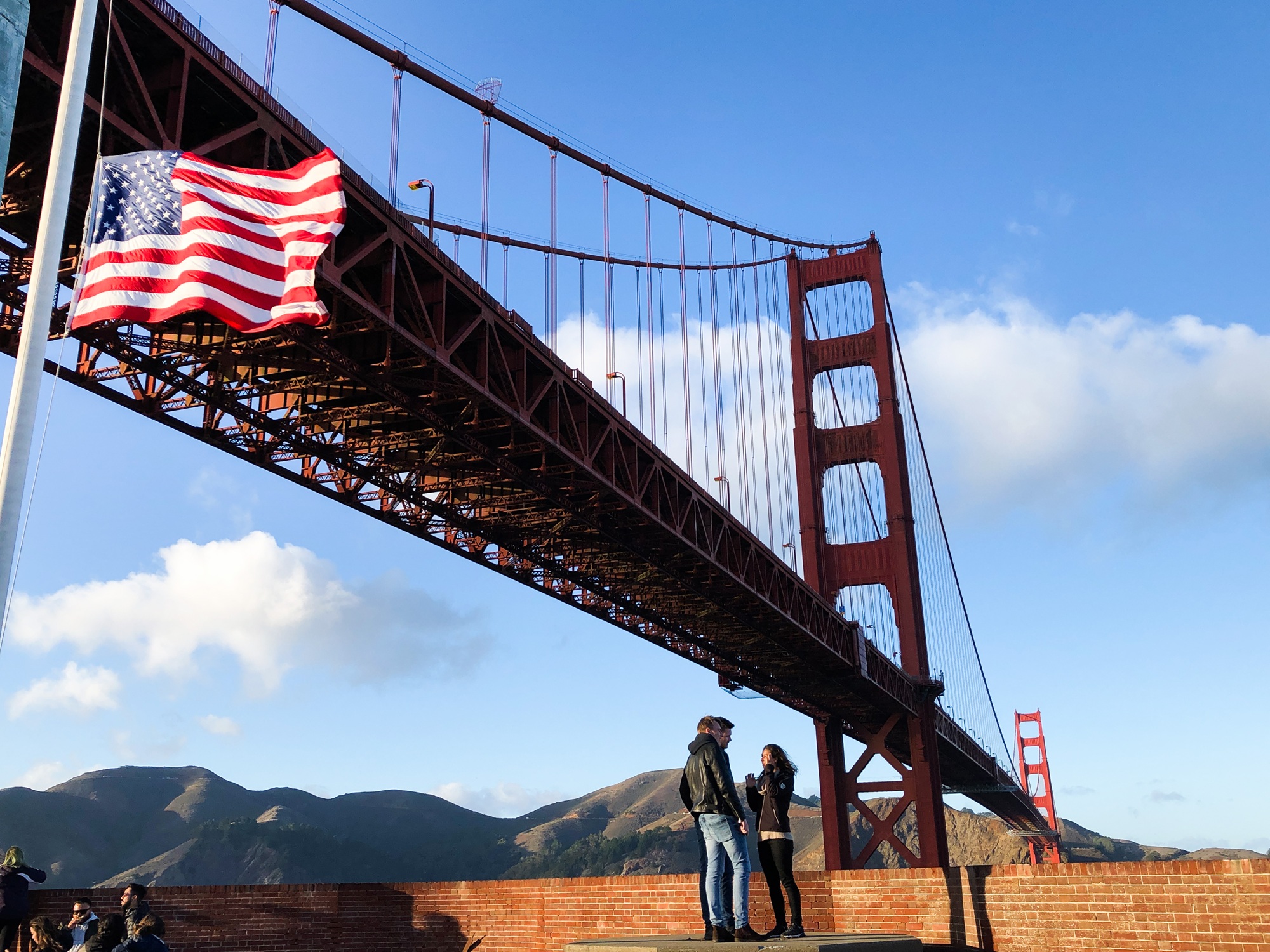
"caption": "Visitors walk on the roof of Fort Point beneath the towering Golden Gate Bridge on Dec. 1, 2018, in San Francisco, California. The Golden Gate National Parks Conservancy says it’s funding a “final hurrah” for the site’s Black Gold exhibit.",
"credit": "Paul Kuroda/San Francisco Chronicle via Getty Images",
"altTag": null,
"description": null,
"imgSizes": {
"thumbnail": {
"file": "https://cdn.kqed.org/wp-content/uploads/sites/10/2025/10/FortPointSFGetty-160x120.jpg",
"width": 160,
"height": 120,
"mimeType": "image/jpeg"
},
"1536x1536": {
"file": "https://cdn.kqed.org/wp-content/uploads/sites/10/2025/10/FortPointSFGetty-1536x1152.jpg",
"width": 1536,
"height": 1152,
"mimeType": "image/jpeg"
},
"post-thumbnail": {
"file": "https://cdn.kqed.org/wp-content/uploads/sites/10/2025/10/FortPointSFGetty-672x372.jpg",
"width": 672,
"height": 372,
"mimeType": "image/jpeg"
},
"twentyfourteen-full-width": {
"file": "https://cdn.kqed.org/wp-content/uploads/sites/10/2025/10/FortPointSFGetty-1038x576.jpg",
"width": 1038,
"height": 576,
"mimeType": "image/jpeg"
},
"kqedFullSize": {
"file": "https://cdn.kqed.org/wp-content/uploads/sites/10/2025/10/FortPointSFGetty.jpg",
"width": 2000,
"height": 1500
}
},
"isLoading": false,
"fetchFailed": false
},
"news_12048570": {
"type": "attachments",
"id": "news_12048570",
"meta": {
"index": "attachments_1716263798",
"site": "news",
"id": "12048570",
"found": true
},
"title": "250717-OutpostMeadows-09-BL_qed",
"publishDate": 1752785607,
"status": "inherit",
"parent": 0,
"modified": 1752785660,
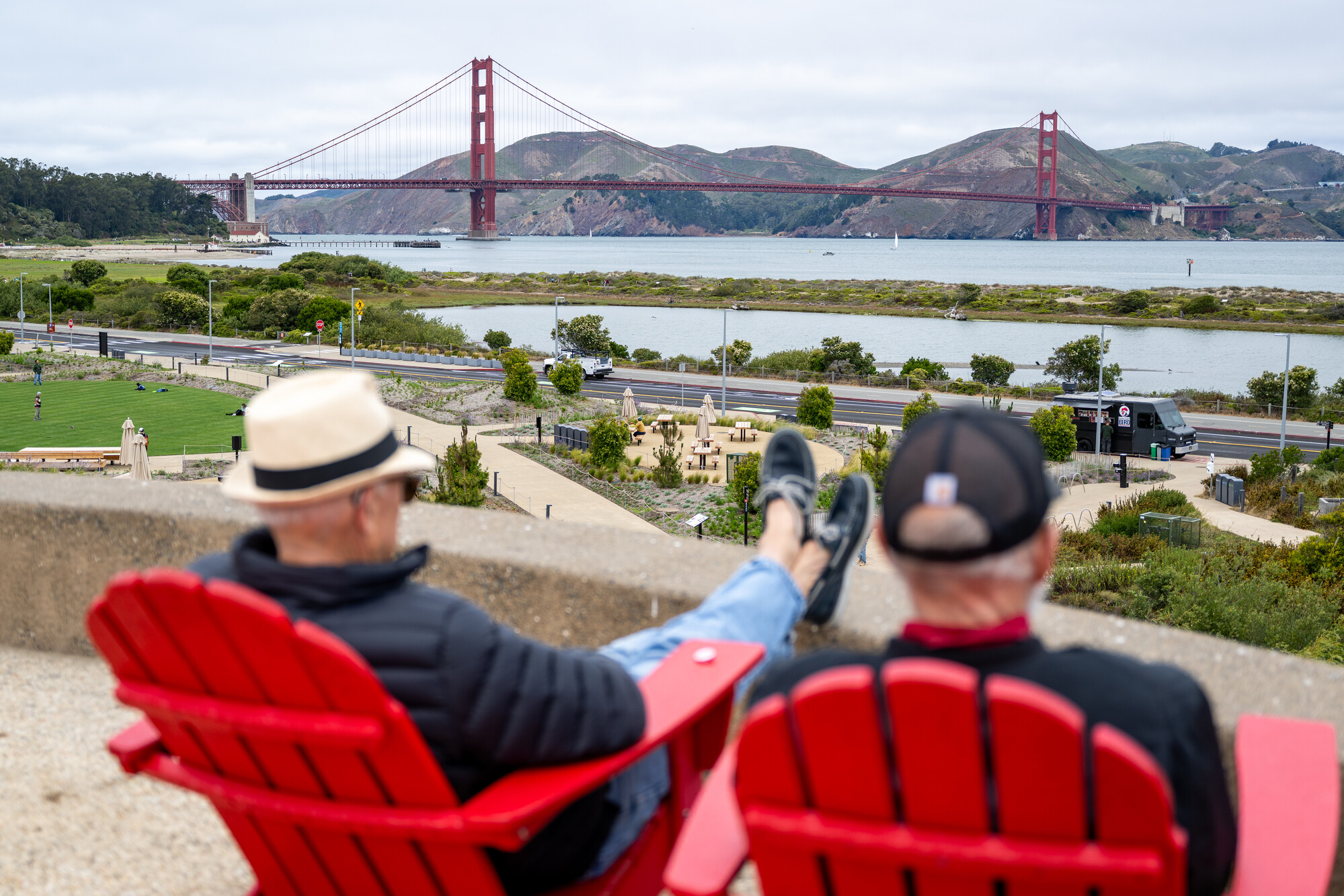
"caption": "Visitors sit at the Presidio Tunnel Tops overlooking Outpost Meadow in the Presidio of San Francisco on July 17, 2025, as the new park officially opens to the public. The expansion offers picnic areas, BBQ grills, and views of the Golden Gate Bridge as part of the Tunnel Tops project.",
"credit": "Beth LaBerge/KQED",
"altTag": null,
"description": null,
"imgSizes": {
"thumbnail": {
"file": "https://cdn.kqed.org/wp-content/uploads/sites/10/2025/07/250717-OutpostMeadows-09-BL_qed-160x107.jpg",
"width": 160,
"height": 107,
"mimeType": "image/jpeg"
},
"1536x1536": {
"file": "https://cdn.kqed.org/wp-content/uploads/sites/10/2025/07/250717-OutpostMeadows-09-BL_qed-1536x1024.jpg",
"width": 1536,
"height": 1024,
"mimeType": "image/jpeg"
},
"post-thumbnail": {
"file": "https://cdn.kqed.org/wp-content/uploads/sites/10/2025/07/250717-OutpostMeadows-09-BL_qed-672x372.jpg",
"width": 672,
"height": 372,
"mimeType": "image/jpeg"
},
"twentyfourteen-full-width": {
"file": "https://cdn.kqed.org/wp-content/uploads/sites/10/2025/07/250717-OutpostMeadows-09-BL_qed-1038x576.jpg",
"width": 1038,
"height": 576,
"mimeType": "image/jpeg"
},
"kqedFullSize": {
"file": "https://cdn.kqed.org/wp-content/uploads/sites/10/2025/07/250717-OutpostMeadows-09-BL_qed.jpg",
"width": 1999,
"height": 1333
}
},
"isLoading": false,
"fetchFailed": false
},
"news_12045890": {
"type": "attachments",
"id": "news_12045890",
"meta": {
"index": "attachments_1716263798",
"site": "news",
"id": "12045890",
"found": true
},
"title": "ggbridge_003_qed",
"publishDate": 1750872107,
"status": "inherit",
"parent": 12045887,
"modified": 1750872136,
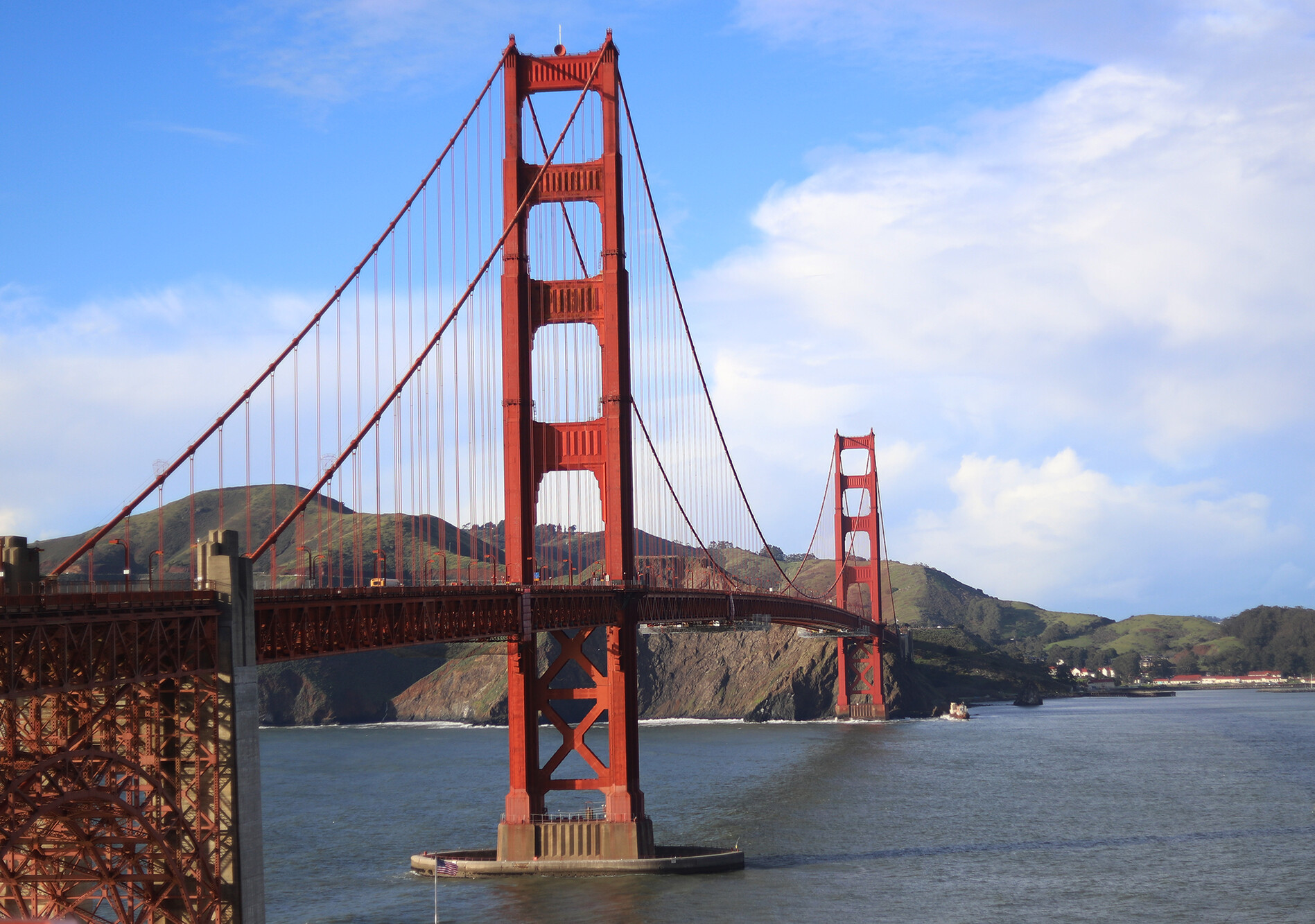
"caption": "The Golden Gate Bridge in San Francisco on Feb. 15, 2019.",
"credit": "Lindsey Moore/KQED",
"altTag": null,
"description": null,
"imgSizes": {
"thumbnail": {
"file": "https://cdn.kqed.org/wp-content/uploads/sites/10/2025/06/ggbridge_003_qed-160x112.jpg",
"width": 160,
"height": 112,
"mimeType": "image/jpeg"
},
"1536x1536": {
"file": "https://cdn.kqed.org/wp-content/uploads/sites/10/2025/06/ggbridge_003_qed-1536x1079.jpg",
"width": 1536,
"height": 1079,
"mimeType": "image/jpeg"
},
"post-thumbnail": {
"file": "https://cdn.kqed.org/wp-content/uploads/sites/10/2025/06/ggbridge_003_qed-672x372.jpg",
"width": 672,
"height": 372,
"mimeType": "image/jpeg"
},
"twentyfourteen-full-width": {
"file": "https://cdn.kqed.org/wp-content/uploads/sites/10/2025/06/ggbridge_003_qed-1038x576.jpg",
"width": 1038,
"height": 576,
"mimeType": "image/jpeg"
},
"kqedFullSize": {
"file": "https://cdn.kqed.org/wp-content/uploads/sites/10/2025/06/ggbridge_003_qed.jpg",
"width": 1897,
"height": 1333
}
},
"isLoading": false,
"fetchFailed": false
},
"news_12017830": {
"type": "attachments",
"id": "news_12017830",
"meta": {
"index": "attachments_1716263798",
"site": "news",
"id": "12017830",
"found": true
},
"title": "20241211_RichmondBridgeBike_GC-14",
"publishDate": 1733963589,
"status": "inherit",
"parent": 0,
"modified": 1742600769,
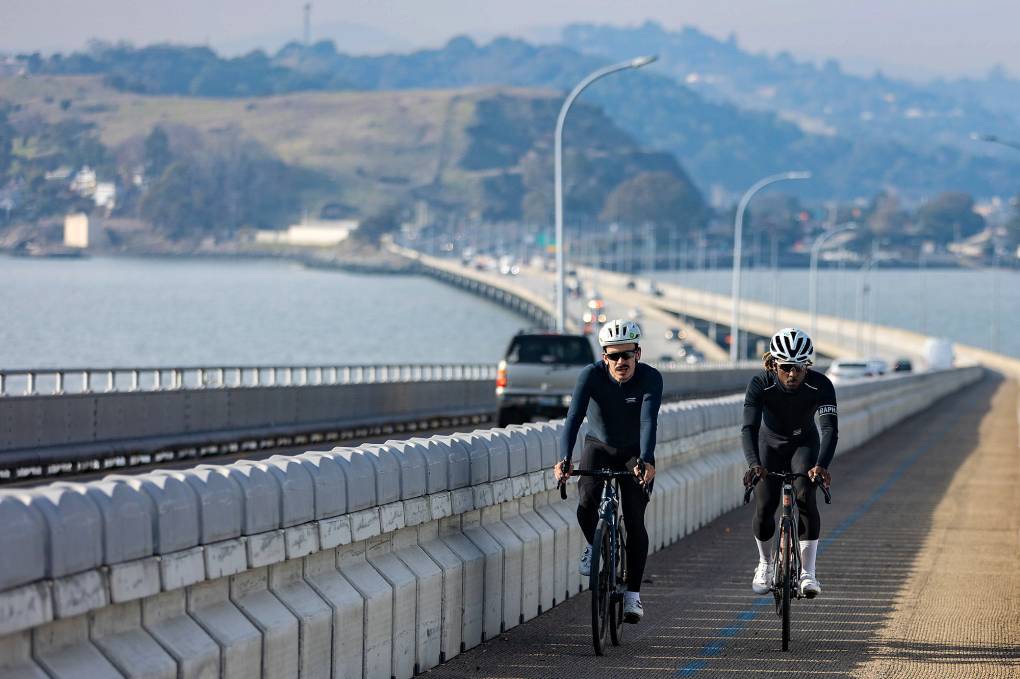
"caption": "Cyclists ride on the Richmond-San Rafael Bridge Trail, a roughly 6-mile bicycle and pedestrian path, located on the upper deck of the bridge, on Dec. 11, 2024.",
"credit": "Gina Castro/KQED",
"altTag": null,
"description": null,
"imgSizes": {
"medium": {
"file": "https://cdn.kqed.org/wp-content/uploads/sites/10/2024/12/20241211_RichmondBridgeBike_GC-14-800x533.jpg",
"width": 800,
"height": 533,
"mimeType": "image/jpeg"
},
"large": {
"file": "https://cdn.kqed.org/wp-content/uploads/sites/10/2024/12/20241211_RichmondBridgeBike_GC-14-1020x679.jpg",
"width": 1020,
"height": 679,
"mimeType": "image/jpeg"
},
"thumbnail": {
"file": "https://cdn.kqed.org/wp-content/uploads/sites/10/2024/12/20241211_RichmondBridgeBike_GC-14-160x107.jpg",
"width": 160,
"height": 107,
"mimeType": "image/jpeg"
},
"1536x1536": {
"file": "https://cdn.kqed.org/wp-content/uploads/sites/10/2024/12/20241211_RichmondBridgeBike_GC-14-1536x1023.jpg",
"width": 1536,
"height": 1023,
"mimeType": "image/jpeg"
},
"post-thumbnail": {
"file": "https://cdn.kqed.org/wp-content/uploads/sites/10/2024/12/20241211_RichmondBridgeBike_GC-14-672x372.jpg",
"width": 672,
"height": 372,
"mimeType": "image/jpeg"
},
"twentyfourteen-full-width": {
"file": "https://cdn.kqed.org/wp-content/uploads/sites/10/2024/12/20241211_RichmondBridgeBike_GC-14-1038x576.jpg",
"width": 1038,
"height": 576,
"mimeType": "image/jpeg"
},
"full-width": {
"file": "https://cdn.kqed.org/wp-content/uploads/sites/10/2024/12/20241211_RichmondBridgeBike_GC-14-1920x1279.jpg",
"width": 1920,
"height": 1279,
"mimeType": "image/jpeg"
},
"kqedFullSize": {
"file": "https://cdn.kqed.org/wp-content/uploads/sites/10/2024/12/20241211_RichmondBridgeBike_GC-14.jpg",
"width": 2000,
"height": 1332
}
},
"isLoading": false,
"fetchFailed": false
},
"news_12011174": {
"type": "attachments",
"id": "news_12011174",
"meta": {
"index": "attachments_1716263798",
"site": "news",
"id": "12011174",
"found": true
},
"title": "US-PALESTINIANS-ISRAEL-CONFLICT",
"publishDate": 1729884424,
"status": "inherit",
"parent": 12011165,
"modified": 1729884475,
"caption": "Pro-Palestinian demonstrators blocked San Francisco's Golden Gate Bridge on April 15, 2024, completely halting traffic for hours as part of a coordinated day of action against Israel's war in Gaza.",
"credit": "Paul Kuroda / AFP via Getty Images",
"altTag": null,
"description": null,
"imgSizes": {
"medium": {
"file": "https://cdn.kqed.org/wp-content/uploads/sites/10/2024/10/GGBridgeProtestAprilGetty2-800x533.jpg",
"width": 800,
"height": 533,
"mimeType": "image/jpeg"
},
"large": {
"file": "https://cdn.kqed.org/wp-content/uploads/sites/10/2024/10/GGBridgeProtestAprilGetty2-1020x680.jpg",
"width": 1020,
"height": 680,
"mimeType": "image/jpeg"
},
"thumbnail": {
"file": "https://cdn.kqed.org/wp-content/uploads/sites/10/2024/10/GGBridgeProtestAprilGetty2-160x107.jpg",
"width": 160,
"height": 107,
"mimeType": "image/jpeg"
},
"1536x1536": {
"file": "https://cdn.kqed.org/wp-content/uploads/sites/10/2024/10/GGBridgeProtestAprilGetty2-1536x1024.jpg",
"width": 1536,
"height": 1024,
"mimeType": "image/jpeg"
},
"post-thumbnail": {
"file": "https://cdn.kqed.org/wp-content/uploads/sites/10/2024/10/GGBridgeProtestAprilGetty2-672x372.jpg",
"width": 672,
"height": 372,
"mimeType": "image/jpeg"
},
"twentyfourteen-full-width": {
"file": "https://cdn.kqed.org/wp-content/uploads/sites/10/2024/10/GGBridgeProtestAprilGetty2-1038x576.jpg",
"width": 1038,
"height": 576,
"mimeType": "image/jpeg"
},
"full-width": {
"file": "https://cdn.kqed.org/wp-content/uploads/sites/10/2024/10/GGBridgeProtestAprilGetty2-1920x1280.jpg",
"width": 1920,
"height": 1280,
"mimeType": "image/jpeg"
},
"kqedFullSize": {
"file": "https://cdn.kqed.org/wp-content/uploads/sites/10/2024/10/GGBridgeProtestAprilGetty2.jpg",
"width": 2000,
"height": 1333
}
},
"isLoading": false,
"fetchFailed": false
},
"news_12004878": {
"type": "attachments",
"id": "news_12004878",
"meta": {
"index": "attachments_1716263798",
"site": "news",
"id": "12004878",
"found": true
},
"title": "240415-880GazaProtest-015-BL_qed",
"publishDate": 1726514367,
"status": "inherit",
"parent": 12004860,
"modified": 1726514383,
"caption": "Demonstrators shut down the southbound lanes of I-880 on the morning of April 15, 2024, in West Oakland. The protesters, engaging in a multi-city 'economic blockade in solidarity with Palestine,' marched from the West Oakland BART station to the 7th Street on-ramp and onto the freeway.",
"credit": "Beth LaBerge/KQED",
"altTag": null,
"description": null,
"imgSizes": {
"medium": {
"file": "https://cdn.kqed.org/wp-content/uploads/sites/10/2024/09/240415-880GazaProtest-015-BL_qed-800x533.jpg",
"width": 800,
"height": 533,
"mimeType": "image/jpeg"
},
"large": {
"file": "https://cdn.kqed.org/wp-content/uploads/sites/10/2024/09/240415-880GazaProtest-015-BL_qed-1020x680.jpg",
"width": 1020,
"height": 680,
"mimeType": "image/jpeg"
},
"thumbnail": {
"file": "https://cdn.kqed.org/wp-content/uploads/sites/10/2024/09/240415-880GazaProtest-015-BL_qed-160x107.jpg",
"width": 160,
"height": 107,
"mimeType": "image/jpeg"
},
"1536x1536": {
"file": "https://cdn.kqed.org/wp-content/uploads/sites/10/2024/09/240415-880GazaProtest-015-BL_qed-1536x1024.jpg",
"width": 1536,
"height": 1024,
"mimeType": "image/jpeg"
},
"post-thumbnail": {
"file": "https://cdn.kqed.org/wp-content/uploads/sites/10/2024/09/240415-880GazaProtest-015-BL_qed-672x372.jpg",
"width": 672,
"height": 372,
"mimeType": "image/jpeg"
},
"twentyfourteen-full-width": {
"file": "https://cdn.kqed.org/wp-content/uploads/sites/10/2024/09/240415-880GazaProtest-015-BL_qed-1038x576.jpg",
"width": 1038,
"height": 576,
"mimeType": "image/jpeg"
},
"full-width": {
"file": "https://cdn.kqed.org/wp-content/uploads/sites/10/2024/09/240415-880GazaProtest-015-BL_qed-1920x1280.jpg",
"width": 1920,
"height": 1280,
"mimeType": "image/jpeg"
},
"kqedFullSize": {
"file": "https://cdn.kqed.org/wp-content/uploads/sites/10/2024/09/240415-880GazaProtest-015-BL_qed.jpg",
"width": 2000,
"height": 1333
}
},
"isLoading": false,
"fetchFailed": false
},
"news_11893767": {
"type": "attachments",
"id": "news_11893767",
"meta": {
"index": "attachments_1716263798",
"site": "news",
"id": "11893767",
"found": true
},
"parent": 11893685,
"imgSizes": {
"thumbnail": {
"file": "https://ww2.kqed.org/app/uploads/sites/10/2021/10/eric-carlson-xVvj8yvkWvo-unsplash_hauntedquiz-1020x574-1-160x90.jpg",
"width": 160,
"mimeType": "image/jpeg",
"height": 90
},
"post-thumbnail": {
"file": "https://ww2.kqed.org/app/uploads/sites/10/2021/10/eric-carlson-xVvj8yvkWvo-unsplash_hauntedquiz-1020x574-1-672x372.jpg",
"width": 672,
"mimeType": "image/jpeg",
"height": 372
},
"kqedFullSize": {
"file": "https://ww2.kqed.org/app/uploads/sites/10/2021/10/eric-carlson-xVvj8yvkWvo-unsplash_hauntedquiz-1020x574-1.jpg",
"width": 1020,
"height": 574
},
"medium": {
"file": "https://ww2.kqed.org/app/uploads/sites/10/2021/10/eric-carlson-xVvj8yvkWvo-unsplash_hauntedquiz-1020x574-1-800x450.jpg",
"width": 800,
"mimeType": "image/jpeg",
"height": 450
}
},
"publishDate": 1635269674,
"modified": 1635269691,
"caption": "Fog hovers over the Golden Gate Bridge at twilight. ",
"description": null,
"title": "eric-carlson-xVvj8yvkWvo-unsplash_hauntedquiz-1020x574",
"credit": "Eric Carlson/Unsplash",
"status": "inherit",
"altTag": null,
"isLoading": false,
"fetchFailed": false
},
"news_12000887": {
"type": "attachments",
"id": "news_12000887",
"meta": {
"index": "attachments_1716263798",
"site": "news",
"id": "12000887",
"found": true
},
"title": "240415-880GazaProtest-020-BL_qed",
"publishDate": 1724174222,
"status": "inherit",
"parent": 12000881,
"modified": 1729648414,
"caption": "Demonstrators shut down the southbound lanes of I-880 on the morning of April 15, 2024, in West Oakland. The protesters, engaging in an economic blockade in solidarity with Palestine, marched from the West Oakland BART Station to the freeway.",
"credit": "Beth LaBerge/KQED",
"altTag": null,
"description": null,
"imgSizes": {
"medium": {
"file": "https://cdn.kqed.org/wp-content/uploads/sites/10/2024/08/240415-880GazaProtest-020-BL_qed-800x533.jpg",
"width": 800,
"height": 533,
"mimeType": "image/jpeg"
},
"large": {
"file": "https://cdn.kqed.org/wp-content/uploads/sites/10/2024/08/240415-880GazaProtest-020-BL_qed-1020x680.jpg",
"width": 1020,
"height": 680,
"mimeType": "image/jpeg"
},
"thumbnail": {
"file": "https://cdn.kqed.org/wp-content/uploads/sites/10/2024/08/240415-880GazaProtest-020-BL_qed-160x107.jpg",
"width": 160,
"height": 107,
"mimeType": "image/jpeg"
},
"1536x1536": {
"file": "https://cdn.kqed.org/wp-content/uploads/sites/10/2024/08/240415-880GazaProtest-020-BL_qed-1536x1024.jpg",
"width": 1536,
"height": 1024,
"mimeType": "image/jpeg"
},
"post-thumbnail": {
"file": "https://cdn.kqed.org/wp-content/uploads/sites/10/2024/08/240415-880GazaProtest-020-BL_qed-672x372.jpg",
"width": 672,
"height": 372,
"mimeType": "image/jpeg"
},
"twentyfourteen-full-width": {
"file": "https://cdn.kqed.org/wp-content/uploads/sites/10/2024/08/240415-880GazaProtest-020-BL_qed-1038x576.jpg",
"width": 1038,
"height": 576,
"mimeType": "image/jpeg"
},
"full-width": {
"file": "https://cdn.kqed.org/wp-content/uploads/sites/10/2024/08/240415-880GazaProtest-020-BL_qed-1920x1280.jpg",
"width": 1920,
"height": 1280,
"mimeType": "image/jpeg"
},
"kqedFullSize": {
"file": "https://cdn.kqed.org/wp-content/uploads/sites/10/2024/08/240415-880GazaProtest-020-BL_qed.jpg",
"width": 2000,
"height": 1333
}
},
"isLoading": false,
"fetchFailed": false
},
"news_11982969": {
"type": "attachments",
"id": "news_11982969",
"meta": {
"index": "attachments_1716263798",
"site": "news",
"id": "11982969",
"found": true
},
"parent": 11982940,
"imgSizes": {
"twentyfourteen-full-width": {
"file": "https://cdn.kqed.org/wp-content/uploads/sites/10/2024/04/DSC_0201-1038x576.jpg",
"width": 1038,
"mimeType": "image/jpeg",
"height": 576
},
"thumbnail": {
"file": "https://cdn.kqed.org/wp-content/uploads/sites/10/2024/04/DSC_0201-160x107.jpg",
"width": 160,
"mimeType": "image/jpeg",
"height": 107
},
"post-thumbnail": {
"file": "https://cdn.kqed.org/wp-content/uploads/sites/10/2024/04/DSC_0201-672x372.jpg",
"width": 672,
"mimeType": "image/jpeg",
"height": 372
},
"kqedFullSize": {
"file": "https://cdn.kqed.org/wp-content/uploads/sites/10/2024/04/DSC_0201.jpg",
"width": 1620,
"height": 1080
},
"large": {
"file": "https://cdn.kqed.org/wp-content/uploads/sites/10/2024/04/DSC_0201-1020x680.jpg",
"width": 1020,
"mimeType": "image/jpeg",
"height": 680
},
"1536x1536": {
"file": "https://cdn.kqed.org/wp-content/uploads/sites/10/2024/04/DSC_0201-1536x1024.jpg",
"width": 1536,
"mimeType": "image/jpeg",
"height": 1024
},
"medium": {
"file": "https://cdn.kqed.org/wp-content/uploads/sites/10/2024/04/DSC_0201-800x533.jpg",
"width": 800,
"mimeType": "image/jpeg",
"height": 533
}
},
"publishDate": 1713197211,
"modified": 1713197315,
"caption": "Protesters stand on the roadway of southbound I-880 in West Oakland Monday morning. ",
"description": null,
"title": "DSC_0201",
"credit": "Beth LaBerge/KQED",
"status": "inherit",
"altTag": null,
"isLoading": false,
"fetchFailed": false
},
"news_11988324": {
"type": "attachments",
"id": "news_11988324",
"meta": {
"index": "attachments_1716263798",
"site": "news",
"id": "11988324",
"found": true
},
"title": "240530-BrownPelicans-10-BL",
"publishDate": 1717108347,
"status": "inherit",
"parent": 0,
"modified": 1717115100,
"caption": "International Bird Rescue members released eight rehabilitated brown pelicans, the first group to be returned to the wild, at Fort Baker in Sausalito on May 30, 2024, after they had been treated for starvation.",
"credit": "Beth LaBerge/KQED",
"altTag": null,
"description": null,
"imgSizes": {
"medium": {
"file": "https://cdn.kqed.org/wp-content/uploads/sites/10/2024/05/240530-BrownPelicans-10-BL-800x533.jpg",
"width": 800,
"height": 533,
"mimeType": "image/jpeg"
},
"large": {
"file": "https://cdn.kqed.org/wp-content/uploads/sites/10/2024/05/240530-BrownPelicans-10-BL-1020x680.jpg",
"width": 1020,
"height": 680,
"mimeType": "image/jpeg"
},
"thumbnail": {
"file": "https://cdn.kqed.org/wp-content/uploads/sites/10/2024/05/240530-BrownPelicans-10-BL-160x107.jpg",
"width": 160,
"height": 107,
"mimeType": "image/jpeg"
},
"1536x1536": {
"file": "https://cdn.kqed.org/wp-content/uploads/sites/10/2024/05/240530-BrownPelicans-10-BL-1536x1024.jpg",
"width": 1536,
"height": 1024,
"mimeType": "image/jpeg"
},
"post-thumbnail": {
"file": "https://cdn.kqed.org/wp-content/uploads/sites/10/2024/05/240530-BrownPelicans-10-BL-672x372.jpg",
"width": 672,
"height": 372,
"mimeType": "image/jpeg"
},
"twentyfourteen-full-width": {
"file": "https://cdn.kqed.org/wp-content/uploads/sites/10/2024/05/240530-BrownPelicans-10-BL-1038x576.jpg",
"width": 1038,
"height": 576,
"mimeType": "image/jpeg"
},
"full-width": {
"file": "https://cdn.kqed.org/wp-content/uploads/sites/10/2024/05/240530-BrownPelicans-10-BL-1920x1280.jpg",
"width": 1920,
"height": 1280,
"mimeType": "image/jpeg"
},
"kqedFullSize": {
"file": "https://cdn.kqed.org/wp-content/uploads/sites/10/2024/05/240530-BrownPelicans-10-BL.jpg",
"width": 2000,
"height": 1333
}
},
"isLoading": false,
"fetchFailed": false
},
"news_11975868": {
"type": "attachments",
"id": "news_11975868",
"meta": {
"index": "attachments_1716263798",
"site": "news",
"id": "11975868",
"found": true
},
"title": "240214-GOLDEN GATE BRIDGE PROTEST-JCL-01-KQED",
"publishDate": 1707928417,
"status": "inherit",
"parent": 11984807,
"modified": 1762559079,
"caption": "Pro-Palestinian protesters calling for a ceasefire in Gaza briefly block traffic on the Golden Gate Bridge on the morning of Feb. 14, 2024.",
"credit": "Juan Carlos Lara/KQED",
"altTag": "People hold up a banner that reads \"Stop Arming Israel\" across the Golden Gate Bridge, blocking traffic.",
"description": null,
"imgSizes": {
"medium": {
"file": "https://cdn.kqed.org/wp-content/uploads/sites/10/2024/02/240214-GOLDEN-GATE-BRIDGE-PROTEST-JCL-01-KQED-800x533.jpg",
"width": 800,
"height": 533,
"mimeType": "image/jpeg"
},
"large": {
"file": "https://cdn.kqed.org/wp-content/uploads/sites/10/2024/02/240214-GOLDEN-GATE-BRIDGE-PROTEST-JCL-01-KQED-1020x680.jpg",
"width": 1020,
"height": 680,
"mimeType": "image/jpeg"
},
"thumbnail": {
"file": "https://cdn.kqed.org/wp-content/uploads/sites/10/2024/02/240214-GOLDEN-GATE-BRIDGE-PROTEST-JCL-01-KQED-160x107.jpg",
"width": 160,
"height": 107,
"mimeType": "image/jpeg"
},
"1536x1536": {
"file": "https://cdn.kqed.org/wp-content/uploads/sites/10/2024/02/240214-GOLDEN-GATE-BRIDGE-PROTEST-JCL-01-KQED-1536x1024.jpg",
"width": 1536,
"height": 1024,
"mimeType": "image/jpeg"
},
"post-thumbnail": {
"file": "https://cdn.kqed.org/wp-content/uploads/sites/10/2024/02/240214-GOLDEN-GATE-BRIDGE-PROTEST-JCL-01-KQED-672x372.jpg",
"width": 672,
"height": 372,
"mimeType": "image/jpeg"
},
"twentyfourteen-full-width": {
"file": "https://cdn.kqed.org/wp-content/uploads/sites/10/2024/02/240214-GOLDEN-GATE-BRIDGE-PROTEST-JCL-01-KQED-1038x576.jpg",
"width": 1038,
"height": 576,
"mimeType": "image/jpeg"
},
"full-width": {
"file": "https://cdn.kqed.org/wp-content/uploads/sites/10/2024/02/240214-GOLDEN-GATE-BRIDGE-PROTEST-JCL-01-KQED-1920x1280.jpg",
"width": 1920,
"height": 1280,
"mimeType": "image/jpeg"
},
"kqedFullSize": {
"file": "https://cdn.kqed.org/wp-content/uploads/sites/10/2024/02/240214-GOLDEN-GATE-BRIDGE-PROTEST-JCL-01-KQED.jpg",
"width": 2000,
"height": 1333
}
},
"isLoading": false,
"fetchFailed": false
},
"news_11971563": {
"type": "attachments",
"id": "news_11971563",
"meta": {
"index": "attachments_1716263798",
"site": "news",
"id": "11971563",
"found": true
},
"parent": 11971560,
"imgSizes": {
"twentyfourteen-full-width": {
"file": "https://cdn.kqed.org/wp-content/uploads/sites/10/2024/01/AP23355641681751-1038x576.jpg",
"width": 1038,
"mimeType": "image/jpeg",
"height": 576
},
"thumbnail": {
"file": "https://cdn.kqed.org/wp-content/uploads/sites/10/2024/01/AP23355641681751-160x107.jpg",
"width": 160,
"mimeType": "image/jpeg",
"height": 107
},
"post-thumbnail": {
"file": "https://cdn.kqed.org/wp-content/uploads/sites/10/2024/01/AP23355641681751-672x372.jpg",
"width": 672,
"mimeType": "image/jpeg",
"height": 372
},
"kqedFullSize": {
"file": "https://cdn.kqed.org/wp-content/uploads/sites/10/2024/01/AP23355641681751-scaled.jpg",
"width": 2560,
"height": 1707
},
"2048x2048": {
"file": "https://cdn.kqed.org/wp-content/uploads/sites/10/2024/01/AP23355641681751-2048x1365.jpg",
"width": 2048,
"mimeType": "image/jpeg",
"height": 1365
},
"large": {
"file": "https://cdn.kqed.org/wp-content/uploads/sites/10/2024/01/AP23355641681751-1020x680.jpg",
"width": 1020,
"mimeType": "image/jpeg",
"height": 680
},
"1536x1536": {
"file": "https://cdn.kqed.org/wp-content/uploads/sites/10/2024/01/AP23355641681751-1536x1024.jpg",
"width": 1536,
"mimeType": "image/jpeg",
"height": 1024
},
"full-width": {
"file": "https://cdn.kqed.org/wp-content/uploads/sites/10/2024/01/AP23355641681751-1920x1280.jpg",
"width": 1920,
"mimeType": "image/jpeg",
"height": 1280
},
"medium": {
"file": "https://cdn.kqed.org/wp-content/uploads/sites/10/2024/01/AP23355641681751-800x533.jpg",
"width": 800,
"mimeType": "image/jpeg",
"height": 533
}
},
"publishDate": 1704323709,
"modified": 1704323774,
"caption": "A suicide deterrent net is seen under construction on the Golden Gate Bridge in San Francisco, Wednesday, Dec. 6, 2023. The barrier at the bridge is near completion more than a decade after officials approved it.",
"description": null,
"title": "Golden Gate Bridge Suicide Net",
"credit": "Eric Risberg/AP Photo",
"status": "inherit",
"altTag": "A view of a red bridge with safety nets.",
"isLoading": false,
"fetchFailed": false
}
},
"audioPlayerReducer": {
"postId": "stream_live",
"isPaused": true,
"isPlaying": false,
"pfsActive": false,
"pledgeModalIsOpen": true,
"playerDrawerIsOpen": false,
"liveAudioPlayStartedAt": 0,
"liveAudioPlayContext": ""
},
"authorsReducer": {
"danbrekke": {
"type": "authors",
"id": "222",
"meta": {
"index": "authors_1716337520",
"id": "222",
"found": true
},
"name": "Dan Brekke",
"firstName": "Dan",
"lastName": "Brekke",
"slug": "danbrekke",
"email": "dbrekke@kqed.org",
"display_author_email": true,
"staff_mastheads": [
"news",
"science"
],
"title": "KQED Editor and Reporter",
"bio": "Dan Brekke is a reporter and editor for KQED News, responsible for coverage of topics ranging from California water issues to the Bay Area's transportation challenges. In a newsroom career that began in Chicago in 1972, Dan has worked for \u003cem>The San Francisco Examiner,\u003c/em> Wired and TechTV and has been published in The New York Times, The New York Times Magazine, Business 2.0, Salon and elsewhere.\r\n\r\nSince joining KQED in 2007, Dan has reported, edited and produced both radio and online features and breaking news pieces. He has shared as both editor and reporter in four Society of Professional Journalists Norcal Excellence in Journalism awards and one Edward R. Murrow regional award. He was chosen for a spring 2017 residency at the Mesa Refuge to advance his research on California salmon.\r\n\r\nEmail Dan at: \u003ca href=\"mailto:dbrekke@kqed.org\">dbrekke@kqed.org\u003c/a>\r\n\r\n\u003cstrong>Twitter:\u003c/strong> \u003ca href=\"https://twitter.com/danbrekke\" rel=\"noopener noreferrer\">twitter.com/danbrekke\u003c/a>\r\n\u003cstrong>Facebook:\u003c/strong> \u003ca href=\"https://www.facebook.com/danbrekke\" rel=\"noopener noreferrer\">www.facebook.com/danbrekke\u003c/a>\r\n\u003cstrong>LinkedIn:\u003c/strong> \u003ca href=\"https://www.linkedin.com/in/danbrekke\" rel=\"noopener noreferrer\">www.linkedin.com/in/danbrekke\u003c/a>",
"avatar": "https://secure.gravatar.com/avatar/c8126230345efca3f7aa89b1a402be45?s=600&d=mm&r=g",
"twitter": "danbrekke",
"facebook": null,
"instagram": "https://www.instagram.com/dan.brekke/",
"linkedin": "https://www.linkedin.com/in/danbrekke/",
"sites": [
{
"site": "news",
"roles": [
"administrator",
"create_posts"
]
},
{
"site": "stateofhealth",
"roles": [
"editor"
]
},
{
"site": "science",
"roles": [
"editor"
]
},
{
"site": "quest",
"roles": [
"contributor"
]
},
{
"site": "food",
"roles": [
"contributor"
]
},
{
"site": "forum",
"roles": [
"contributor"
]
},
{
"site": "liveblog",
"roles": [
"editor"
]
}
],
"headData": {
"title": "Dan Brekke | KQED",
"description": "KQED Editor and Reporter",
"ogImgSrc": "https://secure.gravatar.com/avatar/c8126230345efca3f7aa89b1a402be45?s=600&d=mm&r=g",
"twImgSrc": "https://secure.gravatar.com/avatar/c8126230345efca3f7aa89b1a402be45?s=600&d=mm&r=g"
},
"isLoading": false,
"link": "/author/danbrekke"
},
"matthewgreen": {
"type": "authors",
"id": "1263",
"meta": {
"index": "authors_1716337520",
"id": "1263",
"found": true
},
"name": "Matthew Green",
"firstName": "Matthew",
"lastName": "Green",
"slug": "matthewgreen",
"email": "mgreen@kqed.org",
"display_author_email": false,
"staff_mastheads": [],
"title": "KQED Editor/Reporter",
"bio": "Matthew Green is a digital media producer for KQED News. He previously produced \u003ca href=\"http://www.kqed.org/lowdown\">The Lowdown\u003c/a>, KQED’s multimedia news education blog. Matthew's written for numerous Bay Area publications, including the Oakland Tribune and San Francisco Chronicle. He also taught journalism classes at Fremont High School in East Oakland.\r\n\r\nEmail: mgreen@kqed.org; Twitter: @MGreenKQED",
"avatar": "https://secure.gravatar.com/avatar/3bf498d1267ca02c8494f33d8cfc575e?s=600&d=blank&r=g",
"twitter": "MGreenKQED",
"facebook": null,
"instagram": null,
"linkedin": null,
"sites": [
{
"site": "news",
"roles": []
},
{
"site": "lowdown",
"roles": []
},
{
"site": "science",
"roles": []
},
{
"site": "education",
"roles": []
},
{
"site": "quest",
"roles": []
},
{
"site": "liveblog",
"roles": []
}
],
"headData": {
"title": "Matthew Green | KQED",
"description": "KQED Editor/Reporter",
"ogImgSrc": "https://secure.gravatar.com/avatar/3bf498d1267ca02c8494f33d8cfc575e?s=600&d=blank&r=g",
"twImgSrc": "https://secure.gravatar.com/avatar/3bf498d1267ca02c8494f33d8cfc575e?s=600&d=blank&r=g"
},
"isLoading": false,
"link": "/author/matthewgreen"
},
"ecruzguevarra": {
"type": "authors",
"id": "8654",
"meta": {
"index": "authors_1716337520",
"id": "8654",
"found": true
},
"name": "Ericka Cruz Guevarra",
"firstName": "Ericka",
"lastName": "Cruz Guevarra",
"slug": "ecruzguevarra",
"email": "ecruzguevarra@kqed.org",
"display_author_email": true,
"staff_mastheads": [
"news"
],
"title": "Producer, The Bay Podcast",
"bio": "Ericka Cruz Guevarra is host of \u003ca href=\"https://www.kqed.org/podcasts/thebay\">\u003cem>The Bay\u003c/em>\u003c/a> podcast at KQED. Before host, she was the show’s producer. Her work in that capacity includes a three-part reported series on policing in Vallejo, which won a 2020 excellence in journalism award from the Society of Professional Journalists. Ericka has worked as a breaking news reporter at Oregon Public Broadcasting, helped produce the Code Switch podcast, and was KQED’s inaugural Raul Ramirez Diversity Fund intern. She’s also an alumna of NPR’s Next Generation Radio program. Send her an email if you have strong feelings about whether Fairfield and Suisun City are the Bay. Ericka is represented by SAG-AFTRA.",
"avatar": "https://secure.gravatar.com/avatar/accefc1de4bafc7e234b69bcb9b6f6536c130fd84709bc3069ef11a78787e1bb?s=600&d=blank&r=g",
"twitter": "NotoriousECG",
"bluesky": null,
"facebook": null,
"instagram": null,
"linkedin": null,
"sites": [
{
"site": "arts",
"roles": [
"subscriber"
]
},
{
"site": "news",
"roles": [
"editor",
"manage_categories"
]
},
{
"site": "futureofyou",
"roles": [
"subscriber"
]
},
{
"site": "stateofhealth",
"roles": [
"subscriber"
]
},
{
"site": "science",
"roles": [
"editor"
]
},
{
"site": "forum",
"roles": [
"subscriber"
]
}
],
"headData": {
"title": "Ericka Cruz Guevarra | KQED",
"description": "Producer, The Bay Podcast",
"ogImgSrc": "https://secure.gravatar.com/avatar/accefc1de4bafc7e234b69bcb9b6f6536c130fd84709bc3069ef11a78787e1bb?s=600&d=blank&r=g",
"twImgSrc": "https://secure.gravatar.com/avatar/accefc1de4bafc7e234b69bcb9b6f6536c130fd84709bc3069ef11a78787e1bb?s=600&d=blank&r=g"
},
"isLoading": false,
"link": "/author/ecruzguevarra"
},
"lesleymcclurg": {
"type": "authors",
"id": "11229",
"meta": {
"index": "authors_1716337520",
"id": "11229",
"found": true
},
"name": "Lesley McClurg",
"firstName": "Lesley",
"lastName": "McClurg",
"slug": "lesleymcclurg",
"email": "lmcclurg@KQED.org",
"display_author_email": false,
"staff_mastheads": [
"news",
"science"
],
"title": "KQED Health Correspondent",
"bio": "Lesley McClurg is a health correspondent and fill-in host whose work is regularly rebroadcast on NPR and PBS programs. She’s earned multiple regional Emmy awards, a national and a regional Edward R. Murrow award, and was named Best Beat Reporter by the Association of Health Care Journalists. The Society of Professional Journalists has recognized her work several times, and the Society of Environmental Journalists spotlighted her coverage of California’s historic drought.\r\n\r\nBefore joining KQED in 2016, Lesley covered food and sustainability for Capital Public Radio, environmental issues for Colorado Public Radio, and reported for KUOW and KCTS 9 in Seattle. Away from the newsroom, she loves skiing with her daughter, mountain biking with her partner, and playing with Ollie, the family’s goldendoodle. On deadline, she runs almost entirely on chocolate chips.\r\n\r\n ",
"avatar": "https://secure.gravatar.com/avatar/bab49e972ea10c774fe0f5e29dba1722b158f7c0d58a360923d1389d380b2978?s=600&d=blank&r=g",
"twitter": "lesleywmcclurg",
"bluesky": null,
"facebook": null,
"instagram": null,
"linkedin": null,
"sites": [
{
"site": "arts",
"roles": [
"author"
]
},
{
"site": "news",
"roles": [
"editor"
]
},
{
"site": "futureofyou",
"roles": [
"editor"
]
},
{
"site": "stateofhealth",
"roles": [
"author"
]
},
{
"site": "science",
"roles": [
"editor"
]
},
{
"site": "quest",
"roles": [
"subscriber"
]
},
{
"site": "forum",
"roles": [
"administrator"
]
},
{
"site": "liveblog",
"roles": [
"author"
]
}
],
"headData": {
"title": "Lesley McClurg | KQED",
"description": "KQED Health Correspondent",
"ogImgSrc": "https://secure.gravatar.com/avatar/bab49e972ea10c774fe0f5e29dba1722b158f7c0d58a360923d1389d380b2978?s=600&d=blank&r=g",
"twImgSrc": "https://secure.gravatar.com/avatar/bab49e972ea10c774fe0f5e29dba1722b158f7c0d58a360923d1389d380b2978?s=600&d=blank&r=g"
},
"isLoading": false,
"link": "/author/lesleymcclurg"
},
"amontecillo": {
"type": "authors",
"id": "11649",
"meta": {
"index": "authors_1716337520",
"id": "11649",
"found": true
},
"name": "Alan Montecillo",
"firstName": "Alan",
"lastName": "Montecillo",
"slug": "amontecillo",
"email": "amontecillo@kqed.org",
"display_author_email": false,
"staff_mastheads": [
"news"
],
"title": "KQED Contributor",
"bio": "Alan Montecillo is the senior editor of \u003cem>\u003ca href=\"http://kqed.org/thebay\">The Bay\u003c/a>, \u003c/em> KQED's local news podcast. Before moving to the Bay Area, he worked as a senior talk show producer for WILL in Champaign-Urbana, Illinois and at Oregon Public Broadcasting in Portland, Oregon. He has won journalism awards from the Society of Professional Journalists Northern California, the Public Media Journalists Association, The Signal Awards, and has also received a regional Edward R. Murrow award. Alan is a Filipino American from Hong Kong and a graduate of Reed College.",
"avatar": "https://secure.gravatar.com/avatar/268f53a2066899ea9efdd8a5900218b17c822d9862cbc9326cccec53ef41d349?s=600&d=blank&r=g",
"twitter": "alanmontecillo",
"bluesky": null,
"facebook": null,
"instagram": null,
"linkedin": null,
"sites": [
{
"site": "",
"roles": [
"editor"
]
},
{
"site": "news",
"roles": [
"editor",
"manage_categories"
]
}
],
"headData": {
"title": "Alan Montecillo | KQED",
"description": "KQED Contributor",
"ogImgSrc": "https://secure.gravatar.com/avatar/268f53a2066899ea9efdd8a5900218b17c822d9862cbc9326cccec53ef41d349?s=600&d=blank&r=g",
"twImgSrc": "https://secure.gravatar.com/avatar/268f53a2066899ea9efdd8a5900218b17c822d9862cbc9326cccec53ef41d349?s=600&d=blank&r=g"
},
"isLoading": false,
"link": "/author/amontecillo"
},
"jlara": {
"type": "authors",
"id": "11761",
"meta": {
"index": "authors_1716337520",
"id": "11761",
"found": true
},
"name": "Juan Carlos Lara",
"firstName": "Juan Carlos",
"lastName": "Lara",
"slug": "jlara",
"email": "jlara@kqed.org",
"display_author_email": false,
"staff_mastheads": [],
"title": "KQED Contributor",
"bio": null,
"avatar": "https://secure.gravatar.com/avatar/19e2052b9b05657c5ff2af2121846e9c?s=600&d=blank&r=g",
"twitter": null,
"facebook": null,
"instagram": null,
"linkedin": null,
"sites": [
{
"site": "arts",
"roles": [
"editor"
]
},
{
"site": "news",
"roles": [
"editor"
]
},
{
"site": "forum",
"roles": [
"editor"
]
},
{
"site": "liveblog",
"roles": [
"contributor"
]
}
],
"headData": {
"title": "Juan Carlos Lara | KQED",
"description": "KQED Contributor",
"ogImgSrc": "https://secure.gravatar.com/avatar/19e2052b9b05657c5ff2af2121846e9c?s=600&d=blank&r=g",
"twImgSrc": "https://secure.gravatar.com/avatar/19e2052b9b05657c5ff2af2121846e9c?s=600&d=blank&r=g"
},
"isLoading": false,
"link": "/author/jlara"
},
"mesquinca": {
"type": "authors",
"id": "11802",
"meta": {
"index": "authors_1716337520",
"id": "11802",
"found": true
},
"name": "Maria Esquinca",
"firstName": "Maria",
"lastName": "Esquinca",
"slug": "mesquinca",
"email": "mesquinca@kqed.org",
"display_author_email": false,
"staff_mastheads": [],
"title": "Producer, The Bay",
"bio": "María Esquinca is a producer of The Bay. Before that, she was a New York Women’s Foundation IGNITE Fellow at Latino USA. She worked at Radio Bilingue where she covered the San Joaquin Valley. Maria has interned at WLRN, News 21, The New York Times Student Journalism Institute and at Crain’s Detroit Business as a Dow Jones News Fund Business Reporting Intern. She is an MFA graduate from the University of Miami. In 2017, she graduated from the Walter Cronkite School of Journalism and Mass Communication with a Master of Mass Communication. A fronteriza, she was born in Ciudad Juárez, Chihuahua, Mexico and grew up in El Paso, Texas.",
"avatar": "https://secure.gravatar.com/avatar/77cedba18aae91da775038ba06dcd8d0?s=600&d=blank&r=g",
"twitter": "@m_esquinca",
"facebook": null,
"instagram": null,
"linkedin": null,
"sites": [
{
"site": "news",
"roles": []
}
],
"headData": {
"title": "Maria Esquinca | KQED",
"description": "Producer, The Bay",
"ogImgSrc": "https://secure.gravatar.com/avatar/77cedba18aae91da775038ba06dcd8d0?s=600&d=blank&r=g",
"twImgSrc": "https://secure.gravatar.com/avatar/77cedba18aae91da775038ba06dcd8d0?s=600&d=blank&r=g"
},
"isLoading": false,
"link": "/author/mesquinca"
},
"sjohnson": {
"type": "authors",
"id": "11840",
"meta": {
"index": "authors_1716337520",
"id": "11840",
"found": true
},
"name": "Sydney Johnson",
"firstName": "Sydney",
"lastName": "Johnson",
"slug": "sjohnson",
"email": "sjohnson@kqed.org",
"display_author_email": false,
"staff_mastheads": [
"news"
],
"title": "KQED Reporter",
"bio": "Sydney Johnson is a general assignment reporter at KQED. She previously reported on public health and city government at the San Francisco Examiner, and before that, she covered statewide education policy for EdSource. Her reporting has won multiple local, state and national awards. Sydney is a graduate of the University of California, Berkeley and lives in San Francisco.",
"avatar": "https://secure.gravatar.com/avatar/97855f2719b72ad6190b7c535fe642c8?s=600&d=blank&r=g",
"twitter": "sydneyfjohnson",
"facebook": null,
"instagram": null,
"linkedin": null,
"sites": [
{
"site": "news",
"roles": [
"editor"
]
}
],
"headData": {
"title": "Sydney Johnson | KQED",
"description": "KQED Reporter",
"ogImgSrc": "https://secure.gravatar.com/avatar/97855f2719b72ad6190b7c535fe642c8?s=600&d=blank&r=g",
"twImgSrc": "https://secure.gravatar.com/avatar/97855f2719b72ad6190b7c535fe642c8?s=600&d=blank&r=g"
},
"isLoading": false,
"link": "/author/sjohnson"
},
"kdebenedetti": {
"type": "authors",
"id": "11913",
"meta": {
"index": "authors_1716337520",
"id": "11913",
"found": true
},
"name": "Katie DeBenedetti",
"firstName": "Katie",
"lastName": "DeBenedetti",
"slug": "kdebenedetti",
"email": "kdebenedetti@kqed.org",
"display_author_email": false,
"staff_mastheads": [
"news",
"science"
],
"title": "KQED Contributor",
"bio": "Katie DeBenedetti is a digital reporter covering daily news for the Express Desk. Prior to joining KQED as a culture reporting intern in January 2024, she covered education and city government for the Napa Valley Register.",
"avatar": "https://secure.gravatar.com/avatar/6e31073cb8f7e4214ab03f42771d0f45?s=600&d=blank&r=g",
"twitter": null,
"facebook": null,
"instagram": null,
"linkedin": null,
"sites": [
{
"site": "news",
"roles": [
"author"
]
},
{
"site": "science",
"roles": [
"author"
]
},
{
"site": "liveblog",
"roles": [
"author"
]
}
],
"headData": {
"title": "Katie DeBenedetti | KQED",
"description": "KQED Contributor",
"ogImgSrc": "https://secure.gravatar.com/avatar/6e31073cb8f7e4214ab03f42771d0f45?s=600&d=blank&r=g",
"twImgSrc": "https://secure.gravatar.com/avatar/6e31073cb8f7e4214ab03f42771d0f45?s=600&d=blank&r=g"
},
"isLoading": false,
"link": "/author/kdebenedetti"
},
"emanoukian": {
"type": "authors",
"id": "11925",
"meta": {
"index": "authors_1716337520",
"id": "11925",
"found": true
},
"name": "Elize Manoukian",
"firstName": "Elize",
"lastName": "Manoukian",
"slug": "emanoukian",
"email": "emanoukian@KQED.org",
"display_author_email": false,
"staff_mastheads": [
"news"
],
"title": "Digital News Editor",
"bio": "Elize Manoukian is an award-winning audio producer and Senior Editor on the Express Desk, KQED's digital news platform. Her work has appeared on KPFA, Interlochen Public Radio, Oregon Public Broadcast, the New York Daily News, LA Times and the San Diego Union-Tribune.",
"avatar": "https://secure.gravatar.com/avatar/4525f1a8e46ccb30933b32653d9772064cfefe3fa655eb45b3b3a80341f6bdad?s=600&d=blank&r=g",
"twitter": null,
"bluesky": null,
"facebook": null,
"instagram": null,
"linkedin": null,
"sites": [
{
"site": "arts",
"roles": [
"editor"
]
},
{
"site": "news",
"roles": [
"editor"
]
},
{
"site": "science",
"roles": [
"editor"
]
}
],
"headData": {
"title": "Elize Manoukian | KQED",
"description": "Digital News Editor",
"ogImgSrc": "https://secure.gravatar.com/avatar/4525f1a8e46ccb30933b32653d9772064cfefe3fa655eb45b3b3a80341f6bdad?s=600&d=blank&r=g",
"twImgSrc": "https://secure.gravatar.com/avatar/4525f1a8e46ccb30933b32653d9772064cfefe3fa655eb45b3b3a80341f6bdad?s=600&d=blank&r=g"
},
"isLoading": false,
"link": "/author/emanoukian"
},
"sarahwright": {
"type": "authors",
"id": "11956",
"meta": {
"index": "authors_1716337520",
"id": "11956",
"found": true
},
"name": "Sarah Wright",
"firstName": "Sarah",
"lastName": "Wright",
"slug": "sarahwright",
"email": "swright@kqed.org",
"display_author_email": true,
"staff_mastheads": [],
"title": "Outdoors Engagement Reporter",
"bio": "Sarah Wright is KQED's Outdoors Engagement Reporter. Originally from Lake Tahoe, she completed a thru-hike of the Pacific Crest Trail in 2019 and was a U.S. Fulbright Program grantee to Argentina in 2023. Her journalism has appeared in The Guardian, The San Francisco Standard, The Palo Alto Weekly and the Half Moon Bay Review.",
"avatar": "https://secure.gravatar.com/avatar/c161a3d6441865cba25e6db4fa561099ad665799e9432e34da2b84d7e371524c?s=600&d=blank&r=g",
"twitter": null,
"bluesky": null,
"facebook": null,
"instagram": null,
"linkedin": null,
"sites": [
{
"site": "arts",
"roles": [
"editor"
]
},
{
"site": "news",
"roles": [
"editor"
]
},
{
"site": "science",
"roles": [
"contributor",
"author"
]
},
{
"site": "forum",
"roles": [
"editor"
]
}
],
"headData": {
"title": "Sarah Wright | KQED",
"description": "Outdoors Engagement Reporter",
"ogImgSrc": "https://secure.gravatar.com/avatar/c161a3d6441865cba25e6db4fa561099ad665799e9432e34da2b84d7e371524c?s=600&d=blank&r=g",
"twImgSrc": "https://secure.gravatar.com/avatar/c161a3d6441865cba25e6db4fa561099ad665799e9432e34da2b84d7e371524c?s=600&d=blank&r=g"
},
"isLoading": false,
"link": "/author/sarahwright"
}
},
"pagesReducer": {
"news_tag_golden-gate-bridge": {
"type": "terms",
"id": "news_1276",
"meta": {
"index": "terms_1716263798",
"site": "news",
"id": "1276",
"score": 8.937481
},
"featImg": null,
"name": "Golden Gate Bridge",
"description": null,
"taxonomy": "tag",
"headData": {
"twImgId": null,
"twTitle": null,
"ogTitle": null,
"ogImgId": null,
"twDescription": null,
"description": null,
"title": "Golden Gate Bridge Archives | KQED News",
"ogDescription": null
},
"ttid": 1288,
"slug": "golden-gate-bridge",
"isLoading": false,
"title": "Golden Gate Bridge",
"pageMeta": {
"site": "news",
"WpPageTemplate": "page-topic-editorial",
"currentPage": 2
},
"blocks": [
{
"blockName": "kqed/post-list",
"attrs": {
"layout": "cardArticle2",
"query": "posts/news?tag=golden-gate-bridge",
"seeMore": false,
"paginated": true,
"page": 2
}
},
{
"blockName": "kqed/ad"
}
]
}
},
"pfsSessionReducer": {},
"postsReducer": {
"stream_live": {
"type": "live",
"id": "stream_live",
"audioUrl": "https://streams.kqed.org/kqedradio",
"title": "Live Stream",
"excerpt": "Live Stream information currently unavailable.",
"link": "/radio",
"featImg": "",
"label": {
"name": "KQED Live",
"link": "/"
}
},
"stream_kqedNewscast": {
"type": "posts",
"id": "stream_kqedNewscast",
"audioUrl": "https://www.kqed.org/.stream/anon/radio/RDnews/newscast.mp3?_=1",
"title": "KQED Newscast",
"featImg": "",
"label": {
"name": "88.5 FM",
"link": "/"
}
},
"news_12059259": {
"type": "posts",
"id": "news_12059259",
"meta": {
"index": "posts_1716263798",
"site": "news",
"id": "12059259",
"score": null,
"sort": [
1760034039000
]
},
"guestAuthors": [],
"slug": "san-franciscos-fort-point-will-partially-reopen-amid-national-parks-shutdown",
"title": "San Francisco’s Fort Point Will Partially Reopen Amid National Parks Shutdown",
"publishDate": 1760034039,
"format": "standard",
"headTitle": "San Francisco’s Fort Point Will Partially Reopen Amid National Parks Shutdown | KQED",
"labelTerm": {
"site": "news"
},
"content": "\u003cp>After being \u003ca href=\"https://www.kqed.org/news/12058291/san-francisco-national-parks-government-shutdown-bay-area-muir-woods-redwoods-fort-point\">shuttered for over a week due to the federal government shutdown\u003c/a>, \u003ca href=\"https://www.nps.gov/fopo/index.htm\">Fort Point National Historic Site\u003c/a> is scheduled to partially reopen to the public on Friday.\u003c/p>\n\u003cp>The San Francisco national park site, famed for its use as a filming location for Alfred Hitchcock’s 1958 thriller \u003ca href=\"https://reelsf.com/reelsf/vertigo-fort-point\">\u003cem>Vertigo\u003c/em>\u003c/a>, will reopen only on weekends during the shutdown, according to Chris Lehnertz, president and CEO of the Golden Gate National Parks Conservancy. Fort Point received almost \u003ca href=\"https://irma.nps.gov/Stats/SSRSReports/Park%20Specific%20Reports/Annual%20Park%20Recreation%20Visitation%20(1904%20-%20Last%20Calendar%20Year)?Park=FOPO\">1.2 million\u003c/a> visitors in 2024.\u003c/p>\n\u003cp>Before the shutdown, Fort Point’s \u003ca href=\"https://www.nps.gov/fopo/planyourvisit/hours.htm\">interior\u003c/a> was open to the public on Mondays through Thursdays, with weeklong access to the fort’s grounds. During the shutdown, \u003ca href=\"https://www.kqed.org/news/12058291/san-francisco-national-parks-government-shutdown-bay-area-muir-woods-redwoods-fort-point\">the gates that lead to Fort Point by road have remained locked\u003c/a>, although pedestrian access is still possible and the site’s bathrooms are still open.\u003c/p>\n\u003cp>[ad fullwidth]\u003c/p>\n\u003cp>But Lehnertz said due to the popularity of the \u003cem>\u003ca href=\"https://www.kqed.org/arts/13977165/review-black-gold-fort-point-san-francisco\">Black Gold: Stories Untold\u003c/a>\u003c/em> exhibition on display inside Fort Point, the conservancy made a donation to fund staffing at the site for the show’s final weekend on Oct. 10–13. Both the museum and exhibition will be open from 10 a.m. to 5 p.m.\u003c/p>\n\u003cp>“It’s just one of those times when an exhibit that’s this important needs to have a final hurrah,” she said.[aside postID=news_12058298 hero='https://cdn.kqed.org/wp-content/uploads/sites/10/2025/10/251001-NATIONAL-PARKS-SHUTDOWN-MD-08-KQED.jpg']The Fort Point visitor center, parking lot, bookstore and the bathrooms will be open Friday through Monday for the Indigenous Peoples Day holiday weekend, and every following weekend, Friday through Sunday, “for the foreseeable future,” Lehnertz said.\u003c/p>\n\u003cp>\u003ca href=\"https://www.for-site.org/black-gold-stories-untold\">\u003cem>Black Gold\u003c/em>\u003c/a>, a collaboration between the park service and the For-Site Foundation, features the work of 17 artists highlighting Black history and the contributions of Black Californians during the period from the Gold Rush to Reconstruction.\u003c/p>\n\u003cp>Since opening on June 6, 70,000 visitors have seen the \u003cem>Black Gold\u003c/em> exhibit, according to \u003ca href=\"https://www.for-site.org/black-gold-stories-untold\">For-Site\u003c/a>. The foundation is planning two performances for Oct. 12 at 1 p.m. and 2 p.m. to mark its closing weekend, with actors “representing historic figures highlighted in the exhibition.”\u003c/p>\n\u003ch2>How parks are reopening during the shutdown\u003c/h2>\n\u003cp>Lehnertz said the conservancy, a nonprofit membership organization that supports parks within the Golden Gate National Recreation Area, is able to partially reopen Fort Point under the current parks contingency \u003ca href=\"https://www.doi.gov/sites/default/files/documents/2025-09/doi-nps-lapse-plan2025930508.pdf\">plan\u003c/a> for the shutdown — which allows park partners and concessionaires, like hotel, food or tour operators, to make donations to reopen specific parks to reduce the community’s economic loss.\u003c/p>\n\u003cp>“Governors and partners in several states have been working with the National Park Service to establish short-term agreements with donations to help maintain operations during the lapse in appropriations,” a spokesperson for the National Park Service told KQED by email Thursday. “We can confirm that thanks to one of our partners there is an agreement in place for Fort Point.”\u003c/p>\n\u003cp>This donation model has also funded\u003ca href=\"https://www.kqed.org/news/12058592/\"> the Oct. 3 reopening of Alcatraz Island\u003c/a>, which was initially closed for two days at the start of the shutdown. Hornblower Group and Alcatraz City Cruises, operators of ferry service to the island, confirmed to KQED Thursday that they made a donation to NPS in partnership with the conservancy, to restart Alcatraz tours and to keep the park open during the shutdown.\u003c/p>\n\u003cp>\u003c/p>\n",
"blocks": [],
"excerpt": "The Golden Gate National Parks Conservancy says it’s funding a “final hurrah” for the site’s ‘Black Gold’ exhibit.",
"status": "publish",
"parent": 0,
"modified": 1761760523,
"stats": {
"hasAudio": false,
"hasVideo": false,
"hasChartOrMap": false,
"iframeSrcs": [],
"hasGoogleForm": false,
"hasGallery": false,
"hasHearkenModule": false,
"hasPolis": false,
"paragraphCount": 12,
"wordCount": 576
},
"headData": {
"title": "San Francisco’s Fort Point Will Partially Reopen Amid National Parks Shutdown | KQED",
"description": "The Golden Gate National Parks Conservancy says it’s funding a “final hurrah” for the site’s ‘Black Gold’ exhibit.",
"ogTitle": "",
"ogDescription": "",
"ogImgId": "",
"twTitle": "",
"twDescription": "",
"twImgId": "",
"schema": {
"@context": "https://schema.org",
"@type": "NewsArticle",
"headline": "San Francisco’s Fort Point Will Partially Reopen Amid National Parks Shutdown",
"datePublished": "2025-10-09T11:20:39-07:00",
"dateModified": "2025-10-29T10:55:23-07:00",
"image": "https://cdn.kqed.org/wp-content/uploads/2020/02/KQED-OG-Image@1x.png",
"isAccessibleForFree": "True",
"publisher": {
"@type": "NewsMediaOrganization",
"@id": "https://www.kqed.org/#organization",
"name": "KQED",
"logo": "https://cdn.kqed.org/wp-content/uploads/2020/02/KQED-OG-Image@1x.png",
"url": "https://www.kqed.org",
"sameAs": [
"https://www.facebook.com/KQED",
"https://twitter.com/KQED",
"https://www.instagram.com/kqed/",
"https://www.tiktok.com/@kqedofficial",
"https://www.linkedin.com/company/kqed",
"https://www.youtube.com/channel/UCeC0IOo7i1P_61zVUWbJ4nw"
]
}
}
},
"primaryCategory": {
"termId": 34168,
"slug": "guides-and-explainers",
"name": "Guides and Explainers"
},
"sticky": false,
"nprStoryId": "kqed-12059259",
"templateType": "standard",
"featuredImageType": "standard",
"excludeFromSiteSearch": "Include",
"articleAge": "0",
"path": "/news/12059259/san-franciscos-fort-point-will-partially-reopen-amid-national-parks-shutdown",
"audioTrackLength": null,
"parsedContent": [
{
"type": "contentString",
"content": "\u003cdiv class=\"post-body\">\u003cp>\u003cp>After being \u003ca href=\"https://www.kqed.org/news/12058291/san-francisco-national-parks-government-shutdown-bay-area-muir-woods-redwoods-fort-point\">shuttered for over a week due to the federal government shutdown\u003c/a>, \u003ca href=\"https://www.nps.gov/fopo/index.htm\">Fort Point National Historic Site\u003c/a> is scheduled to partially reopen to the public on Friday.\u003c/p>\n\u003cp>The San Francisco national park site, famed for its use as a filming location for Alfred Hitchcock’s 1958 thriller \u003ca href=\"https://reelsf.com/reelsf/vertigo-fort-point\">\u003cem>Vertigo\u003c/em>\u003c/a>, will reopen only on weekends during the shutdown, according to Chris Lehnertz, president and CEO of the Golden Gate National Parks Conservancy. Fort Point received almost \u003ca href=\"https://irma.nps.gov/Stats/SSRSReports/Park%20Specific%20Reports/Annual%20Park%20Recreation%20Visitation%20(1904%20-%20Last%20Calendar%20Year)?Park=FOPO\">1.2 million\u003c/a> visitors in 2024.\u003c/p>\n\u003cp>Before the shutdown, Fort Point’s \u003ca href=\"https://www.nps.gov/fopo/planyourvisit/hours.htm\">interior\u003c/a> was open to the public on Mondays through Thursdays, with weeklong access to the fort’s grounds. During the shutdown, \u003ca href=\"https://www.kqed.org/news/12058291/san-francisco-national-parks-government-shutdown-bay-area-muir-woods-redwoods-fort-point\">the gates that lead to Fort Point by road have remained locked\u003c/a>, although pedestrian access is still possible and the site’s bathrooms are still open.\u003c/p>\n\u003cp>\u003c/p>\u003c/div>",
"attributes": {
"named": {},
"numeric": []
}
},
{
"type": "component",
"content": "",
"name": "ad",
"attributes": {
"named": {
"label": "fullwidth"
},
"numeric": [
"fullwidth"
]
}
},
{
"type": "contentString",
"content": "\u003cdiv class=\"post-body\">\u003cp>\u003c/p>\n\u003cp>But Lehnertz said due to the popularity of the \u003cem>\u003ca href=\"https://www.kqed.org/arts/13977165/review-black-gold-fort-point-san-francisco\">Black Gold: Stories Untold\u003c/a>\u003c/em> exhibition on display inside Fort Point, the conservancy made a donation to fund staffing at the site for the show’s final weekend on Oct. 10–13. Both the museum and exhibition will be open from 10 a.m. to 5 p.m.\u003c/p>\n\u003cp>“It’s just one of those times when an exhibit that’s this important needs to have a final hurrah,” she said.\u003c/p>\u003c/div>",
"attributes": {
"named": {},
"numeric": []
}
},
{
"type": "component",
"content": "",
"name": "aside",
"attributes": {
"named": {
"postid": "news_12058298",
"hero": "https://cdn.kqed.org/wp-content/uploads/sites/10/2025/10/251001-NATIONAL-PARKS-SHUTDOWN-MD-08-KQED.jpg",
"label": ""
},
"numeric": []
}
},
{
"type": "contentString",
"content": "\u003cdiv class=\"post-body\">\u003cp>The Fort Point visitor center, parking lot, bookstore and the bathrooms will be open Friday through Monday for the Indigenous Peoples Day holiday weekend, and every following weekend, Friday through Sunday, “for the foreseeable future,” Lehnertz said.\u003c/p>\n\u003cp>\u003ca href=\"https://www.for-site.org/black-gold-stories-untold\">\u003cem>Black Gold\u003c/em>\u003c/a>, a collaboration between the park service and the For-Site Foundation, features the work of 17 artists highlighting Black history and the contributions of Black Californians during the period from the Gold Rush to Reconstruction.\u003c/p>\n\u003cp>Since opening on June 6, 70,000 visitors have seen the \u003cem>Black Gold\u003c/em> exhibit, according to \u003ca href=\"https://www.for-site.org/black-gold-stories-untold\">For-Site\u003c/a>. The foundation is planning two performances for Oct. 12 at 1 p.m. and 2 p.m. to mark its closing weekend, with actors “representing historic figures highlighted in the exhibition.”\u003c/p>\n\u003ch2>How parks are reopening during the shutdown\u003c/h2>\n\u003cp>Lehnertz said the conservancy, a nonprofit membership organization that supports parks within the Golden Gate National Recreation Area, is able to partially reopen Fort Point under the current parks contingency \u003ca href=\"https://www.doi.gov/sites/default/files/documents/2025-09/doi-nps-lapse-plan2025930508.pdf\">plan\u003c/a> for the shutdown — which allows park partners and concessionaires, like hotel, food or tour operators, to make donations to reopen specific parks to reduce the community’s economic loss.\u003c/p>\n\u003cp>“Governors and partners in several states have been working with the National Park Service to establish short-term agreements with donations to help maintain operations during the lapse in appropriations,” a spokesperson for the National Park Service told KQED by email Thursday. “We can confirm that thanks to one of our partners there is an agreement in place for Fort Point.”\u003c/p>\n\u003cp>This donation model has also funded\u003ca href=\"https://www.kqed.org/news/12058592/\"> the Oct. 3 reopening of Alcatraz Island\u003c/a>, which was initially closed for two days at the start of the shutdown. Hornblower Group and Alcatraz City Cruises, operators of ferry service to the island, confirmed to KQED Thursday that they made a donation to NPS in partnership with the conservancy, to restart Alcatraz tours and to keep the park open during the shutdown.\u003c/p>\n\u003cp>\u003c/p>\n\u003c/div>\u003c/p>",
"attributes": {
"named": {},
"numeric": []
}
}
],
"link": "/news/12059259/san-franciscos-fort-point-will-partially-reopen-amid-national-parks-shutdown",
"authors": [
"11956"
],
"categories": [
"news_29992",
"news_31795",
"news_34168",
"news_28250",
"news_8"
],
"tags": [
"news_32707",
"news_36020",
"news_1386",
"news_35888",
"news_1276",
"news_29828",
"news_17925",
"news_38"
],
"featImg": "news_12059261",
"label": "news"
},
"news_12048576": {
"type": "posts",
"id": "news_12048576",
"meta": {
"index": "posts_1716263798",
"site": "news",
"id": "12048576",
"score": null,
"sort": [
1752865235000
]
},
"guestAuthors": [],
"slug": "san-francisco-picnic-park-tunnel-tops-presidio-grill-outpost-meadow",
"title": "San Francisco's Newest Picnic Spot Comes With a View of the Golden Gate Bridge (and Accessible Tables)",
"publishDate": 1752865235,
"format": "standard",
"headTitle": "San Francisco’s Newest Picnic Spot Comes With a View of the Golden Gate Bridge (and Accessible Tables) | KQED",
"labelTerm": {
"site": "news"
},
"content": "\u003cp>A new section of San Francisco’s popular \u003ca href=\"https://presidio.gov/explore/attractions/presidio-tunnel-tops\">Tunnel Tops\u003c/a> park opened this week in the Presidio, welcoming picnickers and lawngoers to a slice of wide open park space overlooking Crissy Field — with a prime view of the Golden Gate Bridge.\u003c/p>\n\u003cp>The original Tunnel Tops footprint opened in 2022, in which time it’s already seen 5 million visitors, said Jean Fraser, president of the Presidio Trust. With half a million kids using the park’s playground, and high demand for its \u003ca href=\"https://www.recreation.gov/venues/VR1400192\">reservable picnic tables\u003c/a>, “what we found is people want more,” she said.\u003c/p>\n\u003cp>The new 1.5-acre section, \u003ca href=\"https://presidio.gov/explore/attractions/outpost-meadow\">named Outpost Meadow\u003c/a>, opened to the public on Thursday, expanding the park down this Presidio hill all the way to the Sports Basement parking lot.\u003c/p>\n\u003cp>[ad fullwidth]\u003c/p>\n\u003cp>Funded by a grant from the California Natural Resources Agency, it features native plants, barbecues, shade umbrellas, bike parking and direct Muni access — so you can spread out, hang out and take in the view.\u003c/p>\n\u003cp>Here’s what you need to know about visiting Outpost Meadow — and how to enjoy one of those new picnic tables before the word gets out.\u003c/p>\n\u003cfigure id=\"attachment_12048568\" class=\"wp-caption aligncenter\" style=\"max-width: 2000px\">\u003cimg loading=\"lazy\" decoding=\"async\" class=\"size-full wp-image-12048568\" src=\"https://cdn.kqed.org/wp-content/uploads/sites/10/2025/07/250717-OutpostMeadows-02-BL.jpg\" alt=\"\" width=\"2000\" height=\"1333\" srcset=\"https://cdn.kqed.org/wp-content/uploads/sites/10/2025/07/250717-OutpostMeadows-02-BL.jpg 2000w, https://cdn.kqed.org/wp-content/uploads/sites/10/2025/07/250717-OutpostMeadows-02-BL-160x107.jpg 160w, https://cdn.kqed.org/wp-content/uploads/sites/10/2025/07/250717-OutpostMeadows-02-BL-1536x1024.jpg 1536w\" sizes=\"auto, (max-width: 2000px) 100vw, 2000px\">\u003cfigcaption class=\"wp-caption-text\">A view of the Golden Gate Bridge from Outpost Meadow. \u003ccite>(Beth LaBerge/KQED)\u003c/cite>\u003c/figcaption>\u003c/figure>\n\u003cp>\u003cstrong>Jump straight to:\u003c/strong>\u003c/p>\n\u003cul>\n\u003cli>\u003cstrong>\u003ca href=\"#B\">How can I snag a picnic table here?\u003c/a>\u003c/strong>\u003c/li>\n\u003cli>\u003cstrong>\u003ca href=\"#C\">How do I get to Outpost Meadow?\u003c/a>\u003c/strong>\u003c/li>\n\u003cli>\u003cstrong>\u003ca href=\"#E\">What is there to do nearby?\u003c/a>\u003c/strong>\u003c/li>\n\u003c/ul>\n\u003ch2>\u003cstrong>\u003ca id=\"A\">\u003c/a>What’s new about Outpost Meadow?\u003c/strong>\u003c/h2>\n\u003cp>Designed by the same group behind New York City’s \u003ca href=\"https://www.thehighline.org/\">The High Line\u003c/a> public park, built on an elevated railway line, Outpost Meadow offers 25 free new picnic tables to the public. Some tables are in their own secluded areas and others surround a big open lawn; many have shade umbrellas, but all tables are wheelchair accessible.\u003c/p>\n\u003cp>“One of the things we really want to make sure is that people who do have mobility challenges can get out into nature,” Fraser said. “All of us need that.”\u003c/p>\n\u003cp>Richard Kennedy, a partner with design firm Field Operations, said the park’s expansion was “an inevitability,” fulfilling the Presidio’s long-term goal to fully connect its park space all the way to the Golden Gate Bridge.\u003c/p>\n\u003cp>“The Outpost Meadow widens things up again so that families can now spill out [and] have some decompression space,” Kennedy said.\u003c/p>\n\u003cfigure id=\"attachment_12048575\" class=\"wp-caption aligncenter\" style=\"max-width: 2000px\">\u003cimg loading=\"lazy\" decoding=\"async\" class=\"size-full wp-image-12048575\" src=\"https://cdn.kqed.org/wp-content/uploads/sites/10/2025/07/250717-OutpostMeadows-25-BL_qed.jpg\" alt=\"\" width=\"2000\" height=\"1333\" srcset=\"https://cdn.kqed.org/wp-content/uploads/sites/10/2025/07/250717-OutpostMeadows-25-BL_qed.jpg 2000w, https://cdn.kqed.org/wp-content/uploads/sites/10/2025/07/250717-OutpostMeadows-25-BL_qed-160x107.jpg 160w, https://cdn.kqed.org/wp-content/uploads/sites/10/2025/07/250717-OutpostMeadows-25-BL_qed-1536x1024.jpg 1536w\" sizes=\"auto, (max-width: 2000px) 100vw, 2000px\">\u003cfigcaption class=\"wp-caption-text\">A bicyclist rides by a sign for Outpost Meadow. \u003ccite>(Beth LaBerge/KQED)\u003c/cite>\u003c/figcaption>\u003c/figure>\n\u003ch2>\u003cstrong>\u003ca id=\"B\">\u003c/a>How can I get a picnic table at Outpost Meadows?\u003c/strong>\u003c/h2>\n\u003cp>The new tables are currently free and open for use. And unlike\u003ca href=\"https://presidio.gov/explore/attractions/picnic-place\"> other Tunnel Tops and Crissy Field picnic tables\u003c/a>, you don’t have to reserve any of them right now — although Presidio officials say a reservation system will be \u003ca href=\"https://presidio.gov/explore/attractions/outpost-meadow\">implemented online in October\u003c/a> for a portion of the new tables.\u003c/p>\n\u003cp>So for now, make sure you turn up early to snag your table, especially if it’s for a special occasion or a planned meetup, or if you’re hoping to use one of the four barbecue grills.\u003c/p>\n\u003cfigure id=\"attachment_12048573\" class=\"wp-caption aligncenter\" style=\"max-width: 2000px\">\u003cimg loading=\"lazy\" decoding=\"async\" class=\"size-full wp-image-12048573\" src=\"https://cdn.kqed.org/wp-content/uploads/sites/10/2025/07/250717-OutpostMeadows-19-BL_qed.jpg\" alt=\"\" width=\"2000\" height=\"1333\" srcset=\"https://cdn.kqed.org/wp-content/uploads/sites/10/2025/07/250717-OutpostMeadows-19-BL_qed.jpg 2000w, https://cdn.kqed.org/wp-content/uploads/sites/10/2025/07/250717-OutpostMeadows-19-BL_qed-160x107.jpg 160w, https://cdn.kqed.org/wp-content/uploads/sites/10/2025/07/250717-OutpostMeadows-19-BL_qed-1536x1024.jpg 1536w\" sizes=\"auto, (max-width: 2000px) 100vw, 2000px\">\u003cfigcaption class=\"wp-caption-text\">A family sits at a picnic table at Outpost Meadow. \u003ccite>(Beth LaBerge/KQED)\u003c/cite>\u003c/figcaption>\u003c/figure>\n\u003ch2>\u003cstrong>\u003ca id=\"C\">\u003c/a>How do I get to Outpost Meadow?\u003c/strong>\u003c/h2>\n\u003cp>The new park replaces some of the former Sports Basement parking lot. So if you plan to drive to Outpost Meadow, look out for those parking spaces that have now been moved to the building’s northern side.\u003c/p>\n\u003cp>The \u003ca href=\"https://www.sfmta.com/routes/30-stockton\">Muni 30 bus turnaround\u003c/a> has also been moved to accommodate the new space and is now located along Mason Street, where both the Tunnel Tops and Sports Basement bus stops reside. You can get off Muni and walk straight to Outpost Meadow.\u003c/p>\n\u003cp>You can also take the \u003ca href=\"https://presidio.gov/visit/getting-to-and-around-the-park/presidio-go-shuttle/presidio-go-downtown-shuttle-schedule\">free Presidio Shuttle\u003c/a> from downtown San Francisco to the upper portion of the park, and then use the ramp or stairs down to the meadow.\u003c/p>\n\u003cp>Or, hop on your bike and ride on down — there’s plenty of bike parking available adjacent to the Sports Basement parking lot and next to Mason Street.\u003c/p>\n\u003cfigure id=\"attachment_12048571\" class=\"wp-caption aligncenter\" style=\"max-width: 2000px\">\u003cimg loading=\"lazy\" decoding=\"async\" class=\"size-full wp-image-12048571\" src=\"https://cdn.kqed.org/wp-content/uploads/sites/10/2025/07/250717-OutpostMeadows-10-BL_qed.jpg\" alt=\"\" width=\"2000\" height=\"1333\" srcset=\"https://cdn.kqed.org/wp-content/uploads/sites/10/2025/07/250717-OutpostMeadows-10-BL_qed.jpg 2000w, https://cdn.kqed.org/wp-content/uploads/sites/10/2025/07/250717-OutpostMeadows-10-BL_qed-160x107.jpg 160w, https://cdn.kqed.org/wp-content/uploads/sites/10/2025/07/250717-OutpostMeadows-10-BL_qed-1536x1024.jpg 1536w\" sizes=\"auto, (max-width: 2000px) 100vw, 2000px\">\u003cfigcaption class=\"wp-caption-text\">A sign at Outpost Meadow. \u003ccite>(Beth LaBerge/KQED)\u003c/cite>\u003c/figcaption>\u003c/figure>\n\u003ch2>\u003cstrong>\u003ca id=\"D\">\u003c/a>What should I bring to Outpost Meadow?\u003c/strong>\u003c/h2>\n\u003cp>If you’re coming for lunch, bring a picnic or get grilling on one of the barbecues provided in the park. There are also \u003ca href=\"https://presidio.gov/explore/attractions/presidio-pop-up\">food trucks\u003c/a> and a \u003ca href=\"https://ilparcosf.com/\">small cafe\u003c/a> nearby.\u003c/p>\n\u003cp>Some of the picnic tables are more exposed, facing the meadow, while others are tucked away in clusters, so “depending on your mood or depending on who you’re with or what you’re looking for, you can find that space,” Kennedy said.\u003c/p>\n\u003cp>Bring a blanket, Frisbee and other lawn games for the central meadow space. And don’t forget about San Francisco’s unpredictable weather — roll up with both a jacket and sunscreen, just in case. There are restrooms with water fountains just up the hill, accessible by ramp or by stairs.\u003c/p>\n\u003cfigure id=\"attachment_12048574\" class=\"wp-caption aligncenter\" style=\"max-width: 1999px\">\u003cimg loading=\"lazy\" decoding=\"async\" class=\"size-full wp-image-12048574\" src=\"https://cdn.kqed.org/wp-content/uploads/sites/10/2025/07/250717-OutpostMeadows-24-BL_qed.jpg\" alt=\"\" width=\"1999\" height=\"1333\" srcset=\"https://cdn.kqed.org/wp-content/uploads/sites/10/2025/07/250717-OutpostMeadows-24-BL_qed.jpg 1999w, https://cdn.kqed.org/wp-content/uploads/sites/10/2025/07/250717-OutpostMeadows-24-BL_qed-160x107.jpg 160w, https://cdn.kqed.org/wp-content/uploads/sites/10/2025/07/250717-OutpostMeadows-24-BL_qed-1536x1024.jpg 1536w\" sizes=\"auto, (max-width: 1999px) 100vw, 1999px\">\u003cfigcaption class=\"wp-caption-text\">A map shows the location of Outpost Meadow in the Presidio. \u003ccite>(Beth LaBerge/KQED)\u003c/cite>\u003c/figcaption>\u003c/figure>\n\u003ch2>\u003cstrong>\u003ca id=\"E\">\u003c/a>What is there to do nearby?\u003c/strong>\u003c/h2>\n\u003cp>The Presidio stretches all the way to the Golden Gate Bridge (1.3 miles away) \u003ca href=\"https://presidio.gov/explore/itineraries/getting-to-the-golden-gate-bridge-by-bike\">if you’re looking for a bike ride\u003c/a> or scenic walk. You can bring your own or rent a bike at right there at Sports Basement.\u003c/p>\n\u003cp>Head down to \u003ca href=\"https://presidio.gov/explore/attractions/crissy-field\">Crissy Field’s\u003c/a> beach, marsh or open lawn to stretch out and soak in the views. You could also head east to the \u003ca href=\"https://palaceoffinearts.com/\">Palace of Fine Arts\u003c/a> (0.8 miles) or even farther to Fort Mason (2 miles) or Aquatic Park and Ghirardelli Square (2.2 miles) to make a whole day out of it.\u003c/p>\n\u003cfigure id=\"attachment_12048572\" class=\"wp-caption aligncenter\" style=\"max-width: 2000px\">\u003cimg loading=\"lazy\" decoding=\"async\" class=\"size-full wp-image-12048572\" src=\"https://cdn.kqed.org/wp-content/uploads/sites/10/2025/07/250717-OutpostMeadows-18-BL_qed.jpg\" alt=\"\" width=\"2000\" height=\"1333\" srcset=\"https://cdn.kqed.org/wp-content/uploads/sites/10/2025/07/250717-OutpostMeadows-18-BL_qed.jpg 2000w, https://cdn.kqed.org/wp-content/uploads/sites/10/2025/07/250717-OutpostMeadows-18-BL_qed-160x107.jpg 160w, https://cdn.kqed.org/wp-content/uploads/sites/10/2025/07/250717-OutpostMeadows-18-BL_qed-1536x1024.jpg 1536w\" sizes=\"auto, (max-width: 2000px) 100vw, 2000px\">\u003cfigcaption class=\"wp-caption-text\">Visitors gather at Outpost Meadow. \u003ccite>(Beth LaBerge/KQED)\u003c/cite>\u003c/figcaption>\u003c/figure>\n\u003cp>\u003c/p>\n",
"blocks": [],
"excerpt": "It's tough to snag one of those picnic tables at Crissy Field, but a new alternative just opened down the street at Tunnel Tops Park's Outpost Meadow.",
"status": "publish",
"parent": 0,
"modified": 1752875416,
"stats": {
"hasAudio": false,
"hasVideo": false,
"hasChartOrMap": false,
"iframeSrcs": [],
"hasGoogleForm": false,
"hasGallery": false,
"hasHearkenModule": false,
"hasPolis": false,
"paragraphCount": 23,
"wordCount": 950
},
"headData": {
"title": "San Francisco's Newest Picnic Spot Comes With a View of the Golden Gate Bridge (and Accessible Tables) | KQED",
"description": "It's tough to snag one of those picnic tables at Crissy Field, but a new alternative just opened down the street at Tunnel Tops Park's Outpost Meadow.",
"ogTitle": "",
"ogDescription": "",
"ogImgId": "",
"twTitle": "",
"twDescription": "",
"twImgId": "",
"schema": {
"@context": "https://schema.org",
"@type": "NewsArticle",
"headline": "San Francisco's Newest Picnic Spot Comes With a View of the Golden Gate Bridge (and Accessible Tables)",
"datePublished": "2025-07-18T12:00:35-07:00",
"dateModified": "2025-07-18T14:50:16-07:00",
"image": "https://cdn.kqed.org/wp-content/uploads/2020/02/KQED-OG-Image@1x.png",
"isAccessibleForFree": "True",
"publisher": {
"@type": "NewsMediaOrganization",
"@id": "https://www.kqed.org/#organization",
"name": "KQED",
"logo": "https://cdn.kqed.org/wp-content/uploads/2020/02/KQED-OG-Image@1x.png",
"url": "https://www.kqed.org",
"sameAs": [
"https://www.facebook.com/KQED",
"https://twitter.com/KQED",
"https://www.instagram.com/kqed/",
"https://www.tiktok.com/@kqedofficial",
"https://www.linkedin.com/company/kqed",
"https://www.youtube.com/channel/UCeC0IOo7i1P_61zVUWbJ4nw"
]
}
}
},
"sticky": false,
"nprStoryId": "kqed-12048576",
"templateType": "standard",
"featuredImageType": "standard",
"excludeFromSiteSearch": "Include",
"articleAge": "0",
"path": "/news/12048576/san-francisco-picnic-park-tunnel-tops-presidio-grill-outpost-meadow",
"audioTrackLength": null,
"parsedContent": [
{
"type": "contentString",
"content": "\u003cdiv class=\"post-body\">\u003cp>\u003cp>A new section of San Francisco’s popular \u003ca href=\"https://presidio.gov/explore/attractions/presidio-tunnel-tops\">Tunnel Tops\u003c/a> park opened this week in the Presidio, welcoming picnickers and lawngoers to a slice of wide open park space overlooking Crissy Field — with a prime view of the Golden Gate Bridge.\u003c/p>\n\u003cp>The original Tunnel Tops footprint opened in 2022, in which time it’s already seen 5 million visitors, said Jean Fraser, president of the Presidio Trust. With half a million kids using the park’s playground, and high demand for its \u003ca href=\"https://www.recreation.gov/venues/VR1400192\">reservable picnic tables\u003c/a>, “what we found is people want more,” she said.\u003c/p>\n\u003cp>The new 1.5-acre section, \u003ca href=\"https://presidio.gov/explore/attractions/outpost-meadow\">named Outpost Meadow\u003c/a>, opened to the public on Thursday, expanding the park down this Presidio hill all the way to the Sports Basement parking lot.\u003c/p>\n\u003cp>\u003c/p>\u003c/div>",
"attributes": {
"named": {},
"numeric": []
}
},
{
"type": "component",
"content": "",
"name": "ad",
"attributes": {
"named": {
"label": "fullwidth"
},
"numeric": [
"fullwidth"
]
}
},
{
"type": "contentString",
"content": "\u003cdiv class=\"post-body\">\u003cp>\u003c/p>\n\u003cp>Funded by a grant from the California Natural Resources Agency, it features native plants, barbecues, shade umbrellas, bike parking and direct Muni access — so you can spread out, hang out and take in the view.\u003c/p>\n\u003cp>Here’s what you need to know about visiting Outpost Meadow — and how to enjoy one of those new picnic tables before the word gets out.\u003c/p>\n\u003cfigure id=\"attachment_12048568\" class=\"wp-caption aligncenter\" style=\"max-width: 2000px\">\u003cimg loading=\"lazy\" decoding=\"async\" class=\"size-full wp-image-12048568\" src=\"https://cdn.kqed.org/wp-content/uploads/sites/10/2025/07/250717-OutpostMeadows-02-BL.jpg\" alt=\"\" width=\"2000\" height=\"1333\" srcset=\"https://cdn.kqed.org/wp-content/uploads/sites/10/2025/07/250717-OutpostMeadows-02-BL.jpg 2000w, https://cdn.kqed.org/wp-content/uploads/sites/10/2025/07/250717-OutpostMeadows-02-BL-160x107.jpg 160w, https://cdn.kqed.org/wp-content/uploads/sites/10/2025/07/250717-OutpostMeadows-02-BL-1536x1024.jpg 1536w\" sizes=\"auto, (max-width: 2000px) 100vw, 2000px\">\u003cfigcaption class=\"wp-caption-text\">A view of the Golden Gate Bridge from Outpost Meadow. \u003ccite>(Beth LaBerge/KQED)\u003c/cite>\u003c/figcaption>\u003c/figure>\n\u003cp>\u003cstrong>Jump straight to:\u003c/strong>\u003c/p>\n\u003cul>\n\u003cli>\u003cstrong>\u003ca href=\"#B\">How can I snag a picnic table here?\u003c/a>\u003c/strong>\u003c/li>\n\u003cli>\u003cstrong>\u003ca href=\"#C\">How do I get to Outpost Meadow?\u003c/a>\u003c/strong>\u003c/li>\n\u003cli>\u003cstrong>\u003ca href=\"#E\">What is there to do nearby?\u003c/a>\u003c/strong>\u003c/li>\n\u003c/ul>\n\u003ch2>\u003cstrong>\u003ca id=\"A\">\u003c/a>What’s new about Outpost Meadow?\u003c/strong>\u003c/h2>\n\u003cp>Designed by the same group behind New York City’s \u003ca href=\"https://www.thehighline.org/\">The High Line\u003c/a> public park, built on an elevated railway line, Outpost Meadow offers 25 free new picnic tables to the public. Some tables are in their own secluded areas and others surround a big open lawn; many have shade umbrellas, but all tables are wheelchair accessible.\u003c/p>\n\u003cp>“One of the things we really want to make sure is that people who do have mobility challenges can get out into nature,” Fraser said. “All of us need that.”\u003c/p>\n\u003cp>Richard Kennedy, a partner with design firm Field Operations, said the park’s expansion was “an inevitability,” fulfilling the Presidio’s long-term goal to fully connect its park space all the way to the Golden Gate Bridge.\u003c/p>\n\u003cp>“The Outpost Meadow widens things up again so that families can now spill out [and] have some decompression space,” Kennedy said.\u003c/p>\n\u003cfigure id=\"attachment_12048575\" class=\"wp-caption aligncenter\" style=\"max-width: 2000px\">\u003cimg loading=\"lazy\" decoding=\"async\" class=\"size-full wp-image-12048575\" src=\"https://cdn.kqed.org/wp-content/uploads/sites/10/2025/07/250717-OutpostMeadows-25-BL_qed.jpg\" alt=\"\" width=\"2000\" height=\"1333\" srcset=\"https://cdn.kqed.org/wp-content/uploads/sites/10/2025/07/250717-OutpostMeadows-25-BL_qed.jpg 2000w, https://cdn.kqed.org/wp-content/uploads/sites/10/2025/07/250717-OutpostMeadows-25-BL_qed-160x107.jpg 160w, https://cdn.kqed.org/wp-content/uploads/sites/10/2025/07/250717-OutpostMeadows-25-BL_qed-1536x1024.jpg 1536w\" sizes=\"auto, (max-width: 2000px) 100vw, 2000px\">\u003cfigcaption class=\"wp-caption-text\">A bicyclist rides by a sign for Outpost Meadow. \u003ccite>(Beth LaBerge/KQED)\u003c/cite>\u003c/figcaption>\u003c/figure>\n\u003ch2>\u003cstrong>\u003ca id=\"B\">\u003c/a>How can I get a picnic table at Outpost Meadows?\u003c/strong>\u003c/h2>\n\u003cp>The new tables are currently free and open for use. And unlike\u003ca href=\"https://presidio.gov/explore/attractions/picnic-place\"> other Tunnel Tops and Crissy Field picnic tables\u003c/a>, you don’t have to reserve any of them right now — although Presidio officials say a reservation system will be \u003ca href=\"https://presidio.gov/explore/attractions/outpost-meadow\">implemented online in October\u003c/a> for a portion of the new tables.\u003c/p>\n\u003cp>So for now, make sure you turn up early to snag your table, especially if it’s for a special occasion or a planned meetup, or if you’re hoping to use one of the four barbecue grills.\u003c/p>\n\u003cfigure id=\"attachment_12048573\" class=\"wp-caption aligncenter\" style=\"max-width: 2000px\">\u003cimg loading=\"lazy\" decoding=\"async\" class=\"size-full wp-image-12048573\" src=\"https://cdn.kqed.org/wp-content/uploads/sites/10/2025/07/250717-OutpostMeadows-19-BL_qed.jpg\" alt=\"\" width=\"2000\" height=\"1333\" srcset=\"https://cdn.kqed.org/wp-content/uploads/sites/10/2025/07/250717-OutpostMeadows-19-BL_qed.jpg 2000w, https://cdn.kqed.org/wp-content/uploads/sites/10/2025/07/250717-OutpostMeadows-19-BL_qed-160x107.jpg 160w, https://cdn.kqed.org/wp-content/uploads/sites/10/2025/07/250717-OutpostMeadows-19-BL_qed-1536x1024.jpg 1536w\" sizes=\"auto, (max-width: 2000px) 100vw, 2000px\">\u003cfigcaption class=\"wp-caption-text\">A family sits at a picnic table at Outpost Meadow. \u003ccite>(Beth LaBerge/KQED)\u003c/cite>\u003c/figcaption>\u003c/figure>\n\u003ch2>\u003cstrong>\u003ca id=\"C\">\u003c/a>How do I get to Outpost Meadow?\u003c/strong>\u003c/h2>\n\u003cp>The new park replaces some of the former Sports Basement parking lot. So if you plan to drive to Outpost Meadow, look out for those parking spaces that have now been moved to the building’s northern side.\u003c/p>\n\u003cp>The \u003ca href=\"https://www.sfmta.com/routes/30-stockton\">Muni 30 bus turnaround\u003c/a> has also been moved to accommodate the new space and is now located along Mason Street, where both the Tunnel Tops and Sports Basement bus stops reside. You can get off Muni and walk straight to Outpost Meadow.\u003c/p>\n\u003cp>You can also take the \u003ca href=\"https://presidio.gov/visit/getting-to-and-around-the-park/presidio-go-shuttle/presidio-go-downtown-shuttle-schedule\">free Presidio Shuttle\u003c/a> from downtown San Francisco to the upper portion of the park, and then use the ramp or stairs down to the meadow.\u003c/p>\n\u003cp>Or, hop on your bike and ride on down — there’s plenty of bike parking available adjacent to the Sports Basement parking lot and next to Mason Street.\u003c/p>\n\u003cfigure id=\"attachment_12048571\" class=\"wp-caption aligncenter\" style=\"max-width: 2000px\">\u003cimg loading=\"lazy\" decoding=\"async\" class=\"size-full wp-image-12048571\" src=\"https://cdn.kqed.org/wp-content/uploads/sites/10/2025/07/250717-OutpostMeadows-10-BL_qed.jpg\" alt=\"\" width=\"2000\" height=\"1333\" srcset=\"https://cdn.kqed.org/wp-content/uploads/sites/10/2025/07/250717-OutpostMeadows-10-BL_qed.jpg 2000w, https://cdn.kqed.org/wp-content/uploads/sites/10/2025/07/250717-OutpostMeadows-10-BL_qed-160x107.jpg 160w, https://cdn.kqed.org/wp-content/uploads/sites/10/2025/07/250717-OutpostMeadows-10-BL_qed-1536x1024.jpg 1536w\" sizes=\"auto, (max-width: 2000px) 100vw, 2000px\">\u003cfigcaption class=\"wp-caption-text\">A sign at Outpost Meadow. \u003ccite>(Beth LaBerge/KQED)\u003c/cite>\u003c/figcaption>\u003c/figure>\n\u003ch2>\u003cstrong>\u003ca id=\"D\">\u003c/a>What should I bring to Outpost Meadow?\u003c/strong>\u003c/h2>\n\u003cp>If you’re coming for lunch, bring a picnic or get grilling on one of the barbecues provided in the park. There are also \u003ca href=\"https://presidio.gov/explore/attractions/presidio-pop-up\">food trucks\u003c/a> and a \u003ca href=\"https://ilparcosf.com/\">small cafe\u003c/a> nearby.\u003c/p>\n\u003cp>Some of the picnic tables are more exposed, facing the meadow, while others are tucked away in clusters, so “depending on your mood or depending on who you’re with or what you’re looking for, you can find that space,” Kennedy said.\u003c/p>\n\u003cp>Bring a blanket, Frisbee and other lawn games for the central meadow space. And don’t forget about San Francisco’s unpredictable weather — roll up with both a jacket and sunscreen, just in case. There are restrooms with water fountains just up the hill, accessible by ramp or by stairs.\u003c/p>\n\u003cfigure id=\"attachment_12048574\" class=\"wp-caption aligncenter\" style=\"max-width: 1999px\">\u003cimg loading=\"lazy\" decoding=\"async\" class=\"size-full wp-image-12048574\" src=\"https://cdn.kqed.org/wp-content/uploads/sites/10/2025/07/250717-OutpostMeadows-24-BL_qed.jpg\" alt=\"\" width=\"1999\" height=\"1333\" srcset=\"https://cdn.kqed.org/wp-content/uploads/sites/10/2025/07/250717-OutpostMeadows-24-BL_qed.jpg 1999w, https://cdn.kqed.org/wp-content/uploads/sites/10/2025/07/250717-OutpostMeadows-24-BL_qed-160x107.jpg 160w, https://cdn.kqed.org/wp-content/uploads/sites/10/2025/07/250717-OutpostMeadows-24-BL_qed-1536x1024.jpg 1536w\" sizes=\"auto, (max-width: 1999px) 100vw, 1999px\">\u003cfigcaption class=\"wp-caption-text\">A map shows the location of Outpost Meadow in the Presidio. \u003ccite>(Beth LaBerge/KQED)\u003c/cite>\u003c/figcaption>\u003c/figure>\n\u003ch2>\u003cstrong>\u003ca id=\"E\">\u003c/a>What is there to do nearby?\u003c/strong>\u003c/h2>\n\u003cp>The Presidio stretches all the way to the Golden Gate Bridge (1.3 miles away) \u003ca href=\"https://presidio.gov/explore/itineraries/getting-to-the-golden-gate-bridge-by-bike\">if you’re looking for a bike ride\u003c/a> or scenic walk. You can bring your own or rent a bike at right there at Sports Basement.\u003c/p>\n\u003cp>Head down to \u003ca href=\"https://presidio.gov/explore/attractions/crissy-field\">Crissy Field’s\u003c/a> beach, marsh or open lawn to stretch out and soak in the views. You could also head east to the \u003ca href=\"https://palaceoffinearts.com/\">Palace of Fine Arts\u003c/a> (0.8 miles) or even farther to Fort Mason (2 miles) or Aquatic Park and Ghirardelli Square (2.2 miles) to make a whole day out of it.\u003c/p>\n\u003cfigure id=\"attachment_12048572\" class=\"wp-caption aligncenter\" style=\"max-width: 2000px\">\u003cimg loading=\"lazy\" decoding=\"async\" class=\"size-full wp-image-12048572\" src=\"https://cdn.kqed.org/wp-content/uploads/sites/10/2025/07/250717-OutpostMeadows-18-BL_qed.jpg\" alt=\"\" width=\"2000\" height=\"1333\" srcset=\"https://cdn.kqed.org/wp-content/uploads/sites/10/2025/07/250717-OutpostMeadows-18-BL_qed.jpg 2000w, https://cdn.kqed.org/wp-content/uploads/sites/10/2025/07/250717-OutpostMeadows-18-BL_qed-160x107.jpg 160w, https://cdn.kqed.org/wp-content/uploads/sites/10/2025/07/250717-OutpostMeadows-18-BL_qed-1536x1024.jpg 1536w\" sizes=\"auto, (max-width: 2000px) 100vw, 2000px\">\u003cfigcaption class=\"wp-caption-text\">Visitors gather at Outpost Meadow. \u003ccite>(Beth LaBerge/KQED)\u003c/cite>\u003c/figcaption>\u003c/figure>\n\u003cp>\u003c/p>\n\u003c/div>\u003c/p>",
"attributes": {
"named": {},
"numeric": []
}
}
],
"link": "/news/12048576/san-francisco-picnic-park-tunnel-tops-presidio-grill-outpost-meadow",
"authors": [
"11956"
],
"categories": [
"news_8"
],
"tags": [
"news_32707",
"news_4867",
"news_27626",
"news_1276",
"news_2905",
"news_5663",
"news_383",
"news_38"
],
"featImg": "news_12048570",
"label": "news"
},
"news_12045887": {
"type": "posts",
"id": "news_12045887",
"meta": {
"index": "posts_1716263798",
"site": "news",
"id": "12045887",
"score": null,
"sort": [
1751061696000
]
},
"guestAuthors": [],
"slug": "golden-gate-bridge-district-aims-to-drop-dei-fearing-loss-of-federal-funds",
"title": "Golden Gate Bridge District Drops DEI Language, Fearing Loss of Federal Funds",
"publishDate": 1751061696,
"format": "standard",
"headTitle": "Golden Gate Bridge District Drops DEI Language, Fearing Loss of Federal Funds | KQED",
"labelTerm": {
"site": "news"
},
"content": "\u003cp>\u003cstrong>Update, 2:50 p.m. Friday:\u003c/strong>\u003c/p>\n\u003cp>The board that oversees the \u003ca href=\"https://www.kqed.org/news/tag/golden-gate-bridge\">Golden Gate Bridge\u003c/a>, Highway and Transportation District voted Friday to approve a compromise resolution that declares the agency’s support for human rights while rescinding previously approved policies that supported diversity, equity and inclusion.\u003c/p>\n\u003cp>The move was designed to adhere to new Trump administration funding rules that would deny federal grants to agencies that have adopted DEI policies. The funding rules are based on the administration’s position that diversity, equity and inclusion policies are discriminatory and illegal under federal law, including the Civil Rights Act of 1964.\u003c/p>\n\u003cp>Bridge district General Manager Denis Mulligan had argued it was necessary for the board to rescind earlier district resolutions containing DEI language in order to preserve access to a $400 million Department of Transportation grant the agency is counting on for a seismic retrofit of the bridge.\u003c/p>\n\u003cp>[ad fullwidth]\u003c/p>\n\u003cp>Several board members said they were uneasy with abandoning support for equity programs under pressure from the Trump administration, saying they believe it could embolden federal authorities to impose even more restrictive conditions on future funding.\u003c/p>\n\u003cp>“Clearly the choices in front of us are awful,” said Sonoma County board member Gerard Giudice. He offered a compromise: replacing a 2020 board resolution with one containing a more general declaration.\u003c/p>\n\u003cfigure id=\"attachment_12010374\" class=\"wp-caption aligncenter\" style=\"max-width: 2000px\">\u003cimg loading=\"lazy\" decoding=\"async\" class=\"size-full wp-image-12010374\" src=\"https://cdn.kqed.org/wp-content/uploads/sites/10/2024/10/GGBridgeProtestAprilGetty.jpg\" alt=\"\" width=\"2000\" height=\"1372\" srcset=\"https://cdn.kqed.org/wp-content/uploads/sites/10/2024/10/GGBridgeProtestAprilGetty.jpg 2000w, https://cdn.kqed.org/wp-content/uploads/sites/10/2024/10/GGBridgeProtestAprilGetty-800x549.jpg 800w, https://cdn.kqed.org/wp-content/uploads/sites/10/2024/10/GGBridgeProtestAprilGetty-1020x700.jpg 1020w, https://cdn.kqed.org/wp-content/uploads/sites/10/2024/10/GGBridgeProtestAprilGetty-160x110.jpg 160w, https://cdn.kqed.org/wp-content/uploads/sites/10/2024/10/GGBridgeProtestAprilGetty-1536x1054.jpg 1536w, https://cdn.kqed.org/wp-content/uploads/sites/10/2024/10/GGBridgeProtestAprilGetty-1920x1317.jpg 1920w\" sizes=\"auto, (max-width: 2000px) 100vw, 2000px\">\u003cfigcaption class=\"wp-caption-text\">San Francisco’s Golden Gate Bridge on April 15, 2024. \u003ccite>(Paul Kuroda/AFP via Getty Images)\u003c/cite>\u003c/figcaption>\u003c/figure>\n\u003cp>“Let’s craft a resolution that is based on our values, that the district believes every person has the right to be respected and to be safe,” Giudice said. “That the district and the board of directors show honor, compassion, and the qualities of character that support equal justice and due process for all.”\u003c/p>\n\u003cp>The 2020 resolution, passed a month after the Minneapolis police murder of George Floyd, originally read:\u003c/p>\n\u003cp>“The District believes every person, regardless of race, color, national origin, religion, creed, sex (including pregnancy, sexual orientation, gender identity or transgender status), age, or disability, deserves the right to feel respected and safe within our organization, to feel welcome in using our Bridge and public transit facilities, and to be afforded opportunities on a fair and equitable basis in all transactions involving the District.”\u003c/p>\n\u003cp>The new resolution says:\u003c/p>\n\u003cp>“The District believes every person deserves the right to feel respected and safe within our organization, to feel welcome in using our Bridge and public transit facilities, and to be afforded opportunities on a fair and equal basis in all transactions involving the District.”\u003c/p>\n\u003cp>The board voted to accept the amended resolution by a vote of 11–3, with members Joel Engardio and Danny Sauter of San Francisco and Holli Thier of Marin County voting no.\u003c/p>\n\u003cp>\u003cstrong>Original story:\u003c/strong>\u003c/p>\n\u003cp>The head of the agency that operates the \u003ca href=\"https://www.kqed.org/news/tag/golden-gate-bridge\">Golden Gate Bridge\u003c/a> is asking its board to repeal commitments to diversity, equity and inclusion programs in response to Trump administration funding restrictions.\u003c/p>\n\u003cp>Agency General Manager Denis Mulligan called the action “a business decision” that is necessary to ensure the Golden Gate Bridge, Highway and Transportation District receives \u003ca href=\"https://highways.dot.gov/newsroom/biden-harris-administration-announces-400-million-improve-golden-gate-bridge-through\">$400 million in federal funding\u003c/a> it’s counting on for a seismic retrofit of the bridge.\u003c/p>\n\u003cfigure id=\"attachment_12045403\" class=\"wp-caption aligncenter\" style=\"max-width: 2560px\">\u003cimg loading=\"lazy\" decoding=\"async\" class=\"size-full wp-image-12045403\" src=\"https://cdn.kqed.org/wp-content/uploads/sites/10/2025/06/gettyimages-2220605099-1-scaled.jpeg\" alt=\"President Trump pumps his fist after stepping off Air Force One at Joint Base Andrews in Maryland on Saturday.\" width=\"2560\" height=\"1705\" srcset=\"https://cdn.kqed.org/wp-content/uploads/sites/10/2025/06/gettyimages-2220605099-1-scaled.jpeg 2560w, https://cdn.kqed.org/wp-content/uploads/sites/10/2025/06/gettyimages-2220605099-1-2000x1332.jpeg 2000w, https://cdn.kqed.org/wp-content/uploads/sites/10/2025/06/gettyimages-2220605099-1-160x107.jpeg 160w, https://cdn.kqed.org/wp-content/uploads/sites/10/2025/06/gettyimages-2220605099-1-1536x1023.jpeg 1536w, https://cdn.kqed.org/wp-content/uploads/sites/10/2025/06/gettyimages-2220605099-1-2048x1364.jpeg 2048w\" sizes=\"auto, (max-width: 2560px) 100vw, 2560px\">\u003cfigcaption class=\"wp-caption-text\">President Trump pumps his fist after stepping off Air Force One at Joint Base Andrews in Maryland on Saturday.\u003c/figcaption>\u003c/figure>\n\u003cp>It comes as the Trump administration’s new conditions on funding have pushed agencies across California and the U.S. to review their DEI policies and priorities.\u003c/p>\n\u003cp>“It’s not $400 million we could get someplace else,” Mulligan said in an interview. “The question is, should we undo a couple of policies that we know are problematic words to access [these] funds or not?”\u003c/p>\n\u003cp>But the proposed move faces criticism from the district’s nine-member board, with one representative saying it represents a retreat in the face of an attack on local values.\u003c/p>\n\u003cp>“We can’t just live our lives only thinking about business decisions,” said San Francisco Supervisor Joel Engardio, who serves on the bridge district board. “There are things called moral decisions, and this is one of them.”\u003c/p>\n\u003cfigure id=\"attachment_12016406\" class=\"wp-caption aligncenter\" style=\"max-width: 1999px\">\u003cimg loading=\"lazy\" decoding=\"async\" class=\"size-full wp-image-12016406\" src=\"https://cdn.kqed.org/wp-content/uploads/sites/10/2024/12/20230915-SunsetNightMarket-13-JY_qed.jpg\" alt=\"\" width=\"1999\" height=\"1333\" srcset=\"https://cdn.kqed.org/wp-content/uploads/sites/10/2024/12/20230915-SunsetNightMarket-13-JY_qed.jpg 1999w, https://cdn.kqed.org/wp-content/uploads/sites/10/2024/12/20230915-SunsetNightMarket-13-JY_qed-800x533.jpg 800w, https://cdn.kqed.org/wp-content/uploads/sites/10/2024/12/20230915-SunsetNightMarket-13-JY_qed-1020x680.jpg 1020w, https://cdn.kqed.org/wp-content/uploads/sites/10/2024/12/20230915-SunsetNightMarket-13-JY_qed-160x107.jpg 160w, https://cdn.kqed.org/wp-content/uploads/sites/10/2024/12/20230915-SunsetNightMarket-13-JY_qed-1536x1024.jpg 1536w, https://cdn.kqed.org/wp-content/uploads/sites/10/2024/12/20230915-SunsetNightMarket-13-JY_qed-1920x1280.jpg 1920w\" sizes=\"auto, (max-width: 1999px) 100vw, 1999px\">\u003cfigcaption class=\"wp-caption-text\">Supervisor Joel Engardio speaks on stage at the Sunset Night Market on Irving Street in San Francisco on Sept. 15, 2023. \u003ccite>(Juliana Yamada/KQED)\u003c/cite>\u003c/figcaption>\u003c/figure>\n\u003cp>Mulligan’s staff has introduced \u003ca href=\"https://www.goldengate.org/assets/1/25/2025-0627-rulescomm-no3-gmrescindresosrevstratplancomplyftafhwadot.pdf?12860\">a resolution\u003c/a> for a Friday district board meeting that would rescind DEI-related measures adopted in 2020 and 2023.\u003c/p>\n\u003cp>The\u003ca href=\"https://www.documentcloud.org/documents/25983828-ggbhtd-resolution-20-049/\"> 2020 resolution\u003c/a> was essentially a solidarity statement condemning \u003ca href=\"https://www.kqed.org/news/11821834/bay-area-protests-over-death-of-george-floyd\">the police murder of George Floyd\u003c/a>, denouncing racism and committing the agency, among other things, to “recruit, hire, train and retain talent from Black People, Indigenous People, and other People of Color.” The \u003ca href=\"https://www.documentcloud.org/documents/25983902-2023-0127-boardmeeting-no8d-rulessum/\">2023 policy\u003c/a> approved by the board added “social equity” as one of the factors the district could consider in awarding contracts.\u003c/p>\n\u003cp>A staff report accompanying the Friday resolution notes that although neither of the prior board actions is in apparent violation of federal anti-discrimination law, they could run afoul of a pair of directives from the U.S. Department of Transportation.\u003c/p>\n\u003cp>The first of those was \u003ca href=\"https://www.transportation.gov/sites/dot.gov/files/2025-04/Follow%20the%20Law%20Letter%20to%20Applicants%204.24.25.pdf\">an April 24 letter\u003c/a> from Transportation Secretary Sean Duffy to all grant recipients. The letter warned “any policy, program or activity that is premised on a prohibited classification, including discriminatory policies or practices designed to achieve socalled ‘diversity, equity, and inclusion,’ or ‘DEI,’ goals, presumptively violates federal law.”[aside postID=news_12044945 hero='https://cdn.kqed.org/wp-content/uploads/sites/10/2025/06/20241204-BART-JY-009_qed.jpg']The next day, the Federal Transit Administration issued funding guidelines requiring grant recipients to certify that they do not “operate any programs promoting diversity, equity, and inclusion (DEI) initiatives that violate any applicable federal anti-discrimination laws.”\u003c/p>\n\u003cp>Mulligan argued that the Trump administration directives leave the district with just three “unpleasant choices.”\u003c/p>\n\u003cp>The district could sign a funding agreement for the $400 million grant, which was awarded in 2023, with its current policies in place, but he said that would run the risk of having the grant denied or clawed back.\u003c/p>\n\u003cp>The district could instead challenge the orders in court, following the lead of about 30 other agencies that sued the administration in a Washington state federal court.\u003c/p>\n\u003cp>But Mulligan said that would mean engaging in a process that could take years to play out and delay the seismic project indefinitely.\u003c/p>\n\u003cp>Finally, he said, the district can rescind its policies and avoid the uncertainty and delay of the first two options.\u003c/p>\n\u003cp>“That will allow us to award a construction contract, start strengthening the bridge and put people to work, hundreds of people to work,” Mulligan said. “And so when you look at the three options from a business perspective, that seems to be the most prudent” course of action.\u003c/p>\n\u003cfigure id=\"attachment_11972459\" class=\"wp-caption aligncenter\" style=\"max-width: 2000px\">\u003cimg loading=\"lazy\" decoding=\"async\" class=\"size-full wp-image-11972459\" src=\"https://cdn.kqed.org/wp-content/uploads/sites/10/2024/01/240108-BridgeSafetyNet-26-BL-KQED.jpg\" alt=\"A white man with suit and sunglasses gazes out over the edge of Golden Gate Bridge.\" width=\"2000\" height=\"1333\" srcset=\"https://cdn.kqed.org/wp-content/uploads/sites/10/2024/01/240108-BridgeSafetyNet-26-BL-KQED.jpg 2000w, https://cdn.kqed.org/wp-content/uploads/sites/10/2024/01/240108-BridgeSafetyNet-26-BL-KQED-800x533.jpg 800w, https://cdn.kqed.org/wp-content/uploads/sites/10/2024/01/240108-BridgeSafetyNet-26-BL-KQED-1020x680.jpg 1020w, https://cdn.kqed.org/wp-content/uploads/sites/10/2024/01/240108-BridgeSafetyNet-26-BL-KQED-160x107.jpg 160w, https://cdn.kqed.org/wp-content/uploads/sites/10/2024/01/240108-BridgeSafetyNet-26-BL-KQED-1536x1024.jpg 1536w, https://cdn.kqed.org/wp-content/uploads/sites/10/2024/01/240108-BridgeSafetyNet-26-BL-KQED-1920x1280.jpg 1920w\" sizes=\"auto, (max-width: 2000px) 100vw, 2000px\">\u003cfigcaption class=\"wp-caption-text\">Denis Mulligan, general manager of the Golden Gate Bridge Highway and Transportation District, looks at the safety net being installed below the sidewalk on the Golden Gate Bridge on Jan. 8, 2024. \u003ccite>(Beth LaBerge/KQED)\u003c/cite>\u003c/figcaption>\u003c/figure>\n\u003cp>The general manager also argued that repealing the board’s previous actions will not alter the district’s commitment to the Bay Area community.\u003c/p>\n\u003cp>“If we undo two policies, we’re still the Golden Gate Bridge District,” Mulligan said. “You know, this was a bridge that was built with all union labor in the 1930s. It’s a bridge of the people. We provide first-class bus and ferry service to everybody. We treat our employees with dignity and respect. You know, if you’re a vendor, we’re a trusted partner that you can do business with. So none of that changes.”\u003c/p>\n\u003cp>But board member Engardio called it “disappointing and alarming” that the district would back away from values that should be celebrated.[aside postID=news_12042706 hero='https://ww2.kqed.org/app/uploads/sites/10/2022/05/IMG_7164-1020x765.jpeg']“We are talking about a simple statement that said people should be treated with respect, feel safe, and be free from discrimination,” he said, referring to the 2020 resolution. “There is nothing controversial about that statement. And if we start retreating from statements like that, where does it end?”\u003c/p>\n\u003cp>He added that the district retreating from its positions on DEI would send a negative message to its workforce.\u003c/p>\n\u003cp>“If we’re rescinding statements that say, ‘Folks should be free from discrimination,’ what kind of signal does that send to our workers and to the people?” he asked.\u003c/p>\n\u003cp>The bridge district is just one of many agencies contending with the implications of the Trump administration’s new demands on recipients of federal funds.\u003c/p>\n\u003cp>BART has apparently taken down \u003ca href=\"https://web.archive.org/web/20250301063106/https:/www.bart.gov/about/business/ocr/diversity\">a page\u003c/a> that promoted its DEI efforts. The page, which was live as recently as early March, has been scrubbed of content and now displays the message “\u003ca href=\"https://www.bart.gov/about/business/ocr/diversity\">access denied\u003c/a>.”\u003c/p>\n\u003cp>In response to emailed questions about the page, a BART spokesperson wrote: “The district has reviewed federal guidelines and taken steps to bring its programs into compliance. We are not providing any more details beyond that at this time.”\u003c/p>\n\u003cp>Thirty-one jurisdictions nationwide, including San Francisco, Santa Clara and Sonoma counties and the city of San José, filed a federal suit in Washington state in May challenging the administration’s authority to impose new conditions on funding that had already been awarded. The grants at risk would help pay for homelessness prevention, housing assistance and transportation infrastructure.\u003c/p>\n\u003cp>A federal judge in Seattle issued \u003ca href=\"https://storage.courtlistener.com/recap/gov.uscourts.wawd.347622/gov.uscourts.wawd.347622.169.0.pdf\">a preliminary injunction\u003c/a> against the Trump administration earlier this month, an order now under appeal to the 9th U.S. Circuit Court.\u003c/p>\n\u003cp>[ad floatright]\u003c/p>\n",
"blocks": [],
"excerpt": "The head of the Golden Gate Bridge agency said abandoning earlier positions on equity is the “most prudent” course to secure a $400 million grant for a seismic retrofit. ",
"status": "publish",
"parent": 0,
"modified": 1751301249,
"stats": {
"hasAudio": false,
"hasVideo": false,
"hasChartOrMap": false,
"iframeSrcs": [],
"hasGoogleForm": false,
"hasGallery": false,
"hasHearkenModule": false,
"hasPolis": false,
"paragraphCount": 41,
"wordCount": 1642
},
"headData": {
"title": "Golden Gate Bridge District Drops DEI Language, Fearing Loss of Federal Funds | KQED",
"description": "The head of the Golden Gate Bridge agency said abandoning earlier positions on equity is the “most prudent” course to secure a $400 million grant for a seismic retrofit. ",
"ogTitle": "",
"ogDescription": "",
"ogImgId": "",
"twTitle": "",
"twDescription": "",
"twImgId": "",
"schema": {
"@context": "https://schema.org",
"@type": "NewsArticle",
"headline": "Golden Gate Bridge District Drops DEI Language, Fearing Loss of Federal Funds",
"datePublished": "2025-06-27T15:01:36-07:00",
"dateModified": "2025-06-30T09:34:09-07:00",
"image": "https://cdn.kqed.org/wp-content/uploads/2020/02/KQED-OG-Image@1x.png",
"isAccessibleForFree": "True",
"publisher": {
"@type": "NewsMediaOrganization",
"@id": "https://www.kqed.org/#organization",
"name": "KQED",
"logo": "https://cdn.kqed.org/wp-content/uploads/2020/02/KQED-OG-Image@1x.png",
"url": "https://www.kqed.org",
"sameAs": [
"https://www.facebook.com/KQED",
"https://twitter.com/KQED",
"https://www.instagram.com/kqed/",
"https://www.tiktok.com/@kqedofficial",
"https://www.linkedin.com/company/kqed",
"https://www.youtube.com/channel/UCeC0IOo7i1P_61zVUWbJ4nw"
]
}
}
},
"primaryCategory": {
"termId": 8,
"slug": "news",
"name": "News"
},
"sticky": false,
"nprStoryId": "kqed-12045887",
"templateType": "standard",
"featuredImageType": "standard",
"excludeFromSiteSearch": "Include",
"articleAge": "0",
"path": "/news/12045887/golden-gate-bridge-district-aims-to-drop-dei-fearing-loss-of-federal-funds",
"audioTrackLength": null,
"parsedContent": [
{
"type": "contentString",
"content": "\u003cdiv class=\"post-body\">\u003cp>\u003cp>\u003cstrong>Update, 2:50 p.m. Friday:\u003c/strong>\u003c/p>\n\u003cp>The board that oversees the \u003ca href=\"https://www.kqed.org/news/tag/golden-gate-bridge\">Golden Gate Bridge\u003c/a>, Highway and Transportation District voted Friday to approve a compromise resolution that declares the agency’s support for human rights while rescinding previously approved policies that supported diversity, equity and inclusion.\u003c/p>\n\u003cp>The move was designed to adhere to new Trump administration funding rules that would deny federal grants to agencies that have adopted DEI policies. The funding rules are based on the administration’s position that diversity, equity and inclusion policies are discriminatory and illegal under federal law, including the Civil Rights Act of 1964.\u003c/p>\n\u003cp>Bridge district General Manager Denis Mulligan had argued it was necessary for the board to rescind earlier district resolutions containing DEI language in order to preserve access to a $400 million Department of Transportation grant the agency is counting on for a seismic retrofit of the bridge.\u003c/p>\n\u003cp>\u003c/p>\u003c/div>",
"attributes": {
"named": {},
"numeric": []
}
},
{
"type": "component",
"content": "",
"name": "ad",
"attributes": {
"named": {
"label": "fullwidth"
},
"numeric": [
"fullwidth"
]
}
},
{
"type": "contentString",
"content": "\u003cdiv class=\"post-body\">\u003cp>\u003c/p>\n\u003cp>Several board members said they were uneasy with abandoning support for equity programs under pressure from the Trump administration, saying they believe it could embolden federal authorities to impose even more restrictive conditions on future funding.\u003c/p>\n\u003cp>“Clearly the choices in front of us are awful,” said Sonoma County board member Gerard Giudice. He offered a compromise: replacing a 2020 board resolution with one containing a more general declaration.\u003c/p>\n\u003cfigure id=\"attachment_12010374\" class=\"wp-caption aligncenter\" style=\"max-width: 2000px\">\u003cimg loading=\"lazy\" decoding=\"async\" class=\"size-full wp-image-12010374\" src=\"https://cdn.kqed.org/wp-content/uploads/sites/10/2024/10/GGBridgeProtestAprilGetty.jpg\" alt=\"\" width=\"2000\" height=\"1372\" srcset=\"https://cdn.kqed.org/wp-content/uploads/sites/10/2024/10/GGBridgeProtestAprilGetty.jpg 2000w, https://cdn.kqed.org/wp-content/uploads/sites/10/2024/10/GGBridgeProtestAprilGetty-800x549.jpg 800w, https://cdn.kqed.org/wp-content/uploads/sites/10/2024/10/GGBridgeProtestAprilGetty-1020x700.jpg 1020w, https://cdn.kqed.org/wp-content/uploads/sites/10/2024/10/GGBridgeProtestAprilGetty-160x110.jpg 160w, https://cdn.kqed.org/wp-content/uploads/sites/10/2024/10/GGBridgeProtestAprilGetty-1536x1054.jpg 1536w, https://cdn.kqed.org/wp-content/uploads/sites/10/2024/10/GGBridgeProtestAprilGetty-1920x1317.jpg 1920w\" sizes=\"auto, (max-width: 2000px) 100vw, 2000px\">\u003cfigcaption class=\"wp-caption-text\">San Francisco’s Golden Gate Bridge on April 15, 2024. \u003ccite>(Paul Kuroda/AFP via Getty Images)\u003c/cite>\u003c/figcaption>\u003c/figure>\n\u003cp>“Let’s craft a resolution that is based on our values, that the district believes every person has the right to be respected and to be safe,” Giudice said. “That the district and the board of directors show honor, compassion, and the qualities of character that support equal justice and due process for all.”\u003c/p>\n\u003cp>The 2020 resolution, passed a month after the Minneapolis police murder of George Floyd, originally read:\u003c/p>\n\u003cp>“The District believes every person, regardless of race, color, national origin, religion, creed, sex (including pregnancy, sexual orientation, gender identity or transgender status), age, or disability, deserves the right to feel respected and safe within our organization, to feel welcome in using our Bridge and public transit facilities, and to be afforded opportunities on a fair and equitable basis in all transactions involving the District.”\u003c/p>\n\u003cp>The new resolution says:\u003c/p>\n\u003cp>“The District believes every person deserves the right to feel respected and safe within our organization, to feel welcome in using our Bridge and public transit facilities, and to be afforded opportunities on a fair and equal basis in all transactions involving the District.”\u003c/p>\n\u003cp>The board voted to accept the amended resolution by a vote of 11–3, with members Joel Engardio and Danny Sauter of San Francisco and Holli Thier of Marin County voting no.\u003c/p>\n\u003cp>\u003cstrong>Original story:\u003c/strong>\u003c/p>\n\u003cp>The head of the agency that operates the \u003ca href=\"https://www.kqed.org/news/tag/golden-gate-bridge\">Golden Gate Bridge\u003c/a> is asking its board to repeal commitments to diversity, equity and inclusion programs in response to Trump administration funding restrictions.\u003c/p>\n\u003cp>Agency General Manager Denis Mulligan called the action “a business decision” that is necessary to ensure the Golden Gate Bridge, Highway and Transportation District receives \u003ca href=\"https://highways.dot.gov/newsroom/biden-harris-administration-announces-400-million-improve-golden-gate-bridge-through\">$400 million in federal funding\u003c/a> it’s counting on for a seismic retrofit of the bridge.\u003c/p>\n\u003cfigure id=\"attachment_12045403\" class=\"wp-caption aligncenter\" style=\"max-width: 2560px\">\u003cimg loading=\"lazy\" decoding=\"async\" class=\"size-full wp-image-12045403\" src=\"https://cdn.kqed.org/wp-content/uploads/sites/10/2025/06/gettyimages-2220605099-1-scaled.jpeg\" alt=\"President Trump pumps his fist after stepping off Air Force One at Joint Base Andrews in Maryland on Saturday.\" width=\"2560\" height=\"1705\" srcset=\"https://cdn.kqed.org/wp-content/uploads/sites/10/2025/06/gettyimages-2220605099-1-scaled.jpeg 2560w, https://cdn.kqed.org/wp-content/uploads/sites/10/2025/06/gettyimages-2220605099-1-2000x1332.jpeg 2000w, https://cdn.kqed.org/wp-content/uploads/sites/10/2025/06/gettyimages-2220605099-1-160x107.jpeg 160w, https://cdn.kqed.org/wp-content/uploads/sites/10/2025/06/gettyimages-2220605099-1-1536x1023.jpeg 1536w, https://cdn.kqed.org/wp-content/uploads/sites/10/2025/06/gettyimages-2220605099-1-2048x1364.jpeg 2048w\" sizes=\"auto, (max-width: 2560px) 100vw, 2560px\">\u003cfigcaption class=\"wp-caption-text\">President Trump pumps his fist after stepping off Air Force One at Joint Base Andrews in Maryland on Saturday.\u003c/figcaption>\u003c/figure>\n\u003cp>It comes as the Trump administration’s new conditions on funding have pushed agencies across California and the U.S. to review their DEI policies and priorities.\u003c/p>\n\u003cp>“It’s not $400 million we could get someplace else,” Mulligan said in an interview. “The question is, should we undo a couple of policies that we know are problematic words to access [these] funds or not?”\u003c/p>\n\u003cp>But the proposed move faces criticism from the district’s nine-member board, with one representative saying it represents a retreat in the face of an attack on local values.\u003c/p>\n\u003cp>“We can’t just live our lives only thinking about business decisions,” said San Francisco Supervisor Joel Engardio, who serves on the bridge district board. “There are things called moral decisions, and this is one of them.”\u003c/p>\n\u003cfigure id=\"attachment_12016406\" class=\"wp-caption aligncenter\" style=\"max-width: 1999px\">\u003cimg loading=\"lazy\" decoding=\"async\" class=\"size-full wp-image-12016406\" src=\"https://cdn.kqed.org/wp-content/uploads/sites/10/2024/12/20230915-SunsetNightMarket-13-JY_qed.jpg\" alt=\"\" width=\"1999\" height=\"1333\" srcset=\"https://cdn.kqed.org/wp-content/uploads/sites/10/2024/12/20230915-SunsetNightMarket-13-JY_qed.jpg 1999w, https://cdn.kqed.org/wp-content/uploads/sites/10/2024/12/20230915-SunsetNightMarket-13-JY_qed-800x533.jpg 800w, https://cdn.kqed.org/wp-content/uploads/sites/10/2024/12/20230915-SunsetNightMarket-13-JY_qed-1020x680.jpg 1020w, https://cdn.kqed.org/wp-content/uploads/sites/10/2024/12/20230915-SunsetNightMarket-13-JY_qed-160x107.jpg 160w, https://cdn.kqed.org/wp-content/uploads/sites/10/2024/12/20230915-SunsetNightMarket-13-JY_qed-1536x1024.jpg 1536w, https://cdn.kqed.org/wp-content/uploads/sites/10/2024/12/20230915-SunsetNightMarket-13-JY_qed-1920x1280.jpg 1920w\" sizes=\"auto, (max-width: 1999px) 100vw, 1999px\">\u003cfigcaption class=\"wp-caption-text\">Supervisor Joel Engardio speaks on stage at the Sunset Night Market on Irving Street in San Francisco on Sept. 15, 2023. \u003ccite>(Juliana Yamada/KQED)\u003c/cite>\u003c/figcaption>\u003c/figure>\n\u003cp>Mulligan’s staff has introduced \u003ca href=\"https://www.goldengate.org/assets/1/25/2025-0627-rulescomm-no3-gmrescindresosrevstratplancomplyftafhwadot.pdf?12860\">a resolution\u003c/a> for a Friday district board meeting that would rescind DEI-related measures adopted in 2020 and 2023.\u003c/p>\n\u003cp>The\u003ca href=\"https://www.documentcloud.org/documents/25983828-ggbhtd-resolution-20-049/\"> 2020 resolution\u003c/a> was essentially a solidarity statement condemning \u003ca href=\"https://www.kqed.org/news/11821834/bay-area-protests-over-death-of-george-floyd\">the police murder of George Floyd\u003c/a>, denouncing racism and committing the agency, among other things, to “recruit, hire, train and retain talent from Black People, Indigenous People, and other People of Color.” The \u003ca href=\"https://www.documentcloud.org/documents/25983902-2023-0127-boardmeeting-no8d-rulessum/\">2023 policy\u003c/a> approved by the board added “social equity” as one of the factors the district could consider in awarding contracts.\u003c/p>\n\u003cp>A staff report accompanying the Friday resolution notes that although neither of the prior board actions is in apparent violation of federal anti-discrimination law, they could run afoul of a pair of directives from the U.S. Department of Transportation.\u003c/p>\n\u003cp>The first of those was \u003ca href=\"https://www.transportation.gov/sites/dot.gov/files/2025-04/Follow%20the%20Law%20Letter%20to%20Applicants%204.24.25.pdf\">an April 24 letter\u003c/a> from Transportation Secretary Sean Duffy to all grant recipients. The letter warned “any policy, program or activity that is premised on a prohibited classification, including discriminatory policies or practices designed to achieve socalled ‘diversity, equity, and inclusion,’ or ‘DEI,’ goals, presumptively violates federal law.”\u003c/p>\u003c/div>",
"attributes": {
"named": {},
"numeric": []
}
},
{
"type": "component",
"content": "",
"name": "aside",
"attributes": {
"named": {
"postid": "news_12044945",
"hero": "https://cdn.kqed.org/wp-content/uploads/sites/10/2025/06/20241204-BART-JY-009_qed.jpg",
"label": ""
},
"numeric": []
}
},
{
"type": "contentString",
"content": "\u003cdiv class=\"post-body\">\u003cp>The next day, the Federal Transit Administration issued funding guidelines requiring grant recipients to certify that they do not “operate any programs promoting diversity, equity, and inclusion (DEI) initiatives that violate any applicable federal anti-discrimination laws.”\u003c/p>\n\u003cp>Mulligan argued that the Trump administration directives leave the district with just three “unpleasant choices.”\u003c/p>\n\u003cp>The district could sign a funding agreement for the $400 million grant, which was awarded in 2023, with its current policies in place, but he said that would run the risk of having the grant denied or clawed back.\u003c/p>\n\u003cp>The district could instead challenge the orders in court, following the lead of about 30 other agencies that sued the administration in a Washington state federal court.\u003c/p>\n\u003cp>But Mulligan said that would mean engaging in a process that could take years to play out and delay the seismic project indefinitely.\u003c/p>\n\u003cp>Finally, he said, the district can rescind its policies and avoid the uncertainty and delay of the first two options.\u003c/p>\n\u003cp>“That will allow us to award a construction contract, start strengthening the bridge and put people to work, hundreds of people to work,” Mulligan said. “And so when you look at the three options from a business perspective, that seems to be the most prudent” course of action.\u003c/p>\n\u003cfigure id=\"attachment_11972459\" class=\"wp-caption aligncenter\" style=\"max-width: 2000px\">\u003cimg loading=\"lazy\" decoding=\"async\" class=\"size-full wp-image-11972459\" src=\"https://cdn.kqed.org/wp-content/uploads/sites/10/2024/01/240108-BridgeSafetyNet-26-BL-KQED.jpg\" alt=\"A white man with suit and sunglasses gazes out over the edge of Golden Gate Bridge.\" width=\"2000\" height=\"1333\" srcset=\"https://cdn.kqed.org/wp-content/uploads/sites/10/2024/01/240108-BridgeSafetyNet-26-BL-KQED.jpg 2000w, https://cdn.kqed.org/wp-content/uploads/sites/10/2024/01/240108-BridgeSafetyNet-26-BL-KQED-800x533.jpg 800w, https://cdn.kqed.org/wp-content/uploads/sites/10/2024/01/240108-BridgeSafetyNet-26-BL-KQED-1020x680.jpg 1020w, https://cdn.kqed.org/wp-content/uploads/sites/10/2024/01/240108-BridgeSafetyNet-26-BL-KQED-160x107.jpg 160w, https://cdn.kqed.org/wp-content/uploads/sites/10/2024/01/240108-BridgeSafetyNet-26-BL-KQED-1536x1024.jpg 1536w, https://cdn.kqed.org/wp-content/uploads/sites/10/2024/01/240108-BridgeSafetyNet-26-BL-KQED-1920x1280.jpg 1920w\" sizes=\"auto, (max-width: 2000px) 100vw, 2000px\">\u003cfigcaption class=\"wp-caption-text\">Denis Mulligan, general manager of the Golden Gate Bridge Highway and Transportation District, looks at the safety net being installed below the sidewalk on the Golden Gate Bridge on Jan. 8, 2024. \u003ccite>(Beth LaBerge/KQED)\u003c/cite>\u003c/figcaption>\u003c/figure>\n\u003cp>The general manager also argued that repealing the board’s previous actions will not alter the district’s commitment to the Bay Area community.\u003c/p>\n\u003cp>“If we undo two policies, we’re still the Golden Gate Bridge District,” Mulligan said. “You know, this was a bridge that was built with all union labor in the 1930s. It’s a bridge of the people. We provide first-class bus and ferry service to everybody. We treat our employees with dignity and respect. You know, if you’re a vendor, we’re a trusted partner that you can do business with. So none of that changes.”\u003c/p>\n\u003cp>But board member Engardio called it “disappointing and alarming” that the district would back away from values that should be celebrated.\u003c/p>\u003c/div>",
"attributes": {
"named": {},
"numeric": []
}
},
{
"type": "component",
"content": "",
"name": "aside",
"attributes": {
"named": {
"postid": "news_12042706",
"hero": "https://ww2.kqed.org/app/uploads/sites/10/2022/05/IMG_7164-1020x765.jpeg",
"label": ""
},
"numeric": []
}
},
{
"type": "contentString",
"content": "\u003cdiv class=\"post-body\">\u003cp>“We are talking about a simple statement that said people should be treated with respect, feel safe, and be free from discrimination,” he said, referring to the 2020 resolution. “There is nothing controversial about that statement. And if we start retreating from statements like that, where does it end?”\u003c/p>\n\u003cp>He added that the district retreating from its positions on DEI would send a negative message to its workforce.\u003c/p>\n\u003cp>“If we’re rescinding statements that say, ‘Folks should be free from discrimination,’ what kind of signal does that send to our workers and to the people?” he asked.\u003c/p>\n\u003cp>The bridge district is just one of many agencies contending with the implications of the Trump administration’s new demands on recipients of federal funds.\u003c/p>\n\u003cp>BART has apparently taken down \u003ca href=\"https://web.archive.org/web/20250301063106/https:/www.bart.gov/about/business/ocr/diversity\">a page\u003c/a> that promoted its DEI efforts. The page, which was live as recently as early March, has been scrubbed of content and now displays the message “\u003ca href=\"https://www.bart.gov/about/business/ocr/diversity\">access denied\u003c/a>.”\u003c/p>\n\u003cp>In response to emailed questions about the page, a BART spokesperson wrote: “The district has reviewed federal guidelines and taken steps to bring its programs into compliance. We are not providing any more details beyond that at this time.”\u003c/p>\n\u003cp>Thirty-one jurisdictions nationwide, including San Francisco, Santa Clara and Sonoma counties and the city of San José, filed a federal suit in Washington state in May challenging the administration’s authority to impose new conditions on funding that had already been awarded. The grants at risk would help pay for homelessness prevention, housing assistance and transportation infrastructure.\u003c/p>\n\u003cp>A federal judge in Seattle issued \u003ca href=\"https://storage.courtlistener.com/recap/gov.uscourts.wawd.347622/gov.uscourts.wawd.347622.169.0.pdf\">a preliminary injunction\u003c/a> against the Trump administration earlier this month, an order now under appeal to the 9th U.S. Circuit Court.\u003c/p>\n\u003cp>\u003c/p>\u003c/div>",
"attributes": {
"named": {},
"numeric": []
}
},
{
"type": "component",
"content": "",
"name": "ad",
"attributes": {
"named": {
"label": "floatright"
},
"numeric": [
"floatright"
]
}
},
{
"type": "contentString",
"content": "\u003cdiv class=\"post-body\">\u003cp>\u003c/p>\n\u003c/div>\u003c/p>",
"attributes": {
"named": {},
"numeric": []
}
}
],
"link": "/news/12045887/golden-gate-bridge-district-aims-to-drop-dei-fearing-loss-of-federal-funds",
"authors": [
"222"
],
"categories": [
"news_28250",
"news_8",
"news_13"
],
"tags": [
"news_32395",
"news_1323",
"news_35063",
"news_1276",
"news_17968",
"news_38",
"news_20517"
],
"featImg": "news_12045890",
"label": "news"
},
"news_12032537": {
"type": "posts",
"id": "news_12032537",
"meta": {
"index": "posts_1716263798",
"site": "news",
"id": "12032537",
"score": null,
"sort": [
1742599332000
]
},
"guestAuthors": [],
"slug": "6-bay-area-bridges-flagged-as-vulnerable-to-collapse-ntsb-report-finds",
"title": "These 6 Bay Area Bridges Could Be Vulnerable to Collapse If Hit By Large Ship, Report Finds",
"publishDate": 1742599332,
"format": "standard",
"headTitle": "These 6 Bay Area Bridges Could Be Vulnerable to Collapse If Hit By Large Ship, Report Finds | KQED",
"labelTerm": {
"site": "news"
},
"content": "\u003cp style=\"text-align: left\">Federal transportation safety officials named six major \u003ca href=\"https://www.kqed.org/news/tag/bay-area\">Bay Area\u003c/a> bridges that could be vulnerable to collapse if hit by a large container ship.\u003c/p>\n\u003cp>The \u003ca href=\"https://www.kqed.org/news/tag/golden-gate-bridge\">Golden Gate\u003c/a>, Richmond-San Rafael, Carquinez, Benicia-Martinez, Antioch and San Mateo-Hayward bridges are among a list of 68 older spans in 19 states that “have an unknown level of risk of collapse from a vessel collision,” according to a \u003ca href=\"https://www.ntsb.gov/investigations/AccidentReports/Reports/MIR2510.pdf\">new report\u003c/a> from the National Transportation Safety Board.\u003c/p>\n\u003cp>The agency’s findings are part of an investigation into the \u003ca href=\"https://www.cbsnews.com/baltimore/news/who-is-missing-in-baltimores-francis-scott-key-bridge-collapse-what-we-know-about-those-unaccounted-for/\">collapse of the Francis Scott Key Bridge\u003c/a> in Baltimore last year after a malfunctioning cargo ship slammed into the bridge’s support column. The collision killed six construction workers.\u003c/p>\n\u003cp>[ad fullwidth]\u003c/p>\n\u003cp>In the report, NTSB investigators blamed Maryland transportation officials for failing to complete a recommended vulnerability assessment that would have shown the bridge was at significant risk of collapse from a ship strike.\u003c/p>\n\u003cp>NTSB Chair Jennifer Homendy told reporters on Thursday that the disaster “could have been prevented.”\u003c/p>\n\u003cfigure id=\"attachment_11704847\" class=\"wp-caption aligncenter\" style=\"max-width: 1920px\">\u003ca href=\"https://cdn.kqed.org/wp-content/uploads/sites/10/2018/11/beniciabridge131231.jpg\">\u003cimg loading=\"lazy\" decoding=\"async\" class=\"size-full wp-image-11704847\" src=\"https://cdn.kqed.org/wp-content/uploads/sites/10/2018/11/beniciabridge131231.jpg\" alt=\"\" width=\"1920\" height=\"1275\" srcset=\"https://cdn.kqed.org/wp-content/uploads/sites/10/2018/11/beniciabridge131231.jpg 1920w, https://cdn.kqed.org/wp-content/uploads/sites/10/2018/11/beniciabridge131231-160x106.jpg 160w, https://cdn.kqed.org/wp-content/uploads/sites/10/2018/11/beniciabridge131231-800x531.jpg 800w, https://cdn.kqed.org/wp-content/uploads/sites/10/2018/11/beniciabridge131231-1020x677.jpg 1020w, https://cdn.kqed.org/wp-content/uploads/sites/10/2018/11/beniciabridge131231-1200x797.jpg 1200w, https://cdn.kqed.org/wp-content/uploads/sites/10/2018/11/beniciabridge131231-1180x784.jpg 1180w, https://cdn.kqed.org/wp-content/uploads/sites/10/2018/11/beniciabridge131231-960x638.jpg 960w, https://cdn.kqed.org/wp-content/uploads/sites/10/2018/11/beniciabridge131231-240x159.jpg 240w, https://cdn.kqed.org/wp-content/uploads/sites/10/2018/11/beniciabridge131231-375x249.jpg 375w, https://cdn.kqed.org/wp-content/uploads/sites/10/2018/11/beniciabridge131231-520x345.jpg 520w\" sizes=\"auto, (max-width: 1920px) 100vw, 1920px\">\u003c/a>\u003cfigcaption class=\"wp-caption-text\">The Benicia Bridge and Suisun Bay, viewed from Franklin Ridge in Carquinez Strait Regional Shoreline. \u003ccite>(Dan Brekke/KQED)\u003c/cite>\u003c/figcaption>\u003c/figure>\n\u003cp>Had they done the assessment, they “would have been able to proactively identify strategies to reduce the risk of a collapse and loss of lives associated with a vessel collision with the bridge,” she said. “There’s no excuse.”\u003c/p>\n\u003cp>In light of the findings, the agency is urging state and local authorities overseeing the 68 named bridges to “develop and implement a comprehensive risk reduction plan.”\u003c/p>\n\u003cp>The NTSB’s report targets large bridges constructed before 1991, when the American Association of State Highway and Transportation Officials developed a vulnerability assessment calculation for new bridges. The agency, however, emphasized that it was not suggesting the bridges “are certain to collapse.”\u003c/p>\n\u003cp>However, Homendy emphasized that standard container ships today are substantially larger than they were when many of these bridges were built.\u003c/p>\n\u003cp>[aside postID=news_11749629 hero='https://ww2.kqed.org/app/uploads/sites/10/2019/05/aad-1447-1020x824.jpg']\u003c/p>\n\u003cp>“These bridge owners need to be looking at recent vessel traffic,” she said. “Vessels have gotten bigger, heavier. At one point in the 1950s, we had vessels that had just 800 containers on them. Now we’re talking 24,000 containers.”\u003c/p>\n\u003cp>Caltrans said it is reviewing the NTSB’s safety recommendations but noted that all state-owned bridges — including five of the Bay Area spans listed in the report — are regularly inspected and have been seismically retrofitted “to the highest national standards.”\u003c/p>\n\u003cp>“California’s bridges are safe for travel, and Caltrans has installed fender systems on all major bridges, further protecting bridge piers from the unlikely and rare event of being struck by marine traffic,” the agency said in a statement on Friday.\u003c/p>\n\u003cp>The Golden Gate Bridge, Highway and Transportation District, which owns the Golden Gate Bridge, responded similarly to NTSB’s recommendations, saying it was in full compliance with all state and federal regulations.\u003c/p>\n\u003cp>“The Golden Gate Bridge has one of the most robust ship collision protection systems of any bridge on the West Coast,” the district said in a statement. But “in light of the tragic Francis Scott Key Bridge collapse,” the district recently commissioned an assessment of the bridge’s south tower fender system’s capacity to withstand a ship collision.\u003c/p>\n\u003cfigure id=\"attachment_11938559\" class=\"wp-caption aligncenter\" style=\"max-width: 1024px\">\u003ca href=\"https://cdn.kqed.org/wp-content/uploads/sites/10/2023/01/GettyImages-1456821940.jpg\">\u003cimg loading=\"lazy\" decoding=\"async\" class=\"size-full wp-image-11938559\" src=\"https://cdn.kqed.org/wp-content/uploads/sites/10/2023/01/GettyImages-1456821940.jpg\" alt=\"Several people dressed in raincoats and holding umbrellas stand behind the Golden Gate Bridge.\" width=\"1024\" height=\"696\" srcset=\"https://cdn.kqed.org/wp-content/uploads/sites/10/2023/01/GettyImages-1456821940.jpg 1024w, https://cdn.kqed.org/wp-content/uploads/sites/10/2023/01/GettyImages-1456821940-800x544.jpg 800w, https://cdn.kqed.org/wp-content/uploads/sites/10/2023/01/GettyImages-1456821940-1020x693.jpg 1020w, https://cdn.kqed.org/wp-content/uploads/sites/10/2023/01/GettyImages-1456821940-160x109.jpg 160w\" sizes=\"auto, (max-width: 1024px) 100vw, 1024px\">\u003c/a>\u003cfigcaption class=\"wp-caption-text\">People look at the Golden Gate Bridge at a vista point during a rainfall on Jan. 15, 2023, in Sausalito. \u003ccite>(Liu Guanguan/China News Service/VCG via Getty Images)\u003c/cite>\u003c/figcaption>\u003c/figure>\n\u003cp>Absent from the NTSB’s report is the San Francisco-Oakland Bay Bridge, which survived two major ship collisions, in \u003ca href=\"https://www.kron4.com/news/bay-area/the-day-a-cargo-ship-crashed-into-sf-bay-bridge/\">2007\u003c/a> and \u003ca href=\"https://www.sfgate.com/bayarea/article/Ship-s-pilot-blamed-for-bridge-crash-4410899.php\">2013\u003c/a>, but was protected in part by its fenders.\u003c/p>\n\u003cp>“The real key, as I see it, is assessing probabilities of risk,” said John Goodwin, a spokesperson for the Metropolitan Transportation Commission, which oversees the Bay Area’s toll authority.\u003c/p>\n\u003cp>California, and the Bay Area in particular, has a lot of old bridges, Goodwin added, noting that Caltrans and local districts are conducting a multi-billion dollar, 10-year campaign “to keep every one of those structures in tip-top shape for decades to come.”\u003c/p>\n\u003cp>“This is a comprehensive assessment of what is needed to keep these bridges going really in perpetuity.”\u003c/p>\n\u003cp>\u003cem>KQED’s \u003c/em>\u003ca href=\"https://www.kqed.org/author/jlara\">\u003cem>Juan Carlos Lara\u003c/em>\u003c/a>\u003cem> contributed reporting to this story\u003c/em>.\u003c/p>\n\u003cp>\u003c/p>\n",
"blocks": [],
"excerpt": "Transportation officials said six Bay Area Bridges should conduct a vulnerability assessment to determine their risk of collapse if hit by a large container ship. ",
"status": "publish",
"parent": 0,
"modified": 1742604828,
"stats": {
"hasAudio": false,
"hasVideo": false,
"hasChartOrMap": false,
"iframeSrcs": [],
"hasGoogleForm": false,
"hasGallery": false,
"hasHearkenModule": false,
"hasPolis": false,
"paragraphCount": 21,
"wordCount": 750
},
"headData": {
"title": "These 6 Bay Area Bridges Could Be Vulnerable to Collapse If Hit By Large Ship, Report Finds | KQED",
"description": "Transportation officials said six Bay Area Bridges should conduct a vulnerability assessment to determine their risk of collapse if hit by a large container ship. ",
"ogTitle": "",
"ogDescription": "",
"ogImgId": "",
"twTitle": "",
"twDescription": "",
"twImgId": "",
"schema": {
"@context": "https://schema.org",
"@type": "NewsArticle",
"headline": "These 6 Bay Area Bridges Could Be Vulnerable to Collapse If Hit By Large Ship, Report Finds",
"datePublished": "2025-03-21T16:22:12-07:00",
"dateModified": "2025-03-21T17:53:48-07:00",
"image": "https://cdn.kqed.org/wp-content/uploads/2020/02/KQED-OG-Image@1x.png",
"isAccessibleForFree": "True",
"publisher": {
"@type": "NewsMediaOrganization",
"@id": "https://www.kqed.org/#organization",
"name": "KQED",
"logo": "https://cdn.kqed.org/wp-content/uploads/2020/02/KQED-OG-Image@1x.png",
"url": "https://www.kqed.org",
"sameAs": [
"https://www.facebook.com/KQED",
"https://twitter.com/KQED",
"https://www.instagram.com/kqed/",
"https://www.tiktok.com/@kqedofficial",
"https://www.linkedin.com/company/kqed",
"https://www.youtube.com/channel/UCeC0IOo7i1P_61zVUWbJ4nw"
]
}
}
},
"sticky": false,
"nprStoryId": "kqed-12032537",
"templateType": "standard",
"featuredImageType": "standard",
"excludeFromSiteSearch": "Include",
"articleAge": "0",
"path": "/news/12032537/6-bay-area-bridges-flagged-as-vulnerable-to-collapse-ntsb-report-finds",
"audioTrackLength": null,
"parsedContent": [
{
"type": "contentString",
"content": "\u003cdiv class=\"post-body\">\u003cp>\u003cp style=\"text-align: left\">Federal transportation safety officials named six major \u003ca href=\"https://www.kqed.org/news/tag/bay-area\">Bay Area\u003c/a> bridges that could be vulnerable to collapse if hit by a large container ship.\u003c/p>\n\u003cp>The \u003ca href=\"https://www.kqed.org/news/tag/golden-gate-bridge\">Golden Gate\u003c/a>, Richmond-San Rafael, Carquinez, Benicia-Martinez, Antioch and San Mateo-Hayward bridges are among a list of 68 older spans in 19 states that “have an unknown level of risk of collapse from a vessel collision,” according to a \u003ca href=\"https://www.ntsb.gov/investigations/AccidentReports/Reports/MIR2510.pdf\">new report\u003c/a> from the National Transportation Safety Board.\u003c/p>\n\u003cp>The agency’s findings are part of an investigation into the \u003ca href=\"https://www.cbsnews.com/baltimore/news/who-is-missing-in-baltimores-francis-scott-key-bridge-collapse-what-we-know-about-those-unaccounted-for/\">collapse of the Francis Scott Key Bridge\u003c/a> in Baltimore last year after a malfunctioning cargo ship slammed into the bridge’s support column. The collision killed six construction workers.\u003c/p>\n\u003cp>\u003c/p>\u003c/div>",
"attributes": {
"named": {},
"numeric": []
}
},
{
"type": "component",
"content": "",
"name": "ad",
"attributes": {
"named": {
"label": "fullwidth"
},
"numeric": [
"fullwidth"
]
}
},
{
"type": "contentString",
"content": "\u003cdiv class=\"post-body\">\u003cp>\u003c/p>\n\u003cp>In the report, NTSB investigators blamed Maryland transportation officials for failing to complete a recommended vulnerability assessment that would have shown the bridge was at significant risk of collapse from a ship strike.\u003c/p>\n\u003cp>NTSB Chair Jennifer Homendy told reporters on Thursday that the disaster “could have been prevented.”\u003c/p>\n\u003cfigure id=\"attachment_11704847\" class=\"wp-caption aligncenter\" style=\"max-width: 1920px\">\u003ca href=\"https://cdn.kqed.org/wp-content/uploads/sites/10/2018/11/beniciabridge131231.jpg\">\u003cimg loading=\"lazy\" decoding=\"async\" class=\"size-full wp-image-11704847\" src=\"https://cdn.kqed.org/wp-content/uploads/sites/10/2018/11/beniciabridge131231.jpg\" alt=\"\" width=\"1920\" height=\"1275\" srcset=\"https://cdn.kqed.org/wp-content/uploads/sites/10/2018/11/beniciabridge131231.jpg 1920w, https://cdn.kqed.org/wp-content/uploads/sites/10/2018/11/beniciabridge131231-160x106.jpg 160w, https://cdn.kqed.org/wp-content/uploads/sites/10/2018/11/beniciabridge131231-800x531.jpg 800w, https://cdn.kqed.org/wp-content/uploads/sites/10/2018/11/beniciabridge131231-1020x677.jpg 1020w, https://cdn.kqed.org/wp-content/uploads/sites/10/2018/11/beniciabridge131231-1200x797.jpg 1200w, https://cdn.kqed.org/wp-content/uploads/sites/10/2018/11/beniciabridge131231-1180x784.jpg 1180w, https://cdn.kqed.org/wp-content/uploads/sites/10/2018/11/beniciabridge131231-960x638.jpg 960w, https://cdn.kqed.org/wp-content/uploads/sites/10/2018/11/beniciabridge131231-240x159.jpg 240w, https://cdn.kqed.org/wp-content/uploads/sites/10/2018/11/beniciabridge131231-375x249.jpg 375w, https://cdn.kqed.org/wp-content/uploads/sites/10/2018/11/beniciabridge131231-520x345.jpg 520w\" sizes=\"auto, (max-width: 1920px) 100vw, 1920px\">\u003c/a>\u003cfigcaption class=\"wp-caption-text\">The Benicia Bridge and Suisun Bay, viewed from Franklin Ridge in Carquinez Strait Regional Shoreline. \u003ccite>(Dan Brekke/KQED)\u003c/cite>\u003c/figcaption>\u003c/figure>\n\u003cp>Had they done the assessment, they “would have been able to proactively identify strategies to reduce the risk of a collapse and loss of lives associated with a vessel collision with the bridge,” she said. “There’s no excuse.”\u003c/p>\n\u003cp>In light of the findings, the agency is urging state and local authorities overseeing the 68 named bridges to “develop and implement a comprehensive risk reduction plan.”\u003c/p>\n\u003cp>The NTSB’s report targets large bridges constructed before 1991, when the American Association of State Highway and Transportation Officials developed a vulnerability assessment calculation for new bridges. The agency, however, emphasized that it was not suggesting the bridges “are certain to collapse.”\u003c/p>\n\u003cp>However, Homendy emphasized that standard container ships today are substantially larger than they were when many of these bridges were built.\u003c/p>\n\u003cp>\u003c/p>\u003c/div>",
"attributes": {
"named": {},
"numeric": []
}
},
{
"type": "component",
"content": "",
"name": "aside",
"attributes": {
"named": {
"postid": "news_11749629",
"hero": "https://ww2.kqed.org/app/uploads/sites/10/2019/05/aad-1447-1020x824.jpg",
"label": ""
},
"numeric": []
}
},
{
"type": "contentString",
"content": "\u003cdiv class=\"post-body\">\u003cp>\u003c/p>\n\u003cp>“These bridge owners need to be looking at recent vessel traffic,” she said. “Vessels have gotten bigger, heavier. At one point in the 1950s, we had vessels that had just 800 containers on them. Now we’re talking 24,000 containers.”\u003c/p>\n\u003cp>Caltrans said it is reviewing the NTSB’s safety recommendations but noted that all state-owned bridges — including five of the Bay Area spans listed in the report — are regularly inspected and have been seismically retrofitted “to the highest national standards.”\u003c/p>\n\u003cp>“California’s bridges are safe for travel, and Caltrans has installed fender systems on all major bridges, further protecting bridge piers from the unlikely and rare event of being struck by marine traffic,” the agency said in a statement on Friday.\u003c/p>\n\u003cp>The Golden Gate Bridge, Highway and Transportation District, which owns the Golden Gate Bridge, responded similarly to NTSB’s recommendations, saying it was in full compliance with all state and federal regulations.\u003c/p>\n\u003cp>“The Golden Gate Bridge has one of the most robust ship collision protection systems of any bridge on the West Coast,” the district said in a statement. But “in light of the tragic Francis Scott Key Bridge collapse,” the district recently commissioned an assessment of the bridge’s south tower fender system’s capacity to withstand a ship collision.\u003c/p>\n\u003cfigure id=\"attachment_11938559\" class=\"wp-caption aligncenter\" style=\"max-width: 1024px\">\u003ca href=\"https://cdn.kqed.org/wp-content/uploads/sites/10/2023/01/GettyImages-1456821940.jpg\">\u003cimg loading=\"lazy\" decoding=\"async\" class=\"size-full wp-image-11938559\" src=\"https://cdn.kqed.org/wp-content/uploads/sites/10/2023/01/GettyImages-1456821940.jpg\" alt=\"Several people dressed in raincoats and holding umbrellas stand behind the Golden Gate Bridge.\" width=\"1024\" height=\"696\" srcset=\"https://cdn.kqed.org/wp-content/uploads/sites/10/2023/01/GettyImages-1456821940.jpg 1024w, https://cdn.kqed.org/wp-content/uploads/sites/10/2023/01/GettyImages-1456821940-800x544.jpg 800w, https://cdn.kqed.org/wp-content/uploads/sites/10/2023/01/GettyImages-1456821940-1020x693.jpg 1020w, https://cdn.kqed.org/wp-content/uploads/sites/10/2023/01/GettyImages-1456821940-160x109.jpg 160w\" sizes=\"auto, (max-width: 1024px) 100vw, 1024px\">\u003c/a>\u003cfigcaption class=\"wp-caption-text\">People look at the Golden Gate Bridge at a vista point during a rainfall on Jan. 15, 2023, in Sausalito. \u003ccite>(Liu Guanguan/China News Service/VCG via Getty Images)\u003c/cite>\u003c/figcaption>\u003c/figure>\n\u003cp>Absent from the NTSB’s report is the San Francisco-Oakland Bay Bridge, which survived two major ship collisions, in \u003ca href=\"https://www.kron4.com/news/bay-area/the-day-a-cargo-ship-crashed-into-sf-bay-bridge/\">2007\u003c/a> and \u003ca href=\"https://www.sfgate.com/bayarea/article/Ship-s-pilot-blamed-for-bridge-crash-4410899.php\">2013\u003c/a>, but was protected in part by its fenders.\u003c/p>\n\u003cp>“The real key, as I see it, is assessing probabilities of risk,” said John Goodwin, a spokesperson for the Metropolitan Transportation Commission, which oversees the Bay Area’s toll authority.\u003c/p>\n\u003cp>California, and the Bay Area in particular, has a lot of old bridges, Goodwin added, noting that Caltrans and local districts are conducting a multi-billion dollar, 10-year campaign “to keep every one of those structures in tip-top shape for decades to come.”\u003c/p>\n\u003cp>“This is a comprehensive assessment of what is needed to keep these bridges going really in perpetuity.”\u003c/p>\n\u003cp>\u003cem>KQED’s \u003c/em>\u003ca href=\"https://www.kqed.org/author/jlara\">\u003cem>Juan Carlos Lara\u003c/em>\u003c/a>\u003cem> contributed reporting to this story\u003c/em>.\u003c/p>\n\u003cp>\u003c/p>\n\u003c/div>\u003c/p>",
"attributes": {
"named": {},
"numeric": []
}
}
],
"link": "/news/12032537/6-bay-area-bridges-flagged-as-vulnerable-to-collapse-ntsb-report-finds",
"authors": [
"1263"
],
"categories": [
"news_31795",
"news_8",
"news_1397"
],
"tags": [
"news_1386",
"news_231",
"news_18538",
"news_1276",
"news_17996",
"news_20517"
],
"featImg": "news_12017830",
"label": "news"
},
"news_12011165": {
"type": "posts",
"id": "news_12011165",
"meta": {
"index": "posts_1716263798",
"site": "news",
"id": "12011165",
"score": null,
"sort": [
1732318977000
]
},
"guestAuthors": [],
"slug": "felony-charges-against-golden-gate-bridge-protesters-can-go-to-trial-judge-rules",
"title": "Felony Charges Against Golden Gate Bridge Protesters Can Go to Trial, Judge Rules",
"publishDate": 1732318977,
"format": "standard",
"headTitle": "Felony Charges Against Golden Gate Bridge Protesters Can Go to Trial, Judge Rules | KQED",
"labelTerm": {
"site": "news"
},
"content": "\u003cp>A San Francisco judge ruled Friday that felony charges against seven activists involved in a pro-Palestinian protest that shut down the Golden Gate Bridge in April can go to trial, but over half of the charges were dropped.\u003c/p>\n\u003cp>More than a month after \u003ca href=\"https://www.kqed.org/news/12010363/golden-gate-bridge-protesters-await-judicial-ruling-on-felony-charges\">the protesters’ preliminary hearing\u003c/a> began, Judge Brendan P. Conroy threw out more than 25 counts against seven of the eight defendants — and charges against one of the defendants entirely — due to lack of evidence.\u003c/p>\n\u003cp>But he declined defense attorneys’ motion to downgrade the felony conspiracy charges, saying there had not been enough discussion about how the Golden Gate Bridge Authority and potential other alleged victims in the case would be compensated for their losses due to the protest.\u003c/p>\n\u003cp>“The elephant in the room here is that there is a request for at least $160,000 in restitution,” Conroy said, referring to the Golden Gate Bridge Authority’s estimate of lost revenue from toll payments.\u003c/p>\n\u003cp>[ad fullwidth]\u003c/p>\n\u003cp>The eight activists face the most serious charges — including felony conspiracy — \u003ca href=\"https://www.kqed.org/news/11999854/golden-gate-bridge-protesters-surrender-to-face-controversial-false-imprisonment-charges\">out of the 26 who were arrested\u003c/a> in connection with the protest that \u003ca href=\"https://www.kqed.org/news/11982940/protesters-shut-down-880-freeway-in-oakland-as-part-of-economic-blockade-for-gaza\">shut down traffic on the Golden Gate Bridge\u003c/a>. Their actions were part of a multi-city effort to disrupt local and global economies and put pressure on the U.S. government to halt support for Israel’s war in Gaza, which it launched after Hamas’ attack on Israel on Oct. 7.\u003c/p>\n\u003cp>Around 7:30 a.m. on April 15, the protesters chained themselves to stopped vehicles and each other across the southbound lanes of the bridge, according to a statement from the California Highway Patrol. The demonstration shut down traffic in both directions for about four hours.\u003c/p>\n\u003cfigure id=\"attachment_12010374\" class=\"wp-caption aligncenter\" style=\"max-width: 2000px\">\u003cimg loading=\"lazy\" decoding=\"async\" class=\"size-full wp-image-12010374\" src=\"https://cdn.kqed.org/wp-content/uploads/sites/10/2024/10/GGBridgeProtestAprilGetty.jpg\" alt=\"\" width=\"2000\" height=\"1372\" srcset=\"https://cdn.kqed.org/wp-content/uploads/sites/10/2024/10/GGBridgeProtestAprilGetty.jpg 2000w, https://cdn.kqed.org/wp-content/uploads/sites/10/2024/10/GGBridgeProtestAprilGetty-800x549.jpg 800w, https://cdn.kqed.org/wp-content/uploads/sites/10/2024/10/GGBridgeProtestAprilGetty-1020x700.jpg 1020w, https://cdn.kqed.org/wp-content/uploads/sites/10/2024/10/GGBridgeProtestAprilGetty-160x110.jpg 160w, https://cdn.kqed.org/wp-content/uploads/sites/10/2024/10/GGBridgeProtestAprilGetty-1536x1054.jpg 1536w, https://cdn.kqed.org/wp-content/uploads/sites/10/2024/10/GGBridgeProtestAprilGetty-1920x1317.jpg 1920w\" sizes=\"(max-width: 2000px) 100vw, 2000px\">\u003cfigcaption class=\"wp-caption-text\">Pro-Palestinian demonstrators blocked San Francisco’s Golden Gate Bridge on April 15, 2024, completely halting traffic for hours as part of a coordinated day of action against the Israel-Hamas war in Gaza. \u003ccite>(Paul Kuroda/AFP via Getty Images)\u003c/cite>\u003c/figcaption>\u003c/figure>\n\u003cp>“Their actions affected the community in real and tangible ways,” Assistant District Attorney Angela Roze argued during the hearing.\u003c/p>\n\u003cp>She said that multiple people whose routes were blocked by the protest missed medical appointments, and one missed a day of teaching children.\u003c/p>\n\u003cp>Conroy said that he would have given greater consideration to the request to downgrade the felony conspiracy charges since the defendants’ actions were “well-intended” and didn’t appear to stem from malice, but the “considerable amount of restitution” stopped him.\u003c/p>\n\u003cp>[aside postID=news_11821950 hero='https://ww2.kqed.org/app/uploads/sites/10/2023/04/RS64575_022_KQED_AntiochPoliceRacistTextProtest_04182023-qut-1020x680.jpg']\u003c/p>\n\u003cp>Jeff Wozniak, the lead attorney for the protesters, said the hearing was still a significant win.\u003c/p>\n\u003cp>“For three-quarters of the charges, there was not enough evidence — even at this stage of a preliminary hearing, where the standard of evidence is very low — for the judge to hold those clients to those charges,” Wozniak said. “This case was overcharged, and it’s been a humongous waste of resources. They have likely spent more than the bridge authority is asking for just to prosecute this case.”\u003c/p>\n\u003cp>The San Francisco public defender’s office agreed.\u003c/p>\n\u003cp>“The court’s, and the DA’s, dismissal of the vast majority of the charges against Golden Gate Bridge protesters today is a huge vindication of our position that the DA drastically overcharged these cases,” Deputy Public Defender Nuha Abusamra, one of the attorneys defending the protesters, said in a statement.\u003c/p>\n\u003cp>The district attorney’s office dropped 12 of its false imprisonment counts earlier in the hearing without providing evidence. An additional 11 were dismissed by Conroy, who said that the evidence provided lacked necessary information related to the time and place of the alleged imprisonment.\u003c/p>\n\u003cp>He also dropped a misdemeanor charge against all but one of the defendants who alleged they failed to comply with a peace officer, saying there was no evidence provided through law enforcement officers’ testimony that seven of the defendants were told directly to disperse.\u003c/p>\n\u003cp>It’s still possible that the felony charges could be downgraded as the case plays out.\u003c/p>\n\u003cp>The defendants have been ordered to appear for an arraignment on Dec. 6, where the defense said it plans to ask the judge for a restitution hearing to get a true estimation of the money requested by any victims. The district attorney’s office could not give an exact amount for the bridge authority’s losses, which defense attorneys called speculative. The figure also does not factor in whether individuals who were allegedly falsely imprisoned will seek monetary relief.\u003c/p>\n\u003cp>After requesting the restitution hearing, defense attorneys plan to reintroduce their motion to recategorize the felony conspiracy charges to misdemeanors.\u003c/p>\n\u003cp>“We are not interested in continuing to utilize these court resources, city and county resources. Folks want to get back on the street and demand a ceasefire, demand an end to genocide,” Wozniak said. “The district attorney wanted a holding order today, and that’s what happened, but we’re going to continue fighting this case. We’re going to show that there is not much restitution that needs to be paid and get this case dismissed.”\u003c/p>\n\u003cp>\u003c/p>\n",
"blocks": [],
"excerpt": "A San Francisco judge upheld felony conspiracy charges against seven pro-Palestinian activists, but several other charges were dropped due to lack of evidence.",
"status": "publish",
"parent": 0,
"modified": 1732321622,
"stats": {
"hasAudio": false,
"hasVideo": false,
"hasChartOrMap": false,
"iframeSrcs": [],
"hasGoogleForm": false,
"hasGallery": false,
"hasHearkenModule": false,
"hasPolis": false,
"paragraphCount": 22,
"wordCount": 891
},
"headData": {
"title": "Felony Charges Against Golden Gate Bridge Protesters Can Go to Trial, Judge Rules | KQED",
"description": "A San Francisco judge upheld felony conspiracy charges against seven pro-Palestinian activists, but several other charges were dropped due to lack of evidence.",
"ogTitle": "",
"ogDescription": "",
"ogImgId": "",
"twTitle": "",
"twDescription": "",
"twImgId": "",
"schema": {
"@context": "https://schema.org",
"@type": "NewsArticle",
"headline": "Felony Charges Against Golden Gate Bridge Protesters Can Go to Trial, Judge Rules",
"datePublished": "2024-11-22T15:42:57-08:00",
"dateModified": "2024-11-22T16:27:02-08:00",
"image": "https://cdn.kqed.org/wp-content/uploads/2020/02/KQED-OG-Image@1x.png",
"isAccessibleForFree": "True",
"publisher": {
"@type": "NewsMediaOrganization",
"@id": "https://www.kqed.org/#organization",
"name": "KQED",
"logo": "https://cdn.kqed.org/wp-content/uploads/2020/02/KQED-OG-Image@1x.png",
"url": "https://www.kqed.org",
"sameAs": [
"https://www.facebook.com/KQED",
"https://twitter.com/KQED",
"https://www.instagram.com/kqed/",
"https://www.tiktok.com/@kqedofficial",
"https://www.linkedin.com/company/kqed",
"https://www.youtube.com/channel/UCeC0IOo7i1P_61zVUWbJ4nw"
]
}
}
},
"sticky": false,
"nprStoryId": "kqed-12011165",
"excludeFromSiteSearch": "Include",
"articleAge": "0",
"path": "/news/12011165/felony-charges-against-golden-gate-bridge-protesters-can-go-to-trial-judge-rules",
"audioTrackLength": null,
"parsedContent": [
{
"type": "contentString",
"content": "\u003cdiv class=\"post-body\">\u003cp>\u003cp>A San Francisco judge ruled Friday that felony charges against seven activists involved in a pro-Palestinian protest that shut down the Golden Gate Bridge in April can go to trial, but over half of the charges were dropped.\u003c/p>\n\u003cp>More than a month after \u003ca href=\"https://www.kqed.org/news/12010363/golden-gate-bridge-protesters-await-judicial-ruling-on-felony-charges\">the protesters’ preliminary hearing\u003c/a> began, Judge Brendan P. Conroy threw out more than 25 counts against seven of the eight defendants — and charges against one of the defendants entirely — due to lack of evidence.\u003c/p>\n\u003cp>But he declined defense attorneys’ motion to downgrade the felony conspiracy charges, saying there had not been enough discussion about how the Golden Gate Bridge Authority and potential other alleged victims in the case would be compensated for their losses due to the protest.\u003c/p>\n\u003cp>“The elephant in the room here is that there is a request for at least $160,000 in restitution,” Conroy said, referring to the Golden Gate Bridge Authority’s estimate of lost revenue from toll payments.\u003c/p>\n\u003cp>\u003c/p>\u003c/div>",
"attributes": {
"named": {},
"numeric": []
}
},
{
"type": "component",
"content": "",
"name": "ad",
"attributes": {
"named": {
"label": "fullwidth"
},
"numeric": [
"fullwidth"
]
}
},
{
"type": "contentString",
"content": "\u003cdiv class=\"post-body\">\u003cp>\u003c/p>\n\u003cp>The eight activists face the most serious charges — including felony conspiracy — \u003ca href=\"https://www.kqed.org/news/11999854/golden-gate-bridge-protesters-surrender-to-face-controversial-false-imprisonment-charges\">out of the 26 who were arrested\u003c/a> in connection with the protest that \u003ca href=\"https://www.kqed.org/news/11982940/protesters-shut-down-880-freeway-in-oakland-as-part-of-economic-blockade-for-gaza\">shut down traffic on the Golden Gate Bridge\u003c/a>. Their actions were part of a multi-city effort to disrupt local and global economies and put pressure on the U.S. government to halt support for Israel’s war in Gaza, which it launched after Hamas’ attack on Israel on Oct. 7.\u003c/p>\n\u003cp>Around 7:30 a.m. on April 15, the protesters chained themselves to stopped vehicles and each other across the southbound lanes of the bridge, according to a statement from the California Highway Patrol. The demonstration shut down traffic in both directions for about four hours.\u003c/p>\n\u003cfigure id=\"attachment_12010374\" class=\"wp-caption aligncenter\" style=\"max-width: 2000px\">\u003cimg loading=\"lazy\" decoding=\"async\" class=\"size-full wp-image-12010374\" src=\"https://cdn.kqed.org/wp-content/uploads/sites/10/2024/10/GGBridgeProtestAprilGetty.jpg\" alt=\"\" width=\"2000\" height=\"1372\" srcset=\"https://cdn.kqed.org/wp-content/uploads/sites/10/2024/10/GGBridgeProtestAprilGetty.jpg 2000w, https://cdn.kqed.org/wp-content/uploads/sites/10/2024/10/GGBridgeProtestAprilGetty-800x549.jpg 800w, https://cdn.kqed.org/wp-content/uploads/sites/10/2024/10/GGBridgeProtestAprilGetty-1020x700.jpg 1020w, https://cdn.kqed.org/wp-content/uploads/sites/10/2024/10/GGBridgeProtestAprilGetty-160x110.jpg 160w, https://cdn.kqed.org/wp-content/uploads/sites/10/2024/10/GGBridgeProtestAprilGetty-1536x1054.jpg 1536w, https://cdn.kqed.org/wp-content/uploads/sites/10/2024/10/GGBridgeProtestAprilGetty-1920x1317.jpg 1920w\" sizes=\"(max-width: 2000px) 100vw, 2000px\">\u003cfigcaption class=\"wp-caption-text\">Pro-Palestinian demonstrators blocked San Francisco’s Golden Gate Bridge on April 15, 2024, completely halting traffic for hours as part of a coordinated day of action against the Israel-Hamas war in Gaza. \u003ccite>(Paul Kuroda/AFP via Getty Images)\u003c/cite>\u003c/figcaption>\u003c/figure>\n\u003cp>“Their actions affected the community in real and tangible ways,” Assistant District Attorney Angela Roze argued during the hearing.\u003c/p>\n\u003cp>She said that multiple people whose routes were blocked by the protest missed medical appointments, and one missed a day of teaching children.\u003c/p>\n\u003cp>Conroy said that he would have given greater consideration to the request to downgrade the felony conspiracy charges since the defendants’ actions were “well-intended” and didn’t appear to stem from malice, but the “considerable amount of restitution” stopped him.\u003c/p>\n\u003cp>\u003c/p>\u003c/div>",
"attributes": {
"named": {},
"numeric": []
}
},
{
"type": "component",
"content": "",
"name": "aside",
"attributes": {
"named": {
"postid": "news_11821950",
"hero": "https://ww2.kqed.org/app/uploads/sites/10/2023/04/RS64575_022_KQED_AntiochPoliceRacistTextProtest_04182023-qut-1020x680.jpg",
"label": ""
},
"numeric": []
}
},
{
"type": "contentString",
"content": "\u003cdiv class=\"post-body\">\u003cp>\u003c/p>\n\u003cp>Jeff Wozniak, the lead attorney for the protesters, said the hearing was still a significant win.\u003c/p>\n\u003cp>“For three-quarters of the charges, there was not enough evidence — even at this stage of a preliminary hearing, where the standard of evidence is very low — for the judge to hold those clients to those charges,” Wozniak said. “This case was overcharged, and it’s been a humongous waste of resources. They have likely spent more than the bridge authority is asking for just to prosecute this case.”\u003c/p>\n\u003cp>The San Francisco public defender’s office agreed.\u003c/p>\n\u003cp>“The court’s, and the DA’s, dismissal of the vast majority of the charges against Golden Gate Bridge protesters today is a huge vindication of our position that the DA drastically overcharged these cases,” Deputy Public Defender Nuha Abusamra, one of the attorneys defending the protesters, said in a statement.\u003c/p>\n\u003cp>The district attorney’s office dropped 12 of its false imprisonment counts earlier in the hearing without providing evidence. An additional 11 were dismissed by Conroy, who said that the evidence provided lacked necessary information related to the time and place of the alleged imprisonment.\u003c/p>\n\u003cp>He also dropped a misdemeanor charge against all but one of the defendants who alleged they failed to comply with a peace officer, saying there was no evidence provided through law enforcement officers’ testimony that seven of the defendants were told directly to disperse.\u003c/p>\n\u003cp>It’s still possible that the felony charges could be downgraded as the case plays out.\u003c/p>\n\u003cp>The defendants have been ordered to appear for an arraignment on Dec. 6, where the defense said it plans to ask the judge for a restitution hearing to get a true estimation of the money requested by any victims. The district attorney’s office could not give an exact amount for the bridge authority’s losses, which defense attorneys called speculative. The figure also does not factor in whether individuals who were allegedly falsely imprisoned will seek monetary relief.\u003c/p>\n\u003cp>After requesting the restitution hearing, defense attorneys plan to reintroduce their motion to recategorize the felony conspiracy charges to misdemeanors.\u003c/p>\n\u003cp>“We are not interested in continuing to utilize these court resources, city and county resources. Folks want to get back on the street and demand a ceasefire, demand an end to genocide,” Wozniak said. “The district attorney wanted a holding order today, and that’s what happened, but we’re going to continue fighting this case. We’re going to show that there is not much restitution that needs to be paid and get this case dismissed.”\u003c/p>\n\u003cp>\u003c/p>\n\u003c/div>\u003c/p>",
"attributes": {
"named": {},
"numeric": []
}
}
],
"link": "/news/12011165/felony-charges-against-golden-gate-bridge-protesters-can-go-to-trial-judge-rules",
"authors": [
"11913"
],
"categories": [
"news_28250",
"news_8",
"news_13"
],
"tags": [
"news_6631",
"news_1276",
"news_33333",
"news_17968",
"news_33647",
"news_38"
],
"featImg": "news_12011174",
"label": "news"
},
"news_12004860": {
"type": "posts",
"id": "news_12004860",
"meta": {
"index": "posts_1716263798",
"site": "news",
"id": "12004860",
"score": null,
"sort": [
1726528604000
]
},
"guestAuthors": [],
"slug": "golden-gate-bridge-protesters-plead-not-guilty-to-felony-and-misdemeanor-charges",
"title": "Golden Gate Bridge Protesters Plead Not Guilty to Felony and Misdemeanor Charges",
"publishDate": 1726528604,
"format": "standard",
"headTitle": "Golden Gate Bridge Protesters Plead Not Guilty to Felony and Misdemeanor Charges | KQED",
"labelTerm": {
"site": "news"
},
"content": "\u003cp>Anti-war activists accused of participating in a protest that shut down the \u003ca href=\"https://www.kqed.org/news/tag/golden-gate-bridge\">Golden Gate Bridge\u003c/a> in April pleaded not guilty to felony and misdemeanor charges ranging from conspiracy to false imprisonment in San Francisco on Monday morning.\u003c/p>\n\u003cp>The protest \u003ca href=\"https://www.kqed.org/news/11982940/protesters-shut-down-880-freeway-in-oakland-as-part-of-economic-blockade-for-gaza\">blocked the bridge on Tax Day\u003c/a> to decry U.S. support for Israel’s war in Gaza and to demand a cease-fire.\u003c/p>\n\u003cp>Hundreds of supporters packed the hallways at the Hall of Justice to rally for the defendants, known as the Golden Gate 26. Eight face felony conspiracy charges and 18 have been charged with misdemeanors. Collectively, the entire group faces more than 1,000 charges of false imprisonment linked to people who were caught in the traffic jam on the bridge.\u003c/p>\n\u003cp>Jeff Wozniak, an attorney representing the protesters facing felony charges, has called this an “unprecedented charging decision” by District Attorney Brooke Jenkins to preempt future protests.\u003c/p>\n\u003cp>[ad fullwidth]\u003c/p>\n\u003cp>“This is not the type of case that people should be in jail for,” Wozniak said. “The community recognizes the long history of political activism in the Bay Area and recognizes that this is an utterly ridiculous waste of resources on behalf of D.A. Jenkins and clearly an attempt to chill political speech.”\u003c/p>\n\u003cp>The legal team of the defendants facing felony charges plan to argue that the \u003ca href=\"https://www.kqed.org/news/12000881/attorneys-for-golden-gate-bridge-protesters-demand-das-recusal-alleging-pro-israel-bias\">district attorney should have recused\u003c/a> herself from the case based on what they have called a “pro-Israel bias.” They demanded more information about the content of two private meetings she held with the Israeli Consulate and about gifts she received during those meetings.\u003c/p>\n\u003cfigure id=\"attachment_12004880\" class=\"wp-caption aligncenter\" style=\"max-width: 2000px\">\u003cimg loading=\"lazy\" decoding=\"async\" class=\"size-full wp-image-12004880\" src=\"https://cdn.kqed.org/wp-content/uploads/sites/10/2024/09/240415-880GazaProtest-066-BL_qed.jpg\" alt=\"\" width=\"2000\" height=\"1333\" srcset=\"https://cdn.kqed.org/wp-content/uploads/sites/10/2024/09/240415-880GazaProtest-066-BL_qed.jpg 2000w, https://cdn.kqed.org/wp-content/uploads/sites/10/2024/09/240415-880GazaProtest-066-BL_qed-800x533.jpg 800w, https://cdn.kqed.org/wp-content/uploads/sites/10/2024/09/240415-880GazaProtest-066-BL_qed-1020x680.jpg 1020w, https://cdn.kqed.org/wp-content/uploads/sites/10/2024/09/240415-880GazaProtest-066-BL_qed-160x107.jpg 160w, https://cdn.kqed.org/wp-content/uploads/sites/10/2024/09/240415-880GazaProtest-066-BL_qed-1536x1024.jpg 1536w, https://cdn.kqed.org/wp-content/uploads/sites/10/2024/09/240415-880GazaProtest-066-BL_qed-1920x1280.jpg 1920w\" sizes=\"(max-width: 2000px) 100vw, 2000px\">\u003cfigcaption class=\"wp-caption-text\">California Highway Patrol officers ask for people to disperse after demonstrators shut down the southbound lanes of I-880 on the morning of April 15, 2024, in West Oakland. The protesters, engaging in a multi-city ‘economic blockade in solidarity with Palestine,’ marched from the West Oakland BART station to the 7th Street on-ramp and onto the freeway. \u003ccite>(Beth LaBerge/KQED)\u003c/cite>\u003c/figcaption>\u003c/figure>\n\u003cp>In April, the district attorney’s office said the charges were not political.\u003c/p>\n\u003cp>“Charging decisions are made based on the facts, evidence and the law,” the office said in a statement. “We do not pursue political prosecutions under any circumstances at any time.”\u003c/p>\n\u003cp>The office also said Jenkins would recuse herself in the case of a conflict of interest and that it is not unusual for her to conduct meetings with foreign officials.\u003c/p>\n\u003cp>Jenkins has previously said that the Golden Gate Bridge protest compromised public safety and caused “extreme threats” to those trapped on the bridge during the morning commute.\u003c/p>\n\u003cp>Criminal defense attorneys and legal experts have questioned her approach to prosecuting the protesters, especially the controversial\u003ca href=\"https://www.kqed.org/news/11999854/golden-gate-bridge-protesters-surrender-to-face-controversial-false-imprisonment-charges\"> false imprisonment charges,\u003c/a> which defined delayed motorists as victims. In past mass prosecutions, protesters have typically faced misdemeanor charges for blocking a roadway and for disobeying the orders of law enforcement.\u003c/p>\n\u003cp>[aside postID=news_12000881 hero='https://cdn.kqed.org/wp-content/uploads/sites/10/2024/08/240415-880GazaProtest-020-BL_qed-1020x680.jpg']\u003c/p>\n\u003cp>Instead, in the days after the Golden Gate Bridge protest, the district attorney put out a call on \u003ca href=\"https://x.com/BrookeJenkinsSF/status/1780616603954204930\">social media\u003c/a> to anyone trapped on the bridge on April 15, saying that they may be entitled to financial compensation.\u003c/p>\n\u003cp>“We depend on prosecutors to be reliable, fair, and equitable in their charging decisions,” Wozniak said. “And if you have two similar actions, they should be charged the same way.”\u003c/p>\n\u003cp>Late last year, a group of 78 pro-Palestinian protesters disrupted traffic on the San Francisco-Oakland Bay Bridge to call for a cease-fire in the war in Gaza. The so-called \u003ca href=\"https://www.kqed.org/news/11970376/demonstrators-pack-the-court-to-support-activists-arrested-for-blocking-bay-bridge-last-month\">Bay Bridge 78\u003c/a> were charged with five misdemeanors each — including false imprisonment — and reached an agreement to avoid jail time in March.\u003c/p>\n\u003cp>Rachel Lederman, an attorney with the Center for Protest Law and Litigation, who represented the Bay Bridge 78, said there was no difference in conduct between the two cases and that claims of false imprisonment are “far-fetched.”\u003c/p>\n\u003cp>According to Lederman, in the Bay Bridge case, one motorist did receive a “small amount” of restitution.\u003c/p>\n\u003cp>Someone who was trapped on the Bay Bridge became ill and required an ambulance. The costs were then divided among the 78 Bay Bridge protesters before their cases were dismissed.\u003c/p>\n\u003cp>“But in the case of the Golden Gate 26, the D.A. seems to be seeking some large amount of restitution,” Lederman said.\u003c/p>\n\u003cp>The Golden Gate Bridge protesters \u003ca href=\"https://www.kqed.org/news/11999854/golden-gate-bridge-protesters-surrender-to-face-controversial-false-imprisonment-charges\">initially surrendered to police\u003c/a> in early August after a warrant was issued for their arrest by the California Highway Patrol.\u003c/p>\n\u003cp>The felony defendants will return to court on Sept. 30, and those facing misdemeanors will return to court at the end of October. If found guilty of criminal charges, the protesters would face years of jail time.\u003c/p>\n\u003cp>Wozniak said that after their hearing on Monday morning, his clients “feel empowered.”\u003c/p>\n\u003cp>“They know that they’re on the right side of justice, on the right side of history,” he said. “And as we see across this country — week in, week out — the people are willing to put their bodies on the line to demand an end to the genocide in Gaza.”\u003c/p>\n\u003cp>\u003c/p>\n",
"blocks": [],
"excerpt": "A lawyer for the anti-war protesters who blocked the Golden Gate Bridge in April said the San Francisco district attorney’s prosecution is unprecedented and politically motivated.",
"status": "publish",
"parent": 0,
"modified": 1726529836,
"stats": {
"hasAudio": false,
"hasVideo": false,
"hasChartOrMap": false,
"iframeSrcs": [],
"hasGoogleForm": false,
"hasGallery": false,
"hasHearkenModule": false,
"hasPolis": false,
"paragraphCount": 25,
"wordCount": 889
},
"headData": {
"title": "Golden Gate Bridge Protesters Plead Not Guilty to Felony and Misdemeanor Charges | KQED",
"description": "A lawyer for the anti-war protesters who blocked the Golden Gate Bridge in April said the San Francisco district attorney’s prosecution is unprecedented and politically motivated.",
"ogTitle": "",
"ogDescription": "",
"ogImgId": "",
"twTitle": "",
"twDescription": "",
"twImgId": "",
"schema": {
"@context": "https://schema.org",
"@type": "NewsArticle",
"headline": "Golden Gate Bridge Protesters Plead Not Guilty to Felony and Misdemeanor Charges",
"datePublished": "2024-09-16T16:16:44-07:00",
"dateModified": "2024-09-16T16:37:16-07:00",
"image": "https://cdn.kqed.org/wp-content/uploads/2020/02/KQED-OG-Image@1x.png",
"isAccessibleForFree": "True",
"publisher": {
"@type": "NewsMediaOrganization",
"@id": "https://www.kqed.org/#organization",
"name": "KQED",
"logo": "https://cdn.kqed.org/wp-content/uploads/2020/02/KQED-OG-Image@1x.png",
"url": "https://www.kqed.org",
"sameAs": [
"https://www.facebook.com/KQED",
"https://twitter.com/KQED",
"https://www.instagram.com/kqed/",
"https://www.tiktok.com/@kqedofficial",
"https://www.linkedin.com/company/kqed",
"https://www.youtube.com/channel/UCeC0IOo7i1P_61zVUWbJ4nw"
]
}
}
},
"sticky": false,
"nprStoryId": "kqed-12004860",
"excludeFromSiteSearch": "Include",
"articleAge": "0",
"path": "/news/12004860/golden-gate-bridge-protesters-plead-not-guilty-to-felony-and-misdemeanor-charges",
"audioTrackLength": null,
"parsedContent": [
{
"type": "contentString",
"content": "\u003cdiv class=\"post-body\">\u003cp>\u003cp>Anti-war activists accused of participating in a protest that shut down the \u003ca href=\"https://www.kqed.org/news/tag/golden-gate-bridge\">Golden Gate Bridge\u003c/a> in April pleaded not guilty to felony and misdemeanor charges ranging from conspiracy to false imprisonment in San Francisco on Monday morning.\u003c/p>\n\u003cp>The protest \u003ca href=\"https://www.kqed.org/news/11982940/protesters-shut-down-880-freeway-in-oakland-as-part-of-economic-blockade-for-gaza\">blocked the bridge on Tax Day\u003c/a> to decry U.S. support for Israel’s war in Gaza and to demand a cease-fire.\u003c/p>\n\u003cp>Hundreds of supporters packed the hallways at the Hall of Justice to rally for the defendants, known as the Golden Gate 26. Eight face felony conspiracy charges and 18 have been charged with misdemeanors. Collectively, the entire group faces more than 1,000 charges of false imprisonment linked to people who were caught in the traffic jam on the bridge.\u003c/p>\n\u003cp>Jeff Wozniak, an attorney representing the protesters facing felony charges, has called this an “unprecedented charging decision” by District Attorney Brooke Jenkins to preempt future protests.\u003c/p>\n\u003cp>\u003c/p>\u003c/div>",
"attributes": {
"named": {},
"numeric": []
}
},
{
"type": "component",
"content": "",
"name": "ad",
"attributes": {
"named": {
"label": "fullwidth"
},
"numeric": [
"fullwidth"
]
}
},
{
"type": "contentString",
"content": "\u003cdiv class=\"post-body\">\u003cp>\u003c/p>\n\u003cp>“This is not the type of case that people should be in jail for,” Wozniak said. “The community recognizes the long history of political activism in the Bay Area and recognizes that this is an utterly ridiculous waste of resources on behalf of D.A. Jenkins and clearly an attempt to chill political speech.”\u003c/p>\n\u003cp>The legal team of the defendants facing felony charges plan to argue that the \u003ca href=\"https://www.kqed.org/news/12000881/attorneys-for-golden-gate-bridge-protesters-demand-das-recusal-alleging-pro-israel-bias\">district attorney should have recused\u003c/a> herself from the case based on what they have called a “pro-Israel bias.” They demanded more information about the content of two private meetings she held with the Israeli Consulate and about gifts she received during those meetings.\u003c/p>\n\u003cfigure id=\"attachment_12004880\" class=\"wp-caption aligncenter\" style=\"max-width: 2000px\">\u003cimg loading=\"lazy\" decoding=\"async\" class=\"size-full wp-image-12004880\" src=\"https://cdn.kqed.org/wp-content/uploads/sites/10/2024/09/240415-880GazaProtest-066-BL_qed.jpg\" alt=\"\" width=\"2000\" height=\"1333\" srcset=\"https://cdn.kqed.org/wp-content/uploads/sites/10/2024/09/240415-880GazaProtest-066-BL_qed.jpg 2000w, https://cdn.kqed.org/wp-content/uploads/sites/10/2024/09/240415-880GazaProtest-066-BL_qed-800x533.jpg 800w, https://cdn.kqed.org/wp-content/uploads/sites/10/2024/09/240415-880GazaProtest-066-BL_qed-1020x680.jpg 1020w, https://cdn.kqed.org/wp-content/uploads/sites/10/2024/09/240415-880GazaProtest-066-BL_qed-160x107.jpg 160w, https://cdn.kqed.org/wp-content/uploads/sites/10/2024/09/240415-880GazaProtest-066-BL_qed-1536x1024.jpg 1536w, https://cdn.kqed.org/wp-content/uploads/sites/10/2024/09/240415-880GazaProtest-066-BL_qed-1920x1280.jpg 1920w\" sizes=\"(max-width: 2000px) 100vw, 2000px\">\u003cfigcaption class=\"wp-caption-text\">California Highway Patrol officers ask for people to disperse after demonstrators shut down the southbound lanes of I-880 on the morning of April 15, 2024, in West Oakland. The protesters, engaging in a multi-city ‘economic blockade in solidarity with Palestine,’ marched from the West Oakland BART station to the 7th Street on-ramp and onto the freeway. \u003ccite>(Beth LaBerge/KQED)\u003c/cite>\u003c/figcaption>\u003c/figure>\n\u003cp>In April, the district attorney’s office said the charges were not political.\u003c/p>\n\u003cp>“Charging decisions are made based on the facts, evidence and the law,” the office said in a statement. “We do not pursue political prosecutions under any circumstances at any time.”\u003c/p>\n\u003cp>The office also said Jenkins would recuse herself in the case of a conflict of interest and that it is not unusual for her to conduct meetings with foreign officials.\u003c/p>\n\u003cp>Jenkins has previously said that the Golden Gate Bridge protest compromised public safety and caused “extreme threats” to those trapped on the bridge during the morning commute.\u003c/p>\n\u003cp>Criminal defense attorneys and legal experts have questioned her approach to prosecuting the protesters, especially the controversial\u003ca href=\"https://www.kqed.org/news/11999854/golden-gate-bridge-protesters-surrender-to-face-controversial-false-imprisonment-charges\"> false imprisonment charges,\u003c/a> which defined delayed motorists as victims. In past mass prosecutions, protesters have typically faced misdemeanor charges for blocking a roadway and for disobeying the orders of law enforcement.\u003c/p>\n\u003cp>\u003c/p>\u003c/div>",
"attributes": {
"named": {},
"numeric": []
}
},
{
"type": "component",
"content": "",
"name": "aside",
"attributes": {
"named": {
"postid": "news_12000881",
"hero": "https://cdn.kqed.org/wp-content/uploads/sites/10/2024/08/240415-880GazaProtest-020-BL_qed-1020x680.jpg",
"label": ""
},
"numeric": []
}
},
{
"type": "contentString",
"content": "\u003cdiv class=\"post-body\">\u003cp>\u003c/p>\n\u003cp>Instead, in the days after the Golden Gate Bridge protest, the district attorney put out a call on \u003ca href=\"https://x.com/BrookeJenkinsSF/status/1780616603954204930\">social media\u003c/a> to anyone trapped on the bridge on April 15, saying that they may be entitled to financial compensation.\u003c/p>\n\u003cp>“We depend on prosecutors to be reliable, fair, and equitable in their charging decisions,” Wozniak said. “And if you have two similar actions, they should be charged the same way.”\u003c/p>\n\u003cp>Late last year, a group of 78 pro-Palestinian protesters disrupted traffic on the San Francisco-Oakland Bay Bridge to call for a cease-fire in the war in Gaza. The so-called \u003ca href=\"https://www.kqed.org/news/11970376/demonstrators-pack-the-court-to-support-activists-arrested-for-blocking-bay-bridge-last-month\">Bay Bridge 78\u003c/a> were charged with five misdemeanors each — including false imprisonment — and reached an agreement to avoid jail time in March.\u003c/p>\n\u003cp>Rachel Lederman, an attorney with the Center for Protest Law and Litigation, who represented the Bay Bridge 78, said there was no difference in conduct between the two cases and that claims of false imprisonment are “far-fetched.”\u003c/p>\n\u003cp>According to Lederman, in the Bay Bridge case, one motorist did receive a “small amount” of restitution.\u003c/p>\n\u003cp>Someone who was trapped on the Bay Bridge became ill and required an ambulance. The costs were then divided among the 78 Bay Bridge protesters before their cases were dismissed.\u003c/p>\n\u003cp>“But in the case of the Golden Gate 26, the D.A. seems to be seeking some large amount of restitution,” Lederman said.\u003c/p>\n\u003cp>The Golden Gate Bridge protesters \u003ca href=\"https://www.kqed.org/news/11999854/golden-gate-bridge-protesters-surrender-to-face-controversial-false-imprisonment-charges\">initially surrendered to police\u003c/a> in early August after a warrant was issued for their arrest by the California Highway Patrol.\u003c/p>\n\u003cp>The felony defendants will return to court on Sept. 30, and those facing misdemeanors will return to court at the end of October. If found guilty of criminal charges, the protesters would face years of jail time.\u003c/p>\n\u003cp>Wozniak said that after their hearing on Monday morning, his clients “feel empowered.”\u003c/p>\n\u003cp>“They know that they’re on the right side of justice, on the right side of history,” he said. “And as we see across this country — week in, week out — the people are willing to put their bodies on the line to demand an end to the genocide in Gaza.”\u003c/p>\n\u003cp>\u003c/p>\n\u003c/div>\u003c/p>",
"attributes": {
"named": {},
"numeric": []
}
}
],
"link": "/news/12004860/golden-gate-bridge-protesters-plead-not-guilty-to-felony-and-misdemeanor-charges",
"authors": [
"11925"
],
"categories": [
"news_8"
],
"tags": [
"news_18538",
"news_6631",
"news_1276",
"news_33333",
"news_33647",
"news_745",
"news_38"
],
"featImg": "news_12004878",
"label": "news"
},
"news_12003436": {
"type": "posts",
"id": "news_12003436",
"meta": {
"index": "posts_1716263798",
"site": "news",
"id": "12003436",
"score": null,
"sort": [
1725876058000
]
},
"guestAuthors": [],
"slug": "the-golden-gate-bridges-suicide-prevention-net",
"title": "The Golden Gate Bridge’s Suicide Prevention Net",
"publishDate": 1725876058,
"format": "audio",
"headTitle": "The Golden Gate Bridge’s Suicide Prevention Net | KQED",
"labelTerm": {},
"content": "\u003cp>\u003ci>\u003cspan style=\"font-weight: 400\">If you or someone you know may be considering suicide or is in crisis, call or text 988 to reach the Suicide & Crisis Lifeline.\u003c/span>\u003c/i>\u003c/p>\n\u003cp>\u003cspan style=\"font-weight: 400\">This summer, activists and families of people who have lost loved ones to suicide commemorated the official completion of a stainless steel safety net under the Golden Gate Bridge.\u003c/span>\u003c/p>\n\u003cp>\u003cspan style=\"font-weight: 400\">Back in January, KQED’s Lesley McClurg told us the story of how family members advocated for this addition to the bridge.\u003c/span>\u003c/p>\n\u003cdiv class=\"card card--enclosed grey\">\n\u003cp id=\"embed-code\" class=\"inconsolata\">\n\u003c!-- iframe plugin v.4.3 wordpress.org/plugins/iframe/ -->\u003cbr>\n\u003ciframe loading=\"lazy\" frameborder=\"0\" height=\"200\" scrolling=\"no\" src=\"https://playlist.megaphone.fm/?e=KQINC4951242571&light=true\" width=\"100%\" class=\"iframe-class\">\u003c/iframe>\n\u003c/p>\n\u003c/div>\n\u003cp>\u003ci>\u003cspan style=\"font-weight: 400\">This episode originally aired on Jan. 16, 2024.\u003c/span>\u003c/i>\u003c/p>\n\u003cp>[ad fullwidth]\u003c/p>\u003cp>\u003c/p>\n",
"blocks": [],
"excerpt": "This summer, activists and families of people who have lost loved ones to suicide commemorated the official completion of a stainless steel safety net under the Golden Gate Bridge.",
"status": "publish",
"parent": 0,
"modified": 1725653807,
"stats": {
"hasAudio": true,
"hasVideo": false,
"hasChartOrMap": false,
"iframeSrcs": [],
"hasGoogleForm": false,
"hasGallery": false,
"hasHearkenModule": false,
"hasPolis": false,
"paragraphCount": 6,
"wordCount": 87
},
"headData": {
"title": "The Golden Gate Bridge’s Suicide Prevention Net | KQED",
"description": "This summer, activists and families of people who have lost loved ones to suicide commemorated the official completion of a stainless steel safety net under the Golden Gate Bridge.",
"ogTitle": "",
"ogDescription": "",
"ogImgId": "",
"twTitle": "",
"twDescription": "",
"twImgId": "",
"schema": {
"@context": "https://schema.org",
"@type": "NewsArticle",
"headline": "The Golden Gate Bridge’s Suicide Prevention Net",
"datePublished": "2024-09-09T03:00:58-07:00",
"dateModified": "2024-09-06T13:16:47-07:00",
"image": "https://cdn.kqed.org/wp-content/uploads/2020/02/KQED-OG-Image@1x.png",
"isAccessibleForFree": "True",
"publisher": {
"@type": "NewsMediaOrganization",
"@id": "https://www.kqed.org/#organization",
"name": "KQED",
"logo": "https://cdn.kqed.org/wp-content/uploads/2020/02/KQED-OG-Image@1x.png",
"url": "https://www.kqed.org",
"sameAs": [
"https://www.facebook.com/KQED",
"https://twitter.com/KQED",
"https://www.instagram.com/kqed/",
"https://www.tiktok.com/@kqedofficial",
"https://www.linkedin.com/company/kqed",
"https://www.youtube.com/channel/UCeC0IOo7i1P_61zVUWbJ4nw"
]
}
}
},
"source": "The Bay",
"sourceUrl": "https://www.kqed.org/podcasts/thebay",
"audioUrl": "https://www.podtrac.com/pts/redirect.mp3/chrt.fm/track/G6C7C3/traffic.megaphone.fm/KQINC4951242571.mp3?updated=1725654073",
"sticky": false,
"excludeFromSiteSearch": "Include",
"articleAge": "0",
"path": "/news/12003436/the-golden-gate-bridges-suicide-prevention-net",
"audioTrackLength": null,
"parsedContent": [
{
"type": "contentString",
"content": "\u003cdiv class=\"post-body\">\u003cp>\u003cp>\u003ci>\u003cspan style=\"font-weight: 400\">If you or someone you know may be considering suicide or is in crisis, call or text 988 to reach the Suicide & Crisis Lifeline.\u003c/span>\u003c/i>\u003c/p>\n\u003cp>\u003cspan style=\"font-weight: 400\">This summer, activists and families of people who have lost loved ones to suicide commemorated the official completion of a stainless steel safety net under the Golden Gate Bridge.\u003c/span>\u003c/p>\n\u003cp>\u003cspan style=\"font-weight: 400\">Back in January, KQED’s Lesley McClurg told us the story of how family members advocated for this addition to the bridge.\u003c/span>\u003c/p>\n\u003cdiv class=\"card card--enclosed grey\">\n\u003cp id=\"embed-code\" class=\"inconsolata\">\n\u003c!-- iframe plugin v.4.3 wordpress.org/plugins/iframe/ -->\u003cbr>\n\u003ciframe loading=\"lazy\" frameborder=\"0\" height=\"200\" scrolling=\"no\" src=\"https://playlist.megaphone.fm/?e=KQINC4951242571&light=true\" width=\"100%\" class=\"iframe-class\">\u003c/iframe>\n\u003c/p>\n\u003c/div>\n\u003cp>\u003ci>\u003cspan style=\"font-weight: 400\">This episode originally aired on Jan. 16, 2024.\u003c/span>\u003c/i>\u003c/p>\n\u003cp>\u003c/p>\u003c/div>",
"attributes": {
"named": {},
"numeric": []
}
},
{
"type": "component",
"content": "",
"name": "ad",
"attributes": {
"named": {
"label": "fullwidth"
},
"numeric": [
"fullwidth"
]
}
},
{
"type": "contentString",
"content": "\u003cdiv class=\"post-body\">\u003cp>\u003c/p>\u003cp>\u003c/p>\n\u003c/div>\u003c/p>",
"attributes": {
"named": {},
"numeric": []
}
}
],
"link": "/news/12003436/the-golden-gate-bridges-suicide-prevention-net",
"authors": [
"8654",
"11229",
"11649"
],
"categories": [
"news_8"
],
"tags": [
"news_1276",
"news_33812",
"news_2883",
"news_22598"
],
"featImg": "news_11893767",
"label": "source_news_12003436"
},
"news_12000881": {
"type": "posts",
"id": "news_12000881",
"meta": {
"index": "posts_1716263798",
"site": "news",
"id": "12000881",
"score": null,
"sort": [
1724180425000
]
},
"guestAuthors": [],
"slug": "attorneys-for-golden-gate-bridge-protesters-demand-das-recusal-alleging-pro-israel-bias",
"title": "Attorneys for Golden Gate Bridge Protesters Demand DA’s Recusal, Alleging Pro-Israel Bias",
"publishDate": 1724180425,
"format": "standard",
"headTitle": "Attorneys for Golden Gate Bridge Protesters Demand DA’s Recusal, Alleging Pro-Israel Bias | KQED",
"labelTerm": {
"site": "news"
},
"content": "\u003cp>Lawyers for the 26 people charged in connection with a pro-Palestinian protest that blocked the Golden Gate Bridge in April are calling on the district attorney to recuse herself from the case, alleging a conflict of interest and a “pattern of anti-Palestinian and anti-Arab racism” in her office.\u003c/p>\n\u003cp>The protesters, known to their supporters as the Golden Gate 26, each \u003ca href=\"https://www.kqed.org/news/11999854/golden-gate-bridge-protesters-surrender-to-face-controversial-false-imprisonment-charges\">face more than 40 counts\u003c/a>, including felonies for eight defendants. Their defense team alleges that the charges are politically motivated.\u003c/p>\n\u003cp>In a letter sent via email on Tuesday to District Attorney Brooke Jenkins, the defense team accused prosecutors of overcharging the protesters with false imprisonment and conspiracy charges, noting that \u003ca href=\"https://www.kqed.org/news/10837192/activism-inconvenience-and-a-slice-of-protest-history-on-the-bay-bridge\">past Bay Area bridge protests\u003c/a> that blocked traffic “were handled as infractions and/or ultimately dismissed.”\u003c/p>\n\u003cp>The letter cites potential conflicts of interest, saying Jenkins “had at least two unpublicized meetings with the Israeli Consulate” in February and December last year.\u003c/p>\n\u003cp>[ad fullwidth]\u003c/p>\n\u003cp>Jeff Wozniak, an attorney for the protesters, said he and the legal team looked into Jenkins’ office after feeling that the case was overcharged.\u003c/p>\n\u003cp>“Jenkins met with the Israeli Consulate in December. It was a meeting that was not on Jenkins’ public calendar. The only reason we know about it is because of wine that was gifted to her during that meeting,” he said. “We don’t know who was in the meeting. We don’t know what was discussed.”\u003c/p>\n\u003cp>The wine totaled $17.49 and was received on Dec. 12, according to a statement of economic interests filed by the district attorney’s office. Days later, \u003ca href=\"https://www.kqed.org/news/11970376/demonstrators-pack-the-court-to-support-activists-arrested-for-blocking-bay-bridge-last-month\">80 protesters were charged\u003c/a> with five misdemeanors each in connection with a protest that blocked the Bay Bridge in November.\u003c/p>\n\u003cp>\u003cspan style=\"font-weight: 400\">[aside postID=news_12000770 hero='https://cdn.kqed.org/wp-content/uploads/sites/10/2024/08/240424-BERKELEY-GAZA-ENCAMPMENT-MD-06_qed-1020x680.jpg']\u003c/span>\u003c/p>\n\u003cp>The office also reported a $60 gift of wine from the Israeli Consulate in February 2023.\u003c/p>\n\u003cp>Wozniak said he believes the charges could have something to do with bias in Jenkins’ office after she allegedly met with the Israeli Consulate in December.\u003c/p>\n\u003cp>The letter to her office also cites potential conflicts among members of her staff, including that her director of public affairs previously worked for the American Israel Public Affairs Committee, a major pro-Israel lobbying group.\u003c/p>\n\u003cp>Additionally, it points to emails from Assistant District Attorney Michael Menesini, revealed in February by the San Francisco Standard, that described Palestinians as “brutal Arab invaders,” “hate mongers,” and “Nazis” who need to be “sent back to their native homelands.” The district attorney’s office said at the time that Menesini’s communications reflected his “personal views,” and he quietly retired in April, \u003ca href=\"https://sfstandard.com/2024/04/05/san-francisco-prosecutor-michael-menesini-retires-anti-arab-emails/\">the Standard reported\u003c/a>.\u003c/p>\n\u003cp>The district attorney’s office said in a statement that a meeting with consular staff “does not create a real or apparent conflict of interest” and added that Jenkins’ office meets periodically with consulates for “discussions around [the] safety of consulates, consulate staff and their citizen populations.” The statement does not say whether Jenkins met with Israeli consular staff around the dates of the gifts or what she discussed if they did meet.\u003c/p>\n\u003cfigure id=\"attachment_12000928\" class=\"wp-caption aligncenter\" style=\"max-width: 2000px\">\u003cimg loading=\"lazy\" decoding=\"async\" class=\"size-full wp-image-12000928\" src=\"https://cdn.kqed.org/wp-content/uploads/sites/10/2024/08/020_KQED_DABrookeJenkins_07072022_qed.jpg\" alt=\"\" width=\"2000\" height=\"1333\" srcset=\"https://cdn.kqed.org/wp-content/uploads/sites/10/2024/08/020_KQED_DABrookeJenkins_07072022_qed.jpg 2000w, https://cdn.kqed.org/wp-content/uploads/sites/10/2024/08/020_KQED_DABrookeJenkins_07072022_qed-800x533.jpg 800w, https://cdn.kqed.org/wp-content/uploads/sites/10/2024/08/020_KQED_DABrookeJenkins_07072022_qed-1020x680.jpg 1020w, https://cdn.kqed.org/wp-content/uploads/sites/10/2024/08/020_KQED_DABrookeJenkins_07072022_qed-160x107.jpg 160w, https://cdn.kqed.org/wp-content/uploads/sites/10/2024/08/020_KQED_DABrookeJenkins_07072022_qed-1536x1024.jpg 1536w, https://cdn.kqed.org/wp-content/uploads/sites/10/2024/08/020_KQED_DABrookeJenkins_07072022_qed-1920x1280.jpg 1920w\" sizes=\"(max-width: 2000px) 100vw, 2000px\">\u003cfigcaption class=\"wp-caption-text\">San Francisco District Attorney Brooke Jenkins speaks during a press conference at City Hall on July 7, 2022. On Tuesday, lawyers for the “Golden Gate Bridge 26” called on Jenkins to recuse herself from the case, alleging a conflict of interest and a “pattern of anti-Palestinian and anti-Arab racism” in her office. \u003ccite>(Beth LaBerge/KQED)\u003c/cite>\u003c/figcaption>\u003c/figure>\n\u003cp>“If the defense files a recusal motion, we will litigate that in court, not in the press,” the statement continues.\u003c/p>\n\u003cp>The office’s statement also rejects the notion that the charges levied against the Golden Gate Bridge protesters are “political,” as Wozniak and the defense team have suggested.\u003c/p>\n\u003cp>“Charging decisions are made based on the facts, evidence and the law,” the office said. “We do not pursue political prosecutions under any circumstances at any time.”\u003c/p>\n\u003cp>In cases where there is a real or apparent conflict of interest, the office takes steps, including recusing specific staff, up to and including the district attorney or the office as needed, the statement said.\u003c/p>\n\u003cp>Wozniak said the defense team plans to file motions for vindictive prosecution, discriminatory prosecution and recusal.\u003c/p>\n\u003cp>“Jenkins should recuse herself. The attorney general should take over the case,” he told KQED. “And I think the attorney general, when they review this case, will see that it’s completely and utterly overcharged. This is a political prosecution.”\u003c/p>\n\u003cp>\u003c/p>\n",
"blocks": [],
"excerpt": "Defense attorneys say the case is overcharged, citing alleged anti-Palestinian racism in the San Francisco district attorney’s office and meetings with Israeli officials.",
"status": "publish",
"parent": 0,
"modified": 1724183370,
"stats": {
"hasAudio": false,
"hasVideo": false,
"hasChartOrMap": false,
"iframeSrcs": [],
"hasGoogleForm": false,
"hasGallery": false,
"hasHearkenModule": false,
"hasPolis": false,
"paragraphCount": 21,
"wordCount": 798
},
"headData": {
"title": "Attorneys for Golden Gate Bridge Protesters Demand DA’s Recusal, Alleging Pro-Israel Bias | KQED",
"description": "Defense attorneys say the case is overcharged, citing alleged anti-Palestinian racism in the San Francisco district attorney’s office and meetings with Israeli officials.",
"ogTitle": "",
"ogDescription": "",
"ogImgId": "",
"twTitle": "",
"twDescription": "",
"twImgId": "",
"schema": {
"@context": "https://schema.org",
"@type": "NewsArticle",
"headline": "Attorneys for Golden Gate Bridge Protesters Demand DA’s Recusal, Alleging Pro-Israel Bias",
"datePublished": "2024-08-20T12:00:25-07:00",
"dateModified": "2024-08-20T12:49:30-07:00",
"image": "https://cdn.kqed.org/wp-content/uploads/2020/02/KQED-OG-Image@1x.png",
"isAccessibleForFree": "True",
"publisher": {
"@type": "NewsMediaOrganization",
"@id": "https://www.kqed.org/#organization",
"name": "KQED",
"logo": "https://cdn.kqed.org/wp-content/uploads/2020/02/KQED-OG-Image@1x.png",
"url": "https://www.kqed.org",
"sameAs": [
"https://www.facebook.com/KQED",
"https://twitter.com/KQED",
"https://www.instagram.com/kqed/",
"https://www.tiktok.com/@kqedofficial",
"https://www.linkedin.com/company/kqed",
"https://www.youtube.com/channel/UCeC0IOo7i1P_61zVUWbJ4nw"
]
}
}
},
"sticky": false,
"nprStoryId": "kqed-12000881",
"excludeFromSiteSearch": "Include",
"articleAge": "0",
"path": "/news/12000881/attorneys-for-golden-gate-bridge-protesters-demand-das-recusal-alleging-pro-israel-bias",
"audioTrackLength": null,
"parsedContent": [
{
"type": "contentString",
"content": "\u003cdiv class=\"post-body\">\u003cp>\u003cp>Lawyers for the 26 people charged in connection with a pro-Palestinian protest that blocked the Golden Gate Bridge in April are calling on the district attorney to recuse herself from the case, alleging a conflict of interest and a “pattern of anti-Palestinian and anti-Arab racism” in her office.\u003c/p>\n\u003cp>The protesters, known to their supporters as the Golden Gate 26, each \u003ca href=\"https://www.kqed.org/news/11999854/golden-gate-bridge-protesters-surrender-to-face-controversial-false-imprisonment-charges\">face more than 40 counts\u003c/a>, including felonies for eight defendants. Their defense team alleges that the charges are politically motivated.\u003c/p>\n\u003cp>In a letter sent via email on Tuesday to District Attorney Brooke Jenkins, the defense team accused prosecutors of overcharging the protesters with false imprisonment and conspiracy charges, noting that \u003ca href=\"https://www.kqed.org/news/10837192/activism-inconvenience-and-a-slice-of-protest-history-on-the-bay-bridge\">past Bay Area bridge protests\u003c/a> that blocked traffic “were handled as infractions and/or ultimately dismissed.”\u003c/p>\n\u003cp>The letter cites potential conflicts of interest, saying Jenkins “had at least two unpublicized meetings with the Israeli Consulate” in February and December last year.\u003c/p>\n\u003cp>\u003c/p>\u003c/div>",
"attributes": {
"named": {},
"numeric": []
}
},
{
"type": "component",
"content": "",
"name": "ad",
"attributes": {
"named": {
"label": "fullwidth"
},
"numeric": [
"fullwidth"
]
}
},
{
"type": "contentString",
"content": "\u003cdiv class=\"post-body\">\u003cp>\u003c/p>\n\u003cp>Jeff Wozniak, an attorney for the protesters, said he and the legal team looked into Jenkins’ office after feeling that the case was overcharged.\u003c/p>\n\u003cp>“Jenkins met with the Israeli Consulate in December. It was a meeting that was not on Jenkins’ public calendar. The only reason we know about it is because of wine that was gifted to her during that meeting,” he said. “We don’t know who was in the meeting. We don’t know what was discussed.”\u003c/p>\n\u003cp>The wine totaled $17.49 and was received on Dec. 12, according to a statement of economic interests filed by the district attorney’s office. Days later, \u003ca href=\"https://www.kqed.org/news/11970376/demonstrators-pack-the-court-to-support-activists-arrested-for-blocking-bay-bridge-last-month\">80 protesters were charged\u003c/a> with five misdemeanors each in connection with a protest that blocked the Bay Bridge in November.\u003c/p>\n\u003cp>\u003cspan style=\"font-weight: 400\">\u003c/p>\u003c/div>",
"attributes": {
"named": {},
"numeric": []
}
},
{
"type": "component",
"content": "",
"name": "aside",
"attributes": {
"named": {
"postid": "news_12000770",
"hero": "https://cdn.kqed.org/wp-content/uploads/sites/10/2024/08/240424-BERKELEY-GAZA-ENCAMPMENT-MD-06_qed-1020x680.jpg",
"label": ""
},
"numeric": []
}
},
{
"type": "contentString",
"content": "\u003cdiv class=\"post-body\">\u003cp>\u003c/span>\u003c/p>\n\u003cp>The office also reported a $60 gift of wine from the Israeli Consulate in February 2023.\u003c/p>\n\u003cp>Wozniak said he believes the charges could have something to do with bias in Jenkins’ office after she allegedly met with the Israeli Consulate in December.\u003c/p>\n\u003cp>The letter to her office also cites potential conflicts among members of her staff, including that her director of public affairs previously worked for the American Israel Public Affairs Committee, a major pro-Israel lobbying group.\u003c/p>\n\u003cp>Additionally, it points to emails from Assistant District Attorney Michael Menesini, revealed in February by the San Francisco Standard, that described Palestinians as “brutal Arab invaders,” “hate mongers,” and “Nazis” who need to be “sent back to their native homelands.” The district attorney’s office said at the time that Menesini’s communications reflected his “personal views,” and he quietly retired in April, \u003ca href=\"https://sfstandard.com/2024/04/05/san-francisco-prosecutor-michael-menesini-retires-anti-arab-emails/\">the Standard reported\u003c/a>.\u003c/p>\n\u003cp>The district attorney’s office said in a statement that a meeting with consular staff “does not create a real or apparent conflict of interest” and added that Jenkins’ office meets periodically with consulates for “discussions around [the] safety of consulates, consulate staff and their citizen populations.” The statement does not say whether Jenkins met with Israeli consular staff around the dates of the gifts or what she discussed if they did meet.\u003c/p>\n\u003cfigure id=\"attachment_12000928\" class=\"wp-caption aligncenter\" style=\"max-width: 2000px\">\u003cimg loading=\"lazy\" decoding=\"async\" class=\"size-full wp-image-12000928\" src=\"https://cdn.kqed.org/wp-content/uploads/sites/10/2024/08/020_KQED_DABrookeJenkins_07072022_qed.jpg\" alt=\"\" width=\"2000\" height=\"1333\" srcset=\"https://cdn.kqed.org/wp-content/uploads/sites/10/2024/08/020_KQED_DABrookeJenkins_07072022_qed.jpg 2000w, https://cdn.kqed.org/wp-content/uploads/sites/10/2024/08/020_KQED_DABrookeJenkins_07072022_qed-800x533.jpg 800w, https://cdn.kqed.org/wp-content/uploads/sites/10/2024/08/020_KQED_DABrookeJenkins_07072022_qed-1020x680.jpg 1020w, https://cdn.kqed.org/wp-content/uploads/sites/10/2024/08/020_KQED_DABrookeJenkins_07072022_qed-160x107.jpg 160w, https://cdn.kqed.org/wp-content/uploads/sites/10/2024/08/020_KQED_DABrookeJenkins_07072022_qed-1536x1024.jpg 1536w, https://cdn.kqed.org/wp-content/uploads/sites/10/2024/08/020_KQED_DABrookeJenkins_07072022_qed-1920x1280.jpg 1920w\" sizes=\"(max-width: 2000px) 100vw, 2000px\">\u003cfigcaption class=\"wp-caption-text\">San Francisco District Attorney Brooke Jenkins speaks during a press conference at City Hall on July 7, 2022. On Tuesday, lawyers for the “Golden Gate Bridge 26” called on Jenkins to recuse herself from the case, alleging a conflict of interest and a “pattern of anti-Palestinian and anti-Arab racism” in her office. \u003ccite>(Beth LaBerge/KQED)\u003c/cite>\u003c/figcaption>\u003c/figure>\n\u003cp>“If the defense files a recusal motion, we will litigate that in court, not in the press,” the statement continues.\u003c/p>\n\u003cp>The office’s statement also rejects the notion that the charges levied against the Golden Gate Bridge protesters are “political,” as Wozniak and the defense team have suggested.\u003c/p>\n\u003cp>“Charging decisions are made based on the facts, evidence and the law,” the office said. “We do not pursue political prosecutions under any circumstances at any time.”\u003c/p>\n\u003cp>In cases where there is a real or apparent conflict of interest, the office takes steps, including recusing specific staff, up to and including the district attorney or the office as needed, the statement said.\u003c/p>\n\u003cp>Wozniak said the defense team plans to file motions for vindictive prosecution, discriminatory prosecution and recusal.\u003c/p>\n\u003cp>“Jenkins should recuse herself. The attorney general should take over the case,” he told KQED. “And I think the attorney general, when they review this case, will see that it’s completely and utterly overcharged. This is a political prosecution.”\u003c/p>\n\u003cp>\u003c/p>\n\u003c/div>\u003c/p>",
"attributes": {
"named": {},
"numeric": []
}
}
],
"link": "/news/12000881/attorneys-for-golden-gate-bridge-protesters-demand-das-recusal-alleging-pro-israel-bias",
"authors": [
"11913"
],
"categories": [
"news_34167",
"news_8"
],
"tags": [
"news_1386",
"news_33672",
"news_31298",
"news_27626",
"news_6631",
"news_1276",
"news_33333",
"news_745",
"news_38"
],
"featImg": "news_12000887",
"label": "news"
},
"news_11999854": {
"type": "posts",
"id": "news_11999854",
"meta": {
"index": "posts_1716263798",
"site": "news",
"id": "11999854",
"score": null,
"sort": [
1723491043000
]
},
"guestAuthors": [],
"slug": "golden-gate-bridge-protesters-surrender-to-face-controversial-false-imprisonment-charges",
"title": "Golden Gate Bridge Protesters Surrender to Face Controversial False Imprisonment Charges",
"publishDate": 1723491043,
"format": "standard",
"headTitle": "Golden Gate Bridge Protesters Surrender to Face Controversial False Imprisonment Charges | KQED",
"labelTerm": {
"site": "news"
},
"content": "\u003cp>All 26 people who are charged in connection with a pro-Palestinian protest that \u003ca href=\"https://www.kqed.org/news/11982940/protesters-shut-down-880-freeway-in-oakland-as-part-of-economic-blockade-for-gaza\">blocked the Golden Gate Bridge\u003c/a> in April have turned themselves in to police after the San Francisco district attorney’s office served them with arrest warrants over the weekend.\u003c/p>\n\u003cp>The demonstrators each face 38 counts of false imprisonment, trespassing to interfere with a business, refusal to disperse a riot and other charges. Eight of them are also accused of felony conspiracy, while the remaining 18 each face a count of misdemeanor conspiracy. Lawyers for the protesters called the charges politically motivated and said they plan to plead not guilty.\u003c/p>\n\u003cp>On Monday morning, more than 100 people rallied outside a county jail in support of the activists known as the Golden Gate 26, demanding that the charges be dropped.\u003c/p>\n\u003cp>“We believe that these charges are politically motivated, [and] are being leveled unfairly against these protesters, who were only engaged in civil disobedience and peaceful protest in opposition to U.S. support for Israel’s genocide unfolding against Palestinians in Gaza,” Wassim Hage, a community organizer for the Arab Resource and Organizing Center, told KQED at the event.\u003c/p>\n\u003cp>[ad fullwidth]\u003c/p>\n\u003cp>Around 7:30 a.m. on April 15, the protesters shut down traffic across the Golden Gate Bridge, chaining themselves to stopped vehicles, according to a \u003ca href=\"https://www.facebook.com/220921013407304/posts/823018529864213\">statement\u003c/a> from the California Highway Patrol. Organizers said they were demanding that the U.S. stop funding Israel in the war in Gaza, which it launched after Hamas’ attack on Israel on Oct. 7. According to the Gaza Health Ministry, \u003ca href=\"https://www.barrons.com/news/health-ministry-in-hamas-run-gaza-says-war-death-toll-at-39-897-a6776d98\">at least 39,897 people have now been killed\u003c/a> in the war as it enters its 11th month.\u003c/p>\n\u003cp>The demonstration, which shut down traffic across the bridge in both directions for about four hours, was part of a wider “economic blockade” of protests across 55 cities and six continents, according to organizers.\u003c/p>\n\u003cp>Protesters also shut down traffic on I-880 in Oakland, and similar demonstrations took place in San Diego, Seattle, Philadelphia, San Antonio, Chicago and Tallahassee, Florida. Internationally, protests were held in Mexico City; Johannesburg; Melbourne, Australia; Ho Chi Minh City, Vietnam; and others.\u003c/p>\n\u003cfigure id=\"attachment_11983082\" class=\"wp-caption aligncenter\" style=\"max-width: 1620px\">\u003cimg loading=\"lazy\" decoding=\"async\" class=\"wp-image-11983082 size-full\" src=\"https://cdn.kqed.org/wp-content/uploads/sites/10/2024/04/DSC_0378.jpg\" alt=\"\" width=\"1620\" height=\"1080\" srcset=\"https://cdn.kqed.org/wp-content/uploads/sites/10/2024/04/DSC_0378.jpg 1620w, https://cdn.kqed.org/wp-content/uploads/sites/10/2024/04/DSC_0378-800x533.jpg 800w, https://cdn.kqed.org/wp-content/uploads/sites/10/2024/04/DSC_0378-1020x680.jpg 1020w, https://cdn.kqed.org/wp-content/uploads/sites/10/2024/04/DSC_0378-160x107.jpg 160w, https://cdn.kqed.org/wp-content/uploads/sites/10/2024/04/DSC_0378-1536x1024.jpg 1536w\" sizes=\"(max-width: 1620px) 100vw, 1620px\">\u003cfigcaption class=\"wp-caption-text\">California Highway Patrol officers arrest a demonstrator who joined approximately 300 protesters in blocking southbound I-880 in West Oakland on April 15, 2024. \u003ccite>(Beth LaBerge/KQED)\u003c/cite>\u003c/figcaption>\u003c/figure>\n\u003cp>About 20 people arrested by the CHP were initially released after the Golden Gate Bridge protest. Since then, police and prosecutors have gotten some pushback from legal experts over their handling of the case after District Attorney Brooke Jenkins suggested that people who were stuck in traffic during the protest may be eligible for restitution as possible victims “detained against their will” or “falsely imprisoned” — and should reach out to the CHP, she said in a post on X in the days after the demonstration.\u003c/p>\n\u003cp>Rachel Lederman, senior counsel for the Center for Protest Law and Litigation, questioned whether the protests constituted false imprisonment.\u003c/p>\n\u003cp>She \u003ca href=\"https://www.kqed.org/news/11983413/could-protesters-who-shut-down-golden-gate-bridge-be-charged-with-false-imprisonment\">told KQED \u003c/a>shortly after the demonstration that she felt it was “a bit far-fetched to charge people with false imprisonment for blocking traffic” but added that restitution is common in criminal cases. Earlier this year, \u003ca href=\"https://www.kqed.org/news/11970376/demonstrators-pack-the-court-to-support-activists-arrested-for-blocking-bay-bridge-last-month\">78 protesters were charged\u003c/a> with five misdemeanors each — including false imprisonment — after blocking westbound lanes of the Bay Bridge during the Asia-Pacific Economic Cooperation conference last November. They reached an agreement to avoid jail time in March.\u003c/p>\n\u003cp>\u003cspan style=\"font-weight: 400;\">[aside postID=news_11999777 hero='https://cdn.kqed.org/wp-content/uploads/sites/10/2024/08/EXPLORATORIUMBIDENPARTY10152023-044-KQED-1020x680.jpg']\u003c/span>\u003c/p>\n\u003cp>Jeff Wozniak, one of the lawyers for the Golden Gate 26, said he received a call around 9:30 p.m. Friday informing him that the protesters would have the weekend to surrender. He said he feels the case is being “overcharged.”\u003c/p>\n\u003cp>“Each individual person has over 40 charges against them,” Wozniak told KQED. “This is dramatically more charges than, for example, the Bay Bridge 78 faced. I don’t see what the difference would be or why such a dramatic charging decision would be made other than some sort of political reason. It’s completely unfair. It’s a complete waste of resources.”\u003c/p>\n\u003cp>Wozniak said a team of 26 lawyers is working on behalf of the arrested protesters and will “fight this case to dismissal.” An agreement similar to the one Bay Bridge protesters reached would be appropriate, he said.\u003c/p>\n\u003cp>“These are all political actions. There are no serious injuries. People were inconvenienced, but the whole point of this is to raise awareness about the ongoing genocide in Gaza and to demand a ceasefire,” he said.\u003c/p>\n\u003cp>The protesters charged with felonies, who turned themselves in on Sunday, were posting over $600,000 in bail as of Monday morning, Wozniak said. Other groups reported to jail on Monday.\u003c/p>\n\u003cp>The first of the protesters is scheduled to be arraigned on Tuesday, and Wozniak said they plan to enter pleas of not guilty.\u003c/p>\n\u003cp>\u003cem>KQED’s \u003ca href=\"https://www.kqed.org/author/dcronin\">Dana Cronin\u003c/a> contributed to this report.\u003c/em>\u003c/p>\n\u003cp>\u003c/p>\n",
"blocks": [],
"excerpt": "Each of the 26 people charged in the April pro-Palestinian protest have turned themselves in. Advocates and attorneys say the charges are politically motivated.",
"status": "publish",
"parent": 0,
"modified": 1723512183,
"stats": {
"hasAudio": false,
"hasVideo": false,
"hasChartOrMap": false,
"iframeSrcs": [],
"hasGoogleForm": false,
"hasGallery": false,
"hasHearkenModule": false,
"hasPolis": false,
"paragraphCount": 20,
"wordCount": 848
},
"headData": {
"title": "Golden Gate Bridge Protesters Surrender to Face Controversial False Imprisonment Charges | KQED",
"description": "Each of the 26 people charged in the April pro-Palestinian protest have turned themselves in. Advocates and attorneys say the charges are politically motivated.",
"ogTitle": "",
"ogDescription": "",
"ogImgId": "",
"twTitle": "",
"twDescription": "",
"twImgId": "",
"schema": {
"@context": "https://schema.org",
"@type": "NewsArticle",
"headline": "Golden Gate Bridge Protesters Surrender to Face Controversial False Imprisonment Charges",
"datePublished": "2024-08-12T12:30:43-07:00",
"dateModified": "2024-08-12T18:23:03-07:00",
"image": "https://cdn.kqed.org/wp-content/uploads/2020/02/KQED-OG-Image@1x.png",
"isAccessibleForFree": "True",
"publisher": {
"@type": "NewsMediaOrganization",
"@id": "https://www.kqed.org/#organization",
"name": "KQED",
"logo": "https://cdn.kqed.org/wp-content/uploads/2020/02/KQED-OG-Image@1x.png",
"url": "https://www.kqed.org",
"sameAs": [
"https://www.facebook.com/KQED",
"https://twitter.com/KQED",
"https://www.instagram.com/kqed/",
"https://www.tiktok.com/@kqedofficial",
"https://www.linkedin.com/company/kqed",
"https://www.youtube.com/channel/UCeC0IOo7i1P_61zVUWbJ4nw"
]
}
}
},
"sticky": false,
"nprStoryId": "kqed-11999854",
"excludeFromSiteSearch": "Include",
"articleAge": "0",
"path": "/news/11999854/golden-gate-bridge-protesters-surrender-to-face-controversial-false-imprisonment-charges",
"audioTrackLength": null,
"parsedContent": [
{
"type": "contentString",
"content": "\u003cdiv class=\"post-body\">\u003cp>\u003cp>All 26 people who are charged in connection with a pro-Palestinian protest that \u003ca href=\"https://www.kqed.org/news/11982940/protesters-shut-down-880-freeway-in-oakland-as-part-of-economic-blockade-for-gaza\">blocked the Golden Gate Bridge\u003c/a> in April have turned themselves in to police after the San Francisco district attorney’s office served them with arrest warrants over the weekend.\u003c/p>\n\u003cp>The demonstrators each face 38 counts of false imprisonment, trespassing to interfere with a business, refusal to disperse a riot and other charges. Eight of them are also accused of felony conspiracy, while the remaining 18 each face a count of misdemeanor conspiracy. Lawyers for the protesters called the charges politically motivated and said they plan to plead not guilty.\u003c/p>\n\u003cp>On Monday morning, more than 100 people rallied outside a county jail in support of the activists known as the Golden Gate 26, demanding that the charges be dropped.\u003c/p>\n\u003cp>“We believe that these charges are politically motivated, [and] are being leveled unfairly against these protesters, who were only engaged in civil disobedience and peaceful protest in opposition to U.S. support for Israel’s genocide unfolding against Palestinians in Gaza,” Wassim Hage, a community organizer for the Arab Resource and Organizing Center, told KQED at the event.\u003c/p>\n\u003cp>\u003c/p>\u003c/div>",
"attributes": {
"named": {},
"numeric": []
}
},
{
"type": "component",
"content": "",
"name": "ad",
"attributes": {
"named": {
"label": "fullwidth"
},
"numeric": [
"fullwidth"
]
}
},
{
"type": "contentString",
"content": "\u003cdiv class=\"post-body\">\u003cp>\u003c/p>\n\u003cp>Around 7:30 a.m. on April 15, the protesters shut down traffic across the Golden Gate Bridge, chaining themselves to stopped vehicles, according to a \u003ca href=\"https://www.facebook.com/220921013407304/posts/823018529864213\">statement\u003c/a> from the California Highway Patrol. Organizers said they were demanding that the U.S. stop funding Israel in the war in Gaza, which it launched after Hamas’ attack on Israel on Oct. 7. According to the Gaza Health Ministry, \u003ca href=\"https://www.barrons.com/news/health-ministry-in-hamas-run-gaza-says-war-death-toll-at-39-897-a6776d98\">at least 39,897 people have now been killed\u003c/a> in the war as it enters its 11th month.\u003c/p>\n\u003cp>The demonstration, which shut down traffic across the bridge in both directions for about four hours, was part of a wider “economic blockade” of protests across 55 cities and six continents, according to organizers.\u003c/p>\n\u003cp>Protesters also shut down traffic on I-880 in Oakland, and similar demonstrations took place in San Diego, Seattle, Philadelphia, San Antonio, Chicago and Tallahassee, Florida. Internationally, protests were held in Mexico City; Johannesburg; Melbourne, Australia; Ho Chi Minh City, Vietnam; and others.\u003c/p>\n\u003cfigure id=\"attachment_11983082\" class=\"wp-caption aligncenter\" style=\"max-width: 1620px\">\u003cimg loading=\"lazy\" decoding=\"async\" class=\"wp-image-11983082 size-full\" src=\"https://cdn.kqed.org/wp-content/uploads/sites/10/2024/04/DSC_0378.jpg\" alt=\"\" width=\"1620\" height=\"1080\" srcset=\"https://cdn.kqed.org/wp-content/uploads/sites/10/2024/04/DSC_0378.jpg 1620w, https://cdn.kqed.org/wp-content/uploads/sites/10/2024/04/DSC_0378-800x533.jpg 800w, https://cdn.kqed.org/wp-content/uploads/sites/10/2024/04/DSC_0378-1020x680.jpg 1020w, https://cdn.kqed.org/wp-content/uploads/sites/10/2024/04/DSC_0378-160x107.jpg 160w, https://cdn.kqed.org/wp-content/uploads/sites/10/2024/04/DSC_0378-1536x1024.jpg 1536w\" sizes=\"(max-width: 1620px) 100vw, 1620px\">\u003cfigcaption class=\"wp-caption-text\">California Highway Patrol officers arrest a demonstrator who joined approximately 300 protesters in blocking southbound I-880 in West Oakland on April 15, 2024. \u003ccite>(Beth LaBerge/KQED)\u003c/cite>\u003c/figcaption>\u003c/figure>\n\u003cp>About 20 people arrested by the CHP were initially released after the Golden Gate Bridge protest. Since then, police and prosecutors have gotten some pushback from legal experts over their handling of the case after District Attorney Brooke Jenkins suggested that people who were stuck in traffic during the protest may be eligible for restitution as possible victims “detained against their will” or “falsely imprisoned” — and should reach out to the CHP, she said in a post on X in the days after the demonstration.\u003c/p>\n\u003cp>Rachel Lederman, senior counsel for the Center for Protest Law and Litigation, questioned whether the protests constituted false imprisonment.\u003c/p>\n\u003cp>She \u003ca href=\"https://www.kqed.org/news/11983413/could-protesters-who-shut-down-golden-gate-bridge-be-charged-with-false-imprisonment\">told KQED \u003c/a>shortly after the demonstration that she felt it was “a bit far-fetched to charge people with false imprisonment for blocking traffic” but added that restitution is common in criminal cases. Earlier this year, \u003ca href=\"https://www.kqed.org/news/11970376/demonstrators-pack-the-court-to-support-activists-arrested-for-blocking-bay-bridge-last-month\">78 protesters were charged\u003c/a> with five misdemeanors each — including false imprisonment — after blocking westbound lanes of the Bay Bridge during the Asia-Pacific Economic Cooperation conference last November. They reached an agreement to avoid jail time in March.\u003c/p>\n\u003cp>\u003cspan style=\"font-weight: 400;\">\u003c/p>\u003c/div>",
"attributes": {
"named": {},
"numeric": []
}
},
{
"type": "component",
"content": "",
"name": "aside",
"attributes": {
"named": {
"postid": "news_11999777",
"hero": "https://cdn.kqed.org/wp-content/uploads/sites/10/2024/08/EXPLORATORIUMBIDENPARTY10152023-044-KQED-1020x680.jpg",
"label": ""
},
"numeric": []
}
},
{
"type": "contentString",
"content": "\u003cdiv class=\"post-body\">\u003cp>\u003c/span>\u003c/p>\n\u003cp>Jeff Wozniak, one of the lawyers for the Golden Gate 26, said he received a call around 9:30 p.m. Friday informing him that the protesters would have the weekend to surrender. He said he feels the case is being “overcharged.”\u003c/p>\n\u003cp>“Each individual person has over 40 charges against them,” Wozniak told KQED. “This is dramatically more charges than, for example, the Bay Bridge 78 faced. I don’t see what the difference would be or why such a dramatic charging decision would be made other than some sort of political reason. It’s completely unfair. It’s a complete waste of resources.”\u003c/p>\n\u003cp>Wozniak said a team of 26 lawyers is working on behalf of the arrested protesters and will “fight this case to dismissal.” An agreement similar to the one Bay Bridge protesters reached would be appropriate, he said.\u003c/p>\n\u003cp>“These are all political actions. There are no serious injuries. People were inconvenienced, but the whole point of this is to raise awareness about the ongoing genocide in Gaza and to demand a ceasefire,” he said.\u003c/p>\n\u003cp>The protesters charged with felonies, who turned themselves in on Sunday, were posting over $600,000 in bail as of Monday morning, Wozniak said. Other groups reported to jail on Monday.\u003c/p>\n\u003cp>The first of the protesters is scheduled to be arraigned on Tuesday, and Wozniak said they plan to enter pleas of not guilty.\u003c/p>\n\u003cp>\u003cem>KQED’s \u003ca href=\"https://www.kqed.org/author/dcronin\">Dana Cronin\u003c/a> contributed to this report.\u003c/em>\u003c/p>\n\u003cp>\u003c/p>\n\u003c/div>\u003c/p>",
"attributes": {
"named": {},
"numeric": []
}
}
],
"link": "/news/11999854/golden-gate-bridge-protesters-surrender-to-face-controversial-false-imprisonment-charges",
"authors": [
"11913"
],
"categories": [
"news_8"
],
"tags": [
"news_31298",
"news_6631",
"news_1276",
"news_38"
],
"featImg": "news_11982969",
"label": "news"
},
"news_11988320": {
"type": "posts",
"id": "news_11988320",
"meta": {
"index": "posts_1716263798",
"site": "news",
"id": "11988320",
"score": null,
"sort": [
1717156805000
]
},
"guestAuthors": [],
"slug": "california-pelicans-released-back-into-the-wild-after-hundreds-found-starving",
"title": "California Pelicans Released Back Into the Wild After Hundreds Found Starving",
"publishDate": 1717156805,
"format": "standard",
"headTitle": "California Pelicans Released Back Into the Wild After Hundreds Found Starving | KQED",
"labelTerm": {
"site": "news"
},
"content": "\u003cp>A group of \u003ca href=\"https://www.kqed.org/science/1992713/sick-brown-pelicans-are-turning-up-along-the-coast-and-we-dont-know-why\">California brown pelicans found starving\u003c/a> off the Northern California coast are returning to the wild following weeks of rehabilitation.\u003c/p>\n\u003cp>Wildlife rescue crews have taken in hundreds of emaciated brown pelicans up and down the coast since April, including in Bay Area roosting grounds like Alameda Point. On Thursday, bird rescuers brought eight pelicans to the base of the Golden Gate Bridge at Fort Baker in Sausalito. There, the pelicans spread their 7-foot wingspans and took off to the skies.\u003c/p>\n\u003cp>“With these releases, we’re sending them home to the ocean healthy and in great condition to fly wherever they need to go,” said Dr. Rebecca Duerr, director of research and veterinary science at International Bird Rescue, in a press release.\u003c/p>\n\u003cp>[ad fullwidth]\u003c/p>\n\u003cp>Over the last two months, International Bird Rescue in Sausalito has been helping take nearly 340 brown pelicans — a fully protected species — discovered between Monterey and Santa Cruz to the organization’s wildlife rescue centers. Of the eight birds released Thursday, the longest stay in Bird Rescue’s care was 39 days, and the shortest was 15.\u003c/p>\n\u003cp>“The birds come in with a variety of challenges. The one thing they all have in common is starvation and anemia,” JD Bergeron, chief executive officer of International Bird Rescue, told KQED. “Some birds require medication; some require veterinary surgical interventions because of injuries they’ve endured from trying more desperate attempts to find food.”\u003c/p>\n\u003cfigure id=\"attachment_11988343\" class=\"wp-caption aligncenter\" style=\"max-width: 2560px\">\u003cimg loading=\"lazy\" decoding=\"async\" class=\"size-full wp-image-11988343\" src=\"https://cdn.kqed.org/wp-content/uploads/sites/10/2024/05/240530-BrownPelicans-31-BL-scaled.jpg\" alt=\"\" width=\"2560\" height=\"1707\" srcset=\"https://cdn.kqed.org/wp-content/uploads/sites/10/2024/05/240530-BrownPelicans-31-BL-scaled.jpg 2560w, https://cdn.kqed.org/wp-content/uploads/sites/10/2024/05/240530-BrownPelicans-31-BL-800x533.jpg 800w, https://cdn.kqed.org/wp-content/uploads/sites/10/2024/05/240530-BrownPelicans-31-BL-1020x680.jpg 1020w, https://cdn.kqed.org/wp-content/uploads/sites/10/2024/05/240530-BrownPelicans-31-BL-160x107.jpg 160w, https://cdn.kqed.org/wp-content/uploads/sites/10/2024/05/240530-BrownPelicans-31-BL-1536x1024.jpg 1536w, https://cdn.kqed.org/wp-content/uploads/sites/10/2024/05/240530-BrownPelicans-31-BL-2048x1365.jpg 2048w, https://cdn.kqed.org/wp-content/uploads/sites/10/2024/05/240530-BrownPelicans-31-BL-1920x1280.jpg 1920w\" sizes=\"(max-width: 2560px) 100vw, 2560px\">\u003cfigcaption class=\"wp-caption-text\">International Bird Rescue members release eight rehabilitated brown pelicans, the first group to be returned to the wild, at Fort Baker in Sausalito on May 30, 2024. \u003ccite>(Beth LaBerge/KQED)\u003c/cite>\u003c/figcaption>\u003c/figure>\n\u003cp>Bergeron was one of three to release the birds, alongside Bird Rescue’s Russ Curtis and Cheryl Reynolds.\u003c/p>\n\u003cp>Experts are still baffled by the die-off, but \u003ca href=\"https://www.kqed.org/science/1992933/california-has-a-theory-on-why-brown-pelicans-are-starving-and-dying\">theories behind the tragedy\u003c/a> include weather patterns affecting the food supply and making the water murkier, making it more difficult for the birds to see and catch fish.\u003c/p>\n\u003cp>The California Department of Fish and Wildlife is investigating the onslaught of hurt pelicans. The issue mirrored a similar case in 2022 when nearly 800 starving pelicans were rescued following severe storms in California that year. Of those rescued, about 394 pelicans returned to the wild.\u003c/p>\n\u003cfigure id=\"attachment_11988329\" class=\"wp-caption aligncenter\" style=\"max-width: 2000px\">\u003cimg loading=\"lazy\" decoding=\"async\" class=\"size-full wp-image-11988329\" src=\"https://cdn.kqed.org/wp-content/uploads/sites/10/2024/05/240530-BrownPelicans-13-BL.jpg\" alt=\"\" width=\"2000\" height=\"1333\" srcset=\"https://cdn.kqed.org/wp-content/uploads/sites/10/2024/05/240530-BrownPelicans-13-BL.jpg 2000w, https://cdn.kqed.org/wp-content/uploads/sites/10/2024/05/240530-BrownPelicans-13-BL-800x533.jpg 800w, https://cdn.kqed.org/wp-content/uploads/sites/10/2024/05/240530-BrownPelicans-13-BL-1020x680.jpg 1020w, https://cdn.kqed.org/wp-content/uploads/sites/10/2024/05/240530-BrownPelicans-13-BL-160x107.jpg 160w, https://cdn.kqed.org/wp-content/uploads/sites/10/2024/05/240530-BrownPelicans-13-BL-1536x1024.jpg 1536w, https://cdn.kqed.org/wp-content/uploads/sites/10/2024/05/240530-BrownPelicans-13-BL-1920x1280.jpg 1920w\" sizes=\"(max-width: 2000px) 100vw, 2000px\">\u003cfigcaption class=\"wp-caption-text\">International Bird Rescue members release eight rehabilitated brown pelicans at Fort Baker in Sausalito on May 30, 2024. Hundreds of these birds were found beginning in mid-April. \u003ccite>(Beth LaBerge/KQED)\u003c/cite>\u003c/figcaption>\u003c/figure>\n\u003cp>Bird Rescue has a banding program that will allow its researchers to monitor how the birds do in the wild after their release.\u003c/p>\n\u003cp>As food on beaches has become harder to come by, brown pelicans have shown up in some unusual places, like ponds, backyards and even Giants stadium.[aside postID=science_1993017 hero='https://cdn.kqed.org/wp-content/uploads/sites/35/2024/05/DSC_0557-1-scaled-e1716592525607-1020x737.jpg']“Fans were excited to see that bird, but we knew that the bird was experiencing challenges and disorientation, that’s not normal behavior,” Bergeron said. “People are seeing more pelicans in places they don’t normally hang out, and that is the number one sign” that there is a problem.\u003c/p>\n\u003cp>Even as some birds have recovered and are released, more pelicans are still showing up.\u003c/p>\n\u003cp>“We can’t keep them in care forever, and we can’t fix what’s ailing the ocean,” Duerr said.\u003c/p>\n\u003cp>The U.S. Fish and Wildlife Service urges people to keep a safe distance from pelicans and not touch the birds. Report an injured or sick pelican to the \u003ca href=\"https://wildlife.ca.gov/Conservation/Laboratories/Wildlife-Health/Rehab/Facilities?utm_medium=email&utm_source=govdelivery\">local wildlife rehabilitation facility\u003c/a>.\u003c/p>\n\u003cp>\u003cem>KQED’s \u003ca href=\"https://www.kqed.org/author/ninathorsen\">Nina Thorsen\u003c/a> contributed to this report. \u003c/em>\u003c/p>\n\u003cp>\u003c/p>\n",
"blocks": [],
"excerpt": "After weeks of rehabilitation, the first group of rescued California brown pelicans returned to the wild on Thursday.",
"status": "publish",
"parent": 0,
"modified": 1717116289,
"stats": {
"hasAudio": false,
"hasVideo": false,
"hasChartOrMap": false,
"iframeSrcs": [],
"hasGoogleForm": false,
"hasGallery": false,
"hasHearkenModule": false,
"hasPolis": false,
"paragraphCount": 16,
"wordCount": 621
},
"headData": {
"title": "California Pelicans Released Back Into the Wild After Hundreds Found Starving | KQED",
"description": "After weeks of rehabilitation, the first group of rescued California brown pelicans returned to the wild on Thursday.",
"ogTitle": "",
"ogDescription": "",
"ogImgId": "",
"twTitle": "",
"twDescription": "",
"twImgId": "",
"schema": {
"@context": "https://schema.org",
"@type": "NewsArticle",
"headline": "California Pelicans Released Back Into the Wild After Hundreds Found Starving",
"datePublished": "2024-05-31T05:00:05-07:00",
"dateModified": "2024-05-30T17:44:49-07:00",
"image": "https://cdn.kqed.org/wp-content/uploads/2020/02/KQED-OG-Image@1x.png",
"isAccessibleForFree": "True",
"publisher": {
"@type": "NewsMediaOrganization",
"@id": "https://www.kqed.org/#organization",
"name": "KQED",
"logo": "https://cdn.kqed.org/wp-content/uploads/2020/02/KQED-OG-Image@1x.png",
"url": "https://www.kqed.org",
"sameAs": [
"https://www.facebook.com/KQED",
"https://twitter.com/KQED",
"https://www.instagram.com/kqed/",
"https://www.tiktok.com/@kqedofficial",
"https://www.linkedin.com/company/kqed",
"https://www.youtube.com/channel/UCeC0IOo7i1P_61zVUWbJ4nw"
]
}
}
},
"sticky": false,
"excludeFromSiteSearch": "Include",
"articleAge": "0",
"path": "/news/11988320/california-pelicans-released-back-into-the-wild-after-hundreds-found-starving",
"audioTrackLength": null,
"parsedContent": [
{
"type": "contentString",
"content": "\u003cdiv class=\"post-body\">\u003cp>\u003cp>A group of \u003ca href=\"https://www.kqed.org/science/1992713/sick-brown-pelicans-are-turning-up-along-the-coast-and-we-dont-know-why\">California brown pelicans found starving\u003c/a> off the Northern California coast are returning to the wild following weeks of rehabilitation.\u003c/p>\n\u003cp>Wildlife rescue crews have taken in hundreds of emaciated brown pelicans up and down the coast since April, including in Bay Area roosting grounds like Alameda Point. On Thursday, bird rescuers brought eight pelicans to the base of the Golden Gate Bridge at Fort Baker in Sausalito. There, the pelicans spread their 7-foot wingspans and took off to the skies.\u003c/p>\n\u003cp>“With these releases, we’re sending them home to the ocean healthy and in great condition to fly wherever they need to go,” said Dr. Rebecca Duerr, director of research and veterinary science at International Bird Rescue, in a press release.\u003c/p>\n\u003cp>\u003c/p>\u003c/div>",
"attributes": {
"named": {},
"numeric": []
}
},
{
"type": "component",
"content": "",
"name": "ad",
"attributes": {
"named": {
"label": "fullwidth"
},
"numeric": [
"fullwidth"
]
}
},
{
"type": "contentString",
"content": "\u003cdiv class=\"post-body\">\u003cp>\u003c/p>\n\u003cp>Over the last two months, International Bird Rescue in Sausalito has been helping take nearly 340 brown pelicans — a fully protected species — discovered between Monterey and Santa Cruz to the organization’s wildlife rescue centers. Of the eight birds released Thursday, the longest stay in Bird Rescue’s care was 39 days, and the shortest was 15.\u003c/p>\n\u003cp>“The birds come in with a variety of challenges. The one thing they all have in common is starvation and anemia,” JD Bergeron, chief executive officer of International Bird Rescue, told KQED. “Some birds require medication; some require veterinary surgical interventions because of injuries they’ve endured from trying more desperate attempts to find food.”\u003c/p>\n\u003cfigure id=\"attachment_11988343\" class=\"wp-caption aligncenter\" style=\"max-width: 2560px\">\u003cimg loading=\"lazy\" decoding=\"async\" class=\"size-full wp-image-11988343\" src=\"https://cdn.kqed.org/wp-content/uploads/sites/10/2024/05/240530-BrownPelicans-31-BL-scaled.jpg\" alt=\"\" width=\"2560\" height=\"1707\" srcset=\"https://cdn.kqed.org/wp-content/uploads/sites/10/2024/05/240530-BrownPelicans-31-BL-scaled.jpg 2560w, https://cdn.kqed.org/wp-content/uploads/sites/10/2024/05/240530-BrownPelicans-31-BL-800x533.jpg 800w, https://cdn.kqed.org/wp-content/uploads/sites/10/2024/05/240530-BrownPelicans-31-BL-1020x680.jpg 1020w, https://cdn.kqed.org/wp-content/uploads/sites/10/2024/05/240530-BrownPelicans-31-BL-160x107.jpg 160w, https://cdn.kqed.org/wp-content/uploads/sites/10/2024/05/240530-BrownPelicans-31-BL-1536x1024.jpg 1536w, https://cdn.kqed.org/wp-content/uploads/sites/10/2024/05/240530-BrownPelicans-31-BL-2048x1365.jpg 2048w, https://cdn.kqed.org/wp-content/uploads/sites/10/2024/05/240530-BrownPelicans-31-BL-1920x1280.jpg 1920w\" sizes=\"(max-width: 2560px) 100vw, 2560px\">\u003cfigcaption class=\"wp-caption-text\">International Bird Rescue members release eight rehabilitated brown pelicans, the first group to be returned to the wild, at Fort Baker in Sausalito on May 30, 2024. \u003ccite>(Beth LaBerge/KQED)\u003c/cite>\u003c/figcaption>\u003c/figure>\n\u003cp>Bergeron was one of three to release the birds, alongside Bird Rescue’s Russ Curtis and Cheryl Reynolds.\u003c/p>\n\u003cp>Experts are still baffled by the die-off, but \u003ca href=\"https://www.kqed.org/science/1992933/california-has-a-theory-on-why-brown-pelicans-are-starving-and-dying\">theories behind the tragedy\u003c/a> include weather patterns affecting the food supply and making the water murkier, making it more difficult for the birds to see and catch fish.\u003c/p>\n\u003cp>The California Department of Fish and Wildlife is investigating the onslaught of hurt pelicans. The issue mirrored a similar case in 2022 when nearly 800 starving pelicans were rescued following severe storms in California that year. Of those rescued, about 394 pelicans returned to the wild.\u003c/p>\n\u003cfigure id=\"attachment_11988329\" class=\"wp-caption aligncenter\" style=\"max-width: 2000px\">\u003cimg loading=\"lazy\" decoding=\"async\" class=\"size-full wp-image-11988329\" src=\"https://cdn.kqed.org/wp-content/uploads/sites/10/2024/05/240530-BrownPelicans-13-BL.jpg\" alt=\"\" width=\"2000\" height=\"1333\" srcset=\"https://cdn.kqed.org/wp-content/uploads/sites/10/2024/05/240530-BrownPelicans-13-BL.jpg 2000w, https://cdn.kqed.org/wp-content/uploads/sites/10/2024/05/240530-BrownPelicans-13-BL-800x533.jpg 800w, https://cdn.kqed.org/wp-content/uploads/sites/10/2024/05/240530-BrownPelicans-13-BL-1020x680.jpg 1020w, https://cdn.kqed.org/wp-content/uploads/sites/10/2024/05/240530-BrownPelicans-13-BL-160x107.jpg 160w, https://cdn.kqed.org/wp-content/uploads/sites/10/2024/05/240530-BrownPelicans-13-BL-1536x1024.jpg 1536w, https://cdn.kqed.org/wp-content/uploads/sites/10/2024/05/240530-BrownPelicans-13-BL-1920x1280.jpg 1920w\" sizes=\"(max-width: 2000px) 100vw, 2000px\">\u003cfigcaption class=\"wp-caption-text\">International Bird Rescue members release eight rehabilitated brown pelicans at Fort Baker in Sausalito on May 30, 2024. Hundreds of these birds were found beginning in mid-April. \u003ccite>(Beth LaBerge/KQED)\u003c/cite>\u003c/figcaption>\u003c/figure>\n\u003cp>Bird Rescue has a banding program that will allow its researchers to monitor how the birds do in the wild after their release.\u003c/p>\n\u003cp>As food on beaches has become harder to come by, brown pelicans have shown up in some unusual places, like ponds, backyards and even Giants stadium.\u003c/p>\u003c/div>",
"attributes": {
"named": {},
"numeric": []
}
},
{
"type": "component",
"content": "",
"name": "aside",
"attributes": {
"named": {
"postid": "science_1993017",
"hero": "https://cdn.kqed.org/wp-content/uploads/sites/35/2024/05/DSC_0557-1-scaled-e1716592525607-1020x737.jpg",
"label": ""
},
"numeric": []
}
},
{
"type": "contentString",
"content": "\u003cdiv class=\"post-body\">\u003cp>“Fans were excited to see that bird, but we knew that the bird was experiencing challenges and disorientation, that’s not normal behavior,” Bergeron said. “People are seeing more pelicans in places they don’t normally hang out, and that is the number one sign” that there is a problem.\u003c/p>\n\u003cp>Even as some birds have recovered and are released, more pelicans are still showing up.\u003c/p>\n\u003cp>“We can’t keep them in care forever, and we can’t fix what’s ailing the ocean,” Duerr said.\u003c/p>\n\u003cp>The U.S. Fish and Wildlife Service urges people to keep a safe distance from pelicans and not touch the birds. Report an injured or sick pelican to the \u003ca href=\"https://wildlife.ca.gov/Conservation/Laboratories/Wildlife-Health/Rehab/Facilities?utm_medium=email&utm_source=govdelivery\">local wildlife rehabilitation facility\u003c/a>.\u003c/p>\n\u003cp>\u003cem>KQED’s \u003ca href=\"https://www.kqed.org/author/ninathorsen\">Nina Thorsen\u003c/a> contributed to this report. \u003c/em>\u003c/p>\n\u003cp>\u003c/p>\n\u003c/div>\u003c/p>",
"attributes": {
"named": {},
"numeric": []
}
}
],
"link": "/news/11988320/california-pelicans-released-back-into-the-wild-after-hundreds-found-starving",
"authors": [
"11840"
],
"categories": [
"news_8",
"news_356"
],
"tags": [
"news_18848",
"news_1386",
"news_18538",
"news_27626",
"news_28199",
"news_1276",
"news_3788",
"news_2705",
"news_38",
"news_721",
"news_655",
"news_3187"
],
"featImg": "news_11988324",
"label": "news"
},
"news_11975859": {
"type": "posts",
"id": "news_11975859",
"meta": {
"index": "posts_1716263798",
"site": "news",
"id": "11975859",
"score": null,
"sort": [
1707927413000
]
},
"parent": 0,
"labelTerm": {
"site": "news"
},
"blocks": [],
"publishDate": 1707927413,
"format": "standard",
"title": "Golden Gate Bridge Briefly Blocked by Activists Calling for Cease-Fire in Gaza",
"headTitle": "Golden Gate Bridge Briefly Blocked by Activists Calling for Cease-Fire in Gaza | KQED",
"content": "\u003cp>Roughly two dozen pro-Palestinian activists calling for a cease-fire in Gaza briefly blocked traffic in both directions on the Golden Gate Bridge on Wednesday morning.\u003c/p>\n\u003cp>The protest, which began shortly after 7:30 a.m., halted traffic at the mid-span of the bridge for approximately 20 minutes and was cleared just after 8 a.m., according to Paolo Cosulich-Schwartz, director of public affairs for the Golden Gate Bridge, Highway & Transportation District.\u003c/p>\n\u003cp>Chanting “Free Palestine,” protesters locked arms across all lanes of the bridge and unfurled a banner that said “Stop Arming Israel” and “Hands off Rafah.”\u003c/p>\n\u003cp>https://twitter.com/jc__lara/status/1757793743095144688\u003c/p>\n\u003cp>“Our security staff were on scene within minutes and the protesters cleared soon thereafter without incident,” Cosulich-Schwartz said in an email. “No arrests are currently being reported by CHP.”\u003c/p>\n\u003cp>A California Highway Patrol official added that there were “some possible scuffles between motorists and some of the protesters” but said no injuries had been reported.\u003c/p>\n\u003cp>The protest comes in response to news of Israeli bombings and an impending military campaign in Rafah, a city in the southernmost region of the Gaza Strip, where some 1.4 million Palestinians have sought refuge, many of whom have fled from elsewhere in the war-torn enclave. A top United Nations official this week \u003ca href=\"https://www.usatoday.com/story/news/world/israel-hamas/2024/02/13/israel-hamas-war-gaza-live-updates/72580245007/\">warned of a “slaughter”\u003c/a> if Israel follows through with its plans to attack the city, and President Biden told Israeli Prime Minister Benjamin Netanyahu \u003ca href=\"https://www.npr.org/2024/02/11/1230699953/biden-netanyahu-rafah\">to “not proceed”\u003c/a> without a plan to protect civilians.\u003c/p>\n\u003cfigure id=\"attachment_11975874\" class=\"wp-caption alignnone\" style=\"max-width: 2000px\">\u003ca href=\"https://cdn.kqed.org/wp-content/uploads/sites/10/2024/02/240214-GOLDEN-GATE-BRIDGE-PROTEST-JCL-03-KQED.jpg\">\u003cimg loading=\"lazy\" decoding=\"async\" class=\"size-full wp-image-11975874\" src=\"https://cdn.kqed.org/wp-content/uploads/sites/10/2024/02/240214-GOLDEN-GATE-BRIDGE-PROTEST-JCL-03-KQED.jpg\" alt=\"A woman wearing a mask stands on the Golden Gate Bridge holding a white banner.\" width=\"2000\" height=\"1333\" srcset=\"https://cdn.kqed.org/wp-content/uploads/sites/10/2024/02/240214-GOLDEN-GATE-BRIDGE-PROTEST-JCL-03-KQED.jpg 2000w, https://cdn.kqed.org/wp-content/uploads/sites/10/2024/02/240214-GOLDEN-GATE-BRIDGE-PROTEST-JCL-03-KQED-800x533.jpg 800w, https://cdn.kqed.org/wp-content/uploads/sites/10/2024/02/240214-GOLDEN-GATE-BRIDGE-PROTEST-JCL-03-KQED-1020x680.jpg 1020w, https://cdn.kqed.org/wp-content/uploads/sites/10/2024/02/240214-GOLDEN-GATE-BRIDGE-PROTEST-JCL-03-KQED-160x107.jpg 160w, https://cdn.kqed.org/wp-content/uploads/sites/10/2024/02/240214-GOLDEN-GATE-BRIDGE-PROTEST-JCL-03-KQED-1536x1024.jpg 1536w, https://cdn.kqed.org/wp-content/uploads/sites/10/2024/02/240214-GOLDEN-GATE-BRIDGE-PROTEST-JCL-03-KQED-1920x1280.jpg 1920w\" sizes=\"(max-width: 2000px) 100vw, 2000px\">\u003c/a>\u003cfigcaption class=\"wp-caption-text\">Bridget Rochios helps block traffic on the Golden Gate Bridge on Wednesday morning, as part of a pro-Palestinian protest calling for a cease-fire in Gaza. \u003ccite>(Juan Carlos Lara/KQED)\u003c/cite>\u003c/figcaption>\u003c/figure>\n\u003cp>The protesters on Wednesday renewed calls for a cease-fire in the region and demanded an end to U.S. aid to Israel and an increase in humanitarian support in Gaza.\u003c/p>\n\u003cp>[aside label=\"more on the war in gaza\" tag=\"gaza\"]“There is a genocide being committed in Palestine right now that’s being entirely funded and emboldened by the United States,” said Mansi Kathuria, who helped organize the action. “In this moment, we specifically are heartbroken seeing the violence unfolding in Rafah, where 1.5 million Palestinians who have already been displaced are now being bombed as well as being starved.”\u003c/p>\n\u003cp>Wednesday’s action follows \u003ca href=\"https://www.kqed.org/news/11967536/protesters-calling-for-gaza-ceasefire-block-bay-bridges-westbound-lanes\">a much larger pro-Palestinian protest on the Bay Bridge\u003c/a> on Nov. 16, which snarled traffic for several hours during the morning commute and \u003ca href=\"https://www.kqed.org/news/11970252/san-francisco-district-attorney-charges-80-people-over-protest-that-shut-down-traffic-on-bay-bridge\">resulted in about 80 arrests\u003c/a>.\u003c/p>\n\u003cp>Since Oct. 7, when Hamas attacked southern Israel, killing about 1,200 people and kidnapping some 250 others, Israel has engaged in a relentless air and ground bombardment of Gaza, killing more than 28,000 people, according to the Gazan Health Ministry and creating a humanitarian disaster. The ongoing conflict has sparked frequent, intense protests throughout the Bay Area and in cities across the country, \u003ca href=\"https://www.kqed.org/news/11971971/san-francisco-is-considering-a-gaza-cease-fire-resolution-what-is-a-resolution\">prompting a small but growing number of local governments\u003c/a> to pass resolutions calling for a cease-fire.\u003c/p>\n\u003cp>[ad fullwidth]\u003c/p>\n\u003cp>\u003c/p>\n",
"stats": {
"hasVideo": false,
"hasChartOrMap": false,
"hasAudio": false,
"hasPolis": false,
"wordCount": 523,
"hasGoogleForm": false,
"hasGallery": false,
"hasHearkenModule": false,
"iframeSrcs": [],
"paragraphCount": 12
},
"modified": 1707947810,
"excerpt": "Amid news of Israeli attacks on the Gazan city of Rafah, pro-Palestinian activists briefly blocked traffic in both directions on the Golden Gate Bridge on Wednesday morning, demanding a cease-fire and an end to U.S. aid to Israel. No arrests were reported.",
"headData": {
"twImgId": "",
"twTitle": "",
"ogTitle": "",
"ogImgId": "",
"twDescription": "",
"description": "Amid news of Israeli attacks on the Gazan city of Rafah, pro-Palestinian activists briefly blocked traffic in both directions on the Golden Gate Bridge on Wednesday morning, demanding a cease-fire and an end to U.S. aid to Israel. No arrests were reported.",
"title": "Golden Gate Bridge Briefly Blocked by Activists Calling for Cease-Fire in Gaza | KQED",
"ogDescription": "",
"schema": {
"@context": "https://schema.org",
"@type": "NewsArticle",
"headline": "Golden Gate Bridge Briefly Blocked by Activists Calling for Cease-Fire in Gaza",
"datePublished": "2024-02-14T08:16:53-08:00",
"dateModified": "2024-02-14T13:56:50-08:00",
"image": "https://cdn.kqed.org/wp-content/uploads/2020/02/KQED-OG-Image@1x.png",
"isAccessibleForFree": "True",
"publisher": {
"@type": "NewsMediaOrganization",
"@id": "https://www.kqed.org/#organization",
"name": "KQED",
"logo": "https://cdn.kqed.org/wp-content/uploads/2020/02/KQED-OG-Image@1x.png",
"url": "https://www.kqed.org",
"sameAs": [
"https://www.facebook.com/KQED",
"https://twitter.com/KQED",
"https://www.instagram.com/kqed/",
"https://www.tiktok.com/@kqedofficial",
"https://www.linkedin.com/company/kqed",
"https://www.youtube.com/channel/UCeC0IOo7i1P_61zVUWbJ4nw"
]
}
}
},
"guestAuthors": [],
"slug": "golden-gate-bridge-blocked-by-activists-calling-for-cease-fire-in-gaza",
"status": "publish",
"excludeFromSiteSearch": "Include",
"sticky": false,
"showOnAuthorArchivePages": "No",
"articleAge": "0",
"path": "/news/11975859/golden-gate-bridge-blocked-by-activists-calling-for-cease-fire-in-gaza",
"audioTrackLength": null,
"parsedContent": [
{
"type": "contentString",
"content": "\u003cdiv class=\"post-body\">\u003cp>\u003cp>Roughly two dozen pro-Palestinian activists calling for a cease-fire in Gaza briefly blocked traffic in both directions on the Golden Gate Bridge on Wednesday morning.\u003c/p>\n\u003cp>The protest, which began shortly after 7:30 a.m., halted traffic at the mid-span of the bridge for approximately 20 minutes and was cleared just after 8 a.m., according to Paolo Cosulich-Schwartz, director of public affairs for the Golden Gate Bridge, Highway & Transportation District.\u003c/p>\n\u003cp>Chanting “Free Palestine,” protesters locked arms across all lanes of the bridge and unfurled a banner that said “Stop Arming Israel” and “Hands off Rafah.”\u003c/p>\u003c/p>\u003c/div>",
"attributes": {
"named": {},
"numeric": []
}
},
{
"type": "component",
"content": "",
"name": "singleTwitterStatus",
"attributes": {
"named": {
"id": "1757793743095144688"
},
"numeric": []
}
},
{
"type": "contentString",
"content": "\u003cdiv class=\"post-body\">\u003cp>\n\u003cp>“Our security staff were on scene within minutes and the protesters cleared soon thereafter without incident,” Cosulich-Schwartz said in an email. “No arrests are currently being reported by CHP.”\u003c/p>\n\u003cp>A California Highway Patrol official added that there were “some possible scuffles between motorists and some of the protesters” but said no injuries had been reported.\u003c/p>\n\u003cp>The protest comes in response to news of Israeli bombings and an impending military campaign in Rafah, a city in the southernmost region of the Gaza Strip, where some 1.4 million Palestinians have sought refuge, many of whom have fled from elsewhere in the war-torn enclave. A top United Nations official this week \u003ca href=\"https://www.usatoday.com/story/news/world/israel-hamas/2024/02/13/israel-hamas-war-gaza-live-updates/72580245007/\">warned of a “slaughter”\u003c/a> if Israel follows through with its plans to attack the city, and President Biden told Israeli Prime Minister Benjamin Netanyahu \u003ca href=\"https://www.npr.org/2024/02/11/1230699953/biden-netanyahu-rafah\">to “not proceed”\u003c/a> without a plan to protect civilians.\u003c/p>\n\u003cfigure id=\"attachment_11975874\" class=\"wp-caption alignnone\" style=\"max-width: 2000px\">\u003ca href=\"https://cdn.kqed.org/wp-content/uploads/sites/10/2024/02/240214-GOLDEN-GATE-BRIDGE-PROTEST-JCL-03-KQED.jpg\">\u003cimg loading=\"lazy\" decoding=\"async\" class=\"size-full wp-image-11975874\" src=\"https://cdn.kqed.org/wp-content/uploads/sites/10/2024/02/240214-GOLDEN-GATE-BRIDGE-PROTEST-JCL-03-KQED.jpg\" alt=\"A woman wearing a mask stands on the Golden Gate Bridge holding a white banner.\" width=\"2000\" height=\"1333\" srcset=\"https://cdn.kqed.org/wp-content/uploads/sites/10/2024/02/240214-GOLDEN-GATE-BRIDGE-PROTEST-JCL-03-KQED.jpg 2000w, https://cdn.kqed.org/wp-content/uploads/sites/10/2024/02/240214-GOLDEN-GATE-BRIDGE-PROTEST-JCL-03-KQED-800x533.jpg 800w, https://cdn.kqed.org/wp-content/uploads/sites/10/2024/02/240214-GOLDEN-GATE-BRIDGE-PROTEST-JCL-03-KQED-1020x680.jpg 1020w, https://cdn.kqed.org/wp-content/uploads/sites/10/2024/02/240214-GOLDEN-GATE-BRIDGE-PROTEST-JCL-03-KQED-160x107.jpg 160w, https://cdn.kqed.org/wp-content/uploads/sites/10/2024/02/240214-GOLDEN-GATE-BRIDGE-PROTEST-JCL-03-KQED-1536x1024.jpg 1536w, https://cdn.kqed.org/wp-content/uploads/sites/10/2024/02/240214-GOLDEN-GATE-BRIDGE-PROTEST-JCL-03-KQED-1920x1280.jpg 1920w\" sizes=\"(max-width: 2000px) 100vw, 2000px\">\u003c/a>\u003cfigcaption class=\"wp-caption-text\">Bridget Rochios helps block traffic on the Golden Gate Bridge on Wednesday morning, as part of a pro-Palestinian protest calling for a cease-fire in Gaza. \u003ccite>(Juan Carlos Lara/KQED)\u003c/cite>\u003c/figcaption>\u003c/figure>\n\u003cp>The protesters on Wednesday renewed calls for a cease-fire in the region and demanded an end to U.S. aid to Israel and an increase in humanitarian support in Gaza.\u003c/p>\n\u003cp>\u003c/p>\u003c/div>",
"attributes": {
"named": {},
"numeric": []
}
},
{
"type": "component",
"content": "",
"name": "aside",
"attributes": {
"named": {
"label": "more on the war in gaza ",
"tag": "gaza"
},
"numeric": []
}
},
{
"type": "contentString",
"content": "\u003cdiv class=\"post-body\">\u003cp>“There is a genocide being committed in Palestine right now that’s being entirely funded and emboldened by the United States,” said Mansi Kathuria, who helped organize the action. “In this moment, we specifically are heartbroken seeing the violence unfolding in Rafah, where 1.5 million Palestinians who have already been displaced are now being bombed as well as being starved.”\u003c/p>\n\u003cp>Wednesday’s action follows \u003ca href=\"https://www.kqed.org/news/11967536/protesters-calling-for-gaza-ceasefire-block-bay-bridges-westbound-lanes\">a much larger pro-Palestinian protest on the Bay Bridge\u003c/a> on Nov. 16, which snarled traffic for several hours during the morning commute and \u003ca href=\"https://www.kqed.org/news/11970252/san-francisco-district-attorney-charges-80-people-over-protest-that-shut-down-traffic-on-bay-bridge\">resulted in about 80 arrests\u003c/a>.\u003c/p>\n\u003cp>Since Oct. 7, when Hamas attacked southern Israel, killing about 1,200 people and kidnapping some 250 others, Israel has engaged in a relentless air and ground bombardment of Gaza, killing more than 28,000 people, according to the Gazan Health Ministry and creating a humanitarian disaster. The ongoing conflict has sparked frequent, intense protests throughout the Bay Area and in cities across the country, \u003ca href=\"https://www.kqed.org/news/11971971/san-francisco-is-considering-a-gaza-cease-fire-resolution-what-is-a-resolution\">prompting a small but growing number of local governments\u003c/a> to pass resolutions calling for a cease-fire.\u003c/p>\n\u003cp>\u003c/p>\u003c/div>",
"attributes": {
"named": {},
"numeric": []
}
},
{
"type": "component",
"content": "",
"name": "ad",
"attributes": {
"named": {
"label": "fullwidth"
},
"numeric": [
"fullwidth"
]
}
},
{
"type": "contentString",
"content": "\u003cdiv class=\"post-body\">\u003cp>\u003c/p>\n\u003cp>\u003c/p>\n\u003c/div>\u003c/p>",
"attributes": {
"named": {},
"numeric": []
}
}
],
"link": "/news/11975859/golden-gate-bridge-blocked-by-activists-calling-for-cease-fire-in-gaza",
"authors": [
"11761",
"1263"
],
"categories": [
"news_8"
],
"tags": [
"news_33672",
"news_33448",
"news_6631",
"news_1276",
"news_32406"
],
"featImg": "news_11975868",
"label": "news"
},
"news_11972727": {
"type": "posts",
"id": "news_11972727",
"meta": {
"index": "posts_1716263798",
"site": "news",
"id": "11972727",
"score": null,
"sort": [
1705489243000
]
},
"guestAuthors": [],
"slug": "a-safety-net-under-the-golden-gate-bridge",
"title": "A Safety Net Under the Golden Gate Bridge",
"publishDate": 1705489243,
"format": "audio",
"headTitle": "A Safety Net Under the Golden Gate Bridge | KQED",
"labelTerm": {},
"content": "\u003cp>\u003ci data-stringify-type=\"italic\">This episode discusses suicide. If you or someone you know may be considering suicide or is in crisis, call or text 988 to reach the Suicide & Crisis Lifeline.\u003c/i>\u003c/p>\n\u003cp>\u003ca href=\"#episode-transcript\">\u003ci>\u003cspan style=\"font-weight: 400\">View the full episode transcript.\u003c/span>\u003c/i>\u003c/a>\u003c/p>\n\u003cp>\u003cspan style=\"font-weight: 400\">A\u003c/span>\u003cspan style=\"font-weight: 400\">fter decades of advocacy, a stainless steel safety net underneath the Golden Gate Bridge is nearly finished. Officials and loved ones affected by suicide hope it will save lives by deterring people from jumping.\u003c/span>\u003c/p>\n\u003cp>\u003c!-- iframe plugin v.4.3 wordpress.org/plugins/iframe/ -->\u003cbr>\n\u003ciframe loading=\"lazy\" frameborder=\"0\" height=\"200\" scrolling=\"no\" src=\"https://playlist.megaphone.fm/?e=KQINC3823604665\" width=\"100%\" class=\"iframe-class\">\u003c/iframe>\u003c/p>\n\u003ch2 id=\"episode-transcript\">Episode Transcript\u003c/h2>\n\u003cp>\u003ci>\u003cspan style=\"font-weight: 400\">This is a computer-generated transcript. While our team has reviewed it, there may be errors.\u003c/span>\u003c/i>\u003c/p>\n\u003cp>[ad fullwidth]\u003c/p>\n\u003cp>\u003cstrong>Ericka Cruz Guevarra: \u003c/strong>This episode discusses suicide. Please take care while listening. I’m Ericka Cruz Guevarra, and welcome to the Bay. Local news to keep you rooted. The Golden Gate Bridge is an iconic landmark. Also a lethal one. About 2000 people are estimated to have jumped from the bridge since 1937. And now, after decades of advocacy, a safety net meant to discourage people from jumping off is nearly finished.\u003c/p>\n\u003cp>\u003cstrong>Mel Blaustein: \u003c/strong>The suicide barrier works at the Eiffel Tower, the Empire State Building, the Sydney Harbor Bridge in Australia. So deterrence are effective today.\u003c/p>\n\u003cp>\u003cstrong>Ericka Cruz Guevarra: \u003c/strong>KQED health correspondent Lesley McClurg tells us about the new suicide deterrent at the Golden Gate Bridge.\u003c/p>\n\u003cp>\u003cstrong>Lesley McClurg: \u003c/strong>Michael James Bishop was a 28 year old who lived in San Francisco on March 28th, 2011. He woke up in the morning and he got into his gray Honda, and he drove to the Golden Gate Bridge and he scrawled out a suicide note, which basically said that he was really sad to leave the love of his life, and he hoped that she would find love elsewhere. And he thanked his mom and dad for giving him everything he ever needed.\u003c/p>\n\u003cp>\u003cstrong>Lesley McClurg: \u003c/strong>He said goodbye to his friends, and he left it on the passenger seat of his car and he got out. It was the first sunny day in several weeks and he leapt off the Golden Gate Bridge. A motorist saw him. It was about 9 a.m., and the Coast Guard rescued his body about a half an hour later, in the rocks below the bridge.\u003c/p>\n\u003cp>\u003cstrong>Ericka Cruz Guevarra: \u003c/strong>I know you talked with his mother. How does she describe the experience of learning about what happened to her son?\u003c/p>\n\u003cp>\u003cstrong>Lesley McClurg: \u003c/strong>I learned about Michael’s story from his mother, Kay James, and she lives in Moraga.\u003c/p>\n\u003cp>\u003cstrong>Kay James: \u003c/strong>I keep saying over and over again, he was he was so sweet. He was a very gentle young man.\u003c/p>\n\u003cp>\u003cstrong>Lesley McClurg: \u003c/strong>You know, he didn’t show up at work, so she spent that morning looking for him. I think she said she spent about half the day calling around to hospitals.\u003c/p>\n\u003cp>\u003cstrong>Kay James: \u003c/strong>Thinking that he was probably in a bicycle accident because he rode his bicycle to work.\u003c/p>\n\u003cp>\u003cstrong>Lesley McClurg: \u003c/strong>And then she got a call from an official in Marin.\u003c/p>\n\u003cp>\u003cstrong>Kay James: \u003c/strong>When I got a call from the sheriff in Marin County. I begged him to read the note to me.\u003c/p>\n\u003cp>\u003cstrong>Lesley McClurg: \u003c/strong>He was about to start a new job that day at an environmental fund called the Tides Foundation, which apparently he was very excited about.\u003c/p>\n\u003cp>\u003cstrong>Kay James: \u003c/strong>He played violin. He was in an orchestra, and I loved going to his concerts.\u003c/p>\n\u003cp>\u003cstrong>Lesley McClurg: \u003c/strong>He was in a solid relationship. He had a community of friends. It seemed like everything was going really well in his life. She did mention that he had a history of depression. She knew that that was a struggle of his, but suicide had never been something that he had discussed or something that, you know, a therapist or something was worried about.\u003c/p>\n\u003cp>\u003cstrong>Kay James: \u003c/strong>That he would kill himself, never entered my mind or any of his friends or his girlfriend. No one. It was just a total shock.\u003c/p>\n\u003cp>\u003cstrong>Lesley McClurg: \u003c/strong>Still to this day. She she sounds like she is completely shocked. And I think she struggled since then with a lot of grief.\u003c/p>\n\u003cp>\u003cstrong>Kay James: \u003c/strong>I mean, you know, it’s a never ending process. You feel like your world is coming to an end and one minute everything’s fine and then on a turn of a dime, just boom. Your world can fall apart.\u003c/p>\n\u003cp>\u003cstrong>Ericka Cruz Guevarra: \u003c/strong>Well, what do we know about how often this happens on the Golden Gate Bridge?\u003c/p>\n\u003cp>\u003cstrong>Lesley McClurg: \u003c/strong>The first suicide happened in 1937, when the bridge was built about nine months after the bridge was built, and since then, somewhere around 30 suicides a year, kind of on average. That goes up and down. The year that Michael James Bishop committed suicide, another 100 people were stopped on the bridge from doing it in that particular moment.\u003c/p>\n\u003cp>\u003cstrong>Ericka Cruz Guevarra: \u003c/strong>Well, we’re talking about this now because there is now a net under the Golden Gate Bridge to prevent this kind of thing from happening. How long have people been talking about building a safety net under the Golden Gate Bridge?\u003c/p>\n\u003cp>\u003cstrong>Lesley McClurg: \u003c/strong>It was more of an active conversation and really got legs in the early 2000, when families who had loved ones who had suicided from the bridge started telling their stories. And that’s when the Golden Gate Bridge board of directors began to really consider deterrence. And then it’s been a lengthy conversation filled with lots of opinions.\u003c/p>\n\u003cp>\u003cstrong>Lesley McClurg: \u003c/strong>And the major argument has been, how do you balance both a deterrent that does work and does stop people from jumping, and doesn’t deter from the kind of iconic architecture of the bridge that you really don’t see? That’s not going to be some, you know, kind of glaring addition that takes away from the beauty of the Golden Gate Bridge.\u003c/p>\n\u003cp>\u003cstrong>Ericka Cruz Guevarra: \u003c/strong>And Kay James was actually among those who were advocating for this, right?\u003c/p>\n\u003cp>\u003cstrong>Lesley McClurg: \u003c/strong>Absolutely. Yeah. She started going to meetings, I think, within a year of Michael’s death and telling the story of his life and of her shock, and I think it was quite therapeutic for her and other families to know that they weren’t alone.\u003c/p>\n\u003cp>\u003cstrong>Kay James: \u003c/strong>It’s like, really, you had a child who jumped off the Golden Gate Bridge. I mean, you just feel so. It’s such a weird feeling. And connecting with other people who have had similar experiences was really important.\u003c/p>\n\u003cp>\u003cstrong>Ericka Cruz Guevarra: \u003c/strong>Coming up with the new suicide prevention that looks like and why experts believe it will save lives.\u003c/p>\n\u003cp>\u003cstrong>Ericka Cruz Guevarra: \u003c/strong>Well, you actually went to the bridge recently. What did it look like?\u003c/p>\n\u003cp>\u003cstrong>Lesley McClurg: \u003c/strong>I think they did a really good job. I think they successfully built something that is going to work.\u003c/p>\n\u003cp>\u003cstrong>Denis Mulligan: \u003c/strong>Welcome to the bridge. We’re in the plaza. If you look out on the bridge, you see the large platforms hanging underneath.\u003c/p>\n\u003cp>\u003cstrong>Lesley McClurg: \u003c/strong>I went out and met the general manager of the organization that, runs the Golden Gate Bridge. His name is DDenis Mulligan.\u003c/p>\n\u003cp>\u003cstrong>Denis Mulligan: \u003c/strong>But if you stand here at the south end, look out on the bridge. The net really does blend in. It’s not a strong feature on the bridge. And.\u003c/p>\n\u003cp>\u003cstrong>Lesley McClurg: \u003c/strong>It’s 20ft down below the bridge. So if you’re driving across the bridge, you would never see it. It blends into the architecture and that it’s stainless steel. So kind of a silver. Dark silver and that international orange. That reddish orange that is the famous color of the Golden Gate Bridge. The arms of the net are that color. And it looks kind of like really thick chain link fencing. If you did decide to jump, I was told that it would feel like a cheese grater.\u003c/p>\n\u003cp>\u003cstrong>Denis Mulligan: \u003c/strong>It will hurt. It is not rubber. It is not soft. It is not springy. It is stainless steel wire rope.\u003c/p>\n\u003cp>\u003cstrong>Lesley McClurg: \u003c/strong>And he told me the story of how it came to be. And it was clear that he is very excited.\u003c/p>\n\u003cp>\u003cstrong>Denis Mulligan: \u003c/strong>A lot of people said, you know, if you had built something, my child would still be alive, my loved one. While others said, don’t you dare change how the bridge looks.\u003c/p>\n\u003cp>\u003cstrong>Lesley McClurg: \u003c/strong>Does it feel better being the GM, just knowing that’s there?\u003c/p>\n\u003cp>\u003cstrong>Denis Mulligan: \u003c/strong>Anything we can do to save lives feels great.\u003c/p>\n\u003cp>\u003cstrong>Ericka Cruz Guevarra: \u003c/strong>What is the idea behind this net exactly, Lesley?\u003c/p>\n\u003cp>\u003cstrong>Lesley McClurg: \u003c/strong>I mean, I think twofold. If you did jump, hopefully it would save your life even if you were badly injured. But I think that the main idea is that it’s a deterrent. So if you’re standing there at the guardrail, you look down and you might pause. The data shows that if you stop someone on the bridge, there’s a good chance that they’re actually not going to go somewhere else and commit suicide.\u003c/p>\n\u003cp>\u003cstrong>Lesley McClurg: \u003c/strong>There was a study in 1978 by a Berkeley researcher who did follow people who had been stopped on the bridge, and even many, many years later, they were still alive. So it seems like if you are in the right place at the right time to help someone pause, you may save their life.\u003c/p>\n\u003cp>\u003cstrong>Ericka Cruz Guevarra: \u003c/strong>Do we know anything about why the Golden Gate Bridge in particular, has been such a common spot for suicides? One thing I feel like I hear a lot is that it just is such a beautiful place, and these iconic views kind of draw that.\u003c/p>\n\u003cp>\u003cstrong>Lesley McClurg: \u003c/strong>That is kind of the common belief that why wouldn’t you want to, you know, sort of take in a majestic view in the final moments of your life. But that the data doesn’t stack up in that way. For many, many years, a psychiatrist who worked at Saint Francis and now works at Saint Mary’s Hospital in a city named Mel Blaustein, has done a ton of research looking at why people jump off the bridge and what will work to save people.\u003c/p>\n\u003cp>\u003cstrong>Mel Blaustein: \u003c/strong>You know, this isn’t just facts and figures. This is real life stuff that’s happening.\u003c/p>\n\u003cp>\u003cstrong>Lesley McClurg: \u003c/strong>So generally people commit suicide because of accessibility. So if you don’t have a gun, if it’s not like super easy to do somewhere else, then the Golden Gate Bridge has a parking lot. All you really have to do is show up and jump.\u003c/p>\n\u003cp>\u003cstrong>Mel Blaustein: \u003c/strong>Bridge is the perfect target. The barriers four feet high. There’s a parking lot and the bus that takes you there. It’s easy and fast. And when I say fast, it takes four seconds. Hit the water. That’s so fast.\u003c/p>\n\u003cp>\u003cstrong>Lesley McClurg: \u003c/strong>And there is a story that I read in a study that one person who committed suicide from the bridge, who jumped off the bridge, left a note that said, why do you make it so easy? And so if you don’t make it so easy, then maybe you save lives.\u003c/p>\n\u003cp>\u003cstrong>Ericka Cruz Guevarra: \u003c/strong>Is this deterrent? Is this new net helping already?\u003c/p>\n\u003cp>\u003cstrong>Lesley McClurg: \u003c/strong>It is helping already there have been some lives saved from the bridge already. We don’t know, obviously, how many people it deters, you know. But there have been people saved from the bridge and they are confident that it will be successful. We won’t really know until there’s a tally at the end of, you know, once it’s been up for a year and it’s 95% done right now, meaning actually there isn’t any place that you can jump. But right now there’s fencing where there’s not netting and eventually there will just be netting.\u003c/p>\n\u003cp>\u003cstrong>Ericka Cruz Guevarra: \u003c/strong>I want to come back to Kay James. What did she tell you about what it means for her to know that there’s this safety net under the bridge now?\u003c/p>\n\u003cp>\u003cstrong>Lesley McClurg: \u003c/strong>Kay James obviously feels incredibly grateful that no other family, or hopefully very few families will go through the pain that she went through, that hopefully that the net will give those families a second chance. It haunts her to know that her son didn’t get a second chance, and if if someone would have been there to help him pause, would he still be alive today?\u003c/p>\n\u003cp>\u003cstrong>Lesley McClurg: \u003c/strong>She has talked to and there are a few people who lived through the jump and they attended meetings, and they say that the moment they let go of the guardrail, they regretted their decision. And so she really believes that if her son could have had a second chance, maybe he would be alive today.\u003c/p>\n\u003cp>\u003cstrong>Kay James: \u003c/strong>I mean, I ask that over and over again. Was he sorry? If only he would have had a second chance. And of course, with a net. You, definitely have a second chance. I learned a lot from my son. He was one of the most forgiving people. He never held a grudge. He just was such a sweetheart. I just miss him so much.\u003c/p>\n\u003cp>\u003cstrong>Ericka Cruz Guevarra: \u003c/strong>Well, Lesley, thank you so much.\u003c/p>\n\u003cp>\u003cstrong>Lesley McClurg: \u003c/strong>Thank you.\u003c/p>\n\u003cp>\u003cstrong>Ericka Cruz Guevarra: \u003c/strong>If you or someone you know may be considering suicide or is in crisis. Call or text 988. To reach the suicide and crisis. Lifeline. That was Lesley McClurg, a health correspondent for KQED.\u003c/p>\n\u003cp>[ad floatright]\u003c/p>\n\u003cp>\u003cstrong>Ericka Cruz Guevarra: \u003c/strong>This 15 minute conversation with Leslie was cut down and edited by producer Maria Esquinca. Alan Montecillo is our senior editor. He scored this episode and added all the tape. Music courtesy of Audio Network and First Come Music. The Bay is a production of member supported KQED in San Francisco. I’m Ericka Cruz Guevarra. Thanks so much for listening. I’ll talk to you next time.\u003c/p>\n\n",
"blocks": [],
"excerpt": "Officials and loved ones affected by suicide hope it will save lives by deterring people from jumping.",
"status": "publish",
"parent": 0,
"modified": 1721107337,
"stats": {
"hasAudio": true,
"hasVideo": false,
"hasChartOrMap": false,
"iframeSrcs": [],
"hasGoogleForm": false,
"hasGallery": false,
"hasHearkenModule": false,
"hasPolis": false,
"paragraphCount": 64,
"wordCount": 2387
},
"headData": {
"title": "A Safety Net Under the Golden Gate Bridge | KQED",
"description": "Officials and loved ones affected by suicide hope it will save lives by deterring people from jumping.",
"ogTitle": "",
"ogDescription": "",
"ogImgId": "",
"twTitle": "",
"twDescription": "",
"twImgId": "",
"schema": {
"@context": "https://schema.org",
"@type": "NewsArticle",
"headline": "A Safety Net Under the Golden Gate Bridge",
"datePublished": "2024-01-17T03:00:43-08:00",
"dateModified": "2024-07-15T22:22:17-07:00",
"image": "https://cdn.kqed.org/wp-content/uploads/2020/02/KQED-OG-Image@1x.png",
"isAccessibleForFree": "True",
"publisher": {
"@type": "NewsMediaOrganization",
"@id": "https://www.kqed.org/#organization",
"name": "KQED",
"logo": "https://cdn.kqed.org/wp-content/uploads/2020/02/KQED-OG-Image@1x.png",
"url": "https://www.kqed.org",
"sameAs": [
"https://www.facebook.com/KQED",
"https://twitter.com/KQED",
"https://www.instagram.com/kqed/",
"https://www.tiktok.com/@kqedofficial",
"https://www.linkedin.com/company/kqed",
"https://www.youtube.com/channel/UCeC0IOo7i1P_61zVUWbJ4nw"
]
}
}
},
"source": "The Bay",
"sourceUrl": "https://www.kqed.org/podcasts/thebay",
"audioUrl": "https://www.podtrac.com/pts/redirect.mp3/chrt.fm/track/G6C7C3/traffic.megaphone.fm/KQINC3823604665.mp3?updated=1705439244",
"sticky": false,
"excludeFromSiteSearch": "Include",
"articleAge": "0",
"path": "/news/11972727/a-safety-net-under-the-golden-gate-bridge",
"audioTrackLength": null,
"parsedContent": [
{
"type": "contentString",
"content": "\u003cdiv class=\"post-body\">\u003cp>\u003cp>\u003ci data-stringify-type=\"italic\">This episode discusses suicide. If you or someone you know may be considering suicide or is in crisis, call or text 988 to reach the Suicide & Crisis Lifeline.\u003c/i>\u003c/p>\n\u003cp>\u003ca href=\"#episode-transcript\">\u003ci>\u003cspan style=\"font-weight: 400\">View the full episode transcript.\u003c/span>\u003c/i>\u003c/a>\u003c/p>\n\u003cp>\u003cspan style=\"font-weight: 400\">A\u003c/span>\u003cspan style=\"font-weight: 400\">fter decades of advocacy, a stainless steel safety net underneath the Golden Gate Bridge is nearly finished. Officials and loved ones affected by suicide hope it will save lives by deterring people from jumping.\u003c/span>\u003c/p>\n\u003cp>\u003c!-- iframe plugin v.4.3 wordpress.org/plugins/iframe/ -->\u003cbr>\n\u003ciframe loading=\"lazy\" frameborder=\"0\" height=\"200\" scrolling=\"no\" src=\"https://playlist.megaphone.fm/?e=KQINC3823604665\" width=\"100%\" class=\"iframe-class\">\u003c/iframe>\u003c/div>",
"attributes": {
"named": {},
"numeric": []
}
},
{
"type": "contentString",
"content": "\u003cdiv class=\"post-content post-body\">\u003ch2 id=\"episode-transcript\">Episode Transcript\u003c/h2>\n\u003cp>\u003ci>\u003cspan style=\"font-weight: 400\">This is a computer-generated transcript. While our team has reviewed it, there may be errors.\u003c/span>\u003c/i>\u003c/p>\n\u003cp>\u003c/p>\n\u003cp>\u003cstrong>Ericka Cruz Guevarra: \u003c/strong>This episode discusses suicide. Please take care while listening. I’m Ericka Cruz Guevarra, and welcome to the Bay. Local news to keep you rooted. The Golden Gate Bridge is an iconic landmark. Also a lethal one. About 2000 people are estimated to have jumped from the bridge since 1937. And now, after decades of advocacy, a safety net meant to discourage people from jumping off is nearly finished.\u003c/p>\n\u003cp>\u003cstrong>Mel Blaustein: \u003c/strong>The suicide barrier works at the Eiffel Tower, the Empire State Building, the Sydney Harbor Bridge in Australia. So deterrence are effective today.\u003c/p>\n\u003cp>\u003cstrong>Ericka Cruz Guevarra: \u003c/strong>KQED health correspondent Lesley McClurg tells us about the new suicide deterrent at the Golden Gate Bridge.\u003c/p>\n\u003cp>\u003cstrong>Lesley McClurg: \u003c/strong>Michael James Bishop was a 28 year old who lived in San Francisco on March 28th, 2011. He woke up in the morning and he got into his gray Honda, and he drove to the Golden Gate Bridge and he scrawled out a suicide note, which basically said that he was really sad to leave the love of his life, and he hoped that she would find love elsewhere. And he thanked his mom and dad for giving him everything he ever needed.\u003c/p>\n\u003cp>\u003cstrong>Lesley McClurg: \u003c/strong>He said goodbye to his friends, and he left it on the passenger seat of his car and he got out. It was the first sunny day in several weeks and he leapt off the Golden Gate Bridge. A motorist saw him. It was about 9 a.m., and the Coast Guard rescued his body about a half an hour later, in the rocks below the bridge.\u003c/p>\n\u003cp>\u003cstrong>Ericka Cruz Guevarra: \u003c/strong>I know you talked with his mother. How does she describe the experience of learning about what happened to her son?\u003c/p>\n\u003cp>\u003cstrong>Lesley McClurg: \u003c/strong>I learned about Michael’s story from his mother, Kay James, and she lives in Moraga.\u003c/p>\n\u003cp>\u003cstrong>Kay James: \u003c/strong>I keep saying over and over again, he was he was so sweet. He was a very gentle young man.\u003c/p>\n\u003cp>\u003cstrong>Lesley McClurg: \u003c/strong>You know, he didn’t show up at work, so she spent that morning looking for him. I think she said she spent about half the day calling around to hospitals.\u003c/p>\n\u003cp>\u003cstrong>Kay James: \u003c/strong>Thinking that he was probably in a bicycle accident because he rode his bicycle to work.\u003c/p>\n\u003cp>\u003cstrong>Lesley McClurg: \u003c/strong>And then she got a call from an official in Marin.\u003c/p>\n\u003cp>\u003cstrong>Kay James: \u003c/strong>When I got a call from the sheriff in Marin County. I begged him to read the note to me.\u003c/p>\n\u003cp>\u003cstrong>Lesley McClurg: \u003c/strong>He was about to start a new job that day at an environmental fund called the Tides Foundation, which apparently he was very excited about.\u003c/p>\n\u003cp>\u003cstrong>Kay James: \u003c/strong>He played violin. He was in an orchestra, and I loved going to his concerts.\u003c/p>\n\u003cp>\u003cstrong>Lesley McClurg: \u003c/strong>He was in a solid relationship. He had a community of friends. It seemed like everything was going really well in his life. She did mention that he had a history of depression. She knew that that was a struggle of his, but suicide had never been something that he had discussed or something that, you know, a therapist or something was worried about.\u003c/p>\n\u003cp>\u003cstrong>Kay James: \u003c/strong>That he would kill himself, never entered my mind or any of his friends or his girlfriend. No one. It was just a total shock.\u003c/p>\n\u003cp>\u003cstrong>Lesley McClurg: \u003c/strong>Still to this day. She she sounds like she is completely shocked. And I think she struggled since then with a lot of grief.\u003c/p>\n\u003cp>\u003cstrong>Kay James: \u003c/strong>I mean, you know, it’s a never ending process. You feel like your world is coming to an end and one minute everything’s fine and then on a turn of a dime, just boom. Your world can fall apart.\u003c/p>\n\u003cp>\u003cstrong>Ericka Cruz Guevarra: \u003c/strong>Well, what do we know about how often this happens on the Golden Gate Bridge?\u003c/p>\n\u003cp>\u003cstrong>Lesley McClurg: \u003c/strong>The first suicide happened in 1937, when the bridge was built about nine months after the bridge was built, and since then, somewhere around 30 suicides a year, kind of on average. That goes up and down. The year that Michael James Bishop committed suicide, another 100 people were stopped on the bridge from doing it in that particular moment.\u003c/p>\n\u003cp>\u003cstrong>Ericka Cruz Guevarra: \u003c/strong>Well, we’re talking about this now because there is now a net under the Golden Gate Bridge to prevent this kind of thing from happening. How long have people been talking about building a safety net under the Golden Gate Bridge?\u003c/p>\n\u003cp>\u003cstrong>Lesley McClurg: \u003c/strong>It was more of an active conversation and really got legs in the early 2000, when families who had loved ones who had suicided from the bridge started telling their stories. And that’s when the Golden Gate Bridge board of directors began to really consider deterrence. And then it’s been a lengthy conversation filled with lots of opinions.\u003c/p>\n\u003cp>\u003cstrong>Lesley McClurg: \u003c/strong>And the major argument has been, how do you balance both a deterrent that does work and does stop people from jumping, and doesn’t deter from the kind of iconic architecture of the bridge that you really don’t see? That’s not going to be some, you know, kind of glaring addition that takes away from the beauty of the Golden Gate Bridge.\u003c/p>\n\u003cp>\u003cstrong>Ericka Cruz Guevarra: \u003c/strong>And Kay James was actually among those who were advocating for this, right?\u003c/p>\n\u003cp>\u003cstrong>Lesley McClurg: \u003c/strong>Absolutely. Yeah. She started going to meetings, I think, within a year of Michael’s death and telling the story of his life and of her shock, and I think it was quite therapeutic for her and other families to know that they weren’t alone.\u003c/p>\n\u003cp>\u003cstrong>Kay James: \u003c/strong>It’s like, really, you had a child who jumped off the Golden Gate Bridge. I mean, you just feel so. It’s such a weird feeling. And connecting with other people who have had similar experiences was really important.\u003c/p>\n\u003cp>\u003cstrong>Ericka Cruz Guevarra: \u003c/strong>Coming up with the new suicide prevention that looks like and why experts believe it will save lives.\u003c/p>\n\u003cp>\u003cstrong>Ericka Cruz Guevarra: \u003c/strong>Well, you actually went to the bridge recently. What did it look like?\u003c/p>\n\u003cp>\u003cstrong>Lesley McClurg: \u003c/strong>I think they did a really good job. I think they successfully built something that is going to work.\u003c/p>\n\u003cp>\u003cstrong>Denis Mulligan: \u003c/strong>Welcome to the bridge. We’re in the plaza. If you look out on the bridge, you see the large platforms hanging underneath.\u003c/p>\n\u003cp>\u003cstrong>Lesley McClurg: \u003c/strong>I went out and met the general manager of the organization that, runs the Golden Gate Bridge. His name is DDenis Mulligan.\u003c/p>\n\u003cp>\u003cstrong>Denis Mulligan: \u003c/strong>But if you stand here at the south end, look out on the bridge. The net really does blend in. It’s not a strong feature on the bridge. And.\u003c/p>\n\u003cp>\u003cstrong>Lesley McClurg: \u003c/strong>It’s 20ft down below the bridge. So if you’re driving across the bridge, you would never see it. It blends into the architecture and that it’s stainless steel. So kind of a silver. Dark silver and that international orange. That reddish orange that is the famous color of the Golden Gate Bridge. The arms of the net are that color. And it looks kind of like really thick chain link fencing. If you did decide to jump, I was told that it would feel like a cheese grater.\u003c/p>\n\u003cp>\u003cstrong>Denis Mulligan: \u003c/strong>It will hurt. It is not rubber. It is not soft. It is not springy. It is stainless steel wire rope.\u003c/p>\n\u003cp>\u003cstrong>Lesley McClurg: \u003c/strong>And he told me the story of how it came to be. And it was clear that he is very excited.\u003c/p>\n\u003cp>\u003cstrong>Denis Mulligan: \u003c/strong>A lot of people said, you know, if you had built something, my child would still be alive, my loved one. While others said, don’t you dare change how the bridge looks.\u003c/p>\n\u003cp>\u003cstrong>Lesley McClurg: \u003c/strong>Does it feel better being the GM, just knowing that’s there?\u003c/p>\n\u003cp>\u003cstrong>Denis Mulligan: \u003c/strong>Anything we can do to save lives feels great.\u003c/p>\n\u003cp>\u003cstrong>Ericka Cruz Guevarra: \u003c/strong>What is the idea behind this net exactly, Lesley?\u003c/p>\n\u003cp>\u003cstrong>Lesley McClurg: \u003c/strong>I mean, I think twofold. If you did jump, hopefully it would save your life even if you were badly injured. But I think that the main idea is that it’s a deterrent. So if you’re standing there at the guardrail, you look down and you might pause. The data shows that if you stop someone on the bridge, there’s a good chance that they’re actually not going to go somewhere else and commit suicide.\u003c/p>\n\u003cp>\u003cstrong>Lesley McClurg: \u003c/strong>There was a study in 1978 by a Berkeley researcher who did follow people who had been stopped on the bridge, and even many, many years later, they were still alive. So it seems like if you are in the right place at the right time to help someone pause, you may save their life.\u003c/p>\n\u003cp>\u003cstrong>Ericka Cruz Guevarra: \u003c/strong>Do we know anything about why the Golden Gate Bridge in particular, has been such a common spot for suicides? One thing I feel like I hear a lot is that it just is such a beautiful place, and these iconic views kind of draw that.\u003c/p>\n\u003cp>\u003cstrong>Lesley McClurg: \u003c/strong>That is kind of the common belief that why wouldn’t you want to, you know, sort of take in a majestic view in the final moments of your life. But that the data doesn’t stack up in that way. For many, many years, a psychiatrist who worked at Saint Francis and now works at Saint Mary’s Hospital in a city named Mel Blaustein, has done a ton of research looking at why people jump off the bridge and what will work to save people.\u003c/p>\n\u003cp>\u003cstrong>Mel Blaustein: \u003c/strong>You know, this isn’t just facts and figures. This is real life stuff that’s happening.\u003c/p>\n\u003cp>\u003cstrong>Lesley McClurg: \u003c/strong>So generally people commit suicide because of accessibility. So if you don’t have a gun, if it’s not like super easy to do somewhere else, then the Golden Gate Bridge has a parking lot. All you really have to do is show up and jump.\u003c/p>\n\u003cp>\u003cstrong>Mel Blaustein: \u003c/strong>Bridge is the perfect target. The barriers four feet high. There’s a parking lot and the bus that takes you there. It’s easy and fast. And when I say fast, it takes four seconds. Hit the water. That’s so fast.\u003c/p>\n\u003cp>\u003cstrong>Lesley McClurg: \u003c/strong>And there is a story that I read in a study that one person who committed suicide from the bridge, who jumped off the bridge, left a note that said, why do you make it so easy? And so if you don’t make it so easy, then maybe you save lives.\u003c/p>\n\u003cp>\u003cstrong>Ericka Cruz Guevarra: \u003c/strong>Is this deterrent? Is this new net helping already?\u003c/p>\n\u003cp>\u003cstrong>Lesley McClurg: \u003c/strong>It is helping already there have been some lives saved from the bridge already. We don’t know, obviously, how many people it deters, you know. But there have been people saved from the bridge and they are confident that it will be successful. We won’t really know until there’s a tally at the end of, you know, once it’s been up for a year and it’s 95% done right now, meaning actually there isn’t any place that you can jump. But right now there’s fencing where there’s not netting and eventually there will just be netting.\u003c/p>\n\u003cp>\u003cstrong>Ericka Cruz Guevarra: \u003c/strong>I want to come back to Kay James. What did she tell you about what it means for her to know that there’s this safety net under the bridge now?\u003c/p>\n\u003cp>\u003cstrong>Lesley McClurg: \u003c/strong>Kay James obviously feels incredibly grateful that no other family, or hopefully very few families will go through the pain that she went through, that hopefully that the net will give those families a second chance. It haunts her to know that her son didn’t get a second chance, and if if someone would have been there to help him pause, would he still be alive today?\u003c/p>\n\u003cp>\u003cstrong>Lesley McClurg: \u003c/strong>She has talked to and there are a few people who lived through the jump and they attended meetings, and they say that the moment they let go of the guardrail, they regretted their decision. And so she really believes that if her son could have had a second chance, maybe he would be alive today.\u003c/p>\n\u003cp>\u003cstrong>Kay James: \u003c/strong>I mean, I ask that over and over again. Was he sorry? If only he would have had a second chance. And of course, with a net. You, definitely have a second chance. I learned a lot from my son. He was one of the most forgiving people. He never held a grudge. He just was such a sweetheart. I just miss him so much.\u003c/p>\n\u003cp>\u003cstrong>Ericka Cruz Guevarra: \u003c/strong>Well, Lesley, thank you so much.\u003c/p>\n\u003cp>\u003cstrong>Lesley McClurg: \u003c/strong>Thank you.\u003c/p>\n\u003cp>\u003cstrong>Ericka Cruz Guevarra: \u003c/strong>If you or someone you know may be considering suicide or is in crisis. Call or text 988. To reach the suicide and crisis. Lifeline. That was Lesley McClurg, a health correspondent for KQED.\u003c/p>\n\u003cp>\u003c/p>\n\u003cp>\u003cstrong>Ericka Cruz Guevarra: \u003c/strong>This 15 minute conversation with Leslie was cut down and edited by producer Maria Esquinca. Alan Montecillo is our senior editor. He scored this episode and added all the tape. Music courtesy of Audio Network and First Come Music. The Bay is a production of member supported KQED in San Francisco. I’m Ericka Cruz Guevarra. Thanks so much for listening. I’ll talk to you next time.\u003c/p>\n\n\u003c/div>"
}
],
"link": "/news/11972727/a-safety-net-under-the-golden-gate-bridge",
"authors": [
"8654",
"11229",
"11649",
"11802"
],
"categories": [
"news_8"
],
"tags": [
"news_1276",
"news_22598"
],
"featImg": "news_11971563",
"label": "source_news_11972727"
}
},
"podcastsReducer": {
"isFetching": false,
"fetchFailed": false,
"hasFetched": false,
"podcasts": {}
},
"radioProgramsReducer": {
"isFetching": false,
"fetchFailed": false,
"hasFetched": false,
"radioPrograms": {}
},
"radioSearchSegmentsReducer": {},
"programsReducer": {
"all-things-considered": {
"id": "all-things-considered",
"title": "All Things Considered",
"info": "Every weekday, \u003cem>All Things Considered\u003c/em> hosts Robert Siegel, Audie Cornish, Ari Shapiro, and Kelly McEvers present the program's trademark mix of news, interviews, commentaries, reviews, and offbeat features. Michel Martin hosts on the weekends.",
"airtime": "MON-FRI 1pm-2pm, 4:30pm-6:30pm\u003cbr />SAT-SUN 5pm-6pm",
"imageSrc": "https://cdn.kqed.org/wp-content/uploads/2024/04/All-Things-Considered-Podcast-Tile-360x360-1.jpg",
"officialWebsiteLink": "https://www.npr.org/programs/all-things-considered/",
"meta": {
"site": "news",
"source": "npr"
},
"link": "/radio/program/all-things-considered"
},
"american-suburb-podcast": {
"id": "american-suburb-podcast",
"title": "American Suburb: The Podcast",
"tagline": "The flip side of gentrification, told through one town",
"info": "Gentrification is changing cities across America, forcing people from neighborhoods they have long called home. Call them the displaced. Now those priced out of the Bay Area are looking for a better life in an unlikely place. American Suburb follows this migration to one California town along the Delta, 45 miles from San Francisco. But is this once sleepy suburb ready for them?",
"imageSrc": "https://cdn.kqed.org/wp-content/uploads/2024/04/American-Suburb-Podcast-Tile-703x703-1.jpg",
"officialWebsiteLink": "/news/series/american-suburb-podcast",
"meta": {
"site": "news",
"source": "kqed",
"order": 19
},
"link": "/news/series/american-suburb-podcast/",
"subscribe": {
"npr": "https://rpb3r.app.goo.gl/RBrW",
"apple": "https://itunes.apple.com/WebObjects/MZStore.woa/wa/viewPodcast?mt=2&id=1287748328",
"tuneIn": "https://tunein.com/radio/American-Suburb-p1086805/",
"rss": "https://ww2.kqed.org/news/series/american-suburb-podcast/feed/podcast",
"google": "https://podcasts.google.com/feed/aHR0cHM6Ly9mZWVkcy5tZWdhcGhvbmUuZm0vS1FJTkMzMDExODgxNjA5"
}
},
"baycurious": {
"id": "baycurious",
"title": "Bay Curious",
"tagline": "Exploring the Bay Area, one question at a time",
"info": "KQED’s new podcast, Bay Curious, gets to the bottom of the mysteries — both profound and peculiar — that give the Bay Area its unique identity. And we’ll do it with your help! You ask the questions. You decide what Bay Curious investigates. And you join us on the journey to find the answers.",
"imageSrc": "https://cdn.kqed.org/wp-content/uploads/2024/04/Bay-Curious-Podcast-Tile-703x703-1.jpg",
"imageAlt": "KQED Bay Curious",
"officialWebsiteLink": "/news/series/baycurious",
"meta": {
"site": "news",
"source": "kqed",
"order": 3
},
"link": "/podcasts/baycurious",
"subscribe": {
"apple": "https://podcasts.apple.com/us/podcast/bay-curious/id1172473406",
"npr": "https://www.npr.org/podcasts/500557090/bay-curious",
"rss": "https://ww2.kqed.org/news/category/bay-curious-podcast/feed/podcast",
"amazon": "https://music.amazon.com/podcasts/9a90d476-aa04-455d-9a4c-0871ed6216d4/bay-curious",
"stitcher": "https://www.stitcher.com/podcast/kqed/bay-curious",
"spotify": "https://open.spotify.com/show/6O76IdmhixfijmhTZLIJ8k"
}
},
"bbc-world-service": {
"id": "bbc-world-service",
"title": "BBC World Service",
"info": "The day's top stories from BBC News compiled twice daily in the week, once at weekends.",
"airtime": "MON-FRI 9pm-10pm, TUE-FRI 1am-2am",
"imageSrc": "https://cdn.kqed.org/wp-content/uploads/2024/04/BBC-World-Service-Podcast-Tile-360x360-1.jpg",
"officialWebsiteLink": "https://www.bbc.co.uk/sounds/play/live:bbc_world_service",
"meta": {
"site": "news",
"source": "BBC World Service"
},
"link": "/radio/program/bbc-world-service",
"subscribe": {
"apple": "https://itunes.apple.com/us/podcast/global-news-podcast/id135067274?mt=2",
"tuneIn": "https://tunein.com/radio/BBC-World-Service-p455581/",
"rss": "https://podcasts.files.bbci.co.uk/p02nq0gn.rss"
}
},
"californiareport": {
"id": "californiareport",
"title": "The California Report",
"tagline": "California, day by day",
"info": "KQED’s statewide radio news program providing daily coverage of issues, trends and public policy decisions.",
"imageSrc": "https://cdn.kqed.org/wp-content/uploads/2024/04/The-California-Report-Podcast-Tile-703x703-1.jpg",
"imageAlt": "KQED The California Report",
"officialWebsiteLink": "/californiareport",
"meta": {
"site": "news",
"source": "kqed",
"order": 8
},
"link": "/californiareport",
"subscribe": {
"apple": "https://podcasts.apple.com/us/podcast/kqeds-the-california-report/id79681292",
"amazon": "https://music.amazon.com/podcasts/26099305-72af-4542-9dde-ac1807fe36d5/kqed-s-the-california-report",
"npr": "https://www.npr.org/podcasts/432285393/the-california-report",
"stitcher": "https://www.stitcher.com/podcast/kqedfm-kqeds-the-california-report-podcast-8838",
"rss": "https://ww2.kqed.org/news/tag/tcram/feed/podcast"
}
},
"californiareportmagazine": {
"id": "californiareportmagazine",
"title": "The California Report Magazine",
"tagline": "Your state, your stories",
"info": "Every week, The California Report Magazine takes you on a road trip for the ears: to visit the places and meet the people who make California unique. The in-depth storytelling podcast from the California Report.",
"airtime": "FRI 4:30pm-5pm, 6:30pm-7pm, 11pm-11:30pm",
"imageSrc": "https://cdn.kqed.org/wp-content/uploads/2024/04/The-California-Report-Magazine-Podcast-Tile-703x703-1.jpg",
"imageAlt": "KQED The California Report Magazine",
"officialWebsiteLink": "/californiareportmagazine",
"meta": {
"site": "news",
"source": "kqed",
"order": 10
},
"link": "/californiareportmagazine",
"subscribe": {
"apple": "https://podcasts.apple.com/us/podcast/the-california-report-magazine/id1314750545",
"google": "https://podcasts.google.com/feed/aHR0cHM6Ly9mZWVkcy5tZWdhcGhvbmUuZm0vS1FJTkM3NjkwNjk1OTAz",
"npr": "https://www.npr.org/podcasts/564733126/the-california-report-magazine",
"stitcher": "https://www.stitcher.com/podcast/kqed/the-california-report-magazine",
"rss": "https://ww2.kqed.org/news/tag/tcrmag/feed/podcast"
}
},
"city-arts": {
"id": "city-arts",
"title": "City Arts & Lectures",
"info": "A one-hour radio program to hear celebrated writers, artists and thinkers address contemporary ideas and values, often discussing the creative process. Please note: tapes or transcripts are not available",
"imageSrc": "https://ww2.kqed.org/radio/wp-content/uploads/sites/50/2018/05/cityartsandlecture-300x300.jpg",
"officialWebsiteLink": "https://www.cityarts.net/",
"airtime": "SUN 1pm-2pm, TUE 10pm, WED 1am",
"meta": {
"site": "news",
"source": "City Arts & Lectures"
},
"link": "https://www.cityarts.net",
"subscribe": {
"tuneIn": "https://tunein.com/radio/City-Arts-and-Lectures-p692/",
"rss": "https://www.cityarts.net/feed/"
}
},
"closealltabs": {
"id": "closealltabs",
"title": "Close All Tabs",
"tagline": "Your irreverent guide to the trends redefining our world",
"info": "Close All Tabs breaks down how digital culture shapes our world through thoughtful insights and irreverent humor.",
"imageSrc": "https://cdn.kqed.org/wp-content/uploads/2025/02/CAT_2_Tile-scaled.jpg",
"imageAlt": "KQED Close All Tabs",
"officialWebsiteLink": "/podcasts/closealltabs",
"meta": {
"site": "news",
"source": "kqed",
"order": 1
},
"link": "/podcasts/closealltabs",
"subscribe": {
"apple": "https://podcasts.apple.com/us/podcast/close-all-tabs/id214663465",
"rss": "https://feeds.megaphone.fm/KQINC6993880386",
"amazon": "https://music.amazon.com/podcasts/92d9d4ac-67a3-4eed-b10a-fb45d45b1ef2/close-all-tabs",
"spotify": "https://open.spotify.com/show/6LAJFHnGK1pYXYzv6SIol6?si=deb0cae19813417c"
}
},
"code-switch-life-kit": {
"id": "code-switch-life-kit",
"title": "Code Switch / Life Kit",
"info": "\u003cem>Code Switch\u003c/em>, which listeners will hear in the first part of the hour, has fearless and much-needed conversations about race. Hosted by journalists of color, the show tackles the subject of race head-on, exploring how it impacts every part of society — from politics and pop culture to history, sports and more.\u003cbr />\u003cbr />\u003cem>Life Kit\u003c/em>, which will be in the second part of the hour, guides you through spaces and feelings no one prepares you for — from finances to mental health, from workplace microaggressions to imposter syndrome, from relationships to parenting. The show features experts with real world experience and shares their knowledge. Because everyone needs a little help being human.\u003cbr />\u003cbr />\u003ca href=\"https://www.npr.org/podcasts/510312/codeswitch\">\u003cem>Code Switch\u003c/em> offical site and podcast\u003c/a>\u003cbr />\u003ca href=\"https://www.npr.org/lifekit\">\u003cem>Life Kit\u003c/em> offical site and podcast\u003c/a>\u003cbr />",
"airtime": "SUN 9pm-10pm",
"imageSrc": "https://cdn.kqed.org/wp-content/uploads/2024/04/Code-Switch-Life-Kit-Podcast-Tile-360x360-1.jpg",
"meta": {
"site": "radio",
"source": "npr"
},
"link": "/radio/program/code-switch-life-kit",
"subscribe": {
"apple": "https://podcasts.apple.com/podcast/1112190608?mt=2&at=11l79Y&ct=nprdirectory",
"google": "https://podcasts.google.com/feed/aHR0cHM6Ly93d3cubnByLm9yZy9yc3MvcG9kY2FzdC5waHA_aWQ9NTEwMzEy",
"spotify": "https://open.spotify.com/show/3bExJ9JQpkwNhoHvaIIuyV",
"rss": "https://feeds.npr.org/510312/podcast.xml"
}
},
"commonwealth-club": {
"id": "commonwealth-club",
"title": "Commonwealth Club of California Podcast",
"info": "The Commonwealth Club of California is the nation's oldest and largest public affairs forum. As a non-partisan forum, The Club brings to the public airwaves diverse viewpoints on important topics. The Club's weekly radio broadcast - the oldest in the U.S., dating back to 1924 - is carried across the nation on public radio stations and is now podcasting. Our website archive features audio of our recent programs, as well as selected speeches from our long and distinguished history. This podcast feed is usually updated twice a week and is always un-edited.",
"airtime": "THU 10pm, FRI 1am",
"imageSrc": "https://cdn.kqed.org/wp-content/uploads/2024/04/Commonwealth-Club-Podcast-Tile-360x360-1.jpg",
"officialWebsiteLink": "https://www.commonwealthclub.org/podcasts",
"meta": {
"site": "news",
"source": "Commonwealth Club of California"
},
"link": "/radio/program/commonwealth-club",
"subscribe": {
"apple": "https://itunes.apple.com/us/podcast/commonwealth-club-of-california-podcast/id976334034?mt=2",
"google": "https://podcasts.google.com/feed/aHR0cDovL3d3dy5jb21tb253ZWFsdGhjbHViLm9yZy9hdWRpby9wb2RjYXN0L3dlZWtseS54bWw",
"tuneIn": "https://tunein.com/radio/Commonwealth-Club-of-California-p1060/"
}
},
"forum": {
"id": "forum",
"title": "Forum",
"tagline": "The conversation starts here",
"info": "KQED’s live call-in program discussing local, state, national and international issues, as well as in-depth interviews.",
"airtime": "MON-FRI 9am-11am, 10pm-11pm",
"imageSrc": "https://cdn.kqed.org/wp-content/uploads/2024/04/Forum-Podcast-Tile-703x703-1.jpg",
"imageAlt": "KQED Forum with Mina Kim and Alexis Madrigal",
"officialWebsiteLink": "/forum",
"meta": {
"site": "news",
"source": "kqed",
"order": 9
},
"link": "/forum",
"subscribe": {
"apple": "https://podcasts.apple.com/us/podcast/kqeds-forum/id73329719",
"google": "https://podcasts.google.com/feed/aHR0cHM6Ly9mZWVkcy5tZWdhcGhvbmUuZm0vS1FJTkM5NTU3MzgxNjMz",
"npr": "https://www.npr.org/podcasts/432307980/forum",
"stitcher": "https://www.stitcher.com/podcast/kqedfm-kqeds-forum-podcast",
"rss": "https://feeds.megaphone.fm/KQINC9557381633"
}
},
"freakonomics-radio": {
"id": "freakonomics-radio",
"title": "Freakonomics Radio",
"info": "Freakonomics Radio is a one-hour award-winning podcast and public-radio project hosted by Stephen Dubner, with co-author Steve Levitt as a regular guest. It is produced in partnership with WNYC.",
"imageSrc": "https://ww2.kqed.org/news/wp-content/uploads/sites/10/2018/05/freakonomicsRadio.png",
"officialWebsiteLink": "http://freakonomics.com/",
"airtime": "SUN 1am-2am, SAT 3pm-4pm",
"meta": {
"site": "radio",
"source": "WNYC"
},
"link": "/radio/program/freakonomics-radio",
"subscribe": {
"npr": "https://rpb3r.app.goo.gl/4s8b",
"apple": "https://itunes.apple.com/us/podcast/freakonomics-radio/id354668519",
"tuneIn": "https://tunein.com/podcasts/WNYC-Podcasts/Freakonomics-Radio-p272293/",
"rss": "https://feeds.feedburner.com/freakonomicsradio"
}
},
"fresh-air": {
"id": "fresh-air",
"title": "Fresh Air",
"info": "Hosted by Terry Gross, \u003cem>Fresh Air from WHYY\u003c/em> is the Peabody Award-winning weekday magazine of contemporary arts and issues. One of public radio's most popular programs, Fresh Air features intimate conversations with today's biggest luminaries.",
"airtime": "MON-FRI 7pm-8pm",
"imageSrc": "https://cdn.kqed.org/wp-content/uploads/2024/04/Fresh-Air-Podcast-Tile-360x360-1.jpg",
"officialWebsiteLink": "https://www.npr.org/programs/fresh-air/",
"meta": {
"site": "radio",
"source": "npr"
},
"link": "/radio/program/fresh-air",
"subscribe": {
"npr": "https://rpb3r.app.goo.gl/4s8b",
"apple": "https://itunes.apple.com/WebObjects/MZStore.woa/wa/viewPodcast?s=143441&mt=2&id=214089682&at=11l79Y&ct=nprdirectory",
"tuneIn": "https://tunein.com/radio/Fresh-Air-p17/",
"rss": "https://feeds.npr.org/381444908/podcast.xml"
}
},
"here-and-now": {
"id": "here-and-now",
"title": "Here & Now",
"info": "A live production of NPR and WBUR Boston, in collaboration with stations across the country, Here & Now reflects the fluid world of news as it's happening in the middle of the day, with timely, in-depth news, interviews and conversation. Hosted by Robin Young, Jeremy Hobson and Tonya Mosley.",
"airtime": "MON-THU 11am-12pm",
"imageSrc": "https://cdn.kqed.org/wp-content/uploads/2024/04/Here-And-Now-Podcast-Tile-360x360-1.jpg",
"officialWebsiteLink": "http://www.wbur.org/hereandnow",
"meta": {
"site": "news",
"source": "npr"
},
"link": "/radio/program/here-and-now",
"subsdcribe": {
"apple": "https://itunes.apple.com/WebObjects/MZStore.woa/wa/viewPodcast?mt=2&id=426698661",
"tuneIn": "https://tunein.com/radio/Here--Now-p211/",
"rss": "https://feeds.npr.org/510051/podcast.xml"
}
},
"hidden-brain": {
"id": "hidden-brain",
"title": "Hidden Brain",
"info": "Shankar Vedantam uses science and storytelling to reveal the unconscious patterns that drive human behavior, shape our choices and direct our relationships.",
"imageSrc": "https://ww2.kqed.org/radio/wp-content/uploads/sites/50/2018/05/hiddenbrain.jpg",
"officialWebsiteLink": "https://www.npr.org/series/423302056/hidden-brain",
"airtime": "SUN 7pm-8pm",
"meta": {
"site": "news",
"source": "NPR"
},
"link": "/radio/program/hidden-brain",
"subscribe": {
"apple": "https://itunes.apple.com/us/podcast/hidden-brain/id1028908750?mt=2",
"tuneIn": "https://tunein.com/podcasts/Science-Podcasts/Hidden-Brain-p787503/",
"rss": "https://feeds.npr.org/510308/podcast.xml"
}
},
"how-i-built-this": {
"id": "how-i-built-this",
"title": "How I Built This with Guy Raz",
"info": "Guy Raz dives into the stories behind some of the world's best known companies. How I Built This weaves a narrative journey about innovators, entrepreneurs and idealists—and the movements they built.",
"imageSrc": "https://ww2.kqed.org/news/wp-content/uploads/sites/10/2018/05/howIBuiltThis.png",
"officialWebsiteLink": "https://www.npr.org/podcasts/510313/how-i-built-this",
"airtime": "SUN 7:30pm-8pm",
"meta": {
"site": "news",
"source": "npr"
},
"link": "/radio/program/how-i-built-this",
"subscribe": {
"npr": "https://rpb3r.app.goo.gl/3zxy",
"apple": "https://itunes.apple.com/us/podcast/how-i-built-this-with-guy-raz/id1150510297?mt=2",
"tuneIn": "https://tunein.com/podcasts/Arts--Culture-Podcasts/How-I-Built-This-p910896/",
"rss": "https://feeds.npr.org/510313/podcast.xml"
}
},
"hyphenacion": {
"id": "hyphenacion",
"title": "Hyphenación",
"tagline": "Where conversation and cultura meet",
"info": "What kind of no sabo word is Hyphenación? For us, it’s about living within a hyphenation. Like being a third-gen Mexican-American from the Texas border now living that Bay Area Chicano life. Like Xorje! Each week we bring together a couple of hyphenated Latinos to talk all about personal life choices: family, careers, relationships, belonging … everything is on the table. ",
"imageSrc": "https://cdn.kqed.org/wp-content/uploads/2025/03/Hyphenacion_FinalAssets_PodcastTile.png",
"imageAlt": "KQED Hyphenación",
"officialWebsiteLink": "/podcasts/hyphenacion",
"meta": {
"site": "news",
"source": "kqed",
"order": 15
},
"link": "/podcasts/hyphenacion",
"subscribe": {
"apple": "https://podcasts.apple.com/us/podcast/hyphenaci%C3%B3n/id1191591838",
"spotify": "https://open.spotify.com/show/2p3Fifq96nw9BPcmFdIq0o?si=39209f7b25774f38",
"youtube": "https://www.youtube.com/c/kqedarts",
"amazon": "https://music.amazon.com/podcasts/6c3dd23c-93fb-4aab-97ba-1725fa6315f1/hyphenaci%C3%B3n",
"rss": "https://feeds.megaphone.fm/KQINC2275451163"
}
},
"jerrybrown": {
"id": "jerrybrown",
"title": "The Political Mind of Jerry Brown",
"tagline": "Lessons from a lifetime in politics",
"info": "The Political Mind of Jerry Brown brings listeners the wisdom of the former Governor, Mayor, and presidential candidate. Scott Shafer interviewed Brown for more than 40 hours, covering the former governor's life and half-century in the political game – and Brown has some lessons he'd like to share. ",
"imageSrc": "https://cdn.kqed.org/wp-content/uploads/2024/04/The-Political-Mind-of-Jerry-Brown-Podcast-Tile-703x703-1.jpg",
"imageAlt": "KQED The Political Mind of Jerry Brown",
"officialWebsiteLink": "/podcasts/jerrybrown",
"meta": {
"site": "news",
"source": "kqed",
"order": 18
},
"link": "/podcasts/jerrybrown",
"subscribe": {
"npr": "https://www.npr.org/podcasts/790253322/the-political-mind-of-jerry-brown",
"apple": "https://itunes.apple.com/us/podcast/id1492194549",
"rss": "https://ww2.kqed.org/news/series/jerrybrown/feed/podcast/",
"tuneIn": "http://tun.in/pjGcK",
"stitcher": "https://www.stitcher.com/podcast/kqed/the-political-mind-of-jerry-brown",
"spotify": "https://open.spotify.com/show/54C1dmuyFyKMFttY6X2j6r?si=K8SgRCoISNK6ZbjpXrX5-w",
"amazon": "https://music.amazon.com/podcasts/44420f75-3b0e-4301-ab3b-16da6b09e543/the-political-mind-of-jerry-brown"
}
},
"latino-usa": {
"id": "latino-usa",
"title": "Latino USA",
"airtime": "MON 1am-2am, SUN 6pm-7pm",
"info": "Latino USA, the radio journal of news and culture, is the only national, English-language radio program produced from a Latino perspective.",
"imageSrc": "https://ww2.kqed.org/radio/wp-content/uploads/sites/50/2018/04/latinoUsa.jpg",
"officialWebsiteLink": "http://latinousa.org/",
"meta": {
"site": "news",
"source": "npr"
},
"link": "/radio/program/latino-usa",
"subscribe": {
"npr": "https://rpb3r.app.goo.gl/xtTd",
"apple": "https://itunes.apple.com/WebObjects/MZStore.woa/wa/viewPodcast?s=143441&mt=2&id=79681317&at=11l79Y&ct=nprdirectory",
"tuneIn": "https://tunein.com/radio/Latino-USA-p621/",
"rss": "https://feeds.npr.org/510016/podcast.xml"
}
},
"marketplace": {
"id": "marketplace",
"title": "Marketplace",
"info": "Our flagship program, helmed by Kai Ryssdal, examines what the day in money delivered, through stories, conversations, newsworthy numbers and more. Updated Monday through Friday at about 3:30 p.m. PT.",
"airtime": "MON-FRI 4pm-4:30pm, MON-WED 6:30pm-7pm",
"imageSrc": "https://cdn.kqed.org/wp-content/uploads/2024/04/Marketplace-Podcast-Tile-360x360-1.jpg",
"officialWebsiteLink": "https://www.marketplace.org/",
"meta": {
"site": "news",
"source": "American Public Media"
},
"link": "/radio/program/marketplace",
"subscribe": {
"apple": "https://itunes.apple.com/WebObjects/MZStore.woa/wa/viewPodcast?s=143441&mt=2&id=201853034&at=11l79Y&ct=nprdirectory",
"tuneIn": "https://tunein.com/radio/APM-Marketplace-p88/",
"rss": "https://feeds.publicradio.org/public_feeds/marketplace-pm/rss/rss"
}
},
"masters-of-scale": {
"id": "masters-of-scale",
"title": "Masters of Scale",
"info": "Masters of Scale is an original podcast in which LinkedIn co-founder and Greylock Partner Reid Hoffman sets out to describe and prove theories that explain how great entrepreneurs take their companies from zero to a gazillion in ingenious fashion.",
"airtime": "Every other Wednesday June 12 through October 16 at 8pm (repeats Thursdays at 2am)",
"imageSrc": "https://cdn.kqed.org/wp-content/uploads/2024/04/Masters-of-Scale-Podcast-Tile-360x360-1.jpg",
"officialWebsiteLink": "https://mastersofscale.com/",
"meta": {
"site": "radio",
"source": "WaitWhat"
},
"link": "/radio/program/masters-of-scale",
"subscribe": {
"apple": "http://mastersofscale.app.link/",
"rss": "https://rss.art19.com/masters-of-scale"
}
},
"mindshift": {
"id": "mindshift",
"title": "MindShift",
"tagline": "A podcast about the future of learning and how we raise our kids",
"info": "The MindShift podcast explores the innovations in education that are shaping how kids learn. Hosts Ki Sung and Katrina Schwartz introduce listeners to educators, researchers, parents and students who are developing effective ways to improve how kids learn. We cover topics like how fed-up administrators are developing surprising tactics to deal with classroom disruptions; how listening to podcasts are helping kids develop reading skills; the consequences of overparenting; and why interdisciplinary learning can engage students on all ends of the traditional achievement spectrum. This podcast is part of the MindShift education site, a division of KQED News. KQED is an NPR/PBS member station based in San Francisco. You can also visit the MindShift website for episodes and supplemental blog posts or tweet us \u003ca href=\"https://twitter.com/MindShiftKQED\">@MindShiftKQED\u003c/a> or visit us at \u003ca href=\"/mindshift\">MindShift.KQED.org\u003c/a>",
"imageSrc": "https://cdn.kqed.org/wp-content/uploads/2024/04/Mindshift-Podcast-Tile-703x703-1.jpg",
"imageAlt": "KQED MindShift: How We Will Learn",
"officialWebsiteLink": "/mindshift/",
"meta": {
"site": "news",
"source": "kqed",
"order": 12
},
"link": "/podcasts/mindshift",
"subscribe": {
"apple": "https://podcasts.apple.com/us/podcast/mindshift-podcast/id1078765985",
"google": "https://podcasts.google.com/feed/aHR0cHM6Ly9mZWVkcy5tZWdhcGhvbmUuZm0vS1FJTkM1NzY0NjAwNDI5",
"npr": "https://www.npr.org/podcasts/464615685/mind-shift-podcast",
"stitcher": "https://www.stitcher.com/podcast/kqed/stories-teachers-share",
"spotify": "https://open.spotify.com/show/0MxSpNYZKNprFLCl7eEtyx"
}
},
"morning-edition": {
"id": "morning-edition",
"title": "Morning Edition",
"info": "\u003cem>Morning Edition\u003c/em> takes listeners around the country and the world with multi-faceted stories and commentaries every weekday. Hosts Steve Inskeep, David Greene and Rachel Martin bring you the latest breaking news and features to prepare you for the day.",
"airtime": "MON-FRI 3am-9am",
"imageSrc": "https://cdn.kqed.org/wp-content/uploads/2024/04/Morning-Edition-Podcast-Tile-360x360-1.jpg",
"officialWebsiteLink": "https://www.npr.org/programs/morning-edition/",
"meta": {
"site": "news",
"source": "npr"
},
"link": "/radio/program/morning-edition"
},
"onourwatch": {
"id": "onourwatch",
"title": "On Our Watch",
"tagline": "Deeply-reported investigative journalism",
"info": "For decades, the process for how police police themselves has been inconsistent – if not opaque. In some states, like California, these proceedings were completely hidden. After a new police transparency law unsealed scores of internal affairs files, our reporters set out to examine these cases and the shadow world of police discipline. On Our Watch brings listeners into the rooms where officers are questioned and witnesses are interrogated to find out who this system is really protecting. Is it the officers, or the public they've sworn to serve?",
"imageSrc": "https://cdn.kqed.org/wp-content/uploads/2024/04/On-Our-Watch-Podcast-Tile-703x703-1.jpg",
"imageAlt": "On Our Watch from NPR and KQED",
"officialWebsiteLink": "/podcasts/onourwatch",
"meta": {
"site": "news",
"source": "kqed",
"order": 11
},
"link": "/podcasts/onourwatch",
"subscribe": {
"apple": "https://podcasts.apple.com/podcast/id1567098962",
"google": "https://podcasts.google.com/feed/aHR0cHM6Ly9mZWVkcy5ucHIub3JnLzUxMDM2MC9wb2RjYXN0LnhtbD9zYz1nb29nbGVwb2RjYXN0cw",
"npr": "https://rpb3r.app.goo.gl/onourwatch",
"spotify": "https://open.spotify.com/show/0OLWoyizopu6tY1XiuX70x",
"tuneIn": "https://tunein.com/radio/On-Our-Watch-p1436229/",
"stitcher": "https://www.stitcher.com/show/on-our-watch",
"rss": "https://feeds.npr.org/510360/podcast.xml"
}
},
"on-the-media": {
"id": "on-the-media",
"title": "On The Media",
"info": "Our weekly podcast explores how the media 'sausage' is made, casts an incisive eye on fluctuations in the marketplace of ideas, and examines threats to the freedom of information and expression in America and abroad. For one hour a week, the show tries to lift the veil from the process of \"making media,\" especially news media, because it's through that lens that we see the world and the world sees us",
"airtime": "SUN 2pm-3pm, MON 12am-1am",
"imageSrc": "https://ww2.kqed.org/radio/wp-content/uploads/sites/50/2018/04/onTheMedia.png",
"officialWebsiteLink": "https://www.wnycstudios.org/shows/otm",
"meta": {
"site": "news",
"source": "wnyc"
},
"link": "/radio/program/on-the-media",
"subscribe": {
"apple": "https://itunes.apple.com/us/podcast/on-the-media/id73330715?mt=2",
"tuneIn": "https://tunein.com/radio/On-the-Media-p69/",
"rss": "http://feeds.wnyc.org/onthemedia"
}
},
"pbs-newshour": {
"id": "pbs-newshour",
"title": "PBS NewsHour",
"info": "Analysis, background reports and updates from the PBS NewsHour putting today's news in context.",
"airtime": "MON-FRI 3pm-4pm",
"imageSrc": "https://cdn.kqed.org/wp-content/uploads/2024/04/PBS-News-Hour-Podcast-Tile-360x360-1.jpg",
"officialWebsiteLink": "https://www.pbs.org/newshour/",
"meta": {
"site": "news",
"source": "pbs"
},
"link": "/radio/program/pbs-newshour",
"subscribe": {
"apple": "https://itunes.apple.com/us/podcast/pbs-newshour-full-show/id394432287?mt=2",
"tuneIn": "https://tunein.com/radio/PBS-NewsHour---Full-Show-p425698/",
"rss": "https://www.pbs.org/newshour/feeds/rss/podcasts/show"
}
},
"perspectives": {
"id": "perspectives",
"title": "Perspectives",
"tagline": "KQED's series of daily listener commentaries since 1991",
"info": "KQED's series of daily listener commentaries since 1991.",
"imageSrc": "https://cdn.kqed.org/wp-content/uploads/2025/01/Perspectives_Tile_Final.jpg",
"imageAlt": "KQED Perspectives",
"officialWebsiteLink": "/perspectives/",
"meta": {
"site": "radio",
"source": "kqed",
"order": 14
},
"link": "/perspectives",
"subscribe": {
"apple": "https://podcasts.apple.com/us/podcast/id73801135",
"npr": "https://www.npr.org/podcasts/432309616/perspectives",
"rss": "https://ww2.kqed.org/perspectives/category/perspectives/feed/",
"google": "https://podcasts.google.com/feed/aHR0cHM6Ly93dzIua3FlZC5vcmcvcGVyc3BlY3RpdmVzL2NhdGVnb3J5L3BlcnNwZWN0aXZlcy9mZWVkLw"
}
},
"planet-money": {
"id": "planet-money",
"title": "Planet Money",
"info": "The economy explained. Imagine you could call up a friend and say, Meet me at the bar and tell me what's going on with the economy. Now imagine that's actually a fun evening.",
"airtime": "SUN 3pm-4pm",
"imageSrc": "https://ww2.kqed.org/radio/wp-content/uploads/sites/50/2018/04/planetmoney.jpg",
"officialWebsiteLink": "https://www.npr.org/sections/money/",
"meta": {
"site": "news",
"source": "npr"
},
"link": "/radio/program/planet-money",
"subscribe": {
"npr": "https://rpb3r.app.goo.gl/M4f5",
"apple": "https://itunes.apple.com/us/podcast/planet-money/id290783428?mt=2",
"tuneIn": "https://tunein.com/podcasts/Business--Economics-Podcasts/Planet-Money-p164680/",
"rss": "https://feeds.npr.org/510289/podcast.xml"
}
},
"politicalbreakdown": {
"id": "politicalbreakdown",
"title": "Political Breakdown",
"tagline": "Politics from a personal perspective",
"info": "Political Breakdown is a new series that explores the political intersection of California and the nation. Each week hosts Scott Shafer and Marisa Lagos are joined with a new special guest to unpack politics -- with personality — and offer an insider’s glimpse at how politics happens.",
"airtime": "THU 6:30pm-7pm",
"imageSrc": "https://cdn.kqed.org/wp-content/uploads/2024/04/Political-Breakdown-2024-Podcast-Tile-703x703-1.jpg",
"imageAlt": "KQED Political Breakdown",
"officialWebsiteLink": "/podcasts/politicalbreakdown",
"meta": {
"site": "radio",
"source": "kqed",
"order": 5
},
"link": "/podcasts/politicalbreakdown",
"subscribe": {
"apple": "https://podcasts.apple.com/us/podcast/political-breakdown/id1327641087",
"amazon": "https://music.amazon.com/podcasts/e0c2d153-ad36-4c8d-901d-f1da6a724824/political-breakdown",
"npr": "https://www.npr.org/podcasts/572155894/political-breakdown",
"stitcher": "https://www.stitcher.com/podcast/kqed/political-breakdown",
"spotify": "https://open.spotify.com/show/07RVyIjIdk2WDuVehvBMoN",
"rss": "https://ww2.kqed.org/news/tag/political-breakdown/feed/podcast"
}
},
"possible": {
"id": "possible",
"title": "Possible",
"info": "Possible is hosted by entrepreneur Reid Hoffman and writer Aria Finger. Together in Possible, Hoffman and Finger lead enlightening discussions about building a brighter collective future. The show features interviews with visionary guests like Trevor Noah, Sam Altman and Janette Sadik-Khan. Possible paints an optimistic portrait of the world we can create through science, policy, business, art and our shared humanity. It asks: What if everything goes right for once? How can we get there? Each episode also includes a short fiction story generated by advanced AI GPT-4, serving as a thought-provoking springboard to speculate how humanity could leverage technology for good.",
"airtime": "SUN 2pm",
"imageSrc": "https://cdn.kqed.org/wp-content/uploads/2024/04/Possible-Podcast-Tile-360x360-1.jpg",
"officialWebsiteLink": "https://www.possible.fm/",
"meta": {
"site": "news",
"source": "Possible"
},
"link": "/radio/program/possible",
"subscribe": {
"apple": "https://podcasts.apple.com/us/podcast/possible/id1677184070",
"spotify": "https://open.spotify.com/show/730YpdUSNlMyPQwNnyjp4k"
}
},
"pri-the-world": {
"id": "pri-the-world",
"title": "PRI's The World: Latest Edition",
"info": "Each weekday, host Marco Werman and his team of producers bring you the world's most interesting stories in an hour of radio that reminds us just how small our planet really is.",
"airtime": "MON-FRI 2pm-3pm",
"imageSrc": "https://cdn.kqed.org/wp-content/uploads/2024/04/The-World-Podcast-Tile-360x360-1.jpg",
"officialWebsiteLink": "https://www.pri.org/programs/the-world",
"meta": {
"site": "news",
"source": "PRI"
},
"link": "/radio/program/pri-the-world",
"subscribe": {
"apple": "https://itunes.apple.com/us/podcast/pris-the-world-latest-edition/id278196007?mt=2",
"tuneIn": "https://tunein.com/podcasts/News--Politics-Podcasts/PRIs-The-World-p24/",
"rss": "http://feeds.feedburner.com/pri/theworld"
}
},
"radiolab": {
"id": "radiolab",
"title": "Radiolab",
"info": "A two-time Peabody Award-winner, Radiolab is an investigation told through sounds and stories, and centered around one big idea. In the Radiolab world, information sounds like music and science and culture collide. Hosted by Jad Abumrad and Robert Krulwich, the show is designed for listeners who demand skepticism, but appreciate wonder. WNYC Studios is the producer of other leading podcasts including Freakonomics Radio, Death, Sex & Money, On the Media and many more.",
"airtime": "SUN 12am-1am, SAT 2pm-3pm",
"imageSrc": "https://ww2.kqed.org/radio/wp-content/uploads/sites/50/2018/04/radiolab1400.png",
"officialWebsiteLink": "https://www.wnycstudios.org/shows/radiolab/",
"meta": {
"site": "science",
"source": "WNYC"
},
"link": "/radio/program/radiolab",
"subscribe": {
"apple": "https://itunes.apple.com/us/podcast/radiolab/id152249110?mt=2",
"tuneIn": "https://tunein.com/radio/RadioLab-p68032/",
"rss": "https://feeds.wnyc.org/radiolab"
}
},
"reveal": {
"id": "reveal",
"title": "Reveal",
"info": "Created by The Center for Investigative Reporting and PRX, Reveal is public radios first one-hour weekly radio show and podcast dedicated to investigative reporting. Credible, fact based and without a partisan agenda, Reveal combines the power and artistry of driveway moment storytelling with data-rich reporting on critically important issues. The result is stories that inform and inspire, arming our listeners with information to right injustices, hold the powerful accountable and improve lives.Reveal is hosted by Al Letson and showcases the award-winning work of CIR and newsrooms large and small across the nation. In a radio and podcast market crowded with choices, Reveal focuses on important and often surprising stories that illuminate the world for our listeners.",
"airtime": "SAT 4pm-5pm",
"imageSrc": "https://ww2.kqed.org/radio/wp-content/uploads/sites/50/2018/04/reveal300px.png",
"officialWebsiteLink": "https://www.revealnews.org/episodes/",
"meta": {
"site": "news",
"source": "npr"
},
"link": "/radio/program/reveal",
"subscribe": {
"apple": "https://itunes.apple.com/us/podcast/reveal/id886009669",
"tuneIn": "https://tunein.com/radio/Reveal-p679597/",
"rss": "http://feeds.revealradio.org/revealpodcast"
}
},
"rightnowish": {
"id": "rightnowish",
"title": "Rightnowish",
"tagline": "Art is where you find it",
"info": "Rightnowish digs into life in the Bay Area right now… ish. Journalist Pendarvis Harshaw takes us to galleries painted on the sides of liquor stores in West Oakland. We'll dance in warehouses in the Bayview, make smoothies with kids in South Berkeley, and listen to classical music in a 1984 Cutlass Supreme in Richmond. Every week, Pen talks to movers and shakers about how the Bay Area shapes what they create, and how they shape the place we call home.",
"imageSrc": "https://cdn.kqed.org/wp-content/uploads/2024/04/Rightnowish-Podcast-Tile-500x500-1.jpg",
"imageAlt": "KQED Rightnowish with Pendarvis Harshaw",
"officialWebsiteLink": "/podcasts/rightnowish",
"meta": {
"site": "arts",
"source": "kqed",
"order": 16
},
"link": "/podcasts/rightnowish",
"subscribe": {
"npr": "https://www.npr.org/podcasts/721590300/rightnowish",
"rss": "https://ww2.kqed.org/arts/programs/rightnowish/feed/podcast",
"apple": "https://podcasts.apple.com/us/podcast/rightnowish/id1482187648",
"stitcher": "https://www.stitcher.com/podcast/kqed/rightnowish",
"google": "https://podcasts.google.com/feed/aHR0cHM6Ly9mZWVkcy5tZWdhcGhvbmUuZm0vS1FJTkMxMjU5MTY3NDc4",
"spotify": "https://open.spotify.com/show/7kEJuafTzTVan7B78ttz1I"
}
},
"science-friday": {
"id": "science-friday",
"title": "Science Friday",
"info": "Science Friday is a weekly science talk show, broadcast live over public radio stations nationwide. Each week, the show focuses on science topics that are in the news and tries to bring an educated, balanced discussion to bear on the scientific issues at hand. Panels of expert guests join host Ira Flatow, a veteran science journalist, to discuss science and to take questions from listeners during the call-in portion of the program.",
"airtime": "FRI 11am-1pm",
"imageSrc": "https://cdn.kqed.org/wp-content/uploads/2024/04/Science-Friday-Podcast-Tile-360x360-1.jpg",
"officialWebsiteLink": "https://www.wnycstudios.org/shows/science-friday",
"meta": {
"site": "news",
"source": "npr"
},
"link": "/radio/program/science-friday",
"subscribe": {
"apple": "https://itunes.apple.com/WebObjects/MZStore.woa/wa/viewPodcast?s=143441&mt=2&id=73329284&at=11l79Y&ct=nprdirectory",
"tuneIn": "https://tunein.com/radio/Science-Friday-p394/",
"rss": "http://feeds.wnyc.org/science-friday"
}
},
"snap-judgment": {
"id": "snap-judgment",
"title": "Snap Judgment",
"tagline": "Real stories with killer beats",
"info": "The Snap Judgment radio show and podcast mixes real stories with killer beats to produce cinematic, dramatic radio. Snap's musical brand of storytelling dares listeners to see the world through the eyes of another. This is storytelling... with a BEAT!! Snap first aired on public radio stations nationwide in July 2010. Today, Snap Judgment airs on over 450 public radio stations and is brought to the airwaves by KQED & PRX.",
"airtime": "SAT 1pm-2pm, 9pm-10pm",
"imageSrc": "https://cdn.kqed.org/wp-content/uploads/2024/05/Snap-Judgment-Podcast-Tile-703x703-1.jpg",
"imageAlt": "KQED Snap Judgment",
"officialWebsiteLink": "https://snapjudgment.org",
"meta": {
"site": "arts",
"source": "kqed",
"order": 4
},
"link": "https://snapjudgment.org",
"subscribe": {
"apple": "https://podcasts.apple.com/us/podcast/snap-judgment/id283657561",
"npr": "https://www.npr.org/podcasts/449018144/snap-judgment",
"stitcher": "https://www.pandora.com/podcast/snap-judgment/PC:241?source=stitcher-sunset",
"spotify": "https://open.spotify.com/show/3Cct7ZWmxHNAtLgBTqjC5v",
"rss": "https://snap.feed.snapjudgment.org/"
}
},
"soldout": {
"id": "soldout",
"title": "SOLD OUT: Rethinking Housing in America",
"tagline": "A new future for housing",
"info": "Sold Out: Rethinking Housing in America",
"imageSrc": "https://cdn.kqed.org/wp-content/uploads/2024/04/Sold-Out-Podcast-Tile-703x703-1.jpg",
"imageAlt": "KQED Sold Out: Rethinking Housing in America",
"officialWebsiteLink": "/podcasts/soldout",
"meta": {
"site": "news",
"source": "kqed",
"order": 13
},
"link": "/podcasts/soldout",
"subscribe": {
"npr": "https://www.npr.org/podcasts/911586047/s-o-l-d-o-u-t-a-new-future-for-housing",
"apple": "https://podcasts.apple.com/us/podcast/introducing-sold-out-rethinking-housing-in-america/id1531354937",
"rss": "https://feeds.megaphone.fm/soldout",
"spotify": "https://open.spotify.com/show/38dTBSk2ISFoPiyYNoKn1X",
"stitcher": "https://www.stitcher.com/podcast/kqed/sold-out-rethinking-housing-in-america",
"tunein": "https://tunein.com/radio/SOLD-OUT-Rethinking-Housing-in-America-p1365871/"
}
},
"spooked": {
"id": "spooked",
"title": "Spooked",
"tagline": "True-life supernatural stories",
"info": "",
"imageSrc": "https://cdn.kqed.org/wp-content/uploads/2024/10/Spooked-Podcast-Tile-703x703-1.jpg",
"imageAlt": "KQED Spooked",
"officialWebsiteLink": "https://spookedpodcast.org/",
"meta": {
"site": "news",
"source": "kqed",
"order": 7
},
"link": "https://spookedpodcast.org/",
"subscribe": {
"apple": "https://podcasts.apple.com/us/podcast/spooked/id1279361017",
"npr": "https://www.npr.org/podcasts/549547848/snap-judgment-presents-spooked",
"spotify": "https://open.spotify.com/show/76571Rfl3m7PLJQZKQIGCT",
"rss": "https://feeds.simplecast.com/TBotaapn"
}
},
"tech-nation": {
"id": "tech-nation",
"title": "Tech Nation Radio Podcast",
"info": "Tech Nation is a weekly public radio program, hosted by Dr. Moira Gunn. Founded in 1993, it has grown from a simple interview show to a multi-faceted production, featuring conversations with noted technology and science leaders, and a weekly science and technology-related commentary.",
"airtime": "FRI 10pm",
"imageSrc": "https://cdn.kqed.org/wp-content/uploads/2024/04/Tech-Nation-Radio-Podcast-Tile-360x360-1.jpg",
"officialWebsiteLink": "http://technation.podomatic.com/",
"meta": {
"site": "science",
"source": "Tech Nation Media"
},
"link": "/radio/program/tech-nation",
"subscribe": {
"rss": "https://technation.podomatic.com/rss2.xml"
}
},
"ted-radio-hour": {
"id": "ted-radio-hour",
"title": "TED Radio Hour",
"info": "The TED Radio Hour is a journey through fascinating ideas, astonishing inventions, fresh approaches to old problems, and new ways to think and create.",
"airtime": "SUN 3pm-4pm, SAT 10pm-11pm",
"imageSrc": "https://ww2.kqed.org/radio/wp-content/uploads/sites/50/2018/04/tedRadioHour.jpg",
"officialWebsiteLink": "https://www.npr.org/programs/ted-radio-hour/?showDate=2018-06-22",
"meta": {
"site": "news",
"source": "npr"
},
"link": "/radio/program/ted-radio-hour",
"subscribe": {
"npr": "https://rpb3r.app.goo.gl/8vsS",
"apple": "https://itunes.apple.com/WebObjects/MZStore.woa/wa/viewPodcast?s=143441&mt=2&id=523121474&at=11l79Y&ct=nprdirectory",
"tuneIn": "https://tunein.com/radio/TED-Radio-Hour-p418021/",
"rss": "https://feeds.npr.org/510298/podcast.xml"
}
},
"thebay": {
"id": "thebay",
"title": "The Bay",
"tagline": "Local news to keep you rooted",
"info": "Host Devin Katayama walks you through the biggest story of the day with reporters and newsmakers.",
"imageSrc": "https://cdn.kqed.org/wp-content/uploads/2024/04/The-Bay-Podcast-Tile-703x703-1.jpg",
"imageAlt": "KQED The Bay",
"officialWebsiteLink": "/podcasts/thebay",
"meta": {
"site": "radio",
"source": "kqed",
"order": 2
},
"link": "/podcasts/thebay",
"subscribe": {
"apple": "https://podcasts.apple.com/us/podcast/the-bay/id1350043452",
"amazon": "https://music.amazon.com/podcasts/d800ea4c-7a2c-42f2-b861-edaf78a5db0b/the-bay",
"npr": "https://www.npr.org/podcasts/586725995/the-bay",
"stitcher": "https://www.stitcher.com/podcast/kqed/the-bay",
"spotify": "https://open.spotify.com/show/4BIKBKIujizLHlIlBNaAqQ",
"rss": "https://feeds.megaphone.fm/KQINC8259786327"
}
},
"thelatest": {
"id": "thelatest",
"title": "The Latest",
"tagline": "Trusted local news in real time",
"info": "",
"imageSrc": "https://cdn.kqed.org/wp-content/uploads/2025/05/The-Latest-2025-Podcast-Tile-703x703-1.jpg",
"imageAlt": "KQED The Latest",
"officialWebsiteLink": "/thelatest",
"meta": {
"site": "news",
"source": "kqed",
"order": 6
},
"link": "/thelatest",
"subscribe": {
"apple": "https://podcasts.apple.com/us/podcast/the-latest-from-kqed/id1197721799",
"npr": "https://www.npr.org/podcasts/1257949365/the-latest-from-k-q-e-d",
"spotify": "https://open.spotify.com/show/5KIIXMgM9GTi5AepwOYvIZ?si=bd3053fec7244dba",
"rss": "https://feeds.megaphone.fm/KQINC9137121918"
}
},
"theleap": {
"id": "theleap",
"title": "The Leap",
"tagline": "What if you closed your eyes, and jumped?",
"info": "Stories about people making dramatic, risky changes, told by award-winning public radio reporter Judy Campbell.",
"imageSrc": "https://cdn.kqed.org/wp-content/uploads/2024/04/The-Leap-Podcast-Tile-703x703-1.jpg",
"imageAlt": "KQED The Leap",
"officialWebsiteLink": "/podcasts/theleap",
"meta": {
"site": "news",
"source": "kqed",
"order": 17
},
"link": "/podcasts/theleap",
"subscribe": {
"apple": "https://podcasts.apple.com/us/podcast/the-leap/id1046668171",
"npr": "https://www.npr.org/podcasts/447248267/the-leap",
"stitcher": "https://www.stitcher.com/podcast/kqed/the-leap",
"spotify": "https://open.spotify.com/show/3sSlVHHzU0ytLwuGs1SD1U",
"rss": "https://ww2.kqed.org/news/programs/the-leap/feed/podcast"
}
},
"the-moth-radio-hour": {
"id": "the-moth-radio-hour",
"title": "The Moth Radio Hour",
"info": "Since its launch in 1997, The Moth has presented thousands of true stories, told live and without notes, to standing-room-only crowds worldwide. Moth storytellers stand alone, under a spotlight, with only a microphone and a roomful of strangers. The storyteller and the audience embark on a high-wire act of shared experience which is both terrifying and exhilarating. Since 2008, The Moth podcast has featured many of our favorite stories told live on Moth stages around the country. For information on all of our programs and live events, visit themoth.org.",
"airtime": "SAT 8pm-9pm and SUN 11am-12pm",
"imageSrc": "https://ww2.kqed.org/radio/wp-content/uploads/sites/50/2018/04/theMoth.jpg",
"officialWebsiteLink": "https://themoth.org/",
"meta": {
"site": "arts",
"source": "prx"
},
"link": "/radio/program/the-moth-radio-hour",
"subscribe": {
"apple": "https://itunes.apple.com/us/podcast/the-moth-podcast/id275699983?mt=2",
"tuneIn": "https://tunein.com/radio/The-Moth-p273888/",
"rss": "http://feeds.themoth.org/themothpodcast"
}
},
"the-new-yorker-radio-hour": {
"id": "the-new-yorker-radio-hour",
"title": "The New Yorker Radio Hour",
"info": "The New Yorker Radio Hour is a weekly program presented by the magazine's editor, David Remnick, and produced by WNYC Studios and The New Yorker. Each episode features a diverse mix of interviews, profiles, storytelling, and an occasional burst of humor inspired by the magazine, and shaped by its writers, artists, and editors. This isn't a radio version of a magazine, but something all its own, reflecting the rich possibilities of audio storytelling and conversation. Theme music for the show was composed and performed by Merrill Garbus of tUnE-YArDs.",
"airtime": "SAT 10am-11am",
"imageSrc": "https://cdn.kqed.org/wp-content/uploads/2024/04/The-New-Yorker-Podcast-Tile-360x360-1.jpg",
"officialWebsiteLink": "https://www.wnycstudios.org/shows/tnyradiohour",
"meta": {
"site": "arts",
"source": "WNYC"
},
"link": "/radio/program/the-new-yorker-radio-hour",
"subscribe": {
"apple": "https://itunes.apple.com/us/podcast/id1050430296",
"tuneIn": "https://tunein.com/podcasts/WNYC-Podcasts/New-Yorker-Radio-Hour-p803804/",
"rss": "https://feeds.feedburner.com/newyorkerradiohour"
}
},
"the-sam-sanders-show": {
"id": "the-sam-sanders-show",
"title": "The Sam Sanders Show",
"info": "One of public radio's most dynamic voices, Sam Sanders helped launch The NPR Politics Podcast and hosted NPR's hit show It's Been A Minute. Now, the award-winning host returns with something brand new, The Sam Sanders Show. Every week, Sam Sanders and friends dig into the culture that shapes our lives: what's driving the biggest trends, how artists really think, and even the memes you can't stop scrolling past. Sam is beloved for his way of unpacking the world and bringing you up close to fresh currents and engaging conversations. The Sam Sanders Show is smart, funny and always a good time.",
"airtime": "FRI 12-1pm AND SAT 11am-12pm",
"imageSrc": "https://cdn.kqed.org/wp-content/uploads/2025/11/The-Sam-Sanders-Show-Podcast-Tile-400x400-1.jpg",
"officialWebsiteLink": "https://www.kcrw.com/shows/the-sam-sanders-show/latest",
"meta": {
"site": "arts",
"source": "KCRW"
},
"link": "https://www.kcrw.com/shows/the-sam-sanders-show/latest",
"subscribe": {
"rss": "https://feed.cdnstream1.com/zjb/feed/download/ac/28/59/ac28594c-e1d0-4231-8728-61865cdc80e8.xml"
}
},
"the-splendid-table": {
"id": "the-splendid-table",
"title": "The Splendid Table",
"info": "\u003cem>The Splendid Table\u003c/em> hosts our nation's conversations about cooking, sustainability and food culture.",
"imageSrc": "https://cdn.kqed.org/wp-content/uploads/2024/04/The-Splendid-Table-Podcast-Tile-360x360-1.jpg",
"officialWebsiteLink": "https://www.splendidtable.org/",
"airtime": "SUN 10-11 pm",
"meta": {
"site": "radio",
"source": "npr"
},
"link": "/radio/program/the-splendid-table"
},
"this-american-life": {
"id": "this-american-life",
"title": "This American Life",
"info": "This American Life is a weekly public radio show, heard by 2.2 million people on more than 500 stations. Another 2.5 million people download the weekly podcast. It is hosted by Ira Glass, produced in collaboration with Chicago Public Media, delivered to stations by PRX The Public Radio Exchange, and has won all of the major broadcasting awards.",
"airtime": "SAT 12pm-1pm, 7pm-8pm",
"imageSrc": "https://ww2.kqed.org/radio/wp-content/uploads/sites/50/2018/04/thisAmericanLife.png",
"officialWebsiteLink": "https://www.thisamericanlife.org/",
"meta": {
"site": "news",
"source": "wbez"
},
"link": "/radio/program/this-american-life",
"subscribe": {
"apple": "https://itunes.apple.com/WebObjects/MZStore.woa/wa/viewPodcast?s=143441&mt=2&id=201671138&at=11l79Y&ct=nprdirectory",
"rss": "https://www.thisamericanlife.org/podcast/rss.xml"
}
},
"tinydeskradio": {
"id": "tinydeskradio",
"title": "Tiny Desk Radio",
"info": "We're bringing the best of Tiny Desk to the airwaves, only on public radio.",
"airtime": "SUN 8pm and SAT 9pm",
"imageSrc": "https://cdn.kqed.org/wp-content/uploads/2025/04/300x300-For-Member-Station-Logo-Tiny-Desk-Radio-@2x.png",
"officialWebsiteLink": "https://www.npr.org/series/g-s1-52030/tiny-desk-radio",
"meta": {
"site": "news",
"source": "npr"
},
"link": "/radio/program/tinydeskradio",
"subscribe": {
"rss": "https://feeds.npr.org/g-s1-52030/rss.xml"
}
},
"wait-wait-dont-tell-me": {
"id": "wait-wait-dont-tell-me",
"title": "Wait Wait... Don't Tell Me!",
"info": "Peter Sagal and Bill Kurtis host the weekly NPR News quiz show alongside some of the best and brightest news and entertainment personalities.",
"airtime": "SUN 10am-11am, SAT 11am-12pm, SAT 6pm-7pm",
"imageSrc": "https://cdn.kqed.org/wp-content/uploads/2024/04/Wait-Wait-Podcast-Tile-300x300-1.jpg",
"officialWebsiteLink": "https://www.npr.org/programs/wait-wait-dont-tell-me/",
"meta": {
"site": "news",
"source": "npr"
},
"link": "/radio/program/wait-wait-dont-tell-me",
"subscribe": {
"npr": "https://rpb3r.app.goo.gl/Xogv",
"apple": "https://itunes.apple.com/WebObjects/MZStore.woa/wa/viewPodcast?s=143441&mt=2&id=121493804&at=11l79Y&ct=nprdirectory",
"tuneIn": "https://tunein.com/radio/Wait-Wait-Dont-Tell-Me-p46/",
"rss": "https://feeds.npr.org/344098539/podcast.xml"
}
},
"weekend-edition-saturday": {
"id": "weekend-edition-saturday",
"title": "Weekend Edition Saturday",
"info": "Weekend Edition Saturday wraps up the week's news and offers a mix of analysis and features on a wide range of topics, including arts, sports, entertainment, and human interest stories. The two-hour program is hosted by NPR's Peabody Award-winning Scott Simon.",
"airtime": "SAT 5am-10am",
"imageSrc": "https://cdn.kqed.org/wp-content/uploads/2024/04/Weekend-Edition-Podcast-Tile-360x360-1.jpg",
"officialWebsiteLink": "https://www.npr.org/programs/weekend-edition-saturday/",
"meta": {
"site": "news",
"source": "npr"
},
"link": "/radio/program/weekend-edition-saturday"
},
"weekend-edition-sunday": {
"id": "weekend-edition-sunday",
"title": "Weekend Edition Sunday",
"info": "Weekend Edition Sunday features interviews with newsmakers, artists, scientists, politicians, musicians, writers, theologians and historians. The program has covered news events from Nelson Mandela's 1990 release from a South African prison to the capture of Saddam Hussein.",
"airtime": "SUN 5am-10am",
"imageSrc": "https://cdn.kqed.org/wp-content/uploads/2024/04/Weekend-Edition-Podcast-Tile-360x360-1.jpg",
"officialWebsiteLink": "https://www.npr.org/programs/weekend-edition-sunday/",
"meta": {
"site": "news",
"source": "npr"
},
"link": "/radio/program/weekend-edition-sunday"
}
},
"racesReducer": {},
"racesGenElectionReducer": {},
"racesGenElection2026Reducer": {},
"radioSchedulesReducer": {},
"listsReducer": {
"posts/news?tag=golden-gate-bridge": {
"isFetching": false,
"latestQuery": {
"from": 12,
"size": 12
},
"vitalsOnly": false,
"totalRequested": 12,
"isLoading": false,
"isLoadingMore": true,
"total": {
"value": 75,
"relation": "eq"
},
"items": [
"news_12059259",
"news_12048576",
"news_12045887",
"news_12032537",
"news_12011165",
"news_12004860",
"news_12003436",
"news_12000881",
"news_11999854",
"news_11988320",
"news_11975859",
"news_11972727"
],
"complete": true
}
},
"recallGuideReducer": {
"intros": {},
"policy": {},
"candidates": {}
},
"savedArticleReducer": {
"articles": [],
"status": {}
},
"newslettersReducer": {
"isFetching": false,
"fetchFailed": false,
"hasFetched": false,
"newsletters": {},
"isSubscribing": false,
"isUnsubscribing": false,
"subscribedNewsletters": {}
},
"termsReducer": {
"about": {
"name": "About",
"type": "terms",
"id": "about",
"slug": "about",
"link": "/about",
"taxonomy": "site"
},
"arts": {
"name": "Arts & Culture",
"grouping": [
"arts",
"pop",
"trulyca"
],
"description": "KQED Arts provides daily in-depth coverage of the Bay Area's music, art, film, performing arts, literature and arts news, as well as cultural commentary and criticism.",
"type": "terms",
"id": "arts",
"slug": "arts",
"link": "/arts",
"taxonomy": "site"
},
"artschool": {
"name": "Art School",
"parent": "arts",
"type": "terms",
"id": "artschool",
"slug": "artschool",
"link": "/artschool",
"taxonomy": "site"
},
"bayareabites": {
"name": "KQED food",
"grouping": [
"food",
"bayareabites",
"checkplease"
],
"parent": "food",
"type": "terms",
"id": "bayareabites",
"slug": "bayareabites",
"link": "/food",
"taxonomy": "site"
},
"bayareahiphop": {
"name": "Bay Area Hiphop",
"type": "terms",
"id": "bayareahiphop",
"slug": "bayareahiphop",
"link": "/bayareahiphop",
"taxonomy": "site"
},
"campaign21": {
"name": "Campaign 21",
"type": "terms",
"id": "campaign21",
"slug": "campaign21",
"link": "/campaign21",
"taxonomy": "site"
},
"careers": {
"name": "Careers",
"type": "terms",
"id": "careers",
"slug": "careers",
"link": "/careers",
"taxonomy": "site"
},
"checkplease": {
"name": "KQED food",
"grouping": [
"food",
"bayareabites",
"checkplease"
],
"parent": "food",
"type": "terms",
"id": "checkplease",
"slug": "checkplease",
"link": "/food",
"taxonomy": "site"
},
"education": {
"name": "Education",
"grouping": [
"education"
],
"type": "terms",
"id": "education",
"slug": "education",
"link": "/education",
"taxonomy": "site"
},
"elections": {
"name": "Elections",
"type": "terms",
"id": "elections",
"slug": "elections",
"link": "/elections",
"taxonomy": "site"
},
"events": {
"name": "Events",
"type": "terms",
"id": "events",
"slug": "events",
"link": "/events",
"taxonomy": "site"
},
"event": {
"name": "Event",
"alias": "events",
"type": "terms",
"id": "event",
"slug": "event",
"link": "/event",
"taxonomy": "site"
},
"filmschoolshorts": {
"name": "Film School Shorts",
"type": "terms",
"id": "filmschoolshorts",
"slug": "filmschoolshorts",
"link": "/filmschoolshorts",
"taxonomy": "site"
},
"food": {
"name": "KQED food",
"grouping": [
"food",
"bayareabites",
"checkplease"
],
"type": "terms",
"id": "food",
"slug": "food",
"link": "/food",
"taxonomy": "site"
},
"forum": {
"name": "Forum",
"relatedContentQuery": "posts/forum?",
"parent": "news",
"type": "terms",
"id": "forum",
"slug": "forum",
"link": "/forum",
"taxonomy": "site"
},
"futureofyou": {
"name": "Future of You",
"grouping": [
"science",
"futureofyou"
],
"parent": "science",
"type": "terms",
"id": "futureofyou",
"slug": "futureofyou",
"link": "/futureofyou",
"taxonomy": "site"
},
"jpepinheart": {
"name": "KQED food",
"relatedContentQuery": "posts/food,bayareabites,checkplease",
"parent": "food",
"type": "terms",
"id": "jpepinheart",
"slug": "jpepinheart",
"link": "/food",
"taxonomy": "site"
},
"liveblog": {
"name": "Live Blog",
"type": "terms",
"id": "liveblog",
"slug": "liveblog",
"link": "/liveblog",
"taxonomy": "site"
},
"livetv": {
"name": "Live TV",
"parent": "tv",
"type": "terms",
"id": "livetv",
"slug": "livetv",
"link": "/livetv",
"taxonomy": "site"
},
"lowdown": {
"name": "The Lowdown",
"relatedContentQuery": "posts/lowdown?",
"parent": "news",
"type": "terms",
"id": "lowdown",
"slug": "lowdown",
"link": "/lowdown",
"taxonomy": "site"
},
"mindshift": {
"name": "Mindshift",
"parent": "news",
"description": "MindShift explores the future of education by highlighting the innovative – and sometimes counterintuitive – ways educators and parents are helping all children succeed.",
"type": "terms",
"id": "mindshift",
"slug": "mindshift",
"link": "/mindshift",
"taxonomy": "site"
},
"news": {
"name": "News",
"grouping": [
"news",
"forum"
],
"type": "terms",
"id": "news",
"slug": "news",
"link": "/news",
"taxonomy": "site"
},
"newsletters": {
"name": "newsletters",
"type": "terms",
"id": "newsletters",
"slug": "newsletters",
"link": "/newsletters",
"taxonomy": "site"
},
"perspectives": {
"name": "Perspectives",
"parent": "radio",
"type": "terms",
"id": "perspectives",
"slug": "perspectives",
"link": "/perspectives",
"taxonomy": "site"
},
"podcasts": {
"name": "Podcasts",
"type": "terms",
"id": "podcasts",
"slug": "podcasts",
"link": "/podcasts",
"taxonomy": "site"
},
"pop": {
"name": "Pop",
"parent": "arts",
"type": "terms",
"id": "pop",
"slug": "pop",
"link": "/pop",
"taxonomy": "site"
},
"pressroom": {
"name": "Pressroom",
"type": "terms",
"id": "pressroom",
"slug": "pressroom",
"link": "/pressroom",
"taxonomy": "site"
},
"quest": {
"name": "Quest",
"parent": "science",
"type": "terms",
"id": "quest",
"slug": "quest",
"link": "/quest",
"taxonomy": "site"
},
"radio": {
"name": "Radio",
"grouping": [
"forum",
"perspectives"
],
"description": "Listen to KQED Public Radio – home of Forum and The California Report – on 88.5 FM in San Francisco, 89.3 FM in Sacramento, 88.3 FM in Santa Rosa and 88.1 FM in Martinez.",
"type": "terms",
"id": "radio",
"slug": "radio",
"link": "/radio",
"taxonomy": "site"
},
"root": {
"name": "KQED",
"image": "https://ww2.kqed.org/app/uploads/2020/02/KQED-OG-Image@1x.png",
"imageWidth": 1200,
"imageHeight": 630,
"headData": {
"title": "KQED | News, Radio, Podcasts, TV | Public Media for Northern California",
"description": "KQED provides public radio, television, and independent reporting on issues that matter to the Bay Area. We’re the NPR and PBS member station for Northern California."
},
"type": "terms",
"id": "root",
"slug": "root",
"link": "/root",
"taxonomy": "site"
},
"science": {
"name": "Science",
"grouping": [
"science",
"futureofyou"
],
"description": "KQED Science brings you award-winning science and environment coverage from the Bay Area and beyond.",
"type": "terms",
"id": "science",
"slug": "science",
"link": "/science",
"taxonomy": "site"
},
"stateofhealth": {
"name": "State of Health",
"parent": "science",
"type": "terms",
"id": "stateofhealth",
"slug": "stateofhealth",
"link": "/stateofhealth",
"taxonomy": "site"
},
"support": {
"name": "Support",
"type": "terms",
"id": "support",
"slug": "support",
"link": "/support",
"taxonomy": "site"
},
"thedolist": {
"name": "The Do List",
"parent": "arts",
"type": "terms",
"id": "thedolist",
"slug": "thedolist",
"link": "/thedolist",
"taxonomy": "site"
},
"trulyca": {
"name": "Truly CA",
"grouping": [
"arts",
"pop",
"trulyca"
],
"parent": "arts",
"type": "terms",
"id": "trulyca",
"slug": "trulyca",
"link": "/trulyca",
"taxonomy": "site"
},
"tv": {
"name": "TV",
"type": "terms",
"id": "tv",
"slug": "tv",
"link": "/tv",
"taxonomy": "site"
},
"voterguide": {
"name": "Voter Guide",
"parent": "elections",
"alias": "elections",
"type": "terms",
"id": "voterguide",
"slug": "voterguide",
"link": "/voterguide",
"taxonomy": "site"
},
"guiaelectoral": {
"name": "Guia Electoral",
"parent": "elections",
"alias": "elections",
"type": "terms",
"id": "guiaelectoral",
"slug": "guiaelectoral",
"link": "/guiaelectoral",
"taxonomy": "site"
},
"news_tag_golden-gate-bridge": {
"isLoading": true
},
"news_1276": {
"type": "terms",
"id": "news_1276",
"meta": {
"index": "terms_1716263798",
"site": "news",
"id": "1276",
"found": true
},
"relationships": {},
"featImg": null,
"name": "Golden Gate Bridge",
"description": null,
"taxonomy": "tag",
"headData": {
"twImgId": null,
"twTitle": null,
"ogTitle": null,
"ogImgId": null,
"twDescription": null,
"description": null,
"title": "Golden Gate Bridge Archives | KQED News",
"ogDescription": null
},
"ttid": 1288,
"slug": "golden-gate-bridge",
"isLoading": false,
"link": "/news/tag/golden-gate-bridge"
},
"source_news_12003436": {
"type": "terms",
"id": "source_news_12003436",
"meta": {
"override": true
},
"name": "The Bay",
"link": "https://www.kqed.org/podcasts/thebay",
"isLoading": false
},
"source_news_11972727": {
"type": "terms",
"id": "source_news_11972727",
"meta": {
"override": true
},
"name": "The Bay",
"link": "https://www.kqed.org/podcasts/thebay",
"isLoading": false
},
"news_29992": {
"type": "terms",
"id": "news_29992",
"meta": {
"index": "terms_1716263798",
"site": "news",
"id": "29992",
"found": true
},
"relationships": {},
"featImg": null,
"name": "Arts",
"description": null,
"taxonomy": "category",
"headData": {
"twImgId": null,
"twTitle": null,
"ogTitle": null,
"ogImgId": null,
"twDescription": null,
"description": null,
"title": "Arts Archives | KQED News",
"ogDescription": null
},
"ttid": 30009,
"slug": "arts",
"isLoading": false,
"link": "/news/category/arts"
},
"news_31795": {
"type": "terms",
"id": "news_31795",
"meta": {
"index": "terms_1716263798",
"site": "news",
"id": "31795",
"found": true
},
"relationships": {},
"featImg": null,
"name": "California",
"description": null,
"taxonomy": "category",
"headData": {
"twImgId": null,
"twTitle": null,
"ogTitle": null,
"ogImgId": null,
"twDescription": null,
"description": null,
"title": "California Archives | KQED News",
"ogDescription": null
},
"ttid": 31812,
"slug": "california",
"isLoading": false,
"link": "/news/category/california"
},
"news_34168": {
"type": "terms",
"id": "news_34168",
"meta": {
"index": "terms_1716263798",
"site": "news",
"id": "34168",
"found": true
},
"relationships": {},
"name": "Guides and Explainers",
"slug": "guides-and-explainers",
"taxonomy": "category",
"description": null,
"featImg": null,
"headData": {
"title": "Guides and Explainers Archives | KQED News",
"description": null,
"ogTitle": null,
"ogDescription": null,
"ogImgId": null,
"twTitle": null,
"twDescription": null,
"twImgId": null
},
"ttid": 34185,
"isLoading": false,
"link": "/news/category/guides-and-explainers"
},
"news_28250": {
"type": "terms",
"id": "news_28250",
"meta": {
"index": "terms_1716263798",
"site": "news",
"id": "28250",
"found": true
},
"relationships": {},
"featImg": null,
"name": "Local",
"description": null,
"taxonomy": "category",
"headData": {
"twImgId": null,
"twTitle": null,
"ogTitle": null,
"ogImgId": null,
"twDescription": null,
"description": null,
"title": "Local Archives | KQED News",
"ogDescription": null
},
"ttid": 28267,
"slug": "local",
"isLoading": false,
"link": "/news/category/local"
},
"news_8": {
"type": "terms",
"id": "news_8",
"meta": {
"index": "terms_1716263798",
"site": "news",
"id": "8",
"found": true
},
"relationships": {},
"featImg": null,
"name": "News",
"description": null,
"taxonomy": "category",
"headData": {
"twImgId": null,
"twTitle": null,
"ogTitle": null,
"ogImgId": null,
"twDescription": null,
"description": null,
"title": "News Archives | KQED News",
"ogDescription": null
},
"ttid": 8,
"slug": "news",
"isLoading": false,
"link": "/news/category/news"
},
"news_32707": {
"type": "terms",
"id": "news_32707",
"meta": {
"index": "terms_1716263798",
"site": "news",
"id": "32707",
"found": true
},
"relationships": {},
"featImg": null,
"name": "audience-news",
"description": null,
"taxonomy": "tag",
"headData": {
"twImgId": null,
"twTitle": null,
"ogTitle": null,
"ogImgId": null,
"twDescription": null,
"description": null,
"title": "audience-news Archives | KQED News",
"ogDescription": null
},
"ttid": 32724,
"slug": "audience-news",
"isLoading": false,
"link": "/news/tag/audience-news"
},
"news_36020": {
"type": "terms",
"id": "news_36020",
"meta": {
"index": "terms_1716263798",
"site": "news",
"id": "36020",
"found": true
},
"relationships": {},
"name": "audience-shutdown",
"slug": "audience-shutdown",
"taxonomy": "tag",
"description": null,
"featImg": null,
"headData": {
"title": "audience-shutdown | KQED News",
"description": null,
"ogTitle": null,
"ogDescription": null,
"ogImgId": null,
"twTitle": null,
"twDescription": null,
"twImgId": null
},
"ttid": 36037,
"isLoading": false,
"link": "/news/tag/audience-shutdown"
},
"news_1386": {
"type": "terms",
"id": "news_1386",
"meta": {
"index": "terms_1716263798",
"site": "news",
"id": "1386",
"found": true
},
"relationships": {},
"featImg": null,
"name": "Bay Area",
"description": null,
"taxonomy": "tag",
"headData": {
"twImgId": null,
"twTitle": null,
"ogTitle": null,
"ogImgId": null,
"twDescription": null,
"description": null,
"title": "Bay Area Archives | KQED News",
"ogDescription": null
},
"ttid": 1398,
"slug": "bay-area",
"isLoading": false,
"link": "/news/tag/bay-area"
},
"news_35888": {
"type": "terms",
"id": "news_35888",
"meta": {
"index": "terms_1716263798",
"site": "news",
"id": "35888",
"found": true
},
"relationships": {},
"name": "featured-audience-news",
"slug": "featured-audience-news",
"taxonomy": "tag",
"description": null,
"featImg": null,
"headData": {
"title": "featured-audience-news | KQED News",
"description": null,
"ogTitle": null,
"ogDescription": null,
"ogImgId": null,
"twTitle": null,
"twDescription": null,
"twImgId": null
},
"ttid": 35905,
"isLoading": false,
"link": "/news/tag/featured-audience-news"
},
"news_29828": {
"type": "terms",
"id": "news_29828",
"meta": {
"index": "terms_1716263798",
"site": "news",
"id": "29828",
"found": true
},
"relationships": {},
"featImg": null,
"name": "hikes",
"description": null,
"taxonomy": "tag",
"headData": {
"twImgId": null,
"twTitle": null,
"ogTitle": null,
"ogImgId": null,
"twDescription": null,
"description": null,
"title": "hikes Archives | KQED News",
"ogDescription": null
},
"ttid": 29845,
"slug": "hikes",
"isLoading": false,
"link": "/news/tag/hikes"
},
"news_17925": {
"type": "terms",
"id": "news_17925",
"meta": {
"index": "terms_1716263798",
"site": "news",
"id": "17925",
"found": true
},
"relationships": {},
"featImg": null,
"name": "hiking",
"description": null,
"taxonomy": "tag",
"headData": {
"twImgId": null,
"twTitle": null,
"ogTitle": null,
"ogImgId": null,
"twDescription": null,
"description": null,
"title": "hiking Archives | KQED News",
"ogDescription": null
},
"ttid": 17959,
"slug": "hiking",
"isLoading": false,
"link": "/news/tag/hiking"
},
"news_38": {
"type": "terms",
"id": "news_38",
"meta": {
"index": "terms_1716263798",
"site": "news",
"id": "38",
"found": true
},
"relationships": {},
"featImg": null,
"name": "San Francisco",
"description": null,
"taxonomy": "tag",
"headData": {
"twImgId": null,
"twTitle": null,
"ogTitle": null,
"ogImgId": null,
"twDescription": null,
"description": null,
"title": "San Francisco Archives | KQED News",
"ogDescription": null
},
"ttid": 58,
"slug": "san-francisco",
"isLoading": false,
"link": "/news/tag/san-francisco"
},
"news_33736": {
"type": "terms",
"id": "news_33736",
"meta": {
"index": "terms_1716263798",
"site": "news",
"id": "33736",
"found": true
},
"relationships": {},
"featImg": null,
"name": "Arts and Culture",
"description": null,
"taxonomy": "interest",
"headData": {
"twImgId": null,
"twTitle": null,
"ogTitle": null,
"ogImgId": null,
"twDescription": null,
"description": null,
"title": "Arts and Culture Archives | KQED News",
"ogDescription": null
},
"ttid": 33753,
"slug": "arts-and-culture",
"isLoading": false,
"link": "/news/interest/arts-and-culture"
},
"news_33738": {
"type": "terms",
"id": "news_33738",
"meta": {
"index": "terms_1716263798",
"site": "news",
"id": "33738",
"found": true
},
"relationships": {},
"featImg": null,
"name": "California",
"description": null,
"taxonomy": "interest",
"headData": {
"twImgId": null,
"twTitle": null,
"ogTitle": null,
"ogImgId": null,
"twDescription": null,
"description": null,
"title": "California Archives | KQED News",
"ogDescription": null
},
"ttid": 33755,
"slug": "california",
"isLoading": false,
"link": "/news/interest/california"
},
"news_33733": {
"type": "terms",
"id": "news_33733",
"meta": {
"index": "terms_1716263798",
"site": "news",
"id": "33733",
"found": true
},
"relationships": {},
"featImg": null,
"name": "News",
"description": null,
"taxonomy": "interest",
"headData": {
"twImgId": null,
"twTitle": null,
"ogTitle": null,
"ogImgId": null,
"twDescription": null,
"description": null,
"title": "News Archives | KQED News",
"ogDescription": null
},
"ttid": 33750,
"slug": "news",
"isLoading": false,
"link": "/news/interest/news"
},
"news_33729": {
"type": "terms",
"id": "news_33729",
"meta": {
"index": "terms_1716263798",
"site": "news",
"id": "33729",
"found": true
},
"relationships": {},
"featImg": null,
"name": "San Francisco",
"description": null,
"taxonomy": "interest",
"headData": {
"twImgId": null,
"twTitle": null,
"ogTitle": null,
"ogImgId": null,
"twDescription": null,
"description": null,
"title": "San Francisco Archives | KQED News",
"ogDescription": null
},
"ttid": 33746,
"slug": "san-francisco",
"isLoading": false,
"link": "/news/interest/san-francisco"
},
"news_4867": {
"type": "terms",
"id": "news_4867",
"meta": {
"index": "terms_1716263798",
"site": "news",
"id": "4867",
"found": true
},
"relationships": {},
"featImg": null,
"name": "Crissy Field",
"description": null,
"taxonomy": "tag",
"headData": {
"twImgId": null,
"twTitle": null,
"ogTitle": null,
"ogImgId": null,
"twDescription": null,
"description": null,
"title": "Crissy Field Archives | KQED News",
"ogDescription": null
},
"ttid": 4886,
"slug": "crissy-field",
"isLoading": false,
"link": "/news/tag/crissy-field"
},
"news_27626": {
"type": "terms",
"id": "news_27626",
"meta": {
"index": "terms_1716263798",
"site": "news",
"id": "27626",
"found": true
},
"relationships": {},
"featImg": null,
"name": "featured-news",
"description": null,
"taxonomy": "tag",
"headData": {
"twImgId": null,
"twTitle": null,
"ogTitle": null,
"ogImgId": null,
"twDescription": null,
"description": null,
"title": "featured-news Archives | KQED News",
"ogDescription": null
},
"ttid": 27643,
"slug": "featured-news",
"isLoading": false,
"link": "/news/tag/featured-news"
},
"news_2905": {
"type": "terms",
"id": "news_2905",
"meta": {
"index": "terms_1716263798",
"site": "news",
"id": "2905",
"found": true
},
"relationships": {},
"featImg": null,
"name": "parks",
"description": null,
"taxonomy": "tag",
"headData": {
"twImgId": null,
"twTitle": null,
"ogTitle": null,
"ogImgId": null,
"twDescription": null,
"description": null,
"title": "parks Archives | KQED News",
"ogDescription": null
},
"ttid": 2923,
"slug": "parks",
"isLoading": false,
"link": "/news/tag/parks"
},
"news_5663": {
"type": "terms",
"id": "news_5663",
"meta": {
"index": "terms_1716263798",
"site": "news",
"id": "5663",
"found": true
},
"relationships": {},
"featImg": null,
"name": "Presidio",
"description": null,
"taxonomy": "tag",
"headData": {
"twImgId": null,
"twTitle": null,
"ogTitle": null,
"ogImgId": null,
"twDescription": null,
"description": null,
"title": "Presidio Archives | KQED News",
"ogDescription": null
},
"ttid": 5687,
"slug": "presidio",
"isLoading": false,
"link": "/news/tag/presidio"
},
"news_383": {
"type": "terms",
"id": "news_383",
"meta": {
"index": "terms_1716263798",
"site": "news",
"id": "383",
"found": true
},
"relationships": {},
"featImg": null,
"name": "Recreation",
"description": null,
"taxonomy": "tag",
"headData": {
"twImgId": null,
"twTitle": null,
"ogTitle": null,
"ogImgId": null,
"twDescription": null,
"description": null,
"title": "Recreation Archives | KQED News",
"ogDescription": null
},
"ttid": 391,
"slug": "recreation",
"isLoading": false,
"link": "/news/tag/recreation"
},
"news_13": {
"type": "terms",
"id": "news_13",
"meta": {
"index": "terms_1716263798",
"site": "news",
"id": "13",
"found": true
},
"relationships": {},
"name": "Politics",
"slug": "politics",
"taxonomy": "category",
"description": null,
"featImg": null,
"headData": {
"title": "Politics | KQED News",
"description": null,
"ogTitle": null,
"ogDescription": null,
"ogImgId": null,
"twTitle": null,
"twDescription": null,
"twImgId": null
},
"ttid": 13,
"isLoading": false,
"link": "/news/category/politics"
},
"news_32395": {
"type": "terms",
"id": "news_32395",
"meta": {
"index": "terms_1716263798",
"site": "news",
"id": "32395",
"found": true
},
"relationships": {},
"featImg": null,
"name": "DEI",
"description": null,
"taxonomy": "tag",
"headData": {
"twImgId": null,
"twTitle": null,
"ogTitle": null,
"ogImgId": null,
"twDescription": null,
"description": null,
"title": "DEI Archives | KQED News",
"ogDescription": null
},
"ttid": 32412,
"slug": "dei",
"isLoading": false,
"link": "/news/tag/dei"
},
"news_1323": {
"type": "terms",
"id": "news_1323",
"meta": {
"index": "terms_1716263798",
"site": "news",
"id": "1323",
"found": true
},
"relationships": {},
"featImg": null,
"name": "Donald Trump",
"description": null,
"taxonomy": "tag",
"headData": {
"twImgId": null,
"twTitle": null,
"ogTitle": null,
"ogImgId": null,
"twDescription": null,
"description": null,
"title": "Donald Trump Archives | KQED News",
"ogDescription": null
},
"ttid": 1335,
"slug": "donald-trump",
"isLoading": false,
"link": "/news/tag/donald-trump"
},
"news_35063": {
"type": "terms",
"id": "news_35063",
"meta": {
"index": "terms_1716263798",
"site": "news",
"id": "35063",
"found": true
},
"relationships": {},
"name": "federal funding",
"slug": "federal-funding",
"taxonomy": "tag",
"description": null,
"featImg": null,
"headData": {
"title": "federal funding | KQED News",
"description": null,
"ogTitle": null,
"ogDescription": null,
"ogImgId": null,
"twTitle": null,
"twDescription": null,
"twImgId": null
},
"ttid": 35080,
"isLoading": false,
"link": "/news/tag/federal-funding"
},
"news_17968": {
"type": "terms",
"id": "news_17968",
"meta": {
"index": "terms_1716263798",
"site": "news",
"id": "17968",
"found": true
},
"relationships": {},
"name": "Politics",
"slug": "politics",
"taxonomy": "tag",
"description": null,
"featImg": null,
"headData": {
"title": "Politics | KQED News",
"description": null,
"ogTitle": null,
"ogDescription": null,
"ogImgId": null,
"twTitle": null,
"twDescription": null,
"twImgId": null
},
"ttid": 18002,
"isLoading": false,
"link": "/news/tag/politics"
},
"news_20517": {
"type": "terms",
"id": "news_20517",
"meta": {
"index": "terms_1716263798",
"site": "news",
"id": "20517",
"found": true
},
"relationships": {},
"featImg": null,
"name": "transportation",
"description": null,
"taxonomy": "tag",
"headData": {
"twImgId": null,
"twTitle": null,
"ogTitle": null,
"ogImgId": null,
"twDescription": null,
"description": null,
"title": "transportation Archives | KQED News",
"ogDescription": null
},
"ttid": 20534,
"slug": "transportation",
"isLoading": false,
"link": "/news/tag/transportation"
},
"news_33734": {
"type": "terms",
"id": "news_33734",
"meta": {
"index": "terms_1716263798",
"site": "news",
"id": "33734",
"found": true
},
"relationships": {},
"featImg": null,
"name": "Local Politics",
"description": null,
"taxonomy": "interest",
"headData": {
"twImgId": null,
"twTitle": null,
"ogTitle": null,
"ogImgId": null,
"twDescription": null,
"description": null,
"title": "Local Politics Archives | KQED News",
"ogDescription": null
},
"ttid": 33751,
"slug": "local-politics",
"isLoading": false,
"link": "/news/interest/local-politics"
},
"news_1397": {
"type": "terms",
"id": "news_1397",
"meta": {
"index": "terms_1716263798",
"site": "news",
"id": "1397",
"found": true
},
"relationships": {},
"featImg": null,
"name": "Transportation",
"description": null,
"taxonomy": "category",
"headData": {
"twImgId": null,
"twTitle": null,
"ogTitle": null,
"ogImgId": null,
"twDescription": null,
"description": null,
"title": "Transportation Archives | KQED News",
"ogDescription": null
},
"ttid": 1409,
"slug": "transportation",
"isLoading": false,
"link": "/news/category/transportation"
},
"news_231": {
"type": "terms",
"id": "news_231",
"meta": {
"index": "terms_1716263798",
"site": "news",
"id": "231",
"found": true
},
"relationships": {},
"featImg": null,
"name": "Bay Bridge",
"description": null,
"taxonomy": "tag",
"headData": {
"twImgId": null,
"twTitle": null,
"ogTitle": null,
"ogImgId": null,
"twDescription": null,
"description": null,
"title": "Bay Bridge Archives | KQED News",
"ogDescription": null
},
"ttid": 239,
"slug": "bay-bridge",
"isLoading": false,
"link": "/news/tag/bay-bridge"
},
"news_18538": {
"type": "terms",
"id": "news_18538",
"meta": {
"index": "terms_1716263798",
"site": "news",
"id": "18538",
"found": true
},
"relationships": {},
"featImg": null,
"name": "California",
"description": null,
"taxonomy": "tag",
"headData": {
"twImgId": null,
"twTitle": null,
"ogTitle": null,
"ogImgId": null,
"twDescription": null,
"description": null,
"title": "California Archives | KQED News",
"ogDescription": null
},
"ttid": 31,
"slug": "california",
"isLoading": false,
"link": "/news/tag/california"
},
"news_17996": {
"type": "terms",
"id": "news_17996",
"meta": {
"index": "terms_1716263798",
"site": "news",
"id": "17996",
"found": true
},
"relationships": {},
"featImg": null,
"name": "News",
"description": null,
"taxonomy": "tag",
"headData": {
"twImgId": null,
"twTitle": null,
"ogTitle": null,
"ogImgId": null,
"twDescription": null,
"description": null,
"title": "News Archives | KQED News",
"ogDescription": null
},
"ttid": 18030,
"slug": "news",
"isLoading": false,
"link": "/news/tag/news"
},
"news_6631": {
"type": "terms",
"id": "news_6631",
"meta": {
"index": "terms_1716263798",
"site": "news",
"id": "6631",
"found": true
},
"relationships": {},
"featImg": null,
"name": "Gaza",
"description": null,
"taxonomy": "tag",
"headData": {
"twImgId": null,
"twTitle": null,
"ogTitle": null,
"ogImgId": null,
"twDescription": null,
"description": null,
"title": "Gaza Archives | KQED News",
"ogDescription": null
},
"ttid": 6655,
"slug": "gaza",
"isLoading": false,
"link": "/news/tag/gaza"
},
"news_33333": {
"type": "terms",
"id": "news_33333",
"meta": {
"index": "terms_1716263798",
"site": "news",
"id": "33333",
"found": true
},
"relationships": {},
"featImg": null,
"name": "Israel-Hamas War",
"description": null,
"taxonomy": "tag",
"headData": {
"twImgId": null,
"twTitle": null,
"ogTitle": null,
"ogImgId": null,
"twDescription": null,
"description": null,
"title": "Israel-Hamas War Archives | KQED News",
"ogDescription": null
},
"ttid": 33350,
"slug": "israel-hamas-war",
"isLoading": false,
"link": "/news/tag/israel-hamas-war"
},
"news_33647": {
"type": "terms",
"id": "news_33647",
"meta": {
"index": "terms_1716263798",
"site": "news",
"id": "33647",
"found": true
},
"relationships": {},
"featImg": null,
"name": "pro-palestinian protest",
"description": null,
"taxonomy": "tag",
"headData": {
"twImgId": null,
"twTitle": null,
"ogTitle": null,
"ogImgId": null,
"twDescription": null,
"description": null,
"title": "pro-palestinian protest Archives | KQED News",
"ogDescription": null
},
"ttid": 33664,
"slug": "pro-palestinian-protest",
"isLoading": false,
"link": "/news/tag/pro-palestinian-protest"
},
"news_745": {
"type": "terms",
"id": "news_745",
"meta": {
"index": "terms_1716263798",
"site": "news",
"id": "745",
"found": true
},
"relationships": {},
"featImg": null,
"name": "protests",
"description": null,
"taxonomy": "tag",
"headData": {
"twImgId": null,
"twTitle": null,
"ogTitle": null,
"ogImgId": null,
"twDescription": null,
"description": null,
"title": "protests Archives | KQED News",
"ogDescription": null
},
"ttid": 754,
"slug": "protests",
"isLoading": false,
"link": "/news/tag/protests"
},
"news_33812": {
"type": "terms",
"id": "news_33812",
"meta": {
"index": "terms_1716263798",
"site": "news",
"id": "33812",
"found": true
},
"relationships": {},
"featImg": null,
"name": "Interests",
"description": null,
"taxonomy": "tag",
"headData": {
"twImgId": null,
"twTitle": null,
"ogTitle": null,
"ogImgId": null,
"twDescription": null,
"description": null,
"title": "Interests Archives | KQED News",
"ogDescription": null
},
"ttid": 33829,
"slug": "interests",
"isLoading": false,
"link": "/news/tag/interests"
},
"news_2883": {
"type": "terms",
"id": "news_2883",
"meta": {
"index": "terms_1716263798",
"site": "news",
"id": "2883",
"found": true
},
"relationships": {},
"featImg": null,
"name": "suicide",
"description": null,
"taxonomy": "tag",
"headData": {
"twImgId": null,
"twTitle": null,
"ogTitle": null,
"ogImgId": null,
"twDescription": null,
"description": null,
"title": "suicide Archives | KQED News",
"ogDescription": null
},
"ttid": 2901,
"slug": "suicide",
"isLoading": false,
"link": "/news/tag/suicide"
},
"news_22598": {
"type": "terms",
"id": "news_22598",
"meta": {
"index": "terms_1716263798",
"site": "news",
"id": "22598",
"found": true
},
"relationships": {},
"featImg": null,
"name": "The Bay",
"description": "\u003cimg class=\"alignnone size-medium wp-image-11638190\" src=\"https://ww2.kqed.org/news/wp-content/uploads/sites/10/2018/02/TheBay_1200x6301.png\" alt=\"\" />\r\n\u003cbr/>\r\n\r\nEvery good story starts local. So that’s where we start. \u003ci>The Bay\u003c/i> is storytelling for daily news. KQED host Devin Katayama talks with reporters to help us make sense of what’s happening in the Bay Area. One story. One conversation. One idea.\r\n\r\n\u003cstrong>Subscribe to The Bay:\u003c/strong>\r\n\r\n\u003ca href=\"https://itunes.apple.com/us/podcast/the-bay/id1350043452?mt=2\">\u003cimg src=\"https://ww2.kqed.org/news/wp-content/uploads/sites/10/2018/01/Listen_on_Apple_Podcasts_sRGB_US-e1515635079510.png\" />\u003c/a>",
"taxonomy": "tag",
"headData": {
"twImgId": null,
"twTitle": null,
"ogTitle": null,
"ogImgId": null,
"twDescription": null,
"description": "Every good story starts local. So that’s where we start. The Bay is storytelling for daily news. KQED host Devin Katayama talks with reporters to help us make sense of what’s happening in the Bay Area. One story. One conversation. One idea. Subscribe to The Bay:",
"title": "The Bay Archives | KQED News",
"ogDescription": null
},
"ttid": 22615,
"slug": "the-bay",
"isLoading": false,
"link": "/news/tag/the-bay"
},
"news_34167": {
"type": "terms",
"id": "news_34167",
"meta": {
"index": "terms_1716263798",
"site": "news",
"id": "34167",
"found": true
},
"relationships": {},
"name": "Criminal Justice",
"slug": "criminal-justice",
"taxonomy": "category",
"description": null,
"featImg": null,
"headData": {
"title": "Criminal Justice Archives | KQED News",
"description": null,
"ogTitle": null,
"ogDescription": null,
"ogImgId": null,
"twTitle": null,
"twDescription": null,
"twImgId": null
},
"ttid": 34184,
"isLoading": false,
"link": "/news/category/criminal-justice"
},
"news_33672": {
"type": "terms",
"id": "news_33672",
"meta": {
"index": "terms_1716263798",
"site": "news",
"id": "33672",
"found": true
},
"relationships": {},
"name": "Bay Bridge protest",
"slug": "bay-bridge-protest",
"taxonomy": "tag",
"description": null,
"featImg": null,
"headData": {
"title": "Bay Bridge protest | KQED News",
"description": null,
"ogTitle": null,
"ogDescription": null,
"ogImgId": null,
"twTitle": null,
"twDescription": null,
"twImgId": null,
"metaRobotsNoIndex": "noindex"
},
"ttid": 33689,
"isLoading": false,
"link": "/news/tag/bay-bridge-protest"
},
"news_31298": {
"type": "terms",
"id": "news_31298",
"meta": {
"index": "terms_1716263798",
"site": "news",
"id": "31298",
"found": true
},
"relationships": {},
"name": "Brooke Jenkins",
"slug": "brooke-jenkins",
"taxonomy": "tag",
"description": null,
"featImg": null,
"headData": {
"title": "Brooke Jenkins | KQED News",
"description": null,
"ogTitle": null,
"ogDescription": null,
"ogImgId": null,
"twTitle": null,
"twDescription": null,
"twImgId": null,
"metaRobotsNoIndex": "index"
},
"ttid": 31315,
"isLoading": false,
"link": "/news/tag/brooke-jenkins"
},
"news_356": {
"type": "terms",
"id": "news_356",
"meta": {
"index": "terms_1716263798",
"site": "news",
"id": "356",
"found": true
},
"relationships": {},
"featImg": null,
"name": "Science",
"description": null,
"taxonomy": "category",
"headData": {
"twImgId": null,
"twTitle": null,
"ogTitle": null,
"ogImgId": null,
"twDescription": null,
"description": null,
"title": "Science Archives | KQED News",
"ogDescription": null
},
"ttid": 364,
"slug": "science",
"isLoading": false,
"link": "/news/category/science"
},
"news_18848": {
"type": "terms",
"id": "news_18848",
"meta": {
"index": "terms_1716263798",
"site": "news",
"id": "18848",
"found": true
},
"relationships": {},
"featImg": null,
"name": "Alameda",
"description": null,
"taxonomy": "tag",
"headData": {
"twImgId": null,
"twTitle": null,
"ogTitle": null,
"ogImgId": null,
"twDescription": null,
"description": null,
"title": "Alameda Archives | KQED News",
"ogDescription": null
},
"ttid": 18865,
"slug": "alameda",
"isLoading": false,
"link": "/news/tag/alameda"
},
"news_28199": {
"type": "terms",
"id": "news_28199",
"meta": {
"index": "terms_1716263798",
"site": "news",
"id": "28199",
"found": true
},
"relationships": {},
"featImg": null,
"name": "featured-science",
"description": null,
"taxonomy": "tag",
"headData": {
"twImgId": null,
"twTitle": null,
"ogTitle": null,
"ogImgId": null,
"twDescription": null,
"description": null,
"title": "featured-science Archives | KQED News",
"ogDescription": null
},
"ttid": 28216,
"slug": "featured-science",
"isLoading": false,
"link": "/news/tag/featured-science"
},
"news_3788": {
"type": "terms",
"id": "news_3788",
"meta": {
"index": "terms_1716263798",
"site": "news",
"id": "3788",
"found": true
},
"relationships": {},
"featImg": null,
"name": "Monterey",
"description": null,
"taxonomy": "tag",
"headData": {
"twImgId": null,
"twTitle": null,
"ogTitle": null,
"ogImgId": null,
"twDescription": null,
"description": null,
"title": "Monterey Archives | KQED News",
"ogDescription": null
},
"ttid": 3806,
"slug": "monterey",
"isLoading": false,
"link": "/news/tag/monterey"
},
"news_2705": {
"type": "terms",
"id": "news_2705",
"meta": {
"index": "terms_1716263798",
"site": "news",
"id": "2705",
"found": true
},
"relationships": {},
"featImg": null,
"name": "pelicans",
"description": null,
"taxonomy": "tag",
"headData": {
"twImgId": null,
"twTitle": null,
"ogTitle": null,
"ogImgId": null,
"twDescription": null,
"description": null,
"title": "pelicans Archives | KQED News",
"ogDescription": null
},
"ttid": 2723,
"slug": "pelicans",
"isLoading": false,
"link": "/news/tag/pelicans"
},
"news_721": {
"type": "terms",
"id": "news_721",
"meta": {
"index": "terms_1716263798",
"site": "news",
"id": "721",
"found": true
},
"relationships": {},
"featImg": null,
"name": "Santa Cruz",
"description": null,
"taxonomy": "tag",
"headData": {
"twImgId": null,
"twTitle": null,
"ogTitle": null,
"ogImgId": null,
"twDescription": null,
"description": null,
"title": "Santa Cruz Archives | KQED News",
"ogDescription": null
},
"ttid": 730,
"slug": "santa-cruz",
"isLoading": false,
"link": "/news/tag/santa-cruz"
},
"news_655": {
"type": "terms",
"id": "news_655",
"meta": {
"index": "terms_1716263798",
"site": "news",
"id": "655",
"found": true
},
"relationships": {},
"featImg": null,
"name": "Sausalito",
"description": null,
"taxonomy": "tag",
"headData": {
"twImgId": null,
"twTitle": null,
"ogTitle": null,
"ogImgId": null,
"twDescription": null,
"description": null,
"title": "Sausalito Archives | KQED News",
"ogDescription": null
},
"ttid": 664,
"slug": "sausalito",
"isLoading": false,
"link": "/news/tag/sausalito"
},
"news_3187": {
"type": "terms",
"id": "news_3187",
"meta": {
"index": "terms_1716263798",
"site": "news",
"id": "3187",
"found": true
},
"relationships": {},
"featImg": null,
"name": "science",
"description": null,
"taxonomy": "tag",
"headData": {
"twImgId": null,
"twTitle": null,
"ogTitle": null,
"ogImgId": null,
"twDescription": null,
"description": null,
"title": "science Archives | KQED News",
"ogDescription": null
},
"ttid": 3205,
"slug": "science-2",
"isLoading": false,
"link": "/news/tag/science-2"
},
"news_33737": {
"type": "terms",
"id": "news_33737",
"meta": {
"index": "terms_1716263798",
"site": "news",
"id": "33737",
"found": true
},
"relationships": {},
"featImg": null,
"name": "Science",
"description": null,
"taxonomy": "interest",
"headData": {
"twImgId": null,
"twTitle": null,
"ogTitle": null,
"ogImgId": null,
"twDescription": null,
"description": null,
"title": "Science Archives | KQED News",
"ogDescription": null
},
"ttid": 33754,
"slug": "science",
"isLoading": false,
"link": "/news/interest/science"
},
"news_33448": {
"type": "terms",
"id": "news_33448",
"meta": {
"index": "terms_1716263798",
"site": "news",
"id": "33448",
"found": true
},
"relationships": {},
"featImg": null,
"name": "cease-fire",
"description": null,
"taxonomy": "tag",
"headData": {
"twImgId": null,
"twTitle": null,
"ogTitle": null,
"ogImgId": null,
"twDescription": null,
"description": null,
"title": "cease-fire Archives | KQED News",
"ogDescription": null
},
"ttid": 33465,
"slug": "cease-fire",
"isLoading": false,
"link": "/news/tag/cease-fire"
},
"news_32406": {
"type": "terms",
"id": "news_32406",
"meta": {
"index": "terms_1716263798",
"site": "news",
"id": "32406",
"found": true
},
"relationships": {},
"featImg": null,
"name": "humanitarian aid",
"description": null,
"taxonomy": "tag",
"headData": {
"twImgId": null,
"twTitle": null,
"ogTitle": null,
"ogImgId": null,
"twDescription": null,
"description": null,
"title": "humanitarian aid Archives | KQED News",
"ogDescription": null
},
"ttid": 32423,
"slug": "humanitarian-aid",
"isLoading": false,
"link": "/news/tag/humanitarian-aid"
}
},
"userPermissionsReducer": {
"wpLoggedIn": false
},
"eventsReducer": {},
"fssReducer": {},
"tvDailyScheduleReducer": {},
"tvWeeklyScheduleReducer": {},
"tvPrimetimeScheduleReducer": {},
"tvMonthlyScheduleReducer": {},
"userAccountReducer": {
"user": {
"email": null,
"emailStatus": "EMAIL_UNVALIDATED",
"loggedStatus": "LOGGED_OUT",
"loggingChecked": false,
"articles": [],
"firstName": null,
"lastName": null,
"phoneNumber": null,
"fetchingMembership": false,
"membershipError": false,
"memberships": [
{
"id": null,
"startDate": null,
"firstName": null,
"lastName": null,
"familyNumber": null,
"memberNumber": null,
"memberSince": null,
"expirationDate": null,
"pfsEligible": false,
"isSustaining": false,
"membershipLevel": "Prospect",
"membershipStatus": "Non Member",
"lastGiftDate": null,
"renewalDate": null,
"lastDonationAmount": null
}
]
},
"authModal": {
"isOpen": false,
"view": "LANDING_VIEW"
},
"error": null
},
"youthMediaReducer": {},
"checkPleaseReducer": {
"filterData": {
"region": {
"key": "Restaurant Region",
"filters": [
"Any Region"
]
},
"cuisine": {
"key": "Restaurant Cuisine",
"filters": [
"Any Cuisine"
]
}
},
"restaurantDataById": {},
"restaurantIdsSorted": [],
"error": null
},
"userAgentReducer": {
"userAgent": "Mozilla/5.0 AppleWebKit/537.36 (KHTML, like Gecko; compatible; ClaudeBot/1.0; +claudebot@anthropic.com)",
"isBot": true
},
"requestOutcomesReducer": {
"notFound": []
}
}