window.__IS_SSR__=true
window.__INITIAL_STATE__={
"attachmentsReducer": {
"audio_0": {
"type": "attachments",
"id": "audio_0",
"imgSizes": {
"kqedFullSize": {
"file": "https://ww2.kqed.org/news/wp-content/themes/KQED-unified/img/audio_bgs/background0.jpg"
}
}
},
"audio_1": {
"type": "attachments",
"id": "audio_1",
"imgSizes": {
"kqedFullSize": {
"file": "https://ww2.kqed.org/news/wp-content/themes/KQED-unified/img/audio_bgs/background1.jpg"
}
}
},
"audio_2": {
"type": "attachments",
"id": "audio_2",
"imgSizes": {
"kqedFullSize": {
"file": "https://ww2.kqed.org/news/wp-content/themes/KQED-unified/img/audio_bgs/background2.jpg"
}
}
},
"audio_3": {
"type": "attachments",
"id": "audio_3",
"imgSizes": {
"kqedFullSize": {
"file": "https://ww2.kqed.org/news/wp-content/themes/KQED-unified/img/audio_bgs/background3.jpg"
}
}
},
"audio_4": {
"type": "attachments",
"id": "audio_4",
"imgSizes": {
"kqedFullSize": {
"file": "https://ww2.kqed.org/news/wp-content/themes/KQED-unified/img/audio_bgs/background4.jpg"
}
}
},
"placeholder": {
"type": "attachments",
"id": "placeholder",
"imgSizes": {
"thumbnail": {
"file": "https://cdn.kqed.org/wp-content/uploads/2024/12/KQED-Default-Image-816638274-2000x1333-1-160x107.jpg",
"width": 160,
"height": 107,
"mimeType": "image/jpeg"
},
"medium": {
"file": "https://cdn.kqed.org/wp-content/uploads/2024/12/KQED-Default-Image-816638274-2000x1333-1-800x533.jpg",
"width": 800,
"height": 533,
"mimeType": "image/jpeg"
},
"medium_large": {
"file": "https://cdn.kqed.org/wp-content/uploads/2024/12/KQED-Default-Image-816638274-2000x1333-1-768x512.jpg",
"width": 768,
"height": 512,
"mimeType": "image/jpeg"
},
"large": {
"file": "https://cdn.kqed.org/wp-content/uploads/2024/12/KQED-Default-Image-816638274-2000x1333-1-1020x680.jpg",
"width": 1020,
"height": 680,
"mimeType": "image/jpeg"
},
"1536x1536": {
"file": "https://cdn.kqed.org/wp-content/uploads/2024/12/KQED-Default-Image-816638274-2000x1333-1-1536x1024.jpg",
"width": 1536,
"height": 1024,
"mimeType": "image/jpeg"
},
"fd-lrg": {
"file": "https://cdn.kqed.org/wp-content/uploads/2024/12/KQED-Default-Image-816638274-2000x1333-1-1536x1024.jpg",
"width": 1536,
"height": 1024,
"mimeType": "image/jpeg"
},
"fd-med": {
"file": "https://cdn.kqed.org/wp-content/uploads/2024/12/KQED-Default-Image-816638274-2000x1333-1-1020x680.jpg",
"width": 1020,
"height": 680,
"mimeType": "image/jpeg"
},
"fd-sm": {
"file": "https://cdn.kqed.org/wp-content/uploads/2024/12/KQED-Default-Image-816638274-2000x1333-1-800x533.jpg",
"width": 800,
"height": 533,
"mimeType": "image/jpeg"
},
"post-thumbnail": {
"file": "https://cdn.kqed.org/wp-content/uploads/2024/12/KQED-Default-Image-816638274-2000x1333-1-672x372.jpg",
"width": 672,
"height": 372,
"mimeType": "image/jpeg"
},
"twentyfourteen-full-width": {
"file": "https://cdn.kqed.org/wp-content/uploads/2024/12/KQED-Default-Image-816638274-2000x1333-1-1038x576.jpg",
"width": 1038,
"height": 576,
"mimeType": "image/jpeg"
},
"xxsmall": {
"file": "https://cdn.kqed.org/wp-content/uploads/2024/12/KQED-Default-Image-816638274-2000x1333-1-160x107.jpg",
"width": 160,
"height": 107,
"mimeType": "image/jpeg"
},
"xsmall": {
"file": "https://cdn.kqed.org/wp-content/uploads/2024/12/KQED-Default-Image-816638274-2000x1333-1-672x372.jpg",
"width": 672,
"height": 372,
"mimeType": "image/jpeg"
},
"small": {
"file": "https://cdn.kqed.org/wp-content/uploads/2024/12/KQED-Default-Image-816638274-2000x1333-1-672x372.jpg",
"width": 672,
"height": 372,
"mimeType": "image/jpeg"
},
"xlarge": {
"file": "https://cdn.kqed.org/wp-content/uploads/2024/12/KQED-Default-Image-816638274-2000x1333-1-1020x680.jpg",
"width": 1020,
"height": 680,
"mimeType": "image/jpeg"
},
"full-width": {
"file": "https://cdn.kqed.org/wp-content/uploads/2024/12/KQED-Default-Image-816638274-2000x1333-1-1920x1280.jpg",
"width": 1920,
"height": 1280,
"mimeType": "image/jpeg"
},
"guest-author-32": {
"file": "https://cdn.kqed.org/wp-content/uploads/2025/01/KQED-Default-Image-816638274-1333x1333-1-160x160.jpg",
"width": 32,
"height": 32,
"mimeType": "image/jpeg"
},
"guest-author-50": {
"file": "https://cdn.kqed.org/wp-content/uploads/2025/01/KQED-Default-Image-816638274-1333x1333-1-160x160.jpg",
"width": 50,
"height": 50,
"mimeType": "image/jpeg"
},
"guest-author-64": {
"file": "https://cdn.kqed.org/wp-content/uploads/2025/01/KQED-Default-Image-816638274-1333x1333-1-160x160.jpg",
"width": 64,
"height": 64,
"mimeType": "image/jpeg"
},
"guest-author-96": {
"file": "https://cdn.kqed.org/wp-content/uploads/2025/01/KQED-Default-Image-816638274-1333x1333-1-160x160.jpg",
"width": 96,
"height": 96,
"mimeType": "image/jpeg"
},
"guest-author-128": {
"file": "https://cdn.kqed.org/wp-content/uploads/2025/01/KQED-Default-Image-816638274-1333x1333-1-160x160.jpg",
"width": 128,
"height": 128,
"mimeType": "image/jpeg"
},
"detail": {
"file": "https://cdn.kqed.org/wp-content/uploads/2025/01/KQED-Default-Image-816638274-1333x1333-1-160x160.jpg",
"width": 160,
"height": 160,
"mimeType": "image/jpeg"
},
"kqedFullSize": {
"file": "https://cdn.kqed.org/wp-content/uploads/2024/12/KQED-Default-Image-816638274-2000x1333-1.jpg",
"width": 2000,
"height": 1333
}
}
},
"news_11984516": {
"type": "attachments",
"id": "news_11984516",
"meta": {
"index": "attachments_1716263798",
"site": "news",
"id": "11984516",
"found": true
},
"parent": 11984645,
"imgSizes": {
"twentyfourteen-full-width": {
"file": "https://cdn.kqed.org/wp-content/uploads/sites/10/2024/04/240429-SFSU-GAZA-RALLY-MD-11-KQED-1038x576.jpg",
"width": 1038,
"mimeType": "image/jpeg",
"height": 576
},
"thumbnail": {
"file": "https://cdn.kqed.org/wp-content/uploads/sites/10/2024/04/240429-SFSU-GAZA-RALLY-MD-11-KQED-160x107.jpg",
"width": 160,
"mimeType": "image/jpeg",
"height": 107
},
"post-thumbnail": {
"file": "https://cdn.kqed.org/wp-content/uploads/sites/10/2024/04/240429-SFSU-GAZA-RALLY-MD-11-KQED-672x372.jpg",
"width": 672,
"mimeType": "image/jpeg",
"height": 372
},
"kqedFullSize": {
"file": "https://cdn.kqed.org/wp-content/uploads/sites/10/2024/04/240429-SFSU-GAZA-RALLY-MD-11-KQED.jpg",
"width": 2000,
"height": 1333
},
"large": {
"file": "https://cdn.kqed.org/wp-content/uploads/sites/10/2024/04/240429-SFSU-GAZA-RALLY-MD-11-KQED-1020x680.jpg",
"width": 1020,
"mimeType": "image/jpeg",
"height": 680
},
"1536x1536": {
"file": "https://cdn.kqed.org/wp-content/uploads/sites/10/2024/04/240429-SFSU-GAZA-RALLY-MD-11-KQED-1536x1024.jpg",
"width": 1536,
"mimeType": "image/jpeg",
"height": 1024
},
"full-width": {
"file": "https://cdn.kqed.org/wp-content/uploads/sites/10/2024/04/240429-SFSU-GAZA-RALLY-MD-11-KQED-1920x1280.jpg",
"width": 1920,
"mimeType": "image/jpeg",
"height": 1280
},
"medium": {
"file": "https://cdn.kqed.org/wp-content/uploads/sites/10/2024/04/240429-SFSU-GAZA-RALLY-MD-11-KQED-800x533.jpg",
"width": 800,
"mimeType": "image/jpeg",
"height": 533
}
},
"publishDate": 1714504726,
"modified": 1714601006,
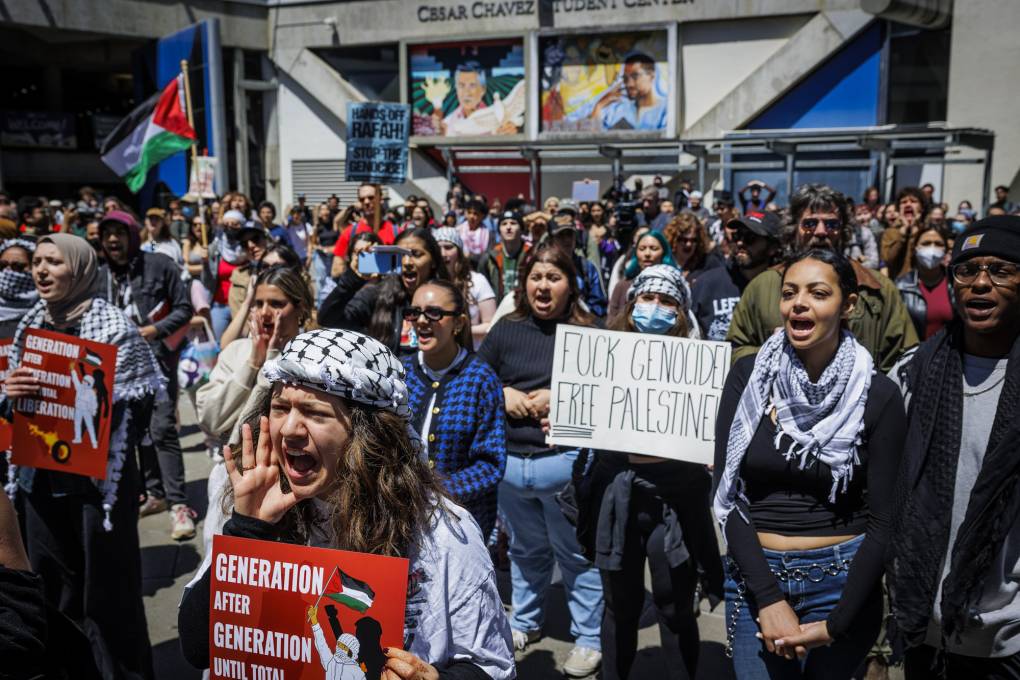
"caption": "San Francisco State University students rally outside SFSU's Cesar Chavez Student Center calling on the university to disclose its financial ties to Israel and divest from weapons manufacturers, on April 29.",
"description": null,
"title": "240429-SFSU GAZA RALLY-MD-11-KQED",
"credit": "Martin do Nascimento/KQED",
"status": "inherit",
"altTag": null,
"isLoading": false,
"fetchFailed": false
},
"news_11984781": {
"type": "attachments",
"id": "news_11984781",
"meta": {
"index": "attachments_1716263798",
"site": "news",
"id": "11984781",
"found": true
},
"parent": 11984762,
"imgSizes": {
"twentyfourteen-full-width": {
"file": "https://cdn.kqed.org/wp-content/uploads/sites/10/2024/05/AP24123441309819-1038x576.jpg",
"width": 1038,
"mimeType": "image/jpeg",
"height": 576
},
"thumbnail": {
"file": "https://cdn.kqed.org/wp-content/uploads/sites/10/2024/05/AP24123441309819-160x107.jpg",
"width": 160,
"mimeType": "image/jpeg",
"height": 107
},
"post-thumbnail": {
"file": "https://cdn.kqed.org/wp-content/uploads/sites/10/2024/05/AP24123441309819-672x372.jpg",
"width": 672,
"mimeType": "image/jpeg",
"height": 372
},
"kqedFullSize": {
"file": "https://cdn.kqed.org/wp-content/uploads/sites/10/2024/05/AP24123441309819-scaled.jpg",
"width": 2560,
"height": 1707
},
"2048x2048": {
"file": "https://cdn.kqed.org/wp-content/uploads/sites/10/2024/05/AP24123441309819-2048x1365.jpg",
"width": 2048,
"mimeType": "image/jpeg",
"height": 1365
},
"large": {
"file": "https://cdn.kqed.org/wp-content/uploads/sites/10/2024/05/AP24123441309819-1020x680.jpg",
"width": 1020,
"mimeType": "image/jpeg",
"height": 680
},
"1536x1536": {
"file": "https://cdn.kqed.org/wp-content/uploads/sites/10/2024/05/AP24123441309819-1536x1024.jpg",
"width": 1536,
"mimeType": "image/jpeg",
"height": 1024
},
"full-width": {
"file": "https://cdn.kqed.org/wp-content/uploads/sites/10/2024/05/AP24123441309819-1920x1280.jpg",
"width": 1920,
"mimeType": "image/jpeg",
"height": 1280
},
"medium": {
"file": "https://cdn.kqed.org/wp-content/uploads/sites/10/2024/05/AP24123441309819-800x533.jpg",
"width": 800,
"mimeType": "image/jpeg",
"height": 533
}
},
"publishDate": 1714671020,
"modified": 1714675849,
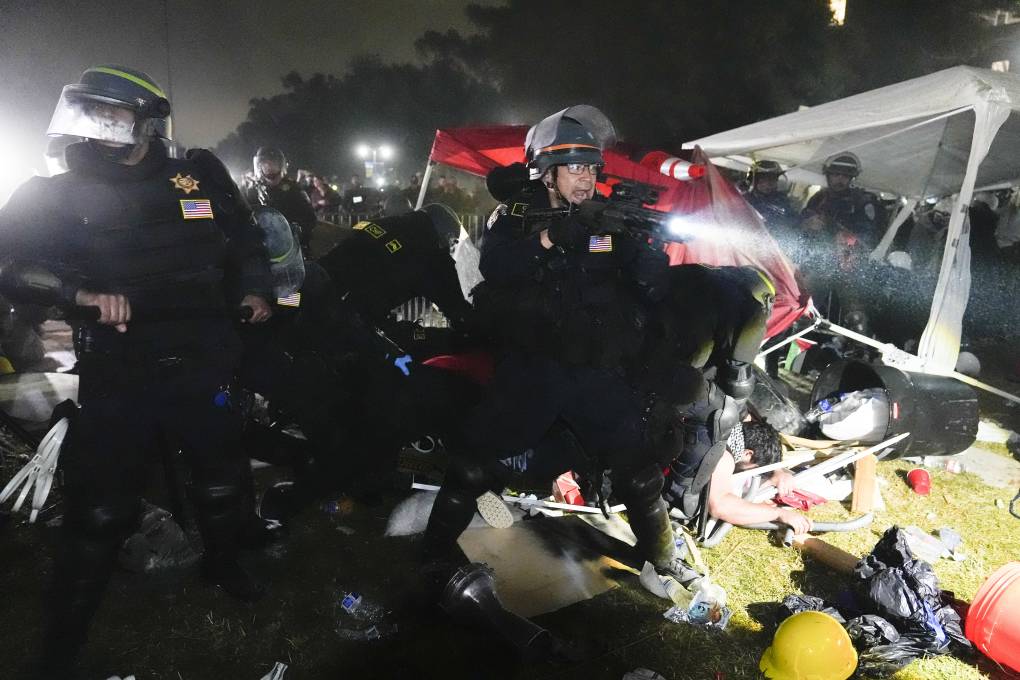
"caption": "Police advance on pro-Palestinian demonstrators in an encampment on the UCLA campus on Thursday, May 2, 2024, in Los Angeles. ",
"description": null,
"title": "APTOPIX Israel Palestinians Campus Protests",
"credit": "Jae C. Hong/The Associated Press",
"status": "inherit",
"altTag": "Multiple police knock over a barricade and point their weapons.",
"isLoading": false,
"fetchFailed": false
},
"news_11984509": {
"type": "attachments",
"id": "news_11984509",
"meta": {
"index": "attachments_1716263798",
"site": "news",
"id": "11984509",
"found": true
},
"parent": 0,
"imgSizes": {
"twentyfourteen-full-width": {
"file": "https://cdn.kqed.org/wp-content/uploads/sites/10/2024/04/240423-BERKELEY-GAZA-ENCAMPMENT-MD-09-KQED-1038x576.jpg",
"width": 1038,
"mimeType": "image/jpeg",
"height": 576
},
"thumbnail": {
"file": "https://cdn.kqed.org/wp-content/uploads/sites/10/2024/04/240423-BERKELEY-GAZA-ENCAMPMENT-MD-09-KQED-160x107.jpg",
"width": 160,
"mimeType": "image/jpeg",
"height": 107
},
"post-thumbnail": {
"file": "https://cdn.kqed.org/wp-content/uploads/sites/10/2024/04/240423-BERKELEY-GAZA-ENCAMPMENT-MD-09-KQED-672x372.jpg",
"width": 672,
"mimeType": "image/jpeg",
"height": 372
},
"kqedFullSize": {
"file": "https://cdn.kqed.org/wp-content/uploads/sites/10/2024/04/240423-BERKELEY-GAZA-ENCAMPMENT-MD-09-KQED.jpg",
"width": 2000,
"height": 1333
},
"large": {
"file": "https://cdn.kqed.org/wp-content/uploads/sites/10/2024/04/240423-BERKELEY-GAZA-ENCAMPMENT-MD-09-KQED-1020x680.jpg",
"width": 1020,
"mimeType": "image/jpeg",
"height": 680
},
"1536x1536": {
"file": "https://cdn.kqed.org/wp-content/uploads/sites/10/2024/04/240423-BERKELEY-GAZA-ENCAMPMENT-MD-09-KQED-1536x1024.jpg",
"width": 1536,
"mimeType": "image/jpeg",
"height": 1024
},
"full-width": {
"file": "https://cdn.kqed.org/wp-content/uploads/sites/10/2024/04/240423-BERKELEY-GAZA-ENCAMPMENT-MD-09-KQED-1920x1280.jpg",
"width": 1920,
"mimeType": "image/jpeg",
"height": 1280
},
"medium": {
"file": "https://cdn.kqed.org/wp-content/uploads/sites/10/2024/04/240423-BERKELEY-GAZA-ENCAMPMENT-MD-09-KQED-800x533.jpg",
"width": 800,
"mimeType": "image/jpeg",
"height": 533
}
},
"publishDate": 1714504696,
"modified": 1714592908,
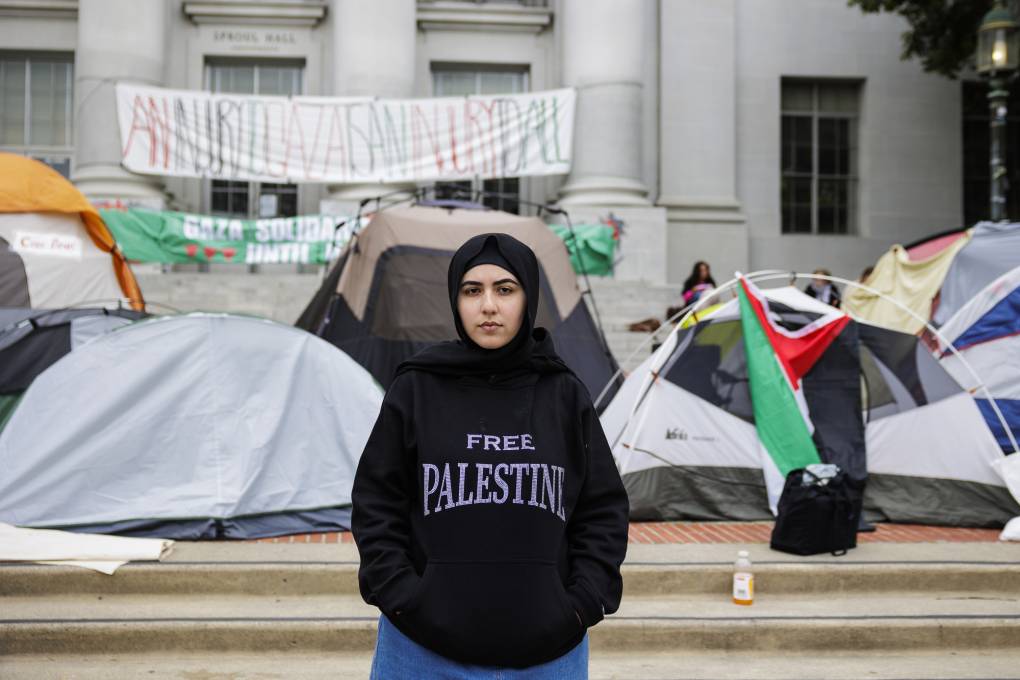
"caption": "Malak Afaneh, a UC Berkeley Law student and co-president of Berkeley Law Students for Justice in Palestine, stands at the Gaza Solidarity Encampment in front of Sproul Hall on April 23.",
"description": null,
"title": "240423-BERKELEY GAZA ENCAMPMENT-MD-09-KQED",
"credit": "Martin do Nascimento/KQED",
"status": "inherit",
"altTag": null,
"isLoading": false,
"fetchFailed": false
},
"news_11984637": {
"type": "attachments",
"id": "news_11984637",
"meta": {
"index": "attachments_1716263798",
"site": "news",
"id": "11984637",
"found": true
},
"parent": 11984636,
"imgSizes": {
"twentyfourteen-full-width": {
"file": "https://cdn.kqed.org/wp-content/uploads/sites/10/2024/05/gettyimages-2150431002-ac5de7950671e23fc137787154d66b3c1f2dfe00-1038x576.jpg",
"width": 1038,
"mimeType": "image/jpeg",
"height": 576
},
"thumbnail": {
"file": "https://cdn.kqed.org/wp-content/uploads/sites/10/2024/05/gettyimages-2150431002-ac5de7950671e23fc137787154d66b3c1f2dfe00-160x120.jpg",
"width": 160,
"mimeType": "image/jpeg",
"height": 120
},
"post-thumbnail": {
"file": "https://cdn.kqed.org/wp-content/uploads/sites/10/2024/05/gettyimages-2150431002-ac5de7950671e23fc137787154d66b3c1f2dfe00-672x372.jpg",
"width": 672,
"mimeType": "image/jpeg",
"height": 372
},
"kqedFullSize": {
"file": "https://cdn.kqed.org/wp-content/uploads/sites/10/2024/05/gettyimages-2150431002-ac5de7950671e23fc137787154d66b3c1f2dfe00-scaled.jpg",
"width": 2560,
"height": 1920
},
"2048x2048": {
"file": "https://cdn.kqed.org/wp-content/uploads/sites/10/2024/05/gettyimages-2150431002-ac5de7950671e23fc137787154d66b3c1f2dfe00-2048x1536.jpg",
"width": 2048,
"mimeType": "image/jpeg",
"height": 1536
},
"large": {
"file": "https://cdn.kqed.org/wp-content/uploads/sites/10/2024/05/gettyimages-2150431002-ac5de7950671e23fc137787154d66b3c1f2dfe00-1020x765.jpg",
"width": 1020,
"mimeType": "image/jpeg",
"height": 765
},
"1536x1536": {
"file": "https://cdn.kqed.org/wp-content/uploads/sites/10/2024/05/gettyimages-2150431002-ac5de7950671e23fc137787154d66b3c1f2dfe00-1536x1152.jpg",
"width": 1536,
"mimeType": "image/jpeg",
"height": 1152
},
"full-width": {
"file": "https://cdn.kqed.org/wp-content/uploads/sites/10/2024/05/gettyimages-2150431002-ac5de7950671e23fc137787154d66b3c1f2dfe00-1920x1440.jpg",
"width": 1920,
"mimeType": "image/jpeg",
"height": 1440
},
"medium": {
"file": "https://cdn.kqed.org/wp-content/uploads/sites/10/2024/05/gettyimages-2150431002-ac5de7950671e23fc137787154d66b3c1f2dfe00-800x600.jpg",
"width": 800,
"mimeType": "image/jpeg",
"height": 600
}
},
"publishDate": 1714590740,
"modified": 1714594774,
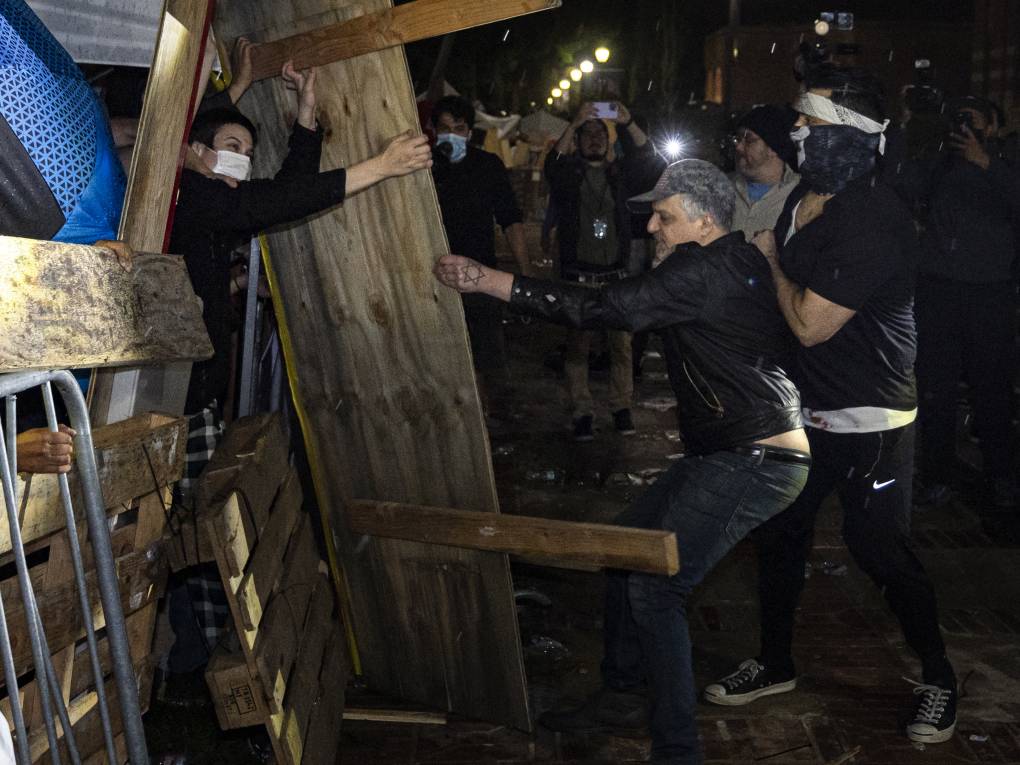
"caption": "Counterprotesters attack a pro-Palestinian encampment set up on the campus of UCLA as clashes erupt early in the morning on May 1, 2024.",
"description": null,
"title": "Counterprotesters try to dismantle a pro-Palestinian encampment set up on the University of California, Los Angeles campus in the early hours of Wednesday.",
"credit": "Etienne Laurent/AFP via Getty Images",
"status": "inherit",
"altTag": "A protester dismantles a wooden structure.",
"isLoading": false,
"fetchFailed": false
},
"news_11984655": {
"type": "attachments",
"id": "news_11984655",
"meta": {
"index": "attachments_1716263798",
"site": "news",
"id": "11984655",
"found": true
},
"parent": 0,
"imgSizes": {
"twentyfourteen-full-width": {
"file": "https://cdn.kqed.org/wp-content/uploads/sites/10/2024/05/20240501_MAYDAYRALLY-27-GC-KQED-1038x576.jpg",
"width": 1038,
"mimeType": "image/jpeg",
"height": 576
},
"thumbnail": {
"file": "https://cdn.kqed.org/wp-content/uploads/sites/10/2024/05/20240501_MAYDAYRALLY-27-GC-KQED-160x107.jpg",
"width": 160,
"mimeType": "image/jpeg",
"height": 107
},
"post-thumbnail": {
"file": "https://cdn.kqed.org/wp-content/uploads/sites/10/2024/05/20240501_MAYDAYRALLY-27-GC-KQED-672x372.jpg",
"width": 672,
"mimeType": "image/jpeg",
"height": 372
},
"kqedFullSize": {
"file": "https://cdn.kqed.org/wp-content/uploads/sites/10/2024/05/20240501_MAYDAYRALLY-27-GC-KQED.jpg",
"width": 2000,
"height": 1333
},
"large": {
"file": "https://cdn.kqed.org/wp-content/uploads/sites/10/2024/05/20240501_MAYDAYRALLY-27-GC-KQED-1020x680.jpg",
"width": 1020,
"mimeType": "image/jpeg",
"height": 680
},
"1536x1536": {
"file": "https://cdn.kqed.org/wp-content/uploads/sites/10/2024/05/20240501_MAYDAYRALLY-27-GC-KQED-1536x1024.jpg",
"width": 1536,
"mimeType": "image/jpeg",
"height": 1024
},
"full-width": {
"file": "https://cdn.kqed.org/wp-content/uploads/sites/10/2024/05/20240501_MAYDAYRALLY-27-GC-KQED-1920x1280.jpg",
"width": 1920,
"mimeType": "image/jpeg",
"height": 1280
},
"medium": {
"file": "https://cdn.kqed.org/wp-content/uploads/sites/10/2024/05/20240501_MAYDAYRALLY-27-GC-KQED-800x533.jpg",
"width": 800,
"mimeType": "image/jpeg",
"height": 533
}
},
"publishDate": 1714592618,
"modified": 1714592839,
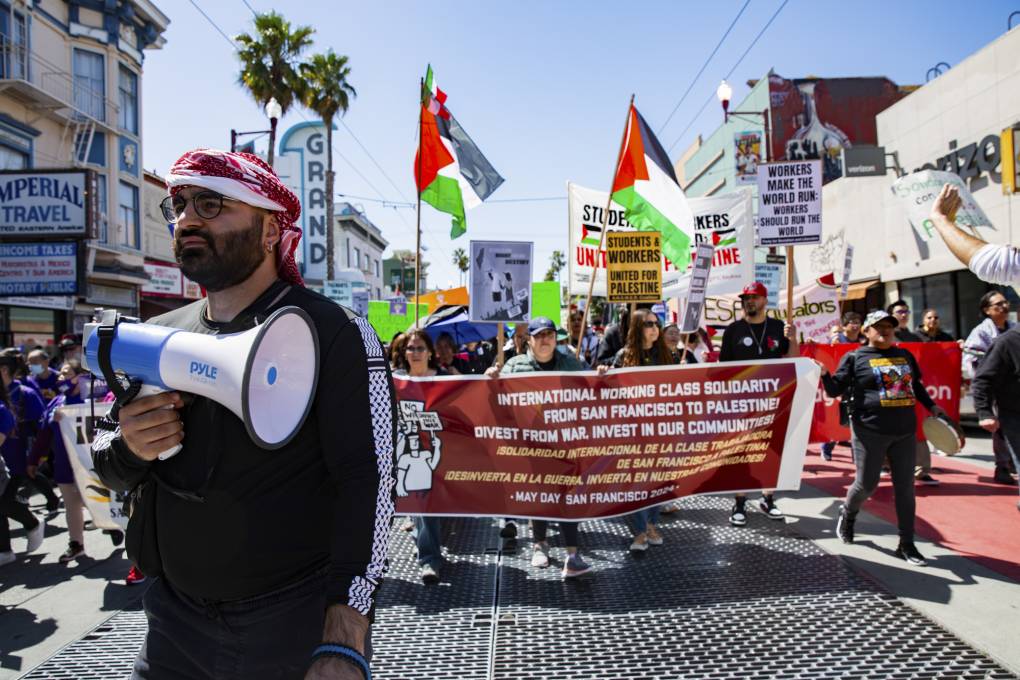
"caption": "An individual who goes by Ghassan, left, leads demonstrators on Mission Street at the May Day rally during International Worker’s Day on Wednesday, May 1, 2024.",
"description": null,
"title": "20240501_MAYDAYRALLY-27-GC-KQED",
"credit": "Gina Castro/KQED",
"status": "inherit",
"altTag": null,
"isLoading": false,
"fetchFailed": false
},
"news_11984439": {
"type": "attachments",
"id": "news_11984439",
"meta": {
"index": "attachments_1716263798",
"site": "news",
"id": "11984439",
"found": true
},
"parent": 11984807,
"imgSizes": {
"twentyfourteen-full-width": {
"file": "https://cdn.kqed.org/wp-content/uploads/sites/10/2024/04/240429-SFSU-GAZA-ENCAMPMENT-MD-09-KQED-1038x576.jpg",
"width": 1038,
"mimeType": "image/jpeg",
"height": 576
},
"thumbnail": {
"file": "https://cdn.kqed.org/wp-content/uploads/sites/10/2024/04/240429-SFSU-GAZA-ENCAMPMENT-MD-09-KQED-160x107.jpg",
"width": 160,
"mimeType": "image/jpeg",
"height": 107
},
"post-thumbnail": {
"file": "https://cdn.kqed.org/wp-content/uploads/sites/10/2024/04/240429-SFSU-GAZA-ENCAMPMENT-MD-09-KQED-672x372.jpg",
"width": 672,
"mimeType": "image/jpeg",
"height": 372
},
"kqedFullSize": {
"file": "https://cdn.kqed.org/wp-content/uploads/sites/10/2024/04/240429-SFSU-GAZA-ENCAMPMENT-MD-09-KQED.jpg",
"width": 2000,
"height": 1333
},
"large": {
"file": "https://cdn.kqed.org/wp-content/uploads/sites/10/2024/04/240429-SFSU-GAZA-ENCAMPMENT-MD-09-KQED-1020x680.jpg",
"width": 1020,
"mimeType": "image/jpeg",
"height": 680
},
"1536x1536": {
"file": "https://cdn.kqed.org/wp-content/uploads/sites/10/2024/04/240429-SFSU-GAZA-ENCAMPMENT-MD-09-KQED-1536x1024.jpg",
"width": 1536,
"mimeType": "image/jpeg",
"height": 1024
},
"full-width": {
"file": "https://cdn.kqed.org/wp-content/uploads/sites/10/2024/04/240429-SFSU-GAZA-ENCAMPMENT-MD-09-KQED-1920x1280.jpg",
"width": 1920,
"mimeType": "image/jpeg",
"height": 1280
},
"medium": {
"file": "https://cdn.kqed.org/wp-content/uploads/sites/10/2024/04/240429-SFSU-GAZA-ENCAMPMENT-MD-09-KQED-800x533.jpg",
"width": 800,
"mimeType": "image/jpeg",
"height": 533
}
},
"publishDate": 1714436641,
"modified": 1714680079,
"caption": "San Francisco State University students rally outside the Cesar Chavez Student Center on Monday, calling on the university to disclose its financial ties to Israel and divest from weapons manufacturers.",
"description": null,
"title": "240429-SFSU GAZA ENCAMPMENT-MD-09-KQED",
"credit": "Martin do Nascimento/KQED",
"status": "inherit",
"altTag": null,
"isLoading": false,
"fetchFailed": false
},
"news_11984136": {
"type": "attachments",
"id": "news_11984136",
"meta": {
"index": "attachments_1716263798",
"site": "news",
"id": "11984136",
"found": true
},
"parent": 0,
"imgSizes": {
"twentyfourteen-full-width": {
"file": "https://cdn.kqed.org/wp-content/uploads/sites/10/2024/04/240425-StanfordGazaProtest-022-BL-1038x576.jpg",
"width": 1038,
"mimeType": "image/jpeg",
"height": 576
},
"thumbnail": {
"file": "https://cdn.kqed.org/wp-content/uploads/sites/10/2024/04/240425-StanfordGazaProtest-022-BL-160x107.jpg",
"width": 160,
"mimeType": "image/jpeg",
"height": 107
},
"post-thumbnail": {
"file": "https://cdn.kqed.org/wp-content/uploads/sites/10/2024/04/240425-StanfordGazaProtest-022-BL-672x372.jpg",
"width": 672,
"mimeType": "image/jpeg",
"height": 372
},
"kqedFullSize": {
"file": "https://cdn.kqed.org/wp-content/uploads/sites/10/2024/04/240425-StanfordGazaProtest-022-BL.jpg",
"width": 1920,
"height": 1280
},
"large": {
"file": "https://cdn.kqed.org/wp-content/uploads/sites/10/2024/04/240425-StanfordGazaProtest-022-BL-1020x680.jpg",
"width": 1020,
"mimeType": "image/jpeg",
"height": 680
},
"1536x1536": {
"file": "https://cdn.kqed.org/wp-content/uploads/sites/10/2024/04/240425-StanfordGazaProtest-022-BL-1536x1024.jpg",
"width": 1536,
"mimeType": "image/jpeg",
"height": 1024
},
"medium": {
"file": "https://cdn.kqed.org/wp-content/uploads/sites/10/2024/04/240425-StanfordGazaProtest-022-BL-800x533.jpg",
"width": 800,
"mimeType": "image/jpeg",
"height": 533
}
},
"publishDate": 1714149444,
"modified": 1714178507,
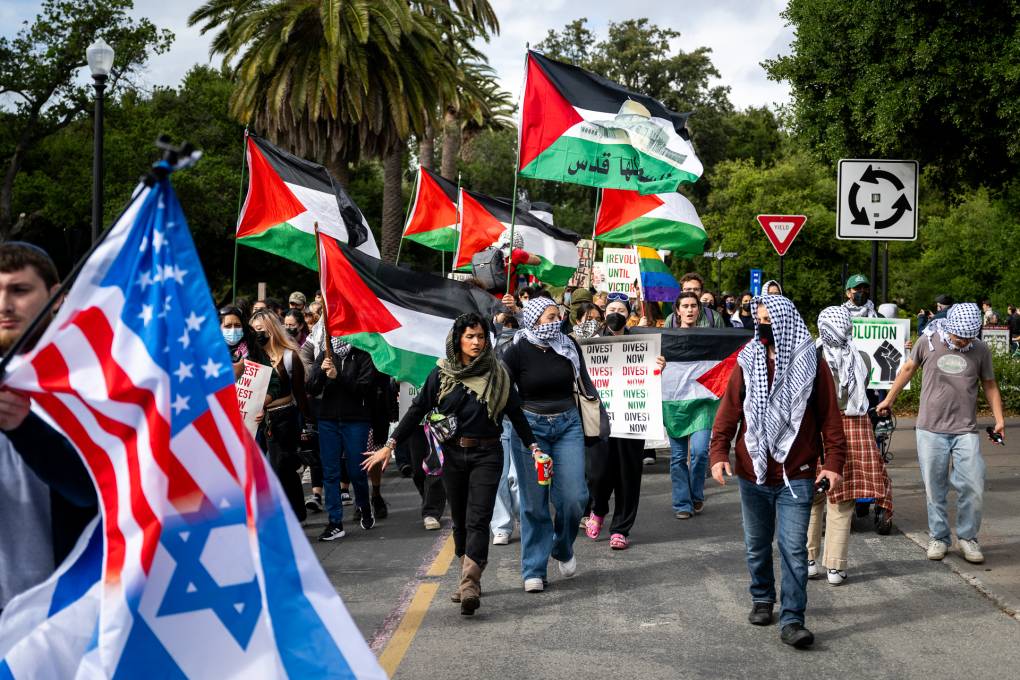
"caption": "A pro-Israel counterprotester waves an Israel flag during a pro-Palestinian march through the Stanford University campus on April 25, 2024, calling for the university to divest from Israel. The rally took place during Stanford's Admit Weekend, a time for incoming students to tour the university.",
"description": null,
"title": "240425-StanfordGazaProtest-022-BL",
"credit": "Beth LaBerge/KQED",
"status": "inherit",
"altTag": null,
"isLoading": false,
"fetchFailed": false
},
"news_11984188": {
"type": "attachments",
"id": "news_11984188",
"meta": {
"index": "attachments_1716263798",
"site": "news",
"id": "11984188",
"found": true
},
"parent": 11984140,
"imgSizes": {
"twentyfourteen-full-width": {
"file": "https://cdn.kqed.org/wp-content/uploads/sites/10/2024/04/240423-BERKELEY-GAZA-ENCAMPMENT-MD-02_qut-1-1038x576.jpg",
"width": 1038,
"mimeType": "image/jpeg",
"height": 576
},
"thumbnail": {
"file": "https://cdn.kqed.org/wp-content/uploads/sites/10/2024/04/240423-BERKELEY-GAZA-ENCAMPMENT-MD-02_qut-1-160x107.jpg",
"width": 160,
"mimeType": "image/jpeg",
"height": 107
},
"post-thumbnail": {
"file": "https://cdn.kqed.org/wp-content/uploads/sites/10/2024/04/240423-BERKELEY-GAZA-ENCAMPMENT-MD-02_qut-1-672x372.jpg",
"width": 672,
"mimeType": "image/jpeg",
"height": 372
},
"kqedFullSize": {
"file": "https://cdn.kqed.org/wp-content/uploads/sites/10/2024/04/240423-BERKELEY-GAZA-ENCAMPMENT-MD-02_qut-1.jpg",
"width": 1920,
"height": 1280
},
"large": {
"file": "https://cdn.kqed.org/wp-content/uploads/sites/10/2024/04/240423-BERKELEY-GAZA-ENCAMPMENT-MD-02_qut-1-1020x680.jpg",
"width": 1020,
"mimeType": "image/jpeg",
"height": 680
},
"1536x1536": {
"file": "https://cdn.kqed.org/wp-content/uploads/sites/10/2024/04/240423-BERKELEY-GAZA-ENCAMPMENT-MD-02_qut-1-1536x1024.jpg",
"width": 1536,
"mimeType": "image/jpeg",
"height": 1024
},
"medium": {
"file": "https://cdn.kqed.org/wp-content/uploads/sites/10/2024/04/240423-BERKELEY-GAZA-ENCAMPMENT-MD-02_qut-1-800x533.jpg",
"width": 800,
"mimeType": "image/jpeg",
"height": 533
}
},
"publishDate": 1714162142,
"modified": 1715798157,
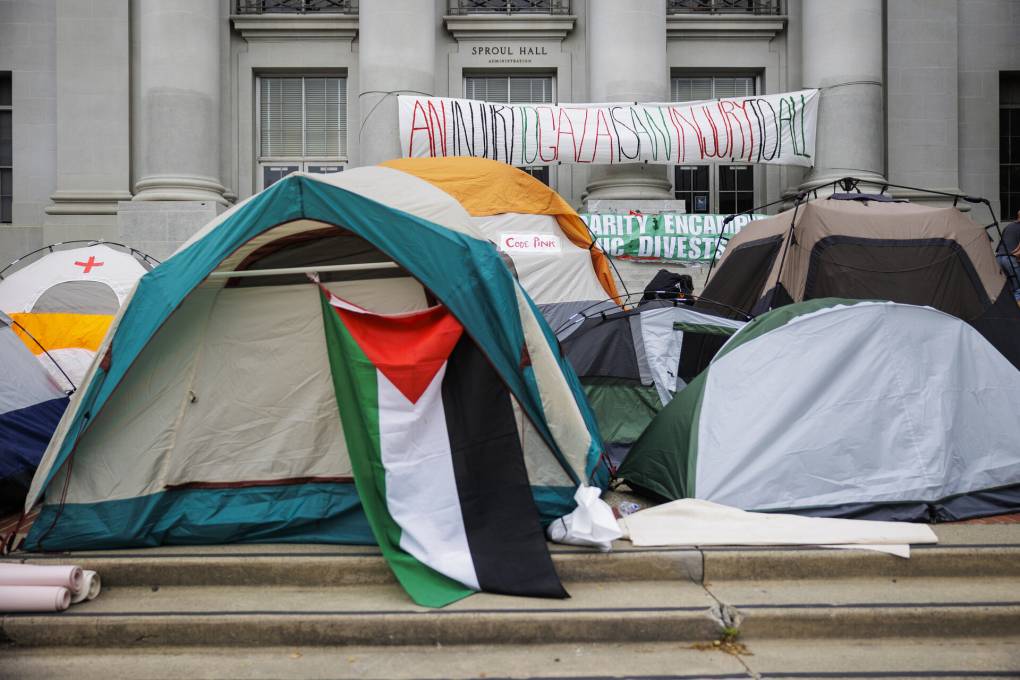
"caption": "The UC Berkeley Gaza Solidarity Encampment in front of Sproul Hall on April 23, 2024.",
"description": null,
"title": "240423-BERKELEY GAZA ENCAMPMENT-MD-02_qut (1)",
"credit": "Martin do Nascimento/KQED",
"status": "inherit",
"altTag": "Tents are set up on the steps leading up to a building. A red-white-green-black Palestinian flag hangs from one tent. One banner hung from the building in the background says: 'An injury to Gaza is an injury to us all.' Another says: 'Divest.'",
"isLoading": false,
"fetchFailed": false
},
"news_11984107": {
"type": "attachments",
"id": "news_11984107",
"meta": {
"index": "attachments_1716263798",
"site": "news",
"id": "11984107",
"found": true
},
"parent": 11984094,
"imgSizes": {
"twentyfourteen-full-width": {
"file": "https://cdn.kqed.org/wp-content/uploads/sites/10/2024/04/GettyImages-2149505351-1024x576.jpg",
"width": 1024,
"mimeType": "image/jpeg",
"height": 576
},
"thumbnail": {
"file": "https://cdn.kqed.org/wp-content/uploads/sites/10/2024/04/GettyImages-2149505351-160x107.jpg",
"width": 160,
"mimeType": "image/jpeg",
"height": 107
},
"post-thumbnail": {
"file": "https://cdn.kqed.org/wp-content/uploads/sites/10/2024/04/GettyImages-2149505351-672x372.jpg",
"width": 672,
"mimeType": "image/jpeg",
"height": 372
},
"kqedFullSize": {
"file": "https://cdn.kqed.org/wp-content/uploads/sites/10/2024/04/GettyImages-2149505351.jpg",
"width": 1024,
"height": 683
},
"large": {
"file": "https://cdn.kqed.org/wp-content/uploads/sites/10/2024/04/GettyImages-2149505351-1020x680.jpg",
"width": 1020,
"mimeType": "image/jpeg",
"height": 680
},
"medium": {
"file": "https://cdn.kqed.org/wp-content/uploads/sites/10/2024/04/GettyImages-2149505351-800x534.jpg",
"width": 800,
"mimeType": "image/jpeg",
"height": 534
}
},
"publishDate": 1714087731,
"modified": 1714087885,
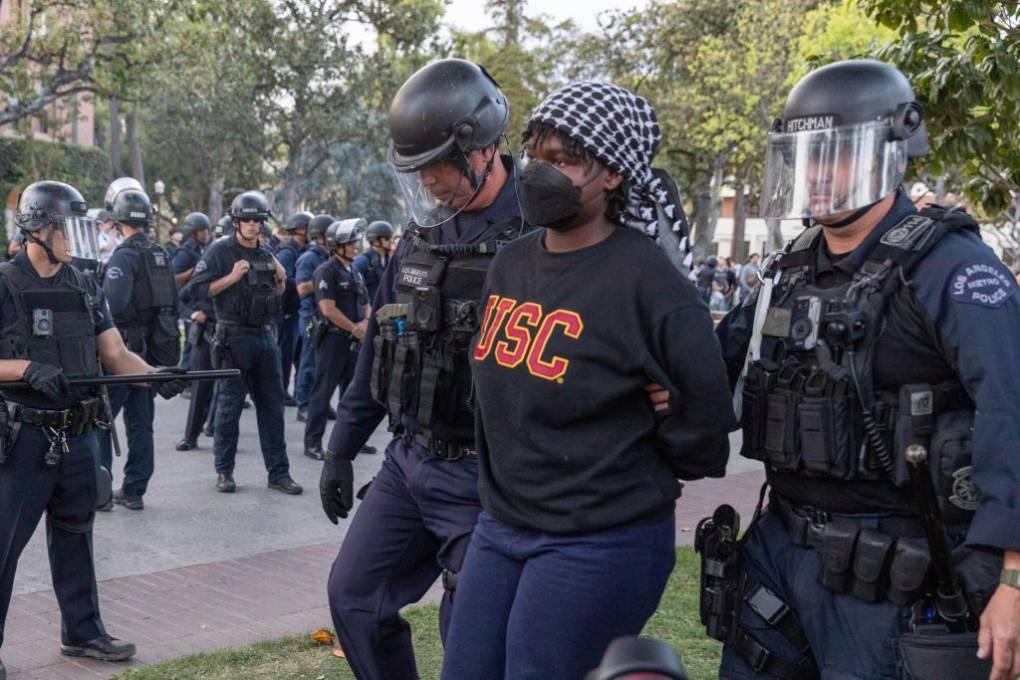
"caption": "A student is arrested and led away by police during ongoing pro-Palestinian protests at the University of Southern California in Los Angeles on April 24, 2024.",
"description": null,
"title": "Police in Los Angeles intervene against Pro-Palestinian demonstrators",
"credit": "Grace Hie Yoon/Anadolu via Getty Images",
"status": "inherit",
"altTag": "A Black female student in a headscarf and 'USC' sweatshirt is led away with her hand behind her back by police in riot gear.",
"isLoading": false,
"fetchFailed": false
},
"news_11983282": {
"type": "attachments",
"id": "news_11983282",
"meta": {
"index": "attachments_1716263798",
"site": "news",
"id": "11983282",
"found": true
},
"parent": 11983233,
"imgSizes": {
"twentyfourteen-full-width": {
"file": "https://cdn.kqed.org/wp-content/uploads/sites/10/2024/04/freedom-flotilla-ships-2024-1038x576.jpeg",
"width": 1038,
"mimeType": "image/jpeg",
"height": 576
},
"thumbnail": {
"file": "https://cdn.kqed.org/wp-content/uploads/sites/10/2024/04/freedom-flotilla-ships-2024-160x107.jpeg",
"width": 160,
"mimeType": "image/jpeg",
"height": 107
},
"post-thumbnail": {
"file": "https://cdn.kqed.org/wp-content/uploads/sites/10/2024/04/freedom-flotilla-ships-2024-672x372.jpeg",
"width": 672,
"mimeType": "image/jpeg",
"height": 372
},
"kqedFullSize": {
"file": "https://cdn.kqed.org/wp-content/uploads/sites/10/2024/04/freedom-flotilla-ships-2024.jpeg",
"width": 1920,
"height": 1280
},
"large": {
"file": "https://cdn.kqed.org/wp-content/uploads/sites/10/2024/04/freedom-flotilla-ships-2024-1020x680.jpeg",
"width": 1020,
"mimeType": "image/jpeg",
"height": 680
},
"1536x1536": {
"file": "https://cdn.kqed.org/wp-content/uploads/sites/10/2024/04/freedom-flotilla-ships-2024-1536x1024.jpeg",
"width": 1536,
"mimeType": "image/jpeg",
"height": 1024
},
"medium": {
"file": "https://cdn.kqed.org/wp-content/uploads/sites/10/2024/04/freedom-flotilla-ships-2024-800x533.jpeg",
"width": 800,
"mimeType": "image/jpeg",
"height": 533
}
},
"publishDate": 1713392966,
"modified": 1713469163,
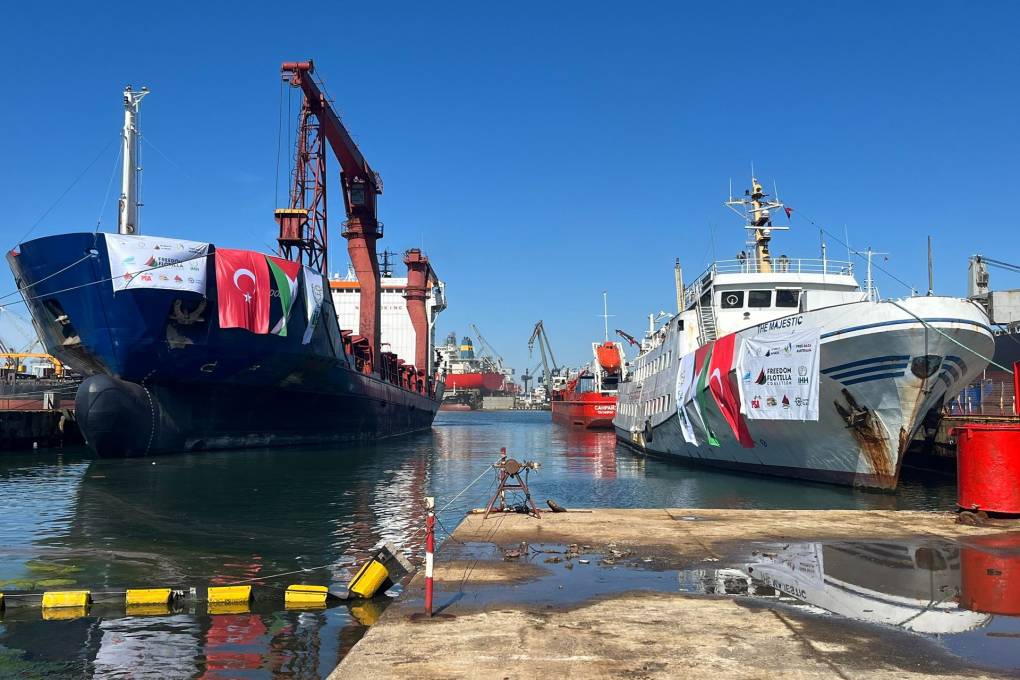
"caption": "A cargo ship and a passenger vessel are part of the Freedom Flotilla Coalition’s planned aid mission to Gaza this month.",
"description": null,
"title": "freedom-flotilla-ships-2024",
"credit": "Courtesy of Freedom Flotilla Coalition",
"status": "inherit",
"altTag": null,
"isLoading": false,
"fetchFailed": false
},
"news_11982958": {
"type": "attachments",
"id": "news_11982958",
"meta": {
"index": "attachments_1716263798",
"site": "news",
"id": "11982958",
"found": true
},
"parent": 11982940,
"imgSizes": {
"twentyfourteen-full-width": {
"file": "https://cdn.kqed.org/wp-content/uploads/sites/10/2024/04/DSC_0183-1038x576.jpg",
"width": 1038,
"mimeType": "image/jpeg",
"height": 576
},
"thumbnail": {
"file": "https://cdn.kqed.org/wp-content/uploads/sites/10/2024/04/DSC_0183-160x107.jpg",
"width": 160,
"mimeType": "image/jpeg",
"height": 107
},
"post-thumbnail": {
"file": "https://cdn.kqed.org/wp-content/uploads/sites/10/2024/04/DSC_0183-672x372.jpg",
"width": 672,
"mimeType": "image/jpeg",
"height": 372
},
"kqedFullSize": {
"file": "https://cdn.kqed.org/wp-content/uploads/sites/10/2024/04/DSC_0183.jpg",
"width": 1620,
"height": 1080
},
"large": {
"file": "https://cdn.kqed.org/wp-content/uploads/sites/10/2024/04/DSC_0183-1020x680.jpg",
"width": 1020,
"mimeType": "image/jpeg",
"height": 680
},
"1536x1536": {
"file": "https://cdn.kqed.org/wp-content/uploads/sites/10/2024/04/DSC_0183-1536x1024.jpg",
"width": 1536,
"mimeType": "image/jpeg",
"height": 1024
},
"medium": {
"file": "https://cdn.kqed.org/wp-content/uploads/sites/10/2024/04/DSC_0183-800x533.jpg",
"width": 800,
"mimeType": "image/jpeg",
"height": 533
}
},
"publishDate": 1713195865,
"modified": 1713196211,
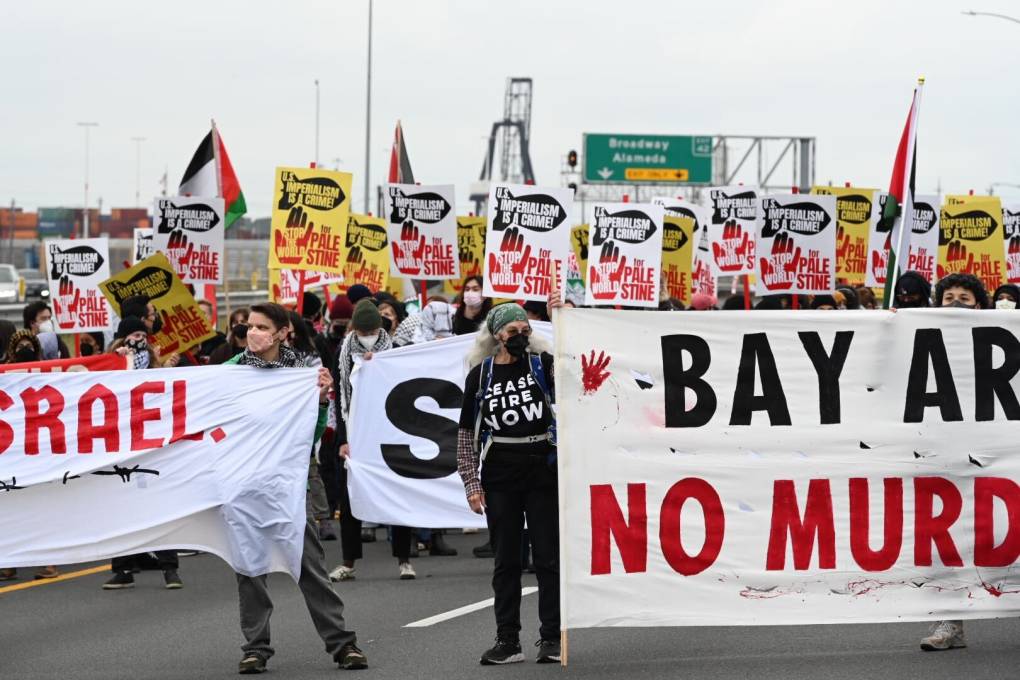
"caption": "Demonstrators shut down the southbound lanes of I-880 Monday morning in West Oakland. The protesters, engaging in a multi-city 'economic blockade in solidarity with Palestine,' marched from the West Oakland BART station to the 7th Street on-ramp and onto the freeway.",
"description": null,
"title": "DSC_0183",
"credit": "Beth LaBerge/KQED",
"status": "inherit",
"altTag": null,
"isLoading": false,
"fetchFailed": false
},
"news_11981878": {
"type": "attachments",
"id": "news_11981878",
"meta": {
"index": "attachments_1716263798",
"site": "news",
"id": "11981878",
"found": true
},
"title": "240403-DRSUBEH-005-BL-KQED",
"publishDate": 1712247775,
"status": "inherit",
"parent": 0,
"modified": 1729708247,
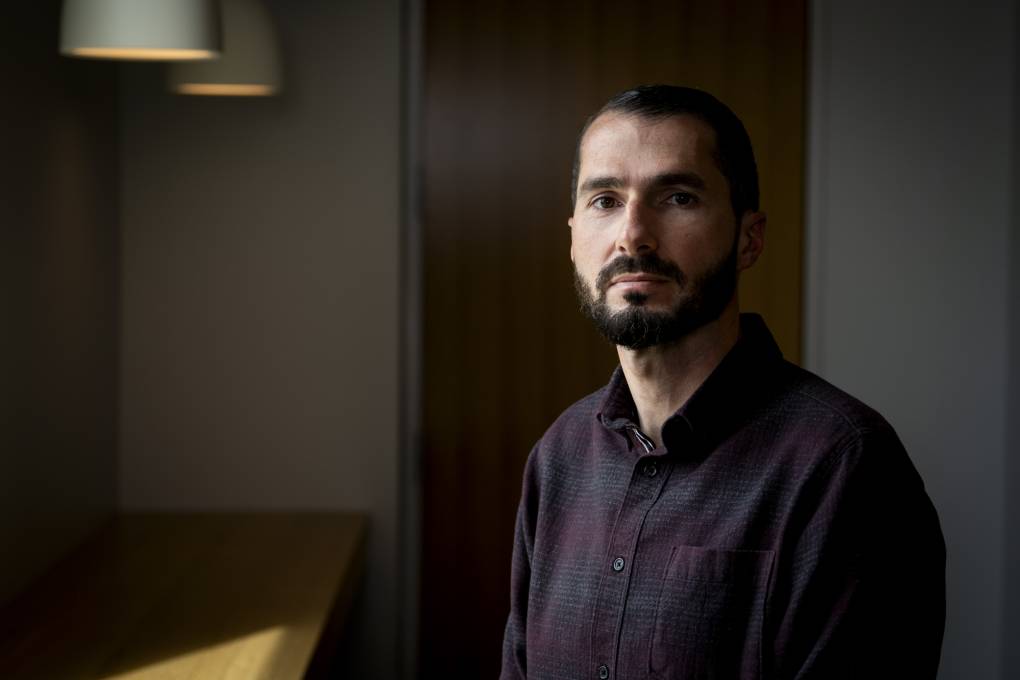
"caption": "Dr. Mohammad Subeh poses for a portrait in San Francisco on April 3, 2024, after a medical mission in Gaza.",
"credit": "Beth LaBerge/KQED",
"altTag": null,
"description": null,
"imgSizes": {
"medium": {
"file": "https://cdn.kqed.org/wp-content/uploads/sites/10/2024/04/240403-DRSUBEH-005-BL-KQED-800x533.jpg",
"width": 800,
"height": 533,
"mimeType": "image/jpeg"
},
"large": {
"file": "https://cdn.kqed.org/wp-content/uploads/sites/10/2024/04/240403-DRSUBEH-005-BL-KQED-1020x680.jpg",
"width": 1020,
"height": 680,
"mimeType": "image/jpeg"
},
"thumbnail": {
"file": "https://cdn.kqed.org/wp-content/uploads/sites/10/2024/04/240403-DRSUBEH-005-BL-KQED-160x107.jpg",
"width": 160,
"height": 107,
"mimeType": "image/jpeg"
},
"1536x1536": {
"file": "https://cdn.kqed.org/wp-content/uploads/sites/10/2024/04/240403-DRSUBEH-005-BL-KQED-1536x1024.jpg",
"width": 1536,
"height": 1024,
"mimeType": "image/jpeg"
},
"post-thumbnail": {
"file": "https://cdn.kqed.org/wp-content/uploads/sites/10/2024/04/240403-DRSUBEH-005-BL-KQED-672x372.jpg",
"width": 672,
"height": 372,
"mimeType": "image/jpeg"
},
"twentyfourteen-full-width": {
"file": "https://cdn.kqed.org/wp-content/uploads/sites/10/2024/04/240403-DRSUBEH-005-BL-KQED-1038x576.jpg",
"width": 1038,
"height": 576,
"mimeType": "image/jpeg"
},
"full-width": {
"file": "https://cdn.kqed.org/wp-content/uploads/sites/10/2024/04/240403-DRSUBEH-005-BL-KQED-1920x1280.jpg",
"width": 1920,
"height": 1280,
"mimeType": "image/jpeg"
},
"kqedFullSize": {
"file": "https://cdn.kqed.org/wp-content/uploads/sites/10/2024/04/240403-DRSUBEH-005-BL-KQED.jpg",
"width": 2000,
"height": 1333
}
},
"isLoading": false,
"fetchFailed": false
}
},
"audioPlayerReducer": {
"postId": "stream_live",
"isPaused": true,
"isPlaying": false,
"pfsActive": false,
"pledgeModalIsOpen": true,
"playerDrawerIsOpen": false,
"liveAudioPlayStartedAt": 0,
"liveAudioPlayContext": ""
},
"authorsReducer": {
"byline_news_11984762": {
"type": "authors",
"id": "byline_news_11984762",
"meta": {
"override": true
},
"slug": "byline_news_11984762",
"name": "Atmika Iyer, CalMatters",
"isLoading": false
},
"byline_news_11984636": {
"type": "authors",
"id": "byline_news_11984636",
"meta": {
"override": true
},
"slug": "byline_news_11984636",
"name": "Bill Chappell, NPR",
"isLoading": false
},
"byline_news_11984140": {
"type": "authors",
"id": "byline_news_11984140",
"meta": {
"override": true
},
"slug": "byline_news_11984140",
"name": "Thalia Beaty\u003cbr>Associated Press",
"isLoading": false
},
"byline_news_11984094": {
"type": "authors",
"id": "byline_news_11984094",
"meta": {
"override": true
},
"slug": "byline_news_11984094",
"name": "Steve LeBlanc and Nick Perry\u003cbr>Associated Press",
"isLoading": false
},
"dmarks": {
"type": "authors",
"id": "182",
"meta": {
"index": "authors_1716337520",
"id": "182",
"found": true
},
"name": "David Marks",
"firstName": "David",
"lastName": "Marks",
"slug": "dmarks",
"email": "dmarks@kqed.org",
"display_author_email": false,
"staff_mastheads": [],
"title": "KQED Editor",
"bio": "David Marks is a senior digital editor for KQED News. \u003c/a>Reach him at dmarks@kqed.org.",
"avatar": "https://secure.gravatar.com/avatar/b88bd6227ce6cb96ae33fefaf42b2a29?s=600&d=mm&r=g",
"twitter": "divadskram",
"facebook": null,
"instagram": null,
"linkedin": null,
"sites": [
{
"site": "news",
"roles": []
},
{
"site": "science",
"roles": []
},
{
"site": "perspectives",
"roles": []
},
{
"site": "liveblog",
"roles": []
}
],
"headData": {
"title": "David Marks | KQED",
"description": "KQED Editor",
"ogImgSrc": "https://secure.gravatar.com/avatar/b88bd6227ce6cb96ae33fefaf42b2a29?s=600&d=mm&r=g",
"twImgSrc": "https://secure.gravatar.com/avatar/b88bd6227ce6cb96ae33fefaf42b2a29?s=600&d=mm&r=g"
},
"isLoading": false,
"link": "/author/dmarks"
},
"matthewgreen": {
"type": "authors",
"id": "1263",
"meta": {
"index": "authors_1716337520",
"id": "1263",
"found": true
},
"name": "Matthew Green",
"firstName": "Matthew",
"lastName": "Green",
"slug": "matthewgreen",
"email": "mgreen@kqed.org",
"display_author_email": false,
"staff_mastheads": [],
"title": "KQED Editor/Reporter",
"bio": "Matthew Green is a digital media producer for KQED News. He previously produced \u003ca href=\"http://www.kqed.org/lowdown\">The Lowdown\u003c/a>, KQED’s multimedia news education blog. Matthew's written for numerous Bay Area publications, including the Oakland Tribune and San Francisco Chronicle. He also taught journalism classes at Fremont High School in East Oakland.\r\n\r\nEmail: mgreen@kqed.org; Twitter: @MGreenKQED",
"avatar": "https://secure.gravatar.com/avatar/3bf498d1267ca02c8494f33d8cfc575e?s=600&d=blank&r=g",
"twitter": "MGreenKQED",
"facebook": null,
"instagram": null,
"linkedin": null,
"sites": [
{
"site": "news",
"roles": []
},
{
"site": "lowdown",
"roles": []
},
{
"site": "science",
"roles": []
},
{
"site": "education",
"roles": []
},
{
"site": "quest",
"roles": []
},
{
"site": "liveblog",
"roles": []
}
],
"headData": {
"title": "Matthew Green | KQED",
"description": "KQED Editor/Reporter",
"ogImgSrc": "https://secure.gravatar.com/avatar/3bf498d1267ca02c8494f33d8cfc575e?s=600&d=blank&r=g",
"twImgSrc": "https://secure.gravatar.com/avatar/3bf498d1267ca02c8494f33d8cfc575e?s=600&d=blank&r=g"
},
"isLoading": false,
"link": "/author/matthewgreen"
},
"ecruzguevarra": {
"type": "authors",
"id": "8654",
"meta": {
"index": "authors_1716337520",
"id": "8654",
"found": true
},
"name": "Ericka Cruz Guevarra",
"firstName": "Ericka",
"lastName": "Cruz Guevarra",
"slug": "ecruzguevarra",
"email": "ecruzguevarra@kqed.org",
"display_author_email": true,
"staff_mastheads": [
"news"
],
"title": "Producer, The Bay Podcast",
"bio": "Ericka Cruz Guevarra is host of \u003ca href=\"https://www.kqed.org/podcasts/thebay\">\u003cem>The Bay\u003c/em>\u003c/a> podcast at KQED. Before host, she was the show’s producer. Her work in that capacity includes a three-part reported series on policing in Vallejo, which won a 2020 excellence in journalism award from the Society of Professional Journalists. Ericka has worked as a breaking news reporter at Oregon Public Broadcasting, helped produce the Code Switch podcast, and was KQED’s inaugural Raul Ramirez Diversity Fund intern. She’s also an alumna of NPR’s Next Generation Radio program. Send her an email if you have strong feelings about whether Fairfield and Suisun City are the Bay. Ericka is represented by SAG-AFTRA.",
"avatar": "https://secure.gravatar.com/avatar/accefc1de4bafc7e234b69bcb9b6f6536c130fd84709bc3069ef11a78787e1bb?s=600&d=blank&r=g",
"twitter": "NotoriousECG",
"bluesky": null,
"facebook": null,
"instagram": null,
"linkedin": null,
"sites": [
{
"site": "arts",
"roles": [
"subscriber"
]
},
{
"site": "news",
"roles": [
"editor",
"manage_categories"
]
},
{
"site": "futureofyou",
"roles": [
"subscriber"
]
},
{
"site": "stateofhealth",
"roles": [
"subscriber"
]
},
{
"site": "science",
"roles": [
"editor"
]
},
{
"site": "forum",
"roles": [
"subscriber"
]
}
],
"headData": {
"title": "Ericka Cruz Guevarra | KQED",
"description": "Producer, The Bay Podcast",
"ogImgSrc": "https://secure.gravatar.com/avatar/accefc1de4bafc7e234b69bcb9b6f6536c130fd84709bc3069ef11a78787e1bb?s=600&d=blank&r=g",
"twImgSrc": "https://secure.gravatar.com/avatar/accefc1de4bafc7e234b69bcb9b6f6536c130fd84709bc3069ef11a78787e1bb?s=600&d=blank&r=g"
},
"isLoading": false,
"link": "/author/ecruzguevarra"
},
"dcronin": {
"type": "authors",
"id": "11362",
"meta": {
"index": "authors_1716337520",
"id": "11362",
"found": true
},
"name": "Dana Cronin",
"firstName": "Dana",
"lastName": "Cronin",
"slug": "dcronin",
"email": "dcronin@KQED.org",
"display_author_email": true,
"staff_mastheads": [],
"title": "KQED Contributor",
"bio": "Dana Cronin is a reporter for KQED News. She loves writing stories about climate change, environmental issues, food and agriculture. She's reported across the country, from Colorado to Washington D.C. to Illinois, and has won numerous awards for her coverage. Her work is regularly featured on national broadcasts, including NPR’s Morning Edition, All Things Considered, PBS Newshour and Science Friday. She lives in Oakland and has an avocado tree in her back yard.",
"avatar": "https://secure.gravatar.com/avatar/bcf89e3455ff7235f96ab6fa7258dd95?s=600&d=blank&r=g",
"twitter": "DanaHCronin",
"facebook": null,
"instagram": null,
"linkedin": null,
"sites": [
{
"site": "arts",
"roles": [
"author"
]
},
{
"site": "news",
"roles": [
"editor"
]
},
{
"site": "science",
"roles": [
"author"
]
},
{
"site": "liveblog",
"roles": [
"author"
]
}
],
"headData": {
"title": "Dana Cronin | KQED",
"description": "KQED Contributor",
"ogImgSrc": "https://secure.gravatar.com/avatar/bcf89e3455ff7235f96ab6fa7258dd95?s=600&d=blank&r=g",
"twImgSrc": "https://secure.gravatar.com/avatar/bcf89e3455ff7235f96ab6fa7258dd95?s=600&d=blank&r=g"
},
"isLoading": false,
"link": "/author/dcronin"
},
"amontecillo": {
"type": "authors",
"id": "11649",
"meta": {
"index": "authors_1716337520",
"id": "11649",
"found": true
},
"name": "Alan Montecillo",
"firstName": "Alan",
"lastName": "Montecillo",
"slug": "amontecillo",
"email": "amontecillo@kqed.org",
"display_author_email": false,
"staff_mastheads": [
"news"
],
"title": "KQED Contributor",
"bio": "Alan Montecillo is the senior editor of \u003cem>\u003ca href=\"http://kqed.org/thebay\">The Bay\u003c/a>, \u003c/em> KQED's local news podcast. Before moving to the Bay Area, he worked as a senior talk show producer for WILL in Champaign-Urbana, Illinois and at Oregon Public Broadcasting in Portland, Oregon. He has won journalism awards from the Society of Professional Journalists Northern California, the Public Media Journalists Association, The Signal Awards, and has also received a regional Edward R. Murrow award. Alan is a Filipino American from Hong Kong and a graduate of Reed College.",
"avatar": "https://secure.gravatar.com/avatar/268f53a2066899ea9efdd8a5900218b17c822d9862cbc9326cccec53ef41d349?s=600&d=blank&r=g",
"twitter": "alanmontecillo",
"bluesky": null,
"facebook": null,
"instagram": null,
"linkedin": null,
"sites": [
{
"site": "",
"roles": [
"editor"
]
},
{
"site": "news",
"roles": [
"editor",
"manage_categories"
]
}
],
"headData": {
"title": "Alan Montecillo | KQED",
"description": "KQED Contributor",
"ogImgSrc": "https://secure.gravatar.com/avatar/268f53a2066899ea9efdd8a5900218b17c822d9862cbc9326cccec53ef41d349?s=600&d=blank&r=g",
"twImgSrc": "https://secure.gravatar.com/avatar/268f53a2066899ea9efdd8a5900218b17c822d9862cbc9326cccec53ef41d349?s=600&d=blank&r=g"
},
"isLoading": false,
"link": "/author/amontecillo"
},
"blaberge": {
"type": "authors",
"id": "11667",
"meta": {
"index": "authors_1716337520",
"id": "11667",
"found": true
},
"name": "Beth LaBerge",
"firstName": "Beth",
"lastName": "LaBerge",
"slug": "blaberge",
"email": "blaberge@KQED.org",
"display_author_email": true,
"staff_mastheads": [
"news"
],
"title": "Photographer, News",
"bio": "Beth LaBerge is a visual journalist for \u003ca href=\"https://www.kqed.org/news\">KQED News\u003c/a>.",
"avatar": "https://secure.gravatar.com/avatar/ce49ecd7a1306685637b45a1f6f5dedfc4ae9481966eb596fea5160466dd6319?s=600&d=blank&r=g",
"twitter": null,
"bluesky": null,
"facebook": null,
"instagram": "https://www.instagram.com/bethlaberge/",
"linkedin": null,
"sites": [
{
"site": "arts",
"roles": [
"editor",
"manage_categories"
]
},
{
"site": "news",
"roles": [
"editor",
"edit_plugins",
"manage_categories"
]
},
{
"site": "science",
"roles": [
"editor",
"contributor",
"author",
"manage_categories"
]
},
{
"site": "perspectives",
"roles": [
"editor"
]
},
{
"site": "liveblog",
"roles": [
"editor"
]
}
],
"headData": {
"title": "Beth LaBerge | KQED",
"description": "Photographer, News",
"ogImgSrc": "https://secure.gravatar.com/avatar/ce49ecd7a1306685637b45a1f6f5dedfc4ae9481966eb596fea5160466dd6319?s=600&d=blank&r=g",
"twImgSrc": "https://secure.gravatar.com/avatar/ce49ecd7a1306685637b45a1f6f5dedfc4ae9481966eb596fea5160466dd6319?s=600&d=blank&r=g"
},
"isLoading": false,
"link": "/author/blaberge"
},
"adahlstromeckman": {
"type": "authors",
"id": "11785",
"meta": {
"index": "authors_1716337520",
"id": "11785",
"found": true
},
"name": "Azul Dahlstrom-Eckman",
"firstName": "Azul",
"lastName": "Dahlstrom-Eckman",
"slug": "adahlstromeckman",
"email": "adahlstrom-eckman@kqed.org",
"display_author_email": true,
"staff_mastheads": [],
"title": "Reporter",
"bio": "Azul is a reporter for KQED focusing on transportation and features. He joined KQED in 2021 as an alumna of KALW's Audio Academy radio journalism training program.",
"avatar": "https://secure.gravatar.com/avatar/9cb750298435add7815a777f55bf1f46845c1386bb8452555c60a7b820b5aba3?s=600&d=blank&r=g",
"twitter": "@zuliemann",
"bluesky": "@azul415.bsky.social",
"facebook": null,
"instagram": null,
"linkedin": null,
"sites": [
{
"site": "arts",
"roles": [
"editor"
]
},
{
"site": "news",
"roles": [
"editor"
]
},
{
"site": "science",
"roles": [
"editor"
]
},
{
"site": "liveblog",
"roles": [
"author"
]
}
],
"headData": {
"title": "Azul Dahlstrom-Eckman | KQED",
"description": "Reporter",
"ogImgSrc": "https://secure.gravatar.com/avatar/9cb750298435add7815a777f55bf1f46845c1386bb8452555c60a7b820b5aba3?s=600&d=blank&r=g",
"twImgSrc": "https://secure.gravatar.com/avatar/9cb750298435add7815a777f55bf1f46845c1386bb8452555c60a7b820b5aba3?s=600&d=blank&r=g"
},
"isLoading": false,
"link": "/author/adahlstromeckman"
},
"mesquinca": {
"type": "authors",
"id": "11802",
"meta": {
"index": "authors_1716337520",
"id": "11802",
"found": true
},
"name": "Maria Esquinca",
"firstName": "Maria",
"lastName": "Esquinca",
"slug": "mesquinca",
"email": "mesquinca@kqed.org",
"display_author_email": false,
"staff_mastheads": [],
"title": "Producer, The Bay",
"bio": "María Esquinca is a producer of The Bay. Before that, she was a New York Women’s Foundation IGNITE Fellow at Latino USA. She worked at Radio Bilingue where she covered the San Joaquin Valley. Maria has interned at WLRN, News 21, The New York Times Student Journalism Institute and at Crain’s Detroit Business as a Dow Jones News Fund Business Reporting Intern. She is an MFA graduate from the University of Miami. In 2017, she graduated from the Walter Cronkite School of Journalism and Mass Communication with a Master of Mass Communication. A fronteriza, she was born in Ciudad Juárez, Chihuahua, Mexico and grew up in El Paso, Texas.",
"avatar": "https://secure.gravatar.com/avatar/77cedba18aae91da775038ba06dcd8d0?s=600&d=blank&r=g",
"twitter": "@m_esquinca",
"facebook": null,
"instagram": null,
"linkedin": null,
"sites": [
{
"site": "news",
"roles": []
}
],
"headData": {
"title": "Maria Esquinca | KQED",
"description": "Producer, The Bay",
"ogImgSrc": "https://secure.gravatar.com/avatar/77cedba18aae91da775038ba06dcd8d0?s=600&d=blank&r=g",
"twImgSrc": "https://secure.gravatar.com/avatar/77cedba18aae91da775038ba06dcd8d0?s=600&d=blank&r=g"
},
"isLoading": false,
"link": "/author/mesquinca"
},
"sjohnson": {
"type": "authors",
"id": "11840",
"meta": {
"index": "authors_1716337520",
"id": "11840",
"found": true
},
"name": "Sydney Johnson",
"firstName": "Sydney",
"lastName": "Johnson",
"slug": "sjohnson",
"email": "sjohnson@kqed.org",
"display_author_email": false,
"staff_mastheads": [
"news"
],
"title": "KQED Reporter",
"bio": "Sydney Johnson is a general assignment reporter at KQED. She previously reported on public health and city government at the San Francisco Examiner, and before that, she covered statewide education policy for EdSource. Her reporting has won multiple local, state and national awards. Sydney is a graduate of the University of California, Berkeley and lives in San Francisco.",
"avatar": "https://secure.gravatar.com/avatar/97855f2719b72ad6190b7c535fe642c8?s=600&d=blank&r=g",
"twitter": "sydneyfjohnson",
"facebook": null,
"instagram": null,
"linkedin": null,
"sites": [
{
"site": "news",
"roles": [
"editor"
]
}
],
"headData": {
"title": "Sydney Johnson | KQED",
"description": "KQED Reporter",
"ogImgSrc": "https://secure.gravatar.com/avatar/97855f2719b72ad6190b7c535fe642c8?s=600&d=blank&r=g",
"twImgSrc": "https://secure.gravatar.com/avatar/97855f2719b72ad6190b7c535fe642c8?s=600&d=blank&r=g"
},
"isLoading": false,
"link": "/author/sjohnson"
},
"mdonascimento": {
"type": "authors",
"id": "11865",
"meta": {
"index": "authors_1716337520",
"id": "11865",
"found": true
},
"name": "Martin do Nascimento",
"firstName": "Martin",
"lastName": "do Nascimento",
"slug": "mdonascimento",
"email": "mdonascimento@kqed.org",
"display_author_email": false,
"staff_mastheads": [
"news",
"science",
"arts"
],
"title": "KQED Contributor",
"bio": null,
"avatar": "https://secure.gravatar.com/avatar/e5337c4df47f2c1c9af0124a4550094c9ba92a05654bb02aea5e72d902b41744?s=600&d=blank&r=g",
"twitter": null,
"bluesky": null,
"facebook": null,
"instagram": null,
"linkedin": null,
"sites": [
{
"site": "arts",
"roles": [
"manage_categories",
"administrator"
]
},
{
"site": "news",
"roles": [
"manage_categories",
"administrator"
]
},
{
"site": "science",
"roles": [
"manage_categories",
"administrator"
]
},
{
"site": "perspectives",
"roles": [
"administrator"
]
},
{
"site": "liveblog",
"roles": [
"administrator"
]
}
],
"headData": {
"title": "Martin do Nascimento | KQED",
"description": "KQED Contributor",
"ogImgSrc": "https://secure.gravatar.com/avatar/e5337c4df47f2c1c9af0124a4550094c9ba92a05654bb02aea5e72d902b41744?s=600&d=blank&r=g",
"twImgSrc": "https://secure.gravatar.com/avatar/e5337c4df47f2c1c9af0124a4550094c9ba92a05654bb02aea5e72d902b41744?s=600&d=blank&r=g"
},
"isLoading": false,
"link": "/author/mdonascimento"
},
"naltenberg": {
"type": "authors",
"id": "11896",
"meta": {
"index": "authors_1716337520",
"id": "11896",
"found": true
},
"name": "Nik Altenberg",
"firstName": "Nik",
"lastName": "Altenberg",
"slug": "naltenberg",
"email": "naltenberg@kqed.org",
"display_author_email": false,
"staff_mastheads": [],
"title": "KQED Contributor",
"bio": "Nik Altenberg is an on-call reporter for KQED and a copy editor and fact checker for Santa Cruz Local. Nik’s reporting interests include policing, public health, environment, immigration, housing and the places where these issues intersect.",
"avatar": "https://secure.gravatar.com/avatar/e391b3a18ce4a53a7ca3f3065c74418b?s=600&d=blank&r=g",
"twitter": null,
"facebook": null,
"instagram": "https://www.instagram.com/nikaltenberg/",
"linkedin": null,
"sites": [
{
"site": "news",
"roles": []
}
],
"headData": {
"title": "Nik Altenberg | KQED",
"description": "KQED Contributor",
"ogImgSrc": "https://secure.gravatar.com/avatar/e391b3a18ce4a53a7ca3f3065c74418b?s=600&d=blank&r=g",
"twImgSrc": "https://secure.gravatar.com/avatar/e391b3a18ce4a53a7ca3f3065c74418b?s=600&d=blank&r=g"
},
"isLoading": false,
"link": "/author/naltenberg"
},
"gcastro": {
"type": "authors",
"id": "11908",
"meta": {
"index": "authors_1716337520",
"id": "11908",
"found": true
},
"name": "Gina Castro",
"firstName": "Gina",
"lastName": "Castro",
"slug": "gcastro",
"email": "gcastro@kqed.org",
"display_author_email": false,
"staff_mastheads": [
"news"
],
"title": "KQED Contributor",
"bio": null,
"avatar": "https://secure.gravatar.com/avatar/27b36c9ac0b86aced91deb0fc63fc510307488fa6761ac6062ac2eb798ed123f?s=600&d=blank&r=g",
"twitter": null,
"bluesky": null,
"facebook": null,
"instagram": null,
"linkedin": null,
"sites": [
{
"site": "arts",
"roles": [
"editor"
]
},
{
"site": "news",
"roles": [
"editor"
]
},
{
"site": "science",
"roles": [
"editor"
]
}
],
"headData": {
"title": "Gina Castro | KQED",
"description": "KQED Contributor",
"ogImgSrc": "https://secure.gravatar.com/avatar/27b36c9ac0b86aced91deb0fc63fc510307488fa6761ac6062ac2eb798ed123f?s=600&d=blank&r=g",
"twImgSrc": "https://secure.gravatar.com/avatar/27b36c9ac0b86aced91deb0fc63fc510307488fa6761ac6062ac2eb798ed123f?s=600&d=blank&r=g"
},
"isLoading": false,
"link": "/author/gcastro"
}
},
"pagesReducer": {
"news_tag_gaza": {
"type": "terms",
"id": "news_6631",
"meta": {
"index": "terms_1716263798",
"site": "news",
"id": "6631",
"score": 9.304595
},
"featImg": null,
"name": "Gaza",
"description": null,
"taxonomy": "tag",
"headData": {
"twImgId": null,
"twTitle": null,
"ogTitle": null,
"ogImgId": null,
"twDescription": null,
"description": null,
"title": "Gaza Archives | KQED News",
"ogDescription": null
},
"ttid": 6655,
"slug": "gaza",
"isLoading": false,
"title": "Gaza",
"pageMeta": {
"site": "news",
"WpPageTemplate": "page-topic-editorial",
"currentPage": 12
},
"blocks": [
{
"blockName": "kqed/post-list",
"attrs": {
"layout": "cardArticle2",
"query": "posts/news?tag=gaza",
"seeMore": false,
"paginated": true,
"page": 12
}
},
{
"blockName": "kqed/ad"
}
]
}
},
"pfsSessionReducer": {},
"postsReducer": {
"stream_live": {
"type": "live",
"id": "stream_live",
"audioUrl": "https://streams.kqed.org/kqedradio",
"title": "Live Stream",
"excerpt": "Live Stream information currently unavailable.",
"link": "/radio",
"featImg": "",
"label": {
"name": "KQED Live",
"link": "/"
}
},
"stream_kqedNewscast": {
"type": "posts",
"id": "stream_kqedNewscast",
"audioUrl": "https://www.kqed.org/.stream/anon/radio/RDnews/newscast.mp3?_=1",
"title": "KQED Newscast",
"featImg": "",
"label": {
"name": "88.5 FM",
"link": "/"
}
},
"news_11984904": {
"type": "posts",
"id": "news_11984904",
"meta": {
"index": "posts_1716263798",
"site": "news",
"id": "11984904",
"score": null,
"sort": [
1714730412000
]
},
"guestAuthors": [],
"slug": "the-student-journalists-covering-pro-palestine-protests-on-college-campuses",
"title": "The Student Journalists Covering Pro-Palestine Protests on College Campuses",
"publishDate": 1714730412,
"format": "audio",
"headTitle": "The Student Journalists Covering Pro-Palestine Protests on College Campuses | KQED",
"labelTerm": {},
"content": "\u003cp>\u003ca href=\"#episode-transcript\">\u003ci>View the full episode transcript.\u003c/i>\u003c/a>\u003c/p>\n\u003cp>\u003cspan style=\"font-weight: 400\">Pro-Palestine protests have popped up on college campuses nationwide, with some becoming the epicenters of violent counter-protests and arrests by police. In the Bay Area, however, what have become known as ‘solidarity encampments’ have remained largely peaceful so far. \u003c/span>\u003c/p>\n\u003cp>\u003cspan style=\"font-weight: 400\">Today, we hear from student journalists at San Francisco State, UC Berkeley, and Sonoma State about what’s be\u003c/span>\u003cspan style=\"font-weight: 400\">en happening on their respective campuses.\u003c/span>\u003c/p>\n\u003cp>\u003c!-- iframe plugin v.4.3 wordpress.org/plugins/iframe/ -->\u003cbr>\n\u003ciframe loading=\"lazy\" frameborder=\"0\" height=\"200\" scrolling=\"no\" src=\"https://playlist.megaphone.fm/?e=KQINC6414477573\" width=\"100%\" class=\"iframe-class\">\u003c/iframe>\u003c/p>\n\u003ch2 id=\"episode-transcript\">Episode Transcript\u003c/h2>\n\u003cp class=\"p1\">\u003ci>This is a computer-generated transcript. While our team has reviewed it, there may be errors.\u003c/i>\u003c/p>\n\u003cp>[ad fullwidth]\u003c/p>\n\u003cp>\u003cstrong>Ericka Cruz Guevarra: \u003c/strong>I’m Ericka Cruz Guevarra, and welcome to the Bay. Local news to keep you rooted. This week, all eyes have been on pro-Palestine encampments at college campuses across the country. Police have moved in to arrest hundreds of students at schools like Columbia, UCLA, Cal Poly, Humboldt and many more. Here in the Bay. Pro-Palestine encampments at universities have continued to grow in.\u003c/p>\n\u003cp>\u003cstrong>SFSU GUPS President: \u003c/strong>Welcome to the rally for solidarity with Gaza.\u003c/p>\n\u003cp>\u003cstrong>Ericka Cruz Guevarra: \u003c/strong>On Monday, San Francisco State became one of the latest schools to erect a solidarity encampment with Gaza.\u003c/p>\n\u003cp>\u003cstrong>SFSU GUPS President: \u003c/strong>The legacy of the 1968 student strike, with the first ever black student union, and throw to a Liberation front where the College of Ethnic Studies was born. Reminds us who we are…\u003c/p>\n\u003cp>\u003cstrong>Ericka Cruz Guevarra: \u003c/strong>At UC Berkeley. An encampment set up across the steps of Sproul Hall has been there for nearly two weeks now, and it’s grown to about 150 tents.\u003c/p>\n\u003cp>\u003cstrong>Mike Sweeney: \u003c/strong>The US government, which is the primary sponsor of the genocide in Palestine, will not change unless we make it too costly for them not to change. That’s why we’re here to interrupt business as usual, and make it very crystal clear that we’re not going to stop, until Palestine is free.\u003c/p>\n\u003cp>\u003cstrong>Ericka Cruz Guevarra: \u003c/strong>And even as graduation approaches at Sonoma State, a smaller encampment at the heart of campus remains intact.\u003c/p>\n\u003cp>\u003cstrong>Ericka Cruz Guevarra: \u003c/strong>Across all three campuses. The key demands are pretty much the same. Students are pushing their universities to disclose financial ties to Israel. Divest from them. Defend students right to protest and stand up against Israel’s occupation and siege on Gaza. And students say they’re willing to keep protesting until their demands are met.\u003c/p>\n\u003cp>\u003cstrong>Malak: \u003c/strong>I really mean it when I say that all of us are fully prepared to stay until we achieve divestment, and we see that even with Columbia occupying Hamilton Hall today, that is a very powerful strategy that has been utilized also here in California at Cal Poly Humboldt. So we will do what it takes to make sure that divestment is achieved.\u003c/p>\n\u003cp>\u003cstrong>Ericka Cruz Guevarra: \u003c/strong>Student journalists have been at the forefront of covering what’s happening on college campuses and how their university administrations have responded. So today, we talk with three student journalists covering protests at college campuses around the Bay. Can you just actually start by introducing yourself and then your name and your title?\u003c/p>\n\u003cp>\u003cstrong>Cami Dominguez: \u003c/strong>So I’m Cami Dominguez I am a staff reporter for Golden Gate Express, which is San Francisco State University’s student publication.\u003c/p>\n\u003cp>\u003cstrong>Ericka Cruz Guevarra: \u003c/strong>An encampment was erected on Monday of this week. Can you tell me about that? What was the scene like?\u003c/p>\n\u003cp>\u003cstrong>Cami Dominguez: \u003c/strong>We noticed administration surrounding the area, but there was no police presence, which kind of definitely put us at ease a little bit more. It was relatively peaceful. Students just started setting up signs and posters and mic checking the stage. Malcolm X Plaza is always used as the place where it all starts. There’s a variety of speakers and then they go in like march around campus.\u003c/p>\n\u003cp>\u003cstrong>Ericka Cruz Guevarra: \u003c/strong>And what goes on at the encampments on the day to day.\u003c/p>\n\u003cp>\u003cstrong>Cami Dominguez: \u003c/strong>They have an agenda that they put up every morning of the things that will be going on. They had a poetry reading. They were having to teach in about the importance of labor and how it intersects with, like, the Palestinian struggle. And there was a good amount of people there. They have a medic tent, lanterns, sleeping bags, pillows, blankets, tents. It’s it’s very well planned out. It wasn’t as chaotic as we had anticipated it to be.\u003c/p>\n\u003cp>\u003cstrong>Ericka Cruz Guevarra: \u003c/strong>How many tents and how many people are camped out?\u003c/p>\n\u003cp>\u003cstrong>Cami Dominguez: \u003c/strong>50 ish tents. I’m not sure how many students are inside each, but the amount it grows every night is pretty impressive. Our quad is kind of divided in four little sections of grass. And at first it started with just one section, but now it’s half of our road is now just filled with tents.\u003c/p>\n\u003cp>\u003cstrong>Ericka Cruz Guevarra: \u003c/strong>It can be. I know that as a state is a huge commuter school meeting. Like most of the students who attend class out of state, don’t live on campus, don’t live nearby, are commuting from sometimes really far away, right? How has that affected students ability to organize or protest on campus?\u003c/p>\n\u003cp>\u003cstrong>Cami Dominguez: \u003c/strong>See, I think that that’s one of the most fascinating things about state is that, yes, we are a big commuter school, but the sense that I’ve gone off of the encampment is that if anyone is a commuter student and they want to participate in the encampments, the people who do live on campus have offered their places to these people.\u003c/p>\n\u003cp>\u003cstrong>Cami Dominguez: \u003c/strong>So if anyone just needs a space to reset and just like, I don’t know, take a quick shower, just change just anything that commuter students don’t have access to. The people that live on campus have offered that. So I feel it’s it’s a very uniting thing for students right now.\u003c/p>\n\u003cp>\u003cstrong>Ericka Cruz Guevarra: \u003c/strong>Well, what has been the university’s response so far to the encampment on Monday?\u003c/p>\n\u003cp>\u003cstrong>Cami Dominguez: \u003c/strong>We did have staff reporters reach out to Lynn Mahoney’s office. She gave Goldengate Express a statement directly, but it wasn’t something that was sent out to the entire university. She said, as a state has a long history of student activism and strong engagement with social and political issues.\u003c/p>\n\u003cp>\u003cstrong>Cami Dominguez: \u003c/strong>Campus activism is part of who we are. I have also repeatedly made clear my deep commitment to freedom of expression and academic freedom. Last fall, we experienced a number of protests. The university remains committed to providing space for peaceful protests.\u003c/p>\n\u003cp>\u003cstrong>Ericka Cruz Guevarra: \u003c/strong>Okay, so sounds like they’re going to sort of let the encampment be for now. And and no sense yet, though on where they’re at and meeting the demands of the student protesters.\u003c/p>\n\u003cp>\u003cstrong>Cami Dominguez: \u003c/strong>Yeah, I know it’s hard to tell for now.\u003c/p>\n\u003cp>\u003cstrong>Ericka Cruz Guevarra: \u003c/strong>How have faculty at the university responded?\u003c/p>\n\u003cp>\u003cstrong>Cami Dominguez: \u003c/strong>The faculty response to this has been also just overwhelming. Along with the students of Gaza that formed on campus, there was also a faculty for Gaza that formed. I think that the relationship that students and faculty have built over the past semester has been one that continues to develop.\u003c/p>\n\u003cp>\u003cstrong>Cami Dominguez: \u003c/strong>Our faculty went on strike last semester and organized closely with student organizers and faculty, made it very clear that they acknowledge the amount of student support, and faculty has made it clear that they are also in support of the student movement and like what they’re fighting for.\u003c/p>\n\u003cp>\u003cstrong>Ericka Cruz Guevarra: \u003c/strong>Have there been any tensions at all or any counterprotesters on campus?\u003c/p>\n\u003cp>\u003cstrong>Cami Dominguez: \u003c/strong>There has been no counter protests. We do have a Jewish organization on campus, and we do have a Jewish studies department. So we have a reporter going out there right now and kind of getting the sense of what the other side is thinking of right now, but no public demonstrations against the encampment.\u003c/p>\n\u003cp>\u003cstrong>Ericka Cruz Guevarra: \u003c/strong>The same day the solidarity encampment went up on campus, Assaf Hillel, a Jewish student organization at San Francisco State, posted on Instagram that it was offering space away from protests if students needed it. Well, you were kind of alluding to this, Cami, but I have to imagine that as a student journalist, you’re watching what’s happening on college campuses. How have you been navigating as a journalist, the sensitivities around this topic.\u003c/p>\n\u003cp>\u003cstrong>Cami Dominguez: \u003c/strong>It’s it’s been hard. This is something that we’ve been struggling with in the newsroom. Any student that is just participating and you go up to them and you ask them like, hey, can I ask you a few questions? They will always redirect us to someone who is media trained.\u003c/p>\n\u003cp>\u003cstrong>Cami Dominguez: \u003c/strong>So we have a very select group of people that can talk to us. We have been trying to see if there’s any way around that, but we also acknowledge the fact that there is a danger to attributing and putting students names out there.\u003c/p>\n\u003cp>\u003cstrong>Ericka Cruz Guevarra: \u003c/strong>Well, how would you, I guess, describe the mood of your most recent visit to the encampment and how things are are feeling at this moment?\u003c/p>\n\u003cp>\u003cstrong>Cami Dominguez: \u003c/strong>I don’t think that there’s any active anticipation that anything is going to happen, but there is that sense of just just being aware of surroundings.\u003c/p>\n\u003cp>\u003cstrong>Ericka Cruz Guevarra: \u003c/strong>Caution.\u003c/p>\n\u003cp>\u003cstrong>Cami Dominguez: \u003c/strong>Yeah, exactly. But generally when I went there last night, it was really the community was just so overwhelming. It was really endearing, almost, to see how receptive students are to each other, how supportive they are. There was a number of students that came in and asked, hey, do you have any extra tents?\u003c/p>\n\u003cp>\u003cstrong>Cami Dominguez: \u003c/strong>There were students that were like around there and say like, oh, I can help you put up that tent. And it would be like groups of three people who would go and help other students set up tents. That sense of community has been really touching.\u003c/p>\n\u003cp>\u003cstrong>Ericka Cruz Guevarra: \u003c/strong>Cami, thank you so much for taking the time to chat with me and share your reporting with us. I really appreciate it.\u003c/p>\n\u003cp>\u003cstrong>Cami Dominguez: \u003c/strong>Yeah. Of course.\u003c/p>\n\u003cp>\u003cstrong>Ericka Cruz Guevarra: \u003c/strong>Coming up, we’ll hear about the student encampments at UC Berkeley and Sonoma State. Stay with us.\u003c/p>\n\u003cp>\u003cstrong>Rae Wymer: \u003c/strong>My name is Rae Wymer . I’m a sophomore at the University of California, Berkeley, and I am a news reporter for the Daily Californian, the Berkeley’s independent student newspaper.\u003c/p>\n\u003cp>\u003cstrong>Ericka Cruz Guevarra: \u003c/strong>What does the encampment look like right now?\u003c/p>\n\u003cp>\u003cstrong>Rae Wymer: \u003c/strong>Right now, covering the almost literally the entirety of the green area. And the Mario Savio steps in front of Sproul Hall Architects. It started out with, like with around 12 tents. When the encampment first started on the 22nd. Now it’s obviously grown. There’s around 150 of them, I want to say, as of our last count.\u003c/p>\n\u003cp>\u003cstrong>Ericka Cruz Guevarra: \u003c/strong>I know you’ve done some reporting on what life is like at the encampment, including a story that kind of looked at 24 hours at the encampment. What is a typical day like?\u003c/p>\n\u003cp>\u003cstrong>Rae Wymer: \u003c/strong>We were there from the 23rd to the 24th of April. Honestly, 24 hours at the encampment was pretty calm. It was a lot of aid coming in. A lot of people donating. We spoke to some of the organizers, and they said that they were getting donations of like around $2,000 an hour.\u003c/p>\n\u003cp>\u003cstrong>Rae Wymer: \u003c/strong>The first two days they were getting aid, they were getting more food than they can handle. They were getting supplies. And people are just coming. And the numbers were just growing and students were sleeping out, going to class, doing class work, coming back, sleeping at the encampment.\u003c/p>\n\u003cp>\u003cstrong>Rae Wymer: \u003c/strong>And it was a very permeable barrier between sleeping and staying at the encampment and going to class within the last couple of days. It’s changed a little bit. We were there from the first to the second, and with the context of the recent events at LA, it changed. Things were a lot more tense.\u003c/p>\n\u003cp>\u003cstrong>Ericka Cruz Guevarra: \u003c/strong>Yeah. So it seems like there is this sense that some of the stuff that is happening nationally, some of the violence that we’re seeing nationally at some of these campuses could potentially spill over in Berkeley as well. It seems like.\u003c/p>\n\u003cp>\u003cstrong>Rae Wymer: \u003c/strong>Yeah, there was this lingering sense of. Oh, we think something is going to happen. They didn’t know if it’s going to be a counter-protest by pro-Israeli groups. They didn’t know if it was going to be a response by police. But a lot of people went home who weren’t comfortable staying there.\u003c/p>\n\u003cp>\u003cstrong>Rae Wymer: \u003c/strong>We noticed from our reporting that when people check into the tent, they have to like Mark on their tent with like a piece of tape, whether they are planning to stay for the full stay, if there is a raid or if there is a counter protest, or they mark if they want assistance leaving.\u003c/p>\n\u003cp>\u003cstrong>Ericka Cruz Guevarra: \u003c/strong>Oh, wow.\u003c/p>\n\u003cp>\u003cstrong>Rae Wymer: \u003c/strong>So even since the beginning, a lot of people seem to be more in tune of. It’s only a matter of when rather than it’s a matter of if. But then the university has been very, very agreeable.\u003c/p>\n\u003cp>\u003cstrong>Ericka Cruz Guevarra: \u003c/strong>How has the university administration, you see, generally speaking, responded.\u003c/p>\n\u003cp>\u003cstrong>Rae Wymer: \u003c/strong>To the university statement on it was that they were not planning on changing investment policies and practices, and that basically, as long as the protest and the occupation of the steps does not interfere with the day to day functioning of the university, it’s going to be there until students want to leave.\u003c/p>\n\u003cp>\u003cstrong>Ericka Cruz Guevarra: \u003c/strong>It seems like things have remained pretty peaceful on campus at this encampment so far. Have you seen any counter protesters there at all, or any pushback from pro-Israel groups on campus?\u003c/p>\n\u003cp>\u003cstrong>Rae Wymer: \u003c/strong>There has been some pushback. Not much. On the night of the first, there was a confrontation between pro-Israel protesters and pro-Palestinian protesters at the Free Palestine encampment. There was an altercation over a flag where a pro-Palestinian protester tried to grab, an Israeli flag from a counter protester.\u003c/p>\n\u003cp>\u003cstrong>Rae Wymer: \u003c/strong>The incident was kind of contained with controlled. Everything was safe afterwards, but they were more on edge Wednesday night than earlier nights that we’ve been there. There has been new kind of self-directed barricades that have been put up that does show an increased sense of need for security, but it’s hard to know at this point.\u003c/p>\n\u003cp>\u003cstrong>Ericka Cruz Guevarra: \u003c/strong>I mean, UC Berkeley in particular. I think in kind of be under the microscope sometimes nationally and in national news. Right. Like a lot of people outside the campus like to talk about what’s going on at UC Berkeley. But what do you want people to know about what’s going on?\u003c/p>\n\u003cp>\u003cstrong>Rae Wymer: \u003c/strong>Yeah, I think really the main thing that has been great to hear and has been great to tell people, is how safe it’s been in our own internal conversations with other staffers and with other people covering it. We keep reiterating how lucky we feel. It definitely compared to some of the other universities. It’s been nice to see a difference.\u003c/p>\n\u003cp>\u003cstrong>Ericka Cruz Guevarra: \u003c/strong>Well, Rae, I want to thank you so much for taking the time out of your busy schedule to chat with us. I really appreciate it.\u003c/p>\n\u003cp>\u003cstrong>Rae Wymer: \u003c/strong>Thank you so much for having me.\u003c/p>\n\u003cp>\u003cstrong>Ericka Cruz Guevarra: \u003c/strong>On Wednesday night, the Daily Cal reported that UC Berkeley administration began negotiations with organizers of the Free Palestine encampment. While the campus spokesperson would not confirm nor deny the meeting occurred.\u003c/p>\n\u003cp>\u003cstrong>Ericka Cruz Guevarra: \u003c/strong>The Daily Cal spoke with organizers of the camp, who said they’d met with Chancellor Carol Krist and other campus representatives to discuss the coalition’s demands and an end to the encampment. The Daily Cal reports the university made few concessions to protesters demands, and that it’s unclear whether additional meetings are planned.\u003c/p>\n\u003cp>\u003cstrong>Olivia Keeler: \u003c/strong>Hi, my name is Olivia Keeler and I am a senior Communication and Media Studies major at Sonoma State. And I’m also the editor in chief of the Sonoma State Star, which is a totally student run newspaper.\u003c/p>\n\u003cp>\u003cstrong>Ericka Cruz Guevarra: \u003c/strong>When did the encampments start at Sonoma State?\u003c/p>\n\u003cp>\u003cstrong>Olivia Keeler: \u003c/strong>The encampment was first set up Friday the 26th. They started with a few tents and a few supplies, and it’s just grown from there. It is the busiest area on campus. It is on Person Lawn, which is just east of the student center. So you have to walk through person line to get to basically anywhere on campus, any time there’s a tabling, anytime there’s like a social like event, it’s it’s on that lawn.\u003c/p>\n\u003cp>\u003cstrong>Olivia Keeler: \u003c/strong>And like that, that lawn is like the center. I feel like the school doesn’t have a big social justice like feeling to it. So when it comes to protests, I feel like this might be the most notable one we’ve had in decades.\u003c/p>\n\u003cp>\u003cstrong>Ericka Cruz Guevarra: \u003c/strong>Well, what does it look like right now? How many tents? How many people are we? Are we talking about?\u003c/p>\n\u003cp>\u003cstrong>Olivia Keeler: \u003c/strong>Last time I knew the exact number, it was 20 tents. I think there’s been a few more. There’s a few canopies. There’s like an art section where people can make art, make signs, and there’s like a whole study section with a with like desks and tables and like, charging stations.\u003c/p>\n\u003cp>\u003cstrong>Olivia Keeler: \u003c/strong>There’s, a little tent with, like, a library in it. So there’s like a bunch of books in there. So it’s probably spanning about probably like 60 by 60ft, and there’s probably about 30 people staying like overnight and at all times like 30 to 40 it’s gone pretty well.\u003c/p>\n\u003cp>\u003cstrong>Ericka Cruz Guevarra: \u003c/strong>And what goes on at the encampments on the day to day.\u003c/p>\n\u003cp>\u003cstrong>Olivia Keeler: \u003c/strong>Day to day, they have little study sessions together. They have like group discussions together. They have a chance. They usually have like a chanting and around like 12 to 1. They have speakers. They had a faculty walk out where, you know, they had four faculty members speak. It’s a very peaceful yet demanding energy.\u003c/p>\n\u003cp>\u003cstrong>Olivia Keeler: \u003c/strong>Like they’re still chanting, they’re still protesting, but they’re kind of staying in that vicinity. And they’ve all formed like a little community. A lot of them have said, like, they didn’t really know each other before the encampment, and they’ve all just grown so close.\u003c/p>\n\u003cp>\u003cstrong>Ericka Cruz Guevarra: \u003c/strong>How has the university administration responded so far to to students demands and to students?\u003c/p>\n\u003cp>\u003cstrong>Olivia Keeler: \u003c/strong>Encampment demands haven’t really been acknowledged yet. Administration has been has been saying like, you know, well, we haven’t seen the reason to take any action yet. That’s like a direct quote. They said, like, we respect all students and like we respect, the voice from all sides, basically, and not really acknowledging, like, okay, we want to hear your demands.\u003c/p>\n\u003cp>\u003cstrong>Olivia Keeler: \u003c/strong>It’s more so, you know, this is your First Amendment, right? So we’re going to let you be I know that, the students told me that the chief of police came by and said that, you know, as long as you guys are peaceful, there’s no reason for us to bother you guys. So, students for Justice in Palestine have told me that the police have been pretty relaxed and haven’t given them issues.\u003c/p>\n\u003cp>\u003cstrong>Ericka Cruz Guevarra: \u003c/strong>How has the broader Sonoma community responded to the encampment on campus?\u003c/p>\n\u003cp>\u003cstrong>Olivia Keeler: \u003c/strong>The community support has just been abundant because the they have so much food. They have so many supplies. People bring, you know, an air mattress every day, a tent every day. And they have, a food train where community members can sign up for like breakfast, lunch and dinner. And every time I stop by, you know, that they’re like, oh, we have Thai food, we have Mexican food, you know?\u003c/p>\n\u003cp>\u003cstrong>Olivia Keeler: \u003c/strong>So the community’s really shown up to give them supplies and give them support. And during the day, like when they have speakers and, the, the actual, like chanting through the student center, families come. There’s been families with children as young as 2 or 3 that show up and like, participate. There’s elderly people that said, you know, I did this in my day for Vietnam, you know?\u003c/p>\n\u003cp>\u003cstrong>Olivia Keeler: \u003c/strong>So I’m sure they feel like a deep support from the community. And obviously there’s always going to be the other side where, you know, you’re going to see those messages on the articles and you’re going to see that. But they felt that the support has way like overwhelmed the negative.\u003c/p>\n\u003cp>\u003cstrong>Ericka Cruz Guevarra: \u003c/strong>Yeah, I do want to ask you about that. I mean, have there been any counter. Protests at all. Any pushback?\u003c/p>\n\u003cp>\u003cstrong>Olivia Keeler: \u003c/strong>There hasn’t been any like significant push back where there’s like, like a face to face, like tense conversation. But there has been kind of like a social media thing in the background. There was a whole thing where there’s a Holocaust memorial on, our campus and someone wrote in chalk, like, is not real in front of the, memorial, which is obviously horrible. But, SJP, students for Justice in Palestine have like, urge like, this is not us.\u003c/p>\n\u003cp>\u003cstrong>Olivia Keeler: \u003c/strong>Like anti-Zionism is completely separate from antisemitism. And after that incident, you know, they didn’t want anyone to think that they were protesting, like the actual, like Jewish community and religion. So they put up a sign that said, like, we do not allow antisemitism in any way, like on this encampment, like if you bring anti-Semitic energy here, like we just we don’t allow it.\u003c/p>\n\u003cp>\u003cstrong>Olivia Keeler: \u003c/strong>This whole situation as of now. Like, it’s it’s just a very peaceful energy. But you can tell, like at the faculty walkout, I was, taking a lot of content, a lot of videos and everything there. And you could just feel the tension. Because they go from person one into the student center. And in the student center is where, like the frats and stuff for tabling instead of person lawn where they usually table.\u003c/p>\n\u003cp>\u003cstrong>Olivia Keeler: \u003c/strong>So administration was kind of almost like surrounding those tables. And you could you could feel that it was like a protective energy of the fraternity tables. You know, it was it was almost that like they were kind of like staring over. It was just a heavy tension that particular day.\u003c/p>\n\u003cp>\u003cstrong>Ericka Cruz Guevarra: \u003c/strong>It. Is there any fear that you’re sensing among students at Sonoma State recently?\u003c/p>\n\u003cp>\u003cstrong>Olivia Keeler: \u003c/strong>Even in my classes and stuff, like sometimes it isn’t even acknowledged. Almost. So I feel like people are trying to kind of glaze over it. Sometimes people are concerned because, you know, they’re like, where is this going to go? Like, is administration going to support or end up being like pro-Israel in the situation?\u003c/p>\n\u003cp>\u003cstrong>Olivia Keeler: \u003c/strong>Like it’s just like an unsure, earnest right now. It’s just they don’t know if administration is going to end up supporting or, you know, kicking them off. And with graduations so close, you know, with graduation only two weeks away.\u003c/p>\n\u003cp>\u003cstrong>Olivia Keeler: \u003c/strong>Particular like fear that I’ve sensed or the people have told me about right now, I think that the people of the encampment, their biggest fear is just being ignored by administration until like if they just allow them to be there but they don’t take any action. They said that they just feel like they wouldn’t know what the next step was.\u003c/p>\n\u003cp>\u003cstrong>Ericka Cruz Guevarra: \u003c/strong>Well, Olivia, thank you so much for making the time to chat with us. I really appreciate it.\u003c/p>\n\u003cp>\u003cstrong>Olivia Keeler: \u003c/strong>Yeah, thank you for having me.\u003c/p>\n\u003cp>\u003cstrong>Ericka Cruz Guevarra: \u003c/strong>Thank you so much to Cami Dominguez with the Golden Gate Express. Rae Wymer, a staff reporter for the Daily Californian, and Olivia Keeler with the Sonoma State Star. These conversations were cut down and edited by senior editor Alan Montecillo, producer Maria Esquinca and me. Music courtesy of the Audio Network. Thanks as well to KQED s forum team and reporter Sara Hossaini for some of the tape that you heard at the top of this episode.\u003c/p>\n\u003cp>[ad floatright]\u003c/p>\n\u003cp>\u003cstrong>Ericka Cruz Guevarra: \u003c/strong>The Bay is made by me along with Alan Montecillo, Maria Esquinca, Ellie Prickett-Morgan with support from Jen Chien, Katie Sprenger. Cesar Saldana, Maha Sanad, Holly Kernan. The Bay is a production of listener supported KQED in San Francisco. I’m Ericka Cruz Guevarra. Thanks so much for listening. Peace.\u003c/p>\n\n",
"blocks": [],
"excerpt": null,
"status": "publish",
"parent": 0,
"modified": 1721129557,
"stats": {
"hasAudio": true,
"hasVideo": false,
"hasChartOrMap": false,
"iframeSrcs": [],
"hasGoogleForm": false,
"hasGallery": false,
"hasHearkenModule": false,
"hasPolis": false,
"paragraphCount": 100,
"wordCount": 4380
},
"headData": {
"title": "The Student Journalists Covering Pro-Palestine Protests on College Campuses | KQED",
"description": "View the full episode transcript. Pro-Palestine protests have popped up on college campuses nationwide, with some becoming the epicenters of violent counter-protests and arrests by police. In the Bay Area, however, what have become known as ‘solidarity encampments’ have remained largely peaceful so far. Today, we hear from student journalists at San Francisco State, UC",
"ogTitle": "",
"ogDescription": "",
"ogImgId": "",
"twTitle": "",
"twDescription": "",
"twImgId": "",
"schema": {
"@context": "https://schema.org",
"@type": "NewsArticle",
"headline": "The Student Journalists Covering Pro-Palestine Protests on College Campuses",
"datePublished": "2024-05-03T03:00:12-07:00",
"dateModified": "2024-07-16T04:32:37-07:00",
"image": "https://cdn.kqed.org/wp-content/uploads/2020/02/KQED-OG-Image@1x.png",
"isAccessibleForFree": "True",
"publisher": {
"@type": "NewsMediaOrganization",
"@id": "https://www.kqed.org/#organization",
"name": "KQED",
"logo": "https://cdn.kqed.org/wp-content/uploads/2020/02/KQED-OG-Image@1x.png",
"url": "https://www.kqed.org",
"sameAs": [
"https://www.facebook.com/KQED",
"https://twitter.com/KQED",
"https://www.instagram.com/kqed/",
"https://www.tiktok.com/@kqedofficial",
"https://www.linkedin.com/company/kqed",
"https://www.youtube.com/channel/UCeC0IOo7i1P_61zVUWbJ4nw"
]
}
}
},
"source": "The Bay",
"sourceUrl": "https://www.kqed.org/podcasts/thebay",
"audioUrl": "https://www.podtrac.com/pts/redirect.mp3/chrt.fm/track/G6C7C3/traffic.megaphone.fm/KQINC6414477573.mp3?updated=1714690644",
"sticky": false,
"nprStoryId": "kqed-11984904",
"excludeFromSiteSearch": "Include",
"articleAge": "0",
"path": "/news/11984904/the-student-journalists-covering-pro-palestine-protests-on-college-campuses",
"audioTrackLength": null,
"parsedContent": [
{
"type": "contentString",
"content": "\u003cdiv class=\"post-body\">\u003cp>\u003cp>\u003ca href=\"#episode-transcript\">\u003ci>View the full episode transcript.\u003c/i>\u003c/a>\u003c/p>\n\u003cp>\u003cspan style=\"font-weight: 400\">Pro-Palestine protests have popped up on college campuses nationwide, with some becoming the epicenters of violent counter-protests and arrests by police. In the Bay Area, however, what have become known as ‘solidarity encampments’ have remained largely peaceful so far. \u003c/span>\u003c/p>\n\u003cp>\u003cspan style=\"font-weight: 400\">Today, we hear from student journalists at San Francisco State, UC Berkeley, and Sonoma State about what’s be\u003c/span>\u003cspan style=\"font-weight: 400\">en happening on their respective campuses.\u003c/span>\u003c/p>\n\u003cp>\u003c!-- iframe plugin v.4.3 wordpress.org/plugins/iframe/ -->\u003cbr>\n\u003ciframe loading=\"lazy\" frameborder=\"0\" height=\"200\" scrolling=\"no\" src=\"https://playlist.megaphone.fm/?e=KQINC6414477573\" width=\"100%\" class=\"iframe-class\">\u003c/iframe>\u003c/div>",
"attributes": {
"named": {},
"numeric": []
}
},
{
"type": "contentString",
"content": "\u003cdiv class=\"post-content post-body\">\u003ch2 id=\"episode-transcript\">Episode Transcript\u003c/h2>\n\u003cp class=\"p1\">\u003ci>This is a computer-generated transcript. While our team has reviewed it, there may be errors.\u003c/i>\u003c/p>\n\u003cp>\u003c/p>\n\u003cp>\u003cstrong>Ericka Cruz Guevarra: \u003c/strong>I’m Ericka Cruz Guevarra, and welcome to the Bay. Local news to keep you rooted. This week, all eyes have been on pro-Palestine encampments at college campuses across the country. Police have moved in to arrest hundreds of students at schools like Columbia, UCLA, Cal Poly, Humboldt and many more. Here in the Bay. Pro-Palestine encampments at universities have continued to grow in.\u003c/p>\n\u003cp>\u003cstrong>SFSU GUPS President: \u003c/strong>Welcome to the rally for solidarity with Gaza.\u003c/p>\n\u003cp>\u003cstrong>Ericka Cruz Guevarra: \u003c/strong>On Monday, San Francisco State became one of the latest schools to erect a solidarity encampment with Gaza.\u003c/p>\n\u003cp>\u003cstrong>SFSU GUPS President: \u003c/strong>The legacy of the 1968 student strike, with the first ever black student union, and throw to a Liberation front where the College of Ethnic Studies was born. Reminds us who we are…\u003c/p>\n\u003cp>\u003cstrong>Ericka Cruz Guevarra: \u003c/strong>At UC Berkeley. An encampment set up across the steps of Sproul Hall has been there for nearly two weeks now, and it’s grown to about 150 tents.\u003c/p>\n\u003cp>\u003cstrong>Mike Sweeney: \u003c/strong>The US government, which is the primary sponsor of the genocide in Palestine, will not change unless we make it too costly for them not to change. That’s why we’re here to interrupt business as usual, and make it very crystal clear that we’re not going to stop, until Palestine is free.\u003c/p>\n\u003cp>\u003cstrong>Ericka Cruz Guevarra: \u003c/strong>And even as graduation approaches at Sonoma State, a smaller encampment at the heart of campus remains intact.\u003c/p>\n\u003cp>\u003cstrong>Ericka Cruz Guevarra: \u003c/strong>Across all three campuses. The key demands are pretty much the same. Students are pushing their universities to disclose financial ties to Israel. Divest from them. Defend students right to protest and stand up against Israel’s occupation and siege on Gaza. And students say they’re willing to keep protesting until their demands are met.\u003c/p>\n\u003cp>\u003cstrong>Malak: \u003c/strong>I really mean it when I say that all of us are fully prepared to stay until we achieve divestment, and we see that even with Columbia occupying Hamilton Hall today, that is a very powerful strategy that has been utilized also here in California at Cal Poly Humboldt. So we will do what it takes to make sure that divestment is achieved.\u003c/p>\n\u003cp>\u003cstrong>Ericka Cruz Guevarra: \u003c/strong>Student journalists have been at the forefront of covering what’s happening on college campuses and how their university administrations have responded. So today, we talk with three student journalists covering protests at college campuses around the Bay. Can you just actually start by introducing yourself and then your name and your title?\u003c/p>\n\u003cp>\u003cstrong>Cami Dominguez: \u003c/strong>So I’m Cami Dominguez I am a staff reporter for Golden Gate Express, which is San Francisco State University’s student publication.\u003c/p>\n\u003cp>\u003cstrong>Ericka Cruz Guevarra: \u003c/strong>An encampment was erected on Monday of this week. Can you tell me about that? What was the scene like?\u003c/p>\n\u003cp>\u003cstrong>Cami Dominguez: \u003c/strong>We noticed administration surrounding the area, but there was no police presence, which kind of definitely put us at ease a little bit more. It was relatively peaceful. Students just started setting up signs and posters and mic checking the stage. Malcolm X Plaza is always used as the place where it all starts. There’s a variety of speakers and then they go in like march around campus.\u003c/p>\n\u003cp>\u003cstrong>Ericka Cruz Guevarra: \u003c/strong>And what goes on at the encampments on the day to day.\u003c/p>\n\u003cp>\u003cstrong>Cami Dominguez: \u003c/strong>They have an agenda that they put up every morning of the things that will be going on. They had a poetry reading. They were having to teach in about the importance of labor and how it intersects with, like, the Palestinian struggle. And there was a good amount of people there. They have a medic tent, lanterns, sleeping bags, pillows, blankets, tents. It’s it’s very well planned out. It wasn’t as chaotic as we had anticipated it to be.\u003c/p>\n\u003cp>\u003cstrong>Ericka Cruz Guevarra: \u003c/strong>How many tents and how many people are camped out?\u003c/p>\n\u003cp>\u003cstrong>Cami Dominguez: \u003c/strong>50 ish tents. I’m not sure how many students are inside each, but the amount it grows every night is pretty impressive. Our quad is kind of divided in four little sections of grass. And at first it started with just one section, but now it’s half of our road is now just filled with tents.\u003c/p>\n\u003cp>\u003cstrong>Ericka Cruz Guevarra: \u003c/strong>It can be. I know that as a state is a huge commuter school meeting. Like most of the students who attend class out of state, don’t live on campus, don’t live nearby, are commuting from sometimes really far away, right? How has that affected students ability to organize or protest on campus?\u003c/p>\n\u003cp>\u003cstrong>Cami Dominguez: \u003c/strong>See, I think that that’s one of the most fascinating things about state is that, yes, we are a big commuter school, but the sense that I’ve gone off of the encampment is that if anyone is a commuter student and they want to participate in the encampments, the people who do live on campus have offered their places to these people.\u003c/p>\n\u003cp>\u003cstrong>Cami Dominguez: \u003c/strong>So if anyone just needs a space to reset and just like, I don’t know, take a quick shower, just change just anything that commuter students don’t have access to. The people that live on campus have offered that. So I feel it’s it’s a very uniting thing for students right now.\u003c/p>\n\u003cp>\u003cstrong>Ericka Cruz Guevarra: \u003c/strong>Well, what has been the university’s response so far to the encampment on Monday?\u003c/p>\n\u003cp>\u003cstrong>Cami Dominguez: \u003c/strong>We did have staff reporters reach out to Lynn Mahoney’s office. She gave Goldengate Express a statement directly, but it wasn’t something that was sent out to the entire university. She said, as a state has a long history of student activism and strong engagement with social and political issues.\u003c/p>\n\u003cp>\u003cstrong>Cami Dominguez: \u003c/strong>Campus activism is part of who we are. I have also repeatedly made clear my deep commitment to freedom of expression and academic freedom. Last fall, we experienced a number of protests. The university remains committed to providing space for peaceful protests.\u003c/p>\n\u003cp>\u003cstrong>Ericka Cruz Guevarra: \u003c/strong>Okay, so sounds like they’re going to sort of let the encampment be for now. And and no sense yet, though on where they’re at and meeting the demands of the student protesters.\u003c/p>\n\u003cp>\u003cstrong>Cami Dominguez: \u003c/strong>Yeah, I know it’s hard to tell for now.\u003c/p>\n\u003cp>\u003cstrong>Ericka Cruz Guevarra: \u003c/strong>How have faculty at the university responded?\u003c/p>\n\u003cp>\u003cstrong>Cami Dominguez: \u003c/strong>The faculty response to this has been also just overwhelming. Along with the students of Gaza that formed on campus, there was also a faculty for Gaza that formed. I think that the relationship that students and faculty have built over the past semester has been one that continues to develop.\u003c/p>\n\u003cp>\u003cstrong>Cami Dominguez: \u003c/strong>Our faculty went on strike last semester and organized closely with student organizers and faculty, made it very clear that they acknowledge the amount of student support, and faculty has made it clear that they are also in support of the student movement and like what they’re fighting for.\u003c/p>\n\u003cp>\u003cstrong>Ericka Cruz Guevarra: \u003c/strong>Have there been any tensions at all or any counterprotesters on campus?\u003c/p>\n\u003cp>\u003cstrong>Cami Dominguez: \u003c/strong>There has been no counter protests. We do have a Jewish organization on campus, and we do have a Jewish studies department. So we have a reporter going out there right now and kind of getting the sense of what the other side is thinking of right now, but no public demonstrations against the encampment.\u003c/p>\n\u003cp>\u003cstrong>Ericka Cruz Guevarra: \u003c/strong>The same day the solidarity encampment went up on campus, Assaf Hillel, a Jewish student organization at San Francisco State, posted on Instagram that it was offering space away from protests if students needed it. Well, you were kind of alluding to this, Cami, but I have to imagine that as a student journalist, you’re watching what’s happening on college campuses. How have you been navigating as a journalist, the sensitivities around this topic.\u003c/p>\n\u003cp>\u003cstrong>Cami Dominguez: \u003c/strong>It’s it’s been hard. This is something that we’ve been struggling with in the newsroom. Any student that is just participating and you go up to them and you ask them like, hey, can I ask you a few questions? They will always redirect us to someone who is media trained.\u003c/p>\n\u003cp>\u003cstrong>Cami Dominguez: \u003c/strong>So we have a very select group of people that can talk to us. We have been trying to see if there’s any way around that, but we also acknowledge the fact that there is a danger to attributing and putting students names out there.\u003c/p>\n\u003cp>\u003cstrong>Ericka Cruz Guevarra: \u003c/strong>Well, how would you, I guess, describe the mood of your most recent visit to the encampment and how things are are feeling at this moment?\u003c/p>\n\u003cp>\u003cstrong>Cami Dominguez: \u003c/strong>I don’t think that there’s any active anticipation that anything is going to happen, but there is that sense of just just being aware of surroundings.\u003c/p>\n\u003cp>\u003cstrong>Ericka Cruz Guevarra: \u003c/strong>Caution.\u003c/p>\n\u003cp>\u003cstrong>Cami Dominguez: \u003c/strong>Yeah, exactly. But generally when I went there last night, it was really the community was just so overwhelming. It was really endearing, almost, to see how receptive students are to each other, how supportive they are. There was a number of students that came in and asked, hey, do you have any extra tents?\u003c/p>\n\u003cp>\u003cstrong>Cami Dominguez: \u003c/strong>There were students that were like around there and say like, oh, I can help you put up that tent. And it would be like groups of three people who would go and help other students set up tents. That sense of community has been really touching.\u003c/p>\n\u003cp>\u003cstrong>Ericka Cruz Guevarra: \u003c/strong>Cami, thank you so much for taking the time to chat with me and share your reporting with us. I really appreciate it.\u003c/p>\n\u003cp>\u003cstrong>Cami Dominguez: \u003c/strong>Yeah. Of course.\u003c/p>\n\u003cp>\u003cstrong>Ericka Cruz Guevarra: \u003c/strong>Coming up, we’ll hear about the student encampments at UC Berkeley and Sonoma State. Stay with us.\u003c/p>\n\u003cp>\u003cstrong>Rae Wymer: \u003c/strong>My name is Rae Wymer . I’m a sophomore at the University of California, Berkeley, and I am a news reporter for the Daily Californian, the Berkeley’s independent student newspaper.\u003c/p>\n\u003cp>\u003cstrong>Ericka Cruz Guevarra: \u003c/strong>What does the encampment look like right now?\u003c/p>\n\u003cp>\u003cstrong>Rae Wymer: \u003c/strong>Right now, covering the almost literally the entirety of the green area. And the Mario Savio steps in front of Sproul Hall Architects. It started out with, like with around 12 tents. When the encampment first started on the 22nd. Now it’s obviously grown. There’s around 150 of them, I want to say, as of our last count.\u003c/p>\n\u003cp>\u003cstrong>Ericka Cruz Guevarra: \u003c/strong>I know you’ve done some reporting on what life is like at the encampment, including a story that kind of looked at 24 hours at the encampment. What is a typical day like?\u003c/p>\n\u003cp>\u003cstrong>Rae Wymer: \u003c/strong>We were there from the 23rd to the 24th of April. Honestly, 24 hours at the encampment was pretty calm. It was a lot of aid coming in. A lot of people donating. We spoke to some of the organizers, and they said that they were getting donations of like around $2,000 an hour.\u003c/p>\n\u003cp>\u003cstrong>Rae Wymer: \u003c/strong>The first two days they were getting aid, they were getting more food than they can handle. They were getting supplies. And people are just coming. And the numbers were just growing and students were sleeping out, going to class, doing class work, coming back, sleeping at the encampment.\u003c/p>\n\u003cp>\u003cstrong>Rae Wymer: \u003c/strong>And it was a very permeable barrier between sleeping and staying at the encampment and going to class within the last couple of days. It’s changed a little bit. We were there from the first to the second, and with the context of the recent events at LA, it changed. Things were a lot more tense.\u003c/p>\n\u003cp>\u003cstrong>Ericka Cruz Guevarra: \u003c/strong>Yeah. So it seems like there is this sense that some of the stuff that is happening nationally, some of the violence that we’re seeing nationally at some of these campuses could potentially spill over in Berkeley as well. It seems like.\u003c/p>\n\u003cp>\u003cstrong>Rae Wymer: \u003c/strong>Yeah, there was this lingering sense of. Oh, we think something is going to happen. They didn’t know if it’s going to be a counter-protest by pro-Israeli groups. They didn’t know if it was going to be a response by police. But a lot of people went home who weren’t comfortable staying there.\u003c/p>\n\u003cp>\u003cstrong>Rae Wymer: \u003c/strong>We noticed from our reporting that when people check into the tent, they have to like Mark on their tent with like a piece of tape, whether they are planning to stay for the full stay, if there is a raid or if there is a counter protest, or they mark if they want assistance leaving.\u003c/p>\n\u003cp>\u003cstrong>Ericka Cruz Guevarra: \u003c/strong>Oh, wow.\u003c/p>\n\u003cp>\u003cstrong>Rae Wymer: \u003c/strong>So even since the beginning, a lot of people seem to be more in tune of. It’s only a matter of when rather than it’s a matter of if. But then the university has been very, very agreeable.\u003c/p>\n\u003cp>\u003cstrong>Ericka Cruz Guevarra: \u003c/strong>How has the university administration, you see, generally speaking, responded.\u003c/p>\n\u003cp>\u003cstrong>Rae Wymer: \u003c/strong>To the university statement on it was that they were not planning on changing investment policies and practices, and that basically, as long as the protest and the occupation of the steps does not interfere with the day to day functioning of the university, it’s going to be there until students want to leave.\u003c/p>\n\u003cp>\u003cstrong>Ericka Cruz Guevarra: \u003c/strong>It seems like things have remained pretty peaceful on campus at this encampment so far. Have you seen any counter protesters there at all, or any pushback from pro-Israel groups on campus?\u003c/p>\n\u003cp>\u003cstrong>Rae Wymer: \u003c/strong>There has been some pushback. Not much. On the night of the first, there was a confrontation between pro-Israel protesters and pro-Palestinian protesters at the Free Palestine encampment. There was an altercation over a flag where a pro-Palestinian protester tried to grab, an Israeli flag from a counter protester.\u003c/p>\n\u003cp>\u003cstrong>Rae Wymer: \u003c/strong>The incident was kind of contained with controlled. Everything was safe afterwards, but they were more on edge Wednesday night than earlier nights that we’ve been there. There has been new kind of self-directed barricades that have been put up that does show an increased sense of need for security, but it’s hard to know at this point.\u003c/p>\n\u003cp>\u003cstrong>Ericka Cruz Guevarra: \u003c/strong>I mean, UC Berkeley in particular. I think in kind of be under the microscope sometimes nationally and in national news. Right. Like a lot of people outside the campus like to talk about what’s going on at UC Berkeley. But what do you want people to know about what’s going on?\u003c/p>\n\u003cp>\u003cstrong>Rae Wymer: \u003c/strong>Yeah, I think really the main thing that has been great to hear and has been great to tell people, is how safe it’s been in our own internal conversations with other staffers and with other people covering it. We keep reiterating how lucky we feel. It definitely compared to some of the other universities. It’s been nice to see a difference.\u003c/p>\n\u003cp>\u003cstrong>Ericka Cruz Guevarra: \u003c/strong>Well, Rae, I want to thank you so much for taking the time out of your busy schedule to chat with us. I really appreciate it.\u003c/p>\n\u003cp>\u003cstrong>Rae Wymer: \u003c/strong>Thank you so much for having me.\u003c/p>\n\u003cp>\u003cstrong>Ericka Cruz Guevarra: \u003c/strong>On Wednesday night, the Daily Cal reported that UC Berkeley administration began negotiations with organizers of the Free Palestine encampment. While the campus spokesperson would not confirm nor deny the meeting occurred.\u003c/p>\n\u003cp>\u003cstrong>Ericka Cruz Guevarra: \u003c/strong>The Daily Cal spoke with organizers of the camp, who said they’d met with Chancellor Carol Krist and other campus representatives to discuss the coalition’s demands and an end to the encampment. The Daily Cal reports the university made few concessions to protesters demands, and that it’s unclear whether additional meetings are planned.\u003c/p>\n\u003cp>\u003cstrong>Olivia Keeler: \u003c/strong>Hi, my name is Olivia Keeler and I am a senior Communication and Media Studies major at Sonoma State. And I’m also the editor in chief of the Sonoma State Star, which is a totally student run newspaper.\u003c/p>\n\u003cp>\u003cstrong>Ericka Cruz Guevarra: \u003c/strong>When did the encampments start at Sonoma State?\u003c/p>\n\u003cp>\u003cstrong>Olivia Keeler: \u003c/strong>The encampment was first set up Friday the 26th. They started with a few tents and a few supplies, and it’s just grown from there. It is the busiest area on campus. It is on Person Lawn, which is just east of the student center. So you have to walk through person line to get to basically anywhere on campus, any time there’s a tabling, anytime there’s like a social like event, it’s it’s on that lawn.\u003c/p>\n\u003cp>\u003cstrong>Olivia Keeler: \u003c/strong>And like that, that lawn is like the center. I feel like the school doesn’t have a big social justice like feeling to it. So when it comes to protests, I feel like this might be the most notable one we’ve had in decades.\u003c/p>\n\u003cp>\u003cstrong>Ericka Cruz Guevarra: \u003c/strong>Well, what does it look like right now? How many tents? How many people are we? Are we talking about?\u003c/p>\n\u003cp>\u003cstrong>Olivia Keeler: \u003c/strong>Last time I knew the exact number, it was 20 tents. I think there’s been a few more. There’s a few canopies. There’s like an art section where people can make art, make signs, and there’s like a whole study section with a with like desks and tables and like, charging stations.\u003c/p>\n\u003cp>\u003cstrong>Olivia Keeler: \u003c/strong>There’s, a little tent with, like, a library in it. So there’s like a bunch of books in there. So it’s probably spanning about probably like 60 by 60ft, and there’s probably about 30 people staying like overnight and at all times like 30 to 40 it’s gone pretty well.\u003c/p>\n\u003cp>\u003cstrong>Ericka Cruz Guevarra: \u003c/strong>And what goes on at the encampments on the day to day.\u003c/p>\n\u003cp>\u003cstrong>Olivia Keeler: \u003c/strong>Day to day, they have little study sessions together. They have like group discussions together. They have a chance. They usually have like a chanting and around like 12 to 1. They have speakers. They had a faculty walk out where, you know, they had four faculty members speak. It’s a very peaceful yet demanding energy.\u003c/p>\n\u003cp>\u003cstrong>Olivia Keeler: \u003c/strong>Like they’re still chanting, they’re still protesting, but they’re kind of staying in that vicinity. And they’ve all formed like a little community. A lot of them have said, like, they didn’t really know each other before the encampment, and they’ve all just grown so close.\u003c/p>\n\u003cp>\u003cstrong>Ericka Cruz Guevarra: \u003c/strong>How has the university administration responded so far to to students demands and to students?\u003c/p>\n\u003cp>\u003cstrong>Olivia Keeler: \u003c/strong>Encampment demands haven’t really been acknowledged yet. Administration has been has been saying like, you know, well, we haven’t seen the reason to take any action yet. That’s like a direct quote. They said, like, we respect all students and like we respect, the voice from all sides, basically, and not really acknowledging, like, okay, we want to hear your demands.\u003c/p>\n\u003cp>\u003cstrong>Olivia Keeler: \u003c/strong>It’s more so, you know, this is your First Amendment, right? So we’re going to let you be I know that, the students told me that the chief of police came by and said that, you know, as long as you guys are peaceful, there’s no reason for us to bother you guys. So, students for Justice in Palestine have told me that the police have been pretty relaxed and haven’t given them issues.\u003c/p>\n\u003cp>\u003cstrong>Ericka Cruz Guevarra: \u003c/strong>How has the broader Sonoma community responded to the encampment on campus?\u003c/p>\n\u003cp>\u003cstrong>Olivia Keeler: \u003c/strong>The community support has just been abundant because the they have so much food. They have so many supplies. People bring, you know, an air mattress every day, a tent every day. And they have, a food train where community members can sign up for like breakfast, lunch and dinner. And every time I stop by, you know, that they’re like, oh, we have Thai food, we have Mexican food, you know?\u003c/p>\n\u003cp>\u003cstrong>Olivia Keeler: \u003c/strong>So the community’s really shown up to give them supplies and give them support. And during the day, like when they have speakers and, the, the actual, like chanting through the student center, families come. There’s been families with children as young as 2 or 3 that show up and like, participate. There’s elderly people that said, you know, I did this in my day for Vietnam, you know?\u003c/p>\n\u003cp>\u003cstrong>Olivia Keeler: \u003c/strong>So I’m sure they feel like a deep support from the community. And obviously there’s always going to be the other side where, you know, you’re going to see those messages on the articles and you’re going to see that. But they felt that the support has way like overwhelmed the negative.\u003c/p>\n\u003cp>\u003cstrong>Ericka Cruz Guevarra: \u003c/strong>Yeah, I do want to ask you about that. I mean, have there been any counter. Protests at all. Any pushback?\u003c/p>\n\u003cp>\u003cstrong>Olivia Keeler: \u003c/strong>There hasn’t been any like significant push back where there’s like, like a face to face, like tense conversation. But there has been kind of like a social media thing in the background. There was a whole thing where there’s a Holocaust memorial on, our campus and someone wrote in chalk, like, is not real in front of the, memorial, which is obviously horrible. But, SJP, students for Justice in Palestine have like, urge like, this is not us.\u003c/p>\n\u003cp>\u003cstrong>Olivia Keeler: \u003c/strong>Like anti-Zionism is completely separate from antisemitism. And after that incident, you know, they didn’t want anyone to think that they were protesting, like the actual, like Jewish community and religion. So they put up a sign that said, like, we do not allow antisemitism in any way, like on this encampment, like if you bring anti-Semitic energy here, like we just we don’t allow it.\u003c/p>\n\u003cp>\u003cstrong>Olivia Keeler: \u003c/strong>This whole situation as of now. Like, it’s it’s just a very peaceful energy. But you can tell, like at the faculty walkout, I was, taking a lot of content, a lot of videos and everything there. And you could just feel the tension. Because they go from person one into the student center. And in the student center is where, like the frats and stuff for tabling instead of person lawn where they usually table.\u003c/p>\n\u003cp>\u003cstrong>Olivia Keeler: \u003c/strong>So administration was kind of almost like surrounding those tables. And you could you could feel that it was like a protective energy of the fraternity tables. You know, it was it was almost that like they were kind of like staring over. It was just a heavy tension that particular day.\u003c/p>\n\u003cp>\u003cstrong>Ericka Cruz Guevarra: \u003c/strong>It. Is there any fear that you’re sensing among students at Sonoma State recently?\u003c/p>\n\u003cp>\u003cstrong>Olivia Keeler: \u003c/strong>Even in my classes and stuff, like sometimes it isn’t even acknowledged. Almost. So I feel like people are trying to kind of glaze over it. Sometimes people are concerned because, you know, they’re like, where is this going to go? Like, is administration going to support or end up being like pro-Israel in the situation?\u003c/p>\n\u003cp>\u003cstrong>Olivia Keeler: \u003c/strong>Like it’s just like an unsure, earnest right now. It’s just they don’t know if administration is going to end up supporting or, you know, kicking them off. And with graduations so close, you know, with graduation only two weeks away.\u003c/p>\n\u003cp>\u003cstrong>Olivia Keeler: \u003c/strong>Particular like fear that I’ve sensed or the people have told me about right now, I think that the people of the encampment, their biggest fear is just being ignored by administration until like if they just allow them to be there but they don’t take any action. They said that they just feel like they wouldn’t know what the next step was.\u003c/p>\n\u003cp>\u003cstrong>Ericka Cruz Guevarra: \u003c/strong>Well, Olivia, thank you so much for making the time to chat with us. I really appreciate it.\u003c/p>\n\u003cp>\u003cstrong>Olivia Keeler: \u003c/strong>Yeah, thank you for having me.\u003c/p>\n\u003cp>\u003cstrong>Ericka Cruz Guevarra: \u003c/strong>Thank you so much to Cami Dominguez with the Golden Gate Express. Rae Wymer, a staff reporter for the Daily Californian, and Olivia Keeler with the Sonoma State Star. These conversations were cut down and edited by senior editor Alan Montecillo, producer Maria Esquinca and me. Music courtesy of the Audio Network. Thanks as well to KQED s forum team and reporter Sara Hossaini for some of the tape that you heard at the top of this episode.\u003c/p>\n\u003cp>\u003c/p>\n\u003cp>\u003cstrong>Ericka Cruz Guevarra: \u003c/strong>The Bay is made by me along with Alan Montecillo, Maria Esquinca, Ellie Prickett-Morgan with support from Jen Chien, Katie Sprenger. Cesar Saldana, Maha Sanad, Holly Kernan. The Bay is a production of listener supported KQED in San Francisco. I’m Ericka Cruz Guevarra. Thanks so much for listening. Peace.\u003c/p>\n\n\u003c/div>"
}
],
"link": "/news/11984904/the-student-journalists-covering-pro-palestine-protests-on-college-campuses",
"authors": [
"8654",
"11649",
"11802"
],
"categories": [
"news_8"
],
"tags": [
"news_6631",
"news_33812",
"news_2200",
"news_4981",
"news_22598",
"news_17597"
],
"featImg": "news_11984516",
"label": "source_news_11984904"
},
"news_11984762": {
"type": "posts",
"id": "news_11984762",
"meta": {
"index": "posts_1716263798",
"site": "news",
"id": "11984762",
"score": null,
"sort": [
1714676445000
]
},
"parent": 0,
"labelTerm": {
"site": "news",
"term": 18481
},
"blocks": [],
"publishDate": 1714676445,
"format": "standard",
"title": "UC’s President had a Plan to De-Escalate Protests. How did a Night of Violence Happen at UCLA?",
"headTitle": "UC’s President had a Plan to De-Escalate Protests. How did a Night of Violence Happen at UCLA? | KQED",
"content": "\u003cp>Before dawn on Wednesday, police demolished a pro-Palestinian encampment at UCLA — using flash bangs, firing projectiles at protesters and arresting those who refused to leave. It was in stark contrast to the scene overnight Tuesday when counterprotesters had torn at barricades, thrown fireworks, and beat and pepper sprayed the protesters — and no law enforcement officers intervened or made any arrests.\u003c/p>\n\u003cp>The reason for such a mixed response from law enforcement is haphazard adherence to UC President Michael Drake’s \u003ca href=\"https://www.ucop.edu/uc-operations/systemwide-community-safety/policies-and-guidance/community-safety-plan/uc-community-safety-plan.pdf\">2021 UC Campus Safety Plan\u003c/a>.\u003c/p>\n\u003cp>Encampments at a growing number of universities across the state and nation are sparking battles between students’ free speech and campus policies against trespassing and obstructing operations. For the University of California system, the encampments at five campuses have been a test of newly implemented campus policing reforms meant to address systemic racism post-2020.\u003c/p>\n\u003cp>Drake’s safety plan states: “The University will reinforce existing guidelines that minimize police presence at protests, follow de-escalation methods in the event of violence and seek non-urgent mutual aid first from UC campuses before calling outside law enforcement agencies.”\u003c/p>\n\u003cp>The plan was designed to deter potential violence — and reduce a police role in campus protests. But now, people are questioning why law enforcement did not break up any of the physical assaults or otherwise intervene as violence escalated at the Los Angeles campus on Tuesday. According to a statement Drake released on Tuesday, there were at least 15 injuries and one hospitalization.\u003c/p>\n\u003cp>[ad fullwidth]\u003c/p>\n\u003cp>And now some are questioning the university’s decision to forcibly dismantle the protesters’ encampment this morning when they had been peaceful.\u003c/p>\n\u003cp>The UC president has ordered a review of UCLA’s “mutual aid response,” and UCLA Chancellor Gene Block has promised to “dismantle (the encampment) at the appropriate time.”\u003c/p>\n\u003cp>[aside postID=\"news_11984645,news_11984403,news_11984094\" label=\"Related Stories\"]“My office has requested a detailed accounting from the campus about what transpired in the early morning hours today,” Drake said on Tuesday. “But some confusion remains. Therefore, we are also ordering an independent external review of both UCLA’s planning and actions, and the effectiveness of the mutual aid response.”\u003c/p>\n\u003cp>UC lecturers were quick to call for Block’s resignation on Wednesday, citing the mismanagement of police and security response to the overnight violence. He had already planned to step down on July 31.\u003c/p>\n\u003cp>“Chancellor Block has refused to meet with protesters to discuss their interests; instead, he has created an environment that has escalated tensions and failed to take meaningful action to prevent the violence that occurred last night,” the UC lecturers’ statement read.\u003c/p>\n\u003cp>Counterprotesters had set off fireworks around 10:30 p.m. Tuesday and later, armed with pepper and bear spray, physically attacked those residing in the pro-Palestinian encampment. During this time, university-hired, unarmed security guards and campus public safety aides watched the scene but did not stop the attacks. By about 1:30 a.m., Los Angeles Police and the California Highway Patrol arrived after the chancellor called them to assist security guards and UC police. The officers did not break up the violence. Instead, they advanced a line every few minutes to push the counterprotesters out of the area. Some of the counterprotesters who remained, however, continued their assaults.\u003c/p>\n\u003cp>At about 4 a.m. Wednesday, a small group of student journalists for the Daily Bruin, including Christopher Buchanan, a student fellow for the CalMatters College Journalism Network, were confronted by a group of counterprotesters who began berating them. They targeted the staff’s news editor, calling her names, and blocked the journalists’ route to the Daily Bruin office. One shined a strobe light into Buchanan’s face while others attacked him as he fell to the ground.\u003c/p>\n\u003cp>“After I was struck and debilitated, I was surrounded by four to seven counterprotesters who proceeded to punch and kick my head and torso for thirty seconds to a minute,” Buchanan said. “I didn’t sustain any internal injuries, but I was badly bruised on the body and face.”\u003c/p>\n\u003cp>Buchanan said this all happened within earshot of CHP officials, who did nothing to intervene.\u003c/p>\n\u003cp>Students and government officials decried UCLA’s response to the counterprotesters’ attack. UCLA refused to provide interviews or answer questions about their policing response.\u003c/p>\n\u003cp>California Assemblymember Rick Chavez Zbur, a Democrat whose district includes UCLA, issued a statement condemning the violence against pro-Palestinian protesters.\u003c/p>\n\u003cp>“The horrific acts of violence against UCLA students and demonstrators that occurred on campus last night are abhorrent and have no place in Los Angeles or in our democracy,” Zbur said Wednesday. “No matter how strongly one may disagree with or be offended by the anti-Israel demonstrators’ messages, tactics, or goals, violence is never acceptable and those responsible must be held accountable.”\u003c/p>\n\u003cp>In the past few days, UC Irvine and UCLA declared their campus encampment protests illegal and in violation of the state education code against non-UC use of university property. Many pro-Palestinian student advocates see this position as an attempt to disrupt their advocacy.\u003c/p>\n\u003cp>In responding to the encampments, the UC, unlike some universities, had avoided an aggressive law enforcement response. The UC Campus Safety plan, however, has not been uniformly followed at each campus.\u003c/p>\n\u003cp>UC Irvine appeared to ignore the campus safety plan. When an encampment was erected on April 29, the university immediately called in the UC police department, the Orange County Sheriff’s Department, and the police forces of Irvine, Costa Mesa and Newport. Officers in riot gear barricaded the encampment entrance.\u003c/p>\n\u003cp>UC Irvine spokesperson Tom Vasich described the decision to involve five law enforcement departments as “a standard response” for situations where the campus needs support while simultaneously describing the protest as a “very peaceful environment.” He attributed the police response to potential trespassing violations from people not affiliated with the university.\u003c/p>\n\u003cp>“This isn’t a free speech issue, this is a trespassing issue,” Vasich said.\u003c/p>\n\u003cp>Sara, a UC Irvine student studying psychological sciences who only gave her first name in fear of retaliation for participating in the protest, said that at around 9 a.m. on Monday, law enforcement prevented students from entering the encampment and giving protesters water.\u003c/p>\n\u003cp>Despite police pushback, she said students and bystanders later created barricades around their encampment, allowing students to enter the area and receive supplies. “The students here all know the risks,” Sara said. “But regardless, they stood their ground and will continue to stand their ground until our demands are met.”\u003c/p>\n\u003cp>UC Irvine Chancellor Howard Gillman said in a \u003ca href=\"https://chancellor.uci.edu/communications/campus/2024/240429-campus-activity-update.php\">Monday night statement,\u003c/a> “We support the right of our community to protest,” but they hope protesters “do not insist on staying in a space that violates the law.” Gillman promised to work with students to find a different location “that is appropriate and non-disruptive.”\u003c/p>\n\u003ch3 id=\"h-how-the-uc-plan-is-supposed-to-ensure-safety\" class=\"wp-block-heading\">How the UC plan is supposed to ensure safety\u003c/h3>\n\u003cp>The UC Campus Safety Plan is being put to the test amid heightened tensions between pro-Palestinian groups calling for a ceasefire in Gaza and for the UC to financially divest from companies with ties to Israel and pro-Israel groups counterprotesting and calling the actions of those in the encampments anti-semitic.\u003c/p>\n\u003cfigure id=\"attachment_11984780\" class=\"wp-caption aligncenter\" style=\"max-width: 2000px\">\u003ca href=\"https://cdn.kqed.org/wp-content/uploads/sites/10/2024/05/042324_Berkeley-Gaza_MO_CM_20.jpg\">\u003cimg loading=\"lazy\" decoding=\"async\" class=\"size-full wp-image-11984780\" src=\"https://cdn.kqed.org/wp-content/uploads/sites/10/2024/05/042324_Berkeley-Gaza_MO_CM_20.jpg\" alt='A red and white sign two people hold says \"Our Demands 1. END THE SILENCE 2. FINANCIAL DIVESTMENT 3. ACADEMIC BOYCOTT 4. STOP THE REPRESSION\"' width=\"2000\" height=\"1333\" srcset=\"https://cdn.kqed.org/wp-content/uploads/sites/10/2024/05/042324_Berkeley-Gaza_MO_CM_20.jpg 2000w, https://cdn.kqed.org/wp-content/uploads/sites/10/2024/05/042324_Berkeley-Gaza_MO_CM_20-800x533.jpg 800w, https://cdn.kqed.org/wp-content/uploads/sites/10/2024/05/042324_Berkeley-Gaza_MO_CM_20-1020x680.jpg 1020w, https://cdn.kqed.org/wp-content/uploads/sites/10/2024/05/042324_Berkeley-Gaza_MO_CM_20-160x107.jpg 160w, https://cdn.kqed.org/wp-content/uploads/sites/10/2024/05/042324_Berkeley-Gaza_MO_CM_20-1536x1024.jpg 1536w, https://cdn.kqed.org/wp-content/uploads/sites/10/2024/05/042324_Berkeley-Gaza_MO_CM_20-1920x1280.jpg 1920w\" sizes=\"(max-width: 2000px) 100vw, 2000px\">\u003c/a>\u003cfigcaption class=\"wp-caption-text\">A sign with students’ demands at the “Free Palestine Camp” outside of Sproul Hall at UC Berkeley on April 23, 2024. \u003ccite>(Manuel Orbegozo/CalMatters)\u003c/cite>\u003c/figcaption>\u003c/figure>\n\u003cp>The UC Office of the President released a statement on April 26 rejecting demands for divestment.\u003c/p>\n\u003cp>“The University of California has consistently opposed calls for boycotts against and divestment from Israel,” the statement said. “While the University affirms the right of our community members to express diverse viewpoints, a boycott of this sort impinges on the academic freedom of our students and faculty and the unfettered exchange of ideas on our campuses.”\u003c/p>\n\u003cp>President Drake’s office refused multiple requests from CalMatters to answer questions about UC’s response to campus encampment protests.\u003c/p>\n\u003cp>The UC’s policing reforms came after the system faced several high-profile instances of excessive force in response to student advocacy on campuses. In 2011, the Occupy Wall Street \u003ca href=\"https://www.theguardian.com/us-news/2016/apr/14/university-of-california-davis-paid-consultants-2011-protests\">protests\u003c/a> at UC Davis drew international attention when peaceful activists were pepper sprayed by the university’s police department. In the end, students won a $1 million settlement from UC Davis.\u003c/p>\n\u003cp>In 2020, racial justice organizations and Black student unions at the UC’s nine undergraduate campuses led protests over the police custody murder of George Floyd and cast a light on other Black Americans killed by law enforcement officers.\u003c/p>\n\u003cfigure id=\"attachment_11984779\" class=\"wp-caption aligncenter\" style=\"max-width: 2000px\">\u003ca href=\"https://cdn.kqed.org/wp-content/uploads/sites/10/2024/05/042324_Berkeley-Gaza_MO_CM_07.jpg\">\u003cimg loading=\"lazy\" decoding=\"async\" class=\"size-full wp-image-11984779\" src=\"https://cdn.kqed.org/wp-content/uploads/sites/10/2024/05/042324_Berkeley-Gaza_MO_CM_07.jpg\" alt=\"Two multicolored signs are hung outside an academic building on a campus with tents in front of the steps.\" width=\"2000\" height=\"1333\" srcset=\"https://cdn.kqed.org/wp-content/uploads/sites/10/2024/05/042324_Berkeley-Gaza_MO_CM_07.jpg 2000w, https://cdn.kqed.org/wp-content/uploads/sites/10/2024/05/042324_Berkeley-Gaza_MO_CM_07-800x533.jpg 800w, https://cdn.kqed.org/wp-content/uploads/sites/10/2024/05/042324_Berkeley-Gaza_MO_CM_07-1020x680.jpg 1020w, https://cdn.kqed.org/wp-content/uploads/sites/10/2024/05/042324_Berkeley-Gaza_MO_CM_07-160x107.jpg 160w, https://cdn.kqed.org/wp-content/uploads/sites/10/2024/05/042324_Berkeley-Gaza_MO_CM_07-1536x1024.jpg 1536w, https://cdn.kqed.org/wp-content/uploads/sites/10/2024/05/042324_Berkeley-Gaza_MO_CM_07-1920x1280.jpg 1920w\" sizes=\"(max-width: 2000px) 100vw, 2000px\">\u003c/a>\u003cfigcaption class=\"wp-caption-text\">Students participate in the “Free Palestine Camp” demonstration outside of Sproul Hall at UC Berkeley on April 23, 2024. \u003ccite>(Manuel Orbegozo/CalMatters)\u003c/cite>\u003c/figcaption>\u003c/figure>\n\u003cp>Their activism elevated negative experiences that some students of color reported with campus police. Students and employees demonstrated against racial profiling and a lack of police transparency. Some pushed for reforms; others called for abolishing police on university campuses.\u003c/p>\n\u003cp>The 2021 safety plan instituted data dashboards, police advisory boards, mental health responders and professional accreditation for individual police departments. According to the UC’s director of community safety, Jody Stiger, all 10 campuses are expected to put the plan into action — with the final, delayed step being professional accreditation for campus law enforcement agencies — by the end of this year.\u003c/p>\n\u003cp>The UC Cops Off Campus Coalition, composed of UC students and faculty, has criticized the safety plan for not acknowledging the structural biases of police forces and only increasing the scope of policing power.\u003c/p>\n\u003cp>UC Riverside Black Studies professor and faculty coalition member Dylan Rodríguez described the Campus Safety Plan as largely reactionary. He said it is the UC’s attempt to quell a push for police abolition in the wake of the UC’s own crises and Floyd’s murder.\u003c/p>\n\u003cp>“It’s a response to a period of time in which there are deep questions, fundamental and abolitionist questions, about whether campuses should have fully armed, militarized and, sometimes, riot-gear equipped and SWAT team-trained police officers on their campuses,” Rodríguez said.\u003c/p>\n\u003cp>The stated aim of UC’s tiered response is to use several non-sworn responders in calls for emergencies that don’t require police. Relying on alternatives to police allows campuses to respond to students in crisis who require mental health support or intervention. The plan also establishes public safety officers to patrol residence halls on foot, escort students across campus at night, provide security for events and diffuse unsafe behavior.\u003c/p>\n\u003cp>In an interview with CalMatters before this week’s violence, Stiger praised the increase of unarmed security guards and guidance against a police presence at protests. Police were not called to the scene during recent labor strikes nor for earlier protests on both sides of the Gaza war.\u003c/p>\n\u003cp>“In almost a majority of those on every campus, you don’t see any police. You might see maybe one or two that are just in the area, but you don’t see a major police presence,” Stiger said.\u003c/p>\n\u003cp>Late Tuesday, the university delivered a formal letter to UCLA’s Divest Coalition declaring the encampment an unlawful assembly in violation of campus policy. Chancellor Block put out a statement that said the university removed demonstrators’ barricades blocking entrances to specific buildings and warned that students could face suspension or expulsion.\u003c/p>\n\u003cp>Campus police chiefs at UC Berkeley, UCLA and UC Irvine refused several requests for comment from CalMatters.\u003c/p>\n\u003cp>The UC Student Association — systemwide student representatives — \u003ca href=\"https://www.instagram.com/p/C6XChA5SiDk/?utm_source=ig_web_copy_link\">published\u003c/a> a statement on April 29 in solidarity with students protesting for “Free Palestine” and condemning the law enforcement response.\u003c/p>\n\u003cp>“We demand that the UC, at a minimum, allow students to exercise their freedom of speech,” the statement read. “We denounce any use of police force to silence us.”\u003c/p>\n\u003cp>\u003cem>For the record: This article was updated to reflect that Chancellor Howard Gillman’s statement promised he would work with student protesters but did not make a promise against police intervention against the student protesters.\u003c/em>\u003c/p>\n\u003cp>[ad floatright]\u003c/p>\n\u003cp>\u003cem>Sergio Olmos contributed reporting from the scene. Christopher Buc\u003c/em>\u003cem>hanan, Li Khan and Hugo Rios also contributed to this story. All three are fellows with the \u003c/em>\u003ca href=\"https://calmatters.org/category/education/higher-education/college-beat/\">\u003cstrong>\u003cem>College Journalism Network\u003c/em>\u003c/strong>\u003c/a>\u003cstrong>\u003cem>, a collaboration between CalMatters and student journalists from across California. CalMatters higher education coverage is supported by a grant from the College Futures Foundation.\u003c/em>\u003c/strong>\u003c/p>\n\n",
"stats": {
"hasVideo": false,
"hasChartOrMap": false,
"hasAudio": false,
"hasPolis": false,
"wordCount": 2128,
"hasGoogleForm": false,
"hasGallery": false,
"hasHearkenModule": false,
"iframeSrcs": [],
"paragraphCount": 47
},
"modified": 1714688293,
"excerpt": "The University of California’s campus safety plan was designed to calm protests by limiting law enforcement. Yet, as tensions grew to violence against a UCLA student encampment erected in protest over the war in Gaza, many are criticizing law enforcement’s initial lack of intervention.",
"headData": {
"twImgId": "",
"twTitle": "",
"ogTitle": "",
"ogImgId": "",
"twDescription": "",
"description": "The University of California’s campus safety plan was designed to calm protests by limiting law enforcement. Yet, as tensions grew to violence against a UCLA student encampment erected in protest over the war in Gaza, many are criticizing law enforcement’s initial lack of intervention.",
"title": "UC’s President had a Plan to De-Escalate Protests. How did a Night of Violence Happen at UCLA? | KQED",
"ogDescription": "",
"schema": {
"@context": "https://schema.org",
"@type": "NewsArticle",
"headline": "UC’s President had a Plan to De-Escalate Protests. How did a Night of Violence Happen at UCLA?",
"datePublished": "2024-05-02T12:00:45-07:00",
"dateModified": "2024-05-02T15:18:13-07:00",
"image": "https://cdn.kqed.org/wp-content/uploads/2020/02/KQED-OG-Image@1x.png",
"isAccessibleForFree": "True",
"publisher": {
"@type": "NewsMediaOrganization",
"@id": "https://www.kqed.org/#organization",
"name": "KQED",
"logo": "https://cdn.kqed.org/wp-content/uploads/2020/02/KQED-OG-Image@1x.png",
"url": "https://www.kqed.org",
"sameAs": [
"https://www.facebook.com/KQED",
"https://twitter.com/KQED",
"https://www.instagram.com/kqed/",
"https://www.tiktok.com/@kqedofficial",
"https://www.linkedin.com/company/kqed",
"https://www.youtube.com/channel/UCeC0IOo7i1P_61zVUWbJ4nw"
]
}
}
},
"guestAuthors": [],
"slug": "ucs-campus-safety-plan-under-fire-as-violence-breaks-out-at-ucla-protest",
"status": "publish",
"nprByline": "Atmika Iyer, CalMatters",
"excludeFromSiteSearch": "Include",
"sticky": false,
"showOnAuthorArchivePages": "No",
"articleAge": "0",
"nprStoryId": "kqed-11984762",
"path": "/news/11984762/ucs-campus-safety-plan-under-fire-as-violence-breaks-out-at-ucla-protest",
"audioTrackLength": null,
"parsedContent": [
{
"type": "contentString",
"content": "\u003cdiv class=\"post-body\">\u003cp>\u003cp>Before dawn on Wednesday, police demolished a pro-Palestinian encampment at UCLA — using flash bangs, firing projectiles at protesters and arresting those who refused to leave. It was in stark contrast to the scene overnight Tuesday when counterprotesters had torn at barricades, thrown fireworks, and beat and pepper sprayed the protesters — and no law enforcement officers intervened or made any arrests.\u003c/p>\n\u003cp>The reason for such a mixed response from law enforcement is haphazard adherence to UC President Michael Drake’s \u003ca href=\"https://www.ucop.edu/uc-operations/systemwide-community-safety/policies-and-guidance/community-safety-plan/uc-community-safety-plan.pdf\">2021 UC Campus Safety Plan\u003c/a>.\u003c/p>\n\u003cp>Encampments at a growing number of universities across the state and nation are sparking battles between students’ free speech and campus policies against trespassing and obstructing operations. For the University of California system, the encampments at five campuses have been a test of newly implemented campus policing reforms meant to address systemic racism post-2020.\u003c/p>\n\u003cp>Drake’s safety plan states: “The University will reinforce existing guidelines that minimize police presence at protests, follow de-escalation methods in the event of violence and seek non-urgent mutual aid first from UC campuses before calling outside law enforcement agencies.”\u003c/p>\n\u003cp>The plan was designed to deter potential violence — and reduce a police role in campus protests. But now, people are questioning why law enforcement did not break up any of the physical assaults or otherwise intervene as violence escalated at the Los Angeles campus on Tuesday. According to a statement Drake released on Tuesday, there were at least 15 injuries and one hospitalization.\u003c/p>\n\u003cp>\u003c/p>\u003c/div>",
"attributes": {
"named": {},
"numeric": []
}
},
{
"type": "component",
"content": "",
"name": "ad",
"attributes": {
"named": {
"label": "fullwidth"
},
"numeric": [
"fullwidth"
]
}
},
{
"type": "contentString",
"content": "\u003cdiv class=\"post-body\">\u003cp>\u003c/p>\n\u003cp>And now some are questioning the university’s decision to forcibly dismantle the protesters’ encampment this morning when they had been peaceful.\u003c/p>\n\u003cp>The UC president has ordered a review of UCLA’s “mutual aid response,” and UCLA Chancellor Gene Block has promised to “dismantle (the encampment) at the appropriate time.”\u003c/p>\n\u003cp>\u003c/p>\u003c/div>",
"attributes": {
"named": {},
"numeric": []
}
},
{
"type": "component",
"content": "",
"name": "aside",
"attributes": {
"named": {
"postid": "news_11984645,news_11984403,news_11984094",
"label": "Related Stories "
},
"numeric": []
}
},
{
"type": "contentString",
"content": "\u003cdiv class=\"post-body\">\u003cp>“My office has requested a detailed accounting from the campus about what transpired in the early morning hours today,” Drake said on Tuesday. “But some confusion remains. Therefore, we are also ordering an independent external review of both UCLA’s planning and actions, and the effectiveness of the mutual aid response.”\u003c/p>\n\u003cp>UC lecturers were quick to call for Block’s resignation on Wednesday, citing the mismanagement of police and security response to the overnight violence. He had already planned to step down on July 31.\u003c/p>\n\u003cp>“Chancellor Block has refused to meet with protesters to discuss their interests; instead, he has created an environment that has escalated tensions and failed to take meaningful action to prevent the violence that occurred last night,” the UC lecturers’ statement read.\u003c/p>\n\u003cp>Counterprotesters had set off fireworks around 10:30 p.m. Tuesday and later, armed with pepper and bear spray, physically attacked those residing in the pro-Palestinian encampment. During this time, university-hired, unarmed security guards and campus public safety aides watched the scene but did not stop the attacks. By about 1:30 a.m., Los Angeles Police and the California Highway Patrol arrived after the chancellor called them to assist security guards and UC police. The officers did not break up the violence. Instead, they advanced a line every few minutes to push the counterprotesters out of the area. Some of the counterprotesters who remained, however, continued their assaults.\u003c/p>\n\u003cp>At about 4 a.m. Wednesday, a small group of student journalists for the Daily Bruin, including Christopher Buchanan, a student fellow for the CalMatters College Journalism Network, were confronted by a group of counterprotesters who began berating them. They targeted the staff’s news editor, calling her names, and blocked the journalists’ route to the Daily Bruin office. One shined a strobe light into Buchanan’s face while others attacked him as he fell to the ground.\u003c/p>\n\u003cp>“After I was struck and debilitated, I was surrounded by four to seven counterprotesters who proceeded to punch and kick my head and torso for thirty seconds to a minute,” Buchanan said. “I didn’t sustain any internal injuries, but I was badly bruised on the body and face.”\u003c/p>\n\u003cp>Buchanan said this all happened within earshot of CHP officials, who did nothing to intervene.\u003c/p>\n\u003cp>Students and government officials decried UCLA’s response to the counterprotesters’ attack. UCLA refused to provide interviews or answer questions about their policing response.\u003c/p>\n\u003cp>California Assemblymember Rick Chavez Zbur, a Democrat whose district includes UCLA, issued a statement condemning the violence against pro-Palestinian protesters.\u003c/p>\n\u003cp>“The horrific acts of violence against UCLA students and demonstrators that occurred on campus last night are abhorrent and have no place in Los Angeles or in our democracy,” Zbur said Wednesday. “No matter how strongly one may disagree with or be offended by the anti-Israel demonstrators’ messages, tactics, or goals, violence is never acceptable and those responsible must be held accountable.”\u003c/p>\n\u003cp>In the past few days, UC Irvine and UCLA declared their campus encampment protests illegal and in violation of the state education code against non-UC use of university property. Many pro-Palestinian student advocates see this position as an attempt to disrupt their advocacy.\u003c/p>\n\u003cp>In responding to the encampments, the UC, unlike some universities, had avoided an aggressive law enforcement response. The UC Campus Safety plan, however, has not been uniformly followed at each campus.\u003c/p>\n\u003cp>UC Irvine appeared to ignore the campus safety plan. When an encampment was erected on April 29, the university immediately called in the UC police department, the Orange County Sheriff’s Department, and the police forces of Irvine, Costa Mesa and Newport. Officers in riot gear barricaded the encampment entrance.\u003c/p>\n\u003cp>UC Irvine spokesperson Tom Vasich described the decision to involve five law enforcement departments as “a standard response” for situations where the campus needs support while simultaneously describing the protest as a “very peaceful environment.” He attributed the police response to potential trespassing violations from people not affiliated with the university.\u003c/p>\n\u003cp>“This isn’t a free speech issue, this is a trespassing issue,” Vasich said.\u003c/p>\n\u003cp>Sara, a UC Irvine student studying psychological sciences who only gave her first name in fear of retaliation for participating in the protest, said that at around 9 a.m. on Monday, law enforcement prevented students from entering the encampment and giving protesters water.\u003c/p>\n\u003cp>Despite police pushback, she said students and bystanders later created barricades around their encampment, allowing students to enter the area and receive supplies. “The students here all know the risks,” Sara said. “But regardless, they stood their ground and will continue to stand their ground until our demands are met.”\u003c/p>\n\u003cp>UC Irvine Chancellor Howard Gillman said in a \u003ca href=\"https://chancellor.uci.edu/communications/campus/2024/240429-campus-activity-update.php\">Monday night statement,\u003c/a> “We support the right of our community to protest,” but they hope protesters “do not insist on staying in a space that violates the law.” Gillman promised to work with students to find a different location “that is appropriate and non-disruptive.”\u003c/p>\n\u003ch3 id=\"h-how-the-uc-plan-is-supposed-to-ensure-safety\" class=\"wp-block-heading\">How the UC plan is supposed to ensure safety\u003c/h3>\n\u003cp>The UC Campus Safety Plan is being put to the test amid heightened tensions between pro-Palestinian groups calling for a ceasefire in Gaza and for the UC to financially divest from companies with ties to Israel and pro-Israel groups counterprotesting and calling the actions of those in the encampments anti-semitic.\u003c/p>\n\u003cfigure id=\"attachment_11984780\" class=\"wp-caption aligncenter\" style=\"max-width: 2000px\">\u003ca href=\"https://cdn.kqed.org/wp-content/uploads/sites/10/2024/05/042324_Berkeley-Gaza_MO_CM_20.jpg\">\u003cimg loading=\"lazy\" decoding=\"async\" class=\"size-full wp-image-11984780\" src=\"https://cdn.kqed.org/wp-content/uploads/sites/10/2024/05/042324_Berkeley-Gaza_MO_CM_20.jpg\" alt='A red and white sign two people hold says \"Our Demands 1. END THE SILENCE 2. FINANCIAL DIVESTMENT 3. ACADEMIC BOYCOTT 4. STOP THE REPRESSION\"' width=\"2000\" height=\"1333\" srcset=\"https://cdn.kqed.org/wp-content/uploads/sites/10/2024/05/042324_Berkeley-Gaza_MO_CM_20.jpg 2000w, https://cdn.kqed.org/wp-content/uploads/sites/10/2024/05/042324_Berkeley-Gaza_MO_CM_20-800x533.jpg 800w, https://cdn.kqed.org/wp-content/uploads/sites/10/2024/05/042324_Berkeley-Gaza_MO_CM_20-1020x680.jpg 1020w, https://cdn.kqed.org/wp-content/uploads/sites/10/2024/05/042324_Berkeley-Gaza_MO_CM_20-160x107.jpg 160w, https://cdn.kqed.org/wp-content/uploads/sites/10/2024/05/042324_Berkeley-Gaza_MO_CM_20-1536x1024.jpg 1536w, https://cdn.kqed.org/wp-content/uploads/sites/10/2024/05/042324_Berkeley-Gaza_MO_CM_20-1920x1280.jpg 1920w\" sizes=\"(max-width: 2000px) 100vw, 2000px\">\u003c/a>\u003cfigcaption class=\"wp-caption-text\">A sign with students’ demands at the “Free Palestine Camp” outside of Sproul Hall at UC Berkeley on April 23, 2024. \u003ccite>(Manuel Orbegozo/CalMatters)\u003c/cite>\u003c/figcaption>\u003c/figure>\n\u003cp>The UC Office of the President released a statement on April 26 rejecting demands for divestment.\u003c/p>\n\u003cp>“The University of California has consistently opposed calls for boycotts against and divestment from Israel,” the statement said. “While the University affirms the right of our community members to express diverse viewpoints, a boycott of this sort impinges on the academic freedom of our students and faculty and the unfettered exchange of ideas on our campuses.”\u003c/p>\n\u003cp>President Drake’s office refused multiple requests from CalMatters to answer questions about UC’s response to campus encampment protests.\u003c/p>\n\u003cp>The UC’s policing reforms came after the system faced several high-profile instances of excessive force in response to student advocacy on campuses. In 2011, the Occupy Wall Street \u003ca href=\"https://www.theguardian.com/us-news/2016/apr/14/university-of-california-davis-paid-consultants-2011-protests\">protests\u003c/a> at UC Davis drew international attention when peaceful activists were pepper sprayed by the university’s police department. In the end, students won a $1 million settlement from UC Davis.\u003c/p>\n\u003cp>In 2020, racial justice organizations and Black student unions at the UC’s nine undergraduate campuses led protests over the police custody murder of George Floyd and cast a light on other Black Americans killed by law enforcement officers.\u003c/p>\n\u003cfigure id=\"attachment_11984779\" class=\"wp-caption aligncenter\" style=\"max-width: 2000px\">\u003ca href=\"https://cdn.kqed.org/wp-content/uploads/sites/10/2024/05/042324_Berkeley-Gaza_MO_CM_07.jpg\">\u003cimg loading=\"lazy\" decoding=\"async\" class=\"size-full wp-image-11984779\" src=\"https://cdn.kqed.org/wp-content/uploads/sites/10/2024/05/042324_Berkeley-Gaza_MO_CM_07.jpg\" alt=\"Two multicolored signs are hung outside an academic building on a campus with tents in front of the steps.\" width=\"2000\" height=\"1333\" srcset=\"https://cdn.kqed.org/wp-content/uploads/sites/10/2024/05/042324_Berkeley-Gaza_MO_CM_07.jpg 2000w, https://cdn.kqed.org/wp-content/uploads/sites/10/2024/05/042324_Berkeley-Gaza_MO_CM_07-800x533.jpg 800w, https://cdn.kqed.org/wp-content/uploads/sites/10/2024/05/042324_Berkeley-Gaza_MO_CM_07-1020x680.jpg 1020w, https://cdn.kqed.org/wp-content/uploads/sites/10/2024/05/042324_Berkeley-Gaza_MO_CM_07-160x107.jpg 160w, https://cdn.kqed.org/wp-content/uploads/sites/10/2024/05/042324_Berkeley-Gaza_MO_CM_07-1536x1024.jpg 1536w, https://cdn.kqed.org/wp-content/uploads/sites/10/2024/05/042324_Berkeley-Gaza_MO_CM_07-1920x1280.jpg 1920w\" sizes=\"(max-width: 2000px) 100vw, 2000px\">\u003c/a>\u003cfigcaption class=\"wp-caption-text\">Students participate in the “Free Palestine Camp” demonstration outside of Sproul Hall at UC Berkeley on April 23, 2024. \u003ccite>(Manuel Orbegozo/CalMatters)\u003c/cite>\u003c/figcaption>\u003c/figure>\n\u003cp>Their activism elevated negative experiences that some students of color reported with campus police. Students and employees demonstrated against racial profiling and a lack of police transparency. Some pushed for reforms; others called for abolishing police on university campuses.\u003c/p>\n\u003cp>The 2021 safety plan instituted data dashboards, police advisory boards, mental health responders and professional accreditation for individual police departments. According to the UC’s director of community safety, Jody Stiger, all 10 campuses are expected to put the plan into action — with the final, delayed step being professional accreditation for campus law enforcement agencies — by the end of this year.\u003c/p>\n\u003cp>The UC Cops Off Campus Coalition, composed of UC students and faculty, has criticized the safety plan for not acknowledging the structural biases of police forces and only increasing the scope of policing power.\u003c/p>\n\u003cp>UC Riverside Black Studies professor and faculty coalition member Dylan Rodríguez described the Campus Safety Plan as largely reactionary. He said it is the UC’s attempt to quell a push for police abolition in the wake of the UC’s own crises and Floyd’s murder.\u003c/p>\n\u003cp>“It’s a response to a period of time in which there are deep questions, fundamental and abolitionist questions, about whether campuses should have fully armed, militarized and, sometimes, riot-gear equipped and SWAT team-trained police officers on their campuses,” Rodríguez said.\u003c/p>\n\u003cp>The stated aim of UC’s tiered response is to use several non-sworn responders in calls for emergencies that don’t require police. Relying on alternatives to police allows campuses to respond to students in crisis who require mental health support or intervention. The plan also establishes public safety officers to patrol residence halls on foot, escort students across campus at night, provide security for events and diffuse unsafe behavior.\u003c/p>\n\u003cp>In an interview with CalMatters before this week’s violence, Stiger praised the increase of unarmed security guards and guidance against a police presence at protests. Police were not called to the scene during recent labor strikes nor for earlier protests on both sides of the Gaza war.\u003c/p>\n\u003cp>“In almost a majority of those on every campus, you don’t see any police. You might see maybe one or two that are just in the area, but you don’t see a major police presence,” Stiger said.\u003c/p>\n\u003cp>Late Tuesday, the university delivered a formal letter to UCLA’s Divest Coalition declaring the encampment an unlawful assembly in violation of campus policy. Chancellor Block put out a statement that said the university removed demonstrators’ barricades blocking entrances to specific buildings and warned that students could face suspension or expulsion.\u003c/p>\n\u003cp>Campus police chiefs at UC Berkeley, UCLA and UC Irvine refused several requests for comment from CalMatters.\u003c/p>\n\u003cp>The UC Student Association — systemwide student representatives — \u003ca href=\"https://www.instagram.com/p/C6XChA5SiDk/?utm_source=ig_web_copy_link\">published\u003c/a> a statement on April 29 in solidarity with students protesting for “Free Palestine” and condemning the law enforcement response.\u003c/p>\n\u003cp>“We demand that the UC, at a minimum, allow students to exercise their freedom of speech,” the statement read. “We denounce any use of police force to silence us.”\u003c/p>\n\u003cp>\u003cem>For the record: This article was updated to reflect that Chancellor Howard Gillman’s statement promised he would work with student protesters but did not make a promise against police intervention against the student protesters.\u003c/em>\u003c/p>\n\u003cp>\u003c/p>\u003c/div>",
"attributes": {
"named": {},
"numeric": []
}
},
{
"type": "component",
"content": "",
"name": "ad",
"attributes": {
"named": {
"label": "floatright"
},
"numeric": [
"floatright"
]
}
},
{
"type": "contentString",
"content": "\u003cdiv class=\"post-body\">\u003cp>\u003c/p>\n\u003cp>\u003cem>Sergio Olmos contributed reporting from the scene. Christopher Buc\u003c/em>\u003cem>hanan, Li Khan and Hugo Rios also contributed to this story. All three are fellows with the \u003c/em>\u003ca href=\"https://calmatters.org/category/education/higher-education/college-beat/\">\u003cstrong>\u003cem>College Journalism Network\u003c/em>\u003c/strong>\u003c/a>\u003cstrong>\u003cem>, a collaboration between CalMatters and student journalists from across California. CalMatters higher education coverage is supported by a grant from the College Futures Foundation.\u003c/em>\u003c/strong>\u003c/p>\n\n\u003c/div>\u003c/p>",
"attributes": {
"named": {},
"numeric": []
}
}
],
"link": "/news/11984762/ucs-campus-safety-plan-under-fire-as-violence-breaks-out-at-ucla-protest",
"authors": [
"byline_news_11984762"
],
"categories": [
"news_8"
],
"tags": [
"news_33136",
"news_27626",
"news_6631",
"news_1741",
"news_745",
"news_3457",
"news_4606"
],
"affiliates": [
"news_18481"
],
"featImg": "news_11984781",
"label": "news_18481"
},
"news_11984645": {
"type": "posts",
"id": "news_11984645",
"meta": {
"index": "posts_1716263798",
"site": "news",
"id": "11984645",
"score": null,
"sort": [
1714599071000
]
},
"parent": 0,
"labelTerm": {
"site": "news"
},
"blocks": [],
"publishDate": 1714599071,
"format": "standard",
"title": "Photos: Campus Protests Grow Across Bay Area",
"headTitle": "Photos: Campus Protests Grow Across Bay Area | KQED",
"content": "\u003cp>As pro-Palestinian demonstrations and encampments continue to sweep across dozens of U.S. college campuses, the Bay Area is no exception to rising student activism.\u003c/p>\n\u003cp>Hundreds of students at colleges and universities around the region rallied and established encampments in the past week, with many demanding their schools divest from companies linked to Israel.\u003c/p>\n\u003cp>Students at UC Berkeley and Stanford University \u003ca href=\"https://www.kqed.org/news/11984203/pro-palestinian-protests-sweep-california-college-campuses-amid-israel-hamas-war\">rallied and set up tents at campus plazas last week\u003c/a>, while new encampments and teach-ins \u003ca href=\"https://www.kqed.org/news/11984403/sfsu-pro-palestinian-encampment-established-as-students-rally-for-divestment\">began at San Francisco State University\u003c/a>, the University of San Francisco and Sonoma State University this week.\u003c/p>\n\u003cp>Student demonstrations in the Bay Area have so far remained peaceful, in sharp contrast to protests elsewhere in the country where pro-Palestinian activists have been met with violence, most recently on UCLA’s campus, where pro-Israel demonstrators \u003ca href=\"https://www.npr.org/2024/05/01/1248433624/protests-campus-ucla-universities-israel-gaza-palestinians\">attacked an encampment overnight,\u003c/a> and subsequent fights between the groups \u003ca href=\"https://www.theguardian.com/us-news/2024/may/01/violence-erupts-ucla-university-campus-clashes-rival-gaza-protest-groups\">continued for hours without intervention from law enforcement\u003c/a>. \u003ca href=\"https://www.kqed.org/news/tag/gaza\">Read more coverage of Israel’s war in Gaza\u003c/a>, which has now killed at least 34,500 Palestinians since Hamas’s Oct. 7 cross-border attack killed 1,200 Israelis and claimed 240 hostages.\u003c/p>\n\u003cp>KQED photojournalists have been documenting these student-led actions across the Bay Area.\u003c/p>\n\u003ch2>UC Berkeley\u003c/h2>\n\u003cfigure id=\"attachment_11984220\" class=\"wp-caption aligncenter\" style=\"max-width: 1920px\">\u003cimg loading=\"lazy\" decoding=\"async\" class=\"size-full wp-image-11984220\" src=\"https://cdn.kqed.org/wp-content/uploads/sites/10/2024/04/240424-BERKELEY-GAZA-ENCAMPMENT-MD-06_qut.jpg\" alt=\"\" width=\"1920\" height=\"1280\" srcset=\"https://cdn.kqed.org/wp-content/uploads/sites/10/2024/04/240424-BERKELEY-GAZA-ENCAMPMENT-MD-06_qut.jpg 1920w, https://cdn.kqed.org/wp-content/uploads/sites/10/2024/04/240424-BERKELEY-GAZA-ENCAMPMENT-MD-06_qut-800x533.jpg 800w, https://cdn.kqed.org/wp-content/uploads/sites/10/2024/04/240424-BERKELEY-GAZA-ENCAMPMENT-MD-06_qut-1020x680.jpg 1020w, https://cdn.kqed.org/wp-content/uploads/sites/10/2024/04/240424-BERKELEY-GAZA-ENCAMPMENT-MD-06_qut-160x107.jpg 160w, https://cdn.kqed.org/wp-content/uploads/sites/10/2024/04/240424-BERKELEY-GAZA-ENCAMPMENT-MD-06_qut-1536x1024.jpg 1536w\" sizes=\"(max-width: 1920px) 100vw, 1920px\">\u003cfigcaption class=\"wp-caption-text\">The UC Berkeley Gaza Solidarity Encampment in front of Sproul Hall in Berkeley on April 24. \u003ccite>(Martin do Nascimento/KQED)\u003c/cite>\u003c/figcaption>\u003c/figure>\n\u003cfigure id=\"attachment_11984215\" class=\"wp-caption aligncenter\" style=\"max-width: 1920px\">\u003cimg loading=\"lazy\" decoding=\"async\" class=\"size-full wp-image-11984215\" src=\"https://cdn.kqed.org/wp-content/uploads/sites/10/2024/04/240423-BERKELEY-GAZA-ENCAMPMENT-MD-05_qut.jpg\" alt=\"\" width=\"1920\" height=\"1280\" srcset=\"https://cdn.kqed.org/wp-content/uploads/sites/10/2024/04/240423-BERKELEY-GAZA-ENCAMPMENT-MD-05_qut.jpg 1920w, https://cdn.kqed.org/wp-content/uploads/sites/10/2024/04/240423-BERKELEY-GAZA-ENCAMPMENT-MD-05_qut-800x533.jpg 800w, https://cdn.kqed.org/wp-content/uploads/sites/10/2024/04/240423-BERKELEY-GAZA-ENCAMPMENT-MD-05_qut-1020x680.jpg 1020w, https://cdn.kqed.org/wp-content/uploads/sites/10/2024/04/240423-BERKELEY-GAZA-ENCAMPMENT-MD-05_qut-160x107.jpg 160w, https://cdn.kqed.org/wp-content/uploads/sites/10/2024/04/240423-BERKELEY-GAZA-ENCAMPMENT-MD-05_qut-1536x1024.jpg 1536w\" sizes=\"(max-width: 1920px) 100vw, 1920px\">\u003cfigcaption class=\"wp-caption-text\">UC Berkeley students sit between the tens at the UC Berkeley Gaza Solidarity Encampment on April 23. \u003ccite>(Martin do Nascimento/KQED)\u003c/cite>\u003c/figcaption>\u003c/figure>\n\u003cfigure id=\"attachment_11984218\" class=\"wp-caption aligncenter\" style=\"max-width: 1920px\">\u003cimg loading=\"lazy\" decoding=\"async\" class=\"size-full wp-image-11984218\" src=\"https://cdn.kqed.org/wp-content/uploads/sites/10/2024/04/240423-BERKELEY-GAZA-ENCAMPMENT-MD-10_qut.jpg\" alt=\"\" width=\"1920\" height=\"1280\" srcset=\"https://cdn.kqed.org/wp-content/uploads/sites/10/2024/04/240423-BERKELEY-GAZA-ENCAMPMENT-MD-10_qut.jpg 1920w, https://cdn.kqed.org/wp-content/uploads/sites/10/2024/04/240423-BERKELEY-GAZA-ENCAMPMENT-MD-10_qut-800x533.jpg 800w, https://cdn.kqed.org/wp-content/uploads/sites/10/2024/04/240423-BERKELEY-GAZA-ENCAMPMENT-MD-10_qut-1020x680.jpg 1020w, https://cdn.kqed.org/wp-content/uploads/sites/10/2024/04/240423-BERKELEY-GAZA-ENCAMPMENT-MD-10_qut-160x107.jpg 160w, https://cdn.kqed.org/wp-content/uploads/sites/10/2024/04/240423-BERKELEY-GAZA-ENCAMPMENT-MD-10_qut-1536x1024.jpg 1536w\" sizes=\"(max-width: 1920px) 100vw, 1920px\">\u003cfigcaption class=\"wp-caption-text\">Stacks of donated supplies for students at the UC Berkeley Gaza Solidarity Encampment on April 23. \u003ccite>(Martin do Nascimento/KQED)\u003c/cite>\u003c/figcaption>\u003c/figure>\n\u003cfigure id=\"attachment_11984222\" class=\"wp-caption aligncenter\" style=\"max-width: 1920px\">\u003cimg loading=\"lazy\" decoding=\"async\" class=\"size-full wp-image-11984222\" src=\"https://cdn.kqed.org/wp-content/uploads/sites/10/2024/04/240424-BERKELEY-GAZA-ENCAMPMENT-MD-09_qut.jpg\" alt=\"\" width=\"1920\" height=\"1280\" srcset=\"https://cdn.kqed.org/wp-content/uploads/sites/10/2024/04/240424-BERKELEY-GAZA-ENCAMPMENT-MD-09_qut.jpg 1920w, https://cdn.kqed.org/wp-content/uploads/sites/10/2024/04/240424-BERKELEY-GAZA-ENCAMPMENT-MD-09_qut-800x533.jpg 800w, https://cdn.kqed.org/wp-content/uploads/sites/10/2024/04/240424-BERKELEY-GAZA-ENCAMPMENT-MD-09_qut-1020x680.jpg 1020w, https://cdn.kqed.org/wp-content/uploads/sites/10/2024/04/240424-BERKELEY-GAZA-ENCAMPMENT-MD-09_qut-160x107.jpg 160w, https://cdn.kqed.org/wp-content/uploads/sites/10/2024/04/240424-BERKELEY-GAZA-ENCAMPMENT-MD-09_qut-1536x1024.jpg 1536w\" sizes=\"(max-width: 1920px) 100vw, 1920px\">\u003cfigcaption class=\"wp-caption-text\">UC Berkeley student Yahya Ahmed prays at the UC Berkeley Gaza Solidarity Encampment on April 23. \u003ccite>(Martin do Nascimento/KQED)\u003c/cite>\u003c/figcaption>\u003c/figure>\n\u003ch2>Stanford University\u003c/h2>\n\u003cfigure id=\"attachment_11984510\" class=\"wp-caption aligncenter\" style=\"max-width: 2000px\">\u003cimg loading=\"lazy\" decoding=\"async\" class=\"size-full wp-image-11984510\" src=\"https://cdn.kqed.org/wp-content/uploads/sites/10/2024/04/240425-STANFORDGAZAPROTEST-011-BL-KQED.jpg\" alt=\"\" width=\"2000\" height=\"1333\" srcset=\"https://cdn.kqed.org/wp-content/uploads/sites/10/2024/04/240425-STANFORDGAZAPROTEST-011-BL-KQED.jpg 2000w, https://cdn.kqed.org/wp-content/uploads/sites/10/2024/04/240425-STANFORDGAZAPROTEST-011-BL-KQED-800x533.jpg 800w, https://cdn.kqed.org/wp-content/uploads/sites/10/2024/04/240425-STANFORDGAZAPROTEST-011-BL-KQED-1020x680.jpg 1020w, https://cdn.kqed.org/wp-content/uploads/sites/10/2024/04/240425-STANFORDGAZAPROTEST-011-BL-KQED-160x107.jpg 160w, https://cdn.kqed.org/wp-content/uploads/sites/10/2024/04/240425-STANFORDGAZAPROTEST-011-BL-KQED-1536x1024.jpg 1536w, https://cdn.kqed.org/wp-content/uploads/sites/10/2024/04/240425-STANFORDGAZAPROTEST-011-BL-KQED-1920x1280.jpg 1920w\" sizes=\"(max-width: 2000px) 100vw, 2000px\">\u003cfigcaption class=\"wp-caption-text\">Pro-Palestinian demonstrators march through the Stanford University campus in Palo Alto on April 25, calling for the university to divest from Israel. \u003ccite>(Beth LaBerge/KQED)\u003c/cite>\u003c/figcaption>\u003c/figure>\n\u003cfigure id=\"attachment_11984523\" class=\"wp-caption aligncenter\" style=\"max-width: 2000px\">\u003cimg loading=\"lazy\" decoding=\"async\" class=\"size-full wp-image-11984523\" src=\"https://cdn.kqed.org/wp-content/uploads/sites/10/2024/04/240425-STANFORDGAZAPROTEST-021-BL-KQED.jpg\" alt=\"\" width=\"2000\" height=\"1333\" srcset=\"https://cdn.kqed.org/wp-content/uploads/sites/10/2024/04/240425-STANFORDGAZAPROTEST-021-BL-KQED.jpg 2000w, https://cdn.kqed.org/wp-content/uploads/sites/10/2024/04/240425-STANFORDGAZAPROTEST-021-BL-KQED-800x533.jpg 800w, https://cdn.kqed.org/wp-content/uploads/sites/10/2024/04/240425-STANFORDGAZAPROTEST-021-BL-KQED-1020x680.jpg 1020w, https://cdn.kqed.org/wp-content/uploads/sites/10/2024/04/240425-STANFORDGAZAPROTEST-021-BL-KQED-160x107.jpg 160w, https://cdn.kqed.org/wp-content/uploads/sites/10/2024/04/240425-STANFORDGAZAPROTEST-021-BL-KQED-1536x1024.jpg 1536w, https://cdn.kqed.org/wp-content/uploads/sites/10/2024/04/240425-STANFORDGAZAPROTEST-021-BL-KQED-1920x1280.jpg 1920w\" sizes=\"(max-width: 2000px) 100vw, 2000px\">\u003cfigcaption class=\"wp-caption-text\">A pro-Israel counterprotester waves an Israeli flag during a pro-Palestinian march through the Stanford University campus on April 25. \u003ccite>(Beth LaBerge/KQED)\u003c/cite>\u003c/figcaption>\u003c/figure>\n\u003cfigure id=\"attachment_11984137\" class=\"wp-caption aligncenter\" style=\"max-width: 1920px\">\u003cimg loading=\"lazy\" decoding=\"async\" class=\"size-full wp-image-11984137\" src=\"https://cdn.kqed.org/wp-content/uploads/sites/10/2024/04/240425-StanfordGazaProtest-023-BL.jpg\" alt=\"\" width=\"1920\" height=\"1280\" srcset=\"https://cdn.kqed.org/wp-content/uploads/sites/10/2024/04/240425-StanfordGazaProtest-023-BL.jpg 1920w, https://cdn.kqed.org/wp-content/uploads/sites/10/2024/04/240425-StanfordGazaProtest-023-BL-800x533.jpg 800w, https://cdn.kqed.org/wp-content/uploads/sites/10/2024/04/240425-StanfordGazaProtest-023-BL-1020x680.jpg 1020w, https://cdn.kqed.org/wp-content/uploads/sites/10/2024/04/240425-StanfordGazaProtest-023-BL-160x107.jpg 160w, https://cdn.kqed.org/wp-content/uploads/sites/10/2024/04/240425-StanfordGazaProtest-023-BL-1536x1024.jpg 1536w\" sizes=\"(max-width: 1920px) 100vw, 1920px\">\u003cfigcaption class=\"wp-caption-text\">Hundreds of pro-Palestinian demonstrators march through the Stanford campus on April 25. \u003ccite>(Beth LaBerge/KQED)\u003c/cite>\u003c/figcaption>\u003c/figure>\n\u003cfigure id=\"attachment_11984513\" class=\"wp-caption aligncenter\" style=\"max-width: 2000px\">\u003cimg loading=\"lazy\" decoding=\"async\" class=\"size-full wp-image-11984513\" src=\"https://cdn.kqed.org/wp-content/uploads/sites/10/2024/04/240425-STANFORDGAZAPROTEST-032-BL-KQED.jpg\" alt=\"\" width=\"2000\" height=\"1333\" srcset=\"https://cdn.kqed.org/wp-content/uploads/sites/10/2024/04/240425-STANFORDGAZAPROTEST-032-BL-KQED.jpg 2000w, https://cdn.kqed.org/wp-content/uploads/sites/10/2024/04/240425-STANFORDGAZAPROTEST-032-BL-KQED-800x533.jpg 800w, https://cdn.kqed.org/wp-content/uploads/sites/10/2024/04/240425-STANFORDGAZAPROTEST-032-BL-KQED-1020x680.jpg 1020w, https://cdn.kqed.org/wp-content/uploads/sites/10/2024/04/240425-STANFORDGAZAPROTEST-032-BL-KQED-160x107.jpg 160w, https://cdn.kqed.org/wp-content/uploads/sites/10/2024/04/240425-STANFORDGAZAPROTEST-032-BL-KQED-1536x1024.jpg 1536w, https://cdn.kqed.org/wp-content/uploads/sites/10/2024/04/240425-STANFORDGAZAPROTEST-032-BL-KQED-1920x1280.jpg 1920w\" sizes=\"(max-width: 2000px) 100vw, 2000px\">\u003cfigcaption class=\"wp-caption-text\">Pro-Palestinian demonstrators protest on the Stanford University campus on April 25. \u003ccite>(Beth LaBerge/KQED)\u003c/cite>\u003c/figcaption>\u003c/figure>\n\u003cfigure id=\"attachment_11984144\" class=\"wp-caption aligncenter\" style=\"max-width: 1920px\">\u003cimg loading=\"lazy\" decoding=\"async\" class=\"size-full wp-image-11984144\" src=\"https://cdn.kqed.org/wp-content/uploads/sites/10/2024/04/240425-StanfordGazaProtest-038-BL.jpg\" alt=\"\" width=\"1920\" height=\"1280\" srcset=\"https://cdn.kqed.org/wp-content/uploads/sites/10/2024/04/240425-StanfordGazaProtest-038-BL.jpg 1920w, https://cdn.kqed.org/wp-content/uploads/sites/10/2024/04/240425-StanfordGazaProtest-038-BL-800x533.jpg 800w, https://cdn.kqed.org/wp-content/uploads/sites/10/2024/04/240425-StanfordGazaProtest-038-BL-1020x680.jpg 1020w, https://cdn.kqed.org/wp-content/uploads/sites/10/2024/04/240425-StanfordGazaProtest-038-BL-160x107.jpg 160w, https://cdn.kqed.org/wp-content/uploads/sites/10/2024/04/240425-StanfordGazaProtest-038-BL-1536x1024.jpg 1536w\" sizes=\"(max-width: 1920px) 100vw, 1920px\">\u003cfigcaption class=\"wp-caption-text\">Pro-Palestinian demonstrators set up a tent encampment during a protest on the Stanford campus on April 25. \u003ccite>(Beth LaBerge/KQED)\u003c/cite>\u003c/figcaption>\u003c/figure>\n\u003ch2>Sonoma State University\u003c/h2>\n\u003cfigure id=\"attachment_11984572\" class=\"wp-caption aligncenter\" style=\"max-width: 2000px\">\u003cimg loading=\"lazy\" decoding=\"async\" class=\"size-full wp-image-11984572\" src=\"https://cdn.kqed.org/wp-content/uploads/sites/10/2024/04/20240429_SSUGAZA-15-KQED.jpg\" alt=\"\" width=\"2000\" height=\"1333\" srcset=\"https://cdn.kqed.org/wp-content/uploads/sites/10/2024/04/20240429_SSUGAZA-15-KQED.jpg 2000w, https://cdn.kqed.org/wp-content/uploads/sites/10/2024/04/20240429_SSUGAZA-15-KQED-800x533.jpg 800w, https://cdn.kqed.org/wp-content/uploads/sites/10/2024/04/20240429_SSUGAZA-15-KQED-1020x680.jpg 1020w, https://cdn.kqed.org/wp-content/uploads/sites/10/2024/04/20240429_SSUGAZA-15-KQED-160x107.jpg 160w, https://cdn.kqed.org/wp-content/uploads/sites/10/2024/04/20240429_SSUGAZA-15-KQED-1536x1024.jpg 1536w, https://cdn.kqed.org/wp-content/uploads/sites/10/2024/04/20240429_SSUGAZA-15-KQED-1920x1280.jpg 1920w\" sizes=\"(max-width: 2000px) 100vw, 2000px\">\u003cfigcaption class=\"wp-caption-text\">A pro-Palestinian tent encampment at Sonoma State University in Rohnert Park on April 29. \u003ccite>(Gina Castro/KQED)\u003c/cite>\u003c/figcaption>\u003c/figure>\n\u003cfigure id=\"attachment_11984571\" class=\"wp-caption aligncenter\" style=\"max-width: 2000px\">\u003cimg loading=\"lazy\" decoding=\"async\" class=\"size-full wp-image-11984571\" src=\"https://cdn.kqed.org/wp-content/uploads/sites/10/2024/04/20240429_SSUGAZA-14-KQED.jpg\" alt=\"\" width=\"2000\" height=\"1333\" srcset=\"https://cdn.kqed.org/wp-content/uploads/sites/10/2024/04/20240429_SSUGAZA-14-KQED.jpg 2000w, https://cdn.kqed.org/wp-content/uploads/sites/10/2024/04/20240429_SSUGAZA-14-KQED-800x533.jpg 800w, https://cdn.kqed.org/wp-content/uploads/sites/10/2024/04/20240429_SSUGAZA-14-KQED-1020x680.jpg 1020w, https://cdn.kqed.org/wp-content/uploads/sites/10/2024/04/20240429_SSUGAZA-14-KQED-160x107.jpg 160w, https://cdn.kqed.org/wp-content/uploads/sites/10/2024/04/20240429_SSUGAZA-14-KQED-1536x1024.jpg 1536w, https://cdn.kqed.org/wp-content/uploads/sites/10/2024/04/20240429_SSUGAZA-14-KQED-1920x1280.jpg 1920w\" sizes=\"(max-width: 2000px) 100vw, 2000px\">\u003cfigcaption class=\"wp-caption-text\">Students walk past the tent encampment set up at Sonoma State University on April 29. \u003ccite>(Gina Castro/KQED)\u003c/cite>\u003c/figcaption>\u003c/figure>\n\u003cfigure id=\"attachment_11984570\" class=\"wp-caption aligncenter\" style=\"max-width: 2000px\">\u003cimg loading=\"lazy\" decoding=\"async\" class=\"size-full wp-image-11984570\" src=\"https://cdn.kqed.org/wp-content/uploads/sites/10/2024/04/20240429_SSUGAZA-12-KQED.jpg\" alt=\"\" width=\"2000\" height=\"1333\" srcset=\"https://cdn.kqed.org/wp-content/uploads/sites/10/2024/04/20240429_SSUGAZA-12-KQED.jpg 2000w, https://cdn.kqed.org/wp-content/uploads/sites/10/2024/04/20240429_SSUGAZA-12-KQED-800x533.jpg 800w, https://cdn.kqed.org/wp-content/uploads/sites/10/2024/04/20240429_SSUGAZA-12-KQED-1020x680.jpg 1020w, https://cdn.kqed.org/wp-content/uploads/sites/10/2024/04/20240429_SSUGAZA-12-KQED-160x107.jpg 160w, https://cdn.kqed.org/wp-content/uploads/sites/10/2024/04/20240429_SSUGAZA-12-KQED-1536x1024.jpg 1536w, https://cdn.kqed.org/wp-content/uploads/sites/10/2024/04/20240429_SSUGAZA-12-KQED-1920x1280.jpg 1920w\" sizes=\"(max-width: 2000px) 100vw, 2000px\">\u003cfigcaption class=\"wp-caption-text\">Sonoma State students Jules M. (left) and Izzy Mauro stand in the tent encampment at Sonoma State University on April 29. \u003ccite>(Gina Castro/KQED)\u003c/cite>\u003c/figcaption>\u003c/figure>\n\u003cfigure id=\"attachment_11984573\" class=\"wp-caption aligncenter\" style=\"max-width: 2000px\">\u003cimg loading=\"lazy\" decoding=\"async\" class=\"size-full wp-image-11984573\" src=\"https://cdn.kqed.org/wp-content/uploads/sites/10/2024/04/20240429_SSUGAZA-18-KQED.jpg\" alt=\"\" width=\"2000\" height=\"1333\" srcset=\"https://cdn.kqed.org/wp-content/uploads/sites/10/2024/04/20240429_SSUGAZA-18-KQED.jpg 2000w, https://cdn.kqed.org/wp-content/uploads/sites/10/2024/04/20240429_SSUGAZA-18-KQED-800x533.jpg 800w, https://cdn.kqed.org/wp-content/uploads/sites/10/2024/04/20240429_SSUGAZA-18-KQED-1020x680.jpg 1020w, https://cdn.kqed.org/wp-content/uploads/sites/10/2024/04/20240429_SSUGAZA-18-KQED-160x107.jpg 160w, https://cdn.kqed.org/wp-content/uploads/sites/10/2024/04/20240429_SSUGAZA-18-KQED-1536x1024.jpg 1536w, https://cdn.kqed.org/wp-content/uploads/sites/10/2024/04/20240429_SSUGAZA-18-KQED-1920x1280.jpg 1920w\" sizes=\"(max-width: 2000px) 100vw, 2000px\">\u003cfigcaption class=\"wp-caption-text\">A student walks past a chalk message on the ground at Sonoma State University on April 29. \u003ccite>(Gina Castro/KQED)\u003c/cite>\u003c/figcaption>\u003c/figure>\n\u003cfigure id=\"attachment_11984567\" class=\"wp-caption aligncenter\" style=\"max-width: 2000px\">\u003cimg loading=\"lazy\" decoding=\"async\" class=\"size-full wp-image-11984567\" src=\"https://cdn.kqed.org/wp-content/uploads/sites/10/2024/04/20240429_SSUGAZA-5-KQED.jpg\" alt=\"\" width=\"2000\" height=\"1333\" srcset=\"https://cdn.kqed.org/wp-content/uploads/sites/10/2024/04/20240429_SSUGAZA-5-KQED.jpg 2000w, https://cdn.kqed.org/wp-content/uploads/sites/10/2024/04/20240429_SSUGAZA-5-KQED-800x533.jpg 800w, https://cdn.kqed.org/wp-content/uploads/sites/10/2024/04/20240429_SSUGAZA-5-KQED-1020x680.jpg 1020w, https://cdn.kqed.org/wp-content/uploads/sites/10/2024/04/20240429_SSUGAZA-5-KQED-160x107.jpg 160w, https://cdn.kqed.org/wp-content/uploads/sites/10/2024/04/20240429_SSUGAZA-5-KQED-1536x1024.jpg 1536w, https://cdn.kqed.org/wp-content/uploads/sites/10/2024/04/20240429_SSUGAZA-5-KQED-1920x1280.jpg 1920w\" sizes=\"(max-width: 2000px) 100vw, 2000px\">\u003cfigcaption class=\"wp-caption-text\">A Palestinian flag hangs near an encampment at Sonoma State University on April 29. \u003ccite>(Gina Castro/KQED)\u003c/cite>\u003c/figcaption>\u003c/figure>\n\u003ch2>The University of San Francisco\u003c/h2>\n\u003cfigure id=\"attachment_11984600\" class=\"wp-caption aligncenter\" style=\"max-width: 2000px\">\u003cimg loading=\"lazy\" decoding=\"async\" class=\"size-full wp-image-11984600\" src=\"https://cdn.kqed.org/wp-content/uploads/sites/10/2024/04/240430-USF-GAZA-ENCAMPMENT-MD-09-KQED.jpg\" alt=\"\" width=\"2000\" height=\"1333\" srcset=\"https://cdn.kqed.org/wp-content/uploads/sites/10/2024/04/240430-USF-GAZA-ENCAMPMENT-MD-09-KQED.jpg 2000w, https://cdn.kqed.org/wp-content/uploads/sites/10/2024/04/240430-USF-GAZA-ENCAMPMENT-MD-09-KQED-800x533.jpg 800w, https://cdn.kqed.org/wp-content/uploads/sites/10/2024/04/240430-USF-GAZA-ENCAMPMENT-MD-09-KQED-1020x680.jpg 1020w, https://cdn.kqed.org/wp-content/uploads/sites/10/2024/04/240430-USF-GAZA-ENCAMPMENT-MD-09-KQED-160x107.jpg 160w, https://cdn.kqed.org/wp-content/uploads/sites/10/2024/04/240430-USF-GAZA-ENCAMPMENT-MD-09-KQED-1536x1024.jpg 1536w, https://cdn.kqed.org/wp-content/uploads/sites/10/2024/04/240430-USF-GAZA-ENCAMPMENT-MD-09-KQED-1920x1280.jpg 1920w\" sizes=\"(max-width: 2000px) 100vw, 2000px\">\u003cfigcaption class=\"wp-caption-text\">A pro-Palestinian student encampment at the University of San Francisco in San Francisco on April 30. \u003ccite>(Martin do Nascimento/KQED)\u003c/cite>\u003c/figcaption>\u003c/figure>\n\u003cfigure id=\"attachment_11984594\" class=\"wp-caption aligncenter\" style=\"max-width: 2000px\">\u003cimg loading=\"lazy\" decoding=\"async\" class=\"size-full wp-image-11984594\" src=\"https://cdn.kqed.org/wp-content/uploads/sites/10/2024/04/240430-USF-GAZA-ENCAMPMENT-MD-02-KQED.jpg\" alt=\"\" width=\"2000\" height=\"1333\" srcset=\"https://cdn.kqed.org/wp-content/uploads/sites/10/2024/04/240430-USF-GAZA-ENCAMPMENT-MD-02-KQED.jpg 2000w, https://cdn.kqed.org/wp-content/uploads/sites/10/2024/04/240430-USF-GAZA-ENCAMPMENT-MD-02-KQED-800x533.jpg 800w, https://cdn.kqed.org/wp-content/uploads/sites/10/2024/04/240430-USF-GAZA-ENCAMPMENT-MD-02-KQED-1020x680.jpg 1020w, https://cdn.kqed.org/wp-content/uploads/sites/10/2024/04/240430-USF-GAZA-ENCAMPMENT-MD-02-KQED-160x107.jpg 160w, https://cdn.kqed.org/wp-content/uploads/sites/10/2024/04/240430-USF-GAZA-ENCAMPMENT-MD-02-KQED-1536x1024.jpg 1536w, https://cdn.kqed.org/wp-content/uploads/sites/10/2024/04/240430-USF-GAZA-ENCAMPMENT-MD-02-KQED-1920x1280.jpg 1920w\" sizes=\"(max-width: 2000px) 100vw, 2000px\">\u003cfigcaption class=\"wp-caption-text\">Students hang out at the pro-Palestinian encampment at the University of San Francisco on April 30. \u003ccite>(Martin do Nascimento/KQED)\u003c/cite>\u003c/figcaption>\u003c/figure>\n\u003cfigure id=\"attachment_11984601\" class=\"wp-caption aligncenter\" style=\"max-width: 2000px\">\u003cimg loading=\"lazy\" decoding=\"async\" class=\"size-full wp-image-11984601\" src=\"https://cdn.kqed.org/wp-content/uploads/sites/10/2024/04/240430-USF-GAZA-ENCAMPMENT-MD-05-KQED.jpg\" alt=\"\" width=\"2000\" height=\"1333\" srcset=\"https://cdn.kqed.org/wp-content/uploads/sites/10/2024/04/240430-USF-GAZA-ENCAMPMENT-MD-05-KQED.jpg 2000w, https://cdn.kqed.org/wp-content/uploads/sites/10/2024/04/240430-USF-GAZA-ENCAMPMENT-MD-05-KQED-800x533.jpg 800w, https://cdn.kqed.org/wp-content/uploads/sites/10/2024/04/240430-USF-GAZA-ENCAMPMENT-MD-05-KQED-1020x680.jpg 1020w, https://cdn.kqed.org/wp-content/uploads/sites/10/2024/04/240430-USF-GAZA-ENCAMPMENT-MD-05-KQED-160x107.jpg 160w, https://cdn.kqed.org/wp-content/uploads/sites/10/2024/04/240430-USF-GAZA-ENCAMPMENT-MD-05-KQED-1536x1024.jpg 1536w, https://cdn.kqed.org/wp-content/uploads/sites/10/2024/04/240430-USF-GAZA-ENCAMPMENT-MD-05-KQED-1920x1280.jpg 1920w\" sizes=\"(max-width: 2000px) 100vw, 2000px\">\u003cfigcaption class=\"wp-caption-text\">University of San Francisco students Lana (left) and Alex paint signs with pro-Palestinian messages at the campus encampment on April 30. \u003ccite>(Martin do Nascimento/KQED)\u003c/cite>\u003c/figcaption>\u003c/figure>\n\u003cfigure id=\"attachment_11984593\" class=\"wp-caption aligncenter\" style=\"max-width: 2000px\">\u003cimg loading=\"lazy\" decoding=\"async\" class=\"size-full wp-image-11984593\" src=\"https://cdn.kqed.org/wp-content/uploads/sites/10/2024/04/240430-USF-GAZA-ENCAMPMENT-MD-01-KQED.jpg\" alt=\"\" width=\"2000\" height=\"1333\" srcset=\"https://cdn.kqed.org/wp-content/uploads/sites/10/2024/04/240430-USF-GAZA-ENCAMPMENT-MD-01-KQED.jpg 2000w, https://cdn.kqed.org/wp-content/uploads/sites/10/2024/04/240430-USF-GAZA-ENCAMPMENT-MD-01-KQED-800x533.jpg 800w, https://cdn.kqed.org/wp-content/uploads/sites/10/2024/04/240430-USF-GAZA-ENCAMPMENT-MD-01-KQED-1020x680.jpg 1020w, https://cdn.kqed.org/wp-content/uploads/sites/10/2024/04/240430-USF-GAZA-ENCAMPMENT-MD-01-KQED-160x107.jpg 160w, https://cdn.kqed.org/wp-content/uploads/sites/10/2024/04/240430-USF-GAZA-ENCAMPMENT-MD-01-KQED-1536x1024.jpg 1536w, https://cdn.kqed.org/wp-content/uploads/sites/10/2024/04/240430-USF-GAZA-ENCAMPMENT-MD-01-KQED-1920x1280.jpg 1920w\" sizes=\"(max-width: 2000px) 100vw, 2000px\">\u003cfigcaption class=\"wp-caption-text\">A supply tent at the University of San Francisco on April 30. \u003ccite>(Martin do Nascimento/KQED)\u003c/cite>\u003c/figcaption>\u003c/figure>\n\u003cfigure id=\"attachment_11984597\" class=\"wp-caption aligncenter\" style=\"max-width: 2000px\">\u003cimg loading=\"lazy\" decoding=\"async\" class=\"size-full wp-image-11984597\" src=\"https://cdn.kqed.org/wp-content/uploads/sites/10/2024/04/240430-USF-GAZA-ENCAMPMENT-MD-06-KQED.jpg\" alt=\"\" width=\"2000\" height=\"1333\" srcset=\"https://cdn.kqed.org/wp-content/uploads/sites/10/2024/04/240430-USF-GAZA-ENCAMPMENT-MD-06-KQED.jpg 2000w, https://cdn.kqed.org/wp-content/uploads/sites/10/2024/04/240430-USF-GAZA-ENCAMPMENT-MD-06-KQED-800x533.jpg 800w, https://cdn.kqed.org/wp-content/uploads/sites/10/2024/04/240430-USF-GAZA-ENCAMPMENT-MD-06-KQED-1020x680.jpg 1020w, https://cdn.kqed.org/wp-content/uploads/sites/10/2024/04/240430-USF-GAZA-ENCAMPMENT-MD-06-KQED-160x107.jpg 160w, https://cdn.kqed.org/wp-content/uploads/sites/10/2024/04/240430-USF-GAZA-ENCAMPMENT-MD-06-KQED-1536x1024.jpg 1536w, https://cdn.kqed.org/wp-content/uploads/sites/10/2024/04/240430-USF-GAZA-ENCAMPMENT-MD-06-KQED-1920x1280.jpg 1920w\" sizes=\"(max-width: 2000px) 100vw, 2000px\">\u003cfigcaption class=\"wp-caption-text\">University of San Francisco students (from left) Miracle Christian, Danielle Asare and Aziza Corley sit together at the pro-Palestinian encampment on April 30. \u003ccite>(Martin do Nascimento/KQED)\u003c/cite>\u003c/figcaption>\u003c/figure>\n\u003ch2>San Francisco State University\u003c/h2>\n\u003cfigure id=\"attachment_11984516\" class=\"wp-caption aligncenter\" style=\"max-width: 2000px\">\u003cimg loading=\"lazy\" decoding=\"async\" class=\"size-full wp-image-11984516\" src=\"https://cdn.kqed.org/wp-content/uploads/sites/10/2024/04/240429-SFSU-GAZA-RALLY-MD-11-KQED.jpg\" alt=\"\" width=\"2000\" height=\"1333\" srcset=\"https://cdn.kqed.org/wp-content/uploads/sites/10/2024/04/240429-SFSU-GAZA-RALLY-MD-11-KQED.jpg 2000w, https://cdn.kqed.org/wp-content/uploads/sites/10/2024/04/240429-SFSU-GAZA-RALLY-MD-11-KQED-800x533.jpg 800w, https://cdn.kqed.org/wp-content/uploads/sites/10/2024/04/240429-SFSU-GAZA-RALLY-MD-11-KQED-1020x680.jpg 1020w, https://cdn.kqed.org/wp-content/uploads/sites/10/2024/04/240429-SFSU-GAZA-RALLY-MD-11-KQED-160x107.jpg 160w, https://cdn.kqed.org/wp-content/uploads/sites/10/2024/04/240429-SFSU-GAZA-RALLY-MD-11-KQED-1536x1024.jpg 1536w, https://cdn.kqed.org/wp-content/uploads/sites/10/2024/04/240429-SFSU-GAZA-RALLY-MD-11-KQED-1920x1280.jpg 1920w\" sizes=\"(max-width: 2000px) 100vw, 2000px\">\u003cfigcaption class=\"wp-caption-text\">San Francisco State University students rally outside SFSU’s Cesar Chavez Student Center, calling on the university to disclose its financial ties to Israel and divest from weapons manufacturers, on April 29. \u003ccite>(Martin do Nascimento/KQED)\u003c/cite>\u003c/figcaption>\u003c/figure>\n\u003cfigure id=\"attachment_11984515\" class=\"wp-caption aligncenter\" style=\"max-width: 2000px\">\u003cimg loading=\"lazy\" decoding=\"async\" class=\"size-full wp-image-11984515\" src=\"https://cdn.kqed.org/wp-content/uploads/sites/10/2024/04/240429-SFSU-GAZA-RALLY-MD-10-KQED.jpg\" alt=\"\" width=\"2000\" height=\"1333\" srcset=\"https://cdn.kqed.org/wp-content/uploads/sites/10/2024/04/240429-SFSU-GAZA-RALLY-MD-10-KQED.jpg 2000w, https://cdn.kqed.org/wp-content/uploads/sites/10/2024/04/240429-SFSU-GAZA-RALLY-MD-10-KQED-800x533.jpg 800w, https://cdn.kqed.org/wp-content/uploads/sites/10/2024/04/240429-SFSU-GAZA-RALLY-MD-10-KQED-1020x680.jpg 1020w, https://cdn.kqed.org/wp-content/uploads/sites/10/2024/04/240429-SFSU-GAZA-RALLY-MD-10-KQED-160x107.jpg 160w, https://cdn.kqed.org/wp-content/uploads/sites/10/2024/04/240429-SFSU-GAZA-RALLY-MD-10-KQED-1536x1024.jpg 1536w, https://cdn.kqed.org/wp-content/uploads/sites/10/2024/04/240429-SFSU-GAZA-RALLY-MD-10-KQED-1920x1280.jpg 1920w\" sizes=\"(max-width: 2000px) 100vw, 2000px\">\u003cfigcaption class=\"wp-caption-text\">San Francisco State University student Zinaib I. speaks at a rally outside the student center on April 29. \u003ccite>(Martin do Nascimento/KQED)\u003c/cite>\u003c/figcaption>\u003c/figure>\n\u003cfigure id=\"attachment_11984518\" class=\"wp-caption aligncenter\" style=\"max-width: 2000px\">\u003cimg loading=\"lazy\" decoding=\"async\" class=\"size-full wp-image-11984518\" src=\"https://cdn.kqed.org/wp-content/uploads/sites/10/2024/04/240429-SFSU-GAZA-RALLY-MD-14-KQED.jpg\" alt=\"\" width=\"2000\" height=\"1333\" srcset=\"https://cdn.kqed.org/wp-content/uploads/sites/10/2024/04/240429-SFSU-GAZA-RALLY-MD-14-KQED.jpg 2000w, https://cdn.kqed.org/wp-content/uploads/sites/10/2024/04/240429-SFSU-GAZA-RALLY-MD-14-KQED-800x533.jpg 800w, https://cdn.kqed.org/wp-content/uploads/sites/10/2024/04/240429-SFSU-GAZA-RALLY-MD-14-KQED-1020x680.jpg 1020w, https://cdn.kqed.org/wp-content/uploads/sites/10/2024/04/240429-SFSU-GAZA-RALLY-MD-14-KQED-160x107.jpg 160w, https://cdn.kqed.org/wp-content/uploads/sites/10/2024/04/240429-SFSU-GAZA-RALLY-MD-14-KQED-1536x1024.jpg 1536w, https://cdn.kqed.org/wp-content/uploads/sites/10/2024/04/240429-SFSU-GAZA-RALLY-MD-14-KQED-1920x1280.jpg 1920w\" sizes=\"(max-width: 2000px) 100vw, 2000px\">\u003cfigcaption class=\"wp-caption-text\">SFSU students rally outside the student center on April 29. \u003ccite>(Martin do Nascimento/KQED)\u003c/cite>\u003c/figcaption>\u003c/figure>\n\u003cfigure id=\"attachment_11984519\" class=\"wp-caption aligncenter\" style=\"max-width: 2000px\">\u003cimg loading=\"lazy\" decoding=\"async\" class=\"size-full wp-image-11984519\" src=\"https://cdn.kqed.org/wp-content/uploads/sites/10/2024/04/240429-SFSU-GAZA-RALLY-MD-17-KQED.jpg\" alt=\"\" width=\"2000\" height=\"1333\" srcset=\"https://cdn.kqed.org/wp-content/uploads/sites/10/2024/04/240429-SFSU-GAZA-RALLY-MD-17-KQED.jpg 2000w, https://cdn.kqed.org/wp-content/uploads/sites/10/2024/04/240429-SFSU-GAZA-RALLY-MD-17-KQED-800x533.jpg 800w, https://cdn.kqed.org/wp-content/uploads/sites/10/2024/04/240429-SFSU-GAZA-RALLY-MD-17-KQED-1020x680.jpg 1020w, https://cdn.kqed.org/wp-content/uploads/sites/10/2024/04/240429-SFSU-GAZA-RALLY-MD-17-KQED-160x107.jpg 160w, https://cdn.kqed.org/wp-content/uploads/sites/10/2024/04/240429-SFSU-GAZA-RALLY-MD-17-KQED-1536x1024.jpg 1536w, https://cdn.kqed.org/wp-content/uploads/sites/10/2024/04/240429-SFSU-GAZA-RALLY-MD-17-KQED-1920x1280.jpg 1920w\" sizes=\"(max-width: 2000px) 100vw, 2000px\">\u003cfigcaption class=\"wp-caption-text\">SFSU students erect tents on campus to demand the university disclose its financial ties to Israel and divest from weapons manufacturers on April 29. \u003ccite>(Martin do Nascimento/KQED)\u003c/cite>\u003c/figcaption>\u003c/figure>\n\u003cfigure id=\"attachment_11984520\" class=\"wp-caption aligncenter\" style=\"max-width: 2000px\">\u003cimg loading=\"lazy\" decoding=\"async\" class=\"size-full wp-image-11984520\" src=\"https://cdn.kqed.org/wp-content/uploads/sites/10/2024/04/240429-SFSU-GAZA-RALLY-MD-21-KQED.jpg\" alt=\"\" width=\"2000\" height=\"1333\" srcset=\"https://cdn.kqed.org/wp-content/uploads/sites/10/2024/04/240429-SFSU-GAZA-RALLY-MD-21-KQED.jpg 2000w, https://cdn.kqed.org/wp-content/uploads/sites/10/2024/04/240429-SFSU-GAZA-RALLY-MD-21-KQED-800x533.jpg 800w, https://cdn.kqed.org/wp-content/uploads/sites/10/2024/04/240429-SFSU-GAZA-RALLY-MD-21-KQED-1020x680.jpg 1020w, https://cdn.kqed.org/wp-content/uploads/sites/10/2024/04/240429-SFSU-GAZA-RALLY-MD-21-KQED-160x107.jpg 160w, https://cdn.kqed.org/wp-content/uploads/sites/10/2024/04/240429-SFSU-GAZA-RALLY-MD-21-KQED-1536x1024.jpg 1536w, https://cdn.kqed.org/wp-content/uploads/sites/10/2024/04/240429-SFSU-GAZA-RALLY-MD-21-KQED-1920x1280.jpg 1920w\" sizes=\"(max-width: 2000px) 100vw, 2000px\">\u003cfigcaption class=\"wp-caption-text\">SFSU students stand arm-in-arm as they assemble an encampment on campus in San Francisco on April 29. \u003ccite>(Martin do Nascimento/KQED)\u003c/cite>\u003c/figcaption>\u003c/figure>\n\u003cp>[ad fullwidth]\u003c/p>\u003cp>\u003c/p>\n",
"stats": {
"hasVideo": false,
"hasChartOrMap": false,
"hasAudio": false,
"hasPolis": false,
"wordCount": 736,
"hasGoogleForm": false,
"hasGallery": false,
"hasHearkenModule": false,
"iframeSrcs": [],
"paragraphCount": 7
},
"modified": 1715119391,
"excerpt": "As pro-Palestinian demonstrations continue to sweep across dozens of U.S. college campuses, the Bay Area is no exception to rising student activism. Hundreds of students at colleges and universities around the region rallied and established encampments in the past week.",
"headData": {
"twImgId": "",
"twTitle": "",
"ogTitle": "",
"ogImgId": "",
"twDescription": "",
"description": "As pro-Palestinian demonstrations continue to sweep across dozens of U.S. college campuses, the Bay Area is no exception to rising student activism. Hundreds of students at colleges and universities around the region rallied and established encampments in the past week.",
"title": "Photos: Campus Protests Grow Across Bay Area | KQED",
"ogDescription": "",
"schema": {
"@context": "https://schema.org",
"@type": "NewsArticle",
"headline": "Photos: Campus Protests Grow Across Bay Area",
"datePublished": "2024-05-01T14:31:11-07:00",
"dateModified": "2024-05-07T15:03:11-07:00",
"image": "https://cdn.kqed.org/wp-content/uploads/2020/02/KQED-OG-Image@1x.png",
"isAccessibleForFree": "True",
"publisher": {
"@type": "NewsMediaOrganization",
"@id": "https://www.kqed.org/#organization",
"name": "KQED",
"logo": "https://cdn.kqed.org/wp-content/uploads/2020/02/KQED-OG-Image@1x.png",
"url": "https://www.kqed.org",
"sameAs": [
"https://www.facebook.com/KQED",
"https://twitter.com/KQED",
"https://www.instagram.com/kqed/",
"https://www.tiktok.com/@kqedofficial",
"https://www.linkedin.com/company/kqed",
"https://www.youtube.com/channel/UCeC0IOo7i1P_61zVUWbJ4nw"
]
}
}
},
"guestAuthors": [],
"slug": "photos-campus-protests-grow-across-bay-area",
"status": "publish",
"excludeFromSiteSearch": "Include",
"sticky": false,
"articleAge": "0",
"nprStoryId": "kqed-11984645",
"path": "/news/11984645/photos-campus-protests-grow-across-bay-area",
"audioTrackLength": null,
"parsedContent": [
{
"type": "contentString",
"content": "\u003cdiv class=\"post-body\">\u003cp>\u003cp>As pro-Palestinian demonstrations and encampments continue to sweep across dozens of U.S. college campuses, the Bay Area is no exception to rising student activism.\u003c/p>\n\u003cp>Hundreds of students at colleges and universities around the region rallied and established encampments in the past week, with many demanding their schools divest from companies linked to Israel.\u003c/p>\n\u003cp>Students at UC Berkeley and Stanford University \u003ca href=\"https://www.kqed.org/news/11984203/pro-palestinian-protests-sweep-california-college-campuses-amid-israel-hamas-war\">rallied and set up tents at campus plazas last week\u003c/a>, while new encampments and teach-ins \u003ca href=\"https://www.kqed.org/news/11984403/sfsu-pro-palestinian-encampment-established-as-students-rally-for-divestment\">began at San Francisco State University\u003c/a>, the University of San Francisco and Sonoma State University this week.\u003c/p>\n\u003cp>Student demonstrations in the Bay Area have so far remained peaceful, in sharp contrast to protests elsewhere in the country where pro-Palestinian activists have been met with violence, most recently on UCLA’s campus, where pro-Israel demonstrators \u003ca href=\"https://www.npr.org/2024/05/01/1248433624/protests-campus-ucla-universities-israel-gaza-palestinians\">attacked an encampment overnight,\u003c/a> and subsequent fights between the groups \u003ca href=\"https://www.theguardian.com/us-news/2024/may/01/violence-erupts-ucla-university-campus-clashes-rival-gaza-protest-groups\">continued for hours without intervention from law enforcement\u003c/a>. \u003ca href=\"https://www.kqed.org/news/tag/gaza\">Read more coverage of Israel’s war in Gaza\u003c/a>, which has now killed at least 34,500 Palestinians since Hamas’s Oct. 7 cross-border attack killed 1,200 Israelis and claimed 240 hostages.\u003c/p>\n\u003cp>KQED photojournalists have been documenting these student-led actions across the Bay Area.\u003c/p>\n\u003ch2>UC Berkeley\u003c/h2>\n\u003cfigure id=\"attachment_11984220\" class=\"wp-caption aligncenter\" style=\"max-width: 1920px\">\u003cimg loading=\"lazy\" decoding=\"async\" class=\"size-full wp-image-11984220\" src=\"https://cdn.kqed.org/wp-content/uploads/sites/10/2024/04/240424-BERKELEY-GAZA-ENCAMPMENT-MD-06_qut.jpg\" alt=\"\" width=\"1920\" height=\"1280\" srcset=\"https://cdn.kqed.org/wp-content/uploads/sites/10/2024/04/240424-BERKELEY-GAZA-ENCAMPMENT-MD-06_qut.jpg 1920w, https://cdn.kqed.org/wp-content/uploads/sites/10/2024/04/240424-BERKELEY-GAZA-ENCAMPMENT-MD-06_qut-800x533.jpg 800w, https://cdn.kqed.org/wp-content/uploads/sites/10/2024/04/240424-BERKELEY-GAZA-ENCAMPMENT-MD-06_qut-1020x680.jpg 1020w, https://cdn.kqed.org/wp-content/uploads/sites/10/2024/04/240424-BERKELEY-GAZA-ENCAMPMENT-MD-06_qut-160x107.jpg 160w, https://cdn.kqed.org/wp-content/uploads/sites/10/2024/04/240424-BERKELEY-GAZA-ENCAMPMENT-MD-06_qut-1536x1024.jpg 1536w\" sizes=\"(max-width: 1920px) 100vw, 1920px\">\u003cfigcaption class=\"wp-caption-text\">The UC Berkeley Gaza Solidarity Encampment in front of Sproul Hall in Berkeley on April 24. \u003ccite>(Martin do Nascimento/KQED)\u003c/cite>\u003c/figcaption>\u003c/figure>\n\u003cfigure id=\"attachment_11984215\" class=\"wp-caption aligncenter\" style=\"max-width: 1920px\">\u003cimg loading=\"lazy\" decoding=\"async\" class=\"size-full wp-image-11984215\" src=\"https://cdn.kqed.org/wp-content/uploads/sites/10/2024/04/240423-BERKELEY-GAZA-ENCAMPMENT-MD-05_qut.jpg\" alt=\"\" width=\"1920\" height=\"1280\" srcset=\"https://cdn.kqed.org/wp-content/uploads/sites/10/2024/04/240423-BERKELEY-GAZA-ENCAMPMENT-MD-05_qut.jpg 1920w, https://cdn.kqed.org/wp-content/uploads/sites/10/2024/04/240423-BERKELEY-GAZA-ENCAMPMENT-MD-05_qut-800x533.jpg 800w, https://cdn.kqed.org/wp-content/uploads/sites/10/2024/04/240423-BERKELEY-GAZA-ENCAMPMENT-MD-05_qut-1020x680.jpg 1020w, https://cdn.kqed.org/wp-content/uploads/sites/10/2024/04/240423-BERKELEY-GAZA-ENCAMPMENT-MD-05_qut-160x107.jpg 160w, https://cdn.kqed.org/wp-content/uploads/sites/10/2024/04/240423-BERKELEY-GAZA-ENCAMPMENT-MD-05_qut-1536x1024.jpg 1536w\" sizes=\"(max-width: 1920px) 100vw, 1920px\">\u003cfigcaption class=\"wp-caption-text\">UC Berkeley students sit between the tens at the UC Berkeley Gaza Solidarity Encampment on April 23. \u003ccite>(Martin do Nascimento/KQED)\u003c/cite>\u003c/figcaption>\u003c/figure>\n\u003cfigure id=\"attachment_11984218\" class=\"wp-caption aligncenter\" style=\"max-width: 1920px\">\u003cimg loading=\"lazy\" decoding=\"async\" class=\"size-full wp-image-11984218\" src=\"https://cdn.kqed.org/wp-content/uploads/sites/10/2024/04/240423-BERKELEY-GAZA-ENCAMPMENT-MD-10_qut.jpg\" alt=\"\" width=\"1920\" height=\"1280\" srcset=\"https://cdn.kqed.org/wp-content/uploads/sites/10/2024/04/240423-BERKELEY-GAZA-ENCAMPMENT-MD-10_qut.jpg 1920w, https://cdn.kqed.org/wp-content/uploads/sites/10/2024/04/240423-BERKELEY-GAZA-ENCAMPMENT-MD-10_qut-800x533.jpg 800w, https://cdn.kqed.org/wp-content/uploads/sites/10/2024/04/240423-BERKELEY-GAZA-ENCAMPMENT-MD-10_qut-1020x680.jpg 1020w, https://cdn.kqed.org/wp-content/uploads/sites/10/2024/04/240423-BERKELEY-GAZA-ENCAMPMENT-MD-10_qut-160x107.jpg 160w, https://cdn.kqed.org/wp-content/uploads/sites/10/2024/04/240423-BERKELEY-GAZA-ENCAMPMENT-MD-10_qut-1536x1024.jpg 1536w\" sizes=\"(max-width: 1920px) 100vw, 1920px\">\u003cfigcaption class=\"wp-caption-text\">Stacks of donated supplies for students at the UC Berkeley Gaza Solidarity Encampment on April 23. \u003ccite>(Martin do Nascimento/KQED)\u003c/cite>\u003c/figcaption>\u003c/figure>\n\u003cfigure id=\"attachment_11984222\" class=\"wp-caption aligncenter\" style=\"max-width: 1920px\">\u003cimg loading=\"lazy\" decoding=\"async\" class=\"size-full wp-image-11984222\" src=\"https://cdn.kqed.org/wp-content/uploads/sites/10/2024/04/240424-BERKELEY-GAZA-ENCAMPMENT-MD-09_qut.jpg\" alt=\"\" width=\"1920\" height=\"1280\" srcset=\"https://cdn.kqed.org/wp-content/uploads/sites/10/2024/04/240424-BERKELEY-GAZA-ENCAMPMENT-MD-09_qut.jpg 1920w, https://cdn.kqed.org/wp-content/uploads/sites/10/2024/04/240424-BERKELEY-GAZA-ENCAMPMENT-MD-09_qut-800x533.jpg 800w, https://cdn.kqed.org/wp-content/uploads/sites/10/2024/04/240424-BERKELEY-GAZA-ENCAMPMENT-MD-09_qut-1020x680.jpg 1020w, https://cdn.kqed.org/wp-content/uploads/sites/10/2024/04/240424-BERKELEY-GAZA-ENCAMPMENT-MD-09_qut-160x107.jpg 160w, https://cdn.kqed.org/wp-content/uploads/sites/10/2024/04/240424-BERKELEY-GAZA-ENCAMPMENT-MD-09_qut-1536x1024.jpg 1536w\" sizes=\"(max-width: 1920px) 100vw, 1920px\">\u003cfigcaption class=\"wp-caption-text\">UC Berkeley student Yahya Ahmed prays at the UC Berkeley Gaza Solidarity Encampment on April 23. \u003ccite>(Martin do Nascimento/KQED)\u003c/cite>\u003c/figcaption>\u003c/figure>\n\u003ch2>Stanford University\u003c/h2>\n\u003cfigure id=\"attachment_11984510\" class=\"wp-caption aligncenter\" style=\"max-width: 2000px\">\u003cimg loading=\"lazy\" decoding=\"async\" class=\"size-full wp-image-11984510\" src=\"https://cdn.kqed.org/wp-content/uploads/sites/10/2024/04/240425-STANFORDGAZAPROTEST-011-BL-KQED.jpg\" alt=\"\" width=\"2000\" height=\"1333\" srcset=\"https://cdn.kqed.org/wp-content/uploads/sites/10/2024/04/240425-STANFORDGAZAPROTEST-011-BL-KQED.jpg 2000w, https://cdn.kqed.org/wp-content/uploads/sites/10/2024/04/240425-STANFORDGAZAPROTEST-011-BL-KQED-800x533.jpg 800w, https://cdn.kqed.org/wp-content/uploads/sites/10/2024/04/240425-STANFORDGAZAPROTEST-011-BL-KQED-1020x680.jpg 1020w, https://cdn.kqed.org/wp-content/uploads/sites/10/2024/04/240425-STANFORDGAZAPROTEST-011-BL-KQED-160x107.jpg 160w, https://cdn.kqed.org/wp-content/uploads/sites/10/2024/04/240425-STANFORDGAZAPROTEST-011-BL-KQED-1536x1024.jpg 1536w, https://cdn.kqed.org/wp-content/uploads/sites/10/2024/04/240425-STANFORDGAZAPROTEST-011-BL-KQED-1920x1280.jpg 1920w\" sizes=\"(max-width: 2000px) 100vw, 2000px\">\u003cfigcaption class=\"wp-caption-text\">Pro-Palestinian demonstrators march through the Stanford University campus in Palo Alto on April 25, calling for the university to divest from Israel. \u003ccite>(Beth LaBerge/KQED)\u003c/cite>\u003c/figcaption>\u003c/figure>\n\u003cfigure id=\"attachment_11984523\" class=\"wp-caption aligncenter\" style=\"max-width: 2000px\">\u003cimg loading=\"lazy\" decoding=\"async\" class=\"size-full wp-image-11984523\" src=\"https://cdn.kqed.org/wp-content/uploads/sites/10/2024/04/240425-STANFORDGAZAPROTEST-021-BL-KQED.jpg\" alt=\"\" width=\"2000\" height=\"1333\" srcset=\"https://cdn.kqed.org/wp-content/uploads/sites/10/2024/04/240425-STANFORDGAZAPROTEST-021-BL-KQED.jpg 2000w, https://cdn.kqed.org/wp-content/uploads/sites/10/2024/04/240425-STANFORDGAZAPROTEST-021-BL-KQED-800x533.jpg 800w, https://cdn.kqed.org/wp-content/uploads/sites/10/2024/04/240425-STANFORDGAZAPROTEST-021-BL-KQED-1020x680.jpg 1020w, https://cdn.kqed.org/wp-content/uploads/sites/10/2024/04/240425-STANFORDGAZAPROTEST-021-BL-KQED-160x107.jpg 160w, https://cdn.kqed.org/wp-content/uploads/sites/10/2024/04/240425-STANFORDGAZAPROTEST-021-BL-KQED-1536x1024.jpg 1536w, https://cdn.kqed.org/wp-content/uploads/sites/10/2024/04/240425-STANFORDGAZAPROTEST-021-BL-KQED-1920x1280.jpg 1920w\" sizes=\"(max-width: 2000px) 100vw, 2000px\">\u003cfigcaption class=\"wp-caption-text\">A pro-Israel counterprotester waves an Israeli flag during a pro-Palestinian march through the Stanford University campus on April 25. \u003ccite>(Beth LaBerge/KQED)\u003c/cite>\u003c/figcaption>\u003c/figure>\n\u003cfigure id=\"attachment_11984137\" class=\"wp-caption aligncenter\" style=\"max-width: 1920px\">\u003cimg loading=\"lazy\" decoding=\"async\" class=\"size-full wp-image-11984137\" src=\"https://cdn.kqed.org/wp-content/uploads/sites/10/2024/04/240425-StanfordGazaProtest-023-BL.jpg\" alt=\"\" width=\"1920\" height=\"1280\" srcset=\"https://cdn.kqed.org/wp-content/uploads/sites/10/2024/04/240425-StanfordGazaProtest-023-BL.jpg 1920w, https://cdn.kqed.org/wp-content/uploads/sites/10/2024/04/240425-StanfordGazaProtest-023-BL-800x533.jpg 800w, https://cdn.kqed.org/wp-content/uploads/sites/10/2024/04/240425-StanfordGazaProtest-023-BL-1020x680.jpg 1020w, https://cdn.kqed.org/wp-content/uploads/sites/10/2024/04/240425-StanfordGazaProtest-023-BL-160x107.jpg 160w, https://cdn.kqed.org/wp-content/uploads/sites/10/2024/04/240425-StanfordGazaProtest-023-BL-1536x1024.jpg 1536w\" sizes=\"(max-width: 1920px) 100vw, 1920px\">\u003cfigcaption class=\"wp-caption-text\">Hundreds of pro-Palestinian demonstrators march through the Stanford campus on April 25. \u003ccite>(Beth LaBerge/KQED)\u003c/cite>\u003c/figcaption>\u003c/figure>\n\u003cfigure id=\"attachment_11984513\" class=\"wp-caption aligncenter\" style=\"max-width: 2000px\">\u003cimg loading=\"lazy\" decoding=\"async\" class=\"size-full wp-image-11984513\" src=\"https://cdn.kqed.org/wp-content/uploads/sites/10/2024/04/240425-STANFORDGAZAPROTEST-032-BL-KQED.jpg\" alt=\"\" width=\"2000\" height=\"1333\" srcset=\"https://cdn.kqed.org/wp-content/uploads/sites/10/2024/04/240425-STANFORDGAZAPROTEST-032-BL-KQED.jpg 2000w, https://cdn.kqed.org/wp-content/uploads/sites/10/2024/04/240425-STANFORDGAZAPROTEST-032-BL-KQED-800x533.jpg 800w, https://cdn.kqed.org/wp-content/uploads/sites/10/2024/04/240425-STANFORDGAZAPROTEST-032-BL-KQED-1020x680.jpg 1020w, https://cdn.kqed.org/wp-content/uploads/sites/10/2024/04/240425-STANFORDGAZAPROTEST-032-BL-KQED-160x107.jpg 160w, https://cdn.kqed.org/wp-content/uploads/sites/10/2024/04/240425-STANFORDGAZAPROTEST-032-BL-KQED-1536x1024.jpg 1536w, https://cdn.kqed.org/wp-content/uploads/sites/10/2024/04/240425-STANFORDGAZAPROTEST-032-BL-KQED-1920x1280.jpg 1920w\" sizes=\"(max-width: 2000px) 100vw, 2000px\">\u003cfigcaption class=\"wp-caption-text\">Pro-Palestinian demonstrators protest on the Stanford University campus on April 25. \u003ccite>(Beth LaBerge/KQED)\u003c/cite>\u003c/figcaption>\u003c/figure>\n\u003cfigure id=\"attachment_11984144\" class=\"wp-caption aligncenter\" style=\"max-width: 1920px\">\u003cimg loading=\"lazy\" decoding=\"async\" class=\"size-full wp-image-11984144\" src=\"https://cdn.kqed.org/wp-content/uploads/sites/10/2024/04/240425-StanfordGazaProtest-038-BL.jpg\" alt=\"\" width=\"1920\" height=\"1280\" srcset=\"https://cdn.kqed.org/wp-content/uploads/sites/10/2024/04/240425-StanfordGazaProtest-038-BL.jpg 1920w, https://cdn.kqed.org/wp-content/uploads/sites/10/2024/04/240425-StanfordGazaProtest-038-BL-800x533.jpg 800w, https://cdn.kqed.org/wp-content/uploads/sites/10/2024/04/240425-StanfordGazaProtest-038-BL-1020x680.jpg 1020w, https://cdn.kqed.org/wp-content/uploads/sites/10/2024/04/240425-StanfordGazaProtest-038-BL-160x107.jpg 160w, https://cdn.kqed.org/wp-content/uploads/sites/10/2024/04/240425-StanfordGazaProtest-038-BL-1536x1024.jpg 1536w\" sizes=\"(max-width: 1920px) 100vw, 1920px\">\u003cfigcaption class=\"wp-caption-text\">Pro-Palestinian demonstrators set up a tent encampment during a protest on the Stanford campus on April 25. \u003ccite>(Beth LaBerge/KQED)\u003c/cite>\u003c/figcaption>\u003c/figure>\n\u003ch2>Sonoma State University\u003c/h2>\n\u003cfigure id=\"attachment_11984572\" class=\"wp-caption aligncenter\" style=\"max-width: 2000px\">\u003cimg loading=\"lazy\" decoding=\"async\" class=\"size-full wp-image-11984572\" src=\"https://cdn.kqed.org/wp-content/uploads/sites/10/2024/04/20240429_SSUGAZA-15-KQED.jpg\" alt=\"\" width=\"2000\" height=\"1333\" srcset=\"https://cdn.kqed.org/wp-content/uploads/sites/10/2024/04/20240429_SSUGAZA-15-KQED.jpg 2000w, https://cdn.kqed.org/wp-content/uploads/sites/10/2024/04/20240429_SSUGAZA-15-KQED-800x533.jpg 800w, https://cdn.kqed.org/wp-content/uploads/sites/10/2024/04/20240429_SSUGAZA-15-KQED-1020x680.jpg 1020w, https://cdn.kqed.org/wp-content/uploads/sites/10/2024/04/20240429_SSUGAZA-15-KQED-160x107.jpg 160w, https://cdn.kqed.org/wp-content/uploads/sites/10/2024/04/20240429_SSUGAZA-15-KQED-1536x1024.jpg 1536w, https://cdn.kqed.org/wp-content/uploads/sites/10/2024/04/20240429_SSUGAZA-15-KQED-1920x1280.jpg 1920w\" sizes=\"(max-width: 2000px) 100vw, 2000px\">\u003cfigcaption class=\"wp-caption-text\">A pro-Palestinian tent encampment at Sonoma State University in Rohnert Park on April 29. \u003ccite>(Gina Castro/KQED)\u003c/cite>\u003c/figcaption>\u003c/figure>\n\u003cfigure id=\"attachment_11984571\" class=\"wp-caption aligncenter\" style=\"max-width: 2000px\">\u003cimg loading=\"lazy\" decoding=\"async\" class=\"size-full wp-image-11984571\" src=\"https://cdn.kqed.org/wp-content/uploads/sites/10/2024/04/20240429_SSUGAZA-14-KQED.jpg\" alt=\"\" width=\"2000\" height=\"1333\" srcset=\"https://cdn.kqed.org/wp-content/uploads/sites/10/2024/04/20240429_SSUGAZA-14-KQED.jpg 2000w, https://cdn.kqed.org/wp-content/uploads/sites/10/2024/04/20240429_SSUGAZA-14-KQED-800x533.jpg 800w, https://cdn.kqed.org/wp-content/uploads/sites/10/2024/04/20240429_SSUGAZA-14-KQED-1020x680.jpg 1020w, https://cdn.kqed.org/wp-content/uploads/sites/10/2024/04/20240429_SSUGAZA-14-KQED-160x107.jpg 160w, https://cdn.kqed.org/wp-content/uploads/sites/10/2024/04/20240429_SSUGAZA-14-KQED-1536x1024.jpg 1536w, https://cdn.kqed.org/wp-content/uploads/sites/10/2024/04/20240429_SSUGAZA-14-KQED-1920x1280.jpg 1920w\" sizes=\"(max-width: 2000px) 100vw, 2000px\">\u003cfigcaption class=\"wp-caption-text\">Students walk past the tent encampment set up at Sonoma State University on April 29. \u003ccite>(Gina Castro/KQED)\u003c/cite>\u003c/figcaption>\u003c/figure>\n\u003cfigure id=\"attachment_11984570\" class=\"wp-caption aligncenter\" style=\"max-width: 2000px\">\u003cimg loading=\"lazy\" decoding=\"async\" class=\"size-full wp-image-11984570\" src=\"https://cdn.kqed.org/wp-content/uploads/sites/10/2024/04/20240429_SSUGAZA-12-KQED.jpg\" alt=\"\" width=\"2000\" height=\"1333\" srcset=\"https://cdn.kqed.org/wp-content/uploads/sites/10/2024/04/20240429_SSUGAZA-12-KQED.jpg 2000w, https://cdn.kqed.org/wp-content/uploads/sites/10/2024/04/20240429_SSUGAZA-12-KQED-800x533.jpg 800w, https://cdn.kqed.org/wp-content/uploads/sites/10/2024/04/20240429_SSUGAZA-12-KQED-1020x680.jpg 1020w, https://cdn.kqed.org/wp-content/uploads/sites/10/2024/04/20240429_SSUGAZA-12-KQED-160x107.jpg 160w, https://cdn.kqed.org/wp-content/uploads/sites/10/2024/04/20240429_SSUGAZA-12-KQED-1536x1024.jpg 1536w, https://cdn.kqed.org/wp-content/uploads/sites/10/2024/04/20240429_SSUGAZA-12-KQED-1920x1280.jpg 1920w\" sizes=\"(max-width: 2000px) 100vw, 2000px\">\u003cfigcaption class=\"wp-caption-text\">Sonoma State students Jules M. (left) and Izzy Mauro stand in the tent encampment at Sonoma State University on April 29. \u003ccite>(Gina Castro/KQED)\u003c/cite>\u003c/figcaption>\u003c/figure>\n\u003cfigure id=\"attachment_11984573\" class=\"wp-caption aligncenter\" style=\"max-width: 2000px\">\u003cimg loading=\"lazy\" decoding=\"async\" class=\"size-full wp-image-11984573\" src=\"https://cdn.kqed.org/wp-content/uploads/sites/10/2024/04/20240429_SSUGAZA-18-KQED.jpg\" alt=\"\" width=\"2000\" height=\"1333\" srcset=\"https://cdn.kqed.org/wp-content/uploads/sites/10/2024/04/20240429_SSUGAZA-18-KQED.jpg 2000w, https://cdn.kqed.org/wp-content/uploads/sites/10/2024/04/20240429_SSUGAZA-18-KQED-800x533.jpg 800w, https://cdn.kqed.org/wp-content/uploads/sites/10/2024/04/20240429_SSUGAZA-18-KQED-1020x680.jpg 1020w, https://cdn.kqed.org/wp-content/uploads/sites/10/2024/04/20240429_SSUGAZA-18-KQED-160x107.jpg 160w, https://cdn.kqed.org/wp-content/uploads/sites/10/2024/04/20240429_SSUGAZA-18-KQED-1536x1024.jpg 1536w, https://cdn.kqed.org/wp-content/uploads/sites/10/2024/04/20240429_SSUGAZA-18-KQED-1920x1280.jpg 1920w\" sizes=\"(max-width: 2000px) 100vw, 2000px\">\u003cfigcaption class=\"wp-caption-text\">A student walks past a chalk message on the ground at Sonoma State University on April 29. \u003ccite>(Gina Castro/KQED)\u003c/cite>\u003c/figcaption>\u003c/figure>\n\u003cfigure id=\"attachment_11984567\" class=\"wp-caption aligncenter\" style=\"max-width: 2000px\">\u003cimg loading=\"lazy\" decoding=\"async\" class=\"size-full wp-image-11984567\" src=\"https://cdn.kqed.org/wp-content/uploads/sites/10/2024/04/20240429_SSUGAZA-5-KQED.jpg\" alt=\"\" width=\"2000\" height=\"1333\" srcset=\"https://cdn.kqed.org/wp-content/uploads/sites/10/2024/04/20240429_SSUGAZA-5-KQED.jpg 2000w, https://cdn.kqed.org/wp-content/uploads/sites/10/2024/04/20240429_SSUGAZA-5-KQED-800x533.jpg 800w, https://cdn.kqed.org/wp-content/uploads/sites/10/2024/04/20240429_SSUGAZA-5-KQED-1020x680.jpg 1020w, https://cdn.kqed.org/wp-content/uploads/sites/10/2024/04/20240429_SSUGAZA-5-KQED-160x107.jpg 160w, https://cdn.kqed.org/wp-content/uploads/sites/10/2024/04/20240429_SSUGAZA-5-KQED-1536x1024.jpg 1536w, https://cdn.kqed.org/wp-content/uploads/sites/10/2024/04/20240429_SSUGAZA-5-KQED-1920x1280.jpg 1920w\" sizes=\"(max-width: 2000px) 100vw, 2000px\">\u003cfigcaption class=\"wp-caption-text\">A Palestinian flag hangs near an encampment at Sonoma State University on April 29. \u003ccite>(Gina Castro/KQED)\u003c/cite>\u003c/figcaption>\u003c/figure>\n\u003ch2>The University of San Francisco\u003c/h2>\n\u003cfigure id=\"attachment_11984600\" class=\"wp-caption aligncenter\" style=\"max-width: 2000px\">\u003cimg loading=\"lazy\" decoding=\"async\" class=\"size-full wp-image-11984600\" src=\"https://cdn.kqed.org/wp-content/uploads/sites/10/2024/04/240430-USF-GAZA-ENCAMPMENT-MD-09-KQED.jpg\" alt=\"\" width=\"2000\" height=\"1333\" srcset=\"https://cdn.kqed.org/wp-content/uploads/sites/10/2024/04/240430-USF-GAZA-ENCAMPMENT-MD-09-KQED.jpg 2000w, https://cdn.kqed.org/wp-content/uploads/sites/10/2024/04/240430-USF-GAZA-ENCAMPMENT-MD-09-KQED-800x533.jpg 800w, https://cdn.kqed.org/wp-content/uploads/sites/10/2024/04/240430-USF-GAZA-ENCAMPMENT-MD-09-KQED-1020x680.jpg 1020w, https://cdn.kqed.org/wp-content/uploads/sites/10/2024/04/240430-USF-GAZA-ENCAMPMENT-MD-09-KQED-160x107.jpg 160w, https://cdn.kqed.org/wp-content/uploads/sites/10/2024/04/240430-USF-GAZA-ENCAMPMENT-MD-09-KQED-1536x1024.jpg 1536w, https://cdn.kqed.org/wp-content/uploads/sites/10/2024/04/240430-USF-GAZA-ENCAMPMENT-MD-09-KQED-1920x1280.jpg 1920w\" sizes=\"(max-width: 2000px) 100vw, 2000px\">\u003cfigcaption class=\"wp-caption-text\">A pro-Palestinian student encampment at the University of San Francisco in San Francisco on April 30. \u003ccite>(Martin do Nascimento/KQED)\u003c/cite>\u003c/figcaption>\u003c/figure>\n\u003cfigure id=\"attachment_11984594\" class=\"wp-caption aligncenter\" style=\"max-width: 2000px\">\u003cimg loading=\"lazy\" decoding=\"async\" class=\"size-full wp-image-11984594\" src=\"https://cdn.kqed.org/wp-content/uploads/sites/10/2024/04/240430-USF-GAZA-ENCAMPMENT-MD-02-KQED.jpg\" alt=\"\" width=\"2000\" height=\"1333\" srcset=\"https://cdn.kqed.org/wp-content/uploads/sites/10/2024/04/240430-USF-GAZA-ENCAMPMENT-MD-02-KQED.jpg 2000w, https://cdn.kqed.org/wp-content/uploads/sites/10/2024/04/240430-USF-GAZA-ENCAMPMENT-MD-02-KQED-800x533.jpg 800w, https://cdn.kqed.org/wp-content/uploads/sites/10/2024/04/240430-USF-GAZA-ENCAMPMENT-MD-02-KQED-1020x680.jpg 1020w, https://cdn.kqed.org/wp-content/uploads/sites/10/2024/04/240430-USF-GAZA-ENCAMPMENT-MD-02-KQED-160x107.jpg 160w, https://cdn.kqed.org/wp-content/uploads/sites/10/2024/04/240430-USF-GAZA-ENCAMPMENT-MD-02-KQED-1536x1024.jpg 1536w, https://cdn.kqed.org/wp-content/uploads/sites/10/2024/04/240430-USF-GAZA-ENCAMPMENT-MD-02-KQED-1920x1280.jpg 1920w\" sizes=\"(max-width: 2000px) 100vw, 2000px\">\u003cfigcaption class=\"wp-caption-text\">Students hang out at the pro-Palestinian encampment at the University of San Francisco on April 30. \u003ccite>(Martin do Nascimento/KQED)\u003c/cite>\u003c/figcaption>\u003c/figure>\n\u003cfigure id=\"attachment_11984601\" class=\"wp-caption aligncenter\" style=\"max-width: 2000px\">\u003cimg loading=\"lazy\" decoding=\"async\" class=\"size-full wp-image-11984601\" src=\"https://cdn.kqed.org/wp-content/uploads/sites/10/2024/04/240430-USF-GAZA-ENCAMPMENT-MD-05-KQED.jpg\" alt=\"\" width=\"2000\" height=\"1333\" srcset=\"https://cdn.kqed.org/wp-content/uploads/sites/10/2024/04/240430-USF-GAZA-ENCAMPMENT-MD-05-KQED.jpg 2000w, https://cdn.kqed.org/wp-content/uploads/sites/10/2024/04/240430-USF-GAZA-ENCAMPMENT-MD-05-KQED-800x533.jpg 800w, https://cdn.kqed.org/wp-content/uploads/sites/10/2024/04/240430-USF-GAZA-ENCAMPMENT-MD-05-KQED-1020x680.jpg 1020w, https://cdn.kqed.org/wp-content/uploads/sites/10/2024/04/240430-USF-GAZA-ENCAMPMENT-MD-05-KQED-160x107.jpg 160w, https://cdn.kqed.org/wp-content/uploads/sites/10/2024/04/240430-USF-GAZA-ENCAMPMENT-MD-05-KQED-1536x1024.jpg 1536w, https://cdn.kqed.org/wp-content/uploads/sites/10/2024/04/240430-USF-GAZA-ENCAMPMENT-MD-05-KQED-1920x1280.jpg 1920w\" sizes=\"(max-width: 2000px) 100vw, 2000px\">\u003cfigcaption class=\"wp-caption-text\">University of San Francisco students Lana (left) and Alex paint signs with pro-Palestinian messages at the campus encampment on April 30. \u003ccite>(Martin do Nascimento/KQED)\u003c/cite>\u003c/figcaption>\u003c/figure>\n\u003cfigure id=\"attachment_11984593\" class=\"wp-caption aligncenter\" style=\"max-width: 2000px\">\u003cimg loading=\"lazy\" decoding=\"async\" class=\"size-full wp-image-11984593\" src=\"https://cdn.kqed.org/wp-content/uploads/sites/10/2024/04/240430-USF-GAZA-ENCAMPMENT-MD-01-KQED.jpg\" alt=\"\" width=\"2000\" height=\"1333\" srcset=\"https://cdn.kqed.org/wp-content/uploads/sites/10/2024/04/240430-USF-GAZA-ENCAMPMENT-MD-01-KQED.jpg 2000w, https://cdn.kqed.org/wp-content/uploads/sites/10/2024/04/240430-USF-GAZA-ENCAMPMENT-MD-01-KQED-800x533.jpg 800w, https://cdn.kqed.org/wp-content/uploads/sites/10/2024/04/240430-USF-GAZA-ENCAMPMENT-MD-01-KQED-1020x680.jpg 1020w, https://cdn.kqed.org/wp-content/uploads/sites/10/2024/04/240430-USF-GAZA-ENCAMPMENT-MD-01-KQED-160x107.jpg 160w, https://cdn.kqed.org/wp-content/uploads/sites/10/2024/04/240430-USF-GAZA-ENCAMPMENT-MD-01-KQED-1536x1024.jpg 1536w, https://cdn.kqed.org/wp-content/uploads/sites/10/2024/04/240430-USF-GAZA-ENCAMPMENT-MD-01-KQED-1920x1280.jpg 1920w\" sizes=\"(max-width: 2000px) 100vw, 2000px\">\u003cfigcaption class=\"wp-caption-text\">A supply tent at the University of San Francisco on April 30. \u003ccite>(Martin do Nascimento/KQED)\u003c/cite>\u003c/figcaption>\u003c/figure>\n\u003cfigure id=\"attachment_11984597\" class=\"wp-caption aligncenter\" style=\"max-width: 2000px\">\u003cimg loading=\"lazy\" decoding=\"async\" class=\"size-full wp-image-11984597\" src=\"https://cdn.kqed.org/wp-content/uploads/sites/10/2024/04/240430-USF-GAZA-ENCAMPMENT-MD-06-KQED.jpg\" alt=\"\" width=\"2000\" height=\"1333\" srcset=\"https://cdn.kqed.org/wp-content/uploads/sites/10/2024/04/240430-USF-GAZA-ENCAMPMENT-MD-06-KQED.jpg 2000w, https://cdn.kqed.org/wp-content/uploads/sites/10/2024/04/240430-USF-GAZA-ENCAMPMENT-MD-06-KQED-800x533.jpg 800w, https://cdn.kqed.org/wp-content/uploads/sites/10/2024/04/240430-USF-GAZA-ENCAMPMENT-MD-06-KQED-1020x680.jpg 1020w, https://cdn.kqed.org/wp-content/uploads/sites/10/2024/04/240430-USF-GAZA-ENCAMPMENT-MD-06-KQED-160x107.jpg 160w, https://cdn.kqed.org/wp-content/uploads/sites/10/2024/04/240430-USF-GAZA-ENCAMPMENT-MD-06-KQED-1536x1024.jpg 1536w, https://cdn.kqed.org/wp-content/uploads/sites/10/2024/04/240430-USF-GAZA-ENCAMPMENT-MD-06-KQED-1920x1280.jpg 1920w\" sizes=\"(max-width: 2000px) 100vw, 2000px\">\u003cfigcaption class=\"wp-caption-text\">University of San Francisco students (from left) Miracle Christian, Danielle Asare and Aziza Corley sit together at the pro-Palestinian encampment on April 30. \u003ccite>(Martin do Nascimento/KQED)\u003c/cite>\u003c/figcaption>\u003c/figure>\n\u003ch2>San Francisco State University\u003c/h2>\n\u003cfigure id=\"attachment_11984516\" class=\"wp-caption aligncenter\" style=\"max-width: 2000px\">\u003cimg loading=\"lazy\" decoding=\"async\" class=\"size-full wp-image-11984516\" src=\"https://cdn.kqed.org/wp-content/uploads/sites/10/2024/04/240429-SFSU-GAZA-RALLY-MD-11-KQED.jpg\" alt=\"\" width=\"2000\" height=\"1333\" srcset=\"https://cdn.kqed.org/wp-content/uploads/sites/10/2024/04/240429-SFSU-GAZA-RALLY-MD-11-KQED.jpg 2000w, https://cdn.kqed.org/wp-content/uploads/sites/10/2024/04/240429-SFSU-GAZA-RALLY-MD-11-KQED-800x533.jpg 800w, https://cdn.kqed.org/wp-content/uploads/sites/10/2024/04/240429-SFSU-GAZA-RALLY-MD-11-KQED-1020x680.jpg 1020w, https://cdn.kqed.org/wp-content/uploads/sites/10/2024/04/240429-SFSU-GAZA-RALLY-MD-11-KQED-160x107.jpg 160w, https://cdn.kqed.org/wp-content/uploads/sites/10/2024/04/240429-SFSU-GAZA-RALLY-MD-11-KQED-1536x1024.jpg 1536w, https://cdn.kqed.org/wp-content/uploads/sites/10/2024/04/240429-SFSU-GAZA-RALLY-MD-11-KQED-1920x1280.jpg 1920w\" sizes=\"(max-width: 2000px) 100vw, 2000px\">\u003cfigcaption class=\"wp-caption-text\">San Francisco State University students rally outside SFSU’s Cesar Chavez Student Center, calling on the university to disclose its financial ties to Israel and divest from weapons manufacturers, on April 29. \u003ccite>(Martin do Nascimento/KQED)\u003c/cite>\u003c/figcaption>\u003c/figure>\n\u003cfigure id=\"attachment_11984515\" class=\"wp-caption aligncenter\" style=\"max-width: 2000px\">\u003cimg loading=\"lazy\" decoding=\"async\" class=\"size-full wp-image-11984515\" src=\"https://cdn.kqed.org/wp-content/uploads/sites/10/2024/04/240429-SFSU-GAZA-RALLY-MD-10-KQED.jpg\" alt=\"\" width=\"2000\" height=\"1333\" srcset=\"https://cdn.kqed.org/wp-content/uploads/sites/10/2024/04/240429-SFSU-GAZA-RALLY-MD-10-KQED.jpg 2000w, https://cdn.kqed.org/wp-content/uploads/sites/10/2024/04/240429-SFSU-GAZA-RALLY-MD-10-KQED-800x533.jpg 800w, https://cdn.kqed.org/wp-content/uploads/sites/10/2024/04/240429-SFSU-GAZA-RALLY-MD-10-KQED-1020x680.jpg 1020w, https://cdn.kqed.org/wp-content/uploads/sites/10/2024/04/240429-SFSU-GAZA-RALLY-MD-10-KQED-160x107.jpg 160w, https://cdn.kqed.org/wp-content/uploads/sites/10/2024/04/240429-SFSU-GAZA-RALLY-MD-10-KQED-1536x1024.jpg 1536w, https://cdn.kqed.org/wp-content/uploads/sites/10/2024/04/240429-SFSU-GAZA-RALLY-MD-10-KQED-1920x1280.jpg 1920w\" sizes=\"(max-width: 2000px) 100vw, 2000px\">\u003cfigcaption class=\"wp-caption-text\">San Francisco State University student Zinaib I. speaks at a rally outside the student center on April 29. \u003ccite>(Martin do Nascimento/KQED)\u003c/cite>\u003c/figcaption>\u003c/figure>\n\u003cfigure id=\"attachment_11984518\" class=\"wp-caption aligncenter\" style=\"max-width: 2000px\">\u003cimg loading=\"lazy\" decoding=\"async\" class=\"size-full wp-image-11984518\" src=\"https://cdn.kqed.org/wp-content/uploads/sites/10/2024/04/240429-SFSU-GAZA-RALLY-MD-14-KQED.jpg\" alt=\"\" width=\"2000\" height=\"1333\" srcset=\"https://cdn.kqed.org/wp-content/uploads/sites/10/2024/04/240429-SFSU-GAZA-RALLY-MD-14-KQED.jpg 2000w, https://cdn.kqed.org/wp-content/uploads/sites/10/2024/04/240429-SFSU-GAZA-RALLY-MD-14-KQED-800x533.jpg 800w, https://cdn.kqed.org/wp-content/uploads/sites/10/2024/04/240429-SFSU-GAZA-RALLY-MD-14-KQED-1020x680.jpg 1020w, https://cdn.kqed.org/wp-content/uploads/sites/10/2024/04/240429-SFSU-GAZA-RALLY-MD-14-KQED-160x107.jpg 160w, https://cdn.kqed.org/wp-content/uploads/sites/10/2024/04/240429-SFSU-GAZA-RALLY-MD-14-KQED-1536x1024.jpg 1536w, https://cdn.kqed.org/wp-content/uploads/sites/10/2024/04/240429-SFSU-GAZA-RALLY-MD-14-KQED-1920x1280.jpg 1920w\" sizes=\"(max-width: 2000px) 100vw, 2000px\">\u003cfigcaption class=\"wp-caption-text\">SFSU students rally outside the student center on April 29. \u003ccite>(Martin do Nascimento/KQED)\u003c/cite>\u003c/figcaption>\u003c/figure>\n\u003cfigure id=\"attachment_11984519\" class=\"wp-caption aligncenter\" style=\"max-width: 2000px\">\u003cimg loading=\"lazy\" decoding=\"async\" class=\"size-full wp-image-11984519\" src=\"https://cdn.kqed.org/wp-content/uploads/sites/10/2024/04/240429-SFSU-GAZA-RALLY-MD-17-KQED.jpg\" alt=\"\" width=\"2000\" height=\"1333\" srcset=\"https://cdn.kqed.org/wp-content/uploads/sites/10/2024/04/240429-SFSU-GAZA-RALLY-MD-17-KQED.jpg 2000w, https://cdn.kqed.org/wp-content/uploads/sites/10/2024/04/240429-SFSU-GAZA-RALLY-MD-17-KQED-800x533.jpg 800w, https://cdn.kqed.org/wp-content/uploads/sites/10/2024/04/240429-SFSU-GAZA-RALLY-MD-17-KQED-1020x680.jpg 1020w, https://cdn.kqed.org/wp-content/uploads/sites/10/2024/04/240429-SFSU-GAZA-RALLY-MD-17-KQED-160x107.jpg 160w, https://cdn.kqed.org/wp-content/uploads/sites/10/2024/04/240429-SFSU-GAZA-RALLY-MD-17-KQED-1536x1024.jpg 1536w, https://cdn.kqed.org/wp-content/uploads/sites/10/2024/04/240429-SFSU-GAZA-RALLY-MD-17-KQED-1920x1280.jpg 1920w\" sizes=\"(max-width: 2000px) 100vw, 2000px\">\u003cfigcaption class=\"wp-caption-text\">SFSU students erect tents on campus to demand the university disclose its financial ties to Israel and divest from weapons manufacturers on April 29. \u003ccite>(Martin do Nascimento/KQED)\u003c/cite>\u003c/figcaption>\u003c/figure>\n\u003cfigure id=\"attachment_11984520\" class=\"wp-caption aligncenter\" style=\"max-width: 2000px\">\u003cimg loading=\"lazy\" decoding=\"async\" class=\"size-full wp-image-11984520\" src=\"https://cdn.kqed.org/wp-content/uploads/sites/10/2024/04/240429-SFSU-GAZA-RALLY-MD-21-KQED.jpg\" alt=\"\" width=\"2000\" height=\"1333\" srcset=\"https://cdn.kqed.org/wp-content/uploads/sites/10/2024/04/240429-SFSU-GAZA-RALLY-MD-21-KQED.jpg 2000w, https://cdn.kqed.org/wp-content/uploads/sites/10/2024/04/240429-SFSU-GAZA-RALLY-MD-21-KQED-800x533.jpg 800w, https://cdn.kqed.org/wp-content/uploads/sites/10/2024/04/240429-SFSU-GAZA-RALLY-MD-21-KQED-1020x680.jpg 1020w, https://cdn.kqed.org/wp-content/uploads/sites/10/2024/04/240429-SFSU-GAZA-RALLY-MD-21-KQED-160x107.jpg 160w, https://cdn.kqed.org/wp-content/uploads/sites/10/2024/04/240429-SFSU-GAZA-RALLY-MD-21-KQED-1536x1024.jpg 1536w, https://cdn.kqed.org/wp-content/uploads/sites/10/2024/04/240429-SFSU-GAZA-RALLY-MD-21-KQED-1920x1280.jpg 1920w\" sizes=\"(max-width: 2000px) 100vw, 2000px\">\u003cfigcaption class=\"wp-caption-text\">SFSU students stand arm-in-arm as they assemble an encampment on campus in San Francisco on April 29. \u003ccite>(Martin do Nascimento/KQED)\u003c/cite>\u003c/figcaption>\u003c/figure>\n\u003cp>\u003c/p>\u003c/div>",
"attributes": {
"named": {},
"numeric": []
}
},
{
"type": "component",
"content": "",
"name": "ad",
"attributes": {
"named": {
"label": "fullwidth"
},
"numeric": [
"fullwidth"
]
}
},
{
"type": "contentString",
"content": "\u003cdiv class=\"post-body\">\u003cp>\u003c/p>\u003cp>\u003c/p>\n\u003c/div>\u003c/p>",
"attributes": {
"named": {},
"numeric": []
}
}
],
"link": "/news/11984645/photos-campus-protests-grow-across-bay-area",
"authors": [
"11865",
"11667",
"11908",
"182"
],
"categories": [
"news_18540",
"news_28250",
"news_8",
"news_13"
],
"tags": [
"news_20013",
"news_6631",
"news_2672",
"news_34025"
],
"featImg": "news_11984509",
"label": "news"
},
"news_11984636": {
"type": "posts",
"id": "news_11984636",
"meta": {
"index": "posts_1716263798",
"site": "news",
"id": "11984636",
"score": null,
"sort": [
1714594173000
]
},
"parent": 0,
"labelTerm": {
"site": "news",
"term": 253
},
"blocks": [],
"publishDate": 1714594173,
"format": "standard",
"title": "Violence Erupts at UCLA as Protests Over Israel’s War in Gaza Escalate Across the US",
"headTitle": "Violence Erupts at UCLA as Protests Over Israel’s War in Gaza Escalate Across the US | KQED",
"content": "\u003cp>Violence erupted at UCLA on Tuesday night after pro-Israel demonstrators attempted to forcibly dismantle an encampment of dozens of tents set up by pro-Palestinian protesters who have been camping on the school’s Dickson Plaza, a central green space on campus.\u003c/p>\n\u003cp>Protesters in the encampment fought intermittently with the group, which ranged from 100 to more than 200 counterprotesters, witnesses said. People set off fireworks — and \u003ca href=\"https://twitter.com/MrOlmos/status/1785600611326763059\">journalists\u003c/a> and \u003ca href=\"https://www.instagram.com/p/C6bDyoiL_AA/\">protest organizers\u003c/a> said pepper spray or other irritants were used — before police were able to get the situation under control.\u003c/p>\n\u003cp>“The violence unfolding this evening at UCLA is absolutely abhorrent and inexcusable,” Los Angeles Mayor Karen Bass said in a \u003ca href=\"https://twitter.com/MayorOfLA/status/1785591832321151196\">post\u003c/a> on X, formerly Twitter, at 1:47 a.m. on Wednesday. “LAPD has arrived on campus.”\u003c/p>\n\u003cp>https://twitter.com/MrOlmos/status/1785600611326763059\u003c/p>\n\u003cp>The confrontation quickly became a flashpoint among dozens of university protests against the \u003ca href=\"https://www.npr.org/series/1205445976/middle-east-crisis\">Israel-Hamas war in Gaza\u003c/a> that have broken out on campuses across the U.S. A high-profile protest at Columbia University in New York was \u003ca href=\"https://www.npr.org/2024/05/01/1248401802/columbia-university-protests-new-york\">shut down Tuesday night\u003c/a> after police entered a school building occupied by pro-Palestinian protesters.\u003c/p>\n\u003cp>UCLA canceled classes on Wednesday.\u003c/p>\n\u003ch2>Governor calls delay in calming violence ‘unacceptable’\u003c/h2>\n\u003cp>As news of the violence spread, so did questions about why administrators and police weren’t able to prevent it or mitigate it more quickly.\u003c/p>\n\u003cp>“The limited and delayed campus law enforcement response at UCLA last night was unacceptable, and it demands answers,” Gov. Gavin Newsom’s office \u003ca href=\"https://twitter.com/GovPressOffice/status/1785726609947046387\">said in a statement\u003c/a>, adding that the state “immediately deployed CHP personnel” once it became clear they were needed. The governor also condemned the violence that played out.\u003c/p>\n\u003cp>Hours before the confrontation, UCLA Chancellor Gene Block \u003ca href=\"https://chancellor.ucla.edu/messages/affirming-our-values-in-a-challenging-time/\">issued a statement\u003c/a> that said his administration had “taken several immediate actions,” including significantly boosting security by “adding greater numbers of law enforcement officers, safety personnel and student affairs mitigators.”\u003c/p>\n\u003cp>And as \u003ca href=\"https://laist.com/news/ucla-calls-in-police-after-violent-clashes-between-protest-groups-on-campus-violence-overnight-at-ucla-as-pro-israeli-counter-protesters\">member station LAist reports\u003c/a>, UCLA said on Wednesday that Block’s request for the city to send in police got “an immediate response.”\u003c/p>\n\u003cp>[ad fullwidth]\u003c/p>\n\u003cp>But media reports from the campus describe an hours-long delay between the first clashes erupting and police intervening. Student newspaper, the \u003cem>Daily Bruin,\u003c/em> accused the school of \u003ca href=\"https://dailybruin.com/2024/05/01/editorial-ucla-is-complicit-in-violence-inflicted-upon-protesters-failed-to-protect-students\">failing to protect students\u003c/a> on its campus.\u003c/p>\n\u003cp>“Fireworks, tear gas and fights broke out just after 10:50 p.m. Tuesday night,” \u003ca href=\"https://dailybruin.com/2024/05/01/pro-israel-counter-protesters-attempt-to-storm-encampment-sparking-violence\">the newspaper reported\u003c/a>. It added that the school issued a statement at 12:40 a.m. saying it had called police. Police arrived slightly after 1 a.m., the paper said.\u003c/p>\n\u003cp>There was apparently another delay: After the LAPD and California Highway Patrol officers reached the campus, they moved to separate and disperse the groups around 3 a.m., according to \u003ca href=\"https://abc7.com/clashes-break-out-at-ucla-amid-dueling-demonstrations-between-pro-palestinian-and-pro-israeli-protesters/14749246/\">local TV station ABC 7\u003c/a>.\u003c/p>\n\u003ch2>Colleges are tearing down protest encampments\u003c/h2>\n\u003cp>Pro-Palestinian tent camps have been popping up on college campuses around the country — and now, so are reports that universities are taking action against them.\u003c/p>\n\u003cp>Like the organizers of the UCLA encampment, many other campus protesters said their chief demand is for their university systems to disclose all financial ties with Israel-based groups and divest from companies that do business there.[aside label=\"related coverage\"tag=\"gaza\"]Police moved against a pro-Palestinian encampment in Madison, Wisconsin, shortly after 7 a.m. local time Wednesday morning, resulting in at least 12 arrests and several injuries.\u003c/p>\n\u003cp>A student showed reporters a gash he said came from being stuck by a police shield, according to \u003ca href=\"https://www.wpr.org/news/police-remove-tents-at-uw-madisons-pro-palestinian-encampment\">Wisconsin Public Radio\u003c/a>. Campus police said four officers were hurt, including a state trooper who was hit in the head by a protester’s skateboard.\u003c/p>\n\u003cp>“But two hours later, Madison protesters began setting up a new encampment with at least 15 tents. Leaders of the demonstration held trainings on how to resist further arrests and made plans for a march and rally for Wednesday afternoon,” WPR reports.\u003c/p>\n\u003cp>At Tulane University, in New Orleans, on the last day of classes for most students, campus, city and state police officers converged on an encampment — an operation that student newspaper \u003ca href=\"https://tulanehullabaloo.com/66187/news/tulane-arrests-14-protesters-clears-pro-palestinian-encampment/\">\u003cem>The Tulane Hullabaloo\u003c/em>\u003c/a> said began before dawn on Wednesday.\u003c/p>\n\u003cp>[aside label=\"related coverage\" tag=\"gaza\"]\u003c/p>\n\u003cp>At least 14 protesters were arrested, including two students, \u003ca href=\"https://news.tulane.edu/statements\">Tulane announced\u003c/a>. Earlier, the school had announced six arrests on Monday — including one student — and said it had suspended at least seven students for participating in what the university said was an “unlawful demonstration.”\u003c/p>\n\u003cp>At the University of Arizona in Tucson, violent conflicts played out in and around campus in the early hours of Wednesday after police tore down an encampment near the school’s north Main Gate Square.\u003c/p>\n\u003cp>“Around 2:00 a.m., law enforcement officers in gas masks and riot gear stormed a pro-Palestinian encampment on the University of Arizona campus,” reports \u003ca href=\"https://news.azpm.org/p/azpmnews/2024/5/1/220108-law-enforcement-storms-encampment-on-university-of-arizona-campus/\">Arizona Public Media\u003c/a>, which adds that hundreds of protest supporters were in the area and that the move came after a 10:30 p.m. deadline for protesters to leave.\u003c/p>\n\u003cp>Police made at least four arrests, AZPM reports, adding that people on the street heard a warning of “police deploying chemical irritant munitions.”\u003c/p>\n\u003ch2>UCLA’s buffer zone was overrun\u003c/h2>\n\u003cp>Images from the scene at the UCLA campus showed a large crowd of pro-Israel protesters pulling at metal barricades and wooden pallets the pro-Palestinian group had erected around their encampment.\u003c/p>\n\u003cp>In addition to calling for divestment, the UCLA protests are meant to show solidarity with people in Gaza. The Israel-Hamas war has killed more than 34,000 Palestinians, according to the Gaza Ministry of Health, while Israel said some 1,200 Israelis were killed by Hamas in an assault last October. Israel said Hamas is still holding \u003ca href=\"https://www.npr.org/2024/04/25/1247095103/a-hostage-video-is-out-of-one-of-the-americans-being-held-by-hamas-in-gaza\">133 hostages\u003c/a>.\u003c/p>\n\u003cp>A crowd of counterprotesters had initially gathered near the Palestine Solidarity Encampment on Tuesday afternoon.\u003c/p>\n\u003cp>As the evening wore on, members of the group “began wrestling with protesters inside and [private campus] security hired by UCLA,” according to the \u003cem>Daily Bruin.\u003c/em>\u003c/p>\n\u003cp>From there, the violence continued to escalate.\u003c/p>\n\u003cp>There were 15 reported injuries, including one hospitalization, according to a spokesperson from the UC Office of the President, who said the office was ordering “an independent external review of both UCLA’s planning and actions, and the effectiveness of the mutual aid response.”\u003c/p>\n\u003cp>The clash erupted days after the Israeli-American Council, an advocacy group, mounted a \u003ca href=\"https://www.latimes.com/california/story/2024-04-28/gaza-ucla-usc-protests\">competing demonstration on Dickson Plaza\u003c/a>, adjacent to the encampment. Despite heightened tensions, that large rally on April 28 ended without major clashes.\u003c/p>\n\u003cp>Images of that Israeli-American Council-organized event showed \u003ca href=\"https://www.facebook.com/photo?fbid=827292792768622&set=a.479373187560586\">two large groups separated by a buffer zone\u003c/a>.\u003c/p>\n\u003cp>But on Tuesday night, the buffer zone was overrun.\u003c/p>\n\u003ch2>NYPD clear protesters from Columbia University building\u003c/h2>\n\u003cp>Police ousted pro-Palestinian protesters at Columbia University from Hamilton Hall on Tuesday night — a school building they had been occupying since Monday. The New York Police Department \u003ca href=\"https://www.npr.org/2024/05/01/1248401802/columbia-university-protests-new-york\">mounted a large operation to remove the protesters\u003c/a>, using an armored vehicle and a mechanized drawbridge to convey officers into the building.\u003c/p>\n\u003cp>“Approximately 300 people were arrested,” New York Mayor Eric Adams \u003ca href=\"https://www.youtube.com/watch?v=PrgF3iOxS1U\">said on Wednesday\u003c/a>. That figure includes people who were on the Columbia University campus, as well as others arrested at City College — an institution in the City University of New York system that was a destination for a crowd of demonstrators who marched from Columbia University.\u003c/p>\n\u003cp>Adams stressed that the police operation took place at Columbia’s request.\u003c/p>\n\u003cp>“We went in and conducted an operation to allow Columbia University to remove those who have turned the peaceful protest into a place where antisemitism and anti-Israel attitudes were pervasive,” Adams said.\u003c/p>\n\u003cp>He also reiterated that his administration believes many of the protests are led by “outside agitators” who are not students or otherwise a part of the college community. When asked to specify how many of the arrested demonstrators were unaffiliated with the university, Adams said the police are still sorting through records to determine that.\u003c/p>\n\u003cp>[ad floatright]\u003c/p>\n",
"stats": {
"hasVideo": false,
"hasChartOrMap": false,
"hasAudio": false,
"hasPolis": false,
"wordCount": 1366,
"hasGoogleForm": false,
"hasGallery": false,
"hasHearkenModule": false,
"iframeSrcs": [],
"paragraphCount": 38
},
"modified": 1714608956,
"excerpt": "Members of pro-Palestinian and pro-Israel groups clashed on campus late Tuesday night, prompting police intervention. The growing tensions come as more universities are tearing down encampments and arresting students.",
"headData": {
"twImgId": "",
"twTitle": "",
"ogTitle": "",
"ogImgId": "",
"twDescription": "",
"description": "Members of pro-Palestinian and pro-Israel groups clashed on campus late Tuesday night, prompting police intervention. The growing tensions come as more universities are tearing down encampments and arresting students.",
"title": "Violence Erupts at UCLA as Protests Over Israel’s War in Gaza Escalate Across the US | KQED",
"ogDescription": "",
"schema": {
"@context": "https://schema.org",
"@type": "NewsArticle",
"headline": "Violence Erupts at UCLA as Protests Over Israel’s War in Gaza Escalate Across the US",
"datePublished": "2024-05-01T13:09:33-07:00",
"dateModified": "2024-05-01T17:15:56-07:00",
"image": "https://cdn.kqed.org/wp-content/uploads/2020/02/KQED-OG-Image@1x.png",
"isAccessibleForFree": "True",
"publisher": {
"@type": "NewsMediaOrganization",
"@id": "https://www.kqed.org/#organization",
"name": "KQED",
"logo": "https://cdn.kqed.org/wp-content/uploads/2020/02/KQED-OG-Image@1x.png",
"url": "https://www.kqed.org",
"sameAs": [
"https://www.facebook.com/KQED",
"https://twitter.com/KQED",
"https://www.instagram.com/kqed/",
"https://www.tiktok.com/@kqedofficial",
"https://www.linkedin.com/company/kqed",
"https://www.youtube.com/channel/UCeC0IOo7i1P_61zVUWbJ4nw"
]
}
}
},
"guestAuthors": [],
"slug": "violence-erupts-at-ucla-as-protests-over-israels-war-in-gaza-escalate-across-the-u-s",
"status": "publish",
"nprByline": "Bill Chappell, NPR",
"nprStoryDate": "2024-05-01T12:33:15-04:00",
"excludeFromSiteSearch": "Include",
"nprLastModifiedDate": "2024-05-01T14:51:06-04:00",
"sticky": false,
"nprHtmlLink": "https://www.npr.org/2024/05/01/1248433624/protests-campus-ucla-universities-israel-gaza-palestinians",
"showOnAuthorArchivePages": "No",
"articleAge": "0",
"nprStoryId": "1248433624",
"nprRetrievedStory": "1",
"nprPubDate": "2024-05-01T12:33:15-04:00",
"path": "/news/11984636/violence-erupts-at-ucla-as-protests-over-israels-war-in-gaza-escalate-across-the-u-s",
"audioTrackLength": null,
"parsedContent": [
{
"type": "contentString",
"content": "\u003cdiv class=\"post-body\">\u003cp>\u003cp>Violence erupted at UCLA on Tuesday night after pro-Israel demonstrators attempted to forcibly dismantle an encampment of dozens of tents set up by pro-Palestinian protesters who have been camping on the school’s Dickson Plaza, a central green space on campus.\u003c/p>\n\u003cp>Protesters in the encampment fought intermittently with the group, which ranged from 100 to more than 200 counterprotesters, witnesses said. People set off fireworks — and \u003ca href=\"https://twitter.com/MrOlmos/status/1785600611326763059\">journalists\u003c/a> and \u003ca href=\"https://www.instagram.com/p/C6bDyoiL_AA/\">protest organizers\u003c/a> said pepper spray or other irritants were used — before police were able to get the situation under control.\u003c/p>\n\u003cp>“The violence unfolding this evening at UCLA is absolutely abhorrent and inexcusable,” Los Angeles Mayor Karen Bass said in a \u003ca href=\"https://twitter.com/MayorOfLA/status/1785591832321151196\">post\u003c/a> on X, formerly Twitter, at 1:47 a.m. on Wednesday. “LAPD has arrived on campus.”\u003c/p>\u003c/p>\u003c/div>",
"attributes": {
"named": {},
"numeric": []
}
},
{
"type": "component",
"content": "",
"name": "singleTwitterStatus",
"attributes": {
"named": {
"id": "1785600611326763059"
},
"numeric": []
}
},
{
"type": "contentString",
"content": "\u003cdiv class=\"post-body\">\u003cp>\n\u003cp>The confrontation quickly became a flashpoint among dozens of university protests against the \u003ca href=\"https://www.npr.org/series/1205445976/middle-east-crisis\">Israel-Hamas war in Gaza\u003c/a> that have broken out on campuses across the U.S. A high-profile protest at Columbia University in New York was \u003ca href=\"https://www.npr.org/2024/05/01/1248401802/columbia-university-protests-new-york\">shut down Tuesday night\u003c/a> after police entered a school building occupied by pro-Palestinian protesters.\u003c/p>\n\u003cp>UCLA canceled classes on Wednesday.\u003c/p>\n\u003ch2>Governor calls delay in calming violence ‘unacceptable’\u003c/h2>\n\u003cp>As news of the violence spread, so did questions about why administrators and police weren’t able to prevent it or mitigate it more quickly.\u003c/p>\n\u003cp>“The limited and delayed campus law enforcement response at UCLA last night was unacceptable, and it demands answers,” Gov. Gavin Newsom’s office \u003ca href=\"https://twitter.com/GovPressOffice/status/1785726609947046387\">said in a statement\u003c/a>, adding that the state “immediately deployed CHP personnel” once it became clear they were needed. The governor also condemned the violence that played out.\u003c/p>\n\u003cp>Hours before the confrontation, UCLA Chancellor Gene Block \u003ca href=\"https://chancellor.ucla.edu/messages/affirming-our-values-in-a-challenging-time/\">issued a statement\u003c/a> that said his administration had “taken several immediate actions,” including significantly boosting security by “adding greater numbers of law enforcement officers, safety personnel and student affairs mitigators.”\u003c/p>\n\u003cp>And as \u003ca href=\"https://laist.com/news/ucla-calls-in-police-after-violent-clashes-between-protest-groups-on-campus-violence-overnight-at-ucla-as-pro-israeli-counter-protesters\">member station LAist reports\u003c/a>, UCLA said on Wednesday that Block’s request for the city to send in police got “an immediate response.”\u003c/p>\n\u003cp>\u003c/p>\u003c/div>",
"attributes": {
"named": {},
"numeric": []
}
},
{
"type": "component",
"content": "",
"name": "ad",
"attributes": {
"named": {
"label": "fullwidth"
},
"numeric": [
"fullwidth"
]
}
},
{
"type": "contentString",
"content": "\u003cdiv class=\"post-body\">\u003cp>\u003c/p>\n\u003cp>But media reports from the campus describe an hours-long delay between the first clashes erupting and police intervening. Student newspaper, the \u003cem>Daily Bruin,\u003c/em> accused the school of \u003ca href=\"https://dailybruin.com/2024/05/01/editorial-ucla-is-complicit-in-violence-inflicted-upon-protesters-failed-to-protect-students\">failing to protect students\u003c/a> on its campus.\u003c/p>\n\u003cp>“Fireworks, tear gas and fights broke out just after 10:50 p.m. Tuesday night,” \u003ca href=\"https://dailybruin.com/2024/05/01/pro-israel-counter-protesters-attempt-to-storm-encampment-sparking-violence\">the newspaper reported\u003c/a>. It added that the school issued a statement at 12:40 a.m. saying it had called police. Police arrived slightly after 1 a.m., the paper said.\u003c/p>\n\u003cp>There was apparently another delay: After the LAPD and California Highway Patrol officers reached the campus, they moved to separate and disperse the groups around 3 a.m., according to \u003ca href=\"https://abc7.com/clashes-break-out-at-ucla-amid-dueling-demonstrations-between-pro-palestinian-and-pro-israeli-protesters/14749246/\">local TV station ABC 7\u003c/a>.\u003c/p>\n\u003ch2>Colleges are tearing down protest encampments\u003c/h2>\n\u003cp>Pro-Palestinian tent camps have been popping up on college campuses around the country — and now, so are reports that universities are taking action against them.\u003c/p>\n\u003cp>Like the organizers of the UCLA encampment, many other campus protesters said their chief demand is for their university systems to disclose all financial ties with Israel-based groups and divest from companies that do business there.\u003c/p>\u003c/div>",
"attributes": {
"named": {},
"numeric": []
}
},
{
"type": "component",
"content": "",
"name": "aside",
"attributes": {
"named": {
"label": "label=\"related coverage\"tag=\"gaza\""
},
"numeric": [
"label=\"related",
"coverage\"tag=\"gaza\""
]
}
},
{
"type": "contentString",
"content": "\u003cdiv class=\"post-body\">\u003cp>Police moved against a pro-Palestinian encampment in Madison, Wisconsin, shortly after 7 a.m. local time Wednesday morning, resulting in at least 12 arrests and several injuries.\u003c/p>\n\u003cp>A student showed reporters a gash he said came from being stuck by a police shield, according to \u003ca href=\"https://www.wpr.org/news/police-remove-tents-at-uw-madisons-pro-palestinian-encampment\">Wisconsin Public Radio\u003c/a>. Campus police said four officers were hurt, including a state trooper who was hit in the head by a protester’s skateboard.\u003c/p>\n\u003cp>“But two hours later, Madison protesters began setting up a new encampment with at least 15 tents. Leaders of the demonstration held trainings on how to resist further arrests and made plans for a march and rally for Wednesday afternoon,” WPR reports.\u003c/p>\n\u003cp>At Tulane University, in New Orleans, on the last day of classes for most students, campus, city and state police officers converged on an encampment — an operation that student newspaper \u003ca href=\"https://tulanehullabaloo.com/66187/news/tulane-arrests-14-protesters-clears-pro-palestinian-encampment/\">\u003cem>The Tulane Hullabaloo\u003c/em>\u003c/a> said began before dawn on Wednesday.\u003c/p>\n\u003cp>\u003c/p>\u003c/div>",
"attributes": {
"named": {},
"numeric": []
}
},
{
"type": "component",
"content": "",
"name": "aside",
"attributes": {
"named": {
"label": "related coverage ",
"tag": "gaza"
},
"numeric": []
}
},
{
"type": "contentString",
"content": "\u003cdiv class=\"post-body\">\u003cp>\u003c/p>\n\u003cp>At least 14 protesters were arrested, including two students, \u003ca href=\"https://news.tulane.edu/statements\">Tulane announced\u003c/a>. Earlier, the school had announced six arrests on Monday — including one student — and said it had suspended at least seven students for participating in what the university said was an “unlawful demonstration.”\u003c/p>\n\u003cp>At the University of Arizona in Tucson, violent conflicts played out in and around campus in the early hours of Wednesday after police tore down an encampment near the school’s north Main Gate Square.\u003c/p>\n\u003cp>“Around 2:00 a.m., law enforcement officers in gas masks and riot gear stormed a pro-Palestinian encampment on the University of Arizona campus,” reports \u003ca href=\"https://news.azpm.org/p/azpmnews/2024/5/1/220108-law-enforcement-storms-encampment-on-university-of-arizona-campus/\">Arizona Public Media\u003c/a>, which adds that hundreds of protest supporters were in the area and that the move came after a 10:30 p.m. deadline for protesters to leave.\u003c/p>\n\u003cp>Police made at least four arrests, AZPM reports, adding that people on the street heard a warning of “police deploying chemical irritant munitions.”\u003c/p>\n\u003ch2>UCLA’s buffer zone was overrun\u003c/h2>\n\u003cp>Images from the scene at the UCLA campus showed a large crowd of pro-Israel protesters pulling at metal barricades and wooden pallets the pro-Palestinian group had erected around their encampment.\u003c/p>\n\u003cp>In addition to calling for divestment, the UCLA protests are meant to show solidarity with people in Gaza. The Israel-Hamas war has killed more than 34,000 Palestinians, according to the Gaza Ministry of Health, while Israel said some 1,200 Israelis were killed by Hamas in an assault last October. Israel said Hamas is still holding \u003ca href=\"https://www.npr.org/2024/04/25/1247095103/a-hostage-video-is-out-of-one-of-the-americans-being-held-by-hamas-in-gaza\">133 hostages\u003c/a>.\u003c/p>\n\u003cp>A crowd of counterprotesters had initially gathered near the Palestine Solidarity Encampment on Tuesday afternoon.\u003c/p>\n\u003cp>As the evening wore on, members of the group “began wrestling with protesters inside and [private campus] security hired by UCLA,” according to the \u003cem>Daily Bruin.\u003c/em>\u003c/p>\n\u003cp>From there, the violence continued to escalate.\u003c/p>\n\u003cp>There were 15 reported injuries, including one hospitalization, according to a spokesperson from the UC Office of the President, who said the office was ordering “an independent external review of both UCLA’s planning and actions, and the effectiveness of the mutual aid response.”\u003c/p>\n\u003cp>The clash erupted days after the Israeli-American Council, an advocacy group, mounted a \u003ca href=\"https://www.latimes.com/california/story/2024-04-28/gaza-ucla-usc-protests\">competing demonstration on Dickson Plaza\u003c/a>, adjacent to the encampment. Despite heightened tensions, that large rally on April 28 ended without major clashes.\u003c/p>\n\u003cp>Images of that Israeli-American Council-organized event showed \u003ca href=\"https://www.facebook.com/photo?fbid=827292792768622&set=a.479373187560586\">two large groups separated by a buffer zone\u003c/a>.\u003c/p>\n\u003cp>But on Tuesday night, the buffer zone was overrun.\u003c/p>\n\u003ch2>NYPD clear protesters from Columbia University building\u003c/h2>\n\u003cp>Police ousted pro-Palestinian protesters at Columbia University from Hamilton Hall on Tuesday night — a school building they had been occupying since Monday. The New York Police Department \u003ca href=\"https://www.npr.org/2024/05/01/1248401802/columbia-university-protests-new-york\">mounted a large operation to remove the protesters\u003c/a>, using an armored vehicle and a mechanized drawbridge to convey officers into the building.\u003c/p>\n\u003cp>“Approximately 300 people were arrested,” New York Mayor Eric Adams \u003ca href=\"https://www.youtube.com/watch?v=PrgF3iOxS1U\">said on Wednesday\u003c/a>. That figure includes people who were on the Columbia University campus, as well as others arrested at City College — an institution in the City University of New York system that was a destination for a crowd of demonstrators who marched from Columbia University.\u003c/p>\n\u003cp>Adams stressed that the police operation took place at Columbia’s request.\u003c/p>\n\u003cp>“We went in and conducted an operation to allow Columbia University to remove those who have turned the peaceful protest into a place where antisemitism and anti-Israel attitudes were pervasive,” Adams said.\u003c/p>\n\u003cp>He also reiterated that his administration believes many of the protests are led by “outside agitators” who are not students or otherwise a part of the college community. When asked to specify how many of the arrested demonstrators were unaffiliated with the university, Adams said the police are still sorting through records to determine that.\u003c/p>\n\u003cp>\u003c/p>\u003c/div>",
"attributes": {
"named": {},
"numeric": []
}
},
{
"type": "component",
"content": "",
"name": "ad",
"attributes": {
"named": {
"label": "floatright"
},
"numeric": [
"floatright"
]
}
},
{
"type": "contentString",
"content": "\u003cdiv class=\"post-body\">\u003cp>\u003c/p>\n\u003c/div>\u003c/p>",
"attributes": {
"named": {},
"numeric": []
}
}
],
"link": "/news/11984636/violence-erupts-at-ucla-as-protests-over-israels-war-in-gaza-escalate-across-the-u-s",
"authors": [
"byline_news_11984636"
],
"categories": [
"news_18540",
"news_8"
],
"tags": [
"news_34008",
"news_34006",
"news_6631",
"news_34007"
],
"affiliates": [
"news_253"
],
"featImg": "news_11984637",
"label": "news_253"
},
"news_11984625": {
"type": "posts",
"id": "news_11984625",
"meta": {
"index": "posts_1716263798",
"site": "news",
"id": "11984625",
"score": null,
"sort": [
1714594026000
]
},
"parent": 0,
"labelTerm": {
"site": "news"
},
"blocks": [],
"publishDate": 1714594026,
"format": "standard",
"title": "May Day Rallies Focus on Palestinian Solidarity in San Francisco, Oakland",
"headTitle": "May Day Rallies Focus on Palestinian Solidarity in San Francisco, Oakland | KQED",
"content": "\u003cp>\u003cem>Updated 7:45 p.m. Wednesday\u003c/em>\u003c/p>\n\u003cp>Numerous rallies and marches took place Wednesday for both International Workers Day and in solidarity with ongoing pro-Palestinian protests around the Bay Area.\u003c/p>\n\u003cp>The day of action comes on the heels of dozens of protests around the Bay Area, some of which have led to highway and bridge closures, calling on the U.S. to end military aid to Israel.\u003c/p>\n\u003cp>The steady drumbeat of demonstrations comes as Israel’s war in Gaza has extended into its seventh month. Israel’s assault on Gaza, in response to Hamas’ Oct. 7 attack that killed some 1,200 Israelis and claimed 240 hostages, according to Israeli officials, has caused widespread devastation. At least 34,500 Palestinians, most of them women and children, have since been killed, according to Gaza health officials. Famine is now imminent in Gaza, with 1.1 million people expected to face “catastrophic conditions” by the end of May, \u003ca href=\"https://www.ipcinfo.org/ipcinfo-website/alerts-archive/issue-97/en/\">according to international experts\u003c/a>.\u003c/p>\n\u003cfigure id=\"attachment_11984654\" class=\"wp-caption aligncenter\" style=\"max-width: 2000px\">\u003cimg loading=\"lazy\" decoding=\"async\" class=\"size-full wp-image-11984654\" src=\"https://cdn.kqed.org/wp-content/uploads/sites/10/2024/05/20240501_MAYDAYRALLY-25-GC-KQED.jpg\" alt=\"\" width=\"2000\" height=\"1333\" srcset=\"https://cdn.kqed.org/wp-content/uploads/sites/10/2024/05/20240501_MAYDAYRALLY-25-GC-KQED.jpg 2000w, https://cdn.kqed.org/wp-content/uploads/sites/10/2024/05/20240501_MAYDAYRALLY-25-GC-KQED-800x533.jpg 800w, https://cdn.kqed.org/wp-content/uploads/sites/10/2024/05/20240501_MAYDAYRALLY-25-GC-KQED-1020x680.jpg 1020w, https://cdn.kqed.org/wp-content/uploads/sites/10/2024/05/20240501_MAYDAYRALLY-25-GC-KQED-160x107.jpg 160w, https://cdn.kqed.org/wp-content/uploads/sites/10/2024/05/20240501_MAYDAYRALLY-25-GC-KQED-1536x1024.jpg 1536w, https://cdn.kqed.org/wp-content/uploads/sites/10/2024/05/20240501_MAYDAYRALLY-25-GC-KQED-1920x1280.jpg 1920w\" sizes=\"(max-width: 2000px) 100vw, 2000px\">\u003cfigcaption class=\"wp-caption-text\">Jim Martinez, also known as the protest cheerleader, shouts at the May Day rally during International Worker’s Day in the Mission on Wednesday, May 1, 2024. \u003ccite>(Gina Castro/KQED)\u003c/cite>\u003c/figcaption>\u003c/figure>\n\u003cp>“We’re still fighting for those basic fundamentals for workers all around the globe,” said Norma Gallegos, an auto mechanic worker who was at a protest on Wednesday that kicked off at \u003ca href=\"https://www.indybay.org/newsitems/2024/04/28/18865488.php\">10 a.m. at the 24th Street BART station\u003c/a>. “We are definitely for freeing Palestine and stopping U.S. funding and Israeli funding going toward the genocide of Palestinians. We need to go beyond a cease-fire.”\u003c/p>\n\u003cp>In San Francisco, Gallegos was part of about 450 people who joined a rally and march for economic justice for laborers in the U.S. and the Middle East. Groups such as Dolores Street Community Services, Jobs with Justice SF, San Francisco Living Wage Coalition and others will lead the march and rally, which is expected to wrap up by 2 p.m.\u003c/p>\n\u003cp>Chants of “si se puede” and “free, free Palestine” took over the BART plaza before the group took off to City Hall.\u003c/p>\n\u003cp>[ad fullwidth]\u003c/p>\n\u003cp>Over at the Embarcadero, a separate pro-Palestinian protest also formed at \u003ca href=\"https://www.indybay.org/newsitems/2024/04/05/18864817.php\">Harry Bridges Plaza at 12:30 p.m\u003c/a>.\u003c/p>\n\u003cp>“I don’t think it is in our interest — while there is unemployment, a high cost of living and other difficulties that working people have — to have our taxes sent towards military equipment that will harm other people around the world,” said Ricardo Ortiz, who was at the protest downtown.\u003c/p>\n\u003cp>At 3 p.m., about 1,000 hotel workers with Unite Here Local 2 and janitors with SEIU Local 87 are expected to march through downtown San Francisco, beginning at 415 California St. and ending at Union Square.\u003c/p>\n\u003cp>“We demand tax money be used to house the homeless, guarantee free universal healthcare, quality education, and good paying jobs for all,” the groups’ list of demands reads. “Stop privatization, outsourcing & union busting!”\u003c/p>\n\u003cfigure id=\"attachment_11984650\" class=\"wp-caption aligncenter\" style=\"max-width: 2000px\">\u003cimg loading=\"lazy\" decoding=\"async\" class=\"size-full wp-image-11984650\" src=\"https://cdn.kqed.org/wp-content/uploads/sites/10/2024/05/20240501_MAYDAYRALLY-14-GC-KQED.jpg\" alt=\"\" width=\"2000\" height=\"1333\" srcset=\"https://cdn.kqed.org/wp-content/uploads/sites/10/2024/05/20240501_MAYDAYRALLY-14-GC-KQED.jpg 2000w, https://cdn.kqed.org/wp-content/uploads/sites/10/2024/05/20240501_MAYDAYRALLY-14-GC-KQED-800x533.jpg 800w, https://cdn.kqed.org/wp-content/uploads/sites/10/2024/05/20240501_MAYDAYRALLY-14-GC-KQED-1020x680.jpg 1020w, https://cdn.kqed.org/wp-content/uploads/sites/10/2024/05/20240501_MAYDAYRALLY-14-GC-KQED-160x107.jpg 160w, https://cdn.kqed.org/wp-content/uploads/sites/10/2024/05/20240501_MAYDAYRALLY-14-GC-KQED-1536x1024.jpg 1536w, https://cdn.kqed.org/wp-content/uploads/sites/10/2024/05/20240501_MAYDAYRALLY-14-GC-KQED-1920x1280.jpg 1920w\" sizes=\"(max-width: 2000px) 100vw, 2000px\">\u003cfigcaption class=\"wp-caption-text\">The May Day rally during International Worker’s Day in the Mission in San Francisco on May 1, 2024. \u003ccite>(Gina Castro/KQED)\u003c/cite>\u003c/figcaption>\u003c/figure>\n\u003cp>Many of the people planning to join the protest clean offices for Google, Meta and other major companies, as well as hotel chains like Hilton, Marriott and Hyatt. They are calling for raises, health care and more balanced workloads in their upcoming contract negotiations with their employers.[aside postID=news_11984403 hero='https://cdn.kqed.org/wp-content/uploads/sites/10/2024/04/240429-SFSU-GAZA-ENCAMPMENT-MD-09-KQED-1020x680.jpg']A planned 4 p.m. rally and march calling for an end to U.S. aid in Israel from West Oakland BART to the Port of Oakland was canceled by organizers Wednesday afternoon.\u003c/p>\n\u003cp>Port of Oakland officials say the seaport is closed until Thursday — and activists are calling the closure a victory.\u003c/p>\n\u003cp>“I think it’s a testimony to the power of our movement that the port employers and big businesses who do business at the port would rather lose millions of dollars in profit than face our community mobilized,” said Wassim Hage, an organizer for the Arab Resource and Organizing Center.\u003c/p>\n\u003cp>A port spokesperson said the closure was already scheduled due to a monthly union meeting. A union official said in an email that the meeting normally only stops work for a single shift. A port spokesperson would not confirm that the daylong closure was due to the planned protest.\u003c/p>\n\u003cp>Despite the canceled port protest, hundreds of people still marched through downtown Oakland early Wednesday evening to commemorate the day and continue calls for an end to U.S. aid to Israel. The short but lively demonstration — which included drummers and dancers — made its way to the steps of Oakland City Hall, where organizers demanded the government cease funding foreign wars and invest more in its own working class.\u003c/p>\n\u003cp>Sim Sipin, who participated in the downtown Oakland march, said demonstrators hoped to bring attention to what she called the government’s “mismatched priorities” that have resulted in gross overspending on police and military operations, even as “people are having a harder time just living, just making it day to day.”\u003c/p>\n\u003cp>“We know the money that is funding the war in Gaza, the money that is funding the Israeli military, does not come out of nowhere,” she said. “That money is really from the hard-earned labor of U.S. taxpayers, of workers all around the world.” \u003c/p>\n\u003cp>In addition to the protests on roadways, a growing list of Bay Area college campuses has joined pro-Palestinian movements to call on universities to divest from Israeli weapon manufacturers and other ties.\u003c/p>\n\u003cp>Student and faculty protests have formed at UC Berkeley, Stanford University, San Francisco State, University of San Francisco, Sonoma State and Humboldt State, joining protests at other institutions like Columbia University and the University of Southern California.\u003c/p>\n\u003cp>\u003cem>KQED’s Juan Carlos Lara contributed reporting to this story.\u003c/em>\u003c/p>\n\u003cp>\u003c/p>\n",
"stats": {
"hasVideo": false,
"hasChartOrMap": false,
"hasAudio": false,
"hasPolis": false,
"wordCount": 1020,
"hasGoogleForm": false,
"hasGallery": false,
"hasHearkenModule": false,
"iframeSrcs": [],
"paragraphCount": 23
},
"modified": 1714618152,
"excerpt": "The day of action comes on the heels of dozens of protests around the Bay Area calling for an end to U.S. military aid to Israel.",
"headData": {
"twImgId": "",
"twTitle": "",
"ogTitle": "",
"ogImgId": "",
"twDescription": "",
"description": "The day of action comes on the heels of dozens of protests around the Bay Area calling for an end to U.S. military aid to Israel.",
"title": "May Day Rallies Focus on Palestinian Solidarity in San Francisco, Oakland | KQED",
"ogDescription": "",
"schema": {
"@context": "https://schema.org",
"@type": "NewsArticle",
"headline": "May Day Rallies Focus on Palestinian Solidarity in San Francisco, Oakland",
"datePublished": "2024-05-01T13:07:06-07:00",
"dateModified": "2024-05-01T19:49:12-07:00",
"image": "https://cdn.kqed.org/wp-content/uploads/2020/02/KQED-OG-Image@1x.png",
"isAccessibleForFree": "True",
"publisher": {
"@type": "NewsMediaOrganization",
"@id": "https://www.kqed.org/#organization",
"name": "KQED",
"logo": "https://cdn.kqed.org/wp-content/uploads/2020/02/KQED-OG-Image@1x.png",
"url": "https://www.kqed.org",
"sameAs": [
"https://www.facebook.com/KQED",
"https://twitter.com/KQED",
"https://www.instagram.com/kqed/",
"https://www.tiktok.com/@kqedofficial",
"https://www.linkedin.com/company/kqed",
"https://www.youtube.com/channel/UCeC0IOo7i1P_61zVUWbJ4nw"
]
}
}
},
"guestAuthors": [],
"slug": "may-day-rallies-focus-on-palestinian-solidarity-in-san-francisco-oakland",
"status": "publish",
"excludeFromSiteSearch": "Include",
"sticky": false,
"articleAge": "0",
"nprStoryId": "kqed-11984625",
"path": "/news/11984625/may-day-rallies-focus-on-palestinian-solidarity-in-san-francisco-oakland",
"audioTrackLength": null,
"parsedContent": [
{
"type": "contentString",
"content": "\u003cdiv class=\"post-body\">\u003cp>\u003cp>\u003cem>Updated 7:45 p.m. Wednesday\u003c/em>\u003c/p>\n\u003cp>Numerous rallies and marches took place Wednesday for both International Workers Day and in solidarity with ongoing pro-Palestinian protests around the Bay Area.\u003c/p>\n\u003cp>The day of action comes on the heels of dozens of protests around the Bay Area, some of which have led to highway and bridge closures, calling on the U.S. to end military aid to Israel.\u003c/p>\n\u003cp>The steady drumbeat of demonstrations comes as Israel’s war in Gaza has extended into its seventh month. Israel’s assault on Gaza, in response to Hamas’ Oct. 7 attack that killed some 1,200 Israelis and claimed 240 hostages, according to Israeli officials, has caused widespread devastation. At least 34,500 Palestinians, most of them women and children, have since been killed, according to Gaza health officials. Famine is now imminent in Gaza, with 1.1 million people expected to face “catastrophic conditions” by the end of May, \u003ca href=\"https://www.ipcinfo.org/ipcinfo-website/alerts-archive/issue-97/en/\">according to international experts\u003c/a>.\u003c/p>\n\u003cfigure id=\"attachment_11984654\" class=\"wp-caption aligncenter\" style=\"max-width: 2000px\">\u003cimg loading=\"lazy\" decoding=\"async\" class=\"size-full wp-image-11984654\" src=\"https://cdn.kqed.org/wp-content/uploads/sites/10/2024/05/20240501_MAYDAYRALLY-25-GC-KQED.jpg\" alt=\"\" width=\"2000\" height=\"1333\" srcset=\"https://cdn.kqed.org/wp-content/uploads/sites/10/2024/05/20240501_MAYDAYRALLY-25-GC-KQED.jpg 2000w, https://cdn.kqed.org/wp-content/uploads/sites/10/2024/05/20240501_MAYDAYRALLY-25-GC-KQED-800x533.jpg 800w, https://cdn.kqed.org/wp-content/uploads/sites/10/2024/05/20240501_MAYDAYRALLY-25-GC-KQED-1020x680.jpg 1020w, https://cdn.kqed.org/wp-content/uploads/sites/10/2024/05/20240501_MAYDAYRALLY-25-GC-KQED-160x107.jpg 160w, https://cdn.kqed.org/wp-content/uploads/sites/10/2024/05/20240501_MAYDAYRALLY-25-GC-KQED-1536x1024.jpg 1536w, https://cdn.kqed.org/wp-content/uploads/sites/10/2024/05/20240501_MAYDAYRALLY-25-GC-KQED-1920x1280.jpg 1920w\" sizes=\"(max-width: 2000px) 100vw, 2000px\">\u003cfigcaption class=\"wp-caption-text\">Jim Martinez, also known as the protest cheerleader, shouts at the May Day rally during International Worker’s Day in the Mission on Wednesday, May 1, 2024. \u003ccite>(Gina Castro/KQED)\u003c/cite>\u003c/figcaption>\u003c/figure>\n\u003cp>“We’re still fighting for those basic fundamentals for workers all around the globe,” said Norma Gallegos, an auto mechanic worker who was at a protest on Wednesday that kicked off at \u003ca href=\"https://www.indybay.org/newsitems/2024/04/28/18865488.php\">10 a.m. at the 24th Street BART station\u003c/a>. “We are definitely for freeing Palestine and stopping U.S. funding and Israeli funding going toward the genocide of Palestinians. We need to go beyond a cease-fire.”\u003c/p>\n\u003cp>In San Francisco, Gallegos was part of about 450 people who joined a rally and march for economic justice for laborers in the U.S. and the Middle East. Groups such as Dolores Street Community Services, Jobs with Justice SF, San Francisco Living Wage Coalition and others will lead the march and rally, which is expected to wrap up by 2 p.m.\u003c/p>\n\u003cp>Chants of “si se puede” and “free, free Palestine” took over the BART plaza before the group took off to City Hall.\u003c/p>\n\u003cp>\u003c/p>\u003c/div>",
"attributes": {
"named": {},
"numeric": []
}
},
{
"type": "component",
"content": "",
"name": "ad",
"attributes": {
"named": {
"label": "fullwidth"
},
"numeric": [
"fullwidth"
]
}
},
{
"type": "contentString",
"content": "\u003cdiv class=\"post-body\">\u003cp>\u003c/p>\n\u003cp>Over at the Embarcadero, a separate pro-Palestinian protest also formed at \u003ca href=\"https://www.indybay.org/newsitems/2024/04/05/18864817.php\">Harry Bridges Plaza at 12:30 p.m\u003c/a>.\u003c/p>\n\u003cp>“I don’t think it is in our interest — while there is unemployment, a high cost of living and other difficulties that working people have — to have our taxes sent towards military equipment that will harm other people around the world,” said Ricardo Ortiz, who was at the protest downtown.\u003c/p>\n\u003cp>At 3 p.m., about 1,000 hotel workers with Unite Here Local 2 and janitors with SEIU Local 87 are expected to march through downtown San Francisco, beginning at 415 California St. and ending at Union Square.\u003c/p>\n\u003cp>“We demand tax money be used to house the homeless, guarantee free universal healthcare, quality education, and good paying jobs for all,” the groups’ list of demands reads. “Stop privatization, outsourcing & union busting!”\u003c/p>\n\u003cfigure id=\"attachment_11984650\" class=\"wp-caption aligncenter\" style=\"max-width: 2000px\">\u003cimg loading=\"lazy\" decoding=\"async\" class=\"size-full wp-image-11984650\" src=\"https://cdn.kqed.org/wp-content/uploads/sites/10/2024/05/20240501_MAYDAYRALLY-14-GC-KQED.jpg\" alt=\"\" width=\"2000\" height=\"1333\" srcset=\"https://cdn.kqed.org/wp-content/uploads/sites/10/2024/05/20240501_MAYDAYRALLY-14-GC-KQED.jpg 2000w, https://cdn.kqed.org/wp-content/uploads/sites/10/2024/05/20240501_MAYDAYRALLY-14-GC-KQED-800x533.jpg 800w, https://cdn.kqed.org/wp-content/uploads/sites/10/2024/05/20240501_MAYDAYRALLY-14-GC-KQED-1020x680.jpg 1020w, https://cdn.kqed.org/wp-content/uploads/sites/10/2024/05/20240501_MAYDAYRALLY-14-GC-KQED-160x107.jpg 160w, https://cdn.kqed.org/wp-content/uploads/sites/10/2024/05/20240501_MAYDAYRALLY-14-GC-KQED-1536x1024.jpg 1536w, https://cdn.kqed.org/wp-content/uploads/sites/10/2024/05/20240501_MAYDAYRALLY-14-GC-KQED-1920x1280.jpg 1920w\" sizes=\"(max-width: 2000px) 100vw, 2000px\">\u003cfigcaption class=\"wp-caption-text\">The May Day rally during International Worker’s Day in the Mission in San Francisco on May 1, 2024. \u003ccite>(Gina Castro/KQED)\u003c/cite>\u003c/figcaption>\u003c/figure>\n\u003cp>Many of the people planning to join the protest clean offices for Google, Meta and other major companies, as well as hotel chains like Hilton, Marriott and Hyatt. They are calling for raises, health care and more balanced workloads in their upcoming contract negotiations with their employers.\u003c/p>\u003c/div>",
"attributes": {
"named": {},
"numeric": []
}
},
{
"type": "component",
"content": "",
"name": "aside",
"attributes": {
"named": {
"postid": "news_11984403",
"hero": "https://cdn.kqed.org/wp-content/uploads/sites/10/2024/04/240429-SFSU-GAZA-ENCAMPMENT-MD-09-KQED-1020x680.jpg",
"label": ""
},
"numeric": []
}
},
{
"type": "contentString",
"content": "\u003cdiv class=\"post-body\">\u003cp>A planned 4 p.m. rally and march calling for an end to U.S. aid in Israel from West Oakland BART to the Port of Oakland was canceled by organizers Wednesday afternoon.\u003c/p>\n\u003cp>Port of Oakland officials say the seaport is closed until Thursday — and activists are calling the closure a victory.\u003c/p>\n\u003cp>“I think it’s a testimony to the power of our movement that the port employers and big businesses who do business at the port would rather lose millions of dollars in profit than face our community mobilized,” said Wassim Hage, an organizer for the Arab Resource and Organizing Center.\u003c/p>\n\u003cp>A port spokesperson said the closure was already scheduled due to a monthly union meeting. A union official said in an email that the meeting normally only stops work for a single shift. A port spokesperson would not confirm that the daylong closure was due to the planned protest.\u003c/p>\n\u003cp>Despite the canceled port protest, hundreds of people still marched through downtown Oakland early Wednesday evening to commemorate the day and continue calls for an end to U.S. aid to Israel. The short but lively demonstration — which included drummers and dancers — made its way to the steps of Oakland City Hall, where organizers demanded the government cease funding foreign wars and invest more in its own working class.\u003c/p>\n\u003cp>Sim Sipin, who participated in the downtown Oakland march, said demonstrators hoped to bring attention to what she called the government’s “mismatched priorities” that have resulted in gross overspending on police and military operations, even as “people are having a harder time just living, just making it day to day.”\u003c/p>\n\u003cp>“We know the money that is funding the war in Gaza, the money that is funding the Israeli military, does not come out of nowhere,” she said. “That money is really from the hard-earned labor of U.S. taxpayers, of workers all around the world.” \u003c/p>\n\u003cp>In addition to the protests on roadways, a growing list of Bay Area college campuses has joined pro-Palestinian movements to call on universities to divest from Israeli weapon manufacturers and other ties.\u003c/p>\n\u003cp>Student and faculty protests have formed at UC Berkeley, Stanford University, San Francisco State, University of San Francisco, Sonoma State and Humboldt State, joining protests at other institutions like Columbia University and the University of Southern California.\u003c/p>\n\u003cp>\u003cem>KQED’s Juan Carlos Lara contributed reporting to this story.\u003c/em>\u003c/p>\n\u003cp>\u003c/p>\n\u003c/div>\u003c/p>",
"attributes": {
"named": {},
"numeric": []
}
}
],
"link": "/news/11984625/may-day-rallies-focus-on-palestinian-solidarity-in-san-francisco-oakland",
"authors": [
"11840",
"11896"
],
"categories": [
"news_8"
],
"tags": [
"news_27626",
"news_6631",
"news_33333",
"news_19904",
"news_2494",
"news_38"
],
"featImg": "news_11984655",
"label": "news"
},
"news_11984403": {
"type": "posts",
"id": "news_11984403",
"meta": {
"index": "posts_1716263798",
"site": "news",
"id": "11984403",
"score": null,
"sort": [
1714432411000
]
},
"guestAuthors": [],
"slug": "sfsu-pro-palestinian-encampment-established-as-students-rally-for-divestment",
"title": "SFSU Pro-Palestinian Encampment Established as Students Rally for Divestment",
"publishDate": 1714432411,
"format": "standard",
"headTitle": "SFSU Pro-Palestinian Encampment Established as Students Rally for Divestment | KQED",
"labelTerm": {
"site": "news"
},
"content": "\u003cp>Several hundred San Francisco State University students and faculty rallied on Monday in a central campus plaza, a handful of them setting up tents on a nearby lawn, to demand the California State University system disclose its financial ties to Israel and divest from those holdings.\u003c/p>\n\u003cp>“I’m here today standing in solidarity with students all over the country who have bravely put their bodies and their careers and their lives on the line against this genocide in Palestine, in Gaza,” said Sabreen Imtair, an SFSU graduate student, noting that SF State has a long history of Palestinian-focused student organizing.\u003c/p>\n\u003cp>And so it’s fitting that students here are now joining other campuses around the country that have “become a battlefield of ideas and divestment resolutions,” she said. “And it’s so obvious that young people are leading the way in shifting public sentiment.”\u003c/p>\n\u003cp>[ad fullwidth]\u003c/p>\n\u003cp>The action in Malcolm X Plaza, which drew minimal law enforcement presence, marks the latest in a \u003ca href=\"https://apnews.com/article/gaza-war-campus-protests-966eb531279f8e4381883fc5d79d5466\">slew of fierce protests against Israel\u003c/a> — many involving tent encampments — that have swept campuses across the country over the last week, with the number of arrests nearing 1,000. Sparked by an ongoing student demonstration and clash with police at \u003ca href=\"https://www.npr.org/2024/04/29/1247761719/campus-protests-arrests-suspensions\">Columbia University in New York\u003c/a>, students at scores of colleges have joined the fray, calling for their schools to divest from companies that provide military support to Israel.\u003c/p>\n\u003cp>In recent days, \u003ca href=\"https://www.kqed.org/news/11984203/pro-palestinian-protests-sweep-california-college-campuses-amid-israel-hamas-war\">encampments popped up at a growing number of Bay Area universities\u003c/a>, including UC Berkeley, Stanford and — as of this weekend — \u003ca href=\"https://www.pressdemocrat.com/article/news/sonoma-state-students-protest-violence-in-gaza/\">Sonoma State\u003c/a>.\u003c/p>\n\u003cp>[aside postID=news_11984203]Further north, at Cal Poly Humboldt in Arcata, pro-Palestinian demonstrators last week occupied an administrative building, \u003ca href=\"https://www.sfchronicle.com/bayarea/article/cal-state-humboldt-gaza-protests-19425395.php\">prompting school officials on Friday to close the campus\u003c/a> for the remainder of the academic year.\u003c/p>\n\u003cp>And at the University of Southern California, in Los Angeles, administrators last week \u003ca href=\"https://apnews.com/article/israel-palestine-war-campus-protests-usc-cff0c1e59fc6164f615a2686d7f1b401\">called off the school’s main-stage graduation ceremony\u003c/a>, set for May 10 — after first canceling a commencement speech by its valedictorian who has publicly expressed support for Palestinians — amid ongoing student protests that have roiled its campus and led to some 100 arrests.\u003c/p>\n\u003cp>Most of the protests have been overtly anti-Zionist, with participants, many of whom are Jewish, calling for the liberation of Palestine and the dissolution of the modern state of Israel. That stance has prompted some critics to denounce the actions as antisemitic.\u003c/p>\n\u003cp>But Jewish activists like Alexei Folger, a 59-year-old SF State alumna, who attended Monday’s rally, argued that there’s nothing antisemitic about demanding the U.S. stop supporting Israel.\u003c/p>\n\u003cp>“We don’t consider it part of our Jewish tradition to support genocide or apartheid. And as American Jews, we feel like we have to take a stand,” said Folger, who is a member of the anti-Zionist group Jewish Voice for Peace.\u003c/p>\n\u003cp>She accused the media of presenting the situation as a “false narrative.”\u003c/p>\n\u003cp>“It’s a political question and an ideological question. The people on this side are supporting Israel’s policies that the people on the other side are not,” Folger said. “And that’s when it comes down to. It’s not Jewish on one side and Palestinian students and supporters on the other side.”\u003c/p>\n\u003cfigure id=\"attachment_11984440\" class=\"wp-caption alignnone\" style=\"max-width: 2000px\">\u003cimg loading=\"lazy\" decoding=\"async\" class=\"wp-image-11984440 size-full\" src=\"https://cdn.kqed.org/wp-content/uploads/sites/10/2024/04/240429-SFSU-GAZA-ENCAMPMENT-MD-10-KQED.jpg\" alt=\"\" width=\"2000\" height=\"1333\" srcset=\"https://cdn.kqed.org/wp-content/uploads/sites/10/2024/04/240429-SFSU-GAZA-ENCAMPMENT-MD-10-KQED.jpg 2000w, https://cdn.kqed.org/wp-content/uploads/sites/10/2024/04/240429-SFSU-GAZA-ENCAMPMENT-MD-10-KQED-800x533.jpg 800w, https://cdn.kqed.org/wp-content/uploads/sites/10/2024/04/240429-SFSU-GAZA-ENCAMPMENT-MD-10-KQED-1020x680.jpg 1020w, https://cdn.kqed.org/wp-content/uploads/sites/10/2024/04/240429-SFSU-GAZA-ENCAMPMENT-MD-10-KQED-160x107.jpg 160w, https://cdn.kqed.org/wp-content/uploads/sites/10/2024/04/240429-SFSU-GAZA-ENCAMPMENT-MD-10-KQED-1536x1024.jpg 1536w, https://cdn.kqed.org/wp-content/uploads/sites/10/2024/04/240429-SFSU-GAZA-ENCAMPMENT-MD-10-KQED-1920x1280.jpg 1920w\" sizes=\"(max-width: 2000px) 100vw, 2000px\">\u003cfigcaption class=\"wp-caption-text\">Pro-Palestinian students and faculty at San Francisco State University rally and establish an encampment on campus Monday. \u003ccite>(Martin do Nascimento/KQED)\u003c/cite>\u003c/figcaption>\u003c/figure>\n\u003cp>Student movements have always been a vital component of liberation struggles around the world, Omar Zahzah, an SF State professor of Arab, Muslim, Ethnicities and Diaspora Studies, told demonstrators on Monday.\u003c/p>\n\u003cp>“And today, seeing all of you in all of your splendor and all of your numbers only confirms this fact,” he said. “We are here today to say no to genocide, but ultimately to call for the total liberation of Palestinian land and people.”\u003c/p>\n\u003cp>In an emailed statement to KQED, SFSU spokesperson Kent Bravo said the investment policy of the SF State Foundation “reflects its commitment to the values of the University, prioritizing social and racial justice, environmental sustainability and climate action.”\u003c/p>\n\u003cp>The policy, he said, “does not address single-issue approaches for geopolitical issues” but is instead “designed to be effective in ways which can make a positive impact globally while supporting the enhancement of our students’ education.”\u003c/p>\n\u003cp>Monday’s demonstration comes after nearly seven months of the Israel-Hamas war, a brutal conflict sparked by a Hamas-led attack on Israel on Oct. 7, in which militants killed some 1,200 people, mostly civilians, and took around 240 hostages, according to Israeli authorities. Israel’s retaliatory air, sea and ground offensive in Gaza has been relentless, reducing much of the enclave to rubble, killing at least 34,500 Palestinians, mostly women and children, and prompting a humanitarian disaster, according to Gaza’s Health Ministry. Famine is imminent in Gaza, with 1.1 million people expected to face “catastrophic conditions” by the end of May, \u003ca href=\"https://www.ipcinfo.org/ipcinfo-website/alerts-archive/issue-97/en/\">according to international food insecurity experts\u003c/a>.\u003c/p>\n\u003cfigure id=\"attachment_11984442\" class=\"wp-caption alignnone\" style=\"max-width: 2000px\">\u003cimg loading=\"lazy\" decoding=\"async\" class=\"wp-image-11984442 size-full\" src=\"https://cdn.kqed.org/wp-content/uploads/sites/10/2024/04/240429-SFSU-GAZA-ENCAMPMENT-MD-12-KQED.jpg\" alt=\"\" width=\"2000\" height=\"1333\" srcset=\"https://cdn.kqed.org/wp-content/uploads/sites/10/2024/04/240429-SFSU-GAZA-ENCAMPMENT-MD-12-KQED.jpg 2000w, https://cdn.kqed.org/wp-content/uploads/sites/10/2024/04/240429-SFSU-GAZA-ENCAMPMENT-MD-12-KQED-800x533.jpg 800w, https://cdn.kqed.org/wp-content/uploads/sites/10/2024/04/240429-SFSU-GAZA-ENCAMPMENT-MD-12-KQED-1020x680.jpg 1020w, https://cdn.kqed.org/wp-content/uploads/sites/10/2024/04/240429-SFSU-GAZA-ENCAMPMENT-MD-12-KQED-160x107.jpg 160w, https://cdn.kqed.org/wp-content/uploads/sites/10/2024/04/240429-SFSU-GAZA-ENCAMPMENT-MD-12-KQED-1536x1024.jpg 1536w, https://cdn.kqed.org/wp-content/uploads/sites/10/2024/04/240429-SFSU-GAZA-ENCAMPMENT-MD-12-KQED-1920x1280.jpg 1920w\" sizes=\"(max-width: 2000px) 100vw, 2000px\">\u003cfigcaption class=\"wp-caption-text\">Pro-Palestinian students at SFSU establish an encampment on campus Monday. \u003ccite>(Martin do Nascimento/KQED)\u003c/cite>\u003c/figcaption>\u003c/figure>\n\u003cp>In a statement, the newly formed SFSU chapter of the national Faculty for Justice in Palestine Network (FJP) urged administrators “to respect any and all collective displays of support for the Palestinian liberation struggle that our students undertake” and implored them to not “repeat the shameful, punitive and dangerous forms of repression imposed by universities across the country,” that have led to arrests, suspensions and evictions from campus housing.\u003c/p>\n\u003cp>The group pointed to the university’s \u003ca href=\"https://www.kqed.org/news/11830384/how-the-longest-student-strike-in-u-s-history-created-ethnic-studies\">long and now-celebrated history of student and faculty activism\u003c/a>, including a monthslong strike in the late 1960s that led to the creation of the nation’s first College of Ethnic Studies.\u003c/p>\n\u003cp>[aside postID=news_11830384]“SFSU students are astute observers of history, engaged critical thinkers, and thoughtful political organizers,” the group said. “They know that change doesn’t happen without struggle, and they are taking action in solidarity with a worldwide movement in support of the liberation of the Palestinian people and divestment from entities that support and profit from colonialism, imperialism, ethnic cleansing and genocidal wars.”\u003c/p>\n\u003cp>On Monday, Bravo said the school has long honored the right of community members to peacefully protest “while preserving a safe campus environment, and we expect that will continue today.”\u003c/p>\n\u003cp>Mahmoud E. is a first-year civil engineering student at SF State who joined Monday’s rally. A Palestinian citizen who grew up in the West Bank, he said the situation on the ground in Gaza is even more dire than how the media portray it.\u003c/p>\n\u003cp>“We need to bring attention to this. Status quo isn’t something that should be upheld,” he said. “We will try to make our cause bigger and bigger and bigger until divestment and until liberation.”\u003c/p>\n\u003cp>\u003cem>KQED’s Sam Lim and Sara Hossaini contributed reporting to this story.\u003c/em>\u003c/p>\n\u003cp>\u003cem>This story has been updated.\u003c/em>\u003c/p>\n\u003cp>[ad floatright]\u003c/p>\n",
"blocks": [],
"excerpt": "Hundreds of San Francisco State University students and faculty set up tents during a rally on Monday. It's the latest Bay Area campus to join a growing national movement.",
"status": "publish",
"parent": 0,
"modified": 1721127552,
"stats": {
"hasAudio": false,
"hasVideo": false,
"hasChartOrMap": false,
"iframeSrcs": [],
"hasGoogleForm": false,
"hasGallery": false,
"hasHearkenModule": false,
"hasPolis": false,
"paragraphCount": 27,
"wordCount": 1204
},
"headData": {
"title": "SFSU Pro-Palestinian Encampment Established as Students Rally for Divestment | KQED",
"description": "Hundreds of San Francisco State University students and faculty set up tents during a rally on Monday. It's the latest Bay Area campus to join a growing national movement.",
"ogTitle": "",
"ogDescription": "",
"ogImgId": "",
"twTitle": "",
"twDescription": "",
"twImgId": "",
"schema": {
"@context": "https://schema.org",
"@type": "NewsArticle",
"headline": "SFSU Pro-Palestinian Encampment Established as Students Rally for Divestment",
"datePublished": "2024-04-29T16:13:31-07:00",
"dateModified": "2024-07-16T03:59:12-07:00",
"image": "https://cdn.kqed.org/wp-content/uploads/2020/02/KQED-OG-Image@1x.png",
"isAccessibleForFree": "True",
"publisher": {
"@type": "NewsMediaOrganization",
"@id": "https://www.kqed.org/#organization",
"name": "KQED",
"logo": "https://cdn.kqed.org/wp-content/uploads/2020/02/KQED-OG-Image@1x.png",
"url": "https://www.kqed.org",
"sameAs": [
"https://www.facebook.com/KQED",
"https://twitter.com/KQED",
"https://www.instagram.com/kqed/",
"https://www.tiktok.com/@kqedofficial",
"https://www.linkedin.com/company/kqed",
"https://www.youtube.com/channel/UCeC0IOo7i1P_61zVUWbJ4nw"
]
}
}
},
"sticky": false,
"nprStoryId": "kqed-11984403",
"excludeFromSiteSearch": "Include",
"articleAge": "0",
"path": "/news/11984403/sfsu-pro-palestinian-encampment-established-as-students-rally-for-divestment",
"audioTrackLength": null,
"parsedContent": [
{
"type": "contentString",
"content": "\u003cdiv class=\"post-body\">\u003cp>\u003cp>Several hundred San Francisco State University students and faculty rallied on Monday in a central campus plaza, a handful of them setting up tents on a nearby lawn, to demand the California State University system disclose its financial ties to Israel and divest from those holdings.\u003c/p>\n\u003cp>“I’m here today standing in solidarity with students all over the country who have bravely put their bodies and their careers and their lives on the line against this genocide in Palestine, in Gaza,” said Sabreen Imtair, an SFSU graduate student, noting that SF State has a long history of Palestinian-focused student organizing.\u003c/p>\n\u003cp>And so it’s fitting that students here are now joining other campuses around the country that have “become a battlefield of ideas and divestment resolutions,” she said. “And it’s so obvious that young people are leading the way in shifting public sentiment.”\u003c/p>\n\u003cp>\u003c/p>\u003c/div>",
"attributes": {
"named": {},
"numeric": []
}
},
{
"type": "component",
"content": "",
"name": "ad",
"attributes": {
"named": {
"label": "fullwidth"
},
"numeric": [
"fullwidth"
]
}
},
{
"type": "contentString",
"content": "\u003cdiv class=\"post-body\">\u003cp>\u003c/p>\n\u003cp>The action in Malcolm X Plaza, which drew minimal law enforcement presence, marks the latest in a \u003ca href=\"https://apnews.com/article/gaza-war-campus-protests-966eb531279f8e4381883fc5d79d5466\">slew of fierce protests against Israel\u003c/a> — many involving tent encampments — that have swept campuses across the country over the last week, with the number of arrests nearing 1,000. Sparked by an ongoing student demonstration and clash with police at \u003ca href=\"https://www.npr.org/2024/04/29/1247761719/campus-protests-arrests-suspensions\">Columbia University in New York\u003c/a>, students at scores of colleges have joined the fray, calling for their schools to divest from companies that provide military support to Israel.\u003c/p>\n\u003cp>In recent days, \u003ca href=\"https://www.kqed.org/news/11984203/pro-palestinian-protests-sweep-california-college-campuses-amid-israel-hamas-war\">encampments popped up at a growing number of Bay Area universities\u003c/a>, including UC Berkeley, Stanford and — as of this weekend — \u003ca href=\"https://www.pressdemocrat.com/article/news/sonoma-state-students-protest-violence-in-gaza/\">Sonoma State\u003c/a>.\u003c/p>\n\u003cp>\u003c/p>\u003c/div>",
"attributes": {
"named": {},
"numeric": []
}
},
{
"type": "component",
"content": "",
"name": "aside",
"attributes": {
"named": {
"postid": "news_11984203",
"label": ""
},
"numeric": []
}
},
{
"type": "contentString",
"content": "\u003cdiv class=\"post-body\">\u003cp>Further north, at Cal Poly Humboldt in Arcata, pro-Palestinian demonstrators last week occupied an administrative building, \u003ca href=\"https://www.sfchronicle.com/bayarea/article/cal-state-humboldt-gaza-protests-19425395.php\">prompting school officials on Friday to close the campus\u003c/a> for the remainder of the academic year.\u003c/p>\n\u003cp>And at the University of Southern California, in Los Angeles, administrators last week \u003ca href=\"https://apnews.com/article/israel-palestine-war-campus-protests-usc-cff0c1e59fc6164f615a2686d7f1b401\">called off the school’s main-stage graduation ceremony\u003c/a>, set for May 10 — after first canceling a commencement speech by its valedictorian who has publicly expressed support for Palestinians — amid ongoing student protests that have roiled its campus and led to some 100 arrests.\u003c/p>\n\u003cp>Most of the protests have been overtly anti-Zionist, with participants, many of whom are Jewish, calling for the liberation of Palestine and the dissolution of the modern state of Israel. That stance has prompted some critics to denounce the actions as antisemitic.\u003c/p>\n\u003cp>But Jewish activists like Alexei Folger, a 59-year-old SF State alumna, who attended Monday’s rally, argued that there’s nothing antisemitic about demanding the U.S. stop supporting Israel.\u003c/p>\n\u003cp>“We don’t consider it part of our Jewish tradition to support genocide or apartheid. And as American Jews, we feel like we have to take a stand,” said Folger, who is a member of the anti-Zionist group Jewish Voice for Peace.\u003c/p>\n\u003cp>She accused the media of presenting the situation as a “false narrative.”\u003c/p>\n\u003cp>“It’s a political question and an ideological question. The people on this side are supporting Israel’s policies that the people on the other side are not,” Folger said. “And that’s when it comes down to. It’s not Jewish on one side and Palestinian students and supporters on the other side.”\u003c/p>\n\u003cfigure id=\"attachment_11984440\" class=\"wp-caption alignnone\" style=\"max-width: 2000px\">\u003cimg loading=\"lazy\" decoding=\"async\" class=\"wp-image-11984440 size-full\" src=\"https://cdn.kqed.org/wp-content/uploads/sites/10/2024/04/240429-SFSU-GAZA-ENCAMPMENT-MD-10-KQED.jpg\" alt=\"\" width=\"2000\" height=\"1333\" srcset=\"https://cdn.kqed.org/wp-content/uploads/sites/10/2024/04/240429-SFSU-GAZA-ENCAMPMENT-MD-10-KQED.jpg 2000w, https://cdn.kqed.org/wp-content/uploads/sites/10/2024/04/240429-SFSU-GAZA-ENCAMPMENT-MD-10-KQED-800x533.jpg 800w, https://cdn.kqed.org/wp-content/uploads/sites/10/2024/04/240429-SFSU-GAZA-ENCAMPMENT-MD-10-KQED-1020x680.jpg 1020w, https://cdn.kqed.org/wp-content/uploads/sites/10/2024/04/240429-SFSU-GAZA-ENCAMPMENT-MD-10-KQED-160x107.jpg 160w, https://cdn.kqed.org/wp-content/uploads/sites/10/2024/04/240429-SFSU-GAZA-ENCAMPMENT-MD-10-KQED-1536x1024.jpg 1536w, https://cdn.kqed.org/wp-content/uploads/sites/10/2024/04/240429-SFSU-GAZA-ENCAMPMENT-MD-10-KQED-1920x1280.jpg 1920w\" sizes=\"(max-width: 2000px) 100vw, 2000px\">\u003cfigcaption class=\"wp-caption-text\">Pro-Palestinian students and faculty at San Francisco State University rally and establish an encampment on campus Monday. \u003ccite>(Martin do Nascimento/KQED)\u003c/cite>\u003c/figcaption>\u003c/figure>\n\u003cp>Student movements have always been a vital component of liberation struggles around the world, Omar Zahzah, an SF State professor of Arab, Muslim, Ethnicities and Diaspora Studies, told demonstrators on Monday.\u003c/p>\n\u003cp>“And today, seeing all of you in all of your splendor and all of your numbers only confirms this fact,” he said. “We are here today to say no to genocide, but ultimately to call for the total liberation of Palestinian land and people.”\u003c/p>\n\u003cp>In an emailed statement to KQED, SFSU spokesperson Kent Bravo said the investment policy of the SF State Foundation “reflects its commitment to the values of the University, prioritizing social and racial justice, environmental sustainability and climate action.”\u003c/p>\n\u003cp>The policy, he said, “does not address single-issue approaches for geopolitical issues” but is instead “designed to be effective in ways which can make a positive impact globally while supporting the enhancement of our students’ education.”\u003c/p>\n\u003cp>Monday’s demonstration comes after nearly seven months of the Israel-Hamas war, a brutal conflict sparked by a Hamas-led attack on Israel on Oct. 7, in which militants killed some 1,200 people, mostly civilians, and took around 240 hostages, according to Israeli authorities. Israel’s retaliatory air, sea and ground offensive in Gaza has been relentless, reducing much of the enclave to rubble, killing at least 34,500 Palestinians, mostly women and children, and prompting a humanitarian disaster, according to Gaza’s Health Ministry. Famine is imminent in Gaza, with 1.1 million people expected to face “catastrophic conditions” by the end of May, \u003ca href=\"https://www.ipcinfo.org/ipcinfo-website/alerts-archive/issue-97/en/\">according to international food insecurity experts\u003c/a>.\u003c/p>\n\u003cfigure id=\"attachment_11984442\" class=\"wp-caption alignnone\" style=\"max-width: 2000px\">\u003cimg loading=\"lazy\" decoding=\"async\" class=\"wp-image-11984442 size-full\" src=\"https://cdn.kqed.org/wp-content/uploads/sites/10/2024/04/240429-SFSU-GAZA-ENCAMPMENT-MD-12-KQED.jpg\" alt=\"\" width=\"2000\" height=\"1333\" srcset=\"https://cdn.kqed.org/wp-content/uploads/sites/10/2024/04/240429-SFSU-GAZA-ENCAMPMENT-MD-12-KQED.jpg 2000w, https://cdn.kqed.org/wp-content/uploads/sites/10/2024/04/240429-SFSU-GAZA-ENCAMPMENT-MD-12-KQED-800x533.jpg 800w, https://cdn.kqed.org/wp-content/uploads/sites/10/2024/04/240429-SFSU-GAZA-ENCAMPMENT-MD-12-KQED-1020x680.jpg 1020w, https://cdn.kqed.org/wp-content/uploads/sites/10/2024/04/240429-SFSU-GAZA-ENCAMPMENT-MD-12-KQED-160x107.jpg 160w, https://cdn.kqed.org/wp-content/uploads/sites/10/2024/04/240429-SFSU-GAZA-ENCAMPMENT-MD-12-KQED-1536x1024.jpg 1536w, https://cdn.kqed.org/wp-content/uploads/sites/10/2024/04/240429-SFSU-GAZA-ENCAMPMENT-MD-12-KQED-1920x1280.jpg 1920w\" sizes=\"(max-width: 2000px) 100vw, 2000px\">\u003cfigcaption class=\"wp-caption-text\">Pro-Palestinian students at SFSU establish an encampment on campus Monday. \u003ccite>(Martin do Nascimento/KQED)\u003c/cite>\u003c/figcaption>\u003c/figure>\n\u003cp>In a statement, the newly formed SFSU chapter of the national Faculty for Justice in Palestine Network (FJP) urged administrators “to respect any and all collective displays of support for the Palestinian liberation struggle that our students undertake” and implored them to not “repeat the shameful, punitive and dangerous forms of repression imposed by universities across the country,” that have led to arrests, suspensions and evictions from campus housing.\u003c/p>\n\u003cp>The group pointed to the university’s \u003ca href=\"https://www.kqed.org/news/11830384/how-the-longest-student-strike-in-u-s-history-created-ethnic-studies\">long and now-celebrated history of student and faculty activism\u003c/a>, including a monthslong strike in the late 1960s that led to the creation of the nation’s first College of Ethnic Studies.\u003c/p>\n\u003cp>\u003c/p>\u003c/div>",
"attributes": {
"named": {},
"numeric": []
}
},
{
"type": "component",
"content": "",
"name": "aside",
"attributes": {
"named": {
"postid": "news_11830384",
"label": ""
},
"numeric": []
}
},
{
"type": "contentString",
"content": "\u003cdiv class=\"post-body\">\u003cp>“SFSU students are astute observers of history, engaged critical thinkers, and thoughtful political organizers,” the group said. “They know that change doesn’t happen without struggle, and they are taking action in solidarity with a worldwide movement in support of the liberation of the Palestinian people and divestment from entities that support and profit from colonialism, imperialism, ethnic cleansing and genocidal wars.”\u003c/p>\n\u003cp>On Monday, Bravo said the school has long honored the right of community members to peacefully protest “while preserving a safe campus environment, and we expect that will continue today.”\u003c/p>\n\u003cp>Mahmoud E. is a first-year civil engineering student at SF State who joined Monday’s rally. A Palestinian citizen who grew up in the West Bank, he said the situation on the ground in Gaza is even more dire than how the media portray it.\u003c/p>\n\u003cp>“We need to bring attention to this. Status quo isn’t something that should be upheld,” he said. “We will try to make our cause bigger and bigger and bigger until divestment and until liberation.”\u003c/p>\n\u003cp>\u003cem>KQED’s Sam Lim and Sara Hossaini contributed reporting to this story.\u003c/em>\u003c/p>\n\u003cp>\u003cem>This story has been updated.\u003c/em>\u003c/p>\n\u003cp>\u003c/p>\u003c/div>",
"attributes": {
"named": {},
"numeric": []
}
},
{
"type": "component",
"content": "",
"name": "ad",
"attributes": {
"named": {
"label": "floatright"
},
"numeric": [
"floatright"
]
}
},
{
"type": "contentString",
"content": "\u003cdiv class=\"post-body\">\u003cp>\u003c/p>\n\u003c/div>\u003c/p>",
"attributes": {
"named": {},
"numeric": []
}
}
],
"link": "/news/11984403/sfsu-pro-palestinian-encampment-established-as-students-rally-for-divestment",
"authors": [
"1263"
],
"categories": [
"news_18540",
"news_28250",
"news_8"
],
"tags": [
"news_20013",
"news_27626",
"news_6631",
"news_38",
"news_2200"
],
"featImg": "news_11984439",
"label": "news"
},
"news_11984203": {
"type": "posts",
"id": "news_11984203",
"meta": {
"index": "posts_1716263798",
"site": "news",
"id": "11984203",
"score": null,
"sort": [
1714226413000
]
},
"parent": 0,
"labelTerm": {
"site": "news"
},
"blocks": [],
"publishDate": 1714226413,
"format": "standard",
"title": "Pro-Palestinian Protests Sweep Bay Area College Campuses Amid Surging National Movement",
"headTitle": "Pro-Palestinian Protests Sweep Bay Area College Campuses Amid Surging National Movement | KQED",
"content": "\u003cp>Capping a week where student protesters at colleges across California staged actions decrying their universities’ business dealings with Israeli-linked companies, students at Stanford University became the latest to join the fray on Thursday evening.\u003c/p>\n\u003cp>This week, students at Cal Poly Humboldt began occupying a building on that campus, police clashed with student protesters at the University of Southern California and UC Berkeley attendees started an encampment in front of Sproul Hall.\u003c/p>\n\u003cp>On Thursday, around 200 students peacefully marched around the Stanford campus for over an hour. The protest coincided with the university’s “Admit Weekend,” when prospective students are on campus for orientation activities.\u003c/p>\n\u003cfigure id=\"attachment_11984137\" class=\"wp-caption aligncenter\" style=\"max-width: 1920px\">\u003cimg loading=\"lazy\" decoding=\"async\" class=\"size-full wp-image-11984137\" src=\"https://cdn.kqed.org/wp-content/uploads/sites/10/2024/04/240425-StanfordGazaProtest-023-BL.jpg\" alt=\"\" width=\"1920\" height=\"1280\" srcset=\"https://cdn.kqed.org/wp-content/uploads/sites/10/2024/04/240425-StanfordGazaProtest-023-BL.jpg 1920w, https://cdn.kqed.org/wp-content/uploads/sites/10/2024/04/240425-StanfordGazaProtest-023-BL-800x533.jpg 800w, https://cdn.kqed.org/wp-content/uploads/sites/10/2024/04/240425-StanfordGazaProtest-023-BL-1020x680.jpg 1020w, https://cdn.kqed.org/wp-content/uploads/sites/10/2024/04/240425-StanfordGazaProtest-023-BL-160x107.jpg 160w, https://cdn.kqed.org/wp-content/uploads/sites/10/2024/04/240425-StanfordGazaProtest-023-BL-1536x1024.jpg 1536w\" sizes=\"(max-width: 1920px) 100vw, 1920px\">\u003cfigcaption class=\"wp-caption-text\">Hundreds of pro-Palestinian demonstrators march through the Stanford University campus on April 25, 2024, calling for the university to divest from Israel. \u003ccite>(Beth LaBerge/KQED)\u003c/cite>\u003c/figcaption>\u003c/figure>\n\u003cp>Once the protest passed White Plaza, what the university calls its “designated free speech zone,” students rushed to quickly form a perimeter around the plaza and throw down tents and tarps. Yungsu Kim, a student at Stanford and one of the organizers of the protest there, said they were setting up a “People’s University” and planned to stay at least through Friday and hold free classes on the subjects of Palestine and the effect of United States imperialism.\u003c/p>\n\u003cp>https://twitter.com/zuliemann/status/1783651064425877558\u003c/p>\n\u003cp>Students like Kim are not only calling on the University to divest but to first disclose their investments, saying there is a lack of transparency by Stanford in its investments.\u003c/p>\n\u003cp>“They play this shadowy game where they refuse to shed any light on which companies the university is actually invested in,” Kim said.\u003c/p>\n\u003cfigure id=\"attachment_11984143\" class=\"wp-caption aligncenter\" style=\"max-width: 1920px\">\u003cimg loading=\"lazy\" decoding=\"async\" class=\"wp-image-11984143 size-full\" src=\"https://cdn.kqed.org/wp-content/uploads/sites/10/2024/04/240425-StanfordGazaProtest-014-BL.jpg\" alt=\"\" width=\"1920\" height=\"1280\" srcset=\"https://cdn.kqed.org/wp-content/uploads/sites/10/2024/04/240425-StanfordGazaProtest-014-BL.jpg 1920w, https://cdn.kqed.org/wp-content/uploads/sites/10/2024/04/240425-StanfordGazaProtest-014-BL-800x533.jpg 800w, https://cdn.kqed.org/wp-content/uploads/sites/10/2024/04/240425-StanfordGazaProtest-014-BL-1020x680.jpg 1020w, https://cdn.kqed.org/wp-content/uploads/sites/10/2024/04/240425-StanfordGazaProtest-014-BL-160x107.jpg 160w, https://cdn.kqed.org/wp-content/uploads/sites/10/2024/04/240425-StanfordGazaProtest-014-BL-1536x1024.jpg 1536w\" sizes=\"(max-width: 1920px) 100vw, 1920px\">\u003cfigcaption class=\"wp-caption-text\">Pro-Palestinian demonstrators march through the Stanford University campus on April 25, 2024. \u003ccite>(Beth LaBerge/KQED)\u003c/cite>\u003c/figcaption>\u003c/figure>\n\u003cp>In a statement to KQED, director of university public relations Charlene Gage wrote:\u003c/p>\n\u003cp>“The university’s endowment has no direct holdings in Israeli companies, or direct holdings in defense contractors, beyond small exposures resulting from passive funds that track broad indexes such as the S&P 500,” Gage wrote.\u003c/p>\n\u003cp>But that doesn’t necessarily mean that the university doesn’t invest in companies that do business in Israel.\u003c/p>\n\u003cp>“Divestment decisions are made by Stanford’s Board of Trustees. In 2015, the Board declined a proposal to divest of certain companies doing business in Israel. The Board has not received another formal divestment petition on this subject, and its 2015 decision remains in place,” wrote Gage.\u003c/p>\n\u003cfigure id=\"attachment_11984142\" class=\"wp-caption aligncenter\" style=\"max-width: 1920px\">\u003cimg loading=\"lazy\" decoding=\"async\" class=\"wp-image-11984142 size-full\" src=\"https://cdn.kqed.org/wp-content/uploads/sites/10/2024/04/240425-StanfordGazaProtest-009-BL.jpg\" alt=\"\" width=\"1920\" height=\"1280\" srcset=\"https://cdn.kqed.org/wp-content/uploads/sites/10/2024/04/240425-StanfordGazaProtest-009-BL.jpg 1920w, https://cdn.kqed.org/wp-content/uploads/sites/10/2024/04/240425-StanfordGazaProtest-009-BL-800x533.jpg 800w, https://cdn.kqed.org/wp-content/uploads/sites/10/2024/04/240425-StanfordGazaProtest-009-BL-1020x680.jpg 1020w, https://cdn.kqed.org/wp-content/uploads/sites/10/2024/04/240425-StanfordGazaProtest-009-BL-160x107.jpg 160w, https://cdn.kqed.org/wp-content/uploads/sites/10/2024/04/240425-StanfordGazaProtest-009-BL-1536x1024.jpg 1536w\" sizes=\"(max-width: 1920px) 100vw, 1920px\">\u003cfigcaption class=\"wp-caption-text\">Pro-Palestinian demonstrators listen to speakers before marching through the Stanford University campus in Stanford on April 25, 2024. \u003ccite>(Beth LaBerge/KQED)\u003c/cite>\u003c/figcaption>\u003c/figure>\n\u003cp>Beheshta Kohistani was among the new students on campus on Thursday for Admit Weekend. The prospective student plans to study biology at Stanford and said that watching how universities respond to peaceful protests like these is “very telling,” especially after seeing how police violently arrested at least 100 people at a student encampment at Columbia University in New York City last week.\u003c/p>\n\u003cp>“I think the violent response from Columbia is very telling of the environment, and I wouldn’t want to be in that type of environment learning. So I’m really interested to see how Stanford responds to these student protests because they are largely peaceful, and I think they’re for the good,” Kohistani said.\u003c/p>\n\u003cp>[ad fullwidth]\u003c/p>\n\u003cp>Stanford has maintained that the university “respects the interest of students in advocating for their views” but has maintained that overnight camping on the campus is prohibited and poses a safety risk.\u003c/p>\n\u003cp>On Friday, Stanford President Richard Saller and Provost Jenny Martinez released a statement that said, “Last night after 8 p.m., university staff handed out letters signed by the two of us to approximately 60 students who remained on White Plaza, notifying them of the university policies they were violating.”\u003c/p>\n\u003cp>The letter said: “The submission of students’ names to the Office of Community Standards (OCS) has begun.” As graduation approaches, a previous letter from the University noted that “the initiation of an OCS proceeding at this time of year may inhibit the timely conferral of a diploma.”\u003c/p>\n\u003cfigure id=\"attachment_11984134\" class=\"wp-caption aligncenter\" style=\"max-width: 1920px\">\u003cimg loading=\"lazy\" decoding=\"async\" class=\"wp-image-11984134 size-full\" src=\"https://cdn.kqed.org/wp-content/uploads/sites/10/2024/04/240425-StanfordGazaProtest-020-BL.jpg\" alt=\"\" width=\"1920\" height=\"1280\" srcset=\"https://cdn.kqed.org/wp-content/uploads/sites/10/2024/04/240425-StanfordGazaProtest-020-BL.jpg 1920w, https://cdn.kqed.org/wp-content/uploads/sites/10/2024/04/240425-StanfordGazaProtest-020-BL-800x533.jpg 800w, https://cdn.kqed.org/wp-content/uploads/sites/10/2024/04/240425-StanfordGazaProtest-020-BL-1020x680.jpg 1020w, https://cdn.kqed.org/wp-content/uploads/sites/10/2024/04/240425-StanfordGazaProtest-020-BL-160x107.jpg 160w, https://cdn.kqed.org/wp-content/uploads/sites/10/2024/04/240425-StanfordGazaProtest-020-BL-1536x1024.jpg 1536w\" sizes=\"(max-width: 1920px) 100vw, 1920px\">\u003cfigcaption class=\"wp-caption-text\">Pro-Palestinian demonstrators march through the Stanford University campus on April 25, 2024. \u003ccite>(Beth LaBerge/KQED)\u003c/cite>\u003c/figcaption>\u003c/figure>\n\u003cp>Organizer Yungsu Kim said he is aware of the risks of protesting.\u003c/p>\n\u003cp>“I am also continuing a legacy of sorts of student involvement in mass movements, where all sectors of society are involved because they know that things like this just cannot continue. Injustice like this can’t continue,” Kim said.\u003c/p>\n\u003cp>An encampment that began Monday is ongoing and growing at UC Berkeley’s Sproul Plaza.\u003c/p>\n\u003cfigure id=\"attachment_11984220\" class=\"wp-caption aligncenter\" style=\"max-width: 1920px\">\u003cimg loading=\"lazy\" decoding=\"async\" class=\"wp-image-11984220 size-full\" src=\"https://cdn.kqed.org/wp-content/uploads/sites/10/2024/04/240424-BERKELEY-GAZA-ENCAMPMENT-MD-06_qut.jpg\" alt=\"\" width=\"1920\" height=\"1280\" srcset=\"https://cdn.kqed.org/wp-content/uploads/sites/10/2024/04/240424-BERKELEY-GAZA-ENCAMPMENT-MD-06_qut.jpg 1920w, https://cdn.kqed.org/wp-content/uploads/sites/10/2024/04/240424-BERKELEY-GAZA-ENCAMPMENT-MD-06_qut-800x533.jpg 800w, https://cdn.kqed.org/wp-content/uploads/sites/10/2024/04/240424-BERKELEY-GAZA-ENCAMPMENT-MD-06_qut-1020x680.jpg 1020w, https://cdn.kqed.org/wp-content/uploads/sites/10/2024/04/240424-BERKELEY-GAZA-ENCAMPMENT-MD-06_qut-160x107.jpg 160w, https://cdn.kqed.org/wp-content/uploads/sites/10/2024/04/240424-BERKELEY-GAZA-ENCAMPMENT-MD-06_qut-1536x1024.jpg 1536w\" sizes=\"(max-width: 1920px) 100vw, 1920px\">\u003cfigcaption class=\"wp-caption-text\">The UC Berkeley Gaza Solidarity Encampment in front of Sproul Hall on April 24, 2024. \u003ccite>(Martin do Nascimento/KQED)\u003c/cite>\u003c/figcaption>\u003c/figure>\n\u003cp>On Monday, students like Lev Collins unfurled their tents across the iconic Sproul steps, home to the 1960s Free Speech movement, which made an indelible mark on campus activism and the country at large.\u003c/p>\n\u003cp>“I am here because of the genocide that’s going on in Gaza. It is completely unacceptable and tragic, and it’s upsetting that our tuition money and our tax dollars are funding this genocide,” Collins said.\u003c/p>\n\u003cp>Students have vowed to stay there until UC stops investing in companies that benefit Israel.\u003c/p>\n\u003cfigure id=\"attachment_11984215\" class=\"wp-caption aligncenter\" style=\"max-width: 1920px\">\u003cimg loading=\"lazy\" decoding=\"async\" class=\"wp-image-11984215 size-full\" src=\"https://cdn.kqed.org/wp-content/uploads/sites/10/2024/04/240423-BERKELEY-GAZA-ENCAMPMENT-MD-05_qut.jpg\" alt=\"\" width=\"1920\" height=\"1280\" srcset=\"https://cdn.kqed.org/wp-content/uploads/sites/10/2024/04/240423-BERKELEY-GAZA-ENCAMPMENT-MD-05_qut.jpg 1920w, https://cdn.kqed.org/wp-content/uploads/sites/10/2024/04/240423-BERKELEY-GAZA-ENCAMPMENT-MD-05_qut-800x533.jpg 800w, https://cdn.kqed.org/wp-content/uploads/sites/10/2024/04/240423-BERKELEY-GAZA-ENCAMPMENT-MD-05_qut-1020x680.jpg 1020w, https://cdn.kqed.org/wp-content/uploads/sites/10/2024/04/240423-BERKELEY-GAZA-ENCAMPMENT-MD-05_qut-160x107.jpg 160w, https://cdn.kqed.org/wp-content/uploads/sites/10/2024/04/240423-BERKELEY-GAZA-ENCAMPMENT-MD-05_qut-1536x1024.jpg 1536w\" sizes=\"(max-width: 1920px) 100vw, 1920px\">\u003cfigcaption class=\"wp-caption-text\">UC Berkeley students at the UC Berkeley Gaza Solidarity Encampment in front of Sproul Hall on April 23, 2024. \u003ccite>(Martin do Nascimento/KQED)\u003c/cite>\u003c/figcaption>\u003c/figure>\n\u003cp>Yousuf Abubakr studies mechanical engineering at Cal. He has just three weeks left to graduate and said he’s doing his best to juggle his studies while running security for the new overnight encampment.\u003c/p>\n\u003cp>“A lot of us are falling behind in school, whatever. But, you know, you look at the struggles that we’re seeing on the other side of the world, and we can’t let that go,” Abubakr said.\u003c/p>\n\u003cfigure id=\"attachment_11984219\" class=\"wp-caption aligncenter\" style=\"max-width: 1920px\">\u003cimg loading=\"lazy\" decoding=\"async\" class=\"wp-image-11984219 size-full\" src=\"https://cdn.kqed.org/wp-content/uploads/sites/10/2024/04/240424-BERKELEY-GAZA-ENCAMPMENT-MD-03_qut.jpg\" alt=\"\" width=\"1920\" height=\"1280\" srcset=\"https://cdn.kqed.org/wp-content/uploads/sites/10/2024/04/240424-BERKELEY-GAZA-ENCAMPMENT-MD-03_qut.jpg 1920w, https://cdn.kqed.org/wp-content/uploads/sites/10/2024/04/240424-BERKELEY-GAZA-ENCAMPMENT-MD-03_qut-800x533.jpg 800w, https://cdn.kqed.org/wp-content/uploads/sites/10/2024/04/240424-BERKELEY-GAZA-ENCAMPMENT-MD-03_qut-1020x680.jpg 1020w, https://cdn.kqed.org/wp-content/uploads/sites/10/2024/04/240424-BERKELEY-GAZA-ENCAMPMENT-MD-03_qut-160x107.jpg 160w, https://cdn.kqed.org/wp-content/uploads/sites/10/2024/04/240424-BERKELEY-GAZA-ENCAMPMENT-MD-03_qut-1536x1024.jpg 1536w\" sizes=\"(max-width: 1920px) 100vw, 1920px\">\u003cfigcaption class=\"wp-caption-text\">Signs set beside tents at UC Berkeley Gaza Solidarity Encampment in front of Sproul Hall on April 24, 2024. \u003ccite>(Martin do Nascimento/KQED)\u003c/cite>\u003c/figcaption>\u003c/figure>\n\u003cp>In a statement, UC Berkeley said it has no plans to change its investment policies and practices, and UC’s Office of the Chief Investment Officer declined to comment.\u003c/p>\n\u003cp>\u003cem>KQED’s \u003ca href=\"https://www.kqed.org/author/shossaini\">Sara Hossaini\u003c/a> contributed reporting to this story.\u003c/em>\u003c/p>\n\u003cp>\u003c/p>\n",
"stats": {
"hasVideo": false,
"hasChartOrMap": false,
"hasAudio": false,
"hasPolis": false,
"wordCount": 1065,
"hasGoogleForm": false,
"hasGallery": false,
"hasHearkenModule": false,
"iframeSrcs": [],
"paragraphCount": 27
},
"modified": 1714506942,
"excerpt": "Protests on college campuses over the Israel-Hamas War in Gaza are spreading throughout California. KQED captured images of demonstrations taking place at UC Berkeley and Stanford University.",
"headData": {
"twImgId": "",
"twTitle": "",
"ogTitle": "",
"ogImgId": "",
"twDescription": "",
"description": "Protests on college campuses over the Israel-Hamas War in Gaza are spreading throughout California. KQED captured images of demonstrations taking place at UC Berkeley and Stanford University.",
"title": "Pro-Palestinian Protests Sweep Bay Area College Campuses Amid Surging National Movement | KQED",
"ogDescription": "",
"schema": {
"@context": "https://schema.org",
"@type": "NewsArticle",
"headline": "Pro-Palestinian Protests Sweep Bay Area College Campuses Amid Surging National Movement",
"datePublished": "2024-04-27T07:00:13-07:00",
"dateModified": "2024-04-30T12:55:42-07:00",
"image": "https://cdn.kqed.org/wp-content/uploads/2020/02/KQED-OG-Image@1x.png",
"isAccessibleForFree": "True",
"publisher": {
"@type": "NewsMediaOrganization",
"@id": "https://www.kqed.org/#organization",
"name": "KQED",
"logo": "https://cdn.kqed.org/wp-content/uploads/2020/02/KQED-OG-Image@1x.png",
"url": "https://www.kqed.org",
"sameAs": [
"https://www.facebook.com/KQED",
"https://twitter.com/KQED",
"https://www.instagram.com/kqed/",
"https://www.tiktok.com/@kqedofficial",
"https://www.linkedin.com/company/kqed",
"https://www.youtube.com/channel/UCeC0IOo7i1P_61zVUWbJ4nw"
]
}
}
},
"guestAuthors": [],
"slug": "pro-palestinian-protests-sweep-california-college-campuses-amid-israel-hamas-war",
"status": "publish",
"excludeFromSiteSearch": "Include",
"sticky": false,
"articleAge": "0",
"nprStoryId": "kqed-11984203",
"path": "/news/11984203/pro-palestinian-protests-sweep-california-college-campuses-amid-israel-hamas-war",
"audioTrackLength": null,
"parsedContent": [
{
"type": "contentString",
"content": "\u003cdiv class=\"post-body\">\u003cp>\u003cp>Capping a week where student protesters at colleges across California staged actions decrying their universities’ business dealings with Israeli-linked companies, students at Stanford University became the latest to join the fray on Thursday evening.\u003c/p>\n\u003cp>This week, students at Cal Poly Humboldt began occupying a building on that campus, police clashed with student protesters at the University of Southern California and UC Berkeley attendees started an encampment in front of Sproul Hall.\u003c/p>\n\u003cp>On Thursday, around 200 students peacefully marched around the Stanford campus for over an hour. The protest coincided with the university’s “Admit Weekend,” when prospective students are on campus for orientation activities.\u003c/p>\n\u003cfigure id=\"attachment_11984137\" class=\"wp-caption aligncenter\" style=\"max-width: 1920px\">\u003cimg loading=\"lazy\" decoding=\"async\" class=\"size-full wp-image-11984137\" src=\"https://cdn.kqed.org/wp-content/uploads/sites/10/2024/04/240425-StanfordGazaProtest-023-BL.jpg\" alt=\"\" width=\"1920\" height=\"1280\" srcset=\"https://cdn.kqed.org/wp-content/uploads/sites/10/2024/04/240425-StanfordGazaProtest-023-BL.jpg 1920w, https://cdn.kqed.org/wp-content/uploads/sites/10/2024/04/240425-StanfordGazaProtest-023-BL-800x533.jpg 800w, https://cdn.kqed.org/wp-content/uploads/sites/10/2024/04/240425-StanfordGazaProtest-023-BL-1020x680.jpg 1020w, https://cdn.kqed.org/wp-content/uploads/sites/10/2024/04/240425-StanfordGazaProtest-023-BL-160x107.jpg 160w, https://cdn.kqed.org/wp-content/uploads/sites/10/2024/04/240425-StanfordGazaProtest-023-BL-1536x1024.jpg 1536w\" sizes=\"(max-width: 1920px) 100vw, 1920px\">\u003cfigcaption class=\"wp-caption-text\">Hundreds of pro-Palestinian demonstrators march through the Stanford University campus on April 25, 2024, calling for the university to divest from Israel. \u003ccite>(Beth LaBerge/KQED)\u003c/cite>\u003c/figcaption>\u003c/figure>\n\u003cp>Once the protest passed White Plaza, what the university calls its “designated free speech zone,” students rushed to quickly form a perimeter around the plaza and throw down tents and tarps. Yungsu Kim, a student at Stanford and one of the organizers of the protest there, said they were setting up a “People’s University” and planned to stay at least through Friday and hold free classes on the subjects of Palestine and the effect of United States imperialism.\u003c/p>\u003c/p>\u003c/div>",
"attributes": {
"named": {},
"numeric": []
}
},
{
"type": "component",
"content": "",
"name": "singleTwitterStatus",
"attributes": {
"named": {
"id": "1783651064425877558"
},
"numeric": []
}
},
{
"type": "contentString",
"content": "\u003cdiv class=\"post-body\">\u003cp>\n\u003cp>Students like Kim are not only calling on the University to divest but to first disclose their investments, saying there is a lack of transparency by Stanford in its investments.\u003c/p>\n\u003cp>“They play this shadowy game where they refuse to shed any light on which companies the university is actually invested in,” Kim said.\u003c/p>\n\u003cfigure id=\"attachment_11984143\" class=\"wp-caption aligncenter\" style=\"max-width: 1920px\">\u003cimg loading=\"lazy\" decoding=\"async\" class=\"wp-image-11984143 size-full\" src=\"https://cdn.kqed.org/wp-content/uploads/sites/10/2024/04/240425-StanfordGazaProtest-014-BL.jpg\" alt=\"\" width=\"1920\" height=\"1280\" srcset=\"https://cdn.kqed.org/wp-content/uploads/sites/10/2024/04/240425-StanfordGazaProtest-014-BL.jpg 1920w, https://cdn.kqed.org/wp-content/uploads/sites/10/2024/04/240425-StanfordGazaProtest-014-BL-800x533.jpg 800w, https://cdn.kqed.org/wp-content/uploads/sites/10/2024/04/240425-StanfordGazaProtest-014-BL-1020x680.jpg 1020w, https://cdn.kqed.org/wp-content/uploads/sites/10/2024/04/240425-StanfordGazaProtest-014-BL-160x107.jpg 160w, https://cdn.kqed.org/wp-content/uploads/sites/10/2024/04/240425-StanfordGazaProtest-014-BL-1536x1024.jpg 1536w\" sizes=\"(max-width: 1920px) 100vw, 1920px\">\u003cfigcaption class=\"wp-caption-text\">Pro-Palestinian demonstrators march through the Stanford University campus on April 25, 2024. \u003ccite>(Beth LaBerge/KQED)\u003c/cite>\u003c/figcaption>\u003c/figure>\n\u003cp>In a statement to KQED, director of university public relations Charlene Gage wrote:\u003c/p>\n\u003cp>“The university’s endowment has no direct holdings in Israeli companies, or direct holdings in defense contractors, beyond small exposures resulting from passive funds that track broad indexes such as the S&P 500,” Gage wrote.\u003c/p>\n\u003cp>But that doesn’t necessarily mean that the university doesn’t invest in companies that do business in Israel.\u003c/p>\n\u003cp>“Divestment decisions are made by Stanford’s Board of Trustees. In 2015, the Board declined a proposal to divest of certain companies doing business in Israel. The Board has not received another formal divestment petition on this subject, and its 2015 decision remains in place,” wrote Gage.\u003c/p>\n\u003cfigure id=\"attachment_11984142\" class=\"wp-caption aligncenter\" style=\"max-width: 1920px\">\u003cimg loading=\"lazy\" decoding=\"async\" class=\"wp-image-11984142 size-full\" src=\"https://cdn.kqed.org/wp-content/uploads/sites/10/2024/04/240425-StanfordGazaProtest-009-BL.jpg\" alt=\"\" width=\"1920\" height=\"1280\" srcset=\"https://cdn.kqed.org/wp-content/uploads/sites/10/2024/04/240425-StanfordGazaProtest-009-BL.jpg 1920w, https://cdn.kqed.org/wp-content/uploads/sites/10/2024/04/240425-StanfordGazaProtest-009-BL-800x533.jpg 800w, https://cdn.kqed.org/wp-content/uploads/sites/10/2024/04/240425-StanfordGazaProtest-009-BL-1020x680.jpg 1020w, https://cdn.kqed.org/wp-content/uploads/sites/10/2024/04/240425-StanfordGazaProtest-009-BL-160x107.jpg 160w, https://cdn.kqed.org/wp-content/uploads/sites/10/2024/04/240425-StanfordGazaProtest-009-BL-1536x1024.jpg 1536w\" sizes=\"(max-width: 1920px) 100vw, 1920px\">\u003cfigcaption class=\"wp-caption-text\">Pro-Palestinian demonstrators listen to speakers before marching through the Stanford University campus in Stanford on April 25, 2024. \u003ccite>(Beth LaBerge/KQED)\u003c/cite>\u003c/figcaption>\u003c/figure>\n\u003cp>Beheshta Kohistani was among the new students on campus on Thursday for Admit Weekend. The prospective student plans to study biology at Stanford and said that watching how universities respond to peaceful protests like these is “very telling,” especially after seeing how police violently arrested at least 100 people at a student encampment at Columbia University in New York City last week.\u003c/p>\n\u003cp>“I think the violent response from Columbia is very telling of the environment, and I wouldn’t want to be in that type of environment learning. So I’m really interested to see how Stanford responds to these student protests because they are largely peaceful, and I think they’re for the good,” Kohistani said.\u003c/p>\n\u003cp>\u003c/p>\u003c/div>",
"attributes": {
"named": {},
"numeric": []
}
},
{
"type": "component",
"content": "",
"name": "ad",
"attributes": {
"named": {
"label": "fullwidth"
},
"numeric": [
"fullwidth"
]
}
},
{
"type": "contentString",
"content": "\u003cdiv class=\"post-body\">\u003cp>\u003c/p>\n\u003cp>Stanford has maintained that the university “respects the interest of students in advocating for their views” but has maintained that overnight camping on the campus is prohibited and poses a safety risk.\u003c/p>\n\u003cp>On Friday, Stanford President Richard Saller and Provost Jenny Martinez released a statement that said, “Last night after 8 p.m., university staff handed out letters signed by the two of us to approximately 60 students who remained on White Plaza, notifying them of the university policies they were violating.”\u003c/p>\n\u003cp>The letter said: “The submission of students’ names to the Office of Community Standards (OCS) has begun.” As graduation approaches, a previous letter from the University noted that “the initiation of an OCS proceeding at this time of year may inhibit the timely conferral of a diploma.”\u003c/p>\n\u003cfigure id=\"attachment_11984134\" class=\"wp-caption aligncenter\" style=\"max-width: 1920px\">\u003cimg loading=\"lazy\" decoding=\"async\" class=\"wp-image-11984134 size-full\" src=\"https://cdn.kqed.org/wp-content/uploads/sites/10/2024/04/240425-StanfordGazaProtest-020-BL.jpg\" alt=\"\" width=\"1920\" height=\"1280\" srcset=\"https://cdn.kqed.org/wp-content/uploads/sites/10/2024/04/240425-StanfordGazaProtest-020-BL.jpg 1920w, https://cdn.kqed.org/wp-content/uploads/sites/10/2024/04/240425-StanfordGazaProtest-020-BL-800x533.jpg 800w, https://cdn.kqed.org/wp-content/uploads/sites/10/2024/04/240425-StanfordGazaProtest-020-BL-1020x680.jpg 1020w, https://cdn.kqed.org/wp-content/uploads/sites/10/2024/04/240425-StanfordGazaProtest-020-BL-160x107.jpg 160w, https://cdn.kqed.org/wp-content/uploads/sites/10/2024/04/240425-StanfordGazaProtest-020-BL-1536x1024.jpg 1536w\" sizes=\"(max-width: 1920px) 100vw, 1920px\">\u003cfigcaption class=\"wp-caption-text\">Pro-Palestinian demonstrators march through the Stanford University campus on April 25, 2024. \u003ccite>(Beth LaBerge/KQED)\u003c/cite>\u003c/figcaption>\u003c/figure>\n\u003cp>Organizer Yungsu Kim said he is aware of the risks of protesting.\u003c/p>\n\u003cp>“I am also continuing a legacy of sorts of student involvement in mass movements, where all sectors of society are involved because they know that things like this just cannot continue. Injustice like this can’t continue,” Kim said.\u003c/p>\n\u003cp>An encampment that began Monday is ongoing and growing at UC Berkeley’s Sproul Plaza.\u003c/p>\n\u003cfigure id=\"attachment_11984220\" class=\"wp-caption aligncenter\" style=\"max-width: 1920px\">\u003cimg loading=\"lazy\" decoding=\"async\" class=\"wp-image-11984220 size-full\" src=\"https://cdn.kqed.org/wp-content/uploads/sites/10/2024/04/240424-BERKELEY-GAZA-ENCAMPMENT-MD-06_qut.jpg\" alt=\"\" width=\"1920\" height=\"1280\" srcset=\"https://cdn.kqed.org/wp-content/uploads/sites/10/2024/04/240424-BERKELEY-GAZA-ENCAMPMENT-MD-06_qut.jpg 1920w, https://cdn.kqed.org/wp-content/uploads/sites/10/2024/04/240424-BERKELEY-GAZA-ENCAMPMENT-MD-06_qut-800x533.jpg 800w, https://cdn.kqed.org/wp-content/uploads/sites/10/2024/04/240424-BERKELEY-GAZA-ENCAMPMENT-MD-06_qut-1020x680.jpg 1020w, https://cdn.kqed.org/wp-content/uploads/sites/10/2024/04/240424-BERKELEY-GAZA-ENCAMPMENT-MD-06_qut-160x107.jpg 160w, https://cdn.kqed.org/wp-content/uploads/sites/10/2024/04/240424-BERKELEY-GAZA-ENCAMPMENT-MD-06_qut-1536x1024.jpg 1536w\" sizes=\"(max-width: 1920px) 100vw, 1920px\">\u003cfigcaption class=\"wp-caption-text\">The UC Berkeley Gaza Solidarity Encampment in front of Sproul Hall on April 24, 2024. \u003ccite>(Martin do Nascimento/KQED)\u003c/cite>\u003c/figcaption>\u003c/figure>\n\u003cp>On Monday, students like Lev Collins unfurled their tents across the iconic Sproul steps, home to the 1960s Free Speech movement, which made an indelible mark on campus activism and the country at large.\u003c/p>\n\u003cp>“I am here because of the genocide that’s going on in Gaza. It is completely unacceptable and tragic, and it’s upsetting that our tuition money and our tax dollars are funding this genocide,” Collins said.\u003c/p>\n\u003cp>Students have vowed to stay there until UC stops investing in companies that benefit Israel.\u003c/p>\n\u003cfigure id=\"attachment_11984215\" class=\"wp-caption aligncenter\" style=\"max-width: 1920px\">\u003cimg loading=\"lazy\" decoding=\"async\" class=\"wp-image-11984215 size-full\" src=\"https://cdn.kqed.org/wp-content/uploads/sites/10/2024/04/240423-BERKELEY-GAZA-ENCAMPMENT-MD-05_qut.jpg\" alt=\"\" width=\"1920\" height=\"1280\" srcset=\"https://cdn.kqed.org/wp-content/uploads/sites/10/2024/04/240423-BERKELEY-GAZA-ENCAMPMENT-MD-05_qut.jpg 1920w, https://cdn.kqed.org/wp-content/uploads/sites/10/2024/04/240423-BERKELEY-GAZA-ENCAMPMENT-MD-05_qut-800x533.jpg 800w, https://cdn.kqed.org/wp-content/uploads/sites/10/2024/04/240423-BERKELEY-GAZA-ENCAMPMENT-MD-05_qut-1020x680.jpg 1020w, https://cdn.kqed.org/wp-content/uploads/sites/10/2024/04/240423-BERKELEY-GAZA-ENCAMPMENT-MD-05_qut-160x107.jpg 160w, https://cdn.kqed.org/wp-content/uploads/sites/10/2024/04/240423-BERKELEY-GAZA-ENCAMPMENT-MD-05_qut-1536x1024.jpg 1536w\" sizes=\"(max-width: 1920px) 100vw, 1920px\">\u003cfigcaption class=\"wp-caption-text\">UC Berkeley students at the UC Berkeley Gaza Solidarity Encampment in front of Sproul Hall on April 23, 2024. \u003ccite>(Martin do Nascimento/KQED)\u003c/cite>\u003c/figcaption>\u003c/figure>\n\u003cp>Yousuf Abubakr studies mechanical engineering at Cal. He has just three weeks left to graduate and said he’s doing his best to juggle his studies while running security for the new overnight encampment.\u003c/p>\n\u003cp>“A lot of us are falling behind in school, whatever. But, you know, you look at the struggles that we’re seeing on the other side of the world, and we can’t let that go,” Abubakr said.\u003c/p>\n\u003cfigure id=\"attachment_11984219\" class=\"wp-caption aligncenter\" style=\"max-width: 1920px\">\u003cimg loading=\"lazy\" decoding=\"async\" class=\"wp-image-11984219 size-full\" src=\"https://cdn.kqed.org/wp-content/uploads/sites/10/2024/04/240424-BERKELEY-GAZA-ENCAMPMENT-MD-03_qut.jpg\" alt=\"\" width=\"1920\" height=\"1280\" srcset=\"https://cdn.kqed.org/wp-content/uploads/sites/10/2024/04/240424-BERKELEY-GAZA-ENCAMPMENT-MD-03_qut.jpg 1920w, https://cdn.kqed.org/wp-content/uploads/sites/10/2024/04/240424-BERKELEY-GAZA-ENCAMPMENT-MD-03_qut-800x533.jpg 800w, https://cdn.kqed.org/wp-content/uploads/sites/10/2024/04/240424-BERKELEY-GAZA-ENCAMPMENT-MD-03_qut-1020x680.jpg 1020w, https://cdn.kqed.org/wp-content/uploads/sites/10/2024/04/240424-BERKELEY-GAZA-ENCAMPMENT-MD-03_qut-160x107.jpg 160w, https://cdn.kqed.org/wp-content/uploads/sites/10/2024/04/240424-BERKELEY-GAZA-ENCAMPMENT-MD-03_qut-1536x1024.jpg 1536w\" sizes=\"(max-width: 1920px) 100vw, 1920px\">\u003cfigcaption class=\"wp-caption-text\">Signs set beside tents at UC Berkeley Gaza Solidarity Encampment in front of Sproul Hall on April 24, 2024. \u003ccite>(Martin do Nascimento/KQED)\u003c/cite>\u003c/figcaption>\u003c/figure>\n\u003cp>In a statement, UC Berkeley said it has no plans to change its investment policies and practices, and UC’s Office of the Chief Investment Officer declined to comment.\u003c/p>\n\u003cp>\u003cem>KQED’s \u003ca href=\"https://www.kqed.org/author/shossaini\">Sara Hossaini\u003c/a> contributed reporting to this story.\u003c/em>\u003c/p>\n\u003cp>\u003c/p>\n\u003c/div>\u003c/p>",
"attributes": {
"named": {},
"numeric": []
}
}
],
"link": "/news/11984203/pro-palestinian-protests-sweep-california-college-campuses-amid-israel-hamas-war",
"authors": [
"11785"
],
"categories": [
"news_18540",
"news_8"
],
"tags": [
"news_1386",
"news_18538",
"news_20013",
"news_27626",
"news_6631",
"news_33333",
"news_745",
"news_1928",
"news_17597",
"news_33765"
],
"featImg": "news_11984136",
"label": "news"
},
"news_11984140": {
"type": "posts",
"id": "news_11984140",
"meta": {
"index": "posts_1716263798",
"site": "news",
"id": "11984140",
"score": null,
"sort": [
1714158049000
]
},
"guestAuthors": [],
"slug": "growing-protests-over-the-israel-hamas-war-puts-spotlight-on-college-endowments",
"title": "Growing Protests Over the Israel-Hamas War Puts Spotlight on College Endowments",
"publishDate": 1714158049,
"format": "standard",
"headTitle": "Growing Protests Over the Israel-Hamas War Puts Spotlight on College Endowments | KQED",
"labelTerm": {
"site": "news"
},
"content": "\u003cp>“Divest from death,” read the bubble letters written in chalk on the sidewalk outside The New School in New York City on Tuesday.\u003c/p>\n\u003cp>The slogan articulates one of the demands of the \u003ca href=\"https://apnews.com/article/columbia-yale-israel-palestinians-protests-56c3d9d0a278c15ed8e4132a75ea9599\">anti-war protests on campuses\u003c/a>, which call on colleges or universities to \u003ca href=\"https://apnews.com/article/college-protests-israel-divestment-palestinians-3f37f96f7be8e1124f266842d9caa627\">divest their endowments\u003c/a> from companies profiting from the \u003ca href=\"https://apnews.com/hub/israel-hamas-war\">Israel-Hamas war\u003c/a>.\u003c/p>\n\u003cp>Campaigns to pressure universities to divest for political or ethical reasons go back decades, at least to the 1970s when students pressured schools to withdraw from investments that benefited South Africa under apartheid rule. More recently, in the early aughts, schools made rules barring investments in things like alcohol, tobacco and gambling, according to a report from the National Association of College and University Business Officers (NACUBO) and Commonfund.\u003c/p>\n\u003cp>By the beginning of the next decade, a sizeable minority of endowments included some \u003ca href=\"https://apnews.com/article/what-is-esg-investing-3a98b6f584357b8e10c31b1ff93ce4b6\">environmental, social and governance criteria\u003c/a> in their portfolios, which expanded the factors considered in weighing the value of an investment beyond profits and losses.\u003c/p>\n\u003cp>College and university endowments hold hundreds of billions of dollars in assets, for example, with Columbia University’s reaching $13.6 billion in 2023. Now, campus protests are bringing attention to who controls university endowments and how decisions about those investments get made.\u003c/p>\n\u003cp>[ad fullwidth]\u003c/p>\n\u003ch2>What are endowments?\u003c/h2>\n\u003cp>Endowments are the holdings and investments that institutions of higher education, foundations and some nonprofits manage as a kind of perpetual savings account. Many use the financial returns generated by those assets each year to help fund the institution’s ongoing work. Donors often give to institution’s endowments to ensure it will have resources well into the future.\u003c/p>\n\u003ch2>Who manages the investments of an endowment?\u003c/h2>\n\u003cp>Many schools, from the largest to the smallest, work with outside investment managers, like investment banks, hedge funds or specialized firms that have access to investing vehicles that aren’t available to retail investors, said Todd Ely, an associate professor in the School of Public Affairs at the University of Colorado Denver.\u003c/p>\n\u003cp>“Colleges and universities have fairly limited discretion in the actual specific investments that their endowment funds are going towards because they’ve hired these external experts to make those decisions. And sometimes those decisions are even proprietary,” Ely said, meaning the investors do not publicly share what’s in their portfolio.\u003c/p>\n\u003cp>A board of trustees usually manages endowments at the university, and the donors agree upon the purpose of any endowment, usually to benefit the institution. They don’t “belong” to current students, faculty or alumni but rather to the organization itself.\u003c/p>\n\u003ch2>How difficult is it to change investments?\u003c/h2>\n\u003cp>Georges Dyer, executive director and co-founder of the Intentional Endowments Network, said it could take time and be difficult to identify what exposure a school’s endowment might have to a specific company.\u003c/p>\n\u003cp>“It’s not as simple as some people think — maybe it’s just selling some stocks at a certain company. That said, I think anything is possible in today’s financial services industry,” Dyer said.\u003c/p>\n\u003cp>His network helps connect organizations with endowments to learn from each other about how to align their endowments with their mission and to make their investments sustainable and responsible, for example, in the context of climate change. The network also recommends that transparency be one principle of sustainable and mission-driven investing.\u003c/p>\n\u003cp>The calls for divestment from fossil fuel companies, which started in 2011, make a moral argument but also a financial one, he said, which helps gain the support of the trustees and boards that direct university investments.\u003c/p>\n\u003cp>“The tie back to the investment, and the financial performance and the investment performance case, is not always very clear,” Dyer said of calls for divestment based on geopolitical issues.\u003c/p>\n\u003cp>The protesters’ demands also raise questions about what a university’s priorities and responsibilities are, Ely said.\u003c/p>\n\u003cp>“Are you trying to maximize returns or promote a social or political agenda?” Ely asked. “And for those actually managing the endowments on a day-to-day basis, they are focused on risk and returns until they’re directed otherwise by those with governance authority for the college or university.”\u003c/p>\n\u003ch2>Have any schools made changes?\u003c/h2>\n\u003cp>Despite the \u003ca href=\"https://apnews.com/article/campus-free-speech-young-generation-tension-b931b0dd41aacaac5c50710de9549b09\">pressure that student protesters\u003c/a> from California to Columbia University in New York City are putting on the leadership of their schools, Dyer of the Intentional Endowments Network said he has not heard much from their member schools and institutions about divestment in this context.\u003c/p>\n\u003cp>Fierce disagreement about support or opposition to the war within campus communities is another reason schools have likely not taken action. Many on campuses hear calls for divestment from Israel or an end to the war as \u003ca href=\"https://apnews.com/article/campus-free-speech-young-generation-tension-b931b0dd41aacaac5c50710de9549b09\">an attack on Jewish people more broadly\u003c/a> or as glossing over the deaths and pain caused by Hamas’ attack on Oct. 7, which killed 1,200 people.\u003c/p>\n\u003cp>Jennie C. Stephens, a professor at Northeastern University’s policy school and a climate justice fellow at Harvard-Radcliffe, has written a forthcoming book about the movement for climate justice at universities, including calls for divestment from fossil fuels. She said the initial reaction from universities when called on to divest from fossil fuels was also to say that their funds were co-mingled with other investors, managed by third parties or that they didn’t know what they were invested in. Eventually, though, those schools that committed to divesting from fossil fuels figured out how to do it.\u003c/p>\n\u003cp>“These elite institutions with big endowments have a lot of power, and they concentrate wealth and power through their endowments,” Stephens said. “And they do have control over how that money is invested.”\u003c/p>\n\u003ch2>Do trustees have to listen to student demands?\u003c/h2>\n\u003cp>No. However, divestment campaigns have succeeded by using a variety of tactics.[aside label='Related Coverage' tag='gaza']At Pomona College, students voted in February to approve a referendum that included calls for the school to disclose any investments in weapons manufacturers or companies that benefit from what it called the “apartheid” system in Israel and then to divest from those companies. Kouross Esmaeli, a visiting assistant professor of media studies at Pomona College, said school leaders and trustees have told students and professors that they can’t disclose all of their investments.\u003c/p>\n\u003cp>“’Oh, we can’t disclose this. This is difficult to do. This is impossible to parse out where our investment is,’” Esmaeli said. “All these kinds of excuses about why we can’t have control over our own money as an institution, and no one’s buying it.”\u003c/p>\n\u003cp>Pomona College spokesperson Mark Kendall said the administration has offered to meet with protesters and provide information about their investment policies and will continue to do so.\u003c/p>\n\u003cp>“Endowment investing supports our educational mission, including academic excellence and generous financial aid, over the long term,” Kendall said in an emailed statement.\u003c/p>\n\u003cp>Esmaeli acknowledged that divestment may take time and that the endowment may be complex, but he said the first demand of student protesters and faculty is for the university to commit to divesting from companies profiting from the war. He said the university could start with the ones identified by the Boycott, Divest, and Sanction movement.\u003c/p>\n\u003cp>“Different choices can be made, and rules can be changed in order to allow us to have an open endowment, where we know where our endowment is going,” he said.\u003c/p>\n\u003cp>[ad floatright]\u003c/p>\n",
"blocks": [],
"excerpt": "One of the demands of anti-war protesters on college campuses is for their schools to divest their endowments from companies that are profiting from Israel’s war against Hamas in Gaza. ",
"status": "publish",
"parent": 0,
"modified": 1721101997,
"stats": {
"hasAudio": false,
"hasVideo": false,
"hasChartOrMap": false,
"iframeSrcs": [],
"hasGoogleForm": false,
"hasGallery": false,
"hasHearkenModule": false,
"hasPolis": false,
"paragraphCount": 28,
"wordCount": 1275
},
"headData": {
"title": "Growing Protests Over the Israel-Hamas War Puts Spotlight on College Endowments | KQED",
"description": "One of the demands of anti-war protesters on college campuses is for their schools to divest their endowments from companies that are profiting from Israel’s war against Hamas in Gaza. ",
"ogTitle": "",
"ogDescription": "",
"ogImgId": "",
"twTitle": "",
"twDescription": "",
"twImgId": "",
"schema": {
"@context": "https://schema.org",
"@type": "NewsArticle",
"headline": "Growing Protests Over the Israel-Hamas War Puts Spotlight on College Endowments",
"datePublished": "2024-04-26T12:00:49-07:00",
"dateModified": "2024-07-15T20:53:17-07:00",
"image": "https://cdn.kqed.org/wp-content/uploads/2020/02/KQED-OG-Image@1x.png",
"isAccessibleForFree": "True",
"publisher": {
"@type": "NewsMediaOrganization",
"@id": "https://www.kqed.org/#organization",
"name": "KQED",
"logo": "https://cdn.kqed.org/wp-content/uploads/2020/02/KQED-OG-Image@1x.png",
"url": "https://www.kqed.org",
"sameAs": [
"https://www.facebook.com/KQED",
"https://twitter.com/KQED",
"https://www.instagram.com/kqed/",
"https://www.tiktok.com/@kqedofficial",
"https://www.linkedin.com/company/kqed",
"https://www.youtube.com/channel/UCeC0IOo7i1P_61zVUWbJ4nw"
]
}
}
},
"sticky": false,
"nprByline": "Thalia Beaty\u003cbr>Associated Press",
"excludeFromSiteSearch": "Include",
"showOnAuthorArchivePages": "No",
"articleAge": "0",
"path": "/news/11984140/growing-protests-over-the-israel-hamas-war-puts-spotlight-on-college-endowments",
"audioTrackLength": null,
"parsedContent": [
{
"type": "contentString",
"content": "\u003cdiv class=\"post-body\">\u003cp>\u003cp>“Divest from death,” read the bubble letters written in chalk on the sidewalk outside The New School in New York City on Tuesday.\u003c/p>\n\u003cp>The slogan articulates one of the demands of the \u003ca href=\"https://apnews.com/article/columbia-yale-israel-palestinians-protests-56c3d9d0a278c15ed8e4132a75ea9599\">anti-war protests on campuses\u003c/a>, which call on colleges or universities to \u003ca href=\"https://apnews.com/article/college-protests-israel-divestment-palestinians-3f37f96f7be8e1124f266842d9caa627\">divest their endowments\u003c/a> from companies profiting from the \u003ca href=\"https://apnews.com/hub/israel-hamas-war\">Israel-Hamas war\u003c/a>.\u003c/p>\n\u003cp>Campaigns to pressure universities to divest for political or ethical reasons go back decades, at least to the 1970s when students pressured schools to withdraw from investments that benefited South Africa under apartheid rule. More recently, in the early aughts, schools made rules barring investments in things like alcohol, tobacco and gambling, according to a report from the National Association of College and University Business Officers (NACUBO) and Commonfund.\u003c/p>\n\u003cp>By the beginning of the next decade, a sizeable minority of endowments included some \u003ca href=\"https://apnews.com/article/what-is-esg-investing-3a98b6f584357b8e10c31b1ff93ce4b6\">environmental, social and governance criteria\u003c/a> in their portfolios, which expanded the factors considered in weighing the value of an investment beyond profits and losses.\u003c/p>\n\u003cp>College and university endowments hold hundreds of billions of dollars in assets, for example, with Columbia University’s reaching $13.6 billion in 2023. Now, campus protests are bringing attention to who controls university endowments and how decisions about those investments get made.\u003c/p>\n\u003cp>\u003c/p>\u003c/div>",
"attributes": {
"named": {},
"numeric": []
}
},
{
"type": "component",
"content": "",
"name": "ad",
"attributes": {
"named": {
"label": "fullwidth"
},
"numeric": [
"fullwidth"
]
}
},
{
"type": "contentString",
"content": "\u003cdiv class=\"post-body\">\u003cp>\u003c/p>\n\u003ch2>What are endowments?\u003c/h2>\n\u003cp>Endowments are the holdings and investments that institutions of higher education, foundations and some nonprofits manage as a kind of perpetual savings account. Many use the financial returns generated by those assets each year to help fund the institution’s ongoing work. Donors often give to institution’s endowments to ensure it will have resources well into the future.\u003c/p>\n\u003ch2>Who manages the investments of an endowment?\u003c/h2>\n\u003cp>Many schools, from the largest to the smallest, work with outside investment managers, like investment banks, hedge funds or specialized firms that have access to investing vehicles that aren’t available to retail investors, said Todd Ely, an associate professor in the School of Public Affairs at the University of Colorado Denver.\u003c/p>\n\u003cp>“Colleges and universities have fairly limited discretion in the actual specific investments that their endowment funds are going towards because they’ve hired these external experts to make those decisions. And sometimes those decisions are even proprietary,” Ely said, meaning the investors do not publicly share what’s in their portfolio.\u003c/p>\n\u003cp>A board of trustees usually manages endowments at the university, and the donors agree upon the purpose of any endowment, usually to benefit the institution. They don’t “belong” to current students, faculty or alumni but rather to the organization itself.\u003c/p>\n\u003ch2>How difficult is it to change investments?\u003c/h2>\n\u003cp>Georges Dyer, executive director and co-founder of the Intentional Endowments Network, said it could take time and be difficult to identify what exposure a school’s endowment might have to a specific company.\u003c/p>\n\u003cp>“It’s not as simple as some people think — maybe it’s just selling some stocks at a certain company. That said, I think anything is possible in today’s financial services industry,” Dyer said.\u003c/p>\n\u003cp>His network helps connect organizations with endowments to learn from each other about how to align their endowments with their mission and to make their investments sustainable and responsible, for example, in the context of climate change. The network also recommends that transparency be one principle of sustainable and mission-driven investing.\u003c/p>\n\u003cp>The calls for divestment from fossil fuel companies, which started in 2011, make a moral argument but also a financial one, he said, which helps gain the support of the trustees and boards that direct university investments.\u003c/p>\n\u003cp>“The tie back to the investment, and the financial performance and the investment performance case, is not always very clear,” Dyer said of calls for divestment based on geopolitical issues.\u003c/p>\n\u003cp>The protesters’ demands also raise questions about what a university’s priorities and responsibilities are, Ely said.\u003c/p>\n\u003cp>“Are you trying to maximize returns or promote a social or political agenda?” Ely asked. “And for those actually managing the endowments on a day-to-day basis, they are focused on risk and returns until they’re directed otherwise by those with governance authority for the college or university.”\u003c/p>\n\u003ch2>Have any schools made changes?\u003c/h2>\n\u003cp>Despite the \u003ca href=\"https://apnews.com/article/campus-free-speech-young-generation-tension-b931b0dd41aacaac5c50710de9549b09\">pressure that student protesters\u003c/a> from California to Columbia University in New York City are putting on the leadership of their schools, Dyer of the Intentional Endowments Network said he has not heard much from their member schools and institutions about divestment in this context.\u003c/p>\n\u003cp>Fierce disagreement about support or opposition to the war within campus communities is another reason schools have likely not taken action. Many on campuses hear calls for divestment from Israel or an end to the war as \u003ca href=\"https://apnews.com/article/campus-free-speech-young-generation-tension-b931b0dd41aacaac5c50710de9549b09\">an attack on Jewish people more broadly\u003c/a> or as glossing over the deaths and pain caused by Hamas’ attack on Oct. 7, which killed 1,200 people.\u003c/p>\n\u003cp>Jennie C. Stephens, a professor at Northeastern University’s policy school and a climate justice fellow at Harvard-Radcliffe, has written a forthcoming book about the movement for climate justice at universities, including calls for divestment from fossil fuels. She said the initial reaction from universities when called on to divest from fossil fuels was also to say that their funds were co-mingled with other investors, managed by third parties or that they didn’t know what they were invested in. Eventually, though, those schools that committed to divesting from fossil fuels figured out how to do it.\u003c/p>\n\u003cp>“These elite institutions with big endowments have a lot of power, and they concentrate wealth and power through their endowments,” Stephens said. “And they do have control over how that money is invested.”\u003c/p>\n\u003ch2>Do trustees have to listen to student demands?\u003c/h2>\n\u003cp>No. However, divestment campaigns have succeeded by using a variety of tactics.\u003c/p>\u003c/div>",
"attributes": {
"named": {},
"numeric": []
}
},
{
"type": "component",
"content": "",
"name": "aside",
"attributes": {
"named": {
"label": "Related Coverage ",
"tag": "gaza"
},
"numeric": []
}
},
{
"type": "contentString",
"content": "\u003cdiv class=\"post-body\">\u003cp>At Pomona College, students voted in February to approve a referendum that included calls for the school to disclose any investments in weapons manufacturers or companies that benefit from what it called the “apartheid” system in Israel and then to divest from those companies. Kouross Esmaeli, a visiting assistant professor of media studies at Pomona College, said school leaders and trustees have told students and professors that they can’t disclose all of their investments.\u003c/p>\n\u003cp>“’Oh, we can’t disclose this. This is difficult to do. This is impossible to parse out where our investment is,’” Esmaeli said. “All these kinds of excuses about why we can’t have control over our own money as an institution, and no one’s buying it.”\u003c/p>\n\u003cp>Pomona College spokesperson Mark Kendall said the administration has offered to meet with protesters and provide information about their investment policies and will continue to do so.\u003c/p>\n\u003cp>“Endowment investing supports our educational mission, including academic excellence and generous financial aid, over the long term,” Kendall said in an emailed statement.\u003c/p>\n\u003cp>Esmaeli acknowledged that divestment may take time and that the endowment may be complex, but he said the first demand of student protesters and faculty is for the university to commit to divesting from companies profiting from the war. He said the university could start with the ones identified by the Boycott, Divest, and Sanction movement.\u003c/p>\n\u003cp>“Different choices can be made, and rules can be changed in order to allow us to have an open endowment, where we know where our endowment is going,” he said.\u003c/p>\n\u003cp>\u003c/p>\u003c/div>",
"attributes": {
"named": {},
"numeric": []
}
},
{
"type": "component",
"content": "",
"name": "ad",
"attributes": {
"named": {
"label": "floatright"
},
"numeric": [
"floatright"
]
}
},
{
"type": "contentString",
"content": "\u003cdiv class=\"post-body\">\u003cp>\u003c/p>\n\u003c/div>\u003c/p>",
"attributes": {
"named": {},
"numeric": []
}
}
],
"link": "/news/11984140/growing-protests-over-the-israel-hamas-war-puts-spotlight-on-college-endowments",
"authors": [
"byline_news_11984140"
],
"categories": [
"news_18540",
"news_8"
],
"tags": [
"news_32239",
"news_20013",
"news_6631",
"news_33333",
"news_745",
"news_33765"
],
"featImg": "news_11984188",
"label": "news"
},
"news_11984094": {
"type": "posts",
"id": "news_11984094",
"meta": {
"index": "posts_1716263798",
"site": "news",
"id": "11984094",
"score": null,
"sort": [
1714087963000
]
},
"parent": 0,
"labelTerm": {
"site": "news"
},
"blocks": [],
"publishDate": 1714087963,
"format": "standard",
"title": "USC Cancels Main Graduation Ceremony Amid Ongoing Gaza Protests",
"headTitle": "USC Cancels Main Graduation Ceremony Amid Ongoing Gaza Protests | KQED",
"content": "\u003cp>The University of Southern California canceled its main graduation ceremony on Thursday amid ongoing \u003ca href=\"https://apnews.com/article/gaza-war-campus-protests-966eb531279f8e4381883fc5d79d5466\">protests against the Israel-Hamas war\u003c/a>.\u003c/p>\n\u003cp>School officials announced the cancellation of the May 10 ceremony a day after more than 90 protesters were arrested on campus. The university said it will still host dozens of smaller commencement events, including all the traditional individual school ceremonies.\u003c/p>\n\u003cp>Tensions were already high after USC \u003ca href=\"https://apnews.com/article/university-of-southern-california-commencement-speech-canceled-125cb8db93f2247ca3e45f782b7fcb2a\">canceled a planned commencement speech\u003c/a> by the school’s pro-Palestinian valedictorian, citing safety concerns.\u003c/p>\n\u003cp>“We understand that this is disappointing; however, we are adding many new activities and celebrations to make this commencement academically meaningful, memorable, and uniquely USC,” the university said in a statement on Thursday.\u003c/p>\n\u003cp>The Los Angeles Police Department said 93 people were arrested Wednesday night during a campus protest for allegedly trespassing. One person was arrested on allegations of assault with a deadly weapon.\u003c/p>\n\u003cp>[ad fullwidth]\u003c/p>\n\u003cp>The cancellation announcement comes as college officials across the U.S. grow increasingly worried that ongoing protests on their campuses could disrupt plans for \u003ca href=\"https://apnews.com/article/college-graduation-israel-gaza-protest-3b363f57cbe915e95b68eeed04ca342d\">commencement ceremonies\u003c/a> next month. Some universities called in police to break up the demonstrations, resulting in ugly scuffles and hundreds of arrests of students nationwide, while others appeared content to wait out student protests as the final days of the semester ticked down.\u003c/p>\n\u003cp>While some schools continue negotiating with demonstrators, others are rewriting their rules to ban encampments and moving final exams to new locations.[aside label=\"related coverage\" tag=\"gaza\"]Students protesting the war are demanding \u003ca href=\"https://apnews.com/article/college-protests-israel-divestment-palestinians-3f37f96f7be8e1124f266842d9caa627\">schools cut financial ties\u003c/a> to Israel and divest from companies enabling the conflict. Some Jewish students say the protests have veered into antisemitism and made them afraid to set foot on campus.\u003c/p>\n\u003cp>Encampments and protests continued to spring up on Thursday. A tent encampment popped up at Indiana University Bloomington before police with shields and batons shoved into a line of protesters, arresting an unknown number.\u003c/p>\n\u003cp>At the City College of New York, hundreds of students who were gathered on the lawn beneath the Harlem campus’ famed gothic buildings erupted in cheers after a small contingent of police officers retreated from the scene. In one corner of the quad, a “security training” was held among students who said they expected to be arrested in the coming hours.\u003c/p>\n\u003cp>At Emerson College in Boston, 108 people were arrested overnight at an alleyway encampment. Video shows police first warning students there to leave. Students link arms to resist officers, who move forcefully through the crowd and throw some protesters to the ground.\u003c/p>\n\u003cp>Boston police said four officers suffered injuries that were not life-threatening during the confrontation.\u003c/p>\n\u003cp>“As the night progressed, it got tenser and tenser. There were just more cops on all sides. It felt like we were being slowly pushed in and crushed,” said Ocean Muir, a sophomore.\u003c/p>\n\u003cp>“For me, the scariest moment was holding these umbrellas out in case we were tear-gassed, and hearing them come, and hearing their boots on the ground, just pounding into the ground louder than we could chant, and not being able to see a single person,” she said.\u003c/p>\n\u003cp>Muir said police lifted her by her arms and legs and carried her away. Along with other students, Muir was charged with trespassing and disorderly conduct on Thursday.\u003c/p>\n\u003cp>Emerson College leaders warned students that the alley was a public right-of-way and that city authorities had threatened to take action if the protesters didn’t leave. The school canceled classes on Thursday.\u003c/p>\n\u003cp>The University of Texas at Austin campus was much calmer Thursday after 57 people were jailed and charged with criminal trespass a day earlier. University officials pulled back barricades and allowed demonstrators onto the main square beneath the school’s iconic clock tower.\u003c/p>\n\u003cp>On Thursday, students and some faculty protested both the war and Wednesday’s arrests, when state troopers in riot gear and on horseback plowed into protesters, forcing hundreds of students off the school’s main lawn.\u003c/p>\n\u003cp>At Emory University in Atlanta, local and state police swept in to dismantle a camp, although the university said the protesters weren’t students but rather outside activists. Some officers carried semiautomatic weapons, and video shows officers using a stun gun on one protester who they had pinned to the ground.\u003c/p>\n\u003cp>Jail records showed 22 people arrested by university police were charged with disorderly conduct.\u003c/p>\n\u003cp>Protesters at Emory chanted slogans supporting Palestinians and opposing a \u003ca href=\"https://apnews.com/article/cop-city-atlanta-police-training-center-cost-d4f5073d4372d7b327127e193fce30f2\">public safety training center\u003c/a> being built in Atlanta. The two movements are closely entwined in Atlanta, where activists have for years waged a “Stop Cop City” campaign against the facility.\u003c/p>\n\u003cp>Many colleges, including Harvard University, chose not to take immediate action against protesters who had set up tents, even though they were openly defying campus rules. And some colleges were making new rules, like Northwestern University, which hastily changed its student code of conduct on Thursday morning to bar tents on its suburban Chicago campus.\u003c/p>\n\u003cp>George Washington University said it would move its law school finals from a building next to the protest encampment to a new location because of the noise.\u003c/p>\n\u003cp>The current wave of protests was \u003ca href=\"https://apnews.com/article/inside-columbia-protest-movement-0b35ff55f18d0bf4b2c8c0a27b1dbe04\">inspired by events at Columbia University\u003c/a> in New York, where police cleared an encampment and arrested more than 100 people last week, only for students to defiantly put up tents again in an area where many are set to graduate in front of families in a few weeks.\u003c/p>\n\u003cp>U.S. Secretary of Education Miguel Cardona said the ability to embrace student voices and different perspectives was a hallmark of the nation’s growth but warned that authorities wouldn’t tolerate hate, discrimination or threats of violence.\u003c/p>\n\u003cp>\u003c/p>\n\u003cp>Since the \u003ca href=\"https://apnews.com/hub/israel-hamas-war\">Israel-Hamas war\u003c/a> began more than six months ago, the U.S. Education Department has launched civil rights investigations into dozens of universities and schools in response to complaints of antisemitism or Islamophobia. Among those under investigation are many colleges facing protests, including Harvard and Columbia.\u003c/p>\n\n",
"stats": {
"hasVideo": false,
"hasChartOrMap": false,
"hasAudio": false,
"hasPolis": false,
"wordCount": 1007,
"hasGoogleForm": false,
"hasGallery": false,
"hasHearkenModule": false,
"iframeSrcs": [],
"paragraphCount": 27
},
"modified": 1714089416,
"excerpt": "The cancellation announcement comes as college officials across the U.S. grow increasingly worried that ongoing protests and arrests on their campuses could disrupt plans for commencement ceremonies next month.",
"headData": {
"twImgId": "",
"twTitle": "",
"ogTitle": "",
"ogImgId": "",
"twDescription": "",
"description": "The cancellation announcement comes as college officials across the U.S. grow increasingly worried that ongoing protests and arrests on their campuses could disrupt plans for commencement ceremonies next month.",
"title": "USC Cancels Main Graduation Ceremony Amid Ongoing Gaza Protests | KQED",
"ogDescription": "",
"schema": {
"@context": "https://schema.org",
"@type": "NewsArticle",
"headline": "USC Cancels Main Graduation Ceremony Amid Ongoing Gaza Protests",
"datePublished": "2024-04-25T16:32:43-07:00",
"dateModified": "2024-04-25T16:56:56-07:00",
"image": "https://cdn.kqed.org/wp-content/uploads/2020/02/KQED-OG-Image@1x.png",
"isAccessibleForFree": "True",
"publisher": {
"@type": "NewsMediaOrganization",
"@id": "https://www.kqed.org/#organization",
"name": "KQED",
"logo": "https://cdn.kqed.org/wp-content/uploads/2020/02/KQED-OG-Image@1x.png",
"url": "https://www.kqed.org",
"sameAs": [
"https://www.facebook.com/KQED",
"https://twitter.com/KQED",
"https://www.instagram.com/kqed/",
"https://www.tiktok.com/@kqedofficial",
"https://www.linkedin.com/company/kqed",
"https://www.youtube.com/channel/UCeC0IOo7i1P_61zVUWbJ4nw"
]
}
}
},
"guestAuthors": [],
"slug": "usc-cancels-main-graduation-ceremony-amid-ongoing-gaza-protests",
"status": "publish",
"nprByline": "Steve LeBlanc and Nick Perry\u003cbr>Associated Press",
"excludeFromSiteSearch": "Include",
"sticky": false,
"showOnAuthorArchivePages": "No",
"articleAge": "0",
"path": "/news/11984094/usc-cancels-main-graduation-ceremony-amid-ongoing-gaza-protests",
"audioTrackLength": null,
"parsedContent": [
{
"type": "contentString",
"content": "\u003cdiv class=\"post-body\">\u003cp>\u003cp>The University of Southern California canceled its main graduation ceremony on Thursday amid ongoing \u003ca href=\"https://apnews.com/article/gaza-war-campus-protests-966eb531279f8e4381883fc5d79d5466\">protests against the Israel-Hamas war\u003c/a>.\u003c/p>\n\u003cp>School officials announced the cancellation of the May 10 ceremony a day after more than 90 protesters were arrested on campus. The university said it will still host dozens of smaller commencement events, including all the traditional individual school ceremonies.\u003c/p>\n\u003cp>Tensions were already high after USC \u003ca href=\"https://apnews.com/article/university-of-southern-california-commencement-speech-canceled-125cb8db93f2247ca3e45f782b7fcb2a\">canceled a planned commencement speech\u003c/a> by the school’s pro-Palestinian valedictorian, citing safety concerns.\u003c/p>\n\u003cp>“We understand that this is disappointing; however, we are adding many new activities and celebrations to make this commencement academically meaningful, memorable, and uniquely USC,” the university said in a statement on Thursday.\u003c/p>\n\u003cp>The Los Angeles Police Department said 93 people were arrested Wednesday night during a campus protest for allegedly trespassing. One person was arrested on allegations of assault with a deadly weapon.\u003c/p>\n\u003cp>\u003c/p>\u003c/div>",
"attributes": {
"named": {},
"numeric": []
}
},
{
"type": "component",
"content": "",
"name": "ad",
"attributes": {
"named": {
"label": "fullwidth"
},
"numeric": [
"fullwidth"
]
}
},
{
"type": "contentString",
"content": "\u003cdiv class=\"post-body\">\u003cp>\u003c/p>\n\u003cp>The cancellation announcement comes as college officials across the U.S. grow increasingly worried that ongoing protests on their campuses could disrupt plans for \u003ca href=\"https://apnews.com/article/college-graduation-israel-gaza-protest-3b363f57cbe915e95b68eeed04ca342d\">commencement ceremonies\u003c/a> next month. Some universities called in police to break up the demonstrations, resulting in ugly scuffles and hundreds of arrests of students nationwide, while others appeared content to wait out student protests as the final days of the semester ticked down.\u003c/p>\n\u003cp>While some schools continue negotiating with demonstrators, others are rewriting their rules to ban encampments and moving final exams to new locations.\u003c/p>\u003c/div>",
"attributes": {
"named": {},
"numeric": []
}
},
{
"type": "component",
"content": "",
"name": "aside",
"attributes": {
"named": {
"label": "related coverage ",
"tag": "gaza"
},
"numeric": []
}
},
{
"type": "contentString",
"content": "\u003cdiv class=\"post-body\">\u003cp>Students protesting the war are demanding \u003ca href=\"https://apnews.com/article/college-protests-israel-divestment-palestinians-3f37f96f7be8e1124f266842d9caa627\">schools cut financial ties\u003c/a> to Israel and divest from companies enabling the conflict. Some Jewish students say the protests have veered into antisemitism and made them afraid to set foot on campus.\u003c/p>\n\u003cp>Encampments and protests continued to spring up on Thursday. A tent encampment popped up at Indiana University Bloomington before police with shields and batons shoved into a line of protesters, arresting an unknown number.\u003c/p>\n\u003cp>At the City College of New York, hundreds of students who were gathered on the lawn beneath the Harlem campus’ famed gothic buildings erupted in cheers after a small contingent of police officers retreated from the scene. In one corner of the quad, a “security training” was held among students who said they expected to be arrested in the coming hours.\u003c/p>\n\u003cp>At Emerson College in Boston, 108 people were arrested overnight at an alleyway encampment. Video shows police first warning students there to leave. Students link arms to resist officers, who move forcefully through the crowd and throw some protesters to the ground.\u003c/p>\n\u003cp>Boston police said four officers suffered injuries that were not life-threatening during the confrontation.\u003c/p>\n\u003cp>“As the night progressed, it got tenser and tenser. There were just more cops on all sides. It felt like we were being slowly pushed in and crushed,” said Ocean Muir, a sophomore.\u003c/p>\n\u003cp>“For me, the scariest moment was holding these umbrellas out in case we were tear-gassed, and hearing them come, and hearing their boots on the ground, just pounding into the ground louder than we could chant, and not being able to see a single person,” she said.\u003c/p>\n\u003cp>Muir said police lifted her by her arms and legs and carried her away. Along with other students, Muir was charged with trespassing and disorderly conduct on Thursday.\u003c/p>\n\u003cp>Emerson College leaders warned students that the alley was a public right-of-way and that city authorities had threatened to take action if the protesters didn’t leave. The school canceled classes on Thursday.\u003c/p>\n\u003cp>The University of Texas at Austin campus was much calmer Thursday after 57 people were jailed and charged with criminal trespass a day earlier. University officials pulled back barricades and allowed demonstrators onto the main square beneath the school’s iconic clock tower.\u003c/p>\n\u003cp>On Thursday, students and some faculty protested both the war and Wednesday’s arrests, when state troopers in riot gear and on horseback plowed into protesters, forcing hundreds of students off the school’s main lawn.\u003c/p>\n\u003cp>At Emory University in Atlanta, local and state police swept in to dismantle a camp, although the university said the protesters weren’t students but rather outside activists. Some officers carried semiautomatic weapons, and video shows officers using a stun gun on one protester who they had pinned to the ground.\u003c/p>\n\u003cp>Jail records showed 22 people arrested by university police were charged with disorderly conduct.\u003c/p>\n\u003cp>Protesters at Emory chanted slogans supporting Palestinians and opposing a \u003ca href=\"https://apnews.com/article/cop-city-atlanta-police-training-center-cost-d4f5073d4372d7b327127e193fce30f2\">public safety training center\u003c/a> being built in Atlanta. The two movements are closely entwined in Atlanta, where activists have for years waged a “Stop Cop City” campaign against the facility.\u003c/p>\n\u003cp>Many colleges, including Harvard University, chose not to take immediate action against protesters who had set up tents, even though they were openly defying campus rules. And some colleges were making new rules, like Northwestern University, which hastily changed its student code of conduct on Thursday morning to bar tents on its suburban Chicago campus.\u003c/p>\n\u003cp>George Washington University said it would move its law school finals from a building next to the protest encampment to a new location because of the noise.\u003c/p>\n\u003cp>The current wave of protests was \u003ca href=\"https://apnews.com/article/inside-columbia-protest-movement-0b35ff55f18d0bf4b2c8c0a27b1dbe04\">inspired by events at Columbia University\u003c/a> in New York, where police cleared an encampment and arrested more than 100 people last week, only for students to defiantly put up tents again in an area where many are set to graduate in front of families in a few weeks.\u003c/p>\n\u003cp>U.S. Secretary of Education Miguel Cardona said the ability to embrace student voices and different perspectives was a hallmark of the nation’s growth but warned that authorities wouldn’t tolerate hate, discrimination or threats of violence.\u003c/p>\n\u003cp>\u003c/p>\n\u003cp>Since the \u003ca href=\"https://apnews.com/hub/israel-hamas-war\">Israel-Hamas war\u003c/a> began more than six months ago, the U.S. Education Department has launched civil rights investigations into dozens of universities and schools in response to complaints of antisemitism or Islamophobia. Among those under investigation are many colleges facing protests, including Harvard and Columbia.\u003c/p>\n\n\u003c/div>\u003c/p>",
"attributes": {
"named": {},
"numeric": []
}
}
],
"link": "/news/11984094/usc-cancels-main-graduation-ceremony-amid-ongoing-gaza-protests",
"authors": [
"byline_news_11984094"
],
"categories": [
"news_8"
],
"tags": [
"news_6631",
"news_33333",
"news_33647"
],
"featImg": "news_11984107",
"label": "news"
},
"news_11983361": {
"type": "posts",
"id": "news_11983361",
"meta": {
"index": "posts_1716263798",
"site": "news",
"id": "11983361",
"score": null,
"sort": [
1713470405000
]
},
"parent": 0,
"labelTerm": {
"site": "news"
},
"blocks": [],
"publishDate": 1713470405,
"format": "standard",
"title": "Gaza Aid Flotilla to Include Bay Area Residents",
"headTitle": "Gaza Aid Flotilla to Include Bay Area Residents | KQED",
"content": "\u003cp>Three Bay Area residents arrived in Istanbul, Turkey, on Thursday to join the Freedom Flotilla Coalition, an international aid group that said it would attempt to break through Israel’s naval blockade to deliver 5,500 tons of humanitarian aid to Gaza by sea.\u003c/p>\n\u003cp>The coalition has embarked on dozens of missions to deliver aid to Gaza since Israel imposed a near-total blockade on the territory in 2007. This latest mission, however, comes as more than 1 million people in Gaza endure “\u003ca href=\"https://www.ipcinfo.org/ipcinfo-website/alerts-archive/issue-97/en/\">catastrophic food insecurity\u003c/a>.” Members of the UN Security Council recently \u003ca href=\"https://press.un.org/en/2024/sc15658.doc.htm\">reiterated concerns over imminent famine in Gaza\u003c/a> and called for “the immediate lifting of all barriers to the delivery of humanitarian aid at scale to the civilian population.”\u003c/p>\n\u003cp>KQED spoke to one of the activists from the Bay Area before he left for Turkey.\u003c/p>\n\u003cp>“It is an emergency mission,” said Carlos Michaud, an Oakland resident who decided to join the coalition earlier this month. “Mass starvation is imminent if aid isn’t delivered immediately.”\u003c/p>\n\u003cp>The flotilla is expected to comprise at least three vessels, including a cargo ship carrying most of the aid and two passenger ships. Several hundred people from dozens of countries plan to join the mission, many arriving in Istanbul this week. A press conference to announce more details of the trip is scheduled for Friday in a shipyard near Istanbul.\u003c/p>\n\u003cp>[ad fullwidth]\u003c/p>\n\u003cp>Part of the purpose of the trip is to bring international attention to the humanitarian crisis in Gaza, Michaud said. And though the goal is to deliver food, medicine and ambulances — he said it’s unlikely they will make it past Israel’s naval blockade.\u003c/p>\n\u003cp>“There’s no guarantee of any of this, including that the Israeli occupation forces will not become violent when we reach the naval blockade,” he said. “But we are unarmed peace activists and legal observers and journalists that will be publicizing that we are coming through on a peaceful aid mission.”\u003c/p>\n\u003cp>In 2010, the Israeli Navy \u003ca href=\"https://www.theguardian.com/world/2010/may/31/israeli-attacks-gaza-flotilla-activists\">raided the six ships of a flotilla aid mission to Gaza while it was in international waters\u003c/a>. \u003ca href=\"https://www.theguardian.com/world/2010/jun/04/gaza-flotilla-activists-autopsy-results\">The raid killed nine flotilla activists\u003c/a>, and another died after four years in a coma.\u003c/p>\n\u003cp>“We are fully aware of the dangers that we’re going into,” Michaud said. “This is by no means a suicide mission, but we are opting into a dangerous situation because we know that the unaccountable Israeli government is more accountable to what happens to us than to Palestinians.”\u003c/p>\n\u003cp>Michaud said the international outcry among Western media and politicians over \u003ca href=\"https://www.kqed.org/news/11981650/world-central-kitchen-has-fed-crisis-zones-for-years-including-in-california\">Israel’s killing of seven World Central Kitchen workers in Gaza earlier this month\u003c/a> shows “that some lives are more valuable than others.”\u003c/p>\n\u003cp>“We feel that [this mission] is our duty because our lives are more valued by the current power paradigm,” he said.\u003c/p>\n\u003cp>[aside label='Related Coverage' tag='gaza']Huwaida Arraf, an organizer of the Freedom Flotilla Coalition and a co-founder of the International Solidarity Movement, spoke to KQED from Istanbul.\u003c/p>\n\u003cp>“We are demanding safe passage to Gaza,” Arraf said. “What we need is to be able to reach Gaza and deliver the aid to the people of Gaza. That is what we need. And that is what we are demanding that our governments help ensure, but we don’t know what Israel will do.”\u003c/p>\n\u003cp>Arraf has been on eight flotilla missions bound for Gaza, but this will be her first as a mother.\u003c/p>\n\u003cp>“I’m a mother of two elementary school children. The world that I want to pass on to them compels me to do what I’m doing despite the risks,” she said. “Our governments need to be doing this; our governments need to be forcing Israel to stop slaughtering and starving the Palestinian people — but they are not, and that compels civilians to take action.”\u003c/p>\n\u003cp>Earlier this month, \u003ca href=\"https://www.whitehouse.gov/briefing-room/statements-releases/2024/04/04/readout-of-president-joe-bidens-call-with-prime-minister-netanyahu-of-israel-3/\">President Joe Biden told Israeli Prime Minister Benjamin Netanyahu\u003c/a> by phone that “the strikes on humanitarian workers and the overall humanitarian situation are unacceptable.” Since Oct. 7, the U.S. has approved more than 100 separate military sales to Israel, \u003ca href=\"https://www.washingtonpost.com/national-security/2024/03/06/us-weapons-israel-gaza/\">according to \u003cem>The Washington Post\u003c/em>\u003c/a>\u003cem>.\u003c/em>\u003c/p>\n\u003cp>Israeli bombardment of Gaza since Oct. 7 has left more than 30,000 people dead and more than 75,000 wounded, according to local health authorities.\u003c/p>\n\u003cp>\u003c/p>\n\u003cp>“We are fighting, not only to save people’s lives but also for a world in which this is never allowed to happen,” Arraf said.\u003c/p>\n\n",
"stats": {
"hasVideo": false,
"hasChartOrMap": false,
"hasAudio": false,
"hasPolis": false,
"wordCount": 778,
"hasGoogleForm": false,
"hasGallery": false,
"hasHearkenModule": false,
"iframeSrcs": [],
"paragraphCount": 20
},
"modified": 1713481945,
"excerpt": "Three Bay Area residents will join a multi-vessel attempt by the Freedom Flotilla Coalition to break Israel's naval blockade of Gaza, aiming to transport 5,500 tons of humanitarian aid.",
"headData": {
"twImgId": "",
"twTitle": "",
"ogTitle": "",
"ogImgId": "",
"twDescription": "",
"description": "Three Bay Area residents will join a multi-vessel attempt by the Freedom Flotilla Coalition to break Israel's naval blockade of Gaza, aiming to transport 5,500 tons of humanitarian aid.",
"title": "Gaza Aid Flotilla to Include Bay Area Residents | KQED",
"ogDescription": "",
"schema": {
"@context": "https://schema.org",
"@type": "NewsArticle",
"headline": "Gaza Aid Flotilla to Include Bay Area Residents",
"datePublished": "2024-04-18T13:00:05-07:00",
"dateModified": "2024-04-18T16:12:25-07:00",
"image": "https://cdn.kqed.org/wp-content/uploads/2020/02/KQED-OG-Image@1x.png",
"isAccessibleForFree": "True",
"publisher": {
"@type": "NewsMediaOrganization",
"@id": "https://www.kqed.org/#organization",
"name": "KQED",
"logo": "https://cdn.kqed.org/wp-content/uploads/2020/02/KQED-OG-Image@1x.png",
"url": "https://www.kqed.org",
"sameAs": [
"https://www.facebook.com/KQED",
"https://twitter.com/KQED",
"https://www.instagram.com/kqed/",
"https://www.tiktok.com/@kqedofficial",
"https://www.linkedin.com/company/kqed",
"https://www.youtube.com/channel/UCeC0IOo7i1P_61zVUWbJ4nw"
]
}
}
},
"guestAuthors": [],
"slug": "bay-area-residents-to-join-gaza-aid-flotilla",
"status": "publish",
"templateType": "standard",
"excludeFromSiteSearch": "Include",
"featuredImageType": "standard",
"sticky": false,
"articleAge": "0",
"path": "/news/11983361/bay-area-residents-to-join-gaza-aid-flotilla",
"audioTrackLength": null,
"parsedContent": [
{
"type": "contentString",
"content": "\u003cdiv class=\"post-body\">\u003cp>\u003cp>Three Bay Area residents arrived in Istanbul, Turkey, on Thursday to join the Freedom Flotilla Coalition, an international aid group that said it would attempt to break through Israel’s naval blockade to deliver 5,500 tons of humanitarian aid to Gaza by sea.\u003c/p>\n\u003cp>The coalition has embarked on dozens of missions to deliver aid to Gaza since Israel imposed a near-total blockade on the territory in 2007. This latest mission, however, comes as more than 1 million people in Gaza endure “\u003ca href=\"https://www.ipcinfo.org/ipcinfo-website/alerts-archive/issue-97/en/\">catastrophic food insecurity\u003c/a>.” Members of the UN Security Council recently \u003ca href=\"https://press.un.org/en/2024/sc15658.doc.htm\">reiterated concerns over imminent famine in Gaza\u003c/a> and called for “the immediate lifting of all barriers to the delivery of humanitarian aid at scale to the civilian population.”\u003c/p>\n\u003cp>KQED spoke to one of the activists from the Bay Area before he left for Turkey.\u003c/p>\n\u003cp>“It is an emergency mission,” said Carlos Michaud, an Oakland resident who decided to join the coalition earlier this month. “Mass starvation is imminent if aid isn’t delivered immediately.”\u003c/p>\n\u003cp>The flotilla is expected to comprise at least three vessels, including a cargo ship carrying most of the aid and two passenger ships. Several hundred people from dozens of countries plan to join the mission, many arriving in Istanbul this week. A press conference to announce more details of the trip is scheduled for Friday in a shipyard near Istanbul.\u003c/p>\n\u003cp>\u003c/p>\u003c/div>",
"attributes": {
"named": {},
"numeric": []
}
},
{
"type": "component",
"content": "",
"name": "ad",
"attributes": {
"named": {
"label": "fullwidth"
},
"numeric": [
"fullwidth"
]
}
},
{
"type": "contentString",
"content": "\u003cdiv class=\"post-body\">\u003cp>\u003c/p>\n\u003cp>Part of the purpose of the trip is to bring international attention to the humanitarian crisis in Gaza, Michaud said. And though the goal is to deliver food, medicine and ambulances — he said it’s unlikely they will make it past Israel’s naval blockade.\u003c/p>\n\u003cp>“There’s no guarantee of any of this, including that the Israeli occupation forces will not become violent when we reach the naval blockade,” he said. “But we are unarmed peace activists and legal observers and journalists that will be publicizing that we are coming through on a peaceful aid mission.”\u003c/p>\n\u003cp>In 2010, the Israeli Navy \u003ca href=\"https://www.theguardian.com/world/2010/may/31/israeli-attacks-gaza-flotilla-activists\">raided the six ships of a flotilla aid mission to Gaza while it was in international waters\u003c/a>. \u003ca href=\"https://www.theguardian.com/world/2010/jun/04/gaza-flotilla-activists-autopsy-results\">The raid killed nine flotilla activists\u003c/a>, and another died after four years in a coma.\u003c/p>\n\u003cp>“We are fully aware of the dangers that we’re going into,” Michaud said. “This is by no means a suicide mission, but we are opting into a dangerous situation because we know that the unaccountable Israeli government is more accountable to what happens to us than to Palestinians.”\u003c/p>\n\u003cp>Michaud said the international outcry among Western media and politicians over \u003ca href=\"https://www.kqed.org/news/11981650/world-central-kitchen-has-fed-crisis-zones-for-years-including-in-california\">Israel’s killing of seven World Central Kitchen workers in Gaza earlier this month\u003c/a> shows “that some lives are more valuable than others.”\u003c/p>\n\u003cp>“We feel that [this mission] is our duty because our lives are more valued by the current power paradigm,” he said.\u003c/p>\n\u003cp>\u003c/p>\u003c/div>",
"attributes": {
"named": {},
"numeric": []
}
},
{
"type": "component",
"content": "",
"name": "aside",
"attributes": {
"named": {
"label": "Related Coverage ",
"tag": "gaza"
},
"numeric": []
}
},
{
"type": "contentString",
"content": "\u003cdiv class=\"post-body\">\u003cp>Huwaida Arraf, an organizer of the Freedom Flotilla Coalition and a co-founder of the International Solidarity Movement, spoke to KQED from Istanbul.\u003c/p>\n\u003cp>“We are demanding safe passage to Gaza,” Arraf said. “What we need is to be able to reach Gaza and deliver the aid to the people of Gaza. That is what we need. And that is what we are demanding that our governments help ensure, but we don’t know what Israel will do.”\u003c/p>\n\u003cp>Arraf has been on eight flotilla missions bound for Gaza, but this will be her first as a mother.\u003c/p>\n\u003cp>“I’m a mother of two elementary school children. The world that I want to pass on to them compels me to do what I’m doing despite the risks,” she said. “Our governments need to be doing this; our governments need to be forcing Israel to stop slaughtering and starving the Palestinian people — but they are not, and that compels civilians to take action.”\u003c/p>\n\u003cp>Earlier this month, \u003ca href=\"https://www.whitehouse.gov/briefing-room/statements-releases/2024/04/04/readout-of-president-joe-bidens-call-with-prime-minister-netanyahu-of-israel-3/\">President Joe Biden told Israeli Prime Minister Benjamin Netanyahu\u003c/a> by phone that “the strikes on humanitarian workers and the overall humanitarian situation are unacceptable.” Since Oct. 7, the U.S. has approved more than 100 separate military sales to Israel, \u003ca href=\"https://www.washingtonpost.com/national-security/2024/03/06/us-weapons-israel-gaza/\">according to \u003cem>The Washington Post\u003c/em>\u003c/a>\u003cem>.\u003c/em>\u003c/p>\n\u003cp>Israeli bombardment of Gaza since Oct. 7 has left more than 30,000 people dead and more than 75,000 wounded, according to local health authorities.\u003c/p>\n\u003cp>\u003c/p>\n\u003cp>“We are fighting, not only to save people’s lives but also for a world in which this is never allowed to happen,” Arraf said.\u003c/p>\n\n\u003c/div>\u003c/p>",
"attributes": {
"named": {},
"numeric": []
}
}
],
"link": "/news/11983361/bay-area-residents-to-join-gaza-aid-flotilla",
"authors": [
"11896"
],
"categories": [
"news_31795",
"news_28250",
"news_8"
],
"tags": [
"news_6631"
],
"featImg": "news_11983282",
"label": "news"
},
"news_11982940": {
"type": "posts",
"id": "news_11982940",
"meta": {
"index": "posts_1716263798",
"site": "news",
"id": "11982940",
"score": null,
"sort": [
1713193980000
]
},
"parent": 0,
"labelTerm": {
"site": "news"
},
"blocks": [],
"publishDate": 1713193980,
"format": "standard",
"title": "Protesters Shut Down I-880 Freeway in Oakland as Part of 'Economic Blockade' for Gaza",
"headTitle": "Protesters Shut Down I-880 Freeway in Oakland as Part of ‘Economic Blockade’ for Gaza | KQED",
"content": "\u003cp>\u003cstrong>Update, 2:05 p.m.: \u003c/strong>\u003cbr>\nAs traffic starts moving again — albeit slowly through previously blocked sections of Interstate 880 in Oakland and U.S. 101 over the Golden Gate Bridge — officials with the California Highway Patrol said certain methods used by protesters necessitated an “intricate operation” and made things particularly difficult for law enforcement.\u003c/p>\n\u003cp>In a \u003ca href=\"https://www.facebook.com/220921013407304/posts/823018529864213\">statement posted to Facebook\u003c/a>, CHP said the protesters who shut down northbound I-880 at Embarcadero had chained themselves to 55-gallon drums filled with cement. The protesters who shut down the Golden Gate Bridge chained themselves to stationary vehicles, the statement said.\u003c/p>\n\u003cp>CHP officials said arrests of protesters who blocked southbound I-880 in West Oakland and refused orders to disperse are ongoing. Approximately 20 people were arrested at the Golden Gate Bridge, according to the statement, and CHP promised arrests of the protesters who chained themselves to the drums of cement.\u003c/p>\n\u003cfigure id=\"attachment_11983082\" class=\"wp-caption aligncenter\" style=\"max-width: 1620px\">\u003cimg loading=\"lazy\" decoding=\"async\" src=\"https://cdn.kqed.org/wp-content/uploads/sites/10/2024/04/DSC_0378.jpg\" alt=\"\" width=\"1620\" height=\"1080\" class=\"size-full wp-image-11983082\" srcset=\"https://cdn.kqed.org/wp-content/uploads/sites/10/2024/04/DSC_0378.jpg 1620w, https://cdn.kqed.org/wp-content/uploads/sites/10/2024/04/DSC_0378-800x533.jpg 800w, https://cdn.kqed.org/wp-content/uploads/sites/10/2024/04/DSC_0378-1020x680.jpg 1020w, https://cdn.kqed.org/wp-content/uploads/sites/10/2024/04/DSC_0378-160x107.jpg 160w, https://cdn.kqed.org/wp-content/uploads/sites/10/2024/04/DSC_0378-1536x1024.jpg 1536w\" sizes=\"(max-width: 1620px) 100vw, 1620px\">\u003cfigcaption class=\"wp-caption-text\">California Highway Patrol officers arrest a demonstrator who joined approximately 300 protesters in blocking southbound I-880 in West Oakland Monday morning. \u003ccite>(Beth LaBerge/KQED)\u003c/cite>\u003c/figcaption>\u003c/figure>\n\u003cp>\u003cstrong>Update, 1:10 p.m.: \u003c/strong>\u003cbr>\nTraffic is trickling through on northbound I-880 in Oakland. \u003ca href=\"https://x.com/mike_dewald/status/1779944935065780401\">Two lanes are now open\u003c/a>, but protesters and CHP officers remain on the roadway.\u003c/p>\n\u003cp>One lane of southbound I-880 in West Oakland has just been reopened, with two lanes remaining blocked, according to CHP.\u003c/p>\n\u003cp>Meanwhile, in San Francisco, \u003ca href=\"https://x.com/CHPMarin/status/1779953159387091040\">both directions of the Golden Gate Bridge are open again\u003c/a> after protesters blocked traffic for more than four hours.\u003c/p>\n\u003cp>\u003cstrong>Original story: \u003c/strong>\u003cbr>\nBeginning shortly before 7 a.m. Monday, protesters blocked all lanes of the northbound I-880 freeway in Oakland north of the 23rd Ave exit to decry Israel’s ongoing military assault and blockade of Gaza.\u003c/p>\n\u003cp>Dozens of activists converged on the freeway and sat in the roadway, with CHP officers in riot gear \u003ca href=\"https://x.com/mike_dewald/status/1779873179584147818\">gathering in front of and behind the demonstrators\u003c/a>.\u003c/p>\n\u003cp>Another group of approximately 300 protesters marched from the West Oakland BART station\u003ca href=\"https://x.com/MsHossaini/status/1779884027052544407\"> onto southbound I-880 via the 7th Street on-ramp\u003c/a> at about 8 a.m., effectively shutting down both directions of the freeway through Oakland. By 9:45 a.m. California Highway Patrol officers were attempting to disperse the demonstrators. At least one protester \u003ca href=\"https://x.com/MsHossaini/status/1779909917874544736\">has been arrested\u003c/a>.\u003c/p>\n\u003cp>“Calls for a ceasefire and for aid to be let in [to Gaza] have been unheard,” said Hay Sha Wiya Falcon, a Bay Area-based Lakota activist who joined the West Oakland demonstrators. “It’s very clear if you look at who’s funding our representatives… money is what talks to them. And I think to have this worldwide economic blockade, which has spread to 55 cities and six continents, the world is speaking very loudly about what we want to see, and that’s a liberated Palestine.”\u003c/p>\n\u003cp>Monday’s action is part of a \u003ca href=\"https://www.a15action.com/\">multi-city coordinated economic protest\u003c/a>, referred to as A15, aiming to disrupt local and global economies in order to put pressure on people and governments to divest from Israel and weapons manufacturers that supply its military.\u003c/p>\n\u003cfigure id=\"attachment_11982967\" class=\"wp-caption aligncenter\" style=\"max-width: 1620px\">\u003cimg loading=\"lazy\" decoding=\"async\" class=\"size-full wp-image-11982967\" src=\"https://cdn.kqed.org/wp-content/uploads/sites/10/2024/04/DSC_0209.jpg\" alt=\"\" width=\"1620\" height=\"1080\" srcset=\"https://cdn.kqed.org/wp-content/uploads/sites/10/2024/04/DSC_0209.jpg 1620w, https://cdn.kqed.org/wp-content/uploads/sites/10/2024/04/DSC_0209-800x533.jpg 800w, https://cdn.kqed.org/wp-content/uploads/sites/10/2024/04/DSC_0209-1020x680.jpg 1020w, https://cdn.kqed.org/wp-content/uploads/sites/10/2024/04/DSC_0209-160x107.jpg 160w, https://cdn.kqed.org/wp-content/uploads/sites/10/2024/04/DSC_0209-1536x1024.jpg 1536w\" sizes=\"(max-width: 1620px) 100vw, 1620px\">\u003cfigcaption class=\"wp-caption-text\">Traffic backs up as protesters shut down the southbound lanes of I-880 Monday morning in West Oakland, just before the Broadway/Alameda off-ramp. \u003ccite>(Beth LaBerge/KQED)\u003c/cite>\u003c/figcaption>\u003c/figure>\n\u003cp>“Oakland remains a place where we rebel against all of the injustices carried out in the interest of the US led, global economy. We must do that now for Palestine,” organizers of the event in Oakland \u003ca href=\"https://www.instagram.com/p/C5gKqW9u4uu/?igsh=MzRlODBiNWFlZA%3D%3D\">wrote in an Instagram post\u003c/a> ahead of the protest. “Clog the arteries of capital! Free Palestine!”\u003c/p>\n\u003cp>“I’m a health care worker, and one of the things that has been most disturbing to me about the genocide that’s happening in Palestine is the total disregard for human life,” said Mike Sweeney, who joined the West Oakland protesters. “The Israeli military is essentially… destroying every pillar of health and wellness in Palestine, destroying hospitals… specifically targeting centers of healing [including] doctors and nurses. I’ve never seen this level of violence in my life. And so that’s why I’m here.”\u003c/p>\n\u003cp>\u003ca href=\"https://www.instagram.com/a15actions/?g=5\">On Instagram\u003c/a>, A15 organizers said their effort was born out of “frustration with symbolic actions” and that their goals are to “cause impact to the global economy complicit in genocide.”\u003c/p>\n\u003cp>Related actions are planned throughout the Bay Area on Monday, including at \u003ca href=\"https://www.instagram.com/p/C5rJEdEul1K/?igsh=MzRlODBiNWFlZA%3D%3D\">Warm Springs Bart station at 5:30 p.m.\u003c/a>, when protesters plan to march to the Fremont Tesla factory.\u003c/p>\n\u003cp>In San Francisco, dozens of protesters \u003ca href=\"https://www.nbcbayarea.com/news/local/san-francisco/protest-golden-gate-bridge/3510362/\">shut down all southbound lanes across the Golden Gate Bridge\u003c/a> at 7:30 a.m. Organizers also plan to hold a rally at noon in United Nations Plaza and march to the Internal Revenue Service offices to hold a teach-in.\u003c/p>\n\u003cp>https://twitter.com/KCBSAMFMTraffic/status/1779899457674576271\u003c/p>\n\u003cp>[ad fullwidth]\u003c/p>\n\u003cp>Outside the Bay Area, protesters demonstrated similar economic blockades on Monday in Seattle, San Diego, Philadelphia, San Antonio, Chicago, Tallahassee and internationally in Mexico City, Melbourne, Ho Chi Minh City, Johannesburg and others.\u003c/p>\n\u003cp>Numerous protests blocking major freeways and other transportation arteries had occurred around the Bay Area since Israel announced its military operations in Gaza, following Hamas’ attack on October 7 when approximately 1,200 Israelis were killed and 250 were taken hostage.\u003c/p>\n\u003cp>According to the Gaza Health Ministry, \u003ca href=\"https://apnews.com/article/israel-palestinians-gaza-west-bank-7e75e1ef8f5307946d24f8b9a190fd66\">more than 33,000 Palestinians have now been killed\u003c/a> and millions displaced by more than six months of heavy Israeli attacks on the besieged territory. Gaza remains under military blockade by Israel, with \u003ca href=\"https://press.un.org/en/2024/sc15658.doc.htm\">members of the UN Security Council reiterating concerns over imminent famine\u003c/a> there and calling for “the immediate lifting of all barriers to the delivery of humanitarian aid at scale to the civilian population.”\u003c/p>\n\u003cfigure id=\"attachment_11982969\" class=\"wp-caption aligncenter\" style=\"max-width: 1620px\">\u003cimg loading=\"lazy\" decoding=\"async\" class=\"size-full wp-image-11982969\" src=\"https://cdn.kqed.org/wp-content/uploads/sites/10/2024/04/DSC_0201.jpg\" alt=\"\" width=\"1620\" height=\"1080\" srcset=\"https://cdn.kqed.org/wp-content/uploads/sites/10/2024/04/DSC_0201.jpg 1620w, https://cdn.kqed.org/wp-content/uploads/sites/10/2024/04/DSC_0201-800x533.jpg 800w, https://cdn.kqed.org/wp-content/uploads/sites/10/2024/04/DSC_0201-1020x680.jpg 1020w, https://cdn.kqed.org/wp-content/uploads/sites/10/2024/04/DSC_0201-160x107.jpg 160w, https://cdn.kqed.org/wp-content/uploads/sites/10/2024/04/DSC_0201-1536x1024.jpg 1536w\" sizes=\"(max-width: 1620px) 100vw, 1620px\">\u003cfigcaption class=\"wp-caption-text\">Protesters stand on the roadway of southbound I-880 in West Oakland Monday morning. \u003ccite>(Beth LaBerge/KQED)\u003c/cite>\u003c/figcaption>\u003c/figure>\n\u003cp>Past Bay Area pro-Palestinian protests have included a \u003ca href=\"https://www.kqed.org/news/11967536/protesters-calling-for-gaza-ceasefire-block-bay-bridges-westbound-lanes\">shutdown of the upper deck of the Bay Bridge\u003c/a> in November to call for a cease-fire; in January, activists attempted to climb aboard and delayed a military supply shift from departing the \u003ca href=\"https://www.sfchronicle.com/bayarea/article/port-of-oakland-protest-18603166.php\">Port of Oakland\u003c/a>; and pro-Palestinian activists \u003ca href=\"https://www.kqed.org/news/11976328/protesters-briefly-block-highway-101-in-sf-call-for-end-to-war-in-gaza\">briefly blocked Highway 101 in San Francisco\u003c/a> in February.\u003c/p>\n\u003cp>In March, \u003ca href=\"https://www.kqed.org/news/11979206/protesters-demanding-gaza-cease-fire-block-international-terminal-at-sfo\">protesters at San Francisco International Airport’s international terminal\u003c/a> called for a cease-fire in Gaza and demanded divestment from the Israeli military.\u003c/p>\n\u003cp>United Nations officials have warned of a genocide in Gaza. Speaking at the UN Human Rights Council in Geneva last week, UN Special Rapporteur Francesca Albanese presented a report entitled “Anatomy of a Genocide.”\u003c/p>\n\u003cp>“There are reasonable grounds to believe that the threshold indicating the commission of the crime of genocide … has been met,” she said, according to UN News.\u003c/p>\n\u003cp>\u003cem>This story has been updated. \u003c/em>\u003c/p>\n\u003cp>\u003cem>KQED’s Annelise Finney and Sara Hossaini contributed to this story.\u003c/em>\u003c/p>\n\u003cp>[ad floatright]\u003c/p>\n",
"stats": {
"hasVideo": false,
"hasChartOrMap": false,
"hasAudio": false,
"hasPolis": false,
"wordCount": 1151,
"hasGoogleForm": false,
"hasGallery": false,
"hasHearkenModule": false,
"iframeSrcs": [],
"paragraphCount": 27
},
"modified": 1713225347,
"excerpt": "Related actions are planned throughout the Bay Area on Monday, including in San Francisco and Fremont.",
"headData": {
"twImgId": "",
"twTitle": "",
"ogTitle": "",
"ogImgId": "",
"twDescription": "",
"description": "Related actions are planned throughout the Bay Area on Monday, including in San Francisco and Fremont.",
"title": "Protesters Shut Down I-880 Freeway in Oakland as Part of 'Economic Blockade' for Gaza | KQED",
"ogDescription": "",
"schema": {
"@context": "https://schema.org",
"@type": "NewsArticle",
"headline": "Protesters Shut Down I-880 Freeway in Oakland as Part of 'Economic Blockade' for Gaza",
"datePublished": "2024-04-15T08:13:00-07:00",
"dateModified": "2024-04-15T16:55:47-07:00",
"image": "https://cdn.kqed.org/wp-content/uploads/2020/02/KQED-OG-Image@1x.png",
"isAccessibleForFree": "True",
"publisher": {
"@type": "NewsMediaOrganization",
"@id": "https://www.kqed.org/#organization",
"name": "KQED",
"logo": "https://cdn.kqed.org/wp-content/uploads/2020/02/KQED-OG-Image@1x.png",
"url": "https://www.kqed.org",
"sameAs": [
"https://www.facebook.com/KQED",
"https://twitter.com/KQED",
"https://www.instagram.com/kqed/",
"https://www.tiktok.com/@kqedofficial",
"https://www.linkedin.com/company/kqed",
"https://www.youtube.com/channel/UCeC0IOo7i1P_61zVUWbJ4nw"
]
}
}
},
"guestAuthors": [],
"slug": "protesters-shut-down-880-freeway-in-oakland-as-part-of-economic-blockade-for-gaza",
"status": "publish",
"excludeFromSiteSearch": "Include",
"sticky": false,
"articleAge": "0",
"path": "/news/11982940/protesters-shut-down-880-freeway-in-oakland-as-part-of-economic-blockade-for-gaza",
"audioTrackLength": null,
"parsedContent": [
{
"type": "contentString",
"content": "\u003cdiv class=\"post-body\">\u003cp>\u003cp>\u003cstrong>Update, 2:05 p.m.: \u003c/strong>\u003cbr>\nAs traffic starts moving again — albeit slowly through previously blocked sections of Interstate 880 in Oakland and U.S. 101 over the Golden Gate Bridge — officials with the California Highway Patrol said certain methods used by protesters necessitated an “intricate operation” and made things particularly difficult for law enforcement.\u003c/p>\n\u003cp>In a \u003ca href=\"https://www.facebook.com/220921013407304/posts/823018529864213\">statement posted to Facebook\u003c/a>, CHP said the protesters who shut down northbound I-880 at Embarcadero had chained themselves to 55-gallon drums filled with cement. The protesters who shut down the Golden Gate Bridge chained themselves to stationary vehicles, the statement said.\u003c/p>\n\u003cp>CHP officials said arrests of protesters who blocked southbound I-880 in West Oakland and refused orders to disperse are ongoing. Approximately 20 people were arrested at the Golden Gate Bridge, according to the statement, and CHP promised arrests of the protesters who chained themselves to the drums of cement.\u003c/p>\n\u003cfigure id=\"attachment_11983082\" class=\"wp-caption aligncenter\" style=\"max-width: 1620px\">\u003cimg loading=\"lazy\" decoding=\"async\" src=\"https://cdn.kqed.org/wp-content/uploads/sites/10/2024/04/DSC_0378.jpg\" alt=\"\" width=\"1620\" height=\"1080\" class=\"size-full wp-image-11983082\" srcset=\"https://cdn.kqed.org/wp-content/uploads/sites/10/2024/04/DSC_0378.jpg 1620w, https://cdn.kqed.org/wp-content/uploads/sites/10/2024/04/DSC_0378-800x533.jpg 800w, https://cdn.kqed.org/wp-content/uploads/sites/10/2024/04/DSC_0378-1020x680.jpg 1020w, https://cdn.kqed.org/wp-content/uploads/sites/10/2024/04/DSC_0378-160x107.jpg 160w, https://cdn.kqed.org/wp-content/uploads/sites/10/2024/04/DSC_0378-1536x1024.jpg 1536w\" sizes=\"(max-width: 1620px) 100vw, 1620px\">\u003cfigcaption class=\"wp-caption-text\">California Highway Patrol officers arrest a demonstrator who joined approximately 300 protesters in blocking southbound I-880 in West Oakland Monday morning. \u003ccite>(Beth LaBerge/KQED)\u003c/cite>\u003c/figcaption>\u003c/figure>\n\u003cp>\u003cstrong>Update, 1:10 p.m.: \u003c/strong>\u003cbr>\nTraffic is trickling through on northbound I-880 in Oakland. \u003ca href=\"https://x.com/mike_dewald/status/1779944935065780401\">Two lanes are now open\u003c/a>, but protesters and CHP officers remain on the roadway.\u003c/p>\n\u003cp>One lane of southbound I-880 in West Oakland has just been reopened, with two lanes remaining blocked, according to CHP.\u003c/p>\n\u003cp>Meanwhile, in San Francisco, \u003ca href=\"https://x.com/CHPMarin/status/1779953159387091040\">both directions of the Golden Gate Bridge are open again\u003c/a> after protesters blocked traffic for more than four hours.\u003c/p>\n\u003cp>\u003cstrong>Original story: \u003c/strong>\u003cbr>\nBeginning shortly before 7 a.m. Monday, protesters blocked all lanes of the northbound I-880 freeway in Oakland north of the 23rd Ave exit to decry Israel’s ongoing military assault and blockade of Gaza.\u003c/p>\n\u003cp>Dozens of activists converged on the freeway and sat in the roadway, with CHP officers in riot gear \u003ca href=\"https://x.com/mike_dewald/status/1779873179584147818\">gathering in front of and behind the demonstrators\u003c/a>.\u003c/p>\n\u003cp>Another group of approximately 300 protesters marched from the West Oakland BART station\u003ca href=\"https://x.com/MsHossaini/status/1779884027052544407\"> onto southbound I-880 via the 7th Street on-ramp\u003c/a> at about 8 a.m., effectively shutting down both directions of the freeway through Oakland. By 9:45 a.m. California Highway Patrol officers were attempting to disperse the demonstrators. At least one protester \u003ca href=\"https://x.com/MsHossaini/status/1779909917874544736\">has been arrested\u003c/a>.\u003c/p>\n\u003cp>“Calls for a ceasefire and for aid to be let in [to Gaza] have been unheard,” said Hay Sha Wiya Falcon, a Bay Area-based Lakota activist who joined the West Oakland demonstrators. “It’s very clear if you look at who’s funding our representatives… money is what talks to them. And I think to have this worldwide economic blockade, which has spread to 55 cities and six continents, the world is speaking very loudly about what we want to see, and that’s a liberated Palestine.”\u003c/p>\n\u003cp>Monday’s action is part of a \u003ca href=\"https://www.a15action.com/\">multi-city coordinated economic protest\u003c/a>, referred to as A15, aiming to disrupt local and global economies in order to put pressure on people and governments to divest from Israel and weapons manufacturers that supply its military.\u003c/p>\n\u003cfigure id=\"attachment_11982967\" class=\"wp-caption aligncenter\" style=\"max-width: 1620px\">\u003cimg loading=\"lazy\" decoding=\"async\" class=\"size-full wp-image-11982967\" src=\"https://cdn.kqed.org/wp-content/uploads/sites/10/2024/04/DSC_0209.jpg\" alt=\"\" width=\"1620\" height=\"1080\" srcset=\"https://cdn.kqed.org/wp-content/uploads/sites/10/2024/04/DSC_0209.jpg 1620w, https://cdn.kqed.org/wp-content/uploads/sites/10/2024/04/DSC_0209-800x533.jpg 800w, https://cdn.kqed.org/wp-content/uploads/sites/10/2024/04/DSC_0209-1020x680.jpg 1020w, https://cdn.kqed.org/wp-content/uploads/sites/10/2024/04/DSC_0209-160x107.jpg 160w, https://cdn.kqed.org/wp-content/uploads/sites/10/2024/04/DSC_0209-1536x1024.jpg 1536w\" sizes=\"(max-width: 1620px) 100vw, 1620px\">\u003cfigcaption class=\"wp-caption-text\">Traffic backs up as protesters shut down the southbound lanes of I-880 Monday morning in West Oakland, just before the Broadway/Alameda off-ramp. \u003ccite>(Beth LaBerge/KQED)\u003c/cite>\u003c/figcaption>\u003c/figure>\n\u003cp>“Oakland remains a place where we rebel against all of the injustices carried out in the interest of the US led, global economy. We must do that now for Palestine,” organizers of the event in Oakland \u003ca href=\"https://www.instagram.com/p/C5gKqW9u4uu/?igsh=MzRlODBiNWFlZA%3D%3D\">wrote in an Instagram post\u003c/a> ahead of the protest. “Clog the arteries of capital! Free Palestine!”\u003c/p>\n\u003cp>“I’m a health care worker, and one of the things that has been most disturbing to me about the genocide that’s happening in Palestine is the total disregard for human life,” said Mike Sweeney, who joined the West Oakland protesters. “The Israeli military is essentially… destroying every pillar of health and wellness in Palestine, destroying hospitals… specifically targeting centers of healing [including] doctors and nurses. I’ve never seen this level of violence in my life. And so that’s why I’m here.”\u003c/p>\n\u003cp>\u003ca href=\"https://www.instagram.com/a15actions/?g=5\">On Instagram\u003c/a>, A15 organizers said their effort was born out of “frustration with symbolic actions” and that their goals are to “cause impact to the global economy complicit in genocide.”\u003c/p>\n\u003cp>Related actions are planned throughout the Bay Area on Monday, including at \u003ca href=\"https://www.instagram.com/p/C5rJEdEul1K/?igsh=MzRlODBiNWFlZA%3D%3D\">Warm Springs Bart station at 5:30 p.m.\u003c/a>, when protesters plan to march to the Fremont Tesla factory.\u003c/p>\n\u003cp>In San Francisco, dozens of protesters \u003ca href=\"https://www.nbcbayarea.com/news/local/san-francisco/protest-golden-gate-bridge/3510362/\">shut down all southbound lanes across the Golden Gate Bridge\u003c/a> at 7:30 a.m. Organizers also plan to hold a rally at noon in United Nations Plaza and march to the Internal Revenue Service offices to hold a teach-in.\u003c/p>\u003c/p>\u003c/div>",
"attributes": {
"named": {},
"numeric": []
}
},
{
"type": "component",
"content": "",
"name": "singleTwitterStatus",
"attributes": {
"named": {
"id": "1779899457674576271"
},
"numeric": []
}
},
{
"type": "contentString",
"content": "\u003cdiv class=\"post-body\">\u003cp>\n\u003cp>\u003c/p>\u003c/div>",
"attributes": {
"named": {},
"numeric": []
}
},
{
"type": "component",
"content": "",
"name": "ad",
"attributes": {
"named": {
"label": "fullwidth"
},
"numeric": [
"fullwidth"
]
}
},
{
"type": "contentString",
"content": "\u003cdiv class=\"post-body\">\u003cp>\u003c/p>\n\u003cp>Outside the Bay Area, protesters demonstrated similar economic blockades on Monday in Seattle, San Diego, Philadelphia, San Antonio, Chicago, Tallahassee and internationally in Mexico City, Melbourne, Ho Chi Minh City, Johannesburg and others.\u003c/p>\n\u003cp>Numerous protests blocking major freeways and other transportation arteries had occurred around the Bay Area since Israel announced its military operations in Gaza, following Hamas’ attack on October 7 when approximately 1,200 Israelis were killed and 250 were taken hostage.\u003c/p>\n\u003cp>According to the Gaza Health Ministry, \u003ca href=\"https://apnews.com/article/israel-palestinians-gaza-west-bank-7e75e1ef8f5307946d24f8b9a190fd66\">more than 33,000 Palestinians have now been killed\u003c/a> and millions displaced by more than six months of heavy Israeli attacks on the besieged territory. Gaza remains under military blockade by Israel, with \u003ca href=\"https://press.un.org/en/2024/sc15658.doc.htm\">members of the UN Security Council reiterating concerns over imminent famine\u003c/a> there and calling for “the immediate lifting of all barriers to the delivery of humanitarian aid at scale to the civilian population.”\u003c/p>\n\u003cfigure id=\"attachment_11982969\" class=\"wp-caption aligncenter\" style=\"max-width: 1620px\">\u003cimg loading=\"lazy\" decoding=\"async\" class=\"size-full wp-image-11982969\" src=\"https://cdn.kqed.org/wp-content/uploads/sites/10/2024/04/DSC_0201.jpg\" alt=\"\" width=\"1620\" height=\"1080\" srcset=\"https://cdn.kqed.org/wp-content/uploads/sites/10/2024/04/DSC_0201.jpg 1620w, https://cdn.kqed.org/wp-content/uploads/sites/10/2024/04/DSC_0201-800x533.jpg 800w, https://cdn.kqed.org/wp-content/uploads/sites/10/2024/04/DSC_0201-1020x680.jpg 1020w, https://cdn.kqed.org/wp-content/uploads/sites/10/2024/04/DSC_0201-160x107.jpg 160w, https://cdn.kqed.org/wp-content/uploads/sites/10/2024/04/DSC_0201-1536x1024.jpg 1536w\" sizes=\"(max-width: 1620px) 100vw, 1620px\">\u003cfigcaption class=\"wp-caption-text\">Protesters stand on the roadway of southbound I-880 in West Oakland Monday morning. \u003ccite>(Beth LaBerge/KQED)\u003c/cite>\u003c/figcaption>\u003c/figure>\n\u003cp>Past Bay Area pro-Palestinian protests have included a \u003ca href=\"https://www.kqed.org/news/11967536/protesters-calling-for-gaza-ceasefire-block-bay-bridges-westbound-lanes\">shutdown of the upper deck of the Bay Bridge\u003c/a> in November to call for a cease-fire; in January, activists attempted to climb aboard and delayed a military supply shift from departing the \u003ca href=\"https://www.sfchronicle.com/bayarea/article/port-of-oakland-protest-18603166.php\">Port of Oakland\u003c/a>; and pro-Palestinian activists \u003ca href=\"https://www.kqed.org/news/11976328/protesters-briefly-block-highway-101-in-sf-call-for-end-to-war-in-gaza\">briefly blocked Highway 101 in San Francisco\u003c/a> in February.\u003c/p>\n\u003cp>In March, \u003ca href=\"https://www.kqed.org/news/11979206/protesters-demanding-gaza-cease-fire-block-international-terminal-at-sfo\">protesters at San Francisco International Airport’s international terminal\u003c/a> called for a cease-fire in Gaza and demanded divestment from the Israeli military.\u003c/p>\n\u003cp>United Nations officials have warned of a genocide in Gaza. Speaking at the UN Human Rights Council in Geneva last week, UN Special Rapporteur Francesca Albanese presented a report entitled “Anatomy of a Genocide.”\u003c/p>\n\u003cp>“There are reasonable grounds to believe that the threshold indicating the commission of the crime of genocide … has been met,” she said, according to UN News.\u003c/p>\n\u003cp>\u003cem>This story has been updated. \u003c/em>\u003c/p>\n\u003cp>\u003cem>KQED’s Annelise Finney and Sara Hossaini contributed to this story.\u003c/em>\u003c/p>\n\u003cp>\u003c/p>\u003c/div>",
"attributes": {
"named": {},
"numeric": []
}
},
{
"type": "component",
"content": "",
"name": "ad",
"attributes": {
"named": {
"label": "floatright"
},
"numeric": [
"floatright"
]
}
},
{
"type": "contentString",
"content": "\u003cdiv class=\"post-body\">\u003cp>\u003c/p>\n\u003c/div>\u003c/p>",
"attributes": {
"named": {},
"numeric": []
}
}
],
"link": "/news/11982940/protesters-shut-down-880-freeway-in-oakland-as-part-of-economic-blockade-for-gaza",
"authors": [
"11840",
"182"
],
"categories": [
"news_8"
],
"tags": [
"news_27626",
"news_6631",
"news_20517"
],
"featImg": "news_11982958",
"label": "news"
},
"news_11981941": {
"type": "posts",
"id": "news_11981941",
"meta": {
"index": "posts_1716263798",
"site": "news",
"id": "11981941",
"score": null,
"sort": [
1712311220000
]
},
"parent": 0,
"labelTerm": {},
"blocks": [],
"publishDate": 1712311220,
"format": "audio",
"title": "Hope and Loss in Gaza: A Bay Area Doctor Reflects on His Aid Mission",
"headTitle": "Hope and Loss in Gaza: A Bay Area Doctor Reflects on His Aid Mission | KQED",
"content": "\u003cdiv class=\"mceTemp\">\u003c/div>\n\u003cp class=\"p1\">\u003ca href=\"#episode-transcript\">\u003ci>View the full episode transcript.\u003c/i>\u003c/a>\u003c/p>\n\u003cp>\u003ci>\u003cspan style=\"font-weight: 400\">This episode contains descriptions of graphic violence.\u003c/span>\u003c/i>\u003c/p>\n\u003cp>\u003cspan style=\"font-weight: 400\">At least 33,000\u003c/span> \u003cspan style=\"font-weight: 400\">Palestinians — including an estimated 13,000 children — have been killed by Israel’s bombardment and invasion of Gaza. The region’s health care infrastructure has been decimated, as a mere 12 of Gaza’s 36 hospitals are considered operational. \u003c/span>\u003c/p>\n\u003cp>\u003cspan style=\"font-weight: 400\">Dr. Mohammad Subeh, an emergency room physician from the South Bay, recently returned from a volunteer medical mission to the city of Rafah in southern Gaza. In this episode, he talks about why he went, what he saw, and the people he met.\u003c/span>\u003c/p>\n\u003cp id=\"embed-code\" class=\"inconsolata\">\n\u003c!-- iframe plugin v.4.3 wordpress.org/plugins/iframe/ -->\u003cbr>\n\u003ciframe loading=\"lazy\" frameborder=\"0\" height=\"200\" scrolling=\"no\" src=\"https://playlist.megaphone.fm/?e=KQINC5444138415&light=true\" width=\"100%\" class=\"iframe-class\">\u003c/iframe>\n\u003c/p>\n\u003ch2 id=\"episode-transcript\">Episode Transcript\u003c/h2>\n\u003cp>\u003ci>This is a computer-generated transcript. While our team has reviewed it, there may be errors.\u003c/i>\u003c/p>\n\u003cp>[ad fullwidth]\u003c/p>\n\u003cp style=\"font-weight: 400\">\u003cstrong>Alan Montecillo: \u003c/strong>This episode contains graphic descriptions of violence. Please take care while listening. I’m Alan Montecillo in for Ericka Cruz Guevarra. And welcome to the Bay. Local news to keep you rooted. An estimated 33,000 Palestinians have been killed by Israel’s bombardment and invasion of Gaza. At least 13,000 have been children. The Israeli military’s attack on Gaza has also decimated the region’s health care system and put aid workers in danger. An estimated 12 out of 36 hospitals are currently operational. On Monday, Israeli forces completed a two week raid on Al-Shifa Hospital in Gaza City, claiming it had served as a base for Hamas militants. That same day, seven aid workers with World Central Kitchen were killed by an Israeli airstrike. Right now, the need for any help is dire. And despite this recent news, there are still volunteers who are putting themselves in harm’s way to provide food and medical assistance. One of them came from right here in the Bay area. Dr. Mohammad Subeh Is an emergency room doctor in the South Bay, and in February he went to the city of Rafah for a five week volunteer medical mission. Today, I sit down with Doctor Suba to talk about why he went to Gaza and what he wants all of us to know about what he saw.\u003c/p>\n\u003cp style=\"font-weight: 400\">\u003cstrong>Dr. Mohammad Subeh: \u003c/strong>My name is Mohammad Subeh. I’m an emergency physician. I was born to a family that was forcibly displaced from Palestine and a village called the lid in 1948. So they sought refuge in the small country of Kuwait, where I was born in 1984. And I lived, the first six years of my life in Kuwait. As a Palestinian born in Kuwait. You’re not a citizen of Kuwait. So I always held this a travel document that said I was stateless. And so in 1990, when Iraq invaded Kuwait, we try to ride out the war for almost two months before we had to abruptly leave as my father was going to be killed. And that was from an early age, my first exposure to war, death, destruction. When we left Kuwait, we came to the United States as refugees. And that in and of itself was a life changing experience. I grew up in Los Angeles and, rougher area of Los Angeles and, in the 90s, surrounded by gang violence, surrounded by really tough living conditions. My elementary school wasn’t too far from our apartment, and very frequently I would hear choppers, you know, police helicopters overhead with the floodlights, looking for people, but also a different sound for the LA County medevac helicopters that would come and land in our elementary school field to pick up trauma patients. And so any time I would hear that from the distance, I would just take off and just run towards the field and just watch the helicopter land and pick up a patient. And I was always very, very much in awe of the team that was working on the helicopter. And I said, you know, I want to do that. I remember at a young age, just looking up at the sky and thinking, you know, what am I doing here? Why did I go through all those difficult moments, you know, at a young age? I just remember kind of really shaping my foundation.\u003c/p>\n\u003cfigure id=\"attachment_11982074\" class=\"wp-caption alignnone\" style=\"max-width: 800px\">\u003cimg loading=\"lazy\" decoding=\"async\" class=\"size-medium wp-image-11982074\" src=\"https://cdn.kqed.org/wp-content/uploads/sites/10/2024/04/Mohammad-with-kids-1-800x600.jpg\" alt=\"\" width=\"800\" height=\"600\" srcset=\"https://cdn.kqed.org/wp-content/uploads/sites/10/2024/04/Mohammad-with-kids-1-800x600.jpg 800w, https://cdn.kqed.org/wp-content/uploads/sites/10/2024/04/Mohammad-with-kids-1-1020x765.jpg 1020w, https://cdn.kqed.org/wp-content/uploads/sites/10/2024/04/Mohammad-with-kids-1-160x120.jpg 160w, https://cdn.kqed.org/wp-content/uploads/sites/10/2024/04/Mohammad-with-kids-1-1536x1152.jpg 1536w, https://cdn.kqed.org/wp-content/uploads/sites/10/2024/04/Mohammad-with-kids-1.jpg 1600w\" sizes=\"(max-width: 800px) 100vw, 800px\">\u003cfigcaption class=\"wp-caption-text\">Dr.Mohammed Subeh takes a selfie with children at the field hospital where he volunteered in Gaza. (Photo credit: Dr. Mohammed Subeh)\u003c/figcaption>\u003c/figure>\n\u003cp style=\"font-weight: 400\">\u003cstrong>Alan Montecillo: \u003c/strong>And so what was your path from? From that to the Bay area?\u003c/p>\n\u003cp style=\"font-weight: 400\">\u003cstrong>Dr. Mohammad Subeh: \u003c/strong>There was a big light switch that turned on for me. I actually wasn’t very, didn’t do well academically in elementary school because I was just so again, I was very confused about what was happening in my life. And so high school for me was very different. It was all about not only doing well academically and learning as much as I can, but also putting my values into action. I was lucky in my final year to be mentored by an ER local ER physician from the Bay area. That was my first exposure to the Bay area and led me to apply to Stanford, where I did the majority of my education, undergrad and grad school.\u003c/p>\n\u003cp style=\"font-weight: 400\">\u003cstrong>Alan Montecillo: \u003c/strong>And now you live in the South Bay and, you have a family of your own now, right?\u003c/p>\n\u003cp style=\"font-weight: 400\">\u003cstrong>Dr. Mohammad Subeh: \u003c/strong>Yeah, yeah. So we live in Saratoga. My wife and I and our two boys.\u003c/p>\n\u003cp style=\"font-weight: 400\">\u003cstrong>Alan Montecillo: \u003c/strong>When did you decide that you wanted to go to Gaza?\u003c/p>\n\u003cp style=\"font-weight: 400\">\u003cstrong>Dr. Mohammad Subeh: \u003c/strong>So I have family in Gaza, aunts, cousins, their children, and we talk on a monthly basis. And you kind of understand what the health care infrastructure looked like, just that baseline, which is not that great, especially under the nearly two decades siege. Because, so our conversation was around like, how can we help? Like, what can we do? Even if it’s a small minute thing that, you know, some way we can move the needle and then you kind of fast forward to, October of last year and the health care infrastructure started, being decimated. You know, from day one. And I remember the first week my wife, I was in an E.R. shift, and my wife sent me a message and said, hey, you should really look into these potential hospital ships that are they’re thinking of sending over to Gaza to serve the people. One. It sent me the message that we’re all on board as a family. Like, we got to go do this. And second, it made me really be much more active in trying to pursue whatever medical mission that’s going to allow me to go there and serve the people in Russia. Once that opportunity came to me, I definitely there was no hesitation. I took it on.\u003c/p>\n\u003cp style=\"font-weight: 400\">\u003cstrong>Alan Montecillo: \u003c/strong>Were you afraid before you left?\u003c/p>\n\u003cp style=\"font-weight: 400\">\u003cstrong>Dr. Mohammad Subeh: \u003c/strong>Do you mean it? Was I afraid.\u003c/p>\n\u003cp style=\"font-weight: 400\">\u003cstrong>Alan Montecillo: \u003c/strong>For your own safety?\u003c/p>\n\u003cp style=\"font-weight: 400\">\u003cstrong>Dr. Mohammad Subeh: \u003c/strong>My own safety? I never let that paralyze my decision making. From a young age, my parents always taught us. We’re all going to die one day. Every human being is going to die. We don’t know when, where, how, but we’re going to die. And you can’t let that fear of death paralyze your ability to share the gifts that God has given you to the world. And it’s our responsibility to not only be aware of those gifts and nurture those gifts, but also make sure that they’re put into action and bring bring about a better world around us. And so that was always front and center for me and my decision to go to Gaza. My biggest fear actually was my biggest worry was making sure I tied up any loose ends. We actually my family runs a coffee roaster in the South Bay as well. And I roast for, you know, roast coffee on my in my time and your abundant.\u003c/p>\n\u003cp style=\"font-weight: 400\">\u003cstrong>Alan Montecillo: \u003c/strong>Free time from your regular job as an air doctor.\u003c/p>\n\u003cp style=\"font-weight: 400\">\u003cstrong>Dr. Mohammad Subeh: \u003c/strong>But it was, it’s actually one of the things that brings me a lot of fulfillment, because it was, a project that my son, my son and I started together. So kind of going back to your question, the fear was really around making sure, you know, my absence did not, hinder any operation I was leaving behind. And, to me, fearing that I would be a burden on the system, that I go there and be a burden on the people there, and I never wanted that to happen. Death injury never was really front and center for me and, intentionally did not let it be because, yes, there I always had that risk. Right. And it’s a real risk. But we still have to do our part. And that’s what led me to, you know, move on and keep going on this medical mission.\u003c/p>\n\u003cp style=\"font-weight: 400\">\u003cstrong>Alan Montecillo: \u003c/strong>What was your journey into Gaza like?\u003c/p>\n\u003cp style=\"font-weight: 400\">\u003cstrong>Dr. Mohammad Subeh: \u003c/strong>I flew into Cairo like everyone, and the only way into Gaza right now is through Rafah, which is on the southern part of the Gaza Strip. As you’re approaching the Rafah crossing. There are miles upon miles of trucks that are parked there waiting to be let in. As soon as you get out of the vehicle and go into the, Egyptian side of the border. You start hearing these drones above your head, not too far away. And these drones are in the form of these reconnaissance planes that are obtaining information of what’s happening on the ground, also outfitted with missiles and quadcopters, which are drones that are outfitted with machine guns. And you kind of constantly hear that, kind of like this annoying hornet that is buzzing around your head, and that doesn’t stop until you exit. That’s constantly there. After going through the process of entering into my first drive through the encampments, you feel like you’ve entered this apocalyptic horror movie. It’s like, is this really 2024? Is this earth right now? People were just with torn up clothes, no shoes dirty, no access to clean water, trying to just look through trash. You have people building fires so they can provide heating for their families or cook something, whatever they have access to. And, you start hearing missile strike after missile strike, and it’s just shakes the whole vehicle. For me, it was very startling. It took me almost a week to actually kind of drown out the missile strikes.\u003c/p>\n\u003cp style=\"font-weight: 400\">\u003cstrong>Alan Montecillo: \u003c/strong>Do you remember the first person you met when you finally got there?\u003c/p>\n\u003cp style=\"font-weight: 400\">\u003cstrong>Dr. Mohammad Subeh: \u003c/strong>My first encounter with a Palestinian. Was this older gentleman. Torn up clothes. The sandals were torn up and he approached me smiling. And he handed me two cookies that he had. And he said, I want you to have this. And I said, I was so bewildered. I was like this gentleman who I know doesn’t have much. He’s giving me two cookies that he has. And I said, no, Hummel, I’m going. Arabic means uncle. I know I’m not. You know, I don’t need this, you know, keep it for for yourself. And he said, no, I want you to have this. I’m so happy you’re here. Thank you for being here.\u003c/p>\n\u003cp style=\"font-weight: 400\">\u003cstrong>Alan Montecillo: \u003c/strong>Coming up. What life was like at the field hospital. Stay with us.\u003c/p>\n\u003cp style=\"font-weight: 400\">\u003cstrong>Alan Montecillo: \u003c/strong>What was your first day and where were you based?\u003c/p>\n\u003cp style=\"font-weight: 400\">\u003cstrong>Dr. Mohammad Subeh: \u003c/strong>My first day in Toronto was the 14th, February. I was based in Russia, so we set up a field hospital. You know, we go to a plot of land, and we set up tents, and we try to operate out of those tents to see patients and offer different services depending on what we can offer.\u003c/p>\n\u003cp style=\"font-weight: 400\">\u003cstrong>Alan Montecillo: \u003c/strong>Once you’re there and you’re seeing patients. What was a regular day like for you? Was there such a thing?\u003c/p>\n\u003cp style=\"font-weight: 400\">\u003cstrong>Dr. Mohammad Subeh: \u003c/strong>There was no normal day. There was no like, this is how my day looked like. I was at the field hospital 24 seven. I would start off at 430 or 5 a.m. and, I will start my day with journaling. I would journal every day because I had to get my emotions, my thoughts down on paper A to allow me to be able to function. We set up the hospital in January and anticipated about 40 to 50 patients that we’d see on a daily basis. The week I left, we were seeing up to 1000 patients a day, and we found that we needed to really offer all different types of services, many of which we really didn’t have access to or we couldn’t do at 100%. You know, things as basic as rubbing alcohol. For a long time, we did not have. When we did end up getting rubbing alcohol, we had to dilute it from 70% to 7% to make it last as long as possible, because we didn’t know when anymore would be allowed in. We had no access to ventilators, so ventilators are very important for our patients coming in with respiratory distress, respiratory failure. And so we had no means to intubate a patient to put them on a breathing machine, because we had no breathing machines. We actually had very little supplemental oxygen. Medications were very sparse. Sometimes we had antibiotics. Sometimes we didn’t. How many times we didn’t have Tylenol? Ibuprofen. So you have children coming in with febrile seizures. You have no way to bring down their their temperature. Anesthetics, pain medicines. We were doing for a long time major procedures with just ketamine. Ketamine is a medicine that dissociates the mind from the body. And we’re opening people’s chests, their abdomens, resetting intestines, resetting their spleens, all with ketamine. I remember that there was a seven year old girl, eight year old girl named Reema, who had been shot outside of her tent as she was playing outside of her tent. And we had to, she had to undergo, major surgery, open up her abdomen, take out a large portion of her intestines that was injured, repair her urinary bladder. I remember that night after the surgery, she was in excruciating pain, screaming, crying. We had no pain medicines for her. I you know, I would see patients also with medical emergencies. Just things we would see here strokes, heart attacks and not be able to do anything because there are no medications or supplies. There’s no nothing to do for them unfortunately.\u003c/p>\n\u003cp style=\"font-weight: 400\">\u003cstrong>Alan Montecillo: \u003c/strong>Where most of your patients. Children, elders. Whole range?\u003c/p>\n\u003cp style=\"font-weight: 400\">\u003cstrong>Dr. Mohammad Subeh: \u003c/strong>I would say, so about 70% of our cases were trauma patients. The rest were medical emergencies. And, you know, things, people coming in with strokes, sepsis, heart attack. Of the 70%. A large majority were children. Over half were children coming in with shrapnel injuries, gunshot wounds mangled, extremities dead. I never imagined seeing so many dead children in front of me. Mothers, family members, screaming, crying. There was so much that I was seeing that I was not used to, I wasn’t prepared to see. You know, I would get these mule drawn carriages bringing me, piles of bodies that I had to go through and figure out. Is there any life left in this body? And I have to put them in body bags. Many of these bodies would come to me like a half skull with a spine, torso, intestines, and have to put those in a body bag and prepare for burial. That’s not something we’ve ever been trained to do. Yet that was a daily, experience for me in Russia. And go. You go through a lot of emotions while they’re on the ground, but it became very frustrating after witnessing and seeing the miles upon miles of a trucks just a few miles away, those trucks holding all the supplies and medications that we could save these people’s lives and do no harm is our main motto in medicine. And, yet we weren’t able to provide that basic care. There is no no, like, one flavor of the day for all of us. The only constant for me was, aside from the atrocities I was seeing, was the steadfastness of the Palestinian people.\u003c/p>\n\u003cp style=\"font-weight: 400\">\u003cstrong>Alan Montecillo: \u003c/strong>Are there any specific people you met or moments of joy, I suppose. Amid all the suffering that still stick with you?\u003c/p>\n\u003cp style=\"font-weight: 400\">\u003cstrong>Dr. Mohammad Subeh: \u003c/strong>So many people. I think the one that just comes to mind automatically for me right now is, a young boy named Ennis. And this is seven years old. He witnessed his entire family being killed. His only surviving family members is uncle, who is about 30 years old, and niece, is one of the children we housed in our field hospital. As he awaits, evacuation for definitive treatment of his shattered tibia, his shinbone. And, and this is like an old soul. He would always talk to me, and I would talk to him if he had so much wisdom. And he, carried himself in such a different way than any other child I interacted with. And he would always bring a smile to my face. He would call me always Doctor Mohammad. Doctor Mohammad, come. Come sit with me. Let’s talk or communicate with me at the end of the day. And it always would fill up my bucket. There is a night where a young boy had come in and found out that his cousin, who was his best friend, had been killed. And this young boy’s name is Maher, 11 years old, and he was just so distraught, crying and crying. And he said, why? Why did they have to kill Faizan? He’s my best friend. I loved Faisal so much. Why did they have to kill him? Anything I would say or do like didn’t seem sufficient to console him. I hugged him and I would tell him, you know, it’s okay. He’s he’s in gender. He’s in heaven. You know, I took him outside. We were walking around the field hospital and as he was crying, some of these children were housed on their crutches and walkers kind of come over quickly and they say, what’s what’s going on? Why is he crying? And I say, you know, Matt had just found out his cousin was killed, and they all hugged him and they consoled him and said, it’s okay. Alhamdulillah, Alhamdulillah. Show gratitude. And one of the young boys said to him, you know, in the Koran, Allah tells us that the believers and the patient ones are the ones that when they’re tried with difficult times, say in Elohim, well, you know, like you ride your own to Allah we belong and to Allah we will return. And that was the thing that helped me. I had kind of. Kind of feel the soothing tranquility and peace. And that was offered from a child who is no more than ten years old. It just showed me that these children have developed such a different perspective in terms of healing and coping, that many of us here in our luxuries don’t even have an ounce of that. It made my mission that much more precious and unique for me.\u003c/p>\n\u003cp style=\"font-weight: 400\">\u003cstrong>Alan Montecillo: \u003c/strong>When was your last day in Gaza?\u003c/p>\n\u003cp style=\"font-weight: 400\">\u003cstrong>Dr. Mohammad Subeh: \u003c/strong>So our missions are outfitted with like a sometime before and after the entry and exit because of, all the logistics of getting in. So I returned on the 15th of March. So it was, a day and a half before that that I exited.\u003c/p>\n\u003cp style=\"font-weight: 400\">\u003cstrong>Alan Montecillo: \u003c/strong>Was it hard to leave?\u003c/p>\n\u003cp style=\"font-weight: 400\">\u003cstrong>Dr. Mohammad Subeh: \u003c/strong>Very difficult. I’m having withdrawal. I’m having like a Gaza withdrawal because of, you know, that sense of purpose that I had. While they’re on the ground? Definitely. Incrementally. Feels like it goes away when you’re here. That sense of perspective on life, feeling like you’re having impact. I definitely miss the people. I so miss the people. There was a profound feeling of guilt, of leaving, because it’s like I have this luxury of leaving. Like I can choose one to leave. People can’t choose when to leave. I almost felt embarrassed. Hey, I was leaving and people, everyone would tell me like, we’re going to miss you so much. Please don’t forget us. Please come back. It just felt like. Is this, like tug of war in the heart?\u003c/p>\n\u003cp style=\"font-weight: 400\">\u003cstrong>Alan Montecillo: \u003c/strong>Do you hope to go back to Gaza?\u003c/p>\n\u003cp style=\"font-weight: 400\">\u003cstrong>Dr. Mohammad Subeh: \u003c/strong>Yeah, I’m in the process of coordinating my second mission and making sure that it’s impactful. More importantly, how I can best help the population there. That’s that’s my kind of my litmus test right now. Where’s my presence? Kind of marginally most beneficial for the population there in right now and making a decision around that question. It’s really having vision and purpose to me going. I feel like there’s so much to be done. There’s so much to be done in bringing awareness to our local communities about what’s happening. And you sit with families there and you realize families here have families there. Everybody’s the same. We’re all human beings, and we have this shared collective humanity. Everybody wants the best for their children, wants the best for themselves. We can stop the harm like this. This is manmade. People have a right to live in their homes peacefully. To live with dignity. To live with self-determination. But these are human rights, and we all enjoy them as we should. And we just have to make sure that we’re not ever complicit in taking those rights away from other people.\u003c/p>\n\u003cp style=\"font-weight: 400\">\u003cstrong>Alan Montecillo: \u003c/strong>Well, doctor, thank you very much.\u003c/p>\n\u003cp style=\"font-weight: 400\">\u003cstrong>Dr. Mohammad Subeh: \u003c/strong>Thank you for having me here.\u003c/p>\n\u003cp>[ad floatright]\u003c/p>\n\u003cp style=\"font-weight: 400\">\u003cstrong>Alan Montecillo: \u003c/strong>That was Dr. Mohammad Subeh. An emergency room doctor based in Saratoga. This episode was pitched, cut down and edited by producer Maria Esquinca. It was scored by Dana Cronin. Music courtesy of first. Com Music and Audio Network. The Bay is a production of KQED Public Radio in San Francisco. It’s made by Me, Maria Esquinca, and host Ericka Cruz Guevarra. Jen Chien is our director of podcasts. Katie Sprenger is our podcast operations manager. César Saldaña is our podcast engagement producer. Maha Sanad is our podcast engagement intern. And KQED chief content officer is Holly Kernan. I’m Alan Montecillo in for Ericka Cruz Guevarra. Thanks for listening.\u003c/p>\n\n",
"stats": {
"hasVideo": false,
"hasChartOrMap": false,
"hasAudio": true,
"hasPolis": false,
"wordCount": 3939,
"hasGoogleForm": false,
"hasGallery": false,
"hasHearkenModule": false,
"iframeSrcs": [],
"paragraphCount": 6
},
"modified": 1712359253,
"excerpt": "Dr. Mohammad Subeh, an emergency room physician from the South Bay, recently returned from a volunteer medical mission to the city of Rafah in southern Gaza. In this episode, he talks about why he went, what he saw, and the people he met.\r\n",
"headData": {
"twImgId": "",
"twTitle": "",
"ogTitle": "",
"ogImgId": "",
"twDescription": "",
"description": "Dr. Mohammad Subeh, an emergency room physician from the South Bay, recently returned from a volunteer medical mission to the city of Rafah in southern Gaza. In this episode, he talks about why he went, what he saw, and the people he met.\r\n",
"title": "Hope and Loss in Gaza: A Bay Area Doctor Reflects on His Aid Mission | KQED",
"ogDescription": "",
"schema": {
"@context": "https://schema.org",
"@type": "NewsArticle",
"headline": "Hope and Loss in Gaza: A Bay Area Doctor Reflects on His Aid Mission",
"datePublished": "2024-04-05T03:00:20-07:00",
"dateModified": "2024-04-05T16:20:53-07:00",
"image": "https://cdn.kqed.org/wp-content/uploads/2020/02/KQED-OG-Image@1x.png",
"isAccessibleForFree": "True",
"publisher": {
"@type": "NewsMediaOrganization",
"@id": "https://www.kqed.org/#organization",
"name": "KQED",
"logo": "https://cdn.kqed.org/wp-content/uploads/2020/02/KQED-OG-Image@1x.png",
"url": "https://www.kqed.org",
"sameAs": [
"https://www.facebook.com/KQED",
"https://twitter.com/KQED",
"https://www.instagram.com/kqed/",
"https://www.tiktok.com/@kqedofficial",
"https://www.linkedin.com/company/kqed",
"https://www.youtube.com/channel/UCeC0IOo7i1P_61zVUWbJ4nw"
]
}
}
},
"guestAuthors": [],
"slug": "hopeandlossingaza",
"status": "publish",
"sourceUrl": "https://www.kqed.org/podcasts/thebay",
"templateType": "standard",
"audioUrl": "https://www.podtrac.com/pts/redirect.mp3/chrt.fm/track/G6C7C3/traffic.megaphone.fm/KQINC5444138415.mp3?updated=1712261710",
"excludeFromSiteSearch": "Include",
"featuredImageType": "standard",
"sticky": false,
"adSlotOverride": "300x250_inHouse",
"source": "The Bay",
"WpOldSlug": "a-toxic-dust-threatens-salmon-can-we-do-something-about-it-2",
"articleAge": "0",
"path": "/news/11981941/hopeandlossingaza",
"audioTrackLength": null,
"parsedContent": [
{
"type": "contentString",
"content": "\u003cdiv class=\"post-body\">\u003cp>\u003cdiv class=\"mceTemp\">\u003c/div>\n\u003cp class=\"p1\">\u003ca href=\"#episode-transcript\">\u003ci>View the full episode transcript.\u003c/i>\u003c/a>\u003c/p>\n\u003cp>\u003ci>\u003cspan style=\"font-weight: 400\">This episode contains descriptions of graphic violence.\u003c/span>\u003c/i>\u003c/p>\n\u003cp>\u003cspan style=\"font-weight: 400\">At least 33,000\u003c/span> \u003cspan style=\"font-weight: 400\">Palestinians — including an estimated 13,000 children — have been killed by Israel’s bombardment and invasion of Gaza. The region’s health care infrastructure has been decimated, as a mere 12 of Gaza’s 36 hospitals are considered operational. \u003c/span>\u003c/p>\n\u003cp>\u003cspan style=\"font-weight: 400\">Dr. Mohammad Subeh, an emergency room physician from the South Bay, recently returned from a volunteer medical mission to the city of Rafah in southern Gaza. In this episode, he talks about why he went, what he saw, and the people he met.\u003c/span>\u003c/p>\n\u003cp id=\"embed-code\" class=\"inconsolata\">\n\u003c!-- iframe plugin v.4.3 wordpress.org/plugins/iframe/ -->\u003cbr>\n\u003ciframe loading=\"lazy\" frameborder=\"0\" height=\"200\" scrolling=\"no\" src=\"https://playlist.megaphone.fm/?e=KQINC5444138415&light=true\" width=\"100%\" class=\"iframe-class\">\u003c/iframe>\u003c/div>",
"attributes": {
"named": {},
"numeric": []
}
},
{
"type": "contentString",
"content": "\u003cdiv class=\"post-content post-body\">\u003ch2 id=\"episode-transcript\">Episode Transcript\u003c/h2>\n\u003cp>\u003ci>This is a computer-generated transcript. While our team has reviewed it, there may be errors.\u003c/i>\u003c/p>\n\u003cp>\u003c/p>\n\u003cp style=\"font-weight: 400\">\u003cstrong>Alan Montecillo: \u003c/strong>This episode contains graphic descriptions of violence. Please take care while listening. I’m Alan Montecillo in for Ericka Cruz Guevarra. And welcome to the Bay. Local news to keep you rooted. An estimated 33,000 Palestinians have been killed by Israel’s bombardment and invasion of Gaza. At least 13,000 have been children. The Israeli military’s attack on Gaza has also decimated the region’s health care system and put aid workers in danger. An estimated 12 out of 36 hospitals are currently operational. On Monday, Israeli forces completed a two week raid on Al-Shifa Hospital in Gaza City, claiming it had served as a base for Hamas militants. That same day, seven aid workers with World Central Kitchen were killed by an Israeli airstrike. Right now, the need for any help is dire. And despite this recent news, there are still volunteers who are putting themselves in harm’s way to provide food and medical assistance. One of them came from right here in the Bay area. Dr. Mohammad Subeh Is an emergency room doctor in the South Bay, and in February he went to the city of Rafah for a five week volunteer medical mission. Today, I sit down with Doctor Suba to talk about why he went to Gaza and what he wants all of us to know about what he saw.\u003c/p>\n\u003cp style=\"font-weight: 400\">\u003cstrong>Dr. Mohammad Subeh: \u003c/strong>My name is Mohammad Subeh. I’m an emergency physician. I was born to a family that was forcibly displaced from Palestine and a village called the lid in 1948. So they sought refuge in the small country of Kuwait, where I was born in 1984. And I lived, the first six years of my life in Kuwait. As a Palestinian born in Kuwait. You’re not a citizen of Kuwait. So I always held this a travel document that said I was stateless. And so in 1990, when Iraq invaded Kuwait, we try to ride out the war for almost two months before we had to abruptly leave as my father was going to be killed. And that was from an early age, my first exposure to war, death, destruction. When we left Kuwait, we came to the United States as refugees. And that in and of itself was a life changing experience. I grew up in Los Angeles and, rougher area of Los Angeles and, in the 90s, surrounded by gang violence, surrounded by really tough living conditions. My elementary school wasn’t too far from our apartment, and very frequently I would hear choppers, you know, police helicopters overhead with the floodlights, looking for people, but also a different sound for the LA County medevac helicopters that would come and land in our elementary school field to pick up trauma patients. And so any time I would hear that from the distance, I would just take off and just run towards the field and just watch the helicopter land and pick up a patient. And I was always very, very much in awe of the team that was working on the helicopter. And I said, you know, I want to do that. I remember at a young age, just looking up at the sky and thinking, you know, what am I doing here? Why did I go through all those difficult moments, you know, at a young age? I just remember kind of really shaping my foundation.\u003c/p>\n\u003cfigure id=\"attachment_11982074\" class=\"wp-caption alignnone\" style=\"max-width: 800px\">\u003cimg loading=\"lazy\" decoding=\"async\" class=\"size-medium wp-image-11982074\" src=\"https://cdn.kqed.org/wp-content/uploads/sites/10/2024/04/Mohammad-with-kids-1-800x600.jpg\" alt=\"\" width=\"800\" height=\"600\" srcset=\"https://cdn.kqed.org/wp-content/uploads/sites/10/2024/04/Mohammad-with-kids-1-800x600.jpg 800w, https://cdn.kqed.org/wp-content/uploads/sites/10/2024/04/Mohammad-with-kids-1-1020x765.jpg 1020w, https://cdn.kqed.org/wp-content/uploads/sites/10/2024/04/Mohammad-with-kids-1-160x120.jpg 160w, https://cdn.kqed.org/wp-content/uploads/sites/10/2024/04/Mohammad-with-kids-1-1536x1152.jpg 1536w, https://cdn.kqed.org/wp-content/uploads/sites/10/2024/04/Mohammad-with-kids-1.jpg 1600w\" sizes=\"(max-width: 800px) 100vw, 800px\">\u003cfigcaption class=\"wp-caption-text\">Dr.Mohammed Subeh takes a selfie with children at the field hospital where he volunteered in Gaza. (Photo credit: Dr. Mohammed Subeh)\u003c/figcaption>\u003c/figure>\n\u003cp style=\"font-weight: 400\">\u003cstrong>Alan Montecillo: \u003c/strong>And so what was your path from? From that to the Bay area?\u003c/p>\n\u003cp style=\"font-weight: 400\">\u003cstrong>Dr. Mohammad Subeh: \u003c/strong>There was a big light switch that turned on for me. I actually wasn’t very, didn’t do well academically in elementary school because I was just so again, I was very confused about what was happening in my life. And so high school for me was very different. It was all about not only doing well academically and learning as much as I can, but also putting my values into action. I was lucky in my final year to be mentored by an ER local ER physician from the Bay area. That was my first exposure to the Bay area and led me to apply to Stanford, where I did the majority of my education, undergrad and grad school.\u003c/p>\n\u003cp style=\"font-weight: 400\">\u003cstrong>Alan Montecillo: \u003c/strong>And now you live in the South Bay and, you have a family of your own now, right?\u003c/p>\n\u003cp style=\"font-weight: 400\">\u003cstrong>Dr. Mohammad Subeh: \u003c/strong>Yeah, yeah. So we live in Saratoga. My wife and I and our two boys.\u003c/p>\n\u003cp style=\"font-weight: 400\">\u003cstrong>Alan Montecillo: \u003c/strong>When did you decide that you wanted to go to Gaza?\u003c/p>\n\u003cp style=\"font-weight: 400\">\u003cstrong>Dr. Mohammad Subeh: \u003c/strong>So I have family in Gaza, aunts, cousins, their children, and we talk on a monthly basis. And you kind of understand what the health care infrastructure looked like, just that baseline, which is not that great, especially under the nearly two decades siege. Because, so our conversation was around like, how can we help? Like, what can we do? Even if it’s a small minute thing that, you know, some way we can move the needle and then you kind of fast forward to, October of last year and the health care infrastructure started, being decimated. You know, from day one. And I remember the first week my wife, I was in an E.R. shift, and my wife sent me a message and said, hey, you should really look into these potential hospital ships that are they’re thinking of sending over to Gaza to serve the people. One. It sent me the message that we’re all on board as a family. Like, we got to go do this. And second, it made me really be much more active in trying to pursue whatever medical mission that’s going to allow me to go there and serve the people in Russia. Once that opportunity came to me, I definitely there was no hesitation. I took it on.\u003c/p>\n\u003cp style=\"font-weight: 400\">\u003cstrong>Alan Montecillo: \u003c/strong>Were you afraid before you left?\u003c/p>\n\u003cp style=\"font-weight: 400\">\u003cstrong>Dr. Mohammad Subeh: \u003c/strong>Do you mean it? Was I afraid.\u003c/p>\n\u003cp style=\"font-weight: 400\">\u003cstrong>Alan Montecillo: \u003c/strong>For your own safety?\u003c/p>\n\u003cp style=\"font-weight: 400\">\u003cstrong>Dr. Mohammad Subeh: \u003c/strong>My own safety? I never let that paralyze my decision making. From a young age, my parents always taught us. We’re all going to die one day. Every human being is going to die. We don’t know when, where, how, but we’re going to die. And you can’t let that fear of death paralyze your ability to share the gifts that God has given you to the world. And it’s our responsibility to not only be aware of those gifts and nurture those gifts, but also make sure that they’re put into action and bring bring about a better world around us. And so that was always front and center for me and my decision to go to Gaza. My biggest fear actually was my biggest worry was making sure I tied up any loose ends. We actually my family runs a coffee roaster in the South Bay as well. And I roast for, you know, roast coffee on my in my time and your abundant.\u003c/p>\n\u003cp style=\"font-weight: 400\">\u003cstrong>Alan Montecillo: \u003c/strong>Free time from your regular job as an air doctor.\u003c/p>\n\u003cp style=\"font-weight: 400\">\u003cstrong>Dr. Mohammad Subeh: \u003c/strong>But it was, it’s actually one of the things that brings me a lot of fulfillment, because it was, a project that my son, my son and I started together. So kind of going back to your question, the fear was really around making sure, you know, my absence did not, hinder any operation I was leaving behind. And, to me, fearing that I would be a burden on the system, that I go there and be a burden on the people there, and I never wanted that to happen. Death injury never was really front and center for me and, intentionally did not let it be because, yes, there I always had that risk. Right. And it’s a real risk. But we still have to do our part. And that’s what led me to, you know, move on and keep going on this medical mission.\u003c/p>\n\u003cp style=\"font-weight: 400\">\u003cstrong>Alan Montecillo: \u003c/strong>What was your journey into Gaza like?\u003c/p>\n\u003cp style=\"font-weight: 400\">\u003cstrong>Dr. Mohammad Subeh: \u003c/strong>I flew into Cairo like everyone, and the only way into Gaza right now is through Rafah, which is on the southern part of the Gaza Strip. As you’re approaching the Rafah crossing. There are miles upon miles of trucks that are parked there waiting to be let in. As soon as you get out of the vehicle and go into the, Egyptian side of the border. You start hearing these drones above your head, not too far away. And these drones are in the form of these reconnaissance planes that are obtaining information of what’s happening on the ground, also outfitted with missiles and quadcopters, which are drones that are outfitted with machine guns. And you kind of constantly hear that, kind of like this annoying hornet that is buzzing around your head, and that doesn’t stop until you exit. That’s constantly there. After going through the process of entering into my first drive through the encampments, you feel like you’ve entered this apocalyptic horror movie. It’s like, is this really 2024? Is this earth right now? People were just with torn up clothes, no shoes dirty, no access to clean water, trying to just look through trash. You have people building fires so they can provide heating for their families or cook something, whatever they have access to. And, you start hearing missile strike after missile strike, and it’s just shakes the whole vehicle. For me, it was very startling. It took me almost a week to actually kind of drown out the missile strikes.\u003c/p>\n\u003cp style=\"font-weight: 400\">\u003cstrong>Alan Montecillo: \u003c/strong>Do you remember the first person you met when you finally got there?\u003c/p>\n\u003cp style=\"font-weight: 400\">\u003cstrong>Dr. Mohammad Subeh: \u003c/strong>My first encounter with a Palestinian. Was this older gentleman. Torn up clothes. The sandals were torn up and he approached me smiling. And he handed me two cookies that he had. And he said, I want you to have this. And I said, I was so bewildered. I was like this gentleman who I know doesn’t have much. He’s giving me two cookies that he has. And I said, no, Hummel, I’m going. Arabic means uncle. I know I’m not. You know, I don’t need this, you know, keep it for for yourself. And he said, no, I want you to have this. I’m so happy you’re here. Thank you for being here.\u003c/p>\n\u003cp style=\"font-weight: 400\">\u003cstrong>Alan Montecillo: \u003c/strong>Coming up. What life was like at the field hospital. Stay with us.\u003c/p>\n\u003cp style=\"font-weight: 400\">\u003cstrong>Alan Montecillo: \u003c/strong>What was your first day and where were you based?\u003c/p>\n\u003cp style=\"font-weight: 400\">\u003cstrong>Dr. Mohammad Subeh: \u003c/strong>My first day in Toronto was the 14th, February. I was based in Russia, so we set up a field hospital. You know, we go to a plot of land, and we set up tents, and we try to operate out of those tents to see patients and offer different services depending on what we can offer.\u003c/p>\n\u003cp style=\"font-weight: 400\">\u003cstrong>Alan Montecillo: \u003c/strong>Once you’re there and you’re seeing patients. What was a regular day like for you? Was there such a thing?\u003c/p>\n\u003cp style=\"font-weight: 400\">\u003cstrong>Dr. Mohammad Subeh: \u003c/strong>There was no normal day. There was no like, this is how my day looked like. I was at the field hospital 24 seven. I would start off at 430 or 5 a.m. and, I will start my day with journaling. I would journal every day because I had to get my emotions, my thoughts down on paper A to allow me to be able to function. We set up the hospital in January and anticipated about 40 to 50 patients that we’d see on a daily basis. The week I left, we were seeing up to 1000 patients a day, and we found that we needed to really offer all different types of services, many of which we really didn’t have access to or we couldn’t do at 100%. You know, things as basic as rubbing alcohol. For a long time, we did not have. When we did end up getting rubbing alcohol, we had to dilute it from 70% to 7% to make it last as long as possible, because we didn’t know when anymore would be allowed in. We had no access to ventilators, so ventilators are very important for our patients coming in with respiratory distress, respiratory failure. And so we had no means to intubate a patient to put them on a breathing machine, because we had no breathing machines. We actually had very little supplemental oxygen. Medications were very sparse. Sometimes we had antibiotics. Sometimes we didn’t. How many times we didn’t have Tylenol? Ibuprofen. So you have children coming in with febrile seizures. You have no way to bring down their their temperature. Anesthetics, pain medicines. We were doing for a long time major procedures with just ketamine. Ketamine is a medicine that dissociates the mind from the body. And we’re opening people’s chests, their abdomens, resetting intestines, resetting their spleens, all with ketamine. I remember that there was a seven year old girl, eight year old girl named Reema, who had been shot outside of her tent as she was playing outside of her tent. And we had to, she had to undergo, major surgery, open up her abdomen, take out a large portion of her intestines that was injured, repair her urinary bladder. I remember that night after the surgery, she was in excruciating pain, screaming, crying. We had no pain medicines for her. I you know, I would see patients also with medical emergencies. Just things we would see here strokes, heart attacks and not be able to do anything because there are no medications or supplies. There’s no nothing to do for them unfortunately.\u003c/p>\n\u003cp style=\"font-weight: 400\">\u003cstrong>Alan Montecillo: \u003c/strong>Where most of your patients. Children, elders. Whole range?\u003c/p>\n\u003cp style=\"font-weight: 400\">\u003cstrong>Dr. Mohammad Subeh: \u003c/strong>I would say, so about 70% of our cases were trauma patients. The rest were medical emergencies. And, you know, things, people coming in with strokes, sepsis, heart attack. Of the 70%. A large majority were children. Over half were children coming in with shrapnel injuries, gunshot wounds mangled, extremities dead. I never imagined seeing so many dead children in front of me. Mothers, family members, screaming, crying. There was so much that I was seeing that I was not used to, I wasn’t prepared to see. You know, I would get these mule drawn carriages bringing me, piles of bodies that I had to go through and figure out. Is there any life left in this body? And I have to put them in body bags. Many of these bodies would come to me like a half skull with a spine, torso, intestines, and have to put those in a body bag and prepare for burial. That’s not something we’ve ever been trained to do. Yet that was a daily, experience for me in Russia. And go. You go through a lot of emotions while they’re on the ground, but it became very frustrating after witnessing and seeing the miles upon miles of a trucks just a few miles away, those trucks holding all the supplies and medications that we could save these people’s lives and do no harm is our main motto in medicine. And, yet we weren’t able to provide that basic care. There is no no, like, one flavor of the day for all of us. The only constant for me was, aside from the atrocities I was seeing, was the steadfastness of the Palestinian people.\u003c/p>\n\u003cp style=\"font-weight: 400\">\u003cstrong>Alan Montecillo: \u003c/strong>Are there any specific people you met or moments of joy, I suppose. Amid all the suffering that still stick with you?\u003c/p>\n\u003cp style=\"font-weight: 400\">\u003cstrong>Dr. Mohammad Subeh: \u003c/strong>So many people. I think the one that just comes to mind automatically for me right now is, a young boy named Ennis. And this is seven years old. He witnessed his entire family being killed. His only surviving family members is uncle, who is about 30 years old, and niece, is one of the children we housed in our field hospital. As he awaits, evacuation for definitive treatment of his shattered tibia, his shinbone. And, and this is like an old soul. He would always talk to me, and I would talk to him if he had so much wisdom. And he, carried himself in such a different way than any other child I interacted with. And he would always bring a smile to my face. He would call me always Doctor Mohammad. Doctor Mohammad, come. Come sit with me. Let’s talk or communicate with me at the end of the day. And it always would fill up my bucket. There is a night where a young boy had come in and found out that his cousin, who was his best friend, had been killed. And this young boy’s name is Maher, 11 years old, and he was just so distraught, crying and crying. And he said, why? Why did they have to kill Faizan? He’s my best friend. I loved Faisal so much. Why did they have to kill him? Anything I would say or do like didn’t seem sufficient to console him. I hugged him and I would tell him, you know, it’s okay. He’s he’s in gender. He’s in heaven. You know, I took him outside. We were walking around the field hospital and as he was crying, some of these children were housed on their crutches and walkers kind of come over quickly and they say, what’s what’s going on? Why is he crying? And I say, you know, Matt had just found out his cousin was killed, and they all hugged him and they consoled him and said, it’s okay. Alhamdulillah, Alhamdulillah. Show gratitude. And one of the young boys said to him, you know, in the Koran, Allah tells us that the believers and the patient ones are the ones that when they’re tried with difficult times, say in Elohim, well, you know, like you ride your own to Allah we belong and to Allah we will return. And that was the thing that helped me. I had kind of. Kind of feel the soothing tranquility and peace. And that was offered from a child who is no more than ten years old. It just showed me that these children have developed such a different perspective in terms of healing and coping, that many of us here in our luxuries don’t even have an ounce of that. It made my mission that much more precious and unique for me.\u003c/p>\n\u003cp style=\"font-weight: 400\">\u003cstrong>Alan Montecillo: \u003c/strong>When was your last day in Gaza?\u003c/p>\n\u003cp style=\"font-weight: 400\">\u003cstrong>Dr. Mohammad Subeh: \u003c/strong>So our missions are outfitted with like a sometime before and after the entry and exit because of, all the logistics of getting in. So I returned on the 15th of March. So it was, a day and a half before that that I exited.\u003c/p>\n\u003cp style=\"font-weight: 400\">\u003cstrong>Alan Montecillo: \u003c/strong>Was it hard to leave?\u003c/p>\n\u003cp style=\"font-weight: 400\">\u003cstrong>Dr. Mohammad Subeh: \u003c/strong>Very difficult. I’m having withdrawal. I’m having like a Gaza withdrawal because of, you know, that sense of purpose that I had. While they’re on the ground? Definitely. Incrementally. Feels like it goes away when you’re here. That sense of perspective on life, feeling like you’re having impact. I definitely miss the people. I so miss the people. There was a profound feeling of guilt, of leaving, because it’s like I have this luxury of leaving. Like I can choose one to leave. People can’t choose when to leave. I almost felt embarrassed. Hey, I was leaving and people, everyone would tell me like, we’re going to miss you so much. Please don’t forget us. Please come back. It just felt like. Is this, like tug of war in the heart?\u003c/p>\n\u003cp style=\"font-weight: 400\">\u003cstrong>Alan Montecillo: \u003c/strong>Do you hope to go back to Gaza?\u003c/p>\n\u003cp style=\"font-weight: 400\">\u003cstrong>Dr. Mohammad Subeh: \u003c/strong>Yeah, I’m in the process of coordinating my second mission and making sure that it’s impactful. More importantly, how I can best help the population there. That’s that’s my kind of my litmus test right now. Where’s my presence? Kind of marginally most beneficial for the population there in right now and making a decision around that question. It’s really having vision and purpose to me going. I feel like there’s so much to be done. There’s so much to be done in bringing awareness to our local communities about what’s happening. And you sit with families there and you realize families here have families there. Everybody’s the same. We’re all human beings, and we have this shared collective humanity. Everybody wants the best for their children, wants the best for themselves. We can stop the harm like this. This is manmade. People have a right to live in their homes peacefully. To live with dignity. To live with self-determination. But these are human rights, and we all enjoy them as we should. And we just have to make sure that we’re not ever complicit in taking those rights away from other people.\u003c/p>\n\u003cp style=\"font-weight: 400\">\u003cstrong>Alan Montecillo: \u003c/strong>Well, doctor, thank you very much.\u003c/p>\n\u003cp style=\"font-weight: 400\">\u003cstrong>Dr. Mohammad Subeh: \u003c/strong>Thank you for having me here.\u003c/p>\n\u003cp>\u003c/p>\n\u003cp style=\"font-weight: 400\">\u003cstrong>Alan Montecillo: \u003c/strong>That was Dr. Mohammad Subeh. An emergency room doctor based in Saratoga. This episode was pitched, cut down and edited by producer Maria Esquinca. It was scored by Dana Cronin. Music courtesy of first. Com Music and Audio Network. The Bay is a production of KQED Public Radio in San Francisco. It’s made by Me, Maria Esquinca, and host Ericka Cruz Guevarra. Jen Chien is our director of podcasts. Katie Sprenger is our podcast operations manager. César Saldaña is our podcast engagement producer. Maha Sanad is our podcast engagement intern. And KQED chief content officer is Holly Kernan. I’m Alan Montecillo in for Ericka Cruz Guevarra. Thanks for listening.\u003c/p>\n\n\u003c/div>"
}
],
"link": "/news/11981941/hopeandlossingaza",
"authors": [
"11649",
"11802",
"11362"
],
"categories": [
"news_8"
],
"tags": [
"news_6631",
"news_33812",
"news_33673",
"news_29475",
"news_22598"
],
"featImg": "news_11981878",
"label": "source_news_11981941"
}
},
"podcastsReducer": {
"isFetching": false,
"fetchFailed": false,
"hasFetched": false,
"podcasts": {}
},
"radioProgramsReducer": {
"isFetching": false,
"fetchFailed": false,
"hasFetched": false,
"radioPrograms": {}
},
"radioSearchSegmentsReducer": {},
"programsReducer": {
"all-things-considered": {
"id": "all-things-considered",
"title": "All Things Considered",
"info": "Every weekday, \u003cem>All Things Considered\u003c/em> hosts Robert Siegel, Audie Cornish, Ari Shapiro, and Kelly McEvers present the program's trademark mix of news, interviews, commentaries, reviews, and offbeat features. Michel Martin hosts on the weekends.",
"airtime": "MON-FRI 1pm-2pm, 4:30pm-6:30pm\u003cbr />SAT-SUN 5pm-6pm",
"imageSrc": "https://cdn.kqed.org/wp-content/uploads/2024/04/All-Things-Considered-Podcast-Tile-360x360-1.jpg",
"officialWebsiteLink": "https://www.npr.org/programs/all-things-considered/",
"meta": {
"site": "news",
"source": "npr"
},
"link": "/radio/program/all-things-considered"
},
"american-suburb-podcast": {
"id": "american-suburb-podcast",
"title": "American Suburb: The Podcast",
"tagline": "The flip side of gentrification, told through one town",
"info": "Gentrification is changing cities across America, forcing people from neighborhoods they have long called home. Call them the displaced. Now those priced out of the Bay Area are looking for a better life in an unlikely place. American Suburb follows this migration to one California town along the Delta, 45 miles from San Francisco. But is this once sleepy suburb ready for them?",
"imageSrc": "https://cdn.kqed.org/wp-content/uploads/2024/04/American-Suburb-Podcast-Tile-703x703-1.jpg",
"officialWebsiteLink": "/news/series/american-suburb-podcast",
"meta": {
"site": "news",
"source": "kqed",
"order": 19
},
"link": "/news/series/american-suburb-podcast/",
"subscribe": {
"npr": "https://rpb3r.app.goo.gl/RBrW",
"apple": "https://itunes.apple.com/WebObjects/MZStore.woa/wa/viewPodcast?mt=2&id=1287748328",
"tuneIn": "https://tunein.com/radio/American-Suburb-p1086805/",
"rss": "https://ww2.kqed.org/news/series/american-suburb-podcast/feed/podcast",
"google": "https://podcasts.google.com/feed/aHR0cHM6Ly9mZWVkcy5tZWdhcGhvbmUuZm0vS1FJTkMzMDExODgxNjA5"
}
},
"baycurious": {
"id": "baycurious",
"title": "Bay Curious",
"tagline": "Exploring the Bay Area, one question at a time",
"info": "KQED’s new podcast, Bay Curious, gets to the bottom of the mysteries — both profound and peculiar — that give the Bay Area its unique identity. And we’ll do it with your help! You ask the questions. You decide what Bay Curious investigates. And you join us on the journey to find the answers.",
"imageSrc": "https://cdn.kqed.org/wp-content/uploads/2024/04/Bay-Curious-Podcast-Tile-703x703-1.jpg",
"imageAlt": "KQED Bay Curious",
"officialWebsiteLink": "/news/series/baycurious",
"meta": {
"site": "news",
"source": "kqed",
"order": 3
},
"link": "/podcasts/baycurious",
"subscribe": {
"apple": "https://podcasts.apple.com/us/podcast/bay-curious/id1172473406",
"npr": "https://www.npr.org/podcasts/500557090/bay-curious",
"rss": "https://ww2.kqed.org/news/category/bay-curious-podcast/feed/podcast",
"amazon": "https://music.amazon.com/podcasts/9a90d476-aa04-455d-9a4c-0871ed6216d4/bay-curious",
"stitcher": "https://www.stitcher.com/podcast/kqed/bay-curious",
"spotify": "https://open.spotify.com/show/6O76IdmhixfijmhTZLIJ8k"
}
},
"bbc-world-service": {
"id": "bbc-world-service",
"title": "BBC World Service",
"info": "The day's top stories from BBC News compiled twice daily in the week, once at weekends.",
"airtime": "MON-FRI 9pm-10pm, TUE-FRI 1am-2am",
"imageSrc": "https://cdn.kqed.org/wp-content/uploads/2024/04/BBC-World-Service-Podcast-Tile-360x360-1.jpg",
"officialWebsiteLink": "https://www.bbc.co.uk/sounds/play/live:bbc_world_service",
"meta": {
"site": "news",
"source": "BBC World Service"
},
"link": "/radio/program/bbc-world-service",
"subscribe": {
"apple": "https://itunes.apple.com/us/podcast/global-news-podcast/id135067274?mt=2",
"tuneIn": "https://tunein.com/radio/BBC-World-Service-p455581/",
"rss": "https://podcasts.files.bbci.co.uk/p02nq0gn.rss"
}
},
"californiareport": {
"id": "californiareport",
"title": "The California Report",
"tagline": "California, day by day",
"info": "KQED’s statewide radio news program providing daily coverage of issues, trends and public policy decisions.",
"imageSrc": "https://cdn.kqed.org/wp-content/uploads/2024/04/The-California-Report-Podcast-Tile-703x703-1.jpg",
"imageAlt": "KQED The California Report",
"officialWebsiteLink": "/californiareport",
"meta": {
"site": "news",
"source": "kqed",
"order": 8
},
"link": "/californiareport",
"subscribe": {
"apple": "https://podcasts.apple.com/us/podcast/kqeds-the-california-report/id79681292",
"amazon": "https://music.amazon.com/podcasts/26099305-72af-4542-9dde-ac1807fe36d5/kqed-s-the-california-report",
"npr": "https://www.npr.org/podcasts/432285393/the-california-report",
"stitcher": "https://www.stitcher.com/podcast/kqedfm-kqeds-the-california-report-podcast-8838",
"rss": "https://ww2.kqed.org/news/tag/tcram/feed/podcast"
}
},
"californiareportmagazine": {
"id": "californiareportmagazine",
"title": "The California Report Magazine",
"tagline": "Your state, your stories",
"info": "Every week, The California Report Magazine takes you on a road trip for the ears: to visit the places and meet the people who make California unique. The in-depth storytelling podcast from the California Report.",
"airtime": "FRI 4:30pm-5pm, 6:30pm-7pm, 11pm-11:30pm",
"imageSrc": "https://cdn.kqed.org/wp-content/uploads/2024/04/The-California-Report-Magazine-Podcast-Tile-703x703-1.jpg",
"imageAlt": "KQED The California Report Magazine",
"officialWebsiteLink": "/californiareportmagazine",
"meta": {
"site": "news",
"source": "kqed",
"order": 10
},
"link": "/californiareportmagazine",
"subscribe": {
"apple": "https://podcasts.apple.com/us/podcast/the-california-report-magazine/id1314750545",
"google": "https://podcasts.google.com/feed/aHR0cHM6Ly9mZWVkcy5tZWdhcGhvbmUuZm0vS1FJTkM3NjkwNjk1OTAz",
"npr": "https://www.npr.org/podcasts/564733126/the-california-report-magazine",
"stitcher": "https://www.stitcher.com/podcast/kqed/the-california-report-magazine",
"rss": "https://ww2.kqed.org/news/tag/tcrmag/feed/podcast"
}
},
"city-arts": {
"id": "city-arts",
"title": "City Arts & Lectures",
"info": "A one-hour radio program to hear celebrated writers, artists and thinkers address contemporary ideas and values, often discussing the creative process. Please note: tapes or transcripts are not available",
"imageSrc": "https://ww2.kqed.org/radio/wp-content/uploads/sites/50/2018/05/cityartsandlecture-300x300.jpg",
"officialWebsiteLink": "https://www.cityarts.net/",
"airtime": "SUN 1pm-2pm, TUE 10pm, WED 1am",
"meta": {
"site": "news",
"source": "City Arts & Lectures"
},
"link": "https://www.cityarts.net",
"subscribe": {
"tuneIn": "https://tunein.com/radio/City-Arts-and-Lectures-p692/",
"rss": "https://www.cityarts.net/feed/"
}
},
"closealltabs": {
"id": "closealltabs",
"title": "Close All Tabs",
"tagline": "Your irreverent guide to the trends redefining our world",
"info": "Close All Tabs breaks down how digital culture shapes our world through thoughtful insights and irreverent humor.",
"imageSrc": "https://cdn.kqed.org/wp-content/uploads/2025/02/CAT_2_Tile-scaled.jpg",
"imageAlt": "KQED Close All Tabs",
"officialWebsiteLink": "/podcasts/closealltabs",
"meta": {
"site": "news",
"source": "kqed",
"order": 1
},
"link": "/podcasts/closealltabs",
"subscribe": {
"apple": "https://podcasts.apple.com/us/podcast/close-all-tabs/id214663465",
"rss": "https://feeds.megaphone.fm/KQINC6993880386",
"amazon": "https://music.amazon.com/podcasts/92d9d4ac-67a3-4eed-b10a-fb45d45b1ef2/close-all-tabs",
"spotify": "https://open.spotify.com/show/6LAJFHnGK1pYXYzv6SIol6?si=deb0cae19813417c"
}
},
"code-switch-life-kit": {
"id": "code-switch-life-kit",
"title": "Code Switch / Life Kit",
"info": "\u003cem>Code Switch\u003c/em>, which listeners will hear in the first part of the hour, has fearless and much-needed conversations about race. Hosted by journalists of color, the show tackles the subject of race head-on, exploring how it impacts every part of society — from politics and pop culture to history, sports and more.\u003cbr />\u003cbr />\u003cem>Life Kit\u003c/em>, which will be in the second part of the hour, guides you through spaces and feelings no one prepares you for — from finances to mental health, from workplace microaggressions to imposter syndrome, from relationships to parenting. The show features experts with real world experience and shares their knowledge. Because everyone needs a little help being human.\u003cbr />\u003cbr />\u003ca href=\"https://www.npr.org/podcasts/510312/codeswitch\">\u003cem>Code Switch\u003c/em> offical site and podcast\u003c/a>\u003cbr />\u003ca href=\"https://www.npr.org/lifekit\">\u003cem>Life Kit\u003c/em> offical site and podcast\u003c/a>\u003cbr />",
"airtime": "SUN 9pm-10pm",
"imageSrc": "https://cdn.kqed.org/wp-content/uploads/2024/04/Code-Switch-Life-Kit-Podcast-Tile-360x360-1.jpg",
"meta": {
"site": "radio",
"source": "npr"
},
"link": "/radio/program/code-switch-life-kit",
"subscribe": {
"apple": "https://podcasts.apple.com/podcast/1112190608?mt=2&at=11l79Y&ct=nprdirectory",
"google": "https://podcasts.google.com/feed/aHR0cHM6Ly93d3cubnByLm9yZy9yc3MvcG9kY2FzdC5waHA_aWQ9NTEwMzEy",
"spotify": "https://open.spotify.com/show/3bExJ9JQpkwNhoHvaIIuyV",
"rss": "https://feeds.npr.org/510312/podcast.xml"
}
},
"commonwealth-club": {
"id": "commonwealth-club",
"title": "Commonwealth Club of California Podcast",
"info": "The Commonwealth Club of California is the nation's oldest and largest public affairs forum. As a non-partisan forum, The Club brings to the public airwaves diverse viewpoints on important topics. The Club's weekly radio broadcast - the oldest in the U.S., dating back to 1924 - is carried across the nation on public radio stations and is now podcasting. Our website archive features audio of our recent programs, as well as selected speeches from our long and distinguished history. This podcast feed is usually updated twice a week and is always un-edited.",
"airtime": "THU 10pm, FRI 1am",
"imageSrc": "https://cdn.kqed.org/wp-content/uploads/2024/04/Commonwealth-Club-Podcast-Tile-360x360-1.jpg",
"officialWebsiteLink": "https://www.commonwealthclub.org/podcasts",
"meta": {
"site": "news",
"source": "Commonwealth Club of California"
},
"link": "/radio/program/commonwealth-club",
"subscribe": {
"apple": "https://itunes.apple.com/us/podcast/commonwealth-club-of-california-podcast/id976334034?mt=2",
"google": "https://podcasts.google.com/feed/aHR0cDovL3d3dy5jb21tb253ZWFsdGhjbHViLm9yZy9hdWRpby9wb2RjYXN0L3dlZWtseS54bWw",
"tuneIn": "https://tunein.com/radio/Commonwealth-Club-of-California-p1060/"
}
},
"forum": {
"id": "forum",
"title": "Forum",
"tagline": "The conversation starts here",
"info": "KQED’s live call-in program discussing local, state, national and international issues, as well as in-depth interviews.",
"airtime": "MON-FRI 9am-11am, 10pm-11pm",
"imageSrc": "https://cdn.kqed.org/wp-content/uploads/2024/04/Forum-Podcast-Tile-703x703-1.jpg",
"imageAlt": "KQED Forum with Mina Kim and Alexis Madrigal",
"officialWebsiteLink": "/forum",
"meta": {
"site": "news",
"source": "kqed",
"order": 9
},
"link": "/forum",
"subscribe": {
"apple": "https://podcasts.apple.com/us/podcast/kqeds-forum/id73329719",
"google": "https://podcasts.google.com/feed/aHR0cHM6Ly9mZWVkcy5tZWdhcGhvbmUuZm0vS1FJTkM5NTU3MzgxNjMz",
"npr": "https://www.npr.org/podcasts/432307980/forum",
"stitcher": "https://www.stitcher.com/podcast/kqedfm-kqeds-forum-podcast",
"rss": "https://feeds.megaphone.fm/KQINC9557381633"
}
},
"freakonomics-radio": {
"id": "freakonomics-radio",
"title": "Freakonomics Radio",
"info": "Freakonomics Radio is a one-hour award-winning podcast and public-radio project hosted by Stephen Dubner, with co-author Steve Levitt as a regular guest. It is produced in partnership with WNYC.",
"imageSrc": "https://ww2.kqed.org/news/wp-content/uploads/sites/10/2018/05/freakonomicsRadio.png",
"officialWebsiteLink": "http://freakonomics.com/",
"airtime": "SUN 1am-2am, SAT 3pm-4pm",
"meta": {
"site": "radio",
"source": "WNYC"
},
"link": "/radio/program/freakonomics-radio",
"subscribe": {
"npr": "https://rpb3r.app.goo.gl/4s8b",
"apple": "https://itunes.apple.com/us/podcast/freakonomics-radio/id354668519",
"tuneIn": "https://tunein.com/podcasts/WNYC-Podcasts/Freakonomics-Radio-p272293/",
"rss": "https://feeds.feedburner.com/freakonomicsradio"
}
},
"fresh-air": {
"id": "fresh-air",
"title": "Fresh Air",
"info": "Hosted by Terry Gross, \u003cem>Fresh Air from WHYY\u003c/em> is the Peabody Award-winning weekday magazine of contemporary arts and issues. One of public radio's most popular programs, Fresh Air features intimate conversations with today's biggest luminaries.",
"airtime": "MON-FRI 7pm-8pm",
"imageSrc": "https://cdn.kqed.org/wp-content/uploads/2024/04/Fresh-Air-Podcast-Tile-360x360-1.jpg",
"officialWebsiteLink": "https://www.npr.org/programs/fresh-air/",
"meta": {
"site": "radio",
"source": "npr"
},
"link": "/radio/program/fresh-air",
"subscribe": {
"npr": "https://rpb3r.app.goo.gl/4s8b",
"apple": "https://itunes.apple.com/WebObjects/MZStore.woa/wa/viewPodcast?s=143441&mt=2&id=214089682&at=11l79Y&ct=nprdirectory",
"tuneIn": "https://tunein.com/radio/Fresh-Air-p17/",
"rss": "https://feeds.npr.org/381444908/podcast.xml"
}
},
"here-and-now": {
"id": "here-and-now",
"title": "Here & Now",
"info": "A live production of NPR and WBUR Boston, in collaboration with stations across the country, Here & Now reflects the fluid world of news as it's happening in the middle of the day, with timely, in-depth news, interviews and conversation. Hosted by Robin Young, Jeremy Hobson and Tonya Mosley.",
"airtime": "MON-THU 11am-12pm",
"imageSrc": "https://cdn.kqed.org/wp-content/uploads/2024/04/Here-And-Now-Podcast-Tile-360x360-1.jpg",
"officialWebsiteLink": "http://www.wbur.org/hereandnow",
"meta": {
"site": "news",
"source": "npr"
},
"link": "/radio/program/here-and-now",
"subsdcribe": {
"apple": "https://itunes.apple.com/WebObjects/MZStore.woa/wa/viewPodcast?mt=2&id=426698661",
"tuneIn": "https://tunein.com/radio/Here--Now-p211/",
"rss": "https://feeds.npr.org/510051/podcast.xml"
}
},
"hidden-brain": {
"id": "hidden-brain",
"title": "Hidden Brain",
"info": "Shankar Vedantam uses science and storytelling to reveal the unconscious patterns that drive human behavior, shape our choices and direct our relationships.",
"imageSrc": "https://ww2.kqed.org/radio/wp-content/uploads/sites/50/2018/05/hiddenbrain.jpg",
"officialWebsiteLink": "https://www.npr.org/series/423302056/hidden-brain",
"airtime": "SUN 7pm-8pm",
"meta": {
"site": "news",
"source": "NPR"
},
"link": "/radio/program/hidden-brain",
"subscribe": {
"apple": "https://itunes.apple.com/us/podcast/hidden-brain/id1028908750?mt=2",
"tuneIn": "https://tunein.com/podcasts/Science-Podcasts/Hidden-Brain-p787503/",
"rss": "https://feeds.npr.org/510308/podcast.xml"
}
},
"how-i-built-this": {
"id": "how-i-built-this",
"title": "How I Built This with Guy Raz",
"info": "Guy Raz dives into the stories behind some of the world's best known companies. How I Built This weaves a narrative journey about innovators, entrepreneurs and idealists—and the movements they built.",
"imageSrc": "https://ww2.kqed.org/news/wp-content/uploads/sites/10/2018/05/howIBuiltThis.png",
"officialWebsiteLink": "https://www.npr.org/podcasts/510313/how-i-built-this",
"airtime": "SUN 7:30pm-8pm",
"meta": {
"site": "news",
"source": "npr"
},
"link": "/radio/program/how-i-built-this",
"subscribe": {
"npr": "https://rpb3r.app.goo.gl/3zxy",
"apple": "https://itunes.apple.com/us/podcast/how-i-built-this-with-guy-raz/id1150510297?mt=2",
"tuneIn": "https://tunein.com/podcasts/Arts--Culture-Podcasts/How-I-Built-This-p910896/",
"rss": "https://feeds.npr.org/510313/podcast.xml"
}
},
"hyphenacion": {
"id": "hyphenacion",
"title": "Hyphenación",
"tagline": "Where conversation and cultura meet",
"info": "What kind of no sabo word is Hyphenación? For us, it’s about living within a hyphenation. Like being a third-gen Mexican-American from the Texas border now living that Bay Area Chicano life. Like Xorje! Each week we bring together a couple of hyphenated Latinos to talk all about personal life choices: family, careers, relationships, belonging … everything is on the table. ",
"imageSrc": "https://cdn.kqed.org/wp-content/uploads/2025/03/Hyphenacion_FinalAssets_PodcastTile.png",
"imageAlt": "KQED Hyphenación",
"officialWebsiteLink": "/podcasts/hyphenacion",
"meta": {
"site": "news",
"source": "kqed",
"order": 15
},
"link": "/podcasts/hyphenacion",
"subscribe": {
"apple": "https://podcasts.apple.com/us/podcast/hyphenaci%C3%B3n/id1191591838",
"spotify": "https://open.spotify.com/show/2p3Fifq96nw9BPcmFdIq0o?si=39209f7b25774f38",
"youtube": "https://www.youtube.com/c/kqedarts",
"amazon": "https://music.amazon.com/podcasts/6c3dd23c-93fb-4aab-97ba-1725fa6315f1/hyphenaci%C3%B3n",
"rss": "https://feeds.megaphone.fm/KQINC2275451163"
}
},
"jerrybrown": {
"id": "jerrybrown",
"title": "The Political Mind of Jerry Brown",
"tagline": "Lessons from a lifetime in politics",
"info": "The Political Mind of Jerry Brown brings listeners the wisdom of the former Governor, Mayor, and presidential candidate. Scott Shafer interviewed Brown for more than 40 hours, covering the former governor's life and half-century in the political game – and Brown has some lessons he'd like to share. ",
"imageSrc": "https://cdn.kqed.org/wp-content/uploads/2024/04/The-Political-Mind-of-Jerry-Brown-Podcast-Tile-703x703-1.jpg",
"imageAlt": "KQED The Political Mind of Jerry Brown",
"officialWebsiteLink": "/podcasts/jerrybrown",
"meta": {
"site": "news",
"source": "kqed",
"order": 18
},
"link": "/podcasts/jerrybrown",
"subscribe": {
"npr": "https://www.npr.org/podcasts/790253322/the-political-mind-of-jerry-brown",
"apple": "https://itunes.apple.com/us/podcast/id1492194549",
"rss": "https://ww2.kqed.org/news/series/jerrybrown/feed/podcast/",
"tuneIn": "http://tun.in/pjGcK",
"stitcher": "https://www.stitcher.com/podcast/kqed/the-political-mind-of-jerry-brown",
"spotify": "https://open.spotify.com/show/54C1dmuyFyKMFttY6X2j6r?si=K8SgRCoISNK6ZbjpXrX5-w",
"amazon": "https://music.amazon.com/podcasts/44420f75-3b0e-4301-ab3b-16da6b09e543/the-political-mind-of-jerry-brown"
}
},
"latino-usa": {
"id": "latino-usa",
"title": "Latino USA",
"airtime": "MON 1am-2am, SUN 6pm-7pm",
"info": "Latino USA, the radio journal of news and culture, is the only national, English-language radio program produced from a Latino perspective.",
"imageSrc": "https://ww2.kqed.org/radio/wp-content/uploads/sites/50/2018/04/latinoUsa.jpg",
"officialWebsiteLink": "http://latinousa.org/",
"meta": {
"site": "news",
"source": "npr"
},
"link": "/radio/program/latino-usa",
"subscribe": {
"npr": "https://rpb3r.app.goo.gl/xtTd",
"apple": "https://itunes.apple.com/WebObjects/MZStore.woa/wa/viewPodcast?s=143441&mt=2&id=79681317&at=11l79Y&ct=nprdirectory",
"tuneIn": "https://tunein.com/radio/Latino-USA-p621/",
"rss": "https://feeds.npr.org/510016/podcast.xml"
}
},
"marketplace": {
"id": "marketplace",
"title": "Marketplace",
"info": "Our flagship program, helmed by Kai Ryssdal, examines what the day in money delivered, through stories, conversations, newsworthy numbers and more. Updated Monday through Friday at about 3:30 p.m. PT.",
"airtime": "MON-FRI 4pm-4:30pm, MON-WED 6:30pm-7pm",
"imageSrc": "https://cdn.kqed.org/wp-content/uploads/2024/04/Marketplace-Podcast-Tile-360x360-1.jpg",
"officialWebsiteLink": "https://www.marketplace.org/",
"meta": {
"site": "news",
"source": "American Public Media"
},
"link": "/radio/program/marketplace",
"subscribe": {
"apple": "https://itunes.apple.com/WebObjects/MZStore.woa/wa/viewPodcast?s=143441&mt=2&id=201853034&at=11l79Y&ct=nprdirectory",
"tuneIn": "https://tunein.com/radio/APM-Marketplace-p88/",
"rss": "https://feeds.publicradio.org/public_feeds/marketplace-pm/rss/rss"
}
},
"masters-of-scale": {
"id": "masters-of-scale",
"title": "Masters of Scale",
"info": "Masters of Scale is an original podcast in which LinkedIn co-founder and Greylock Partner Reid Hoffman sets out to describe and prove theories that explain how great entrepreneurs take their companies from zero to a gazillion in ingenious fashion.",
"airtime": "Every other Wednesday June 12 through October 16 at 8pm (repeats Thursdays at 2am)",
"imageSrc": "https://cdn.kqed.org/wp-content/uploads/2024/04/Masters-of-Scale-Podcast-Tile-360x360-1.jpg",
"officialWebsiteLink": "https://mastersofscale.com/",
"meta": {
"site": "radio",
"source": "WaitWhat"
},
"link": "/radio/program/masters-of-scale",
"subscribe": {
"apple": "http://mastersofscale.app.link/",
"rss": "https://rss.art19.com/masters-of-scale"
}
},
"mindshift": {
"id": "mindshift",
"title": "MindShift",
"tagline": "A podcast about the future of learning and how we raise our kids",
"info": "The MindShift podcast explores the innovations in education that are shaping how kids learn. Hosts Ki Sung and Katrina Schwartz introduce listeners to educators, researchers, parents and students who are developing effective ways to improve how kids learn. We cover topics like how fed-up administrators are developing surprising tactics to deal with classroom disruptions; how listening to podcasts are helping kids develop reading skills; the consequences of overparenting; and why interdisciplinary learning can engage students on all ends of the traditional achievement spectrum. This podcast is part of the MindShift education site, a division of KQED News. KQED is an NPR/PBS member station based in San Francisco. You can also visit the MindShift website for episodes and supplemental blog posts or tweet us \u003ca href=\"https://twitter.com/MindShiftKQED\">@MindShiftKQED\u003c/a> or visit us at \u003ca href=\"/mindshift\">MindShift.KQED.org\u003c/a>",
"imageSrc": "https://cdn.kqed.org/wp-content/uploads/2024/04/Mindshift-Podcast-Tile-703x703-1.jpg",
"imageAlt": "KQED MindShift: How We Will Learn",
"officialWebsiteLink": "/mindshift/",
"meta": {
"site": "news",
"source": "kqed",
"order": 12
},
"link": "/podcasts/mindshift",
"subscribe": {
"apple": "https://podcasts.apple.com/us/podcast/mindshift-podcast/id1078765985",
"google": "https://podcasts.google.com/feed/aHR0cHM6Ly9mZWVkcy5tZWdhcGhvbmUuZm0vS1FJTkM1NzY0NjAwNDI5",
"npr": "https://www.npr.org/podcasts/464615685/mind-shift-podcast",
"stitcher": "https://www.stitcher.com/podcast/kqed/stories-teachers-share",
"spotify": "https://open.spotify.com/show/0MxSpNYZKNprFLCl7eEtyx"
}
},
"morning-edition": {
"id": "morning-edition",
"title": "Morning Edition",
"info": "\u003cem>Morning Edition\u003c/em> takes listeners around the country and the world with multi-faceted stories and commentaries every weekday. Hosts Steve Inskeep, David Greene and Rachel Martin bring you the latest breaking news and features to prepare you for the day.",
"airtime": "MON-FRI 3am-9am",
"imageSrc": "https://cdn.kqed.org/wp-content/uploads/2024/04/Morning-Edition-Podcast-Tile-360x360-1.jpg",
"officialWebsiteLink": "https://www.npr.org/programs/morning-edition/",
"meta": {
"site": "news",
"source": "npr"
},
"link": "/radio/program/morning-edition"
},
"onourwatch": {
"id": "onourwatch",
"title": "On Our Watch",
"tagline": "Deeply-reported investigative journalism",
"info": "For decades, the process for how police police themselves has been inconsistent – if not opaque. In some states, like California, these proceedings were completely hidden. After a new police transparency law unsealed scores of internal affairs files, our reporters set out to examine these cases and the shadow world of police discipline. On Our Watch brings listeners into the rooms where officers are questioned and witnesses are interrogated to find out who this system is really protecting. Is it the officers, or the public they've sworn to serve?",
"imageSrc": "https://cdn.kqed.org/wp-content/uploads/2024/04/On-Our-Watch-Podcast-Tile-703x703-1.jpg",
"imageAlt": "On Our Watch from NPR and KQED",
"officialWebsiteLink": "/podcasts/onourwatch",
"meta": {
"site": "news",
"source": "kqed",
"order": 11
},
"link": "/podcasts/onourwatch",
"subscribe": {
"apple": "https://podcasts.apple.com/podcast/id1567098962",
"google": "https://podcasts.google.com/feed/aHR0cHM6Ly9mZWVkcy5ucHIub3JnLzUxMDM2MC9wb2RjYXN0LnhtbD9zYz1nb29nbGVwb2RjYXN0cw",
"npr": "https://rpb3r.app.goo.gl/onourwatch",
"spotify": "https://open.spotify.com/show/0OLWoyizopu6tY1XiuX70x",
"tuneIn": "https://tunein.com/radio/On-Our-Watch-p1436229/",
"stitcher": "https://www.stitcher.com/show/on-our-watch",
"rss": "https://feeds.npr.org/510360/podcast.xml"
}
},
"on-the-media": {
"id": "on-the-media",
"title": "On The Media",
"info": "Our weekly podcast explores how the media 'sausage' is made, casts an incisive eye on fluctuations in the marketplace of ideas, and examines threats to the freedom of information and expression in America and abroad. For one hour a week, the show tries to lift the veil from the process of \"making media,\" especially news media, because it's through that lens that we see the world and the world sees us",
"airtime": "SUN 2pm-3pm, MON 12am-1am",
"imageSrc": "https://ww2.kqed.org/radio/wp-content/uploads/sites/50/2018/04/onTheMedia.png",
"officialWebsiteLink": "https://www.wnycstudios.org/shows/otm",
"meta": {
"site": "news",
"source": "wnyc"
},
"link": "/radio/program/on-the-media",
"subscribe": {
"apple": "https://itunes.apple.com/us/podcast/on-the-media/id73330715?mt=2",
"tuneIn": "https://tunein.com/radio/On-the-Media-p69/",
"rss": "http://feeds.wnyc.org/onthemedia"
}
},
"pbs-newshour": {
"id": "pbs-newshour",
"title": "PBS NewsHour",
"info": "Analysis, background reports and updates from the PBS NewsHour putting today's news in context.",
"airtime": "MON-FRI 3pm-4pm",
"imageSrc": "https://cdn.kqed.org/wp-content/uploads/2024/04/PBS-News-Hour-Podcast-Tile-360x360-1.jpg",
"officialWebsiteLink": "https://www.pbs.org/newshour/",
"meta": {
"site": "news",
"source": "pbs"
},
"link": "/radio/program/pbs-newshour",
"subscribe": {
"apple": "https://itunes.apple.com/us/podcast/pbs-newshour-full-show/id394432287?mt=2",
"tuneIn": "https://tunein.com/radio/PBS-NewsHour---Full-Show-p425698/",
"rss": "https://www.pbs.org/newshour/feeds/rss/podcasts/show"
}
},
"perspectives": {
"id": "perspectives",
"title": "Perspectives",
"tagline": "KQED's series of daily listener commentaries since 1991",
"info": "KQED's series of daily listener commentaries since 1991.",
"imageSrc": "https://cdn.kqed.org/wp-content/uploads/2025/01/Perspectives_Tile_Final.jpg",
"imageAlt": "KQED Perspectives",
"officialWebsiteLink": "/perspectives/",
"meta": {
"site": "radio",
"source": "kqed",
"order": 14
},
"link": "/perspectives",
"subscribe": {
"apple": "https://podcasts.apple.com/us/podcast/id73801135",
"npr": "https://www.npr.org/podcasts/432309616/perspectives",
"rss": "https://ww2.kqed.org/perspectives/category/perspectives/feed/",
"google": "https://podcasts.google.com/feed/aHR0cHM6Ly93dzIua3FlZC5vcmcvcGVyc3BlY3RpdmVzL2NhdGVnb3J5L3BlcnNwZWN0aXZlcy9mZWVkLw"
}
},
"planet-money": {
"id": "planet-money",
"title": "Planet Money",
"info": "The economy explained. Imagine you could call up a friend and say, Meet me at the bar and tell me what's going on with the economy. Now imagine that's actually a fun evening.",
"airtime": "SUN 3pm-4pm",
"imageSrc": "https://ww2.kqed.org/radio/wp-content/uploads/sites/50/2018/04/planetmoney.jpg",
"officialWebsiteLink": "https://www.npr.org/sections/money/",
"meta": {
"site": "news",
"source": "npr"
},
"link": "/radio/program/planet-money",
"subscribe": {
"npr": "https://rpb3r.app.goo.gl/M4f5",
"apple": "https://itunes.apple.com/us/podcast/planet-money/id290783428?mt=2",
"tuneIn": "https://tunein.com/podcasts/Business--Economics-Podcasts/Planet-Money-p164680/",
"rss": "https://feeds.npr.org/510289/podcast.xml"
}
},
"politicalbreakdown": {
"id": "politicalbreakdown",
"title": "Political Breakdown",
"tagline": "Politics from a personal perspective",
"info": "Political Breakdown is a new series that explores the political intersection of California and the nation. Each week hosts Scott Shafer and Marisa Lagos are joined with a new special guest to unpack politics -- with personality — and offer an insider’s glimpse at how politics happens.",
"airtime": "THU 6:30pm-7pm",
"imageSrc": "https://cdn.kqed.org/wp-content/uploads/2024/04/Political-Breakdown-2024-Podcast-Tile-703x703-1.jpg",
"imageAlt": "KQED Political Breakdown",
"officialWebsiteLink": "/podcasts/politicalbreakdown",
"meta": {
"site": "radio",
"source": "kqed",
"order": 5
},
"link": "/podcasts/politicalbreakdown",
"subscribe": {
"apple": "https://podcasts.apple.com/us/podcast/political-breakdown/id1327641087",
"amazon": "https://music.amazon.com/podcasts/e0c2d153-ad36-4c8d-901d-f1da6a724824/political-breakdown",
"npr": "https://www.npr.org/podcasts/572155894/political-breakdown",
"stitcher": "https://www.stitcher.com/podcast/kqed/political-breakdown",
"spotify": "https://open.spotify.com/show/07RVyIjIdk2WDuVehvBMoN",
"rss": "https://ww2.kqed.org/news/tag/political-breakdown/feed/podcast"
}
},
"possible": {
"id": "possible",
"title": "Possible",
"info": "Possible is hosted by entrepreneur Reid Hoffman and writer Aria Finger. Together in Possible, Hoffman and Finger lead enlightening discussions about building a brighter collective future. The show features interviews with visionary guests like Trevor Noah, Sam Altman and Janette Sadik-Khan. Possible paints an optimistic portrait of the world we can create through science, policy, business, art and our shared humanity. It asks: What if everything goes right for once? How can we get there? Each episode also includes a short fiction story generated by advanced AI GPT-4, serving as a thought-provoking springboard to speculate how humanity could leverage technology for good.",
"airtime": "SUN 2pm",
"imageSrc": "https://cdn.kqed.org/wp-content/uploads/2024/04/Possible-Podcast-Tile-360x360-1.jpg",
"officialWebsiteLink": "https://www.possible.fm/",
"meta": {
"site": "news",
"source": "Possible"
},
"link": "/radio/program/possible",
"subscribe": {
"apple": "https://podcasts.apple.com/us/podcast/possible/id1677184070",
"spotify": "https://open.spotify.com/show/730YpdUSNlMyPQwNnyjp4k"
}
},
"pri-the-world": {
"id": "pri-the-world",
"title": "PRI's The World: Latest Edition",
"info": "Each weekday, host Marco Werman and his team of producers bring you the world's most interesting stories in an hour of radio that reminds us just how small our planet really is.",
"airtime": "MON-FRI 2pm-3pm",
"imageSrc": "https://cdn.kqed.org/wp-content/uploads/2024/04/The-World-Podcast-Tile-360x360-1.jpg",
"officialWebsiteLink": "https://www.pri.org/programs/the-world",
"meta": {
"site": "news",
"source": "PRI"
},
"link": "/radio/program/pri-the-world",
"subscribe": {
"apple": "https://itunes.apple.com/us/podcast/pris-the-world-latest-edition/id278196007?mt=2",
"tuneIn": "https://tunein.com/podcasts/News--Politics-Podcasts/PRIs-The-World-p24/",
"rss": "http://feeds.feedburner.com/pri/theworld"
}
},
"radiolab": {
"id": "radiolab",
"title": "Radiolab",
"info": "A two-time Peabody Award-winner, Radiolab is an investigation told through sounds and stories, and centered around one big idea. In the Radiolab world, information sounds like music and science and culture collide. Hosted by Jad Abumrad and Robert Krulwich, the show is designed for listeners who demand skepticism, but appreciate wonder. WNYC Studios is the producer of other leading podcasts including Freakonomics Radio, Death, Sex & Money, On the Media and many more.",
"airtime": "SUN 12am-1am, SAT 2pm-3pm",
"imageSrc": "https://ww2.kqed.org/radio/wp-content/uploads/sites/50/2018/04/radiolab1400.png",
"officialWebsiteLink": "https://www.wnycstudios.org/shows/radiolab/",
"meta": {
"site": "science",
"source": "WNYC"
},
"link": "/radio/program/radiolab",
"subscribe": {
"apple": "https://itunes.apple.com/us/podcast/radiolab/id152249110?mt=2",
"tuneIn": "https://tunein.com/radio/RadioLab-p68032/",
"rss": "https://feeds.wnyc.org/radiolab"
}
},
"reveal": {
"id": "reveal",
"title": "Reveal",
"info": "Created by The Center for Investigative Reporting and PRX, Reveal is public radios first one-hour weekly radio show and podcast dedicated to investigative reporting. Credible, fact based and without a partisan agenda, Reveal combines the power and artistry of driveway moment storytelling with data-rich reporting on critically important issues. The result is stories that inform and inspire, arming our listeners with information to right injustices, hold the powerful accountable and improve lives.Reveal is hosted by Al Letson and showcases the award-winning work of CIR and newsrooms large and small across the nation. In a radio and podcast market crowded with choices, Reveal focuses on important and often surprising stories that illuminate the world for our listeners.",
"airtime": "SAT 4pm-5pm",
"imageSrc": "https://ww2.kqed.org/radio/wp-content/uploads/sites/50/2018/04/reveal300px.png",
"officialWebsiteLink": "https://www.revealnews.org/episodes/",
"meta": {
"site": "news",
"source": "npr"
},
"link": "/radio/program/reveal",
"subscribe": {
"apple": "https://itunes.apple.com/us/podcast/reveal/id886009669",
"tuneIn": "https://tunein.com/radio/Reveal-p679597/",
"rss": "http://feeds.revealradio.org/revealpodcast"
}
},
"rightnowish": {
"id": "rightnowish",
"title": "Rightnowish",
"tagline": "Art is where you find it",
"info": "Rightnowish digs into life in the Bay Area right now… ish. Journalist Pendarvis Harshaw takes us to galleries painted on the sides of liquor stores in West Oakland. We'll dance in warehouses in the Bayview, make smoothies with kids in South Berkeley, and listen to classical music in a 1984 Cutlass Supreme in Richmond. Every week, Pen talks to movers and shakers about how the Bay Area shapes what they create, and how they shape the place we call home.",
"imageSrc": "https://cdn.kqed.org/wp-content/uploads/2024/04/Rightnowish-Podcast-Tile-500x500-1.jpg",
"imageAlt": "KQED Rightnowish with Pendarvis Harshaw",
"officialWebsiteLink": "/podcasts/rightnowish",
"meta": {
"site": "arts",
"source": "kqed",
"order": 16
},
"link": "/podcasts/rightnowish",
"subscribe": {
"npr": "https://www.npr.org/podcasts/721590300/rightnowish",
"rss": "https://ww2.kqed.org/arts/programs/rightnowish/feed/podcast",
"apple": "https://podcasts.apple.com/us/podcast/rightnowish/id1482187648",
"stitcher": "https://www.stitcher.com/podcast/kqed/rightnowish",
"google": "https://podcasts.google.com/feed/aHR0cHM6Ly9mZWVkcy5tZWdhcGhvbmUuZm0vS1FJTkMxMjU5MTY3NDc4",
"spotify": "https://open.spotify.com/show/7kEJuafTzTVan7B78ttz1I"
}
},
"science-friday": {
"id": "science-friday",
"title": "Science Friday",
"info": "Science Friday is a weekly science talk show, broadcast live over public radio stations nationwide. Each week, the show focuses on science topics that are in the news and tries to bring an educated, balanced discussion to bear on the scientific issues at hand. Panels of expert guests join host Ira Flatow, a veteran science journalist, to discuss science and to take questions from listeners during the call-in portion of the program.",
"airtime": "FRI 11am-1pm",
"imageSrc": "https://cdn.kqed.org/wp-content/uploads/2024/04/Science-Friday-Podcast-Tile-360x360-1.jpg",
"officialWebsiteLink": "https://www.wnycstudios.org/shows/science-friday",
"meta": {
"site": "news",
"source": "npr"
},
"link": "/radio/program/science-friday",
"subscribe": {
"apple": "https://itunes.apple.com/WebObjects/MZStore.woa/wa/viewPodcast?s=143441&mt=2&id=73329284&at=11l79Y&ct=nprdirectory",
"tuneIn": "https://tunein.com/radio/Science-Friday-p394/",
"rss": "http://feeds.wnyc.org/science-friday"
}
},
"snap-judgment": {
"id": "snap-judgment",
"title": "Snap Judgment",
"tagline": "Real stories with killer beats",
"info": "The Snap Judgment radio show and podcast mixes real stories with killer beats to produce cinematic, dramatic radio. Snap's musical brand of storytelling dares listeners to see the world through the eyes of another. This is storytelling... with a BEAT!! Snap first aired on public radio stations nationwide in July 2010. Today, Snap Judgment airs on over 450 public radio stations and is brought to the airwaves by KQED & PRX.",
"airtime": "SAT 1pm-2pm, 9pm-10pm",
"imageSrc": "https://cdn.kqed.org/wp-content/uploads/2024/05/Snap-Judgment-Podcast-Tile-703x703-1.jpg",
"imageAlt": "KQED Snap Judgment",
"officialWebsiteLink": "https://snapjudgment.org",
"meta": {
"site": "arts",
"source": "kqed",
"order": 4
},
"link": "https://snapjudgment.org",
"subscribe": {
"apple": "https://podcasts.apple.com/us/podcast/snap-judgment/id283657561",
"npr": "https://www.npr.org/podcasts/449018144/snap-judgment",
"stitcher": "https://www.pandora.com/podcast/snap-judgment/PC:241?source=stitcher-sunset",
"spotify": "https://open.spotify.com/show/3Cct7ZWmxHNAtLgBTqjC5v",
"rss": "https://snap.feed.snapjudgment.org/"
}
},
"soldout": {
"id": "soldout",
"title": "SOLD OUT: Rethinking Housing in America",
"tagline": "A new future for housing",
"info": "Sold Out: Rethinking Housing in America",
"imageSrc": "https://cdn.kqed.org/wp-content/uploads/2024/04/Sold-Out-Podcast-Tile-703x703-1.jpg",
"imageAlt": "KQED Sold Out: Rethinking Housing in America",
"officialWebsiteLink": "/podcasts/soldout",
"meta": {
"site": "news",
"source": "kqed",
"order": 13
},
"link": "/podcasts/soldout",
"subscribe": {
"npr": "https://www.npr.org/podcasts/911586047/s-o-l-d-o-u-t-a-new-future-for-housing",
"apple": "https://podcasts.apple.com/us/podcast/introducing-sold-out-rethinking-housing-in-america/id1531354937",
"rss": "https://feeds.megaphone.fm/soldout",
"spotify": "https://open.spotify.com/show/38dTBSk2ISFoPiyYNoKn1X",
"stitcher": "https://www.stitcher.com/podcast/kqed/sold-out-rethinking-housing-in-america",
"tunein": "https://tunein.com/radio/SOLD-OUT-Rethinking-Housing-in-America-p1365871/"
}
},
"spooked": {
"id": "spooked",
"title": "Spooked",
"tagline": "True-life supernatural stories",
"info": "",
"imageSrc": "https://cdn.kqed.org/wp-content/uploads/2024/10/Spooked-Podcast-Tile-703x703-1.jpg",
"imageAlt": "KQED Spooked",
"officialWebsiteLink": "https://spookedpodcast.org/",
"meta": {
"site": "news",
"source": "kqed",
"order": 7
},
"link": "https://spookedpodcast.org/",
"subscribe": {
"apple": "https://podcasts.apple.com/us/podcast/spooked/id1279361017",
"npr": "https://www.npr.org/podcasts/549547848/snap-judgment-presents-spooked",
"spotify": "https://open.spotify.com/show/76571Rfl3m7PLJQZKQIGCT",
"rss": "https://feeds.simplecast.com/TBotaapn"
}
},
"tech-nation": {
"id": "tech-nation",
"title": "Tech Nation Radio Podcast",
"info": "Tech Nation is a weekly public radio program, hosted by Dr. Moira Gunn. Founded in 1993, it has grown from a simple interview show to a multi-faceted production, featuring conversations with noted technology and science leaders, and a weekly science and technology-related commentary.",
"airtime": "FRI 10pm",
"imageSrc": "https://cdn.kqed.org/wp-content/uploads/2024/04/Tech-Nation-Radio-Podcast-Tile-360x360-1.jpg",
"officialWebsiteLink": "http://technation.podomatic.com/",
"meta": {
"site": "science",
"source": "Tech Nation Media"
},
"link": "/radio/program/tech-nation",
"subscribe": {
"rss": "https://technation.podomatic.com/rss2.xml"
}
},
"ted-radio-hour": {
"id": "ted-radio-hour",
"title": "TED Radio Hour",
"info": "The TED Radio Hour is a journey through fascinating ideas, astonishing inventions, fresh approaches to old problems, and new ways to think and create.",
"airtime": "SUN 3pm-4pm, SAT 10pm-11pm",
"imageSrc": "https://ww2.kqed.org/radio/wp-content/uploads/sites/50/2018/04/tedRadioHour.jpg",
"officialWebsiteLink": "https://www.npr.org/programs/ted-radio-hour/?showDate=2018-06-22",
"meta": {
"site": "news",
"source": "npr"
},
"link": "/radio/program/ted-radio-hour",
"subscribe": {
"npr": "https://rpb3r.app.goo.gl/8vsS",
"apple": "https://itunes.apple.com/WebObjects/MZStore.woa/wa/viewPodcast?s=143441&mt=2&id=523121474&at=11l79Y&ct=nprdirectory",
"tuneIn": "https://tunein.com/radio/TED-Radio-Hour-p418021/",
"rss": "https://feeds.npr.org/510298/podcast.xml"
}
},
"thebay": {
"id": "thebay",
"title": "The Bay",
"tagline": "Local news to keep you rooted",
"info": "Host Devin Katayama walks you through the biggest story of the day with reporters and newsmakers.",
"imageSrc": "https://cdn.kqed.org/wp-content/uploads/2024/04/The-Bay-Podcast-Tile-703x703-1.jpg",
"imageAlt": "KQED The Bay",
"officialWebsiteLink": "/podcasts/thebay",
"meta": {
"site": "radio",
"source": "kqed",
"order": 2
},
"link": "/podcasts/thebay",
"subscribe": {
"apple": "https://podcasts.apple.com/us/podcast/the-bay/id1350043452",
"amazon": "https://music.amazon.com/podcasts/d800ea4c-7a2c-42f2-b861-edaf78a5db0b/the-bay",
"npr": "https://www.npr.org/podcasts/586725995/the-bay",
"stitcher": "https://www.stitcher.com/podcast/kqed/the-bay",
"spotify": "https://open.spotify.com/show/4BIKBKIujizLHlIlBNaAqQ",
"rss": "https://feeds.megaphone.fm/KQINC8259786327"
}
},
"thelatest": {
"id": "thelatest",
"title": "The Latest",
"tagline": "Trusted local news in real time",
"info": "",
"imageSrc": "https://cdn.kqed.org/wp-content/uploads/2025/05/The-Latest-2025-Podcast-Tile-703x703-1.jpg",
"imageAlt": "KQED The Latest",
"officialWebsiteLink": "/thelatest",
"meta": {
"site": "news",
"source": "kqed",
"order": 6
},
"link": "/thelatest",
"subscribe": {
"apple": "https://podcasts.apple.com/us/podcast/the-latest-from-kqed/id1197721799",
"npr": "https://www.npr.org/podcasts/1257949365/the-latest-from-k-q-e-d",
"spotify": "https://open.spotify.com/show/5KIIXMgM9GTi5AepwOYvIZ?si=bd3053fec7244dba",
"rss": "https://feeds.megaphone.fm/KQINC9137121918"
}
},
"theleap": {
"id": "theleap",
"title": "The Leap",
"tagline": "What if you closed your eyes, and jumped?",
"info": "Stories about people making dramatic, risky changes, told by award-winning public radio reporter Judy Campbell.",
"imageSrc": "https://cdn.kqed.org/wp-content/uploads/2024/04/The-Leap-Podcast-Tile-703x703-1.jpg",
"imageAlt": "KQED The Leap",
"officialWebsiteLink": "/podcasts/theleap",
"meta": {
"site": "news",
"source": "kqed",
"order": 17
},
"link": "/podcasts/theleap",
"subscribe": {
"apple": "https://podcasts.apple.com/us/podcast/the-leap/id1046668171",
"npr": "https://www.npr.org/podcasts/447248267/the-leap",
"stitcher": "https://www.stitcher.com/podcast/kqed/the-leap",
"spotify": "https://open.spotify.com/show/3sSlVHHzU0ytLwuGs1SD1U",
"rss": "https://ww2.kqed.org/news/programs/the-leap/feed/podcast"
}
},
"the-moth-radio-hour": {
"id": "the-moth-radio-hour",
"title": "The Moth Radio Hour",
"info": "Since its launch in 1997, The Moth has presented thousands of true stories, told live and without notes, to standing-room-only crowds worldwide. Moth storytellers stand alone, under a spotlight, with only a microphone and a roomful of strangers. The storyteller and the audience embark on a high-wire act of shared experience which is both terrifying and exhilarating. Since 2008, The Moth podcast has featured many of our favorite stories told live on Moth stages around the country. For information on all of our programs and live events, visit themoth.org.",
"airtime": "SAT 8pm-9pm and SUN 11am-12pm",
"imageSrc": "https://ww2.kqed.org/radio/wp-content/uploads/sites/50/2018/04/theMoth.jpg",
"officialWebsiteLink": "https://themoth.org/",
"meta": {
"site": "arts",
"source": "prx"
},
"link": "/radio/program/the-moth-radio-hour",
"subscribe": {
"apple": "https://itunes.apple.com/us/podcast/the-moth-podcast/id275699983?mt=2",
"tuneIn": "https://tunein.com/radio/The-Moth-p273888/",
"rss": "http://feeds.themoth.org/themothpodcast"
}
},
"the-new-yorker-radio-hour": {
"id": "the-new-yorker-radio-hour",
"title": "The New Yorker Radio Hour",
"info": "The New Yorker Radio Hour is a weekly program presented by the magazine's editor, David Remnick, and produced by WNYC Studios and The New Yorker. Each episode features a diverse mix of interviews, profiles, storytelling, and an occasional burst of humor inspired by the magazine, and shaped by its writers, artists, and editors. This isn't a radio version of a magazine, but something all its own, reflecting the rich possibilities of audio storytelling and conversation. Theme music for the show was composed and performed by Merrill Garbus of tUnE-YArDs.",
"airtime": "SAT 10am-11am",
"imageSrc": "https://cdn.kqed.org/wp-content/uploads/2024/04/The-New-Yorker-Podcast-Tile-360x360-1.jpg",
"officialWebsiteLink": "https://www.wnycstudios.org/shows/tnyradiohour",
"meta": {
"site": "arts",
"source": "WNYC"
},
"link": "/radio/program/the-new-yorker-radio-hour",
"subscribe": {
"apple": "https://itunes.apple.com/us/podcast/id1050430296",
"tuneIn": "https://tunein.com/podcasts/WNYC-Podcasts/New-Yorker-Radio-Hour-p803804/",
"rss": "https://feeds.feedburner.com/newyorkerradiohour"
}
},
"the-sam-sanders-show": {
"id": "the-sam-sanders-show",
"title": "The Sam Sanders Show",
"info": "One of public radio's most dynamic voices, Sam Sanders helped launch The NPR Politics Podcast and hosted NPR's hit show It's Been A Minute. Now, the award-winning host returns with something brand new, The Sam Sanders Show. Every week, Sam Sanders and friends dig into the culture that shapes our lives: what's driving the biggest trends, how artists really think, and even the memes you can't stop scrolling past. Sam is beloved for his way of unpacking the world and bringing you up close to fresh currents and engaging conversations. The Sam Sanders Show is smart, funny and always a good time.",
"airtime": "FRI 12-1pm AND SAT 11am-12pm",
"imageSrc": "https://cdn.kqed.org/wp-content/uploads/2025/11/The-Sam-Sanders-Show-Podcast-Tile-400x400-1.jpg",
"officialWebsiteLink": "https://www.kcrw.com/shows/the-sam-sanders-show/latest",
"meta": {
"site": "arts",
"source": "KCRW"
},
"link": "https://www.kcrw.com/shows/the-sam-sanders-show/latest",
"subscribe": {
"rss": "https://feed.cdnstream1.com/zjb/feed/download/ac/28/59/ac28594c-e1d0-4231-8728-61865cdc80e8.xml"
}
},
"the-splendid-table": {
"id": "the-splendid-table",
"title": "The Splendid Table",
"info": "\u003cem>The Splendid Table\u003c/em> hosts our nation's conversations about cooking, sustainability and food culture.",
"imageSrc": "https://cdn.kqed.org/wp-content/uploads/2024/04/The-Splendid-Table-Podcast-Tile-360x360-1.jpg",
"officialWebsiteLink": "https://www.splendidtable.org/",
"airtime": "SUN 10-11 pm",
"meta": {
"site": "radio",
"source": "npr"
},
"link": "/radio/program/the-splendid-table"
},
"this-american-life": {
"id": "this-american-life",
"title": "This American Life",
"info": "This American Life is a weekly public radio show, heard by 2.2 million people on more than 500 stations. Another 2.5 million people download the weekly podcast. It is hosted by Ira Glass, produced in collaboration with Chicago Public Media, delivered to stations by PRX The Public Radio Exchange, and has won all of the major broadcasting awards.",
"airtime": "SAT 12pm-1pm, 7pm-8pm",
"imageSrc": "https://ww2.kqed.org/radio/wp-content/uploads/sites/50/2018/04/thisAmericanLife.png",
"officialWebsiteLink": "https://www.thisamericanlife.org/",
"meta": {
"site": "news",
"source": "wbez"
},
"link": "/radio/program/this-american-life",
"subscribe": {
"apple": "https://itunes.apple.com/WebObjects/MZStore.woa/wa/viewPodcast?s=143441&mt=2&id=201671138&at=11l79Y&ct=nprdirectory",
"rss": "https://www.thisamericanlife.org/podcast/rss.xml"
}
},
"tinydeskradio": {
"id": "tinydeskradio",
"title": "Tiny Desk Radio",
"info": "We're bringing the best of Tiny Desk to the airwaves, only on public radio.",
"airtime": "SUN 8pm and SAT 9pm",
"imageSrc": "https://cdn.kqed.org/wp-content/uploads/2025/04/300x300-For-Member-Station-Logo-Tiny-Desk-Radio-@2x.png",
"officialWebsiteLink": "https://www.npr.org/series/g-s1-52030/tiny-desk-radio",
"meta": {
"site": "news",
"source": "npr"
},
"link": "/radio/program/tinydeskradio",
"subscribe": {
"rss": "https://feeds.npr.org/g-s1-52030/rss.xml"
}
},
"wait-wait-dont-tell-me": {
"id": "wait-wait-dont-tell-me",
"title": "Wait Wait... Don't Tell Me!",
"info": "Peter Sagal and Bill Kurtis host the weekly NPR News quiz show alongside some of the best and brightest news and entertainment personalities.",
"airtime": "SUN 10am-11am, SAT 11am-12pm, SAT 6pm-7pm",
"imageSrc": "https://cdn.kqed.org/wp-content/uploads/2024/04/Wait-Wait-Podcast-Tile-300x300-1.jpg",
"officialWebsiteLink": "https://www.npr.org/programs/wait-wait-dont-tell-me/",
"meta": {
"site": "news",
"source": "npr"
},
"link": "/radio/program/wait-wait-dont-tell-me",
"subscribe": {
"npr": "https://rpb3r.app.goo.gl/Xogv",
"apple": "https://itunes.apple.com/WebObjects/MZStore.woa/wa/viewPodcast?s=143441&mt=2&id=121493804&at=11l79Y&ct=nprdirectory",
"tuneIn": "https://tunein.com/radio/Wait-Wait-Dont-Tell-Me-p46/",
"rss": "https://feeds.npr.org/344098539/podcast.xml"
}
},
"weekend-edition-saturday": {
"id": "weekend-edition-saturday",
"title": "Weekend Edition Saturday",
"info": "Weekend Edition Saturday wraps up the week's news and offers a mix of analysis and features on a wide range of topics, including arts, sports, entertainment, and human interest stories. The two-hour program is hosted by NPR's Peabody Award-winning Scott Simon.",
"airtime": "SAT 5am-10am",
"imageSrc": "https://cdn.kqed.org/wp-content/uploads/2024/04/Weekend-Edition-Podcast-Tile-360x360-1.jpg",
"officialWebsiteLink": "https://www.npr.org/programs/weekend-edition-saturday/",
"meta": {
"site": "news",
"source": "npr"
},
"link": "/radio/program/weekend-edition-saturday"
},
"weekend-edition-sunday": {
"id": "weekend-edition-sunday",
"title": "Weekend Edition Sunday",
"info": "Weekend Edition Sunday features interviews with newsmakers, artists, scientists, politicians, musicians, writers, theologians and historians. The program has covered news events from Nelson Mandela's 1990 release from a South African prison to the capture of Saddam Hussein.",
"airtime": "SUN 5am-10am",
"imageSrc": "https://cdn.kqed.org/wp-content/uploads/2024/04/Weekend-Edition-Podcast-Tile-360x360-1.jpg",
"officialWebsiteLink": "https://www.npr.org/programs/weekend-edition-sunday/",
"meta": {
"site": "news",
"source": "npr"
},
"link": "/radio/program/weekend-edition-sunday"
}
},
"racesReducer": {},
"racesGenElectionReducer": {},
"racesGenElection2026Reducer": {},
"radioSchedulesReducer": {},
"listsReducer": {
"posts/news?tag=gaza": {
"isFetching": false,
"latestQuery": {
"from": 132,
"size": 12
},
"vitalsOnly": false,
"totalRequested": 12,
"isLoading": false,
"isLoadingMore": true,
"total": {
"value": 188,
"relation": "eq"
},
"items": [
"news_11984904",
"news_11984762",
"news_11984645",
"news_11984636",
"news_11984625",
"news_11984403",
"news_11984203",
"news_11984140",
"news_11984094",
"news_11983361",
"news_11982940",
"news_11981941"
],
"complete": true
}
},
"recallGuideReducer": {
"intros": {},
"policy": {},
"candidates": {}
},
"savedArticleReducer": {
"articles": [],
"status": {}
},
"newslettersReducer": {
"isFetching": false,
"fetchFailed": false,
"hasFetched": false,
"newsletters": {},
"isSubscribing": false,
"isUnsubscribing": false,
"subscribedNewsletters": {}
},
"termsReducer": {
"about": {
"name": "About",
"type": "terms",
"id": "about",
"slug": "about",
"link": "/about",
"taxonomy": "site"
},
"arts": {
"name": "Arts & Culture",
"grouping": [
"arts",
"pop",
"trulyca"
],
"description": "KQED Arts provides daily in-depth coverage of the Bay Area's music, art, film, performing arts, literature and arts news, as well as cultural commentary and criticism.",
"type": "terms",
"id": "arts",
"slug": "arts",
"link": "/arts",
"taxonomy": "site"
},
"artschool": {
"name": "Art School",
"parent": "arts",
"type": "terms",
"id": "artschool",
"slug": "artschool",
"link": "/artschool",
"taxonomy": "site"
},
"bayareabites": {
"name": "KQED food",
"grouping": [
"food",
"bayareabites",
"checkplease"
],
"parent": "food",
"type": "terms",
"id": "bayareabites",
"slug": "bayareabites",
"link": "/food",
"taxonomy": "site"
},
"bayareahiphop": {
"name": "Bay Area Hiphop",
"type": "terms",
"id": "bayareahiphop",
"slug": "bayareahiphop",
"link": "/bayareahiphop",
"taxonomy": "site"
},
"campaign21": {
"name": "Campaign 21",
"type": "terms",
"id": "campaign21",
"slug": "campaign21",
"link": "/campaign21",
"taxonomy": "site"
},
"careers": {
"name": "Careers",
"type": "terms",
"id": "careers",
"slug": "careers",
"link": "/careers",
"taxonomy": "site"
},
"checkplease": {
"name": "KQED food",
"grouping": [
"food",
"bayareabites",
"checkplease"
],
"parent": "food",
"type": "terms",
"id": "checkplease",
"slug": "checkplease",
"link": "/food",
"taxonomy": "site"
},
"education": {
"name": "Education",
"grouping": [
"education"
],
"type": "terms",
"id": "education",
"slug": "education",
"link": "/education",
"taxonomy": "site"
},
"elections": {
"name": "Elections",
"type": "terms",
"id": "elections",
"slug": "elections",
"link": "/elections",
"taxonomy": "site"
},
"events": {
"name": "Events",
"type": "terms",
"id": "events",
"slug": "events",
"link": "/events",
"taxonomy": "site"
},
"event": {
"name": "Event",
"alias": "events",
"type": "terms",
"id": "event",
"slug": "event",
"link": "/event",
"taxonomy": "site"
},
"filmschoolshorts": {
"name": "Film School Shorts",
"type": "terms",
"id": "filmschoolshorts",
"slug": "filmschoolshorts",
"link": "/filmschoolshorts",
"taxonomy": "site"
},
"food": {
"name": "KQED food",
"grouping": [
"food",
"bayareabites",
"checkplease"
],
"type": "terms",
"id": "food",
"slug": "food",
"link": "/food",
"taxonomy": "site"
},
"forum": {
"name": "Forum",
"relatedContentQuery": "posts/forum?",
"parent": "news",
"type": "terms",
"id": "forum",
"slug": "forum",
"link": "/forum",
"taxonomy": "site"
},
"futureofyou": {
"name": "Future of You",
"grouping": [
"science",
"futureofyou"
],
"parent": "science",
"type": "terms",
"id": "futureofyou",
"slug": "futureofyou",
"link": "/futureofyou",
"taxonomy": "site"
},
"jpepinheart": {
"name": "KQED food",
"relatedContentQuery": "posts/food,bayareabites,checkplease",
"parent": "food",
"type": "terms",
"id": "jpepinheart",
"slug": "jpepinheart",
"link": "/food",
"taxonomy": "site"
},
"liveblog": {
"name": "Live Blog",
"type": "terms",
"id": "liveblog",
"slug": "liveblog",
"link": "/liveblog",
"taxonomy": "site"
},
"livetv": {
"name": "Live TV",
"parent": "tv",
"type": "terms",
"id": "livetv",
"slug": "livetv",
"link": "/livetv",
"taxonomy": "site"
},
"lowdown": {
"name": "The Lowdown",
"relatedContentQuery": "posts/lowdown?",
"parent": "news",
"type": "terms",
"id": "lowdown",
"slug": "lowdown",
"link": "/lowdown",
"taxonomy": "site"
},
"mindshift": {
"name": "Mindshift",
"parent": "news",
"description": "MindShift explores the future of education by highlighting the innovative – and sometimes counterintuitive – ways educators and parents are helping all children succeed.",
"type": "terms",
"id": "mindshift",
"slug": "mindshift",
"link": "/mindshift",
"taxonomy": "site"
},
"news": {
"name": "News",
"grouping": [
"news",
"forum"
],
"type": "terms",
"id": "news",
"slug": "news",
"link": "/news",
"taxonomy": "site"
},
"newsletters": {
"name": "newsletters",
"type": "terms",
"id": "newsletters",
"slug": "newsletters",
"link": "/newsletters",
"taxonomy": "site"
},
"perspectives": {
"name": "Perspectives",
"parent": "radio",
"type": "terms",
"id": "perspectives",
"slug": "perspectives",
"link": "/perspectives",
"taxonomy": "site"
},
"podcasts": {
"name": "Podcasts",
"type": "terms",
"id": "podcasts",
"slug": "podcasts",
"link": "/podcasts",
"taxonomy": "site"
},
"pop": {
"name": "Pop",
"parent": "arts",
"type": "terms",
"id": "pop",
"slug": "pop",
"link": "/pop",
"taxonomy": "site"
},
"pressroom": {
"name": "Pressroom",
"type": "terms",
"id": "pressroom",
"slug": "pressroom",
"link": "/pressroom",
"taxonomy": "site"
},
"quest": {
"name": "Quest",
"parent": "science",
"type": "terms",
"id": "quest",
"slug": "quest",
"link": "/quest",
"taxonomy": "site"
},
"radio": {
"name": "Radio",
"grouping": [
"forum",
"perspectives"
],
"description": "Listen to KQED Public Radio – home of Forum and The California Report – on 88.5 FM in San Francisco, 89.3 FM in Sacramento, 88.3 FM in Santa Rosa and 88.1 FM in Martinez.",
"type": "terms",
"id": "radio",
"slug": "radio",
"link": "/radio",
"taxonomy": "site"
},
"root": {
"name": "KQED",
"image": "https://ww2.kqed.org/app/uploads/2020/02/KQED-OG-Image@1x.png",
"imageWidth": 1200,
"imageHeight": 630,
"headData": {
"title": "KQED | News, Radio, Podcasts, TV | Public Media for Northern California",
"description": "KQED provides public radio, television, and independent reporting on issues that matter to the Bay Area. We’re the NPR and PBS member station for Northern California."
},
"type": "terms",
"id": "root",
"slug": "root",
"link": "/root",
"taxonomy": "site"
},
"science": {
"name": "Science",
"grouping": [
"science",
"futureofyou"
],
"description": "KQED Science brings you award-winning science and environment coverage from the Bay Area and beyond.",
"type": "terms",
"id": "science",
"slug": "science",
"link": "/science",
"taxonomy": "site"
},
"stateofhealth": {
"name": "State of Health",
"parent": "science",
"type": "terms",
"id": "stateofhealth",
"slug": "stateofhealth",
"link": "/stateofhealth",
"taxonomy": "site"
},
"support": {
"name": "Support",
"type": "terms",
"id": "support",
"slug": "support",
"link": "/support",
"taxonomy": "site"
},
"thedolist": {
"name": "The Do List",
"parent": "arts",
"type": "terms",
"id": "thedolist",
"slug": "thedolist",
"link": "/thedolist",
"taxonomy": "site"
},
"trulyca": {
"name": "Truly CA",
"grouping": [
"arts",
"pop",
"trulyca"
],
"parent": "arts",
"type": "terms",
"id": "trulyca",
"slug": "trulyca",
"link": "/trulyca",
"taxonomy": "site"
},
"tv": {
"name": "TV",
"type": "terms",
"id": "tv",
"slug": "tv",
"link": "/tv",
"taxonomy": "site"
},
"voterguide": {
"name": "Voter Guide",
"parent": "elections",
"alias": "elections",
"type": "terms",
"id": "voterguide",
"slug": "voterguide",
"link": "/voterguide",
"taxonomy": "site"
},
"guiaelectoral": {
"name": "Guia Electoral",
"parent": "elections",
"alias": "elections",
"type": "terms",
"id": "guiaelectoral",
"slug": "guiaelectoral",
"link": "/guiaelectoral",
"taxonomy": "site"
},
"news_tag_gaza": {
"isLoading": true
},
"news_6631": {
"type": "terms",
"id": "news_6631",
"meta": {
"index": "terms_1716263798",
"site": "news",
"id": "6631",
"found": true
},
"relationships": {},
"featImg": null,
"name": "Gaza",
"description": null,
"taxonomy": "tag",
"headData": {
"twImgId": null,
"twTitle": null,
"ogTitle": null,
"ogImgId": null,
"twDescription": null,
"description": null,
"title": "Gaza Archives | KQED News",
"ogDescription": null
},
"ttid": 6655,
"slug": "gaza",
"isLoading": false,
"link": "/news/tag/gaza"
},
"source_news_11984904": {
"type": "terms",
"id": "source_news_11984904",
"meta": {
"override": true
},
"name": "The Bay",
"link": "https://www.kqed.org/podcasts/thebay",
"isLoading": false
},
"source_news_11981941": {
"type": "terms",
"id": "source_news_11981941",
"meta": {
"override": true
},
"name": "The Bay",
"link": "https://www.kqed.org/podcasts/thebay",
"isLoading": false
},
"news_8": {
"type": "terms",
"id": "news_8",
"meta": {
"index": "terms_1716263798",
"site": "news",
"id": "8",
"found": true
},
"relationships": {},
"featImg": null,
"name": "News",
"description": null,
"taxonomy": "category",
"headData": {
"twImgId": null,
"twTitle": null,
"ogTitle": null,
"ogImgId": null,
"twDescription": null,
"description": null,
"title": "News Archives | KQED News",
"ogDescription": null
},
"ttid": 8,
"slug": "news",
"isLoading": false,
"link": "/news/category/news"
},
"news_33812": {
"type": "terms",
"id": "news_33812",
"meta": {
"index": "terms_1716263798",
"site": "news",
"id": "33812",
"found": true
},
"relationships": {},
"featImg": null,
"name": "Interests",
"description": null,
"taxonomy": "tag",
"headData": {
"twImgId": null,
"twTitle": null,
"ogTitle": null,
"ogImgId": null,
"twDescription": null,
"description": null,
"title": "Interests Archives | KQED News",
"ogDescription": null
},
"ttid": 33829,
"slug": "interests",
"isLoading": false,
"link": "/news/tag/interests"
},
"news_2200": {
"type": "terms",
"id": "news_2200",
"meta": {
"index": "terms_1716263798",
"site": "news",
"id": "2200",
"found": true
},
"relationships": {},
"featImg": null,
"name": "San Francisco State University",
"description": null,
"taxonomy": "tag",
"headData": {
"twImgId": null,
"twTitle": null,
"ogTitle": null,
"ogImgId": null,
"twDescription": null,
"description": null,
"title": "San Francisco State University Archives | KQED News",
"ogDescription": null
},
"ttid": 2215,
"slug": "san-francisco-state-university",
"isLoading": false,
"link": "/news/tag/san-francisco-state-university"
},
"news_4981": {
"type": "terms",
"id": "news_4981",
"meta": {
"index": "terms_1716263798",
"site": "news",
"id": "4981",
"found": true
},
"relationships": {},
"featImg": null,
"name": "Sonoma County",
"description": null,
"taxonomy": "tag",
"headData": {
"twImgId": null,
"twTitle": null,
"ogTitle": null,
"ogImgId": null,
"twDescription": null,
"description": null,
"title": "Sonoma County Archives | KQED News",
"ogDescription": null
},
"ttid": 5000,
"slug": "sonoma-county",
"isLoading": false,
"link": "/news/tag/sonoma-county"
},
"news_22598": {
"type": "terms",
"id": "news_22598",
"meta": {
"index": "terms_1716263798",
"site": "news",
"id": "22598",
"found": true
},
"relationships": {},
"featImg": null,
"name": "The Bay",
"description": "\u003cimg class=\"alignnone size-medium wp-image-11638190\" src=\"https://ww2.kqed.org/news/wp-content/uploads/sites/10/2018/02/TheBay_1200x6301.png\" alt=\"\" />\r\n\u003cbr/>\r\n\r\nEvery good story starts local. So that’s where we start. \u003ci>The Bay\u003c/i> is storytelling for daily news. KQED host Devin Katayama talks with reporters to help us make sense of what’s happening in the Bay Area. One story. One conversation. One idea.\r\n\r\n\u003cstrong>Subscribe to The Bay:\u003c/strong>\r\n\r\n\u003ca href=\"https://itunes.apple.com/us/podcast/the-bay/id1350043452?mt=2\">\u003cimg src=\"https://ww2.kqed.org/news/wp-content/uploads/sites/10/2018/01/Listen_on_Apple_Podcasts_sRGB_US-e1515635079510.png\" />\u003c/a>",
"taxonomy": "tag",
"headData": {
"twImgId": null,
"twTitle": null,
"ogTitle": null,
"ogImgId": null,
"twDescription": null,
"description": "Every good story starts local. So that’s where we start. The Bay is storytelling for daily news. KQED host Devin Katayama talks with reporters to help us make sense of what’s happening in the Bay Area. One story. One conversation. One idea. Subscribe to The Bay:",
"title": "The Bay Archives | KQED News",
"ogDescription": null
},
"ttid": 22615,
"slug": "the-bay",
"isLoading": false,
"link": "/news/tag/the-bay"
},
"news_17597": {
"type": "terms",
"id": "news_17597",
"meta": {
"index": "terms_1716263798",
"site": "news",
"id": "17597",
"found": true
},
"relationships": {},
"featImg": null,
"name": "UC Berkeley",
"description": null,
"taxonomy": "tag",
"headData": {
"twImgId": null,
"twTitle": null,
"ogTitle": null,
"ogImgId": null,
"twDescription": null,
"description": null,
"title": "UC Berkeley Archives | KQED News",
"ogDescription": null
},
"ttid": 17631,
"slug": "uc-berkeley",
"isLoading": false,
"link": "/news/tag/uc-berkeley"
},
"news_33136": {
"type": "terms",
"id": "news_33136",
"meta": {
"index": "terms_1716263798",
"site": "news",
"id": "33136",
"found": true
},
"relationships": {},
"featImg": null,
"name": "california police",
"description": null,
"taxonomy": "tag",
"headData": {
"twImgId": null,
"twTitle": null,
"ogTitle": null,
"ogImgId": null,
"twDescription": null,
"description": null,
"title": "california police Archives | KQED News",
"ogDescription": null
},
"ttid": 33153,
"slug": "california-police",
"isLoading": false,
"link": "/news/tag/california-police"
},
"news_27626": {
"type": "terms",
"id": "news_27626",
"meta": {
"index": "terms_1716263798",
"site": "news",
"id": "27626",
"found": true
},
"relationships": {},
"featImg": null,
"name": "featured-news",
"description": null,
"taxonomy": "tag",
"headData": {
"twImgId": null,
"twTitle": null,
"ogTitle": null,
"ogImgId": null,
"twDescription": null,
"description": null,
"title": "featured-news Archives | KQED News",
"ogDescription": null
},
"ttid": 27643,
"slug": "featured-news",
"isLoading": false,
"link": "/news/tag/featured-news"
},
"news_1741": {
"type": "terms",
"id": "news_1741",
"meta": {
"index": "terms_1716263798",
"site": "news",
"id": "1741",
"found": true
},
"relationships": {},
"featImg": null,
"name": "Israel",
"description": null,
"taxonomy": "tag",
"headData": {
"twImgId": null,
"twTitle": null,
"ogTitle": null,
"ogImgId": null,
"twDescription": null,
"description": null,
"title": "Israel Archives | KQED News",
"ogDescription": null
},
"ttid": 1753,
"slug": "israel",
"isLoading": false,
"link": "/news/tag/israel"
},
"news_745": {
"type": "terms",
"id": "news_745",
"meta": {
"index": "terms_1716263798",
"site": "news",
"id": "745",
"found": true
},
"relationships": {},
"featImg": null,
"name": "protests",
"description": null,
"taxonomy": "tag",
"headData": {
"twImgId": null,
"twTitle": null,
"ogTitle": null,
"ogImgId": null,
"twDescription": null,
"description": null,
"title": "protests Archives | KQED News",
"ogDescription": null
},
"ttid": 754,
"slug": "protests",
"isLoading": false,
"link": "/news/tag/protests"
},
"news_3457": {
"type": "terms",
"id": "news_3457",
"meta": {
"index": "terms_1716263798",
"site": "news",
"id": "3457",
"found": true
},
"relationships": {},
"name": "Students",
"slug": "students",
"taxonomy": "tag",
"description": null,
"featImg": null,
"headData": {
"title": "Students | KQED News",
"description": null,
"ogTitle": null,
"ogDescription": null,
"ogImgId": null,
"twTitle": null,
"twDescription": null,
"twImgId": null
},
"ttid": 3475,
"isLoading": false,
"link": "/news/tag/students"
},
"news_4606": {
"type": "terms",
"id": "news_4606",
"meta": {
"index": "terms_1716263798",
"site": "news",
"id": "4606",
"found": true
},
"relationships": {},
"featImg": null,
"name": "UC system",
"description": null,
"taxonomy": "tag",
"headData": {
"twImgId": null,
"twTitle": null,
"ogTitle": null,
"ogImgId": null,
"twDescription": null,
"description": null,
"title": "UC system Archives | KQED News",
"ogDescription": null
},
"ttid": 4625,
"slug": "uc-system",
"isLoading": false,
"link": "/news/tag/uc-system"
},
"news_18481": {
"type": "terms",
"id": "news_18481",
"meta": {
"index": "terms_1716263798",
"site": "news",
"id": "18481",
"found": true
},
"relationships": {},
"featImg": null,
"name": "CALmatters",
"description": null,
"taxonomy": "affiliate",
"headData": {
"twImgId": null,
"twTitle": null,
"ogTitle": null,
"ogImgId": null,
"twDescription": null,
"description": null,
"title": "CALmatters Archives | KQED Arts",
"ogDescription": null
},
"ttid": 18515,
"slug": "calmatters",
"isLoading": false,
"link": "/news/affiliate/calmatters"
},
"news_18540": {
"type": "terms",
"id": "news_18540",
"meta": {
"index": "terms_1716263798",
"site": "news",
"id": "18540",
"found": true
},
"relationships": {},
"featImg": null,
"name": "Education",
"description": null,
"taxonomy": "category",
"headData": {
"twImgId": null,
"twTitle": null,
"ogTitle": null,
"ogImgId": null,
"twDescription": null,
"description": null,
"title": "Education Archives | KQED News",
"ogDescription": null
},
"ttid": 2595,
"slug": "education",
"isLoading": false,
"link": "/news/category/education"
},
"news_28250": {
"type": "terms",
"id": "news_28250",
"meta": {
"index": "terms_1716263798",
"site": "news",
"id": "28250",
"found": true
},
"relationships": {},
"featImg": null,
"name": "Local",
"description": null,
"taxonomy": "category",
"headData": {
"twImgId": null,
"twTitle": null,
"ogTitle": null,
"ogImgId": null,
"twDescription": null,
"description": null,
"title": "Local Archives | KQED News",
"ogDescription": null
},
"ttid": 28267,
"slug": "local",
"isLoading": false,
"link": "/news/category/local"
},
"news_13": {
"type": "terms",
"id": "news_13",
"meta": {
"index": "terms_1716263798",
"site": "news",
"id": "13",
"found": true
},
"relationships": {},
"name": "Politics",
"slug": "politics",
"taxonomy": "category",
"description": null,
"featImg": null,
"headData": {
"title": "Politics | KQED News",
"description": null,
"ogTitle": null,
"ogDescription": null,
"ogImgId": null,
"twTitle": null,
"twDescription": null,
"twImgId": null
},
"ttid": 13,
"isLoading": false,
"link": "/news/category/politics"
},
"news_20013": {
"type": "terms",
"id": "news_20013",
"meta": {
"index": "terms_1716263798",
"site": "news",
"id": "20013",
"found": true
},
"relationships": {},
"featImg": null,
"name": "education",
"description": null,
"taxonomy": "tag",
"headData": {
"twImgId": null,
"twTitle": null,
"ogTitle": null,
"ogImgId": null,
"twDescription": null,
"description": null,
"title": "education Archives | KQED News",
"ogDescription": null
},
"ttid": 20030,
"slug": "education",
"isLoading": false,
"link": "/news/tag/education"
},
"news_2672": {
"type": "terms",
"id": "news_2672",
"meta": {
"index": "terms_1716263798",
"site": "news",
"id": "2672",
"found": true
},
"relationships": {},
"featImg": null,
"name": "Photography",
"description": "Witness the Bay Area through captivating images and compelling narratives. Explore the latest visually-driven storytelling by KQED and immerse yourself in the heart of our community.",
"taxonomy": "tag",
"headData": {
"twImgId": null,
"twTitle": null,
"ogTitle": null,
"ogImgId": null,
"twDescription": null,
"description": "Witness the Bay Area through captivating images and compelling narratives. Explore the latest visually-driven storytelling by KQED and immerse yourself in the heart of our community.",
"title": "Photography Archives | KQED News",
"ogDescription": null
},
"ttid": 2689,
"slug": "photography",
"isLoading": false,
"link": "/news/tag/photography"
},
"news_34025": {
"type": "terms",
"id": "news_34025",
"meta": {
"index": "terms_1716263798",
"site": "news",
"id": "34025",
"found": true
},
"relationships": {},
"name": "photography-featured",
"slug": "photography-featured",
"taxonomy": "tag",
"description": null,
"featImg": null,
"headData": {
"title": "photography-featured | KQED News",
"description": null,
"ogTitle": null,
"ogDescription": null,
"ogImgId": null,
"twTitle": null,
"twDescription": null,
"twImgId": null,
"metaRobotsNoIndex": "noindex"
},
"ttid": 34042,
"isLoading": false,
"link": "/news/tag/photography-featured"
},
"news_33738": {
"type": "terms",
"id": "news_33738",
"meta": {
"index": "terms_1716263798",
"site": "news",
"id": "33738",
"found": true
},
"relationships": {},
"featImg": null,
"name": "California",
"description": null,
"taxonomy": "interest",
"headData": {
"twImgId": null,
"twTitle": null,
"ogTitle": null,
"ogImgId": null,
"twDescription": null,
"description": null,
"title": "California Archives | KQED News",
"ogDescription": null
},
"ttid": 33755,
"slug": "california",
"isLoading": false,
"link": "/news/interest/california"
},
"news_33746": {
"type": "terms",
"id": "news_33746",
"meta": {
"index": "terms_1716263798",
"site": "news",
"id": "33746",
"found": true
},
"relationships": {},
"featImg": null,
"name": "Education",
"description": null,
"taxonomy": "interest",
"headData": {
"twImgId": null,
"twTitle": null,
"ogTitle": null,
"ogImgId": null,
"twDescription": null,
"description": null,
"title": "Education Archives | KQED News",
"ogDescription": null
},
"ttid": 33763,
"slug": "education",
"isLoading": false,
"link": "/news/interest/education"
},
"news_33734": {
"type": "terms",
"id": "news_33734",
"meta": {
"index": "terms_1716263798",
"site": "news",
"id": "33734",
"found": true
},
"relationships": {},
"featImg": null,
"name": "Local Politics",
"description": null,
"taxonomy": "interest",
"headData": {
"twImgId": null,
"twTitle": null,
"ogTitle": null,
"ogImgId": null,
"twDescription": null,
"description": null,
"title": "Local Politics Archives | KQED News",
"ogDescription": null
},
"ttid": 33751,
"slug": "local-politics",
"isLoading": false,
"link": "/news/interest/local-politics"
},
"news_33733": {
"type": "terms",
"id": "news_33733",
"meta": {
"index": "terms_1716263798",
"site": "news",
"id": "33733",
"found": true
},
"relationships": {},
"featImg": null,
"name": "News",
"description": null,
"taxonomy": "interest",
"headData": {
"twImgId": null,
"twTitle": null,
"ogTitle": null,
"ogImgId": null,
"twDescription": null,
"description": null,
"title": "News Archives | KQED News",
"ogDescription": null
},
"ttid": 33750,
"slug": "news",
"isLoading": false,
"link": "/news/interest/news"
},
"news_34008": {
"type": "terms",
"id": "news_34008",
"meta": {
"index": "terms_1716263798",
"site": "news",
"id": "34008",
"found": true
},
"relationships": {},
"featImg": null,
"name": "campus protests",
"description": null,
"taxonomy": "tag",
"headData": {
"twImgId": null,
"twTitle": null,
"ogTitle": null,
"ogImgId": null,
"twDescription": null,
"description": null,
"title": "campus protests Archives | KQED News",
"ogDescription": null
},
"ttid": 34025,
"slug": "campus-protests",
"isLoading": false,
"link": "/news/tag/campus-protests"
},
"news_34006": {
"type": "terms",
"id": "news_34006",
"meta": {
"index": "terms_1716263798",
"site": "news",
"id": "34006",
"found": true
},
"relationships": {},
"name": "divestment",
"slug": "divestment",
"taxonomy": "tag",
"description": null,
"featImg": null,
"headData": {
"title": "divestment | KQED News",
"description": null,
"ogTitle": null,
"ogDescription": null,
"ogImgId": null,
"twTitle": null,
"twDescription": null,
"twImgId": null,
"metaRobotsNoIndex": "noindex"
},
"ttid": 34023,
"isLoading": false,
"link": "/news/tag/divestment"
},
"news_34007": {
"type": "terms",
"id": "news_34007",
"meta": {
"index": "terms_1716263798",
"site": "news",
"id": "34007",
"found": true
},
"relationships": {},
"featImg": null,
"name": "Hamas-Israel war",
"description": null,
"taxonomy": "tag",
"headData": {
"twImgId": null,
"twTitle": null,
"ogTitle": null,
"ogImgId": null,
"twDescription": null,
"description": null,
"title": "Hamas-Israel war Archives | KQED News",
"ogDescription": null
},
"ttid": 34024,
"slug": "hamas-israel-war",
"isLoading": false,
"link": "/news/tag/hamas-israel-war"
},
"news_253": {
"type": "terms",
"id": "news_253",
"meta": {
"index": "terms_1716263798",
"site": "news",
"id": "253",
"found": true
},
"relationships": {},
"featImg": null,
"name": "NPR",
"description": null,
"taxonomy": "affiliate",
"headData": {
"twImgId": null,
"twTitle": null,
"ogTitle": null,
"ogImgId": null,
"twDescription": null,
"description": "KQED is the NPR station for the Bay Area, providing award-winning news, programming, and community engagement.",
"title": "NPR Archives - Get the Latest News and Reports from California | KQED",
"ogDescription": null
},
"ttid": 7083,
"slug": "npr",
"isLoading": false,
"link": "/news/affiliate/npr"
},
"news_33333": {
"type": "terms",
"id": "news_33333",
"meta": {
"index": "terms_1716263798",
"site": "news",
"id": "33333",
"found": true
},
"relationships": {},
"featImg": null,
"name": "Israel-Hamas War",
"description": null,
"taxonomy": "tag",
"headData": {
"twImgId": null,
"twTitle": null,
"ogTitle": null,
"ogImgId": null,
"twDescription": null,
"description": null,
"title": "Israel-Hamas War Archives | KQED News",
"ogDescription": null
},
"ttid": 33350,
"slug": "israel-hamas-war",
"isLoading": false,
"link": "/news/tag/israel-hamas-war"
},
"news_19904": {
"type": "terms",
"id": "news_19904",
"meta": {
"index": "terms_1716263798",
"site": "news",
"id": "19904",
"found": true
},
"relationships": {},
"name": "Labor",
"slug": "labor",
"taxonomy": "tag",
"description": null,
"featImg": null,
"headData": {
"title": "Labor | KQED News",
"description": null,
"ogTitle": null,
"ogDescription": null,
"ogImgId": null,
"twTitle": null,
"twDescription": null,
"twImgId": null
},
"ttid": 19921,
"isLoading": false,
"link": "/news/tag/labor"
},
"news_2494": {
"type": "terms",
"id": "news_2494",
"meta": {
"index": "terms_1716263798",
"site": "news",
"id": "2494",
"found": true
},
"relationships": {},
"featImg": null,
"name": "May Day",
"description": null,
"taxonomy": "tag",
"headData": {
"twImgId": null,
"twTitle": null,
"ogTitle": null,
"ogImgId": null,
"twDescription": null,
"description": null,
"title": "May Day Archives | KQED News",
"ogDescription": null
},
"ttid": 2509,
"slug": "may-day",
"isLoading": false,
"link": "/news/tag/may-day"
},
"news_38": {
"type": "terms",
"id": "news_38",
"meta": {
"index": "terms_1716263798",
"site": "news",
"id": "38",
"found": true
},
"relationships": {},
"featImg": null,
"name": "San Francisco",
"description": null,
"taxonomy": "tag",
"headData": {
"twImgId": null,
"twTitle": null,
"ogTitle": null,
"ogImgId": null,
"twDescription": null,
"description": null,
"title": "San Francisco Archives | KQED News",
"ogDescription": null
},
"ttid": 58,
"slug": "san-francisco",
"isLoading": false,
"link": "/news/tag/san-francisco"
},
"news_33729": {
"type": "terms",
"id": "news_33729",
"meta": {
"index": "terms_1716263798",
"site": "news",
"id": "33729",
"found": true
},
"relationships": {},
"featImg": null,
"name": "San Francisco",
"description": null,
"taxonomy": "interest",
"headData": {
"twImgId": null,
"twTitle": null,
"ogTitle": null,
"ogImgId": null,
"twDescription": null,
"description": null,
"title": "San Francisco Archives | KQED News",
"ogDescription": null
},
"ttid": 33746,
"slug": "san-francisco",
"isLoading": false,
"link": "/news/interest/san-francisco"
},
"news_1386": {
"type": "terms",
"id": "news_1386",
"meta": {
"index": "terms_1716263798",
"site": "news",
"id": "1386",
"found": true
},
"relationships": {},
"featImg": null,
"name": "Bay Area",
"description": null,
"taxonomy": "tag",
"headData": {
"twImgId": null,
"twTitle": null,
"ogTitle": null,
"ogImgId": null,
"twDescription": null,
"description": null,
"title": "Bay Area Archives | KQED News",
"ogDescription": null
},
"ttid": 1398,
"slug": "bay-area",
"isLoading": false,
"link": "/news/tag/bay-area"
},
"news_18538": {
"type": "terms",
"id": "news_18538",
"meta": {
"index": "terms_1716263798",
"site": "news",
"id": "18538",
"found": true
},
"relationships": {},
"featImg": null,
"name": "California",
"description": null,
"taxonomy": "tag",
"headData": {
"twImgId": null,
"twTitle": null,
"ogTitle": null,
"ogImgId": null,
"twDescription": null,
"description": null,
"title": "California Archives | KQED News",
"ogDescription": null
},
"ttid": 31,
"slug": "california",
"isLoading": false,
"link": "/news/tag/california"
},
"news_1928": {
"type": "terms",
"id": "news_1928",
"meta": {
"index": "terms_1716263798",
"site": "news",
"id": "1928",
"found": true
},
"relationships": {},
"featImg": null,
"name": "Stanford University",
"description": null,
"taxonomy": "tag",
"headData": {
"twImgId": null,
"twTitle": null,
"ogTitle": null,
"ogImgId": null,
"twDescription": null,
"description": null,
"title": "Stanford University Archives | KQED News",
"ogDescription": null
},
"ttid": 1943,
"slug": "stanford-university",
"isLoading": false,
"link": "/news/tag/stanford-university"
},
"news_33765": {
"type": "terms",
"id": "news_33765",
"meta": {
"index": "terms_1716263798",
"site": "news",
"id": "33765",
"found": true
},
"relationships": {},
"featImg": null,
"name": "universities",
"description": null,
"taxonomy": "tag",
"headData": {
"twImgId": null,
"twTitle": null,
"ogTitle": null,
"ogImgId": null,
"twDescription": null,
"description": null,
"title": "universities Archives | KQED News",
"ogDescription": null
},
"ttid": 33782,
"slug": "universities",
"isLoading": false,
"link": "/news/tag/universities"
},
"news_32239": {
"type": "terms",
"id": "news_32239",
"meta": {
"index": "terms_1716263798",
"site": "news",
"id": "32239",
"found": true
},
"relationships": {},
"featImg": null,
"name": "colleges",
"description": null,
"taxonomy": "tag",
"headData": {
"twImgId": null,
"twTitle": null,
"ogTitle": null,
"ogImgId": null,
"twDescription": null,
"description": null,
"title": "colleges Archives | KQED News",
"ogDescription": null
},
"ttid": 32256,
"slug": "colleges",
"isLoading": false,
"link": "/news/tag/colleges"
},
"news_33647": {
"type": "terms",
"id": "news_33647",
"meta": {
"index": "terms_1716263798",
"site": "news",
"id": "33647",
"found": true
},
"relationships": {},
"featImg": null,
"name": "pro-palestinian protest",
"description": null,
"taxonomy": "tag",
"headData": {
"twImgId": null,
"twTitle": null,
"ogTitle": null,
"ogImgId": null,
"twDescription": null,
"description": null,
"title": "pro-palestinian protest Archives | KQED News",
"ogDescription": null
},
"ttid": 33664,
"slug": "pro-palestinian-protest",
"isLoading": false,
"link": "/news/tag/pro-palestinian-protest"
},
"news_31795": {
"type": "terms",
"id": "news_31795",
"meta": {
"index": "terms_1716263798",
"site": "news",
"id": "31795",
"found": true
},
"relationships": {},
"featImg": null,
"name": "California",
"description": null,
"taxonomy": "category",
"headData": {
"twImgId": null,
"twTitle": null,
"ogTitle": null,
"ogImgId": null,
"twDescription": null,
"description": null,
"title": "California Archives | KQED News",
"ogDescription": null
},
"ttid": 31812,
"slug": "california",
"isLoading": false,
"link": "/news/category/california"
},
"news_20517": {
"type": "terms",
"id": "news_20517",
"meta": {
"index": "terms_1716263798",
"site": "news",
"id": "20517",
"found": true
},
"relationships": {},
"featImg": null,
"name": "transportation",
"description": null,
"taxonomy": "tag",
"headData": {
"twImgId": null,
"twTitle": null,
"ogTitle": null,
"ogImgId": null,
"twDescription": null,
"description": null,
"title": "transportation Archives | KQED News",
"ogDescription": null
},
"ttid": 20534,
"slug": "transportation",
"isLoading": false,
"link": "/news/tag/transportation"
},
"news_33741": {
"type": "terms",
"id": "news_33741",
"meta": {
"index": "terms_1716263798",
"site": "news",
"id": "33741",
"found": true
},
"relationships": {},
"featImg": null,
"name": "East Bay",
"description": null,
"taxonomy": "interest",
"headData": {
"twImgId": null,
"twTitle": null,
"ogTitle": null,
"ogImgId": null,
"twDescription": null,
"description": null,
"title": "East Bay Archives | KQED News",
"ogDescription": null
},
"ttid": 33758,
"slug": "east-bay",
"isLoading": false,
"link": "/news/interest/east-bay"
},
"news_33730": {
"type": "terms",
"id": "news_33730",
"meta": {
"index": "terms_1716263798",
"site": "news",
"id": "33730",
"found": true
},
"relationships": {},
"featImg": null,
"name": "Oakland",
"description": null,
"taxonomy": "interest",
"headData": {
"twImgId": null,
"twTitle": null,
"ogTitle": null,
"ogImgId": null,
"twDescription": null,
"description": null,
"title": "Oakland Archives | KQED News",
"ogDescription": null
},
"ttid": 33747,
"slug": "oakland",
"isLoading": false,
"link": "/news/interest/oakland"
},
"news_33673": {
"type": "terms",
"id": "news_33673",
"meta": {
"index": "terms_1716263798",
"site": "news",
"id": "33673",
"found": true
},
"relationships": {},
"featImg": null,
"name": "israel-gaza war",
"description": null,
"taxonomy": "tag",
"headData": {
"twImgId": null,
"twTitle": null,
"ogTitle": null,
"ogImgId": null,
"twDescription": null,
"description": null,
"title": "israel-gaza war Archives | KQED News",
"ogDescription": null
},
"ttid": 33690,
"slug": "israel-gaza-war",
"isLoading": false,
"link": "/news/tag/israel-gaza-war"
},
"news_29475": {
"type": "terms",
"id": "news_29475",
"meta": {
"index": "terms_1716263798",
"site": "news",
"id": "29475",
"found": true
},
"relationships": {},
"featImg": null,
"name": "palestine",
"description": null,
"taxonomy": "tag",
"headData": {
"twImgId": null,
"twTitle": null,
"ogTitle": null,
"ogImgId": null,
"twDescription": null,
"description": null,
"title": "palestine Archives | KQED News",
"ogDescription": null
},
"ttid": 29492,
"slug": "palestine",
"isLoading": false,
"link": "/news/tag/palestine"
}
},
"userPermissionsReducer": {
"wpLoggedIn": false
},
"eventsReducer": {},
"fssReducer": {},
"tvDailyScheduleReducer": {},
"tvWeeklyScheduleReducer": {},
"tvPrimetimeScheduleReducer": {},
"tvMonthlyScheduleReducer": {},
"userAccountReducer": {
"user": {
"email": null,
"emailStatus": "EMAIL_UNVALIDATED",
"loggedStatus": "LOGGED_OUT",
"loggingChecked": false,
"articles": [],
"firstName": null,
"lastName": null,
"phoneNumber": null,
"fetchingMembership": false,
"membershipError": false,
"memberships": [
{
"id": null,
"startDate": null,
"firstName": null,
"lastName": null,
"familyNumber": null,
"memberNumber": null,
"memberSince": null,
"expirationDate": null,
"pfsEligible": false,
"isSustaining": false,
"membershipLevel": "Prospect",
"membershipStatus": "Non Member",
"lastGiftDate": null,
"renewalDate": null,
"lastDonationAmount": null
}
]
},
"authModal": {
"isOpen": false,
"view": "LANDING_VIEW"
},
"error": null
},
"youthMediaReducer": {},
"checkPleaseReducer": {
"filterData": {
"region": {
"key": "Restaurant Region",
"filters": [
"Any Region"
]
},
"cuisine": {
"key": "Restaurant Cuisine",
"filters": [
"Any Cuisine"
]
}
},
"restaurantDataById": {},
"restaurantIdsSorted": [],
"error": null
},
"userAgentReducer": {
"userAgent": "Mozilla/5.0 AppleWebKit/537.36 (KHTML, like Gecko; compatible; ClaudeBot/1.0; +claudebot@anthropic.com)",
"isBot": true
},
"requestOutcomesReducer": {
"notFound": []
}
}