window.__IS_SSR__=true
window.__INITIAL_STATE__={
"attachmentsReducer": {
"audio_0": {
"type": "attachments",
"id": "audio_0",
"imgSizes": {
"kqedFullSize": {
"file": "https://ww2.kqed.org/news/wp-content/themes/KQED-unified/img/audio_bgs/background0.jpg"
}
}
},
"audio_1": {
"type": "attachments",
"id": "audio_1",
"imgSizes": {
"kqedFullSize": {
"file": "https://ww2.kqed.org/news/wp-content/themes/KQED-unified/img/audio_bgs/background1.jpg"
}
}
},
"audio_2": {
"type": "attachments",
"id": "audio_2",
"imgSizes": {
"kqedFullSize": {
"file": "https://ww2.kqed.org/news/wp-content/themes/KQED-unified/img/audio_bgs/background2.jpg"
}
}
},
"audio_3": {
"type": "attachments",
"id": "audio_3",
"imgSizes": {
"kqedFullSize": {
"file": "https://ww2.kqed.org/news/wp-content/themes/KQED-unified/img/audio_bgs/background3.jpg"
}
}
},
"audio_4": {
"type": "attachments",
"id": "audio_4",
"imgSizes": {
"kqedFullSize": {
"file": "https://ww2.kqed.org/news/wp-content/themes/KQED-unified/img/audio_bgs/background4.jpg"
}
}
},
"placeholder": {
"type": "attachments",
"id": "placeholder",
"imgSizes": {
"thumbnail": {
"file": "https://cdn.kqed.org/wp-content/uploads/2024/12/KQED-Default-Image-816638274-2000x1333-1-160x107.jpg",
"width": 160,
"height": 107,
"mimeType": "image/jpeg"
},
"medium": {
"file": "https://cdn.kqed.org/wp-content/uploads/2024/12/KQED-Default-Image-816638274-2000x1333-1-800x533.jpg",
"width": 800,
"height": 533,
"mimeType": "image/jpeg"
},
"medium_large": {
"file": "https://cdn.kqed.org/wp-content/uploads/2024/12/KQED-Default-Image-816638274-2000x1333-1-768x512.jpg",
"width": 768,
"height": 512,
"mimeType": "image/jpeg"
},
"large": {
"file": "https://cdn.kqed.org/wp-content/uploads/2024/12/KQED-Default-Image-816638274-2000x1333-1-1020x680.jpg",
"width": 1020,
"height": 680,
"mimeType": "image/jpeg"
},
"1536x1536": {
"file": "https://cdn.kqed.org/wp-content/uploads/2024/12/KQED-Default-Image-816638274-2000x1333-1-1536x1024.jpg",
"width": 1536,
"height": 1024,
"mimeType": "image/jpeg"
},
"fd-lrg": {
"file": "https://cdn.kqed.org/wp-content/uploads/2024/12/KQED-Default-Image-816638274-2000x1333-1-1536x1024.jpg",
"width": 1536,
"height": 1024,
"mimeType": "image/jpeg"
},
"fd-med": {
"file": "https://cdn.kqed.org/wp-content/uploads/2024/12/KQED-Default-Image-816638274-2000x1333-1-1020x680.jpg",
"width": 1020,
"height": 680,
"mimeType": "image/jpeg"
},
"fd-sm": {
"file": "https://cdn.kqed.org/wp-content/uploads/2024/12/KQED-Default-Image-816638274-2000x1333-1-800x533.jpg",
"width": 800,
"height": 533,
"mimeType": "image/jpeg"
},
"post-thumbnail": {
"file": "https://cdn.kqed.org/wp-content/uploads/2024/12/KQED-Default-Image-816638274-2000x1333-1-672x372.jpg",
"width": 672,
"height": 372,
"mimeType": "image/jpeg"
},
"twentyfourteen-full-width": {
"file": "https://cdn.kqed.org/wp-content/uploads/2024/12/KQED-Default-Image-816638274-2000x1333-1-1038x576.jpg",
"width": 1038,
"height": 576,
"mimeType": "image/jpeg"
},
"xxsmall": {
"file": "https://cdn.kqed.org/wp-content/uploads/2024/12/KQED-Default-Image-816638274-2000x1333-1-160x107.jpg",
"width": 160,
"height": 107,
"mimeType": "image/jpeg"
},
"xsmall": {
"file": "https://cdn.kqed.org/wp-content/uploads/2024/12/KQED-Default-Image-816638274-2000x1333-1-672x372.jpg",
"width": 672,
"height": 372,
"mimeType": "image/jpeg"
},
"small": {
"file": "https://cdn.kqed.org/wp-content/uploads/2024/12/KQED-Default-Image-816638274-2000x1333-1-672x372.jpg",
"width": 672,
"height": 372,
"mimeType": "image/jpeg"
},
"xlarge": {
"file": "https://cdn.kqed.org/wp-content/uploads/2024/12/KQED-Default-Image-816638274-2000x1333-1-1020x680.jpg",
"width": 1020,
"height": 680,
"mimeType": "image/jpeg"
},
"full-width": {
"file": "https://cdn.kqed.org/wp-content/uploads/2024/12/KQED-Default-Image-816638274-2000x1333-1-1920x1280.jpg",
"width": 1920,
"height": 1280,
"mimeType": "image/jpeg"
},
"guest-author-32": {
"file": "https://cdn.kqed.org/wp-content/uploads/2025/01/KQED-Default-Image-816638274-1333x1333-1-160x160.jpg",
"width": 32,
"height": 32,
"mimeType": "image/jpeg"
},
"guest-author-50": {
"file": "https://cdn.kqed.org/wp-content/uploads/2025/01/KQED-Default-Image-816638274-1333x1333-1-160x160.jpg",
"width": 50,
"height": 50,
"mimeType": "image/jpeg"
},
"guest-author-64": {
"file": "https://cdn.kqed.org/wp-content/uploads/2025/01/KQED-Default-Image-816638274-1333x1333-1-160x160.jpg",
"width": 64,
"height": 64,
"mimeType": "image/jpeg"
},
"guest-author-96": {
"file": "https://cdn.kqed.org/wp-content/uploads/2025/01/KQED-Default-Image-816638274-1333x1333-1-160x160.jpg",
"width": 96,
"height": 96,
"mimeType": "image/jpeg"
},
"guest-author-128": {
"file": "https://cdn.kqed.org/wp-content/uploads/2025/01/KQED-Default-Image-816638274-1333x1333-1-160x160.jpg",
"width": 128,
"height": 128,
"mimeType": "image/jpeg"
},
"detail": {
"file": "https://cdn.kqed.org/wp-content/uploads/2025/01/KQED-Default-Image-816638274-1333x1333-1-160x160.jpg",
"width": 160,
"height": 160,
"mimeType": "image/jpeg"
},
"kqedFullSize": {
"file": "https://cdn.kqed.org/wp-content/uploads/2024/12/KQED-Default-Image-816638274-2000x1333-1.jpg",
"width": 2000,
"height": 1333
}
}
},
"news_12075048": {
"type": "attachments",
"id": "news_12075048",
"meta": {
"index": "attachments_1716263798",
"site": "news",
"id": "12075048",
"found": true
},
"title": "251007-sacramentomiddlehousing_00077_TV_qed",
"publishDate": 1772473800,
"status": "inherit",
"parent": 0,
"modified": 1772473904,
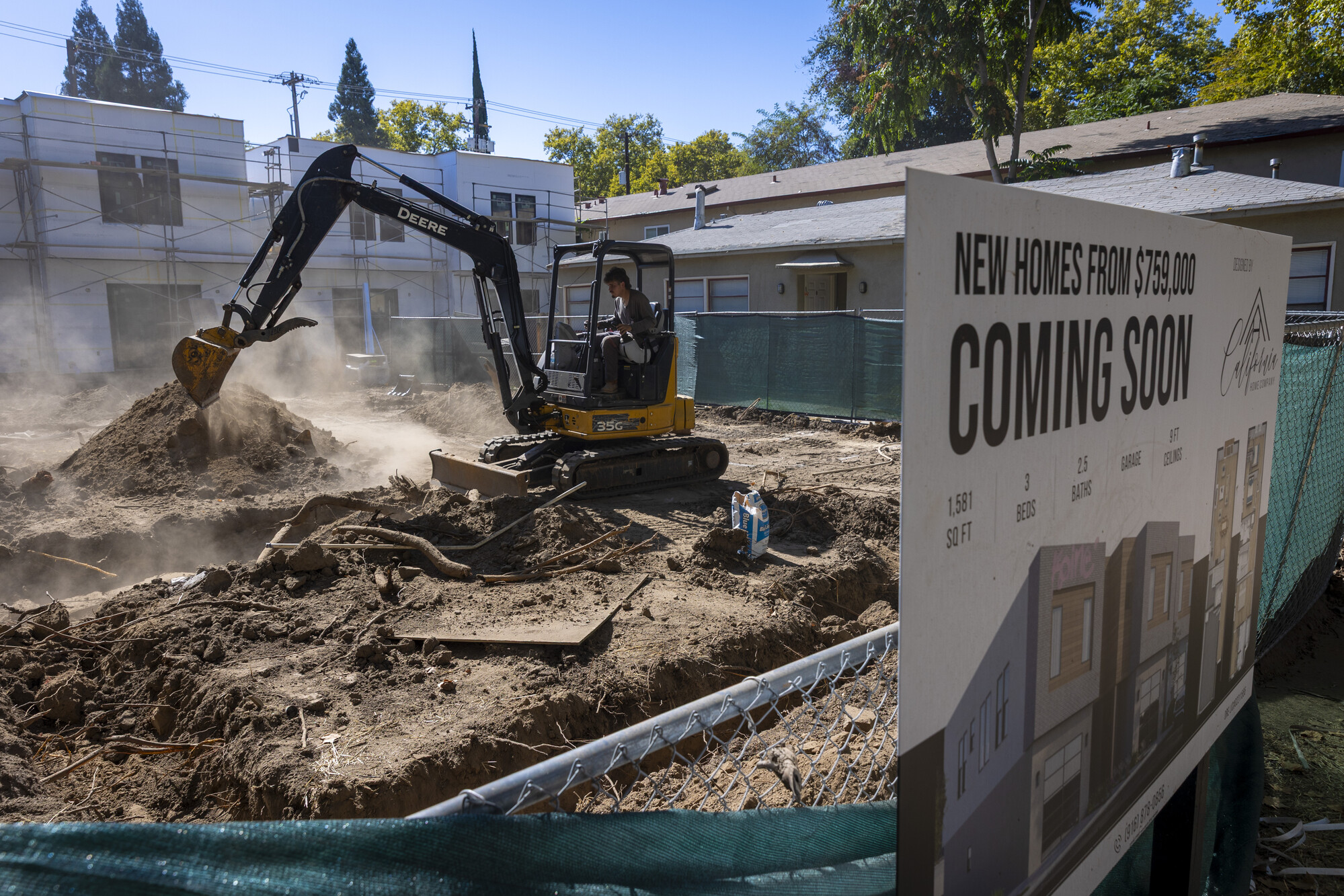
"caption": "A construction worker operates machinery to move dirt at the site of new middle housing units in Sacramento, California, on Oct. 7, 2025. ",
"credit": "Tâm Vũ/KQED",
"altTag": null,
"description": null,
"imgSizes": {
"thumbnail": {
"file": "https://cdn.kqed.org/wp-content/uploads/sites/10/2026/03/251007-sacramentomiddlehousing_00077_TV_qed-160x107.jpg",
"width": 160,
"height": 107,
"mimeType": "image/jpeg"
},
"1536x1536": {
"file": "https://cdn.kqed.org/wp-content/uploads/sites/10/2026/03/251007-sacramentomiddlehousing_00077_TV_qed-1536x1024.jpg",
"width": 1536,
"height": 1024,
"mimeType": "image/jpeg"
},
"post-thumbnail": {
"file": "https://cdn.kqed.org/wp-content/uploads/sites/10/2026/03/251007-sacramentomiddlehousing_00077_TV_qed-672x372.jpg",
"width": 672,
"height": 372,
"mimeType": "image/jpeg"
},
"twentyfourteen-full-width": {
"file": "https://cdn.kqed.org/wp-content/uploads/sites/10/2026/03/251007-sacramentomiddlehousing_00077_TV_qed-1038x576.jpg",
"width": 1038,
"height": 576,
"mimeType": "image/jpeg"
},
"npr-cds-wide": {
"file": "https://cdn.kqed.org/wp-content/uploads/sites/10/2026/03/251007-sacramentomiddlehousing_00077_TV_qed-1200x675.jpg",
"width": 1200,
"height": 675,
"mimeType": "image/jpeg"
},
"kqedFullSize": {
"file": "https://cdn.kqed.org/wp-content/uploads/sites/10/2026/03/251007-sacramentomiddlehousing_00077_TV_qed.jpg",
"width": 1999,
"height": 1333
}
},
"isLoading": false,
"fetchFailed": false
},
"news_12081346": {
"type": "attachments",
"id": "news_12081346",
"meta": {
"index": "attachments_1716263798",
"site": "news",
"id": "12081346",
"found": true
},
"title": "Candidates For Governor Of California Debate In San Francisco",
"publishDate": 1777063219,
"status": "inherit",
"parent": 12081345,
"modified": 1777063274,
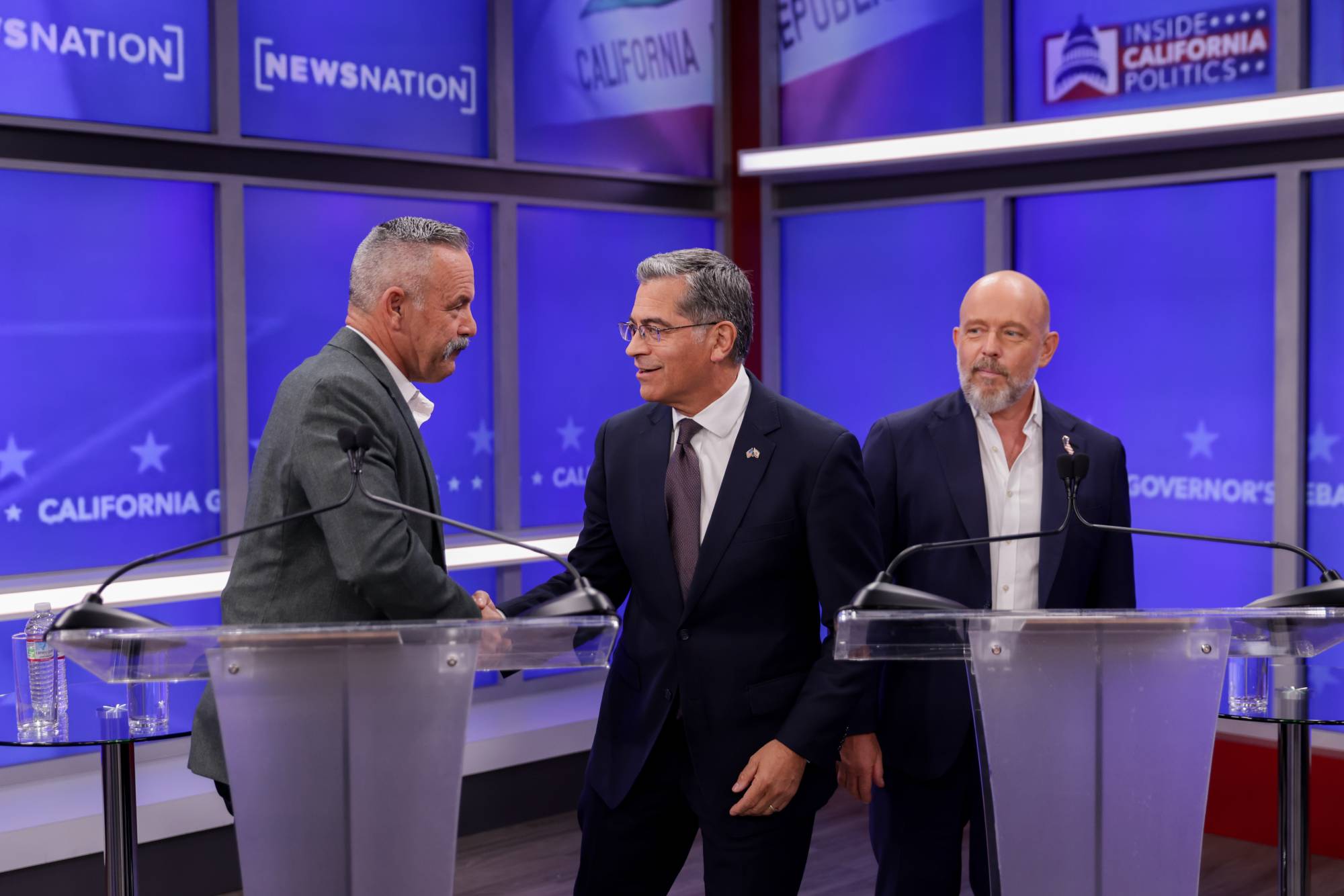
"caption": "Chad Bianco, Republican gubernatorial candidate for California, Xavier Becerra, Democratic gubernatorial candidate for California, and Steve Hilton, Republican gubernatorial candidate for California, arrive for a gubernatorial debate at KRON Studios in San Francisco on April 22, 2026. ",
"credit": "Jason Henry/Nexstar/Bloomberg",
"altTag": null,
"description": null,
"imgSizes": {
"medium": {
"file": "https://cdn.kqed.org/wp-content/uploads/sites/10/2026/04/GettyImages-2272001355-2000x1334.jpg",
"width": 2000,
"height": 1334,
"mimeType": "image/jpeg"
},
"large": {
"file": "https://cdn.kqed.org/wp-content/uploads/sites/10/2026/04/GettyImages-2272001355-2000x1334.jpg",
"width": 2000,
"height": 1334,
"mimeType": "image/jpeg"
},
"thumbnail": {
"file": "https://cdn.kqed.org/wp-content/uploads/sites/10/2026/04/GettyImages-2272001355-160x107.jpg",
"width": 160,
"height": 107,
"mimeType": "image/jpeg"
},
"1536x1536": {
"file": "https://cdn.kqed.org/wp-content/uploads/sites/10/2026/04/GettyImages-2272001355-1536x1024.jpg",
"width": 1536,
"height": 1024,
"mimeType": "image/jpeg"
},
"2048x2048": {
"file": "https://cdn.kqed.org/wp-content/uploads/sites/10/2026/04/GettyImages-2272001355-2048x1366.jpg",
"width": 2048,
"height": 1366,
"mimeType": "image/jpeg"
},
"post-thumbnail": {
"file": "https://cdn.kqed.org/wp-content/uploads/sites/10/2026/04/GettyImages-2272001355-672x372.jpg",
"width": 672,
"height": 372,
"mimeType": "image/jpeg"
},
"twentyfourteen-full-width": {
"file": "https://cdn.kqed.org/wp-content/uploads/sites/10/2026/04/GettyImages-2272001355-1038x576.jpg",
"width": 1038,
"height": 576,
"mimeType": "image/jpeg"
},
"full-width": {
"file": "https://cdn.kqed.org/wp-content/uploads/sites/10/2026/04/GettyImages-2272001355-2000x1334.jpg",
"width": 2000,
"height": 1334,
"mimeType": "image/jpeg"
},
"npr-cds-wide": {
"file": "https://cdn.kqed.org/wp-content/uploads/sites/10/2026/04/GettyImages-2272001355-1200x675.jpg",
"width": 1200,
"height": 675,
"mimeType": "image/jpeg"
},
"npr-cds-square": {
"file": "https://cdn.kqed.org/wp-content/uploads/sites/10/2026/04/GettyImages-2272001355-600x600.jpg",
"width": 600,
"height": 600,
"mimeType": "image/jpeg"
},
"kqedFullSize": {
"file": "https://cdn.kqed.org/wp-content/uploads/sites/10/2026/04/GettyImages-2272001355-scaled.jpg",
"width": 2560,
"height": 1707
}
},
"isLoading": false,
"fetchFailed": false
},
"news_12082333": {
"type": "attachments",
"id": "news_12082333",
"meta": {
"index": "attachments_1716263798",
"site": "news",
"id": "12082333",
"found": true
},
"title": "043006TOMSTEYER_GH_013-KQED",
"publishDate": 1777935054,
"status": "inherit",
"parent": 0,
"modified": 1779231878,
"caption": "Democratic gubernatorial candidate Tom Steyer speaks during a small press availability before a town hall event on April 30, 2026, in San José.",
"credit": "Gustavo Hernandez/KQED",
"altTag": null,
"description": null,
"imgSizes": {
"thumbnail": {
"file": "https://cdn.kqed.org/wp-content/uploads/sites/10/2026/05/043006TOMSTEYER_GH_013-KQED-160x107.jpg",
"width": 160,
"height": 107,
"mimeType": "image/jpeg"
},
"1536x1536": {
"file": "https://cdn.kqed.org/wp-content/uploads/sites/10/2026/05/043006TOMSTEYER_GH_013-KQED-1536x1024.jpg",
"width": 1536,
"height": 1024,
"mimeType": "image/jpeg"
},
"post-thumbnail": {
"file": "https://cdn.kqed.org/wp-content/uploads/sites/10/2026/05/043006TOMSTEYER_GH_013-KQED-672x372.jpg",
"width": 672,
"height": 372,
"mimeType": "image/jpeg"
},
"twentyfourteen-full-width": {
"file": "https://cdn.kqed.org/wp-content/uploads/sites/10/2026/05/043006TOMSTEYER_GH_013-KQED-1038x576.jpg",
"width": 1038,
"height": 576,
"mimeType": "image/jpeg"
},
"npr-cds-wide": {
"file": "https://cdn.kqed.org/wp-content/uploads/sites/10/2026/05/043006TOMSTEYER_GH_013-KQED-1200x675.jpg",
"width": 1200,
"height": 675,
"mimeType": "image/jpeg"
},
"npr-cds-square": {
"file": "https://cdn.kqed.org/wp-content/uploads/sites/10/2026/05/043006TOMSTEYER_GH_013-KQED-600x600.jpg",
"width": 600,
"height": 600,
"mimeType": "image/jpeg"
},
"kqedFullSize": {
"file": "https://cdn.kqed.org/wp-content/uploads/sites/10/2026/05/043006TOMSTEYER_GH_013-KQED.jpg",
"width": 2000,
"height": 1333
}
},
"isLoading": false,
"fetchFailed": false
},
"news_12084203": {
"type": "attachments",
"id": "news_12084203",
"meta": {
"index": "attachments_1716263798",
"site": "news",
"id": "12084203",
"found": true
},
"title": "260518-ChadBiancoTownHall-11-BL",
"publishDate": 1779159503,
"status": "inherit",
"parent": 12085443,
"modified": 1780068759,
"caption": "Gubernatorial candidate Chad Bianco speaks with KQED politics reporter Marisa Lagos during a town hall at KQED in San Francisco on May 18, 2026.",
"credit": "Beth LaBerge/KQED",
"altTag": null,
"description": null,
"imgSizes": {
"thumbnail": {
"file": "https://cdn.kqed.org/wp-content/uploads/sites/10/2026/05/260518-ChadBiancoTownHall-11-BL-160x107.jpg",
"width": 160,
"height": 107,
"mimeType": "image/jpeg"
},
"1536x1536": {
"file": "https://cdn.kqed.org/wp-content/uploads/sites/10/2026/05/260518-ChadBiancoTownHall-11-BL-1536x1024.jpg",
"width": 1536,
"height": 1024,
"mimeType": "image/jpeg"
},
"post-thumbnail": {
"file": "https://cdn.kqed.org/wp-content/uploads/sites/10/2026/05/260518-ChadBiancoTownHall-11-BL-672x372.jpg",
"width": 672,
"height": 372,
"mimeType": "image/jpeg"
},
"twentyfourteen-full-width": {
"file": "https://cdn.kqed.org/wp-content/uploads/sites/10/2026/05/260518-ChadBiancoTownHall-11-BL-1038x576.jpg",
"width": 1038,
"height": 576,
"mimeType": "image/jpeg"
},
"npr-cds-wide": {
"file": "https://cdn.kqed.org/wp-content/uploads/sites/10/2026/05/260518-ChadBiancoTownHall-11-BL-1200x675.jpg",
"width": 1200,
"height": 675,
"mimeType": "image/jpeg"
},
"npr-cds-square": {
"file": "https://cdn.kqed.org/wp-content/uploads/sites/10/2026/05/260518-ChadBiancoTownHall-11-BL-600x600.jpg",
"width": 600,
"height": 600,
"mimeType": "image/jpeg"
},
"kqedFullSize": {
"file": "https://cdn.kqed.org/wp-content/uploads/sites/10/2026/05/260518-ChadBiancoTownHall-11-BL.jpg",
"width": 2000,
"height": 1333
}
},
"isLoading": false,
"fetchFailed": false
},
"news_12062675": {
"type": "attachments",
"id": "news_12062675",
"meta": {
"index": "attachments_1716263798",
"site": "news",
"id": "12062675",
"found": true
},
"title": "251103-NewsomProp50Rally-65-BL",
"publishDate": 1762210643,
"status": "inherit",
"parent": 0,
"modified": 1762294209,
"caption": "Speaker Emerita Nancy Pelosi speaks during a press conference after a rally in support of Proposition 50 at IBEW Local 6 in San Francisco on Nov. 3, 2025.",
"credit": "Beth LaBerge/KQED",
"altTag": null,
"description": null,
"imgSizes": {
"thumbnail": {
"file": "https://cdn.kqed.org/wp-content/uploads/sites/10/2025/11/251103-NewsomProp50Rally-65-BL-160x107.jpg",
"width": 160,
"height": 107,
"mimeType": "image/jpeg"
},
"1536x1536": {
"file": "https://cdn.kqed.org/wp-content/uploads/sites/10/2025/11/251103-NewsomProp50Rally-65-BL-1536x1024.jpg",
"width": 1536,
"height": 1024,
"mimeType": "image/jpeg"
},
"post-thumbnail": {
"file": "https://cdn.kqed.org/wp-content/uploads/sites/10/2025/11/251103-NewsomProp50Rally-65-BL-672x372.jpg",
"width": 672,
"height": 372,
"mimeType": "image/jpeg"
},
"twentyfourteen-full-width": {
"file": "https://cdn.kqed.org/wp-content/uploads/sites/10/2025/11/251103-NewsomProp50Rally-65-BL-1038x576.jpg",
"width": 1038,
"height": 576,
"mimeType": "image/jpeg"
},
"npr-cds-wide": {
"file": "https://cdn.kqed.org/wp-content/uploads/sites/10/2025/11/251103-NewsomProp50Rally-65-BL-1200x675.jpg",
"width": 1200,
"height": 675,
"mimeType": "image/jpeg"
},
"kqedFullSize": {
"file": "https://cdn.kqed.org/wp-content/uploads/sites/10/2025/11/251103-NewsomProp50Rally-65-BL.jpg",
"width": 2000,
"height": 1333
}
},
"isLoading": false,
"fetchFailed": false
},
"news_12084001": {
"type": "attachments",
"id": "news_12084001",
"meta": {
"index": "attachments_1716263798",
"site": "news",
"id": "12084001",
"found": true
},
"title": "20260423_ XavierBecerra_EG_002_qed",
"publishDate": 1778886934,
"status": "inherit",
"parent": 12083992,
"modified": 1778889539,
"caption": "Xavier Becerra, center right, shakes hands with supporters as he arrives at a campaign event at Mount Diablo High School in Concord on Thursday, April 23, 2026. Becerra, an attorney and politician who formerly served as the United States secretary of health and human services, is among the several candidates running in the 2026 California gubernatorial election to succeed term-limited Gov. Gavin Newsom.",
"credit": "Estefany Gonzalez for KQED",
"altTag": null,
"description": null,
"imgSizes": {
"thumbnail": {
"file": "https://cdn.kqed.org/wp-content/uploads/sites/10/2026/05/20260423_-XavierBecerra_EG_002_qed-160x107.jpg",
"width": 160,
"height": 107,
"mimeType": "image/jpeg"
},
"1536x1536": {
"file": "https://cdn.kqed.org/wp-content/uploads/sites/10/2026/05/20260423_-XavierBecerra_EG_002_qed-1536x1024.jpg",
"width": 1536,
"height": 1024,
"mimeType": "image/jpeg"
},
"post-thumbnail": {
"file": "https://cdn.kqed.org/wp-content/uploads/sites/10/2026/05/20260423_-XavierBecerra_EG_002_qed-672x372.jpg",
"width": 672,
"height": 372,
"mimeType": "image/jpeg"
},
"twentyfourteen-full-width": {
"file": "https://cdn.kqed.org/wp-content/uploads/sites/10/2026/05/20260423_-XavierBecerra_EG_002_qed-1038x576.jpg",
"width": 1038,
"height": 576,
"mimeType": "image/jpeg"
},
"npr-cds-wide": {
"file": "https://cdn.kqed.org/wp-content/uploads/sites/10/2026/05/20260423_-XavierBecerra_EG_002_qed-1200x675.jpg",
"width": 1200,
"height": 675,
"mimeType": "image/jpeg"
},
"npr-cds-square": {
"file": "https://cdn.kqed.org/wp-content/uploads/sites/10/2026/05/20260423_-XavierBecerra_EG_002_qed-600x600.jpg",
"width": 600,
"height": 600,
"mimeType": "image/jpeg"
},
"kqedFullSize": {
"file": "https://cdn.kqed.org/wp-content/uploads/sites/10/2026/05/20260423_-XavierBecerra_EG_002_qed.jpg",
"width": 2000,
"height": 1333
}
},
"isLoading": false,
"fetchFailed": false
},
"news_12083964": {
"type": "attachments",
"id": "news_12083964",
"meta": {
"index": "attachments_1716263798",
"site": "news",
"id": "12083964",
"found": true
},
"title": "Rep. Eric Swalwell addresses the press event in Hayward on Mar. 9, 2026.",
"publishDate": 1778874929,
"status": "inherit",
"parent": 12083627,
"modified": 1778884113,
"caption": "Rep. Eric Swalwell addresses the press event in Hayward on March 9, 2026.",
"credit": "Martin do Nascimento/KQED",
"altTag": null,
"description": null,
"imgSizes": {
"thumbnail": {
"file": "https://cdn.kqed.org/wp-content/uploads/sites/10/2026/05/260309-DEAF-DEPORTEE-MD-05_qed-160x107.jpg",
"width": 160,
"height": 107,
"mimeType": "image/jpeg"
},
"1536x1536": {
"file": "https://cdn.kqed.org/wp-content/uploads/sites/10/2026/05/260309-DEAF-DEPORTEE-MD-05_qed-1536x1024.jpg",
"width": 1536,
"height": 1024,
"mimeType": "image/jpeg"
},
"post-thumbnail": {
"file": "https://cdn.kqed.org/wp-content/uploads/sites/10/2026/05/260309-DEAF-DEPORTEE-MD-05_qed-672x372.jpg",
"width": 672,
"height": 372,
"mimeType": "image/jpeg"
},
"twentyfourteen-full-width": {
"file": "https://cdn.kqed.org/wp-content/uploads/sites/10/2026/05/260309-DEAF-DEPORTEE-MD-05_qed-1038x576.jpg",
"width": 1038,
"height": 576,
"mimeType": "image/jpeg"
},
"npr-cds-wide": {
"file": "https://cdn.kqed.org/wp-content/uploads/sites/10/2026/05/260309-DEAF-DEPORTEE-MD-05_qed-1200x675.jpg",
"width": 1200,
"height": 675,
"mimeType": "image/jpeg"
},
"npr-cds-square": {
"file": "https://cdn.kqed.org/wp-content/uploads/sites/10/2026/05/260309-DEAF-DEPORTEE-MD-05_qed-600x600.jpg",
"width": 600,
"height": 600,
"mimeType": "image/jpeg"
},
"kqedFullSize": {
"file": "https://cdn.kqed.org/wp-content/uploads/sites/10/2026/05/260309-DEAF-DEPORTEE-MD-05_qed.jpg",
"width": 1999,
"height": 1333
}
},
"isLoading": false,
"fetchFailed": false
},
"news_12083854": {
"type": "attachments",
"id": "news_12083854",
"meta": {
"index": "attachments_1716263798",
"site": "news",
"id": "12083854",
"found": true
},
"title": "017_KQED_SanFrancisco_Election2020_TanyaYule_10092020_qed",
"publishDate": 1778864441,
"status": "inherit",
"parent": 12083100,
"modified": 1778873924,
"caption": "Tanya Yule puts on a sticker that reads, \"I Voted!\" in San Francisco on Oct. 9, 2020. The sticker, which features the Dogie Diner mascot, was made by her husband, Josh Yule.",
"credit": "Beth LaBerge/KQED",
"altTag": null,
"description": null,
"imgSizes": {
"thumbnail": {
"file": "https://cdn.kqed.org/wp-content/uploads/sites/10/2026/05/017_KQED_SanFrancisco_Election2020_TanyaYule_10092020_qed-160x107.jpg",
"width": 160,
"height": 107,
"mimeType": "image/jpeg"
},
"1536x1536": {
"file": "https://cdn.kqed.org/wp-content/uploads/sites/10/2026/05/017_KQED_SanFrancisco_Election2020_TanyaYule_10092020_qed-1536x1024.jpg",
"width": 1536,
"height": 1024,
"mimeType": "image/jpeg"
},
"post-thumbnail": {
"file": "https://cdn.kqed.org/wp-content/uploads/sites/10/2026/05/017_KQED_SanFrancisco_Election2020_TanyaYule_10092020_qed-672x372.jpg",
"width": 672,
"height": 372,
"mimeType": "image/jpeg"
},
"twentyfourteen-full-width": {
"file": "https://cdn.kqed.org/wp-content/uploads/sites/10/2026/05/017_KQED_SanFrancisco_Election2020_TanyaYule_10092020_qed-1038x576.jpg",
"width": 1038,
"height": 576,
"mimeType": "image/jpeg"
},
"npr-cds-wide": {
"file": "https://cdn.kqed.org/wp-content/uploads/sites/10/2026/05/017_KQED_SanFrancisco_Election2020_TanyaYule_10092020_qed-1200x675.jpg",
"width": 1200,
"height": 675,
"mimeType": "image/jpeg"
},
"npr-cds-square": {
"file": "https://cdn.kqed.org/wp-content/uploads/sites/10/2026/05/017_KQED_SanFrancisco_Election2020_TanyaYule_10092020_qed-600x600.jpg",
"width": 600,
"height": 600,
"mimeType": "image/jpeg"
},
"kqedFullSize": {
"file": "https://cdn.kqed.org/wp-content/uploads/sites/10/2026/05/017_KQED_SanFrancisco_Election2020_TanyaYule_10092020_qed.jpg",
"width": 1999,
"height": 1333
}
},
"isLoading": false,
"fetchFailed": false
},
"news_12081064": {
"type": "attachments",
"id": "news_12081064",
"meta": {
"index": "attachments_1716263798",
"site": "news",
"id": "12081064",
"found": true
},
"title": "FTP_9P3A3319_1_qed",
"publishDate": 1776915743,
"status": "inherit",
"parent": 12082059,
"modified": 1778868137,
"caption": "Matt Mahan, Democratic gubernatorial candidate for California, from left, Xavier Becerra, Democratic gubernatorial candidate for California, Chad Bianco, Republican gubernatorial candidate for California, Steve Hilton, Republican gubernatorial candidate for California, Tom Steyer, Democratic gubernatorial candidate for California, and Katie Porter, Democratic gubernatorial candidate for California, during a gubernatorial debate at KRON Studios in San Francisco, California, on April 22, 2026. California will hold its primary election on June 2, where the top two finishers advance to the general election in November regardless of party affiliation. ",
"credit": "Jason Henry/Nexstar/Bloomberg",
"altTag": null,
"description": null,
"imgSizes": {
"thumbnail": {
"file": "https://cdn.kqed.org/wp-content/uploads/sites/10/2026/04/FTP_9P3A3319_1_qed-160x107.jpg",
"width": 160,
"height": 107,
"mimeType": "image/jpeg"
},
"1536x1536": {
"file": "https://cdn.kqed.org/wp-content/uploads/sites/10/2026/04/FTP_9P3A3319_1_qed-1536x1024.jpg",
"width": 1536,
"height": 1024,
"mimeType": "image/jpeg"
},
"post-thumbnail": {
"file": "https://cdn.kqed.org/wp-content/uploads/sites/10/2026/04/FTP_9P3A3319_1_qed-672x372.jpg",
"width": 672,
"height": 372,
"mimeType": "image/jpeg"
},
"twentyfourteen-full-width": {
"file": "https://cdn.kqed.org/wp-content/uploads/sites/10/2026/04/FTP_9P3A3319_1_qed-1038x576.jpg",
"width": 1038,
"height": 576,
"mimeType": "image/jpeg"
},
"npr-cds-wide": {
"file": "https://cdn.kqed.org/wp-content/uploads/sites/10/2026/04/FTP_9P3A3319_1_qed-1200x675.jpg",
"width": 1200,
"height": 675,
"mimeType": "image/jpeg"
},
"npr-cds-square": {
"file": "https://cdn.kqed.org/wp-content/uploads/sites/10/2026/04/FTP_9P3A3319_1_qed-600x600.jpg",
"width": 600,
"height": 600,
"mimeType": "image/jpeg"
},
"kqedFullSize": {
"file": "https://cdn.kqed.org/wp-content/uploads/sites/10/2026/04/FTP_9P3A3319_1_qed.jpg",
"width": 1999,
"height": 1333
}
},
"isLoading": false,
"fetchFailed": false
},
"news_12082339": {
"type": "attachments",
"id": "news_12082339",
"meta": {
"index": "attachments_1716263798",
"site": "news",
"id": "12082339",
"found": true
},
"title": "20260423_ XAVIERBECERRA_EG_039-KQED",
"publishDate": 1777935078,
"status": "inherit",
"parent": 0,
"modified": 1778267226,
"caption": "Concord resident Chuck Carpenter, right, speaks with Xavier Becerra during a campaign event at Mount Diablo High School in Concord on Thursday, April 23, 2026.",
"credit": "Estefany Gonzalez for KQED",
"altTag": null,
"description": null,
"imgSizes": {
"thumbnail": {
"file": "https://cdn.kqed.org/wp-content/uploads/sites/10/2026/05/20260423_-XAVIERBECERRA_EG_039-KQED-160x107.jpg",
"width": 160,
"height": 107,
"mimeType": "image/jpeg"
},
"1536x1536": {
"file": "https://cdn.kqed.org/wp-content/uploads/sites/10/2026/05/20260423_-XAVIERBECERRA_EG_039-KQED-1536x1024.jpg",
"width": 1536,
"height": 1024,
"mimeType": "image/jpeg"
},
"post-thumbnail": {
"file": "https://cdn.kqed.org/wp-content/uploads/sites/10/2026/05/20260423_-XAVIERBECERRA_EG_039-KQED-672x372.jpg",
"width": 672,
"height": 372,
"mimeType": "image/jpeg"
},
"twentyfourteen-full-width": {
"file": "https://cdn.kqed.org/wp-content/uploads/sites/10/2026/05/20260423_-XAVIERBECERRA_EG_039-KQED-1038x576.jpg",
"width": 1038,
"height": 576,
"mimeType": "image/jpeg"
},
"npr-cds-wide": {
"file": "https://cdn.kqed.org/wp-content/uploads/sites/10/2026/05/20260423_-XAVIERBECERRA_EG_039-KQED-1200x675.jpg",
"width": 1200,
"height": 675,
"mimeType": "image/jpeg"
},
"npr-cds-square": {
"file": "https://cdn.kqed.org/wp-content/uploads/sites/10/2026/05/20260423_-XAVIERBECERRA_EG_039-KQED-600x600.jpg",
"width": 600,
"height": 600,
"mimeType": "image/jpeg"
},
"kqedFullSize": {
"file": "https://cdn.kqed.org/wp-content/uploads/sites/10/2026/05/20260423_-XAVIERBECERRA_EG_039-KQED.jpg",
"width": 2000,
"height": 1333
}
},
"isLoading": false,
"fetchFailed": false
},
"news_12077708": {
"type": "attachments",
"id": "news_12077708",
"meta": {
"index": "attachments_1716263798",
"site": "news",
"id": "12077708",
"found": true
},
"title": "260326-KATIE PORTER ON PB-MD-03-KQED",
"publishDate": 1774559567,
"status": "inherit",
"parent": 0,
"modified": 1774559583,
"caption": "Katie Porter is interviewed by Marisa Lagos and Scott Shafer on Political Breakdown at KQED on March 26, 2026.",
"credit": "Martin do Nascimento/KQED",
"altTag": null,
"description": null,
"imgSizes": {
"thumbnail": {
"file": "https://cdn.kqed.org/wp-content/uploads/sites/10/2026/03/260326-KATIE-PORTER-ON-PB-MD-03-KQED-160x107.jpg",
"width": 160,
"height": 107,
"mimeType": "image/jpeg"
},
"1536x1536": {
"file": "https://cdn.kqed.org/wp-content/uploads/sites/10/2026/03/260326-KATIE-PORTER-ON-PB-MD-03-KQED-1536x1025.jpg",
"width": 1536,
"height": 1025,
"mimeType": "image/jpeg"
},
"post-thumbnail": {
"file": "https://cdn.kqed.org/wp-content/uploads/sites/10/2026/03/260326-KATIE-PORTER-ON-PB-MD-03-KQED-672x372.jpg",
"width": 672,
"height": 372,
"mimeType": "image/jpeg"
},
"twentyfourteen-full-width": {
"file": "https://cdn.kqed.org/wp-content/uploads/sites/10/2026/03/260326-KATIE-PORTER-ON-PB-MD-03-KQED-1038x576.jpg",
"width": 1038,
"height": 576,
"mimeType": "image/jpeg"
},
"npr-cds-wide": {
"file": "https://cdn.kqed.org/wp-content/uploads/sites/10/2026/03/260326-KATIE-PORTER-ON-PB-MD-03-KQED-1200x675.jpg",
"width": 1200,
"height": 675,
"mimeType": "image/jpeg"
},
"npr-cds-square": {
"file": "https://cdn.kqed.org/wp-content/uploads/sites/10/2026/03/260326-KATIE-PORTER-ON-PB-MD-03-KQED-600x600.jpg",
"width": 600,
"height": 600,
"mimeType": "image/jpeg"
},
"kqedFullSize": {
"file": "https://cdn.kqed.org/wp-content/uploads/sites/10/2026/03/260326-KATIE-PORTER-ON-PB-MD-03-KQED.jpg",
"width": 2000,
"height": 1334
}
},
"isLoading": false,
"fetchFailed": false
},
"news_12081365": {
"type": "attachments",
"id": "news_12081365",
"meta": {
"index": "attachments_1716263798",
"site": "news",
"id": "12081365",
"found": true
},
"title": "110525-Election-Counting-Fresno-LV-CM-15-1",
"publishDate": 1777068720,
"status": "inherit",
"parent": 12081363,
"modified": 1777068744,
"caption": "Election workers sort ballots at the Fresno County Elections Warehouse in Fresno on Nov. 5, 2025. ",
"credit": "Photo by Larry Valenzuela/CalMatters/CatchLight Local",
"altTag": null,
"description": null,
"imgSizes": {
"thumbnail": {
"file": "https://cdn.kqed.org/wp-content/uploads/sites/10/2026/04/110525-Election-Counting-Fresno-LV-CM-15-1-160x107.jpeg",
"width": 160,
"height": 107,
"mimeType": "image/jpeg"
},
"1536x1536": {
"file": "https://cdn.kqed.org/wp-content/uploads/sites/10/2026/04/110525-Election-Counting-Fresno-LV-CM-15-1-1536x1024.jpeg",
"width": 1536,
"height": 1024,
"mimeType": "image/jpeg"
},
"post-thumbnail": {
"file": "https://cdn.kqed.org/wp-content/uploads/sites/10/2026/04/110525-Election-Counting-Fresno-LV-CM-15-1-672x372.jpeg",
"width": 672,
"height": 372,
"mimeType": "image/jpeg"
},
"twentyfourteen-full-width": {
"file": "https://cdn.kqed.org/wp-content/uploads/sites/10/2026/04/110525-Election-Counting-Fresno-LV-CM-15-1-1038x576.jpeg",
"width": 1038,
"height": 576,
"mimeType": "image/jpeg"
},
"npr-cds-wide": {
"file": "https://cdn.kqed.org/wp-content/uploads/sites/10/2026/04/110525-Election-Counting-Fresno-LV-CM-15-1-1200x675.jpeg",
"width": 1200,
"height": 675,
"mimeType": "image/jpeg"
},
"npr-cds-square": {
"file": "https://cdn.kqed.org/wp-content/uploads/sites/10/2026/04/110525-Election-Counting-Fresno-LV-CM-15-1-600x600.jpeg",
"width": 600,
"height": 600,
"mimeType": "image/jpeg"
},
"kqedFullSize": {
"file": "https://cdn.kqed.org/wp-content/uploads/sites/10/2026/04/110525-Election-Counting-Fresno-LV-CM-15-1.jpeg",
"width": 2000,
"height": 1333
}
},
"isLoading": false,
"fetchFailed": false
}
},
"audioPlayerReducer": {
"postId": "stream_live",
"isPaused": true,
"isPlaying": false,
"pfsActive": false,
"pledgeModalIsOpen": true,
"playerDrawerIsOpen": false,
"liveAudioPlayStartedAt": 0,
"liveAudioPlayContext": ""
},
"authorsReducer": {
"gmarzorati": {
"type": "authors",
"id": "227",
"meta": {
"index": "authors_1716337520",
"id": "227",
"found": true
},
"name": "Guy Marzorati",
"firstName": "Guy",
"lastName": "Marzorati",
"slug": "gmarzorati",
"email": "gmarzorati@KQED.org",
"display_author_email": true,
"staff_mastheads": [
"news"
],
"title": "Correspondent",
"bio": "Guy Marzorati is a correspondent on KQED's California Politics and Government Desk, based in San Jose. A graduate of Santa Clara University, Guy joined KQED in 2013. He reports on state and local politics and produces KQED's digital voter guide.",
"avatar": "https://secure.gravatar.com/avatar/771cddf45ce3a8ed533d82dcc214e9ef925d76d2af5794a33da1ce439eb54a32?s=600&d=blank&r=g",
"twitter": "guymarzorati",
"bluesky": null,
"facebook": null,
"instagram": null,
"linkedin": null,
"sites": [
{
"site": "",
"roles": [
"editor"
]
},
{
"site": "news",
"roles": [
"editor"
]
},
{
"site": "science",
"roles": [
"editor"
]
},
{
"site": "forum",
"roles": [
"editor"
]
},
{
"site": "elections",
"roles": [
"editor"
]
},
{
"site": "liveblog",
"roles": [
"editor"
]
}
],
"headData": {
"title": "Guy Marzorati | KQED",
"description": "Correspondent",
"ogImgSrc": "https://secure.gravatar.com/avatar/771cddf45ce3a8ed533d82dcc214e9ef925d76d2af5794a33da1ce439eb54a32?s=600&d=blank&r=g",
"twImgSrc": "https://secure.gravatar.com/avatar/771cddf45ce3a8ed533d82dcc214e9ef925d76d2af5794a33da1ce439eb54a32?s=600&d=blank&r=g"
},
"isLoading": false,
"link": "/author/gmarzorati"
},
"mlagos": {
"type": "authors",
"id": "3239",
"meta": {
"index": "authors_1716337520",
"id": "3239",
"found": true
},
"name": "Marisa Lagos",
"firstName": "Marisa",
"lastName": "Lagos",
"slug": "mlagos",
"email": "mlagos@kqed.org",
"display_author_email": false,
"staff_mastheads": [
"news"
],
"title": "KQED Contributor",
"bio": "Marisa Lagos is a correspondent for KQED’s California Politics and Government Desk and co-hosts the award-winning show and podcast, Political Breakdown. At KQED, Lagos also conducts reporting, analysis and investigations into state, local and national politics for radio, TV, online and onstage. In 2022, she and co-host, Scott Shafer, moderated the only gubernatorial debate in California. In 2020, the \u003ci>Washington Post\u003c/i> named her one of the top political journalists in California; she was nominated for a Peabody and won several other awards for her work investigating the 2017 California wildfires. She has worked at the \u003ci>San Francisco Chronicle\u003c/i>, \u003ci>San Francisco Examiner\u003c/i> and \u003ci>Los Angeles Times\u003c/i>. A UC Santa Barbara graduate, she lives in San Francisco with her two sons and husband.",
"avatar": "https://secure.gravatar.com/avatar/a261a0d3696fc066871ef96b85b5e7d2?s=600&d=blank&r=g",
"twitter": "@mlagos",
"facebook": null,
"instagram": null,
"linkedin": null,
"sites": [
{
"site": "arts",
"roles": [
"author"
]
},
{
"site": "news",
"roles": [
"editor"
]
},
{
"site": "science",
"roles": [
"editor"
]
},
{
"site": "forum",
"roles": [
"author"
]
},
{
"site": "liveblog",
"roles": [
"author"
]
}
],
"headData": {
"title": "Marisa Lagos | KQED",
"description": "KQED Contributor",
"ogImgSrc": "https://secure.gravatar.com/avatar/a261a0d3696fc066871ef96b85b5e7d2?s=600&d=blank&r=g",
"twImgSrc": "https://secure.gravatar.com/avatar/a261a0d3696fc066871ef96b85b5e7d2?s=600&d=blank&r=g"
},
"isLoading": false,
"link": "/author/mlagos"
},
"carlysevern": {
"type": "authors",
"id": "3243",
"meta": {
"index": "authors_1716337520",
"id": "3243",
"found": true
},
"name": "Carly Severn",
"firstName": "Carly",
"lastName": "Severn",
"slug": "carlysevern",
"email": "csevern@kqed.org",
"display_author_email": false,
"staff_mastheads": [
"news"
],
"title": "Senior Editor, Audience News ",
"bio": "Carly is KQED's Senior Editor of Audience News on the Digital News team, and has reported for the California Report Magazine, Bay Curious and KQED Arts. She's formerly the host of \u003ca href=\"http://ww2.kqed.org/pop/category/the-cooler/\" rel=\"noopener noreferrer\">The Cooler\u003c/a> podcast.",
"avatar": "https://secure.gravatar.com/avatar/54037bf5c128fe678f0ef26cec97a93f2e7f220a22d7285703328f12c42c1b1d?s=600&d=blank&r=g",
"twitter": "teacupinthebay",
"bluesky": null,
"facebook": null,
"instagram": null,
"linkedin": null,
"sites": [
{
"site": "",
"roles": [
"editor"
]
},
{
"site": "arts",
"roles": [
"editor"
]
},
{
"site": "news",
"roles": [
"administrator"
]
},
{
"site": "pop",
"roles": [
"editor"
]
},
{
"site": "futureofyou",
"roles": [
"editor"
]
},
{
"site": "about",
"roles": [
"administrator"
]
},
{
"site": "mindshift",
"roles": [
"editor"
]
},
{
"site": "bayareabites",
"roles": [
"editor"
]
},
{
"site": "stateofhealth",
"roles": [
"editor"
]
},
{
"site": "science",
"roles": [
"editor"
]
},
{
"site": "food",
"roles": [
"contributor"
]
},
{
"site": "forum",
"roles": [
"editor"
]
},
{
"site": "perspectives",
"roles": [
"administrator"
]
},
{
"site": "liveblog",
"roles": [
"editor"
]
}
],
"headData": {
"title": "Carly Severn | KQED",
"description": "Senior Editor, Audience News ",
"ogImgSrc": "https://secure.gravatar.com/avatar/54037bf5c128fe678f0ef26cec97a93f2e7f220a22d7285703328f12c42c1b1d?s=600&d=blank&r=g",
"twImgSrc": "https://secure.gravatar.com/avatar/54037bf5c128fe678f0ef26cec97a93f2e7f220a22d7285703328f12c42c1b1d?s=600&d=blank&r=g"
},
"isLoading": false,
"link": "/author/carlysevern"
},
"abandlamudi": {
"type": "authors",
"id": "11672",
"meta": {
"index": "authors_1716337520",
"id": "11672",
"found": true
},
"name": "Adhiti Bandlamudi",
"firstName": "Adhiti",
"lastName": "Bandlamudi",
"slug": "abandlamudi",
"email": "abandlamudi@kqed.org",
"display_author_email": false,
"staff_mastheads": [
"news"
],
"title": "KQED Housing Reporter",
"bio": "Adhiti Bandlamudi reports for KQED's Housing desk. She focuses on how housing gets built across the Bay Area. Before joining KQED in 2020, she reported for WUNC in Durham, North Carolina, WABE in Atlanta, Georgia and Capital Public Radio in Sacramento. In 2017, she was awarded a Kroc Fellowship at NPR where she reported on everything from sprinkles to the Golden State Killer's arrest. When she's not reporting, she's baking new recipes in her kitchen or watching movies with friends and family. She's originally from Georgia and has strong opinions about Great British Bake Off.",
"avatar": "https://secure.gravatar.com/avatar/868129c8b257bb99a3500e2c86a65400?s=600&d=mm&r=g",
"twitter": "oddity_adhiti",
"facebook": null,
"instagram": null,
"linkedin": null,
"sites": [
{
"site": "arts",
"roles": [
"author"
]
},
{
"site": "news",
"roles": [
"editor"
]
},
{
"site": "liveblog",
"roles": [
"author"
]
}
],
"headData": {
"title": "Adhiti Bandlamudi | KQED",
"description": "KQED Housing Reporter",
"ogImgSrc": "https://secure.gravatar.com/avatar/868129c8b257bb99a3500e2c86a65400?s=600&d=mm&r=g",
"twImgSrc": "https://secure.gravatar.com/avatar/868129c8b257bb99a3500e2c86a65400?s=600&d=mm&r=g"
},
"isLoading": false,
"link": "/author/abandlamudi"
},
"ibloom": {
"type": "authors",
"id": "11805",
"meta": {
"index": "authors_1716337520",
"id": "11805",
"found": true
},
"name": "Izzy Bloom",
"firstName": "Izzy",
"lastName": "Bloom",
"slug": "ibloom",
"email": "ibloom@kqed.org",
"display_author_email": false,
"staff_mastheads": [],
"title": "KQED Reporter & Producer",
"bio": "Izzy is a reporter and producer on KQED's California Politics & Government Desk. She joined the desk in 2024 to produce Political Breakdown, covering local and national elections and attending the RNC and DNC in Milwaukee and Chicago. \r\n\r\nBefore that, Izzy was a producer on The California Report and reported long-form stories for The California Report Magazine. She was a finalist for the Third Coast/Richard H. Driehaus Foundation Competition and was awarded for her reporting on indigenous land back by the Society of Professional Journalists. Izzy received her master's in journalism from the University of California, Berkeley.",
"avatar": "https://secure.gravatar.com/avatar/cc4d272ca430783ee1a8efac470a6b1e0fdd082c3beb61da019801d0ff751c8c?s=600&d=blank&r=g",
"twitter": null,
"bluesky": null,
"facebook": null,
"instagram": null,
"linkedin": null,
"sites": [
{
"site": "news",
"roles": [
"editor"
]
},
{
"site": "perspectives",
"roles": [
"editor"
]
}
],
"headData": {
"title": "Izzy Bloom | KQED",
"description": "KQED Reporter & Producer",
"ogImgSrc": "https://secure.gravatar.com/avatar/cc4d272ca430783ee1a8efac470a6b1e0fdd082c3beb61da019801d0ff751c8c?s=600&d=blank&r=g",
"twImgSrc": "https://secure.gravatar.com/avatar/cc4d272ca430783ee1a8efac470a6b1e0fdd082c3beb61da019801d0ff751c8c?s=600&d=blank&r=g"
},
"isLoading": false,
"link": "/author/ibloom"
},
"sjohnson": {
"type": "authors",
"id": "11840",
"meta": {
"index": "authors_1716337520",
"id": "11840",
"found": true
},
"name": "Sydney Johnson",
"firstName": "Sydney",
"lastName": "Johnson",
"slug": "sjohnson",
"email": "sjohnson@kqed.org",
"display_author_email": false,
"staff_mastheads": [
"news"
],
"title": "KQED Reporter",
"bio": "Sydney Johnson is a general assignment reporter at KQED. She previously reported on public health and city government at the San Francisco Examiner, and before that, she covered statewide education policy for EdSource. Her reporting has won multiple local, state and national awards. Sydney is a graduate of the University of California, Berkeley and lives in San Francisco.",
"avatar": "https://secure.gravatar.com/avatar/97855f2719b72ad6190b7c535fe642c8?s=600&d=blank&r=g",
"twitter": "sydneyfjohnson",
"facebook": null,
"instagram": null,
"linkedin": null,
"sites": [
{
"site": "news",
"roles": [
"editor"
]
}
],
"headData": {
"title": "Sydney Johnson | KQED",
"description": "KQED Reporter",
"ogImgSrc": "https://secure.gravatar.com/avatar/97855f2719b72ad6190b7c535fe642c8?s=600&d=blank&r=g",
"twImgSrc": "https://secure.gravatar.com/avatar/97855f2719b72ad6190b7c535fe642c8?s=600&d=blank&r=g"
},
"isLoading": false,
"link": "/author/sjohnson"
},
"sprabha": {
"type": "authors",
"id": "11976",
"meta": {
"index": "authors_1716337520",
"id": "11976",
"found": true
},
"name": "Srishti Prabha",
"firstName": "Srishti",
"lastName": "Prabha",
"slug": "sprabha",
"email": "sprabha@KQED.org",
"display_author_email": false,
"staff_mastheads": [],
"title": "KQED Contributor",
"bio": "Srishti Prabha is a producer and reporter for KQED news and podcasts. They also work on longform human-interest features as a Beat Reporting Fellow with KALW. Their reporting has appeared on NPR, Morning Edition, All Things Considered, The California Report Magazine, and more. Most recently, Prabha covered education for CapRadio as a Report for America corps member, focusing on issues affecting communities of color in the Sacramento region. They previously served as managing editor of India Currents, where they reported on immigration, cultural identity, and health in South Asian communities. Prabha's work has been recognized by the San Francisco Press Club, the California News Publishers Association, and the Edward R. Murrow Awards.",
"avatar": "https://secure.gravatar.com/avatar/cc4d8ef770090714faad7e1d24857f806d09340456c5734167b9a6361b175d7d?s=600&d=blank&r=g",
"twitter": null,
"bluesky": null,
"facebook": null,
"instagram": null,
"linkedin": null,
"sites": [
{
"site": "news",
"roles": [
"editor"
]
}
],
"headData": {
"title": "Srishti Prabha | KQED",
"description": "KQED Contributor",
"ogImgSrc": "https://secure.gravatar.com/avatar/cc4d8ef770090714faad7e1d24857f806d09340456c5734167b9a6361b175d7d?s=600&d=blank&r=g",
"twImgSrc": "https://secure.gravatar.com/avatar/cc4d8ef770090714faad7e1d24857f806d09340456c5734167b9a6361b175d7d?s=600&d=blank&r=g"
},
"isLoading": false,
"link": "/author/sprabha"
}
},
"pagesReducer": {
"news_tag_election-2026": {
"type": "terms",
"id": "news_36336",
"meta": {
"index": "terms_1716263798",
"site": "news",
"id": "36336",
"score": 10.407741
},
"name": "Election 2026",
"slug": "election-2026",
"taxonomy": "tag",
"description": null,
"featImg": null,
"headData": {
"title": "Election 2026 | KQED News",
"description": null,
"ogTitle": null,
"ogDescription": null,
"ogImgId": null,
"twTitle": null,
"twDescription": null,
"twImgId": null
},
"ttid": 36353,
"isLoading": false,
"title": "Election 2026",
"pageMeta": {
"site": "news",
"WpPageTemplate": "page-topic-editorial",
"currentPage": 13
},
"blocks": [
{
"blockName": "kqed/post-list",
"attrs": {
"layout": "cardArticle2",
"query": "posts/news?tag=election-2026",
"seeMore": false,
"paginated": true,
"page": 13
}
},
{
"blockName": "kqed/ad"
}
]
}
},
"pfsSessionReducer": {},
"postsReducer": {
"stream_live": {
"type": "live",
"id": "stream_live",
"audioUrl": "https://hls.kqed.org/hls/kqed_app/playlist.m3u8",
"title": "Live Stream",
"excerpt": "Live Stream information currently unavailable.",
"link": "/radio",
"featImg": "",
"label": {
"name": "KQED Live",
"link": "/"
}
},
"stream_kqedNewscast": {
"type": "posts",
"id": "stream_kqedNewscast",
"audioUrl": "https://www.kqed.org/.stream/anon/radio/RDnews/newscast.mp3?_=1",
"title": "KQED Newscast",
"featImg": "",
"label": {
"name": "88.5 FM",
"link": "/"
}
},
"news_12084487": {
"type": "posts",
"id": "news_12084487",
"meta": {
"index": "posts_1716263798",
"site": "news",
"id": "12084487",
"score": null,
"sort": [
1779372020000
]
},
"guestAuthors": [],
"slug": "how-californias-next-governor-would-tackle-rent-insurance-and-housing-costs",
"title": "How California’s Next Governor Would Tackle Rent, Insurance and Housing Costs",
"publishDate": 1779372020,
"format": "standard",
"headTitle": "How California’s Next Governor Would Tackle Rent, Insurance and Housing Costs | KQED",
"labelTerm": {
"site": "news"
},
"content": "\u003cp>When it comes to affording rent or a home mortgage in \u003ca href=\"https://www.kqed.org/news/tag/california\">California\u003c/a>, every candidate in the race for governor seems to have a personal stake.\u003c/p>\n\u003cp>Katie Porter wants her three teenage children to eventually move off her couch. Antonio Villaraigosa wants reliable home insurance. Matt Mahan doesn’t want to fight with his wife over their mortgage, as his parents did.\u003c/p>\n\u003cp>As the affordability crisis literally drives \u003ca href=\"https://www.kqed.org/news/12078787/grass-is-really-greener-for-many-californians-leaving-the-state\">residents out\u003c/a> of the state, the candidates have made housing a central point of their campaigns. That’s a sea change from previous elections, said Laura Foote, executive director for YIMBY Action.\u003c/p>\n\u003cp>[ad fullwidth]\u003c/p>\n\u003cp>“Everybody up there was expected to have a plan and demonstrate how they were going to execute on delivering more affordable housing in California,” she said. “That’s a crazily different place than we were eight years ago, 10 years ago.”\u003c/p>\n\u003cp>Each candidate is trying to stand out in the \u003ca href=\"https://www.kqed.org/news/12082125/inside-californias-billionaire-tax-fight-and-the-wide-open-governors-race\">most competitive primary\u003c/a> for California governor in two decades. But many are hitting the same broad talking points: lower the cost of construction, make homeownership more accessible and reduce homelessness. Where they differ is in the details of how they’ll get there. Meanwhile, some voters feel discouraged by key issues they say are missing.\u003c/p>\n\u003cp>Katherine Peoples-McGill drove to Oakland from Altadena earlier this month to attend a debate sponsored by the Housing Action Coalition and other housing nonprofits. She runs the Rebuild Center for Altadenans, which assists survivors of the \u003ca href=\"https://www.kqed.org/news/tag/la-fires\">2025 Los Angeles wildfires\u003c/a>. She was disappointed none of the candidates had visited her center, much less mentioned wildfires in their comments.\u003c/p>\n\u003cfigure id=\"attachment_12037128\" class=\"wp-caption aligncenter\" style=\"max-width: 2000px\">\u003cimg loading=\"lazy\" decoding=\"async\" class=\"wp-image-12037128 size-full\" src=\"https://cdn.kqed.org/wp-content/uploads/sites/10/2025/04/METTE.LAMPCOV.CHURCH.BELL-29-KQED.jpg\" alt=\"\" width=\"2000\" height=\"1334\" srcset=\"https://cdn.kqed.org/wp-content/uploads/sites/10/2025/04/METTE.LAMPCOV.CHURCH.BELL-29-KQED.jpg 2000w, https://cdn.kqed.org/wp-content/uploads/sites/10/2025/04/METTE.LAMPCOV.CHURCH.BELL-29-KQED-800x534.jpg 800w, https://cdn.kqed.org/wp-content/uploads/sites/10/2025/04/METTE.LAMPCOV.CHURCH.BELL-29-KQED-1020x680.jpg 1020w, https://cdn.kqed.org/wp-content/uploads/sites/10/2025/04/METTE.LAMPCOV.CHURCH.BELL-29-KQED-160x107.jpg 160w, https://cdn.kqed.org/wp-content/uploads/sites/10/2025/04/METTE.LAMPCOV.CHURCH.BELL-29-KQED-1536x1025.jpg 1536w, https://cdn.kqed.org/wp-content/uploads/sites/10/2025/04/METTE.LAMPCOV.CHURCH.BELL-29-KQED-1920x1281.jpg 1920w\" sizes=\"auto, (max-width: 2000px) 100vw, 2000px\">\u003cfigcaption class=\"wp-caption-text\">The burnt remains of St. Mark’s Church in Altadena, California, on April 20, 2025. \u003ccite>(Mette Lampcov for KQED)\u003c/cite>\u003c/figcaption>\u003c/figure>\n\u003cp>“Altadena can happen anywhere in this country, anywhere in the state of California,” she said, “and for [the candidates] to really not be involved in that was a little shattering.”\u003c/p>\n\u003cp>There have, however, been plenty of proposals about how to reform the state’s home insurance industry. As top insurance companies, including Allstate, State Farm and American International Group (AIG) have \u003ca href=\"https://www.kqed.org/science/1985175/insurance-in-california-is-changing-heres-how-it-may-affect-you\">left the state\u003c/a> or pulled back from offering new policies, more Californians are seeking coverage through the state’s FAIR Plan, a self-proclaimed “insurer of last resort.”\u003c/p>\n\u003cp>As of March, more than 684,000 homes and businesses across the state have policies under the FAIR Plan, \u003ca href=\"https://www.cfpnet.com/key-statistics-data/\">according to the insurer\u003c/a>. That’s a 152% increase in active policies compared to September 2022.\u003c/p>\n\u003cp>But insurance experts say it’s a dangerous sign. Last year, private insurance companies gave the FAIR Plan\u003ca href=\"https://www.kqed.org/news/12026808/fair-plan-bailout-from-insurance-companies-policyholders-following-la-fires\"> $1 billion\u003c/a> to stay solvent and help pay customer claims from the Los Angeles fires. Industry observers told KQED that a large fire could wipe out the FAIR Plan’s reserves.[aside postID=news_12082915 hero='https://cdn.kqed.org/wp-content/uploads/sites/10/2026/05/20260423_-XAVIERBECERRA_EG_039-KQED.jpg']“I’m on the un-FAIR plan,” former Los Angeles Mayor Antonio Villaraigosa said at a forum held by the California Association of Realtors in March. “If my house [burns] down, I won’t be able to get a fraction rebuilding that house.”\u003c/p>\n\u003cp>If homeowners do need to rebuild — the need to do it faster and cheaper, as well as to create new housing — is one issue candidates across the aisle agree upon. A \u003ca href=\"https://www.rand.org/pubs/research_reports/RRA3743-1.html\">study published\u003c/a> last year by the research group RAND showed California is the most expensive state to construct apartments. Candidates repeatedly mentioned that finding as an argument to bring down the cost to build market-rate and subsidized homes.\u003c/p>\n\u003cp>It’s also an issue that’s received interest from the California Legislature, as well as Congress. A \u003ca href=\"https://www.kqed.org/news/12076687/how-federal-housing-reform-could-impact-californians\">federal bill\u003c/a> with bipartisan support is slowly making its way to the White House, which would incentivize manufactured housing projects across the country. In California, lawmakers are working on a \u003ca href=\"https://www.kqed.org/news/12075043/its-expensive-to-build-housing-california-lawmakers-say-factory-built-is-the-future\">package of bills\u003c/a> that would support the industry locally.\u003c/p>\n\u003cp>Oakland Assemblymember Buffy Wicks is spearheading California’s bill package, which focuses on making it easier to get factory-built housing off the ground. The Democrat said it’s an innovation that hasn’t been widely successful because there hasn’t been steady support from the building industry.\u003c/p>\n\u003cp>“These fights are so hard politically,” she said. “I want someone, in terms of my next governor, who has the spine of steel to take those fights head on and to prioritize housing as where they are going to spend their political capital.”\u003c/p>\n\u003cp>Wick hasn’t endorsed any candidate in the race so far. But Democratic candidates Katie Porter, billionaire Tom Steyer and former state attorney general Xavier Becerra have all argued that modular and factory-built construction could hasten building timelines and streamline the process.\u003c/p>\n\u003cfigure id=\"attachment_12081061\" class=\"wp-caption aligncenter\" style=\"max-width: 1999px\">\u003cimg loading=\"lazy\" decoding=\"async\" class=\"size-full wp-image-12081061\" src=\"https://cdn.kqed.org/wp-content/uploads/sites/10/2026/04/FTP_9P3A3948_1_qed.jpg\" alt=\"\" width=\"1999\" height=\"1333\" srcset=\"https://cdn.kqed.org/wp-content/uploads/sites/10/2026/04/FTP_9P3A3948_1_qed.jpg 1999w, https://cdn.kqed.org/wp-content/uploads/sites/10/2026/04/FTP_9P3A3948_1_qed-160x107.jpg 160w, https://cdn.kqed.org/wp-content/uploads/sites/10/2026/04/FTP_9P3A3948_1_qed-1536x1024.jpg 1536w\" sizes=\"auto, (max-width: 1999px) 100vw, 1999px\">\u003cfigcaption class=\"wp-caption-text\">Tom Steyer, Democratic gubernatorial candidate for California, left, and Katie Porter, Democratic gubernatorial candidate for California, during a gubernatorial debate at KRON Studios in San Francisco, California, on April 22, 2026. California will hold its primary election on June 2, where the top two finishers advance to the general election in November regardless of party affiliation. \u003ccite>(Jason Henry/Nexstar via Bloomberg)\u003c/cite>\u003c/figcaption>\u003c/figure>\n\u003cp>Other candidates are focusing on what the state can do now to incentivize and ease the path of traditional building methods.\u003c/p>\n\u003cp>State Superintendent Tony Thurmond has campaigned on building 2 million affordable homes on school district-owned surplus property. Riverside County Sheriff Chad Bianco wants to end the “over-regulation of our building industry.”\u003c/p>\n\u003cp>British American political commentator Steve Hilton and Mahan, mayor of San Jose, have both talked about capping fees that cities often impose on developers to offset the impact of new development. A recent \u003ca href=\"https://ternercenter.berkeley.edu/wp-content/uploads/2026/01/LIHTCImpactFees2026.pdf\">study from UC Berkeley’s Terner Center for Housing Innovation\u003c/a> found that these “impact” fees contribute to less than 5% of total development costs, but can nonetheless deter it.\u003c/p>\n\u003cp>In recent years, the \u003ca href=\"https://www.kqed.org/news/12070650/these-fees-make-affordable-housing-more-expensive-developers-want-to-slash-them\">state legislature\u003c/a> has passed modest reforms, but Hilton has argued for a more straightforward fix: capping fees at 3% of a project’s construction costs.\u003c/p>\n\u003cp>“We’ve had hundreds of bills on this in the past few years, and it’s barely moved the needle,” Hilton said at a March forum. “A secret exemption here and a little incentive there, and it just makes it more and more complicated, more and more bureaucratic.”\u003c/p>\n\u003cfigure id=\"attachment_12072284\" class=\"wp-caption aligncenter\" style=\"max-width: 2000px\">\u003cimg loading=\"lazy\" decoding=\"async\" class=\"size-full wp-image-12072284\" src=\"https://cdn.kqed.org/wp-content/uploads/sites/10/2026/02/CAGovDebateAP2.jpg\" alt=\"\" width=\"2000\" height=\"1333\" srcset=\"https://cdn.kqed.org/wp-content/uploads/sites/10/2026/02/CAGovDebateAP2.jpg 2000w, https://cdn.kqed.org/wp-content/uploads/sites/10/2026/02/CAGovDebateAP2-160x107.jpg 160w, https://cdn.kqed.org/wp-content/uploads/sites/10/2026/02/CAGovDebateAP2-1536x1024.jpg 1536w\" sizes=\"auto, (max-width: 2000px) 100vw, 2000px\">\u003cfigcaption class=\"wp-caption-text\">Steve Hilton and Matt Mahan participate in the California gubernatorial candidate debate on Feb. 3, 2026, in San Francisco. \u003ccite>(Laure Andrillon/AP Photo)\u003c/cite>\u003c/figcaption>\u003c/figure>\n\u003cp>Bringing down the cost of construction may be critical in a state where it is now \u003ca href=\"https://www.lendingtree.com/home/mortgage/comparing-rent-vs-owning-a-home-in-nations-largest-metros/\">more expensive\u003c/a> to own than rent in many cities. Several of the gubernatorial candidates shared support for a $25 billion bond headed to the November ballot that would support more middle-class homeownership. Thurmond has supported existing state-sponsored down-payment assistance programs, including the California Dream For All program and CalHome, and talked about expanding funding for those programs — something \u003ca href=\"https://www.kqed.org/news/12066291/this-program-helps-californians-buy-affordable-homes-advocates-want-more-funding\">advocates have been calling for\u003c/a>.\u003c/p>\n\u003cp>But when it comes to protecting the interests of renters, the candidates are divided on the best course. Steyer, Becerra, Villaraigosa and Thurmond have said they are in favor of some form of government-imposed rent caps, including extending and enforcing the \u003ca href=\"https://www.kqed.org/news/12069513/tenants-crushed-after-california-renter-protections-bill-stalls-in-the-legislature\">Tenant Protections Act\u003c/a>, a 2019 law that limits annual rent increases and restricts evictions. It’s set to expire in 2030, within the next governor’s term.\u003c/p>\n\u003cp>But Porter, a former state representative, has bucked that trend. In a \u003ca href=\"https://www.youtube.com/watch?v=9XO676pq-gg\">KQED Town Hall\u003c/a>, Porter said that she opposes rent control. And while she said she supports the Tenant Protection Act, she argued that it can slow down construction and force people to stay put, regardless of whether moving would benefit their family or lifestyle.\u003c/p>\n\u003cp>“If you have a rent-controlled unit, it works really, really well for you — now, you’re stuck there,” she said. “Decide to have a couple kids, better get bunk beds because you can’t leave it, right?”[aside label=\"From the 2026 Voter Guide\" link1='https://www.kqed.org/voterguide/california/governor,Learn about the California Governor Election' hero=https://cdn.kqed.org/wp-content/uploads/sites/80/2026/04/Aside-California-Governor-2026-Primary-Election-1200x1200@2x.png]Zach Murray, statewide campaign coordinator for the tenants rights group, Alliance of Californians for Community Empowerment (ACCE), said he was unsatisfied with the conversation around the expiring Tenant Protection Act and how renters could be affected.\u003c/p>\n\u003cp>“Democrats are not seriously addressing the concrete [affordability] needs, the needs for affordable housing, the needs for utilities, the needs for greater cost reductions across the board,” he said. “When we get legislators and a governor who takes those needs seriously, then I think we’ll begin to see change in our state.”\u003c/p>\n\u003cp>Tenant advocates have argued that measures that limit evictions can also help prevent homelessness — an area where the state has recently been making strides. Unsheltered homelessness \u003ca href=\"https://www.gov.ca.gov/2026/01/16/following-9-drop-in-unsheltered-homelessness-governor-newsom-announces-new-investments-to-create-more-shelter-and-services-with-stronger-accountability/\">fell 9% last year,\u003c/a> according to preliminary data from the governor’s office.\u003c/p>\n\u003cp>A 2024 audit from the \u003ca href=\"https://information.auditor.ca.gov/reports/2023-102.1/index.html#section1\">Legislative Analyst’s Office\u003c/a> found that Gov. Gavin Newsom spent about $24 billion to address homelessness and housing during the previous five fiscal years. On \u003ca href=\"https://www.youtube.com/watch?v=KygOFVgDmPU&t=2s\">KQED’s Political Breakdown podcast\u003c/a>, Bianco said the current administration threw money at homelessness but didn’t show consistent results.\u003c/p>\n\u003cp>“[Newsom thinks] he’s so great because he gave more money than any other person in history to the homeless,” the Republican candidate said. “The amount of money means absolutely nothing. I’m going to measure [solving homelessness] by fewer tents on our sidewalks. That’s how you judge whether or not you’re doing something right.”\u003c/p>\n\u003cp>Bianco, Steyer, Mahan and Villaraigosa have advocated for emergency interim shelters as a more cost-effective way to get people off the streets. During the Housing Action Coalition’s forum in May, Mahan spoke about his experience as mayor, creating 23 interim housing sites with “no-encampment zones” surrounding the sites.\u003c/p>\n\u003cp>“Not everybody loves the idea of a no-encampment zone, but that’s how we got community buy-in,” he said. “When we built interim housing and got people stabilized indoors and connected to case management, calls for service for crime — 911 — for blight — 311— plummeted.”\u003c/p>\n\u003cfigure id=\"attachment_12073370\" class=\"wp-caption aligncenter\" style=\"max-width: 2000px\">\u003cimg loading=\"lazy\" decoding=\"async\" class=\"size-full wp-image-12073370\" src=\"https://cdn.kqed.org/wp-content/uploads/sites/10/2026/02/250519-AffordableHousingFile-04-BL_qed.jpg\" alt=\"\" width=\"2000\" height=\"1333\" srcset=\"https://cdn.kqed.org/wp-content/uploads/sites/10/2026/02/250519-AffordableHousingFile-04-BL_qed.jpg 2000w, https://cdn.kqed.org/wp-content/uploads/sites/10/2026/02/250519-AffordableHousingFile-04-BL_qed-160x107.jpg 160w, https://cdn.kqed.org/wp-content/uploads/sites/10/2026/02/250519-AffordableHousingFile-04-BL_qed-1536x1024.jpg 1536w\" sizes=\"auto, (max-width: 2000px) 100vw, 2000px\">\u003cfigcaption class=\"wp-caption-text\">Construction is underway on an affordable housing apartment building at 2550 Irving St. in San Francisco’s Sunset District on May 19, 2025. \u003ccite>(Beth LaBerge/KQED)\u003c/cite>\u003c/figcaption>\u003c/figure>\n\u003cp>To get more permanently affordable homes built, several candidates have proposed streamlining applications for state funding, so developers aren’t piecing together financing from various sources and can cut down construction costs by getting homes built faster.\u003c/p>\n\u003cp>That desire could come at an opportune time as the state prepares to consolidate its myriad agencies overseeing housing and homelessness programs into one department, called the California Housing and Homelessness Agency. It is set to open this summer.\u003c/p>\n\u003cp>At the Housing Action Coalition’s May forum in Oakland, land use expert Alex Schafran said he was amazed to see a governor’s debate focused exclusively on housing. However, it also struck him that there was consensus onstage and among many attendees, “including people who used to not get along 10 years ago and are now starting to find ways to work together.”\u003c/p>\n\u003cp>That will be critical, Shafran said, because the eventual governor will likely still need to work alongside his or her former rivals.\u003c/p>\n\u003cp>“Whoever wins still has a lot of work to do in a really difficult and expensive environment,” he said. “Now the hard part really begins.”\u003c/p>\n\u003cp>[ad floatright]\u003c/p>\n",
"blocks": [],
"excerpt": "Amid a crowded field, candidates for California’s next governor are trying to distinguish themselves on one of the biggest issues facing voters: the cost of housing.",
"status": "publish",
"parent": 0,
"modified": 1779309950,
"stats": {
"hasAudio": false,
"hasVideo": false,
"hasChartOrMap": false,
"iframeSrcs": [],
"hasGoogleForm": false,
"hasGallery": false,
"hasHearkenModule": false,
"hasPolis": false,
"paragraphCount": 37,
"wordCount": 1992
},
"headData": {
"title": "How California’s Next Governor Would Tackle Rent, Insurance and Housing Costs | KQED",
"description": "Amid a crowded field, candidates for California’s next governor are trying to distinguish themselves on one of the biggest issues facing voters: the cost of housing.",
"ogTitle": "",
"ogDescription": "",
"ogImgId": "",
"twTitle": "",
"twDescription": "",
"twImgId": "",
"schema": {
"@context": "https://schema.org",
"@type": "NewsArticle",
"headline": "How California’s Next Governor Would Tackle Rent, Insurance and Housing Costs",
"datePublished": "2026-05-21T07:00:20-07:00",
"dateModified": "2026-05-20T13:45:50-07:00",
"image": "https://cdn.kqed.org/wp-content/uploads/2020/02/KQED-OG-Image@1x.png",
"isAccessibleForFree": "True",
"publisher": {
"@type": "NewsMediaOrganization",
"@id": "https://www.kqed.org/#organization",
"name": "KQED",
"logo": "https://cdn.kqed.org/wp-content/uploads/2020/02/KQED-OG-Image@1x.png",
"url": "https://www.kqed.org",
"sameAs": [
"https://www.facebook.com/KQED",
"https://twitter.com/KQED",
"https://www.instagram.com/kqed/",
"https://www.tiktok.com/@kqedofficial",
"https://www.linkedin.com/company/kqed",
"https://www.youtube.com/channel/UCeC0IOo7i1P_61zVUWbJ4nw"
]
}
}
},
"primaryCategory": {
"termId": 6266,
"slug": "housing",
"name": "Housing"
},
"sticky": false,
"templateType": "standard",
"featuredImageType": "standard",
"excludeFromSiteSearch": "Include",
"articleAge": "0",
"path": "/news/12084487/how-californias-next-governor-would-tackle-rent-insurance-and-housing-costs",
"audioTrackLength": null,
"parsedContent": [
{
"type": "contentString",
"content": "\u003cdiv class=\"post-body\">\u003cp>\u003cp>When it comes to affording rent or a home mortgage in \u003ca href=\"https://www.kqed.org/news/tag/california\">California\u003c/a>, every candidate in the race for governor seems to have a personal stake.\u003c/p>\n\u003cp>Katie Porter wants her three teenage children to eventually move off her couch. Antonio Villaraigosa wants reliable home insurance. Matt Mahan doesn’t want to fight with his wife over their mortgage, as his parents did.\u003c/p>\n\u003cp>As the affordability crisis literally drives \u003ca href=\"https://www.kqed.org/news/12078787/grass-is-really-greener-for-many-californians-leaving-the-state\">residents out\u003c/a> of the state, the candidates have made housing a central point of their campaigns. That’s a sea change from previous elections, said Laura Foote, executive director for YIMBY Action.\u003c/p>\n\u003cp>\u003c/p>\u003c/div>",
"attributes": {
"named": {},
"numeric": []
}
},
{
"type": "component",
"content": "",
"name": "ad",
"attributes": {
"named": {
"label": "fullwidth"
},
"numeric": [
"fullwidth"
]
}
},
{
"type": "contentString",
"content": "\u003cdiv class=\"post-body\">\u003cp>\u003c/p>\n\u003cp>“Everybody up there was expected to have a plan and demonstrate how they were going to execute on delivering more affordable housing in California,” she said. “That’s a crazily different place than we were eight years ago, 10 years ago.”\u003c/p>\n\u003cp>Each candidate is trying to stand out in the \u003ca href=\"https://www.kqed.org/news/12082125/inside-californias-billionaire-tax-fight-and-the-wide-open-governors-race\">most competitive primary\u003c/a> for California governor in two decades. But many are hitting the same broad talking points: lower the cost of construction, make homeownership more accessible and reduce homelessness. Where they differ is in the details of how they’ll get there. Meanwhile, some voters feel discouraged by key issues they say are missing.\u003c/p>\n\u003cp>Katherine Peoples-McGill drove to Oakland from Altadena earlier this month to attend a debate sponsored by the Housing Action Coalition and other housing nonprofits. She runs the Rebuild Center for Altadenans, which assists survivors of the \u003ca href=\"https://www.kqed.org/news/tag/la-fires\">2025 Los Angeles wildfires\u003c/a>. She was disappointed none of the candidates had visited her center, much less mentioned wildfires in their comments.\u003c/p>\n\u003cfigure id=\"attachment_12037128\" class=\"wp-caption aligncenter\" style=\"max-width: 2000px\">\u003cimg loading=\"lazy\" decoding=\"async\" class=\"wp-image-12037128 size-full\" src=\"https://cdn.kqed.org/wp-content/uploads/sites/10/2025/04/METTE.LAMPCOV.CHURCH.BELL-29-KQED.jpg\" alt=\"\" width=\"2000\" height=\"1334\" srcset=\"https://cdn.kqed.org/wp-content/uploads/sites/10/2025/04/METTE.LAMPCOV.CHURCH.BELL-29-KQED.jpg 2000w, https://cdn.kqed.org/wp-content/uploads/sites/10/2025/04/METTE.LAMPCOV.CHURCH.BELL-29-KQED-800x534.jpg 800w, https://cdn.kqed.org/wp-content/uploads/sites/10/2025/04/METTE.LAMPCOV.CHURCH.BELL-29-KQED-1020x680.jpg 1020w, https://cdn.kqed.org/wp-content/uploads/sites/10/2025/04/METTE.LAMPCOV.CHURCH.BELL-29-KQED-160x107.jpg 160w, https://cdn.kqed.org/wp-content/uploads/sites/10/2025/04/METTE.LAMPCOV.CHURCH.BELL-29-KQED-1536x1025.jpg 1536w, https://cdn.kqed.org/wp-content/uploads/sites/10/2025/04/METTE.LAMPCOV.CHURCH.BELL-29-KQED-1920x1281.jpg 1920w\" sizes=\"auto, (max-width: 2000px) 100vw, 2000px\">\u003cfigcaption class=\"wp-caption-text\">The burnt remains of St. Mark’s Church in Altadena, California, on April 20, 2025. \u003ccite>(Mette Lampcov for KQED)\u003c/cite>\u003c/figcaption>\u003c/figure>\n\u003cp>“Altadena can happen anywhere in this country, anywhere in the state of California,” she said, “and for [the candidates] to really not be involved in that was a little shattering.”\u003c/p>\n\u003cp>There have, however, been plenty of proposals about how to reform the state’s home insurance industry. As top insurance companies, including Allstate, State Farm and American International Group (AIG) have \u003ca href=\"https://www.kqed.org/science/1985175/insurance-in-california-is-changing-heres-how-it-may-affect-you\">left the state\u003c/a> or pulled back from offering new policies, more Californians are seeking coverage through the state’s FAIR Plan, a self-proclaimed “insurer of last resort.”\u003c/p>\n\u003cp>As of March, more than 684,000 homes and businesses across the state have policies under the FAIR Plan, \u003ca href=\"https://www.cfpnet.com/key-statistics-data/\">according to the insurer\u003c/a>. That’s a 152% increase in active policies compared to September 2022.\u003c/p>\n\u003cp>But insurance experts say it’s a dangerous sign. Last year, private insurance companies gave the FAIR Plan\u003ca href=\"https://www.kqed.org/news/12026808/fair-plan-bailout-from-insurance-companies-policyholders-following-la-fires\"> $1 billion\u003c/a> to stay solvent and help pay customer claims from the Los Angeles fires. Industry observers told KQED that a large fire could wipe out the FAIR Plan’s reserves.\u003c/p>\u003c/div>",
"attributes": {
"named": {},
"numeric": []
}
},
{
"type": "component",
"content": "",
"name": "aside",
"attributes": {
"named": {
"postid": "news_12082915",
"hero": "https://cdn.kqed.org/wp-content/uploads/sites/10/2026/05/20260423_-XAVIERBECERRA_EG_039-KQED.jpg",
"label": ""
},
"numeric": []
}
},
{
"type": "contentString",
"content": "\u003cdiv class=\"post-body\">\u003cp>“I’m on the un-FAIR plan,” former Los Angeles Mayor Antonio Villaraigosa said at a forum held by the California Association of Realtors in March. “If my house [burns] down, I won’t be able to get a fraction rebuilding that house.”\u003c/p>\n\u003cp>If homeowners do need to rebuild — the need to do it faster and cheaper, as well as to create new housing — is one issue candidates across the aisle agree upon. A \u003ca href=\"https://www.rand.org/pubs/research_reports/RRA3743-1.html\">study published\u003c/a> last year by the research group RAND showed California is the most expensive state to construct apartments. Candidates repeatedly mentioned that finding as an argument to bring down the cost to build market-rate and subsidized homes.\u003c/p>\n\u003cp>It’s also an issue that’s received interest from the California Legislature, as well as Congress. A \u003ca href=\"https://www.kqed.org/news/12076687/how-federal-housing-reform-could-impact-californians\">federal bill\u003c/a> with bipartisan support is slowly making its way to the White House, which would incentivize manufactured housing projects across the country. In California, lawmakers are working on a \u003ca href=\"https://www.kqed.org/news/12075043/its-expensive-to-build-housing-california-lawmakers-say-factory-built-is-the-future\">package of bills\u003c/a> that would support the industry locally.\u003c/p>\n\u003cp>Oakland Assemblymember Buffy Wicks is spearheading California’s bill package, which focuses on making it easier to get factory-built housing off the ground. The Democrat said it’s an innovation that hasn’t been widely successful because there hasn’t been steady support from the building industry.\u003c/p>\n\u003cp>“These fights are so hard politically,” she said. “I want someone, in terms of my next governor, who has the spine of steel to take those fights head on and to prioritize housing as where they are going to spend their political capital.”\u003c/p>\n\u003cp>Wick hasn’t endorsed any candidate in the race so far. But Democratic candidates Katie Porter, billionaire Tom Steyer and former state attorney general Xavier Becerra have all argued that modular and factory-built construction could hasten building timelines and streamline the process.\u003c/p>\n\u003cfigure id=\"attachment_12081061\" class=\"wp-caption aligncenter\" style=\"max-width: 1999px\">\u003cimg loading=\"lazy\" decoding=\"async\" class=\"size-full wp-image-12081061\" src=\"https://cdn.kqed.org/wp-content/uploads/sites/10/2026/04/FTP_9P3A3948_1_qed.jpg\" alt=\"\" width=\"1999\" height=\"1333\" srcset=\"https://cdn.kqed.org/wp-content/uploads/sites/10/2026/04/FTP_9P3A3948_1_qed.jpg 1999w, https://cdn.kqed.org/wp-content/uploads/sites/10/2026/04/FTP_9P3A3948_1_qed-160x107.jpg 160w, https://cdn.kqed.org/wp-content/uploads/sites/10/2026/04/FTP_9P3A3948_1_qed-1536x1024.jpg 1536w\" sizes=\"auto, (max-width: 1999px) 100vw, 1999px\">\u003cfigcaption class=\"wp-caption-text\">Tom Steyer, Democratic gubernatorial candidate for California, left, and Katie Porter, Democratic gubernatorial candidate for California, during a gubernatorial debate at KRON Studios in San Francisco, California, on April 22, 2026. California will hold its primary election on June 2, where the top two finishers advance to the general election in November regardless of party affiliation. \u003ccite>(Jason Henry/Nexstar via Bloomberg)\u003c/cite>\u003c/figcaption>\u003c/figure>\n\u003cp>Other candidates are focusing on what the state can do now to incentivize and ease the path of traditional building methods.\u003c/p>\n\u003cp>State Superintendent Tony Thurmond has campaigned on building 2 million affordable homes on school district-owned surplus property. Riverside County Sheriff Chad Bianco wants to end the “over-regulation of our building industry.”\u003c/p>\n\u003cp>British American political commentator Steve Hilton and Mahan, mayor of San Jose, have both talked about capping fees that cities often impose on developers to offset the impact of new development. A recent \u003ca href=\"https://ternercenter.berkeley.edu/wp-content/uploads/2026/01/LIHTCImpactFees2026.pdf\">study from UC Berkeley’s Terner Center for Housing Innovation\u003c/a> found that these “impact” fees contribute to less than 5% of total development costs, but can nonetheless deter it.\u003c/p>\n\u003cp>In recent years, the \u003ca href=\"https://www.kqed.org/news/12070650/these-fees-make-affordable-housing-more-expensive-developers-want-to-slash-them\">state legislature\u003c/a> has passed modest reforms, but Hilton has argued for a more straightforward fix: capping fees at 3% of a project’s construction costs.\u003c/p>\n\u003cp>“We’ve had hundreds of bills on this in the past few years, and it’s barely moved the needle,” Hilton said at a March forum. “A secret exemption here and a little incentive there, and it just makes it more and more complicated, more and more bureaucratic.”\u003c/p>\n\u003cfigure id=\"attachment_12072284\" class=\"wp-caption aligncenter\" style=\"max-width: 2000px\">\u003cimg loading=\"lazy\" decoding=\"async\" class=\"size-full wp-image-12072284\" src=\"https://cdn.kqed.org/wp-content/uploads/sites/10/2026/02/CAGovDebateAP2.jpg\" alt=\"\" width=\"2000\" height=\"1333\" srcset=\"https://cdn.kqed.org/wp-content/uploads/sites/10/2026/02/CAGovDebateAP2.jpg 2000w, https://cdn.kqed.org/wp-content/uploads/sites/10/2026/02/CAGovDebateAP2-160x107.jpg 160w, https://cdn.kqed.org/wp-content/uploads/sites/10/2026/02/CAGovDebateAP2-1536x1024.jpg 1536w\" sizes=\"auto, (max-width: 2000px) 100vw, 2000px\">\u003cfigcaption class=\"wp-caption-text\">Steve Hilton and Matt Mahan participate in the California gubernatorial candidate debate on Feb. 3, 2026, in San Francisco. \u003ccite>(Laure Andrillon/AP Photo)\u003c/cite>\u003c/figcaption>\u003c/figure>\n\u003cp>Bringing down the cost of construction may be critical in a state where it is now \u003ca href=\"https://www.lendingtree.com/home/mortgage/comparing-rent-vs-owning-a-home-in-nations-largest-metros/\">more expensive\u003c/a> to own than rent in many cities. Several of the gubernatorial candidates shared support for a $25 billion bond headed to the November ballot that would support more middle-class homeownership. Thurmond has supported existing state-sponsored down-payment assistance programs, including the California Dream For All program and CalHome, and talked about expanding funding for those programs — something \u003ca href=\"https://www.kqed.org/news/12066291/this-program-helps-californians-buy-affordable-homes-advocates-want-more-funding\">advocates have been calling for\u003c/a>.\u003c/p>\n\u003cp>But when it comes to protecting the interests of renters, the candidates are divided on the best course. Steyer, Becerra, Villaraigosa and Thurmond have said they are in favor of some form of government-imposed rent caps, including extending and enforcing the \u003ca href=\"https://www.kqed.org/news/12069513/tenants-crushed-after-california-renter-protections-bill-stalls-in-the-legislature\">Tenant Protections Act\u003c/a>, a 2019 law that limits annual rent increases and restricts evictions. It’s set to expire in 2030, within the next governor’s term.\u003c/p>\n\u003cp>But Porter, a former state representative, has bucked that trend. In a \u003ca href=\"https://www.youtube.com/watch?v=9XO676pq-gg\">KQED Town Hall\u003c/a>, Porter said that she opposes rent control. And while she said she supports the Tenant Protection Act, she argued that it can slow down construction and force people to stay put, regardless of whether moving would benefit their family or lifestyle.\u003c/p>\n\u003cp>“If you have a rent-controlled unit, it works really, really well for you — now, you’re stuck there,” she said. “Decide to have a couple kids, better get bunk beds because you can’t leave it, right?”\u003c/p>\u003c/div>",
"attributes": {
"named": {},
"numeric": []
}
},
{
"type": "component",
"content": "",
"name": "aside",
"attributes": {
"named": {
"label": "From the 2026 Voter Guide ",
"link1": "https://www.kqed.org/voterguide/california/governor,Learn about the California Governor Election",
"hero": "https://cdn.kqed.org/wp-content/uploads/sites/80/2026/04/Aside-California-Governor-2026-Primary-Election-1200x1200@2x.png"
},
"numeric": []
}
},
{
"type": "contentString",
"content": "\u003cdiv class=\"post-body\">\u003cp>Zach Murray, statewide campaign coordinator for the tenants rights group, Alliance of Californians for Community Empowerment (ACCE), said he was unsatisfied with the conversation around the expiring Tenant Protection Act and how renters could be affected.\u003c/p>\n\u003cp>“Democrats are not seriously addressing the concrete [affordability] needs, the needs for affordable housing, the needs for utilities, the needs for greater cost reductions across the board,” he said. “When we get legislators and a governor who takes those needs seriously, then I think we’ll begin to see change in our state.”\u003c/p>\n\u003cp>Tenant advocates have argued that measures that limit evictions can also help prevent homelessness — an area where the state has recently been making strides. Unsheltered homelessness \u003ca href=\"https://www.gov.ca.gov/2026/01/16/following-9-drop-in-unsheltered-homelessness-governor-newsom-announces-new-investments-to-create-more-shelter-and-services-with-stronger-accountability/\">fell 9% last year,\u003c/a> according to preliminary data from the governor’s office.\u003c/p>\n\u003cp>A 2024 audit from the \u003ca href=\"https://information.auditor.ca.gov/reports/2023-102.1/index.html#section1\">Legislative Analyst’s Office\u003c/a> found that Gov. Gavin Newsom spent about $24 billion to address homelessness and housing during the previous five fiscal years. On \u003ca href=\"https://www.youtube.com/watch?v=KygOFVgDmPU&t=2s\">KQED’s Political Breakdown podcast\u003c/a>, Bianco said the current administration threw money at homelessness but didn’t show consistent results.\u003c/p>\n\u003cp>“[Newsom thinks] he’s so great because he gave more money than any other person in history to the homeless,” the Republican candidate said. “The amount of money means absolutely nothing. I’m going to measure [solving homelessness] by fewer tents on our sidewalks. That’s how you judge whether or not you’re doing something right.”\u003c/p>\n\u003cp>Bianco, Steyer, Mahan and Villaraigosa have advocated for emergency interim shelters as a more cost-effective way to get people off the streets. During the Housing Action Coalition’s forum in May, Mahan spoke about his experience as mayor, creating 23 interim housing sites with “no-encampment zones” surrounding the sites.\u003c/p>\n\u003cp>“Not everybody loves the idea of a no-encampment zone, but that’s how we got community buy-in,” he said. “When we built interim housing and got people stabilized indoors and connected to case management, calls for service for crime — 911 — for blight — 311— plummeted.”\u003c/p>\n\u003cfigure id=\"attachment_12073370\" class=\"wp-caption aligncenter\" style=\"max-width: 2000px\">\u003cimg loading=\"lazy\" decoding=\"async\" class=\"size-full wp-image-12073370\" src=\"https://cdn.kqed.org/wp-content/uploads/sites/10/2026/02/250519-AffordableHousingFile-04-BL_qed.jpg\" alt=\"\" width=\"2000\" height=\"1333\" srcset=\"https://cdn.kqed.org/wp-content/uploads/sites/10/2026/02/250519-AffordableHousingFile-04-BL_qed.jpg 2000w, https://cdn.kqed.org/wp-content/uploads/sites/10/2026/02/250519-AffordableHousingFile-04-BL_qed-160x107.jpg 160w, https://cdn.kqed.org/wp-content/uploads/sites/10/2026/02/250519-AffordableHousingFile-04-BL_qed-1536x1024.jpg 1536w\" sizes=\"auto, (max-width: 2000px) 100vw, 2000px\">\u003cfigcaption class=\"wp-caption-text\">Construction is underway on an affordable housing apartment building at 2550 Irving St. in San Francisco’s Sunset District on May 19, 2025. \u003ccite>(Beth LaBerge/KQED)\u003c/cite>\u003c/figcaption>\u003c/figure>\n\u003cp>To get more permanently affordable homes built, several candidates have proposed streamlining applications for state funding, so developers aren’t piecing together financing from various sources and can cut down construction costs by getting homes built faster.\u003c/p>\n\u003cp>That desire could come at an opportune time as the state prepares to consolidate its myriad agencies overseeing housing and homelessness programs into one department, called the California Housing and Homelessness Agency. It is set to open this summer.\u003c/p>\n\u003cp>At the Housing Action Coalition’s May forum in Oakland, land use expert Alex Schafran said he was amazed to see a governor’s debate focused exclusively on housing. However, it also struck him that there was consensus onstage and among many attendees, “including people who used to not get along 10 years ago and are now starting to find ways to work together.”\u003c/p>\n\u003cp>That will be critical, Shafran said, because the eventual governor will likely still need to work alongside his or her former rivals.\u003c/p>\n\u003cp>“Whoever wins still has a lot of work to do in a really difficult and expensive environment,” he said. “Now the hard part really begins.”\u003c/p>\n\u003cp>\u003c/p>\u003c/div>",
"attributes": {
"named": {},
"numeric": []
}
},
{
"type": "component",
"content": "",
"name": "ad",
"attributes": {
"named": {
"label": "floatright"
},
"numeric": [
"floatright"
]
}
},
{
"type": "contentString",
"content": "\u003cdiv class=\"post-body\">\u003cp>\u003c/p>\n\u003c/div>\u003c/p>",
"attributes": {
"named": {},
"numeric": []
}
}
],
"link": "/news/12084487/how-californias-next-governor-would-tackle-rent-insurance-and-housing-costs",
"authors": [
"11672"
],
"categories": [
"news_31795",
"news_6266",
"news_8",
"news_13"
],
"tags": [
"news_35700",
"news_3921",
"news_18538",
"news_35699",
"news_36336",
"news_27626",
"news_36335",
"news_1775",
"news_17968"
],
"featImg": "news_12075048",
"label": "news"
},
"news_12084358": {
"type": "posts",
"id": "news_12084358",
"meta": {
"index": "posts_1716263798",
"site": "news",
"id": "12084358",
"score": null,
"sort": [
1779230836000
]
},
"guestAuthors": [],
"slug": "hilton-becerra-lead-democrats-final-poll-for-california-governor",
"title": "Hilton, Becerra Lead Democrats’ Final Poll for California Governor",
"publishDate": 1779230836,
"format": "standard",
"headTitle": "Hilton, Becerra Lead Democrats’ Final Poll for California Governor | KQED",
"labelTerm": {
"site": "news"
},
"content": "\u003cp>Democratic voters in the race for \u003ca href=\"https://www.kqed.org/voterguide/california/governor\">California governor\u003c/a> appear to be consolidating behind \u003ca href=\"https://www.kqed.org/news/tag/xavier-becerra\">Xavier Becerra\u003c/a> and \u003ca href=\"https://www.kqed.org/news/tag/tom-steyer\">Tom Steyer\u003c/a>, as Becerra holds an advantage despite candidates’ mounting attacks against him and Steyer’s massive infusions of cash, according to a new survey released Tuesday.\u003c/p>\n\u003cp>The poll, commissioned by the state Democratic Party and conducted by the firm Evitarus, found Republican \u003ca href=\"https://www.kqed.org/news/tag/steve-hilton\">Steve Hilton\u003c/a>, a former Fox News commentator, leading the overall field with support from 22% of likely voters. He was followed by Becerra, a former U.S. Health and Human Services secretary and \u003ca href=\"https://www.kqed.org/news/12083992/xavier-becerra-says-he-will-fight-for-california-who-did-he-fight-for-as-ag\">California attorney general\u003c/a>, with 21%.\u003c/p>\n\u003cp>Steyer received 15%, while 10% of voters supported Republican \u003ca href=\"https://www.kqed.org/news/tag/chad-bianco\">Chad Bianco\u003c/a>, the sheriff of Riverside County.\u003c/p>\n\u003cp>[ad fullwidth]\u003c/p>\n\u003cp>The chances of both Republicans advancing past the \u003ca href=\"https://www.kqed.org/voterguide\">June 2 primary\u003c/a> to the general election appear increasingly slim as the gap between Hilton and Bianco has continued to grow following President Donald Trump’s \u003ca href=\"https://www.kqed.org/news/12078793/trump-endorses-steve-hilton-for-california-governor-giving-gop-a-front-runner\">endorsement\u003c/a> of Hilton in April.\u003c/p>\n\u003cp>“In recent months, I have stated that California Democrats would do whatever was required to ensure that we elect a Democrat as our next governor,” said Rusty Hicks, chair of the California Democratic Party. “These results show we are moving closer to doing exactly that.”\u003c/p>\n\u003cfigure id=\"attachment_12082062\" class=\"wp-caption aligncenter\" style=\"max-width: 2000px\">\u003cimg loading=\"lazy\" decoding=\"async\" class=\"size-full wp-image-12082062\" src=\"https://cdn.kqed.org/wp-content/uploads/sites/10/2026/05/XavierBecerra.jpg\" alt=\"\" width=\"2000\" height=\"1333\" srcset=\"https://cdn.kqed.org/wp-content/uploads/sites/10/2026/05/XavierBecerra.jpg 2000w, https://cdn.kqed.org/wp-content/uploads/sites/10/2026/05/XavierBecerra-160x107.jpg 160w, https://cdn.kqed.org/wp-content/uploads/sites/10/2026/05/XavierBecerra-1536x1024.jpg 1536w\" sizes=\"auto, (max-width: 2000px) 100vw, 2000px\">\u003cfigcaption class=\"wp-caption-text\">Xavier Becerra, Democratic gubernatorial candidate for California, speaks during a gubernatorial debate at KRON Studios in San Francisco on Wednesday, April 22, 2026. California will hold its primary election on June 2, where the top two finishers advance to the general election in November regardless of party affiliation. \u003ccite>(Jason Henry/Nexstar/Bloomberg Pool via Getty Images)\u003c/cite>\u003c/figcaption>\u003c/figure>\n\u003cp>Instead, the remaining drama over the final two weeks of the primary campaign could come down to whether Becerra, who has surged in the polls over the last month, can maintain his lead over Steyer, a billionaire who has donated a record $193 million to his own campaign.\u003c/p>\n\u003cp>Becerra has gained support in each of the biweekly Evitarus polls since \u003ca href=\"https://www.kqed.org/news/12079800/eric-swalwell-allegations-resign-congress-california-governor-race-who-is-running-primary\">former Rep. Eric Swalwell ended his campaign\u003c/a> in response to accusations of sexual assault. The latest survey, conducted May 14-16, suggests that Becerra has emerged largely unscathed after two weeks of attacks from fellow Democrats in debates and television advertisements.\u003c/p>\n\u003cp>Still, Steyer has remained within striking distance. Since May 2, Becerra has increased his support from 18% to 21%, while Steyer has grown his share from 12% to 15%.[aside label=\"From the 2026 Voter Guide\" link1='https://www.kqed.org/voterguide/california/governor,Learn about the California Governor Election' hero=https://cdn.kqed.org/wp-content/uploads/sites/80/2026/04/Aside-California-Governor-2026-Primary-Election-1200x1200@2x.png]The bump in support for the two frontrunners seems to have come at the expense of two other Democrats: former Rep. \u003ca href=\"https://www.kqed.org/news/tag/katie-porter\">Katie Porter\u003c/a> and San José Mayor \u003ca href=\"https://www.kqed.org/news/tag/matt-mahan\">Matt Mahan\u003c/a>, who both suffered a decline in support compared to the Evitarus poll in early May.\u003c/p>\n\u003cp>There remains room for more movement, as the survey found 13% of likely voters — and 17% of Democrats — remain undecided.\u003c/p>\n\u003cp>With his near-unlimited war chest, Steyer is expected to continue to blanket the state with advertisements in the stretch run of the campaign. The former hedge fund manager has already smashed the state’s self-funding record, held by former eBay CEO Meg Whitman, who spent $140 million on her own campaign for governor in 2010.\u003c/p>\n\u003cp>Becerra has been aided by political groups operating independently of his campaign. An anti-Steyer super PAC \u003ca href=\"https://www.kqed.org/news/12083747/pge-spends-millions-against-tom-steyer-whats-behind-clash\">funded largely by PG&E\u003c/a> and the California Chamber of Commerce has begun including pro-Becerra messaging in its ads. And on Monday, Airbnb, the California Association of Realtors and a pair of Native American tribal governments poured over $3.4 million into a pro-Becerra committee.\u003c/p>\n\u003cp>The survey released Tuesday will be the final one commissioned by the state Democratic Party before Election Day. The polls began as an effort by Hicks to pressure lower-polling candidates to drop out of the race, in order to consolidate the Democratic vote and prevent the party from being locked out of the general election.\u003c/p>\n\u003cp>Despite his efforts, two Democrats polling at 1%, former Los Angeles Mayor Antonio Villaraigosa and State Superintendent of Public Instruction Tony Thurmond, remain in the race.\u003c/p>\n\u003cp>“Certainly if they honestly assess the viability of their campaign, my guess is that they would call a press conference, suspend their campaign and endorse another candidate,” Hicks said. “Do I expect that to happen? No, I don’t.”\u003c/p>\n\u003cp>\u003c/p>\n",
"blocks": [],
"excerpt": "The survey shows Xavier Becerra holding his advantage over fellow Democrat Tom Steyer, even as candidates target Becerra and Steyer smashes self-funding records. ",
"status": "publish",
"parent": 0,
"modified": 1779232875,
"stats": {
"hasAudio": false,
"hasVideo": false,
"hasChartOrMap": false,
"iframeSrcs": [],
"hasGoogleForm": false,
"hasGallery": false,
"hasHearkenModule": false,
"hasPolis": false,
"paragraphCount": 16,
"wordCount": 750
},
"headData": {
"title": "Hilton, Becerra Lead Democrats’ Final Poll for California Governor | KQED",
"description": "The survey shows Xavier Becerra holding his advantage over fellow Democrat Tom Steyer, even as candidates target Becerra and Steyer smashes self-funding records. ",
"ogTitle": "",
"ogDescription": "",
"ogImgId": "",
"twTitle": "",
"twDescription": "",
"twImgId": "",
"schema": {
"@context": "https://schema.org",
"@type": "NewsArticle",
"headline": "Hilton, Becerra Lead Democrats’ Final Poll for California Governor",
"datePublished": "2026-05-19T15:47:16-07:00",
"dateModified": "2026-05-19T16:21:15-07:00",
"image": "https://cdn.kqed.org/wp-content/uploads/2020/02/KQED-OG-Image@1x.png",
"isAccessibleForFree": "True",
"publisher": {
"@type": "NewsMediaOrganization",
"@id": "https://www.kqed.org/#organization",
"name": "KQED",
"logo": "https://cdn.kqed.org/wp-content/uploads/2020/02/KQED-OG-Image@1x.png",
"url": "https://www.kqed.org",
"sameAs": [
"https://www.facebook.com/KQED",
"https://twitter.com/KQED",
"https://www.instagram.com/kqed/",
"https://www.tiktok.com/@kqedofficial",
"https://www.linkedin.com/company/kqed",
"https://www.youtube.com/channel/UCeC0IOo7i1P_61zVUWbJ4nw"
]
}
}
},
"primaryCategory": {
"termId": 13,
"slug": "politics",
"name": "Politics"
},
"sticky": false,
"nprStoryId": "kqed-12084358",
"templateType": "standard",
"featuredImageType": "standard",
"excludeFromSiteSearch": "Include",
"articleAge": "0",
"path": "/news/12084358/hilton-becerra-lead-democrats-final-poll-for-california-governor",
"audioTrackLength": null,
"parsedContent": [
{
"type": "contentString",
"content": "\u003cdiv class=\"post-body\">\u003cp>\u003cp>Democratic voters in the race for \u003ca href=\"https://www.kqed.org/voterguide/california/governor\">California governor\u003c/a> appear to be consolidating behind \u003ca href=\"https://www.kqed.org/news/tag/xavier-becerra\">Xavier Becerra\u003c/a> and \u003ca href=\"https://www.kqed.org/news/tag/tom-steyer\">Tom Steyer\u003c/a>, as Becerra holds an advantage despite candidates’ mounting attacks against him and Steyer’s massive infusions of cash, according to a new survey released Tuesday.\u003c/p>\n\u003cp>The poll, commissioned by the state Democratic Party and conducted by the firm Evitarus, found Republican \u003ca href=\"https://www.kqed.org/news/tag/steve-hilton\">Steve Hilton\u003c/a>, a former Fox News commentator, leading the overall field with support from 22% of likely voters. He was followed by Becerra, a former U.S. Health and Human Services secretary and \u003ca href=\"https://www.kqed.org/news/12083992/xavier-becerra-says-he-will-fight-for-california-who-did-he-fight-for-as-ag\">California attorney general\u003c/a>, with 21%.\u003c/p>\n\u003cp>Steyer received 15%, while 10% of voters supported Republican \u003ca href=\"https://www.kqed.org/news/tag/chad-bianco\">Chad Bianco\u003c/a>, the sheriff of Riverside County.\u003c/p>\n\u003cp>\u003c/p>\u003c/div>",
"attributes": {
"named": {},
"numeric": []
}
},
{
"type": "component",
"content": "",
"name": "ad",
"attributes": {
"named": {
"label": "fullwidth"
},
"numeric": [
"fullwidth"
]
}
},
{
"type": "contentString",
"content": "\u003cdiv class=\"post-body\">\u003cp>\u003c/p>\n\u003cp>The chances of both Republicans advancing past the \u003ca href=\"https://www.kqed.org/voterguide\">June 2 primary\u003c/a> to the general election appear increasingly slim as the gap between Hilton and Bianco has continued to grow following President Donald Trump’s \u003ca href=\"https://www.kqed.org/news/12078793/trump-endorses-steve-hilton-for-california-governor-giving-gop-a-front-runner\">endorsement\u003c/a> of Hilton in April.\u003c/p>\n\u003cp>“In recent months, I have stated that California Democrats would do whatever was required to ensure that we elect a Democrat as our next governor,” said Rusty Hicks, chair of the California Democratic Party. “These results show we are moving closer to doing exactly that.”\u003c/p>\n\u003cfigure id=\"attachment_12082062\" class=\"wp-caption aligncenter\" style=\"max-width: 2000px\">\u003cimg loading=\"lazy\" decoding=\"async\" class=\"size-full wp-image-12082062\" src=\"https://cdn.kqed.org/wp-content/uploads/sites/10/2026/05/XavierBecerra.jpg\" alt=\"\" width=\"2000\" height=\"1333\" srcset=\"https://cdn.kqed.org/wp-content/uploads/sites/10/2026/05/XavierBecerra.jpg 2000w, https://cdn.kqed.org/wp-content/uploads/sites/10/2026/05/XavierBecerra-160x107.jpg 160w, https://cdn.kqed.org/wp-content/uploads/sites/10/2026/05/XavierBecerra-1536x1024.jpg 1536w\" sizes=\"auto, (max-width: 2000px) 100vw, 2000px\">\u003cfigcaption class=\"wp-caption-text\">Xavier Becerra, Democratic gubernatorial candidate for California, speaks during a gubernatorial debate at KRON Studios in San Francisco on Wednesday, April 22, 2026. California will hold its primary election on June 2, where the top two finishers advance to the general election in November regardless of party affiliation. \u003ccite>(Jason Henry/Nexstar/Bloomberg Pool via Getty Images)\u003c/cite>\u003c/figcaption>\u003c/figure>\n\u003cp>Instead, the remaining drama over the final two weeks of the primary campaign could come down to whether Becerra, who has surged in the polls over the last month, can maintain his lead over Steyer, a billionaire who has donated a record $193 million to his own campaign.\u003c/p>\n\u003cp>Becerra has gained support in each of the biweekly Evitarus polls since \u003ca href=\"https://www.kqed.org/news/12079800/eric-swalwell-allegations-resign-congress-california-governor-race-who-is-running-primary\">former Rep. Eric Swalwell ended his campaign\u003c/a> in response to accusations of sexual assault. The latest survey, conducted May 14-16, suggests that Becerra has emerged largely unscathed after two weeks of attacks from fellow Democrats in debates and television advertisements.\u003c/p>\n\u003cp>Still, Steyer has remained within striking distance. Since May 2, Becerra has increased his support from 18% to 21%, while Steyer has grown his share from 12% to 15%.\u003c/p>\u003c/div>",
"attributes": {
"named": {},
"numeric": []
}
},
{
"type": "component",
"content": "",
"name": "aside",
"attributes": {
"named": {
"label": "From the 2026 Voter Guide ",
"link1": "https://www.kqed.org/voterguide/california/governor,Learn about the California Governor Election",
"hero": "https://cdn.kqed.org/wp-content/uploads/sites/80/2026/04/Aside-California-Governor-2026-Primary-Election-1200x1200@2x.png"
},
"numeric": []
}
},
{
"type": "contentString",
"content": "\u003cdiv class=\"post-body\">\u003cp>The bump in support for the two frontrunners seems to have come at the expense of two other Democrats: former Rep. \u003ca href=\"https://www.kqed.org/news/tag/katie-porter\">Katie Porter\u003c/a> and San José Mayor \u003ca href=\"https://www.kqed.org/news/tag/matt-mahan\">Matt Mahan\u003c/a>, who both suffered a decline in support compared to the Evitarus poll in early May.\u003c/p>\n\u003cp>There remains room for more movement, as the survey found 13% of likely voters — and 17% of Democrats — remain undecided.\u003c/p>\n\u003cp>With his near-unlimited war chest, Steyer is expected to continue to blanket the state with advertisements in the stretch run of the campaign. The former hedge fund manager has already smashed the state’s self-funding record, held by former eBay CEO Meg Whitman, who spent $140 million on her own campaign for governor in 2010.\u003c/p>\n\u003cp>Becerra has been aided by political groups operating independently of his campaign. An anti-Steyer super PAC \u003ca href=\"https://www.kqed.org/news/12083747/pge-spends-millions-against-tom-steyer-whats-behind-clash\">funded largely by PG&E\u003c/a> and the California Chamber of Commerce has begun including pro-Becerra messaging in its ads. And on Monday, Airbnb, the California Association of Realtors and a pair of Native American tribal governments poured over $3.4 million into a pro-Becerra committee.\u003c/p>\n\u003cp>The survey released Tuesday will be the final one commissioned by the state Democratic Party before Election Day. The polls began as an effort by Hicks to pressure lower-polling candidates to drop out of the race, in order to consolidate the Democratic vote and prevent the party from being locked out of the general election.\u003c/p>\n\u003cp>Despite his efforts, two Democrats polling at 1%, former Los Angeles Mayor Antonio Villaraigosa and State Superintendent of Public Instruction Tony Thurmond, remain in the race.\u003c/p>\n\u003cp>“Certainly if they honestly assess the viability of their campaign, my guess is that they would call a press conference, suspend their campaign and endorse another candidate,” Hicks said. “Do I expect that to happen? No, I don’t.”\u003c/p>\n\u003cp>\u003c/p>\n\u003c/div>\u003c/p>",
"attributes": {
"named": {},
"numeric": []
}
}
],
"link": "/news/12084358/hilton-becerra-lead-democrats-final-poll-for-california-governor",
"authors": [
"227"
],
"categories": [
"news_28250",
"news_8",
"news_13"
],
"tags": [
"news_36336",
"news_27626",
"news_34377",
"news_36335",
"news_17968",
"news_35821",
"news_19930",
"news_2027",
"news_20378"
],
"featImg": "news_12081346",
"label": "news"
},
"news_12083747": {
"type": "posts",
"id": "news_12083747",
"meta": {
"index": "posts_1716263798",
"site": "news",
"id": "12083747",
"score": null,
"sort": [
1779210028000
]
},
"guestAuthors": [],
"slug": "pge-spends-millions-against-tom-steyer-whats-behind-clash",
"title": "PG&E Spends Millions Against Tom Steyer. What’s Behind the Clash?",
"publishDate": 1779210028,
"format": "standard",
"headTitle": "PG&E Spends Millions Against Tom Steyer. What’s Behind the Clash? | KQED",
"labelTerm": {
"site": "news"
},
"content": "\u003cp>\u003ca href=\"https://www.kqed.org/news/12075769/tom-steyer-lays-out-vision-for-a-more-affordable-california-in-run-for-governor\">Tom Steyer\u003c/a> is smashing self-funding records with an unprecedented $193 million poured into his own campaign as he tries to advance past California’s \u003ca href=\"https://www.kqed.org/voterguide/california/governor\">wide-open primary\u003c/a> for governor.\u003c/p>\n\u003cp>The race’s second-largest donor is trying to prevent that from happening.\u003c/p>\n\u003cp>PG&E, the Oakland-based utility giant, has shelled out more than $12 million to oppose the Democratic investor, a historic level of spending for the utility in a governor’s race.\u003c/p>\n\u003cp>The campaign to sink Steyer’s chances (and \u003ca href=\"https://x.com/AdImpact_Pol/status/2055295439365103930?s=20\">recently\u003c/a>, boost former Health and Human Services Secretary Xavier Becerra), whose ads target Steyer’s career as a hedge-fund manager, reasons that an investor with no government experience is ill-suited to manage the difficult tradeoffs that come with the state’s top job.\u003c/p>\n\u003cp>[ad fullwidth]\u003c/p>\n\u003cp>But central to the conflict between the progressive billionaire and the power behemoth, experts say, is Steyer’s ambitious plan to cut electricity bills. That platform is built on a pledge to wield the governor’s power over appointments to install regulators who will reduce the utilities’ guaranteed profits.\u003c/p>\n\u003cp>“That is a material threat to utility investors,” said Michael Wara, director of the Climate and Energy Policy Program at Stanford University.\u003c/p>\n\u003cp>Few areas offer as vexing a challenge for the governor as the oversight of investor-owned utilities in the midst of California’s \u003ca href=\"https://www.kqed.org/science/1998536/newsom-signs-climate-energy-bills-charting-state-course-through-perilous-mid-transition\">energy transition\u003c/a> away from fossil fuels. Outside observers are divided over the impact that Steyer could have in a policy area that has thwarted the ambitions (and even \u003ca href=\"https://www.latimes.com/archives/la-xpm-2000-dec-31-mn-6834-story.html\">careers\u003c/a>) of previous governors.[aside label=\"From the 2026 Voter Guide\" link1='https://www.kqed.org/voterguide/governor,Learn about the California Governor Election' hero=https://cdn.kqed.org/wp-content/uploads/sites/80/2026/04/Aside-California-Governor-2026-Primary-Election-1200x1200@2x.png]But Steyer is relishing the clash, arguing that the utility’s big-dollar effort to stop him is proof of the power it holds — and the change he vows to bring.\u003c/p>\n\u003cp>He has cast the state’s three investor-owned utilities — PG&E, Southern California Edison and San Diego Gas & Electric — as bogeymen standing in the way of a more affordable life in California.\u003c/p>\n\u003cp>“I’ve said that we are going to regulate them differently and introduce local competition,” Steyer told KQED. “And they clearly think it’s worth $10 million as a bet to try and defeat me because they want to preserve their monopoly. I think that’s corrupt.”\u003c/p>\n\u003cp>Californians pay the \u003ca href=\"https://www.eia.gov/electricity/monthly/epm_table_grapher.php?t=epmt_5_6_a\">second-highest\u003c/a> electricity rates in the country after Hawaii, and those rates have grown much faster than the national average this decade. At the heart of the price spike are wildfire-related costs that the utilities have passed along in part to customers.\u003c/p>\n\u003cp>In response, Steyer is proposing to appoint reform-minded regulators to oversee the utilities. He promises that those appointees will cut utility profits, more closely examine the cost-effectiveness of wildfire spending and promote small-scale power generation, such as rooftop solar and microgrids.\u003c/p>\n\u003cp>To Steyer’s supporters, the politics of a utility crusade are undeniably positive. Voter antipathy toward the state’s large power providers cuts across urban progressives wary of monopoly power, rural residents anxious about utility-sparked fires and suburban solar customers furious about utility efforts to claw back rooftop benefits.\u003c/p>\n\u003cp>“This is an issue that is felt by not just the progressives but the moderates who also try to fight utility costs,” said Assemblymember Alex Lee, a progressive Democrat from San José who has endorsed Steyer. “We are all lamenting together that utilities have way too much power.”\u003c/p>\n\u003ch2>PG&E spends big\u003c/h2>\n\u003cp>Steyer is leading with a bold promise: a 25% drop in electricity rates. He has paraded that vow in town halls, candidate debates and unceasing television advertisements. On Valentine’s Day, Steyer \u003ca href=\"https://www.youtube.com/watch?v=KGv3mhkKRPQ\">released\u003c/a> a “break-up message” video outside a PG&E substation in San Francisco in which he called out the company’s CEO, Patti Poppe.\u003c/p>\n\u003cp>Steyer’s broadsides against the electric giants caught the eye of utility leadership — particularly after former Rep. Eric Swalwell’s campaign imploded \u003ca href=\"https://www.kqed.org/news/12079502/rep-eric-swalwell-candidate-for-california-governor-is-accused-of-sexual-assault\">amid sexual assault allegations\u003c/a>, making the possibility of a Steyer victory more realistic.\u003c/p>\n\u003cp>Pedro Pizarro, the CEO of SoCal Edison’s parent company, said on an April earnings call that he did not see any “fact basis” to Steyer’s promise of a 25% rate cut.\u003c/p>\n\u003cfigure id=\"attachment_11943199\" class=\"wp-caption aligncenter\" style=\"max-width: 1920px\">\u003cimg loading=\"lazy\" decoding=\"async\" class=\"size-full wp-image-11943199\" src=\"https://cdn.kqed.org/wp-content/uploads/sites/10/2023/03/RS34908_P1100952-qut.jpg\" alt=\"Blue trucks with 'pg and e' logo on them sit parked in a lot with the white and black blurry pattern of a fence in the foreground\" width=\"1920\" height=\"1280\" srcset=\"https://cdn.kqed.org/wp-content/uploads/sites/10/2023/03/RS34908_P1100952-qut.jpg 1920w, https://cdn.kqed.org/wp-content/uploads/sites/10/2023/03/RS34908_P1100952-qut-800x533.jpg 800w, https://cdn.kqed.org/wp-content/uploads/sites/10/2023/03/RS34908_P1100952-qut-1020x680.jpg 1020w, https://cdn.kqed.org/wp-content/uploads/sites/10/2023/03/RS34908_P1100952-qut-160x107.jpg 160w, https://cdn.kqed.org/wp-content/uploads/sites/10/2023/03/RS34908_P1100952-qut-1536x1024.jpg 1536w\" sizes=\"auto, (max-width: 1920px) 100vw, 1920px\">\u003cfigcaption class=\"wp-caption-text\">PG&E trucks sit inside a Mission District facility owned by the utility. \u003ccite>(Sheraz Sadiq/KQED)\u003c/cite>\u003c/figcaption>\u003c/figure>\n\u003cp>“We have been very pointed about taking on things that are not connected to fact like those, and being outspoken about them,” he said.\u003c/p>\n\u003cp>PG&E has gone further — emerging as the top anti-Steyer spender in the closing weeks ahead of the June 2 primary.\u003c/p>\n\u003cp>The utility has contributed $12.6 million to a committee named Californians for Resilient and Affordable Energy, No on Steyer for Governor 2026. That committee has sent $12.5 million to an anti-Steyer independent expenditure committee, called California is Not for Sale.\u003c/p>\n\u003cp>The California Chamber of Commerce’s political arm, JOBSPAC, sent over $7.7 million to California is Not for Sale — after receiving roughly $2 million from each of the state’s investor-owned utilities in April. A spokesperson for the Chamber said decisions on campaign spending are made by JOBSPAC leadership, not individual donors.\u003c/p>\n\u003cfigure id=\"attachment_11725572\" class=\"wp-caption aligncenter\" style=\"max-width: 1920px\">\u003cimg loading=\"lazy\" decoding=\"async\" class=\"wp-image-11725572 size-full\" src=\"https://cdn.kqed.org/wp-content/uploads/sites/10/2019/02/ap_19032839240667-c3ea9c8607ab8c46c7dcbc486a7c0f917e3d5a08-e1549984154270.jpg\" alt=\"\" width=\"1920\" height=\"1438\">\u003cfigcaption class=\"wp-caption-text\">A man walks past a PG&E sign. \u003ccite>(Jeff Chiu/AP)\u003c/cite>\u003c/figcaption>\u003c/figure>\n\u003cp>The anti-Steyer super PAC has also drawn contributions from groups representing realtors, homebuilders and correctional officers.\u003c/p>\n\u003cp>The television ads funded by California is Not for Sale make no mention of Steyer’s electricity plan. Instead, they take aim at investments made by Steyer’s former hedge fund in private prison companies and fossil fuel projects. Steyer left the firm, Farallon Capital Management, in 2012.\u003c/p>\n\u003cp>Steyer’s campaign filed a complaint with the California Fair Political Practices Commission earlier this month, arguing that PG&E is deliberately obscuring its role as the top funder of the ads by donating to the Resilient and Affordable Energy group instead of directly to California is Not for Sale.\u003c/p>\n\u003cp>PG&E referred a request for an interview for this story to a spokesperson for the super PAC.\u003c/p>\n\u003ch2>Super PAC: Opposition ‘bigger than any one policy’\u003c/h2>\n\u003cp>California is Not for Sale spokesperson Amelia Matier said the group’s spending is not being driven by PG&E — or by opposition to any specific proposal from Steyer.\u003c/p>\n\u003cp>“This is bigger than any one policy,” she said.\u003c/p>\n\u003cp>Matier argued the connective thread between the businesses spending against Steyer is a shared lack of faith that someone without any government experience could govern the world’s fourth-largest economy.\u003c/p>\n\u003cfigure id=\"attachment_12075623\" class=\"wp-caption aligncenter\" style=\"max-width: 2000px\">\u003cimg loading=\"lazy\" decoding=\"async\" class=\"wp-image-12075623 size-full\" src=\"https://cdn.kqed.org/wp-content/uploads/sites/10/2026/03/260306-TOM-STEYER-ON-PB-MD-03-KQED.jpg\" alt=\"\" width=\"2000\" height=\"1334\" srcset=\"https://cdn.kqed.org/wp-content/uploads/sites/10/2026/03/260306-TOM-STEYER-ON-PB-MD-03-KQED.jpg 2000w, https://cdn.kqed.org/wp-content/uploads/sites/10/2026/03/260306-TOM-STEYER-ON-PB-MD-03-KQED-160x107.jpg 160w, https://cdn.kqed.org/wp-content/uploads/sites/10/2026/03/260306-TOM-STEYER-ON-PB-MD-03-KQED-1536x1025.jpg 1536w\" sizes=\"auto, (max-width: 2000px) 100vw, 2000px\">\u003cfigcaption class=\"wp-caption-text\">Tom Steyer speaks with Scott Shafer and Marisa Lagos on Political Breakdown at KQED in San Francisco on March 6, 2026. \u003ccite>(Martin do Nascimento/KQED)\u003c/cite>\u003c/figcaption>\u003c/figure>\n\u003cp>“The group of people behind the IE just don’t think he’d be a good governor,” she said. “He doesn’t have the experience and know-how, and he wants to make everybody else the big corporate bogeyman — but the reality is that’s him.”\u003c/p>\n\u003cp>The $12.6 million PG&E has spent against Steyer is hardly a financial avalanche in the context of costly California campaigns. The utility spent over $46 million to support a single initiative, Proposition 16, a failed 2010 measure that would have made it harder for cities and counties to create local power providers.\u003c/p>\n\u003cp>But the anti-Steyer spending marks PG&E’s largest such outlay in a governor’s race, according to \u003ca href=\"https://cal-access.sos.ca.gov/Campaign/Committees/Detail.aspx?id=1007836&view=contributions&session=1999\">online filings\u003c/a> with the California secretary of state’s office, which date back to 1999.\u003c/p>\n\u003cp>In splashy television ads, Steyer has declared that he will “bust” the utilities and “break up” their power. But he is not proposing to end California’s current structure of electricity regulation, in which power companies are traded on Wall Street and entitled to a guaranteed rate of return on capital investments.\u003c/p>\n\u003cp>“I’m happy to have investor-owned,” Steyer said during \u003ca href=\"https://www.kqed.org/news/12075769/tom-steyer-lays-out-vision-for-a-more-affordable-california-in-run-for-governor\">an interview\u003c/a> on KQED’s Political Breakdown. “My issue is we are not regulating them right.”\u003c/p>\n\u003ch2>A plan to ‘stop their gravy trains’\u003c/h2>\n\u003cp>Much of Steyer’s electricity agenda is built on appointments he is eyeing for the five-member California Public Utilities Commission. The next governor will appoint two commissioners in January and replace three others over the course of their first term.\u003c/p>\n\u003cp>The CPUC has been at the center of bitter fights between utilities and ratepayer advocates over \u003ca href=\"https://www.kqed.org/forum/2010101910175/california-rooftop-solar-is-at-a-crossroads\">rooftop solar\u003c/a> benefits, the \u003ca href=\"https://www.kqed.org/science/1992639/california-regulators-approve-adding-24-fixed-fee-to-utility-bills\">structure of electricity bills\u003c/a> and wildfire-related spending.\u003c/p>\n\u003cp>Former CPUC President Loretta Lynch, a frequent agency critic, said regulators have not properly scrutinized utility spending, which has resulted in higher bills for customers. Steyer could bring the first change to that dynamic in decades, she said.\u003c/p>\n\u003cfigure id=\"attachment_12033400\" class=\"wp-caption aligncenter\" style=\"max-width: 2000px\">\u003cimg loading=\"lazy\" decoding=\"async\" class=\"size-full wp-image-12033400\" src=\"https://cdn.kqed.org/wp-content/uploads/sites/10/2025/03/P1100970_qed.jpg\" alt=\"\" width=\"2000\" height=\"1333\" srcset=\"https://cdn.kqed.org/wp-content/uploads/sites/10/2025/03/P1100970_qed.jpg 2000w, https://cdn.kqed.org/wp-content/uploads/sites/10/2025/03/P1100970_qed-800x533.jpg 800w, https://cdn.kqed.org/wp-content/uploads/sites/10/2025/03/P1100970_qed-1020x680.jpg 1020w, https://cdn.kqed.org/wp-content/uploads/sites/10/2025/03/P1100970_qed-160x107.jpg 160w, https://cdn.kqed.org/wp-content/uploads/sites/10/2025/03/P1100970_qed-1536x1024.jpg 1536w, https://cdn.kqed.org/wp-content/uploads/sites/10/2025/03/P1100970_qed-1920x1280.jpg 1920w\" sizes=\"auto, (max-width: 2000px) 100vw, 2000px\">\u003cfigcaption class=\"wp-caption-text\">PG&E utility poles in the Mission District on Jan. 27, 2019. \u003ccite>(Sheraz Sadiq/KQED)\u003c/cite>\u003c/figcaption>\u003c/figure>\n\u003cp>“It’s not surprising if you look at it that way that the utilities are going all out to fight the candidates who are going to stop their gravy trains,” she added.\u003c/p>\n\u003cp>Steyer said he will appoint commissioners who push the utilities to more quickly connect new customers to the grid (spreading the system’s fixed costs more broadly) and incentivize the power providers to spend on solar and battery storage, instead of building expensive new transmission lines and substations.\u003c/p>\n\u003cp>But the most threatening proposal for California power companies is Steyer’s call for a cut in utility profits, said Wara.\u003c/p>\n\u003cp>The return on equity, set by the CPUC, \u003ca href=\"https://www.cpuc.ca.gov/industries-and-topics/electrical-energy/electric-costs/cost-of-capital\">currently sits\u003c/a> at roughly 10% for PG&E, SoCal Edison and SDG&E. The rate represents the profit that utilities are authorized to earn — and collect from ratepayers — on shareholder-funded infrastructure investments.[aside postID=news_12082915 hero='https://cdn.kqed.org/wp-content/uploads/sites/10/2026/05/20260423_-XAVIERBECERRA_EG_039-KQED.jpg']Utilities argue that a healthy return on equity is necessary to attract capital and fairly compensate shareholders for the risk of owning power companies that could face massive liability and even bankruptcy if their equipment sparks a wildfire.\u003c/p>\n\u003cp>But those guaranteed profit rates have remained steady even at times when borrowing costs across the economy have declined. Utility critics point to research showing that elevated rates \u003ca href=\"https://haas.berkeley.edu/wp-content/uploads/archive/WP329.pdf\">create a perverse incentive\u003c/a> for electric companies to pursue costly investments in order to recoup the highest return — all at inflated cost to the customer.\u003c/p>\n\u003cp>A former economist for the parent company of SDG&E \u003ca href=\"https://www.latimes.com/environment/story/2025-12-18/state-regulators-vote-to-keep-utility-profits-high-angering-customers\">estimated\u003c/a> that reducing the return on equity to 6% would save customers $6.1 billion annually.\u003c/p>\n\u003cp>Steyer has floated the idea of reducing the rate of return by 2 percentage points.\u003c/p>\n\u003cp>“If that could be accomplished, there is a significant potential savings for California electricity customers,” Wara said. “Of course [utilities] object to that — it would be crazy if they didn’t.”\u003c/p>\n\u003cp>But Wara cautioned that a cut to utility profits is not without risk. If California lowers its rate of return and other states do not, shareholders could decide to invest in utilities in parts of the country offering higher profits without wildfire risk. With less cash on hand, California utilities could face higher borrowing costs that, in turn, would raise bills for ratepayers.\u003c/p>\n\u003cp>“The question is how investors in that market respond,” Wara said. “Do they take their money elsewhere? Or do they think these three [California utility] stocks are too big not to have in their utility portfolio?”\u003c/p>\n\u003ch2>Difficult tradeoffs\u003c/h2>\n\u003cp>Others see an imperiousness in Steyer’s broadsides against the utilities — a belief that complex reforms can be pushed through without compromise or tradeoffs.\u003c/p>\n\u003cp>Bill Dodd, a former state senator who worked extensively on utility legislation, has had a recurring question as he’s watched Steyer’s ads promising lower electricity rates: “How the hell is he going to do that?”\u003c/p>\n\u003cp>Dodd argued that many of the cost pressures facing utilities and their ratepayers are a result of climate change, as hotter temperatures and shorter windows of precipitation have lengthened California’s fire season. No matter who is governor, power companies will need to spend money to trim trees and bury power lines, while setting aside billions of dollars to pay claims arising from future wildfires caused by their equipment.\u003c/p>\n\u003cfigure id=\"attachment_12082332\" class=\"wp-caption aligncenter\" style=\"max-width: 2000px\">\u003cimg loading=\"lazy\" decoding=\"async\" class=\"size-full wp-image-12082332\" src=\"https://cdn.kqed.org/wp-content/uploads/sites/10/2026/05/043006TOMSTEYER_GH_009-KQED.jpg\" alt=\"\" width=\"2000\" height=\"1333\" srcset=\"https://cdn.kqed.org/wp-content/uploads/sites/10/2026/05/043006TOMSTEYER_GH_009-KQED.jpg 2000w, https://cdn.kqed.org/wp-content/uploads/sites/10/2026/05/043006TOMSTEYER_GH_009-KQED-160x107.jpg 160w, https://cdn.kqed.org/wp-content/uploads/sites/10/2026/05/043006TOMSTEYER_GH_009-KQED-1536x1024.jpg 1536w\" sizes=\"auto, (max-width: 2000px) 100vw, 2000px\">\u003cfigcaption class=\"wp-caption-text\">Democratic gubernatorial candidate Tom Steyer speaks during a town hall event on April 30, 2026, in San José. \u003ccite>(Gustavo Hernandez/KQED)\u003c/cite>\u003c/figcaption>\u003c/figure>\n\u003cp>And while governors typically enjoy great sway over state agencies, the commissioners Steyer appoints to the CPUC will still be bound by state law requiring utility rates to be “just and reasonable” — balancing affordability with the need to attract shareholder investment.\u003c/p>\n\u003cp>“The bottom line is even when you appoint members of the CPUC, they are still taking an oath to the state of California,” Dodd said. “So I don’t think it’s as easy to get done as just [saying] ‘I’m going to replace everybody.’”\u003c/p>\n\u003cp>Steyer’s campaign said he will look for commissioners with a shared vision for regulating the state’s investor-owned utilities.[aside label=\"2026 Bay Area Voter Guide\" link1='https://www.kqed.org/voterguide/bayarea,Learn about every single race and measure across the nine Bay Area counties' hero=https://cdn.kqed.org/wp-content/uploads/sites/80/2026/04/Aside-Bay-Area-Voter-Guide-2026-Primary-Election-1200x1200@2x.png]Complicating matters, Californians’ desire for rate relief exists alongside their expectations of reliable service and wildfire safety. Steyer’s electricity plan promises to “strengthen safety, bolster reliability, and lower prices.”\u003c/p>\n\u003cp>“It’s hard for me to imagine that we can achieve all of those three things at once,” said Meredith Fowlie, faculty director at UC Berkeley’s Energy Institute at Haas.\u003c/p>\n\u003cp>Ongoing utility investments to prevent wildfires are likely to keep electricity prices elevated: The CPUC is \u003ca href=\"https://www.cpuc.ca.gov/-/media/cpuc-website/divisions/office-of-governmental-affairs-division/reports/2025/2025-sb-695-report_093025.pdf\">projecting\u003c/a> rate increases through 2028 of roughly 6% for PG&E and SDG&E and around 7% for SoCal Edison, compared with an assumed inflation rate of 2.6%.\u003c/p>\n\u003cp>But lowering bills by reducing spending on wildfire mitigation could require the state to accept a higher tolerance for catastrophic blazes. And while strategies such as planned \u003ca href=\"https://www.kqed.org/news/11891810/pge-power-shutoffs-are-affecting-thousands-again-heres-when-they-can-expect-to-get-it-back\">power outages\u003c/a> could help avoid those fires at a relatively low cost, they bring disruption to the daily lives of Californians.\u003c/p>\n\u003cp>“If we decide to focus on reducing rates, I think we’re going to have to trade off reliability and tolerate more wildfire risk,” Fowlie said.\u003c/p>\n\u003cp>Gov. Gavin Newsom and members of the Legislature have spent much of the last year weighing those tradeoffs. In some ways, Steyer would be showing up in the second act.\u003c/p>\n\u003cp>Legislation moving through the Senate this year would \u003ca href=\"https://leginfo.legislature.ca.gov/faces/billNavClient.xhtml?bill_id=202520260SB905\">reduce\u003c/a> utility profits and tap the state budget to pay for certain investments currently funded by ratepayers. And a \u003ca href=\"https://www.cawildfirefund.com/sb-254-natural-catastrophe-resilience-study\">state report\u003c/a> on resilience to natural catastrophes released last month could serve as the starting point for negotiations this summer around reforms to wildfire liability and California’s home insurance market.\u003c/p>\n\u003cp>“So I think if I was a utility, I would see [Steyer] as signaling that he will continue along this path,” Fowlie said. “And continuing along that path could have implications for how they’re able to conduct their business.”\u003c/p>\n\u003cp>[ad floatright]\u003c/p>\n",
"blocks": [],
"excerpt": "Tom Steyer’s crusade against California’s electric utilities, including a plan to slash rates and lower profits, may explain why PG&E is spending a record amount in a governor’s race.",
"status": "publish",
"parent": 0,
"modified": 1779232077,
"stats": {
"hasAudio": false,
"hasVideo": false,
"hasChartOrMap": false,
"iframeSrcs": [],
"hasGoogleForm": false,
"hasGallery": false,
"hasHearkenModule": false,
"hasPolis": false,
"paragraphCount": 60,
"wordCount": 2675
},
"headData": {
"title": "PG&E Spends Millions Against Tom Steyer. What’s Behind the Clash? | KQED",
"description": "Tom Steyer’s crusade against California’s electric utilities, including a plan to slash rates and lower profits, may explain why PG&E is spending a record amount in a governor’s race.",
"ogTitle": "",
"ogDescription": "",
"ogImgId": "",
"twTitle": "",
"twDescription": "",
"twImgId": "",
"schema": {
"@context": "https://schema.org",
"@type": "NewsArticle",
"headline": "PG&E Spends Millions Against Tom Steyer. What’s Behind the Clash?",
"datePublished": "2026-05-19T10:00:28-07:00",
"dateModified": "2026-05-19T16:07:57-07:00",
"image": "https://cdn.kqed.org/wp-content/uploads/2020/02/KQED-OG-Image@1x.png",
"isAccessibleForFree": "True",
"publisher": {
"@type": "NewsMediaOrganization",
"@id": "https://www.kqed.org/#organization",
"name": "KQED",
"logo": "https://cdn.kqed.org/wp-content/uploads/2020/02/KQED-OG-Image@1x.png",
"url": "https://www.kqed.org",
"sameAs": [
"https://www.facebook.com/KQED",
"https://twitter.com/KQED",
"https://www.instagram.com/kqed/",
"https://www.tiktok.com/@kqedofficial",
"https://www.linkedin.com/company/kqed",
"https://www.youtube.com/channel/UCeC0IOo7i1P_61zVUWbJ4nw"
]
}
}
},
"primaryCategory": {
"termId": 13,
"slug": "politics",
"name": "Politics"
},
"audioUrl": "https://traffic.omny.fm/d/clips/0af137ef-751e-4b19-a055-aaef00d2d578/ffca7e9f-6831-41c5-bcaf-aaef00f5a073/fee4954e-0011-430a-9968-b44f01112a46/audio.mp3",
"sticky": false,
"WpOldSlug": "pge-is-spending-millions-against-steyer-he-says-thats-a-good-sign",
"nprStoryId": "kqed-12083747",
"templateType": "standard",
"featuredImageType": "standard",
"excludeFromSiteSearch": "Include",
"articleAge": "0",
"path": "/news/12083747/pge-spends-millions-against-tom-steyer-whats-behind-clash",
"audioTrackLength": null,
"parsedContent": [
{
"type": "contentString",
"content": "\u003cdiv class=\"post-body\">\u003cp>\u003cp>\u003ca href=\"https://www.kqed.org/news/12075769/tom-steyer-lays-out-vision-for-a-more-affordable-california-in-run-for-governor\">Tom Steyer\u003c/a> is smashing self-funding records with an unprecedented $193 million poured into his own campaign as he tries to advance past California’s \u003ca href=\"https://www.kqed.org/voterguide/california/governor\">wide-open primary\u003c/a> for governor.\u003c/p>\n\u003cp>The race’s second-largest donor is trying to prevent that from happening.\u003c/p>\n\u003cp>PG&E, the Oakland-based utility giant, has shelled out more than $12 million to oppose the Democratic investor, a historic level of spending for the utility in a governor’s race.\u003c/p>\n\u003cp>The campaign to sink Steyer’s chances (and \u003ca href=\"https://x.com/AdImpact_Pol/status/2055295439365103930?s=20\">recently\u003c/a>, boost former Health and Human Services Secretary Xavier Becerra), whose ads target Steyer’s career as a hedge-fund manager, reasons that an investor with no government experience is ill-suited to manage the difficult tradeoffs that come with the state’s top job.\u003c/p>\n\u003cp>\u003c/p>\u003c/div>",
"attributes": {
"named": {},
"numeric": []
}
},
{
"type": "component",
"content": "",
"name": "ad",
"attributes": {
"named": {
"label": "fullwidth"
},
"numeric": [
"fullwidth"
]
}
},
{
"type": "contentString",
"content": "\u003cdiv class=\"post-body\">\u003cp>\u003c/p>\n\u003cp>But central to the conflict between the progressive billionaire and the power behemoth, experts say, is Steyer’s ambitious plan to cut electricity bills. That platform is built on a pledge to wield the governor’s power over appointments to install regulators who will reduce the utilities’ guaranteed profits.\u003c/p>\n\u003cp>“That is a material threat to utility investors,” said Michael Wara, director of the Climate and Energy Policy Program at Stanford University.\u003c/p>\n\u003cp>Few areas offer as vexing a challenge for the governor as the oversight of investor-owned utilities in the midst of California’s \u003ca href=\"https://www.kqed.org/science/1998536/newsom-signs-climate-energy-bills-charting-state-course-through-perilous-mid-transition\">energy transition\u003c/a> away from fossil fuels. Outside observers are divided over the impact that Steyer could have in a policy area that has thwarted the ambitions (and even \u003ca href=\"https://www.latimes.com/archives/la-xpm-2000-dec-31-mn-6834-story.html\">careers\u003c/a>) of previous governors.\u003c/p>\u003c/div>",
"attributes": {
"named": {},
"numeric": []
}
},
{
"type": "component",
"content": "",
"name": "aside",
"attributes": {
"named": {
"label": "From the 2026 Voter Guide ",
"link1": "https://www.kqed.org/voterguide/governor,Learn about the California Governor Election",
"hero": "https://cdn.kqed.org/wp-content/uploads/sites/80/2026/04/Aside-California-Governor-2026-Primary-Election-1200x1200@2x.png"
},
"numeric": []
}
},
{
"type": "contentString",
"content": "\u003cdiv class=\"post-body\">\u003cp>But Steyer is relishing the clash, arguing that the utility’s big-dollar effort to stop him is proof of the power it holds — and the change he vows to bring.\u003c/p>\n\u003cp>He has cast the state’s three investor-owned utilities — PG&E, Southern California Edison and San Diego Gas & Electric — as bogeymen standing in the way of a more affordable life in California.\u003c/p>\n\u003cp>“I’ve said that we are going to regulate them differently and introduce local competition,” Steyer told KQED. “And they clearly think it’s worth $10 million as a bet to try and defeat me because they want to preserve their monopoly. I think that’s corrupt.”\u003c/p>\n\u003cp>Californians pay the \u003ca href=\"https://www.eia.gov/electricity/monthly/epm_table_grapher.php?t=epmt_5_6_a\">second-highest\u003c/a> electricity rates in the country after Hawaii, and those rates have grown much faster than the national average this decade. At the heart of the price spike are wildfire-related costs that the utilities have passed along in part to customers.\u003c/p>\n\u003cp>In response, Steyer is proposing to appoint reform-minded regulators to oversee the utilities. He promises that those appointees will cut utility profits, more closely examine the cost-effectiveness of wildfire spending and promote small-scale power generation, such as rooftop solar and microgrids.\u003c/p>\n\u003cp>To Steyer’s supporters, the politics of a utility crusade are undeniably positive. Voter antipathy toward the state’s large power providers cuts across urban progressives wary of monopoly power, rural residents anxious about utility-sparked fires and suburban solar customers furious about utility efforts to claw back rooftop benefits.\u003c/p>\n\u003cp>“This is an issue that is felt by not just the progressives but the moderates who also try to fight utility costs,” said Assemblymember Alex Lee, a progressive Democrat from San José who has endorsed Steyer. “We are all lamenting together that utilities have way too much power.”\u003c/p>\n\u003ch2>PG&E spends big\u003c/h2>\n\u003cp>Steyer is leading with a bold promise: a 25% drop in electricity rates. He has paraded that vow in town halls, candidate debates and unceasing television advertisements. On Valentine’s Day, Steyer \u003ca href=\"https://www.youtube.com/watch?v=KGv3mhkKRPQ\">released\u003c/a> a “break-up message” video outside a PG&E substation in San Francisco in which he called out the company’s CEO, Patti Poppe.\u003c/p>\n\u003cp>Steyer’s broadsides against the electric giants caught the eye of utility leadership — particularly after former Rep. Eric Swalwell’s campaign imploded \u003ca href=\"https://www.kqed.org/news/12079502/rep-eric-swalwell-candidate-for-california-governor-is-accused-of-sexual-assault\">amid sexual assault allegations\u003c/a>, making the possibility of a Steyer victory more realistic.\u003c/p>\n\u003cp>Pedro Pizarro, the CEO of SoCal Edison’s parent company, said on an April earnings call that he did not see any “fact basis” to Steyer’s promise of a 25% rate cut.\u003c/p>\n\u003cfigure id=\"attachment_11943199\" class=\"wp-caption aligncenter\" style=\"max-width: 1920px\">\u003cimg loading=\"lazy\" decoding=\"async\" class=\"size-full wp-image-11943199\" src=\"https://cdn.kqed.org/wp-content/uploads/sites/10/2023/03/RS34908_P1100952-qut.jpg\" alt=\"Blue trucks with 'pg and e' logo on them sit parked in a lot with the white and black blurry pattern of a fence in the foreground\" width=\"1920\" height=\"1280\" srcset=\"https://cdn.kqed.org/wp-content/uploads/sites/10/2023/03/RS34908_P1100952-qut.jpg 1920w, https://cdn.kqed.org/wp-content/uploads/sites/10/2023/03/RS34908_P1100952-qut-800x533.jpg 800w, https://cdn.kqed.org/wp-content/uploads/sites/10/2023/03/RS34908_P1100952-qut-1020x680.jpg 1020w, https://cdn.kqed.org/wp-content/uploads/sites/10/2023/03/RS34908_P1100952-qut-160x107.jpg 160w, https://cdn.kqed.org/wp-content/uploads/sites/10/2023/03/RS34908_P1100952-qut-1536x1024.jpg 1536w\" sizes=\"auto, (max-width: 1920px) 100vw, 1920px\">\u003cfigcaption class=\"wp-caption-text\">PG&E trucks sit inside a Mission District facility owned by the utility. \u003ccite>(Sheraz Sadiq/KQED)\u003c/cite>\u003c/figcaption>\u003c/figure>\n\u003cp>“We have been very pointed about taking on things that are not connected to fact like those, and being outspoken about them,” he said.\u003c/p>\n\u003cp>PG&E has gone further — emerging as the top anti-Steyer spender in the closing weeks ahead of the June 2 primary.\u003c/p>\n\u003cp>The utility has contributed $12.6 million to a committee named Californians for Resilient and Affordable Energy, No on Steyer for Governor 2026. That committee has sent $12.5 million to an anti-Steyer independent expenditure committee, called California is Not for Sale.\u003c/p>\n\u003cp>The California Chamber of Commerce’s political arm, JOBSPAC, sent over $7.7 million to California is Not for Sale — after receiving roughly $2 million from each of the state’s investor-owned utilities in April. A spokesperson for the Chamber said decisions on campaign spending are made by JOBSPAC leadership, not individual donors.\u003c/p>\n\u003cfigure id=\"attachment_11725572\" class=\"wp-caption aligncenter\" style=\"max-width: 1920px\">\u003cimg loading=\"lazy\" decoding=\"async\" class=\"wp-image-11725572 size-full\" src=\"https://cdn.kqed.org/wp-content/uploads/sites/10/2019/02/ap_19032839240667-c3ea9c8607ab8c46c7dcbc486a7c0f917e3d5a08-e1549984154270.jpg\" alt=\"\" width=\"1920\" height=\"1438\">\u003cfigcaption class=\"wp-caption-text\">A man walks past a PG&E sign. \u003ccite>(Jeff Chiu/AP)\u003c/cite>\u003c/figcaption>\u003c/figure>\n\u003cp>The anti-Steyer super PAC has also drawn contributions from groups representing realtors, homebuilders and correctional officers.\u003c/p>\n\u003cp>The television ads funded by California is Not for Sale make no mention of Steyer’s electricity plan. Instead, they take aim at investments made by Steyer’s former hedge fund in private prison companies and fossil fuel projects. Steyer left the firm, Farallon Capital Management, in 2012.\u003c/p>\n\u003cp>Steyer’s campaign filed a complaint with the California Fair Political Practices Commission earlier this month, arguing that PG&E is deliberately obscuring its role as the top funder of the ads by donating to the Resilient and Affordable Energy group instead of directly to California is Not for Sale.\u003c/p>\n\u003cp>PG&E referred a request for an interview for this story to a spokesperson for the super PAC.\u003c/p>\n\u003ch2>Super PAC: Opposition ‘bigger than any one policy’\u003c/h2>\n\u003cp>California is Not for Sale spokesperson Amelia Matier said the group’s spending is not being driven by PG&E — or by opposition to any specific proposal from Steyer.\u003c/p>\n\u003cp>“This is bigger than any one policy,” she said.\u003c/p>\n\u003cp>Matier argued the connective thread between the businesses spending against Steyer is a shared lack of faith that someone without any government experience could govern the world’s fourth-largest economy.\u003c/p>\n\u003cfigure id=\"attachment_12075623\" class=\"wp-caption aligncenter\" style=\"max-width: 2000px\">\u003cimg loading=\"lazy\" decoding=\"async\" class=\"wp-image-12075623 size-full\" src=\"https://cdn.kqed.org/wp-content/uploads/sites/10/2026/03/260306-TOM-STEYER-ON-PB-MD-03-KQED.jpg\" alt=\"\" width=\"2000\" height=\"1334\" srcset=\"https://cdn.kqed.org/wp-content/uploads/sites/10/2026/03/260306-TOM-STEYER-ON-PB-MD-03-KQED.jpg 2000w, https://cdn.kqed.org/wp-content/uploads/sites/10/2026/03/260306-TOM-STEYER-ON-PB-MD-03-KQED-160x107.jpg 160w, https://cdn.kqed.org/wp-content/uploads/sites/10/2026/03/260306-TOM-STEYER-ON-PB-MD-03-KQED-1536x1025.jpg 1536w\" sizes=\"auto, (max-width: 2000px) 100vw, 2000px\">\u003cfigcaption class=\"wp-caption-text\">Tom Steyer speaks with Scott Shafer and Marisa Lagos on Political Breakdown at KQED in San Francisco on March 6, 2026. \u003ccite>(Martin do Nascimento/KQED)\u003c/cite>\u003c/figcaption>\u003c/figure>\n\u003cp>“The group of people behind the IE just don’t think he’d be a good governor,” she said. “He doesn’t have the experience and know-how, and he wants to make everybody else the big corporate bogeyman — but the reality is that’s him.”\u003c/p>\n\u003cp>The $12.6 million PG&E has spent against Steyer is hardly a financial avalanche in the context of costly California campaigns. The utility spent over $46 million to support a single initiative, Proposition 16, a failed 2010 measure that would have made it harder for cities and counties to create local power providers.\u003c/p>\n\u003cp>But the anti-Steyer spending marks PG&E’s largest such outlay in a governor’s race, according to \u003ca href=\"https://cal-access.sos.ca.gov/Campaign/Committees/Detail.aspx?id=1007836&view=contributions&session=1999\">online filings\u003c/a> with the California secretary of state’s office, which date back to 1999.\u003c/p>\n\u003cp>In splashy television ads, Steyer has declared that he will “bust” the utilities and “break up” their power. But he is not proposing to end California’s current structure of electricity regulation, in which power companies are traded on Wall Street and entitled to a guaranteed rate of return on capital investments.\u003c/p>\n\u003cp>“I’m happy to have investor-owned,” Steyer said during \u003ca href=\"https://www.kqed.org/news/12075769/tom-steyer-lays-out-vision-for-a-more-affordable-california-in-run-for-governor\">an interview\u003c/a> on KQED’s Political Breakdown. “My issue is we are not regulating them right.”\u003c/p>\n\u003ch2>A plan to ‘stop their gravy trains’\u003c/h2>\n\u003cp>Much of Steyer’s electricity agenda is built on appointments he is eyeing for the five-member California Public Utilities Commission. The next governor will appoint two commissioners in January and replace three others over the course of their first term.\u003c/p>\n\u003cp>The CPUC has been at the center of bitter fights between utilities and ratepayer advocates over \u003ca href=\"https://www.kqed.org/forum/2010101910175/california-rooftop-solar-is-at-a-crossroads\">rooftop solar\u003c/a> benefits, the \u003ca href=\"https://www.kqed.org/science/1992639/california-regulators-approve-adding-24-fixed-fee-to-utility-bills\">structure of electricity bills\u003c/a> and wildfire-related spending.\u003c/p>\n\u003cp>Former CPUC President Loretta Lynch, a frequent agency critic, said regulators have not properly scrutinized utility spending, which has resulted in higher bills for customers. Steyer could bring the first change to that dynamic in decades, she said.\u003c/p>\n\u003cfigure id=\"attachment_12033400\" class=\"wp-caption aligncenter\" style=\"max-width: 2000px\">\u003cimg loading=\"lazy\" decoding=\"async\" class=\"size-full wp-image-12033400\" src=\"https://cdn.kqed.org/wp-content/uploads/sites/10/2025/03/P1100970_qed.jpg\" alt=\"\" width=\"2000\" height=\"1333\" srcset=\"https://cdn.kqed.org/wp-content/uploads/sites/10/2025/03/P1100970_qed.jpg 2000w, https://cdn.kqed.org/wp-content/uploads/sites/10/2025/03/P1100970_qed-800x533.jpg 800w, https://cdn.kqed.org/wp-content/uploads/sites/10/2025/03/P1100970_qed-1020x680.jpg 1020w, https://cdn.kqed.org/wp-content/uploads/sites/10/2025/03/P1100970_qed-160x107.jpg 160w, https://cdn.kqed.org/wp-content/uploads/sites/10/2025/03/P1100970_qed-1536x1024.jpg 1536w, https://cdn.kqed.org/wp-content/uploads/sites/10/2025/03/P1100970_qed-1920x1280.jpg 1920w\" sizes=\"auto, (max-width: 2000px) 100vw, 2000px\">\u003cfigcaption class=\"wp-caption-text\">PG&E utility poles in the Mission District on Jan. 27, 2019. \u003ccite>(Sheraz Sadiq/KQED)\u003c/cite>\u003c/figcaption>\u003c/figure>\n\u003cp>“It’s not surprising if you look at it that way that the utilities are going all out to fight the candidates who are going to stop their gravy trains,” she added.\u003c/p>\n\u003cp>Steyer said he will appoint commissioners who push the utilities to more quickly connect new customers to the grid (spreading the system’s fixed costs more broadly) and incentivize the power providers to spend on solar and battery storage, instead of building expensive new transmission lines and substations.\u003c/p>\n\u003cp>But the most threatening proposal for California power companies is Steyer’s call for a cut in utility profits, said Wara.\u003c/p>\n\u003cp>The return on equity, set by the CPUC, \u003ca href=\"https://www.cpuc.ca.gov/industries-and-topics/electrical-energy/electric-costs/cost-of-capital\">currently sits\u003c/a> at roughly 10% for PG&E, SoCal Edison and SDG&E. The rate represents the profit that utilities are authorized to earn — and collect from ratepayers — on shareholder-funded infrastructure investments.\u003c/p>\u003c/div>",
"attributes": {
"named": {},
"numeric": []
}
},
{
"type": "component",
"content": "",
"name": "aside",
"attributes": {
"named": {
"postid": "news_12082915",
"hero": "https://cdn.kqed.org/wp-content/uploads/sites/10/2026/05/20260423_-XAVIERBECERRA_EG_039-KQED.jpg",
"label": ""
},
"numeric": []
}
},
{
"type": "contentString",
"content": "\u003cdiv class=\"post-body\">\u003cp>Utilities argue that a healthy return on equity is necessary to attract capital and fairly compensate shareholders for the risk of owning power companies that could face massive liability and even bankruptcy if their equipment sparks a wildfire.\u003c/p>\n\u003cp>But those guaranteed profit rates have remained steady even at times when borrowing costs across the economy have declined. Utility critics point to research showing that elevated rates \u003ca href=\"https://haas.berkeley.edu/wp-content/uploads/archive/WP329.pdf\">create a perverse incentive\u003c/a> for electric companies to pursue costly investments in order to recoup the highest return — all at inflated cost to the customer.\u003c/p>\n\u003cp>A former economist for the parent company of SDG&E \u003ca href=\"https://www.latimes.com/environment/story/2025-12-18/state-regulators-vote-to-keep-utility-profits-high-angering-customers\">estimated\u003c/a> that reducing the return on equity to 6% would save customers $6.1 billion annually.\u003c/p>\n\u003cp>Steyer has floated the idea of reducing the rate of return by 2 percentage points.\u003c/p>\n\u003cp>“If that could be accomplished, there is a significant potential savings for California electricity customers,” Wara said. “Of course [utilities] object to that — it would be crazy if they didn’t.”\u003c/p>\n\u003cp>But Wara cautioned that a cut to utility profits is not without risk. If California lowers its rate of return and other states do not, shareholders could decide to invest in utilities in parts of the country offering higher profits without wildfire risk. With less cash on hand, California utilities could face higher borrowing costs that, in turn, would raise bills for ratepayers.\u003c/p>\n\u003cp>“The question is how investors in that market respond,” Wara said. “Do they take their money elsewhere? Or do they think these three [California utility] stocks are too big not to have in their utility portfolio?”\u003c/p>\n\u003ch2>Difficult tradeoffs\u003c/h2>\n\u003cp>Others see an imperiousness in Steyer’s broadsides against the utilities — a belief that complex reforms can be pushed through without compromise or tradeoffs.\u003c/p>\n\u003cp>Bill Dodd, a former state senator who worked extensively on utility legislation, has had a recurring question as he’s watched Steyer’s ads promising lower electricity rates: “How the hell is he going to do that?”\u003c/p>\n\u003cp>Dodd argued that many of the cost pressures facing utilities and their ratepayers are a result of climate change, as hotter temperatures and shorter windows of precipitation have lengthened California’s fire season. No matter who is governor, power companies will need to spend money to trim trees and bury power lines, while setting aside billions of dollars to pay claims arising from future wildfires caused by their equipment.\u003c/p>\n\u003cfigure id=\"attachment_12082332\" class=\"wp-caption aligncenter\" style=\"max-width: 2000px\">\u003cimg loading=\"lazy\" decoding=\"async\" class=\"size-full wp-image-12082332\" src=\"https://cdn.kqed.org/wp-content/uploads/sites/10/2026/05/043006TOMSTEYER_GH_009-KQED.jpg\" alt=\"\" width=\"2000\" height=\"1333\" srcset=\"https://cdn.kqed.org/wp-content/uploads/sites/10/2026/05/043006TOMSTEYER_GH_009-KQED.jpg 2000w, https://cdn.kqed.org/wp-content/uploads/sites/10/2026/05/043006TOMSTEYER_GH_009-KQED-160x107.jpg 160w, https://cdn.kqed.org/wp-content/uploads/sites/10/2026/05/043006TOMSTEYER_GH_009-KQED-1536x1024.jpg 1536w\" sizes=\"auto, (max-width: 2000px) 100vw, 2000px\">\u003cfigcaption class=\"wp-caption-text\">Democratic gubernatorial candidate Tom Steyer speaks during a town hall event on April 30, 2026, in San José. \u003ccite>(Gustavo Hernandez/KQED)\u003c/cite>\u003c/figcaption>\u003c/figure>\n\u003cp>And while governors typically enjoy great sway over state agencies, the commissioners Steyer appoints to the CPUC will still be bound by state law requiring utility rates to be “just and reasonable” — balancing affordability with the need to attract shareholder investment.\u003c/p>\n\u003cp>“The bottom line is even when you appoint members of the CPUC, they are still taking an oath to the state of California,” Dodd said. “So I don’t think it’s as easy to get done as just [saying] ‘I’m going to replace everybody.’”\u003c/p>\n\u003cp>Steyer’s campaign said he will look for commissioners with a shared vision for regulating the state’s investor-owned utilities.\u003c/p>\u003c/div>",
"attributes": {
"named": {},
"numeric": []
}
},
{
"type": "component",
"content": "",
"name": "aside",
"attributes": {
"named": {
"label": "2026 Bay Area Voter Guide ",
"link1": "https://www.kqed.org/voterguide/bayarea,Learn about every single race and measure across the nine Bay Area counties",
"hero": "https://cdn.kqed.org/wp-content/uploads/sites/80/2026/04/Aside-Bay-Area-Voter-Guide-2026-Primary-Election-1200x1200@2x.png"
},
"numeric": []
}
},
{
"type": "contentString",
"content": "\u003cdiv class=\"post-body\">\u003cp>Complicating matters, Californians’ desire for rate relief exists alongside their expectations of reliable service and wildfire safety. Steyer’s electricity plan promises to “strengthen safety, bolster reliability, and lower prices.”\u003c/p>\n\u003cp>“It’s hard for me to imagine that we can achieve all of those three things at once,” said Meredith Fowlie, faculty director at UC Berkeley’s Energy Institute at Haas.\u003c/p>\n\u003cp>Ongoing utility investments to prevent wildfires are likely to keep electricity prices elevated: The CPUC is \u003ca href=\"https://www.cpuc.ca.gov/-/media/cpuc-website/divisions/office-of-governmental-affairs-division/reports/2025/2025-sb-695-report_093025.pdf\">projecting\u003c/a> rate increases through 2028 of roughly 6% for PG&E and SDG&E and around 7% for SoCal Edison, compared with an assumed inflation rate of 2.6%.\u003c/p>\n\u003cp>But lowering bills by reducing spending on wildfire mitigation could require the state to accept a higher tolerance for catastrophic blazes. And while strategies such as planned \u003ca href=\"https://www.kqed.org/news/11891810/pge-power-shutoffs-are-affecting-thousands-again-heres-when-they-can-expect-to-get-it-back\">power outages\u003c/a> could help avoid those fires at a relatively low cost, they bring disruption to the daily lives of Californians.\u003c/p>\n\u003cp>“If we decide to focus on reducing rates, I think we’re going to have to trade off reliability and tolerate more wildfire risk,” Fowlie said.\u003c/p>\n\u003cp>Gov. Gavin Newsom and members of the Legislature have spent much of the last year weighing those tradeoffs. In some ways, Steyer would be showing up in the second act.\u003c/p>\n\u003cp>Legislation moving through the Senate this year would \u003ca href=\"https://leginfo.legislature.ca.gov/faces/billNavClient.xhtml?bill_id=202520260SB905\">reduce\u003c/a> utility profits and tap the state budget to pay for certain investments currently funded by ratepayers. And a \u003ca href=\"https://www.cawildfirefund.com/sb-254-natural-catastrophe-resilience-study\">state report\u003c/a> on resilience to natural catastrophes released last month could serve as the starting point for negotiations this summer around reforms to wildfire liability and California’s home insurance market.\u003c/p>\n\u003cp>“So I think if I was a utility, I would see [Steyer] as signaling that he will continue along this path,” Fowlie said. “And continuing along that path could have implications for how they’re able to conduct their business.”\u003c/p>\n\u003cp>\u003c/p>\u003c/div>",
"attributes": {
"named": {},
"numeric": []
}
},
{
"type": "component",
"content": "",
"name": "ad",
"attributes": {
"named": {
"label": "floatright"
},
"numeric": [
"floatright"
]
}
},
{
"type": "contentString",
"content": "\u003cdiv class=\"post-body\">\u003cp>\u003c/p>\n\u003c/div>\u003c/p>",
"attributes": {
"named": {},
"numeric": []
}
}
],
"link": "/news/12083747/pge-spends-millions-against-tom-steyer-whats-behind-clash",
"authors": [
"227"
],
"categories": [
"news_34165",
"news_8",
"news_13"
],
"tags": [
"news_35700",
"news_18538",
"news_35272",
"news_36336",
"news_27626",
"news_34377",
"news_36335",
"news_140",
"news_17968",
"news_19930"
],
"featImg": "news_12082333",
"label": "news"
},
"news_12084065": {
"type": "posts",
"id": "news_12084065",
"meta": {
"index": "posts_1716263798",
"site": "news",
"id": "12084065",
"score": null,
"sort": [
1779202849000
]
},
"guestAuthors": [],
"slug": "chad-bianco-pitches-deregulation-and-a-focus-on-fraud-at-kqed-governor-town-hall",
"title": "Chad Bianco Pitches Deregulation and a Focus on Fraud at KQED Governor Town Hall",
"publishDate": 1779202849,
"format": "standard",
"headTitle": "Chad Bianco Pitches Deregulation and a Focus on Fraud at KQED Governor Town Hall | KQED",
"labelTerm": {
"site": "news"
},
"content": "\u003cp>Riverside County Sheriff \u003ca href=\"https://www.kqed.org/news/12081096/riverside-county-sheriff-chad-bianco-on-his-faith-cutting-taxes-and-ballot-seizure\">Chad Bianco\u003c/a>, who has held on as a contender in the \u003ca href=\"https://www.kqed.org/news/tag/2026-governors-race\">race for California governor\u003c/a>, laid out a deregulatory agenda at a KQED town hall on Monday night.\u003c/p>\n\u003cp>“Day one priority is immediately making our lives better,” the Republican sheriff said. “There are so many things that are hampering that, that are making our lives difficult, and the majority of them are regulatory.”\u003c/p>\n\u003cp>When pressed for specifics, Bianco said he would aim to lower gasoline prices by eliminating the state gas tax and regulatory fees at the pump.\u003c/p>\n\u003cp>[ad fullwidth]\u003c/p>\n\u003cp>Bianco has consistently polled in the double digits, even as his numbers dip approaching the wide-open June 2 \u003ca href=\"https://www.kqed.org/news/12083839/what-is-californias-jungle-primary-and-why-does-it-matter-so-much-for-the-governors-race\">primary election\u003c/a>. Despite being a longtime Donald Trump supporter, Bianco lost the president’s endorsement \u003ca href=\"https://www.kqed.org/news/12078793/trump-endorses-steve-hilton-for-california-governor-giving-gop-a-front-runner\">to Steve Hilton\u003c/a> last month — and on Monday, he warned that the former Fox News host’s lack of elected experience should concern voters.\u003c/p>\n\u003cp>“To be very frank, he’s for me more dangerous than the other Democrats that are running because we have an example of what they’ll do,” Bianco said. “But with him, he’s always behind the scenes. So he’s never run for elected office, he’s never had an elected office that there’s proof of concept with. And that really is what separates me.”\u003c/p>\n\u003cp>Bianco also took questions from Bay Area residents on public schools, housing shortages, road conditions, government fraud, the homeowner insurance crisis and immigration.\u003c/p>\n\u003cp>Here are three highlights from the town hall, moderated by KQED’s Marisa Lagos:\u003c/p>\n\u003ch2>A vow to end sanctuary policy\u003c/h2>\n\u003cp>Bianco was raised in a military family in Utah and moved in 1989 to California, where he’s spent more than three decades in law enforcement.\u003c/p>\n\u003cp>He said public safety should be the number one priority for the governor and took aim at \u003ca href=\"https://www.kqed.org/news/12016037/california-is-a-sanctuary-state-how-much-protection-will-that-give-immigrants-from-trumps-deportation-plans\">the state’s sanctuary policies\u003c/a>, which he said have made California less safe.\u003c/p>\n\u003cp>https://www.youtube.com/watch?v=1-Vus2mYPQ4\u003c/p>\n\u003cp>Bianco argued that if local law enforcement is barred from coordinating with U.S. immigration enforcement about people in their custody, federal agents are forced to take their enforcement operations into communities.\u003c/p>\n\u003cp>Since Trump took office, he said, immigrants’ trust in law enforcement has waned, leading to a “drastic decrease in calls for service” from them.\u003c/p>\n\u003cp>“They’re not reporting crime anymore because the media, the politicians and everything else have now convinced them that deputies and police officers are the enemy and you have to avoid us,” he said. “And now we know they are being victimized, and they’re afraid to report it to us. That is a failure of politicians.”\u003c/p>\n\u003cp>If elected governor, Bianco said he would eliminate sanctuary policy.\u003c/p>\n\u003cp>“It absolutely must be taken away because it makes us less safe,” he said. “It doesn’t make me safer. It doesn’t make you safer. And it does nothing to prevent or keep safe people who are in this country illegally.”\u003c/p>\n\u003ch2>Less regulation, more homes\u003c/h2>\n\u003cp>Bianco kept returning to his promise to reduce government regulation.\u003c/p>\n\u003cp>Breanna Shaw, a student at San Francisco State University, said she’s been unhoused or housing-insecure her whole life. She asked Bianco how he would “address the growing \u003ca href=\"https://www.kqed.org/mindshift/64314/unhoused-students-face-unique-challenges-how-can-schools-help\">student housing insecurity\u003c/a> and its effect on our educated workforce.”\u003c/p>\n\u003cp>https://www.youtube.com/watch?v=GBSOWwP4rFg\u003c/p>\n\u003cp>Bianco blamed California’s regulatory environment, saying it takes three to five years to build a home in the state, compared with 90 days elsewhere. Much of the price of a home, he said, goes toward recovering fees and permits, driving builders away from affordable housing.\u003c/p>\n\u003cp>“There are no homes, affordable homes, for kids or first-time buyers,” he said. “That’s not like that in any other state. It’s only California because of the regulatory environment. And as the governor, I can remove that.”\u003c/p>\n\u003ch2>Allegations of waste, fraud and abuse\u003c/h2>\n\u003cp>Bianco said California has “never had a money problem,” but instead has a “horrific spending problem and a lack-of-accountability problem.”\u003c/p>\n\u003cp>Rose Usher, a disabled senior who could not make it to the event, submitted a question in advance about government fraud, saying it concerns her because it reduces the funding and availability of services she relies on. She asked what Bianco would do about issues like senior housing fraud.\u003c/p>\n\u003cp>https://www.youtube.com/watch?v=t1K0MSe6EmA\u003c/p>\n\u003cp>In response, Bianco said he would audit “every single dollar” that flows from the governor’s budget for fraud.\u003c/p>\n\u003cp>“Our own state Finance [Department] has said that we are the most corrupt government in the country as far as fraud, waste and abuse is concerned because we do nothing to track fraud, find fraud, stop fraud, and we just keep letting it happen,” he said.\u003c/p>\n\u003cp>He went after the state Department of Justice for failing in its responsibility to root out fraud, accusing the department of spending too much of its budget on attorneys instead of investigators.[aside postID=news_12083839 hero='https://cdn.kqed.org/wp-content/uploads/sites/10/2026/04/FTP_9P3A3319_1_qed.jpg']“Life should not be about suing people, it should be about going and finding the fraud,” Bianco said.\u003c/p>\n\u003cp>Bianco’s focus on fraud has extended beyond state spending.\u003c/p>\n\u003cp>In March, he \u003ca href=\"https://www.kqed.org/news/12080702/internal-emails-show-how-fringe-groups-fueled-sheriff-chad-biancos-ballot-seizure\">seized hundreds of thousands of ballots\u003c/a> from the Riverside County Registrar of Voters, launching an investigation into allegations of election fraud in the November special election on Proposition 50.\u003c/p>\n\u003cp>After Bianco ignored objections to the investigation from state Attorney General Rob Bonta, the California Supreme Court in April ordered him to halt the investigation and took up Bonta’s case, questioning whether the seizure and investigation were lawful.\u003c/p>\n\u003cp>“Here’s the dishonesty from the attorney general: They want you to believe I did something wrong,” Bianco said. “There is absolutely nothing wrong of what I did.”\u003c/p>\n\u003cp>Bianco told \u003ca href=\"https://www.washingtonpost.com/politics/2026/04/07/chad-bianco-riverside-ballot-seizure/\">the \u003cem>Washington Post\u003c/em>\u003c/a> he would also consider seizing ballots in the primary election if there are allegations of misconduct.\u003c/p>\n\u003cp>\u003c/p>\n",
"blocks": [],
"excerpt": "Republican Riverside County Sheriff Chad Bianco presented a gubernatorial agenda focused on shrinking government, rooting out fraud and ending California's sanctuary policy.",
"status": "publish",
"parent": 0,
"modified": 1779211101,
"stats": {
"hasAudio": false,
"hasVideo": true,
"hasChartOrMap": false,
"iframeSrcs": [],
"hasGoogleForm": false,
"hasGallery": false,
"hasHearkenModule": false,
"hasPolis": false,
"paragraphCount": 30,
"wordCount": 1045
},
"headData": {
"title": "Chad Bianco Pitches Deregulation and a Focus on Fraud at KQED Governor Town Hall | KQED",
"description": "Republican Riverside County Sheriff Chad Bianco presented a gubernatorial agenda focused on shrinking government, rooting out fraud and ending California's sanctuary policy.",
"ogTitle": "",
"ogDescription": "",
"ogImgId": "",
"twTitle": "",
"twDescription": "",
"twImgId": "",
"schema": {
"@context": "https://schema.org",
"@type": "NewsArticle",
"headline": "Chad Bianco Pitches Deregulation and a Focus on Fraud at KQED Governor Town Hall",
"datePublished": "2026-05-19T08:00:49-07:00",
"dateModified": "2026-05-19T10:18:21-07:00",
"image": "https://cdn.kqed.org/wp-content/uploads/2020/02/KQED-OG-Image@1x.png",
"isAccessibleForFree": "True",
"publisher": {
"@type": "NewsMediaOrganization",
"@id": "https://www.kqed.org/#organization",
"name": "KQED",
"logo": "https://cdn.kqed.org/wp-content/uploads/2020/02/KQED-OG-Image@1x.png",
"url": "https://www.kqed.org",
"sameAs": [
"https://www.facebook.com/KQED",
"https://twitter.com/KQED",
"https://www.instagram.com/kqed/",
"https://www.tiktok.com/@kqedofficial",
"https://www.linkedin.com/company/kqed",
"https://www.youtube.com/channel/UCeC0IOo7i1P_61zVUWbJ4nw"
]
}
}
},
"primaryCategory": {
"termId": 13,
"slug": "politics",
"name": "Politics"
},
"sticky": false,
"nprStoryId": "kqed-12084065",
"templateType": "standard",
"featuredImageType": "standard",
"excludeFromSiteSearch": "Include",
"articleAge": "0",
"path": "/news/12084065/chad-bianco-pitches-deregulation-and-a-focus-on-fraud-at-kqed-governor-town-hall",
"audioTrackLength": null,
"parsedContent": [
{
"type": "contentString",
"content": "\u003cdiv class=\"post-body\">\u003cp>\u003cp>Riverside County Sheriff \u003ca href=\"https://www.kqed.org/news/12081096/riverside-county-sheriff-chad-bianco-on-his-faith-cutting-taxes-and-ballot-seizure\">Chad Bianco\u003c/a>, who has held on as a contender in the \u003ca href=\"https://www.kqed.org/news/tag/2026-governors-race\">race for California governor\u003c/a>, laid out a deregulatory agenda at a KQED town hall on Monday night.\u003c/p>\n\u003cp>“Day one priority is immediately making our lives better,” the Republican sheriff said. “There are so many things that are hampering that, that are making our lives difficult, and the majority of them are regulatory.”\u003c/p>\n\u003cp>When pressed for specifics, Bianco said he would aim to lower gasoline prices by eliminating the state gas tax and regulatory fees at the pump.\u003c/p>\n\u003cp>\u003c/p>\u003c/div>",
"attributes": {
"named": {},
"numeric": []
}
},
{
"type": "component",
"content": "",
"name": "ad",
"attributes": {
"named": {
"label": "fullwidth"
},
"numeric": [
"fullwidth"
]
}
},
{
"type": "contentString",
"content": "\u003cdiv class=\"post-body\">\u003cp>\u003c/p>\n\u003cp>Bianco has consistently polled in the double digits, even as his numbers dip approaching the wide-open June 2 \u003ca href=\"https://www.kqed.org/news/12083839/what-is-californias-jungle-primary-and-why-does-it-matter-so-much-for-the-governors-race\">primary election\u003c/a>. Despite being a longtime Donald Trump supporter, Bianco lost the president’s endorsement \u003ca href=\"https://www.kqed.org/news/12078793/trump-endorses-steve-hilton-for-california-governor-giving-gop-a-front-runner\">to Steve Hilton\u003c/a> last month — and on Monday, he warned that the former Fox News host’s lack of elected experience should concern voters.\u003c/p>\n\u003cp>“To be very frank, he’s for me more dangerous than the other Democrats that are running because we have an example of what they’ll do,” Bianco said. “But with him, he’s always behind the scenes. So he’s never run for elected office, he’s never had an elected office that there’s proof of concept with. And that really is what separates me.”\u003c/p>\n\u003cp>Bianco also took questions from Bay Area residents on public schools, housing shortages, road conditions, government fraud, the homeowner insurance crisis and immigration.\u003c/p>\n\u003cp>Here are three highlights from the town hall, moderated by KQED’s Marisa Lagos:\u003c/p>\n\u003ch2>A vow to end sanctuary policy\u003c/h2>\n\u003cp>Bianco was raised in a military family in Utah and moved in 1989 to California, where he’s spent more than three decades in law enforcement.\u003c/p>\n\u003cp>He said public safety should be the number one priority for the governor and took aim at \u003ca href=\"https://www.kqed.org/news/12016037/california-is-a-sanctuary-state-how-much-protection-will-that-give-immigrants-from-trumps-deportation-plans\">the state’s sanctuary policies\u003c/a>, which he said have made California less safe.\u003c/p>\u003c/p>\u003cp>\u003cspan class='utils-parseShortcode-shortcodes-__youtubeShortcode__embedYoutube'>\n \u003cspan class='utils-parseShortcode-shortcodes-__youtubeShortcode__embedYoutubeInside'>\n \u003ciframe\n loading='lazy'\n class='utils-parseShortcode-shortcodes-__youtubeShortcode__youtubePlayer'\n type='text/html'\n src='//www.youtube.com/embed/1-Vus2mYPQ4'\n title='//www.youtube.com/embed/1-Vus2mYPQ4'\n allowfullscreen='true'\n style='border:0;'>\u003c/iframe>\n \u003c/span>\n \u003c/span>\u003c/p>\u003cp>\u003cp>Bianco argued that if local law enforcement is barred from coordinating with U.S. immigration enforcement about people in their custody, federal agents are forced to take their enforcement operations into communities.\u003c/p>\n\u003cp>Since Trump took office, he said, immigrants’ trust in law enforcement has waned, leading to a “drastic decrease in calls for service” from them.\u003c/p>\n\u003cp>“They’re not reporting crime anymore because the media, the politicians and everything else have now convinced them that deputies and police officers are the enemy and you have to avoid us,” he said. “And now we know they are being victimized, and they’re afraid to report it to us. That is a failure of politicians.”\u003c/p>\n\u003cp>If elected governor, Bianco said he would eliminate sanctuary policy.\u003c/p>\n\u003cp>“It absolutely must be taken away because it makes us less safe,” he said. “It doesn’t make me safer. It doesn’t make you safer. And it does nothing to prevent or keep safe people who are in this country illegally.”\u003c/p>\n\u003ch2>Less regulation, more homes\u003c/h2>\n\u003cp>Bianco kept returning to his promise to reduce government regulation.\u003c/p>\n\u003cp>Breanna Shaw, a student at San Francisco State University, said she’s been unhoused or housing-insecure her whole life. She asked Bianco how he would “address the growing \u003ca href=\"https://www.kqed.org/mindshift/64314/unhoused-students-face-unique-challenges-how-can-schools-help\">student housing insecurity\u003c/a> and its effect on our educated workforce.”\u003c/p>\u003c/p>\u003cp>\u003cspan class='utils-parseShortcode-shortcodes-__youtubeShortcode__embedYoutube'>\n \u003cspan class='utils-parseShortcode-shortcodes-__youtubeShortcode__embedYoutubeInside'>\n \u003ciframe\n loading='lazy'\n class='utils-parseShortcode-shortcodes-__youtubeShortcode__youtubePlayer'\n type='text/html'\n src='//www.youtube.com/embed/GBSOWwP4rFg'\n title='//www.youtube.com/embed/GBSOWwP4rFg'\n allowfullscreen='true'\n style='border:0;'>\u003c/iframe>\n \u003c/span>\n \u003c/span>\u003c/p>\u003cp>\u003cp>Bianco blamed California’s regulatory environment, saying it takes three to five years to build a home in the state, compared with 90 days elsewhere. Much of the price of a home, he said, goes toward recovering fees and permits, driving builders away from affordable housing.\u003c/p>\n\u003cp>“There are no homes, affordable homes, for kids or first-time buyers,” he said. “That’s not like that in any other state. It’s only California because of the regulatory environment. And as the governor, I can remove that.”\u003c/p>\n\u003ch2>Allegations of waste, fraud and abuse\u003c/h2>\n\u003cp>Bianco said California has “never had a money problem,” but instead has a “horrific spending problem and a lack-of-accountability problem.”\u003c/p>\n\u003cp>Rose Usher, a disabled senior who could not make it to the event, submitted a question in advance about government fraud, saying it concerns her because it reduces the funding and availability of services she relies on. She asked what Bianco would do about issues like senior housing fraud.\u003c/p>\u003c/p>\u003cp>\u003cspan class='utils-parseShortcode-shortcodes-__youtubeShortcode__embedYoutube'>\n \u003cspan class='utils-parseShortcode-shortcodes-__youtubeShortcode__embedYoutubeInside'>\n \u003ciframe\n loading='lazy'\n class='utils-parseShortcode-shortcodes-__youtubeShortcode__youtubePlayer'\n type='text/html'\n src='//www.youtube.com/embed/t1K0MSe6EmA'\n title='//www.youtube.com/embed/t1K0MSe6EmA'\n allowfullscreen='true'\n style='border:0;'>\u003c/iframe>\n \u003c/span>\n \u003c/span>\u003c/p>\u003cp>\u003cp>In response, Bianco said he would audit “every single dollar” that flows from the governor’s budget for fraud.\u003c/p>\n\u003cp>“Our own state Finance [Department] has said that we are the most corrupt government in the country as far as fraud, waste and abuse is concerned because we do nothing to track fraud, find fraud, stop fraud, and we just keep letting it happen,” he said.\u003c/p>\n\u003cp>He went after the state Department of Justice for failing in its responsibility to root out fraud, accusing the department of spending too much of its budget on attorneys instead of investigators.\u003c/p>\u003c/div>",
"attributes": {
"named": {},
"numeric": []
}
},
{
"type": "component",
"content": "",
"name": "aside",
"attributes": {
"named": {
"postid": "news_12083839",
"hero": "https://cdn.kqed.org/wp-content/uploads/sites/10/2026/04/FTP_9P3A3319_1_qed.jpg",
"label": ""
},
"numeric": []
}
},
{
"type": "contentString",
"content": "\u003cdiv class=\"post-body\">\u003cp>“Life should not be about suing people, it should be about going and finding the fraud,” Bianco said.\u003c/p>\n\u003cp>Bianco’s focus on fraud has extended beyond state spending.\u003c/p>\n\u003cp>In March, he \u003ca href=\"https://www.kqed.org/news/12080702/internal-emails-show-how-fringe-groups-fueled-sheriff-chad-biancos-ballot-seizure\">seized hundreds of thousands of ballots\u003c/a> from the Riverside County Registrar of Voters, launching an investigation into allegations of election fraud in the November special election on Proposition 50.\u003c/p>\n\u003cp>After Bianco ignored objections to the investigation from state Attorney General Rob Bonta, the California Supreme Court in April ordered him to halt the investigation and took up Bonta’s case, questioning whether the seizure and investigation were lawful.\u003c/p>\n\u003cp>“Here’s the dishonesty from the attorney general: They want you to believe I did something wrong,” Bianco said. “There is absolutely nothing wrong of what I did.”\u003c/p>\n\u003cp>Bianco told \u003ca href=\"https://www.washingtonpost.com/politics/2026/04/07/chad-bianco-riverside-ballot-seizure/\">the \u003cem>Washington Post\u003c/em>\u003c/a> he would also consider seizing ballots in the primary election if there are allegations of misconduct.\u003c/p>\n\u003cp>\u003c/p>\n\u003c/div>\u003c/p>",
"attributes": {
"named": {},
"numeric": []
}
}
],
"link": "/news/12084065/chad-bianco-pitches-deregulation-and-a-focus-on-fraud-at-kqed-governor-town-hall",
"authors": [
"11805"
],
"categories": [
"news_31795",
"news_8",
"news_13"
],
"tags": [
"news_35700",
"news_1386",
"news_18538",
"news_29125",
"news_35699",
"news_35040",
"news_36336",
"news_34377",
"news_36335",
"news_17968",
"news_38"
],
"featImg": "news_12084203",
"label": "news"
},
"news_12084132": {
"type": "posts",
"id": "news_12084132",
"meta": {
"index": "posts_1716263798",
"site": "news",
"id": "12084132",
"score": null,
"sort": [
1779142091000
]
},
"guestAuthors": [],
"slug": "nancy-pelosi-endorses-san-francisco-supervisor-connie-chan-for-congress",
"title": "Nancy Pelosi Endorses San Francisco Supervisor Connie Chan for Congress",
"publishDate": 1779142091,
"format": "standard",
"headTitle": "Nancy Pelosi Endorses San Francisco Supervisor Connie Chan for Congress | KQED",
"labelTerm": {
"site": "news"
},
"content": "\u003cp>Rep. \u003ca href=\"https://www.kqed.org/news/tag/nancy-pelosi\">Nancy Pelosi \u003c/a>announced Monday that she is endorsing San Francisco Supervisor Connie Chan to be her replacement in Congress.\u003c/p>\n\u003cp>“I know I love this district. I know the Congress and I know Connie. I’m proud to endorse Democrat Connie Chan, and ask you to join me in electing her to Congress,” Pelosi said in her much-anticipated endorsement statement.\u003c/p>\n\u003cp>[ad fullwidth]\u003c/p>\n\u003cp>Pelosi, who has represented San Francisco in Washington, D.C., for nearly 40 years and became one of the nation’s most powerful politicians, will retire in less than a year.\u003c/p>\n\u003cp>Chan immigrated to San Francisco’s Chinatown from Hong Kong as a child and has represented the Richmond District on the Board of Supervisors since 2021.\u003c/p>\n\u003cp>\u003cspan style=\"font-weight: 400\">“I remember seeing San Francisco for the first time when I was 13 years old. I did not speak a word of English but I had heard this was a sanctuary city where anything was possible,” Chan said following the announcement. “Today, to be endorsed by Speaker Emerita Nancy Pelosi to follow her in Congress — I know that is true. That’s San Francisco and that is the city we are fighting for.”[aside postID=news_12083100 hero='https://cdn.kqed.org/wp-content/uploads/sites/10/2026/05/017_KQED_SanFrancisco_Election2020_TanyaYule_10092020_qed.jpg']\u003c/span>So far, Chan has secured support from labor groups and other politicians, including U.S. Sen. Adam Schiff and former San Francisco Mayor Willie Brown.\u003c/p>\n\u003cp>But she has trailed two of her competitors, also Democrats, in the polls and has raised only a fraction of the war chests they wield. The latest endorsement marks a significant win for Chan and could give her campaign a boost just weeks ahead of the primary, where the top two vote getters will proceed to the general election.\u003c/p>\n\u003cp>The other candidates include Sen. Scott Wiener, a state lawmaker and former San Francisco supervisor, as well as Saikat Chakrabarti, a former software engineer who previously worked for Sen. Bernie Sanders’ presidential campaign and as chief of staff for Rep. Alexandria Ocasio-Cortez.\u003c/p>\n\u003cp>Wiener,\u003cspan style=\"font-weight: 400\"> a moderate Democrat by San Francisco standards, \u003c/span>has nabbed endorsements from the California Democratic Party and politicians, including California Attorney General Rob Bonta, South Bay Rep. Sam Liccardo, as well as groups like the San Francisco arm of Yes In My Backyard, a pro-housing development group.\u003c/p>\n\u003cp>Chakrabarti, a more progressive candidate, has positioned himself as an outsider in the race, looking to change the political establishment.\u003c/p>\n\u003cp>\u003cspan style=\"font-weight: 400\">“I decided to run for Congress last year against Nancy Pelosi because I know that we need a new generation of leadership to do more than just stop Trump,” Chakrabarti said in a statement about Pelosi’s endorsement. “Our strategy has never been to win the endorsements of the establishment I’m running against — it’s been to win the votes of people directly.”\u003c/span>\u003c/p>\n\u003cfigure id=\"attachment_12069070\" class=\"wp-caption aligncenter\" style=\"max-width: 2000px\">\u003cimg loading=\"lazy\" decoding=\"async\" class=\"size-full wp-image-12069070\" src=\"https://cdn.kqed.org/wp-content/uploads/sites/10/2026/01/260107-SFCongressionalCandidateForum-37-BL_qed.jpg\" alt=\"\" width=\"2000\" height=\"1333\" srcset=\"https://cdn.kqed.org/wp-content/uploads/sites/10/2026/01/260107-SFCongressionalCandidateForum-37-BL_qed.jpg 2000w, https://cdn.kqed.org/wp-content/uploads/sites/10/2026/01/260107-SFCongressionalCandidateForum-37-BL_qed-160x107.jpg 160w, https://cdn.kqed.org/wp-content/uploads/sites/10/2026/01/260107-SFCongressionalCandidateForum-37-BL_qed-1536x1024.jpg 1536w\" sizes=\"auto, (max-width: 2000px) 100vw, 2000px\">\u003cfigcaption class=\"wp-caption-text\">San Francisco Supervisor Connie Chan, a candidate for California’s 11th Congressional District, participates in a forum with other candidates at UC Law San Francisco on Jan. 7, 2026. \u003ccite>(Beth LaBerge/KQED)\u003c/cite>\u003c/figcaption>\u003c/figure>\n\u003cp>Neither Sanders nor Ocasio-Cortez, two prominent political figures he often cites his work with, has shown public support for his largely self-funded campaign.\u003c/p>\n\u003cp>\u003cspan style=\"font-weight: 400\">“I am grateful and humbled by the support I’ve received from thousands of San Franciscans who have joined this campaign,” Chan said.\u003c/span>\u003c/p>\n\u003cp>\u003cspan style=\"font-weight: 400\"> “Speaker Emerita Pelosi has shown by example what we can do when we stand together and we will now fight to make sure our beloved city remains a place of opportunity for all San Franciscans, and the conscience of our nation.”\u003c/span>\u003c/p>\n\u003cp>\u003c/p>\n",
"blocks": [],
"excerpt": "The former Speaker of the House is endorsing Chan, a San Francisco supervisor who has amassed labor support, to replace her in Congress when she retires.",
"status": "publish",
"parent": 0,
"modified": 1779212624,
"stats": {
"hasAudio": false,
"hasVideo": false,
"hasChartOrMap": false,
"iframeSrcs": [],
"hasGoogleForm": false,
"hasGallery": false,
"hasHearkenModule": false,
"hasPolis": false,
"paragraphCount": 15,
"wordCount": 616
},
"headData": {
"title": "Nancy Pelosi Endorses San Francisco Supervisor Connie Chan for Congress | KQED",
"description": "The former Speaker of the House is endorsing Chan, a San Francisco supervisor who has amassed labor support, to replace her in Congress when she retires.",
"ogTitle": "",
"ogDescription": "",
"ogImgId": "",
"twTitle": "",
"twDescription": "",
"twImgId": "",
"schema": {
"@context": "https://schema.org",
"@type": "NewsArticle",
"headline": "Nancy Pelosi Endorses San Francisco Supervisor Connie Chan for Congress",
"datePublished": "2026-05-18T15:08:11-07:00",
"dateModified": "2026-05-19T10:43:44-07:00",
"image": "https://cdn.kqed.org/wp-content/uploads/2020/02/KQED-OG-Image@1x.png",
"isAccessibleForFree": "True",
"publisher": {
"@type": "NewsMediaOrganization",
"@id": "https://www.kqed.org/#organization",
"name": "KQED",
"logo": "https://cdn.kqed.org/wp-content/uploads/2020/02/KQED-OG-Image@1x.png",
"url": "https://www.kqed.org",
"sameAs": [
"https://www.facebook.com/KQED",
"https://twitter.com/KQED",
"https://www.instagram.com/kqed/",
"https://www.tiktok.com/@kqedofficial",
"https://www.linkedin.com/company/kqed",
"https://www.youtube.com/channel/UCeC0IOo7i1P_61zVUWbJ4nw"
]
}
}
},
"primaryCategory": {
"termId": 13,
"slug": "politics",
"name": "Politics"
},
"sticky": false,
"nprStoryId": "kqed-12084132",
"templateType": "standard",
"featuredImageType": "standard",
"excludeFromSiteSearch": "Include",
"articleAge": "0",
"path": "/news/12084132/nancy-pelosi-endorses-san-francisco-supervisor-connie-chan-for-congress",
"audioTrackLength": null,
"parsedContent": [
{
"type": "contentString",
"content": "\u003cdiv class=\"post-body\">\u003cp>\u003cp>Rep. \u003ca href=\"https://www.kqed.org/news/tag/nancy-pelosi\">Nancy Pelosi \u003c/a>announced Monday that she is endorsing San Francisco Supervisor Connie Chan to be her replacement in Congress.\u003c/p>\n\u003cp>“I know I love this district. I know the Congress and I know Connie. I’m proud to endorse Democrat Connie Chan, and ask you to join me in electing her to Congress,” Pelosi said in her much-anticipated endorsement statement.\u003c/p>\n\u003cp>\u003c/p>\u003c/div>",
"attributes": {
"named": {},
"numeric": []
}
},
{
"type": "component",
"content": "",
"name": "ad",
"attributes": {
"named": {
"label": "fullwidth"
},
"numeric": [
"fullwidth"
]
}
},
{
"type": "contentString",
"content": "\u003cdiv class=\"post-body\">\u003cp>\u003c/p>\n\u003cp>Pelosi, who has represented San Francisco in Washington, D.C., for nearly 40 years and became one of the nation’s most powerful politicians, will retire in less than a year.\u003c/p>\n\u003cp>Chan immigrated to San Francisco’s Chinatown from Hong Kong as a child and has represented the Richmond District on the Board of Supervisors since 2021.\u003c/p>\n\u003cp>\u003cspan style=\"font-weight: 400\">“I remember seeing San Francisco for the first time when I was 13 years old. I did not speak a word of English but I had heard this was a sanctuary city where anything was possible,” Chan said following the announcement. “Today, to be endorsed by Speaker Emerita Nancy Pelosi to follow her in Congress — I know that is true. That’s San Francisco and that is the city we are fighting for.”\u003c/p>\u003c/div>",
"attributes": {
"named": {},
"numeric": []
}
},
{
"type": "component",
"content": "",
"name": "aside",
"attributes": {
"named": {
"postid": "news_12083100",
"hero": "https://cdn.kqed.org/wp-content/uploads/sites/10/2026/05/017_KQED_SanFrancisco_Election2020_TanyaYule_10092020_qed.jpg",
"label": ""
},
"numeric": []
}
},
{
"type": "contentString",
"content": "\u003cdiv class=\"post-body\">\u003cp>\u003c/span>So far, Chan has secured support from labor groups and other politicians, including U.S. Sen. Adam Schiff and former San Francisco Mayor Willie Brown.\u003c/p>\n\u003cp>But she has trailed two of her competitors, also Democrats, in the polls and has raised only a fraction of the war chests they wield. The latest endorsement marks a significant win for Chan and could give her campaign a boost just weeks ahead of the primary, where the top two vote getters will proceed to the general election.\u003c/p>\n\u003cp>The other candidates include Sen. Scott Wiener, a state lawmaker and former San Francisco supervisor, as well as Saikat Chakrabarti, a former software engineer who previously worked for Sen. Bernie Sanders’ presidential campaign and as chief of staff for Rep. Alexandria Ocasio-Cortez.\u003c/p>\n\u003cp>Wiener,\u003cspan style=\"font-weight: 400\"> a moderate Democrat by San Francisco standards, \u003c/span>has nabbed endorsements from the California Democratic Party and politicians, including California Attorney General Rob Bonta, South Bay Rep. Sam Liccardo, as well as groups like the San Francisco arm of Yes In My Backyard, a pro-housing development group.\u003c/p>\n\u003cp>Chakrabarti, a more progressive candidate, has positioned himself as an outsider in the race, looking to change the political establishment.\u003c/p>\n\u003cp>\u003cspan style=\"font-weight: 400\">“I decided to run for Congress last year against Nancy Pelosi because I know that we need a new generation of leadership to do more than just stop Trump,” Chakrabarti said in a statement about Pelosi’s endorsement. “Our strategy has never been to win the endorsements of the establishment I’m running against — it’s been to win the votes of people directly.”\u003c/span>\u003c/p>\n\u003cfigure id=\"attachment_12069070\" class=\"wp-caption aligncenter\" style=\"max-width: 2000px\">\u003cimg loading=\"lazy\" decoding=\"async\" class=\"size-full wp-image-12069070\" src=\"https://cdn.kqed.org/wp-content/uploads/sites/10/2026/01/260107-SFCongressionalCandidateForum-37-BL_qed.jpg\" alt=\"\" width=\"2000\" height=\"1333\" srcset=\"https://cdn.kqed.org/wp-content/uploads/sites/10/2026/01/260107-SFCongressionalCandidateForum-37-BL_qed.jpg 2000w, https://cdn.kqed.org/wp-content/uploads/sites/10/2026/01/260107-SFCongressionalCandidateForum-37-BL_qed-160x107.jpg 160w, https://cdn.kqed.org/wp-content/uploads/sites/10/2026/01/260107-SFCongressionalCandidateForum-37-BL_qed-1536x1024.jpg 1536w\" sizes=\"auto, (max-width: 2000px) 100vw, 2000px\">\u003cfigcaption class=\"wp-caption-text\">San Francisco Supervisor Connie Chan, a candidate for California’s 11th Congressional District, participates in a forum with other candidates at UC Law San Francisco on Jan. 7, 2026. \u003ccite>(Beth LaBerge/KQED)\u003c/cite>\u003c/figcaption>\u003c/figure>\n\u003cp>Neither Sanders nor Ocasio-Cortez, two prominent political figures he often cites his work with, has shown public support for his largely self-funded campaign.\u003c/p>\n\u003cp>\u003cspan style=\"font-weight: 400\">“I am grateful and humbled by the support I’ve received from thousands of San Franciscans who have joined this campaign,” Chan said.\u003c/span>\u003c/p>\n\u003cp>\u003cspan style=\"font-weight: 400\"> “Speaker Emerita Pelosi has shown by example what we can do when we stand together and we will now fight to make sure our beloved city remains a place of opportunity for all San Franciscans, and the conscience of our nation.”\u003c/span>\u003c/p>\n\u003cp>\u003c/p>\n\u003c/div>\u003c/p>",
"attributes": {
"named": {},
"numeric": []
}
}
],
"link": "/news/12084132/nancy-pelosi-endorses-san-francisco-supervisor-connie-chan-for-congress",
"authors": [
"11840"
],
"categories": [
"news_28250",
"news_8",
"news_13"
],
"tags": [
"news_36336",
"news_27626",
"news_34377",
"news_177",
"news_17968",
"news_186",
"news_387"
],
"featImg": "news_12062675",
"label": "news"
},
"news_12083992": {
"type": "posts",
"id": "news_12083992",
"meta": {
"index": "posts_1716263798",
"site": "news",
"id": "12083992",
"score": null,
"sort": [
1779120009000
]
},
"guestAuthors": [],
"slug": "xavier-becerra-says-he-will-fight-for-california-who-did-he-fight-for-as-ag",
"title": "Xavier Becerra Says He Will Fight for California. Who Did He Fight for as AG?",
"publishDate": 1779120009,
"format": "standard",
"headTitle": "Xavier Becerra Says He Will Fight for California. Who Did He Fight for as AG? | KQED",
"labelTerm": {
"site": "news"
},
"content": "\u003cp>As California’s attorney general during the first Trump presidency, \u003ca href=\"https://www.kqed.org/news/tag/xavier-becerra\">Xavier Becerra\u003c/a> made headlines as a hero of the Democratic resistance, suing the Trump administration more than 120 times to defend key progressive policies, including the Affordable Care Act, the environment and immigrant and workers rights.\u003c/p>\n\u003cp>But as Becerra rises to the top of the Democratic field for governor, critics say that on some issues closer to home, he sided with powerful interest groups, including law enforcement and fossil fuel companies — and that on housing, he was as likely to use his power as attorney general to block development as to push for more.\u003c/p>\n\u003cp>As attorney general, Becerra declined to investigate oil companies accused of misleading investors and the public on climate change. And perhaps most notably, Becerra’s office went to court to fight against the release of police misconduct records following California’s passage of \u003ca href=\"https://www.kqed.org/news/11695714/new-state-laws-reduce-secrecy-around-police-misconduct-shootings\">a landmark transparency law\u003c/a> — and once threatened journalists with criminal charges for possessing records his office had sent them.\u003c/p>\n\u003cp>[ad fullwidth]\u003c/p>\n\u003cp>“Xavier Becerra just seems to reflexively have been against any of these measures to improve transparency into police records,” said Jason Paladino, one of the reporters threatened by Becerra’s office. “When you look at the fact that \u003ca href=\"https://calmatters.org/politics/2019/02/xavier-becerra-police-accountability-progressives/\">one of his major backers throughout his campaigns has been the police unions\u003c/a>, it’s hard to not make that connection that he’s got this powerful constituency in the state, which he feels somewhat beholden to.”\u003c/p>\n\u003cp>It’s a characterization that Becerra and his supporters reject. Jonathan Underland, a spokesperson for his campaign, said Becerra has “always made decisions based on protecting Californians and defending the law, not on politics or who supported his campaigns.”\u003c/p>\n\u003cfigure id=\"attachment_12082334\" class=\"wp-caption aligncenter\" style=\"max-width: 2000px\">\u003cimg loading=\"lazy\" decoding=\"async\" class=\"wp-image-12082334 size-full\" src=\"https://cdn.kqed.org/wp-content/uploads/sites/10/2026/05/20260423_-XAVIERBECERRA_EG_004-KQED.jpg\" alt=\"\" width=\"2000\" height=\"1333\" srcset=\"https://cdn.kqed.org/wp-content/uploads/sites/10/2026/05/20260423_-XAVIERBECERRA_EG_004-KQED.jpg 2000w, https://cdn.kqed.org/wp-content/uploads/sites/10/2026/05/20260423_-XAVIERBECERRA_EG_004-KQED-160x107.jpg 160w, https://cdn.kqed.org/wp-content/uploads/sites/10/2026/05/20260423_-XAVIERBECERRA_EG_004-KQED-1536x1024.jpg 1536w\" sizes=\"auto, (max-width: 2000px) 100vw, 2000px\">\u003cfigcaption class=\"wp-caption-text\">Mark Murphy, center left, and friend Kimberley J. Rodler, hold handmade signs in support of Xavier Becerra’s gubernatorial bid during a campaign event at Mount Diablo High School in Concord on April 23, 2026. \u003ccite>(Estefany Gonzalez for KQED)\u003c/cite>\u003c/figcaption>\u003c/figure>\n\u003cp>Those close to Becerra when he was attorney general paint a picture of a hardworking, principled leader who came into office prepared to push back on President Donald Trump and protect Californians — and whose views on issues including the environment and housing were shaped by his upbringing as the son of working-class immigrants.\u003c/p>\n\u003cp>“Not everyone was aggressive in those early days [of Trump],” said Amanda Renteria, who served as Becerra’s chief operating officer for his first year as attorney general. “He really was like, nope, we know what’s coming at us and we’re gonna be ready … from the first conversation I had, he had a real insight about what it meant to have a Trump administration and be in the state of California.”\u003c/p>\n\u003cp>Becerra surged in the polls after the exit of former Rep. Eric Swalwell, who suspended his campaign in April \u003ca href=\"https://www.kqed.org/news/12079502/rep-eric-swalwell-candidate-for-california-governor-is-accused-of-sexual-assault\">amid sexual assault allegations\u003c/a> he has denied.\u003c/p>\n\u003ch2>A complicated record in California\u003c/h2>\n\u003cp>The attorney general’s office has launched three California governors and is perhaps the position in state government most analogous to the top job: attorneys general confront many of the same policy challenges a governor faces, from housing and homelessness to public safety and the environment, and they oversee a staff of more than 5,000.\u003c/p>\n\u003cp>The record Becerra built in Sacramento, particularly on three issues where California’s next governor will face immediate tests — police accountability; climate and the oil industry; and housing — offers the clearest window into how he might actually govern, and whose interests he would protect.\u003c/p>\n\u003cp>Yet much of \u003ca href=\"https://www.nytimes.com/2026/05/14/us/politics/xavier-becerra-migrant-children.html\">the scrutiny of Becerra’s record\u003c/a> since he surged in the crowded field has centered on his time leading the U.S. Department of Health and Human Services under President Joe Biden.\u003c/p>\n\u003cfigure id=\"attachment_11779670\" class=\"wp-caption aligncenter\" style=\"max-width: 1920px\">\u003cimg loading=\"lazy\" decoding=\"async\" class=\"wp-image-11779670 size-full\" src=\"https://cdn.kqed.org/wp-content/uploads/sites/10/2019/10/RS38601_GettyImages-1168450763-qut.jpg\" alt=\"Gov. Gavin Newsom and Attorney General Xavier Becerra in August announcing a lawsuit against the Trump Administration’s so-called “public charge” rule. A federal judge in California sided with them on Friday.\" width=\"1920\" height=\"1280\" srcset=\"https://cdn.kqed.org/wp-content/uploads/sites/10/2019/10/RS38601_GettyImages-1168450763-qut.jpg 1920w, https://cdn.kqed.org/wp-content/uploads/sites/10/2019/10/RS38601_GettyImages-1168450763-qut-160x107.jpg 160w, https://cdn.kqed.org/wp-content/uploads/sites/10/2019/10/RS38601_GettyImages-1168450763-qut-800x533.jpg 800w, https://cdn.kqed.org/wp-content/uploads/sites/10/2019/10/RS38601_GettyImages-1168450763-qut-1020x680.jpg 1020w, https://cdn.kqed.org/wp-content/uploads/sites/10/2019/10/RS38601_GettyImages-1168450763-qut-1200x800.jpg 1200w\" sizes=\"auto, (max-width: 1920px) 100vw, 1920px\">\u003cfigcaption class=\"wp-caption-text\">Gov. Gavin Newsom and Attorney General Xavier Becerra in August 2019 announced a lawsuit against the Trump administration’s so-called “public charge” rule. A federal judge in California sided with them. \u003ccite>(Justin Sullivan/Getty Images)\u003c/cite>\u003c/figcaption>\u003c/figure>\n\u003cp>As California continues to face hostility from a second Trump administration, those federal fights he took on as attorney general are newly relevant — and Becerra has framed himself as the best person to wage them. But on other issues, critics say Becerra struck a cautious tone and was unwilling to buck the status quo.\u003c/p>\n\u003cp>That includes environmentalists’ critiques of how he handled the fossil fuel industry.\u003c/p>\n\u003cp>“His time as attorney general was a story of what he didn’t do,” said Kassie Siegel, climate political director at the Center for Biological Diversity Action Fund. “He did sue the Trump administration 120 times, but he didn’t do the things his successor did that were needed and that he was called on to do.”[aside label=\"From the 2026 Voter Guide\" link1='https://www.kqed.org/voterguide/governor,Learn about the California Governor Election' hero=https://cdn.kqed.org/wp-content/uploads/sites/80/2026/04/Aside-California-Governor-2026-Primary-Election-1200x1200@2x.png]Melanie Fontes Rainer spent nine years working for Becerra, first in the attorney general’s office and then when he was the Secretary of Health and Human Services. Fontes Rainer, who led a healthcare unit as an assistant attorney general, said Becerra had the foresight when he was appointed attorney general to create that new unit, which focused exclusively on healthcare policy and was able to lead California’s fight against Trump’s attacks on the Affordable Care Act.\u003c/p>\n\u003cp>“At that point, nobody had sued the president in this manner and had necessarily taken on this national role in protecting, whether it was national civil rights or national healthcare,” she said.\u003c/p>\n\u003cp>The expertise in that healthcare unit allowed California to be a leader in other areas, Fontes Rainer said, such as successful actions \u003ca href=\"https://oag.ca.gov/news/press-releases/attorney-general-becerra-announces-573-million-nationwide-settlement-mckinsey\">against companies involved in the opioid crisis\u003c/a>. She said Becerra was eager to take on important, progressive issues: \u003ca href=\"https://oag.ca.gov/news/press-releases/attorney-general-becerra-applauds-landmark-supreme-court-decision-daca\">winning on behalf of DACA recipients\u003c/a> at the U.S. Supreme Court; \u003ca href=\"https://oag.ca.gov/news/press-releases/attorney-general-becerra-state-unions-employers-and-workers-reach-settlement\">suing Sutter Health\u003c/a> on behalf of patients and workers; \u003ca href=\"https://oag.ca.gov/news/press-releases/attorney-general-becerra-takes-action-defend-women%E2%80%99s-constitutional-reproductive\">protecting abortion\u003c/a> and\u003ca href=\"https://oag.ca.gov/news/press-releases/attorney-general-becerra-joins-multistate-coalition-defending-civil-rights-lgbt\"> LGBTQ rights.\u003c/a>\u003c/p>\n\u003cp>“He expects you to work your ass off, because he works his ass off,” she said, adding that Becerra is willing to take on powerful interests if the moment calls for it. “He is never gonna be the leader who is all about himself.”\u003c/p>\n\u003cp>Critics, though, say there were clearly some groups that Becerra didn’t want to challenge.\u003c/p>\n\u003ch2>A fight over transparency\u003c/h2>\n\u003cp>Becerra received heat for several incidents involving law enforcement, including his \u003ca href=\"https://www.cbsnews.com/sacramento/news/ag-xavier-becerra-vallejo-shooting-investigation/\">refusal\u003c/a> to investigate a police shooting in Vallejo — a case his successor \u003ca href=\"https://www.cnn.com/2021/05/13/us/california-attorney-general-sean-monterrosa-shooting\">later pursued\u003c/a> — and his failure to \u003ca href=\"https://www.latimes.com/opinion/editorials/la-ed-jail-snitch-becerra-20190427-story.html\">probe\u003c/a> a jailhouse informant scandal in Orange County that led to a \u003ca href=\"https://www.justice.gov/archives/opa/pr/justice-department-finds-civil-rights-violations-orange-county-california-district-attorney-s\">federal investigation\u003c/a> and \u003ca href=\"https://www.justice.gov/crt/media/1384331/dl\">settlement\u003c/a>.\u003c/p>\n\u003cp>But it was his legal battle against \u003ca href=\"https://leginfo.legislature.ca.gov/faces/billTextClient.xhtml?bill_id=201720180SB1421\">Senate Bill 1421\u003c/a> that drew the sharpest criticism from within his own party. The state law, passed in 2018 after years of advocacy by civil liberties groups and \u003ca href=\"https://www.ktvu.com/news/calif-ag-wont-release-police-records-despite-court-ruling-gets-into-testy-exchange-with-senator\">Democratic lawmakers\u003c/a>, made public for the first time the disciplinary records of police officers accused of sexual assault, use of force and other serious misconduct.\u003c/p>\n\u003cp>After the law took effect, the attorney general’s office didn’t just \u003ca href=\"https://www.kqed.org/news/11723281/california-attorney-general-refuses-to-release-police-misconduct-files-despite-new-law\">refuse to release its own records \u003c/a>— questioning whether the law applied to records created before the law’s passage — it also \u003ca href=\"https://www.kqed.org/news/11724499/cities-use-state-attorney-general-letter-to-fight-release-of-police-misconduct-files\">sent guidance to law enforcement agencies that critics say gave police departments across California cover to refuse compliance, too.\u003c/a>\u003c/p>\n\u003cfigure id=\"attachment_12082916\" class=\"wp-caption aligncenter\" style=\"max-width: 2000px\">\u003cimg loading=\"lazy\" decoding=\"async\" class=\"wp-image-12082916 size-full\" src=\"https://cdn.kqed.org/wp-content/uploads/sites/10/2026/05/GettyImages-2274719112-scaled-e1778887506369.jpg\" alt=\"\" width=\"2000\" height=\"1316\">\u003cfigcaption class=\"wp-caption-text\">California gubernatorial candidates former U.S. Rep. Katie Porter, businessman Tom Steyer, businessman Steve Hilton, Riverside County Sheriff Chad Bianco, former U.S. Secretary of Health and Human Services Xavier Becerra and San José Mayor Matt Mahan look on during a CNN California Governor Primary Debate at East Los Angeles College on May 5, 2026, in Monterey Park, California. \u003ccite>(Justin Sullivan/Getty Images)\u003c/cite>\u003c/figcaption>\u003c/figure>\n\u003cp>In \u003ca href=\"https://www.sfchronicle.com/video/article/california-governor-election-xavier-becerra-22240445.php\">recent interviews,\u003c/a> Becerra has continued to defend how he handled the case, saying he didn’t fight for secrecy but rather clarity to ensure his office was following the law. But even after an appeals court ruled against him, \u003ca href=\"https://www.ktvu.com/news/calif-ag-wont-release-police-records-despite-court-ruling-gets-into-testy-exchange-with-senator\">his office continued to resist\u003c/a>, and the lawsuits dragged on for six years.\u003c/p>\n\u003cp>“It was just an extreme position to take,” said David Snyder, executive director of the First Amendment Coalition, which successfully sued Becerra and other police agencies, along with media organizations including KQED. “That office really fought tooth and nail to keep many of the records under lock and key.”\u003c/p>\n\u003cp>Becerra’s office shocked legal experts again when it \u003ca href=\"https://pressfreedomtracker.us/all-incidents/california-attorney-general-threatens-reporters-legal-action-over-public-record/\">sent a letter to two journalists\u003c/a> at UC Berkeley’s Investigative Reporting Program ordering them to destroy a list of 12,000 current and former police officers and applicants who had been convicted of crimes.\u003c/p>\n\u003cp>The list was provided to the reporters by Becerra’s own office and another state agency in response to a public records request. In the letter, the attorney general argued that even possessing the records was a criminal act.[aside label=\"2026 California Voter Guide\" link1='https://www.kqed.org/voterguide,Learn everything you need to cast an informed ballot for the 2026 primary election' hero=https://cdn.kqed.org/wp-content/uploads/sites/80/2026/04/Aside-California-Voter-Guide-2026-Primary-Election-1200x1200@2x.png]“It’s either clear ignorance of a core First Amendment principle, or it’s willful disregard of it. Neither of those, I think reflect very well,” Snyder said.\u003c/p>\n\u003cp>The attorney general never made good on his threats, even after the reporters \u003ca href=\"https://www.kqed.org/news/11728957/california-keeps-a-secret-list-of-criminal-cops-but-says-you-cant-have-it\">published their story\u003c/a>.\u003c/p>\n\u003cp>But Paladino, one of those reporters, said the letter was concerning for numerous reasons: He argued it showed a hostility toward a free press, a misunderstanding of basic First Amendment law, and a willingness to kowtow to law enforcement groups.\u003c/p>\n\u003cp>“The legal letter was just completely wrong in its interpretation of the law. And it had real implications for press freedom,” he said. “He was given a bunch of chances to sort of be like, oh, in hindsight, we shouldn’t have sent that letter. And at every turn, he has doubled down.”\u003c/p>\n\u003cp>In \u003ca href=\"https://www.sacbee.com/news/politics-government/capitol-alert/article315566424.html\">a recent interview with the \u003cem>Sacramento Bee\u003c/em>\u003c/a>, Becerra again insisted that he was following the law.\u003c/p>\n\u003cp>“I simply repeated what the law says. If you are in possession of information that is confidential and you disclose and you make that information public, or you disclose it, you are subject to action for violation of privacy laws,” Becerra said.\u003c/p>\n\u003cp>Brian Marvel, president of the Peace Officers Research Association of California (PORAC), one of the state’s top law enforcement lobbying groups, rejected the notion that Becerra took positions in order to score political points with police groups. On the records fight, Marvel said, Becerra simply wanted to make sure the law was on his side before releasing information that could harm an officer’s career.\u003c/p>\n\u003cp>“Once the cat’s out of the bag, whether the information is accurate or not, it’s out of the bag,” said Marvel, whose group represents more than 85,000 rank-and-file police officers in the state.\u003c/p>\n\u003cp>PORAC endorsed two of Becerra’s opponents in the governor’s race, Republican Riverside County Sheriff Chad Bianco and Democratic former Los Angeles Mayor Antonio Villaraigosa. But Marvel said he believes law enforcement would have a positive relationship with a Becerra as governor.\u003c/p>\n\u003cp>“I wouldn’t say he’s pro-cop, I’d say he’s pro-public safety,” Marvel said. “If ultimately Xavier Becerra becomes governor, I think I absolutely would have an open door.”\u003c/p>\n\u003ch2>Friend or foe of Big Oil?\u003c/h2>\n\u003cp>Becerra touts his environmental work as attorney general, including \u003ca href=\"https://www.capradio.org/articles/2021/01/19/california-attorney-general-files-nine-lawsuits-in-one-day-as-trump-leaves-office/\">lawsuits\u003c/a> targeting Trump’s moves to neuter greenhouse gas emission regulations, to undermine the Endangered Species Act, to roll back vehicle emission standards and expand offshore oil drilling. He also \u003ca href=\"https://oag.ca.gov/news/press-releases/attorney-general-becerra-establishes-bureau-environmental-justice\">created an office of environmental justice\u003c/a> to protect vulnerable communities.\u003c/p>\n\u003cp>In the governor’s race, though, he’s been hit by opponents over his ties to oil companies, with billionaire Tom Steyer in particular \u003ca href=\"https://x.com/TomSteyer/status/2048909407577407797\">attacking\u003c/a> Becerra for accepting donations from the industry, including Chevron’s $39,200 donation to his gubernatorial campaign, the maximum allowed by law. In response, Underland pushed back on Steyer, who \u003ca href=\"https://www.nytimes.com/2026/05/05/us/tom-steyer-california-governor-coal.html\">invested in fossil fuel companies\u003c/a> decades ago as a hedge fund manager.\u003c/p>\n\u003cp>“Xavier Becerra spent his time as attorney general actually fighting the fossil fuel companies in court — and winning. Unlike Tom Steyer, Becerra didn’t write them checks. He took them to court and won,” Underland said.\u003c/p>\n\u003cfigure id=\"attachment_12069982\" class=\"wp-caption aligncenter\" style=\"max-width: 2000px\">\u003cimg loading=\"lazy\" decoding=\"async\" class=\"wp-image-12069982 size-full\" src=\"https://cdn.kqed.org/wp-content/uploads/sites/10/2026/01/OilDrillingGetty.jpg\" alt=\"\" width=\"2000\" height=\"1333\" srcset=\"https://cdn.kqed.org/wp-content/uploads/sites/10/2026/01/OilDrillingGetty.jpg 2000w, https://cdn.kqed.org/wp-content/uploads/sites/10/2026/01/OilDrillingGetty-160x107.jpg 160w, https://cdn.kqed.org/wp-content/uploads/sites/10/2026/01/OilDrillingGetty-1536x1024.jpg 1536w\" sizes=\"auto, (max-width: 2000px) 100vw, 2000px\">\u003cfigcaption class=\"wp-caption-text\">An oil pumpjack stands idle near homes as people walk with dogs on Feb. 9, 2023, in Signal Hill, California. \u003ccite>(Mario Tama/Getty Images)\u003c/cite>\u003c/figcaption>\u003c/figure>\n\u003cp>But the questions about Becerra’s relationship with oil companies are unlikely to wane. Last week, the oil drilling company California Resources Corporation \u003ca href=\"https://cal-access.sos.ca.gov/Campaign/Committees/Detail.aspx?id=1490885&view=late1\">contributed $500,000 to an independent expenditure committee \u003c/a>that is supporting Becerra.\u003c/p>\n\u003cp>Earlier, as attorney general, Becerra angered environmental activists when he \u003ca href=\"https://www.latimes.com/opinion/editorials/la-ed-becerra-exxonmobil-climate-change-schneiderman-20170530-story.html\">stayed mum\u003c/a> on an investigation into ExxonMobil.\u003c/p>\n\u003cp>Becerra’s predecessor, Kamala Harris, reportedly \u003ca href=\"https://www.kqed.org/news/11304131/bay-area-reps-call-on-state-ag-to-investigate-exxonmobil-oil-industry-over-climate-change\">launched\u003c/a> the \u003ca href=\"https://www.latimes.com/business/la-fi-exxon-global-warming-20160120-story.html\">investigation\u003c/a> into whether the company lied to investors about the links between fossil fuels and global warming. Becerra never addressed the investigation when he was attorney general, and did not file suit.\u003c/p>\n\u003cp>But Becerra’s successor, Attorney General Rob Bonta, did \u003ca href=\"https://oag.ca.gov/news/press-releases/attorney-general-bonta-announces-lawsuit-against-oil-and-gas-companies\">sue ExxonMobil and four other oil companies\u003c/a> on similar grounds. That \u003ca href=\"https://oag.ca.gov/system/files/attachments/press-docs/FINAL%209-15%20COMPLAINT.pdf\">suit\u003c/a> alleges that the oil companies have known for decades about the risks of fossil fuels but denied or downplayed those issues, and seeks to make them pay into a fund to help mitigate the effects of climate change in California.\u003c/p>\n\u003cp>It’s one of three dozen lawsuits like it filed by cities, counties and states in recent years, said Siegel of the Center for Biological Diversity Action Fund.\u003c/p>\n\u003cfigure id=\"attachment_12076853\" class=\"wp-caption aligncenter\" style=\"max-width: 2000px\">\u003cimg loading=\"lazy\" decoding=\"async\" class=\"wp-image-12076853 size-full\" src=\"https://cdn.kqed.org/wp-content/uploads/sites/10/2026/03/GettyImages-2265237194-scaled-e1778026995886.jpg\" alt=\"\" width=\"2000\" height=\"1211\">\u003cfigcaption class=\"wp-caption-text\">High gas prices are listed at a Chevron gas station in Los Angeles on March 9, 2026, as gasoline prices surge amid the ongoing war with Iran. \u003ccite>(Frederic J. BROWN/AFP via Getty Images)\u003c/cite>\u003c/figcaption>\u003c/figure>\n\u003cp>When he was attorney general, Becerra’s office did \u003ca href=\"https://oag.ca.gov/news/press-releases/attorney-general-becerra-files-brief-support-lawsuit-oakland-and-san-francisco\">support\u003c/a> some of those local lawsuits, but Siegel said he should have gone further.\u003c/p>\n\u003cp>The Center for Biological Diversity gave Becerra a C+ on its environmental scorecard, noting campaign contributions from oil companies and his opposition to a proposed state law that would make fossil fuel companies pay for the effects of climate change.\u003c/p>\n\u003cp>Siegel also pointed to Becerra’s answer in a recent debate, where he said he \u003ca href=\"https://www.usatoday.com/videos/news/california/2026/05/07/becerra-villaraigosa-spar-in-debate-on-migrants/89972962007/\">would support opening up oil drilling again in Kern County \u003c/a>— something he had \u003ca href=\"https://oag.ca.gov/news/press-releases/attorney-general-becerra-slams-trump-administration-plan-sell-seven-oil-and-gas\">opposed as attorney general\u003c/a>.\u003c/p>\n\u003cp>“You have to put all the pieces together,” she said. “The environmental consequences of more oil drilling in California would be massive.”\u003c/p>\n\u003cp>Becerra didn’t shy away from the issue when \u003ca href=\"https://www.youtube.com/live/6doKjDbdjQk?t=3688s\">asked by KQED’s Scott Shafer\u003c/a> why he accepted donations from Chevron and whether he would hold big companies like them accountable as governor.\u003c/p>\n\u003cfigure id=\"attachment_12082062\" class=\"wp-caption aligncenter\" style=\"max-width: 2000px\">\u003cimg loading=\"lazy\" decoding=\"async\" class=\"size-full wp-image-12082062\" src=\"https://cdn.kqed.org/wp-content/uploads/sites/10/2026/05/XavierBecerra.jpg\" alt=\"\" width=\"2000\" height=\"1333\" srcset=\"https://cdn.kqed.org/wp-content/uploads/sites/10/2026/05/XavierBecerra.jpg 2000w, https://cdn.kqed.org/wp-content/uploads/sites/10/2026/05/XavierBecerra-160x107.jpg 160w, https://cdn.kqed.org/wp-content/uploads/sites/10/2026/05/XavierBecerra-1536x1024.jpg 1536w\" sizes=\"auto, (max-width: 2000px) 100vw, 2000px\">\u003cfigcaption class=\"wp-caption-text\">Xavier Becerra, Democratic gubernatorial candidate for California, speaks during a gubernatorial debate at KRON Studios in San Francisco on Wednesday, April 22, 2026. California will hold its primary election on June 2, where the top two finishers advance to the general election in November regardless of party affiliation. \u003ccite>(Jason Henry/Nexstar/Bloomberg Pool via Getty Images)\u003c/cite>\u003c/figcaption>\u003c/figure>\n\u003cp>Becerra noted that there were several lawsuits he \u003cspan style=\"margin: 0px;padding: 0px\">\u003ca href=\"https://stateimpactcenter.org/ag-work/ag-actions/four-ags-filed-lawsuit-challenging-restart-federal-coal-leasing\" target=\"_blank\" rel=\"noopener\">filed\u003c/a>\u003c/span> or \u003ca href=\"https://oag.ca.gov/news/press-releases/attorney-general-becerra-joins-lawsuit-block-blm-offering-fossil-fuel-industries\">joined\u003c/a> as attorney general against fossil fuel companies. He also talked about how many people companies like Chevron employ.\u003c/p>\n\u003cp>“Chevron — that’s the problem with politics — they’re not the bad guy,” Becerra said. “Does everybody here drive an electric vehicle? You need Chevron, I need Chevron, my people of the state of California need Chevron.”\u003c/p>\n\u003cp>But Renteria said voters shouldn’t assume that just because her former boss isn’t writing off big corporations that he won’t fight for the little guy.\u003c/p>\n\u003cp>“By nature, he’s like this protector,” she said, adding that he has a natural aversion to anyone “bullying or taking advantage” of people, and will do everything he can to fight on their behalf.\u003c/p>\n\u003ch2>Building less, blocking more\u003c/h2>\n\u003cp>But on one of the biggest issues facing the state — the need for more housing — critics say Becerra didn’t show that type of aggression as attorney general, instead seeming more interested in blocking housing developments than helping push market-rate development.\u003c/p>\n\u003cp>In 2021, for example, he \u003ca href=\"https://www.latimes.com/california/story/2021-03-18/ag-becerra-challenges-housing-projects-in-wildfire-areas\">joined two lawsuits\u003c/a> to halt developments in San Diego County, saying they were in wildfire zones and didn’t include enough affordable housing.\u003c/p>\n\u003cp>Earlier, in 2019, Becerra \u003ca href=\"https://www.capradio.org/articles/2019/01/25/california-sues-huntington-beach-using-new-housing-law/\">sued Huntington Beach\u003c/a> for refusing to add state-mandated low-income housing to its local housing plan, and in 2020, he \u003ca href=\"https://oag.ca.gov/news/press-releases/attorney-general-becerra-files-intervene-lawsuit-protect-california%E2%80%99s-affordable\">joined a lawsuit\u003c/a> to ensure that cities comply with state affordable housing laws.\u003c/p>\n\u003cfigure id=\"attachment_12073370\" class=\"wp-caption aligncenter\" style=\"max-width: 2000px\">\u003cimg loading=\"lazy\" decoding=\"async\" class=\"size-full wp-image-12073370\" src=\"https://cdn.kqed.org/wp-content/uploads/sites/10/2026/02/250519-AffordableHousingFile-04-BL_qed.jpg\" alt=\"\" width=\"2000\" height=\"1333\" srcset=\"https://cdn.kqed.org/wp-content/uploads/sites/10/2026/02/250519-AffordableHousingFile-04-BL_qed.jpg 2000w, https://cdn.kqed.org/wp-content/uploads/sites/10/2026/02/250519-AffordableHousingFile-04-BL_qed-160x107.jpg 160w, https://cdn.kqed.org/wp-content/uploads/sites/10/2026/02/250519-AffordableHousingFile-04-BL_qed-1536x1024.jpg 1536w\" sizes=\"auto, (max-width: 2000px) 100vw, 2000px\">\u003cfigcaption class=\"wp-caption-text\">Construction is underway on an affordable housing apartment building at 2550 Irving St. in San Francisco’s Sunset District on May 19, 2025. \u003ccite>(Beth LaBerge/KQED)\u003c/cite>\u003c/figcaption>\u003c/figure>\n\u003cp>Becerra points to those lawsuits as evidence of his commitment to ensuring local governments both built more housing in general and affordable housing in particular — and that they complied with state laws mandating more construction.\u003c/p>\n\u003cp>On the campaign trail this year, Becerra has stressed the state’s housing shortage as a key driver of affordability and promised to use the governor’s office to eliminate hurdles — including aggressively going after cities and counties that aren’t building enough. He has also pledged to declare a state of emergency around housing and embed his own housing experts in agencies across the state government to help remove obstacles to building.\u003c/p>\n\u003cp>Laura Foote, executive director of the pro-housing group YIMBY Action, said she gives Becerra credit for appearing more interested in the issue as a candidate than he did as attorney general, a shift that matches the state’s overall political evolution on the issue.[aside postID=news_12083839 hero='https://cdn.kqed.org/wp-content/uploads/sites/10/2026/04/FTP_9P3A3319_1_qed.jpg']“I think that now there’s sort of a greater recognition that the overall housing shortage is damaging everyone, not just low-income people. He has made that pivot,” she said.\u003c/p>\n\u003cp>But her group, YIMBY Action, which endorsed Democratic billionaire Tom Steyer in the governor’s race, gave Becerra a “C” grade on housing. It noted that when asked about holding cities accountable as attorney general, “he took the opportunity to brag about using CEQA (the California Environmental Quality Act), one of the most potent and abused tools of the anti-housing movement, to block a housing development in San Diego.”\u003c/p>\n\u003cp>Those lawsuits were successful: After Becerra left the attorney general’s office, Bonta negotiated settlements that led one of the projects to be scrapped entirely; the site, now owned by the state, will be \u003ca href=\"https://oag.ca.gov/news/press-releases/attorney-general-bonta-announces-permanent-conservation-san-diego-wildlands\">permanently conserved as open space\u003c/a>. The other proposed project will move forward \u003ca href=\"https://oag.ca.gov/news/press-releases/attorney-general-bonta-otay-ranch-village-13-project-settlement-will-reduce\">under a separate settlement\u003c/a>, with thousands of housing units slated for a smaller area than the initial proposal, which will reduce wildfire risk.\u003c/p>\n\u003cp>In general, Foote said, Becerra seemed to focus almost exclusively on affordable housing as attorney general, like in the Huntington Beach case, which Huntington Beach settled in 2020.\u003c/p>\n\u003cp>“It was a good case for them to weigh in, but I think it did reveal in that administration a preference to be really focused on subsidized affordable housing and pushing back on explicit discriminatory things as opposed to getting involved in the larger housing supply issue overall,” Foote said.\u003c/p>\n\u003cfigure id=\"attachment_12044985\" class=\"wp-caption aligncenter\" style=\"max-width: 2000px\">\u003cimg loading=\"lazy\" decoding=\"async\" class=\"size-full wp-image-12044985\" src=\"https://cdn.kqed.org/wp-content/uploads/sites/10/2025/06/250618-NEWTEACHERHOUSING-20-BL-KQED.jpg\" alt=\"\" width=\"2000\" height=\"1333\" srcset=\"https://cdn.kqed.org/wp-content/uploads/sites/10/2025/06/250618-NEWTEACHERHOUSING-20-BL-KQED.jpg 2000w, https://cdn.kqed.org/wp-content/uploads/sites/10/2025/06/250618-NEWTEACHERHOUSING-20-BL-KQED-160x107.jpg 160w, https://cdn.kqed.org/wp-content/uploads/sites/10/2025/06/250618-NEWTEACHERHOUSING-20-BL-KQED-1536x1024.jpg 1536w\" sizes=\"auto, (max-width: 2000px) 100vw, 2000px\">\u003cfigcaption class=\"wp-caption-text\">A mockup sits near the stage during a groundbreaking ceremony at 750 Golden Gate Avenue in San Francisco on June 18, 2025, to mark the start of two affordable housing projects. One will deliver 75 units prioritized for SFUSD and City College educators, and the other at 850 Turk will add 92 family apartments. \u003ccite>(Beth LaBerge/KQED)\u003c/cite>\u003c/figcaption>\u003c/figure>\n\u003cp>But she added that Becerra didn’t have as many tools at his disposal as the current attorney general does, and that he’s promised to focus on accountability if he’s elected governor.\u003c/p>\n\u003cp>“He has already committed to doing a greater degree of enforcement than we have had under the Gavin Newsom administration. … Is it as much improvement as some of the other candidates have committed to? No, but I think he is already promising to do better than we have done over the last eight years,” Foote said.\u003c/p>\n\u003cp>As Becerra leans into his resume on the campaign trail, his opponents are trying to frame that experience as a liability. His campaign is pushing back.\u003c/p>\n\u003cp>“The record speaks for itself,” Underland said. “Xavier Becerra took on oil companies, fought cities blocking affordable housing, challenged the Trump administration over environmental rollbacks, and held powerful interests accountable in court.”\u003c/p>\n\u003cp>[ad floatright]\u003c/p>\n",
"blocks": [],
"excerpt": "Xavier Becerra built his national reputation by suing the Trump administration. But as he runs for governor, critics say his record as California’s attorney general is less progressive on policing, Big Oil and housing.",
"status": "publish",
"parent": 0,
"modified": 1778891158,
"stats": {
"hasAudio": false,
"hasVideo": false,
"hasChartOrMap": false,
"iframeSrcs": [],
"hasGoogleForm": false,
"hasGallery": false,
"hasHearkenModule": false,
"hasPolis": false,
"paragraphCount": 67,
"wordCount": 3544
},
"headData": {
"title": "Xavier Becerra Says He Will Fight for California. Who Did He Fight for as AG? | KQED",
"description": "Xavier Becerra built his national reputation by suing the Trump administration. But as he runs for governor, critics say his record as California’s attorney general is less progressive on policing, Big Oil and housing.",
"ogTitle": "",
"ogDescription": "",
"ogImgId": "",
"twTitle": "",
"twDescription": "",
"twImgId": "",
"schema": {
"@context": "https://schema.org",
"@type": "NewsArticle",
"headline": "Xavier Becerra Says He Will Fight for California. Who Did He Fight for as AG?",
"datePublished": "2026-05-18T09:00:09-07:00",
"dateModified": "2026-05-15T17:25:58-07:00",
"image": "https://cdn.kqed.org/wp-content/uploads/2020/02/KQED-OG-Image@1x.png",
"isAccessibleForFree": "True",
"publisher": {
"@type": "NewsMediaOrganization",
"@id": "https://www.kqed.org/#organization",
"name": "KQED",
"logo": "https://cdn.kqed.org/wp-content/uploads/2020/02/KQED-OG-Image@1x.png",
"url": "https://www.kqed.org",
"sameAs": [
"https://www.facebook.com/KQED",
"https://twitter.com/KQED",
"https://www.instagram.com/kqed/",
"https://www.tiktok.com/@kqedofficial",
"https://www.linkedin.com/company/kqed",
"https://www.youtube.com/channel/UCeC0IOo7i1P_61zVUWbJ4nw"
]
}
}
},
"primaryCategory": {
"termId": 13,
"slug": "politics",
"name": "Politics"
},
"sticky": false,
"templateType": "standard",
"featuredImageType": "standard",
"excludeFromSiteSearch": "Include",
"articleAge": "0",
"path": "/news/12083992/xavier-becerra-says-he-will-fight-for-california-who-did-he-fight-for-as-ag",
"audioTrackLength": null,
"parsedContent": [
{
"type": "contentString",
"content": "\u003cdiv class=\"post-body\">\u003cp>\u003cp>As California’s attorney general during the first Trump presidency, \u003ca href=\"https://www.kqed.org/news/tag/xavier-becerra\">Xavier Becerra\u003c/a> made headlines as a hero of the Democratic resistance, suing the Trump administration more than 120 times to defend key progressive policies, including the Affordable Care Act, the environment and immigrant and workers rights.\u003c/p>\n\u003cp>But as Becerra rises to the top of the Democratic field for governor, critics say that on some issues closer to home, he sided with powerful interest groups, including law enforcement and fossil fuel companies — and that on housing, he was as likely to use his power as attorney general to block development as to push for more.\u003c/p>\n\u003cp>As attorney general, Becerra declined to investigate oil companies accused of misleading investors and the public on climate change. And perhaps most notably, Becerra’s office went to court to fight against the release of police misconduct records following California’s passage of \u003ca href=\"https://www.kqed.org/news/11695714/new-state-laws-reduce-secrecy-around-police-misconduct-shootings\">a landmark transparency law\u003c/a> — and once threatened journalists with criminal charges for possessing records his office had sent them.\u003c/p>\n\u003cp>\u003c/p>\u003c/div>",
"attributes": {
"named": {},
"numeric": []
}
},
{
"type": "component",
"content": "",
"name": "ad",
"attributes": {
"named": {
"label": "fullwidth"
},
"numeric": [
"fullwidth"
]
}
},
{
"type": "contentString",
"content": "\u003cdiv class=\"post-body\">\u003cp>\u003c/p>\n\u003cp>“Xavier Becerra just seems to reflexively have been against any of these measures to improve transparency into police records,” said Jason Paladino, one of the reporters threatened by Becerra’s office. “When you look at the fact that \u003ca href=\"https://calmatters.org/politics/2019/02/xavier-becerra-police-accountability-progressives/\">one of his major backers throughout his campaigns has been the police unions\u003c/a>, it’s hard to not make that connection that he’s got this powerful constituency in the state, which he feels somewhat beholden to.”\u003c/p>\n\u003cp>It’s a characterization that Becerra and his supporters reject. Jonathan Underland, a spokesperson for his campaign, said Becerra has “always made decisions based on protecting Californians and defending the law, not on politics or who supported his campaigns.”\u003c/p>\n\u003cfigure id=\"attachment_12082334\" class=\"wp-caption aligncenter\" style=\"max-width: 2000px\">\u003cimg loading=\"lazy\" decoding=\"async\" class=\"wp-image-12082334 size-full\" src=\"https://cdn.kqed.org/wp-content/uploads/sites/10/2026/05/20260423_-XAVIERBECERRA_EG_004-KQED.jpg\" alt=\"\" width=\"2000\" height=\"1333\" srcset=\"https://cdn.kqed.org/wp-content/uploads/sites/10/2026/05/20260423_-XAVIERBECERRA_EG_004-KQED.jpg 2000w, https://cdn.kqed.org/wp-content/uploads/sites/10/2026/05/20260423_-XAVIERBECERRA_EG_004-KQED-160x107.jpg 160w, https://cdn.kqed.org/wp-content/uploads/sites/10/2026/05/20260423_-XAVIERBECERRA_EG_004-KQED-1536x1024.jpg 1536w\" sizes=\"auto, (max-width: 2000px) 100vw, 2000px\">\u003cfigcaption class=\"wp-caption-text\">Mark Murphy, center left, and friend Kimberley J. Rodler, hold handmade signs in support of Xavier Becerra’s gubernatorial bid during a campaign event at Mount Diablo High School in Concord on April 23, 2026. \u003ccite>(Estefany Gonzalez for KQED)\u003c/cite>\u003c/figcaption>\u003c/figure>\n\u003cp>Those close to Becerra when he was attorney general paint a picture of a hardworking, principled leader who came into office prepared to push back on President Donald Trump and protect Californians — and whose views on issues including the environment and housing were shaped by his upbringing as the son of working-class immigrants.\u003c/p>\n\u003cp>“Not everyone was aggressive in those early days [of Trump],” said Amanda Renteria, who served as Becerra’s chief operating officer for his first year as attorney general. “He really was like, nope, we know what’s coming at us and we’re gonna be ready … from the first conversation I had, he had a real insight about what it meant to have a Trump administration and be in the state of California.”\u003c/p>\n\u003cp>Becerra surged in the polls after the exit of former Rep. Eric Swalwell, who suspended his campaign in April \u003ca href=\"https://www.kqed.org/news/12079502/rep-eric-swalwell-candidate-for-california-governor-is-accused-of-sexual-assault\">amid sexual assault allegations\u003c/a> he has denied.\u003c/p>\n\u003ch2>A complicated record in California\u003c/h2>\n\u003cp>The attorney general’s office has launched three California governors and is perhaps the position in state government most analogous to the top job: attorneys general confront many of the same policy challenges a governor faces, from housing and homelessness to public safety and the environment, and they oversee a staff of more than 5,000.\u003c/p>\n\u003cp>The record Becerra built in Sacramento, particularly on three issues where California’s next governor will face immediate tests — police accountability; climate and the oil industry; and housing — offers the clearest window into how he might actually govern, and whose interests he would protect.\u003c/p>\n\u003cp>Yet much of \u003ca href=\"https://www.nytimes.com/2026/05/14/us/politics/xavier-becerra-migrant-children.html\">the scrutiny of Becerra’s record\u003c/a> since he surged in the crowded field has centered on his time leading the U.S. Department of Health and Human Services under President Joe Biden.\u003c/p>\n\u003cfigure id=\"attachment_11779670\" class=\"wp-caption aligncenter\" style=\"max-width: 1920px\">\u003cimg loading=\"lazy\" decoding=\"async\" class=\"wp-image-11779670 size-full\" src=\"https://cdn.kqed.org/wp-content/uploads/sites/10/2019/10/RS38601_GettyImages-1168450763-qut.jpg\" alt=\"Gov. Gavin Newsom and Attorney General Xavier Becerra in August announcing a lawsuit against the Trump Administration’s so-called “public charge” rule. A federal judge in California sided with them on Friday.\" width=\"1920\" height=\"1280\" srcset=\"https://cdn.kqed.org/wp-content/uploads/sites/10/2019/10/RS38601_GettyImages-1168450763-qut.jpg 1920w, https://cdn.kqed.org/wp-content/uploads/sites/10/2019/10/RS38601_GettyImages-1168450763-qut-160x107.jpg 160w, https://cdn.kqed.org/wp-content/uploads/sites/10/2019/10/RS38601_GettyImages-1168450763-qut-800x533.jpg 800w, https://cdn.kqed.org/wp-content/uploads/sites/10/2019/10/RS38601_GettyImages-1168450763-qut-1020x680.jpg 1020w, https://cdn.kqed.org/wp-content/uploads/sites/10/2019/10/RS38601_GettyImages-1168450763-qut-1200x800.jpg 1200w\" sizes=\"auto, (max-width: 1920px) 100vw, 1920px\">\u003cfigcaption class=\"wp-caption-text\">Gov. Gavin Newsom and Attorney General Xavier Becerra in August 2019 announced a lawsuit against the Trump administration’s so-called “public charge” rule. A federal judge in California sided with them. \u003ccite>(Justin Sullivan/Getty Images)\u003c/cite>\u003c/figcaption>\u003c/figure>\n\u003cp>As California continues to face hostility from a second Trump administration, those federal fights he took on as attorney general are newly relevant — and Becerra has framed himself as the best person to wage them. But on other issues, critics say Becerra struck a cautious tone and was unwilling to buck the status quo.\u003c/p>\n\u003cp>That includes environmentalists’ critiques of how he handled the fossil fuel industry.\u003c/p>\n\u003cp>“His time as attorney general was a story of what he didn’t do,” said Kassie Siegel, climate political director at the Center for Biological Diversity Action Fund. “He did sue the Trump administration 120 times, but he didn’t do the things his successor did that were needed and that he was called on to do.”\u003c/p>\u003c/div>",
"attributes": {
"named": {},
"numeric": []
}
},
{
"type": "component",
"content": "",
"name": "aside",
"attributes": {
"named": {
"label": "From the 2026 Voter Guide ",
"link1": "https://www.kqed.org/voterguide/governor,Learn about the California Governor Election",
"hero": "https://cdn.kqed.org/wp-content/uploads/sites/80/2026/04/Aside-California-Governor-2026-Primary-Election-1200x1200@2x.png"
},
"numeric": []
}
},
{
"type": "contentString",
"content": "\u003cdiv class=\"post-body\">\u003cp>Melanie Fontes Rainer spent nine years working for Becerra, first in the attorney general’s office and then when he was the Secretary of Health and Human Services. Fontes Rainer, who led a healthcare unit as an assistant attorney general, said Becerra had the foresight when he was appointed attorney general to create that new unit, which focused exclusively on healthcare policy and was able to lead California’s fight against Trump’s attacks on the Affordable Care Act.\u003c/p>\n\u003cp>“At that point, nobody had sued the president in this manner and had necessarily taken on this national role in protecting, whether it was national civil rights or national healthcare,” she said.\u003c/p>\n\u003cp>The expertise in that healthcare unit allowed California to be a leader in other areas, Fontes Rainer said, such as successful actions \u003ca href=\"https://oag.ca.gov/news/press-releases/attorney-general-becerra-announces-573-million-nationwide-settlement-mckinsey\">against companies involved in the opioid crisis\u003c/a>. She said Becerra was eager to take on important, progressive issues: \u003ca href=\"https://oag.ca.gov/news/press-releases/attorney-general-becerra-applauds-landmark-supreme-court-decision-daca\">winning on behalf of DACA recipients\u003c/a> at the U.S. Supreme Court; \u003ca href=\"https://oag.ca.gov/news/press-releases/attorney-general-becerra-state-unions-employers-and-workers-reach-settlement\">suing Sutter Health\u003c/a> on behalf of patients and workers; \u003ca href=\"https://oag.ca.gov/news/press-releases/attorney-general-becerra-takes-action-defend-women%E2%80%99s-constitutional-reproductive\">protecting abortion\u003c/a> and\u003ca href=\"https://oag.ca.gov/news/press-releases/attorney-general-becerra-joins-multistate-coalition-defending-civil-rights-lgbt\"> LGBTQ rights.\u003c/a>\u003c/p>\n\u003cp>“He expects you to work your ass off, because he works his ass off,” she said, adding that Becerra is willing to take on powerful interests if the moment calls for it. “He is never gonna be the leader who is all about himself.”\u003c/p>\n\u003cp>Critics, though, say there were clearly some groups that Becerra didn’t want to challenge.\u003c/p>\n\u003ch2>A fight over transparency\u003c/h2>\n\u003cp>Becerra received heat for several incidents involving law enforcement, including his \u003ca href=\"https://www.cbsnews.com/sacramento/news/ag-xavier-becerra-vallejo-shooting-investigation/\">refusal\u003c/a> to investigate a police shooting in Vallejo — a case his successor \u003ca href=\"https://www.cnn.com/2021/05/13/us/california-attorney-general-sean-monterrosa-shooting\">later pursued\u003c/a> — and his failure to \u003ca href=\"https://www.latimes.com/opinion/editorials/la-ed-jail-snitch-becerra-20190427-story.html\">probe\u003c/a> a jailhouse informant scandal in Orange County that led to a \u003ca href=\"https://www.justice.gov/archives/opa/pr/justice-department-finds-civil-rights-violations-orange-county-california-district-attorney-s\">federal investigation\u003c/a> and \u003ca href=\"https://www.justice.gov/crt/media/1384331/dl\">settlement\u003c/a>.\u003c/p>\n\u003cp>But it was his legal battle against \u003ca href=\"https://leginfo.legislature.ca.gov/faces/billTextClient.xhtml?bill_id=201720180SB1421\">Senate Bill 1421\u003c/a> that drew the sharpest criticism from within his own party. The state law, passed in 2018 after years of advocacy by civil liberties groups and \u003ca href=\"https://www.ktvu.com/news/calif-ag-wont-release-police-records-despite-court-ruling-gets-into-testy-exchange-with-senator\">Democratic lawmakers\u003c/a>, made public for the first time the disciplinary records of police officers accused of sexual assault, use of force and other serious misconduct.\u003c/p>\n\u003cp>After the law took effect, the attorney general’s office didn’t just \u003ca href=\"https://www.kqed.org/news/11723281/california-attorney-general-refuses-to-release-police-misconduct-files-despite-new-law\">refuse to release its own records \u003c/a>— questioning whether the law applied to records created before the law’s passage — it also \u003ca href=\"https://www.kqed.org/news/11724499/cities-use-state-attorney-general-letter-to-fight-release-of-police-misconduct-files\">sent guidance to law enforcement agencies that critics say gave police departments across California cover to refuse compliance, too.\u003c/a>\u003c/p>\n\u003cfigure id=\"attachment_12082916\" class=\"wp-caption aligncenter\" style=\"max-width: 2000px\">\u003cimg loading=\"lazy\" decoding=\"async\" class=\"wp-image-12082916 size-full\" src=\"https://cdn.kqed.org/wp-content/uploads/sites/10/2026/05/GettyImages-2274719112-scaled-e1778887506369.jpg\" alt=\"\" width=\"2000\" height=\"1316\">\u003cfigcaption class=\"wp-caption-text\">California gubernatorial candidates former U.S. Rep. Katie Porter, businessman Tom Steyer, businessman Steve Hilton, Riverside County Sheriff Chad Bianco, former U.S. Secretary of Health and Human Services Xavier Becerra and San José Mayor Matt Mahan look on during a CNN California Governor Primary Debate at East Los Angeles College on May 5, 2026, in Monterey Park, California. \u003ccite>(Justin Sullivan/Getty Images)\u003c/cite>\u003c/figcaption>\u003c/figure>\n\u003cp>In \u003ca href=\"https://www.sfchronicle.com/video/article/california-governor-election-xavier-becerra-22240445.php\">recent interviews,\u003c/a> Becerra has continued to defend how he handled the case, saying he didn’t fight for secrecy but rather clarity to ensure his office was following the law. But even after an appeals court ruled against him, \u003ca href=\"https://www.ktvu.com/news/calif-ag-wont-release-police-records-despite-court-ruling-gets-into-testy-exchange-with-senator\">his office continued to resist\u003c/a>, and the lawsuits dragged on for six years.\u003c/p>\n\u003cp>“It was just an extreme position to take,” said David Snyder, executive director of the First Amendment Coalition, which successfully sued Becerra and other police agencies, along with media organizations including KQED. “That office really fought tooth and nail to keep many of the records under lock and key.”\u003c/p>\n\u003cp>Becerra’s office shocked legal experts again when it \u003ca href=\"https://pressfreedomtracker.us/all-incidents/california-attorney-general-threatens-reporters-legal-action-over-public-record/\">sent a letter to two journalists\u003c/a> at UC Berkeley’s Investigative Reporting Program ordering them to destroy a list of 12,000 current and former police officers and applicants who had been convicted of crimes.\u003c/p>\n\u003cp>The list was provided to the reporters by Becerra’s own office and another state agency in response to a public records request. In the letter, the attorney general argued that even possessing the records was a criminal act.\u003c/p>\u003c/div>",
"attributes": {
"named": {},
"numeric": []
}
},
{
"type": "component",
"content": "",
"name": "aside",
"attributes": {
"named": {
"label": "2026 California Voter Guide ",
"link1": "https://www.kqed.org/voterguide,Learn everything you need to cast an informed ballot for the 2026 primary election",
"hero": "https://cdn.kqed.org/wp-content/uploads/sites/80/2026/04/Aside-California-Voter-Guide-2026-Primary-Election-1200x1200@2x.png"
},
"numeric": []
}
},
{
"type": "contentString",
"content": "\u003cdiv class=\"post-body\">\u003cp>“It’s either clear ignorance of a core First Amendment principle, or it’s willful disregard of it. Neither of those, I think reflect very well,” Snyder said.\u003c/p>\n\u003cp>The attorney general never made good on his threats, even after the reporters \u003ca href=\"https://www.kqed.org/news/11728957/california-keeps-a-secret-list-of-criminal-cops-but-says-you-cant-have-it\">published their story\u003c/a>.\u003c/p>\n\u003cp>But Paladino, one of those reporters, said the letter was concerning for numerous reasons: He argued it showed a hostility toward a free press, a misunderstanding of basic First Amendment law, and a willingness to kowtow to law enforcement groups.\u003c/p>\n\u003cp>“The legal letter was just completely wrong in its interpretation of the law. And it had real implications for press freedom,” he said. “He was given a bunch of chances to sort of be like, oh, in hindsight, we shouldn’t have sent that letter. And at every turn, he has doubled down.”\u003c/p>\n\u003cp>In \u003ca href=\"https://www.sacbee.com/news/politics-government/capitol-alert/article315566424.html\">a recent interview with the \u003cem>Sacramento Bee\u003c/em>\u003c/a>, Becerra again insisted that he was following the law.\u003c/p>\n\u003cp>“I simply repeated what the law says. If you are in possession of information that is confidential and you disclose and you make that information public, or you disclose it, you are subject to action for violation of privacy laws,” Becerra said.\u003c/p>\n\u003cp>Brian Marvel, president of the Peace Officers Research Association of California (PORAC), one of the state’s top law enforcement lobbying groups, rejected the notion that Becerra took positions in order to score political points with police groups. On the records fight, Marvel said, Becerra simply wanted to make sure the law was on his side before releasing information that could harm an officer’s career.\u003c/p>\n\u003cp>“Once the cat’s out of the bag, whether the information is accurate or not, it’s out of the bag,” said Marvel, whose group represents more than 85,000 rank-and-file police officers in the state.\u003c/p>\n\u003cp>PORAC endorsed two of Becerra’s opponents in the governor’s race, Republican Riverside County Sheriff Chad Bianco and Democratic former Los Angeles Mayor Antonio Villaraigosa. But Marvel said he believes law enforcement would have a positive relationship with a Becerra as governor.\u003c/p>\n\u003cp>“I wouldn’t say he’s pro-cop, I’d say he’s pro-public safety,” Marvel said. “If ultimately Xavier Becerra becomes governor, I think I absolutely would have an open door.”\u003c/p>\n\u003ch2>Friend or foe of Big Oil?\u003c/h2>\n\u003cp>Becerra touts his environmental work as attorney general, including \u003ca href=\"https://www.capradio.org/articles/2021/01/19/california-attorney-general-files-nine-lawsuits-in-one-day-as-trump-leaves-office/\">lawsuits\u003c/a> targeting Trump’s moves to neuter greenhouse gas emission regulations, to undermine the Endangered Species Act, to roll back vehicle emission standards and expand offshore oil drilling. He also \u003ca href=\"https://oag.ca.gov/news/press-releases/attorney-general-becerra-establishes-bureau-environmental-justice\">created an office of environmental justice\u003c/a> to protect vulnerable communities.\u003c/p>\n\u003cp>In the governor’s race, though, he’s been hit by opponents over his ties to oil companies, with billionaire Tom Steyer in particular \u003ca href=\"https://x.com/TomSteyer/status/2048909407577407797\">attacking\u003c/a> Becerra for accepting donations from the industry, including Chevron’s $39,200 donation to his gubernatorial campaign, the maximum allowed by law. In response, Underland pushed back on Steyer, who \u003ca href=\"https://www.nytimes.com/2026/05/05/us/tom-steyer-california-governor-coal.html\">invested in fossil fuel companies\u003c/a> decades ago as a hedge fund manager.\u003c/p>\n\u003cp>“Xavier Becerra spent his time as attorney general actually fighting the fossil fuel companies in court — and winning. Unlike Tom Steyer, Becerra didn’t write them checks. He took them to court and won,” Underland said.\u003c/p>\n\u003cfigure id=\"attachment_12069982\" class=\"wp-caption aligncenter\" style=\"max-width: 2000px\">\u003cimg loading=\"lazy\" decoding=\"async\" class=\"wp-image-12069982 size-full\" src=\"https://cdn.kqed.org/wp-content/uploads/sites/10/2026/01/OilDrillingGetty.jpg\" alt=\"\" width=\"2000\" height=\"1333\" srcset=\"https://cdn.kqed.org/wp-content/uploads/sites/10/2026/01/OilDrillingGetty.jpg 2000w, https://cdn.kqed.org/wp-content/uploads/sites/10/2026/01/OilDrillingGetty-160x107.jpg 160w, https://cdn.kqed.org/wp-content/uploads/sites/10/2026/01/OilDrillingGetty-1536x1024.jpg 1536w\" sizes=\"auto, (max-width: 2000px) 100vw, 2000px\">\u003cfigcaption class=\"wp-caption-text\">An oil pumpjack stands idle near homes as people walk with dogs on Feb. 9, 2023, in Signal Hill, California. \u003ccite>(Mario Tama/Getty Images)\u003c/cite>\u003c/figcaption>\u003c/figure>\n\u003cp>But the questions about Becerra’s relationship with oil companies are unlikely to wane. Last week, the oil drilling company California Resources Corporation \u003ca href=\"https://cal-access.sos.ca.gov/Campaign/Committees/Detail.aspx?id=1490885&view=late1\">contributed $500,000 to an independent expenditure committee \u003c/a>that is supporting Becerra.\u003c/p>\n\u003cp>Earlier, as attorney general, Becerra angered environmental activists when he \u003ca href=\"https://www.latimes.com/opinion/editorials/la-ed-becerra-exxonmobil-climate-change-schneiderman-20170530-story.html\">stayed mum\u003c/a> on an investigation into ExxonMobil.\u003c/p>\n\u003cp>Becerra’s predecessor, Kamala Harris, reportedly \u003ca href=\"https://www.kqed.org/news/11304131/bay-area-reps-call-on-state-ag-to-investigate-exxonmobil-oil-industry-over-climate-change\">launched\u003c/a> the \u003ca href=\"https://www.latimes.com/business/la-fi-exxon-global-warming-20160120-story.html\">investigation\u003c/a> into whether the company lied to investors about the links between fossil fuels and global warming. Becerra never addressed the investigation when he was attorney general, and did not file suit.\u003c/p>\n\u003cp>But Becerra’s successor, Attorney General Rob Bonta, did \u003ca href=\"https://oag.ca.gov/news/press-releases/attorney-general-bonta-announces-lawsuit-against-oil-and-gas-companies\">sue ExxonMobil and four other oil companies\u003c/a> on similar grounds. That \u003ca href=\"https://oag.ca.gov/system/files/attachments/press-docs/FINAL%209-15%20COMPLAINT.pdf\">suit\u003c/a> alleges that the oil companies have known for decades about the risks of fossil fuels but denied or downplayed those issues, and seeks to make them pay into a fund to help mitigate the effects of climate change in California.\u003c/p>\n\u003cp>It’s one of three dozen lawsuits like it filed by cities, counties and states in recent years, said Siegel of the Center for Biological Diversity Action Fund.\u003c/p>\n\u003cfigure id=\"attachment_12076853\" class=\"wp-caption aligncenter\" style=\"max-width: 2000px\">\u003cimg loading=\"lazy\" decoding=\"async\" class=\"wp-image-12076853 size-full\" src=\"https://cdn.kqed.org/wp-content/uploads/sites/10/2026/03/GettyImages-2265237194-scaled-e1778026995886.jpg\" alt=\"\" width=\"2000\" height=\"1211\">\u003cfigcaption class=\"wp-caption-text\">High gas prices are listed at a Chevron gas station in Los Angeles on March 9, 2026, as gasoline prices surge amid the ongoing war with Iran. \u003ccite>(Frederic J. BROWN/AFP via Getty Images)\u003c/cite>\u003c/figcaption>\u003c/figure>\n\u003cp>When he was attorney general, Becerra’s office did \u003ca href=\"https://oag.ca.gov/news/press-releases/attorney-general-becerra-files-brief-support-lawsuit-oakland-and-san-francisco\">support\u003c/a> some of those local lawsuits, but Siegel said he should have gone further.\u003c/p>\n\u003cp>The Center for Biological Diversity gave Becerra a C+ on its environmental scorecard, noting campaign contributions from oil companies and his opposition to a proposed state law that would make fossil fuel companies pay for the effects of climate change.\u003c/p>\n\u003cp>Siegel also pointed to Becerra’s answer in a recent debate, where he said he \u003ca href=\"https://www.usatoday.com/videos/news/california/2026/05/07/becerra-villaraigosa-spar-in-debate-on-migrants/89972962007/\">would support opening up oil drilling again in Kern County \u003c/a>— something he had \u003ca href=\"https://oag.ca.gov/news/press-releases/attorney-general-becerra-slams-trump-administration-plan-sell-seven-oil-and-gas\">opposed as attorney general\u003c/a>.\u003c/p>\n\u003cp>“You have to put all the pieces together,” she said. “The environmental consequences of more oil drilling in California would be massive.”\u003c/p>\n\u003cp>Becerra didn’t shy away from the issue when \u003ca href=\"https://www.youtube.com/live/6doKjDbdjQk?t=3688s\">asked by KQED’s Scott Shafer\u003c/a> why he accepted donations from Chevron and whether he would hold big companies like them accountable as governor.\u003c/p>\n\u003cfigure id=\"attachment_12082062\" class=\"wp-caption aligncenter\" style=\"max-width: 2000px\">\u003cimg loading=\"lazy\" decoding=\"async\" class=\"size-full wp-image-12082062\" src=\"https://cdn.kqed.org/wp-content/uploads/sites/10/2026/05/XavierBecerra.jpg\" alt=\"\" width=\"2000\" height=\"1333\" srcset=\"https://cdn.kqed.org/wp-content/uploads/sites/10/2026/05/XavierBecerra.jpg 2000w, https://cdn.kqed.org/wp-content/uploads/sites/10/2026/05/XavierBecerra-160x107.jpg 160w, https://cdn.kqed.org/wp-content/uploads/sites/10/2026/05/XavierBecerra-1536x1024.jpg 1536w\" sizes=\"auto, (max-width: 2000px) 100vw, 2000px\">\u003cfigcaption class=\"wp-caption-text\">Xavier Becerra, Democratic gubernatorial candidate for California, speaks during a gubernatorial debate at KRON Studios in San Francisco on Wednesday, April 22, 2026. California will hold its primary election on June 2, where the top two finishers advance to the general election in November regardless of party affiliation. \u003ccite>(Jason Henry/Nexstar/Bloomberg Pool via Getty Images)\u003c/cite>\u003c/figcaption>\u003c/figure>\n\u003cp>Becerra noted that there were several lawsuits he \u003cspan style=\"margin: 0px;padding: 0px\">\u003ca href=\"https://stateimpactcenter.org/ag-work/ag-actions/four-ags-filed-lawsuit-challenging-restart-federal-coal-leasing\" target=\"_blank\" rel=\"noopener\">filed\u003c/a>\u003c/span> or \u003ca href=\"https://oag.ca.gov/news/press-releases/attorney-general-becerra-joins-lawsuit-block-blm-offering-fossil-fuel-industries\">joined\u003c/a> as attorney general against fossil fuel companies. He also talked about how many people companies like Chevron employ.\u003c/p>\n\u003cp>“Chevron — that’s the problem with politics — they’re not the bad guy,” Becerra said. “Does everybody here drive an electric vehicle? You need Chevron, I need Chevron, my people of the state of California need Chevron.”\u003c/p>\n\u003cp>But Renteria said voters shouldn’t assume that just because her former boss isn’t writing off big corporations that he won’t fight for the little guy.\u003c/p>\n\u003cp>“By nature, he’s like this protector,” she said, adding that he has a natural aversion to anyone “bullying or taking advantage” of people, and will do everything he can to fight on their behalf.\u003c/p>\n\u003ch2>Building less, blocking more\u003c/h2>\n\u003cp>But on one of the biggest issues facing the state — the need for more housing — critics say Becerra didn’t show that type of aggression as attorney general, instead seeming more interested in blocking housing developments than helping push market-rate development.\u003c/p>\n\u003cp>In 2021, for example, he \u003ca href=\"https://www.latimes.com/california/story/2021-03-18/ag-becerra-challenges-housing-projects-in-wildfire-areas\">joined two lawsuits\u003c/a> to halt developments in San Diego County, saying they were in wildfire zones and didn’t include enough affordable housing.\u003c/p>\n\u003cp>Earlier, in 2019, Becerra \u003ca href=\"https://www.capradio.org/articles/2019/01/25/california-sues-huntington-beach-using-new-housing-law/\">sued Huntington Beach\u003c/a> for refusing to add state-mandated low-income housing to its local housing plan, and in 2020, he \u003ca href=\"https://oag.ca.gov/news/press-releases/attorney-general-becerra-files-intervene-lawsuit-protect-california%E2%80%99s-affordable\">joined a lawsuit\u003c/a> to ensure that cities comply with state affordable housing laws.\u003c/p>\n\u003cfigure id=\"attachment_12073370\" class=\"wp-caption aligncenter\" style=\"max-width: 2000px\">\u003cimg loading=\"lazy\" decoding=\"async\" class=\"size-full wp-image-12073370\" src=\"https://cdn.kqed.org/wp-content/uploads/sites/10/2026/02/250519-AffordableHousingFile-04-BL_qed.jpg\" alt=\"\" width=\"2000\" height=\"1333\" srcset=\"https://cdn.kqed.org/wp-content/uploads/sites/10/2026/02/250519-AffordableHousingFile-04-BL_qed.jpg 2000w, https://cdn.kqed.org/wp-content/uploads/sites/10/2026/02/250519-AffordableHousingFile-04-BL_qed-160x107.jpg 160w, https://cdn.kqed.org/wp-content/uploads/sites/10/2026/02/250519-AffordableHousingFile-04-BL_qed-1536x1024.jpg 1536w\" sizes=\"auto, (max-width: 2000px) 100vw, 2000px\">\u003cfigcaption class=\"wp-caption-text\">Construction is underway on an affordable housing apartment building at 2550 Irving St. in San Francisco’s Sunset District on May 19, 2025. \u003ccite>(Beth LaBerge/KQED)\u003c/cite>\u003c/figcaption>\u003c/figure>\n\u003cp>Becerra points to those lawsuits as evidence of his commitment to ensuring local governments both built more housing in general and affordable housing in particular — and that they complied with state laws mandating more construction.\u003c/p>\n\u003cp>On the campaign trail this year, Becerra has stressed the state’s housing shortage as a key driver of affordability and promised to use the governor’s office to eliminate hurdles — including aggressively going after cities and counties that aren’t building enough. He has also pledged to declare a state of emergency around housing and embed his own housing experts in agencies across the state government to help remove obstacles to building.\u003c/p>\n\u003cp>Laura Foote, executive director of the pro-housing group YIMBY Action, said she gives Becerra credit for appearing more interested in the issue as a candidate than he did as attorney general, a shift that matches the state’s overall political evolution on the issue.\u003c/p>\u003c/div>",
"attributes": {
"named": {},
"numeric": []
}
},
{
"type": "component",
"content": "",
"name": "aside",
"attributes": {
"named": {
"postid": "news_12083839",
"hero": "https://cdn.kqed.org/wp-content/uploads/sites/10/2026/04/FTP_9P3A3319_1_qed.jpg",
"label": ""
},
"numeric": []
}
},
{
"type": "contentString",
"content": "\u003cdiv class=\"post-body\">\u003cp>“I think that now there’s sort of a greater recognition that the overall housing shortage is damaging everyone, not just low-income people. He has made that pivot,” she said.\u003c/p>\n\u003cp>But her group, YIMBY Action, which endorsed Democratic billionaire Tom Steyer in the governor’s race, gave Becerra a “C” grade on housing. It noted that when asked about holding cities accountable as attorney general, “he took the opportunity to brag about using CEQA (the California Environmental Quality Act), one of the most potent and abused tools of the anti-housing movement, to block a housing development in San Diego.”\u003c/p>\n\u003cp>Those lawsuits were successful: After Becerra left the attorney general’s office, Bonta negotiated settlements that led one of the projects to be scrapped entirely; the site, now owned by the state, will be \u003ca href=\"https://oag.ca.gov/news/press-releases/attorney-general-bonta-announces-permanent-conservation-san-diego-wildlands\">permanently conserved as open space\u003c/a>. The other proposed project will move forward \u003ca href=\"https://oag.ca.gov/news/press-releases/attorney-general-bonta-otay-ranch-village-13-project-settlement-will-reduce\">under a separate settlement\u003c/a>, with thousands of housing units slated for a smaller area than the initial proposal, which will reduce wildfire risk.\u003c/p>\n\u003cp>In general, Foote said, Becerra seemed to focus almost exclusively on affordable housing as attorney general, like in the Huntington Beach case, which Huntington Beach settled in 2020.\u003c/p>\n\u003cp>“It was a good case for them to weigh in, but I think it did reveal in that administration a preference to be really focused on subsidized affordable housing and pushing back on explicit discriminatory things as opposed to getting involved in the larger housing supply issue overall,” Foote said.\u003c/p>\n\u003cfigure id=\"attachment_12044985\" class=\"wp-caption aligncenter\" style=\"max-width: 2000px\">\u003cimg loading=\"lazy\" decoding=\"async\" class=\"size-full wp-image-12044985\" src=\"https://cdn.kqed.org/wp-content/uploads/sites/10/2025/06/250618-NEWTEACHERHOUSING-20-BL-KQED.jpg\" alt=\"\" width=\"2000\" height=\"1333\" srcset=\"https://cdn.kqed.org/wp-content/uploads/sites/10/2025/06/250618-NEWTEACHERHOUSING-20-BL-KQED.jpg 2000w, https://cdn.kqed.org/wp-content/uploads/sites/10/2025/06/250618-NEWTEACHERHOUSING-20-BL-KQED-160x107.jpg 160w, https://cdn.kqed.org/wp-content/uploads/sites/10/2025/06/250618-NEWTEACHERHOUSING-20-BL-KQED-1536x1024.jpg 1536w\" sizes=\"auto, (max-width: 2000px) 100vw, 2000px\">\u003cfigcaption class=\"wp-caption-text\">A mockup sits near the stage during a groundbreaking ceremony at 750 Golden Gate Avenue in San Francisco on June 18, 2025, to mark the start of two affordable housing projects. One will deliver 75 units prioritized for SFUSD and City College educators, and the other at 850 Turk will add 92 family apartments. \u003ccite>(Beth LaBerge/KQED)\u003c/cite>\u003c/figcaption>\u003c/figure>\n\u003cp>But she added that Becerra didn’t have as many tools at his disposal as the current attorney general does, and that he’s promised to focus on accountability if he’s elected governor.\u003c/p>\n\u003cp>“He has already committed to doing a greater degree of enforcement than we have had under the Gavin Newsom administration. … Is it as much improvement as some of the other candidates have committed to? No, but I think he is already promising to do better than we have done over the last eight years,” Foote said.\u003c/p>\n\u003cp>As Becerra leans into his resume on the campaign trail, his opponents are trying to frame that experience as a liability. His campaign is pushing back.\u003c/p>\n\u003cp>“The record speaks for itself,” Underland said. “Xavier Becerra took on oil companies, fought cities blocking affordable housing, challenged the Trump administration over environmental rollbacks, and held powerful interests accountable in court.”\u003c/p>\n\u003cp>\u003c/p>\u003c/div>",
"attributes": {
"named": {},
"numeric": []
}
},
{
"type": "component",
"content": "",
"name": "ad",
"attributes": {
"named": {
"label": "floatright"
},
"numeric": [
"floatright"
]
}
},
{
"type": "contentString",
"content": "\u003cdiv class=\"post-body\">\u003cp>\u003c/p>\n\u003c/div>\u003c/p>",
"attributes": {
"named": {},
"numeric": []
}
}
],
"link": "/news/12083992/xavier-becerra-says-he-will-fight-for-california-who-did-he-fight-for-as-ag",
"authors": [
"3239"
],
"categories": [
"news_31795",
"news_6188",
"news_8",
"news_13"
],
"tags": [
"news_35699",
"news_36336",
"news_27626",
"news_34377",
"news_36335",
"news_17968",
"news_20378"
],
"featImg": "news_12084001",
"label": "news"
},
"news_12083627": {
"type": "posts",
"id": "news_12083627",
"meta": {
"index": "posts_1716263798",
"site": "news",
"id": "12083627",
"score": null,
"sort": [
1778940056000
]
},
"guestAuthors": [],
"slug": "eric-swalwell-special-election-california-governor-two-ballots-14th-district",
"title": "Why Are Some East Bay Voters Receiving 2 Election Ballots?",
"publishDate": 1778940056,
"format": "standard",
"headTitle": "Why Are Some East Bay Voters Receiving 2 Election Ballots? | KQED",
"labelTerm": {
"site": "news"
},
"content": "\u003cp>Every registered voter in \u003ca href=\"https://www.kqed.org/news/tag/california\">California\u003c/a> should by now have received their ballot for the state’s June 2 primary election.\u003c/p>\n\u003cp>But why are voters in the East Bay cities of Fremont, Hayward, Livermore and Pleasanton about to receive \u003cem>another \u003c/em>ballot in their mailbox?\u003c/p>\n\u003cp>It’s because the sudden resignation of former Rep. Eric Swalwell \u003ca href=\"https://www.kqed.org/news/12079746/rep-eric-swalwell-says-he-is-resigning-from-congress-amid-sexual-assault-allegations\">following sexual assault allegations\u003c/a> created a vacancy in California’s 14th Congressional District, where these voters live. A special primary election to fill that seat will be held on June 16, just two weeks after California’s regularly scheduled primary.\u003c/p>\n\u003cp>[ad fullwidth]\u003c/p>\n\u003cp>But as a result of California’s monthlong window of early voting, there will be two weeks of overlap between voting in the primary election and special election — meaning thousands of voters in this district might be juggling two different ballots during that time.\u003c/p>\n\u003cp>Here’s a guide to help East Bay voters sort through the unexpected election wrinkle.\u003c/p>\n\u003cp>Jump straight to:\u003c/p>\n\u003cul>\n\u003cli>\u003cstrong>\u003ca href=\"#WhoisrunninginthespecialelectiontoreplaceSwalwell\">Who is running in the special election to replace Swalwell? \u003c/a>\u003c/strong>\u003c/li>\n\u003cli>\u003cstrong>\u003ca href=\"#IfSwalwellwasmyrepresentativehowcanIcastmyballot\">If Swalwell was my representative, how can I cast my ballot?\u003c/a>\u003c/strong>\u003c/li>\n\u003c/ul>\n\u003ch2>Why is there a special election for Congress in the 14th District?\u003c/h2>\n\u003cp>Swalwell decided last year to run for governor instead of seeking another term in Congress. A crowded field of candidates jumped into the primary to succeed him in representing the 14th District — with the top two finishers in the June 2 primary, regardless of party, advancing to the November general election.\u003c/p>\n\u003cp>But on April 10, Swalwell was accused of sexual assault by a former staff member in reports published by the\u003cem> San Francisco Chronicle\u003c/em> and CNN. Since then, more women have come forward with sexual assault and misconduct allegations, which Swalwell has denied.\u003c/p>\n\u003cfigure id=\"attachment_12078891\" class=\"wp-caption aligncenter\" style=\"max-width: 2000px\">\u003cimg loading=\"lazy\" decoding=\"async\" class=\"size-full wp-image-12078891\" src=\"https://cdn.kqed.org/wp-content/uploads/sites/10/2026/04/260406-ERIC-SWALWELL-ON-PB-MD-03-KQED.jpg\" alt=\"\" width=\"2000\" height=\"1334\" srcset=\"https://cdn.kqed.org/wp-content/uploads/sites/10/2026/04/260406-ERIC-SWALWELL-ON-PB-MD-03-KQED.jpg 2000w, https://cdn.kqed.org/wp-content/uploads/sites/10/2026/04/260406-ERIC-SWALWELL-ON-PB-MD-03-KQED-160x107.jpg 160w, https://cdn.kqed.org/wp-content/uploads/sites/10/2026/04/260406-ERIC-SWALWELL-ON-PB-MD-03-KQED-1536x1025.jpg 1536w\" sizes=\"auto, (max-width: 2000px) 100vw, 2000px\">\u003cfigcaption class=\"wp-caption-text\">Eric Swalwell is interviewed on Political Breakdown by Marisa Lagos and Scott Shafer at KQED in San Francisco on April 6, 2026. \u003ccite>(Martin do Nascimento/KQED)\u003c/cite>\u003c/figcaption>\u003c/figure>\n\u003cp>On April 12, Swalwell \u003ca href=\"https://www.kqed.org/news/12079583\">suspended\u003c/a> his campaign for governor. A day later, he announced he was \u003ca href=\"https://www.kqed.org/news/12079746/rep-eric-swalwell-says-he-is-resigning-from-congress-amid-sexual-assault-allegations\">resigning\u003c/a> from Congress — a position he’d have otherwise continued to serve in for the rest of the year.\u003c/p>\n\u003cp>Swalwell’s departure leaves a vacancy in a district that includes Castro Valley, Hayward, Livermore, Pleasanton and Union City, and parts of Dublin, Fremont, and San Leandro.\u003c/p>\n\u003cp>On April 14, Gov. Gavin Newsom \u003ca href=\"https://www.gov.ca.gov/wp-content/uploads/2026/04/2026.04-Special-Election-Proclamation-CA-District-14-SIGNED-1.pdf\">called\u003c/a> a special election to fill the seat as soon as possible during the few months between Swalwell’s resignation and when his East Bay seat would change hands.\u003c/p>\n\u003ch2>Why isn’t this special election being held \u003cem>with \u003c/em>the June primary?\u003c/h2>\n\u003cp>First off, combining the special election vote with the June 2 primary would not have been legal.\u003c/p>\n\u003cp>But with an election already underway to succeed Swalwell, Newsom could have chosen to leave the seat open until January.\u003c/p>\n\u003cfigure id=\"attachment_12075788\" class=\"wp-caption aligncenter\" style=\"max-width: 2000px\">\u003cimg loading=\"lazy\" decoding=\"async\" class=\"wp-image-12075788 size-full\" src=\"https://cdn.kqed.org/wp-content/uploads/sites/10/2026/03/260309-DEAF-DEPORTEE-MD-04-KQED.jpg\" alt=\"\" width=\"2000\" height=\"1334\" srcset=\"https://cdn.kqed.org/wp-content/uploads/sites/10/2026/03/260309-DEAF-DEPORTEE-MD-04-KQED.jpg 2000w, https://cdn.kqed.org/wp-content/uploads/sites/10/2026/03/260309-DEAF-DEPORTEE-MD-04-KQED-160x107.jpg 160w, https://cdn.kqed.org/wp-content/uploads/sites/10/2026/03/260309-DEAF-DEPORTEE-MD-04-KQED-1536x1025.jpg 1536w\" sizes=\"auto, (max-width: 2000px) 100vw, 2000px\">\u003cfigcaption class=\"wp-caption-text\">Former Rep. Eric Swalwell addresses the press in Hayward on March 9, 2026. \u003ccite>(Martin do Nascimento/KQED)\u003c/cite>\u003c/figcaption>\u003c/figure>\n\u003cp>Instead, he called the special election within hours of Swalwell’s resignation and scheduled it for Aug. 18, the earliest date allowed under state law, which requires at least 126 days between the governor’s proclamation and an election.\u003c/p>\n\u003cp>But this vote to replace Swalwell in the 14th District first needed a \u003cem>primary \u003c/em>election. And since California election rules require a primary to be held nine Tuesdays before the special election, this has resulted in the June 16 primary special election date.\u003c/p>\n\u003cp>With control of the House of Representatives separated by just a handful of votes, Newsom moved quickly to get a representative in the safely Democratic 14th District. For comparison, when Republican Rep. \u003ca href=\"https://www.kqed.org/news/12068742/northern-california-republican-congressman-doug-lamalfa-dies-at-65\">Doug LaMalfa died in January\u003c/a>, Newsom waited 10 days before calling a special election.\u003c/p>\n\u003ch2>\u003ca id=\"WhoisrunninginthespecialelectiontoreplaceSwalwell\">\u003c/a>Who is running in the special election to replace Swalwell in his East Bay congressional district?\u003c/h2>\n\u003cp>Eleven candidates are on the special election ballot. State Sen. Aisha Wahab, former BART Director Melissa Hernandez and educator Rakhi Israni are the most notable Democrats in the race.\u003c/p>\n\u003cp>Also on the ballot: Democrats Alisha Cordes, a business administrator, administrative law judge Sheriene Ridenour and businessman Jot Thiara.\u003c/p>\n\u003cp>The Republicans running are real estate investor Wendy Huang, florist Dena Maldonado, businessman Tom Wong and educator Jack Wu. Victor Zevallos, a financial business strategist, is running as an independent.[aside label=\"From the 2026 Voter Guide\" link1='https://www.kqed.org/voterguide/alameda,Alameda County: Your Voter Guide to Navigate the Candidates and Issues on Your Ballot' hero=https://cdn.kqed.org/wp-content/uploads/sites/80/2026/04/Aside-Voter-Guide-2026-Local-Elections-Alameda-County-1200x1200@2x.png]\u003c/p>\n\u003ch2>\u003cstrong>What about the ‘regular’ June 2 primary election that was already planned to fill Swalwell’s seat as of January?\u003c/strong>\u003c/h2>\n\u003cp>Hernandez, Huang, Israni, Maldonado and Wahab are also running in a field of nine candidates seeking a full term on the June 2 state primary ballot. Essentially, they want to not only fill Swalwell’s seat in January, but also to start earlier, thanks to the special election.\u003c/p>\n\u003cp>Other candidates are only running in the regularly scheduled June 2 primary. You can learn more about the field, their supporters and where they stand on key issues in the \u003ca href=\"https://www.kqed.org/voterguide/alameda/congress-14th-district\">KQED Primary Voter Guide.\u003c/a>\u003c/p>\n\u003cp>The June 2 primary will take place under \u003ca href=\"https://www.kqed.org/news/12064834/how-prop-50-just-rewrote-californias-2026-congressional-map\">new congressional district lines approved by California voters last year through Proposition 50\u003c/a>, while the special election will take place under the current district lines.\u003c/p>\n\u003cp>The differences are subtle: the current district includes all of Castro Valley, while the new district splits the city and takes in a greater number of voters from Dublin.\u003c/p>\n\u003cp>So not all East Bay voters who receive a special election ballot — to decide who’ll fill Swalwell’s seat for several months in 2026 — will get to vote on his long-term replacement.\u003c/p>\n\u003ch2>\u003ca id=\"IfSwalwellwasmyrepresentativehowcanIcastmyballot\">\u003c/a>Swalwell was my representative. How can I cast my ballot in the special election?\u003c/h2>\n\u003cp>All voters in the 14th District under the current lines will receive a special election ballot in the mail beginning on May 18.\u003c/p>\n\u003cp>Voters can \u003ca href=\"https://www.kqed.org/news/12082074/california-primary-2026-dropbox-near-me-san-francisco-bay-area-find-my-polling-place-election-day-voter-guide\">return or cast their ballots at the same drop boxes and voting locations\u003c/a> already open for the June 2 primary.\u003c/p>\n\u003cp>On June 3, the day after the primary, 28 drop boxes will remain open around the 14th Congressional District for the area’s voters to use, according to Cynthia Cornejo, Alameda County’s interim registrar of voters.\u003c/p>\n\u003cp>Additional vote centers for the special election will open their doors on June 6.\u003c/p>\n\u003cp>\u003ca href=\"https://www.kqed.org/news/12082075/california-primary-elections-2026-faq-governors-race-vote-ballot-signature-how-to-correct-mistake\">\u003cstrong>\u003cem>Read more about tips for filling out your vote-by-mail ballot, including how to correct a mistake. \u003c/em>\u003c/strong>\u003c/a>\u003c/p>\n\u003ch2>When does the winner of the special election take office?\u003c/h2>\n\u003cp>If one candidate receives a majority of the votes in the June 16 election, they win the election outright and head to Washington to be sworn into Congress.\u003c/p>\n\u003cfigure id=\"attachment_12062766\" class=\"wp-caption aligncenter\" style=\"max-width: 2000px\">\u003cimg loading=\"lazy\" decoding=\"async\" class=\"wp-image-12062766 size-full\" src=\"https://cdn.kqed.org/wp-content/uploads/sites/10/2025/11/GettyImages-2244994619-scaled-e1778879389849.jpg\" alt=\"\" width=\"2000\" height=\"1327\">\u003cfigcaption class=\"wp-caption-text\">A voter drops his ballot in a drop box inside of San Francisco City Hall on Nov. 4, 2025 in San Francisco, California. \u003ccite>(Justin Sullivan/Getty Images)\u003c/cite>\u003c/figcaption>\u003c/figure>\n\u003cp>But if no candidate receives a majority, the top two finishers advance to a runoff on Aug. 18. Ballots for that runoff would be mailed out to voters in mid-July. The winner of that race will be sworn in with just a couple of months to serve until the term ends in January.\u003c/p>\n\u003cp>The June 16 special election will cost Alameda County approximately $6 million, Cornejo said. If the race heads to a runoff in August, the county would be on the hook for another $6 million in election costs.\u003c/p>\n\u003ch2>Is Swalwell still running for governor?\u003c/h2>\n\u003cp>Swalwell’s name is still on the June 2 primary ballot for governor, even though he has suspended his campaign and disappeared from public view.\u003c/p>\n\u003cp>Swalwell’s exit from the governor’s race came after the deadline for candidates to remove their names from the ballot.\u003c/p>\n\u003cp>As a result, the disgraced former Congress member remains one of the 61 names on the ballot for California’s top job.\u003c/p>\n\u003cp>[ad floatright]\u003c/p>\n",
"blocks": [],
"excerpt": "A June 16 special election for Congress in the 14th District was scheduled after former Rep. Eric Swalwell resigned from office. ",
"status": "publish",
"parent": 0,
"modified": 1779378973,
"stats": {
"hasAudio": false,
"hasVideo": false,
"hasChartOrMap": false,
"iframeSrcs": [],
"hasGoogleForm": false,
"hasGallery": false,
"hasHearkenModule": false,
"hasPolis": false,
"paragraphCount": 37,
"wordCount": 1334
},
"headData": {
"title": "Why Are Some East Bay Voters Receiving 2 Election Ballots? | KQED",
"description": "A June 16 special election for Congress in the 14th District was scheduled after former Rep. Eric Swalwell resigned from office. ",
"ogTitle": "",
"ogDescription": "",
"ogImgId": "",
"twTitle": "",
"twDescription": "",
"twImgId": "",
"schema": {
"@context": "https://schema.org",
"@type": "NewsArticle",
"headline": "Why Are Some East Bay Voters Receiving 2 Election Ballots?",
"datePublished": "2026-05-16T07:00:56-07:00",
"dateModified": "2026-05-21T08:56:13-07:00",
"image": "https://cdn.kqed.org/wp-content/uploads/2020/02/KQED-OG-Image@1x.png",
"isAccessibleForFree": "True",
"publisher": {
"@type": "NewsMediaOrganization",
"@id": "https://www.kqed.org/#organization",
"name": "KQED",
"logo": "https://cdn.kqed.org/wp-content/uploads/2020/02/KQED-OG-Image@1x.png",
"url": "https://www.kqed.org",
"sameAs": [
"https://www.facebook.com/KQED",
"https://twitter.com/KQED",
"https://www.instagram.com/kqed/",
"https://www.tiktok.com/@kqedofficial",
"https://www.linkedin.com/company/kqed",
"https://www.youtube.com/channel/UCeC0IOo7i1P_61zVUWbJ4nw"
]
}
}
},
"primaryCategory": {
"termId": 34168,
"slug": "guides-and-explainers",
"name": "Guides and Explainers"
},
"sticky": false,
"nprStoryId": "kqed-12083627",
"templateType": "standard",
"featuredImageType": "standard",
"excludeFromSiteSearch": "Include",
"articleAge": "0",
"path": "/news/12083627/eric-swalwell-special-election-california-governor-two-ballots-14th-district",
"audioTrackLength": null,
"parsedContent": [
{
"type": "contentString",
"content": "\u003cdiv class=\"post-body\">\u003cp>\u003cp>Every registered voter in \u003ca href=\"https://www.kqed.org/news/tag/california\">California\u003c/a> should by now have received their ballot for the state’s June 2 primary election.\u003c/p>\n\u003cp>But why are voters in the East Bay cities of Fremont, Hayward, Livermore and Pleasanton about to receive \u003cem>another \u003c/em>ballot in their mailbox?\u003c/p>\n\u003cp>It’s because the sudden resignation of former Rep. Eric Swalwell \u003ca href=\"https://www.kqed.org/news/12079746/rep-eric-swalwell-says-he-is-resigning-from-congress-amid-sexual-assault-allegations\">following sexual assault allegations\u003c/a> created a vacancy in California’s 14th Congressional District, where these voters live. A special primary election to fill that seat will be held on June 16, just two weeks after California’s regularly scheduled primary.\u003c/p>\n\u003cp>\u003c/p>\u003c/div>",
"attributes": {
"named": {},
"numeric": []
}
},
{
"type": "component",
"content": "",
"name": "ad",
"attributes": {
"named": {
"label": "fullwidth"
},
"numeric": [
"fullwidth"
]
}
},
{
"type": "contentString",
"content": "\u003cdiv class=\"post-body\">\u003cp>\u003c/p>\n\u003cp>But as a result of California’s monthlong window of early voting, there will be two weeks of overlap between voting in the primary election and special election — meaning thousands of voters in this district might be juggling two different ballots during that time.\u003c/p>\n\u003cp>Here’s a guide to help East Bay voters sort through the unexpected election wrinkle.\u003c/p>\n\u003cp>Jump straight to:\u003c/p>\n\u003cul>\n\u003cli>\u003cstrong>\u003ca href=\"#WhoisrunninginthespecialelectiontoreplaceSwalwell\">Who is running in the special election to replace Swalwell? \u003c/a>\u003c/strong>\u003c/li>\n\u003cli>\u003cstrong>\u003ca href=\"#IfSwalwellwasmyrepresentativehowcanIcastmyballot\">If Swalwell was my representative, how can I cast my ballot?\u003c/a>\u003c/strong>\u003c/li>\n\u003c/ul>\n\u003ch2>Why is there a special election for Congress in the 14th District?\u003c/h2>\n\u003cp>Swalwell decided last year to run for governor instead of seeking another term in Congress. A crowded field of candidates jumped into the primary to succeed him in representing the 14th District — with the top two finishers in the June 2 primary, regardless of party, advancing to the November general election.\u003c/p>\n\u003cp>But on April 10, Swalwell was accused of sexual assault by a former staff member in reports published by the\u003cem> San Francisco Chronicle\u003c/em> and CNN. Since then, more women have come forward with sexual assault and misconduct allegations, which Swalwell has denied.\u003c/p>\n\u003cfigure id=\"attachment_12078891\" class=\"wp-caption aligncenter\" style=\"max-width: 2000px\">\u003cimg loading=\"lazy\" decoding=\"async\" class=\"size-full wp-image-12078891\" src=\"https://cdn.kqed.org/wp-content/uploads/sites/10/2026/04/260406-ERIC-SWALWELL-ON-PB-MD-03-KQED.jpg\" alt=\"\" width=\"2000\" height=\"1334\" srcset=\"https://cdn.kqed.org/wp-content/uploads/sites/10/2026/04/260406-ERIC-SWALWELL-ON-PB-MD-03-KQED.jpg 2000w, https://cdn.kqed.org/wp-content/uploads/sites/10/2026/04/260406-ERIC-SWALWELL-ON-PB-MD-03-KQED-160x107.jpg 160w, https://cdn.kqed.org/wp-content/uploads/sites/10/2026/04/260406-ERIC-SWALWELL-ON-PB-MD-03-KQED-1536x1025.jpg 1536w\" sizes=\"auto, (max-width: 2000px) 100vw, 2000px\">\u003cfigcaption class=\"wp-caption-text\">Eric Swalwell is interviewed on Political Breakdown by Marisa Lagos and Scott Shafer at KQED in San Francisco on April 6, 2026. \u003ccite>(Martin do Nascimento/KQED)\u003c/cite>\u003c/figcaption>\u003c/figure>\n\u003cp>On April 12, Swalwell \u003ca href=\"https://www.kqed.org/news/12079583\">suspended\u003c/a> his campaign for governor. A day later, he announced he was \u003ca href=\"https://www.kqed.org/news/12079746/rep-eric-swalwell-says-he-is-resigning-from-congress-amid-sexual-assault-allegations\">resigning\u003c/a> from Congress — a position he’d have otherwise continued to serve in for the rest of the year.\u003c/p>\n\u003cp>Swalwell’s departure leaves a vacancy in a district that includes Castro Valley, Hayward, Livermore, Pleasanton and Union City, and parts of Dublin, Fremont, and San Leandro.\u003c/p>\n\u003cp>On April 14, Gov. Gavin Newsom \u003ca href=\"https://www.gov.ca.gov/wp-content/uploads/2026/04/2026.04-Special-Election-Proclamation-CA-District-14-SIGNED-1.pdf\">called\u003c/a> a special election to fill the seat as soon as possible during the few months between Swalwell’s resignation and when his East Bay seat would change hands.\u003c/p>\n\u003ch2>Why isn’t this special election being held \u003cem>with \u003c/em>the June primary?\u003c/h2>\n\u003cp>First off, combining the special election vote with the June 2 primary would not have been legal.\u003c/p>\n\u003cp>But with an election already underway to succeed Swalwell, Newsom could have chosen to leave the seat open until January.\u003c/p>\n\u003cfigure id=\"attachment_12075788\" class=\"wp-caption aligncenter\" style=\"max-width: 2000px\">\u003cimg loading=\"lazy\" decoding=\"async\" class=\"wp-image-12075788 size-full\" src=\"https://cdn.kqed.org/wp-content/uploads/sites/10/2026/03/260309-DEAF-DEPORTEE-MD-04-KQED.jpg\" alt=\"\" width=\"2000\" height=\"1334\" srcset=\"https://cdn.kqed.org/wp-content/uploads/sites/10/2026/03/260309-DEAF-DEPORTEE-MD-04-KQED.jpg 2000w, https://cdn.kqed.org/wp-content/uploads/sites/10/2026/03/260309-DEAF-DEPORTEE-MD-04-KQED-160x107.jpg 160w, https://cdn.kqed.org/wp-content/uploads/sites/10/2026/03/260309-DEAF-DEPORTEE-MD-04-KQED-1536x1025.jpg 1536w\" sizes=\"auto, (max-width: 2000px) 100vw, 2000px\">\u003cfigcaption class=\"wp-caption-text\">Former Rep. Eric Swalwell addresses the press in Hayward on March 9, 2026. \u003ccite>(Martin do Nascimento/KQED)\u003c/cite>\u003c/figcaption>\u003c/figure>\n\u003cp>Instead, he called the special election within hours of Swalwell’s resignation and scheduled it for Aug. 18, the earliest date allowed under state law, which requires at least 126 days between the governor’s proclamation and an election.\u003c/p>\n\u003cp>But this vote to replace Swalwell in the 14th District first needed a \u003cem>primary \u003c/em>election. And since California election rules require a primary to be held nine Tuesdays before the special election, this has resulted in the June 16 primary special election date.\u003c/p>\n\u003cp>With control of the House of Representatives separated by just a handful of votes, Newsom moved quickly to get a representative in the safely Democratic 14th District. For comparison, when Republican Rep. \u003ca href=\"https://www.kqed.org/news/12068742/northern-california-republican-congressman-doug-lamalfa-dies-at-65\">Doug LaMalfa died in January\u003c/a>, Newsom waited 10 days before calling a special election.\u003c/p>\n\u003ch2>\u003ca id=\"WhoisrunninginthespecialelectiontoreplaceSwalwell\">\u003c/a>Who is running in the special election to replace Swalwell in his East Bay congressional district?\u003c/h2>\n\u003cp>Eleven candidates are on the special election ballot. State Sen. Aisha Wahab, former BART Director Melissa Hernandez and educator Rakhi Israni are the most notable Democrats in the race.\u003c/p>\n\u003cp>Also on the ballot: Democrats Alisha Cordes, a business administrator, administrative law judge Sheriene Ridenour and businessman Jot Thiara.\u003c/p>\n\u003cp>The Republicans running are real estate investor Wendy Huang, florist Dena Maldonado, businessman Tom Wong and educator Jack Wu. Victor Zevallos, a financial business strategist, is running as an independent.\u003c/p>\u003c/div>",
"attributes": {
"named": {},
"numeric": []
}
},
{
"type": "component",
"content": "",
"name": "aside",
"attributes": {
"named": {
"label": "From the 2026 Voter Guide ",
"link1": "https://www.kqed.org/voterguide/alameda,Alameda County: Your Voter Guide to Navigate the Candidates and Issues on Your Ballot",
"hero": "https://cdn.kqed.org/wp-content/uploads/sites/80/2026/04/Aside-Voter-Guide-2026-Local-Elections-Alameda-County-1200x1200@2x.png"
},
"numeric": []
}
},
{
"type": "contentString",
"content": "\u003cdiv class=\"post-body\">\u003cp>\u003c/p>\n\u003ch2>\u003cstrong>What about the ‘regular’ June 2 primary election that was already planned to fill Swalwell’s seat as of January?\u003c/strong>\u003c/h2>\n\u003cp>Hernandez, Huang, Israni, Maldonado and Wahab are also running in a field of nine candidates seeking a full term on the June 2 state primary ballot. Essentially, they want to not only fill Swalwell’s seat in January, but also to start earlier, thanks to the special election.\u003c/p>\n\u003cp>Other candidates are only running in the regularly scheduled June 2 primary. You can learn more about the field, their supporters and where they stand on key issues in the \u003ca href=\"https://www.kqed.org/voterguide/alameda/congress-14th-district\">KQED Primary Voter Guide.\u003c/a>\u003c/p>\n\u003cp>The June 2 primary will take place under \u003ca href=\"https://www.kqed.org/news/12064834/how-prop-50-just-rewrote-californias-2026-congressional-map\">new congressional district lines approved by California voters last year through Proposition 50\u003c/a>, while the special election will take place under the current district lines.\u003c/p>\n\u003cp>The differences are subtle: the current district includes all of Castro Valley, while the new district splits the city and takes in a greater number of voters from Dublin.\u003c/p>\n\u003cp>So not all East Bay voters who receive a special election ballot — to decide who’ll fill Swalwell’s seat for several months in 2026 — will get to vote on his long-term replacement.\u003c/p>\n\u003ch2>\u003ca id=\"IfSwalwellwasmyrepresentativehowcanIcastmyballot\">\u003c/a>Swalwell was my representative. How can I cast my ballot in the special election?\u003c/h2>\n\u003cp>All voters in the 14th District under the current lines will receive a special election ballot in the mail beginning on May 18.\u003c/p>\n\u003cp>Voters can \u003ca href=\"https://www.kqed.org/news/12082074/california-primary-2026-dropbox-near-me-san-francisco-bay-area-find-my-polling-place-election-day-voter-guide\">return or cast their ballots at the same drop boxes and voting locations\u003c/a> already open for the June 2 primary.\u003c/p>\n\u003cp>On June 3, the day after the primary, 28 drop boxes will remain open around the 14th Congressional District for the area’s voters to use, according to Cynthia Cornejo, Alameda County’s interim registrar of voters.\u003c/p>\n\u003cp>Additional vote centers for the special election will open their doors on June 6.\u003c/p>\n\u003cp>\u003ca href=\"https://www.kqed.org/news/12082075/california-primary-elections-2026-faq-governors-race-vote-ballot-signature-how-to-correct-mistake\">\u003cstrong>\u003cem>Read more about tips for filling out your vote-by-mail ballot, including how to correct a mistake. \u003c/em>\u003c/strong>\u003c/a>\u003c/p>\n\u003ch2>When does the winner of the special election take office?\u003c/h2>\n\u003cp>If one candidate receives a majority of the votes in the June 16 election, they win the election outright and head to Washington to be sworn into Congress.\u003c/p>\n\u003cfigure id=\"attachment_12062766\" class=\"wp-caption aligncenter\" style=\"max-width: 2000px\">\u003cimg loading=\"lazy\" decoding=\"async\" class=\"wp-image-12062766 size-full\" src=\"https://cdn.kqed.org/wp-content/uploads/sites/10/2025/11/GettyImages-2244994619-scaled-e1778879389849.jpg\" alt=\"\" width=\"2000\" height=\"1327\">\u003cfigcaption class=\"wp-caption-text\">A voter drops his ballot in a drop box inside of San Francisco City Hall on Nov. 4, 2025 in San Francisco, California. \u003ccite>(Justin Sullivan/Getty Images)\u003c/cite>\u003c/figcaption>\u003c/figure>\n\u003cp>But if no candidate receives a majority, the top two finishers advance to a runoff on Aug. 18. Ballots for that runoff would be mailed out to voters in mid-July. The winner of that race will be sworn in with just a couple of months to serve until the term ends in January.\u003c/p>\n\u003cp>The June 16 special election will cost Alameda County approximately $6 million, Cornejo said. If the race heads to a runoff in August, the county would be on the hook for another $6 million in election costs.\u003c/p>\n\u003ch2>Is Swalwell still running for governor?\u003c/h2>\n\u003cp>Swalwell’s name is still on the June 2 primary ballot for governor, even though he has suspended his campaign and disappeared from public view.\u003c/p>\n\u003cp>Swalwell’s exit from the governor’s race came after the deadline for candidates to remove their names from the ballot.\u003c/p>\n\u003cp>As a result, the disgraced former Congress member remains one of the 61 names on the ballot for California’s top job.\u003c/p>\n\u003cp>\u003c/p>\u003c/div>",
"attributes": {
"named": {},
"numeric": []
}
},
{
"type": "component",
"content": "",
"name": "ad",
"attributes": {
"named": {
"label": "floatright"
},
"numeric": [
"floatright"
]
}
},
{
"type": "contentString",
"content": "\u003cdiv class=\"post-body\">\u003cp>\u003c/p>\n\u003c/div>\u003c/p>",
"attributes": {
"named": {},
"numeric": []
}
}
],
"link": "/news/12083627/eric-swalwell-special-election-california-governor-two-ballots-14th-district",
"authors": [
"227"
],
"categories": [
"news_31795",
"news_34168",
"news_28250",
"news_8",
"news_13"
],
"tags": [
"news_24191",
"news_32707",
"news_18538",
"news_5012",
"news_3543",
"news_18352",
"news_36336",
"news_28639",
"news_20910",
"news_35888",
"news_66",
"news_804",
"news_22503",
"news_17968",
"news_23276",
"news_36045"
],
"featImg": "news_12083964",
"label": "news"
},
"news_12083100": {
"type": "posts",
"id": "news_12083100",
"meta": {
"index": "posts_1716263798",
"site": "news",
"id": "12083100",
"score": null,
"sort": [
1778929205000
]
},
"guestAuthors": [],
"slug": "am-i-registered-to-vote-california-primary-2026-voting-for-governor-check-voter-registration",
"title": "Primary 2026: Monday Is Your Last Day to Register Online to Vote. What if You Miss It?",
"publishDate": 1778929205,
"format": "standard",
"headTitle": "Primary 2026: Monday Is Your Last Day to Register Online to Vote. What if You Miss It? | KQED",
"labelTerm": {
"site": "news"
},
"content": "\u003cp>Monday — May 18 — is the last day to register online to\u003ca href=\"https://www.kqed.org/news/12082074/california-primary-2026-dropbox-near-me-san-francisco-bay-area-find-my-polling-place-election-day-voter-guide\"> vote in the June 2 state primary election\u003c/a>. It’s also your last chance to \u003cem>re\u003c/em>-register online if you need to update your voter registration details.\u003c/p>\n\u003cp>But if you miss this deadline, don’t worry. You have several options for registering or re-registering in person all the way through June 2, your last day to vote.\u003c/p>\n\u003cp>Here’s what to know about checking your voter registration, from the May 18 deadline to how to make sure election officials have your correct mailing address. You can also jump straight to:\u003c/p>\n\u003cp>[ad fullwidth]\u003c/p>\n\u003cul>\n\u003cli>\u003cstrong>\u003ca href=\"#Iwanttoregistertovoteforthefirsttime\">I want to register to vote for the first time\u003c/a>\u003c/strong>\u003c/li>\n\u003cli>\u003cstrong>\u003ca href=\"#WhatshouldIdoifIvemovedtoanewaddressorchangedmyname\">What should I do if I’ve moved to a new address or changed my name?\u003c/a>\u003c/strong>\u003c/li>\n\u003cli>\u003cstrong>\u003ca href=\"#WhatifIhaventreceivedmyballotyet\">What if I haven’t received my ballot yet?\u003c/a>\u003c/strong>\u003c/li>\n\u003c/ul>\n\u003ch2>I’m almost certain I’m registered to vote … but how can I check?\u003c/h2>\n\u003cp>You can check your voter registration status at\u003ca href=\"https://voterstatus.sos.ca.gov/\"> voterstatus.sos.ca.gov\u003c/a>, which will show whether you’re registered to vote and the address associated with your registration.\u003c/p>\n\u003cp>If your voter registration is active and your address and name are up to date, your ballot should have arrived by now. You can use\u003ca href=\"https://voterstatus.sos.ca.gov/\"> voterstatus.sos.ca.gov\u003c/a> to check when your ballot was mailed.\u003c/p>\n\u003cp>You can also use\u003ca href=\"https://california.ballottrax.net/voter/\"> the Where’s My Ballot?\u003c/a> tool to check whether your ballot was sent out, and read\u003ca href=\"https://www.kqed.org/news/12060171/ballot-missing-election-2025-hasnt-arrived-yet-replacement\"> our guide on what to do if your ballot never showed up.\u003c/a>\u003c/p>\n\u003ch2>What are some reasons I might need to update my voter registration?\u003c/h2>\n\u003cp>Updating your voter registration is also known as “re-registering” to vote — because to update elements of your voter record at\u003ca href=\"https://registertovote.ca.gov/\"> registertovote.ca.gov\u003c/a>, you’ll need to register to vote \u003cem>again\u003c/em> as if you were making a new application.\u003c/p>\n\u003cp>As a general rule, you’ll definitely need to re-register if your name or address has changed. But if registering to vote when you know you’re already registered feels weird, don’t worry: this won’t be seen as you trying to fraudulently register to vote twice or anything like that.\u003c/p>\n\u003cfigure id=\"attachment_12082778\" class=\"wp-caption aligncenter\" style=\"max-width: 2000px\">\u003cimg loading=\"lazy\" decoding=\"async\" class=\"wp-image-12082778 size-full\" src=\"https://cdn.kqed.org/wp-content/uploads/sites/10/2026/05/GettyImages-2274165052-scaled-e1778866234143.jpg\" alt=\"\" width=\"2000\" height=\"1334\">\u003cfigcaption class=\"wp-caption-text\">The June 2 state primary election is approaching quickly. Stay informed with KQED’s voter guide. \u003ccite>(Jay L Clendenin/Getty Images)\u003c/cite>\u003c/figcaption>\u003c/figure>\n\u003cp>Because your voter registration is tied to your social security number and your driver’s license/state ID card number, your new voter registration will be matched with your \u003cem>existing\u003c/em> voter registration and your details will be updated. There will also be a section on the form where you can provide any previous addresses and names you’ve been registered to vote under.\u003c/p>\n\u003cp>If you want to change your party preference, you’ll also need to re-register to do that.\u003c/p>\n\u003cp>For smaller changes, your county may allow you to submit a Voter Action Form by mail or online. For example, if San Francisco residents want to make minor changes to their voter registration, they can use\u003ca href=\"https://www.sfelections.org/tools/regupdate/regupd.php\"> a form from the San Francisco Department of Elections\u003c/a> to determine whether they can do so online. \u003cstrong>\u003ca href=\"#FindyourBayAreacountyelectionsofficeswebsiteandcontactdetails\">Find your Bay Area county elections office’s website and contact details.\u003c/a>\u003c/strong>\u003c/p>\n\u003cp>You should update your voter registration if:\u003c/p>\n\u003cp>\u003cstrong>\u003ca id=\"WhatshouldIdoifIvemovedtoanewaddressorchangedmyname\">\u003c/a>If you have moved to a new address within California\u003c/strong>\u003c/p>\n\u003cp>If your old address is on your voter registration, then your mail-in ballot will automatically be sent to that address — not your new one. Your voter registration will only reflect your new address if you’ve manually updated it or\u003ca href=\"https://www.sos.ca.gov/elections/frequently-asked-questions\"> if you’ve updated your address with the DMV.\u003c/a>[aside postID=news_12082074 hero='https://cdn.kqed.org/wp-content/uploads/sites/10/2026/05/007_Oakland_ItzelDiazandFamily_09092021_qed.jpg']Register to vote with your new address at\u003ca href=\"https://registertovote.ca.gov/\"> registertovote.ca.gov\u003c/a>.\u003c/p>\n\u003cp>The state says that you can also send a signed letter to your current county elections official to let them know you’ve moved, along with your date of birth and current address. Find your Bay Area county elections office’s website and contact details.\u003c/p>\n\u003cp>\u003cstrong>If you have legally changed your name\u003c/strong>\u003c/p>\n\u003cp>You’ll need to re-register to vote with your new name. One important thing: Before you do that, the Secretary of State recommends that you\u003ca href=\"https://www.sos.ca.gov/elections/frequently-asked-questions\"> update your California driver’s license or identification card with the DMV \u003cem>first.\u003c/em>\u003c/a>\u003c/p>\n\u003cp>This is because when you register to vote online, your county elections office electronically requests a copy of the signature the DMV currently has for you. And if you haven’t updated your signature with the DMV, the signature the agency sends to your county elections office will be the signature for your previous name, not your new one, and your registration will be rejected.\u003ca href=\"https://www.dmv.ca.gov/portal/driver-licenses-identification-cards/updating-information-on-your-driver-license-or-identification-dl-id-card/\"> Read how to update your signature with the DMV.\u003c/a>\u003c/p>\n\u003cp>What if you aren’t able to update your details with the DMV first? The state recommends you select “decline” on the application when asked to use your DMV signature to register to vote — but you’ll have to hit “print” and sign the paper application, which you’ll mail.\u003c/p>\n\u003cp>Register to vote with your new name at\u003ca href=\"https://registertovote.ca.gov/\"> registertovote.ca.gov\u003c/a>.\u003c/p>\n\u003cp>\u003cstrong>If you haven’t voted in a while\u003c/strong>\u003c/p>\n\u003cp>“In general,” the Secretary of State’s office says, you’ll stay registered to vote for as long as you remain at the same address you’re registered with — but “\u003ca href=\"https://www.sos.ca.gov/elections/frequently-asked-questions\">there are cases in which voter registration can be canceled\u003c/a> if a voter has not voted in several consecutive general elections.”\u003c/p>\n\u003cp>So if your ballot hasn’t arrived in May, and you suspect it might be because you haven’t voted in many years, contact your county’s elections office ASAP. Jump straight to our list of Bay Area county elections offices.\u003c/p>\n\u003ch2>When is my last chance to update my voter registration?\u003c/h2>\n\u003cp>If you forget to re-register with your new address or name, and your ballot is sent out in May to the wrong address or without your current name, don’t worry.\u003c/p>\n\u003cp>As long as you update your voter registration online at\u003ca href=\"https://registertovote.ca.gov/\"> registertovote.ca.gov\u003c/a> before the May 18 deadline, your county will just cancel the ballot that went to your old address and send you a new one.\u003c/p>\n\u003cfigure id=\"attachment_12062372\" class=\"wp-caption aligncenter\" style=\"max-width: 2000px\">\u003cimg loading=\"lazy\" decoding=\"async\" class=\"size-full wp-image-12062372\" src=\"https://cdn.kqed.org/wp-content/uploads/sites/10/2025/10/251030-BAYAREAVOTERS-33-BL-KQED.jpg\" alt=\"\" width=\"2000\" height=\"1333\" srcset=\"https://cdn.kqed.org/wp-content/uploads/sites/10/2025/10/251030-BAYAREAVOTERS-33-BL-KQED.jpg 2000w, https://cdn.kqed.org/wp-content/uploads/sites/10/2025/10/251030-BAYAREAVOTERS-33-BL-KQED-160x107.jpg 160w, https://cdn.kqed.org/wp-content/uploads/sites/10/2025/10/251030-BAYAREAVOTERS-33-BL-KQED-1536x1024.jpg 1536w\" sizes=\"auto, (max-width: 2000px) 100vw, 2000px\">\u003cfigcaption class=\"wp-caption-text\">A voter drops off a ballot at the City Hall Voting Center in San Francisco on Oct. 30, 2025, ahead of the statewide special election. \u003ccite>(Beth LaBerge/KQED)\u003c/cite>\u003c/figcaption>\u003c/figure>\n\u003cp>And if things get hectic this month and you miss the May 18 deadline, you can still update your voter registration — you’ll just have to do it in person at that stage. \u003ca href=\"https://www.kqed.org/news/12082074/california-primary-2026-dropbox-near-me-san-francisco-bay-area-find-my-polling-place-election-day-voter-guide\">Vote centers will open in most Bay Area counties on May 23. \u003c/a>\u003c/p>\n\u003cp>Go to your county elections office or an open voting location and ask to register in person via Same Day Registration (also called conditional registration). You can do this up until when polls close at 8 p.m. on Election Day, June 2.\u003c/p>\n\u003ch2>\u003ca id=\"Iwanttoregistertovoteforthefirsttime\">\u003c/a>How can I register to vote for the \u003cem>first\u003c/em> time?\u003c/h2>\n\u003cp>You can register to vote if you’re:[aside label=\"2026 California Voter Guide\" link1='https://www.kqed.org/voterguide,Learn everything you need to cast an informed ballot for the 2026 primary election' hero=https://cdn.kqed.org/wp-content/uploads/sites/80/2026/04/Aside-California-Voter-Guide-2026-Primary-Election-1200x1200@2x.png]\u003c/p>\n\u003cul>\n\u003cli>A United States citizen and a resident of California,\u003c/li>\n\u003cli>18 years old or older on Election Day\u003c/li>\n\u003c/ul>\n\u003cp>People who are currently serving a state or federal prison term for a felony conviction cannot vote or register to vote.\u003c/p>\n\u003cp>You can register to vote online at\u003ca href=\"https://registertovote.ca.gov/\"> registertovote.ca.gov\u003c/a> before the May 18 deadline. After that, you can register to vote in person at your county elections office or an open voting location, where you can register through Same Day Registration (also called conditional registration). You can do this up until when polls close at 8 p.m. on Election Day.\u003c/p>\n\u003cp>If you’re unhoused or have no fixed address, you can still register to vote by describing the place where you spend most of your time, if you don’t have a street address, including cross streets. You can \u003ca href=\"https://registertovote.ca.gov/\">register to vote this way via online application\u003c/a> before May 18, or on the paper voter registration application you can pick up at any Department of Motor Vehicles field office, or many post offices, public libraries, government offices or\u003ca href=\"https://www.sos.ca.gov/elections/voting-resources/county-elections-offices\"> your county elections office\u003c/a> by request (where you can also use Same Day Registration in person).\u003c/p>\n\u003ch2>\u003ca id=\"WhatifIhaventreceivedmyballotyet\">\u003c/a>When will my ballot arrive?\u003c/h2>\n\u003cp>Every registered voter in California will automatically receive a ballot in the mail, and by this point, you should have received yours if you were correctly registered to vote.\u003c/p>\n\u003cp>May 4 was the deadline for Bay Area counties to \u003cem>start\u003c/em> mailing ballots, though many started several days earlier. This means your ballot will most likely have arrived in early to mid-May.\u003c/p>\n\u003cfigure id=\"attachment_12082112\" class=\"wp-caption aligncenter\" style=\"max-width: 2000px\">\u003cimg loading=\"lazy\" decoding=\"async\" class=\"size-full wp-image-12082112\" src=\"https://cdn.kqed.org/wp-content/uploads/sites/10/2026/05/004_Oakland_ItzelDiazandFamily_09092021_qed.jpg\" alt=\"\" width=\"2000\" height=\"1333\" srcset=\"https://cdn.kqed.org/wp-content/uploads/sites/10/2026/05/004_Oakland_ItzelDiazandFamily_09092021_qed.jpg 2000w, https://cdn.kqed.org/wp-content/uploads/sites/10/2026/05/004_Oakland_ItzelDiazandFamily_09092021_qed-160x107.jpg 160w, https://cdn.kqed.org/wp-content/uploads/sites/10/2026/05/004_Oakland_ItzelDiazandFamily_09092021_qed-1536x1024.jpg 1536w\" sizes=\"auto, (max-width: 2000px) 100vw, 2000px\">\u003cfigcaption class=\"wp-caption-text\">Porfirio Diaz fills out his mail-in ballot for California’s gubernatorial recall election at his home in Oakland on Sept. 9, 2021. \u003ccite>(Beth LaBerge/KQED)\u003c/cite>\u003c/figcaption>\u003c/figure>\n\u003cp>You can use both\u003ca href=\"https://voterstatus.sos.ca.gov/\"> voterstatus.sos.ca.gov\u003c/a> and the state’s\u003ca href=\"https://california.ballottrax.net/voter/\"> Where’s My Ballot?\u003c/a> A tool to check whether your ballot has been sent out. And if your ballot is still missing, don’t worry: You have options.\u003ca href=\"https://www.kqed.org/news/12060171/ballot-missing-election-2025-hasnt-arrived-yet-replacement\"> Read our 2025 guide for what to do if your ballot doesn’t show up.\u003c/a>\u003c/p>\n\u003cp>You can use the ballot to cast your vote, or you can forget it and request a fresh one at a voting location. The one that arrived in the mail will be canceled.\u003c/p>\n\u003ch2>\u003ca id=\"FindyourBayAreacountyelectionsofficeswebsiteandcontactdetails\">\u003c/a>How can I contact my county directly about voting?\u003c/h2>\n\u003cp>Across the Bay Area, elections officials are encouraging voters to reach out — early — with any questions or concerns. Here’s the contact information for your county:\u003c/p>\n\u003cul>\n\u003cli>\u003ca href=\"https://acvote.alamedacountyca.gov/index\">\u003cstrong>Alameda\u003c/strong>\u003c/a>: For information about voting by mail, registration and polling place lookup, call 510-267-8683.\u003c/li>\n\u003c/ul>\n\u003cul>\n\u003cli>\u003ca href=\"https://www.contracostavote.gov/elections/\">\u003cstrong>Contra Costa\u003c/strong>\u003c/a>: Call 925-335-7800 or email voter.services@vote.cccounty.us.\u003c/li>\n\u003c/ul>\n\u003cul>\n\u003cli>\u003ca href=\"https://www.marincounty.org/depts/rv\">\u003cstrong>Marin\u003c/strong>\u003c/a>: Call 415-473-6456 or go to the Marin County elections webpage to\u003ca href=\"https://www.marincounty.org/depts/rv/contact-us\"> send a form email\u003c/a>.\u003c/li>\n\u003c/ul>\n\u003cul>\n\u003cli>\u003ca href=\"https://www.countyofnapa.org/396/Elections\">\u003cstrong>Napa\u003c/strong>\u003c/a>: Call 707-253-4321 or email the elections office at elections@countyofnapa.org.\u003c/li>\n\u003c/ul>\n\u003cul>\n\u003cli>\u003ca href=\"https://sfelections.sfgov.org/\">\u003cstrong>San Francisco\u003c/strong>\u003c/a>: Call 415-554-4375 or email sfvote@sfgov.org.\u003c/li>\n\u003c/ul>\n\u003cul>\n\u003cli>\u003ca href=\"https://www.smcacre.org/elections\">\u003cstrong>San Mateo\u003c/strong>\u003c/a>: Call 888-762-8683 or email registrar@smcacre.org.\u003c/li>\n\u003c/ul>\n\u003cul>\n\u003cli>\u003ca href=\"https://www.sccgov.org/sites/rov/Pages/Registrar-of-Voters.aspx\">\u003cstrong>Santa Clara\u003c/strong>\u003c/a>: Call toll-free at 866-430-VOTE (8683) or email registrar@rov.sccgov.org.\u003c/li>\n\u003c/ul>\n\u003cul>\n\u003cli>\u003ca href=\"https://www.solanocounty.com/depts/rov/default.asp\">\u003cstrong>Solano\u003c/strong>\u003c/a>\u003cstrong>: \u003c/strong>Call 707-784-6675 or 888-933-VOTE (8683). You can also email elections@solanocounty.com.\u003c/li>\n\u003c/ul>\n\u003cul>\n\u003cli>\u003ca href=\"https://sonomacounty.ca.gov/CRA/Registrar-of-Voters/\">\u003cstrong>Sonoma\u003c/strong>\u003c/a>: Call 707-565-6800 or toll-free at 800-750-8683.\u003c/li>\n\u003c/ul>\n\u003cp>The state also has a full list of \u003ca href=\"https://www.sos.ca.gov/elections/voting-resources/county-elections-offices/\">every county elections office in California\u003c/a>.\u003c/p>\n\u003cp>[ad floatright]\u003c/p>\n",
"blocks": [],
"excerpt": "How to make sure you’re registered — correctly — to vote in the June 2 state primary election.",
"status": "publish",
"parent": 0,
"modified": 1779291421,
"stats": {
"hasAudio": false,
"hasVideo": false,
"hasChartOrMap": false,
"iframeSrcs": [],
"hasGoogleForm": false,
"hasGallery": false,
"hasHearkenModule": false,
"hasPolis": false,
"paragraphCount": 39,
"wordCount": 1828
},
"headData": {
"title": "Primary 2026: Monday Is Your Last Day to Register Online to Vote. What if You Miss It? | KQED",
"description": "How to make sure you’re registered — correctly — to vote in the June 2 state primary election.",
"ogTitle": "",
"ogDescription": "",
"ogImgId": "",
"twTitle": "",
"twDescription": "",
"twImgId": "",
"schema": {
"@context": "https://schema.org",
"@type": "NewsArticle",
"headline": "Primary 2026: Monday Is Your Last Day to Register Online to Vote. What if You Miss It?",
"datePublished": "2026-05-16T04:00:05-07:00",
"dateModified": "2026-05-20T08:37:01-07:00",
"image": "https://cdn.kqed.org/wp-content/uploads/2020/02/KQED-OG-Image@1x.png",
"isAccessibleForFree": "True",
"publisher": {
"@type": "NewsMediaOrganization",
"@id": "https://www.kqed.org/#organization",
"name": "KQED",
"logo": "https://cdn.kqed.org/wp-content/uploads/2020/02/KQED-OG-Image@1x.png",
"url": "https://www.kqed.org",
"sameAs": [
"https://www.facebook.com/KQED",
"https://twitter.com/KQED",
"https://www.instagram.com/kqed/",
"https://www.tiktok.com/@kqedofficial",
"https://www.linkedin.com/company/kqed",
"https://www.youtube.com/channel/UCeC0IOo7i1P_61zVUWbJ4nw"
]
}
}
},
"primaryCategory": {
"termId": 13,
"slug": "politics",
"name": "Politics"
},
"sticky": false,
"nprStoryId": "kqed-12083100",
"templateType": "standard",
"featuredImageType": "standard",
"excludeFromSiteSearch": "Include",
"articleAge": "0",
"path": "/news/12083100/am-i-registered-to-vote-california-primary-2026-voting-for-governor-check-voter-registration",
"audioTrackLength": null,
"parsedContent": [
{
"type": "contentString",
"content": "\u003cdiv class=\"post-body\">\u003cp>\u003cp>Monday — May 18 — is the last day to register online to\u003ca href=\"https://www.kqed.org/news/12082074/california-primary-2026-dropbox-near-me-san-francisco-bay-area-find-my-polling-place-election-day-voter-guide\"> vote in the June 2 state primary election\u003c/a>. It’s also your last chance to \u003cem>re\u003c/em>-register online if you need to update your voter registration details.\u003c/p>\n\u003cp>But if you miss this deadline, don’t worry. You have several options for registering or re-registering in person all the way through June 2, your last day to vote.\u003c/p>\n\u003cp>Here’s what to know about checking your voter registration, from the May 18 deadline to how to make sure election officials have your correct mailing address. You can also jump straight to:\u003c/p>\n\u003cp>\u003c/p>\u003c/div>",
"attributes": {
"named": {},
"numeric": []
}
},
{
"type": "component",
"content": "",
"name": "ad",
"attributes": {
"named": {
"label": "fullwidth"
},
"numeric": [
"fullwidth"
]
}
},
{
"type": "contentString",
"content": "\u003cdiv class=\"post-body\">\u003cp>\u003c/p>\n\u003cul>\n\u003cli>\u003cstrong>\u003ca href=\"#Iwanttoregistertovoteforthefirsttime\">I want to register to vote for the first time\u003c/a>\u003c/strong>\u003c/li>\n\u003cli>\u003cstrong>\u003ca href=\"#WhatshouldIdoifIvemovedtoanewaddressorchangedmyname\">What should I do if I’ve moved to a new address or changed my name?\u003c/a>\u003c/strong>\u003c/li>\n\u003cli>\u003cstrong>\u003ca href=\"#WhatifIhaventreceivedmyballotyet\">What if I haven’t received my ballot yet?\u003c/a>\u003c/strong>\u003c/li>\n\u003c/ul>\n\u003ch2>I’m almost certain I’m registered to vote … but how can I check?\u003c/h2>\n\u003cp>You can check your voter registration status at\u003ca href=\"https://voterstatus.sos.ca.gov/\"> voterstatus.sos.ca.gov\u003c/a>, which will show whether you’re registered to vote and the address associated with your registration.\u003c/p>\n\u003cp>If your voter registration is active and your address and name are up to date, your ballot should have arrived by now. You can use\u003ca href=\"https://voterstatus.sos.ca.gov/\"> voterstatus.sos.ca.gov\u003c/a> to check when your ballot was mailed.\u003c/p>\n\u003cp>You can also use\u003ca href=\"https://california.ballottrax.net/voter/\"> the Where’s My Ballot?\u003c/a> tool to check whether your ballot was sent out, and read\u003ca href=\"https://www.kqed.org/news/12060171/ballot-missing-election-2025-hasnt-arrived-yet-replacement\"> our guide on what to do if your ballot never showed up.\u003c/a>\u003c/p>\n\u003ch2>What are some reasons I might need to update my voter registration?\u003c/h2>\n\u003cp>Updating your voter registration is also known as “re-registering” to vote — because to update elements of your voter record at\u003ca href=\"https://registertovote.ca.gov/\"> registertovote.ca.gov\u003c/a>, you’ll need to register to vote \u003cem>again\u003c/em> as if you were making a new application.\u003c/p>\n\u003cp>As a general rule, you’ll definitely need to re-register if your name or address has changed. But if registering to vote when you know you’re already registered feels weird, don’t worry: this won’t be seen as you trying to fraudulently register to vote twice or anything like that.\u003c/p>\n\u003cfigure id=\"attachment_12082778\" class=\"wp-caption aligncenter\" style=\"max-width: 2000px\">\u003cimg loading=\"lazy\" decoding=\"async\" class=\"wp-image-12082778 size-full\" src=\"https://cdn.kqed.org/wp-content/uploads/sites/10/2026/05/GettyImages-2274165052-scaled-e1778866234143.jpg\" alt=\"\" width=\"2000\" height=\"1334\">\u003cfigcaption class=\"wp-caption-text\">The June 2 state primary election is approaching quickly. Stay informed with KQED’s voter guide. \u003ccite>(Jay L Clendenin/Getty Images)\u003c/cite>\u003c/figcaption>\u003c/figure>\n\u003cp>Because your voter registration is tied to your social security number and your driver’s license/state ID card number, your new voter registration will be matched with your \u003cem>existing\u003c/em> voter registration and your details will be updated. There will also be a section on the form where you can provide any previous addresses and names you’ve been registered to vote under.\u003c/p>\n\u003cp>If you want to change your party preference, you’ll also need to re-register to do that.\u003c/p>\n\u003cp>For smaller changes, your county may allow you to submit a Voter Action Form by mail or online. For example, if San Francisco residents want to make minor changes to their voter registration, they can use\u003ca href=\"https://www.sfelections.org/tools/regupdate/regupd.php\"> a form from the San Francisco Department of Elections\u003c/a> to determine whether they can do so online. \u003cstrong>\u003ca href=\"#FindyourBayAreacountyelectionsofficeswebsiteandcontactdetails\">Find your Bay Area county elections office’s website and contact details.\u003c/a>\u003c/strong>\u003c/p>\n\u003cp>You should update your voter registration if:\u003c/p>\n\u003cp>\u003cstrong>\u003ca id=\"WhatshouldIdoifIvemovedtoanewaddressorchangedmyname\">\u003c/a>If you have moved to a new address within California\u003c/strong>\u003c/p>\n\u003cp>If your old address is on your voter registration, then your mail-in ballot will automatically be sent to that address — not your new one. Your voter registration will only reflect your new address if you’ve manually updated it or\u003ca href=\"https://www.sos.ca.gov/elections/frequently-asked-questions\"> if you’ve updated your address with the DMV.\u003c/a>\u003c/p>\u003c/div>",
"attributes": {
"named": {},
"numeric": []
}
},
{
"type": "component",
"content": "",
"name": "aside",
"attributes": {
"named": {
"postid": "news_12082074",
"hero": "https://cdn.kqed.org/wp-content/uploads/sites/10/2026/05/007_Oakland_ItzelDiazandFamily_09092021_qed.jpg",
"label": ""
},
"numeric": []
}
},
{
"type": "contentString",
"content": "\u003cdiv class=\"post-body\">\u003cp>Register to vote with your new address at\u003ca href=\"https://registertovote.ca.gov/\"> registertovote.ca.gov\u003c/a>.\u003c/p>\n\u003cp>The state says that you can also send a signed letter to your current county elections official to let them know you’ve moved, along with your date of birth and current address. Find your Bay Area county elections office’s website and contact details.\u003c/p>\n\u003cp>\u003cstrong>If you have legally changed your name\u003c/strong>\u003c/p>\n\u003cp>You’ll need to re-register to vote with your new name. One important thing: Before you do that, the Secretary of State recommends that you\u003ca href=\"https://www.sos.ca.gov/elections/frequently-asked-questions\"> update your California driver’s license or identification card with the DMV \u003cem>first.\u003c/em>\u003c/a>\u003c/p>\n\u003cp>This is because when you register to vote online, your county elections office electronically requests a copy of the signature the DMV currently has for you. And if you haven’t updated your signature with the DMV, the signature the agency sends to your county elections office will be the signature for your previous name, not your new one, and your registration will be rejected.\u003ca href=\"https://www.dmv.ca.gov/portal/driver-licenses-identification-cards/updating-information-on-your-driver-license-or-identification-dl-id-card/\"> Read how to update your signature with the DMV.\u003c/a>\u003c/p>\n\u003cp>What if you aren’t able to update your details with the DMV first? The state recommends you select “decline” on the application when asked to use your DMV signature to register to vote — but you’ll have to hit “print” and sign the paper application, which you’ll mail.\u003c/p>\n\u003cp>Register to vote with your new name at\u003ca href=\"https://registertovote.ca.gov/\"> registertovote.ca.gov\u003c/a>.\u003c/p>\n\u003cp>\u003cstrong>If you haven’t voted in a while\u003c/strong>\u003c/p>\n\u003cp>“In general,” the Secretary of State’s office says, you’ll stay registered to vote for as long as you remain at the same address you’re registered with — but “\u003ca href=\"https://www.sos.ca.gov/elections/frequently-asked-questions\">there are cases in which voter registration can be canceled\u003c/a> if a voter has not voted in several consecutive general elections.”\u003c/p>\n\u003cp>So if your ballot hasn’t arrived in May, and you suspect it might be because you haven’t voted in many years, contact your county’s elections office ASAP. Jump straight to our list of Bay Area county elections offices.\u003c/p>\n\u003ch2>When is my last chance to update my voter registration?\u003c/h2>\n\u003cp>If you forget to re-register with your new address or name, and your ballot is sent out in May to the wrong address or without your current name, don’t worry.\u003c/p>\n\u003cp>As long as you update your voter registration online at\u003ca href=\"https://registertovote.ca.gov/\"> registertovote.ca.gov\u003c/a> before the May 18 deadline, your county will just cancel the ballot that went to your old address and send you a new one.\u003c/p>\n\u003cfigure id=\"attachment_12062372\" class=\"wp-caption aligncenter\" style=\"max-width: 2000px\">\u003cimg loading=\"lazy\" decoding=\"async\" class=\"size-full wp-image-12062372\" src=\"https://cdn.kqed.org/wp-content/uploads/sites/10/2025/10/251030-BAYAREAVOTERS-33-BL-KQED.jpg\" alt=\"\" width=\"2000\" height=\"1333\" srcset=\"https://cdn.kqed.org/wp-content/uploads/sites/10/2025/10/251030-BAYAREAVOTERS-33-BL-KQED.jpg 2000w, https://cdn.kqed.org/wp-content/uploads/sites/10/2025/10/251030-BAYAREAVOTERS-33-BL-KQED-160x107.jpg 160w, https://cdn.kqed.org/wp-content/uploads/sites/10/2025/10/251030-BAYAREAVOTERS-33-BL-KQED-1536x1024.jpg 1536w\" sizes=\"auto, (max-width: 2000px) 100vw, 2000px\">\u003cfigcaption class=\"wp-caption-text\">A voter drops off a ballot at the City Hall Voting Center in San Francisco on Oct. 30, 2025, ahead of the statewide special election. \u003ccite>(Beth LaBerge/KQED)\u003c/cite>\u003c/figcaption>\u003c/figure>\n\u003cp>And if things get hectic this month and you miss the May 18 deadline, you can still update your voter registration — you’ll just have to do it in person at that stage. \u003ca href=\"https://www.kqed.org/news/12082074/california-primary-2026-dropbox-near-me-san-francisco-bay-area-find-my-polling-place-election-day-voter-guide\">Vote centers will open in most Bay Area counties on May 23. \u003c/a>\u003c/p>\n\u003cp>Go to your county elections office or an open voting location and ask to register in person via Same Day Registration (also called conditional registration). You can do this up until when polls close at 8 p.m. on Election Day, June 2.\u003c/p>\n\u003ch2>\u003ca id=\"Iwanttoregistertovoteforthefirsttime\">\u003c/a>How can I register to vote for the \u003cem>first\u003c/em> time?\u003c/h2>\n\u003cp>You can register to vote if you’re:\u003c/p>\u003c/div>",
"attributes": {
"named": {},
"numeric": []
}
},
{
"type": "component",
"content": "",
"name": "aside",
"attributes": {
"named": {
"label": "2026 California Voter Guide ",
"link1": "https://www.kqed.org/voterguide,Learn everything you need to cast an informed ballot for the 2026 primary election",
"hero": "https://cdn.kqed.org/wp-content/uploads/sites/80/2026/04/Aside-California-Voter-Guide-2026-Primary-Election-1200x1200@2x.png"
},
"numeric": []
}
},
{
"type": "contentString",
"content": "\u003cdiv class=\"post-body\">\u003cp>\u003c/p>\n\u003cul>\n\u003cli>A United States citizen and a resident of California,\u003c/li>\n\u003cli>18 years old or older on Election Day\u003c/li>\n\u003c/ul>\n\u003cp>People who are currently serving a state or federal prison term for a felony conviction cannot vote or register to vote.\u003c/p>\n\u003cp>You can register to vote online at\u003ca href=\"https://registertovote.ca.gov/\"> registertovote.ca.gov\u003c/a> before the May 18 deadline. After that, you can register to vote in person at your county elections office or an open voting location, where you can register through Same Day Registration (also called conditional registration). You can do this up until when polls close at 8 p.m. on Election Day.\u003c/p>\n\u003cp>If you’re unhoused or have no fixed address, you can still register to vote by describing the place where you spend most of your time, if you don’t have a street address, including cross streets. You can \u003ca href=\"https://registertovote.ca.gov/\">register to vote this way via online application\u003c/a> before May 18, or on the paper voter registration application you can pick up at any Department of Motor Vehicles field office, or many post offices, public libraries, government offices or\u003ca href=\"https://www.sos.ca.gov/elections/voting-resources/county-elections-offices\"> your county elections office\u003c/a> by request (where you can also use Same Day Registration in person).\u003c/p>\n\u003ch2>\u003ca id=\"WhatifIhaventreceivedmyballotyet\">\u003c/a>When will my ballot arrive?\u003c/h2>\n\u003cp>Every registered voter in California will automatically receive a ballot in the mail, and by this point, you should have received yours if you were correctly registered to vote.\u003c/p>\n\u003cp>May 4 was the deadline for Bay Area counties to \u003cem>start\u003c/em> mailing ballots, though many started several days earlier. This means your ballot will most likely have arrived in early to mid-May.\u003c/p>\n\u003cfigure id=\"attachment_12082112\" class=\"wp-caption aligncenter\" style=\"max-width: 2000px\">\u003cimg loading=\"lazy\" decoding=\"async\" class=\"size-full wp-image-12082112\" src=\"https://cdn.kqed.org/wp-content/uploads/sites/10/2026/05/004_Oakland_ItzelDiazandFamily_09092021_qed.jpg\" alt=\"\" width=\"2000\" height=\"1333\" srcset=\"https://cdn.kqed.org/wp-content/uploads/sites/10/2026/05/004_Oakland_ItzelDiazandFamily_09092021_qed.jpg 2000w, https://cdn.kqed.org/wp-content/uploads/sites/10/2026/05/004_Oakland_ItzelDiazandFamily_09092021_qed-160x107.jpg 160w, https://cdn.kqed.org/wp-content/uploads/sites/10/2026/05/004_Oakland_ItzelDiazandFamily_09092021_qed-1536x1024.jpg 1536w\" sizes=\"auto, (max-width: 2000px) 100vw, 2000px\">\u003cfigcaption class=\"wp-caption-text\">Porfirio Diaz fills out his mail-in ballot for California’s gubernatorial recall election at his home in Oakland on Sept. 9, 2021. \u003ccite>(Beth LaBerge/KQED)\u003c/cite>\u003c/figcaption>\u003c/figure>\n\u003cp>You can use both\u003ca href=\"https://voterstatus.sos.ca.gov/\"> voterstatus.sos.ca.gov\u003c/a> and the state’s\u003ca href=\"https://california.ballottrax.net/voter/\"> Where’s My Ballot?\u003c/a> A tool to check whether your ballot has been sent out. And if your ballot is still missing, don’t worry: You have options.\u003ca href=\"https://www.kqed.org/news/12060171/ballot-missing-election-2025-hasnt-arrived-yet-replacement\"> Read our 2025 guide for what to do if your ballot doesn’t show up.\u003c/a>\u003c/p>\n\u003cp>You can use the ballot to cast your vote, or you can forget it and request a fresh one at a voting location. The one that arrived in the mail will be canceled.\u003c/p>\n\u003ch2>\u003ca id=\"FindyourBayAreacountyelectionsofficeswebsiteandcontactdetails\">\u003c/a>How can I contact my county directly about voting?\u003c/h2>\n\u003cp>Across the Bay Area, elections officials are encouraging voters to reach out — early — with any questions or concerns. Here’s the contact information for your county:\u003c/p>\n\u003cul>\n\u003cli>\u003ca href=\"https://acvote.alamedacountyca.gov/index\">\u003cstrong>Alameda\u003c/strong>\u003c/a>: For information about voting by mail, registration and polling place lookup, call 510-267-8683.\u003c/li>\n\u003c/ul>\n\u003cul>\n\u003cli>\u003ca href=\"https://www.contracostavote.gov/elections/\">\u003cstrong>Contra Costa\u003c/strong>\u003c/a>: Call 925-335-7800 or email voter.services@vote.cccounty.us.\u003c/li>\n\u003c/ul>\n\u003cul>\n\u003cli>\u003ca href=\"https://www.marincounty.org/depts/rv\">\u003cstrong>Marin\u003c/strong>\u003c/a>: Call 415-473-6456 or go to the Marin County elections webpage to\u003ca href=\"https://www.marincounty.org/depts/rv/contact-us\"> send a form email\u003c/a>.\u003c/li>\n\u003c/ul>\n\u003cul>\n\u003cli>\u003ca href=\"https://www.countyofnapa.org/396/Elections\">\u003cstrong>Napa\u003c/strong>\u003c/a>: Call 707-253-4321 or email the elections office at elections@countyofnapa.org.\u003c/li>\n\u003c/ul>\n\u003cul>\n\u003cli>\u003ca href=\"https://sfelections.sfgov.org/\">\u003cstrong>San Francisco\u003c/strong>\u003c/a>: Call 415-554-4375 or email sfvote@sfgov.org.\u003c/li>\n\u003c/ul>\n\u003cul>\n\u003cli>\u003ca href=\"https://www.smcacre.org/elections\">\u003cstrong>San Mateo\u003c/strong>\u003c/a>: Call 888-762-8683 or email registrar@smcacre.org.\u003c/li>\n\u003c/ul>\n\u003cul>\n\u003cli>\u003ca href=\"https://www.sccgov.org/sites/rov/Pages/Registrar-of-Voters.aspx\">\u003cstrong>Santa Clara\u003c/strong>\u003c/a>: Call toll-free at 866-430-VOTE (8683) or email registrar@rov.sccgov.org.\u003c/li>\n\u003c/ul>\n\u003cul>\n\u003cli>\u003ca href=\"https://www.solanocounty.com/depts/rov/default.asp\">\u003cstrong>Solano\u003c/strong>\u003c/a>\u003cstrong>: \u003c/strong>Call 707-784-6675 or 888-933-VOTE (8683). You can also email elections@solanocounty.com.\u003c/li>\n\u003c/ul>\n\u003cul>\n\u003cli>\u003ca href=\"https://sonomacounty.ca.gov/CRA/Registrar-of-Voters/\">\u003cstrong>Sonoma\u003c/strong>\u003c/a>: Call 707-565-6800 or toll-free at 800-750-8683.\u003c/li>\n\u003c/ul>\n\u003cp>The state also has a full list of \u003ca href=\"https://www.sos.ca.gov/elections/voting-resources/county-elections-offices/\">every county elections office in California\u003c/a>.\u003c/p>\n\u003cp>\u003c/p>\u003c/div>",
"attributes": {
"named": {},
"numeric": []
}
},
{
"type": "component",
"content": "",
"name": "ad",
"attributes": {
"named": {
"label": "floatright"
},
"numeric": [
"floatright"
]
}
},
{
"type": "contentString",
"content": "\u003cdiv class=\"post-body\">\u003cp>\u003c/p>\n\u003c/div>\u003c/p>",
"attributes": {
"named": {},
"numeric": []
}
}
],
"link": "/news/12083100/am-i-registered-to-vote-california-primary-2026-voting-for-governor-check-voter-registration",
"authors": [
"3243"
],
"categories": [
"news_31795",
"news_8",
"news_13"
],
"tags": [
"news_35700",
"news_32707",
"news_18538",
"news_6317",
"news_27166",
"news_36336",
"news_28639",
"news_35888",
"news_36335",
"news_17968",
"news_20147"
],
"featImg": "news_12083854",
"label": "news"
},
"news_12083839": {
"type": "posts",
"id": "news_12083839",
"meta": {
"index": "posts_1716263798",
"site": "news",
"id": "12083839",
"score": null,
"sort": [
1778868834000
]
},
"guestAuthors": [],
"slug": "what-is-californias-jungle-primary-and-why-does-it-matter-so-much-for-the-governors-race",
"title": "What Is California's ‘Jungle Primary’ — and Why Does It Matter so Much for the Governor’s Race?",
"publishDate": 1778868834,
"format": "standard",
"headTitle": "What Is California’s ‘Jungle Primary’ — and Why Does It Matter so Much for the Governor’s Race? | KQED",
"labelTerm": {
"site": "news"
},
"content": "\u003cp>In California’s upcoming \u003ca href=\"https://www.kqed.org/voterguide\">June primary election\u003c/a>, you’ll have the opportunity to cast your ballot for any of the candidates for governor, regardless of which party you’re registered with. The top two vote-getters advance to the general election.\u003c/p>\n\u003cp>Known as a “jungle primary,” this system is different from how most states handle their primary elections.\u003c/p>\n\u003cp>This year,\u003ca href=\"https://www.kqed.org/news/12075174/democratic-candidates-for-california-governor-defy-pressure-to-end-campaigns\"> Democrats raised the alarm\u003c/a> that two Republican gubernatorial candidates may move to the general election, locking out Democrats despite outnumbering Republican registered voters almost two to one. That’s because the crowded field of Democratic candidates threatens to split the party’s vote. Until recently, multiple polls have shown the two Republicans, former Fox News host Steve Hilton and Riverside County Sheriff Chad Bianco, polling at the top of the race.\u003c/p>\n\u003cp>[ad fullwidth]\u003c/p>\n\u003cp>Driven in part by these concerns, critics of the top-two primary have now filed a ballot initiative that would repeal this system and return California to party-based primaries, potentially as early as 2030.\u003c/p>\n\u003cp>But how does this top-two arrangement work? Why does California do things this way? And what are the chances of voters choosing between two GOP candidates for governor in November?\u003c/p>\n\u003ch2>How does California’s top-two primary system work?\u003c/h2>\n\u003cp>In a traditional closed primary, such as in presidential races, voters can only choose among candidates from their own party: That is, say, registered Democrats could only vote for Democratic candidates.\u003c/p>\n\u003cp>But in a top-two primary, all candidates from all parties appear on a single ballot open to any registered voter. The two candidates with the most votes in that primary then move on to the general election, even if they’re from the same party.\u003c/p>\n\u003cfigure id=\"attachment_12070752\" class=\"wp-caption aligncenter\" style=\"max-width: 2000px\">\u003cimg loading=\"lazy\" decoding=\"async\" class=\"size-full wp-image-12070752\" src=\"https://cdn.kqed.org/wp-content/uploads/sites/10/2026/01/GettyImages-2255038550-scaled-e1775501165458.jpg\" alt=\"\" width=\"2000\" height=\"1586\">\u003cfigcaption class=\"wp-caption-text\">Candidates for California’s next governor listen to a question from a union worker during the 2026 Gubernatorial Candidate Forum in Los Angeles on Jan. 10, 2026. \u003ccite>(Christina House/Los Angeles Times via Getty Images)\u003c/cite>\u003c/figcaption>\u003c/figure>\n\u003cp>Kim Alexander, president and founder of the California Voter Foundation, said this is an even bigger concern for third parties in the state.\u003c/p>\n\u003cp>“One of the unfortunate byproducts” of California’s jungle primary system, Alexander said, is how “it’s really shut out a lot of minor parties from the general election and they run the risk of being kicked off the ballot altogether.”\u003c/p>\n\u003cp>“Because if you don’t have candidates appearing on ballots at a certain pace, then you can’t remain an official party,” she said.\u003c/p>\n\u003ch2>Does this really mean Californians might not get a Republican vs. Democrat race for governor in November?\u003c/h2>\n\u003cp>That’s correct: Under the top-two primary system, the November contest could be an intraparty fight.\u003c/p>\n\u003cp>That scenario has worried many California Democrats. With seven top Democrats crowding the field, there’s a risk of fracturing their party’s vote. Meanwhile, if enough Republican voters back both Hilton and Bianco to push them both into the top two, California could be locked into an all-Republican general election for governor.\u003c/p>\n\u003cfigure id=\"attachment_12081068\" class=\"wp-caption aligncenter\" style=\"max-width: 1999px\">\u003cimg loading=\"lazy\" decoding=\"async\" class=\"size-full wp-image-12081068\" src=\"https://cdn.kqed.org/wp-content/uploads/sites/10/2026/04/FTP_9P3A3287_1_qed.jpg\" alt=\"\" width=\"1999\" height=\"1333\" srcset=\"https://cdn.kqed.org/wp-content/uploads/sites/10/2026/04/FTP_9P3A3287_1_qed.jpg 1999w, https://cdn.kqed.org/wp-content/uploads/sites/10/2026/04/FTP_9P3A3287_1_qed-160x107.jpg 160w, https://cdn.kqed.org/wp-content/uploads/sites/10/2026/04/FTP_9P3A3287_1_qed-1536x1024.jpg 1536w\" sizes=\"auto, (max-width: 1999px) 100vw, 1999px\">\u003cfigcaption class=\"wp-caption-text\">Steve Hilton, Republican gubernatorial candidate for California, left, and Tom Steyer, Democratic gubernatorial candidate for California, fist-bump prior to a gubernatorial debate at KRON Studios in San Francisco, California, on April 22, 2026. California will hold its primary election on June 2, where the top two finishers advance to the general election in November regardless of party affiliation. \u003ccite>(Jason Henry/Nexstar via Bloomberg)\u003c/cite>\u003c/figcaption>\u003c/figure>\n\u003cp>In March, state Democratic Party Chair Rusty Hicks urged politicians in his party to take a hard look at the viability of their campaigns and drop out before the filing deadline.\u003c/p>\n\u003cp>“California’s leadership on the world stage is significantly harder if a Democrat is not elected as our next Governor,” Hicks wrote in an \u003ca href=\"https://cadem.org/open-letter-to-the-democratic-candidates-for-governor/\">open letter\u003c/a>.\u003c/p>\n\u003cp>None of the contenders heeded his plea.\u003c/p>\n\u003cfigure id=\"attachment_12071100\" class=\"wp-caption aligncenter\" style=\"max-width: 2000px\">\u003cimg loading=\"lazy\" decoding=\"async\" class=\"size-full wp-image-12071100\" src=\"https://cdn.kqed.org/wp-content/uploads/sites/10/2026/01/260226-GOVRACEFORUM-04-BL-KQED.jpg\" alt=\"\" width=\"2000\" height=\"1333\" srcset=\"https://cdn.kqed.org/wp-content/uploads/sites/10/2026/01/260226-GOVRACEFORUM-04-BL-KQED.jpg 2000w, https://cdn.kqed.org/wp-content/uploads/sites/10/2026/01/260226-GOVRACEFORUM-04-BL-KQED-160x107.jpg 160w, https://cdn.kqed.org/wp-content/uploads/sites/10/2026/01/260226-GOVRACEFORUM-04-BL-KQED-1536x1024.jpg 1536w\" sizes=\"auto, (max-width: 2000px) 100vw, 2000px\">\u003cfigcaption class=\"wp-caption-text\">Former U.S. Secretary of Health and Human Services Xavier Becerra speaks during a gubernatorial candidate forum at the UCSF Mission Bay campus in San Francisco on Jan. 26, 2026. \u003ccite>(Beth LaBerge/KQED)\u003c/cite>\u003c/figcaption>\u003c/figure>\n\u003cp>However, the likelihood of Republicans shutting Democrats out of the November election \u003cem>has \u003c/em>decreased since President Donald \u003ca href=\"https://www.kqed.org/news/12078793/trump-endorses-steve-hilton-for-california-governor-giving-gop-a-front-runner\">Trump endorsed Hilton\u003c/a> in April. A clear front-runner could unify Republican voters behind Hilton and open the door for a Democrat to claim the second spot in the runoff.\u003c/p>\n\u003cp>Plus, the most \u003ca href=\"https://emersoncollegepolling.com/california-2026-poll-becerra-continues-to-surge-steyer-and-hilton-compete-for-second-spot/\">recent Emerson poll\u003c/a> now shows former Health and Human Services Secretary Xavier Becerra in the lead with 19% of likely voters for the first time in the race. Hilton and Democrat Tom Steyer are tied for second with 17%.\u003c/p>\n\u003cp>Becerra’s surge came after former East Bay Rep. Eric Swalwell — who was regarded as a front-runner for the gubernatorial primary — \u003ca href=\"https://www.kqed.org/news/12079583/eric-swalwell-ends-california-governor-campaign-after-sexual-assault-allegations\">exited the race \u003c/a>last month amid sexual assault and misconduct allegations.\u003c/p>\n\u003ch2>Why does California have this top-two system?\u003c/h2>\n\u003cp>Historically, California required a two-thirds vote in the Legislature to pass the state budget instead of a simple majority vote.[aside label=\"From the 2026 Voter Guide\" link1='https://www.kqed.org/voterguide/governor,Learn about the California Governor Election' hero=https://cdn.kqed.org/wp-content/uploads/sites/80/2026/04/Aside-California-Governor-2026-Primary-Election-1200x1200@2x.png]In 2009, Democrats needed to court Republican votes to pass the state budget. Then-state Sen. Abel Maldonado, a Republican, agreed to vote yes — but only if the Legislature put a measure on the ballot to create the top-two primary system.\u003c/p>\n\u003cp>Voters approved that measure, \u003ca href=\"https://lao.ca.gov/ballot/2010/14_06_2010.aspx\">Proposition 14\u003c/a>, in 2010, amending the state constitution.\u003c/p>\n\u003cp>Then-Gov. Arnold Schwarzenegger backed the measure as a way to transform state politics, forcing candidates to appeal to voters across party lines and ultimately boost more moderate politicians.\u003c/p>\n\u003cp>“He liked to talk about living in a post-partisan political climate,” Alexander said. “He liked the idea of candidates having to appeal to more voters than just voters of their own party, and to face competition.”\u003c/p>\n\u003cp>The system was also designed to give more influence to California’s \u003ca href=\"https://elections.cdn.sos.ca.gov/ror/60day-primary-2026/historical-reg-stats.pdf\">no party preference\u003c/a> voters, who make up 23% of registered voters in the state, just behind Republicans at 25%.\u003c/p>\n\u003ch2>Which political offices in California are decided using this system?\u003c/h2>\n\u003cp>The top-two primary applies to \u003ca href=\"https://www.sos.ca.gov/elections/primary-elections-california\">“voter-nominated”\u003c/a> offices: governor and other statewide positions like lieutenant governor, attorney general, secretary of state, state treasurer, state controller, insurance commissioner and state board of equalization members.\u003c/p>\n\u003cp>It also covers state Senate and Assembly seats and U.S. congressional offices.\u003c/p>\n\u003cp>The jungle primary system does not apply to presidential elections, local and nonpartisan offices such as city council, school boards, judges, district attorneys or the superintendent of public instruction.\u003c/p>\n\u003ch2>Which other states use this system?\u003c/h2>\n\u003cp>Washington state was the first to adopt a top-two primary for congressional and state-level elections in 2004, but not for governor.[aside postID=news_12082926 hero='https://cdn.kqed.org/wp-content/uploads/sites/10/2026/03/260326-KATIE-PORTER-ON-PB-MD-03-KQED.jpg']Unlike California, Washington allows write-in candidates in the general election — a safety valve for scenarios where one party is locked out.\u003c/p>\n\u003cp>A handful of other states use variations of the system. Nebraska’s legislature is nonpartisan, so it uses a top-two primary for state legislative races.\u003c/p>\n\u003cp>Louisiana uses a majority-vote system for statewide executive offices, state legislative seats and local offices. If a candidate receives a majority of the vote in the primary, they win outright. If not, there is a second round of voting with the top two vote-getters in November.\u003c/p>\n\u003cp>Alaska adopted a top-four primary in 2020 for state executive, state legislative and congressional races. An effort to \u003ca href=\"https://ballotpedia.org/Alaska_Ballot_Measure_2,_Repeal_Top-Four_Ranked-Choice_Voting_Initiative_(2024)\">repeal\u003c/a> the state’s top-four primaries was narrowly defeated by voters in 2024 but will be on the \u003ca href=\"https://ballotpedia.org/Alaska_Repeal_Top-Four_Ranked-Choice_Voting_Initiative_(2026)\">ballot again\u003c/a> this year.\u003c/p>\n\u003ch2>If I’m a ‘no party preference’ voter, can I even vote in the California primary?\u003c/h2>\n\u003cp>Yes: Any registered voter, including those with no party preference, can vote for any candidate in voter-nominated races like the governor’s contest.\u003c/p>\n\u003cp>The top-two primary system draws no distinction based on a voter’s party registration.\u003c/p>\n\u003ch2>Are there any efforts to get rid of California’s jungle primary?\u003c/h2>\n\u003cp>Driven in part by concerns that Democrats could be locked out of this year’s governor’s race, a new ballot initiative seeks to repeal California’s top-two primary system.\u003c/p>\n\u003cp>Democratic strategist Steven Maviglio \u003ca href=\"https://oag.ca.gov/system/files/initiatives/pdfs/26-0004%20%28%26quot%3BUndo%20the%20Top-Two%26quot%3B%29.pdf\">filed the initiative\u003c/a>, called “Undo the Top Two,” with the attorney general on May 8.\u003c/p>\n\u003cfigure id=\"attachment_12079476\" class=\"wp-caption aligncenter\" style=\"max-width: 2000px\">\u003cimg loading=\"lazy\" decoding=\"async\" class=\"size-full wp-image-12079476\" src=\"https://cdn.kqed.org/wp-content/uploads/sites/10/2026/04/260226-GovRaceForum-49-BL_qed.jpg\" alt=\"\" width=\"2000\" height=\"1333\" srcset=\"https://cdn.kqed.org/wp-content/uploads/sites/10/2026/04/260226-GovRaceForum-49-BL_qed.jpg 2000w, https://cdn.kqed.org/wp-content/uploads/sites/10/2026/04/260226-GovRaceForum-49-BL_qed-160x107.jpg 160w, https://cdn.kqed.org/wp-content/uploads/sites/10/2026/04/260226-GovRaceForum-49-BL_qed-1536x1024.jpg 1536w\" sizes=\"auto, (max-width: 2000px) 100vw, 2000px\">\u003cfigcaption class=\"wp-caption-text\">A state gubernatorial candidate forum at the UCSF Mission Bay campus in San Francisco on Jan. 26, 2026. The Urban League of the Bay Area hosted the forum. \u003ccite>(Beth LaBerge/KQED)\u003c/cite>\u003c/figcaption>\u003c/figure>\n\u003cp>He called the jungle primary a “failed experiment.”\u003c/p>\n\u003cp>“The prospect of having to vote for a candidate who’s not from your party in November has really woken up a lot of voters in the state about the dangers of the top-two primary,” Maviglio said. “The chance that a Democrat would have to choose between Chad Bianco or Steve Hilton is sending a chill up the spine of a lot of Democrats.”\u003c/p>\n\u003cp>However, even if successful, Maviglio’s initiative won’t impact the 2026 election — since he hopes to place the measure on the 2028 ballot, with any changes taking effect no earlier than the 2030 elections.\u003c/p>\n\u003cp>[ad floatright]\u003c/p>\n",
"blocks": [],
"excerpt": "The top-two primary means that, despite Democrats’ voter registration advantage in the state, California could have an all-Republican governor’s race in November.",
"status": "publish",
"parent": 0,
"modified": 1780422510,
"stats": {
"hasAudio": false,
"hasVideo": false,
"hasChartOrMap": false,
"iframeSrcs": [],
"hasGoogleForm": false,
"hasGallery": false,
"hasHearkenModule": false,
"hasPolis": false,
"paragraphCount": 39,
"wordCount": 1596
},
"headData": {
"title": "What Is California's ‘Jungle Primary’ — and Why Does It Matter so Much for the Governor’s Race? | KQED",
"description": "The top-two primary means that, despite Democrats’ voter registration advantage in the state, California could have an all-Republican governor’s race in November.",
"ogTitle": "",
"ogDescription": "",
"ogImgId": "",
"twTitle": "",
"twDescription": "",
"twImgId": "",
"schema": {
"@context": "https://schema.org",
"@type": "NewsArticle",
"headline": "What Is California's ‘Jungle Primary’ — and Why Does It Matter so Much for the Governor’s Race?",
"datePublished": "2026-05-15T11:13:54-07:00",
"dateModified": "2026-06-02T10:48:30-07:00",
"image": "https://cdn.kqed.org/wp-content/uploads/2020/02/KQED-OG-Image@1x.png",
"isAccessibleForFree": "True",
"publisher": {
"@type": "NewsMediaOrganization",
"@id": "https://www.kqed.org/#organization",
"name": "KQED",
"logo": "https://cdn.kqed.org/wp-content/uploads/2020/02/KQED-OG-Image@1x.png",
"url": "https://www.kqed.org",
"sameAs": [
"https://www.facebook.com/KQED",
"https://twitter.com/KQED",
"https://www.instagram.com/kqed/",
"https://www.tiktok.com/@kqedofficial",
"https://www.linkedin.com/company/kqed",
"https://www.youtube.com/channel/UCeC0IOo7i1P_61zVUWbJ4nw"
]
}
}
},
"primaryCategory": {
"termId": 34168,
"slug": "guides-and-explainers",
"name": "Guides and Explainers"
},
"audioUrl": "https://traffic.omny.fm/d/clips/0af137ef-751e-4b19-a055-aaef00d2d578/ffca7e9f-6831-41c5-bcaf-aaef00f5a073/ac0935ee-10a0-4c21-b779-b45d01175dd2/audio.mp3",
"sticky": false,
"nprStoryId": "kqed-12083839",
"templateType": "standard",
"featuredImageType": "standard",
"excludeFromSiteSearch": "Include",
"articleAge": "0",
"path": "/news/12083839/what-is-californias-jungle-primary-and-why-does-it-matter-so-much-for-the-governors-race",
"audioTrackLength": null,
"parsedContent": [
{
"type": "contentString",
"content": "\u003cdiv class=\"post-body\">\u003cp>\u003cp>In California’s upcoming \u003ca href=\"https://www.kqed.org/voterguide\">June primary election\u003c/a>, you’ll have the opportunity to cast your ballot for any of the candidates for governor, regardless of which party you’re registered with. The top two vote-getters advance to the general election.\u003c/p>\n\u003cp>Known as a “jungle primary,” this system is different from how most states handle their primary elections.\u003c/p>\n\u003cp>This year,\u003ca href=\"https://www.kqed.org/news/12075174/democratic-candidates-for-california-governor-defy-pressure-to-end-campaigns\"> Democrats raised the alarm\u003c/a> that two Republican gubernatorial candidates may move to the general election, locking out Democrats despite outnumbering Republican registered voters almost two to one. That’s because the crowded field of Democratic candidates threatens to split the party’s vote. Until recently, multiple polls have shown the two Republicans, former Fox News host Steve Hilton and Riverside County Sheriff Chad Bianco, polling at the top of the race.\u003c/p>\n\u003cp>\u003c/p>\u003c/div>",
"attributes": {
"named": {},
"numeric": []
}
},
{
"type": "component",
"content": "",
"name": "ad",
"attributes": {
"named": {
"label": "fullwidth"
},
"numeric": [
"fullwidth"
]
}
},
{
"type": "contentString",
"content": "\u003cdiv class=\"post-body\">\u003cp>\u003c/p>\n\u003cp>Driven in part by these concerns, critics of the top-two primary have now filed a ballot initiative that would repeal this system and return California to party-based primaries, potentially as early as 2030.\u003c/p>\n\u003cp>But how does this top-two arrangement work? Why does California do things this way? And what are the chances of voters choosing between two GOP candidates for governor in November?\u003c/p>\n\u003ch2>How does California’s top-two primary system work?\u003c/h2>\n\u003cp>In a traditional closed primary, such as in presidential races, voters can only choose among candidates from their own party: That is, say, registered Democrats could only vote for Democratic candidates.\u003c/p>\n\u003cp>But in a top-two primary, all candidates from all parties appear on a single ballot open to any registered voter. The two candidates with the most votes in that primary then move on to the general election, even if they’re from the same party.\u003c/p>\n\u003cfigure id=\"attachment_12070752\" class=\"wp-caption aligncenter\" style=\"max-width: 2000px\">\u003cimg loading=\"lazy\" decoding=\"async\" class=\"size-full wp-image-12070752\" src=\"https://cdn.kqed.org/wp-content/uploads/sites/10/2026/01/GettyImages-2255038550-scaled-e1775501165458.jpg\" alt=\"\" width=\"2000\" height=\"1586\">\u003cfigcaption class=\"wp-caption-text\">Candidates for California’s next governor listen to a question from a union worker during the 2026 Gubernatorial Candidate Forum in Los Angeles on Jan. 10, 2026. \u003ccite>(Christina House/Los Angeles Times via Getty Images)\u003c/cite>\u003c/figcaption>\u003c/figure>\n\u003cp>Kim Alexander, president and founder of the California Voter Foundation, said this is an even bigger concern for third parties in the state.\u003c/p>\n\u003cp>“One of the unfortunate byproducts” of California’s jungle primary system, Alexander said, is how “it’s really shut out a lot of minor parties from the general election and they run the risk of being kicked off the ballot altogether.”\u003c/p>\n\u003cp>“Because if you don’t have candidates appearing on ballots at a certain pace, then you can’t remain an official party,” she said.\u003c/p>\n\u003ch2>Does this really mean Californians might not get a Republican vs. Democrat race for governor in November?\u003c/h2>\n\u003cp>That’s correct: Under the top-two primary system, the November contest could be an intraparty fight.\u003c/p>\n\u003cp>That scenario has worried many California Democrats. With seven top Democrats crowding the field, there’s a risk of fracturing their party’s vote. Meanwhile, if enough Republican voters back both Hilton and Bianco to push them both into the top two, California could be locked into an all-Republican general election for governor.\u003c/p>\n\u003cfigure id=\"attachment_12081068\" class=\"wp-caption aligncenter\" style=\"max-width: 1999px\">\u003cimg loading=\"lazy\" decoding=\"async\" class=\"size-full wp-image-12081068\" src=\"https://cdn.kqed.org/wp-content/uploads/sites/10/2026/04/FTP_9P3A3287_1_qed.jpg\" alt=\"\" width=\"1999\" height=\"1333\" srcset=\"https://cdn.kqed.org/wp-content/uploads/sites/10/2026/04/FTP_9P3A3287_1_qed.jpg 1999w, https://cdn.kqed.org/wp-content/uploads/sites/10/2026/04/FTP_9P3A3287_1_qed-160x107.jpg 160w, https://cdn.kqed.org/wp-content/uploads/sites/10/2026/04/FTP_9P3A3287_1_qed-1536x1024.jpg 1536w\" sizes=\"auto, (max-width: 1999px) 100vw, 1999px\">\u003cfigcaption class=\"wp-caption-text\">Steve Hilton, Republican gubernatorial candidate for California, left, and Tom Steyer, Democratic gubernatorial candidate for California, fist-bump prior to a gubernatorial debate at KRON Studios in San Francisco, California, on April 22, 2026. California will hold its primary election on June 2, where the top two finishers advance to the general election in November regardless of party affiliation. \u003ccite>(Jason Henry/Nexstar via Bloomberg)\u003c/cite>\u003c/figcaption>\u003c/figure>\n\u003cp>In March, state Democratic Party Chair Rusty Hicks urged politicians in his party to take a hard look at the viability of their campaigns and drop out before the filing deadline.\u003c/p>\n\u003cp>“California’s leadership on the world stage is significantly harder if a Democrat is not elected as our next Governor,” Hicks wrote in an \u003ca href=\"https://cadem.org/open-letter-to-the-democratic-candidates-for-governor/\">open letter\u003c/a>.\u003c/p>\n\u003cp>None of the contenders heeded his plea.\u003c/p>\n\u003cfigure id=\"attachment_12071100\" class=\"wp-caption aligncenter\" style=\"max-width: 2000px\">\u003cimg loading=\"lazy\" decoding=\"async\" class=\"size-full wp-image-12071100\" src=\"https://cdn.kqed.org/wp-content/uploads/sites/10/2026/01/260226-GOVRACEFORUM-04-BL-KQED.jpg\" alt=\"\" width=\"2000\" height=\"1333\" srcset=\"https://cdn.kqed.org/wp-content/uploads/sites/10/2026/01/260226-GOVRACEFORUM-04-BL-KQED.jpg 2000w, https://cdn.kqed.org/wp-content/uploads/sites/10/2026/01/260226-GOVRACEFORUM-04-BL-KQED-160x107.jpg 160w, https://cdn.kqed.org/wp-content/uploads/sites/10/2026/01/260226-GOVRACEFORUM-04-BL-KQED-1536x1024.jpg 1536w\" sizes=\"auto, (max-width: 2000px) 100vw, 2000px\">\u003cfigcaption class=\"wp-caption-text\">Former U.S. Secretary of Health and Human Services Xavier Becerra speaks during a gubernatorial candidate forum at the UCSF Mission Bay campus in San Francisco on Jan. 26, 2026. \u003ccite>(Beth LaBerge/KQED)\u003c/cite>\u003c/figcaption>\u003c/figure>\n\u003cp>However, the likelihood of Republicans shutting Democrats out of the November election \u003cem>has \u003c/em>decreased since President Donald \u003ca href=\"https://www.kqed.org/news/12078793/trump-endorses-steve-hilton-for-california-governor-giving-gop-a-front-runner\">Trump endorsed Hilton\u003c/a> in April. A clear front-runner could unify Republican voters behind Hilton and open the door for a Democrat to claim the second spot in the runoff.\u003c/p>\n\u003cp>Plus, the most \u003ca href=\"https://emersoncollegepolling.com/california-2026-poll-becerra-continues-to-surge-steyer-and-hilton-compete-for-second-spot/\">recent Emerson poll\u003c/a> now shows former Health and Human Services Secretary Xavier Becerra in the lead with 19% of likely voters for the first time in the race. Hilton and Democrat Tom Steyer are tied for second with 17%.\u003c/p>\n\u003cp>Becerra’s surge came after former East Bay Rep. Eric Swalwell — who was regarded as a front-runner for the gubernatorial primary — \u003ca href=\"https://www.kqed.org/news/12079583/eric-swalwell-ends-california-governor-campaign-after-sexual-assault-allegations\">exited the race \u003c/a>last month amid sexual assault and misconduct allegations.\u003c/p>\n\u003ch2>Why does California have this top-two system?\u003c/h2>\n\u003cp>Historically, California required a two-thirds vote in the Legislature to pass the state budget instead of a simple majority vote.\u003c/p>\u003c/div>",
"attributes": {
"named": {},
"numeric": []
}
},
{
"type": "component",
"content": "",
"name": "aside",
"attributes": {
"named": {
"label": "From the 2026 Voter Guide ",
"link1": "https://www.kqed.org/voterguide/governor,Learn about the California Governor Election",
"hero": "https://cdn.kqed.org/wp-content/uploads/sites/80/2026/04/Aside-California-Governor-2026-Primary-Election-1200x1200@2x.png"
},
"numeric": []
}
},
{
"type": "contentString",
"content": "\u003cdiv class=\"post-body\">\u003cp>In 2009, Democrats needed to court Republican votes to pass the state budget. Then-state Sen. Abel Maldonado, a Republican, agreed to vote yes — but only if the Legislature put a measure on the ballot to create the top-two primary system.\u003c/p>\n\u003cp>Voters approved that measure, \u003ca href=\"https://lao.ca.gov/ballot/2010/14_06_2010.aspx\">Proposition 14\u003c/a>, in 2010, amending the state constitution.\u003c/p>\n\u003cp>Then-Gov. Arnold Schwarzenegger backed the measure as a way to transform state politics, forcing candidates to appeal to voters across party lines and ultimately boost more moderate politicians.\u003c/p>\n\u003cp>“He liked to talk about living in a post-partisan political climate,” Alexander said. “He liked the idea of candidates having to appeal to more voters than just voters of their own party, and to face competition.”\u003c/p>\n\u003cp>The system was also designed to give more influence to California’s \u003ca href=\"https://elections.cdn.sos.ca.gov/ror/60day-primary-2026/historical-reg-stats.pdf\">no party preference\u003c/a> voters, who make up 23% of registered voters in the state, just behind Republicans at 25%.\u003c/p>\n\u003ch2>Which political offices in California are decided using this system?\u003c/h2>\n\u003cp>The top-two primary applies to \u003ca href=\"https://www.sos.ca.gov/elections/primary-elections-california\">“voter-nominated”\u003c/a> offices: governor and other statewide positions like lieutenant governor, attorney general, secretary of state, state treasurer, state controller, insurance commissioner and state board of equalization members.\u003c/p>\n\u003cp>It also covers state Senate and Assembly seats and U.S. congressional offices.\u003c/p>\n\u003cp>The jungle primary system does not apply to presidential elections, local and nonpartisan offices such as city council, school boards, judges, district attorneys or the superintendent of public instruction.\u003c/p>\n\u003ch2>Which other states use this system?\u003c/h2>\n\u003cp>Washington state was the first to adopt a top-two primary for congressional and state-level elections in 2004, but not for governor.\u003c/p>\u003c/div>",
"attributes": {
"named": {},
"numeric": []
}
},
{
"type": "component",
"content": "",
"name": "aside",
"attributes": {
"named": {
"postid": "news_12082926",
"hero": "https://cdn.kqed.org/wp-content/uploads/sites/10/2026/03/260326-KATIE-PORTER-ON-PB-MD-03-KQED.jpg",
"label": ""
},
"numeric": []
}
},
{
"type": "contentString",
"content": "\u003cdiv class=\"post-body\">\u003cp>Unlike California, Washington allows write-in candidates in the general election — a safety valve for scenarios where one party is locked out.\u003c/p>\n\u003cp>A handful of other states use variations of the system. Nebraska’s legislature is nonpartisan, so it uses a top-two primary for state legislative races.\u003c/p>\n\u003cp>Louisiana uses a majority-vote system for statewide executive offices, state legislative seats and local offices. If a candidate receives a majority of the vote in the primary, they win outright. If not, there is a second round of voting with the top two vote-getters in November.\u003c/p>\n\u003cp>Alaska adopted a top-four primary in 2020 for state executive, state legislative and congressional races. An effort to \u003ca href=\"https://ballotpedia.org/Alaska_Ballot_Measure_2,_Repeal_Top-Four_Ranked-Choice_Voting_Initiative_(2024)\">repeal\u003c/a> the state’s top-four primaries was narrowly defeated by voters in 2024 but will be on the \u003ca href=\"https://ballotpedia.org/Alaska_Repeal_Top-Four_Ranked-Choice_Voting_Initiative_(2026)\">ballot again\u003c/a> this year.\u003c/p>\n\u003ch2>If I’m a ‘no party preference’ voter, can I even vote in the California primary?\u003c/h2>\n\u003cp>Yes: Any registered voter, including those with no party preference, can vote for any candidate in voter-nominated races like the governor’s contest.\u003c/p>\n\u003cp>The top-two primary system draws no distinction based on a voter’s party registration.\u003c/p>\n\u003ch2>Are there any efforts to get rid of California’s jungle primary?\u003c/h2>\n\u003cp>Driven in part by concerns that Democrats could be locked out of this year’s governor’s race, a new ballot initiative seeks to repeal California’s top-two primary system.\u003c/p>\n\u003cp>Democratic strategist Steven Maviglio \u003ca href=\"https://oag.ca.gov/system/files/initiatives/pdfs/26-0004%20%28%26quot%3BUndo%20the%20Top-Two%26quot%3B%29.pdf\">filed the initiative\u003c/a>, called “Undo the Top Two,” with the attorney general on May 8.\u003c/p>\n\u003cfigure id=\"attachment_12079476\" class=\"wp-caption aligncenter\" style=\"max-width: 2000px\">\u003cimg loading=\"lazy\" decoding=\"async\" class=\"size-full wp-image-12079476\" src=\"https://cdn.kqed.org/wp-content/uploads/sites/10/2026/04/260226-GovRaceForum-49-BL_qed.jpg\" alt=\"\" width=\"2000\" height=\"1333\" srcset=\"https://cdn.kqed.org/wp-content/uploads/sites/10/2026/04/260226-GovRaceForum-49-BL_qed.jpg 2000w, https://cdn.kqed.org/wp-content/uploads/sites/10/2026/04/260226-GovRaceForum-49-BL_qed-160x107.jpg 160w, https://cdn.kqed.org/wp-content/uploads/sites/10/2026/04/260226-GovRaceForum-49-BL_qed-1536x1024.jpg 1536w\" sizes=\"auto, (max-width: 2000px) 100vw, 2000px\">\u003cfigcaption class=\"wp-caption-text\">A state gubernatorial candidate forum at the UCSF Mission Bay campus in San Francisco on Jan. 26, 2026. The Urban League of the Bay Area hosted the forum. \u003ccite>(Beth LaBerge/KQED)\u003c/cite>\u003c/figcaption>\u003c/figure>\n\u003cp>He called the jungle primary a “failed experiment.”\u003c/p>\n\u003cp>“The prospect of having to vote for a candidate who’s not from your party in November has really woken up a lot of voters in the state about the dangers of the top-two primary,” Maviglio said. “The chance that a Democrat would have to choose between Chad Bianco or Steve Hilton is sending a chill up the spine of a lot of Democrats.”\u003c/p>\n\u003cp>However, even if successful, Maviglio’s initiative won’t impact the 2026 election — since he hopes to place the measure on the 2028 ballot, with any changes taking effect no earlier than the 2030 elections.\u003c/p>\n\u003cp>\u003c/p>\u003c/div>",
"attributes": {
"named": {},
"numeric": []
}
},
{
"type": "component",
"content": "",
"name": "ad",
"attributes": {
"named": {
"label": "floatright"
},
"numeric": [
"floatright"
]
}
},
{
"type": "contentString",
"content": "\u003cdiv class=\"post-body\">\u003cp>\u003c/p>\n\u003c/div>\u003c/p>",
"attributes": {
"named": {},
"numeric": []
}
}
],
"link": "/news/12083839/what-is-californias-jungle-primary-and-why-does-it-matter-so-much-for-the-governors-race",
"authors": [
"11805"
],
"categories": [
"news_31795",
"news_34168",
"news_8",
"news_13"
],
"tags": [
"news_35700",
"news_32707",
"news_18538",
"news_6317",
"news_35040",
"news_36046",
"news_36336",
"news_28639",
"news_20910",
"news_35888",
"news_27626",
"news_34377",
"news_36335",
"news_24206",
"news_31197",
"news_17968",
"news_35821",
"news_19930",
"news_2027",
"news_20378"
],
"featImg": "news_12081064",
"label": "news"
},
"news_12082915": {
"type": "posts",
"id": "news_12082915",
"meta": {
"index": "posts_1716263798",
"site": "news",
"id": "12082915",
"score": null,
"sort": [
1778508038000
]
},
"guestAuthors": [],
"slug": "heres-how-the-candidates-for-governor-would-make-california-more-affordable",
"title": "Here’s How the Candidates for Governor Would Make California More Affordable",
"publishDate": 1778508038,
"format": "standard",
"headTitle": "Here’s How the Candidates for Governor Would Make California More Affordable | KQED",
"labelTerm": {
"site": "news"
},
"content": "\u003cp>\u003cem>This story is part of \u003c/em>\u003ca href=\"https://www.kqed.org/affordability\">\u003cem>How We Get By\u003c/em>\u003c/a>\u003cem>, a KQED series exploring how people are coping with rising costs in the Bay Area and California. Find the \u003c/em>\u003ca href=\"https://www.kqed.org/affordability\">\u003cem>full series here\u003c/em>\u003c/a>\u003cem>.\u003c/em>\u003c/p>\n\u003cp>California’s next governor will inherit an affordability crisis that defies easy fixes: housing costs that have outpaced incomes for years, electricity rates among the highest in the nation, and gas prices nearly $2 above the national average — all in a state whose economy remains the envy of the country.\u003c/p>\n\u003cp>\u003ca href=\"https://www.kqed.org/news/12074132/xavier-becerra-on-why-his-upbringing-and-career-give-him-an-edge-over-other-gubernatorial-candidates\">Xavier Becerra\u003c/a>, the former U.S. Health and Human Services Secretary and a Democratic candidate for governor, rattled off some of the biggest cost pressures as he spoke to more than 300 people in a high school gym in Concord last month.\u003c/p>\n\u003cp>“The cost of affording a home, your health care, groceries, gasoline,” he said. “That cost of living crisis that we face here — it becomes existential.”\u003c/p>\n\u003cp>[ad fullwidth]\u003c/p>\n\u003cp>The price of housing and energy has been unaffordable for Californians long before a post-pandemic surge in inflation made the cost of living the top concern for voters across America — and a potent political cudgel for politicians from President Donald Trump to New York City Mayor Zohran Mamdani.\u003c/p>\n\u003cp>So it’s no surprise that, in the \u003ca href=\"https://www.kqed.org/news/12082125/inside-californias-billionaire-tax-fight-and-the-wide-open-governors-race\">most competitive primary\u003c/a> for California governor in a generation, candidates from both parties are making affordability central to their campaigns, vowing to ease a cost crunch fueled in part by the state’s top-heavy economy, strict land-use policies and complicated transition from fossil fuels to clean energy.\u003c/p>\n\u003cp>“California is often leading the nation — most of the time, that’s for good,” said Neale Mahoney, director of the Stanford Institute for Economic Policy Research. “But on some of these issues, we’ve been the canary in the coal mine for some of the problems.”\u003c/p>\n\u003cfigure id=\"attachment_12082334\" class=\"wp-caption aligncenter\" style=\"max-width: 2000px\">\u003cimg loading=\"lazy\" decoding=\"async\" class=\"wp-image-12082334 size-full\" src=\"https://cdn.kqed.org/wp-content/uploads/sites/10/2026/05/20260423_-XAVIERBECERRA_EG_004-KQED.jpg\" alt=\"\" width=\"2000\" height=\"1333\" srcset=\"https://cdn.kqed.org/wp-content/uploads/sites/10/2026/05/20260423_-XAVIERBECERRA_EG_004-KQED.jpg 2000w, https://cdn.kqed.org/wp-content/uploads/sites/10/2026/05/20260423_-XAVIERBECERRA_EG_004-KQED-160x107.jpg 160w, https://cdn.kqed.org/wp-content/uploads/sites/10/2026/05/20260423_-XAVIERBECERRA_EG_004-KQED-1536x1024.jpg 1536w\" sizes=\"auto, (max-width: 2000px) 100vw, 2000px\">\u003cfigcaption class=\"wp-caption-text\">Mark Murphy, center-left, and friend Kimberley J. Rodler, hold handmade signs in support of Xavier Becerra’s gubernatorial bid during a campaign event at Mount Diablo High School in Concord on Thursday, April 23, 2026. \u003ccite>(Estefany Gonzalez for KQED)\u003c/cite>\u003c/figcaption>\u003c/figure>\n\u003cp>The challenge: affordability has come to encompass such a wide range of cost pressures that the next governor could struggle to even define success.\u003c/p>\n\u003cp>While leading candidates in both parties agree that housing costs are the greatest strain on residents’ budgets, other affordability proposals run the gamut.\u003c/p>\n\u003cp>Among the Democrats, Becerra is vowing to freeze utility rates and home insurance premiums; investor \u003ca href=\"https://www.kqed.org/news/12075769/tom-steyer-lays-out-vision-for-a-more-affordable-california-in-run-for-governor\">Tom Steyer\u003c/a> wants to return windfall oil profits to residents; San José Mayor \u003ca href=\"https://www.kqed.org/news/12075490/san-jose-mayor-matt-mahan-positions-himself-as-a-change-candidate-in-governors-race\">Matt Mahan\u003c/a> would pause the gas tax, and former congressmember \u003ca href=\"https://www.kqed.org/news/12078450/katie-porters-run-for-governor-centers-tax-cuts-corporate-accountability\">Katie Porter\u003c/a> is promising free child care.\u003c/p>\n\u003cp>On the Republican side, former Fox News commentator \u003ca href=\"https://www.kqed.org/news/12071133/former-fox-news-host-steve-hilton-lays-out-vision-for-california-governorship\">Steve Hilton\u003c/a> wants to cut taxes and car registration fees, while Riverside County Sheriff \u003ca href=\"https://www.kqed.org/news/12081096/riverside-county-sheriff-chad-bianco-on-his-faith-cutting-taxes-and-ballot-seizure\">Chad Bianco\u003c/a> vows to bring down gas prices by encouraging oil production in the state.[aside label=\"From the 2026 Voter Guide\" link1='https://www.kqed.org/voterguide/governor,Learn about the California Governor Election' hero=https://cdn.kqed.org/wp-content/uploads/sites/80/2026/04/Aside-California-Governor-2026-Primary-Election-1200x1200@2x.png]The specifics may differ, but the political upside of running a campaign focused on affordability is undeniable. Trump hammered former Vice President Kamala Harris over inflation on his way to victory in 2024. The following year, Mamdani made the cost of rent and transit a centerpiece of his successful campaign for mayor — while fellow Democrats won governor’s races in New Jersey and Virginia on affordability platforms.\u003c/p>\n\u003cp>In the California governor’s race, candidates have leaned into their own personal histories as they attempt to connect with voters struggling with rising costs. Becerra has shared stories of his immigrant parents saving up to buy a house.\u003c/p>\n\u003cp>Mahan has recounted his working-class upbringing in the farming town of Watsonville. Hilton has pointed to his humble beginnings as the son of Hungarian refugees in London, and Porter has openly discussed the struggle of raising a family in the state.\u003c/p>\n\u003cp>“I’m the single mom of three teenagers who believe they will not be able to buy houses here in California,” Porter said at a debate hosted by CBS in April.\u003c/p>\n\u003cp>Voters like Luis Hernandez, who attended Becerra’s event in Concord, are looking for more than just campaign rhetoric. Hernandez is self-employed and buys health insurance through the Covered California exchange. He bemoaned rising premiums that are eating into his earnings and wants to know how the former attorney general plans to lower costs.\u003c/p>\n\u003cp>“Home insurance, car insurance and the worst is health insurance,” Hernandez said. “Everything is going up, so it’s tough.”\u003c/p>\n\u003cp>Traditional metrics for measuring affordability don’t neatly capture voter angst about cost pressures.\u003c/p>\n\u003cfigure id=\"attachment_12082354\" class=\"wp-caption aligncenter\" style=\"max-width: 2000px\">\u003cimg loading=\"lazy\" decoding=\"async\" class=\"size-full wp-image-12082354\" src=\"https://cdn.kqed.org/wp-content/uploads/sites/10/2026/05/20260504_KATIEPORTERTOWNHALL_GC-11-KQED.jpg\" alt=\"\" width=\"2000\" height=\"1307\" srcset=\"https://cdn.kqed.org/wp-content/uploads/sites/10/2026/05/20260504_KATIEPORTERTOWNHALL_GC-11-KQED.jpg 2000w, https://cdn.kqed.org/wp-content/uploads/sites/10/2026/05/20260504_KATIEPORTERTOWNHALL_GC-11-KQED-160x105.jpg 160w, https://cdn.kqed.org/wp-content/uploads/sites/10/2026/05/20260504_KATIEPORTERTOWNHALL_GC-11-KQED-1536x1004.jpg 1536w\" sizes=\"auto, (max-width: 2000px) 100vw, 2000px\">\u003cfigcaption class=\"wp-caption-text\">Gubernatorial candidate Katie Porter (D) speaks during a town hall at KQED on May 4, 2026. \u003ccite>(Gina Castro for KQED)\u003c/cite>\u003c/figcaption>\u003c/figure>\n\u003cp>A longstanding gauge of purchasing power is real income, which measures pay after taking into account price increases. Real personal income \u003ca href=\"https://www.bea.gov/data/income-saving/real-personal-income-states\">increased by\u003c/a> 5.5% in California between 2023 and 2024 — the largest jump in the nation, according to the Bureau of Economic Analysis. And real income for the median household in the state has \u003ca href=\"https://fred.stlouisfed.org/series/MEHOINUSCAA672N\">risen to new highs\u003c/a> after a post-pandemic decline.\u003c/p>\n\u003cp>Yet a UC Berkeley Institute of Governmental Studies \u003ca href=\"https://escholarship.org/uc/item/8dj134w8\">survey\u003c/a> last month found a whopping 40% of likely voters picked “reducing the cost of living” as a top priority of California’s next governor. No other issue came close — and voters also prioritized specific cost-related solutions, such as building affordable housing (12%), lowering gas prices (10%), reducing health care costs (7%) and cutting utility rates (4%).\u003c/p>\n\u003cp>What the macroeconomic statistics miss is that the most acute price pressures are on essential goods and services that are hardest for Californians to substitute, Mahoney said.\u003c/p>\n\u003cp>“Maybe the price of a flat screen TV has decreased, and that’s great,” Mahoney said. “But the price for health care, the price for housing … these are really essentials and price increases there hit in a really inescapable way.”\u003c/p>\n\u003cfigure id=\"attachment_12081062\" class=\"wp-caption aligncenter\" style=\"max-width: 1999px\">\u003cimg loading=\"lazy\" decoding=\"async\" class=\"size-full wp-image-12081062\" src=\"https://cdn.kqed.org/wp-content/uploads/sites/10/2026/04/FTP_9P3A3852_1_qed.jpg\" alt=\"\" width=\"1999\" height=\"1333\" srcset=\"https://cdn.kqed.org/wp-content/uploads/sites/10/2026/04/FTP_9P3A3852_1_qed.jpg 1999w, https://cdn.kqed.org/wp-content/uploads/sites/10/2026/04/FTP_9P3A3852_1_qed-160x107.jpg 160w, https://cdn.kqed.org/wp-content/uploads/sites/10/2026/04/FTP_9P3A3852_1_qed-1536x1024.jpg 1536w\" sizes=\"auto, (max-width: 1999px) 100vw, 1999px\">\u003cfigcaption class=\"wp-caption-text\">Chad Bianco, Republican gubernatorial candidate for California, speaks during a gubernatorial debate at KRON Studios in San Francisco, California, US, on Wednesday, April 22, 2026. California will hold its primary election on June 2, where the top two finishers advance to the general election in November regardless of party affiliation. \u003ccite>(Jason Henry/Nexstar/Bloomberg)\u003c/cite>\u003c/figcaption>\u003c/figure>\n\u003cp>Nowhere is that more evident than the cost of housing. The median home value in California is more than twice the national average, putting homeownership, long a key pathway to middle-class financial security, increasingly out of reach.\u003c/p>\n\u003cp>A \u003ca href=\"https://lao.ca.gov/LAOEconTax/Article/Detail/793\">new report\u003c/a> from the state’s Legislative Analyst’s Office found that a mid-tier home in California (a house with a value in the 35th to 65th percentile) costs about $775,000. Since 2020, the income needed to qualify for a mortgage on a mid-tier home has increased far more quickly than median household income.\u003c/p>\n\u003cp>“While home prices have stabilized, housing has become less affordable for most Californians in recent years,” the report found.\u003c/p>\n\u003cp>The leading contenders for governor share a focus on the supply side of the housing equation: finding ways to increase development and construction by streamlining or removing regulations and easing local zoning restrictions.[aside label=\"2026 California Voter Guide\" link1='https://www.kqed.org/voterguide,Learn everything you need to cast an informed ballot for the 2026 primary election' hero=https://cdn.kqed.org/wp-content/uploads/sites/80/2026/04/Aside-California-Voter-Guide-2026-Primary-Election-1200x1200@2x.png]While Democrats Becerra, Porter and Steyer said they will focus their efforts on promoting denser housing near transit, Republicans Bianco and Hilton have argued for extending the growth of single-family neighborhoods.\u003c/p>\n\u003cp>“We do not have a land problem in California,” Bianco said in an April debate hosted by Nexstar. “We have a management problem, we have a government problem that we absolutely must take away.”\u003c/p>\n\u003cp>But affordability concerns in the state extend beyond the price of renting or buying a home, said Evan White, executive director of the California Policy Lab at the University of California.\u003c/p>\n\u003cp>“On average, Californians pay about twice as much for housing as the average American, they pay 60% more for utilities than the average American, they pay 40% more for gas than the average American, they pay 11% more for groceries than the average American,” he said. “We’re the most expensive state by far.”\u003c/p>\n\u003cp>Many of those cost pressures reflect California’s perilous position in the midst of a complicated transition from fossil fuels to clean energy. Californians are being hit with the costs of damaging wildfires fueled by years of climate pollution, while the state’s carbon-intensive oil and gas industry faces an uncertain future.\u003c/p>\n\u003cp>Gas prices in the state currently average $6.16 a gallon, per AAA — the highest in the nation. The gap between California and the national average is due in part to the cost of state fuel blend requirements, environmental regulations and what UC Berkeley professor Severin Borenstein has \u003ca href=\"https://energyathaas.wordpress.com/2023/01/09/whats-the-matter-with-californias-gasoline-prices/\">dubbed\u003c/a> the “mystery gasoline surcharge.”\u003c/p>\n\u003cp>Bianco has proposed eliminating the state’s 61-cent-per-gallon gas tax, which funds road repair and transit. Hilton wants to reduce the gas tax and suspend the state’s Low Carbon Fuel Standard, which adds about eight to 10 cents per gallon. Steyer, by contrast, said he would seek to impose a cap on refinery profits and return any profits above the cap to residents.\u003c/p>\n\u003cp>Then there are electricity prices, which have increased dramatically in recent years — in large part due to investments made by investor-owned utilities to prevent future wildfires. The costs of those mitigation measures, such as undergrounding wires and trimming trees, were passed along to customers of PG&E, SoCal Edison and SDG&E.\u003c/p>\n\u003cfigure id=\"attachment_12082331\" class=\"wp-caption aligncenter\" style=\"max-width: 2000px\">\u003cimg loading=\"lazy\" decoding=\"async\" class=\"wp-image-12082331 size-full\" src=\"https://cdn.kqed.org/wp-content/uploads/sites/10/2026/05/043006TOMSTEYER_GH_007-KQED.jpg\" alt=\"\" width=\"2000\" height=\"1333\" srcset=\"https://cdn.kqed.org/wp-content/uploads/sites/10/2026/05/043006TOMSTEYER_GH_007-KQED.jpg 2000w, https://cdn.kqed.org/wp-content/uploads/sites/10/2026/05/043006TOMSTEYER_GH_007-KQED-160x107.jpg 160w, https://cdn.kqed.org/wp-content/uploads/sites/10/2026/05/043006TOMSTEYER_GH_007-KQED-1536x1024.jpg 1536w\" sizes=\"auto, (max-width: 2000px) 100vw, 2000px\">\u003cfigcaption class=\"wp-caption-text\">Democratic gubernatorial candidate Tom Steyer speaks during a town hall event on April 30, 2026, in San José. \u003ccite>(Gustavo Hernandez/KQED)\u003c/cite>\u003c/figcaption>\u003c/figure>\n\u003cp>Steyer has proposed cutting the utilities’ guaranteed rate of return for capital projects and making it easier for cities and counties to form publicly owned power providers.\u003c/p>\n\u003cp>“We’re going to have a different rule at the Public Utilities Commission about how they get paid,” Steyer told KQED’s \u003ca href=\"https://www.youtube.com/watch?v=QjXvKfldFlI&t=346s\">Political Breakdown\u003c/a>. “And we’re going to introduce local competition.”\u003c/p>\n\u003cp>Hilton is also a supporter of locally-owned utilities. He is proposing to reclassify hydropower from large dams as “renewable energy,” which he argues will reduce what utilities need to spend on wind and solar power to meet the state’s climate goals.\u003c/p>\n\u003cp>While the next governor has the ability to make progress on reducing these cost burdens, White cautioned that the challenges won’t be fixed overnight — or alone.\u003c/p>\n\u003cfigure id=\"attachment_12078808\" class=\"wp-caption aligncenter\" style=\"max-width: 2000px\">\u003cimg loading=\"lazy\" decoding=\"async\" class=\"size-full wp-image-12078808\" src=\"https://cdn.kqed.org/wp-content/uploads/sites/10/2026/04/SteveHiltonAP.jpg\" alt=\"\" width=\"2000\" height=\"1333\" srcset=\"https://cdn.kqed.org/wp-content/uploads/sites/10/2026/04/SteveHiltonAP.jpg 2000w, https://cdn.kqed.org/wp-content/uploads/sites/10/2026/04/SteveHiltonAP-160x107.jpg 160w, https://cdn.kqed.org/wp-content/uploads/sites/10/2026/04/SteveHiltonAP-1536x1024.jpg 1536w\" sizes=\"auto, (max-width: 2000px) 100vw, 2000px\">\u003cfigcaption class=\"wp-caption-text\">Steve Hilton speaks during the California gubernatorial candidate debate on Feb. 3, 2026, in San Francisco. \u003ccite>(Laure Andrillon/AP Photo)\u003c/cite>\u003c/figcaption>\u003c/figure>\n\u003cp>“The governor could do a lot to improve not only housing costs, but utility costs and other high costs in the state,” he said. “But they do need to be able to work with the Legislature effectively to do that.”\u003c/p>\n\u003cp>And even before polls close in the June 2 primary, many Californians struggling to afford life in the state have already voted with their feet.\u003c/p>\n\u003cp>White \u003ca href=\"https://capolicylab.org/priced-out-relocation-amidst-californias-affordability-crisis/\">studied the migration trends\u003c/a> of California households over the past decade. Forty-two states send fewer people to California than they did 10 years ago. And families who decided to leave California are improving their financial conditions and becoming more likely to own a home in the years after their relocation.\u003c/p>\n\u003cp>“It’s clear that when they move,” White said. “They’re moving to much, much, much more affordable places.”\u003c/p>\n\u003cp>[ad floatright]\u003c/p>\n",
"blocks": [],
"excerpt": "With the cost of living ranking high on the list of concerns for Californians heading into the June 2 primary, gubernatorial candidates from both parties are centering their campaigns on affordability.",
"status": "publish",
"parent": 0,
"modified": 1779297778,
"stats": {
"hasAudio": false,
"hasVideo": false,
"hasChartOrMap": false,
"iframeSrcs": [],
"hasGoogleForm": false,
"hasGallery": false,
"hasHearkenModule": false,
"hasPolis": false,
"paragraphCount": 42,
"wordCount": 2023
},
"headData": {
"title": "Here’s How the Candidates for Governor Would Make California More Affordable | KQED",
"description": "With the cost of living ranking high on the list of concerns for Californians heading into the June 2 primary, gubernatorial candidates from both parties are centering their campaigns on affordability.",
"ogTitle": "",
"ogDescription": "",
"ogImgId": "",
"twTitle": "",
"twDescription": "",
"twImgId": "",
"schema": {
"@context": "https://schema.org",
"@type": "NewsArticle",
"headline": "Here’s How the Candidates for Governor Would Make California More Affordable",
"datePublished": "2026-05-11T07:00:38-07:00",
"dateModified": "2026-05-20T10:22:58-07:00",
"image": "https://cdn.kqed.org/wp-content/uploads/2020/02/KQED-OG-Image@1x.png",
"isAccessibleForFree": "True",
"publisher": {
"@type": "NewsMediaOrganization",
"@id": "https://www.kqed.org/#organization",
"name": "KQED",
"logo": "https://cdn.kqed.org/wp-content/uploads/2020/02/KQED-OG-Image@1x.png",
"url": "https://www.kqed.org",
"sameAs": [
"https://www.facebook.com/KQED",
"https://twitter.com/KQED",
"https://www.instagram.com/kqed/",
"https://www.tiktok.com/@kqedofficial",
"https://www.linkedin.com/company/kqed",
"https://www.youtube.com/channel/UCeC0IOo7i1P_61zVUWbJ4nw"
]
}
}
},
"primaryCategory": {
"termId": 13,
"slug": "politics",
"name": "Politics"
},
"audioUrl": "https://traffic.omny.fm/d/clips/0af137ef-751e-4b19-a055-aaef00d2d578/ffca7e9f-6831-41c5-bcaf-aaef00f5a073/16d249b3-9668-4a5f-a00c-b4500114dee2/audio.mp3",
"sticky": false,
"nprStoryId": "kqed-12082915",
"templateType": "standard",
"featuredImageType": "standard",
"excludeFromSiteSearch": "Include",
"articleAge": "0",
"path": "/news/12082915/heres-how-the-candidates-for-governor-would-make-california-more-affordable",
"audioTrackLength": null,
"parsedContent": [
{
"type": "contentString",
"content": "\u003cdiv class=\"post-body\">\u003cp>\u003cp>\u003cem>This story is part of \u003c/em>\u003ca href=\"https://www.kqed.org/affordability\">\u003cem>How We Get By\u003c/em>\u003c/a>\u003cem>, a KQED series exploring how people are coping with rising costs in the Bay Area and California. Find the \u003c/em>\u003ca href=\"https://www.kqed.org/affordability\">\u003cem>full series here\u003c/em>\u003c/a>\u003cem>.\u003c/em>\u003c/p>\n\u003cp>California’s next governor will inherit an affordability crisis that defies easy fixes: housing costs that have outpaced incomes for years, electricity rates among the highest in the nation, and gas prices nearly $2 above the national average — all in a state whose economy remains the envy of the country.\u003c/p>\n\u003cp>\u003ca href=\"https://www.kqed.org/news/12074132/xavier-becerra-on-why-his-upbringing-and-career-give-him-an-edge-over-other-gubernatorial-candidates\">Xavier Becerra\u003c/a>, the former U.S. Health and Human Services Secretary and a Democratic candidate for governor, rattled off some of the biggest cost pressures as he spoke to more than 300 people in a high school gym in Concord last month.\u003c/p>\n\u003cp>“The cost of affording a home, your health care, groceries, gasoline,” he said. “That cost of living crisis that we face here — it becomes existential.”\u003c/p>\n\u003cp>\u003c/p>\u003c/div>",
"attributes": {
"named": {},
"numeric": []
}
},
{
"type": "component",
"content": "",
"name": "ad",
"attributes": {
"named": {
"label": "fullwidth"
},
"numeric": [
"fullwidth"
]
}
},
{
"type": "contentString",
"content": "\u003cdiv class=\"post-body\">\u003cp>\u003c/p>\n\u003cp>The price of housing and energy has been unaffordable for Californians long before a post-pandemic surge in inflation made the cost of living the top concern for voters across America — and a potent political cudgel for politicians from President Donald Trump to New York City Mayor Zohran Mamdani.\u003c/p>\n\u003cp>So it’s no surprise that, in the \u003ca href=\"https://www.kqed.org/news/12082125/inside-californias-billionaire-tax-fight-and-the-wide-open-governors-race\">most competitive primary\u003c/a> for California governor in a generation, candidates from both parties are making affordability central to their campaigns, vowing to ease a cost crunch fueled in part by the state’s top-heavy economy, strict land-use policies and complicated transition from fossil fuels to clean energy.\u003c/p>\n\u003cp>“California is often leading the nation — most of the time, that’s for good,” said Neale Mahoney, director of the Stanford Institute for Economic Policy Research. “But on some of these issues, we’ve been the canary in the coal mine for some of the problems.”\u003c/p>\n\u003cfigure id=\"attachment_12082334\" class=\"wp-caption aligncenter\" style=\"max-width: 2000px\">\u003cimg loading=\"lazy\" decoding=\"async\" class=\"wp-image-12082334 size-full\" src=\"https://cdn.kqed.org/wp-content/uploads/sites/10/2026/05/20260423_-XAVIERBECERRA_EG_004-KQED.jpg\" alt=\"\" width=\"2000\" height=\"1333\" srcset=\"https://cdn.kqed.org/wp-content/uploads/sites/10/2026/05/20260423_-XAVIERBECERRA_EG_004-KQED.jpg 2000w, https://cdn.kqed.org/wp-content/uploads/sites/10/2026/05/20260423_-XAVIERBECERRA_EG_004-KQED-160x107.jpg 160w, https://cdn.kqed.org/wp-content/uploads/sites/10/2026/05/20260423_-XAVIERBECERRA_EG_004-KQED-1536x1024.jpg 1536w\" sizes=\"auto, (max-width: 2000px) 100vw, 2000px\">\u003cfigcaption class=\"wp-caption-text\">Mark Murphy, center-left, and friend Kimberley J. Rodler, hold handmade signs in support of Xavier Becerra’s gubernatorial bid during a campaign event at Mount Diablo High School in Concord on Thursday, April 23, 2026. \u003ccite>(Estefany Gonzalez for KQED)\u003c/cite>\u003c/figcaption>\u003c/figure>\n\u003cp>The challenge: affordability has come to encompass such a wide range of cost pressures that the next governor could struggle to even define success.\u003c/p>\n\u003cp>While leading candidates in both parties agree that housing costs are the greatest strain on residents’ budgets, other affordability proposals run the gamut.\u003c/p>\n\u003cp>Among the Democrats, Becerra is vowing to freeze utility rates and home insurance premiums; investor \u003ca href=\"https://www.kqed.org/news/12075769/tom-steyer-lays-out-vision-for-a-more-affordable-california-in-run-for-governor\">Tom Steyer\u003c/a> wants to return windfall oil profits to residents; San José Mayor \u003ca href=\"https://www.kqed.org/news/12075490/san-jose-mayor-matt-mahan-positions-himself-as-a-change-candidate-in-governors-race\">Matt Mahan\u003c/a> would pause the gas tax, and former congressmember \u003ca href=\"https://www.kqed.org/news/12078450/katie-porters-run-for-governor-centers-tax-cuts-corporate-accountability\">Katie Porter\u003c/a> is promising free child care.\u003c/p>\n\u003cp>On the Republican side, former Fox News commentator \u003ca href=\"https://www.kqed.org/news/12071133/former-fox-news-host-steve-hilton-lays-out-vision-for-california-governorship\">Steve Hilton\u003c/a> wants to cut taxes and car registration fees, while Riverside County Sheriff \u003ca href=\"https://www.kqed.org/news/12081096/riverside-county-sheriff-chad-bianco-on-his-faith-cutting-taxes-and-ballot-seizure\">Chad Bianco\u003c/a> vows to bring down gas prices by encouraging oil production in the state.\u003c/p>\u003c/div>",
"attributes": {
"named": {},
"numeric": []
}
},
{
"type": "component",
"content": "",
"name": "aside",
"attributes": {
"named": {
"label": "From the 2026 Voter Guide ",
"link1": "https://www.kqed.org/voterguide/governor,Learn about the California Governor Election",
"hero": "https://cdn.kqed.org/wp-content/uploads/sites/80/2026/04/Aside-California-Governor-2026-Primary-Election-1200x1200@2x.png"
},
"numeric": []
}
},
{
"type": "contentString",
"content": "\u003cdiv class=\"post-body\">\u003cp>The specifics may differ, but the political upside of running a campaign focused on affordability is undeniable. Trump hammered former Vice President Kamala Harris over inflation on his way to victory in 2024. The following year, Mamdani made the cost of rent and transit a centerpiece of his successful campaign for mayor — while fellow Democrats won governor’s races in New Jersey and Virginia on affordability platforms.\u003c/p>\n\u003cp>In the California governor’s race, candidates have leaned into their own personal histories as they attempt to connect with voters struggling with rising costs. Becerra has shared stories of his immigrant parents saving up to buy a house.\u003c/p>\n\u003cp>Mahan has recounted his working-class upbringing in the farming town of Watsonville. Hilton has pointed to his humble beginnings as the son of Hungarian refugees in London, and Porter has openly discussed the struggle of raising a family in the state.\u003c/p>\n\u003cp>“I’m the single mom of three teenagers who believe they will not be able to buy houses here in California,” Porter said at a debate hosted by CBS in April.\u003c/p>\n\u003cp>Voters like Luis Hernandez, who attended Becerra’s event in Concord, are looking for more than just campaign rhetoric. Hernandez is self-employed and buys health insurance through the Covered California exchange. He bemoaned rising premiums that are eating into his earnings and wants to know how the former attorney general plans to lower costs.\u003c/p>\n\u003cp>“Home insurance, car insurance and the worst is health insurance,” Hernandez said. “Everything is going up, so it’s tough.”\u003c/p>\n\u003cp>Traditional metrics for measuring affordability don’t neatly capture voter angst about cost pressures.\u003c/p>\n\u003cfigure id=\"attachment_12082354\" class=\"wp-caption aligncenter\" style=\"max-width: 2000px\">\u003cimg loading=\"lazy\" decoding=\"async\" class=\"size-full wp-image-12082354\" src=\"https://cdn.kqed.org/wp-content/uploads/sites/10/2026/05/20260504_KATIEPORTERTOWNHALL_GC-11-KQED.jpg\" alt=\"\" width=\"2000\" height=\"1307\" srcset=\"https://cdn.kqed.org/wp-content/uploads/sites/10/2026/05/20260504_KATIEPORTERTOWNHALL_GC-11-KQED.jpg 2000w, https://cdn.kqed.org/wp-content/uploads/sites/10/2026/05/20260504_KATIEPORTERTOWNHALL_GC-11-KQED-160x105.jpg 160w, https://cdn.kqed.org/wp-content/uploads/sites/10/2026/05/20260504_KATIEPORTERTOWNHALL_GC-11-KQED-1536x1004.jpg 1536w\" sizes=\"auto, (max-width: 2000px) 100vw, 2000px\">\u003cfigcaption class=\"wp-caption-text\">Gubernatorial candidate Katie Porter (D) speaks during a town hall at KQED on May 4, 2026. \u003ccite>(Gina Castro for KQED)\u003c/cite>\u003c/figcaption>\u003c/figure>\n\u003cp>A longstanding gauge of purchasing power is real income, which measures pay after taking into account price increases. Real personal income \u003ca href=\"https://www.bea.gov/data/income-saving/real-personal-income-states\">increased by\u003c/a> 5.5% in California between 2023 and 2024 — the largest jump in the nation, according to the Bureau of Economic Analysis. And real income for the median household in the state has \u003ca href=\"https://fred.stlouisfed.org/series/MEHOINUSCAA672N\">risen to new highs\u003c/a> after a post-pandemic decline.\u003c/p>\n\u003cp>Yet a UC Berkeley Institute of Governmental Studies \u003ca href=\"https://escholarship.org/uc/item/8dj134w8\">survey\u003c/a> last month found a whopping 40% of likely voters picked “reducing the cost of living” as a top priority of California’s next governor. No other issue came close — and voters also prioritized specific cost-related solutions, such as building affordable housing (12%), lowering gas prices (10%), reducing health care costs (7%) and cutting utility rates (4%).\u003c/p>\n\u003cp>What the macroeconomic statistics miss is that the most acute price pressures are on essential goods and services that are hardest for Californians to substitute, Mahoney said.\u003c/p>\n\u003cp>“Maybe the price of a flat screen TV has decreased, and that’s great,” Mahoney said. “But the price for health care, the price for housing … these are really essentials and price increases there hit in a really inescapable way.”\u003c/p>\n\u003cfigure id=\"attachment_12081062\" class=\"wp-caption aligncenter\" style=\"max-width: 1999px\">\u003cimg loading=\"lazy\" decoding=\"async\" class=\"size-full wp-image-12081062\" src=\"https://cdn.kqed.org/wp-content/uploads/sites/10/2026/04/FTP_9P3A3852_1_qed.jpg\" alt=\"\" width=\"1999\" height=\"1333\" srcset=\"https://cdn.kqed.org/wp-content/uploads/sites/10/2026/04/FTP_9P3A3852_1_qed.jpg 1999w, https://cdn.kqed.org/wp-content/uploads/sites/10/2026/04/FTP_9P3A3852_1_qed-160x107.jpg 160w, https://cdn.kqed.org/wp-content/uploads/sites/10/2026/04/FTP_9P3A3852_1_qed-1536x1024.jpg 1536w\" sizes=\"auto, (max-width: 1999px) 100vw, 1999px\">\u003cfigcaption class=\"wp-caption-text\">Chad Bianco, Republican gubernatorial candidate for California, speaks during a gubernatorial debate at KRON Studios in San Francisco, California, US, on Wednesday, April 22, 2026. California will hold its primary election on June 2, where the top two finishers advance to the general election in November regardless of party affiliation. \u003ccite>(Jason Henry/Nexstar/Bloomberg)\u003c/cite>\u003c/figcaption>\u003c/figure>\n\u003cp>Nowhere is that more evident than the cost of housing. The median home value in California is more than twice the national average, putting homeownership, long a key pathway to middle-class financial security, increasingly out of reach.\u003c/p>\n\u003cp>A \u003ca href=\"https://lao.ca.gov/LAOEconTax/Article/Detail/793\">new report\u003c/a> from the state’s Legislative Analyst’s Office found that a mid-tier home in California (a house with a value in the 35th to 65th percentile) costs about $775,000. Since 2020, the income needed to qualify for a mortgage on a mid-tier home has increased far more quickly than median household income.\u003c/p>\n\u003cp>“While home prices have stabilized, housing has become less affordable for most Californians in recent years,” the report found.\u003c/p>\n\u003cp>The leading contenders for governor share a focus on the supply side of the housing equation: finding ways to increase development and construction by streamlining or removing regulations and easing local zoning restrictions.\u003c/p>\u003c/div>",
"attributes": {
"named": {},
"numeric": []
}
},
{
"type": "component",
"content": "",
"name": "aside",
"attributes": {
"named": {
"label": "2026 California Voter Guide ",
"link1": "https://www.kqed.org/voterguide,Learn everything you need to cast an informed ballot for the 2026 primary election",
"hero": "https://cdn.kqed.org/wp-content/uploads/sites/80/2026/04/Aside-California-Voter-Guide-2026-Primary-Election-1200x1200@2x.png"
},
"numeric": []
}
},
{
"type": "contentString",
"content": "\u003cdiv class=\"post-body\">\u003cp>While Democrats Becerra, Porter and Steyer said they will focus their efforts on promoting denser housing near transit, Republicans Bianco and Hilton have argued for extending the growth of single-family neighborhoods.\u003c/p>\n\u003cp>“We do not have a land problem in California,” Bianco said in an April debate hosted by Nexstar. “We have a management problem, we have a government problem that we absolutely must take away.”\u003c/p>\n\u003cp>But affordability concerns in the state extend beyond the price of renting or buying a home, said Evan White, executive director of the California Policy Lab at the University of California.\u003c/p>\n\u003cp>“On average, Californians pay about twice as much for housing as the average American, they pay 60% more for utilities than the average American, they pay 40% more for gas than the average American, they pay 11% more for groceries than the average American,” he said. “We’re the most expensive state by far.”\u003c/p>\n\u003cp>Many of those cost pressures reflect California’s perilous position in the midst of a complicated transition from fossil fuels to clean energy. Californians are being hit with the costs of damaging wildfires fueled by years of climate pollution, while the state’s carbon-intensive oil and gas industry faces an uncertain future.\u003c/p>\n\u003cp>Gas prices in the state currently average $6.16 a gallon, per AAA — the highest in the nation. The gap between California and the national average is due in part to the cost of state fuel blend requirements, environmental regulations and what UC Berkeley professor Severin Borenstein has \u003ca href=\"https://energyathaas.wordpress.com/2023/01/09/whats-the-matter-with-californias-gasoline-prices/\">dubbed\u003c/a> the “mystery gasoline surcharge.”\u003c/p>\n\u003cp>Bianco has proposed eliminating the state’s 61-cent-per-gallon gas tax, which funds road repair and transit. Hilton wants to reduce the gas tax and suspend the state’s Low Carbon Fuel Standard, which adds about eight to 10 cents per gallon. Steyer, by contrast, said he would seek to impose a cap on refinery profits and return any profits above the cap to residents.\u003c/p>\n\u003cp>Then there are electricity prices, which have increased dramatically in recent years — in large part due to investments made by investor-owned utilities to prevent future wildfires. The costs of those mitigation measures, such as undergrounding wires and trimming trees, were passed along to customers of PG&E, SoCal Edison and SDG&E.\u003c/p>\n\u003cfigure id=\"attachment_12082331\" class=\"wp-caption aligncenter\" style=\"max-width: 2000px\">\u003cimg loading=\"lazy\" decoding=\"async\" class=\"wp-image-12082331 size-full\" src=\"https://cdn.kqed.org/wp-content/uploads/sites/10/2026/05/043006TOMSTEYER_GH_007-KQED.jpg\" alt=\"\" width=\"2000\" height=\"1333\" srcset=\"https://cdn.kqed.org/wp-content/uploads/sites/10/2026/05/043006TOMSTEYER_GH_007-KQED.jpg 2000w, https://cdn.kqed.org/wp-content/uploads/sites/10/2026/05/043006TOMSTEYER_GH_007-KQED-160x107.jpg 160w, https://cdn.kqed.org/wp-content/uploads/sites/10/2026/05/043006TOMSTEYER_GH_007-KQED-1536x1024.jpg 1536w\" sizes=\"auto, (max-width: 2000px) 100vw, 2000px\">\u003cfigcaption class=\"wp-caption-text\">Democratic gubernatorial candidate Tom Steyer speaks during a town hall event on April 30, 2026, in San José. \u003ccite>(Gustavo Hernandez/KQED)\u003c/cite>\u003c/figcaption>\u003c/figure>\n\u003cp>Steyer has proposed cutting the utilities’ guaranteed rate of return for capital projects and making it easier for cities and counties to form publicly owned power providers.\u003c/p>\n\u003cp>“We’re going to have a different rule at the Public Utilities Commission about how they get paid,” Steyer told KQED’s \u003ca href=\"https://www.youtube.com/watch?v=QjXvKfldFlI&t=346s\">Political Breakdown\u003c/a>. “And we’re going to introduce local competition.”\u003c/p>\n\u003cp>Hilton is also a supporter of locally-owned utilities. He is proposing to reclassify hydropower from large dams as “renewable energy,” which he argues will reduce what utilities need to spend on wind and solar power to meet the state’s climate goals.\u003c/p>\n\u003cp>While the next governor has the ability to make progress on reducing these cost burdens, White cautioned that the challenges won’t be fixed overnight — or alone.\u003c/p>\n\u003cfigure id=\"attachment_12078808\" class=\"wp-caption aligncenter\" style=\"max-width: 2000px\">\u003cimg loading=\"lazy\" decoding=\"async\" class=\"size-full wp-image-12078808\" src=\"https://cdn.kqed.org/wp-content/uploads/sites/10/2026/04/SteveHiltonAP.jpg\" alt=\"\" width=\"2000\" height=\"1333\" srcset=\"https://cdn.kqed.org/wp-content/uploads/sites/10/2026/04/SteveHiltonAP.jpg 2000w, https://cdn.kqed.org/wp-content/uploads/sites/10/2026/04/SteveHiltonAP-160x107.jpg 160w, https://cdn.kqed.org/wp-content/uploads/sites/10/2026/04/SteveHiltonAP-1536x1024.jpg 1536w\" sizes=\"auto, (max-width: 2000px) 100vw, 2000px\">\u003cfigcaption class=\"wp-caption-text\">Steve Hilton speaks during the California gubernatorial candidate debate on Feb. 3, 2026, in San Francisco. \u003ccite>(Laure Andrillon/AP Photo)\u003c/cite>\u003c/figcaption>\u003c/figure>\n\u003cp>“The governor could do a lot to improve not only housing costs, but utility costs and other high costs in the state,” he said. “But they do need to be able to work with the Legislature effectively to do that.”\u003c/p>\n\u003cp>And even before polls close in the June 2 primary, many Californians struggling to afford life in the state have already voted with their feet.\u003c/p>\n\u003cp>White \u003ca href=\"https://capolicylab.org/priced-out-relocation-amidst-californias-affordability-crisis/\">studied the migration trends\u003c/a> of California households over the past decade. Forty-two states send fewer people to California than they did 10 years ago. And families who decided to leave California are improving their financial conditions and becoming more likely to own a home in the years after their relocation.\u003c/p>\n\u003cp>“It’s clear that when they move,” White said. “They’re moving to much, much, much more affordable places.”\u003c/p>\n\u003cp>\u003c/p>\u003c/div>",
"attributes": {
"named": {},
"numeric": []
}
},
{
"type": "component",
"content": "",
"name": "ad",
"attributes": {
"named": {
"label": "floatright"
},
"numeric": [
"floatright"
]
}
},
{
"type": "contentString",
"content": "\u003cdiv class=\"post-body\">\u003cp>\u003c/p>\n\u003c/div>\u003c/p>",
"attributes": {
"named": {},
"numeric": []
}
}
],
"link": "/news/12082915/heres-how-the-candidates-for-governor-would-make-california-more-affordable",
"authors": [
"227"
],
"categories": [
"news_31795",
"news_28250",
"news_13"
],
"tags": [
"news_35700",
"news_26598",
"news_29125",
"news_35699",
"news_6317",
"news_35040",
"news_36336",
"news_36350",
"news_27626",
"news_34377",
"news_36335",
"news_24206",
"news_31197",
"news_17968",
"news_35821",
"news_19930",
"news_20378"
],
"featImg": "news_12082339",
"label": "news"
},
"news_12082926": {
"type": "posts",
"id": "news_12082926",
"meta": {
"index": "posts_1716263798",
"site": "news",
"id": "12082926",
"score": null,
"sort": [
1778268386000
]
},
"guestAuthors": [],
"slug": "californias-governors-race-remains-wide-open-heres-what-to-know-before-the-primary",
"title": "California's Governor’s Race Remains Wide Open. Here’s What to Know Before the Primary",
"publishDate": 1778268386,
"format": "standard",
"headTitle": "California’s Governor’s Race Remains Wide Open. Here’s What to Know Before the Primary | KQED",
"labelTerm": {},
"content": "\u003cp>Ballots are already landing in mailboxes across California and \u003ca href=\"https://www.kqed.org/voterguide/california/governor\">the race to replace Gov. Gavin Newsom\u003c/a> is entering its final stretch.\u003c/p>\n\u003cp>In the first open race in almost 30 years, the gap between candidates widened further after former Rep. \u003ca href=\"https://www.kqed.org/news/12079583/eric-swalwell-ends-california-governor-campaign-after-sexual-assault-allegations\">Eric Swalwell dropped out\u003c/a>. With no clear frontrunner, voters are left navigating a crowded, unsettled field still taking shape just weeks before the primary.\u003c/p>\n\u003cp>[ad fullwidth]\u003c/p>\n\u003cp>\u003ca href=\"https://www.kqed.org/author/mlagos\">Marisa Lagos\u003c/a>, host of KQED’s \u003ca href=\"https://www.kqed.org/podcasts/politicalbreakdown\">\u003cem>Political Breakdown\u003c/em>\u003c/a>, and KQED politics correspondent \u003ca href=\"https://www.kqed.org/author/gmarzorati\">Guy Marzorati\u003c/a> spoke with \u003ca href=\"https://www.kqed.org/californiareportmagazine\">\u003cem>The California Report Magazine\u003c/em>\u003c/a> to break down the race and key players.\u003c/p>\n\u003cp>Both have hosted \u003ca href=\"https://www.kqed.org/pressroom/12710/gubernatorial-candidate-tom-steyer-added-to-kqeds-town-hall-series\">KQED’s Gubernatorial town hall series\u003c/a>, set to continue through the month with Sheriff Chad Bianco on May 18, and Tom Steyer on May 26.\u003c/p>\n\u003ch2>On how to understand the race\u003c/h2>\n\u003cp>\u003cstrong>Lagos:\u003c/strong> Democrats are a little confused because there’s no blockbuster candidate like Arnold Schwarzenegger, Jerry Brown, Gavin Newsom, but being a rock star is not a prerequisite to being governor. You do have a number of very experienced, smart Democrats in this race, along with some serious Republicans.\u003c/p>\n\u003ch2>On the frontrunners of a crowded field\u003c/h2>\n\u003cp>\u003cstrong>Marzorati: \u003c/strong>We’re still in a position where, no matter what poll you’re looking at, none of these candidates are breaking 20% — so it’s all very muddled. But we have seen the emergence of a top five in most polling: two Republicans — \u003ca href=\"https://www.kqed.org/news/12078793/trump-endorses-steve-hilton-for-california-governor-giving-gop-a-front-runner\">Steve Hilton\u003c/a>, a former Fox News commentator, and \u003ca href=\"https://www.kqed.org/news/12081096/riverside-county-sheriff-chad-bianco-on-his-faith-cutting-taxes-and-ballot-seizure\">Chad Bianco\u003c/a> — and on the Democratic side, \u003ca href=\"https://www.kqed.org/news/12082059/xavier-becerra-backpedals-on-single-payer-as-he-woos-powerful-doctors-lobby\">Xavier Becerra\u003c/a>, \u003ca href=\"https://www.kqed.org/news/12080843/rivals-target-steyer-becerra-in-debate-as-california-governor-race-tightens\">Tom Steyer\u003c/a>, and \u003ca href=\"https://www.kqed.org/news/12082254/porter-focuses-on-california-housing-costs-ai-plans-at-kqed-town-hall\">Katie Porter\u003c/a>.\u003c/p>\n\u003cfigure id=\"attachment_12072282\" class=\"wp-caption aligncenter\" style=\"max-width: 2000px\">\u003cimg loading=\"lazy\" decoding=\"async\" class=\"size-full wp-image-12072282\" src=\"https://cdn.kqed.org/wp-content/uploads/sites/10/2026/02/CAGovDebateAP1.jpg\" alt=\"\" width=\"2000\" height=\"1333\" srcset=\"https://cdn.kqed.org/wp-content/uploads/sites/10/2026/02/CAGovDebateAP1.jpg 2000w, https://cdn.kqed.org/wp-content/uploads/sites/10/2026/02/CAGovDebateAP1-160x107.jpg 160w, https://cdn.kqed.org/wp-content/uploads/sites/10/2026/02/CAGovDebateAP1-1536x1024.jpg 1536w\" sizes=\"auto, (max-width: 2000px) 100vw, 2000px\">\u003cfigcaption class=\"wp-caption-text\">From left, Xavier Becerra, Steve Hilton, Matt Mahan, Tom Steyer, Tony Thurmond, Antonio Villaraigosa and Betty Yee stand on the stage during the California gubernatorial candidate debate on Tuesday, Feb. 3, 2026, in San Francisco. \u003ccite>(Laure Andrillon/AP Photo)\u003c/cite>\u003c/figcaption>\u003c/figure>\n\u003cp>There are more candidates on the Democratic side we could talk about, but this top five has started to take shape in recent weeks.\u003c/p>\n\u003cp>The most notable shift has been Eric Swalwell dropping out — he had been seen as a frontrunner — and since then, Becerra has gained ground in just the past few weeks.\u003c/p>\n\u003ch2>On how Democratic candidates are positioning themselves\u003c/h2>\n\u003cp>\u003cstrong>Lagos: \u003c/strong>Xavier Becerra really relying on his experience. He was a former attorney general. He was in Congress for several decades before that, representing Los Angeles and then he was in the Biden administration as Health and Human Service Secretary, and we’re both hearing him talk about that, and a lot of people attack him on that.\u003c/p>\n\u003cp>\u003cstrong>Marzorati:\u003c/strong> Tom Steyer spent more than $160 million of his own money on this campaign so far that has smashed every self-funding record in California history.\u003c/p>\n\u003cp>What makes it so fascinating to me is you have this billionaire in a time where a lot of Democrats are kind of looking sideways at billionaires. You have this billionaire in Tom Steyer who is running as the most progressive candidate in this race.\u003c/p>\n\u003cfigure id=\"attachment_12081068\" class=\"wp-caption aligncenter\" style=\"max-width: 1999px\">\u003cimg loading=\"lazy\" decoding=\"async\" class=\"size-full wp-image-12081068\" src=\"https://cdn.kqed.org/wp-content/uploads/sites/10/2026/04/FTP_9P3A3287_1_qed.jpg\" alt=\"\" width=\"1999\" height=\"1333\" srcset=\"https://cdn.kqed.org/wp-content/uploads/sites/10/2026/04/FTP_9P3A3287_1_qed.jpg 1999w, https://cdn.kqed.org/wp-content/uploads/sites/10/2026/04/FTP_9P3A3287_1_qed-160x107.jpg 160w, https://cdn.kqed.org/wp-content/uploads/sites/10/2026/04/FTP_9P3A3287_1_qed-1536x1024.jpg 1536w\" sizes=\"auto, (max-width: 1999px) 100vw, 1999px\">\u003cfigcaption class=\"wp-caption-text\">Steve Hilton, Republican gubernatorial candidate for California, left, and Tom Steyer, Democratic gubernatorial candidate for California, fist bump prior to a gubernatorial debate at KRON Studios in San Francisco, California, US, on Wednesday, April 22, 2026. California will hold its primary election on June 2, where the top two finishers advance to the general election in November regardless of party affiliation. Photographer: Jason Henry/Nexstar/Bloomberg\u003c/figcaption>\u003c/figure>\n\u003cp>He’s getting supported by Our Revolution, the Bernie Sanders group. He’s supporting single payer healthcare. He’s pushing to raise corporate taxes to bring in money for schools. So it’s like this dichotomy of this personality, this investor, this billionaire, and this progressive platform that he talked to us about.\u003c/p>\n\u003cp>\u003cstrong>Lagos: \u003c/strong>Katie Porter struggled at times to find lane in this race. She was pretty progressive. One of her mentors is Elizabeth Warren, the senator from Massachusetts who did endorse her recently.\u003c/p>\n\u003cp>In the fall, she got hit by some videos, including one from five years ago snapping at a staff member. She’s had to apologize for that. But you do have to wonder if it sort of created a ceiling for her and you can’t disentangle her gender. So fair or not, that has really dogged her in this race.[aside label=\"From the 2026 Voter Guide\" link1='https://www.kqed.org/voterguide/governor,Learn about the California Governor Election' hero=https://cdn.kqed.org/wp-content/uploads/sites/80/2026/04/Aside-California-Governor-2026-Primary-Election-1200x1200@2x.png]\u003cstrong>Marzorati:\u003c/strong> We also have \u003ca href=\"https://www.kqed.org/news/12075490/san-jose-mayor-matt-mahan-positions-himself-as-a-change-candidate-in-governors-race\">Matt Mahan\u003c/a>, the mayor of San José, who’s running. He got into this race somewhat late. He’s trying to run as a centrist Democrat, trying to maybe have some crossover appeal to independence and even Republicans.\u003c/p>\n\u003cp>\u003ca href=\"https://www.kqed.org/news/12077747/antonio-villaraigosas-second-act-can-a-pragmatist-lead-california\">Antonio Villaraigosa\u003c/a> who was mayor of Los Angeles over a decade ago, is more of a centrist candidate as well.\u003c/p>\n\u003cp>And then \u003ca href=\"https://www.kqed.org/news/12077118/tony-thurmond-carves-out-a-progressive-path-in-the-race-for-california-governor\">Tony Thurmond\u003c/a>, the state superintendent of public instruction, has held statewide office, but has kind of struggled to break through at all in this race.\u003c/p>\n\u003ch2>On how the primaries work\u003c/h2>\n\u003cp>\u003cstrong>Lagos: \u003c/strong>In most states, Republicans face off in a primary and Democrats face off [in a primary]. The winner of each face each other in the fall. But in California, it could be anybody in the race. And so we have seen that really set up the system where all these Democrats are splitting the vote.\u003c/p>\n\u003ch2>On the Republican side\u003c/h2>\n\u003cp>\u003cstrong>Lagos: \u003c/strong>Both of them call the one-party rule for the last decade a failure. They say that Democrats own all of the problems in this state — the affordability crisis, the housing crisis, the homelessness crisis — and that they would be a new chapter.\u003c/p>\n\u003cp>Bianco is a Riverside County sheriff. He’s definitely further to the right than Hilton. Bianco made some waves earlier this year when he seized tens of thousands of ballots from last November’s election, kind of echoing some of these claims we’ve heard from the president around election security. And he has really tried to pitch himself as an outsider.\u003c/p>\n\u003cfigure id=\"attachment_12081062\" class=\"wp-caption aligncenter\" style=\"max-width: 1999px\">\u003cimg loading=\"lazy\" decoding=\"async\" class=\"size-full wp-image-12081062\" src=\"https://cdn.kqed.org/wp-content/uploads/sites/10/2026/04/FTP_9P3A3852_1_qed.jpg\" alt=\"\" width=\"1999\" height=\"1333\" srcset=\"https://cdn.kqed.org/wp-content/uploads/sites/10/2026/04/FTP_9P3A3852_1_qed.jpg 1999w, https://cdn.kqed.org/wp-content/uploads/sites/10/2026/04/FTP_9P3A3852_1_qed-160x107.jpg 160w, https://cdn.kqed.org/wp-content/uploads/sites/10/2026/04/FTP_9P3A3852_1_qed-1536x1024.jpg 1536w\" sizes=\"auto, (max-width: 1999px) 100vw, 1999px\">\u003cfigcaption class=\"wp-caption-text\">Chad Bianco, Republican gubernatorial candidate for California, speaks during a gubernatorial debate at KRON Studios in San Francisco, California, US, on Wednesday, April 22, 2026. California will hold its primary election on June 2, where the top two finishers advance to the general election in November regardless of party affiliation. \u003ccite>(Jason Henry/Nexstar/Bloomberg)\u003c/cite>\u003c/figcaption>\u003c/figure>\n\u003cp>Steve Hilton is trying to run as a more traditional Republican, yet he is associated with Trump and the kind of MAGA movement. He has made an effort to both appeal to more hardcore conservatives and moderate Democrats.\u003c/p>\n\u003cp>Both Hilton and Bianco, if you look at their platforms, are very much running on a sort of traditional conservative anti-tax, pro-growth and pro-business.\u003c/p>\n\u003ch2>On what voters are weighing\u003c/h2>\n\u003cp>\u003cstrong>Marzorati: \u003c/strong>I honestly hear from voters wrestling with this idea of, “Okay, do I want someone who I know is going to kind of shake things up and bring change or do I want someone I know who is going to fight Trump well?”\u003c/p>\n\u003ch2>On what to watch in the final stretch\u003c/h2>\n\u003cp>\u003cstrong>Lagos:\u003c/strong> How the candidates, especially on the Democratic side, continue to interact with one another will be worth watching. Are they throwing bombs or are they just really trying to push a positive message about themselves to break through and get voters to come out and vote by June 2?\u003c/p>\n\u003cp>\u003cstrong>Marzorati:\u003c/strong> If you look at California as kind of a laboratory for democratic politics, like what would the future leader of the state kind of put forward for the rest of the country? Because a lot of these issues, you know, housing affordability, the energy transition, we’re kind of the canary in the coal mine in a lot of ways for what the country is going to be going through. So I think there are a lot of differences you see between Democrats.\u003c/p>\n\u003cp>[ad floatright]\u003c/p>\n",
"blocks": [],
"excerpt": "Five Democrats and two Republicans are all competing in an open field ahead of the June 2, 2026 primary. Here’s what to watch in the final stretch. ",
"status": "publish",
"parent": 0,
"modified": 1778269167,
"stats": {
"hasAudio": false,
"hasVideo": false,
"hasChartOrMap": false,
"iframeSrcs": [],
"hasGoogleForm": false,
"hasGallery": false,
"hasHearkenModule": false,
"hasPolis": false,
"paragraphCount": 26,
"wordCount": 1334
},
"headData": {
"title": "California's Governor’s Race Remains Wide Open. Here’s What to Know Before the Primary | KQED",
"description": "Five Democrats and two Republicans are all competing in an open field ahead of the June 2, 2026 primary. Here’s what to watch in the final stretch. ",
"ogTitle": "",
"ogDescription": "",
"ogImgId": "",
"twTitle": "",
"twDescription": "",
"twImgId": "",
"schema": {
"@context": "https://schema.org",
"@type": "NewsArticle",
"headline": "California's Governor’s Race Remains Wide Open. Here’s What to Know Before the Primary",
"datePublished": "2026-05-08T12:26:26-07:00",
"dateModified": "2026-05-08T12:39:27-07:00",
"image": "https://cdn.kqed.org/wp-content/uploads/2020/02/KQED-OG-Image@1x.png",
"isAccessibleForFree": "True",
"publisher": {
"@type": "NewsMediaOrganization",
"@id": "https://www.kqed.org/#organization",
"name": "KQED",
"logo": "https://cdn.kqed.org/wp-content/uploads/2020/02/KQED-OG-Image@1x.png",
"url": "https://www.kqed.org",
"sameAs": [
"https://www.facebook.com/KQED",
"https://twitter.com/KQED",
"https://www.instagram.com/kqed/",
"https://www.tiktok.com/@kqedofficial",
"https://www.linkedin.com/company/kqed",
"https://www.youtube.com/channel/UCeC0IOo7i1P_61zVUWbJ4nw"
]
}
}
},
"primaryCategory": {
"termId": 13,
"slug": "politics",
"name": "Politics"
},
"source": "The California Report Magazine",
"sourceUrl": "https://www.kqed.org/californiareportmagazine",
"audioUrl": "https://traffic.omny.fm/d/clips/0af137ef-751e-4b19-a055-aaef00d2d578/ffca7e9f-6831-41c5-bcaf-aaef00f5a073/d57b6b19-a11f-4606-875f-b444012bab7c/audio.mp3",
"sticky": false,
"nprStoryId": "kqed-12082926",
"templateType": "standard",
"featuredImageType": "standard",
"excludeFromSiteSearch": "Include",
"articleAge": "0",
"path": "/news/12082926/californias-governors-race-remains-wide-open-heres-what-to-know-before-the-primary",
"audioTrackLength": null,
"parsedContent": [
{
"type": "contentString",
"content": "\u003cdiv class=\"post-body\">\u003cp>\u003cp>Ballots are already landing in mailboxes across California and \u003ca href=\"https://www.kqed.org/voterguide/california/governor\">the race to replace Gov. Gavin Newsom\u003c/a> is entering its final stretch.\u003c/p>\n\u003cp>In the first open race in almost 30 years, the gap between candidates widened further after former Rep. \u003ca href=\"https://www.kqed.org/news/12079583/eric-swalwell-ends-california-governor-campaign-after-sexual-assault-allegations\">Eric Swalwell dropped out\u003c/a>. With no clear frontrunner, voters are left navigating a crowded, unsettled field still taking shape just weeks before the primary.\u003c/p>\n\u003cp>\u003c/p>\u003c/div>",
"attributes": {
"named": {},
"numeric": []
}
},
{
"type": "component",
"content": "",
"name": "ad",
"attributes": {
"named": {
"label": "fullwidth"
},
"numeric": [
"fullwidth"
]
}
},
{
"type": "contentString",
"content": "\u003cdiv class=\"post-body\">\u003cp>\u003c/p>\n\u003cp>\u003ca href=\"https://www.kqed.org/author/mlagos\">Marisa Lagos\u003c/a>, host of KQED’s \u003ca href=\"https://www.kqed.org/podcasts/politicalbreakdown\">\u003cem>Political Breakdown\u003c/em>\u003c/a>, and KQED politics correspondent \u003ca href=\"https://www.kqed.org/author/gmarzorati\">Guy Marzorati\u003c/a> spoke with \u003ca href=\"https://www.kqed.org/californiareportmagazine\">\u003cem>The California Report Magazine\u003c/em>\u003c/a> to break down the race and key players.\u003c/p>\n\u003cp>Both have hosted \u003ca href=\"https://www.kqed.org/pressroom/12710/gubernatorial-candidate-tom-steyer-added-to-kqeds-town-hall-series\">KQED’s Gubernatorial town hall series\u003c/a>, set to continue through the month with Sheriff Chad Bianco on May 18, and Tom Steyer on May 26.\u003c/p>\n\u003ch2>On how to understand the race\u003c/h2>\n\u003cp>\u003cstrong>Lagos:\u003c/strong> Democrats are a little confused because there’s no blockbuster candidate like Arnold Schwarzenegger, Jerry Brown, Gavin Newsom, but being a rock star is not a prerequisite to being governor. You do have a number of very experienced, smart Democrats in this race, along with some serious Republicans.\u003c/p>\n\u003ch2>On the frontrunners of a crowded field\u003c/h2>\n\u003cp>\u003cstrong>Marzorati: \u003c/strong>We’re still in a position where, no matter what poll you’re looking at, none of these candidates are breaking 20% — so it’s all very muddled. But we have seen the emergence of a top five in most polling: two Republicans — \u003ca href=\"https://www.kqed.org/news/12078793/trump-endorses-steve-hilton-for-california-governor-giving-gop-a-front-runner\">Steve Hilton\u003c/a>, a former Fox News commentator, and \u003ca href=\"https://www.kqed.org/news/12081096/riverside-county-sheriff-chad-bianco-on-his-faith-cutting-taxes-and-ballot-seizure\">Chad Bianco\u003c/a> — and on the Democratic side, \u003ca href=\"https://www.kqed.org/news/12082059/xavier-becerra-backpedals-on-single-payer-as-he-woos-powerful-doctors-lobby\">Xavier Becerra\u003c/a>, \u003ca href=\"https://www.kqed.org/news/12080843/rivals-target-steyer-becerra-in-debate-as-california-governor-race-tightens\">Tom Steyer\u003c/a>, and \u003ca href=\"https://www.kqed.org/news/12082254/porter-focuses-on-california-housing-costs-ai-plans-at-kqed-town-hall\">Katie Porter\u003c/a>.\u003c/p>\n\u003cfigure id=\"attachment_12072282\" class=\"wp-caption aligncenter\" style=\"max-width: 2000px\">\u003cimg loading=\"lazy\" decoding=\"async\" class=\"size-full wp-image-12072282\" src=\"https://cdn.kqed.org/wp-content/uploads/sites/10/2026/02/CAGovDebateAP1.jpg\" alt=\"\" width=\"2000\" height=\"1333\" srcset=\"https://cdn.kqed.org/wp-content/uploads/sites/10/2026/02/CAGovDebateAP1.jpg 2000w, https://cdn.kqed.org/wp-content/uploads/sites/10/2026/02/CAGovDebateAP1-160x107.jpg 160w, https://cdn.kqed.org/wp-content/uploads/sites/10/2026/02/CAGovDebateAP1-1536x1024.jpg 1536w\" sizes=\"auto, (max-width: 2000px) 100vw, 2000px\">\u003cfigcaption class=\"wp-caption-text\">From left, Xavier Becerra, Steve Hilton, Matt Mahan, Tom Steyer, Tony Thurmond, Antonio Villaraigosa and Betty Yee stand on the stage during the California gubernatorial candidate debate on Tuesday, Feb. 3, 2026, in San Francisco. \u003ccite>(Laure Andrillon/AP Photo)\u003c/cite>\u003c/figcaption>\u003c/figure>\n\u003cp>There are more candidates on the Democratic side we could talk about, but this top five has started to take shape in recent weeks.\u003c/p>\n\u003cp>The most notable shift has been Eric Swalwell dropping out — he had been seen as a frontrunner — and since then, Becerra has gained ground in just the past few weeks.\u003c/p>\n\u003ch2>On how Democratic candidates are positioning themselves\u003c/h2>\n\u003cp>\u003cstrong>Lagos: \u003c/strong>Xavier Becerra really relying on his experience. He was a former attorney general. He was in Congress for several decades before that, representing Los Angeles and then he was in the Biden administration as Health and Human Service Secretary, and we’re both hearing him talk about that, and a lot of people attack him on that.\u003c/p>\n\u003cp>\u003cstrong>Marzorati:\u003c/strong> Tom Steyer spent more than $160 million of his own money on this campaign so far that has smashed every self-funding record in California history.\u003c/p>\n\u003cp>What makes it so fascinating to me is you have this billionaire in a time where a lot of Democrats are kind of looking sideways at billionaires. You have this billionaire in Tom Steyer who is running as the most progressive candidate in this race.\u003c/p>\n\u003cfigure id=\"attachment_12081068\" class=\"wp-caption aligncenter\" style=\"max-width: 1999px\">\u003cimg loading=\"lazy\" decoding=\"async\" class=\"size-full wp-image-12081068\" src=\"https://cdn.kqed.org/wp-content/uploads/sites/10/2026/04/FTP_9P3A3287_1_qed.jpg\" alt=\"\" width=\"1999\" height=\"1333\" srcset=\"https://cdn.kqed.org/wp-content/uploads/sites/10/2026/04/FTP_9P3A3287_1_qed.jpg 1999w, https://cdn.kqed.org/wp-content/uploads/sites/10/2026/04/FTP_9P3A3287_1_qed-160x107.jpg 160w, https://cdn.kqed.org/wp-content/uploads/sites/10/2026/04/FTP_9P3A3287_1_qed-1536x1024.jpg 1536w\" sizes=\"auto, (max-width: 1999px) 100vw, 1999px\">\u003cfigcaption class=\"wp-caption-text\">Steve Hilton, Republican gubernatorial candidate for California, left, and Tom Steyer, Democratic gubernatorial candidate for California, fist bump prior to a gubernatorial debate at KRON Studios in San Francisco, California, US, on Wednesday, April 22, 2026. California will hold its primary election on June 2, where the top two finishers advance to the general election in November regardless of party affiliation. Photographer: Jason Henry/Nexstar/Bloomberg\u003c/figcaption>\u003c/figure>\n\u003cp>He’s getting supported by Our Revolution, the Bernie Sanders group. He’s supporting single payer healthcare. He’s pushing to raise corporate taxes to bring in money for schools. So it’s like this dichotomy of this personality, this investor, this billionaire, and this progressive platform that he talked to us about.\u003c/p>\n\u003cp>\u003cstrong>Lagos: \u003c/strong>Katie Porter struggled at times to find lane in this race. She was pretty progressive. One of her mentors is Elizabeth Warren, the senator from Massachusetts who did endorse her recently.\u003c/p>\n\u003cp>In the fall, she got hit by some videos, including one from five years ago snapping at a staff member. She’s had to apologize for that. But you do have to wonder if it sort of created a ceiling for her and you can’t disentangle her gender. So fair or not, that has really dogged her in this race.\u003c/p>\u003c/div>",
"attributes": {
"named": {},
"numeric": []
}
},
{
"type": "component",
"content": "",
"name": "aside",
"attributes": {
"named": {
"label": "From the 2026 Voter Guide ",
"link1": "https://www.kqed.org/voterguide/governor,Learn about the California Governor Election",
"hero": "https://cdn.kqed.org/wp-content/uploads/sites/80/2026/04/Aside-California-Governor-2026-Primary-Election-1200x1200@2x.png"
},
"numeric": []
}
},
{
"type": "contentString",
"content": "\u003cdiv class=\"post-body\">\u003cp>\u003cstrong>Marzorati:\u003c/strong> We also have \u003ca href=\"https://www.kqed.org/news/12075490/san-jose-mayor-matt-mahan-positions-himself-as-a-change-candidate-in-governors-race\">Matt Mahan\u003c/a>, the mayor of San José, who’s running. He got into this race somewhat late. He’s trying to run as a centrist Democrat, trying to maybe have some crossover appeal to independence and even Republicans.\u003c/p>\n\u003cp>\u003ca href=\"https://www.kqed.org/news/12077747/antonio-villaraigosas-second-act-can-a-pragmatist-lead-california\">Antonio Villaraigosa\u003c/a> who was mayor of Los Angeles over a decade ago, is more of a centrist candidate as well.\u003c/p>\n\u003cp>And then \u003ca href=\"https://www.kqed.org/news/12077118/tony-thurmond-carves-out-a-progressive-path-in-the-race-for-california-governor\">Tony Thurmond\u003c/a>, the state superintendent of public instruction, has held statewide office, but has kind of struggled to break through at all in this race.\u003c/p>\n\u003ch2>On how the primaries work\u003c/h2>\n\u003cp>\u003cstrong>Lagos: \u003c/strong>In most states, Republicans face off in a primary and Democrats face off [in a primary]. The winner of each face each other in the fall. But in California, it could be anybody in the race. And so we have seen that really set up the system where all these Democrats are splitting the vote.\u003c/p>\n\u003ch2>On the Republican side\u003c/h2>\n\u003cp>\u003cstrong>Lagos: \u003c/strong>Both of them call the one-party rule for the last decade a failure. They say that Democrats own all of the problems in this state — the affordability crisis, the housing crisis, the homelessness crisis — and that they would be a new chapter.\u003c/p>\n\u003cp>Bianco is a Riverside County sheriff. He’s definitely further to the right than Hilton. Bianco made some waves earlier this year when he seized tens of thousands of ballots from last November’s election, kind of echoing some of these claims we’ve heard from the president around election security. And he has really tried to pitch himself as an outsider.\u003c/p>\n\u003cfigure id=\"attachment_12081062\" class=\"wp-caption aligncenter\" style=\"max-width: 1999px\">\u003cimg loading=\"lazy\" decoding=\"async\" class=\"size-full wp-image-12081062\" src=\"https://cdn.kqed.org/wp-content/uploads/sites/10/2026/04/FTP_9P3A3852_1_qed.jpg\" alt=\"\" width=\"1999\" height=\"1333\" srcset=\"https://cdn.kqed.org/wp-content/uploads/sites/10/2026/04/FTP_9P3A3852_1_qed.jpg 1999w, https://cdn.kqed.org/wp-content/uploads/sites/10/2026/04/FTP_9P3A3852_1_qed-160x107.jpg 160w, https://cdn.kqed.org/wp-content/uploads/sites/10/2026/04/FTP_9P3A3852_1_qed-1536x1024.jpg 1536w\" sizes=\"auto, (max-width: 1999px) 100vw, 1999px\">\u003cfigcaption class=\"wp-caption-text\">Chad Bianco, Republican gubernatorial candidate for California, speaks during a gubernatorial debate at KRON Studios in San Francisco, California, US, on Wednesday, April 22, 2026. California will hold its primary election on June 2, where the top two finishers advance to the general election in November regardless of party affiliation. \u003ccite>(Jason Henry/Nexstar/Bloomberg)\u003c/cite>\u003c/figcaption>\u003c/figure>\n\u003cp>Steve Hilton is trying to run as a more traditional Republican, yet he is associated with Trump and the kind of MAGA movement. He has made an effort to both appeal to more hardcore conservatives and moderate Democrats.\u003c/p>\n\u003cp>Both Hilton and Bianco, if you look at their platforms, are very much running on a sort of traditional conservative anti-tax, pro-growth and pro-business.\u003c/p>\n\u003ch2>On what voters are weighing\u003c/h2>\n\u003cp>\u003cstrong>Marzorati: \u003c/strong>I honestly hear from voters wrestling with this idea of, “Okay, do I want someone who I know is going to kind of shake things up and bring change or do I want someone I know who is going to fight Trump well?”\u003c/p>\n\u003ch2>On what to watch in the final stretch\u003c/h2>\n\u003cp>\u003cstrong>Lagos:\u003c/strong> How the candidates, especially on the Democratic side, continue to interact with one another will be worth watching. Are they throwing bombs or are they just really trying to push a positive message about themselves to break through and get voters to come out and vote by June 2?\u003c/p>\n\u003cp>\u003cstrong>Marzorati:\u003c/strong> If you look at California as kind of a laboratory for democratic politics, like what would the future leader of the state kind of put forward for the rest of the country? Because a lot of these issues, you know, housing affordability, the energy transition, we’re kind of the canary in the coal mine in a lot of ways for what the country is going to be going through. So I think there are a lot of differences you see between Democrats.\u003c/p>\n\u003cp>\u003c/p>\u003c/div>",
"attributes": {
"named": {},
"numeric": []
}
},
{
"type": "component",
"content": "",
"name": "ad",
"attributes": {
"named": {
"label": "floatright"
},
"numeric": [
"floatright"
]
}
},
{
"type": "contentString",
"content": "\u003cdiv class=\"post-body\">\u003cp>\u003c/p>\n\u003c/div>\u003c/p>",
"attributes": {
"named": {},
"numeric": []
}
}
],
"link": "/news/12082926/californias-governors-race-remains-wide-open-heres-what-to-know-before-the-primary",
"authors": [
"11976"
],
"programs": [
"news_72",
"news_26731"
],
"categories": [
"news_31795",
"news_8",
"news_13"
],
"tags": [
"news_36336",
"news_34377",
"news_16",
"news_36335",
"news_17968",
"news_2027"
],
"featImg": "news_12077708",
"label": "source_news_12082926"
},
"news_12082616": {
"type": "posts",
"id": "news_12082616",
"meta": {
"index": "posts_1716263798",
"site": "news",
"id": "12082616",
"score": null,
"sort": [
1778162425000
]
},
"guestAuthors": [],
"slug": "why-california-wants-faster-election-results",
"title": "Why California Wants Faster Election Results",
"publishDate": 1778162425,
"format": "standard",
"headTitle": "Why California Wants Faster Election Results | KQED",
"labelTerm": {},
"content": "\u003cp>\u003cem>\u003cstrong>This column was reported for Political Breakdown, a bi-monthly newsletter offering analysis and context on Bay Area and California political news. \u003ca href=\"https://www.kqed.org/newsletters/political-breakdown\">Click here to subscribe\u003c/a>.\u003c/strong>\u003c/em>\u003c/p>\n\u003cp>Gov. Gavin Newsom \u003ca href=\"https://www.gov.ca.gov/wp-content/uploads/2026/05/5.4.2026-GGN-Letter-to-ROVs-SIGNED.pdf\">sent a letter\u003c/a> to election officials in California’s 58 counties this week with a simple request: count votes faster.\u003c/p>\n\u003cp>Newsom and state lawmakers have spent years building a vote-by-mail system that maximizes convenience and accessibility for California voters. The tradeoff: a longer vote count that President Donald Trump and Republicans have seized on to \u003ca href=\"https://www.kqed.org/news/12077846/threats-to-californias-vote-by-mail-mount-before-june-primary\">spread false claims of voter fraud\u003c/a>.\u003c/p>\n\u003cp>“We must acknowledge that the longer the voting count takes, the more mis- and disinformation spreads,” Newsom wrote. “That means we must do all that we can to tabulate votes quickly and accurately. Time is of the essence in preventing election lies from taking hold.”\u003c/p>\n\u003cp>[ad fullwidth]\u003c/p>\n\u003cp>More than 80% of California voters cast ballots by mail in the November 2024 election. Unlike in-person voting, where verification happens upfront, \u003ca href=\"https://www.kqed.org/forum/2010101913446/planning-to-vote-by-mail-this-november-what-californians-need-to-know\">mail-in ballots\u003c/a> often arrive in bulk just before or after Election Day. This surge creates a backlog of ballots that must be inspected and have their signatures verified before they can be counted.\u003c/p>\n\u003cp>“Before, you went and you signed it right there at the desk and you voted and that was it, that was all the verification,” said California Secretary of State Shirley Weber at a press conference Tuesday. “Now you have, obviously, vote-by-mail…they take your ballots in, they have to verify every signature on that ballot.”[aside label=\"2026 California Voter Guide\" link1='https://www.kqed.org/voterguide,Learn everything you need to cast an informed ballot for the 2026 primary election' hero=https://cdn.kqed.org/wp-content/uploads/sites/80/2026/04/Aside-California-Voter-Guide-2026-Primary-Election-1200x1200@2x.png]That process has led to notable delays. In 2024, one county reported results for less than a third of its ballots 10 days after the election — and three other counties had less than three-quarters of their ballots counted, according to an analysis by state legislative staff. In the 2025 special election for Oakland mayor, Alameda County did not \u003ca href=\"https://www.kqed.org/news/12036247/the-race-for-oakland-mayor-is-still-far-from-the-finish-line\">report an updated count\u003c/a> for three days after Election Day.\u003c/p>\n\u003cp>Republican House Speaker Mike Johnson claimed California’s vote-counting process is to blame for Republican leads that “magically whittled away” after Election Day. Trump echoed those conspiracy theories when he pushed for a federal takeover of vote-by-mail — an action met with \u003ca href=\"https://www.kqed.org/news/12078711/california-sues-to-block-trumps-order-on-vote-by-mail\">a legal challenge\u003c/a> from California Attorney General Rob Bonta.\u003c/p>\n\u003cp>The balance between speed and accuracy has been a delicate one for California leaders.\u003c/p>\n\u003cp>In previous years, Weber and many election advocates were hesitant to call for a faster count — fearing they would be playing into conservative claims about Democrats being advantaged in a prolonged count.\u003c/p>\n\u003cp>In a now-deleted post on X last year, Weber’s office wrote “Faster counting doesn’t increase accuracy — it only makes it more costly.”\u003c/p>\n\u003cp>But that stance appears to be shifting, ever so slightly.\u003c/p>\n\u003cp>On Tuesday, Weber called Newsom’s letter a “good thing.”\u003c/p>\n\u003cp>“We want to count fast, we want to be effective and efficient,” she said. “But at the same time we want to make sure that we’re accurate.”[aside label=\"2026 Bay Area Voter Guide\" link1='https://www.kqed.org/voterguide/bayarea,Learn about every single race and measure across the nine Bay Area counties' hero=https://cdn.kqed.org/wp-content/uploads/sites/80/2026/04/Aside-Bay-Area-Voter-Guide-2026-Primary-Election-1200x1200@2x.png]The state Legislature is also taking some steps to speed up ballot processing. A new law signed by Newsom last year requires counties to report results for all ballots by the 13th day after the election — with notable exceptions for ballots that arrive late or have a mismatched signature. Another new law allows counties that send out ballots more than a month before the election to begin processing returned ballots immediately.\u003c/p>\n\u003cp>“It is critical that we take full advantage of these tools to accurately count every lawfully cast ballot as quickly as possible to mitigate what are likely to be unprecedented and misleading attempts to undermine faith in the integrity of our election,” Newsom wrote.\u003c/p>\n\u003cp>But those changes may only make a difference around the edges. Election officials argue they need a major investment in workers, machines and larger spaces to handle a voting system their offices were never designed to accommodate.\u003c/p>\n\u003cp>“One of my top priorities in budget talks is to try to get more funding for our counties to be able to buy the equipment they need or get the space that they need or hire the temporary staff that they need to try to count ballots as quickly as possible,” Assemblymember Marc Berman, D-Palo Alto, told me.\u003c/p>\n\u003cp>Meanwhile, the U.S. Supreme Court is weighing a case that could also result in a faster vote count — at the price of ballot access. Justices are considering a challenge to a Mississippi election law that, like California’s, allows ballots postmarked by Election Day to be counted if they arrive days later.\u003c/p>\n\u003cp>A decision is expected in the coming weeks — as California’s primary election is already underway.\u003c/p>\n\u003cp>\u003c/p>\n",
"blocks": [],
"excerpt": "California officials, including Gov. Gavin Newsom, are pushing for faster election results as they respond to delays in vote-by-mail ballot counting and growing political criticism and misinformation about the pace of the state's election reporting.",
"status": "publish",
"parent": 0,
"modified": 1779815610,
"stats": {
"hasAudio": false,
"hasVideo": false,
"hasChartOrMap": false,
"iframeSrcs": [],
"hasGoogleForm": false,
"hasGallery": false,
"hasHearkenModule": false,
"hasPolis": false,
"paragraphCount": 20,
"wordCount": 910
},
"headData": {
"title": "Why California Wants Faster Election Results | KQED",
"description": "California officials, including Gov. Gavin Newsom, are pushing for faster election results as they respond to delays in vote-by-mail ballot counting and growing political criticism and misinformation about the pace of the state's election reporting.",
"ogTitle": "",
"ogDescription": "",
"ogImgId": "",
"twTitle": "",
"twDescription": "",
"twImgId": "",
"schema": {
"@context": "https://schema.org",
"@type": "NewsArticle",
"headline": "Why California Wants Faster Election Results",
"datePublished": "2026-05-07T07:00:25-07:00",
"dateModified": "2026-05-26T10:13:30-07:00",
"image": "https://cdn.kqed.org/wp-content/uploads/2020/02/KQED-OG-Image@1x.png",
"isAccessibleForFree": "True",
"publisher": {
"@type": "NewsMediaOrganization",
"@id": "https://www.kqed.org/#organization",
"name": "KQED",
"logo": "https://cdn.kqed.org/wp-content/uploads/2020/02/KQED-OG-Image@1x.png",
"url": "https://www.kqed.org",
"sameAs": [
"https://www.facebook.com/KQED",
"https://twitter.com/KQED",
"https://www.instagram.com/kqed/",
"https://www.tiktok.com/@kqedofficial",
"https://www.linkedin.com/company/kqed",
"https://www.youtube.com/channel/UCeC0IOo7i1P_61zVUWbJ4nw"
]
}
}
},
"primaryCategory": {
"termId": 13,
"slug": "politics",
"name": "Politics"
},
"source": "Political Breakdown",
"sourceUrl": "https://www.kqed.org/podcasts/politicalbreakdown",
"audioUrl": "https://traffic.omny.fm/d/clips/0af137ef-751e-4b19-a055-aaef00d2d578/ffca7e9f-6831-4[…]f-aaef00f5a073/1cecac3e-cf4a-4003-8815-b4560113db8f/audio.mp3",
"sticky": false,
"nprStoryId": "kqed-12082616",
"templateType": "standard",
"featuredImageType": "standard",
"excludeFromSiteSearch": "Include",
"articleAge": "0",
"path": "/news/12082616/why-california-wants-faster-election-results",
"audioTrackLength": null,
"parsedContent": [
{
"type": "contentString",
"content": "\u003cdiv class=\"post-body\">\u003cp>\u003cp>\u003cem>\u003cstrong>This column was reported for Political Breakdown, a bi-monthly newsletter offering analysis and context on Bay Area and California political news. \u003ca href=\"https://www.kqed.org/newsletters/political-breakdown\">Click here to subscribe\u003c/a>.\u003c/strong>\u003c/em>\u003c/p>\n\u003cp>Gov. Gavin Newsom \u003ca href=\"https://www.gov.ca.gov/wp-content/uploads/2026/05/5.4.2026-GGN-Letter-to-ROVs-SIGNED.pdf\">sent a letter\u003c/a> to election officials in California’s 58 counties this week with a simple request: count votes faster.\u003c/p>\n\u003cp>Newsom and state lawmakers have spent years building a vote-by-mail system that maximizes convenience and accessibility for California voters. The tradeoff: a longer vote count that President Donald Trump and Republicans have seized on to \u003ca href=\"https://www.kqed.org/news/12077846/threats-to-californias-vote-by-mail-mount-before-june-primary\">spread false claims of voter fraud\u003c/a>.\u003c/p>\n\u003cp>“We must acknowledge that the longer the voting count takes, the more mis- and disinformation spreads,” Newsom wrote. “That means we must do all that we can to tabulate votes quickly and accurately. Time is of the essence in preventing election lies from taking hold.”\u003c/p>\n\u003cp>\u003c/p>\u003c/div>",
"attributes": {
"named": {},
"numeric": []
}
},
{
"type": "component",
"content": "",
"name": "ad",
"attributes": {
"named": {
"label": "fullwidth"
},
"numeric": [
"fullwidth"
]
}
},
{
"type": "contentString",
"content": "\u003cdiv class=\"post-body\">\u003cp>\u003c/p>\n\u003cp>More than 80% of California voters cast ballots by mail in the November 2024 election. Unlike in-person voting, where verification happens upfront, \u003ca href=\"https://www.kqed.org/forum/2010101913446/planning-to-vote-by-mail-this-november-what-californians-need-to-know\">mail-in ballots\u003c/a> often arrive in bulk just before or after Election Day. This surge creates a backlog of ballots that must be inspected and have their signatures verified before they can be counted.\u003c/p>\n\u003cp>“Before, you went and you signed it right there at the desk and you voted and that was it, that was all the verification,” said California Secretary of State Shirley Weber at a press conference Tuesday. “Now you have, obviously, vote-by-mail…they take your ballots in, they have to verify every signature on that ballot.”\u003c/p>\u003c/div>",
"attributes": {
"named": {},
"numeric": []
}
},
{
"type": "component",
"content": "",
"name": "aside",
"attributes": {
"named": {
"label": "2026 California Voter Guide ",
"link1": "https://www.kqed.org/voterguide,Learn everything you need to cast an informed ballot for the 2026 primary election",
"hero": "https://cdn.kqed.org/wp-content/uploads/sites/80/2026/04/Aside-California-Voter-Guide-2026-Primary-Election-1200x1200@2x.png"
},
"numeric": []
}
},
{
"type": "contentString",
"content": "\u003cdiv class=\"post-body\">\u003cp>That process has led to notable delays. In 2024, one county reported results for less than a third of its ballots 10 days after the election — and three other counties had less than three-quarters of their ballots counted, according to an analysis by state legislative staff. In the 2025 special election for Oakland mayor, Alameda County did not \u003ca href=\"https://www.kqed.org/news/12036247/the-race-for-oakland-mayor-is-still-far-from-the-finish-line\">report an updated count\u003c/a> for three days after Election Day.\u003c/p>\n\u003cp>Republican House Speaker Mike Johnson claimed California’s vote-counting process is to blame for Republican leads that “magically whittled away” after Election Day. Trump echoed those conspiracy theories when he pushed for a federal takeover of vote-by-mail — an action met with \u003ca href=\"https://www.kqed.org/news/12078711/california-sues-to-block-trumps-order-on-vote-by-mail\">a legal challenge\u003c/a> from California Attorney General Rob Bonta.\u003c/p>\n\u003cp>The balance between speed and accuracy has been a delicate one for California leaders.\u003c/p>\n\u003cp>In previous years, Weber and many election advocates were hesitant to call for a faster count — fearing they would be playing into conservative claims about Democrats being advantaged in a prolonged count.\u003c/p>\n\u003cp>In a now-deleted post on X last year, Weber’s office wrote “Faster counting doesn’t increase accuracy — it only makes it more costly.”\u003c/p>\n\u003cp>But that stance appears to be shifting, ever so slightly.\u003c/p>\n\u003cp>On Tuesday, Weber called Newsom’s letter a “good thing.”\u003c/p>\n\u003cp>“We want to count fast, we want to be effective and efficient,” she said. “But at the same time we want to make sure that we’re accurate.”\u003c/p>\u003c/div>",
"attributes": {
"named": {},
"numeric": []
}
},
{
"type": "component",
"content": "",
"name": "aside",
"attributes": {
"named": {
"label": "2026 Bay Area Voter Guide ",
"link1": "https://www.kqed.org/voterguide/bayarea,Learn about every single race and measure across the nine Bay Area counties",
"hero": "https://cdn.kqed.org/wp-content/uploads/sites/80/2026/04/Aside-Bay-Area-Voter-Guide-2026-Primary-Election-1200x1200@2x.png"
},
"numeric": []
}
},
{
"type": "contentString",
"content": "\u003cdiv class=\"post-body\">\u003cp>The state Legislature is also taking some steps to speed up ballot processing. A new law signed by Newsom last year requires counties to report results for all ballots by the 13th day after the election — with notable exceptions for ballots that arrive late or have a mismatched signature. Another new law allows counties that send out ballots more than a month before the election to begin processing returned ballots immediately.\u003c/p>\n\u003cp>“It is critical that we take full advantage of these tools to accurately count every lawfully cast ballot as quickly as possible to mitigate what are likely to be unprecedented and misleading attempts to undermine faith in the integrity of our election,” Newsom wrote.\u003c/p>\n\u003cp>But those changes may only make a difference around the edges. Election officials argue they need a major investment in workers, machines and larger spaces to handle a voting system their offices were never designed to accommodate.\u003c/p>\n\u003cp>“One of my top priorities in budget talks is to try to get more funding for our counties to be able to buy the equipment they need or get the space that they need or hire the temporary staff that they need to try to count ballots as quickly as possible,” Assemblymember Marc Berman, D-Palo Alto, told me.\u003c/p>\n\u003cp>Meanwhile, the U.S. Supreme Court is weighing a case that could also result in a faster vote count — at the price of ballot access. Justices are considering a challenge to a Mississippi election law that, like California’s, allows ballots postmarked by Election Day to be counted if they arrive days later.\u003c/p>\n\u003cp>A decision is expected in the coming weeks — as California’s primary election is already underway.\u003c/p>\n\u003cp>\u003c/p>\n\u003c/div>\u003c/p>",
"attributes": {
"named": {},
"numeric": []
}
}
],
"link": "/news/12082616/why-california-wants-faster-election-results",
"authors": [
"227"
],
"categories": [
"news_31795",
"news_8",
"news_13"
],
"tags": [
"news_18538",
"news_36336",
"news_34377",
"news_36059",
"news_17968"
],
"featImg": "news_12081365",
"label": "source_news_12082616"
}
},
"podcastsReducer": {
"isFetching": false,
"fetchFailed": false,
"hasFetched": false,
"podcasts": {}
},
"radioProgramsReducer": {
"isFetching": false,
"fetchFailed": false,
"hasFetched": false,
"radioPrograms": {}
},
"radioSearchSegmentsReducer": {},
"programsReducer": {
"all-things-considered": {
"id": "all-things-considered",
"title": "All Things Considered",
"info": "Every weekday, \u003cem>All Things Considered\u003c/em> hosts Robert Siegel, Audie Cornish, Ari Shapiro, and Kelly McEvers present the program's trademark mix of news, interviews, commentaries, reviews, and offbeat features. Michel Martin hosts on the weekends.",
"airtime": "MON-FRI 1pm-2pm, 4:30pm-6:30pm\u003cbr />SAT-SUN 5pm-6pm",
"imageSrc": "https://cdn.kqed.org/wp-content/uploads/2024/04/All-Things-Considered-Podcast-Tile-360x360-1.jpg",
"officialWebsiteLink": "https://www.npr.org/programs/all-things-considered/",
"meta": {
"site": "news",
"source": "npr"
},
"link": "/radio/program/all-things-considered"
},
"american-suburb-podcast": {
"id": "american-suburb-podcast",
"title": "American Suburb: The Podcast",
"tagline": "The flip side of gentrification, told through one town",
"info": "Gentrification is changing cities across America, forcing people from neighborhoods they have long called home. Call them the displaced. Now those priced out of the Bay Area are looking for a better life in an unlikely place. American Suburb follows this migration to one California town along the Delta, 45 miles from San Francisco. But is this once sleepy suburb ready for them?",
"imageSrc": "https://cdn.kqed.org/wp-content/uploads/2024/04/American-Suburb-Podcast-Tile-703x703-1.jpg",
"officialWebsiteLink": "/news/series/american-suburb-podcast",
"meta": {
"site": "news",
"source": "kqed",
"order": 19
},
"link": "/news/series/american-suburb-podcast/",
"subscribe": {
"npr": "https://rpb3r.app.goo.gl/RBrW",
"apple": "https://itunes.apple.com/WebObjects/MZStore.woa/wa/viewPodcast?mt=2&id=1287748328",
"tuneIn": "https://tunein.com/radio/American-Suburb-p1086805/",
"rss": "https://ww2.kqed.org/news/series/american-suburb-podcast/feed/podcast",
"google": "https://podcasts.google.com/feed/aHR0cHM6Ly9mZWVkcy5tZWdhcGhvbmUuZm0vS1FJTkMzMDExODgxNjA5"
}
},
"baycurious": {
"id": "baycurious",
"title": "Bay Curious",
"tagline": "Exploring the Bay Area, one question at a time",
"info": "KQED’s new podcast, Bay Curious, gets to the bottom of the mysteries — both profound and peculiar — that give the Bay Area its unique identity. And we’ll do it with your help! You ask the questions. You decide what Bay Curious investigates. And you join us on the journey to find the answers.",
"imageSrc": "https://cdn.kqed.org/wp-content/uploads/2024/04/Bay-Curious-Podcast-Tile-703x703-1.jpg",
"imageAlt": "KQED Bay Curious",
"officialWebsiteLink": "/news/series/baycurious",
"meta": {
"site": "news",
"source": "kqed",
"order": 3
},
"link": "/podcasts/baycurious",
"subscribe": {
"apple": "https://podcasts.apple.com/us/podcast/bay-curious/id1172473406",
"npr": "https://www.npr.org/podcasts/500557090/bay-curious",
"rss": "https://ww2.kqed.org/news/category/bay-curious-podcast/feed/podcast",
"amazon": "https://music.amazon.com/podcasts/9a90d476-aa04-455d-9a4c-0871ed6216d4/bay-curious",
"stitcher": "https://www.stitcher.com/podcast/kqed/bay-curious",
"spotify": "https://open.spotify.com/show/6O76IdmhixfijmhTZLIJ8k"
}
},
"bbc-world-service": {
"id": "bbc-world-service",
"title": "BBC World Service",
"info": "The day's top stories from BBC News compiled twice daily in the week, once at weekends.",
"airtime": "MON-FRI 9pm-10pm, TUE-FRI 1am-2am",
"imageSrc": "https://cdn.kqed.org/wp-content/uploads/2024/04/BBC-World-Service-Podcast-Tile-360x360-1.jpg",
"officialWebsiteLink": "https://www.bbc.co.uk/sounds/play/live:bbc_world_service",
"meta": {
"site": "news",
"source": "BBC World Service"
},
"link": "/radio/program/bbc-world-service",
"subscribe": {
"apple": "https://itunes.apple.com/us/podcast/global-news-podcast/id135067274?mt=2",
"tuneIn": "https://tunein.com/radio/BBC-World-Service-p455581/",
"rss": "https://podcasts.files.bbci.co.uk/p02nq0gn.rss"
}
},
"californiareport": {
"id": "californiareport",
"title": "The California Report",
"tagline": "California, day by day",
"info": "KQED’s statewide radio news program providing daily coverage of issues, trends and public policy decisions.",
"imageSrc": "https://cdn.kqed.org/wp-content/uploads/2024/04/The-California-Report-Podcast-Tile-703x703-1.jpg",
"imageAlt": "KQED The California Report",
"officialWebsiteLink": "/californiareport",
"meta": {
"site": "news",
"source": "kqed",
"order": 8
},
"link": "/californiareport",
"subscribe": {
"apple": "https://podcasts.apple.com/us/podcast/kqeds-the-california-report/id79681292",
"amazon": "https://music.amazon.com/podcasts/26099305-72af-4542-9dde-ac1807fe36d5/kqed-s-the-california-report",
"npr": "https://www.npr.org/podcasts/432285393/the-california-report",
"stitcher": "https://www.stitcher.com/podcast/kqedfm-kqeds-the-california-report-podcast-8838",
"rss": "https://ww2.kqed.org/news/tag/tcram/feed/podcast"
}
},
"californiareportmagazine": {
"id": "californiareportmagazine",
"title": "The California Report Magazine",
"tagline": "Your state, your stories",
"info": "Every week, The California Report Magazine takes you on a road trip for the ears: to visit the places and meet the people who make California unique. The in-depth storytelling podcast from the California Report.",
"airtime": "FRI 4:30pm-5pm, 6:30pm-7pm, 11pm-11:30pm",
"imageSrc": "https://cdn.kqed.org/wp-content/uploads/2024/04/The-California-Report-Magazine-Podcast-Tile-703x703-1.jpg",
"imageAlt": "KQED The California Report Magazine",
"officialWebsiteLink": "/californiareportmagazine",
"meta": {
"site": "news",
"source": "kqed",
"order": 10
},
"link": "/californiareportmagazine",
"subscribe": {
"apple": "https://podcasts.apple.com/us/podcast/the-california-report-magazine/id1314750545",
"google": "https://podcasts.google.com/feed/aHR0cHM6Ly9mZWVkcy5tZWdhcGhvbmUuZm0vS1FJTkM3NjkwNjk1OTAz",
"npr": "https://www.npr.org/podcasts/564733126/the-california-report-magazine",
"stitcher": "https://www.stitcher.com/podcast/kqed/the-california-report-magazine",
"rss": "https://ww2.kqed.org/news/tag/tcrmag/feed/podcast"
}
},
"city-arts": {
"id": "city-arts",
"title": "City Arts & Lectures",
"info": "A one-hour radio program to hear celebrated writers, artists and thinkers address contemporary ideas and values, often discussing the creative process. Please note: tapes or transcripts are not available",
"imageSrc": "https://ww2.kqed.org/radio/wp-content/uploads/sites/50/2018/05/cityartsandlecture-300x300.jpg",
"officialWebsiteLink": "https://www.cityarts.net/",
"airtime": "SUN 1pm-2pm, TUE 10pm, WED 1am",
"meta": {
"site": "news",
"source": "City Arts & Lectures"
},
"link": "https://www.cityarts.net",
"subscribe": {
"tuneIn": "https://tunein.com/radio/City-Arts-and-Lectures-p692/",
"rss": "https://www.cityarts.net/feed/"
}
},
"closealltabs": {
"id": "closealltabs",
"title": "Close All Tabs",
"tagline": "Your irreverent guide to the trends redefining our world",
"info": "Close All Tabs breaks down how digital culture shapes our world through thoughtful insights and irreverent humor.",
"imageSrc": "https://cdn.kqed.org/wp-content/uploads/2025/02/CAT_2_Tile-scaled.jpg",
"imageAlt": "KQED Close All Tabs",
"officialWebsiteLink": "/podcasts/closealltabs",
"meta": {
"site": "news",
"source": "kqed",
"order": 1
},
"link": "/podcasts/closealltabs",
"subscribe": {
"apple": "https://podcasts.apple.com/us/podcast/close-all-tabs/id214663465",
"rss": "https://feeds.megaphone.fm/KQINC6993880386",
"amazon": "https://music.amazon.com/podcasts/92d9d4ac-67a3-4eed-b10a-fb45d45b1ef2/close-all-tabs",
"spotify": "https://open.spotify.com/show/6LAJFHnGK1pYXYzv6SIol6?si=deb0cae19813417c"
}
},
"code-switch-life-kit": {
"id": "code-switch-life-kit",
"title": "Code Switch / Life Kit",
"info": "\u003cem>Code Switch\u003c/em>, which listeners will hear in the first part of the hour, has fearless and much-needed conversations about race. Hosted by journalists of color, the show tackles the subject of race head-on, exploring how it impacts every part of society — from politics and pop culture to history, sports and more.\u003cbr />\u003cbr />\u003cem>Life Kit\u003c/em>, which will be in the second part of the hour, guides you through spaces and feelings no one prepares you for — from finances to mental health, from workplace microaggressions to imposter syndrome, from relationships to parenting. The show features experts with real world experience and shares their knowledge. Because everyone needs a little help being human.\u003cbr />\u003cbr />\u003ca href=\"https://www.npr.org/podcasts/510312/codeswitch\">\u003cem>Code Switch\u003c/em> offical site and podcast\u003c/a>\u003cbr />\u003ca href=\"https://www.npr.org/lifekit\">\u003cem>Life Kit\u003c/em> offical site and podcast\u003c/a>\u003cbr />",
"airtime": "SUN 9pm-10pm",
"imageSrc": "https://cdn.kqed.org/wp-content/uploads/2024/04/Code-Switch-Life-Kit-Podcast-Tile-360x360-1.jpg",
"meta": {
"site": "radio",
"source": "npr"
},
"link": "/radio/program/code-switch-life-kit",
"subscribe": {
"apple": "https://podcasts.apple.com/podcast/1112190608?mt=2&at=11l79Y&ct=nprdirectory",
"google": "https://podcasts.google.com/feed/aHR0cHM6Ly93d3cubnByLm9yZy9yc3MvcG9kY2FzdC5waHA_aWQ9NTEwMzEy",
"spotify": "https://open.spotify.com/show/3bExJ9JQpkwNhoHvaIIuyV",
"rss": "https://feeds.npr.org/510312/podcast.xml"
}
},
"commonwealth-club": {
"id": "commonwealth-club",
"title": "Commonwealth Club of California Podcast",
"info": "The Commonwealth Club of California is the nation's oldest and largest public affairs forum. As a non-partisan forum, The Club brings to the public airwaves diverse viewpoints on important topics. The Club's weekly radio broadcast - the oldest in the U.S., dating back to 1924 - is carried across the nation on public radio stations and is now podcasting. Our website archive features audio of our recent programs, as well as selected speeches from our long and distinguished history. This podcast feed is usually updated twice a week and is always un-edited.",
"airtime": "THU 10pm, FRI 1am",
"imageSrc": "https://cdn.kqed.org/wp-content/uploads/2024/04/Commonwealth-Club-Podcast-Tile-360x360-1.jpg",
"officialWebsiteLink": "https://www.commonwealthclub.org/podcasts",
"meta": {
"site": "news",
"source": "Commonwealth Club of California"
},
"link": "/radio/program/commonwealth-club",
"subscribe": {
"apple": "https://itunes.apple.com/us/podcast/commonwealth-club-of-california-podcast/id976334034?mt=2",
"google": "https://podcasts.google.com/feed/aHR0cDovL3d3dy5jb21tb253ZWFsdGhjbHViLm9yZy9hdWRpby9wb2RjYXN0L3dlZWtseS54bWw",
"tuneIn": "https://tunein.com/radio/Commonwealth-Club-of-California-p1060/"
}
},
"forum": {
"id": "forum",
"title": "Forum",
"tagline": "The conversation starts here",
"info": "KQED’s live call-in program discussing local, state, national and international issues, as well as in-depth interviews.",
"airtime": "MON-FRI 9am-11am, 10pm-11pm",
"imageSrc": "https://cdn.kqed.org/wp-content/uploads/2024/04/Forum-Podcast-Tile-703x703-1.jpg",
"imageAlt": "KQED Forum with Mina Kim and Alexis Madrigal",
"officialWebsiteLink": "/forum",
"meta": {
"site": "news",
"source": "kqed",
"order": 9
},
"link": "/forum",
"subscribe": {
"apple": "https://podcasts.apple.com/us/podcast/kqeds-forum/id73329719",
"google": "https://podcasts.google.com/feed/aHR0cHM6Ly9mZWVkcy5tZWdhcGhvbmUuZm0vS1FJTkM5NTU3MzgxNjMz",
"npr": "https://www.npr.org/podcasts/432307980/forum",
"stitcher": "https://www.stitcher.com/podcast/kqedfm-kqeds-forum-podcast",
"rss": "https://feeds.megaphone.fm/KQINC9557381633"
}
},
"freakonomics-radio": {
"id": "freakonomics-radio",
"title": "Freakonomics Radio",
"info": "Freakonomics Radio is a one-hour award-winning podcast and public-radio project hosted by Stephen Dubner, with co-author Steve Levitt as a regular guest. It is produced in partnership with WNYC.",
"imageSrc": "https://ww2.kqed.org/news/wp-content/uploads/sites/10/2018/05/freakonomicsRadio.png",
"officialWebsiteLink": "http://freakonomics.com/",
"airtime": "SUN 1am-2am, SAT 3pm-4pm",
"meta": {
"site": "radio",
"source": "WNYC"
},
"link": "/radio/program/freakonomics-radio",
"subscribe": {
"npr": "https://rpb3r.app.goo.gl/4s8b",
"apple": "https://itunes.apple.com/us/podcast/freakonomics-radio/id354668519",
"tuneIn": "https://tunein.com/podcasts/WNYC-Podcasts/Freakonomics-Radio-p272293/",
"rss": "https://feeds.feedburner.com/freakonomicsradio"
}
},
"fresh-air": {
"id": "fresh-air",
"title": "Fresh Air",
"info": "Hosted by Terry Gross, \u003cem>Fresh Air from WHYY\u003c/em> is the Peabody Award-winning weekday magazine of contemporary arts and issues. One of public radio's most popular programs, Fresh Air features intimate conversations with today's biggest luminaries.",
"airtime": "MON-FRI 7pm-8pm",
"imageSrc": "https://cdn.kqed.org/wp-content/uploads/2024/04/Fresh-Air-Podcast-Tile-360x360-1.jpg",
"officialWebsiteLink": "https://www.npr.org/programs/fresh-air/",
"meta": {
"site": "radio",
"source": "npr"
},
"link": "/radio/program/fresh-air",
"subscribe": {
"npr": "https://rpb3r.app.goo.gl/4s8b",
"apple": "https://itunes.apple.com/WebObjects/MZStore.woa/wa/viewPodcast?s=143441&mt=2&id=214089682&at=11l79Y&ct=nprdirectory",
"tuneIn": "https://tunein.com/radio/Fresh-Air-p17/",
"rss": "https://feeds.npr.org/381444908/podcast.xml"
}
},
"here-and-now": {
"id": "here-and-now",
"title": "Here & Now",
"info": "A live production of NPR and WBUR Boston, in collaboration with stations across the country, Here & Now reflects the fluid world of news as it's happening in the middle of the day, with timely, in-depth news, interviews and conversation. Hosted by Robin Young, Jeremy Hobson and Tonya Mosley.",
"airtime": "MON-THU 11am-12pm",
"imageSrc": "https://cdn.kqed.org/wp-content/uploads/2024/04/Here-And-Now-Podcast-Tile-360x360-1.jpg",
"officialWebsiteLink": "http://www.wbur.org/hereandnow",
"meta": {
"site": "news",
"source": "npr"
},
"link": "/radio/program/here-and-now",
"subsdcribe": {
"apple": "https://itunes.apple.com/WebObjects/MZStore.woa/wa/viewPodcast?mt=2&id=426698661",
"tuneIn": "https://tunein.com/radio/Here--Now-p211/",
"rss": "https://feeds.npr.org/510051/podcast.xml"
}
},
"hidden-brain": {
"id": "hidden-brain",
"title": "Hidden Brain",
"info": "Shankar Vedantam uses science and storytelling to reveal the unconscious patterns that drive human behavior, shape our choices and direct our relationships.",
"imageSrc": "https://ww2.kqed.org/radio/wp-content/uploads/sites/50/2018/05/hiddenbrain.jpg",
"officialWebsiteLink": "https://www.npr.org/series/423302056/hidden-brain",
"airtime": "SUN 7pm-8pm",
"meta": {
"site": "news",
"source": "NPR"
},
"link": "/radio/program/hidden-brain",
"subscribe": {
"apple": "https://itunes.apple.com/us/podcast/hidden-brain/id1028908750?mt=2",
"tuneIn": "https://tunein.com/podcasts/Science-Podcasts/Hidden-Brain-p787503/",
"rss": "https://feeds.npr.org/510308/podcast.xml"
}
},
"how-i-built-this": {
"id": "how-i-built-this",
"title": "How I Built This with Guy Raz",
"info": "Guy Raz dives into the stories behind some of the world's best known companies. How I Built This weaves a narrative journey about innovators, entrepreneurs and idealists—and the movements they built.",
"imageSrc": "https://ww2.kqed.org/news/wp-content/uploads/sites/10/2018/05/howIBuiltThis.png",
"officialWebsiteLink": "https://www.npr.org/podcasts/510313/how-i-built-this",
"airtime": "SUN 7:30pm-8pm",
"meta": {
"site": "news",
"source": "npr"
},
"link": "/radio/program/how-i-built-this",
"subscribe": {
"npr": "https://rpb3r.app.goo.gl/3zxy",
"apple": "https://itunes.apple.com/us/podcast/how-i-built-this-with-guy-raz/id1150510297?mt=2",
"tuneIn": "https://tunein.com/podcasts/Arts--Culture-Podcasts/How-I-Built-This-p910896/",
"rss": "https://feeds.npr.org/510313/podcast.xml"
}
},
"hyphenacion": {
"id": "hyphenacion",
"title": "Hyphenación",
"tagline": "Where conversation and cultura meet",
"info": "What kind of no sabo word is Hyphenación? For us, it’s about living within a hyphenation. Like being a third-gen Mexican-American from the Texas border now living that Bay Area Chicano life. Like Xorje! Each week we bring together a couple of hyphenated Latinos to talk all about personal life choices: family, careers, relationships, belonging … everything is on the table. ",
"imageSrc": "https://cdn.kqed.org/wp-content/uploads/2025/03/Hyphenacion_FinalAssets_PodcastTile.png",
"imageAlt": "KQED Hyphenación",
"officialWebsiteLink": "/podcasts/hyphenacion",
"meta": {
"site": "news",
"source": "kqed",
"order": 15
},
"link": "/podcasts/hyphenacion",
"subscribe": {
"apple": "https://podcasts.apple.com/us/podcast/hyphenaci%C3%B3n/id1191591838",
"spotify": "https://open.spotify.com/show/2p3Fifq96nw9BPcmFdIq0o?si=39209f7b25774f38",
"youtube": "https://www.youtube.com/c/kqedarts",
"amazon": "https://music.amazon.com/podcasts/6c3dd23c-93fb-4aab-97ba-1725fa6315f1/hyphenaci%C3%B3n",
"rss": "https://feeds.megaphone.fm/KQINC2275451163"
}
},
"jerrybrown": {
"id": "jerrybrown",
"title": "The Political Mind of Jerry Brown",
"tagline": "Lessons from a lifetime in politics",
"info": "The Political Mind of Jerry Brown brings listeners the wisdom of the former Governor, Mayor, and presidential candidate. Scott Shafer interviewed Brown for more than 40 hours, covering the former governor's life and half-century in the political game – and Brown has some lessons he'd like to share. ",
"imageSrc": "https://cdn.kqed.org/wp-content/uploads/2024/04/The-Political-Mind-of-Jerry-Brown-Podcast-Tile-703x703-1.jpg",
"imageAlt": "KQED The Political Mind of Jerry Brown",
"officialWebsiteLink": "/podcasts/jerrybrown",
"meta": {
"site": "news",
"source": "kqed",
"order": 18
},
"link": "/podcasts/jerrybrown",
"subscribe": {
"npr": "https://www.npr.org/podcasts/790253322/the-political-mind-of-jerry-brown",
"apple": "https://itunes.apple.com/us/podcast/id1492194549",
"rss": "https://ww2.kqed.org/news/series/jerrybrown/feed/podcast/",
"tuneIn": "http://tun.in/pjGcK",
"stitcher": "https://www.stitcher.com/podcast/kqed/the-political-mind-of-jerry-brown",
"spotify": "https://open.spotify.com/show/54C1dmuyFyKMFttY6X2j6r?si=K8SgRCoISNK6ZbjpXrX5-w",
"amazon": "https://music.amazon.com/podcasts/44420f75-3b0e-4301-ab3b-16da6b09e543/the-political-mind-of-jerry-brown"
}
},
"latino-usa": {
"id": "latino-usa",
"title": "Latino USA",
"airtime": "MON 1am-2am, SUN 6pm-7pm",
"info": "Latino USA, the radio journal of news and culture, is the only national, English-language radio program produced from a Latino perspective.",
"imageSrc": "https://ww2.kqed.org/radio/wp-content/uploads/sites/50/2018/04/latinoUsa.jpg",
"officialWebsiteLink": "http://latinousa.org/",
"meta": {
"site": "news",
"source": "npr"
},
"link": "/radio/program/latino-usa",
"subscribe": {
"npr": "https://rpb3r.app.goo.gl/xtTd",
"apple": "https://itunes.apple.com/WebObjects/MZStore.woa/wa/viewPodcast?s=143441&mt=2&id=79681317&at=11l79Y&ct=nprdirectory",
"tuneIn": "https://tunein.com/radio/Latino-USA-p621/",
"rss": "https://feeds.npr.org/510016/podcast.xml"
}
},
"marketplace": {
"id": "marketplace",
"title": "Marketplace",
"info": "Our flagship program, helmed by Kai Ryssdal, examines what the day in money delivered, through stories, conversations, newsworthy numbers and more. Updated Monday through Friday at about 3:30 p.m. PT.",
"airtime": "MON-FRI 4pm-4:30pm, MON-WED 6:30pm-7pm",
"imageSrc": "https://cdn.kqed.org/wp-content/uploads/2024/04/Marketplace-Podcast-Tile-360x360-1.jpg",
"officialWebsiteLink": "https://www.marketplace.org/",
"meta": {
"site": "news",
"source": "American Public Media"
},
"link": "/radio/program/marketplace",
"subscribe": {
"apple": "https://itunes.apple.com/WebObjects/MZStore.woa/wa/viewPodcast?s=143441&mt=2&id=201853034&at=11l79Y&ct=nprdirectory",
"tuneIn": "https://tunein.com/radio/APM-Marketplace-p88/",
"rss": "https://feeds.publicradio.org/public_feeds/marketplace-pm/rss/rss"
}
},
"masters-of-scale": {
"id": "masters-of-scale",
"title": "Masters of Scale",
"info": "Masters of Scale is an original podcast in which LinkedIn co-founder and Greylock Partner Reid Hoffman sets out to describe and prove theories that explain how great entrepreneurs take their companies from zero to a gazillion in ingenious fashion.",
"airtime": "Every other Wednesday June 12 through October 16 at 8pm (repeats Thursdays at 2am)",
"imageSrc": "https://cdn.kqed.org/wp-content/uploads/2024/04/Masters-of-Scale-Podcast-Tile-360x360-1.jpg",
"officialWebsiteLink": "https://mastersofscale.com/",
"meta": {
"site": "radio",
"source": "WaitWhat"
},
"link": "/radio/program/masters-of-scale",
"subscribe": {
"apple": "http://mastersofscale.app.link/",
"rss": "https://rss.art19.com/masters-of-scale"
}
},
"mindshift": {
"id": "mindshift",
"title": "MindShift",
"tagline": "A podcast about the future of learning and how we raise our kids",
"info": "The MindShift podcast explores the innovations in education that are shaping how kids learn. Hosts Ki Sung and Katrina Schwartz introduce listeners to educators, researchers, parents and students who are developing effective ways to improve how kids learn. We cover topics like how fed-up administrators are developing surprising tactics to deal with classroom disruptions; how listening to podcasts are helping kids develop reading skills; the consequences of overparenting; and why interdisciplinary learning can engage students on all ends of the traditional achievement spectrum. This podcast is part of the MindShift education site, a division of KQED News. KQED is an NPR/PBS member station based in San Francisco. You can also visit the MindShift website for episodes and supplemental blog posts or tweet us \u003ca href=\"https://twitter.com/MindShiftKQED\">@MindShiftKQED\u003c/a> or visit us at \u003ca href=\"/mindshift\">MindShift.KQED.org\u003c/a>",
"imageSrc": "https://cdn.kqed.org/wp-content/uploads/2024/04/Mindshift-Podcast-Tile-703x703-1.jpg",
"imageAlt": "KQED MindShift: How We Will Learn",
"officialWebsiteLink": "/mindshift/",
"meta": {
"site": "news",
"source": "kqed",
"order": 12
},
"link": "/podcasts/mindshift",
"subscribe": {
"apple": "https://podcasts.apple.com/us/podcast/mindshift-podcast/id1078765985",
"google": "https://podcasts.google.com/feed/aHR0cHM6Ly9mZWVkcy5tZWdhcGhvbmUuZm0vS1FJTkM1NzY0NjAwNDI5",
"npr": "https://www.npr.org/podcasts/464615685/mind-shift-podcast",
"stitcher": "https://www.stitcher.com/podcast/kqed/stories-teachers-share",
"spotify": "https://open.spotify.com/show/0MxSpNYZKNprFLCl7eEtyx"
}
},
"morning-edition": {
"id": "morning-edition",
"title": "Morning Edition",
"info": "\u003cem>Morning Edition\u003c/em> takes listeners around the country and the world with multi-faceted stories and commentaries every weekday. Hosts Steve Inskeep, David Greene and Rachel Martin bring you the latest breaking news and features to prepare you for the day.",
"airtime": "MON-FRI 3am-9am",
"imageSrc": "https://cdn.kqed.org/wp-content/uploads/2024/04/Morning-Edition-Podcast-Tile-360x360-1.jpg",
"officialWebsiteLink": "https://www.npr.org/programs/morning-edition/",
"meta": {
"site": "news",
"source": "npr"
},
"link": "/radio/program/morning-edition"
},
"onourwatch": {
"id": "onourwatch",
"title": "On Our Watch",
"tagline": "Deeply-reported investigative journalism",
"info": "For decades, the process for how police police themselves has been inconsistent – if not opaque. In some states, like California, these proceedings were completely hidden. After a new police transparency law unsealed scores of internal affairs files, our reporters set out to examine these cases and the shadow world of police discipline. On Our Watch brings listeners into the rooms where officers are questioned and witnesses are interrogated to find out who this system is really protecting. Is it the officers, or the public they've sworn to serve?",
"imageSrc": "https://cdn.kqed.org/wp-content/uploads/2024/04/On-Our-Watch-Podcast-Tile-703x703-1.jpg",
"imageAlt": "On Our Watch from NPR and KQED",
"officialWebsiteLink": "/podcasts/onourwatch",
"meta": {
"site": "news",
"source": "kqed",
"order": 11
},
"link": "/podcasts/onourwatch",
"subscribe": {
"apple": "https://podcasts.apple.com/podcast/id1567098962",
"google": "https://podcasts.google.com/feed/aHR0cHM6Ly9mZWVkcy5ucHIub3JnLzUxMDM2MC9wb2RjYXN0LnhtbD9zYz1nb29nbGVwb2RjYXN0cw",
"npr": "https://rpb3r.app.goo.gl/onourwatch",
"spotify": "https://open.spotify.com/show/0OLWoyizopu6tY1XiuX70x",
"tuneIn": "https://tunein.com/radio/On-Our-Watch-p1436229/",
"stitcher": "https://www.stitcher.com/show/on-our-watch",
"rss": "https://feeds.npr.org/510360/podcast.xml"
}
},
"on-the-media": {
"id": "on-the-media",
"title": "On The Media",
"info": "Our weekly podcast explores how the media 'sausage' is made, casts an incisive eye on fluctuations in the marketplace of ideas, and examines threats to the freedom of information and expression in America and abroad. For one hour a week, the show tries to lift the veil from the process of \"making media,\" especially news media, because it's through that lens that we see the world and the world sees us",
"airtime": "SUN 2pm-3pm, MON 12am-1am",
"imageSrc": "https://ww2.kqed.org/radio/wp-content/uploads/sites/50/2018/04/onTheMedia.png",
"officialWebsiteLink": "https://www.wnycstudios.org/shows/otm",
"meta": {
"site": "news",
"source": "wnyc"
},
"link": "/radio/program/on-the-media",
"subscribe": {
"apple": "https://itunes.apple.com/us/podcast/on-the-media/id73330715?mt=2",
"tuneIn": "https://tunein.com/radio/On-the-Media-p69/",
"rss": "http://feeds.wnyc.org/onthemedia"
}
},
"pbs-newshour": {
"id": "pbs-newshour",
"title": "PBS NewsHour",
"info": "Analysis, background reports and updates from the PBS NewsHour putting today's news in context.",
"airtime": "MON-FRI 3pm-4pm",
"imageSrc": "https://cdn.kqed.org/wp-content/uploads/2024/04/PBS-News-Hour-Podcast-Tile-360x360-1.jpg",
"officialWebsiteLink": "https://www.pbs.org/newshour/",
"meta": {
"site": "news",
"source": "pbs"
},
"link": "/radio/program/pbs-newshour",
"subscribe": {
"apple": "https://itunes.apple.com/us/podcast/pbs-newshour-full-show/id394432287?mt=2",
"tuneIn": "https://tunein.com/radio/PBS-NewsHour---Full-Show-p425698/",
"rss": "https://www.pbs.org/newshour/feeds/rss/podcasts/show"
}
},
"perspectives": {
"id": "perspectives",
"title": "Perspectives",
"tagline": "KQED's series of daily listener commentaries since 1991",
"info": "KQED's series of daily listener commentaries since 1991.",
"imageSrc": "https://cdn.kqed.org/wp-content/uploads/2025/01/Perspectives_Tile_Final.jpg",
"imageAlt": "KQED Perspectives",
"officialWebsiteLink": "/perspectives/",
"meta": {
"site": "radio",
"source": "kqed",
"order": 14
},
"link": "/perspectives",
"subscribe": {
"apple": "https://podcasts.apple.com/us/podcast/id73801135",
"npr": "https://www.npr.org/podcasts/432309616/perspectives",
"rss": "https://ww2.kqed.org/perspectives/category/perspectives/feed/",
"google": "https://podcasts.google.com/feed/aHR0cHM6Ly93dzIua3FlZC5vcmcvcGVyc3BlY3RpdmVzL2NhdGVnb3J5L3BlcnNwZWN0aXZlcy9mZWVkLw"
}
},
"planet-money": {
"id": "planet-money",
"title": "Planet Money",
"info": "The economy explained. Imagine you could call up a friend and say, Meet me at the bar and tell me what's going on with the economy. Now imagine that's actually a fun evening.",
"airtime": "SUN 3pm-4pm",
"imageSrc": "https://ww2.kqed.org/radio/wp-content/uploads/sites/50/2018/04/planetmoney.jpg",
"officialWebsiteLink": "https://www.npr.org/sections/money/",
"meta": {
"site": "news",
"source": "npr"
},
"link": "/radio/program/planet-money",
"subscribe": {
"npr": "https://rpb3r.app.goo.gl/M4f5",
"apple": "https://itunes.apple.com/us/podcast/planet-money/id290783428?mt=2",
"tuneIn": "https://tunein.com/podcasts/Business--Economics-Podcasts/Planet-Money-p164680/",
"rss": "https://feeds.npr.org/510289/podcast.xml"
}
},
"politicalbreakdown": {
"id": "politicalbreakdown",
"title": "Political Breakdown",
"tagline": "Politics from a personal perspective",
"info": "Political Breakdown is a new series that explores the political intersection of California and the nation. Each week hosts Scott Shafer and Marisa Lagos are joined with a new special guest to unpack politics -- with personality — and offer an insider’s glimpse at how politics happens.",
"airtime": "THU 6:30pm-7pm",
"imageSrc": "https://cdn.kqed.org/wp-content/uploads/2024/04/Political-Breakdown-2024-Podcast-Tile-703x703-1.jpg",
"imageAlt": "KQED Political Breakdown",
"officialWebsiteLink": "/podcasts/politicalbreakdown",
"meta": {
"site": "radio",
"source": "kqed",
"order": 5
},
"link": "/podcasts/politicalbreakdown",
"subscribe": {
"apple": "https://podcasts.apple.com/us/podcast/political-breakdown/id1327641087",
"amazon": "https://music.amazon.com/podcasts/e0c2d153-ad36-4c8d-901d-f1da6a724824/political-breakdown",
"npr": "https://www.npr.org/podcasts/572155894/political-breakdown",
"stitcher": "https://www.stitcher.com/podcast/kqed/political-breakdown",
"spotify": "https://open.spotify.com/show/07RVyIjIdk2WDuVehvBMoN",
"rss": "https://ww2.kqed.org/news/tag/political-breakdown/feed/podcast"
}
},
"possible": {
"id": "possible",
"title": "Possible",
"info": "Possible is hosted by entrepreneur Reid Hoffman and writer Aria Finger. Together in Possible, Hoffman and Finger lead enlightening discussions about building a brighter collective future. The show features interviews with visionary guests like Trevor Noah, Sam Altman and Janette Sadik-Khan. Possible paints an optimistic portrait of the world we can create through science, policy, business, art and our shared humanity. It asks: What if everything goes right for once? How can we get there? Each episode also includes a short fiction story generated by advanced AI GPT-4, serving as a thought-provoking springboard to speculate how humanity could leverage technology for good.",
"airtime": "SUN 2pm",
"imageSrc": "https://cdn.kqed.org/wp-content/uploads/2024/04/Possible-Podcast-Tile-360x360-1.jpg",
"officialWebsiteLink": "https://www.possible.fm/",
"meta": {
"site": "news",
"source": "Possible"
},
"link": "/radio/program/possible",
"subscribe": {
"apple": "https://podcasts.apple.com/us/podcast/possible/id1677184070",
"spotify": "https://open.spotify.com/show/730YpdUSNlMyPQwNnyjp4k"
}
},
"pri-the-world": {
"id": "pri-the-world",
"title": "PRI's The World: Latest Edition",
"info": "Each weekday, host Marco Werman and his team of producers bring you the world's most interesting stories in an hour of radio that reminds us just how small our planet really is.",
"airtime": "MON-FRI 2pm-3pm",
"imageSrc": "https://cdn.kqed.org/wp-content/uploads/2024/04/The-World-Podcast-Tile-360x360-1.jpg",
"officialWebsiteLink": "https://www.pri.org/programs/the-world",
"meta": {
"site": "news",
"source": "PRI"
},
"link": "/radio/program/pri-the-world",
"subscribe": {
"apple": "https://itunes.apple.com/us/podcast/pris-the-world-latest-edition/id278196007?mt=2",
"tuneIn": "https://tunein.com/podcasts/News--Politics-Podcasts/PRIs-The-World-p24/",
"rss": "http://feeds.feedburner.com/pri/theworld"
}
},
"radiolab": {
"id": "radiolab",
"title": "Radiolab",
"info": "A two-time Peabody Award-winner, Radiolab is an investigation told through sounds and stories, and centered around one big idea. In the Radiolab world, information sounds like music and science and culture collide. Hosted by Jad Abumrad and Robert Krulwich, the show is designed for listeners who demand skepticism, but appreciate wonder. WNYC Studios is the producer of other leading podcasts including Freakonomics Radio, Death, Sex & Money, On the Media and many more.",
"airtime": "SUN 12am-1am, SAT 2pm-3pm",
"imageSrc": "https://ww2.kqed.org/radio/wp-content/uploads/sites/50/2018/04/radiolab1400.png",
"officialWebsiteLink": "https://www.wnycstudios.org/shows/radiolab/",
"meta": {
"site": "science",
"source": "WNYC"
},
"link": "/radio/program/radiolab",
"subscribe": {
"apple": "https://itunes.apple.com/us/podcast/radiolab/id152249110?mt=2",
"tuneIn": "https://tunein.com/radio/RadioLab-p68032/",
"rss": "https://feeds.wnyc.org/radiolab"
}
},
"reveal": {
"id": "reveal",
"title": "Reveal",
"info": "Created by The Center for Investigative Reporting and PRX, Reveal is public radios first one-hour weekly radio show and podcast dedicated to investigative reporting. Credible, fact based and without a partisan agenda, Reveal combines the power and artistry of driveway moment storytelling with data-rich reporting on critically important issues. The result is stories that inform and inspire, arming our listeners with information to right injustices, hold the powerful accountable and improve lives.Reveal is hosted by Al Letson and showcases the award-winning work of CIR and newsrooms large and small across the nation. In a radio and podcast market crowded with choices, Reveal focuses on important and often surprising stories that illuminate the world for our listeners.",
"airtime": "SAT 4pm-5pm",
"imageSrc": "https://ww2.kqed.org/radio/wp-content/uploads/sites/50/2018/04/reveal300px.png",
"officialWebsiteLink": "https://www.revealnews.org/episodes/",
"meta": {
"site": "news",
"source": "npr"
},
"link": "/radio/program/reveal",
"subscribe": {
"apple": "https://itunes.apple.com/us/podcast/reveal/id886009669",
"tuneIn": "https://tunein.com/radio/Reveal-p679597/",
"rss": "http://feeds.revealradio.org/revealpodcast"
}
},
"rightnowish": {
"id": "rightnowish",
"title": "Rightnowish",
"tagline": "Art is where you find it",
"info": "Rightnowish digs into life in the Bay Area right now… ish. Journalist Pendarvis Harshaw takes us to galleries painted on the sides of liquor stores in West Oakland. We'll dance in warehouses in the Bayview, make smoothies with kids in South Berkeley, and listen to classical music in a 1984 Cutlass Supreme in Richmond. Every week, Pen talks to movers and shakers about how the Bay Area shapes what they create, and how they shape the place we call home.",
"imageSrc": "https://cdn.kqed.org/wp-content/uploads/2024/04/Rightnowish-Podcast-Tile-500x500-1.jpg",
"imageAlt": "KQED Rightnowish with Pendarvis Harshaw",
"officialWebsiteLink": "/podcasts/rightnowish",
"meta": {
"site": "arts",
"source": "kqed",
"order": 16
},
"link": "/podcasts/rightnowish",
"subscribe": {
"npr": "https://www.npr.org/podcasts/721590300/rightnowish",
"rss": "https://ww2.kqed.org/arts/programs/rightnowish/feed/podcast",
"apple": "https://podcasts.apple.com/us/podcast/rightnowish/id1482187648",
"stitcher": "https://www.stitcher.com/podcast/kqed/rightnowish",
"google": "https://podcasts.google.com/feed/aHR0cHM6Ly9mZWVkcy5tZWdhcGhvbmUuZm0vS1FJTkMxMjU5MTY3NDc4",
"spotify": "https://open.spotify.com/show/7kEJuafTzTVan7B78ttz1I"
}
},
"science-friday": {
"id": "science-friday",
"title": "Science Friday",
"info": "Science Friday is a weekly science talk show, broadcast live over public radio stations nationwide. Each week, the show focuses on science topics that are in the news and tries to bring an educated, balanced discussion to bear on the scientific issues at hand. Panels of expert guests join host Ira Flatow, a veteran science journalist, to discuss science and to take questions from listeners during the call-in portion of the program.",
"airtime": "FRI 11am-1pm",
"imageSrc": "https://cdn.kqed.org/wp-content/uploads/2024/04/Science-Friday-Podcast-Tile-360x360-1.jpg",
"officialWebsiteLink": "https://www.wnycstudios.org/shows/science-friday",
"meta": {
"site": "news",
"source": "npr"
},
"link": "/radio/program/science-friday",
"subscribe": {
"apple": "https://itunes.apple.com/WebObjects/MZStore.woa/wa/viewPodcast?s=143441&mt=2&id=73329284&at=11l79Y&ct=nprdirectory",
"tuneIn": "https://tunein.com/radio/Science-Friday-p394/",
"rss": "http://feeds.wnyc.org/science-friday"
}
},
"snap-judgment": {
"id": "snap-judgment",
"title": "Snap Judgment",
"tagline": "Real stories with killer beats",
"info": "The Snap Judgment radio show and podcast mixes real stories with killer beats to produce cinematic, dramatic radio. Snap's musical brand of storytelling dares listeners to see the world through the eyes of another. This is storytelling... with a BEAT!! Snap first aired on public radio stations nationwide in July 2010. Today, Snap Judgment airs on over 450 public radio stations and is brought to the airwaves by KQED & PRX.",
"airtime": "SAT 1pm-2pm, 9pm-10pm",
"imageSrc": "https://cdn.kqed.org/wp-content/uploads/2024/05/Snap-Judgment-Podcast-Tile-703x703-1.jpg",
"imageAlt": "KQED Snap Judgment",
"officialWebsiteLink": "https://snapjudgment.org",
"meta": {
"site": "arts",
"source": "kqed",
"order": 4
},
"link": "https://snapjudgment.org",
"subscribe": {
"apple": "https://podcasts.apple.com/us/podcast/snap-judgment/id283657561",
"npr": "https://www.npr.org/podcasts/449018144/snap-judgment",
"stitcher": "https://www.pandora.com/podcast/snap-judgment/PC:241?source=stitcher-sunset",
"spotify": "https://open.spotify.com/show/3Cct7ZWmxHNAtLgBTqjC5v",
"rss": "https://snap.feed.snapjudgment.org/"
}
},
"soldout": {
"id": "soldout",
"title": "SOLD OUT: Rethinking Housing in America",
"tagline": "A new future for housing",
"info": "Sold Out: Rethinking Housing in America",
"imageSrc": "https://cdn.kqed.org/wp-content/uploads/2024/04/Sold-Out-Podcast-Tile-703x703-1.jpg",
"imageAlt": "KQED Sold Out: Rethinking Housing in America",
"officialWebsiteLink": "/podcasts/soldout",
"meta": {
"site": "news",
"source": "kqed",
"order": 13
},
"link": "/podcasts/soldout",
"subscribe": {
"npr": "https://www.npr.org/podcasts/911586047/s-o-l-d-o-u-t-a-new-future-for-housing",
"apple": "https://podcasts.apple.com/us/podcast/introducing-sold-out-rethinking-housing-in-america/id1531354937",
"rss": "https://feeds.megaphone.fm/soldout",
"spotify": "https://open.spotify.com/show/38dTBSk2ISFoPiyYNoKn1X",
"stitcher": "https://www.stitcher.com/podcast/kqed/sold-out-rethinking-housing-in-america",
"tunein": "https://tunein.com/radio/SOLD-OUT-Rethinking-Housing-in-America-p1365871/"
}
},
"spooked": {
"id": "spooked",
"title": "Spooked",
"tagline": "True-life supernatural stories",
"info": "",
"imageSrc": "https://cdn.kqed.org/wp-content/uploads/2024/10/Spooked-Podcast-Tile-703x703-1.jpg",
"imageAlt": "KQED Spooked",
"officialWebsiteLink": "https://spookedpodcast.org/",
"meta": {
"site": "news",
"source": "kqed",
"order": 7
},
"link": "https://spookedpodcast.org/",
"subscribe": {
"apple": "https://podcasts.apple.com/us/podcast/spooked/id1279361017",
"npr": "https://www.npr.org/podcasts/549547848/snap-judgment-presents-spooked",
"spotify": "https://open.spotify.com/show/76571Rfl3m7PLJQZKQIGCT",
"rss": "https://feeds.simplecast.com/TBotaapn"
}
},
"tech-nation": {
"id": "tech-nation",
"title": "Tech Nation Radio Podcast",
"info": "Tech Nation is a weekly public radio program, hosted by Dr. Moira Gunn. Founded in 1993, it has grown from a simple interview show to a multi-faceted production, featuring conversations with noted technology and science leaders, and a weekly science and technology-related commentary.",
"airtime": "FRI 10pm",
"imageSrc": "https://cdn.kqed.org/wp-content/uploads/2024/04/Tech-Nation-Radio-Podcast-Tile-360x360-1.jpg",
"officialWebsiteLink": "http://technation.podomatic.com/",
"meta": {
"site": "science",
"source": "Tech Nation Media"
},
"link": "/radio/program/tech-nation",
"subscribe": {
"rss": "https://technation.podomatic.com/rss2.xml"
}
},
"ted-radio-hour": {
"id": "ted-radio-hour",
"title": "TED Radio Hour",
"info": "The TED Radio Hour is a journey through fascinating ideas, astonishing inventions, fresh approaches to old problems, and new ways to think and create.",
"airtime": "SUN 3pm-4pm, SAT 10pm-11pm",
"imageSrc": "https://ww2.kqed.org/radio/wp-content/uploads/sites/50/2018/04/tedRadioHour.jpg",
"officialWebsiteLink": "https://www.npr.org/programs/ted-radio-hour/?showDate=2018-06-22",
"meta": {
"site": "news",
"source": "npr"
},
"link": "/radio/program/ted-radio-hour",
"subscribe": {
"npr": "https://rpb3r.app.goo.gl/8vsS",
"apple": "https://itunes.apple.com/WebObjects/MZStore.woa/wa/viewPodcast?s=143441&mt=2&id=523121474&at=11l79Y&ct=nprdirectory",
"tuneIn": "https://tunein.com/radio/TED-Radio-Hour-p418021/",
"rss": "https://feeds.npr.org/510298/podcast.xml"
}
},
"thebay": {
"id": "thebay",
"title": "The Bay",
"tagline": "Local news to keep you rooted",
"info": "Host Devin Katayama walks you through the biggest story of the day with reporters and newsmakers.",
"imageSrc": "https://cdn.kqed.org/wp-content/uploads/2024/04/The-Bay-Podcast-Tile-703x703-1.jpg",
"imageAlt": "KQED The Bay",
"officialWebsiteLink": "/podcasts/thebay",
"meta": {
"site": "radio",
"source": "kqed",
"order": 2
},
"link": "/podcasts/thebay",
"subscribe": {
"apple": "https://podcasts.apple.com/us/podcast/the-bay/id1350043452",
"amazon": "https://music.amazon.com/podcasts/d800ea4c-7a2c-42f2-b861-edaf78a5db0b/the-bay",
"npr": "https://www.npr.org/podcasts/586725995/the-bay",
"stitcher": "https://www.stitcher.com/podcast/kqed/the-bay",
"spotify": "https://open.spotify.com/show/4BIKBKIujizLHlIlBNaAqQ",
"rss": "https://feeds.megaphone.fm/KQINC8259786327"
}
},
"thelatest": {
"id": "thelatest",
"title": "The Latest",
"tagline": "Trusted local news in real time",
"info": "",
"imageSrc": "https://cdn.kqed.org/wp-content/uploads/2025/05/The-Latest-2025-Podcast-Tile-703x703-1.jpg",
"imageAlt": "KQED The Latest",
"officialWebsiteLink": "/thelatest",
"meta": {
"site": "news",
"source": "kqed",
"order": 6
},
"link": "/thelatest",
"subscribe": {
"apple": "https://podcasts.apple.com/us/podcast/the-latest-from-kqed/id1197721799",
"npr": "https://www.npr.org/podcasts/1257949365/the-latest-from-k-q-e-d",
"spotify": "https://open.spotify.com/show/5KIIXMgM9GTi5AepwOYvIZ?si=bd3053fec7244dba",
"rss": "https://feeds.megaphone.fm/KQINC9137121918"
}
},
"theleap": {
"id": "theleap",
"title": "The Leap",
"tagline": "What if you closed your eyes, and jumped?",
"info": "Stories about people making dramatic, risky changes, told by award-winning public radio reporter Judy Campbell.",
"imageSrc": "https://cdn.kqed.org/wp-content/uploads/2024/04/The-Leap-Podcast-Tile-703x703-1.jpg",
"imageAlt": "KQED The Leap",
"officialWebsiteLink": "/podcasts/theleap",
"meta": {
"site": "news",
"source": "kqed",
"order": 17
},
"link": "/podcasts/theleap",
"subscribe": {
"apple": "https://podcasts.apple.com/us/podcast/the-leap/id1046668171",
"npr": "https://www.npr.org/podcasts/447248267/the-leap",
"stitcher": "https://www.stitcher.com/podcast/kqed/the-leap",
"spotify": "https://open.spotify.com/show/3sSlVHHzU0ytLwuGs1SD1U",
"rss": "https://ww2.kqed.org/news/programs/the-leap/feed/podcast"
}
},
"the-moth-radio-hour": {
"id": "the-moth-radio-hour",
"title": "The Moth Radio Hour",
"info": "Since its launch in 1997, The Moth has presented thousands of true stories, told live and without notes, to standing-room-only crowds worldwide. Moth storytellers stand alone, under a spotlight, with only a microphone and a roomful of strangers. The storyteller and the audience embark on a high-wire act of shared experience which is both terrifying and exhilarating. Since 2008, The Moth podcast has featured many of our favorite stories told live on Moth stages around the country. For information on all of our programs and live events, visit themoth.org.",
"airtime": "SAT 8pm-9pm and SUN 11am-12pm",
"imageSrc": "https://ww2.kqed.org/radio/wp-content/uploads/sites/50/2018/04/theMoth.jpg",
"officialWebsiteLink": "https://themoth.org/",
"meta": {
"site": "arts",
"source": "prx"
},
"link": "/radio/program/the-moth-radio-hour",
"subscribe": {
"apple": "https://itunes.apple.com/us/podcast/the-moth-podcast/id275699983?mt=2",
"tuneIn": "https://tunein.com/radio/The-Moth-p273888/",
"rss": "http://feeds.themoth.org/themothpodcast"
}
},
"the-new-yorker-radio-hour": {
"id": "the-new-yorker-radio-hour",
"title": "The New Yorker Radio Hour",
"info": "The New Yorker Radio Hour is a weekly program presented by the magazine's editor, David Remnick, and produced by WNYC Studios and The New Yorker. Each episode features a diverse mix of interviews, profiles, storytelling, and an occasional burst of humor inspired by the magazine, and shaped by its writers, artists, and editors. This isn't a radio version of a magazine, but something all its own, reflecting the rich possibilities of audio storytelling and conversation. Theme music for the show was composed and performed by Merrill Garbus of tUnE-YArDs.",
"airtime": "SAT 10am-11am",
"imageSrc": "https://cdn.kqed.org/wp-content/uploads/2024/04/The-New-Yorker-Podcast-Tile-360x360-1.jpg",
"officialWebsiteLink": "https://www.wnycstudios.org/shows/tnyradiohour",
"meta": {
"site": "arts",
"source": "WNYC"
},
"link": "/radio/program/the-new-yorker-radio-hour",
"subscribe": {
"apple": "https://itunes.apple.com/us/podcast/id1050430296",
"tuneIn": "https://tunein.com/podcasts/WNYC-Podcasts/New-Yorker-Radio-Hour-p803804/",
"rss": "https://feeds.feedburner.com/newyorkerradiohour"
}
},
"the-sam-sanders-show": {
"id": "the-sam-sanders-show",
"title": "The Sam Sanders Show",
"info": "One of public radio's most dynamic voices, Sam Sanders helped launch The NPR Politics Podcast and hosted NPR's hit show It's Been A Minute. Now, the award-winning host returns with something brand new, The Sam Sanders Show. Every week, Sam Sanders and friends dig into the culture that shapes our lives: what's driving the biggest trends, how artists really think, and even the memes you can't stop scrolling past. Sam is beloved for his way of unpacking the world and bringing you up close to fresh currents and engaging conversations. The Sam Sanders Show is smart, funny and always a good time.",
"airtime": "FRI 12-1pm AND SAT 11am-12pm",
"imageSrc": "https://cdn.kqed.org/wp-content/uploads/2025/11/The-Sam-Sanders-Show-Podcast-Tile-400x400-1.jpg",
"officialWebsiteLink": "https://www.kcrw.com/shows/the-sam-sanders-show/latest",
"meta": {
"site": "arts",
"source": "KCRW"
},
"link": "https://www.kcrw.com/shows/the-sam-sanders-show/latest",
"subscribe": {
"rss": "https://feed.cdnstream1.com/zjb/feed/download/ac/28/59/ac28594c-e1d0-4231-8728-61865cdc80e8.xml"
}
},
"the-splendid-table": {
"id": "the-splendid-table",
"title": "The Splendid Table",
"info": "\u003cem>The Splendid Table\u003c/em> hosts our nation's conversations about cooking, sustainability and food culture.",
"imageSrc": "https://cdn.kqed.org/wp-content/uploads/2024/04/The-Splendid-Table-Podcast-Tile-360x360-1.jpg",
"officialWebsiteLink": "https://www.splendidtable.org/",
"airtime": "SUN 10-11 pm",
"meta": {
"site": "radio",
"source": "npr"
},
"link": "/radio/program/the-splendid-table"
},
"this-american-life": {
"id": "this-american-life",
"title": "This American Life",
"info": "This American Life is a weekly public radio show, heard by 2.2 million people on more than 500 stations. Another 2.5 million people download the weekly podcast. It is hosted by Ira Glass, produced in collaboration with Chicago Public Media, delivered to stations by PRX The Public Radio Exchange, and has won all of the major broadcasting awards.",
"airtime": "SAT 12pm-1pm, 7pm-8pm",
"imageSrc": "https://ww2.kqed.org/radio/wp-content/uploads/sites/50/2018/04/thisAmericanLife.png",
"officialWebsiteLink": "https://www.thisamericanlife.org/",
"meta": {
"site": "news",
"source": "wbez"
},
"link": "/radio/program/this-american-life",
"subscribe": {
"apple": "https://itunes.apple.com/WebObjects/MZStore.woa/wa/viewPodcast?s=143441&mt=2&id=201671138&at=11l79Y&ct=nprdirectory",
"rss": "https://www.thisamericanlife.org/podcast/rss.xml"
}
},
"tinydeskradio": {
"id": "tinydeskradio",
"title": "Tiny Desk Radio",
"info": "We're bringing the best of Tiny Desk to the airwaves, only on public radio.",
"airtime": "SUN 8pm and SAT 9pm",
"imageSrc": "https://cdn.kqed.org/wp-content/uploads/2025/04/300x300-For-Member-Station-Logo-Tiny-Desk-Radio-@2x.png",
"officialWebsiteLink": "https://www.npr.org/series/g-s1-52030/tiny-desk-radio",
"meta": {
"site": "news",
"source": "npr"
},
"link": "/radio/program/tinydeskradio",
"subscribe": {
"rss": "https://feeds.npr.org/g-s1-52030/rss.xml"
}
},
"wait-wait-dont-tell-me": {
"id": "wait-wait-dont-tell-me",
"title": "Wait Wait... Don't Tell Me!",
"info": "Peter Sagal and Bill Kurtis host the weekly NPR News quiz show alongside some of the best and brightest news and entertainment personalities.",
"airtime": "SUN 10am-11am, SAT 11am-12pm, SAT 6pm-7pm",
"imageSrc": "https://cdn.kqed.org/wp-content/uploads/2024/04/Wait-Wait-Podcast-Tile-300x300-1.jpg",
"officialWebsiteLink": "https://www.npr.org/programs/wait-wait-dont-tell-me/",
"meta": {
"site": "news",
"source": "npr"
},
"link": "/radio/program/wait-wait-dont-tell-me",
"subscribe": {
"npr": "https://rpb3r.app.goo.gl/Xogv",
"apple": "https://itunes.apple.com/WebObjects/MZStore.woa/wa/viewPodcast?s=143441&mt=2&id=121493804&at=11l79Y&ct=nprdirectory",
"tuneIn": "https://tunein.com/radio/Wait-Wait-Dont-Tell-Me-p46/",
"rss": "https://feeds.npr.org/344098539/podcast.xml"
}
},
"weekend-edition-saturday": {
"id": "weekend-edition-saturday",
"title": "Weekend Edition Saturday",
"info": "Weekend Edition Saturday wraps up the week's news and offers a mix of analysis and features on a wide range of topics, including arts, sports, entertainment, and human interest stories. The two-hour program is hosted by NPR's Peabody Award-winning Scott Simon.",
"airtime": "SAT 5am-10am",
"imageSrc": "https://cdn.kqed.org/wp-content/uploads/2024/04/Weekend-Edition-Podcast-Tile-360x360-1.jpg",
"officialWebsiteLink": "https://www.npr.org/programs/weekend-edition-saturday/",
"meta": {
"site": "news",
"source": "npr"
},
"link": "/radio/program/weekend-edition-saturday"
},
"weekend-edition-sunday": {
"id": "weekend-edition-sunday",
"title": "Weekend Edition Sunday",
"info": "Weekend Edition Sunday features interviews with newsmakers, artists, scientists, politicians, musicians, writers, theologians and historians. The program has covered news events from Nelson Mandela's 1990 release from a South African prison to the capture of Saddam Hussein.",
"airtime": "SUN 5am-10am",
"imageSrc": "https://cdn.kqed.org/wp-content/uploads/2024/04/Weekend-Edition-Podcast-Tile-360x360-1.jpg",
"officialWebsiteLink": "https://www.npr.org/programs/weekend-edition-sunday/",
"meta": {
"site": "news",
"source": "npr"
},
"link": "/radio/program/weekend-edition-sunday"
}
},
"racesReducer": {},
"racesGenElectionReducer": {},
"racesGenElection2026Reducer": {},
"racesGeneralEl2026Reducer": {},
"radioSchedulesReducer": {},
"listsReducer": {
"posts/news?tag=election-2026": {
"isFetching": false,
"latestQuery": {
"from": 144,
"size": 12
},
"vitalsOnly": false,
"totalRequested": 12,
"isLoading": false,
"isLoadingMore": true,
"total": {
"value": 169,
"relation": "eq"
},
"items": [
"news_12084487",
"news_12084358",
"news_12083747",
"news_12084065",
"news_12084132",
"news_12083992",
"news_12083627",
"news_12083100",
"news_12083839",
"news_12082915",
"news_12082926",
"news_12082616"
],
"complete": true
}
},
"recallGuideReducer": {
"intros": {},
"policy": {},
"candidates": {}
},
"savedArticleReducer": {
"articles": [],
"status": {}
},
"newslettersReducer": {
"isFetching": false,
"fetchFailed": false,
"hasFetched": false,
"newsletters": {},
"isSubscribing": false,
"isUnsubscribing": false,
"subscribedNewsletters": {}
},
"termsReducer": {
"about": {
"name": "About",
"type": "terms",
"id": "about",
"slug": "about",
"link": "/about",
"taxonomy": "site"
},
"arts": {
"name": "Arts & Culture",
"grouping": [
"arts",
"pop",
"trulyca"
],
"description": "KQED Arts provides daily in-depth coverage of the Bay Area's music, art, film, performing arts, literature and arts news, as well as cultural commentary and criticism.",
"type": "terms",
"id": "arts",
"slug": "arts",
"link": "/arts",
"taxonomy": "site"
},
"artschool": {
"name": "Art School",
"parent": "arts",
"type": "terms",
"id": "artschool",
"slug": "artschool",
"link": "/artschool",
"taxonomy": "site"
},
"bayareabites": {
"name": "KQED food",
"grouping": [
"food",
"bayareabites",
"checkplease"
],
"parent": "food",
"type": "terms",
"id": "bayareabites",
"slug": "bayareabites",
"link": "/food",
"taxonomy": "site"
},
"bayareahiphop": {
"name": "Bay Area Hiphop",
"type": "terms",
"id": "bayareahiphop",
"slug": "bayareahiphop",
"link": "/bayareahiphop",
"taxonomy": "site"
},
"campaign21": {
"name": "Campaign 21",
"type": "terms",
"id": "campaign21",
"slug": "campaign21",
"link": "/campaign21",
"taxonomy": "site"
},
"careers": {
"name": "Careers",
"type": "terms",
"id": "careers",
"slug": "careers",
"link": "/careers",
"taxonomy": "site"
},
"checkplease": {
"name": "KQED food",
"grouping": [
"food",
"bayareabites",
"checkplease"
],
"parent": "food",
"type": "terms",
"id": "checkplease",
"slug": "checkplease",
"link": "/food",
"taxonomy": "site"
},
"education": {
"name": "Education",
"grouping": [
"education"
],
"type": "terms",
"id": "education",
"slug": "education",
"link": "/education",
"taxonomy": "site"
},
"elections": {
"name": "Elections",
"type": "terms",
"id": "elections",
"slug": "elections",
"link": "/elections",
"taxonomy": "site"
},
"events": {
"name": "Events",
"type": "terms",
"id": "events",
"slug": "events",
"link": "/events",
"taxonomy": "site"
},
"event": {
"name": "Event",
"alias": "events",
"type": "terms",
"id": "event",
"slug": "event",
"link": "/event",
"taxonomy": "site"
},
"filmschoolshorts": {
"name": "Film School Shorts",
"type": "terms",
"id": "filmschoolshorts",
"slug": "filmschoolshorts",
"link": "/filmschoolshorts",
"taxonomy": "site"
},
"food": {
"name": "KQED food",
"grouping": [
"food",
"bayareabites",
"checkplease"
],
"type": "terms",
"id": "food",
"slug": "food",
"link": "/food",
"taxonomy": "site"
},
"forum": {
"name": "Forum",
"relatedContentQuery": "posts/forum?",
"parent": "news",
"type": "terms",
"id": "forum",
"slug": "forum",
"link": "/forum",
"taxonomy": "site"
},
"futureofyou": {
"name": "Future of You",
"grouping": [
"science",
"futureofyou"
],
"parent": "science",
"type": "terms",
"id": "futureofyou",
"slug": "futureofyou",
"link": "/futureofyou",
"taxonomy": "site"
},
"jpepinheart": {
"name": "KQED food",
"relatedContentQuery": "posts/food,bayareabites,checkplease",
"parent": "food",
"type": "terms",
"id": "jpepinheart",
"slug": "jpepinheart",
"link": "/food",
"taxonomy": "site"
},
"liveblog": {
"name": "Live Blog",
"type": "terms",
"id": "liveblog",
"slug": "liveblog",
"link": "/liveblog",
"taxonomy": "site"
},
"livetv": {
"name": "Live TV",
"parent": "tv",
"type": "terms",
"id": "livetv",
"slug": "livetv",
"link": "/livetv",
"taxonomy": "site"
},
"lowdown": {
"name": "The Lowdown",
"relatedContentQuery": "posts/lowdown?",
"parent": "news",
"type": "terms",
"id": "lowdown",
"slug": "lowdown",
"link": "/lowdown",
"taxonomy": "site"
},
"mindshift": {
"name": "Mindshift",
"parent": "news",
"description": "MindShift explores the future of education by highlighting the innovative – and sometimes counterintuitive – ways educators and parents are helping all children succeed.",
"type": "terms",
"id": "mindshift",
"slug": "mindshift",
"link": "/mindshift",
"taxonomy": "site"
},
"news": {
"name": "News",
"grouping": [
"news",
"forum"
],
"type": "terms",
"id": "news",
"slug": "news",
"link": "/news",
"taxonomy": "site"
},
"newsletters": {
"name": "newsletters",
"type": "terms",
"id": "newsletters",
"slug": "newsletters",
"link": "/newsletters",
"taxonomy": "site"
},
"perspectives": {
"name": "Perspectives",
"parent": "radio",
"type": "terms",
"id": "perspectives",
"slug": "perspectives",
"link": "/perspectives",
"taxonomy": "site"
},
"podcasts": {
"name": "Podcasts",
"type": "terms",
"id": "podcasts",
"slug": "podcasts",
"link": "/podcasts",
"taxonomy": "site"
},
"pop": {
"name": "Pop",
"parent": "arts",
"type": "terms",
"id": "pop",
"slug": "pop",
"link": "/pop",
"taxonomy": "site"
},
"pressroom": {
"name": "Pressroom",
"type": "terms",
"id": "pressroom",
"slug": "pressroom",
"link": "/pressroom",
"taxonomy": "site"
},
"quest": {
"name": "Quest",
"parent": "science",
"type": "terms",
"id": "quest",
"slug": "quest",
"link": "/quest",
"taxonomy": "site"
},
"radio": {
"name": "Radio",
"grouping": [
"forum",
"perspectives"
],
"description": "Listen to KQED Public Radio – home of Forum and The California Report – on 88.5 FM in San Francisco, 89.3 FM in Sacramento, 88.3 FM in Santa Rosa and 88.1 FM in Martinez.",
"type": "terms",
"id": "radio",
"slug": "radio",
"link": "/radio",
"taxonomy": "site"
},
"root": {
"name": "KQED",
"image": "https://ww2.kqed.org/app/uploads/2020/02/KQED-OG-Image@1x.png",
"imageWidth": 1200,
"imageHeight": 630,
"headData": {
"title": "KQED | News, Radio, Podcasts, TV | Public Media for Northern California",
"description": "KQED provides public radio, television, and independent reporting on issues that matter to the Bay Area. We’re the NPR and PBS member station for Northern California."
},
"type": "terms",
"id": "root",
"slug": "root",
"link": "/root",
"taxonomy": "site"
},
"science": {
"name": "Science",
"grouping": [
"science",
"futureofyou"
],
"description": "KQED Science brings you award-winning science and environment coverage from the Bay Area and beyond.",
"type": "terms",
"id": "science",
"slug": "science",
"link": "/science",
"taxonomy": "site"
},
"stateofhealth": {
"name": "State of Health",
"parent": "science",
"type": "terms",
"id": "stateofhealth",
"slug": "stateofhealth",
"link": "/stateofhealth",
"taxonomy": "site"
},
"support": {
"name": "Support",
"type": "terms",
"id": "support",
"slug": "support",
"link": "/support",
"taxonomy": "site"
},
"thedolist": {
"name": "The Do List",
"parent": "arts",
"type": "terms",
"id": "thedolist",
"slug": "thedolist",
"link": "/thedolist",
"taxonomy": "site"
},
"trulyca": {
"name": "Truly CA",
"grouping": [
"arts",
"pop",
"trulyca"
],
"parent": "arts",
"type": "terms",
"id": "trulyca",
"slug": "trulyca",
"link": "/trulyca",
"taxonomy": "site"
},
"tv": {
"name": "TV",
"type": "terms",
"id": "tv",
"slug": "tv",
"link": "/tv",
"taxonomy": "site"
},
"voterguide": {
"name": "Voter Guide",
"parent": "elections",
"alias": "elections",
"type": "terms",
"id": "voterguide",
"slug": "voterguide",
"link": "/voterguide",
"taxonomy": "site"
},
"guiaelectoral": {
"name": "Guia Electoral",
"parent": "elections",
"alias": "elections",
"type": "terms",
"id": "guiaelectoral",
"slug": "guiaelectoral",
"link": "/guiaelectoral",
"taxonomy": "site"
},
"news_tag_election-2026": {
"isLoading": true
},
"news_36336": {
"type": "terms",
"id": "news_36336",
"meta": {
"index": "terms_1716263798",
"site": "news",
"id": "36336",
"found": true
},
"relationships": {},
"name": "Election 2026",
"slug": "election-2026",
"taxonomy": "tag",
"description": null,
"featImg": null,
"headData": {
"title": "Election 2026 | KQED News",
"description": null,
"ogTitle": null,
"ogDescription": null,
"ogImgId": null,
"twTitle": null,
"twDescription": null,
"twImgId": null
},
"ttid": 36353,
"isLoading": false,
"link": "/news/tag/election-2026"
},
"source_news_12082926": {
"type": "terms",
"id": "source_news_12082926",
"meta": {
"override": true
},
"name": "The California Report Magazine",
"link": "https://www.kqed.org/californiareportmagazine",
"isLoading": false
},
"source_news_12082616": {
"type": "terms",
"id": "source_news_12082616",
"meta": {
"override": true
},
"name": "Political Breakdown",
"link": "https://www.kqed.org/podcasts/politicalbreakdown",
"isLoading": false
},
"news_31795": {
"type": "terms",
"id": "news_31795",
"meta": {
"index": "terms_1716263798",
"site": "news",
"id": "31795",
"found": true
},
"relationships": {},
"featImg": null,
"name": "California",
"description": null,
"taxonomy": "category",
"headData": {
"twImgId": null,
"twTitle": null,
"ogTitle": null,
"ogImgId": null,
"twDescription": null,
"description": null,
"title": "California Archives | KQED News",
"ogDescription": null
},
"ttid": 31812,
"slug": "california",
"isLoading": false,
"link": "/news/category/california"
},
"news_6266": {
"type": "terms",
"id": "news_6266",
"meta": {
"index": "terms_1716263798",
"site": "news",
"id": "6266",
"found": true
},
"relationships": {},
"featImg": null,
"name": "Housing",
"description": null,
"taxonomy": "category",
"headData": {
"twImgId": null,
"twTitle": null,
"ogTitle": null,
"ogImgId": null,
"twDescription": null,
"description": null,
"title": "Housing Archives | KQED News",
"ogDescription": null
},
"ttid": 6290,
"slug": "housing",
"isLoading": false,
"link": "/news/category/housing"
},
"news_8": {
"type": "terms",
"id": "news_8",
"meta": {
"index": "terms_1716263798",
"site": "news",
"id": "8",
"found": true
},
"relationships": {},
"featImg": null,
"name": "News",
"description": null,
"taxonomy": "category",
"headData": {
"twImgId": null,
"twTitle": null,
"ogTitle": null,
"ogImgId": null,
"twDescription": null,
"description": null,
"title": "News Archives | KQED News",
"ogDescription": null
},
"ttid": 8,
"slug": "news",
"isLoading": false,
"link": "/news/category/news"
},
"news_13": {
"type": "terms",
"id": "news_13",
"meta": {
"index": "terms_1716263798",
"site": "news",
"id": "13",
"found": true
},
"relationships": {},
"name": "Politics",
"slug": "politics",
"taxonomy": "category",
"description": null,
"featImg": null,
"headData": {
"title": "Politics | KQED News",
"description": null,
"ogTitle": null,
"ogDescription": null,
"ogImgId": null,
"twTitle": null,
"twDescription": null,
"twImgId": null
},
"ttid": 13,
"isLoading": false,
"link": "/news/category/politics"
},
"news_35700": {
"type": "terms",
"id": "news_35700",
"meta": {
"index": "terms_1716263798",
"site": "news",
"id": "35700",
"found": true
},
"relationships": {},
"name": "2026 governor's race",
"slug": "2026-governors-race",
"taxonomy": "tag",
"description": null,
"featImg": null,
"headData": {
"title": "2026 governor's race | KQED News",
"description": null,
"ogTitle": null,
"ogDescription": null,
"ogImgId": null,
"twTitle": null,
"twDescription": null,
"twImgId": null
},
"ttid": 35717,
"isLoading": false,
"link": "/news/tag/2026-governors-race"
},
"news_3921": {
"type": "terms",
"id": "news_3921",
"meta": {
"index": "terms_1716263798",
"site": "news",
"id": "3921",
"found": true
},
"relationships": {},
"featImg": null,
"name": "affordable housing",
"description": null,
"taxonomy": "tag",
"headData": {
"twImgId": null,
"twTitle": null,
"ogTitle": null,
"ogImgId": null,
"twDescription": null,
"description": null,
"title": "affordable housing Archives | KQED News",
"ogDescription": null
},
"ttid": 3940,
"slug": "affordable-housing",
"isLoading": false,
"link": "/news/tag/affordable-housing"
},
"news_18538": {
"type": "terms",
"id": "news_18538",
"meta": {
"index": "terms_1716263798",
"site": "news",
"id": "18538",
"found": true
},
"relationships": {},
"featImg": null,
"name": "California",
"description": null,
"taxonomy": "tag",
"headData": {
"twImgId": null,
"twTitle": null,
"ogTitle": null,
"ogImgId": null,
"twDescription": null,
"description": null,
"title": "California Archives | KQED News",
"ogDescription": null
},
"ttid": 31,
"slug": "california",
"isLoading": false,
"link": "/news/tag/california"
},
"news_35699": {
"type": "terms",
"id": "news_35699",
"meta": {
"index": "terms_1716263798",
"site": "news",
"id": "35699",
"found": true
},
"relationships": {},
"name": "california governor's race",
"slug": "california-governors-race",
"taxonomy": "tag",
"description": null,
"featImg": null,
"headData": {
"title": "california governor's race | KQED News",
"description": null,
"ogTitle": null,
"ogDescription": null,
"ogImgId": null,
"twTitle": null,
"twDescription": null,
"twImgId": null
},
"ttid": 35716,
"isLoading": false,
"link": "/news/tag/california-governors-race"
},
"news_27626": {
"type": "terms",
"id": "news_27626",
"meta": {
"index": "terms_1716263798",
"site": "news",
"id": "27626",
"found": true
},
"relationships": {},
"featImg": null,
"name": "featured-news",
"description": null,
"taxonomy": "tag",
"headData": {
"twImgId": null,
"twTitle": null,
"ogTitle": null,
"ogImgId": null,
"twDescription": null,
"description": null,
"title": "featured-news Archives | KQED News",
"ogDescription": null
},
"ttid": 27643,
"slug": "featured-news",
"isLoading": false,
"link": "/news/tag/featured-news"
},
"news_36335": {
"type": "terms",
"id": "news_36335",
"meta": {
"index": "terms_1716263798",
"site": "news",
"id": "36335",
"found": true
},
"relationships": {},
"name": "Governor 2026",
"slug": "governor-2026",
"taxonomy": "tag",
"description": null,
"featImg": null,
"headData": {
"title": "Governor 2026 | KQED News",
"description": null,
"ogTitle": null,
"ogDescription": null,
"ogImgId": null,
"twTitle": null,
"twDescription": null,
"twImgId": null
},
"ttid": 36352,
"isLoading": false,
"link": "/news/tag/governor-2026"
},
"news_1775": {
"type": "terms",
"id": "news_1775",
"meta": {
"index": "terms_1716263798",
"site": "news",
"id": "1775",
"found": true
},
"relationships": {},
"featImg": null,
"name": "housing",
"description": null,
"taxonomy": "tag",
"headData": {
"twImgId": null,
"twTitle": null,
"ogTitle": null,
"ogImgId": null,
"twDescription": null,
"description": null,
"title": "housing Archives | KQED News",
"ogDescription": null
},
"ttid": 1790,
"slug": "housing",
"isLoading": false,
"link": "/news/tag/housing"
},
"news_17968": {
"type": "terms",
"id": "news_17968",
"meta": {
"index": "terms_1716263798",
"site": "news",
"id": "17968",
"found": true
},
"relationships": {},
"name": "Politics",
"slug": "politics",
"taxonomy": "tag",
"description": null,
"featImg": null,
"headData": {
"title": "Politics | KQED News",
"description": null,
"ogTitle": null,
"ogDescription": null,
"ogImgId": null,
"twTitle": null,
"twDescription": null,
"twImgId": null
},
"ttid": 18002,
"isLoading": false,
"link": "/news/tag/politics"
},
"news_33738": {
"type": "terms",
"id": "news_33738",
"meta": {
"index": "terms_1716263798",
"site": "news",
"id": "33738",
"found": true
},
"relationships": {},
"featImg": null,
"name": "California",
"description": null,
"taxonomy": "interest",
"headData": {
"twImgId": null,
"twTitle": null,
"ogTitle": null,
"ogImgId": null,
"twDescription": null,
"description": null,
"title": "California Archives | KQED News",
"ogDescription": null
},
"ttid": 33755,
"slug": "california",
"isLoading": false,
"link": "/news/interest/california"
},
"news_33739": {
"type": "terms",
"id": "news_33739",
"meta": {
"index": "terms_1716263798",
"site": "news",
"id": "33739",
"found": true
},
"relationships": {},
"featImg": null,
"name": "Housing",
"description": null,
"taxonomy": "interest",
"headData": {
"twImgId": null,
"twTitle": null,
"ogTitle": null,
"ogImgId": null,
"twDescription": null,
"description": null,
"title": "Housing Archives | KQED News",
"ogDescription": null
},
"ttid": 33756,
"slug": "housing",
"isLoading": false,
"link": "/news/interest/housing"
},
"news_33733": {
"type": "terms",
"id": "news_33733",
"meta": {
"index": "terms_1716263798",
"site": "news",
"id": "33733",
"found": true
},
"relationships": {},
"featImg": null,
"name": "News",
"description": null,
"taxonomy": "interest",
"headData": {
"twImgId": null,
"twTitle": null,
"ogTitle": null,
"ogImgId": null,
"twDescription": null,
"description": null,
"title": "News Archives | KQED News",
"ogDescription": null
},
"ttid": 33750,
"slug": "news",
"isLoading": false,
"link": "/news/interest/news"
},
"news_28250": {
"type": "terms",
"id": "news_28250",
"meta": {
"index": "terms_1716263798",
"site": "news",
"id": "28250",
"found": true
},
"relationships": {},
"featImg": null,
"name": "Local",
"description": null,
"taxonomy": "category",
"headData": {
"twImgId": null,
"twTitle": null,
"ogTitle": null,
"ogImgId": null,
"twDescription": null,
"description": null,
"title": "Local Archives | KQED News",
"ogDescription": null
},
"ttid": 28267,
"slug": "local",
"isLoading": false,
"link": "/news/category/local"
},
"news_34377": {
"type": "terms",
"id": "news_34377",
"meta": {
"index": "terms_1716263798",
"site": "news",
"id": "34377",
"found": true
},
"relationships": {},
"name": "featured-politics",
"slug": "featured-politics",
"taxonomy": "tag",
"description": null,
"featImg": null,
"headData": {
"title": "featured-politics Archives | KQED News",
"description": null,
"ogTitle": null,
"ogDescription": null,
"ogImgId": null,
"twTitle": null,
"twDescription": null,
"twImgId": null
},
"ttid": 34394,
"isLoading": false,
"link": "/news/tag/featured-politics"
},
"news_35821": {
"type": "terms",
"id": "news_35821",
"meta": {
"index": "terms_1716263798",
"site": "news",
"id": "35821",
"found": true
},
"relationships": {},
"name": "Steve Hilton",
"slug": "steve-hilton",
"taxonomy": "tag",
"description": null,
"featImg": null,
"headData": {
"title": "Steve Hilton | KQED News",
"description": null,
"ogTitle": null,
"ogDescription": null,
"ogImgId": null,
"twTitle": null,
"twDescription": null,
"twImgId": null
},
"ttid": 35838,
"isLoading": false,
"link": "/news/tag/steve-hilton"
},
"news_19930": {
"type": "terms",
"id": "news_19930",
"meta": {
"index": "terms_1716263798",
"site": "news",
"id": "19930",
"found": true
},
"relationships": {},
"featImg": null,
"name": "Tom Steyer",
"description": null,
"taxonomy": "tag",
"headData": {
"twImgId": null,
"twTitle": null,
"ogTitle": null,
"ogImgId": null,
"twDescription": null,
"description": null,
"title": "Tom Steyer Archives | KQED News",
"ogDescription": null
},
"ttid": 19947,
"slug": "tom-steyer",
"isLoading": false,
"link": "/news/tag/tom-steyer"
},
"news_2027": {
"type": "terms",
"id": "news_2027",
"meta": {
"index": "terms_1716263798",
"site": "news",
"id": "2027",
"found": true
},
"relationships": {},
"featImg": null,
"name": "voting",
"description": null,
"taxonomy": "tag",
"headData": {
"twImgId": null,
"twTitle": null,
"ogTitle": null,
"ogImgId": null,
"twDescription": null,
"description": null,
"title": "voting Archives | KQED News",
"ogDescription": null
},
"ttid": 2042,
"slug": "voting",
"isLoading": false,
"link": "/news/tag/voting"
},
"news_20378": {
"type": "terms",
"id": "news_20378",
"meta": {
"index": "terms_1716263798",
"site": "news",
"id": "20378",
"found": true
},
"relationships": {},
"featImg": null,
"name": "Xavier Becerra",
"description": null,
"taxonomy": "tag",
"headData": {
"twImgId": null,
"twTitle": null,
"ogTitle": null,
"ogImgId": null,
"twDescription": null,
"description": null,
"title": "Xavier Becerra Archives | KQED News",
"ogDescription": null
},
"ttid": 20395,
"slug": "xavier-becerra",
"isLoading": false,
"link": "/news/tag/xavier-becerra"
},
"news_33734": {
"type": "terms",
"id": "news_33734",
"meta": {
"index": "terms_1716263798",
"site": "news",
"id": "33734",
"found": true
},
"relationships": {},
"featImg": null,
"name": "Local Politics",
"description": null,
"taxonomy": "interest",
"headData": {
"twImgId": null,
"twTitle": null,
"ogTitle": null,
"ogImgId": null,
"twDescription": null,
"description": null,
"title": "Local Politics Archives | KQED News",
"ogDescription": null
},
"ttid": 33751,
"slug": "local-politics",
"isLoading": false,
"link": "/news/interest/local-politics"
},
"news_34165": {
"type": "terms",
"id": "news_34165",
"meta": {
"index": "terms_1716263798",
"site": "news",
"id": "34165",
"found": true
},
"relationships": {},
"name": "Climate",
"slug": "climate",
"taxonomy": "category",
"description": null,
"featImg": null,
"headData": {
"title": "Climate Archives | KQED News",
"description": null,
"ogTitle": null,
"ogDescription": null,
"ogImgId": null,
"twTitle": null,
"twDescription": null,
"twImgId": null
},
"ttid": 34182,
"isLoading": false,
"link": "/news/category/climate"
},
"news_35272": {
"type": "terms",
"id": "news_35272",
"meta": {
"index": "terms_1716263798",
"site": "news",
"id": "35272",
"found": true
},
"relationships": {},
"name": "Carbon Neutral",
"slug": "carbon-neutral",
"taxonomy": "tag",
"description": null,
"featImg": null,
"headData": {
"title": "Carbon Neutral | KQED News",
"description": null,
"ogTitle": null,
"ogDescription": null,
"ogImgId": null,
"twTitle": null,
"twDescription": null,
"twImgId": null
},
"ttid": 35289,
"isLoading": false,
"link": "/news/tag/carbon-neutral"
},
"news_140": {
"type": "terms",
"id": "news_140",
"meta": {
"index": "terms_1716263798",
"site": "news",
"id": "140",
"found": true
},
"relationships": {},
"featImg": null,
"name": "PG&E",
"description": null,
"taxonomy": "tag",
"headData": {
"twImgId": null,
"twTitle": null,
"ogTitle": null,
"ogImgId": null,
"twDescription": null,
"description": null,
"title": "PG&E Archives | KQED News",
"ogDescription": null
},
"ttid": 144,
"slug": "pge",
"isLoading": false,
"link": "/news/tag/pge"
},
"news_1386": {
"type": "terms",
"id": "news_1386",
"meta": {
"index": "terms_1716263798",
"site": "news",
"id": "1386",
"found": true
},
"relationships": {},
"featImg": null,
"name": "Bay Area",
"description": null,
"taxonomy": "tag",
"headData": {
"twImgId": null,
"twTitle": null,
"ogTitle": null,
"ogImgId": null,
"twDescription": null,
"description": null,
"title": "Bay Area Archives | KQED News",
"ogDescription": null
},
"ttid": 1398,
"slug": "bay-area",
"isLoading": false,
"link": "/news/tag/bay-area"
},
"news_29125": {
"type": "terms",
"id": "news_29125",
"meta": {
"index": "terms_1716263798",
"site": "news",
"id": "29125",
"found": true
},
"relationships": {},
"featImg": null,
"name": "california governor",
"description": null,
"taxonomy": "tag",
"headData": {
"twImgId": null,
"twTitle": null,
"ogTitle": null,
"ogImgId": null,
"twDescription": null,
"description": null,
"title": "california governor Archives | KQED News",
"ogDescription": null
},
"ttid": 29142,
"slug": "california-governor",
"isLoading": false,
"link": "/news/tag/california-governor"
},
"news_35040": {
"type": "terms",
"id": "news_35040",
"meta": {
"index": "terms_1716263798",
"site": "news",
"id": "35040",
"found": true
},
"relationships": {},
"name": "chad bianco",
"slug": "chad-bianco",
"taxonomy": "tag",
"description": null,
"featImg": null,
"headData": {
"title": "chad bianco | KQED News",
"description": null,
"ogTitle": null,
"ogDescription": null,
"ogImgId": null,
"twTitle": null,
"twDescription": null,
"twImgId": null
},
"ttid": 35057,
"isLoading": false,
"link": "/news/tag/chad-bianco"
},
"news_38": {
"type": "terms",
"id": "news_38",
"meta": {
"index": "terms_1716263798",
"site": "news",
"id": "38",
"found": true
},
"relationships": {},
"featImg": null,
"name": "San Francisco",
"description": null,
"taxonomy": "tag",
"headData": {
"twImgId": null,
"twTitle": null,
"ogTitle": null,
"ogImgId": null,
"twDescription": null,
"description": null,
"title": "San Francisco Archives | KQED News",
"ogDescription": null
},
"ttid": 58,
"slug": "san-francisco",
"isLoading": false,
"link": "/news/tag/san-francisco"
},
"news_177": {
"type": "terms",
"id": "news_177",
"meta": {
"index": "terms_1716263798",
"site": "news",
"id": "177",
"found": true
},
"relationships": {},
"featImg": null,
"name": "Nancy Pelosi",
"description": null,
"taxonomy": "tag",
"headData": {
"twImgId": null,
"twTitle": null,
"ogTitle": null,
"ogImgId": null,
"twDescription": null,
"description": null,
"title": "Nancy Pelosi Archives | KQED News",
"ogDescription": null
},
"ttid": 184,
"slug": "nancy-pelosi",
"isLoading": false,
"link": "/news/tag/nancy-pelosi"
},
"news_186": {
"type": "terms",
"id": "news_186",
"meta": {
"index": "terms_1716263798",
"site": "news",
"id": "186",
"found": true
},
"relationships": {},
"featImg": null,
"name": "San Francisco District 11",
"description": null,
"taxonomy": "tag",
"headData": {
"twImgId": null,
"twTitle": null,
"ogTitle": null,
"ogImgId": null,
"twDescription": null,
"description": null,
"title": "San Francisco District 11 Archives | KQED News",
"ogDescription": null
},
"ttid": 193,
"slug": "san-francisco-district-11",
"isLoading": false,
"link": "/news/tag/san-francisco-district-11"
},
"news_387": {
"type": "terms",
"id": "news_387",
"meta": {
"index": "terms_1716263798",
"site": "news",
"id": "387",
"found": true
},
"relationships": {},
"featImg": null,
"name": "U.S. House of Representatives",
"description": null,
"taxonomy": "tag",
"headData": {
"twImgId": null,
"twTitle": null,
"ogTitle": null,
"ogImgId": null,
"twDescription": null,
"description": null,
"title": "U.S. House of Representatives Archives | KQED News",
"ogDescription": null
},
"ttid": 395,
"slug": "u-s-house-of-representatives",
"isLoading": false,
"link": "/news/tag/u-s-house-of-representatives"
},
"news_33729": {
"type": "terms",
"id": "news_33729",
"meta": {
"index": "terms_1716263798",
"site": "news",
"id": "33729",
"found": true
},
"relationships": {},
"featImg": null,
"name": "San Francisco",
"description": null,
"taxonomy": "interest",
"headData": {
"twImgId": null,
"twTitle": null,
"ogTitle": null,
"ogImgId": null,
"twDescription": null,
"description": null,
"title": "San Francisco Archives | KQED News",
"ogDescription": null
},
"ttid": 33746,
"slug": "san-francisco",
"isLoading": false,
"link": "/news/interest/san-francisco"
},
"news_6188": {
"type": "terms",
"id": "news_6188",
"meta": {
"index": "terms_1716263798",
"site": "news",
"id": "6188",
"found": true
},
"relationships": {},
"featImg": null,
"name": "Law and Justice",
"description": null,
"taxonomy": "category",
"headData": {
"twImgId": null,
"twTitle": null,
"ogTitle": null,
"ogImgId": null,
"twDescription": null,
"description": null,
"title": "Law and Justice Archives | KQED News",
"ogDescription": null
},
"ttid": 6212,
"slug": "law-and-justice",
"isLoading": false,
"link": "/news/category/law-and-justice"
},
"news_34168": {
"type": "terms",
"id": "news_34168",
"meta": {
"index": "terms_1716263798",
"site": "news",
"id": "34168",
"found": true
},
"relationships": {},
"name": "Guides",
"slug": "guides",
"taxonomy": "category",
"description": null,
"featImg": null,
"headData": {
"title": "Guides | KQED News",
"description": null,
"ogTitle": null,
"ogDescription": null,
"ogImgId": null,
"twTitle": null,
"twDescription": null,
"twImgId": null
},
"ttid": 34185,
"isLoading": false,
"link": "/news/category/guides"
},
"news_24191": {
"type": "terms",
"id": "news_24191",
"meta": {
"index": "terms_1716263798",
"site": "news",
"id": "24191",
"found": true
},
"relationships": {},
"name": "Aisha Wahab",
"slug": "aisha-wahab",
"taxonomy": "tag",
"description": null,
"featImg": null,
"headData": {
"title": "Aisha Wahab | KQED News",
"description": null,
"ogTitle": null,
"ogDescription": null,
"ogImgId": null,
"twTitle": null,
"twDescription": null,
"twImgId": null,
"metaRobotsNoIndex": "noindex"
},
"ttid": 24208,
"isLoading": false,
"link": "/news/tag/aisha-wahab"
},
"news_32707": {
"type": "terms",
"id": "news_32707",
"meta": {
"index": "terms_1716263798",
"site": "news",
"id": "32707",
"found": true
},
"relationships": {},
"featImg": null,
"name": "audience-news",
"description": null,
"taxonomy": "tag",
"headData": {
"twImgId": null,
"twTitle": null,
"ogTitle": null,
"ogImgId": null,
"twDescription": null,
"description": null,
"title": "audience-news Archives | KQED News",
"ogDescription": null
},
"ttid": 32724,
"slug": "audience-news",
"isLoading": false,
"link": "/news/tag/audience-news"
},
"news_5012": {
"type": "terms",
"id": "news_5012",
"meta": {
"index": "terms_1716263798",
"site": "news",
"id": "5012",
"found": true
},
"relationships": {},
"name": "Castro Valley",
"slug": "castro-valley",
"taxonomy": "tag",
"description": null,
"featImg": null,
"headData": {
"title": "Castro Valley | KQED News",
"description": null,
"ogTitle": null,
"ogDescription": null,
"ogImgId": null,
"twTitle": null,
"twDescription": null,
"twImgId": null,
"metaRobotsNoIndex": "noindex"
},
"ttid": 5031,
"isLoading": false,
"link": "/news/tag/castro-valley"
},
"news_3543": {
"type": "terms",
"id": "news_3543",
"meta": {
"index": "terms_1716263798",
"site": "news",
"id": "3543",
"found": true
},
"relationships": {},
"featImg": null,
"name": "Dublin",
"description": null,
"taxonomy": "tag",
"headData": {
"twImgId": null,
"twTitle": null,
"ogTitle": null,
"ogImgId": null,
"twDescription": null,
"description": null,
"title": "Dublin Archives | KQED News",
"ogDescription": null
},
"ttid": 3561,
"slug": "dublin",
"isLoading": false,
"link": "/news/tag/dublin"
},
"news_18352": {
"type": "terms",
"id": "news_18352",
"meta": {
"index": "terms_1716263798",
"site": "news",
"id": "18352",
"found": true
},
"relationships": {},
"featImg": null,
"name": "East Bay",
"description": null,
"taxonomy": "tag",
"headData": {
"twImgId": null,
"twTitle": null,
"ogTitle": null,
"ogImgId": null,
"twDescription": null,
"description": null,
"title": "East Bay Archives | KQED News",
"ogDescription": null
},
"ttid": 18386,
"slug": "east-bay",
"isLoading": false,
"link": "/news/tag/east-bay"
},
"news_28639": {
"type": "terms",
"id": "news_28639",
"meta": {
"index": "terms_1716263798",
"site": "news",
"id": "28639",
"found": true
},
"relationships": {},
"featImg": null,
"name": "Election Explainers",
"description": null,
"taxonomy": "tag",
"headData": {
"twImgId": null,
"twTitle": null,
"ogTitle": null,
"ogImgId": null,
"twDescription": null,
"description": null,
"title": "Election Explainers Archives | KQED News",
"ogDescription": null
},
"ttid": 28656,
"slug": "election-explainers",
"isLoading": false,
"link": "/news/tag/election-explainers"
},
"news_20910": {
"type": "terms",
"id": "news_20910",
"meta": {
"index": "terms_1716263798",
"site": "news",
"id": "20910",
"found": true
},
"relationships": {},
"featImg": null,
"name": "Eric Swalwell",
"description": null,
"taxonomy": "tag",
"headData": {
"twImgId": null,
"twTitle": null,
"ogTitle": null,
"ogImgId": null,
"twDescription": null,
"description": null,
"title": "Eric Swalwell Archives | KQED News",
"ogDescription": null
},
"ttid": 20927,
"slug": "eric-swalwell",
"isLoading": false,
"link": "/news/tag/eric-swalwell"
},
"news_35888": {
"type": "terms",
"id": "news_35888",
"meta": {
"index": "terms_1716263798",
"site": "news",
"id": "35888",
"found": true
},
"relationships": {},
"name": "featured-audience-news",
"slug": "featured-audience-news",
"taxonomy": "tag",
"description": null,
"featImg": null,
"headData": {
"title": "featured-audience-news | KQED News",
"description": null,
"ogTitle": null,
"ogDescription": null,
"ogImgId": null,
"twTitle": null,
"twDescription": null,
"twImgId": null
},
"ttid": 35905,
"isLoading": false,
"link": "/news/tag/featured-audience-news"
},
"news_66": {
"type": "terms",
"id": "news_66",
"meta": {
"index": "terms_1716263798",
"site": "news",
"id": "66",
"found": true
},
"relationships": {},
"featImg": null,
"name": "Fremont",
"description": null,
"taxonomy": "tag",
"headData": {
"twImgId": null,
"twTitle": null,
"ogTitle": null,
"ogImgId": null,
"twDescription": null,
"description": null,
"title": "Fremont Archives | KQED News",
"ogDescription": null
},
"ttid": 67,
"slug": "fremont",
"isLoading": false,
"link": "/news/tag/fremont"
},
"news_804": {
"type": "terms",
"id": "news_804",
"meta": {
"index": "terms_1716263798",
"site": "news",
"id": "804",
"found": true
},
"relationships": {},
"featImg": null,
"name": "Livermore",
"description": null,
"taxonomy": "tag",
"headData": {
"twImgId": null,
"twTitle": null,
"ogTitle": null,
"ogImgId": null,
"twDescription": null,
"description": null,
"title": "Livermore Archives | KQED News",
"ogDescription": null
},
"ttid": 814,
"slug": "livermore",
"isLoading": false,
"link": "/news/tag/livermore"
},
"news_22503": {
"type": "terms",
"id": "news_22503",
"meta": {
"index": "terms_1716263798",
"site": "news",
"id": "22503",
"found": true
},
"relationships": {},
"name": "Pleasanton",
"slug": "pleasanton",
"taxonomy": "tag",
"description": null,
"featImg": null,
"headData": {
"title": "Pleasanton | KQED News",
"description": null,
"ogTitle": null,
"ogDescription": null,
"ogImgId": null,
"twTitle": null,
"twDescription": null,
"twImgId": null,
"metaRobotsNoIndex": "noindex"
},
"ttid": 22520,
"isLoading": false,
"link": "/news/tag/pleasanton"
},
"news_23276": {
"type": "terms",
"id": "news_23276",
"meta": {
"index": "terms_1716263798",
"site": "news",
"id": "23276",
"found": true
},
"relationships": {},
"featImg": null,
"name": "San Leandro",
"description": null,
"taxonomy": "tag",
"headData": {
"twImgId": null,
"twTitle": null,
"ogTitle": null,
"ogImgId": null,
"twDescription": null,
"description": null,
"title": "San Leandro Archives | KQED News",
"ogDescription": null
},
"ttid": 23293,
"slug": "san-leandro",
"isLoading": false,
"link": "/news/tag/san-leandro"
},
"news_36045": {
"type": "terms",
"id": "news_36045",
"meta": {
"index": "terms_1716263798",
"site": "news",
"id": "36045",
"found": true
},
"relationships": {},
"name": "Special Election",
"slug": "special-election",
"taxonomy": "tag",
"description": null,
"featImg": null,
"headData": {
"title": "Special Election | KQED News",
"description": null,
"ogTitle": null,
"ogDescription": null,
"ogImgId": null,
"twTitle": null,
"twDescription": null,
"twImgId": null
},
"ttid": 36062,
"isLoading": false,
"link": "/news/tag/special-election"
},
"news_6317": {
"type": "terms",
"id": "news_6317",
"meta": {
"index": "terms_1716263798",
"site": "news",
"id": "6317",
"found": true
},
"relationships": {},
"featImg": null,
"name": "California primary",
"description": null,
"taxonomy": "tag",
"headData": {
"twImgId": null,
"twTitle": null,
"ogTitle": null,
"ogImgId": null,
"twDescription": null,
"description": null,
"title": "California primary Archives | KQED News",
"ogDescription": null
},
"ttid": 6341,
"slug": "california-primary",
"isLoading": false,
"link": "/news/tag/california-primary"
},
"news_27166": {
"type": "terms",
"id": "news_27166",
"meta": {
"index": "terms_1716263798",
"site": "news",
"id": "27166",
"found": true
},
"relationships": {},
"featImg": null,
"name": "california voters",
"description": null,
"taxonomy": "tag",
"headData": {
"twImgId": null,
"twTitle": null,
"ogTitle": null,
"ogImgId": null,
"twDescription": null,
"description": null,
"title": "california voters Archives | KQED News",
"ogDescription": null
},
"ttid": 27183,
"slug": "california-voters",
"isLoading": false,
"link": "/news/tag/california-voters"
},
"news_20147": {
"type": "terms",
"id": "news_20147",
"meta": {
"index": "terms_1716263798",
"site": "news",
"id": "20147",
"found": true
},
"relationships": {},
"featImg": null,
"name": "voters",
"description": null,
"taxonomy": "tag",
"headData": {
"twImgId": null,
"twTitle": null,
"ogTitle": null,
"ogImgId": null,
"twDescription": null,
"description": null,
"title": "voters Archives | KQED News",
"ogDescription": null
},
"ttid": 20164,
"slug": "voters",
"isLoading": false,
"link": "/news/tag/voters"
},
"news_36046": {
"type": "terms",
"id": "news_36046",
"meta": {
"index": "terms_1716263798",
"site": "news",
"id": "36046",
"found": true
},
"relationships": {},
"name": "election",
"slug": "election",
"taxonomy": "tag",
"description": null,
"featImg": null,
"headData": {
"title": "election | KQED News",
"description": null,
"ogTitle": null,
"ogDescription": null,
"ogImgId": null,
"twTitle": null,
"twDescription": null,
"twImgId": null
},
"ttid": 36063,
"isLoading": false,
"link": "/news/tag/election"
},
"news_24206": {
"type": "terms",
"id": "news_24206",
"meta": {
"index": "terms_1716263798",
"site": "news",
"id": "24206",
"found": true
},
"relationships": {},
"featImg": null,
"name": "Katie Porter",
"description": null,
"taxonomy": "tag",
"headData": {
"twImgId": null,
"twTitle": null,
"ogTitle": null,
"ogImgId": null,
"twDescription": null,
"description": null,
"title": "Katie Porter Archives | KQED News",
"ogDescription": null
},
"ttid": 24223,
"slug": "katie-porter",
"isLoading": false,
"link": "/news/tag/katie-porter"
},
"news_31197": {
"type": "terms",
"id": "news_31197",
"meta": {
"index": "terms_1716263798",
"site": "news",
"id": "31197",
"found": true
},
"relationships": {},
"name": "Matt Mahan",
"slug": "matt-mahan",
"taxonomy": "tag",
"description": null,
"featImg": null,
"headData": {
"title": "Matt Mahan | KQED News",
"description": null,
"ogTitle": null,
"ogDescription": null,
"ogImgId": null,
"twTitle": null,
"twDescription": null,
"twImgId": null
},
"ttid": 31214,
"isLoading": false,
"link": "/news/tag/matt-mahan"
},
"news_26598": {
"type": "terms",
"id": "news_26598",
"meta": {
"index": "terms_1716263798",
"site": "news",
"id": "26598",
"found": true
},
"relationships": {},
"name": "affordability",
"slug": "affordability",
"taxonomy": "tag",
"description": null,
"featImg": null,
"headData": {
"title": "affordability | KQED News",
"description": null,
"ogTitle": null,
"ogDescription": null,
"ogImgId": null,
"twTitle": null,
"twDescription": null,
"twImgId": null,
"metaRobotsNoIndex": "noindex"
},
"ttid": 26615,
"isLoading": false,
"link": "/news/tag/affordability"
},
"news_36350": {
"type": "terms",
"id": "news_36350",
"meta": {
"index": "terms_1716263798",
"site": "news",
"id": "36350",
"found": true
},
"relationships": {},
"name": "featured-affordability",
"slug": "featured-affordability",
"taxonomy": "tag",
"description": null,
"featImg": null,
"headData": {
"title": "featured-affordability | KQED News",
"description": null,
"ogTitle": null,
"ogDescription": null,
"ogImgId": null,
"twTitle": null,
"twDescription": null,
"twImgId": null
},
"ttid": 36367,
"isLoading": false,
"link": "/news/tag/featured-affordability"
},
"news_72": {
"type": "terms",
"id": "news_72",
"meta": {
"index": "terms_1716263798",
"site": "news",
"id": "72",
"found": true
},
"relationships": {},
"featImg": "https://ww2.kqed.org/app/uploads/sites/10/2014/10/TCR-2-Logo-Web-Banners-03.png",
"name": "The California Report",
"description": null,
"taxonomy": "program",
"headData": {
"twImgId": null,
"twTitle": null,
"ogTitle": null,
"ogImgId": null,
"twDescription": null,
"description": null,
"title": "The California Report Archives | KQED News",
"ogDescription": null
},
"ttid": 6969,
"slug": "the-california-report",
"isLoading": false,
"link": "/news/program/the-california-report"
},
"news_26731": {
"type": "terms",
"id": "news_26731",
"meta": {
"index": "terms_1716263798",
"site": "news",
"id": "26731",
"found": true
},
"relationships": {},
"featImg": null,
"name": "The California Report Magazine",
"description": null,
"taxonomy": "program",
"headData": {
"twImgId": null,
"twTitle": null,
"ogTitle": null,
"ogImgId": null,
"twDescription": null,
"description": null,
"title": "The California Report Magazine Archives | KQED News",
"ogDescription": null
},
"ttid": 26748,
"slug": "the-california-report-magazine",
"isLoading": false,
"link": "/news/program/the-california-report-magazine"
},
"news_16": {
"type": "terms",
"id": "news_16",
"meta": {
"index": "terms_1716263798",
"site": "news",
"id": "16",
"found": true
},
"relationships": {},
"featImg": null,
"name": "Gavin Newsom",
"description": null,
"taxonomy": "tag",
"headData": {
"twImgId": null,
"twTitle": null,
"ogTitle": null,
"ogImgId": null,
"twDescription": null,
"description": null,
"title": "Gavin Newsom Archives | KQED News",
"ogDescription": null
},
"ttid": 16,
"slug": "gavin-newsom",
"isLoading": false,
"link": "/news/tag/gavin-newsom"
},
"news_36059": {
"type": "terms",
"id": "news_36059",
"meta": {
"index": "terms_1716263798",
"site": "news",
"id": "36059",
"found": true
},
"relationships": {},
"name": "Gov. Gavin Newsom",
"slug": "gov-gavin-newsom",
"taxonomy": "tag",
"description": null,
"featImg": null,
"headData": {
"title": "Gov. Gavin Newsom | KQED News",
"description": null,
"ogTitle": null,
"ogDescription": null,
"ogImgId": null,
"twTitle": null,
"twDescription": null,
"twImgId": null
},
"ttid": 36076,
"isLoading": false,
"link": "/news/tag/gov-gavin-newsom"
}
},
"userPermissionsReducer": {
"wpLoggedIn": false
},
"eventsReducer": {},
"fssReducer": {},
"tvDailyScheduleReducer": {},
"tvWeeklyScheduleReducer": {},
"tvPrimetimeScheduleReducer": {},
"tvMonthlyScheduleReducer": {},
"userAccountReducer": {
"user": {
"email": null,
"emailStatus": "EMAIL_UNVALIDATED",
"loggedStatus": "LOGGED_OUT",
"loggingChecked": false,
"articles": [],
"firstName": null,
"lastName": null,
"phoneNumber": null,
"fetchingMembership": false,
"membershipError": false,
"memberships": [
{
"id": null,
"startDate": null,
"firstName": null,
"lastName": null,
"familyNumber": null,
"memberNumber": null,
"memberSince": null,
"expirationDate": null,
"pfsEligible": false,
"isSustaining": false,
"membershipLevel": "Prospect",
"membershipStatus": "Non Member",
"lastGiftDate": null,
"renewalDate": null,
"lastDonationAmount": null
}
]
},
"authModal": {
"isOpen": false,
"view": "LANDING_VIEW"
},
"error": null
},
"youthMediaReducer": {},
"checkPleaseReducer": {
"filterData": {
"region": {
"key": "Restaurant Region",
"filters": [
"Any Region"
]
},
"cuisine": {
"key": "Restaurant Cuisine",
"filters": [
"Any Cuisine"
]
}
},
"restaurantDataById": {},
"restaurantIdsSorted": [],
"error": null
},
"userAgentReducer": {
"userAgent": "Mozilla/5.0 AppleWebKit/537.36 (KHTML, like Gecko; compatible; ClaudeBot/1.0; +claudebot@anthropic.com)",
"isBot": true
},
"requestOutcomesReducer": {
"notFound": []
},
"navPromosReducer": {
"isFetching": false,
"fetchFailed": false,
"hasFetched": true,
"promos": {
"news": {},
"podcasts-radio": {},
"video-tv": {},
"events": {},
"support": {
"name": "Shop exclusive Bay Area offers",
"link": "https://shop.kqed.org/",
"imageURL": "https://cdn.kqed.org/wp-content/uploads/2026/11/Nav-Support-KQED-Marketplace@2x-e29b8111.png",
"description": "100% of net proceeds go to support KQED’s mission."
}
}
}
}