window.__IS_SSR__=true
window.__INITIAL_STATE__={
"attachmentsReducer": {
"audio_0": {
"type": "attachments",
"id": "audio_0",
"imgSizes": {
"kqedFullSize": {
"file": "https://ww2.kqed.org/news/wp-content/themes/KQED-unified/img/audio_bgs/background0.jpg"
}
}
},
"audio_1": {
"type": "attachments",
"id": "audio_1",
"imgSizes": {
"kqedFullSize": {
"file": "https://ww2.kqed.org/news/wp-content/themes/KQED-unified/img/audio_bgs/background1.jpg"
}
}
},
"audio_2": {
"type": "attachments",
"id": "audio_2",
"imgSizes": {
"kqedFullSize": {
"file": "https://ww2.kqed.org/news/wp-content/themes/KQED-unified/img/audio_bgs/background2.jpg"
}
}
},
"audio_3": {
"type": "attachments",
"id": "audio_3",
"imgSizes": {
"kqedFullSize": {
"file": "https://ww2.kqed.org/news/wp-content/themes/KQED-unified/img/audio_bgs/background3.jpg"
}
}
},
"audio_4": {
"type": "attachments",
"id": "audio_4",
"imgSizes": {
"kqedFullSize": {
"file": "https://ww2.kqed.org/news/wp-content/themes/KQED-unified/img/audio_bgs/background4.jpg"
}
}
},
"placeholder": {
"type": "attachments",
"id": "placeholder",
"imgSizes": {
"thumbnail": {
"file": "https://cdn.kqed.org/wp-content/uploads/2024/12/KQED-Default-Image-816638274-2000x1333-1-160x107.jpg",
"width": 160,
"height": 107,
"mimeType": "image/jpeg"
},
"medium": {
"file": "https://cdn.kqed.org/wp-content/uploads/2024/12/KQED-Default-Image-816638274-2000x1333-1-800x533.jpg",
"width": 800,
"height": 533,
"mimeType": "image/jpeg"
},
"medium_large": {
"file": "https://cdn.kqed.org/wp-content/uploads/2024/12/KQED-Default-Image-816638274-2000x1333-1-768x512.jpg",
"width": 768,
"height": 512,
"mimeType": "image/jpeg"
},
"large": {
"file": "https://cdn.kqed.org/wp-content/uploads/2024/12/KQED-Default-Image-816638274-2000x1333-1-1020x680.jpg",
"width": 1020,
"height": 680,
"mimeType": "image/jpeg"
},
"1536x1536": {
"file": "https://cdn.kqed.org/wp-content/uploads/2024/12/KQED-Default-Image-816638274-2000x1333-1-1536x1024.jpg",
"width": 1536,
"height": 1024,
"mimeType": "image/jpeg"
},
"fd-lrg": {
"file": "https://cdn.kqed.org/wp-content/uploads/2024/12/KQED-Default-Image-816638274-2000x1333-1-1536x1024.jpg",
"width": 1536,
"height": 1024,
"mimeType": "image/jpeg"
},
"fd-med": {
"file": "https://cdn.kqed.org/wp-content/uploads/2024/12/KQED-Default-Image-816638274-2000x1333-1-1020x680.jpg",
"width": 1020,
"height": 680,
"mimeType": "image/jpeg"
},
"fd-sm": {
"file": "https://cdn.kqed.org/wp-content/uploads/2024/12/KQED-Default-Image-816638274-2000x1333-1-800x533.jpg",
"width": 800,
"height": 533,
"mimeType": "image/jpeg"
},
"post-thumbnail": {
"file": "https://cdn.kqed.org/wp-content/uploads/2024/12/KQED-Default-Image-816638274-2000x1333-1-672x372.jpg",
"width": 672,
"height": 372,
"mimeType": "image/jpeg"
},
"twentyfourteen-full-width": {
"file": "https://cdn.kqed.org/wp-content/uploads/2024/12/KQED-Default-Image-816638274-2000x1333-1-1038x576.jpg",
"width": 1038,
"height": 576,
"mimeType": "image/jpeg"
},
"xxsmall": {
"file": "https://cdn.kqed.org/wp-content/uploads/2024/12/KQED-Default-Image-816638274-2000x1333-1-160x107.jpg",
"width": 160,
"height": 107,
"mimeType": "image/jpeg"
},
"xsmall": {
"file": "https://cdn.kqed.org/wp-content/uploads/2024/12/KQED-Default-Image-816638274-2000x1333-1-672x372.jpg",
"width": 672,
"height": 372,
"mimeType": "image/jpeg"
},
"small": {
"file": "https://cdn.kqed.org/wp-content/uploads/2024/12/KQED-Default-Image-816638274-2000x1333-1-672x372.jpg",
"width": 672,
"height": 372,
"mimeType": "image/jpeg"
},
"xlarge": {
"file": "https://cdn.kqed.org/wp-content/uploads/2024/12/KQED-Default-Image-816638274-2000x1333-1-1020x680.jpg",
"width": 1020,
"height": 680,
"mimeType": "image/jpeg"
},
"full-width": {
"file": "https://cdn.kqed.org/wp-content/uploads/2024/12/KQED-Default-Image-816638274-2000x1333-1-1920x1280.jpg",
"width": 1920,
"height": 1280,
"mimeType": "image/jpeg"
},
"guest-author-32": {
"file": "https://cdn.kqed.org/wp-content/uploads/2025/01/KQED-Default-Image-816638274-1333x1333-1-160x160.jpg",
"width": 32,
"height": 32,
"mimeType": "image/jpeg"
},
"guest-author-50": {
"file": "https://cdn.kqed.org/wp-content/uploads/2025/01/KQED-Default-Image-816638274-1333x1333-1-160x160.jpg",
"width": 50,
"height": 50,
"mimeType": "image/jpeg"
},
"guest-author-64": {
"file": "https://cdn.kqed.org/wp-content/uploads/2025/01/KQED-Default-Image-816638274-1333x1333-1-160x160.jpg",
"width": 64,
"height": 64,
"mimeType": "image/jpeg"
},
"guest-author-96": {
"file": "https://cdn.kqed.org/wp-content/uploads/2025/01/KQED-Default-Image-816638274-1333x1333-1-160x160.jpg",
"width": 96,
"height": 96,
"mimeType": "image/jpeg"
},
"guest-author-128": {
"file": "https://cdn.kqed.org/wp-content/uploads/2025/01/KQED-Default-Image-816638274-1333x1333-1-160x160.jpg",
"width": 128,
"height": 128,
"mimeType": "image/jpeg"
},
"detail": {
"file": "https://cdn.kqed.org/wp-content/uploads/2025/01/KQED-Default-Image-816638274-1333x1333-1-160x160.jpg",
"width": 160,
"height": 160,
"mimeType": "image/jpeg"
},
"kqedFullSize": {
"file": "https://cdn.kqed.org/wp-content/uploads/2024/12/KQED-Default-Image-816638274-2000x1333-1.jpg",
"width": 2000,
"height": 1333
}
}
},
"news_11978246": {
"type": "attachments",
"id": "news_11978246",
"meta": {
"index": "attachments_1716263798",
"site": "news",
"id": "11978246",
"found": true
},
"parent": 11978236,
"imgSizes": {
"twentyfourteen-full-width": {
"file": "https://cdn.kqed.org/wp-content/uploads/sites/10/2099/03/240305-ElectionFileSF-60-BL_qut-1-1038x576.jpg",
"width": 1038,
"mimeType": "image/jpeg",
"height": 576
},
"thumbnail": {
"file": "https://cdn.kqed.org/wp-content/uploads/sites/10/2099/03/240305-ElectionFileSF-60-BL_qut-1-160x107.jpg",
"width": 160,
"mimeType": "image/jpeg",
"height": 107
},
"post-thumbnail": {
"file": "https://cdn.kqed.org/wp-content/uploads/sites/10/2099/03/240305-ElectionFileSF-60-BL_qut-1-672x372.jpg",
"width": 672,
"mimeType": "image/jpeg",
"height": 372
},
"kqedFullSize": {
"file": "https://cdn.kqed.org/wp-content/uploads/sites/10/2099/03/240305-ElectionFileSF-60-BL_qut-1.jpg",
"width": 1920,
"height": 1280
},
"large": {
"file": "https://cdn.kqed.org/wp-content/uploads/sites/10/2099/03/240305-ElectionFileSF-60-BL_qut-1-1020x680.jpg",
"width": 1020,
"mimeType": "image/jpeg",
"height": 680
},
"1536x1536": {
"file": "https://cdn.kqed.org/wp-content/uploads/sites/10/2099/03/240305-ElectionFileSF-60-BL_qut-1-1536x1024.jpg",
"width": 1536,
"mimeType": "image/jpeg",
"height": 1024
},
"medium": {
"file": "https://cdn.kqed.org/wp-content/uploads/sites/10/2099/03/240305-ElectionFileSF-60-BL_qut-1-800x533.jpg",
"width": 800,
"mimeType": "image/jpeg",
"height": 533
}
},
"publishDate": 1709695772,
"modified": 1709713295,
"caption": "San Francisco Mayor London Breed walks with voters on Super Tuesday during a Get-Out-The-Vote walk for Prop C, E, and F in Chinatown, San Francisco, on March 5, 2024.",
"description": null,
"title": "240305-ElectionFileSF-60-BL_qut (1)",
"credit": "Beth LaBerge/KQED",
"status": "inherit",
"altTag": "Mayor London Breed, in a blue suit and colorful shirt, smiles big, carrying a blue sign that says E and F with big letters.",
"isLoading": false,
"fetchFailed": false
},
"news_11978230": {
"type": "attachments",
"id": "news_11978230",
"meta": {
"index": "attachments_1716263798",
"site": "news",
"id": "11978230",
"found": true
},
"parent": 0,
"imgSizes": {
"twentyfourteen-full-width": {
"file": "https://cdn.kqed.org/wp-content/uploads/sites/10/2024/03/240305-GARVEY-SCHIFF-MD-KQED-1038x576.jpg",
"width": 1038,
"mimeType": "image/jpeg",
"height": 576
},
"thumbnail": {
"file": "https://cdn.kqed.org/wp-content/uploads/sites/10/2024/03/240305-GARVEY-SCHIFF-MD-KQED-160x107.jpg",
"width": 160,
"mimeType": "image/jpeg",
"height": 107
},
"post-thumbnail": {
"file": "https://cdn.kqed.org/wp-content/uploads/sites/10/2024/03/240305-GARVEY-SCHIFF-MD-KQED-672x372.jpg",
"width": 672,
"mimeType": "image/jpeg",
"height": 372
},
"kqedFullSize": {
"file": "https://cdn.kqed.org/wp-content/uploads/sites/10/2024/03/240305-GARVEY-SCHIFF-MD-KQED.jpg",
"width": 2000,
"height": 1333
},
"large": {
"file": "https://cdn.kqed.org/wp-content/uploads/sites/10/2024/03/240305-GARVEY-SCHIFF-MD-KQED-1020x680.jpg",
"width": 1020,
"mimeType": "image/jpeg",
"height": 680
},
"1536x1536": {
"file": "https://cdn.kqed.org/wp-content/uploads/sites/10/2024/03/240305-GARVEY-SCHIFF-MD-KQED-1536x1024.jpg",
"width": 1536,
"mimeType": "image/jpeg",
"height": 1024
},
"full-width": {
"file": "https://cdn.kqed.org/wp-content/uploads/sites/10/2024/03/240305-GARVEY-SCHIFF-MD-KQED-1920x1280.jpg",
"width": 1920,
"mimeType": "image/jpeg",
"height": 1280
},
"medium": {
"file": "https://cdn.kqed.org/wp-content/uploads/sites/10/2024/03/240305-GARVEY-SCHIFF-MD-KQED-800x533.jpg",
"width": 800,
"mimeType": "image/jpeg",
"height": 533
}
},
"publishDate": 1709692849,
"modified": 1709701457,
"caption": "Republican Steve Garvey (left), the former baseball star, will face Democratic Rep. Adam Schiff from Burbank in the general election in November.",
"description": null,
"title": "240305-GARVEY SCHIFF-MD-KQED",
"credit": "Justin Sullivan/Getty Images",
"status": "inherit",
"altTag": "A diptych of two middle aged white men.",
"isLoading": false,
"fetchFailed": false
},
"news_11978091": {
"type": "attachments",
"id": "news_11978091",
"meta": {
"index": "attachments_1716263798",
"site": "news",
"id": "11978091",
"found": true
},
"parent": 0,
"imgSizes": {
"twentyfourteen-full-width": {
"file": "https://cdn.kqed.org/wp-content/uploads/sites/10/2024/03/AP24033595037377-KQED-1038x576.jpg",
"width": 1038,
"mimeType": "image/jpeg",
"height": 576
},
"thumbnail": {
"file": "https://cdn.kqed.org/wp-content/uploads/sites/10/2024/03/AP24033595037377-KQED-160x109.jpg",
"width": 160,
"mimeType": "image/jpeg",
"height": 109
},
"post-thumbnail": {
"file": "https://cdn.kqed.org/wp-content/uploads/sites/10/2024/03/AP24033595037377-KQED-672x372.jpg",
"width": 672,
"mimeType": "image/jpeg",
"height": 372
},
"kqedFullSize": {
"file": "https://cdn.kqed.org/wp-content/uploads/sites/10/2024/03/AP24033595037377-KQED.jpg",
"width": 2000,
"height": 1363
},
"large": {
"file": "https://cdn.kqed.org/wp-content/uploads/sites/10/2024/03/AP24033595037377-KQED-1020x695.jpg",
"width": 1020,
"mimeType": "image/jpeg",
"height": 695
},
"1536x1536": {
"file": "https://cdn.kqed.org/wp-content/uploads/sites/10/2024/03/AP24033595037377-KQED-1536x1047.jpg",
"width": 1536,
"mimeType": "image/jpeg",
"height": 1047
},
"full-width": {
"file": "https://cdn.kqed.org/wp-content/uploads/sites/10/2024/03/AP24033595037377-KQED-1920x1308.jpg",
"width": 1920,
"mimeType": "image/jpeg",
"height": 1308
},
"medium": {
"file": "https://cdn.kqed.org/wp-content/uploads/sites/10/2024/03/AP24033595037377-KQED-800x545.jpg",
"width": 800,
"mimeType": "image/jpeg",
"height": 545
}
},
"publishDate": 1709602814,
"modified": 1709686079,
"caption": "Candidates, from left, US Reps. Barbara Lee (D-Calif.), Adam Schiff (D-Calif.), U.S. Rep. Katie Porter (D-Calif.), and former baseball player Steve Garvey, stand on stage during a televised debate for candidates in the Senate race to succeed the late California Sen. Dianne Feinstein, on Monday, Jan. 22, 2024, in Los Angeles.",
"description": null,
"title": "Barbara Lee,Adam Schiff,Katie Porter,Steve Garvey",
"credit": "Damian Dovarganes/AP Photo",
"status": "inherit",
"altTag": "U.S. Senate candidates in California are standing behind stage podiums.",
"isLoading": false,
"fetchFailed": false
},
"news_11978017": {
"type": "attachments",
"id": "news_11978017",
"meta": {
"index": "attachments_1716263798",
"site": "news",
"id": "11978017",
"found": true
},
"title": "Los Angeles County District Attorney George Gascon addresses police accountability during a press conference",
"publishDate": 1709589057,
"status": "inherit",
"parent": 11978009,
"modified": 1732644862,
"caption": "Former Los Angeles County District Attorney George Gascon addresses police accountability and the actions taken by his office to restore trust in the community during a press conference on May 25, 2022 in Los Angeles.",
"credit": "Brian van der Brug/Los Angeles Times via Getty Images",
"altTag": null,
"description": null,
"imgSizes": {
"medium": {
"file": "https://cdn.kqed.org/wp-content/uploads/sites/10/2024/03/GettyImages-1240914819-800x533.jpg",
"width": 800,
"height": 533,
"mimeType": "image/jpeg"
},
"large": {
"file": "https://cdn.kqed.org/wp-content/uploads/sites/10/2024/03/GettyImages-1240914819-1020x680.jpg",
"width": 1020,
"height": 680,
"mimeType": "image/jpeg"
},
"thumbnail": {
"file": "https://cdn.kqed.org/wp-content/uploads/sites/10/2024/03/GettyImages-1240914819-160x107.jpg",
"width": 160,
"height": 107,
"mimeType": "image/jpeg"
},
"1536x1536": {
"file": "https://cdn.kqed.org/wp-content/uploads/sites/10/2024/03/GettyImages-1240914819-1536x1024.jpg",
"width": 1536,
"height": 1024,
"mimeType": "image/jpeg"
},
"2048x2048": {
"file": "https://cdn.kqed.org/wp-content/uploads/sites/10/2024/03/GettyImages-1240914819-2048x1365.jpg",
"width": 2048,
"height": 1365,
"mimeType": "image/jpeg"
},
"post-thumbnail": {
"file": "https://cdn.kqed.org/wp-content/uploads/sites/10/2024/03/GettyImages-1240914819-672x372.jpg",
"width": 672,
"height": 372,
"mimeType": "image/jpeg"
},
"twentyfourteen-full-width": {
"file": "https://cdn.kqed.org/wp-content/uploads/sites/10/2024/03/GettyImages-1240914819-1038x576.jpg",
"width": 1038,
"height": 576,
"mimeType": "image/jpeg"
},
"full-width": {
"file": "https://cdn.kqed.org/wp-content/uploads/sites/10/2024/03/GettyImages-1240914819-1920x1280.jpg",
"width": 1920,
"height": 1280,
"mimeType": "image/jpeg"
},
"kqedFullSize": {
"file": "https://cdn.kqed.org/wp-content/uploads/sites/10/2024/03/GettyImages-1240914819-scaled.jpg",
"width": 2560,
"height": 1707
}
},
"isLoading": false,
"fetchFailed": false
},
"news_11977999": {
"type": "attachments",
"id": "news_11977999",
"meta": {
"index": "attachments_1716263798",
"site": "news",
"id": "11977999",
"found": true
},
"title": "Election 2024 Trump Insurrection Amendment",
"publishDate": 1709586448,
"status": "inherit",
"parent": 11977992,
"modified": 1720637670,
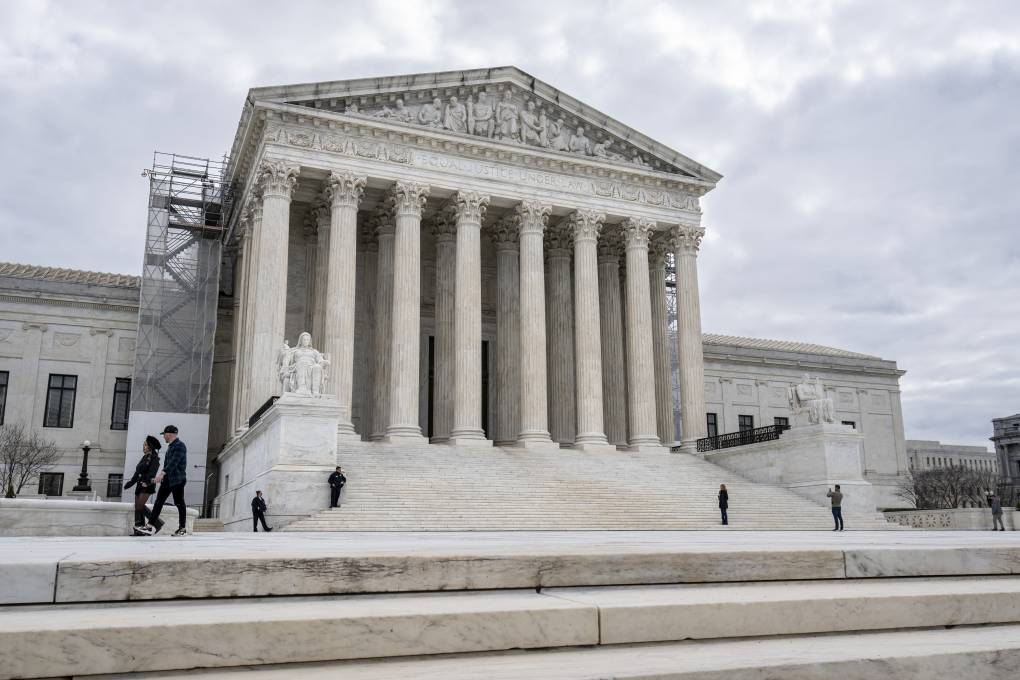
"caption": "The US Supreme Court is seen on Capitol Hill in Washington, DC, on March 4, 2024.",
"credit": "J. Scott Applewhite/The Associated Press",
"altTag": "A large building with stone columns with statues on both sides.",
"description": null,
"imgSizes": {
"medium": {
"file": "https://cdn.kqed.org/wp-content/uploads/sites/10/2024/03/AP24064585927760-800x533.jpg",
"width": 800,
"height": 533,
"mimeType": "image/jpeg"
},
"large": {
"file": "https://cdn.kqed.org/wp-content/uploads/sites/10/2024/03/AP24064585927760-1020x680.jpg",
"width": 1020,
"height": 680,
"mimeType": "image/jpeg"
},
"thumbnail": {
"file": "https://cdn.kqed.org/wp-content/uploads/sites/10/2024/03/AP24064585927760-160x107.jpg",
"width": 160,
"height": 107,
"mimeType": "image/jpeg"
},
"1536x1536": {
"file": "https://cdn.kqed.org/wp-content/uploads/sites/10/2024/03/AP24064585927760-1536x1024.jpg",
"width": 1536,
"height": 1024,
"mimeType": "image/jpeg"
},
"2048x2048": {
"file": "https://cdn.kqed.org/wp-content/uploads/sites/10/2024/03/AP24064585927760-2048x1365.jpg",
"width": 2048,
"height": 1365,
"mimeType": "image/jpeg"
},
"post-thumbnail": {
"file": "https://cdn.kqed.org/wp-content/uploads/sites/10/2024/03/AP24064585927760-672x372.jpg",
"width": 672,
"height": 372,
"mimeType": "image/jpeg"
},
"twentyfourteen-full-width": {
"file": "https://cdn.kqed.org/wp-content/uploads/sites/10/2024/03/AP24064585927760-1038x576.jpg",
"width": 1038,
"height": 576,
"mimeType": "image/jpeg"
},
"full-width": {
"file": "https://cdn.kqed.org/wp-content/uploads/sites/10/2024/03/AP24064585927760-1920x1280.jpg",
"width": 1920,
"height": 1280,
"mimeType": "image/jpeg"
},
"kqedFullSize": {
"file": "https://cdn.kqed.org/wp-content/uploads/sites/10/2024/03/AP24064585927760-scaled.jpg",
"width": 2560,
"height": 1706
}
},
"isLoading": false,
"fetchFailed": false
},
"news_10858176": {
"type": "attachments",
"id": "news_10858176",
"meta": {
"index": "attachments_1716263798",
"site": "news",
"id": "10858176",
"found": true
},
"parent": 10854866,
"imgSizes": {
"twentyfourteen-full-width": {
"file": "https://ww2.kqed.org/app/uploads/sites/10/2016/02/2060128005_f2b669b933_o-1038x576.jpg",
"width": 1038,
"mimeType": "image/jpeg",
"height": 576
},
"thumbnail": {
"file": "https://ww2.kqed.org/app/uploads/sites/10/2016/02/2060128005_f2b669b933_o-400x267.jpg",
"width": 400,
"mimeType": "image/jpeg",
"height": 267
},
"fd-sm": {
"file": "https://ww2.kqed.org/app/uploads/sites/10/2016/02/2060128005_f2b669b933_o-960x642.jpg",
"width": 960,
"mimeType": "image/jpeg",
"height": 642
},
"post-thumbnail": {
"file": "https://ww2.kqed.org/app/uploads/sites/10/2016/02/2060128005_f2b669b933_o-672x372.jpg",
"width": 672,
"mimeType": "image/jpeg",
"height": 372
},
"kqedFullSize": {
"file": "https://ww2.kqed.org/app/uploads/sites/10/2016/02/2060128005_f2b669b933_o-e1454950949393.jpg",
"width": 1920,
"height": 1284
},
"large": {
"file": "https://ww2.kqed.org/app/uploads/sites/10/2016/02/2060128005_f2b669b933_o-1440x963.jpg",
"width": 1440,
"mimeType": "image/jpeg",
"height": 963
},
"guest-author-96": {
"file": "https://ww2.kqed.org/app/uploads/sites/10/2016/02/2060128005_f2b669b933_o-96x96.jpg",
"width": 96,
"mimeType": "image/jpeg",
"height": 96
},
"medium": {
"file": "https://ww2.kqed.org/app/uploads/sites/10/2016/02/2060128005_f2b669b933_o-800x535.jpg",
"width": 800,
"mimeType": "image/jpeg",
"height": 535
},
"guest-author-64": {
"file": "https://ww2.kqed.org/app/uploads/sites/10/2016/02/2060128005_f2b669b933_o-64x64.jpg",
"width": 64,
"mimeType": "image/jpeg",
"height": 64
},
"guest-author-32": {
"file": "https://ww2.kqed.org/app/uploads/sites/10/2016/02/2060128005_f2b669b933_o-32x32.jpg",
"width": 32,
"mimeType": "image/jpeg",
"height": 32
},
"jmtc-small-thumb": {
"file": "https://ww2.kqed.org/app/uploads/sites/10/2016/02/2060128005_f2b669b933_o-280x150.jpg",
"width": 280,
"mimeType": "image/jpeg",
"height": 150
},
"fd-lrg": {
"file": "https://ww2.kqed.org/app/uploads/sites/10/2016/02/2060128005_f2b669b933_o-1920x1284.jpg",
"width": 1920,
"mimeType": "image/jpeg",
"height": 1284
},
"fd-med": {
"file": "https://ww2.kqed.org/app/uploads/sites/10/2016/02/2060128005_f2b669b933_o-1180x789.jpg",
"width": 1180,
"mimeType": "image/jpeg",
"height": 789
},
"detail": {
"file": "https://ww2.kqed.org/app/uploads/sites/10/2016/02/2060128005_f2b669b933_o-75x75.jpg",
"width": 75,
"mimeType": "image/jpeg",
"height": 75
},
"medium_large": {
"file": "https://ww2.kqed.org/app/uploads/sites/10/2016/02/2060128005_f2b669b933_o-768x514.jpg",
"width": 768,
"mimeType": "image/jpeg",
"height": 514
},
"guest-author-128": {
"file": "https://ww2.kqed.org/app/uploads/sites/10/2016/02/2060128005_f2b669b933_o-128x128.jpg",
"width": 128,
"mimeType": "image/jpeg",
"height": 128
}
},
"publishDate": 1454950903,
"modified": 1454951010,
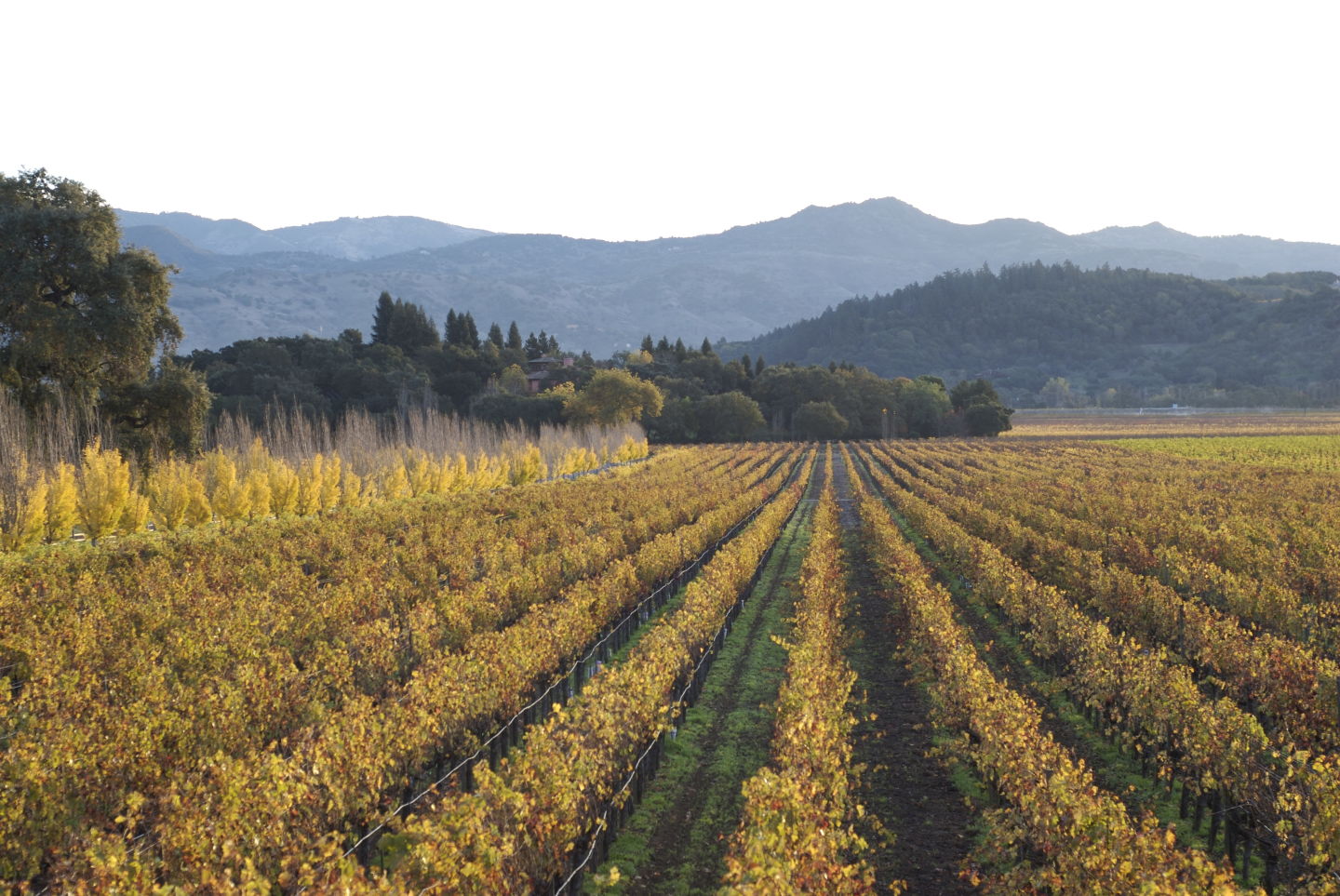
"caption": "Vineyard near Oakville Grade, Napa Valley.",
"description": null,
"title": "Napa Valley-Oakville",
"credit": "\u003ca href=\"https://flic.kr/p/493Ghn\" target=\"_blank\">Resveratrol/Flickr\u003c/a>",
"status": "inherit",
"isLoading": false,
"fetchFailed": false
},
"news_11977771": {
"type": "attachments",
"id": "news_11977771",
"meta": {
"index": "attachments_1716263798",
"site": "news",
"id": "11977771",
"found": true
},
"parent": 11977768,
"imgSizes": {
"twentyfourteen-full-width": {
"file": "https://cdn.kqed.org/wp-content/uploads/sites/10/2024/03/V0A8400-1038x576.jpg",
"width": 1038,
"mimeType": "image/jpeg",
"height": 576
},
"thumbnail": {
"file": "https://cdn.kqed.org/wp-content/uploads/sites/10/2024/03/V0A8400-160x107.jpg",
"width": 160,
"mimeType": "image/jpeg",
"height": 107
},
"post-thumbnail": {
"file": "https://cdn.kqed.org/wp-content/uploads/sites/10/2024/03/V0A8400-672x372.jpg",
"width": 672,
"mimeType": "image/jpeg",
"height": 372
},
"kqedFullSize": {
"file": "https://cdn.kqed.org/wp-content/uploads/sites/10/2024/03/V0A8400.jpg",
"width": 2089,
"height": 1393
},
"2048x2048": {
"file": "https://cdn.kqed.org/wp-content/uploads/sites/10/2024/03/V0A8400-2048x1366.jpg",
"width": 2048,
"mimeType": "image/jpeg",
"height": 1366
},
"large": {
"file": "https://cdn.kqed.org/wp-content/uploads/sites/10/2024/03/V0A8400-1020x680.jpg",
"width": 1020,
"mimeType": "image/jpeg",
"height": 680
},
"1536x1536": {
"file": "https://cdn.kqed.org/wp-content/uploads/sites/10/2024/03/V0A8400-1536x1024.jpg",
"width": 1536,
"mimeType": "image/jpeg",
"height": 1024
},
"full-width": {
"file": "https://cdn.kqed.org/wp-content/uploads/sites/10/2024/03/V0A8400-1920x1280.jpg",
"width": 1920,
"mimeType": "image/jpeg",
"height": 1280
},
"medium": {
"file": "https://cdn.kqed.org/wp-content/uploads/sites/10/2024/03/V0A8400-800x533.jpg",
"width": 800,
"mimeType": "image/jpeg",
"height": 533
}
},
"publishDate": 1709327339,
"modified": 1709391896,
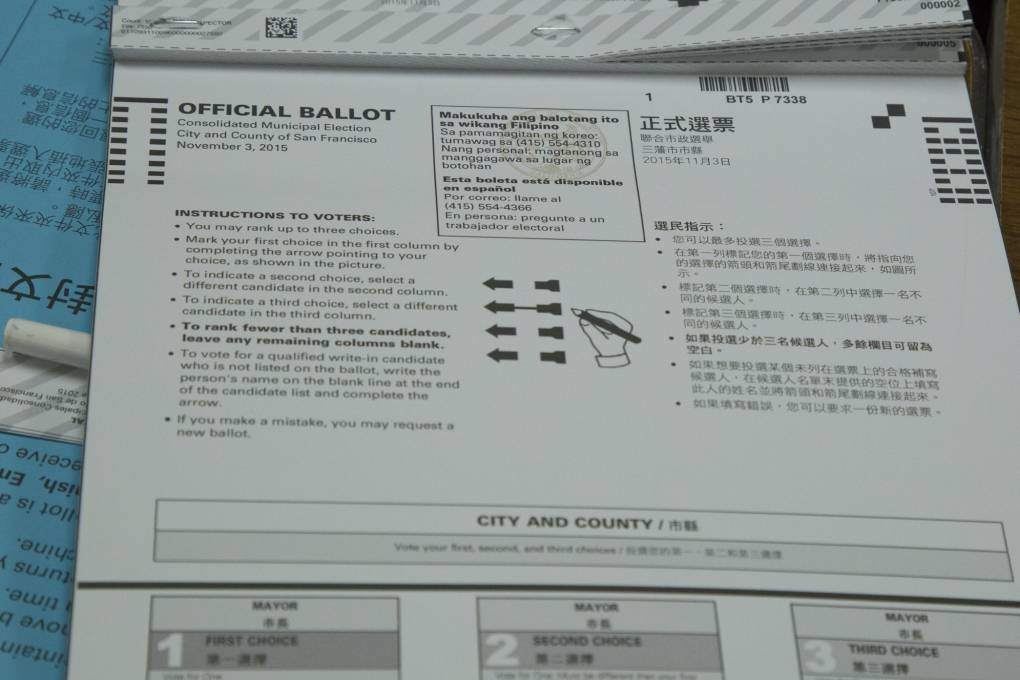
"caption": "San Francisco election 2015. Ballot in English and Chinese.",
"description": "San Francisco election 2015. Ballot in English and Chinese. (Alan Toth/KQED)",
"title": null,
"credit": "Alan Toth/KQED",
"status": "inherit",
"altTag": null,
"isLoading": false,
"fetchFailed": false
},
"news_11977755": {
"type": "attachments",
"id": "news_11977755",
"meta": {
"index": "attachments_1716263798",
"site": "news",
"id": "11977755",
"found": true
},
"parent": 11977752,
"imgSizes": {
"twentyfourteen-full-width": {
"file": "https://cdn.kqed.org/wp-content/uploads/sites/10/2024/03/CMPollWorkers01-1038x576.jpg",
"width": 1038,
"mimeType": "image/jpeg",
"height": 576
},
"thumbnail": {
"file": "https://cdn.kqed.org/wp-content/uploads/sites/10/2024/03/CMPollWorkers01-160x107.jpg",
"width": 160,
"mimeType": "image/jpeg",
"height": 107
},
"post-thumbnail": {
"file": "https://cdn.kqed.org/wp-content/uploads/sites/10/2024/03/CMPollWorkers01-672x372.jpg",
"width": 672,
"mimeType": "image/jpeg",
"height": 372
},
"kqedFullSize": {
"file": "https://cdn.kqed.org/wp-content/uploads/sites/10/2024/03/CMPollWorkers01.jpg",
"width": 2000,
"height": 1333
},
"large": {
"file": "https://cdn.kqed.org/wp-content/uploads/sites/10/2024/03/CMPollWorkers01-1020x680.jpg",
"width": 1020,
"mimeType": "image/jpeg",
"height": 680
},
"1536x1536": {
"file": "https://cdn.kqed.org/wp-content/uploads/sites/10/2024/03/CMPollWorkers01-1536x1024.jpg",
"width": 1536,
"mimeType": "image/jpeg",
"height": 1024
},
"full-width": {
"file": "https://cdn.kqed.org/wp-content/uploads/sites/10/2024/03/CMPollWorkers01-1920x1280.jpg",
"width": 1920,
"mimeType": "image/jpeg",
"height": 1280
},
"medium": {
"file": "https://cdn.kqed.org/wp-content/uploads/sites/10/2024/03/CMPollWorkers01-800x533.jpg",
"width": 800,
"mimeType": "image/jpeg",
"height": 533
}
},
"publishDate": 1709323952,
"modified": 1709328576,
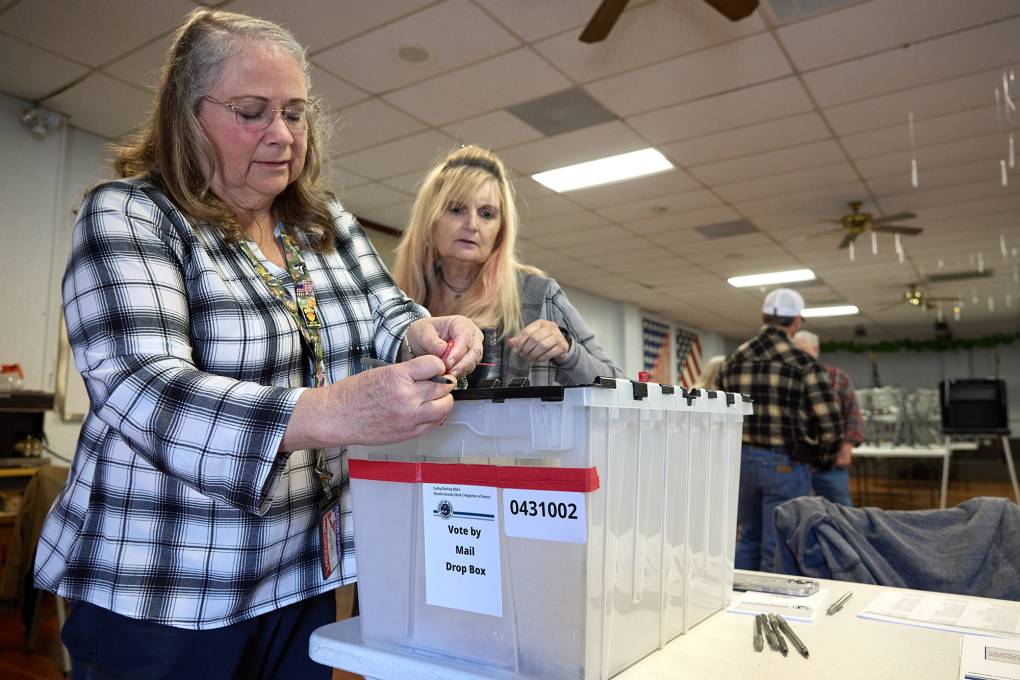
"caption": "Poll workers Twyla Carpenter (left) and Regina Jasperse inspect the lock on a vote by mail drop box at a polling station at the American Legion in Shasta Lake, California, during a special election in Shasta County on Nov. 7, 2023. Workers must verify that the locks are intact and secure the box multiple times during the day.",
"description": null,
"title": "CMPollWorkers01",
"credit": "Fred Greaves/CalMatters",
"status": "inherit",
"altTag": null,
"isLoading": false,
"fetchFailed": false
},
"news_11977666": {
"type": "attachments",
"id": "news_11977666",
"meta": {
"index": "attachments_1716263798",
"site": "news",
"id": "11977666",
"found": true
},
"parent": 11977451,
"imgSizes": {
"twentyfourteen-full-width": {
"file": "https://cdn.kqed.org/wp-content/uploads/sites/10/2024/02/240228-NewsomPoliticalBreakdown-15-BL-1038x576.jpg",
"width": 1038,
"mimeType": "image/jpeg",
"height": 576
},
"thumbnail": {
"file": "https://cdn.kqed.org/wp-content/uploads/sites/10/2024/02/240228-NewsomPoliticalBreakdown-15-BL-160x107.jpg",
"width": 160,
"mimeType": "image/jpeg",
"height": 107
},
"post-thumbnail": {
"file": "https://cdn.kqed.org/wp-content/uploads/sites/10/2024/02/240228-NewsomPoliticalBreakdown-15-BL-672x372.jpg",
"width": 672,
"mimeType": "image/jpeg",
"height": 372
},
"kqedFullSize": {
"file": "https://cdn.kqed.org/wp-content/uploads/sites/10/2024/02/240228-NewsomPoliticalBreakdown-15-BL-scaled.jpg",
"width": 2560,
"height": 1707
},
"2048x2048": {
"file": "https://cdn.kqed.org/wp-content/uploads/sites/10/2024/02/240228-NewsomPoliticalBreakdown-15-BL-2048x1365.jpg",
"width": 2048,
"mimeType": "image/jpeg",
"height": 1365
},
"large": {
"file": "https://cdn.kqed.org/wp-content/uploads/sites/10/2024/02/240228-NewsomPoliticalBreakdown-15-BL-1020x680.jpg",
"width": 1020,
"mimeType": "image/jpeg",
"height": 680
},
"1536x1536": {
"file": "https://cdn.kqed.org/wp-content/uploads/sites/10/2024/02/240228-NewsomPoliticalBreakdown-15-BL-1536x1024.jpg",
"width": 1536,
"mimeType": "image/jpeg",
"height": 1024
},
"full-width": {
"file": "https://cdn.kqed.org/wp-content/uploads/sites/10/2024/02/240228-NewsomPoliticalBreakdown-15-BL-1920x1280.jpg",
"width": 1920,
"mimeType": "image/jpeg",
"height": 1280
},
"medium": {
"file": "https://cdn.kqed.org/wp-content/uploads/sites/10/2024/02/240228-NewsomPoliticalBreakdown-15-BL-800x533.jpg",
"width": 800,
"mimeType": "image/jpeg",
"height": 533
}
},
"publishDate": 1709245811,
"modified": 1709327539,
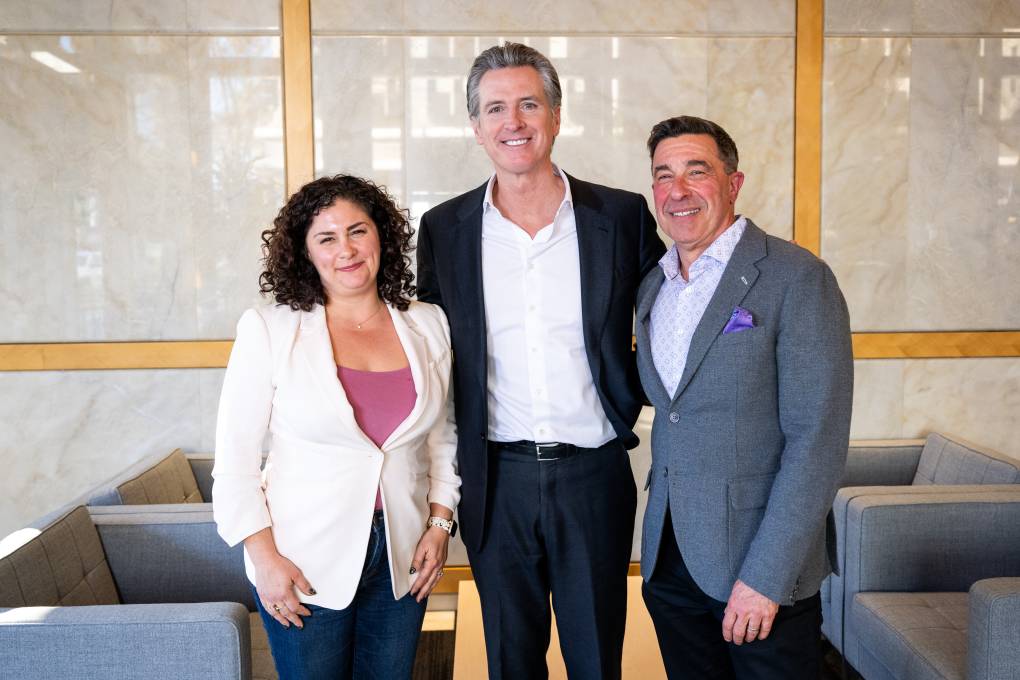
"caption": "Gov. Gavin Newsom poses with KQED reporters Marisa Lagos and Scott Shafer in the Sacramento KQED offices on Feb. 28, 2024 (Beth LaBerge/KQED)",
"description": "Gov. Gavin Newsom poses with KQED reporters Marisa Lagos and Scott Shafer in the Sacramento KQED offices on Feb. 28, 2024 (Beth LaBerge/KQED)",
"title": "240228-NewsomPoliticalBreakdown-15-BL",
"credit": null,
"status": "inherit",
"altTag": null,
"isLoading": false,
"fetchFailed": false
},
"news_11977368": {
"type": "attachments",
"id": "news_11977368",
"meta": {
"index": "attachments_1716263798",
"site": "news",
"id": "11977368",
"found": true
},
"title": "022724-ADAM SCHIFF ON PB-MD-01-KQED-2",
"publishDate": 1709087722,
"status": "inherit",
"parent": 11977354,
"modified": 1719516525,
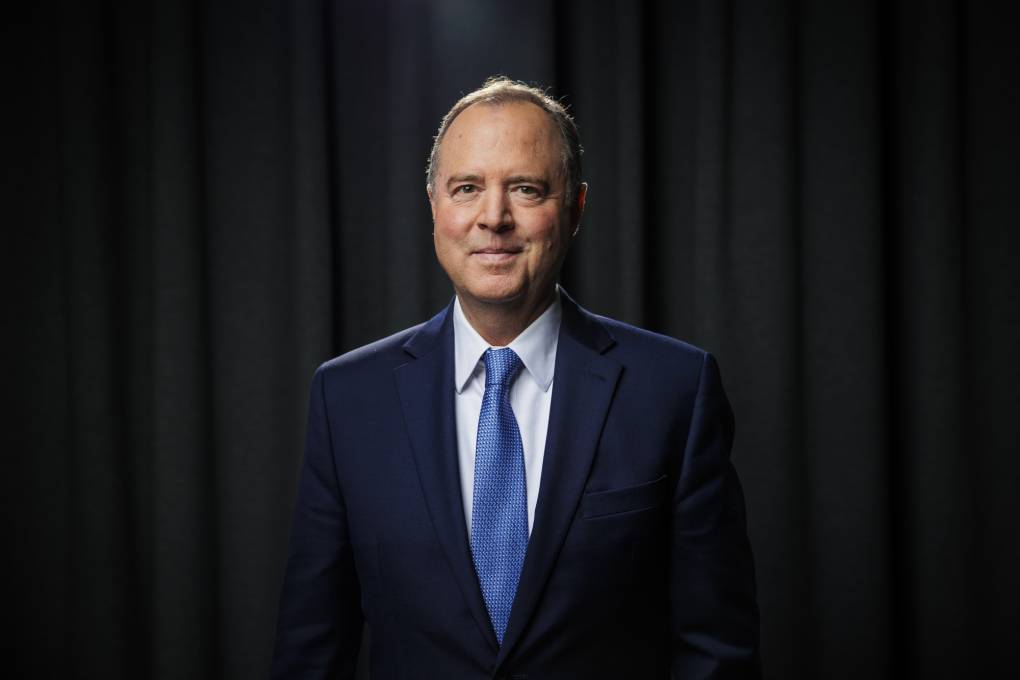
"caption": "Rep. Adam Schiff at KQED in San Francisco on Feb. 27, 2024.",
"credit": "Martin do Nascimento/KQED",
"altTag": null,
"description": null,
"imgSizes": {
"medium": {
"file": "https://cdn.kqed.org/wp-content/uploads/sites/10/2024/02/022724-ADAM-SCHIFF-MD-01-KQED-2-800x533.jpg",
"width": 800,
"height": 533,
"mimeType": "image/jpeg"
},
"large": {
"file": "https://cdn.kqed.org/wp-content/uploads/sites/10/2024/02/022724-ADAM-SCHIFF-MD-01-KQED-2-1020x680.jpg",
"width": 1020,
"height": 680,
"mimeType": "image/jpeg"
},
"thumbnail": {
"file": "https://cdn.kqed.org/wp-content/uploads/sites/10/2024/02/022724-ADAM-SCHIFF-MD-01-KQED-2-160x107.jpg",
"width": 160,
"height": 107,
"mimeType": "image/jpeg"
},
"1536x1536": {
"file": "https://cdn.kqed.org/wp-content/uploads/sites/10/2024/02/022724-ADAM-SCHIFF-MD-01-KQED-2-1536x1024.jpg",
"width": 1536,
"height": 1024,
"mimeType": "image/jpeg"
},
"post-thumbnail": {
"file": "https://cdn.kqed.org/wp-content/uploads/sites/10/2024/02/022724-ADAM-SCHIFF-MD-01-KQED-2-672x372.jpg",
"width": 672,
"height": 372,
"mimeType": "image/jpeg"
},
"twentyfourteen-full-width": {
"file": "https://cdn.kqed.org/wp-content/uploads/sites/10/2024/02/022724-ADAM-SCHIFF-MD-01-KQED-2-1038x576.jpg",
"width": 1038,
"height": 576,
"mimeType": "image/jpeg"
},
"full-width": {
"file": "https://cdn.kqed.org/wp-content/uploads/sites/10/2024/02/022724-ADAM-SCHIFF-MD-01-KQED-2-1920x1280.jpg",
"width": 1920,
"height": 1280,
"mimeType": "image/jpeg"
},
"kqedFullSize": {
"file": "https://cdn.kqed.org/wp-content/uploads/sites/10/2024/02/022724-ADAM-SCHIFF-MD-01-KQED-2.jpg",
"width": 2000,
"height": 1333
}
},
"isLoading": false,
"fetchFailed": false
},
"news_11977150": {
"type": "attachments",
"id": "news_11977150",
"meta": {
"index": "attachments_1716263798",
"site": "news",
"id": "11977150",
"found": true
},
"title": "Rep. David Valadao campaigns to keep his seat in congress.",
"publishDate": 1708992152,
"status": "inherit",
"parent": 11977147,
"modified": 1709080262,
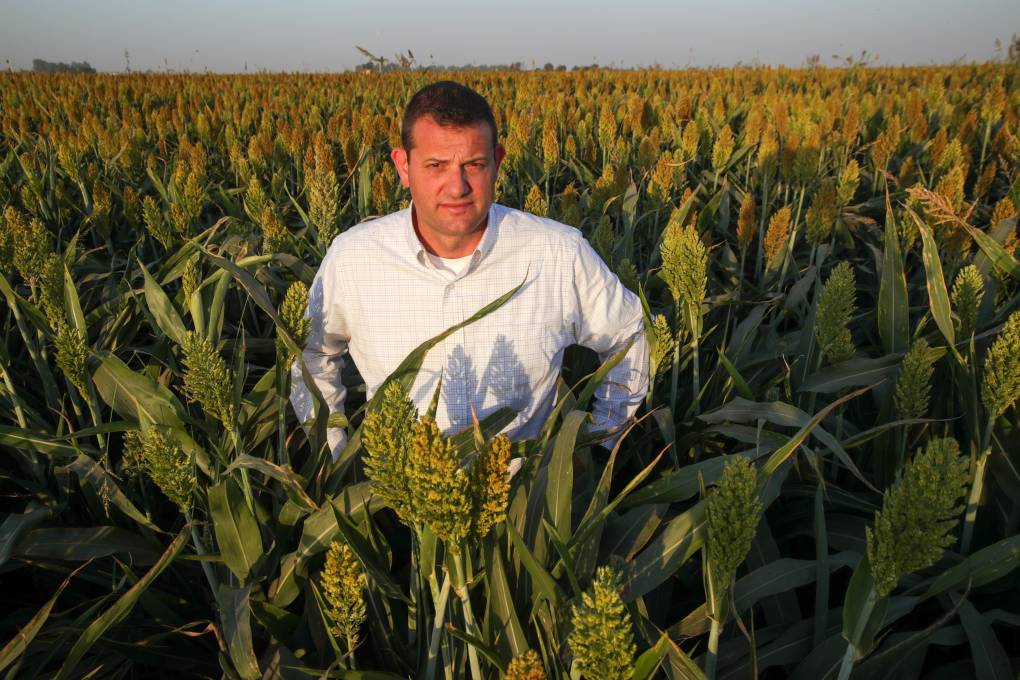
"caption": "Rep. David Valadao, 45, is campaigning to keep his seat in congress in the race for the newly drawn Congressional District 22. The republican incumbent is a dairy farmer from Hanford who has focused his campaign on water issues plaguing the Central Valley's agriculture community. David Valadao stands in his milo field on Friday, Oct. 21, 2022 in Hanford, King's County.",
"credit": "Irfan Khan/Los Angeles Times via Getty Images",
"altTag": null,
"description": null,
"imgSizes": {
"medium": {
"file": "https://cdn.kqed.org/wp-content/uploads/sites/10/2024/02/GettyImages-1255046317-800x533.jpg",
"width": 800,
"height": 533,
"mimeType": "image/jpeg"
},
"large": {
"file": "https://cdn.kqed.org/wp-content/uploads/sites/10/2024/02/GettyImages-1255046317-1020x680.jpg",
"width": 1020,
"height": 680,
"mimeType": "image/jpeg"
},
"thumbnail": {
"file": "https://cdn.kqed.org/wp-content/uploads/sites/10/2024/02/GettyImages-1255046317-160x107.jpg",
"width": 160,
"height": 107,
"mimeType": "image/jpeg"
},
"1536x1536": {
"file": "https://cdn.kqed.org/wp-content/uploads/sites/10/2024/02/GettyImages-1255046317-1536x1024.jpg",
"width": 1536,
"height": 1024,
"mimeType": "image/jpeg"
},
"2048x2048": {
"file": "https://cdn.kqed.org/wp-content/uploads/sites/10/2024/02/GettyImages-1255046317-2048x1365.jpg",
"width": 2048,
"height": 1365,
"mimeType": "image/jpeg"
},
"post-thumbnail": {
"file": "https://cdn.kqed.org/wp-content/uploads/sites/10/2024/02/GettyImages-1255046317-672x372.jpg",
"width": 672,
"height": 372,
"mimeType": "image/jpeg"
},
"twentyfourteen-full-width": {
"file": "https://cdn.kqed.org/wp-content/uploads/sites/10/2024/02/GettyImages-1255046317-1038x576.jpg",
"width": 1038,
"height": 576,
"mimeType": "image/jpeg"
},
"full-width": {
"file": "https://cdn.kqed.org/wp-content/uploads/sites/10/2024/02/GettyImages-1255046317-1920x1280.jpg",
"width": 1920,
"height": 1280,
"mimeType": "image/jpeg"
},
"kqedFullSize": {
"file": "https://cdn.kqed.org/wp-content/uploads/sites/10/2024/02/GettyImages-1255046317-scaled-e1770053296326.jpg",
"width": 2000,
"height": 1334
}
},
"isLoading": false,
"fetchFailed": false
},
"news_11974143": {
"type": "attachments",
"id": "news_11974143",
"meta": {
"index": "attachments_1716263798",
"site": "news",
"id": "11974143",
"found": true
},
"parent": 11974134,
"imgSizes": {
"twentyfourteen-full-width": {
"file": "https://cdn.kqed.org/wp-content/uploads/sites/10/2024/01/008_KQED_Election_CityHallSF_02262020_4220_qut-1038x576.jpg",
"width": 1038,
"mimeType": "image/jpeg",
"height": 576
},
"thumbnail": {
"file": "https://cdn.kqed.org/wp-content/uploads/sites/10/2024/01/008_KQED_Election_CityHallSF_02262020_4220_qut-160x107.jpg",
"width": 160,
"mimeType": "image/jpeg",
"height": 107
},
"post-thumbnail": {
"file": "https://cdn.kqed.org/wp-content/uploads/sites/10/2024/01/008_KQED_Election_CityHallSF_02262020_4220_qut-672x372.jpg",
"width": 672,
"mimeType": "image/jpeg",
"height": 372
},
"kqedFullSize": {
"file": "https://cdn.kqed.org/wp-content/uploads/sites/10/2024/01/008_KQED_Election_CityHallSF_02262020_4220_qut.jpg",
"width": 1920,
"height": 1280
},
"large": {
"file": "https://cdn.kqed.org/wp-content/uploads/sites/10/2024/01/008_KQED_Election_CityHallSF_02262020_4220_qut-1020x680.jpg",
"width": 1020,
"mimeType": "image/jpeg",
"height": 680
},
"1536x1536": {
"file": "https://cdn.kqed.org/wp-content/uploads/sites/10/2024/01/008_KQED_Election_CityHallSF_02262020_4220_qut-1536x1024.jpg",
"width": 1536,
"mimeType": "image/jpeg",
"height": 1024
},
"medium": {
"file": "https://cdn.kqed.org/wp-content/uploads/sites/10/2024/01/008_KQED_Election_CityHallSF_02262020_4220_qut-800x533.jpg",
"width": 800,
"mimeType": "image/jpeg",
"height": 533
}
},
"publishDate": 1706567127,
"modified": 1706573239,
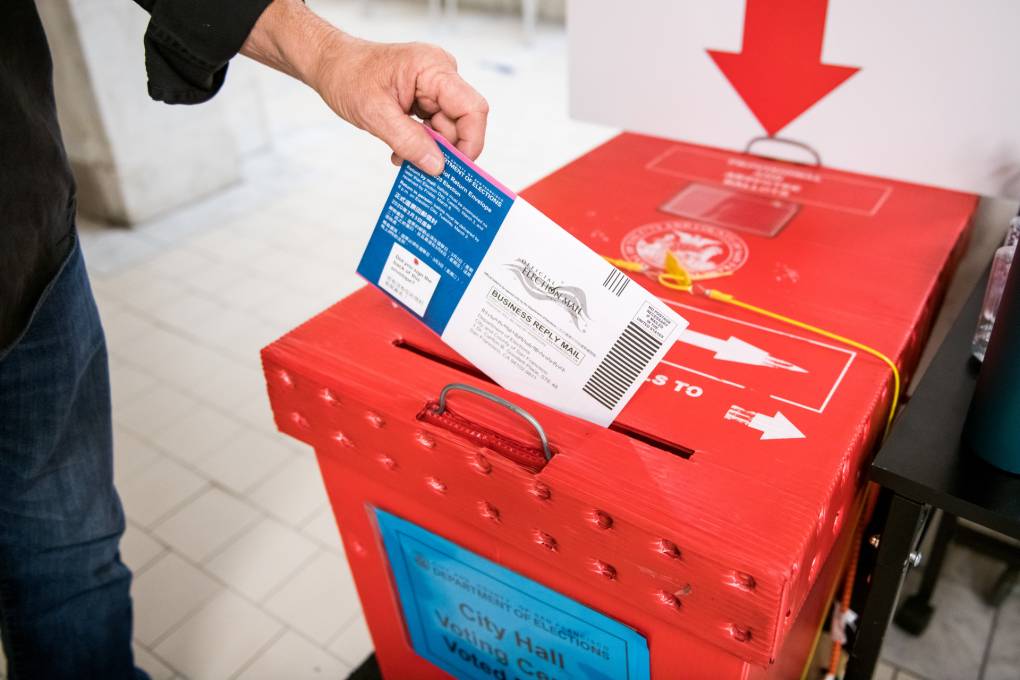
"caption": "File Photo: A ballot box at San Francisco City Hall on Wednesday, Feb. 26, 2020.",
"description": null,
"title": "008_KQED_Election_CityHallSF_02262020_4220_qut",
"credit": "Beth La Berge/KQED",
"status": "inherit",
"altTag": "A bright red ballot box.",
"isLoading": false,
"fetchFailed": false
}
},
"audioPlayerReducer": {
"postId": "stream_live",
"isPaused": true,
"isPlaying": false,
"pfsActive": false,
"pledgeModalIsOpen": true,
"playerDrawerIsOpen": false,
"liveAudioPlayStartedAt": 0,
"liveAudioPlayContext": ""
},
"authorsReducer": {
"byline_news_11978080": {
"type": "authors",
"id": "byline_news_11978080",
"meta": {
"override": true
},
"slug": "byline_news_11978080",
"name": "Robert Yoon\u003cbr>The Associated Press",
"isLoading": false
},
"byline_news_11977992": {
"type": "authors",
"id": "byline_news_11977992",
"meta": {
"override": true
},
"slug": "byline_news_11977992",
"name": "Nicholas Riccardi\u003cbr>The Associated Press\u003c/br>",
"isLoading": false
},
"byline_news_11977752": {
"type": "authors",
"id": "byline_news_11977752",
"meta": {
"override": true
},
"slug": "byline_news_11977752",
"name": "\u003ca href=\"https://calmatters.org/author/sameea-kamal/\">Sameea Kamal\u003c/a>",
"isLoading": false
},
"scottshafer": {
"type": "authors",
"id": "255",
"meta": {
"index": "authors_1716337520",
"id": "255",
"found": true
},
"name": "Scott Shafer",
"firstName": "Scott",
"lastName": "Shafer",
"slug": "scottshafer",
"email": "sshafer@kqed.org",
"display_author_email": false,
"staff_mastheads": [
"news"
],
"title": "KQED Contributor",
"bio": "Scott Shafer is a senior editor with the KQED Politics and Government desk. He is co-host of Political Breakdown, the award-winning radio show and podcast with a personal take on the world of politics. Scott came to KQED in 1998 to host the statewide\u003cem> California Report\u003c/em>. Prior to that he had extended stints in politics and government\u003cem>.\u003c/em> He uses that inside experience at KQED in his, reporting, hosting and analysis for the politics desk. Scott collaborated \u003cem>Political Breakdown a\u003c/em>nd on \u003cem>The Political Mind of Jerry Brown, \u003c/em>an eight-part series about the life and extraordinary political career of the former governor. For fun, he plays water polo with the San Francisco Tsunami.",
"avatar": "https://secure.gravatar.com/avatar/a62ebae45b79d7aed1a39a0e3bf68104?s=600&d=blank&r=g",
"twitter": "scottshafer",
"bluesky": null,
"facebook": null,
"instagram": null,
"linkedin": null,
"sites": [
{
"site": "news",
"roles": [
"editor"
]
},
{
"site": "stateofhealth",
"roles": [
"author"
]
},
{
"site": "science",
"roles": [
"author"
]
},
{
"site": "forum",
"roles": [
"subscriber"
]
},
{
"site": "liveblog",
"roles": [
"author"
]
}
],
"headData": {
"title": "Scott Shafer | KQED",
"description": "KQED Contributor",
"ogImgSrc": "https://secure.gravatar.com/avatar/a62ebae45b79d7aed1a39a0e3bf68104?s=600&d=blank&r=g",
"twImgSrc": "https://secure.gravatar.com/avatar/a62ebae45b79d7aed1a39a0e3bf68104?s=600&d=blank&r=g"
},
"isLoading": false,
"link": "/author/scottshafer"
},
"mlagos": {
"type": "authors",
"id": "3239",
"meta": {
"index": "authors_1716337520",
"id": "3239",
"found": true
},
"name": "Marisa Lagos",
"firstName": "Marisa",
"lastName": "Lagos",
"slug": "mlagos",
"email": "mlagos@kqed.org",
"display_author_email": false,
"staff_mastheads": [
"news"
],
"title": "KQED Contributor",
"bio": "Marisa Lagos is a correspondent for KQED’s California Politics and Government Desk and co-hosts the award-winning show and podcast, Political Breakdown. At KQED, Lagos also conducts reporting, analysis and investigations into state, local and national politics for radio, TV, online and onstage. In 2022, she and co-host, Scott Shafer, moderated the only gubernatorial debate in California. In 2020, the \u003ci>Washington Post\u003c/i> named her one of the top political journalists in California; she was nominated for a Peabody and won several other awards for her work investigating the 2017 California wildfires. She has worked at the \u003ci>San Francisco Chronicle\u003c/i>, \u003ci>San Francisco Examiner\u003c/i> and \u003ci>Los Angeles Times\u003c/i>. A UC Santa Barbara graduate, she lives in San Francisco with her two sons and husband.",
"avatar": "https://secure.gravatar.com/avatar/a261a0d3696fc066871ef96b85b5e7d2?s=600&d=blank&r=g",
"twitter": "@mlagos",
"facebook": null,
"instagram": null,
"linkedin": null,
"sites": [
{
"site": "arts",
"roles": [
"author"
]
},
{
"site": "news",
"roles": [
"editor"
]
},
{
"site": "science",
"roles": [
"editor"
]
},
{
"site": "forum",
"roles": [
"author"
]
},
{
"site": "liveblog",
"roles": [
"author"
]
}
],
"headData": {
"title": "Marisa Lagos | KQED",
"description": "KQED Contributor",
"ogImgSrc": "https://secure.gravatar.com/avatar/a261a0d3696fc066871ef96b85b5e7d2?s=600&d=blank&r=g",
"twImgSrc": "https://secure.gravatar.com/avatar/a261a0d3696fc066871ef96b85b5e7d2?s=600&d=blank&r=g"
},
"isLoading": false,
"link": "/author/mlagos"
},
"carlysevern": {
"type": "authors",
"id": "3243",
"meta": {
"index": "authors_1716337520",
"id": "3243",
"found": true
},
"name": "Carly Severn",
"firstName": "Carly",
"lastName": "Severn",
"slug": "carlysevern",
"email": "csevern@kqed.org",
"display_author_email": false,
"staff_mastheads": [
"news"
],
"title": "Senior Editor, Audience News ",
"bio": "Carly is KQED's Senior Editor of Audience News on the Digital News team, and has reported for the California Report Magazine, Bay Curious and KQED Arts. She's formerly the host of \u003ca href=\"http://ww2.kqed.org/pop/category/the-cooler/\" rel=\"noopener noreferrer\">The Cooler\u003c/a> podcast.",
"avatar": "https://secure.gravatar.com/avatar/54037bf5c128fe678f0ef26cec97a93f2e7f220a22d7285703328f12c42c1b1d?s=600&d=blank&r=g",
"twitter": "teacupinthebay",
"bluesky": null,
"facebook": null,
"instagram": null,
"linkedin": null,
"sites": [
{
"site": "",
"roles": [
"editor"
]
},
{
"site": "arts",
"roles": [
"editor"
]
},
{
"site": "news",
"roles": [
"administrator"
]
},
{
"site": "pop",
"roles": [
"editor"
]
},
{
"site": "futureofyou",
"roles": [
"editor"
]
},
{
"site": "about",
"roles": [
"administrator"
]
},
{
"site": "mindshift",
"roles": [
"editor"
]
},
{
"site": "bayareabites",
"roles": [
"editor"
]
},
{
"site": "stateofhealth",
"roles": [
"editor"
]
},
{
"site": "science",
"roles": [
"editor"
]
},
{
"site": "food",
"roles": [
"contributor"
]
},
{
"site": "forum",
"roles": [
"editor"
]
},
{
"site": "perspectives",
"roles": [
"administrator"
]
},
{
"site": "liveblog",
"roles": [
"editor"
]
}
],
"headData": {
"title": "Carly Severn | KQED",
"description": "Senior Editor, Audience News ",
"ogImgSrc": "https://secure.gravatar.com/avatar/54037bf5c128fe678f0ef26cec97a93f2e7f220a22d7285703328f12c42c1b1d?s=600&d=blank&r=g",
"twImgSrc": "https://secure.gravatar.com/avatar/54037bf5c128fe678f0ef26cec97a93f2e7f220a22d7285703328f12c42c1b1d?s=600&d=blank&r=g"
},
"isLoading": false,
"link": "/author/carlysevern"
},
"ecruzguevarra": {
"type": "authors",
"id": "8654",
"meta": {
"index": "authors_1716337520",
"id": "8654",
"found": true
},
"name": "Ericka Cruz Guevarra",
"firstName": "Ericka",
"lastName": "Cruz Guevarra",
"slug": "ecruzguevarra",
"email": "ecruzguevarra@kqed.org",
"display_author_email": true,
"staff_mastheads": [
"news"
],
"title": "Producer, The Bay Podcast",
"bio": "Ericka Cruz Guevarra is host of \u003ca href=\"https://www.kqed.org/podcasts/thebay\">\u003cem>The Bay\u003c/em>\u003c/a> podcast at KQED. Before host, she was the show’s producer. Her work in that capacity includes a three-part reported series on policing in Vallejo, which won a 2020 excellence in journalism award from the Society of Professional Journalists. Ericka has worked as a breaking news reporter at Oregon Public Broadcasting, helped produce the Code Switch podcast, and was KQED’s inaugural Raul Ramirez Diversity Fund intern. She’s also an alumna of NPR’s Next Generation Radio program. Send her an email if you have strong feelings about whether Fairfield and Suisun City are the Bay. Ericka is represented by SAG-AFTRA.",
"avatar": "https://secure.gravatar.com/avatar/accefc1de4bafc7e234b69bcb9b6f6536c130fd84709bc3069ef11a78787e1bb?s=600&d=blank&r=g",
"twitter": "NotoriousECG",
"bluesky": null,
"facebook": null,
"instagram": null,
"linkedin": null,
"sites": [
{
"site": "arts",
"roles": [
"subscriber"
]
},
{
"site": "news",
"roles": [
"editor",
"manage_categories"
]
},
{
"site": "futureofyou",
"roles": [
"subscriber"
]
},
{
"site": "stateofhealth",
"roles": [
"subscriber"
]
},
{
"site": "science",
"roles": [
"editor"
]
},
{
"site": "forum",
"roles": [
"subscriber"
]
}
],
"headData": {
"title": "Ericka Cruz Guevarra | KQED",
"description": "Producer, The Bay Podcast",
"ogImgSrc": "https://secure.gravatar.com/avatar/accefc1de4bafc7e234b69bcb9b6f6536c130fd84709bc3069ef11a78787e1bb?s=600&d=blank&r=g",
"twImgSrc": "https://secure.gravatar.com/avatar/accefc1de4bafc7e234b69bcb9b6f6536c130fd84709bc3069ef11a78787e1bb?s=600&d=blank&r=g"
},
"isLoading": false,
"link": "/author/ecruzguevarra"
},
"amontecillo": {
"type": "authors",
"id": "11649",
"meta": {
"index": "authors_1716337520",
"id": "11649",
"found": true
},
"name": "Alan Montecillo",
"firstName": "Alan",
"lastName": "Montecillo",
"slug": "amontecillo",
"email": "amontecillo@kqed.org",
"display_author_email": false,
"staff_mastheads": [
"news"
],
"title": "KQED Contributor",
"bio": "Alan Montecillo is the senior editor of \u003cem>\u003ca href=\"http://kqed.org/thebay\">The Bay\u003c/a>, \u003c/em> KQED's local news podcast. Before moving to the Bay Area, he worked as a senior talk show producer for WILL in Champaign-Urbana, Illinois and at Oregon Public Broadcasting in Portland, Oregon. He has won journalism awards from the Society of Professional Journalists Northern California, the Public Media Journalists Association, The Signal Awards, and has also received a regional Edward R. Murrow award. Alan is a Filipino American from Hong Kong and a graduate of Reed College.",
"avatar": "https://secure.gravatar.com/avatar/268f53a2066899ea9efdd8a5900218b17c822d9862cbc9326cccec53ef41d349?s=600&d=blank&r=g",
"twitter": "alanmontecillo",
"bluesky": null,
"facebook": null,
"instagram": null,
"linkedin": null,
"sites": [
{
"site": "",
"roles": [
"editor"
]
},
{
"site": "news",
"roles": [
"editor",
"manage_categories"
]
}
],
"headData": {
"title": "Alan Montecillo | KQED",
"description": "KQED Contributor",
"ogImgSrc": "https://secure.gravatar.com/avatar/268f53a2066899ea9efdd8a5900218b17c822d9862cbc9326cccec53ef41d349?s=600&d=blank&r=g",
"twImgSrc": "https://secure.gravatar.com/avatar/268f53a2066899ea9efdd8a5900218b17c822d9862cbc9326cccec53ef41d349?s=600&d=blank&r=g"
},
"isLoading": false,
"link": "/author/amontecillo"
},
"jrodriguez": {
"type": "authors",
"id": "11690",
"meta": {
"index": "authors_1716337520",
"id": "11690",
"found": true
},
"name": "Joe Fitzgerald Rodriguez",
"firstName": "Joe",
"lastName": "Fitzgerald Rodriguez",
"slug": "jrodriguez",
"email": "jrodriguez@kqed.org",
"display_author_email": true,
"staff_mastheads": [
"news"
],
"title": "Reporter and Producer",
"bio": "Joe Fitzgerald Rodriguez is a reporter and digital producer for KQED covering politics. Joe most recently wrote for the \u003cem>San Francisco Examiner\u003c/em> as a political columnist covering The City. He was raised in San Francisco and has spent his reporting career in his beloved, foggy, city by the bay. Joe was 12-years-old when he conducted his first interview in journalism, grilling former San Francisco Mayor Willie Brown for the Marina Middle School newspaper, \u003cem>The Penguin Press, \u003c/em>and he continues to report on the San Francisco Bay Area to this day.",
"avatar": "https://secure.gravatar.com/avatar/2247beb0564c1e9c62228d5649d2edac?s=600&d=blank&r=g",
"twitter": "FitztheReporter",
"facebook": null,
"instagram": "https://www.instagram.com/fitzthereporter/",
"linkedin": null,
"sites": [
{
"site": "",
"roles": [
"editor"
]
},
{
"site": "arts",
"roles": [
"editor"
]
},
{
"site": "news",
"roles": [
"editor"
]
},
{
"site": "science",
"roles": [
"editor"
]
},
{
"site": "elections",
"roles": [
"editor"
]
},
{
"site": "liveblog",
"roles": [
"editor"
]
}
],
"headData": {
"title": "Joe Fitzgerald Rodriguez | KQED",
"description": "Reporter and Producer",
"ogImgSrc": "https://secure.gravatar.com/avatar/2247beb0564c1e9c62228d5649d2edac?s=600&d=blank&r=g",
"twImgSrc": "https://secure.gravatar.com/avatar/2247beb0564c1e9c62228d5649d2edac?s=600&d=blank&r=g"
},
"isLoading": false,
"link": "/author/jrodriguez"
},
"ccabreralomeli": {
"type": "authors",
"id": "11708",
"meta": {
"index": "authors_1716337520",
"id": "11708",
"found": true
},
"name": "Carlos Cabrera-Lomelí",
"firstName": "Carlos",
"lastName": "Cabrera-Lomelí",
"slug": "ccabreralomeli",
"email": "ccabreralomeli@KQED.org",
"display_author_email": true,
"staff_mastheads": [
"news"
],
"title": "Community Reporter",
"bio": "Carlos Cabrera-Lomelí is a community reporter with KQED's digital engagement team. He also reports and co-produces for KQED's bilingual news hub KQED en Español. He grew up in San Francisco's Mission District and has previously worked with Univision, 48 Hills and REFORMA in Mexico City.",
"avatar": "https://secure.gravatar.com/avatar/c309be9665e484f887b818c89e273ecc673004f426f36b24d00a4d813a2e0518?s=600&d=blank&r=g",
"twitter": "@LomeliCabrera",
"bluesky": null,
"facebook": null,
"instagram": null,
"linkedin": null,
"sites": [
{
"site": "arts",
"roles": [
"editor"
]
},
{
"site": "news",
"roles": [
"editor"
]
},
{
"site": "about",
"roles": [
"editor"
]
},
{
"site": "science",
"roles": [
"editor"
]
},
{
"site": "perspectives",
"roles": [
"editor"
]
},
{
"site": "elections",
"roles": [
"editor"
]
},
{
"site": "liveblog",
"roles": [
"contributor"
]
}
],
"headData": {
"title": "Carlos Cabrera-Lomelí | KQED",
"description": "Community Reporter",
"ogImgSrc": "https://secure.gravatar.com/avatar/c309be9665e484f887b818c89e273ecc673004f426f36b24d00a4d813a2e0518?s=600&d=blank&r=g",
"twImgSrc": "https://secure.gravatar.com/avatar/c309be9665e484f887b818c89e273ecc673004f426f36b24d00a4d813a2e0518?s=600&d=blank&r=g"
},
"isLoading": false,
"link": "/author/ccabreralomeli"
},
"mesquinca": {
"type": "authors",
"id": "11802",
"meta": {
"index": "authors_1716337520",
"id": "11802",
"found": true
},
"name": "Maria Esquinca",
"firstName": "Maria",
"lastName": "Esquinca",
"slug": "mesquinca",
"email": "mesquinca@kqed.org",
"display_author_email": false,
"staff_mastheads": [],
"title": "Producer, The Bay",
"bio": "María Esquinca is a producer of The Bay. Before that, she was a New York Women’s Foundation IGNITE Fellow at Latino USA. She worked at Radio Bilingue where she covered the San Joaquin Valley. Maria has interned at WLRN, News 21, The New York Times Student Journalism Institute and at Crain’s Detroit Business as a Dow Jones News Fund Business Reporting Intern. She is an MFA graduate from the University of Miami. In 2017, she graduated from the Walter Cronkite School of Journalism and Mass Communication with a Master of Mass Communication. A fronteriza, she was born in Ciudad Juárez, Chihuahua, Mexico and grew up in El Paso, Texas.",
"avatar": "https://secure.gravatar.com/avatar/77cedba18aae91da775038ba06dcd8d0?s=600&d=blank&r=g",
"twitter": "@m_esquinca",
"facebook": null,
"instagram": null,
"linkedin": null,
"sites": [
{
"site": "news",
"roles": []
}
],
"headData": {
"title": "Maria Esquinca | KQED",
"description": "Producer, The Bay",
"ogImgSrc": "https://secure.gravatar.com/avatar/77cedba18aae91da775038ba06dcd8d0?s=600&d=blank&r=g",
"twImgSrc": "https://secure.gravatar.com/avatar/77cedba18aae91da775038ba06dcd8d0?s=600&d=blank&r=g"
},
"isLoading": false,
"link": "/author/mesquinca"
}
},
"pagesReducer": {
"news_tag_election-2024": {
"type": "terms",
"id": "news_32839",
"meta": {
"index": "terms_1716263798",
"site": "news",
"id": "32839",
"score": 8.937057
},
"featImg": null,
"name": "Election 2024",
"description": null,
"taxonomy": "tag",
"headData": {
"twImgId": null,
"twTitle": null,
"ogTitle": null,
"ogImgId": null,
"twDescription": null,
"description": null,
"title": "Election 2024 Archives | KQED News",
"ogDescription": null
},
"ttid": 32856,
"slug": "election-2024",
"isLoading": false,
"title": "Election 2024",
"pageMeta": {
"site": "news",
"WpPageTemplate": "page-topic-editorial",
"currentPage": 33
},
"blocks": [
{
"blockName": "kqed/post-list",
"attrs": {
"layout": "cardArticle2",
"query": "posts/news?tag=election-2024",
"seeMore": false,
"paginated": true,
"page": 33
}
},
{
"blockName": "kqed/ad"
}
]
}
},
"pfsSessionReducer": {},
"postsReducer": {
"stream_live": {
"type": "live",
"id": "stream_live",
"audioUrl": "https://streams.kqed.org/kqedradio",
"title": "Live Stream",
"excerpt": "Live Stream information currently unavailable.",
"link": "/radio",
"featImg": "",
"label": {
"name": "KQED Live",
"link": "/"
}
},
"stream_kqedNewscast": {
"type": "posts",
"id": "stream_kqedNewscast",
"audioUrl": "https://www.kqed.org/.stream/anon/radio/RDnews/newscast.mp3?_=1",
"title": "KQED Newscast",
"featImg": "",
"label": {
"name": "88.5 FM",
"link": "/"
}
},
"news_11978236": {
"type": "posts",
"id": "news_11978236",
"meta": {
"index": "posts_1716263798",
"site": "news",
"id": "11978236",
"score": null,
"sort": [
1709703185000
]
},
"parent": 0,
"labelTerm": {
"site": "news"
},
"blocks": [],
"publishDate": 1709703185,
"format": "standard",
"title": "Propositions E and F in San Francisco Appear Headed for Victory",
"headTitle": "Propositions E and F in San Francisco Appear Headed for Victory | KQED",
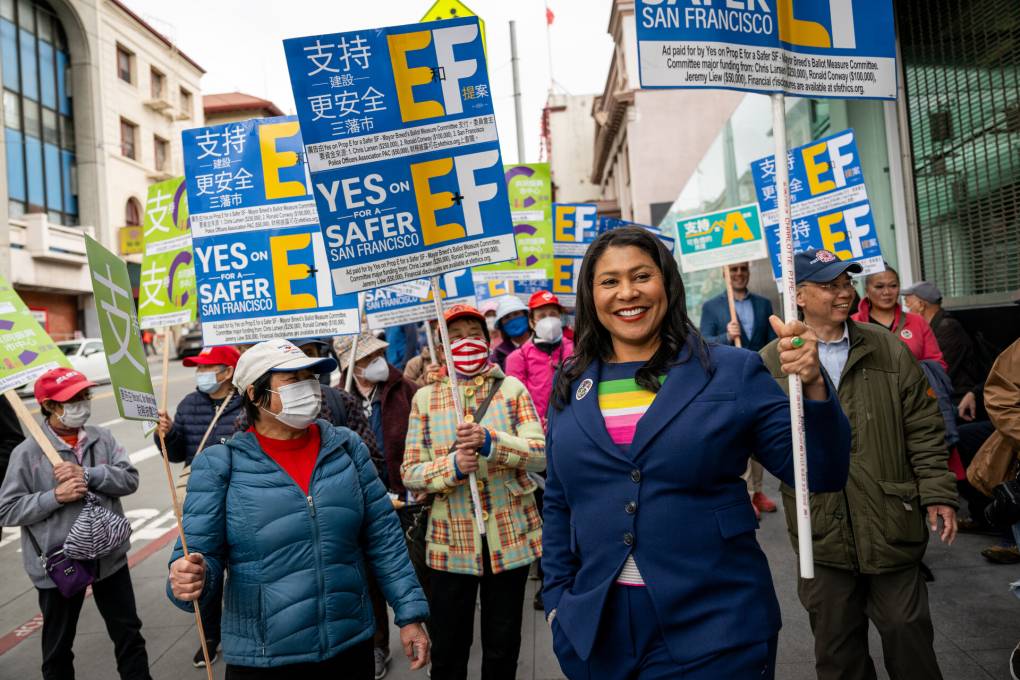
"content": "\u003cp>\u003ca href=\"https://www.kqed.org/liveblog/election-2024\">\u003cstrong>\u003cem>Primary Election 2024 Live Updates: Follow KQED reporters as we cover election results from across California and the Bay Area.\u003c/em>\u003c/strong>\u003c/a>\u003c/p>\n\u003cp>San Francisco voters are poised to approve ballot Propositions E and F, public safety measures authored by Mayor London Breed that would expand the powers of the San Francisco Police Department and require drug treatment for some welfare recipients.\u003c/p>\n\u003cp>In returns early Wednesday, 60% of voters supported \u003ca href=\"https://www.kqed.org/elections/results/sanfrancisco/proposition-e\">Proposition E\u003c/a> and 63% supported \u003ca href=\"https://www.kqed.org/elections/results/sanfrancisco/proposition-f\">Proposition F\u003c/a>, with roughly 105,000 votes tallied.\u003c/p>\n\u003cp>The measures rode a wave of anti-crime sentiment in San Francisco, where voters appear energized by brazen thefts and street violence seen in viral internet videos and on television news.\u003c/p>\n\u003cp>“It is clear that people want to see changes around public safety. What’s exciting about this for me is I get the kinds of tools I need to continue the work we’re doing,” Mayor Breed said to reporters at Anina Lounge in Hayes Valley, where she was surrounded by a raucous party with supporters.\u003c/p>\n\u003cp>[ad fullwidth]\u003c/p>\n\u003cp>Breed’s critics have said the electorate seems motivated by how they feel about crime, not the reality of how much crime is actually occurring.\u003c/p>\n\u003cp>Her allies hope the success of Proposition E and F will demonstrate the mayor is taking action on San Franciscans’ concerns about crime and open-air drug use, as Breed campaigns for reelection in November.\u003c/p>\n\u003cp>“Crime in 2023 was down to the lowest it’s been in 10 years, not including the pandemic,” she said. “And I know that people are starting to feel the difference, and we have to make sure we continue that momentum. And these are additional tools that are going to help us deliver some real results for San Francisco.”\u003c/p>\n\u003cfigure id=\"attachment_11978416\" class=\"wp-caption aligncenter\" style=\"max-width: 2000px\">\u003cimg loading=\"lazy\" decoding=\"async\" src=\"https://cdn.kqed.org/wp-content/uploads/sites/10/2024/03/240305-ELECTIONFILESF-119-BL-KQED.jpg\" alt=\"\" width=\"2000\" height=\"1333\" class=\"size-full wp-image-11978416\" srcset=\"https://cdn.kqed.org/wp-content/uploads/sites/10/2024/03/240305-ELECTIONFILESF-119-BL-KQED.jpg 2000w, https://cdn.kqed.org/wp-content/uploads/sites/10/2024/03/240305-ELECTIONFILESF-119-BL-KQED-800x533.jpg 800w, https://cdn.kqed.org/wp-content/uploads/sites/10/2024/03/240305-ELECTIONFILESF-119-BL-KQED-1020x680.jpg 1020w, https://cdn.kqed.org/wp-content/uploads/sites/10/2024/03/240305-ELECTIONFILESF-119-BL-KQED-160x107.jpg 160w, https://cdn.kqed.org/wp-content/uploads/sites/10/2024/03/240305-ELECTIONFILESF-119-BL-KQED-1536x1024.jpg 1536w, https://cdn.kqed.org/wp-content/uploads/sites/10/2024/03/240305-ELECTIONFILESF-119-BL-KQED-1920x1280.jpg 1920w\" sizes=\"(max-width: 2000px) 100vw, 2000px\">\u003cfigcaption class=\"wp-caption-text\">Mayor London Breed and state Sen. Scott Wiener read election results during a SF Dems for Change Super Tuesday election night party at Anina in San Francisco on March 5, 2024. \u003ccite>(Beth LaBerge/KQED)\u003c/cite>\u003c/figcaption>\u003c/figure>\n\u003cp>Since September 1, property crime in San Francisco is down 30% and violent crime down 4% compared to the same time period from the previous year, according to Breed’s office.\u003c/p>\n\u003cp>Breed added that the Police Commission “in some instances, has gone too far, and Proposition E is making it clear that, look, we want reforms, but we want balance and we want safety. We can have all of them.”\u003c/p>\n\u003cp>Proposition E would weaken the authority of the citizen-led San Francisco Police Commission. It would also allow the San Francisco Police Department to deploy surveillance technology like facial recognition, implement public surveillance cameras and drones, loosen restrictions around vehicle chases, and exempt officers from filing paperwork after using force on a suspect, so long as the person suffered no injuries.\u003c/p>\n\u003cp>The Yes on E campaign raised $849,000, with its top contributors including Ron Conway, a tech sector investor, and Chris Larsen, the CEO of Ripple. A separate campaign for Proposition E started by mayoral candidate Daniel Lurie raised $699,000.\u003c/p>\n\u003cp>The ACLU of Northern California led the opposition to Proposition E and raised $200,000 to beat it. The organization argued more police chases would endanger lives, and expanding police surveillance power will infringe on privacy rights.\u003c/p>\n\u003cp>[aside label='More Election Coverage' tag='election-2024']Proposition F would allow the city to require welfare recipients to be drug tested and enter treatment programs if they’re suspected of using illegal drugs. If a person declined treatment, they would no longer get cash and could be evicted from their housing. More than 5,000 San Franciscans used welfare last year, according to the County Adult Assistance Program. The Human Services Agency administers the program, and estimates roughly 30% of city welfare recipients have a substance use disorder.\u003c/p>\n\u003cp>The Yes on F campaign raised $650,000. There was substantial funding raised against Proposition F.\u003c/p>\n\u003cp>Both ballot measures were born from frustration.\u003c/p>\n\u003cp>In 2022, Breed clashed with her own appointee to the Police Commission, Max Carter-Oberstone. He now serves as the body’s vice president and has led multiple reform efforts.\u003c/p>\n\u003cp>Breed authored Proposition E to weaken the Police Commission and reject its recent policy changes. If approved, public hearings would be required to be held in all 10 district stations before the Commission could amend the SFPD’s procedures. Only the chief of police could veto the new hearing process, which would allow the SFPD to slow the Commission’s efforts when they disagree.\u003c/p>\n\u003cp>\u003c/p>\n\u003cp>Breed also voiced concern with the city’s welfare system. Last week she revealed 40 people arrested for drug use in the Tenderloin and South of Market over the last year were defrauding the County Adult Assistance Program by falsely claiming they live in San Francisco, which is a requirement to be eligible for the welfare program.\u003c/p>\n\n",
"stats": {
"hasVideo": false,
"hasChartOrMap": false,
"hasAudio": false,
"hasPolis": false,
"wordCount": 813,
"hasGoogleForm": false,
"hasGallery": false,
"hasHearkenModule": false,
"iframeSrcs": [],
"paragraphCount": 21
},
"modified": 1709757229,
"excerpt": "San Francisco voters are poised to approve the public safety measures authored by Mayor London Breed.",
"headData": {
"twImgId": "",
"twTitle": "",
"ogTitle": "",
"ogImgId": "",
"twDescription": "",
"description": "San Francisco voters are poised to approve the public safety measures authored by Mayor London Breed.",
"title": "Propositions E and F in San Francisco Appear Headed for Victory | KQED",
"ogDescription": "",
"schema": {
"@context": "https://schema.org",
"@type": "NewsArticle",
"headline": "Propositions E and F in San Francisco Appear Headed for Victory",
"datePublished": "2024-03-05T21:33:05-08:00",
"dateModified": "2024-03-06T12:33:49-08:00",
"image": "https://cdn.kqed.org/wp-content/uploads/2020/02/KQED-OG-Image@1x.png",
"isAccessibleForFree": "True",
"publisher": {
"@type": "NewsMediaOrganization",
"@id": "https://www.kqed.org/#organization",
"name": "KQED",
"logo": "https://cdn.kqed.org/wp-content/uploads/2020/02/KQED-OG-Image@1x.png",
"url": "https://www.kqed.org",
"sameAs": [
"https://www.facebook.com/KQED",
"https://twitter.com/KQED",
"https://www.instagram.com/kqed/",
"https://www.tiktok.com/@kqedofficial",
"https://www.linkedin.com/company/kqed",
"https://www.youtube.com/channel/UCeC0IOo7i1P_61zVUWbJ4nw"
]
}
}
},
"guestAuthors": [],
"slug": "propositions-e-and-f-in-san-francisco-appear-headed-for-victory",
"status": "publish",
"excludeFromSiteSearch": "Include",
"sticky": false,
"WpOldSlug": "props-e-and-f-pass-prewrite",
"articleAge": "0",
"path": "/news/11978236/propositions-e-and-f-in-san-francisco-appear-headed-for-victory",
"audioTrackLength": null,
"parsedContent": [
{
"type": "contentString",
"content": "\u003cdiv class=\"post-body\">\u003cp>\u003cp>\u003ca href=\"https://www.kqed.org/liveblog/election-2024\">\u003cstrong>\u003cem>Primary Election 2024 Live Updates: Follow KQED reporters as we cover election results from across California and the Bay Area.\u003c/em>\u003c/strong>\u003c/a>\u003c/p>\n\u003cp>San Francisco voters are poised to approve ballot Propositions E and F, public safety measures authored by Mayor London Breed that would expand the powers of the San Francisco Police Department and require drug treatment for some welfare recipients.\u003c/p>\n\u003cp>In returns early Wednesday, 60% of voters supported \u003ca href=\"https://www.kqed.org/elections/results/sanfrancisco/proposition-e\">Proposition E\u003c/a> and 63% supported \u003ca href=\"https://www.kqed.org/elections/results/sanfrancisco/proposition-f\">Proposition F\u003c/a>, with roughly 105,000 votes tallied.\u003c/p>\n\u003cp>The measures rode a wave of anti-crime sentiment in San Francisco, where voters appear energized by brazen thefts and street violence seen in viral internet videos and on television news.\u003c/p>\n\u003cp>“It is clear that people want to see changes around public safety. What’s exciting about this for me is I get the kinds of tools I need to continue the work we’re doing,” Mayor Breed said to reporters at Anina Lounge in Hayes Valley, where she was surrounded by a raucous party with supporters.\u003c/p>\n\u003cp>\u003c/p>\u003c/div>",
"attributes": {
"named": {},
"numeric": []
}
},
{
"type": "component",
"content": "",
"name": "ad",
"attributes": {
"named": {
"label": "fullwidth"
},
"numeric": [
"fullwidth"
]
}
},
{
"type": "contentString",
"content": "\u003cdiv class=\"post-body\">\u003cp>\u003c/p>\n\u003cp>Breed’s critics have said the electorate seems motivated by how they feel about crime, not the reality of how much crime is actually occurring.\u003c/p>\n\u003cp>Her allies hope the success of Proposition E and F will demonstrate the mayor is taking action on San Franciscans’ concerns about crime and open-air drug use, as Breed campaigns for reelection in November.\u003c/p>\n\u003cp>“Crime in 2023 was down to the lowest it’s been in 10 years, not including the pandemic,” she said. “And I know that people are starting to feel the difference, and we have to make sure we continue that momentum. And these are additional tools that are going to help us deliver some real results for San Francisco.”\u003c/p>\n\u003cfigure id=\"attachment_11978416\" class=\"wp-caption aligncenter\" style=\"max-width: 2000px\">\u003cimg loading=\"lazy\" decoding=\"async\" src=\"https://cdn.kqed.org/wp-content/uploads/sites/10/2024/03/240305-ELECTIONFILESF-119-BL-KQED.jpg\" alt=\"\" width=\"2000\" height=\"1333\" class=\"size-full wp-image-11978416\" srcset=\"https://cdn.kqed.org/wp-content/uploads/sites/10/2024/03/240305-ELECTIONFILESF-119-BL-KQED.jpg 2000w, https://cdn.kqed.org/wp-content/uploads/sites/10/2024/03/240305-ELECTIONFILESF-119-BL-KQED-800x533.jpg 800w, https://cdn.kqed.org/wp-content/uploads/sites/10/2024/03/240305-ELECTIONFILESF-119-BL-KQED-1020x680.jpg 1020w, https://cdn.kqed.org/wp-content/uploads/sites/10/2024/03/240305-ELECTIONFILESF-119-BL-KQED-160x107.jpg 160w, https://cdn.kqed.org/wp-content/uploads/sites/10/2024/03/240305-ELECTIONFILESF-119-BL-KQED-1536x1024.jpg 1536w, https://cdn.kqed.org/wp-content/uploads/sites/10/2024/03/240305-ELECTIONFILESF-119-BL-KQED-1920x1280.jpg 1920w\" sizes=\"(max-width: 2000px) 100vw, 2000px\">\u003cfigcaption class=\"wp-caption-text\">Mayor London Breed and state Sen. Scott Wiener read election results during a SF Dems for Change Super Tuesday election night party at Anina in San Francisco on March 5, 2024. \u003ccite>(Beth LaBerge/KQED)\u003c/cite>\u003c/figcaption>\u003c/figure>\n\u003cp>Since September 1, property crime in San Francisco is down 30% and violent crime down 4% compared to the same time period from the previous year, according to Breed’s office.\u003c/p>\n\u003cp>Breed added that the Police Commission “in some instances, has gone too far, and Proposition E is making it clear that, look, we want reforms, but we want balance and we want safety. We can have all of them.”\u003c/p>\n\u003cp>Proposition E would weaken the authority of the citizen-led San Francisco Police Commission. It would also allow the San Francisco Police Department to deploy surveillance technology like facial recognition, implement public surveillance cameras and drones, loosen restrictions around vehicle chases, and exempt officers from filing paperwork after using force on a suspect, so long as the person suffered no injuries.\u003c/p>\n\u003cp>The Yes on E campaign raised $849,000, with its top contributors including Ron Conway, a tech sector investor, and Chris Larsen, the CEO of Ripple. A separate campaign for Proposition E started by mayoral candidate Daniel Lurie raised $699,000.\u003c/p>\n\u003cp>The ACLU of Northern California led the opposition to Proposition E and raised $200,000 to beat it. The organization argued more police chases would endanger lives, and expanding police surveillance power will infringe on privacy rights.\u003c/p>\n\u003cp>\u003c/p>\u003c/div>",
"attributes": {
"named": {},
"numeric": []
}
},
{
"type": "component",
"content": "",
"name": "aside",
"attributes": {
"named": {
"label": "More Election Coverage ",
"tag": "election-2024"
},
"numeric": []
}
},
{
"type": "contentString",
"content": "\u003cdiv class=\"post-body\">\u003cp>Proposition F would allow the city to require welfare recipients to be drug tested and enter treatment programs if they’re suspected of using illegal drugs. If a person declined treatment, they would no longer get cash and could be evicted from their housing. More than 5,000 San Franciscans used welfare last year, according to the County Adult Assistance Program. The Human Services Agency administers the program, and estimates roughly 30% of city welfare recipients have a substance use disorder.\u003c/p>\n\u003cp>The Yes on F campaign raised $650,000. There was substantial funding raised against Proposition F.\u003c/p>\n\u003cp>Both ballot measures were born from frustration.\u003c/p>\n\u003cp>In 2022, Breed clashed with her own appointee to the Police Commission, Max Carter-Oberstone. He now serves as the body’s vice president and has led multiple reform efforts.\u003c/p>\n\u003cp>Breed authored Proposition E to weaken the Police Commission and reject its recent policy changes. If approved, public hearings would be required to be held in all 10 district stations before the Commission could amend the SFPD’s procedures. Only the chief of police could veto the new hearing process, which would allow the SFPD to slow the Commission’s efforts when they disagree.\u003c/p>\n\u003cp>\u003c/p>\n\u003cp>Breed also voiced concern with the city’s welfare system. Last week she revealed 40 people arrested for drug use in the Tenderloin and South of Market over the last year were defrauding the County Adult Assistance Program by falsely claiming they live in San Francisco, which is a requirement to be eligible for the welfare program.\u003c/p>\n\n\u003c/div>\u003c/p>",
"attributes": {
"named": {},
"numeric": []
}
}
],
"link": "/news/11978236/propositions-e-and-f-in-san-francisco-appear-headed-for-victory",
"authors": [
"11690"
],
"categories": [
"news_6188",
"news_8",
"news_13"
],
"tags": [
"news_32839",
"news_6931",
"news_17968",
"news_38"
],
"featImg": "news_11978246",
"label": "news"
},
"news_11978232": {
"type": "posts",
"id": "news_11978232",
"meta": {
"index": "posts_1716263798",
"site": "news",
"id": "11978232",
"score": null,
"sort": [
1709700768000
]
},
"guestAuthors": [],
"slug": "california-senate-seat-schiff-moves-on-to-general-election-with-garvey-leading-porter-for-second-spot",
"title": "Schiff and Garvey Advance in Race for Prized California Senate Seat",
"publishDate": 1709700768,
"format": "standard",
"headTitle": "Schiff and Garvey Advance in Race for Prized California Senate Seat | KQED",
"labelTerm": {
"site": "news"
},
"content": "\u003cp>\u003cstrong>\u003ca href=\"https://www.kqed.org/liveblog/election-2024\">\u003cem>Primary Election 2024 Live Updates: Follow KQED reporters as we cover election results from across California and the Bay Area.\u003c/em>\u003c/a>\u003c/strong>\u003c/p>\n\u003cp>Democratic Rep. Adam Schiff of Burbank will face Republican Steve Garvey, a former baseball star, in the November general election to decide who will represent California in the U.S. Senate, after the two men edged out Democratic Reps. Katie Porter of Orange County and Barbara Lee of Oakland.\u003c/p>\n\u003cp>The matchup, in an overwhelmingly Democratic state where a Republican hasn’t won a statewide contest since 2006, is a huge win for Schiff, who ran ads propping up Garvey in the hopes of avoiding a runoff with another Democrat.\u003c/p>\n\u003cp>The Associated Press called the race just after 9 p.m., an hour after polls closed Tuesday night, with Schiff decisively leading the pack and Garvey in second place, holding a commanding lead over Porter.\u003c/p>\n\u003cp>Lee, who raised significantly less money than her opponents and had consistently trailed in the polls, was in a distant fourth place.\u003c/p>\n\u003cp>“This is the least surprising outcome of any race I think this year,” said Gil Duran, a journalist and political commentator. “And now, although some of our friends maybe in TV have to pretend like there’s a race this year, it’s pretty much over. We all know that. That’s why Schiff pushed to have Garvey in the race with him. There’s no way a Republican can win.”\u003c/p>\n\u003cp>[aside label=\"more election coverage\" tag=\"election-2024\"]The outcome of Tuesday’s race means that California will not be represented by a female senator for the first time since 1992, when the late Sen. Dianne Feinstein took the seat, which she held \u003ca href=\"https://www.kqed.org/news/11946670/dianne-feinstein-californias-longest-serving-us-senator-dies-at-age-90\">until her death last fall\u003c/a>. Her replacement, Sen. Laphonza Butler, \u003ca href=\"https://www.kqed.org/news/11963066/gov-newsom-names-laphonza-butler-to-dianne-feinsteins-senate-seat\">was appointed by Gov. Gavin Newsom in October\u003c/a>, but chose not to run for a full term.\u003c/p>\n\u003cp>In a quirk of election timing, voters actually weighed in on two questions Tuesday: Who should compete for the full six-year term that begins next January, and who should fill out the final months of Feinstein’s term after the November election.\u003c/p>\n\u003cp>In both cases, voters chose Garvey and Schiff.\u003c/p>\n\u003cp>Schiff, a longtime congressman and former federal prosecutor, ran as an establishment Democrat, with endorsements from former House Speaker Nancy Pelosi, former U.S. Senator Barbara Boxer and most of California’s Democratic congressional delegation.\u003c/p>\n\u003cp>As chair of the House Intelligence Committee, he made national headlines for \u003ca href=\"https://apnews.com/article/donald-trump-ap-top-news-ca-state-wire-adam-schiff-politics-3eec3ea9be5c07a9c297bad439f8f3e8\">leading the first impeachment inquiry\u003c/a> into former President Trump in 2020, and appeared in this race to resonate with the state’s Democratic voters worried about a second Trump term.\u003c/p>\n\u003cp>Schiff was kicked off the Intelligence Committee when Republicans took control of the House last year and was also censured last summer by the GOP-led Congress. He mentioned both incidents in his victory speech Tuesday night in Los Angeles, where he thanked the political heavyweights who endorsed his Senate campaign, including Pelosi and Boxer.\u003c/p>\n\u003cp>“But tonight, I also find myself thinking a great deal of Sen. Feinstein. Sen. Feinstein who was an incredible giant in the U.S. Senate. Somebody who was not afraid to take on the biggest fights, but somebody who also knew how to get things done,” he told the crowd.\u003c/p>\n\u003cp>But Schiff’s speech was interrupted by protesters chanting “Cease-fire now” — a reminder of the schisms within the Democratic party over the conflict between Israel and Hamas. Schiff has been a staunch supporter of Israel and has rebuffed calls for a cease-fire.\u003c/p>\n\u003cp>https://twitter.com/politico/status/1765265791107117562\u003c/p>\n\u003cp>“We are so lucky to live in a democracy where we all have the right to protest,” Schiff said, over the shouts of protesters in the audience. “I want to acknowledge the right of our protesters, and I look forward to working with you all.”\u003c/p>\n\u003cp>Garvey, a star first baseman for the Los Angeles Dodgers and San Diego Padres from 1969 to 1987, has never run for office before. He often struggled to articulate policy positions during his short campaign, and lagged behind his Democratic opponents in fundraising.\u003c/p>\n\u003cp>But Garvey managed to consolidate the Republican and conservative vote in the final weeks before the primary, and was likely aided by millions of dollars worth of ads that Schiff’s campaign produced in an effort to elevate him.\u003c/p>\n\u003cp>“Keep in mind, this is the first game of a doubleheader. So keep the evening of Nov. 5th open, as we will celebrate again,” Garvey told supporters at an election night party in Palm Desert after taking the stage to the Black Eyed Peas song, “I Gotta Feeling.”\u003c/p>\n\u003cp>Porter, a three-term congresswoman from a swing district in Orange County, ran as an outsider looking to shake things up. She has pushed to ban stock trading among members of Congress and attacked Schiff for taking corporate PAC money in past races.\u003c/p>\n\u003cp>[ad fullwidth]\u003c/p>\n\u003cp>But in a presidential primary election with no real competition at the top of the ticket, Porter was likely hurt by low voter turnout and a lack of engagement among younger voters and voters of color, two of her key constituencies.\u003c/p>\n\u003cp>“[Schiff] did get the institutional support of most of the California congressional delegation,” said Debbie Mesloh, a Democratic strategist who worked for Kamala Harris’ 2016 Senate campaign. “Unfortunately Porter did not enjoy that support.”\u003c/p>\n\u003cp>“Also with two women running, they cut the women’s endorsement votes, they cut the women’s donations,” Mesloh added.\u003c/p>\n\u003cp>The outcome likely marks the end of the 77-year-old Lee’s long political career: To run for the Senate, she had to forego another congressional run, and she will give up her House seat at the end of this term.\u003c/p>\n\u003cp>Lee, who is best known for her 2001 vote against war in Afghanistan and Iraq, was the only woman of color in the race and the staunchest progressive voice. But she struggled to raise money and introduce herself to voters after representing a safe Bay Area seat for more than a quarter century.\u003c/p>\n\u003cp>\u003c/p>\n",
"blocks": [],
"excerpt": "The outcome in Tuesday’s primary marks a big win for Schiff in an overwhelmingly Democratic state, and means that California will not be represented by a female senator for the first time since 1992, when the late Dianne Feinstein took the seat.\r\n",
"status": "publish",
"parent": 0,
"modified": 1722881294,
"stats": {
"hasAudio": false,
"hasVideo": false,
"hasChartOrMap": false,
"iframeSrcs": [],
"hasGoogleForm": false,
"hasGallery": false,
"hasHearkenModule": false,
"hasPolis": false,
"paragraphCount": 26,
"wordCount": 1038
},
"headData": {
"title": "Schiff and Garvey Advance in Race for Prized California Senate Seat | KQED",
"description": "The outcome in Tuesday’s primary marks a big win for Schiff in an overwhelmingly Democratic state, and means that California will not be represented by a female senator for the first time since 1992, when the late Dianne Feinstein took the seat.\r\n",
"ogTitle": "",
"ogDescription": "",
"ogImgId": "",
"twTitle": "",
"twDescription": "",
"twImgId": "",
"schema": {
"@context": "https://schema.org",
"@type": "NewsArticle",
"headline": "Schiff and Garvey Advance in Race for Prized California Senate Seat",
"datePublished": "2024-03-05T20:52:48-08:00",
"dateModified": "2024-08-05T11:08:14-07:00",
"image": "https://cdn.kqed.org/wp-content/uploads/2020/02/KQED-OG-Image@1x.png",
"isAccessibleForFree": "True",
"publisher": {
"@type": "NewsMediaOrganization",
"@id": "https://www.kqed.org/#organization",
"name": "KQED",
"logo": "https://cdn.kqed.org/wp-content/uploads/2020/02/KQED-OG-Image@1x.png",
"url": "https://www.kqed.org",
"sameAs": [
"https://www.facebook.com/KQED",
"https://twitter.com/KQED",
"https://www.instagram.com/kqed/",
"https://www.tiktok.com/@kqedofficial",
"https://www.linkedin.com/company/kqed",
"https://www.youtube.com/channel/UCeC0IOo7i1P_61zVUWbJ4nw"
]
}
}
},
"sticky": false,
"excludeFromSiteSearch": "Include",
"articleAge": "0",
"path": "/news/11978232/california-senate-seat-schiff-moves-on-to-general-election-with-garvey-leading-porter-for-second-spot",
"audioTrackLength": null,
"parsedContent": [
{
"type": "contentString",
"content": "\u003cdiv class=\"post-body\">\u003cp>\u003cp>\u003cstrong>\u003ca href=\"https://www.kqed.org/liveblog/election-2024\">\u003cem>Primary Election 2024 Live Updates: Follow KQED reporters as we cover election results from across California and the Bay Area.\u003c/em>\u003c/a>\u003c/strong>\u003c/p>\n\u003cp>Democratic Rep. Adam Schiff of Burbank will face Republican Steve Garvey, a former baseball star, in the November general election to decide who will represent California in the U.S. Senate, after the two men edged out Democratic Reps. Katie Porter of Orange County and Barbara Lee of Oakland.\u003c/p>\n\u003cp>The matchup, in an overwhelmingly Democratic state where a Republican hasn’t won a statewide contest since 2006, is a huge win for Schiff, who ran ads propping up Garvey in the hopes of avoiding a runoff with another Democrat.\u003c/p>\n\u003cp>The Associated Press called the race just after 9 p.m., an hour after polls closed Tuesday night, with Schiff decisively leading the pack and Garvey in second place, holding a commanding lead over Porter.\u003c/p>\n\u003cp>Lee, who raised significantly less money than her opponents and had consistently trailed in the polls, was in a distant fourth place.\u003c/p>\n\u003cp>“This is the least surprising outcome of any race I think this year,” said Gil Duran, a journalist and political commentator. “And now, although some of our friends maybe in TV have to pretend like there’s a race this year, it’s pretty much over. We all know that. That’s why Schiff pushed to have Garvey in the race with him. There’s no way a Republican can win.”\u003c/p>\n\u003cp>\u003c/p>\u003c/div>",
"attributes": {
"named": {},
"numeric": []
}
},
{
"type": "component",
"content": "",
"name": "aside",
"attributes": {
"named": {
"label": "more election coverage ",
"tag": "election-2024"
},
"numeric": []
}
},
{
"type": "contentString",
"content": "\u003cdiv class=\"post-body\">\u003cp>The outcome of Tuesday’s race means that California will not be represented by a female senator for the first time since 1992, when the late Sen. Dianne Feinstein took the seat, which she held \u003ca href=\"https://www.kqed.org/news/11946670/dianne-feinstein-californias-longest-serving-us-senator-dies-at-age-90\">until her death last fall\u003c/a>. Her replacement, Sen. Laphonza Butler, \u003ca href=\"https://www.kqed.org/news/11963066/gov-newsom-names-laphonza-butler-to-dianne-feinsteins-senate-seat\">was appointed by Gov. Gavin Newsom in October\u003c/a>, but chose not to run for a full term.\u003c/p>\n\u003cp>In a quirk of election timing, voters actually weighed in on two questions Tuesday: Who should compete for the full six-year term that begins next January, and who should fill out the final months of Feinstein’s term after the November election.\u003c/p>\n\u003cp>In both cases, voters chose Garvey and Schiff.\u003c/p>\n\u003cp>Schiff, a longtime congressman and former federal prosecutor, ran as an establishment Democrat, with endorsements from former House Speaker Nancy Pelosi, former U.S. Senator Barbara Boxer and most of California’s Democratic congressional delegation.\u003c/p>\n\u003cp>As chair of the House Intelligence Committee, he made national headlines for \u003ca href=\"https://apnews.com/article/donald-trump-ap-top-news-ca-state-wire-adam-schiff-politics-3eec3ea9be5c07a9c297bad439f8f3e8\">leading the first impeachment inquiry\u003c/a> into former President Trump in 2020, and appeared in this race to resonate with the state’s Democratic voters worried about a second Trump term.\u003c/p>\n\u003cp>Schiff was kicked off the Intelligence Committee when Republicans took control of the House last year and was also censured last summer by the GOP-led Congress. He mentioned both incidents in his victory speech Tuesday night in Los Angeles, where he thanked the political heavyweights who endorsed his Senate campaign, including Pelosi and Boxer.\u003c/p>\n\u003cp>“But tonight, I also find myself thinking a great deal of Sen. Feinstein. Sen. Feinstein who was an incredible giant in the U.S. Senate. Somebody who was not afraid to take on the biggest fights, but somebody who also knew how to get things done,” he told the crowd.\u003c/p>\n\u003cp>But Schiff’s speech was interrupted by protesters chanting “Cease-fire now” — a reminder of the schisms within the Democratic party over the conflict between Israel and Hamas. Schiff has been a staunch supporter of Israel and has rebuffed calls for a cease-fire.\u003c/p>\u003c/p>\u003c/div>",
"attributes": {
"named": {},
"numeric": []
}
},
{
"type": "component",
"content": "",
"name": "singleTwitterStatus",
"attributes": {
"named": {
"id": "1765265791107117562"
},
"numeric": []
}
},
{
"type": "contentString",
"content": "\u003cdiv class=\"post-body\">\u003cp>\n\u003cp>“We are so lucky to live in a democracy where we all have the right to protest,” Schiff said, over the shouts of protesters in the audience. “I want to acknowledge the right of our protesters, and I look forward to working with you all.”\u003c/p>\n\u003cp>Garvey, a star first baseman for the Los Angeles Dodgers and San Diego Padres from 1969 to 1987, has never run for office before. He often struggled to articulate policy positions during his short campaign, and lagged behind his Democratic opponents in fundraising.\u003c/p>\n\u003cp>But Garvey managed to consolidate the Republican and conservative vote in the final weeks before the primary, and was likely aided by millions of dollars worth of ads that Schiff’s campaign produced in an effort to elevate him.\u003c/p>\n\u003cp>“Keep in mind, this is the first game of a doubleheader. So keep the evening of Nov. 5th open, as we will celebrate again,” Garvey told supporters at an election night party in Palm Desert after taking the stage to the Black Eyed Peas song, “I Gotta Feeling.”\u003c/p>\n\u003cp>Porter, a three-term congresswoman from a swing district in Orange County, ran as an outsider looking to shake things up. She has pushed to ban stock trading among members of Congress and attacked Schiff for taking corporate PAC money in past races.\u003c/p>\n\u003cp>\u003c/p>\u003c/div>",
"attributes": {
"named": {},
"numeric": []
}
},
{
"type": "component",
"content": "",
"name": "ad",
"attributes": {
"named": {
"label": "fullwidth"
},
"numeric": [
"fullwidth"
]
}
},
{
"type": "contentString",
"content": "\u003cdiv class=\"post-body\">\u003cp>\u003c/p>\n\u003cp>But in a presidential primary election with no real competition at the top of the ticket, Porter was likely hurt by low voter turnout and a lack of engagement among younger voters and voters of color, two of her key constituencies.\u003c/p>\n\u003cp>“[Schiff] did get the institutional support of most of the California congressional delegation,” said Debbie Mesloh, a Democratic strategist who worked for Kamala Harris’ 2016 Senate campaign. “Unfortunately Porter did not enjoy that support.”\u003c/p>\n\u003cp>“Also with two women running, they cut the women’s endorsement votes, they cut the women’s donations,” Mesloh added.\u003c/p>\n\u003cp>The outcome likely marks the end of the 77-year-old Lee’s long political career: To run for the Senate, she had to forego another congressional run, and she will give up her House seat at the end of this term.\u003c/p>\n\u003cp>Lee, who is best known for her 2001 vote against war in Afghanistan and Iraq, was the only woman of color in the race and the staunchest progressive voice. But she struggled to raise money and introduce herself to voters after representing a safe Bay Area seat for more than a quarter century.\u003c/p>\n\u003cp>\u003c/p>\n\u003c/div>\u003c/p>",
"attributes": {
"named": {},
"numeric": []
}
}
],
"link": "/news/11978232/california-senate-seat-schiff-moves-on-to-general-election-with-garvey-leading-porter-for-second-spot",
"authors": [
"3239"
],
"categories": [
"news_8"
],
"tags": [
"news_20716",
"news_22185",
"news_274",
"news_32839",
"news_23394",
"news_27626",
"news_24206",
"news_33463"
],
"featImg": "news_11978230",
"label": "news"
},
"news_11978080": {
"type": "posts",
"id": "news_11978080",
"meta": {
"index": "posts_1716263798",
"site": "news",
"id": "11978080",
"score": null,
"sort": [
1709640018000
]
},
"parent": 0,
"labelTerm": {
"site": "news"
},
"blocks": [],
"publishDate": 1709640018,
"format": "standard",
"title": "What to Know About California Primary Elections on Super Tuesday",
"headTitle": "What to Know About California Primary Elections on Super Tuesday | KQED",
"content": "\u003cp>Presidential campaigns are eyeing the biggest prize of Super Tuesday — the California primary.\u003c/p>\n\u003cp>Democratic President Joe Biden and Republican front-runner Donald Trump both hope that California — and contests in other states — can help them turn the corner toward the nomination and focus on their expected general election rematch in November.\u003c/p>\n\u003cp>In the Democratic primary, Biden faces challenges from Rep. Dean Phillips of Minnesota and self-help author Marianne Williamson, who reentered the nomination race Wednesday after dropping out three weeks earlier. In the Republican primary, Trump once again faces former United Nations Ambassador Nikki Haley, who scored her first victory Sunday in the Washington, D.C., primary but faces a tough electoral map on Super Tuesday.\u003c/p>\n\u003cp>The highest profile state race in California is the one to succeed the late Democratic Sen. Dianne Feinstein. The crowded field of candidates includes Democratic Reps. Barbara Lee, Katie Porter and Adam Schiff and Republican Steve Garvey, a former baseball star.[aside postID=\"news_11973349,news_11973129,news_11967845\" label=\"Related Stories\"]There are two primary elections on the ballot to replace Feinstein: one is to fill the remaining months of her current term and the other is for a full six-year term starting in January 2025.\u003c/p>\n\u003cp>California has a “top-two” primary system in which all candidates appear on the same ballot regardless of party, and the top two finishers advance to the general election.\u003c/p>\n\u003cp>In the presidential race, California is home to the largest haul of delegates in both parties. The state’s 424 Democratic delegates make up almost one-third of the total at stake on Super Tuesday.\u003c/p>\n\u003cp>On the Republican side, the state’s 169 delegates amount to about one-fifth of those available that day. The party’s delegate rules, which award all delegates to the candidate who wins a statewide vote majority, greatly favor front-running candidates and gives Trump an opportunity to capture every delegate at stake.\u003c/p>\n\u003cp>Another notable race on the ballot is the primary to replace Porter in the 47th Congressional District, a seat she gave up to run for the Senate.\u003c/p>\n\u003cp>Vote counting in California is famously slow. It’s not unusual for only about half of the vote to be counted by the morning after the election.\u003c/p>\n\u003cp>The Super Tuesday primaries are comprised of California and 15 other states holding presidential nominating contests. American Samoa is also holding Democratic caucuses that day. It is the single largest day of voting in the primary calendar.\u003c/p>\n\u003cp>A look at what to expect on election night:\u003c/p>\n\u003ch2>Election Day\u003c/h2>\n\u003cp>The California presidential and state primaries will be held Tuesday, March 5. Polls close at 8 p.m. PST.\u003c/p>\n\u003ch2>What’s on the Ballot\u003c/h2>\n\u003cp>The Democratic presidential candidates are Biden, Phillips, Williamson and five others. The Republican candidates include Trump, Haley, Florida businessman David Stuckenberg and former candidates Ryan Binkley, Chris Christie, Ron DeSantis, Asa Hutchinson and Vivek Ramaswamy. Other races on the ballot include primaries for U.S. Senate, U.S. House, state Senate and state House.\u003c/p>\n\u003ch2>Who can vote\u003c/h2>\n\u003cp>Only registered Republicans may vote in the Republican presidential primary. Registered Democrats and unaffiliated voters may vote in the Democratic presidential primary. All registered voters may vote in the state primaries with a “top-two” ballot format.\u003c/p>\n\u003ch2>Delegate allocation rules\u003c/h2>\n\u003cp>There are 424 pledged Democratic delegates at stake in California, and they’re awarded according to the national party’s standard rules. Ninety-two at-large delegates are allocated in proportion to the statewide vote, as are 55 PLEO delegates, or “party leaders and elected officials.” The state’s 52 congressional districts have a combined 277 delegates at stake, which are allocated in proportion to the vote results in each district. Candidates must receive at least 15% of the statewide vote to qualify for any statewide delegates, and 15% of the vote in a congressional district to qualify for delegates in that district.\u003c/p>\n\u003cp>For Republicans, all 169 delegates are awarded to the candidate who wins a majority of the statewide vote. If no candidate reaches a majority, the 169 delegates are allocated proportionally among the candidates.\u003c/p>\n\u003ch2>Decision notes\u003c/h2>\n\u003cp>Trump became the dominant figure in the Republican politics since his election in 2016, and his hold on the party continues eight years later. He remains popular among conservative Republicans, and that has translated into success at the ballot box this year, having won all but one of the contests where both he and Haley appeared on the ballot.\u003c/p>\n\u003cp>In this year’s primaries and caucuses, Haley has done best in heavily Democratic areas, which California has plenty to offer. But Trump has mostly won in Democratic-leaning areas as well as in Republican strongholds, enabling him to win overall by large margins.[aside label=\"More On California Elections\" tag=\"elections\"]Trump won a nonbinding California primary in 2016 with 75% of the vote after he had already clinched the nomination.\u003c/p>\n\u003cp>For the Democrats, Biden has faced only nominal opposition from Phillips and Williamson and heads into the contest as the overwhelming frontrunner.\u003c/p>\n\u003cp>In state races, including the Senate primaries, slow vote-counting could delay a call for one or both spots on the November ballot if it’s not clear which candidates will prevail once all votes are tabulated.\u003c/p>\n\u003cp>The Associated Press does not make projections and will declare a winner only when it’s determined there is no scenario that would allow the trailing candidates to close the gap. If a race has not been called, the AP will continue to cover any newsworthy developments, such as candidate concessions or declarations of victory. In doing so, the AP will make clear that it has not yet declared a winner and explain why.\u003c/p>\n\u003ch2>What do turnout and advance vote look like?\u003c/h2>\n\u003cp>Turnout in the 2022 U.S. Senate and gubernatorial primaries was about 32% of registered voters.\u003c/p>\n\u003cp>As of Wednesday, more than 2 million vote had been cast before Election Day, about 50% by Democrats and about 32% by Republicans. In the 2022 gubernatorial primary, pre-Election Day voting made up about 91% of the total vote.\u003c/p>\n\u003ch2>How long does vote-counting usually take?\u003c/h2>\n\u003cp>In the 2022 primary election, the AP first reported results at 11:11 p.m. EST, or 11 minutes after polls closed. The election night tabulation ended at 6:10 a.m. EST with about 48% of total votes counted.\u003c/p>\n\u003ch2>Are we there yet?\u003c/h2>\n\u003cp>As of Super Tuesday, there will be 132 days until the Republican National Convention in Milwaukee, 167 days until the Democratic National Convention in Chicago and 245 until the November general election.\u003c/p>\n\u003cp>[ad fullwidth]\u003c/p>\n\u003cp>[ad floatright]\u003c/p>\n",
"stats": {
"hasVideo": false,
"hasChartOrMap": false,
"hasAudio": false,
"hasPolis": false,
"wordCount": 1115,
"hasGoogleForm": false,
"hasGallery": false,
"hasHearkenModule": false,
"iframeSrcs": [],
"paragraphCount": 27
},
"modified": 1709696505,
"excerpt": "The highest profile state race in California is the one to succeed the late Democratic Sen. Dianne Feinstein. ",
"headData": {
"twImgId": "",
"twTitle": "",
"ogTitle": "",
"ogImgId": "",
"twDescription": "",
"description": "The highest profile state race in California is the one to succeed the late Democratic Sen. Dianne Feinstein. ",
"title": "What to Know About California Primary Elections on Super Tuesday | KQED",
"ogDescription": "",
"schema": {
"@context": "https://schema.org",
"@type": "NewsArticle",
"headline": "What to Know About California Primary Elections on Super Tuesday",
"datePublished": "2024-03-05T04:00:18-08:00",
"dateModified": "2024-03-05T19:41:45-08:00",
"image": "https://cdn.kqed.org/wp-content/uploads/2020/02/KQED-OG-Image@1x.png",
"isAccessibleForFree": "True",
"publisher": {
"@type": "NewsMediaOrganization",
"@id": "https://www.kqed.org/#organization",
"name": "KQED",
"logo": "https://cdn.kqed.org/wp-content/uploads/2020/02/KQED-OG-Image@1x.png",
"url": "https://www.kqed.org",
"sameAs": [
"https://www.facebook.com/KQED",
"https://twitter.com/KQED",
"https://www.instagram.com/kqed/",
"https://www.tiktok.com/@kqedofficial",
"https://www.linkedin.com/company/kqed",
"https://www.youtube.com/channel/UCeC0IOo7i1P_61zVUWbJ4nw"
]
}
}
},
"guestAuthors": [],
"slug": "what-to-know-about-california-primary-elections-on-super-tuesday",
"status": "publish",
"templateType": "standard",
"nprByline": "Robert Yoon\u003cbr>The Associated Press",
"excludeFromSiteSearch": "Include",
"featuredImageType": "standard",
"sticky": false,
"showOnAuthorArchivePages": "No",
"articleAge": "0",
"path": "/news/11978080/what-to-know-about-california-primary-elections-on-super-tuesday",
"audioTrackLength": null,
"parsedContent": [
{
"type": "contentString",
"content": "\u003cdiv class=\"post-body\">\u003cp>\u003cp>Presidential campaigns are eyeing the biggest prize of Super Tuesday — the California primary.\u003c/p>\n\u003cp>Democratic President Joe Biden and Republican front-runner Donald Trump both hope that California — and contests in other states — can help them turn the corner toward the nomination and focus on their expected general election rematch in November.\u003c/p>\n\u003cp>In the Democratic primary, Biden faces challenges from Rep. Dean Phillips of Minnesota and self-help author Marianne Williamson, who reentered the nomination race Wednesday after dropping out three weeks earlier. In the Republican primary, Trump once again faces former United Nations Ambassador Nikki Haley, who scored her first victory Sunday in the Washington, D.C., primary but faces a tough electoral map on Super Tuesday.\u003c/p>\n\u003cp>The highest profile state race in California is the one to succeed the late Democratic Sen. Dianne Feinstein. The crowded field of candidates includes Democratic Reps. Barbara Lee, Katie Porter and Adam Schiff and Republican Steve Garvey, a former baseball star.\u003c/p>\u003c/div>",
"attributes": {
"named": {},
"numeric": []
}
},
{
"type": "component",
"content": "",
"name": "aside",
"attributes": {
"named": {
"postid": "news_11973349,news_11973129,news_11967845",
"label": "Related Stories "
},
"numeric": []
}
},
{
"type": "contentString",
"content": "\u003cdiv class=\"post-body\">\u003cp>There are two primary elections on the ballot to replace Feinstein: one is to fill the remaining months of her current term and the other is for a full six-year term starting in January 2025.\u003c/p>\n\u003cp>California has a “top-two” primary system in which all candidates appear on the same ballot regardless of party, and the top two finishers advance to the general election.\u003c/p>\n\u003cp>In the presidential race, California is home to the largest haul of delegates in both parties. The state’s 424 Democratic delegates make up almost one-third of the total at stake on Super Tuesday.\u003c/p>\n\u003cp>On the Republican side, the state’s 169 delegates amount to about one-fifth of those available that day. The party’s delegate rules, which award all delegates to the candidate who wins a statewide vote majority, greatly favor front-running candidates and gives Trump an opportunity to capture every delegate at stake.\u003c/p>\n\u003cp>Another notable race on the ballot is the primary to replace Porter in the 47th Congressional District, a seat she gave up to run for the Senate.\u003c/p>\n\u003cp>Vote counting in California is famously slow. It’s not unusual for only about half of the vote to be counted by the morning after the election.\u003c/p>\n\u003cp>The Super Tuesday primaries are comprised of California and 15 other states holding presidential nominating contests. American Samoa is also holding Democratic caucuses that day. It is the single largest day of voting in the primary calendar.\u003c/p>\n\u003cp>A look at what to expect on election night:\u003c/p>\n\u003ch2>Election Day\u003c/h2>\n\u003cp>The California presidential and state primaries will be held Tuesday, March 5. Polls close at 8 p.m. PST.\u003c/p>\n\u003ch2>What’s on the Ballot\u003c/h2>\n\u003cp>The Democratic presidential candidates are Biden, Phillips, Williamson and five others. The Republican candidates include Trump, Haley, Florida businessman David Stuckenberg and former candidates Ryan Binkley, Chris Christie, Ron DeSantis, Asa Hutchinson and Vivek Ramaswamy. Other races on the ballot include primaries for U.S. Senate, U.S. House, state Senate and state House.\u003c/p>\n\u003ch2>Who can vote\u003c/h2>\n\u003cp>Only registered Republicans may vote in the Republican presidential primary. Registered Democrats and unaffiliated voters may vote in the Democratic presidential primary. All registered voters may vote in the state primaries with a “top-two” ballot format.\u003c/p>\n\u003ch2>Delegate allocation rules\u003c/h2>\n\u003cp>There are 424 pledged Democratic delegates at stake in California, and they’re awarded according to the national party’s standard rules. Ninety-two at-large delegates are allocated in proportion to the statewide vote, as are 55 PLEO delegates, or “party leaders and elected officials.” The state’s 52 congressional districts have a combined 277 delegates at stake, which are allocated in proportion to the vote results in each district. Candidates must receive at least 15% of the statewide vote to qualify for any statewide delegates, and 15% of the vote in a congressional district to qualify for delegates in that district.\u003c/p>\n\u003cp>For Republicans, all 169 delegates are awarded to the candidate who wins a majority of the statewide vote. If no candidate reaches a majority, the 169 delegates are allocated proportionally among the candidates.\u003c/p>\n\u003ch2>Decision notes\u003c/h2>\n\u003cp>Trump became the dominant figure in the Republican politics since his election in 2016, and his hold on the party continues eight years later. He remains popular among conservative Republicans, and that has translated into success at the ballot box this year, having won all but one of the contests where both he and Haley appeared on the ballot.\u003c/p>\n\u003cp>In this year’s primaries and caucuses, Haley has done best in heavily Democratic areas, which California has plenty to offer. But Trump has mostly won in Democratic-leaning areas as well as in Republican strongholds, enabling him to win overall by large margins.\u003c/p>\u003c/div>",
"attributes": {
"named": {},
"numeric": []
}
},
{
"type": "component",
"content": "",
"name": "aside",
"attributes": {
"named": {
"label": "More On California Elections ",
"tag": "elections"
},
"numeric": []
}
},
{
"type": "contentString",
"content": "\u003cdiv class=\"post-body\">\u003cp>Trump won a nonbinding California primary in 2016 with 75% of the vote after he had already clinched the nomination.\u003c/p>\n\u003cp>For the Democrats, Biden has faced only nominal opposition from Phillips and Williamson and heads into the contest as the overwhelming frontrunner.\u003c/p>\n\u003cp>In state races, including the Senate primaries, slow vote-counting could delay a call for one or both spots on the November ballot if it’s not clear which candidates will prevail once all votes are tabulated.\u003c/p>\n\u003cp>The Associated Press does not make projections and will declare a winner only when it’s determined there is no scenario that would allow the trailing candidates to close the gap. If a race has not been called, the AP will continue to cover any newsworthy developments, such as candidate concessions or declarations of victory. In doing so, the AP will make clear that it has not yet declared a winner and explain why.\u003c/p>\n\u003ch2>What do turnout and advance vote look like?\u003c/h2>\n\u003cp>Turnout in the 2022 U.S. Senate and gubernatorial primaries was about 32% of registered voters.\u003c/p>\n\u003cp>As of Wednesday, more than 2 million vote had been cast before Election Day, about 50% by Democrats and about 32% by Republicans. In the 2022 gubernatorial primary, pre-Election Day voting made up about 91% of the total vote.\u003c/p>\n\u003ch2>How long does vote-counting usually take?\u003c/h2>\n\u003cp>In the 2022 primary election, the AP first reported results at 11:11 p.m. EST, or 11 minutes after polls closed. The election night tabulation ended at 6:10 a.m. EST with about 48% of total votes counted.\u003c/p>\n\u003ch2>Are we there yet?\u003c/h2>\n\u003cp>As of Super Tuesday, there will be 132 days until the Republican National Convention in Milwaukee, 167 days until the Democratic National Convention in Chicago and 245 until the November general election.\u003c/p>\n\u003cp>\u003c/p>\u003c/div>",
"attributes": {
"named": {},
"numeric": []
}
},
{
"type": "component",
"content": "",
"name": "ad",
"attributes": {
"named": {
"label": "fullwidth"
},
"numeric": [
"fullwidth"
]
}
},
{
"type": "contentString",
"content": "\u003cdiv class=\"post-body\">\u003cp>\u003c/p>\n\u003cp>\u003c/p>\u003c/div>",
"attributes": {
"named": {},
"numeric": []
}
},
{
"type": "component",
"content": "",
"name": "ad",
"attributes": {
"named": {
"label": "floatright"
},
"numeric": [
"floatright"
]
}
},
{
"type": "contentString",
"content": "\u003cdiv class=\"post-body\">\u003cp>\u003c/p>\n\u003c/div>\u003c/p>",
"attributes": {
"named": {},
"numeric": []
}
}
],
"link": "/news/11978080/what-to-know-about-california-primary-elections-on-super-tuesday",
"authors": [
"byline_news_11978080"
],
"categories": [
"news_8",
"news_13"
],
"tags": [
"news_32839",
"news_23394",
"news_27626",
"news_19379"
],
"featImg": "news_11978091",
"label": "news"
},
"news_11978009": {
"type": "posts",
"id": "news_11978009",
"meta": {
"index": "posts_1716263798",
"site": "news",
"id": "11978009",
"score": null,
"sort": [
1709602202000
]
},
"guestAuthors": [],
"slug": "how-l-a-s-district-attorney-went-from-criminal-justice-reform-warrior-to-endangered-incumbent",
"title": "How LA's District Attorney Went From Criminal Justice Reform Warrior to Endangered Incumbent",
"publishDate": 1709602202,
"format": "audio",
"headTitle": "How LA’s District Attorney Went From Criminal Justice Reform Warrior to Endangered Incumbent | KQED",
"labelTerm": {},
"content": "\u003cp>\u003cspan style=\"font-weight: 400\">Concerns over crime and public safety are the backdrop for a lively and very competitive race to be L.A. County’s top prosecutor. When he first ran for office four years ago, incumbent George Gascón promised to make big changes, like not seeking the death penalty, not charging juveniles as adults and getting rid of cash bail. Now he’s facing an uphill battle, with 11 candidates challenging him — including three of his own deputies. \u003c/span>\u003c/p>\n\u003cp>Scott and Marisa are joined by LAist correspondent Frank Stoltze to talk about the dynamics of the race, the stakes for criminal justice reform and \u003cspan style=\"font-weight: 400\">Gascón’s\u003c/span> chances for political survival.\u003c/p>\n\u003cp>[ad fullwidth]\u003c/p>\u003cp>\u003c/p>\n",
"blocks": [],
"excerpt": null,
"status": "publish",
"parent": 0,
"modified": 1722881381,
"stats": {
"hasAudio": false,
"hasVideo": false,
"hasChartOrMap": false,
"iframeSrcs": [],
"hasGoogleForm": false,
"hasGallery": false,
"hasHearkenModule": false,
"hasPolis": false,
"paragraphCount": 4,
"wordCount": 118
},
"headData": {
"title": "How LA's District Attorney Went From Criminal Justice Reform Warrior to Endangered Incumbent | KQED",
"description": "Concerns over crime and public safety are the backdrop for a lively and very competitive race to be L.A. County’s top prosecutor. When he first ran for office four years ago, incumbent George Gascón promised to make big changes, like not seeking the death penalty, not charging juveniles as adults and getting rid of cash bail. Now he's facing an uphill battle, with 11 candidates challenging him — including three of his own deputies. Scott and Marisa are joined by LAist correspondent Frank Stoltze to talk about the dynamics of the race, the stakes for criminal justice reform and Gascón's",
"ogTitle": "",
"ogDescription": "",
"ogImgId": "",
"twTitle": "",
"twDescription": "",
"twImgId": "",
"schema": {
"@context": "https://schema.org",
"@type": "NewsArticle",
"headline": "How LA's District Attorney Went From Criminal Justice Reform Warrior to Endangered Incumbent",
"datePublished": "2024-03-04T17:30:02-08:00",
"dateModified": "2024-08-05T11:09:41-07:00",
"image": "https://cdn.kqed.org/wp-content/uploads/2020/02/KQED-OG-Image@1x.png",
"isAccessibleForFree": "True",
"publisher": {
"@type": "NewsMediaOrganization",
"@id": "https://www.kqed.org/#organization",
"name": "KQED",
"logo": "https://cdn.kqed.org/wp-content/uploads/2020/02/KQED-OG-Image@1x.png",
"url": "https://www.kqed.org",
"sameAs": [
"https://www.facebook.com/KQED",
"https://twitter.com/KQED",
"https://www.instagram.com/kqed/",
"https://www.tiktok.com/@kqedofficial",
"https://www.linkedin.com/company/kqed",
"https://www.youtube.com/channel/UCeC0IOo7i1P_61zVUWbJ4nw"
]
}
}
},
"source": "Political Breakdown",
"audioUrl": "https://www.podtrac.com/pts/redirect.mp3/chrt.fm/track/G6C7C3/traffic.megaphone.fm/KQINC8273960312.mp3?updated=1709595268",
"sticky": false,
"excludeFromSiteSearch": "Include",
"articleAge": "0",
"path": "/news/11978009/how-l-a-s-district-attorney-went-from-criminal-justice-reform-warrior-to-endangered-incumbent",
"audioTrackLength": null,
"parsedContent": [
{
"type": "contentString",
"content": "\u003cdiv class=\"post-body\">\u003cp>\u003cp>\u003cspan style=\"font-weight: 400\">Concerns over crime and public safety are the backdrop for a lively and very competitive race to be L.A. County’s top prosecutor. When he first ran for office four years ago, incumbent George Gascón promised to make big changes, like not seeking the death penalty, not charging juveniles as adults and getting rid of cash bail. Now he’s facing an uphill battle, with 11 candidates challenging him — including three of his own deputies. \u003c/span>\u003c/p>\n\u003cp>Scott and Marisa are joined by LAist correspondent Frank Stoltze to talk about the dynamics of the race, the stakes for criminal justice reform and \u003cspan style=\"font-weight: 400\">Gascón’s\u003c/span> chances for political survival.\u003c/p>\n\u003cp>\u003c/p>\u003c/div>",
"attributes": {
"named": {},
"numeric": []
}
},
{
"type": "component",
"content": "",
"name": "ad",
"attributes": {
"named": {
"label": "fullwidth"
},
"numeric": [
"fullwidth"
]
}
},
{
"type": "contentString",
"content": "\u003cdiv class=\"post-body\">\u003cp>\u003c/p>\u003cp>\u003c/p>\n\u003c/div>\u003c/p>",
"attributes": {
"named": {},
"numeric": []
}
}
],
"link": "/news/11978009/how-l-a-s-district-attorney-went-from-criminal-justice-reform-warrior-to-endangered-incumbent",
"authors": [
"255",
"3239"
],
"programs": [
"news_33544"
],
"categories": [
"news_8"
],
"tags": [
"news_32839",
"news_546",
"news_22235",
"news_17968"
],
"featImg": "news_11978017",
"label": "source_news_11978009"
},
"news_11977992": {
"type": "posts",
"id": "news_11977992",
"meta": {
"index": "posts_1716263798",
"site": "news",
"id": "11977992",
"score": null,
"sort": [
1709589619000
]
},
"guestAuthors": [],
"slug": "takeaways-from-trumps-supreme-court-win-he-stays-on-ballot-but-legal-peril-looms",
"title": "Takeaways From Trump's Supreme Court Win: He Stays on Ballot, but Legal Peril Looms",
"publishDate": 1709589619,
"format": "standard",
"headTitle": "Takeaways From Trump’s Supreme Court Win: He Stays on Ballot, but Legal Peril Looms | KQED",
"labelTerm": {
"site": "news"
},
"content": "\u003cp>Former President \u003ca href=\"https://apnews.com/hub/donald-trump\">Donald Trump gained\u003c/a> a clear win at the U.S. Supreme Court on Monday, which unanimously ruled that states don’t have the ability to bar him — or any other federal candidates — from the ballot under a rarely-used constitutional provision that prohibits those who “engaged in insurrection” from holding office.\u003c/p>\n\u003cp>The decision shuts down a push in dozens of states to end Trump’s candidacy through a clause in the 14th Amendment, written to prevent former Confederates from serving in government after the Civil War.\u003c/p>\n\u003cp>But it may open the door to further electoral uncertainty, exposing more state officials to disqualification under the provision and setting up a constitutional showdown should Trump win the election.\u003c/p>\n\u003cp>Facing four separate criminal trials, Trump’s legal peril may just be beginning. So is the Supreme Court’s role in that process.\u003c/p>\n\u003cp>Here are some takeaways:\u003c/p>\n\u003ch2>\u003cstrong>A technical, but still big win\u003c/strong>\u003c/h2>\n\u003cp>The most significant thing the court did Monday was to overturn a Colorado Supreme Court ruling from December that Trump was not eligible to be president because he violated the insurrection clause, Section 3, of the 14th Amendment.\u003c/p>\n\u003cp>[ad fullwidth]\u003c/p>\n\u003cp>[aside postID=\"news_11975149,news_11973899,news_11977488\" label=\"Related Stories\"]This will also stop efforts to kick him off the ballot in Illinois, Maine and other states. Had the Supreme Court let the Colorado ruling stand, it could have triggered a new wave of litigation that might have left Trump disqualified in many states.\u003c/p>\n\u003cp>The high court avoided addressing the politically contentious issue of whether Trump played a role in the Jan. 6 attack on the U.S. Capitol that would have barred him from seeking office. The ruling is almost devoid of references to Jan. 6 or insurrection and doesn’t address whether Trump committed such an act by sparking the attack on the Capitol.\u003c/p>\n\u003cp>Instead, it focuses on the technical, procedural question of who gets to decide an election challenge under Section 3.\u003c/p>\n\u003cp>All nine justices agreed that is the purview of Congress. But a narrower majority of five went further, ruling it can only be done through legislation. That exposes significant splits underneath the unanimous majority and points toward the greatest uncertainty the ruling creates.\u003c/p>\n\u003ch2>A time bomb for Jan. 6, 2025?\u003c/h2>\n\u003cp>One possible outcome that the case presented was the prospect of unelected judges disqualifying the man dominating who has already received hundreds of thousands of votes in the nominating process.\u003c/p>\n\u003cp>But another potential nightmare is that if Congress is the only entity that can determine whether a presidential hopeful is indeed disqualified for engaging in “insurrection,” it makes that determination on Jan. 6, 2025, when required to certify a possible Trump victory in the presidential election.\u003c/p>\n\u003cp>The high court shut down the first possibility but may have left the door open to the second one. The five-justice majority — all from the court’s conservative wing — said Congress can implement Section 3 through legislation, “subject of course to judicial review.” (That means the court reserves for itself the right to have the final say.)\u003c/p>\n\u003cp>That triggered a dissent from the court’s three liberals, who complained that that “shuts the door on other potential means of federal enforcement.”\u003c/p>\n\u003cp>That would appear to include a rejection of Trump’s electors should he win the election — but multiple legal experts said Monday that it wasn’t that clear, and the only way to know may be for Congress to try.\u003c/p>\n\u003ch2>Feeling the heat\u003c/h2>\n\u003cp>The 14th Amendment case is one of two, putting the high court squarely amid the ongoing presidential election. Last week, the court agreed to hear Trump’s appeal of a federal ruling that he’s not entitled to immunity from criminal charges for his attempt to overturn the 2020 election.\u003c/p>\n\u003cp>Trump’s trial on those charges was originally scheduled to begin Monday but has been postponed because of the battle over his immunity challenge. The high court taking up his appeal in late April raises the possibility that the trial won’t conclude until after the presidential election.\u003c/p>\n\u003cp>The justices’ discomfort over being put in the middle of the nation’s partisan divide came through in a brief but notable concurring opinion by Justice Amy Coney Barrett.\u003c/p>\n\u003cp>Though one of the court’s conservatives, she disagreed with the majority’s ruling that Congress can only enforce Section 3 through legislation. But she didn’t want to sign onto the liberals’ dissent, either; instead, she warned against focusing too much on partisan divisions.\u003c/p>\n\u003cp>“… this is not the time to amplify disagreement with stridency,” Barrett wrote. “The Court has settled a politically charged issue in the volatile season of a Presidential election. Particularly in this circumstance, writings on the Court should turn the national temperature down, not up.”\u003c/p>\n\u003cp>“For present purposes, our differences are far less important than our unanimity: All nine Justices agree on the outcome of this case,” she concluded. “That is the message Americans should take home.”\u003c/p>\n\u003ch2>Action in the states\u003c/h2>\n\u003cp>The court’s ruling shuts off using Section 3 against federal officials absent action by Congress, but it leaves open the ability of states to use the provision against their own state officials, noting there’s a rich record after the Civil War of just those sorts of actions.\u003c/p>\n\u003cp>That’s already begun anew in the post-Jan. 6 era. The first disqualification under Section 3 in more than a century came in 2022, when a New Mexico court removed Couy Griffin, who was convicted of entering the Capitol grounds on Jan. 6 while leading a group called “Cowboys for Trump,” from his rural county commission.\u003c/p>\n\u003cp>The group that brought that case, Citizens for Ethics and Responsibility in Washington, next filed the Colorado case against Trump. They said they were eager to continue filing Section 3 cases against lower-level Jan. 6 participants.\u003c/p>\n\u003ch2>Trump’s legal travails ahead\u003c/h2>\n\u003cp>Few observers expected the Supreme Court to keep Trump off the ballot. But he’s facing a far more perilous legal road ahead.\u003c/p>\n\u003cp>The first of Trump’s criminal trials for allegedly falsifying business records to pay hush money to an adult film actress during the 2016 presidential campaign is scheduled to start in New York later this month. The former president is also appealing a New York judge’s ruling that he pay $355 million for fraud committed by his businesses and verdict that he pay a writer $83 million for defaming her after she sued him for sexual assault.\u003c/p>\n\u003cp>Depending on how and how quickly the high court rules on Trump’s immunity claim, he could still face charges for trying to overturn the 2020 election in Washington, D.C., before this November’s election.\u003c/p>\n\u003cp>Two more cases are more likely to come later — in Atlanta, where Trump faces state charges for his 2020 election plot, and in Florida, where he’s tentatively scheduled for a May trial on improper retention of classified documents after leaving the presidency, but the trial date is expected to be postponed.\u003c/p>\n\u003cp>[ad floatright]\u003c/p>\n\u003cp>Monday was a win Trump needed to continue his campaign, but his days in court are far from over.\u003c/p>\n\n",
"blocks": [],
"excerpt": "Former President Donald Trump scored a clear win at the US Supreme Court on Monday, which unanimously ruled that states don’t have the ability to bar him — or any other federal candidates — from the ballot under a rarely used constitutional provision. ",
"status": "publish",
"parent": 0,
"modified": 1727475550,
"stats": {
"hasAudio": false,
"hasVideo": false,
"hasChartOrMap": false,
"iframeSrcs": [],
"hasGoogleForm": false,
"hasGallery": false,
"hasHearkenModule": false,
"hasPolis": false,
"paragraphCount": 31,
"wordCount": 1239
},
"headData": {
"title": "Takeaways From Trump's Supreme Court Win: He Stays on Ballot, but Legal Peril Looms | KQED",
"description": "Former President Donald Trump scored a clear win at the US Supreme Court on Monday, which unanimously ruled that states don’t have the ability to bar him — or any other federal candidates — from the ballot under a rarely used constitutional provision. ",
"ogTitle": "",
"ogDescription": "",
"ogImgId": "",
"twTitle": "",
"twDescription": "",
"twImgId": "",
"schema": {
"@context": "https://schema.org",
"@type": "NewsArticle",
"headline": "Takeaways From Trump's Supreme Court Win: He Stays on Ballot, but Legal Peril Looms",
"datePublished": "2024-03-04T14:00:19-08:00",
"dateModified": "2024-09-27T15:19:10-07:00",
"image": "https://cdn.kqed.org/wp-content/uploads/2020/02/KQED-OG-Image@1x.png",
"isAccessibleForFree": "True",
"publisher": {
"@type": "NewsMediaOrganization",
"@id": "https://www.kqed.org/#organization",
"name": "KQED",
"logo": "https://cdn.kqed.org/wp-content/uploads/2020/02/KQED-OG-Image@1x.png",
"url": "https://www.kqed.org",
"sameAs": [
"https://www.facebook.com/KQED",
"https://twitter.com/KQED",
"https://www.instagram.com/kqed/",
"https://www.tiktok.com/@kqedofficial",
"https://www.linkedin.com/company/kqed",
"https://www.youtube.com/channel/UCeC0IOo7i1P_61zVUWbJ4nw"
]
}
}
},
"sticky": false,
"nprByline": "Nicholas Riccardi\u003cbr>The Associated Press\u003c/br>",
"excludeFromSiteSearch": "Include",
"showOnAuthorArchivePages": "No",
"articleAge": "0",
"path": "/news/11977992/takeaways-from-trumps-supreme-court-win-he-stays-on-ballot-but-legal-peril-looms",
"audioTrackLength": null,
"parsedContent": [
{
"type": "contentString",
"content": "\u003cdiv class=\"post-body\">\u003cp>\u003cp>Former President \u003ca href=\"https://apnews.com/hub/donald-trump\">Donald Trump gained\u003c/a> a clear win at the U.S. Supreme Court on Monday, which unanimously ruled that states don’t have the ability to bar him — or any other federal candidates — from the ballot under a rarely-used constitutional provision that prohibits those who “engaged in insurrection” from holding office.\u003c/p>\n\u003cp>The decision shuts down a push in dozens of states to end Trump’s candidacy through a clause in the 14th Amendment, written to prevent former Confederates from serving in government after the Civil War.\u003c/p>\n\u003cp>But it may open the door to further electoral uncertainty, exposing more state officials to disqualification under the provision and setting up a constitutional showdown should Trump win the election.\u003c/p>\n\u003cp>Facing four separate criminal trials, Trump’s legal peril may just be beginning. So is the Supreme Court’s role in that process.\u003c/p>\n\u003cp>Here are some takeaways:\u003c/p>\n\u003ch2>\u003cstrong>A technical, but still big win\u003c/strong>\u003c/h2>\n\u003cp>The most significant thing the court did Monday was to overturn a Colorado Supreme Court ruling from December that Trump was not eligible to be president because he violated the insurrection clause, Section 3, of the 14th Amendment.\u003c/p>\n\u003cp>\u003c/p>\u003c/div>",
"attributes": {
"named": {},
"numeric": []
}
},
{
"type": "component",
"content": "",
"name": "ad",
"attributes": {
"named": {
"label": "fullwidth"
},
"numeric": [
"fullwidth"
]
}
},
{
"type": "contentString",
"content": "\u003cdiv class=\"post-body\">\u003cp>\u003c/p>\n\u003cp>\u003c/p>\u003c/div>",
"attributes": {
"named": {},
"numeric": []
}
},
{
"type": "component",
"content": "",
"name": "aside",
"attributes": {
"named": {
"postid": "news_11975149,news_11973899,news_11977488",
"label": "Related Stories "
},
"numeric": []
}
},
{
"type": "contentString",
"content": "\u003cdiv class=\"post-body\">\u003cp>This will also stop efforts to kick him off the ballot in Illinois, Maine and other states. Had the Supreme Court let the Colorado ruling stand, it could have triggered a new wave of litigation that might have left Trump disqualified in many states.\u003c/p>\n\u003cp>The high court avoided addressing the politically contentious issue of whether Trump played a role in the Jan. 6 attack on the U.S. Capitol that would have barred him from seeking office. The ruling is almost devoid of references to Jan. 6 or insurrection and doesn’t address whether Trump committed such an act by sparking the attack on the Capitol.\u003c/p>\n\u003cp>Instead, it focuses on the technical, procedural question of who gets to decide an election challenge under Section 3.\u003c/p>\n\u003cp>All nine justices agreed that is the purview of Congress. But a narrower majority of five went further, ruling it can only be done through legislation. That exposes significant splits underneath the unanimous majority and points toward the greatest uncertainty the ruling creates.\u003c/p>\n\u003ch2>A time bomb for Jan. 6, 2025?\u003c/h2>\n\u003cp>One possible outcome that the case presented was the prospect of unelected judges disqualifying the man dominating who has already received hundreds of thousands of votes in the nominating process.\u003c/p>\n\u003cp>But another potential nightmare is that if Congress is the only entity that can determine whether a presidential hopeful is indeed disqualified for engaging in “insurrection,” it makes that determination on Jan. 6, 2025, when required to certify a possible Trump victory in the presidential election.\u003c/p>\n\u003cp>The high court shut down the first possibility but may have left the door open to the second one. The five-justice majority — all from the court’s conservative wing — said Congress can implement Section 3 through legislation, “subject of course to judicial review.” (That means the court reserves for itself the right to have the final say.)\u003c/p>\n\u003cp>That triggered a dissent from the court’s three liberals, who complained that that “shuts the door on other potential means of federal enforcement.”\u003c/p>\n\u003cp>That would appear to include a rejection of Trump’s electors should he win the election — but multiple legal experts said Monday that it wasn’t that clear, and the only way to know may be for Congress to try.\u003c/p>\n\u003ch2>Feeling the heat\u003c/h2>\n\u003cp>The 14th Amendment case is one of two, putting the high court squarely amid the ongoing presidential election. Last week, the court agreed to hear Trump’s appeal of a federal ruling that he’s not entitled to immunity from criminal charges for his attempt to overturn the 2020 election.\u003c/p>\n\u003cp>Trump’s trial on those charges was originally scheduled to begin Monday but has been postponed because of the battle over his immunity challenge. The high court taking up his appeal in late April raises the possibility that the trial won’t conclude until after the presidential election.\u003c/p>\n\u003cp>The justices’ discomfort over being put in the middle of the nation’s partisan divide came through in a brief but notable concurring opinion by Justice Amy Coney Barrett.\u003c/p>\n\u003cp>Though one of the court’s conservatives, she disagreed with the majority’s ruling that Congress can only enforce Section 3 through legislation. But she didn’t want to sign onto the liberals’ dissent, either; instead, she warned against focusing too much on partisan divisions.\u003c/p>\n\u003cp>“… this is not the time to amplify disagreement with stridency,” Barrett wrote. “The Court has settled a politically charged issue in the volatile season of a Presidential election. Particularly in this circumstance, writings on the Court should turn the national temperature down, not up.”\u003c/p>\n\u003cp>“For present purposes, our differences are far less important than our unanimity: All nine Justices agree on the outcome of this case,” she concluded. “That is the message Americans should take home.”\u003c/p>\n\u003ch2>Action in the states\u003c/h2>\n\u003cp>The court’s ruling shuts off using Section 3 against federal officials absent action by Congress, but it leaves open the ability of states to use the provision against their own state officials, noting there’s a rich record after the Civil War of just those sorts of actions.\u003c/p>\n\u003cp>That’s already begun anew in the post-Jan. 6 era. The first disqualification under Section 3 in more than a century came in 2022, when a New Mexico court removed Couy Griffin, who was convicted of entering the Capitol grounds on Jan. 6 while leading a group called “Cowboys for Trump,” from his rural county commission.\u003c/p>\n\u003cp>The group that brought that case, Citizens for Ethics and Responsibility in Washington, next filed the Colorado case against Trump. They said they were eager to continue filing Section 3 cases against lower-level Jan. 6 participants.\u003c/p>\n\u003ch2>Trump’s legal travails ahead\u003c/h2>\n\u003cp>Few observers expected the Supreme Court to keep Trump off the ballot. But he’s facing a far more perilous legal road ahead.\u003c/p>\n\u003cp>The first of Trump’s criminal trials for allegedly falsifying business records to pay hush money to an adult film actress during the 2016 presidential campaign is scheduled to start in New York later this month. The former president is also appealing a New York judge’s ruling that he pay $355 million for fraud committed by his businesses and verdict that he pay a writer $83 million for defaming her after she sued him for sexual assault.\u003c/p>\n\u003cp>Depending on how and how quickly the high court rules on Trump’s immunity claim, he could still face charges for trying to overturn the 2020 election in Washington, D.C., before this November’s election.\u003c/p>\n\u003cp>Two more cases are more likely to come later — in Atlanta, where Trump faces state charges for his 2020 election plot, and in Florida, where he’s tentatively scheduled for a May trial on improper retention of classified documents after leaving the presidency, but the trial date is expected to be postponed.\u003c/p>\n\u003cp>\u003c/p>\u003c/div>",
"attributes": {
"named": {},
"numeric": []
}
},
{
"type": "component",
"content": "",
"name": "ad",
"attributes": {
"named": {
"label": "floatright"
},
"numeric": [
"floatright"
]
}
},
{
"type": "contentString",
"content": "\u003cdiv class=\"post-body\">\u003cp>\u003c/p>\n\u003cp>Monday was a win Trump needed to continue his campaign, but his days in court are far from over.\u003c/p>\n\n\u003c/div>\u003c/p>",
"attributes": {
"named": {},
"numeric": []
}
}
],
"link": "/news/11977992/takeaways-from-trumps-supreme-court-win-he-stays-on-ballot-but-legal-peril-looms",
"authors": [
"byline_news_11977992"
],
"categories": [
"news_8"
],
"tags": [
"news_29011",
"news_1323",
"news_32839",
"news_27626",
"news_932"
],
"featImg": "news_11977999",
"label": "news"
},
"news_11977784": {
"type": "posts",
"id": "news_11977784",
"meta": {
"index": "posts_1716263798",
"site": "news",
"id": "11977784",
"score": null,
"sort": [
1709550046000
]
},
"guestAuthors": [],
"slug": "breaking-down-napa-countys-board-of-supervisors-election",
"title": "Breaking Down Napa County's Board of Supervisors Election",
"publishDate": 1709550046,
"format": "audio",
"headTitle": "Breaking Down Napa County’s Board of Supervisors Election | KQED",
"labelTerm": {},
"content": "\u003cp class=\"p1\">\u003ca href=\"#episode-transcript\">\u003ci>View the full episode transcript.\u003c/i>\u003c/a>\u003c/p>\n\u003cp>\u003cspan style=\"font-weight: 400;\">In Napa County, 3 out of the 5 seats on the Board of Supervisors are on the ballot, in nonpartisan races that will be decided in the March 5 primary. (In these races, nobody is advancing to November— voters will pick the winner in this election!)\u003c/span>\u003c/p>\n\u003cp>\u003cspan style=\"font-weight: 400;\">The wine industry looms large, but so do issues about housing, wildfire protection, and environmental conservation. KQED’s Carlos Cabrera-Lomeli tells us about the stakes, and focuses on the race in District 5.\u003c/span>\u003c/p>\n\u003cdiv class=\"card card--enclosed grey\">\n\u003cp id=\"embed-code\" class=\"inconsolata\">\n\u003c!-- iframe plugin v.4.3 wordpress.org/plugins/iframe/ -->\u003cbr>\n\u003ciframe loading=\"lazy\" frameborder=\"0\" height=\"200\" scrolling=\"no\" src=\"https://playlist.megaphone.fm/?e=KQINC9204213170&light=true\" width=\"100%\" class=\"iframe-class\">\u003c/iframe>\n\u003c/p>\n\u003c/div>\n\u003cp>\u003cb>Links:\u003c/b>\u003c/p>\n\u003cul>\n\u003cli style=\"font-weight: 400;\">\u003ca href=\"https://www.kqed.org/voterguide\">\u003cspan style=\"font-weight: 400;\">KQED Voter Guide\u003c/span>\u003c/a>\u003c/li>\n\u003c/ul>\n\u003ch2 id=\"episode-transcript\">Episode Transcript\u003c/h2>\n\u003cp>\u003ci>This is a computer-generated transcript. While our team has reviewed it, there may be errors.\u003c/i>\u003c/p>\n\u003cp>[ad fullwidth]\u003c/p>\n\u003cp>\u003cstrong>Alan \u003c/strong>Hey, this is Alan Montecillo. Just reminding you that tomorrow is the last day to vote in the March primary. If you still need to read up on the issues and candidates, KQED has a handy voter guide. You can find it at KQED.org/VoterGuide tomorrow night as results come in, you can check out KQED.org/Election and we’ll also share a few episodes about some of the different races in today’s show notes. Happy voting.\u003c/p>\n\u003cp>\u003cstrong>Alan Montecillo: \u003c/strong>I’m Alan Montecillo in for Ericka Cruz Guevarra. And welcome to the Bay. Local news to keep you rooted. Napa County voters could change the direction of their local government in a big way. Three of the five seats on the Board of Supervisors are up in a nonpartisan race that will be decided in the primary tomorrow. Now, of course, Napa is world famous for its wine industry, but voters are also worried about the same issues as everyone else.\u003c/p>\n\u003cp>\u003cstrong>Alan Montecillo: \u003c/strong>Things like housing, wildfires, inequality. Napa is in danger of becoming mostly a playground for the wealthy. We need a durable funding source to fund wildfire mitigation efforts and strike a balance between the economic growth that the wine industry provides and the human aspect of the labor force that we need to make that work. Today, the race for Board of Supervisors in Napa County.\u003c/p>\n\u003cp>\u003cstrong>Carlos Cabrera-Lomelí: \u003c/strong>Napa County is, population wise, the smallest county in the Bay area. It doesn’t even make it to a million people.\u003c/p>\n\u003cp>\u003cstrong>Alan Montecillo: \u003c/strong>Carlos Cabrera-Lomelí is a community engagement reporter for KQED.\u003c/p>\n\u003cp>\u003cstrong>Carlos Cabrera-Lomelí: \u003c/strong>However, size wise, it’s huge. You could fit several San Francisco’s inside of there. And just because there’s a, you know, a lot of people doesn’t mean that things don’t get heated. The wine industry is definitely a huge factor, a huge contributor to investment, to employment and everything.\u003c/p>\n\u003cp>\u003cstrong>Carlos Cabrera-Lomelí: \u003c/strong>But you also have a lot, a lot of folks who, you know, work in other things, have been living there their whole lives and, you know, kind of have to live with this industry that brings millions of people a year and they have to share resources. This balancing game between the needs of the wine industry and the needs of residents is one of the many reasons it makes politics in Napa really, really interesting.\u003c/p>\n\u003cp>\u003cstrong>Alan Montecillo: \u003c/strong>So there’s an election coming. The last day to vote is tomorrow.\u003c/p>\n\u003cp>\u003cstrong>Carlos Cabrera-Lomelí: \u003c/strong>Tuesday.\u003c/p>\n\u003cp>\u003cstrong>Alan Montecillo: \u003c/strong>Yes. What is it going to be decided in Napa County this week?\u003c/p>\n\u003cp>\u003cstrong>Carlos Cabrera-Lomelí: \u003c/strong>Yeah, I would say that for locals, this is a big year in Napa. There’s five people sitting on the board of supervisors of the county. These five people get to decide and supervise the budget. The county prison, the county airport, regulating wineries, wildfire protection plans. And three of those seats on the board, with three out of five majority, will be decided on Tuesday. You know, in other parts of the state, the results of Tuesday are like they’re a primary, right? Like it’s kind of like we’re getting ready for what’s going to happen in November. Napa. It’s what happens on Tuesday. Who wins on Tuesday? That’s it. This is final results.\u003c/p>\n\u003cp>\u003cstrong>Alan Montecillo: \u003c/strong>Yeah. Let’s dive more into the big issues in Napa County politics. I have to imagine there’s some overlap with the rest of the bay, like housing. But what else.\u003c/p>\n\u003cp>\u003cstrong>Carlos Cabrera-Lomelí: \u003c/strong>In Napa County? We’re trying to figure out housing, how? We’re trying to figure out how to boost the supply of housing. We’re also figuring out wildfire protection, how to make it financially sustainable for the future as climate change gets more and more intense. We’re also dealing with issues of transportation, especially in the southern part of the county.\u003c/p>\n\u003cp>\u003cstrong>Carlos Cabrera-Lomelí: \u003c/strong>A lot of folks, you know, they got to go to Vallejo, they got to go to Solano, Contra Costa County and to work. And getting in and out of Napa is pretty tough during the week. Cost of living. Also investment in the sense of like, you know, you have a county that depends on tourism, on people traveling. They’re still catching up. They’re still recovering from the pandemic when it was so hard to make it out there.\u003c/p>\n\u003cp>\u003cstrong>Alan Montecillo: \u003c/strong>And what about the wine industry? What are the ways that it comes up in local politics?\u003c/p>\n\u003cp>\u003cstrong>Carlos Cabrera-Lomelí: \u003c/strong>So over the years, if you if you look at candidates pages, who supports them? Who endorses them? The Napa Wine Growers Association, the Farm Bureau, there will always be a candidate that has their endorsement. They always have something to say. This is an industry that represents millions and millions of dollars. And of course, they want to support a candidate that you know is going to make things a lot easier for them, right? Whether that’s the new vineyard in the works, the it has to go to the Board of Supervisors. And having folks on the Board of Supervisors friendly to the wine industry makes things a lot easier, and they’re very keen on that.\u003c/p>\n\u003cp>\u003cstrong>Alan Montecillo: \u003c/strong>All right, Carlos, so there are three races for the Napa County Board of Supervisors that could reshape big issues like how the wine industry is regulated. And really, this question of what should be done with land in the county. One race where we’re seeing this is in district five, which I know that you followed closely. Tell me a little bit more about district five.\u003c/p>\n\u003cp>\u003cstrong>Carlos Cabrera-Lomelí: \u003c/strong>So I’d say the district five challenges a lot of the preconceptions we have about Napa County. Majority of Napa County is white. The biggest city in district five is American Canyon. American Canyon is actually really, really diverse. It’s overwhelmingly Latino. It’s overwhelmingly Asian, very middle class, very family. A lot of folks work in Vallejo. Work at Six Flags have been there for a while and been able to, like, make a life in the southern part of Napa. You don’t see that many folks going to work in a vineyard or a winery. Economy is a little more varied here, which makes, I think, more integrated with the rest of the bay as well.\u003c/p>\n\u003cp>\u003cstrong>Alan Montecillo: \u003c/strong>Let’s talk about the candidates for district five, starting with the incumbent, Belia Ramos.\u003c/p>\n\u003cp>\u003cstrong>Carlos Cabrera-Lomelí: \u003c/strong>So there are two candidates in the race and it’s rematch. They’ve actually faced off in 2020. Bailey Ramos who’s currently supervisor won in 2020. And now she’s going against Mariam Aboudamous again, who is a city council member for American Canyon.\u003c/p>\n\u003cp>\u003cstrong>Belia Ramos: \u003c/strong>I’m as homegrown as it gets.\u003c/p>\n\u003cp>\u003cstrong>Carlos Cabrera-Lomelí: \u003c/strong>Ramos definitely emphasizes that she’s born and raised like Napa, like how how rooted she is in Napa County.\u003c/p>\n\u003cp>\u003cstrong>Belia Ramos: \u003c/strong>I was born at Queen of the Valley Hospital, and I moved over to unincorporated Napa County outside of Saint Helena.\u003c/p>\n\u003cp>\u003cstrong>Carlos Cabrera-Lomelí: \u003c/strong>Folks, take that pride in that small town connection, right? And she definitely emphasizes that she’s representing the interests of, like, middle class Napa residents.\u003c/p>\n\u003cp>\u003cstrong>Belia Ramos: \u003c/strong>This calling for me, it’s about improving people’s lives.\u003c/p>\n\u003cp>\u003cstrong>Carlos Cabrera-Lomelí: \u003c/strong>Part of her story is that she’s a single mom. You know, she had to raise, kids by herself for a moment. She also dealt with housing insecurity. Not even that there is enough affordable housing in Napa. Just that there’s not enough housing in Napa, period.\u003c/p>\n\u003cp>\u003cstrong>Alan Montecillo: \u003c/strong>How does Supervisor Ramos brand herself, like, when she is talking about what kind of leader she is and wants to be? What does she talk about?\u003c/p>\n\u003cp>\u003cstrong>Carlos Cabrera-Lomelí: \u003c/strong>She has been chair of the board. She’s very, very involved. She knows how the county works really, really well because she’s been on the board since 2016. She’s been involved in a lot of the recovery efforts from wildfire season.\u003c/p>\n\u003cp>\u003cstrong>Belia Ramos: \u003c/strong>We were brought to our meetings with fires in 2017, the first Mega Fire Tahoe. So when you ask me, what am I most proud of? I’m proud of the investments we’ve made to make our community more resilient.\u003c/p>\n\u003cp>\u003cstrong>Carlos Cabrera-Lomelí: \u003c/strong>She’s very well connected with Congressman Mike Thompson’s office, with labor groups throughout the county. And she’s also she’s involved with the Association of Bay Area Governments, a bag so, you know, well connected.\u003c/p>\n\u003cp>\u003cstrong>Alan Montecillo: \u003c/strong>As you said, this is a rematch. Let’s talk about the challenger, Mariam Aboudamous. Who is she? And why is she running again?\u003c/p>\n\u003cp>\u003cstrong>Carlos Cabrera-Lomelí: \u003c/strong>Mariam Aboudamous is currently a city council member for American Canyon.\u003c/p>\n\u003cp>\u003cstrong>Mariam Aboudamous: \u003c/strong>I actually looked up at the county almost my entire life, and when I was just one year old, we moved to Brownes Valley Nampa. And then when I was to come from this valley to American Canyon. And I’ve lived there ever since.\u003c/p>\n\u003cp>\u003cstrong>Carlos Cabrera-Lomelí: \u003c/strong>She’s been in city council for several years now, and what got her into politics, public service was one of the issues that we’ve been talking about. Traffic congestion, mobility.\u003c/p>\n\u003cp>\u003cstrong>Mariam Aboudamous: \u003c/strong>I was driving home from my office, and it was literally less than two miles on a drive, but it took me 45 minutes to get home. And I said, this is ridiculous. I should be in San Francisco by now. What’s our city Council doing about traffic? And that’s actually when I ran in 2016.\u003c/p>\n\u003cp>\u003cstrong>Carlos Cabrera-Lomelí: \u003c/strong>I was critical in something that I think was really, really cool that a city like American Canyon passed in a pandemic. So the city had actually decided to require, grocery stores to provide hazard pay to its workers during the 2020 pandemic.\u003c/p>\n\u003cp>\u003cstrong>Mariam Aboudamous: \u003c/strong>Way that I like to do things is I like to talk to both sides and reach a happy medium in the middle where both parties can agree.\u003c/p>\n\u003cp>\u003cstrong>Alan Montecillo: \u003c/strong>And who is supporting her?\u003c/p>\n\u003cp>\u003cstrong>Carlos Cabrera-Lomelí: \u003c/strong>So she’ll tell you that she has support from all over Napa County, from every industry. I will point out that the first people also came out to support her. Are all groups related to agriculture? The Napa County Farm Bureau, winegrowers of Napa County, the Napa Chamber of Commerce. So groups associated with these, multimillion dollar businesses and industries.\u003c/p>\n\u003cp>\u003cstrong>Alan Montecillo: \u003c/strong>Coming up, where these two candidates stand on the big issues facing Napa County. Stay with us.\u003c/p>\n\u003cp>\u003cstrong>Alan Montecillo: \u003c/strong>So two candidates, both with public service experience. How different are these two candidates?\u003c/p>\n\u003cp>\u003cstrong>Carlos Cabrera-Lomelí: \u003c/strong>You know, Alan, on a lot of stuff, they do see eye to eye. You know, they both want more housing for now, but they both won a sustainable solution to finance wildfire protection. But I would just say that there’s different ways that they they want to go about it. The big difference is, is when you ask them how we should regulate the wine industry. Take the example of the local nine vineyard. A group of winegrowers came together to open up a new vineyard called Lake Colleen in the north part of the county.\u003c/p>\n\u003cp>\u003cstrong>Carlos Cabrera-Lomelí: \u003c/strong>And it required turning dozens of acres, which were zoned previously for, you know, as like this natural space into a vineyard space. An environmental group actually appeals the process. And it’s like, hey, actually, this vineyard is going to have really bad impacts on the local ecology, on the water, on lake various on your buy. And it had to go to the Board of Supervisors when the time came for a vote. Supervisor Ramos was the tiebreaker vote. Ramos voted to essentially stop the project. Well Aboudamous, she would have acted very differently.\u003c/p>\n\u003cp>\u003cstrong>Mariam Aboudamous: \u003c/strong>Lately, the board has shifted in a way that, you know is not favorable to the industry that’s made the Napa Valley what it is today.\u003c/p>\n\u003cp>\u003cstrong>Carlos Cabrera-Lomelí: \u003c/strong>You know, for her, folks are making an investment in Napa. The county should make it easier for those investments to come through.\u003c/p>\n\u003cp>\u003cstrong>Alan Montecillo: \u003c/strong>So these two candidates for district five appear aligned on many issues. But there are also a few sticking points, including regulation of the wine industry. What would it mean for Ramos to keep this seat or for Aboudamous to defeat her.\u003c/p>\n\u003cp>\u003cstrong>Carlos Cabrera-Lomelí: \u003c/strong>The thing is that, the Lake William project is not the only project in the works. Wine country is a multibillion dollar industry. There’s always something, whether it’s an expansion of an existing vineyard or a new vineyard. It’s just the wine industry is always going to have certain needs, and they need to go to the board and whoever sits on the board, even by just one seat, just change it by one seat.\u003c/p>\n\u003cp>\u003cstrong>Carlos Cabrera-Lomelí: \u003c/strong>It has huge implications on future decisions, on how future vineyards are going to be decided, on how future like permits are going to be, deciding on, hey, whether this plot of land should we make it into housing, or should we make it into a one another vineyard, a new vineyard? Ramos I mean, she’s you know, when I asked her, I mean, I think she just wants there to be a better working relationship between county officials and and the industry.\u003c/p>\n\u003cp>\u003cstrong>Belia Ramos: \u003c/strong>It really goes back to integrity, a core value of the county of Napa, that this is going to require us to engage with our industry partners, at really looking at what, what the concerns are. And, and also listening to our community.\u003c/p>\n\u003cp>\u003cstrong>Alan Montecillo: \u003c/strong>Carlos, when it comes to news coverage of the Bay area, the big cities and counties, you know, San Francisco, Oakland, they get the most attention. And they’re also, I think, sometimes held up as bellwethers for the whole region. We’ve been talking about Napa County, much less populous, but also world famous. Do you think these results will say something about where our broader region is headed?\u003c/p>\n\u003cp>\u003cstrong>Carlos Cabrera-Lomelí: \u003c/strong>Yeah, I think so, because, for example, San Francisco or San Jose cities where they’re like, hey, we have a booming industry, the tech industry, that industry has needs, but we also have longtime residents being like, hey, what about us? That’s the same in Napa. You have a booming industry that folks take a lot of pride in, but also the needs of residents.\u003c/p>\n\u003cp>\u003cstrong>Carlos Cabrera-Lomelí: \u003c/strong>We’ve seen a shift in the past few years where the county is sitting down and strategizing on how to make the county a place, not just for wine. Wine has brought in a lot of money, millions of dollars. But if you see what the decisions and a lot of the things that the Board of Supervisors has been taking up on ADUs, accessory dwelling units, granny homes, thinking more critically about public transportation and how to make it more widely accessible child care.\u003c/p>\n\u003cp>\u003cstrong>Carlos Cabrera-Lomelí: \u003c/strong>These are all things that you’re like, whoa! Like if you look at the Board of Supervisors 20 years ago, these things weren’t coming up. And now the reality, I mean, that that the cost of living is just too high. It’s gotten to a point where the Board of Supervisors cannot ignore it.\u003c/p>\n\u003cp>\u003cstrong>Alan Montecillo: \u003c/strong>Yeah. And how do you balance all of those things? How do you balance the needs and wants of industry versus the cost of living versus the land? I mean, that’s that’s that’s everybody.\u003c/p>\n\u003cp>\u003cstrong>Carlos Cabrera-Lomelí: \u003c/strong>It’s in it’s it’s in its DNA agriculture. But it’s gotten to a point where like tough decisions need to be made.\u003c/p>\n\u003cp>\u003cstrong>Alan Montecillo: \u003c/strong>I guess we’ll see what happens in this race and many, many others this week in this election.\u003c/p>\n\u003cp>\u003cstrong>Carlos Cabrera-Lomelí: \u003c/strong>Thanks, Carlos. Thank you. Alan.\u003c/p>\n\u003cp>[ad floatright]\u003c/p>\n\u003cp>\u003cstrong>Alan Montecillo: \u003c/strong>That was Carlos Cabrera-Lomeli, community engagement reporter for KQED. This episode was cut down and edited by Ericka Cruz Guevarra, Maria Esquinca scored and added all the tape. Our intern is Ellie Prickett-Morgan. Thanks to KQED’s forum for the calls you heard at the top of the show. Music courtesy of Audio Network. The Bay is a production of member supported KQED public radio in San Francisco. I’m Alan Montecillo in for Ericka Cruz Guevarra. Thanks for listening. Talk to you next time.\u003c/p>\n\n",
"blocks": [],
"excerpt": "In this episode of The Bay, we talk about the District 5 race in the Napa County Board of Supervisors election.",
"status": "publish",
"parent": 0,
"modified": 1728429606,
"stats": {
"hasAudio": true,
"hasVideo": false,
"hasChartOrMap": false,
"iframeSrcs": [],
"hasGoogleForm": false,
"hasGallery": false,
"hasHearkenModule": false,
"hasPolis": false,
"paragraphCount": 64,
"wordCount": 3045
},
"headData": {
"title": "Breaking Down Napa County's Board of Supervisors Election | KQED",
"description": "In this episode of The Bay, we talk about the District 5 race in the Napa County Board of Supervisors election.",
"ogTitle": "",
"ogDescription": "",
"ogImgId": "",
"twTitle": "",
"twDescription": "",
"twImgId": "",
"schema": {
"@context": "https://schema.org",
"@type": "NewsArticle",
"headline": "Breaking Down Napa County's Board of Supervisors Election",
"datePublished": "2024-03-04T03:00:46-08:00",
"dateModified": "2024-10-08T16:20:06-07:00",
"image": "https://cdn.kqed.org/wp-content/uploads/2020/02/KQED-OG-Image@1x.png",
"isAccessibleForFree": "True",
"publisher": {
"@type": "NewsMediaOrganization",
"@id": "https://www.kqed.org/#organization",
"name": "KQED",
"logo": "https://cdn.kqed.org/wp-content/uploads/2020/02/KQED-OG-Image@1x.png",
"url": "https://www.kqed.org",
"sameAs": [
"https://www.facebook.com/KQED",
"https://twitter.com/KQED",
"https://www.instagram.com/kqed/",
"https://www.tiktok.com/@kqedofficial",
"https://www.linkedin.com/company/kqed",
"https://www.youtube.com/channel/UCeC0IOo7i1P_61zVUWbJ4nw"
]
}
}
},
"source": "The Bay",
"sourceUrl": "https://www.kqed.org/podcasts/thebay",
"audioUrl": "https://www.podtrac.com/pts/redirect.mp3/chrt.fm/track/G6C7C3/traffic.megaphone.fm/KQINC9204213170.mp3?updated=1709330337",
"sticky": false,
"excludeFromSiteSearch": "Include",
"articleAge": "0",
"path": "/news/11977784/breaking-down-napa-countys-board-of-supervisors-election",
"audioTrackLength": null,
"parsedContent": [
{
"type": "contentString",
"content": "\u003cdiv class=\"post-body\">\u003cp>\u003cp class=\"p1\">\u003ca href=\"#episode-transcript\">\u003ci>View the full episode transcript.\u003c/i>\u003c/a>\u003c/p>\n\u003cp>\u003cspan style=\"font-weight: 400;\">In Napa County, 3 out of the 5 seats on the Board of Supervisors are on the ballot, in nonpartisan races that will be decided in the March 5 primary. (In these races, nobody is advancing to November— voters will pick the winner in this election!)\u003c/span>\u003c/p>\n\u003cp>\u003cspan style=\"font-weight: 400;\">The wine industry looms large, but so do issues about housing, wildfire protection, and environmental conservation. KQED’s Carlos Cabrera-Lomeli tells us about the stakes, and focuses on the race in District 5.\u003c/span>\u003c/p>\n\u003cdiv class=\"card card--enclosed grey\">\n\u003cp id=\"embed-code\" class=\"inconsolata\">\n\u003c!-- iframe plugin v.4.3 wordpress.org/plugins/iframe/ -->\u003cbr>\n\u003ciframe loading=\"lazy\" frameborder=\"0\" height=\"200\" scrolling=\"no\" src=\"https://playlist.megaphone.fm/?e=KQINC9204213170&light=true\" width=\"100%\" class=\"iframe-class\">\u003c/iframe>\n\u003c/p>\n\u003c/div>\n\u003cp>\u003cb>Links:\u003c/b>\u003c/p>\n\u003cul>\n\u003cli style=\"font-weight: 400;\">\u003ca href=\"https://www.kqed.org/voterguide\">\u003cspan style=\"font-weight: 400;\">KQED Voter Guide\u003c/span>\u003c/a>\u003c/li>\n\u003c/ul>\u003c/div>",
"attributes": {
"named": {},
"numeric": []
}
},
{
"type": "contentString",
"content": "\u003cdiv class=\"post-content post-body\">\u003ch2 id=\"episode-transcript\">Episode Transcript\u003c/h2>\n\u003cp>\u003ci>This is a computer-generated transcript. While our team has reviewed it, there may be errors.\u003c/i>\u003c/p>\n\u003cp>\u003c/p>\n\u003cp>\u003cstrong>Alan \u003c/strong>Hey, this is Alan Montecillo. Just reminding you that tomorrow is the last day to vote in the March primary. If you still need to read up on the issues and candidates, KQED has a handy voter guide. You can find it at KQED.org/VoterGuide tomorrow night as results come in, you can check out KQED.org/Election and we’ll also share a few episodes about some of the different races in today’s show notes. Happy voting.\u003c/p>\n\u003cp>\u003cstrong>Alan Montecillo: \u003c/strong>I’m Alan Montecillo in for Ericka Cruz Guevarra. And welcome to the Bay. Local news to keep you rooted. Napa County voters could change the direction of their local government in a big way. Three of the five seats on the Board of Supervisors are up in a nonpartisan race that will be decided in the primary tomorrow. Now, of course, Napa is world famous for its wine industry, but voters are also worried about the same issues as everyone else.\u003c/p>\n\u003cp>\u003cstrong>Alan Montecillo: \u003c/strong>Things like housing, wildfires, inequality. Napa is in danger of becoming mostly a playground for the wealthy. We need a durable funding source to fund wildfire mitigation efforts and strike a balance between the economic growth that the wine industry provides and the human aspect of the labor force that we need to make that work. Today, the race for Board of Supervisors in Napa County.\u003c/p>\n\u003cp>\u003cstrong>Carlos Cabrera-Lomelí: \u003c/strong>Napa County is, population wise, the smallest county in the Bay area. It doesn’t even make it to a million people.\u003c/p>\n\u003cp>\u003cstrong>Alan Montecillo: \u003c/strong>Carlos Cabrera-Lomelí is a community engagement reporter for KQED.\u003c/p>\n\u003cp>\u003cstrong>Carlos Cabrera-Lomelí: \u003c/strong>However, size wise, it’s huge. You could fit several San Francisco’s inside of there. And just because there’s a, you know, a lot of people doesn’t mean that things don’t get heated. The wine industry is definitely a huge factor, a huge contributor to investment, to employment and everything.\u003c/p>\n\u003cp>\u003cstrong>Carlos Cabrera-Lomelí: \u003c/strong>But you also have a lot, a lot of folks who, you know, work in other things, have been living there their whole lives and, you know, kind of have to live with this industry that brings millions of people a year and they have to share resources. This balancing game between the needs of the wine industry and the needs of residents is one of the many reasons it makes politics in Napa really, really interesting.\u003c/p>\n\u003cp>\u003cstrong>Alan Montecillo: \u003c/strong>So there’s an election coming. The last day to vote is tomorrow.\u003c/p>\n\u003cp>\u003cstrong>Carlos Cabrera-Lomelí: \u003c/strong>Tuesday.\u003c/p>\n\u003cp>\u003cstrong>Alan Montecillo: \u003c/strong>Yes. What is it going to be decided in Napa County this week?\u003c/p>\n\u003cp>\u003cstrong>Carlos Cabrera-Lomelí: \u003c/strong>Yeah, I would say that for locals, this is a big year in Napa. There’s five people sitting on the board of supervisors of the county. These five people get to decide and supervise the budget. The county prison, the county airport, regulating wineries, wildfire protection plans. And three of those seats on the board, with three out of five majority, will be decided on Tuesday. You know, in other parts of the state, the results of Tuesday are like they’re a primary, right? Like it’s kind of like we’re getting ready for what’s going to happen in November. Napa. It’s what happens on Tuesday. Who wins on Tuesday? That’s it. This is final results.\u003c/p>\n\u003cp>\u003cstrong>Alan Montecillo: \u003c/strong>Yeah. Let’s dive more into the big issues in Napa County politics. I have to imagine there’s some overlap with the rest of the bay, like housing. But what else.\u003c/p>\n\u003cp>\u003cstrong>Carlos Cabrera-Lomelí: \u003c/strong>In Napa County? We’re trying to figure out housing, how? We’re trying to figure out how to boost the supply of housing. We’re also figuring out wildfire protection, how to make it financially sustainable for the future as climate change gets more and more intense. We’re also dealing with issues of transportation, especially in the southern part of the county.\u003c/p>\n\u003cp>\u003cstrong>Carlos Cabrera-Lomelí: \u003c/strong>A lot of folks, you know, they got to go to Vallejo, they got to go to Solano, Contra Costa County and to work. And getting in and out of Napa is pretty tough during the week. Cost of living. Also investment in the sense of like, you know, you have a county that depends on tourism, on people traveling. They’re still catching up. They’re still recovering from the pandemic when it was so hard to make it out there.\u003c/p>\n\u003cp>\u003cstrong>Alan Montecillo: \u003c/strong>And what about the wine industry? What are the ways that it comes up in local politics?\u003c/p>\n\u003cp>\u003cstrong>Carlos Cabrera-Lomelí: \u003c/strong>So over the years, if you if you look at candidates pages, who supports them? Who endorses them? The Napa Wine Growers Association, the Farm Bureau, there will always be a candidate that has their endorsement. They always have something to say. This is an industry that represents millions and millions of dollars. And of course, they want to support a candidate that you know is going to make things a lot easier for them, right? Whether that’s the new vineyard in the works, the it has to go to the Board of Supervisors. And having folks on the Board of Supervisors friendly to the wine industry makes things a lot easier, and they’re very keen on that.\u003c/p>\n\u003cp>\u003cstrong>Alan Montecillo: \u003c/strong>All right, Carlos, so there are three races for the Napa County Board of Supervisors that could reshape big issues like how the wine industry is regulated. And really, this question of what should be done with land in the county. One race where we’re seeing this is in district five, which I know that you followed closely. Tell me a little bit more about district five.\u003c/p>\n\u003cp>\u003cstrong>Carlos Cabrera-Lomelí: \u003c/strong>So I’d say the district five challenges a lot of the preconceptions we have about Napa County. Majority of Napa County is white. The biggest city in district five is American Canyon. American Canyon is actually really, really diverse. It’s overwhelmingly Latino. It’s overwhelmingly Asian, very middle class, very family. A lot of folks work in Vallejo. Work at Six Flags have been there for a while and been able to, like, make a life in the southern part of Napa. You don’t see that many folks going to work in a vineyard or a winery. Economy is a little more varied here, which makes, I think, more integrated with the rest of the bay as well.\u003c/p>\n\u003cp>\u003cstrong>Alan Montecillo: \u003c/strong>Let’s talk about the candidates for district five, starting with the incumbent, Belia Ramos.\u003c/p>\n\u003cp>\u003cstrong>Carlos Cabrera-Lomelí: \u003c/strong>So there are two candidates in the race and it’s rematch. They’ve actually faced off in 2020. Bailey Ramos who’s currently supervisor won in 2020. And now she’s going against Mariam Aboudamous again, who is a city council member for American Canyon.\u003c/p>\n\u003cp>\u003cstrong>Belia Ramos: \u003c/strong>I’m as homegrown as it gets.\u003c/p>\n\u003cp>\u003cstrong>Carlos Cabrera-Lomelí: \u003c/strong>Ramos definitely emphasizes that she’s born and raised like Napa, like how how rooted she is in Napa County.\u003c/p>\n\u003cp>\u003cstrong>Belia Ramos: \u003c/strong>I was born at Queen of the Valley Hospital, and I moved over to unincorporated Napa County outside of Saint Helena.\u003c/p>\n\u003cp>\u003cstrong>Carlos Cabrera-Lomelí: \u003c/strong>Folks, take that pride in that small town connection, right? And she definitely emphasizes that she’s representing the interests of, like, middle class Napa residents.\u003c/p>\n\u003cp>\u003cstrong>Belia Ramos: \u003c/strong>This calling for me, it’s about improving people’s lives.\u003c/p>\n\u003cp>\u003cstrong>Carlos Cabrera-Lomelí: \u003c/strong>Part of her story is that she’s a single mom. You know, she had to raise, kids by herself for a moment. She also dealt with housing insecurity. Not even that there is enough affordable housing in Napa. Just that there’s not enough housing in Napa, period.\u003c/p>\n\u003cp>\u003cstrong>Alan Montecillo: \u003c/strong>How does Supervisor Ramos brand herself, like, when she is talking about what kind of leader she is and wants to be? What does she talk about?\u003c/p>\n\u003cp>\u003cstrong>Carlos Cabrera-Lomelí: \u003c/strong>She has been chair of the board. She’s very, very involved. She knows how the county works really, really well because she’s been on the board since 2016. She’s been involved in a lot of the recovery efforts from wildfire season.\u003c/p>\n\u003cp>\u003cstrong>Belia Ramos: \u003c/strong>We were brought to our meetings with fires in 2017, the first Mega Fire Tahoe. So when you ask me, what am I most proud of? I’m proud of the investments we’ve made to make our community more resilient.\u003c/p>\n\u003cp>\u003cstrong>Carlos Cabrera-Lomelí: \u003c/strong>She’s very well connected with Congressman Mike Thompson’s office, with labor groups throughout the county. And she’s also she’s involved with the Association of Bay Area Governments, a bag so, you know, well connected.\u003c/p>\n\u003cp>\u003cstrong>Alan Montecillo: \u003c/strong>As you said, this is a rematch. Let’s talk about the challenger, Mariam Aboudamous. Who is she? And why is she running again?\u003c/p>\n\u003cp>\u003cstrong>Carlos Cabrera-Lomelí: \u003c/strong>Mariam Aboudamous is currently a city council member for American Canyon.\u003c/p>\n\u003cp>\u003cstrong>Mariam Aboudamous: \u003c/strong>I actually looked up at the county almost my entire life, and when I was just one year old, we moved to Brownes Valley Nampa. And then when I was to come from this valley to American Canyon. And I’ve lived there ever since.\u003c/p>\n\u003cp>\u003cstrong>Carlos Cabrera-Lomelí: \u003c/strong>She’s been in city council for several years now, and what got her into politics, public service was one of the issues that we’ve been talking about. Traffic congestion, mobility.\u003c/p>\n\u003cp>\u003cstrong>Mariam Aboudamous: \u003c/strong>I was driving home from my office, and it was literally less than two miles on a drive, but it took me 45 minutes to get home. And I said, this is ridiculous. I should be in San Francisco by now. What’s our city Council doing about traffic? And that’s actually when I ran in 2016.\u003c/p>\n\u003cp>\u003cstrong>Carlos Cabrera-Lomelí: \u003c/strong>I was critical in something that I think was really, really cool that a city like American Canyon passed in a pandemic. So the city had actually decided to require, grocery stores to provide hazard pay to its workers during the 2020 pandemic.\u003c/p>\n\u003cp>\u003cstrong>Mariam Aboudamous: \u003c/strong>Way that I like to do things is I like to talk to both sides and reach a happy medium in the middle where both parties can agree.\u003c/p>\n\u003cp>\u003cstrong>Alan Montecillo: \u003c/strong>And who is supporting her?\u003c/p>\n\u003cp>\u003cstrong>Carlos Cabrera-Lomelí: \u003c/strong>So she’ll tell you that she has support from all over Napa County, from every industry. I will point out that the first people also came out to support her. Are all groups related to agriculture? The Napa County Farm Bureau, winegrowers of Napa County, the Napa Chamber of Commerce. So groups associated with these, multimillion dollar businesses and industries.\u003c/p>\n\u003cp>\u003cstrong>Alan Montecillo: \u003c/strong>Coming up, where these two candidates stand on the big issues facing Napa County. Stay with us.\u003c/p>\n\u003cp>\u003cstrong>Alan Montecillo: \u003c/strong>So two candidates, both with public service experience. How different are these two candidates?\u003c/p>\n\u003cp>\u003cstrong>Carlos Cabrera-Lomelí: \u003c/strong>You know, Alan, on a lot of stuff, they do see eye to eye. You know, they both want more housing for now, but they both won a sustainable solution to finance wildfire protection. But I would just say that there’s different ways that they they want to go about it. The big difference is, is when you ask them how we should regulate the wine industry. Take the example of the local nine vineyard. A group of winegrowers came together to open up a new vineyard called Lake Colleen in the north part of the county.\u003c/p>\n\u003cp>\u003cstrong>Carlos Cabrera-Lomelí: \u003c/strong>And it required turning dozens of acres, which were zoned previously for, you know, as like this natural space into a vineyard space. An environmental group actually appeals the process. And it’s like, hey, actually, this vineyard is going to have really bad impacts on the local ecology, on the water, on lake various on your buy. And it had to go to the Board of Supervisors when the time came for a vote. Supervisor Ramos was the tiebreaker vote. Ramos voted to essentially stop the project. Well Aboudamous, she would have acted very differently.\u003c/p>\n\u003cp>\u003cstrong>Mariam Aboudamous: \u003c/strong>Lately, the board has shifted in a way that, you know is not favorable to the industry that’s made the Napa Valley what it is today.\u003c/p>\n\u003cp>\u003cstrong>Carlos Cabrera-Lomelí: \u003c/strong>You know, for her, folks are making an investment in Napa. The county should make it easier for those investments to come through.\u003c/p>\n\u003cp>\u003cstrong>Alan Montecillo: \u003c/strong>So these two candidates for district five appear aligned on many issues. But there are also a few sticking points, including regulation of the wine industry. What would it mean for Ramos to keep this seat or for Aboudamous to defeat her.\u003c/p>\n\u003cp>\u003cstrong>Carlos Cabrera-Lomelí: \u003c/strong>The thing is that, the Lake William project is not the only project in the works. Wine country is a multibillion dollar industry. There’s always something, whether it’s an expansion of an existing vineyard or a new vineyard. It’s just the wine industry is always going to have certain needs, and they need to go to the board and whoever sits on the board, even by just one seat, just change it by one seat.\u003c/p>\n\u003cp>\u003cstrong>Carlos Cabrera-Lomelí: \u003c/strong>It has huge implications on future decisions, on how future vineyards are going to be decided, on how future like permits are going to be, deciding on, hey, whether this plot of land should we make it into housing, or should we make it into a one another vineyard, a new vineyard? Ramos I mean, she’s you know, when I asked her, I mean, I think she just wants there to be a better working relationship between county officials and and the industry.\u003c/p>\n\u003cp>\u003cstrong>Belia Ramos: \u003c/strong>It really goes back to integrity, a core value of the county of Napa, that this is going to require us to engage with our industry partners, at really looking at what, what the concerns are. And, and also listening to our community.\u003c/p>\n\u003cp>\u003cstrong>Alan Montecillo: \u003c/strong>Carlos, when it comes to news coverage of the Bay area, the big cities and counties, you know, San Francisco, Oakland, they get the most attention. And they’re also, I think, sometimes held up as bellwethers for the whole region. We’ve been talking about Napa County, much less populous, but also world famous. Do you think these results will say something about where our broader region is headed?\u003c/p>\n\u003cp>\u003cstrong>Carlos Cabrera-Lomelí: \u003c/strong>Yeah, I think so, because, for example, San Francisco or San Jose cities where they’re like, hey, we have a booming industry, the tech industry, that industry has needs, but we also have longtime residents being like, hey, what about us? That’s the same in Napa. You have a booming industry that folks take a lot of pride in, but also the needs of residents.\u003c/p>\n\u003cp>\u003cstrong>Carlos Cabrera-Lomelí: \u003c/strong>We’ve seen a shift in the past few years where the county is sitting down and strategizing on how to make the county a place, not just for wine. Wine has brought in a lot of money, millions of dollars. But if you see what the decisions and a lot of the things that the Board of Supervisors has been taking up on ADUs, accessory dwelling units, granny homes, thinking more critically about public transportation and how to make it more widely accessible child care.\u003c/p>\n\u003cp>\u003cstrong>Carlos Cabrera-Lomelí: \u003c/strong>These are all things that you’re like, whoa! Like if you look at the Board of Supervisors 20 years ago, these things weren’t coming up. And now the reality, I mean, that that the cost of living is just too high. It’s gotten to a point where the Board of Supervisors cannot ignore it.\u003c/p>\n\u003cp>\u003cstrong>Alan Montecillo: \u003c/strong>Yeah. And how do you balance all of those things? How do you balance the needs and wants of industry versus the cost of living versus the land? I mean, that’s that’s that’s everybody.\u003c/p>\n\u003cp>\u003cstrong>Carlos Cabrera-Lomelí: \u003c/strong>It’s in it’s it’s in its DNA agriculture. But it’s gotten to a point where like tough decisions need to be made.\u003c/p>\n\u003cp>\u003cstrong>Alan Montecillo: \u003c/strong>I guess we’ll see what happens in this race and many, many others this week in this election.\u003c/p>\n\u003cp>\u003cstrong>Carlos Cabrera-Lomelí: \u003c/strong>Thanks, Carlos. Thank you. Alan.\u003c/p>\n\u003cp>\u003c/p>\n\u003cp>\u003cstrong>Alan Montecillo: \u003c/strong>That was Carlos Cabrera-Lomeli, community engagement reporter for KQED. This episode was cut down and edited by Ericka Cruz Guevarra, Maria Esquinca scored and added all the tape. Our intern is Ellie Prickett-Morgan. Thanks to KQED’s forum for the calls you heard at the top of the show. Music courtesy of Audio Network. The Bay is a production of member supported KQED public radio in San Francisco. I’m Alan Montecillo in for Ericka Cruz Guevarra. Thanks for listening. Talk to you next time.\u003c/p>\n\n\u003c/div>"
}
],
"link": "/news/11977784/breaking-down-napa-countys-board-of-supervisors-election",
"authors": [
"11649",
"11708",
"8654",
"11802"
],
"categories": [
"news_8"
],
"tags": [
"news_32839",
"news_2520",
"news_22598"
],
"featImg": "news_10858176",
"label": "source_news_11977784"
},
"news_11977768": {
"type": "posts",
"id": "news_11977768",
"meta": {
"index": "posts_1716263798",
"site": "news",
"id": "11977768",
"score": null,
"sort": [
1709343005000
]
},
"parent": 0,
"labelTerm": {},
"blocks": [],
"publishDate": 1709343005,
"format": "audio",
"title": "What's in a Name? Why SF Election Officials Rejected Some Chinese Names for the Bilingual Ballot",
"headTitle": "What’s in a Name? Why SF Election Officials Rejected Some Chinese Names for the Bilingual Ballot | KQED",
"content": "\u003cp>For years, candidates for office in San Francisco have been allowed to include Chinese names to appear on bilingual ballots. But after complaints that some of those Chinese names are a little over the top, with Chinese characters symbolizing qualities like “virtue” or “power,” local elections officials are cracking down. Scott talks with reporter Han Li, who has been covering this for the San Francisco Standard.\u003c/p>\n\u003cp>[ad fullwidth]\u003c/p>\u003cp>\u003c/p>\n",
"stats": {
"hasVideo": false,
"hasChartOrMap": false,
"hasAudio": false,
"hasPolis": false,
"wordCount": 72,
"hasGoogleForm": false,
"hasGallery": false,
"hasHearkenModule": false,
"iframeSrcs": [],
"paragraphCount": 3
},
"modified": 1709421587,
"excerpt": null,
"headData": {
"twImgId": "",
"twTitle": "",
"ogTitle": "",
"ogImgId": "",
"twDescription": "",
"description": "For years, candidates for office in San Francisco have been allowed to include Chinese names to appear on bilingual ballots. But after complaints that some of those Chinese names are a little over the top, with Chinese characters symbolizing qualities like “virtue” or “power," local elections officials are cracking down. Scott talks with reporter Han Li, who has been covering this for the San Francisco Standard.",
"title": "What's in a Name? Why SF Election Officials Rejected Some Chinese Names for the Bilingual Ballot | KQED",
"ogDescription": "",
"schema": {
"@context": "https://schema.org",
"@type": "NewsArticle",
"headline": "What's in a Name? Why SF Election Officials Rejected Some Chinese Names for the Bilingual Ballot",
"datePublished": "2024-03-01T17:30:05-08:00",
"dateModified": "2024-03-02T15:19:47-08:00",
"image": "https://cdn.kqed.org/wp-content/uploads/2020/02/KQED-OG-Image@1x.png",
"isAccessibleForFree": "True",
"publisher": {
"@type": "NewsMediaOrganization",
"@id": "https://www.kqed.org/#organization",
"name": "KQED",
"logo": "https://cdn.kqed.org/wp-content/uploads/2020/02/KQED-OG-Image@1x.png",
"url": "https://www.kqed.org",
"sameAs": [
"https://www.facebook.com/KQED",
"https://twitter.com/KQED",
"https://www.instagram.com/kqed/",
"https://www.tiktok.com/@kqedofficial",
"https://www.linkedin.com/company/kqed",
"https://www.youtube.com/channel/UCeC0IOo7i1P_61zVUWbJ4nw"
]
}
}
},
"guestAuthors": [],
"slug": "whats-in-a-name-why-sf-election-officials-rejected-some-chinese-names-for-the-bilingual-ballot",
"status": "publish",
"audioUrl": "https://www.podtrac.com/pts/redirect.mp3/chrt.fm/track/G6C7C3/traffic.megaphone.fm/KQINC6938307720.mp3?updated=1709332538",
"excludeFromSiteSearch": "Include",
"sticky": false,
"source": "Political Breakdown",
"articleAge": "0",
"path": "/news/11977768/whats-in-a-name-why-sf-election-officials-rejected-some-chinese-names-for-the-bilingual-ballot",
"audioTrackLength": null,
"parsedContent": [
{
"type": "contentString",
"content": "\u003cdiv class=\"post-body\">\u003cp>\u003cp>For years, candidates for office in San Francisco have been allowed to include Chinese names to appear on bilingual ballots. But after complaints that some of those Chinese names are a little over the top, with Chinese characters symbolizing qualities like “virtue” or “power,” local elections officials are cracking down. Scott talks with reporter Han Li, who has been covering this for the San Francisco Standard.\u003c/p>\n\u003cp>\u003c/p>\u003c/div>",
"attributes": {
"named": {},
"numeric": []
}
},
{
"type": "component",
"content": "",
"name": "ad",
"attributes": {
"named": {
"label": "fullwidth"
},
"numeric": [
"fullwidth"
]
}
},
{
"type": "contentString",
"content": "\u003cdiv class=\"post-body\">\u003cp>\u003c/p>\u003cp>\u003c/p>\n\u003c/div>\u003c/p>",
"attributes": {
"named": {},
"numeric": []
}
}
],
"link": "/news/11977768/whats-in-a-name-why-sf-election-officials-rejected-some-chinese-names-for-the-bilingual-ballot",
"authors": [
"255",
"3239"
],
"programs": [
"news_33544"
],
"categories": [
"news_8"
],
"tags": [
"news_33869",
"news_32839",
"news_22235",
"news_17968"
],
"featImg": "news_11977771",
"label": "source_news_11977768"
},
"news_11977752": {
"type": "posts",
"id": "news_11977752",
"meta": {
"index": "posts_1716263798",
"site": "news",
"id": "11977752",
"score": null,
"sort": [
1709330426000
]
},
"guestAuthors": [],
"slug": "california-election-workers-return-post-covid-and-conspiracy-theories",
"title": "California Election Workers Make Comeback After COVID and Conspiracy Claims",
"publishDate": 1709330426,
"format": "standard",
"headTitle": "California Election Workers Make Comeback After COVID and Conspiracy Claims | KQED",
"labelTerm": {},
"content": "\u003cp>Between COVID-19 and election fraud conspiracy theories since 2020, it has been a tumultuous time for California’s election workers.\u003c/p>\n\u003cp>The state lost 15% of its election officials between the November 2020 election and July 2021, according to \u003ca href=\"https://www.calvoter.org/sites/default/files/cvf_addressing_harassment_of_election_officials_report.pdf\">the California Voter Foundation\u003c/a>, which documented incidents of threats, harassment and stress.\u003cstrong> \u003c/strong>While not all left due to safety concerns, more than half of California counties have a new registrar of voters since 2020, compared to a 17% turnover between 2016 and 2020.\u003c/p>\n\u003cp>Soon joining that list is \u003ca href=\"https://shastascout.org/shasta-county-registrar-of-voters-will-retire-in-may/\">Cathy Darling Allen\u003c/a>, the registrar in Shasta County, where officials have faced intimidation and threats by some unhappy with election results. She announced in February that she is \u003ca href=\"https://shastascout.org/shasta-county-registrar-of-voters-will-retire-in-may/\">retiring in May due to health issues\u003c/a> — and reducing stress is essential to recovery. [pullquote size=\"medium\" align=\"right\" citation=\"Kim Alexander, president, California Voter Foundation\"]‘People care very deeply about the right to vote and want to protect that.’[/pullquote]In November, tensions heightened when suspicious envelopes were sent to election offices in Los Angeles and Sacramento. Another arrived at \u003ca href=\"https://www.sos.ca.gov/administration/news-releases-and-advisories/2024-news-releases-and-advisories/presumptively-dangerous-substance-found-california-county-elections-office\">Yuba County’s office in January\u003c/a> and tested positive for fentanyl.\u003c/p>\n\u003cp>But ahead of Tuesday’s end of primary voting, elections officials in more than a dozen California counties say they’re in good shape for staffing permanent and temporary poll workers.\u003c/p>\n\u003cp>Kim Alexander, president of the California Voter Foundation, attributes the shift to the attitudes of both election workers and voters.\u003c/p>\n\u003cp>“People care very deeply about the right to vote and want to protect that,” she said.\u003c/p>\n\u003cp>“We’ve had over four years now of people hearing this false narrative about elections,” she added. And while elections aren’t perfect, “it doesn’t add up to widespread fraud, and I think people know that.”\u003c/p>\n\u003cp>[ad fullwidth]\u003c/p>\n\u003cp>Since 2020, county elections officials have taken several steps to strengthen the protection of workers — including safety protocols for possible fentanyl-laced envelopes — and to educate people that their vote is secure.\u003c/p>\n\u003cp>In Orange County, for example, the elections office works closely with local law enforcement and the health department to ensure the safety of election workers and voters, said Bob Page, the county’s registrar of voters.\u003c/p>\n\u003cp>The county has recruited about 1,600 people to work on elections — the result of a\u003cstrong> \u003c/strong>monthslong process that involves outreach efforts, background checks and training.\u003c/p>\n\u003cp>“We know it’s important to make sure we give people that work in the vote centers the tools to provide good customer service and try to help people who have concerns or may be a little disruptive when they come in,” he said. “Safety is something we’re going to keep paying attention to.”\u003c/p>\n\u003cp>Still, election security doesn’t seem to be the only motivating factor. Some counties that have opted into the \u003ca href=\"https://www.sos.ca.gov/voters-choice-act/more-days-more-ways\">Voter’s Choice Act\u003c/a>, which extends in-person voting to 10 days, say shorter shifts and fewer locations make it easier to hire staff.\u003c/p>\n\u003cp>There’s also money:\u003cstrong> \u003c/strong>In San Bernardino County, funding to increase stipends for poll workers and to hire additional full-time staff has helped.\u003c/p>\n\u003cp>“The election cycle and election preparation is a very stressful environment, with a lot of work in a small amount of time,” said Stephanie Shea, the county’s registrar of voters. “We’ve been fortunate that the board has approved additional positions that have helped us with our preparation for our elections.”\u003c/p>\n\u003cp>For the November 2022 election, the county had about 2,300 poll workers. For this year’s primary, it recruited more than 2,500. [aside label='More on California Elections' tag='elections']And in Kings County — where the county elections office is fully staffed for the first time since 2019 — Registrar of Voters Lupe Villa said he believes more people are looking for work now compared to 2020.\u003c/p>\n\u003cp>But while safety seems to be less of a concern for election worker recruitment, incidents such as the suspicious envelopes and packages sent to Yuba, Los Angeles and Sacramento elections offices show the danger hasn’t entirely subsided.\u003c/p>\n\u003cp>No staff were harmed in any of those cases. In January, the secretary of state’s office said it sent guidance to all counties on safety protocols and coordination with local, state and federal authorities.\u003c/p>\n\u003cp>Joe Kocurek, spokesperson for the secretary of state’s office, said Thursday there were no updates on the status of the three investigations that law enforcement agencies are handling.\u003c/p>\n\u003cp>In response to these incidents, county officials said they have trained employees to administer Narcan — an opioid overdose treatment — and stock gloves and masks to handle mail.\u003c/p>\n\u003cp>In Sacramento, at least, the scare didn’t seem to hamper the county’s ability to recruit workers for the primary. It has recruited 1,400 workers — including many who helped in prior elections, said Kenneth Casparis, a spokesperson for the county.\u003c/p>\n\u003cp>Despite improvement statewide, some counties in California continue to face challenges.\u003c/p>\n\u003cp>Mono County has struggled to recruit and retain both temporary elections staff and poll workers — even after increasing pay to the minimum wage, said Queenie Barnard, Mono County’s clerk-recorder-registrar.\u003c/p>\n\u003cfigure id=\"attachment_11977756\" class=\"wp-caption aligncenter\" style=\"max-width: 2000px\">\u003cimg loading=\"lazy\" decoding=\"async\" class=\"wp-image-11977756 size-full\" src=\"https://cdn.kqed.org/wp-content/uploads/sites/10/2024/03/CMPollWorkers02.jpg\" alt=\"\" width=\"2000\" height=\"1334\" srcset=\"https://cdn.kqed.org/wp-content/uploads/sites/10/2024/03/CMPollWorkers02.jpg 2000w, https://cdn.kqed.org/wp-content/uploads/sites/10/2024/03/CMPollWorkers02-800x534.jpg 800w, https://cdn.kqed.org/wp-content/uploads/sites/10/2024/03/CMPollWorkers02-1020x680.jpg 1020w, https://cdn.kqed.org/wp-content/uploads/sites/10/2024/03/CMPollWorkers02-160x107.jpg 160w, https://cdn.kqed.org/wp-content/uploads/sites/10/2024/03/CMPollWorkers02-1536x1025.jpg 1536w, https://cdn.kqed.org/wp-content/uploads/sites/10/2024/03/CMPollWorkers02-1920x1281.jpg 1920w\" sizes=\"(max-width: 2000px) 100vw, 2000px\">\u003cfigcaption class=\"wp-caption-text\">A voter fills out their ballot at a polling station at the American Legion in Shasta Lake, California, during a special election in Shasta County on Nov. 7, 2023. \u003ccite>(Fred Greaves/CalMatters)\u003c/cite>\u003c/figcaption>\u003c/figure>\n\u003cp>And in Shasta, where \u003ca href=\"https://assets01.aws.connect.clarityelections.com/Assets/Connect/RootPublish/shasta-ca.connect.clarityelections.com/Election%20Results%202000-Present/2020/1103/Full%20SOV.SHASTA.11.3.2020.pdf\">Donald Trump won 65% of the vote in 2020\u003c/a>, not much has changed, said Joanna Francescut, the assistant registrar of voters. Voters who show up in person are often angry and yell at staff or workers — which makes it difficult to find workers willing to deal with that for 12 to 16 hours a day for little pay, she said.\u003c/p>\n\u003cp>“The poll workers that worked in 2020, we would call to recruit them in 2022, and we’d often hear, ‘That last election terrified me, and I don’t feel comfortable coming back immediately. If things settle down in a couple of years, I’ll come back after that point,’” Francescut said. “So we’re hearing that consistently, and that hasn’t changed.”\u003c/p>\n\u003cp>“We’ve had over four years now of people hearing this false narrative about elections,” she added. And while elections aren’t perfect, “it doesn’t add up to widespread fraud, and I think people know that.”\u003c/p>\n\u003cp>Recent state laws, such as one in 2022 that \u003ca href=\"https://leginfo.legislature.ca.gov/faces/billNavClient.xhtml?bill_id=202120220SB1131\">allows election workers to shield their addresses from the public\u003c/a>, haven’t had a noticeable impact yet, according to election officials throughout the state. [pullquote size=\"medium\" align=\"right\" citation=\"Joanna Francescut, assistant registrar, Shasta County Registrar of Voters\"]‘We are, in fact, humans, and people that have families and children and live in this community. People tend to forget that.’[/pullquote]And a law to address the decision by Shasta County’s Board of Supervisors to\u003ca href=\"https://calmatters.org/newsletter/california-voting-shasta-county/\"> cancel its contract with Dominion Voting Machines\u003c/a> and require a hand count only decreased trust among some residents, Francescut said. The law, \u003ca href=\"https://leginfo.legislature.ca.gov/faces/billNavClient.xhtml?bill_id=202320240AB969\">signed by the governor in October\u003c/a>, limits hand-counting to only regular elections with less than 1,000 registered voters and special elections with fewer than 5,000 voters.\u003c/p>\n\u003cp>“This isn’t something that’s going away because the state Legislature’s changed the law,” Francescut said.\u003c/p>\n\u003cp>An elections commission in the county, with about \u003ca href=\"https://elections.shastacounty.gov/resources/voter-registration-information/voter-registration-statistics/\">112,000 registered voters\u003c/a> continues to push for hand-counting ballots. But on Tuesday, one of the supervisors who voted to get rid of the voting machines \u003ca href=\"https://www.abc10.com/article/news/local/california/shasta-county-elections-commission-hand-count-votes/103-5f4131aa-a463-4fdc-88ff-326820bf8650\">faces a recall election\u003c/a>.\u003c/p>\n\u003cp>Francescut said she hopes that legislators might understand the different points of view in Shasta County so that they can work together to achieve their shared goal of getting people to vote.\u003c/p>\n\u003cp>She also said the best way to protect election officials is to provide them with resources and training, especially given the changes in the last few years: “These people have been through a lot of stress, a lot of trauma, just for doing their work.”\u003c/p>\n\u003cp>But she also had a reminder for voters: “We are, in fact, humans, and people that have families and children and live in this community. People tend to forget that.”\u003c/p>\n\u003cp>[ad floatright]\u003c/p>\n",
"blocks": [],
"excerpt": "They had to get through the pandemic, election denial and suspicious envelopes. While some left, counties now say they’re having better luck recruiting poll workers.",
"status": "publish",
"parent": 0,
"modified": 1728425401,
"stats": {
"hasAudio": false,
"hasVideo": false,
"hasChartOrMap": false,
"iframeSrcs": [],
"hasGoogleForm": false,
"hasGallery": false,
"hasHearkenModule": false,
"hasPolis": false,
"paragraphCount": 33,
"wordCount": 1434
},
"headData": {
"title": "California Election Workers Make Comeback After COVID and Conspiracy Claims | KQED",
"description": "They had to get through the pandemic, election denial and suspicious envelopes. While some left, counties now say they’re having better luck recruiting poll workers.",
"ogTitle": "",
"ogDescription": "",
"ogImgId": "",
"twTitle": "",
"twDescription": "",
"twImgId": "",
"schema": {
"@context": "https://schema.org",
"@type": "NewsArticle",
"headline": "California Election Workers Make Comeback After COVID and Conspiracy Claims",
"datePublished": "2024-03-01T14:00:26-08:00",
"dateModified": "2024-10-08T15:10:01-07:00",
"image": "https://cdn.kqed.org/wp-content/uploads/2020/02/KQED-OG-Image@1x.png",
"isAccessibleForFree": "True",
"publisher": {
"@type": "NewsMediaOrganization",
"@id": "https://www.kqed.org/#organization",
"name": "KQED",
"logo": "https://cdn.kqed.org/wp-content/uploads/2020/02/KQED-OG-Image@1x.png",
"url": "https://www.kqed.org",
"sameAs": [
"https://www.facebook.com/KQED",
"https://twitter.com/KQED",
"https://www.instagram.com/kqed/",
"https://www.tiktok.com/@kqedofficial",
"https://www.linkedin.com/company/kqed",
"https://www.youtube.com/channel/UCeC0IOo7i1P_61zVUWbJ4nw"
]
}
}
},
"source": "CalMatters",
"sourceUrl": "https://calmatters.org/",
"sticky": false,
"nprByline": "\u003ca href=\"https://calmatters.org/author/sameea-kamal/\">Sameea Kamal\u003c/a>",
"excludeFromSiteSearch": "Include",
"showOnAuthorArchivePages": "No",
"articleAge": "0",
"path": "/news/11977752/california-election-workers-return-post-covid-and-conspiracy-theories",
"audioTrackLength": null,
"parsedContent": [
{
"type": "contentString",
"content": "\u003cdiv class=\"post-body\">\u003cp>\u003cp>Between COVID-19 and election fraud conspiracy theories since 2020, it has been a tumultuous time for California’s election workers.\u003c/p>\n\u003cp>The state lost 15% of its election officials between the November 2020 election and July 2021, according to \u003ca href=\"https://www.calvoter.org/sites/default/files/cvf_addressing_harassment_of_election_officials_report.pdf\">the California Voter Foundation\u003c/a>, which documented incidents of threats, harassment and stress.\u003cstrong> \u003c/strong>While not all left due to safety concerns, more than half of California counties have a new registrar of voters since 2020, compared to a 17% turnover between 2016 and 2020.\u003c/p>\n\u003cp>Soon joining that list is \u003ca href=\"https://shastascout.org/shasta-county-registrar-of-voters-will-retire-in-may/\">Cathy Darling Allen\u003c/a>, the registrar in Shasta County, where officials have faced intimidation and threats by some unhappy with election results. She announced in February that she is \u003ca href=\"https://shastascout.org/shasta-county-registrar-of-voters-will-retire-in-may/\">retiring in May due to health issues\u003c/a> — and reducing stress is essential to recovery. \u003c/p>\u003c/div>",
"attributes": {
"named": {},
"numeric": []
}
},
{
"type": "component",
"content": "‘People care very deeply about the right to vote and want to protect that.’",
"name": "pullquote",
"attributes": {
"named": {
"size": "medium",
"align": "right",
"citation": "Kim Alexander, president, California Voter Foundation",
"label": ""
},
"numeric": []
}
},
{
"type": "contentString",
"content": "\u003cdiv class=\"post-body\">\u003cp>In November, tensions heightened when suspicious envelopes were sent to election offices in Los Angeles and Sacramento. Another arrived at \u003ca href=\"https://www.sos.ca.gov/administration/news-releases-and-advisories/2024-news-releases-and-advisories/presumptively-dangerous-substance-found-california-county-elections-office\">Yuba County’s office in January\u003c/a> and tested positive for fentanyl.\u003c/p>\n\u003cp>But ahead of Tuesday’s end of primary voting, elections officials in more than a dozen California counties say they’re in good shape for staffing permanent and temporary poll workers.\u003c/p>\n\u003cp>Kim Alexander, president of the California Voter Foundation, attributes the shift to the attitudes of both election workers and voters.\u003c/p>\n\u003cp>“People care very deeply about the right to vote and want to protect that,” she said.\u003c/p>\n\u003cp>“We’ve had over four years now of people hearing this false narrative about elections,” she added. And while elections aren’t perfect, “it doesn’t add up to widespread fraud, and I think people know that.”\u003c/p>\n\u003cp>\u003c/p>\u003c/div>",
"attributes": {
"named": {},
"numeric": []
}
},
{
"type": "component",
"content": "",
"name": "ad",
"attributes": {
"named": {
"label": "fullwidth"
},
"numeric": [
"fullwidth"
]
}
},
{
"type": "contentString",
"content": "\u003cdiv class=\"post-body\">\u003cp>\u003c/p>\n\u003cp>Since 2020, county elections officials have taken several steps to strengthen the protection of workers — including safety protocols for possible fentanyl-laced envelopes — and to educate people that their vote is secure.\u003c/p>\n\u003cp>In Orange County, for example, the elections office works closely with local law enforcement and the health department to ensure the safety of election workers and voters, said Bob Page, the county’s registrar of voters.\u003c/p>\n\u003cp>The county has recruited about 1,600 people to work on elections — the result of a\u003cstrong> \u003c/strong>monthslong process that involves outreach efforts, background checks and training.\u003c/p>\n\u003cp>“We know it’s important to make sure we give people that work in the vote centers the tools to provide good customer service and try to help people who have concerns or may be a little disruptive when they come in,” he said. “Safety is something we’re going to keep paying attention to.”\u003c/p>\n\u003cp>Still, election security doesn’t seem to be the only motivating factor. Some counties that have opted into the \u003ca href=\"https://www.sos.ca.gov/voters-choice-act/more-days-more-ways\">Voter’s Choice Act\u003c/a>, which extends in-person voting to 10 days, say shorter shifts and fewer locations make it easier to hire staff.\u003c/p>\n\u003cp>There’s also money:\u003cstrong> \u003c/strong>In San Bernardino County, funding to increase stipends for poll workers and to hire additional full-time staff has helped.\u003c/p>\n\u003cp>“The election cycle and election preparation is a very stressful environment, with a lot of work in a small amount of time,” said Stephanie Shea, the county’s registrar of voters. “We’ve been fortunate that the board has approved additional positions that have helped us with our preparation for our elections.”\u003c/p>\n\u003cp>For the November 2022 election, the county had about 2,300 poll workers. For this year’s primary, it recruited more than 2,500. \u003c/p>\u003c/div>",
"attributes": {
"named": {},
"numeric": []
}
},
{
"type": "component",
"content": "",
"name": "aside",
"attributes": {
"named": {
"label": "More on California Elections ",
"tag": "elections"
},
"numeric": []
}
},
{
"type": "contentString",
"content": "\u003cdiv class=\"post-body\">\u003cp>And in Kings County — where the county elections office is fully staffed for the first time since 2019 — Registrar of Voters Lupe Villa said he believes more people are looking for work now compared to 2020.\u003c/p>\n\u003cp>But while safety seems to be less of a concern for election worker recruitment, incidents such as the suspicious envelopes and packages sent to Yuba, Los Angeles and Sacramento elections offices show the danger hasn’t entirely subsided.\u003c/p>\n\u003cp>No staff were harmed in any of those cases. In January, the secretary of state’s office said it sent guidance to all counties on safety protocols and coordination with local, state and federal authorities.\u003c/p>\n\u003cp>Joe Kocurek, spokesperson for the secretary of state’s office, said Thursday there were no updates on the status of the three investigations that law enforcement agencies are handling.\u003c/p>\n\u003cp>In response to these incidents, county officials said they have trained employees to administer Narcan — an opioid overdose treatment — and stock gloves and masks to handle mail.\u003c/p>\n\u003cp>In Sacramento, at least, the scare didn’t seem to hamper the county’s ability to recruit workers for the primary. It has recruited 1,400 workers — including many who helped in prior elections, said Kenneth Casparis, a spokesperson for the county.\u003c/p>\n\u003cp>Despite improvement statewide, some counties in California continue to face challenges.\u003c/p>\n\u003cp>Mono County has struggled to recruit and retain both temporary elections staff and poll workers — even after increasing pay to the minimum wage, said Queenie Barnard, Mono County’s clerk-recorder-registrar.\u003c/p>\n\u003cfigure id=\"attachment_11977756\" class=\"wp-caption aligncenter\" style=\"max-width: 2000px\">\u003cimg loading=\"lazy\" decoding=\"async\" class=\"wp-image-11977756 size-full\" src=\"https://cdn.kqed.org/wp-content/uploads/sites/10/2024/03/CMPollWorkers02.jpg\" alt=\"\" width=\"2000\" height=\"1334\" srcset=\"https://cdn.kqed.org/wp-content/uploads/sites/10/2024/03/CMPollWorkers02.jpg 2000w, https://cdn.kqed.org/wp-content/uploads/sites/10/2024/03/CMPollWorkers02-800x534.jpg 800w, https://cdn.kqed.org/wp-content/uploads/sites/10/2024/03/CMPollWorkers02-1020x680.jpg 1020w, https://cdn.kqed.org/wp-content/uploads/sites/10/2024/03/CMPollWorkers02-160x107.jpg 160w, https://cdn.kqed.org/wp-content/uploads/sites/10/2024/03/CMPollWorkers02-1536x1025.jpg 1536w, https://cdn.kqed.org/wp-content/uploads/sites/10/2024/03/CMPollWorkers02-1920x1281.jpg 1920w\" sizes=\"(max-width: 2000px) 100vw, 2000px\">\u003cfigcaption class=\"wp-caption-text\">A voter fills out their ballot at a polling station at the American Legion in Shasta Lake, California, during a special election in Shasta County on Nov. 7, 2023. \u003ccite>(Fred Greaves/CalMatters)\u003c/cite>\u003c/figcaption>\u003c/figure>\n\u003cp>And in Shasta, where \u003ca href=\"https://assets01.aws.connect.clarityelections.com/Assets/Connect/RootPublish/shasta-ca.connect.clarityelections.com/Election%20Results%202000-Present/2020/1103/Full%20SOV.SHASTA.11.3.2020.pdf\">Donald Trump won 65% of the vote in 2020\u003c/a>, not much has changed, said Joanna Francescut, the assistant registrar of voters. Voters who show up in person are often angry and yell at staff or workers — which makes it difficult to find workers willing to deal with that for 12 to 16 hours a day for little pay, she said.\u003c/p>\n\u003cp>“The poll workers that worked in 2020, we would call to recruit them in 2022, and we’d often hear, ‘That last election terrified me, and I don’t feel comfortable coming back immediately. If things settle down in a couple of years, I’ll come back after that point,’” Francescut said. “So we’re hearing that consistently, and that hasn’t changed.”\u003c/p>\n\u003cp>“We’ve had over four years now of people hearing this false narrative about elections,” she added. And while elections aren’t perfect, “it doesn’t add up to widespread fraud, and I think people know that.”\u003c/p>\n\u003cp>Recent state laws, such as one in 2022 that \u003ca href=\"https://leginfo.legislature.ca.gov/faces/billNavClient.xhtml?bill_id=202120220SB1131\">allows election workers to shield their addresses from the public\u003c/a>, haven’t had a noticeable impact yet, according to election officials throughout the state. \u003c/p>\u003c/div>",
"attributes": {
"named": {},
"numeric": []
}
},
{
"type": "component",
"content": "‘We are, in fact, humans, and people that have families and children and live in this community. People tend to forget that.’",
"name": "pullquote",
"attributes": {
"named": {
"size": "medium",
"align": "right",
"citation": "Joanna Francescut, assistant registrar, Shasta County Registrar of Voters",
"label": ""
},
"numeric": []
}
},
{
"type": "contentString",
"content": "\u003cdiv class=\"post-body\">\u003cp>And a law to address the decision by Shasta County’s Board of Supervisors to\u003ca href=\"https://calmatters.org/newsletter/california-voting-shasta-county/\"> cancel its contract with Dominion Voting Machines\u003c/a> and require a hand count only decreased trust among some residents, Francescut said. The law, \u003ca href=\"https://leginfo.legislature.ca.gov/faces/billNavClient.xhtml?bill_id=202320240AB969\">signed by the governor in October\u003c/a>, limits hand-counting to only regular elections with less than 1,000 registered voters and special elections with fewer than 5,000 voters.\u003c/p>\n\u003cp>“This isn’t something that’s going away because the state Legislature’s changed the law,” Francescut said.\u003c/p>\n\u003cp>An elections commission in the county, with about \u003ca href=\"https://elections.shastacounty.gov/resources/voter-registration-information/voter-registration-statistics/\">112,000 registered voters\u003c/a> continues to push for hand-counting ballots. But on Tuesday, one of the supervisors who voted to get rid of the voting machines \u003ca href=\"https://www.abc10.com/article/news/local/california/shasta-county-elections-commission-hand-count-votes/103-5f4131aa-a463-4fdc-88ff-326820bf8650\">faces a recall election\u003c/a>.\u003c/p>\n\u003cp>Francescut said she hopes that legislators might understand the different points of view in Shasta County so that they can work together to achieve their shared goal of getting people to vote.\u003c/p>\n\u003cp>She also said the best way to protect election officials is to provide them with resources and training, especially given the changes in the last few years: “These people have been through a lot of stress, a lot of trauma, just for doing their work.”\u003c/p>\n\u003cp>But she also had a reminder for voters: “We are, in fact, humans, and people that have families and children and live in this community. People tend to forget that.”\u003c/p>\n\u003cp>\u003c/p>\u003c/div>",
"attributes": {
"named": {},
"numeric": []
}
},
{
"type": "component",
"content": "",
"name": "ad",
"attributes": {
"named": {
"label": "floatright"
},
"numeric": [
"floatright"
]
}
},
{
"type": "contentString",
"content": "\u003cdiv class=\"post-body\">\u003cp>\u003c/p>\n\u003c/div>\u003c/p>",
"attributes": {
"named": {},
"numeric": []
}
}
],
"link": "/news/11977752/california-election-workers-return-post-covid-and-conspiracy-theories",
"authors": [
"byline_news_11977752"
],
"categories": [
"news_8"
],
"tags": [
"news_18538",
"news_32839",
"news_17968"
],
"affiliates": [
"news_18481"
],
"featImg": "news_11977755",
"label": "source_news_11977752"
},
"news_11977451": {
"type": "posts",
"id": "news_11977451",
"meta": {
"index": "posts_1716263798",
"site": "news",
"id": "11977451",
"score": null,
"sort": [
1709256614000
]
},
"parent": 0,
"labelTerm": {},
"blocks": [],
"publishDate": 1709256614,
"format": "audio",
"title": "Newsom Sees Prop. 1 As A Chance to Finally Meet the Needs of Mentally Ill Californians",
"headTitle": "Newsom Sees Prop. 1 As A Chance to Finally Meet the Needs of Mentally Ill Californians | KQED",
"content": "\u003cp>Days before the Super Tuesday primary, Governor Gavin Newsom joins Marisa Lagos and Scott Shafer to talk about his ballot measure to build mental health treatment facilities and how he thinks the state should be handling retail theft.\u003c/p>\n\u003cp>Read also: \u003ca href=\"https://www.kqed.org/news/11977536/newsom-vows-to-take-latest-recall-effort-very-very-seriously\">Newsom Vows to Take Latest Recall Effort ‘Very, Very Seriously’\u003c/a>\u003c/p>\n\u003cp>[ad fullwidth]\u003c/p>\u003cp>\u003c/p>\n",
"stats": {
"hasVideo": false,
"hasChartOrMap": false,
"hasAudio": false,
"hasPolis": false,
"wordCount": 54,
"hasGoogleForm": false,
"hasGallery": false,
"hasHearkenModule": false,
"iframeSrcs": [],
"paragraphCount": 4
},
"modified": 1709327578,
"excerpt": null,
"headData": {
"twImgId": "",
"twTitle": "",
"ogTitle": "",
"ogImgId": "",
"twDescription": "",
"description": "Days before the Super Tuesday primary, Governor Gavin Newsom joins Marisa Lagos and Scott Shafer to talk about his ballot measure to build mental health treatment facilities and how he thinks the state should be handling retail theft. Read also: Newsom Vows to Take Latest Recall Effort 'Very, Very Seriously'",
"title": "Newsom Sees Prop. 1 As A Chance to Finally Meet the Needs of Mentally Ill Californians | KQED",
"ogDescription": "",
"schema": {
"@context": "https://schema.org",
"@type": "NewsArticle",
"headline": "Newsom Sees Prop. 1 As A Chance to Finally Meet the Needs of Mentally Ill Californians",
"datePublished": "2024-02-29T17:30:14-08:00",
"dateModified": "2024-03-01T13:12:58-08:00",
"image": "https://cdn.kqed.org/wp-content/uploads/2020/02/KQED-OG-Image@1x.png",
"isAccessibleForFree": "True",
"publisher": {
"@type": "NewsMediaOrganization",
"@id": "https://www.kqed.org/#organization",
"name": "KQED",
"logo": "https://cdn.kqed.org/wp-content/uploads/2020/02/KQED-OG-Image@1x.png",
"url": "https://www.kqed.org",
"sameAs": [
"https://www.facebook.com/KQED",
"https://twitter.com/KQED",
"https://www.instagram.com/kqed/",
"https://www.tiktok.com/@kqedofficial",
"https://www.linkedin.com/company/kqed",
"https://www.youtube.com/channel/UCeC0IOo7i1P_61zVUWbJ4nw"
]
}
}
},
"guestAuthors": [],
"slug": "newsom-sees-prop-1-as-a-chance-to-finally-meet-the-needs-of-mentally-ill-californians",
"status": "publish",
"audioUrl": "https://www.podtrac.com/pts/redirect.mp3/chrt.fm/track/G6C7C3/traffic.megaphone.fm/KQINC5369497333.mp3?updated=1709247503",
"excludeFromSiteSearch": "Include",
"sticky": false,
"source": "Political Breakdown",
"articleAge": "0",
"path": "/news/11977451/newsom-sees-prop-1-as-a-chance-to-finally-meet-the-needs-of-mentally-ill-californians",
"audioTrackLength": null,
"parsedContent": [
{
"type": "contentString",
"content": "\u003cdiv class=\"post-body\">\u003cp>\u003cp>Days before the Super Tuesday primary, Governor Gavin Newsom joins Marisa Lagos and Scott Shafer to talk about his ballot measure to build mental health treatment facilities and how he thinks the state should be handling retail theft.\u003c/p>\n\u003cp>Read also: \u003ca href=\"https://www.kqed.org/news/11977536/newsom-vows-to-take-latest-recall-effort-very-very-seriously\">Newsom Vows to Take Latest Recall Effort ‘Very, Very Seriously’\u003c/a>\u003c/p>\n\u003cp>\u003c/p>\u003c/div>",
"attributes": {
"named": {},
"numeric": []
}
},
{
"type": "component",
"content": "",
"name": "ad",
"attributes": {
"named": {
"label": "fullwidth"
},
"numeric": [
"fullwidth"
]
}
},
{
"type": "contentString",
"content": "\u003cdiv class=\"post-body\">\u003cp>\u003c/p>\u003cp>\u003c/p>\n\u003c/div>\u003c/p>",
"attributes": {
"named": {},
"numeric": []
}
}
],
"link": "/news/11977451/newsom-sees-prop-1-as-a-chance-to-finally-meet-the-needs-of-mentally-ill-californians",
"authors": [
"3239",
"255"
],
"categories": [
"news_8"
],
"tags": [
"news_32839",
"news_16",
"news_2109",
"news_22235",
"news_17968",
"news_31304",
"news_17101"
],
"featImg": "news_11977666",
"label": "source_news_11977451"
},
"news_11977354": {
"type": "posts",
"id": "news_11977354",
"meta": {
"index": "posts_1716263798",
"site": "news",
"id": "11977354",
"score": null,
"sort": [
1709170229000
]
},
"guestAuthors": [],
"slug": "adam-schiff-explains-how-prosecuting-a-russian-spy-prepared-him-for-trump",
"title": "Adam Schiff Explains How Prosecuting a Russian Spy Prepared Him for Trump",
"publishDate": 1709170229,
"format": "audio",
"headTitle": "Adam Schiff Explains How Prosecuting a Russian Spy Prepared Him for Trump | KQED",
"labelTerm": {},
"content": "\u003cp>Los Angeles Congressman Adam Schiff built his reputation in Washington as former President Trump’s chief nemesis. Now he’s hoping to parlay that role into a U.S. Senate seat. Scott and Marisa talk to Schiff about his support for Israel, his evolution from a tough-on-crime Democrat to now embracing reform and what he wants to do if elected.\u003c/p>\n\u003cp>[ad fullwidth]\u003c/p>\u003cp>\u003c/p>\n",
"blocks": [],
"excerpt": null,
"status": "publish",
"parent": 0,
"modified": 1727474385,
"stats": {
"hasAudio": false,
"hasVideo": false,
"hasChartOrMap": false,
"iframeSrcs": [],
"hasGoogleForm": false,
"hasGallery": false,
"hasHearkenModule": false,
"hasPolis": false,
"paragraphCount": 3,
"wordCount": 66
},
"headData": {
"title": "Adam Schiff Explains How Prosecuting a Russian Spy Prepared Him for Trump | KQED",
"description": "Los Angeles Congressman Adam Schiff built his reputation in Washington as former President Trump’s chief nemesis. Now he’s hoping to parlay that role into a U.S. Senate seat. Scott and Marisa talk to Schiff about his support for Israel, his evolution from a tough-on-crime Democrat to now embracing reform and what he wants to do if elected.",
"ogTitle": "",
"ogDescription": "",
"ogImgId": "",
"twTitle": "",
"twDescription": "",
"twImgId": "",
"schema": {
"@context": "https://schema.org",
"@type": "NewsArticle",
"headline": "Adam Schiff Explains How Prosecuting a Russian Spy Prepared Him for Trump",
"datePublished": "2024-02-28T17:30:29-08:00",
"dateModified": "2024-09-27T14:59:45-07:00",
"image": "https://cdn.kqed.org/wp-content/uploads/2020/02/KQED-OG-Image@1x.png",
"isAccessibleForFree": "True",
"publisher": {
"@type": "NewsMediaOrganization",
"@id": "https://www.kqed.org/#organization",
"name": "KQED",
"logo": "https://cdn.kqed.org/wp-content/uploads/2020/02/KQED-OG-Image@1x.png",
"url": "https://www.kqed.org",
"sameAs": [
"https://www.facebook.com/KQED",
"https://twitter.com/KQED",
"https://www.instagram.com/kqed/",
"https://www.tiktok.com/@kqedofficial",
"https://www.linkedin.com/company/kqed",
"https://www.youtube.com/channel/UCeC0IOo7i1P_61zVUWbJ4nw"
]
}
}
},
"source": "Political Breakdown",
"audioUrl": "https://www.podtrac.com/pts/redirect.mp3/chrt.fm/track/G6C7C3/traffic.megaphone.fm/KQINC1459158798.mp3?updated=1709082821",
"sticky": false,
"excludeFromSiteSearch": "Include",
"articleAge": "0",
"path": "/news/11977354/adam-schiff-explains-how-prosecuting-a-russian-spy-prepared-him-for-trump",
"audioTrackLength": null,
"parsedContent": [
{
"type": "contentString",
"content": "\u003cdiv class=\"post-body\">\u003cp>\u003cp>Los Angeles Congressman Adam Schiff built his reputation in Washington as former President Trump’s chief nemesis. Now he’s hoping to parlay that role into a U.S. Senate seat. Scott and Marisa talk to Schiff about his support for Israel, his evolution from a tough-on-crime Democrat to now embracing reform and what he wants to do if elected.\u003c/p>\n\u003cp>\u003c/p>\u003c/div>",
"attributes": {
"named": {},
"numeric": []
}
},
{
"type": "component",
"content": "",
"name": "ad",
"attributes": {
"named": {
"label": "fullwidth"
},
"numeric": [
"fullwidth"
]
}
},
{
"type": "contentString",
"content": "\u003cdiv class=\"post-body\">\u003cp>\u003c/p>\u003cp>\u003c/p>\n\u003c/div>\u003c/p>",
"attributes": {
"named": {},
"numeric": []
}
}
],
"link": "/news/11977354/adam-schiff-explains-how-prosecuting-a-russian-spy-prepared-him-for-trump",
"authors": [
"255",
"3239"
],
"programs": [
"news_33544"
],
"categories": [
"news_8",
"news_33520"
],
"tags": [
"news_20716",
"news_32839",
"news_22235",
"news_17968",
"news_19379"
],
"featImg": "news_11977368",
"label": "source_news_11977354"
},
"news_11977147": {
"type": "posts",
"id": "news_11977147",
"meta": {
"index": "posts_1716263798",
"site": "news",
"id": "11977147",
"score": null,
"sort": [
1709083846000
]
},
"parent": 0,
"labelTerm": {},
"blocks": [],
"publishDate": 1709083846,
"format": "audio",
"title": "Why Democrats Fear Their Chance to Flip a House Seat Could Slip Away",
"headTitle": "Why Democrats Fear Their Chance to Flip a House Seat Could Slip Away | KQED",
"content": "\u003cp>\u003cspan style=\"font-weight: 400\">Two of the most competitive House races in the U.S. are here in California’s Central Valley, where two incumbent Republicans are locked in tight reelection races. Scott and Marisa are joined by KVPR’s Joshua Yeager to analyze why the two districts are such a challenge for Democrats. \u003c/span>\u003c/p>\n\u003cp>[ad fullwidth]\u003c/p>\u003cp>\u003c/p>\n",
"stats": {
"hasVideo": false,
"hasChartOrMap": false,
"hasAudio": false,
"hasPolis": false,
"wordCount": 55,
"hasGoogleForm": false,
"hasGallery": false,
"hasHearkenModule": false,
"iframeSrcs": [],
"paragraphCount": 3
},
"modified": 1709080266,
"excerpt": null,
"headData": {
"twImgId": "",
"twTitle": "",
"ogTitle": "",
"ogImgId": "",
"twDescription": "",
"description": "Two of the most competitive House races in the U.S. are here in California’s Central Valley, where two incumbent Republicans are locked in tight reelection races. Scott and Marisa are joined by KVPR’s Joshua Yeager to analyze why the two districts are such a challenge for Democrats. ",
"title": "Why Democrats Fear Their Chance to Flip a House Seat Could Slip Away | KQED",
"ogDescription": "",
"schema": {
"@context": "https://schema.org",
"@type": "NewsArticle",
"headline": "Why Democrats Fear Their Chance to Flip a House Seat Could Slip Away",
"datePublished": "2024-02-27T17:30:46-08:00",
"dateModified": "2024-02-27T16:31:06-08:00",
"image": "https://cdn.kqed.org/wp-content/uploads/2020/02/KQED-OG-Image@1x.png",
"isAccessibleForFree": "True",
"publisher": {
"@type": "NewsMediaOrganization",
"@id": "https://www.kqed.org/#organization",
"name": "KQED",
"logo": "https://cdn.kqed.org/wp-content/uploads/2020/02/KQED-OG-Image@1x.png",
"url": "https://www.kqed.org",
"sameAs": [
"https://www.facebook.com/KQED",
"https://twitter.com/KQED",
"https://www.instagram.com/kqed/",
"https://www.tiktok.com/@kqedofficial",
"https://www.linkedin.com/company/kqed",
"https://www.youtube.com/channel/UCeC0IOo7i1P_61zVUWbJ4nw"
]
}
}
},
"guestAuthors": [],
"slug": "why-democrats-fear-their-chance-to-flip-a-house-seat-could-slip-away",
"status": "publish",
"audioUrl": "https://www.podtrac.com/pts/redirect.mp3/chrt.fm/track/G6C7C3/traffic.megaphone.fm/KQINC2212208991.mp3?updated=1709077776",
"excludeFromSiteSearch": "Include",
"sticky": false,
"source": "Political Breakdown",
"articleAge": "0",
"path": "/news/11977147/why-democrats-fear-their-chance-to-flip-a-house-seat-could-slip-away",
"audioTrackLength": null,
"parsedContent": [
{
"type": "contentString",
"content": "\u003cdiv class=\"post-body\">\u003cp>\u003cp>\u003cspan style=\"font-weight: 400\">Two of the most competitive House races in the U.S. are here in California’s Central Valley, where two incumbent Republicans are locked in tight reelection races. Scott and Marisa are joined by KVPR’s Joshua Yeager to analyze why the two districts are such a challenge for Democrats. \u003c/span>\u003c/p>\n\u003cp>\u003c/p>\u003c/div>",
"attributes": {
"named": {},
"numeric": []
}
},
{
"type": "component",
"content": "",
"name": "ad",
"attributes": {
"named": {
"label": "fullwidth"
},
"numeric": [
"fullwidth"
]
}
},
{
"type": "contentString",
"content": "\u003cdiv class=\"post-body\">\u003cp>\u003c/p>\u003cp>\u003c/p>\n\u003c/div>\u003c/p>",
"attributes": {
"named": {},
"numeric": []
}
}
],
"link": "/news/11977147/why-democrats-fear-their-chance-to-flip-a-house-seat-could-slip-away",
"authors": [
"255",
"3239"
],
"programs": [
"news_33544"
],
"categories": [
"news_8"
],
"tags": [
"news_23728",
"news_32839",
"news_1891",
"news_22235",
"news_17968"
],
"featImg": "news_11977150",
"label": "source_news_11977147"
},
"news_11974134": {
"type": "posts",
"id": "news_11974134",
"meta": {
"index": "posts_1716263798",
"site": "news",
"id": "11974134",
"score": null,
"sort": [
1709064015000
]
},
"guestAuthors": [],
"slug": "no-party-preference-how-to-vote-california-presidential-primary",
"title": "How Do I Vote in California's Presidential Primary Election as a 'No Party Preference' Voter?",
"publishDate": 1709064015,
"format": "standard",
"headTitle": "How Do I Vote in California’s Presidential Primary Election as a ‘No Party Preference’ Voter? | KQED",
"labelTerm": {
"site": "news"
},
"content": "\u003cp>The 2024 general election in November will decide who will be the President of the United States for the next four years. But way before that, California voters have another big election around the corner on March 5: Our state’s presidential primary. [pullquote size=\"medium\" align=\"right\" citation=\"Kim Alexander, president of the nonpartisan California Voter Foundation\"]‘The good news is that nobody has to vote with the ballot that they get in the mail if they don’t want to.’ [/pullquote]\u003c/p>\n\u003cp>Among other things, the March primary election allows voters to choose the candidate from their preferred political party that they ultimately want to run for president in November. But \u003ca href=\"https://www.kqed.org/news/11795384/whos-down-with-npp-what-to-know-about-no-party-preference-voting-in-californias-primary\">if you’re registered as a “no party preference”\u003c/a> voter (sometimes referred to as an “independent”), you’ll need to take action to be able to vote in these races — because the ballot you received in the mail \u003cem>won’t\u003c/em> have any presidential candidates on it.\u003c/p>\n\u003cp>Another twist: The type of action you have to take depends on what party’s candidate you want to vote for in March. But luckily, it’s not too late. Keep reading for everything you need to know about voting in California’s presidential primaries as a no party preference (NPP) voter.\u003c/p>\n\u003cp>(And if you’re looking for information about what’s on your ballot, \u003ca href=\"https://www.kqed.org/voterguide\">take a look at KQED’s Voter Guide\u003c/a>, which unpacks ballot measures and compares candidates in the most important races in the Bay Area.)\u003c/p>\n\u003cp>\u003cstrong>Jump straight to: How to vote for a presidential candidate in\u003c/strong>\u003c/p>\n\u003cul>\n\u003cli>\u003ca href=\"#howtovote\">\u003cstrong>The Democratic Party, the American Independent Party or the Libertarian Party\u003c/strong>\u003c/a>\u003c/li>\n\u003cli>\u003ca href=\"#greenparty\">\u003cstrong>The Green Party, the Peace and Freedom Party or the Republican Party\u003c/strong>\u003c/a>\u003c/li>\n\u003c/ul>\n\u003ch2>I can’t remember whether I’m registered as no party preference (NPP). How do I check?\u003c/h2>\n\u003cp>You can visit the state’s website, \u003ca href=\"https://registertovote.ca.gov\">registertovote.ca.gov,\u003c/a> and hit “Check your registration status.” You can also call the Voter Hotline at 800-345-VOTE (8683) for your voter status.\u003c/p>\n\u003cp>You certainly won’t be the only California voter figuring this out, said Kim Alexander, president of the nonpartisan California Voter Foundation. “It’s going to be challenging for voters and election officials alike because it’s been a while since people voted,” she noted.\u003c/p>\n\u003cp>“They may have forgotten how they registered to vote, what party they registered to vote with,” Alexander said. “And that will determine their voting choices for president.”\u003c/p>\n\u003cp>\u003ca href=\"https://elections.cdn.sos.ca.gov/ror/60day-presprim-2024/complete-ror.pdf\">21.95% of voters are registered as NPP in California \u003c/a>— a drop from 25.90% in 2020. At 27.11%, Santa Clara County actually holds the greatest percentage of NPP voters in the entire state.\u003c/p>\n\u003cp>(One small thing to note: Even though being a no party preference Voter is sometimes known as being an independent voter, that’s not the same thing as being a member of the American Independent Party.)\u003c/p>\n\u003ch2>When I receive my NPP ballot in the mail without any presidential candidates on it, what should I do with it?\u003c/h2>\n\u003cp>“The good news is that nobody has to vote with the ballot that they get in the mail if they don’t want to,” Alexander said.\u003c/p>\n\u003cp>So, if you, in fact, want to cast a vote for a presidential candidate in the primary, do not fill out and submit that first ballot you were sent.\u003c/p>\n\u003cul>\n\u003cli>\u003cstrong>\u003ca href=\"#tellus\">Tell us: What else do you need to know about voting in 2024?\u003c/a>\u003c/strong>\u003c/li>\n\u003c/ul>\n\u003cp>Not only will that first ballot not give you any presidential nominees to vote on (because you’re an NPP voter), but if you \u003cem>do\u003c/em> submit it, you will not be able to fill out any new ballot with presidential candidates on it because you will have already voted by submitting that first ballot.\u003c/p>\n\u003cp>Instead, you can follow the steps below, depending on which party you want to vote for, and that first ballot will be canceled. Your NPP status will also prevent you from voting for candidates for party central committees, the governing body of the local political parties. Those elections are only open to party members. But NPP voters won’t have to take any action to vote in the primary for U.S. Senate or state legislature.\u003c/p>\n\u003ch2>\u003ca id=\"howtovote\">\u003c/a>I’m NPP, and I want to vote for a presidential candidate in the Democratic Party, the American Independent Party or the Libertarian Party.\u003c/h2>\n\u003cp>These three political parties hold what’s called “modified-closed presidential primaries,” — which means that as well as accepting votes from their registered party members, they also allow NPP voters to vote for their presidential nominees without having to register with that party.\u003c/p>\n\u003cp>To vote in the March primary for a presidential candidate from the Democratic Party, the American Independent Party or the Libertarian Party, you can:\u003c/p>\n\u003cp>\u003cstrong>1. Request a cross-over ballot from your county elections office\u003c/strong>\u003c/p>\n\u003cp>You can print a \u003ca href=\"https://elections.cdn.sos.ca.gov/vote-by-mail/pdf/npp-application-march-5-2024.pdf\">cross-over ballot request form (PDF)\u003c/a>, fill it out, and return it to your county elections office by:\u003c/p>\n\u003cul>\n\u003cli>Mail\u003c/li>\n\u003cli>Fax\u003c/li>\n\u003cli>Email (\u003ca href=\"https://elections.cdn.sos.ca.gov/vote-by-mail/pdf/npp-application-march-5-2024.pdf\">the online form is not editable\u003c/a>, so you’ll have to scan a completed print version and attach it to your email)\u003c/li>\n\u003c/ul>\n\u003cp>Additionally, the state also said that you can submit your request for a cross-over ballot by phone.\u003c/p>\n\u003cp>You can also \u003ca href=\"https://www.sos.ca.gov/elections/voting-info/how-vote-president/#no-party\">find the PDF request form for a cross-over ballot in Spanish, Chinese, Hindi, Japanese, Khmer, Korean, Tagalog, Thai and Vietnamese online\u003c/a>.\u003c/p>\n\u003cp>You can request a cross-over ballot in person from your county elections office up until Election Day. If you do this, it’s a good idea to bring along the original ballot you were sent so it can be canceled on the spot. \u003ca href=\"https://www.sos.ca.gov/elections/voting-resources/county-elections-offices/\">Find your local county elections office’s contact details\u003c/a>.\u003c/p>\n\u003cp>Feb. 27 — one week before Election Day, March 5 — is your last day to request a cross-over ballot by mail, fax or email. Between Feb. 28 and March 5, you’ll need to request one in person (see below).\u003c/p>\n\u003cp>As long as you requested it in time, your new cross-over ballot will arrive in the mail, and the original ballot you were sent in early February — the one that didn’t have any presidential candidates on it — will be canceled, as long as you haven’t already submitted it.\u003c/p>\n\u003cp>\u003cstrong>2. Request a cross-over ballot when you vote in person\u003c/strong>\u003c/p>\n\u003cp>If you want to vote for a presidential candidate from the American Independent, Democratic, or Libertarian party in person, ask a poll worker for a new ballot with those candidates when checking in at an in-person voting location after voting opens in your county. And as mentioned above, you can do this at your county elections office, too.\u003c/p>\n\u003cp>You’ll be handed a new ballot that includes that party’s presidential nominees, which you can fill out and submit there and then. If you do this, it’s a good idea to bring along the original ballot you were sent so it can be canceled on the spot.\u003c/p>\n\u003cp>But again, remember: If you’ve already filled out and submitted that first ballot that arrived in the mail, you cannot request and submit any new cross-over ballot either by mail or in person.\u003c/p>\n\u003cp>[ad fullwidth]\u003c/p>\n\u003ch3>\u003ca id=\"greenparty\">\u003c/a>I’m NPP, and I want to vote for a presidential candidate in the Green Party, the Peace and Freedom Party or the Republican Party\u003c/h3>\n\u003cp>These three political parties hold what’s called “closed presidential primaries,” — which means that only voters who’ve registered as a member of that party (also known as “indicating a preference for that party”) can vote for one of their presidential nominees. Unlike the Democratic Party, the American Independent Party or the Libertarian Party, these parties will not let you request a cross-over ballot.\u003c/p>\n\u003cp>Instead, if you want to vote for a candidate from the Green Party, the Peace and Freedom Party or the Republican Party in the primary, you’ll have to officially \u003ca href=\"https://registertovote.ca.gov/\">re-register as a member of that party\u003c/a>. Remember: Re-registering as a member of a political party, even if you’re only doing it to be able to vote in the presidential primary, will mean you’ll remain a registered member of that party indefinitely unless you make further changes to your registration later. That is, there’s no such thing as a “temporary” re-registration for the primary.\u003c/p>\n\u003cp>Here’s how to re-register with a political party, depending on when you’re reading this:\u003c/p>\n\u003cp>\u003cstrong>Re-register online (before Feb. 20)\u003c/strong>\u003c/p>\n\u003cp>Go to \u003ca href=\"https://registertovote.ca.gov/\">registertovote.ca.gov\u003c/a> to input your details and select the party you now wish to register as a member of to be able to vote for one of their presidential candidates in the March primary.\u003c/p>\n\u003cp>Be sure to check the “I was previously registered or pre-registered to vote” box on the form to indicate you were previously registered as no party preference, and then select your desired new party under “Political Party Preference.”\u003c/p>\n\u003cp>You will then receive a new ballot in the mail that contains presidential nominees for that party.\u003c/p>\n\u003cp>\u003cstrong>Re-register in person at your county elections office (after Feb. 20)\u003c/strong>\u003c/p>\n\u003cp>\u003ca href=\"https://www.sos.ca.gov/elections/voter-registration/same-day-reg/\">The Same Day Registration system\u003c/a> allows voters to register for their preferred party in person and vote using what’s called a provisional ballot. Once your county elections office has verified you are indeed eligible to register or re-register to vote, this ballot will be processed and counted.\u003c/p>\n\u003cp>Go to your county elections office and tell them you want to re-register as a member of the Green Party, the Peace and Freedom Party or the Republican Party to be able to vote in their presidential primary.\u003c/p>\n\u003cp>You’ll be handed a new provisional ballot that includes that party’s presidential nominees, which you can fill out and submit there and then or take home and submit by mail or drop off later. If you do this, it’s a good idea to bring along the original ballot you were sent so it can be canceled on the spot. \u003ca href=\"#local\">Find your local county elections office’s contact details.\u003c/a>\u003c/p>\n\u003cp>\u003cstrong>Re-register in person at your voting location when you vote (from as early as Feb. 24 in some counties)\u003c/strong>\u003c/p>\n\u003cp>If you live in Alameda, Marin, Napa, San Mateo, Santa Clara or Sonoma, \u003ca href=\"https://www.kqed.org/news/11973915/california-primary-election-2024-find-your-early-voting-site-or-ballot-drop-off-location#find\">Vote Centers in your county are now open as of Feb. 24\u003c/a>, where you can go in person. Assigned voting locations will open a little later in San Francisco, Contra Costa or Solano for those counties’ voters. \u003ca href=\"https://caearlyvoting.sos.ca.gov/\">See where early voting is available in your county.\u003c/a>\u003c/p>\n\u003cp>As with your county elections office, go to your voting location and tell them you want to re-register as a member of the Green Party, the Peace and Freedom Party or the Republican Party to be able to vote in their presidential primary.\u003c/p>\n\u003cp>You’ll be handed a new provisional ballot that includes that party’s presidential nominees, which you can fill out and submit there and then, or take home and submit by mail or drop off later. If you do this, it’s a good idea to bring along the original ballot you were sent so it can be canceled on the spot.\u003c/p>\n\u003cp>Remember, if you’ve already filled out the ballot that arrived in the mail that didn’t have any presidential candidates on it, you will not be able to re-register with a political party and request or submit any new ballot with those candidates — because you’ve already voted with that first ballot.\u003c/p>\n\u003ch3>I got a flyer in the mail in December about voting as a no party preference voter. Is that related to this?\u003c/h3>\n\u003cp>Yes. Your county’s election office sent out that mailer and will have included a postcard that an NPP voter could complete and send back to request a cross-over ballot.\u003c/p>\n\u003cp>But the deadline to send back these mailers passed long ago — so if you don’t remember filling out and sending back that postcard, you’ll still need to follow the steps below depending on what party presidential primary you want to vote in. (And if you don’t even remember seeing that mailer, that means there’s no point in stressing about it now anyway.)\u003c/p>\n\u003ch3>Voting in the presidential primary as an NPP voter seems … involved. Am I missing something?\u003c/h3>\n\u003cp>No, Alexander said — the system means that the roughly 22% of California voters registered as NPP “need to be proactive,” she said. “Some people are going to feel frustrated about that.”\u003c/p>\n\u003cp>And when it comes to why the presidential primaries can get complex for NPP voters, Alexander noted that it’s the political parties themselves who decide to hold closed or modified-open primaries this way. The state does not decide it, and “it’s not [your] registrar’s fault or responsibility” either, she said.\u003c/p>\n\u003cp>[aside tag=\"election, ballot\" label=\"More Related Stories\"]This is, Alexander said, “just one of those things that makes California elections feel like you’re doing algebra sometimes, trying to figure out what’s what.”\u003c/p>\n\u003ch3>I’m not actually registered to vote at \u003cem>all\u003c/em>, but I want to vote in March. What now?\u003c/h3>\n\u003cp>After the Feb. 20 deadline to register to vote online at \u003ca href=\"https://registertovote.ca.gov/\">registertovote.ca.gov\u003c/a>, you can still \u003ca href=\"https://www.sos.ca.gov/elections/upcoming-elections/pres-prim-march-2024?mc_cid=638980d345&mc_eid=b5c444f6a0\">register in person\u003c/a> at your county elections office or an open voting location via \u003ca href=\"https://www.sos.ca.gov/elections/voter-registration/same-day-reg/\">Same Day Registration\u003c/a> up until when polls close at 8 p.m. on Election Day, March 5.\u003c/p>\n\u003cp>If you want to vote in the March presidential primary for a candidate from the Democratic Party, the American Independent Party or the Libertarian Party, you’ll either need to register as a member of one of those parties or go through the processes above to request a cross-over ballot if you want to be a no party preference voter.\u003c/p>\n\u003cp>If you want to vote in either the Green Party, the Peace and Freedom Party or the Republican Party’s presidential primaries, you should register as a member of the party you want to vote for.\u003c/p>\n\u003ch3>Will my choice to vote in California’s presidential primary affect my choice in the November general election?\u003c/h3>\n\u003cp>No. In November, you can vote for any candidate from any party, regardless of how you are registered or if you previously voted.\u003c/p>\n\u003ch3>I’m actually registered with a political party, but I don’t want to vote for that party’s presidential candidate in the March primary\u003c/h3>\n\u003cp>You can still vote for another party’s presidential nominee, but your options depend on which party you’re currently registered with and the party you want to vote for in the primary. \u003ca href=\"https://www.sos.ca.gov/elections/voting-info/how-vote-president/\">Read more on how to vote for a different party’s presidential nominee than the party you’re registered with\u003c/a>.\u003c/p>\n\u003ch3>\u003ca id=\"local\">\u003c/a>How to contact your county elections office\u003c/h3>\n\u003cp>Across the Bay Area, elections officials are encouraging voters to reach out — early — with any questions or concerns. You can also use the links below to find the mailing address of your county elections office to send back a printed request for a cross-over ballot:\u003c/p>\n\u003cul>\n\u003cli>\u003ca href=\"https://www.acvote.org/index\">Alameda\u003c/a>: For information about voting by mail, registration and polling place lookup, call 510-267-8683.\u003c/li>\n\u003cli>\u003ca href=\"https://www.cocovote.us/\">Contra Costa\u003c/a>: Call 925-335-7800 or email \u003ca href=\"voter.services@vote.cccounty.us\">voter.services@vote.cccounty.us\u003c/a>.\u003c/li>\n\u003cli>\u003ca href=\"https://www.marincounty.org/depts/rv\">Marin\u003c/a>: Call 415-473-6456 or go to the Marin County elections webpage to \u003ca href=\"https://www.marincounty.org/depts/rv/contact-us\">send a form email\u003c/a>.\u003c/li>\n\u003cli>\u003ca href=\"https://www.countyofnapa.org/396/Elections\">Napa\u003c/a>: Call 707-253-4321 or email the elections office at \u003ca href=\"elections@countyofnapa.org\">elections@countyofnapa.org.\u003c/a>\u003c/li>\n\u003cli>\u003ca href=\"https://sfelections.sfgov.org/\">San Francisco\u003c/a>: Call 415-554-4375 or email \u003ca href=\"sfvote@sfgov.org\">sfvote@sfgov.org\u003c/a>.\u003c/li>\n\u003cli>\u003ca href=\"https://www.smcacre.org/elections\">San Mateo\u003c/a>: Call 888-762-8683 or email \u003ca href=\"registrar@smcacre.org\">registrar@smcacre.org\u003c/a>.\u003c/li>\n\u003cli>\u003ca href=\"https://www.sccgov.org/sites/rov/Pages/Registrar-of-Voters.aspx\">Santa Clara\u003c/a>: Call toll-free at 866-430-VOTE (8683) or email \u003ca href=\"registrar@rov.sccgov.org\">registrar@rov.sccgov.org\u003c/a>.\u003c/li>\n\u003cli>\u003ca href=\"https://www.solanocounty.com/depts/rov/default.asp\">Solano\u003c/a>: Call 707-784-6675 or 888-933-VOTE (8683). You can also email \u003ca href=\"elections@solanocounty.com\">elections@solanocounty.com\u003c/a>.\u003c/li>\n\u003cli>\u003ca href=\"https://sonomacounty.ca.gov/CRA/Registrar-of-Voters/\">Sonoma\u003c/a>: Call 707-565-6800 or toll-free at 800-750-8683.\u003c/li>\n\u003c/ul>\n\u003cp>The state also has a full list of \u003ca href=\"https://www.sos.ca.gov/elections/voting-resources/county-elections-offices/\">every county elections office in California\u003c/a>.\u003c/p>\n\u003cp>Bookmark \u003ca href=\"https://www.sos.ca.gov/elections/upcoming-elections/pres-prim-march-2024?mc_cid=638980d345&mc_eid=b5c444f6a0\">the state’s full list of deadlines for the California Presidential Primary Election\u003c/a>.\u003c/p>\n\u003ch2>\u003ca id=\"tellus\">\u003c/a>Tell us: What else do you need information about?\u003c/h2>\n\u003cp>At KQED News, we know that it can sometimes be hard to track down the answers to navigate life in the Bay Area in 2024. We’ve published \u003ca href=\"https://www.kqed.org/news/tag/coronavirus-resources-and-explainers\">clear, practical explainers and guides about COVID-19\u003c/a>, \u003ca href=\"https://www.kqed.org/news/11936674/how-to-prepare-for-this-weeks-atmospheric-river-storm-sandbags-emergency-kits-and-more\">how to cope with intense winter weather\u003c/a>, and \u003ca href=\"https://www.kqed.org/news/11821950/how-to-safely-attend-a-protest-in-the-bay-area\">how to exercise your right to protest safely\u003c/a>.\u003c/p>\n\u003cp>So tell us: What do you need to know more about? Tell us, and you could see your question answered online or on social media. What you submit will make our reporting stronger and help us decide what to cover here on our site and on KQED Public Radio, too.\u003c/p>\n\u003cp>[hearken id=\"10483\" src=\"https://modules.wearehearken.com/kqed/embed/10483.js\"]\u003c/p>\n\u003cp>\u003cem>This story was originally published on January 30.\u003c/em>\u003c/p>\n\u003cp>[ad floatright]\u003c/p>\n",
"blocks": [],
"excerpt": "Every voter gets a ballot for the March election, but 'no party preference' voters won't have a presidential primary option on theirs unless they take action. If that's you, here's what to do. ",
"status": "publish",
"parent": 0,
"modified": 1721110145,
"stats": {
"hasAudio": false,
"hasVideo": false,
"hasChartOrMap": false,
"iframeSrcs": [],
"hasGoogleForm": false,
"hasGallery": false,
"hasHearkenModule": true,
"hasPolis": false,
"paragraphCount": 62,
"wordCount": 2911
},
"headData": {
"title": "How Do I Vote in California's Presidential Primary Election as a 'No Party Preference' Voter? | KQED",
"description": "Every voter gets a ballot for the March election, but 'no party preference' voters won't have a presidential primary option on theirs unless they take action. If that's you, here's what to do. ",
"ogTitle": "",
"ogDescription": "",
"ogImgId": "",
"twTitle": "",
"twDescription": "",
"twImgId": "",
"schema": {
"@context": "https://schema.org",
"@type": "NewsArticle",
"headline": "How Do I Vote in California's Presidential Primary Election as a 'No Party Preference' Voter?",
"datePublished": "2024-02-27T12:00:15-08:00",
"dateModified": "2024-07-15T23:09:05-07:00",
"image": "https://cdn.kqed.org/wp-content/uploads/2020/02/KQED-OG-Image@1x.png",
"isAccessibleForFree": "True",
"publisher": {
"@type": "NewsMediaOrganization",
"@id": "https://www.kqed.org/#organization",
"name": "KQED",
"logo": "https://cdn.kqed.org/wp-content/uploads/2020/02/KQED-OG-Image@1x.png",
"url": "https://www.kqed.org",
"sameAs": [
"https://www.facebook.com/KQED",
"https://twitter.com/KQED",
"https://www.instagram.com/kqed/",
"https://www.tiktok.com/@kqedofficial",
"https://www.linkedin.com/company/kqed",
"https://www.youtube.com/channel/UCeC0IOo7i1P_61zVUWbJ4nw"
]
}
}
},
"sticky": false,
"excludeFromSiteSearch": "Include",
"articleAge": "0",
"path": "/news/11974134/no-party-preference-how-to-vote-california-presidential-primary",
"audioTrackLength": null,
"parsedContent": [
{
"type": "contentString",
"content": "\u003cdiv class=\"post-body\">\u003cp>\u003cp>The 2024 general election in November will decide who will be the President of the United States for the next four years. But way before that, California voters have another big election around the corner on March 5: Our state’s presidential primary. \u003c/p>\u003c/div>",
"attributes": {
"named": {},
"numeric": []
}
},
{
"type": "component",
"content": "‘The good news is that nobody has to vote with the ballot that they get in the mail if they don’t want to.’ ",
"name": "pullquote",
"attributes": {
"named": {
"size": "medium",
"align": "right",
"citation": "Kim Alexander, president of the nonpartisan California Voter Foundation",
"label": ""
},
"numeric": []
}
},
{
"type": "contentString",
"content": "\u003cdiv class=\"post-body\">\u003cp>\u003c/p>\n\u003cp>Among other things, the March primary election allows voters to choose the candidate from their preferred political party that they ultimately want to run for president in November. But \u003ca href=\"https://www.kqed.org/news/11795384/whos-down-with-npp-what-to-know-about-no-party-preference-voting-in-californias-primary\">if you’re registered as a “no party preference”\u003c/a> voter (sometimes referred to as an “independent”), you’ll need to take action to be able to vote in these races — because the ballot you received in the mail \u003cem>won’t\u003c/em> have any presidential candidates on it.\u003c/p>\n\u003cp>Another twist: The type of action you have to take depends on what party’s candidate you want to vote for in March. But luckily, it’s not too late. Keep reading for everything you need to know about voting in California’s presidential primaries as a no party preference (NPP) voter.\u003c/p>\n\u003cp>(And if you’re looking for information about what’s on your ballot, \u003ca href=\"https://www.kqed.org/voterguide\">take a look at KQED’s Voter Guide\u003c/a>, which unpacks ballot measures and compares candidates in the most important races in the Bay Area.)\u003c/p>\n\u003cp>\u003cstrong>Jump straight to: How to vote for a presidential candidate in\u003c/strong>\u003c/p>\n\u003cul>\n\u003cli>\u003ca href=\"#howtovote\">\u003cstrong>The Democratic Party, the American Independent Party or the Libertarian Party\u003c/strong>\u003c/a>\u003c/li>\n\u003cli>\u003ca href=\"#greenparty\">\u003cstrong>The Green Party, the Peace and Freedom Party or the Republican Party\u003c/strong>\u003c/a>\u003c/li>\n\u003c/ul>\n\u003ch2>I can’t remember whether I’m registered as no party preference (NPP). How do I check?\u003c/h2>\n\u003cp>You can visit the state’s website, \u003ca href=\"https://registertovote.ca.gov\">registertovote.ca.gov,\u003c/a> and hit “Check your registration status.” You can also call the Voter Hotline at 800-345-VOTE (8683) for your voter status.\u003c/p>\n\u003cp>You certainly won’t be the only California voter figuring this out, said Kim Alexander, president of the nonpartisan California Voter Foundation. “It’s going to be challenging for voters and election officials alike because it’s been a while since people voted,” she noted.\u003c/p>\n\u003cp>“They may have forgotten how they registered to vote, what party they registered to vote with,” Alexander said. “And that will determine their voting choices for president.”\u003c/p>\n\u003cp>\u003ca href=\"https://elections.cdn.sos.ca.gov/ror/60day-presprim-2024/complete-ror.pdf\">21.95% of voters are registered as NPP in California \u003c/a>— a drop from 25.90% in 2020. At 27.11%, Santa Clara County actually holds the greatest percentage of NPP voters in the entire state.\u003c/p>\n\u003cp>(One small thing to note: Even though being a no party preference Voter is sometimes known as being an independent voter, that’s not the same thing as being a member of the American Independent Party.)\u003c/p>\n\u003ch2>When I receive my NPP ballot in the mail without any presidential candidates on it, what should I do with it?\u003c/h2>\n\u003cp>“The good news is that nobody has to vote with the ballot that they get in the mail if they don’t want to,” Alexander said.\u003c/p>\n\u003cp>So, if you, in fact, want to cast a vote for a presidential candidate in the primary, do not fill out and submit that first ballot you were sent.\u003c/p>\n\u003cul>\n\u003cli>\u003cstrong>\u003ca href=\"#tellus\">Tell us: What else do you need to know about voting in 2024?\u003c/a>\u003c/strong>\u003c/li>\n\u003c/ul>\n\u003cp>Not only will that first ballot not give you any presidential nominees to vote on (because you’re an NPP voter), but if you \u003cem>do\u003c/em> submit it, you will not be able to fill out any new ballot with presidential candidates on it because you will have already voted by submitting that first ballot.\u003c/p>\n\u003cp>Instead, you can follow the steps below, depending on which party you want to vote for, and that first ballot will be canceled. Your NPP status will also prevent you from voting for candidates for party central committees, the governing body of the local political parties. Those elections are only open to party members. But NPP voters won’t have to take any action to vote in the primary for U.S. Senate or state legislature.\u003c/p>\n\u003ch2>\u003ca id=\"howtovote\">\u003c/a>I’m NPP, and I want to vote for a presidential candidate in the Democratic Party, the American Independent Party or the Libertarian Party.\u003c/h2>\n\u003cp>These three political parties hold what’s called “modified-closed presidential primaries,” — which means that as well as accepting votes from their registered party members, they also allow NPP voters to vote for their presidential nominees without having to register with that party.\u003c/p>\n\u003cp>To vote in the March primary for a presidential candidate from the Democratic Party, the American Independent Party or the Libertarian Party, you can:\u003c/p>\n\u003cp>\u003cstrong>1. Request a cross-over ballot from your county elections office\u003c/strong>\u003c/p>\n\u003cp>You can print a \u003ca href=\"https://elections.cdn.sos.ca.gov/vote-by-mail/pdf/npp-application-march-5-2024.pdf\">cross-over ballot request form (PDF)\u003c/a>, fill it out, and return it to your county elections office by:\u003c/p>\n\u003cul>\n\u003cli>Mail\u003c/li>\n\u003cli>Fax\u003c/li>\n\u003cli>Email (\u003ca href=\"https://elections.cdn.sos.ca.gov/vote-by-mail/pdf/npp-application-march-5-2024.pdf\">the online form is not editable\u003c/a>, so you’ll have to scan a completed print version and attach it to your email)\u003c/li>\n\u003c/ul>\n\u003cp>Additionally, the state also said that you can submit your request for a cross-over ballot by phone.\u003c/p>\n\u003cp>You can also \u003ca href=\"https://www.sos.ca.gov/elections/voting-info/how-vote-president/#no-party\">find the PDF request form for a cross-over ballot in Spanish, Chinese, Hindi, Japanese, Khmer, Korean, Tagalog, Thai and Vietnamese online\u003c/a>.\u003c/p>\n\u003cp>You can request a cross-over ballot in person from your county elections office up until Election Day. If you do this, it’s a good idea to bring along the original ballot you were sent so it can be canceled on the spot. \u003ca href=\"https://www.sos.ca.gov/elections/voting-resources/county-elections-offices/\">Find your local county elections office’s contact details\u003c/a>.\u003c/p>\n\u003cp>Feb. 27 — one week before Election Day, March 5 — is your last day to request a cross-over ballot by mail, fax or email. Between Feb. 28 and March 5, you’ll need to request one in person (see below).\u003c/p>\n\u003cp>As long as you requested it in time, your new cross-over ballot will arrive in the mail, and the original ballot you were sent in early February — the one that didn’t have any presidential candidates on it — will be canceled, as long as you haven’t already submitted it.\u003c/p>\n\u003cp>\u003cstrong>2. Request a cross-over ballot when you vote in person\u003c/strong>\u003c/p>\n\u003cp>If you want to vote for a presidential candidate from the American Independent, Democratic, or Libertarian party in person, ask a poll worker for a new ballot with those candidates when checking in at an in-person voting location after voting opens in your county. And as mentioned above, you can do this at your county elections office, too.\u003c/p>\n\u003cp>You’ll be handed a new ballot that includes that party’s presidential nominees, which you can fill out and submit there and then. If you do this, it’s a good idea to bring along the original ballot you were sent so it can be canceled on the spot.\u003c/p>\n\u003cp>But again, remember: If you’ve already filled out and submitted that first ballot that arrived in the mail, you cannot request and submit any new cross-over ballot either by mail or in person.\u003c/p>\n\u003cp>\u003c/p>\u003c/div>",
"attributes": {
"named": {},
"numeric": []
}
},
{
"type": "component",
"content": "",
"name": "ad",
"attributes": {
"named": {
"label": "fullwidth"
},
"numeric": [
"fullwidth"
]
}
},
{
"type": "contentString",
"content": "\u003cdiv class=\"post-body\">\u003cp>\u003c/p>\n\u003ch3>\u003ca id=\"greenparty\">\u003c/a>I’m NPP, and I want to vote for a presidential candidate in the Green Party, the Peace and Freedom Party or the Republican Party\u003c/h3>\n\u003cp>These three political parties hold what’s called “closed presidential primaries,” — which means that only voters who’ve registered as a member of that party (also known as “indicating a preference for that party”) can vote for one of their presidential nominees. Unlike the Democratic Party, the American Independent Party or the Libertarian Party, these parties will not let you request a cross-over ballot.\u003c/p>\n\u003cp>Instead, if you want to vote for a candidate from the Green Party, the Peace and Freedom Party or the Republican Party in the primary, you’ll have to officially \u003ca href=\"https://registertovote.ca.gov/\">re-register as a member of that party\u003c/a>. Remember: Re-registering as a member of a political party, even if you’re only doing it to be able to vote in the presidential primary, will mean you’ll remain a registered member of that party indefinitely unless you make further changes to your registration later. That is, there’s no such thing as a “temporary” re-registration for the primary.\u003c/p>\n\u003cp>Here’s how to re-register with a political party, depending on when you’re reading this:\u003c/p>\n\u003cp>\u003cstrong>Re-register online (before Feb. 20)\u003c/strong>\u003c/p>\n\u003cp>Go to \u003ca href=\"https://registertovote.ca.gov/\">registertovote.ca.gov\u003c/a> to input your details and select the party you now wish to register as a member of to be able to vote for one of their presidential candidates in the March primary.\u003c/p>\n\u003cp>Be sure to check the “I was previously registered or pre-registered to vote” box on the form to indicate you were previously registered as no party preference, and then select your desired new party under “Political Party Preference.”\u003c/p>\n\u003cp>You will then receive a new ballot in the mail that contains presidential nominees for that party.\u003c/p>\n\u003cp>\u003cstrong>Re-register in person at your county elections office (after Feb. 20)\u003c/strong>\u003c/p>\n\u003cp>\u003ca href=\"https://www.sos.ca.gov/elections/voter-registration/same-day-reg/\">The Same Day Registration system\u003c/a> allows voters to register for their preferred party in person and vote using what’s called a provisional ballot. Once your county elections office has verified you are indeed eligible to register or re-register to vote, this ballot will be processed and counted.\u003c/p>\n\u003cp>Go to your county elections office and tell them you want to re-register as a member of the Green Party, the Peace and Freedom Party or the Republican Party to be able to vote in their presidential primary.\u003c/p>\n\u003cp>You’ll be handed a new provisional ballot that includes that party’s presidential nominees, which you can fill out and submit there and then or take home and submit by mail or drop off later. If you do this, it’s a good idea to bring along the original ballot you were sent so it can be canceled on the spot. \u003ca href=\"#local\">Find your local county elections office’s contact details.\u003c/a>\u003c/p>\n\u003cp>\u003cstrong>Re-register in person at your voting location when you vote (from as early as Feb. 24 in some counties)\u003c/strong>\u003c/p>\n\u003cp>If you live in Alameda, Marin, Napa, San Mateo, Santa Clara or Sonoma, \u003ca href=\"https://www.kqed.org/news/11973915/california-primary-election-2024-find-your-early-voting-site-or-ballot-drop-off-location#find\">Vote Centers in your county are now open as of Feb. 24\u003c/a>, where you can go in person. Assigned voting locations will open a little later in San Francisco, Contra Costa or Solano for those counties’ voters. \u003ca href=\"https://caearlyvoting.sos.ca.gov/\">See where early voting is available in your county.\u003c/a>\u003c/p>\n\u003cp>As with your county elections office, go to your voting location and tell them you want to re-register as a member of the Green Party, the Peace and Freedom Party or the Republican Party to be able to vote in their presidential primary.\u003c/p>\n\u003cp>You’ll be handed a new provisional ballot that includes that party’s presidential nominees, which you can fill out and submit there and then, or take home and submit by mail or drop off later. If you do this, it’s a good idea to bring along the original ballot you were sent so it can be canceled on the spot.\u003c/p>\n\u003cp>Remember, if you’ve already filled out the ballot that arrived in the mail that didn’t have any presidential candidates on it, you will not be able to re-register with a political party and request or submit any new ballot with those candidates — because you’ve already voted with that first ballot.\u003c/p>\n\u003ch3>I got a flyer in the mail in December about voting as a no party preference voter. Is that related to this?\u003c/h3>\n\u003cp>Yes. Your county’s election office sent out that mailer and will have included a postcard that an NPP voter could complete and send back to request a cross-over ballot.\u003c/p>\n\u003cp>But the deadline to send back these mailers passed long ago — so if you don’t remember filling out and sending back that postcard, you’ll still need to follow the steps below depending on what party presidential primary you want to vote in. (And if you don’t even remember seeing that mailer, that means there’s no point in stressing about it now anyway.)\u003c/p>\n\u003ch3>Voting in the presidential primary as an NPP voter seems … involved. Am I missing something?\u003c/h3>\n\u003cp>No, Alexander said — the system means that the roughly 22% of California voters registered as NPP “need to be proactive,” she said. “Some people are going to feel frustrated about that.”\u003c/p>\n\u003cp>And when it comes to why the presidential primaries can get complex for NPP voters, Alexander noted that it’s the political parties themselves who decide to hold closed or modified-open primaries this way. The state does not decide it, and “it’s not [your] registrar’s fault or responsibility” either, she said.\u003c/p>\n\u003cp>\u003c/p>\u003c/div>",
"attributes": {
"named": {},
"numeric": []
}
},
{
"type": "component",
"content": "",
"name": "aside",
"attributes": {
"named": {
"tag": "election, ballot",
"label": "More Related Stories "
},
"numeric": []
}
},
{
"type": "contentString",
"content": "\u003cdiv class=\"post-body\">\u003cp>This is, Alexander said, “just one of those things that makes California elections feel like you’re doing algebra sometimes, trying to figure out what’s what.”\u003c/p>\n\u003ch3>I’m not actually registered to vote at \u003cem>all\u003c/em>, but I want to vote in March. What now?\u003c/h3>\n\u003cp>After the Feb. 20 deadline to register to vote online at \u003ca href=\"https://registertovote.ca.gov/\">registertovote.ca.gov\u003c/a>, you can still \u003ca href=\"https://www.sos.ca.gov/elections/upcoming-elections/pres-prim-march-2024?mc_cid=638980d345&mc_eid=b5c444f6a0\">register in person\u003c/a> at your county elections office or an open voting location via \u003ca href=\"https://www.sos.ca.gov/elections/voter-registration/same-day-reg/\">Same Day Registration\u003c/a> up until when polls close at 8 p.m. on Election Day, March 5.\u003c/p>\n\u003cp>If you want to vote in the March presidential primary for a candidate from the Democratic Party, the American Independent Party or the Libertarian Party, you’ll either need to register as a member of one of those parties or go through the processes above to request a cross-over ballot if you want to be a no party preference voter.\u003c/p>\n\u003cp>If you want to vote in either the Green Party, the Peace and Freedom Party or the Republican Party’s presidential primaries, you should register as a member of the party you want to vote for.\u003c/p>\n\u003ch3>Will my choice to vote in California’s presidential primary affect my choice in the November general election?\u003c/h3>\n\u003cp>No. In November, you can vote for any candidate from any party, regardless of how you are registered or if you previously voted.\u003c/p>\n\u003ch3>I’m actually registered with a political party, but I don’t want to vote for that party’s presidential candidate in the March primary\u003c/h3>\n\u003cp>You can still vote for another party’s presidential nominee, but your options depend on which party you’re currently registered with and the party you want to vote for in the primary. \u003ca href=\"https://www.sos.ca.gov/elections/voting-info/how-vote-president/\">Read more on how to vote for a different party’s presidential nominee than the party you’re registered with\u003c/a>.\u003c/p>\n\u003ch3>\u003ca id=\"local\">\u003c/a>How to contact your county elections office\u003c/h3>\n\u003cp>Across the Bay Area, elections officials are encouraging voters to reach out — early — with any questions or concerns. You can also use the links below to find the mailing address of your county elections office to send back a printed request for a cross-over ballot:\u003c/p>\n\u003cul>\n\u003cli>\u003ca href=\"https://www.acvote.org/index\">Alameda\u003c/a>: For information about voting by mail, registration and polling place lookup, call 510-267-8683.\u003c/li>\n\u003cli>\u003ca href=\"https://www.cocovote.us/\">Contra Costa\u003c/a>: Call 925-335-7800 or email \u003ca href=\"voter.services@vote.cccounty.us\">voter.services@vote.cccounty.us\u003c/a>.\u003c/li>\n\u003cli>\u003ca href=\"https://www.marincounty.org/depts/rv\">Marin\u003c/a>: Call 415-473-6456 or go to the Marin County elections webpage to \u003ca href=\"https://www.marincounty.org/depts/rv/contact-us\">send a form email\u003c/a>.\u003c/li>\n\u003cli>\u003ca href=\"https://www.countyofnapa.org/396/Elections\">Napa\u003c/a>: Call 707-253-4321 or email the elections office at \u003ca href=\"elections@countyofnapa.org\">elections@countyofnapa.org.\u003c/a>\u003c/li>\n\u003cli>\u003ca href=\"https://sfelections.sfgov.org/\">San Francisco\u003c/a>: Call 415-554-4375 or email \u003ca href=\"sfvote@sfgov.org\">sfvote@sfgov.org\u003c/a>.\u003c/li>\n\u003cli>\u003ca href=\"https://www.smcacre.org/elections\">San Mateo\u003c/a>: Call 888-762-8683 or email \u003ca href=\"registrar@smcacre.org\">registrar@smcacre.org\u003c/a>.\u003c/li>\n\u003cli>\u003ca href=\"https://www.sccgov.org/sites/rov/Pages/Registrar-of-Voters.aspx\">Santa Clara\u003c/a>: Call toll-free at 866-430-VOTE (8683) or email \u003ca href=\"registrar@rov.sccgov.org\">registrar@rov.sccgov.org\u003c/a>.\u003c/li>\n\u003cli>\u003ca href=\"https://www.solanocounty.com/depts/rov/default.asp\">Solano\u003c/a>: Call 707-784-6675 or 888-933-VOTE (8683). You can also email \u003ca href=\"elections@solanocounty.com\">elections@solanocounty.com\u003c/a>.\u003c/li>\n\u003cli>\u003ca href=\"https://sonomacounty.ca.gov/CRA/Registrar-of-Voters/\">Sonoma\u003c/a>: Call 707-565-6800 or toll-free at 800-750-8683.\u003c/li>\n\u003c/ul>\n\u003cp>The state also has a full list of \u003ca href=\"https://www.sos.ca.gov/elections/voting-resources/county-elections-offices/\">every county elections office in California\u003c/a>.\u003c/p>\n\u003cp>Bookmark \u003ca href=\"https://www.sos.ca.gov/elections/upcoming-elections/pres-prim-march-2024?mc_cid=638980d345&mc_eid=b5c444f6a0\">the state’s full list of deadlines for the California Presidential Primary Election\u003c/a>.\u003c/p>\n\u003ch2>\u003ca id=\"tellus\">\u003c/a>Tell us: What else do you need information about?\u003c/h2>\n\u003cp>At KQED News, we know that it can sometimes be hard to track down the answers to navigate life in the Bay Area in 2024. We’ve published \u003ca href=\"https://www.kqed.org/news/tag/coronavirus-resources-and-explainers\">clear, practical explainers and guides about COVID-19\u003c/a>, \u003ca href=\"https://www.kqed.org/news/11936674/how-to-prepare-for-this-weeks-atmospheric-river-storm-sandbags-emergency-kits-and-more\">how to cope with intense winter weather\u003c/a>, and \u003ca href=\"https://www.kqed.org/news/11821950/how-to-safely-attend-a-protest-in-the-bay-area\">how to exercise your right to protest safely\u003c/a>.\u003c/p>\n\u003cp>So tell us: What do you need to know more about? Tell us, and you could see your question answered online or on social media. What you submit will make our reporting stronger and help us decide what to cover here on our site and on KQED Public Radio, too.\u003c/p>\n\u003cp>\u003c/p>\u003c/div>",
"attributes": {
"named": {},
"numeric": []
}
},
{
"type": "component",
"content": "",
"name": "hearken",
"attributes": {
"named": {
"id": "10483",
"src": "https://modules.wearehearken.com/kqed/embed/10483.js",
"label": ""
},
"numeric": []
}
},
{
"type": "contentString",
"content": "\u003cdiv class=\"post-body\">\u003cp>\u003c/p>\n\u003cp>\u003cem>This story was originally published on January 30.\u003c/em>\u003c/p>\n\u003cp>\u003c/p>\u003c/div>",
"attributes": {
"named": {},
"numeric": []
}
},
{
"type": "component",
"content": "",
"name": "ad",
"attributes": {
"named": {
"label": "floatright"
},
"numeric": [
"floatright"
]
}
},
{
"type": "contentString",
"content": "\u003cdiv class=\"post-body\">\u003cp>\u003c/p>\n\u003c/div>\u003c/p>",
"attributes": {
"named": {},
"numeric": []
}
}
],
"link": "/news/11974134/no-party-preference-how-to-vote-california-presidential-primary",
"authors": [
"3243"
],
"categories": [
"news_31795",
"news_8",
"news_13"
],
"tags": [
"news_32707",
"news_32839",
"news_28639",
"news_23394",
"news_27626",
"news_17968"
],
"featImg": "news_11974143",
"label": "news"
}
},
"podcastsReducer": {
"isFetching": false,
"fetchFailed": false,
"hasFetched": false,
"podcasts": {}
},
"radioProgramsReducer": {
"isFetching": false,
"fetchFailed": false,
"hasFetched": false,
"radioPrograms": {}
},
"radioSearchSegmentsReducer": {},
"programsReducer": {
"all-things-considered": {
"id": "all-things-considered",
"title": "All Things Considered",
"info": "Every weekday, \u003cem>All Things Considered\u003c/em> hosts Robert Siegel, Audie Cornish, Ari Shapiro, and Kelly McEvers present the program's trademark mix of news, interviews, commentaries, reviews, and offbeat features. Michel Martin hosts on the weekends.",
"airtime": "MON-FRI 1pm-2pm, 4:30pm-6:30pm\u003cbr />SAT-SUN 5pm-6pm",
"imageSrc": "https://cdn.kqed.org/wp-content/uploads/2024/04/All-Things-Considered-Podcast-Tile-360x360-1.jpg",
"officialWebsiteLink": "https://www.npr.org/programs/all-things-considered/",
"meta": {
"site": "news",
"source": "npr"
},
"link": "/radio/program/all-things-considered"
},
"american-suburb-podcast": {
"id": "american-suburb-podcast",
"title": "American Suburb: The Podcast",
"tagline": "The flip side of gentrification, told through one town",
"info": "Gentrification is changing cities across America, forcing people from neighborhoods they have long called home. Call them the displaced. Now those priced out of the Bay Area are looking for a better life in an unlikely place. American Suburb follows this migration to one California town along the Delta, 45 miles from San Francisco. But is this once sleepy suburb ready for them?",
"imageSrc": "https://cdn.kqed.org/wp-content/uploads/2024/04/American-Suburb-Podcast-Tile-703x703-1.jpg",
"officialWebsiteLink": "/news/series/american-suburb-podcast",
"meta": {
"site": "news",
"source": "kqed",
"order": 19
},
"link": "/news/series/american-suburb-podcast/",
"subscribe": {
"npr": "https://rpb3r.app.goo.gl/RBrW",
"apple": "https://itunes.apple.com/WebObjects/MZStore.woa/wa/viewPodcast?mt=2&id=1287748328",
"tuneIn": "https://tunein.com/radio/American-Suburb-p1086805/",
"rss": "https://ww2.kqed.org/news/series/american-suburb-podcast/feed/podcast",
"google": "https://podcasts.google.com/feed/aHR0cHM6Ly9mZWVkcy5tZWdhcGhvbmUuZm0vS1FJTkMzMDExODgxNjA5"
}
},
"baycurious": {
"id": "baycurious",
"title": "Bay Curious",
"tagline": "Exploring the Bay Area, one question at a time",
"info": "KQED’s new podcast, Bay Curious, gets to the bottom of the mysteries — both profound and peculiar — that give the Bay Area its unique identity. And we’ll do it with your help! You ask the questions. You decide what Bay Curious investigates. And you join us on the journey to find the answers.",
"imageSrc": "https://cdn.kqed.org/wp-content/uploads/2024/04/Bay-Curious-Podcast-Tile-703x703-1.jpg",
"imageAlt": "KQED Bay Curious",
"officialWebsiteLink": "/news/series/baycurious",
"meta": {
"site": "news",
"source": "kqed",
"order": 3
},
"link": "/podcasts/baycurious",
"subscribe": {
"apple": "https://podcasts.apple.com/us/podcast/bay-curious/id1172473406",
"npr": "https://www.npr.org/podcasts/500557090/bay-curious",
"rss": "https://ww2.kqed.org/news/category/bay-curious-podcast/feed/podcast",
"amazon": "https://music.amazon.com/podcasts/9a90d476-aa04-455d-9a4c-0871ed6216d4/bay-curious",
"stitcher": "https://www.stitcher.com/podcast/kqed/bay-curious",
"spotify": "https://open.spotify.com/show/6O76IdmhixfijmhTZLIJ8k"
}
},
"bbc-world-service": {
"id": "bbc-world-service",
"title": "BBC World Service",
"info": "The day's top stories from BBC News compiled twice daily in the week, once at weekends.",
"airtime": "MON-FRI 9pm-10pm, TUE-FRI 1am-2am",
"imageSrc": "https://cdn.kqed.org/wp-content/uploads/2024/04/BBC-World-Service-Podcast-Tile-360x360-1.jpg",
"officialWebsiteLink": "https://www.bbc.co.uk/sounds/play/live:bbc_world_service",
"meta": {
"site": "news",
"source": "BBC World Service"
},
"link": "/radio/program/bbc-world-service",
"subscribe": {
"apple": "https://itunes.apple.com/us/podcast/global-news-podcast/id135067274?mt=2",
"tuneIn": "https://tunein.com/radio/BBC-World-Service-p455581/",
"rss": "https://podcasts.files.bbci.co.uk/p02nq0gn.rss"
}
},
"californiareport": {
"id": "californiareport",
"title": "The California Report",
"tagline": "California, day by day",
"info": "KQED’s statewide radio news program providing daily coverage of issues, trends and public policy decisions.",
"imageSrc": "https://cdn.kqed.org/wp-content/uploads/2024/04/The-California-Report-Podcast-Tile-703x703-1.jpg",
"imageAlt": "KQED The California Report",
"officialWebsiteLink": "/californiareport",
"meta": {
"site": "news",
"source": "kqed",
"order": 8
},
"link": "/californiareport",
"subscribe": {
"apple": "https://podcasts.apple.com/us/podcast/kqeds-the-california-report/id79681292",
"amazon": "https://music.amazon.com/podcasts/26099305-72af-4542-9dde-ac1807fe36d5/kqed-s-the-california-report",
"npr": "https://www.npr.org/podcasts/432285393/the-california-report",
"stitcher": "https://www.stitcher.com/podcast/kqedfm-kqeds-the-california-report-podcast-8838",
"rss": "https://ww2.kqed.org/news/tag/tcram/feed/podcast"
}
},
"californiareportmagazine": {
"id": "californiareportmagazine",
"title": "The California Report Magazine",
"tagline": "Your state, your stories",
"info": "Every week, The California Report Magazine takes you on a road trip for the ears: to visit the places and meet the people who make California unique. The in-depth storytelling podcast from the California Report.",
"airtime": "FRI 4:30pm-5pm, 6:30pm-7pm, 11pm-11:30pm",
"imageSrc": "https://cdn.kqed.org/wp-content/uploads/2024/04/The-California-Report-Magazine-Podcast-Tile-703x703-1.jpg",
"imageAlt": "KQED The California Report Magazine",
"officialWebsiteLink": "/californiareportmagazine",
"meta": {
"site": "news",
"source": "kqed",
"order": 10
},
"link": "/californiareportmagazine",
"subscribe": {
"apple": "https://podcasts.apple.com/us/podcast/the-california-report-magazine/id1314750545",
"google": "https://podcasts.google.com/feed/aHR0cHM6Ly9mZWVkcy5tZWdhcGhvbmUuZm0vS1FJTkM3NjkwNjk1OTAz",
"npr": "https://www.npr.org/podcasts/564733126/the-california-report-magazine",
"stitcher": "https://www.stitcher.com/podcast/kqed/the-california-report-magazine",
"rss": "https://ww2.kqed.org/news/tag/tcrmag/feed/podcast"
}
},
"city-arts": {
"id": "city-arts",
"title": "City Arts & Lectures",
"info": "A one-hour radio program to hear celebrated writers, artists and thinkers address contemporary ideas and values, often discussing the creative process. Please note: tapes or transcripts are not available",
"imageSrc": "https://ww2.kqed.org/radio/wp-content/uploads/sites/50/2018/05/cityartsandlecture-300x300.jpg",
"officialWebsiteLink": "https://www.cityarts.net/",
"airtime": "SUN 1pm-2pm, TUE 10pm, WED 1am",
"meta": {
"site": "news",
"source": "City Arts & Lectures"
},
"link": "https://www.cityarts.net",
"subscribe": {
"tuneIn": "https://tunein.com/radio/City-Arts-and-Lectures-p692/",
"rss": "https://www.cityarts.net/feed/"
}
},
"closealltabs": {
"id": "closealltabs",
"title": "Close All Tabs",
"tagline": "Your irreverent guide to the trends redefining our world",
"info": "Close All Tabs breaks down how digital culture shapes our world through thoughtful insights and irreverent humor.",
"imageSrc": "https://cdn.kqed.org/wp-content/uploads/2025/02/CAT_2_Tile-scaled.jpg",
"imageAlt": "KQED Close All Tabs",
"officialWebsiteLink": "/podcasts/closealltabs",
"meta": {
"site": "news",
"source": "kqed",
"order": 1
},
"link": "/podcasts/closealltabs",
"subscribe": {
"apple": "https://podcasts.apple.com/us/podcast/close-all-tabs/id214663465",
"rss": "https://feeds.megaphone.fm/KQINC6993880386",
"amazon": "https://music.amazon.com/podcasts/92d9d4ac-67a3-4eed-b10a-fb45d45b1ef2/close-all-tabs",
"spotify": "https://open.spotify.com/show/6LAJFHnGK1pYXYzv6SIol6?si=deb0cae19813417c"
}
},
"code-switch-life-kit": {
"id": "code-switch-life-kit",
"title": "Code Switch / Life Kit",
"info": "\u003cem>Code Switch\u003c/em>, which listeners will hear in the first part of the hour, has fearless and much-needed conversations about race. Hosted by journalists of color, the show tackles the subject of race head-on, exploring how it impacts every part of society — from politics and pop culture to history, sports and more.\u003cbr />\u003cbr />\u003cem>Life Kit\u003c/em>, which will be in the second part of the hour, guides you through spaces and feelings no one prepares you for — from finances to mental health, from workplace microaggressions to imposter syndrome, from relationships to parenting. The show features experts with real world experience and shares their knowledge. Because everyone needs a little help being human.\u003cbr />\u003cbr />\u003ca href=\"https://www.npr.org/podcasts/510312/codeswitch\">\u003cem>Code Switch\u003c/em> offical site and podcast\u003c/a>\u003cbr />\u003ca href=\"https://www.npr.org/lifekit\">\u003cem>Life Kit\u003c/em> offical site and podcast\u003c/a>\u003cbr />",
"airtime": "SUN 9pm-10pm",
"imageSrc": "https://cdn.kqed.org/wp-content/uploads/2024/04/Code-Switch-Life-Kit-Podcast-Tile-360x360-1.jpg",
"meta": {
"site": "radio",
"source": "npr"
},
"link": "/radio/program/code-switch-life-kit",
"subscribe": {
"apple": "https://podcasts.apple.com/podcast/1112190608?mt=2&at=11l79Y&ct=nprdirectory",
"google": "https://podcasts.google.com/feed/aHR0cHM6Ly93d3cubnByLm9yZy9yc3MvcG9kY2FzdC5waHA_aWQ9NTEwMzEy",
"spotify": "https://open.spotify.com/show/3bExJ9JQpkwNhoHvaIIuyV",
"rss": "https://feeds.npr.org/510312/podcast.xml"
}
},
"commonwealth-club": {
"id": "commonwealth-club",
"title": "Commonwealth Club of California Podcast",
"info": "The Commonwealth Club of California is the nation's oldest and largest public affairs forum. As a non-partisan forum, The Club brings to the public airwaves diverse viewpoints on important topics. The Club's weekly radio broadcast - the oldest in the U.S., dating back to 1924 - is carried across the nation on public radio stations and is now podcasting. Our website archive features audio of our recent programs, as well as selected speeches from our long and distinguished history. This podcast feed is usually updated twice a week and is always un-edited.",
"airtime": "THU 10pm, FRI 1am",
"imageSrc": "https://cdn.kqed.org/wp-content/uploads/2024/04/Commonwealth-Club-Podcast-Tile-360x360-1.jpg",
"officialWebsiteLink": "https://www.commonwealthclub.org/podcasts",
"meta": {
"site": "news",
"source": "Commonwealth Club of California"
},
"link": "/radio/program/commonwealth-club",
"subscribe": {
"apple": "https://itunes.apple.com/us/podcast/commonwealth-club-of-california-podcast/id976334034?mt=2",
"google": "https://podcasts.google.com/feed/aHR0cDovL3d3dy5jb21tb253ZWFsdGhjbHViLm9yZy9hdWRpby9wb2RjYXN0L3dlZWtseS54bWw",
"tuneIn": "https://tunein.com/radio/Commonwealth-Club-of-California-p1060/"
}
},
"forum": {
"id": "forum",
"title": "Forum",
"tagline": "The conversation starts here",
"info": "KQED’s live call-in program discussing local, state, national and international issues, as well as in-depth interviews.",
"airtime": "MON-FRI 9am-11am, 10pm-11pm",
"imageSrc": "https://cdn.kqed.org/wp-content/uploads/2024/04/Forum-Podcast-Tile-703x703-1.jpg",
"imageAlt": "KQED Forum with Mina Kim and Alexis Madrigal",
"officialWebsiteLink": "/forum",
"meta": {
"site": "news",
"source": "kqed",
"order": 9
},
"link": "/forum",
"subscribe": {
"apple": "https://podcasts.apple.com/us/podcast/kqeds-forum/id73329719",
"google": "https://podcasts.google.com/feed/aHR0cHM6Ly9mZWVkcy5tZWdhcGhvbmUuZm0vS1FJTkM5NTU3MzgxNjMz",
"npr": "https://www.npr.org/podcasts/432307980/forum",
"stitcher": "https://www.stitcher.com/podcast/kqedfm-kqeds-forum-podcast",
"rss": "https://feeds.megaphone.fm/KQINC9557381633"
}
},
"freakonomics-radio": {
"id": "freakonomics-radio",
"title": "Freakonomics Radio",
"info": "Freakonomics Radio is a one-hour award-winning podcast and public-radio project hosted by Stephen Dubner, with co-author Steve Levitt as a regular guest. It is produced in partnership with WNYC.",
"imageSrc": "https://ww2.kqed.org/news/wp-content/uploads/sites/10/2018/05/freakonomicsRadio.png",
"officialWebsiteLink": "http://freakonomics.com/",
"airtime": "SUN 1am-2am, SAT 3pm-4pm",
"meta": {
"site": "radio",
"source": "WNYC"
},
"link": "/radio/program/freakonomics-radio",
"subscribe": {
"npr": "https://rpb3r.app.goo.gl/4s8b",
"apple": "https://itunes.apple.com/us/podcast/freakonomics-radio/id354668519",
"tuneIn": "https://tunein.com/podcasts/WNYC-Podcasts/Freakonomics-Radio-p272293/",
"rss": "https://feeds.feedburner.com/freakonomicsradio"
}
},
"fresh-air": {
"id": "fresh-air",
"title": "Fresh Air",
"info": "Hosted by Terry Gross, \u003cem>Fresh Air from WHYY\u003c/em> is the Peabody Award-winning weekday magazine of contemporary arts and issues. One of public radio's most popular programs, Fresh Air features intimate conversations with today's biggest luminaries.",
"airtime": "MON-FRI 7pm-8pm",
"imageSrc": "https://cdn.kqed.org/wp-content/uploads/2024/04/Fresh-Air-Podcast-Tile-360x360-1.jpg",
"officialWebsiteLink": "https://www.npr.org/programs/fresh-air/",
"meta": {
"site": "radio",
"source": "npr"
},
"link": "/radio/program/fresh-air",
"subscribe": {
"npr": "https://rpb3r.app.goo.gl/4s8b",
"apple": "https://itunes.apple.com/WebObjects/MZStore.woa/wa/viewPodcast?s=143441&mt=2&id=214089682&at=11l79Y&ct=nprdirectory",
"tuneIn": "https://tunein.com/radio/Fresh-Air-p17/",
"rss": "https://feeds.npr.org/381444908/podcast.xml"
}
},
"here-and-now": {
"id": "here-and-now",
"title": "Here & Now",
"info": "A live production of NPR and WBUR Boston, in collaboration with stations across the country, Here & Now reflects the fluid world of news as it's happening in the middle of the day, with timely, in-depth news, interviews and conversation. Hosted by Robin Young, Jeremy Hobson and Tonya Mosley.",
"airtime": "MON-THU 11am-12pm",
"imageSrc": "https://cdn.kqed.org/wp-content/uploads/2024/04/Here-And-Now-Podcast-Tile-360x360-1.jpg",
"officialWebsiteLink": "http://www.wbur.org/hereandnow",
"meta": {
"site": "news",
"source": "npr"
},
"link": "/radio/program/here-and-now",
"subsdcribe": {
"apple": "https://itunes.apple.com/WebObjects/MZStore.woa/wa/viewPodcast?mt=2&id=426698661",
"tuneIn": "https://tunein.com/radio/Here--Now-p211/",
"rss": "https://feeds.npr.org/510051/podcast.xml"
}
},
"hidden-brain": {
"id": "hidden-brain",
"title": "Hidden Brain",
"info": "Shankar Vedantam uses science and storytelling to reveal the unconscious patterns that drive human behavior, shape our choices and direct our relationships.",
"imageSrc": "https://ww2.kqed.org/radio/wp-content/uploads/sites/50/2018/05/hiddenbrain.jpg",
"officialWebsiteLink": "https://www.npr.org/series/423302056/hidden-brain",
"airtime": "SUN 7pm-8pm",
"meta": {
"site": "news",
"source": "NPR"
},
"link": "/radio/program/hidden-brain",
"subscribe": {
"apple": "https://itunes.apple.com/us/podcast/hidden-brain/id1028908750?mt=2",
"tuneIn": "https://tunein.com/podcasts/Science-Podcasts/Hidden-Brain-p787503/",
"rss": "https://feeds.npr.org/510308/podcast.xml"
}
},
"how-i-built-this": {
"id": "how-i-built-this",
"title": "How I Built This with Guy Raz",
"info": "Guy Raz dives into the stories behind some of the world's best known companies. How I Built This weaves a narrative journey about innovators, entrepreneurs and idealists—and the movements they built.",
"imageSrc": "https://ww2.kqed.org/news/wp-content/uploads/sites/10/2018/05/howIBuiltThis.png",
"officialWebsiteLink": "https://www.npr.org/podcasts/510313/how-i-built-this",
"airtime": "SUN 7:30pm-8pm",
"meta": {
"site": "news",
"source": "npr"
},
"link": "/radio/program/how-i-built-this",
"subscribe": {
"npr": "https://rpb3r.app.goo.gl/3zxy",
"apple": "https://itunes.apple.com/us/podcast/how-i-built-this-with-guy-raz/id1150510297?mt=2",
"tuneIn": "https://tunein.com/podcasts/Arts--Culture-Podcasts/How-I-Built-This-p910896/",
"rss": "https://feeds.npr.org/510313/podcast.xml"
}
},
"hyphenacion": {
"id": "hyphenacion",
"title": "Hyphenación",
"tagline": "Where conversation and cultura meet",
"info": "What kind of no sabo word is Hyphenación? For us, it’s about living within a hyphenation. Like being a third-gen Mexican-American from the Texas border now living that Bay Area Chicano life. Like Xorje! Each week we bring together a couple of hyphenated Latinos to talk all about personal life choices: family, careers, relationships, belonging … everything is on the table. ",
"imageSrc": "https://cdn.kqed.org/wp-content/uploads/2025/03/Hyphenacion_FinalAssets_PodcastTile.png",
"imageAlt": "KQED Hyphenación",
"officialWebsiteLink": "/podcasts/hyphenacion",
"meta": {
"site": "news",
"source": "kqed",
"order": 15
},
"link": "/podcasts/hyphenacion",
"subscribe": {
"apple": "https://podcasts.apple.com/us/podcast/hyphenaci%C3%B3n/id1191591838",
"spotify": "https://open.spotify.com/show/2p3Fifq96nw9BPcmFdIq0o?si=39209f7b25774f38",
"youtube": "https://www.youtube.com/c/kqedarts",
"amazon": "https://music.amazon.com/podcasts/6c3dd23c-93fb-4aab-97ba-1725fa6315f1/hyphenaci%C3%B3n",
"rss": "https://feeds.megaphone.fm/KQINC2275451163"
}
},
"jerrybrown": {
"id": "jerrybrown",
"title": "The Political Mind of Jerry Brown",
"tagline": "Lessons from a lifetime in politics",
"info": "The Political Mind of Jerry Brown brings listeners the wisdom of the former Governor, Mayor, and presidential candidate. Scott Shafer interviewed Brown for more than 40 hours, covering the former governor's life and half-century in the political game – and Brown has some lessons he'd like to share. ",
"imageSrc": "https://cdn.kqed.org/wp-content/uploads/2024/04/The-Political-Mind-of-Jerry-Brown-Podcast-Tile-703x703-1.jpg",
"imageAlt": "KQED The Political Mind of Jerry Brown",
"officialWebsiteLink": "/podcasts/jerrybrown",
"meta": {
"site": "news",
"source": "kqed",
"order": 18
},
"link": "/podcasts/jerrybrown",
"subscribe": {
"npr": "https://www.npr.org/podcasts/790253322/the-political-mind-of-jerry-brown",
"apple": "https://itunes.apple.com/us/podcast/id1492194549",
"rss": "https://ww2.kqed.org/news/series/jerrybrown/feed/podcast/",
"tuneIn": "http://tun.in/pjGcK",
"stitcher": "https://www.stitcher.com/podcast/kqed/the-political-mind-of-jerry-brown",
"spotify": "https://open.spotify.com/show/54C1dmuyFyKMFttY6X2j6r?si=K8SgRCoISNK6ZbjpXrX5-w",
"amazon": "https://music.amazon.com/podcasts/44420f75-3b0e-4301-ab3b-16da6b09e543/the-political-mind-of-jerry-brown"
}
},
"latino-usa": {
"id": "latino-usa",
"title": "Latino USA",
"airtime": "MON 1am-2am, SUN 6pm-7pm",
"info": "Latino USA, the radio journal of news and culture, is the only national, English-language radio program produced from a Latino perspective.",
"imageSrc": "https://ww2.kqed.org/radio/wp-content/uploads/sites/50/2018/04/latinoUsa.jpg",
"officialWebsiteLink": "http://latinousa.org/",
"meta": {
"site": "news",
"source": "npr"
},
"link": "/radio/program/latino-usa",
"subscribe": {
"npr": "https://rpb3r.app.goo.gl/xtTd",
"apple": "https://itunes.apple.com/WebObjects/MZStore.woa/wa/viewPodcast?s=143441&mt=2&id=79681317&at=11l79Y&ct=nprdirectory",
"tuneIn": "https://tunein.com/radio/Latino-USA-p621/",
"rss": "https://feeds.npr.org/510016/podcast.xml"
}
},
"marketplace": {
"id": "marketplace",
"title": "Marketplace",
"info": "Our flagship program, helmed by Kai Ryssdal, examines what the day in money delivered, through stories, conversations, newsworthy numbers and more. Updated Monday through Friday at about 3:30 p.m. PT.",
"airtime": "MON-FRI 4pm-4:30pm, MON-WED 6:30pm-7pm",
"imageSrc": "https://cdn.kqed.org/wp-content/uploads/2024/04/Marketplace-Podcast-Tile-360x360-1.jpg",
"officialWebsiteLink": "https://www.marketplace.org/",
"meta": {
"site": "news",
"source": "American Public Media"
},
"link": "/radio/program/marketplace",
"subscribe": {
"apple": "https://itunes.apple.com/WebObjects/MZStore.woa/wa/viewPodcast?s=143441&mt=2&id=201853034&at=11l79Y&ct=nprdirectory",
"tuneIn": "https://tunein.com/radio/APM-Marketplace-p88/",
"rss": "https://feeds.publicradio.org/public_feeds/marketplace-pm/rss/rss"
}
},
"masters-of-scale": {
"id": "masters-of-scale",
"title": "Masters of Scale",
"info": "Masters of Scale is an original podcast in which LinkedIn co-founder and Greylock Partner Reid Hoffman sets out to describe and prove theories that explain how great entrepreneurs take their companies from zero to a gazillion in ingenious fashion.",
"airtime": "Every other Wednesday June 12 through October 16 at 8pm (repeats Thursdays at 2am)",
"imageSrc": "https://cdn.kqed.org/wp-content/uploads/2024/04/Masters-of-Scale-Podcast-Tile-360x360-1.jpg",
"officialWebsiteLink": "https://mastersofscale.com/",
"meta": {
"site": "radio",
"source": "WaitWhat"
},
"link": "/radio/program/masters-of-scale",
"subscribe": {
"apple": "http://mastersofscale.app.link/",
"rss": "https://rss.art19.com/masters-of-scale"
}
},
"mindshift": {
"id": "mindshift",
"title": "MindShift",
"tagline": "A podcast about the future of learning and how we raise our kids",
"info": "The MindShift podcast explores the innovations in education that are shaping how kids learn. Hosts Ki Sung and Katrina Schwartz introduce listeners to educators, researchers, parents and students who are developing effective ways to improve how kids learn. We cover topics like how fed-up administrators are developing surprising tactics to deal with classroom disruptions; how listening to podcasts are helping kids develop reading skills; the consequences of overparenting; and why interdisciplinary learning can engage students on all ends of the traditional achievement spectrum. This podcast is part of the MindShift education site, a division of KQED News. KQED is an NPR/PBS member station based in San Francisco. You can also visit the MindShift website for episodes and supplemental blog posts or tweet us \u003ca href=\"https://twitter.com/MindShiftKQED\">@MindShiftKQED\u003c/a> or visit us at \u003ca href=\"/mindshift\">MindShift.KQED.org\u003c/a>",
"imageSrc": "https://cdn.kqed.org/wp-content/uploads/2024/04/Mindshift-Podcast-Tile-703x703-1.jpg",
"imageAlt": "KQED MindShift: How We Will Learn",
"officialWebsiteLink": "/mindshift/",
"meta": {
"site": "news",
"source": "kqed",
"order": 12
},
"link": "/podcasts/mindshift",
"subscribe": {
"apple": "https://podcasts.apple.com/us/podcast/mindshift-podcast/id1078765985",
"google": "https://podcasts.google.com/feed/aHR0cHM6Ly9mZWVkcy5tZWdhcGhvbmUuZm0vS1FJTkM1NzY0NjAwNDI5",
"npr": "https://www.npr.org/podcasts/464615685/mind-shift-podcast",
"stitcher": "https://www.stitcher.com/podcast/kqed/stories-teachers-share",
"spotify": "https://open.spotify.com/show/0MxSpNYZKNprFLCl7eEtyx"
}
},
"morning-edition": {
"id": "morning-edition",
"title": "Morning Edition",
"info": "\u003cem>Morning Edition\u003c/em> takes listeners around the country and the world with multi-faceted stories and commentaries every weekday. Hosts Steve Inskeep, David Greene and Rachel Martin bring you the latest breaking news and features to prepare you for the day.",
"airtime": "MON-FRI 3am-9am",
"imageSrc": "https://cdn.kqed.org/wp-content/uploads/2024/04/Morning-Edition-Podcast-Tile-360x360-1.jpg",
"officialWebsiteLink": "https://www.npr.org/programs/morning-edition/",
"meta": {
"site": "news",
"source": "npr"
},
"link": "/radio/program/morning-edition"
},
"onourwatch": {
"id": "onourwatch",
"title": "On Our Watch",
"tagline": "Deeply-reported investigative journalism",
"info": "For decades, the process for how police police themselves has been inconsistent – if not opaque. In some states, like California, these proceedings were completely hidden. After a new police transparency law unsealed scores of internal affairs files, our reporters set out to examine these cases and the shadow world of police discipline. On Our Watch brings listeners into the rooms where officers are questioned and witnesses are interrogated to find out who this system is really protecting. Is it the officers, or the public they've sworn to serve?",
"imageSrc": "https://cdn.kqed.org/wp-content/uploads/2024/04/On-Our-Watch-Podcast-Tile-703x703-1.jpg",
"imageAlt": "On Our Watch from NPR and KQED",
"officialWebsiteLink": "/podcasts/onourwatch",
"meta": {
"site": "news",
"source": "kqed",
"order": 11
},
"link": "/podcasts/onourwatch",
"subscribe": {
"apple": "https://podcasts.apple.com/podcast/id1567098962",
"google": "https://podcasts.google.com/feed/aHR0cHM6Ly9mZWVkcy5ucHIub3JnLzUxMDM2MC9wb2RjYXN0LnhtbD9zYz1nb29nbGVwb2RjYXN0cw",
"npr": "https://rpb3r.app.goo.gl/onourwatch",
"spotify": "https://open.spotify.com/show/0OLWoyizopu6tY1XiuX70x",
"tuneIn": "https://tunein.com/radio/On-Our-Watch-p1436229/",
"stitcher": "https://www.stitcher.com/show/on-our-watch",
"rss": "https://feeds.npr.org/510360/podcast.xml"
}
},
"on-the-media": {
"id": "on-the-media",
"title": "On The Media",
"info": "Our weekly podcast explores how the media 'sausage' is made, casts an incisive eye on fluctuations in the marketplace of ideas, and examines threats to the freedom of information and expression in America and abroad. For one hour a week, the show tries to lift the veil from the process of \"making media,\" especially news media, because it's through that lens that we see the world and the world sees us",
"airtime": "SUN 2pm-3pm, MON 12am-1am",
"imageSrc": "https://ww2.kqed.org/radio/wp-content/uploads/sites/50/2018/04/onTheMedia.png",
"officialWebsiteLink": "https://www.wnycstudios.org/shows/otm",
"meta": {
"site": "news",
"source": "wnyc"
},
"link": "/radio/program/on-the-media",
"subscribe": {
"apple": "https://itunes.apple.com/us/podcast/on-the-media/id73330715?mt=2",
"tuneIn": "https://tunein.com/radio/On-the-Media-p69/",
"rss": "http://feeds.wnyc.org/onthemedia"
}
},
"pbs-newshour": {
"id": "pbs-newshour",
"title": "PBS NewsHour",
"info": "Analysis, background reports and updates from the PBS NewsHour putting today's news in context.",
"airtime": "MON-FRI 3pm-4pm",
"imageSrc": "https://cdn.kqed.org/wp-content/uploads/2024/04/PBS-News-Hour-Podcast-Tile-360x360-1.jpg",
"officialWebsiteLink": "https://www.pbs.org/newshour/",
"meta": {
"site": "news",
"source": "pbs"
},
"link": "/radio/program/pbs-newshour",
"subscribe": {
"apple": "https://itunes.apple.com/us/podcast/pbs-newshour-full-show/id394432287?mt=2",
"tuneIn": "https://tunein.com/radio/PBS-NewsHour---Full-Show-p425698/",
"rss": "https://www.pbs.org/newshour/feeds/rss/podcasts/show"
}
},
"perspectives": {
"id": "perspectives",
"title": "Perspectives",
"tagline": "KQED's series of daily listener commentaries since 1991",
"info": "KQED's series of daily listener commentaries since 1991.",
"imageSrc": "https://cdn.kqed.org/wp-content/uploads/2025/01/Perspectives_Tile_Final.jpg",
"imageAlt": "KQED Perspectives",
"officialWebsiteLink": "/perspectives/",
"meta": {
"site": "radio",
"source": "kqed",
"order": 14
},
"link": "/perspectives",
"subscribe": {
"apple": "https://podcasts.apple.com/us/podcast/id73801135",
"npr": "https://www.npr.org/podcasts/432309616/perspectives",
"rss": "https://ww2.kqed.org/perspectives/category/perspectives/feed/",
"google": "https://podcasts.google.com/feed/aHR0cHM6Ly93dzIua3FlZC5vcmcvcGVyc3BlY3RpdmVzL2NhdGVnb3J5L3BlcnNwZWN0aXZlcy9mZWVkLw"
}
},
"planet-money": {
"id": "planet-money",
"title": "Planet Money",
"info": "The economy explained. Imagine you could call up a friend and say, Meet me at the bar and tell me what's going on with the economy. Now imagine that's actually a fun evening.",
"airtime": "SUN 3pm-4pm",
"imageSrc": "https://ww2.kqed.org/radio/wp-content/uploads/sites/50/2018/04/planetmoney.jpg",
"officialWebsiteLink": "https://www.npr.org/sections/money/",
"meta": {
"site": "news",
"source": "npr"
},
"link": "/radio/program/planet-money",
"subscribe": {
"npr": "https://rpb3r.app.goo.gl/M4f5",
"apple": "https://itunes.apple.com/us/podcast/planet-money/id290783428?mt=2",
"tuneIn": "https://tunein.com/podcasts/Business--Economics-Podcasts/Planet-Money-p164680/",
"rss": "https://feeds.npr.org/510289/podcast.xml"
}
},
"politicalbreakdown": {
"id": "politicalbreakdown",
"title": "Political Breakdown",
"tagline": "Politics from a personal perspective",
"info": "Political Breakdown is a new series that explores the political intersection of California and the nation. Each week hosts Scott Shafer and Marisa Lagos are joined with a new special guest to unpack politics -- with personality — and offer an insider’s glimpse at how politics happens.",
"airtime": "THU 6:30pm-7pm",
"imageSrc": "https://cdn.kqed.org/wp-content/uploads/2024/04/Political-Breakdown-2024-Podcast-Tile-703x703-1.jpg",
"imageAlt": "KQED Political Breakdown",
"officialWebsiteLink": "/podcasts/politicalbreakdown",
"meta": {
"site": "radio",
"source": "kqed",
"order": 5
},
"link": "/podcasts/politicalbreakdown",
"subscribe": {
"apple": "https://podcasts.apple.com/us/podcast/political-breakdown/id1327641087",
"amazon": "https://music.amazon.com/podcasts/e0c2d153-ad36-4c8d-901d-f1da6a724824/political-breakdown",
"npr": "https://www.npr.org/podcasts/572155894/political-breakdown",
"stitcher": "https://www.stitcher.com/podcast/kqed/political-breakdown",
"spotify": "https://open.spotify.com/show/07RVyIjIdk2WDuVehvBMoN",
"rss": "https://ww2.kqed.org/news/tag/political-breakdown/feed/podcast"
}
},
"possible": {
"id": "possible",
"title": "Possible",
"info": "Possible is hosted by entrepreneur Reid Hoffman and writer Aria Finger. Together in Possible, Hoffman and Finger lead enlightening discussions about building a brighter collective future. The show features interviews with visionary guests like Trevor Noah, Sam Altman and Janette Sadik-Khan. Possible paints an optimistic portrait of the world we can create through science, policy, business, art and our shared humanity. It asks: What if everything goes right for once? How can we get there? Each episode also includes a short fiction story generated by advanced AI GPT-4, serving as a thought-provoking springboard to speculate how humanity could leverage technology for good.",
"airtime": "SUN 2pm",
"imageSrc": "https://cdn.kqed.org/wp-content/uploads/2024/04/Possible-Podcast-Tile-360x360-1.jpg",
"officialWebsiteLink": "https://www.possible.fm/",
"meta": {
"site": "news",
"source": "Possible"
},
"link": "/radio/program/possible",
"subscribe": {
"apple": "https://podcasts.apple.com/us/podcast/possible/id1677184070",
"spotify": "https://open.spotify.com/show/730YpdUSNlMyPQwNnyjp4k"
}
},
"pri-the-world": {
"id": "pri-the-world",
"title": "PRI's The World: Latest Edition",
"info": "Each weekday, host Marco Werman and his team of producers bring you the world's most interesting stories in an hour of radio that reminds us just how small our planet really is.",
"airtime": "MON-FRI 2pm-3pm",
"imageSrc": "https://cdn.kqed.org/wp-content/uploads/2024/04/The-World-Podcast-Tile-360x360-1.jpg",
"officialWebsiteLink": "https://www.pri.org/programs/the-world",
"meta": {
"site": "news",
"source": "PRI"
},
"link": "/radio/program/pri-the-world",
"subscribe": {
"apple": "https://itunes.apple.com/us/podcast/pris-the-world-latest-edition/id278196007?mt=2",
"tuneIn": "https://tunein.com/podcasts/News--Politics-Podcasts/PRIs-The-World-p24/",
"rss": "http://feeds.feedburner.com/pri/theworld"
}
},
"radiolab": {
"id": "radiolab",
"title": "Radiolab",
"info": "A two-time Peabody Award-winner, Radiolab is an investigation told through sounds and stories, and centered around one big idea. In the Radiolab world, information sounds like music and science and culture collide. Hosted by Jad Abumrad and Robert Krulwich, the show is designed for listeners who demand skepticism, but appreciate wonder. WNYC Studios is the producer of other leading podcasts including Freakonomics Radio, Death, Sex & Money, On the Media and many more.",
"airtime": "SUN 12am-1am, SAT 2pm-3pm",
"imageSrc": "https://ww2.kqed.org/radio/wp-content/uploads/sites/50/2018/04/radiolab1400.png",
"officialWebsiteLink": "https://www.wnycstudios.org/shows/radiolab/",
"meta": {
"site": "science",
"source": "WNYC"
},
"link": "/radio/program/radiolab",
"subscribe": {
"apple": "https://itunes.apple.com/us/podcast/radiolab/id152249110?mt=2",
"tuneIn": "https://tunein.com/radio/RadioLab-p68032/",
"rss": "https://feeds.wnyc.org/radiolab"
}
},
"reveal": {
"id": "reveal",
"title": "Reveal",
"info": "Created by The Center for Investigative Reporting and PRX, Reveal is public radios first one-hour weekly radio show and podcast dedicated to investigative reporting. Credible, fact based and without a partisan agenda, Reveal combines the power and artistry of driveway moment storytelling with data-rich reporting on critically important issues. The result is stories that inform and inspire, arming our listeners with information to right injustices, hold the powerful accountable and improve lives.Reveal is hosted by Al Letson and showcases the award-winning work of CIR and newsrooms large and small across the nation. In a radio and podcast market crowded with choices, Reveal focuses on important and often surprising stories that illuminate the world for our listeners.",
"airtime": "SAT 4pm-5pm",
"imageSrc": "https://ww2.kqed.org/radio/wp-content/uploads/sites/50/2018/04/reveal300px.png",
"officialWebsiteLink": "https://www.revealnews.org/episodes/",
"meta": {
"site": "news",
"source": "npr"
},
"link": "/radio/program/reveal",
"subscribe": {
"apple": "https://itunes.apple.com/us/podcast/reveal/id886009669",
"tuneIn": "https://tunein.com/radio/Reveal-p679597/",
"rss": "http://feeds.revealradio.org/revealpodcast"
}
},
"rightnowish": {
"id": "rightnowish",
"title": "Rightnowish",
"tagline": "Art is where you find it",
"info": "Rightnowish digs into life in the Bay Area right now… ish. Journalist Pendarvis Harshaw takes us to galleries painted on the sides of liquor stores in West Oakland. We'll dance in warehouses in the Bayview, make smoothies with kids in South Berkeley, and listen to classical music in a 1984 Cutlass Supreme in Richmond. Every week, Pen talks to movers and shakers about how the Bay Area shapes what they create, and how they shape the place we call home.",
"imageSrc": "https://cdn.kqed.org/wp-content/uploads/2024/04/Rightnowish-Podcast-Tile-500x500-1.jpg",
"imageAlt": "KQED Rightnowish with Pendarvis Harshaw",
"officialWebsiteLink": "/podcasts/rightnowish",
"meta": {
"site": "arts",
"source": "kqed",
"order": 16
},
"link": "/podcasts/rightnowish",
"subscribe": {
"npr": "https://www.npr.org/podcasts/721590300/rightnowish",
"rss": "https://ww2.kqed.org/arts/programs/rightnowish/feed/podcast",
"apple": "https://podcasts.apple.com/us/podcast/rightnowish/id1482187648",
"stitcher": "https://www.stitcher.com/podcast/kqed/rightnowish",
"google": "https://podcasts.google.com/feed/aHR0cHM6Ly9mZWVkcy5tZWdhcGhvbmUuZm0vS1FJTkMxMjU5MTY3NDc4",
"spotify": "https://open.spotify.com/show/7kEJuafTzTVan7B78ttz1I"
}
},
"science-friday": {
"id": "science-friday",
"title": "Science Friday",
"info": "Science Friday is a weekly science talk show, broadcast live over public radio stations nationwide. Each week, the show focuses on science topics that are in the news and tries to bring an educated, balanced discussion to bear on the scientific issues at hand. Panels of expert guests join host Ira Flatow, a veteran science journalist, to discuss science and to take questions from listeners during the call-in portion of the program.",
"airtime": "FRI 11am-1pm",
"imageSrc": "https://cdn.kqed.org/wp-content/uploads/2024/04/Science-Friday-Podcast-Tile-360x360-1.jpg",
"officialWebsiteLink": "https://www.wnycstudios.org/shows/science-friday",
"meta": {
"site": "news",
"source": "npr"
},
"link": "/radio/program/science-friday",
"subscribe": {
"apple": "https://itunes.apple.com/WebObjects/MZStore.woa/wa/viewPodcast?s=143441&mt=2&id=73329284&at=11l79Y&ct=nprdirectory",
"tuneIn": "https://tunein.com/radio/Science-Friday-p394/",
"rss": "http://feeds.wnyc.org/science-friday"
}
},
"snap-judgment": {
"id": "snap-judgment",
"title": "Snap Judgment",
"tagline": "Real stories with killer beats",
"info": "The Snap Judgment radio show and podcast mixes real stories with killer beats to produce cinematic, dramatic radio. Snap's musical brand of storytelling dares listeners to see the world through the eyes of another. This is storytelling... with a BEAT!! Snap first aired on public radio stations nationwide in July 2010. Today, Snap Judgment airs on over 450 public radio stations and is brought to the airwaves by KQED & PRX.",
"airtime": "SAT 1pm-2pm, 9pm-10pm",
"imageSrc": "https://cdn.kqed.org/wp-content/uploads/2024/05/Snap-Judgment-Podcast-Tile-703x703-1.jpg",
"imageAlt": "KQED Snap Judgment",
"officialWebsiteLink": "https://snapjudgment.org",
"meta": {
"site": "arts",
"source": "kqed",
"order": 4
},
"link": "https://snapjudgment.org",
"subscribe": {
"apple": "https://podcasts.apple.com/us/podcast/snap-judgment/id283657561",
"npr": "https://www.npr.org/podcasts/449018144/snap-judgment",
"stitcher": "https://www.pandora.com/podcast/snap-judgment/PC:241?source=stitcher-sunset",
"spotify": "https://open.spotify.com/show/3Cct7ZWmxHNAtLgBTqjC5v",
"rss": "https://snap.feed.snapjudgment.org/"
}
},
"soldout": {
"id": "soldout",
"title": "SOLD OUT: Rethinking Housing in America",
"tagline": "A new future for housing",
"info": "Sold Out: Rethinking Housing in America",
"imageSrc": "https://cdn.kqed.org/wp-content/uploads/2024/04/Sold-Out-Podcast-Tile-703x703-1.jpg",
"imageAlt": "KQED Sold Out: Rethinking Housing in America",
"officialWebsiteLink": "/podcasts/soldout",
"meta": {
"site": "news",
"source": "kqed",
"order": 13
},
"link": "/podcasts/soldout",
"subscribe": {
"npr": "https://www.npr.org/podcasts/911586047/s-o-l-d-o-u-t-a-new-future-for-housing",
"apple": "https://podcasts.apple.com/us/podcast/introducing-sold-out-rethinking-housing-in-america/id1531354937",
"rss": "https://feeds.megaphone.fm/soldout",
"spotify": "https://open.spotify.com/show/38dTBSk2ISFoPiyYNoKn1X",
"stitcher": "https://www.stitcher.com/podcast/kqed/sold-out-rethinking-housing-in-america",
"tunein": "https://tunein.com/radio/SOLD-OUT-Rethinking-Housing-in-America-p1365871/"
}
},
"spooked": {
"id": "spooked",
"title": "Spooked",
"tagline": "True-life supernatural stories",
"info": "",
"imageSrc": "https://cdn.kqed.org/wp-content/uploads/2024/10/Spooked-Podcast-Tile-703x703-1.jpg",
"imageAlt": "KQED Spooked",
"officialWebsiteLink": "https://spookedpodcast.org/",
"meta": {
"site": "news",
"source": "kqed",
"order": 7
},
"link": "https://spookedpodcast.org/",
"subscribe": {
"apple": "https://podcasts.apple.com/us/podcast/spooked/id1279361017",
"npr": "https://www.npr.org/podcasts/549547848/snap-judgment-presents-spooked",
"spotify": "https://open.spotify.com/show/76571Rfl3m7PLJQZKQIGCT",
"rss": "https://feeds.simplecast.com/TBotaapn"
}
},
"tech-nation": {
"id": "tech-nation",
"title": "Tech Nation Radio Podcast",
"info": "Tech Nation is a weekly public radio program, hosted by Dr. Moira Gunn. Founded in 1993, it has grown from a simple interview show to a multi-faceted production, featuring conversations with noted technology and science leaders, and a weekly science and technology-related commentary.",
"airtime": "FRI 10pm",
"imageSrc": "https://cdn.kqed.org/wp-content/uploads/2024/04/Tech-Nation-Radio-Podcast-Tile-360x360-1.jpg",
"officialWebsiteLink": "http://technation.podomatic.com/",
"meta": {
"site": "science",
"source": "Tech Nation Media"
},
"link": "/radio/program/tech-nation",
"subscribe": {
"rss": "https://technation.podomatic.com/rss2.xml"
}
},
"ted-radio-hour": {
"id": "ted-radio-hour",
"title": "TED Radio Hour",
"info": "The TED Radio Hour is a journey through fascinating ideas, astonishing inventions, fresh approaches to old problems, and new ways to think and create.",
"airtime": "SUN 3pm-4pm, SAT 10pm-11pm",
"imageSrc": "https://ww2.kqed.org/radio/wp-content/uploads/sites/50/2018/04/tedRadioHour.jpg",
"officialWebsiteLink": "https://www.npr.org/programs/ted-radio-hour/?showDate=2018-06-22",
"meta": {
"site": "news",
"source": "npr"
},
"link": "/radio/program/ted-radio-hour",
"subscribe": {
"npr": "https://rpb3r.app.goo.gl/8vsS",
"apple": "https://itunes.apple.com/WebObjects/MZStore.woa/wa/viewPodcast?s=143441&mt=2&id=523121474&at=11l79Y&ct=nprdirectory",
"tuneIn": "https://tunein.com/radio/TED-Radio-Hour-p418021/",
"rss": "https://feeds.npr.org/510298/podcast.xml"
}
},
"thebay": {
"id": "thebay",
"title": "The Bay",
"tagline": "Local news to keep you rooted",
"info": "Host Devin Katayama walks you through the biggest story of the day with reporters and newsmakers.",
"imageSrc": "https://cdn.kqed.org/wp-content/uploads/2024/04/The-Bay-Podcast-Tile-703x703-1.jpg",
"imageAlt": "KQED The Bay",
"officialWebsiteLink": "/podcasts/thebay",
"meta": {
"site": "radio",
"source": "kqed",
"order": 2
},
"link": "/podcasts/thebay",
"subscribe": {
"apple": "https://podcasts.apple.com/us/podcast/the-bay/id1350043452",
"amazon": "https://music.amazon.com/podcasts/d800ea4c-7a2c-42f2-b861-edaf78a5db0b/the-bay",
"npr": "https://www.npr.org/podcasts/586725995/the-bay",
"stitcher": "https://www.stitcher.com/podcast/kqed/the-bay",
"spotify": "https://open.spotify.com/show/4BIKBKIujizLHlIlBNaAqQ",
"rss": "https://feeds.megaphone.fm/KQINC8259786327"
}
},
"thelatest": {
"id": "thelatest",
"title": "The Latest",
"tagline": "Trusted local news in real time",
"info": "",
"imageSrc": "https://cdn.kqed.org/wp-content/uploads/2025/05/The-Latest-2025-Podcast-Tile-703x703-1.jpg",
"imageAlt": "KQED The Latest",
"officialWebsiteLink": "/thelatest",
"meta": {
"site": "news",
"source": "kqed",
"order": 6
},
"link": "/thelatest",
"subscribe": {
"apple": "https://podcasts.apple.com/us/podcast/the-latest-from-kqed/id1197721799",
"npr": "https://www.npr.org/podcasts/1257949365/the-latest-from-k-q-e-d",
"spotify": "https://open.spotify.com/show/5KIIXMgM9GTi5AepwOYvIZ?si=bd3053fec7244dba",
"rss": "https://feeds.megaphone.fm/KQINC9137121918"
}
},
"theleap": {
"id": "theleap",
"title": "The Leap",
"tagline": "What if you closed your eyes, and jumped?",
"info": "Stories about people making dramatic, risky changes, told by award-winning public radio reporter Judy Campbell.",
"imageSrc": "https://cdn.kqed.org/wp-content/uploads/2024/04/The-Leap-Podcast-Tile-703x703-1.jpg",
"imageAlt": "KQED The Leap",
"officialWebsiteLink": "/podcasts/theleap",
"meta": {
"site": "news",
"source": "kqed",
"order": 17
},
"link": "/podcasts/theleap",
"subscribe": {
"apple": "https://podcasts.apple.com/us/podcast/the-leap/id1046668171",
"npr": "https://www.npr.org/podcasts/447248267/the-leap",
"stitcher": "https://www.stitcher.com/podcast/kqed/the-leap",
"spotify": "https://open.spotify.com/show/3sSlVHHzU0ytLwuGs1SD1U",
"rss": "https://ww2.kqed.org/news/programs/the-leap/feed/podcast"
}
},
"the-moth-radio-hour": {
"id": "the-moth-radio-hour",
"title": "The Moth Radio Hour",
"info": "Since its launch in 1997, The Moth has presented thousands of true stories, told live and without notes, to standing-room-only crowds worldwide. Moth storytellers stand alone, under a spotlight, with only a microphone and a roomful of strangers. The storyteller and the audience embark on a high-wire act of shared experience which is both terrifying and exhilarating. Since 2008, The Moth podcast has featured many of our favorite stories told live on Moth stages around the country. For information on all of our programs and live events, visit themoth.org.",
"airtime": "SAT 8pm-9pm and SUN 11am-12pm",
"imageSrc": "https://ww2.kqed.org/radio/wp-content/uploads/sites/50/2018/04/theMoth.jpg",
"officialWebsiteLink": "https://themoth.org/",
"meta": {
"site": "arts",
"source": "prx"
},
"link": "/radio/program/the-moth-radio-hour",
"subscribe": {
"apple": "https://itunes.apple.com/us/podcast/the-moth-podcast/id275699983?mt=2",
"tuneIn": "https://tunein.com/radio/The-Moth-p273888/",
"rss": "http://feeds.themoth.org/themothpodcast"
}
},
"the-new-yorker-radio-hour": {
"id": "the-new-yorker-radio-hour",
"title": "The New Yorker Radio Hour",
"info": "The New Yorker Radio Hour is a weekly program presented by the magazine's editor, David Remnick, and produced by WNYC Studios and The New Yorker. Each episode features a diverse mix of interviews, profiles, storytelling, and an occasional burst of humor inspired by the magazine, and shaped by its writers, artists, and editors. This isn't a radio version of a magazine, but something all its own, reflecting the rich possibilities of audio storytelling and conversation. Theme music for the show was composed and performed by Merrill Garbus of tUnE-YArDs.",
"airtime": "SAT 10am-11am",
"imageSrc": "https://cdn.kqed.org/wp-content/uploads/2024/04/The-New-Yorker-Podcast-Tile-360x360-1.jpg",
"officialWebsiteLink": "https://www.wnycstudios.org/shows/tnyradiohour",
"meta": {
"site": "arts",
"source": "WNYC"
},
"link": "/radio/program/the-new-yorker-radio-hour",
"subscribe": {
"apple": "https://itunes.apple.com/us/podcast/id1050430296",
"tuneIn": "https://tunein.com/podcasts/WNYC-Podcasts/New-Yorker-Radio-Hour-p803804/",
"rss": "https://feeds.feedburner.com/newyorkerradiohour"
}
},
"the-sam-sanders-show": {
"id": "the-sam-sanders-show",
"title": "The Sam Sanders Show",
"info": "One of public radio's most dynamic voices, Sam Sanders helped launch The NPR Politics Podcast and hosted NPR's hit show It's Been A Minute. Now, the award-winning host returns with something brand new, The Sam Sanders Show. Every week, Sam Sanders and friends dig into the culture that shapes our lives: what's driving the biggest trends, how artists really think, and even the memes you can't stop scrolling past. Sam is beloved for his way of unpacking the world and bringing you up close to fresh currents and engaging conversations. The Sam Sanders Show is smart, funny and always a good time.",
"airtime": "FRI 12-1pm AND SAT 11am-12pm",
"imageSrc": "https://cdn.kqed.org/wp-content/uploads/2025/11/The-Sam-Sanders-Show-Podcast-Tile-400x400-1.jpg",
"officialWebsiteLink": "https://www.kcrw.com/shows/the-sam-sanders-show/latest",
"meta": {
"site": "arts",
"source": "KCRW"
},
"link": "https://www.kcrw.com/shows/the-sam-sanders-show/latest",
"subscribe": {
"rss": "https://feed.cdnstream1.com/zjb/feed/download/ac/28/59/ac28594c-e1d0-4231-8728-61865cdc80e8.xml"
}
},
"the-splendid-table": {
"id": "the-splendid-table",
"title": "The Splendid Table",
"info": "\u003cem>The Splendid Table\u003c/em> hosts our nation's conversations about cooking, sustainability and food culture.",
"imageSrc": "https://cdn.kqed.org/wp-content/uploads/2024/04/The-Splendid-Table-Podcast-Tile-360x360-1.jpg",
"officialWebsiteLink": "https://www.splendidtable.org/",
"airtime": "SUN 10-11 pm",
"meta": {
"site": "radio",
"source": "npr"
},
"link": "/radio/program/the-splendid-table"
},
"this-american-life": {
"id": "this-american-life",
"title": "This American Life",
"info": "This American Life is a weekly public radio show, heard by 2.2 million people on more than 500 stations. Another 2.5 million people download the weekly podcast. It is hosted by Ira Glass, produced in collaboration with Chicago Public Media, delivered to stations by PRX The Public Radio Exchange, and has won all of the major broadcasting awards.",
"airtime": "SAT 12pm-1pm, 7pm-8pm",
"imageSrc": "https://ww2.kqed.org/radio/wp-content/uploads/sites/50/2018/04/thisAmericanLife.png",
"officialWebsiteLink": "https://www.thisamericanlife.org/",
"meta": {
"site": "news",
"source": "wbez"
},
"link": "/radio/program/this-american-life",
"subscribe": {
"apple": "https://itunes.apple.com/WebObjects/MZStore.woa/wa/viewPodcast?s=143441&mt=2&id=201671138&at=11l79Y&ct=nprdirectory",
"rss": "https://www.thisamericanlife.org/podcast/rss.xml"
}
},
"tinydeskradio": {
"id": "tinydeskradio",
"title": "Tiny Desk Radio",
"info": "We're bringing the best of Tiny Desk to the airwaves, only on public radio.",
"airtime": "SUN 8pm and SAT 9pm",
"imageSrc": "https://cdn.kqed.org/wp-content/uploads/2025/04/300x300-For-Member-Station-Logo-Tiny-Desk-Radio-@2x.png",
"officialWebsiteLink": "https://www.npr.org/series/g-s1-52030/tiny-desk-radio",
"meta": {
"site": "news",
"source": "npr"
},
"link": "/radio/program/tinydeskradio",
"subscribe": {
"rss": "https://feeds.npr.org/g-s1-52030/rss.xml"
}
},
"wait-wait-dont-tell-me": {
"id": "wait-wait-dont-tell-me",
"title": "Wait Wait... Don't Tell Me!",
"info": "Peter Sagal and Bill Kurtis host the weekly NPR News quiz show alongside some of the best and brightest news and entertainment personalities.",
"airtime": "SUN 10am-11am, SAT 11am-12pm, SAT 6pm-7pm",
"imageSrc": "https://cdn.kqed.org/wp-content/uploads/2024/04/Wait-Wait-Podcast-Tile-300x300-1.jpg",
"officialWebsiteLink": "https://www.npr.org/programs/wait-wait-dont-tell-me/",
"meta": {
"site": "news",
"source": "npr"
},
"link": "/radio/program/wait-wait-dont-tell-me",
"subscribe": {
"npr": "https://rpb3r.app.goo.gl/Xogv",
"apple": "https://itunes.apple.com/WebObjects/MZStore.woa/wa/viewPodcast?s=143441&mt=2&id=121493804&at=11l79Y&ct=nprdirectory",
"tuneIn": "https://tunein.com/radio/Wait-Wait-Dont-Tell-Me-p46/",
"rss": "https://feeds.npr.org/344098539/podcast.xml"
}
},
"weekend-edition-saturday": {
"id": "weekend-edition-saturday",
"title": "Weekend Edition Saturday",
"info": "Weekend Edition Saturday wraps up the week's news and offers a mix of analysis and features on a wide range of topics, including arts, sports, entertainment, and human interest stories. The two-hour program is hosted by NPR's Peabody Award-winning Scott Simon.",
"airtime": "SAT 5am-10am",
"imageSrc": "https://cdn.kqed.org/wp-content/uploads/2024/04/Weekend-Edition-Podcast-Tile-360x360-1.jpg",
"officialWebsiteLink": "https://www.npr.org/programs/weekend-edition-saturday/",
"meta": {
"site": "news",
"source": "npr"
},
"link": "/radio/program/weekend-edition-saturday"
},
"weekend-edition-sunday": {
"id": "weekend-edition-sunday",
"title": "Weekend Edition Sunday",
"info": "Weekend Edition Sunday features interviews with newsmakers, artists, scientists, politicians, musicians, writers, theologians and historians. The program has covered news events from Nelson Mandela's 1990 release from a South African prison to the capture of Saddam Hussein.",
"airtime": "SUN 5am-10am",
"imageSrc": "https://cdn.kqed.org/wp-content/uploads/2024/04/Weekend-Edition-Podcast-Tile-360x360-1.jpg",
"officialWebsiteLink": "https://www.npr.org/programs/weekend-edition-sunday/",
"meta": {
"site": "news",
"source": "npr"
},
"link": "/radio/program/weekend-edition-sunday"
}
},
"racesReducer": {},
"racesGenElectionReducer": {},
"racesGenElection2026Reducer": {},
"radioSchedulesReducer": {},
"listsReducer": {
"posts/news?tag=election-2024": {
"isFetching": false,
"latestQuery": {
"from": 384,
"size": 12
},
"vitalsOnly": false,
"totalRequested": 12,
"isLoading": false,
"isLoadingMore": true,
"total": {
"value": 442,
"relation": "eq"
},
"items": [
"news_11978236",
"news_11978232",
"news_11978080",
"news_11978009",
"news_11977992",
"news_11977784",
"news_11977768",
"news_11977752",
"news_11977451",
"news_11977354",
"news_11977147",
"news_11974134"
],
"complete": true
}
},
"recallGuideReducer": {
"intros": {},
"policy": {},
"candidates": {}
},
"savedArticleReducer": {
"articles": [],
"status": {}
},
"newslettersReducer": {
"isFetching": false,
"fetchFailed": false,
"hasFetched": false,
"newsletters": {},
"isSubscribing": false,
"isUnsubscribing": false,
"subscribedNewsletters": {}
},
"termsReducer": {
"about": {
"name": "About",
"type": "terms",
"id": "about",
"slug": "about",
"link": "/about",
"taxonomy": "site"
},
"arts": {
"name": "Arts & Culture",
"grouping": [
"arts",
"pop",
"trulyca"
],
"description": "KQED Arts provides daily in-depth coverage of the Bay Area's music, art, film, performing arts, literature and arts news, as well as cultural commentary and criticism.",
"type": "terms",
"id": "arts",
"slug": "arts",
"link": "/arts",
"taxonomy": "site"
},
"artschool": {
"name": "Art School",
"parent": "arts",
"type": "terms",
"id": "artschool",
"slug": "artschool",
"link": "/artschool",
"taxonomy": "site"
},
"bayareabites": {
"name": "KQED food",
"grouping": [
"food",
"bayareabites",
"checkplease"
],
"parent": "food",
"type": "terms",
"id": "bayareabites",
"slug": "bayareabites",
"link": "/food",
"taxonomy": "site"
},
"bayareahiphop": {
"name": "Bay Area Hiphop",
"type": "terms",
"id": "bayareahiphop",
"slug": "bayareahiphop",
"link": "/bayareahiphop",
"taxonomy": "site"
},
"campaign21": {
"name": "Campaign 21",
"type": "terms",
"id": "campaign21",
"slug": "campaign21",
"link": "/campaign21",
"taxonomy": "site"
},
"careers": {
"name": "Careers",
"type": "terms",
"id": "careers",
"slug": "careers",
"link": "/careers",
"taxonomy": "site"
},
"checkplease": {
"name": "KQED food",
"grouping": [
"food",
"bayareabites",
"checkplease"
],
"parent": "food",
"type": "terms",
"id": "checkplease",
"slug": "checkplease",
"link": "/food",
"taxonomy": "site"
},
"education": {
"name": "Education",
"grouping": [
"education"
],
"type": "terms",
"id": "education",
"slug": "education",
"link": "/education",
"taxonomy": "site"
},
"elections": {
"name": "Elections",
"type": "terms",
"id": "elections",
"slug": "elections",
"link": "/elections",
"taxonomy": "site"
},
"events": {
"name": "Events",
"type": "terms",
"id": "events",
"slug": "events",
"link": "/events",
"taxonomy": "site"
},
"event": {
"name": "Event",
"alias": "events",
"type": "terms",
"id": "event",
"slug": "event",
"link": "/event",
"taxonomy": "site"
},
"filmschoolshorts": {
"name": "Film School Shorts",
"type": "terms",
"id": "filmschoolshorts",
"slug": "filmschoolshorts",
"link": "/filmschoolshorts",
"taxonomy": "site"
},
"food": {
"name": "KQED food",
"grouping": [
"food",
"bayareabites",
"checkplease"
],
"type": "terms",
"id": "food",
"slug": "food",
"link": "/food",
"taxonomy": "site"
},
"forum": {
"name": "Forum",
"relatedContentQuery": "posts/forum?",
"parent": "news",
"type": "terms",
"id": "forum",
"slug": "forum",
"link": "/forum",
"taxonomy": "site"
},
"futureofyou": {
"name": "Future of You",
"grouping": [
"science",
"futureofyou"
],
"parent": "science",
"type": "terms",
"id": "futureofyou",
"slug": "futureofyou",
"link": "/futureofyou",
"taxonomy": "site"
},
"jpepinheart": {
"name": "KQED food",
"relatedContentQuery": "posts/food,bayareabites,checkplease",
"parent": "food",
"type": "terms",
"id": "jpepinheart",
"slug": "jpepinheart",
"link": "/food",
"taxonomy": "site"
},
"liveblog": {
"name": "Live Blog",
"type": "terms",
"id": "liveblog",
"slug": "liveblog",
"link": "/liveblog",
"taxonomy": "site"
},
"livetv": {
"name": "Live TV",
"parent": "tv",
"type": "terms",
"id": "livetv",
"slug": "livetv",
"link": "/livetv",
"taxonomy": "site"
},
"lowdown": {
"name": "The Lowdown",
"relatedContentQuery": "posts/lowdown?",
"parent": "news",
"type": "terms",
"id": "lowdown",
"slug": "lowdown",
"link": "/lowdown",
"taxonomy": "site"
},
"mindshift": {
"name": "Mindshift",
"parent": "news",
"description": "MindShift explores the future of education by highlighting the innovative – and sometimes counterintuitive – ways educators and parents are helping all children succeed.",
"type": "terms",
"id": "mindshift",
"slug": "mindshift",
"link": "/mindshift",
"taxonomy": "site"
},
"news": {
"name": "News",
"grouping": [
"news",
"forum"
],
"type": "terms",
"id": "news",
"slug": "news",
"link": "/news",
"taxonomy": "site"
},
"newsletters": {
"name": "newsletters",
"type": "terms",
"id": "newsletters",
"slug": "newsletters",
"link": "/newsletters",
"taxonomy": "site"
},
"perspectives": {
"name": "Perspectives",
"parent": "radio",
"type": "terms",
"id": "perspectives",
"slug": "perspectives",
"link": "/perspectives",
"taxonomy": "site"
},
"podcasts": {
"name": "Podcasts",
"type": "terms",
"id": "podcasts",
"slug": "podcasts",
"link": "/podcasts",
"taxonomy": "site"
},
"pop": {
"name": "Pop",
"parent": "arts",
"type": "terms",
"id": "pop",
"slug": "pop",
"link": "/pop",
"taxonomy": "site"
},
"pressroom": {
"name": "Pressroom",
"type": "terms",
"id": "pressroom",
"slug": "pressroom",
"link": "/pressroom",
"taxonomy": "site"
},
"quest": {
"name": "Quest",
"parent": "science",
"type": "terms",
"id": "quest",
"slug": "quest",
"link": "/quest",
"taxonomy": "site"
},
"radio": {
"name": "Radio",
"grouping": [
"forum",
"perspectives"
],
"description": "Listen to KQED Public Radio – home of Forum and The California Report – on 88.5 FM in San Francisco, 89.3 FM in Sacramento, 88.3 FM in Santa Rosa and 88.1 FM in Martinez.",
"type": "terms",
"id": "radio",
"slug": "radio",
"link": "/radio",
"taxonomy": "site"
},
"root": {
"name": "KQED",
"image": "https://ww2.kqed.org/app/uploads/2020/02/KQED-OG-Image@1x.png",
"imageWidth": 1200,
"imageHeight": 630,
"headData": {
"title": "KQED | News, Radio, Podcasts, TV | Public Media for Northern California",
"description": "KQED provides public radio, television, and independent reporting on issues that matter to the Bay Area. We’re the NPR and PBS member station for Northern California."
},
"type": "terms",
"id": "root",
"slug": "root",
"link": "/root",
"taxonomy": "site"
},
"science": {
"name": "Science",
"grouping": [
"science",
"futureofyou"
],
"description": "KQED Science brings you award-winning science and environment coverage from the Bay Area and beyond.",
"type": "terms",
"id": "science",
"slug": "science",
"link": "/science",
"taxonomy": "site"
},
"stateofhealth": {
"name": "State of Health",
"parent": "science",
"type": "terms",
"id": "stateofhealth",
"slug": "stateofhealth",
"link": "/stateofhealth",
"taxonomy": "site"
},
"support": {
"name": "Support",
"type": "terms",
"id": "support",
"slug": "support",
"link": "/support",
"taxonomy": "site"
},
"thedolist": {
"name": "The Do List",
"parent": "arts",
"type": "terms",
"id": "thedolist",
"slug": "thedolist",
"link": "/thedolist",
"taxonomy": "site"
},
"trulyca": {
"name": "Truly CA",
"grouping": [
"arts",
"pop",
"trulyca"
],
"parent": "arts",
"type": "terms",
"id": "trulyca",
"slug": "trulyca",
"link": "/trulyca",
"taxonomy": "site"
},
"tv": {
"name": "TV",
"type": "terms",
"id": "tv",
"slug": "tv",
"link": "/tv",
"taxonomy": "site"
},
"voterguide": {
"name": "Voter Guide",
"parent": "elections",
"alias": "elections",
"type": "terms",
"id": "voterguide",
"slug": "voterguide",
"link": "/voterguide",
"taxonomy": "site"
},
"guiaelectoral": {
"name": "Guia Electoral",
"parent": "elections",
"alias": "elections",
"type": "terms",
"id": "guiaelectoral",
"slug": "guiaelectoral",
"link": "/guiaelectoral",
"taxonomy": "site"
},
"news_tag_election-2024": {
"isLoading": true
},
"news_32839": {
"type": "terms",
"id": "news_32839",
"meta": {
"index": "terms_1716263798",
"site": "news",
"id": "32839",
"found": true
},
"relationships": {},
"featImg": null,
"name": "Election 2024",
"description": null,
"taxonomy": "tag",
"headData": {
"twImgId": null,
"twTitle": null,
"ogTitle": null,
"ogImgId": null,
"twDescription": null,
"description": null,
"title": "Election 2024 Archives | KQED News",
"ogDescription": null
},
"ttid": 32856,
"slug": "election-2024",
"isLoading": false,
"link": "/news/tag/election-2024"
},
"source_news_11978009": {
"type": "terms",
"id": "source_news_11978009",
"meta": {
"override": true
},
"name": "Political Breakdown",
"isLoading": false
},
"source_news_11977784": {
"type": "terms",
"id": "source_news_11977784",
"meta": {
"override": true
},
"name": "The Bay",
"link": "https://www.kqed.org/podcasts/thebay",
"isLoading": false
},
"source_news_11977768": {
"type": "terms",
"id": "source_news_11977768",
"meta": {
"override": true
},
"name": "Political Breakdown",
"isLoading": false
},
"source_news_11977752": {
"type": "terms",
"id": "source_news_11977752",
"meta": {
"override": true
},
"name": "CalMatters",
"link": "https://calmatters.org/",
"isLoading": false
},
"source_news_11977451": {
"type": "terms",
"id": "source_news_11977451",
"meta": {
"override": true
},
"name": "Political Breakdown",
"isLoading": false
},
"source_news_11977354": {
"type": "terms",
"id": "source_news_11977354",
"meta": {
"override": true
},
"name": "Political Breakdown",
"isLoading": false
},
"source_news_11977147": {
"type": "terms",
"id": "source_news_11977147",
"meta": {
"override": true
},
"name": "Political Breakdown",
"isLoading": false
},
"news_6188": {
"type": "terms",
"id": "news_6188",
"meta": {
"index": "terms_1716263798",
"site": "news",
"id": "6188",
"found": true
},
"relationships": {},
"featImg": null,
"name": "Law and Justice",
"description": null,
"taxonomy": "category",
"headData": {
"twImgId": null,
"twTitle": null,
"ogTitle": null,
"ogImgId": null,
"twDescription": null,
"description": null,
"title": "Law and Justice Archives | KQED News",
"ogDescription": null
},
"ttid": 6212,
"slug": "law-and-justice",
"isLoading": false,
"link": "/news/category/law-and-justice"
},
"news_8": {
"type": "terms",
"id": "news_8",
"meta": {
"index": "terms_1716263798",
"site": "news",
"id": "8",
"found": true
},
"relationships": {},
"featImg": null,
"name": "News",
"description": null,
"taxonomy": "category",
"headData": {
"twImgId": null,
"twTitle": null,
"ogTitle": null,
"ogImgId": null,
"twDescription": null,
"description": null,
"title": "News Archives | KQED News",
"ogDescription": null
},
"ttid": 8,
"slug": "news",
"isLoading": false,
"link": "/news/category/news"
},
"news_13": {
"type": "terms",
"id": "news_13",
"meta": {
"index": "terms_1716263798",
"site": "news",
"id": "13",
"found": true
},
"relationships": {},
"name": "Politics",
"slug": "politics",
"taxonomy": "category",
"description": null,
"featImg": null,
"headData": {
"title": "Politics | KQED News",
"description": null,
"ogTitle": null,
"ogDescription": null,
"ogImgId": null,
"twTitle": null,
"twDescription": null,
"twImgId": null
},
"ttid": 13,
"isLoading": false,
"link": "/news/category/politics"
},
"news_6931": {
"type": "terms",
"id": "news_6931",
"meta": {
"index": "terms_1716263798",
"site": "news",
"id": "6931",
"found": true
},
"relationships": {},
"featImg": null,
"name": "London Breed",
"description": null,
"taxonomy": "tag",
"headData": {
"twImgId": null,
"twTitle": null,
"ogTitle": null,
"ogImgId": null,
"twDescription": null,
"description": null,
"title": "London Breed Archives | KQED News",
"ogDescription": null
},
"ttid": 6955,
"slug": "london-breed",
"isLoading": false,
"link": "/news/tag/london-breed"
},
"news_17968": {
"type": "terms",
"id": "news_17968",
"meta": {
"index": "terms_1716263798",
"site": "news",
"id": "17968",
"found": true
},
"relationships": {},
"name": "Politics",
"slug": "politics",
"taxonomy": "tag",
"description": null,
"featImg": null,
"headData": {
"title": "Politics | KQED News",
"description": null,
"ogTitle": null,
"ogDescription": null,
"ogImgId": null,
"twTitle": null,
"twDescription": null,
"twImgId": null
},
"ttid": 18002,
"isLoading": false,
"link": "/news/tag/politics"
},
"news_38": {
"type": "terms",
"id": "news_38",
"meta": {
"index": "terms_1716263798",
"site": "news",
"id": "38",
"found": true
},
"relationships": {},
"featImg": null,
"name": "San Francisco",
"description": null,
"taxonomy": "tag",
"headData": {
"twImgId": null,
"twTitle": null,
"ogTitle": null,
"ogImgId": null,
"twDescription": null,
"description": null,
"title": "San Francisco Archives | KQED News",
"ogDescription": null
},
"ttid": 58,
"slug": "san-francisco",
"isLoading": false,
"link": "/news/tag/san-francisco"
},
"news_20716": {
"type": "terms",
"id": "news_20716",
"meta": {
"index": "terms_1716263798",
"site": "news",
"id": "20716",
"found": true
},
"relationships": {},
"featImg": null,
"name": "Adam Schiff",
"description": null,
"taxonomy": "tag",
"headData": {
"twImgId": null,
"twTitle": null,
"ogTitle": null,
"ogImgId": null,
"twDescription": null,
"description": null,
"title": "Adam Schiff Archives | KQED News",
"ogDescription": null
},
"ttid": 20733,
"slug": "adam-schiff",
"isLoading": false,
"link": "/news/tag/adam-schiff"
},
"news_22185": {
"type": "terms",
"id": "news_22185",
"meta": {
"index": "terms_1716263798",
"site": "news",
"id": "22185",
"found": true
},
"relationships": {},
"featImg": null,
"name": "Barbara Lee",
"description": null,
"taxonomy": "tag",
"headData": {
"twImgId": null,
"twTitle": null,
"ogTitle": null,
"ogImgId": null,
"twDescription": null,
"description": null,
"title": "Barbara Lee Archives | KQED News",
"ogDescription": null
},
"ttid": 22202,
"slug": "barbara-lee",
"isLoading": false,
"link": "/news/tag/barbara-lee"
},
"news_274": {
"type": "terms",
"id": "news_274",
"meta": {
"index": "terms_1716263798",
"site": "news",
"id": "274",
"found": true
},
"relationships": {},
"featImg": null,
"name": "Dianne Feinstein",
"description": null,
"taxonomy": "tag",
"headData": {
"twImgId": null,
"twTitle": null,
"ogTitle": null,
"ogImgId": null,
"twDescription": null,
"description": null,
"title": "Dianne Feinstein Archives | KQED News",
"ogDescription": null
},
"ttid": 282,
"slug": "dianne-feinstein",
"isLoading": false,
"link": "/news/tag/dianne-feinstein"
},
"news_23394": {
"type": "terms",
"id": "news_23394",
"meta": {
"index": "terms_1716263798",
"site": "news",
"id": "23394",
"found": true
},
"relationships": {},
"featImg": null,
"name": "elections",
"description": null,
"taxonomy": "tag",
"headData": {
"twImgId": null,
"twTitle": null,
"ogTitle": null,
"ogImgId": null,
"twDescription": null,
"description": null,
"title": "elections Archives | KQED News",
"ogDescription": null
},
"ttid": 23411,
"slug": "elections",
"isLoading": false,
"link": "/news/tag/elections"
},
"news_27626": {
"type": "terms",
"id": "news_27626",
"meta": {
"index": "terms_1716263798",
"site": "news",
"id": "27626",
"found": true
},
"relationships": {},
"featImg": null,
"name": "featured-news",
"description": null,
"taxonomy": "tag",
"headData": {
"twImgId": null,
"twTitle": null,
"ogTitle": null,
"ogImgId": null,
"twDescription": null,
"description": null,
"title": "featured-news Archives | KQED News",
"ogDescription": null
},
"ttid": 27643,
"slug": "featured-news",
"isLoading": false,
"link": "/news/tag/featured-news"
},
"news_24206": {
"type": "terms",
"id": "news_24206",
"meta": {
"index": "terms_1716263798",
"site": "news",
"id": "24206",
"found": true
},
"relationships": {},
"featImg": null,
"name": "Katie Porter",
"description": null,
"taxonomy": "tag",
"headData": {
"twImgId": null,
"twTitle": null,
"ogTitle": null,
"ogImgId": null,
"twDescription": null,
"description": null,
"title": "Katie Porter Archives | KQED News",
"ogDescription": null
},
"ttid": 24223,
"slug": "katie-porter",
"isLoading": false,
"link": "/news/tag/katie-porter"
},
"news_33463": {
"type": "terms",
"id": "news_33463",
"meta": {
"index": "terms_1716263798",
"site": "news",
"id": "33463",
"found": true
},
"relationships": {},
"name": "Steve Garvey",
"slug": "steve-garvey",
"taxonomy": "tag",
"description": null,
"featImg": null,
"headData": {
"title": "Steve Garvey | KQED News",
"description": null,
"ogTitle": null,
"ogDescription": null,
"ogImgId": null,
"twTitle": null,
"twDescription": null,
"twImgId": null
},
"ttid": 33480,
"isLoading": false,
"link": "/news/tag/steve-garvey"
},
"news_19379": {
"type": "terms",
"id": "news_19379",
"meta": {
"index": "terms_1716263798",
"site": "news",
"id": "19379",
"found": true
},
"relationships": {},
"featImg": null,
"name": "U.S. Senate race",
"description": null,
"taxonomy": "tag",
"headData": {
"twImgId": null,
"twTitle": null,
"ogTitle": null,
"ogImgId": null,
"twDescription": null,
"description": null,
"title": "U.S. Senate race Archives | KQED News",
"ogDescription": null
},
"ttid": 19396,
"slug": "u-s-senate-race",
"isLoading": false,
"link": "/news/tag/u-s-senate-race"
},
"news_33544": {
"type": "terms",
"id": "news_33544",
"meta": {
"index": "terms_1716263798",
"site": "news",
"id": "33544",
"found": true
},
"relationships": {},
"featImg": null,
"name": "Political Breakdown",
"description": null,
"taxonomy": "program",
"headData": {
"twImgId": null,
"twTitle": null,
"ogTitle": null,
"ogImgId": null,
"twDescription": null,
"description": null,
"title": "Political Breakdown Archives | KQED News",
"ogDescription": null
},
"ttid": 33561,
"slug": "political-breakdown",
"isLoading": false,
"link": "/news/program/political-breakdown"
},
"news_546": {
"type": "terms",
"id": "news_546",
"meta": {
"index": "terms_1716263798",
"site": "news",
"id": "546",
"found": true
},
"relationships": {},
"featImg": null,
"name": "George Gascon",
"description": null,
"taxonomy": "tag",
"headData": {
"twImgId": null,
"twTitle": null,
"ogTitle": null,
"ogImgId": null,
"twDescription": null,
"description": null,
"title": "George Gascon Archives | KQED News",
"ogDescription": null
},
"ttid": 555,
"slug": "george-gascon",
"isLoading": false,
"link": "/news/tag/george-gascon"
},
"news_22235": {
"type": "terms",
"id": "news_22235",
"meta": {
"index": "terms_1716263798",
"site": "news",
"id": "22235",
"found": true
},
"relationships": {},
"featImg": null,
"name": "Political Breakdown",
"description": "\u003cimg class=\"alignnone size-medium wp-image-11638190\" src=\"https://ww2.kqed.org/news/wp-content/uploads/sites/10/2018/01/PB-for-FB-links.png\" alt=\"\" />\r\n\r\nJoin hosts\u003cstrong> Scott Shafer\u003c/strong> and \u003cstrong>Marisa Lagos\u003c/strong> as they unpack the week in politics with a California perspective. Featuring interviews with reporters and other insiders involved in the craft of politics—including elected officials, candidates, pollsters, campaign managers, fundraisers, and other political players—\u003ci>Political Breakdown \u003c/i>pulls back the curtain to offer an insider’s glimpse at how politics works today.\r\n\r\n\u003ca href=\"https://itunes.apple.com/us/podcast/political-breakdown/id1327641087?mt=2\">\u003cimg src=\"https://ww2.kqed.org/news/wp-content/uploads/sites/10/2018/01/Listen_on_Apple_Podcasts_sRGB_US-e1515635079510.png\" />\u003c/a>",
"taxonomy": "tag",
"headData": {
"twImgId": null,
"twTitle": null,
"ogTitle": null,
"ogImgId": null,
"twDescription": null,
"description": "Join hosts Scott Shafer and Marisa Lagos as they unpack the week in politics with a California perspective. Featuring interviews with reporters and other insiders involved in the craft of politics—including elected officials, candidates, pollsters, campaign managers, fundraisers, and other political players—Political Breakdown pulls back the curtain to offer an insider’s glimpse at how politics works today.",
"title": "Political Breakdown Archives | KQED News",
"ogDescription": null
},
"ttid": 22252,
"slug": "political-breakdown",
"isLoading": false,
"link": "/news/tag/political-breakdown"
},
"news_29011": {
"type": "terms",
"id": "news_29011",
"meta": {
"index": "terms_1716263798",
"site": "news",
"id": "29011",
"found": true
},
"relationships": {},
"featImg": null,
"name": "capitol insurrection",
"description": null,
"taxonomy": "tag",
"headData": {
"twImgId": null,
"twTitle": null,
"ogTitle": null,
"ogImgId": null,
"twDescription": null,
"description": null,
"title": "capitol insurrection Archives | KQED News",
"ogDescription": null
},
"ttid": 29028,
"slug": "capitol-insurrection",
"isLoading": false,
"link": "/news/tag/capitol-insurrection"
},
"news_1323": {
"type": "terms",
"id": "news_1323",
"meta": {
"index": "terms_1716263798",
"site": "news",
"id": "1323",
"found": true
},
"relationships": {},
"featImg": null,
"name": "Donald Trump",
"description": null,
"taxonomy": "tag",
"headData": {
"twImgId": null,
"twTitle": null,
"ogTitle": null,
"ogImgId": null,
"twDescription": null,
"description": null,
"title": "Donald Trump Archives | KQED News",
"ogDescription": null
},
"ttid": 1335,
"slug": "donald-trump",
"isLoading": false,
"link": "/news/tag/donald-trump"
},
"news_932": {
"type": "terms",
"id": "news_932",
"meta": {
"index": "terms_1716263798",
"site": "news",
"id": "932",
"found": true
},
"relationships": {},
"featImg": null,
"name": "supreme court",
"description": null,
"taxonomy": "tag",
"headData": {
"twImgId": null,
"twTitle": null,
"ogTitle": null,
"ogImgId": null,
"twDescription": null,
"description": null,
"title": "supreme court Archives | KQED News",
"ogDescription": null
},
"ttid": 942,
"slug": "supreme-court",
"isLoading": false,
"link": "/news/tag/supreme-court"
},
"news_33745": {
"type": "terms",
"id": "news_33745",
"meta": {
"index": "terms_1716263798",
"site": "news",
"id": "33745",
"found": true
},
"relationships": {},
"featImg": null,
"name": "Criminal Justice",
"description": null,
"taxonomy": "interest",
"headData": {
"twImgId": null,
"twTitle": null,
"ogTitle": null,
"ogImgId": null,
"twDescription": null,
"description": null,
"title": "Criminal Justice Archives | KQED News",
"ogDescription": null
},
"ttid": 33762,
"slug": "criminal-justice",
"isLoading": false,
"link": "/news/interest/criminal-justice"
},
"news_2520": {
"type": "terms",
"id": "news_2520",
"meta": {
"index": "terms_1716263798",
"site": "news",
"id": "2520",
"found": true
},
"relationships": {},
"featImg": null,
"name": "Napa",
"description": null,
"taxonomy": "tag",
"headData": {
"twImgId": null,
"twTitle": null,
"ogTitle": null,
"ogImgId": null,
"twDescription": null,
"description": null,
"title": "Napa Archives | KQED News",
"ogDescription": null
},
"ttid": 2535,
"slug": "napa",
"isLoading": false,
"link": "/news/tag/napa"
},
"news_22598": {
"type": "terms",
"id": "news_22598",
"meta": {
"index": "terms_1716263798",
"site": "news",
"id": "22598",
"found": true
},
"relationships": {},
"featImg": null,
"name": "The Bay",
"description": "\u003cimg class=\"alignnone size-medium wp-image-11638190\" src=\"https://ww2.kqed.org/news/wp-content/uploads/sites/10/2018/02/TheBay_1200x6301.png\" alt=\"\" />\r\n\u003cbr/>\r\n\r\nEvery good story starts local. So that’s where we start. \u003ci>The Bay\u003c/i> is storytelling for daily news. KQED host Devin Katayama talks with reporters to help us make sense of what’s happening in the Bay Area. One story. One conversation. One idea.\r\n\r\n\u003cstrong>Subscribe to The Bay:\u003c/strong>\r\n\r\n\u003ca href=\"https://itunes.apple.com/us/podcast/the-bay/id1350043452?mt=2\">\u003cimg src=\"https://ww2.kqed.org/news/wp-content/uploads/sites/10/2018/01/Listen_on_Apple_Podcasts_sRGB_US-e1515635079510.png\" />\u003c/a>",
"taxonomy": "tag",
"headData": {
"twImgId": null,
"twTitle": null,
"ogTitle": null,
"ogImgId": null,
"twDescription": null,
"description": "Every good story starts local. So that’s where we start. The Bay is storytelling for daily news. KQED host Devin Katayama talks with reporters to help us make sense of what’s happening in the Bay Area. One story. One conversation. One idea. Subscribe to The Bay:",
"title": "The Bay Archives | KQED News",
"ogDescription": null
},
"ttid": 22615,
"slug": "the-bay",
"isLoading": false,
"link": "/news/tag/the-bay"
},
"news_18538": {
"type": "terms",
"id": "news_18538",
"meta": {
"index": "terms_1716263798",
"site": "news",
"id": "18538",
"found": true
},
"relationships": {},
"featImg": null,
"name": "California",
"description": null,
"taxonomy": "tag",
"headData": {
"twImgId": null,
"twTitle": null,
"ogTitle": null,
"ogImgId": null,
"twDescription": null,
"description": null,
"title": "California Archives | KQED News",
"ogDescription": null
},
"ttid": 31,
"slug": "california",
"isLoading": false,
"link": "/news/tag/california"
},
"news_18481": {
"type": "terms",
"id": "news_18481",
"meta": {
"index": "terms_1716263798",
"site": "news",
"id": "18481",
"found": true
},
"relationships": {},
"featImg": null,
"name": "CALmatters",
"description": null,
"taxonomy": "affiliate",
"headData": {
"twImgId": null,
"twTitle": null,
"ogTitle": null,
"ogImgId": null,
"twDescription": null,
"description": null,
"title": "CALmatters Archives | KQED Arts",
"ogDescription": null
},
"ttid": 18515,
"slug": "calmatters",
"isLoading": false,
"link": "/news/affiliate/calmatters"
},
"news_33734": {
"type": "terms",
"id": "news_33734",
"meta": {
"index": "terms_1716263798",
"site": "news",
"id": "33734",
"found": true
},
"relationships": {},
"featImg": null,
"name": "Local Politics",
"description": null,
"taxonomy": "interest",
"headData": {
"twImgId": null,
"twTitle": null,
"ogTitle": null,
"ogImgId": null,
"twDescription": null,
"description": null,
"title": "Local Politics Archives | KQED News",
"ogDescription": null
},
"ttid": 33751,
"slug": "local-politics",
"isLoading": false,
"link": "/news/interest/local-politics"
},
"news_16": {
"type": "terms",
"id": "news_16",
"meta": {
"index": "terms_1716263798",
"site": "news",
"id": "16",
"found": true
},
"relationships": {},
"featImg": null,
"name": "Gavin Newsom",
"description": null,
"taxonomy": "tag",
"headData": {
"twImgId": null,
"twTitle": null,
"ogTitle": null,
"ogImgId": null,
"twDescription": null,
"description": null,
"title": "Gavin Newsom Archives | KQED News",
"ogDescription": null
},
"ttid": 16,
"slug": "gavin-newsom",
"isLoading": false,
"link": "/news/tag/gavin-newsom"
},
"news_2109": {
"type": "terms",
"id": "news_2109",
"meta": {
"index": "terms_1716263798",
"site": "news",
"id": "2109",
"found": true
},
"relationships": {},
"featImg": null,
"name": "mental health",
"description": null,
"taxonomy": "tag",
"headData": {
"twImgId": null,
"twTitle": null,
"ogTitle": null,
"ogImgId": null,
"twDescription": null,
"description": null,
"title": "mental health Archives | KQED News",
"ogDescription": null
},
"ttid": 2124,
"slug": "mental-health",
"isLoading": false,
"link": "/news/tag/mental-health"
},
"news_31304": {
"type": "terms",
"id": "news_31304",
"meta": {
"index": "terms_1716263798",
"site": "news",
"id": "31304",
"found": true
},
"relationships": {},
"name": "prop 1",
"slug": "prop-1",
"taxonomy": "tag",
"description": null,
"featImg": null,
"headData": {
"title": "prop 1 | KQED News",
"description": null,
"ogTitle": null,
"ogDescription": null,
"ogImgId": null,
"twTitle": null,
"twDescription": null,
"twImgId": null,
"metaRobotsNoIndex": "noindex"
},
"ttid": 31321,
"isLoading": false,
"link": "/news/tag/prop-1"
},
"news_17101": {
"type": "terms",
"id": "news_17101",
"meta": {
"index": "terms_1716263798",
"site": "news",
"id": "17101",
"found": true
},
"relationships": {},
"featImg": null,
"name": "Proposition 1",
"description": null,
"taxonomy": "tag",
"headData": {
"twImgId": null,
"twTitle": null,
"ogTitle": null,
"ogImgId": null,
"twDescription": null,
"description": null,
"title": "Proposition 1 Archives | KQED News",
"ogDescription": null
},
"ttid": 17130,
"slug": "proposition-1",
"isLoading": false,
"link": "/news/tag/proposition-1"
},
"news_33520": {
"type": "terms",
"id": "news_33520",
"meta": {
"index": "terms_1716263798",
"site": "news",
"id": "33520",
"found": true
},
"relationships": {},
"featImg": null,
"name": "Podcast",
"description": null,
"taxonomy": "category",
"headData": {
"twImgId": null,
"twTitle": null,
"ogTitle": null,
"ogImgId": null,
"twDescription": null,
"description": null,
"title": "Podcast Archives | KQED News",
"ogDescription": null
},
"ttid": 33537,
"slug": "podcast",
"isLoading": false,
"link": "/news/category/podcast"
},
"news_23728": {
"type": "terms",
"id": "news_23728",
"meta": {
"index": "terms_1716263798",
"site": "news",
"id": "23728",
"found": true
},
"relationships": {},
"featImg": null,
"name": "Congressional races",
"description": null,
"taxonomy": "tag",
"headData": {
"twImgId": null,
"twTitle": null,
"ogTitle": null,
"ogImgId": null,
"twDescription": null,
"description": null,
"title": "Congressional races Archives | KQED News",
"ogDescription": null
},
"ttid": 23745,
"slug": "congressional-races",
"isLoading": false,
"link": "/news/tag/congressional-races"
},
"news_1891": {
"type": "terms",
"id": "news_1891",
"meta": {
"index": "terms_1716263798",
"site": "news",
"id": "1891",
"found": true
},
"relationships": {},
"featImg": null,
"name": "Kevin McCarthy",
"description": null,
"taxonomy": "tag",
"headData": {
"twImgId": null,
"twTitle": null,
"ogTitle": null,
"ogImgId": null,
"twDescription": null,
"description": null,
"title": "Kevin McCarthy Archives | KQED News",
"ogDescription": null
},
"ttid": 1906,
"slug": "kevin-mccarthy",
"isLoading": false,
"link": "/news/tag/kevin-mccarthy"
},
"news_31795": {
"type": "terms",
"id": "news_31795",
"meta": {
"index": "terms_1716263798",
"site": "news",
"id": "31795",
"found": true
},
"relationships": {},
"featImg": null,
"name": "California",
"description": null,
"taxonomy": "category",
"headData": {
"twImgId": null,
"twTitle": null,
"ogTitle": null,
"ogImgId": null,
"twDescription": null,
"description": null,
"title": "California Archives | KQED News",
"ogDescription": null
},
"ttid": 31812,
"slug": "california",
"isLoading": false,
"link": "/news/category/california"
},
"news_32707": {
"type": "terms",
"id": "news_32707",
"meta": {
"index": "terms_1716263798",
"site": "news",
"id": "32707",
"found": true
},
"relationships": {},
"featImg": null,
"name": "audience-news",
"description": null,
"taxonomy": "tag",
"headData": {
"twImgId": null,
"twTitle": null,
"ogTitle": null,
"ogImgId": null,
"twDescription": null,
"description": null,
"title": "audience-news Archives | KQED News",
"ogDescription": null
},
"ttid": 32724,
"slug": "audience-news",
"isLoading": false,
"link": "/news/tag/audience-news"
},
"news_28639": {
"type": "terms",
"id": "news_28639",
"meta": {
"index": "terms_1716263798",
"site": "news",
"id": "28639",
"found": true
},
"relationships": {},
"featImg": null,
"name": "Election Explainers",
"description": null,
"taxonomy": "tag",
"headData": {
"twImgId": null,
"twTitle": null,
"ogTitle": null,
"ogImgId": null,
"twDescription": null,
"description": null,
"title": "Election Explainers Archives | KQED News",
"ogDescription": null
},
"ttid": 28656,
"slug": "election-explainers",
"isLoading": false,
"link": "/news/tag/election-explainers"
}
},
"userPermissionsReducer": {
"wpLoggedIn": false
},
"eventsReducer": {},
"fssReducer": {},
"tvDailyScheduleReducer": {},
"tvWeeklyScheduleReducer": {},
"tvPrimetimeScheduleReducer": {},
"tvMonthlyScheduleReducer": {},
"userAccountReducer": {
"user": {
"email": null,
"emailStatus": "EMAIL_UNVALIDATED",
"loggedStatus": "LOGGED_OUT",
"loggingChecked": false,
"articles": [],
"firstName": null,
"lastName": null,
"phoneNumber": null,
"fetchingMembership": false,
"membershipError": false,
"memberships": [
{
"id": null,
"startDate": null,
"firstName": null,
"lastName": null,
"familyNumber": null,
"memberNumber": null,
"memberSince": null,
"expirationDate": null,
"pfsEligible": false,
"isSustaining": false,
"membershipLevel": "Prospect",
"membershipStatus": "Non Member",
"lastGiftDate": null,
"renewalDate": null,
"lastDonationAmount": null
}
]
},
"authModal": {
"isOpen": false,
"view": "LANDING_VIEW"
},
"error": null
},
"youthMediaReducer": {},
"checkPleaseReducer": {
"filterData": {
"region": {
"key": "Restaurant Region",
"filters": [
"Any Region"
]
},
"cuisine": {
"key": "Restaurant Cuisine",
"filters": [
"Any Cuisine"
]
}
},
"restaurantDataById": {},
"restaurantIdsSorted": [],
"error": null
},
"userAgentReducer": {
"userAgent": "Mozilla/5.0 AppleWebKit/537.36 (KHTML, like Gecko; compatible; ClaudeBot/1.0; +claudebot@anthropic.com)",
"isBot": true
},
"requestOutcomesReducer": {
"notFound": []
}
}