window.__IS_SSR__=true
window.__INITIAL_STATE__={
"attachmentsReducer": {
"audio_0": {
"type": "attachments",
"id": "audio_0",
"imgSizes": {
"kqedFullSize": {
"file": "https://ww2.kqed.org/news/wp-content/themes/KQED-unified/img/audio_bgs/background0.jpg"
}
}
},
"audio_1": {
"type": "attachments",
"id": "audio_1",
"imgSizes": {
"kqedFullSize": {
"file": "https://ww2.kqed.org/news/wp-content/themes/KQED-unified/img/audio_bgs/background1.jpg"
}
}
},
"audio_2": {
"type": "attachments",
"id": "audio_2",
"imgSizes": {
"kqedFullSize": {
"file": "https://ww2.kqed.org/news/wp-content/themes/KQED-unified/img/audio_bgs/background2.jpg"
}
}
},
"audio_3": {
"type": "attachments",
"id": "audio_3",
"imgSizes": {
"kqedFullSize": {
"file": "https://ww2.kqed.org/news/wp-content/themes/KQED-unified/img/audio_bgs/background3.jpg"
}
}
},
"audio_4": {
"type": "attachments",
"id": "audio_4",
"imgSizes": {
"kqedFullSize": {
"file": "https://ww2.kqed.org/news/wp-content/themes/KQED-unified/img/audio_bgs/background4.jpg"
}
}
},
"placeholder": {
"type": "attachments",
"id": "placeholder",
"imgSizes": {
"thumbnail": {
"file": "https://cdn.kqed.org/wp-content/uploads/2024/12/KQED-Default-Image-816638274-2000x1333-1-160x107.jpg",
"width": 160,
"height": 107,
"mimeType": "image/jpeg"
},
"medium": {
"file": "https://cdn.kqed.org/wp-content/uploads/2024/12/KQED-Default-Image-816638274-2000x1333-1-800x533.jpg",
"width": 800,
"height": 533,
"mimeType": "image/jpeg"
},
"medium_large": {
"file": "https://cdn.kqed.org/wp-content/uploads/2024/12/KQED-Default-Image-816638274-2000x1333-1-768x512.jpg",
"width": 768,
"height": 512,
"mimeType": "image/jpeg"
},
"large": {
"file": "https://cdn.kqed.org/wp-content/uploads/2024/12/KQED-Default-Image-816638274-2000x1333-1-1020x680.jpg",
"width": 1020,
"height": 680,
"mimeType": "image/jpeg"
},
"1536x1536": {
"file": "https://cdn.kqed.org/wp-content/uploads/2024/12/KQED-Default-Image-816638274-2000x1333-1-1536x1024.jpg",
"width": 1536,
"height": 1024,
"mimeType": "image/jpeg"
},
"fd-lrg": {
"file": "https://cdn.kqed.org/wp-content/uploads/2024/12/KQED-Default-Image-816638274-2000x1333-1-1536x1024.jpg",
"width": 1536,
"height": 1024,
"mimeType": "image/jpeg"
},
"fd-med": {
"file": "https://cdn.kqed.org/wp-content/uploads/2024/12/KQED-Default-Image-816638274-2000x1333-1-1020x680.jpg",
"width": 1020,
"height": 680,
"mimeType": "image/jpeg"
},
"fd-sm": {
"file": "https://cdn.kqed.org/wp-content/uploads/2024/12/KQED-Default-Image-816638274-2000x1333-1-800x533.jpg",
"width": 800,
"height": 533,
"mimeType": "image/jpeg"
},
"post-thumbnail": {
"file": "https://cdn.kqed.org/wp-content/uploads/2024/12/KQED-Default-Image-816638274-2000x1333-1-672x372.jpg",
"width": 672,
"height": 372,
"mimeType": "image/jpeg"
},
"twentyfourteen-full-width": {
"file": "https://cdn.kqed.org/wp-content/uploads/2024/12/KQED-Default-Image-816638274-2000x1333-1-1038x576.jpg",
"width": 1038,
"height": 576,
"mimeType": "image/jpeg"
},
"xxsmall": {
"file": "https://cdn.kqed.org/wp-content/uploads/2024/12/KQED-Default-Image-816638274-2000x1333-1-160x107.jpg",
"width": 160,
"height": 107,
"mimeType": "image/jpeg"
},
"xsmall": {
"file": "https://cdn.kqed.org/wp-content/uploads/2024/12/KQED-Default-Image-816638274-2000x1333-1-672x372.jpg",
"width": 672,
"height": 372,
"mimeType": "image/jpeg"
},
"small": {
"file": "https://cdn.kqed.org/wp-content/uploads/2024/12/KQED-Default-Image-816638274-2000x1333-1-672x372.jpg",
"width": 672,
"height": 372,
"mimeType": "image/jpeg"
},
"xlarge": {
"file": "https://cdn.kqed.org/wp-content/uploads/2024/12/KQED-Default-Image-816638274-2000x1333-1-1020x680.jpg",
"width": 1020,
"height": 680,
"mimeType": "image/jpeg"
},
"full-width": {
"file": "https://cdn.kqed.org/wp-content/uploads/2024/12/KQED-Default-Image-816638274-2000x1333-1-1920x1280.jpg",
"width": 1920,
"height": 1280,
"mimeType": "image/jpeg"
},
"guest-author-32": {
"file": "https://cdn.kqed.org/wp-content/uploads/2025/01/KQED-Default-Image-816638274-1333x1333-1-160x160.jpg",
"width": 32,
"height": 32,
"mimeType": "image/jpeg"
},
"guest-author-50": {
"file": "https://cdn.kqed.org/wp-content/uploads/2025/01/KQED-Default-Image-816638274-1333x1333-1-160x160.jpg",
"width": 50,
"height": 50,
"mimeType": "image/jpeg"
},
"guest-author-64": {
"file": "https://cdn.kqed.org/wp-content/uploads/2025/01/KQED-Default-Image-816638274-1333x1333-1-160x160.jpg",
"width": 64,
"height": 64,
"mimeType": "image/jpeg"
},
"guest-author-96": {
"file": "https://cdn.kqed.org/wp-content/uploads/2025/01/KQED-Default-Image-816638274-1333x1333-1-160x160.jpg",
"width": 96,
"height": 96,
"mimeType": "image/jpeg"
},
"guest-author-128": {
"file": "https://cdn.kqed.org/wp-content/uploads/2025/01/KQED-Default-Image-816638274-1333x1333-1-160x160.jpg",
"width": 128,
"height": 128,
"mimeType": "image/jpeg"
},
"detail": {
"file": "https://cdn.kqed.org/wp-content/uploads/2025/01/KQED-Default-Image-816638274-1333x1333-1-160x160.jpg",
"width": 160,
"height": 160,
"mimeType": "image/jpeg"
},
"kqedFullSize": {
"file": "https://cdn.kqed.org/wp-content/uploads/2024/12/KQED-Default-Image-816638274-2000x1333-1.jpg",
"width": 2000,
"height": 1333
}
}
},
"news_12007903": {
"type": "attachments",
"id": "news_12007903",
"meta": {
"index": "attachments_1716263798",
"site": "news",
"id": "12007903",
"found": true
},
"title": "241003-LONDON BREED ON PB-MD-04-KQED-2",
"publishDate": 1728012214,
"status": "inherit",
"parent": 12007833,
"modified": 1728012214,
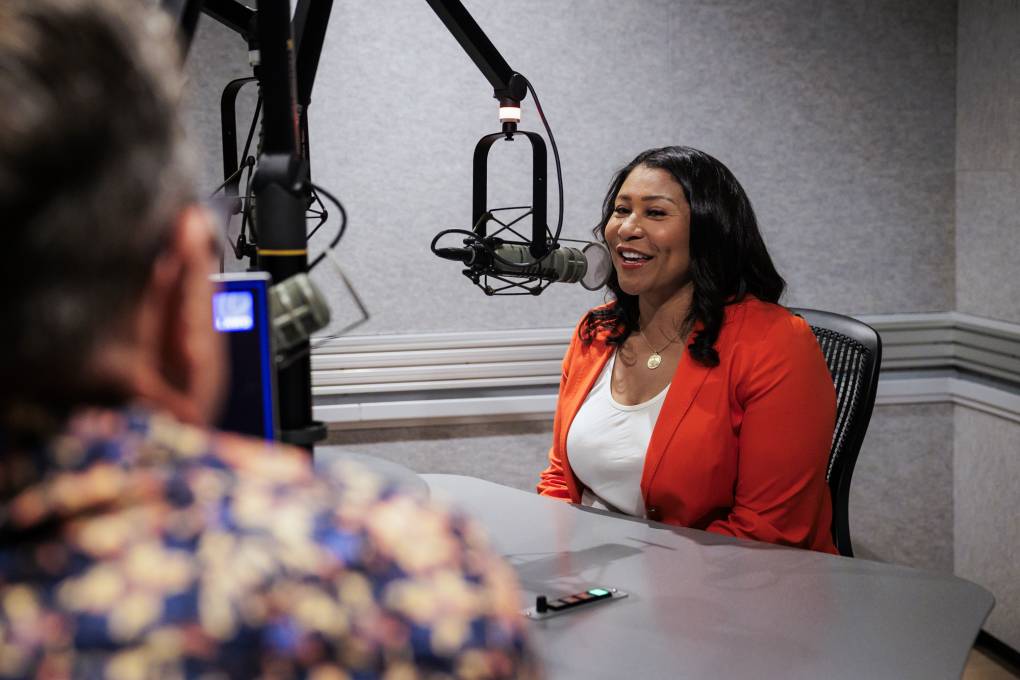
"caption": "San Francisco Mayor London Breed at KQED Headquarters in San Francisco on Oct. 3, 2024.",
"credit": null,
"altTag": null,
"description": null,
"imgSizes": {
"medium": {
"file": "https://cdn.kqed.org/wp-content/uploads/sites/10/2024/10/241003-LONDON-BREED-ON-PB-MD-04-KQED-2-800x533.jpg",
"width": 800,
"height": 533,
"mimeType": "image/jpeg"
},
"large": {
"file": "https://cdn.kqed.org/wp-content/uploads/sites/10/2024/10/241003-LONDON-BREED-ON-PB-MD-04-KQED-2-1020x680.jpg",
"width": 1020,
"height": 680,
"mimeType": "image/jpeg"
},
"thumbnail": {
"file": "https://cdn.kqed.org/wp-content/uploads/sites/10/2024/10/241003-LONDON-BREED-ON-PB-MD-04-KQED-2-160x107.jpg",
"width": 160,
"height": 107,
"mimeType": "image/jpeg"
},
"1536x1536": {
"file": "https://cdn.kqed.org/wp-content/uploads/sites/10/2024/10/241003-LONDON-BREED-ON-PB-MD-04-KQED-2-1536x1024.jpg",
"width": 1536,
"height": 1024,
"mimeType": "image/jpeg"
},
"post-thumbnail": {
"file": "https://cdn.kqed.org/wp-content/uploads/sites/10/2024/10/241003-LONDON-BREED-ON-PB-MD-04-KQED-2-672x372.jpg",
"width": 672,
"height": 372,
"mimeType": "image/jpeg"
},
"twentyfourteen-full-width": {
"file": "https://cdn.kqed.org/wp-content/uploads/sites/10/2024/10/241003-LONDON-BREED-ON-PB-MD-04-KQED-2-1038x576.jpg",
"width": 1038,
"height": 576,
"mimeType": "image/jpeg"
},
"full-width": {
"file": "https://cdn.kqed.org/wp-content/uploads/sites/10/2024/10/241003-LONDON-BREED-ON-PB-MD-04-KQED-2-1920x1280.jpg",
"width": 1920,
"height": 1280,
"mimeType": "image/jpeg"
},
"kqedFullSize": {
"file": "https://cdn.kqed.org/wp-content/uploads/sites/10/2024/10/241003-LONDON-BREED-ON-PB-MD-04-KQED-2.jpg",
"width": 2000,
"height": 1333
}
},
"isLoading": false,
"fetchFailed": false
},
"news_12007753": {
"type": "attachments",
"id": "news_12007753",
"meta": {
"index": "attachments_1716263798",
"site": "news",
"id": "12007753",
"found": true
},
"title": "Untitled design",
"publishDate": 1727984550,
"status": "inherit",
"parent": 12007701,
"modified": 1727984776,
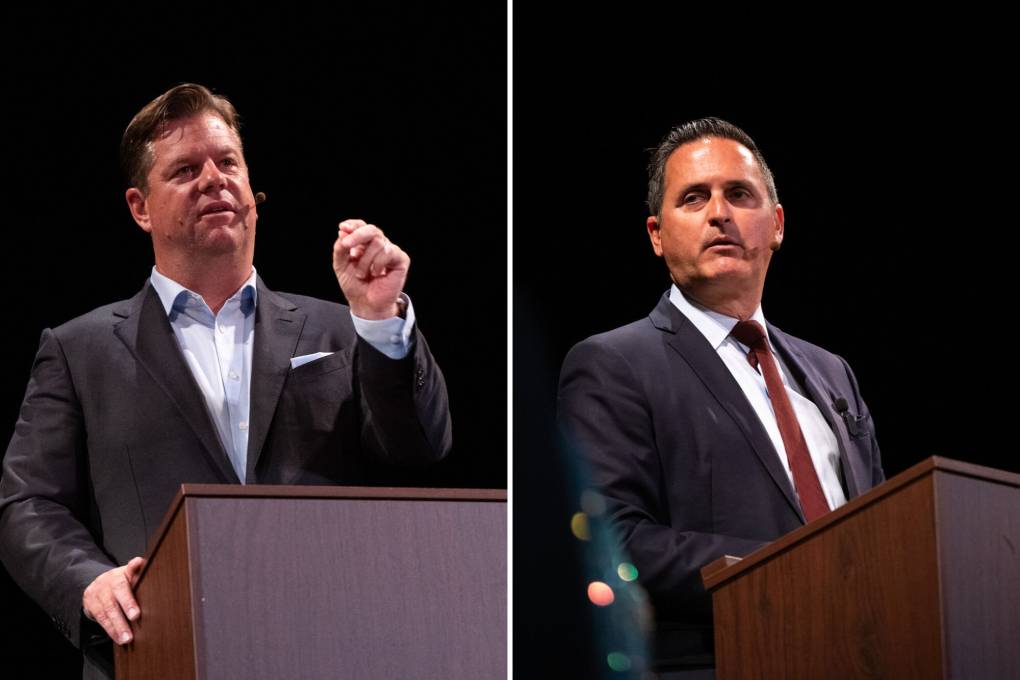
"caption": "Former San Francisco Mayor Mark Farrell (left) and SF mayoral candidate Ahsha Safaí during a San Francisco mayoral debate with running candidates Daniel Lurie, Mayor London Breed and Aaron Peskin at the Sydney Goldstein Theater on June 12, 2024. Farrell and Safaí have formed the first alliance of the SF mayoral race, urging their supporters to rank them first and second on the ballot.",
"credit": "Beth LaBerge/KQED",
"altTag": null,
"description": null,
"imgSizes": {
"medium": {
"file": "https://cdn.kqed.org/wp-content/uploads/sites/10/2024/10/Untitled-design-800x533.jpg",
"width": 800,
"height": 533,
"mimeType": "image/jpeg"
},
"large": {
"file": "https://cdn.kqed.org/wp-content/uploads/sites/10/2024/10/Untitled-design-1020x680.jpg",
"width": 1020,
"height": 680,
"mimeType": "image/jpeg"
},
"thumbnail": {
"file": "https://cdn.kqed.org/wp-content/uploads/sites/10/2024/10/Untitled-design-160x107.jpg",
"width": 160,
"height": 107,
"mimeType": "image/jpeg"
},
"1536x1536": {
"file": "https://cdn.kqed.org/wp-content/uploads/sites/10/2024/10/Untitled-design-1536x1024.jpg",
"width": 1536,
"height": 1024,
"mimeType": "image/jpeg"
},
"post-thumbnail": {
"file": "https://cdn.kqed.org/wp-content/uploads/sites/10/2024/10/Untitled-design-672x372.jpg",
"width": 672,
"height": 372,
"mimeType": "image/jpeg"
},
"twentyfourteen-full-width": {
"file": "https://cdn.kqed.org/wp-content/uploads/sites/10/2024/10/Untitled-design-1038x576.jpg",
"width": 1038,
"height": 576,
"mimeType": "image/jpeg"
},
"full-width": {
"file": "https://cdn.kqed.org/wp-content/uploads/sites/10/2024/10/Untitled-design-1920x1280.jpg",
"width": 1920,
"height": 1280,
"mimeType": "image/jpeg"
},
"kqedFullSize": {
"file": "https://cdn.kqed.org/wp-content/uploads/sites/10/2024/10/Untitled-design.jpg",
"width": 2000,
"height": 1333
}
},
"isLoading": false,
"fetchFailed": false
},
"news_11753593": {
"type": "attachments",
"id": "news_11753593",
"meta": {
"index": "attachments_1716263798",
"site": "news",
"id": "11753593",
"found": true
},
"title": "Health Care Activists Offer Free Health Screenings In Los Angeles",
"publishDate": 1560132050,
"status": "inherit",
"parent": 11753589,
"modified": 1747261759,
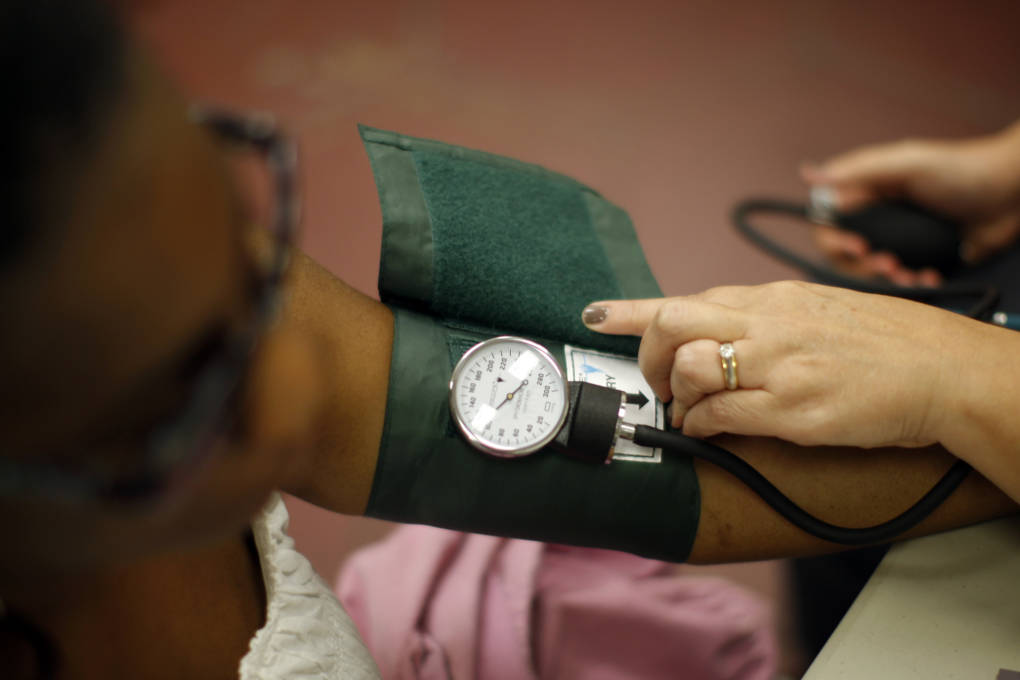
"caption": "Under the governor’s plan, Medi-Cal will stop enrolling new undocumented immigrants starting Jan. 1. Those already covered can keep their benefits, but adults over 18 will face a $100 monthly premium beginning in 2027. ",
"credit": "David McNew/Getty Images",
"altTag": "As part of a budget deal, low-income adults between the ages of 19 and 25 living in California illegally could become eligible for California's Medicaid program, Medi-Cal.",
"description": "As part of a budget deal, low-income adults between the ages of 19 and 25 living in California illegally could become eligible for California's Medicaid program, Medi-Cal. ",
"imgSizes": {
"thumbnail": {
"file": "https://cdn.kqed.org/wp-content/uploads/sites/10/2019/06/RS5067_NurseChecksBloodPressure-160x107.jpg",
"width": 160,
"height": 107,
"mimeType": "image/jpeg"
},
"medium": {
"file": "https://cdn.kqed.org/wp-content/uploads/sites/10/2019/06/RS5067_NurseChecksBloodPressure-800x533.jpg",
"width": 800,
"height": 533,
"mimeType": "image/jpeg"
},
"large": {
"file": "https://cdn.kqed.org/wp-content/uploads/sites/10/2019/06/RS5067_NurseChecksBloodPressure-1020x680.jpg",
"width": 1020,
"height": 680,
"mimeType": "image/jpeg"
},
"complete_open_graph": {
"file": "https://cdn.kqed.org/wp-content/uploads/sites/10/2019/06/RS5067_NurseChecksBloodPressure-1200x800.jpg",
"width": 1200,
"height": 800,
"mimeType": "image/jpeg"
},
"post-thumbnail": {
"file": "https://cdn.kqed.org/wp-content/uploads/sites/10/2019/06/RS5067_NurseChecksBloodPressure-672x372.jpg",
"width": 672,
"height": 372,
"mimeType": "image/jpeg"
},
"twentyfourteen-full-width": {
"file": "https://cdn.kqed.org/wp-content/uploads/sites/10/2019/06/RS5067_NurseChecksBloodPressure-1038x576.jpg",
"width": 1038,
"height": 576,
"mimeType": "image/jpeg"
},
"full-width": {
"file": "https://cdn.kqed.org/wp-content/uploads/sites/10/2019/06/RS5067_NurseChecksBloodPressure-1920x1280.jpg",
"width": 1920,
"height": 1280,
"mimeType": "image/jpeg"
},
"apple_news_ca_landscape_12_9": {
"file": "https://cdn.kqed.org/wp-content/uploads/sites/10/2019/06/RS5067_NurseChecksBloodPressure-1832x1374.jpg",
"width": 1832,
"height": 1374,
"mimeType": "image/jpeg"
},
"apple_news_ca_landscape_9_7": {
"file": "https://cdn.kqed.org/wp-content/uploads/sites/10/2019/06/RS5067_NurseChecksBloodPressure-1376x1032.jpg",
"width": 1376,
"height": 1032,
"mimeType": "image/jpeg"
},
"apple_news_ca_landscape_5_5": {
"file": "https://cdn.kqed.org/wp-content/uploads/sites/10/2019/06/RS5067_NurseChecksBloodPressure-1044x783.jpg",
"width": 1044,
"height": 783,
"mimeType": "image/jpeg"
},
"apple_news_ca_landscape_4_7": {
"file": "https://cdn.kqed.org/wp-content/uploads/sites/10/2019/06/RS5067_NurseChecksBloodPressure-632x474.jpg",
"width": 632,
"height": 474,
"mimeType": "image/jpeg"
},
"apple_news_ca_landscape_4_0": {
"file": "https://cdn.kqed.org/wp-content/uploads/sites/10/2019/06/RS5067_NurseChecksBloodPressure-536x402.jpg",
"width": 536,
"height": 402,
"mimeType": "image/jpeg"
},
"apple_news_ca_portrait_12_9": {
"file": "https://cdn.kqed.org/wp-content/uploads/sites/10/2019/06/RS5067_NurseChecksBloodPressure-1122x1496.jpg",
"width": 1122,
"height": 1496,
"mimeType": "image/jpeg"
},
"apple_news_ca_portrait_9_7": {
"file": "https://cdn.kqed.org/wp-content/uploads/sites/10/2019/06/RS5067_NurseChecksBloodPressure-840x1120.jpg",
"width": 840,
"height": 1120,
"mimeType": "image/jpeg"
},
"apple_news_ca_portrait_5_5": {
"file": "https://cdn.kqed.org/wp-content/uploads/sites/10/2019/06/RS5067_NurseChecksBloodPressure-687x916.jpg",
"width": 687,
"height": 916,
"mimeType": "image/jpeg"
},
"apple_news_ca_portrait_4_7": {
"file": "https://cdn.kqed.org/wp-content/uploads/sites/10/2019/06/RS5067_NurseChecksBloodPressure-414x552.jpg",
"width": 414,
"height": 552,
"mimeType": "image/jpeg"
},
"apple_news_ca_portrait_4_0": {
"file": "https://cdn.kqed.org/wp-content/uploads/sites/10/2019/06/RS5067_NurseChecksBloodPressure-354x472.jpg",
"width": 354,
"height": 472,
"mimeType": "image/jpeg"
},
"apple_news_ca_square_12_9": {
"file": "https://cdn.kqed.org/wp-content/uploads/sites/10/2019/06/RS5067_NurseChecksBloodPressure-1472x1472.jpg",
"width": 1472,
"height": 1472,
"mimeType": "image/jpeg"
},
"apple_news_ca_square_9_7": {
"file": "https://cdn.kqed.org/wp-content/uploads/sites/10/2019/06/RS5067_NurseChecksBloodPressure-1104x1104.jpg",
"width": 1104,
"height": 1104,
"mimeType": "image/jpeg"
},
"apple_news_ca_square_5_5": {
"file": "https://cdn.kqed.org/wp-content/uploads/sites/10/2019/06/RS5067_NurseChecksBloodPressure-912x912.jpg",
"width": 912,
"height": 912,
"mimeType": "image/jpeg"
},
"apple_news_ca_square_4_7": {
"file": "https://cdn.kqed.org/wp-content/uploads/sites/10/2019/06/RS5067_NurseChecksBloodPressure-550x550.jpg",
"width": 550,
"height": 550,
"mimeType": "image/jpeg"
},
"apple_news_ca_square_4_0": {
"file": "https://cdn.kqed.org/wp-content/uploads/sites/10/2019/06/RS5067_NurseChecksBloodPressure-470x470.jpg",
"width": 470,
"height": 470,
"mimeType": "image/jpeg"
},
"kqedFullSize": {
"file": "https://cdn.kqed.org/wp-content/uploads/sites/10/2019/06/RS5067_NurseChecksBloodPressure-e1747249186287.jpg",
"width": 2000,
"height": 1333
}
},
"isLoading": false,
"fetchFailed": false
},
"news_12007632": {
"type": "attachments",
"id": "news_12007632",
"meta": {
"index": "attachments_1716263798",
"site": "news",
"id": "12007632",
"found": true
},
"title": "Untitled design (1)",
"publishDate": 1727912212,
"status": "inherit",
"parent": 12007594,
"modified": 1727912363,
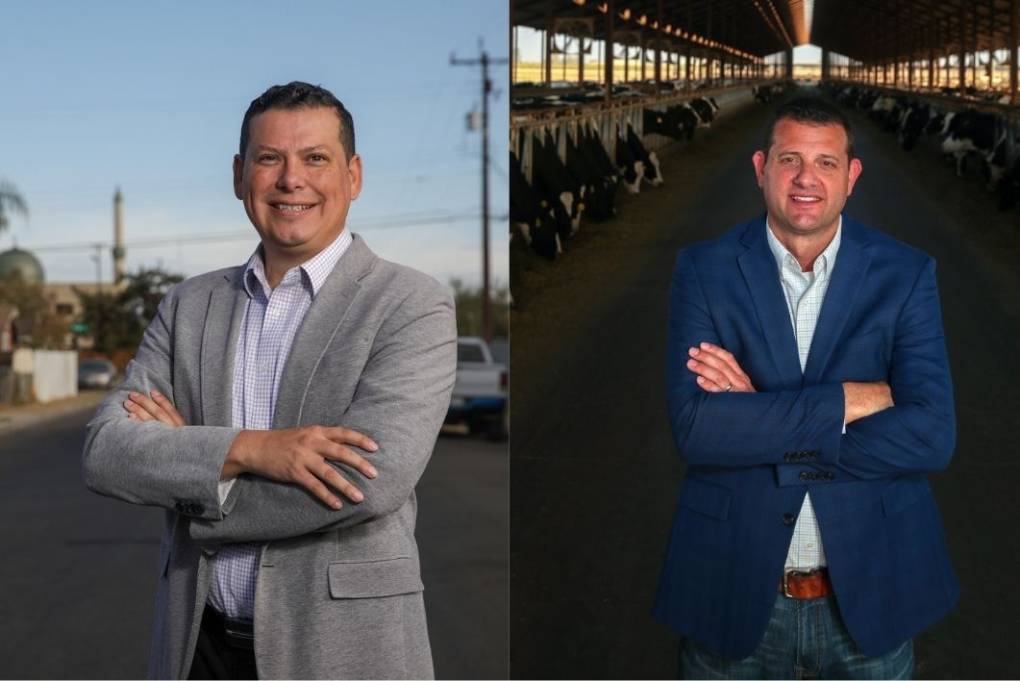
"caption": "In a rematch of 2022, former Assemblymember Rudy Salas (left) is running against incumbent Rep. David Valadao (right) for the congressional district 22. (Irfan Khan / Los Angeles Times via Getty Images)",
"credit": null,
"altTag": null,
"description": "In a rematch of 2022, former Assemblymember Rudy Salas (left) is running against incumbent Rep. David Valadao (right) for the congressional district 22. (Irfan Khan / Los Angeles Times via Getty Images)",
"imgSizes": {
"medium": {
"file": "https://cdn.kqed.org/wp-content/uploads/sites/10/2024/10/Untitled-design-1-800x534.jpg",
"width": 800,
"height": 534,
"mimeType": "image/jpeg"
},
"large": {
"file": "https://cdn.kqed.org/wp-content/uploads/sites/10/2024/10/Untitled-design-1-1020x681.jpg",
"width": 1020,
"height": 681,
"mimeType": "image/jpeg"
},
"thumbnail": {
"file": "https://cdn.kqed.org/wp-content/uploads/sites/10/2024/10/Untitled-design-1-160x107.jpg",
"width": 160,
"height": 107,
"mimeType": "image/jpeg"
},
"post-thumbnail": {
"file": "https://cdn.kqed.org/wp-content/uploads/sites/10/2024/10/Untitled-design-1-672x372.jpg",
"width": 672,
"height": 372,
"mimeType": "image/jpeg"
},
"twentyfourteen-full-width": {
"file": "https://cdn.kqed.org/wp-content/uploads/sites/10/2024/10/Untitled-design-1-1038x576.jpg",
"width": 1038,
"height": 576,
"mimeType": "image/jpeg"
},
"kqedFullSize": {
"file": "https://cdn.kqed.org/wp-content/uploads/sites/10/2024/10/Untitled-design-1.jpg",
"width": 1061,
"height": 708
}
},
"isLoading": false,
"fetchFailed": false
},
"news_12007621": {
"type": "attachments",
"id": "news_12007621",
"meta": {
"index": "attachments_1716263798",
"site": "news",
"id": "12007621",
"found": true
},
"title": "241002-SWALWELL PRICE RECALL-BL-02-KQED",
"publishDate": 1727910466,
"status": "inherit",
"parent": 12079856,
"modified": 1776188669,
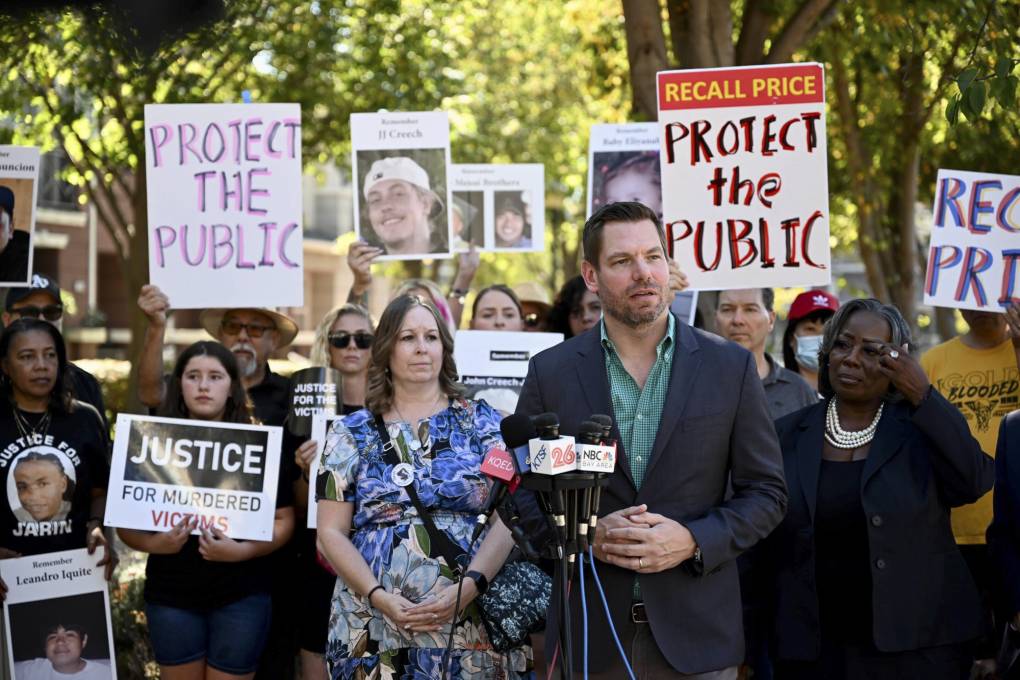
"caption": "Rep. Eric Swalwell speaks during a press conference outside of Hayward City Hall in Hayward on Oct. 2, 2024, announcing support for the recall of Alameda County District Attorney Pamela Price.",
"credit": "Beth LaBerge/KQED",
"altTag": null,
"description": null,
"imgSizes": {
"medium": {
"file": "https://cdn.kqed.org/wp-content/uploads/sites/10/2024/10/241002-SWALWELL-PRICE-RECALL-BL-02-KQED-800x533.jpg",
"width": 800,
"height": 533,
"mimeType": "image/jpeg"
},
"large": {
"file": "https://cdn.kqed.org/wp-content/uploads/sites/10/2024/10/241002-SWALWELL-PRICE-RECALL-BL-02-KQED-1020x680.jpg",
"width": 1020,
"height": 680,
"mimeType": "image/jpeg"
},
"thumbnail": {
"file": "https://cdn.kqed.org/wp-content/uploads/sites/10/2024/10/241002-SWALWELL-PRICE-RECALL-BL-02-KQED-160x107.jpg",
"width": 160,
"height": 107,
"mimeType": "image/jpeg"
},
"1536x1536": {
"file": "https://cdn.kqed.org/wp-content/uploads/sites/10/2024/10/241002-SWALWELL-PRICE-RECALL-BL-02-KQED-1536x1024.jpg",
"width": 1536,
"height": 1024,
"mimeType": "image/jpeg"
},
"post-thumbnail": {
"file": "https://cdn.kqed.org/wp-content/uploads/sites/10/2024/10/241002-SWALWELL-PRICE-RECALL-BL-02-KQED-672x372.jpg",
"width": 672,
"height": 372,
"mimeType": "image/jpeg"
},
"twentyfourteen-full-width": {
"file": "https://cdn.kqed.org/wp-content/uploads/sites/10/2024/10/241002-SWALWELL-PRICE-RECALL-BL-02-KQED-1038x576.jpg",
"width": 1038,
"height": 576,
"mimeType": "image/jpeg"
},
"full-width": {
"file": "https://cdn.kqed.org/wp-content/uploads/sites/10/2024/10/241002-SWALWELL-PRICE-RECALL-BL-02-KQED-1920x1280.jpg",
"width": 1920,
"height": 1280,
"mimeType": "image/jpeg"
},
"kqedFullSize": {
"file": "https://cdn.kqed.org/wp-content/uploads/sites/10/2024/10/241002-SWALWELL-PRICE-RECALL-BL-02-KQED.jpg",
"width": 2000,
"height": 1333
}
},
"isLoading": false,
"fetchFailed": false
},
"news_11977969": {
"type": "attachments",
"id": "news_11977969",
"meta": {
"index": "attachments_1716263798",
"site": "news",
"id": "11977969",
"found": true
},
"title": "022_SanJose_VTAShootingPressBriefing_05262021_qut",
"publishDate": 1709581729,
"status": "inherit",
"parent": 11977963,
"modified": 1727904107,
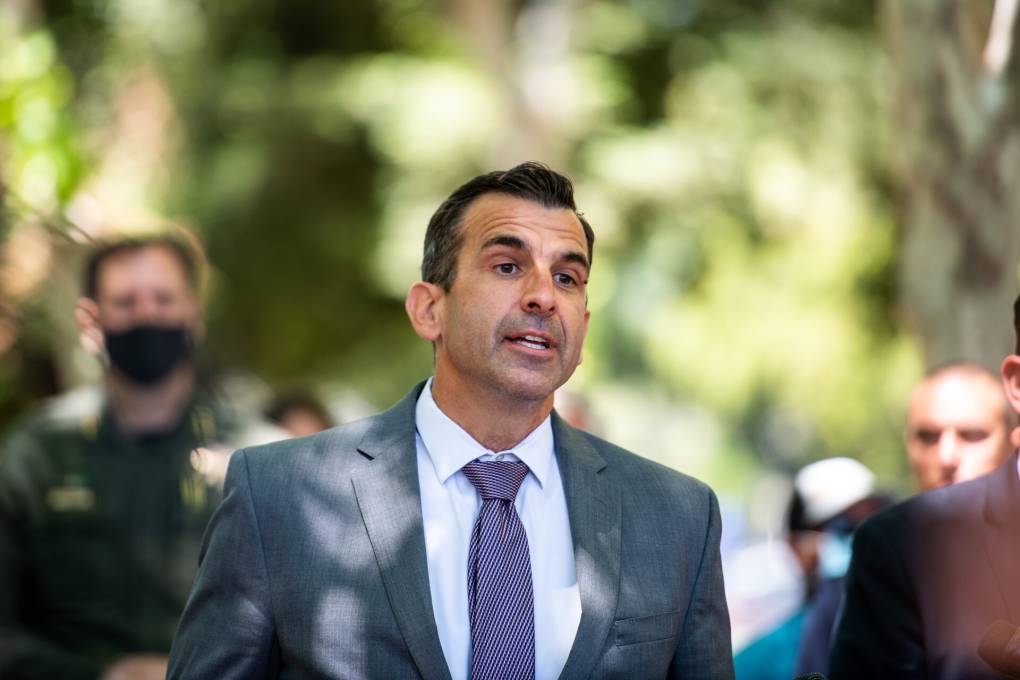
"caption": "Sam Liccardo, former mayor of San José, speaks during a press conference on May 26, 2021.",
"credit": "Beth LaBerge/KQED",
"altTag": "A man in a gray suit and a purple tie.",
"description": null,
"imgSizes": {
"medium": {
"file": "https://cdn.kqed.org/wp-content/uploads/sites/10/2024/03/022_SanJose_VTAShootingPressBriefing_05262021_qut-800x533.jpg",
"width": 800,
"height": 533,
"mimeType": "image/jpeg"
},
"large": {
"file": "https://cdn.kqed.org/wp-content/uploads/sites/10/2024/03/022_SanJose_VTAShootingPressBriefing_05262021_qut-1020x680.jpg",
"width": 1020,
"height": 680,
"mimeType": "image/jpeg"
},
"thumbnail": {
"file": "https://cdn.kqed.org/wp-content/uploads/sites/10/2024/03/022_SanJose_VTAShootingPressBriefing_05262021_qut-160x107.jpg",
"width": 160,
"height": 107,
"mimeType": "image/jpeg"
},
"1536x1536": {
"file": "https://cdn.kqed.org/wp-content/uploads/sites/10/2024/03/022_SanJose_VTAShootingPressBriefing_05262021_qut-1536x1024.jpg",
"width": 1536,
"height": 1024,
"mimeType": "image/jpeg"
},
"post-thumbnail": {
"file": "https://cdn.kqed.org/wp-content/uploads/sites/10/2024/03/022_SanJose_VTAShootingPressBriefing_05262021_qut-672x372.jpg",
"width": 672,
"height": 372,
"mimeType": "image/jpeg"
},
"twentyfourteen-full-width": {
"file": "https://cdn.kqed.org/wp-content/uploads/sites/10/2024/03/022_SanJose_VTAShootingPressBriefing_05262021_qut-1038x576.jpg",
"width": 1038,
"height": 576,
"mimeType": "image/jpeg"
},
"kqedFullSize": {
"file": "https://cdn.kqed.org/wp-content/uploads/sites/10/2024/03/022_SanJose_VTAShootingPressBriefing_05262021_qut.jpg",
"width": 1920,
"height": 1280
}
},
"isLoading": false,
"fetchFailed": false
},
"news_12007353": {
"type": "attachments",
"id": "news_12007353",
"meta": {
"index": "attachments_1716263798",
"site": "news",
"id": "12007353",
"found": true
},
"title": "row of multicolored houses with construction rafters",
"publishDate": 1727815398,
"status": "inherit",
"parent": 12007340,
"modified": 1727818988,
"caption": "Many affordable housing advocates support passing Prop 5 so that cities can raise more money to build or update badly-needed housing and infrastructure.",
"credit": "Aaron Finn via iStock/Getty Images Plus",
"altTag": "A row of multicolored houses with construction rafters in sun midday in a city aerial shot.",
"description": null,
"imgSizes": {
"medium": {
"file": "https://cdn.kqed.org/wp-content/uploads/sites/10/2024/10/GettyImages-1446576799-800x534.jpg",
"width": 800,
"height": 534,
"mimeType": "image/jpeg"
},
"large": {
"file": "https://cdn.kqed.org/wp-content/uploads/sites/10/2024/10/GettyImages-1446576799-1020x680.jpg",
"width": 1020,
"height": 680,
"mimeType": "image/jpeg"
},
"thumbnail": {
"file": "https://cdn.kqed.org/wp-content/uploads/sites/10/2024/10/GettyImages-1446576799-160x107.jpg",
"width": 160,
"height": 107,
"mimeType": "image/jpeg"
},
"1536x1536": {
"file": "https://cdn.kqed.org/wp-content/uploads/sites/10/2024/10/GettyImages-1446576799-1536x1024.jpg",
"width": 1536,
"height": 1024,
"mimeType": "image/jpeg"
},
"2048x2048": {
"file": "https://cdn.kqed.org/wp-content/uploads/sites/10/2024/10/GettyImages-1446576799-2048x1366.jpg",
"width": 2048,
"height": 1366,
"mimeType": "image/jpeg"
},
"post-thumbnail": {
"file": "https://cdn.kqed.org/wp-content/uploads/sites/10/2024/10/GettyImages-1446576799-672x372.jpg",
"width": 672,
"height": 372,
"mimeType": "image/jpeg"
},
"twentyfourteen-full-width": {
"file": "https://cdn.kqed.org/wp-content/uploads/sites/10/2024/10/GettyImages-1446576799-1038x576.jpg",
"width": 1038,
"height": 576,
"mimeType": "image/jpeg"
},
"full-width": {
"file": "https://cdn.kqed.org/wp-content/uploads/sites/10/2024/10/GettyImages-1446576799-1920x1281.jpg",
"width": 1920,
"height": 1281,
"mimeType": "image/jpeg"
},
"kqedFullSize": {
"file": "https://cdn.kqed.org/wp-content/uploads/sites/10/2024/10/GettyImages-1446576799.jpg",
"width": 2120,
"height": 1414
}
},
"isLoading": false,
"fetchFailed": false
},
"news_12000982": {
"type": "attachments",
"id": "news_12000982",
"meta": {
"index": "attachments_1716263798",
"site": "news",
"id": "12000982",
"found": true
},
"title": "Senator Scott Wiener comes in to talk to the editorial board at the Chronicle on Friday, Jan. 10, 2020, in San Francisco, Calif.",
"publishDate": 1724187287,
"status": "inherit",
"parent": 0,
"modified": 1724187370,
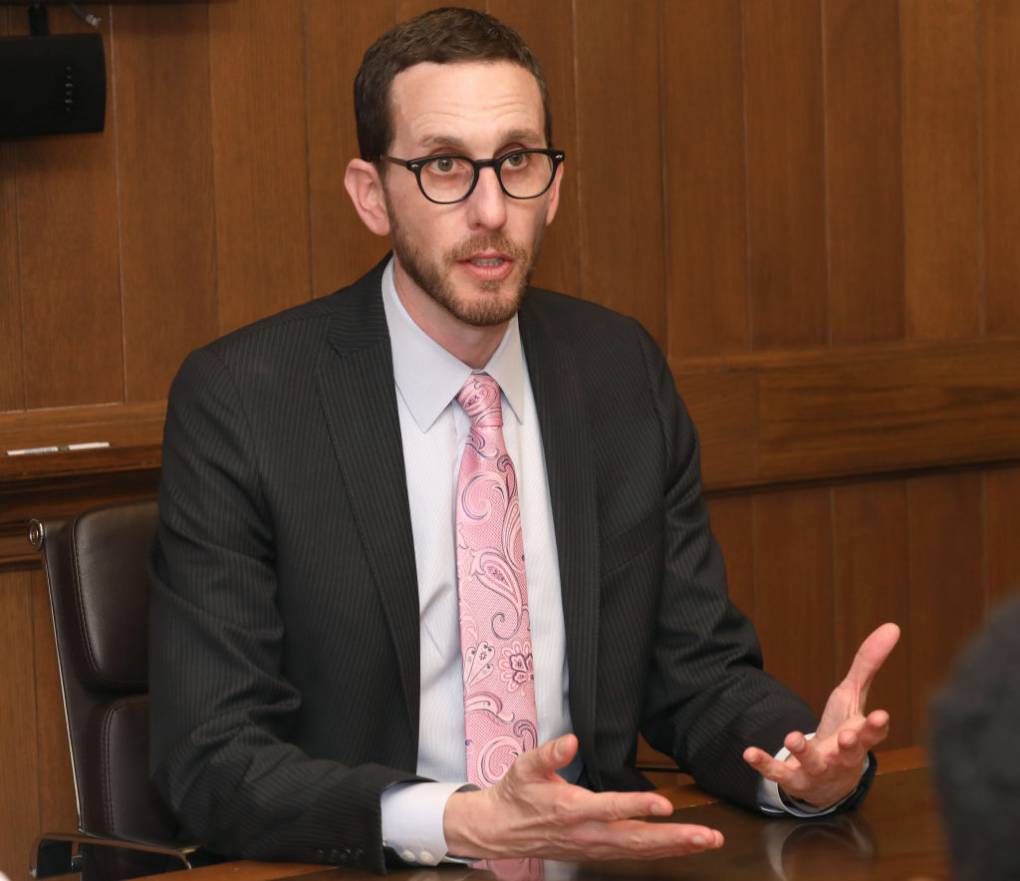
"caption": "Senator Scott Wiener introduced SB 1047, a bill that would mandate safety testing for developers of the largest AI models.",
"credit": "Liz Hafalia/The San Francisco Chronicle via Getty Images",
"altTag": null,
"description": null,
"imgSizes": {
"medium": {
"file": "https://cdn.kqed.org/wp-content/uploads/sites/10/2024/08/GettyImages-1321791737-800x691.jpg",
"width": 800,
"height": 691,
"mimeType": "image/jpeg"
},
"large": {
"file": "https://cdn.kqed.org/wp-content/uploads/sites/10/2024/08/GettyImages-1321791737-1020x881.jpg",
"width": 1020,
"height": 881,
"mimeType": "image/jpeg"
},
"thumbnail": {
"file": "https://cdn.kqed.org/wp-content/uploads/sites/10/2024/08/GettyImages-1321791737-160x138.jpg",
"width": 160,
"height": 138,
"mimeType": "image/jpeg"
},
"post-thumbnail": {
"file": "https://cdn.kqed.org/wp-content/uploads/sites/10/2024/08/GettyImages-1321791737-672x372.jpg",
"width": 672,
"height": 372,
"mimeType": "image/jpeg"
},
"twentyfourteen-full-width": {
"file": "https://cdn.kqed.org/wp-content/uploads/sites/10/2024/08/GettyImages-1321791737-1024x576.jpg",
"width": 1024,
"height": 576,
"mimeType": "image/jpeg"
},
"kqedFullSize": {
"file": "https://cdn.kqed.org/wp-content/uploads/sites/10/2024/08/GettyImages-1321791737.jpg",
"width": 1024,
"height": 884
}
},
"isLoading": false,
"fetchFailed": false
},
"news_12007210": {
"type": "attachments",
"id": "news_12007210",
"meta": {
"index": "attachments_1716263798",
"site": "news",
"id": "12007210",
"found": true
},
"title": "IMG_9984.JPG_qed",
"publishDate": 1727730283,
"status": "inherit",
"parent": 12007197,
"modified": 1727730355,
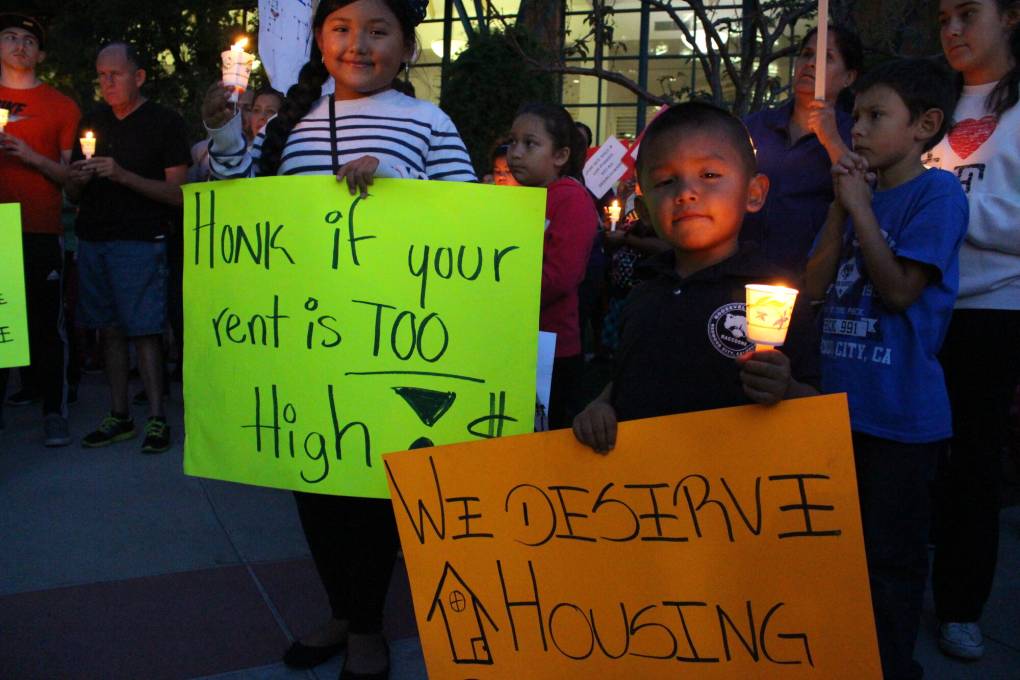
"caption": "Advocates have tried to pass pro-rent control propositions in 2018 and 2020, but so far have failed. ",
"credit": "Farida Jhabvala Romero/KQED",
"altTag": "Two young people hold signs saying \"honk if your rent is too high\" and \"we deserve housing\" at a rally.",
"description": null,
"imgSizes": {
"medium": {
"file": "https://cdn.kqed.org/wp-content/uploads/sites/10/2024/10/IMG_9984.JPG_qed-800x533.jpg",
"width": 800,
"height": 533,
"mimeType": "image/jpeg"
},
"large": {
"file": "https://cdn.kqed.org/wp-content/uploads/sites/10/2024/10/IMG_9984.JPG_qed-1020x680.jpg",
"width": 1020,
"height": 680,
"mimeType": "image/jpeg"
},
"thumbnail": {
"file": "https://cdn.kqed.org/wp-content/uploads/sites/10/2024/10/IMG_9984.JPG_qed-160x107.jpg",
"width": 160,
"height": 107,
"mimeType": "image/jpeg"
},
"1536x1536": {
"file": "https://cdn.kqed.org/wp-content/uploads/sites/10/2024/10/IMG_9984.JPG_qed-1536x1024.jpg",
"width": 1536,
"height": 1024,
"mimeType": "image/jpeg"
},
"post-thumbnail": {
"file": "https://cdn.kqed.org/wp-content/uploads/sites/10/2024/10/IMG_9984.JPG_qed-672x372.jpg",
"width": 672,
"height": 372,
"mimeType": "image/jpeg"
},
"twentyfourteen-full-width": {
"file": "https://cdn.kqed.org/wp-content/uploads/sites/10/2024/10/IMG_9984.JPG_qed-1038x576.jpg",
"width": 1038,
"height": 576,
"mimeType": "image/jpeg"
},
"full-width": {
"file": "https://cdn.kqed.org/wp-content/uploads/sites/10/2024/10/IMG_9984.JPG_qed-1920x1280.jpg",
"width": 1920,
"height": 1280,
"mimeType": "image/jpeg"
},
"kqedFullSize": {
"file": "https://cdn.kqed.org/wp-content/uploads/sites/10/2024/10/IMG_9984.JPG_qed.jpg",
"width": 2000,
"height": 1333
}
},
"isLoading": false,
"fetchFailed": false
},
"news_12002121": {
"type": "attachments",
"id": "news_12002121",
"meta": {
"index": "attachments_1716263798",
"site": "news",
"id": "12002121",
"found": true
},
"title": "20240827_SFUSDPROTEST_GC-16-KQED",
"publishDate": 1724852775,
"status": "inherit",
"parent": 12025440,
"modified": 1741972673,
"caption": "Individuals picket during an emergency rally and press conference for student support services outside of the San Francisco Unified School District administrative offices on Franklin Street on Aug. 27, 2024.",
"credit": "Gina Castro/KQED",
"altTag": null,
"description": null,
"imgSizes": {
"medium": {
"file": "https://cdn.kqed.org/wp-content/uploads/sites/10/2024/08/20240827_SFUSDPROTEST_GC-16-KQED-800x533.jpg",
"width": 800,
"height": 533,
"mimeType": "image/jpeg"
},
"large": {
"file": "https://cdn.kqed.org/wp-content/uploads/sites/10/2024/08/20240827_SFUSDPROTEST_GC-16-KQED-1020x680.jpg",
"width": 1020,
"height": 680,
"mimeType": "image/jpeg"
},
"thumbnail": {
"file": "https://cdn.kqed.org/wp-content/uploads/sites/10/2024/08/20240827_SFUSDPROTEST_GC-16-KQED-160x107.jpg",
"width": 160,
"height": 107,
"mimeType": "image/jpeg"
},
"1536x1536": {
"file": "https://cdn.kqed.org/wp-content/uploads/sites/10/2024/08/20240827_SFUSDPROTEST_GC-16-KQED-1536x1024.jpg",
"width": 1536,
"height": 1024,
"mimeType": "image/jpeg"
},
"post-thumbnail": {
"file": "https://cdn.kqed.org/wp-content/uploads/sites/10/2024/08/20240827_SFUSDPROTEST_GC-16-KQED-672x372.jpg",
"width": 672,
"height": 372,
"mimeType": "image/jpeg"
},
"twentyfourteen-full-width": {
"file": "https://cdn.kqed.org/wp-content/uploads/sites/10/2024/08/20240827_SFUSDPROTEST_GC-16-KQED-1038x576.jpg",
"width": 1038,
"height": 576,
"mimeType": "image/jpeg"
},
"full-width": {
"file": "https://cdn.kqed.org/wp-content/uploads/sites/10/2024/08/20240827_SFUSDPROTEST_GC-16-KQED-1920x1280.jpg",
"width": 1920,
"height": 1280,
"mimeType": "image/jpeg"
},
"kqedFullSize": {
"file": "https://cdn.kqed.org/wp-content/uploads/sites/10/2024/08/20240827_SFUSDPROTEST_GC-16-KQED.jpg",
"width": 2000,
"height": 1333
}
},
"isLoading": false,
"fetchFailed": false
},
"news_10504575": {
"type": "attachments",
"id": "news_10504575",
"meta": {
"index": "attachments_1716263798",
"site": "news",
"id": "10504575",
"found": true
},
"parent": 10504502,
"imgSizes": {
"twentyfourteen-full-width": {
"file": "https://ww2.kqed.org/app/uploads/sites/10/2015/04/RS2826_cashregister20120522-1038x576.jpg",
"width": 1038,
"mimeType": "image/jpeg",
"height": 576
},
"thumbnail": {
"file": "https://ww2.kqed.org/app/uploads/sites/10/2015/04/RS2826_cashregister20120522-400x267.jpg",
"width": 400,
"mimeType": "image/jpeg",
"height": 267
},
"fd-sm": {
"file": "https://ww2.kqed.org/app/uploads/sites/10/2015/04/RS2826_cashregister20120522-960x640.jpg",
"width": 960,
"mimeType": "image/jpeg",
"height": 640
},
"post-thumbnail": {
"file": "https://ww2.kqed.org/app/uploads/sites/10/2015/04/RS2826_cashregister20120522-672x372.jpg",
"width": 672,
"mimeType": "image/jpeg",
"height": 372
},
"kqedFullSize": {
"file": "https://ww2.kqed.org/app/uploads/sites/10/2015/04/RS2826_cashregister20120522-e1430162029879.jpg",
"width": 1920,
"height": 1280
},
"large": {
"file": "https://ww2.kqed.org/app/uploads/sites/10/2015/04/RS2826_cashregister20120522-1440x960.jpg",
"width": 1440,
"mimeType": "image/jpeg",
"height": 960
},
"guest-author-96": {
"file": "https://ww2.kqed.org/app/uploads/sites/10/2015/04/RS2826_cashregister20120522-96x96.jpg",
"width": 96,
"mimeType": "image/jpeg",
"height": 96
},
"medium": {
"file": "https://ww2.kqed.org/app/uploads/sites/10/2015/04/RS2826_cashregister20120522-800x533.jpg",
"width": 800,
"mimeType": "image/jpeg",
"height": 533
},
"guest-author-64": {
"file": "https://ww2.kqed.org/app/uploads/sites/10/2015/04/RS2826_cashregister20120522-64x64.jpg",
"width": 64,
"mimeType": "image/jpeg",
"height": 64
},
"guest-author-32": {
"file": "https://ww2.kqed.org/app/uploads/sites/10/2015/04/RS2826_cashregister20120522-32x32.jpg",
"width": 32,
"mimeType": "image/jpeg",
"height": 32
},
"fd-med": {
"file": "https://ww2.kqed.org/app/uploads/sites/10/2015/04/RS2826_cashregister20120522-1180x787.jpg",
"width": 1180,
"mimeType": "image/jpeg",
"height": 787
},
"detail": {
"file": "https://ww2.kqed.org/app/uploads/sites/10/2015/04/RS2826_cashregister20120522-75x75.jpg",
"width": 75,
"mimeType": "image/jpeg",
"height": 75
},
"guest-author-128": {
"file": "https://ww2.kqed.org/app/uploads/sites/10/2015/04/RS2826_cashregister20120522-128x128.jpg",
"width": 128,
"mimeType": "image/jpeg",
"height": 128
}
},
"publishDate": 1430161977,
"modified": 1430174103,
"caption": "Labor and business groups could battle over a 2016 statewide initiative to raise the minimum wage.",
"description": "BRIDGEHAMPTON, NY - JUNE 15: Euros, from a recent sale, lay next to American currency in the cash register of Loaves & Fishes Cookshop June 15, 2008 in Bridgehampton, in the Hamptons section of Long Island, New York. Like several Hampton retailers, they have begun accepting Euros as payment, catering to the large amounts of visiting Europeans and the weak dollar. This is the first year they are doing so. (Photo by Annie Tritt/Getty Images)",
"title": "RS2826_cashregister20120522",
"credit": "Annie Tritt/Getty Images",
"status": "inherit",
"isLoading": false,
"fetchFailed": false
},
"news_12007015": {
"type": "attachments",
"id": "news_12007015",
"meta": {
"index": "attachments_1716263798",
"site": "news",
"id": "12007015",
"found": true
},
"title": "US-POLITICS-HARRIS",
"publishDate": 1727564353,
"status": "inherit",
"parent": 12007013,
"modified": 1727720126,
"caption": "U.S. Vice President and Democratic presidential candidate Kamala Harris gives a thumbs up as she walks to a vehicle after arriving at San Francisco International Airport in San Francisco, California, on Sept. 27, 2024.",
"credit": "Josh Edelson/AFP via Getty Images",
"altTag": "VP Harris gives a thumbs-up as she walks to a car.",
"description": null,
"imgSizes": {
"medium": {
"file": "https://cdn.kqed.org/wp-content/uploads/sites/10/2024/09/GettyImages-2174099092_qed-800x525.jpg",
"width": 800,
"height": 525,
"mimeType": "image/jpeg"
},
"large": {
"file": "https://cdn.kqed.org/wp-content/uploads/sites/10/2024/09/GettyImages-2174099092_qed-1020x669.jpg",
"width": 1020,
"height": 669,
"mimeType": "image/jpeg"
},
"thumbnail": {
"file": "https://cdn.kqed.org/wp-content/uploads/sites/10/2024/09/GettyImages-2174099092_qed-160x105.jpg",
"width": 160,
"height": 105,
"mimeType": "image/jpeg"
},
"1536x1536": {
"file": "https://cdn.kqed.org/wp-content/uploads/sites/10/2024/09/GettyImages-2174099092_qed-1536x1008.jpg",
"width": 1536,
"height": 1008,
"mimeType": "image/jpeg"
},
"post-thumbnail": {
"file": "https://cdn.kqed.org/wp-content/uploads/sites/10/2024/09/GettyImages-2174099092_qed-672x372.jpg",
"width": 672,
"height": 372,
"mimeType": "image/jpeg"
},
"twentyfourteen-full-width": {
"file": "https://cdn.kqed.org/wp-content/uploads/sites/10/2024/09/GettyImages-2174099092_qed-1038x576.jpg",
"width": 1038,
"height": 576,
"mimeType": "image/jpeg"
},
"full-width": {
"file": "https://cdn.kqed.org/wp-content/uploads/sites/10/2024/09/GettyImages-2174099092_qed-1920x1260.jpg",
"width": 1920,
"height": 1260,
"mimeType": "image/jpeg"
},
"kqedFullSize": {
"file": "https://cdn.kqed.org/wp-content/uploads/sites/10/2024/09/GettyImages-2174099092_qed.jpg",
"width": 2000,
"height": 1312
}
},
"isLoading": false,
"fetchFailed": false
}
},
"audioPlayerReducer": {
"postId": "stream_live",
"isPaused": true,
"isPlaying": false,
"pfsActive": false,
"pledgeModalIsOpen": true,
"playerDrawerIsOpen": false,
"liveAudioPlayStartedAt": 0,
"liveAudioPlayContext": ""
},
"authorsReducer": {
"ohubertallen": {
"type": "authors",
"id": "102",
"meta": {
"index": "authors_1716337520",
"id": "102",
"found": true
},
"name": "Olivia Allen-Price",
"firstName": "Olivia",
"lastName": "Allen-Price",
"slug": "ohubertallen",
"email": "oallenprice@kqed.org",
"display_author_email": false,
"staff_mastheads": [
"news"
],
"title": "Senior Editor",
"bio": "Olivia Allen-Price is senior editor and host of the award-winning Bay Curious podcast. Prior to joining KQED in 2013, Olivia worked at The Baltimore Sun and The Virginian-Pilot in Norfolk, Va. She holds degrees in journalism and political science from Elon University. Her work has earned awards from the Society of Professional Journalists, the Hearst Foundation and Hearken. She loves to talk about running and curly hair.\r\n\r\nFollow: \u003ca href=\"https://twitter.com/oallenprice\">@oallenprice\u003c/a>\r\nEmail: \u003ca href=\"mailto:oallenprice@kqed.org\">oallenprice@kqed.org\u003c/a>",
"avatar": "https://secure.gravatar.com/avatar/07f7803c1f6be56f3be58ef276dfa64dce898502e0554408ef4858451a8294f7?s=600&d=blank&r=g",
"twitter": "oallenprice",
"bluesky": null,
"facebook": null,
"instagram": null,
"linkedin": null,
"sites": [
{
"site": "",
"roles": [
"editor"
]
},
{
"site": "arts",
"roles": [
"subscriber"
]
},
{
"site": "news",
"roles": [
"administrator"
]
},
{
"site": "pop",
"roles": [
"administrator"
]
},
{
"site": "bayareabites",
"roles": [
"contributor"
]
},
{
"site": "stateofhealth",
"roles": [
"administrator"
]
},
{
"site": "science",
"roles": [
"editor"
]
}
],
"headData": {
"title": "Olivia Allen-Price | KQED",
"description": "Senior Editor",
"ogImgSrc": "https://secure.gravatar.com/avatar/07f7803c1f6be56f3be58ef276dfa64dce898502e0554408ef4858451a8294f7?s=600&d=blank&r=g",
"twImgSrc": "https://secure.gravatar.com/avatar/07f7803c1f6be56f3be58ef276dfa64dce898502e0554408ef4858451a8294f7?s=600&d=blank&r=g"
},
"isLoading": false,
"link": "/author/ohubertallen"
},
"rachael-myrow": {
"type": "authors",
"id": "251",
"meta": {
"index": "authors_1716337520",
"id": "251",
"found": true
},
"name": "Rachael Myrow",
"firstName": "Rachael",
"lastName": "Myrow",
"slug": "rachael-myrow",
"email": "rmyrow@kqed.org",
"display_author_email": true,
"staff_mastheads": [
"news"
],
"title": "Senior Editor of KQED's Silicon Valley News Desk",
"bio": "• I write and edit stories about how Silicon Valley power and policies shape everyday life in California. I’m also passionate about making Bay Area history and culture more accessible to a broad public. • I’ve been a journalist for most of my life, starting in high school with The Franklin Press in Los Angeles, where I grew up. While earning my first degree in English at UC Berkeley, I got my start in public radio at KALX-FM. After completing a second degree in journalism at Cal, I landed my first professional job at Marketplace, then moved on to KPCC (now LAist), and then KQED, where I hosted The California Report for more than seven years. • My reporting has appeared on NPR, The World, WBUR’s \u003ci>Here & Now\u003c/i>, and the BBC. I also guest host for KQED’s \u003ci>Forum\u003c/i>, as well as the Commonwealth Club in San Francisco. • I speak periodically on media, democracy and technology issues, and do voiceover work for documentaries and educational video projects. • Outside of the studio, you'll find me hiking Bay Area trails and whipping up Insta-ready meals in my kitchen. • I do not accept gifts, money, or favors from anyone connected to my reporting, I don't pay people for information, and I do not support or donate to political causes. • I strive to treat the people I report on with fairness, honesty, and respect. I also recognize there are often multiple sides to a story and work to verify information through multiple sources and documentation. If I get something wrong, I correct it.",
"avatar": "https://secure.gravatar.com/avatar/3ed8a3c5f26025e4a805ba634cda8cd764906b97438a6d9ce216b044e340da4e?s=600&d=blank&r=g",
"twitter": "rachaelmyrow",
"bluesky": null,
"facebook": null,
"instagram": null,
"linkedin": "https://www.linkedin.com/in/rachaelmyrow/",
"sites": [
{
"site": "arts",
"roles": [
"administrator"
]
},
{
"site": "news",
"roles": [
"edit_others_posts",
"editor"
]
},
{
"site": "futureofyou",
"roles": [
"editor"
]
},
{
"site": "bayareabites",
"roles": [
"editor"
]
},
{
"site": "stateofhealth",
"roles": [
"editor"
]
},
{
"site": "science",
"roles": [
"editor"
]
},
{
"site": "food",
"roles": [
"editor"
]
},
{
"site": "forum",
"roles": [
"editor"
]
},
{
"site": "liveblog",
"roles": [
"author"
]
}
],
"headData": {
"title": "Rachael Myrow | KQED",
"description": "Senior Editor of KQED's Silicon Valley News Desk",
"ogImgSrc": "https://secure.gravatar.com/avatar/3ed8a3c5f26025e4a805ba634cda8cd764906b97438a6d9ce216b044e340da4e?s=600&d=blank&r=g",
"twImgSrc": "https://secure.gravatar.com/avatar/3ed8a3c5f26025e4a805ba634cda8cd764906b97438a6d9ce216b044e340da4e?s=600&d=blank&r=g"
},
"isLoading": false,
"link": "/author/rachael-myrow"
},
"scottshafer": {
"type": "authors",
"id": "255",
"meta": {
"index": "authors_1716337520",
"id": "255",
"found": true
},
"name": "Scott Shafer",
"firstName": "Scott",
"lastName": "Shafer",
"slug": "scottshafer",
"email": "sshafer@kqed.org",
"display_author_email": false,
"staff_mastheads": [
"news"
],
"title": "KQED Contributor",
"bio": "Scott Shafer is a senior editor with the KQED Politics and Government desk. He is co-host of Political Breakdown, the award-winning radio show and podcast with a personal take on the world of politics. Scott came to KQED in 1998 to host the statewide\u003cem> California Report\u003c/em>. Prior to that he had extended stints in politics and government\u003cem>.\u003c/em> He uses that inside experience at KQED in his, reporting, hosting and analysis for the politics desk. Scott collaborated \u003cem>Political Breakdown a\u003c/em>nd on \u003cem>The Political Mind of Jerry Brown, \u003c/em>an eight-part series about the life and extraordinary political career of the former governor. For fun, he plays water polo with the San Francisco Tsunami.",
"avatar": "https://secure.gravatar.com/avatar/a62ebae45b79d7aed1a39a0e3bf68104?s=600&d=blank&r=g",
"twitter": "scottshafer",
"bluesky": null,
"facebook": null,
"instagram": null,
"linkedin": null,
"sites": [
{
"site": "news",
"roles": [
"editor"
]
},
{
"site": "stateofhealth",
"roles": [
"author"
]
},
{
"site": "science",
"roles": [
"author"
]
},
{
"site": "forum",
"roles": [
"subscriber"
]
},
{
"site": "liveblog",
"roles": [
"author"
]
}
],
"headData": {
"title": "Scott Shafer | KQED",
"description": "KQED Contributor",
"ogImgSrc": "https://secure.gravatar.com/avatar/a62ebae45b79d7aed1a39a0e3bf68104?s=600&d=blank&r=g",
"twImgSrc": "https://secure.gravatar.com/avatar/a62ebae45b79d7aed1a39a0e3bf68104?s=600&d=blank&r=g"
},
"isLoading": false,
"link": "/author/scottshafer"
},
"mlagos": {
"type": "authors",
"id": "3239",
"meta": {
"index": "authors_1716337520",
"id": "3239",
"found": true
},
"name": "Marisa Lagos",
"firstName": "Marisa",
"lastName": "Lagos",
"slug": "mlagos",
"email": "mlagos@kqed.org",
"display_author_email": false,
"staff_mastheads": [
"news"
],
"title": "KQED Contributor",
"bio": "Marisa Lagos is a correspondent for KQED’s California Politics and Government Desk and co-hosts the award-winning show and podcast, Political Breakdown. At KQED, Lagos also conducts reporting, analysis and investigations into state, local and national politics for radio, TV, online and onstage. In 2022, she and co-host, Scott Shafer, moderated the only gubernatorial debate in California. In 2020, the \u003ci>Washington Post\u003c/i> named her one of the top political journalists in California; she was nominated for a Peabody and won several other awards for her work investigating the 2017 California wildfires. She has worked at the \u003ci>San Francisco Chronicle\u003c/i>, \u003ci>San Francisco Examiner\u003c/i> and \u003ci>Los Angeles Times\u003c/i>. A UC Santa Barbara graduate, she lives in San Francisco with her two sons and husband.",
"avatar": "https://secure.gravatar.com/avatar/a261a0d3696fc066871ef96b85b5e7d2?s=600&d=blank&r=g",
"twitter": "@mlagos",
"facebook": null,
"instagram": null,
"linkedin": null,
"sites": [
{
"site": "arts",
"roles": [
"author"
]
},
{
"site": "news",
"roles": [
"editor"
]
},
{
"site": "science",
"roles": [
"editor"
]
},
{
"site": "forum",
"roles": [
"author"
]
},
{
"site": "liveblog",
"roles": [
"author"
]
}
],
"headData": {
"title": "Marisa Lagos | KQED",
"description": "KQED Contributor",
"ogImgSrc": "https://secure.gravatar.com/avatar/a261a0d3696fc066871ef96b85b5e7d2?s=600&d=blank&r=g",
"twImgSrc": "https://secure.gravatar.com/avatar/a261a0d3696fc066871ef96b85b5e7d2?s=600&d=blank&r=g"
},
"isLoading": false,
"link": "/author/mlagos"
},
"afont": {
"type": "authors",
"id": "8637",
"meta": {
"index": "authors_1716337520",
"id": "8637",
"found": true
},
"name": "Amanda Font",
"firstName": "Amanda",
"lastName": "Font",
"slug": "afont",
"email": "afont@kqed.org",
"display_author_email": false,
"staff_mastheads": [],
"title": "KQED Contributor",
"bio": "Amanda Font is a producer on \u003cem>The Latest\u003c/em> podcast, and the host and co-producer of the series \u003cem>Audible Cosmos\u003c/em>. She has previously worked as a producer and reporter on the \u003cem>Bay Curious\u003c/em> podcast, and director of \u003cem>The California Report Magazine\u003c/em>. She grew up in the deserts of Southern California and moved north for the trees. Amanda earned a B.A. from the BECA program at San Francisco State, where she worked in the university's radio station. Amanda Font is represented by SAG-AFTRA.",
"avatar": "https://secure.gravatar.com/avatar/d9e81cf0117d5849b9cfb7ab4b1422f1?s=600&d=blank&r=g",
"twitter": null,
"facebook": null,
"instagram": null,
"linkedin": null,
"sites": [
{
"site": "news",
"roles": [
"add_users",
"create_users"
]
},
{
"site": "science",
"roles": []
},
{
"site": "forum",
"roles": [
"administrator"
]
},
{
"site": "perspectives",
"roles": [
"administrator"
]
},
{
"site": "radio",
"roles": [
"administrator"
]
}
],
"headData": {
"title": "Amanda Font | KQED",
"description": "KQED Contributor",
"ogImgSrc": "https://secure.gravatar.com/avatar/d9e81cf0117d5849b9cfb7ab4b1422f1?s=600&d=blank&r=g",
"twImgSrc": "https://secure.gravatar.com/avatar/d9e81cf0117d5849b9cfb7ab4b1422f1?s=600&d=blank&r=g"
},
"isLoading": false,
"link": "/author/afont"
},
"ecruzguevarra": {
"type": "authors",
"id": "8654",
"meta": {
"index": "authors_1716337520",
"id": "8654",
"found": true
},
"name": "Ericka Cruz Guevarra",
"firstName": "Ericka",
"lastName": "Cruz Guevarra",
"slug": "ecruzguevarra",
"email": "ecruzguevarra@kqed.org",
"display_author_email": true,
"staff_mastheads": [
"news"
],
"title": "Producer, The Bay Podcast",
"bio": "Ericka Cruz Guevarra is host of \u003ca href=\"https://www.kqed.org/podcasts/thebay\">\u003cem>The Bay\u003c/em>\u003c/a> podcast at KQED. Before host, she was the show’s producer. Her work in that capacity includes a three-part reported series on policing in Vallejo, which won a 2020 excellence in journalism award from the Society of Professional Journalists. Ericka has worked as a breaking news reporter at Oregon Public Broadcasting, helped produce the Code Switch podcast, and was KQED’s inaugural Raul Ramirez Diversity Fund intern. She’s also an alumna of NPR’s Next Generation Radio program. Send her an email if you have strong feelings about whether Fairfield and Suisun City are the Bay. Ericka is represented by SAG-AFTRA.",
"avatar": "https://secure.gravatar.com/avatar/accefc1de4bafc7e234b69bcb9b6f6536c130fd84709bc3069ef11a78787e1bb?s=600&d=blank&r=g",
"twitter": "NotoriousECG",
"bluesky": null,
"facebook": null,
"instagram": null,
"linkedin": null,
"sites": [
{
"site": "arts",
"roles": [
"subscriber"
]
},
{
"site": "news",
"roles": [
"editor",
"manage_categories"
]
},
{
"site": "futureofyou",
"roles": [
"subscriber"
]
},
{
"site": "stateofhealth",
"roles": [
"subscriber"
]
},
{
"site": "science",
"roles": [
"editor"
]
},
{
"site": "forum",
"roles": [
"subscriber"
]
}
],
"headData": {
"title": "Ericka Cruz Guevarra | KQED",
"description": "Producer, The Bay Podcast",
"ogImgSrc": "https://secure.gravatar.com/avatar/accefc1de4bafc7e234b69bcb9b6f6536c130fd84709bc3069ef11a78787e1bb?s=600&d=blank&r=g",
"twImgSrc": "https://secure.gravatar.com/avatar/accefc1de4bafc7e234b69bcb9b6f6536c130fd84709bc3069ef11a78787e1bb?s=600&d=blank&r=g"
},
"isLoading": false,
"link": "/author/ecruzguevarra"
},
"fjhabvala": {
"type": "authors",
"id": "8659",
"meta": {
"index": "authors_1716337520",
"id": "8659",
"found": true
},
"name": "Farida Jhabvala Romero",
"firstName": "Farida",
"lastName": "Jhabvala Romero",
"slug": "fjhabvala",
"email": "fjhabvala@kqed.org",
"display_author_email": true,
"staff_mastheads": [
"news"
],
"title": "KQED Contributor",
"bio": "Farida Jhabvala Romero is a Labor Correspondent for KQED. She previously covered immigration. Farida was \u003ca href=\"https://www.ccnma.org/2022-most-influential-latina-journalists\">named\u003c/a> one of the 10 Most Influential Latina Journalists in California in 2022 by the California Chicano News Media Association. Her work has won awards from the Society of Professional Journalists (Northern California), as well as a national and regional Edward M. Murrow Award for the collaborative reporting projects “Dangerous Air” and “Graying California.” Before joining KQED, Farida worked as a producer at Radio Bilingüe, a national public radio network. Farida earned her master’s degree in journalism from Stanford University.",
"avatar": "https://secure.gravatar.com/avatar/f9f022d4e2609741874222a1e9d41f48fea74011aa7c615eef91d9a50c944ebe?s=600&d=blank&r=g",
"twitter": "FaridaJhabvala",
"bluesky": null,
"facebook": null,
"instagram": null,
"linkedin": "https://www.linkedin.com/in/faridajhabvala/",
"sites": [
{
"site": "news",
"roles": [
"editor"
]
},
{
"site": "stateofhealth",
"roles": [
"author"
]
},
{
"site": "liveblog",
"roles": [
"author"
]
}
],
"headData": {
"title": "Farida Jhabvala Romero | KQED",
"description": "KQED Contributor",
"ogImgSrc": "https://secure.gravatar.com/avatar/f9f022d4e2609741874222a1e9d41f48fea74011aa7c615eef91d9a50c944ebe?s=600&d=blank&r=g",
"twImgSrc": "https://secure.gravatar.com/avatar/f9f022d4e2609741874222a1e9d41f48fea74011aa7c615eef91d9a50c944ebe?s=600&d=blank&r=g"
},
"isLoading": false,
"link": "/author/fjhabvala"
},
"lesleymcclurg": {
"type": "authors",
"id": "11229",
"meta": {
"index": "authors_1716337520",
"id": "11229",
"found": true
},
"name": "Lesley McClurg",
"firstName": "Lesley",
"lastName": "McClurg",
"slug": "lesleymcclurg",
"email": "lmcclurg@KQED.org",
"display_author_email": false,
"staff_mastheads": [
"news",
"science"
],
"title": "KQED Health Correspondent",
"bio": "Lesley McClurg is a health correspondent and fill-in host whose work is regularly rebroadcast on NPR and PBS programs. She’s earned multiple regional Emmy awards, a national and a regional Edward R. Murrow award, and was named Best Beat Reporter by the Association of Health Care Journalists. The Society of Professional Journalists has recognized her work several times, and the Society of Environmental Journalists spotlighted her coverage of California’s historic drought.\r\n\r\nBefore joining KQED in 2016, Lesley covered food and sustainability for Capital Public Radio, environmental issues for Colorado Public Radio, and reported for KUOW and KCTS 9 in Seattle. Away from the newsroom, she loves skiing with her daughter, mountain biking with her partner, and playing with Ollie, the family’s goldendoodle. On deadline, she runs almost entirely on chocolate chips.\r\n\r\n ",
"avatar": "https://secure.gravatar.com/avatar/bab49e972ea10c774fe0f5e29dba1722b158f7c0d58a360923d1389d380b2978?s=600&d=blank&r=g",
"twitter": "lesleywmcclurg",
"bluesky": null,
"facebook": null,
"instagram": null,
"linkedin": null,
"sites": [
{
"site": "arts",
"roles": [
"author"
]
},
{
"site": "news",
"roles": [
"editor"
]
},
{
"site": "futureofyou",
"roles": [
"editor"
]
},
{
"site": "stateofhealth",
"roles": [
"author"
]
},
{
"site": "science",
"roles": [
"editor"
]
},
{
"site": "quest",
"roles": [
"subscriber"
]
},
{
"site": "forum",
"roles": [
"administrator"
]
},
{
"site": "liveblog",
"roles": [
"author"
]
}
],
"headData": {
"title": "Lesley McClurg | KQED",
"description": "KQED Health Correspondent",
"ogImgSrc": "https://secure.gravatar.com/avatar/bab49e972ea10c774fe0f5e29dba1722b158f7c0d58a360923d1389d380b2978?s=600&d=blank&r=g",
"twImgSrc": "https://secure.gravatar.com/avatar/bab49e972ea10c774fe0f5e29dba1722b158f7c0d58a360923d1389d380b2978?s=600&d=blank&r=g"
},
"isLoading": false,
"link": "/author/lesleymcclurg"
},
"vrancano": {
"type": "authors",
"id": "11276",
"meta": {
"index": "authors_1716337520",
"id": "11276",
"found": true
},
"name": "Vanessa Rancaño",
"firstName": "Vanessa",
"lastName": "Rancaño",
"slug": "vrancano",
"email": "vrancano@kqed.org",
"display_author_email": false,
"staff_mastheads": [
"news"
],
"title": "Reporter",
"bio": "Vanessa Rancaño is a features reporter for KQED. She’s also covered homelessness and education for the station and reported from the Central Valley. Her work has aired across public radio, from flagship national news shows to longform narrative podcasts. Before taking up a mic, she worked as a freelance print journalist. She’s been recognized with a number of national and regional awards. Vanessa grew up in California's Central Valley. She's a former NPR Kroc Fellow, and a graduate of the UC Berkeley Graduate School of Journalism.",
"avatar": "https://secure.gravatar.com/avatar/b3a383dfb0e7ee1c17568f2cf067904ab654d6e3de9743fc661f3c788ade1bed?s=600&d=blank&r=g",
"twitter": "vanessarancano",
"bluesky": null,
"facebook": null,
"instagram": null,
"linkedin": null,
"sites": [
{
"site": "arts",
"roles": [
"editor"
]
},
{
"site": "news",
"roles": [
"editor"
]
},
{
"site": "liveblog",
"roles": [
"contributor"
]
}
],
"headData": {
"title": "Vanessa Rancaño | KQED",
"description": "Reporter",
"ogImgSrc": "https://secure.gravatar.com/avatar/b3a383dfb0e7ee1c17568f2cf067904ab654d6e3de9743fc661f3c788ade1bed?s=600&d=blank&r=g",
"twImgSrc": "https://secure.gravatar.com/avatar/b3a383dfb0e7ee1c17568f2cf067904ab654d6e3de9743fc661f3c788ade1bed?s=600&d=blank&r=g"
},
"isLoading": false,
"link": "/author/vrancano"
},
"amontecillo": {
"type": "authors",
"id": "11649",
"meta": {
"index": "authors_1716337520",
"id": "11649",
"found": true
},
"name": "Alan Montecillo",
"firstName": "Alan",
"lastName": "Montecillo",
"slug": "amontecillo",
"email": "amontecillo@kqed.org",
"display_author_email": false,
"staff_mastheads": [
"news"
],
"title": "KQED Contributor",
"bio": "Alan Montecillo is the senior editor of \u003cem>\u003ca href=\"http://kqed.org/thebay\">The Bay\u003c/a>, \u003c/em> KQED's local news podcast. Before moving to the Bay Area, he worked as a senior talk show producer for WILL in Champaign-Urbana, Illinois and at Oregon Public Broadcasting in Portland, Oregon. He has won journalism awards from the Society of Professional Journalists Northern California, the Public Media Journalists Association, The Signal Awards, and has also received a regional Edward R. Murrow award. Alan is a Filipino American from Hong Kong and a graduate of Reed College.",
"avatar": "https://secure.gravatar.com/avatar/268f53a2066899ea9efdd8a5900218b17c822d9862cbc9326cccec53ef41d349?s=600&d=blank&r=g",
"twitter": "alanmontecillo",
"bluesky": null,
"facebook": null,
"instagram": null,
"linkedin": null,
"sites": [
{
"site": "",
"roles": [
"editor"
]
},
{
"site": "news",
"roles": [
"editor",
"manage_categories"
]
}
],
"headData": {
"title": "Alan Montecillo | KQED",
"description": "KQED Contributor",
"ogImgSrc": "https://secure.gravatar.com/avatar/268f53a2066899ea9efdd8a5900218b17c822d9862cbc9326cccec53ef41d349?s=600&d=blank&r=g",
"twImgSrc": "https://secure.gravatar.com/avatar/268f53a2066899ea9efdd8a5900218b17c822d9862cbc9326cccec53ef41d349?s=600&d=blank&r=g"
},
"isLoading": false,
"link": "/author/amontecillo"
},
"abandlamudi": {
"type": "authors",
"id": "11672",
"meta": {
"index": "authors_1716337520",
"id": "11672",
"found": true
},
"name": "Adhiti Bandlamudi",
"firstName": "Adhiti",
"lastName": "Bandlamudi",
"slug": "abandlamudi",
"email": "abandlamudi@kqed.org",
"display_author_email": false,
"staff_mastheads": [
"news"
],
"title": "KQED Housing Reporter",
"bio": "Adhiti Bandlamudi reports for KQED's Housing desk. She focuses on how housing gets built across the Bay Area. Before joining KQED in 2020, she reported for WUNC in Durham, North Carolina, WABE in Atlanta, Georgia and Capital Public Radio in Sacramento. In 2017, she was awarded a Kroc Fellowship at NPR where she reported on everything from sprinkles to the Golden State Killer's arrest. When she's not reporting, she's baking new recipes in her kitchen or watching movies with friends and family. She's originally from Georgia and has strong opinions about Great British Bake Off.",
"avatar": "https://secure.gravatar.com/avatar/868129c8b257bb99a3500e2c86a65400?s=600&d=mm&r=g",
"twitter": "oddity_adhiti",
"facebook": null,
"instagram": null,
"linkedin": null,
"sites": [
{
"site": "arts",
"roles": [
"author"
]
},
{
"site": "news",
"roles": [
"editor"
]
},
{
"site": "liveblog",
"roles": [
"author"
]
}
],
"headData": {
"title": "Adhiti Bandlamudi | KQED",
"description": "KQED Housing Reporter",
"ogImgSrc": "https://secure.gravatar.com/avatar/868129c8b257bb99a3500e2c86a65400?s=600&d=mm&r=g",
"twImgSrc": "https://secure.gravatar.com/avatar/868129c8b257bb99a3500e2c86a65400?s=600&d=mm&r=g"
},
"isLoading": false,
"link": "/author/abandlamudi"
},
"cbeale": {
"type": "authors",
"id": "11749",
"meta": {
"index": "authors_1716337520",
"id": "11749",
"found": true
},
"name": "Christopher Beale",
"firstName": "Christopher",
"lastName": "Beale",
"slug": "cbeale",
"email": "cbeale@kqed.org",
"display_author_email": true,
"staff_mastheads": [
"news"
],
"title": "Engineer/Producer/Reporter",
"bio": "\u003ca href=\"https://linktr.ee/realchrisjbeale\" rel=\"noopener noreferrer\">Christopher J. Beale\u003c/a> is an award winning journalist, audio engineer, and media host living in San Francisco. \r\n\r\nChristopher works primarily as an audio engineer at KQED and serves as the sound designer for both the Bay Curious and Rightnowish podcasts. He is the host and producer of the LGBTQIA podcast and radio segment \u003ca href=\"https://stereotypespodcast.org\">Stereotypes\u003c/a>.",
"avatar": "https://secure.gravatar.com/avatar/dc485bf84788eb7e7414eb638e72407e?s=600&d=blank&r=g",
"twitter": "realchrisjbeale",
"facebook": null,
"instagram": "http://instagram.com/realchrisjbeale",
"linkedin": null,
"sites": [
{
"site": "arts",
"roles": [
"contributor"
]
},
{
"site": "news",
"roles": [
"editor"
]
},
{
"site": "forum",
"roles": [
"editor"
]
}
],
"headData": {
"title": "Christopher Beale | KQED",
"description": "Engineer/Producer/Reporter",
"ogImgSrc": "https://secure.gravatar.com/avatar/dc485bf84788eb7e7414eb638e72407e?s=600&d=blank&r=g",
"twImgSrc": "https://secure.gravatar.com/avatar/dc485bf84788eb7e7414eb638e72407e?s=600&d=blank&r=g"
},
"isLoading": false,
"link": "/author/cbeale"
},
"afinney": {
"type": "authors",
"id": "11772",
"meta": {
"index": "authors_1716337520",
"id": "11772",
"found": true
},
"name": "Annelise Finney",
"firstName": "Annelise",
"lastName": "Finney",
"slug": "afinney",
"email": "afinney@kqed.org",
"display_author_email": true,
"staff_mastheads": [
"news"
],
"title": "Reporter",
"bio": "Annelise reports on reparations in California and East Bay politics. She co-produced the Sunday Music Drop, a limited-term radio series featuring Bay Area musicians that aired between Sept 2022 and Oct 2024. She joined KQED in 2021 as a general assignment reporter and is an alumna of KALW's Audio Academy. She was born and raised in the East Bay. She is currently away from KQED completing a year-long reporting project in Berlin, Germany as a Alexander Von Humboldt German Chancellor Fellow.",
"avatar": "https://secure.gravatar.com/avatar/5fded66cae47704cdfc5021cde0f3aa4?s=600&d=blank&r=g",
"twitter": null,
"facebook": null,
"instagram": null,
"linkedin": null,
"sites": [
{
"site": "news",
"roles": [
"editor"
]
},
{
"site": "liveblog",
"roles": [
"author"
]
}
],
"headData": {
"title": "Annelise Finney | KQED",
"description": "Reporter",
"ogImgSrc": "https://secure.gravatar.com/avatar/5fded66cae47704cdfc5021cde0f3aa4?s=600&d=blank&r=g",
"twImgSrc": "https://secure.gravatar.com/avatar/5fded66cae47704cdfc5021cde0f3aa4?s=600&d=blank&r=g"
},
"isLoading": false,
"link": "/author/afinney"
},
"jessicakariisa": {
"type": "authors",
"id": "11831",
"meta": {
"index": "authors_1716337520",
"id": "11831",
"found": true
},
"name": "Jessica Kariisa",
"firstName": "Jessica",
"lastName": "Kariisa",
"slug": "jessicakariisa",
"email": "jkariisa@kqed.org",
"display_author_email": false,
"staff_mastheads": [],
"title": "Producer, The Bay",
"bio": "Jessica Kariisa is the producer of The Bay. She first joined KQED as an intern for The California Report Magazine, after which she became an on-call producer. She reported a Bay Curious episode on the use of rap lyrics in criminal trials which won a Society of Professional Journalists award in 2023 for Excellence in Features Journalism and the 2023 Signal Award for Best Conversation Starter. She’s worked on podcasts for Snap Judgment and American Public Media. Before embarking on her audio career, she was a music journalist.\r\n\r\nJessica Kariisa is represented by SAG-AFTRA.",
"avatar": "https://secure.gravatar.com/avatar/522e97b28ac0b3d411621c0fde8f3419c7b71ea2c5c262c57c4bb600963f328c?s=600&d=blank&r=g",
"twitter": null,
"bluesky": null,
"facebook": null,
"instagram": null,
"linkedin": null,
"sites": [
{
"site": "arts",
"roles": [
"author"
]
},
{
"site": "news",
"roles": [
"editor",
"manage_categories"
]
}
],
"headData": {
"title": "Jessica Kariisa | KQED",
"description": "Producer, The Bay",
"ogImgSrc": "https://secure.gravatar.com/avatar/522e97b28ac0b3d411621c0fde8f3419c7b71ea2c5c262c57c4bb600963f328c?s=600&d=blank&r=g",
"twImgSrc": "https://secure.gravatar.com/avatar/522e97b28ac0b3d411621c0fde8f3419c7b71ea2c5c262c57c4bb600963f328c?s=600&d=blank&r=g"
},
"isLoading": false,
"link": "/author/jessicakariisa"
},
"sjohnson": {
"type": "authors",
"id": "11840",
"meta": {
"index": "authors_1716337520",
"id": "11840",
"found": true
},
"name": "Sydney Johnson",
"firstName": "Sydney",
"lastName": "Johnson",
"slug": "sjohnson",
"email": "sjohnson@kqed.org",
"display_author_email": false,
"staff_mastheads": [
"news"
],
"title": "KQED Reporter",
"bio": "Sydney Johnson is a general assignment reporter at KQED. She previously reported on public health and city government at the San Francisco Examiner, and before that, she covered statewide education policy for EdSource. Her reporting has won multiple local, state and national awards. Sydney is a graduate of the University of California, Berkeley and lives in San Francisco.",
"avatar": "https://secure.gravatar.com/avatar/97855f2719b72ad6190b7c535fe642c8?s=600&d=blank&r=g",
"twitter": "sydneyfjohnson",
"facebook": null,
"instagram": null,
"linkedin": null,
"sites": [
{
"site": "news",
"roles": [
"editor"
]
}
],
"headData": {
"title": "Sydney Johnson | KQED",
"description": "KQED Reporter",
"ogImgSrc": "https://secure.gravatar.com/avatar/97855f2719b72ad6190b7c535fe642c8?s=600&d=blank&r=g",
"twImgSrc": "https://secure.gravatar.com/avatar/97855f2719b72ad6190b7c535fe642c8?s=600&d=blank&r=g"
},
"isLoading": false,
"link": "/author/sjohnson"
}
},
"pagesReducer": {
"news_tag_election-2024": {
"type": "terms",
"id": "news_32839",
"meta": {
"index": "terms_1716263798",
"site": "news",
"id": "32839",
"score": 8.937057
},
"featImg": null,
"name": "Election 2024",
"description": null,
"taxonomy": "tag",
"headData": {
"twImgId": null,
"twTitle": null,
"ogTitle": null,
"ogImgId": null,
"twDescription": null,
"description": null,
"title": "Election 2024 Archives | KQED News",
"ogDescription": null
},
"ttid": 32856,
"slug": "election-2024",
"isLoading": false,
"title": "Election 2024",
"pageMeta": {
"site": "news",
"WpPageTemplate": "page-topic-editorial",
"currentPage": 15
},
"blocks": [
{
"blockName": "kqed/post-list",
"attrs": {
"layout": "cardArticle2",
"query": "posts/news?tag=election-2024",
"seeMore": false,
"paginated": true,
"page": 15
}
},
{
"blockName": "kqed/ad"
}
]
}
},
"pfsSessionReducer": {},
"postsReducer": {
"stream_live": {
"type": "live",
"id": "stream_live",
"audioUrl": "https://streams.kqed.org/kqedradio",
"title": "Live Stream",
"excerpt": "Live Stream information currently unavailable.",
"link": "/radio",
"featImg": "",
"label": {
"name": "KQED Live",
"link": "/"
}
},
"stream_kqedNewscast": {
"type": "posts",
"id": "stream_kqedNewscast",
"audioUrl": "https://www.kqed.org/.stream/anon/radio/RDnews/newscast.mp3?_=1",
"title": "KQED Newscast",
"featImg": "",
"label": {
"name": "88.5 FM",
"link": "/"
}
},
"news_12007833": {
"type": "posts",
"id": "news_12007833",
"meta": {
"index": "posts_1716263798",
"site": "news",
"id": "12007833",
"score": null,
"sort": [
1728005119000
]
},
"guestAuthors": [],
"slug": "london-breed-makes-her-case-for-re-election",
"title": "London Breed Makes Her Case for Re-Election",
"publishDate": 1728005119,
"format": "audio",
"headTitle": "London Breed Makes Her Case for Re-Election | KQED",
"labelTerm": {},
"content": "\u003cp>San Francisco voters will choose their next mayor this November, and we are going to bring you interviews with all of the top candidates. Today, Marisa and Scott sit down with incumbent mayor London Breed who talks about her tenure as mayor, her family, scandals at city hall and how she’s approaching the city’s ranked-choice election.\u003c/p>\n\u003cp> \u003c/p>\n\u003cp>[ad fullwidth]\u003c/p>\u003cp>\u003c/p>\n",
"blocks": [],
"excerpt": "San Francisco Mayor London Breed talks about her family and the 2024 campaign.",
"status": "publish",
"parent": 0,
"modified": 1729132943,
"stats": {
"hasAudio": false,
"hasVideo": false,
"hasChartOrMap": false,
"iframeSrcs": [],
"hasGoogleForm": false,
"hasGallery": false,
"hasHearkenModule": false,
"hasPolis": false,
"paragraphCount": 3,
"wordCount": 64
},
"headData": {
"title": "London Breed Makes Her Case for Re-Election | KQED",
"description": "San Francisco Mayor London Breed talks about her family and the 2024 campaign.",
"ogTitle": "",
"ogDescription": "",
"ogImgId": "",
"twTitle": "",
"twDescription": "",
"twImgId": "",
"schema": {
"@context": "https://schema.org",
"@type": "NewsArticle",
"headline": "London Breed Makes Her Case for Re-Election",
"datePublished": "2024-10-03T18:25:19-07:00",
"dateModified": "2024-10-16T19:42:23-07:00",
"image": "https://cdn.kqed.org/wp-content/uploads/2020/02/KQED-OG-Image@1x.png",
"isAccessibleForFree": "True",
"publisher": {
"@type": "NewsMediaOrganization",
"@id": "https://www.kqed.org/#organization",
"name": "KQED",
"logo": "https://cdn.kqed.org/wp-content/uploads/2020/02/KQED-OG-Image@1x.png",
"url": "https://www.kqed.org",
"sameAs": [
"https://www.facebook.com/KQED",
"https://twitter.com/KQED",
"https://www.instagram.com/kqed/",
"https://www.tiktok.com/@kqedofficial",
"https://www.linkedin.com/company/kqed",
"https://www.youtube.com/channel/UCeC0IOo7i1P_61zVUWbJ4nw"
]
}
}
},
"source": "Political Breakdown",
"audioUrl": "https://www.podtrac.com/pts/redirect.mp3/chrt.fm/track/G6C7C3/traffic.megaphone.fm/KQINC1471812915.mp3",
"sticky": false,
"nprStoryId": "kqed-12007833",
"excludeFromSiteSearch": "Include",
"articleAge": "0",
"path": "/news/12007833/london-breed-makes-her-case-for-re-election",
"audioTrackLength": null,
"parsedContent": [
{
"type": "contentString",
"content": "\u003cdiv class=\"post-body\">\u003cp>\u003cp>San Francisco voters will choose their next mayor this November, and we are going to bring you interviews with all of the top candidates. Today, Marisa and Scott sit down with incumbent mayor London Breed who talks about her tenure as mayor, her family, scandals at city hall and how she’s approaching the city’s ranked-choice election.\u003c/p>\n\u003cp> \u003c/p>\n\u003cp>\u003c/p>\u003c/div>",
"attributes": {
"named": {},
"numeric": []
}
},
{
"type": "component",
"content": "",
"name": "ad",
"attributes": {
"named": {
"label": "fullwidth"
},
"numeric": [
"fullwidth"
]
}
},
{
"type": "contentString",
"content": "\u003cdiv class=\"post-body\">\u003cp>\u003c/p>\u003cp>\u003c/p>\n\u003c/div>\u003c/p>",
"attributes": {
"named": {},
"numeric": []
}
}
],
"link": "/news/12007833/london-breed-makes-her-case-for-re-election",
"authors": [
"3239",
"255"
],
"programs": [
"news_33544"
],
"categories": [
"news_8",
"news_33520",
"news_13"
],
"tags": [
"news_32839",
"news_34377",
"news_22235",
"news_17968"
],
"featImg": "news_12007903",
"label": "source_news_12007833"
},
"news_12007701": {
"type": "posts",
"id": "news_12007701",
"meta": {
"index": "posts_1716263798",
"site": "news",
"id": "12007701",
"score": null,
"sort": [
1727985781000
]
},
"guestAuthors": [],
"slug": "san-francisco-mayors-race-gets-an-unlikely-alliance-in-mark-farrell-and-ahsha-safai",
"title": "San Francisco Mayor’s Race Gets an Unlikely Alliance in Mark Farrell and Ahsha Safaí",
"publishDate": 1727985781,
"format": "standard",
"headTitle": "San Francisco Mayor’s Race Gets an Unlikely Alliance in Mark Farrell and Ahsha Safaí | KQED",
"labelTerm": {
"site": "news"
},
"content": "\u003cp>Former Supervisor Mark Farrell and Supervisor Ahsha Safaí are teaming up in their bid to be \u003ca href=\"https://www.kqed.org/news/tag/san-francisco-mayor-election\">San Francisco’s next mayor\u003c/a> by telling voters to make the other candidate their second choice on the ballot.\u003c/p>\n\u003cp>It’s the first ranked-choice alliance to be announced in this year’s mayor’s race, and the two will campaign together leading up to Election Day.\u003c/p>\n\u003cp>“No one is going to win this race without a ranked-choice vote strategy,” Safaí told KQED. “I am going to spend time over the next month getting [Farrell] in front of my constituencies that he might not have history and contact with so they can get a good feeling of him.”\u003c/p>\n\u003cp>[ad fullwidth]\u003c/p>\n\u003cp>The two mark an unlikely alliance. \u003ca href=\"https://www.kqed.org/news/12000444/former-san-francisco-supervisor-mark-farrell-makes-a-comeback-bid-for-mayor\" target=\"_blank\" rel=\"noopener\">Farrell\u003c/a>, who has worked as a venture capitalist, represented some of the city’s wealthiest northern neighborhoods, including the Marina, Cow Hollow and the Presidio, while serving as supervisor before he was appointed interim mayor in 2018.\u003c/p>\n\u003cp>\u003ca href=\"https://www.kqed.org/news/11999653/sf-mayors-race-supervisor-ahsha-safai-talks-homelessness-accountability-and-iranian-roots\">Safaí\u003c/a>, who has a background in labor organizing, represents a much different San Francisco. He’s the only immigrant in the race and serves several working-class neighborhoods on the city’s southern edge, such as the Excelsior.\u003c/p>\n\u003cp>[aside postID='elections_2025' label='Bay Area 2024 Election Guide: Candidates and Issues' hero='https://cdn.kqed.org/wp-content/uploads/sites/80/2024/02/Aside-Bay-Area-Voter-Guide-2024-Primary-Election-1200x1200-1.png' herolink='https://www.kqed.org/voterguide/bayarea']\u003c/p>\n\u003cp>“While Ahsha and I do not agree on every issue, we share similar values and a shared belief that San Francisco will be stronger without London Breed as Mayor,” Farrell said in a statement. “Our alliance broadens both of our bases of support citywide and in a race where a percentage point could make the difference between winning or losing is extremely valuable.”\u003c/p>\n\u003cp>San Francisco uses \u003ca href=\"https://www.kqed.org/forum/2010101904407/doing-democracy-how-ranked-choice-voting-has-changed-elections\">ranked-choice voting\u003c/a>, meaning voters can choose up to 10 different candidates in order of preference, rather than traditional elections in which voters pick a single candidate.\u003c/p>\n\u003cp>After all of the first-choice votes for each candidate are counted, any candidate with a majority wins the race. But if there is no clear winner in the first round, then the candidate with the least first-choice votes is eliminated, and their votes are redistributed to the next candidate on each voter’s ranking. That process repeats until a candidate has a majority.\u003c/p>\n\u003cp>Farrell and Safaí have hinted at their collaboration on the campaign trail. When asked in previous forums who they would vote for, each named the other candidate.\u003c/p>\n\u003cp>“Alliances are about complimenting each other,” Safaí said. “All morning long, I have been getting calls from constituents who want to hear from him.”\u003c/p>\n\u003cp>The two have both earned endorsements from building trades unions and share common ground on platform points such as wanting to increase police staffing and expand housing development across the city.\u003c/p>\n\u003cp>“We both are raising our families here. We both have wide support from organized labor,” Farrell said, adding that the two are both “fighting for working families to ensure they have a fair shot and every opportunity to succeed in our city.”\u003c/p>\n\u003cp>\u003c/p>\n",
"blocks": [],
"excerpt": "It’s the first ranked-choice ballot alliance in this election cycle among the leading mayoral candidates. ",
"status": "publish",
"parent": 0,
"modified": 1727988244,
"stats": {
"hasAudio": false,
"hasVideo": false,
"hasChartOrMap": false,
"iframeSrcs": [],
"hasGoogleForm": false,
"hasGallery": false,
"hasHearkenModule": false,
"hasPolis": false,
"paragraphCount": 15,
"wordCount": 552
},
"headData": {
"title": "San Francisco Mayor’s Race Gets an Unlikely Alliance in Mark Farrell and Ahsha Safaí | KQED",
"description": "It’s the first ranked-choice ballot alliance in this election cycle among the leading mayoral candidates. ",
"ogTitle": "",
"ogDescription": "",
"ogImgId": "",
"twTitle": "",
"twDescription": "",
"twImgId": "",
"schema": {
"@context": "https://schema.org",
"@type": "NewsArticle",
"headline": "San Francisco Mayor’s Race Gets an Unlikely Alliance in Mark Farrell and Ahsha Safaí",
"datePublished": "2024-10-03T13:03:01-07:00",
"dateModified": "2024-10-03T13:44:04-07:00",
"image": "https://cdn.kqed.org/wp-content/uploads/2020/02/KQED-OG-Image@1x.png",
"isAccessibleForFree": "True",
"publisher": {
"@type": "NewsMediaOrganization",
"@id": "https://www.kqed.org/#organization",
"name": "KQED",
"logo": "https://cdn.kqed.org/wp-content/uploads/2020/02/KQED-OG-Image@1x.png",
"url": "https://www.kqed.org",
"sameAs": [
"https://www.facebook.com/KQED",
"https://twitter.com/KQED",
"https://www.instagram.com/kqed/",
"https://www.tiktok.com/@kqedofficial",
"https://www.linkedin.com/company/kqed",
"https://www.youtube.com/channel/UCeC0IOo7i1P_61zVUWbJ4nw"
]
}
}
},
"sticky": false,
"nprStoryId": "kqed-12007701",
"excludeFromSiteSearch": "Include",
"articleAge": "0",
"path": "/news/12007701/san-francisco-mayors-race-gets-an-unlikely-alliance-in-mark-farrell-and-ahsha-safai",
"audioTrackLength": null,
"parsedContent": [
{
"type": "contentString",
"content": "\u003cdiv class=\"post-body\">\u003cp>\u003cp>Former Supervisor Mark Farrell and Supervisor Ahsha Safaí are teaming up in their bid to be \u003ca href=\"https://www.kqed.org/news/tag/san-francisco-mayor-election\">San Francisco’s next mayor\u003c/a> by telling voters to make the other candidate their second choice on the ballot.\u003c/p>\n\u003cp>It’s the first ranked-choice alliance to be announced in this year’s mayor’s race, and the two will campaign together leading up to Election Day.\u003c/p>\n\u003cp>“No one is going to win this race without a ranked-choice vote strategy,” Safaí told KQED. “I am going to spend time over the next month getting [Farrell] in front of my constituencies that he might not have history and contact with so they can get a good feeling of him.”\u003c/p>\n\u003cp>\u003c/p>\u003c/div>",
"attributes": {
"named": {},
"numeric": []
}
},
{
"type": "component",
"content": "",
"name": "ad",
"attributes": {
"named": {
"label": "fullwidth"
},
"numeric": [
"fullwidth"
]
}
},
{
"type": "contentString",
"content": "\u003cdiv class=\"post-body\">\u003cp>\u003c/p>\n\u003cp>The two mark an unlikely alliance. \u003ca href=\"https://www.kqed.org/news/12000444/former-san-francisco-supervisor-mark-farrell-makes-a-comeback-bid-for-mayor\" target=\"_blank\" rel=\"noopener\">Farrell\u003c/a>, who has worked as a venture capitalist, represented some of the city’s wealthiest northern neighborhoods, including the Marina, Cow Hollow and the Presidio, while serving as supervisor before he was appointed interim mayor in 2018.\u003c/p>\n\u003cp>\u003ca href=\"https://www.kqed.org/news/11999653/sf-mayors-race-supervisor-ahsha-safai-talks-homelessness-accountability-and-iranian-roots\">Safaí\u003c/a>, who has a background in labor organizing, represents a much different San Francisco. He’s the only immigrant in the race and serves several working-class neighborhoods on the city’s southern edge, such as the Excelsior.\u003c/p>\n\u003cp>\u003c/p>\u003c/div>",
"attributes": {
"named": {},
"numeric": []
}
},
{
"type": "component",
"content": "",
"name": "aside",
"attributes": {
"named": {
"postid": "elections_2025",
"label": "Bay Area 2024 Election Guide: Candidates and Issues ",
"hero": "https://cdn.kqed.org/wp-content/uploads/sites/80/2024/02/Aside-Bay-Area-Voter-Guide-2024-Primary-Election-1200x1200-1.png",
"herolink": "https://www.kqed.org/voterguide/bayarea"
},
"numeric": []
}
},
{
"type": "contentString",
"content": "\u003cdiv class=\"post-body\">\u003cp>\u003c/p>\n\u003cp>“While Ahsha and I do not agree on every issue, we share similar values and a shared belief that San Francisco will be stronger without London Breed as Mayor,” Farrell said in a statement. “Our alliance broadens both of our bases of support citywide and in a race where a percentage point could make the difference between winning or losing is extremely valuable.”\u003c/p>\n\u003cp>San Francisco uses \u003ca href=\"https://www.kqed.org/forum/2010101904407/doing-democracy-how-ranked-choice-voting-has-changed-elections\">ranked-choice voting\u003c/a>, meaning voters can choose up to 10 different candidates in order of preference, rather than traditional elections in which voters pick a single candidate.\u003c/p>\n\u003cp>After all of the first-choice votes for each candidate are counted, any candidate with a majority wins the race. But if there is no clear winner in the first round, then the candidate with the least first-choice votes is eliminated, and their votes are redistributed to the next candidate on each voter’s ranking. That process repeats until a candidate has a majority.\u003c/p>\n\u003cp>Farrell and Safaí have hinted at their collaboration on the campaign trail. When asked in previous forums who they would vote for, each named the other candidate.\u003c/p>\n\u003cp>“Alliances are about complimenting each other,” Safaí said. “All morning long, I have been getting calls from constituents who want to hear from him.”\u003c/p>\n\u003cp>The two have both earned endorsements from building trades unions and share common ground on platform points such as wanting to increase police staffing and expand housing development across the city.\u003c/p>\n\u003cp>“We both are raising our families here. We both have wide support from organized labor,” Farrell said, adding that the two are both “fighting for working families to ensure they have a fair shot and every opportunity to succeed in our city.”\u003c/p>\n\u003cp>\u003c/p>\n\u003c/div>\u003c/p>",
"attributes": {
"named": {},
"numeric": []
}
}
],
"link": "/news/12007701/san-francisco-mayors-race-gets-an-unlikely-alliance-in-mark-farrell-and-ahsha-safai",
"authors": [
"11840"
],
"categories": [
"news_31795",
"news_8",
"news_13"
],
"tags": [
"news_28255",
"news_32839",
"news_27626",
"news_34377",
"news_22439",
"news_17968",
"news_38",
"news_34371"
],
"featImg": "news_12007753",
"label": "news"
},
"news_12007174": {
"type": "posts",
"id": "news_12007174",
"meta": {
"index": "posts_1716263798",
"site": "news",
"id": "12007174",
"score": null,
"sort": [
1727949609000
]
},
"guestAuthors": [],
"slug": "transcript-should-proposition-35-make-a-tax-to-help-fund-medi-cal-permanent-and-limit-how-the-money-is-used",
"title": "Should Proposition 35 Make a Tax to Help Fund Medi-Cal Permanently and Limit How the Money Is Used?",
"publishDate": 1727949609,
"format": "audio",
"headTitle": "Should Proposition 35 Make a Tax to Help Fund Medi-Cal Permanently and Limit How the Money Is Used? | KQED",
"labelTerm": {},
"content": "\u003cp>\u003ca href=\"https://www.kqed.org/propfest\">Prop Fest\u003c/a> is a collaboration from Bay Curious and The Bay podcasts, where we break down each of the 10 statewide propositions that will be on your November 2024 ballot. Check out \u003ca href=\"https://www.kqed.org/voterguide\">KQED’s Voter Guide\u003c/a> for more information on state and local races.\u003c/p>\n\u003cp>\u003cspan style=\"font-weight: 400;\">Today, KQED Health Correspondent Lesley McClurg joins us to explain Prop. 35, which aims to improve Medi-Cal access by making an existing tax on health insurance companies permanent and restricting the allocation of funds to certain Medi-Cal providers.\u003c/span>\u003c/p>\n\u003cp>\u003c!-- iframe plugin v.4.3 wordpress.org/plugins/iframe/ -->\u003cbr>\n\u003ciframe loading=\"lazy\" frameborder=\"0\" height=\"200\" scrolling=\"no\" src=\"https://playlist.megaphone.fm?e=KQINC3989968798&light=true\" width=\"100%\" class=\"iframe-class\">\u003c/iframe>\u003c/p>\n\u003cp>\u003cem>This is a transcript of the episode.\u003c/em>\u003c/p>\n\u003cp>\u003cstrong>Ericka Cruz Guevarra: \u003c/strong>About 14 million Californians rely on Medi-Cal as their primary source of health insurance.\u003c/p>\n\u003cp>[ad fullwidth]\u003c/p>\n\u003cp>\u003cstrong>Olivia Allen-Price:\u003c/strong> Medi-Cal covers some of the state’s most vulnerable patients. Low-income people, seniors and people with disabilities.\u003c/p>\n\u003cp>\u003cstrong>Ericka Cruz Guevarra: \u003c/strong>Despite it being a lifeline for so many people, some folks are worried that state funding for Medi-Cal isn’t stable.\u003c/p>\n\u003cp>\u003cstrong>Olivia Allen-Price: \u003c/strong>I’m Olivia Allen-Price, host of Bay Curious.\u003c/p>\n\u003cp>\u003cstrong>Ericka Cruz Guevarra: \u003c/strong>And I’m Ericka Cruz Guevarra, host of The Bay and welcome to Prop Fest, a 10 part series where we break down all the statewide ballot measures you’ll be deciding on this November.\u003c/p>\n\u003cp>\u003cstrong>Olivia Allen-Price: \u003c/strong>Today on Prop Fest, Prop 35 aims to guarantee state funding for Medi-Cal through this wonky tax that no one really pays much attention to.\u003c/p>\n\u003cp>\u003cstrong>Ericka Cruz Guevarra: \u003c/strong>But it could make the difference between some Medi-Cal providers getting money and others losing out.\u003c/p>\n\u003cp>\u003cstrong>Olivia Allen-Price:\u003c/strong> We’ll get into all that and more right after this.\u003c/p>\n\u003cp>\u003ci>\u003cspan style=\"font-weight: 400;\">[SPONSOR MESSAGE]\u003c/span>\u003c/i>\u003ci>\u003cspan style=\"font-weight: 400;\">\u003cbr>\n\u003c/span>\u003c/i>\u003c/p>\n\u003cp>\u003cstrong>Ericka Cruz Guevarra: \u003c/strong>Today we’re digging into Prop 35. Here’s how it reads on your ballot.\u003c/p>\n\u003cp>\u003cb>VO:\u003c/b> Prop 35 makes permanent the existing tax on managed health care insurance plans, which, if approved by the federal government, provides revenues to pay for Medi-Cal health care services.\u003c/p>\n\u003cp>\u003cstrong>Ericka Cruz Guevarra: \u003c/strong>We hit up KQED health correspondent Lesley McClurg to help us understand how this lifeline for so many Californians is currently funded and how Prop 35 could change that.\u003c/p>\n\u003cp>Prop 35 is about funding Medi-Cal, right? What is the backstory here? Exactly? How did this get on the ballot?\u003c/p>\n\u003cp>\u003cstrong>Lesley McClurg : \u003c/strong>Medi-Cal is the insurance that the state offers to folks with a limited income or who are on disability. Unfortunately, the problem with Medi-Cal is that there aren’t enough providers willing to give those services or open up their doors to Medi-Cal patients because reimbursement rates for Medi-Cal patients are much lower than for private insurers. More and more people need Medi-Cal, so you want to increase what those providers are making so they have the incentives to do so.\u003c/p>\n\u003cp>So the California Hospital Association, the California Medical Association, these big groups, are arguing that we need to increase pay to providers to ensure that patients get that care. One way that they get paid or they get funding for Medi-Cal is through this very obscure policy called the managed care tax. This is basically a tax that the state can levy on managed care plans.\u003c/p>\n\u003cp>A managed care plan is like a Kaiser Permanente or an Anthem Blue Cross and when the state taxes these health care plans, they actually like it. Because the way this sort of works is that the state taxes the health care plans and then the federal government matches those dollars. Let’s say a plan covers 100 patients, a dollar a patient. When the state taxes them that dollar, the feds give the states $2. It doubles the amount of money that’s available for Medi-Cal patients. And this is one way that, since 2009, the state of California has been able to get more money and filter it towards Medi-Cal patients.\u003c/p>\n\u003cp>\u003cstrong>Ericka Cruz Guevarra: \u003c/strong>So what exactly would Prop 35 change?\u003c/p>\n\u003cp>\u003cstrong>Lesley McClurg: \u003c/strong>So right now, every few years, there’s what’s called an MCO tax. This managed care tax has been voted into place by the legislature. What would change under Prop 35 is that it would make this tax permanent. So we’re not giving over the possibility that it wouldn’t be voted into place. Right now it’s a little open about how those funds are going to get spent once they make it from the feds to the state. And Prop 35 narrows that window and make sure that certain groups, certain providers get those funds. So it makes it permanent and it directs the funding more specifically.\u003c/p>\n\u003cp>\u003cstrong>Ericka Cruz Guevarra: \u003c/strong>Yeah, so let’s talk more about who is behind this. I mean, who is really pushing for Prop 35’s success?\u003c/p>\n\u003cp>\u003cstrong>Lesley McClurg: \u003c/strong>So the areas where the allocations will be increased would be primary care, specialty care, emergency services, family planning. These are all areas that would would get more direct funding from this tax. And so it’s not surprising then that the groups that represent these doctors are in favor.\u003c/p>\n\u003cp>\u003cstrong>Jodi Hicks: \u003c/strong>What we’re doing is ensuring that this fee is extended permanently and that it’s sustainable, permanent funding that providers can count on.\u003c/p>\n\u003cp>\u003cstrong>Lesley McClurg:\u003c/strong> So Jodi Hicks is the president of Planned Parenthood Affiliates of California, and she has been a major supporter because family planning is a group that will benefit from this bill. And she says that this will increase access to her patients.\u003c/p>\n\u003cp>\u003cb>Jodi Hicks: \u003c/b>What we want is a primary care provider in any part of the community to be incentivized to take all patients in that community.\u003c/p>\n\u003cp>\u003cstrong>Ericka Cruz Guevarra: \u003c/strong>And what’s the argument for directing the funds through this tax specifically?\u003c/p>\n\u003cp>\u003cstrong>Lesley McClurg: \u003c/strong>No one is arguing that you should take away the MCO tax. In fact, the MCO tax is a necessary way to pull down money from the feds, or a good way for the state to pull down money from the Feds. What is important about Prop 35 is that it is going to make this tax permanent and it also, again, allocates these dollars in a very specific way, rather than giving it up to the legislature to decide how those funds are going to be spent. This has come to a head in our current environment because right now, for example, we’re in this situation where we have a huge budget deficit and there is fear that these dollars that are supposed to be spent on Medi-Cal funding will be used in some other way for different services. And so proponents want to ensure that these dollars coming from the feds go only to health care and go towards Medi-Cal funding.\u003c/p>\n\u003cp>\u003cstrong>Ericka Cruz Guevarra: \u003c/strong> And that said, Lesley, not all providers are on board with Prop 35, right? Who are some of the opponents and what are their arguments against this ballot measure?\u003c/p>\n\u003cp>\u003cstrong>Lesley McClurg: \u003c/strong> There are some definite groups that won’t benefit from Prop 35. Community health workers, community behavioral health workers, private duty nurses. And also, these funds would not go towards Medi-Cal patients who are under the age of five. So that makes certain groups not support the proposition, like the California Pan Ethnic Health Network, The Children’s Partnership, the California Alliance for Retired Americans, Courage California, the League of Women Voters. So these groups are worried about these specific groups that are are not going to benefit from Prop 35.\u003c/p>\n\u003cp>\u003cstrong>Mayra Alvarez: \u003c/strong>The difference driving our opposition to Proposition 35 is the restriction imposed by the proposition on how the funds can be used.\u003c/p>\n\u003cp>\u003cstrong>Lesley McClurg: \u003c/strong> Mayra Alvarez is the president of The Children’s Partnership, which is an advocacy organization to ensure that health care is available for all children. And her primary argument is that there are going to be some groups that don’t benefit and that we shouldn’t limit how the MCO tax or these funds, these billions of dollars are going to be distributed.\u003c/p>\n\u003cp>\u003cb>Mayra Alvarez: \u003c/b> The allocation of funding under Proposition 35 is decided by a group of selected provider organizations. So I don’t disagree about the specificity of making this permanent. What we are concerned with is what are the billions of dollars that will be lost as a result of locking in these rates.\u003c/p>\n\u003cp>\u003cstrong>Ericka Cruz Guevarra: \u003c/strong>And I guess, how do proponents respond to that argument that Prop 35 creates a sort of “winner” and “loser” situation?\u003c/p>\n\u003cp>\u003cstrong>Lesley McClurg: \u003c/strong>They argue that there is some flexibility in the way that it has been written. There’s not automatic funding going to those groups, but there is flexibility and in how the money will be spent and it could be allocated to those groups. So it’s not necessarily going to hurt them. They’re just not automatic recipients.\u003c/p>\n\u003cp>\u003cstrong>Ericka Cruz Guevarra:\u003c/strong> So, Lesley, the California Democratic and Republican parties are both for Prop 35. But one person who is not a big supporter is Governor Gavin Newsom. What is his position on Prop 35?\u003c/p>\n\u003cp>\u003cstrong>Lesley McClurg: \u003c/strong>He has not taken an official position. In some press conferences, he has hinted that he may not support it. And his language has been that he does not want the legislature to be hamstrung or limited in the way that they spend the MCO tax.\u003c/p>\n\u003cp>Prop 35 would limit the MCO taxed to just being used in health care. And in a year like right now, where we have this huge budget deficit that might hamstring other services like education, important services that may be needed. We might need to move these funds around to ensure that other services are not cut. There are some media organizations that have come out in favor of Prop 35 like the Sacramento Bee, but there’s also other media outlets like the Mercury News, the San Francisco Chronicle, the San Diego Union-Tribune. All of these media outlets have argued that this is a maze. This is a budgetary maze that should not be before voters.\u003c/p>\n\u003cp>\u003cstrong>Ericka Cruz Guevarra: \u003c/strong>What do we know about campaign spending on both the yes and the no sides?\u003c/p>\n\u003cp>\u003cstrong>Lesley McClurg : \u003c/strong>So there hasn’t been any spending so far on the no side. There’s been about almost $81 million raised on the pro side. So big, big funding is going into this right now to ensure that it passes.\u003c/p>\n\u003cp>\u003cstrong>Ericka Cruz Guevarra: \u003c/strong> And I guess despite the fact that this is a pretty complicated proposition, do we have any sense yet, Lesley, of whether or not this thing will actually pass or how voters are feeling about it?\u003c/p>\n\u003cp>\u003cstrong>Lesley McClurg: \u003c/strong>Yeah, polling data right now is showing that it would most likely pass by about 63%. So currently right now, it’s looking pretty positive for the proposition.\u003c/p>\n\u003cp>\u003cstrong>Ericka Cruz Guevarra: \u003c/strong>All right, Lesley. Well, thank you so much for breaking this one down. I appreciate it.\u003c/p>\n\u003cp>\u003cstrong>Lesley McClurg: \u003c/strong> Thank you.\u003c/p>\n\u003cp>\u003cstrong>Ericka Cruz Guevarra: \u003c/strong>In a nutshell, a vote yes on Prop 35 means an existing state tax on health plans that provides funding for certain health programs will become permanent, while also creating new rules around how that money can be spent. A vote no means these new rules would not go into effect and that this existing law on health plans would end in 2027 unless the legislature decides to keep it going.\u003c/p>\n\u003cp>\u003cstrong>Olivia Allen-Price: \u003c/strong>And that’s it for this edition of Prop Fest. You can find transcripts for this episode and past ones at \u003ca href=\"https://www.kqed.org/propfest\">kqed.org/prop fest\u003c/a>.\u003c/p>\n\u003cp>\u003cb>Ericka Cruz Guevarra:\u003c/b>\u003cspan style=\"font-weight: 400;\"> Prop Fest is a collaboration between The Bay and Bay Curious. It’s made by Alan Montecillo, Jessica Kariisa, Olivia Allen-Price, Amanda Font, Christopher Beale, Ana De Almeida Amaral, and me, Ericka Cruz Guevarra.\u003c/span>\u003c/p>\n\u003cp>\u003cb>Olivia Allen-Price: \u003c/b>\u003cspan style=\"font-weight: 400;\">We get extra support from Katie Sprenger, Jen Chien, Maha Sanad, Holly Kernan, and the whole KQED family\u003c/span>\u003c/p>\n\u003cp>\u003cstrong>Ericka Cruz Guevarra: \u003c/strong> Tomorrow, we’ll bring you the final episode of Prop Fest with Prop 36.\u003c/p>\n\u003cp>\u003cstrong>Olivia Allen-Price:\u003c/strong> You’ve already made it this far, so make sure you stick around for that one.\u003c/p>\n\u003cp>[ad floatright]\u003c/p>\n\u003cp>\u003cstrong>Ericka Cruz Guevarra: \u003c/strong>Subscribe to The Bay and Bay Curious so you don’t miss out. Peace.\u003c/p>\n\n",
"blocks": [],
"excerpt": "Today, KQED Health Correspondent Lesley McClurg joins us to explain Prop. 35.",
"status": "publish",
"parent": 0,
"modified": 1730169333,
"stats": {
"hasAudio": true,
"hasVideo": false,
"hasChartOrMap": false,
"iframeSrcs": [],
"hasGoogleForm": false,
"hasGallery": false,
"hasHearkenModule": false,
"hasPolis": false,
"paragraphCount": 54,
"wordCount": 2110
},
"headData": {
"title": "Should Proposition 35 Make a Tax to Help Fund Medi-Cal Permanently and Limit How the Money Is Used? | KQED",
"description": "Today, KQED Health Correspondent Lesley McClurg joins us to explain Prop. 35.",
"ogTitle": "",
"ogDescription": "",
"ogImgId": "",
"twTitle": "",
"twDescription": "",
"twImgId": "",
"schema": {
"@context": "https://schema.org",
"@type": "NewsArticle",
"headline": "Should Proposition 35 Make a Tax to Help Fund Medi-Cal Permanently and Limit How the Money Is Used?",
"datePublished": "2024-10-03T03:00:09-07:00",
"dateModified": "2024-10-28T19:35:33-07:00",
"image": "https://cdn.kqed.org/wp-content/uploads/2020/02/KQED-OG-Image@1x.png",
"isAccessibleForFree": "True",
"publisher": {
"@type": "NewsMediaOrganization",
"@id": "https://www.kqed.org/#organization",
"name": "KQED",
"logo": "https://cdn.kqed.org/wp-content/uploads/2020/02/KQED-OG-Image@1x.png",
"url": "https://www.kqed.org",
"sameAs": [
"https://www.facebook.com/KQED",
"https://twitter.com/KQED",
"https://www.instagram.com/kqed/",
"https://www.tiktok.com/@kqedofficial",
"https://www.linkedin.com/company/kqed",
"https://www.youtube.com/channel/UCeC0IOo7i1P_61zVUWbJ4nw"
]
}
}
},
"source": "Prop Fest 2024",
"audioUrl": "https://www.podtrac.com/pts/redirect.mp3/chrt.fm/track/G6C7C3/traffic.megaphone.fm/KQINC3989968798.mp3?updated=1727726812",
"sticky": false,
"nprStoryId": "kqed-12007174",
"excludeFromSiteSearch": "Include",
"articleAge": "0",
"path": "/news/12007174/transcript-should-proposition-35-make-a-tax-to-help-fund-medi-cal-permanent-and-limit-how-the-money-is-used",
"audioTrackLength": null,
"parsedContent": [
{
"type": "contentString",
"content": "\u003cdiv class=\"post-body\">\u003cp>\u003cp>\u003ca href=\"https://www.kqed.org/propfest\">Prop Fest\u003c/a> is a collaboration from Bay Curious and The Bay podcasts, where we break down each of the 10 statewide propositions that will be on your November 2024 ballot. Check out \u003ca href=\"https://www.kqed.org/voterguide\">KQED’s Voter Guide\u003c/a> for more information on state and local races.\u003c/p>\n\u003cp>\u003cspan style=\"font-weight: 400;\">Today, KQED Health Correspondent Lesley McClurg joins us to explain Prop. 35, which aims to improve Medi-Cal access by making an existing tax on health insurance companies permanent and restricting the allocation of funds to certain Medi-Cal providers.\u003c/span>\u003c/p>\n\u003cp>\u003c!-- iframe plugin v.4.3 wordpress.org/plugins/iframe/ -->\u003cbr>\n\u003ciframe loading=\"lazy\" frameborder=\"0\" height=\"200\" scrolling=\"no\" src=\"https://playlist.megaphone.fm?e=KQINC3989968798&light=true\" width=\"100%\" class=\"iframe-class\">\u003c/iframe>\u003c/p>\n\u003cp>\u003cem>This is a transcript of the episode.\u003c/em>\u003c/p>\n\u003cp>\u003cstrong>Ericka Cruz Guevarra: \u003c/strong>About 14 million Californians rely on Medi-Cal as their primary source of health insurance.\u003c/p>\n\u003cp>\u003c/p>\u003c/div>",
"attributes": {
"named": {},
"numeric": []
}
},
{
"type": "component",
"content": "",
"name": "ad",
"attributes": {
"named": {
"label": "fullwidth"
},
"numeric": [
"fullwidth"
]
}
},
{
"type": "contentString",
"content": "\u003cdiv class=\"post-body\">\u003cp>\u003c/p>\n\u003cp>\u003cstrong>Olivia Allen-Price:\u003c/strong> Medi-Cal covers some of the state’s most vulnerable patients. Low-income people, seniors and people with disabilities.\u003c/p>\n\u003cp>\u003cstrong>Ericka Cruz Guevarra: \u003c/strong>Despite it being a lifeline for so many people, some folks are worried that state funding for Medi-Cal isn’t stable.\u003c/p>\n\u003cp>\u003cstrong>Olivia Allen-Price: \u003c/strong>I’m Olivia Allen-Price, host of Bay Curious.\u003c/p>\n\u003cp>\u003cstrong>Ericka Cruz Guevarra: \u003c/strong>And I’m Ericka Cruz Guevarra, host of The Bay and welcome to Prop Fest, a 10 part series where we break down all the statewide ballot measures you’ll be deciding on this November.\u003c/p>\n\u003cp>\u003cstrong>Olivia Allen-Price: \u003c/strong>Today on Prop Fest, Prop 35 aims to guarantee state funding for Medi-Cal through this wonky tax that no one really pays much attention to.\u003c/p>\n\u003cp>\u003cstrong>Ericka Cruz Guevarra: \u003c/strong>But it could make the difference between some Medi-Cal providers getting money and others losing out.\u003c/p>\n\u003cp>\u003cstrong>Olivia Allen-Price:\u003c/strong> We’ll get into all that and more right after this.\u003c/p>\n\u003cp>\u003ci>\u003cspan style=\"font-weight: 400;\">[SPONSOR MESSAGE]\u003c/span>\u003c/i>\u003ci>\u003cspan style=\"font-weight: 400;\">\u003cbr>\n\u003c/span>\u003c/i>\u003c/p>\n\u003cp>\u003cstrong>Ericka Cruz Guevarra: \u003c/strong>Today we’re digging into Prop 35. Here’s how it reads on your ballot.\u003c/p>\n\u003cp>\u003cb>VO:\u003c/b> Prop 35 makes permanent the existing tax on managed health care insurance plans, which, if approved by the federal government, provides revenues to pay for Medi-Cal health care services.\u003c/p>\n\u003cp>\u003cstrong>Ericka Cruz Guevarra: \u003c/strong>We hit up KQED health correspondent Lesley McClurg to help us understand how this lifeline for so many Californians is currently funded and how Prop 35 could change that.\u003c/p>\n\u003cp>Prop 35 is about funding Medi-Cal, right? What is the backstory here? Exactly? How did this get on the ballot?\u003c/p>\n\u003cp>\u003cstrong>Lesley McClurg : \u003c/strong>Medi-Cal is the insurance that the state offers to folks with a limited income or who are on disability. Unfortunately, the problem with Medi-Cal is that there aren’t enough providers willing to give those services or open up their doors to Medi-Cal patients because reimbursement rates for Medi-Cal patients are much lower than for private insurers. More and more people need Medi-Cal, so you want to increase what those providers are making so they have the incentives to do so.\u003c/p>\n\u003cp>So the California Hospital Association, the California Medical Association, these big groups, are arguing that we need to increase pay to providers to ensure that patients get that care. One way that they get paid or they get funding for Medi-Cal is through this very obscure policy called the managed care tax. This is basically a tax that the state can levy on managed care plans.\u003c/p>\n\u003cp>A managed care plan is like a Kaiser Permanente or an Anthem Blue Cross and when the state taxes these health care plans, they actually like it. Because the way this sort of works is that the state taxes the health care plans and then the federal government matches those dollars. Let’s say a plan covers 100 patients, a dollar a patient. When the state taxes them that dollar, the feds give the states $2. It doubles the amount of money that’s available for Medi-Cal patients. And this is one way that, since 2009, the state of California has been able to get more money and filter it towards Medi-Cal patients.\u003c/p>\n\u003cp>\u003cstrong>Ericka Cruz Guevarra: \u003c/strong>So what exactly would Prop 35 change?\u003c/p>\n\u003cp>\u003cstrong>Lesley McClurg: \u003c/strong>So right now, every few years, there’s what’s called an MCO tax. This managed care tax has been voted into place by the legislature. What would change under Prop 35 is that it would make this tax permanent. So we’re not giving over the possibility that it wouldn’t be voted into place. Right now it’s a little open about how those funds are going to get spent once they make it from the feds to the state. And Prop 35 narrows that window and make sure that certain groups, certain providers get those funds. So it makes it permanent and it directs the funding more specifically.\u003c/p>\n\u003cp>\u003cstrong>Ericka Cruz Guevarra: \u003c/strong>Yeah, so let’s talk more about who is behind this. I mean, who is really pushing for Prop 35’s success?\u003c/p>\n\u003cp>\u003cstrong>Lesley McClurg: \u003c/strong>So the areas where the allocations will be increased would be primary care, specialty care, emergency services, family planning. These are all areas that would would get more direct funding from this tax. And so it’s not surprising then that the groups that represent these doctors are in favor.\u003c/p>\n\u003cp>\u003cstrong>Jodi Hicks: \u003c/strong>What we’re doing is ensuring that this fee is extended permanently and that it’s sustainable, permanent funding that providers can count on.\u003c/p>\n\u003cp>\u003cstrong>Lesley McClurg:\u003c/strong> So Jodi Hicks is the president of Planned Parenthood Affiliates of California, and she has been a major supporter because family planning is a group that will benefit from this bill. And she says that this will increase access to her patients.\u003c/p>\n\u003cp>\u003cb>Jodi Hicks: \u003c/b>What we want is a primary care provider in any part of the community to be incentivized to take all patients in that community.\u003c/p>\n\u003cp>\u003cstrong>Ericka Cruz Guevarra: \u003c/strong>And what’s the argument for directing the funds through this tax specifically?\u003c/p>\n\u003cp>\u003cstrong>Lesley McClurg: \u003c/strong>No one is arguing that you should take away the MCO tax. In fact, the MCO tax is a necessary way to pull down money from the feds, or a good way for the state to pull down money from the Feds. What is important about Prop 35 is that it is going to make this tax permanent and it also, again, allocates these dollars in a very specific way, rather than giving it up to the legislature to decide how those funds are going to be spent. This has come to a head in our current environment because right now, for example, we’re in this situation where we have a huge budget deficit and there is fear that these dollars that are supposed to be spent on Medi-Cal funding will be used in some other way for different services. And so proponents want to ensure that these dollars coming from the feds go only to health care and go towards Medi-Cal funding.\u003c/p>\n\u003cp>\u003cstrong>Ericka Cruz Guevarra: \u003c/strong> And that said, Lesley, not all providers are on board with Prop 35, right? Who are some of the opponents and what are their arguments against this ballot measure?\u003c/p>\n\u003cp>\u003cstrong>Lesley McClurg: \u003c/strong> There are some definite groups that won’t benefit from Prop 35. Community health workers, community behavioral health workers, private duty nurses. And also, these funds would not go towards Medi-Cal patients who are under the age of five. So that makes certain groups not support the proposition, like the California Pan Ethnic Health Network, The Children’s Partnership, the California Alliance for Retired Americans, Courage California, the League of Women Voters. So these groups are worried about these specific groups that are are not going to benefit from Prop 35.\u003c/p>\n\u003cp>\u003cstrong>Mayra Alvarez: \u003c/strong>The difference driving our opposition to Proposition 35 is the restriction imposed by the proposition on how the funds can be used.\u003c/p>\n\u003cp>\u003cstrong>Lesley McClurg: \u003c/strong> Mayra Alvarez is the president of The Children’s Partnership, which is an advocacy organization to ensure that health care is available for all children. And her primary argument is that there are going to be some groups that don’t benefit and that we shouldn’t limit how the MCO tax or these funds, these billions of dollars are going to be distributed.\u003c/p>\n\u003cp>\u003cb>Mayra Alvarez: \u003c/b> The allocation of funding under Proposition 35 is decided by a group of selected provider organizations. So I don’t disagree about the specificity of making this permanent. What we are concerned with is what are the billions of dollars that will be lost as a result of locking in these rates.\u003c/p>\n\u003cp>\u003cstrong>Ericka Cruz Guevarra: \u003c/strong>And I guess, how do proponents respond to that argument that Prop 35 creates a sort of “winner” and “loser” situation?\u003c/p>\n\u003cp>\u003cstrong>Lesley McClurg: \u003c/strong>They argue that there is some flexibility in the way that it has been written. There’s not automatic funding going to those groups, but there is flexibility and in how the money will be spent and it could be allocated to those groups. So it’s not necessarily going to hurt them. They’re just not automatic recipients.\u003c/p>\n\u003cp>\u003cstrong>Ericka Cruz Guevarra:\u003c/strong> So, Lesley, the California Democratic and Republican parties are both for Prop 35. But one person who is not a big supporter is Governor Gavin Newsom. What is his position on Prop 35?\u003c/p>\n\u003cp>\u003cstrong>Lesley McClurg: \u003c/strong>He has not taken an official position. In some press conferences, he has hinted that he may not support it. And his language has been that he does not want the legislature to be hamstrung or limited in the way that they spend the MCO tax.\u003c/p>\n\u003cp>Prop 35 would limit the MCO taxed to just being used in health care. And in a year like right now, where we have this huge budget deficit that might hamstring other services like education, important services that may be needed. We might need to move these funds around to ensure that other services are not cut. There are some media organizations that have come out in favor of Prop 35 like the Sacramento Bee, but there’s also other media outlets like the Mercury News, the San Francisco Chronicle, the San Diego Union-Tribune. All of these media outlets have argued that this is a maze. This is a budgetary maze that should not be before voters.\u003c/p>\n\u003cp>\u003cstrong>Ericka Cruz Guevarra: \u003c/strong>What do we know about campaign spending on both the yes and the no sides?\u003c/p>\n\u003cp>\u003cstrong>Lesley McClurg : \u003c/strong>So there hasn’t been any spending so far on the no side. There’s been about almost $81 million raised on the pro side. So big, big funding is going into this right now to ensure that it passes.\u003c/p>\n\u003cp>\u003cstrong>Ericka Cruz Guevarra: \u003c/strong> And I guess despite the fact that this is a pretty complicated proposition, do we have any sense yet, Lesley, of whether or not this thing will actually pass or how voters are feeling about it?\u003c/p>\n\u003cp>\u003cstrong>Lesley McClurg: \u003c/strong>Yeah, polling data right now is showing that it would most likely pass by about 63%. So currently right now, it’s looking pretty positive for the proposition.\u003c/p>\n\u003cp>\u003cstrong>Ericka Cruz Guevarra: \u003c/strong>All right, Lesley. Well, thank you so much for breaking this one down. I appreciate it.\u003c/p>\n\u003cp>\u003cstrong>Lesley McClurg: \u003c/strong> Thank you.\u003c/p>\n\u003cp>\u003cstrong>Ericka Cruz Guevarra: \u003c/strong>In a nutshell, a vote yes on Prop 35 means an existing state tax on health plans that provides funding for certain health programs will become permanent, while also creating new rules around how that money can be spent. A vote no means these new rules would not go into effect and that this existing law on health plans would end in 2027 unless the legislature decides to keep it going.\u003c/p>\n\u003cp>\u003cstrong>Olivia Allen-Price: \u003c/strong>And that’s it for this edition of Prop Fest. You can find transcripts for this episode and past ones at \u003ca href=\"https://www.kqed.org/propfest\">kqed.org/prop fest\u003c/a>.\u003c/p>\n\u003cp>\u003cb>Ericka Cruz Guevarra:\u003c/b>\u003cspan style=\"font-weight: 400;\"> Prop Fest is a collaboration between The Bay and Bay Curious. It’s made by Alan Montecillo, Jessica Kariisa, Olivia Allen-Price, Amanda Font, Christopher Beale, Ana De Almeida Amaral, and me, Ericka Cruz Guevarra.\u003c/span>\u003c/p>\n\u003cp>\u003cb>Olivia Allen-Price: \u003c/b>\u003cspan style=\"font-weight: 400;\">We get extra support from Katie Sprenger, Jen Chien, Maha Sanad, Holly Kernan, and the whole KQED family\u003c/span>\u003c/p>\n\u003cp>\u003cstrong>Ericka Cruz Guevarra: \u003c/strong> Tomorrow, we’ll bring you the final episode of Prop Fest with Prop 36.\u003c/p>\n\u003cp>\u003cstrong>Olivia Allen-Price:\u003c/strong> You’ve already made it this far, so make sure you stick around for that one.\u003c/p>\n\u003cp>\u003c/p>\u003c/div>",
"attributes": {
"named": {},
"numeric": []
}
},
{
"type": "component",
"content": "",
"name": "ad",
"attributes": {
"named": {
"label": "floatright"
},
"numeric": [
"floatright"
]
}
},
{
"type": "contentString",
"content": "\u003cdiv class=\"post-body\">\u003cp>\u003c/p>\n\u003cp>\u003cstrong>Ericka Cruz Guevarra: \u003c/strong>Subscribe to The Bay and Bay Curious so you don’t miss out. Peace.\u003c/p>\n\n\u003c/div>\u003c/p>",
"attributes": {
"named": {},
"numeric": []
}
}
],
"link": "/news/12007174/transcript-should-proposition-35-make-a-tax-to-help-fund-medi-cal-permanent-and-limit-how-the-money-is-used",
"authors": [
"8654",
"11229",
"11649",
"102",
"11831",
"11749",
"8637"
],
"programs": [
"news_33523",
"news_28779"
],
"series": [
"news_17986"
],
"categories": [
"news_457",
"news_8",
"news_33520",
"news_13"
],
"tags": [
"news_28606",
"news_32839",
"news_33812",
"news_34592",
"news_22598"
],
"featImg": "news_11753593",
"label": "source_news_12007174"
},
"news_12007594": {
"type": "posts",
"id": "news_12007594",
"meta": {
"index": "posts_1716263798",
"site": "news",
"id": "12007594",
"score": null,
"sort": [
1727913951000
]
},
"guestAuthors": [],
"slug": "democrats-are-hoping-to-flip-this-central-valley-house-seat-it-wont-be-easy",
"title": "Balance of Power: Democrats Are Hoping To Flip This Central Valley House Seat. It Won’t Be Easy.",
"publishDate": 1727913951,
"format": "audio",
"headTitle": "Balance of Power: Democrats Are Hoping To Flip This Central Valley House Seat. It Won’t Be Easy. | KQED",
"labelTerm": {},
"content": "\u003cp>California has six competitive congressional districts that could determine which party controls the House of Representatives next year. In the lead-up to the November election, the Political Breakdown team will cover each of these races in a series called “Balance of Power.” Today, Scott and Marisa discuss the 22nd congressional district in the Central Valley… where Republican incumbent David Valadao is once again facing former Assemblymember Rudy Salas. They’re joined by reporter Joshua Yeager, who covers Kern County and the Southern San Joaquin Valley for KVPR.\u003c/p>\n\u003cp> \u003c/p>\n\u003cp>[ad fullwidth]\u003c/p>\u003cp>\u003c/p>\n",
"blocks": [],
"excerpt": null,
"status": "publish",
"parent": 0,
"modified": 1729296152,
"stats": {
"hasAudio": false,
"hasVideo": false,
"hasChartOrMap": false,
"iframeSrcs": [],
"hasGoogleForm": false,
"hasGallery": false,
"hasHearkenModule": false,
"hasPolis": false,
"paragraphCount": 3,
"wordCount": 95
},
"headData": {
"title": "Balance of Power: Democrats Are Hoping To Flip This Central Valley House Seat. It Won’t Be Easy. | KQED",
"description": "California has six competitive congressional districts that could determine which party controls the House of Representatives next year. In the lead-up to the November election, the Political Breakdown team will cover each of these races in a series called "Balance of Power." Today, Scott and Marisa discuss the 22nd congressional district in the Central Valley… where Republican incumbent David Valadao is once again facing former Assemblymember Rudy Salas. They’re joined by reporter Joshua Yeager, who covers Kern County and the Southern San Joaquin Valley for KVPR. ",
"ogTitle": "",
"ogDescription": "",
"ogImgId": "",
"twTitle": "",
"twDescription": "",
"twImgId": "",
"schema": {
"@context": "https://schema.org",
"@type": "NewsArticle",
"headline": "Balance of Power: Democrats Are Hoping To Flip This Central Valley House Seat. It Won’t Be Easy.",
"datePublished": "2024-10-02T17:05:51-07:00",
"dateModified": "2024-10-18T17:02:32-07:00",
"image": "https://cdn.kqed.org/wp-content/uploads/2020/02/KQED-OG-Image@1x.png",
"isAccessibleForFree": "True",
"publisher": {
"@type": "NewsMediaOrganization",
"@id": "https://www.kqed.org/#organization",
"name": "KQED",
"logo": "https://cdn.kqed.org/wp-content/uploads/2020/02/KQED-OG-Image@1x.png",
"url": "https://www.kqed.org",
"sameAs": [
"https://www.facebook.com/KQED",
"https://twitter.com/KQED",
"https://www.instagram.com/kqed/",
"https://www.tiktok.com/@kqedofficial",
"https://www.linkedin.com/company/kqed",
"https://www.youtube.com/channel/UCeC0IOo7i1P_61zVUWbJ4nw"
]
}
}
},
"source": "Political Breakdown",
"audioUrl": "https://www.podtrac.com/pts/redirect.mp3/chrt.fm/track/G6C7C3/traffic.megaphone.fm/KQINC3411196814.mp3?updated=1727913195",
"sticky": false,
"nprStoryId": "kqed-12007594",
"excludeFromSiteSearch": "Include",
"articleAge": "0",
"path": "/news/12007594/democrats-are-hoping-to-flip-this-central-valley-house-seat-it-wont-be-easy",
"audioTrackLength": null,
"parsedContent": [
{
"type": "contentString",
"content": "\u003cdiv class=\"post-body\">\u003cp>\u003cp>California has six competitive congressional districts that could determine which party controls the House of Representatives next year. In the lead-up to the November election, the Political Breakdown team will cover each of these races in a series called “Balance of Power.” Today, Scott and Marisa discuss the 22nd congressional district in the Central Valley… where Republican incumbent David Valadao is once again facing former Assemblymember Rudy Salas. They’re joined by reporter Joshua Yeager, who covers Kern County and the Southern San Joaquin Valley for KVPR.\u003c/p>\n\u003cp> \u003c/p>\n\u003cp>\u003c/p>\u003c/div>",
"attributes": {
"named": {},
"numeric": []
}
},
{
"type": "component",
"content": "",
"name": "ad",
"attributes": {
"named": {
"label": "fullwidth"
},
"numeric": [
"fullwidth"
]
}
},
{
"type": "contentString",
"content": "\u003cdiv class=\"post-body\">\u003cp>\u003c/p>\u003cp>\u003c/p>\n\u003c/div>\u003c/p>",
"attributes": {
"named": {},
"numeric": []
}
}
],
"link": "/news/12007594/democrats-are-hoping-to-flip-this-central-valley-house-seat-it-wont-be-easy",
"authors": [
"255",
"3239"
],
"programs": [
"news_33544"
],
"categories": [
"news_8",
"news_33520",
"news_13"
],
"tags": [
"news_34607",
"news_34606",
"news_311",
"news_23728",
"news_20717",
"news_32839",
"news_34377",
"news_22235",
"news_17968",
"news_34608"
],
"featImg": "news_12007632",
"label": "source_news_12007594"
},
"news_12007542": {
"type": "posts",
"id": "news_12007542",
"meta": {
"index": "posts_1716263798",
"site": "news",
"id": "12007542",
"score": null,
"sort": [
1727907190000
]
},
"guestAuthors": [],
"slug": "recall-targeting-alameda-county-da-is-endorsed-by-east-bay-congressman",
"title": "Recall Targeting Alameda County DA Is Endorsed by East Bay Congressman",
"publishDate": 1727907190,
"format": "standard",
"headTitle": "Recall Targeting Alameda County DA Is Endorsed by East Bay Congressman | KQED",
"labelTerm": {
"site": "news"
},
"content": "\u003cp>\u003cem>Updated 5:30 p.m. Wednesday\u003c/em>\u003c/p>\n\u003cp>The recall effort against Alameda County District Attorney Pamela Price gained the backing of a prominent East Bay politician ahead of \u003ca href=\"https://www.kqed.org/voterguide/alameda/races#district-attorney-recall\">November’s election\u003c/a> with the endorsement of Rep. Eric Swalwell (D-Dublin).\u003c/p>\n\u003cp>“District Attorney Pam Price has failed the residents of Alameda County,” Swalwell told KQED on Wednesday. “She has essentially put in place pro-criminal policies where the cops catch the bad guys and she releases them back into the community, and that has made us less safe and has created anxiety among citizens. And you see the effects of this all throughout the county.”\u003c/p>\n\u003cp>Price was elected in 2022 on a platform focused on reducing incarceration and racial disparities in the criminal legal system. Her policies include not charging some types of sentencing enhancements and not charging minors as adults.\u003c/p>\n\u003cp>[ad fullwidth]\u003c/p>\n\u003cp>Swalwell specifically pointed out Price’s refusal to seek gun enhancements, saying that “if you’re taking an approach of not going after violent criminals, people who use guns — if that’s your baseline, the most dangerous people who have access to the most dangerous weapons are not being charged with that.”\u003c/p>\n\u003cp>A spokesperson for Price said gun enhancements are applied on a case-by-case basis, as outlined by office \u003ca href=\"https://www.alcoda.org/wp-content/uploads/2023/04/SPECIAL-DIRECTIVE-23-01-FAQ.04142023.pdf\">policy\u003c/a>.\u003c/p>\n\u003cp>The effort to recall Price says her policies led to a \u003ca href=\"https://openjustice.doj.ca.gov/exploration/crime-statistics/crimes-clearances\">spike in crime in the county in 2023\u003c/a>. So far this year, available \u003ca href=\"https://cityofoakland2.app.box.com/s/sjiq7usfy27gy9dfe51hp8arz5l1ixad/file/1638302557778\">crime data\u003c/a> for Oakland shows the rate there has been declining, mirroring a \u003ca href=\"https://oaklandside.org/2024/08/13/violent-crime-oakland-and-nationwide-declining-2024/#:~:text=Between%20Jan.,Shootings%20are%20down%2023%25.\">national downtrend\u003c/a>. \u003ca href=\"https://nij.ojp.gov/topics/articles/five-things-about-deterrence\">Research from the National Institute of Justice\u003c/a>, meanwhile, suggests that more severe jail and prison sentences are not an effective deterrent of crime.\u003c/p>\n\u003cfigure id=\"attachment_12007624\" class=\"wp-caption aligncenter\" style=\"max-width: 2000px\">\u003cimg loading=\"lazy\" decoding=\"async\" class=\"size-full wp-image-12007624\" src=\"https://cdn.kqed.org/wp-content/uploads/sites/10/2024/10/241002-SWALWELL-PRICE-RECALL-BL-05-KQED.jpg\" alt=\"\" width=\"2000\" height=\"1333\" srcset=\"https://cdn.kqed.org/wp-content/uploads/sites/10/2024/10/241002-SWALWELL-PRICE-RECALL-BL-05-KQED.jpg 2000w, https://cdn.kqed.org/wp-content/uploads/sites/10/2024/10/241002-SWALWELL-PRICE-RECALL-BL-05-KQED-800x533.jpg 800w, https://cdn.kqed.org/wp-content/uploads/sites/10/2024/10/241002-SWALWELL-PRICE-RECALL-BL-05-KQED-1020x680.jpg 1020w, https://cdn.kqed.org/wp-content/uploads/sites/10/2024/10/241002-SWALWELL-PRICE-RECALL-BL-05-KQED-160x107.jpg 160w, https://cdn.kqed.org/wp-content/uploads/sites/10/2024/10/241002-SWALWELL-PRICE-RECALL-BL-05-KQED-1536x1024.jpg 1536w, https://cdn.kqed.org/wp-content/uploads/sites/10/2024/10/241002-SWALWELL-PRICE-RECALL-BL-05-KQED-1920x1280.jpg 1920w\" sizes=\"(max-width: 2000px) 100vw, 2000px\">\u003cfigcaption class=\"wp-caption-text\">Brenda Grisham, victim’s advocate and leader of the recall campaign, speaks during a press conference outside of Hayward City Hall in Hayward on Oct. 2, 2024, announcing Congressman Eric Swalwell’s support for the recall of Alameda County District Attorney Pamela Price. \u003ccite>(Beth LaBerge/KQED)\u003c/cite>\u003c/figcaption>\u003c/figure>\n\u003cp>At a press conference in Hayward Wednesday, Swalwell, who represents southeastern Alameda County in the House of Representatives, said he saw the need for criminal justice reforms, pointing out that sentences for people whose crimes stem from addiction or mental health should be minimized. He also said Price’s policies are too friendly to people accused of crimes.\u003c/p>\n\u003cp>Swalwell has long been a critic of Price. When Price ran for office in 2022, he donated to her opponent. Last May, \u003ca href=\"https://www.sfchronicle.com/politics/article/eric-swalwell-pamela-price-19458135.php\">they squabbled online\u003c/a>, with Swalwell, a former Alameda County prosecutor, accusing Price of being “\u003ca href=\"https://x.com/RepSwalwell/status/1788945467868635556\">soft on crime\u003c/a>” after the robbery of a Dublin mail carrier.\u003c/p>\n\u003cp>Price’s campaign \u003ca href=\"https://x.com/PPrice_Cares/status/1790070830900064588\">retorted by accusing Swalwell\u003c/a> of holding Price to a higher standard than her predecessor — Swalwell’s former boss, Nancy O’Malley — and pointed out that \u003ca href=\"https://www.ktvu.com/news/thieves-targeting-mail-keys-in-east-bay-usps-carrier-robberies\">robberies targeting mail carriers are a longstanding problem\u003c/a> that Swalwell only started blaming the district attorney’s office for after a Black woman was elected.\u003c/p>\n\u003cp>Price has been highly critical of O’Malley, \u003ca href=\"https://oaklandside.org/2024/09/12/pamela-price-alameda-county-district-attorney-interview-recall/\">accusing her\u003c/a> of leaving behind an office in disarray. In 2019, O’Malley gave the introductory remarks at the campaign launch of Swalwell’s short-lived run for president.\u003c/p>\n\u003cp>According to its 2023 Annual Report, Price’s office \u003ca href=\"https://www.kqed.org/news/11985311/alameda-county-district-attorneys-report-shows-prosecution-rates-remain-steady\">took action on approximately the same percentage of cases\u003c/a> brought to it by police as in the previous four years under O’Malley.\u003c/p>\n\u003cp>[aside postID='elections_2775' label='Alameda County 2024 Elections: Your Voter Guide to Navigate the Candidates & Issues on Your Ballot' hero='https://cdn.kqed.org/wp-content/uploads/sites/80/2024/02/Aside-Voter-Guide-Local-Elections-Alameda-County-1200x1200-1.png' herolink='https://www.kqed.org/voterguide/alameda']\u003c/p>\n\u003cp>Swalwell gained national attention when he became the House manager leading the second impeachment proceedings against former President Donald Trump in 2021. He later \u003ca href=\"https://www.cnn.com/2021/03/05/politics/trump-lawsuit-insurrection-eric-swalwell/index.html\">sued Trump\u003c/a> over the Jan. 6 insurrection. That case is ongoing. Since then, Swalwell has kept up a drumbeat of media critiques of Trump.\u003c/p>\n\u003cp>He appears to be the first elected official from the county to endorse the recall effort against Price. \u003ca href=\"https://www.protectthewin.org/endorsements\">A handful\u003c/a> of local leaders and the \u003ca href=\"https://www.sfchronicle.com/politics/joegarofoli/article/sheng-thao-pamela-price-recalls-19761967.php\">Alameda County Democratic Party Central Committee\u003c/a> have endorsed the campaign to keep Price in office.\u003c/p>\n\u003cp>In a statement on Wednesday, the pro-Price campaign questioned the motives of Swalwell’s endorsement and sought to frame it as out of step with the Democratic Party.\u003c/p>\n\u003cp>“Congressman Swalwell’s actions have raised questions about whom he truly represents and what impact his support may have on Democratic values in our community,” a spokesperson for the campaign said. “His support for an effort that undermines a fellow Democrat and rejects the position of local Democrats has left many of his constituents feeling betrayed.”\u003c/p>\n\u003cp>The endorsement comes as both the recall campaign and the anti-recall effort kick into high gear in the last month before the election.\u003c/p>\n\u003cp>This past week, one of the recall campaign committees, called Supporters of Recall Pamela Price, received $152,500 in donations from the San Leandro Police Officers Association, the Deputy Sheriffs’ Association of Alameda County and a San Rafael-based group called Revitalize East Bay. Meanwhile, yard signs opposing the recall are popping up in front of houses and roadway medians across the county.\u003c/p>\n\u003cp>\u003c/p>\n",
"blocks": [],
"excerpt": "Rep. Eric Swalwell (D-Dublin) has long opposed embattled District Attorney Pamela Price. Now, he’s made his endorsement of her recall official.",
"status": "publish",
"parent": 0,
"modified": 1727988237,
"stats": {
"hasAudio": false,
"hasVideo": false,
"hasChartOrMap": false,
"iframeSrcs": [],
"hasGoogleForm": false,
"hasGallery": false,
"hasHearkenModule": false,
"hasPolis": false,
"paragraphCount": 21,
"wordCount": 891
},
"headData": {
"title": "Recall Targeting Alameda County DA Is Endorsed by East Bay Congressman | KQED",
"description": "Rep. Eric Swalwell (D-Dublin) has long opposed embattled District Attorney Pamela Price. Now, he’s made his endorsement of her recall official.",
"ogTitle": "",
"ogDescription": "",
"ogImgId": "",
"twTitle": "",
"twDescription": "",
"twImgId": "",
"schema": {
"@context": "https://schema.org",
"@type": "NewsArticle",
"headline": "Recall Targeting Alameda County DA Is Endorsed by East Bay Congressman",
"datePublished": "2024-10-02T15:13:10-07:00",
"dateModified": "2024-10-03T13:43:57-07:00",
"image": "https://cdn.kqed.org/wp-content/uploads/2020/02/KQED-OG-Image@1x.png",
"isAccessibleForFree": "True",
"publisher": {
"@type": "NewsMediaOrganization",
"@id": "https://www.kqed.org/#organization",
"name": "KQED",
"logo": "https://cdn.kqed.org/wp-content/uploads/2020/02/KQED-OG-Image@1x.png",
"url": "https://www.kqed.org",
"sameAs": [
"https://www.facebook.com/KQED",
"https://twitter.com/KQED",
"https://www.instagram.com/kqed/",
"https://www.tiktok.com/@kqedofficial",
"https://www.linkedin.com/company/kqed",
"https://www.youtube.com/channel/UCeC0IOo7i1P_61zVUWbJ4nw"
]
}
}
},
"sticky": false,
"nprStoryId": "kqed-12007542",
"excludeFromSiteSearch": "Include",
"articleAge": "0",
"path": "/news/12007542/recall-targeting-alameda-county-da-is-endorsed-by-east-bay-congressman",
"audioTrackLength": null,
"parsedContent": [
{
"type": "contentString",
"content": "\u003cdiv class=\"post-body\">\u003cp>\u003cp>\u003cem>Updated 5:30 p.m. Wednesday\u003c/em>\u003c/p>\n\u003cp>The recall effort against Alameda County District Attorney Pamela Price gained the backing of a prominent East Bay politician ahead of \u003ca href=\"https://www.kqed.org/voterguide/alameda/races#district-attorney-recall\">November’s election\u003c/a> with the endorsement of Rep. Eric Swalwell (D-Dublin).\u003c/p>\n\u003cp>“District Attorney Pam Price has failed the residents of Alameda County,” Swalwell told KQED on Wednesday. “She has essentially put in place pro-criminal policies where the cops catch the bad guys and she releases them back into the community, and that has made us less safe and has created anxiety among citizens. And you see the effects of this all throughout the county.”\u003c/p>\n\u003cp>Price was elected in 2022 on a platform focused on reducing incarceration and racial disparities in the criminal legal system. Her policies include not charging some types of sentencing enhancements and not charging minors as adults.\u003c/p>\n\u003cp>\u003c/p>\u003c/div>",
"attributes": {
"named": {},
"numeric": []
}
},
{
"type": "component",
"content": "",
"name": "ad",
"attributes": {
"named": {
"label": "fullwidth"
},
"numeric": [
"fullwidth"
]
}
},
{
"type": "contentString",
"content": "\u003cdiv class=\"post-body\">\u003cp>\u003c/p>\n\u003cp>Swalwell specifically pointed out Price’s refusal to seek gun enhancements, saying that “if you’re taking an approach of not going after violent criminals, people who use guns — if that’s your baseline, the most dangerous people who have access to the most dangerous weapons are not being charged with that.”\u003c/p>\n\u003cp>A spokesperson for Price said gun enhancements are applied on a case-by-case basis, as outlined by office \u003ca href=\"https://www.alcoda.org/wp-content/uploads/2023/04/SPECIAL-DIRECTIVE-23-01-FAQ.04142023.pdf\">policy\u003c/a>.\u003c/p>\n\u003cp>The effort to recall Price says her policies led to a \u003ca href=\"https://openjustice.doj.ca.gov/exploration/crime-statistics/crimes-clearances\">spike in crime in the county in 2023\u003c/a>. So far this year, available \u003ca href=\"https://cityofoakland2.app.box.com/s/sjiq7usfy27gy9dfe51hp8arz5l1ixad/file/1638302557778\">crime data\u003c/a> for Oakland shows the rate there has been declining, mirroring a \u003ca href=\"https://oaklandside.org/2024/08/13/violent-crime-oakland-and-nationwide-declining-2024/#:~:text=Between%20Jan.,Shootings%20are%20down%2023%25.\">national downtrend\u003c/a>. \u003ca href=\"https://nij.ojp.gov/topics/articles/five-things-about-deterrence\">Research from the National Institute of Justice\u003c/a>, meanwhile, suggests that more severe jail and prison sentences are not an effective deterrent of crime.\u003c/p>\n\u003cfigure id=\"attachment_12007624\" class=\"wp-caption aligncenter\" style=\"max-width: 2000px\">\u003cimg loading=\"lazy\" decoding=\"async\" class=\"size-full wp-image-12007624\" src=\"https://cdn.kqed.org/wp-content/uploads/sites/10/2024/10/241002-SWALWELL-PRICE-RECALL-BL-05-KQED.jpg\" alt=\"\" width=\"2000\" height=\"1333\" srcset=\"https://cdn.kqed.org/wp-content/uploads/sites/10/2024/10/241002-SWALWELL-PRICE-RECALL-BL-05-KQED.jpg 2000w, https://cdn.kqed.org/wp-content/uploads/sites/10/2024/10/241002-SWALWELL-PRICE-RECALL-BL-05-KQED-800x533.jpg 800w, https://cdn.kqed.org/wp-content/uploads/sites/10/2024/10/241002-SWALWELL-PRICE-RECALL-BL-05-KQED-1020x680.jpg 1020w, https://cdn.kqed.org/wp-content/uploads/sites/10/2024/10/241002-SWALWELL-PRICE-RECALL-BL-05-KQED-160x107.jpg 160w, https://cdn.kqed.org/wp-content/uploads/sites/10/2024/10/241002-SWALWELL-PRICE-RECALL-BL-05-KQED-1536x1024.jpg 1536w, https://cdn.kqed.org/wp-content/uploads/sites/10/2024/10/241002-SWALWELL-PRICE-RECALL-BL-05-KQED-1920x1280.jpg 1920w\" sizes=\"(max-width: 2000px) 100vw, 2000px\">\u003cfigcaption class=\"wp-caption-text\">Brenda Grisham, victim’s advocate and leader of the recall campaign, speaks during a press conference outside of Hayward City Hall in Hayward on Oct. 2, 2024, announcing Congressman Eric Swalwell’s support for the recall of Alameda County District Attorney Pamela Price. \u003ccite>(Beth LaBerge/KQED)\u003c/cite>\u003c/figcaption>\u003c/figure>\n\u003cp>At a press conference in Hayward Wednesday, Swalwell, who represents southeastern Alameda County in the House of Representatives, said he saw the need for criminal justice reforms, pointing out that sentences for people whose crimes stem from addiction or mental health should be minimized. He also said Price’s policies are too friendly to people accused of crimes.\u003c/p>\n\u003cp>Swalwell has long been a critic of Price. When Price ran for office in 2022, he donated to her opponent. Last May, \u003ca href=\"https://www.sfchronicle.com/politics/article/eric-swalwell-pamela-price-19458135.php\">they squabbled online\u003c/a>, with Swalwell, a former Alameda County prosecutor, accusing Price of being “\u003ca href=\"https://x.com/RepSwalwell/status/1788945467868635556\">soft on crime\u003c/a>” after the robbery of a Dublin mail carrier.\u003c/p>\n\u003cp>Price’s campaign \u003ca href=\"https://x.com/PPrice_Cares/status/1790070830900064588\">retorted by accusing Swalwell\u003c/a> of holding Price to a higher standard than her predecessor — Swalwell’s former boss, Nancy O’Malley — and pointed out that \u003ca href=\"https://www.ktvu.com/news/thieves-targeting-mail-keys-in-east-bay-usps-carrier-robberies\">robberies targeting mail carriers are a longstanding problem\u003c/a> that Swalwell only started blaming the district attorney’s office for after a Black woman was elected.\u003c/p>\n\u003cp>Price has been highly critical of O’Malley, \u003ca href=\"https://oaklandside.org/2024/09/12/pamela-price-alameda-county-district-attorney-interview-recall/\">accusing her\u003c/a> of leaving behind an office in disarray. In 2019, O’Malley gave the introductory remarks at the campaign launch of Swalwell’s short-lived run for president.\u003c/p>\n\u003cp>According to its 2023 Annual Report, Price’s office \u003ca href=\"https://www.kqed.org/news/11985311/alameda-county-district-attorneys-report-shows-prosecution-rates-remain-steady\">took action on approximately the same percentage of cases\u003c/a> brought to it by police as in the previous four years under O’Malley.\u003c/p>\n\u003cp>\u003c/p>\u003c/div>",
"attributes": {
"named": {},
"numeric": []
}
},
{
"type": "component",
"content": "",
"name": "aside",
"attributes": {
"named": {
"postid": "elections_2775",
"label": "Alameda County 2024 Elections: Your Voter Guide to Navigate the Candidates & Issues on Your Ballot ",
"hero": "https://cdn.kqed.org/wp-content/uploads/sites/80/2024/02/Aside-Voter-Guide-Local-Elections-Alameda-County-1200x1200-1.png",
"herolink": "https://www.kqed.org/voterguide/alameda"
},
"numeric": []
}
},
{
"type": "contentString",
"content": "\u003cdiv class=\"post-body\">\u003cp>\u003c/p>\n\u003cp>Swalwell gained national attention when he became the House manager leading the second impeachment proceedings against former President Donald Trump in 2021. He later \u003ca href=\"https://www.cnn.com/2021/03/05/politics/trump-lawsuit-insurrection-eric-swalwell/index.html\">sued Trump\u003c/a> over the Jan. 6 insurrection. That case is ongoing. Since then, Swalwell has kept up a drumbeat of media critiques of Trump.\u003c/p>\n\u003cp>He appears to be the first elected official from the county to endorse the recall effort against Price. \u003ca href=\"https://www.protectthewin.org/endorsements\">A handful\u003c/a> of local leaders and the \u003ca href=\"https://www.sfchronicle.com/politics/joegarofoli/article/sheng-thao-pamela-price-recalls-19761967.php\">Alameda County Democratic Party Central Committee\u003c/a> have endorsed the campaign to keep Price in office.\u003c/p>\n\u003cp>In a statement on Wednesday, the pro-Price campaign questioned the motives of Swalwell’s endorsement and sought to frame it as out of step with the Democratic Party.\u003c/p>\n\u003cp>“Congressman Swalwell’s actions have raised questions about whom he truly represents and what impact his support may have on Democratic values in our community,” a spokesperson for the campaign said. “His support for an effort that undermines a fellow Democrat and rejects the position of local Democrats has left many of his constituents feeling betrayed.”\u003c/p>\n\u003cp>The endorsement comes as both the recall campaign and the anti-recall effort kick into high gear in the last month before the election.\u003c/p>\n\u003cp>This past week, one of the recall campaign committees, called Supporters of Recall Pamela Price, received $152,500 in donations from the San Leandro Police Officers Association, the Deputy Sheriffs’ Association of Alameda County and a San Rafael-based group called Revitalize East Bay. Meanwhile, yard signs opposing the recall are popping up in front of houses and roadway medians across the county.\u003c/p>\n\u003cp>\u003c/p>\n\u003c/div>\u003c/p>",
"attributes": {
"named": {},
"numeric": []
}
}
],
"link": "/news/12007542/recall-targeting-alameda-county-da-is-endorsed-by-east-bay-congressman",
"authors": [
"11772"
],
"categories": [
"news_31795",
"news_8",
"news_13"
],
"tags": [
"news_18538",
"news_32839",
"news_27626",
"news_34377",
"news_17968"
],
"featImg": "news_12007621",
"label": "news"
},
"news_12007347": {
"type": "posts",
"id": "news_12007347",
"meta": {
"index": "posts_1716263798",
"site": "news",
"id": "12007347",
"score": null,
"sort": [
1727901131000
]
},
"guestAuthors": [],
"slug": "former-san-jose-mayor-sam-liccardo-drops-out-of-congressional-debate",
"title": "Former San José Mayor Sam Liccardo Drops Out of Congressional Debate",
"publishDate": 1727901131,
"format": "standard",
"headTitle": "Former San José Mayor Sam Liccardo Drops Out of Congressional Debate | KQED",
"labelTerm": {
"site": "news"
},
"content": "\u003cp>\u003ci>\u003cspan style=\"font-weight: 400\">Updated 7:50 p.m. Wednesday\u003c/span>\u003c/i>\u003c/p>\n\u003cp>Former \u003ca href=\"https://www.kqed.org/news/tag/san-jose\">San José\u003c/a> Mayor Sam Liccardo pulled out of tonight’s scheduled debate with fellow Democrat Assemblymember Evan Low, citing laryngitis and losing his voice, according to his campaign.\u003c/p>\n\u003cp>Liccardo’s decision to drop out of the debate, hosted by KQED, NBC Bay Area and Telemundo 48, comes amid a tense election year for the closely-watched Silicon Valley congressional seat. A \u003ca href=\"https://www.kqed.org/news/11995771/heres-who-funded-the-controversial-recount-for-congress-in-silicon-valley\">controversial recount in the March primary election\u003c/a> upped the intensity.\u003c/p>\n\u003cp>“I’ve unfortunately lost my voice and had to cancel three meet-and-greets yesterday,” Liccardo said in a statement. “We’re canceling other events until my voice recovers. My doctor has given me medication to help with the laryngitis, and I hope to be back out there in a few days.”\u003c/p>\n\u003cp>[ad fullwidth]\u003c/p>\n\u003cp>Liccardo added that “knocking on doors across our community, participating in nearly 100 meet-and-greets and several debates has taken its toll on my vocal cords.”\u003c/p>\n\u003cp>Liccardo and Low are competing to replace Rep. Anna Eshoo, 81, who last year announced she would \u003ca href=\"https://www.kqed.org/news/11975950/open-house-seat-in-silicon-valley-triggers-a-robust-race-to-replace-eshoo\">not seek re-election\u003c/a>. Eshoo was elected in 1992 and is the first woman and Democrat to represent California’s 16th Congressional District.\u003c/p>\n\u003cp>In the March primary, Low and Santa Clara County Supervisor Joe Simitian tied for second place, with both garnering exactly 30,249 votes, a first since California launched its top-two primary system.\u003c/p>\n\u003cp>[aside postID='elections_1950' label='2024 Voter Guide: California, Bay Area and National General Election' hero='https://cdn.kqed.org/wp-content/uploads/sites/80/2024/09/Aside-California-Voter-Guide-2024-General-Election-1200x1200-1.png' herolink='https://www.kqed.org/voterguide']\u003c/p>\n\u003cp>In May, \u003ca href=\"https://www.kqed.org/news/11984495/evan-low-takes-second-place-in-silicon-valley-congressional-race-after-recount-breaks-historic-tie\">Low won a high-profile recount\u003c/a>, requested by a \u003ca href=\"https://www.kqed.org/news/11982501/requests-for-recount-could-upend-silicon-valle\">former Liccardo campaign staffer\u003c/a>, by just five votes, allowing him to face Liccardo in November. Campaign finance reports revealed the recount process was \u003ca href=\"https://www.kqed.org/news/11995771/heres-who-funded-the-controversial-recount-for-congress-in-silicon-valley\">largely funded by allies of Liccardo\u003c/a> and a pro-Liccardo super PAC.\u003c/p>\n\u003cp>Liccardo is polling at 30.9%, compared to 20% for Low, according to \u003ca href=\"https://today.usc.edu/california-house-poll-democrats-hold-slim-leads-in-states-closest-races-2/\">polling released in late September\u003c/a> by USC, Cal Poly Pomona and CSU Long Beach.\u003c/p>\n\u003cp>Candidates can break through to voters during debates in ways that door-knocking and mailers might not. But it’s not clear what impact, if any, backing out of tonight’s debate will have on Liccardo’s lead in the polls.\u003c/p>\n\u003cp>In San Francisco, Mayor London Breed recently came under some heat for \u003ca href=\"https://sfstandard.com/2024/09/11/san-francisco-mayor-skip-debates-london-breed/\">dropping out\u003c/a> of several mayoral debates.\u003c/p>\n\u003cp>In July, \u003ca href=\"https://sanjosespotlight.com/from-the-ceo-ex-san-jose-mayor-sam-liccardo-hurts-voters-by-ditching-public-candidate-forum-congress-election-2024/\">Liccardo declined to participate in a candidate forum with Low\u003c/a>.\u003c/p>\n\u003cp>“It’s extremely suspicious — especially since it comes days after San Jose police and firefighters blasted Liccardo for lying about his record attacking first responders and causing the city to lose 500 cops on the beat,” said Low’s campaign manager, Lindsey Cobia. “The President of the San Jose Police Officer Association said it best. ‘There is a reason why every law enforcement organization has not endorsed Sam Liccardo: we don’t trust him.’ Liccardo should prove it.”\u003c/p>\n\u003cp>The Liccardo campaign provided KQED with a copy of his medical records Wednesday night dated for an appointment earlier that morning. A doctor recommended five to seven days of voice rest for the former mayor, along with medication to treat laryngitis.\u003c/p>\n\u003cp>NBC Bay Area, KQED and Telemundo 48 are working to reschedule the debate.\u003c/p>\n\u003cp>“I’m disappointed I’m unable to participate in the debate tonight, but I’ve instructed our team to do everything possible to reschedule this televised debate within the next three weeks to ensure voters have an opportunity to hear from both candidates,” Liccardo said.\u003c/p>\n\u003cp>\u003cem>KQED’s \u003ca href=\"https://www.kqed.org/author/gmarzorati\">Guy Marzorati\u003c/a> contributed to this report.\u003c/em>\u003c/p>\n\u003cp>\u003c/p>\n",
"blocks": [],
"excerpt": "Liccardo has an 11% lead over Assemblymember Evan Low for the Silicon Valley Congressional seat, according to polling released in late September. Liccardo also backed out of a candidate forum with Low in July. ",
"status": "publish",
"parent": 0,
"modified": 1727988203,
"stats": {
"hasAudio": false,
"hasVideo": false,
"hasChartOrMap": false,
"iframeSrcs": [],
"hasGoogleForm": false,
"hasGallery": false,
"hasHearkenModule": false,
"hasPolis": false,
"paragraphCount": 20,
"wordCount": 634
},
"headData": {
"title": "Former San José Mayor Sam Liccardo Drops Out of Congressional Debate | KQED",
"description": "Liccardo has an 11% lead over Assemblymember Evan Low for the Silicon Valley Congressional seat, according to polling released in late September. Liccardo also backed out of a candidate forum with Low in July. ",
"ogTitle": "",
"ogDescription": "",
"ogImgId": "",
"twTitle": "",
"twDescription": "",
"twImgId": "",
"schema": {
"@context": "https://schema.org",
"@type": "NewsArticle",
"headline": "Former San José Mayor Sam Liccardo Drops Out of Congressional Debate",
"datePublished": "2024-10-02T13:32:11-07:00",
"dateModified": "2024-10-03T13:43:23-07:00",
"image": "https://cdn.kqed.org/wp-content/uploads/2020/02/KQED-OG-Image@1x.png",
"isAccessibleForFree": "True",
"publisher": {
"@type": "NewsMediaOrganization",
"@id": "https://www.kqed.org/#organization",
"name": "KQED",
"logo": "https://cdn.kqed.org/wp-content/uploads/2020/02/KQED-OG-Image@1x.png",
"url": "https://www.kqed.org",
"sameAs": [
"https://www.facebook.com/KQED",
"https://twitter.com/KQED",
"https://www.instagram.com/kqed/",
"https://www.tiktok.com/@kqedofficial",
"https://www.linkedin.com/company/kqed",
"https://www.youtube.com/channel/UCeC0IOo7i1P_61zVUWbJ4nw"
]
}
}
},
"sticky": false,
"nprStoryId": "kqed-12007347",
"excludeFromSiteSearch": "Include",
"articleAge": "0",
"path": "/news/12007347/former-san-jose-mayor-sam-liccardo-drops-out-of-congressional-debate",
"audioTrackLength": null,
"parsedContent": [
{
"type": "contentString",
"content": "\u003cdiv class=\"post-body\">\u003cp>\u003cp>\u003ci>\u003cspan style=\"font-weight: 400\">Updated 7:50 p.m. Wednesday\u003c/span>\u003c/i>\u003c/p>\n\u003cp>Former \u003ca href=\"https://www.kqed.org/news/tag/san-jose\">San José\u003c/a> Mayor Sam Liccardo pulled out of tonight’s scheduled debate with fellow Democrat Assemblymember Evan Low, citing laryngitis and losing his voice, according to his campaign.\u003c/p>\n\u003cp>Liccardo’s decision to drop out of the debate, hosted by KQED, NBC Bay Area and Telemundo 48, comes amid a tense election year for the closely-watched Silicon Valley congressional seat. A \u003ca href=\"https://www.kqed.org/news/11995771/heres-who-funded-the-controversial-recount-for-congress-in-silicon-valley\">controversial recount in the March primary election\u003c/a> upped the intensity.\u003c/p>\n\u003cp>“I’ve unfortunately lost my voice and had to cancel three meet-and-greets yesterday,” Liccardo said in a statement. “We’re canceling other events until my voice recovers. My doctor has given me medication to help with the laryngitis, and I hope to be back out there in a few days.”\u003c/p>\n\u003cp>\u003c/p>\u003c/div>",
"attributes": {
"named": {},
"numeric": []
}
},
{
"type": "component",
"content": "",
"name": "ad",
"attributes": {
"named": {
"label": "fullwidth"
},
"numeric": [
"fullwidth"
]
}
},
{
"type": "contentString",
"content": "\u003cdiv class=\"post-body\">\u003cp>\u003c/p>\n\u003cp>Liccardo added that “knocking on doors across our community, participating in nearly 100 meet-and-greets and several debates has taken its toll on my vocal cords.”\u003c/p>\n\u003cp>Liccardo and Low are competing to replace Rep. Anna Eshoo, 81, who last year announced she would \u003ca href=\"https://www.kqed.org/news/11975950/open-house-seat-in-silicon-valley-triggers-a-robust-race-to-replace-eshoo\">not seek re-election\u003c/a>. Eshoo was elected in 1992 and is the first woman and Democrat to represent California’s 16th Congressional District.\u003c/p>\n\u003cp>In the March primary, Low and Santa Clara County Supervisor Joe Simitian tied for second place, with both garnering exactly 30,249 votes, a first since California launched its top-two primary system.\u003c/p>\n\u003cp>\u003c/p>\u003c/div>",
"attributes": {
"named": {},
"numeric": []
}
},
{
"type": "component",
"content": "",
"name": "aside",
"attributes": {
"named": {
"postid": "elections_1950",
"label": "2024 Voter Guide: California, Bay Area and National General Election ",
"hero": "https://cdn.kqed.org/wp-content/uploads/sites/80/2024/09/Aside-California-Voter-Guide-2024-General-Election-1200x1200-1.png",
"herolink": "https://www.kqed.org/voterguide"
},
"numeric": []
}
},
{
"type": "contentString",
"content": "\u003cdiv class=\"post-body\">\u003cp>\u003c/p>\n\u003cp>In May, \u003ca href=\"https://www.kqed.org/news/11984495/evan-low-takes-second-place-in-silicon-valley-congressional-race-after-recount-breaks-historic-tie\">Low won a high-profile recount\u003c/a>, requested by a \u003ca href=\"https://www.kqed.org/news/11982501/requests-for-recount-could-upend-silicon-valle\">former Liccardo campaign staffer\u003c/a>, by just five votes, allowing him to face Liccardo in November. Campaign finance reports revealed the recount process was \u003ca href=\"https://www.kqed.org/news/11995771/heres-who-funded-the-controversial-recount-for-congress-in-silicon-valley\">largely funded by allies of Liccardo\u003c/a> and a pro-Liccardo super PAC.\u003c/p>\n\u003cp>Liccardo is polling at 30.9%, compared to 20% for Low, according to \u003ca href=\"https://today.usc.edu/california-house-poll-democrats-hold-slim-leads-in-states-closest-races-2/\">polling released in late September\u003c/a> by USC, Cal Poly Pomona and CSU Long Beach.\u003c/p>\n\u003cp>Candidates can break through to voters during debates in ways that door-knocking and mailers might not. But it’s not clear what impact, if any, backing out of tonight’s debate will have on Liccardo’s lead in the polls.\u003c/p>\n\u003cp>In San Francisco, Mayor London Breed recently came under some heat for \u003ca href=\"https://sfstandard.com/2024/09/11/san-francisco-mayor-skip-debates-london-breed/\">dropping out\u003c/a> of several mayoral debates.\u003c/p>\n\u003cp>In July, \u003ca href=\"https://sanjosespotlight.com/from-the-ceo-ex-san-jose-mayor-sam-liccardo-hurts-voters-by-ditching-public-candidate-forum-congress-election-2024/\">Liccardo declined to participate in a candidate forum with Low\u003c/a>.\u003c/p>\n\u003cp>“It’s extremely suspicious — especially since it comes days after San Jose police and firefighters blasted Liccardo for lying about his record attacking first responders and causing the city to lose 500 cops on the beat,” said Low’s campaign manager, Lindsey Cobia. “The President of the San Jose Police Officer Association said it best. ‘There is a reason why every law enforcement organization has not endorsed Sam Liccardo: we don’t trust him.’ Liccardo should prove it.”\u003c/p>\n\u003cp>The Liccardo campaign provided KQED with a copy of his medical records Wednesday night dated for an appointment earlier that morning. A doctor recommended five to seven days of voice rest for the former mayor, along with medication to treat laryngitis.\u003c/p>\n\u003cp>NBC Bay Area, KQED and Telemundo 48 are working to reschedule the debate.\u003c/p>\n\u003cp>“I’m disappointed I’m unable to participate in the debate tonight, but I’ve instructed our team to do everything possible to reschedule this televised debate within the next three weeks to ensure voters have an opportunity to hear from both candidates,” Liccardo said.\u003c/p>\n\u003cp>\u003cem>KQED’s \u003ca href=\"https://www.kqed.org/author/gmarzorati\">Guy Marzorati\u003c/a> contributed to this report.\u003c/em>\u003c/p>\n\u003cp>\u003c/p>\n\u003c/div>\u003c/p>",
"attributes": {
"named": {},
"numeric": []
}
}
],
"link": "/news/12007347/former-san-jose-mayor-sam-liccardo-drops-out-of-congressional-debate",
"authors": [
"11840"
],
"categories": [
"news_31795",
"news_8",
"news_13"
],
"tags": [
"news_33959",
"news_32839",
"news_34377",
"news_17968"
],
"featImg": "news_11977969",
"label": "news"
},
"news_12007340": {
"type": "posts",
"id": "news_12007340",
"meta": {
"index": "posts_1716263798",
"site": "news",
"id": "12007340",
"score": null,
"sort": [
1727866839000
]
},
"guestAuthors": [],
"slug": "how-prop-5-would-impact-affordable-housing-and-property-taxes",
"title": "How Proposition 5 Would Impact Affordable Housing and Property Taxes",
"publishDate": 1727866839,
"format": "standard",
"headTitle": "How Proposition 5 Would Impact Affordable Housing and Property Taxes | KQED",
"labelTerm": {
"site": "news"
},
"content": "\u003cp>Proposition 5 is not the flashiest measure Californians will see in November, but both opponents and supporters say its impact shouldn’t be understated.\u003c/p>\n\u003cp>Right now, most bond measures need a two-thirds supermajority, or 66.67%, of voter approval to pass. Proposition 5 would lower that threshold to 55% for bond measures that are earmarked for affordable housing and public infrastructure projects.\u003c/p>\n\u003cp>Proponents argue money unlocked through Proposition 5 could launch local governments into a future of fiscal agency, with voters able to approve funding more easily for much-needed affordable housing and public infrastructure projects.\u003c/p>\n\u003cp>Opponents, however, caution it will throw the state back to the bad old days of rapidly rising property taxes that once threatened to oust owners from their homes.\u003c/p>\n\u003ch2>What are proponents saying?\u003c/h2>\n\u003cp>Many affordable housing advocates want this proposition to pass so cities can raise more money to build or update badly needed housing and infrastructure. They point to past efforts that fell short despite earning more than 50% of the vote.\u003c/p>\n\u003cp>[ad fullwidth]\u003c/p>\n\u003cp>Amie Fishman, Director of the Nonprofit Housing Association of Northern California, said cities often have to rely on state funding because bond measures are hard to get approved at the local level.\u003c/p>\n\u003cp>“Prop. 5 is a crucial step to empowering local communities to address local affordable housing and infrastructure needs,” she said. “It allows local communities to take control.”\u003c/p>\n\u003cp>The measure would mirror a similar one that California voters approved in 2000, which lowered the voter threshold needed to pass school bonds.\u003c/p>\n\u003ch2>What are critics saying?\u003c/h2>\n\u003cp>Critics of Proposition 5 worry that voters could be confused by the text of the measure, which reads, “Allows local bonds for affordable housing and public infrastructure with 55% voter approval.”\u003c/p>\n\u003cp>They say it lacks context because it doesn’t specify the current threshold for approval, which is 66.67%, and voters may think they are being asked to increase the threshold from 50% to 55%.\u003c/p>\n\u003cp>Opponents, like former San Jose City Councilmember Johnny Khamis, are also concerned about the potential increase in property taxes if the proposition passes and it becomes easier to pass bond measures.\u003c/p>\n\u003cp>While he agreed that cities need to plan for more affordable housing and infrastructure, the burden to pay for that could fall on people like his mother, who is retired and living on a fixed income.\u003c/p>\n\u003cp>“This could open the floodgates to new propositions and taxes and make it much harder for seniors like my mother to live in the area,” he said. “It actually reverses a lot of the protections we had under Prop. 13.”\u003c/p>\n\u003ch2>What is Proposition 13?\u003c/h2>\n\u003cp>Voters passed Proposition 13 in 1978 after property taxes rose so sharply that some people were priced out of their homes. Proposition 13 \u003ca href=\"https://www.boe.ca.gov/proptaxes/pdf/pub29.pdf\">amended California’s Constitution\u003c/a>, limiting the tax rate to 1% of the property’s assessed value and capping the yearly increase to no more than 2%.\u003c/p>\n\u003cp>The amendment also required a two-thirds supermajority to approve any local “special taxes,” which means taxes devoted specifically for one purpose, including the debt service needed to pay for bonds that can fund anything from homelessness services to infrastructure or schools.[aside postID='elections_1915' label='2024 Voter Guide: California Propositions' hero='https://cdn.kqed.org/wp-content/uploads/sites/80/2024/09/Aside-California-Propositions-2024-General-Election-1200x1200-1.png' herolink='https://www.kqed.org/voterguide/california']\u003c/p>\n\u003ch2>How is Proposition 5 related to Proposition 13?\u003c/h2>\n\u003cp>Proposition 5 would remove that two-thirds supermajority requirement for bond measures specifically dealing with affordable housing and public infrastructure. However, ballot measures that chip away at Proposition 13 protections can be a hard sell for some voters.\u003c/p>\n\u003cp>More than 40 years after Proposition 13 passed, 65% of Californians still support it, according to a \u003ca href=\"https://www.ppic.org/publication/proposition-13-40-years-later/\">2018 study from the Public Policy Institute of California\u003c/a>. That same study found that 56% of likely voters oppose lowering the two-thirds threshold.\u003c/p>\n\u003cp>Mark Baldassare, the author of that study, said it can be hard to convince people that something that was approved a long time ago, like Proposition 13, needs to be changed.\u003c/p>\n\u003cp>“It’s a hurdle, particularly when it may impact their own taxes and ultimately the cost of living at a time when people are sensitive to their rising costs of living in California,” he said. “At the end of the day, it’s the arguments around needing to do more locally about affordable housing and infrastructure that will convince people that it’s important to make an exception in these two cases.”\u003c/p>\n\u003ch2>What other housing questions do you have for KQED?\u003c/h2>\n\u003cp>Housing is one of the most crucial — and contentious — issues in the Bay Area, and here at KQED, we have a whole team dedicated to exploring \u003ca href=\"https://www.kqed.org/housing\">stories about housing affordability\u003c/a>.\u003c/p>\n\u003cp>As part of our work, we also want to bring you explainers and guides about housing in the region, offering practical advice and insight for renters, homeowners and unhoused folks on a wide range of housing situations. We also want you to send us your story ideas and tips, share your personal experience with housing in the Bay Area or volunteer to be one of the KQED readers and listeners we consult about housing stories.\u003c/p>\n\u003ch2>So tell us: What housing question should we answer next?\u003c/h2>\n\u003cp>You can use the comment box below to submit your question about housing in the Bay Area or California more widely. Or, maybe there’s a housing program you want explained or investigated. Whatever’s on your mind, use the Google Form below to talk to us. The information you provide here will be shared with the folks who work on KQED’s housing coverage, and we may follow up with you directly through the contact details you provide. (We’ll never share your information outside of KQED without your permission.) We won’t be able to reply to everyone who submits a question, but what you tell us will make our reporting stronger on KQED.org, KQED Public Radio and our social media channels.\u003c/p>\n\u003cp>\u003c/p>\n\u003cp>https://docs.google.com/forms/d/e/1FAIpQLSfZ-ZKtuSHdeWqxooQwfEcr-oiOpdpJcf2RLZInU7aqjjQlRQ/viewform?embedded=true\u003c/p>\n\n",
"blocks": [],
"excerpt": "The ballot measure lowers the number of votes needed to pass local bond measures. Affordable housing activists are behind it, but anti-tax advocates worry it could strip away protections Proposition 13 put in place.",
"status": "publish",
"parent": 0,
"modified": 1727820761,
"stats": {
"hasAudio": false,
"hasVideo": false,
"hasChartOrMap": false,
"iframeSrcs": [],
"hasGoogleForm": true,
"hasGallery": false,
"hasHearkenModule": false,
"hasPolis": false,
"paragraphCount": 24,
"wordCount": 1044
},
"headData": {
"title": "How Proposition 5 Would Impact Affordable Housing and Property Taxes | KQED",
"description": "The ballot measure lowers the number of votes needed to pass local bond measures. Affordable housing activists are behind it, but anti-tax advocates worry it could strip away protections Proposition 13 put in place.",
"ogTitle": "",
"ogDescription": "",
"ogImgId": "",
"twTitle": "",
"twDescription": "",
"twImgId": "",
"schema": {
"@context": "https://schema.org",
"@type": "NewsArticle",
"headline": "How Proposition 5 Would Impact Affordable Housing and Property Taxes",
"datePublished": "2024-10-02T04:00:39-07:00",
"dateModified": "2024-10-01T15:12:41-07:00",
"image": "https://cdn.kqed.org/wp-content/uploads/2020/02/KQED-OG-Image@1x.png",
"isAccessibleForFree": "True",
"publisher": {
"@type": "NewsMediaOrganization",
"@id": "https://www.kqed.org/#organization",
"name": "KQED",
"logo": "https://cdn.kqed.org/wp-content/uploads/2020/02/KQED-OG-Image@1x.png",
"url": "https://www.kqed.org",
"sameAs": [
"https://www.facebook.com/KQED",
"https://twitter.com/KQED",
"https://www.instagram.com/kqed/",
"https://www.tiktok.com/@kqedofficial",
"https://www.linkedin.com/company/kqed",
"https://www.youtube.com/channel/UCeC0IOo7i1P_61zVUWbJ4nw"
]
}
}
},
"sticky": false,
"excludeFromSiteSearch": "Include",
"articleAge": "0",
"path": "/news/12007340/how-prop-5-would-impact-affordable-housing-and-property-taxes",
"audioTrackLength": null,
"parsedContent": [
{
"type": "contentString",
"content": "\u003cdiv class=\"post-body\">\u003cp>\u003cp>Proposition 5 is not the flashiest measure Californians will see in November, but both opponents and supporters say its impact shouldn’t be understated.\u003c/p>\n\u003cp>Right now, most bond measures need a two-thirds supermajority, or 66.67%, of voter approval to pass. Proposition 5 would lower that threshold to 55% for bond measures that are earmarked for affordable housing and public infrastructure projects.\u003c/p>\n\u003cp>Proponents argue money unlocked through Proposition 5 could launch local governments into a future of fiscal agency, with voters able to approve funding more easily for much-needed affordable housing and public infrastructure projects.\u003c/p>\n\u003cp>Opponents, however, caution it will throw the state back to the bad old days of rapidly rising property taxes that once threatened to oust owners from their homes.\u003c/p>\n\u003ch2>What are proponents saying?\u003c/h2>\n\u003cp>Many affordable housing advocates want this proposition to pass so cities can raise more money to build or update badly needed housing and infrastructure. They point to past efforts that fell short despite earning more than 50% of the vote.\u003c/p>\n\u003cp>\u003c/p>\u003c/div>",
"attributes": {
"named": {},
"numeric": []
}
},
{
"type": "component",
"content": "",
"name": "ad",
"attributes": {
"named": {
"label": "fullwidth"
},
"numeric": [
"fullwidth"
]
}
},
{
"type": "contentString",
"content": "\u003cdiv class=\"post-body\">\u003cp>\u003c/p>\n\u003cp>Amie Fishman, Director of the Nonprofit Housing Association of Northern California, said cities often have to rely on state funding because bond measures are hard to get approved at the local level.\u003c/p>\n\u003cp>“Prop. 5 is a crucial step to empowering local communities to address local affordable housing and infrastructure needs,” she said. “It allows local communities to take control.”\u003c/p>\n\u003cp>The measure would mirror a similar one that California voters approved in 2000, which lowered the voter threshold needed to pass school bonds.\u003c/p>\n\u003ch2>What are critics saying?\u003c/h2>\n\u003cp>Critics of Proposition 5 worry that voters could be confused by the text of the measure, which reads, “Allows local bonds for affordable housing and public infrastructure with 55% voter approval.”\u003c/p>\n\u003cp>They say it lacks context because it doesn’t specify the current threshold for approval, which is 66.67%, and voters may think they are being asked to increase the threshold from 50% to 55%.\u003c/p>\n\u003cp>Opponents, like former San Jose City Councilmember Johnny Khamis, are also concerned about the potential increase in property taxes if the proposition passes and it becomes easier to pass bond measures.\u003c/p>\n\u003cp>While he agreed that cities need to plan for more affordable housing and infrastructure, the burden to pay for that could fall on people like his mother, who is retired and living on a fixed income.\u003c/p>\n\u003cp>“This could open the floodgates to new propositions and taxes and make it much harder for seniors like my mother to live in the area,” he said. “It actually reverses a lot of the protections we had under Prop. 13.”\u003c/p>\n\u003ch2>What is Proposition 13?\u003c/h2>\n\u003cp>Voters passed Proposition 13 in 1978 after property taxes rose so sharply that some people were priced out of their homes. Proposition 13 \u003ca href=\"https://www.boe.ca.gov/proptaxes/pdf/pub29.pdf\">amended California’s Constitution\u003c/a>, limiting the tax rate to 1% of the property’s assessed value and capping the yearly increase to no more than 2%.\u003c/p>\n\u003cp>The amendment also required a two-thirds supermajority to approve any local “special taxes,” which means taxes devoted specifically for one purpose, including the debt service needed to pay for bonds that can fund anything from homelessness services to infrastructure or schools.\u003c/p>\u003c/div>",
"attributes": {
"named": {},
"numeric": []
}
},
{
"type": "component",
"content": "",
"name": "aside",
"attributes": {
"named": {
"postid": "elections_1915",
"label": "2024 Voter Guide: California Propositions ",
"hero": "https://cdn.kqed.org/wp-content/uploads/sites/80/2024/09/Aside-California-Propositions-2024-General-Election-1200x1200-1.png",
"herolink": "https://www.kqed.org/voterguide/california"
},
"numeric": []
}
},
{
"type": "contentString",
"content": "\u003cdiv class=\"post-body\">\u003cp>\u003c/p>\n\u003ch2>How is Proposition 5 related to Proposition 13?\u003c/h2>\n\u003cp>Proposition 5 would remove that two-thirds supermajority requirement for bond measures specifically dealing with affordable housing and public infrastructure. However, ballot measures that chip away at Proposition 13 protections can be a hard sell for some voters.\u003c/p>\n\u003cp>More than 40 years after Proposition 13 passed, 65% of Californians still support it, according to a \u003ca href=\"https://www.ppic.org/publication/proposition-13-40-years-later/\">2018 study from the Public Policy Institute of California\u003c/a>. That same study found that 56% of likely voters oppose lowering the two-thirds threshold.\u003c/p>\n\u003cp>Mark Baldassare, the author of that study, said it can be hard to convince people that something that was approved a long time ago, like Proposition 13, needs to be changed.\u003c/p>\n\u003cp>“It’s a hurdle, particularly when it may impact their own taxes and ultimately the cost of living at a time when people are sensitive to their rising costs of living in California,” he said. “At the end of the day, it’s the arguments around needing to do more locally about affordable housing and infrastructure that will convince people that it’s important to make an exception in these two cases.”\u003c/p>\n\u003ch2>What other housing questions do you have for KQED?\u003c/h2>\n\u003cp>Housing is one of the most crucial — and contentious — issues in the Bay Area, and here at KQED, we have a whole team dedicated to exploring \u003ca href=\"https://www.kqed.org/housing\">stories about housing affordability\u003c/a>.\u003c/p>\n\u003cp>As part of our work, we also want to bring you explainers and guides about housing in the region, offering practical advice and insight for renters, homeowners and unhoused folks on a wide range of housing situations. We also want you to send us your story ideas and tips, share your personal experience with housing in the Bay Area or volunteer to be one of the KQED readers and listeners we consult about housing stories.\u003c/p>\n\u003ch2>So tell us: What housing question should we answer next?\u003c/h2>\n\u003cp>You can use the comment box below to submit your question about housing in the Bay Area or California more widely. Or, maybe there’s a housing program you want explained or investigated. Whatever’s on your mind, use the Google Form below to talk to us. The information you provide here will be shared with the folks who work on KQED’s housing coverage, and we may follow up with you directly through the contact details you provide. (We’ll never share your information outside of KQED without your permission.) We won’t be able to reply to everyone who submits a question, but what you tell us will make our reporting stronger on KQED.org, KQED Public Radio and our social media channels.\u003c/p>\n\u003cp>\u003c/p>\u003c/p>\u003cp>\u003cdiv class='utils-parseShortcode-shortcodes-__shortcodes__shortcodeWrapper'>\n \u003ciframe\n src='https://docs.google.com/forms/d/e/1FAIpQLSfZ-ZKtuSHdeWqxooQwfEcr-oiOpdpJcf2RLZInU7aqjjQlRQ/viewform?embedded=true?embedded=true'\n title='https://docs.google.com/forms/d/e/1FAIpQLSfZ-ZKtuSHdeWqxooQwfEcr-oiOpdpJcf2RLZInU7aqjjQlRQ/viewform?embedded=true'\n width='760' height='500'\n frameborder='0'\n marginheight='0' marginwidth='0'>\u003c/iframe>\u003c/div>\u003c/p>\u003cp>\n\u003c/div>\u003c/p>",
"attributes": {
"named": {},
"numeric": []
}
}
],
"link": "/news/12007340/how-prop-5-would-impact-affordable-housing-and-property-taxes",
"authors": [
"11672"
],
"categories": [
"news_6266",
"news_8"
],
"tags": [
"news_3921",
"news_34590",
"news_32839",
"news_27626",
"news_423",
"news_2027"
],
"featImg": "news_12007353",
"label": "news"
},
"news_12007323": {
"type": "posts",
"id": "news_12007323",
"meta": {
"index": "posts_1716263798",
"site": "news",
"id": "12007323",
"score": null,
"sort": [
1727827548000
]
},
"guestAuthors": [],
"slug": "can-california-still-lead-on-ai-regulation-following-newsoms-veto-of-ai-safety-bill",
"title": "Can California Still Lead on AI Regulation Following Newsom’s Veto of AI Safety Bill?",
"publishDate": 1727827548,
"format": "audio",
"headTitle": "Can California Still Lead on AI Regulation Following Newsom’s Veto of AI Safety Bill? | KQED",
"labelTerm": {},
"content": "\u003cp>Governor Gavin Newsom vetoed a high profile bill aimed at regulating the artificial intelligence industry. Senate Bill 1047 would have implemented rules for AI developers and was aimed at preventing catastrophes like an attack on the power grid. The bill divided Silicon Valley, with tech titans on both sides of the issue. Scott and senior editor of KQED’s Silicon Valley news desk Rachael Myrow talk with state Senator Scott Wiener, who authored the legislation\u003c/p>\n\u003cp>[ad fullwidth]\u003c/p>\u003cp>\u003c/p>\n",
"blocks": [],
"excerpt": null,
"status": "publish",
"parent": 0,
"modified": 1729132976,
"stats": {
"hasAudio": false,
"hasVideo": false,
"hasChartOrMap": false,
"iframeSrcs": [],
"hasGoogleForm": false,
"hasGallery": false,
"hasHearkenModule": false,
"hasPolis": false,
"paragraphCount": 3,
"wordCount": 80
},
"headData": {
"title": "Can California Still Lead on AI Regulation Following Newsom’s Veto of AI Safety Bill? | KQED",
"description": "Governor Gavin Newsom vetoed a high profile bill aimed at regulating the artificial intelligence industry. Senate Bill 1047 would have implemented rules for AI developers and was aimed at preventing catastrophes like an attack on the power grid. The bill divided Silicon Valley, with tech titans on both sides of the issue. Scott and senior editor of KQED’s Silicon Valley news desk Rachael Myrow talk with state Senator Scott Wiener, who authored the legislation",
"ogTitle": "",
"ogDescription": "",
"ogImgId": "",
"twTitle": "",
"twDescription": "",
"twImgId": "",
"schema": {
"@context": "https://schema.org",
"@type": "NewsArticle",
"headline": "Can California Still Lead on AI Regulation Following Newsom’s Veto of AI Safety Bill?",
"datePublished": "2024-10-01T17:05:48-07:00",
"dateModified": "2024-10-16T19:42:56-07:00",
"image": "https://cdn.kqed.org/wp-content/uploads/2020/02/KQED-OG-Image@1x.png",
"isAccessibleForFree": "True",
"publisher": {
"@type": "NewsMediaOrganization",
"@id": "https://www.kqed.org/#organization",
"name": "KQED",
"logo": "https://cdn.kqed.org/wp-content/uploads/2020/02/KQED-OG-Image@1x.png",
"url": "https://www.kqed.org",
"sameAs": [
"https://www.facebook.com/KQED",
"https://twitter.com/KQED",
"https://www.instagram.com/kqed/",
"https://www.tiktok.com/@kqedofficial",
"https://www.linkedin.com/company/kqed",
"https://www.youtube.com/channel/UCeC0IOo7i1P_61zVUWbJ4nw"
]
}
}
},
"source": "Political Breakdown",
"audioUrl": "https://www.podtrac.com/pts/redirect.mp3/chrt.fm/track/G6C7C3/traffic.megaphone.fm/KQINC4562129437.mp3?updated=1727821493",
"sticky": false,
"nprStoryId": "kqed-12007323",
"excludeFromSiteSearch": "Include",
"articleAge": "0",
"path": "/news/12007323/can-california-still-lead-on-ai-regulation-following-newsoms-veto-of-ai-safety-bill",
"audioTrackLength": null,
"parsedContent": [
{
"type": "contentString",
"content": "\u003cdiv class=\"post-body\">\u003cp>\u003cp>Governor Gavin Newsom vetoed a high profile bill aimed at regulating the artificial intelligence industry. Senate Bill 1047 would have implemented rules for AI developers and was aimed at preventing catastrophes like an attack on the power grid. The bill divided Silicon Valley, with tech titans on both sides of the issue. Scott and senior editor of KQED’s Silicon Valley news desk Rachael Myrow talk with state Senator Scott Wiener, who authored the legislation\u003c/p>\n\u003cp>\u003c/p>\u003c/div>",
"attributes": {
"named": {},
"numeric": []
}
},
{
"type": "component",
"content": "",
"name": "ad",
"attributes": {
"named": {
"label": "fullwidth"
},
"numeric": [
"fullwidth"
]
}
},
{
"type": "contentString",
"content": "\u003cdiv class=\"post-body\">\u003cp>\u003c/p>\u003cp>\u003c/p>\n\u003c/div>\u003c/p>",
"attributes": {
"named": {},
"numeric": []
}
}
],
"link": "/news/12007323/can-california-still-lead-on-ai-regulation-following-newsoms-veto-of-ai-safety-bill",
"authors": [
"255",
"251"
],
"programs": [
"news_33544"
],
"categories": [
"news_8",
"news_33520",
"news_13",
"news_248"
],
"tags": [
"news_25184",
"news_32839",
"news_34377",
"news_22235",
"news_17968",
"news_23282",
"news_34586"
],
"featImg": "news_12000982",
"label": "source_news_12007323"
},
"news_12007197": {
"type": "posts",
"id": "news_12007197",
"meta": {
"index": "posts_1716263798",
"site": "news",
"id": "12007197",
"score": null,
"sort": [
1727776857000
]
},
"guestAuthors": [],
"slug": "transcript-proposition-33-would-end-state-limits-on-rent-control",
"title": "Proposition 33 Would End State Limits on Rent Control",
"publishDate": 1727776857,
"format": "standard",
"headTitle": "Proposition 33 Would End State Limits on Rent Control | KQED",
"labelTerm": {},
"content": "\u003cp>\u003cem>Editor’s Note: An earlier version of this podcast episode said that nothing would change immediately if Prop 33 passes. In fact, \u003ca href=\"https://www.kqed.org/news/12011500/if-proposition-33-passes-these-bay-area-cities-would-see-big-rent-control-changes\">several communities have laws that would immediately go into effect\u003c/a>. \u003c/em>\u003c/p>\n\u003cp>\u003ca href=\"https://www.kqed.org/propfest\">Prop Fest\u003c/a> is a collaboration from Bay Curious and The Bay podcasts, where we break down each of the 10 statewide propositions that will be on your November 2024 ballot. Check out \u003ca href=\"https://www.kqed.org/voterguide\">KQED’s Voter Guide\u003c/a> for more information on state and local races.\u003c/p>\n\u003cp>Today, reporter Vanessa Rancaño helps us understand what’s at stake in Proposition 33, which would remove state limits on rent control that have been in place since 1995, and give power back to local governments to enact or change rent control policies.\u003c/p>\n\u003cp>\u003c!-- iframe plugin v.4.3 wordpress.org/plugins/iframe/ -->\u003cbr>\n\u003ciframe loading=\"lazy\" frameborder=\"0\" height=\"200\" scrolling=\"no\" src=\"https://playlist.megaphone.fm?e=KQINC3223859608&light=true\" width=\"100%\" class=\"iframe-class\">\u003c/iframe>\u003c/p>\n\u003cp>\u003cem>This is a transcript of the episode.\u003cbr>\n\u003c/em>\u003c/p>\n\u003cp>[ad fullwidth]\u003c/p>\n\u003cp>\u003cb>Olivia Allen-Price:\u003c/b>\u003cspan style=\"font-weight: 400;\"> I’ve been renting my place here in the Bay Area for 9 years and once a year, around the time when our lease terms are due for renewal. I start to get anxious about what that rent increase might look like.\u003c/span>\u003cspan style=\"font-weight: 400;\">\u003cbr>\n\u003c/span>\u003cspan style=\"font-weight: 400;\">\u003cbr>\n\u003c/span>\u003ci>\u003cspan style=\"font-weight: 400;\">(Music)\u003c/span>\u003c/i>\u003c/p>\n\u003cp>\u003cb>Ericka Cruz Guevarra: \u003c/b>\u003cspan style=\"font-weight: 400;\">That’s a real fear! \u003c/span>\u003c/p>\n\u003cp>\u003cb>Olivia Allen-Price: \u003c/b>\u003cspan style=\"font-weight: 400;\">Renters in California pay about 50 percent more for housing than renters in other states. Which means a lot of people are spending about as much as they can afford on rent. \u003c/span>\u003c/p>\n\u003cp>\u003cb>Ericka Cruz Guevarra:\u003c/b>\u003cspan style=\"font-weight: 400;\"> Big rent increases price a lot of people out of their homes every year.\u003c/span>\u003c/p>\n\u003cp>\u003cb>Olivia Allen-Price: \u003c/b>\u003cspan style=\"font-weight: 400;\">One way local governments have tried to give renters a bit more stability is by enacting rent control laws. \u003c/span>\u003c/p>\n\u003cp>\u003cb>Ericka Cruz Guevarra:\u003c/b>\u003cspan style=\"font-weight: 400;\"> But caps set by the state mean they can only go so far… I’m Ericka Cruz Guevarra, host of The Bay\u003c/span>\u003c/p>\n\u003cp>\u003cb>Olivia Allen-Price: \u003c/b>\u003cspan style=\"font-weight: 400;\">And I’m Olivia Allen-Price, host of Bay Curious. Today we’re moving in on Prop 33, which would give authority back to local governments to enact or change rent control laws.\u003c/span>\u003c/p>\n\u003cp>\u003cb>Ericka Cruz Guevarra:\u003c/b>\u003cspan style=\"font-weight: 400;\"> We’ve seen similar props in 2018 and 2020, and voters didn’t go for it. But polling shows the tide could be turning.\u003c/span>\u003c/p>\n\u003cp>\u003cb>Olivia Allen-Price: \u003c/b>\u003cspan style=\"font-weight: 400;\">We’ll get into what exactly Prop 33 would do … plus an overview on the debate about rent control. Does it lower rents? Or have the opposite effect?\u003c/span>\u003c/p>\n\u003cp>\u003cb>Ericka Cruz Guevarra: \u003c/b>\u003cspan style=\"font-weight: 400;\">That’s all just ahead on Prop Fest. Stay tuned…\u003c/span>\u003c/p>\n\u003cp>\u003ci>\u003cspan style=\"font-weight: 400;\">SPONSOR BREAK\u003c/span>\u003c/i>\u003c/p>\n\u003cp>\u003cb>Olivia Allen-Price: \u003c/b>\u003cspan style=\"font-weight: 400;\">Let’s dive deep into Proposition 33, which will read like this on your ballot. \u003c/span>\u003cspan style=\"font-weight: 400;\">\u003cbr>\n\u003c/span>\u003cspan style=\"font-weight: 400;\">\u003cbr>\n\u003c/span>\u003cb>Amanda Font: \u003c/b>\u003cspan style=\"font-weight: 400;\">Proposition 33 is a state statue that expands local governments’ authority to enact rent control on residential property. \u003c/span>\u003cspan style=\"font-weight: 400;\">\u003cbr>\n\u003c/span>\u003cspan style=\"font-weight: 400;\">\u003cbr>\n\u003c/span>\u003cb>Olivia Allen-Price: \u003c/b>\u003cspan style=\"font-weight: 400;\">This is one of the big ticket items on this year’s ballot. With tens of millions of dollars being spent on both sides. Because this one impacts people’s wallets. Here to wade through it with us is KQED housing reporter Vanessa Rancaño. Welcome, Vanessa. \u003c/span>\u003c/p>\n\u003cp>\u003cb>Vanessa Rancaño: \u003c/b>\u003cspan style=\"font-weight: 400;\">Hello. \u003c/span>\u003c/p>\n\u003cp>\u003cb>Olivia Allen-Price: \u003c/b>\u003cspan style=\"font-weight: 400;\">So let’s start big picture. What is Proposition 33 aiming to do? \u003c/span>\u003c/p>\n\u003cp>\u003cb>Vanessa Rancaño:\u003c/b> \u003cspan style=\"font-weight: 400;\">It aims to give local governments more power to regulate rents. They do this via rent control laws. So these are policies that cap annual rent increases. At the moment, there’s a state law that sets some parameters on how far rent control Laws can go in California. But if Prop 33 passes, those limits would be removed. \u003c/span>\u003c/p>\n\u003cp>\u003cb>Olivia Allen-Price: \u003c/b>\u003cspan style=\"font-weight: 400;\">There is rent control already in some Bay Area cities like San Francisco, Oakland, San Jose. So cities do have some ability to enact rent control, right?\u003c/span>\u003c/p>\n\u003cp>\u003cb>Vanessa Rancaño: \u003c/b>\u003cspan style=\"font-weight: 400;\">Yeah, they definitely do, but they can only go so far. And that’s because of this state law called the Costa-Hawkins Rental Housing Act that’s been around since 1995. And it’s sort of key to understand that before we can unpack Prop 33. \u003c/span>\u003cspan style=\"font-weight: 400;\">\u003cbr>\n\u003c/span>\u003cspan style=\"font-weight: 400;\">\u003cbr>\n\u003c/span>\u003ci>\u003cspan style=\"font-weight: 400;\">(Music)\u003c/span>\u003c/i>\u003c/p>\n\u003cp>\u003cb>Olivia Allen-Price: \u003c/b>\u003cspan style=\"font-weight: 400;\">All right. Well, let’s get into Costa-Hawkins, Where to begin? Walk us through it. \u003c/span>\u003c/p>\n\u003cp>\u003cb>Vanessa Rancaño: \u003c/b>\u003cspan style=\"font-weight: 400;\">Sure. So the context for this law is that there was a swell of tenant activism in the 70s and 80s, which led to the passage of a number of local rent control laws. And at the time, people were struggling to pay rent for a bunch of reasons. We weren’t building enough, there was inflation, wages weren’t rising. And in 1978, Prop 13 passed here in California, limiting property taxes homeowners pay. \u003c/span>\u003c/p>\n\u003cp>\u003cspan style=\"font-weight: 400;\">Now, tenants had been promised that because landlords would be paying less in taxes, those savings were going to trickle down to them and they’d be paying less in rent. But that did not happen. Rents, in fact, rose. And tenants rights groups felt duped. \u003c/span>\u003c/p>\n\u003cp>\u003cspan style=\"font-weight: 400;\">So in response to all these different factors, we saw a handful of cities pass rent control laws that limited how much a landlord could raise rent. \u003c/span>\u003c/p>\n\u003cp>\u003cspan style=\"font-weight: 400;\">What we see then is a backlash against that increase in tenant power. Some people blamed rent control for the housing shortage. They thought rent control scared off developers from building new apartments because they wouldn’t be able to make as high a profit. \u003c/span>\u003c/p>\n\u003cp>\u003cspan style=\"font-weight: 400;\">So that’s the background when in 1995 these two state lawmakers, Democratic Senator Jim Costa and Republican Assemblymember Phil Hawkins, put forward legislation to curb rent control. It passes by just one vote and shapes rent control policy across California for decades. \u003c/span>\u003c/p>\n\u003cp>\u003cb>Olivia Allen-Price: \u003c/b>\u003cspan style=\"font-weight: 400;\">Now, what exactly does Costa-Hawkins do? \u003c/span>\u003c/p>\n\u003cp>\u003cb>Vanessa Rancaño: \u003c/b>\u003cspan style=\"font-weight: 400;\">So it does two big things. It exempts single family homes, condos and anything built after 1995 from rent control. That’s why you see rent controlled units tend to be older. The idea there is that to encourage new construction you’ve got to exempt new apartments from rent control. For cities that had existing rent control laws in place Costa-Hawkins froze the cutoff dates for how old a unit had to be to be eligible for rent control under those laws. So, for example, in Oakland, the cutoff is 1983. Berkeley, it’s 1980. San Jose, San Francisco—nothing built after 1979 can have rent control. \u003c/span>\u003c/p>\n\u003cp>\u003cspan style=\"font-weight: 400;\">The second really important thing that Costa-Hawkins does is it eliminates what’s called \u003c/span>\u003ci>\u003cspan style=\"font-weight: 400;\">vacancy control\u003c/span>\u003c/i>\u003cspan style=\"font-weight: 400;\">. That ties rent control to an apartment instead of to the tenant. So under Costa-Hawkins we have \u003c/span>\u003ci>\u003cspan style=\"font-weight: 400;\">vacancy decontrol\u003c/span>\u003c/i>\u003cspan style=\"font-weight: 400;\">. It means that if a tenant moves out of a rent controlled apartment, the landlord can raise the rent up to market rate, as high as they want. They’re only limited in terms of how much they can raise the rent a year to year after a tenant moves in. \u003c/span>\u003c/p>\n\u003cp>\u003cb>Olivia Allen-Price: \u003c/b>\u003cspan style=\"font-weight: 400;\">At this point Costa-Hawkins has been on the books in California for just shy of 30 years. Can you talk about what kind of impacts have seen?\u003c/span>\u003c/p>\n\u003cp>\u003cb>Vanessa Rancaño: \u003c/b>\u003cspan style=\"font-weight: 400;\">Well, I think we can say that we see fewer people Living in rent controlled apartments than we might otherwise. We also see rent control apartments getting older. So our stock of rent controlled apartments dwindles because buildings get redeveloped. I think it’s really hard to say if limits on rent control have had any impact on development because there are just so many other factors in play. \u003c/span>\u003c/p>\n\u003cp>\u003cb>Olivia Allen-Price: \u003c/b>\u003cspan style=\"font-weight: 400;\">But developers would certainly say that they like them, I would assume. \u003c/span>\u003cspan style=\"font-weight: 400;\">\u003cbr>\n\u003c/span>\u003cspan style=\"font-weight: 400;\">\u003cbr>\n\u003c/span>\u003cb>Vanessa Rancaño: \u003c/b>\u003cspan style=\"font-weight: 400;\">Yes. \u003c/span>\u003cspan style=\"font-weight: 400;\">\u003cbr>\n\u003c/span>\u003cspan style=\"font-weight: 400;\">\u003cbr>\n\u003c/span>\u003cb>Olivia Allen-Price: \u003c/b>\u003cspan style=\"font-weight: 400;\">So this year we’re voting on Prop 33. What would it do exactly? \u003c/span>\u003c/p>\n\u003cp>\u003cb>Vanessa Rancaño: \u003c/b>\u003cspan style=\"font-weight: 400;\">It would take us back to before Costa-Hawkins and hand the power to make decisions on rent control back to local governments. To be clear, it does not mean that suddenly rent control is going to be in every town, affecting every home or anything even close to that. But it does open the door for communities to make local rent control decisions without being limited by state law. \u003c/span>\u003c/p>\n\u003cp>\u003cb>Olivia Allen-Price: \u003c/b>\u003cspan style=\"font-weight: 400;\">I feel like I’m having déja vu with this one because people have tried to overturn Costa-Hawkins before. Right? \u003c/span>\u003c/p>\n\u003cp>\u003cb>Vanessa Rancaño: \u003c/b>\u003cspan style=\"font-weight: 400;\">Yeah, there were two efforts, one in 2018 and one in 2020, that took aim at the law and voters shot both of those down. There are some powerful interests that really do not want to see the expansion of rent control. Landlord groups, real estate groups. They have put a lot of money into fighting these statewide initiatives and they have so far been successful. \u003c/span>\u003c/p>\n\u003cp>\u003cb>Olivia Allen-Price: \u003c/b>\u003cspan style=\"font-weight: 400;\">Now, rent control is controversial even among those who want to see lower rents. Can you explain why? \u003c/span>\u003c/p>\n\u003cp>\u003cb>Vanessa Rancaño: \u003c/b>\u003cspan style=\"font-weight: 400;\">Yeah. I mean, traditionally, economists have seen rent control as a really bad idea. They argue that rent caps are inefficient, that they create scarcity and drive up rents in non-regulated buildings. I came across this survey from 1992 that found over 90% of economists agreed that these policies drive down the quantity and quality of available housing. \u003c/span>\u003c/p>\n\u003cp>\u003cb>Olivia Allen-Price: \u003c/b>\u003cspan style=\"font-weight: 400;\">Ya know, Bay Curious actually did an explainer that covered some of those things about rent control back in 2018. So I would say if the efficacy of rent control is really important to how you vote, you might go give that a listen for some additional context. We’ll link to it in our show notes or just head online and search something like: “Bay Curious Rent Control 2018” and it should be the first thing that pops up.\u003c/span>\u003c/p>\n\u003cp>\u003cb>Vanessa Rancaño: \u003c/b>\u003cspan style=\"font-weight: 400;\">Yes, that is a great overview of the arguments. I think the only thing I would add is that more recently we have seen some economists come forward to argue that there is research and there are real world examples that refute this traditional narrative, which they say is based more on economic theory than empirical evidence. \u003c/span>\u003c/p>\n\u003cp>\u003cspan style=\"font-weight: 400;\">Mark Paul is a Rutgers economist who studies rent control and also very much supports it. \u003c/span>\u003c/p>\n\u003cp>\u003cb>Mark Paul: \u003c/b>\u003cspan style=\"font-weight: 400;\">Most mainstream economists are taught these theoretical models where perfect competition exists, there’s no such thing as market power, you know where landlords have more power than renters. In their models that they’re thinking about this there’s unlimited supply of affordable housing, homelessness doesn’t exist, and corporate landlords that use algorithmic pricing to jack prices up, something that we see the Federal Trade Commission going after corporate landlords for, things like that can’t exist because they would just get outcompeted. But I think people underestimate the bias most economists have against government intervention.\u003c/span>\u003c/p>\n\u003cp>\u003cb>Olivia Allen-Price: \u003c/b>\u003cspan style=\"font-weight: 400;\">Hmm so it sounds like not all economists are necessarily on the same page the way they might have been at one time? \u003c/span>\u003c/p>\n\u003cp>\u003cb>Vanessa Rancaño: \u003c/b>\u003cspan style=\"font-weight: 400;\">Yes. So last year, a group of 32 economists wrote this letter to the Federal Housing Finance Agency lobbying for the use of rent control across the country. And what they’re arguing is that all this naysaying that we see about rent control mirrors economists’ traditional opposition to minimum wage laws. They predicted that minimum wage laws were going to lead to widespread joblessness, and we haven’t actually seen that happen. \u003c/span>\u003cspan style=\"font-weight: 400;\">\u003cbr>\n\u003c/span>\u003cspan style=\"font-weight: 400;\">\u003cbr>\n\u003c/span>\u003cb>Olivia Allen-Price:\u003c/b>\u003cspan style=\"font-weight: 400;\"> Hm Interesting. Are there any components of rent control that folks who do study this \u003c/span>\u003ci>\u003cspan style=\"font-weight: 400;\">can \u003c/span>\u003c/i>\u003cspan style=\"font-weight: 400;\">agree on?\u003c/span>\u003cspan style=\"font-weight: 400;\">\u003cbr>\n\u003c/span>\u003cspan style=\"font-weight: 400;\">\u003cbr>\n\u003c/span>\u003ci>\u003cspan style=\"font-weight: 400;\">(music)\u003c/span>\u003c/i>\u003c/p>\n\u003cp>\u003cb>Vanessa Rancaño: \u003c/b>\u003cspan style=\"font-weight: 400;\">So here is what I think we can safely say. There is research evidence that rent control does work to hold rents down for tenants in eligible units. But how much varies a lot across policies and studies. There is also evidence that it can have unintended consequences. \u003c/span>\u003c/p>\n\u003cp>\u003cspan style=\"font-weight: 400;\">So the places where there’s agreement about what those consequences are: that it can lead to a decline in housing quality, because landlords have less incentive to maintain their properties. It can lead to a reduction in the number of rental housing units on the market because landlords convert apartments to condos. So there are studies that have found that more moderate forms of rent control can avoid some of these unintended consequences. And then the economists, those who support rent control argue that if you put in place other regulations, along with rent control, you can get around some of these consequences. \u003c/span>\u003c/p>\n\u003cp>\u003cspan style=\"font-weight: 400;\">So, for instance, you can do things to try to prevent landlords from converting their apartments to condos. You can allow landlords to pass along maintenance costs to renters to sort of incentivize them to continue to maintain their properties. So things like that. \u003c/span>\u003cspan style=\"font-weight: 400;\">\u003cbr>\n\u003c/span>\u003cspan style=\"font-weight: 400;\">\u003cbr>\n\u003c/span>\u003cb>Olivia Allen-Price: \u003c/b>\u003cspan style=\"font-weight: 400;\">I know one critique of rent control has been it can be pretty blunt in terms of who it actually helps. Can you explain that?\u003c/span>\u003c/p>\n\u003cp>\u003cb>Vanessa Rancaño: \u003c/b>\u003cspan style=\"font-weight: 400;\">I will say that you know, there are many people who argue that even if you put in place the strongest, best rent control policy, it’s not necessarily going to reach the right people, right? Because it is tied to a property rather than a person. Michael Manville is a UCLA Urban planning professor who studies rent control. \u003c/span>\u003cspan style=\"font-weight: 400;\">\u003cbr>\n\u003c/span>\u003cspan style=\"font-weight: 400;\">\u003cbr>\n\u003c/span>\u003cb>Michael Manville: \u003c/b>\u003cspan style=\"font-weight: 400;\">If we’re serious about helping our most vulnerable tenants, that’s really going to involve some combination of making housing in general just much more plentiful, and spending money in targeted subsidies for low-income people. Because the thing is, even if you have the most powerful, strong rent control law, you could end up holding down the rent for a bunch of people who don’t necessarily need that assistance. And letting a bunch of people who do need that assistance pay a very high housing costs because they aren’t fortunate enough to be in a rent controlled unit. \u003c/span>\u003c/p>\n\u003cp>\u003cb>Olivia Allen-Price: \u003c/b>\u003cspan style=\"font-weight: 400;\">All right. Walk us through who is opposing Prop 33 and why. \u003c/span>\u003c/p>\n\u003cp>\u003cb>Vanessa Rancaño: \u003c/b>\u003cspan style=\"font-weight: 400;\">In general, it’s landlord and real estate interests. And what they argue is that these policies ultimately are counterproductive, that they will lead to less new construction and ultimately housing prices will just go up, that rental prices will go up. I’ve also heard from landlords that, you know, their property taxes keep going up, but they’re seeing stricter caps on how much they can raise the rent and that makes it really tough for them to maintain their properties. And many of them are just really frustrated. \u003c/span>\u003c/p>\n\u003cp>\u003cb>Olivia Allen-Price: \u003c/b>\u003cspan style=\"font-weight: 400;\">Who is supporting this measure and why? \u003c/span>\u003c/p>\n\u003cp>\u003cb>Vanessa Rancaño: \u003c/b>\u003cspan style=\"font-weight: 400;\">So the AIDS Healthcare Foundation and its president, Michael Weinstein is the chief proponent of not just Prop 33, but also the last two attempts to roll back Costa-Hawkins in 2018 and 2020. The California Democratic Party is also backing it. Some tenant advocacy groups. Some unions. Francisco Dueñas runs Housing Now California it’s a coalition of organizations advocating for pro renter policies. They very much support Prop 33. \u003c/span>\u003c/p>\n\u003cp>\u003cb>Francisco Dueñas: \u003c/b>\u003cspan style=\"font-weight: 400;\">We see that they help provide stability for tenants. That it helps prevent or protect against, you know, surprise increases in rents. And I think that’s the biggest benefit that people really look towards, is just knowing that their rents are not going to rise 100%, you know, from one month to the next when they’re lease ends.\u003c/span>\u003c/p>\n\u003cp>\u003cb>Vanessa Rancaño: \u003c/b>\u003cspan style=\"font-weight: 400;\">And in general all these folks argue that the rent is just too high, that people are getting pushed out of cities. People are ending up homeless. And, you know, at the very least that we should do something to protect people from huge surprise rent increases. They point out that while we do have a state rent control law, it passed in 2019 and it limits annual increases to 10%, it’s just too high, they say. And that law sunsets in 2030 in any case. \u003c/span>\u003c/p>\n\u003cp>\u003cspan style=\"font-weight: 400;\">Other arguments I’ve heard are that homeowners are benefiting from a form of price control in the form of fixed rate mortgages. And we should, you know, extend similar protections to renters. \u003c/span>\u003c/p>\n\u003cp>\u003cspan style=\"font-weight: 400;\">Beyond all that, there are people who argue that we should rethink how we approach housing in this country, that we should reframe it as a fundamental human right rather than a commodity. And they see rent control as one small step in that direction.\u003cbr>\n\u003c/span>\u003cspan style=\"font-weight: 400;\">\u003cbr>\n\u003c/span>\u003cb>Francisco Dueñas: \u003c/b>\u003cspan style=\"font-weight: 400;\">The profit motive shouldn’t be the only thing that leads the policy when it comes to housing because then, you know, everybody but the highest bidder is losing out if our housing policy is only focused on profit and, you know, outcomes.\u003c/span>\u003c/p>\n\u003cp>\u003cb>Olivia Allen-Price: \u003c/b>\u003cspan style=\"font-weight: 400;\">I do want to underline that support coming from the AIDS Healthcare Foundation on this prop, because that plays into what we’ll be talking about tomorrow, Proposition 34, which some have seen as a proposition built specifically to take aim at the AIDS Healthcare Foundation for their advocacy on rent control issues over the years. \u003c/span>\u003c/p>\n\u003cp>\u003cb>Olivia Allen-Price: \u003c/b>\u003cspan style=\"font-weight: 400;\">Vanessa, this is one of the most expensive measures from a spending perspective that we’re seeing. Can you tell us how that’s all shaking out so far?\u003c/span>\u003c/p>\n\u003cp>\u003cb>Vanessa Rancaño: \u003c/b>\u003cspan style=\"font-weight: 400;\">Oh my god. People are spending so much money on this. So to date, it’s over $40 million to support this proposition. The vast majority of that is coming from the AIDS HealthCare Foundation. In terms of opposition, they’ve raised over $65 million. The vast majority of that is coming from the California Apartment Association and the California Association of Realtors. \u003c/span>\u003c/p>\n\u003cp>\u003cb>Olivia Allen-Price: \u003c/b>\u003cspan style=\"font-weight: 400;\">Woo! Spendy. Vanessa Rancaño is a housing reporter at KQED. Vanessa, thanks for breaking this down for us. \u003c/span>\u003c/p>\n\u003cp>\u003cb>Vanessa Rancaño: \u003c/b>\u003cspan style=\"font-weight: 400;\">Thanks for having me.\u003c/span>\u003c/p>\n\u003cp>\u003cb>Olivia Allen-Price:\u003c/b> \u003cspan style=\"font-weight: 400;\">Let’s review. A vote yes on Prop 33 means you want local governments to have the power to enact or change their own rent control laws. A vote no on Prop 33 would keep state limits on rent control in place. \u003c/span>\u003c/p>\n\u003cp>\u003cb>Olivia Allen-Price: \u003c/b>\u003cspan style=\"font-weight: 400;\">That’s it on Prop 33. You can find audio and transcripts of this episode, and all the others in our Prop Fest series at \u003c/span>\u003ca href=\"http://kqed.org/propfest\">\u003cspan style=\"font-weight: 400;\">KQED.org/propfest\u003c/span>\u003c/a>\u003cspan style=\"font-weight: 400;\">. While you’re on the KQED website, be sure to check out our voter guide, which has lots more important information about your statewide and local elections. \u003c/span>\u003c/p>\n\u003cp>\u003cb>Ericka Cruz Guevarra: \u003c/b>\u003cspan style=\"font-weight: 400;\">Prop Fest is a collaboration between The Bay and Bay Curious podcasts. It’s made by…\u003c/span>\u003cspan style=\"font-weight: 400;\">\u003cbr>\n\u003c/span>\u003cspan style=\"font-weight: 400;\">Alan Montecillo\u003cbr>\n\u003c/span>\u003cspan style=\"font-weight: 400;\">Olivia Allen-Price\u003c/span>\u003cspan style=\"font-weight: 400;\">\u003cbr>\n\u003c/span>\u003cspan style=\"font-weight: 400;\">Jessica Kariisa\u003cbr>\n\u003c/span>Amanda Font\u003cbr>\nChristopher Beale\u003cbr>\n\u003cspan style=\"font-weight: 400;\">Ana De Almeda Amaral\u003cbr>\n\u003c/span>\u003cspan style=\"font-weight: 400;\">And me, Ericka Cruz Guevarra\u003c/span>\u003c/p>\n\u003cp>\u003cb>Olivia Allen-Price: \u003c/b>\u003cspan style=\"font-weight: 400;\">We get extra support from\u003cbr>\n\u003c/span>\u003cspan style=\"font-weight: 400;\">Jen Chien\u003c/span>\u003cspan style=\"font-weight: 400;\">\u003cbr>\n\u003c/span>\u003cspan style=\"font-weight: 400;\">Katie Sprenger\u003cbr>\n\u003c/span>\u003cspan style=\"font-weight: 400;\">Maha Sanad\u003cbr>\n\u003c/span>\u003cspan style=\"font-weight: 400;\">Holly Kernan\u003cbr>\n\u003c/span>\u003cspan style=\"font-weight: 400;\">And the whole KQED family\u003c/span>\u003c/p>\n\u003cp>\u003cb>Ericka Cruz Guevarra: \u003c/b>\u003cspan style=\"font-weight: 400;\">Tomorrow we will get into Prop 34, which would limit how some healthcare providers can spend money earned through a federal drug pricing program. \u003c/span>\u003c/p>\n\u003cp>\u003cb>Olivia Allen-Price: \u003c/b>\u003cspan style=\"font-weight: 400;\">It looks like a healthcare bill, but it actually has a lot to do with rent control. We’ll spill the tea on that tomorrow – but be sure you’re subscribed so you don’t miss out.\u003c/span>\u003c/p>\n\u003cp>[ad floatright]\u003c/p>\n\u003cp>\u003cb>Ericka Cruz Guevarra:\u003c/b>\u003cspan style=\"font-weight: 400;\"> Thanks for listening to Prop Fest. Peace.\u003c/span>\u003c/p>\n\n",
"blocks": [],
"excerpt": "Reporter Vanessa Rancaño discusses what's at stake in Proposition 33, which would remove state limits on rent control that have been in place since 1995, and give power back to local governments to enact or change rent control policies.",
"status": "publish",
"parent": 0,
"modified": 1730754747,
"stats": {
"hasAudio": true,
"hasVideo": false,
"hasChartOrMap": false,
"iframeSrcs": [],
"hasGoogleForm": false,
"hasGallery": false,
"hasHearkenModule": false,
"hasPolis": false,
"paragraphCount": 71,
"wordCount": 3321
},
"headData": {
"title": "Proposition 33 Would End State Limits on Rent Control | KQED",
"description": "Reporter Vanessa Rancaño discusses what's at stake in Proposition 33, which would remove state limits on rent control that have been in place since 1995, and give power back to local governments to enact or change rent control policies.",
"ogTitle": "",
"ogDescription": "",
"ogImgId": "",
"twTitle": "",
"twDescription": "",
"twImgId": "",
"schema": {
"@context": "https://schema.org",
"@type": "NewsArticle",
"headline": "Proposition 33 Would End State Limits on Rent Control",
"datePublished": "2024-10-01T03:00:57-07:00",
"dateModified": "2024-11-04T13:12:27-08:00",
"image": "https://cdn.kqed.org/wp-content/uploads/2020/02/KQED-OG-Image@1x.png",
"isAccessibleForFree": "True",
"publisher": {
"@type": "NewsMediaOrganization",
"@id": "https://www.kqed.org/#organization",
"name": "KQED",
"logo": "https://cdn.kqed.org/wp-content/uploads/2020/02/KQED-OG-Image@1x.png",
"url": "https://www.kqed.org",
"sameAs": [
"https://www.facebook.com/KQED",
"https://twitter.com/KQED",
"https://www.instagram.com/kqed/",
"https://www.tiktok.com/@kqedofficial",
"https://www.linkedin.com/company/kqed",
"https://www.youtube.com/channel/UCeC0IOo7i1P_61zVUWbJ4nw"
]
}
}
},
"source": "Prop Fest 2024",
"sourceUrl": "https://www.kqed.org/propfest",
"audioUrl": "https://www.podtrac.com/pts/redirect.mp3/pdst.fm/e/chrt.fm/track/G6C7C3/traffic.megaphone.fm/KQINC3223859608.mp3?updated=1727730711",
"sticky": false,
"nprStoryId": "kqed-12007197",
"excludeFromSiteSearch": "Include",
"articleAge": "0",
"path": "/news/12007197/transcript-proposition-33-would-end-state-limits-on-rent-control",
"audioTrackLength": null,
"parsedContent": [
{
"type": "contentString",
"content": "\u003cdiv class=\"post-body\">\u003cp>\u003cp>\u003cem>Editor’s Note: An earlier version of this podcast episode said that nothing would change immediately if Prop 33 passes. In fact, \u003ca href=\"https://www.kqed.org/news/12011500/if-proposition-33-passes-these-bay-area-cities-would-see-big-rent-control-changes\">several communities have laws that would immediately go into effect\u003c/a>. \u003c/em>\u003c/p>\n\u003cp>\u003ca href=\"https://www.kqed.org/propfest\">Prop Fest\u003c/a> is a collaboration from Bay Curious and The Bay podcasts, where we break down each of the 10 statewide propositions that will be on your November 2024 ballot. Check out \u003ca href=\"https://www.kqed.org/voterguide\">KQED’s Voter Guide\u003c/a> for more information on state and local races.\u003c/p>\n\u003cp>Today, reporter Vanessa Rancaño helps us understand what’s at stake in Proposition 33, which would remove state limits on rent control that have been in place since 1995, and give power back to local governments to enact or change rent control policies.\u003c/p>\n\u003cp>\u003c!-- iframe plugin v.4.3 wordpress.org/plugins/iframe/ -->\u003cbr>\n\u003ciframe loading=\"lazy\" frameborder=\"0\" height=\"200\" scrolling=\"no\" src=\"https://playlist.megaphone.fm?e=KQINC3223859608&light=true\" width=\"100%\" class=\"iframe-class\">\u003c/iframe>\u003c/p>\n\u003cp>\u003cem>This is a transcript of the episode.\u003cbr>\n\u003c/em>\u003c/p>\n\u003cp>\u003c/p>\u003c/div>",
"attributes": {
"named": {},
"numeric": []
}
},
{
"type": "component",
"content": "",
"name": "ad",
"attributes": {
"named": {
"label": "fullwidth"
},
"numeric": [
"fullwidth"
]
}
},
{
"type": "contentString",
"content": "\u003cdiv class=\"post-body\">\u003cp>\u003c/p>\n\u003cp>\u003cb>Olivia Allen-Price:\u003c/b>\u003cspan style=\"font-weight: 400;\"> I’ve been renting my place here in the Bay Area for 9 years and once a year, around the time when our lease terms are due for renewal. I start to get anxious about what that rent increase might look like.\u003c/span>\u003cspan style=\"font-weight: 400;\">\u003cbr>\n\u003c/span>\u003cspan style=\"font-weight: 400;\">\u003cbr>\n\u003c/span>\u003ci>\u003cspan style=\"font-weight: 400;\">(Music)\u003c/span>\u003c/i>\u003c/p>\n\u003cp>\u003cb>Ericka Cruz Guevarra: \u003c/b>\u003cspan style=\"font-weight: 400;\">That’s a real fear! \u003c/span>\u003c/p>\n\u003cp>\u003cb>Olivia Allen-Price: \u003c/b>\u003cspan style=\"font-weight: 400;\">Renters in California pay about 50 percent more for housing than renters in other states. Which means a lot of people are spending about as much as they can afford on rent. \u003c/span>\u003c/p>\n\u003cp>\u003cb>Ericka Cruz Guevarra:\u003c/b>\u003cspan style=\"font-weight: 400;\"> Big rent increases price a lot of people out of their homes every year.\u003c/span>\u003c/p>\n\u003cp>\u003cb>Olivia Allen-Price: \u003c/b>\u003cspan style=\"font-weight: 400;\">One way local governments have tried to give renters a bit more stability is by enacting rent control laws. \u003c/span>\u003c/p>\n\u003cp>\u003cb>Ericka Cruz Guevarra:\u003c/b>\u003cspan style=\"font-weight: 400;\"> But caps set by the state mean they can only go so far… I’m Ericka Cruz Guevarra, host of The Bay\u003c/span>\u003c/p>\n\u003cp>\u003cb>Olivia Allen-Price: \u003c/b>\u003cspan style=\"font-weight: 400;\">And I’m Olivia Allen-Price, host of Bay Curious. Today we’re moving in on Prop 33, which would give authority back to local governments to enact or change rent control laws.\u003c/span>\u003c/p>\n\u003cp>\u003cb>Ericka Cruz Guevarra:\u003c/b>\u003cspan style=\"font-weight: 400;\"> We’ve seen similar props in 2018 and 2020, and voters didn’t go for it. But polling shows the tide could be turning.\u003c/span>\u003c/p>\n\u003cp>\u003cb>Olivia Allen-Price: \u003c/b>\u003cspan style=\"font-weight: 400;\">We’ll get into what exactly Prop 33 would do … plus an overview on the debate about rent control. Does it lower rents? Or have the opposite effect?\u003c/span>\u003c/p>\n\u003cp>\u003cb>Ericka Cruz Guevarra: \u003c/b>\u003cspan style=\"font-weight: 400;\">That’s all just ahead on Prop Fest. Stay tuned…\u003c/span>\u003c/p>\n\u003cp>\u003ci>\u003cspan style=\"font-weight: 400;\">SPONSOR BREAK\u003c/span>\u003c/i>\u003c/p>\n\u003cp>\u003cb>Olivia Allen-Price: \u003c/b>\u003cspan style=\"font-weight: 400;\">Let’s dive deep into Proposition 33, which will read like this on your ballot. \u003c/span>\u003cspan style=\"font-weight: 400;\">\u003cbr>\n\u003c/span>\u003cspan style=\"font-weight: 400;\">\u003cbr>\n\u003c/span>\u003cb>Amanda Font: \u003c/b>\u003cspan style=\"font-weight: 400;\">Proposition 33 is a state statue that expands local governments’ authority to enact rent control on residential property. \u003c/span>\u003cspan style=\"font-weight: 400;\">\u003cbr>\n\u003c/span>\u003cspan style=\"font-weight: 400;\">\u003cbr>\n\u003c/span>\u003cb>Olivia Allen-Price: \u003c/b>\u003cspan style=\"font-weight: 400;\">This is one of the big ticket items on this year’s ballot. With tens of millions of dollars being spent on both sides. Because this one impacts people’s wallets. Here to wade through it with us is KQED housing reporter Vanessa Rancaño. Welcome, Vanessa. \u003c/span>\u003c/p>\n\u003cp>\u003cb>Vanessa Rancaño: \u003c/b>\u003cspan style=\"font-weight: 400;\">Hello. \u003c/span>\u003c/p>\n\u003cp>\u003cb>Olivia Allen-Price: \u003c/b>\u003cspan style=\"font-weight: 400;\">So let’s start big picture. What is Proposition 33 aiming to do? \u003c/span>\u003c/p>\n\u003cp>\u003cb>Vanessa Rancaño:\u003c/b> \u003cspan style=\"font-weight: 400;\">It aims to give local governments more power to regulate rents. They do this via rent control laws. So these are policies that cap annual rent increases. At the moment, there’s a state law that sets some parameters on how far rent control Laws can go in California. But if Prop 33 passes, those limits would be removed. \u003c/span>\u003c/p>\n\u003cp>\u003cb>Olivia Allen-Price: \u003c/b>\u003cspan style=\"font-weight: 400;\">There is rent control already in some Bay Area cities like San Francisco, Oakland, San Jose. So cities do have some ability to enact rent control, right?\u003c/span>\u003c/p>\n\u003cp>\u003cb>Vanessa Rancaño: \u003c/b>\u003cspan style=\"font-weight: 400;\">Yeah, they definitely do, but they can only go so far. And that’s because of this state law called the Costa-Hawkins Rental Housing Act that’s been around since 1995. And it’s sort of key to understand that before we can unpack Prop 33. \u003c/span>\u003cspan style=\"font-weight: 400;\">\u003cbr>\n\u003c/span>\u003cspan style=\"font-weight: 400;\">\u003cbr>\n\u003c/span>\u003ci>\u003cspan style=\"font-weight: 400;\">(Music)\u003c/span>\u003c/i>\u003c/p>\n\u003cp>\u003cb>Olivia Allen-Price: \u003c/b>\u003cspan style=\"font-weight: 400;\">All right. Well, let’s get into Costa-Hawkins, Where to begin? Walk us through it. \u003c/span>\u003c/p>\n\u003cp>\u003cb>Vanessa Rancaño: \u003c/b>\u003cspan style=\"font-weight: 400;\">Sure. So the context for this law is that there was a swell of tenant activism in the 70s and 80s, which led to the passage of a number of local rent control laws. And at the time, people were struggling to pay rent for a bunch of reasons. We weren’t building enough, there was inflation, wages weren’t rising. And in 1978, Prop 13 passed here in California, limiting property taxes homeowners pay. \u003c/span>\u003c/p>\n\u003cp>\u003cspan style=\"font-weight: 400;\">Now, tenants had been promised that because landlords would be paying less in taxes, those savings were going to trickle down to them and they’d be paying less in rent. But that did not happen. Rents, in fact, rose. And tenants rights groups felt duped. \u003c/span>\u003c/p>\n\u003cp>\u003cspan style=\"font-weight: 400;\">So in response to all these different factors, we saw a handful of cities pass rent control laws that limited how much a landlord could raise rent. \u003c/span>\u003c/p>\n\u003cp>\u003cspan style=\"font-weight: 400;\">What we see then is a backlash against that increase in tenant power. Some people blamed rent control for the housing shortage. They thought rent control scared off developers from building new apartments because they wouldn’t be able to make as high a profit. \u003c/span>\u003c/p>\n\u003cp>\u003cspan style=\"font-weight: 400;\">So that’s the background when in 1995 these two state lawmakers, Democratic Senator Jim Costa and Republican Assemblymember Phil Hawkins, put forward legislation to curb rent control. It passes by just one vote and shapes rent control policy across California for decades. \u003c/span>\u003c/p>\n\u003cp>\u003cb>Olivia Allen-Price: \u003c/b>\u003cspan style=\"font-weight: 400;\">Now, what exactly does Costa-Hawkins do? \u003c/span>\u003c/p>\n\u003cp>\u003cb>Vanessa Rancaño: \u003c/b>\u003cspan style=\"font-weight: 400;\">So it does two big things. It exempts single family homes, condos and anything built after 1995 from rent control. That’s why you see rent controlled units tend to be older. The idea there is that to encourage new construction you’ve got to exempt new apartments from rent control. For cities that had existing rent control laws in place Costa-Hawkins froze the cutoff dates for how old a unit had to be to be eligible for rent control under those laws. So, for example, in Oakland, the cutoff is 1983. Berkeley, it’s 1980. San Jose, San Francisco—nothing built after 1979 can have rent control. \u003c/span>\u003c/p>\n\u003cp>\u003cspan style=\"font-weight: 400;\">The second really important thing that Costa-Hawkins does is it eliminates what’s called \u003c/span>\u003ci>\u003cspan style=\"font-weight: 400;\">vacancy control\u003c/span>\u003c/i>\u003cspan style=\"font-weight: 400;\">. That ties rent control to an apartment instead of to the tenant. So under Costa-Hawkins we have \u003c/span>\u003ci>\u003cspan style=\"font-weight: 400;\">vacancy decontrol\u003c/span>\u003c/i>\u003cspan style=\"font-weight: 400;\">. It means that if a tenant moves out of a rent controlled apartment, the landlord can raise the rent up to market rate, as high as they want. They’re only limited in terms of how much they can raise the rent a year to year after a tenant moves in. \u003c/span>\u003c/p>\n\u003cp>\u003cb>Olivia Allen-Price: \u003c/b>\u003cspan style=\"font-weight: 400;\">At this point Costa-Hawkins has been on the books in California for just shy of 30 years. Can you talk about what kind of impacts have seen?\u003c/span>\u003c/p>\n\u003cp>\u003cb>Vanessa Rancaño: \u003c/b>\u003cspan style=\"font-weight: 400;\">Well, I think we can say that we see fewer people Living in rent controlled apartments than we might otherwise. We also see rent control apartments getting older. So our stock of rent controlled apartments dwindles because buildings get redeveloped. I think it’s really hard to say if limits on rent control have had any impact on development because there are just so many other factors in play. \u003c/span>\u003c/p>\n\u003cp>\u003cb>Olivia Allen-Price: \u003c/b>\u003cspan style=\"font-weight: 400;\">But developers would certainly say that they like them, I would assume. \u003c/span>\u003cspan style=\"font-weight: 400;\">\u003cbr>\n\u003c/span>\u003cspan style=\"font-weight: 400;\">\u003cbr>\n\u003c/span>\u003cb>Vanessa Rancaño: \u003c/b>\u003cspan style=\"font-weight: 400;\">Yes. \u003c/span>\u003cspan style=\"font-weight: 400;\">\u003cbr>\n\u003c/span>\u003cspan style=\"font-weight: 400;\">\u003cbr>\n\u003c/span>\u003cb>Olivia Allen-Price: \u003c/b>\u003cspan style=\"font-weight: 400;\">So this year we’re voting on Prop 33. What would it do exactly? \u003c/span>\u003c/p>\n\u003cp>\u003cb>Vanessa Rancaño: \u003c/b>\u003cspan style=\"font-weight: 400;\">It would take us back to before Costa-Hawkins and hand the power to make decisions on rent control back to local governments. To be clear, it does not mean that suddenly rent control is going to be in every town, affecting every home or anything even close to that. But it does open the door for communities to make local rent control decisions without being limited by state law. \u003c/span>\u003c/p>\n\u003cp>\u003cb>Olivia Allen-Price: \u003c/b>\u003cspan style=\"font-weight: 400;\">I feel like I’m having déja vu with this one because people have tried to overturn Costa-Hawkins before. Right? \u003c/span>\u003c/p>\n\u003cp>\u003cb>Vanessa Rancaño: \u003c/b>\u003cspan style=\"font-weight: 400;\">Yeah, there were two efforts, one in 2018 and one in 2020, that took aim at the law and voters shot both of those down. There are some powerful interests that really do not want to see the expansion of rent control. Landlord groups, real estate groups. They have put a lot of money into fighting these statewide initiatives and they have so far been successful. \u003c/span>\u003c/p>\n\u003cp>\u003cb>Olivia Allen-Price: \u003c/b>\u003cspan style=\"font-weight: 400;\">Now, rent control is controversial even among those who want to see lower rents. Can you explain why? \u003c/span>\u003c/p>\n\u003cp>\u003cb>Vanessa Rancaño: \u003c/b>\u003cspan style=\"font-weight: 400;\">Yeah. I mean, traditionally, economists have seen rent control as a really bad idea. They argue that rent caps are inefficient, that they create scarcity and drive up rents in non-regulated buildings. I came across this survey from 1992 that found over 90% of economists agreed that these policies drive down the quantity and quality of available housing. \u003c/span>\u003c/p>\n\u003cp>\u003cb>Olivia Allen-Price: \u003c/b>\u003cspan style=\"font-weight: 400;\">Ya know, Bay Curious actually did an explainer that covered some of those things about rent control back in 2018. So I would say if the efficacy of rent control is really important to how you vote, you might go give that a listen for some additional context. We’ll link to it in our show notes or just head online and search something like: “Bay Curious Rent Control 2018” and it should be the first thing that pops up.\u003c/span>\u003c/p>\n\u003cp>\u003cb>Vanessa Rancaño: \u003c/b>\u003cspan style=\"font-weight: 400;\">Yes, that is a great overview of the arguments. I think the only thing I would add is that more recently we have seen some economists come forward to argue that there is research and there are real world examples that refute this traditional narrative, which they say is based more on economic theory than empirical evidence. \u003c/span>\u003c/p>\n\u003cp>\u003cspan style=\"font-weight: 400;\">Mark Paul is a Rutgers economist who studies rent control and also very much supports it. \u003c/span>\u003c/p>\n\u003cp>\u003cb>Mark Paul: \u003c/b>\u003cspan style=\"font-weight: 400;\">Most mainstream economists are taught these theoretical models where perfect competition exists, there’s no such thing as market power, you know where landlords have more power than renters. In their models that they’re thinking about this there’s unlimited supply of affordable housing, homelessness doesn’t exist, and corporate landlords that use algorithmic pricing to jack prices up, something that we see the Federal Trade Commission going after corporate landlords for, things like that can’t exist because they would just get outcompeted. But I think people underestimate the bias most economists have against government intervention.\u003c/span>\u003c/p>\n\u003cp>\u003cb>Olivia Allen-Price: \u003c/b>\u003cspan style=\"font-weight: 400;\">Hmm so it sounds like not all economists are necessarily on the same page the way they might have been at one time? \u003c/span>\u003c/p>\n\u003cp>\u003cb>Vanessa Rancaño: \u003c/b>\u003cspan style=\"font-weight: 400;\">Yes. So last year, a group of 32 economists wrote this letter to the Federal Housing Finance Agency lobbying for the use of rent control across the country. And what they’re arguing is that all this naysaying that we see about rent control mirrors economists’ traditional opposition to minimum wage laws. They predicted that minimum wage laws were going to lead to widespread joblessness, and we haven’t actually seen that happen. \u003c/span>\u003cspan style=\"font-weight: 400;\">\u003cbr>\n\u003c/span>\u003cspan style=\"font-weight: 400;\">\u003cbr>\n\u003c/span>\u003cb>Olivia Allen-Price:\u003c/b>\u003cspan style=\"font-weight: 400;\"> Hm Interesting. Are there any components of rent control that folks who do study this \u003c/span>\u003ci>\u003cspan style=\"font-weight: 400;\">can \u003c/span>\u003c/i>\u003cspan style=\"font-weight: 400;\">agree on?\u003c/span>\u003cspan style=\"font-weight: 400;\">\u003cbr>\n\u003c/span>\u003cspan style=\"font-weight: 400;\">\u003cbr>\n\u003c/span>\u003ci>\u003cspan style=\"font-weight: 400;\">(music)\u003c/span>\u003c/i>\u003c/p>\n\u003cp>\u003cb>Vanessa Rancaño: \u003c/b>\u003cspan style=\"font-weight: 400;\">So here is what I think we can safely say. There is research evidence that rent control does work to hold rents down for tenants in eligible units. But how much varies a lot across policies and studies. There is also evidence that it can have unintended consequences. \u003c/span>\u003c/p>\n\u003cp>\u003cspan style=\"font-weight: 400;\">So the places where there’s agreement about what those consequences are: that it can lead to a decline in housing quality, because landlords have less incentive to maintain their properties. It can lead to a reduction in the number of rental housing units on the market because landlords convert apartments to condos. So there are studies that have found that more moderate forms of rent control can avoid some of these unintended consequences. And then the economists, those who support rent control argue that if you put in place other regulations, along with rent control, you can get around some of these consequences. \u003c/span>\u003c/p>\n\u003cp>\u003cspan style=\"font-weight: 400;\">So, for instance, you can do things to try to prevent landlords from converting their apartments to condos. You can allow landlords to pass along maintenance costs to renters to sort of incentivize them to continue to maintain their properties. So things like that. \u003c/span>\u003cspan style=\"font-weight: 400;\">\u003cbr>\n\u003c/span>\u003cspan style=\"font-weight: 400;\">\u003cbr>\n\u003c/span>\u003cb>Olivia Allen-Price: \u003c/b>\u003cspan style=\"font-weight: 400;\">I know one critique of rent control has been it can be pretty blunt in terms of who it actually helps. Can you explain that?\u003c/span>\u003c/p>\n\u003cp>\u003cb>Vanessa Rancaño: \u003c/b>\u003cspan style=\"font-weight: 400;\">I will say that you know, there are many people who argue that even if you put in place the strongest, best rent control policy, it’s not necessarily going to reach the right people, right? Because it is tied to a property rather than a person. Michael Manville is a UCLA Urban planning professor who studies rent control. \u003c/span>\u003cspan style=\"font-weight: 400;\">\u003cbr>\n\u003c/span>\u003cspan style=\"font-weight: 400;\">\u003cbr>\n\u003c/span>\u003cb>Michael Manville: \u003c/b>\u003cspan style=\"font-weight: 400;\">If we’re serious about helping our most vulnerable tenants, that’s really going to involve some combination of making housing in general just much more plentiful, and spending money in targeted subsidies for low-income people. Because the thing is, even if you have the most powerful, strong rent control law, you could end up holding down the rent for a bunch of people who don’t necessarily need that assistance. And letting a bunch of people who do need that assistance pay a very high housing costs because they aren’t fortunate enough to be in a rent controlled unit. \u003c/span>\u003c/p>\n\u003cp>\u003cb>Olivia Allen-Price: \u003c/b>\u003cspan style=\"font-weight: 400;\">All right. Walk us through who is opposing Prop 33 and why. \u003c/span>\u003c/p>\n\u003cp>\u003cb>Vanessa Rancaño: \u003c/b>\u003cspan style=\"font-weight: 400;\">In general, it’s landlord and real estate interests. And what they argue is that these policies ultimately are counterproductive, that they will lead to less new construction and ultimately housing prices will just go up, that rental prices will go up. I’ve also heard from landlords that, you know, their property taxes keep going up, but they’re seeing stricter caps on how much they can raise the rent and that makes it really tough for them to maintain their properties. And many of them are just really frustrated. \u003c/span>\u003c/p>\n\u003cp>\u003cb>Olivia Allen-Price: \u003c/b>\u003cspan style=\"font-weight: 400;\">Who is supporting this measure and why? \u003c/span>\u003c/p>\n\u003cp>\u003cb>Vanessa Rancaño: \u003c/b>\u003cspan style=\"font-weight: 400;\">So the AIDS Healthcare Foundation and its president, Michael Weinstein is the chief proponent of not just Prop 33, but also the last two attempts to roll back Costa-Hawkins in 2018 and 2020. The California Democratic Party is also backing it. Some tenant advocacy groups. Some unions. Francisco Dueñas runs Housing Now California it’s a coalition of organizations advocating for pro renter policies. They very much support Prop 33. \u003c/span>\u003c/p>\n\u003cp>\u003cb>Francisco Dueñas: \u003c/b>\u003cspan style=\"font-weight: 400;\">We see that they help provide stability for tenants. That it helps prevent or protect against, you know, surprise increases in rents. And I think that’s the biggest benefit that people really look towards, is just knowing that their rents are not going to rise 100%, you know, from one month to the next when they’re lease ends.\u003c/span>\u003c/p>\n\u003cp>\u003cb>Vanessa Rancaño: \u003c/b>\u003cspan style=\"font-weight: 400;\">And in general all these folks argue that the rent is just too high, that people are getting pushed out of cities. People are ending up homeless. And, you know, at the very least that we should do something to protect people from huge surprise rent increases. They point out that while we do have a state rent control law, it passed in 2019 and it limits annual increases to 10%, it’s just too high, they say. And that law sunsets in 2030 in any case. \u003c/span>\u003c/p>\n\u003cp>\u003cspan style=\"font-weight: 400;\">Other arguments I’ve heard are that homeowners are benefiting from a form of price control in the form of fixed rate mortgages. And we should, you know, extend similar protections to renters. \u003c/span>\u003c/p>\n\u003cp>\u003cspan style=\"font-weight: 400;\">Beyond all that, there are people who argue that we should rethink how we approach housing in this country, that we should reframe it as a fundamental human right rather than a commodity. And they see rent control as one small step in that direction.\u003cbr>\n\u003c/span>\u003cspan style=\"font-weight: 400;\">\u003cbr>\n\u003c/span>\u003cb>Francisco Dueñas: \u003c/b>\u003cspan style=\"font-weight: 400;\">The profit motive shouldn’t be the only thing that leads the policy when it comes to housing because then, you know, everybody but the highest bidder is losing out if our housing policy is only focused on profit and, you know, outcomes.\u003c/span>\u003c/p>\n\u003cp>\u003cb>Olivia Allen-Price: \u003c/b>\u003cspan style=\"font-weight: 400;\">I do want to underline that support coming from the AIDS Healthcare Foundation on this prop, because that plays into what we’ll be talking about tomorrow, Proposition 34, which some have seen as a proposition built specifically to take aim at the AIDS Healthcare Foundation for their advocacy on rent control issues over the years. \u003c/span>\u003c/p>\n\u003cp>\u003cb>Olivia Allen-Price: \u003c/b>\u003cspan style=\"font-weight: 400;\">Vanessa, this is one of the most expensive measures from a spending perspective that we’re seeing. Can you tell us how that’s all shaking out so far?\u003c/span>\u003c/p>\n\u003cp>\u003cb>Vanessa Rancaño: \u003c/b>\u003cspan style=\"font-weight: 400;\">Oh my god. People are spending so much money on this. So to date, it’s over $40 million to support this proposition. The vast majority of that is coming from the AIDS HealthCare Foundation. In terms of opposition, they’ve raised over $65 million. The vast majority of that is coming from the California Apartment Association and the California Association of Realtors. \u003c/span>\u003c/p>\n\u003cp>\u003cb>Olivia Allen-Price: \u003c/b>\u003cspan style=\"font-weight: 400;\">Woo! Spendy. Vanessa Rancaño is a housing reporter at KQED. Vanessa, thanks for breaking this down for us. \u003c/span>\u003c/p>\n\u003cp>\u003cb>Vanessa Rancaño: \u003c/b>\u003cspan style=\"font-weight: 400;\">Thanks for having me.\u003c/span>\u003c/p>\n\u003cp>\u003cb>Olivia Allen-Price:\u003c/b> \u003cspan style=\"font-weight: 400;\">Let’s review. A vote yes on Prop 33 means you want local governments to have the power to enact or change their own rent control laws. A vote no on Prop 33 would keep state limits on rent control in place. \u003c/span>\u003c/p>\n\u003cp>\u003cb>Olivia Allen-Price: \u003c/b>\u003cspan style=\"font-weight: 400;\">That’s it on Prop 33. You can find audio and transcripts of this episode, and all the others in our Prop Fest series at \u003c/span>\u003ca href=\"http://kqed.org/propfest\">\u003cspan style=\"font-weight: 400;\">KQED.org/propfest\u003c/span>\u003c/a>\u003cspan style=\"font-weight: 400;\">. While you’re on the KQED website, be sure to check out our voter guide, which has lots more important information about your statewide and local elections. \u003c/span>\u003c/p>\n\u003cp>\u003cb>Ericka Cruz Guevarra: \u003c/b>\u003cspan style=\"font-weight: 400;\">Prop Fest is a collaboration between The Bay and Bay Curious podcasts. It’s made by…\u003c/span>\u003cspan style=\"font-weight: 400;\">\u003cbr>\n\u003c/span>\u003cspan style=\"font-weight: 400;\">Alan Montecillo\u003cbr>\n\u003c/span>\u003cspan style=\"font-weight: 400;\">Olivia Allen-Price\u003c/span>\u003cspan style=\"font-weight: 400;\">\u003cbr>\n\u003c/span>\u003cspan style=\"font-weight: 400;\">Jessica Kariisa\u003cbr>\n\u003c/span>Amanda Font\u003cbr>\nChristopher Beale\u003cbr>\n\u003cspan style=\"font-weight: 400;\">Ana De Almeda Amaral\u003cbr>\n\u003c/span>\u003cspan style=\"font-weight: 400;\">And me, Ericka Cruz Guevarra\u003c/span>\u003c/p>\n\u003cp>\u003cb>Olivia Allen-Price: \u003c/b>\u003cspan style=\"font-weight: 400;\">We get extra support from\u003cbr>\n\u003c/span>\u003cspan style=\"font-weight: 400;\">Jen Chien\u003c/span>\u003cspan style=\"font-weight: 400;\">\u003cbr>\n\u003c/span>\u003cspan style=\"font-weight: 400;\">Katie Sprenger\u003cbr>\n\u003c/span>\u003cspan style=\"font-weight: 400;\">Maha Sanad\u003cbr>\n\u003c/span>\u003cspan style=\"font-weight: 400;\">Holly Kernan\u003cbr>\n\u003c/span>\u003cspan style=\"font-weight: 400;\">And the whole KQED family\u003c/span>\u003c/p>\n\u003cp>\u003cb>Ericka Cruz Guevarra: \u003c/b>\u003cspan style=\"font-weight: 400;\">Tomorrow we will get into Prop 34, which would limit how some healthcare providers can spend money earned through a federal drug pricing program. \u003c/span>\u003c/p>\n\u003cp>\u003cb>Olivia Allen-Price: \u003c/b>\u003cspan style=\"font-weight: 400;\">It looks like a healthcare bill, but it actually has a lot to do with rent control. We’ll spill the tea on that tomorrow – but be sure you’re subscribed so you don’t miss out.\u003c/span>\u003c/p>\n\u003cp>\u003c/p>\u003c/div>",
"attributes": {
"named": {},
"numeric": []
}
},
{
"type": "component",
"content": "",
"name": "ad",
"attributes": {
"named": {
"label": "floatright"
},
"numeric": [
"floatright"
]
}
},
{
"type": "contentString",
"content": "\u003cdiv class=\"post-body\">\u003cp>\u003c/p>\n\u003cp>\u003cb>Ericka Cruz Guevarra:\u003c/b>\u003cspan style=\"font-weight: 400;\"> Thanks for listening to Prop Fest. Peace.\u003c/span>\u003c/p>\n\n\u003c/div>\u003c/p>",
"attributes": {
"named": {},
"numeric": []
}
}
],
"link": "/news/12007197/transcript-proposition-33-would-end-state-limits-on-rent-control",
"authors": [
"102",
"11276",
"8637",
"8654",
"11649",
"11831",
"11749"
],
"programs": [
"news_33523",
"news_28779"
],
"series": [
"news_17986"
],
"categories": [
"news_6266",
"news_8",
"news_33520",
"news_13"
],
"tags": [
"news_28606",
"news_32839",
"news_1775",
"news_33812",
"news_17968",
"news_34594",
"news_22598"
],
"featImg": "news_12007210",
"label": "source_news_12007197"
},
"news_12007205": {
"type": "posts",
"id": "news_12007205",
"meta": {
"index": "posts_1716263798",
"site": "news",
"id": "12007205",
"score": null,
"sort": [
1727741108000
]
},
"guestAuthors": [],
"slug": "can-san-francisco-schools-dig-out-of-their-fiscal-hole",
"title": "Can San Francisco Schools Dig Out of Their Fiscal Hole?",
"publishDate": 1727741108,
"format": "audio",
"headTitle": "Can San Francisco Schools Dig Out of Their Fiscal Hole? | KQED",
"labelTerm": {},
"content": "\u003cp>San Francisco’s public schools are in crisis. The district is facing a budget deficit, potential school closures and HR problems. Mayor London Breed has sent in a team of city experts to help the district, but it comes as she faces a tough re-election. Marisa and Scott talk about all that with the \u003cem>San Francisco Chronicle’s\u003c/em> education reporter Jill Tucker.\u003c/p>\n\u003cp>[ad fullwidth]\u003c/p>\u003cp>\u003c/p>\n",
"blocks": [],
"excerpt": null,
"status": "publish",
"parent": 0,
"modified": 1729132997,
"stats": {
"hasAudio": false,
"hasVideo": false,
"hasChartOrMap": false,
"iframeSrcs": [],
"hasGoogleForm": false,
"hasGallery": false,
"hasHearkenModule": false,
"hasPolis": false,
"paragraphCount": 3,
"wordCount": 67
},
"headData": {
"title": "Can San Francisco Schools Dig Out of Their Fiscal Hole? | KQED",
"description": "San Francisco’s public schools are in crisis. The district is facing a budget deficit, potential school closures and HR problems. Mayor London Breed has sent in a team of city experts to help the district, but it comes as she faces a tough re-election. Marisa and Scott talk about all that with the San Francisco Chronicle’s education reporter Jill Tucker.",
"ogTitle": "",
"ogDescription": "",
"ogImgId": "",
"twTitle": "",
"twDescription": "",
"twImgId": "",
"schema": {
"@context": "https://schema.org",
"@type": "NewsArticle",
"headline": "Can San Francisco Schools Dig Out of Their Fiscal Hole?",
"datePublished": "2024-09-30T17:05:08-07:00",
"dateModified": "2024-10-16T19:43:17-07:00",
"image": "https://cdn.kqed.org/wp-content/uploads/2020/02/KQED-OG-Image@1x.png",
"isAccessibleForFree": "True",
"publisher": {
"@type": "NewsMediaOrganization",
"@id": "https://www.kqed.org/#organization",
"name": "KQED",
"logo": "https://cdn.kqed.org/wp-content/uploads/2020/02/KQED-OG-Image@1x.png",
"url": "https://www.kqed.org",
"sameAs": [
"https://www.facebook.com/KQED",
"https://twitter.com/KQED",
"https://www.instagram.com/kqed/",
"https://www.tiktok.com/@kqedofficial",
"https://www.linkedin.com/company/kqed",
"https://www.youtube.com/channel/UCeC0IOo7i1P_61zVUWbJ4nw"
]
}
}
},
"source": "Political Breakdown",
"audioUrl": "https://www.podtrac.com/pts/redirect.mp3/chrt.fm/track/G6C7C3/traffic.megaphone.fm/KQINC6245312139.mp3?updated=1727737184",
"sticky": false,
"nprStoryId": "kqed-12007205",
"excludeFromSiteSearch": "Include",
"articleAge": "0",
"path": "/news/12007205/can-san-francisco-schools-dig-out-of-their-fiscal-hole",
"audioTrackLength": null,
"parsedContent": [
{
"type": "contentString",
"content": "\u003cdiv class=\"post-body\">\u003cp>\u003cp>San Francisco’s public schools are in crisis. The district is facing a budget deficit, potential school closures and HR problems. Mayor London Breed has sent in a team of city experts to help the district, but it comes as she faces a tough re-election. Marisa and Scott talk about all that with the \u003cem>San Francisco Chronicle’s\u003c/em> education reporter Jill Tucker.\u003c/p>\n\u003cp>\u003c/p>\u003c/div>",
"attributes": {
"named": {},
"numeric": []
}
},
{
"type": "component",
"content": "",
"name": "ad",
"attributes": {
"named": {
"label": "fullwidth"
},
"numeric": [
"fullwidth"
]
}
},
{
"type": "contentString",
"content": "\u003cdiv class=\"post-body\">\u003cp>\u003c/p>\u003cp>\u003c/p>\n\u003c/div>\u003c/p>",
"attributes": {
"named": {},
"numeric": []
}
}
],
"link": "/news/12007205/can-san-francisco-schools-dig-out-of-their-fiscal-hole",
"authors": [
"3239",
"255"
],
"programs": [
"news_33544"
],
"categories": [
"news_8",
"news_33520",
"news_13"
],
"tags": [
"news_32839",
"news_34377",
"news_6931",
"news_22235",
"news_17968",
"news_1290"
],
"featImg": "news_12002121",
"label": "source_news_12007205"
},
"news_12006890": {
"type": "posts",
"id": "news_12006890",
"meta": {
"index": "posts_1716263798",
"site": "news",
"id": "12006890",
"score": null,
"sort": [
1727690412000
]
},
"guestAuthors": [],
"slug": "transcript-prop-32-raises-the-minimum-wage-to-18-an-hour",
"title": "Proposition 32 Raises the Minimum Wage to $18 an Hour",
"publishDate": 1727690412,
"format": "audio",
"headTitle": "Proposition 32 Raises the Minimum Wage to $18 an Hour | KQED",
"labelTerm": {},
"content": "\u003cp>\u003ca href=\"https://www.kqed.org/propfest\">Prop Fest\u003c/a> is a collaboration from Bay Curious and The Bay podcasts, where we break down each of the 10 statewide propositions that will be on your November 2024 ballot. Check out \u003ca href=\"https://www.kqed.org/voterguide\">KQED’s Voter Guide\u003c/a> for more information on state and local races.\u003c/p>\n\u003cp>\u003cspan style=\"font-weight: 400\">Today, KQED labor correspondent Farida Jhabvala Romero breaks down Prop. 32, which would raise the statewide minimum wage to $18 an hour.\u003c/span>\u003c/p>\n\u003cp>\u003c!-- iframe plugin v.4.3 wordpress.org/plugins/iframe/ -->\u003cbr>\n\u003ciframe loading=\"lazy\" frameborder=\"0\" height=\"200\" scrolling=\"no\" src=\"https://playlist.megaphone.fm?e=KQINC1869781659&light=true\" width=\"100%\" class=\"iframe-class\">\u003c/iframe>\u003c/p>\n\u003cp>\u003cem>This is a transcript of the episode.\u003c/em>\u003c/p>\n\u003cp style=\"font-weight: 400\">\u003cstrong>Ericka Cruz Guevarra \u003c/strong>[00:00:03] So I was at the grocery store the other day, and I couldn’t believe my eyes when I saw that the jar of mayo that I needed to get was….wait for it…$9.\u003c/p>\n\u003cp>[ad fullwidth]\u003c/p>\n\u003cp style=\"font-weight: 400\">\u003cstrong>Olivia Allen-Price \u003c/strong>[00:00:17] You are not imagining it. Food prices, among other things, are getting more expensive.\u003c/p>\n\u003cp style=\"font-weight: 400\">\u003cstrong>Ericka Cruz Guevarra \u003c/strong>[00:00:22] And as you know, California is already an expensive state to live in. So when you add up rent, gas, and groceries, things get real, real fast.\u003c/p>\n\u003cp style=\"font-weight: 400\">\u003cstrong>Olivia Allen-Price \u003c/strong>[00:00:35] Prop 32 proposes one way to help Californians keep up with the rising cost of everyday life by raising the state’s minimum wage to $18 an hour.\u003c/p>\n\u003cp style=\"font-weight: 400\">\u003cstrong>Ericka Cruz Guevarra \u003c/strong>[00:00:47] But some worry doing this will only make things more expensive than they already are. And when it comes to fights about the minimum wage, we’ve heard that argument before. I’m Ericka Cruz Guevara.\u003c/p>\n\u003cp style=\"font-weight: 400\">\u003cstrong>Olivia Allen-Price \u003c/strong>[00:01:02] And I’m Olivia Allen-Price. Welcome to Prop Fest, a collaboration between the Bay and Bay Curious where we help you get smart on all the statewide propositions on your ballot this November.\u003c/p>\n\u003cp style=\"font-weight: 400\">\u003cstrong>Ericka Cruz Guevarra \u003c/strong>[00:01:13] The push for livable wages in California is not new, and it’s usually driven by workers and labor unions.\u003c/p>\n\u003cp style=\"font-weight: 400\">\u003cstrong>Olivia Allen-Price \u003c/strong>[00:01:22] But the effort to get prop 32 on the ballot has a much more unusual beginning. We’ll get into that and more on prop 32 right after this.\u003c/p>\n\u003cp style=\"font-weight: 400\">\u003cstrong>Ericka Cruz Guevarra \u003c/strong>[00:01:39] Today we’re diving deep into prop 32. The minimum wage increase. Here’s how it’ll look on your ballot.\u003c/p>\n\u003cp style=\"font-weight: 400\">\u003cstrong>Voiceover \u003c/strong>[00:01:48] Prop 32 raises minimum wage as follows. For employers with 26 or more employees to $17 immediately $18 on January 1st, 2025 for employers with 25 or fewer employees to $17 on January 1st, 2025. $18 on January 1st, 2026.\u003c/p>\n\u003cp style=\"font-weight: 400\">\u003cstrong>Ericka Cruz Guevarra \u003c/strong>[00:02:12] Today, we hit up KQED labor correspondent for Farida Jhabvala Romero to help us understand what prop 32 is all about.\u003c/p>\n\u003cp style=\"font-weight: 400\">\u003cstrong>Ericka Cruz Guevarra \u003c/strong>[00:02:22] Farida, California, I feel like, is no stranger to fights around raising the minimum wage. We’ve kind of seen these debates before, but remind us what exactly those debates have look like over the years and where we stand right now.\u003c/p>\n\u003cp style=\"font-weight: 400\">\u003cstrong>Farida Jhabvala Romero \u003c/strong>[00:02:38] Well, we know that over the last decade, the state’s minimum wage has doubled from $8 an hour to 16, which is what we have now. The last big jump came through a bill approved by the legislature and signed by then governor Jerry Brown in 2016. Another thing is that we’ve passed state laws that increase the minimum wage for some industries, like fast food. So now half a million fast food workers in the state are making at least $20 an hour since April. Dozens of local cities and counties have also passed their own higher minimum wage. In L.A., it’s $17.28. In San Francisco, it’s more than $18 an hour. And then in Emeryville, here in the Bay area, it has one of the highest wage floors in the country, actually, at $19.36 an hour.\u003c/p>\n\u003cp style=\"font-weight: 400\">\u003cstrong>Ericka Cruz Guevarra \u003c/strong>[00:03:41] So, I mean, Farida, we know that a lot of folks have pushed to raise the minimum wage in California. Like unions in particular, many Democratic lawmakers, the governor as well. But how did prop 32 get on the ballot? Did it come from the same groups who’ve been pushing for this in the past?\u003c/p>\n\u003cp style=\"font-weight: 400\">\u003cstrong>Farida Jhabvala Romero \u003c/strong>[00:04:03] Well, prop 32 has a sort of unusual story because the main financial backer for it is a guy called Joe Sanberg, who grew up in Orange County.\u003c/p>\n\u003cp style=\"font-weight: 400\">\u003cstrong>Joe Sanberg \u003c/strong>[00:04:15] When you raise wages for your workers, they do better for your company. They have more money to spend in their communities, which creates more economic prosperity for local communities.\u003c/p>\n\u003cp style=\"font-weight: 400\">\u003cstrong>Farida Jhabvala Romero \u003c/strong>[00:04:25] He’s an investor and also an anti-poverty advocate. He spent more than $10 million of his own money to help this measure qualify for the ballot. He says he’s not making any money out of this ad, that he wants to use his resources to help fellow Californians because of his own experience.\u003c/p>\n\u003cp style=\"font-weight: 400\">\u003cstrong>Joe Sanberg \u003c/strong>[00:04:44] I grew up in working class family. My mom raised me by herself. We lost our home to foreclosure when I was a teenager. I saw firsthand how hard it is for a single mom to raise kids in California.\u003c/p>\n\u003cp style=\"font-weight: 400\">\u003cstrong>Farida Jhabvala Romero \u003c/strong>[00:04:56] The main supporters intended to qualify for the ballot in 2022, but they missed a key deadline, and so it was basically delayed for voters to this election in November.\u003c/p>\n\u003cp style=\"font-weight: 400\">\u003cstrong>Ericka Cruz Guevarra \u003c/strong>[00:05:10] Can you break down just a little bit more exactly for you to what proposition 32 would do? Because as you said, the the statewide minimum wage is $16 an hour, but it’s also higher in some cities in certain industries. So what kind of change would prop 32 make exactly.\u003c/p>\n\u003cp style=\"font-weight: 400\">\u003cstrong>Farida Jhabvala Romero \u003c/strong>[00:05:29] Yeah. So prop 32 would not impact the higher minimum wages set by cities, counties or the industry specific, minimum wages that the state has approved for fast food or the health care industry. What it would do is it would raise the minimum wage to at least $18 an hour. By 2026, bigger businesses with more than 25 employees would have to do it faster by 2025, and that employers with 25 or fewer workers would start paying $17 an hour next year, and then 18 in 2026. And then from then on, the minimum wage would adjust annually tied to inflation. So those are smaller increases that are expected. And then it’s important to note that the minimum wage in the state is already set to keep going up. And without this proposition passing, it will likely be around $17 an hour in 2026, according to the Legislative Analyst’s Office. The backers of prop 32 estimate that around 2 million people would directly benefit from the race, especially outside big metro areas. You know, like outside the San Francisco Bay area around L.A., San Diego. And we’re talking about the lowest paid workers in the state. So those are often cashiers, retail salespeople, farm workers, home health and personal personal care aides and other workers. The workers that we’re talking about live mostly in the Central Valley and other rural areas of the state, in the northern part of the state. And that’s actually something that proponents point out is that these are workers that are also often not unionized. So they, you know, they really need this.\u003c/p>\n\u003cp style=\"font-weight: 400\">\u003cstrong>Ericka Cruz Guevarra \u003c/strong>[00:07:30] And Farida, who is lining up behind prop 32 and really coming out in support of it.\u003c/p>\n\u003cp style=\"font-weight: 400\">\u003cstrong>Farida Jhabvala Romero \u003c/strong>[00:07:37] So supporters include some some unions. One of them is Unite Here local 11. They represent thousands of workers in hotels, sports arenas, restaurants. Then there’s the Service Employees International Union, which has many large unions in California, and they’ve endorsed prop 32. You know, they represent people who would definitely benefit from this. And then the other big supporter is One Fair Wage, which is a group that advocates for employers to pay a living wage.\u003c/p>\n\u003cp style=\"font-weight: 400\">\u003cstrong>Saru Jayaraman \u003c/strong>[00:08:09] I know so many workers who work in restaurants in San Francisco and live in Tracy in Stockton, and they go home once a week. They live in their cars during the week.\u003c/p>\n\u003cp style=\"font-weight: 400\">\u003cstrong>Farida Jhabvala Romero \u003c/strong>[00:08:17] Saru Jayaraman directs One Fair Wage. I mean, they make the basic argument that this is a critical time, because we already know that $16 an hour is not enough to afford the basics in California.\u003c/p>\n\u003cp style=\"font-weight: 400\">\u003cstrong>Saru Jayaraman \u003c/strong>[00:08:36] I think the initiative Is critical because the legislature this time has not acted the way it should have. It should have passed a higher minimum wage already.\u003c/p>\n\u003cp style=\"font-weight: 400\">\u003cstrong>Farida Jhabvala Romero \u003c/strong>[00:08:45] And so they see this proposition as a critical first step. She feels like there hasn’t been more mobilization, you know, and noise from unions, on this in part because many of the workers who directly benefit are not unionized.\u003c/p>\n\u003cp style=\"font-weight: 400\">\u003cstrong>Saru Jayaraman \u003c/strong>[00:09:03] The overwhelming majority of minimum wage workers rely on the legislature to give them a raise. And when they don’t get it to the legislature, the only mechanism they then have is at the ballot.\u003c/p>\n\u003cp style=\"font-weight: 400\">\u003cstrong>Farida Jhabvala Romero \u003c/strong>[00:09:15] But, you know, other proponents like Joe Sanberg, the main financial backer for prop 32, also told me that it would have been impossible to qualify the measure for the ballot without union volunteers and without union support. Now that we just have weeks before the election, the coalition of proponents will be more active.\u003c/p>\n\u003cp style=\"font-weight: 400\">\u003cstrong>Ericka Cruz Guevarra \u003c/strong>[00:09:42] And who’s coming out on the no side on this, Frida. And what’s the argument there?\u003c/p>\n\u003cp style=\"font-weight: 400\">\u003cstrong>Farida Jhabvala Romero \u003c/strong>[00:09:48] Opponents are mostly business groups. We’re talking about the California Restaurant Association, the California Chamber of Commerce. Some of the arguments against prop 32 are very similar to those against the fast food minimum wage I was telling you about when that was being considered. And it’s basically that, you know, employers will need to cut work hours and jobs or raise prices to be able to afford the higher payroll costs. And they say it’s bad timing also because Californians are already, reeling from a super high cost of living.\u003c/p>\n\u003cp style=\"font-weight: 400\">\u003cstrong>Ron Fong \u003c/strong>[00:10:32] $2 doesn’t sound like a lot, but when you factor that over thousands of employees, it gets to be a big amount.\u003c/p>\n\u003cp style=\"font-weight: 400\">\u003cstrong>Farida Jhabvala Romero \u003c/strong>[00:10:39] I spoke with Ron Fong, who’s president and CEO of the California Grocers Association. They represent large chains like Whole Foods and Costco and then a lot smaller, you know, grocery retailers.\u003c/p>\n\u003cp style=\"font-weight: 400\">\u003cstrong>Ron Fong \u003c/strong>[00:10:52] Especially for grocery stores. Grocery stores operate on a very low, net margin.\u003c/p>\n\u003cp style=\"font-weight: 400\">\u003cstrong>Farida Jhabvala Romero \u003c/strong>[00:10:58] And he says this proposition will likely make these businesses increase prices because it would affect their bottom line.\u003c/p>\n\u003cp style=\"font-weight: 400\">\u003cstrong>Ron Fong \u003c/strong>[00:11:06] The only way we can recapture that is by raising prices. And, you know, that’s been proven time and time again is the number one concern amongst, you know, U.S. citizens.\u003c/p>\n\u003cp style=\"font-weight: 400\">\u003cstrong>Ericka Cruz Guevarra \u003c/strong>[00:11:18] And, I mean, we’ve heard that argument before, right, Farida? I mean, it’s a it’s a pretty common one when it comes to debates around, raising wages for workers. But what do we actually know about. that and whether or not it’s it’s true — and that actually does happen when wages for workers are increased.\u003c/p>\n\u003cp style=\"font-weight: 400\">\u003cstrong>Farida Jhabvala Romero \u003c/strong>[00:11:41] So I spoke with a couple of economists who do research on minimum wage and follow these debates. They told me that minimum wage increases to the levels that we’ve had so far, you know, which are gradual, relatively small increases. They don’t really have a big impact on jobs. So they’re not the big job killers that, business groups, sometimes, you know, fear. Also, they have a very small impact on prices. You know, one of the impacts might be that the prices end up going, higher, but it’s a relatively small increase as well. California, you know, is the first state to implement a minimum wage for fast food workers of $20 an hour. And so that’s been in effect since April. So we’ve had a couple of months of some data on jobs. You know, a lot of people have a lot of complaints, you know, a lot of business owners saying that they’ve had to work, cut work hours, or cut jobs in and raise some prices. But if you look at the overall data and talk to economists, they’ll tell you, that they haven’t seen a huge impact yet.\u003c/p>\n\u003cp style=\"font-weight: 400\">\u003cstrong>Ericka Cruz Guevarra \u003c/strong>[00:12:55] Let’s talk about the money being spent on the yes and no sides here. Frida. Has there been much campaign spending on either side of this proposition?\u003c/p>\n\u003cp style=\"font-weight: 400\">\u003cstrong>Farida Jhabvala Romero \u003c/strong>[00:13:06] So most of the campaign spending was done to qualify the measure for the ballot. And so that was, you know, before because like I was telling you, there were aiming to put that in the 2022 election ballot. There’s the Working Hero Action for the Living Wage Act, which has reported contributions of almost $11 million, and that’s, backed mostly by Joe Sanberg. Then there’s the Kevin De Leon believing in a better California ballot measure committee, and they’ve, reported contributions of almost $600,000. And then in the opposition side, there’s Californians Against Job Losses and Higher Prices. No, on prop 32. They, have reported contributions of $65,000. I spoke with Joe Sanberg recently and he said there’s going to be a lot more movement now, especially to try to convince younger voters who are more likely to support this proposition. There was a recent Public Policy Institute of California survey that showed likely voters were really divided on prop 32, with just 50% saying they would support it. But their biggest levels of support came among renters and then people making less than $40,000 a year, and also younger voters. Joe Sandberg believes that, you know, with Vice President Kamala Harris entering the race for the white House, that that will attract a lot more voters to the ballot box. And, they will support this proposition. But we’ll we’ll see.\u003c/p>\n\u003cp style=\"font-weight: 400\">\u003cstrong>Ericka Cruz Guevarra \u003c/strong>[00:14:59] Well, for you to thank you so much for breaking this down for us. I really appreciate it.\u003c/p>\n\u003cp style=\"font-weight: 400\">\u003cstrong>Farida Jhabvala Romero \u003c/strong>[00:15:02] Thank you. Ericka.\u003c/p>\n\u003cp style=\"font-weight: 400\">\u003cstrong>Ericka Cruz Guevarra \u003c/strong>[00:15:08] In summary, a vote yes on prop 32 would raise the state minimum wage floor to $18 an hour in 2026. After that, it would go up each year based on how fast prices are rising. A vote no means the state minimum wage would likely be at $17 an hour in 2026, and would go up based on prices after that. And that’s it for proposition 32. If this episode helped you out, do me a favor and tell just one friend about Prop Fest because good friends help their friends vote smart. Just send them to kqed.org/prop fest.\u003c/p>\n\u003cp style=\"font-weight: 400\">\u003cstrong>Olivia Allen-Price \u003c/strong>[00:15:59] Prop Fest is a collaboration between the Bay and Bay Curious Podcasts. It’s produced by Alan Montecillo, Jessica Kariisa, Ericka Cruz Guevara, Amanda Font, Christopher Beale, Ana de Almeida Amaral and me, Olivia Ellen Price.\u003c/p>\n\u003cp style=\"font-weight: 400\">\u003cstrong>Ericka Cruz Guevarra \u003c/strong>[00:16:14] We get extra support from Jen Chien, Katie Sprenger, Maha Sanad, Holly Kernan.\u003c/p>\n\u003cp style=\"font-weight: 400\">\u003cstrong>Olivia Allen-Price \u003c/strong>[00:16:20] Our show is made in San Francisco at member supported KQED. If you value podcasts like this one, please consider becoming a sustaining member of KQED. Learn more at KQED.org/Donate. I’m Olivia Allen-Price.\u003c/p>\n\u003cp style=\"font-weight: 400\">\u003cstrong>Ericka Cruz Guevarra \u003c/strong>[00:16:34] I’m Ericka Cruz Guevara. We’ll be back tomorrow with an explainer on proposition 33, which asks, Should California remove statewide rent control limits?\u003c/p>\n\u003cp>[ad floatright]\u003c/p>\n\u003cp style=\"font-weight: 400\">\u003cstrong>Olivia Allen-Price \u003c/strong>[00:16:46] We’ll talk to you then.\u003c/p>\n\n",
"blocks": [],
"excerpt": "Today, KQED labor correspondent Farida Jhabvala Romero breaks down Prop. 32, which would raise the statewide minimum wage to $18 an hour.",
"status": "publish",
"parent": 0,
"modified": 1729130325,
"stats": {
"hasAudio": true,
"hasVideo": false,
"hasChartOrMap": false,
"iframeSrcs": [],
"hasGoogleForm": false,
"hasGallery": false,
"hasHearkenModule": false,
"hasPolis": false,
"paragraphCount": 6,
"wordCount": 2821
},
"headData": {
"title": "Proposition 32 Raises the Minimum Wage to $18 an Hour | KQED",
"description": "Today, KQED labor correspondent Farida Jhabvala Romero breaks down Prop. 32, which would raise the statewide minimum wage to $18 an hour.",
"ogTitle": "",
"ogDescription": "",
"ogImgId": "",
"twTitle": "",
"twDescription": "",
"twImgId": "",
"schema": {
"@context": "https://schema.org",
"@type": "NewsArticle",
"headline": "Proposition 32 Raises the Minimum Wage to $18 an Hour",
"datePublished": "2024-09-30T03:00:12-07:00",
"dateModified": "2024-10-16T18:58:45-07:00",
"image": "https://cdn.kqed.org/wp-content/uploads/2020/02/KQED-OG-Image@1x.png",
"isAccessibleForFree": "True",
"publisher": {
"@type": "NewsMediaOrganization",
"@id": "https://www.kqed.org/#organization",
"name": "KQED",
"logo": "https://cdn.kqed.org/wp-content/uploads/2020/02/KQED-OG-Image@1x.png",
"url": "https://www.kqed.org",
"sameAs": [
"https://www.facebook.com/KQED",
"https://twitter.com/KQED",
"https://www.instagram.com/kqed/",
"https://www.tiktok.com/@kqedofficial",
"https://www.linkedin.com/company/kqed",
"https://www.youtube.com/channel/UCeC0IOo7i1P_61zVUWbJ4nw"
]
}
}
},
"source": "Prop Fest 2024",
"audioUrl": "https://www.podtrac.com/pts/redirect.mp3/chrt.fm/track/G6C7C3/traffic.megaphone.fm/KQINC1869781659.mp3?updated=1727468288",
"sticky": false,
"nprStoryId": "kqed-12006890",
"excludeFromSiteSearch": "Include",
"articleAge": "0",
"path": "/news/12006890/transcript-prop-32-raises-the-minimum-wage-to-18-an-hour",
"audioTrackLength": null,
"parsedContent": [
{
"type": "contentString",
"content": "\u003cdiv class=\"post-body\">\u003cp>\u003cp>\u003ca href=\"https://www.kqed.org/propfest\">Prop Fest\u003c/a> is a collaboration from Bay Curious and The Bay podcasts, where we break down each of the 10 statewide propositions that will be on your November 2024 ballot. Check out \u003ca href=\"https://www.kqed.org/voterguide\">KQED’s Voter Guide\u003c/a> for more information on state and local races.\u003c/p>\n\u003cp>\u003cspan style=\"font-weight: 400\">Today, KQED labor correspondent Farida Jhabvala Romero breaks down Prop. 32, which would raise the statewide minimum wage to $18 an hour.\u003c/span>\u003c/p>\n\u003cp>\u003c!-- iframe plugin v.4.3 wordpress.org/plugins/iframe/ -->\u003cbr>\n\u003ciframe loading=\"lazy\" frameborder=\"0\" height=\"200\" scrolling=\"no\" src=\"https://playlist.megaphone.fm?e=KQINC1869781659&light=true\" width=\"100%\" class=\"iframe-class\">\u003c/iframe>\u003c/p>\n\u003cp>\u003cem>This is a transcript of the episode.\u003c/em>\u003c/p>\n\u003cp style=\"font-weight: 400\">\u003cstrong>Ericka Cruz Guevarra \u003c/strong>[00:00:03] So I was at the grocery store the other day, and I couldn’t believe my eyes when I saw that the jar of mayo that I needed to get was….wait for it…$9.\u003c/p>\n\u003cp>\u003c/p>\u003c/div>",
"attributes": {
"named": {},
"numeric": []
}
},
{
"type": "component",
"content": "",
"name": "ad",
"attributes": {
"named": {
"label": "fullwidth"
},
"numeric": [
"fullwidth"
]
}
},
{
"type": "contentString",
"content": "\u003cdiv class=\"post-body\">\u003cp>\u003c/p>\n\u003cp style=\"font-weight: 400\">\u003cstrong>Olivia Allen-Price \u003c/strong>[00:00:17] You are not imagining it. Food prices, among other things, are getting more expensive.\u003c/p>\n\u003cp style=\"font-weight: 400\">\u003cstrong>Ericka Cruz Guevarra \u003c/strong>[00:00:22] And as you know, California is already an expensive state to live in. So when you add up rent, gas, and groceries, things get real, real fast.\u003c/p>\n\u003cp style=\"font-weight: 400\">\u003cstrong>Olivia Allen-Price \u003c/strong>[00:00:35] Prop 32 proposes one way to help Californians keep up with the rising cost of everyday life by raising the state’s minimum wage to $18 an hour.\u003c/p>\n\u003cp style=\"font-weight: 400\">\u003cstrong>Ericka Cruz Guevarra \u003c/strong>[00:00:47] But some worry doing this will only make things more expensive than they already are. And when it comes to fights about the minimum wage, we’ve heard that argument before. I’m Ericka Cruz Guevara.\u003c/p>\n\u003cp style=\"font-weight: 400\">\u003cstrong>Olivia Allen-Price \u003c/strong>[00:01:02] And I’m Olivia Allen-Price. Welcome to Prop Fest, a collaboration between the Bay and Bay Curious where we help you get smart on all the statewide propositions on your ballot this November.\u003c/p>\n\u003cp style=\"font-weight: 400\">\u003cstrong>Ericka Cruz Guevarra \u003c/strong>[00:01:13] The push for livable wages in California is not new, and it’s usually driven by workers and labor unions.\u003c/p>\n\u003cp style=\"font-weight: 400\">\u003cstrong>Olivia Allen-Price \u003c/strong>[00:01:22] But the effort to get prop 32 on the ballot has a much more unusual beginning. We’ll get into that and more on prop 32 right after this.\u003c/p>\n\u003cp style=\"font-weight: 400\">\u003cstrong>Ericka Cruz Guevarra \u003c/strong>[00:01:39] Today we’re diving deep into prop 32. The minimum wage increase. Here’s how it’ll look on your ballot.\u003c/p>\n\u003cp style=\"font-weight: 400\">\u003cstrong>Voiceover \u003c/strong>[00:01:48] Prop 32 raises minimum wage as follows. For employers with 26 or more employees to $17 immediately $18 on January 1st, 2025 for employers with 25 or fewer employees to $17 on January 1st, 2025. $18 on January 1st, 2026.\u003c/p>\n\u003cp style=\"font-weight: 400\">\u003cstrong>Ericka Cruz Guevarra \u003c/strong>[00:02:12] Today, we hit up KQED labor correspondent for Farida Jhabvala Romero to help us understand what prop 32 is all about.\u003c/p>\n\u003cp style=\"font-weight: 400\">\u003cstrong>Ericka Cruz Guevarra \u003c/strong>[00:02:22] Farida, California, I feel like, is no stranger to fights around raising the minimum wage. We’ve kind of seen these debates before, but remind us what exactly those debates have look like over the years and where we stand right now.\u003c/p>\n\u003cp style=\"font-weight: 400\">\u003cstrong>Farida Jhabvala Romero \u003c/strong>[00:02:38] Well, we know that over the last decade, the state’s minimum wage has doubled from $8 an hour to 16, which is what we have now. The last big jump came through a bill approved by the legislature and signed by then governor Jerry Brown in 2016. Another thing is that we’ve passed state laws that increase the minimum wage for some industries, like fast food. So now half a million fast food workers in the state are making at least $20 an hour since April. Dozens of local cities and counties have also passed their own higher minimum wage. In L.A., it’s $17.28. In San Francisco, it’s more than $18 an hour. And then in Emeryville, here in the Bay area, it has one of the highest wage floors in the country, actually, at $19.36 an hour.\u003c/p>\n\u003cp style=\"font-weight: 400\">\u003cstrong>Ericka Cruz Guevarra \u003c/strong>[00:03:41] So, I mean, Farida, we know that a lot of folks have pushed to raise the minimum wage in California. Like unions in particular, many Democratic lawmakers, the governor as well. But how did prop 32 get on the ballot? Did it come from the same groups who’ve been pushing for this in the past?\u003c/p>\n\u003cp style=\"font-weight: 400\">\u003cstrong>Farida Jhabvala Romero \u003c/strong>[00:04:03] Well, prop 32 has a sort of unusual story because the main financial backer for it is a guy called Joe Sanberg, who grew up in Orange County.\u003c/p>\n\u003cp style=\"font-weight: 400\">\u003cstrong>Joe Sanberg \u003c/strong>[00:04:15] When you raise wages for your workers, they do better for your company. They have more money to spend in their communities, which creates more economic prosperity for local communities.\u003c/p>\n\u003cp style=\"font-weight: 400\">\u003cstrong>Farida Jhabvala Romero \u003c/strong>[00:04:25] He’s an investor and also an anti-poverty advocate. He spent more than $10 million of his own money to help this measure qualify for the ballot. He says he’s not making any money out of this ad, that he wants to use his resources to help fellow Californians because of his own experience.\u003c/p>\n\u003cp style=\"font-weight: 400\">\u003cstrong>Joe Sanberg \u003c/strong>[00:04:44] I grew up in working class family. My mom raised me by herself. We lost our home to foreclosure when I was a teenager. I saw firsthand how hard it is for a single mom to raise kids in California.\u003c/p>\n\u003cp style=\"font-weight: 400\">\u003cstrong>Farida Jhabvala Romero \u003c/strong>[00:04:56] The main supporters intended to qualify for the ballot in 2022, but they missed a key deadline, and so it was basically delayed for voters to this election in November.\u003c/p>\n\u003cp style=\"font-weight: 400\">\u003cstrong>Ericka Cruz Guevarra \u003c/strong>[00:05:10] Can you break down just a little bit more exactly for you to what proposition 32 would do? Because as you said, the the statewide minimum wage is $16 an hour, but it’s also higher in some cities in certain industries. So what kind of change would prop 32 make exactly.\u003c/p>\n\u003cp style=\"font-weight: 400\">\u003cstrong>Farida Jhabvala Romero \u003c/strong>[00:05:29] Yeah. So prop 32 would not impact the higher minimum wages set by cities, counties or the industry specific, minimum wages that the state has approved for fast food or the health care industry. What it would do is it would raise the minimum wage to at least $18 an hour. By 2026, bigger businesses with more than 25 employees would have to do it faster by 2025, and that employers with 25 or fewer workers would start paying $17 an hour next year, and then 18 in 2026. And then from then on, the minimum wage would adjust annually tied to inflation. So those are smaller increases that are expected. And then it’s important to note that the minimum wage in the state is already set to keep going up. And without this proposition passing, it will likely be around $17 an hour in 2026, according to the Legislative Analyst’s Office. The backers of prop 32 estimate that around 2 million people would directly benefit from the race, especially outside big metro areas. You know, like outside the San Francisco Bay area around L.A., San Diego. And we’re talking about the lowest paid workers in the state. So those are often cashiers, retail salespeople, farm workers, home health and personal personal care aides and other workers. The workers that we’re talking about live mostly in the Central Valley and other rural areas of the state, in the northern part of the state. And that’s actually something that proponents point out is that these are workers that are also often not unionized. So they, you know, they really need this.\u003c/p>\n\u003cp style=\"font-weight: 400\">\u003cstrong>Ericka Cruz Guevarra \u003c/strong>[00:07:30] And Farida, who is lining up behind prop 32 and really coming out in support of it.\u003c/p>\n\u003cp style=\"font-weight: 400\">\u003cstrong>Farida Jhabvala Romero \u003c/strong>[00:07:37] So supporters include some some unions. One of them is Unite Here local 11. They represent thousands of workers in hotels, sports arenas, restaurants. Then there’s the Service Employees International Union, which has many large unions in California, and they’ve endorsed prop 32. You know, they represent people who would definitely benefit from this. And then the other big supporter is One Fair Wage, which is a group that advocates for employers to pay a living wage.\u003c/p>\n\u003cp style=\"font-weight: 400\">\u003cstrong>Saru Jayaraman \u003c/strong>[00:08:09] I know so many workers who work in restaurants in San Francisco and live in Tracy in Stockton, and they go home once a week. They live in their cars during the week.\u003c/p>\n\u003cp style=\"font-weight: 400\">\u003cstrong>Farida Jhabvala Romero \u003c/strong>[00:08:17] Saru Jayaraman directs One Fair Wage. I mean, they make the basic argument that this is a critical time, because we already know that $16 an hour is not enough to afford the basics in California.\u003c/p>\n\u003cp style=\"font-weight: 400\">\u003cstrong>Saru Jayaraman \u003c/strong>[00:08:36] I think the initiative Is critical because the legislature this time has not acted the way it should have. It should have passed a higher minimum wage already.\u003c/p>\n\u003cp style=\"font-weight: 400\">\u003cstrong>Farida Jhabvala Romero \u003c/strong>[00:08:45] And so they see this proposition as a critical first step. She feels like there hasn’t been more mobilization, you know, and noise from unions, on this in part because many of the workers who directly benefit are not unionized.\u003c/p>\n\u003cp style=\"font-weight: 400\">\u003cstrong>Saru Jayaraman \u003c/strong>[00:09:03] The overwhelming majority of minimum wage workers rely on the legislature to give them a raise. And when they don’t get it to the legislature, the only mechanism they then have is at the ballot.\u003c/p>\n\u003cp style=\"font-weight: 400\">\u003cstrong>Farida Jhabvala Romero \u003c/strong>[00:09:15] But, you know, other proponents like Joe Sanberg, the main financial backer for prop 32, also told me that it would have been impossible to qualify the measure for the ballot without union volunteers and without union support. Now that we just have weeks before the election, the coalition of proponents will be more active.\u003c/p>\n\u003cp style=\"font-weight: 400\">\u003cstrong>Ericka Cruz Guevarra \u003c/strong>[00:09:42] And who’s coming out on the no side on this, Frida. And what’s the argument there?\u003c/p>\n\u003cp style=\"font-weight: 400\">\u003cstrong>Farida Jhabvala Romero \u003c/strong>[00:09:48] Opponents are mostly business groups. We’re talking about the California Restaurant Association, the California Chamber of Commerce. Some of the arguments against prop 32 are very similar to those against the fast food minimum wage I was telling you about when that was being considered. And it’s basically that, you know, employers will need to cut work hours and jobs or raise prices to be able to afford the higher payroll costs. And they say it’s bad timing also because Californians are already, reeling from a super high cost of living.\u003c/p>\n\u003cp style=\"font-weight: 400\">\u003cstrong>Ron Fong \u003c/strong>[00:10:32] $2 doesn’t sound like a lot, but when you factor that over thousands of employees, it gets to be a big amount.\u003c/p>\n\u003cp style=\"font-weight: 400\">\u003cstrong>Farida Jhabvala Romero \u003c/strong>[00:10:39] I spoke with Ron Fong, who’s president and CEO of the California Grocers Association. They represent large chains like Whole Foods and Costco and then a lot smaller, you know, grocery retailers.\u003c/p>\n\u003cp style=\"font-weight: 400\">\u003cstrong>Ron Fong \u003c/strong>[00:10:52] Especially for grocery stores. Grocery stores operate on a very low, net margin.\u003c/p>\n\u003cp style=\"font-weight: 400\">\u003cstrong>Farida Jhabvala Romero \u003c/strong>[00:10:58] And he says this proposition will likely make these businesses increase prices because it would affect their bottom line.\u003c/p>\n\u003cp style=\"font-weight: 400\">\u003cstrong>Ron Fong \u003c/strong>[00:11:06] The only way we can recapture that is by raising prices. And, you know, that’s been proven time and time again is the number one concern amongst, you know, U.S. citizens.\u003c/p>\n\u003cp style=\"font-weight: 400\">\u003cstrong>Ericka Cruz Guevarra \u003c/strong>[00:11:18] And, I mean, we’ve heard that argument before, right, Farida? I mean, it’s a it’s a pretty common one when it comes to debates around, raising wages for workers. But what do we actually know about. that and whether or not it’s it’s true — and that actually does happen when wages for workers are increased.\u003c/p>\n\u003cp style=\"font-weight: 400\">\u003cstrong>Farida Jhabvala Romero \u003c/strong>[00:11:41] So I spoke with a couple of economists who do research on minimum wage and follow these debates. They told me that minimum wage increases to the levels that we’ve had so far, you know, which are gradual, relatively small increases. They don’t really have a big impact on jobs. So they’re not the big job killers that, business groups, sometimes, you know, fear. Also, they have a very small impact on prices. You know, one of the impacts might be that the prices end up going, higher, but it’s a relatively small increase as well. California, you know, is the first state to implement a minimum wage for fast food workers of $20 an hour. And so that’s been in effect since April. So we’ve had a couple of months of some data on jobs. You know, a lot of people have a lot of complaints, you know, a lot of business owners saying that they’ve had to work, cut work hours, or cut jobs in and raise some prices. But if you look at the overall data and talk to economists, they’ll tell you, that they haven’t seen a huge impact yet.\u003c/p>\n\u003cp style=\"font-weight: 400\">\u003cstrong>Ericka Cruz Guevarra \u003c/strong>[00:12:55] Let’s talk about the money being spent on the yes and no sides here. Frida. Has there been much campaign spending on either side of this proposition?\u003c/p>\n\u003cp style=\"font-weight: 400\">\u003cstrong>Farida Jhabvala Romero \u003c/strong>[00:13:06] So most of the campaign spending was done to qualify the measure for the ballot. And so that was, you know, before because like I was telling you, there were aiming to put that in the 2022 election ballot. There’s the Working Hero Action for the Living Wage Act, which has reported contributions of almost $11 million, and that’s, backed mostly by Joe Sanberg. Then there’s the Kevin De Leon believing in a better California ballot measure committee, and they’ve, reported contributions of almost $600,000. And then in the opposition side, there’s Californians Against Job Losses and Higher Prices. No, on prop 32. They, have reported contributions of $65,000. I spoke with Joe Sanberg recently and he said there’s going to be a lot more movement now, especially to try to convince younger voters who are more likely to support this proposition. There was a recent Public Policy Institute of California survey that showed likely voters were really divided on prop 32, with just 50% saying they would support it. But their biggest levels of support came among renters and then people making less than $40,000 a year, and also younger voters. Joe Sandberg believes that, you know, with Vice President Kamala Harris entering the race for the white House, that that will attract a lot more voters to the ballot box. And, they will support this proposition. But we’ll we’ll see.\u003c/p>\n\u003cp style=\"font-weight: 400\">\u003cstrong>Ericka Cruz Guevarra \u003c/strong>[00:14:59] Well, for you to thank you so much for breaking this down for us. I really appreciate it.\u003c/p>\n\u003cp style=\"font-weight: 400\">\u003cstrong>Farida Jhabvala Romero \u003c/strong>[00:15:02] Thank you. Ericka.\u003c/p>\n\u003cp style=\"font-weight: 400\">\u003cstrong>Ericka Cruz Guevarra \u003c/strong>[00:15:08] In summary, a vote yes on prop 32 would raise the state minimum wage floor to $18 an hour in 2026. After that, it would go up each year based on how fast prices are rising. A vote no means the state minimum wage would likely be at $17 an hour in 2026, and would go up based on prices after that. And that’s it for proposition 32. If this episode helped you out, do me a favor and tell just one friend about Prop Fest because good friends help their friends vote smart. Just send them to kqed.org/prop fest.\u003c/p>\n\u003cp style=\"font-weight: 400\">\u003cstrong>Olivia Allen-Price \u003c/strong>[00:15:59] Prop Fest is a collaboration between the Bay and Bay Curious Podcasts. It’s produced by Alan Montecillo, Jessica Kariisa, Ericka Cruz Guevara, Amanda Font, Christopher Beale, Ana de Almeida Amaral and me, Olivia Ellen Price.\u003c/p>\n\u003cp style=\"font-weight: 400\">\u003cstrong>Ericka Cruz Guevarra \u003c/strong>[00:16:14] We get extra support from Jen Chien, Katie Sprenger, Maha Sanad, Holly Kernan.\u003c/p>\n\u003cp style=\"font-weight: 400\">\u003cstrong>Olivia Allen-Price \u003c/strong>[00:16:20] Our show is made in San Francisco at member supported KQED. If you value podcasts like this one, please consider becoming a sustaining member of KQED. Learn more at KQED.org/Donate. I’m Olivia Allen-Price.\u003c/p>\n\u003cp style=\"font-weight: 400\">\u003cstrong>Ericka Cruz Guevarra \u003c/strong>[00:16:34] I’m Ericka Cruz Guevara. We’ll be back tomorrow with an explainer on proposition 33, which asks, Should California remove statewide rent control limits?\u003c/p>\n\u003cp>\u003c/p>\u003c/div>",
"attributes": {
"named": {},
"numeric": []
}
},
{
"type": "component",
"content": "",
"name": "ad",
"attributes": {
"named": {
"label": "floatright"
},
"numeric": [
"floatright"
]
}
},
{
"type": "contentString",
"content": "\u003cdiv class=\"post-body\">\u003cp>\u003c/p>\n\u003cp style=\"font-weight: 400\">\u003cstrong>Olivia Allen-Price \u003c/strong>[00:16:46] We’ll talk to you then.\u003c/p>\n\n\u003c/div>\u003c/p>",
"attributes": {
"named": {},
"numeric": []
}
}
],
"link": "/news/12006890/transcript-prop-32-raises-the-minimum-wage-to-18-an-hour",
"authors": [
"8654",
"8659",
"102",
"11749",
"11831",
"11649",
"8637"
],
"programs": [
"news_33523"
],
"series": [
"news_17986"
],
"categories": [
"news_34551",
"news_8",
"news_33520",
"news_13"
],
"tags": [
"news_28606",
"news_32839",
"news_33812",
"news_6675",
"news_22598"
],
"featImg": "news_10504575",
"label": "source_news_12006890"
},
"news_12007013": {
"type": "posts",
"id": "news_12007013",
"meta": {
"index": "posts_1716263798",
"site": "news",
"id": "12007013",
"score": null,
"sort": [
1727569165000
]
},
"guestAuthors": [],
"slug": "underdog-vice-president-harris-implores-san-francisco-supporters-to-help-her-win-the-white-house",
"title": "‘Underdog’ Vice President Harris Implores San Francisco Supporters to Help Her Win the White House",
"publishDate": 1727569165,
"format": "standard",
"headTitle": "‘Underdog’ Vice President Harris Implores San Francisco Supporters to Help Her Win the White House | KQED",
"labelTerm": {
"site": "news"
},
"content": "\u003cp>\u003cspan style=\"font-weight: 400\">With just over a month left before Election Day, Vice President Kamala Harris spoke to a boisterous and rapt crowd at a fundraiser for her presidential campaign in San Francisco — the city where she first was elected to public office. \u003c/span>\u003c/p>\n\u003cp>\u003cspan style=\"font-weight: 400\">“It really is good to be home — so many friends, my goodness,” she said to sustained applause and wild cheering. “OK, c’mon — we have work to do. Let’s sit down\u003c/span>\u003cspan style=\"font-weight: 400\">.”\u003c/span>\u003c/p>\n\u003cp>\u003cspan style=\"font-weight: 400\">Thousands of people gathered inside the cavernous Palace of Fine Arts along San Francisco’s northern waterfront — a Greco-Roman building originally built for the 1915 Panama-Pacific International Exposition. They packed into chairs and onto a balcony to hear Harris lay out her vision for America in a truncated stump speech that hit on her main messages, including her plans to strengthen the middle class, lower costs and sign a national abortion law.\u003c/span>\u003c/p>\n\u003cp>\u003cspan style=\"font-weight: 400\">She also warned the adoring crowd of the danger of returning former President Donald Trump to the White House.\u003c/span>\u003c/p>\n\u003cp>\u003cspan style=\"font-weight: 400\">“\u003c/span>\u003cspan style=\"font-weight: 400\">In many ways, he is an unserious man, he is an unserious man — however the consequences of putting him back in the White House are extremely serious,” Harris said before listing some of what she sees as those consequences including: cuts to Social Security and Medicaid, ending the Affordable Care Act, and imposing tariffs on foreign goods, which she called the “Trump tax hike.”\u003c/span>\u003c/p>\n\u003cp>[ad fullwidth]\u003c/p>\n\u003cp>\u003cspan style=\"font-weight: 400\">Harris warned the crowd that this was a “margin of error race,” saying she believed she was the underdog and imploring them to work hard for the next 38 days. \u003c/span>\u003c/p>\n\u003cp>\u003cspan style=\"font-weight: 400\">“We are leaving it all on the field,” she said. “The leaders in this room have done so much already — and I am gonna ask for a little bit more. Each one of you is part of large networks, and I am asking you to activate those networks, tell your friends and colleagues and neighbors what is at stake, tell them why you came out today.”\u003c/span>\u003c/p>\n\u003cp>\u003cspan style=\"font-weight: 400\">Tickets for the fundraiser started at $500 and went up to $926,300 for the title of event chair, as well as four tickets, a reception with Harris, lunch and a photo with the vice president. \u003c/span>\u003c/p>\n\u003cp>\u003cspan style=\"font-weight: 400\">According to an invite sent out last week, San Francisco City Attorney David Chiu is among the hosts. In the invitation, Chiu wrote that he’s known Harris for 26 years since they were prosecutors together and that with the presidential race, “incredibly close … she needs our support more than ever.”\u003c/span>\u003c/p>\n\u003cp>\u003cspan style=\"font-weight: 400\">Harris traveled to the Bay Area after\u003c/span>\u003ca href=\"https://www.npr.org/2024/09/27/nx-s1-5127374/harris-arizona-border-migration-asylum\">\u003cspan style=\"font-weight: 400\"> spending Friday at the border in Arizona\u003c/span>\u003c/a>\u003cspan style=\"font-weight: 400\">, where she made her first detailed remarks on how she plans to tackle border security and immigration reform since declaring her candidacy in July. \u003c/span>\u003c/p>\n\u003cp>\u003cspan style=\"font-weight: 400\">The crowd in San Francisco was packed with a who’s who of local and state elected leaders, including California Lt. Governor Eleni Kounalakis, Treasurer Fiona Ma and Controller Malia Cohen. Also in attendance was longtime Harris friend and BART Board member Lateefah Simon, who is running for the Oakland congressional seat long held by Rep. Barbara Lee, \u003c/span>\u003c/p>\n\u003cp>\u003cspan style=\"font-weight: 400\">Among those firing up the crowd ahead of Harris: Former Speaker Nancy Pelosi, who gave brief remarks, and R&B singer Andra Day. \u003c/span>\u003c/p>\n\u003cp>\u003cspan style=\"font-weight: 400\">After the event, Cohen said she hoped that Harris — who she considers a mentor — inspired attendees to get out and campaign.\u003c/span>\u003c/p>\n\u003cp>\u003c/p>\n\u003cp>\u003cspan style=\"font-weight: 400\">“Today was very special. I brought my 4-year-old daughter,” she said. “Personally, I’m very proud and excited of Kamala. I’m fired up. I’m energized … I hope everyone gets off the sideline and gets into the game and really does more than just put up a sign.”\u003c/span>\u003c/p>\n\n",
"blocks": [],
"excerpt": "Vice President Kamala Harris was in San Francisco Saturday, raising money for her presidential campaign just over a month before Election Day.",
"status": "publish",
"parent": 0,
"modified": 1727722693,
"stats": {
"hasAudio": false,
"hasVideo": false,
"hasChartOrMap": false,
"iframeSrcs": [],
"hasGoogleForm": false,
"hasGallery": false,
"hasHearkenModule": false,
"hasPolis": false,
"paragraphCount": 16,
"wordCount": 650
},
"headData": {
"title": "‘Underdog’ Vice President Harris Implores San Francisco Supporters to Help Her Win the White House | KQED",
"description": "Vice President Kamala Harris was in San Francisco Saturday, raising money for her presidential campaign just over a month before Election Day.",
"ogTitle": "",
"ogDescription": "",
"ogImgId": "",
"twTitle": "",
"twDescription": "",
"twImgId": "",
"schema": {
"@context": "https://schema.org",
"@type": "NewsArticle",
"headline": "‘Underdog’ Vice President Harris Implores San Francisco Supporters to Help Her Win the White House",
"datePublished": "2024-09-28T17:19:25-07:00",
"dateModified": "2024-09-30T11:58:13-07:00",
"image": "https://cdn.kqed.org/wp-content/uploads/2020/02/KQED-OG-Image@1x.png",
"isAccessibleForFree": "True",
"publisher": {
"@type": "NewsMediaOrganization",
"@id": "https://www.kqed.org/#organization",
"name": "KQED",
"logo": "https://cdn.kqed.org/wp-content/uploads/2020/02/KQED-OG-Image@1x.png",
"url": "https://www.kqed.org",
"sameAs": [
"https://www.facebook.com/KQED",
"https://twitter.com/KQED",
"https://www.instagram.com/kqed/",
"https://www.tiktok.com/@kqedofficial",
"https://www.linkedin.com/company/kqed",
"https://www.youtube.com/channel/UCeC0IOo7i1P_61zVUWbJ4nw"
]
}
}
},
"sticky": false,
"nprStoryId": "kqed-12007013",
"excludeFromSiteSearch": "Include",
"articleAge": "0",
"path": "/news/12007013/underdog-vice-president-harris-implores-san-francisco-supporters-to-help-her-win-the-white-house",
"audioTrackLength": null,
"parsedContent": [
{
"type": "contentString",
"content": "\u003cdiv class=\"post-body\">\u003cp>\u003cp>\u003cspan style=\"font-weight: 400\">With just over a month left before Election Day, Vice President Kamala Harris spoke to a boisterous and rapt crowd at a fundraiser for her presidential campaign in San Francisco — the city where she first was elected to public office. \u003c/span>\u003c/p>\n\u003cp>\u003cspan style=\"font-weight: 400\">“It really is good to be home — so many friends, my goodness,” she said to sustained applause and wild cheering. “OK, c’mon — we have work to do. Let’s sit down\u003c/span>\u003cspan style=\"font-weight: 400\">.”\u003c/span>\u003c/p>\n\u003cp>\u003cspan style=\"font-weight: 400\">Thousands of people gathered inside the cavernous Palace of Fine Arts along San Francisco’s northern waterfront — a Greco-Roman building originally built for the 1915 Panama-Pacific International Exposition. They packed into chairs and onto a balcony to hear Harris lay out her vision for America in a truncated stump speech that hit on her main messages, including her plans to strengthen the middle class, lower costs and sign a national abortion law.\u003c/span>\u003c/p>\n\u003cp>\u003cspan style=\"font-weight: 400\">She also warned the adoring crowd of the danger of returning former President Donald Trump to the White House.\u003c/span>\u003c/p>\n\u003cp>\u003cspan style=\"font-weight: 400\">“\u003c/span>\u003cspan style=\"font-weight: 400\">In many ways, he is an unserious man, he is an unserious man — however the consequences of putting him back in the White House are extremely serious,” Harris said before listing some of what she sees as those consequences including: cuts to Social Security and Medicaid, ending the Affordable Care Act, and imposing tariffs on foreign goods, which she called the “Trump tax hike.”\u003c/span>\u003c/p>\n\u003cp>\u003c/p>\u003c/div>",
"attributes": {
"named": {},
"numeric": []
}
},
{
"type": "component",
"content": "",
"name": "ad",
"attributes": {
"named": {
"label": "fullwidth"
},
"numeric": [
"fullwidth"
]
}
},
{
"type": "contentString",
"content": "\u003cdiv class=\"post-body\">\u003cp>\u003c/p>\n\u003cp>\u003cspan style=\"font-weight: 400\">Harris warned the crowd that this was a “margin of error race,” saying she believed she was the underdog and imploring them to work hard for the next 38 days. \u003c/span>\u003c/p>\n\u003cp>\u003cspan style=\"font-weight: 400\">“We are leaving it all on the field,” she said. “The leaders in this room have done so much already — and I am gonna ask for a little bit more. Each one of you is part of large networks, and I am asking you to activate those networks, tell your friends and colleagues and neighbors what is at stake, tell them why you came out today.”\u003c/span>\u003c/p>\n\u003cp>\u003cspan style=\"font-weight: 400\">Tickets for the fundraiser started at $500 and went up to $926,300 for the title of event chair, as well as four tickets, a reception with Harris, lunch and a photo with the vice president. \u003c/span>\u003c/p>\n\u003cp>\u003cspan style=\"font-weight: 400\">According to an invite sent out last week, San Francisco City Attorney David Chiu is among the hosts. In the invitation, Chiu wrote that he’s known Harris for 26 years since they were prosecutors together and that with the presidential race, “incredibly close … she needs our support more than ever.”\u003c/span>\u003c/p>\n\u003cp>\u003cspan style=\"font-weight: 400\">Harris traveled to the Bay Area after\u003c/span>\u003ca href=\"https://www.npr.org/2024/09/27/nx-s1-5127374/harris-arizona-border-migration-asylum\">\u003cspan style=\"font-weight: 400\"> spending Friday at the border in Arizona\u003c/span>\u003c/a>\u003cspan style=\"font-weight: 400\">, where she made her first detailed remarks on how she plans to tackle border security and immigration reform since declaring her candidacy in July. \u003c/span>\u003c/p>\n\u003cp>\u003cspan style=\"font-weight: 400\">The crowd in San Francisco was packed with a who’s who of local and state elected leaders, including California Lt. Governor Eleni Kounalakis, Treasurer Fiona Ma and Controller Malia Cohen. Also in attendance was longtime Harris friend and BART Board member Lateefah Simon, who is running for the Oakland congressional seat long held by Rep. Barbara Lee, \u003c/span>\u003c/p>\n\u003cp>\u003cspan style=\"font-weight: 400\">Among those firing up the crowd ahead of Harris: Former Speaker Nancy Pelosi, who gave brief remarks, and R&B singer Andra Day. \u003c/span>\u003c/p>\n\u003cp>\u003cspan style=\"font-weight: 400\">After the event, Cohen said she hoped that Harris — who she considers a mentor — inspired attendees to get out and campaign.\u003c/span>\u003c/p>\n\u003cp>\u003c/p>\n\u003cp>\u003cspan style=\"font-weight: 400\">“Today was very special. I brought my 4-year-old daughter,” she said. “Personally, I’m very proud and excited of Kamala. I’m fired up. I’m energized … I hope everyone gets off the sideline and gets into the game and really does more than just put up a sign.”\u003c/span>\u003c/p>\n\n\u003c/div>\u003c/p>",
"attributes": {
"named": {},
"numeric": []
}
}
],
"link": "/news/12007013/underdog-vice-president-harris-implores-san-francisco-supporters-to-help-her-win-the-white-house",
"authors": [
"3239"
],
"categories": [
"news_31795",
"news_28250",
"news_8",
"news_13"
],
"tags": [
"news_32839",
"news_61"
],
"featImg": "news_12007015",
"label": "news"
}
},
"podcastsReducer": {
"isFetching": false,
"fetchFailed": false,
"hasFetched": false,
"podcasts": {}
},
"radioProgramsReducer": {
"isFetching": false,
"fetchFailed": false,
"hasFetched": false,
"radioPrograms": {}
},
"radioSearchSegmentsReducer": {},
"programsReducer": {
"all-things-considered": {
"id": "all-things-considered",
"title": "All Things Considered",
"info": "Every weekday, \u003cem>All Things Considered\u003c/em> hosts Robert Siegel, Audie Cornish, Ari Shapiro, and Kelly McEvers present the program's trademark mix of news, interviews, commentaries, reviews, and offbeat features. Michel Martin hosts on the weekends.",
"airtime": "MON-FRI 1pm-2pm, 4:30pm-6:30pm\u003cbr />SAT-SUN 5pm-6pm",
"imageSrc": "https://cdn.kqed.org/wp-content/uploads/2024/04/All-Things-Considered-Podcast-Tile-360x360-1.jpg",
"officialWebsiteLink": "https://www.npr.org/programs/all-things-considered/",
"meta": {
"site": "news",
"source": "npr"
},
"link": "/radio/program/all-things-considered"
},
"american-suburb-podcast": {
"id": "american-suburb-podcast",
"title": "American Suburb: The Podcast",
"tagline": "The flip side of gentrification, told through one town",
"info": "Gentrification is changing cities across America, forcing people from neighborhoods they have long called home. Call them the displaced. Now those priced out of the Bay Area are looking for a better life in an unlikely place. American Suburb follows this migration to one California town along the Delta, 45 miles from San Francisco. But is this once sleepy suburb ready for them?",
"imageSrc": "https://cdn.kqed.org/wp-content/uploads/2024/04/American-Suburb-Podcast-Tile-703x703-1.jpg",
"officialWebsiteLink": "/news/series/american-suburb-podcast",
"meta": {
"site": "news",
"source": "kqed",
"order": 19
},
"link": "/news/series/american-suburb-podcast/",
"subscribe": {
"npr": "https://rpb3r.app.goo.gl/RBrW",
"apple": "https://itunes.apple.com/WebObjects/MZStore.woa/wa/viewPodcast?mt=2&id=1287748328",
"tuneIn": "https://tunein.com/radio/American-Suburb-p1086805/",
"rss": "https://ww2.kqed.org/news/series/american-suburb-podcast/feed/podcast",
"google": "https://podcasts.google.com/feed/aHR0cHM6Ly9mZWVkcy5tZWdhcGhvbmUuZm0vS1FJTkMzMDExODgxNjA5"
}
},
"baycurious": {
"id": "baycurious",
"title": "Bay Curious",
"tagline": "Exploring the Bay Area, one question at a time",
"info": "KQED’s new podcast, Bay Curious, gets to the bottom of the mysteries — both profound and peculiar — that give the Bay Area its unique identity. And we’ll do it with your help! You ask the questions. You decide what Bay Curious investigates. And you join us on the journey to find the answers.",
"imageSrc": "https://cdn.kqed.org/wp-content/uploads/2024/04/Bay-Curious-Podcast-Tile-703x703-1.jpg",
"imageAlt": "KQED Bay Curious",
"officialWebsiteLink": "/news/series/baycurious",
"meta": {
"site": "news",
"source": "kqed",
"order": 3
},
"link": "/podcasts/baycurious",
"subscribe": {
"apple": "https://podcasts.apple.com/us/podcast/bay-curious/id1172473406",
"npr": "https://www.npr.org/podcasts/500557090/bay-curious",
"rss": "https://ww2.kqed.org/news/category/bay-curious-podcast/feed/podcast",
"amazon": "https://music.amazon.com/podcasts/9a90d476-aa04-455d-9a4c-0871ed6216d4/bay-curious",
"stitcher": "https://www.stitcher.com/podcast/kqed/bay-curious",
"spotify": "https://open.spotify.com/show/6O76IdmhixfijmhTZLIJ8k"
}
},
"bbc-world-service": {
"id": "bbc-world-service",
"title": "BBC World Service",
"info": "The day's top stories from BBC News compiled twice daily in the week, once at weekends.",
"airtime": "MON-FRI 9pm-10pm, TUE-FRI 1am-2am",
"imageSrc": "https://cdn.kqed.org/wp-content/uploads/2024/04/BBC-World-Service-Podcast-Tile-360x360-1.jpg",
"officialWebsiteLink": "https://www.bbc.co.uk/sounds/play/live:bbc_world_service",
"meta": {
"site": "news",
"source": "BBC World Service"
},
"link": "/radio/program/bbc-world-service",
"subscribe": {
"apple": "https://itunes.apple.com/us/podcast/global-news-podcast/id135067274?mt=2",
"tuneIn": "https://tunein.com/radio/BBC-World-Service-p455581/",
"rss": "https://podcasts.files.bbci.co.uk/p02nq0gn.rss"
}
},
"californiareport": {
"id": "californiareport",
"title": "The California Report",
"tagline": "California, day by day",
"info": "KQED’s statewide radio news program providing daily coverage of issues, trends and public policy decisions.",
"imageSrc": "https://cdn.kqed.org/wp-content/uploads/2024/04/The-California-Report-Podcast-Tile-703x703-1.jpg",
"imageAlt": "KQED The California Report",
"officialWebsiteLink": "/californiareport",
"meta": {
"site": "news",
"source": "kqed",
"order": 8
},
"link": "/californiareport",
"subscribe": {
"apple": "https://podcasts.apple.com/us/podcast/kqeds-the-california-report/id79681292",
"amazon": "https://music.amazon.com/podcasts/26099305-72af-4542-9dde-ac1807fe36d5/kqed-s-the-california-report",
"npr": "https://www.npr.org/podcasts/432285393/the-california-report",
"stitcher": "https://www.stitcher.com/podcast/kqedfm-kqeds-the-california-report-podcast-8838",
"rss": "https://ww2.kqed.org/news/tag/tcram/feed/podcast"
}
},
"californiareportmagazine": {
"id": "californiareportmagazine",
"title": "The California Report Magazine",
"tagline": "Your state, your stories",
"info": "Every week, The California Report Magazine takes you on a road trip for the ears: to visit the places and meet the people who make California unique. The in-depth storytelling podcast from the California Report.",
"airtime": "FRI 4:30pm-5pm, 6:30pm-7pm, 11pm-11:30pm",
"imageSrc": "https://cdn.kqed.org/wp-content/uploads/2024/04/The-California-Report-Magazine-Podcast-Tile-703x703-1.jpg",
"imageAlt": "KQED The California Report Magazine",
"officialWebsiteLink": "/californiareportmagazine",
"meta": {
"site": "news",
"source": "kqed",
"order": 10
},
"link": "/californiareportmagazine",
"subscribe": {
"apple": "https://podcasts.apple.com/us/podcast/the-california-report-magazine/id1314750545",
"google": "https://podcasts.google.com/feed/aHR0cHM6Ly9mZWVkcy5tZWdhcGhvbmUuZm0vS1FJTkM3NjkwNjk1OTAz",
"npr": "https://www.npr.org/podcasts/564733126/the-california-report-magazine",
"stitcher": "https://www.stitcher.com/podcast/kqed/the-california-report-magazine",
"rss": "https://ww2.kqed.org/news/tag/tcrmag/feed/podcast"
}
},
"city-arts": {
"id": "city-arts",
"title": "City Arts & Lectures",
"info": "A one-hour radio program to hear celebrated writers, artists and thinkers address contemporary ideas and values, often discussing the creative process. Please note: tapes or transcripts are not available",
"imageSrc": "https://ww2.kqed.org/radio/wp-content/uploads/sites/50/2018/05/cityartsandlecture-300x300.jpg",
"officialWebsiteLink": "https://www.cityarts.net/",
"airtime": "SUN 1pm-2pm, TUE 10pm, WED 1am",
"meta": {
"site": "news",
"source": "City Arts & Lectures"
},
"link": "https://www.cityarts.net",
"subscribe": {
"tuneIn": "https://tunein.com/radio/City-Arts-and-Lectures-p692/",
"rss": "https://www.cityarts.net/feed/"
}
},
"closealltabs": {
"id": "closealltabs",
"title": "Close All Tabs",
"tagline": "Your irreverent guide to the trends redefining our world",
"info": "Close All Tabs breaks down how digital culture shapes our world through thoughtful insights and irreverent humor.",
"imageSrc": "https://cdn.kqed.org/wp-content/uploads/2025/02/CAT_2_Tile-scaled.jpg",
"imageAlt": "KQED Close All Tabs",
"officialWebsiteLink": "/podcasts/closealltabs",
"meta": {
"site": "news",
"source": "kqed",
"order": 1
},
"link": "/podcasts/closealltabs",
"subscribe": {
"apple": "https://podcasts.apple.com/us/podcast/close-all-tabs/id214663465",
"rss": "https://feeds.megaphone.fm/KQINC6993880386",
"amazon": "https://music.amazon.com/podcasts/92d9d4ac-67a3-4eed-b10a-fb45d45b1ef2/close-all-tabs",
"spotify": "https://open.spotify.com/show/6LAJFHnGK1pYXYzv6SIol6?si=deb0cae19813417c"
}
},
"code-switch-life-kit": {
"id": "code-switch-life-kit",
"title": "Code Switch / Life Kit",
"info": "\u003cem>Code Switch\u003c/em>, which listeners will hear in the first part of the hour, has fearless and much-needed conversations about race. Hosted by journalists of color, the show tackles the subject of race head-on, exploring how it impacts every part of society — from politics and pop culture to history, sports and more.\u003cbr />\u003cbr />\u003cem>Life Kit\u003c/em>, which will be in the second part of the hour, guides you through spaces and feelings no one prepares you for — from finances to mental health, from workplace microaggressions to imposter syndrome, from relationships to parenting. The show features experts with real world experience and shares their knowledge. Because everyone needs a little help being human.\u003cbr />\u003cbr />\u003ca href=\"https://www.npr.org/podcasts/510312/codeswitch\">\u003cem>Code Switch\u003c/em> offical site and podcast\u003c/a>\u003cbr />\u003ca href=\"https://www.npr.org/lifekit\">\u003cem>Life Kit\u003c/em> offical site and podcast\u003c/a>\u003cbr />",
"airtime": "SUN 9pm-10pm",
"imageSrc": "https://cdn.kqed.org/wp-content/uploads/2024/04/Code-Switch-Life-Kit-Podcast-Tile-360x360-1.jpg",
"meta": {
"site": "radio",
"source": "npr"
},
"link": "/radio/program/code-switch-life-kit",
"subscribe": {
"apple": "https://podcasts.apple.com/podcast/1112190608?mt=2&at=11l79Y&ct=nprdirectory",
"google": "https://podcasts.google.com/feed/aHR0cHM6Ly93d3cubnByLm9yZy9yc3MvcG9kY2FzdC5waHA_aWQ9NTEwMzEy",
"spotify": "https://open.spotify.com/show/3bExJ9JQpkwNhoHvaIIuyV",
"rss": "https://feeds.npr.org/510312/podcast.xml"
}
},
"commonwealth-club": {
"id": "commonwealth-club",
"title": "Commonwealth Club of California Podcast",
"info": "The Commonwealth Club of California is the nation's oldest and largest public affairs forum. As a non-partisan forum, The Club brings to the public airwaves diverse viewpoints on important topics. The Club's weekly radio broadcast - the oldest in the U.S., dating back to 1924 - is carried across the nation on public radio stations and is now podcasting. Our website archive features audio of our recent programs, as well as selected speeches from our long and distinguished history. This podcast feed is usually updated twice a week and is always un-edited.",
"airtime": "THU 10pm, FRI 1am",
"imageSrc": "https://cdn.kqed.org/wp-content/uploads/2024/04/Commonwealth-Club-Podcast-Tile-360x360-1.jpg",
"officialWebsiteLink": "https://www.commonwealthclub.org/podcasts",
"meta": {
"site": "news",
"source": "Commonwealth Club of California"
},
"link": "/radio/program/commonwealth-club",
"subscribe": {
"apple": "https://itunes.apple.com/us/podcast/commonwealth-club-of-california-podcast/id976334034?mt=2",
"google": "https://podcasts.google.com/feed/aHR0cDovL3d3dy5jb21tb253ZWFsdGhjbHViLm9yZy9hdWRpby9wb2RjYXN0L3dlZWtseS54bWw",
"tuneIn": "https://tunein.com/radio/Commonwealth-Club-of-California-p1060/"
}
},
"forum": {
"id": "forum",
"title": "Forum",
"tagline": "The conversation starts here",
"info": "KQED’s live call-in program discussing local, state, national and international issues, as well as in-depth interviews.",
"airtime": "MON-FRI 9am-11am, 10pm-11pm",
"imageSrc": "https://cdn.kqed.org/wp-content/uploads/2024/04/Forum-Podcast-Tile-703x703-1.jpg",
"imageAlt": "KQED Forum with Mina Kim and Alexis Madrigal",
"officialWebsiteLink": "/forum",
"meta": {
"site": "news",
"source": "kqed",
"order": 9
},
"link": "/forum",
"subscribe": {
"apple": "https://podcasts.apple.com/us/podcast/kqeds-forum/id73329719",
"google": "https://podcasts.google.com/feed/aHR0cHM6Ly9mZWVkcy5tZWdhcGhvbmUuZm0vS1FJTkM5NTU3MzgxNjMz",
"npr": "https://www.npr.org/podcasts/432307980/forum",
"stitcher": "https://www.stitcher.com/podcast/kqedfm-kqeds-forum-podcast",
"rss": "https://feeds.megaphone.fm/KQINC9557381633"
}
},
"freakonomics-radio": {
"id": "freakonomics-radio",
"title": "Freakonomics Radio",
"info": "Freakonomics Radio is a one-hour award-winning podcast and public-radio project hosted by Stephen Dubner, with co-author Steve Levitt as a regular guest. It is produced in partnership with WNYC.",
"imageSrc": "https://ww2.kqed.org/news/wp-content/uploads/sites/10/2018/05/freakonomicsRadio.png",
"officialWebsiteLink": "http://freakonomics.com/",
"airtime": "SUN 1am-2am, SAT 3pm-4pm",
"meta": {
"site": "radio",
"source": "WNYC"
},
"link": "/radio/program/freakonomics-radio",
"subscribe": {
"npr": "https://rpb3r.app.goo.gl/4s8b",
"apple": "https://itunes.apple.com/us/podcast/freakonomics-radio/id354668519",
"tuneIn": "https://tunein.com/podcasts/WNYC-Podcasts/Freakonomics-Radio-p272293/",
"rss": "https://feeds.feedburner.com/freakonomicsradio"
}
},
"fresh-air": {
"id": "fresh-air",
"title": "Fresh Air",
"info": "Hosted by Terry Gross, \u003cem>Fresh Air from WHYY\u003c/em> is the Peabody Award-winning weekday magazine of contemporary arts and issues. One of public radio's most popular programs, Fresh Air features intimate conversations with today's biggest luminaries.",
"airtime": "MON-FRI 7pm-8pm",
"imageSrc": "https://cdn.kqed.org/wp-content/uploads/2024/04/Fresh-Air-Podcast-Tile-360x360-1.jpg",
"officialWebsiteLink": "https://www.npr.org/programs/fresh-air/",
"meta": {
"site": "radio",
"source": "npr"
},
"link": "/radio/program/fresh-air",
"subscribe": {
"npr": "https://rpb3r.app.goo.gl/4s8b",
"apple": "https://itunes.apple.com/WebObjects/MZStore.woa/wa/viewPodcast?s=143441&mt=2&id=214089682&at=11l79Y&ct=nprdirectory",
"tuneIn": "https://tunein.com/radio/Fresh-Air-p17/",
"rss": "https://feeds.npr.org/381444908/podcast.xml"
}
},
"here-and-now": {
"id": "here-and-now",
"title": "Here & Now",
"info": "A live production of NPR and WBUR Boston, in collaboration with stations across the country, Here & Now reflects the fluid world of news as it's happening in the middle of the day, with timely, in-depth news, interviews and conversation. Hosted by Robin Young, Jeremy Hobson and Tonya Mosley.",
"airtime": "MON-THU 11am-12pm",
"imageSrc": "https://cdn.kqed.org/wp-content/uploads/2024/04/Here-And-Now-Podcast-Tile-360x360-1.jpg",
"officialWebsiteLink": "http://www.wbur.org/hereandnow",
"meta": {
"site": "news",
"source": "npr"
},
"link": "/radio/program/here-and-now",
"subsdcribe": {
"apple": "https://itunes.apple.com/WebObjects/MZStore.woa/wa/viewPodcast?mt=2&id=426698661",
"tuneIn": "https://tunein.com/radio/Here--Now-p211/",
"rss": "https://feeds.npr.org/510051/podcast.xml"
}
},
"hidden-brain": {
"id": "hidden-brain",
"title": "Hidden Brain",
"info": "Shankar Vedantam uses science and storytelling to reveal the unconscious patterns that drive human behavior, shape our choices and direct our relationships.",
"imageSrc": "https://ww2.kqed.org/radio/wp-content/uploads/sites/50/2018/05/hiddenbrain.jpg",
"officialWebsiteLink": "https://www.npr.org/series/423302056/hidden-brain",
"airtime": "SUN 7pm-8pm",
"meta": {
"site": "news",
"source": "NPR"
},
"link": "/radio/program/hidden-brain",
"subscribe": {
"apple": "https://itunes.apple.com/us/podcast/hidden-brain/id1028908750?mt=2",
"tuneIn": "https://tunein.com/podcasts/Science-Podcasts/Hidden-Brain-p787503/",
"rss": "https://feeds.npr.org/510308/podcast.xml"
}
},
"how-i-built-this": {
"id": "how-i-built-this",
"title": "How I Built This with Guy Raz",
"info": "Guy Raz dives into the stories behind some of the world's best known companies. How I Built This weaves a narrative journey about innovators, entrepreneurs and idealists—and the movements they built.",
"imageSrc": "https://ww2.kqed.org/news/wp-content/uploads/sites/10/2018/05/howIBuiltThis.png",
"officialWebsiteLink": "https://www.npr.org/podcasts/510313/how-i-built-this",
"airtime": "SUN 7:30pm-8pm",
"meta": {
"site": "news",
"source": "npr"
},
"link": "/radio/program/how-i-built-this",
"subscribe": {
"npr": "https://rpb3r.app.goo.gl/3zxy",
"apple": "https://itunes.apple.com/us/podcast/how-i-built-this-with-guy-raz/id1150510297?mt=2",
"tuneIn": "https://tunein.com/podcasts/Arts--Culture-Podcasts/How-I-Built-This-p910896/",
"rss": "https://feeds.npr.org/510313/podcast.xml"
}
},
"hyphenacion": {
"id": "hyphenacion",
"title": "Hyphenación",
"tagline": "Where conversation and cultura meet",
"info": "What kind of no sabo word is Hyphenación? For us, it’s about living within a hyphenation. Like being a third-gen Mexican-American from the Texas border now living that Bay Area Chicano life. Like Xorje! Each week we bring together a couple of hyphenated Latinos to talk all about personal life choices: family, careers, relationships, belonging … everything is on the table. ",
"imageSrc": "https://cdn.kqed.org/wp-content/uploads/2025/03/Hyphenacion_FinalAssets_PodcastTile.png",
"imageAlt": "KQED Hyphenación",
"officialWebsiteLink": "/podcasts/hyphenacion",
"meta": {
"site": "news",
"source": "kqed",
"order": 15
},
"link": "/podcasts/hyphenacion",
"subscribe": {
"apple": "https://podcasts.apple.com/us/podcast/hyphenaci%C3%B3n/id1191591838",
"spotify": "https://open.spotify.com/show/2p3Fifq96nw9BPcmFdIq0o?si=39209f7b25774f38",
"youtube": "https://www.youtube.com/c/kqedarts",
"amazon": "https://music.amazon.com/podcasts/6c3dd23c-93fb-4aab-97ba-1725fa6315f1/hyphenaci%C3%B3n",
"rss": "https://feeds.megaphone.fm/KQINC2275451163"
}
},
"jerrybrown": {
"id": "jerrybrown",
"title": "The Political Mind of Jerry Brown",
"tagline": "Lessons from a lifetime in politics",
"info": "The Political Mind of Jerry Brown brings listeners the wisdom of the former Governor, Mayor, and presidential candidate. Scott Shafer interviewed Brown for more than 40 hours, covering the former governor's life and half-century in the political game – and Brown has some lessons he'd like to share. ",
"imageSrc": "https://cdn.kqed.org/wp-content/uploads/2024/04/The-Political-Mind-of-Jerry-Brown-Podcast-Tile-703x703-1.jpg",
"imageAlt": "KQED The Political Mind of Jerry Brown",
"officialWebsiteLink": "/podcasts/jerrybrown",
"meta": {
"site": "news",
"source": "kqed",
"order": 18
},
"link": "/podcasts/jerrybrown",
"subscribe": {
"npr": "https://www.npr.org/podcasts/790253322/the-political-mind-of-jerry-brown",
"apple": "https://itunes.apple.com/us/podcast/id1492194549",
"rss": "https://ww2.kqed.org/news/series/jerrybrown/feed/podcast/",
"tuneIn": "http://tun.in/pjGcK",
"stitcher": "https://www.stitcher.com/podcast/kqed/the-political-mind-of-jerry-brown",
"spotify": "https://open.spotify.com/show/54C1dmuyFyKMFttY6X2j6r?si=K8SgRCoISNK6ZbjpXrX5-w",
"amazon": "https://music.amazon.com/podcasts/44420f75-3b0e-4301-ab3b-16da6b09e543/the-political-mind-of-jerry-brown"
}
},
"latino-usa": {
"id": "latino-usa",
"title": "Latino USA",
"airtime": "MON 1am-2am, SUN 6pm-7pm",
"info": "Latino USA, the radio journal of news and culture, is the only national, English-language radio program produced from a Latino perspective.",
"imageSrc": "https://ww2.kqed.org/radio/wp-content/uploads/sites/50/2018/04/latinoUsa.jpg",
"officialWebsiteLink": "http://latinousa.org/",
"meta": {
"site": "news",
"source": "npr"
},
"link": "/radio/program/latino-usa",
"subscribe": {
"npr": "https://rpb3r.app.goo.gl/xtTd",
"apple": "https://itunes.apple.com/WebObjects/MZStore.woa/wa/viewPodcast?s=143441&mt=2&id=79681317&at=11l79Y&ct=nprdirectory",
"tuneIn": "https://tunein.com/radio/Latino-USA-p621/",
"rss": "https://feeds.npr.org/510016/podcast.xml"
}
},
"marketplace": {
"id": "marketplace",
"title": "Marketplace",
"info": "Our flagship program, helmed by Kai Ryssdal, examines what the day in money delivered, through stories, conversations, newsworthy numbers and more. Updated Monday through Friday at about 3:30 p.m. PT.",
"airtime": "MON-FRI 4pm-4:30pm, MON-WED 6:30pm-7pm",
"imageSrc": "https://cdn.kqed.org/wp-content/uploads/2024/04/Marketplace-Podcast-Tile-360x360-1.jpg",
"officialWebsiteLink": "https://www.marketplace.org/",
"meta": {
"site": "news",
"source": "American Public Media"
},
"link": "/radio/program/marketplace",
"subscribe": {
"apple": "https://itunes.apple.com/WebObjects/MZStore.woa/wa/viewPodcast?s=143441&mt=2&id=201853034&at=11l79Y&ct=nprdirectory",
"tuneIn": "https://tunein.com/radio/APM-Marketplace-p88/",
"rss": "https://feeds.publicradio.org/public_feeds/marketplace-pm/rss/rss"
}
},
"masters-of-scale": {
"id": "masters-of-scale",
"title": "Masters of Scale",
"info": "Masters of Scale is an original podcast in which LinkedIn co-founder and Greylock Partner Reid Hoffman sets out to describe and prove theories that explain how great entrepreneurs take their companies from zero to a gazillion in ingenious fashion.",
"airtime": "Every other Wednesday June 12 through October 16 at 8pm (repeats Thursdays at 2am)",
"imageSrc": "https://cdn.kqed.org/wp-content/uploads/2024/04/Masters-of-Scale-Podcast-Tile-360x360-1.jpg",
"officialWebsiteLink": "https://mastersofscale.com/",
"meta": {
"site": "radio",
"source": "WaitWhat"
},
"link": "/radio/program/masters-of-scale",
"subscribe": {
"apple": "http://mastersofscale.app.link/",
"rss": "https://rss.art19.com/masters-of-scale"
}
},
"mindshift": {
"id": "mindshift",
"title": "MindShift",
"tagline": "A podcast about the future of learning and how we raise our kids",
"info": "The MindShift podcast explores the innovations in education that are shaping how kids learn. Hosts Ki Sung and Katrina Schwartz introduce listeners to educators, researchers, parents and students who are developing effective ways to improve how kids learn. We cover topics like how fed-up administrators are developing surprising tactics to deal with classroom disruptions; how listening to podcasts are helping kids develop reading skills; the consequences of overparenting; and why interdisciplinary learning can engage students on all ends of the traditional achievement spectrum. This podcast is part of the MindShift education site, a division of KQED News. KQED is an NPR/PBS member station based in San Francisco. You can also visit the MindShift website for episodes and supplemental blog posts or tweet us \u003ca href=\"https://twitter.com/MindShiftKQED\">@MindShiftKQED\u003c/a> or visit us at \u003ca href=\"/mindshift\">MindShift.KQED.org\u003c/a>",
"imageSrc": "https://cdn.kqed.org/wp-content/uploads/2024/04/Mindshift-Podcast-Tile-703x703-1.jpg",
"imageAlt": "KQED MindShift: How We Will Learn",
"officialWebsiteLink": "/mindshift/",
"meta": {
"site": "news",
"source": "kqed",
"order": 12
},
"link": "/podcasts/mindshift",
"subscribe": {
"apple": "https://podcasts.apple.com/us/podcast/mindshift-podcast/id1078765985",
"google": "https://podcasts.google.com/feed/aHR0cHM6Ly9mZWVkcy5tZWdhcGhvbmUuZm0vS1FJTkM1NzY0NjAwNDI5",
"npr": "https://www.npr.org/podcasts/464615685/mind-shift-podcast",
"stitcher": "https://www.stitcher.com/podcast/kqed/stories-teachers-share",
"spotify": "https://open.spotify.com/show/0MxSpNYZKNprFLCl7eEtyx"
}
},
"morning-edition": {
"id": "morning-edition",
"title": "Morning Edition",
"info": "\u003cem>Morning Edition\u003c/em> takes listeners around the country and the world with multi-faceted stories and commentaries every weekday. Hosts Steve Inskeep, David Greene and Rachel Martin bring you the latest breaking news and features to prepare you for the day.",
"airtime": "MON-FRI 3am-9am",
"imageSrc": "https://cdn.kqed.org/wp-content/uploads/2024/04/Morning-Edition-Podcast-Tile-360x360-1.jpg",
"officialWebsiteLink": "https://www.npr.org/programs/morning-edition/",
"meta": {
"site": "news",
"source": "npr"
},
"link": "/radio/program/morning-edition"
},
"onourwatch": {
"id": "onourwatch",
"title": "On Our Watch",
"tagline": "Deeply-reported investigative journalism",
"info": "For decades, the process for how police police themselves has been inconsistent – if not opaque. In some states, like California, these proceedings were completely hidden. After a new police transparency law unsealed scores of internal affairs files, our reporters set out to examine these cases and the shadow world of police discipline. On Our Watch brings listeners into the rooms where officers are questioned and witnesses are interrogated to find out who this system is really protecting. Is it the officers, or the public they've sworn to serve?",
"imageSrc": "https://cdn.kqed.org/wp-content/uploads/2024/04/On-Our-Watch-Podcast-Tile-703x703-1.jpg",
"imageAlt": "On Our Watch from NPR and KQED",
"officialWebsiteLink": "/podcasts/onourwatch",
"meta": {
"site": "news",
"source": "kqed",
"order": 11
},
"link": "/podcasts/onourwatch",
"subscribe": {
"apple": "https://podcasts.apple.com/podcast/id1567098962",
"google": "https://podcasts.google.com/feed/aHR0cHM6Ly9mZWVkcy5ucHIub3JnLzUxMDM2MC9wb2RjYXN0LnhtbD9zYz1nb29nbGVwb2RjYXN0cw",
"npr": "https://rpb3r.app.goo.gl/onourwatch",
"spotify": "https://open.spotify.com/show/0OLWoyizopu6tY1XiuX70x",
"tuneIn": "https://tunein.com/radio/On-Our-Watch-p1436229/",
"stitcher": "https://www.stitcher.com/show/on-our-watch",
"rss": "https://feeds.npr.org/510360/podcast.xml"
}
},
"on-the-media": {
"id": "on-the-media",
"title": "On The Media",
"info": "Our weekly podcast explores how the media 'sausage' is made, casts an incisive eye on fluctuations in the marketplace of ideas, and examines threats to the freedom of information and expression in America and abroad. For one hour a week, the show tries to lift the veil from the process of \"making media,\" especially news media, because it's through that lens that we see the world and the world sees us",
"airtime": "SUN 2pm-3pm, MON 12am-1am",
"imageSrc": "https://ww2.kqed.org/radio/wp-content/uploads/sites/50/2018/04/onTheMedia.png",
"officialWebsiteLink": "https://www.wnycstudios.org/shows/otm",
"meta": {
"site": "news",
"source": "wnyc"
},
"link": "/radio/program/on-the-media",
"subscribe": {
"apple": "https://itunes.apple.com/us/podcast/on-the-media/id73330715?mt=2",
"tuneIn": "https://tunein.com/radio/On-the-Media-p69/",
"rss": "http://feeds.wnyc.org/onthemedia"
}
},
"pbs-newshour": {
"id": "pbs-newshour",
"title": "PBS NewsHour",
"info": "Analysis, background reports and updates from the PBS NewsHour putting today's news in context.",
"airtime": "MON-FRI 3pm-4pm",
"imageSrc": "https://cdn.kqed.org/wp-content/uploads/2024/04/PBS-News-Hour-Podcast-Tile-360x360-1.jpg",
"officialWebsiteLink": "https://www.pbs.org/newshour/",
"meta": {
"site": "news",
"source": "pbs"
},
"link": "/radio/program/pbs-newshour",
"subscribe": {
"apple": "https://itunes.apple.com/us/podcast/pbs-newshour-full-show/id394432287?mt=2",
"tuneIn": "https://tunein.com/radio/PBS-NewsHour---Full-Show-p425698/",
"rss": "https://www.pbs.org/newshour/feeds/rss/podcasts/show"
}
},
"perspectives": {
"id": "perspectives",
"title": "Perspectives",
"tagline": "KQED's series of daily listener commentaries since 1991",
"info": "KQED's series of daily listener commentaries since 1991.",
"imageSrc": "https://cdn.kqed.org/wp-content/uploads/2025/01/Perspectives_Tile_Final.jpg",
"imageAlt": "KQED Perspectives",
"officialWebsiteLink": "/perspectives/",
"meta": {
"site": "radio",
"source": "kqed",
"order": 14
},
"link": "/perspectives",
"subscribe": {
"apple": "https://podcasts.apple.com/us/podcast/id73801135",
"npr": "https://www.npr.org/podcasts/432309616/perspectives",
"rss": "https://ww2.kqed.org/perspectives/category/perspectives/feed/",
"google": "https://podcasts.google.com/feed/aHR0cHM6Ly93dzIua3FlZC5vcmcvcGVyc3BlY3RpdmVzL2NhdGVnb3J5L3BlcnNwZWN0aXZlcy9mZWVkLw"
}
},
"planet-money": {
"id": "planet-money",
"title": "Planet Money",
"info": "The economy explained. Imagine you could call up a friend and say, Meet me at the bar and tell me what's going on with the economy. Now imagine that's actually a fun evening.",
"airtime": "SUN 3pm-4pm",
"imageSrc": "https://ww2.kqed.org/radio/wp-content/uploads/sites/50/2018/04/planetmoney.jpg",
"officialWebsiteLink": "https://www.npr.org/sections/money/",
"meta": {
"site": "news",
"source": "npr"
},
"link": "/radio/program/planet-money",
"subscribe": {
"npr": "https://rpb3r.app.goo.gl/M4f5",
"apple": "https://itunes.apple.com/us/podcast/planet-money/id290783428?mt=2",
"tuneIn": "https://tunein.com/podcasts/Business--Economics-Podcasts/Planet-Money-p164680/",
"rss": "https://feeds.npr.org/510289/podcast.xml"
}
},
"politicalbreakdown": {
"id": "politicalbreakdown",
"title": "Political Breakdown",
"tagline": "Politics from a personal perspective",
"info": "Political Breakdown is a new series that explores the political intersection of California and the nation. Each week hosts Scott Shafer and Marisa Lagos are joined with a new special guest to unpack politics -- with personality — and offer an insider’s glimpse at how politics happens.",
"airtime": "THU 6:30pm-7pm",
"imageSrc": "https://cdn.kqed.org/wp-content/uploads/2024/04/Political-Breakdown-2024-Podcast-Tile-703x703-1.jpg",
"imageAlt": "KQED Political Breakdown",
"officialWebsiteLink": "/podcasts/politicalbreakdown",
"meta": {
"site": "radio",
"source": "kqed",
"order": 5
},
"link": "/podcasts/politicalbreakdown",
"subscribe": {
"apple": "https://podcasts.apple.com/us/podcast/political-breakdown/id1327641087",
"amazon": "https://music.amazon.com/podcasts/e0c2d153-ad36-4c8d-901d-f1da6a724824/political-breakdown",
"npr": "https://www.npr.org/podcasts/572155894/political-breakdown",
"stitcher": "https://www.stitcher.com/podcast/kqed/political-breakdown",
"spotify": "https://open.spotify.com/show/07RVyIjIdk2WDuVehvBMoN",
"rss": "https://ww2.kqed.org/news/tag/political-breakdown/feed/podcast"
}
},
"possible": {
"id": "possible",
"title": "Possible",
"info": "Possible is hosted by entrepreneur Reid Hoffman and writer Aria Finger. Together in Possible, Hoffman and Finger lead enlightening discussions about building a brighter collective future. The show features interviews with visionary guests like Trevor Noah, Sam Altman and Janette Sadik-Khan. Possible paints an optimistic portrait of the world we can create through science, policy, business, art and our shared humanity. It asks: What if everything goes right for once? How can we get there? Each episode also includes a short fiction story generated by advanced AI GPT-4, serving as a thought-provoking springboard to speculate how humanity could leverage technology for good.",
"airtime": "SUN 2pm",
"imageSrc": "https://cdn.kqed.org/wp-content/uploads/2024/04/Possible-Podcast-Tile-360x360-1.jpg",
"officialWebsiteLink": "https://www.possible.fm/",
"meta": {
"site": "news",
"source": "Possible"
},
"link": "/radio/program/possible",
"subscribe": {
"apple": "https://podcasts.apple.com/us/podcast/possible/id1677184070",
"spotify": "https://open.spotify.com/show/730YpdUSNlMyPQwNnyjp4k"
}
},
"pri-the-world": {
"id": "pri-the-world",
"title": "PRI's The World: Latest Edition",
"info": "Each weekday, host Marco Werman and his team of producers bring you the world's most interesting stories in an hour of radio that reminds us just how small our planet really is.",
"airtime": "MON-FRI 2pm-3pm",
"imageSrc": "https://cdn.kqed.org/wp-content/uploads/2024/04/The-World-Podcast-Tile-360x360-1.jpg",
"officialWebsiteLink": "https://www.pri.org/programs/the-world",
"meta": {
"site": "news",
"source": "PRI"
},
"link": "/radio/program/pri-the-world",
"subscribe": {
"apple": "https://itunes.apple.com/us/podcast/pris-the-world-latest-edition/id278196007?mt=2",
"tuneIn": "https://tunein.com/podcasts/News--Politics-Podcasts/PRIs-The-World-p24/",
"rss": "http://feeds.feedburner.com/pri/theworld"
}
},
"radiolab": {
"id": "radiolab",
"title": "Radiolab",
"info": "A two-time Peabody Award-winner, Radiolab is an investigation told through sounds and stories, and centered around one big idea. In the Radiolab world, information sounds like music and science and culture collide. Hosted by Jad Abumrad and Robert Krulwich, the show is designed for listeners who demand skepticism, but appreciate wonder. WNYC Studios is the producer of other leading podcasts including Freakonomics Radio, Death, Sex & Money, On the Media and many more.",
"airtime": "SUN 12am-1am, SAT 2pm-3pm",
"imageSrc": "https://ww2.kqed.org/radio/wp-content/uploads/sites/50/2018/04/radiolab1400.png",
"officialWebsiteLink": "https://www.wnycstudios.org/shows/radiolab/",
"meta": {
"site": "science",
"source": "WNYC"
},
"link": "/radio/program/radiolab",
"subscribe": {
"apple": "https://itunes.apple.com/us/podcast/radiolab/id152249110?mt=2",
"tuneIn": "https://tunein.com/radio/RadioLab-p68032/",
"rss": "https://feeds.wnyc.org/radiolab"
}
},
"reveal": {
"id": "reveal",
"title": "Reveal",
"info": "Created by The Center for Investigative Reporting and PRX, Reveal is public radios first one-hour weekly radio show and podcast dedicated to investigative reporting. Credible, fact based and without a partisan agenda, Reveal combines the power and artistry of driveway moment storytelling with data-rich reporting on critically important issues. The result is stories that inform and inspire, arming our listeners with information to right injustices, hold the powerful accountable and improve lives.Reveal is hosted by Al Letson and showcases the award-winning work of CIR and newsrooms large and small across the nation. In a radio and podcast market crowded with choices, Reveal focuses on important and often surprising stories that illuminate the world for our listeners.",
"airtime": "SAT 4pm-5pm",
"imageSrc": "https://ww2.kqed.org/radio/wp-content/uploads/sites/50/2018/04/reveal300px.png",
"officialWebsiteLink": "https://www.revealnews.org/episodes/",
"meta": {
"site": "news",
"source": "npr"
},
"link": "/radio/program/reveal",
"subscribe": {
"apple": "https://itunes.apple.com/us/podcast/reveal/id886009669",
"tuneIn": "https://tunein.com/radio/Reveal-p679597/",
"rss": "http://feeds.revealradio.org/revealpodcast"
}
},
"rightnowish": {
"id": "rightnowish",
"title": "Rightnowish",
"tagline": "Art is where you find it",
"info": "Rightnowish digs into life in the Bay Area right now… ish. Journalist Pendarvis Harshaw takes us to galleries painted on the sides of liquor stores in West Oakland. We'll dance in warehouses in the Bayview, make smoothies with kids in South Berkeley, and listen to classical music in a 1984 Cutlass Supreme in Richmond. Every week, Pen talks to movers and shakers about how the Bay Area shapes what they create, and how they shape the place we call home.",
"imageSrc": "https://cdn.kqed.org/wp-content/uploads/2024/04/Rightnowish-Podcast-Tile-500x500-1.jpg",
"imageAlt": "KQED Rightnowish with Pendarvis Harshaw",
"officialWebsiteLink": "/podcasts/rightnowish",
"meta": {
"site": "arts",
"source": "kqed",
"order": 16
},
"link": "/podcasts/rightnowish",
"subscribe": {
"npr": "https://www.npr.org/podcasts/721590300/rightnowish",
"rss": "https://ww2.kqed.org/arts/programs/rightnowish/feed/podcast",
"apple": "https://podcasts.apple.com/us/podcast/rightnowish/id1482187648",
"stitcher": "https://www.stitcher.com/podcast/kqed/rightnowish",
"google": "https://podcasts.google.com/feed/aHR0cHM6Ly9mZWVkcy5tZWdhcGhvbmUuZm0vS1FJTkMxMjU5MTY3NDc4",
"spotify": "https://open.spotify.com/show/7kEJuafTzTVan7B78ttz1I"
}
},
"science-friday": {
"id": "science-friday",
"title": "Science Friday",
"info": "Science Friday is a weekly science talk show, broadcast live over public radio stations nationwide. Each week, the show focuses on science topics that are in the news and tries to bring an educated, balanced discussion to bear on the scientific issues at hand. Panels of expert guests join host Ira Flatow, a veteran science journalist, to discuss science and to take questions from listeners during the call-in portion of the program.",
"airtime": "FRI 11am-1pm",
"imageSrc": "https://cdn.kqed.org/wp-content/uploads/2024/04/Science-Friday-Podcast-Tile-360x360-1.jpg",
"officialWebsiteLink": "https://www.wnycstudios.org/shows/science-friday",
"meta": {
"site": "news",
"source": "npr"
},
"link": "/radio/program/science-friday",
"subscribe": {
"apple": "https://itunes.apple.com/WebObjects/MZStore.woa/wa/viewPodcast?s=143441&mt=2&id=73329284&at=11l79Y&ct=nprdirectory",
"tuneIn": "https://tunein.com/radio/Science-Friday-p394/",
"rss": "http://feeds.wnyc.org/science-friday"
}
},
"snap-judgment": {
"id": "snap-judgment",
"title": "Snap Judgment",
"tagline": "Real stories with killer beats",
"info": "The Snap Judgment radio show and podcast mixes real stories with killer beats to produce cinematic, dramatic radio. Snap's musical brand of storytelling dares listeners to see the world through the eyes of another. This is storytelling... with a BEAT!! Snap first aired on public radio stations nationwide in July 2010. Today, Snap Judgment airs on over 450 public radio stations and is brought to the airwaves by KQED & PRX.",
"airtime": "SAT 1pm-2pm, 9pm-10pm",
"imageSrc": "https://cdn.kqed.org/wp-content/uploads/2024/05/Snap-Judgment-Podcast-Tile-703x703-1.jpg",
"imageAlt": "KQED Snap Judgment",
"officialWebsiteLink": "https://snapjudgment.org",
"meta": {
"site": "arts",
"source": "kqed",
"order": 4
},
"link": "https://snapjudgment.org",
"subscribe": {
"apple": "https://podcasts.apple.com/us/podcast/snap-judgment/id283657561",
"npr": "https://www.npr.org/podcasts/449018144/snap-judgment",
"stitcher": "https://www.pandora.com/podcast/snap-judgment/PC:241?source=stitcher-sunset",
"spotify": "https://open.spotify.com/show/3Cct7ZWmxHNAtLgBTqjC5v",
"rss": "https://snap.feed.snapjudgment.org/"
}
},
"soldout": {
"id": "soldout",
"title": "SOLD OUT: Rethinking Housing in America",
"tagline": "A new future for housing",
"info": "Sold Out: Rethinking Housing in America",
"imageSrc": "https://cdn.kqed.org/wp-content/uploads/2024/04/Sold-Out-Podcast-Tile-703x703-1.jpg",
"imageAlt": "KQED Sold Out: Rethinking Housing in America",
"officialWebsiteLink": "/podcasts/soldout",
"meta": {
"site": "news",
"source": "kqed",
"order": 13
},
"link": "/podcasts/soldout",
"subscribe": {
"npr": "https://www.npr.org/podcasts/911586047/s-o-l-d-o-u-t-a-new-future-for-housing",
"apple": "https://podcasts.apple.com/us/podcast/introducing-sold-out-rethinking-housing-in-america/id1531354937",
"rss": "https://feeds.megaphone.fm/soldout",
"spotify": "https://open.spotify.com/show/38dTBSk2ISFoPiyYNoKn1X",
"stitcher": "https://www.stitcher.com/podcast/kqed/sold-out-rethinking-housing-in-america",
"tunein": "https://tunein.com/radio/SOLD-OUT-Rethinking-Housing-in-America-p1365871/"
}
},
"spooked": {
"id": "spooked",
"title": "Spooked",
"tagline": "True-life supernatural stories",
"info": "",
"imageSrc": "https://cdn.kqed.org/wp-content/uploads/2024/10/Spooked-Podcast-Tile-703x703-1.jpg",
"imageAlt": "KQED Spooked",
"officialWebsiteLink": "https://spookedpodcast.org/",
"meta": {
"site": "news",
"source": "kqed",
"order": 7
},
"link": "https://spookedpodcast.org/",
"subscribe": {
"apple": "https://podcasts.apple.com/us/podcast/spooked/id1279361017",
"npr": "https://www.npr.org/podcasts/549547848/snap-judgment-presents-spooked",
"spotify": "https://open.spotify.com/show/76571Rfl3m7PLJQZKQIGCT",
"rss": "https://feeds.simplecast.com/TBotaapn"
}
},
"tech-nation": {
"id": "tech-nation",
"title": "Tech Nation Radio Podcast",
"info": "Tech Nation is a weekly public radio program, hosted by Dr. Moira Gunn. Founded in 1993, it has grown from a simple interview show to a multi-faceted production, featuring conversations with noted technology and science leaders, and a weekly science and technology-related commentary.",
"airtime": "FRI 10pm",
"imageSrc": "https://cdn.kqed.org/wp-content/uploads/2024/04/Tech-Nation-Radio-Podcast-Tile-360x360-1.jpg",
"officialWebsiteLink": "http://technation.podomatic.com/",
"meta": {
"site": "science",
"source": "Tech Nation Media"
},
"link": "/radio/program/tech-nation",
"subscribe": {
"rss": "https://technation.podomatic.com/rss2.xml"
}
},
"ted-radio-hour": {
"id": "ted-radio-hour",
"title": "TED Radio Hour",
"info": "The TED Radio Hour is a journey through fascinating ideas, astonishing inventions, fresh approaches to old problems, and new ways to think and create.",
"airtime": "SUN 3pm-4pm, SAT 10pm-11pm",
"imageSrc": "https://ww2.kqed.org/radio/wp-content/uploads/sites/50/2018/04/tedRadioHour.jpg",
"officialWebsiteLink": "https://www.npr.org/programs/ted-radio-hour/?showDate=2018-06-22",
"meta": {
"site": "news",
"source": "npr"
},
"link": "/radio/program/ted-radio-hour",
"subscribe": {
"npr": "https://rpb3r.app.goo.gl/8vsS",
"apple": "https://itunes.apple.com/WebObjects/MZStore.woa/wa/viewPodcast?s=143441&mt=2&id=523121474&at=11l79Y&ct=nprdirectory",
"tuneIn": "https://tunein.com/radio/TED-Radio-Hour-p418021/",
"rss": "https://feeds.npr.org/510298/podcast.xml"
}
},
"thebay": {
"id": "thebay",
"title": "The Bay",
"tagline": "Local news to keep you rooted",
"info": "Host Devin Katayama walks you through the biggest story of the day with reporters and newsmakers.",
"imageSrc": "https://cdn.kqed.org/wp-content/uploads/2024/04/The-Bay-Podcast-Tile-703x703-1.jpg",
"imageAlt": "KQED The Bay",
"officialWebsiteLink": "/podcasts/thebay",
"meta": {
"site": "radio",
"source": "kqed",
"order": 2
},
"link": "/podcasts/thebay",
"subscribe": {
"apple": "https://podcasts.apple.com/us/podcast/the-bay/id1350043452",
"amazon": "https://music.amazon.com/podcasts/d800ea4c-7a2c-42f2-b861-edaf78a5db0b/the-bay",
"npr": "https://www.npr.org/podcasts/586725995/the-bay",
"stitcher": "https://www.stitcher.com/podcast/kqed/the-bay",
"spotify": "https://open.spotify.com/show/4BIKBKIujizLHlIlBNaAqQ",
"rss": "https://feeds.megaphone.fm/KQINC8259786327"
}
},
"thelatest": {
"id": "thelatest",
"title": "The Latest",
"tagline": "Trusted local news in real time",
"info": "",
"imageSrc": "https://cdn.kqed.org/wp-content/uploads/2025/05/The-Latest-2025-Podcast-Tile-703x703-1.jpg",
"imageAlt": "KQED The Latest",
"officialWebsiteLink": "/thelatest",
"meta": {
"site": "news",
"source": "kqed",
"order": 6
},
"link": "/thelatest",
"subscribe": {
"apple": "https://podcasts.apple.com/us/podcast/the-latest-from-kqed/id1197721799",
"npr": "https://www.npr.org/podcasts/1257949365/the-latest-from-k-q-e-d",
"spotify": "https://open.spotify.com/show/5KIIXMgM9GTi5AepwOYvIZ?si=bd3053fec7244dba",
"rss": "https://feeds.megaphone.fm/KQINC9137121918"
}
},
"theleap": {
"id": "theleap",
"title": "The Leap",
"tagline": "What if you closed your eyes, and jumped?",
"info": "Stories about people making dramatic, risky changes, told by award-winning public radio reporter Judy Campbell.",
"imageSrc": "https://cdn.kqed.org/wp-content/uploads/2024/04/The-Leap-Podcast-Tile-703x703-1.jpg",
"imageAlt": "KQED The Leap",
"officialWebsiteLink": "/podcasts/theleap",
"meta": {
"site": "news",
"source": "kqed",
"order": 17
},
"link": "/podcasts/theleap",
"subscribe": {
"apple": "https://podcasts.apple.com/us/podcast/the-leap/id1046668171",
"npr": "https://www.npr.org/podcasts/447248267/the-leap",
"stitcher": "https://www.stitcher.com/podcast/kqed/the-leap",
"spotify": "https://open.spotify.com/show/3sSlVHHzU0ytLwuGs1SD1U",
"rss": "https://ww2.kqed.org/news/programs/the-leap/feed/podcast"
}
},
"the-moth-radio-hour": {
"id": "the-moth-radio-hour",
"title": "The Moth Radio Hour",
"info": "Since its launch in 1997, The Moth has presented thousands of true stories, told live and without notes, to standing-room-only crowds worldwide. Moth storytellers stand alone, under a spotlight, with only a microphone and a roomful of strangers. The storyteller and the audience embark on a high-wire act of shared experience which is both terrifying and exhilarating. Since 2008, The Moth podcast has featured many of our favorite stories told live on Moth stages around the country. For information on all of our programs and live events, visit themoth.org.",
"airtime": "SAT 8pm-9pm and SUN 11am-12pm",
"imageSrc": "https://ww2.kqed.org/radio/wp-content/uploads/sites/50/2018/04/theMoth.jpg",
"officialWebsiteLink": "https://themoth.org/",
"meta": {
"site": "arts",
"source": "prx"
},
"link": "/radio/program/the-moth-radio-hour",
"subscribe": {
"apple": "https://itunes.apple.com/us/podcast/the-moth-podcast/id275699983?mt=2",
"tuneIn": "https://tunein.com/radio/The-Moth-p273888/",
"rss": "http://feeds.themoth.org/themothpodcast"
}
},
"the-new-yorker-radio-hour": {
"id": "the-new-yorker-radio-hour",
"title": "The New Yorker Radio Hour",
"info": "The New Yorker Radio Hour is a weekly program presented by the magazine's editor, David Remnick, and produced by WNYC Studios and The New Yorker. Each episode features a diverse mix of interviews, profiles, storytelling, and an occasional burst of humor inspired by the magazine, and shaped by its writers, artists, and editors. This isn't a radio version of a magazine, but something all its own, reflecting the rich possibilities of audio storytelling and conversation. Theme music for the show was composed and performed by Merrill Garbus of tUnE-YArDs.",
"airtime": "SAT 10am-11am",
"imageSrc": "https://cdn.kqed.org/wp-content/uploads/2024/04/The-New-Yorker-Podcast-Tile-360x360-1.jpg",
"officialWebsiteLink": "https://www.wnycstudios.org/shows/tnyradiohour",
"meta": {
"site": "arts",
"source": "WNYC"
},
"link": "/radio/program/the-new-yorker-radio-hour",
"subscribe": {
"apple": "https://itunes.apple.com/us/podcast/id1050430296",
"tuneIn": "https://tunein.com/podcasts/WNYC-Podcasts/New-Yorker-Radio-Hour-p803804/",
"rss": "https://feeds.feedburner.com/newyorkerradiohour"
}
},
"the-sam-sanders-show": {
"id": "the-sam-sanders-show",
"title": "The Sam Sanders Show",
"info": "One of public radio's most dynamic voices, Sam Sanders helped launch The NPR Politics Podcast and hosted NPR's hit show It's Been A Minute. Now, the award-winning host returns with something brand new, The Sam Sanders Show. Every week, Sam Sanders and friends dig into the culture that shapes our lives: what's driving the biggest trends, how artists really think, and even the memes you can't stop scrolling past. Sam is beloved for his way of unpacking the world and bringing you up close to fresh currents and engaging conversations. The Sam Sanders Show is smart, funny and always a good time.",
"airtime": "FRI 12-1pm AND SAT 11am-12pm",
"imageSrc": "https://cdn.kqed.org/wp-content/uploads/2025/11/The-Sam-Sanders-Show-Podcast-Tile-400x400-1.jpg",
"officialWebsiteLink": "https://www.kcrw.com/shows/the-sam-sanders-show/latest",
"meta": {
"site": "arts",
"source": "KCRW"
},
"link": "https://www.kcrw.com/shows/the-sam-sanders-show/latest",
"subscribe": {
"rss": "https://feed.cdnstream1.com/zjb/feed/download/ac/28/59/ac28594c-e1d0-4231-8728-61865cdc80e8.xml"
}
},
"the-splendid-table": {
"id": "the-splendid-table",
"title": "The Splendid Table",
"info": "\u003cem>The Splendid Table\u003c/em> hosts our nation's conversations about cooking, sustainability and food culture.",
"imageSrc": "https://cdn.kqed.org/wp-content/uploads/2024/04/The-Splendid-Table-Podcast-Tile-360x360-1.jpg",
"officialWebsiteLink": "https://www.splendidtable.org/",
"airtime": "SUN 10-11 pm",
"meta": {
"site": "radio",
"source": "npr"
},
"link": "/radio/program/the-splendid-table"
},
"this-american-life": {
"id": "this-american-life",
"title": "This American Life",
"info": "This American Life is a weekly public radio show, heard by 2.2 million people on more than 500 stations. Another 2.5 million people download the weekly podcast. It is hosted by Ira Glass, produced in collaboration with Chicago Public Media, delivered to stations by PRX The Public Radio Exchange, and has won all of the major broadcasting awards.",
"airtime": "SAT 12pm-1pm, 7pm-8pm",
"imageSrc": "https://ww2.kqed.org/radio/wp-content/uploads/sites/50/2018/04/thisAmericanLife.png",
"officialWebsiteLink": "https://www.thisamericanlife.org/",
"meta": {
"site": "news",
"source": "wbez"
},
"link": "/radio/program/this-american-life",
"subscribe": {
"apple": "https://itunes.apple.com/WebObjects/MZStore.woa/wa/viewPodcast?s=143441&mt=2&id=201671138&at=11l79Y&ct=nprdirectory",
"rss": "https://www.thisamericanlife.org/podcast/rss.xml"
}
},
"tinydeskradio": {
"id": "tinydeskradio",
"title": "Tiny Desk Radio",
"info": "We're bringing the best of Tiny Desk to the airwaves, only on public radio.",
"airtime": "SUN 8pm and SAT 9pm",
"imageSrc": "https://cdn.kqed.org/wp-content/uploads/2025/04/300x300-For-Member-Station-Logo-Tiny-Desk-Radio-@2x.png",
"officialWebsiteLink": "https://www.npr.org/series/g-s1-52030/tiny-desk-radio",
"meta": {
"site": "news",
"source": "npr"
},
"link": "/radio/program/tinydeskradio",
"subscribe": {
"rss": "https://feeds.npr.org/g-s1-52030/rss.xml"
}
},
"wait-wait-dont-tell-me": {
"id": "wait-wait-dont-tell-me",
"title": "Wait Wait... Don't Tell Me!",
"info": "Peter Sagal and Bill Kurtis host the weekly NPR News quiz show alongside some of the best and brightest news and entertainment personalities.",
"airtime": "SUN 10am-11am, SAT 11am-12pm, SAT 6pm-7pm",
"imageSrc": "https://cdn.kqed.org/wp-content/uploads/2024/04/Wait-Wait-Podcast-Tile-300x300-1.jpg",
"officialWebsiteLink": "https://www.npr.org/programs/wait-wait-dont-tell-me/",
"meta": {
"site": "news",
"source": "npr"
},
"link": "/radio/program/wait-wait-dont-tell-me",
"subscribe": {
"npr": "https://rpb3r.app.goo.gl/Xogv",
"apple": "https://itunes.apple.com/WebObjects/MZStore.woa/wa/viewPodcast?s=143441&mt=2&id=121493804&at=11l79Y&ct=nprdirectory",
"tuneIn": "https://tunein.com/radio/Wait-Wait-Dont-Tell-Me-p46/",
"rss": "https://feeds.npr.org/344098539/podcast.xml"
}
},
"weekend-edition-saturday": {
"id": "weekend-edition-saturday",
"title": "Weekend Edition Saturday",
"info": "Weekend Edition Saturday wraps up the week's news and offers a mix of analysis and features on a wide range of topics, including arts, sports, entertainment, and human interest stories. The two-hour program is hosted by NPR's Peabody Award-winning Scott Simon.",
"airtime": "SAT 5am-10am",
"imageSrc": "https://cdn.kqed.org/wp-content/uploads/2024/04/Weekend-Edition-Podcast-Tile-360x360-1.jpg",
"officialWebsiteLink": "https://www.npr.org/programs/weekend-edition-saturday/",
"meta": {
"site": "news",
"source": "npr"
},
"link": "/radio/program/weekend-edition-saturday"
},
"weekend-edition-sunday": {
"id": "weekend-edition-sunday",
"title": "Weekend Edition Sunday",
"info": "Weekend Edition Sunday features interviews with newsmakers, artists, scientists, politicians, musicians, writers, theologians and historians. The program has covered news events from Nelson Mandela's 1990 release from a South African prison to the capture of Saddam Hussein.",
"airtime": "SUN 5am-10am",
"imageSrc": "https://cdn.kqed.org/wp-content/uploads/2024/04/Weekend-Edition-Podcast-Tile-360x360-1.jpg",
"officialWebsiteLink": "https://www.npr.org/programs/weekend-edition-sunday/",
"meta": {
"site": "news",
"source": "npr"
},
"link": "/radio/program/weekend-edition-sunday"
}
},
"racesReducer": {},
"racesGenElectionReducer": {},
"racesGenElection2026Reducer": {},
"radioSchedulesReducer": {},
"listsReducer": {
"posts/news?tag=election-2024": {
"isFetching": false,
"latestQuery": {
"from": 168,
"size": 12
},
"vitalsOnly": false,
"totalRequested": 12,
"isLoading": false,
"isLoadingMore": true,
"total": {
"value": 442,
"relation": "eq"
},
"items": [
"news_12007833",
"news_12007701",
"news_12007174",
"news_12007594",
"news_12007542",
"news_12007347",
"news_12007340",
"news_12007323",
"news_12007197",
"news_12007205",
"news_12006890",
"news_12007013"
],
"complete": true
}
},
"recallGuideReducer": {
"intros": {},
"policy": {},
"candidates": {}
},
"savedArticleReducer": {
"articles": [],
"status": {}
},
"newslettersReducer": {
"isFetching": false,
"fetchFailed": false,
"hasFetched": false,
"newsletters": {},
"isSubscribing": false,
"isUnsubscribing": false,
"subscribedNewsletters": {}
},
"termsReducer": {
"about": {
"name": "About",
"type": "terms",
"id": "about",
"slug": "about",
"link": "/about",
"taxonomy": "site"
},
"arts": {
"name": "Arts & Culture",
"grouping": [
"arts",
"pop",
"trulyca"
],
"description": "KQED Arts provides daily in-depth coverage of the Bay Area's music, art, film, performing arts, literature and arts news, as well as cultural commentary and criticism.",
"type": "terms",
"id": "arts",
"slug": "arts",
"link": "/arts",
"taxonomy": "site"
},
"artschool": {
"name": "Art School",
"parent": "arts",
"type": "terms",
"id": "artschool",
"slug": "artschool",
"link": "/artschool",
"taxonomy": "site"
},
"bayareabites": {
"name": "KQED food",
"grouping": [
"food",
"bayareabites",
"checkplease"
],
"parent": "food",
"type": "terms",
"id": "bayareabites",
"slug": "bayareabites",
"link": "/food",
"taxonomy": "site"
},
"bayareahiphop": {
"name": "Bay Area Hiphop",
"type": "terms",
"id": "bayareahiphop",
"slug": "bayareahiphop",
"link": "/bayareahiphop",
"taxonomy": "site"
},
"campaign21": {
"name": "Campaign 21",
"type": "terms",
"id": "campaign21",
"slug": "campaign21",
"link": "/campaign21",
"taxonomy": "site"
},
"careers": {
"name": "Careers",
"type": "terms",
"id": "careers",
"slug": "careers",
"link": "/careers",
"taxonomy": "site"
},
"checkplease": {
"name": "KQED food",
"grouping": [
"food",
"bayareabites",
"checkplease"
],
"parent": "food",
"type": "terms",
"id": "checkplease",
"slug": "checkplease",
"link": "/food",
"taxonomy": "site"
},
"education": {
"name": "Education",
"grouping": [
"education"
],
"type": "terms",
"id": "education",
"slug": "education",
"link": "/education",
"taxonomy": "site"
},
"elections": {
"name": "Elections",
"type": "terms",
"id": "elections",
"slug": "elections",
"link": "/elections",
"taxonomy": "site"
},
"events": {
"name": "Events",
"type": "terms",
"id": "events",
"slug": "events",
"link": "/events",
"taxonomy": "site"
},
"event": {
"name": "Event",
"alias": "events",
"type": "terms",
"id": "event",
"slug": "event",
"link": "/event",
"taxonomy": "site"
},
"filmschoolshorts": {
"name": "Film School Shorts",
"type": "terms",
"id": "filmschoolshorts",
"slug": "filmschoolshorts",
"link": "/filmschoolshorts",
"taxonomy": "site"
},
"food": {
"name": "KQED food",
"grouping": [
"food",
"bayareabites",
"checkplease"
],
"type": "terms",
"id": "food",
"slug": "food",
"link": "/food",
"taxonomy": "site"
},
"forum": {
"name": "Forum",
"relatedContentQuery": "posts/forum?",
"parent": "news",
"type": "terms",
"id": "forum",
"slug": "forum",
"link": "/forum",
"taxonomy": "site"
},
"futureofyou": {
"name": "Future of You",
"grouping": [
"science",
"futureofyou"
],
"parent": "science",
"type": "terms",
"id": "futureofyou",
"slug": "futureofyou",
"link": "/futureofyou",
"taxonomy": "site"
},
"jpepinheart": {
"name": "KQED food",
"relatedContentQuery": "posts/food,bayareabites,checkplease",
"parent": "food",
"type": "terms",
"id": "jpepinheart",
"slug": "jpepinheart",
"link": "/food",
"taxonomy": "site"
},
"liveblog": {
"name": "Live Blog",
"type": "terms",
"id": "liveblog",
"slug": "liveblog",
"link": "/liveblog",
"taxonomy": "site"
},
"livetv": {
"name": "Live TV",
"parent": "tv",
"type": "terms",
"id": "livetv",
"slug": "livetv",
"link": "/livetv",
"taxonomy": "site"
},
"lowdown": {
"name": "The Lowdown",
"relatedContentQuery": "posts/lowdown?",
"parent": "news",
"type": "terms",
"id": "lowdown",
"slug": "lowdown",
"link": "/lowdown",
"taxonomy": "site"
},
"mindshift": {
"name": "Mindshift",
"parent": "news",
"description": "MindShift explores the future of education by highlighting the innovative – and sometimes counterintuitive – ways educators and parents are helping all children succeed.",
"type": "terms",
"id": "mindshift",
"slug": "mindshift",
"link": "/mindshift",
"taxonomy": "site"
},
"news": {
"name": "News",
"grouping": [
"news",
"forum"
],
"type": "terms",
"id": "news",
"slug": "news",
"link": "/news",
"taxonomy": "site"
},
"newsletters": {
"name": "newsletters",
"type": "terms",
"id": "newsletters",
"slug": "newsletters",
"link": "/newsletters",
"taxonomy": "site"
},
"perspectives": {
"name": "Perspectives",
"parent": "radio",
"type": "terms",
"id": "perspectives",
"slug": "perspectives",
"link": "/perspectives",
"taxonomy": "site"
},
"podcasts": {
"name": "Podcasts",
"type": "terms",
"id": "podcasts",
"slug": "podcasts",
"link": "/podcasts",
"taxonomy": "site"
},
"pop": {
"name": "Pop",
"parent": "arts",
"type": "terms",
"id": "pop",
"slug": "pop",
"link": "/pop",
"taxonomy": "site"
},
"pressroom": {
"name": "Pressroom",
"type": "terms",
"id": "pressroom",
"slug": "pressroom",
"link": "/pressroom",
"taxonomy": "site"
},
"quest": {
"name": "Quest",
"parent": "science",
"type": "terms",
"id": "quest",
"slug": "quest",
"link": "/quest",
"taxonomy": "site"
},
"radio": {
"name": "Radio",
"grouping": [
"forum",
"perspectives"
],
"description": "Listen to KQED Public Radio – home of Forum and The California Report – on 88.5 FM in San Francisco, 89.3 FM in Sacramento, 88.3 FM in Santa Rosa and 88.1 FM in Martinez.",
"type": "terms",
"id": "radio",
"slug": "radio",
"link": "/radio",
"taxonomy": "site"
},
"root": {
"name": "KQED",
"image": "https://ww2.kqed.org/app/uploads/2020/02/KQED-OG-Image@1x.png",
"imageWidth": 1200,
"imageHeight": 630,
"headData": {
"title": "KQED | News, Radio, Podcasts, TV | Public Media for Northern California",
"description": "KQED provides public radio, television, and independent reporting on issues that matter to the Bay Area. We’re the NPR and PBS member station for Northern California."
},
"type": "terms",
"id": "root",
"slug": "root",
"link": "/root",
"taxonomy": "site"
},
"science": {
"name": "Science",
"grouping": [
"science",
"futureofyou"
],
"description": "KQED Science brings you award-winning science and environment coverage from the Bay Area and beyond.",
"type": "terms",
"id": "science",
"slug": "science",
"link": "/science",
"taxonomy": "site"
},
"stateofhealth": {
"name": "State of Health",
"parent": "science",
"type": "terms",
"id": "stateofhealth",
"slug": "stateofhealth",
"link": "/stateofhealth",
"taxonomy": "site"
},
"support": {
"name": "Support",
"type": "terms",
"id": "support",
"slug": "support",
"link": "/support",
"taxonomy": "site"
},
"thedolist": {
"name": "The Do List",
"parent": "arts",
"type": "terms",
"id": "thedolist",
"slug": "thedolist",
"link": "/thedolist",
"taxonomy": "site"
},
"trulyca": {
"name": "Truly CA",
"grouping": [
"arts",
"pop",
"trulyca"
],
"parent": "arts",
"type": "terms",
"id": "trulyca",
"slug": "trulyca",
"link": "/trulyca",
"taxonomy": "site"
},
"tv": {
"name": "TV",
"type": "terms",
"id": "tv",
"slug": "tv",
"link": "/tv",
"taxonomy": "site"
},
"voterguide": {
"name": "Voter Guide",
"parent": "elections",
"alias": "elections",
"type": "terms",
"id": "voterguide",
"slug": "voterguide",
"link": "/voterguide",
"taxonomy": "site"
},
"guiaelectoral": {
"name": "Guia Electoral",
"parent": "elections",
"alias": "elections",
"type": "terms",
"id": "guiaelectoral",
"slug": "guiaelectoral",
"link": "/guiaelectoral",
"taxonomy": "site"
},
"news_tag_election-2024": {
"isLoading": true
},
"news_32839": {
"type": "terms",
"id": "news_32839",
"meta": {
"index": "terms_1716263798",
"site": "news",
"id": "32839",
"found": true
},
"relationships": {},
"featImg": null,
"name": "Election 2024",
"description": null,
"taxonomy": "tag",
"headData": {
"twImgId": null,
"twTitle": null,
"ogTitle": null,
"ogImgId": null,
"twDescription": null,
"description": null,
"title": "Election 2024 Archives | KQED News",
"ogDescription": null
},
"ttid": 32856,
"slug": "election-2024",
"isLoading": false,
"link": "/news/tag/election-2024"
},
"source_news_12007833": {
"type": "terms",
"id": "source_news_12007833",
"meta": {
"override": true
},
"name": "Political Breakdown",
"isLoading": false
},
"source_news_12007174": {
"type": "terms",
"id": "source_news_12007174",
"meta": {
"override": true
},
"name": "Prop Fest 2024",
"isLoading": false
},
"source_news_12007594": {
"type": "terms",
"id": "source_news_12007594",
"meta": {
"override": true
},
"name": "Political Breakdown",
"isLoading": false
},
"source_news_12007323": {
"type": "terms",
"id": "source_news_12007323",
"meta": {
"override": true
},
"name": "Political Breakdown",
"isLoading": false
},
"source_news_12007197": {
"type": "terms",
"id": "source_news_12007197",
"meta": {
"override": true
},
"name": "Prop Fest 2024",
"link": "https://www.kqed.org/propfest",
"isLoading": false
},
"source_news_12007205": {
"type": "terms",
"id": "source_news_12007205",
"meta": {
"override": true
},
"name": "Political Breakdown",
"isLoading": false
},
"source_news_12006890": {
"type": "terms",
"id": "source_news_12006890",
"meta": {
"override": true
},
"name": "Prop Fest 2024",
"isLoading": false
},
"news_33544": {
"type": "terms",
"id": "news_33544",
"meta": {
"index": "terms_1716263798",
"site": "news",
"id": "33544",
"found": true
},
"relationships": {},
"featImg": null,
"name": "Political Breakdown",
"description": null,
"taxonomy": "program",
"headData": {
"twImgId": null,
"twTitle": null,
"ogTitle": null,
"ogImgId": null,
"twDescription": null,
"description": null,
"title": "Political Breakdown Archives | KQED News",
"ogDescription": null
},
"ttid": 33561,
"slug": "political-breakdown",
"isLoading": false,
"link": "/news/program/political-breakdown"
},
"news_8": {
"type": "terms",
"id": "news_8",
"meta": {
"index": "terms_1716263798",
"site": "news",
"id": "8",
"found": true
},
"relationships": {},
"featImg": null,
"name": "News",
"description": null,
"taxonomy": "category",
"headData": {
"twImgId": null,
"twTitle": null,
"ogTitle": null,
"ogImgId": null,
"twDescription": null,
"description": null,
"title": "News Archives | KQED News",
"ogDescription": null
},
"ttid": 8,
"slug": "news",
"isLoading": false,
"link": "/news/category/news"
},
"news_33520": {
"type": "terms",
"id": "news_33520",
"meta": {
"index": "terms_1716263798",
"site": "news",
"id": "33520",
"found": true
},
"relationships": {},
"featImg": null,
"name": "Podcast",
"description": null,
"taxonomy": "category",
"headData": {
"twImgId": null,
"twTitle": null,
"ogTitle": null,
"ogImgId": null,
"twDescription": null,
"description": null,
"title": "Podcast Archives | KQED News",
"ogDescription": null
},
"ttid": 33537,
"slug": "podcast",
"isLoading": false,
"link": "/news/category/podcast"
},
"news_13": {
"type": "terms",
"id": "news_13",
"meta": {
"index": "terms_1716263798",
"site": "news",
"id": "13",
"found": true
},
"relationships": {},
"name": "Politics",
"slug": "politics",
"taxonomy": "category",
"description": null,
"featImg": null,
"headData": {
"title": "Politics | KQED News",
"description": null,
"ogTitle": null,
"ogDescription": null,
"ogImgId": null,
"twTitle": null,
"twDescription": null,
"twImgId": null
},
"ttid": 13,
"isLoading": false,
"link": "/news/category/politics"
},
"news_34377": {
"type": "terms",
"id": "news_34377",
"meta": {
"index": "terms_1716263798",
"site": "news",
"id": "34377",
"found": true
},
"relationships": {},
"name": "featured-politics",
"slug": "featured-politics",
"taxonomy": "tag",
"description": null,
"featImg": null,
"headData": {
"title": "featured-politics Archives | KQED News",
"description": null,
"ogTitle": null,
"ogDescription": null,
"ogImgId": null,
"twTitle": null,
"twDescription": null,
"twImgId": null
},
"ttid": 34394,
"isLoading": false,
"link": "/news/tag/featured-politics"
},
"news_22235": {
"type": "terms",
"id": "news_22235",
"meta": {
"index": "terms_1716263798",
"site": "news",
"id": "22235",
"found": true
},
"relationships": {},
"featImg": null,
"name": "Political Breakdown",
"description": "\u003cimg class=\"alignnone size-medium wp-image-11638190\" src=\"https://ww2.kqed.org/news/wp-content/uploads/sites/10/2018/01/PB-for-FB-links.png\" alt=\"\" />\r\n\r\nJoin hosts\u003cstrong> Scott Shafer\u003c/strong> and \u003cstrong>Marisa Lagos\u003c/strong> as they unpack the week in politics with a California perspective. Featuring interviews with reporters and other insiders involved in the craft of politics—including elected officials, candidates, pollsters, campaign managers, fundraisers, and other political players—\u003ci>Political Breakdown \u003c/i>pulls back the curtain to offer an insider’s glimpse at how politics works today.\r\n\r\n\u003ca href=\"https://itunes.apple.com/us/podcast/political-breakdown/id1327641087?mt=2\">\u003cimg src=\"https://ww2.kqed.org/news/wp-content/uploads/sites/10/2018/01/Listen_on_Apple_Podcasts_sRGB_US-e1515635079510.png\" />\u003c/a>",
"taxonomy": "tag",
"headData": {
"twImgId": null,
"twTitle": null,
"ogTitle": null,
"ogImgId": null,
"twDescription": null,
"description": "Join hosts Scott Shafer and Marisa Lagos as they unpack the week in politics with a California perspective. Featuring interviews with reporters and other insiders involved in the craft of politics—including elected officials, candidates, pollsters, campaign managers, fundraisers, and other political players—Political Breakdown pulls back the curtain to offer an insider’s glimpse at how politics works today.",
"title": "Political Breakdown Archives | KQED News",
"ogDescription": null
},
"ttid": 22252,
"slug": "political-breakdown",
"isLoading": false,
"link": "/news/tag/political-breakdown"
},
"news_17968": {
"type": "terms",
"id": "news_17968",
"meta": {
"index": "terms_1716263798",
"site": "news",
"id": "17968",
"found": true
},
"relationships": {},
"name": "Politics",
"slug": "politics",
"taxonomy": "tag",
"description": null,
"featImg": null,
"headData": {
"title": "Politics | KQED News",
"description": null,
"ogTitle": null,
"ogDescription": null,
"ogImgId": null,
"twTitle": null,
"twDescription": null,
"twImgId": null
},
"ttid": 18002,
"isLoading": false,
"link": "/news/tag/politics"
},
"news_31795": {
"type": "terms",
"id": "news_31795",
"meta": {
"index": "terms_1716263798",
"site": "news",
"id": "31795",
"found": true
},
"relationships": {},
"featImg": null,
"name": "California",
"description": null,
"taxonomy": "category",
"headData": {
"twImgId": null,
"twTitle": null,
"ogTitle": null,
"ogImgId": null,
"twDescription": null,
"description": null,
"title": "California Archives | KQED News",
"ogDescription": null
},
"ttid": 31812,
"slug": "california",
"isLoading": false,
"link": "/news/category/california"
},
"news_28255": {
"type": "terms",
"id": "news_28255",
"meta": {
"index": "terms_1716263798",
"site": "news",
"id": "28255",
"found": true
},
"relationships": {},
"featImg": null,
"name": "Ahsha Safai",
"description": null,
"taxonomy": "tag",
"headData": {
"twImgId": null,
"twTitle": null,
"ogTitle": null,
"ogImgId": null,
"twDescription": null,
"description": null,
"title": "Ahsha Safai Archives | KQED News",
"ogDescription": null
},
"ttid": 28272,
"slug": "ahsha-safai",
"isLoading": false,
"link": "/news/tag/ahsha-safai"
},
"news_27626": {
"type": "terms",
"id": "news_27626",
"meta": {
"index": "terms_1716263798",
"site": "news",
"id": "27626",
"found": true
},
"relationships": {},
"featImg": null,
"name": "featured-news",
"description": null,
"taxonomy": "tag",
"headData": {
"twImgId": null,
"twTitle": null,
"ogTitle": null,
"ogImgId": null,
"twDescription": null,
"description": null,
"title": "featured-news Archives | KQED News",
"ogDescription": null
},
"ttid": 27643,
"slug": "featured-news",
"isLoading": false,
"link": "/news/tag/featured-news"
},
"news_22439": {
"type": "terms",
"id": "news_22439",
"meta": {
"index": "terms_1716263798",
"site": "news",
"id": "22439",
"found": true
},
"relationships": {},
"featImg": null,
"name": "Mark Farrell",
"description": null,
"taxonomy": "tag",
"headData": {
"twImgId": null,
"twTitle": null,
"ogTitle": null,
"ogImgId": null,
"twDescription": null,
"description": null,
"title": "Mark Farrell Archives | KQED News",
"ogDescription": null
},
"ttid": 22456,
"slug": "mark-farrell",
"isLoading": false,
"link": "/news/tag/mark-farrell"
},
"news_38": {
"type": "terms",
"id": "news_38",
"meta": {
"index": "terms_1716263798",
"site": "news",
"id": "38",
"found": true
},
"relationships": {},
"featImg": null,
"name": "San Francisco",
"description": null,
"taxonomy": "tag",
"headData": {
"twImgId": null,
"twTitle": null,
"ogTitle": null,
"ogImgId": null,
"twDescription": null,
"description": null,
"title": "San Francisco Archives | KQED News",
"ogDescription": null
},
"ttid": 58,
"slug": "san-francisco",
"isLoading": false,
"link": "/news/tag/san-francisco"
},
"news_34371": {
"type": "terms",
"id": "news_34371",
"meta": {
"index": "terms_1716263798",
"site": "news",
"id": "34371",
"found": true
},
"relationships": {},
"name": "San Francisco Mayor Election",
"slug": "san-francisco-mayor-election",
"taxonomy": "tag",
"description": null,
"featImg": null,
"headData": {
"title": "San Francisco Mayor Election Archives | KQED News",
"description": null,
"ogTitle": null,
"ogDescription": null,
"ogImgId": null,
"twTitle": null,
"twDescription": null,
"twImgId": null
},
"ttid": 34388,
"isLoading": false,
"link": "/news/tag/san-francisco-mayor-election"
},
"news_33734": {
"type": "terms",
"id": "news_33734",
"meta": {
"index": "terms_1716263798",
"site": "news",
"id": "33734",
"found": true
},
"relationships": {},
"featImg": null,
"name": "Local Politics",
"description": null,
"taxonomy": "interest",
"headData": {
"twImgId": null,
"twTitle": null,
"ogTitle": null,
"ogImgId": null,
"twDescription": null,
"description": null,
"title": "Local Politics Archives | KQED News",
"ogDescription": null
},
"ttid": 33751,
"slug": "local-politics",
"isLoading": false,
"link": "/news/interest/local-politics"
},
"news_33733": {
"type": "terms",
"id": "news_33733",
"meta": {
"index": "terms_1716263798",
"site": "news",
"id": "33733",
"found": true
},
"relationships": {},
"featImg": null,
"name": "News",
"description": null,
"taxonomy": "interest",
"headData": {
"twImgId": null,
"twTitle": null,
"ogTitle": null,
"ogImgId": null,
"twDescription": null,
"description": null,
"title": "News Archives | KQED News",
"ogDescription": null
},
"ttid": 33750,
"slug": "news",
"isLoading": false,
"link": "/news/interest/news"
},
"news_33729": {
"type": "terms",
"id": "news_33729",
"meta": {
"index": "terms_1716263798",
"site": "news",
"id": "33729",
"found": true
},
"relationships": {},
"featImg": null,
"name": "San Francisco",
"description": null,
"taxonomy": "interest",
"headData": {
"twImgId": null,
"twTitle": null,
"ogTitle": null,
"ogImgId": null,
"twDescription": null,
"description": null,
"title": "San Francisco Archives | KQED News",
"ogDescription": null
},
"ttid": 33746,
"slug": "san-francisco",
"isLoading": false,
"link": "/news/interest/san-francisco"
},
"news_33523": {
"type": "terms",
"id": "news_33523",
"meta": {
"index": "terms_1716263798",
"site": "news",
"id": "33523",
"found": true
},
"relationships": {},
"featImg": null,
"name": "Bay Curious",
"description": null,
"taxonomy": "program",
"headData": {
"twImgId": null,
"twTitle": null,
"ogTitle": null,
"ogImgId": null,
"twDescription": null,
"description": null,
"title": "Bay Curious Archives | KQED News",
"ogDescription": null
},
"ttid": 33540,
"slug": "bay-curious",
"isLoading": false,
"link": "/news/program/bay-curious"
},
"news_28779": {
"type": "terms",
"id": "news_28779",
"meta": {
"index": "terms_1716263798",
"site": "news",
"id": "28779",
"found": true
},
"relationships": {},
"featImg": null,
"name": "The Bay",
"description": null,
"taxonomy": "program",
"headData": {
"twImgId": null,
"twTitle": null,
"ogTitle": null,
"ogImgId": null,
"twDescription": null,
"description": "The Bay is a daily news and culture program from KQED that covers the latest headlines, trends, and stories that matter to the Bay Area.",
"title": "The Bay Area Archives | KQED",
"ogDescription": null
},
"ttid": 28796,
"slug": "the-bay",
"isLoading": false,
"link": "/news/program/the-bay"
},
"news_17986": {
"type": "terms",
"id": "news_17986",
"meta": {
"index": "terms_1716263798",
"site": "news",
"id": "17986",
"found": true
},
"relationships": {},
"featImg": "https://ww2.kqed.org/app/uploads/sites/10/2016/11/BayCuriousLogoFinal01-e1493662037229.png",
"name": "Bay Curious",
"description": "\u003ch2>A podcast exploring the Bay Area one question at a time\u003c/h2>\r\n\r\n\u003caside>\r\n\u003cdiv style=\"width: 100%; padding-right: 20px;\">\r\n\r\nKQED’s \u003cstrong>Bay Curious\u003c/strong> gets to the bottom of the mysteries — both profound and peculiar — that give the Bay Area its unique identity. And we’ll do it with your help! You ask the questions. You decide what Bay Curious investigates. And you join us on the journey to find the answers.\r\n\u003cbr />\r\n\u003cspan class=\"alignleft\">\u003ca href=\"https://itunes.apple.com/us/podcast/id1172473406\">\u003cimg width=\"75px\" src=\"https://ww2.kqed.org/news/wp-content/uploads/sites/10/2016/11/DownloadOniTunes_100x100.png\">\u003c/a> \u003ca href=\"https://goo.gl/app/playmusic?ibi=com.google.PlayMusic&isi=691797987&ius=googleplaymusic&link=https://play.google.com/music/m/Ipi2mc5aqfen4nr2daayiziiyuy?t%3DBay_Curious\">\u003cimg width=\"75px\" src=\"https://ww2.kqed.org/news/wp-content/uploads/sites/10/2016/11/Google_Play_100x100.png\">\u003c/a>\u003c/span>\u003c/div>\r\n\u003c/aside> \r\n\u003ch2>What's your question?\u003c/h2>\r\n\u003cdiv id=\"huxq6\" class=\"curiosity-module\" data-pym-src=\"//modules.wearehearken.com/kqed/curiosity_modules/133\">\u003c/div>\r\n\u003cscript src=\"//assets.wearehearken.com/production/thirdparty/p.m.js\">\u003c/script>\r\n\u003ch2>Bay Curious monthly newsletter\u003c/h2>\r\nWe're launching it soon! \u003ca href=\"https://docs.google.com/forms/d/e/1FAIpQLSdEtzbyNbSQkRHCCAkKhoGiAl3Bd0zWxhk0ZseJ1KH_o_ZDjQ/viewform\" target=\"_blank\">Sign up\u003c/a> so you don't miss it when it drops.\r\n",
"taxonomy": "series",
"headData": {
"twImgId": null,
"twTitle": null,
"ogTitle": null,
"ogImgId": null,
"twDescription": null,
"description": "A podcast exploring the Bay Area one question at a time KQED’s Bay Curious gets to the bottom of the mysteries — both profound and peculiar — that give the Bay Area its unique identity. And we’ll do it with your help! You ask the questions. You decide what Bay Curious investigates. And you join us on the journey to find the answers. What's your question? Bay Curious monthly newsletter We're launching it soon! Sign up so you don't miss it when it drops.",
"title": "Bay Curious Archives | KQED News",
"ogDescription": null
},
"ttid": 18020,
"slug": "baycurious",
"isLoading": false,
"link": "/news/series/baycurious"
},
"news_457": {
"type": "terms",
"id": "news_457",
"meta": {
"index": "terms_1716263798",
"site": "news",
"id": "457",
"found": true
},
"relationships": {},
"featImg": null,
"name": "Health",
"description": null,
"taxonomy": "category",
"headData": {
"twImgId": null,
"twTitle": null,
"ogTitle": null,
"ogImgId": null,
"twDescription": null,
"description": null,
"title": "Health Archives | KQED News",
"ogDescription": null
},
"ttid": 16998,
"slug": "health",
"isLoading": false,
"link": "/news/category/health"
},
"news_28606": {
"type": "terms",
"id": "news_28606",
"meta": {
"index": "terms_1716263798",
"site": "news",
"id": "28606",
"found": true
},
"relationships": {},
"featImg": null,
"name": "Bay Curious Prop Fest",
"description": null,
"taxonomy": "tag",
"headData": {
"twImgId": null,
"twTitle": null,
"ogTitle": null,
"ogImgId": null,
"twDescription": null,
"description": null,
"title": "Bay Curious Prop Fest Archives | KQED News",
"ogDescription": null
},
"ttid": 28623,
"slug": "bay-curious-prop-fest",
"isLoading": false,
"link": "/news/tag/bay-curious-prop-fest"
},
"news_33812": {
"type": "terms",
"id": "news_33812",
"meta": {
"index": "terms_1716263798",
"site": "news",
"id": "33812",
"found": true
},
"relationships": {},
"featImg": null,
"name": "Interests",
"description": null,
"taxonomy": "tag",
"headData": {
"twImgId": null,
"twTitle": null,
"ogTitle": null,
"ogImgId": null,
"twDescription": null,
"description": null,
"title": "Interests Archives | KQED News",
"ogDescription": null
},
"ttid": 33829,
"slug": "interests",
"isLoading": false,
"link": "/news/tag/interests"
},
"news_34592": {
"type": "terms",
"id": "news_34592",
"meta": {
"index": "terms_1716263798",
"site": "news",
"id": "34592",
"found": true
},
"relationships": {},
"name": "Proposition 35",
"slug": "proposition-35",
"taxonomy": "tag",
"description": null,
"featImg": null,
"headData": {
"title": "Proposition 35 | KQED News",
"description": null,
"ogTitle": null,
"ogDescription": null,
"ogImgId": null,
"twTitle": null,
"twDescription": null,
"twImgId": null,
"metaRobotsNoIndex": "noindex"
},
"ttid": 34609,
"isLoading": false,
"link": "/news/tag/proposition-35"
},
"news_22598": {
"type": "terms",
"id": "news_22598",
"meta": {
"index": "terms_1716263798",
"site": "news",
"id": "22598",
"found": true
},
"relationships": {},
"featImg": null,
"name": "The Bay",
"description": "\u003cimg class=\"alignnone size-medium wp-image-11638190\" src=\"https://ww2.kqed.org/news/wp-content/uploads/sites/10/2018/02/TheBay_1200x6301.png\" alt=\"\" />\r\n\u003cbr/>\r\n\r\nEvery good story starts local. So that’s where we start. \u003ci>The Bay\u003c/i> is storytelling for daily news. KQED host Devin Katayama talks with reporters to help us make sense of what’s happening in the Bay Area. One story. One conversation. One idea.\r\n\r\n\u003cstrong>Subscribe to The Bay:\u003c/strong>\r\n\r\n\u003ca href=\"https://itunes.apple.com/us/podcast/the-bay/id1350043452?mt=2\">\u003cimg src=\"https://ww2.kqed.org/news/wp-content/uploads/sites/10/2018/01/Listen_on_Apple_Podcasts_sRGB_US-e1515635079510.png\" />\u003c/a>",
"taxonomy": "tag",
"headData": {
"twImgId": null,
"twTitle": null,
"ogTitle": null,
"ogImgId": null,
"twDescription": null,
"description": "Every good story starts local. So that’s where we start. The Bay is storytelling for daily news. KQED host Devin Katayama talks with reporters to help us make sense of what’s happening in the Bay Area. One story. One conversation. One idea. Subscribe to The Bay:",
"title": "The Bay Archives | KQED News",
"ogDescription": null
},
"ttid": 22615,
"slug": "the-bay",
"isLoading": false,
"link": "/news/tag/the-bay"
},
"news_33738": {
"type": "terms",
"id": "news_33738",
"meta": {
"index": "terms_1716263798",
"site": "news",
"id": "33738",
"found": true
},
"relationships": {},
"featImg": null,
"name": "California",
"description": null,
"taxonomy": "interest",
"headData": {
"twImgId": null,
"twTitle": null,
"ogTitle": null,
"ogImgId": null,
"twDescription": null,
"description": null,
"title": "California Archives | KQED News",
"ogDescription": null
},
"ttid": 33755,
"slug": "california",
"isLoading": false,
"link": "/news/interest/california"
},
"news_34607": {
"type": "terms",
"id": "news_34607",
"meta": {
"index": "terms_1716263798",
"site": "news",
"id": "34607",
"found": true
},
"relationships": {},
"name": "califronia district 22",
"slug": "califronia-district-22",
"taxonomy": "tag",
"description": null,
"featImg": null,
"headData": {
"title": "califronia district 22 | KQED News",
"description": null,
"ogTitle": null,
"ogDescription": null,
"ogImgId": null,
"twTitle": null,
"twDescription": null,
"twImgId": null,
"metaRobotsNoIndex": "noindex"
},
"ttid": 34624,
"isLoading": false,
"link": "/news/tag/califronia-district-22"
},
"news_34606": {
"type": "terms",
"id": "news_34606",
"meta": {
"index": "terms_1716263798",
"site": "news",
"id": "34606",
"found": true
},
"relationships": {},
"name": "CD-22",
"slug": "cd-22",
"taxonomy": "tag",
"description": null,
"featImg": null,
"headData": {
"title": "CD-22 | KQED News",
"description": null,
"ogTitle": null,
"ogDescription": null,
"ogImgId": null,
"twTitle": null,
"twDescription": null,
"twImgId": null,
"metaRobotsNoIndex": "noindex"
},
"ttid": 34623,
"isLoading": false,
"link": "/news/tag/cd-22"
},
"news_311": {
"type": "terms",
"id": "news_311",
"meta": {
"index": "terms_1716263798",
"site": "news",
"id": "311",
"found": true
},
"relationships": {},
"featImg": null,
"name": "Central Valley",
"description": null,
"taxonomy": "tag",
"headData": {
"twImgId": null,
"twTitle": null,
"ogTitle": null,
"ogImgId": null,
"twDescription": null,
"description": null,
"title": "Central Valley Archives | KQED News",
"ogDescription": null
},
"ttid": 319,
"slug": "central-valley",
"isLoading": false,
"link": "/news/tag/central-valley"
},
"news_23728": {
"type": "terms",
"id": "news_23728",
"meta": {
"index": "terms_1716263798",
"site": "news",
"id": "23728",
"found": true
},
"relationships": {},
"featImg": null,
"name": "Congressional races",
"description": null,
"taxonomy": "tag",
"headData": {
"twImgId": null,
"twTitle": null,
"ogTitle": null,
"ogImgId": null,
"twDescription": null,
"description": null,
"title": "Congressional races Archives | KQED News",
"ogDescription": null
},
"ttid": 23745,
"slug": "congressional-races",
"isLoading": false,
"link": "/news/tag/congressional-races"
},
"news_20717": {
"type": "terms",
"id": "news_20717",
"meta": {
"index": "terms_1716263798",
"site": "news",
"id": "20717",
"found": true
},
"relationships": {},
"featImg": null,
"name": "David Valadao",
"description": null,
"taxonomy": "tag",
"headData": {
"twImgId": null,
"twTitle": null,
"ogTitle": null,
"ogImgId": null,
"twDescription": null,
"description": null,
"title": "David Valadao Archives | KQED News",
"ogDescription": null
},
"ttid": 20734,
"slug": "david-valadao",
"isLoading": false,
"link": "/news/tag/david-valadao"
},
"news_34608": {
"type": "terms",
"id": "news_34608",
"meta": {
"index": "terms_1716263798",
"site": "news",
"id": "34608",
"found": true
},
"relationships": {},
"name": "rudy salas",
"slug": "rudy-salas",
"taxonomy": "tag",
"description": null,
"featImg": null,
"headData": {
"title": "rudy salas | KQED News",
"description": null,
"ogTitle": null,
"ogDescription": null,
"ogImgId": null,
"twTitle": null,
"twDescription": null,
"twImgId": null,
"metaRobotsNoIndex": "noindex"
},
"ttid": 34625,
"isLoading": false,
"link": "/news/tag/rudy-salas"
},
"news_18538": {
"type": "terms",
"id": "news_18538",
"meta": {
"index": "terms_1716263798",
"site": "news",
"id": "18538",
"found": true
},
"relationships": {},
"featImg": null,
"name": "California",
"description": null,
"taxonomy": "tag",
"headData": {
"twImgId": null,
"twTitle": null,
"ogTitle": null,
"ogImgId": null,
"twDescription": null,
"description": null,
"title": "California Archives | KQED News",
"ogDescription": null
},
"ttid": 31,
"slug": "california",
"isLoading": false,
"link": "/news/tag/california"
},
"news_33741": {
"type": "terms",
"id": "news_33741",
"meta": {
"index": "terms_1716263798",
"site": "news",
"id": "33741",
"found": true
},
"relationships": {},
"featImg": null,
"name": "East Bay",
"description": null,
"taxonomy": "interest",
"headData": {
"twImgId": null,
"twTitle": null,
"ogTitle": null,
"ogImgId": null,
"twDescription": null,
"description": null,
"title": "East Bay Archives | KQED News",
"ogDescription": null
},
"ttid": 33758,
"slug": "east-bay",
"isLoading": false,
"link": "/news/interest/east-bay"
},
"news_33959": {
"type": "terms",
"id": "news_33959",
"meta": {
"index": "terms_1716263798",
"site": "news",
"id": "33959",
"found": true
},
"relationships": {},
"name": "Congressional District 16",
"slug": "congressional-district-16",
"taxonomy": "tag",
"description": null,
"featImg": null,
"headData": {
"title": "Congressional District 16 | KQED News",
"description": null,
"ogTitle": null,
"ogDescription": null,
"ogImgId": null,
"twTitle": null,
"twDescription": null,
"twImgId": null
},
"ttid": 33976,
"isLoading": false,
"link": "/news/tag/congressional-district-16"
},
"news_6266": {
"type": "terms",
"id": "news_6266",
"meta": {
"index": "terms_1716263798",
"site": "news",
"id": "6266",
"found": true
},
"relationships": {},
"featImg": null,
"name": "Housing",
"description": null,
"taxonomy": "category",
"headData": {
"twImgId": null,
"twTitle": null,
"ogTitle": null,
"ogImgId": null,
"twDescription": null,
"description": null,
"title": "Housing Archives | KQED News",
"ogDescription": null
},
"ttid": 6290,
"slug": "housing",
"isLoading": false,
"link": "/news/category/housing"
},
"news_3921": {
"type": "terms",
"id": "news_3921",
"meta": {
"index": "terms_1716263798",
"site": "news",
"id": "3921",
"found": true
},
"relationships": {},
"featImg": null,
"name": "affordable housing",
"description": null,
"taxonomy": "tag",
"headData": {
"twImgId": null,
"twTitle": null,
"ogTitle": null,
"ogImgId": null,
"twDescription": null,
"description": null,
"title": "affordable housing Archives | KQED News",
"ogDescription": null
},
"ttid": 3940,
"slug": "affordable-housing",
"isLoading": false,
"link": "/news/tag/affordable-housing"
},
"news_34590": {
"type": "terms",
"id": "news_34590",
"meta": {
"index": "terms_1716263798",
"site": "news",
"id": "34590",
"found": true
},
"relationships": {},
"name": "bond measures",
"slug": "bond-measures",
"taxonomy": "tag",
"description": null,
"featImg": null,
"headData": {
"title": "bond measures | KQED News",
"description": null,
"ogTitle": null,
"ogDescription": null,
"ogImgId": null,
"twTitle": null,
"twDescription": null,
"twImgId": null,
"metaRobotsNoIndex": "noindex"
},
"ttid": 34607,
"isLoading": false,
"link": "/news/tag/bond-measures"
},
"news_423": {
"type": "terms",
"id": "news_423",
"meta": {
"index": "terms_1716263798",
"site": "news",
"id": "423",
"found": true
},
"relationships": {},
"featImg": null,
"name": "taxes",
"description": null,
"taxonomy": "tag",
"headData": {
"twImgId": null,
"twTitle": null,
"ogTitle": null,
"ogImgId": null,
"twDescription": null,
"description": null,
"title": "taxes Archives | KQED News",
"ogDescription": null
},
"ttid": 432,
"slug": "taxes",
"isLoading": false,
"link": "/news/tag/taxes"
},
"news_2027": {
"type": "terms",
"id": "news_2027",
"meta": {
"index": "terms_1716263798",
"site": "news",
"id": "2027",
"found": true
},
"relationships": {},
"featImg": null,
"name": "voting",
"description": null,
"taxonomy": "tag",
"headData": {
"twImgId": null,
"twTitle": null,
"ogTitle": null,
"ogImgId": null,
"twDescription": null,
"description": null,
"title": "voting Archives | KQED News",
"ogDescription": null
},
"ttid": 2042,
"slug": "voting",
"isLoading": false,
"link": "/news/tag/voting"
},
"news_33739": {
"type": "terms",
"id": "news_33739",
"meta": {
"index": "terms_1716263798",
"site": "news",
"id": "33739",
"found": true
},
"relationships": {},
"featImg": null,
"name": "Housing",
"description": null,
"taxonomy": "interest",
"headData": {
"twImgId": null,
"twTitle": null,
"ogTitle": null,
"ogImgId": null,
"twDescription": null,
"description": null,
"title": "Housing Archives | KQED News",
"ogDescription": null
},
"ttid": 33756,
"slug": "housing",
"isLoading": false,
"link": "/news/interest/housing"
},
"news_248": {
"type": "terms",
"id": "news_248",
"meta": {
"index": "terms_1716263798",
"site": "news",
"id": "248",
"found": true
},
"relationships": {},
"featImg": null,
"name": "Technology",
"description": null,
"taxonomy": "category",
"headData": {
"twImgId": null,
"twTitle": null,
"ogTitle": null,
"ogImgId": null,
"twDescription": null,
"description": null,
"title": "Technology Archives | KQED News",
"ogDescription": null
},
"ttid": 256,
"slug": "technology",
"isLoading": false,
"link": "/news/category/technology"
},
"news_25184": {
"type": "terms",
"id": "news_25184",
"meta": {
"index": "terms_1716263798",
"site": "news",
"id": "25184",
"found": true
},
"relationships": {},
"featImg": null,
"name": "AI",
"description": null,
"taxonomy": "tag",
"headData": {
"twImgId": null,
"twTitle": null,
"ogTitle": null,
"ogImgId": null,
"twDescription": null,
"description": null,
"title": "AI Archives | KQED News",
"ogDescription": null
},
"ttid": 25201,
"slug": "ai",
"isLoading": false,
"link": "/news/tag/ai"
},
"news_23282": {
"type": "terms",
"id": "news_23282",
"meta": {
"index": "terms_1716263798",
"site": "news",
"id": "23282",
"found": true
},
"relationships": {},
"featImg": null,
"name": "Sen. Scott Wiener",
"description": null,
"taxonomy": "tag",
"headData": {
"twImgId": null,
"twTitle": null,
"ogTitle": null,
"ogImgId": null,
"twDescription": null,
"description": null,
"title": "Sen. Scott Wiener Archives | KQED News",
"ogDescription": null
},
"ttid": 23299,
"slug": "sen-scott-wiener",
"isLoading": false,
"link": "/news/tag/sen-scott-wiener"
},
"news_34586": {
"type": "terms",
"id": "news_34586",
"meta": {
"index": "terms_1716263798",
"site": "news",
"id": "34586",
"found": true
},
"relationships": {},
"name": "Silicon Valley",
"slug": "silicon-valley",
"taxonomy": "tag",
"description": null,
"featImg": null,
"headData": {
"title": "Silicon Valley | KQED News",
"description": null,
"ogTitle": null,
"ogDescription": null,
"ogImgId": null,
"twTitle": null,
"twDescription": null,
"twImgId": null
},
"ttid": 34603,
"isLoading": false,
"link": "/news/tag/silicon-valley"
},
"news_1775": {
"type": "terms",
"id": "news_1775",
"meta": {
"index": "terms_1716263798",
"site": "news",
"id": "1775",
"found": true
},
"relationships": {},
"featImg": null,
"name": "housing",
"description": null,
"taxonomy": "tag",
"headData": {
"twImgId": null,
"twTitle": null,
"ogTitle": null,
"ogImgId": null,
"twDescription": null,
"description": null,
"title": "housing Archives | KQED News",
"ogDescription": null
},
"ttid": 1790,
"slug": "housing",
"isLoading": false,
"link": "/news/tag/housing"
},
"news_34594": {
"type": "terms",
"id": "news_34594",
"meta": {
"index": "terms_1716263798",
"site": "news",
"id": "34594",
"found": true
},
"relationships": {},
"name": "Proposition-33",
"slug": "proposition-33",
"taxonomy": "tag",
"description": null,
"featImg": null,
"headData": {
"title": "Proposition-33 | KQED News",
"description": null,
"ogTitle": null,
"ogDescription": null,
"ogImgId": null,
"twTitle": null,
"twDescription": null,
"twImgId": null
},
"ttid": 34611,
"isLoading": false,
"link": "/news/tag/proposition-33"
},
"news_6931": {
"type": "terms",
"id": "news_6931",
"meta": {
"index": "terms_1716263798",
"site": "news",
"id": "6931",
"found": true
},
"relationships": {},
"featImg": null,
"name": "London Breed",
"description": null,
"taxonomy": "tag",
"headData": {
"twImgId": null,
"twTitle": null,
"ogTitle": null,
"ogImgId": null,
"twDescription": null,
"description": null,
"title": "London Breed Archives | KQED News",
"ogDescription": null
},
"ttid": 6955,
"slug": "london-breed",
"isLoading": false,
"link": "/news/tag/london-breed"
},
"news_1290": {
"type": "terms",
"id": "news_1290",
"meta": {
"index": "terms_1716263798",
"site": "news",
"id": "1290",
"found": true
},
"relationships": {},
"featImg": null,
"name": "SFUSD",
"description": null,
"taxonomy": "tag",
"headData": {
"twImgId": null,
"twTitle": null,
"ogTitle": null,
"ogImgId": null,
"twDescription": null,
"description": null,
"title": "SFUSD Archives | KQED News",
"ogDescription": null
},
"ttid": 1302,
"slug": "sfusd",
"isLoading": false,
"link": "/news/tag/sfusd"
},
"news_34551": {
"type": "terms",
"id": "news_34551",
"meta": {
"index": "terms_1716263798",
"site": "news",
"id": "34551",
"found": true
},
"relationships": {},
"name": "Labor",
"slug": "labor",
"taxonomy": "category",
"description": "We examine worker safety, workplace regulation, employment trends and union organizing.",
"featImg": null,
"headData": {
"title": "Labor | KQED News",
"description": "We examine worker safety, workplace regulation, employment trends and union organizing.",
"ogTitle": null,
"ogDescription": null,
"ogImgId": null,
"twTitle": null,
"twDescription": null,
"twImgId": null
},
"ttid": 34568,
"isLoading": false,
"link": "/news/category/labor"
},
"news_6675": {
"type": "terms",
"id": "news_6675",
"meta": {
"index": "terms_1716263798",
"site": "news",
"id": "6675",
"found": true
},
"relationships": {},
"name": "proposition 32",
"slug": "proposition-32",
"taxonomy": "tag",
"description": null,
"featImg": null,
"headData": {
"title": "proposition 32 | KQED News",
"description": null,
"ogTitle": null,
"ogDescription": null,
"ogImgId": null,
"twTitle": null,
"twDescription": null,
"twImgId": null,
"metaRobotsNoIndex": "noindex"
},
"ttid": 6699,
"isLoading": false,
"link": "/news/tag/proposition-32"
},
"news_28250": {
"type": "terms",
"id": "news_28250",
"meta": {
"index": "terms_1716263798",
"site": "news",
"id": "28250",
"found": true
},
"relationships": {},
"featImg": null,
"name": "Local",
"description": null,
"taxonomy": "category",
"headData": {
"twImgId": null,
"twTitle": null,
"ogTitle": null,
"ogImgId": null,
"twDescription": null,
"description": null,
"title": "Local Archives | KQED News",
"ogDescription": null
},
"ttid": 28267,
"slug": "local",
"isLoading": false,
"link": "/news/category/local"
},
"news_61": {
"type": "terms",
"id": "news_61",
"meta": {
"index": "terms_1716263798",
"site": "news",
"id": "61",
"found": true
},
"relationships": {},
"name": "Kamala Harris",
"slug": "kamala-harris",
"taxonomy": "tag",
"description": "Browse all our stories on Vice President Kamala Harris, including archive coverage of her accomplishments — and controversies — during her time in Bay Area and California politics before 2020.\r\n\r\nThe Oakland-born, Berkeley-raised Harris was San Francisco district attorney from 2004–10, California attorney general from 2011–17 and United States senator for California from 2017–21. In 2020, she became the first woman, the first Black woman and the first South Asian woman to be elected to vice president.",
"featImg": null,
"headData": {
"title": "Kamala Harris Archives | KQED News",
"description": "Browse all our stories on Vice President Kamala Harris, including archive coverage of her accomplishments — and controversies — during her time in Bay Area and California politics before 2020. The Oakland-born, Berkeley-raised Harris was San Francisco district attorney from 2004–10, California attorney general from 2011–17 and United States senator for California from 2017–21. In 2020, she became the first woman, the first Black woman and the first South Asian woman to be elected to vice president.",
"ogTitle": null,
"ogDescription": null,
"ogImgId": null,
"twTitle": null,
"twDescription": null,
"twImgId": null
},
"ttid": 62,
"isLoading": false,
"link": "/news/tag/kamala-harris"
}
},
"userPermissionsReducer": {
"wpLoggedIn": false
},
"eventsReducer": {},
"fssReducer": {},
"tvDailyScheduleReducer": {},
"tvWeeklyScheduleReducer": {},
"tvPrimetimeScheduleReducer": {},
"tvMonthlyScheduleReducer": {},
"userAccountReducer": {
"user": {
"email": null,
"emailStatus": "EMAIL_UNVALIDATED",
"loggedStatus": "LOGGED_OUT",
"loggingChecked": false,
"articles": [],
"firstName": null,
"lastName": null,
"phoneNumber": null,
"fetchingMembership": false,
"membershipError": false,
"memberships": [
{
"id": null,
"startDate": null,
"firstName": null,
"lastName": null,
"familyNumber": null,
"memberNumber": null,
"memberSince": null,
"expirationDate": null,
"pfsEligible": false,
"isSustaining": false,
"membershipLevel": "Prospect",
"membershipStatus": "Non Member",
"lastGiftDate": null,
"renewalDate": null,
"lastDonationAmount": null
}
]
},
"authModal": {
"isOpen": false,
"view": "LANDING_VIEW"
},
"error": null
},
"youthMediaReducer": {},
"checkPleaseReducer": {
"filterData": {
"region": {
"key": "Restaurant Region",
"filters": [
"Any Region"
]
},
"cuisine": {
"key": "Restaurant Cuisine",
"filters": [
"Any Cuisine"
]
}
},
"restaurantDataById": {},
"restaurantIdsSorted": [],
"error": null
},
"userAgentReducer": {
"userAgent": "Mozilla/5.0 AppleWebKit/537.36 (KHTML, like Gecko; compatible; ClaudeBot/1.0; +claudebot@anthropic.com)",
"isBot": true
},
"requestOutcomesReducer": {
"notFound": []
}
}