window.__IS_SSR__=true
window.__INITIAL_STATE__={
"attachmentsReducer": {
"audio_0": {
"type": "attachments",
"id": "audio_0",
"imgSizes": {
"kqedFullSize": {
"file": "https://ww2.kqed.org/news/wp-content/themes/KQED-unified/img/audio_bgs/background0.jpg"
}
}
},
"audio_1": {
"type": "attachments",
"id": "audio_1",
"imgSizes": {
"kqedFullSize": {
"file": "https://ww2.kqed.org/news/wp-content/themes/KQED-unified/img/audio_bgs/background1.jpg"
}
}
},
"audio_2": {
"type": "attachments",
"id": "audio_2",
"imgSizes": {
"kqedFullSize": {
"file": "https://ww2.kqed.org/news/wp-content/themes/KQED-unified/img/audio_bgs/background2.jpg"
}
}
},
"audio_3": {
"type": "attachments",
"id": "audio_3",
"imgSizes": {
"kqedFullSize": {
"file": "https://ww2.kqed.org/news/wp-content/themes/KQED-unified/img/audio_bgs/background3.jpg"
}
}
},
"audio_4": {
"type": "attachments",
"id": "audio_4",
"imgSizes": {
"kqedFullSize": {
"file": "https://ww2.kqed.org/news/wp-content/themes/KQED-unified/img/audio_bgs/background4.jpg"
}
}
},
"placeholder": {
"type": "attachments",
"id": "placeholder",
"imgSizes": {
"thumbnail": {
"file": "https://cdn.kqed.org/wp-content/uploads/2024/12/KQED-Default-Image-816638274-2000x1333-1-160x107.jpg",
"width": 160,
"height": 107,
"mimeType": "image/jpeg"
},
"medium": {
"file": "https://cdn.kqed.org/wp-content/uploads/2024/12/KQED-Default-Image-816638274-2000x1333-1-800x533.jpg",
"width": 800,
"height": 533,
"mimeType": "image/jpeg"
},
"medium_large": {
"file": "https://cdn.kqed.org/wp-content/uploads/2024/12/KQED-Default-Image-816638274-2000x1333-1-768x512.jpg",
"width": 768,
"height": 512,
"mimeType": "image/jpeg"
},
"large": {
"file": "https://cdn.kqed.org/wp-content/uploads/2024/12/KQED-Default-Image-816638274-2000x1333-1-1020x680.jpg",
"width": 1020,
"height": 680,
"mimeType": "image/jpeg"
},
"1536x1536": {
"file": "https://cdn.kqed.org/wp-content/uploads/2024/12/KQED-Default-Image-816638274-2000x1333-1-1536x1024.jpg",
"width": 1536,
"height": 1024,
"mimeType": "image/jpeg"
},
"fd-lrg": {
"file": "https://cdn.kqed.org/wp-content/uploads/2024/12/KQED-Default-Image-816638274-2000x1333-1-1536x1024.jpg",
"width": 1536,
"height": 1024,
"mimeType": "image/jpeg"
},
"fd-med": {
"file": "https://cdn.kqed.org/wp-content/uploads/2024/12/KQED-Default-Image-816638274-2000x1333-1-1020x680.jpg",
"width": 1020,
"height": 680,
"mimeType": "image/jpeg"
},
"fd-sm": {
"file": "https://cdn.kqed.org/wp-content/uploads/2024/12/KQED-Default-Image-816638274-2000x1333-1-800x533.jpg",
"width": 800,
"height": 533,
"mimeType": "image/jpeg"
},
"post-thumbnail": {
"file": "https://cdn.kqed.org/wp-content/uploads/2024/12/KQED-Default-Image-816638274-2000x1333-1-672x372.jpg",
"width": 672,
"height": 372,
"mimeType": "image/jpeg"
},
"twentyfourteen-full-width": {
"file": "https://cdn.kqed.org/wp-content/uploads/2024/12/KQED-Default-Image-816638274-2000x1333-1-1038x576.jpg",
"width": 1038,
"height": 576,
"mimeType": "image/jpeg"
},
"xxsmall": {
"file": "https://cdn.kqed.org/wp-content/uploads/2024/12/KQED-Default-Image-816638274-2000x1333-1-160x107.jpg",
"width": 160,
"height": 107,
"mimeType": "image/jpeg"
},
"xsmall": {
"file": "https://cdn.kqed.org/wp-content/uploads/2024/12/KQED-Default-Image-816638274-2000x1333-1-672x372.jpg",
"width": 672,
"height": 372,
"mimeType": "image/jpeg"
},
"small": {
"file": "https://cdn.kqed.org/wp-content/uploads/2024/12/KQED-Default-Image-816638274-2000x1333-1-672x372.jpg",
"width": 672,
"height": 372,
"mimeType": "image/jpeg"
},
"xlarge": {
"file": "https://cdn.kqed.org/wp-content/uploads/2024/12/KQED-Default-Image-816638274-2000x1333-1-1020x680.jpg",
"width": 1020,
"height": 680,
"mimeType": "image/jpeg"
},
"full-width": {
"file": "https://cdn.kqed.org/wp-content/uploads/2024/12/KQED-Default-Image-816638274-2000x1333-1-1920x1280.jpg",
"width": 1920,
"height": 1280,
"mimeType": "image/jpeg"
},
"guest-author-32": {
"file": "https://cdn.kqed.org/wp-content/uploads/2025/01/KQED-Default-Image-816638274-1333x1333-1-160x160.jpg",
"width": 32,
"height": 32,
"mimeType": "image/jpeg"
},
"guest-author-50": {
"file": "https://cdn.kqed.org/wp-content/uploads/2025/01/KQED-Default-Image-816638274-1333x1333-1-160x160.jpg",
"width": 50,
"height": 50,
"mimeType": "image/jpeg"
},
"guest-author-64": {
"file": "https://cdn.kqed.org/wp-content/uploads/2025/01/KQED-Default-Image-816638274-1333x1333-1-160x160.jpg",
"width": 64,
"height": 64,
"mimeType": "image/jpeg"
},
"guest-author-96": {
"file": "https://cdn.kqed.org/wp-content/uploads/2025/01/KQED-Default-Image-816638274-1333x1333-1-160x160.jpg",
"width": 96,
"height": 96,
"mimeType": "image/jpeg"
},
"guest-author-128": {
"file": "https://cdn.kqed.org/wp-content/uploads/2025/01/KQED-Default-Image-816638274-1333x1333-1-160x160.jpg",
"width": 128,
"height": 128,
"mimeType": "image/jpeg"
},
"detail": {
"file": "https://cdn.kqed.org/wp-content/uploads/2025/01/KQED-Default-Image-816638274-1333x1333-1-160x160.jpg",
"width": 160,
"height": 160,
"mimeType": "image/jpeg"
},
"kqedFullSize": {
"file": "https://cdn.kqed.org/wp-content/uploads/2024/12/KQED-Default-Image-816638274-2000x1333-1.jpg",
"width": 2000,
"height": 1333
}
}
},
"news_12007882": {
"type": "attachments",
"id": "news_12007882",
"meta": {
"index": "attachments_1716263798",
"site": "news",
"id": "12007882",
"found": true
},
"title": "Supreme Court To Rule On California's Overcrowded Prisons",
"publishDate": 1728000644,
"status": "inherit",
"parent": 12007880,
"modified": 1788443887,
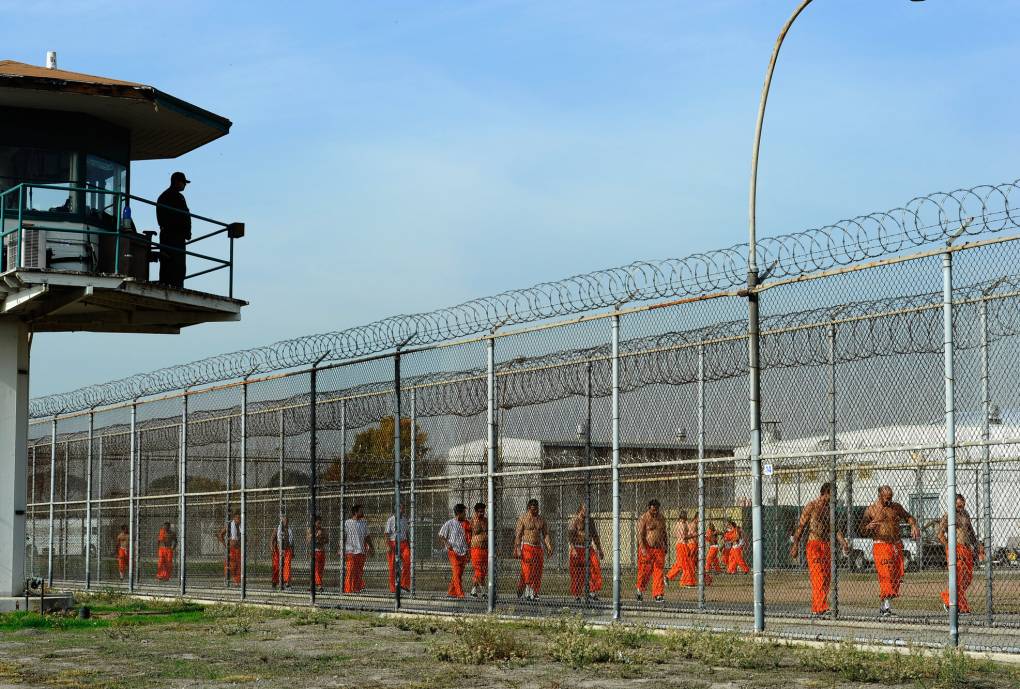
"caption": "California Department of Corrections officer looks on as inmates at Chino State Prison exercise in the yard Dec. 10, 2010, in Chino, California. ",
"credit": "Kevork Djansezian/Getty Images",
"altTag": "Imprisoned people wearing orange outfits hang out in an outdoor area of the prison, while a guard watches from a tower overhead.",
"description": null,
"imgSizes": {
"medium": {
"file": "https://cdn.kqed.org/wp-content/uploads/sites/10/2024/10/107520204_qed-800x540.jpg",
"width": 800,
"height": 540,
"mimeType": "image/jpeg"
},
"large": {
"file": "https://cdn.kqed.org/wp-content/uploads/sites/10/2024/10/107520204_qed-1020x689.jpg",
"width": 1020,
"height": 689,
"mimeType": "image/jpeg"
},
"thumbnail": {
"file": "https://cdn.kqed.org/wp-content/uploads/sites/10/2024/10/107520204_qed-160x108.jpg",
"width": 160,
"height": 108,
"mimeType": "image/jpeg"
},
"1536x1536": {
"file": "https://cdn.kqed.org/wp-content/uploads/sites/10/2024/10/107520204_qed-1536x1038.jpg",
"width": 1536,
"height": 1038,
"mimeType": "image/jpeg"
},
"post-thumbnail": {
"file": "https://cdn.kqed.org/wp-content/uploads/sites/10/2024/10/107520204_qed-672x372.jpg",
"width": 672,
"height": 372,
"mimeType": "image/jpeg"
},
"twentyfourteen-full-width": {
"file": "https://cdn.kqed.org/wp-content/uploads/sites/10/2024/10/107520204_qed-1038x576.jpg",
"width": 1038,
"height": 576,
"mimeType": "image/jpeg"
},
"full-width": {
"file": "https://cdn.kqed.org/wp-content/uploads/sites/10/2024/10/107520204_qed-1920x1297.jpg",
"width": 1920,
"height": 1297,
"mimeType": "image/jpeg"
},
"kqedFullSize": {
"file": "https://cdn.kqed.org/wp-content/uploads/sites/10/2024/10/107520204_qed.jpg",
"width": 1973,
"height": 1333
}
},
"isLoading": false,
"fetchFailed": false
},
"news_12009054": {
"type": "attachments",
"id": "news_12009054",
"meta": {
"index": "attachments_1716263798",
"site": "news",
"id": "12009054",
"found": true
},
"title": "Voters voting in polling place",
"publishDate": 1728609996,
"status": "inherit",
"parent": 12009039,
"modified": 1728610033,
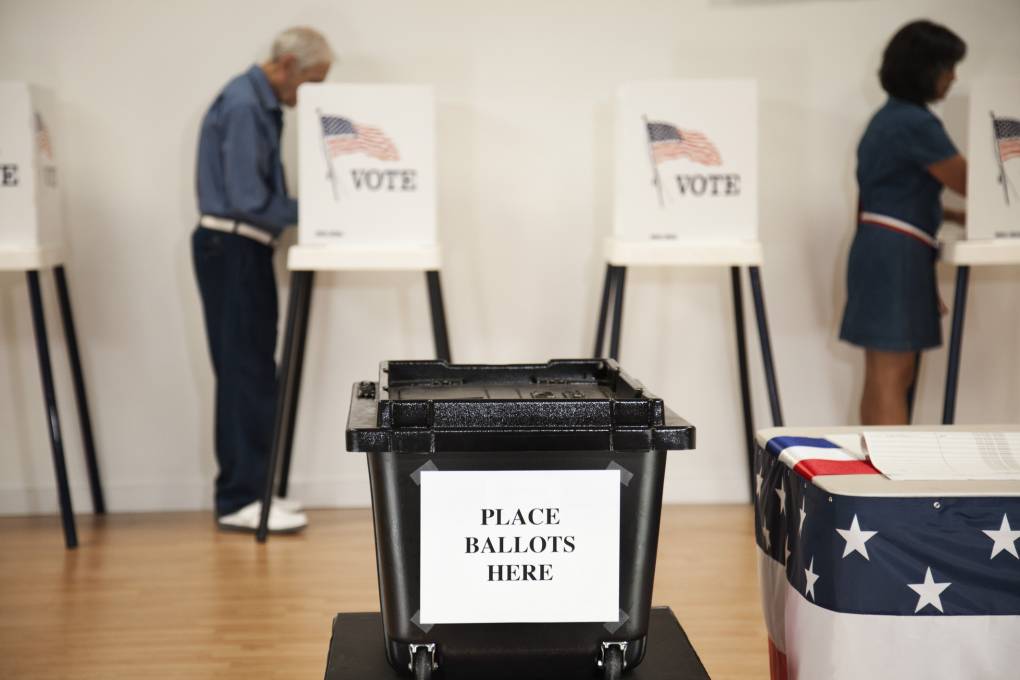
"caption": "Even seasoned voters may find some things baffling on this year's ballot.",
"credit": "Hill Street Studios/Getty Images",
"altTag": null,
"description": null,
"imgSizes": {
"medium": {
"file": "https://cdn.kqed.org/wp-content/uploads/sites/10/2024/10/GettyImages-142021136-800x533.jpg",
"width": 800,
"height": 533,
"mimeType": "image/jpeg"
},
"large": {
"file": "https://cdn.kqed.org/wp-content/uploads/sites/10/2024/10/GettyImages-142021136-1020x680.jpg",
"width": 1020,
"height": 680,
"mimeType": "image/jpeg"
},
"thumbnail": {
"file": "https://cdn.kqed.org/wp-content/uploads/sites/10/2024/10/GettyImages-142021136-160x107.jpg",
"width": 160,
"height": 107,
"mimeType": "image/jpeg"
},
"1536x1536": {
"file": "https://cdn.kqed.org/wp-content/uploads/sites/10/2024/10/GettyImages-142021136-1536x1024.jpg",
"width": 1536,
"height": 1024,
"mimeType": "image/jpeg"
},
"2048x2048": {
"file": "https://cdn.kqed.org/wp-content/uploads/sites/10/2024/10/GettyImages-142021136-2048x1365.jpg",
"width": 2048,
"height": 1365,
"mimeType": "image/jpeg"
},
"post-thumbnail": {
"file": "https://cdn.kqed.org/wp-content/uploads/sites/10/2024/10/GettyImages-142021136-672x372.jpg",
"width": 672,
"height": 372,
"mimeType": "image/jpeg"
},
"twentyfourteen-full-width": {
"file": "https://cdn.kqed.org/wp-content/uploads/sites/10/2024/10/GettyImages-142021136-1038x576.jpg",
"width": 1038,
"height": 576,
"mimeType": "image/jpeg"
},
"full-width": {
"file": "https://cdn.kqed.org/wp-content/uploads/sites/10/2024/10/GettyImages-142021136-1920x1280.jpg",
"width": 1920,
"height": 1280,
"mimeType": "image/jpeg"
},
"kqedFullSize": {
"file": "https://cdn.kqed.org/wp-content/uploads/sites/10/2024/10/GettyImages-142021136.jpg",
"width": 2121,
"height": 1414
}
},
"isLoading": false,
"fetchFailed": false
},
"news_12008952": {
"type": "attachments",
"id": "news_12008952",
"meta": {
"index": "attachments_1716263798",
"site": "news",
"id": "12008952",
"found": true
},
"title": "KNX News 97.1 FM and The Los Angeles Times presents a live District Attorney debate between incumbent George Gascon and challenger Nathan Hochman",
"publishDate": 1728595915,
"status": "inherit",
"parent": 12008948,
"modified": 1732656049,
"caption": "Nathan Hochman speaks at the KNX News 97.1 FM and The Los Angeles Times District Attorney debate between former incumbent George Gascon and Nathan Hochman on Tuesday, Oct. 8, 2024 in Los Angeles. ",
"credit": "Jason Armond/Los Angeles Times via Getty Images",
"altTag": null,
"description": null,
"imgSizes": {
"medium": {
"file": "https://cdn.kqed.org/wp-content/uploads/sites/10/2024/10/GettyImages-2176815987-800x534.jpg",
"width": 800,
"height": 534,
"mimeType": "image/jpeg"
},
"large": {
"file": "https://cdn.kqed.org/wp-content/uploads/sites/10/2024/10/GettyImages-2176815987-1020x680.jpg",
"width": 1020,
"height": 680,
"mimeType": "image/jpeg"
},
"thumbnail": {
"file": "https://cdn.kqed.org/wp-content/uploads/sites/10/2024/10/GettyImages-2176815987-160x107.jpg",
"width": 160,
"height": 107,
"mimeType": "image/jpeg"
},
"1536x1536": {
"file": "https://cdn.kqed.org/wp-content/uploads/sites/10/2024/10/GettyImages-2176815987-1536x1024.jpg",
"width": 1536,
"height": 1024,
"mimeType": "image/jpeg"
},
"2048x2048": {
"file": "https://cdn.kqed.org/wp-content/uploads/sites/10/2024/10/GettyImages-2176815987-2048x1366.jpg",
"width": 2048,
"height": 1366,
"mimeType": "image/jpeg"
},
"post-thumbnail": {
"file": "https://cdn.kqed.org/wp-content/uploads/sites/10/2024/10/GettyImages-2176815987-672x372.jpg",
"width": 672,
"height": 372,
"mimeType": "image/jpeg"
},
"twentyfourteen-full-width": {
"file": "https://cdn.kqed.org/wp-content/uploads/sites/10/2024/10/GettyImages-2176815987-1038x576.jpg",
"width": 1038,
"height": 576,
"mimeType": "image/jpeg"
},
"full-width": {
"file": "https://cdn.kqed.org/wp-content/uploads/sites/10/2024/10/GettyImages-2176815987-1920x1281.jpg",
"width": 1920,
"height": 1281,
"mimeType": "image/jpeg"
},
"kqedFullSize": {
"file": "https://cdn.kqed.org/wp-content/uploads/sites/10/2024/10/GettyImages-2176815987-scaled.jpg",
"width": 2560,
"height": 1707
}
},
"isLoading": false,
"fetchFailed": false
},
"news_12006905": {
"type": "attachments",
"id": "news_12006905",
"meta": {
"index": "attachments_1716263798",
"site": "news",
"id": "12006905",
"found": true
},
"title": "002_KQED_ElectionStockPhotos_TikaHall_10062020_qed",
"publishDate": 1727470265,
"status": "inherit",
"parent": 12003469,
"modified": 1727470295,
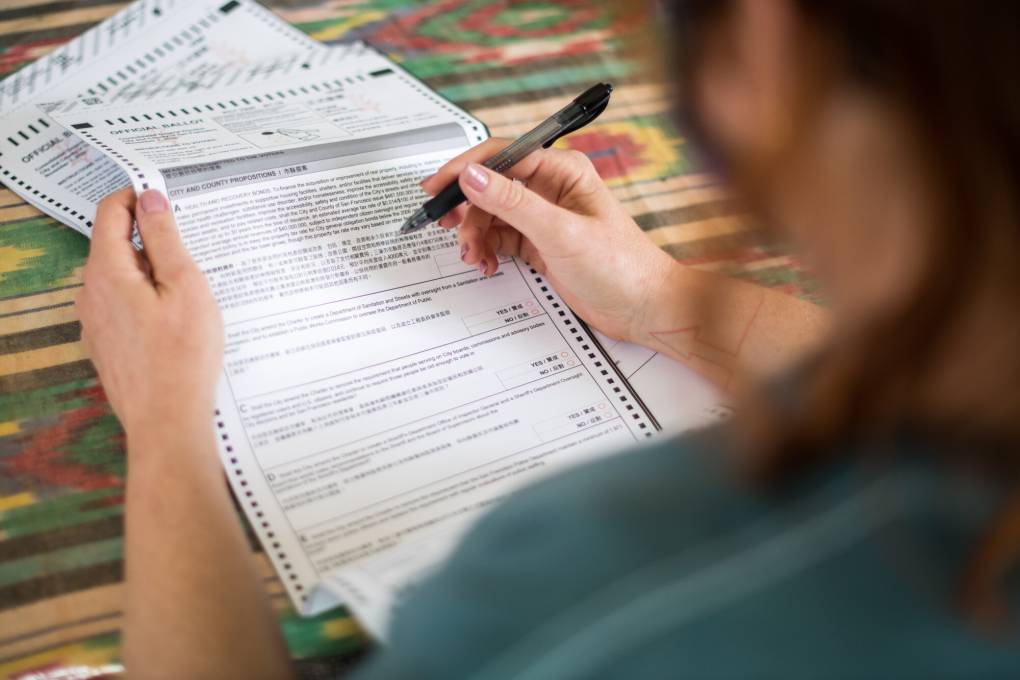
"caption": "A San Francisco resident fills out their mail-in ballot.",
"credit": "Beth LaBerge/KQED",
"altTag": null,
"description": null,
"imgSizes": {
"medium": {
"file": "https://cdn.kqed.org/wp-content/uploads/sites/10/2024/09/002_KQED_ElectionStockPhotos_TikaHall_10062020_qed-800x533.jpg",
"width": 800,
"height": 533,
"mimeType": "image/jpeg"
},
"large": {
"file": "https://cdn.kqed.org/wp-content/uploads/sites/10/2024/09/002_KQED_ElectionStockPhotos_TikaHall_10062020_qed-1020x680.jpg",
"width": 1020,
"height": 680,
"mimeType": "image/jpeg"
},
"thumbnail": {
"file": "https://cdn.kqed.org/wp-content/uploads/sites/10/2024/09/002_KQED_ElectionStockPhotos_TikaHall_10062020_qed-160x107.jpg",
"width": 160,
"height": 107,
"mimeType": "image/jpeg"
},
"1536x1536": {
"file": "https://cdn.kqed.org/wp-content/uploads/sites/10/2024/09/002_KQED_ElectionStockPhotos_TikaHall_10062020_qed-1536x1024.jpg",
"width": 1536,
"height": 1024,
"mimeType": "image/jpeg"
},
"post-thumbnail": {
"file": "https://cdn.kqed.org/wp-content/uploads/sites/10/2024/09/002_KQED_ElectionStockPhotos_TikaHall_10062020_qed-672x372.jpg",
"width": 672,
"height": 372,
"mimeType": "image/jpeg"
},
"twentyfourteen-full-width": {
"file": "https://cdn.kqed.org/wp-content/uploads/sites/10/2024/09/002_KQED_ElectionStockPhotos_TikaHall_10062020_qed-1038x576.jpg",
"width": 1038,
"height": 576,
"mimeType": "image/jpeg"
},
"full-width": {
"file": "https://cdn.kqed.org/wp-content/uploads/sites/10/2024/09/002_KQED_ElectionStockPhotos_TikaHall_10062020_qed-1920x1280.jpg",
"width": 1920,
"height": 1280,
"mimeType": "image/jpeg"
},
"kqedFullSize": {
"file": "https://cdn.kqed.org/wp-content/uploads/sites/10/2024/09/002_KQED_ElectionStockPhotos_TikaHall_10062020_qed.jpg",
"width": 2000,
"height": 1333
}
},
"isLoading": false,
"fetchFailed": false
},
"news_12008805": {
"type": "attachments",
"id": "news_12008805",
"meta": {
"index": "attachments_1716263798",
"site": "news",
"id": "12008805",
"found": true
},
"title": "USA: Politics: CA Attorney General Kamala Harris to Run for Senate",
"publishDate": 1728513335,
"status": "inherit",
"parent": 12008786,
"modified": 1728518767,
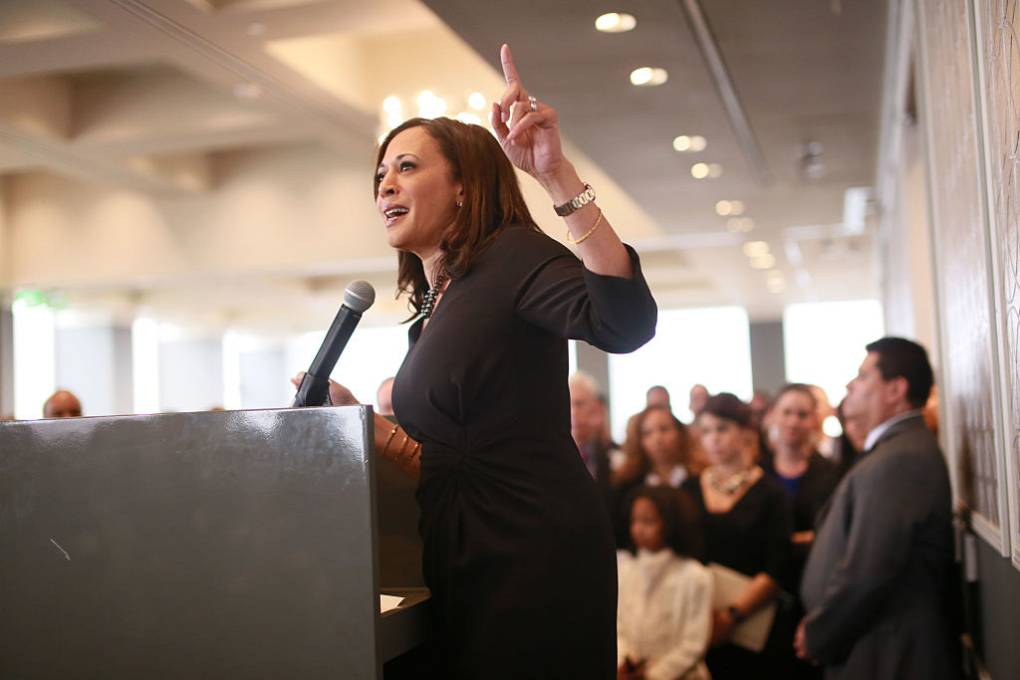
"caption": "Kamala Harris, then-California attorney general, speaks to supporters at a gathering in Los Angeles on Jan. 11, 2015, shortly after announcing plans to run for U.S. Senate.",
"credit": "Sandy Huffaker/Corbis via Getty Images",
"altTag": "Kamala Harris stands at a lectern, delivering a speech with an audience behind her.",
"description": null,
"imgSizes": {
"medium": {
"file": "https://cdn.kqed.org/wp-content/uploads/sites/10/2024/10/GettyImages-526583572-800x534.jpg",
"width": 800,
"height": 534,
"mimeType": "image/jpeg"
},
"large": {
"file": "https://cdn.kqed.org/wp-content/uploads/sites/10/2024/10/GettyImages-526583572-1020x680.jpg",
"width": 1020,
"height": 680,
"mimeType": "image/jpeg"
},
"thumbnail": {
"file": "https://cdn.kqed.org/wp-content/uploads/sites/10/2024/10/GettyImages-526583572-160x107.jpg",
"width": 160,
"height": 107,
"mimeType": "image/jpeg"
},
"post-thumbnail": {
"file": "https://cdn.kqed.org/wp-content/uploads/sites/10/2024/10/GettyImages-526583572-672x372.jpg",
"width": 672,
"height": 372,
"mimeType": "image/jpeg"
},
"twentyfourteen-full-width": {
"file": "https://cdn.kqed.org/wp-content/uploads/sites/10/2024/10/GettyImages-526583572-1024x576.jpg",
"width": 1024,
"height": 576,
"mimeType": "image/jpeg"
},
"kqedFullSize": {
"file": "https://cdn.kqed.org/wp-content/uploads/sites/10/2024/10/GettyImages-526583572.jpg",
"width": 1024,
"height": 683
}
},
"isLoading": false,
"fetchFailed": false
},
"news_12008697": {
"type": "attachments",
"id": "news_12008697",
"meta": {
"index": "attachments_1716263798",
"site": "news",
"id": "12008697",
"found": true
},
"title": "MixCollage-09-Oct-2024-07-09-AM-4358",
"publishDate": 1728483015,
"status": "inherit",
"parent": 12008694,
"modified": 1728511942,
"caption": "Scott Baugh (left), candidate for California's 47th Congressional District, speaks to the media as he joins Republican National Committee (RNC), the California Republican Party (CAGOP) and top Orange County Republican Candidates during a rally ahead of the November elections in Newport Beach Monday, Sept. 26, 2022. And Dave Min (right), Democrat running for California's 45th Congressional district seat in Congress, speaks during the DEMOC PAC's candidate forum at the University Synagogue in Irvine, Calif., on Tuesday, May 22, 2018. California is holding its primary election on June 5, 2018.",
"credit": "Allen J. Schaben / Los Angeles Times via Getty Images and Bill Clark/CQ Roll Call",
"altTag": "Scott Baugh, Dave Min",
"description": null,
"imgSizes": {
"medium": {
"file": "https://cdn.kqed.org/wp-content/uploads/sites/10/2024/10/MixCollage-09-Oct-2024-07-09-AM-4358-800x1000.jpg",
"width": 800,
"height": 1000,
"mimeType": "image/jpeg"
},
"large": {
"file": "https://cdn.kqed.org/wp-content/uploads/sites/10/2024/10/MixCollage-09-Oct-2024-07-09-AM-4358-1020x1275.jpg",
"width": 1020,
"height": 1275,
"mimeType": "image/jpeg"
},
"thumbnail": {
"file": "https://cdn.kqed.org/wp-content/uploads/sites/10/2024/10/MixCollage-09-Oct-2024-07-09-AM-4358-160x200.jpg",
"width": 160,
"height": 200,
"mimeType": "image/jpeg"
},
"1536x1536": {
"file": "https://cdn.kqed.org/wp-content/uploads/sites/10/2024/10/MixCollage-09-Oct-2024-07-09-AM-4358-1229x1536.jpg",
"width": 1229,
"height": 1536,
"mimeType": "image/jpeg"
},
"2048x2048": {
"file": "https://cdn.kqed.org/wp-content/uploads/sites/10/2024/10/MixCollage-09-Oct-2024-07-09-AM-4358-1638x2048.jpg",
"width": 1638,
"height": 2048,
"mimeType": "image/jpeg"
},
"post-thumbnail": {
"file": "https://cdn.kqed.org/wp-content/uploads/sites/10/2024/10/MixCollage-09-Oct-2024-07-09-AM-4358-672x372.jpg",
"width": 672,
"height": 372,
"mimeType": "image/jpeg"
},
"twentyfourteen-full-width": {
"file": "https://cdn.kqed.org/wp-content/uploads/sites/10/2024/10/MixCollage-09-Oct-2024-07-09-AM-4358-1038x576.jpg",
"width": 1038,
"height": 576,
"mimeType": "image/jpeg"
},
"full-width": {
"file": "https://cdn.kqed.org/wp-content/uploads/sites/10/2024/10/MixCollage-09-Oct-2024-07-09-AM-4358-1920x2400.jpg",
"width": 1920,
"height": 2400,
"mimeType": "image/jpeg"
},
"kqedFullSize": {
"file": "https://cdn.kqed.org/wp-content/uploads/sites/10/2024/10/MixCollage-09-Oct-2024-07-09-AM-4358-scaled.jpg",
"width": 2048,
"height": 2560
}
},
"isLoading": false,
"fetchFailed": false
},
"news_12008451": {
"type": "attachments",
"id": "news_12008451",
"meta": {
"index": "attachments_1716263798",
"site": "news",
"id": "12008451",
"found": true
},
"title": "018_SanJose_AntiEvictionProtest_01272021_qed",
"publishDate": 1728408942,
"status": "inherit",
"parent": 12008424,
"modified": 1728431123,
"caption": "A protester stands in front of the Santa Clara Superior Court in San Jose on Jan. 27, 2021, to call for stronger state and local eviction protections.",
"credit": "Beth LaBerge/KQED",
"altTag": "A woman wearing a yellow coat with a sign around her neck that reads \"Evictions Are Violent. We Won't Be Silenced.\"",
"description": null,
"imgSizes": {
"medium": {
"file": "https://cdn.kqed.org/wp-content/uploads/sites/10/2024/10/018_SanJose_AntiEvictionProtest_01272021_qed-800x533.jpg",
"width": 800,
"height": 533,
"mimeType": "image/jpeg"
},
"large": {
"file": "https://cdn.kqed.org/wp-content/uploads/sites/10/2024/10/018_SanJose_AntiEvictionProtest_01272021_qed-1020x680.jpg",
"width": 1020,
"height": 680,
"mimeType": "image/jpeg"
},
"thumbnail": {
"file": "https://cdn.kqed.org/wp-content/uploads/sites/10/2024/10/018_SanJose_AntiEvictionProtest_01272021_qed-160x107.jpg",
"width": 160,
"height": 107,
"mimeType": "image/jpeg"
},
"1536x1536": {
"file": "https://cdn.kqed.org/wp-content/uploads/sites/10/2024/10/018_SanJose_AntiEvictionProtest_01272021_qed-1536x1024.jpg",
"width": 1536,
"height": 1024,
"mimeType": "image/jpeg"
},
"post-thumbnail": {
"file": "https://cdn.kqed.org/wp-content/uploads/sites/10/2024/10/018_SanJose_AntiEvictionProtest_01272021_qed-672x372.jpg",
"width": 672,
"height": 372,
"mimeType": "image/jpeg"
},
"twentyfourteen-full-width": {
"file": "https://cdn.kqed.org/wp-content/uploads/sites/10/2024/10/018_SanJose_AntiEvictionProtest_01272021_qed-1038x576.jpg",
"width": 1038,
"height": 576,
"mimeType": "image/jpeg"
},
"full-width": {
"file": "https://cdn.kqed.org/wp-content/uploads/sites/10/2024/10/018_SanJose_AntiEvictionProtest_01272021_qed-1920x1280.jpg",
"width": 1920,
"height": 1280,
"mimeType": "image/jpeg"
},
"kqedFullSize": {
"file": "https://cdn.kqed.org/wp-content/uploads/sites/10/2024/10/018_SanJose_AntiEvictionProtest_01272021_qed.jpg",
"width": 2000,
"height": 1333
}
},
"isLoading": false,
"fetchFailed": false
},
"news_12008616": {
"type": "attachments",
"id": "news_12008616",
"meta": {
"index": "attachments_1716263798",
"site": "news",
"id": "12008616",
"found": true
},
"title": "Untitled design (2)",
"publishDate": 1728428236,
"status": "inherit",
"parent": 12008573,
"modified": 1728428300,
"caption": "(Left) Rep. Michelle Steel (R-Calif.) talks with reporters during a news conference following a House Republican caucus meeting at the US Capitol Visitor Center on Oct. 20, 2021, in Washington, DC. (Chip Somodevilla/Getty Images)\n\n(Right) WESTMINSTER AND GARDEN GROVE-CA-AUGUST 17, 2024: Democrat Derek Tran attends a reunion of political prisoners from the \"re-education\" prison camps after the end of the Vietnam War at Thu Vien Viet Nam, a community center in Little Saigon on August 17, 2024. (Christina House / Los Angeles Times via Getty Images)",
"credit": null,
"altTag": null,
"description": "(Left) Rep. Michelle Steel (R-Calif.) talks with reporters during a news conference following a House Republican caucus meeting at the US Capitol Visitor Center on Oct. 20, 2021, in Washington, DC. (Chip Somodevilla/Getty Images)\n\n(Right) WESTMINSTER AND GARDEN GROVE-CA-AUGUST 17, 2024: Democrat Derek Tran attends a reunion of political prisoners from the \"re-education\" prison camps after the end of the Vietnam War at Thu Vien Viet Nam, a community center in Little Saigon on August 17, 2024. (Christina House / Los Angeles Times via Getty Images)",
"imgSizes": {
"medium": {
"file": "https://cdn.kqed.org/wp-content/uploads/sites/10/2024/10/Untitled-design-2-800x533.jpg",
"width": 800,
"height": 533,
"mimeType": "image/jpeg"
},
"large": {
"file": "https://cdn.kqed.org/wp-content/uploads/sites/10/2024/10/Untitled-design-2-1020x680.jpg",
"width": 1020,
"height": 680,
"mimeType": "image/jpeg"
},
"thumbnail": {
"file": "https://cdn.kqed.org/wp-content/uploads/sites/10/2024/10/Untitled-design-2-160x107.jpg",
"width": 160,
"height": 107,
"mimeType": "image/jpeg"
},
"post-thumbnail": {
"file": "https://cdn.kqed.org/wp-content/uploads/sites/10/2024/10/Untitled-design-2-672x372.jpg",
"width": 672,
"height": 372,
"mimeType": "image/jpeg"
},
"twentyfourteen-full-width": {
"file": "https://cdn.kqed.org/wp-content/uploads/sites/10/2024/10/Untitled-design-2-1038x576.jpg",
"width": 1038,
"height": 576,
"mimeType": "image/jpeg"
},
"kqedFullSize": {
"file": "https://cdn.kqed.org/wp-content/uploads/sites/10/2024/10/Untitled-design-2.jpg",
"width": 1080,
"height": 720
}
},
"isLoading": false,
"fetchFailed": false
},
"news_12008271": {
"type": "attachments",
"id": "news_12008271",
"meta": {
"index": "attachments_1716263798",
"site": "news",
"id": "12008271",
"found": true
},
"title": "20241007_FARRELL ETHICS_GC-1-KQED",
"publishDate": 1728326540,
"status": "inherit",
"parent": 0,
"modified": 1728329509,
"caption": "Former San Francisco Mayor Mark Farrell speaks during a press conference at his campaign headquarters on Oct. 7, 2024.",
"credit": "Gina Castro/KQED",
"altTag": null,
"description": null,
"imgSizes": {
"medium": {
"file": "https://cdn.kqed.org/wp-content/uploads/sites/10/2024/10/20241007_FARRELL-ETHICS_GC-1-KQED-800x533.jpg",
"width": 800,
"height": 533,
"mimeType": "image/jpeg"
},
"large": {
"file": "https://cdn.kqed.org/wp-content/uploads/sites/10/2024/10/20241007_FARRELL-ETHICS_GC-1-KQED-1020x680.jpg",
"width": 1020,
"height": 680,
"mimeType": "image/jpeg"
},
"thumbnail": {
"file": "https://cdn.kqed.org/wp-content/uploads/sites/10/2024/10/20241007_FARRELL-ETHICS_GC-1-KQED-160x107.jpg",
"width": 160,
"height": 107,
"mimeType": "image/jpeg"
},
"1536x1536": {
"file": "https://cdn.kqed.org/wp-content/uploads/sites/10/2024/10/20241007_FARRELL-ETHICS_GC-1-KQED-1536x1024.jpg",
"width": 1536,
"height": 1024,
"mimeType": "image/jpeg"
},
"post-thumbnail": {
"file": "https://cdn.kqed.org/wp-content/uploads/sites/10/2024/10/20241007_FARRELL-ETHICS_GC-1-KQED-672x372.jpg",
"width": 672,
"height": 372,
"mimeType": "image/jpeg"
},
"twentyfourteen-full-width": {
"file": "https://cdn.kqed.org/wp-content/uploads/sites/10/2024/10/20241007_FARRELL-ETHICS_GC-1-KQED-1038x576.jpg",
"width": 1038,
"height": 576,
"mimeType": "image/jpeg"
},
"full-width": {
"file": "https://cdn.kqed.org/wp-content/uploads/sites/10/2024/10/20241007_FARRELL-ETHICS_GC-1-KQED-1920x1280.jpg",
"width": 1920,
"height": 1280,
"mimeType": "image/jpeg"
},
"kqedFullSize": {
"file": "https://cdn.kqed.org/wp-content/uploads/sites/10/2024/10/20241007_FARRELL-ETHICS_GC-1-KQED.jpg",
"width": 2000,
"height": 1333
}
},
"isLoading": false,
"fetchFailed": false
},
"news_11957037": {
"type": "attachments",
"id": "news_11957037",
"meta": {
"index": "attachments_1716263798",
"site": "news",
"id": "11957037",
"found": true
},
"parent": 11957036,
"imgSizes": {
"twentyfourteen-full-width": {
"file": "https://ww2.kqed.org/app/uploads/sites/10/2023/08/RS67051_230713-PAMELA-PRICE-JY-10-qut-1038x576.jpg",
"width": 1038,
"mimeType": "image/jpeg",
"height": 576
},
"thumbnail": {
"file": "https://ww2.kqed.org/app/uploads/sites/10/2023/08/RS67051_230713-PAMELA-PRICE-JY-10-qut-160x107.jpg",
"width": 160,
"mimeType": "image/jpeg",
"height": 107
},
"post-thumbnail": {
"file": "https://ww2.kqed.org/app/uploads/sites/10/2023/08/RS67051_230713-PAMELA-PRICE-JY-10-qut-672x372.jpg",
"width": 672,
"mimeType": "image/jpeg",
"height": 372
},
"kqedFullSize": {
"file": "https://ww2.kqed.org/app/uploads/sites/10/2023/08/RS67051_230713-PAMELA-PRICE-JY-10-qut.jpg",
"width": 1920,
"height": 1280
},
"large": {
"file": "https://ww2.kqed.org/app/uploads/sites/10/2023/08/RS67051_230713-PAMELA-PRICE-JY-10-qut-1020x680.jpg",
"width": 1020,
"mimeType": "image/jpeg",
"height": 680
},
"1536x1536": {
"file": "https://ww2.kqed.org/app/uploads/sites/10/2023/08/RS67051_230713-PAMELA-PRICE-JY-10-qut-1536x1024.jpg",
"width": 1536,
"mimeType": "image/jpeg",
"height": 1024
},
"medium": {
"file": "https://ww2.kqed.org/app/uploads/sites/10/2023/08/RS67051_230713-PAMELA-PRICE-JY-10-qut-800x533.jpg",
"width": 800,
"mimeType": "image/jpeg",
"height": 533
}
},
"publishDate": 1690917489,
"modified": 1695070811,
"caption": "Alameda County District Attorney Pamela Price at her office in Oakland on July 16, 2023.",
"description": null,
"title": "RS67051_230713-PAMELA PRICE-JY-10-qut",
"credit": "Juliana Yamada/KQED",
"status": "inherit",
"altTag": null,
"isLoading": false,
"fetchFailed": false
},
"news_11995823": {
"type": "attachments",
"id": "news_11995823",
"meta": {
"index": "attachments_1716263798",
"site": "news",
"id": "11995823",
"found": true
},
"title": "240716-LICCARDO-LOW-MD-KQED",
"publishDate": 1721155273,
"status": "inherit",
"parent": 0,
"modified": 1721155352,
"caption": "Former mayor of San José, Sam Liccardo (left), and California Assemblymember Evan Low.",
"credit": "Beth LaBerge/KQED; Rodin Eckenroth/Getty Images",
"altTag": null,
"description": null,
"imgSizes": {
"medium": {
"file": "https://cdn.kqed.org/wp-content/uploads/sites/10/2024/07/240716-LICCARDO-LOW-MD-KQED-800x533.jpg",
"width": 800,
"height": 533,
"mimeType": "image/jpeg"
},
"large": {
"file": "https://cdn.kqed.org/wp-content/uploads/sites/10/2024/07/240716-LICCARDO-LOW-MD-KQED-1020x680.jpg",
"width": 1020,
"height": 680,
"mimeType": "image/jpeg"
},
"thumbnail": {
"file": "https://cdn.kqed.org/wp-content/uploads/sites/10/2024/07/240716-LICCARDO-LOW-MD-KQED-160x107.jpg",
"width": 160,
"height": 107,
"mimeType": "image/jpeg"
},
"1536x1536": {
"file": "https://cdn.kqed.org/wp-content/uploads/sites/10/2024/07/240716-LICCARDO-LOW-MD-KQED-1536x1024.jpg",
"width": 1536,
"height": 1024,
"mimeType": "image/jpeg"
},
"post-thumbnail": {
"file": "https://cdn.kqed.org/wp-content/uploads/sites/10/2024/07/240716-LICCARDO-LOW-MD-KQED-672x372.jpg",
"width": 672,
"height": 372,
"mimeType": "image/jpeg"
},
"twentyfourteen-full-width": {
"file": "https://cdn.kqed.org/wp-content/uploads/sites/10/2024/07/240716-LICCARDO-LOW-MD-KQED-1038x576.jpg",
"width": 1038,
"height": 576,
"mimeType": "image/jpeg"
},
"full-width": {
"file": "https://cdn.kqed.org/wp-content/uploads/sites/10/2024/07/240716-LICCARDO-LOW-MD-KQED-1920x1280.jpg",
"width": 1920,
"height": 1280,
"mimeType": "image/jpeg"
},
"kqedFullSize": {
"file": "https://cdn.kqed.org/wp-content/uploads/sites/10/2024/07/240716-LICCARDO-LOW-MD-KQED.jpg",
"width": 2000,
"height": 1333
}
},
"isLoading": false,
"fetchFailed": false
}
},
"audioPlayerReducer": {
"postId": "stream_live",
"isPaused": true,
"isPlaying": false,
"pfsActive": false,
"pledgeModalIsOpen": true,
"playerDrawerIsOpen": false,
"liveAudioPlayStartedAt": 0,
"liveAudioPlayContext": ""
},
"authorsReducer": {
"ohubertallen": {
"type": "authors",
"id": "102",
"meta": {
"index": "authors_1716337520",
"id": "102",
"found": true
},
"name": "Olivia Allen-Price",
"firstName": "Olivia",
"lastName": "Allen-Price",
"slug": "ohubertallen",
"email": "oallenprice@kqed.org",
"display_author_email": false,
"staff_mastheads": [
"news"
],
"title": "Senior Editor",
"bio": "Olivia Allen-Price is senior editor and host of the award-winning Bay Curious podcast. Prior to joining KQED in 2013, Olivia worked at The Baltimore Sun and The Virginian-Pilot in Norfolk, Va. She holds degrees in journalism and political science from Elon University. Her work has earned awards from the Society of Professional Journalists, the Hearst Foundation and Hearken. She loves to talk about running and curly hair.\r\n\r\nFollow: \u003ca href=\"https://twitter.com/oallenprice\">@oallenprice\u003c/a>\r\nEmail: \u003ca href=\"mailto:oallenprice@kqed.org\">oallenprice@kqed.org\u003c/a>",
"avatar": "https://secure.gravatar.com/avatar/07f7803c1f6be56f3be58ef276dfa64dce898502e0554408ef4858451a8294f7?s=600&d=blank&r=g",
"twitter": "oallenprice",
"bluesky": null,
"facebook": null,
"instagram": null,
"linkedin": null,
"sites": [
{
"site": "",
"roles": [
"editor"
]
},
{
"site": "arts",
"roles": [
"subscriber"
]
},
{
"site": "news",
"roles": [
"administrator"
]
},
{
"site": "pop",
"roles": [
"administrator"
]
},
{
"site": "bayareabites",
"roles": [
"contributor"
]
},
{
"site": "stateofhealth",
"roles": [
"administrator"
]
},
{
"site": "science",
"roles": [
"editor"
]
}
],
"headData": {
"title": "Olivia Allen-Price | KQED",
"description": "Senior Editor",
"ogImgSrc": "https://secure.gravatar.com/avatar/07f7803c1f6be56f3be58ef276dfa64dce898502e0554408ef4858451a8294f7?s=600&d=blank&r=g",
"twImgSrc": "https://secure.gravatar.com/avatar/07f7803c1f6be56f3be58ef276dfa64dce898502e0554408ef4858451a8294f7?s=600&d=blank&r=g"
},
"isLoading": false,
"link": "/author/ohubertallen"
},
"gmarzorati": {
"type": "authors",
"id": "227",
"meta": {
"index": "authors_1716337520",
"id": "227",
"found": true
},
"name": "Guy Marzorati",
"firstName": "Guy",
"lastName": "Marzorati",
"slug": "gmarzorati",
"email": "gmarzorati@KQED.org",
"display_author_email": true,
"staff_mastheads": [
"news"
],
"title": "Correspondent",
"bio": "Guy Marzorati is a correspondent on KQED's California Politics and Government Desk, based in San Jose. A graduate of Santa Clara University, Guy joined KQED in 2013. He reports on state and local politics and produces KQED's digital voter guide.",
"avatar": "https://secure.gravatar.com/avatar/e7038b8dbfd55b104369b76b1cd0b9de?s=600&d=blank&r=g",
"twitter": "guymarzorati",
"facebook": null,
"instagram": null,
"linkedin": null,
"sites": [
{
"site": "",
"roles": [
"editor"
]
},
{
"site": "news",
"roles": [
"editor"
]
},
{
"site": "science",
"roles": [
"editor"
]
},
{
"site": "forum",
"roles": [
"editor"
]
},
{
"site": "elections",
"roles": [
"editor"
]
},
{
"site": "liveblog",
"roles": [
"editor"
]
}
],
"headData": {
"title": "Guy Marzorati | KQED",
"description": "Correspondent",
"ogImgSrc": "https://secure.gravatar.com/avatar/e7038b8dbfd55b104369b76b1cd0b9de?s=600&d=blank&r=g",
"twImgSrc": "https://secure.gravatar.com/avatar/e7038b8dbfd55b104369b76b1cd0b9de?s=600&d=blank&r=g"
},
"isLoading": false,
"link": "/author/gmarzorati"
},
"scottshafer": {
"type": "authors",
"id": "255",
"meta": {
"index": "authors_1716337520",
"id": "255",
"found": true
},
"name": "Scott Shafer",
"firstName": "Scott",
"lastName": "Shafer",
"slug": "scottshafer",
"email": "sshafer@kqed.org",
"display_author_email": false,
"staff_mastheads": [
"news"
],
"title": "KQED Contributor",
"bio": "Scott Shafer is a senior editor with the KQED Politics and Government desk. He is co-host of Political Breakdown, the award-winning radio show and podcast with a personal take on the world of politics. Scott came to KQED in 1998 to host the statewide\u003cem> California Report\u003c/em>. Prior to that he had extended stints in politics and government\u003cem>.\u003c/em> He uses that inside experience at KQED in his, reporting, hosting and analysis for the politics desk. Scott collaborated \u003cem>Political Breakdown a\u003c/em>nd on \u003cem>The Political Mind of Jerry Brown, \u003c/em>an eight-part series about the life and extraordinary political career of the former governor. For fun, he plays water polo with the San Francisco Tsunami.",
"avatar": "https://secure.gravatar.com/avatar/a62ebae45b79d7aed1a39a0e3bf68104?s=600&d=blank&r=g",
"twitter": "scottshafer",
"bluesky": null,
"facebook": null,
"instagram": null,
"linkedin": null,
"sites": [
{
"site": "news",
"roles": [
"editor"
]
},
{
"site": "stateofhealth",
"roles": [
"author"
]
},
{
"site": "science",
"roles": [
"author"
]
},
{
"site": "forum",
"roles": [
"subscriber"
]
},
{
"site": "liveblog",
"roles": [
"author"
]
}
],
"headData": {
"title": "Scott Shafer | KQED",
"description": "KQED Contributor",
"ogImgSrc": "https://secure.gravatar.com/avatar/a62ebae45b79d7aed1a39a0e3bf68104?s=600&d=blank&r=g",
"twImgSrc": "https://secure.gravatar.com/avatar/a62ebae45b79d7aed1a39a0e3bf68104?s=600&d=blank&r=g"
},
"isLoading": false,
"link": "/author/scottshafer"
},
"mlagos": {
"type": "authors",
"id": "3239",
"meta": {
"index": "authors_1716337520",
"id": "3239",
"found": true
},
"name": "Marisa Lagos",
"firstName": "Marisa",
"lastName": "Lagos",
"slug": "mlagos",
"email": "mlagos@kqed.org",
"display_author_email": false,
"staff_mastheads": [
"news"
],
"title": "KQED Contributor",
"bio": "Marisa Lagos is a correspondent for KQED’s California Politics and Government Desk and co-hosts the award-winning show and podcast, Political Breakdown. At KQED, Lagos also conducts reporting, analysis and investigations into state, local and national politics for radio, TV, online and onstage. In 2022, she and co-host, Scott Shafer, moderated the only gubernatorial debate in California. In 2020, the \u003ci>Washington Post\u003c/i> named her one of the top political journalists in California; she was nominated for a Peabody and won several other awards for her work investigating the 2017 California wildfires. She has worked at the \u003ci>San Francisco Chronicle\u003c/i>, \u003ci>San Francisco Examiner\u003c/i> and \u003ci>Los Angeles Times\u003c/i>. A UC Santa Barbara graduate, she lives in San Francisco with her two sons and husband.",
"avatar": "https://secure.gravatar.com/avatar/a261a0d3696fc066871ef96b85b5e7d2?s=600&d=blank&r=g",
"twitter": "@mlagos",
"facebook": null,
"instagram": null,
"linkedin": null,
"sites": [
{
"site": "arts",
"roles": [
"author"
]
},
{
"site": "news",
"roles": [
"editor"
]
},
{
"site": "science",
"roles": [
"editor"
]
},
{
"site": "forum",
"roles": [
"author"
]
},
{
"site": "liveblog",
"roles": [
"author"
]
}
],
"headData": {
"title": "Marisa Lagos | KQED",
"description": "KQED Contributor",
"ogImgSrc": "https://secure.gravatar.com/avatar/a261a0d3696fc066871ef96b85b5e7d2?s=600&d=blank&r=g",
"twImgSrc": "https://secure.gravatar.com/avatar/a261a0d3696fc066871ef96b85b5e7d2?s=600&d=blank&r=g"
},
"isLoading": false,
"link": "/author/mlagos"
},
"carlysevern": {
"type": "authors",
"id": "3243",
"meta": {
"index": "authors_1716337520",
"id": "3243",
"found": true
},
"name": "Carly Severn",
"firstName": "Carly",
"lastName": "Severn",
"slug": "carlysevern",
"email": "csevern@kqed.org",
"display_author_email": false,
"staff_mastheads": [
"news"
],
"title": "Senior Editor, Audience News ",
"bio": "Carly is KQED's Senior Editor of Audience News on the Digital News team, and has reported for the California Report Magazine, Bay Curious and KQED Arts. She's formerly the host of \u003ca href=\"http://ww2.kqed.org/pop/category/the-cooler/\" rel=\"noopener noreferrer\">The Cooler\u003c/a> podcast.",
"avatar": "https://secure.gravatar.com/avatar/54037bf5c128fe678f0ef26cec97a93f2e7f220a22d7285703328f12c42c1b1d?s=600&d=blank&r=g",
"twitter": "teacupinthebay",
"bluesky": null,
"facebook": null,
"instagram": null,
"linkedin": null,
"sites": [
{
"site": "",
"roles": [
"editor"
]
},
{
"site": "arts",
"roles": [
"editor"
]
},
{
"site": "news",
"roles": [
"administrator"
]
},
{
"site": "pop",
"roles": [
"editor"
]
},
{
"site": "futureofyou",
"roles": [
"editor"
]
},
{
"site": "about",
"roles": [
"administrator"
]
},
{
"site": "mindshift",
"roles": [
"editor"
]
},
{
"site": "bayareabites",
"roles": [
"editor"
]
},
{
"site": "stateofhealth",
"roles": [
"editor"
]
},
{
"site": "science",
"roles": [
"editor"
]
},
{
"site": "food",
"roles": [
"contributor"
]
},
{
"site": "forum",
"roles": [
"editor"
]
},
{
"site": "perspectives",
"roles": [
"administrator"
]
},
{
"site": "liveblog",
"roles": [
"editor"
]
}
],
"headData": {
"title": "Carly Severn | KQED",
"description": "Senior Editor, Audience News ",
"ogImgSrc": "https://secure.gravatar.com/avatar/54037bf5c128fe678f0ef26cec97a93f2e7f220a22d7285703328f12c42c1b1d?s=600&d=blank&r=g",
"twImgSrc": "https://secure.gravatar.com/avatar/54037bf5c128fe678f0ef26cec97a93f2e7f220a22d7285703328f12c42c1b1d?s=600&d=blank&r=g"
},
"isLoading": false,
"link": "/author/carlysevern"
},
"vrancano": {
"type": "authors",
"id": "11276",
"meta": {
"index": "authors_1716337520",
"id": "11276",
"found": true
},
"name": "Vanessa Rancaño",
"firstName": "Vanessa",
"lastName": "Rancaño",
"slug": "vrancano",
"email": "vrancano@kqed.org",
"display_author_email": false,
"staff_mastheads": [
"news"
],
"title": "Reporter",
"bio": "Vanessa Rancaño is a features reporter for KQED. She’s also covered homelessness and education for the station and reported from the Central Valley. Her work has aired across public radio, from flagship national news shows to longform narrative podcasts. Before taking up a mic, she worked as a freelance print journalist. She’s been recognized with a number of national and regional awards. Vanessa grew up in California's Central Valley. She's a former NPR Kroc Fellow, and a graduate of the UC Berkeley Graduate School of Journalism.",
"avatar": "https://secure.gravatar.com/avatar/b3a383dfb0e7ee1c17568f2cf067904ab654d6e3de9743fc661f3c788ade1bed?s=600&d=blank&r=g",
"twitter": "vanessarancano",
"bluesky": null,
"facebook": null,
"instagram": null,
"linkedin": null,
"sites": [
{
"site": "arts",
"roles": [
"editor"
]
},
{
"site": "news",
"roles": [
"editor"
]
},
{
"site": "liveblog",
"roles": [
"contributor"
]
}
],
"headData": {
"title": "Vanessa Rancaño | KQED",
"description": "Reporter",
"ogImgSrc": "https://secure.gravatar.com/avatar/b3a383dfb0e7ee1c17568f2cf067904ab654d6e3de9743fc661f3c788ade1bed?s=600&d=blank&r=g",
"twImgSrc": "https://secure.gravatar.com/avatar/b3a383dfb0e7ee1c17568f2cf067904ab654d6e3de9743fc661f3c788ade1bed?s=600&d=blank&r=g"
},
"isLoading": false,
"link": "/author/vrancano"
},
"sjohnson": {
"type": "authors",
"id": "11840",
"meta": {
"index": "authors_1716337520",
"id": "11840",
"found": true
},
"name": "Sydney Johnson",
"firstName": "Sydney",
"lastName": "Johnson",
"slug": "sjohnson",
"email": "sjohnson@kqed.org",
"display_author_email": false,
"staff_mastheads": [
"news"
],
"title": "KQED Reporter",
"bio": "Sydney Johnson is a general assignment reporter at KQED. She previously reported on public health and city government at the San Francisco Examiner, and before that, she covered statewide education policy for EdSource. Her reporting has won multiple local, state and national awards. Sydney is a graduate of the University of California, Berkeley and lives in San Francisco.",
"avatar": "https://secure.gravatar.com/avatar/97855f2719b72ad6190b7c535fe642c8?s=600&d=blank&r=g",
"twitter": "sydneyfjohnson",
"facebook": null,
"instagram": null,
"linkedin": null,
"sites": [
{
"site": "news",
"roles": [
"editor"
]
}
],
"headData": {
"title": "Sydney Johnson | KQED",
"description": "KQED Reporter",
"ogImgSrc": "https://secure.gravatar.com/avatar/97855f2719b72ad6190b7c535fe642c8?s=600&d=blank&r=g",
"twImgSrc": "https://secure.gravatar.com/avatar/97855f2719b72ad6190b7c535fe642c8?s=600&d=blank&r=g"
},
"isLoading": false,
"link": "/author/sjohnson"
}
},
"pagesReducer": {
"news_tag_election-2024": {
"type": "terms",
"id": "news_32839",
"meta": {
"index": "terms_1716263798",
"site": "news",
"id": "32839",
"score": 8.937057
},
"featImg": null,
"name": "Election 2024",
"description": null,
"taxonomy": "tag",
"headData": {
"twImgId": null,
"twTitle": null,
"ogTitle": null,
"ogImgId": null,
"twDescription": null,
"description": null,
"title": "Election 2024 Archives | KQED News",
"ogDescription": null
},
"ttid": 32856,
"slug": "election-2024",
"isLoading": false,
"title": "Election 2024",
"pageMeta": {
"site": "news",
"WpPageTemplate": "page-topic-editorial",
"currentPage": 14
},
"blocks": [
{
"blockName": "kqed/post-list",
"attrs": {
"layout": "cardArticle2",
"query": "posts/news?tag=election-2024",
"seeMore": false,
"paginated": true,
"page": 14
}
},
{
"blockName": "kqed/ad"
}
]
}
},
"pfsSessionReducer": {},
"postsReducer": {
"stream_live": {
"type": "live",
"id": "stream_live",
"audioUrl": "https://streams.kqed.org/kqedradio",
"title": "Live Stream",
"excerpt": "Live Stream information currently unavailable.",
"link": "/radio",
"featImg": "",
"label": {
"name": "KQED Live",
"link": "/"
}
},
"stream_kqedNewscast": {
"type": "posts",
"id": "stream_kqedNewscast",
"audioUrl": "https://www.kqed.org/.stream/anon/radio/RDnews/newscast.mp3?_=1",
"title": "KQED Newscast",
"featImg": "",
"label": {
"name": "88.5 FM",
"link": "/"
}
},
"news_12009048": {
"type": "posts",
"id": "news_12009048",
"meta": {
"index": "posts_1716263798",
"site": "news",
"id": "12009048",
"score": null,
"sort": [
1728691209000
]
},
"guestAuthors": [],
"slug": "prop-36-a-return-to-failed-crime-policies-or-a-necessary-tweak",
"title": "Prop. 36: A Return to Failed Crime Policies or a Necessary Tweak?",
"publishDate": 1728691209,
"format": "audio",
"headTitle": "Prop. 36: A Return to Failed Crime Policies or a Necessary Tweak? | KQED",
"labelTerm": {},
"content": "\u003cp>\u003cspan style=\"font-weight: 400;\">Proposition 36 on the statewide ballot would roll back some of the criminal justice reforms voters passed a decade ago and make it easier to increase penalties for some drug and retail theft crimes.\u003c/span>\u003c/p>\n\u003cp>Marisa talks with Bay Curious host Olivia Allen-Price about the measure as part of \u003ca href=\"https://www.kqed.org/propfest\">Prop Fest\u003c/a>, a collaboration from Bay Curious and The Bay podcasts, where they break down each of the 1\u003cspan style=\"font-weight: 400;\">0 statewide propositions that will be on your November ballot. \u003c/span>Check out \u003ca href=\"https://www.kqed.org/voterguide\">KQED’s Voter Guide\u003c/a> for more information on state and local races.\u003c/p>\n\u003cp>[ad fullwidth]\u003c/p>\u003cp>\u003c/p>\n",
"blocks": [],
"excerpt": null,
"status": "publish",
"parent": 0,
"modified": 1729133598,
"stats": {
"hasAudio": false,
"hasVideo": false,
"hasChartOrMap": false,
"iframeSrcs": [],
"hasGoogleForm": false,
"hasGallery": false,
"hasHearkenModule": false,
"hasPolis": false,
"paragraphCount": 4,
"wordCount": 97
},
"headData": {
"title": "Prop. 36: A Return to Failed Crime Policies or a Necessary Tweak? | KQED",
"description": "Proposition 36 on the statewide ballot would roll back some of the criminal justice reforms voters passed a decade ago and make it easier to increase penalties for some drug and retail theft crimes. Marisa talks with Bay Curious host Olivia Allen-Price about the measure as part of Prop Fest, a collaboration from Bay Curious and The Bay podcasts, where they break down each of the 10 statewide propositions that will be on your November ballot. Check out KQED’s Voter Guide for more information on state and local races.",
"ogTitle": "",
"ogDescription": "",
"ogImgId": "",
"twTitle": "",
"twDescription": "",
"twImgId": "",
"schema": {
"@context": "https://schema.org",
"@type": "NewsArticle",
"headline": "Prop. 36: A Return to Failed Crime Policies or a Necessary Tweak?",
"datePublished": "2024-10-11T17:00:09-07:00",
"dateModified": "2024-10-16T19:53:18-07:00",
"image": "https://cdn.kqed.org/wp-content/uploads/2020/02/KQED-OG-Image@1x.png",
"isAccessibleForFree": "True",
"publisher": {
"@type": "NewsMediaOrganization",
"@id": "https://www.kqed.org/#organization",
"name": "KQED",
"logo": "https://cdn.kqed.org/wp-content/uploads/2020/02/KQED-OG-Image@1x.png",
"url": "https://www.kqed.org",
"sameAs": [
"https://www.facebook.com/KQED",
"https://twitter.com/KQED",
"https://www.instagram.com/kqed/",
"https://www.tiktok.com/@kqedofficial",
"https://www.linkedin.com/company/kqed",
"https://www.youtube.com/channel/UCeC0IOo7i1P_61zVUWbJ4nw"
]
}
}
},
"source": "Political Breakdown",
"audioUrl": "https://www.podtrac.com/pts/redirect.mp3/chrt.fm/track/G6C7C3/traffic.megaphone.fm/KQINC4034085659.mp3?updated=1728669923",
"sticky": false,
"nprStoryId": "kqed-12009048",
"excludeFromSiteSearch": "Include",
"articleAge": "0",
"path": "/news/12009048/prop-36-a-return-to-failed-crime-policies-or-a-necessary-tweak",
"audioTrackLength": null,
"parsedContent": [
{
"type": "contentString",
"content": "\u003cdiv class=\"post-body\">\u003cp>\u003cp>\u003cspan style=\"font-weight: 400;\">Proposition 36 on the statewide ballot would roll back some of the criminal justice reforms voters passed a decade ago and make it easier to increase penalties for some drug and retail theft crimes.\u003c/span>\u003c/p>\n\u003cp>Marisa talks with Bay Curious host Olivia Allen-Price about the measure as part of \u003ca href=\"https://www.kqed.org/propfest\">Prop Fest\u003c/a>, a collaboration from Bay Curious and The Bay podcasts, where they break down each of the 1\u003cspan style=\"font-weight: 400;\">0 statewide propositions that will be on your November ballot. \u003c/span>Check out \u003ca href=\"https://www.kqed.org/voterguide\">KQED’s Voter Guide\u003c/a> for more information on state and local races.\u003c/p>\n\u003cp>\u003c/p>\u003c/div>",
"attributes": {
"named": {},
"numeric": []
}
},
{
"type": "component",
"content": "",
"name": "ad",
"attributes": {
"named": {
"label": "fullwidth"
},
"numeric": [
"fullwidth"
]
}
},
{
"type": "contentString",
"content": "\u003cdiv class=\"post-body\">\u003cp>\u003c/p>\u003cp>\u003c/p>\n\u003c/div>\u003c/p>",
"attributes": {
"named": {},
"numeric": []
}
}
],
"link": "/news/12009048/prop-36-a-return-to-failed-crime-policies-or-a-necessary-tweak",
"authors": [
"255",
"3239",
"102"
],
"programs": [
"news_33544"
],
"categories": [
"news_34167",
"news_8",
"news_33520"
],
"tags": [
"news_17725",
"news_32839",
"news_22235",
"news_17968",
"news_34624",
"news_34648"
],
"featImg": "news_12007882",
"label": "source_news_12009048"
},
"news_12009039": {
"type": "posts",
"id": "news_12009039",
"meta": {
"index": "posts_1716263798",
"site": "news",
"id": "12009039",
"score": null,
"sort": [
1728673246000
]
},
"guestAuthors": [],
"slug": "election-2024-the-4-things-that-might-surprise-you-on-your-ballot",
"title": "Election 2024: The 4 Things That Might Surprise You on Your Ballot",
"publishDate": 1728673246,
"format": "standard",
"headTitle": "Election 2024: The 4 Things That Might Surprise You on Your Ballot | KQED",
"labelTerm": {
"site": "news"
},
"content": "\u003cp>\u003ca href=\"https://www.kqed.org/news/12010794/votar-elecciones-presidenciales-california-atencion-cuatro-cosas\">\u003cem>Leer en español\u003c/em>\u003c/a>\u003c/p>\n\u003cp>It may be hard to believe, but the 2024 general election is just a few weeks away. And if \u003ca href=\"https://www.kqed.org/news/12003124/how-do-i-know-if-im-registered-to-vote-heres-how-to-check\">you’ve registered to vote\u003c/a>, your ballot should be landing in your mailbox very soon if it hasn’t arrived already.\u003c/p>\n\u003cp>But even for seasoned voters, this year’s California ballot might contain a few surprises that could leave you looking twice — or even wondering if there’s a misprint on your ballot.\u003c/p>\n\u003cp>\u003cstrong>Jump straight to:\u003c/strong>\u003c/p>\n\u003cul>\n\u003cli>\u003cstrong>\u003ca href=\"#A\">Why am I voting twice on the same Senate seat?\u003c/a>\u003c/strong>\u003c/li>\n\u003cli>\u003cstrong>\u003ca href=\"#B\">Why is the numbering on the statewide propositions funky?\u003c/a>\u003c/strong>\u003c/li>\n\u003cli>\u003cstrong>\u003ca href=\"#C\">Do I have to vote for the presidential candidate from the party I’m registered with?\u003c/a>\u003c/strong>\u003c/li>\n\u003cli>\u003cstrong>\u003ca href=\"#D\">Do I have to 100% complete my ballot?\u003c/a>\u003c/strong>\u003c/li>\n\u003c/ul>\n\u003cp>“There are a number of tricky landmines on the ballot that you need to navigate as you’re working your way through,” said Kim Alexander, president of the nonpartisan California Voter Foundation. And when it comes to the not-so-intuitive aspects of voting, Alexander said the message her organization is “always trying to get across is: it’s not you. It’s the elections process, which is unnecessarily mysterious.”[aside postID='elections_1950' label='2024 Voter Guide: California, Bay Area and National General Election' hero='https://cdn.kqed.org/wp-content/uploads/sites/80/2024/09/Aside-California-Voter-Guide-2024-General-Election-1200x1200-1.png' herolink='https://www.kqed.org/voterguide']So to avoid any confusion when you’re filling out your ballot, keep reading for the four aspects of your California ballot that could trip you up this election season.\u003c/p>\n\u003cp>And if you’re looking for information about races and candidates, you can consult \u003ca href=\"https://www.kqed.org/voterguide\">KQED’s Voter Guide\u003c/a>. This year, the voter guide covers every measure and race in the Bay Area — even contests like city council and school board. We’ve also got information on \u003ca href=\"https://www.kqed.org/news/12003469/election-2024-how-to-correct-a-mistake-on-your-ballot-correction\">how to correct a mistake on your ballot\u003c/a> and \u003ca href=\"https://www.kqed.org/news/12003469/election-2024-how-to-correct-a-mistake-on-your-ballot-correction#signature-problem-ballot\">how to address common issues with your signature\u003c/a> on your ballot envelope.\u003c/p>\n\u003ch2>\u003cstrong>\u003ca id=\"A\">\u003c/a>You’ll be asked to vote twice for the same Senate seat\u003c/strong>\u003c/h2>\n\u003cp>The part of your ballot that invites you to vote two times for the same U.S. Senate seat isn’t a mistake, and here’s why.\u003c/p>\n\u003cp>As \u003ca href=\"https://www.kqed.org/voterguide/california/senator\">KQED’s Voter Guide explains\u003c/a>: When longtime California Senator Dianne Feinstein died in September 2023, Gov. Gavin Newsom appointed Laphonza Butler to serve the remainder of her term. However, shortly after, Butler announced that she would not run for a full six-year term.\u003c/p>\n\u003cp>California law requires a special election to fill this vacancy in the U.S. Senate. The race referred to as “short-term,” “unexpired term” or “partial term” on your ballot is technically that special election. The winner will serve from when the election is certified in December to when the current Senate term ends in January.\u003c/p>\n\u003cp>[ad fullwidth]\u003c/p>\n\u003cp>Feinstein’s seat also happens to be up for reelection this year — for a full six-year term beginning in January. That’s the “full term” race on your ballot.\u003c/p>\n\u003cp>In short, you can make your senate choice for that short window from December to January and then pick a senator for the next full term, from January 2025 through January 2031.\u003c/p>\n\u003cp>If that sounds confusing, here’s some relief: the candidates running for both Senate terms are the same: Republican Steve Garvey and Democrat Adam Schiff.\u003c/p>\n\u003cp>\u003ca href=\"https://www.kqed.org/voterguide/california/senator\">Read more about the U.S. Senate race in KQED’s Voter Guide.\u003c/a>\u003c/p>\n\u003ch2>\u003cstrong>\u003ca id=\"B\">\u003c/a>The propositions on your ballot are numbered — but not listed in order\u003c/strong>\u003c/h2>\n\u003cp>Your ballot will contain 10 statewide propositions, asking you to vote on everything from climate funding and rent control to enshrining the right to same-sex marriage in the California constitution.\u003c/p>\n\u003cp>But there are a few wrinkles to know: Those propositions are numbered, but those numbers aren’t 1–10. The propositions will also appear out of order on your ballot. And they won’t run sequentially — after Proposition 6, for example, there’s a big jump to Proposition 32.\u003c/p>\n\u003cp>The reason is that the state Legislature placed Propositions 2 through 6 on the ballot, and they thought placing measures higher up on the ballot would make them more appealing to voters.\u003c/p>\n\u003cp>Basically, “they’re not in understandable order,” Alexander said — but don’t worry, your ballot hasn’t been misprinted. For the avoidance of doubt, here’s what the 10 statewide propositions on your ballot will be called:\u003c/p>\n\u003cul>\n\u003cli>Proposition 2: School Bond\u003c/li>\n\u003cli>Proposition 3: Same-Sex Marriage\u003c/li>\n\u003cli>Proposition 4: Climate Bond\u003c/li>\n\u003cli>Proposition 5: Housing Votes\u003c/li>\n\u003cli>Proposition 6: Prison Labor\u003c/li>\n\u003cli>Proposition 32: Minimum Wage\u003c/li>\n\u003cli>Proposition 33: Rent Control\u003c/li>\n\u003cli>Proposition 34: Prescription Drug Spending\u003c/li>\n\u003cli>Proposition 35: Medi-Cal Funding\u003c/li>\n\u003cli>Proposition 36: Criminal Penalties\u003c/li>\n\u003c/ul>\n\u003cp>\u003ca href=\"https://www.kqed.org/voterguide/california\">Read more about the California propositions on your ballot in KQED’s Voter Guide.\u003c/a>\u003c/p>\n\u003ch2>\u003cstrong>\u003ca id=\"C\">\u003c/a>You can vote for any presidential candidate — even if they’re not with the political party you’re registered with\u003c/strong>\u003c/h2>\n\u003cp>When you register to vote, you’re asked to select whether you’d like to register with a political party — like the Republican Party or Democratic Party — or as a “no party preference” (NPP) voter, also known as an independent voter.\u003c/p>\n\u003cp>And in a primary election — like the one we had back in March — NPP voters automatically received ballots with no presidential party candidates. That’s because \u003ca href=\"https://www.kqed.org/news/11974134/no-party-preference-how-to-vote-california-presidential-primary\">NPP voters have to take specific action to be able to vote for a presidential candidate in a primary race\u003c/a>, and depending on which party that candidate belongs to, those actions include requesting a “crossover ballot” or straight-up re-registering with new political party preference.\u003c/p>\n\u003cp>The good news for this time around: In a general election like this one, you can vote for any candidate — not just the candidate with the party you’re registered with. “It doesn’t matter what party you’re registered with or if you’re registered with any party,” confirmed Alexander. “You can vote for any candidate of any party in all the contests.”\u003c/p>\n\u003ch2>\u003cstrong>\u003ca id=\"D\">\u003c/a>And finally, you don’t have to vote on everything on your ballot\u003c/strong>\u003c/h2>\n\u003cp>In an ideal world, you’d have the time to read up on every measure and candidate on your ballot and make an informed choice about your vote on every single race. (This is the part where we remind you of \u003ca href=\"https://www.kqed.org/voterguide\">the KQED Voter Guide\u003c/a>, which breaks down every race in the Bay Area.)\u003c/p>\n\u003cp>But sometimes, things don’t work out that way — and while you might \u003ca href=\"https://www.kqed.org/voterguide/president\">know your choice for president\u003c/a> or how you want to vote in the U.S. Senate contest, perhaps you’re less certain about \u003ca href=\"https://www.kqed.org/voterguide/california\">the statewide propositions\u003c/a> or water district, and you’re running out of time to vote.\u003c/p>\n\u003cp>In this case, remember: You can vote in as many or as few races on your ballot as you want, and leaving certain races blank won’t invalidate your ballot or the other things you \u003cem>have \u003c/em>voted on.\u003c/p>\n\u003cp>“I’m always reminding people that it’s not a test,” Alexander said. “You can vote for the things that you feel confident about, and you can leave other choices blank.”\u003c/p>\n\u003cp>“If you only want to vote on one thing, that’s fine. If you want to vote on everything, that’s fine too,” Alexander said. “But if you don’t feel good about voting on something, it’s fine to skip it and move on to the next item.”\u003c/p>\n\u003cp>[ad floatright]\u003c/p>\n",
"blocks": [],
"excerpt": "Even for seasoned voters, there are a few things on your 2024 general election ballot that you might find surprising — or even confusing. Get ahead with our quick guide.",
"status": "publish",
"parent": 0,
"modified": 1729880827,
"stats": {
"hasAudio": false,
"hasVideo": false,
"hasChartOrMap": false,
"iframeSrcs": [],
"hasGoogleForm": false,
"hasGallery": false,
"hasHearkenModule": false,
"hasPolis": false,
"paragraphCount": 28,
"wordCount": 1320
},
"headData": {
"title": "Election 2024: The 4 Things That Might Surprise You on Your Ballot | KQED",
"description": "Even for seasoned voters, there are a few things on your 2024 general election ballot that you might find surprising — or even confusing. Get ahead with our quick guide.",
"ogTitle": "",
"ogDescription": "",
"ogImgId": "",
"twTitle": "",
"twDescription": "",
"twImgId": "",
"schema": {
"@context": "https://schema.org",
"@type": "NewsArticle",
"headline": "Election 2024: The 4 Things That Might Surprise You on Your Ballot",
"datePublished": "2024-10-11T12:00:46-07:00",
"dateModified": "2024-10-25T11:27:07-07:00",
"image": "https://cdn.kqed.org/wp-content/uploads/2020/02/KQED-OG-Image@1x.png",
"isAccessibleForFree": "True",
"publisher": {
"@type": "NewsMediaOrganization",
"@id": "https://www.kqed.org/#organization",
"name": "KQED",
"logo": "https://cdn.kqed.org/wp-content/uploads/2020/02/KQED-OG-Image@1x.png",
"url": "https://www.kqed.org",
"sameAs": [
"https://www.facebook.com/KQED",
"https://twitter.com/KQED",
"https://www.instagram.com/kqed/",
"https://www.tiktok.com/@kqedofficial",
"https://www.linkedin.com/company/kqed",
"https://www.youtube.com/channel/UCeC0IOo7i1P_61zVUWbJ4nw"
]
}
}
},
"sticky": false,
"nprStoryId": "kqed-12009039",
"excludeFromSiteSearch": "Include",
"articleAge": "0",
"path": "/news/12009039/election-2024-the-4-things-that-might-surprise-you-on-your-ballot",
"audioTrackLength": null,
"parsedContent": [
{
"type": "contentString",
"content": "\u003cdiv class=\"post-body\">\u003cp>\u003cp>\u003ca href=\"https://www.kqed.org/news/12010794/votar-elecciones-presidenciales-california-atencion-cuatro-cosas\">\u003cem>Leer en español\u003c/em>\u003c/a>\u003c/p>\n\u003cp>It may be hard to believe, but the 2024 general election is just a few weeks away. And if \u003ca href=\"https://www.kqed.org/news/12003124/how-do-i-know-if-im-registered-to-vote-heres-how-to-check\">you’ve registered to vote\u003c/a>, your ballot should be landing in your mailbox very soon if it hasn’t arrived already.\u003c/p>\n\u003cp>But even for seasoned voters, this year’s California ballot might contain a few surprises that could leave you looking twice — or even wondering if there’s a misprint on your ballot.\u003c/p>\n\u003cp>\u003cstrong>Jump straight to:\u003c/strong>\u003c/p>\n\u003cul>\n\u003cli>\u003cstrong>\u003ca href=\"#A\">Why am I voting twice on the same Senate seat?\u003c/a>\u003c/strong>\u003c/li>\n\u003cli>\u003cstrong>\u003ca href=\"#B\">Why is the numbering on the statewide propositions funky?\u003c/a>\u003c/strong>\u003c/li>\n\u003cli>\u003cstrong>\u003ca href=\"#C\">Do I have to vote for the presidential candidate from the party I’m registered with?\u003c/a>\u003c/strong>\u003c/li>\n\u003cli>\u003cstrong>\u003ca href=\"#D\">Do I have to 100% complete my ballot?\u003c/a>\u003c/strong>\u003c/li>\n\u003c/ul>\n\u003cp>“There are a number of tricky landmines on the ballot that you need to navigate as you’re working your way through,” said Kim Alexander, president of the nonpartisan California Voter Foundation. And when it comes to the not-so-intuitive aspects of voting, Alexander said the message her organization is “always trying to get across is: it’s not you. It’s the elections process, which is unnecessarily mysterious.”\u003c/p>\u003c/div>",
"attributes": {
"named": {},
"numeric": []
}
},
{
"type": "component",
"content": "",
"name": "aside",
"attributes": {
"named": {
"postid": "elections_1950",
"label": "2024 Voter Guide: California, Bay Area and National General Election ",
"hero": "https://cdn.kqed.org/wp-content/uploads/sites/80/2024/09/Aside-California-Voter-Guide-2024-General-Election-1200x1200-1.png",
"herolink": "https://www.kqed.org/voterguide"
},
"numeric": []
}
},
{
"type": "contentString",
"content": "\u003cdiv class=\"post-body\">\u003cp>So to avoid any confusion when you’re filling out your ballot, keep reading for the four aspects of your California ballot that could trip you up this election season.\u003c/p>\n\u003cp>And if you’re looking for information about races and candidates, you can consult \u003ca href=\"https://www.kqed.org/voterguide\">KQED’s Voter Guide\u003c/a>. This year, the voter guide covers every measure and race in the Bay Area — even contests like city council and school board. We’ve also got information on \u003ca href=\"https://www.kqed.org/news/12003469/election-2024-how-to-correct-a-mistake-on-your-ballot-correction\">how to correct a mistake on your ballot\u003c/a> and \u003ca href=\"https://www.kqed.org/news/12003469/election-2024-how-to-correct-a-mistake-on-your-ballot-correction#signature-problem-ballot\">how to address common issues with your signature\u003c/a> on your ballot envelope.\u003c/p>\n\u003ch2>\u003cstrong>\u003ca id=\"A\">\u003c/a>You’ll be asked to vote twice for the same Senate seat\u003c/strong>\u003c/h2>\n\u003cp>The part of your ballot that invites you to vote two times for the same U.S. Senate seat isn’t a mistake, and here’s why.\u003c/p>\n\u003cp>As \u003ca href=\"https://www.kqed.org/voterguide/california/senator\">KQED’s Voter Guide explains\u003c/a>: When longtime California Senator Dianne Feinstein died in September 2023, Gov. Gavin Newsom appointed Laphonza Butler to serve the remainder of her term. However, shortly after, Butler announced that she would not run for a full six-year term.\u003c/p>\n\u003cp>California law requires a special election to fill this vacancy in the U.S. Senate. The race referred to as “short-term,” “unexpired term” or “partial term” on your ballot is technically that special election. The winner will serve from when the election is certified in December to when the current Senate term ends in January.\u003c/p>\n\u003cp>\u003c/p>\u003c/div>",
"attributes": {
"named": {},
"numeric": []
}
},
{
"type": "component",
"content": "",
"name": "ad",
"attributes": {
"named": {
"label": "fullwidth"
},
"numeric": [
"fullwidth"
]
}
},
{
"type": "contentString",
"content": "\u003cdiv class=\"post-body\">\u003cp>\u003c/p>\n\u003cp>Feinstein’s seat also happens to be up for reelection this year — for a full six-year term beginning in January. That’s the “full term” race on your ballot.\u003c/p>\n\u003cp>In short, you can make your senate choice for that short window from December to January and then pick a senator for the next full term, from January 2025 through January 2031.\u003c/p>\n\u003cp>If that sounds confusing, here’s some relief: the candidates running for both Senate terms are the same: Republican Steve Garvey and Democrat Adam Schiff.\u003c/p>\n\u003cp>\u003ca href=\"https://www.kqed.org/voterguide/california/senator\">Read more about the U.S. Senate race in KQED’s Voter Guide.\u003c/a>\u003c/p>\n\u003ch2>\u003cstrong>\u003ca id=\"B\">\u003c/a>The propositions on your ballot are numbered — but not listed in order\u003c/strong>\u003c/h2>\n\u003cp>Your ballot will contain 10 statewide propositions, asking you to vote on everything from climate funding and rent control to enshrining the right to same-sex marriage in the California constitution.\u003c/p>\n\u003cp>But there are a few wrinkles to know: Those propositions are numbered, but those numbers aren’t 1–10. The propositions will also appear out of order on your ballot. And they won’t run sequentially — after Proposition 6, for example, there’s a big jump to Proposition 32.\u003c/p>\n\u003cp>The reason is that the state Legislature placed Propositions 2 through 6 on the ballot, and they thought placing measures higher up on the ballot would make them more appealing to voters.\u003c/p>\n\u003cp>Basically, “they’re not in understandable order,” Alexander said — but don’t worry, your ballot hasn’t been misprinted. For the avoidance of doubt, here’s what the 10 statewide propositions on your ballot will be called:\u003c/p>\n\u003cul>\n\u003cli>Proposition 2: School Bond\u003c/li>\n\u003cli>Proposition 3: Same-Sex Marriage\u003c/li>\n\u003cli>Proposition 4: Climate Bond\u003c/li>\n\u003cli>Proposition 5: Housing Votes\u003c/li>\n\u003cli>Proposition 6: Prison Labor\u003c/li>\n\u003cli>Proposition 32: Minimum Wage\u003c/li>\n\u003cli>Proposition 33: Rent Control\u003c/li>\n\u003cli>Proposition 34: Prescription Drug Spending\u003c/li>\n\u003cli>Proposition 35: Medi-Cal Funding\u003c/li>\n\u003cli>Proposition 36: Criminal Penalties\u003c/li>\n\u003c/ul>\n\u003cp>\u003ca href=\"https://www.kqed.org/voterguide/california\">Read more about the California propositions on your ballot in KQED’s Voter Guide.\u003c/a>\u003c/p>\n\u003ch2>\u003cstrong>\u003ca id=\"C\">\u003c/a>You can vote for any presidential candidate — even if they’re not with the political party you’re registered with\u003c/strong>\u003c/h2>\n\u003cp>When you register to vote, you’re asked to select whether you’d like to register with a political party — like the Republican Party or Democratic Party — or as a “no party preference” (NPP) voter, also known as an independent voter.\u003c/p>\n\u003cp>And in a primary election — like the one we had back in March — NPP voters automatically received ballots with no presidential party candidates. That’s because \u003ca href=\"https://www.kqed.org/news/11974134/no-party-preference-how-to-vote-california-presidential-primary\">NPP voters have to take specific action to be able to vote for a presidential candidate in a primary race\u003c/a>, and depending on which party that candidate belongs to, those actions include requesting a “crossover ballot” or straight-up re-registering with new political party preference.\u003c/p>\n\u003cp>The good news for this time around: In a general election like this one, you can vote for any candidate — not just the candidate with the party you’re registered with. “It doesn’t matter what party you’re registered with or if you’re registered with any party,” confirmed Alexander. “You can vote for any candidate of any party in all the contests.”\u003c/p>\n\u003ch2>\u003cstrong>\u003ca id=\"D\">\u003c/a>And finally, you don’t have to vote on everything on your ballot\u003c/strong>\u003c/h2>\n\u003cp>In an ideal world, you’d have the time to read up on every measure and candidate on your ballot and make an informed choice about your vote on every single race. (This is the part where we remind you of \u003ca href=\"https://www.kqed.org/voterguide\">the KQED Voter Guide\u003c/a>, which breaks down every race in the Bay Area.)\u003c/p>\n\u003cp>But sometimes, things don’t work out that way — and while you might \u003ca href=\"https://www.kqed.org/voterguide/president\">know your choice for president\u003c/a> or how you want to vote in the U.S. Senate contest, perhaps you’re less certain about \u003ca href=\"https://www.kqed.org/voterguide/california\">the statewide propositions\u003c/a> or water district, and you’re running out of time to vote.\u003c/p>\n\u003cp>In this case, remember: You can vote in as many or as few races on your ballot as you want, and leaving certain races blank won’t invalidate your ballot or the other things you \u003cem>have \u003c/em>voted on.\u003c/p>\n\u003cp>“I’m always reminding people that it’s not a test,” Alexander said. “You can vote for the things that you feel confident about, and you can leave other choices blank.”\u003c/p>\n\u003cp>“If you only want to vote on one thing, that’s fine. If you want to vote on everything, that’s fine too,” Alexander said. “But if you don’t feel good about voting on something, it’s fine to skip it and move on to the next item.”\u003c/p>\n\u003cp>\u003c/p>\u003c/div>",
"attributes": {
"named": {},
"numeric": []
}
},
{
"type": "component",
"content": "",
"name": "ad",
"attributes": {
"named": {
"label": "floatright"
},
"numeric": [
"floatright"
]
}
},
{
"type": "contentString",
"content": "\u003cdiv class=\"post-body\">\u003cp>\u003c/p>\n\u003c/div>\u003c/p>",
"attributes": {
"named": {},
"numeric": []
}
}
],
"link": "/news/12009039/election-2024-the-4-things-that-might-surprise-you-on-your-ballot",
"authors": [
"3243",
"227"
],
"categories": [
"news_8",
"news_13"
],
"tags": [
"news_32707",
"news_34218",
"news_32839",
"news_28639",
"news_27626",
"news_2027"
],
"featImg": "news_12009054",
"label": "news"
},
"news_12008948": {
"type": "posts",
"id": "news_12008948",
"meta": {
"index": "posts_1716263798",
"site": "news",
"id": "12008948",
"score": null,
"sort": [
1728605728000
]
},
"guestAuthors": [],
"slug": "criminal-justice-reform-is-on-the-ballot-in-the-la-district-attorney-race",
"title": "Criminal Justice Reform Is on the Ballot in the LA District Attorney Race",
"publishDate": 1728605728,
"format": "audio",
"headTitle": "Criminal Justice Reform Is on the Ballot in the LA District Attorney Race | KQED",
"labelTerm": {},
"content": "\u003cp>\u003cspan style=\"font-weight: 400\">Los Angeles County District Attorney George Gascón \u003c/span>\u003cspan style=\"font-weight: 400\">has been a lightning rod for criticism since he was sworn into office in December 2020. The former San Francisco police chief and DA came into office in LA promising a change from the “tough on crime” policies of his predecessor. \u003c/span>\u003c/p>\n\u003cp>Now, multiple recall attempts and four years later, \u003cspan style=\"font-weight: 400\">Gascón is seeking reelection. His opponent, former federal prosecutor and defense attorney Nathan Hochman, appears to be mounting an incredibly strong challenge for the office. Marisa and Scott discuss the race and candidates with Elex Michaelson, co-anchor of the evening news on FOX 11 LA and host of the weekly statewide political show The Issue Is. \u003c/span>\u003c/p>\n\u003cp>[ad fullwidth]\u003c/p>\u003cp>\u003c/p>\n",
"blocks": [],
"excerpt": null,
"status": "publish",
"parent": 0,
"modified": 1729132839,
"stats": {
"hasAudio": false,
"hasVideo": false,
"hasChartOrMap": false,
"iframeSrcs": [],
"hasGoogleForm": false,
"hasGallery": false,
"hasHearkenModule": false,
"hasPolis": false,
"paragraphCount": 4,
"wordCount": 124
},
"headData": {
"title": "Criminal Justice Reform Is on the Ballot in the LA District Attorney Race | KQED",
"description": "Los Angeles County District Attorney George Gascón has been a lightning rod for criticism since he was sworn into office in December 2020. The former San Francisco police chief and DA came into office in LA promising a change from the “tough on crime” policies of his predecessor. Now, multiple recall attempts and four years later, Gascón is seeking reelection. His opponent, former federal prosecutor and defense attorney Nathan Hochman, appears to be mounting an incredibly strong challenge for the office. Marisa and Scott discuss the race and candidates with Elex Michaelson, co-anchor of the evening news on FOX 11 LA",
"ogTitle": "",
"ogDescription": "",
"ogImgId": "",
"twTitle": "",
"twDescription": "",
"twImgId": "",
"schema": {
"@context": "https://schema.org",
"@type": "NewsArticle",
"headline": "Criminal Justice Reform Is on the Ballot in the LA District Attorney Race",
"datePublished": "2024-10-10T17:15:28-07:00",
"dateModified": "2024-10-16T19:40:39-07:00",
"image": "https://cdn.kqed.org/wp-content/uploads/2020/02/KQED-OG-Image@1x.png",
"isAccessibleForFree": "True",
"publisher": {
"@type": "NewsMediaOrganization",
"@id": "https://www.kqed.org/#organization",
"name": "KQED",
"logo": "https://cdn.kqed.org/wp-content/uploads/2020/02/KQED-OG-Image@1x.png",
"url": "https://www.kqed.org",
"sameAs": [
"https://www.facebook.com/KQED",
"https://twitter.com/KQED",
"https://www.instagram.com/kqed/",
"https://www.tiktok.com/@kqedofficial",
"https://www.linkedin.com/company/kqed",
"https://www.youtube.com/channel/UCeC0IOo7i1P_61zVUWbJ4nw"
]
}
}
},
"source": "Political Breakdown",
"audioUrl": "https://www.podtrac.com/pts/redirect.mp3/chrt.fm/track/G6C7C3/traffic.megaphone.fm/KQINC3851547724.mp3?updated=1728605853",
"sticky": false,
"nprStoryId": "kqed-12008948",
"excludeFromSiteSearch": "Include",
"articleAge": "0",
"path": "/news/12008948/criminal-justice-reform-is-on-the-ballot-in-the-la-district-attorney-race",
"audioTrackLength": null,
"parsedContent": [
{
"type": "contentString",
"content": "\u003cdiv class=\"post-body\">\u003cp>\u003cp>\u003cspan style=\"font-weight: 400\">Los Angeles County District Attorney George Gascón \u003c/span>\u003cspan style=\"font-weight: 400\">has been a lightning rod for criticism since he was sworn into office in December 2020. The former San Francisco police chief and DA came into office in LA promising a change from the “tough on crime” policies of his predecessor. \u003c/span>\u003c/p>\n\u003cp>Now, multiple recall attempts and four years later, \u003cspan style=\"font-weight: 400\">Gascón is seeking reelection. His opponent, former federal prosecutor and defense attorney Nathan Hochman, appears to be mounting an incredibly strong challenge for the office. Marisa and Scott discuss the race and candidates with Elex Michaelson, co-anchor of the evening news on FOX 11 LA and host of the weekly statewide political show The Issue Is. \u003c/span>\u003c/p>\n\u003cp>\u003c/p>\u003c/div>",
"attributes": {
"named": {},
"numeric": []
}
},
{
"type": "component",
"content": "",
"name": "ad",
"attributes": {
"named": {
"label": "fullwidth"
},
"numeric": [
"fullwidth"
]
}
},
{
"type": "contentString",
"content": "\u003cdiv class=\"post-body\">\u003cp>\u003c/p>\u003cp>\u003c/p>\n\u003c/div>\u003c/p>",
"attributes": {
"named": {},
"numeric": []
}
}
],
"link": "/news/12008948/criminal-justice-reform-is-on-the-ballot-in-the-la-district-attorney-race",
"authors": [
"3239",
"255"
],
"programs": [
"news_33544"
],
"categories": [
"news_33520"
],
"tags": [
"news_32839",
"news_546",
"news_34640",
"news_34641",
"news_22235",
"news_17968",
"news_34624"
],
"featImg": "news_12008952",
"label": "source_news_12008948"
},
"news_12003469": {
"type": "posts",
"id": "news_12003469",
"meta": {
"index": "posts_1716263798",
"site": "news",
"id": "12003469",
"score": null,
"sort": [
1728599434000
]
},
"guestAuthors": [],
"slug": "election-2024-how-to-correct-a-mistake-on-your-ballot-correction",
"title": "Election 2024: How to Correct a Mistake on Your Ballot",
"publishDate": 1728599434,
"format": "image",
"headTitle": "Election 2024: How to Correct a Mistake on Your Ballot | KQED",
"labelTerm": {
"site": "news"
},
"content": "\u003cp>\u003cem>\u003ca href=\"https://www.kqed.org/news/12010256/elecciones-2024-cometio-un-error-al-llenar-su-boleta-electoral\">Leer en español\u003c/a>\u003c/em>\u003c/p>\n\u003cp>\u003cstrong>Update, 9:30 a.m. Nov. 5: Reading this on Election Day? Remember you have the option to \u003ca href=\"#how-to-get-new-ballot\">go to an open voting location before polls close at 8 p.m. and request a replacement ballot \u003c/a>if you’re really worried about a mistake you’ve made on your ballot. You can also \u003ca href=\"https://www.kqed.org/news/12011221/how-to-check-my-ballot-was-counted-results-election-2024-harris-trump\">sign up to track your ballot\u003c/a> after you submit it, to find out quickly whether there are any issues with it. \u003ca href=\"https://www.kqed.org/news/12012472/election-2024-where-do-i-vote-in-person-find-my-polling-place\">Find your polling place, closest secure ballot drop box or voting location.\u003c/a>\u003c/strong>\u003c/p>\n\u003cp>[dropcap]E[/dropcap]lection Day — your last day to vote — is on Tuesday, Nov. 5. And if you’re a registered California voter, your ballot should be arriving in your mailbox very soon, if it hasn’t already.\u003c/p>\n\u003cp>But what if you make a mistake on your ballot as you’re filling it out? Or are you just not sure how to fill it out in the first place?\u003c/p>\n\u003cp>Keep reading to learn how to fill out your ballot, how important your signature is and your options if you need to start again with a fresh ballot. Or jump straight to:\u003c/p>\n\u003cul>\n\u003cli>\u003cstrong>\u003ca href=\"#how-to-correct-mistake-ballot\">What are my Bay Area county’s rules on fixing ballot mistakes?\u003c/a>\u003c/strong>\u003c/li>\n\u003cli>\u003cstrong>\u003ca href=\"#signature-problem-ballot\">What happens if I messed up my signature on my ballot?\u003c/a>\u003c/strong>\u003c/li>\n\u003cli>\u003cstrong>\u003ca href=\"#date-on-ballot-envelope\">I’m worried I wrote the wrong date on my ballot’s envelope\u003c/a>\u003c/strong>\u003c/li>\n\u003c/ul>\n\u003cp>If you’re looking for information about what’s on your ballot, \u003ca href=\"https://www.kqed.org/voterguide\">take a look at KQED’s Voter Guide\u003c/a>, which unpacks ballot measures and compares candidates in every race in the Bay Area. (And if you want to make sure you’re actually registered to vote correctly, \u003ca href=\"https://www.kqed.org/news/12003124/how-do-i-know-if-im-registered-to-vote-heres-how-to-check\">read our guide to checking your voter registration \u003c/a>— including why you might need to re-register.)\u003c/p>\n\u003cfigure id=\"attachment_11841798\" class=\"wp-caption aligncenter\" style=\"max-width: 1920px\">\u003cimg loading=\"lazy\" decoding=\"async\" class=\"size-full wp-image-11841798\" src=\"https://ww2.kqed.org/app/uploads/sites/10/2020/10/RS45270_008_KQED_ElectionStockPhotos_TikaHall_10062020-qut.jpg\" alt=\"\" width=\"1920\" height=\"1280\" srcset=\"https://cdn.kqed.org/wp-content/uploads/sites/10/2020/10/RS45270_008_KQED_ElectionStockPhotos_TikaHall_10062020-qut.jpg 1920w, https://cdn.kqed.org/wp-content/uploads/sites/10/2020/10/RS45270_008_KQED_ElectionStockPhotos_TikaHall_10062020-qut-800x533.jpg 800w, https://cdn.kqed.org/wp-content/uploads/sites/10/2020/10/RS45270_008_KQED_ElectionStockPhotos_TikaHall_10062020-qut-1020x680.jpg 1020w, https://cdn.kqed.org/wp-content/uploads/sites/10/2020/10/RS45270_008_KQED_ElectionStockPhotos_TikaHall_10062020-qut-160x107.jpg 160w, https://cdn.kqed.org/wp-content/uploads/sites/10/2020/10/RS45270_008_KQED_ElectionStockPhotos_TikaHall_10062020-qut-1536x1024.jpg 1536w\" sizes=\"(max-width: 1920px) 100vw, 1920px\">\u003cfigcaption class=\"wp-caption-text\">A San Francisco resident drops their mail-in ballot into a mailbox. \u003ccite>(Beth LaBerge/KQED)\u003c/cite>\u003c/figcaption>\u003c/figure>\n\u003ch2>\u003ca id=\"how-to-correct-mistake-ballot\">\u003c/a>I messed up. How do I fix a mistake on my ballot?\u003c/h2>\n\u003cp>First, don’t panic.\u003c/p>\n\u003cp>People make mistakes on ballots, and they also find good ways to correct them. The job of county elections officials — once they’ve verified your signature — is to make sure your ballot can be read correctly. If that means that your corrections on your ballot have resulted in readability issues, officials working in teams of two will actually remake it for you according to the intent you’ve signaled with your corrections.\u003c/p>\n\u003cp>The main thing to know is that there’s no one-size-fits-all approach to correcting a mistake on your ballot in California — how a voter corrects a goof is up to the county, and sometimes those “how to fix it” instructions are different from county to county.\u003c/p>\n\u003cp>Your own county’s advice for how to fix a mistake on your ballot is almost certainly printed \u003cem>on\u003c/em> your ballot, so check there first. But here’s what each county’s registrar told KQED about fixing a mistake, so scroll down to find your county or use the quick links below. If they sent us a visual guide, we’ve included that, too.\u003c/p>\n\u003cp>And if you have a specific question about your ballot that isn’t answered here, you can always \u003ca href=\"#contact\">contact your local county elections office for advice and instructions\u003c/a>.\u003c/p>\n\u003cfigure id=\"attachment_11842571\" class=\"wp-caption alignnone\" style=\"max-width: 1920px\">\u003cimg loading=\"lazy\" decoding=\"async\" class=\"size-full wp-image-11842571\" src=\"https://ww2.kqed.org/app/uploads/sites/10/2020/10/RS45341_023_KQED_SanFrancisco_Election2020_TanyaYule_10092020-qut.jpg\" alt=\"\" width=\"1920\" height=\"1280\" srcset=\"https://cdn.kqed.org/wp-content/uploads/sites/10/2020/10/RS45341_023_KQED_SanFrancisco_Election2020_TanyaYule_10092020-qut.jpg 1920w, https://cdn.kqed.org/wp-content/uploads/sites/10/2020/10/RS45341_023_KQED_SanFrancisco_Election2020_TanyaYule_10092020-qut-800x533.jpg 800w, https://cdn.kqed.org/wp-content/uploads/sites/10/2020/10/RS45341_023_KQED_SanFrancisco_Election2020_TanyaYule_10092020-qut-1020x680.jpg 1020w, https://cdn.kqed.org/wp-content/uploads/sites/10/2020/10/RS45341_023_KQED_SanFrancisco_Election2020_TanyaYule_10092020-qut-160x107.jpg 160w, https://cdn.kqed.org/wp-content/uploads/sites/10/2020/10/RS45341_023_KQED_SanFrancisco_Election2020_TanyaYule_10092020-qut-1536x1024.jpg 1536w\" sizes=\"(max-width: 1920px) 100vw, 1920px\">\u003cfigcaption class=\"wp-caption-text\">A San Francisco resident hands their mail-in ballot to a US Postal Service employee. \u003ccite>(Beth LaBerge/KQED)\u003c/cite>\u003c/figcaption>\u003c/figure>\n\u003cp>\u003cstrong>Alameda\u003c/strong>\u003c/p>\n\u003cp>Alameda County did not respond to repeated requests about their instructions to voters who make a mistake on their ballot, but the county’s ballot instructs voters to request a fresh ballot if they make a mistake, rather than try to correct it.\u003c/p>\n\u003cp>\u003ca href=\"#how-to-get-new-ballot\">Jump straight to how you can get a new ballot\u003c/a>. You can also call the Alameda County Registrar of Voters at 510-267-8683 or 800-345-VOTE(8683) with questions about your individual ballot.\u003c/p>\n\u003cp>\u003cstrong>Contra Costa\u003c/strong>\u003c/p>\n\u003cp>If you make a mistake, Contra Costa County Registrar Kristin Connelly said, “A simple X through the oval of the incorrect choice and a filled-in oval on their correct choice is enough.”\u003c/p>\n\u003cp>“[A]s long as we can determine what the voter’s intent is, we can make sure we count their vote correctly,” Connelly said. But if you’re still worried about your vote, you can always \u003ca href=\"#how-to-get-new-ballot\">ask for a replacement ballot,\u003c/a> to either mail back or use to vote in person. “It’s totally up to the voter and what makes them comfortable and secure that their vote will be counted,” she said.\u003c/p>\n\u003cp>\u003cstrong>Santa Clara\u003c/strong>\u003c/p>\n\u003cp>Steve Goltiao, associate communications officer with Santa Clara County’s Registrar of Voters, said you can “correct it by crossing out the wrong choice and filling out the correct oval as shown in the picture” below. You should not sign or initial the correction, Goltiao said.\u003c/p>\n\u003cfigure id=\"attachment_12005425\" class=\"wp-caption alignnone\" style=\"max-width: 500px\">\u003cimg loading=\"lazy\" decoding=\"async\" class=\"size-full wp-image-12005425\" src=\"https://cdn.kqed.org/wp-content/uploads/sites/10/2024/09/Ballot-mistake-EDIT.png\" alt=\"\" width=\"500\" height=\"100\" srcset=\"https://cdn.kqed.org/wp-content/uploads/sites/10/2024/09/Ballot-mistake-EDIT.png 500w, https://cdn.kqed.org/wp-content/uploads/sites/10/2024/09/Ballot-mistake-EDIT-160x32.png 160w\" sizes=\"(max-width: 500px) 100vw, 500px\">\u003cfigcaption class=\"wp-caption-text\">How Santa Clara County recommends voters correct their ballot. \u003ccite>(Santa Clara Department of Elections)\u003c/cite>\u003c/figcaption>\u003c/figure>\n\u003cp>You can also \u003ca href=\"#how-to-get-new-ballot\">request a replacement ballot\u003c/a> by calling 408-299-VOTE [8683] or toll-free 866-430-VOTE [8683]. “Voters may also use the Remote Accessible Vote by Mail System (RAVBM) to download a copy of the ballot that can be printed and returned by mail,” Goltiao said. \u003ca href=\"https://vote.santaclaracounty.gov/vote-mail/how-mark-your-vote-mail-ballot\">Read more information for Santa Clara voters about marking and returning ballots.\u003c/a> [aside label=\"2024 California Voter Guide\" link1='https://www.kqed.org/voterguide,Learn everything you need to cast an informed ballot for the 2024 general election' hero=https://cdn.kqed.org/wp-content/uploads/sites/80/2024/09/Aside-California-Voter-Guide-2024-General-Election-1200x1200-1.png]\u003c/p>\n\u003cp>\u003cstrong>San Francisco\u003c/strong>\u003c/p>\n\u003cp>“[V]oters can \u003ca href=\"#how-to-get-new-ballot\">request replacement ballots\u003c/a> if they make a mistake marking a selection,” San Francisco Department of Elections Director John Arntz told KQED. You can request that new ballot in person at your polling place and, from the San Francisco elections office at City Hall, and by \u003ca href=\"https://www.sf.gov/departments/department-elections\">calling or emailing the Department of Election (scroll to the bottom of this link for contact details.) \u003c/a>You can also use their \u003ca href=\"https://sfelections.org/tools/portal/\">Voter Portal\u003c/a> online to request a replacement ballot.\u003c/p>\n\u003cp>But if a voter doesn’t want to (or can’t) request a replacement ballot, Arntz said, “We tell them they can also cross out the incorrect selection, fill in the correct oval, and note on the card they made a mistake.” The reason this is OK, Artnz said, is because the vote-counting machines will recognize and flag any ballot that contains more than the allowed number of votes for a particular race. The ballot is then “moved to manual review or adjudication,” and elections staffers will personally look at the ballot to work out what that voter, in fact, meant.\u003c/p>\n\u003cp>“When voters indicate they made a mistake, our personnel will remedy the overvote to reflect the voters’ intent, and the card is then tabulated,” Artnz said.\u003c/p>\n\u003cp>\u003cstrong>San Mateo\u003c/strong>\u003c/p>\n\u003cfigure id=\"attachment_12006099\" class=\"wp-caption alignnone\" style=\"max-width: 1920px\">\u003cimg loading=\"lazy\" decoding=\"async\" class=\"size-full wp-image-12006099\" src=\"https://cdn.kqed.org/wp-content/uploads/sites/10/2024/09/San-Mateo-voting.png\" alt=\"\" width=\"1920\" height=\"431\" srcset=\"https://cdn.kqed.org/wp-content/uploads/sites/10/2024/09/San-Mateo-voting.png 1920w, https://cdn.kqed.org/wp-content/uploads/sites/10/2024/09/San-Mateo-voting-800x180.png 800w, https://cdn.kqed.org/wp-content/uploads/sites/10/2024/09/San-Mateo-voting-1020x229.png 1020w, https://cdn.kqed.org/wp-content/uploads/sites/10/2024/09/San-Mateo-voting-160x36.png 160w, https://cdn.kqed.org/wp-content/uploads/sites/10/2024/09/San-Mateo-voting-1536x345.png 1536w\" sizes=\"(max-width: 1920px) 100vw, 1920px\">\u003cfigcaption class=\"wp-caption-text\">How San Mateo County recommends voters correct their ballot. \u003ccite>(San Mateo County)\u003c/cite>\u003c/figcaption>\u003c/figure>\n\u003cp>Mark Church, Assessor-County Clerk-Recorder and Chief Elections Officer for San Mateo County told KQED that “any additional markings a voter makes including an ‘X’ through a selection choice on the ballot” will mean your ballot gets flagged and placed in a “Challenged” state. Then, your ballot is forwarded to one of the county’s adjudication stations, where a staffer will determine how you meant to vote with your markings.\u003c/p>\n\u003cp>“Thus, it is preferred that a voter \u003ca href=\"#how-to-get-new-ballot\">request a replacement ballot\u003c/a> if they make a mistake in marking their ballot,” Church said — which you can do in person by \u003ca href=\"https://caearlyvoting.sos.ca.gov/\">visiting one of the county’s 49 Vote Centers\u003c/a> or calling the Elections Office at 650-312-5222.\u003c/p>\n\u003cp>\u003cstrong>Marin\u003c/strong>\u003c/p>\n\u003cp>Marin County voters “can X out the mistake and mark the correct vote,” Lynda Roberts, Registrar of Voters, told KQED. “As long as we can see their intent, we can count the vote.”\u003c/p>\n\u003cp>Marin voters “should not initial or write their name next to the change, however, since ballots are to remain anonymous,” Roberts said.\u003c/p>\n\u003cp>\u003cstrong>Napa\u003c/strong>\u003c/p>\n\u003cp>John Tuteur, Napa County Registrar of Voters, said that if someone makes a mistake on their ballot, like marking “yes” when they meant to mark “no,” “they should circle the correct choice and draw an arrow to it.” The county’s vote-counting machines — technically known as “optical scanner ballot tabulators” — will automatically flag and forward any ballot that shows an “overvote” like this (i.e., when a race has more answers than is permitted) to staff who are trained to adjudicate these things, and work out what that voter intended with their correction.\u003c/p>\n\u003cp>This process is all documented, Tuteur said, so elections staff always know which adjudicator reviewed which ballot and what they decided.\u003c/p>\n\u003cp>\u003cstrong>Solano\u003c/strong>\u003c/p>\n\u003cp>“[L]ike lots of things, it kind of depends on the case and how close to election day it is,” Solano County Assistant Registrar of Voters John Gardner told KQED. But as a general rule, he encourages Solano voters to \u003ca href=\"https://www.solanocounty.com/depts/rov/contact_us.asp\">“call our office and talk to staff so we can go through the options” or email them. \u003c/a>\u003c/p>\n\u003cp>Your options, which an elections staffer can go over with you, include writing notes on your ballot to make your intention clear (“i.e., add arrows to the correct choice and write ‘I want this one’ next to it or something like that,” Gardner said, so the human reviewing your ballot can understand it), along with ways to \u003ca href=\"#how-to-get-new-ballot\">receive a new ballot\u003c/a> which include requesting a totally fresh one, using a sample ballot or printing a new ballot themselves from a secure site.\u003c/p>\n\u003cp>“[W]e do have a lot of options for voters, but it’s really best for them to get in touch with us to help them understand all the possibilities based on their situation and needs,” Gardner said.\u003c/p>\n\u003cp>\u003cstrong>Sonoma\u003c/strong>\u003c/p>\n\u003cp>“Voters should put an X over the incorrect choice and mark the correct one,” said Deva Proto, Clerk-Recorder-Assessor and Registrar of Voters of Sonoma County.\u003c/p>\n\u003cp>“Voters can also \u003ca href=\"#how-to-get-new-ballot\">request a replacement ballot\u003c/a>, if they feel more comfortable with that, or go to any in-person location to vote or get a replacement ballot,” she said.\u003c/p>\n\u003cul>\n\u003cli>\u003cstrong>\u003ca href=\"#tellus\">Tell us: What else do you need to know about voting in 2024?\u003c/a>\u003c/strong>\u003c/li>\n\u003c/ul>\n\u003cp>And remember, there’s \u003cem>always\u003c/em> this option …\u003c/p>\n\u003ch2>\u003ca id=\"how-to-get-new-ballot\">\u003c/a>What if I just want a new ballot?\u003c/h2>\n\u003cp>If you’ve made a big mistake on your ballot — too big to fix — your best plan of action may be to focus on getting a new one. You can:\u003c/p>\n\u003cul>\n\u003cli>Call your county elections office and ask them to cancel that ballot and issue a new one to you\u003c/li>\n\u003cli>Go to your county elections office with your spoiled ballot during business hours and vote right there at the counter\u003c/li>\n\u003cli>Take advantage of the early voting options available in many counties\u003c/li>\n\u003cli>Go to a voting site on Election Day, Nov. 5, turn in your spoiled ballot there and get a new ballot\u003c/li>\n\u003c/ul>\n\u003cp>You can also do this if you’ve accidentally damaged your ballot in some way (coffee spills happen).\u003c/p>\n\u003cfigure id=\"attachment_11843241\" class=\"wp-caption alignnone\" style=\"max-width: 1920px\">\u003cimg loading=\"lazy\" decoding=\"async\" class=\"size-full wp-image-11843241\" src=\"https://ww2.kqed.org/app/uploads/sites/10/2020/10/RS45338_019_KQED_SanFrancisco_Election2020_TanyaYule_10092020-qut.jpg\" alt=\"\" width=\"1920\" height=\"1280\" srcset=\"https://cdn.kqed.org/wp-content/uploads/sites/10/2020/10/RS45338_019_KQED_SanFrancisco_Election2020_TanyaYule_10092020-qut.jpg 1920w, https://cdn.kqed.org/wp-content/uploads/sites/10/2020/10/RS45338_019_KQED_SanFrancisco_Election2020_TanyaYule_10092020-qut-800x533.jpg 800w, https://cdn.kqed.org/wp-content/uploads/sites/10/2020/10/RS45338_019_KQED_SanFrancisco_Election2020_TanyaYule_10092020-qut-1020x680.jpg 1020w, https://cdn.kqed.org/wp-content/uploads/sites/10/2020/10/RS45338_019_KQED_SanFrancisco_Election2020_TanyaYule_10092020-qut-160x107.jpg 160w, https://cdn.kqed.org/wp-content/uploads/sites/10/2020/10/RS45338_019_KQED_SanFrancisco_Election2020_TanyaYule_10092020-qut-1536x1024.jpg 1536w\" sizes=\"(max-width: 1920px) 100vw, 1920px\">\u003cfigcaption class=\"wp-caption-text\">A San Francisco resident puts on an ‘I Voted!’ sticker after completing their mail-in ballot. \u003ccite>(Beth LaBerge/KQED)\u003c/cite>\u003c/figcaption>\u003c/figure>\n\u003ch2>\u003ca id=\"signature-problem-ballot\">\u003c/a>What if I have problems with my signature?\u003c/h2>\n\u003cp>When you’re done filling out your ballot, you must sign the envelope (\u003cem>not\u003c/em> the ballot itself, as these are meant to stay anonymous.)\u003c/p>\n\u003cp>But a few big mistakes people can make with their signatures are:\u003c/p>\n\u003cul>\n\u003cli>Forgetting to sign their ballot envelope entirely\u003c/li>\n\u003cli>Accidentally signing the wrong ballot envelope in their household (i.e., mixing up your ballot with your partner’s or roommate’s ballot) or\u003c/li>\n\u003cli>Making a signature that doesn’t match the signature they made when they registered to vote\u003c/li>\n\u003c/ul>\n\u003cp>Why \u003cem>wouldn’t\u003c/em> your signature match the one on file? If you registered to vote at a young age, maybe your signature has changed over time. Or perhaps you registered to vote at the DMV and provided your signature on a screen with a stylus, which doesn’t quite replicate how you’d make your signature with a pen on paper.\u003c/p>\n\u003cp>If you registered this way, one simple way to avoid any signature problems is to take a quick glance at the signature that’s on your driver’s license or state ID — because that’s the one you want your ballot signature to match.\u003c/p>\n\u003cp>Even if you didn’t register at the DMV, that signature on your most recent license or state ID is still very likely the one to emulate. That’s because when you register to vote online, your county elections office electronically requests a copy of the signature the DMV \u003cem>currently\u003c/em> has for you, and this information is regularly updated.\u003c/p>\n\u003cp>To further set your mind at rest, know that California isn’t an “exact match” state and doesn’t demand voters’ signatures 100% replicate the signature that’s on file.\u003c/p>\n\u003ch2>\u003cstrong>What if I just don’t know my ‘correct’ signature I’m registered to vote with?\u003c/strong>\u003c/h2>\n\u003cp>If you’re \u003cem>really\u003c/em> worried about the signature on your envelope not matching the signature you’re registered to vote with, there are two good solutions.\u003c/p>\n\u003cp>One: If it’s on or before Oct. 21, you can \u003ca href=\"https://www.kqed.org/news/12003124/how-do-i-know-if-im-registered-to-vote-heres-how-to-check\">re-register to vote with your current signature\u003c/a> to be sure that the state now has your most recent one on file. If you are re-registering after Oct. 21, you’d need to complete the \u003ca href=\"https://www.sos.ca.gov/elections/voter-registration/same-day-reg/\">same-day voter registration\u003c/a> process (also known as “conditional voting”) and request your ballot in person at your county elections office or polling location.\u003c/p>\n\u003cp>Two: In 2021, Kim Alexander, president of the nonpartisan \u003ca href=\"https://www.calvoter.org/\">California Voter Foundation\u003c/a>, told us there’s another solution if you’re worried about your signature: Go vote in person, if you’re able.\u003c/p>\n\u003cp>That’s because the signature only goes on your ballot’s \u003cem>envelope\u003c/em> — and if you’re voting in person, there’s no envelope because that ballot then goes straight into the ballot box without needing that envelope at all.\u003c/p>\n\u003cp>“So if you want that satisfaction of seeing your ballot drop in the box and know that it’s not going to get held up because of some signature issue, you can go and vote in person,” Alexander said.\u003c/p>\n\u003ch2>\u003cstrong>Thanks, KQED: I already mailed my ballot, but now I’m paranoid about my signature. What if I messed it up?\u003c/strong>\u003c/h2>\n\u003cp>Rest assured: There’s a whole system in place to help you correct your mistake.\u003c/p>\n\u003cp>If your county’s election office detects a signature mismatch on your ballot, they’ll reach out to you via mail to verify and work with you to correct it so that your ballot can be counted after all. It’s called “curing” a ballot.\u003c/p>\n\u003cp>This system is also applied when it looks like a member of a voter’s family might have signed their ballot instead of the voter. This happens a \u003cem>surprising\u003c/em> amount when one household has several voters who all receive a ballot in the mail.\u003c/p>\n\u003cp>One way to get peace of mind: \u003ca href=\"https://california.ballottrax.net/voter/\">Sign up to track your ballot\u003c/a>, and you’ll find out about any issues with your ballot or your signature quickly.\u003c/p>\n\u003ch2>\u003ca id=\"date-on-ballot-envelope\">\u003c/a>I think I put the wrong date on my envelope\u003c/h2>\n\u003cp>First off, that date should be the date you signed your envelope — not your date of birth. (We had many questions during the 2020 election about this.)\u003c/p>\n\u003cp>But if you’re worried you messed up the date, don’t worry. Elections officials said that the date they’re \u003cem>really\u003c/em> looking for is the date that the ballot is postmarked to make sure it was submitted on time.\u003c/p>\n\u003cp>Election officials will only truly scrutinize the date you’ve written if they receive your ballot \u003cem>after\u003c/em> Election Day.\u003c/p>\n\u003cp>“Like maybe you mailed it Monday before Election Day,” John Gardner, assistant registrar of voters for Solano County, told us in 2020. “That’s when we have to start looking at postmarks on the ballot, or date that the voter signed the envelope, to determine if we can count the ballot or not.”\u003c/p>\n\u003cp>And if you haven’t mailed your envelope yet, it’s an easy fix: Just clearly cross out the incorrect date on the envelope and write in the correct one above it.\u003c/p>\n\u003ch2>What if I use assistive technology to complete forms?\u003c/h2>\n\u003cp>Getting physical assistance with filling out your ballot from someone you trust is always fine, whether you’re voting at home or at a voting site. You just need to make sure your signature is your own and matches the one you’re registered to vote with.\u003c/p>\n\u003cp>Disabled voters can also choose to use the \u003ca href=\"https://www.sos.ca.gov/elections/voting-resources/remote-accessible-vote-mail\">Remote Accessible Vote-by-Mail \u003c/a>system to vote privately and independently at home, using their usual assistive device on their home computer to fill out the ballot on their screen and then print and mail it.\u003c/p>\n\u003cp>Every voting location in California is also equipped with an accessible voting unit. Here, voters with blindness or low vision or who have a disability that limits their dexterity will be able to use the assistive device of their choice that allows them to vote privately and independently.\u003c/p>\n\u003ch2>How can I make sure my mail-in ballot gets there on time?\u003c/h2>\n\u003cp>Remember, one big reason that ballots get disqualified in elections is that voters mail them too late: either too late on Election Day itself (after U.S. Postal Service mailboxes have already been collected) or after Election Day.\u003c/p>\n\u003cp>To be counted in this election, your ballot must be postmarked on Election Day, Nov. 5, at the latest. Your ballot has seven days — until Nov. 12. \u003ca href=\"https://www.sos.ca.gov/elections/upcoming-elections/pres-prim-march-2024?mc_cid=638980d345&mc_eid=b5c444f6a0\">— \u003c/a>\u003ca href=\"https://www.sos.ca.gov/elections/upcoming-elections/pres-prim-march-2024?mc_cid=638980d345&mc_eid=b5c444f6a0\">to reach your county elections office.\u003c/a>\u003c/p>\n\u003cp>So, in this election, it’s as crucial as ever to make sure you have a plan for voting on time — and if you’re not voting in person, that means making sure you get your ballot into a USPS mailbox or into \u003ca href=\"https://caearlyvoting.sos.ca.gov/\">a secure voting drop box, at a polling location\u003c/a> or your county elections office, by the time polls close on Nov. 5.\u003c/p>\n\u003cp>If you’re choosing to mail your ballot via USPS, keep in mind that the Postal Service must postmark your ballot envelope by the end of Election Day for your vote to count — and the last collection at many mailboxes is 5 p.m. So, if it’s getting late in the day on Nov. 5, consider using a county drop box instead of a USPS mailbox.\u003c/p>\n\u003cp>\u003ca href=\"https://www.kqed.org/news/12008419/ballot-drop-off-location-near-me-early-voting-site-election-2024\">Read more about how to return your ballot in the Bay Area.\u003c/a>\u003c/p>\n\u003ch2>A few other common ballot mistakes to watch out for …\u003c/h2>\n\u003cp>\u003cstrong>Make sure you use a black or blue pen:\u003c/strong> It reads better, and it doesn’t slow workers down when they have to check to see what voter intent was. (Don’t use a felt-tip or a Sharpie that bleeds through the paper and marks other pages on your ballot.)\u003c/p>\n\u003cp>\u003cstrong>Don’t mail an empty envelope:\u003c/strong> It does happen. Keeping your envelope and your ballot together in your home might be a helpful way of avoiding this problem. And, of course, when you’re ready to mail your ballot, make sure it’s actually inside the envelope before you seal it.\u003c/p>\n\u003cp>\u003cstrong>Don’t bother with a stamp:\u003c/strong> Your ballot envelope is postage-paid. You don’t need it.\u003c/p>\n\u003cp>\u003cstrong>And again, make sure you’re filling out the ballot — and signing the envelope — with \u003cem>your\u003c/em> name on it:\u003c/strong> It’s common to see roommates or family members accidentally mix up their ballot materials on the kitchen counter. So make sure you’re filling out the ballot and signing the envelope that bears your name.\u003c/p>\n\u003cfigure id=\"attachment_11879395\" class=\"wp-caption alignnone\" style=\"max-width: 1920px\">\u003cimg loading=\"lazy\" decoding=\"async\" class=\"size-full wp-image-11879395\" src=\"https://ww2.kqed.org/app/uploads/sites/10/2021/06/Oakland-by-Beth.jpg\" alt=\"\" width=\"1920\" height=\"1280\" srcset=\"https://cdn.kqed.org/wp-content/uploads/sites/10/2021/06/Oakland-by-Beth.jpg 1920w, https://cdn.kqed.org/wp-content/uploads/sites/10/2021/06/Oakland-by-Beth-800x533.jpg 800w, https://cdn.kqed.org/wp-content/uploads/sites/10/2021/06/Oakland-by-Beth-1020x680.jpg 1020w, https://cdn.kqed.org/wp-content/uploads/sites/10/2021/06/Oakland-by-Beth-160x107.jpg 160w, https://cdn.kqed.org/wp-content/uploads/sites/10/2021/06/Oakland-by-Beth-1536x1024.jpg 1536w\" sizes=\"(max-width: 1920px) 100vw, 1920px\">\u003cfigcaption class=\"wp-caption-text\">Bei Kao holds her ‘I Voted’ sticker after voting in Oakland on Oct. 27, 2020. \u003ccite>(Beth LaBerge/KQED)\u003c/cite>\u003c/figcaption>\u003c/figure>\n\u003cp>[ad fullwidth]\u003c/p>\n\u003ch2>And remember, you don’t \u003cem>have\u003c/em> to vote by mail\u003c/h2>\n\u003cp>Since 2020, \u003ca href=\"https://www.sos.ca.gov/elections/voter-registration/vote-mail\">every registered voter in California now receives a mail-in ballot by default, \u003c/a>without having to request it as in previous years. But voting by mail is still one option open to you.\u003c/p>\n\u003cp>You can still absolutely vote in person, either at an early voting location before or on Election Day (Nov. 5) itself. If you live in Alameda, Marin, Napa, San Mateo, Santa Clara or Sonoma, Vote Centers in your county open on Oct. 26 (or earlier in some cases), where you can go in person. Assigned voting locations will open a little later in San Francisco, Contra Costa or Solano for those counties’ voters, although some early voting sites will be available in those counties — for example, at your county elections office.\u003c/p>\n\u003cp>\u003ca href=\"https://caearlyvoting.sos.ca.gov/\">See where early voting will open in your county.\u003c/a>\u003c/p>\n\u003ch2>\u003ca id=\"contact\">\u003c/a>Contact your county directly\u003c/h2>\n\u003cp>Across the Bay Area, elections officials are encouraging voters to reach out — early — with any questions or concerns. Here’s the contact information for your county:\u003c/p>\n\u003cul>\n\u003cli>\u003cstrong>\u003ca href=\"https://www.acvote.org/index\">Alameda\u003c/a>\u003c/strong>: For information about voting by mail, registration and polling place lookup, call 510-267-8683.\u003c/li>\n\u003cli>\u003cstrong>\u003ca href=\"https://www.cocovote.us\">Contra Costa\u003c/a>\u003c/strong>: Call 925-335-7800 or email voter.services@vote.cccounty.us.\u003c/li>\n\u003cli>\u003cstrong>\u003ca href=\"https://www.marincounty.org/depts/rv\">Marin\u003c/a>\u003c/strong>: Call 415-473-6456 or go to the Marin County elections webpage to \u003ca href=\"https://www.marincounty.org/depts/rv/contact-us\">send a form email\u003c/a>.\u003c/li>\n\u003cli>\u003cstrong>\u003ca href=\"https://www.countyofnapa.org/396/Elections\">Napa\u003c/a>\u003c/strong>: Call 707-253-4321 or email the elections office at elections@countyofnapa.org.\u003c/li>\n\u003cli>\u003cstrong>\u003ca href=\"https://sfelections.sfgov.org\">San Francisco\u003c/a>\u003c/strong>: Call 415-554-4375 or email sfvote@sfgov.org.\u003c/li>\n\u003cli>\u003cstrong>\u003ca href=\"https://www.smcacre.org/elections\">San Mateo\u003c/a>\u003c/strong>: Call 888-762-8683 or email registrar@smcacre.org.\u003c/li>\n\u003cli>\u003ca href=\"https://www.sccgov.org/sites/rov/Pages/Registrar-of-Voters.aspx\">\u003cstrong>Santa Clara\u003c/strong>\u003c/a>: Call toll-free at 866-430-VOTE (8683) or email registrar@rov.sccgov.org.\u003c/li>\n\u003cli>\u003cstrong>\u003ca href=\"https://www.solanocounty.com/depts/rov/default.asp\">Solano\u003c/a>\u003c/strong>\u003cstrong>: \u003c/strong>Call 707-784-6675 or 888-933-VOTE (8683). You can also email elections@solanocounty.com.\u003c/li>\n\u003cli>\u003cstrong>\u003ca href=\"https://sonomacounty.ca.gov/CRA/Registrar-of-Voters/\">Sonoma\u003c/a>\u003c/strong>: Call 707-565-6800 or toll-free at 800-750-8683.\u003c/li>\n\u003c/ul>\n\u003cp>The state also has a full list of \u003ca href=\"https://www.sos.ca.gov/elections/voting-resources/county-elections-offices/\">every county elections office in California\u003c/a>.\u003c/p>\n\u003cp>Bookmark \u003ca href=\"https://www.sos.ca.gov/elections/voting-resources/voting-california/election-dates-and-resources\">the state’s full list of deadlines for the California Presidential Primary Election\u003c/a>.\u003c/p>\n\u003ch2>\u003ca id=\"tellus\">\u003c/a>Tell us: What else do you need information about?\u003c/h2>\n\u003cp>What do you need to know more about when it comes to voting? Tell us, and you could see your question answered online or on social media. We can’t respond to everyone who sends a question, but what you submit will make our reporting stronger and help us decide what to cover here on our site and on KQED Public Radio, too.\u003c/p>\n\u003cp>[hearken id=\"10483\" src=\"https://modules.wearehearken.com/kqed/embed/10483.js\"]\u003c/p>\n\u003cp>[ad floatright]\u003c/p>\n",
"blocks": [],
"excerpt": "You made a mistake on your ballot. What now? From signatures to how to correct an answer you didn't intend, we have answers to your questions about voting this fall.",
"status": "publish",
"parent": 0,
"modified": 1730828676,
"stats": {
"hasAudio": false,
"hasVideo": false,
"hasChartOrMap": false,
"iframeSrcs": [],
"hasGoogleForm": false,
"hasGallery": false,
"hasHearkenModule": true,
"hasPolis": false,
"paragraphCount": 85,
"wordCount": 3878
},
"headData": {
"title": "Election 2024: How to Correct a Mistake on Your Ballot | KQED",
"description": "You made a mistake on your ballot. What now? From signatures to how to correct an answer you didn't intend, we have answers to your questions about voting this fall.",
"ogTitle": "",
"ogDescription": "",
"ogImgId": "",
"twTitle": "",
"twDescription": "",
"twImgId": "",
"schema": {
"@context": "https://schema.org",
"@type": "NewsArticle",
"headline": "Election 2024: How to Correct a Mistake on Your Ballot",
"datePublished": "2024-10-10T15:30:34-07:00",
"dateModified": "2024-11-05T09:44:36-08:00",
"image": "https://cdn.kqed.org/wp-content/uploads/2020/02/KQED-OG-Image@1x.png",
"isAccessibleForFree": "True",
"publisher": {
"@type": "NewsMediaOrganization",
"@id": "https://www.kqed.org/#organization",
"name": "KQED",
"logo": "https://cdn.kqed.org/wp-content/uploads/2020/02/KQED-OG-Image@1x.png",
"url": "https://www.kqed.org",
"sameAs": [
"https://www.facebook.com/KQED",
"https://twitter.com/KQED",
"https://www.instagram.com/kqed/",
"https://www.tiktok.com/@kqedofficial",
"https://www.linkedin.com/company/kqed",
"https://www.youtube.com/channel/UCeC0IOo7i1P_61zVUWbJ4nw"
]
}
}
},
"sticky": false,
"excludeFromSiteSearch": "Include",
"articleAge": "0",
"path": "/news/12003469/election-2024-how-to-correct-a-mistake-on-your-ballot-correction",
"audioTrackLength": null,
"parsedContent": [
{
"type": "contentString",
"content": "\u003cdiv class=\"post-body\">\u003cp>\u003cp>\u003cem>\u003ca href=\"https://www.kqed.org/news/12010256/elecciones-2024-cometio-un-error-al-llenar-su-boleta-electoral\">Leer en español\u003c/a>\u003c/em>\u003c/p>\n\u003cp>\u003cstrong>Update, 9:30 a.m. Nov. 5: Reading this on Election Day? Remember you have the option to \u003ca href=\"#how-to-get-new-ballot\">go to an open voting location before polls close at 8 p.m. and request a replacement ballot \u003c/a>if you’re really worried about a mistake you’ve made on your ballot. You can also \u003ca href=\"https://www.kqed.org/news/12011221/how-to-check-my-ballot-was-counted-results-election-2024-harris-trump\">sign up to track your ballot\u003c/a> after you submit it, to find out quickly whether there are any issues with it. \u003ca href=\"https://www.kqed.org/news/12012472/election-2024-where-do-i-vote-in-person-find-my-polling-place\">Find your polling place, closest secure ballot drop box or voting location.\u003c/a>\u003c/strong>\u003c/p>\n\u003cp>\u003c/p>\u003cp>\u003cspan class=\"utils-parseShortcode-shortcodes-__dropcapShortcode__dropcap\">E\u003c/span>\u003c/p>\u003cp>lection Day — your last day to vote — is on Tuesday, Nov. 5. And if you’re a registered California voter, your ballot should be arriving in your mailbox very soon, if it hasn’t already.\u003c/p>\n\u003cp>But what if you make a mistake on your ballot as you’re filling it out? Or are you just not sure how to fill it out in the first place?\u003c/p>\n\u003cp>Keep reading to learn how to fill out your ballot, how important your signature is and your options if you need to start again with a fresh ballot. Or jump straight to:\u003c/p>\n\u003cul>\n\u003cli>\u003cstrong>\u003ca href=\"#how-to-correct-mistake-ballot\">What are my Bay Area county’s rules on fixing ballot mistakes?\u003c/a>\u003c/strong>\u003c/li>\n\u003cli>\u003cstrong>\u003ca href=\"#signature-problem-ballot\">What happens if I messed up my signature on my ballot?\u003c/a>\u003c/strong>\u003c/li>\n\u003cli>\u003cstrong>\u003ca href=\"#date-on-ballot-envelope\">I’m worried I wrote the wrong date on my ballot’s envelope\u003c/a>\u003c/strong>\u003c/li>\n\u003c/ul>\n\u003cp>If you’re looking for information about what’s on your ballot, \u003ca href=\"https://www.kqed.org/voterguide\">take a look at KQED’s Voter Guide\u003c/a>, which unpacks ballot measures and compares candidates in every race in the Bay Area. (And if you want to make sure you’re actually registered to vote correctly, \u003ca href=\"https://www.kqed.org/news/12003124/how-do-i-know-if-im-registered-to-vote-heres-how-to-check\">read our guide to checking your voter registration \u003c/a>— including why you might need to re-register.)\u003c/p>\n\u003cfigure id=\"attachment_11841798\" class=\"wp-caption aligncenter\" style=\"max-width: 1920px\">\u003cimg loading=\"lazy\" decoding=\"async\" class=\"size-full wp-image-11841798\" src=\"https://ww2.kqed.org/app/uploads/sites/10/2020/10/RS45270_008_KQED_ElectionStockPhotos_TikaHall_10062020-qut.jpg\" alt=\"\" width=\"1920\" height=\"1280\" srcset=\"https://cdn.kqed.org/wp-content/uploads/sites/10/2020/10/RS45270_008_KQED_ElectionStockPhotos_TikaHall_10062020-qut.jpg 1920w, https://cdn.kqed.org/wp-content/uploads/sites/10/2020/10/RS45270_008_KQED_ElectionStockPhotos_TikaHall_10062020-qut-800x533.jpg 800w, https://cdn.kqed.org/wp-content/uploads/sites/10/2020/10/RS45270_008_KQED_ElectionStockPhotos_TikaHall_10062020-qut-1020x680.jpg 1020w, https://cdn.kqed.org/wp-content/uploads/sites/10/2020/10/RS45270_008_KQED_ElectionStockPhotos_TikaHall_10062020-qut-160x107.jpg 160w, https://cdn.kqed.org/wp-content/uploads/sites/10/2020/10/RS45270_008_KQED_ElectionStockPhotos_TikaHall_10062020-qut-1536x1024.jpg 1536w\" sizes=\"(max-width: 1920px) 100vw, 1920px\">\u003cfigcaption class=\"wp-caption-text\">A San Francisco resident drops their mail-in ballot into a mailbox. \u003ccite>(Beth LaBerge/KQED)\u003c/cite>\u003c/figcaption>\u003c/figure>\n\u003ch2>\u003ca id=\"how-to-correct-mistake-ballot\">\u003c/a>I messed up. How do I fix a mistake on my ballot?\u003c/h2>\n\u003cp>First, don’t panic.\u003c/p>\n\u003cp>People make mistakes on ballots, and they also find good ways to correct them. The job of county elections officials — once they’ve verified your signature — is to make sure your ballot can be read correctly. If that means that your corrections on your ballot have resulted in readability issues, officials working in teams of two will actually remake it for you according to the intent you’ve signaled with your corrections.\u003c/p>\n\u003cp>The main thing to know is that there’s no one-size-fits-all approach to correcting a mistake on your ballot in California — how a voter corrects a goof is up to the county, and sometimes those “how to fix it” instructions are different from county to county.\u003c/p>\n\u003cp>Your own county’s advice for how to fix a mistake on your ballot is almost certainly printed \u003cem>on\u003c/em> your ballot, so check there first. But here’s what each county’s registrar told KQED about fixing a mistake, so scroll down to find your county or use the quick links below. If they sent us a visual guide, we’ve included that, too.\u003c/p>\n\u003cp>And if you have a specific question about your ballot that isn’t answered here, you can always \u003ca href=\"#contact\">contact your local county elections office for advice and instructions\u003c/a>.\u003c/p>\n\u003cfigure id=\"attachment_11842571\" class=\"wp-caption alignnone\" style=\"max-width: 1920px\">\u003cimg loading=\"lazy\" decoding=\"async\" class=\"size-full wp-image-11842571\" src=\"https://ww2.kqed.org/app/uploads/sites/10/2020/10/RS45341_023_KQED_SanFrancisco_Election2020_TanyaYule_10092020-qut.jpg\" alt=\"\" width=\"1920\" height=\"1280\" srcset=\"https://cdn.kqed.org/wp-content/uploads/sites/10/2020/10/RS45341_023_KQED_SanFrancisco_Election2020_TanyaYule_10092020-qut.jpg 1920w, https://cdn.kqed.org/wp-content/uploads/sites/10/2020/10/RS45341_023_KQED_SanFrancisco_Election2020_TanyaYule_10092020-qut-800x533.jpg 800w, https://cdn.kqed.org/wp-content/uploads/sites/10/2020/10/RS45341_023_KQED_SanFrancisco_Election2020_TanyaYule_10092020-qut-1020x680.jpg 1020w, https://cdn.kqed.org/wp-content/uploads/sites/10/2020/10/RS45341_023_KQED_SanFrancisco_Election2020_TanyaYule_10092020-qut-160x107.jpg 160w, https://cdn.kqed.org/wp-content/uploads/sites/10/2020/10/RS45341_023_KQED_SanFrancisco_Election2020_TanyaYule_10092020-qut-1536x1024.jpg 1536w\" sizes=\"(max-width: 1920px) 100vw, 1920px\">\u003cfigcaption class=\"wp-caption-text\">A San Francisco resident hands their mail-in ballot to a US Postal Service employee. \u003ccite>(Beth LaBerge/KQED)\u003c/cite>\u003c/figcaption>\u003c/figure>\n\u003cp>\u003cstrong>Alameda\u003c/strong>\u003c/p>\n\u003cp>Alameda County did not respond to repeated requests about their instructions to voters who make a mistake on their ballot, but the county’s ballot instructs voters to request a fresh ballot if they make a mistake, rather than try to correct it.\u003c/p>\n\u003cp>\u003ca href=\"#how-to-get-new-ballot\">Jump straight to how you can get a new ballot\u003c/a>. You can also call the Alameda County Registrar of Voters at 510-267-8683 or 800-345-VOTE(8683) with questions about your individual ballot.\u003c/p>\n\u003cp>\u003cstrong>Contra Costa\u003c/strong>\u003c/p>\n\u003cp>If you make a mistake, Contra Costa County Registrar Kristin Connelly said, “A simple X through the oval of the incorrect choice and a filled-in oval on their correct choice is enough.”\u003c/p>\n\u003cp>“[A]s long as we can determine what the voter’s intent is, we can make sure we count their vote correctly,” Connelly said. But if you’re still worried about your vote, you can always \u003ca href=\"#how-to-get-new-ballot\">ask for a replacement ballot,\u003c/a> to either mail back or use to vote in person. “It’s totally up to the voter and what makes them comfortable and secure that their vote will be counted,” she said.\u003c/p>\n\u003cp>\u003cstrong>Santa Clara\u003c/strong>\u003c/p>\n\u003cp>Steve Goltiao, associate communications officer with Santa Clara County’s Registrar of Voters, said you can “correct it by crossing out the wrong choice and filling out the correct oval as shown in the picture” below. You should not sign or initial the correction, Goltiao said.\u003c/p>\n\u003cfigure id=\"attachment_12005425\" class=\"wp-caption alignnone\" style=\"max-width: 500px\">\u003cimg loading=\"lazy\" decoding=\"async\" class=\"size-full wp-image-12005425\" src=\"https://cdn.kqed.org/wp-content/uploads/sites/10/2024/09/Ballot-mistake-EDIT.png\" alt=\"\" width=\"500\" height=\"100\" srcset=\"https://cdn.kqed.org/wp-content/uploads/sites/10/2024/09/Ballot-mistake-EDIT.png 500w, https://cdn.kqed.org/wp-content/uploads/sites/10/2024/09/Ballot-mistake-EDIT-160x32.png 160w\" sizes=\"(max-width: 500px) 100vw, 500px\">\u003cfigcaption class=\"wp-caption-text\">How Santa Clara County recommends voters correct their ballot. \u003ccite>(Santa Clara Department of Elections)\u003c/cite>\u003c/figcaption>\u003c/figure>\n\u003cp>You can also \u003ca href=\"#how-to-get-new-ballot\">request a replacement ballot\u003c/a> by calling 408-299-VOTE [8683] or toll-free 866-430-VOTE [8683]. “Voters may also use the Remote Accessible Vote by Mail System (RAVBM) to download a copy of the ballot that can be printed and returned by mail,” Goltiao said. \u003ca href=\"https://vote.santaclaracounty.gov/vote-mail/how-mark-your-vote-mail-ballot\">Read more information for Santa Clara voters about marking and returning ballots.\u003c/a> \u003c/p>\u003c/div>",
"attributes": {
"named": {},
"numeric": []
}
},
{
"type": "component",
"content": "",
"name": "aside",
"attributes": {
"named": {
"label": "2024 California Voter Guide ",
"link1": "https://www.kqed.org/voterguide,Learn everything you need to cast an informed ballot for the 2024 general election",
"hero": "https://cdn.kqed.org/wp-content/uploads/sites/80/2024/09/Aside-California-Voter-Guide-2024-General-Election-1200x1200-1.png"
},
"numeric": []
}
},
{
"type": "contentString",
"content": "\u003cdiv class=\"post-body\">\u003cp>\u003c/p>\n\u003cp>\u003cstrong>San Francisco\u003c/strong>\u003c/p>\n\u003cp>“[V]oters can \u003ca href=\"#how-to-get-new-ballot\">request replacement ballots\u003c/a> if they make a mistake marking a selection,” San Francisco Department of Elections Director John Arntz told KQED. You can request that new ballot in person at your polling place and, from the San Francisco elections office at City Hall, and by \u003ca href=\"https://www.sf.gov/departments/department-elections\">calling or emailing the Department of Election (scroll to the bottom of this link for contact details.) \u003c/a>You can also use their \u003ca href=\"https://sfelections.org/tools/portal/\">Voter Portal\u003c/a> online to request a replacement ballot.\u003c/p>\n\u003cp>But if a voter doesn’t want to (or can’t) request a replacement ballot, Arntz said, “We tell them they can also cross out the incorrect selection, fill in the correct oval, and note on the card they made a mistake.” The reason this is OK, Artnz said, is because the vote-counting machines will recognize and flag any ballot that contains more than the allowed number of votes for a particular race. The ballot is then “moved to manual review or adjudication,” and elections staffers will personally look at the ballot to work out what that voter, in fact, meant.\u003c/p>\n\u003cp>“When voters indicate they made a mistake, our personnel will remedy the overvote to reflect the voters’ intent, and the card is then tabulated,” Artnz said.\u003c/p>\n\u003cp>\u003cstrong>San Mateo\u003c/strong>\u003c/p>\n\u003cfigure id=\"attachment_12006099\" class=\"wp-caption alignnone\" style=\"max-width: 1920px\">\u003cimg loading=\"lazy\" decoding=\"async\" class=\"size-full wp-image-12006099\" src=\"https://cdn.kqed.org/wp-content/uploads/sites/10/2024/09/San-Mateo-voting.png\" alt=\"\" width=\"1920\" height=\"431\" srcset=\"https://cdn.kqed.org/wp-content/uploads/sites/10/2024/09/San-Mateo-voting.png 1920w, https://cdn.kqed.org/wp-content/uploads/sites/10/2024/09/San-Mateo-voting-800x180.png 800w, https://cdn.kqed.org/wp-content/uploads/sites/10/2024/09/San-Mateo-voting-1020x229.png 1020w, https://cdn.kqed.org/wp-content/uploads/sites/10/2024/09/San-Mateo-voting-160x36.png 160w, https://cdn.kqed.org/wp-content/uploads/sites/10/2024/09/San-Mateo-voting-1536x345.png 1536w\" sizes=\"(max-width: 1920px) 100vw, 1920px\">\u003cfigcaption class=\"wp-caption-text\">How San Mateo County recommends voters correct their ballot. \u003ccite>(San Mateo County)\u003c/cite>\u003c/figcaption>\u003c/figure>\n\u003cp>Mark Church, Assessor-County Clerk-Recorder and Chief Elections Officer for San Mateo County told KQED that “any additional markings a voter makes including an ‘X’ through a selection choice on the ballot” will mean your ballot gets flagged and placed in a “Challenged” state. Then, your ballot is forwarded to one of the county’s adjudication stations, where a staffer will determine how you meant to vote with your markings.\u003c/p>\n\u003cp>“Thus, it is preferred that a voter \u003ca href=\"#how-to-get-new-ballot\">request a replacement ballot\u003c/a> if they make a mistake in marking their ballot,” Church said — which you can do in person by \u003ca href=\"https://caearlyvoting.sos.ca.gov/\">visiting one of the county’s 49 Vote Centers\u003c/a> or calling the Elections Office at 650-312-5222.\u003c/p>\n\u003cp>\u003cstrong>Marin\u003c/strong>\u003c/p>\n\u003cp>Marin County voters “can X out the mistake and mark the correct vote,” Lynda Roberts, Registrar of Voters, told KQED. “As long as we can see their intent, we can count the vote.”\u003c/p>\n\u003cp>Marin voters “should not initial or write their name next to the change, however, since ballots are to remain anonymous,” Roberts said.\u003c/p>\n\u003cp>\u003cstrong>Napa\u003c/strong>\u003c/p>\n\u003cp>John Tuteur, Napa County Registrar of Voters, said that if someone makes a mistake on their ballot, like marking “yes” when they meant to mark “no,” “they should circle the correct choice and draw an arrow to it.” The county’s vote-counting machines — technically known as “optical scanner ballot tabulators” — will automatically flag and forward any ballot that shows an “overvote” like this (i.e., when a race has more answers than is permitted) to staff who are trained to adjudicate these things, and work out what that voter intended with their correction.\u003c/p>\n\u003cp>This process is all documented, Tuteur said, so elections staff always know which adjudicator reviewed which ballot and what they decided.\u003c/p>\n\u003cp>\u003cstrong>Solano\u003c/strong>\u003c/p>\n\u003cp>“[L]ike lots of things, it kind of depends on the case and how close to election day it is,” Solano County Assistant Registrar of Voters John Gardner told KQED. But as a general rule, he encourages Solano voters to \u003ca href=\"https://www.solanocounty.com/depts/rov/contact_us.asp\">“call our office and talk to staff so we can go through the options” or email them. \u003c/a>\u003c/p>\n\u003cp>Your options, which an elections staffer can go over with you, include writing notes on your ballot to make your intention clear (“i.e., add arrows to the correct choice and write ‘I want this one’ next to it or something like that,” Gardner said, so the human reviewing your ballot can understand it), along with ways to \u003ca href=\"#how-to-get-new-ballot\">receive a new ballot\u003c/a> which include requesting a totally fresh one, using a sample ballot or printing a new ballot themselves from a secure site.\u003c/p>\n\u003cp>“[W]e do have a lot of options for voters, but it’s really best for them to get in touch with us to help them understand all the possibilities based on their situation and needs,” Gardner said.\u003c/p>\n\u003cp>\u003cstrong>Sonoma\u003c/strong>\u003c/p>\n\u003cp>“Voters should put an X over the incorrect choice and mark the correct one,” said Deva Proto, Clerk-Recorder-Assessor and Registrar of Voters of Sonoma County.\u003c/p>\n\u003cp>“Voters can also \u003ca href=\"#how-to-get-new-ballot\">request a replacement ballot\u003c/a>, if they feel more comfortable with that, or go to any in-person location to vote or get a replacement ballot,” she said.\u003c/p>\n\u003cul>\n\u003cli>\u003cstrong>\u003ca href=\"#tellus\">Tell us: What else do you need to know about voting in 2024?\u003c/a>\u003c/strong>\u003c/li>\n\u003c/ul>\n\u003cp>And remember, there’s \u003cem>always\u003c/em> this option …\u003c/p>\n\u003ch2>\u003ca id=\"how-to-get-new-ballot\">\u003c/a>What if I just want a new ballot?\u003c/h2>\n\u003cp>If you’ve made a big mistake on your ballot — too big to fix — your best plan of action may be to focus on getting a new one. You can:\u003c/p>\n\u003cul>\n\u003cli>Call your county elections office and ask them to cancel that ballot and issue a new one to you\u003c/li>\n\u003cli>Go to your county elections office with your spoiled ballot during business hours and vote right there at the counter\u003c/li>\n\u003cli>Take advantage of the early voting options available in many counties\u003c/li>\n\u003cli>Go to a voting site on Election Day, Nov. 5, turn in your spoiled ballot there and get a new ballot\u003c/li>\n\u003c/ul>\n\u003cp>You can also do this if you’ve accidentally damaged your ballot in some way (coffee spills happen).\u003c/p>\n\u003cfigure id=\"attachment_11843241\" class=\"wp-caption alignnone\" style=\"max-width: 1920px\">\u003cimg loading=\"lazy\" decoding=\"async\" class=\"size-full wp-image-11843241\" src=\"https://ww2.kqed.org/app/uploads/sites/10/2020/10/RS45338_019_KQED_SanFrancisco_Election2020_TanyaYule_10092020-qut.jpg\" alt=\"\" width=\"1920\" height=\"1280\" srcset=\"https://cdn.kqed.org/wp-content/uploads/sites/10/2020/10/RS45338_019_KQED_SanFrancisco_Election2020_TanyaYule_10092020-qut.jpg 1920w, https://cdn.kqed.org/wp-content/uploads/sites/10/2020/10/RS45338_019_KQED_SanFrancisco_Election2020_TanyaYule_10092020-qut-800x533.jpg 800w, https://cdn.kqed.org/wp-content/uploads/sites/10/2020/10/RS45338_019_KQED_SanFrancisco_Election2020_TanyaYule_10092020-qut-1020x680.jpg 1020w, https://cdn.kqed.org/wp-content/uploads/sites/10/2020/10/RS45338_019_KQED_SanFrancisco_Election2020_TanyaYule_10092020-qut-160x107.jpg 160w, https://cdn.kqed.org/wp-content/uploads/sites/10/2020/10/RS45338_019_KQED_SanFrancisco_Election2020_TanyaYule_10092020-qut-1536x1024.jpg 1536w\" sizes=\"(max-width: 1920px) 100vw, 1920px\">\u003cfigcaption class=\"wp-caption-text\">A San Francisco resident puts on an ‘I Voted!’ sticker after completing their mail-in ballot. \u003ccite>(Beth LaBerge/KQED)\u003c/cite>\u003c/figcaption>\u003c/figure>\n\u003ch2>\u003ca id=\"signature-problem-ballot\">\u003c/a>What if I have problems with my signature?\u003c/h2>\n\u003cp>When you’re done filling out your ballot, you must sign the envelope (\u003cem>not\u003c/em> the ballot itself, as these are meant to stay anonymous.)\u003c/p>\n\u003cp>But a few big mistakes people can make with their signatures are:\u003c/p>\n\u003cul>\n\u003cli>Forgetting to sign their ballot envelope entirely\u003c/li>\n\u003cli>Accidentally signing the wrong ballot envelope in their household (i.e., mixing up your ballot with your partner’s or roommate’s ballot) or\u003c/li>\n\u003cli>Making a signature that doesn’t match the signature they made when they registered to vote\u003c/li>\n\u003c/ul>\n\u003cp>Why \u003cem>wouldn’t\u003c/em> your signature match the one on file? If you registered to vote at a young age, maybe your signature has changed over time. Or perhaps you registered to vote at the DMV and provided your signature on a screen with a stylus, which doesn’t quite replicate how you’d make your signature with a pen on paper.\u003c/p>\n\u003cp>If you registered this way, one simple way to avoid any signature problems is to take a quick glance at the signature that’s on your driver’s license or state ID — because that’s the one you want your ballot signature to match.\u003c/p>\n\u003cp>Even if you didn’t register at the DMV, that signature on your most recent license or state ID is still very likely the one to emulate. That’s because when you register to vote online, your county elections office electronically requests a copy of the signature the DMV \u003cem>currently\u003c/em> has for you, and this information is regularly updated.\u003c/p>\n\u003cp>To further set your mind at rest, know that California isn’t an “exact match” state and doesn’t demand voters’ signatures 100% replicate the signature that’s on file.\u003c/p>\n\u003ch2>\u003cstrong>What if I just don’t know my ‘correct’ signature I’m registered to vote with?\u003c/strong>\u003c/h2>\n\u003cp>If you’re \u003cem>really\u003c/em> worried about the signature on your envelope not matching the signature you’re registered to vote with, there are two good solutions.\u003c/p>\n\u003cp>One: If it’s on or before Oct. 21, you can \u003ca href=\"https://www.kqed.org/news/12003124/how-do-i-know-if-im-registered-to-vote-heres-how-to-check\">re-register to vote with your current signature\u003c/a> to be sure that the state now has your most recent one on file. If you are re-registering after Oct. 21, you’d need to complete the \u003ca href=\"https://www.sos.ca.gov/elections/voter-registration/same-day-reg/\">same-day voter registration\u003c/a> process (also known as “conditional voting”) and request your ballot in person at your county elections office or polling location.\u003c/p>\n\u003cp>Two: In 2021, Kim Alexander, president of the nonpartisan \u003ca href=\"https://www.calvoter.org/\">California Voter Foundation\u003c/a>, told us there’s another solution if you’re worried about your signature: Go vote in person, if you’re able.\u003c/p>\n\u003cp>That’s because the signature only goes on your ballot’s \u003cem>envelope\u003c/em> — and if you’re voting in person, there’s no envelope because that ballot then goes straight into the ballot box without needing that envelope at all.\u003c/p>\n\u003cp>“So if you want that satisfaction of seeing your ballot drop in the box and know that it’s not going to get held up because of some signature issue, you can go and vote in person,” Alexander said.\u003c/p>\n\u003ch2>\u003cstrong>Thanks, KQED: I already mailed my ballot, but now I’m paranoid about my signature. What if I messed it up?\u003c/strong>\u003c/h2>\n\u003cp>Rest assured: There’s a whole system in place to help you correct your mistake.\u003c/p>\n\u003cp>If your county’s election office detects a signature mismatch on your ballot, they’ll reach out to you via mail to verify and work with you to correct it so that your ballot can be counted after all. It’s called “curing” a ballot.\u003c/p>\n\u003cp>This system is also applied when it looks like a member of a voter’s family might have signed their ballot instead of the voter. This happens a \u003cem>surprising\u003c/em> amount when one household has several voters who all receive a ballot in the mail.\u003c/p>\n\u003cp>One way to get peace of mind: \u003ca href=\"https://california.ballottrax.net/voter/\">Sign up to track your ballot\u003c/a>, and you’ll find out about any issues with your ballot or your signature quickly.\u003c/p>\n\u003ch2>\u003ca id=\"date-on-ballot-envelope\">\u003c/a>I think I put the wrong date on my envelope\u003c/h2>\n\u003cp>First off, that date should be the date you signed your envelope — not your date of birth. (We had many questions during the 2020 election about this.)\u003c/p>\n\u003cp>But if you’re worried you messed up the date, don’t worry. Elections officials said that the date they’re \u003cem>really\u003c/em> looking for is the date that the ballot is postmarked to make sure it was submitted on time.\u003c/p>\n\u003cp>Election officials will only truly scrutinize the date you’ve written if they receive your ballot \u003cem>after\u003c/em> Election Day.\u003c/p>\n\u003cp>“Like maybe you mailed it Monday before Election Day,” John Gardner, assistant registrar of voters for Solano County, told us in 2020. “That’s when we have to start looking at postmarks on the ballot, or date that the voter signed the envelope, to determine if we can count the ballot or not.”\u003c/p>\n\u003cp>And if you haven’t mailed your envelope yet, it’s an easy fix: Just clearly cross out the incorrect date on the envelope and write in the correct one above it.\u003c/p>\n\u003ch2>What if I use assistive technology to complete forms?\u003c/h2>\n\u003cp>Getting physical assistance with filling out your ballot from someone you trust is always fine, whether you’re voting at home or at a voting site. You just need to make sure your signature is your own and matches the one you’re registered to vote with.\u003c/p>\n\u003cp>Disabled voters can also choose to use the \u003ca href=\"https://www.sos.ca.gov/elections/voting-resources/remote-accessible-vote-mail\">Remote Accessible Vote-by-Mail \u003c/a>system to vote privately and independently at home, using their usual assistive device on their home computer to fill out the ballot on their screen and then print and mail it.\u003c/p>\n\u003cp>Every voting location in California is also equipped with an accessible voting unit. Here, voters with blindness or low vision or who have a disability that limits their dexterity will be able to use the assistive device of their choice that allows them to vote privately and independently.\u003c/p>\n\u003ch2>How can I make sure my mail-in ballot gets there on time?\u003c/h2>\n\u003cp>Remember, one big reason that ballots get disqualified in elections is that voters mail them too late: either too late on Election Day itself (after U.S. Postal Service mailboxes have already been collected) or after Election Day.\u003c/p>\n\u003cp>To be counted in this election, your ballot must be postmarked on Election Day, Nov. 5, at the latest. Your ballot has seven days — until Nov. 12. \u003ca href=\"https://www.sos.ca.gov/elections/upcoming-elections/pres-prim-march-2024?mc_cid=638980d345&mc_eid=b5c444f6a0\">— \u003c/a>\u003ca href=\"https://www.sos.ca.gov/elections/upcoming-elections/pres-prim-march-2024?mc_cid=638980d345&mc_eid=b5c444f6a0\">to reach your county elections office.\u003c/a>\u003c/p>\n\u003cp>So, in this election, it’s as crucial as ever to make sure you have a plan for voting on time — and if you’re not voting in person, that means making sure you get your ballot into a USPS mailbox or into \u003ca href=\"https://caearlyvoting.sos.ca.gov/\">a secure voting drop box, at a polling location\u003c/a> or your county elections office, by the time polls close on Nov. 5.\u003c/p>\n\u003cp>If you’re choosing to mail your ballot via USPS, keep in mind that the Postal Service must postmark your ballot envelope by the end of Election Day for your vote to count — and the last collection at many mailboxes is 5 p.m. So, if it’s getting late in the day on Nov. 5, consider using a county drop box instead of a USPS mailbox.\u003c/p>\n\u003cp>\u003ca href=\"https://www.kqed.org/news/12008419/ballot-drop-off-location-near-me-early-voting-site-election-2024\">Read more about how to return your ballot in the Bay Area.\u003c/a>\u003c/p>\n\u003ch2>A few other common ballot mistakes to watch out for …\u003c/h2>\n\u003cp>\u003cstrong>Make sure you use a black or blue pen:\u003c/strong> It reads better, and it doesn’t slow workers down when they have to check to see what voter intent was. (Don’t use a felt-tip or a Sharpie that bleeds through the paper and marks other pages on your ballot.)\u003c/p>\n\u003cp>\u003cstrong>Don’t mail an empty envelope:\u003c/strong> It does happen. Keeping your envelope and your ballot together in your home might be a helpful way of avoiding this problem. And, of course, when you’re ready to mail your ballot, make sure it’s actually inside the envelope before you seal it.\u003c/p>\n\u003cp>\u003cstrong>Don’t bother with a stamp:\u003c/strong> Your ballot envelope is postage-paid. You don’t need it.\u003c/p>\n\u003cp>\u003cstrong>And again, make sure you’re filling out the ballot — and signing the envelope — with \u003cem>your\u003c/em> name on it:\u003c/strong> It’s common to see roommates or family members accidentally mix up their ballot materials on the kitchen counter. So make sure you’re filling out the ballot and signing the envelope that bears your name.\u003c/p>\n\u003cfigure id=\"attachment_11879395\" class=\"wp-caption alignnone\" style=\"max-width: 1920px\">\u003cimg loading=\"lazy\" decoding=\"async\" class=\"size-full wp-image-11879395\" src=\"https://ww2.kqed.org/app/uploads/sites/10/2021/06/Oakland-by-Beth.jpg\" alt=\"\" width=\"1920\" height=\"1280\" srcset=\"https://cdn.kqed.org/wp-content/uploads/sites/10/2021/06/Oakland-by-Beth.jpg 1920w, https://cdn.kqed.org/wp-content/uploads/sites/10/2021/06/Oakland-by-Beth-800x533.jpg 800w, https://cdn.kqed.org/wp-content/uploads/sites/10/2021/06/Oakland-by-Beth-1020x680.jpg 1020w, https://cdn.kqed.org/wp-content/uploads/sites/10/2021/06/Oakland-by-Beth-160x107.jpg 160w, https://cdn.kqed.org/wp-content/uploads/sites/10/2021/06/Oakland-by-Beth-1536x1024.jpg 1536w\" sizes=\"(max-width: 1920px) 100vw, 1920px\">\u003cfigcaption class=\"wp-caption-text\">Bei Kao holds her ‘I Voted’ sticker after voting in Oakland on Oct. 27, 2020. \u003ccite>(Beth LaBerge/KQED)\u003c/cite>\u003c/figcaption>\u003c/figure>\n\u003cp>\u003c/p>\u003c/div>",
"attributes": {
"named": {},
"numeric": []
}
},
{
"type": "component",
"content": "",
"name": "ad",
"attributes": {
"named": {
"label": "fullwidth"
},
"numeric": [
"fullwidth"
]
}
},
{
"type": "contentString",
"content": "\u003cdiv class=\"post-body\">\u003cp>\u003c/p>\n\u003ch2>And remember, you don’t \u003cem>have\u003c/em> to vote by mail\u003c/h2>\n\u003cp>Since 2020, \u003ca href=\"https://www.sos.ca.gov/elections/voter-registration/vote-mail\">every registered voter in California now receives a mail-in ballot by default, \u003c/a>without having to request it as in previous years. But voting by mail is still one option open to you.\u003c/p>\n\u003cp>You can still absolutely vote in person, either at an early voting location before or on Election Day (Nov. 5) itself. If you live in Alameda, Marin, Napa, San Mateo, Santa Clara or Sonoma, Vote Centers in your county open on Oct. 26 (or earlier in some cases), where you can go in person. Assigned voting locations will open a little later in San Francisco, Contra Costa or Solano for those counties’ voters, although some early voting sites will be available in those counties — for example, at your county elections office.\u003c/p>\n\u003cp>\u003ca href=\"https://caearlyvoting.sos.ca.gov/\">See where early voting will open in your county.\u003c/a>\u003c/p>\n\u003ch2>\u003ca id=\"contact\">\u003c/a>Contact your county directly\u003c/h2>\n\u003cp>Across the Bay Area, elections officials are encouraging voters to reach out — early — with any questions or concerns. Here’s the contact information for your county:\u003c/p>\n\u003cul>\n\u003cli>\u003cstrong>\u003ca href=\"https://www.acvote.org/index\">Alameda\u003c/a>\u003c/strong>: For information about voting by mail, registration and polling place lookup, call 510-267-8683.\u003c/li>\n\u003cli>\u003cstrong>\u003ca href=\"https://www.cocovote.us\">Contra Costa\u003c/a>\u003c/strong>: Call 925-335-7800 or email voter.services@vote.cccounty.us.\u003c/li>\n\u003cli>\u003cstrong>\u003ca href=\"https://www.marincounty.org/depts/rv\">Marin\u003c/a>\u003c/strong>: Call 415-473-6456 or go to the Marin County elections webpage to \u003ca href=\"https://www.marincounty.org/depts/rv/contact-us\">send a form email\u003c/a>.\u003c/li>\n\u003cli>\u003cstrong>\u003ca href=\"https://www.countyofnapa.org/396/Elections\">Napa\u003c/a>\u003c/strong>: Call 707-253-4321 or email the elections office at elections@countyofnapa.org.\u003c/li>\n\u003cli>\u003cstrong>\u003ca href=\"https://sfelections.sfgov.org\">San Francisco\u003c/a>\u003c/strong>: Call 415-554-4375 or email sfvote@sfgov.org.\u003c/li>\n\u003cli>\u003cstrong>\u003ca href=\"https://www.smcacre.org/elections\">San Mateo\u003c/a>\u003c/strong>: Call 888-762-8683 or email registrar@smcacre.org.\u003c/li>\n\u003cli>\u003ca href=\"https://www.sccgov.org/sites/rov/Pages/Registrar-of-Voters.aspx\">\u003cstrong>Santa Clara\u003c/strong>\u003c/a>: Call toll-free at 866-430-VOTE (8683) or email registrar@rov.sccgov.org.\u003c/li>\n\u003cli>\u003cstrong>\u003ca href=\"https://www.solanocounty.com/depts/rov/default.asp\">Solano\u003c/a>\u003c/strong>\u003cstrong>: \u003c/strong>Call 707-784-6675 or 888-933-VOTE (8683). You can also email elections@solanocounty.com.\u003c/li>\n\u003cli>\u003cstrong>\u003ca href=\"https://sonomacounty.ca.gov/CRA/Registrar-of-Voters/\">Sonoma\u003c/a>\u003c/strong>: Call 707-565-6800 or toll-free at 800-750-8683.\u003c/li>\n\u003c/ul>\n\u003cp>The state also has a full list of \u003ca href=\"https://www.sos.ca.gov/elections/voting-resources/county-elections-offices/\">every county elections office in California\u003c/a>.\u003c/p>\n\u003cp>Bookmark \u003ca href=\"https://www.sos.ca.gov/elections/voting-resources/voting-california/election-dates-and-resources\">the state’s full list of deadlines for the California Presidential Primary Election\u003c/a>.\u003c/p>\n\u003ch2>\u003ca id=\"tellus\">\u003c/a>Tell us: What else do you need information about?\u003c/h2>\n\u003cp>What do you need to know more about when it comes to voting? Tell us, and you could see your question answered online or on social media. We can’t respond to everyone who sends a question, but what you submit will make our reporting stronger and help us decide what to cover here on our site and on KQED Public Radio, too.\u003c/p>\n\u003cp>\u003c/p>\u003c/div>",
"attributes": {
"named": {},
"numeric": []
}
},
{
"type": "component",
"content": "",
"name": "hearken",
"attributes": {
"named": {
"id": "10483",
"src": "https://modules.wearehearken.com/kqed/embed/10483.js",
"label": ""
},
"numeric": []
}
},
{
"type": "contentString",
"content": "\u003cdiv class=\"post-body\">\u003cp>\u003c/p>\n\u003cp>\u003c/p>\u003c/div>",
"attributes": {
"named": {},
"numeric": []
}
},
{
"type": "component",
"content": "",
"name": "ad",
"attributes": {
"named": {
"label": "floatright"
},
"numeric": [
"floatright"
]
}
},
{
"type": "contentString",
"content": "\u003cdiv class=\"post-body\">\u003cp>\u003c/p>\n\u003c/div>\u003c/p>",
"attributes": {
"named": {},
"numeric": []
}
}
],
"link": "/news/12003469/election-2024-how-to-correct-a-mistake-on-your-ballot-correction",
"authors": [
"3243",
"227"
],
"categories": [
"news_34168",
"news_8",
"news_13"
],
"tags": [
"news_32707",
"news_18538",
"news_32839",
"news_28639",
"news_28403",
"news_23969",
"news_17968",
"news_2027"
],
"featImg": "news_12006905",
"label": "news"
},
"news_12008786": {
"type": "posts",
"id": "news_12008786",
"meta": {
"index": "posts_1716263798",
"site": "news",
"id": "12008786",
"score": null,
"sort": [
1728558030000
]
},
"guestAuthors": [],
"slug": "kamala-harris-took-on-big-banks-after-the-foreclosure-crisis-it-helped-define-her-career",
"title": "Kamala Harris Took on Big Banks After the Foreclosure Crisis. It Helped Define Her Career",
"publishDate": 1728558030,
"format": "standard",
"headTitle": "Kamala Harris Took on Big Banks After the Foreclosure Crisis. It Helped Define Her Career | KQED",
"labelTerm": {
"term": 72,
"site": "news"
},
"content": "\u003cp>It was the fall of 2011, and the American housing market was in freefall — California was ground zero.\u003c/p>\n\u003cp>Hundreds of thousands of Californians had already lost their homes to foreclosure, and millions more were underwater on their mortgages, owing more than their homes were worth. Many were facing exploding mortgage payments as adjustable-rate loans skyrocketed.\u003c/p>\n\u003cp>At the Mission Economic Development Agency (MEDA) in San Francisco, frantic homeowners streamed in daily, asking for help. It was a scene repeating itself at similar nonprofits across California, which was among the hardest-hit states, suffering around one-third of overall foreclosures nationally.\u003c/p>\n\u003cp>At the time, Jacqueline Marcelos was one of two mortgage counselors at MEDA, an asset development organization that she’d first walked into for help herself: She and her husband were the\u003ca href=\"https://www.cbsnews.com/sanfrancisco/news/ex-real-estate-agent-sentenced-in-sf-mortgage-scheme-targeting-immigrants/\"> victims of mortgage fraud\u003c/a>, one of more than a dozen families that a real estate agent had bilked out of money. As a result, Marcelos had lost her home to foreclosure.\u003c/p>\n\u003cp>Now a counselor at MEDA, Marcelos and her colleagues knew that families seeking their help were likely weeks or months away from losing their homes.\u003c/p>\n\u003cp>[ad fullwidth]\u003c/p>\n\u003cp>“We used to have around 26 clients per month. It was a lot,” she said. “The banks never did respond on time. They were always asking you for more documentation. They were continuing doing the foreclosure procedures even though you were under review.”\u003c/p>\n\u003cp>“And then one day, Kamala Harris came in,” she said.\u003c/p>\n\u003ch2>Trial by fire\u003c/h2>\n\u003cp>California’s newly elected attorney general, Harris, took office as policymakers were grappling with the worst economic crisis in decades, and Californians were suffering: In 2009, as the subprime mortgage crisis began to peak, more than 3.5 million California households were delinquent on their mortgages; Florida was the next highest state with 3.1 million families behind.\u003c/p>\n\u003cp>As Harris assumed her role, other state attorneys general were negotiating as a group with the five largest banks over their outsize responsibility for the foreclosure crisis. But California wasn’t initially part of that group.\u003c/p>\n\u003cp>In her autobiography, “The Truths We Hold,” Harris recounts instructing her staff on her first day to join those multi-state settlement talks. By the fall, however, she made the risky decision \u003ca href=\"https://documents.latimes.com/harris-letter-housing-investigation/\">to pull out\u003c/a>, convinced that the banks were gunning for a deal that wouldn’t offer homeowners enough money or new protections — and would shield the banks from future probes.\u003c/p>\n\u003cp>That decision would prove pivotal in shaping Harris’ political career and public image, becoming a frequent reference point in her campaign narratives — including during \u003ca href=\"https://www.kqed.org/news/12001412/kamala-harris-and-the-biggest-speech-of-her-life-5-takeaways-from-the-dnc\">her speech this summer\u003c/a> at the Democratic National Convention in Chicago.\u003c/p>\n\u003cp>“As Attorney General of California, I took on the big banks, delivered $20 billion for middle-class families who faced foreclosure, and helped pass a homeowner bill of rights — one of the first of its kind in the nation,” she told the cheering crowd.\u003c/p>\n\u003cp>The subprime mortgage crisis wasn’t new to Harris: As San Francisco district attorney, her office had taken on several related mortgage fraud cases, including prosecuting the real estate agent who defrauded Marcelos. But now, as top prosecutor of the largest state in the nation, the stakes were significantly higher.\u003c/p>\n\u003cp>With a presidential election on the horizon, the Obama administration wanted Harris and the other attorneys general to strike a deal, which most of the other states were eager to do. And the banks were breathing down her neck.\u003c/p>\n\u003cp>“When she walked away and rejected what was put on the table, there was enormous pressure immediately upon her to show the next steps and … there were a lot of people who were leaning on her to change her mind,” said Nathan Barankin, her chief of staff at the time.\u003c/p>\n\u003cp>https://youtu.be/QbycqFzva5Q\u003c/p>\n\u003cp>“She felt very, very strongly that the reason why she needed to reject what they had put on the table was because there had not been an adequate investigation into exactly what had happened and, more importantly, what the consequences were of the misbehavior by these big banks,” he said. “Her focus at that time, together with the executive team and so many other folks in the attorney general’s office, was to create and execute that investigation.”\u003c/p>\n\u003cp>This led Harris to a conference room at MEDA on Nov. 22, 2011, alongside Marcelos, and surrounded by San Franciscans who had lost their homes or were in the process of losing them. It was one of several meetings she held around the state with distressed homeowners and their advocates.\u003c/p>\n\u003cp>\u003cb>“\u003c/b>I wanted to be here today to hear these stories,” she told the group, according to a video of the meeting. “There are a lot of people who are debating and talking about it and thinking about it from a perspective that is intellectual or perhaps political or academic. But the reality is, this issue is about each of you at this table and the experiences that you’ve had.”\u003c/p>\n\u003cp>She added, “We’re talking about folks who have believed in the American Dream.”\u003c/p>\n\u003cp>Marcelos said that at that meeting, the attorney general was “very friendly, very approachable. ” Harris, she said, “understood the pain of all the families that were present and acknowledged [it],” giving them hope for systemic change.\u003c/p>\n\u003ch2>A formative settlement\u003c/h2>\n\u003cp>In January 2012, Harris demanded to talk directly to one of the key players in the settlement talks: JP Morgan Chase CEO Jamie Dimon. According to her book, the call devolved into a yelling match, with Dimon accusing Harris of “trying to steal from my shareholders,” to which Harris fired back, “Your shareholders? My shareholders are the homeowners of California.”\u003c/p>\n\u003cp>Within two weeks of that call, Harris and the other attorneys general had \u003ca href=\"https://oag.ca.gov/news/press-releases/attorney-general-kamala-d-harris-secures-18-billion-california-commitment\">struck a deal\u003c/a> with the mortgage lenders.\u003c/p>\n\u003cp>[aside label=\"Related coverage\" postID=\"news_12000397,news_10966388,news_10346121\"]\u003c/p>\n\u003cp>California ultimately secured $20 billion, far exceeding the original offer of $2 to $4 billion, with the bulk aimed at lowering mortgage principals for homeowners. The main goal was to keep people in their homes and reduce the amount they owed so they weren’t paying a mortgage higher than the worth of their home. More than 84,000 families received principal reductions totaling $9.2 billion,\u003ca href=\"https://oag.ca.gov/sites/all/files/agweb/pdfs/mortgage_settlement/04-report-by-the-numbers.pdf\"> according to a 2013 report\u003c/a> by the state-appointed monitor.\u003c/p>\n\u003cp>However, many Californians still lost their homes after the settlement, noted Ira Rheingold, the executive director of the National Association of Consumer Advocates. According to the same state monitor’s report, another $9.2 billion of the settlement went toward lowering the amount people owed on mortgages, which resulted in short sales. In those cases, the homeowners avoided foreclosure and were able to walk away without debt or bad credit — but they still lost their homes.\u003c/p>\n\u003cp>Despite this, Rheingold praised Harris’ work, saying the settlement came out of “the failure of the federal government to take appropriate action.”\u003c/p>\n\u003cp>“I think she did the best she could under those circumstances for California homeowners,” he said. ”The only place where principal reduction was being offered to consumers was through the AG settlement. It wasn’t nearly enough, but that was the one place.”\u003c/p>\n\u003cp>Rheingold said Harris’ involvement ensured two other crucial provisions of the settlement. First, it included reforms to lending operations that “set the stage for later rules and regulations around the mortgage servicing industry.” Second, Harris forced the banks to allow California to appoint its own monitor to ensure compliance with the agreement.\u003c/p>\n\u003cp>That monitor was Katie Porter, a consumer protection attorney who is now a Southern California congresswoman. Porter noted that the settlement itself was hundreds of pages long and incredibly complicated. Her role, as Harris laid out when she called to offer Porter the job, was partly to ensure that the people who needed help could actually navigate it.\u003c/p>\n\u003cp>“She didn’t want these to be hollow promises,” Porter said. “She didn’t view her job as the press conference announcing the settlement. She viewed her job as actually getting the banks to stop doing illegal things and start helping the families that got hurt.”\u003c/p>\n\u003cp>Porter said she’s proud of what the settlement meant for tens of thousands of Californians who were able to get out from underwater mortgages. But she agrees it didn’t include something many would have liked to see: criminal accountability for the bank executives and others who took advantage of consumers.\u003c/p>\n\u003cp>“We know that a lot of these mortgage executives made a lot of money and walked away even as families and homeowners struggled,” Porter said. “And for me, what that illustrates is sort of a larger problem about corporate accountability.”\u003c/p>\n\u003cp>That said, Harris’ mortgage strike team did prosecute dozens of people for fraud and other mortgage-related crimes when she was attorney general.\u003c/p>\n\u003cp>Both Porter and Marcelos, from MEDA, highlighted Harris’ next move after negotiating the settlement: successfully pushing state lawmakers to approve the Homeowners Bill of Rights, which codified into law many of the settlement’s rules and reforms that would have otherwise expired after a few years.\u003c/p>\n\u003cp>“No settlement is perfect,” said Porter. But, she added, “If you ask yourself, did this settlement force banks to change illegal unlawful practices that they had been committing for a decade? The answer is yes.”\u003c/p>\n\u003cp>Marcelos agreed, noting that while many of those homeowners Harris met with in November 2011 at MEDA had already lost their homes after the Homeowner Bill of Rights passed, she was repeatedly able to invoke the law to banks, preventing her new clients from losing their homes to foreclosure.\u003c/p>\n\u003ch2>Not ‘someone else’s problem’\u003c/h2>\n\u003cp>Porter said that Harris’ handling of the mortgage crisis illustrates who she is as a politician and leader as she seeks the presidency.\u003c/p>\n\u003cp>“The important thing in this moment for people who are asking themselves, ‘What do we know about Kamala Harris and how is she going to lead and govern?’ is that she wasn’t someone who said, ‘This is someone else’s problem. Let’s let the federal government solve this. Or sooner or later, Congress will get around to this.’ This is somebody who went and tried a different avenue.”\u003c/p>\n\u003cp>Barankin, her former chief of staff, argues there is a throughline in Harris’ public service: Her insistence on doing the research, sitting down with those impacted and basing a resolution on those real-life conversations. He notes her successful cases as attorney general \u003ca href=\"https://oag.ca.gov/news/press-releases/attorney-general-kamala-d-harris-obtains-11-billion-judgment-against-predatory\">prosecuting a for-profit college \u003c/a>that was preying on low income Californians; and \u003ca href=\"https://oag.ca.gov/news/press-releases/attorney-general-kamala-d-harris-announces-criminal-charges-against-senior\">going after a website\u003c/a> that was being used to prostitute and traffic young women. One of those young women \u003ca href=\"https://www.google.com/search?q=backpage+DNC+speech&rlz=1C5GCCM_en___US1096&oq=backp&gs_lcrp=EgZjaHJvbWUqCAgAEEUYJxg7MggIABBFGCcYOzIOCAEQRRgnGDsYgAQYigUyBggCEEUYQDIGCAMQRRg5Mg0IBBAAGIMBGLEDGIAEMgYIBRBFGDwyBggGEEUYPDIGCAcQRRg80gEIMjU0MGowajeoAgCwAgA&sourceid=chrome&ie=UTF-8#fpstate=ive&vld=cid:3097828a,vid:yV_de6j_JVY,st:0\">spoke on the vice president’s behalf \u003c/a>at the Democratic convention this summer.\u003c/p>\n\u003cp>[ad floatright]\u003c/p>\n\u003cp>“It was not enough for her to just look at a spreadsheet of mortgages,” Barankin said. “She wanted to go to those neighborhoods. She wanted to meet the homeowners who had lost their homes. She wanted to meet their neighbors. She wanted to see the communities that had been impacted by this misconduct by the banks.”\u003c/p>\n\n",
"blocks": [],
"excerpt": "As California’s attorney general, Kamala Harris took a bold stand against major banks, securing a $20 billion settlement for homeowners facing foreclosure, a move that helped solidify her reputation as a formidable political leader.\r\n",
"status": "publish",
"parent": 0,
"modified": 1728580141,
"stats": {
"hasAudio": false,
"hasVideo": false,
"hasChartOrMap": false,
"iframeSrcs": [],
"hasGoogleForm": false,
"hasGallery": false,
"hasHearkenModule": false,
"hasPolis": false,
"paragraphCount": 42,
"wordCount": 1922
},
"headData": {
"title": "Kamala Harris Took on Big Banks After the Foreclosure Crisis. It Helped Define Her Career | KQED",
"description": "As California’s attorney general, Kamala Harris took a bold stand against major banks, securing a $20 billion settlement for homeowners facing foreclosure, a move that helped solidify her reputation as a formidable political leader.\r\n",
"ogTitle": "",
"ogDescription": "",
"ogImgId": "",
"twTitle": "",
"twDescription": "",
"twImgId": "",
"schema": {
"@context": "https://schema.org",
"@type": "NewsArticle",
"headline": "Kamala Harris Took on Big Banks After the Foreclosure Crisis. It Helped Define Her Career",
"datePublished": "2024-10-10T04:00:30-07:00",
"dateModified": "2024-10-10T10:09:01-07:00",
"image": "https://cdn.kqed.org/wp-content/uploads/2020/02/KQED-OG-Image@1x.png",
"isAccessibleForFree": "True",
"publisher": {
"@type": "NewsMediaOrganization",
"@id": "https://www.kqed.org/#organization",
"name": "KQED",
"logo": "https://cdn.kqed.org/wp-content/uploads/2020/02/KQED-OG-Image@1x.png",
"url": "https://www.kqed.org",
"sameAs": [
"https://www.facebook.com/KQED",
"https://twitter.com/KQED",
"https://www.instagram.com/kqed/",
"https://www.tiktok.com/@kqedofficial",
"https://www.linkedin.com/company/kqed",
"https://www.youtube.com/channel/UCeC0IOo7i1P_61zVUWbJ4nw"
]
}
}
},
"audioUrl": "https://traffic.omny.fm/d/clips/0af137ef-751e-4b19-a055-aaef00d2d578/ffca7e9f-6831-41c5-bcaf-aaef00f5a073/c911b505-99cf-40ce-8e0e-b2050106223d/audio.mp3",
"sticky": false,
"nprStoryId": "kqed-12008786",
"excludeFromSiteSearch": "Include",
"articleAge": "0",
"path": "/news/12008786/kamala-harris-took-on-big-banks-after-the-foreclosure-crisis-it-helped-define-her-career",
"audioTrackLength": null,
"parsedContent": [
{
"type": "contentString",
"content": "\u003cdiv class=\"post-body\">\u003cp>\u003cp>It was the fall of 2011, and the American housing market was in freefall — California was ground zero.\u003c/p>\n\u003cp>Hundreds of thousands of Californians had already lost their homes to foreclosure, and millions more were underwater on their mortgages, owing more than their homes were worth. Many were facing exploding mortgage payments as adjustable-rate loans skyrocketed.\u003c/p>\n\u003cp>At the Mission Economic Development Agency (MEDA) in San Francisco, frantic homeowners streamed in daily, asking for help. It was a scene repeating itself at similar nonprofits across California, which was among the hardest-hit states, suffering around one-third of overall foreclosures nationally.\u003c/p>\n\u003cp>At the time, Jacqueline Marcelos was one of two mortgage counselors at MEDA, an asset development organization that she’d first walked into for help herself: She and her husband were the\u003ca href=\"https://www.cbsnews.com/sanfrancisco/news/ex-real-estate-agent-sentenced-in-sf-mortgage-scheme-targeting-immigrants/\"> victims of mortgage fraud\u003c/a>, one of more than a dozen families that a real estate agent had bilked out of money. As a result, Marcelos had lost her home to foreclosure.\u003c/p>\n\u003cp>Now a counselor at MEDA, Marcelos and her colleagues knew that families seeking their help were likely weeks or months away from losing their homes.\u003c/p>\n\u003cp>\u003c/p>\u003c/div>",
"attributes": {
"named": {},
"numeric": []
}
},
{
"type": "component",
"content": "",
"name": "ad",
"attributes": {
"named": {
"label": "fullwidth"
},
"numeric": [
"fullwidth"
]
}
},
{
"type": "contentString",
"content": "\u003cdiv class=\"post-body\">\u003cp>\u003c/p>\n\u003cp>“We used to have around 26 clients per month. It was a lot,” she said. “The banks never did respond on time. They were always asking you for more documentation. They were continuing doing the foreclosure procedures even though you were under review.”\u003c/p>\n\u003cp>“And then one day, Kamala Harris came in,” she said.\u003c/p>\n\u003ch2>Trial by fire\u003c/h2>\n\u003cp>California’s newly elected attorney general, Harris, took office as policymakers were grappling with the worst economic crisis in decades, and Californians were suffering: In 2009, as the subprime mortgage crisis began to peak, more than 3.5 million California households were delinquent on their mortgages; Florida was the next highest state with 3.1 million families behind.\u003c/p>\n\u003cp>As Harris assumed her role, other state attorneys general were negotiating as a group with the five largest banks over their outsize responsibility for the foreclosure crisis. But California wasn’t initially part of that group.\u003c/p>\n\u003cp>In her autobiography, “The Truths We Hold,” Harris recounts instructing her staff on her first day to join those multi-state settlement talks. By the fall, however, she made the risky decision \u003ca href=\"https://documents.latimes.com/harris-letter-housing-investigation/\">to pull out\u003c/a>, convinced that the banks were gunning for a deal that wouldn’t offer homeowners enough money or new protections — and would shield the banks from future probes.\u003c/p>\n\u003cp>That decision would prove pivotal in shaping Harris’ political career and public image, becoming a frequent reference point in her campaign narratives — including during \u003ca href=\"https://www.kqed.org/news/12001412/kamala-harris-and-the-biggest-speech-of-her-life-5-takeaways-from-the-dnc\">her speech this summer\u003c/a> at the Democratic National Convention in Chicago.\u003c/p>\n\u003cp>“As Attorney General of California, I took on the big banks, delivered $20 billion for middle-class families who faced foreclosure, and helped pass a homeowner bill of rights — one of the first of its kind in the nation,” she told the cheering crowd.\u003c/p>\n\u003cp>The subprime mortgage crisis wasn’t new to Harris: As San Francisco district attorney, her office had taken on several related mortgage fraud cases, including prosecuting the real estate agent who defrauded Marcelos. But now, as top prosecutor of the largest state in the nation, the stakes were significantly higher.\u003c/p>\n\u003cp>With a presidential election on the horizon, the Obama administration wanted Harris and the other attorneys general to strike a deal, which most of the other states were eager to do. And the banks were breathing down her neck.\u003c/p>\n\u003cp>“When she walked away and rejected what was put on the table, there was enormous pressure immediately upon her to show the next steps and … there were a lot of people who were leaning on her to change her mind,” said Nathan Barankin, her chief of staff at the time.\u003c/p>\u003c/p>\u003cp>\u003cspan class='utils-parseShortcode-shortcodes-__youtubeShortcode__embedYoutube'>\n \u003cspan class='utils-parseShortcode-shortcodes-__youtubeShortcode__embedYoutubeInside'>\n \u003ciframe\n loading='lazy'\n class='utils-parseShortcode-shortcodes-__youtubeShortcode__youtubePlayer'\n type='text/html'\n src='//www.youtube.com/embed/QbycqFzva5Q'\n title='//www.youtube.com/embed/QbycqFzva5Q'\n allowfullscreen='true'\n style='border:0;'>\u003c/iframe>\n \u003c/span>\n \u003c/span>\u003c/p>\u003cp>\u003cp>“She felt very, very strongly that the reason why she needed to reject what they had put on the table was because there had not been an adequate investigation into exactly what had happened and, more importantly, what the consequences were of the misbehavior by these big banks,” he said. “Her focus at that time, together with the executive team and so many other folks in the attorney general’s office, was to create and execute that investigation.”\u003c/p>\n\u003cp>This led Harris to a conference room at MEDA on Nov. 22, 2011, alongside Marcelos, and surrounded by San Franciscans who had lost their homes or were in the process of losing them. It was one of several meetings she held around the state with distressed homeowners and their advocates.\u003c/p>\n\u003cp>\u003cb>“\u003c/b>I wanted to be here today to hear these stories,” she told the group, according to a video of the meeting. “There are a lot of people who are debating and talking about it and thinking about it from a perspective that is intellectual or perhaps political or academic. But the reality is, this issue is about each of you at this table and the experiences that you’ve had.”\u003c/p>\n\u003cp>She added, “We’re talking about folks who have believed in the American Dream.”\u003c/p>\n\u003cp>Marcelos said that at that meeting, the attorney general was “very friendly, very approachable. ” Harris, she said, “understood the pain of all the families that were present and acknowledged [it],” giving them hope for systemic change.\u003c/p>\n\u003ch2>A formative settlement\u003c/h2>\n\u003cp>In January 2012, Harris demanded to talk directly to one of the key players in the settlement talks: JP Morgan Chase CEO Jamie Dimon. According to her book, the call devolved into a yelling match, with Dimon accusing Harris of “trying to steal from my shareholders,” to which Harris fired back, “Your shareholders? My shareholders are the homeowners of California.”\u003c/p>\n\u003cp>Within two weeks of that call, Harris and the other attorneys general had \u003ca href=\"https://oag.ca.gov/news/press-releases/attorney-general-kamala-d-harris-secures-18-billion-california-commitment\">struck a deal\u003c/a> with the mortgage lenders.\u003c/p>\n\u003cp>\u003c/p>\u003c/div>",
"attributes": {
"named": {},
"numeric": []
}
},
{
"type": "component",
"content": "",
"name": "aside",
"attributes": {
"named": {
"label": "Related coverage ",
"postid": "news_12000397,news_10966388,news_10346121"
},
"numeric": []
}
},
{
"type": "contentString",
"content": "\u003cdiv class=\"post-body\">\u003cp>\u003c/p>\n\u003cp>California ultimately secured $20 billion, far exceeding the original offer of $2 to $4 billion, with the bulk aimed at lowering mortgage principals for homeowners. The main goal was to keep people in their homes and reduce the amount they owed so they weren’t paying a mortgage higher than the worth of their home. More than 84,000 families received principal reductions totaling $9.2 billion,\u003ca href=\"https://oag.ca.gov/sites/all/files/agweb/pdfs/mortgage_settlement/04-report-by-the-numbers.pdf\"> according to a 2013 report\u003c/a> by the state-appointed monitor.\u003c/p>\n\u003cp>However, many Californians still lost their homes after the settlement, noted Ira Rheingold, the executive director of the National Association of Consumer Advocates. According to the same state monitor’s report, another $9.2 billion of the settlement went toward lowering the amount people owed on mortgages, which resulted in short sales. In those cases, the homeowners avoided foreclosure and were able to walk away without debt or bad credit — but they still lost their homes.\u003c/p>\n\u003cp>Despite this, Rheingold praised Harris’ work, saying the settlement came out of “the failure of the federal government to take appropriate action.”\u003c/p>\n\u003cp>“I think she did the best she could under those circumstances for California homeowners,” he said. ”The only place where principal reduction was being offered to consumers was through the AG settlement. It wasn’t nearly enough, but that was the one place.”\u003c/p>\n\u003cp>Rheingold said Harris’ involvement ensured two other crucial provisions of the settlement. First, it included reforms to lending operations that “set the stage for later rules and regulations around the mortgage servicing industry.” Second, Harris forced the banks to allow California to appoint its own monitor to ensure compliance with the agreement.\u003c/p>\n\u003cp>That monitor was Katie Porter, a consumer protection attorney who is now a Southern California congresswoman. Porter noted that the settlement itself was hundreds of pages long and incredibly complicated. Her role, as Harris laid out when she called to offer Porter the job, was partly to ensure that the people who needed help could actually navigate it.\u003c/p>\n\u003cp>“She didn’t want these to be hollow promises,” Porter said. “She didn’t view her job as the press conference announcing the settlement. She viewed her job as actually getting the banks to stop doing illegal things and start helping the families that got hurt.”\u003c/p>\n\u003cp>Porter said she’s proud of what the settlement meant for tens of thousands of Californians who were able to get out from underwater mortgages. But she agrees it didn’t include something many would have liked to see: criminal accountability for the bank executives and others who took advantage of consumers.\u003c/p>\n\u003cp>“We know that a lot of these mortgage executives made a lot of money and walked away even as families and homeowners struggled,” Porter said. “And for me, what that illustrates is sort of a larger problem about corporate accountability.”\u003c/p>\n\u003cp>That said, Harris’ mortgage strike team did prosecute dozens of people for fraud and other mortgage-related crimes when she was attorney general.\u003c/p>\n\u003cp>Both Porter and Marcelos, from MEDA, highlighted Harris’ next move after negotiating the settlement: successfully pushing state lawmakers to approve the Homeowners Bill of Rights, which codified into law many of the settlement’s rules and reforms that would have otherwise expired after a few years.\u003c/p>\n\u003cp>“No settlement is perfect,” said Porter. But, she added, “If you ask yourself, did this settlement force banks to change illegal unlawful practices that they had been committing for a decade? The answer is yes.”\u003c/p>\n\u003cp>Marcelos agreed, noting that while many of those homeowners Harris met with in November 2011 at MEDA had already lost their homes after the Homeowner Bill of Rights passed, she was repeatedly able to invoke the law to banks, preventing her new clients from losing their homes to foreclosure.\u003c/p>\n\u003ch2>Not ‘someone else’s problem’\u003c/h2>\n\u003cp>Porter said that Harris’ handling of the mortgage crisis illustrates who she is as a politician and leader as she seeks the presidency.\u003c/p>\n\u003cp>“The important thing in this moment for people who are asking themselves, ‘What do we know about Kamala Harris and how is she going to lead and govern?’ is that she wasn’t someone who said, ‘This is someone else’s problem. Let’s let the federal government solve this. Or sooner or later, Congress will get around to this.’ This is somebody who went and tried a different avenue.”\u003c/p>\n\u003cp>Barankin, her former chief of staff, argues there is a throughline in Harris’ public service: Her insistence on doing the research, sitting down with those impacted and basing a resolution on those real-life conversations. He notes her successful cases as attorney general \u003ca href=\"https://oag.ca.gov/news/press-releases/attorney-general-kamala-d-harris-obtains-11-billion-judgment-against-predatory\">prosecuting a for-profit college \u003c/a>that was preying on low income Californians; and \u003ca href=\"https://oag.ca.gov/news/press-releases/attorney-general-kamala-d-harris-announces-criminal-charges-against-senior\">going after a website\u003c/a> that was being used to prostitute and traffic young women. One of those young women \u003ca href=\"https://www.google.com/search?q=backpage+DNC+speech&rlz=1C5GCCM_en___US1096&oq=backp&gs_lcrp=EgZjaHJvbWUqCAgAEEUYJxg7MggIABBFGCcYOzIOCAEQRRgnGDsYgAQYigUyBggCEEUYQDIGCAMQRRg5Mg0IBBAAGIMBGLEDGIAEMgYIBRBFGDwyBggGEEUYPDIGCAcQRRg80gEIMjU0MGowajeoAgCwAgA&sourceid=chrome&ie=UTF-8#fpstate=ive&vld=cid:3097828a,vid:yV_de6j_JVY,st:0\">spoke on the vice president’s behalf \u003c/a>at the Democratic convention this summer.\u003c/p>\n\u003cp>\u003c/p>\u003c/div>",
"attributes": {
"named": {},
"numeric": []
}
},
{
"type": "component",
"content": "",
"name": "ad",
"attributes": {
"named": {
"label": "floatright"
},
"numeric": [
"floatright"
]
}
},
{
"type": "contentString",
"content": "\u003cdiv class=\"post-body\">\u003cp>\u003c/p>\n\u003cp>“It was not enough for her to just look at a spreadsheet of mortgages,” Barankin said. “She wanted to go to those neighborhoods. She wanted to meet the homeowners who had lost their homes. She wanted to meet their neighbors. She wanted to see the communities that had been impacted by this misconduct by the banks.”\u003c/p>\n\n\u003c/div>\u003c/p>",
"attributes": {
"named": {},
"numeric": []
}
}
],
"link": "/news/12008786/kamala-harris-took-on-big-banks-after-the-foreclosure-crisis-it-helped-define-her-career",
"authors": [
"3239"
],
"programs": [
"news_72"
],
"categories": [
"news_8",
"news_13"
],
"tags": [
"news_1323",
"news_32839",
"news_27626",
"news_34377",
"news_1776",
"news_1775",
"news_61",
"news_17968",
"news_29111"
],
"featImg": "news_12008805",
"label": "news_72"
},
"news_12008793": {
"type": "posts",
"id": "news_12008793",
"meta": {
"index": "posts_1716263798",
"site": "news",
"id": "12008793",
"score": null,
"sort": [
1728518731000
]
},
"guestAuthors": [],
"slug": "how-the-diploma-divide-is-shaping-a-toss-up-house-race-in-orange-county",
"title": "Balance of Power: How the “Diploma Divide” is Shaping a Toss-Up House Race in Orange County",
"publishDate": 1728518731,
"format": "audio",
"headTitle": "Balance of Power: How the “Diploma Divide” is Shaping a Toss-Up House Race in Orange County | KQED",
"labelTerm": {},
"content": "\u003cp>The Political Breakdown team continues their series “Balance of Power” covering of the most competitive congressional races in California that could determine control of the House next year.\u003c/p>\n\u003cp>Today, Scott and Marisa talk with Guy about Orange County’s purple congressional district 47, currently represented by Democrat Katie Porter. Porter gave up the seat to run for the U.S. Senate and lost in the March primary. Now, Republican Scott Baugh and Democratic state Senator Dave Min are vying to win her seat.\u003c/p>\n\u003cp>[ad fullwidth]\u003c/p>\u003cp>\u003c/p>\n",
"blocks": [],
"excerpt": null,
"status": "publish",
"parent": 0,
"modified": 1729296115,
"stats": {
"hasAudio": false,
"hasVideo": false,
"hasChartOrMap": false,
"iframeSrcs": [],
"hasGoogleForm": false,
"hasGallery": false,
"hasHearkenModule": false,
"hasPolis": false,
"paragraphCount": 4,
"wordCount": 88
},
"headData": {
"title": "Balance of Power: How the “Diploma Divide” is Shaping a Toss-Up House Race in Orange County | KQED",
"description": "The Political Breakdown team continues their series "Balance of Power" covering of the most competitive congressional races in California that could determine control of the House next year. Today, Scott and Marisa talk with Guy about Orange County's purple congressional district 47, currently represented by Democrat Katie Porter. Porter gave up the seat to run for the U.S. Senate and lost in the March primary. Now, Republican Scott Baugh and Democratic state Senator Dave Min are vying to win her seat.",
"ogTitle": "",
"ogDescription": "",
"ogImgId": "",
"twTitle": "",
"twDescription": "",
"twImgId": "",
"schema": {
"@context": "https://schema.org",
"@type": "NewsArticle",
"headline": "Balance of Power: How the “Diploma Divide” is Shaping a Toss-Up House Race in Orange County",
"datePublished": "2024-10-09T17:05:31-07:00",
"dateModified": "2024-10-18T17:01:55-07:00",
"image": "https://cdn.kqed.org/wp-content/uploads/2020/02/KQED-OG-Image@1x.png",
"isAccessibleForFree": "True",
"publisher": {
"@type": "NewsMediaOrganization",
"@id": "https://www.kqed.org/#organization",
"name": "KQED",
"logo": "https://cdn.kqed.org/wp-content/uploads/2020/02/KQED-OG-Image@1x.png",
"url": "https://www.kqed.org",
"sameAs": [
"https://www.facebook.com/KQED",
"https://twitter.com/KQED",
"https://www.instagram.com/kqed/",
"https://www.tiktok.com/@kqedofficial",
"https://www.linkedin.com/company/kqed",
"https://www.youtube.com/channel/UCeC0IOo7i1P_61zVUWbJ4nw"
]
}
}
},
"source": "Political Breakdown",
"audioUrl": "https://www.podtrac.com/pts/redirect.mp3/chrt.fm/track/G6C7C3/traffic.megaphone.fm/KQINC1982353867.mp3?updated=1728518142",
"sticky": false,
"nprStoryId": "kqed-12008793",
"excludeFromSiteSearch": "Include",
"articleAge": "0",
"path": "/news/12008793/how-the-diploma-divide-is-shaping-a-toss-up-house-race-in-orange-county",
"audioTrackLength": null,
"parsedContent": [
{
"type": "contentString",
"content": "\u003cdiv class=\"post-body\">\u003cp>\u003cp>The Political Breakdown team continues their series “Balance of Power” covering of the most competitive congressional races in California that could determine control of the House next year.\u003c/p>\n\u003cp>Today, Scott and Marisa talk with Guy about Orange County’s purple congressional district 47, currently represented by Democrat Katie Porter. Porter gave up the seat to run for the U.S. Senate and lost in the March primary. Now, Republican Scott Baugh and Democratic state Senator Dave Min are vying to win her seat.\u003c/p>\n\u003cp>\u003c/p>\u003c/div>",
"attributes": {
"named": {},
"numeric": []
}
},
{
"type": "component",
"content": "",
"name": "ad",
"attributes": {
"named": {
"label": "fullwidth"
},
"numeric": [
"fullwidth"
]
}
},
{
"type": "contentString",
"content": "\u003cdiv class=\"post-body\">\u003cp>\u003c/p>\u003cp>\u003c/p>\n\u003c/div>\u003c/p>",
"attributes": {
"named": {},
"numeric": []
}
}
],
"link": "/news/12008793/how-the-diploma-divide-is-shaping-a-toss-up-house-race-in-orange-county",
"authors": [
"255",
"3239",
"227"
],
"programs": [
"news_33544"
],
"categories": [
"news_8",
"news_33520",
"news_13"
],
"tags": [
"news_32839",
"news_22235",
"news_17968"
],
"featImg": "news_12008697",
"label": "source_news_12008793"
},
"news_12008424": {
"type": "posts",
"id": "news_12008424",
"meta": {
"index": "posts_1716263798",
"site": "news",
"id": "12008424",
"score": null,
"sort": [
1728471632000
]
},
"guestAuthors": [],
"slug": "prop-33-rent-control-is-on-the-ballot-again-election-2024-california",
"title": "Rent Control Is on the Ballot Again. Here’s What to Know",
"publishDate": 1728471632,
"format": "standard",
"headTitle": "Rent Control Is on the Ballot Again. Here’s What to Know | KQED",
"labelTerm": {
"site": "news"
},
"content": "\u003cp>For the third time in six years, \u003ca href=\"https://www.kqed.org/voterguide\">California voters will decide\u003c/a> in November whether to grant cities and counties more power to regulate rents.\u003c/p>\n\u003cp>\u003ca href=\"https://www.kqed.org/voterguide/california/proposition-33\">Proposition 33 would repeal a 1995 law that curbs locals’ ability to cap rents\u003c/a>, known as the \u003ca href=\"https://leginfo.legislature.ca.gov/faces/codes_displayText.xhtml?lawCode=CIV&division=3.&title=5.&part=4.&chapter=2.7.&article\">Costa-Hawkins Rental Housing Act\u003c/a>. The law prohibits cities and counties from imposing rent control on all single-family homes, condos and apartments built after 1995 and ensures landlords can bring rents up to market rate when a new tenant moves in.\u003c/p>\n\u003cp>Proposition 33 would do away with those provisions, allowing cities and counties to adopt local rules that control rents on all types of properties and for new tenants. It would also bar the state from passing any new laws limiting local rent control.\u003c/p>\n\u003cp>\u003ca href=\"https://www.kqed.org/news/11844438/californians-reject-rent-control-again-in-defeat-of-proposition-21\">Voters twice rejected similar initiatives\u003c/a> that would have gutted Costa-Hawkins, but rent control has become increasingly popular with advocates and political leaders as they struggle to rein in housing costs. The policy is also gaining traction nationally, with \u003ca href=\"https://www.vox.com/housing/365063/kamala-harris-housing-rent-control-landlords\">President Joe Biden and Vice President Kamala Harris embracing the cause\u003c/a>.\u003c/p>\n\u003cp>Polling in California tracks this shift in attitudes. A 2018 poll by the Public Policy Institute of California (PPIC) found \u003ca href=\"https://www.ppic.org/blog/many-support-rent-control-but-prop-10-lags/\">52% of likely voters surveyed considered rent control a “good thing.”\u003c/a> However, when it came to actually voting that year on a proposition that would have given cities more power to expand rent control, only \u003ca href=\"https://ballotpedia.org/California_Proposition_10,_Local_Rent_Control_Initiative_(2018)\">about 40% supported it\u003c/a>.\u003c/p>\n\u003cp>More recently, in a \u003ca href=\"https://www.ppic.org/publication/ppic-statewide-survey-californians-and-their-government-september-2024/\">September PPIC poll\u003c/a>, 51% of likely voters said they’d vote yes on Proposition 33, while another September survey, the \u003ca href=\"https://today.usc.edu/wp-content/uploads/2024/09/California-Elections-and-Policy-Poll-Statewide-Poll-Toplines-and-Crosstabs-FINAL.pdf?ref=torched.la\">California Elections & Policy Poll\u003c/a>, found it was nearly tied. In that poll, 37% of respondents said they would vote in favor, 33% against and the rest undecided. Younger voters were more likely to support the initiative, older voters less so.\u003c/p>\n\u003cp>But does rent control work? The short answer is: It’s complicated, and it depends on who you ask. Among economists, rent control is a hugely controversial topic, and the research is mixed.\u003c/p>\n\u003cp>Here’s what to know about rent control in California:\u003c/p>\n\u003ch2>What is rent control?\u003c/h2>\n\u003cp>Rent control is a form of price control that sets ceilings on rent increases.\u003c/p>\n\u003cp>\u003ca href=\"https://www.urban.org/sites/default/files/publication/99646/rent_control._what_does_the_research_tell_us_about_the_effectiveness_of_local_action_1.pdf\">In the U.S., rent control dates back to WWI \u003c/a>in some cities and was expanded during WWII. Early laws put a total freeze on rent hikes. By the ‘50s, most cities abandoned this strict form of rent control, and by the ‘70s, more moderate second-generation rent control policies gained popularity. These laws, sometimes referred to as “rent stabilization,” allow some increases in rents and exempt certain properties.\u003c/p>\n\u003cp>That’s the kind of rent control most common in the U.S. today. It’s mostly limited to coastal cities. In much of the country, state laws prohibit cities from passing rent caps.\u003c/p>\n\u003ch2>Which California cities already have rent control?\u003c/h2>\n\u003cp>At least 30 out of California’s 482 cities have some form of rent control, including San Francisco, Oakland, San Jose, Richmond and others in the Bay Area, according to the tenant advocacy organization \u003ca href=\"https://www.tenantstogether.org/resources/list-rent-control-ordinances-city\">Tenants Together\u003c/a>.\u003c/p>\n\u003cp>California also has a statewide rent control law, which was passed in 2019. The \u003ca href=\"https://leginfo.legislature.ca.gov/faces/billTextClient.xhtml?bill_id=201920200AB1482\">Tenant Protection Act\u003c/a> caps annual rent increases at 5% plus inflation, or 10%, whichever is lower. Units built within the last 15 years are exempt, as are most single-family homes and condos, plus duplexes with their owner living in one unit.\u003c/p>\n\u003cp>The Tenant Protection Act doesn’t impact local governments’ ability to pass or enforce more restrictive rent caps, but Costa-Hawkins still binds those local laws. Renters’ advocates argue that state law doesn’t go far enough and that cities should be able to decide what type of rent control would best protect tenants locally. That’s one of the big reasons they support repealing Costa-Hawkins.\u003c/p>\n\u003ch2>The traditional view on rent control\u003c/h2>\n\u003cp>Traditionally, economists have seen rent control as a really bad idea. \u003ca href=\"https://www.researchgate.net/publication/4901152_Is_There_a_Consensus_Among_Economists_in_the_1990s\">A 1992 survey\u003c/a> found over 90% of economists agreed the policies are\u003ca href=\"https://www.brookings.edu/articles/what-does-economic-evidence-tell-us-about-the-effects-of-rent-control/\"> inefficient, creating scarcity and driving up rents in non-regulated buildings\u003c/a>. A \u003ca href=\"https://www.kentclarkcenter.org/surveys/rent-control/\">2012 poll found 81% of economists at prominent American universities opposed it.\u003c/a>\u003c/p>\n\u003cp>\u003ca href=\"https://www.sciencedirect.com/science/article/abs/pii/S0094119006000635\">Studies have also shown\u003c/a> rent controls can lead to \u003ca href=\"https://www.journals.uchicago.edu/doi/abs/10.1086/261917\">declines in housing quality\u003c/a> because landlords have less incentive to maintain their properties. And \u003ca href=\"https://www.sciencedirect.com/science/article/abs/pii/S0094119084710096\">studies have shown the policy reduces mobility\u003c/a> — that is, \u003ca href=\"https://www.sciencedirect.com/science/article/abs/pii/S1051137705000495\">people in rent-controlled apartments tend to stay put longer\u003c/a>. While some argue that’s a good thing because it reduces displacement and contributes to neighborhood stability, others argue it’s a trap that keeps people from moving to take advantage of jobs or educational opportunities. They say that’s bad for individuals and the broader economy.\u003c/p>\n\u003cp>Lastly, economists have long argued rent control could, in theory, discourage developers from building new rental housing.\u003c/p>\n\u003cfigure id=\"attachment_12008458\" class=\"wp-caption aligncenter\" style=\"max-width: 1999px\">\u003ca href=\"https://cdn.kqed.org/wp-content/uploads/sites/10/2024/10/035_SanJose_AntiEvictionProtest_01272021_qed.jpg\">\u003cimg loading=\"lazy\" decoding=\"async\" class=\"size-full wp-image-12008458\" src=\"https://cdn.kqed.org/wp-content/uploads/sites/10/2024/10/035_SanJose_AntiEvictionProtest_01272021_qed.jpg\" alt='A person wearing a white rain coat stand in front of several people dressed in green uniforms and holds a sign that says \"Housing Is A Human Right.\"' width=\"1999\" height=\"1333\" srcset=\"https://cdn.kqed.org/wp-content/uploads/sites/10/2024/10/035_SanJose_AntiEvictionProtest_01272021_qed.jpg 1999w, https://cdn.kqed.org/wp-content/uploads/sites/10/2024/10/035_SanJose_AntiEvictionProtest_01272021_qed-800x533.jpg 800w, https://cdn.kqed.org/wp-content/uploads/sites/10/2024/10/035_SanJose_AntiEvictionProtest_01272021_qed-1020x680.jpg 1020w, https://cdn.kqed.org/wp-content/uploads/sites/10/2024/10/035_SanJose_AntiEvictionProtest_01272021_qed-160x107.jpg 160w, https://cdn.kqed.org/wp-content/uploads/sites/10/2024/10/035_SanJose_AntiEvictionProtest_01272021_qed-1536x1024.jpg 1536w, https://cdn.kqed.org/wp-content/uploads/sites/10/2024/10/035_SanJose_AntiEvictionProtest_01272021_qed-1920x1280.jpg 1920w\" sizes=\"(max-width: 1999px) 100vw, 1999px\">\u003c/a>\u003cfigcaption class=\"wp-caption-text\">Janet Werkman holds a sign that says, “Housing Is A Human Right” in front of the Santa Clara Superior Court in San Jose on Jan. 27, 2021, during a protest calling for stronger eviction protections in California. \u003ccite>(Beth LaBerge/KQED)\u003c/cite>\u003c/figcaption>\u003c/figure>\n\u003cp>As support for rent stabilization has grown among renters and lawmakers, \u003ca href=\"https://www.aeaweb.org/articles?id=10.1257/jep.9.1.99\">some economists have argued that research and real-world examples are refuting the traditional narrative\u003c/a>, which they say is largely based on economic theory.\u003c/p>\n\u003cp>Last year, \u003ca href=\"https://peoplesaction.org/wp-content/uploads/Economist-Sign-on-Letter_-FHFA-RFI-Response-1.pdf\">32 economists penned a letter to the Federal Housing Finance Agency\u003c/a> lobbying for the use of rent control across the country as part of a broader campaign advocating for federal renter protections. They argued the naysaying over rent control mirrors economists’ historical opposition to minimum wage laws, which predicted widespread job losses that never actually materialized.\u003c/p>\n\u003cp>As in that debate, they write, “The economics 101 model that predicts rent regulations will have negative effects on the housing sector is being proven wrong by empirical studies that better analyze real-world dynamics.”\u003c/p>\n\u003cp>They point to \u003ca href=\"https://dornsife.usc.edu/eri/publications/rent-matters/\">research that finds moderate rent regulations don’t dampen new construction\u003c/a> and highlight the \u003ca href=\"https://matthew-gross.github.io/gross_matthew_JMP.pdf\">societal and\u003c/a> \u003ca href=\"https://www.anderson.ucla.edu/sites/default/files/document/2024-03/HACAMO_Priced_out__Housing_Affordability_and_Labor_Markets_v2_2%20%281%29.pdf\">economic benefits that come from bolstering neighborhood stability\u003c/a>.\u003c/p>\n\u003ch2>Rent control in the wild\u003c/h2>\n\u003cp>More recent research into the real-world impacts of rent control describes a nuanced picture as it relates to rental prices, the stock of rental housing, and its impacts on tenants.\u003c/p>\n\u003cp>In \u003ca href=\"https://pubs.aeaweb.org/doi/pdfplus/10.1257/aer.20181289\">one study from 2019\u003c/a>, researchers took advantage of a natural experiment by examining the effects of a 1994 ballot measure that expanded rent control to small, multi-family properties in San Francisco that the city’s rent control laws hadn’t previously covered.\u003c/p>\n\u003cp>It found tenants in controlled units were 20% more likely to stay in those apartments compared to people who didn’t have access to rent control, and “the vast majority of those incentivized to remain in their rent-controlled apartment would have been displaced from San Francisco had they not been covered.” That was especially true for renters of color.\u003c/p>\n\u003cp>That finding seemed to bolster advocates’ claims that rent control is effective at stemming displacement. But, the research also pointed to evidence that bolstered opponents’ claims.\u003c/p>\n\u003cp>It found that landlords responded to the policy by converting their properties to condos, selling them or redeveloping. Over time, that led to a 15% drop in rental housing in the city and a shift toward buildings that cater to higher-income residents. As the traditional economists had predicted, it drove up costs for people who weren’t already in rent-controlled apartments.\u003c/p>\n\u003cp>However, \u003ca href=\"https://prospect.org/infrastructure/housing/2023-05-16-economists-hate-rent-control/\">Rutgers economist Mark Paul, who supports rent control\u003c/a>, argues \u003ca href=\"https://www.urban.org/research/publication/rent-control-and-supply-affordable-housing\">policymakers could prevent this reduction in rental housing stock\u003c/a> by pairing rent caps with other regulations that mitigate such unintended consequences.\u003c/p>\n\u003cp>“For me, the evidence is quite clear that rent control can be tremendously beneficial,” he said.\u003c/p>\n\u003ch2>Extreme vs. moderate\u003c/h2>\n\u003cp>Paul and some other modern economists argue that the trick to rent control is balancing landlords’ needs with those of tenants while taking other steps to address the housing shortage, like building a lot more affordable apartments.\u003c/p>\n\u003cp>“Any policy, you can design a helpful version of it, or you can design a potentially harmful version of it,” he said. “We can design smart rent control policies to deliver both affordability and stability for renters while also maintaining a healthy market for people to continue building.”\u003c/p>\n\u003cfigure id=\"attachment_12008459\" class=\"wp-caption aligncenter\" style=\"max-width: 2000px\">\u003ca href=\"https://cdn.kqed.org/wp-content/uploads/sites/10/2024/10/048_KQED_DenhiDonisFlowerLadyEvictionProtest_05162022_qed.jpg\">\u003cimg loading=\"lazy\" decoding=\"async\" class=\"size-full wp-image-12008459\" src=\"https://cdn.kqed.org/wp-content/uploads/sites/10/2024/10/048_KQED_DenhiDonisFlowerLadyEvictionProtest_05162022_qed.jpg\" alt=\"Several people march on the street with two women holding a yellow banner that says "Tenants' Lives Are Under Attack. Repeal the Ellis Act." \" width=\"2000\" height=\"1333\" srcset=\"https://cdn.kqed.org/wp-content/uploads/sites/10/2024/10/048_KQED_DenhiDonisFlowerLadyEvictionProtest_05162022_qed.jpg 2000w, https://cdn.kqed.org/wp-content/uploads/sites/10/2024/10/048_KQED_DenhiDonisFlowerLadyEvictionProtest_05162022_qed-800x533.jpg 800w, https://cdn.kqed.org/wp-content/uploads/sites/10/2024/10/048_KQED_DenhiDonisFlowerLadyEvictionProtest_05162022_qed-1020x680.jpg 1020w, https://cdn.kqed.org/wp-content/uploads/sites/10/2024/10/048_KQED_DenhiDonisFlowerLadyEvictionProtest_05162022_qed-160x107.jpg 160w, https://cdn.kqed.org/wp-content/uploads/sites/10/2024/10/048_KQED_DenhiDonisFlowerLadyEvictionProtest_05162022_qed-1536x1024.jpg 1536w, https://cdn.kqed.org/wp-content/uploads/sites/10/2024/10/048_KQED_DenhiDonisFlowerLadyEvictionProtest_05162022_qed-1920x1280.jpg 1920w\" sizes=\"(max-width: 2000px) 100vw, 2000px\">\u003c/a>\u003cfigcaption class=\"wp-caption-text\">Friends and supporters of Denhi Donis, known as the ‘Flower Lady,’ gather outside of her Bernal Heights home in San Francisco on May 16, 2022, to protest an Ellis Act eviction notice she received. \u003ccite>(Beth LaBerge/KQED)\u003c/cite>\u003c/figcaption>\u003c/figure>\n\u003cp>To stop landlords from shirking maintenance, for instance, Paul said they should be allowed to pass on the costs of improvements to renters. Policymakers can do that by allowing rent increases above the rent control threshold in some cases so property owners can recover their investments.\u003c/p>\n\u003cp>To prevent landlords from converting their apartments to condos, Paul said lawmakers can put rules in place limiting those conversions. He also argues for policies that hold rents down not just for existing tenants but also for new tenants, a controversial provision referred to as vacancy control.\u003c/p>\n\u003ch2>Much ado about vacancy control\u003c/h2>\n\u003cp>The Costa-Hawkins Rental Housing Act allows landlords to reset rents when a new tenant moves in. One of the more controversial aspects of Proposition 33 is a provision in the measure that would do away with that and allow cities to cap rents even for new tenants moving in, aka vacancy control.\u003c/p>\n\u003cp>Vacancy control makes rent caps far more effective for tenants, but landlords loathe it, said Michael Manville, chair of Urban Planning at the UCLA Luskin School of Public Affairs.\u003c/p>\n\u003cp>“Places that have long-standing regimes of vacancy control, they do tend to see market declines in the quality of their rental housing,” said Manville, who’s working on a study of rent stabilization in Los Angeles. “It gives the landlords a strong incentive to try and leave the market.”\u003c/p>\n\u003cp>And that’s exactly what Gustavo Gonzalez, who owns two small apartment buildings in San Jose, said he would do if Proposition 33 passes and San Jose adopts vacancy controls.\u003c/p>\n\u003cp>“That’s going to make it real difficult for me to make up the funds to maintain and take care of my building,” he said.\u003c/p>\n\u003cp>Manville sees this as the conundrum of rent control: “Strong rent control holds down the rents but creates a real mess. Softer rent control, like California has right now, avoids a lot of those messes but really doesn’t hold the rents down very much.”\u003c/p>\n\u003cp>But advocates argue that without vacancy control, tenants are often locked in place since they don’t want to give up their low rent, and that, in turn, encourages property owners to go to great lengths to push them out and raise rents — \u003ca href=\"https://www.kqed.org/news/11945257/california-landlords-can-evict-renters-for-repairs-a-new-bill-could-limit-that\">a problem advocates say is widespread\u003c/a> in California, \u003ca href=\"https://www.kqed.org/news/11970993/these-new-california-housing-laws-are-going-into-effect-in-2024\">despite laws meant to protect tenants\u003c/a>.[aside label=\"2024 California Voter Guide\" link1='https://www.kqed.org/voterguide,Learn everything you need to cast an informed ballot for the 2024 general election' hero=https://cdn.kqed.org/wp-content/uploads/sites/80/2024/09/Aside-California-Voter-Guide-2024-General-Election-1200x1200-1.png]\u003c/p>\n\u003cp>“They want people to move in, get discouraged and move out,” said Oakland renter Annmarie Bustamante, who contends that’s what her former landlord did. “We need to switch the incentivization models. We need to create stronger laws and give cities the opportunity to create their own rent control laws so that people will have a stronger voice.”\u003c/p>\n\u003cp>Still, there are experts, like Manville, who argue that even with vacancy control, regulating rents just isn’t the best way to address the housing affordability crisis.\u003c/p>\n\u003cp>“Even if you have the most elaborate, strong rent control law,” he said, “you really have no control over who’s going to be in that building.”\u003c/p>\n\u003ch2>Who benefits the most from rent control?\u003c/h2>\n\u003cp>As is the case with almost everything to do with rent control, the research is mixed. As one author put it in \u003ca href=\"https://www.sciencedirect.com/science/article/pii/S1051137724000020?via%3Dihub\"> a recent survey of rent regulation studies from around the world\u003c/a>, “…the overall impact of rent control policy on the welfare of society is not clear.”\u003c/p>\n\u003cp>\u003ca href=\"https://econpapers.repec.org/article/eeejuecon/v_3a61_3ay_3a2007_3ai_3a1_3ap_3a129-151.htm\">One study found that in Cambridge, Massachusetts, there were more high-income tenants living in rent-controlled apartments\u003c/a> than low-income tenants . \u003ca href=\"https://www.regeringen.se/contentassets/55b8feda4c5f447aad3eb1346ffaae52/edward-l.-glaeser-does-rent-control-reduce-segregation\">Another study looking at rent-controlled properties in New Jersey and California\u003c/a> found tenants tended to be older and single.\u003c/p>\n\u003cp>\u003ca href=\"https://www.sciencedirect.com/science/article/pii/0094119089900272?via%3Dihub\">A third study of first-generation rent-controlled properties in New York City\u003c/a> found the policy benefited low, middle, and high-income tenants equally.\u003c/p>\n\u003cp>In general, Manville said those who benefit aren’t always the people who most need the help.\u003c/p>\n\u003cp>“If we’re serious about helping our most vulnerable tenants, that’s really going to involve some combination of making housing in general just much more plentiful and spending money in targeted subsidies for low-income people,” he said.\u003c/p>\n\u003cp>[ad fullwidth]\u003c/p>\n\u003cp>Even Paul, a proponent of rent control, said the policy “is not a silver bullet.”\u003c/p>\n\u003cp>Instead, he argues for \u003ca href=\"https://belonging.berkeley.edu/opening-door-rent-control\">rent control as one useful tool among the many\u003c/a> we must piece together to tackle a housing crisis as dire as California’s.\u003c/p>\n\u003cp>“The truth is that no single solution is going to be enough to fix the huge hole that we find ourselves in here today,” he said.\u003c/p>\n\u003ch2>What other housing questions do you have for KQED?\u003c/h2>\n\u003cp>https://docs.google.com/forms/d/e/1FAIpQLSfZ-ZKtuSHdeWqxooQwfEcr-oiOpdpJcf2RLZInU7aqjjQlRQ/viewform?embedded=true\u003c/p>\n\u003cp>[ad floatright]\u003c/p>\n",
"blocks": [],
"excerpt": "Rent control has long been anathema to economists. Now, some are rethinking it. But the topic remains hugely controversial as Californians prepare to vote on Proposition 33.",
"status": "publish",
"parent": 0,
"modified": 1728600017,
"stats": {
"hasAudio": false,
"hasVideo": false,
"hasChartOrMap": false,
"iframeSrcs": [],
"hasGoogleForm": true,
"hasGallery": false,
"hasHearkenModule": false,
"hasPolis": false,
"paragraphCount": 52,
"wordCount": 2287
},
"headData": {
"title": "Rent Control Is on the Ballot Again. Here’s What to Know | KQED",
"description": "Rent control has long been anathema to economists. Now, some are rethinking it. But the topic remains hugely controversial as Californians prepare to vote on Proposition 33.",
"ogTitle": "",
"ogDescription": "",
"ogImgId": "",
"twTitle": "",
"twDescription": "",
"twImgId": "",
"schema": {
"@context": "https://schema.org",
"@type": "NewsArticle",
"headline": "Rent Control Is on the Ballot Again. Here’s What to Know",
"datePublished": "2024-10-09T04:00:32-07:00",
"dateModified": "2024-10-10T15:40:17-07:00",
"image": "https://cdn.kqed.org/wp-content/uploads/2020/02/KQED-OG-Image@1x.png",
"isAccessibleForFree": "True",
"publisher": {
"@type": "NewsMediaOrganization",
"@id": "https://www.kqed.org/#organization",
"name": "KQED",
"logo": "https://cdn.kqed.org/wp-content/uploads/2020/02/KQED-OG-Image@1x.png",
"url": "https://www.kqed.org",
"sameAs": [
"https://www.facebook.com/KQED",
"https://twitter.com/KQED",
"https://www.instagram.com/kqed/",
"https://www.tiktok.com/@kqedofficial",
"https://www.linkedin.com/company/kqed",
"https://www.youtube.com/channel/UCeC0IOo7i1P_61zVUWbJ4nw"
]
}
}
},
"audioUrl": "https://www.podtrac.com/pts/redirect.mp3/pdst.fm/e/chrt.fm/track/G6C7C3/traffic.megaphone.fm/KQINC3223859608.mp3?updated=1727730711",
"sticky": false,
"nprStoryId": "kqed-12008424",
"excludeFromSiteSearch": "Include",
"articleAge": "0",
"path": "/news/12008424/prop-33-rent-control-is-on-the-ballot-again-election-2024-california",
"audioTrackLength": null,
"parsedContent": [
{
"type": "contentString",
"content": "\u003cdiv class=\"post-body\">\u003cp>\u003cp>For the third time in six years, \u003ca href=\"https://www.kqed.org/voterguide\">California voters will decide\u003c/a> in November whether to grant cities and counties more power to regulate rents.\u003c/p>\n\u003cp>\u003ca href=\"https://www.kqed.org/voterguide/california/proposition-33\">Proposition 33 would repeal a 1995 law that curbs locals’ ability to cap rents\u003c/a>, known as the \u003ca href=\"https://leginfo.legislature.ca.gov/faces/codes_displayText.xhtml?lawCode=CIV&division=3.&title=5.&part=4.&chapter=2.7.&article\">Costa-Hawkins Rental Housing Act\u003c/a>. The law prohibits cities and counties from imposing rent control on all single-family homes, condos and apartments built after 1995 and ensures landlords can bring rents up to market rate when a new tenant moves in.\u003c/p>\n\u003cp>Proposition 33 would do away with those provisions, allowing cities and counties to adopt local rules that control rents on all types of properties and for new tenants. It would also bar the state from passing any new laws limiting local rent control.\u003c/p>\n\u003cp>\u003ca href=\"https://www.kqed.org/news/11844438/californians-reject-rent-control-again-in-defeat-of-proposition-21\">Voters twice rejected similar initiatives\u003c/a> that would have gutted Costa-Hawkins, but rent control has become increasingly popular with advocates and political leaders as they struggle to rein in housing costs. The policy is also gaining traction nationally, with \u003ca href=\"https://www.vox.com/housing/365063/kamala-harris-housing-rent-control-landlords\">President Joe Biden and Vice President Kamala Harris embracing the cause\u003c/a>.\u003c/p>\n\u003cp>Polling in California tracks this shift in attitudes. A 2018 poll by the Public Policy Institute of California (PPIC) found \u003ca href=\"https://www.ppic.org/blog/many-support-rent-control-but-prop-10-lags/\">52% of likely voters surveyed considered rent control a “good thing.”\u003c/a> However, when it came to actually voting that year on a proposition that would have given cities more power to expand rent control, only \u003ca href=\"https://ballotpedia.org/California_Proposition_10,_Local_Rent_Control_Initiative_(2018)\">about 40% supported it\u003c/a>.\u003c/p>\n\u003cp>More recently, in a \u003ca href=\"https://www.ppic.org/publication/ppic-statewide-survey-californians-and-their-government-september-2024/\">September PPIC poll\u003c/a>, 51% of likely voters said they’d vote yes on Proposition 33, while another September survey, the \u003ca href=\"https://today.usc.edu/wp-content/uploads/2024/09/California-Elections-and-Policy-Poll-Statewide-Poll-Toplines-and-Crosstabs-FINAL.pdf?ref=torched.la\">California Elections & Policy Poll\u003c/a>, found it was nearly tied. In that poll, 37% of respondents said they would vote in favor, 33% against and the rest undecided. Younger voters were more likely to support the initiative, older voters less so.\u003c/p>\n\u003cp>But does rent control work? The short answer is: It’s complicated, and it depends on who you ask. Among economists, rent control is a hugely controversial topic, and the research is mixed.\u003c/p>\n\u003cp>Here’s what to know about rent control in California:\u003c/p>\n\u003ch2>What is rent control?\u003c/h2>\n\u003cp>Rent control is a form of price control that sets ceilings on rent increases.\u003c/p>\n\u003cp>\u003ca href=\"https://www.urban.org/sites/default/files/publication/99646/rent_control._what_does_the_research_tell_us_about_the_effectiveness_of_local_action_1.pdf\">In the U.S., rent control dates back to WWI \u003c/a>in some cities and was expanded during WWII. Early laws put a total freeze on rent hikes. By the ‘50s, most cities abandoned this strict form of rent control, and by the ‘70s, more moderate second-generation rent control policies gained popularity. These laws, sometimes referred to as “rent stabilization,” allow some increases in rents and exempt certain properties.\u003c/p>\n\u003cp>That’s the kind of rent control most common in the U.S. today. It’s mostly limited to coastal cities. In much of the country, state laws prohibit cities from passing rent caps.\u003c/p>\n\u003ch2>Which California cities already have rent control?\u003c/h2>\n\u003cp>At least 30 out of California’s 482 cities have some form of rent control, including San Francisco, Oakland, San Jose, Richmond and others in the Bay Area, according to the tenant advocacy organization \u003ca href=\"https://www.tenantstogether.org/resources/list-rent-control-ordinances-city\">Tenants Together\u003c/a>.\u003c/p>\n\u003cp>California also has a statewide rent control law, which was passed in 2019. The \u003ca href=\"https://leginfo.legislature.ca.gov/faces/billTextClient.xhtml?bill_id=201920200AB1482\">Tenant Protection Act\u003c/a> caps annual rent increases at 5% plus inflation, or 10%, whichever is lower. Units built within the last 15 years are exempt, as are most single-family homes and condos, plus duplexes with their owner living in one unit.\u003c/p>\n\u003cp>The Tenant Protection Act doesn’t impact local governments’ ability to pass or enforce more restrictive rent caps, but Costa-Hawkins still binds those local laws. Renters’ advocates argue that state law doesn’t go far enough and that cities should be able to decide what type of rent control would best protect tenants locally. That’s one of the big reasons they support repealing Costa-Hawkins.\u003c/p>\n\u003ch2>The traditional view on rent control\u003c/h2>\n\u003cp>Traditionally, economists have seen rent control as a really bad idea. \u003ca href=\"https://www.researchgate.net/publication/4901152_Is_There_a_Consensus_Among_Economists_in_the_1990s\">A 1992 survey\u003c/a> found over 90% of economists agreed the policies are\u003ca href=\"https://www.brookings.edu/articles/what-does-economic-evidence-tell-us-about-the-effects-of-rent-control/\"> inefficient, creating scarcity and driving up rents in non-regulated buildings\u003c/a>. A \u003ca href=\"https://www.kentclarkcenter.org/surveys/rent-control/\">2012 poll found 81% of economists at prominent American universities opposed it.\u003c/a>\u003c/p>\n\u003cp>\u003ca href=\"https://www.sciencedirect.com/science/article/abs/pii/S0094119006000635\">Studies have also shown\u003c/a> rent controls can lead to \u003ca href=\"https://www.journals.uchicago.edu/doi/abs/10.1086/261917\">declines in housing quality\u003c/a> because landlords have less incentive to maintain their properties. And \u003ca href=\"https://www.sciencedirect.com/science/article/abs/pii/S0094119084710096\">studies have shown the policy reduces mobility\u003c/a> — that is, \u003ca href=\"https://www.sciencedirect.com/science/article/abs/pii/S1051137705000495\">people in rent-controlled apartments tend to stay put longer\u003c/a>. While some argue that’s a good thing because it reduces displacement and contributes to neighborhood stability, others argue it’s a trap that keeps people from moving to take advantage of jobs or educational opportunities. They say that’s bad for individuals and the broader economy.\u003c/p>\n\u003cp>Lastly, economists have long argued rent control could, in theory, discourage developers from building new rental housing.\u003c/p>\n\u003cfigure id=\"attachment_12008458\" class=\"wp-caption aligncenter\" style=\"max-width: 1999px\">\u003ca href=\"https://cdn.kqed.org/wp-content/uploads/sites/10/2024/10/035_SanJose_AntiEvictionProtest_01272021_qed.jpg\">\u003cimg loading=\"lazy\" decoding=\"async\" class=\"size-full wp-image-12008458\" src=\"https://cdn.kqed.org/wp-content/uploads/sites/10/2024/10/035_SanJose_AntiEvictionProtest_01272021_qed.jpg\" alt='A person wearing a white rain coat stand in front of several people dressed in green uniforms and holds a sign that says \"Housing Is A Human Right.\"' width=\"1999\" height=\"1333\" srcset=\"https://cdn.kqed.org/wp-content/uploads/sites/10/2024/10/035_SanJose_AntiEvictionProtest_01272021_qed.jpg 1999w, https://cdn.kqed.org/wp-content/uploads/sites/10/2024/10/035_SanJose_AntiEvictionProtest_01272021_qed-800x533.jpg 800w, https://cdn.kqed.org/wp-content/uploads/sites/10/2024/10/035_SanJose_AntiEvictionProtest_01272021_qed-1020x680.jpg 1020w, https://cdn.kqed.org/wp-content/uploads/sites/10/2024/10/035_SanJose_AntiEvictionProtest_01272021_qed-160x107.jpg 160w, https://cdn.kqed.org/wp-content/uploads/sites/10/2024/10/035_SanJose_AntiEvictionProtest_01272021_qed-1536x1024.jpg 1536w, https://cdn.kqed.org/wp-content/uploads/sites/10/2024/10/035_SanJose_AntiEvictionProtest_01272021_qed-1920x1280.jpg 1920w\" sizes=\"(max-width: 1999px) 100vw, 1999px\">\u003c/a>\u003cfigcaption class=\"wp-caption-text\">Janet Werkman holds a sign that says, “Housing Is A Human Right” in front of the Santa Clara Superior Court in San Jose on Jan. 27, 2021, during a protest calling for stronger eviction protections in California. \u003ccite>(Beth LaBerge/KQED)\u003c/cite>\u003c/figcaption>\u003c/figure>\n\u003cp>As support for rent stabilization has grown among renters and lawmakers, \u003ca href=\"https://www.aeaweb.org/articles?id=10.1257/jep.9.1.99\">some economists have argued that research and real-world examples are refuting the traditional narrative\u003c/a>, which they say is largely based on economic theory.\u003c/p>\n\u003cp>Last year, \u003ca href=\"https://peoplesaction.org/wp-content/uploads/Economist-Sign-on-Letter_-FHFA-RFI-Response-1.pdf\">32 economists penned a letter to the Federal Housing Finance Agency\u003c/a> lobbying for the use of rent control across the country as part of a broader campaign advocating for federal renter protections. They argued the naysaying over rent control mirrors economists’ historical opposition to minimum wage laws, which predicted widespread job losses that never actually materialized.\u003c/p>\n\u003cp>As in that debate, they write, “The economics 101 model that predicts rent regulations will have negative effects on the housing sector is being proven wrong by empirical studies that better analyze real-world dynamics.”\u003c/p>\n\u003cp>They point to \u003ca href=\"https://dornsife.usc.edu/eri/publications/rent-matters/\">research that finds moderate rent regulations don’t dampen new construction\u003c/a> and highlight the \u003ca href=\"https://matthew-gross.github.io/gross_matthew_JMP.pdf\">societal and\u003c/a> \u003ca href=\"https://www.anderson.ucla.edu/sites/default/files/document/2024-03/HACAMO_Priced_out__Housing_Affordability_and_Labor_Markets_v2_2%20%281%29.pdf\">economic benefits that come from bolstering neighborhood stability\u003c/a>.\u003c/p>\n\u003ch2>Rent control in the wild\u003c/h2>\n\u003cp>More recent research into the real-world impacts of rent control describes a nuanced picture as it relates to rental prices, the stock of rental housing, and its impacts on tenants.\u003c/p>\n\u003cp>In \u003ca href=\"https://pubs.aeaweb.org/doi/pdfplus/10.1257/aer.20181289\">one study from 2019\u003c/a>, researchers took advantage of a natural experiment by examining the effects of a 1994 ballot measure that expanded rent control to small, multi-family properties in San Francisco that the city’s rent control laws hadn’t previously covered.\u003c/p>\n\u003cp>It found tenants in controlled units were 20% more likely to stay in those apartments compared to people who didn’t have access to rent control, and “the vast majority of those incentivized to remain in their rent-controlled apartment would have been displaced from San Francisco had they not been covered.” That was especially true for renters of color.\u003c/p>\n\u003cp>That finding seemed to bolster advocates’ claims that rent control is effective at stemming displacement. But, the research also pointed to evidence that bolstered opponents’ claims.\u003c/p>\n\u003cp>It found that landlords responded to the policy by converting their properties to condos, selling them or redeveloping. Over time, that led to a 15% drop in rental housing in the city and a shift toward buildings that cater to higher-income residents. As the traditional economists had predicted, it drove up costs for people who weren’t already in rent-controlled apartments.\u003c/p>\n\u003cp>However, \u003ca href=\"https://prospect.org/infrastructure/housing/2023-05-16-economists-hate-rent-control/\">Rutgers economist Mark Paul, who supports rent control\u003c/a>, argues \u003ca href=\"https://www.urban.org/research/publication/rent-control-and-supply-affordable-housing\">policymakers could prevent this reduction in rental housing stock\u003c/a> by pairing rent caps with other regulations that mitigate such unintended consequences.\u003c/p>\n\u003cp>“For me, the evidence is quite clear that rent control can be tremendously beneficial,” he said.\u003c/p>\n\u003ch2>Extreme vs. moderate\u003c/h2>\n\u003cp>Paul and some other modern economists argue that the trick to rent control is balancing landlords’ needs with those of tenants while taking other steps to address the housing shortage, like building a lot more affordable apartments.\u003c/p>\n\u003cp>“Any policy, you can design a helpful version of it, or you can design a potentially harmful version of it,” he said. “We can design smart rent control policies to deliver both affordability and stability for renters while also maintaining a healthy market for people to continue building.”\u003c/p>\n\u003cfigure id=\"attachment_12008459\" class=\"wp-caption aligncenter\" style=\"max-width: 2000px\">\u003ca href=\"https://cdn.kqed.org/wp-content/uploads/sites/10/2024/10/048_KQED_DenhiDonisFlowerLadyEvictionProtest_05162022_qed.jpg\">\u003cimg loading=\"lazy\" decoding=\"async\" class=\"size-full wp-image-12008459\" src=\"https://cdn.kqed.org/wp-content/uploads/sites/10/2024/10/048_KQED_DenhiDonisFlowerLadyEvictionProtest_05162022_qed.jpg\" alt=\"Several people march on the street with two women holding a yellow banner that says "Tenants' Lives Are Under Attack. Repeal the Ellis Act." \" width=\"2000\" height=\"1333\" srcset=\"https://cdn.kqed.org/wp-content/uploads/sites/10/2024/10/048_KQED_DenhiDonisFlowerLadyEvictionProtest_05162022_qed.jpg 2000w, https://cdn.kqed.org/wp-content/uploads/sites/10/2024/10/048_KQED_DenhiDonisFlowerLadyEvictionProtest_05162022_qed-800x533.jpg 800w, https://cdn.kqed.org/wp-content/uploads/sites/10/2024/10/048_KQED_DenhiDonisFlowerLadyEvictionProtest_05162022_qed-1020x680.jpg 1020w, https://cdn.kqed.org/wp-content/uploads/sites/10/2024/10/048_KQED_DenhiDonisFlowerLadyEvictionProtest_05162022_qed-160x107.jpg 160w, https://cdn.kqed.org/wp-content/uploads/sites/10/2024/10/048_KQED_DenhiDonisFlowerLadyEvictionProtest_05162022_qed-1536x1024.jpg 1536w, https://cdn.kqed.org/wp-content/uploads/sites/10/2024/10/048_KQED_DenhiDonisFlowerLadyEvictionProtest_05162022_qed-1920x1280.jpg 1920w\" sizes=\"(max-width: 2000px) 100vw, 2000px\">\u003c/a>\u003cfigcaption class=\"wp-caption-text\">Friends and supporters of Denhi Donis, known as the ‘Flower Lady,’ gather outside of her Bernal Heights home in San Francisco on May 16, 2022, to protest an Ellis Act eviction notice she received. \u003ccite>(Beth LaBerge/KQED)\u003c/cite>\u003c/figcaption>\u003c/figure>\n\u003cp>To stop landlords from shirking maintenance, for instance, Paul said they should be allowed to pass on the costs of improvements to renters. Policymakers can do that by allowing rent increases above the rent control threshold in some cases so property owners can recover their investments.\u003c/p>\n\u003cp>To prevent landlords from converting their apartments to condos, Paul said lawmakers can put rules in place limiting those conversions. He also argues for policies that hold rents down not just for existing tenants but also for new tenants, a controversial provision referred to as vacancy control.\u003c/p>\n\u003ch2>Much ado about vacancy control\u003c/h2>\n\u003cp>The Costa-Hawkins Rental Housing Act allows landlords to reset rents when a new tenant moves in. One of the more controversial aspects of Proposition 33 is a provision in the measure that would do away with that and allow cities to cap rents even for new tenants moving in, aka vacancy control.\u003c/p>\n\u003cp>Vacancy control makes rent caps far more effective for tenants, but landlords loathe it, said Michael Manville, chair of Urban Planning at the UCLA Luskin School of Public Affairs.\u003c/p>\n\u003cp>“Places that have long-standing regimes of vacancy control, they do tend to see market declines in the quality of their rental housing,” said Manville, who’s working on a study of rent stabilization in Los Angeles. “It gives the landlords a strong incentive to try and leave the market.”\u003c/p>\n\u003cp>And that’s exactly what Gustavo Gonzalez, who owns two small apartment buildings in San Jose, said he would do if Proposition 33 passes and San Jose adopts vacancy controls.\u003c/p>\n\u003cp>“That’s going to make it real difficult for me to make up the funds to maintain and take care of my building,” he said.\u003c/p>\n\u003cp>Manville sees this as the conundrum of rent control: “Strong rent control holds down the rents but creates a real mess. Softer rent control, like California has right now, avoids a lot of those messes but really doesn’t hold the rents down very much.”\u003c/p>\n\u003cp>But advocates argue that without vacancy control, tenants are often locked in place since they don’t want to give up their low rent, and that, in turn, encourages property owners to go to great lengths to push them out and raise rents — \u003ca href=\"https://www.kqed.org/news/11945257/california-landlords-can-evict-renters-for-repairs-a-new-bill-could-limit-that\">a problem advocates say is widespread\u003c/a> in California, \u003ca href=\"https://www.kqed.org/news/11970993/these-new-california-housing-laws-are-going-into-effect-in-2024\">despite laws meant to protect tenants\u003c/a>.\u003c/p>\u003c/div>",
"attributes": {
"named": {},
"numeric": []
}
},
{
"type": "component",
"content": "",
"name": "aside",
"attributes": {
"named": {
"label": "2024 California Voter Guide ",
"link1": "https://www.kqed.org/voterguide,Learn everything you need to cast an informed ballot for the 2024 general election",
"hero": "https://cdn.kqed.org/wp-content/uploads/sites/80/2024/09/Aside-California-Voter-Guide-2024-General-Election-1200x1200-1.png"
},
"numeric": []
}
},
{
"type": "contentString",
"content": "\u003cdiv class=\"post-body\">\u003cp>\u003c/p>\n\u003cp>“They want people to move in, get discouraged and move out,” said Oakland renter Annmarie Bustamante, who contends that’s what her former landlord did. “We need to switch the incentivization models. We need to create stronger laws and give cities the opportunity to create their own rent control laws so that people will have a stronger voice.”\u003c/p>\n\u003cp>Still, there are experts, like Manville, who argue that even with vacancy control, regulating rents just isn’t the best way to address the housing affordability crisis.\u003c/p>\n\u003cp>“Even if you have the most elaborate, strong rent control law,” he said, “you really have no control over who’s going to be in that building.”\u003c/p>\n\u003ch2>Who benefits the most from rent control?\u003c/h2>\n\u003cp>As is the case with almost everything to do with rent control, the research is mixed. As one author put it in \u003ca href=\"https://www.sciencedirect.com/science/article/pii/S1051137724000020?via%3Dihub\"> a recent survey of rent regulation studies from around the world\u003c/a>, “…the overall impact of rent control policy on the welfare of society is not clear.”\u003c/p>\n\u003cp>\u003ca href=\"https://econpapers.repec.org/article/eeejuecon/v_3a61_3ay_3a2007_3ai_3a1_3ap_3a129-151.htm\">One study found that in Cambridge, Massachusetts, there were more high-income tenants living in rent-controlled apartments\u003c/a> than low-income tenants . \u003ca href=\"https://www.regeringen.se/contentassets/55b8feda4c5f447aad3eb1346ffaae52/edward-l.-glaeser-does-rent-control-reduce-segregation\">Another study looking at rent-controlled properties in New Jersey and California\u003c/a> found tenants tended to be older and single.\u003c/p>\n\u003cp>\u003ca href=\"https://www.sciencedirect.com/science/article/pii/0094119089900272?via%3Dihub\">A third study of first-generation rent-controlled properties in New York City\u003c/a> found the policy benefited low, middle, and high-income tenants equally.\u003c/p>\n\u003cp>In general, Manville said those who benefit aren’t always the people who most need the help.\u003c/p>\n\u003cp>“If we’re serious about helping our most vulnerable tenants, that’s really going to involve some combination of making housing in general just much more plentiful and spending money in targeted subsidies for low-income people,” he said.\u003c/p>\n\u003cp>\u003c/p>\u003c/div>",
"attributes": {
"named": {},
"numeric": []
}
},
{
"type": "component",
"content": "",
"name": "ad",
"attributes": {
"named": {
"label": "fullwidth"
},
"numeric": [
"fullwidth"
]
}
},
{
"type": "contentString",
"content": "\u003cdiv class=\"post-body\">\u003cp>\u003c/p>\n\u003cp>Even Paul, a proponent of rent control, said the policy “is not a silver bullet.”\u003c/p>\n\u003cp>Instead, he argues for \u003ca href=\"https://belonging.berkeley.edu/opening-door-rent-control\">rent control as one useful tool among the many\u003c/a> we must piece together to tackle a housing crisis as dire as California’s.\u003c/p>\n\u003cp>“The truth is that no single solution is going to be enough to fix the huge hole that we find ourselves in here today,” he said.\u003c/p>\n\u003ch2>What other housing questions do you have for KQED?\u003c/h2>\u003c/p>\u003cp>\u003cdiv class='utils-parseShortcode-shortcodes-__shortcodes__shortcodeWrapper'>\n \u003ciframe\n src='https://docs.google.com/forms/d/e/1FAIpQLSfZ-ZKtuSHdeWqxooQwfEcr-oiOpdpJcf2RLZInU7aqjjQlRQ/viewform?embedded=true?embedded=true'\n title='https://docs.google.com/forms/d/e/1FAIpQLSfZ-ZKtuSHdeWqxooQwfEcr-oiOpdpJcf2RLZInU7aqjjQlRQ/viewform?embedded=true'\n width='760' height='500'\n frameborder='0'\n marginheight='0' marginwidth='0'>\u003c/iframe>\u003c/div>\u003c/p>\u003cp>\u003cp>\u003c/p>\u003c/div>",
"attributes": {
"named": {},
"numeric": []
}
},
{
"type": "component",
"content": "",
"name": "ad",
"attributes": {
"named": {
"label": "floatright"
},
"numeric": [
"floatright"
]
}
},
{
"type": "contentString",
"content": "\u003cdiv class=\"post-body\">\u003cp>\u003c/p>\n\u003c/div>\u003c/p>",
"attributes": {
"named": {},
"numeric": []
}
}
],
"link": "/news/12008424/prop-33-rent-control-is-on-the-ballot-again-election-2024-california",
"authors": [
"11276"
],
"categories": [
"news_34168",
"news_6266",
"news_8",
"news_13"
],
"tags": [
"news_32707",
"news_32839",
"news_1775",
"news_27208",
"news_17968",
"news_3924"
],
"featImg": "news_12008451",
"label": "news"
},
"news_12008573": {
"type": "posts",
"id": "news_12008573",
"meta": {
"index": "posts_1716263798",
"site": "news",
"id": "12008573",
"score": null,
"sort": [
1728432306000
]
},
"guestAuthors": [],
"slug": "asian-american-voters-are-key-in-this-orange-county-congressional-race",
"title": "Balance of Power: Asian American Voters Are Key In This Orange County Congressional Race",
"publishDate": 1728432306,
"format": "audio",
"headTitle": "Balance of Power: Asian American Voters Are Key In This Orange County Congressional Race | KQED",
"labelTerm": {},
"content": "\u003cp>The Political Breakdown team continues their series “Balance of Power” covering the most competitive congressional races in California that could determine control of the House next year.\u003c/p>\n\u003cp>Today, Scott and Marisa are joined by Politico’s senior political reporter Melanie Mason to discuss the 45th congressional district race in Orange County, where 37% of the district’s voting age citizens are Asian American. The Republican incumbent Michelle Steel, who was born in South Korea and has never lost an election, is being challenged by Democrat Derek Tran, an attorney and son of Vietnamese refugees.\u003c/p>\n\u003cp>[ad fullwidth]\u003c/p>\u003cp>\u003c/p>\n",
"blocks": [],
"excerpt": null,
"status": "publish",
"parent": 0,
"modified": 1729296103,
"stats": {
"hasAudio": false,
"hasVideo": false,
"hasChartOrMap": false,
"iframeSrcs": [],
"hasGoogleForm": false,
"hasGallery": false,
"hasHearkenModule": false,
"hasPolis": false,
"paragraphCount": 4,
"wordCount": 100
},
"headData": {
"title": "Balance of Power: Asian American Voters Are Key In This Orange County Congressional Race | KQED",
"description": "The Political Breakdown team continues their series "Balance of Power" covering the most competitive congressional races in California that could determine control of the House next year. Today, Scott and Marisa are joined by Politico’s senior political reporter Melanie Mason to discuss the 45th congressional district race in Orange County, where 37% of the district's voting age citizens are Asian American. The Republican incumbent Michelle Steel, who was born in South Korea and has never lost an election, is being challenged by Democrat Derek Tran, an attorney and son of Vietnamese refugees.",
"ogTitle": "",
"ogDescription": "",
"ogImgId": "",
"twTitle": "",
"twDescription": "",
"twImgId": "",
"schema": {
"@context": "https://schema.org",
"@type": "NewsArticle",
"headline": "Balance of Power: Asian American Voters Are Key In This Orange County Congressional Race",
"datePublished": "2024-10-08T17:05:06-07:00",
"dateModified": "2024-10-18T17:01:43-07:00",
"image": "https://cdn.kqed.org/wp-content/uploads/2020/02/KQED-OG-Image@1x.png",
"isAccessibleForFree": "True",
"publisher": {
"@type": "NewsMediaOrganization",
"@id": "https://www.kqed.org/#organization",
"name": "KQED",
"logo": "https://cdn.kqed.org/wp-content/uploads/2020/02/KQED-OG-Image@1x.png",
"url": "https://www.kqed.org",
"sameAs": [
"https://www.facebook.com/KQED",
"https://twitter.com/KQED",
"https://www.instagram.com/kqed/",
"https://www.tiktok.com/@kqedofficial",
"https://www.linkedin.com/company/kqed",
"https://www.youtube.com/channel/UCeC0IOo7i1P_61zVUWbJ4nw"
]
}
}
},
"source": "Political Breakdown",
"audioUrl": "https://www.podtrac.com/pts/redirect.mp3/chrt.fm/track/G6C7C3/traffic.megaphone.fm/KQINC5329692131.mp3?updated=1728428040",
"sticky": false,
"nprStoryId": "kqed-12008573",
"excludeFromSiteSearch": "Include",
"articleAge": "0",
"path": "/news/12008573/asian-american-voters-are-key-in-this-orange-county-congressional-race",
"audioTrackLength": null,
"parsedContent": [
{
"type": "contentString",
"content": "\u003cdiv class=\"post-body\">\u003cp>\u003cp>The Political Breakdown team continues their series “Balance of Power” covering the most competitive congressional races in California that could determine control of the House next year.\u003c/p>\n\u003cp>Today, Scott and Marisa are joined by Politico’s senior political reporter Melanie Mason to discuss the 45th congressional district race in Orange County, where 37% of the district’s voting age citizens are Asian American. The Republican incumbent Michelle Steel, who was born in South Korea and has never lost an election, is being challenged by Democrat Derek Tran, an attorney and son of Vietnamese refugees.\u003c/p>\n\u003cp>\u003c/p>\u003c/div>",
"attributes": {
"named": {},
"numeric": []
}
},
{
"type": "component",
"content": "",
"name": "ad",
"attributes": {
"named": {
"label": "fullwidth"
},
"numeric": [
"fullwidth"
]
}
},
{
"type": "contentString",
"content": "\u003cdiv class=\"post-body\">\u003cp>\u003c/p>\u003cp>\u003c/p>\n\u003c/div>\u003c/p>",
"attributes": {
"named": {},
"numeric": []
}
}
],
"link": "/news/12008573/asian-american-voters-are-key-in-this-orange-county-congressional-race",
"authors": [
"255",
"3239"
],
"programs": [
"news_33544"
],
"categories": [
"news_8",
"news_33520",
"news_13"
],
"tags": [
"news_32839",
"news_22235",
"news_17968",
"news_34624"
],
"featImg": "news_12008616",
"label": "source_news_12008573"
},
"news_12008350": {
"type": "posts",
"id": "news_12008350",
"meta": {
"index": "posts_1716263798",
"site": "news",
"id": "12008350",
"score": null,
"sort": [
1728346118000
]
},
"guestAuthors": [],
"slug": "unpacking-ranked-choice-voting",
"title": "Unpacking Ranked Choice Voting",
"publishDate": 1728346118,
"format": "audio",
"headTitle": "Unpacking Ranked Choice Voting | KQED",
"labelTerm": {},
"content": "\u003cp>Early voting begins today in California, and some Bay Area cities including Oakland and San Francisco are using a system known as ranked choice voting. Supporters say allowing voters to rank candidates in order of preference saves money by avoiding a separate runoff and rewards candidates with broad appeal, but it’s also confusing for many voters. Scott talks about how ranked choice voting works and clears up some common misconceptions with Lisa Bryant, Associate Professor and Chair of the Department of Political Science at California State University, Fresno.\u003c/p>\n\u003cp>[ad fullwidth]\u003c/p>\u003cp>\u003c/p>\n",
"blocks": [],
"excerpt": null,
"status": "publish",
"parent": 0,
"modified": 1729132909,
"stats": {
"hasAudio": false,
"hasVideo": false,
"hasChartOrMap": false,
"iframeSrcs": [],
"hasGoogleForm": false,
"hasGallery": false,
"hasHearkenModule": false,
"hasPolis": false,
"paragraphCount": 3,
"wordCount": 92
},
"headData": {
"title": "Unpacking Ranked Choice Voting | KQED",
"description": "Early voting begins today in California, and some Bay Area cities including Oakland and San Francisco are using a system known as ranked choice voting. Supporters say allowing voters to rank candidates in order of preference saves money by avoiding a separate runoff and rewards candidates with broad appeal, but it’s also confusing for many voters. Scott talks about how ranked choice voting works and clears up some common misconceptions with Lisa Bryant, Associate Professor and Chair of the Department of Political Science at California State University, Fresno.",
"ogTitle": "",
"ogDescription": "",
"ogImgId": "",
"twTitle": "",
"twDescription": "",
"twImgId": "",
"schema": {
"@context": "https://schema.org",
"@type": "NewsArticle",
"headline": "Unpacking Ranked Choice Voting",
"datePublished": "2024-10-07T17:08:38-07:00",
"dateModified": "2024-10-16T19:41:49-07:00",
"image": "https://cdn.kqed.org/wp-content/uploads/2020/02/KQED-OG-Image@1x.png",
"isAccessibleForFree": "True",
"publisher": {
"@type": "NewsMediaOrganization",
"@id": "https://www.kqed.org/#organization",
"name": "KQED",
"logo": "https://cdn.kqed.org/wp-content/uploads/2020/02/KQED-OG-Image@1x.png",
"url": "https://www.kqed.org",
"sameAs": [
"https://www.facebook.com/KQED",
"https://twitter.com/KQED",
"https://www.instagram.com/kqed/",
"https://www.tiktok.com/@kqedofficial",
"https://www.linkedin.com/company/kqed",
"https://www.youtube.com/channel/UCeC0IOo7i1P_61zVUWbJ4nw"
]
}
}
},
"source": "Political Breakdown",
"audioUrl": "https://www.podtrac.com/pts/redirect.mp3/chrt.fm/track/G6C7C3/traffic.megaphone.fm/KQINC7192289114.mp3?updated=1728343191",
"sticky": false,
"nprStoryId": "kqed-12008350",
"excludeFromSiteSearch": "Include",
"articleAge": "0",
"path": "/news/12008350/unpacking-ranked-choice-voting",
"audioTrackLength": null,
"parsedContent": [
{
"type": "contentString",
"content": "\u003cdiv class=\"post-body\">\u003cp>\u003cp>Early voting begins today in California, and some Bay Area cities including Oakland and San Francisco are using a system known as ranked choice voting. Supporters say allowing voters to rank candidates in order of preference saves money by avoiding a separate runoff and rewards candidates with broad appeal, but it’s also confusing for many voters. Scott talks about how ranked choice voting works and clears up some common misconceptions with Lisa Bryant, Associate Professor and Chair of the Department of Political Science at California State University, Fresno.\u003c/p>\n\u003cp>\u003c/p>\u003c/div>",
"attributes": {
"named": {},
"numeric": []
}
},
{
"type": "component",
"content": "",
"name": "ad",
"attributes": {
"named": {
"label": "fullwidth"
},
"numeric": [
"fullwidth"
]
}
},
{
"type": "contentString",
"content": "\u003cdiv class=\"post-body\">\u003cp>\u003c/p>\u003cp>\u003c/p>\n\u003c/div>\u003c/p>",
"attributes": {
"named": {},
"numeric": []
}
}
],
"link": "/news/12008350/unpacking-ranked-choice-voting",
"authors": [
"255"
],
"programs": [
"news_33544"
],
"categories": [
"news_8",
"news_33520",
"news_13"
],
"tags": [
"news_28632",
"news_32839",
"news_34377",
"news_22235",
"news_17968",
"news_211",
"news_2027"
],
"featImg": "news_12006905",
"label": "source_news_12008350"
},
"news_12008288": {
"type": "posts",
"id": "news_12008288",
"meta": {
"index": "posts_1716263798",
"site": "news",
"id": "12008288",
"score": null,
"sort": [
1728330676000
]
},
"guestAuthors": [],
"slug": "former-san-francisco-mayors-call-for-investigation-into-mark-farrells-campaign-financing",
"title": "Former San Francisco Mayors Call for Investigation Into Mark Farrell’s Campaign Financing",
"publishDate": 1728330676,
"format": "standard",
"headTitle": "Former San Francisco Mayors Call for Investigation Into Mark Farrell’s Campaign Financing | KQED",
"labelTerm": {
"site": "news"
},
"content": "\u003cp>\u003cem>Updated 1:45 p.m. Monday\u003c/em>\u003c/p>\n\u003cp>Former \u003ca href=\"https://www.kqed.org/news/tag/san-francisco\">San Francisco\u003c/a> mayors Willie Brown, Art Agnos, Frank Jordan and other retired city officials are calling for an investigation into \u003ca href=\"https://www.kqed.org/news/tag/mark-farrell\">Mark Farrell\u003c/a>’s campaign financing for mayor.\u003c/p>\n\u003cp>Nine former city officials and attorneys signed the \u003ca href=\"https://www.documentcloud.org/documents/25194924-da_ag-farrell-investigation-letter\">letter\u003c/a> submitted to the San Francisco district attorney and state attorney general, outlining ethical lapses that Farrell, a former interim mayor and supervisor, has been accused of in his current bid for mayor.\u003c/p>\n\u003cp>The letter comes amid escalating tensions and political hits in the race as polling shows no clear front-runner with election day just four weeks away.\u003c/p>\n\u003cp>[ad fullwidth]\u003c/p>\n\u003cp>“We urge you to investigate and take action now before the election,” the letter reads. “If you fail to act promptly, Mark Farrell will have exploited inaction by ethics officials and law enforcement authorities alike to unlawfully funnel hundreds of thousands of dollars into his campaign for mayor and perhaps prevail as a result.”\u003c/p>\n\u003cp>Farrell has faced a series of ethics complaints around his campaign’s finances, most recently around \u003ca href=\"https://www.kqed.org/news/12004858/san-francisco-democratic-party-accuses-farrell-of-misleading-voters-with-prop-d-ad\">his affiliation with Proposition D\u003c/a>, which aims to slash the number of city commissions. The measure was proposed by the moderate political organizing group TogetherSF, which is also endorsing Farrell.\u003c/p>\n\u003cp>[aside label=\"From the 2024 Voter Guide\" link1='https://www.kqed.org/voterguide/sanfrancisco,San Francisco: Your Voter Guide to Navigate the Candidates and Issues on Your Ballot' hero=https://cdn.kqed.org/wp-content/uploads/sites/80/2024/02/Aside-Voter-Guide-Local-Elections-San-Francisco-1200x1200-1.png]\u003c/p>\n\u003cp>Individual campaign donations to candidates are capped at $500, but those limits don’t apply to ballot measures. Proposition D has raised millions of dollars from tech billionaires like Michael Moritz, and opponents allege that Farrell is using the funding intended for the ballot measure to boost his mayoral campaign by appearing in commercials and mailers for the measure.\u003c/p>\n\u003cp>The former supervisor has defended his strategies, saying they are legal and were reviewed by his legal team.\u003c/p>\n\u003cp>“As soon as I became the frontrunner for Mayor, my opponents started attacking me because they know that I have the courage and experience to make the tough choices to turn San Francisco around after six years of failed leadership,” Farrell said in a statement. “I lead both campaigns and make no apologies about it. I have disclosed everything from the beginning. Every penny for our shared expenses has been accounted for and disclosed.”\u003c/p>\n\u003cp>During his bid for supervisor in 2010, Farrell was hit with the city’s largest ethics fine to date — $191,000 for alleged illegal coordination with an independent expenditure committee. He later settled and paid the city $25,000.\u003c/p>\n\u003cfigure id=\"attachment_11998469\" class=\"wp-caption aligncenter\" style=\"max-width: 1999px\">\u003cimg loading=\"lazy\" decoding=\"async\" class=\"size-full wp-image-11998469\" src=\"https://cdn.kqed.org/wp-content/uploads/sites/10/2024/08/240612-SFMayoralDebate-22-BL_qed.jpg\" alt=\"\" width=\"1999\" height=\"1333\" srcset=\"https://cdn.kqed.org/wp-content/uploads/sites/10/2024/08/240612-SFMayoralDebate-22-BL_qed.jpg 1999w, https://cdn.kqed.org/wp-content/uploads/sites/10/2024/08/240612-SFMayoralDebate-22-BL_qed-800x533.jpg 800w, https://cdn.kqed.org/wp-content/uploads/sites/10/2024/08/240612-SFMayoralDebate-22-BL_qed-1020x680.jpg 1020w, https://cdn.kqed.org/wp-content/uploads/sites/10/2024/08/240612-SFMayoralDebate-22-BL_qed-160x107.jpg 160w, https://cdn.kqed.org/wp-content/uploads/sites/10/2024/08/240612-SFMayoralDebate-22-BL_qed-1536x1024.jpg 1536w, https://cdn.kqed.org/wp-content/uploads/sites/10/2024/08/240612-SFMayoralDebate-22-BL_qed-1920x1280.jpg 1920w\" sizes=\"(max-width: 1999px) 100vw, 1999px\">\u003cfigcaption class=\"wp-caption-text\">Mayor London Breed speaks during a San Francisco mayoral debate with candidates Ahsha Safaí, former Mayor Mark Farrell, Daniel Lurie and Aaron Peskin at the Sydney Goldstein Theater on June 12, 2024. \u003ccite>(Beth LaBerge/KQED)\u003c/cite>\u003c/figcaption>\u003c/figure>\n\u003cp>The mayors backing the letter calling for an investigation into Farrell’s mayoral campaign have also all signaled their support for other candidates: Brown is backing incumbent Mayor London Breed, Agnos is backing Supervisor Aaron Peskin and Jordan is backing nonprofit founder Daniel Lurie.\u003c/p>\n\u003cp>“It is silly season in San Francisco politics and voters should see right through this blatant coordinated attempt by my political opponents,” Farrell said. “Each of these former Mayors has endorsed one of my political opponents in this race, and this is nothing but pure political tactics, and it is shameful.”\u003c/p>\n\u003cp>Jason McDaniel, a political science professor at San Francisco State University, called the letter a “political hit” in the increasingly tense race. \u003c/p>\n\u003cp>“These are complaints we have been hearing from [Farrell’s] opponents for a couple of months now. The weaponization of ethics charges is a very common thing in San Francisco politics. I’m not saying it’s never called for, but I’ve seen it in about every campaign,” McDaniel said. \u003c/p>\n\u003cp>“It’s possible that Mark Farrell has opened himself up to this — there has been a slow drip of these stories,” he added. “But this letter is obviously designed to affect the campaign and we need to be careful of what actual ethics processes play out.” \u003c/p>\n\u003cp>In addition to the mayors, former City Attorney Louise Renne, former Supervisor Angela Alioto, former state Sen. Mark Leno, retired Judge Quentin Kopp, and attorneys John Keker and Randy Knox signed the letter.\u003c/p>\n\u003cp>“San Francisco won’t see the change it desperately needs by replacing one corrupt City Hall insider with another,” said campaign consultant Tyler Law in a campaign email for Lurie responding to the letter. “They built and exploited a corrupt bureaucracy, and now they’re telling voters they’re the only ones that can fix it. San Franciscans aren’t buying it.”\u003c/p>\n\u003cp>\u003c/p>\n",
"blocks": [],
"excerpt": "Willie Brown and other former mayors and city officials allege that Farrell, a former mayor, is “willfully violating election law” by using money meant for Proposition D.",
"status": "publish",
"parent": 0,
"modified": 1728334212,
"stats": {
"hasAudio": false,
"hasVideo": false,
"hasChartOrMap": false,
"iframeSrcs": [],
"hasGoogleForm": false,
"hasGallery": false,
"hasHearkenModule": false,
"hasPolis": false,
"paragraphCount": 20,
"wordCount": 828
},
"headData": {
"title": "Former San Francisco Mayors Call for Investigation Into Mark Farrell’s Campaign Financing | KQED",
"description": "Willie Brown and other former mayors and city officials allege that Farrell, a former mayor, is “willfully violating election law” by using money meant for Proposition D.",
"ogTitle": "",
"ogDescription": "",
"ogImgId": "",
"twTitle": "",
"twDescription": "",
"twImgId": "",
"schema": {
"@context": "https://schema.org",
"@type": "NewsArticle",
"headline": "Former San Francisco Mayors Call for Investigation Into Mark Farrell’s Campaign Financing",
"datePublished": "2024-10-07T12:51:16-07:00",
"dateModified": "2024-10-07T13:50:12-07:00",
"image": "https://cdn.kqed.org/wp-content/uploads/2020/02/KQED-OG-Image@1x.png",
"isAccessibleForFree": "True",
"publisher": {
"@type": "NewsMediaOrganization",
"@id": "https://www.kqed.org/#organization",
"name": "KQED",
"logo": "https://cdn.kqed.org/wp-content/uploads/2020/02/KQED-OG-Image@1x.png",
"url": "https://www.kqed.org",
"sameAs": [
"https://www.facebook.com/KQED",
"https://twitter.com/KQED",
"https://www.instagram.com/kqed/",
"https://www.tiktok.com/@kqedofficial",
"https://www.linkedin.com/company/kqed",
"https://www.youtube.com/channel/UCeC0IOo7i1P_61zVUWbJ4nw"
]
}
}
},
"sticky": false,
"nprStoryId": "kqed-12008288",
"excludeFromSiteSearch": "Include",
"articleAge": "0",
"path": "/news/12008288/former-san-francisco-mayors-call-for-investigation-into-mark-farrells-campaign-financing",
"audioTrackLength": null,
"parsedContent": [
{
"type": "contentString",
"content": "\u003cdiv class=\"post-body\">\u003cp>\u003cp>\u003cem>Updated 1:45 p.m. Monday\u003c/em>\u003c/p>\n\u003cp>Former \u003ca href=\"https://www.kqed.org/news/tag/san-francisco\">San Francisco\u003c/a> mayors Willie Brown, Art Agnos, Frank Jordan and other retired city officials are calling for an investigation into \u003ca href=\"https://www.kqed.org/news/tag/mark-farrell\">Mark Farrell\u003c/a>’s campaign financing for mayor.\u003c/p>\n\u003cp>Nine former city officials and attorneys signed the \u003ca href=\"https://www.documentcloud.org/documents/25194924-da_ag-farrell-investigation-letter\">letter\u003c/a> submitted to the San Francisco district attorney and state attorney general, outlining ethical lapses that Farrell, a former interim mayor and supervisor, has been accused of in his current bid for mayor.\u003c/p>\n\u003cp>The letter comes amid escalating tensions and political hits in the race as polling shows no clear front-runner with election day just four weeks away.\u003c/p>\n\u003cp>\u003c/p>\u003c/div>",
"attributes": {
"named": {},
"numeric": []
}
},
{
"type": "component",
"content": "",
"name": "ad",
"attributes": {
"named": {
"label": "fullwidth"
},
"numeric": [
"fullwidth"
]
}
},
{
"type": "contentString",
"content": "\u003cdiv class=\"post-body\">\u003cp>\u003c/p>\n\u003cp>“We urge you to investigate and take action now before the election,” the letter reads. “If you fail to act promptly, Mark Farrell will have exploited inaction by ethics officials and law enforcement authorities alike to unlawfully funnel hundreds of thousands of dollars into his campaign for mayor and perhaps prevail as a result.”\u003c/p>\n\u003cp>Farrell has faced a series of ethics complaints around his campaign’s finances, most recently around \u003ca href=\"https://www.kqed.org/news/12004858/san-francisco-democratic-party-accuses-farrell-of-misleading-voters-with-prop-d-ad\">his affiliation with Proposition D\u003c/a>, which aims to slash the number of city commissions. The measure was proposed by the moderate political organizing group TogetherSF, which is also endorsing Farrell.\u003c/p>\n\u003cp>\u003c/p>\u003c/div>",
"attributes": {
"named": {},
"numeric": []
}
},
{
"type": "component",
"content": "",
"name": "aside",
"attributes": {
"named": {
"label": "From the 2024 Voter Guide ",
"link1": "https://www.kqed.org/voterguide/sanfrancisco,San Francisco: Your Voter Guide to Navigate the Candidates and Issues on Your Ballot",
"hero": "https://cdn.kqed.org/wp-content/uploads/sites/80/2024/02/Aside-Voter-Guide-Local-Elections-San-Francisco-1200x1200-1.png"
},
"numeric": []
}
},
{
"type": "contentString",
"content": "\u003cdiv class=\"post-body\">\u003cp>\u003c/p>\n\u003cp>Individual campaign donations to candidates are capped at $500, but those limits don’t apply to ballot measures. Proposition D has raised millions of dollars from tech billionaires like Michael Moritz, and opponents allege that Farrell is using the funding intended for the ballot measure to boost his mayoral campaign by appearing in commercials and mailers for the measure.\u003c/p>\n\u003cp>The former supervisor has defended his strategies, saying they are legal and were reviewed by his legal team.\u003c/p>\n\u003cp>“As soon as I became the frontrunner for Mayor, my opponents started attacking me because they know that I have the courage and experience to make the tough choices to turn San Francisco around after six years of failed leadership,” Farrell said in a statement. “I lead both campaigns and make no apologies about it. I have disclosed everything from the beginning. Every penny for our shared expenses has been accounted for and disclosed.”\u003c/p>\n\u003cp>During his bid for supervisor in 2010, Farrell was hit with the city’s largest ethics fine to date — $191,000 for alleged illegal coordination with an independent expenditure committee. He later settled and paid the city $25,000.\u003c/p>\n\u003cfigure id=\"attachment_11998469\" class=\"wp-caption aligncenter\" style=\"max-width: 1999px\">\u003cimg loading=\"lazy\" decoding=\"async\" class=\"size-full wp-image-11998469\" src=\"https://cdn.kqed.org/wp-content/uploads/sites/10/2024/08/240612-SFMayoralDebate-22-BL_qed.jpg\" alt=\"\" width=\"1999\" height=\"1333\" srcset=\"https://cdn.kqed.org/wp-content/uploads/sites/10/2024/08/240612-SFMayoralDebate-22-BL_qed.jpg 1999w, https://cdn.kqed.org/wp-content/uploads/sites/10/2024/08/240612-SFMayoralDebate-22-BL_qed-800x533.jpg 800w, https://cdn.kqed.org/wp-content/uploads/sites/10/2024/08/240612-SFMayoralDebate-22-BL_qed-1020x680.jpg 1020w, https://cdn.kqed.org/wp-content/uploads/sites/10/2024/08/240612-SFMayoralDebate-22-BL_qed-160x107.jpg 160w, https://cdn.kqed.org/wp-content/uploads/sites/10/2024/08/240612-SFMayoralDebate-22-BL_qed-1536x1024.jpg 1536w, https://cdn.kqed.org/wp-content/uploads/sites/10/2024/08/240612-SFMayoralDebate-22-BL_qed-1920x1280.jpg 1920w\" sizes=\"(max-width: 1999px) 100vw, 1999px\">\u003cfigcaption class=\"wp-caption-text\">Mayor London Breed speaks during a San Francisco mayoral debate with candidates Ahsha Safaí, former Mayor Mark Farrell, Daniel Lurie and Aaron Peskin at the Sydney Goldstein Theater on June 12, 2024. \u003ccite>(Beth LaBerge/KQED)\u003c/cite>\u003c/figcaption>\u003c/figure>\n\u003cp>The mayors backing the letter calling for an investigation into Farrell’s mayoral campaign have also all signaled their support for other candidates: Brown is backing incumbent Mayor London Breed, Agnos is backing Supervisor Aaron Peskin and Jordan is backing nonprofit founder Daniel Lurie.\u003c/p>\n\u003cp>“It is silly season in San Francisco politics and voters should see right through this blatant coordinated attempt by my political opponents,” Farrell said. “Each of these former Mayors has endorsed one of my political opponents in this race, and this is nothing but pure political tactics, and it is shameful.”\u003c/p>\n\u003cp>Jason McDaniel, a political science professor at San Francisco State University, called the letter a “political hit” in the increasingly tense race. \u003c/p>\n\u003cp>“These are complaints we have been hearing from [Farrell’s] opponents for a couple of months now. The weaponization of ethics charges is a very common thing in San Francisco politics. I’m not saying it’s never called for, but I’ve seen it in about every campaign,” McDaniel said. \u003c/p>\n\u003cp>“It’s possible that Mark Farrell has opened himself up to this — there has been a slow drip of these stories,” he added. “But this letter is obviously designed to affect the campaign and we need to be careful of what actual ethics processes play out.” \u003c/p>\n\u003cp>In addition to the mayors, former City Attorney Louise Renne, former Supervisor Angela Alioto, former state Sen. Mark Leno, retired Judge Quentin Kopp, and attorneys John Keker and Randy Knox signed the letter.\u003c/p>\n\u003cp>“San Francisco won’t see the change it desperately needs by replacing one corrupt City Hall insider with another,” said campaign consultant Tyler Law in a campaign email for Lurie responding to the letter. “They built and exploited a corrupt bureaucracy, and now they’re telling voters they’re the only ones that can fix it. San Franciscans aren’t buying it.”\u003c/p>\n\u003cp>\u003c/p>\n\u003c/div>\u003c/p>",
"attributes": {
"named": {},
"numeric": []
}
}
],
"link": "/news/12008288/former-san-francisco-mayors-call-for-investigation-into-mark-farrells-campaign-financing",
"authors": [
"11840"
],
"categories": [
"news_31795",
"news_8",
"news_13"
],
"tags": [
"news_195",
"news_28255",
"news_34055",
"news_32839",
"news_27626",
"news_34377",
"news_6931",
"news_22439",
"news_17968",
"news_38",
"news_34371"
],
"featImg": "news_12008271",
"label": "news"
},
"news_12007989": {
"type": "posts",
"id": "news_12007989",
"meta": {
"index": "posts_1716263798",
"site": "news",
"id": "12007989",
"score": null,
"sort": [
1728086739000
]
},
"guestAuthors": [],
"slug": "kqed-politics-team-roundtable-sf-mayors-race-prop-36-and-da-price-recall",
"title": "KQED Politics Team Roundtable: SF Mayor’s Race, Prop. 36 and DA Price Recall",
"publishDate": 1728086739,
"format": "audio",
"headTitle": "KQED Politics Team Roundtable: SF Mayor’s Race, Prop. 36 and DA Price Recall | KQED",
"labelTerm": {},
"content": "\u003cp>Early voting is set to begin on Monday and new polls show the race for mayor of San Francisco is up for grabs. A Democratic member of Congress comes out in favor of recalling Alameda County District Attorney Pamela Price. Plus, a statewide ballot measure to toughen penalties for drug use and retail theft seems headed for victory. Scott, Marisa and Guy discuss this week’s news in politics.\u003c/p>\n\u003cp>[ad fullwidth]\u003c/p>\u003cp>\u003c/p>\n",
"blocks": [],
"excerpt": null,
"status": "publish",
"parent": 0,
"modified": 1729132924,
"stats": {
"hasAudio": false,
"hasVideo": false,
"hasChartOrMap": false,
"iframeSrcs": [],
"hasGoogleForm": false,
"hasGallery": false,
"hasHearkenModule": false,
"hasPolis": false,
"paragraphCount": 3,
"wordCount": 72
},
"headData": {
"title": "KQED Politics Team Roundtable: SF Mayor’s Race, Prop. 36 and DA Price Recall | KQED",
"description": "Early voting is set to begin on Monday and new polls show the race for mayor of San Francisco is up for grabs. A Democratic member of Congress comes out in favor of recalling Alameda County District Attorney Pamela Price. Plus, a statewide ballot measure to toughen penalties for drug use and retail theft seems headed for victory. Scott, Marisa and Guy discuss this week’s news in politics.",
"ogTitle": "",
"ogDescription": "",
"ogImgId": "",
"twTitle": "",
"twDescription": "",
"twImgId": "",
"schema": {
"@context": "https://schema.org",
"@type": "NewsArticle",
"headline": "KQED Politics Team Roundtable: SF Mayor’s Race, Prop. 36 and DA Price Recall",
"datePublished": "2024-10-04T17:05:39-07:00",
"dateModified": "2024-10-16T19:42:04-07:00",
"image": "https://cdn.kqed.org/wp-content/uploads/2020/02/KQED-OG-Image@1x.png",
"isAccessibleForFree": "True",
"publisher": {
"@type": "NewsMediaOrganization",
"@id": "https://www.kqed.org/#organization",
"name": "KQED",
"logo": "https://cdn.kqed.org/wp-content/uploads/2020/02/KQED-OG-Image@1x.png",
"url": "https://www.kqed.org",
"sameAs": [
"https://www.facebook.com/KQED",
"https://twitter.com/KQED",
"https://www.instagram.com/kqed/",
"https://www.tiktok.com/@kqedofficial",
"https://www.linkedin.com/company/kqed",
"https://www.youtube.com/channel/UCeC0IOo7i1P_61zVUWbJ4nw"
]
}
}
},
"source": "Political Breakdown",
"audioUrl": "https://www.podtrac.com/pts/redirect.mp3/chrt.fm/track/G6C7C3/traffic.megaphone.fm/KQINC6580272751.mp3?updated=1728068770",
"sticky": false,
"nprStoryId": "kqed-12007989",
"excludeFromSiteSearch": "Include",
"articleAge": "0",
"path": "/news/12007989/kqed-politics-team-roundtable-sf-mayors-race-prop-36-and-da-price-recall",
"audioTrackLength": null,
"parsedContent": [
{
"type": "contentString",
"content": "\u003cdiv class=\"post-body\">\u003cp>\u003cp>Early voting is set to begin on Monday and new polls show the race for mayor of San Francisco is up for grabs. A Democratic member of Congress comes out in favor of recalling Alameda County District Attorney Pamela Price. Plus, a statewide ballot measure to toughen penalties for drug use and retail theft seems headed for victory. Scott, Marisa and Guy discuss this week’s news in politics.\u003c/p>\n\u003cp>\u003c/p>\u003c/div>",
"attributes": {
"named": {},
"numeric": []
}
},
{
"type": "component",
"content": "",
"name": "ad",
"attributes": {
"named": {
"label": "fullwidth"
},
"numeric": [
"fullwidth"
]
}
},
{
"type": "contentString",
"content": "\u003cdiv class=\"post-body\">\u003cp>\u003c/p>\u003cp>\u003c/p>\n\u003c/div>\u003c/p>",
"attributes": {
"named": {},
"numeric": []
}
}
],
"link": "/news/12007989/kqed-politics-team-roundtable-sf-mayors-race-prop-36-and-da-price-recall",
"authors": [
"255",
"3239",
"227"
],
"programs": [
"news_33544"
],
"categories": [
"news_8",
"news_33520",
"news_13"
],
"tags": [
"news_23318",
"news_32839",
"news_34377",
"news_22235",
"news_17968",
"news_34371"
],
"featImg": "news_11957037",
"label": "source_news_12007989"
},
"news_12007930": {
"type": "posts",
"id": "news_12007930",
"meta": {
"index": "posts_1716263798",
"site": "news",
"id": "12007930",
"score": null,
"sort": [
1728059853000
]
},
"guestAuthors": [],
"slug": "bay-area-house-candidates-sam-liccardo-evan-low-reschedule-debate-for-oct-11",
"title": "Bay Area House Candidates Sam Liccardo, Evan Low Reschedule Debate for Oct. 11",
"publishDate": 1728059853,
"format": "standard",
"headTitle": "Bay Area House Candidates Sam Liccardo, Evan Low Reschedule Debate for Oct. 11 | KQED",
"labelTerm": {
"site": "news"
},
"content": "\u003cp>The South Bay’s most anticipated political event of the year is on — again.\u003c/p>\n\u003cp>Congressional hopefuls Evan Low and Sam Liccardo agreed late Thursday to debate on Oct. 11, one day after Liccardo \u003ca href=\"https://www.kqed.org/news/12007347/former-san-jose-mayor-sam-liccardo-drops-out-of-congressional-debate\">withdrew from Wednesday’s debate\u003c/a>, citing laryngitis.\u003c/p>\n\u003cp>The rescheduled debate, hosted by KQED, NBC Bay Area and Telemundo 48, comes amid an escalating war of words between the campaigns. The \u003ca href=\"https://stage.kqed.org/voterguide/california/congress-16th-district\">two Democrats are vying for a coveted Bay Area House seat\u003c/a>, currently held by outgoing Rep. Anna Eshoo. The winner will hold a safe Democratic seat that stretches from Pacifica to Los Gatos and will be an essential voice on issues important to Silicon Valley in Congress.\u003c/p>\n\u003cp>Liccardo, the former mayor of San José, \u003ca href=\"https://www.kqed.org/news/11977963/liccardo-leads-south-bay-house-primary-simitian-confident-hell-make-general-election\">finished first in the March primary\u003c/a>. He led Low, a state Assemblymember, in a late September poll from \u003ca href=\"https://today.usc.edu/california-house-poll-democrats-hold-slim-leads-in-states-closest-races/\">USC, Cal State Long Beach and Cal Poly Pomona\u003c/a>. Low \u003ca href=\"https://www.kqed.org/news/11984495/evan-low-takes-second-place-in-silicon-valley-congressional-race-after-recount-breaks-historic-tie\">advanced to the general election after a controversial recount\u003c/a>, \u003ca href=\"https://www.kqed.org/news/11995771/heres-who-funded-the-controversial-recount-for-congress-in-silicon-valley\">funded by Liccardo supporters\u003c/a>, over Santa Clara County Supervisor Joe Simitian.\u003c/p>\n\u003cp>[ad fullwidth]\u003c/p>\n\u003cp>In recent days, Low and his allies have increased their attacks on Liccardo, aiming for Liccardo’s \u003ca href=\"https://www.kqed.org/news/40879/just-how-bad-is-san-joses-budget-situation-really\">support for public employee pension reform and the decline in police staffing\u003c/a> that occurred while Liccardo was on the San José City Council. Liccardo \u003ca href=\"https://www.kqed.org/news/11936268/were-finally-paving-our-streets-exit-interview-with-san-jose-mayor-sam-liccardo\">has touted the city’s fiscal recovery\u003c/a> and increased police staffing during his two terms as mayor, from 2015-2023.\u003c/p>\n\u003cp>“Sam Liccardo has been hiding ever since San José firefighters and police officers condemned him for attacking first responders and harming public safety,” Lindsey Cobia, Low’s campaign manager, said in a statement. “This debate will be the first chance for Sam to come clean to voters about his anti-police and firefighter record.”\u003c/p>\n\u003cp>Liccardo’s camp has trumpeted a campaign finance complaint filed by a voting rights group against Low, alleging he improperly used money raised to run for re-election to the Legislature to instead boost his Congressional campaign. Low’s campaign has called the complaint meritless.\u003c/p>\n\u003cp>[aside label=\"From the 2024 Voter Guide\" link1='https://www.kqed.org/voterguide/california/congress-16th-district,Learn about the U.S. House of Representatives, District 16 Election' hero=https://cdn.kqed.org/wp-content/uploads/sites/80/2024/02/Aside-Bay-Area-Voter-Guide-2024-Primary-Election-1200x1200-1.png]\u003c/p>\n\u003cp>Liccardo’s decision to pull out from Wednesday’s debate brought a new round of broadsides from Low’s campaign. Cobia called the move “extremely suspicious,” and Low jabbed Liccardo for “making a speedy recovery” in a social media post that included a screenshot with information about a Saturday campaign event.\u003c/p>\n\u003cp>Liccardo’s campaign said he would not be speaking and would find other ways to communicate with attendees.\u003c/p>\n\u003cp>“We did not cancel. We moved the debate one week because Sam lost his voice,” Liccardo spokesperson Gil Rubinstein said. “Evan Low is trying to distract you from recent reporting that he is illegally spending $1.6 million from an account funded by corporations that could never legally contribute to a federal congressional race.”\u003c/p>\n\u003cp>The Liccardo campaign provided KQED with a copy of his medical records that appeared to show he was prescribed a corticosteroid medication to treat laryngitis and was recommended five to seven days of voice rest by a doctor.\u003c/p>\n\u003cp>On Wednesday, Liccardo posted on X that he was “following doctors’ orders and will not be doing any public speaking until my voice is better.”\u003c/p>\n\u003cp>“In the meantime, we’re finding innovative ways of communicating with residents at meet-and-greets through the use of technology,” he wrote.\u003c/p>\n\u003cp>The one-hour debate will be broadcast live on NBC Bay Area and KQED Public Radio at 7 p.m.\u003c/p>\n\u003cp>\u003c/p>\n",
"blocks": [],
"excerpt": "One day after dropping out of a debate, former San José Mayor Sam Liccardo agreed to face Assemblymember Evan Low on Oct. 11. ",
"status": "publish",
"parent": 0,
"modified": 1728425283,
"stats": {
"hasAudio": false,
"hasVideo": false,
"hasChartOrMap": false,
"iframeSrcs": [],
"hasGoogleForm": false,
"hasGallery": false,
"hasHearkenModule": false,
"hasPolis": false,
"paragraphCount": 17,
"wordCount": 640
},
"headData": {
"title": "Bay Area House Candidates Sam Liccardo, Evan Low Reschedule Debate for Oct. 11 | KQED",
"description": "One day after dropping out of a debate, former San José Mayor Sam Liccardo agreed to face Assemblymember Evan Low on Oct. 11. ",
"ogTitle": "",
"ogDescription": "",
"ogImgId": "",
"twTitle": "",
"twDescription": "",
"twImgId": "",
"schema": {
"@context": "https://schema.org",
"@type": "NewsArticle",
"headline": "Bay Area House Candidates Sam Liccardo, Evan Low Reschedule Debate for Oct. 11",
"datePublished": "2024-10-04T09:37:33-07:00",
"dateModified": "2024-10-08T15:08:03-07:00",
"image": "https://cdn.kqed.org/wp-content/uploads/2020/02/KQED-OG-Image@1x.png",
"isAccessibleForFree": "True",
"publisher": {
"@type": "NewsMediaOrganization",
"@id": "https://www.kqed.org/#organization",
"name": "KQED",
"logo": "https://cdn.kqed.org/wp-content/uploads/2020/02/KQED-OG-Image@1x.png",
"url": "https://www.kqed.org",
"sameAs": [
"https://www.facebook.com/KQED",
"https://twitter.com/KQED",
"https://www.instagram.com/kqed/",
"https://www.tiktok.com/@kqedofficial",
"https://www.linkedin.com/company/kqed",
"https://www.youtube.com/channel/UCeC0IOo7i1P_61zVUWbJ4nw"
]
}
}
},
"sticky": false,
"nprStoryId": "kqed-12007930",
"excludeFromSiteSearch": "Include",
"articleAge": "0",
"path": "/news/12007930/bay-area-house-candidates-sam-liccardo-evan-low-reschedule-debate-for-oct-11",
"audioTrackLength": null,
"parsedContent": [
{
"type": "contentString",
"content": "\u003cdiv class=\"post-body\">\u003cp>\u003cp>The South Bay’s most anticipated political event of the year is on — again.\u003c/p>\n\u003cp>Congressional hopefuls Evan Low and Sam Liccardo agreed late Thursday to debate on Oct. 11, one day after Liccardo \u003ca href=\"https://www.kqed.org/news/12007347/former-san-jose-mayor-sam-liccardo-drops-out-of-congressional-debate\">withdrew from Wednesday’s debate\u003c/a>, citing laryngitis.\u003c/p>\n\u003cp>The rescheduled debate, hosted by KQED, NBC Bay Area and Telemundo 48, comes amid an escalating war of words between the campaigns. The \u003ca href=\"https://stage.kqed.org/voterguide/california/congress-16th-district\">two Democrats are vying for a coveted Bay Area House seat\u003c/a>, currently held by outgoing Rep. Anna Eshoo. The winner will hold a safe Democratic seat that stretches from Pacifica to Los Gatos and will be an essential voice on issues important to Silicon Valley in Congress.\u003c/p>\n\u003cp>Liccardo, the former mayor of San José, \u003ca href=\"https://www.kqed.org/news/11977963/liccardo-leads-south-bay-house-primary-simitian-confident-hell-make-general-election\">finished first in the March primary\u003c/a>. He led Low, a state Assemblymember, in a late September poll from \u003ca href=\"https://today.usc.edu/california-house-poll-democrats-hold-slim-leads-in-states-closest-races/\">USC, Cal State Long Beach and Cal Poly Pomona\u003c/a>. Low \u003ca href=\"https://www.kqed.org/news/11984495/evan-low-takes-second-place-in-silicon-valley-congressional-race-after-recount-breaks-historic-tie\">advanced to the general election after a controversial recount\u003c/a>, \u003ca href=\"https://www.kqed.org/news/11995771/heres-who-funded-the-controversial-recount-for-congress-in-silicon-valley\">funded by Liccardo supporters\u003c/a>, over Santa Clara County Supervisor Joe Simitian.\u003c/p>\n\u003cp>\u003c/p>\u003c/div>",
"attributes": {
"named": {},
"numeric": []
}
},
{
"type": "component",
"content": "",
"name": "ad",
"attributes": {
"named": {
"label": "fullwidth"
},
"numeric": [
"fullwidth"
]
}
},
{
"type": "contentString",
"content": "\u003cdiv class=\"post-body\">\u003cp>\u003c/p>\n\u003cp>In recent days, Low and his allies have increased their attacks on Liccardo, aiming for Liccardo’s \u003ca href=\"https://www.kqed.org/news/40879/just-how-bad-is-san-joses-budget-situation-really\">support for public employee pension reform and the decline in police staffing\u003c/a> that occurred while Liccardo was on the San José City Council. Liccardo \u003ca href=\"https://www.kqed.org/news/11936268/were-finally-paving-our-streets-exit-interview-with-san-jose-mayor-sam-liccardo\">has touted the city’s fiscal recovery\u003c/a> and increased police staffing during his two terms as mayor, from 2015-2023.\u003c/p>\n\u003cp>“Sam Liccardo has been hiding ever since San José firefighters and police officers condemned him for attacking first responders and harming public safety,” Lindsey Cobia, Low’s campaign manager, said in a statement. “This debate will be the first chance for Sam to come clean to voters about his anti-police and firefighter record.”\u003c/p>\n\u003cp>Liccardo’s camp has trumpeted a campaign finance complaint filed by a voting rights group against Low, alleging he improperly used money raised to run for re-election to the Legislature to instead boost his Congressional campaign. Low’s campaign has called the complaint meritless.\u003c/p>\n\u003cp>\u003c/p>\u003c/div>",
"attributes": {
"named": {},
"numeric": []
}
},
{
"type": "component",
"content": "",
"name": "aside",
"attributes": {
"named": {
"label": "From the 2024 Voter Guide ",
"link1": "https://www.kqed.org/voterguide/california/congress-16th-district,Learn about the U.S. House of Representatives, District 16 Election",
"hero": "https://cdn.kqed.org/wp-content/uploads/sites/80/2024/02/Aside-Bay-Area-Voter-Guide-2024-Primary-Election-1200x1200-1.png"
},
"numeric": []
}
},
{
"type": "contentString",
"content": "\u003cdiv class=\"post-body\">\u003cp>\u003c/p>\n\u003cp>Liccardo’s decision to pull out from Wednesday’s debate brought a new round of broadsides from Low’s campaign. Cobia called the move “extremely suspicious,” and Low jabbed Liccardo for “making a speedy recovery” in a social media post that included a screenshot with information about a Saturday campaign event.\u003c/p>\n\u003cp>Liccardo’s campaign said he would not be speaking and would find other ways to communicate with attendees.\u003c/p>\n\u003cp>“We did not cancel. We moved the debate one week because Sam lost his voice,” Liccardo spokesperson Gil Rubinstein said. “Evan Low is trying to distract you from recent reporting that he is illegally spending $1.6 million from an account funded by corporations that could never legally contribute to a federal congressional race.”\u003c/p>\n\u003cp>The Liccardo campaign provided KQED with a copy of his medical records that appeared to show he was prescribed a corticosteroid medication to treat laryngitis and was recommended five to seven days of voice rest by a doctor.\u003c/p>\n\u003cp>On Wednesday, Liccardo posted on X that he was “following doctors’ orders and will not be doing any public speaking until my voice is better.”\u003c/p>\n\u003cp>“In the meantime, we’re finding innovative ways of communicating with residents at meet-and-greets through the use of technology,” he wrote.\u003c/p>\n\u003cp>The one-hour debate will be broadcast live on NBC Bay Area and KQED Public Radio at 7 p.m.\u003c/p>\n\u003cp>\u003c/p>\n\u003c/div>\u003c/p>",
"attributes": {
"named": {},
"numeric": []
}
}
],
"link": "/news/12007930/bay-area-house-candidates-sam-liccardo-evan-low-reschedule-debate-for-oct-11",
"authors": [
"227"
],
"categories": [
"news_31795",
"news_8",
"news_13"
],
"tags": [
"news_1386",
"news_33959",
"news_32839",
"news_34584",
"news_34377",
"news_17968",
"news_6413"
],
"featImg": "news_11995823",
"label": "news"
}
},
"podcastsReducer": {
"isFetching": false,
"fetchFailed": false,
"hasFetched": false,
"podcasts": {}
},
"radioProgramsReducer": {
"isFetching": false,
"fetchFailed": false,
"hasFetched": false,
"radioPrograms": {}
},
"radioSearchSegmentsReducer": {},
"programsReducer": {
"all-things-considered": {
"id": "all-things-considered",
"title": "All Things Considered",
"info": "Every weekday, \u003cem>All Things Considered\u003c/em> hosts Robert Siegel, Audie Cornish, Ari Shapiro, and Kelly McEvers present the program's trademark mix of news, interviews, commentaries, reviews, and offbeat features. Michel Martin hosts on the weekends.",
"airtime": "MON-FRI 1pm-2pm, 4:30pm-6:30pm\u003cbr />SAT-SUN 5pm-6pm",
"imageSrc": "https://cdn.kqed.org/wp-content/uploads/2024/04/All-Things-Considered-Podcast-Tile-360x360-1.jpg",
"officialWebsiteLink": "https://www.npr.org/programs/all-things-considered/",
"meta": {
"site": "news",
"source": "npr"
},
"link": "/radio/program/all-things-considered"
},
"american-suburb-podcast": {
"id": "american-suburb-podcast",
"title": "American Suburb: The Podcast",
"tagline": "The flip side of gentrification, told through one town",
"info": "Gentrification is changing cities across America, forcing people from neighborhoods they have long called home. Call them the displaced. Now those priced out of the Bay Area are looking for a better life in an unlikely place. American Suburb follows this migration to one California town along the Delta, 45 miles from San Francisco. But is this once sleepy suburb ready for them?",
"imageSrc": "https://cdn.kqed.org/wp-content/uploads/2024/04/American-Suburb-Podcast-Tile-703x703-1.jpg",
"officialWebsiteLink": "/news/series/american-suburb-podcast",
"meta": {
"site": "news",
"source": "kqed",
"order": 19
},
"link": "/news/series/american-suburb-podcast/",
"subscribe": {
"npr": "https://rpb3r.app.goo.gl/RBrW",
"apple": "https://itunes.apple.com/WebObjects/MZStore.woa/wa/viewPodcast?mt=2&id=1287748328",
"tuneIn": "https://tunein.com/radio/American-Suburb-p1086805/",
"rss": "https://ww2.kqed.org/news/series/american-suburb-podcast/feed/podcast",
"google": "https://podcasts.google.com/feed/aHR0cHM6Ly9mZWVkcy5tZWdhcGhvbmUuZm0vS1FJTkMzMDExODgxNjA5"
}
},
"baycurious": {
"id": "baycurious",
"title": "Bay Curious",
"tagline": "Exploring the Bay Area, one question at a time",
"info": "KQED’s new podcast, Bay Curious, gets to the bottom of the mysteries — both profound and peculiar — that give the Bay Area its unique identity. And we’ll do it with your help! You ask the questions. You decide what Bay Curious investigates. And you join us on the journey to find the answers.",
"imageSrc": "https://cdn.kqed.org/wp-content/uploads/2024/04/Bay-Curious-Podcast-Tile-703x703-1.jpg",
"imageAlt": "KQED Bay Curious",
"officialWebsiteLink": "/news/series/baycurious",
"meta": {
"site": "news",
"source": "kqed",
"order": 3
},
"link": "/podcasts/baycurious",
"subscribe": {
"apple": "https://podcasts.apple.com/us/podcast/bay-curious/id1172473406",
"npr": "https://www.npr.org/podcasts/500557090/bay-curious",
"rss": "https://ww2.kqed.org/news/category/bay-curious-podcast/feed/podcast",
"amazon": "https://music.amazon.com/podcasts/9a90d476-aa04-455d-9a4c-0871ed6216d4/bay-curious",
"stitcher": "https://www.stitcher.com/podcast/kqed/bay-curious",
"spotify": "https://open.spotify.com/show/6O76IdmhixfijmhTZLIJ8k"
}
},
"bbc-world-service": {
"id": "bbc-world-service",
"title": "BBC World Service",
"info": "The day's top stories from BBC News compiled twice daily in the week, once at weekends.",
"airtime": "MON-FRI 9pm-10pm, TUE-FRI 1am-2am",
"imageSrc": "https://cdn.kqed.org/wp-content/uploads/2024/04/BBC-World-Service-Podcast-Tile-360x360-1.jpg",
"officialWebsiteLink": "https://www.bbc.co.uk/sounds/play/live:bbc_world_service",
"meta": {
"site": "news",
"source": "BBC World Service"
},
"link": "/radio/program/bbc-world-service",
"subscribe": {
"apple": "https://itunes.apple.com/us/podcast/global-news-podcast/id135067274?mt=2",
"tuneIn": "https://tunein.com/radio/BBC-World-Service-p455581/",
"rss": "https://podcasts.files.bbci.co.uk/p02nq0gn.rss"
}
},
"californiareport": {
"id": "californiareport",
"title": "The California Report",
"tagline": "California, day by day",
"info": "KQED’s statewide radio news program providing daily coverage of issues, trends and public policy decisions.",
"imageSrc": "https://cdn.kqed.org/wp-content/uploads/2024/04/The-California-Report-Podcast-Tile-703x703-1.jpg",
"imageAlt": "KQED The California Report",
"officialWebsiteLink": "/californiareport",
"meta": {
"site": "news",
"source": "kqed",
"order": 8
},
"link": "/californiareport",
"subscribe": {
"apple": "https://podcasts.apple.com/us/podcast/kqeds-the-california-report/id79681292",
"amazon": "https://music.amazon.com/podcasts/26099305-72af-4542-9dde-ac1807fe36d5/kqed-s-the-california-report",
"npr": "https://www.npr.org/podcasts/432285393/the-california-report",
"stitcher": "https://www.stitcher.com/podcast/kqedfm-kqeds-the-california-report-podcast-8838",
"rss": "https://ww2.kqed.org/news/tag/tcram/feed/podcast"
}
},
"californiareportmagazine": {
"id": "californiareportmagazine",
"title": "The California Report Magazine",
"tagline": "Your state, your stories",
"info": "Every week, The California Report Magazine takes you on a road trip for the ears: to visit the places and meet the people who make California unique. The in-depth storytelling podcast from the California Report.",
"airtime": "FRI 4:30pm-5pm, 6:30pm-7pm, 11pm-11:30pm",
"imageSrc": "https://cdn.kqed.org/wp-content/uploads/2024/04/The-California-Report-Magazine-Podcast-Tile-703x703-1.jpg",
"imageAlt": "KQED The California Report Magazine",
"officialWebsiteLink": "/californiareportmagazine",
"meta": {
"site": "news",
"source": "kqed",
"order": 10
},
"link": "/californiareportmagazine",
"subscribe": {
"apple": "https://podcasts.apple.com/us/podcast/the-california-report-magazine/id1314750545",
"google": "https://podcasts.google.com/feed/aHR0cHM6Ly9mZWVkcy5tZWdhcGhvbmUuZm0vS1FJTkM3NjkwNjk1OTAz",
"npr": "https://www.npr.org/podcasts/564733126/the-california-report-magazine",
"stitcher": "https://www.stitcher.com/podcast/kqed/the-california-report-magazine",
"rss": "https://ww2.kqed.org/news/tag/tcrmag/feed/podcast"
}
},
"city-arts": {
"id": "city-arts",
"title": "City Arts & Lectures",
"info": "A one-hour radio program to hear celebrated writers, artists and thinkers address contemporary ideas and values, often discussing the creative process. Please note: tapes or transcripts are not available",
"imageSrc": "https://ww2.kqed.org/radio/wp-content/uploads/sites/50/2018/05/cityartsandlecture-300x300.jpg",
"officialWebsiteLink": "https://www.cityarts.net/",
"airtime": "SUN 1pm-2pm, TUE 10pm, WED 1am",
"meta": {
"site": "news",
"source": "City Arts & Lectures"
},
"link": "https://www.cityarts.net",
"subscribe": {
"tuneIn": "https://tunein.com/radio/City-Arts-and-Lectures-p692/",
"rss": "https://www.cityarts.net/feed/"
}
},
"closealltabs": {
"id": "closealltabs",
"title": "Close All Tabs",
"tagline": "Your irreverent guide to the trends redefining our world",
"info": "Close All Tabs breaks down how digital culture shapes our world through thoughtful insights and irreverent humor.",
"imageSrc": "https://cdn.kqed.org/wp-content/uploads/2025/02/CAT_2_Tile-scaled.jpg",
"imageAlt": "KQED Close All Tabs",
"officialWebsiteLink": "/podcasts/closealltabs",
"meta": {
"site": "news",
"source": "kqed",
"order": 1
},
"link": "/podcasts/closealltabs",
"subscribe": {
"apple": "https://podcasts.apple.com/us/podcast/close-all-tabs/id214663465",
"rss": "https://feeds.megaphone.fm/KQINC6993880386",
"amazon": "https://music.amazon.com/podcasts/92d9d4ac-67a3-4eed-b10a-fb45d45b1ef2/close-all-tabs",
"spotify": "https://open.spotify.com/show/6LAJFHnGK1pYXYzv6SIol6?si=deb0cae19813417c"
}
},
"code-switch-life-kit": {
"id": "code-switch-life-kit",
"title": "Code Switch / Life Kit",
"info": "\u003cem>Code Switch\u003c/em>, which listeners will hear in the first part of the hour, has fearless and much-needed conversations about race. Hosted by journalists of color, the show tackles the subject of race head-on, exploring how it impacts every part of society — from politics and pop culture to history, sports and more.\u003cbr />\u003cbr />\u003cem>Life Kit\u003c/em>, which will be in the second part of the hour, guides you through spaces and feelings no one prepares you for — from finances to mental health, from workplace microaggressions to imposter syndrome, from relationships to parenting. The show features experts with real world experience and shares their knowledge. Because everyone needs a little help being human.\u003cbr />\u003cbr />\u003ca href=\"https://www.npr.org/podcasts/510312/codeswitch\">\u003cem>Code Switch\u003c/em> offical site and podcast\u003c/a>\u003cbr />\u003ca href=\"https://www.npr.org/lifekit\">\u003cem>Life Kit\u003c/em> offical site and podcast\u003c/a>\u003cbr />",
"airtime": "SUN 9pm-10pm",
"imageSrc": "https://cdn.kqed.org/wp-content/uploads/2024/04/Code-Switch-Life-Kit-Podcast-Tile-360x360-1.jpg",
"meta": {
"site": "radio",
"source": "npr"
},
"link": "/radio/program/code-switch-life-kit",
"subscribe": {
"apple": "https://podcasts.apple.com/podcast/1112190608?mt=2&at=11l79Y&ct=nprdirectory",
"google": "https://podcasts.google.com/feed/aHR0cHM6Ly93d3cubnByLm9yZy9yc3MvcG9kY2FzdC5waHA_aWQ9NTEwMzEy",
"spotify": "https://open.spotify.com/show/3bExJ9JQpkwNhoHvaIIuyV",
"rss": "https://feeds.npr.org/510312/podcast.xml"
}
},
"commonwealth-club": {
"id": "commonwealth-club",
"title": "Commonwealth Club of California Podcast",
"info": "The Commonwealth Club of California is the nation's oldest and largest public affairs forum. As a non-partisan forum, The Club brings to the public airwaves diverse viewpoints on important topics. The Club's weekly radio broadcast - the oldest in the U.S., dating back to 1924 - is carried across the nation on public radio stations and is now podcasting. Our website archive features audio of our recent programs, as well as selected speeches from our long and distinguished history. This podcast feed is usually updated twice a week and is always un-edited.",
"airtime": "THU 10pm, FRI 1am",
"imageSrc": "https://cdn.kqed.org/wp-content/uploads/2024/04/Commonwealth-Club-Podcast-Tile-360x360-1.jpg",
"officialWebsiteLink": "https://www.commonwealthclub.org/podcasts",
"meta": {
"site": "news",
"source": "Commonwealth Club of California"
},
"link": "/radio/program/commonwealth-club",
"subscribe": {
"apple": "https://itunes.apple.com/us/podcast/commonwealth-club-of-california-podcast/id976334034?mt=2",
"google": "https://podcasts.google.com/feed/aHR0cDovL3d3dy5jb21tb253ZWFsdGhjbHViLm9yZy9hdWRpby9wb2RjYXN0L3dlZWtseS54bWw",
"tuneIn": "https://tunein.com/radio/Commonwealth-Club-of-California-p1060/"
}
},
"forum": {
"id": "forum",
"title": "Forum",
"tagline": "The conversation starts here",
"info": "KQED’s live call-in program discussing local, state, national and international issues, as well as in-depth interviews.",
"airtime": "MON-FRI 9am-11am, 10pm-11pm",
"imageSrc": "https://cdn.kqed.org/wp-content/uploads/2024/04/Forum-Podcast-Tile-703x703-1.jpg",
"imageAlt": "KQED Forum with Mina Kim and Alexis Madrigal",
"officialWebsiteLink": "/forum",
"meta": {
"site": "news",
"source": "kqed",
"order": 9
},
"link": "/forum",
"subscribe": {
"apple": "https://podcasts.apple.com/us/podcast/kqeds-forum/id73329719",
"google": "https://podcasts.google.com/feed/aHR0cHM6Ly9mZWVkcy5tZWdhcGhvbmUuZm0vS1FJTkM5NTU3MzgxNjMz",
"npr": "https://www.npr.org/podcasts/432307980/forum",
"stitcher": "https://www.stitcher.com/podcast/kqedfm-kqeds-forum-podcast",
"rss": "https://feeds.megaphone.fm/KQINC9557381633"
}
},
"freakonomics-radio": {
"id": "freakonomics-radio",
"title": "Freakonomics Radio",
"info": "Freakonomics Radio is a one-hour award-winning podcast and public-radio project hosted by Stephen Dubner, with co-author Steve Levitt as a regular guest. It is produced in partnership with WNYC.",
"imageSrc": "https://ww2.kqed.org/news/wp-content/uploads/sites/10/2018/05/freakonomicsRadio.png",
"officialWebsiteLink": "http://freakonomics.com/",
"airtime": "SUN 1am-2am, SAT 3pm-4pm",
"meta": {
"site": "radio",
"source": "WNYC"
},
"link": "/radio/program/freakonomics-radio",
"subscribe": {
"npr": "https://rpb3r.app.goo.gl/4s8b",
"apple": "https://itunes.apple.com/us/podcast/freakonomics-radio/id354668519",
"tuneIn": "https://tunein.com/podcasts/WNYC-Podcasts/Freakonomics-Radio-p272293/",
"rss": "https://feeds.feedburner.com/freakonomicsradio"
}
},
"fresh-air": {
"id": "fresh-air",
"title": "Fresh Air",
"info": "Hosted by Terry Gross, \u003cem>Fresh Air from WHYY\u003c/em> is the Peabody Award-winning weekday magazine of contemporary arts and issues. One of public radio's most popular programs, Fresh Air features intimate conversations with today's biggest luminaries.",
"airtime": "MON-FRI 7pm-8pm",
"imageSrc": "https://cdn.kqed.org/wp-content/uploads/2024/04/Fresh-Air-Podcast-Tile-360x360-1.jpg",
"officialWebsiteLink": "https://www.npr.org/programs/fresh-air/",
"meta": {
"site": "radio",
"source": "npr"
},
"link": "/radio/program/fresh-air",
"subscribe": {
"npr": "https://rpb3r.app.goo.gl/4s8b",
"apple": "https://itunes.apple.com/WebObjects/MZStore.woa/wa/viewPodcast?s=143441&mt=2&id=214089682&at=11l79Y&ct=nprdirectory",
"tuneIn": "https://tunein.com/radio/Fresh-Air-p17/",
"rss": "https://feeds.npr.org/381444908/podcast.xml"
}
},
"here-and-now": {
"id": "here-and-now",
"title": "Here & Now",
"info": "A live production of NPR and WBUR Boston, in collaboration with stations across the country, Here & Now reflects the fluid world of news as it's happening in the middle of the day, with timely, in-depth news, interviews and conversation. Hosted by Robin Young, Jeremy Hobson and Tonya Mosley.",
"airtime": "MON-THU 11am-12pm",
"imageSrc": "https://cdn.kqed.org/wp-content/uploads/2024/04/Here-And-Now-Podcast-Tile-360x360-1.jpg",
"officialWebsiteLink": "http://www.wbur.org/hereandnow",
"meta": {
"site": "news",
"source": "npr"
},
"link": "/radio/program/here-and-now",
"subsdcribe": {
"apple": "https://itunes.apple.com/WebObjects/MZStore.woa/wa/viewPodcast?mt=2&id=426698661",
"tuneIn": "https://tunein.com/radio/Here--Now-p211/",
"rss": "https://feeds.npr.org/510051/podcast.xml"
}
},
"hidden-brain": {
"id": "hidden-brain",
"title": "Hidden Brain",
"info": "Shankar Vedantam uses science and storytelling to reveal the unconscious patterns that drive human behavior, shape our choices and direct our relationships.",
"imageSrc": "https://ww2.kqed.org/radio/wp-content/uploads/sites/50/2018/05/hiddenbrain.jpg",
"officialWebsiteLink": "https://www.npr.org/series/423302056/hidden-brain",
"airtime": "SUN 7pm-8pm",
"meta": {
"site": "news",
"source": "NPR"
},
"link": "/radio/program/hidden-brain",
"subscribe": {
"apple": "https://itunes.apple.com/us/podcast/hidden-brain/id1028908750?mt=2",
"tuneIn": "https://tunein.com/podcasts/Science-Podcasts/Hidden-Brain-p787503/",
"rss": "https://feeds.npr.org/510308/podcast.xml"
}
},
"how-i-built-this": {
"id": "how-i-built-this",
"title": "How I Built This with Guy Raz",
"info": "Guy Raz dives into the stories behind some of the world's best known companies. How I Built This weaves a narrative journey about innovators, entrepreneurs and idealists—and the movements they built.",
"imageSrc": "https://ww2.kqed.org/news/wp-content/uploads/sites/10/2018/05/howIBuiltThis.png",
"officialWebsiteLink": "https://www.npr.org/podcasts/510313/how-i-built-this",
"airtime": "SUN 7:30pm-8pm",
"meta": {
"site": "news",
"source": "npr"
},
"link": "/radio/program/how-i-built-this",
"subscribe": {
"npr": "https://rpb3r.app.goo.gl/3zxy",
"apple": "https://itunes.apple.com/us/podcast/how-i-built-this-with-guy-raz/id1150510297?mt=2",
"tuneIn": "https://tunein.com/podcasts/Arts--Culture-Podcasts/How-I-Built-This-p910896/",
"rss": "https://feeds.npr.org/510313/podcast.xml"
}
},
"hyphenacion": {
"id": "hyphenacion",
"title": "Hyphenación",
"tagline": "Where conversation and cultura meet",
"info": "What kind of no sabo word is Hyphenación? For us, it’s about living within a hyphenation. Like being a third-gen Mexican-American from the Texas border now living that Bay Area Chicano life. Like Xorje! Each week we bring together a couple of hyphenated Latinos to talk all about personal life choices: family, careers, relationships, belonging … everything is on the table. ",
"imageSrc": "https://cdn.kqed.org/wp-content/uploads/2025/03/Hyphenacion_FinalAssets_PodcastTile.png",
"imageAlt": "KQED Hyphenación",
"officialWebsiteLink": "/podcasts/hyphenacion",
"meta": {
"site": "news",
"source": "kqed",
"order": 15
},
"link": "/podcasts/hyphenacion",
"subscribe": {
"apple": "https://podcasts.apple.com/us/podcast/hyphenaci%C3%B3n/id1191591838",
"spotify": "https://open.spotify.com/show/2p3Fifq96nw9BPcmFdIq0o?si=39209f7b25774f38",
"youtube": "https://www.youtube.com/c/kqedarts",
"amazon": "https://music.amazon.com/podcasts/6c3dd23c-93fb-4aab-97ba-1725fa6315f1/hyphenaci%C3%B3n",
"rss": "https://feeds.megaphone.fm/KQINC2275451163"
}
},
"jerrybrown": {
"id": "jerrybrown",
"title": "The Political Mind of Jerry Brown",
"tagline": "Lessons from a lifetime in politics",
"info": "The Political Mind of Jerry Brown brings listeners the wisdom of the former Governor, Mayor, and presidential candidate. Scott Shafer interviewed Brown for more than 40 hours, covering the former governor's life and half-century in the political game – and Brown has some lessons he'd like to share. ",
"imageSrc": "https://cdn.kqed.org/wp-content/uploads/2024/04/The-Political-Mind-of-Jerry-Brown-Podcast-Tile-703x703-1.jpg",
"imageAlt": "KQED The Political Mind of Jerry Brown",
"officialWebsiteLink": "/podcasts/jerrybrown",
"meta": {
"site": "news",
"source": "kqed",
"order": 18
},
"link": "/podcasts/jerrybrown",
"subscribe": {
"npr": "https://www.npr.org/podcasts/790253322/the-political-mind-of-jerry-brown",
"apple": "https://itunes.apple.com/us/podcast/id1492194549",
"rss": "https://ww2.kqed.org/news/series/jerrybrown/feed/podcast/",
"tuneIn": "http://tun.in/pjGcK",
"stitcher": "https://www.stitcher.com/podcast/kqed/the-political-mind-of-jerry-brown",
"spotify": "https://open.spotify.com/show/54C1dmuyFyKMFttY6X2j6r?si=K8SgRCoISNK6ZbjpXrX5-w",
"amazon": "https://music.amazon.com/podcasts/44420f75-3b0e-4301-ab3b-16da6b09e543/the-political-mind-of-jerry-brown"
}
},
"latino-usa": {
"id": "latino-usa",
"title": "Latino USA",
"airtime": "MON 1am-2am, SUN 6pm-7pm",
"info": "Latino USA, the radio journal of news and culture, is the only national, English-language radio program produced from a Latino perspective.",
"imageSrc": "https://ww2.kqed.org/radio/wp-content/uploads/sites/50/2018/04/latinoUsa.jpg",
"officialWebsiteLink": "http://latinousa.org/",
"meta": {
"site": "news",
"source": "npr"
},
"link": "/radio/program/latino-usa",
"subscribe": {
"npr": "https://rpb3r.app.goo.gl/xtTd",
"apple": "https://itunes.apple.com/WebObjects/MZStore.woa/wa/viewPodcast?s=143441&mt=2&id=79681317&at=11l79Y&ct=nprdirectory",
"tuneIn": "https://tunein.com/radio/Latino-USA-p621/",
"rss": "https://feeds.npr.org/510016/podcast.xml"
}
},
"marketplace": {
"id": "marketplace",
"title": "Marketplace",
"info": "Our flagship program, helmed by Kai Ryssdal, examines what the day in money delivered, through stories, conversations, newsworthy numbers and more. Updated Monday through Friday at about 3:30 p.m. PT.",
"airtime": "MON-FRI 4pm-4:30pm, MON-WED 6:30pm-7pm",
"imageSrc": "https://cdn.kqed.org/wp-content/uploads/2024/04/Marketplace-Podcast-Tile-360x360-1.jpg",
"officialWebsiteLink": "https://www.marketplace.org/",
"meta": {
"site": "news",
"source": "American Public Media"
},
"link": "/radio/program/marketplace",
"subscribe": {
"apple": "https://itunes.apple.com/WebObjects/MZStore.woa/wa/viewPodcast?s=143441&mt=2&id=201853034&at=11l79Y&ct=nprdirectory",
"tuneIn": "https://tunein.com/radio/APM-Marketplace-p88/",
"rss": "https://feeds.publicradio.org/public_feeds/marketplace-pm/rss/rss"
}
},
"masters-of-scale": {
"id": "masters-of-scale",
"title": "Masters of Scale",
"info": "Masters of Scale is an original podcast in which LinkedIn co-founder and Greylock Partner Reid Hoffman sets out to describe and prove theories that explain how great entrepreneurs take their companies from zero to a gazillion in ingenious fashion.",
"airtime": "Every other Wednesday June 12 through October 16 at 8pm (repeats Thursdays at 2am)",
"imageSrc": "https://cdn.kqed.org/wp-content/uploads/2024/04/Masters-of-Scale-Podcast-Tile-360x360-1.jpg",
"officialWebsiteLink": "https://mastersofscale.com/",
"meta": {
"site": "radio",
"source": "WaitWhat"
},
"link": "/radio/program/masters-of-scale",
"subscribe": {
"apple": "http://mastersofscale.app.link/",
"rss": "https://rss.art19.com/masters-of-scale"
}
},
"mindshift": {
"id": "mindshift",
"title": "MindShift",
"tagline": "A podcast about the future of learning and how we raise our kids",
"info": "The MindShift podcast explores the innovations in education that are shaping how kids learn. Hosts Ki Sung and Katrina Schwartz introduce listeners to educators, researchers, parents and students who are developing effective ways to improve how kids learn. We cover topics like how fed-up administrators are developing surprising tactics to deal with classroom disruptions; how listening to podcasts are helping kids develop reading skills; the consequences of overparenting; and why interdisciplinary learning can engage students on all ends of the traditional achievement spectrum. This podcast is part of the MindShift education site, a division of KQED News. KQED is an NPR/PBS member station based in San Francisco. You can also visit the MindShift website for episodes and supplemental blog posts or tweet us \u003ca href=\"https://twitter.com/MindShiftKQED\">@MindShiftKQED\u003c/a> or visit us at \u003ca href=\"/mindshift\">MindShift.KQED.org\u003c/a>",
"imageSrc": "https://cdn.kqed.org/wp-content/uploads/2024/04/Mindshift-Podcast-Tile-703x703-1.jpg",
"imageAlt": "KQED MindShift: How We Will Learn",
"officialWebsiteLink": "/mindshift/",
"meta": {
"site": "news",
"source": "kqed",
"order": 12
},
"link": "/podcasts/mindshift",
"subscribe": {
"apple": "https://podcasts.apple.com/us/podcast/mindshift-podcast/id1078765985",
"google": "https://podcasts.google.com/feed/aHR0cHM6Ly9mZWVkcy5tZWdhcGhvbmUuZm0vS1FJTkM1NzY0NjAwNDI5",
"npr": "https://www.npr.org/podcasts/464615685/mind-shift-podcast",
"stitcher": "https://www.stitcher.com/podcast/kqed/stories-teachers-share",
"spotify": "https://open.spotify.com/show/0MxSpNYZKNprFLCl7eEtyx"
}
},
"morning-edition": {
"id": "morning-edition",
"title": "Morning Edition",
"info": "\u003cem>Morning Edition\u003c/em> takes listeners around the country and the world with multi-faceted stories and commentaries every weekday. Hosts Steve Inskeep, David Greene and Rachel Martin bring you the latest breaking news and features to prepare you for the day.",
"airtime": "MON-FRI 3am-9am",
"imageSrc": "https://cdn.kqed.org/wp-content/uploads/2024/04/Morning-Edition-Podcast-Tile-360x360-1.jpg",
"officialWebsiteLink": "https://www.npr.org/programs/morning-edition/",
"meta": {
"site": "news",
"source": "npr"
},
"link": "/radio/program/morning-edition"
},
"onourwatch": {
"id": "onourwatch",
"title": "On Our Watch",
"tagline": "Deeply-reported investigative journalism",
"info": "For decades, the process for how police police themselves has been inconsistent – if not opaque. In some states, like California, these proceedings were completely hidden. After a new police transparency law unsealed scores of internal affairs files, our reporters set out to examine these cases and the shadow world of police discipline. On Our Watch brings listeners into the rooms where officers are questioned and witnesses are interrogated to find out who this system is really protecting. Is it the officers, or the public they've sworn to serve?",
"imageSrc": "https://cdn.kqed.org/wp-content/uploads/2024/04/On-Our-Watch-Podcast-Tile-703x703-1.jpg",
"imageAlt": "On Our Watch from NPR and KQED",
"officialWebsiteLink": "/podcasts/onourwatch",
"meta": {
"site": "news",
"source": "kqed",
"order": 11
},
"link": "/podcasts/onourwatch",
"subscribe": {
"apple": "https://podcasts.apple.com/podcast/id1567098962",
"google": "https://podcasts.google.com/feed/aHR0cHM6Ly9mZWVkcy5ucHIub3JnLzUxMDM2MC9wb2RjYXN0LnhtbD9zYz1nb29nbGVwb2RjYXN0cw",
"npr": "https://rpb3r.app.goo.gl/onourwatch",
"spotify": "https://open.spotify.com/show/0OLWoyizopu6tY1XiuX70x",
"tuneIn": "https://tunein.com/radio/On-Our-Watch-p1436229/",
"stitcher": "https://www.stitcher.com/show/on-our-watch",
"rss": "https://feeds.npr.org/510360/podcast.xml"
}
},
"on-the-media": {
"id": "on-the-media",
"title": "On The Media",
"info": "Our weekly podcast explores how the media 'sausage' is made, casts an incisive eye on fluctuations in the marketplace of ideas, and examines threats to the freedom of information and expression in America and abroad. For one hour a week, the show tries to lift the veil from the process of \"making media,\" especially news media, because it's through that lens that we see the world and the world sees us",
"airtime": "SUN 2pm-3pm, MON 12am-1am",
"imageSrc": "https://ww2.kqed.org/radio/wp-content/uploads/sites/50/2018/04/onTheMedia.png",
"officialWebsiteLink": "https://www.wnycstudios.org/shows/otm",
"meta": {
"site": "news",
"source": "wnyc"
},
"link": "/radio/program/on-the-media",
"subscribe": {
"apple": "https://itunes.apple.com/us/podcast/on-the-media/id73330715?mt=2",
"tuneIn": "https://tunein.com/radio/On-the-Media-p69/",
"rss": "http://feeds.wnyc.org/onthemedia"
}
},
"pbs-newshour": {
"id": "pbs-newshour",
"title": "PBS NewsHour",
"info": "Analysis, background reports and updates from the PBS NewsHour putting today's news in context.",
"airtime": "MON-FRI 3pm-4pm",
"imageSrc": "https://cdn.kqed.org/wp-content/uploads/2024/04/PBS-News-Hour-Podcast-Tile-360x360-1.jpg",
"officialWebsiteLink": "https://www.pbs.org/newshour/",
"meta": {
"site": "news",
"source": "pbs"
},
"link": "/radio/program/pbs-newshour",
"subscribe": {
"apple": "https://itunes.apple.com/us/podcast/pbs-newshour-full-show/id394432287?mt=2",
"tuneIn": "https://tunein.com/radio/PBS-NewsHour---Full-Show-p425698/",
"rss": "https://www.pbs.org/newshour/feeds/rss/podcasts/show"
}
},
"perspectives": {
"id": "perspectives",
"title": "Perspectives",
"tagline": "KQED's series of daily listener commentaries since 1991",
"info": "KQED's series of daily listener commentaries since 1991.",
"imageSrc": "https://cdn.kqed.org/wp-content/uploads/2025/01/Perspectives_Tile_Final.jpg",
"imageAlt": "KQED Perspectives",
"officialWebsiteLink": "/perspectives/",
"meta": {
"site": "radio",
"source": "kqed",
"order": 14
},
"link": "/perspectives",
"subscribe": {
"apple": "https://podcasts.apple.com/us/podcast/id73801135",
"npr": "https://www.npr.org/podcasts/432309616/perspectives",
"rss": "https://ww2.kqed.org/perspectives/category/perspectives/feed/",
"google": "https://podcasts.google.com/feed/aHR0cHM6Ly93dzIua3FlZC5vcmcvcGVyc3BlY3RpdmVzL2NhdGVnb3J5L3BlcnNwZWN0aXZlcy9mZWVkLw"
}
},
"planet-money": {
"id": "planet-money",
"title": "Planet Money",
"info": "The economy explained. Imagine you could call up a friend and say, Meet me at the bar and tell me what's going on with the economy. Now imagine that's actually a fun evening.",
"airtime": "SUN 3pm-4pm",
"imageSrc": "https://ww2.kqed.org/radio/wp-content/uploads/sites/50/2018/04/planetmoney.jpg",
"officialWebsiteLink": "https://www.npr.org/sections/money/",
"meta": {
"site": "news",
"source": "npr"
},
"link": "/radio/program/planet-money",
"subscribe": {
"npr": "https://rpb3r.app.goo.gl/M4f5",
"apple": "https://itunes.apple.com/us/podcast/planet-money/id290783428?mt=2",
"tuneIn": "https://tunein.com/podcasts/Business--Economics-Podcasts/Planet-Money-p164680/",
"rss": "https://feeds.npr.org/510289/podcast.xml"
}
},
"politicalbreakdown": {
"id": "politicalbreakdown",
"title": "Political Breakdown",
"tagline": "Politics from a personal perspective",
"info": "Political Breakdown is a new series that explores the political intersection of California and the nation. Each week hosts Scott Shafer and Marisa Lagos are joined with a new special guest to unpack politics -- with personality — and offer an insider’s glimpse at how politics happens.",
"airtime": "THU 6:30pm-7pm",
"imageSrc": "https://cdn.kqed.org/wp-content/uploads/2024/04/Political-Breakdown-2024-Podcast-Tile-703x703-1.jpg",
"imageAlt": "KQED Political Breakdown",
"officialWebsiteLink": "/podcasts/politicalbreakdown",
"meta": {
"site": "radio",
"source": "kqed",
"order": 5
},
"link": "/podcasts/politicalbreakdown",
"subscribe": {
"apple": "https://podcasts.apple.com/us/podcast/political-breakdown/id1327641087",
"amazon": "https://music.amazon.com/podcasts/e0c2d153-ad36-4c8d-901d-f1da6a724824/political-breakdown",
"npr": "https://www.npr.org/podcasts/572155894/political-breakdown",
"stitcher": "https://www.stitcher.com/podcast/kqed/political-breakdown",
"spotify": "https://open.spotify.com/show/07RVyIjIdk2WDuVehvBMoN",
"rss": "https://ww2.kqed.org/news/tag/political-breakdown/feed/podcast"
}
},
"possible": {
"id": "possible",
"title": "Possible",
"info": "Possible is hosted by entrepreneur Reid Hoffman and writer Aria Finger. Together in Possible, Hoffman and Finger lead enlightening discussions about building a brighter collective future. The show features interviews with visionary guests like Trevor Noah, Sam Altman and Janette Sadik-Khan. Possible paints an optimistic portrait of the world we can create through science, policy, business, art and our shared humanity. It asks: What if everything goes right for once? How can we get there? Each episode also includes a short fiction story generated by advanced AI GPT-4, serving as a thought-provoking springboard to speculate how humanity could leverage technology for good.",
"airtime": "SUN 2pm",
"imageSrc": "https://cdn.kqed.org/wp-content/uploads/2024/04/Possible-Podcast-Tile-360x360-1.jpg",
"officialWebsiteLink": "https://www.possible.fm/",
"meta": {
"site": "news",
"source": "Possible"
},
"link": "/radio/program/possible",
"subscribe": {
"apple": "https://podcasts.apple.com/us/podcast/possible/id1677184070",
"spotify": "https://open.spotify.com/show/730YpdUSNlMyPQwNnyjp4k"
}
},
"pri-the-world": {
"id": "pri-the-world",
"title": "PRI's The World: Latest Edition",
"info": "Each weekday, host Marco Werman and his team of producers bring you the world's most interesting stories in an hour of radio that reminds us just how small our planet really is.",
"airtime": "MON-FRI 2pm-3pm",
"imageSrc": "https://cdn.kqed.org/wp-content/uploads/2024/04/The-World-Podcast-Tile-360x360-1.jpg",
"officialWebsiteLink": "https://www.pri.org/programs/the-world",
"meta": {
"site": "news",
"source": "PRI"
},
"link": "/radio/program/pri-the-world",
"subscribe": {
"apple": "https://itunes.apple.com/us/podcast/pris-the-world-latest-edition/id278196007?mt=2",
"tuneIn": "https://tunein.com/podcasts/News--Politics-Podcasts/PRIs-The-World-p24/",
"rss": "http://feeds.feedburner.com/pri/theworld"
}
},
"radiolab": {
"id": "radiolab",
"title": "Radiolab",
"info": "A two-time Peabody Award-winner, Radiolab is an investigation told through sounds and stories, and centered around one big idea. In the Radiolab world, information sounds like music and science and culture collide. Hosted by Jad Abumrad and Robert Krulwich, the show is designed for listeners who demand skepticism, but appreciate wonder. WNYC Studios is the producer of other leading podcasts including Freakonomics Radio, Death, Sex & Money, On the Media and many more.",
"airtime": "SUN 12am-1am, SAT 2pm-3pm",
"imageSrc": "https://ww2.kqed.org/radio/wp-content/uploads/sites/50/2018/04/radiolab1400.png",
"officialWebsiteLink": "https://www.wnycstudios.org/shows/radiolab/",
"meta": {
"site": "science",
"source": "WNYC"
},
"link": "/radio/program/radiolab",
"subscribe": {
"apple": "https://itunes.apple.com/us/podcast/radiolab/id152249110?mt=2",
"tuneIn": "https://tunein.com/radio/RadioLab-p68032/",
"rss": "https://feeds.wnyc.org/radiolab"
}
},
"reveal": {
"id": "reveal",
"title": "Reveal",
"info": "Created by The Center for Investigative Reporting and PRX, Reveal is public radios first one-hour weekly radio show and podcast dedicated to investigative reporting. Credible, fact based and without a partisan agenda, Reveal combines the power and artistry of driveway moment storytelling with data-rich reporting on critically important issues. The result is stories that inform and inspire, arming our listeners with information to right injustices, hold the powerful accountable and improve lives.Reveal is hosted by Al Letson and showcases the award-winning work of CIR and newsrooms large and small across the nation. In a radio and podcast market crowded with choices, Reveal focuses on important and often surprising stories that illuminate the world for our listeners.",
"airtime": "SAT 4pm-5pm",
"imageSrc": "https://ww2.kqed.org/radio/wp-content/uploads/sites/50/2018/04/reveal300px.png",
"officialWebsiteLink": "https://www.revealnews.org/episodes/",
"meta": {
"site": "news",
"source": "npr"
},
"link": "/radio/program/reveal",
"subscribe": {
"apple": "https://itunes.apple.com/us/podcast/reveal/id886009669",
"tuneIn": "https://tunein.com/radio/Reveal-p679597/",
"rss": "http://feeds.revealradio.org/revealpodcast"
}
},
"rightnowish": {
"id": "rightnowish",
"title": "Rightnowish",
"tagline": "Art is where you find it",
"info": "Rightnowish digs into life in the Bay Area right now… ish. Journalist Pendarvis Harshaw takes us to galleries painted on the sides of liquor stores in West Oakland. We'll dance in warehouses in the Bayview, make smoothies with kids in South Berkeley, and listen to classical music in a 1984 Cutlass Supreme in Richmond. Every week, Pen talks to movers and shakers about how the Bay Area shapes what they create, and how they shape the place we call home.",
"imageSrc": "https://cdn.kqed.org/wp-content/uploads/2024/04/Rightnowish-Podcast-Tile-500x500-1.jpg",
"imageAlt": "KQED Rightnowish with Pendarvis Harshaw",
"officialWebsiteLink": "/podcasts/rightnowish",
"meta": {
"site": "arts",
"source": "kqed",
"order": 16
},
"link": "/podcasts/rightnowish",
"subscribe": {
"npr": "https://www.npr.org/podcasts/721590300/rightnowish",
"rss": "https://ww2.kqed.org/arts/programs/rightnowish/feed/podcast",
"apple": "https://podcasts.apple.com/us/podcast/rightnowish/id1482187648",
"stitcher": "https://www.stitcher.com/podcast/kqed/rightnowish",
"google": "https://podcasts.google.com/feed/aHR0cHM6Ly9mZWVkcy5tZWdhcGhvbmUuZm0vS1FJTkMxMjU5MTY3NDc4",
"spotify": "https://open.spotify.com/show/7kEJuafTzTVan7B78ttz1I"
}
},
"science-friday": {
"id": "science-friday",
"title": "Science Friday",
"info": "Science Friday is a weekly science talk show, broadcast live over public radio stations nationwide. Each week, the show focuses on science topics that are in the news and tries to bring an educated, balanced discussion to bear on the scientific issues at hand. Panels of expert guests join host Ira Flatow, a veteran science journalist, to discuss science and to take questions from listeners during the call-in portion of the program.",
"airtime": "FRI 11am-1pm",
"imageSrc": "https://cdn.kqed.org/wp-content/uploads/2024/04/Science-Friday-Podcast-Tile-360x360-1.jpg",
"officialWebsiteLink": "https://www.wnycstudios.org/shows/science-friday",
"meta": {
"site": "news",
"source": "npr"
},
"link": "/radio/program/science-friday",
"subscribe": {
"apple": "https://itunes.apple.com/WebObjects/MZStore.woa/wa/viewPodcast?s=143441&mt=2&id=73329284&at=11l79Y&ct=nprdirectory",
"tuneIn": "https://tunein.com/radio/Science-Friday-p394/",
"rss": "http://feeds.wnyc.org/science-friday"
}
},
"snap-judgment": {
"id": "snap-judgment",
"title": "Snap Judgment",
"tagline": "Real stories with killer beats",
"info": "The Snap Judgment radio show and podcast mixes real stories with killer beats to produce cinematic, dramatic radio. Snap's musical brand of storytelling dares listeners to see the world through the eyes of another. This is storytelling... with a BEAT!! Snap first aired on public radio stations nationwide in July 2010. Today, Snap Judgment airs on over 450 public radio stations and is brought to the airwaves by KQED & PRX.",
"airtime": "SAT 1pm-2pm, 9pm-10pm",
"imageSrc": "https://cdn.kqed.org/wp-content/uploads/2024/05/Snap-Judgment-Podcast-Tile-703x703-1.jpg",
"imageAlt": "KQED Snap Judgment",
"officialWebsiteLink": "https://snapjudgment.org",
"meta": {
"site": "arts",
"source": "kqed",
"order": 4
},
"link": "https://snapjudgment.org",
"subscribe": {
"apple": "https://podcasts.apple.com/us/podcast/snap-judgment/id283657561",
"npr": "https://www.npr.org/podcasts/449018144/snap-judgment",
"stitcher": "https://www.pandora.com/podcast/snap-judgment/PC:241?source=stitcher-sunset",
"spotify": "https://open.spotify.com/show/3Cct7ZWmxHNAtLgBTqjC5v",
"rss": "https://snap.feed.snapjudgment.org/"
}
},
"soldout": {
"id": "soldout",
"title": "SOLD OUT: Rethinking Housing in America",
"tagline": "A new future for housing",
"info": "Sold Out: Rethinking Housing in America",
"imageSrc": "https://cdn.kqed.org/wp-content/uploads/2024/04/Sold-Out-Podcast-Tile-703x703-1.jpg",
"imageAlt": "KQED Sold Out: Rethinking Housing in America",
"officialWebsiteLink": "/podcasts/soldout",
"meta": {
"site": "news",
"source": "kqed",
"order": 13
},
"link": "/podcasts/soldout",
"subscribe": {
"npr": "https://www.npr.org/podcasts/911586047/s-o-l-d-o-u-t-a-new-future-for-housing",
"apple": "https://podcasts.apple.com/us/podcast/introducing-sold-out-rethinking-housing-in-america/id1531354937",
"rss": "https://feeds.megaphone.fm/soldout",
"spotify": "https://open.spotify.com/show/38dTBSk2ISFoPiyYNoKn1X",
"stitcher": "https://www.stitcher.com/podcast/kqed/sold-out-rethinking-housing-in-america",
"tunein": "https://tunein.com/radio/SOLD-OUT-Rethinking-Housing-in-America-p1365871/"
}
},
"spooked": {
"id": "spooked",
"title": "Spooked",
"tagline": "True-life supernatural stories",
"info": "",
"imageSrc": "https://cdn.kqed.org/wp-content/uploads/2024/10/Spooked-Podcast-Tile-703x703-1.jpg",
"imageAlt": "KQED Spooked",
"officialWebsiteLink": "https://spookedpodcast.org/",
"meta": {
"site": "news",
"source": "kqed",
"order": 7
},
"link": "https://spookedpodcast.org/",
"subscribe": {
"apple": "https://podcasts.apple.com/us/podcast/spooked/id1279361017",
"npr": "https://www.npr.org/podcasts/549547848/snap-judgment-presents-spooked",
"spotify": "https://open.spotify.com/show/76571Rfl3m7PLJQZKQIGCT",
"rss": "https://feeds.simplecast.com/TBotaapn"
}
},
"tech-nation": {
"id": "tech-nation",
"title": "Tech Nation Radio Podcast",
"info": "Tech Nation is a weekly public radio program, hosted by Dr. Moira Gunn. Founded in 1993, it has grown from a simple interview show to a multi-faceted production, featuring conversations with noted technology and science leaders, and a weekly science and technology-related commentary.",
"airtime": "FRI 10pm",
"imageSrc": "https://cdn.kqed.org/wp-content/uploads/2024/04/Tech-Nation-Radio-Podcast-Tile-360x360-1.jpg",
"officialWebsiteLink": "http://technation.podomatic.com/",
"meta": {
"site": "science",
"source": "Tech Nation Media"
},
"link": "/radio/program/tech-nation",
"subscribe": {
"rss": "https://technation.podomatic.com/rss2.xml"
}
},
"ted-radio-hour": {
"id": "ted-radio-hour",
"title": "TED Radio Hour",
"info": "The TED Radio Hour is a journey through fascinating ideas, astonishing inventions, fresh approaches to old problems, and new ways to think and create.",
"airtime": "SUN 3pm-4pm, SAT 10pm-11pm",
"imageSrc": "https://ww2.kqed.org/radio/wp-content/uploads/sites/50/2018/04/tedRadioHour.jpg",
"officialWebsiteLink": "https://www.npr.org/programs/ted-radio-hour/?showDate=2018-06-22",
"meta": {
"site": "news",
"source": "npr"
},
"link": "/radio/program/ted-radio-hour",
"subscribe": {
"npr": "https://rpb3r.app.goo.gl/8vsS",
"apple": "https://itunes.apple.com/WebObjects/MZStore.woa/wa/viewPodcast?s=143441&mt=2&id=523121474&at=11l79Y&ct=nprdirectory",
"tuneIn": "https://tunein.com/radio/TED-Radio-Hour-p418021/",
"rss": "https://feeds.npr.org/510298/podcast.xml"
}
},
"thebay": {
"id": "thebay",
"title": "The Bay",
"tagline": "Local news to keep you rooted",
"info": "Host Devin Katayama walks you through the biggest story of the day with reporters and newsmakers.",
"imageSrc": "https://cdn.kqed.org/wp-content/uploads/2024/04/The-Bay-Podcast-Tile-703x703-1.jpg",
"imageAlt": "KQED The Bay",
"officialWebsiteLink": "/podcasts/thebay",
"meta": {
"site": "radio",
"source": "kqed",
"order": 2
},
"link": "/podcasts/thebay",
"subscribe": {
"apple": "https://podcasts.apple.com/us/podcast/the-bay/id1350043452",
"amazon": "https://music.amazon.com/podcasts/d800ea4c-7a2c-42f2-b861-edaf78a5db0b/the-bay",
"npr": "https://www.npr.org/podcasts/586725995/the-bay",
"stitcher": "https://www.stitcher.com/podcast/kqed/the-bay",
"spotify": "https://open.spotify.com/show/4BIKBKIujizLHlIlBNaAqQ",
"rss": "https://feeds.megaphone.fm/KQINC8259786327"
}
},
"thelatest": {
"id": "thelatest",
"title": "The Latest",
"tagline": "Trusted local news in real time",
"info": "",
"imageSrc": "https://cdn.kqed.org/wp-content/uploads/2025/05/The-Latest-2025-Podcast-Tile-703x703-1.jpg",
"imageAlt": "KQED The Latest",
"officialWebsiteLink": "/thelatest",
"meta": {
"site": "news",
"source": "kqed",
"order": 6
},
"link": "/thelatest",
"subscribe": {
"apple": "https://podcasts.apple.com/us/podcast/the-latest-from-kqed/id1197721799",
"npr": "https://www.npr.org/podcasts/1257949365/the-latest-from-k-q-e-d",
"spotify": "https://open.spotify.com/show/5KIIXMgM9GTi5AepwOYvIZ?si=bd3053fec7244dba",
"rss": "https://feeds.megaphone.fm/KQINC9137121918"
}
},
"theleap": {
"id": "theleap",
"title": "The Leap",
"tagline": "What if you closed your eyes, and jumped?",
"info": "Stories about people making dramatic, risky changes, told by award-winning public radio reporter Judy Campbell.",
"imageSrc": "https://cdn.kqed.org/wp-content/uploads/2024/04/The-Leap-Podcast-Tile-703x703-1.jpg",
"imageAlt": "KQED The Leap",
"officialWebsiteLink": "/podcasts/theleap",
"meta": {
"site": "news",
"source": "kqed",
"order": 17
},
"link": "/podcasts/theleap",
"subscribe": {
"apple": "https://podcasts.apple.com/us/podcast/the-leap/id1046668171",
"npr": "https://www.npr.org/podcasts/447248267/the-leap",
"stitcher": "https://www.stitcher.com/podcast/kqed/the-leap",
"spotify": "https://open.spotify.com/show/3sSlVHHzU0ytLwuGs1SD1U",
"rss": "https://ww2.kqed.org/news/programs/the-leap/feed/podcast"
}
},
"the-moth-radio-hour": {
"id": "the-moth-radio-hour",
"title": "The Moth Radio Hour",
"info": "Since its launch in 1997, The Moth has presented thousands of true stories, told live and without notes, to standing-room-only crowds worldwide. Moth storytellers stand alone, under a spotlight, with only a microphone and a roomful of strangers. The storyteller and the audience embark on a high-wire act of shared experience which is both terrifying and exhilarating. Since 2008, The Moth podcast has featured many of our favorite stories told live on Moth stages around the country. For information on all of our programs and live events, visit themoth.org.",
"airtime": "SAT 8pm-9pm and SUN 11am-12pm",
"imageSrc": "https://ww2.kqed.org/radio/wp-content/uploads/sites/50/2018/04/theMoth.jpg",
"officialWebsiteLink": "https://themoth.org/",
"meta": {
"site": "arts",
"source": "prx"
},
"link": "/radio/program/the-moth-radio-hour",
"subscribe": {
"apple": "https://itunes.apple.com/us/podcast/the-moth-podcast/id275699983?mt=2",
"tuneIn": "https://tunein.com/radio/The-Moth-p273888/",
"rss": "http://feeds.themoth.org/themothpodcast"
}
},
"the-new-yorker-radio-hour": {
"id": "the-new-yorker-radio-hour",
"title": "The New Yorker Radio Hour",
"info": "The New Yorker Radio Hour is a weekly program presented by the magazine's editor, David Remnick, and produced by WNYC Studios and The New Yorker. Each episode features a diverse mix of interviews, profiles, storytelling, and an occasional burst of humor inspired by the magazine, and shaped by its writers, artists, and editors. This isn't a radio version of a magazine, but something all its own, reflecting the rich possibilities of audio storytelling and conversation. Theme music for the show was composed and performed by Merrill Garbus of tUnE-YArDs.",
"airtime": "SAT 10am-11am",
"imageSrc": "https://cdn.kqed.org/wp-content/uploads/2024/04/The-New-Yorker-Podcast-Tile-360x360-1.jpg",
"officialWebsiteLink": "https://www.wnycstudios.org/shows/tnyradiohour",
"meta": {
"site": "arts",
"source": "WNYC"
},
"link": "/radio/program/the-new-yorker-radio-hour",
"subscribe": {
"apple": "https://itunes.apple.com/us/podcast/id1050430296",
"tuneIn": "https://tunein.com/podcasts/WNYC-Podcasts/New-Yorker-Radio-Hour-p803804/",
"rss": "https://feeds.feedburner.com/newyorkerradiohour"
}
},
"the-sam-sanders-show": {
"id": "the-sam-sanders-show",
"title": "The Sam Sanders Show",
"info": "One of public radio's most dynamic voices, Sam Sanders helped launch The NPR Politics Podcast and hosted NPR's hit show It's Been A Minute. Now, the award-winning host returns with something brand new, The Sam Sanders Show. Every week, Sam Sanders and friends dig into the culture that shapes our lives: what's driving the biggest trends, how artists really think, and even the memes you can't stop scrolling past. Sam is beloved for his way of unpacking the world and bringing you up close to fresh currents and engaging conversations. The Sam Sanders Show is smart, funny and always a good time.",
"airtime": "FRI 12-1pm AND SAT 11am-12pm",
"imageSrc": "https://cdn.kqed.org/wp-content/uploads/2025/11/The-Sam-Sanders-Show-Podcast-Tile-400x400-1.jpg",
"officialWebsiteLink": "https://www.kcrw.com/shows/the-sam-sanders-show/latest",
"meta": {
"site": "arts",
"source": "KCRW"
},
"link": "https://www.kcrw.com/shows/the-sam-sanders-show/latest",
"subscribe": {
"rss": "https://feed.cdnstream1.com/zjb/feed/download/ac/28/59/ac28594c-e1d0-4231-8728-61865cdc80e8.xml"
}
},
"the-splendid-table": {
"id": "the-splendid-table",
"title": "The Splendid Table",
"info": "\u003cem>The Splendid Table\u003c/em> hosts our nation's conversations about cooking, sustainability and food culture.",
"imageSrc": "https://cdn.kqed.org/wp-content/uploads/2024/04/The-Splendid-Table-Podcast-Tile-360x360-1.jpg",
"officialWebsiteLink": "https://www.splendidtable.org/",
"airtime": "SUN 10-11 pm",
"meta": {
"site": "radio",
"source": "npr"
},
"link": "/radio/program/the-splendid-table"
},
"this-american-life": {
"id": "this-american-life",
"title": "This American Life",
"info": "This American Life is a weekly public radio show, heard by 2.2 million people on more than 500 stations. Another 2.5 million people download the weekly podcast. It is hosted by Ira Glass, produced in collaboration with Chicago Public Media, delivered to stations by PRX The Public Radio Exchange, and has won all of the major broadcasting awards.",
"airtime": "SAT 12pm-1pm, 7pm-8pm",
"imageSrc": "https://ww2.kqed.org/radio/wp-content/uploads/sites/50/2018/04/thisAmericanLife.png",
"officialWebsiteLink": "https://www.thisamericanlife.org/",
"meta": {
"site": "news",
"source": "wbez"
},
"link": "/radio/program/this-american-life",
"subscribe": {
"apple": "https://itunes.apple.com/WebObjects/MZStore.woa/wa/viewPodcast?s=143441&mt=2&id=201671138&at=11l79Y&ct=nprdirectory",
"rss": "https://www.thisamericanlife.org/podcast/rss.xml"
}
},
"tinydeskradio": {
"id": "tinydeskradio",
"title": "Tiny Desk Radio",
"info": "We're bringing the best of Tiny Desk to the airwaves, only on public radio.",
"airtime": "SUN 8pm and SAT 9pm",
"imageSrc": "https://cdn.kqed.org/wp-content/uploads/2025/04/300x300-For-Member-Station-Logo-Tiny-Desk-Radio-@2x.png",
"officialWebsiteLink": "https://www.npr.org/series/g-s1-52030/tiny-desk-radio",
"meta": {
"site": "news",
"source": "npr"
},
"link": "/radio/program/tinydeskradio",
"subscribe": {
"rss": "https://feeds.npr.org/g-s1-52030/rss.xml"
}
},
"wait-wait-dont-tell-me": {
"id": "wait-wait-dont-tell-me",
"title": "Wait Wait... Don't Tell Me!",
"info": "Peter Sagal and Bill Kurtis host the weekly NPR News quiz show alongside some of the best and brightest news and entertainment personalities.",
"airtime": "SUN 10am-11am, SAT 11am-12pm, SAT 6pm-7pm",
"imageSrc": "https://cdn.kqed.org/wp-content/uploads/2024/04/Wait-Wait-Podcast-Tile-300x300-1.jpg",
"officialWebsiteLink": "https://www.npr.org/programs/wait-wait-dont-tell-me/",
"meta": {
"site": "news",
"source": "npr"
},
"link": "/radio/program/wait-wait-dont-tell-me",
"subscribe": {
"npr": "https://rpb3r.app.goo.gl/Xogv",
"apple": "https://itunes.apple.com/WebObjects/MZStore.woa/wa/viewPodcast?s=143441&mt=2&id=121493804&at=11l79Y&ct=nprdirectory",
"tuneIn": "https://tunein.com/radio/Wait-Wait-Dont-Tell-Me-p46/",
"rss": "https://feeds.npr.org/344098539/podcast.xml"
}
},
"weekend-edition-saturday": {
"id": "weekend-edition-saturday",
"title": "Weekend Edition Saturday",
"info": "Weekend Edition Saturday wraps up the week's news and offers a mix of analysis and features on a wide range of topics, including arts, sports, entertainment, and human interest stories. The two-hour program is hosted by NPR's Peabody Award-winning Scott Simon.",
"airtime": "SAT 5am-10am",
"imageSrc": "https://cdn.kqed.org/wp-content/uploads/2024/04/Weekend-Edition-Podcast-Tile-360x360-1.jpg",
"officialWebsiteLink": "https://www.npr.org/programs/weekend-edition-saturday/",
"meta": {
"site": "news",
"source": "npr"
},
"link": "/radio/program/weekend-edition-saturday"
},
"weekend-edition-sunday": {
"id": "weekend-edition-sunday",
"title": "Weekend Edition Sunday",
"info": "Weekend Edition Sunday features interviews with newsmakers, artists, scientists, politicians, musicians, writers, theologians and historians. The program has covered news events from Nelson Mandela's 1990 release from a South African prison to the capture of Saddam Hussein.",
"airtime": "SUN 5am-10am",
"imageSrc": "https://cdn.kqed.org/wp-content/uploads/2024/04/Weekend-Edition-Podcast-Tile-360x360-1.jpg",
"officialWebsiteLink": "https://www.npr.org/programs/weekend-edition-sunday/",
"meta": {
"site": "news",
"source": "npr"
},
"link": "/radio/program/weekend-edition-sunday"
}
},
"racesReducer": {},
"racesGenElectionReducer": {},
"racesGenElection2026Reducer": {},
"radioSchedulesReducer": {},
"listsReducer": {
"posts/news?tag=election-2024": {
"isFetching": false,
"latestQuery": {
"from": 156,
"size": 12
},
"vitalsOnly": false,
"totalRequested": 12,
"isLoading": false,
"isLoadingMore": true,
"total": {
"value": 442,
"relation": "eq"
},
"items": [
"news_12009048",
"news_12009039",
"news_12008948",
"news_12003469",
"news_12008786",
"news_12008793",
"news_12008424",
"news_12008573",
"news_12008350",
"news_12008288",
"news_12007989",
"news_12007930"
],
"complete": true
}
},
"recallGuideReducer": {
"intros": {},
"policy": {},
"candidates": {}
},
"savedArticleReducer": {
"articles": [],
"status": {}
},
"newslettersReducer": {
"isFetching": false,
"fetchFailed": false,
"hasFetched": false,
"newsletters": {},
"isSubscribing": false,
"isUnsubscribing": false,
"subscribedNewsletters": {}
},
"termsReducer": {
"about": {
"name": "About",
"type": "terms",
"id": "about",
"slug": "about",
"link": "/about",
"taxonomy": "site"
},
"arts": {
"name": "Arts & Culture",
"grouping": [
"arts",
"pop",
"trulyca"
],
"description": "KQED Arts provides daily in-depth coverage of the Bay Area's music, art, film, performing arts, literature and arts news, as well as cultural commentary and criticism.",
"type": "terms",
"id": "arts",
"slug": "arts",
"link": "/arts",
"taxonomy": "site"
},
"artschool": {
"name": "Art School",
"parent": "arts",
"type": "terms",
"id": "artschool",
"slug": "artschool",
"link": "/artschool",
"taxonomy": "site"
},
"bayareabites": {
"name": "KQED food",
"grouping": [
"food",
"bayareabites",
"checkplease"
],
"parent": "food",
"type": "terms",
"id": "bayareabites",
"slug": "bayareabites",
"link": "/food",
"taxonomy": "site"
},
"bayareahiphop": {
"name": "Bay Area Hiphop",
"type": "terms",
"id": "bayareahiphop",
"slug": "bayareahiphop",
"link": "/bayareahiphop",
"taxonomy": "site"
},
"campaign21": {
"name": "Campaign 21",
"type": "terms",
"id": "campaign21",
"slug": "campaign21",
"link": "/campaign21",
"taxonomy": "site"
},
"careers": {
"name": "Careers",
"type": "terms",
"id": "careers",
"slug": "careers",
"link": "/careers",
"taxonomy": "site"
},
"checkplease": {
"name": "KQED food",
"grouping": [
"food",
"bayareabites",
"checkplease"
],
"parent": "food",
"type": "terms",
"id": "checkplease",
"slug": "checkplease",
"link": "/food",
"taxonomy": "site"
},
"education": {
"name": "Education",
"grouping": [
"education"
],
"type": "terms",
"id": "education",
"slug": "education",
"link": "/education",
"taxonomy": "site"
},
"elections": {
"name": "Elections",
"type": "terms",
"id": "elections",
"slug": "elections",
"link": "/elections",
"taxonomy": "site"
},
"events": {
"name": "Events",
"type": "terms",
"id": "events",
"slug": "events",
"link": "/events",
"taxonomy": "site"
},
"event": {
"name": "Event",
"alias": "events",
"type": "terms",
"id": "event",
"slug": "event",
"link": "/event",
"taxonomy": "site"
},
"filmschoolshorts": {
"name": "Film School Shorts",
"type": "terms",
"id": "filmschoolshorts",
"slug": "filmschoolshorts",
"link": "/filmschoolshorts",
"taxonomy": "site"
},
"food": {
"name": "KQED food",
"grouping": [
"food",
"bayareabites",
"checkplease"
],
"type": "terms",
"id": "food",
"slug": "food",
"link": "/food",
"taxonomy": "site"
},
"forum": {
"name": "Forum",
"relatedContentQuery": "posts/forum?",
"parent": "news",
"type": "terms",
"id": "forum",
"slug": "forum",
"link": "/forum",
"taxonomy": "site"
},
"futureofyou": {
"name": "Future of You",
"grouping": [
"science",
"futureofyou"
],
"parent": "science",
"type": "terms",
"id": "futureofyou",
"slug": "futureofyou",
"link": "/futureofyou",
"taxonomy": "site"
},
"jpepinheart": {
"name": "KQED food",
"relatedContentQuery": "posts/food,bayareabites,checkplease",
"parent": "food",
"type": "terms",
"id": "jpepinheart",
"slug": "jpepinheart",
"link": "/food",
"taxonomy": "site"
},
"liveblog": {
"name": "Live Blog",
"type": "terms",
"id": "liveblog",
"slug": "liveblog",
"link": "/liveblog",
"taxonomy": "site"
},
"livetv": {
"name": "Live TV",
"parent": "tv",
"type": "terms",
"id": "livetv",
"slug": "livetv",
"link": "/livetv",
"taxonomy": "site"
},
"lowdown": {
"name": "The Lowdown",
"relatedContentQuery": "posts/lowdown?",
"parent": "news",
"type": "terms",
"id": "lowdown",
"slug": "lowdown",
"link": "/lowdown",
"taxonomy": "site"
},
"mindshift": {
"name": "Mindshift",
"parent": "news",
"description": "MindShift explores the future of education by highlighting the innovative – and sometimes counterintuitive – ways educators and parents are helping all children succeed.",
"type": "terms",
"id": "mindshift",
"slug": "mindshift",
"link": "/mindshift",
"taxonomy": "site"
},
"news": {
"name": "News",
"grouping": [
"news",
"forum"
],
"type": "terms",
"id": "news",
"slug": "news",
"link": "/news",
"taxonomy": "site"
},
"newsletters": {
"name": "newsletters",
"type": "terms",
"id": "newsletters",
"slug": "newsletters",
"link": "/newsletters",
"taxonomy": "site"
},
"perspectives": {
"name": "Perspectives",
"parent": "radio",
"type": "terms",
"id": "perspectives",
"slug": "perspectives",
"link": "/perspectives",
"taxonomy": "site"
},
"podcasts": {
"name": "Podcasts",
"type": "terms",
"id": "podcasts",
"slug": "podcasts",
"link": "/podcasts",
"taxonomy": "site"
},
"pop": {
"name": "Pop",
"parent": "arts",
"type": "terms",
"id": "pop",
"slug": "pop",
"link": "/pop",
"taxonomy": "site"
},
"pressroom": {
"name": "Pressroom",
"type": "terms",
"id": "pressroom",
"slug": "pressroom",
"link": "/pressroom",
"taxonomy": "site"
},
"quest": {
"name": "Quest",
"parent": "science",
"type": "terms",
"id": "quest",
"slug": "quest",
"link": "/quest",
"taxonomy": "site"
},
"radio": {
"name": "Radio",
"grouping": [
"forum",
"perspectives"
],
"description": "Listen to KQED Public Radio – home of Forum and The California Report – on 88.5 FM in San Francisco, 89.3 FM in Sacramento, 88.3 FM in Santa Rosa and 88.1 FM in Martinez.",
"type": "terms",
"id": "radio",
"slug": "radio",
"link": "/radio",
"taxonomy": "site"
},
"root": {
"name": "KQED",
"image": "https://ww2.kqed.org/app/uploads/2020/02/KQED-OG-Image@1x.png",
"imageWidth": 1200,
"imageHeight": 630,
"headData": {
"title": "KQED | News, Radio, Podcasts, TV | Public Media for Northern California",
"description": "KQED provides public radio, television, and independent reporting on issues that matter to the Bay Area. We’re the NPR and PBS member station for Northern California."
},
"type": "terms",
"id": "root",
"slug": "root",
"link": "/root",
"taxonomy": "site"
},
"science": {
"name": "Science",
"grouping": [
"science",
"futureofyou"
],
"description": "KQED Science brings you award-winning science and environment coverage from the Bay Area and beyond.",
"type": "terms",
"id": "science",
"slug": "science",
"link": "/science",
"taxonomy": "site"
},
"stateofhealth": {
"name": "State of Health",
"parent": "science",
"type": "terms",
"id": "stateofhealth",
"slug": "stateofhealth",
"link": "/stateofhealth",
"taxonomy": "site"
},
"support": {
"name": "Support",
"type": "terms",
"id": "support",
"slug": "support",
"link": "/support",
"taxonomy": "site"
},
"thedolist": {
"name": "The Do List",
"parent": "arts",
"type": "terms",
"id": "thedolist",
"slug": "thedolist",
"link": "/thedolist",
"taxonomy": "site"
},
"trulyca": {
"name": "Truly CA",
"grouping": [
"arts",
"pop",
"trulyca"
],
"parent": "arts",
"type": "terms",
"id": "trulyca",
"slug": "trulyca",
"link": "/trulyca",
"taxonomy": "site"
},
"tv": {
"name": "TV",
"type": "terms",
"id": "tv",
"slug": "tv",
"link": "/tv",
"taxonomy": "site"
},
"voterguide": {
"name": "Voter Guide",
"parent": "elections",
"alias": "elections",
"type": "terms",
"id": "voterguide",
"slug": "voterguide",
"link": "/voterguide",
"taxonomy": "site"
},
"guiaelectoral": {
"name": "Guia Electoral",
"parent": "elections",
"alias": "elections",
"type": "terms",
"id": "guiaelectoral",
"slug": "guiaelectoral",
"link": "/guiaelectoral",
"taxonomy": "site"
},
"news_tag_election-2024": {
"isLoading": true
},
"news_32839": {
"type": "terms",
"id": "news_32839",
"meta": {
"index": "terms_1716263798",
"site": "news",
"id": "32839",
"found": true
},
"relationships": {},
"featImg": null,
"name": "Election 2024",
"description": null,
"taxonomy": "tag",
"headData": {
"twImgId": null,
"twTitle": null,
"ogTitle": null,
"ogImgId": null,
"twDescription": null,
"description": null,
"title": "Election 2024 Archives | KQED News",
"ogDescription": null
},
"ttid": 32856,
"slug": "election-2024",
"isLoading": false,
"link": "/news/tag/election-2024"
},
"source_news_12009048": {
"type": "terms",
"id": "source_news_12009048",
"meta": {
"override": true
},
"name": "Political Breakdown",
"isLoading": false
},
"source_news_12008948": {
"type": "terms",
"id": "source_news_12008948",
"meta": {
"override": true
},
"name": "Political Breakdown",
"isLoading": false
},
"source_news_12008793": {
"type": "terms",
"id": "source_news_12008793",
"meta": {
"override": true
},
"name": "Political Breakdown",
"isLoading": false
},
"source_news_12008573": {
"type": "terms",
"id": "source_news_12008573",
"meta": {
"override": true
},
"name": "Political Breakdown",
"isLoading": false
},
"source_news_12008350": {
"type": "terms",
"id": "source_news_12008350",
"meta": {
"override": true
},
"name": "Political Breakdown",
"isLoading": false
},
"source_news_12007989": {
"type": "terms",
"id": "source_news_12007989",
"meta": {
"override": true
},
"name": "Political Breakdown",
"isLoading": false
},
"news_33544": {
"type": "terms",
"id": "news_33544",
"meta": {
"index": "terms_1716263798",
"site": "news",
"id": "33544",
"found": true
},
"relationships": {},
"featImg": null,
"name": "Political Breakdown",
"description": null,
"taxonomy": "program",
"headData": {
"twImgId": null,
"twTitle": null,
"ogTitle": null,
"ogImgId": null,
"twDescription": null,
"description": null,
"title": "Political Breakdown Archives | KQED News",
"ogDescription": null
},
"ttid": 33561,
"slug": "political-breakdown",
"isLoading": false,
"link": "/news/program/political-breakdown"
},
"news_34167": {
"type": "terms",
"id": "news_34167",
"meta": {
"index": "terms_1716263798",
"site": "news",
"id": "34167",
"found": true
},
"relationships": {},
"name": "Criminal Justice",
"slug": "criminal-justice",
"taxonomy": "category",
"description": null,
"featImg": null,
"headData": {
"title": "Criminal Justice Archives | KQED News",
"description": null,
"ogTitle": null,
"ogDescription": null,
"ogImgId": null,
"twTitle": null,
"twDescription": null,
"twImgId": null
},
"ttid": 34184,
"isLoading": false,
"link": "/news/category/criminal-justice"
},
"news_8": {
"type": "terms",
"id": "news_8",
"meta": {
"index": "terms_1716263798",
"site": "news",
"id": "8",
"found": true
},
"relationships": {},
"featImg": null,
"name": "News",
"description": null,
"taxonomy": "category",
"headData": {
"twImgId": null,
"twTitle": null,
"ogTitle": null,
"ogImgId": null,
"twDescription": null,
"description": null,
"title": "News Archives | KQED News",
"ogDescription": null
},
"ttid": 8,
"slug": "news",
"isLoading": false,
"link": "/news/category/news"
},
"news_33520": {
"type": "terms",
"id": "news_33520",
"meta": {
"index": "terms_1716263798",
"site": "news",
"id": "33520",
"found": true
},
"relationships": {},
"featImg": null,
"name": "Podcast",
"description": null,
"taxonomy": "category",
"headData": {
"twImgId": null,
"twTitle": null,
"ogTitle": null,
"ogImgId": null,
"twDescription": null,
"description": null,
"title": "Podcast Archives | KQED News",
"ogDescription": null
},
"ttid": 33537,
"slug": "podcast",
"isLoading": false,
"link": "/news/category/podcast"
},
"news_17725": {
"type": "terms",
"id": "news_17725",
"meta": {
"index": "terms_1716263798",
"site": "news",
"id": "17725",
"found": true
},
"relationships": {},
"featImg": null,
"name": "criminal justice",
"description": null,
"taxonomy": "tag",
"headData": {
"twImgId": null,
"twTitle": null,
"ogTitle": null,
"ogImgId": null,
"twDescription": null,
"description": null,
"title": "criminal justice Archives | KQED News",
"ogDescription": null
},
"ttid": 17759,
"slug": "criminal-justice",
"isLoading": false,
"link": "/news/tag/criminal-justice"
},
"news_22235": {
"type": "terms",
"id": "news_22235",
"meta": {
"index": "terms_1716263798",
"site": "news",
"id": "22235",
"found": true
},
"relationships": {},
"featImg": null,
"name": "Political Breakdown",
"description": "\u003cimg class=\"alignnone size-medium wp-image-11638190\" src=\"https://ww2.kqed.org/news/wp-content/uploads/sites/10/2018/01/PB-for-FB-links.png\" alt=\"\" />\r\n\r\nJoin hosts\u003cstrong> Scott Shafer\u003c/strong> and \u003cstrong>Marisa Lagos\u003c/strong> as they unpack the week in politics with a California perspective. Featuring interviews with reporters and other insiders involved in the craft of politics—including elected officials, candidates, pollsters, campaign managers, fundraisers, and other political players—\u003ci>Political Breakdown \u003c/i>pulls back the curtain to offer an insider’s glimpse at how politics works today.\r\n\r\n\u003ca href=\"https://itunes.apple.com/us/podcast/political-breakdown/id1327641087?mt=2\">\u003cimg src=\"https://ww2.kqed.org/news/wp-content/uploads/sites/10/2018/01/Listen_on_Apple_Podcasts_sRGB_US-e1515635079510.png\" />\u003c/a>",
"taxonomy": "tag",
"headData": {
"twImgId": null,
"twTitle": null,
"ogTitle": null,
"ogImgId": null,
"twDescription": null,
"description": "Join hosts Scott Shafer and Marisa Lagos as they unpack the week in politics with a California perspective. Featuring interviews with reporters and other insiders involved in the craft of politics—including elected officials, candidates, pollsters, campaign managers, fundraisers, and other political players—Political Breakdown pulls back the curtain to offer an insider’s glimpse at how politics works today.",
"title": "Political Breakdown Archives | KQED News",
"ogDescription": null
},
"ttid": 22252,
"slug": "political-breakdown",
"isLoading": false,
"link": "/news/tag/political-breakdown"
},
"news_17968": {
"type": "terms",
"id": "news_17968",
"meta": {
"index": "terms_1716263798",
"site": "news",
"id": "17968",
"found": true
},
"relationships": {},
"name": "Politics",
"slug": "politics",
"taxonomy": "tag",
"description": null,
"featImg": null,
"headData": {
"title": "Politics | KQED News",
"description": null,
"ogTitle": null,
"ogDescription": null,
"ogImgId": null,
"twTitle": null,
"twDescription": null,
"twImgId": null
},
"ttid": 18002,
"isLoading": false,
"link": "/news/tag/politics"
},
"news_34624": {
"type": "terms",
"id": "news_34624",
"meta": {
"index": "terms_1716263798",
"site": "news",
"id": "34624",
"found": true
},
"relationships": {},
"name": "politics featured",
"slug": "politics-featured",
"taxonomy": "tag",
"description": null,
"featImg": null,
"headData": {
"title": "politics featured | KQED News",
"description": null,
"ogTitle": null,
"ogDescription": null,
"ogImgId": null,
"twTitle": null,
"twDescription": null,
"twImgId": null
},
"ttid": 34641,
"isLoading": false,
"link": "/news/tag/politics-featured"
},
"news_34648": {
"type": "terms",
"id": "news_34648",
"meta": {
"index": "terms_1716263798",
"site": "news",
"id": "34648",
"found": true
},
"relationships": {},
"name": "prop 36",
"slug": "prop-36",
"taxonomy": "tag",
"description": null,
"featImg": null,
"headData": {
"title": "prop 36 | KQED News",
"description": null,
"ogTitle": null,
"ogDescription": null,
"ogImgId": null,
"twTitle": null,
"twDescription": null,
"twImgId": null
},
"ttid": 34665,
"isLoading": false,
"link": "/news/tag/prop-36"
},
"news_13": {
"type": "terms",
"id": "news_13",
"meta": {
"index": "terms_1716263798",
"site": "news",
"id": "13",
"found": true
},
"relationships": {},
"name": "Politics",
"slug": "politics",
"taxonomy": "category",
"description": null,
"featImg": null,
"headData": {
"title": "Politics | KQED News",
"description": null,
"ogTitle": null,
"ogDescription": null,
"ogImgId": null,
"twTitle": null,
"twDescription": null,
"twImgId": null
},
"ttid": 13,
"isLoading": false,
"link": "/news/category/politics"
},
"news_32707": {
"type": "terms",
"id": "news_32707",
"meta": {
"index": "terms_1716263798",
"site": "news",
"id": "32707",
"found": true
},
"relationships": {},
"featImg": null,
"name": "audience-news",
"description": null,
"taxonomy": "tag",
"headData": {
"twImgId": null,
"twTitle": null,
"ogTitle": null,
"ogImgId": null,
"twDescription": null,
"description": null,
"title": "audience-news Archives | KQED News",
"ogDescription": null
},
"ttid": 32724,
"slug": "audience-news",
"isLoading": false,
"link": "/news/tag/audience-news"
},
"news_34218": {
"type": "terms",
"id": "news_34218",
"meta": {
"index": "terms_1716263798",
"site": "news",
"id": "34218",
"found": true
},
"relationships": {},
"name": "ballot",
"slug": "ballot",
"taxonomy": "tag",
"description": null,
"featImg": null,
"headData": {
"title": "ballot | KQED News",
"description": null,
"ogTitle": null,
"ogDescription": null,
"ogImgId": null,
"twTitle": null,
"twDescription": null,
"twImgId": null,
"metaRobotsNoIndex": "noindex"
},
"ttid": 34235,
"isLoading": false,
"link": "/news/tag/ballot"
},
"news_28639": {
"type": "terms",
"id": "news_28639",
"meta": {
"index": "terms_1716263798",
"site": "news",
"id": "28639",
"found": true
},
"relationships": {},
"featImg": null,
"name": "Election Explainers",
"description": null,
"taxonomy": "tag",
"headData": {
"twImgId": null,
"twTitle": null,
"ogTitle": null,
"ogImgId": null,
"twDescription": null,
"description": null,
"title": "Election Explainers Archives | KQED News",
"ogDescription": null
},
"ttid": 28656,
"slug": "election-explainers",
"isLoading": false,
"link": "/news/tag/election-explainers"
},
"news_27626": {
"type": "terms",
"id": "news_27626",
"meta": {
"index": "terms_1716263798",
"site": "news",
"id": "27626",
"found": true
},
"relationships": {},
"featImg": null,
"name": "featured-news",
"description": null,
"taxonomy": "tag",
"headData": {
"twImgId": null,
"twTitle": null,
"ogTitle": null,
"ogImgId": null,
"twDescription": null,
"description": null,
"title": "featured-news Archives | KQED News",
"ogDescription": null
},
"ttid": 27643,
"slug": "featured-news",
"isLoading": false,
"link": "/news/tag/featured-news"
},
"news_2027": {
"type": "terms",
"id": "news_2027",
"meta": {
"index": "terms_1716263798",
"site": "news",
"id": "2027",
"found": true
},
"relationships": {},
"featImg": null,
"name": "voting",
"description": null,
"taxonomy": "tag",
"headData": {
"twImgId": null,
"twTitle": null,
"ogTitle": null,
"ogImgId": null,
"twDescription": null,
"description": null,
"title": "voting Archives | KQED News",
"ogDescription": null
},
"ttid": 2042,
"slug": "voting",
"isLoading": false,
"link": "/news/tag/voting"
},
"news_33734": {
"type": "terms",
"id": "news_33734",
"meta": {
"index": "terms_1716263798",
"site": "news",
"id": "33734",
"found": true
},
"relationships": {},
"featImg": null,
"name": "Local Politics",
"description": null,
"taxonomy": "interest",
"headData": {
"twImgId": null,
"twTitle": null,
"ogTitle": null,
"ogImgId": null,
"twDescription": null,
"description": null,
"title": "Local Politics Archives | KQED News",
"ogDescription": null
},
"ttid": 33751,
"slug": "local-politics",
"isLoading": false,
"link": "/news/interest/local-politics"
},
"news_33733": {
"type": "terms",
"id": "news_33733",
"meta": {
"index": "terms_1716263798",
"site": "news",
"id": "33733",
"found": true
},
"relationships": {},
"featImg": null,
"name": "News",
"description": null,
"taxonomy": "interest",
"headData": {
"twImgId": null,
"twTitle": null,
"ogTitle": null,
"ogImgId": null,
"twDescription": null,
"description": null,
"title": "News Archives | KQED News",
"ogDescription": null
},
"ttid": 33750,
"slug": "news",
"isLoading": false,
"link": "/news/interest/news"
},
"news_546": {
"type": "terms",
"id": "news_546",
"meta": {
"index": "terms_1716263798",
"site": "news",
"id": "546",
"found": true
},
"relationships": {},
"featImg": null,
"name": "George Gascon",
"description": null,
"taxonomy": "tag",
"headData": {
"twImgId": null,
"twTitle": null,
"ogTitle": null,
"ogImgId": null,
"twDescription": null,
"description": null,
"title": "George Gascon Archives | KQED News",
"ogDescription": null
},
"ttid": 555,
"slug": "george-gascon",
"isLoading": false,
"link": "/news/tag/george-gascon"
},
"news_34640": {
"type": "terms",
"id": "news_34640",
"meta": {
"index": "terms_1716263798",
"site": "news",
"id": "34640",
"found": true
},
"relationships": {},
"name": "los angeles district attorney",
"slug": "los-angeles-district-attorney",
"taxonomy": "tag",
"description": null,
"featImg": null,
"headData": {
"title": "los angeles district attorney | KQED News",
"description": null,
"ogTitle": null,
"ogDescription": null,
"ogImgId": null,
"twTitle": null,
"twDescription": null,
"twImgId": null,
"metaRobotsNoIndex": "noindex"
},
"ttid": 34657,
"isLoading": false,
"link": "/news/tag/los-angeles-district-attorney"
},
"news_34641": {
"type": "terms",
"id": "news_34641",
"meta": {
"index": "terms_1716263798",
"site": "news",
"id": "34641",
"found": true
},
"relationships": {},
"name": "nathan hochman",
"slug": "nathan-hochman",
"taxonomy": "tag",
"description": null,
"featImg": null,
"headData": {
"title": "nathan hochman | KQED News",
"description": null,
"ogTitle": null,
"ogDescription": null,
"ogImgId": null,
"twTitle": null,
"twDescription": null,
"twImgId": null,
"metaRobotsNoIndex": "noindex"
},
"ttid": 34658,
"isLoading": false,
"link": "/news/tag/nathan-hochman"
},
"news_34168": {
"type": "terms",
"id": "news_34168",
"meta": {
"index": "terms_1716263798",
"site": "news",
"id": "34168",
"found": true
},
"relationships": {},
"name": "Guides and Explainers",
"slug": "guides-and-explainers",
"taxonomy": "category",
"description": null,
"featImg": null,
"headData": {
"title": "Guides and Explainers Archives | KQED News",
"description": null,
"ogTitle": null,
"ogDescription": null,
"ogImgId": null,
"twTitle": null,
"twDescription": null,
"twImgId": null
},
"ttid": 34185,
"isLoading": false,
"link": "/news/category/guides-and-explainers"
},
"news_18538": {
"type": "terms",
"id": "news_18538",
"meta": {
"index": "terms_1716263798",
"site": "news",
"id": "18538",
"found": true
},
"relationships": {},
"featImg": null,
"name": "California",
"description": null,
"taxonomy": "tag",
"headData": {
"twImgId": null,
"twTitle": null,
"ogTitle": null,
"ogImgId": null,
"twDescription": null,
"description": null,
"title": "California Archives | KQED News",
"ogDescription": null
},
"ttid": 31,
"slug": "california",
"isLoading": false,
"link": "/news/tag/california"
},
"news_28403": {
"type": "terms",
"id": "news_28403",
"meta": {
"index": "terms_1716263798",
"site": "news",
"id": "28403",
"found": true
},
"relationships": {},
"featImg": null,
"name": "mail-in voting",
"description": null,
"taxonomy": "tag",
"headData": {
"twImgId": null,
"twTitle": null,
"ogTitle": null,
"ogImgId": null,
"twDescription": null,
"description": null,
"title": "mail-in voting Archives | KQED News",
"ogDescription": null
},
"ttid": 28420,
"slug": "mail-in-voting",
"isLoading": false,
"link": "/news/tag/mail-in-voting"
},
"news_23969": {
"type": "terms",
"id": "news_23969",
"meta": {
"index": "terms_1716263798",
"site": "news",
"id": "23969",
"found": true
},
"relationships": {},
"featImg": null,
"name": "midterms",
"description": null,
"taxonomy": "tag",
"headData": {
"twImgId": null,
"twTitle": null,
"ogTitle": null,
"ogImgId": null,
"twDescription": null,
"description": null,
"title": "midterms Archives | KQED News",
"ogDescription": null
},
"ttid": 23986,
"slug": "midterms",
"isLoading": false,
"link": "/news/tag/midterms"
},
"news_33738": {
"type": "terms",
"id": "news_33738",
"meta": {
"index": "terms_1716263798",
"site": "news",
"id": "33738",
"found": true
},
"relationships": {},
"featImg": null,
"name": "California",
"description": null,
"taxonomy": "interest",
"headData": {
"twImgId": null,
"twTitle": null,
"ogTitle": null,
"ogImgId": null,
"twDescription": null,
"description": null,
"title": "California Archives | KQED News",
"ogDescription": null
},
"ttid": 33755,
"slug": "california",
"isLoading": false,
"link": "/news/interest/california"
},
"news_72": {
"type": "terms",
"id": "news_72",
"meta": {
"index": "terms_1716263798",
"site": "news",
"id": "72",
"found": true
},
"relationships": {},
"featImg": "https://ww2.kqed.org/app/uploads/sites/10/2014/10/TCR-2-Logo-Web-Banners-03.png",
"name": "The California Report",
"description": null,
"taxonomy": "program",
"headData": {
"twImgId": null,
"twTitle": null,
"ogTitle": null,
"ogImgId": null,
"twDescription": null,
"description": null,
"title": "The California Report Archives | KQED News",
"ogDescription": null
},
"ttid": 6969,
"slug": "the-california-report",
"isLoading": false,
"link": "/news/program/the-california-report"
},
"news_1323": {
"type": "terms",
"id": "news_1323",
"meta": {
"index": "terms_1716263798",
"site": "news",
"id": "1323",
"found": true
},
"relationships": {},
"featImg": null,
"name": "Donald Trump",
"description": null,
"taxonomy": "tag",
"headData": {
"twImgId": null,
"twTitle": null,
"ogTitle": null,
"ogImgId": null,
"twDescription": null,
"description": null,
"title": "Donald Trump Archives | KQED News",
"ogDescription": null
},
"ttid": 1335,
"slug": "donald-trump",
"isLoading": false,
"link": "/news/tag/donald-trump"
},
"news_34377": {
"type": "terms",
"id": "news_34377",
"meta": {
"index": "terms_1716263798",
"site": "news",
"id": "34377",
"found": true
},
"relationships": {},
"name": "featured-politics",
"slug": "featured-politics",
"taxonomy": "tag",
"description": null,
"featImg": null,
"headData": {
"title": "featured-politics Archives | KQED News",
"description": null,
"ogTitle": null,
"ogDescription": null,
"ogImgId": null,
"twTitle": null,
"twDescription": null,
"twImgId": null
},
"ttid": 34394,
"isLoading": false,
"link": "/news/tag/featured-politics"
},
"news_1776": {
"type": "terms",
"id": "news_1776",
"meta": {
"index": "terms_1716263798",
"site": "news",
"id": "1776",
"found": true
},
"relationships": {},
"featImg": null,
"name": "foreclosure",
"description": null,
"taxonomy": "tag",
"headData": {
"twImgId": null,
"twTitle": null,
"ogTitle": null,
"ogImgId": null,
"twDescription": null,
"description": null,
"title": "foreclosure Archives | KQED News",
"ogDescription": null
},
"ttid": 1791,
"slug": "foreclosure",
"isLoading": false,
"link": "/news/tag/foreclosure"
},
"news_1775": {
"type": "terms",
"id": "news_1775",
"meta": {
"index": "terms_1716263798",
"site": "news",
"id": "1775",
"found": true
},
"relationships": {},
"featImg": null,
"name": "housing",
"description": null,
"taxonomy": "tag",
"headData": {
"twImgId": null,
"twTitle": null,
"ogTitle": null,
"ogImgId": null,
"twDescription": null,
"description": null,
"title": "housing Archives | KQED News",
"ogDescription": null
},
"ttid": 1790,
"slug": "housing",
"isLoading": false,
"link": "/news/tag/housing"
},
"news_61": {
"type": "terms",
"id": "news_61",
"meta": {
"index": "terms_1716263798",
"site": "news",
"id": "61",
"found": true
},
"relationships": {},
"name": "Kamala Harris",
"slug": "kamala-harris",
"taxonomy": "tag",
"description": "Browse all our stories on Vice President Kamala Harris, including archive coverage of her accomplishments — and controversies — during her time in Bay Area and California politics before 2020.\r\n\r\nThe Oakland-born, Berkeley-raised Harris was San Francisco district attorney from 2004–10, California attorney general from 2011–17 and United States senator for California from 2017–21. In 2020, she became the first woman, the first Black woman and the first South Asian woman to be elected to vice president.",
"featImg": null,
"headData": {
"title": "Kamala Harris Archives | KQED News",
"description": "Browse all our stories on Vice President Kamala Harris, including archive coverage of her accomplishments — and controversies — during her time in Bay Area and California politics before 2020. The Oakland-born, Berkeley-raised Harris was San Francisco district attorney from 2004–10, California attorney general from 2011–17 and United States senator for California from 2017–21. In 2020, she became the first woman, the first Black woman and the first South Asian woman to be elected to vice president.",
"ogTitle": null,
"ogDescription": null,
"ogImgId": null,
"twTitle": null,
"twDescription": null,
"twImgId": null
},
"ttid": 62,
"isLoading": false,
"link": "/news/tag/kamala-harris"
},
"news_29111": {
"type": "terms",
"id": "news_29111",
"meta": {
"index": "terms_1716263798",
"site": "news",
"id": "29111",
"found": true
},
"relationships": {},
"name": "Presidential Election",
"slug": "presidential-election",
"taxonomy": "tag",
"description": null,
"featImg": null,
"headData": {
"title": "Presidential Election Archives | KQED News",
"description": null,
"ogTitle": null,
"ogDescription": null,
"ogImgId": null,
"twTitle": null,
"twDescription": null,
"twImgId": null
},
"ttid": 29128,
"isLoading": false,
"link": "/news/tag/presidential-election"
},
"news_33739": {
"type": "terms",
"id": "news_33739",
"meta": {
"index": "terms_1716263798",
"site": "news",
"id": "33739",
"found": true
},
"relationships": {},
"featImg": null,
"name": "Housing",
"description": null,
"taxonomy": "interest",
"headData": {
"twImgId": null,
"twTitle": null,
"ogTitle": null,
"ogImgId": null,
"twDescription": null,
"description": null,
"title": "Housing Archives | KQED News",
"ogDescription": null
},
"ttid": 33756,
"slug": "housing",
"isLoading": false,
"link": "/news/interest/housing"
},
"news_6266": {
"type": "terms",
"id": "news_6266",
"meta": {
"index": "terms_1716263798",
"site": "news",
"id": "6266",
"found": true
},
"relationships": {},
"featImg": null,
"name": "Housing",
"description": null,
"taxonomy": "category",
"headData": {
"twImgId": null,
"twTitle": null,
"ogTitle": null,
"ogImgId": null,
"twDescription": null,
"description": null,
"title": "Housing Archives | KQED News",
"ogDescription": null
},
"ttid": 6290,
"slug": "housing",
"isLoading": false,
"link": "/news/category/housing"
},
"news_27208": {
"type": "terms",
"id": "news_27208",
"meta": {
"index": "terms_1716263798",
"site": "news",
"id": "27208",
"found": true
},
"relationships": {},
"featImg": null,
"name": "housing affordability",
"description": null,
"taxonomy": "tag",
"headData": {
"twImgId": null,
"twTitle": null,
"ogTitle": null,
"ogImgId": null,
"twDescription": null,
"description": null,
"title": "housing affordability Archives | KQED News",
"ogDescription": null
},
"ttid": 27225,
"slug": "housing-affordability",
"isLoading": false,
"link": "/news/tag/housing-affordability"
},
"news_3924": {
"type": "terms",
"id": "news_3924",
"meta": {
"index": "terms_1716263798",
"site": "news",
"id": "3924",
"found": true
},
"relationships": {},
"name": "Rent Control",
"slug": "rent-control",
"taxonomy": "tag",
"description": null,
"featImg": null,
"headData": {
"title": "Rent Control | KQED News",
"description": null,
"ogTitle": null,
"ogDescription": null,
"ogImgId": null,
"twTitle": null,
"twDescription": null,
"twImgId": null
},
"ttid": 3943,
"isLoading": false,
"link": "/news/tag/rent-control"
},
"news_28632": {
"type": "terms",
"id": "news_28632",
"meta": {
"index": "terms_1716263798",
"site": "news",
"id": "28632",
"found": true
},
"relationships": {},
"featImg": null,
"name": "early voting",
"description": null,
"taxonomy": "tag",
"headData": {
"twImgId": null,
"twTitle": null,
"ogTitle": null,
"ogImgId": null,
"twDescription": null,
"description": null,
"title": "early voting Archives | KQED News",
"ogDescription": null
},
"ttid": 28649,
"slug": "early-voting",
"isLoading": false,
"link": "/news/tag/early-voting"
},
"news_211": {
"type": "terms",
"id": "news_211",
"meta": {
"index": "terms_1716263798",
"site": "news",
"id": "211",
"found": true
},
"relationships": {},
"featImg": null,
"name": "Ranked-Choice Voting",
"description": null,
"taxonomy": "tag",
"headData": {
"twImgId": null,
"twTitle": null,
"ogTitle": null,
"ogImgId": null,
"twDescription": null,
"description": null,
"title": "Ranked-Choice Voting Archives | KQED News",
"ogDescription": null
},
"ttid": 219,
"slug": "ranked-choice-voting",
"isLoading": false,
"link": "/news/tag/ranked-choice-voting"
},
"news_31795": {
"type": "terms",
"id": "news_31795",
"meta": {
"index": "terms_1716263798",
"site": "news",
"id": "31795",
"found": true
},
"relationships": {},
"featImg": null,
"name": "California",
"description": null,
"taxonomy": "category",
"headData": {
"twImgId": null,
"twTitle": null,
"ogTitle": null,
"ogImgId": null,
"twDescription": null,
"description": null,
"title": "California Archives | KQED News",
"ogDescription": null
},
"ttid": 31812,
"slug": "california",
"isLoading": false,
"link": "/news/category/california"
},
"news_195": {
"type": "terms",
"id": "news_195",
"meta": {
"index": "terms_1716263798",
"site": "news",
"id": "195",
"found": true
},
"relationships": {},
"featImg": null,
"name": "Aaron Peskin",
"description": null,
"taxonomy": "tag",
"headData": {
"twImgId": null,
"twTitle": null,
"ogTitle": null,
"ogImgId": null,
"twDescription": null,
"description": null,
"title": "Aaron Peskin Archives | KQED News",
"ogDescription": null
},
"ttid": 203,
"slug": "aaron-peskin",
"isLoading": false,
"link": "/news/tag/aaron-peskin"
},
"news_28255": {
"type": "terms",
"id": "news_28255",
"meta": {
"index": "terms_1716263798",
"site": "news",
"id": "28255",
"found": true
},
"relationships": {},
"featImg": null,
"name": "Ahsha Safai",
"description": null,
"taxonomy": "tag",
"headData": {
"twImgId": null,
"twTitle": null,
"ogTitle": null,
"ogImgId": null,
"twDescription": null,
"description": null,
"title": "Ahsha Safai Archives | KQED News",
"ogDescription": null
},
"ttid": 28272,
"slug": "ahsha-safai",
"isLoading": false,
"link": "/news/tag/ahsha-safai"
},
"news_34055": {
"type": "terms",
"id": "news_34055",
"meta": {
"index": "terms_1716263798",
"site": "news",
"id": "34055",
"found": true
},
"relationships": {},
"name": "Daniel Lurie",
"slug": "daniel-lurie",
"taxonomy": "tag",
"description": null,
"featImg": null,
"headData": {
"title": "Daniel Lurie | KQED News",
"description": null,
"ogTitle": null,
"ogDescription": null,
"ogImgId": null,
"twTitle": null,
"twDescription": null,
"twImgId": null
},
"ttid": 34072,
"isLoading": false,
"link": "/news/tag/daniel-lurie"
},
"news_6931": {
"type": "terms",
"id": "news_6931",
"meta": {
"index": "terms_1716263798",
"site": "news",
"id": "6931",
"found": true
},
"relationships": {},
"featImg": null,
"name": "London Breed",
"description": null,
"taxonomy": "tag",
"headData": {
"twImgId": null,
"twTitle": null,
"ogTitle": null,
"ogImgId": null,
"twDescription": null,
"description": null,
"title": "London Breed Archives | KQED News",
"ogDescription": null
},
"ttid": 6955,
"slug": "london-breed",
"isLoading": false,
"link": "/news/tag/london-breed"
},
"news_22439": {
"type": "terms",
"id": "news_22439",
"meta": {
"index": "terms_1716263798",
"site": "news",
"id": "22439",
"found": true
},
"relationships": {},
"featImg": null,
"name": "Mark Farrell",
"description": null,
"taxonomy": "tag",
"headData": {
"twImgId": null,
"twTitle": null,
"ogTitle": null,
"ogImgId": null,
"twDescription": null,
"description": null,
"title": "Mark Farrell Archives | KQED News",
"ogDescription": null
},
"ttid": 22456,
"slug": "mark-farrell",
"isLoading": false,
"link": "/news/tag/mark-farrell"
},
"news_38": {
"type": "terms",
"id": "news_38",
"meta": {
"index": "terms_1716263798",
"site": "news",
"id": "38",
"found": true
},
"relationships": {},
"featImg": null,
"name": "San Francisco",
"description": null,
"taxonomy": "tag",
"headData": {
"twImgId": null,
"twTitle": null,
"ogTitle": null,
"ogImgId": null,
"twDescription": null,
"description": null,
"title": "San Francisco Archives | KQED News",
"ogDescription": null
},
"ttid": 58,
"slug": "san-francisco",
"isLoading": false,
"link": "/news/tag/san-francisco"
},
"news_34371": {
"type": "terms",
"id": "news_34371",
"meta": {
"index": "terms_1716263798",
"site": "news",
"id": "34371",
"found": true
},
"relationships": {},
"name": "San Francisco Mayor Election",
"slug": "san-francisco-mayor-election",
"taxonomy": "tag",
"description": null,
"featImg": null,
"headData": {
"title": "San Francisco Mayor Election Archives | KQED News",
"description": null,
"ogTitle": null,
"ogDescription": null,
"ogImgId": null,
"twTitle": null,
"twDescription": null,
"twImgId": null
},
"ttid": 34388,
"isLoading": false,
"link": "/news/tag/san-francisco-mayor-election"
},
"news_33729": {
"type": "terms",
"id": "news_33729",
"meta": {
"index": "terms_1716263798",
"site": "news",
"id": "33729",
"found": true
},
"relationships": {},
"featImg": null,
"name": "San Francisco",
"description": null,
"taxonomy": "interest",
"headData": {
"twImgId": null,
"twTitle": null,
"ogTitle": null,
"ogImgId": null,
"twDescription": null,
"description": null,
"title": "San Francisco Archives | KQED News",
"ogDescription": null
},
"ttid": 33746,
"slug": "san-francisco",
"isLoading": false,
"link": "/news/interest/san-francisco"
},
"news_23318": {
"type": "terms",
"id": "news_23318",
"meta": {
"index": "terms_1716263798",
"site": "news",
"id": "23318",
"found": true
},
"relationships": {},
"featImg": null,
"name": "Alameda County District Attorney's Office",
"description": null,
"taxonomy": "tag",
"headData": {
"twImgId": null,
"twTitle": null,
"ogTitle": null,
"ogImgId": null,
"twDescription": null,
"description": null,
"title": "Alameda County District Attorney's Office Archives | KQED News",
"ogDescription": null
},
"ttid": 23335,
"slug": "alameda-county-district-attorneys-office",
"isLoading": false,
"link": "/news/tag/alameda-county-district-attorneys-office"
},
"news_1386": {
"type": "terms",
"id": "news_1386",
"meta": {
"index": "terms_1716263798",
"site": "news",
"id": "1386",
"found": true
},
"relationships": {},
"featImg": null,
"name": "Bay Area",
"description": null,
"taxonomy": "tag",
"headData": {
"twImgId": null,
"twTitle": null,
"ogTitle": null,
"ogImgId": null,
"twDescription": null,
"description": null,
"title": "Bay Area Archives | KQED News",
"ogDescription": null
},
"ttid": 1398,
"slug": "bay-area",
"isLoading": false,
"link": "/news/tag/bay-area"
},
"news_33959": {
"type": "terms",
"id": "news_33959",
"meta": {
"index": "terms_1716263798",
"site": "news",
"id": "33959",
"found": true
},
"relationships": {},
"name": "Congressional District 16",
"slug": "congressional-district-16",
"taxonomy": "tag",
"description": null,
"featImg": null,
"headData": {
"title": "Congressional District 16 | KQED News",
"description": null,
"ogTitle": null,
"ogDescription": null,
"ogImgId": null,
"twTitle": null,
"twDescription": null,
"twImgId": null
},
"ttid": 33976,
"isLoading": false,
"link": "/news/tag/congressional-district-16"
},
"news_34584": {
"type": "terms",
"id": "news_34584",
"meta": {
"index": "terms_1716263798",
"site": "news",
"id": "34584",
"found": true
},
"relationships": {},
"name": "Evan Low",
"slug": "evan-low",
"taxonomy": "tag",
"description": null,
"featImg": null,
"headData": {
"title": "Evan Low | KQED News",
"description": null,
"ogTitle": null,
"ogDescription": null,
"ogImgId": null,
"twTitle": null,
"twDescription": null,
"twImgId": null,
"metaRobotsNoIndex": "noindex"
},
"ttid": 34601,
"isLoading": false,
"link": "/news/tag/evan-low"
},
"news_6413": {
"type": "terms",
"id": "news_6413",
"meta": {
"index": "terms_1716263798",
"site": "news",
"id": "6413",
"found": true
},
"relationships": {},
"featImg": null,
"name": "Sam Liccardo",
"description": null,
"taxonomy": "tag",
"headData": {
"twImgId": null,
"twTitle": null,
"ogTitle": null,
"ogImgId": null,
"twDescription": null,
"description": null,
"title": "Sam Liccardo Archives | KQED News",
"ogDescription": null
},
"ttid": 6437,
"slug": "sam-liccardo",
"isLoading": false,
"link": "/news/tag/sam-liccardo"
}
},
"userPermissionsReducer": {
"wpLoggedIn": false
},
"eventsReducer": {},
"fssReducer": {},
"tvDailyScheduleReducer": {},
"tvWeeklyScheduleReducer": {},
"tvPrimetimeScheduleReducer": {},
"tvMonthlyScheduleReducer": {},
"userAccountReducer": {
"user": {
"email": null,
"emailStatus": "EMAIL_UNVALIDATED",
"loggedStatus": "LOGGED_OUT",
"loggingChecked": false,
"articles": [],
"firstName": null,
"lastName": null,
"phoneNumber": null,
"fetchingMembership": false,
"membershipError": false,
"memberships": [
{
"id": null,
"startDate": null,
"firstName": null,
"lastName": null,
"familyNumber": null,
"memberNumber": null,
"memberSince": null,
"expirationDate": null,
"pfsEligible": false,
"isSustaining": false,
"membershipLevel": "Prospect",
"membershipStatus": "Non Member",
"lastGiftDate": null,
"renewalDate": null,
"lastDonationAmount": null
}
]
},
"authModal": {
"isOpen": false,
"view": "LANDING_VIEW"
},
"error": null
},
"youthMediaReducer": {},
"checkPleaseReducer": {
"filterData": {
"region": {
"key": "Restaurant Region",
"filters": [
"Any Region"
]
},
"cuisine": {
"key": "Restaurant Cuisine",
"filters": [
"Any Cuisine"
]
}
},
"restaurantDataById": {},
"restaurantIdsSorted": [],
"error": null
},
"userAgentReducer": {
"userAgent": "Mozilla/5.0 AppleWebKit/537.36 (KHTML, like Gecko; compatible; ClaudeBot/1.0; +claudebot@anthropic.com)",
"isBot": true
},
"requestOutcomesReducer": {
"notFound": []
}
}