window.__IS_SSR__=true
window.__INITIAL_STATE__={
"attachmentsReducer": {
"audio_0": {
"type": "attachments",
"id": "audio_0",
"imgSizes": {
"kqedFullSize": {
"file": "https://ww2.kqed.org/news/wp-content/themes/KQED-unified/img/audio_bgs/background0.jpg"
}
}
},
"audio_1": {
"type": "attachments",
"id": "audio_1",
"imgSizes": {
"kqedFullSize": {
"file": "https://ww2.kqed.org/news/wp-content/themes/KQED-unified/img/audio_bgs/background1.jpg"
}
}
},
"audio_2": {
"type": "attachments",
"id": "audio_2",
"imgSizes": {
"kqedFullSize": {
"file": "https://ww2.kqed.org/news/wp-content/themes/KQED-unified/img/audio_bgs/background2.jpg"
}
}
},
"audio_3": {
"type": "attachments",
"id": "audio_3",
"imgSizes": {
"kqedFullSize": {
"file": "https://ww2.kqed.org/news/wp-content/themes/KQED-unified/img/audio_bgs/background3.jpg"
}
}
},
"audio_4": {
"type": "attachments",
"id": "audio_4",
"imgSizes": {
"kqedFullSize": {
"file": "https://ww2.kqed.org/news/wp-content/themes/KQED-unified/img/audio_bgs/background4.jpg"
}
}
},
"placeholder": {
"type": "attachments",
"id": "placeholder",
"imgSizes": {
"thumbnail": {
"file": "https://cdn.kqed.org/wp-content/uploads/2024/12/KQED-Default-Image-816638274-2000x1333-1-160x107.jpg",
"width": 160,
"height": 107,
"mimeType": "image/jpeg"
},
"medium": {
"file": "https://cdn.kqed.org/wp-content/uploads/2024/12/KQED-Default-Image-816638274-2000x1333-1-800x533.jpg",
"width": 800,
"height": 533,
"mimeType": "image/jpeg"
},
"medium_large": {
"file": "https://cdn.kqed.org/wp-content/uploads/2024/12/KQED-Default-Image-816638274-2000x1333-1-768x512.jpg",
"width": 768,
"height": 512,
"mimeType": "image/jpeg"
},
"large": {
"file": "https://cdn.kqed.org/wp-content/uploads/2024/12/KQED-Default-Image-816638274-2000x1333-1-1020x680.jpg",
"width": 1020,
"height": 680,
"mimeType": "image/jpeg"
},
"1536x1536": {
"file": "https://cdn.kqed.org/wp-content/uploads/2024/12/KQED-Default-Image-816638274-2000x1333-1-1536x1024.jpg",
"width": 1536,
"height": 1024,
"mimeType": "image/jpeg"
},
"fd-lrg": {
"file": "https://cdn.kqed.org/wp-content/uploads/2024/12/KQED-Default-Image-816638274-2000x1333-1-1536x1024.jpg",
"width": 1536,
"height": 1024,
"mimeType": "image/jpeg"
},
"fd-med": {
"file": "https://cdn.kqed.org/wp-content/uploads/2024/12/KQED-Default-Image-816638274-2000x1333-1-1020x680.jpg",
"width": 1020,
"height": 680,
"mimeType": "image/jpeg"
},
"fd-sm": {
"file": "https://cdn.kqed.org/wp-content/uploads/2024/12/KQED-Default-Image-816638274-2000x1333-1-800x533.jpg",
"width": 800,
"height": 533,
"mimeType": "image/jpeg"
},
"post-thumbnail": {
"file": "https://cdn.kqed.org/wp-content/uploads/2024/12/KQED-Default-Image-816638274-2000x1333-1-672x372.jpg",
"width": 672,
"height": 372,
"mimeType": "image/jpeg"
},
"twentyfourteen-full-width": {
"file": "https://cdn.kqed.org/wp-content/uploads/2024/12/KQED-Default-Image-816638274-2000x1333-1-1038x576.jpg",
"width": 1038,
"height": 576,
"mimeType": "image/jpeg"
},
"xxsmall": {
"file": "https://cdn.kqed.org/wp-content/uploads/2024/12/KQED-Default-Image-816638274-2000x1333-1-160x107.jpg",
"width": 160,
"height": 107,
"mimeType": "image/jpeg"
},
"xsmall": {
"file": "https://cdn.kqed.org/wp-content/uploads/2024/12/KQED-Default-Image-816638274-2000x1333-1-672x372.jpg",
"width": 672,
"height": 372,
"mimeType": "image/jpeg"
},
"small": {
"file": "https://cdn.kqed.org/wp-content/uploads/2024/12/KQED-Default-Image-816638274-2000x1333-1-672x372.jpg",
"width": 672,
"height": 372,
"mimeType": "image/jpeg"
},
"xlarge": {
"file": "https://cdn.kqed.org/wp-content/uploads/2024/12/KQED-Default-Image-816638274-2000x1333-1-1020x680.jpg",
"width": 1020,
"height": 680,
"mimeType": "image/jpeg"
},
"full-width": {
"file": "https://cdn.kqed.org/wp-content/uploads/2024/12/KQED-Default-Image-816638274-2000x1333-1-1920x1280.jpg",
"width": 1920,
"height": 1280,
"mimeType": "image/jpeg"
},
"guest-author-32": {
"file": "https://cdn.kqed.org/wp-content/uploads/2025/01/KQED-Default-Image-816638274-1333x1333-1-160x160.jpg",
"width": 32,
"height": 32,
"mimeType": "image/jpeg"
},
"guest-author-50": {
"file": "https://cdn.kqed.org/wp-content/uploads/2025/01/KQED-Default-Image-816638274-1333x1333-1-160x160.jpg",
"width": 50,
"height": 50,
"mimeType": "image/jpeg"
},
"guest-author-64": {
"file": "https://cdn.kqed.org/wp-content/uploads/2025/01/KQED-Default-Image-816638274-1333x1333-1-160x160.jpg",
"width": 64,
"height": 64,
"mimeType": "image/jpeg"
},
"guest-author-96": {
"file": "https://cdn.kqed.org/wp-content/uploads/2025/01/KQED-Default-Image-816638274-1333x1333-1-160x160.jpg",
"width": 96,
"height": 96,
"mimeType": "image/jpeg"
},
"guest-author-128": {
"file": "https://cdn.kqed.org/wp-content/uploads/2025/01/KQED-Default-Image-816638274-1333x1333-1-160x160.jpg",
"width": 128,
"height": 128,
"mimeType": "image/jpeg"
},
"detail": {
"file": "https://cdn.kqed.org/wp-content/uploads/2025/01/KQED-Default-Image-816638274-1333x1333-1-160x160.jpg",
"width": 160,
"height": 160,
"mimeType": "image/jpeg"
},
"kqedFullSize": {
"file": "https://cdn.kqed.org/wp-content/uploads/2024/12/KQED-Default-Image-816638274-2000x1333-1.jpg",
"width": 2000,
"height": 1333
}
}
},
"news_12000027": {
"type": "attachments",
"id": "news_12000027",
"meta": {
"index": "attachments_1716263798",
"site": "news",
"id": "12000027",
"found": true
},
"title": "Schools Cellphones",
"publishDate": 1723577800,
"status": "inherit",
"parent": 11999993,
"modified": 1723584981,
"caption": "Gov. Gavin Newsom is sending letters to every school district in California, calling on them to restrict smartphone use in classrooms.",
"credit": "Derrick Tuskan/AP Photo",
"altTag": null,
"description": null,
"imgSizes": {
"medium": {
"file": "https://cdn.kqed.org/wp-content/uploads/sites/10/2024/08/NewsomCellphonesSchools-800x533.jpg",
"width": 800,
"height": 533,
"mimeType": "image/jpeg"
},
"large": {
"file": "https://cdn.kqed.org/wp-content/uploads/sites/10/2024/08/NewsomCellphonesSchools-1020x680.jpg",
"width": 1020,
"height": 680,
"mimeType": "image/jpeg"
},
"thumbnail": {
"file": "https://cdn.kqed.org/wp-content/uploads/sites/10/2024/08/NewsomCellphonesSchools-160x107.jpg",
"width": 160,
"height": 107,
"mimeType": "image/jpeg"
},
"1536x1536": {
"file": "https://cdn.kqed.org/wp-content/uploads/sites/10/2024/08/NewsomCellphonesSchools-1536x1024.jpg",
"width": 1536,
"height": 1024,
"mimeType": "image/jpeg"
},
"post-thumbnail": {
"file": "https://cdn.kqed.org/wp-content/uploads/sites/10/2024/08/NewsomCellphonesSchools-672x372.jpg",
"width": 672,
"height": 372,
"mimeType": "image/jpeg"
},
"twentyfourteen-full-width": {
"file": "https://cdn.kqed.org/wp-content/uploads/sites/10/2024/08/NewsomCellphonesSchools-1038x576.jpg",
"width": 1038,
"height": 576,
"mimeType": "image/jpeg"
},
"full-width": {
"file": "https://cdn.kqed.org/wp-content/uploads/sites/10/2024/08/NewsomCellphonesSchools-1920x1280.jpg",
"width": 1920,
"height": 1280,
"mimeType": "image/jpeg"
},
"kqedFullSize": {
"file": "https://cdn.kqed.org/wp-content/uploads/sites/10/2024/08/NewsomCellphonesSchools.jpg",
"width": 2000,
"height": 1333
}
},
"isLoading": false,
"fetchFailed": false
},
"news_11961523": {
"type": "attachments",
"id": "news_11961523",
"meta": {
"index": "attachments_1716263798",
"site": "news",
"id": "11961523",
"found": true
},
"title": "California State Capital",
"publishDate": 1694885522,
"status": "inherit",
"parent": 11961519,
"modified": 1694885652,
"caption": "The California State Capitol in Sacramento.",
"credit": "iStock/Getty Images Plus",
"altTag": "The California state flag with the Capitol cupola in Sacramento behind it.",
"description": null,
"imgSizes": {
"medium": {
"file": "https://cdn.kqed.org/wp-content/uploads/sites/10/2023/09/GettyImages-186653928-800x533.jpg",
"width": 800,
"height": 533,
"mimeType": "image/jpeg"
},
"large": {
"file": "https://cdn.kqed.org/wp-content/uploads/sites/10/2023/09/GettyImages-186653928-1020x680.jpg",
"width": 1020,
"height": 680,
"mimeType": "image/jpeg"
},
"thumbnail": {
"file": "https://cdn.kqed.org/wp-content/uploads/sites/10/2023/09/GettyImages-186653928-160x107.jpg",
"width": 160,
"height": 107,
"mimeType": "image/jpeg"
},
"1536x1536": {
"file": "https://cdn.kqed.org/wp-content/uploads/sites/10/2023/09/GettyImages-186653928-1536x1024.jpg",
"width": 1536,
"height": 1024,
"mimeType": "image/jpeg"
},
"2048x2048": {
"file": "https://cdn.kqed.org/wp-content/uploads/sites/10/2023/09/GettyImages-186653928-2048x1365.jpg",
"width": 2048,
"height": 1365,
"mimeType": "image/jpeg"
},
"post-thumbnail": {
"file": "https://cdn.kqed.org/wp-content/uploads/sites/10/2023/09/GettyImages-186653928-672x372.jpg",
"width": 672,
"height": 372,
"mimeType": "image/jpeg"
},
"twentyfourteen-full-width": {
"file": "https://cdn.kqed.org/wp-content/uploads/sites/10/2023/09/GettyImages-186653928-1038x576.jpg",
"width": 1038,
"height": 576,
"mimeType": "image/jpeg"
},
"full-width": {
"file": "https://cdn.kqed.org/wp-content/uploads/sites/10/2023/09/GettyImages-186653928-1920x1280.jpg",
"width": 1920,
"height": 1280,
"mimeType": "image/jpeg"
},
"kqedFullSize": {
"file": "https://cdn.kqed.org/wp-content/uploads/sites/10/2023/09/GettyImages-186653928-e1737496719981.jpg",
"width": 2000,
"height": 1333
}
},
"isLoading": false,
"fetchFailed": false
},
"news_11653430": {
"type": "attachments",
"id": "news_11653430",
"meta": {
"index": "attachments_1716263798",
"site": "news",
"id": "11653430",
"found": true
},
"title": "New Report: Half Of Recent College Graduates Under- Or Unemployed",
"publishDate": 1520025948,
"status": "inherit",
"parent": 11653361,
"modified": 1723151432,
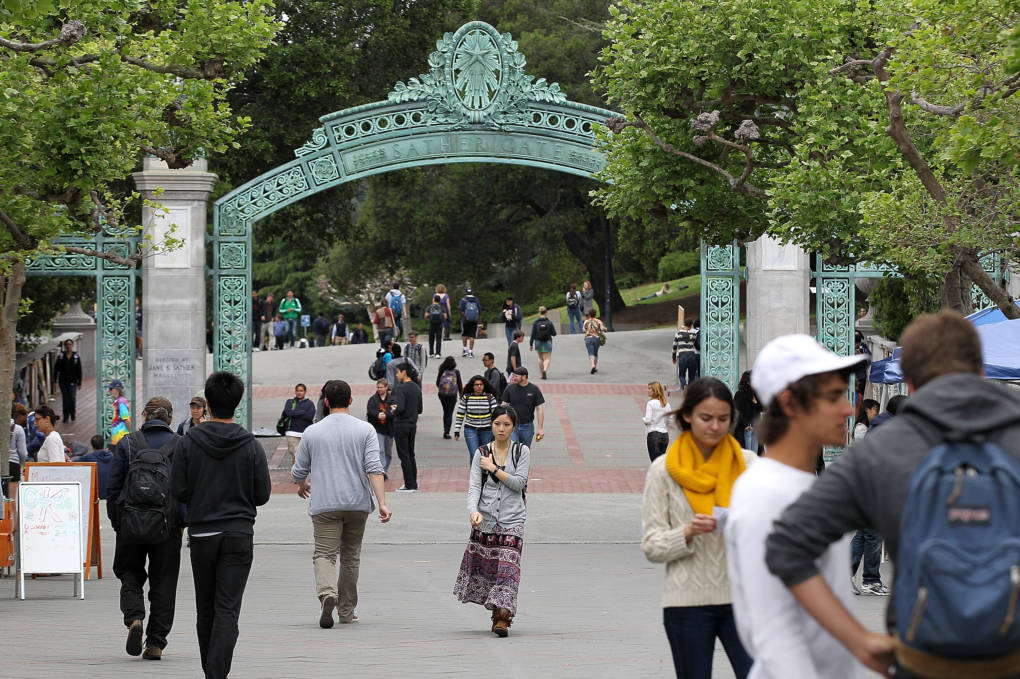
"caption": "Students walk through Sather Gate on the UC Berkeley campus. ",
"credit": "Justin Sullivan/Getty Images",
"altTag": "Undocumented students can’t get federal financial aid, but the California Dream Act opened the door to state financial aid starting in 2012–13. Since then, application numbers have increased yearly — until this one.",
"description": "Undocumented students can’t get federal financial aid, but the California Dream Act opened the door to state financial aid starting in 2012-2013. Since then, application numbers had gone up every year — until this one. ",
"imgSizes": {
"thumbnail": {
"file": "https://cdn.kqed.org/wp-content/uploads/sites/10/2018/03/RS8759_ucberkeley20140213-160x107.jpg",
"width": 160,
"height": 107,
"mimeType": "image/jpeg"
},
"medium": {
"file": "https://cdn.kqed.org/wp-content/uploads/sites/10/2018/03/RS8759_ucberkeley20140213-800x533.jpg",
"width": 800,
"height": 533,
"mimeType": "image/jpeg"
},
"large": {
"file": "https://cdn.kqed.org/wp-content/uploads/sites/10/2018/03/RS8759_ucberkeley20140213-1020x679.jpg",
"width": 1020,
"height": 679,
"mimeType": "image/jpeg"
},
"fd-lrg": {
"file": "https://cdn.kqed.org/wp-content/uploads/sites/10/2018/03/RS8759_ucberkeley20140213-1920x1279.jpg",
"width": 1920,
"height": 1279,
"mimeType": "image/jpeg"
},
"fd-med": {
"file": "https://cdn.kqed.org/wp-content/uploads/sites/10/2018/03/RS8759_ucberkeley20140213-1180x786.jpg",
"width": 1180,
"height": 786,
"mimeType": "image/jpeg"
},
"fd-sm": {
"file": "https://cdn.kqed.org/wp-content/uploads/sites/10/2018/03/RS8759_ucberkeley20140213-960x639.jpg",
"width": 960,
"height": 639,
"mimeType": "image/jpeg"
},
"post-thumbnail": {
"file": "https://cdn.kqed.org/wp-content/uploads/sites/10/2018/03/RS8759_ucberkeley20140213-672x372.jpg",
"width": 672,
"height": 372,
"mimeType": "image/jpeg"
},
"twentyfourteen-full-width": {
"file": "https://cdn.kqed.org/wp-content/uploads/sites/10/2018/03/RS8759_ucberkeley20140213-1038x576.jpg",
"width": 1038,
"height": 576,
"mimeType": "image/jpeg"
},
"xxsmall": {
"file": "https://cdn.kqed.org/wp-content/uploads/sites/10/2018/03/RS8759_ucberkeley20140213-240x160.jpg",
"width": 240,
"height": 160,
"mimeType": "image/jpeg"
},
"xsmall": {
"file": "https://cdn.kqed.org/wp-content/uploads/sites/10/2018/03/RS8759_ucberkeley20140213-375x250.jpg",
"width": 375,
"height": 250,
"mimeType": "image/jpeg"
},
"small": {
"file": "https://cdn.kqed.org/wp-content/uploads/sites/10/2018/03/RS8759_ucberkeley20140213-520x346.jpg",
"width": 520,
"height": 346,
"mimeType": "image/jpeg"
},
"xlarge": {
"file": "https://cdn.kqed.org/wp-content/uploads/sites/10/2018/03/RS8759_ucberkeley20140213-1180x786.jpg",
"width": 1180,
"height": 786,
"mimeType": "image/jpeg"
},
"full-width": {
"file": "https://cdn.kqed.org/wp-content/uploads/sites/10/2018/03/RS8759_ucberkeley20140213-1920x1279.jpg",
"width": 1920,
"height": 1279,
"mimeType": "image/jpeg"
},
"guest-author-32": {
"file": "https://cdn.kqed.org/wp-content/uploads/sites/10/2018/03/RS8759_ucberkeley20140213-32x32.jpg",
"width": 32,
"height": 32,
"mimeType": "image/jpeg"
},
"guest-author-50": {
"file": "https://cdn.kqed.org/wp-content/uploads/sites/10/2018/03/RS8759_ucberkeley20140213-50x50.jpg",
"width": 50,
"height": 50,
"mimeType": "image/jpeg"
},
"guest-author-64": {
"file": "https://cdn.kqed.org/wp-content/uploads/sites/10/2018/03/RS8759_ucberkeley20140213-64x64.jpg",
"width": 64,
"height": 64,
"mimeType": "image/jpeg"
},
"guest-author-96": {
"file": "https://cdn.kqed.org/wp-content/uploads/sites/10/2018/03/RS8759_ucberkeley20140213-96x96.jpg",
"width": 96,
"height": 96,
"mimeType": "image/jpeg"
},
"guest-author-128": {
"file": "https://cdn.kqed.org/wp-content/uploads/sites/10/2018/03/RS8759_ucberkeley20140213-128x128.jpg",
"width": 128,
"height": 128,
"mimeType": "image/jpeg"
},
"detail": {
"file": "https://cdn.kqed.org/wp-content/uploads/sites/10/2018/03/RS8759_ucberkeley20140213-150x150.jpg",
"width": 150,
"height": 150,
"mimeType": "image/jpeg"
},
"kqedFullSize": {
"file": "https://cdn.kqed.org/wp-content/uploads/sites/10/2018/03/RS8759_ucberkeley20140213-e1520025988253.jpg",
"width": 1920,
"height": 1279
}
},
"isLoading": false,
"fetchFailed": false
},
"news_11999127": {
"type": "attachments",
"id": "news_11999127",
"meta": {
"index": "attachments_1716263798",
"site": "news",
"id": "11999127",
"found": true
},
"title": "Minnesota Governor Tim Walz with Lt. Gov. Peggy Flanagan and First Lady Gwen Walz",
"publishDate": 1722985323,
"status": "inherit",
"parent": 11999094,
"modified": 1723053748,
"caption": "Gov. Tim Walz, along with Lt. Gov. Peggy Flanagan (left) and first lady Gwen Walz (right), read 'The Day You Begin' by Jacqueline Woodson, illustrated by Rafael López, to a group of kindergarteners at Adams Spanish Immersion Elementary, in St. Paul, Minnesota, on Jan. 17, 2023.",
"credit": "Glen Stubbe/Star Tribune via Getty Images",
"altTag": null,
"description": null,
"imgSizes": {
"medium": {
"file": "https://cdn.kqed.org/wp-content/uploads/sites/10/2024/08/TimWalzEducationGetty-800x533.jpg",
"width": 800,
"height": 533,
"mimeType": "image/jpeg"
},
"large": {
"file": "https://cdn.kqed.org/wp-content/uploads/sites/10/2024/08/TimWalzEducationGetty-1020x680.jpg",
"width": 1020,
"height": 680,
"mimeType": "image/jpeg"
},
"thumbnail": {
"file": "https://cdn.kqed.org/wp-content/uploads/sites/10/2024/08/TimWalzEducationGetty-160x107.jpg",
"width": 160,
"height": 107,
"mimeType": "image/jpeg"
},
"1536x1536": {
"file": "https://cdn.kqed.org/wp-content/uploads/sites/10/2024/08/TimWalzEducationGetty-1536x1024.jpg",
"width": 1536,
"height": 1024,
"mimeType": "image/jpeg"
},
"post-thumbnail": {
"file": "https://cdn.kqed.org/wp-content/uploads/sites/10/2024/08/TimWalzEducationGetty-672x372.jpg",
"width": 672,
"height": 372,
"mimeType": "image/jpeg"
},
"twentyfourteen-full-width": {
"file": "https://cdn.kqed.org/wp-content/uploads/sites/10/2024/08/TimWalzEducationGetty-1038x576.jpg",
"width": 1038,
"height": 576,
"mimeType": "image/jpeg"
},
"full-width": {
"file": "https://cdn.kqed.org/wp-content/uploads/sites/10/2024/08/TimWalzEducationGetty-1920x1280.jpg",
"width": 1920,
"height": 1280,
"mimeType": "image/jpeg"
},
"kqedFullSize": {
"file": "https://cdn.kqed.org/wp-content/uploads/sites/10/2024/08/TimWalzEducationGetty.jpg",
"width": 2000,
"height": 1333
}
},
"isLoading": false,
"fetchFailed": false
},
"news_11998762": {
"type": "attachments",
"id": "news_11998762",
"meta": {
"index": "attachments_1716263798",
"site": "news",
"id": "11998762",
"found": true
},
"title": "CSU-2048x1152",
"publishDate": 1722713497,
"status": "inherit",
"parent": 11998761,
"modified": 1722713523,
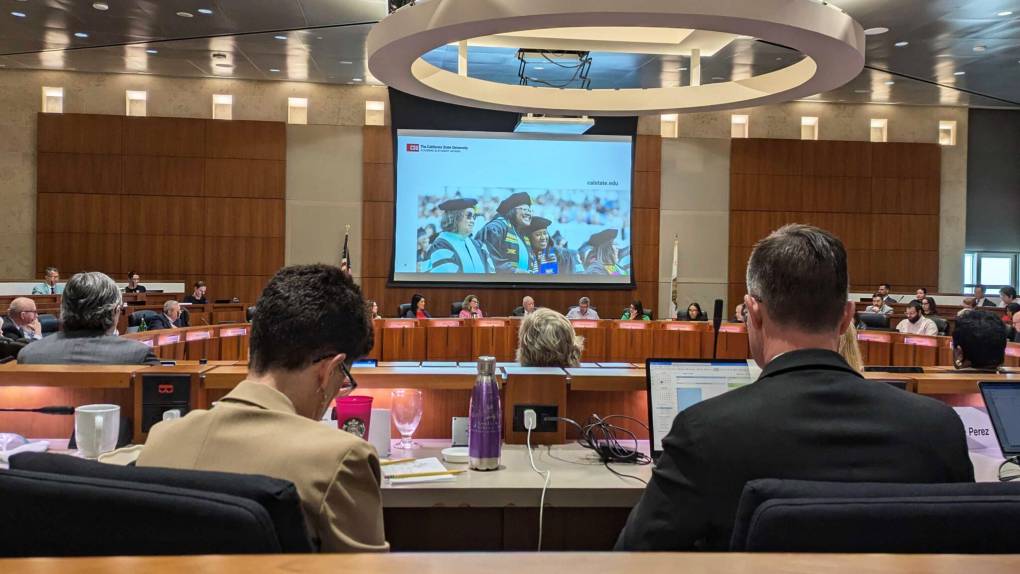
"caption": "California State University officials meet for the July 2024 meeting of the board of trustees.",
"credit": "Ashley Bolter/EdSource",
"altTag": null,
"description": null,
"imgSizes": {
"medium": {
"file": "https://cdn.kqed.org/wp-content/uploads/sites/10/2024/08/CSU-2048x1152-1-800x450.jpg",
"width": 800,
"height": 450,
"mimeType": "image/jpeg"
},
"large": {
"file": "https://cdn.kqed.org/wp-content/uploads/sites/10/2024/08/CSU-2048x1152-1-1020x574.jpg",
"width": 1020,
"height": 574,
"mimeType": "image/jpeg"
},
"thumbnail": {
"file": "https://cdn.kqed.org/wp-content/uploads/sites/10/2024/08/CSU-2048x1152-1-160x90.jpg",
"width": 160,
"height": 90,
"mimeType": "image/jpeg"
},
"1536x1536": {
"file": "https://cdn.kqed.org/wp-content/uploads/sites/10/2024/08/CSU-2048x1152-1-1536x864.jpg",
"width": 1536,
"height": 864,
"mimeType": "image/jpeg"
},
"post-thumbnail": {
"file": "https://cdn.kqed.org/wp-content/uploads/sites/10/2024/08/CSU-2048x1152-1-672x372.jpg",
"width": 672,
"height": 372,
"mimeType": "image/jpeg"
},
"twentyfourteen-full-width": {
"file": "https://cdn.kqed.org/wp-content/uploads/sites/10/2024/08/CSU-2048x1152-1-1038x576.jpg",
"width": 1038,
"height": 576,
"mimeType": "image/jpeg"
},
"full-width": {
"file": "https://cdn.kqed.org/wp-content/uploads/sites/10/2024/08/CSU-2048x1152-1-1920x1080.jpg",
"width": 1920,
"height": 1080,
"mimeType": "image/jpeg"
},
"kqedFullSize": {
"file": "https://cdn.kqed.org/wp-content/uploads/sites/10/2024/08/CSU-2048x1152-1.jpg",
"width": 2048,
"height": 1152
}
},
"isLoading": false,
"fetchFailed": false
},
"news_11998035": {
"type": "attachments",
"id": "news_11998035",
"meta": {
"index": "attachments_1716263798",
"site": "news",
"id": "11998035",
"found": true
},
"title": "240730-serramontedelrey-1-RETAIL-CROPPED-KQED",
"publishDate": 1722372142,
"status": "inherit",
"parent": 0,
"modified": 1722377061,
"caption": "The Jefferson Union High School District in San Mateo County completed this 122-unit affordable apartment complex for teachers and other school staff in May 2022. As a result, district officials say, it’s been able to significantly reduce staff turnover.",
"credit": "Courtesy of Jefferson Union High School District",
"altTag": null,
"description": null,
"imgSizes": {
"medium": {
"file": "https://cdn.kqed.org/wp-content/uploads/sites/10/2024/07/240730-serramontedelrey-1-RETAIL-CROPPED-KQED-800x533.jpg",
"width": 800,
"height": 533,
"mimeType": "image/jpeg"
},
"large": {
"file": "https://cdn.kqed.org/wp-content/uploads/sites/10/2024/07/240730-serramontedelrey-1-RETAIL-CROPPED-KQED-1020x680.jpg",
"width": 1020,
"height": 680,
"mimeType": "image/jpeg"
},
"thumbnail": {
"file": "https://cdn.kqed.org/wp-content/uploads/sites/10/2024/07/240730-serramontedelrey-1-RETAIL-CROPPED-KQED-160x107.jpg",
"width": 160,
"height": 107,
"mimeType": "image/jpeg"
},
"1536x1536": {
"file": "https://cdn.kqed.org/wp-content/uploads/sites/10/2024/07/240730-serramontedelrey-1-RETAIL-CROPPED-KQED-1536x1024.jpg",
"width": 1536,
"height": 1024,
"mimeType": "image/jpeg"
},
"post-thumbnail": {
"file": "https://cdn.kqed.org/wp-content/uploads/sites/10/2024/07/240730-serramontedelrey-1-RETAIL-CROPPED-KQED-672x372.jpg",
"width": 672,
"height": 372,
"mimeType": "image/jpeg"
},
"twentyfourteen-full-width": {
"file": "https://cdn.kqed.org/wp-content/uploads/sites/10/2024/07/240730-serramontedelrey-1-RETAIL-CROPPED-KQED-1038x576.jpg",
"width": 1038,
"height": 576,
"mimeType": "image/jpeg"
},
"full-width": {
"file": "https://cdn.kqed.org/wp-content/uploads/sites/10/2024/07/240730-serramontedelrey-1-RETAIL-CROPPED-KQED-1920x1280.jpg",
"width": 1920,
"height": 1280,
"mimeType": "image/jpeg"
},
"kqedFullSize": {
"file": "https://cdn.kqed.org/wp-content/uploads/sites/10/2024/07/240730-serramontedelrey-1-RETAIL-CROPPED-KQED.jpg",
"width": 2000,
"height": 1333
}
},
"isLoading": false,
"fetchFailed": false
},
"news_11996608": {
"type": "attachments",
"id": "news_11996608",
"meta": {
"index": "attachments_1716263798",
"site": "news",
"id": "11996608",
"found": true
},
"title": "Stege-Elementary10-1200x800",
"publishDate": 1721514943,
"status": "inherit",
"parent": 11996607,
"modified": 1721515018,
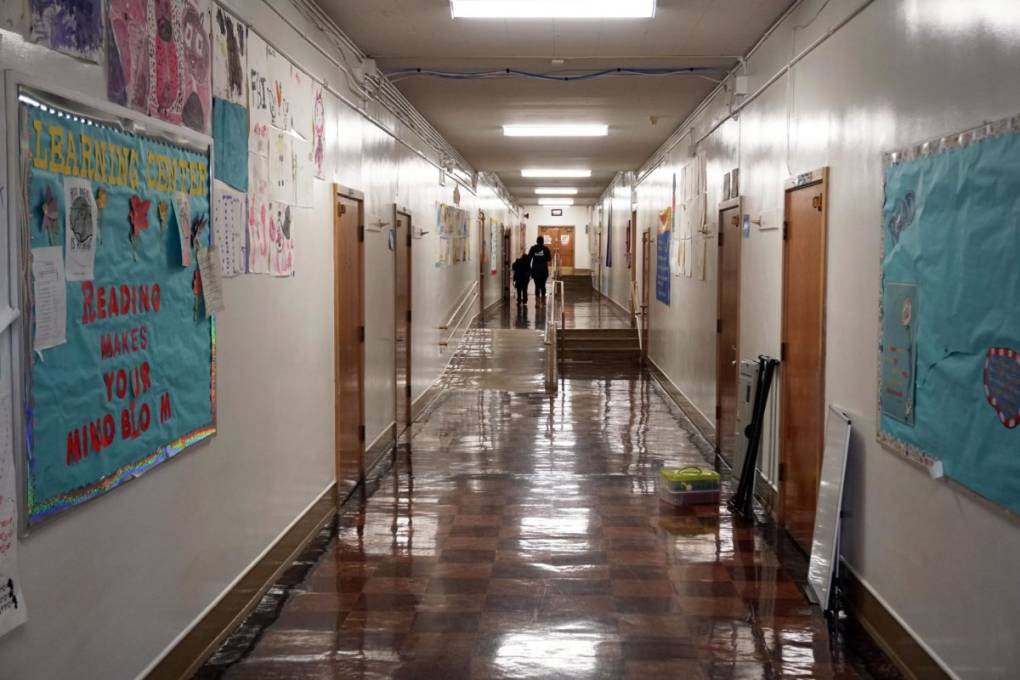
"caption": "A hallway in Stege Elementary School in Richmond.",
"credit": "Andrew Reed/EdSource",
"altTag": null,
"description": null,
"imgSizes": {
"medium": {
"file": "https://cdn.kqed.org/wp-content/uploads/sites/10/2024/07/Stege-Elementary10-1200x800-1-800x533.jpg",
"width": 800,
"height": 533,
"mimeType": "image/jpeg"
},
"large": {
"file": "https://cdn.kqed.org/wp-content/uploads/sites/10/2024/07/Stege-Elementary10-1200x800-1-1020x680.jpg",
"width": 1020,
"height": 680,
"mimeType": "image/jpeg"
},
"thumbnail": {
"file": "https://cdn.kqed.org/wp-content/uploads/sites/10/2024/07/Stege-Elementary10-1200x800-1-160x107.jpg",
"width": 160,
"height": 107,
"mimeType": "image/jpeg"
},
"post-thumbnail": {
"file": "https://cdn.kqed.org/wp-content/uploads/sites/10/2024/07/Stege-Elementary10-1200x800-1-672x372.jpg",
"width": 672,
"height": 372,
"mimeType": "image/jpeg"
},
"twentyfourteen-full-width": {
"file": "https://cdn.kqed.org/wp-content/uploads/sites/10/2024/07/Stege-Elementary10-1200x800-1-1038x576.jpg",
"width": 1038,
"height": 576,
"mimeType": "image/jpeg"
},
"kqedFullSize": {
"file": "https://cdn.kqed.org/wp-content/uploads/sites/10/2024/07/Stege-Elementary10-1200x800-1.jpg",
"width": 1200,
"height": 800
}
},
"isLoading": false,
"fetchFailed": false
},
"news_11996136": {
"type": "attachments",
"id": "news_11996136",
"meta": {
"index": "attachments_1716263798",
"site": "news",
"id": "11996136",
"found": true
},
"title": "021822-UCLA-Campus-File-RN-CM-45 copy",
"publishDate": 1721253071,
"status": "inherit",
"parent": 11996132,
"modified": 1721253164,
"caption": "The UCLA campus in Los Angeles on Feb. 18, 2022. \n",
"credit": "Raquel Natalicchio for CalMatters",
"altTag": null,
"description": null,
"imgSizes": {
"medium": {
"file": "https://cdn.kqed.org/wp-content/uploads/sites/10/2024/07/021822-UCLA-Campus-File-RN-CM-45-copy-800x532.jpg",
"width": 800,
"height": 532,
"mimeType": "image/jpeg"
},
"large": {
"file": "https://cdn.kqed.org/wp-content/uploads/sites/10/2024/07/021822-UCLA-Campus-File-RN-CM-45-copy-1020x679.jpg",
"width": 1020,
"height": 679,
"mimeType": "image/jpeg"
},
"thumbnail": {
"file": "https://cdn.kqed.org/wp-content/uploads/sites/10/2024/07/021822-UCLA-Campus-File-RN-CM-45-copy-160x106.jpg",
"width": 160,
"height": 106,
"mimeType": "image/jpeg"
},
"1536x1536": {
"file": "https://cdn.kqed.org/wp-content/uploads/sites/10/2024/07/021822-UCLA-Campus-File-RN-CM-45-copy-1536x1022.jpg",
"width": 1536,
"height": 1022,
"mimeType": "image/jpeg"
},
"post-thumbnail": {
"file": "https://cdn.kqed.org/wp-content/uploads/sites/10/2024/07/021822-UCLA-Campus-File-RN-CM-45-copy-672x372.jpg",
"width": 672,
"height": 372,
"mimeType": "image/jpeg"
},
"twentyfourteen-full-width": {
"file": "https://cdn.kqed.org/wp-content/uploads/sites/10/2024/07/021822-UCLA-Campus-File-RN-CM-45-copy-1038x576.jpg",
"width": 1038,
"height": 576,
"mimeType": "image/jpeg"
},
"full-width": {
"file": "https://cdn.kqed.org/wp-content/uploads/sites/10/2024/07/021822-UCLA-Campus-File-RN-CM-45-copy-1920x1278.jpg",
"width": 1920,
"height": 1278,
"mimeType": "image/jpeg"
},
"kqedFullSize": {
"file": "https://cdn.kqed.org/wp-content/uploads/sites/10/2024/07/021822-UCLA-Campus-File-RN-CM-45-copy.jpg",
"width": 2000,
"height": 1331
}
},
"isLoading": false,
"fetchFailed": false
},
"news_11995875": {
"type": "attachments",
"id": "news_11995875",
"meta": {
"index": "attachments_1716263798",
"site": "news",
"id": "11995875",
"found": true
},
"title": "Chino Valley School Board Votes On Student Transgender Policy",
"publishDate": 1721159949,
"status": "inherit",
"parent": 11995853,
"modified": 1721162762,
"caption": "A person holds a sign in opposition to a policy that the Chino Valley school board is meeting to vote on, which would require school staff to 'out' students to their parents if they ask to be identified by a gender that is not listed on their birth certificate on July 20, 2023, in Chino, San Bernardino County. ",
"credit": "David McNew/Getty Images",
"altTag": null,
"description": null,
"imgSizes": {
"medium": {
"file": "https://cdn.kqed.org/wp-content/uploads/sites/10/2024/07/GettyImages-1545719242-800x534.jpg",
"width": 800,
"height": 534,
"mimeType": "image/jpeg"
},
"large": {
"file": "https://cdn.kqed.org/wp-content/uploads/sites/10/2024/07/GettyImages-1545719242-1020x680.jpg",
"width": 1020,
"height": 680,
"mimeType": "image/jpeg"
},
"thumbnail": {
"file": "https://cdn.kqed.org/wp-content/uploads/sites/10/2024/07/GettyImages-1545719242-160x107.jpg",
"width": 160,
"height": 107,
"mimeType": "image/jpeg"
},
"post-thumbnail": {
"file": "https://cdn.kqed.org/wp-content/uploads/sites/10/2024/07/GettyImages-1545719242-672x372.jpg",
"width": 672,
"height": 372,
"mimeType": "image/jpeg"
},
"twentyfourteen-full-width": {
"file": "https://cdn.kqed.org/wp-content/uploads/sites/10/2024/07/GettyImages-1545719242-1024x576.jpg",
"width": 1024,
"height": 576,
"mimeType": "image/jpeg"
},
"kqedFullSize": {
"file": "https://cdn.kqed.org/wp-content/uploads/sites/10/2024/07/GettyImages-1545719242.jpg",
"width": 1024,
"height": 683
}
},
"isLoading": false,
"fetchFailed": false
},
"news_11993162": {
"type": "attachments",
"id": "news_11993162",
"meta": {
"index": "attachments_1716263798",
"site": "news",
"id": "11993162",
"found": true
},
"title": "US-FIRE-CALIFORNIA-ENVIORNMENT-WEATHER",
"publishDate": 1720392764,
"status": "inherit",
"parent": 11993160,
"modified": 1720461670,
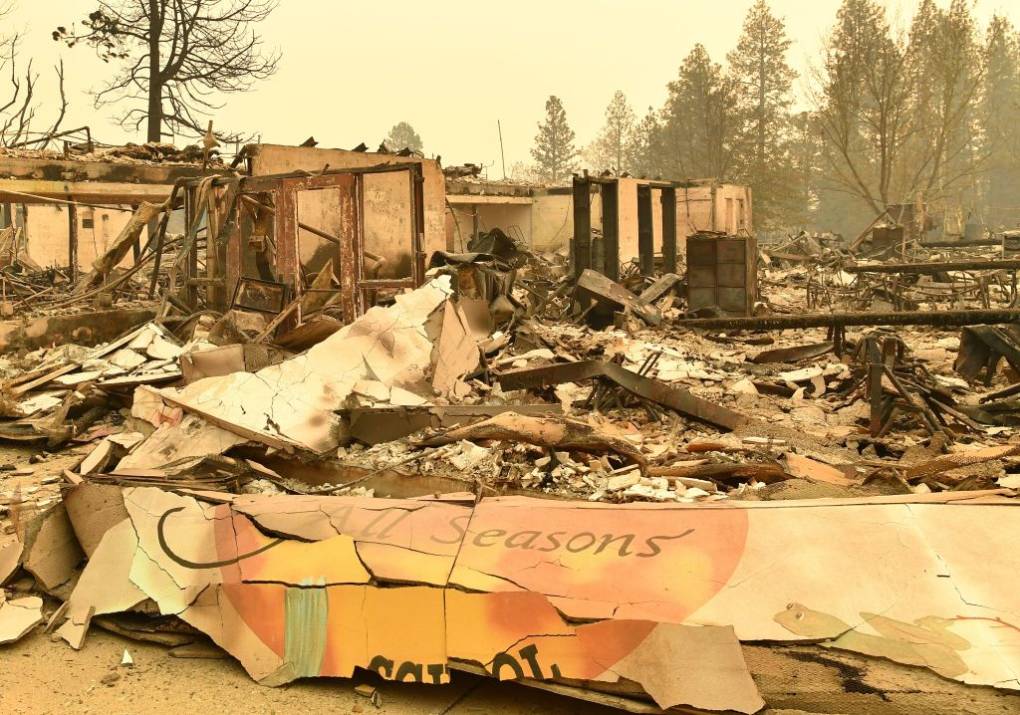
"caption": "Paradise Elementary School is seen after burning down during the Camp fire in Paradise on Nov. 12, 2018. ",
"credit": "Josh Edelson/AFP via Getty Images",
"altTag": "The charred remains of a building.",
"description": null,
"imgSizes": {
"medium": {
"file": "https://cdn.kqed.org/wp-content/uploads/sites/10/2024/07/GettyImages-1060761874-800x561.jpg",
"width": 800,
"height": 561,
"mimeType": "image/jpeg"
},
"large": {
"file": "https://cdn.kqed.org/wp-content/uploads/sites/10/2024/07/GettyImages-1060761874-1020x715.jpg",
"width": 1020,
"height": 715,
"mimeType": "image/jpeg"
},
"thumbnail": {
"file": "https://cdn.kqed.org/wp-content/uploads/sites/10/2024/07/GettyImages-1060761874-160x112.jpg",
"width": 160,
"height": 112,
"mimeType": "image/jpeg"
},
"post-thumbnail": {
"file": "https://cdn.kqed.org/wp-content/uploads/sites/10/2024/07/GettyImages-1060761874-672x372.jpg",
"width": 672,
"height": 372,
"mimeType": "image/jpeg"
},
"twentyfourteen-full-width": {
"file": "https://cdn.kqed.org/wp-content/uploads/sites/10/2024/07/GettyImages-1060761874-1024x576.jpg",
"width": 1024,
"height": 576,
"mimeType": "image/jpeg"
},
"kqedFullSize": {
"file": "https://cdn.kqed.org/wp-content/uploads/sites/10/2024/07/GettyImages-1060761874.jpg",
"width": 1024,
"height": 718
}
},
"isLoading": false,
"fetchFailed": false
},
"news_11993025": {
"type": "attachments",
"id": "news_11993025",
"meta": {
"index": "attachments_1716263798",
"site": "news",
"id": "11993025",
"found": true
},
"title": "California Bonds",
"publishDate": 1720104941,
"status": "inherit",
"parent": 11993024,
"modified": 1720105024,
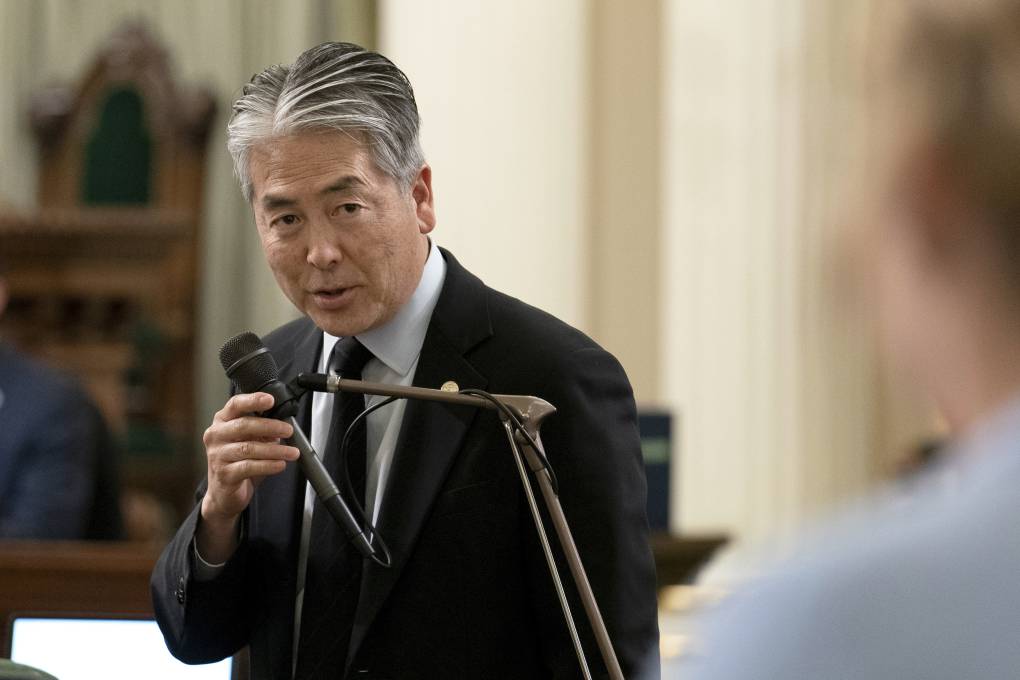
"caption": "Assemblymember Al Muratsuchi (D-Torrance) speaks on a bill before the Assembly at the Capitol in Sacramento, on June 1, 2023.",
"credit": "Rich Pedroncelli/AP Photo",
"altTag": null,
"description": null,
"imgSizes": {
"medium": {
"file": "https://cdn.kqed.org/wp-content/uploads/sites/10/2024/07/AP24185624360793-800x533.jpg",
"width": 800,
"height": 533,
"mimeType": "image/jpeg"
},
"large": {
"file": "https://cdn.kqed.org/wp-content/uploads/sites/10/2024/07/AP24185624360793-1020x680.jpg",
"width": 1020,
"height": 680,
"mimeType": "image/jpeg"
},
"thumbnail": {
"file": "https://cdn.kqed.org/wp-content/uploads/sites/10/2024/07/AP24185624360793-160x107.jpg",
"width": 160,
"height": 107,
"mimeType": "image/jpeg"
},
"1536x1536": {
"file": "https://cdn.kqed.org/wp-content/uploads/sites/10/2024/07/AP24185624360793-1536x1024.jpg",
"width": 1536,
"height": 1024,
"mimeType": "image/jpeg"
},
"2048x2048": {
"file": "https://cdn.kqed.org/wp-content/uploads/sites/10/2024/07/AP24185624360793-2048x1366.jpg",
"width": 2048,
"height": 1366,
"mimeType": "image/jpeg"
},
"post-thumbnail": {
"file": "https://cdn.kqed.org/wp-content/uploads/sites/10/2024/07/AP24185624360793-672x372.jpg",
"width": 672,
"height": 372,
"mimeType": "image/jpeg"
},
"twentyfourteen-full-width": {
"file": "https://cdn.kqed.org/wp-content/uploads/sites/10/2024/07/AP24185624360793-1038x576.jpg",
"width": 1038,
"height": 576,
"mimeType": "image/jpeg"
},
"full-width": {
"file": "https://cdn.kqed.org/wp-content/uploads/sites/10/2024/07/AP24185624360793-1920x1280.jpg",
"width": 1920,
"height": 1280,
"mimeType": "image/jpeg"
},
"kqedFullSize": {
"file": "https://cdn.kqed.org/wp-content/uploads/sites/10/2024/07/AP24185624360793-scaled-e1788201819805.jpg",
"width": 2000,
"height": 1334
}
},
"isLoading": false,
"fetchFailed": false
},
"news_11992854": {
"type": "attachments",
"id": "news_11992854",
"meta": {
"index": "attachments_1716263798",
"site": "news",
"id": "11992854",
"found": true
},
"title": "121319_Burnt_Ranch_Elementary_DW_CM_16 copy",
"publishDate": 1719949841,
"status": "inherit",
"parent": 11992853,
"modified": 1719949859,
"caption": "A new classroom at Burnt Ranch Elementary School in Trinity County on Dec. 13, 2019. \n",
"credit": "Dave Woody for CalMatters",
"altTag": null,
"description": null,
"imgSizes": {
"medium": {
"file": "https://cdn.kqed.org/wp-content/uploads/sites/10/2024/07/121319_Burnt_Ranch_Elementary_DW_CM_16-copy-800x534.jpg",
"width": 800,
"height": 534,
"mimeType": "image/jpeg"
},
"large": {
"file": "https://cdn.kqed.org/wp-content/uploads/sites/10/2024/07/121319_Burnt_Ranch_Elementary_DW_CM_16-copy-1020x681.jpg",
"width": 1020,
"height": 681,
"mimeType": "image/jpeg"
},
"thumbnail": {
"file": "https://cdn.kqed.org/wp-content/uploads/sites/10/2024/07/121319_Burnt_Ranch_Elementary_DW_CM_16-copy-160x107.jpg",
"width": 160,
"height": 107,
"mimeType": "image/jpeg"
},
"1536x1536": {
"file": "https://cdn.kqed.org/wp-content/uploads/sites/10/2024/07/121319_Burnt_Ranch_Elementary_DW_CM_16-copy-1536x1026.jpg",
"width": 1536,
"height": 1026,
"mimeType": "image/jpeg"
},
"post-thumbnail": {
"file": "https://cdn.kqed.org/wp-content/uploads/sites/10/2024/07/121319_Burnt_Ranch_Elementary_DW_CM_16-copy-672x372.jpg",
"width": 672,
"height": 372,
"mimeType": "image/jpeg"
},
"twentyfourteen-full-width": {
"file": "https://cdn.kqed.org/wp-content/uploads/sites/10/2024/07/121319_Burnt_Ranch_Elementary_DW_CM_16-copy-1038x576.jpg",
"width": 1038,
"height": 576,
"mimeType": "image/jpeg"
},
"full-width": {
"file": "https://cdn.kqed.org/wp-content/uploads/sites/10/2024/07/121319_Burnt_Ranch_Elementary_DW_CM_16-copy-1920x1283.jpg",
"width": 1920,
"height": 1283,
"mimeType": "image/jpeg"
},
"kqedFullSize": {
"file": "https://cdn.kqed.org/wp-content/uploads/sites/10/2024/07/121319_Burnt_Ranch_Elementary_DW_CM_16-copy.jpg",
"width": 2000,
"height": 1336
}
},
"isLoading": false,
"fetchFailed": false
}
},
"audioPlayerReducer": {
"postId": "stream_live",
"isPaused": true,
"isPlaying": false,
"pfsActive": false,
"pledgeModalIsOpen": true,
"playerDrawerIsOpen": false,
"liveAudioPlayStartedAt": 0,
"liveAudioPlayContext": ""
},
"authorsReducer": {
"byline_news_11999779": {
"type": "authors",
"id": "byline_news_11999779",
"meta": {
"override": true
},
"slug": "byline_news_11999779",
"name": "Diana Lambert, EdSource",
"isLoading": false
},
"byline_news_11999471": {
"type": "authors",
"id": "byline_news_11999471",
"meta": {
"override": true
},
"slug": "byline_news_11999471",
"name": "Ayana Archie, NPR",
"isLoading": false
},
"byline_news_11998761": {
"type": "authors",
"id": "byline_news_11998761",
"meta": {
"override": true
},
"slug": "byline_news_11998761",
"name": "\u003ca href=\"https://edsource.org/author/adipierro\">Amy DiPierro\u003c/a>, EdSource",
"isLoading": false
},
"byline_news_11996607": {
"type": "authors",
"id": "byline_news_11996607",
"meta": {
"override": true
},
"slug": "byline_news_11996607",
"name": "\u003ca href=\"https://edsource.org/author/mvelez\">Monica Velez\u003c/a>, EdSource",
"isLoading": false
},
"byline_news_11996132": {
"type": "authors",
"id": "byline_news_11996132",
"meta": {
"override": true
},
"slug": "byline_news_11996132",
"name": "\u003ca href=\"https://calmatters.org/author/mikhailzinshteyn/\">Mikhail Zinshteyn\u003c/a>, CalMatters",
"isLoading": false
},
"byline_news_11995853": {
"type": "authors",
"id": "byline_news_11995853",
"meta": {
"override": true
},
"slug": "byline_news_11995853",
"name": "Sophie Austin, Associated Press",
"isLoading": false
},
"byline_news_11993160": {
"type": "authors",
"id": "byline_news_11993160",
"meta": {
"override": true
},
"slug": "byline_news_11993160",
"name": "Diana Lambert, EdSource",
"isLoading": false
},
"byline_news_11993024": {
"type": "authors",
"id": "byline_news_11993024",
"meta": {
"override": true
},
"slug": "byline_news_11993024",
"name": "Adam Beam, Associated Press",
"isLoading": false
},
"byline_news_11992853": {
"type": "authors",
"id": "byline_news_11992853",
"meta": {
"override": true
},
"slug": "byline_news_11992853",
"name": "\u003ca href=\"https://calmatters.org/author/carolyn-jones/\">Carolyn Jones\u003c/a>, CalMatters",
"isLoading": false
},
"fjhabvala": {
"type": "authors",
"id": "8659",
"meta": {
"index": "authors_1716337520",
"id": "8659",
"found": true
},
"name": "Farida Jhabvala Romero",
"firstName": "Farida",
"lastName": "Jhabvala Romero",
"slug": "fjhabvala",
"email": "fjhabvala@kqed.org",
"display_author_email": true,
"staff_mastheads": [
"news"
],
"title": "KQED Contributor",
"bio": "Farida Jhabvala Romero is a Labor Correspondent for KQED. She previously covered immigration. Farida was \u003ca href=\"https://www.ccnma.org/2022-most-influential-latina-journalists\">named\u003c/a> one of the 10 Most Influential Latina Journalists in California in 2022 by the California Chicano News Media Association. Her work has won awards from the Society of Professional Journalists (Northern California), as well as a national and regional Edward M. Murrow Award for the collaborative reporting projects “Dangerous Air” and “Graying California.” Before joining KQED, Farida worked as a producer at Radio Bilingüe, a national public radio network. Farida earned her master’s degree in journalism from Stanford University.",
"avatar": "https://secure.gravatar.com/avatar/f9f022d4e2609741874222a1e9d41f48fea74011aa7c615eef91d9a50c944ebe?s=600&d=blank&r=g",
"twitter": "FaridaJhabvala",
"bluesky": null,
"facebook": null,
"instagram": null,
"linkedin": "https://www.linkedin.com/in/faridajhabvala/",
"sites": [
{
"site": "news",
"roles": [
"editor"
]
},
{
"site": "stateofhealth",
"roles": [
"author"
]
},
{
"site": "liveblog",
"roles": [
"author"
]
}
],
"headData": {
"title": "Farida Jhabvala Romero | KQED",
"description": "KQED Contributor",
"ogImgSrc": "https://secure.gravatar.com/avatar/f9f022d4e2609741874222a1e9d41f48fea74011aa7c615eef91d9a50c944ebe?s=600&d=blank&r=g",
"twImgSrc": "https://secure.gravatar.com/avatar/f9f022d4e2609741874222a1e9d41f48fea74011aa7c615eef91d9a50c944ebe?s=600&d=blank&r=g"
},
"isLoading": false,
"link": "/author/fjhabvala"
},
"ebaldassari": {
"type": "authors",
"id": "11652",
"meta": {
"index": "authors_1716337520",
"id": "11652",
"found": true
},
"name": "Erin Baldassari",
"firstName": "Erin",
"lastName": "Baldassari",
"slug": "ebaldassari",
"email": "ebaldassari@KQED.org",
"display_author_email": true,
"staff_mastheads": [
"news"
],
"title": "Staff Writer",
"bio": "Erin Baldassari covers housing for KQED. She's a former print journalist and most recently worked as the transportation reporter for the \u003cem>Mercury News\u003c/em> and \u003cem>East Bay Times. \u003c/em>There, she focused on how the Bay Area’s housing shortage has changed the way people move around the region. She also served on the \u003cem>East Bay Times\u003c/em>’ 2017 Pulitzer Prize-winning team for coverage of the Ghost Ship Fire in Oakland. Prior to that, Erin worked as a breaking news and general assignment reporter for a variety of outlets in the Bay Area and the greater Boston area. A Tufts University alumna, Erin grew up in the foothills of the Sierra Nevada mountains and in Sonoma County. She is a life-long KQED listener.",
"avatar": "https://secure.gravatar.com/avatar/5e95cad64a8ca08288082212e199d2b0cbeb4fd8e8ef5339395f361032bbe005?s=600&d=blank&r=g",
"twitter": "e_baldi",
"bluesky": null,
"facebook": null,
"instagram": null,
"linkedin": null,
"sites": [
{
"site": "news",
"roles": [
"edit_others_posts",
"editor"
]
},
{
"site": "science",
"roles": [
"editor"
]
},
{
"site": "liveblog",
"roles": [
"editor"
]
}
],
"headData": {
"title": "Erin Baldassari | KQED",
"description": "Staff Writer",
"ogImgSrc": "https://secure.gravatar.com/avatar/5e95cad64a8ca08288082212e199d2b0cbeb4fd8e8ef5339395f361032bbe005?s=600&d=blank&r=g",
"twImgSrc": "https://secure.gravatar.com/avatar/5e95cad64a8ca08288082212e199d2b0cbeb4fd8e8ef5339395f361032bbe005?s=600&d=blank&r=g"
},
"isLoading": false,
"link": "/author/ebaldassari"
},
"kdebenedetti": {
"type": "authors",
"id": "11913",
"meta": {
"index": "authors_1716337520",
"id": "11913",
"found": true
},
"name": "Katie DeBenedetti",
"firstName": "Katie",
"lastName": "DeBenedetti",
"slug": "kdebenedetti",
"email": "kdebenedetti@kqed.org",
"display_author_email": false,
"staff_mastheads": [
"news",
"science"
],
"title": "KQED Contributor",
"bio": "Katie DeBenedetti is a digital reporter covering daily news for the Express Desk. Prior to joining KQED as a culture reporting intern in January 2024, she covered education and city government for the Napa Valley Register.",
"avatar": "https://secure.gravatar.com/avatar/6e31073cb8f7e4214ab03f42771d0f45?s=600&d=blank&r=g",
"twitter": null,
"facebook": null,
"instagram": null,
"linkedin": null,
"sites": [
{
"site": "news",
"roles": [
"author"
]
},
{
"site": "science",
"roles": [
"author"
]
},
{
"site": "liveblog",
"roles": [
"author"
]
}
],
"headData": {
"title": "Katie DeBenedetti | KQED",
"description": "KQED Contributor",
"ogImgSrc": "https://secure.gravatar.com/avatar/6e31073cb8f7e4214ab03f42771d0f45?s=600&d=blank&r=g",
"twImgSrc": "https://secure.gravatar.com/avatar/6e31073cb8f7e4214ab03f42771d0f45?s=600&d=blank&r=g"
},
"isLoading": false,
"link": "/author/kdebenedetti"
}
},
"pagesReducer": {
"news_tag_education": {
"type": "terms",
"id": "news_20013",
"meta": {
"index": "terms_1716263798",
"site": "news",
"id": "20013",
"score": 6.9701543
},
"featImg": null,
"name": "education",
"description": null,
"taxonomy": "tag",
"headData": {
"twImgId": null,
"twTitle": null,
"ogTitle": null,
"ogImgId": null,
"twDescription": null,
"description": null,
"title": "education Archives | KQED News",
"ogDescription": null
},
"ttid": 20030,
"slug": "education",
"isLoading": false,
"title": "education",
"pageMeta": {
"site": "news",
"WpPageTemplate": "page-topic-editorial",
"currentPage": 41
},
"blocks": [
{
"blockName": "kqed/post-list",
"attrs": {
"layout": "cardArticle2",
"query": "posts/news?tag=education",
"seeMore": false,
"paginated": true,
"page": 41
}
},
{
"blockName": "kqed/ad"
}
]
}
},
"pfsSessionReducer": {},
"postsReducer": {
"stream_live": {
"type": "live",
"id": "stream_live",
"audioUrl": "https://streams.kqed.org/kqedradio",
"title": "Live Stream",
"excerpt": "Live Stream information currently unavailable.",
"link": "/radio",
"featImg": "",
"label": {
"name": "KQED Live",
"link": "/"
}
},
"stream_kqedNewscast": {
"type": "posts",
"id": "stream_kqedNewscast",
"audioUrl": "https://www.kqed.org/.stream/anon/radio/RDnews/newscast.mp3?_=1",
"title": "KQED Newscast",
"featImg": "",
"label": {
"name": "88.5 FM",
"link": "/"
}
},
"news_11999993": {
"type": "posts",
"id": "news_11999993",
"meta": {
"index": "posts_1716263798",
"site": "news",
"id": "11999993",
"score": null,
"sort": [
1723585059000
]
},
"guestAuthors": [],
"slug": "newsom-urges-schools-to-restrict-phones-in-class-many-bay-area-campuses-already-do",
"title": "Newsom Urges Schools to Restrict Phones in Class. Many Bay Area Campuses Already Do",
"publishDate": 1723585059,
"format": "standard",
"headTitle": "Newsom Urges Schools to Restrict Phones in Class. Many Bay Area Campuses Already Do | KQED",
"labelTerm": {
"site": "news"
},
"content": "\u003cp>Class is back in session, and more students might be spending their days phone-free after Gov. Gavin Newsom on Tuesday urged districts to restrict use during school hours.\u003c/p>\n\u003cp>While multiple bills that could affect phone access in schools are considered in the California Legislature, Newsom told leaders that there is “no reason for schools to wait” to limit smartphone use. More Bay Area schools plan to implement restrictions as the new academic year begins this week, but some advocates say a blanket ban is a bad idea.\u003c/p>\n\u003cp>“Reducing phone use in class leads to improved concentration, better academic outcomes, and enhanced social interactions,” Newsom said in his letter on Tuesday, adding that schools and districts that have already rolled out no-phone policies have seen “positive impacts,” including higher test scores and less bullying.\u003c/p>\n\u003cp>Here’s what to know about the efforts so far:\u003c/p>\n\u003cp>[ad fullwidth]\u003c/p>\n\u003ch2>Which Bay Area schools already lock down phones?\u003c/h2>\n\u003cp>San Mateo-Foster City School District began requiring middle school students to put their phones into lockable bags called Yondr pouches during the 2022–23 academic year. The pouch can be unlocked outside the “\u003ca href=\"https://www.overyondr.com/phone-locking-pouch\">phone-free area\u003c/a>,” according to Yondr’s website.\u003c/p>\n\u003cp>Without the distraction of messages and social media notifications, students are talking to each other more and paying attention in class, district spokesperson Diego Perez said.\u003c/p>\n\u003cfigure id=\"attachment_12000041\" class=\"wp-caption aligncenter\" style=\"max-width: 2000px\">\u003cimg loading=\"lazy\" decoding=\"async\" class=\"size-full wp-image-12000041\" src=\"https://cdn.kqed.org/wp-content/uploads/sites/10/2024/08/HighSchoolStudents.jpg\" alt=\"\" width=\"2000\" height=\"1333\" srcset=\"https://cdn.kqed.org/wp-content/uploads/sites/10/2024/08/HighSchoolStudents.jpg 2000w, https://cdn.kqed.org/wp-content/uploads/sites/10/2024/08/HighSchoolStudents-800x533.jpg 800w, https://cdn.kqed.org/wp-content/uploads/sites/10/2024/08/HighSchoolStudents-1020x680.jpg 1020w, https://cdn.kqed.org/wp-content/uploads/sites/10/2024/08/HighSchoolStudents-160x107.jpg 160w, https://cdn.kqed.org/wp-content/uploads/sites/10/2024/08/HighSchoolStudents-1536x1024.jpg 1536w, https://cdn.kqed.org/wp-content/uploads/sites/10/2024/08/HighSchoolStudents-1920x1280.jpg 1920w\" sizes=\"auto, (max-width: 2000px) 100vw, 2000px\">\u003cfigcaption class=\"wp-caption-text\">More Bay Area schools plan to implement restrictions as the new academic year begins this week, but some advocates say a blanket ban is a bad idea. \u003ccite>(Deborah Svoboda/KQED)\u003c/cite>\u003c/figcaption>\u003c/figure>\n\u003cp>“As a teacher, you see students look down into their backpacks … They’ll look up, down, up, down — they’ll find their way to be able to respond to that text,” he said. “Because of the pouches storing the phones away, leaving them in a backpack, we don’t see that anymore.”\u003c/p>\n\u003cp>In the San Mateo Union High School District, San Mateo and Peninsula high schools use the same technology so far. Spokesperson Laura Chalkley said the district’s board of trustees “has expressed an interest in exploring expanding the Yondr program, but there has been no formal discussion” yet.\u003c/p>\n\u003cp>In the East Bay, Mt. Diablo Unified School District is introducing Yondr to two campuses. In April, the district’s board approved the purchase of more than 3,000 pouches for Mt. Diablo and Ygnacio Valley high schools.\u003c/p>\n\u003cp>Tamalpais Union High School District is also considering the pouches. At a board meeting last week, district officials presented on Yondr after piloting an “expanded cellphone policy which requires all teachers to collect cellphones at the start of every class period” during the spring semester last year, according to its agenda.\u003c/p>\n\u003cp>A spokesperson for San Francisco Unified said Tuesday that though campuses require phones to be off and put away during class and passing periods, “students may have mobile communication devices on campus as long as the device is utilized in accordance with law, board policy and any rules that individual schools may impose.”\u003c/p>\n\u003ch2>Could a statewide ban be on the way?\u003c/h2>\n\u003cp>Currently, the state does not have any binding phone restrictions that affect campuses, but in June, Newsom said in a \u003ca href=\"https://www.gov.ca.gov/2024/06/18/governor-newsom-supports-efforts-to-get-smartphones-out-of-schools/\">statement\u003c/a> that he “looks forward to working with the Legislature to restrict the use of smartphones during the school day,” building on a bill he signed in 2019 that permitted districts to regulate phone use.\u003c/p>\n\u003cp>\u003cspan style=\"font-weight: 400\">[aside postID=news_11999471 hero='https://cdn.kqed.org/wp-content/uploads/sites/10/2018/03/RS8759_ucberkeley20140213-1180x786.jpg']\u003c/span>\u003c/p>\n\u003cp>That month, the California Senate Education Committee unanimously approved \u003ca href=\"https://legiscan.com/CA/text/AB3216/id/2965936\">Assembly Bill 3216\u003c/a>, a bill introduced by Rep. Josh Hoover (R-Folsom), which would “require school districts in California to adopt a policy no later than July 1, 2026, that limits or prohibits the use of smartphones by students during the school day.” \u003ca href=\"https://legiscan.com/CA/text/SB1283/id/3000774\">Senate Bill 1283\u003c/a>, introduced by Sen. Henry Stern (D-Los Angeles), would explicitly allow school districts to “limit or prohibit the use by its pupils of social media.”\u003c/p>\n\u003cp>Some advocates say a blanket ban on cellphones is a bad idea.\u003c/p>\n\u003cp>Troy Flint, the chief communications officer for the California School Boards Association, said that there are some “potentially positive uses of cellphone access.”\u003c/p>\n\u003cp>“For communications with their parents in case of emergency, or to monitor their intake of medications that they’re required to have during the day, or, in case of a disaster, in case of a school shooting and other incidents where it’s been documented that cellphones have been helpful.”\u003c/p>\n\u003cp>He said the organization is not against limitations but would “vigorously oppose any bill that proposes a blanket mandate and removes that decision-making power about how to restrict cellphones from local communities.”\u003c/p>\n\u003ch2>Aren’t kids always using the Internet in modern classrooms?\u003c/h2>\n\u003cp>There’s also the question of other technology-based learning.\u003c/p>\n\u003cp>“If kids are using computers three or four classes a day, which are going to have Internet access generally, then what are you accomplishing?” Flint said.\u003c/p>\n\u003cp>\u003cspan style=\"font-weight: 400\">[aside postID=news_11997949 hero='https://cdn.kqed.org/wp-content/uploads/sites/10/2024/07/240730-serramontedelrey-1-RETAIL-CROPPED-KQED-1020x680.jpg']\u003c/span>\u003c/p>\n\u003cp>More districts are becoming “one-to-one,” providing students with devices access to electronic devices as a part of their curriculum, including at the San Mateo-Foster City School District.\u003c/p>\n\u003cp>Perez said that the district distributes Chromebooks on campuses with “layers of security” to ensure they’re used for learning, such as a Lego education program that uses technology to bring the physical brick structures to life.\u003c/p>\n\u003cp>“While they are using technology in the classroom, they’re engaging, and they’re collaborating. The technology is the tool,” Perez said.\u003c/p>\n\u003cp>He said minimizing students’ texting, social media use, and other cellphone distractions on campus makes a big impact, especially after spending so much school time on screens during the pandemic.\u003c/p>\n\u003cp>“Having the ability to minimize those practices and habits on the school grounds helps them to actually engage,” he said. “Then, when you provide a curriculum that brings interest from students, it just makes them want to come to school the following day.”\u003c/p>\n\u003cp>\u003c/p>\n",
"blocks": [],
"excerpt": "While multiple bills are considered in the California Legislature, Newsom said there is “no reason for schools to wait” to limit smartphone use in class.",
"status": "publish",
"parent": 0,
"modified": 1740613312,
"stats": {
"hasAudio": false,
"hasVideo": false,
"hasChartOrMap": false,
"iframeSrcs": [],
"hasGoogleForm": false,
"hasGallery": false,
"hasHearkenModule": false,
"hasPolis": false,
"paragraphCount": 28,
"wordCount": 1065
},
"headData": {
"title": "Newsom Urges Schools to Restrict Phones in Class. Many Bay Area Campuses Already Do | KQED",
"description": "While multiple bills are considered in the California Legislature, Newsom said there is “no reason for schools to wait” to limit smartphone use in class.",
"ogTitle": "",
"ogDescription": "",
"ogImgId": "",
"twTitle": "",
"twDescription": "",
"twImgId": "",
"schema": {
"@context": "https://schema.org",
"@type": "NewsArticle",
"headline": "Newsom Urges Schools to Restrict Phones in Class. Many Bay Area Campuses Already Do",
"datePublished": "2024-08-13T14:37:39-07:00",
"dateModified": "2025-02-26T15:41:52-08:00",
"image": "https://cdn.kqed.org/wp-content/uploads/2020/02/KQED-OG-Image@1x.png",
"isAccessibleForFree": "True",
"publisher": {
"@type": "NewsMediaOrganization",
"@id": "https://www.kqed.org/#organization",
"name": "KQED",
"logo": "https://cdn.kqed.org/wp-content/uploads/2020/02/KQED-OG-Image@1x.png",
"url": "https://www.kqed.org",
"sameAs": [
"https://www.facebook.com/KQED",
"https://twitter.com/KQED",
"https://www.instagram.com/kqed/",
"https://www.tiktok.com/@kqedofficial",
"https://www.linkedin.com/company/kqed",
"https://www.youtube.com/channel/UCeC0IOo7i1P_61zVUWbJ4nw"
]
}
}
},
"sticky": false,
"nprStoryId": "kqed-11999993",
"excludeFromSiteSearch": "Include",
"articleAge": "0",
"path": "/news/11999993/newsom-urges-schools-to-restrict-phones-in-class-many-bay-area-campuses-already-do",
"audioTrackLength": null,
"parsedContent": [
{
"type": "contentString",
"content": "\u003cdiv class=\"post-body\">\u003cp>\u003cp>Class is back in session, and more students might be spending their days phone-free after Gov. Gavin Newsom on Tuesday urged districts to restrict use during school hours.\u003c/p>\n\u003cp>While multiple bills that could affect phone access in schools are considered in the California Legislature, Newsom told leaders that there is “no reason for schools to wait” to limit smartphone use. More Bay Area schools plan to implement restrictions as the new academic year begins this week, but some advocates say a blanket ban is a bad idea.\u003c/p>\n\u003cp>“Reducing phone use in class leads to improved concentration, better academic outcomes, and enhanced social interactions,” Newsom said in his letter on Tuesday, adding that schools and districts that have already rolled out no-phone policies have seen “positive impacts,” including higher test scores and less bullying.\u003c/p>\n\u003cp>Here’s what to know about the efforts so far:\u003c/p>\n\u003cp>\u003c/p>\u003c/div>",
"attributes": {
"named": {},
"numeric": []
}
},
{
"type": "component",
"content": "",
"name": "ad",
"attributes": {
"named": {
"label": "fullwidth"
},
"numeric": [
"fullwidth"
]
}
},
{
"type": "contentString",
"content": "\u003cdiv class=\"post-body\">\u003cp>\u003c/p>\n\u003ch2>Which Bay Area schools already lock down phones?\u003c/h2>\n\u003cp>San Mateo-Foster City School District began requiring middle school students to put their phones into lockable bags called Yondr pouches during the 2022–23 academic year. The pouch can be unlocked outside the “\u003ca href=\"https://www.overyondr.com/phone-locking-pouch\">phone-free area\u003c/a>,” according to Yondr’s website.\u003c/p>\n\u003cp>Without the distraction of messages and social media notifications, students are talking to each other more and paying attention in class, district spokesperson Diego Perez said.\u003c/p>\n\u003cfigure id=\"attachment_12000041\" class=\"wp-caption aligncenter\" style=\"max-width: 2000px\">\u003cimg loading=\"lazy\" decoding=\"async\" class=\"size-full wp-image-12000041\" src=\"https://cdn.kqed.org/wp-content/uploads/sites/10/2024/08/HighSchoolStudents.jpg\" alt=\"\" width=\"2000\" height=\"1333\" srcset=\"https://cdn.kqed.org/wp-content/uploads/sites/10/2024/08/HighSchoolStudents.jpg 2000w, https://cdn.kqed.org/wp-content/uploads/sites/10/2024/08/HighSchoolStudents-800x533.jpg 800w, https://cdn.kqed.org/wp-content/uploads/sites/10/2024/08/HighSchoolStudents-1020x680.jpg 1020w, https://cdn.kqed.org/wp-content/uploads/sites/10/2024/08/HighSchoolStudents-160x107.jpg 160w, https://cdn.kqed.org/wp-content/uploads/sites/10/2024/08/HighSchoolStudents-1536x1024.jpg 1536w, https://cdn.kqed.org/wp-content/uploads/sites/10/2024/08/HighSchoolStudents-1920x1280.jpg 1920w\" sizes=\"auto, (max-width: 2000px) 100vw, 2000px\">\u003cfigcaption class=\"wp-caption-text\">More Bay Area schools plan to implement restrictions as the new academic year begins this week, but some advocates say a blanket ban is a bad idea. \u003ccite>(Deborah Svoboda/KQED)\u003c/cite>\u003c/figcaption>\u003c/figure>\n\u003cp>“As a teacher, you see students look down into their backpacks … They’ll look up, down, up, down — they’ll find their way to be able to respond to that text,” he said. “Because of the pouches storing the phones away, leaving them in a backpack, we don’t see that anymore.”\u003c/p>\n\u003cp>In the San Mateo Union High School District, San Mateo and Peninsula high schools use the same technology so far. Spokesperson Laura Chalkley said the district’s board of trustees “has expressed an interest in exploring expanding the Yondr program, but there has been no formal discussion” yet.\u003c/p>\n\u003cp>In the East Bay, Mt. Diablo Unified School District is introducing Yondr to two campuses. In April, the district’s board approved the purchase of more than 3,000 pouches for Mt. Diablo and Ygnacio Valley high schools.\u003c/p>\n\u003cp>Tamalpais Union High School District is also considering the pouches. At a board meeting last week, district officials presented on Yondr after piloting an “expanded cellphone policy which requires all teachers to collect cellphones at the start of every class period” during the spring semester last year, according to its agenda.\u003c/p>\n\u003cp>A spokesperson for San Francisco Unified said Tuesday that though campuses require phones to be off and put away during class and passing periods, “students may have mobile communication devices on campus as long as the device is utilized in accordance with law, board policy and any rules that individual schools may impose.”\u003c/p>\n\u003ch2>Could a statewide ban be on the way?\u003c/h2>\n\u003cp>Currently, the state does not have any binding phone restrictions that affect campuses, but in June, Newsom said in a \u003ca href=\"https://www.gov.ca.gov/2024/06/18/governor-newsom-supports-efforts-to-get-smartphones-out-of-schools/\">statement\u003c/a> that he “looks forward to working with the Legislature to restrict the use of smartphones during the school day,” building on a bill he signed in 2019 that permitted districts to regulate phone use.\u003c/p>\n\u003cp>\u003cspan style=\"font-weight: 400\">\u003c/p>\u003c/div>",
"attributes": {
"named": {},
"numeric": []
}
},
{
"type": "component",
"content": "",
"name": "aside",
"attributes": {
"named": {
"postid": "news_11999471",
"hero": "https://cdn.kqed.org/wp-content/uploads/sites/10/2018/03/RS8759_ucberkeley20140213-1180x786.jpg",
"label": ""
},
"numeric": []
}
},
{
"type": "contentString",
"content": "\u003cdiv class=\"post-body\">\u003cp>\u003c/span>\u003c/p>\n\u003cp>That month, the California Senate Education Committee unanimously approved \u003ca href=\"https://legiscan.com/CA/text/AB3216/id/2965936\">Assembly Bill 3216\u003c/a>, a bill introduced by Rep. Josh Hoover (R-Folsom), which would “require school districts in California to adopt a policy no later than July 1, 2026, that limits or prohibits the use of smartphones by students during the school day.” \u003ca href=\"https://legiscan.com/CA/text/SB1283/id/3000774\">Senate Bill 1283\u003c/a>, introduced by Sen. Henry Stern (D-Los Angeles), would explicitly allow school districts to “limit or prohibit the use by its pupils of social media.”\u003c/p>\n\u003cp>Some advocates say a blanket ban on cellphones is a bad idea.\u003c/p>\n\u003cp>Troy Flint, the chief communications officer for the California School Boards Association, said that there are some “potentially positive uses of cellphone access.”\u003c/p>\n\u003cp>“For communications with their parents in case of emergency, or to monitor their intake of medications that they’re required to have during the day, or, in case of a disaster, in case of a school shooting and other incidents where it’s been documented that cellphones have been helpful.”\u003c/p>\n\u003cp>He said the organization is not against limitations but would “vigorously oppose any bill that proposes a blanket mandate and removes that decision-making power about how to restrict cellphones from local communities.”\u003c/p>\n\u003ch2>Aren’t kids always using the Internet in modern classrooms?\u003c/h2>\n\u003cp>There’s also the question of other technology-based learning.\u003c/p>\n\u003cp>“If kids are using computers three or four classes a day, which are going to have Internet access generally, then what are you accomplishing?” Flint said.\u003c/p>\n\u003cp>\u003cspan style=\"font-weight: 400\">\u003c/p>\u003c/div>",
"attributes": {
"named": {},
"numeric": []
}
},
{
"type": "component",
"content": "",
"name": "aside",
"attributes": {
"named": {
"postid": "news_11997949",
"hero": "https://cdn.kqed.org/wp-content/uploads/sites/10/2024/07/240730-serramontedelrey-1-RETAIL-CROPPED-KQED-1020x680.jpg",
"label": ""
},
"numeric": []
}
},
{
"type": "contentString",
"content": "\u003cdiv class=\"post-body\">\u003cp>\u003c/span>\u003c/p>\n\u003cp>More districts are becoming “one-to-one,” providing students with devices access to electronic devices as a part of their curriculum, including at the San Mateo-Foster City School District.\u003c/p>\n\u003cp>Perez said that the district distributes Chromebooks on campuses with “layers of security” to ensure they’re used for learning, such as a Lego education program that uses technology to bring the physical brick structures to life.\u003c/p>\n\u003cp>“While they are using technology in the classroom, they’re engaging, and they’re collaborating. The technology is the tool,” Perez said.\u003c/p>\n\u003cp>He said minimizing students’ texting, social media use, and other cellphone distractions on campus makes a big impact, especially after spending so much school time on screens during the pandemic.\u003c/p>\n\u003cp>“Having the ability to minimize those practices and habits on the school grounds helps them to actually engage,” he said. “Then, when you provide a curriculum that brings interest from students, it just makes them want to come to school the following day.”\u003c/p>\n\u003cp>\u003c/p>\n\u003c/div>\u003c/p>",
"attributes": {
"named": {},
"numeric": []
}
}
],
"link": "/news/11999993/newsom-urges-schools-to-restrict-phones-in-class-many-bay-area-campuses-already-do",
"authors": [
"11913"
],
"categories": [
"news_18540",
"news_8"
],
"tags": [
"news_1386",
"news_18538",
"news_22307",
"news_2704",
"news_20013",
"news_16",
"news_4950",
"news_3457"
],
"featImg": "news_12000027",
"label": "news"
},
"news_11999779": {
"type": "posts",
"id": "news_11999779",
"meta": {
"index": "posts_1716263798",
"site": "news",
"id": "11999779",
"score": null,
"sort": [
1723419942000
]
},
"guestAuthors": [],
"slug": "effort-to-eliminate-teacher-assessment-ends-with-new-proposal-calling-for-experts-to-recommend-changes",
"title": "Effort to Eliminate Teacher Assessment Ends With New Proposal Calling for Experts to Recommend Changes",
"publishDate": 1723419942,
"format": "standard",
"headTitle": "Effort to Eliminate Teacher Assessment Ends With New Proposal Calling for Experts to Recommend Changes | KQED",
"labelTerm": {},
"content": "\u003cp>A \u003ca href=\"https://edsource.org/2024/california-moves-a-step-closer-to-eliminating-one-of-the-states-last-teacher-assessments/710227\">controversial bill\u003c/a> that would have eliminated teaching performance assessments — the last licensure test California teacher candidates are required to take — has been dramatically revised under pressure from education advocacy groups.\u003c/p>\n\u003cp>\u003ca class=\"external\" href=\"https://leginfo.legislature.ca.gov/faces/billTextClient.xhtml?bill_id=202320240SB1263\" target=\"_blank\" rel=\"noopener\">Senate Bill 1263\u003c/a>\u003cstrong>, \u003c/strong>sponsored by the California Teachers Association (CTA), would have ended the requirement that teacher candidates take video clips of classroom instruction, submit lesson plans, student work and written reflections on their practice to prove they are prepared to become teachers.\u003c/p>\n\u003cp>In mid-June, the bill was amended to retain the teaching performance assessments, with a provision that the California Commission on Teacher Credentialing convene a working group of teachers, college education faculty and performance assessment experts to review the assessments and recommend changes.\u003c/p>\n\u003cp>The revised bill, if passed, would require the commission to approve recommendations from the work group by July 1, 2025, and to implement them within three years from that date. The commission also would be required to make annual reports to the Legislature.\u003c/p>\n\u003cp>Leslie Littman, CTA vice president, said that the amendments retaining the test were “disappointing” but that the creation of the work group is a positive step toward addressing the concerns that union members have had with the assessment.\u003c/p>\n\u003cp>“I think that the way it was going to go, possibly the bill might not have made it out of the Legislature,” Littman said.\u003c/p>\n\u003cp>[ad fullwidth]\u003c/p>\n\u003ch2>Many teachers say the test is a waste of time\u003c/h2>\n\u003cp>Senate Bill 1263 was originally introduced by Sen. Josh Newman, D-Fullerton, chair of the Senate Education Committee, who said in April that eliminating the assessment would encourage more people to enter the teaching profession. He also said that it duplicates other requirements teachers must fulfill to earn a credential.\u003c/p>\n\u003cp>K-12 teachers who commented on \u003ca href=\"https://edsource.org/2024/california-moves-a-step-closer-to-eliminating-one-of-the-states-last-teacher-assessments/710227\">EdSource stories \u003c/a>about the legislation were overwhelmingly critical of the assessment, stating that it is too time-consuming, caused anxiety and does not help prepare teachers for the classroom.\u003c/p>\n\u003cp>California teacher candidates must pass either the California Teaching Performance Assessment (CalTPA), the Educative Teaching Performance Assessment (edTPA) or the Fresno Assessment of Student Teachers (FAST) before they can earn a preliminary teaching credential. The tests cost $300 total, or $150 per cycle, according to Littman.\u003c/p>\n\u003ch2>Education advocates call the test a valuable tool\u003c/h2>\n\u003cp>[aside label=\"More Education Stories\" tag=\"education\"]\u003cbr>\nProponents of the teacher performance assessments, however, say that eliminating them would have removed a valuable tool for evaluating teacher preparation programs and new teachers.\u003c/p>\n\u003cp>“We know when parents drop kids off at school, the most important thing in front of those kids is that teacher, and they want to make sure … that teacher is prepared to teach effectively, and that’s what the TPAs help do,” said Marshall Tuck, CEO of EdVoice, an education advocacy organization.\u003c/p>\n\u003cp>Criticism of the bill to eliminate the assessment grew when its authors amended it in late spring to remove the requirement that candidates for a preliminary, multiple-subject or education specialist credential pass a test that evaluates their ability to teach reading.\u003c/p>\n\u003cp>The move came less than three years after legislators passed \u003ca href=\"https://edsource.org/2023/californias-plan-to-change-literacy-instruction-advances/692569\">Senate Bill 488\u003c/a>, which next July will replace the unpopular written Reading Instruction Competence Assessment (RICA) with a literacy teaching performance assessment. The Commission on Teacher Credentialing spent more than a year developing the assessment with the help of a working group of literacy experts.\u003c/p>\n\u003ch2>Resistance against legislation built\u003c/h2>\n\u003cp>“Unsurprisingly, we got a little pushback from the Commission on Teaching Credentialing and some other folks who are stakeholders in this, including EdTrust-West and, not unimportantly, PTA groups,” Newman told EdSource on Wednesday.\u003c/p>\n\u003cp>After the legislation moved to the Assembly in late May, Education Committee Chair Al Muratsuchi, D-Torrance, began meeting with stakeholders, including the California Teachers Association, to discuss possible changes to the legislation. Representatives from the Commission on Teacher Credentialing also made their case for retaining the assessment to legislators.\u003c/p>\n\u003cp>Education advocates showed up at a public hearing and also reached out to legislators and their staff, Tuck said. In early June, 13 education advocacy organizations, including EdVoice, signed a letter in opposition to the legislation.\u003c/p>\n\u003cp>By June 17, the legislation had changed considerably.\u003c/p>\n\u003ch2>Legislation charges commission with more oversight \u003c/h2>\n\u003cp>Along with retaining the teaching performance assessments, the proposed legislation would require the commission to report the number of teaching preparation programs with low passing rates on the assessment. The commission would be charged with helping these programs learn how to better prepare teacher candidates.[aside label=\"Related Stories\" tag=\"teaching\"]\u003c/p>\n\u003cp>The commission also would be required to maintain a secondary passing standard for the assessment that takes into consideration other evidence of a teacher candidate’s performance.\u003c/p>\n\u003cp>“ETW is hopeful that SB 1263 will now help to streamline and improve the administration and scoring of TPAs to ensure they are an additive, constructive experience for candidates, and that they do not have a disparate impact for candidates of color,” said Brian Rivas, senior director of policy and government relations for EdTrust-West (ETW), an education advocacy organization, in a letter to Assembly Appropriations Committee Chair Buffy Wicks, D-Oakland. “Doing so is critical for both addressing the state’s shortage of teachers of color and providing all students with teachers who are fully prepared to teach. For these reasons, we are pleased to support SB 1263.”\u003c/p>\n\u003cp>The legislation has an annual price tag of $598,000, with $145,000 in start-up costs, according to a state analysis. It is currently being considered by the Assembly Appropriations Committee.\u003c/p>\n\u003ch2>Revised bill a good compromise\u003c/h2>\n\u003cp>Tuck says the revised bill is an example of policy creation working correctly.\u003c/p>\n\u003cp>“I think that strong pushback from advocacy organizations, as well as from the CTC (Commission on Teacher Credentialing), really helped to shift the direction of the bill,” he said.\u003c/p>\n\u003cp>Rivas said Newman likely “read the tea leaves” and realized he might have a fight on his hands if he got the bill to the governor’s desk.\u003c/p>\n\u003cp>Newman sees the compromise as a good outcome.\u003c/p>\n\u003cp>“Legislation, sort of by definition, is a negotiation,” Newman said. “It was a commitment by the CTC to take a good, hard look and to reassess … the teacher performance assessment, so that it is not only less onerous but that it takes into account the existing demands on teaching candidates and also made sure that the assessment was fully relevant to the kind of skills and requirements that we are seeking from them.”\u003c/p>\n\u003cp>The amendments are enough for the Commission on Teacher Credentialing, EdTrust-West and other advocacy groups, to change course and support it.\u003c/p>\n\u003cp>“The commission welcomes the opportunity to engage with educators, teacher education faculty and the larger communities of interest to review and strengthen this important part of California’s teacher preparation system,” said Marquita Grenot-Scheyer, chair, and Mary Vixie Sandy, executive director of the Commission on Teacher Credentialing, in a joint letter to Muratsuchi in late June. “As amended, SB 1263 (Newman) aligns with the commission’s commitment to the process of continuous improvement, and the commission enthusiastically supports its passage.”\u003c/p>\n\u003cp>But this doesn’t mean the issue won’t return.\u003c/p>\n\u003cp>“It doesn’t preclude us from watching and seeing what happens in this work group,” CTA’s Littman said. “Then it doesn’t stop us down the road from bringing legislation back.”\u003c/p>\n\u003cp>\u003cem>\u003ca href=\"https://edsource.org/2024/pressure-from-education-advocates-ends-effort-to-eliminate-teacher-assessment/717238\">This story originally appeared in EdSource.\u003c/a>\u003c/em>\u003c/p>\n\u003cp>[ad floatright]\u003c/p>\n",
"blocks": [],
"excerpt": "Legislation to remove the last licensure test California teacher candidates are required to take was halted when education advocates rallied to keep the performance assessment.",
"status": "publish",
"parent": 0,
"modified": 1723420300,
"stats": {
"hasAudio": false,
"hasVideo": false,
"hasChartOrMap": false,
"iframeSrcs": [],
"hasGoogleForm": false,
"hasGallery": false,
"hasHearkenModule": false,
"hasPolis": false,
"paragraphCount": 33,
"wordCount": 1274
},
"headData": {
"title": "Effort to Eliminate Teacher Assessment Ends With New Proposal Calling for Experts to Recommend Changes | KQED",
"description": "Legislation to remove the last licensure test California teacher candidates are required to take was halted when education advocates rallied to keep the performance assessment.",
"ogTitle": "",
"ogDescription": "",
"ogImgId": "",
"twTitle": "",
"twDescription": "",
"twImgId": "",
"schema": {
"@context": "https://schema.org",
"@type": "NewsArticle",
"headline": "Effort to Eliminate Teacher Assessment Ends With New Proposal Calling for Experts to Recommend Changes",
"datePublished": "2024-08-11T16:45:42-07:00",
"dateModified": "2024-08-11T16:51:40-07:00",
"image": "https://cdn.kqed.org/wp-content/uploads/2020/02/KQED-OG-Image@1x.png",
"isAccessibleForFree": "True",
"publisher": {
"@type": "NewsMediaOrganization",
"@id": "https://www.kqed.org/#organization",
"name": "KQED",
"logo": "https://cdn.kqed.org/wp-content/uploads/2020/02/KQED-OG-Image@1x.png",
"url": "https://www.kqed.org",
"sameAs": [
"https://www.facebook.com/KQED",
"https://twitter.com/KQED",
"https://www.instagram.com/kqed/",
"https://www.tiktok.com/@kqedofficial",
"https://www.linkedin.com/company/kqed",
"https://www.youtube.com/channel/UCeC0IOo7i1P_61zVUWbJ4nw"
]
}
}
},
"source": "EdSource",
"sourceUrl": "https://edsource.org/2024/pressure-from-education-advocates-ends-effort-to-eliminate-teacher-assessment/717238",
"sticky": false,
"nprByline": "Diana Lambert, EdSource",
"nprStoryId": "kqed-11999779",
"excludeFromSiteSearch": "Include",
"showOnAuthorArchivePages": "No",
"articleAge": "0",
"path": "/news/11999779/effort-to-eliminate-teacher-assessment-ends-with-new-proposal-calling-for-experts-to-recommend-changes",
"audioTrackLength": null,
"parsedContent": [
{
"type": "contentString",
"content": "\u003cdiv class=\"post-body\">\u003cp>\u003cp>A \u003ca href=\"https://edsource.org/2024/california-moves-a-step-closer-to-eliminating-one-of-the-states-last-teacher-assessments/710227\">controversial bill\u003c/a> that would have eliminated teaching performance assessments — the last licensure test California teacher candidates are required to take — has been dramatically revised under pressure from education advocacy groups.\u003c/p>\n\u003cp>\u003ca class=\"external\" href=\"https://leginfo.legislature.ca.gov/faces/billTextClient.xhtml?bill_id=202320240SB1263\" target=\"_blank\" rel=\"noopener\">Senate Bill 1263\u003c/a>\u003cstrong>, \u003c/strong>sponsored by the California Teachers Association (CTA), would have ended the requirement that teacher candidates take video clips of classroom instruction, submit lesson plans, student work and written reflections on their practice to prove they are prepared to become teachers.\u003c/p>\n\u003cp>In mid-June, the bill was amended to retain the teaching performance assessments, with a provision that the California Commission on Teacher Credentialing convene a working group of teachers, college education faculty and performance assessment experts to review the assessments and recommend changes.\u003c/p>\n\u003cp>The revised bill, if passed, would require the commission to approve recommendations from the work group by July 1, 2025, and to implement them within three years from that date. The commission also would be required to make annual reports to the Legislature.\u003c/p>\n\u003cp>Leslie Littman, CTA vice president, said that the amendments retaining the test were “disappointing” but that the creation of the work group is a positive step toward addressing the concerns that union members have had with the assessment.\u003c/p>\n\u003cp>“I think that the way it was going to go, possibly the bill might not have made it out of the Legislature,” Littman said.\u003c/p>\n\u003cp>\u003c/p>\u003c/div>",
"attributes": {
"named": {},
"numeric": []
}
},
{
"type": "component",
"content": "",
"name": "ad",
"attributes": {
"named": {
"label": "fullwidth"
},
"numeric": [
"fullwidth"
]
}
},
{
"type": "contentString",
"content": "\u003cdiv class=\"post-body\">\u003cp>\u003c/p>\n\u003ch2>Many teachers say the test is a waste of time\u003c/h2>\n\u003cp>Senate Bill 1263 was originally introduced by Sen. Josh Newman, D-Fullerton, chair of the Senate Education Committee, who said in April that eliminating the assessment would encourage more people to enter the teaching profession. He also said that it duplicates other requirements teachers must fulfill to earn a credential.\u003c/p>\n\u003cp>K-12 teachers who commented on \u003ca href=\"https://edsource.org/2024/california-moves-a-step-closer-to-eliminating-one-of-the-states-last-teacher-assessments/710227\">EdSource stories \u003c/a>about the legislation were overwhelmingly critical of the assessment, stating that it is too time-consuming, caused anxiety and does not help prepare teachers for the classroom.\u003c/p>\n\u003cp>California teacher candidates must pass either the California Teaching Performance Assessment (CalTPA), the Educative Teaching Performance Assessment (edTPA) or the Fresno Assessment of Student Teachers (FAST) before they can earn a preliminary teaching credential. The tests cost $300 total, or $150 per cycle, according to Littman.\u003c/p>\n\u003ch2>Education advocates call the test a valuable tool\u003c/h2>\n\u003cp>\u003c/p>\u003c/div>",
"attributes": {
"named": {},
"numeric": []
}
},
{
"type": "component",
"content": "",
"name": "aside",
"attributes": {
"named": {
"label": "More Education Stories ",
"tag": "education"
},
"numeric": []
}
},
{
"type": "contentString",
"content": "\u003cdiv class=\"post-body\">\u003cp>\u003cbr>\nProponents of the teacher performance assessments, however, say that eliminating them would have removed a valuable tool for evaluating teacher preparation programs and new teachers.\u003c/p>\n\u003cp>“We know when parents drop kids off at school, the most important thing in front of those kids is that teacher, and they want to make sure … that teacher is prepared to teach effectively, and that’s what the TPAs help do,” said Marshall Tuck, CEO of EdVoice, an education advocacy organization.\u003c/p>\n\u003cp>Criticism of the bill to eliminate the assessment grew when its authors amended it in late spring to remove the requirement that candidates for a preliminary, multiple-subject or education specialist credential pass a test that evaluates their ability to teach reading.\u003c/p>\n\u003cp>The move came less than three years after legislators passed \u003ca href=\"https://edsource.org/2023/californias-plan-to-change-literacy-instruction-advances/692569\">Senate Bill 488\u003c/a>, which next July will replace the unpopular written Reading Instruction Competence Assessment (RICA) with a literacy teaching performance assessment. The Commission on Teacher Credentialing spent more than a year developing the assessment with the help of a working group of literacy experts.\u003c/p>\n\u003ch2>Resistance against legislation built\u003c/h2>\n\u003cp>“Unsurprisingly, we got a little pushback from the Commission on Teaching Credentialing and some other folks who are stakeholders in this, including EdTrust-West and, not unimportantly, PTA groups,” Newman told EdSource on Wednesday.\u003c/p>\n\u003cp>After the legislation moved to the Assembly in late May, Education Committee Chair Al Muratsuchi, D-Torrance, began meeting with stakeholders, including the California Teachers Association, to discuss possible changes to the legislation. Representatives from the Commission on Teacher Credentialing also made their case for retaining the assessment to legislators.\u003c/p>\n\u003cp>Education advocates showed up at a public hearing and also reached out to legislators and their staff, Tuck said. In early June, 13 education advocacy organizations, including EdVoice, signed a letter in opposition to the legislation.\u003c/p>\n\u003cp>By June 17, the legislation had changed considerably.\u003c/p>\n\u003ch2>Legislation charges commission with more oversight \u003c/h2>\n\u003cp>Along with retaining the teaching performance assessments, the proposed legislation would require the commission to report the number of teaching preparation programs with low passing rates on the assessment. The commission would be charged with helping these programs learn how to better prepare teacher candidates.\u003c/p>\u003c/div>",
"attributes": {
"named": {},
"numeric": []
}
},
{
"type": "component",
"content": "",
"name": "aside",
"attributes": {
"named": {
"label": "Related Stories ",
"tag": "teaching"
},
"numeric": []
}
},
{
"type": "contentString",
"content": "\u003cdiv class=\"post-body\">\u003cp>\u003c/p>\n\u003cp>The commission also would be required to maintain a secondary passing standard for the assessment that takes into consideration other evidence of a teacher candidate’s performance.\u003c/p>\n\u003cp>“ETW is hopeful that SB 1263 will now help to streamline and improve the administration and scoring of TPAs to ensure they are an additive, constructive experience for candidates, and that they do not have a disparate impact for candidates of color,” said Brian Rivas, senior director of policy and government relations for EdTrust-West (ETW), an education advocacy organization, in a letter to Assembly Appropriations Committee Chair Buffy Wicks, D-Oakland. “Doing so is critical for both addressing the state’s shortage of teachers of color and providing all students with teachers who are fully prepared to teach. For these reasons, we are pleased to support SB 1263.”\u003c/p>\n\u003cp>The legislation has an annual price tag of $598,000, with $145,000 in start-up costs, according to a state analysis. It is currently being considered by the Assembly Appropriations Committee.\u003c/p>\n\u003ch2>Revised bill a good compromise\u003c/h2>\n\u003cp>Tuck says the revised bill is an example of policy creation working correctly.\u003c/p>\n\u003cp>“I think that strong pushback from advocacy organizations, as well as from the CTC (Commission on Teacher Credentialing), really helped to shift the direction of the bill,” he said.\u003c/p>\n\u003cp>Rivas said Newman likely “read the tea leaves” and realized he might have a fight on his hands if he got the bill to the governor’s desk.\u003c/p>\n\u003cp>Newman sees the compromise as a good outcome.\u003c/p>\n\u003cp>“Legislation, sort of by definition, is a negotiation,” Newman said. “It was a commitment by the CTC to take a good, hard look and to reassess … the teacher performance assessment, so that it is not only less onerous but that it takes into account the existing demands on teaching candidates and also made sure that the assessment was fully relevant to the kind of skills and requirements that we are seeking from them.”\u003c/p>\n\u003cp>The amendments are enough for the Commission on Teacher Credentialing, EdTrust-West and other advocacy groups, to change course and support it.\u003c/p>\n\u003cp>“The commission welcomes the opportunity to engage with educators, teacher education faculty and the larger communities of interest to review and strengthen this important part of California’s teacher preparation system,” said Marquita Grenot-Scheyer, chair, and Mary Vixie Sandy, executive director of the Commission on Teacher Credentialing, in a joint letter to Muratsuchi in late June. “As amended, SB 1263 (Newman) aligns with the commission’s commitment to the process of continuous improvement, and the commission enthusiastically supports its passage.”\u003c/p>\n\u003cp>But this doesn’t mean the issue won’t return.\u003c/p>\n\u003cp>“It doesn’t preclude us from watching and seeing what happens in this work group,” CTA’s Littman said. “Then it doesn’t stop us down the road from bringing legislation back.”\u003c/p>\n\u003cp>\u003cem>\u003ca href=\"https://edsource.org/2024/pressure-from-education-advocates-ends-effort-to-eliminate-teacher-assessment/717238\">This story originally appeared in EdSource.\u003c/a>\u003c/em>\u003c/p>\n\u003cp>\u003c/p>\u003c/div>",
"attributes": {
"named": {},
"numeric": []
}
},
{
"type": "component",
"content": "",
"name": "ad",
"attributes": {
"named": {
"label": "floatright"
},
"numeric": [
"floatright"
]
}
},
{
"type": "contentString",
"content": "\u003cdiv class=\"post-body\">\u003cp>\u003c/p>\n\u003c/div>\u003c/p>",
"attributes": {
"named": {},
"numeric": []
}
}
],
"link": "/news/11999779/effort-to-eliminate-teacher-assessment-ends-with-new-proposal-calling-for-experts-to-recommend-changes",
"authors": [
"byline_news_11999779"
],
"categories": [
"news_18540",
"news_8"
],
"tags": [
"news_34399",
"news_20013",
"news_2044",
"news_4398"
],
"featImg": "news_11961523",
"label": "source_news_11999779"
},
"news_11999471": {
"type": "posts",
"id": "news_11999471",
"meta": {
"index": "posts_1716263798",
"site": "news",
"id": "11999471",
"score": null,
"sort": [
1723150826000
]
},
"guestAuthors": [],
"slug": "updated-fafsa-application-rollout-delayed-yet-again",
"title": "Updated FAFSA Application Rollout Delayed — Yet Again",
"publishDate": 1723150826,
"format": "standard",
"headTitle": "Updated FAFSA Application Rollout Delayed — Yet Again | KQED",
"labelTerm": {
"term": 253,
"site": "news"
},
"content": "\u003cp>The U.S. Department of Education has again delayed the rollout of its updated federal financial aid application, known as FAFSA.\u003c/p>\n\u003cp>The agency \u003ca href=\"https://www.ed.gov/news/press-releases/us-department-education-announces-schedule-and-new-process-launch-2025-26-fafsa-form\">said Wednesday\u003c/a> it will begin testing the 2025–26 Free Application for Federal Student Aid in October, among “a limited set of students and institutions,” before circulating it to the general public in December.\u003c/p>\n\u003cp>[aside label=\"more on FAFSA\" tag=\"fafsa\"]Typically, the form is made available in October, and students fill it out for the following academic year. However, the form for the 2024–25 cycle was also delayed to December last year as the department worked to update its technology — per a congressional mandate. In the process, families’ incomes were not adjusted for inflation, which caused a \u003ca href=\"https://www.npr.org/2024/01/23/1226406495/families-colleges-remain-limbo-education-department-promises-fix-fafsa-mistake\">$1.8 billion deficit\u003c/a> in available aid.\u003c/p>\n\u003cp>Students’ data was not processed with colleges and universities until March, and their financial aid offers did not come through until April.\u003c/p>\n\u003cp>“Following a challenging 2024–25 FAFSA cycle, the Department listened carefully to the input of students, families, and higher education institutions, made substantial changes to leadership and operations at Federal Student Aid, and is taking a new approach this year that will significantly improve the FAFSA experience,” U.S. Secretary of Education Miguel Cardona said.\u003c/p>\n\u003cp>The Department of Education said it would keep students updated throughout the testing process.\u003cbr>\n[ad fullwidth]\u003c/p>\n\u003cp>\u003c/p>\n",
"blocks": [],
"excerpt": "The availability of last year's application, and subsequently, students' aid packages, was delayed several times while the Department of Education worked to update the form.",
"status": "publish",
"parent": 0,
"modified": 1723152274,
"stats": {
"hasAudio": false,
"hasVideo": false,
"hasChartOrMap": false,
"iframeSrcs": [],
"hasGoogleForm": false,
"hasGallery": false,
"hasHearkenModule": false,
"hasPolis": false,
"paragraphCount": 7,
"wordCount": 232
},
"headData": {
"title": "Updated FAFSA Application Rollout Delayed — Yet Again | KQED",
"description": "The availability of last year's application, and subsequently, students' aid packages, was delayed several times while the Department of Education worked to update the form.",
"ogTitle": "",
"ogDescription": "",
"ogImgId": "",
"twTitle": "",
"twDescription": "",
"twImgId": "",
"schema": {
"@context": "https://schema.org",
"@type": "NewsArticle",
"headline": "Updated FAFSA Application Rollout Delayed — Yet Again",
"datePublished": "2024-08-08T14:00:26-07:00",
"dateModified": "2024-08-08T14:24:34-07:00",
"image": "https://cdn.kqed.org/wp-content/uploads/2020/02/KQED-OG-Image@1x.png",
"isAccessibleForFree": "True",
"publisher": {
"@type": "NewsMediaOrganization",
"@id": "https://www.kqed.org/#organization",
"name": "KQED",
"logo": "https://cdn.kqed.org/wp-content/uploads/2020/02/KQED-OG-Image@1x.png",
"url": "https://www.kqed.org",
"sameAs": [
"https://www.facebook.com/KQED",
"https://twitter.com/KQED",
"https://www.instagram.com/kqed/",
"https://www.tiktok.com/@kqedofficial",
"https://www.linkedin.com/company/kqed",
"https://www.youtube.com/channel/UCeC0IOo7i1P_61zVUWbJ4nw"
]
}
}
},
"sticky": false,
"nprByline": "Ayana Archie, NPR",
"nprStoryId": "nx-s1-5067770",
"nprHtmlLink": "https://www.npr.org/2024/08/08/nx-s1-5067770/fafsa-application-2024-2025-2026",
"nprRetrievedStory": "1",
"nprPubDate": "2024-08-08T04:55:20.928-04:00",
"nprStoryDate": "2024-08-08T04:55:20.928-04:00",
"nprLastModifiedDate": "2024-08-08T04:55:20.928-04:00",
"excludeFromSiteSearch": "Include",
"showOnAuthorArchivePages": "No",
"articleAge": "0",
"path": "/news/11999471/updated-fafsa-application-rollout-delayed-yet-again",
"audioTrackLength": null,
"parsedContent": [
{
"type": "contentString",
"content": "\u003cdiv class=\"post-body\">\u003cp>\u003cp>The U.S. Department of Education has again delayed the rollout of its updated federal financial aid application, known as FAFSA.\u003c/p>\n\u003cp>The agency \u003ca href=\"https://www.ed.gov/news/press-releases/us-department-education-announces-schedule-and-new-process-launch-2025-26-fafsa-form\">said Wednesday\u003c/a> it will begin testing the 2025–26 Free Application for Federal Student Aid in October, among “a limited set of students and institutions,” before circulating it to the general public in December.\u003c/p>\n\u003cp>\u003c/p>\u003c/div>",
"attributes": {
"named": {},
"numeric": []
}
},
{
"type": "component",
"content": "",
"name": "aside",
"attributes": {
"named": {
"label": "more on FAFSA ",
"tag": "fafsa"
},
"numeric": []
}
},
{
"type": "contentString",
"content": "\u003cdiv class=\"post-body\">\u003cp>Typically, the form is made available in October, and students fill it out for the following academic year. However, the form for the 2024–25 cycle was also delayed to December last year as the department worked to update its technology — per a congressional mandate. In the process, families’ incomes were not adjusted for inflation, which caused a \u003ca href=\"https://www.npr.org/2024/01/23/1226406495/families-colleges-remain-limbo-education-department-promises-fix-fafsa-mistake\">$1.8 billion deficit\u003c/a> in available aid.\u003c/p>\n\u003cp>Students’ data was not processed with colleges and universities until March, and their financial aid offers did not come through until April.\u003c/p>\n\u003cp>“Following a challenging 2024–25 FAFSA cycle, the Department listened carefully to the input of students, families, and higher education institutions, made substantial changes to leadership and operations at Federal Student Aid, and is taking a new approach this year that will significantly improve the FAFSA experience,” U.S. Secretary of Education Miguel Cardona said.\u003c/p>\n\u003cp>The Department of Education said it would keep students updated throughout the testing process.\u003cbr>\n\u003c/p>\u003c/div>",
"attributes": {
"named": {},
"numeric": []
}
},
{
"type": "component",
"content": "",
"name": "ad",
"attributes": {
"named": {
"label": "fullwidth"
},
"numeric": [
"fullwidth"
]
}
},
{
"type": "contentString",
"content": "\u003cdiv class=\"post-body\">\u003cp>\u003c/p>\n\u003cp>\u003c/p>\n\u003c/div>\u003c/p>",
"attributes": {
"named": {},
"numeric": []
}
}
],
"link": "/news/11999471/updated-fafsa-application-rollout-delayed-yet-again",
"authors": [
"byline_news_11999471"
],
"categories": [
"news_18540",
"news_8"
],
"tags": [
"news_18085",
"news_34160",
"news_20013",
"news_34390",
"news_31715",
"news_22697"
],
"affiliates": [
"news_253"
],
"featImg": "news_11653430",
"label": "news_253"
},
"news_11999094": {
"type": "posts",
"id": "news_11999094",
"meta": {
"index": "posts_1716263798",
"site": "news",
"id": "11999094",
"score": null,
"sort": [
1723053274000
]
},
"guestAuthors": [],
"slug": "in-former-educator-tim-walz-california-teachers-unions-see-one-of-their-own",
"title": "In Former Educator Tim Walz, California Teachers Unions See One of Their Own",
"publishDate": 1723053274,
"format": "standard",
"headTitle": "In Former Educator Tim Walz, California Teachers Unions See One of Their Own | KQED",
"labelTerm": {
"site": "news"
},
"content": "\u003cp>California teachers unions see one of their own in \u003ca href=\"https://www.kqed.org/news/11998972/harris-vp-pick-of-tim-walz-is-a-heartland-of-america-democrat-pelosi-says\">Gov. Tim Walz of Minnesota\u003c/a>, a former high school teacher and assistant football coach who is now Democrats’ vice presidential candidate, potentially giving them a solid ally as public districts in the state grapple with budget shortfalls and fears of layoffs.\u003c/p>\n\u003cp>After Vice President Kamala Harris named Walz as her running mate on Tuesday, several labor leaders pointed to his experience as an educator, his support for unions and his record of passing legislation that bolstered students and working families as governor.\u003c/p>\n\u003cp>“He very much understands what we do because he did it,” said Jeff Freitas, president of the California Teachers Federation, which represents more than 120,000 educational employees.\u003cbr>\n“This is a great opportunity for education.”\u003c/p>\n\u003cp>The two-term Minnesota governor has enacted an ambitious Democratic agenda so far, including sending billions of additional dollars to K–12 schools, offering free breakfast and lunch for all students, and requiring employers to provide paid sick leave benefits.\u003c/p>\n\u003cp>A Harris-Walz administration would support increasing federal funding for public schools and bolster the case for raising educators’ salaries in California, where entry-level teachers can earn $58,000 per year — not enough for many to afford to live in the state, Freitas said.\u003c/p>\n\u003cp>[ad fullwidth]\u003c/p>\n\u003cp>In San Francisco, where district officials are considering \u003ca href=\"https://www.kqed.org/news/11978035/sfusd-considers-school-closures-and-mergers-amid-declining-enrollment\">closing schools\u003c/a> and \u003ca href=\"https://www.sfchronicle.com/sf/article/sfusd-s-upcoming-budget-pushes-painful-cuts-19529351.php\">cutting hundreds of positions\u003c/a> to balance the budget, Harris’ choice of Walz was “uplifting,” said Cassondra Curiel, president of the United Educators of San Francisco.\u003c/p>\n\u003cp>“It signals that our nation’s highest office could reflect the actual values from the classroom, which is to ensure that our students have the most opportunities to learn no matter where they live, no matter their zip code,” said Curiel, whose union represents about 6,000 teachers, counselors, nurses and other certificated school workers. “Classrooms need to be fully funded.”\u003c/p>\n\u003cp>Walz, 60, represented a conservative-leaning rural district in Congress for a dozen years. Before public office, Walz taught social studies and helped coach the Mankato West High School football team. His wife, Gwen, also worked as a teacher and school administrator. He was a member of the National Education Association and the American Federation of Teachers, according to the unions.\u003c/p>\n\u003cp>[aside postID=news_11998991 hero='https://cdn.kqed.org/wp-content/uploads/sites/10/2024/08/TimWalzAP-1020x680.jpg']Republican vice presidential candidate J.D. Vance and supporters have sought to brand Walz as a “\u003ca href=\"https://www.nytimes.com/2024/08/06/us/politics/jd-vance-tim-walz.html\">San Francisco-style liberal\u003c/a>” with economic policies that are too radical for the country. Critics also attacked Walz as too slow to stop the looting, arson and violence that left at least two people dead and heavily damaged \u003ca href=\"https://www.vox.com/2024-elections/365535/tim-walz-minneapolis-burning-riot-george-floyd-minnesota-2020-protest\">hundreds of businesses\u003c/a> in Minneapolis and St. Paul during the George Floyd protests of 2020. Democratic allies have defended Walz, who served in the Army National Guard for 24 years, as having a strong record on public safety.\u003c/p>\n\u003cp>Walz’s working-class background is set to energize more voters who are not fully sold on former President Donald Trump, said Ken Jacobs, who chairs the UC Berkeley Center for Labor Research and Education, which studies unions and the workforce.\u003c/p>\n\u003cp>And with Trump-era corporate tax cuts set to end in 2025, the nation’s next leaders will likely issue high-stakes decisions such as how much to invest in working people and students versus benefits for corporations and wealthy Americans, Jacobs said.\u003c/p>\n\u003cp>Freitas, also a vice president at the American Federation of Teachers, believes that if elected to the White House, Trump and Vance would be much less supportive of public schools than Harris and Walz.\u003c/p>\n\u003cp>“The gap is like the Grand Canyon,” he said, comparing the two presidential campaigns. “It is just the opposite in terms of their beliefs.”\u003c/p>\n\u003cp>\u003c/p>\n",
"blocks": [],
"excerpt": "Kamala Harris’ newly named running mate, a former high school teacher and strong union supporter, represents “a great opportunity for education,” one labor leader said.",
"status": "publish",
"parent": 0,
"modified": 1723223197,
"stats": {
"hasAudio": false,
"hasVideo": false,
"hasChartOrMap": false,
"iframeSrcs": [],
"hasGoogleForm": false,
"hasGallery": false,
"hasHearkenModule": false,
"hasPolis": false,
"paragraphCount": 15,
"wordCount": 647
},
"headData": {
"title": "In Former Educator Tim Walz, California Teachers Unions See One of Their Own | KQED",
"description": "Kamala Harris’ newly named running mate, a former high school teacher and strong union supporter, represents “a great opportunity for education,” one labor leader said.",
"ogTitle": "",
"ogDescription": "",
"ogImgId": "",
"twTitle": "",
"twDescription": "",
"twImgId": "",
"schema": {
"@context": "https://schema.org",
"@type": "NewsArticle",
"headline": "In Former Educator Tim Walz, California Teachers Unions See One of Their Own",
"datePublished": "2024-08-07T10:54:34-07:00",
"dateModified": "2024-08-09T10:06:37-07:00",
"image": "https://cdn.kqed.org/wp-content/uploads/2020/02/KQED-OG-Image@1x.png",
"isAccessibleForFree": "True",
"publisher": {
"@type": "NewsMediaOrganization",
"@id": "https://www.kqed.org/#organization",
"name": "KQED",
"logo": "https://cdn.kqed.org/wp-content/uploads/2020/02/KQED-OG-Image@1x.png",
"url": "https://www.kqed.org",
"sameAs": [
"https://www.facebook.com/KQED",
"https://twitter.com/KQED",
"https://www.instagram.com/kqed/",
"https://www.tiktok.com/@kqedofficial",
"https://www.linkedin.com/company/kqed",
"https://www.youtube.com/channel/UCeC0IOo7i1P_61zVUWbJ4nw"
]
}
}
},
"audioUrl": "https://traffic.omny.fm/d/clips/0af137ef-751e-4b19-a055-aaef00d2d578/ffca7e9f-6831-4[…]f-aaef00f5a073/bb5c30a5-27f6-4923-aa6c-b1c7010c6e62/audio.mp3",
"sticky": false,
"nprStoryId": "kqed-11999094",
"excludeFromSiteSearch": "Include",
"articleAge": "0",
"path": "/news/11999094/in-former-educator-tim-walz-california-teachers-unions-see-one-of-their-own",
"audioTrackLength": null,
"parsedContent": [
{
"type": "contentString",
"content": "\u003cdiv class=\"post-body\">\u003cp>\u003cp>California teachers unions see one of their own in \u003ca href=\"https://www.kqed.org/news/11998972/harris-vp-pick-of-tim-walz-is-a-heartland-of-america-democrat-pelosi-says\">Gov. Tim Walz of Minnesota\u003c/a>, a former high school teacher and assistant football coach who is now Democrats’ vice presidential candidate, potentially giving them a solid ally as public districts in the state grapple with budget shortfalls and fears of layoffs.\u003c/p>\n\u003cp>After Vice President Kamala Harris named Walz as her running mate on Tuesday, several labor leaders pointed to his experience as an educator, his support for unions and his record of passing legislation that bolstered students and working families as governor.\u003c/p>\n\u003cp>“He very much understands what we do because he did it,” said Jeff Freitas, president of the California Teachers Federation, which represents more than 120,000 educational employees.\u003cbr>\n“This is a great opportunity for education.”\u003c/p>\n\u003cp>The two-term Minnesota governor has enacted an ambitious Democratic agenda so far, including sending billions of additional dollars to K–12 schools, offering free breakfast and lunch for all students, and requiring employers to provide paid sick leave benefits.\u003c/p>\n\u003cp>A Harris-Walz administration would support increasing federal funding for public schools and bolster the case for raising educators’ salaries in California, where entry-level teachers can earn $58,000 per year — not enough for many to afford to live in the state, Freitas said.\u003c/p>\n\u003cp>\u003c/p>\u003c/div>",
"attributes": {
"named": {},
"numeric": []
}
},
{
"type": "component",
"content": "",
"name": "ad",
"attributes": {
"named": {
"label": "fullwidth"
},
"numeric": [
"fullwidth"
]
}
},
{
"type": "contentString",
"content": "\u003cdiv class=\"post-body\">\u003cp>\u003c/p>\n\u003cp>In San Francisco, where district officials are considering \u003ca href=\"https://www.kqed.org/news/11978035/sfusd-considers-school-closures-and-mergers-amid-declining-enrollment\">closing schools\u003c/a> and \u003ca href=\"https://www.sfchronicle.com/sf/article/sfusd-s-upcoming-budget-pushes-painful-cuts-19529351.php\">cutting hundreds of positions\u003c/a> to balance the budget, Harris’ choice of Walz was “uplifting,” said Cassondra Curiel, president of the United Educators of San Francisco.\u003c/p>\n\u003cp>“It signals that our nation’s highest office could reflect the actual values from the classroom, which is to ensure that our students have the most opportunities to learn no matter where they live, no matter their zip code,” said Curiel, whose union represents about 6,000 teachers, counselors, nurses and other certificated school workers. “Classrooms need to be fully funded.”\u003c/p>\n\u003cp>Walz, 60, represented a conservative-leaning rural district in Congress for a dozen years. Before public office, Walz taught social studies and helped coach the Mankato West High School football team. His wife, Gwen, also worked as a teacher and school administrator. He was a member of the National Education Association and the American Federation of Teachers, according to the unions.\u003c/p>\n\u003cp>\u003c/p>\u003c/div>",
"attributes": {
"named": {},
"numeric": []
}
},
{
"type": "component",
"content": "",
"name": "aside",
"attributes": {
"named": {
"postid": "news_11998991",
"hero": "https://cdn.kqed.org/wp-content/uploads/sites/10/2024/08/TimWalzAP-1020x680.jpg",
"label": ""
},
"numeric": []
}
},
{
"type": "contentString",
"content": "\u003cdiv class=\"post-body\">\u003cp>Republican vice presidential candidate J.D. Vance and supporters have sought to brand Walz as a “\u003ca href=\"https://www.nytimes.com/2024/08/06/us/politics/jd-vance-tim-walz.html\">San Francisco-style liberal\u003c/a>” with economic policies that are too radical for the country. Critics also attacked Walz as too slow to stop the looting, arson and violence that left at least two people dead and heavily damaged \u003ca href=\"https://www.vox.com/2024-elections/365535/tim-walz-minneapolis-burning-riot-george-floyd-minnesota-2020-protest\">hundreds of businesses\u003c/a> in Minneapolis and St. Paul during the George Floyd protests of 2020. Democratic allies have defended Walz, who served in the Army National Guard for 24 years, as having a strong record on public safety.\u003c/p>\n\u003cp>Walz’s working-class background is set to energize more voters who are not fully sold on former President Donald Trump, said Ken Jacobs, who chairs the UC Berkeley Center for Labor Research and Education, which studies unions and the workforce.\u003c/p>\n\u003cp>And with Trump-era corporate tax cuts set to end in 2025, the nation’s next leaders will likely issue high-stakes decisions such as how much to invest in working people and students versus benefits for corporations and wealthy Americans, Jacobs said.\u003c/p>\n\u003cp>Freitas, also a vice president at the American Federation of Teachers, believes that if elected to the White House, Trump and Vance would be much less supportive of public schools than Harris and Walz.\u003c/p>\n\u003cp>“The gap is like the Grand Canyon,” he said, comparing the two presidential campaigns. “It is just the opposite in terms of their beliefs.”\u003c/p>\n\u003cp>\u003c/p>\n\u003c/div>\u003c/p>",
"attributes": {
"named": {},
"numeric": []
}
}
],
"link": "/news/11999094/in-former-educator-tim-walz-california-teachers-unions-see-one-of-their-own",
"authors": [
"8659"
],
"categories": [
"news_18540",
"news_8",
"news_13"
],
"tags": [
"news_1386",
"news_20013",
"news_27626",
"news_61",
"news_19904",
"news_17968",
"news_31988",
"news_34373"
],
"featImg": "news_11999127",
"label": "news"
},
"news_11998761": {
"type": "posts",
"id": "news_11998761",
"meta": {
"index": "posts_1716263798",
"site": "news",
"id": "11998761",
"score": null,
"sort": [
1722769222000
]
},
"guestAuthors": [],
"slug": "california-state-university-stares-down-a-1-billion-budget-gap-as-campuses-cut-costs",
"title": "California State University Faces a $1 Billion Budget Gap as Campuses Cut Costs",
"publishDate": 1722769222,
"format": "standard",
"headTitle": "California State University Faces a $1 Billion Budget Gap as Campuses Cut Costs | KQED",
"labelTerm": {
"term": 33681,
"site": "news"
},
"content": "\u003cp>California State University is taking the forecast of a snowballing budget gap so seriously, even a recent message touting a new hire came with the equivalent of a financial weather advisory.\u003c/p>\n\u003cp>The nation’s largest university system \u003ca href=\"https://www.calstate.edu/csu-system/news/Pages/sonoma-state-interim-president-appointed-2024.aspx\">welcomed Emily F. Cutrer as the new interim president of\u003c/a>\u003ca href=\"https://www.calstate.edu/csu-system/news/Pages/sonoma-state-interim-president-appointed-2024.aspx\"> Sonoma State University\u003c/a> last week with the stern reminder that she must address “enormous financial pressures” facing the university, where fall 2023 enrollment was down more than 36% over the last decade.\u003c/p>\n\u003cp>That sobering message was repeated to the system’s 23 campuses at the last board of trustees meeting before the fall term — a moment of truth when campus leaders aiming to reverse declines in student enrollment will find out if their bids to attract and retain students worked. Even if efforts to boost enrollment succeed, cutting costs could prove a necessity on many campuses, CSU officials warned. Board Chair Jack B. Clarke Jr., addressing school presidents directly, said they ultimately will determine how to manage limited resources.\u003c/p>\n\u003cp>[ad fullwidth]\u003c/p>\n\u003cp>“Presidents, we understand that you’re going to have to make some hard decisions and, within your campus communities and your general communities, you’re going to be criticized,” he said. “Understand that we’re behind you in terms of making the hard decisions.”\u003c/p>\n\u003cp>CSU could be staring down a $1 billion budget gap in the 2025–26 school year as the result of dwindling state support for higher education and rising costs, staff said at the July board of trustees meeting.\u003c/p>\n\u003cp>CSU has also unveiled a plan to reshuffle dollars from campuses that fall short of enrollment goals. In April, the system \u003ca href=\"https://www.calstate.edu/csu-system/about-the-csu/budget/Documents/fy-budget-coded-memos/B_2024-01_Preliminary_Budget_Allocations_Memo.pdf\">released a preliminary budget document (PDF)\u003c/a> sketching how the system could reallocate $32 million in enrollment funding from 12 campuses that didn’t meet resident enrollment targets or target increases and shift it into nine campuses where 2024–25 resident enrollment targets have been increased. A CSU spokesperson said the system is finalizing those plans over the coming weeks.\u003c/p>\n\u003cp>The system expects more budgetary trade-offs going forward, CSU Chief Financial Officer Steve Relyea said to trustees at their July meeting. Major expenses include a backlog of facilities and infrastructure projects, employee compensation costs and obligations the schools must meet under legal mandates such as Title IX, the federal law barring sex-based discrimination in schools.\u003c/p>\n\u003cp>“We anticipate negative impacts on academic offerings and student support services,” Relyea said. “The funding that we’re receiving, while it’s more, is still not sufficient to cover the increased cost on our current operations, and at this point universities will likely have to redirect significant dollars from existing university budgets to cover employee compensation commitments.”\u003c/p>\n\u003ch2>Enrollment drops lead to cuts\u003c/h2>\n\u003cp>CSU earlier this year \u003ca href=\"https://edsource.org/updates/cal-state-faculty-approve-new-salary-agreement\">agreed to a 10% raise\u003c/a> for faculty represented by the California Faculty Association following a \u003ca href=\"https://www.latimes.com/california/story/2024-01-22/csu-and-faculty-reach-surprise-tentative-agreement-ending-strike\">one-day strike\u003c/a>. Trustees last week voted to approve salary increases for four campus leaders over the objections of some speakers during public comment.\u003c/p>\n\u003cp>The grim forecast underscores the challenges facing CSU at a time of \u003ca href=\"https://www.insidehighered.com/news/students/retention/2024/03/13/doubts-about-value-are-deterring-college-enrollment\">flagging student enrollment\u003c/a> across higher education amid \u003ca href=\"https://news.gallup.com/poll/508352/americans-confidence-higher-education-down-sharply.aspx\">declining public trust\u003c/a> in the value of a college degree. Systemwide, fall 2023 enrollment stood \u003ca href=\"https://www.calstate.edu/csu-system/about-the-csu/facts-about-the-csu/enrollment\">more than 30,000 students shy\u003c/a> of its 2020 peak.\u003c/p>\n\u003cp>Campus efforts to entice students back to campus include \u003ca href=\"https://edsource.org/2024/cal-states-new-online-transfer-planner-aims-to-ease-burden-on-community-college-students/707467\">easing transfers\u003c/a> into the system, \u003ca href=\"https://edsource.org/2021/california-state-university-adopts-new-approach-to-entice-students-back/663928\">reengaging students\u003c/a> who started but did not finish a degree and more support for \u003ca href=\"https://edsource.org/2024/csu-campuses-focus-on-new-strategies-to-help-students-of-color/707174\">students of color\u003c/a>. And CSU leaders say they remain focused on long-term goals like boosting graduation rates for historically underrepresented students and rebuilding trust in Title IX and other anti-discrimination programs.\u003c/p>\n\u003cp>Funding those priorities will require hard choices. Officials anticipate they can partially plug holes in the budget with reserve funds, but they said school presidents and the system itself must tighten their belts to cover the rest — cuts they acknowledged could prove painful and unpopular. The university system also will have to contend with pressure from faculty, who argue they should have a greater say in university decision-making.\u003c/p>\n\u003cp>Cuts are nothing new at some CSU campuses. In recent years, as enrollment fell more than 15% from pre-pandemic levels at schools including \u003ca href=\"https://www.csuci.edu/apb/documents/2023-staffingplan-justificationform.pdf\">Cal State Channel Islands (PDF)\u003c/a>, \u003ca href=\"https://edsource.org/2024/anticipating-less-state-aid-csu-campuses-start-making-cuts/705092\">San Francisco State\u003c/a> and \u003ca href=\"https://www.sonoma.edu/updates/2023/2023-24-campus-budget-plan%C2%A0\">Sonoma State\u003c/a>, campus leaders have held off on filling some open positions or launched voluntary separation programs to reduce staffing costs. \u003ca href=\"https://www.montereyherald.com/2024/05/23/csu-monterey-bay-announces-layoffs/\">Cal State Monterey Bay\u003c/a> in May announced 16 layoffs and an additional 86 departures under an early retirement program. At \u003ca href=\"https://www.csueastbay.edu/administration/sandeen-messages/staff-reduction-faq.html\">Cal State East Bay\u003c/a>, another campus that has seen a dip in enrollment, campus leaders in May \u003ca href=\"https://eastbaypioneers.com/news/2024/5/8/water-polo-cal-state-east-bay-announces-discontinuation-of-womens-water-polo-sponsorship.aspx\">announced\u003c/a> that the school would no longer sponsor its women’s water polo to save money.\u003c/p>\n\u003cp>“Upending 19 student-athletes’ East Bay careers is without precedent,” said Jeff Newcomb, a lecturer and president of the California Faculty Association’s East Bay executive board, at the July meeting. “Going forward, authentic shared governance — it’s hard— but it’s crucial if we are to emerge from austerity measures with trust and strategic vitality.”\u003c/p>\n\u003cp>Take Sonoma State as another example.\u003c/p>\n\u003cp>\u003c!-- iframe plugin v.4.3 wordpress.org/plugins/iframe/ -->\u003cbr>\n\u003ciframe loading=\"lazy\" src=\"https://flo.uri.sh/visualisation/18938489/embed\" width=\"800\" height=\"600\" scrolling=\"yes\" class=\"iframe-class\" frameborder=\"0\">\u003c/iframe>\u003c/p>\n\u003cp>The school has weathered enrollment declines with serious cost-cutting. To manage a budget shortfall, spokesperson Jeffery Keating said in a statement, Sonoma State has trimmed $21.4 million from its base budget since 2020–21 and plans an additional $7.5 million cut in 2024–25.\u003c/p>\n\u003cp>Some of those savings have come from reducing the number of faculty and staff, including through attrition and early retirement programs. Keating said faculty and staff headcount fell 22% between 2019 and 2023.\u003c/p>\n\u003cp>The aim has been “to protect student services and academic programs,” according to the statement, and the school doesn’t plan to scale back areas like financial aid, health services or career counseling.\u003c/p>\n\u003cp>He said the school sees some positive signs on the horizon: It projects that net student headcount will rise in 2024–25.\u003c/p>\n\u003cp>Across the system, CSU anticipates a $218 million shortfall this school year, according to a budget presentation. Making up the difference in funds likely will require tapping into reserves and “aggressively pursuing new students and working to retain current students,” said Ryan Storm, the system’s assistant vice chancellor for budget.\u003c/p>\n\u003cp>The budget presentation was not the first time Cal State has flashed financial warning signs.\u003c/p>\n\u003cp>The cost of educating CSU students far outstrips the money the system actually has to educate them, a \u003ca href=\"https://www.calstate.edu/csu-system/board-of-trustees/past-meetings/2023/Documents/FIN-May-21-24-2023.pdf\">2023 report by CSU leaders found (PDF)\u003c/a>. Trustee Diego Arambula reminded colleagues last week that the gap between what the system estimated it \u003cem>should\u003c/em> spend to meet student needs and what it \u003cem>does\u003c/em> spend was $1.5 billion, and could grow as campuses trim their budgets.\u003c/p>\n\u003ch2>The search for savings\u003c/h2>\n\u003cp>The search for cost savings starts with the central office, Chancellor Mildred García said.\u003c/p>\n\u003cp>The Chancellor’s Office is reviewing each of its divisions in pursuit of “not efficiency for its own sake or purely for cost savings, but for mission-driven efficiency,” she said in a report to the trustees. In that vein, the office will split the division of academic and student affairs into two, a reorganization García said was estimated to save at least $500,000.\u003c/p>\n\u003cp>The July meeting also highlighted CSU’s smallest university — Cal Maritime — as both a cautionary tale and a possible inspiration for how the system’s campuses might share costs and academic programs in the future.\u003c/p>\n\u003cp>The board considered a proposal to merge the maritime academy into Cal Poly San Luis Obispo in a bid to save the Vallejo-based maritime school following a steep drop in enrollment and rising overhead costs. The board will resume those discussions in September and make a final decision in November.\u003c/p>\n\u003cp>Cal Maritime interim President Michael J. Dumont \u003ca href=\"https://edsource.org/2024/cal-state-trustees-weigh-bid-to-merge-cal-maritime-cal-poly-san-luis-obispo/715959\">told the board\u003c/a> the school has “taken a chainsaw to every expense on our campus” in pursuit of financial sustainability. Trustees praised the proposal to integrate the maritime academy into Cal Poly San Luis Obispo as an “elegant solution” that would save costs as the campuses consolidate administrative services and other operations.\u003c/p>\n\u003cp>CSU officials have left the door open for future campus mergers but say no additional integrations are immediately planned.\u003c/p>\n\u003cp>A document \u003ca href=\"https://www.calstate.edu/csu-system/board-of-trustees/past-meetings/2024/Documents/July-22-24-2024-Full-Binder.pdf\">announcing the integration proposal (PDF)\u003c/a> said it’s in keeping with CSU’s goal to look for cost savings “from consolidation of certain administrative functions and from inter-campus cooperation and collaboration in the offering of programs and services.”\u003c/p>\n\u003cp>In response to questions about whether future campus mergers are likely, a CSU spokesperson cited a \u003ca href=\"https://www.calstate.edu/csu-system/news/Pages/cal-poly-maritime-integration.aspx\">document\u003c/a> that says CSU “must remain open to considering all options in the future to ensure the financial health of the system and its universities.”\u003c/p>\n\u003cp>That includes \u003ca href=\"https://www.calstate.edu/csu-system/board-of-trustees/past-meetings/2024/Documents/Full-BoT-Agenda-Mar-24-27-2024.pdf\">ongoing initiatives to save money (PDF)\u003c/a> short of full mergers, such as negotiating systemwide contracts with vendors and purchasing electricity for multiple campuses on the wholesale energy market.\u003c/p>\n\u003cp>“There are a lot of tools in the toolkit in addition to an integration like this,” CFO Relyea told trustees last week.\u003c/p>\n\u003cp>And Relyea noted that the $1 billion budget gap forecast for the 2025–26 school year is an estimate based on assumptions that could prove flawed. A shortfall could be avoided by making permanent cuts this school year, pausing new investments, bridging the gap with reserves and successfully lobbying the state for additional money, he added.\u003c/p>\n\u003cp>Some campuses might try to streamline their budgets in ways students won’t notice.\u003c/p>\n\u003cp>That’s the goal at Cal State Northridge, where administrators said that measures like cutting nonessential staff travel or delaying plans to replace older technology and equipment were among the ways they hope to save money.\u003c/p>\n\u003cp>“Everything that’s related to student success, we’re trying to shield that as much as we can,” said Edith Winterhalter, who leads the university’s budget department. “It’s really on the administrative side that we’re doing a lot of strategies to reduce our costs as much as we can.”\u003c/p>\n\u003ch2>‘A painful year’\u003c/h2>\n\u003cp>A wild card in CSU’s finances is its reliance on the California Legislature, which has funded \u003ca href=\"https://www.calstate.edu/csu-system/about-the-csu/facts-about-the-csu/csu-funding\">roughly 60% of the school system’s operating costs\u003c/a> in recent years. That can expose the university system to swings in state revenue.\u003c/p>\n\u003cp>CSU dodged the worst in this year’s budget. \u003ca href=\"https://edsource.org/2024/gov-newsom-proposes-to-shield-schools-community-colleges-from-drop-in-state-revenue/703711\">Early budget drafts\u003c/a> proposed pushing a 5% funding hike that had been promised for 2024–25 into the following year. The \u003ca href=\"https://edsource.org/2024/gov-newsoms-twists-and-tricks-to-spare-cuts-to-schools-and-community-colleges-in-state-budget/714604\">final budget\u003c/a> landed on a compromise: a one-time cut of $75 million, offset by an ongoing increase of $240 million. Staff attributed the improvement to an energetic lobbying campaign on behalf of the universities.\u003c/p>\n\u003cp>[aside label=\"Related Stories\" postID=\"news_11986301,news_11961149,news_11990668\"]\u003c/p>\n\u003cp>The budget outlook going forward is less rosy. Anticipating more lean years ahead, state legislators envision an 8% cut to CSU’s ongoing state funding in 2025–26, according to a CSU budget presentation. On top of that, state legislators have proposed that CSU front $252 million in the 2025–26 school year, which the state would subsequently reimburse in 2026–27. A similar spend-and-reimburse maneuver would occur in the 2026–27 school year.\u003c/p>\n\u003cp>Such an arrangement could prove risky for Cal State, Storm observed.\u003c/p>\n\u003cp>“If we spend, in advance, hundreds of millions of dollars and the state does not reimburse us, it would significantly deplete our one-time balances and reserves, and we could be left with new ongoing commitments and no new funding to support them,” \u003ca href=\"https://youtu.be/nm9x5Umylek?feature=shared&t=3267\">he said\u003c/a>.\u003c/p>\n\u003cp>That reality has compelled Cal State to look to grow other funding sources, including what students pay to attend its universities. Trustee Christopher Steinhauser defended the board’s previous decision to \u003ca href=\"https://edsource.org/2023/cal-state-students-will-see-6-tuition-hike/697358\">increase tuition by 6% annually\u003c/a> starting this fall, saying the additional revenue will allow the system to save hundreds of jobs.\u003c/p>\n\u003cp>“We heard earlier in the spring we have to do less with less,” Steinhauser said. “This is going to be a painful year. … If we didn’t pass that tuition, we would be in a whole big mess, much bigger than we’re in now.”\u003c/p>\n\u003cp>CSU leaders have also pointed to \u003ca href=\"https://senate.humboldt.edu/sites/default/files/senate/8-24-5%20Draft%20Report%20of%20the%20CSU%20Sustainable%20Financial%20Model%20Task%20Force.pdf\">other possible sources of funding (PDF)\u003c/a>, including operating campuses year round and pursuing more public-private partnerships. Trustee Larry L. Adamson urged university presidents to think creatively about raising money from philanthropic sources as one additional revenue stream.\u003c/p>\n\u003cp>“How many endowed chairs do we do every year in the CSU? And I think the answer is few to none,” he said during last week’s meeting. “We have to start doing more and more of that kind of thinking, as the UCs and privates do constantly. And instead of trying to just raise money for buildings, which we do a lot of, let’s start trying to raise money that offsets our actual ongoing expenses.”\u003c/p>\n\u003cp>\u003ca href=\"https://edsource.org/2024/cal-state-board-anticipates-a-painful-year-as-campuses-cut-costs/716849\">\u003cem>This story originally appeared in EdSource.\u003c/em>\u003c/a>\u003c/p>\n\u003cp>[ad floatright]\u003c/p>\n",
"blocks": [],
"excerpt": "The nation's biggest university system could be staring down a $1 billion budget gap in the 2025–26 school year due to dwindling state support for higher education and rising costs, staff said at a July board of trustees meeting.",
"status": "publish",
"parent": 0,
"modified": 1722715240,
"stats": {
"hasAudio": false,
"hasVideo": false,
"hasChartOrMap": true,
"iframeSrcs": [
"https://flo.uri.sh/visualisation/18938489/embed"
],
"hasGoogleForm": false,
"hasGallery": false,
"hasHearkenModule": false,
"hasPolis": false,
"paragraphCount": 50,
"wordCount": 2266
},
"headData": {
"title": "California State University Faces a $1 Billion Budget Gap as Campuses Cut Costs | KQED",
"description": "The nation's biggest university system could be staring down a $1 billion budget gap in the 2025–26 school year due to dwindling state support for higher education and rising costs, staff said at a July board of trustees meeting.",
"ogTitle": "",
"ogDescription": "",
"ogImgId": "",
"twTitle": "",
"twDescription": "",
"twImgId": "",
"schema": {
"@context": "https://schema.org",
"@type": "NewsArticle",
"headline": "California State University Faces a $1 Billion Budget Gap as Campuses Cut Costs",
"datePublished": "2024-08-04T04:00:22-07:00",
"dateModified": "2024-08-03T13:00:40-07:00",
"image": "https://cdn.kqed.org/wp-content/uploads/2020/02/KQED-OG-Image@1x.png",
"isAccessibleForFree": "True",
"publisher": {
"@type": "NewsMediaOrganization",
"@id": "https://www.kqed.org/#organization",
"name": "KQED",
"logo": "https://cdn.kqed.org/wp-content/uploads/2020/02/KQED-OG-Image@1x.png",
"url": "https://www.kqed.org",
"sameAs": [
"https://www.facebook.com/KQED",
"https://twitter.com/KQED",
"https://www.instagram.com/kqed/",
"https://www.tiktok.com/@kqedofficial",
"https://www.linkedin.com/company/kqed",
"https://www.youtube.com/channel/UCeC0IOo7i1P_61zVUWbJ4nw"
]
}
}
},
"sticky": false,
"nprByline": "\u003ca href=\"https://edsource.org/author/adipierro\">Amy DiPierro\u003c/a>, EdSource",
"excludeFromSiteSearch": "Include",
"showOnAuthorArchivePages": "No",
"articleAge": "0",
"path": "/news/11998761/california-state-university-stares-down-a-1-billion-budget-gap-as-campuses-cut-costs",
"audioTrackLength": null,
"parsedContent": [
{
"type": "contentString",
"content": "\u003cdiv class=\"post-body\">\u003cp>\u003cp>California State University is taking the forecast of a snowballing budget gap so seriously, even a recent message touting a new hire came with the equivalent of a financial weather advisory.\u003c/p>\n\u003cp>The nation’s largest university system \u003ca href=\"https://www.calstate.edu/csu-system/news/Pages/sonoma-state-interim-president-appointed-2024.aspx\">welcomed Emily F. Cutrer as the new interim president of\u003c/a>\u003ca href=\"https://www.calstate.edu/csu-system/news/Pages/sonoma-state-interim-president-appointed-2024.aspx\"> Sonoma State University\u003c/a> last week with the stern reminder that she must address “enormous financial pressures” facing the university, where fall 2023 enrollment was down more than 36% over the last decade.\u003c/p>\n\u003cp>That sobering message was repeated to the system’s 23 campuses at the last board of trustees meeting before the fall term — a moment of truth when campus leaders aiming to reverse declines in student enrollment will find out if their bids to attract and retain students worked. Even if efforts to boost enrollment succeed, cutting costs could prove a necessity on many campuses, CSU officials warned. Board Chair Jack B. Clarke Jr., addressing school presidents directly, said they ultimately will determine how to manage limited resources.\u003c/p>\n\u003cp>\u003c/p>\u003c/div>",
"attributes": {
"named": {},
"numeric": []
}
},
{
"type": "component",
"content": "",
"name": "ad",
"attributes": {
"named": {
"label": "fullwidth"
},
"numeric": [
"fullwidth"
]
}
},
{
"type": "contentString",
"content": "\u003cdiv class=\"post-body\">\u003cp>\u003c/p>\n\u003cp>“Presidents, we understand that you’re going to have to make some hard decisions and, within your campus communities and your general communities, you’re going to be criticized,” he said. “Understand that we’re behind you in terms of making the hard decisions.”\u003c/p>\n\u003cp>CSU could be staring down a $1 billion budget gap in the 2025–26 school year as the result of dwindling state support for higher education and rising costs, staff said at the July board of trustees meeting.\u003c/p>\n\u003cp>CSU has also unveiled a plan to reshuffle dollars from campuses that fall short of enrollment goals. In April, the system \u003ca href=\"https://www.calstate.edu/csu-system/about-the-csu/budget/Documents/fy-budget-coded-memos/B_2024-01_Preliminary_Budget_Allocations_Memo.pdf\">released a preliminary budget document (PDF)\u003c/a> sketching how the system could reallocate $32 million in enrollment funding from 12 campuses that didn’t meet resident enrollment targets or target increases and shift it into nine campuses where 2024–25 resident enrollment targets have been increased. A CSU spokesperson said the system is finalizing those plans over the coming weeks.\u003c/p>\n\u003cp>The system expects more budgetary trade-offs going forward, CSU Chief Financial Officer Steve Relyea said to trustees at their July meeting. Major expenses include a backlog of facilities and infrastructure projects, employee compensation costs and obligations the schools must meet under legal mandates such as Title IX, the federal law barring sex-based discrimination in schools.\u003c/p>\n\u003cp>“We anticipate negative impacts on academic offerings and student support services,” Relyea said. “The funding that we’re receiving, while it’s more, is still not sufficient to cover the increased cost on our current operations, and at this point universities will likely have to redirect significant dollars from existing university budgets to cover employee compensation commitments.”\u003c/p>\n\u003ch2>Enrollment drops lead to cuts\u003c/h2>\n\u003cp>CSU earlier this year \u003ca href=\"https://edsource.org/updates/cal-state-faculty-approve-new-salary-agreement\">agreed to a 10% raise\u003c/a> for faculty represented by the California Faculty Association following a \u003ca href=\"https://www.latimes.com/california/story/2024-01-22/csu-and-faculty-reach-surprise-tentative-agreement-ending-strike\">one-day strike\u003c/a>. Trustees last week voted to approve salary increases for four campus leaders over the objections of some speakers during public comment.\u003c/p>\n\u003cp>The grim forecast underscores the challenges facing CSU at a time of \u003ca href=\"https://www.insidehighered.com/news/students/retention/2024/03/13/doubts-about-value-are-deterring-college-enrollment\">flagging student enrollment\u003c/a> across higher education amid \u003ca href=\"https://news.gallup.com/poll/508352/americans-confidence-higher-education-down-sharply.aspx\">declining public trust\u003c/a> in the value of a college degree. Systemwide, fall 2023 enrollment stood \u003ca href=\"https://www.calstate.edu/csu-system/about-the-csu/facts-about-the-csu/enrollment\">more than 30,000 students shy\u003c/a> of its 2020 peak.\u003c/p>\n\u003cp>Campus efforts to entice students back to campus include \u003ca href=\"https://edsource.org/2024/cal-states-new-online-transfer-planner-aims-to-ease-burden-on-community-college-students/707467\">easing transfers\u003c/a> into the system, \u003ca href=\"https://edsource.org/2021/california-state-university-adopts-new-approach-to-entice-students-back/663928\">reengaging students\u003c/a> who started but did not finish a degree and more support for \u003ca href=\"https://edsource.org/2024/csu-campuses-focus-on-new-strategies-to-help-students-of-color/707174\">students of color\u003c/a>. And CSU leaders say they remain focused on long-term goals like boosting graduation rates for historically underrepresented students and rebuilding trust in Title IX and other anti-discrimination programs.\u003c/p>\n\u003cp>Funding those priorities will require hard choices. Officials anticipate they can partially plug holes in the budget with reserve funds, but they said school presidents and the system itself must tighten their belts to cover the rest — cuts they acknowledged could prove painful and unpopular. The university system also will have to contend with pressure from faculty, who argue they should have a greater say in university decision-making.\u003c/p>\n\u003cp>Cuts are nothing new at some CSU campuses. In recent years, as enrollment fell more than 15% from pre-pandemic levels at schools including \u003ca href=\"https://www.csuci.edu/apb/documents/2023-staffingplan-justificationform.pdf\">Cal State Channel Islands (PDF)\u003c/a>, \u003ca href=\"https://edsource.org/2024/anticipating-less-state-aid-csu-campuses-start-making-cuts/705092\">San Francisco State\u003c/a> and \u003ca href=\"https://www.sonoma.edu/updates/2023/2023-24-campus-budget-plan%C2%A0\">Sonoma State\u003c/a>, campus leaders have held off on filling some open positions or launched voluntary separation programs to reduce staffing costs. \u003ca href=\"https://www.montereyherald.com/2024/05/23/csu-monterey-bay-announces-layoffs/\">Cal State Monterey Bay\u003c/a> in May announced 16 layoffs and an additional 86 departures under an early retirement program. At \u003ca href=\"https://www.csueastbay.edu/administration/sandeen-messages/staff-reduction-faq.html\">Cal State East Bay\u003c/a>, another campus that has seen a dip in enrollment, campus leaders in May \u003ca href=\"https://eastbaypioneers.com/news/2024/5/8/water-polo-cal-state-east-bay-announces-discontinuation-of-womens-water-polo-sponsorship.aspx\">announced\u003c/a> that the school would no longer sponsor its women’s water polo to save money.\u003c/p>\n\u003cp>“Upending 19 student-athletes’ East Bay careers is without precedent,” said Jeff Newcomb, a lecturer and president of the California Faculty Association’s East Bay executive board, at the July meeting. “Going forward, authentic shared governance — it’s hard— but it’s crucial if we are to emerge from austerity measures with trust and strategic vitality.”\u003c/p>\n\u003cp>Take Sonoma State as another example.\u003c/p>\n\u003cp>\u003c!-- iframe plugin v.4.3 wordpress.org/plugins/iframe/ -->\u003cbr>\n\u003ciframe loading=\"lazy\" src=\"https://flo.uri.sh/visualisation/18938489/embed\" width=\"800\" height=\"600\" scrolling=\"yes\" class=\"iframe-class\" frameborder=\"0\">\u003c/iframe>\u003c/p>\n\u003cp>The school has weathered enrollment declines with serious cost-cutting. To manage a budget shortfall, spokesperson Jeffery Keating said in a statement, Sonoma State has trimmed $21.4 million from its base budget since 2020–21 and plans an additional $7.5 million cut in 2024–25.\u003c/p>\n\u003cp>Some of those savings have come from reducing the number of faculty and staff, including through attrition and early retirement programs. Keating said faculty and staff headcount fell 22% between 2019 and 2023.\u003c/p>\n\u003cp>The aim has been “to protect student services and academic programs,” according to the statement, and the school doesn’t plan to scale back areas like financial aid, health services or career counseling.\u003c/p>\n\u003cp>He said the school sees some positive signs on the horizon: It projects that net student headcount will rise in 2024–25.\u003c/p>\n\u003cp>Across the system, CSU anticipates a $218 million shortfall this school year, according to a budget presentation. Making up the difference in funds likely will require tapping into reserves and “aggressively pursuing new students and working to retain current students,” said Ryan Storm, the system’s assistant vice chancellor for budget.\u003c/p>\n\u003cp>The budget presentation was not the first time Cal State has flashed financial warning signs.\u003c/p>\n\u003cp>The cost of educating CSU students far outstrips the money the system actually has to educate them, a \u003ca href=\"https://www.calstate.edu/csu-system/board-of-trustees/past-meetings/2023/Documents/FIN-May-21-24-2023.pdf\">2023 report by CSU leaders found (PDF)\u003c/a>. Trustee Diego Arambula reminded colleagues last week that the gap between what the system estimated it \u003cem>should\u003c/em> spend to meet student needs and what it \u003cem>does\u003c/em> spend was $1.5 billion, and could grow as campuses trim their budgets.\u003c/p>\n\u003ch2>The search for savings\u003c/h2>\n\u003cp>The search for cost savings starts with the central office, Chancellor Mildred García said.\u003c/p>\n\u003cp>The Chancellor’s Office is reviewing each of its divisions in pursuit of “not efficiency for its own sake or purely for cost savings, but for mission-driven efficiency,” she said in a report to the trustees. In that vein, the office will split the division of academic and student affairs into two, a reorganization García said was estimated to save at least $500,000.\u003c/p>\n\u003cp>The July meeting also highlighted CSU’s smallest university — Cal Maritime — as both a cautionary tale and a possible inspiration for how the system’s campuses might share costs and academic programs in the future.\u003c/p>\n\u003cp>The board considered a proposal to merge the maritime academy into Cal Poly San Luis Obispo in a bid to save the Vallejo-based maritime school following a steep drop in enrollment and rising overhead costs. The board will resume those discussions in September and make a final decision in November.\u003c/p>\n\u003cp>Cal Maritime interim President Michael J. Dumont \u003ca href=\"https://edsource.org/2024/cal-state-trustees-weigh-bid-to-merge-cal-maritime-cal-poly-san-luis-obispo/715959\">told the board\u003c/a> the school has “taken a chainsaw to every expense on our campus” in pursuit of financial sustainability. Trustees praised the proposal to integrate the maritime academy into Cal Poly San Luis Obispo as an “elegant solution” that would save costs as the campuses consolidate administrative services and other operations.\u003c/p>\n\u003cp>CSU officials have left the door open for future campus mergers but say no additional integrations are immediately planned.\u003c/p>\n\u003cp>A document \u003ca href=\"https://www.calstate.edu/csu-system/board-of-trustees/past-meetings/2024/Documents/July-22-24-2024-Full-Binder.pdf\">announcing the integration proposal (PDF)\u003c/a> said it’s in keeping with CSU’s goal to look for cost savings “from consolidation of certain administrative functions and from inter-campus cooperation and collaboration in the offering of programs and services.”\u003c/p>\n\u003cp>In response to questions about whether future campus mergers are likely, a CSU spokesperson cited a \u003ca href=\"https://www.calstate.edu/csu-system/news/Pages/cal-poly-maritime-integration.aspx\">document\u003c/a> that says CSU “must remain open to considering all options in the future to ensure the financial health of the system and its universities.”\u003c/p>\n\u003cp>That includes \u003ca href=\"https://www.calstate.edu/csu-system/board-of-trustees/past-meetings/2024/Documents/Full-BoT-Agenda-Mar-24-27-2024.pdf\">ongoing initiatives to save money (PDF)\u003c/a> short of full mergers, such as negotiating systemwide contracts with vendors and purchasing electricity for multiple campuses on the wholesale energy market.\u003c/p>\n\u003cp>“There are a lot of tools in the toolkit in addition to an integration like this,” CFO Relyea told trustees last week.\u003c/p>\n\u003cp>And Relyea noted that the $1 billion budget gap forecast for the 2025–26 school year is an estimate based on assumptions that could prove flawed. A shortfall could be avoided by making permanent cuts this school year, pausing new investments, bridging the gap with reserves and successfully lobbying the state for additional money, he added.\u003c/p>\n\u003cp>Some campuses might try to streamline their budgets in ways students won’t notice.\u003c/p>\n\u003cp>That’s the goal at Cal State Northridge, where administrators said that measures like cutting nonessential staff travel or delaying plans to replace older technology and equipment were among the ways they hope to save money.\u003c/p>\n\u003cp>“Everything that’s related to student success, we’re trying to shield that as much as we can,” said Edith Winterhalter, who leads the university’s budget department. “It’s really on the administrative side that we’re doing a lot of strategies to reduce our costs as much as we can.”\u003c/p>\n\u003ch2>‘A painful year’\u003c/h2>\n\u003cp>A wild card in CSU’s finances is its reliance on the California Legislature, which has funded \u003ca href=\"https://www.calstate.edu/csu-system/about-the-csu/facts-about-the-csu/csu-funding\">roughly 60% of the school system’s operating costs\u003c/a> in recent years. That can expose the university system to swings in state revenue.\u003c/p>\n\u003cp>CSU dodged the worst in this year’s budget. \u003ca href=\"https://edsource.org/2024/gov-newsom-proposes-to-shield-schools-community-colleges-from-drop-in-state-revenue/703711\">Early budget drafts\u003c/a> proposed pushing a 5% funding hike that had been promised for 2024–25 into the following year. The \u003ca href=\"https://edsource.org/2024/gov-newsoms-twists-and-tricks-to-spare-cuts-to-schools-and-community-colleges-in-state-budget/714604\">final budget\u003c/a> landed on a compromise: a one-time cut of $75 million, offset by an ongoing increase of $240 million. Staff attributed the improvement to an energetic lobbying campaign on behalf of the universities.\u003c/p>\n\u003cp>\u003c/p>\u003c/div>",
"attributes": {
"named": {},
"numeric": []
}
},
{
"type": "component",
"content": "",
"name": "aside",
"attributes": {
"named": {
"label": "Related Stories ",
"postid": "news_11986301,news_11961149,news_11990668"
},
"numeric": []
}
},
{
"type": "contentString",
"content": "\u003cdiv class=\"post-body\">\u003cp>\u003c/p>\n\u003cp>The budget outlook going forward is less rosy. Anticipating more lean years ahead, state legislators envision an 8% cut to CSU’s ongoing state funding in 2025–26, according to a CSU budget presentation. On top of that, state legislators have proposed that CSU front $252 million in the 2025–26 school year, which the state would subsequently reimburse in 2026–27. A similar spend-and-reimburse maneuver would occur in the 2026–27 school year.\u003c/p>\n\u003cp>Such an arrangement could prove risky for Cal State, Storm observed.\u003c/p>\n\u003cp>“If we spend, in advance, hundreds of millions of dollars and the state does not reimburse us, it would significantly deplete our one-time balances and reserves, and we could be left with new ongoing commitments and no new funding to support them,” \u003ca href=\"https://youtu.be/nm9x5Umylek?feature=shared&t=3267\">he said\u003c/a>.\u003c/p>\n\u003cp>That reality has compelled Cal State to look to grow other funding sources, including what students pay to attend its universities. Trustee Christopher Steinhauser defended the board’s previous decision to \u003ca href=\"https://edsource.org/2023/cal-state-students-will-see-6-tuition-hike/697358\">increase tuition by 6% annually\u003c/a> starting this fall, saying the additional revenue will allow the system to save hundreds of jobs.\u003c/p>\n\u003cp>“We heard earlier in the spring we have to do less with less,” Steinhauser said. “This is going to be a painful year. … If we didn’t pass that tuition, we would be in a whole big mess, much bigger than we’re in now.”\u003c/p>\n\u003cp>CSU leaders have also pointed to \u003ca href=\"https://senate.humboldt.edu/sites/default/files/senate/8-24-5%20Draft%20Report%20of%20the%20CSU%20Sustainable%20Financial%20Model%20Task%20Force.pdf\">other possible sources of funding (PDF)\u003c/a>, including operating campuses year round and pursuing more public-private partnerships. Trustee Larry L. Adamson urged university presidents to think creatively about raising money from philanthropic sources as one additional revenue stream.\u003c/p>\n\u003cp>“How many endowed chairs do we do every year in the CSU? And I think the answer is few to none,” he said during last week’s meeting. “We have to start doing more and more of that kind of thinking, as the UCs and privates do constantly. And instead of trying to just raise money for buildings, which we do a lot of, let’s start trying to raise money that offsets our actual ongoing expenses.”\u003c/p>\n\u003cp>\u003ca href=\"https://edsource.org/2024/cal-state-board-anticipates-a-painful-year-as-campuses-cut-costs/716849\">\u003cem>This story originally appeared in EdSource.\u003c/em>\u003c/a>\u003c/p>\n\u003cp>\u003c/p>\u003c/div>",
"attributes": {
"named": {},
"numeric": []
}
},
{
"type": "component",
"content": "",
"name": "ad",
"attributes": {
"named": {
"label": "floatright"
},
"numeric": [
"floatright"
]
}
},
{
"type": "contentString",
"content": "\u003cdiv class=\"post-body\">\u003cp>\u003c/p>\n\u003c/div>\u003c/p>",
"attributes": {
"named": {},
"numeric": []
}
}
],
"link": "/news/11998761/california-state-university-stares-down-a-1-billion-budget-gap-as-campuses-cut-costs",
"authors": [
"byline_news_11998761"
],
"categories": [
"news_31795",
"news_18540",
"news_8"
],
"tags": [
"news_221",
"news_18738",
"news_20013"
],
"affiliates": [
"news_33681"
],
"featImg": "news_11998762",
"label": "news_33681"
},
"news_11997949": {
"type": "posts",
"id": "news_11997949",
"meta": {
"index": "posts_1716263798",
"site": "news",
"id": "11997949",
"score": null,
"sort": [
1722375964000
]
},
"guestAuthors": [],
"slug": "california-schools-keep-losing-teachers-the-state-wants-to-help-build-homes-for-them",
"title": "California Schools Keep Losing Teachers. The State Wants to Help Build Homes for Them",
"publishDate": 1722375964,
"format": "standard",
"headTitle": "California Schools Keep Losing Teachers. The State Wants to Help Build Homes for Them | KQED",
"labelTerm": {
"site": "news"
},
"content": "\u003cp>To stem an outflow of teachers from schools across the state, California’s Department of Education encourages districts to venture into a different business: \u003ca href=\"https://www.kqed.org/news/tag/housing\">housing\u003c/a>.\u003c/p>\n\u003cp>Superintendent Tony Thurmond on Tuesday announced an initiative that aims to establish the department as a go-to resource for districts looking to build homes for teachers on their property. The move comes as the state faces a housing affordability crisis and a shortage of some \u003ca href=\"https://storymaps.arcgis.com/stories/94729ab1648d43b1811c1698a748c136\">2.5 million homes\u003c/a>. School districts lose, on average, \u003ca href=\"https://www.csba.org/-/media/CSBA/Files/Advocacy/LegislativeAdvocacy/ResearchReport.ashx\">12% of their staff\u003c/a> each year to retirements and turnover.\u003c/p>\n\u003cp>“This is a strategy to help allow us to keep our workforce,” Thurmond said. “This is part of a larger plan to make sure that people can afford to live where they work, that they can afford the American dream and to buy a home, and that they have earnings that support them.”\u003c/p>\n\u003cp>The nearly 11,000 school districts across the state control more than 151,000 acres of total property. A 2021 analysis by UC Berkeley and UCLA found that of that land, there are enough developable parcels to support \u003ca href=\"https://www.csba.org/-/media/CSBA/Files/Advocacy/LegislativeAdvocacy/ResearchReport.ashx\">2.3 million new homes\u003c/a> or more than 90% of the state’s estimated shortage.\u003c/p>\n\u003cp>[ad fullwidth]\u003c/p>\n\u003cp>Districts have shown recent success in overcoming \u003ca href=\"https://www.cbsnews.com/sanfrancisco/news/san-jose-unified-teachers-react-affordable-housing-proposal/\">opposition\u003c/a> to affordable housing for teachers. In Menlo Park, voters in 2022 defeated an attempt to \u003ca href=\"https://www.kqed.org/news/11929505/from-menlo-park-to-laguna-beach-residents-turn-to-ballot-box-to-fight-new-california-housing-mandates\">block a teacher housing project\u003c/a> in a single-family neighborhood. And in San Jose, school district leaders voted last week to \u003ca href=\"https://www.mercurynews.com/2024/07/26/1-2-billion-south-bay-school-facilities-bond-headed-for-november-ballot/\">place a $1.2 billion bond\u003c/a> on the November ballot, part of which would fund new teacher housing.\u003c/p>\n\u003cp>Thurmond plans to convene a housing summit on Aug. 14, bringing together members of the construction and building trades, labor unions, school districts and others to identify barriers to housing development and ensure the Department of Education can make it easier for districts to build.\u003c/p>\n\u003cfigure id=\"attachment_11998056\" class=\"wp-caption aligncenter\" style=\"max-width: 1999px\">\u003cimg loading=\"lazy\" decoding=\"async\" class=\"size-full wp-image-11998056\" src=\"https://cdn.kqed.org/wp-content/uploads/sites/10/2024/07/38721084395_0e50d3503f_o_qed.jpg\" alt=\"\" width=\"1999\" height=\"1333\" srcset=\"https://cdn.kqed.org/wp-content/uploads/sites/10/2024/07/38721084395_0e50d3503f_o_qed.jpg 1999w, https://cdn.kqed.org/wp-content/uploads/sites/10/2024/07/38721084395_0e50d3503f_o_qed-800x533.jpg 800w, https://cdn.kqed.org/wp-content/uploads/sites/10/2024/07/38721084395_0e50d3503f_o_qed-1020x680.jpg 1020w, https://cdn.kqed.org/wp-content/uploads/sites/10/2024/07/38721084395_0e50d3503f_o_qed-160x107.jpg 160w, https://cdn.kqed.org/wp-content/uploads/sites/10/2024/07/38721084395_0e50d3503f_o_qed-1536x1024.jpg 1536w, https://cdn.kqed.org/wp-content/uploads/sites/10/2024/07/38721084395_0e50d3503f_o_qed-1920x1280.jpg 1920w\" sizes=\"(max-width: 1999px) 100vw, 1999px\">\u003cfigcaption class=\"wp-caption-text\">State Superintendent Tony Thurmond on Tuesday announced an initiative that aims to establish the Department of Education as a go-to resource for districts looking to build homes for teachers on their property. \u003ccite>(Courtesy of the Thurmond Campaign)\u003c/cite>\u003c/figcaption>\u003c/figure>\n\u003cp>“The school districts have one of the most important parts of being able to create educator housing: They own land,” Thurmond said. “So there’s no need to make a purchase, to acquire land to develop that land.”\u003c/p>\n\u003cp>Districts can use local bonds and \u003ca href=\"https://ahcd.assembly.ca.gov/sites/ahcd.assembly.ca.gov/files/AB%203308_Gabriel_AHCD_ABPCA.pdf\">state tax credits\u003c/a>, some $500 million of which were approved for educator housing as part of the 2020 state budget. And in 2022, the Legislature approved AB 2295, which \u003ca href=\"https://legiscan.com/CA/text/AB2295/id/2609196#:~:text=This%20bill%20would%20deem%20a,objective%20design%20review%20standards%2C%20as\">essentially rezoned\u003c/a> school properties to allow housing.\u003c/p>\n\u003cp>However, despite the additional tax credit funding and legislation, only a \u003ca href=\"https://www.google.com/maps/d/u/0/viewer?mid=1CZW87xekMzSDEidilfGRyzE-QlbosGo&ll=36.526851860206364%2C-120.4401245&z=6\">handful of districts\u003c/a> across the state have completed educator housing projects, though dozens more have \u003ca href=\"https://www.edweek.org/leadership/more-districts-are-building-housing-for-teachers-heres-what-to-know/2023/11\">expressed interest\u003c/a> or are in various stages of the development process, according to the California School Boards Association. Andrew Keller, a senior director with the association, said one big reason is that not enough districts know how to go about building housing.[aside postID=news_11996949 hero='https://cdn.kqed.org/wp-content/uploads/sites/10/2024/07/005_KQED_Housing_Berkeley_ShadowStandards_02272020__qed-1-1020x680.jpg']“Chief among those roadblocks, actually, is the fact that schools aren’t in the housing business,” Keller said. “This is something that’s new to them.”\u003c/p>\n\u003cp>The school board association leads workshops for district staff on approaching and constructing housing on their properties, including connecting them with developers and financial institutions. But uptake has been slow.\u003c/p>\n\u003cp>Thurmond said he was hoping to accelerate that with the new initiative, which will include creating a “scalable blueprint” for districts to use to develop housing and exploring potential legislation that may include allowing school bond funds to go toward housing for families in the district, not just teachers and staff members.\u003c/p>\n\u003cp>Andy Lie, a trustee of the Jefferson Union High School District in San Mateo County, said he’s seen the impact of educator housing firsthand. The district faced a 25% staff turnover before completing a 122-unit apartment complex in May 2022. Since then, the district has had no vacancies, he said.\u003c/p>\n\u003cp>“The staff morale is up,” Lie said. “But most importantly, we can’t give our best to our students if our educators are struggling with housing insecurity.”\u003c/p>\n\u003cp>In Palo Alto, the local educators association is supporting two housing projects that association president Teri Baldwin said would go a long way toward enabling teachers and other school staff to live in the districts where they teach.\u003c/p>\n\u003cp>“Our teachers, especially our newer teachers who are lower on the salary scale, they can’t afford to live close by,” Baldwin said. “As a teacher, you want to be part of your community.”\u003c/p>\n\u003cp>\u003cem>Editor’s Note: An earlier version of this story incorrectly identified Andrew Keller’s title. He is the Senior Director of Executive Office Operations & Strategic Initiatives.\u003c/em>\u003c/p>\n\u003cp>\u003c/p>\n",
"blocks": [],
"excerpt": "The Department of Education is aiming to help districts looking to build homes on their properties as California faces a housing shortage and high teacher turnover.",
"status": "publish",
"parent": 0,
"modified": 1725921764,
"stats": {
"hasAudio": false,
"hasVideo": false,
"hasChartOrMap": false,
"iframeSrcs": [],
"hasGoogleForm": false,
"hasGallery": false,
"hasHearkenModule": false,
"hasPolis": false,
"paragraphCount": 18,
"wordCount": 830
},
"headData": {
"title": "California Schools Keep Losing Teachers. The State Wants to Help Build Homes for Them | KQED",
"description": "The Department of Education is aiming to help districts looking to build homes on their properties as California faces a housing shortage and high teacher turnover.",
"ogTitle": "",
"ogDescription": "",
"ogImgId": "",
"twTitle": "",
"twDescription": "",
"twImgId": "",
"schema": {
"@context": "https://schema.org",
"@type": "NewsArticle",
"headline": "California Schools Keep Losing Teachers. The State Wants to Help Build Homes for Them",
"datePublished": "2024-07-30T14:46:04-07:00",
"dateModified": "2024-09-09T15:42:44-07:00",
"image": "https://cdn.kqed.org/wp-content/uploads/2020/02/KQED-OG-Image@1x.png",
"isAccessibleForFree": "True",
"publisher": {
"@type": "NewsMediaOrganization",
"@id": "https://www.kqed.org/#organization",
"name": "KQED",
"logo": "https://cdn.kqed.org/wp-content/uploads/2020/02/KQED-OG-Image@1x.png",
"url": "https://www.kqed.org",
"sameAs": [
"https://www.facebook.com/KQED",
"https://twitter.com/KQED",
"https://www.instagram.com/kqed/",
"https://www.tiktok.com/@kqedofficial",
"https://www.linkedin.com/company/kqed",
"https://www.youtube.com/channel/UCeC0IOo7i1P_61zVUWbJ4nw"
]
}
}
},
"sticky": false,
"nprStoryId": "kqed-11997949",
"excludeFromSiteSearch": "Include",
"articleAge": "0",
"path": "/news/11997949/california-schools-keep-losing-teachers-the-state-wants-to-help-build-homes-for-them",
"audioTrackLength": null,
"parsedContent": [
{
"type": "contentString",
"content": "\u003cdiv class=\"post-body\">\u003cp>\u003cp>To stem an outflow of teachers from schools across the state, California’s Department of Education encourages districts to venture into a different business: \u003ca href=\"https://www.kqed.org/news/tag/housing\">housing\u003c/a>.\u003c/p>\n\u003cp>Superintendent Tony Thurmond on Tuesday announced an initiative that aims to establish the department as a go-to resource for districts looking to build homes for teachers on their property. The move comes as the state faces a housing affordability crisis and a shortage of some \u003ca href=\"https://storymaps.arcgis.com/stories/94729ab1648d43b1811c1698a748c136\">2.5 million homes\u003c/a>. School districts lose, on average, \u003ca href=\"https://www.csba.org/-/media/CSBA/Files/Advocacy/LegislativeAdvocacy/ResearchReport.ashx\">12% of their staff\u003c/a> each year to retirements and turnover.\u003c/p>\n\u003cp>“This is a strategy to help allow us to keep our workforce,” Thurmond said. “This is part of a larger plan to make sure that people can afford to live where they work, that they can afford the American dream and to buy a home, and that they have earnings that support them.”\u003c/p>\n\u003cp>The nearly 11,000 school districts across the state control more than 151,000 acres of total property. A 2021 analysis by UC Berkeley and UCLA found that of that land, there are enough developable parcels to support \u003ca href=\"https://www.csba.org/-/media/CSBA/Files/Advocacy/LegislativeAdvocacy/ResearchReport.ashx\">2.3 million new homes\u003c/a> or more than 90% of the state’s estimated shortage.\u003c/p>\n\u003cp>\u003c/p>\u003c/div>",
"attributes": {
"named": {},
"numeric": []
}
},
{
"type": "component",
"content": "",
"name": "ad",
"attributes": {
"named": {
"label": "fullwidth"
},
"numeric": [
"fullwidth"
]
}
},
{
"type": "contentString",
"content": "\u003cdiv class=\"post-body\">\u003cp>\u003c/p>\n\u003cp>Districts have shown recent success in overcoming \u003ca href=\"https://www.cbsnews.com/sanfrancisco/news/san-jose-unified-teachers-react-affordable-housing-proposal/\">opposition\u003c/a> to affordable housing for teachers. In Menlo Park, voters in 2022 defeated an attempt to \u003ca href=\"https://www.kqed.org/news/11929505/from-menlo-park-to-laguna-beach-residents-turn-to-ballot-box-to-fight-new-california-housing-mandates\">block a teacher housing project\u003c/a> in a single-family neighborhood. And in San Jose, school district leaders voted last week to \u003ca href=\"https://www.mercurynews.com/2024/07/26/1-2-billion-south-bay-school-facilities-bond-headed-for-november-ballot/\">place a $1.2 billion bond\u003c/a> on the November ballot, part of which would fund new teacher housing.\u003c/p>\n\u003cp>Thurmond plans to convene a housing summit on Aug. 14, bringing together members of the construction and building trades, labor unions, school districts and others to identify barriers to housing development and ensure the Department of Education can make it easier for districts to build.\u003c/p>\n\u003cfigure id=\"attachment_11998056\" class=\"wp-caption aligncenter\" style=\"max-width: 1999px\">\u003cimg loading=\"lazy\" decoding=\"async\" class=\"size-full wp-image-11998056\" src=\"https://cdn.kqed.org/wp-content/uploads/sites/10/2024/07/38721084395_0e50d3503f_o_qed.jpg\" alt=\"\" width=\"1999\" height=\"1333\" srcset=\"https://cdn.kqed.org/wp-content/uploads/sites/10/2024/07/38721084395_0e50d3503f_o_qed.jpg 1999w, https://cdn.kqed.org/wp-content/uploads/sites/10/2024/07/38721084395_0e50d3503f_o_qed-800x533.jpg 800w, https://cdn.kqed.org/wp-content/uploads/sites/10/2024/07/38721084395_0e50d3503f_o_qed-1020x680.jpg 1020w, https://cdn.kqed.org/wp-content/uploads/sites/10/2024/07/38721084395_0e50d3503f_o_qed-160x107.jpg 160w, https://cdn.kqed.org/wp-content/uploads/sites/10/2024/07/38721084395_0e50d3503f_o_qed-1536x1024.jpg 1536w, https://cdn.kqed.org/wp-content/uploads/sites/10/2024/07/38721084395_0e50d3503f_o_qed-1920x1280.jpg 1920w\" sizes=\"(max-width: 1999px) 100vw, 1999px\">\u003cfigcaption class=\"wp-caption-text\">State Superintendent Tony Thurmond on Tuesday announced an initiative that aims to establish the Department of Education as a go-to resource for districts looking to build homes for teachers on their property. \u003ccite>(Courtesy of the Thurmond Campaign)\u003c/cite>\u003c/figcaption>\u003c/figure>\n\u003cp>“The school districts have one of the most important parts of being able to create educator housing: They own land,” Thurmond said. “So there’s no need to make a purchase, to acquire land to develop that land.”\u003c/p>\n\u003cp>Districts can use local bonds and \u003ca href=\"https://ahcd.assembly.ca.gov/sites/ahcd.assembly.ca.gov/files/AB%203308_Gabriel_AHCD_ABPCA.pdf\">state tax credits\u003c/a>, some $500 million of which were approved for educator housing as part of the 2020 state budget. And in 2022, the Legislature approved AB 2295, which \u003ca href=\"https://legiscan.com/CA/text/AB2295/id/2609196#:~:text=This%20bill%20would%20deem%20a,objective%20design%20review%20standards%2C%20as\">essentially rezoned\u003c/a> school properties to allow housing.\u003c/p>\n\u003cp>However, despite the additional tax credit funding and legislation, only a \u003ca href=\"https://www.google.com/maps/d/u/0/viewer?mid=1CZW87xekMzSDEidilfGRyzE-QlbosGo&ll=36.526851860206364%2C-120.4401245&z=6\">handful of districts\u003c/a> across the state have completed educator housing projects, though dozens more have \u003ca href=\"https://www.edweek.org/leadership/more-districts-are-building-housing-for-teachers-heres-what-to-know/2023/11\">expressed interest\u003c/a> or are in various stages of the development process, according to the California School Boards Association. Andrew Keller, a senior director with the association, said one big reason is that not enough districts know how to go about building housing.\u003c/p>\u003c/div>",
"attributes": {
"named": {},
"numeric": []
}
},
{
"type": "component",
"content": "",
"name": "aside",
"attributes": {
"named": {
"postid": "news_11996949",
"hero": "https://cdn.kqed.org/wp-content/uploads/sites/10/2024/07/005_KQED_Housing_Berkeley_ShadowStandards_02272020__qed-1-1020x680.jpg",
"label": ""
},
"numeric": []
}
},
{
"type": "contentString",
"content": "\u003cdiv class=\"post-body\">\u003cp>“Chief among those roadblocks, actually, is the fact that schools aren’t in the housing business,” Keller said. “This is something that’s new to them.”\u003c/p>\n\u003cp>The school board association leads workshops for district staff on approaching and constructing housing on their properties, including connecting them with developers and financial institutions. But uptake has been slow.\u003c/p>\n\u003cp>Thurmond said he was hoping to accelerate that with the new initiative, which will include creating a “scalable blueprint” for districts to use to develop housing and exploring potential legislation that may include allowing school bond funds to go toward housing for families in the district, not just teachers and staff members.\u003c/p>\n\u003cp>Andy Lie, a trustee of the Jefferson Union High School District in San Mateo County, said he’s seen the impact of educator housing firsthand. The district faced a 25% staff turnover before completing a 122-unit apartment complex in May 2022. Since then, the district has had no vacancies, he said.\u003c/p>\n\u003cp>“The staff morale is up,” Lie said. “But most importantly, we can’t give our best to our students if our educators are struggling with housing insecurity.”\u003c/p>\n\u003cp>In Palo Alto, the local educators association is supporting two housing projects that association president Teri Baldwin said would go a long way toward enabling teachers and other school staff to live in the districts where they teach.\u003c/p>\n\u003cp>“Our teachers, especially our newer teachers who are lower on the salary scale, they can’t afford to live close by,” Baldwin said. “As a teacher, you want to be part of your community.”\u003c/p>\n\u003cp>\u003cem>Editor’s Note: An earlier version of this story incorrectly identified Andrew Keller’s title. He is the Senior Director of Executive Office Operations & Strategic Initiatives.\u003c/em>\u003c/p>\n\u003cp>\u003c/p>\n\u003c/div>\u003c/p>",
"attributes": {
"named": {},
"numeric": []
}
}
],
"link": "/news/11997949/california-schools-keep-losing-teachers-the-state-wants-to-help-build-homes-for-them",
"authors": [
"11652"
],
"categories": [
"news_6266",
"news_8"
],
"tags": [
"news_3921",
"news_18538",
"news_25612",
"news_20472",
"news_20013",
"news_1775",
"news_18434",
"news_2044",
"news_23313"
],
"featImg": "news_11998035",
"label": "news"
},
"news_11996607": {
"type": "posts",
"id": "news_11996607",
"meta": {
"index": "posts_1716263798",
"site": "news",
"id": "11996607",
"score": null,
"sort": [
1721516446000
]
},
"guestAuthors": [],
"slug": "west-contra-costa-school-district-sued-over-poor-building-conditions-teacher-vacancies",
"title": "West Contra Costa School District Sued Over Poor Building Conditions, Teacher Vacancies",
"publishDate": 1721516446,
"format": "standard",
"headTitle": "West Contra Costa School District Sued Over Poor Building Conditions, Teacher Vacancies | KQED",
"labelTerm": {
"term": 33681,
"site": "news"
},
"content": "\u003cp>A group of educators, staff and parents are suing the West Contra Costa Unified School District (WCCUSD) for failing to address poor building conditions, teacher vacancies and violating the rights of students, particularly Black, lower-income and multilingual learners.\u003c/p>\n\u003cp>The lawsuit, filed late Friday by civil rights law firm Public Advocates and pro bono counsel Munger, Tolles & Olson, comes months after 48 Williams complaints were submitted to the district. It’s the first time a school district has been sued under the landmark \u003ca class=\"external\" href=\"https://publicadvocates.org/story/williams-v-california/\" target=\"_blank\" rel=\"noreferrer noopener\">Williams v. California \u003c/a>settlement in 2004, which established the complaint process, the right to textbooks, clean, safe schools, and qualified teachers for all California public school students, said Karissa Provenza, Public Advocates attorney.\u003c/p>\n\u003cp>“The petitioners in the case are seeking a court order to compel WCCUSD to immediately remedy these violations, respond to complainants, and finally provide students with the safe and healthy school environment to which they are entitled,” a statement from Public Advocates said.\u003c/p>\n\u003cp>[ad fullwidth]\u003c/p>\n\u003cp>In June 2023, 45 complaints were submitted to address facility issues at Stege Elementary School, including moldy walls, broken floor tiles and inoperable windows, according to the statement. Six months later, \u003ca href=\"https://edsource.org/2024/west-contra-costa-responds-to-complaints-filed-over-teacher-vacancies/710724\" target=\"_blank\" rel=\"noreferrer noopener\">three complaints were filed\u003c/a> to address teacher vacancies at Stege Elementary, Helms Middle and Kennedy High School.\u003c/p>\n\u003cp>Under the Williams complaint process, school districts have 30 days to remedy the issues and 45 days to respond in court. West Contra Costa officials have not resolved the problems within the legally allowed time, according to Public Advocates.\u003c/p>\n\u003cp>Instead of trying to fill open teaching positions legally, Provenza said, the district has relied on substitutes who aren’t authorized for long periods, which is illegal.\u003c/p>\n\u003cp>District officials could not immediately be reached for comment. But in response to the teacher vacancy complaints, West Contra Costa officials acknowledged their practice of relying on substitutes isn’t lawful.\u003c/p>\n\u003cp>District officials said vacancies weren’t filled because of teacher transfers and late notices from teachers who left the district in the 2022–23 school year. The district also blames statewide systemic issues for contributing to the problem. Beginning in 2021, California schools had significant increases in teacher vacancies and declines in the number of new teachers, the response said, as the pandemic caused many educators to leave the profession.\u003c/p>\n\u003cp>When substitutes aren’t available, other teachers in the buildings have to take on more work and sacrifice prep times to cover classes, Provenza said.\u003c/p>\n\u003cp>West Contra Costa’s failure to address poor conditions at schools and teacher vacancies “creates a vicious cycle,” said co-counsel Dane Shikman from Munger, Tolles, & Olson.\u003c/p>\n\u003cp>“Teachers leave or don’t apply for a position, in part, because of poor facilities at the school,” Shikman said in a statement. “And resulting teacher vacancies drive down student performance and attendance, causing stakeholders — including District administrators — to lose confidence and reduce investment in the school and its facilities. This suit is intended to break that cycle, so that WCCUSD students have a fighting chance to succeed in school.”\u003c/p>\n\u003cp>A parent at Stege Elementary, Darrell Washington, who is not a complainant, said his son hasn’t been set up for success.\u003c/p>\n\u003cp>“Last year he had two or three different teachers,” Washington said in a statement. “It felt like a chaotic game of musical chairs. This system is not supportive for my child or any child at Stege. As a community activist, I want to raise awareness about what is happening at the school, not just for my son, but because it is a disservice to all of our children.”\u003c/p>\n\u003cp>Students without a permanent teacher become less engaged and curious about learning, said Raka Ray, an English teacher at Kennedy High. Ray has also observed that students are more likely to skip class, get in fights and be “addicted to their phones.”\u003c/p>\n\u003cp>Teacher vacancies are also disproportionately affecting students of color. \u003ca class=\"external\" href=\"https://dq.cde.ca.gov/dataquest/dqcensus/enrethlevels.aspx?agglevel=School&year=2022-23&cds=07617966004972\" target=\"_blank\" rel=\"noreferrer noopener\">Stege Elementary\u003c/a> has about 38% Black or African American students and 34% Hispanic or Latino students in the 2022–23 school year, according to data from the state Department of Education.\u003c/p>\n\u003cp>Nearly 83% of students at \u003ca class=\"external\" href=\"https://www.ed-data.org/school/Contra-Costa/West-Contra-Costa-Unified/Helms-Middle/1000\" target=\"_blank\" rel=\"noreferrer noopener\">Helms Middle\u003c/a> are Hispanic or Latino and about 7% are Black or African American, data show. About 73% of students at \u003ca class=\"external\" href=\"https://www.ed-data.org/school/Contra-Costa/West-Contra-Costa-Unified/John-F_Dot_-Kennedy-High\" target=\"_blank\" rel=\"noreferrer noopener\">Kennedy High\u003c/a> are Hispanic or Latino and nearly 18% are Black or African American.\u003c/p>\n\u003cp>“For marginalized students who come from high-trauma backgrounds, having a sense of stability is extremely important for their academic success,” Ray said in a statement. “What I’ve seen with the vacancies is that my students have lost hope in the educational system to provide them with a better future.”\u003c/p>\n\u003ch2 class=\"wp-block-heading\">Addressing teacher vacancies\u003c/h2>\n\u003cp>Superintendent Chris Hurst addressed teacher vacancies at Wednesday’s board meeting, saying the human resources team is “working hard” to fill positions before school resumes.\u003c/p>\n\u003cp>As of this week, Hurst said, there are 76 open elementary teacher positions, 23 vacancies for secondary teachers, and 13 openings for special education teachers. There are also 247 open classified positions in the district, most being paraprofessionals.\u003c/p>\n\u003cp>Elementary schools with three or more vacancies include Stege, Bayview, Coronado, Harding, Verde, and West County Mandarin. Secondary schools with three or more vacancies are Korematsu, Pinole Valley, Richmond, and Kennedy.\u003c/p>\n\u003cp>The district has been to 37 job fairs in the last year and relies on partnerships to hire and recruit teachers, Hurst said. West Contra Costa has partnerships with 35 universities, Teach for America, teacher residency programs, and retired teachers. The district also utilizes various job boards and has three upcoming job fairs this summer.\u003c/p>\n\u003cp>The district has already hired 10 teachers in the last two weeks, Camille Johnson, associate superintendent of human resources, said at the meeting. However, if not every teacher vacancy is filled this summer, Johnson said the district will fall back on substitutes. There are day-to-day, 30-day and 60-day substitutes, she added.\u003c/p>\n\u003cp>\u003ca href=\"https://edsource.org/2024/west-contra-costa-sued-over-poor-building-conditions-teacher-vacancies/715978\">\u003cem>This story originally appeared in EdSource.\u003c/em>\u003c/a>\u003c/p>\n\u003cp>\u003c/p>\n",
"blocks": [],
"excerpt": "The lawsuit comes months after 48 complaints were filed to address facility issues at schools in the West Contra Costa Unified School District.",
"status": "publish",
"parent": 0,
"modified": 1721516496,
"stats": {
"hasAudio": false,
"hasVideo": false,
"hasChartOrMap": false,
"iframeSrcs": [],
"hasGoogleForm": false,
"hasGallery": false,
"hasHearkenModule": false,
"hasPolis": false,
"paragraphCount": 25,
"wordCount": 1020
},
"headData": {
"title": "West Contra Costa School District Sued Over Poor Building Conditions, Teacher Vacancies | KQED",
"description": "The lawsuit comes months after 48 complaints were filed to address facility issues at schools in the West Contra Costa Unified School District.",
"ogTitle": "",
"ogDescription": "",
"ogImgId": "",
"twTitle": "",
"twDescription": "",
"twImgId": "",
"schema": {
"@context": "https://schema.org",
"@type": "NewsArticle",
"headline": "West Contra Costa School District Sued Over Poor Building Conditions, Teacher Vacancies",
"datePublished": "2024-07-20T16:00:46-07:00",
"dateModified": "2024-07-20T16:01:36-07:00",
"image": "https://cdn.kqed.org/wp-content/uploads/2020/02/KQED-OG-Image@1x.png",
"isAccessibleForFree": "True",
"publisher": {
"@type": "NewsMediaOrganization",
"@id": "https://www.kqed.org/#organization",
"name": "KQED",
"logo": "https://cdn.kqed.org/wp-content/uploads/2020/02/KQED-OG-Image@1x.png",
"url": "https://www.kqed.org",
"sameAs": [
"https://www.facebook.com/KQED",
"https://twitter.com/KQED",
"https://www.instagram.com/kqed/",
"https://www.tiktok.com/@kqedofficial",
"https://www.linkedin.com/company/kqed",
"https://www.youtube.com/channel/UCeC0IOo7i1P_61zVUWbJ4nw"
]
}
}
},
"sticky": false,
"nprByline": "\u003ca href=\"https://edsource.org/author/mvelez\">Monica Velez\u003c/a>, EdSource",
"nprStoryId": "kqed-11996607",
"excludeFromSiteSearch": "Include",
"showOnAuthorArchivePages": "No",
"articleAge": "0",
"path": "/news/11996607/west-contra-costa-school-district-sued-over-poor-building-conditions-teacher-vacancies",
"audioTrackLength": null,
"parsedContent": [
{
"type": "contentString",
"content": "\u003cdiv class=\"post-body\">\u003cp>\u003cp>A group of educators, staff and parents are suing the West Contra Costa Unified School District (WCCUSD) for failing to address poor building conditions, teacher vacancies and violating the rights of students, particularly Black, lower-income and multilingual learners.\u003c/p>\n\u003cp>The lawsuit, filed late Friday by civil rights law firm Public Advocates and pro bono counsel Munger, Tolles & Olson, comes months after 48 Williams complaints were submitted to the district. It’s the first time a school district has been sued under the landmark \u003ca class=\"external\" href=\"https://publicadvocates.org/story/williams-v-california/\" target=\"_blank\" rel=\"noreferrer noopener\">Williams v. California \u003c/a>settlement in 2004, which established the complaint process, the right to textbooks, clean, safe schools, and qualified teachers for all California public school students, said Karissa Provenza, Public Advocates attorney.\u003c/p>\n\u003cp>“The petitioners in the case are seeking a court order to compel WCCUSD to immediately remedy these violations, respond to complainants, and finally provide students with the safe and healthy school environment to which they are entitled,” a statement from Public Advocates said.\u003c/p>\n\u003cp>\u003c/p>\u003c/div>",
"attributes": {
"named": {},
"numeric": []
}
},
{
"type": "component",
"content": "",
"name": "ad",
"attributes": {
"named": {
"label": "fullwidth"
},
"numeric": [
"fullwidth"
]
}
},
{
"type": "contentString",
"content": "\u003cdiv class=\"post-body\">\u003cp>\u003c/p>\n\u003cp>In June 2023, 45 complaints were submitted to address facility issues at Stege Elementary School, including moldy walls, broken floor tiles and inoperable windows, according to the statement. Six months later, \u003ca href=\"https://edsource.org/2024/west-contra-costa-responds-to-complaints-filed-over-teacher-vacancies/710724\" target=\"_blank\" rel=\"noreferrer noopener\">three complaints were filed\u003c/a> to address teacher vacancies at Stege Elementary, Helms Middle and Kennedy High School.\u003c/p>\n\u003cp>Under the Williams complaint process, school districts have 30 days to remedy the issues and 45 days to respond in court. West Contra Costa officials have not resolved the problems within the legally allowed time, according to Public Advocates.\u003c/p>\n\u003cp>Instead of trying to fill open teaching positions legally, Provenza said, the district has relied on substitutes who aren’t authorized for long periods, which is illegal.\u003c/p>\n\u003cp>District officials could not immediately be reached for comment. But in response to the teacher vacancy complaints, West Contra Costa officials acknowledged their practice of relying on substitutes isn’t lawful.\u003c/p>\n\u003cp>District officials said vacancies weren’t filled because of teacher transfers and late notices from teachers who left the district in the 2022–23 school year. The district also blames statewide systemic issues for contributing to the problem. Beginning in 2021, California schools had significant increases in teacher vacancies and declines in the number of new teachers, the response said, as the pandemic caused many educators to leave the profession.\u003c/p>\n\u003cp>When substitutes aren’t available, other teachers in the buildings have to take on more work and sacrifice prep times to cover classes, Provenza said.\u003c/p>\n\u003cp>West Contra Costa’s failure to address poor conditions at schools and teacher vacancies “creates a vicious cycle,” said co-counsel Dane Shikman from Munger, Tolles, & Olson.\u003c/p>\n\u003cp>“Teachers leave or don’t apply for a position, in part, because of poor facilities at the school,” Shikman said in a statement. “And resulting teacher vacancies drive down student performance and attendance, causing stakeholders — including District administrators — to lose confidence and reduce investment in the school and its facilities. This suit is intended to break that cycle, so that WCCUSD students have a fighting chance to succeed in school.”\u003c/p>\n\u003cp>A parent at Stege Elementary, Darrell Washington, who is not a complainant, said his son hasn’t been set up for success.\u003c/p>\n\u003cp>“Last year he had two or three different teachers,” Washington said in a statement. “It felt like a chaotic game of musical chairs. This system is not supportive for my child or any child at Stege. As a community activist, I want to raise awareness about what is happening at the school, not just for my son, but because it is a disservice to all of our children.”\u003c/p>\n\u003cp>Students without a permanent teacher become less engaged and curious about learning, said Raka Ray, an English teacher at Kennedy High. Ray has also observed that students are more likely to skip class, get in fights and be “addicted to their phones.”\u003c/p>\n\u003cp>Teacher vacancies are also disproportionately affecting students of color. \u003ca class=\"external\" href=\"https://dq.cde.ca.gov/dataquest/dqcensus/enrethlevels.aspx?agglevel=School&year=2022-23&cds=07617966004972\" target=\"_blank\" rel=\"noreferrer noopener\">Stege Elementary\u003c/a> has about 38% Black or African American students and 34% Hispanic or Latino students in the 2022–23 school year, according to data from the state Department of Education.\u003c/p>\n\u003cp>Nearly 83% of students at \u003ca class=\"external\" href=\"https://www.ed-data.org/school/Contra-Costa/West-Contra-Costa-Unified/Helms-Middle/1000\" target=\"_blank\" rel=\"noreferrer noopener\">Helms Middle\u003c/a> are Hispanic or Latino and about 7% are Black or African American, data show. About 73% of students at \u003ca class=\"external\" href=\"https://www.ed-data.org/school/Contra-Costa/West-Contra-Costa-Unified/John-F_Dot_-Kennedy-High\" target=\"_blank\" rel=\"noreferrer noopener\">Kennedy High\u003c/a> are Hispanic or Latino and nearly 18% are Black or African American.\u003c/p>\n\u003cp>“For marginalized students who come from high-trauma backgrounds, having a sense of stability is extremely important for their academic success,” Ray said in a statement. “What I’ve seen with the vacancies is that my students have lost hope in the educational system to provide them with a better future.”\u003c/p>\n\u003ch2 class=\"wp-block-heading\">Addressing teacher vacancies\u003c/h2>\n\u003cp>Superintendent Chris Hurst addressed teacher vacancies at Wednesday’s board meeting, saying the human resources team is “working hard” to fill positions before school resumes.\u003c/p>\n\u003cp>As of this week, Hurst said, there are 76 open elementary teacher positions, 23 vacancies for secondary teachers, and 13 openings for special education teachers. There are also 247 open classified positions in the district, most being paraprofessionals.\u003c/p>\n\u003cp>Elementary schools with three or more vacancies include Stege, Bayview, Coronado, Harding, Verde, and West County Mandarin. Secondary schools with three or more vacancies are Korematsu, Pinole Valley, Richmond, and Kennedy.\u003c/p>\n\u003cp>The district has been to 37 job fairs in the last year and relies on partnerships to hire and recruit teachers, Hurst said. West Contra Costa has partnerships with 35 universities, Teach for America, teacher residency programs, and retired teachers. The district also utilizes various job boards and has three upcoming job fairs this summer.\u003c/p>\n\u003cp>The district has already hired 10 teachers in the last two weeks, Camille Johnson, associate superintendent of human resources, said at the meeting. However, if not every teacher vacancy is filled this summer, Johnson said the district will fall back on substitutes. There are day-to-day, 30-day and 60-day substitutes, she added.\u003c/p>\n\u003cp>\u003ca href=\"https://edsource.org/2024/west-contra-costa-sued-over-poor-building-conditions-teacher-vacancies/715978\">\u003cem>This story originally appeared in EdSource.\u003c/em>\u003c/a>\u003c/p>\n\u003cp>\u003c/p>\n\u003c/div>\u003c/p>",
"attributes": {
"named": {},
"numeric": []
}
}
],
"link": "/news/11996607/west-contra-costa-school-district-sued-over-poor-building-conditions-teacher-vacancies",
"authors": [
"byline_news_11996607"
],
"categories": [
"news_18540",
"news_457",
"news_8"
],
"tags": [
"news_1467",
"news_20013",
"news_20516"
],
"affiliates": [
"news_33681"
],
"featImg": "news_11996608",
"label": "news_33681"
},
"news_11996132": {
"type": "posts",
"id": "news_11996132",
"meta": {
"index": "posts_1716263798",
"site": "news",
"id": "11996132",
"score": null,
"sort": [
1721256774000
]
},
"guestAuthors": [],
"slug": "uc-moves-to-limit-where-academic-departments-post-opinions-against-backdrop-of-gaza-war",
"title": "UC to Limit Where Academic Departments Can Post Opinions Online",
"publishDate": 1721256774,
"format": "standard",
"headTitle": "UC to Limit Where Academic Departments Can Post Opinions Online | KQED",
"labelTerm": {
"term": 18481,
"site": "news"
},
"content": "\u003cp>\u003cem>Update: On July 18, the full board approved the webpage policy, with one “No” vote.\u003c/em>\u003c/p>\n\u003cp>After seven months and three voting delays, the University of California Board of Regents is on the verge of approving a \u003ca href=\"https://regents.universityofcalifornia.edu/regmeet/july24/j2.pdf\">pared-down policy (PDF)\u003c/a> outlining how academic departments should publish political and social opinions on university websites — largely embracing a set of standards that faculty themselves adopted in 2022. The journey to a consensus reenergized longstanding debates about academic freedom.\u003c/p>\n\u003cp>While entirely a faculty matter, some pro-Palestinian students condemned previous versions of the regents’ proposed policy, which they interpreted as part of a crackdown on free speech that punished protests against Israel. Student anguish over the war in Gaza — \u003ca href=\"https://calmatters.org/education/higher-education/2024/05/uc-strike/\">and their anger\u003c/a> with UC leadership for so far not calling for a cease-fire or divesting from weapons manufacturers and companies tied to Israel — helped to amplify the faculty’s alarm over the regents’ initial proposals.\u003c/p>\n\u003cp>[ad fullwidth]\u003c/p>\n\u003cp>The university will need to clarify its rules on speech and expression further by this fall. The latest state budget is \u003ca href=\"https://leginfo.legislature.ca.gov/faces/billNavClient.xhtml?bill_id=202320240SB108#:~:text=Of%20the%20funds%20appropriated%20in%20this%20item%2C%20%2425%2C000%2C000%20shall%20be%20released%20only%20if%20the%20Director%20of%20Finance%20certifies\">withholding $25 million\u003c/a> from the UC until system leadership\u003ca href=\"https://leginfo.legislature.ca.gov/faces/billNavClient.xhtml?bill_id=202320240SB108#:~:text=The%20University%20of%20California%20Office%20of%20the%20President%20will%20develop%20a%20systemwide%20framework%20to%20provide%20for%20consistency%20with%20campus%20implementation%20and%20enforcement.\"> sends a report to the governor’s office\u003c/a> explaining its policies for public demonstrations and other free speech matters. While the two concepts — what faculty can do under academic freedom and how students can express themselves under free speech rules — are distinct issues, they’re often enmeshed publicly, especially over themes as contentious as \u003ca href=\"https://calmatters.org/education/higher-education/2023/11/israeli-palestinian-conflict-california-college/\">Islamophobia, antisemitism and its connection to Israel\u003c/a>.\u003c/p>\n\u003cp>Most regents were vague about the impetus for the plan, but one regent, Hadi Makarechian, \u003ca href=\"https://calmatters.org/newsletter/california-homelessness-count/#:~:text=Mikhail%E2%80%99s%20story.-,Also%20from%20Mikhail%3A,-The%20undocumented%20students\">said in January\u003c/a> that the proposal emerged “because some people were making some political statements related to Hamas and Palestinians.” That meeting was occasionally testy, with another regent urging his peers to practice “decorum.”\u003c/p>\n\u003ch2>What the new policy would do\u003c/h2>\n\u003cp>The new rules, passed on Wednesday by a joint committee that will be voted on by the full board on Thursday, require that writings which depart from research, course information and other administrative announcements not be posted on the homepages of academic departments and other divisions. Instead,\u003ca href=\"https://regents.universityofcalifornia.edu/regmeet/july24/j2attach1.pdf#page=2\"> they can appear (PDF)\u003c/a> on other departmental web pages designated for opinions. Full-board approval is likely; the rules would take hold immediately.\u003c/p>\n\u003cp>Only one regent, student member Josiah Beharry, voted no on the measure on Wednesday.\u003c/p>\n\u003cp>These so-called “discretionary expressions,” which are writings “that comment on institutional, local, regional, global or national events, activities or issues,” also need to be clearly labeled as opinions that don’t necessarily reflect the position of the university or campus.\u003c/p>\n\u003cp>The policy \u003ca href=\"https://regents.universityofcalifornia.edu/regmeet/july24/j2attach1.pdf\">specifically avoids (PDF)\u003c/a> restricting academic research, course content or other “scholarly endeavors” — an undefined term — that may touch on political or social matters from appearing on the homepage. This was\u003ca href=\"https://regents.universityofcalifornia.edu/regmeet/july24/j2attach2.pdf\"> new wording (PDF)\u003c/a> that emerged since the last \u003ca href=\"https://calmatters.org/newsletter/california-crime-expungement-victims/#:~:text=The%20University%20of%20California%20regents%20decided%20Wednesday%20to%20postpone%20a%20vote%20on%20a%20policy%20to%20restrict%20how%20academic%20departments%20at%20its%20campuses%20publish%20%E2%80%9Cpolitical%20or%20controversial%E2%80%9D%20statements%20on%20their%20websites.%C2%A0\">draft in March\u003c/a>. Nor does the policy proscribe speech on non-campus websites.\u003c/p>\n\u003cp>“We were satisfied that the current policy does not violate principles of academic freedom or free speech,” said James Steintrager, chair of the Academic Senate, in an interview with CalMatters in May, when the proposal was on the agenda but ultimately never heard. “We’re still concerned about the drive for and necessity of a policy in this area, but we think that with the input of the senate, the Board of Regents has ended up in a much better place.”\u003c/p>\n\u003cp>That sentiment is a departure from how faculty initially received the policy proposal in January, which was saddled with confusion over the scope of the measure and what it sought. One possible takeaway was that the January plan intended to bar any expression of faculty opinion on administrative websites, “a draconian policy,” Steintrager said.\u003c/p>\n\u003cp>The regents also postponed votes in January and March after discussing the matter publicly each time.\u003c/p>\n\u003cp>During Wednesday’s regents meeting, Steintrager reaffirmed his praise and critique of the rules, adding that “public comment assertions to the contrary, this is not a ban on discretionary or political statements.”\u003c/p>\n\u003cp>Richard Leib, a regent member and former chair of the board who has viewed some of the chants at student protests against the war in Gaza as antisemitic, said that “this whole topic about free speech is all BS because what we’re trying to do is show transparency.”\u003c/p>\n\u003ch2>Does it go too far or not far enough?\u003c/h2>\n\u003cp>But if it were up to senate members, including most full-time professors across the system, the regents would just adopt the policy the senate approved in 2022. Unlike the regents’ approach, the 2022 policy provided guidance — using words like “should” rather than “must” to encourage academic departments to distinguish their opinions from the positions of the university. The Academic Senate policy also recommended that departments “\u003ca href=\"https://senate.universityofcalifornia.edu/_files/reports/rh-senate-divs-recs-for-dept-statements.pdf\">solicit minority or opposition statements” as well (PDF)\u003c/a>.\u003c/p>\n\u003cp>The Academic Senate believes that “the UC community at the level of departments and other units of the sort largely governs itself appropriately, and we favor policies that enable successful self-regulation over more restrictive measures,” Steintgrater \u003ca href=\"https://senate.universityofcalifornia.edu/_files/reports/js-rl-regents-policy-discretionary-statements.pdf\">wrote to the regents May 1 (PDF)\u003c/a>.\u003c/p>\n\u003cp>The regents’ proposal stopped short of that, preferring a mandatory set of publishing guidelines in part because few academic units or campuses “have followed the June 2022 Academic Senate advisory guidance,” a board document representing the regents said.\u003c/p>\n\u003cp>Some \u003ca href=\"https://www.jfrg.org/home\">Jewish faculty\u003c/a> wanted the regents to ban all department statements and said the proposed rules don’t go far enough. “A claim that a department of a public university takes as a political position will be taken as the official stance of the university, no matter how it is delivered and no matter what qualifications are added,” said Jeffrey Young, a clinical psychologist at UCLA, during public comment on Tuesday. Several other professors voiced similar sentiments.\u003c/p>\n\u003ch2>Focus on ethnic studies departments\u003c/h2>\n\u003cp>Regent Jay Sures pushed for the policy, arguing in January that opinions on homepages “will be mistaken as the position of the institution itself.”\u003c/p>\n\u003cp>\u003ca href=\"https://www.mediaite.com/wp-content/uploads/2023/10/Statement-on-bias-in-UC-statements-1.pdf\">In late October (PDF)\u003c/a>, he excoriated an Oct. 16 letter by UC ethnic studies faculty that faulted the UC for calling Hamas’ Oct. 7 attack on Israel an act of terrorism. \u003ca href=\"https://drive.google.com/file/d/1053yck657ENep688zvPTs6njfAGWBvE6/view\">The ethnic studies letter,\u003c/a> which didn’t name Hamas, said that “to hold the oppressed accountable for ‘terrorism’ reinscribes a colonial narrative that seeks to have the world believe that history began on Oct. 7, 2023.”\u003c/p>\n\u003cp>Sures wrote that the council’s members should “commit to learning more about antisemitism and all forms of hate and how it lives on our campuses where you are tasked and trusted with educating our next generation of students.”\u003c/p>\n\u003cp>The homepage for UC Santa Cruz’s critical race and ethnic studies department as of Wednesday still contains language calling on scholars and organizers to “act now to end Israel’s genocidal attack on Gaza,” a statement that’s been appearing since at least Oct. 25 of last year, according to the \u003ca href=\"https://web.archive.org/web/20231025234505/https://cres.ucsc.edu/\">web archiving tool Wayback Machine\u003c/a>.\u003c/p>\n\u003cp>The department was following Academic Senate guidance, department chairperson Felicity Amaya Schaeffer said in an interview, as the guidance wasn’t mandatory and deferred to campus departments.\u003c/p>\n\u003cp>With the regents committees’ backing of a mandatory rule, Schaeffer said key questions remain unanswered, mainly whether the department’s call to action counts as discretionary speech that needs to be moved to a different webpage.\u003c/p>\n\u003cp>She said the regents policy is an attack on academic freedom. She also believes the regents are overreaching rather than deferring to faculty expertise on their own subjects.\u003c/p>\n\u003cp>“We do have three faculty who work specifically on Palestine, who were hired by the university to do this kind of research,” she said. “So for us, this is not at all opinion, this is about the expertise of the department in which many of us write critically about state power, war, genocide.”\u003c/p>\n\u003cp>A rule like the one the regents is proposing is a poor fit for an ethnic studies department, Schaefer said, because “the lines between what gets called political or discretionary and research are completely entangled and inseparable.”\u003c/p>\n\u003cp>UC San Diego’s ethnic studies department, however, appears to have relocated its statements of support for Palestinians to a secondary page reserved for “statements and commentaries.”\u003c/p>\n\u003cp>A Dec. 4, 2023 \u003ca href=\"https://web.archive.org/web/20231204215827/https://ethnicstudies.ucsd.edu/\">snapshot of its homepage\u003c/a> shows a statement calling “for an immediate end to the war crimes and genocide taking place against the Palestinian people (50% of whom are children).” But by Dec. 14, the homepage \u003ca href=\"https://web.archive.org/web/20231214080803/https://ethnicstudies.ucsd.edu/\">underwent an overhaul\u003c/a>, with political statements moved from the homepage to the new “statements and commentaries” section beneath the “About Us” tab.\u003c/p>\n\u003cp>Academic department leaders will be responsible for implementing the rules. “The expectation then is that the unit leadership enforce the policy,” said Charlie Robinson, general counsel for the UC, at Wednesday’s regents meeting, “and if there are any concerns about it, then you go up the hierarchy to make sure that it’s being enforced properly.”\u003c/p>\n\u003cp>[ad floatright]\u003c/p>\n",
"blocks": [],
"excerpt": "UC's Board of Regents voted to require that statements of academic departments appear on separate web pages rather than departmental homepages, raising concerns over academic freedom.",
"status": "publish",
"parent": 0,
"modified": 1721342101,
"stats": {
"hasAudio": false,
"hasVideo": false,
"hasChartOrMap": false,
"iframeSrcs": [],
"hasGoogleForm": false,
"hasGallery": false,
"hasHearkenModule": false,
"hasPolis": false,
"paragraphCount": 32,
"wordCount": 1584
},
"headData": {
"title": "UC to Limit Where Academic Departments Can Post Opinions Online | KQED",
"description": "UC's Board of Regents voted to require that statements of academic departments appear on separate web pages rather than departmental homepages, raising concerns over academic freedom.",
"ogTitle": "",
"ogDescription": "",
"ogImgId": "",
"twTitle": "",
"twDescription": "",
"twImgId": "",
"schema": {
"@context": "https://schema.org",
"@type": "NewsArticle",
"headline": "UC to Limit Where Academic Departments Can Post Opinions Online",
"datePublished": "2024-07-17T15:52:54-07:00",
"dateModified": "2024-07-18T15:35:01-07:00",
"image": "https://cdn.kqed.org/wp-content/uploads/2020/02/KQED-OG-Image@1x.png",
"isAccessibleForFree": "True",
"publisher": {
"@type": "NewsMediaOrganization",
"@id": "https://www.kqed.org/#organization",
"name": "KQED",
"logo": "https://cdn.kqed.org/wp-content/uploads/2020/02/KQED-OG-Image@1x.png",
"url": "https://www.kqed.org",
"sameAs": [
"https://www.facebook.com/KQED",
"https://twitter.com/KQED",
"https://www.instagram.com/kqed/",
"https://www.tiktok.com/@kqedofficial",
"https://www.linkedin.com/company/kqed",
"https://www.youtube.com/channel/UCeC0IOo7i1P_61zVUWbJ4nw"
]
}
}
},
"sticky": false,
"nprByline": "\u003ca href=\"https://calmatters.org/author/mikhailzinshteyn/\">Mikhail Zinshteyn\u003c/a>, CalMatters",
"nprStoryId": "kqed-11996132",
"excludeFromSiteSearch": "Include",
"showOnAuthorArchivePages": "No",
"articleAge": "0",
"path": "/news/11996132/uc-moves-to-limit-where-academic-departments-post-opinions-against-backdrop-of-gaza-war",
"audioTrackLength": null,
"parsedContent": [
{
"type": "contentString",
"content": "\u003cdiv class=\"post-body\">\u003cp>\u003cp>\u003cem>Update: On July 18, the full board approved the webpage policy, with one “No” vote.\u003c/em>\u003c/p>\n\u003cp>After seven months and three voting delays, the University of California Board of Regents is on the verge of approving a \u003ca href=\"https://regents.universityofcalifornia.edu/regmeet/july24/j2.pdf\">pared-down policy (PDF)\u003c/a> outlining how academic departments should publish political and social opinions on university websites — largely embracing a set of standards that faculty themselves adopted in 2022. The journey to a consensus reenergized longstanding debates about academic freedom.\u003c/p>\n\u003cp>While entirely a faculty matter, some pro-Palestinian students condemned previous versions of the regents’ proposed policy, which they interpreted as part of a crackdown on free speech that punished protests against Israel. Student anguish over the war in Gaza — \u003ca href=\"https://calmatters.org/education/higher-education/2024/05/uc-strike/\">and their anger\u003c/a> with UC leadership for so far not calling for a cease-fire or divesting from weapons manufacturers and companies tied to Israel — helped to amplify the faculty’s alarm over the regents’ initial proposals.\u003c/p>\n\u003cp>\u003c/p>\u003c/div>",
"attributes": {
"named": {},
"numeric": []
}
},
{
"type": "component",
"content": "",
"name": "ad",
"attributes": {
"named": {
"label": "fullwidth"
},
"numeric": [
"fullwidth"
]
}
},
{
"type": "contentString",
"content": "\u003cdiv class=\"post-body\">\u003cp>\u003c/p>\n\u003cp>The university will need to clarify its rules on speech and expression further by this fall. The latest state budget is \u003ca href=\"https://leginfo.legislature.ca.gov/faces/billNavClient.xhtml?bill_id=202320240SB108#:~:text=Of%20the%20funds%20appropriated%20in%20this%20item%2C%20%2425%2C000%2C000%20shall%20be%20released%20only%20if%20the%20Director%20of%20Finance%20certifies\">withholding $25 million\u003c/a> from the UC until system leadership\u003ca href=\"https://leginfo.legislature.ca.gov/faces/billNavClient.xhtml?bill_id=202320240SB108#:~:text=The%20University%20of%20California%20Office%20of%20the%20President%20will%20develop%20a%20systemwide%20framework%20to%20provide%20for%20consistency%20with%20campus%20implementation%20and%20enforcement.\"> sends a report to the governor’s office\u003c/a> explaining its policies for public demonstrations and other free speech matters. While the two concepts — what faculty can do under academic freedom and how students can express themselves under free speech rules — are distinct issues, they’re often enmeshed publicly, especially over themes as contentious as \u003ca href=\"https://calmatters.org/education/higher-education/2023/11/israeli-palestinian-conflict-california-college/\">Islamophobia, antisemitism and its connection to Israel\u003c/a>.\u003c/p>\n\u003cp>Most regents were vague about the impetus for the plan, but one regent, Hadi Makarechian, \u003ca href=\"https://calmatters.org/newsletter/california-homelessness-count/#:~:text=Mikhail%E2%80%99s%20story.-,Also%20from%20Mikhail%3A,-The%20undocumented%20students\">said in January\u003c/a> that the proposal emerged “because some people were making some political statements related to Hamas and Palestinians.” That meeting was occasionally testy, with another regent urging his peers to practice “decorum.”\u003c/p>\n\u003ch2>What the new policy would do\u003c/h2>\n\u003cp>The new rules, passed on Wednesday by a joint committee that will be voted on by the full board on Thursday, require that writings which depart from research, course information and other administrative announcements not be posted on the homepages of academic departments and other divisions. Instead,\u003ca href=\"https://regents.universityofcalifornia.edu/regmeet/july24/j2attach1.pdf#page=2\"> they can appear (PDF)\u003c/a> on other departmental web pages designated for opinions. Full-board approval is likely; the rules would take hold immediately.\u003c/p>\n\u003cp>Only one regent, student member Josiah Beharry, voted no on the measure on Wednesday.\u003c/p>\n\u003cp>These so-called “discretionary expressions,” which are writings “that comment on institutional, local, regional, global or national events, activities or issues,” also need to be clearly labeled as opinions that don’t necessarily reflect the position of the university or campus.\u003c/p>\n\u003cp>The policy \u003ca href=\"https://regents.universityofcalifornia.edu/regmeet/july24/j2attach1.pdf\">specifically avoids (PDF)\u003c/a> restricting academic research, course content or other “scholarly endeavors” — an undefined term — that may touch on political or social matters from appearing on the homepage. This was\u003ca href=\"https://regents.universityofcalifornia.edu/regmeet/july24/j2attach2.pdf\"> new wording (PDF)\u003c/a> that emerged since the last \u003ca href=\"https://calmatters.org/newsletter/california-crime-expungement-victims/#:~:text=The%20University%20of%20California%20regents%20decided%20Wednesday%20to%20postpone%20a%20vote%20on%20a%20policy%20to%20restrict%20how%20academic%20departments%20at%20its%20campuses%20publish%20%E2%80%9Cpolitical%20or%20controversial%E2%80%9D%20statements%20on%20their%20websites.%C2%A0\">draft in March\u003c/a>. Nor does the policy proscribe speech on non-campus websites.\u003c/p>\n\u003cp>“We were satisfied that the current policy does not violate principles of academic freedom or free speech,” said James Steintrager, chair of the Academic Senate, in an interview with CalMatters in May, when the proposal was on the agenda but ultimately never heard. “We’re still concerned about the drive for and necessity of a policy in this area, but we think that with the input of the senate, the Board of Regents has ended up in a much better place.”\u003c/p>\n\u003cp>That sentiment is a departure from how faculty initially received the policy proposal in January, which was saddled with confusion over the scope of the measure and what it sought. One possible takeaway was that the January plan intended to bar any expression of faculty opinion on administrative websites, “a draconian policy,” Steintrager said.\u003c/p>\n\u003cp>The regents also postponed votes in January and March after discussing the matter publicly each time.\u003c/p>\n\u003cp>During Wednesday’s regents meeting, Steintrager reaffirmed his praise and critique of the rules, adding that “public comment assertions to the contrary, this is not a ban on discretionary or political statements.”\u003c/p>\n\u003cp>Richard Leib, a regent member and former chair of the board who has viewed some of the chants at student protests against the war in Gaza as antisemitic, said that “this whole topic about free speech is all BS because what we’re trying to do is show transparency.”\u003c/p>\n\u003ch2>Does it go too far or not far enough?\u003c/h2>\n\u003cp>But if it were up to senate members, including most full-time professors across the system, the regents would just adopt the policy the senate approved in 2022. Unlike the regents’ approach, the 2022 policy provided guidance — using words like “should” rather than “must” to encourage academic departments to distinguish their opinions from the positions of the university. The Academic Senate policy also recommended that departments “\u003ca href=\"https://senate.universityofcalifornia.edu/_files/reports/rh-senate-divs-recs-for-dept-statements.pdf\">solicit minority or opposition statements” as well (PDF)\u003c/a>.\u003c/p>\n\u003cp>The Academic Senate believes that “the UC community at the level of departments and other units of the sort largely governs itself appropriately, and we favor policies that enable successful self-regulation over more restrictive measures,” Steintgrater \u003ca href=\"https://senate.universityofcalifornia.edu/_files/reports/js-rl-regents-policy-discretionary-statements.pdf\">wrote to the regents May 1 (PDF)\u003c/a>.\u003c/p>\n\u003cp>The regents’ proposal stopped short of that, preferring a mandatory set of publishing guidelines in part because few academic units or campuses “have followed the June 2022 Academic Senate advisory guidance,” a board document representing the regents said.\u003c/p>\n\u003cp>Some \u003ca href=\"https://www.jfrg.org/home\">Jewish faculty\u003c/a> wanted the regents to ban all department statements and said the proposed rules don’t go far enough. “A claim that a department of a public university takes as a political position will be taken as the official stance of the university, no matter how it is delivered and no matter what qualifications are added,” said Jeffrey Young, a clinical psychologist at UCLA, during public comment on Tuesday. Several other professors voiced similar sentiments.\u003c/p>\n\u003ch2>Focus on ethnic studies departments\u003c/h2>\n\u003cp>Regent Jay Sures pushed for the policy, arguing in January that opinions on homepages “will be mistaken as the position of the institution itself.”\u003c/p>\n\u003cp>\u003ca href=\"https://www.mediaite.com/wp-content/uploads/2023/10/Statement-on-bias-in-UC-statements-1.pdf\">In late October (PDF)\u003c/a>, he excoriated an Oct. 16 letter by UC ethnic studies faculty that faulted the UC for calling Hamas’ Oct. 7 attack on Israel an act of terrorism. \u003ca href=\"https://drive.google.com/file/d/1053yck657ENep688zvPTs6njfAGWBvE6/view\">The ethnic studies letter,\u003c/a> which didn’t name Hamas, said that “to hold the oppressed accountable for ‘terrorism’ reinscribes a colonial narrative that seeks to have the world believe that history began on Oct. 7, 2023.”\u003c/p>\n\u003cp>Sures wrote that the council’s members should “commit to learning more about antisemitism and all forms of hate and how it lives on our campuses where you are tasked and trusted with educating our next generation of students.”\u003c/p>\n\u003cp>The homepage for UC Santa Cruz’s critical race and ethnic studies department as of Wednesday still contains language calling on scholars and organizers to “act now to end Israel’s genocidal attack on Gaza,” a statement that’s been appearing since at least Oct. 25 of last year, according to the \u003ca href=\"https://web.archive.org/web/20231025234505/https://cres.ucsc.edu/\">web archiving tool Wayback Machine\u003c/a>.\u003c/p>\n\u003cp>The department was following Academic Senate guidance, department chairperson Felicity Amaya Schaeffer said in an interview, as the guidance wasn’t mandatory and deferred to campus departments.\u003c/p>\n\u003cp>With the regents committees’ backing of a mandatory rule, Schaeffer said key questions remain unanswered, mainly whether the department’s call to action counts as discretionary speech that needs to be moved to a different webpage.\u003c/p>\n\u003cp>She said the regents policy is an attack on academic freedom. She also believes the regents are overreaching rather than deferring to faculty expertise on their own subjects.\u003c/p>\n\u003cp>“We do have three faculty who work specifically on Palestine, who were hired by the university to do this kind of research,” she said. “So for us, this is not at all opinion, this is about the expertise of the department in which many of us write critically about state power, war, genocide.”\u003c/p>\n\u003cp>A rule like the one the regents is proposing is a poor fit for an ethnic studies department, Schaefer said, because “the lines between what gets called political or discretionary and research are completely entangled and inseparable.”\u003c/p>\n\u003cp>UC San Diego’s ethnic studies department, however, appears to have relocated its statements of support for Palestinians to a secondary page reserved for “statements and commentaries.”\u003c/p>\n\u003cp>A Dec. 4, 2023 \u003ca href=\"https://web.archive.org/web/20231204215827/https://ethnicstudies.ucsd.edu/\">snapshot of its homepage\u003c/a> shows a statement calling “for an immediate end to the war crimes and genocide taking place against the Palestinian people (50% of whom are children).” But by Dec. 14, the homepage \u003ca href=\"https://web.archive.org/web/20231214080803/https://ethnicstudies.ucsd.edu/\">underwent an overhaul\u003c/a>, with political statements moved from the homepage to the new “statements and commentaries” section beneath the “About Us” tab.\u003c/p>\n\u003cp>Academic department leaders will be responsible for implementing the rules. “The expectation then is that the unit leadership enforce the policy,” said Charlie Robinson, general counsel for the UC, at Wednesday’s regents meeting, “and if there are any concerns about it, then you go up the hierarchy to make sure that it’s being enforced properly.”\u003c/p>\n\u003cp>\u003c/p>\u003c/div>",
"attributes": {
"named": {},
"numeric": []
}
},
{
"type": "component",
"content": "",
"name": "ad",
"attributes": {
"named": {
"label": "floatright"
},
"numeric": [
"floatright"
]
}
},
{
"type": "contentString",
"content": "\u003cdiv class=\"post-body\">\u003cp>\u003c/p>\n\u003c/div>\u003c/p>",
"attributes": {
"named": {},
"numeric": []
}
}
],
"link": "/news/11996132/uc-moves-to-limit-where-academic-departments-post-opinions-against-backdrop-of-gaza-war",
"authors": [
"byline_news_11996132"
],
"categories": [
"news_18540",
"news_8"
],
"tags": [
"news_20013",
"news_33673",
"news_33333",
"news_33647",
"news_206"
],
"affiliates": [
"news_18481"
],
"featImg": "news_11996136",
"label": "news_18481"
},
"news_11995853": {
"type": "posts",
"id": "news_11995853",
"meta": {
"index": "posts_1716263798",
"site": "news",
"id": "11995853",
"score": null,
"sort": [
1721163842000
]
},
"guestAuthors": [],
"slug": "gender-law-praised-by-lgbtq-groups-but-conservatives-claim-it-violates-parents-rights",
"title": "Gender Law Praised by LGBTQ Groups, but Conservatives Claim It Violates Parents' Rights",
"publishDate": 1721163842,
"format": "standard",
"headTitle": "Gender Law Praised by LGBTQ Groups, but Conservatives Claim It Violates Parents’ Rights | KQED",
"labelTerm": {
"site": "news"
},
"content": "\u003cp>LGBTQ+ advocacy groups lauded a new state law barring school districts from requiring that parents be notified of their child’s gender identification change, while opponents said the ban makes it harder for schools to be transparent with parents.\u003c/p>\n\u003cp>Gov. Gavin Newsom signed the \u003ca href=\"https://apnews.com/article/gender-identity-schools-california-law-af387bef5c25c14f51d1cf05a7e422eb\">first-in-the-nation law\u003c/a> on Monday, which bans districts from requiring school staff to disclose a student’s gender identity or sexual orientation to any other person without the child’s permission, with some exceptions. It also requires the state Department of Education to develop resources for families of LGBTQ+ students in grades 7 through high school. The law will take effect in January.\u003c/p>\n\u003cp>Proponents of the ban say it will help protect transgender and gender-nonconforming students who live in unwelcoming households.\u003c/p>\n\u003cp>[ad fullwidth]\u003c/p>\n\u003cp>“This critical legislation strengthens protections for LGBTQ+ youth against forced outing policies, provides resources for parents and families of LGBTQ+ students to support them as they have conversations on their terms, and creates critical safeguards to prevent retaliation against teachers and school staff who foster a safe and supportive school environment for all students,” Tony Hoang, executive director of LGBTQ+ advocacy group Equality California, said in a statement.\u003c/p>\n\u003cp>However, some conservative groups, including the California Family Council, said the new law violates parents’ rights.\u003c/p>\n\u003cp>“This bill undermines their fundamental role and places boys and girls in potential jeopardy,” Jonathan Keller, the council’s president, said in a statement. “Moms and dads have both a constitutional and divine mandate to guide and protect their kids, and AB 1955 egregiously violates this sacred trust.”\u003c/p>\n\u003cp>The new law comes after several California school districts passed policies requiring parents to be notified if a child requests to change their gender identification. That led to \u003ca href=\"https://apnews.com/article/california-sues-chino-valley-parental-notification-transgender-students-03fd6e74c62054d9bb4ba85ee92e850d\">pushback by Democratic state officials\u003c/a>, who say students have a right to privacy. Nationwide, lawmakers, families and advocates have been debating the rights of local school districts, parents and LGBTQ+ students.\u003c/p>\n\u003cp>At least six states have \u003ca href=\"https://apnews.com/article/transgender-students-pronouns-names-ec0b2c5de329d82c563ffb95262935f3\">requirements that schools notify parents\u003c/a> when minors disclose that they are transgender or ask to be referred to with a different pronoun, according to Associated Press reporting: Alabama, Arkansas, Indiana, North Carolina, South Carolina and Tennessee. Virginia asked school boards to adopt similar policies, but it has no law.\u003c/p>\n\u003cp>Arizona and Idaho also require schools to provide certain information to parents but do not specify gender expression or sexual orientation.\u003c/p>\n\u003cp>[aside label='Related Coverage' tag='transgender']In New Jersey, Attorney General Matt Platkin sued four school districts last year, claiming their policies violate an anti-discrimination law that allows gender-expression information to be shared with a student’s family only with their permission or if there’s a risk to the student’s health and safety.\u003c/p>\n\u003cp>Conservative groups, including the Pacific Justice Institute, the Goldwater Institute and the Family Policy Alliance, have attempted to intervene in the lawsuit.\u003c/p>\n\u003cp>States have also weighed in on lawsuits over how local school districts have handled transgender students. Last year, for instance, 23 Republican state attorneys general filed a brief to support a Chico, California, mother who claimed that school officials allowed her child to socially transition without her permission. Sixteen Democratic attorneys general filed a brief on the other side.\u003c/p>\n\u003cp>Newsom spokesperson Brandon Richards said the new California law will “keep children safe while protecting the critical role of parents.”\u003c/p>\n\u003cp>“It protects the child-parent relationship by preventing politicians and school staff from inappropriately intervening in family matters and attempting to control if, when, and how families have deeply personal conversations,” Richards said in a statement.\u003c/p>\n\u003cp>\u003cem>Austin is a corps member for The Associated Press/Report for America Statehouse News Initiative. Associated Press writer Geoff Mulvihill contributed to this report.\u003c/em>\u003c/p>\n\u003cp>\u003c/p>\n",
"blocks": [],
"excerpt": "LGBTQ+ groups say a new California law barring school districts from requiring that parents be notified of their child's gender identification change will protect gender-nonconforming students who live in unwelcoming households, but some conservative groups say it violates parents' rights. ",
"status": "publish",
"parent": 0,
"modified": 1738777445,
"stats": {
"hasAudio": false,
"hasVideo": false,
"hasChartOrMap": false,
"iframeSrcs": [],
"hasGoogleForm": false,
"hasGallery": false,
"hasHearkenModule": false,
"hasPolis": false,
"paragraphCount": 17,
"wordCount": 633
},
"headData": {
"title": "Gender Law Praised by LGBTQ Groups, but Conservatives Claim It Violates Parents' Rights | KQED",
"description": "LGBTQ+ groups say a new California law barring school districts from requiring that parents be notified of their child's gender identification change will protect gender-nonconforming students who live in unwelcoming households, but some conservative groups say it violates parents' rights. ",
"ogTitle": "",
"ogDescription": "",
"ogImgId": "",
"twTitle": "",
"twDescription": "",
"twImgId": "",
"schema": {
"@context": "https://schema.org",
"@type": "NewsArticle",
"headline": "Gender Law Praised by LGBTQ Groups, but Conservatives Claim It Violates Parents' Rights",
"datePublished": "2024-07-16T14:04:02-07:00",
"dateModified": "2025-02-05T09:44:05-08:00",
"image": "https://cdn.kqed.org/wp-content/uploads/2020/02/KQED-OG-Image@1x.png",
"isAccessibleForFree": "True",
"publisher": {
"@type": "NewsMediaOrganization",
"@id": "https://www.kqed.org/#organization",
"name": "KQED",
"logo": "https://cdn.kqed.org/wp-content/uploads/2020/02/KQED-OG-Image@1x.png",
"url": "https://www.kqed.org",
"sameAs": [
"https://www.facebook.com/KQED",
"https://twitter.com/KQED",
"https://www.instagram.com/kqed/",
"https://www.tiktok.com/@kqedofficial",
"https://www.linkedin.com/company/kqed",
"https://www.youtube.com/channel/UCeC0IOo7i1P_61zVUWbJ4nw"
]
}
}
},
"sticky": false,
"nprByline": "Sophie Austin, Associated Press",
"nprStoryId": "kqed-11995853",
"excludeFromSiteSearch": "Include",
"showOnAuthorArchivePages": "No",
"articleAge": "0",
"path": "/news/11995853/gender-law-praised-by-lgbtq-groups-but-conservatives-claim-it-violates-parents-rights",
"audioTrackLength": null,
"parsedContent": [
{
"type": "contentString",
"content": "\u003cdiv class=\"post-body\">\u003cp>\u003cp>LGBTQ+ advocacy groups lauded a new state law barring school districts from requiring that parents be notified of their child’s gender identification change, while opponents said the ban makes it harder for schools to be transparent with parents.\u003c/p>\n\u003cp>Gov. Gavin Newsom signed the \u003ca href=\"https://apnews.com/article/gender-identity-schools-california-law-af387bef5c25c14f51d1cf05a7e422eb\">first-in-the-nation law\u003c/a> on Monday, which bans districts from requiring school staff to disclose a student’s gender identity or sexual orientation to any other person without the child’s permission, with some exceptions. It also requires the state Department of Education to develop resources for families of LGBTQ+ students in grades 7 through high school. The law will take effect in January.\u003c/p>\n\u003cp>Proponents of the ban say it will help protect transgender and gender-nonconforming students who live in unwelcoming households.\u003c/p>\n\u003cp>\u003c/p>\u003c/div>",
"attributes": {
"named": {},
"numeric": []
}
},
{
"type": "component",
"content": "",
"name": "ad",
"attributes": {
"named": {
"label": "fullwidth"
},
"numeric": [
"fullwidth"
]
}
},
{
"type": "contentString",
"content": "\u003cdiv class=\"post-body\">\u003cp>\u003c/p>\n\u003cp>“This critical legislation strengthens protections for LGBTQ+ youth against forced outing policies, provides resources for parents and families of LGBTQ+ students to support them as they have conversations on their terms, and creates critical safeguards to prevent retaliation against teachers and school staff who foster a safe and supportive school environment for all students,” Tony Hoang, executive director of LGBTQ+ advocacy group Equality California, said in a statement.\u003c/p>\n\u003cp>However, some conservative groups, including the California Family Council, said the new law violates parents’ rights.\u003c/p>\n\u003cp>“This bill undermines their fundamental role and places boys and girls in potential jeopardy,” Jonathan Keller, the council’s president, said in a statement. “Moms and dads have both a constitutional and divine mandate to guide and protect their kids, and AB 1955 egregiously violates this sacred trust.”\u003c/p>\n\u003cp>The new law comes after several California school districts passed policies requiring parents to be notified if a child requests to change their gender identification. That led to \u003ca href=\"https://apnews.com/article/california-sues-chino-valley-parental-notification-transgender-students-03fd6e74c62054d9bb4ba85ee92e850d\">pushback by Democratic state officials\u003c/a>, who say students have a right to privacy. Nationwide, lawmakers, families and advocates have been debating the rights of local school districts, parents and LGBTQ+ students.\u003c/p>\n\u003cp>At least six states have \u003ca href=\"https://apnews.com/article/transgender-students-pronouns-names-ec0b2c5de329d82c563ffb95262935f3\">requirements that schools notify parents\u003c/a> when minors disclose that they are transgender or ask to be referred to with a different pronoun, according to Associated Press reporting: Alabama, Arkansas, Indiana, North Carolina, South Carolina and Tennessee. Virginia asked school boards to adopt similar policies, but it has no law.\u003c/p>\n\u003cp>Arizona and Idaho also require schools to provide certain information to parents but do not specify gender expression or sexual orientation.\u003c/p>\n\u003cp>\u003c/p>\u003c/div>",
"attributes": {
"named": {},
"numeric": []
}
},
{
"type": "component",
"content": "",
"name": "aside",
"attributes": {
"named": {
"label": "Related Coverage ",
"tag": "transgender"
},
"numeric": []
}
},
{
"type": "contentString",
"content": "\u003cdiv class=\"post-body\">\u003cp>In New Jersey, Attorney General Matt Platkin sued four school districts last year, claiming their policies violate an anti-discrimination law that allows gender-expression information to be shared with a student’s family only with their permission or if there’s a risk to the student’s health and safety.\u003c/p>\n\u003cp>Conservative groups, including the Pacific Justice Institute, the Goldwater Institute and the Family Policy Alliance, have attempted to intervene in the lawsuit.\u003c/p>\n\u003cp>States have also weighed in on lawsuits over how local school districts have handled transgender students. Last year, for instance, 23 Republican state attorneys general filed a brief to support a Chico, California, mother who claimed that school officials allowed her child to socially transition without her permission. Sixteen Democratic attorneys general filed a brief on the other side.\u003c/p>\n\u003cp>Newsom spokesperson Brandon Richards said the new California law will “keep children safe while protecting the critical role of parents.”\u003c/p>\n\u003cp>“It protects the child-parent relationship by preventing politicians and school staff from inappropriately intervening in family matters and attempting to control if, when, and how families have deeply personal conversations,” Richards said in a statement.\u003c/p>\n\u003cp>\u003cem>Austin is a corps member for The Associated Press/Report for America Statehouse News Initiative. Associated Press writer Geoff Mulvihill contributed to this report.\u003c/em>\u003c/p>\n\u003cp>\u003c/p>\n\u003c/div>\u003c/p>",
"attributes": {
"named": {},
"numeric": []
}
}
],
"link": "/news/11995853/gender-law-praised-by-lgbtq-groups-but-conservatives-claim-it-violates-parents-rights",
"authors": [
"byline_news_11995853"
],
"categories": [
"news_31795",
"news_18540",
"news_8"
],
"tags": [
"news_18538",
"news_4750",
"news_20013",
"news_16",
"news_17921",
"news_4691",
"news_20004",
"news_2998",
"news_33398",
"news_2486"
],
"featImg": "news_11995875",
"label": "news"
},
"news_11993160": {
"type": "posts",
"id": "news_11993160",
"meta": {
"index": "posts_1716263798",
"site": "news",
"id": "11993160",
"score": null,
"sort": [
1720395056000
]
},
"guestAuthors": [],
"slug": "budget-would-require-districts-to-post-plans-to-educate-kids-in-emergencies",
"title": "Budget Would Require Districts to Post Plans to Educate Kids in Emergencies",
"publishDate": 1720395056,
"format": "standard",
"headTitle": "Budget Would Require Districts to Post Plans to Educate Kids in Emergencies | KQED",
"labelTerm": {},
"content": "\u003cp>Starting next March, California school districts will be required to post a plan on their websites outlining how they will provide instruction to students within 10 school days of an emergency that keeps children from attending classes. They should also make contact with students and families within five days of the emergency. Last week, Gov. Gavin Newsom signed the education trailer bill as part of the 2024–25 budget.\u003c/p>\n\u003cp>The plan must be operative by July 1, 2025.\u003c/p>\n\u003cp>Local educational agencies — school districts, charter schools and county offices of education — that do not develop an instructional continuity plan as part of their \u003ca class=\"external\" href=\"https://www.cde.ca.gov/ls/ss/vp/cssp.asp\" target=\"_blank\" rel=\"noopener\">school safety plan \u003c/a>will not be eligible to recover lost state attendance funding if schools close or a significant number of students are unable to attend because of an emergency.\u003c/p>\n\u003cp>In a separate action, the \u003ca class=\"external\" href=\"https://leginfo.legislature.ca.gov/faces/billTextClient.xhtml?bill_id=202320240SB153\" target=\"_blank\" rel=\"noopener\">trailer bill\u003c/a> also addresses chronic absenteeism by authorizing school districts to provide attendance recovery programs during school breaks, weekends or after school to allow students to make up for up to 10 days of school missed for any reason. Beginning next July, districts that offer the programs will be able to recover state funds lost when students in the program were previously absent from school.\u003c/p>\n\u003cp>\u003ca class=\"external\" href=\"https://leginfo.legislature.ca.gov/faces/billTextClient.xhtml?bill_id=202320240SB153\" target=\"_blank\" rel=\"noopener\">The legislation\u003c/a> comes four years after California schools closed for more than a year because of a worldwide pandemic. Since then, \u003ca href=\"https://edsource.org/2023/californias-dramatic-jump-in-chronically-absent-students-part-of-a-nationwide-surge/695439\">chronic absenteeism rates \u003c/a>have more than doubled. Wildfires and flooding have also closed schools across the state, increasing in frequency in recent years.\u003c/p>\n\u003cp>[ad fullwidth]\u003c/p>\n\u003cp>“Given the effects of public health emergencies and the significant and growing number of natural disasters that the state has faced in recent years, there is an increased need for local educational agencies to provide instructional continuity for pupils when conditions make in-person instruction infeasible for all or some pupils,” according to the trailer bill.\u003c/p>\n\u003cp>The instructional continuity plan must describe how districts will provide in-person or remote instruction to students, including potentially temporarily reassigning them to other school districts. Students who are reassigned during an emergency will not have to comply with any residency requirements for attendance in that district.\u003c/p>\n\u003ch2>Penalties removed\u003c/h2>\n\u003cp>The legislation has changed dramatically since the \u003ca class=\"external\" href=\"https://esd.dof.ca.gov/trailer-bill/public/trailerBill/pdf/1093\" target=\"_blank\" rel=\"noopener\">May budget revision\u003c/a>, which would have given districts five days to offer students instruction after an emergency and penalized them financially if they didn’t.\u003c/p>\n\u003cp>The revisions are due, in part, to heavy opposition from a coalition of nine education organizations, including the California Teachers Association, California School Boards Association and \u003ca class=\"external\" href=\"https://cacountysupts.org/members/staff/\" target=\"_blank\" rel=\"noopener\">California County Superintendents\u003c/a>.\u003c/p>\n\u003cp>“There are countless instances where the physical infrastructure and human capacity necessary to comply with this requirement does not exist: roads, landlines, internet connectivity, access to devices, access to shelter, family and staff displacement, etc.,” said California County Superintendents in a May letter to the chairs of the Senate and Assembly budget committees. “When this occurs, a LEA may find it impossible to offer remote instruction.”\u003c/p>\n\u003cp>Derick Lennox, senior director for governmental relations and legal affairs for the association, said, “There was the feeling that the state does not understand the challenges that schools face to locate and serve the basic needs of their students and families during a serious emergency.”\u003c/p>\n\u003cp>As an alternative, the coalition asked for a proactive planning process without financial penalties, and lawmakers agreed, Lennox said.\u003c/p>\n\u003cp>El Dorado County Superintendent of Schools Ed Manansala said that the proactive, constructive tone of the new legislation is more productive than the punitive tack legislators took in the original version.\u003c/p>\n\u003cp>Manansala said it isn’t feasible to expect schools to deliver instruction 10 days after schools close in an emergency.\u003c/p>\n\u003cp>El Dorado County has had at least 70 wildfires of varying sizes between 2004 and 2023, the largest being in August 2021, according to \u003ca class=\"external\" href=\"https://www.fire.ca.gov/\" target=\"_blank\" rel=\"noopener\">CalFire\u003c/a>. It burned 221,835 acres and razed Walt Tyler Elementary School in Grizzly Flats.\u003c/p>\n\u003cp>“We had teachers and students that were being displaced out of their communities,” Manansala said.\u003c/p>\n\u003cp>Mendocino County Superintendent of Schools Nicole Glentzer first experienced the extended closure of schools in 2017 when a fire burned 36,000 acres.\u003c/p>\n\u003cp>Glentzer, who worked at nearby Ukiah Unified School District at the time, had to evacuate her home. She moved into the district office and went to work making decisions about school closures. The district’s schools were closed for five days.\u003c/p>\n\u003cp>Since then, the county on the state’s north coast has been ravaged by numerous fires, including two of the nation’s largest, which together burned more than 1.41 million acres in multiple counties in 2018 and 2020.\u003c/p>\n\u003cp>Schools in Mendocino County also have been closed recently because of flooding and power outages.\u003c/p>\n\u003cp>Glentzer said that while she is satisfied with the revamped language in the legislation, she cringes when she hears that small districts, with small staffs, are expected to come up with plans similar to larger districts. The Mendocino County Office of Education will help the 12 school districts in its county by providing sample plans and templates, she said.\u003c/p>\n\u003ch2>Attendance recovery\u003c/h2>\n\u003cp>State chronic absentee numbers have skyrocketed from 12.1% in 2018–19 to 30% in 2021–22, according to \u003ca href=\"https://edsource.org/2023/californias-dramatic-jump-in-chronically-absent-students-part-of-a-nationwide-surge/695439\">an analysis\u003c/a> of California data. Chronic absenteeism rates are determined by the number of students who miss at least 10% of school days in a given year.\u003c/p>\n\u003cp>Attendance recovery programs like the one required by the new legislation can help districts reduce their chronic absenteeism and regain the average daily attendance funding lost when students miss school. The programs must be taught by credentialed teachers and be aligned to grade-level standards and to each student’s regular instructional program, according to the legislation.\u003c/p>\n\u003cp>Attendance recovery programs can be funded through the Expanded Learning Opportunities Program at school sites where the after-school or summer enrichment programs are being offered and operated by the school district.\u003c/p>\n\u003cp>\u003c/p>\n\u003cp>“In my mind, it’s a whole theme that the administration and Legislature are going for, around addressing chronic absenteeism — one of the top issues facing students today,” Lennox said. “And, they basically outlined a few different strategies to do it.”\u003c/p>\n\n",
"blocks": [],
"excerpt": "California school districts will be required to post on their websites how they will provide instruction to students within 10 school days of an emergency that prevents them from attending classes.",
"status": "publish",
"parent": 0,
"modified": 1720463095,
"stats": {
"hasAudio": false,
"hasVideo": false,
"hasChartOrMap": false,
"iframeSrcs": [],
"hasGoogleForm": false,
"hasGallery": false,
"hasHearkenModule": false,
"hasPolis": false,
"paragraphCount": 27,
"wordCount": 1034
},
"headData": {
"title": "Budget Would Require Districts to Post Plans to Educate Kids in Emergencies | KQED",
"description": "California school districts will be required to post on their websites how they will provide instruction to students within 10 school days of an emergency that prevents them from attending classes.",
"ogTitle": "",
"ogDescription": "",
"ogImgId": "",
"twTitle": "",
"twDescription": "",
"twImgId": "",
"schema": {
"@context": "https://schema.org",
"@type": "NewsArticle",
"headline": "Budget Would Require Districts to Post Plans to Educate Kids in Emergencies",
"datePublished": "2024-07-07T16:30:56-07:00",
"dateModified": "2024-07-08T11:24:55-07:00",
"image": "https://cdn.kqed.org/wp-content/uploads/2020/02/KQED-OG-Image@1x.png",
"isAccessibleForFree": "True",
"publisher": {
"@type": "NewsMediaOrganization",
"@id": "https://www.kqed.org/#organization",
"name": "KQED",
"logo": "https://cdn.kqed.org/wp-content/uploads/2020/02/KQED-OG-Image@1x.png",
"url": "https://www.kqed.org",
"sameAs": [
"https://www.facebook.com/KQED",
"https://twitter.com/KQED",
"https://www.instagram.com/kqed/",
"https://www.tiktok.com/@kqedofficial",
"https://www.linkedin.com/company/kqed",
"https://www.youtube.com/channel/UCeC0IOo7i1P_61zVUWbJ4nw"
]
}
}
},
"source": "EdSource",
"sourceUrl": "https://edsource.org",
"sticky": false,
"nprByline": "Diana Lambert, EdSource",
"nprStoryId": "kqed-11993160",
"excludeFromSiteSearch": "Include",
"showOnAuthorArchivePages": "No",
"articleAge": "0",
"path": "/news/11993160/budget-would-require-districts-to-post-plans-to-educate-kids-in-emergencies",
"audioTrackLength": null,
"parsedContent": [
{
"type": "contentString",
"content": "\u003cdiv class=\"post-body\">\u003cp>\u003cp>Starting next March, California school districts will be required to post a plan on their websites outlining how they will provide instruction to students within 10 school days of an emergency that keeps children from attending classes. They should also make contact with students and families within five days of the emergency. Last week, Gov. Gavin Newsom signed the education trailer bill as part of the 2024–25 budget.\u003c/p>\n\u003cp>The plan must be operative by July 1, 2025.\u003c/p>\n\u003cp>Local educational agencies — school districts, charter schools and county offices of education — that do not develop an instructional continuity plan as part of their \u003ca class=\"external\" href=\"https://www.cde.ca.gov/ls/ss/vp/cssp.asp\" target=\"_blank\" rel=\"noopener\">school safety plan \u003c/a>will not be eligible to recover lost state attendance funding if schools close or a significant number of students are unable to attend because of an emergency.\u003c/p>\n\u003cp>In a separate action, the \u003ca class=\"external\" href=\"https://leginfo.legislature.ca.gov/faces/billTextClient.xhtml?bill_id=202320240SB153\" target=\"_blank\" rel=\"noopener\">trailer bill\u003c/a> also addresses chronic absenteeism by authorizing school districts to provide attendance recovery programs during school breaks, weekends or after school to allow students to make up for up to 10 days of school missed for any reason. Beginning next July, districts that offer the programs will be able to recover state funds lost when students in the program were previously absent from school.\u003c/p>\n\u003cp>\u003ca class=\"external\" href=\"https://leginfo.legislature.ca.gov/faces/billTextClient.xhtml?bill_id=202320240SB153\" target=\"_blank\" rel=\"noopener\">The legislation\u003c/a> comes four years after California schools closed for more than a year because of a worldwide pandemic. Since then, \u003ca href=\"https://edsource.org/2023/californias-dramatic-jump-in-chronically-absent-students-part-of-a-nationwide-surge/695439\">chronic absenteeism rates \u003c/a>have more than doubled. Wildfires and flooding have also closed schools across the state, increasing in frequency in recent years.\u003c/p>\n\u003cp>\u003c/p>\u003c/div>",
"attributes": {
"named": {},
"numeric": []
}
},
{
"type": "component",
"content": "",
"name": "ad",
"attributes": {
"named": {
"label": "fullwidth"
},
"numeric": [
"fullwidth"
]
}
},
{
"type": "contentString",
"content": "\u003cdiv class=\"post-body\">\u003cp>\u003c/p>\n\u003cp>“Given the effects of public health emergencies and the significant and growing number of natural disasters that the state has faced in recent years, there is an increased need for local educational agencies to provide instructional continuity for pupils when conditions make in-person instruction infeasible for all or some pupils,” according to the trailer bill.\u003c/p>\n\u003cp>The instructional continuity plan must describe how districts will provide in-person or remote instruction to students, including potentially temporarily reassigning them to other school districts. Students who are reassigned during an emergency will not have to comply with any residency requirements for attendance in that district.\u003c/p>\n\u003ch2>Penalties removed\u003c/h2>\n\u003cp>The legislation has changed dramatically since the \u003ca class=\"external\" href=\"https://esd.dof.ca.gov/trailer-bill/public/trailerBill/pdf/1093\" target=\"_blank\" rel=\"noopener\">May budget revision\u003c/a>, which would have given districts five days to offer students instruction after an emergency and penalized them financially if they didn’t.\u003c/p>\n\u003cp>The revisions are due, in part, to heavy opposition from a coalition of nine education organizations, including the California Teachers Association, California School Boards Association and \u003ca class=\"external\" href=\"https://cacountysupts.org/members/staff/\" target=\"_blank\" rel=\"noopener\">California County Superintendents\u003c/a>.\u003c/p>\n\u003cp>“There are countless instances where the physical infrastructure and human capacity necessary to comply with this requirement does not exist: roads, landlines, internet connectivity, access to devices, access to shelter, family and staff displacement, etc.,” said California County Superintendents in a May letter to the chairs of the Senate and Assembly budget committees. “When this occurs, a LEA may find it impossible to offer remote instruction.”\u003c/p>\n\u003cp>Derick Lennox, senior director for governmental relations and legal affairs for the association, said, “There was the feeling that the state does not understand the challenges that schools face to locate and serve the basic needs of their students and families during a serious emergency.”\u003c/p>\n\u003cp>As an alternative, the coalition asked for a proactive planning process without financial penalties, and lawmakers agreed, Lennox said.\u003c/p>\n\u003cp>El Dorado County Superintendent of Schools Ed Manansala said that the proactive, constructive tone of the new legislation is more productive than the punitive tack legislators took in the original version.\u003c/p>\n\u003cp>Manansala said it isn’t feasible to expect schools to deliver instruction 10 days after schools close in an emergency.\u003c/p>\n\u003cp>El Dorado County has had at least 70 wildfires of varying sizes between 2004 and 2023, the largest being in August 2021, according to \u003ca class=\"external\" href=\"https://www.fire.ca.gov/\" target=\"_blank\" rel=\"noopener\">CalFire\u003c/a>. It burned 221,835 acres and razed Walt Tyler Elementary School in Grizzly Flats.\u003c/p>\n\u003cp>“We had teachers and students that were being displaced out of their communities,” Manansala said.\u003c/p>\n\u003cp>Mendocino County Superintendent of Schools Nicole Glentzer first experienced the extended closure of schools in 2017 when a fire burned 36,000 acres.\u003c/p>\n\u003cp>Glentzer, who worked at nearby Ukiah Unified School District at the time, had to evacuate her home. She moved into the district office and went to work making decisions about school closures. The district’s schools were closed for five days.\u003c/p>\n\u003cp>Since then, the county on the state’s north coast has been ravaged by numerous fires, including two of the nation’s largest, which together burned more than 1.41 million acres in multiple counties in 2018 and 2020.\u003c/p>\n\u003cp>Schools in Mendocino County also have been closed recently because of flooding and power outages.\u003c/p>\n\u003cp>Glentzer said that while she is satisfied with the revamped language in the legislation, she cringes when she hears that small districts, with small staffs, are expected to come up with plans similar to larger districts. The Mendocino County Office of Education will help the 12 school districts in its county by providing sample plans and templates, she said.\u003c/p>\n\u003ch2>Attendance recovery\u003c/h2>\n\u003cp>State chronic absentee numbers have skyrocketed from 12.1% in 2018–19 to 30% in 2021–22, according to \u003ca href=\"https://edsource.org/2023/californias-dramatic-jump-in-chronically-absent-students-part-of-a-nationwide-surge/695439\">an analysis\u003c/a> of California data. Chronic absenteeism rates are determined by the number of students who miss at least 10% of school days in a given year.\u003c/p>\n\u003cp>Attendance recovery programs like the one required by the new legislation can help districts reduce their chronic absenteeism and regain the average daily attendance funding lost when students miss school. The programs must be taught by credentialed teachers and be aligned to grade-level standards and to each student’s regular instructional program, according to the legislation.\u003c/p>\n\u003cp>Attendance recovery programs can be funded through the Expanded Learning Opportunities Program at school sites where the after-school or summer enrichment programs are being offered and operated by the school district.\u003c/p>\n\u003cp>\u003c/p>\n\u003cp>“In my mind, it’s a whole theme that the administration and Legislature are going for, around addressing chronic absenteeism — one of the top issues facing students today,” Lennox said. “And, they basically outlined a few different strategies to do it.”\u003c/p>\n\n\u003c/div>\u003c/p>",
"attributes": {
"named": {},
"numeric": []
}
}
],
"link": "/news/11993160/budget-would-require-districts-to-post-plans-to-educate-kids-in-emergencies",
"authors": [
"byline_news_11993160"
],
"categories": [
"news_8"
],
"tags": [
"news_33597",
"news_20013",
"news_27017",
"news_27626"
],
"featImg": "news_11993162",
"label": "source_news_11993160"
},
"news_11993024": {
"type": "posts",
"id": "news_11993024",
"meta": {
"index": "posts_1716263798",
"site": "news",
"id": "11993024",
"score": null,
"sort": [
1720105171000
]
},
"guestAuthors": [],
"slug": "lawmakers-vote-to-ask-californians-permission-to-borrow-20-billion-for-climate-schools",
"title": "Lawmakers Vote to Ask Californians Permission to Borrow $20 Billion for Climate, Schools",
"publishDate": 1720105171,
"format": "standard",
"headTitle": "Lawmakers Vote to Ask Californians Permission to Borrow $20 Billion for Climate, Schools | KQED",
"labelTerm": {
"site": "news"
},
"content": "\u003cp>Mired in a stream of multibillion dollar budget deficits, the California Legislature on Wednesday turned to voters for help.\u003c/p>\n\u003cp>Lawmakers voted to place a pair of $10 billion bonds on the November ballot. If approved, the money would pay for the building of new schools and help communities prepare for the impacts of climate change.\u003c/p>\n\u003cp>California was swimming in money \u003ca href=\"https://apnews.com/article/immigration-california-gavin-newsom-5aa5ab19800a5e91c209ff1268ac40bc\">just a few years ago\u003c/a> as budget surpluses totaled well over $100 billion through the pandemic. But the state \u003ca href=\"https://apnews.com/article/california-legislature-budget-deficit-229cca6cef2165c15ab1841db9f75fe0\">had to slash spending\u003c/a> to cover deficits totaling more than $78 billion over the past two years as revenues declined amid rising inflation and an economic slowdown in the state’s pivotal technology industry.\u003c/p>\n\u003cp>[ad fullwidth]\u003c/p>\n\u003cp>Money from the bonds would backfill some of those cuts, plus pay for a slew of priority projects up and down the state for years to come.\u003c/p>\n\u003cp>But the money isn’t free. The climate bond alone will cost taxpayers more than $19 billion to pay off, with annual payments of $650 million per year, putting more pressure on the state’s finances.\u003c/p>\n\u003cp>With Gov. Gavin Newsom meeting with President Joe Biden and fellow Democratic governors in Washington, Senate President Pro Tempore Mike McGuire signed the bills into law as acting governor, capping a raucous evening session of the Legislature that was disrupted multiple times by Israel-Hamas war protesters.\u003c/p>\n\u003cp>Asking voters for permission to borrow large sums of money is always risky, particularly when doing it multiple times in the same election.\u003c/p>\n\u003cp>In addition to the two statewide ballots, voters will likely be asked to approve hundreds of local borrowing proposals — including a \u003ca href=\"https://apnews.com/us-news/california-general-news-bce8b8f7064347cfd9c056c0b73971fb\">massive $20 billion housing bond\u003c/a> for the nine counties that surround the San Francisco Bay.\u003c/p>\n\u003cp>Recent history suggests voters are tiring of these bonds.\u003c/p>\n\u003cp>In 2020, despite a history of approving statewide school bonds, voters \u003ca href=\"https://newsroom.ap.org/c2392907a555d4f39bd7a82\">rejected a $15 billion education borrowing proposal\u003c/a> — what would have been the largest in state history. And earlier this year, voters only \u003ca href=\"https://apnews.com/article/california-homelessness-mental-health-ballot-measure-f0ca6d6b22a92d04108e951e139d8077\">narrowly approved Proposition 1\u003c/a> authorizing the state to borrow more than $6 billion to help house the homeless — a result widely seen as a warning for lawmakers who were considering taking on more debt.\u003c/p>\n\u003cp>“I would have thought that the razor-thin margin on Proposition 1 would be a wake-up call on these ill-defined bonds,” said Jon Coupal, president of the Howard Jarvis Taxpayers Association. “Whether it comes to education homelessness or climate, California citizens perceive that they are not getting value for their dollar.”\u003c/p>\n\u003cp>Supporters say voters are savvy enough to recognize the great need that will be filled — most school facilities are built with a combination of state and local money. But demand for state dollars is so great that there’s a waiting list of projects worth more than $3 billion, according to Democratic Assemblymember Al Muratsuchi, who sits on the committee that approves the funding.\u003c/p>\n\u003cp>“Why do you go to the voter? You go to the voters to do investments that move us ahead that single allocations from the budget can’t afford,” Democratic state Sen. John Laird said.\u003c/p>\n\u003cp>Much of the climate bond would go to improve water supply and help prepare for wildfires. Statewide, nearly 400 water systems \u003ca href=\"https://apnews.com/us-news/utilities-california-san-diego-general-news-d710731195a80859fed1a39129b8906c\">don’t meet state safety standards\u003c/a>. Meanwhile, 15 of the 20 most destructive wildfires in state history have occurred in the past decade. \u003ca href=\"https://apnews.com/article/heat-wave-california-kansas-missouri-gulf-coast-78d043f305799deb83860b09e65096ef\">Heat waves\u003c/a> are getting longer and more severe, placing public safety at risk, and intense winter storms have caused damaging floods in recent years.\u003c/p>\n\u003cp>“It’s something that’s more tangible for people here and more real because they’ve seen it so much,” said Melissa Romero, deputy legislative director for California Environmental Voters, an advocacy group that supports the bond.\u003c/p>\n\u003cp>[aside label=\"Related Stories\" postID=\"science_1993540,news_11992853,news_11992997\"]Negotiations over the education bond have been ongoing for nearly two years, and the final result did not please everyone. Money from the bond would only apply to public schools and community colleges, excluding the University of California and the California State University systems.\u003c/p>\n\u003cp>Plus, some advocacy groups say the bond would benefit wealthier school districts at the expense of poorer districts — something they say has been a persistent problem with the state’s program of funding school facility construction.\u003c/p>\n\u003cp>“It would continue the status quo, with some nominal equity adjustments that really won’t address the underlying issue,” said Nicole Gon Ochi, deputy managing attorney for Public Advocates, a nonprofit law firm and advocacy group.\u003c/p>\n\u003cp>Muratsuchi said the bond would make it easier for districts to qualify for the state’s financial hardship program and would help districts with fewer resources navigate the complex process of applying for state grants.\u003c/p>\n\u003cp>Concerns about the climate bond center on whether $10 billion is enough to make a difference and whether the money will be distributed fairly across the state. Democratic Assemblymember Jasmeet Bains was one of the few lawmakers to oppose the bond for that reason.\u003c/p>\n\u003cp>Democratic Assemblymember Eduardo Garcia noted that “difficult decisions needed to be made” given the competing priorities for limited funding.\u003c/p>\n\u003cp>“We also had to consider the dynamics of what voters and members of this House would support,” he said.\u003c/p>\n\u003cp>\u003c/p>\n",
"blocks": [],
"excerpt": "State legislators have voted to place a pair of $10 billion bonds on the ballot this November that would pay to build and repair school buildings and help communities prepare for the impacts of climate change.",
"status": "publish",
"parent": 0,
"modified": 1727905181,
"stats": {
"hasAudio": false,
"hasVideo": false,
"hasChartOrMap": false,
"iframeSrcs": [],
"hasGoogleForm": false,
"hasGallery": false,
"hasHearkenModule": false,
"hasPolis": false,
"paragraphCount": 24,
"wordCount": 901
},
"headData": {
"title": "Lawmakers Vote to Ask Californians Permission to Borrow $20 Billion for Climate, Schools | KQED",
"description": "State legislators have voted to place a pair of $10 billion bonds on the ballot this November that would pay to build and repair school buildings and help communities prepare for the impacts of climate change.",
"ogTitle": "",
"ogDescription": "",
"ogImgId": "",
"twTitle": "",
"twDescription": "",
"twImgId": "",
"schema": {
"@context": "https://schema.org",
"@type": "NewsArticle",
"headline": "Lawmakers Vote to Ask Californians Permission to Borrow $20 Billion for Climate, Schools",
"datePublished": "2024-07-04T07:59:31-07:00",
"dateModified": "2024-10-02T14:39:41-07:00",
"image": "https://cdn.kqed.org/wp-content/uploads/2020/02/KQED-OG-Image@1x.png",
"isAccessibleForFree": "True",
"publisher": {
"@type": "NewsMediaOrganization",
"@id": "https://www.kqed.org/#organization",
"name": "KQED",
"logo": "https://cdn.kqed.org/wp-content/uploads/2020/02/KQED-OG-Image@1x.png",
"url": "https://www.kqed.org",
"sameAs": [
"https://www.facebook.com/KQED",
"https://twitter.com/KQED",
"https://www.instagram.com/kqed/",
"https://www.tiktok.com/@kqedofficial",
"https://www.linkedin.com/company/kqed",
"https://www.youtube.com/channel/UCeC0IOo7i1P_61zVUWbJ4nw"
]
}
}
},
"sticky": false,
"nprByline": "Adam Beam, Associated Press",
"nprStoryId": "kqed-11993024",
"excludeFromSiteSearch": "Include",
"showOnAuthorArchivePages": "No",
"articleAge": "0",
"path": "/news/11993024/lawmakers-vote-to-ask-californians-permission-to-borrow-20-billion-for-climate-schools",
"audioTrackLength": null,
"parsedContent": [
{
"type": "contentString",
"content": "\u003cdiv class=\"post-body\">\u003cp>\u003cp>Mired in a stream of multibillion dollar budget deficits, the California Legislature on Wednesday turned to voters for help.\u003c/p>\n\u003cp>Lawmakers voted to place a pair of $10 billion bonds on the November ballot. If approved, the money would pay for the building of new schools and help communities prepare for the impacts of climate change.\u003c/p>\n\u003cp>California was swimming in money \u003ca href=\"https://apnews.com/article/immigration-california-gavin-newsom-5aa5ab19800a5e91c209ff1268ac40bc\">just a few years ago\u003c/a> as budget surpluses totaled well over $100 billion through the pandemic. But the state \u003ca href=\"https://apnews.com/article/california-legislature-budget-deficit-229cca6cef2165c15ab1841db9f75fe0\">had to slash spending\u003c/a> to cover deficits totaling more than $78 billion over the past two years as revenues declined amid rising inflation and an economic slowdown in the state’s pivotal technology industry.\u003c/p>\n\u003cp>\u003c/p>\u003c/div>",
"attributes": {
"named": {},
"numeric": []
}
},
{
"type": "component",
"content": "",
"name": "ad",
"attributes": {
"named": {
"label": "fullwidth"
},
"numeric": [
"fullwidth"
]
}
},
{
"type": "contentString",
"content": "\u003cdiv class=\"post-body\">\u003cp>\u003c/p>\n\u003cp>Money from the bonds would backfill some of those cuts, plus pay for a slew of priority projects up and down the state for years to come.\u003c/p>\n\u003cp>But the money isn’t free. The climate bond alone will cost taxpayers more than $19 billion to pay off, with annual payments of $650 million per year, putting more pressure on the state’s finances.\u003c/p>\n\u003cp>With Gov. Gavin Newsom meeting with President Joe Biden and fellow Democratic governors in Washington, Senate President Pro Tempore Mike McGuire signed the bills into law as acting governor, capping a raucous evening session of the Legislature that was disrupted multiple times by Israel-Hamas war protesters.\u003c/p>\n\u003cp>Asking voters for permission to borrow large sums of money is always risky, particularly when doing it multiple times in the same election.\u003c/p>\n\u003cp>In addition to the two statewide ballots, voters will likely be asked to approve hundreds of local borrowing proposals — including a \u003ca href=\"https://apnews.com/us-news/california-general-news-bce8b8f7064347cfd9c056c0b73971fb\">massive $20 billion housing bond\u003c/a> for the nine counties that surround the San Francisco Bay.\u003c/p>\n\u003cp>Recent history suggests voters are tiring of these bonds.\u003c/p>\n\u003cp>In 2020, despite a history of approving statewide school bonds, voters \u003ca href=\"https://newsroom.ap.org/c2392907a555d4f39bd7a82\">rejected a $15 billion education borrowing proposal\u003c/a> — what would have been the largest in state history. And earlier this year, voters only \u003ca href=\"https://apnews.com/article/california-homelessness-mental-health-ballot-measure-f0ca6d6b22a92d04108e951e139d8077\">narrowly approved Proposition 1\u003c/a> authorizing the state to borrow more than $6 billion to help house the homeless — a result widely seen as a warning for lawmakers who were considering taking on more debt.\u003c/p>\n\u003cp>“I would have thought that the razor-thin margin on Proposition 1 would be a wake-up call on these ill-defined bonds,” said Jon Coupal, president of the Howard Jarvis Taxpayers Association. “Whether it comes to education homelessness or climate, California citizens perceive that they are not getting value for their dollar.”\u003c/p>\n\u003cp>Supporters say voters are savvy enough to recognize the great need that will be filled — most school facilities are built with a combination of state and local money. But demand for state dollars is so great that there’s a waiting list of projects worth more than $3 billion, according to Democratic Assemblymember Al Muratsuchi, who sits on the committee that approves the funding.\u003c/p>\n\u003cp>“Why do you go to the voter? You go to the voters to do investments that move us ahead that single allocations from the budget can’t afford,” Democratic state Sen. John Laird said.\u003c/p>\n\u003cp>Much of the climate bond would go to improve water supply and help prepare for wildfires. Statewide, nearly 400 water systems \u003ca href=\"https://apnews.com/us-news/utilities-california-san-diego-general-news-d710731195a80859fed1a39129b8906c\">don’t meet state safety standards\u003c/a>. Meanwhile, 15 of the 20 most destructive wildfires in state history have occurred in the past decade. \u003ca href=\"https://apnews.com/article/heat-wave-california-kansas-missouri-gulf-coast-78d043f305799deb83860b09e65096ef\">Heat waves\u003c/a> are getting longer and more severe, placing public safety at risk, and intense winter storms have caused damaging floods in recent years.\u003c/p>\n\u003cp>“It’s something that’s more tangible for people here and more real because they’ve seen it so much,” said Melissa Romero, deputy legislative director for California Environmental Voters, an advocacy group that supports the bond.\u003c/p>\n\u003cp>\u003c/p>\u003c/div>",
"attributes": {
"named": {},
"numeric": []
}
},
{
"type": "component",
"content": "",
"name": "aside",
"attributes": {
"named": {
"label": "Related Stories ",
"postid": "science_1993540,news_11992853,news_11992997"
},
"numeric": []
}
},
{
"type": "contentString",
"content": "\u003cdiv class=\"post-body\">\u003cp>Negotiations over the education bond have been ongoing for nearly two years, and the final result did not please everyone. Money from the bond would only apply to public schools and community colleges, excluding the University of California and the California State University systems.\u003c/p>\n\u003cp>Plus, some advocacy groups say the bond would benefit wealthier school districts at the expense of poorer districts — something they say has been a persistent problem with the state’s program of funding school facility construction.\u003c/p>\n\u003cp>“It would continue the status quo, with some nominal equity adjustments that really won’t address the underlying issue,” said Nicole Gon Ochi, deputy managing attorney for Public Advocates, a nonprofit law firm and advocacy group.\u003c/p>\n\u003cp>Muratsuchi said the bond would make it easier for districts to qualify for the state’s financial hardship program and would help districts with fewer resources navigate the complex process of applying for state grants.\u003c/p>\n\u003cp>Concerns about the climate bond center on whether $10 billion is enough to make a difference and whether the money will be distributed fairly across the state. Democratic Assemblymember Jasmeet Bains was one of the few lawmakers to oppose the bond for that reason.\u003c/p>\n\u003cp>Democratic Assemblymember Eduardo Garcia noted that “difficult decisions needed to be made” given the competing priorities for limited funding.\u003c/p>\n\u003cp>“We also had to consider the dynamics of what voters and members of this House would support,” he said.\u003c/p>\n\u003cp>\u003c/p>\n\u003c/div>\u003c/p>",
"attributes": {
"named": {},
"numeric": []
}
}
],
"link": "/news/11993024/lawmakers-vote-to-ask-californians-permission-to-borrow-20-billion-for-climate-schools",
"authors": [
"byline_news_11993024"
],
"categories": [
"news_34165",
"news_1758",
"news_18540",
"news_8",
"news_13"
],
"tags": [
"news_2704",
"news_19204",
"news_20013"
],
"featImg": "news_11993025",
"label": "news"
},
"news_11992853": {
"type": "posts",
"id": "news_11992853",
"meta": {
"index": "posts_1716263798",
"site": "news",
"id": "11992853",
"score": null,
"sort": [
1720004414000
]
},
"guestAuthors": [],
"slug": "proposed-10-billion-bond-could-favor-wealthier-school-districts-critics-argue",
"title": "Proposed $10 Billion Bond Could Favor Wealthier School Districts, Critics Argue",
"publishDate": 1720004414,
"format": "standard",
"headTitle": "Proposed $10 Billion Bond Could Favor Wealthier School Districts, Critics Argue | KQED",
"labelTerm": {
"term": 18481,
"site": "news"
},
"content": "\u003cp>As lawmakers finalize a school facilities bond for the November ballot, some superintendents from lower-income and small districts say the proposal leaves them with an all-too-familiar feeling: underfunded and overlooked.\u003c/p>\n\u003cp>“Am I mad? Yeah, I am very mad,” said Gudiel Crosthwaite, superintendent of Lynwood Unified, in a lower-income area in Los Angeles County. “California has a responsibility to educate its children, regardless of where they live. This bond favors larger, higher-wealth districts at the expense of districts like ours.”\u003c/p>\n\u003cp>Lawmakers struck a deal late Saturday night on \u003ca href=\"https://digitaldemocracy.calmatters.org/bills/ca_202320240ab247?slug=CA_202320240AB247\">Assembly Bill 247\u003c/a>, a $10 billion bond that would pay for repairs and upgrades at K–12 schools and community colleges throughout the state. Schools desperately need the money: The current fund for school repairs is nearly empty and the voters rejected the state’s last school facilities bond in 2020.\u003c/p>\n\u003cp>[ad fullwidth]\u003c/p>\n\u003cp>Everyone agrees on the need for money to fix dry rot and build new science labs. However, some superintendents, as well as the civil rights law firm Public Advocates, had been pushing for a more equitable way to distribute the money. Currently, the state doles out facilities funding through 50–50 matching grants, so districts that can raise a lot of money locally — typically, higher-income areas — can get more state money.\u003c/p>\n\u003cp>Public Advocates has threatened to sue California if it doesn’t adopt a wider sliding scale for distributing the money. The current deal does include a sliding scale, but it’s only from 60% to 65%, not the 5% to 90% that Public Advocates wanted. Under the deal’s scale, the state’s wealthiest districts would only get slightly less than its poorest.\u003c/p>\n\u003cp>Also, under the current proposal, schools could get more money if they hire union contractors for their construction projects. That would give an edge to urban areas, where union labor is easier to find.\u003c/p>\n\u003cp>Brooke Patton, spokeswoman for the State Building and Trades Council of California, said hiring union workers would benefit any school project because the workers are highly trained and efficient. Union projects also include apprentices, who may be from the local community.\u003c/p>\n\u003cp>“Not only does California end up with new school facilities, but also a new generation of workers who can afford to live in California and contribute to our economy for years to come — a worthy investment of public funds,” Patton said.\u003c/p>\n\u003cp>The bill still needs to pass both houses with a two-thirds majority and be signed by the governor this week. To go into effect, it needs approval from a simple majority of voters in the fall.\u003c/p>\n\u003ch2>‘It’s a compromise’\u003c/h2>\n\u003cp>While the bill doesn’t satisfy every need for California’s schools, some education advocates said this week that it’s better than nothing.\u003c/p>\n\u003cp>“It’s not perfect; it’s a compromise,” said Derick Lennox, senior director at California County Superintendents, representing school administrators and supporting the bill. “(The bond) takes incremental, important steps toward equity that will do a lot of good.”\u003c/p>\n\u003cp>The bill includes some help for smaller and low-income districts, such as providing extra money to hire project managers and expanding the number of districts that qualify for hardship funds. It also sets aside 10% of the money for small districts.\u003c/p>\n\u003cp>The California School Boards Association also supports the bill, along with a companion bill, \u003ca href=\"https://digitaldemocracy.calmatters.org/bills/ca_202320240ab2831?slug=CA_202320240AB2831\">AB 2831\u003c/a>, sponsored by Assemblymember \u003ca href=\"https://digitaldemocracy.calmatters.org/legislators/josh-hoover-165420\">Josh Hoover\u003c/a>, a Republican from Folsom, that would provide more relief for small and low-income districts if the school bond passes in November.\u003c/p>\n\u003cp>“We’re more than sympathetic to the needs of small districts,” association spokesperson Troy Flint said. “But times are tight, and we feel it’s crucial to get a school bond on the ballot. … It’s not what we need, but it’s what we could get. Now we have to focus on getting it passed for the health and safety of California students.”\u003c/p>\n\u003ch2>Old heaters, outdated kitchens, no AC\u003c/h2>\n\u003cp>Trinity County Superintendent Fabio Robles said that some of the schools in his county are so dilapidated that any money is welcome. Passing local bonds is almost impossible, he said, because the county is so poor. So, schools are almost totally reliant on the state for repairs.\u003c/p>\n\u003cp>[aside label=\"Related Stories\" postID=\"news_11989857,mindshift_64123,news_11991798\"]In Lewiston, the gym has no air conditioning and the kitchen dates from the 1950s, Robles said. At Van Duzen Elementary, a small K–8 school in the mountains, the heater is 40 years old.\u003c/p>\n\u003cp>“Would a 5%–90% sliding scale have been better? Yes. But what’s being proposed now will be a big help to us,” Robles said. “I’ll take that any day of the week.”\u003c/p>\n\u003cp>In Lynwood, Crosthwaite said he’s tired of low-income students having to put up with broken air conditioners and leaky roofs while their more affluent peers enjoy state-of-the-art facilities. His district, for example, is going to ask voters this fall to approve a bond for $80 million. Across town, Pasadena Unified is moving forward with a $900 million school facilities bond. If the state offers matching grants, Pasadena will get even more money.\u003c/p>\n\u003cp>Meanwhile, students in Lynwood Unified lack basic facilities, he said. A middle school has only a blacktop, no green space. An elementary school lacks hot water. The district doesn’t have enough performance spaces or science labs.\u003c/p>\n\u003cp>“Our kids think this is normal. It should not be ‘normal,’” Crosthwaite said. “In California, we call ourselves progressive, but we need to take a hard look at how we allocate our resources.”\u003c/p>\n\u003cp>\u003c/p>\n",
"blocks": [],
"excerpt": "Small and lower-income school officials say the bond measure deal is unfair. The money is allocated through matching grants, so wealthier districts that can raise more local funds will get more from the state.",
"status": "publish",
"parent": 0,
"modified": 1719957148,
"stats": {
"hasAudio": false,
"hasVideo": false,
"hasChartOrMap": false,
"iframeSrcs": [],
"hasGoogleForm": false,
"hasGallery": false,
"hasHearkenModule": false,
"hasPolis": false,
"paragraphCount": 22,
"wordCount": 981
},
"headData": {
"title": "Proposed $10 Billion Bond Could Favor Wealthier School Districts, Critics Argue | KQED",
"description": "Small and lower-income school officials say the bond measure deal is unfair. The money is allocated through matching grants, so wealthier districts that can raise more local funds will get more from the state.",
"ogTitle": "",
"ogDescription": "",
"ogImgId": "",
"twTitle": "",
"twDescription": "",
"twImgId": "",
"schema": {
"@context": "https://schema.org",
"@type": "NewsArticle",
"headline": "Proposed $10 Billion Bond Could Favor Wealthier School Districts, Critics Argue",
"datePublished": "2024-07-03T04:00:14-07:00",
"dateModified": "2024-07-02T14:52:28-07:00",
"image": "https://cdn.kqed.org/wp-content/uploads/2020/02/KQED-OG-Image@1x.png",
"isAccessibleForFree": "True",
"publisher": {
"@type": "NewsMediaOrganization",
"@id": "https://www.kqed.org/#organization",
"name": "KQED",
"logo": "https://cdn.kqed.org/wp-content/uploads/2020/02/KQED-OG-Image@1x.png",
"url": "https://www.kqed.org",
"sameAs": [
"https://www.facebook.com/KQED",
"https://twitter.com/KQED",
"https://www.instagram.com/kqed/",
"https://www.tiktok.com/@kqedofficial",
"https://www.linkedin.com/company/kqed",
"https://www.youtube.com/channel/UCeC0IOo7i1P_61zVUWbJ4nw"
]
}
}
},
"sticky": false,
"nprByline": "\u003ca href=\"https://calmatters.org/author/carolyn-jones/\">Carolyn Jones\u003c/a>, CalMatters",
"excludeFromSiteSearch": "Include",
"showOnAuthorArchivePages": "No",
"articleAge": "0",
"path": "/news/11992853/proposed-10-billion-bond-could-favor-wealthier-school-districts-critics-argue",
"audioTrackLength": null,
"parsedContent": [
{
"type": "contentString",
"content": "\u003cdiv class=\"post-body\">\u003cp>\u003cp>As lawmakers finalize a school facilities bond for the November ballot, some superintendents from lower-income and small districts say the proposal leaves them with an all-too-familiar feeling: underfunded and overlooked.\u003c/p>\n\u003cp>“Am I mad? Yeah, I am very mad,” said Gudiel Crosthwaite, superintendent of Lynwood Unified, in a lower-income area in Los Angeles County. “California has a responsibility to educate its children, regardless of where they live. This bond favors larger, higher-wealth districts at the expense of districts like ours.”\u003c/p>\n\u003cp>Lawmakers struck a deal late Saturday night on \u003ca href=\"https://digitaldemocracy.calmatters.org/bills/ca_202320240ab247?slug=CA_202320240AB247\">Assembly Bill 247\u003c/a>, a $10 billion bond that would pay for repairs and upgrades at K–12 schools and community colleges throughout the state. Schools desperately need the money: The current fund for school repairs is nearly empty and the voters rejected the state’s last school facilities bond in 2020.\u003c/p>\n\u003cp>\u003c/p>\u003c/div>",
"attributes": {
"named": {},
"numeric": []
}
},
{
"type": "component",
"content": "",
"name": "ad",
"attributes": {
"named": {
"label": "fullwidth"
},
"numeric": [
"fullwidth"
]
}
},
{
"type": "contentString",
"content": "\u003cdiv class=\"post-body\">\u003cp>\u003c/p>\n\u003cp>Everyone agrees on the need for money to fix dry rot and build new science labs. However, some superintendents, as well as the civil rights law firm Public Advocates, had been pushing for a more equitable way to distribute the money. Currently, the state doles out facilities funding through 50–50 matching grants, so districts that can raise a lot of money locally — typically, higher-income areas — can get more state money.\u003c/p>\n\u003cp>Public Advocates has threatened to sue California if it doesn’t adopt a wider sliding scale for distributing the money. The current deal does include a sliding scale, but it’s only from 60% to 65%, not the 5% to 90% that Public Advocates wanted. Under the deal’s scale, the state’s wealthiest districts would only get slightly less than its poorest.\u003c/p>\n\u003cp>Also, under the current proposal, schools could get more money if they hire union contractors for their construction projects. That would give an edge to urban areas, where union labor is easier to find.\u003c/p>\n\u003cp>Brooke Patton, spokeswoman for the State Building and Trades Council of California, said hiring union workers would benefit any school project because the workers are highly trained and efficient. Union projects also include apprentices, who may be from the local community.\u003c/p>\n\u003cp>“Not only does California end up with new school facilities, but also a new generation of workers who can afford to live in California and contribute to our economy for years to come — a worthy investment of public funds,” Patton said.\u003c/p>\n\u003cp>The bill still needs to pass both houses with a two-thirds majority and be signed by the governor this week. To go into effect, it needs approval from a simple majority of voters in the fall.\u003c/p>\n\u003ch2>‘It’s a compromise’\u003c/h2>\n\u003cp>While the bill doesn’t satisfy every need for California’s schools, some education advocates said this week that it’s better than nothing.\u003c/p>\n\u003cp>“It’s not perfect; it’s a compromise,” said Derick Lennox, senior director at California County Superintendents, representing school administrators and supporting the bill. “(The bond) takes incremental, important steps toward equity that will do a lot of good.”\u003c/p>\n\u003cp>The bill includes some help for smaller and low-income districts, such as providing extra money to hire project managers and expanding the number of districts that qualify for hardship funds. It also sets aside 10% of the money for small districts.\u003c/p>\n\u003cp>The California School Boards Association also supports the bill, along with a companion bill, \u003ca href=\"https://digitaldemocracy.calmatters.org/bills/ca_202320240ab2831?slug=CA_202320240AB2831\">AB 2831\u003c/a>, sponsored by Assemblymember \u003ca href=\"https://digitaldemocracy.calmatters.org/legislators/josh-hoover-165420\">Josh Hoover\u003c/a>, a Republican from Folsom, that would provide more relief for small and low-income districts if the school bond passes in November.\u003c/p>\n\u003cp>“We’re more than sympathetic to the needs of small districts,” association spokesperson Troy Flint said. “But times are tight, and we feel it’s crucial to get a school bond on the ballot. … It’s not what we need, but it’s what we could get. Now we have to focus on getting it passed for the health and safety of California students.”\u003c/p>\n\u003ch2>Old heaters, outdated kitchens, no AC\u003c/h2>\n\u003cp>Trinity County Superintendent Fabio Robles said that some of the schools in his county are so dilapidated that any money is welcome. Passing local bonds is almost impossible, he said, because the county is so poor. So, schools are almost totally reliant on the state for repairs.\u003c/p>\n\u003cp>\u003c/p>\u003c/div>",
"attributes": {
"named": {},
"numeric": []
}
},
{
"type": "component",
"content": "",
"name": "aside",
"attributes": {
"named": {
"label": "Related Stories ",
"postid": "news_11989857,mindshift_64123,news_11991798"
},
"numeric": []
}
},
{
"type": "contentString",
"content": "\u003cdiv class=\"post-body\">\u003cp>In Lewiston, the gym has no air conditioning and the kitchen dates from the 1950s, Robles said. At Van Duzen Elementary, a small K–8 school in the mountains, the heater is 40 years old.\u003c/p>\n\u003cp>“Would a 5%–90% sliding scale have been better? Yes. But what’s being proposed now will be a big help to us,” Robles said. “I’ll take that any day of the week.”\u003c/p>\n\u003cp>In Lynwood, Crosthwaite said he’s tired of low-income students having to put up with broken air conditioners and leaky roofs while their more affluent peers enjoy state-of-the-art facilities. His district, for example, is going to ask voters this fall to approve a bond for $80 million. Across town, Pasadena Unified is moving forward with a $900 million school facilities bond. If the state offers matching grants, Pasadena will get even more money.\u003c/p>\n\u003cp>Meanwhile, students in Lynwood Unified lack basic facilities, he said. A middle school has only a blacktop, no green space. An elementary school lacks hot water. The district doesn’t have enough performance spaces or science labs.\u003c/p>\n\u003cp>“Our kids think this is normal. It should not be ‘normal,’” Crosthwaite said. “In California, we call ourselves progressive, but we need to take a hard look at how we allocate our resources.”\u003c/p>\n\u003cp>\u003c/p>\n\u003c/div>\u003c/p>",
"attributes": {
"named": {},
"numeric": []
}
}
],
"link": "/news/11992853/proposed-10-billion-bond-could-favor-wealthier-school-districts-critics-argue",
"authors": [
"byline_news_11992853"
],
"categories": [
"news_31795",
"news_18540",
"news_8"
],
"tags": [
"news_30911",
"news_20013"
],
"affiliates": [
"news_18481"
],
"featImg": "news_11992854",
"label": "news_18481"
}
},
"podcastsReducer": {
"isFetching": false,
"fetchFailed": false,
"hasFetched": false,
"podcasts": {}
},
"radioProgramsReducer": {
"isFetching": false,
"fetchFailed": false,
"hasFetched": false,
"radioPrograms": {}
},
"radioSearchSegmentsReducer": {},
"programsReducer": {
"all-things-considered": {
"id": "all-things-considered",
"title": "All Things Considered",
"info": "Every weekday, \u003cem>All Things Considered\u003c/em> hosts Robert Siegel, Audie Cornish, Ari Shapiro, and Kelly McEvers present the program's trademark mix of news, interviews, commentaries, reviews, and offbeat features. Michel Martin hosts on the weekends.",
"airtime": "MON-FRI 1pm-2pm, 4:30pm-6:30pm\u003cbr />SAT-SUN 5pm-6pm",
"imageSrc": "https://cdn.kqed.org/wp-content/uploads/2024/04/All-Things-Considered-Podcast-Tile-360x360-1.jpg",
"officialWebsiteLink": "https://www.npr.org/programs/all-things-considered/",
"meta": {
"site": "news",
"source": "npr"
},
"link": "/radio/program/all-things-considered"
},
"american-suburb-podcast": {
"id": "american-suburb-podcast",
"title": "American Suburb: The Podcast",
"tagline": "The flip side of gentrification, told through one town",
"info": "Gentrification is changing cities across America, forcing people from neighborhoods they have long called home. Call them the displaced. Now those priced out of the Bay Area are looking for a better life in an unlikely place. American Suburb follows this migration to one California town along the Delta, 45 miles from San Francisco. But is this once sleepy suburb ready for them?",
"imageSrc": "https://cdn.kqed.org/wp-content/uploads/2024/04/American-Suburb-Podcast-Tile-703x703-1.jpg",
"officialWebsiteLink": "/news/series/american-suburb-podcast",
"meta": {
"site": "news",
"source": "kqed",
"order": 19
},
"link": "/news/series/american-suburb-podcast/",
"subscribe": {
"npr": "https://rpb3r.app.goo.gl/RBrW",
"apple": "https://itunes.apple.com/WebObjects/MZStore.woa/wa/viewPodcast?mt=2&id=1287748328",
"tuneIn": "https://tunein.com/radio/American-Suburb-p1086805/",
"rss": "https://ww2.kqed.org/news/series/american-suburb-podcast/feed/podcast",
"google": "https://podcasts.google.com/feed/aHR0cHM6Ly9mZWVkcy5tZWdhcGhvbmUuZm0vS1FJTkMzMDExODgxNjA5"
}
},
"baycurious": {
"id": "baycurious",
"title": "Bay Curious",
"tagline": "Exploring the Bay Area, one question at a time",
"info": "KQED’s new podcast, Bay Curious, gets to the bottom of the mysteries — both profound and peculiar — that give the Bay Area its unique identity. And we’ll do it with your help! You ask the questions. You decide what Bay Curious investigates. And you join us on the journey to find the answers.",
"imageSrc": "https://cdn.kqed.org/wp-content/uploads/2024/04/Bay-Curious-Podcast-Tile-703x703-1.jpg",
"imageAlt": "KQED Bay Curious",
"officialWebsiteLink": "/news/series/baycurious",
"meta": {
"site": "news",
"source": "kqed",
"order": 3
},
"link": "/podcasts/baycurious",
"subscribe": {
"apple": "https://podcasts.apple.com/us/podcast/bay-curious/id1172473406",
"npr": "https://www.npr.org/podcasts/500557090/bay-curious",
"rss": "https://ww2.kqed.org/news/category/bay-curious-podcast/feed/podcast",
"amazon": "https://music.amazon.com/podcasts/9a90d476-aa04-455d-9a4c-0871ed6216d4/bay-curious",
"stitcher": "https://www.stitcher.com/podcast/kqed/bay-curious",
"spotify": "https://open.spotify.com/show/6O76IdmhixfijmhTZLIJ8k"
}
},
"bbc-world-service": {
"id": "bbc-world-service",
"title": "BBC World Service",
"info": "The day's top stories from BBC News compiled twice daily in the week, once at weekends.",
"airtime": "MON-FRI 9pm-10pm, TUE-FRI 1am-2am",
"imageSrc": "https://cdn.kqed.org/wp-content/uploads/2024/04/BBC-World-Service-Podcast-Tile-360x360-1.jpg",
"officialWebsiteLink": "https://www.bbc.co.uk/sounds/play/live:bbc_world_service",
"meta": {
"site": "news",
"source": "BBC World Service"
},
"link": "/radio/program/bbc-world-service",
"subscribe": {
"apple": "https://itunes.apple.com/us/podcast/global-news-podcast/id135067274?mt=2",
"tuneIn": "https://tunein.com/radio/BBC-World-Service-p455581/",
"rss": "https://podcasts.files.bbci.co.uk/p02nq0gn.rss"
}
},
"californiareport": {
"id": "californiareport",
"title": "The California Report",
"tagline": "California, day by day",
"info": "KQED’s statewide radio news program providing daily coverage of issues, trends and public policy decisions.",
"imageSrc": "https://cdn.kqed.org/wp-content/uploads/2024/04/The-California-Report-Podcast-Tile-703x703-1.jpg",
"imageAlt": "KQED The California Report",
"officialWebsiteLink": "/californiareport",
"meta": {
"site": "news",
"source": "kqed",
"order": 8
},
"link": "/californiareport",
"subscribe": {
"apple": "https://podcasts.apple.com/us/podcast/kqeds-the-california-report/id79681292",
"amazon": "https://music.amazon.com/podcasts/26099305-72af-4542-9dde-ac1807fe36d5/kqed-s-the-california-report",
"npr": "https://www.npr.org/podcasts/432285393/the-california-report",
"stitcher": "https://www.stitcher.com/podcast/kqedfm-kqeds-the-california-report-podcast-8838",
"rss": "https://ww2.kqed.org/news/tag/tcram/feed/podcast"
}
},
"californiareportmagazine": {
"id": "californiareportmagazine",
"title": "The California Report Magazine",
"tagline": "Your state, your stories",
"info": "Every week, The California Report Magazine takes you on a road trip for the ears: to visit the places and meet the people who make California unique. The in-depth storytelling podcast from the California Report.",
"airtime": "FRI 4:30pm-5pm, 6:30pm-7pm, 11pm-11:30pm",
"imageSrc": "https://cdn.kqed.org/wp-content/uploads/2024/04/The-California-Report-Magazine-Podcast-Tile-703x703-1.jpg",
"imageAlt": "KQED The California Report Magazine",
"officialWebsiteLink": "/californiareportmagazine",
"meta": {
"site": "news",
"source": "kqed",
"order": 10
},
"link": "/californiareportmagazine",
"subscribe": {
"apple": "https://podcasts.apple.com/us/podcast/the-california-report-magazine/id1314750545",
"google": "https://podcasts.google.com/feed/aHR0cHM6Ly9mZWVkcy5tZWdhcGhvbmUuZm0vS1FJTkM3NjkwNjk1OTAz",
"npr": "https://www.npr.org/podcasts/564733126/the-california-report-magazine",
"stitcher": "https://www.stitcher.com/podcast/kqed/the-california-report-magazine",
"rss": "https://ww2.kqed.org/news/tag/tcrmag/feed/podcast"
}
},
"city-arts": {
"id": "city-arts",
"title": "City Arts & Lectures",
"info": "A one-hour radio program to hear celebrated writers, artists and thinkers address contemporary ideas and values, often discussing the creative process. Please note: tapes or transcripts are not available",
"imageSrc": "https://ww2.kqed.org/radio/wp-content/uploads/sites/50/2018/05/cityartsandlecture-300x300.jpg",
"officialWebsiteLink": "https://www.cityarts.net/",
"airtime": "SUN 1pm-2pm, TUE 10pm, WED 1am",
"meta": {
"site": "news",
"source": "City Arts & Lectures"
},
"link": "https://www.cityarts.net",
"subscribe": {
"tuneIn": "https://tunein.com/radio/City-Arts-and-Lectures-p692/",
"rss": "https://www.cityarts.net/feed/"
}
},
"closealltabs": {
"id": "closealltabs",
"title": "Close All Tabs",
"tagline": "Your irreverent guide to the trends redefining our world",
"info": "Close All Tabs breaks down how digital culture shapes our world through thoughtful insights and irreverent humor.",
"imageSrc": "https://cdn.kqed.org/wp-content/uploads/2025/02/CAT_2_Tile-scaled.jpg",
"imageAlt": "KQED Close All Tabs",
"officialWebsiteLink": "/podcasts/closealltabs",
"meta": {
"site": "news",
"source": "kqed",
"order": 1
},
"link": "/podcasts/closealltabs",
"subscribe": {
"apple": "https://podcasts.apple.com/us/podcast/close-all-tabs/id214663465",
"rss": "https://feeds.megaphone.fm/KQINC6993880386",
"amazon": "https://music.amazon.com/podcasts/92d9d4ac-67a3-4eed-b10a-fb45d45b1ef2/close-all-tabs",
"spotify": "https://open.spotify.com/show/6LAJFHnGK1pYXYzv6SIol6?si=deb0cae19813417c"
}
},
"code-switch-life-kit": {
"id": "code-switch-life-kit",
"title": "Code Switch / Life Kit",
"info": "\u003cem>Code Switch\u003c/em>, which listeners will hear in the first part of the hour, has fearless and much-needed conversations about race. Hosted by journalists of color, the show tackles the subject of race head-on, exploring how it impacts every part of society — from politics and pop culture to history, sports and more.\u003cbr />\u003cbr />\u003cem>Life Kit\u003c/em>, which will be in the second part of the hour, guides you through spaces and feelings no one prepares you for — from finances to mental health, from workplace microaggressions to imposter syndrome, from relationships to parenting. The show features experts with real world experience and shares their knowledge. Because everyone needs a little help being human.\u003cbr />\u003cbr />\u003ca href=\"https://www.npr.org/podcasts/510312/codeswitch\">\u003cem>Code Switch\u003c/em> offical site and podcast\u003c/a>\u003cbr />\u003ca href=\"https://www.npr.org/lifekit\">\u003cem>Life Kit\u003c/em> offical site and podcast\u003c/a>\u003cbr />",
"airtime": "SUN 9pm-10pm",
"imageSrc": "https://cdn.kqed.org/wp-content/uploads/2024/04/Code-Switch-Life-Kit-Podcast-Tile-360x360-1.jpg",
"meta": {
"site": "radio",
"source": "npr"
},
"link": "/radio/program/code-switch-life-kit",
"subscribe": {
"apple": "https://podcasts.apple.com/podcast/1112190608?mt=2&at=11l79Y&ct=nprdirectory",
"google": "https://podcasts.google.com/feed/aHR0cHM6Ly93d3cubnByLm9yZy9yc3MvcG9kY2FzdC5waHA_aWQ9NTEwMzEy",
"spotify": "https://open.spotify.com/show/3bExJ9JQpkwNhoHvaIIuyV",
"rss": "https://feeds.npr.org/510312/podcast.xml"
}
},
"commonwealth-club": {
"id": "commonwealth-club",
"title": "Commonwealth Club of California Podcast",
"info": "The Commonwealth Club of California is the nation's oldest and largest public affairs forum. As a non-partisan forum, The Club brings to the public airwaves diverse viewpoints on important topics. The Club's weekly radio broadcast - the oldest in the U.S., dating back to 1924 - is carried across the nation on public radio stations and is now podcasting. Our website archive features audio of our recent programs, as well as selected speeches from our long and distinguished history. This podcast feed is usually updated twice a week and is always un-edited.",
"airtime": "THU 10pm, FRI 1am",
"imageSrc": "https://cdn.kqed.org/wp-content/uploads/2024/04/Commonwealth-Club-Podcast-Tile-360x360-1.jpg",
"officialWebsiteLink": "https://www.commonwealthclub.org/podcasts",
"meta": {
"site": "news",
"source": "Commonwealth Club of California"
},
"link": "/radio/program/commonwealth-club",
"subscribe": {
"apple": "https://itunes.apple.com/us/podcast/commonwealth-club-of-california-podcast/id976334034?mt=2",
"google": "https://podcasts.google.com/feed/aHR0cDovL3d3dy5jb21tb253ZWFsdGhjbHViLm9yZy9hdWRpby9wb2RjYXN0L3dlZWtseS54bWw",
"tuneIn": "https://tunein.com/radio/Commonwealth-Club-of-California-p1060/"
}
},
"forum": {
"id": "forum",
"title": "Forum",
"tagline": "The conversation starts here",
"info": "KQED’s live call-in program discussing local, state, national and international issues, as well as in-depth interviews.",
"airtime": "MON-FRI 9am-11am, 10pm-11pm",
"imageSrc": "https://cdn.kqed.org/wp-content/uploads/2024/04/Forum-Podcast-Tile-703x703-1.jpg",
"imageAlt": "KQED Forum with Mina Kim and Alexis Madrigal",
"officialWebsiteLink": "/forum",
"meta": {
"site": "news",
"source": "kqed",
"order": 9
},
"link": "/forum",
"subscribe": {
"apple": "https://podcasts.apple.com/us/podcast/kqeds-forum/id73329719",
"google": "https://podcasts.google.com/feed/aHR0cHM6Ly9mZWVkcy5tZWdhcGhvbmUuZm0vS1FJTkM5NTU3MzgxNjMz",
"npr": "https://www.npr.org/podcasts/432307980/forum",
"stitcher": "https://www.stitcher.com/podcast/kqedfm-kqeds-forum-podcast",
"rss": "https://feeds.megaphone.fm/KQINC9557381633"
}
},
"freakonomics-radio": {
"id": "freakonomics-radio",
"title": "Freakonomics Radio",
"info": "Freakonomics Radio is a one-hour award-winning podcast and public-radio project hosted by Stephen Dubner, with co-author Steve Levitt as a regular guest. It is produced in partnership with WNYC.",
"imageSrc": "https://ww2.kqed.org/news/wp-content/uploads/sites/10/2018/05/freakonomicsRadio.png",
"officialWebsiteLink": "http://freakonomics.com/",
"airtime": "SUN 1am-2am, SAT 3pm-4pm",
"meta": {
"site": "radio",
"source": "WNYC"
},
"link": "/radio/program/freakonomics-radio",
"subscribe": {
"npr": "https://rpb3r.app.goo.gl/4s8b",
"apple": "https://itunes.apple.com/us/podcast/freakonomics-radio/id354668519",
"tuneIn": "https://tunein.com/podcasts/WNYC-Podcasts/Freakonomics-Radio-p272293/",
"rss": "https://feeds.feedburner.com/freakonomicsradio"
}
},
"fresh-air": {
"id": "fresh-air",
"title": "Fresh Air",
"info": "Hosted by Terry Gross, \u003cem>Fresh Air from WHYY\u003c/em> is the Peabody Award-winning weekday magazine of contemporary arts and issues. One of public radio's most popular programs, Fresh Air features intimate conversations with today's biggest luminaries.",
"airtime": "MON-FRI 7pm-8pm",
"imageSrc": "https://cdn.kqed.org/wp-content/uploads/2024/04/Fresh-Air-Podcast-Tile-360x360-1.jpg",
"officialWebsiteLink": "https://www.npr.org/programs/fresh-air/",
"meta": {
"site": "radio",
"source": "npr"
},
"link": "/radio/program/fresh-air",
"subscribe": {
"npr": "https://rpb3r.app.goo.gl/4s8b",
"apple": "https://itunes.apple.com/WebObjects/MZStore.woa/wa/viewPodcast?s=143441&mt=2&id=214089682&at=11l79Y&ct=nprdirectory",
"tuneIn": "https://tunein.com/radio/Fresh-Air-p17/",
"rss": "https://feeds.npr.org/381444908/podcast.xml"
}
},
"here-and-now": {
"id": "here-and-now",
"title": "Here & Now",
"info": "A live production of NPR and WBUR Boston, in collaboration with stations across the country, Here & Now reflects the fluid world of news as it's happening in the middle of the day, with timely, in-depth news, interviews and conversation. Hosted by Robin Young, Jeremy Hobson and Tonya Mosley.",
"airtime": "MON-THU 11am-12pm",
"imageSrc": "https://cdn.kqed.org/wp-content/uploads/2024/04/Here-And-Now-Podcast-Tile-360x360-1.jpg",
"officialWebsiteLink": "http://www.wbur.org/hereandnow",
"meta": {
"site": "news",
"source": "npr"
},
"link": "/radio/program/here-and-now",
"subsdcribe": {
"apple": "https://itunes.apple.com/WebObjects/MZStore.woa/wa/viewPodcast?mt=2&id=426698661",
"tuneIn": "https://tunein.com/radio/Here--Now-p211/",
"rss": "https://feeds.npr.org/510051/podcast.xml"
}
},
"hidden-brain": {
"id": "hidden-brain",
"title": "Hidden Brain",
"info": "Shankar Vedantam uses science and storytelling to reveal the unconscious patterns that drive human behavior, shape our choices and direct our relationships.",
"imageSrc": "https://ww2.kqed.org/radio/wp-content/uploads/sites/50/2018/05/hiddenbrain.jpg",
"officialWebsiteLink": "https://www.npr.org/series/423302056/hidden-brain",
"airtime": "SUN 7pm-8pm",
"meta": {
"site": "news",
"source": "NPR"
},
"link": "/radio/program/hidden-brain",
"subscribe": {
"apple": "https://itunes.apple.com/us/podcast/hidden-brain/id1028908750?mt=2",
"tuneIn": "https://tunein.com/podcasts/Science-Podcasts/Hidden-Brain-p787503/",
"rss": "https://feeds.npr.org/510308/podcast.xml"
}
},
"how-i-built-this": {
"id": "how-i-built-this",
"title": "How I Built This with Guy Raz",
"info": "Guy Raz dives into the stories behind some of the world's best known companies. How I Built This weaves a narrative journey about innovators, entrepreneurs and idealists—and the movements they built.",
"imageSrc": "https://ww2.kqed.org/news/wp-content/uploads/sites/10/2018/05/howIBuiltThis.png",
"officialWebsiteLink": "https://www.npr.org/podcasts/510313/how-i-built-this",
"airtime": "SUN 7:30pm-8pm",
"meta": {
"site": "news",
"source": "npr"
},
"link": "/radio/program/how-i-built-this",
"subscribe": {
"npr": "https://rpb3r.app.goo.gl/3zxy",
"apple": "https://itunes.apple.com/us/podcast/how-i-built-this-with-guy-raz/id1150510297?mt=2",
"tuneIn": "https://tunein.com/podcasts/Arts--Culture-Podcasts/How-I-Built-This-p910896/",
"rss": "https://feeds.npr.org/510313/podcast.xml"
}
},
"hyphenacion": {
"id": "hyphenacion",
"title": "Hyphenación",
"tagline": "Where conversation and cultura meet",
"info": "What kind of no sabo word is Hyphenación? For us, it’s about living within a hyphenation. Like being a third-gen Mexican-American from the Texas border now living that Bay Area Chicano life. Like Xorje! Each week we bring together a couple of hyphenated Latinos to talk all about personal life choices: family, careers, relationships, belonging … everything is on the table. ",
"imageSrc": "https://cdn.kqed.org/wp-content/uploads/2025/03/Hyphenacion_FinalAssets_PodcastTile.png",
"imageAlt": "KQED Hyphenación",
"officialWebsiteLink": "/podcasts/hyphenacion",
"meta": {
"site": "news",
"source": "kqed",
"order": 15
},
"link": "/podcasts/hyphenacion",
"subscribe": {
"apple": "https://podcasts.apple.com/us/podcast/hyphenaci%C3%B3n/id1191591838",
"spotify": "https://open.spotify.com/show/2p3Fifq96nw9BPcmFdIq0o?si=39209f7b25774f38",
"youtube": "https://www.youtube.com/c/kqedarts",
"amazon": "https://music.amazon.com/podcasts/6c3dd23c-93fb-4aab-97ba-1725fa6315f1/hyphenaci%C3%B3n",
"rss": "https://feeds.megaphone.fm/KQINC2275451163"
}
},
"jerrybrown": {
"id": "jerrybrown",
"title": "The Political Mind of Jerry Brown",
"tagline": "Lessons from a lifetime in politics",
"info": "The Political Mind of Jerry Brown brings listeners the wisdom of the former Governor, Mayor, and presidential candidate. Scott Shafer interviewed Brown for more than 40 hours, covering the former governor's life and half-century in the political game – and Brown has some lessons he'd like to share. ",
"imageSrc": "https://cdn.kqed.org/wp-content/uploads/2024/04/The-Political-Mind-of-Jerry-Brown-Podcast-Tile-703x703-1.jpg",
"imageAlt": "KQED The Political Mind of Jerry Brown",
"officialWebsiteLink": "/podcasts/jerrybrown",
"meta": {
"site": "news",
"source": "kqed",
"order": 18
},
"link": "/podcasts/jerrybrown",
"subscribe": {
"npr": "https://www.npr.org/podcasts/790253322/the-political-mind-of-jerry-brown",
"apple": "https://itunes.apple.com/us/podcast/id1492194549",
"rss": "https://ww2.kqed.org/news/series/jerrybrown/feed/podcast/",
"tuneIn": "http://tun.in/pjGcK",
"stitcher": "https://www.stitcher.com/podcast/kqed/the-political-mind-of-jerry-brown",
"spotify": "https://open.spotify.com/show/54C1dmuyFyKMFttY6X2j6r?si=K8SgRCoISNK6ZbjpXrX5-w",
"amazon": "https://music.amazon.com/podcasts/44420f75-3b0e-4301-ab3b-16da6b09e543/the-political-mind-of-jerry-brown"
}
},
"latino-usa": {
"id": "latino-usa",
"title": "Latino USA",
"airtime": "MON 1am-2am, SUN 6pm-7pm",
"info": "Latino USA, the radio journal of news and culture, is the only national, English-language radio program produced from a Latino perspective.",
"imageSrc": "https://ww2.kqed.org/radio/wp-content/uploads/sites/50/2018/04/latinoUsa.jpg",
"officialWebsiteLink": "http://latinousa.org/",
"meta": {
"site": "news",
"source": "npr"
},
"link": "/radio/program/latino-usa",
"subscribe": {
"npr": "https://rpb3r.app.goo.gl/xtTd",
"apple": "https://itunes.apple.com/WebObjects/MZStore.woa/wa/viewPodcast?s=143441&mt=2&id=79681317&at=11l79Y&ct=nprdirectory",
"tuneIn": "https://tunein.com/radio/Latino-USA-p621/",
"rss": "https://feeds.npr.org/510016/podcast.xml"
}
},
"marketplace": {
"id": "marketplace",
"title": "Marketplace",
"info": "Our flagship program, helmed by Kai Ryssdal, examines what the day in money delivered, through stories, conversations, newsworthy numbers and more. Updated Monday through Friday at about 3:30 p.m. PT.",
"airtime": "MON-FRI 4pm-4:30pm, MON-WED 6:30pm-7pm",
"imageSrc": "https://cdn.kqed.org/wp-content/uploads/2024/04/Marketplace-Podcast-Tile-360x360-1.jpg",
"officialWebsiteLink": "https://www.marketplace.org/",
"meta": {
"site": "news",
"source": "American Public Media"
},
"link": "/radio/program/marketplace",
"subscribe": {
"apple": "https://itunes.apple.com/WebObjects/MZStore.woa/wa/viewPodcast?s=143441&mt=2&id=201853034&at=11l79Y&ct=nprdirectory",
"tuneIn": "https://tunein.com/radio/APM-Marketplace-p88/",
"rss": "https://feeds.publicradio.org/public_feeds/marketplace-pm/rss/rss"
}
},
"masters-of-scale": {
"id": "masters-of-scale",
"title": "Masters of Scale",
"info": "Masters of Scale is an original podcast in which LinkedIn co-founder and Greylock Partner Reid Hoffman sets out to describe and prove theories that explain how great entrepreneurs take their companies from zero to a gazillion in ingenious fashion.",
"airtime": "Every other Wednesday June 12 through October 16 at 8pm (repeats Thursdays at 2am)",
"imageSrc": "https://cdn.kqed.org/wp-content/uploads/2024/04/Masters-of-Scale-Podcast-Tile-360x360-1.jpg",
"officialWebsiteLink": "https://mastersofscale.com/",
"meta": {
"site": "radio",
"source": "WaitWhat"
},
"link": "/radio/program/masters-of-scale",
"subscribe": {
"apple": "http://mastersofscale.app.link/",
"rss": "https://rss.art19.com/masters-of-scale"
}
},
"mindshift": {
"id": "mindshift",
"title": "MindShift",
"tagline": "A podcast about the future of learning and how we raise our kids",
"info": "The MindShift podcast explores the innovations in education that are shaping how kids learn. Hosts Ki Sung and Katrina Schwartz introduce listeners to educators, researchers, parents and students who are developing effective ways to improve how kids learn. We cover topics like how fed-up administrators are developing surprising tactics to deal with classroom disruptions; how listening to podcasts are helping kids develop reading skills; the consequences of overparenting; and why interdisciplinary learning can engage students on all ends of the traditional achievement spectrum. This podcast is part of the MindShift education site, a division of KQED News. KQED is an NPR/PBS member station based in San Francisco. You can also visit the MindShift website for episodes and supplemental blog posts or tweet us \u003ca href=\"https://twitter.com/MindShiftKQED\">@MindShiftKQED\u003c/a> or visit us at \u003ca href=\"/mindshift\">MindShift.KQED.org\u003c/a>",
"imageSrc": "https://cdn.kqed.org/wp-content/uploads/2024/04/Mindshift-Podcast-Tile-703x703-1.jpg",
"imageAlt": "KQED MindShift: How We Will Learn",
"officialWebsiteLink": "/mindshift/",
"meta": {
"site": "news",
"source": "kqed",
"order": 12
},
"link": "/podcasts/mindshift",
"subscribe": {
"apple": "https://podcasts.apple.com/us/podcast/mindshift-podcast/id1078765985",
"google": "https://podcasts.google.com/feed/aHR0cHM6Ly9mZWVkcy5tZWdhcGhvbmUuZm0vS1FJTkM1NzY0NjAwNDI5",
"npr": "https://www.npr.org/podcasts/464615685/mind-shift-podcast",
"stitcher": "https://www.stitcher.com/podcast/kqed/stories-teachers-share",
"spotify": "https://open.spotify.com/show/0MxSpNYZKNprFLCl7eEtyx"
}
},
"morning-edition": {
"id": "morning-edition",
"title": "Morning Edition",
"info": "\u003cem>Morning Edition\u003c/em> takes listeners around the country and the world with multi-faceted stories and commentaries every weekday. Hosts Steve Inskeep, David Greene and Rachel Martin bring you the latest breaking news and features to prepare you for the day.",
"airtime": "MON-FRI 3am-9am",
"imageSrc": "https://cdn.kqed.org/wp-content/uploads/2024/04/Morning-Edition-Podcast-Tile-360x360-1.jpg",
"officialWebsiteLink": "https://www.npr.org/programs/morning-edition/",
"meta": {
"site": "news",
"source": "npr"
},
"link": "/radio/program/morning-edition"
},
"onourwatch": {
"id": "onourwatch",
"title": "On Our Watch",
"tagline": "Deeply-reported investigative journalism",
"info": "For decades, the process for how police police themselves has been inconsistent – if not opaque. In some states, like California, these proceedings were completely hidden. After a new police transparency law unsealed scores of internal affairs files, our reporters set out to examine these cases and the shadow world of police discipline. On Our Watch brings listeners into the rooms where officers are questioned and witnesses are interrogated to find out who this system is really protecting. Is it the officers, or the public they've sworn to serve?",
"imageSrc": "https://cdn.kqed.org/wp-content/uploads/2024/04/On-Our-Watch-Podcast-Tile-703x703-1.jpg",
"imageAlt": "On Our Watch from NPR and KQED",
"officialWebsiteLink": "/podcasts/onourwatch",
"meta": {
"site": "news",
"source": "kqed",
"order": 11
},
"link": "/podcasts/onourwatch",
"subscribe": {
"apple": "https://podcasts.apple.com/podcast/id1567098962",
"google": "https://podcasts.google.com/feed/aHR0cHM6Ly9mZWVkcy5ucHIub3JnLzUxMDM2MC9wb2RjYXN0LnhtbD9zYz1nb29nbGVwb2RjYXN0cw",
"npr": "https://rpb3r.app.goo.gl/onourwatch",
"spotify": "https://open.spotify.com/show/0OLWoyizopu6tY1XiuX70x",
"tuneIn": "https://tunein.com/radio/On-Our-Watch-p1436229/",
"stitcher": "https://www.stitcher.com/show/on-our-watch",
"rss": "https://feeds.npr.org/510360/podcast.xml"
}
},
"on-the-media": {
"id": "on-the-media",
"title": "On The Media",
"info": "Our weekly podcast explores how the media 'sausage' is made, casts an incisive eye on fluctuations in the marketplace of ideas, and examines threats to the freedom of information and expression in America and abroad. For one hour a week, the show tries to lift the veil from the process of \"making media,\" especially news media, because it's through that lens that we see the world and the world sees us",
"airtime": "SUN 2pm-3pm, MON 12am-1am",
"imageSrc": "https://ww2.kqed.org/radio/wp-content/uploads/sites/50/2018/04/onTheMedia.png",
"officialWebsiteLink": "https://www.wnycstudios.org/shows/otm",
"meta": {
"site": "news",
"source": "wnyc"
},
"link": "/radio/program/on-the-media",
"subscribe": {
"apple": "https://itunes.apple.com/us/podcast/on-the-media/id73330715?mt=2",
"tuneIn": "https://tunein.com/radio/On-the-Media-p69/",
"rss": "http://feeds.wnyc.org/onthemedia"
}
},
"pbs-newshour": {
"id": "pbs-newshour",
"title": "PBS NewsHour",
"info": "Analysis, background reports and updates from the PBS NewsHour putting today's news in context.",
"airtime": "MON-FRI 3pm-4pm",
"imageSrc": "https://cdn.kqed.org/wp-content/uploads/2024/04/PBS-News-Hour-Podcast-Tile-360x360-1.jpg",
"officialWebsiteLink": "https://www.pbs.org/newshour/",
"meta": {
"site": "news",
"source": "pbs"
},
"link": "/radio/program/pbs-newshour",
"subscribe": {
"apple": "https://itunes.apple.com/us/podcast/pbs-newshour-full-show/id394432287?mt=2",
"tuneIn": "https://tunein.com/radio/PBS-NewsHour---Full-Show-p425698/",
"rss": "https://www.pbs.org/newshour/feeds/rss/podcasts/show"
}
},
"perspectives": {
"id": "perspectives",
"title": "Perspectives",
"tagline": "KQED's series of daily listener commentaries since 1991",
"info": "KQED's series of daily listener commentaries since 1991.",
"imageSrc": "https://cdn.kqed.org/wp-content/uploads/2025/01/Perspectives_Tile_Final.jpg",
"imageAlt": "KQED Perspectives",
"officialWebsiteLink": "/perspectives/",
"meta": {
"site": "radio",
"source": "kqed",
"order": 14
},
"link": "/perspectives",
"subscribe": {
"apple": "https://podcasts.apple.com/us/podcast/id73801135",
"npr": "https://www.npr.org/podcasts/432309616/perspectives",
"rss": "https://ww2.kqed.org/perspectives/category/perspectives/feed/",
"google": "https://podcasts.google.com/feed/aHR0cHM6Ly93dzIua3FlZC5vcmcvcGVyc3BlY3RpdmVzL2NhdGVnb3J5L3BlcnNwZWN0aXZlcy9mZWVkLw"
}
},
"planet-money": {
"id": "planet-money",
"title": "Planet Money",
"info": "The economy explained. Imagine you could call up a friend and say, Meet me at the bar and tell me what's going on with the economy. Now imagine that's actually a fun evening.",
"airtime": "SUN 3pm-4pm",
"imageSrc": "https://ww2.kqed.org/radio/wp-content/uploads/sites/50/2018/04/planetmoney.jpg",
"officialWebsiteLink": "https://www.npr.org/sections/money/",
"meta": {
"site": "news",
"source": "npr"
},
"link": "/radio/program/planet-money",
"subscribe": {
"npr": "https://rpb3r.app.goo.gl/M4f5",
"apple": "https://itunes.apple.com/us/podcast/planet-money/id290783428?mt=2",
"tuneIn": "https://tunein.com/podcasts/Business--Economics-Podcasts/Planet-Money-p164680/",
"rss": "https://feeds.npr.org/510289/podcast.xml"
}
},
"politicalbreakdown": {
"id": "politicalbreakdown",
"title": "Political Breakdown",
"tagline": "Politics from a personal perspective",
"info": "Political Breakdown is a new series that explores the political intersection of California and the nation. Each week hosts Scott Shafer and Marisa Lagos are joined with a new special guest to unpack politics -- with personality — and offer an insider’s glimpse at how politics happens.",
"airtime": "THU 6:30pm-7pm",
"imageSrc": "https://cdn.kqed.org/wp-content/uploads/2024/04/Political-Breakdown-2024-Podcast-Tile-703x703-1.jpg",
"imageAlt": "KQED Political Breakdown",
"officialWebsiteLink": "/podcasts/politicalbreakdown",
"meta": {
"site": "radio",
"source": "kqed",
"order": 5
},
"link": "/podcasts/politicalbreakdown",
"subscribe": {
"apple": "https://podcasts.apple.com/us/podcast/political-breakdown/id1327641087",
"amazon": "https://music.amazon.com/podcasts/e0c2d153-ad36-4c8d-901d-f1da6a724824/political-breakdown",
"npr": "https://www.npr.org/podcasts/572155894/political-breakdown",
"stitcher": "https://www.stitcher.com/podcast/kqed/political-breakdown",
"spotify": "https://open.spotify.com/show/07RVyIjIdk2WDuVehvBMoN",
"rss": "https://ww2.kqed.org/news/tag/political-breakdown/feed/podcast"
}
},
"possible": {
"id": "possible",
"title": "Possible",
"info": "Possible is hosted by entrepreneur Reid Hoffman and writer Aria Finger. Together in Possible, Hoffman and Finger lead enlightening discussions about building a brighter collective future. The show features interviews with visionary guests like Trevor Noah, Sam Altman and Janette Sadik-Khan. Possible paints an optimistic portrait of the world we can create through science, policy, business, art and our shared humanity. It asks: What if everything goes right for once? How can we get there? Each episode also includes a short fiction story generated by advanced AI GPT-4, serving as a thought-provoking springboard to speculate how humanity could leverage technology for good.",
"airtime": "SUN 2pm",
"imageSrc": "https://cdn.kqed.org/wp-content/uploads/2024/04/Possible-Podcast-Tile-360x360-1.jpg",
"officialWebsiteLink": "https://www.possible.fm/",
"meta": {
"site": "news",
"source": "Possible"
},
"link": "/radio/program/possible",
"subscribe": {
"apple": "https://podcasts.apple.com/us/podcast/possible/id1677184070",
"spotify": "https://open.spotify.com/show/730YpdUSNlMyPQwNnyjp4k"
}
},
"pri-the-world": {
"id": "pri-the-world",
"title": "PRI's The World: Latest Edition",
"info": "Each weekday, host Marco Werman and his team of producers bring you the world's most interesting stories in an hour of radio that reminds us just how small our planet really is.",
"airtime": "MON-FRI 2pm-3pm",
"imageSrc": "https://cdn.kqed.org/wp-content/uploads/2024/04/The-World-Podcast-Tile-360x360-1.jpg",
"officialWebsiteLink": "https://www.pri.org/programs/the-world",
"meta": {
"site": "news",
"source": "PRI"
},
"link": "/radio/program/pri-the-world",
"subscribe": {
"apple": "https://itunes.apple.com/us/podcast/pris-the-world-latest-edition/id278196007?mt=2",
"tuneIn": "https://tunein.com/podcasts/News--Politics-Podcasts/PRIs-The-World-p24/",
"rss": "http://feeds.feedburner.com/pri/theworld"
}
},
"radiolab": {
"id": "radiolab",
"title": "Radiolab",
"info": "A two-time Peabody Award-winner, Radiolab is an investigation told through sounds and stories, and centered around one big idea. In the Radiolab world, information sounds like music and science and culture collide. Hosted by Jad Abumrad and Robert Krulwich, the show is designed for listeners who demand skepticism, but appreciate wonder. WNYC Studios is the producer of other leading podcasts including Freakonomics Radio, Death, Sex & Money, On the Media and many more.",
"airtime": "SUN 12am-1am, SAT 2pm-3pm",
"imageSrc": "https://ww2.kqed.org/radio/wp-content/uploads/sites/50/2018/04/radiolab1400.png",
"officialWebsiteLink": "https://www.wnycstudios.org/shows/radiolab/",
"meta": {
"site": "science",
"source": "WNYC"
},
"link": "/radio/program/radiolab",
"subscribe": {
"apple": "https://itunes.apple.com/us/podcast/radiolab/id152249110?mt=2",
"tuneIn": "https://tunein.com/radio/RadioLab-p68032/",
"rss": "https://feeds.wnyc.org/radiolab"
}
},
"reveal": {
"id": "reveal",
"title": "Reveal",
"info": "Created by The Center for Investigative Reporting and PRX, Reveal is public radios first one-hour weekly radio show and podcast dedicated to investigative reporting. Credible, fact based and without a partisan agenda, Reveal combines the power and artistry of driveway moment storytelling with data-rich reporting on critically important issues. The result is stories that inform and inspire, arming our listeners with information to right injustices, hold the powerful accountable and improve lives.Reveal is hosted by Al Letson and showcases the award-winning work of CIR and newsrooms large and small across the nation. In a radio and podcast market crowded with choices, Reveal focuses on important and often surprising stories that illuminate the world for our listeners.",
"airtime": "SAT 4pm-5pm",
"imageSrc": "https://ww2.kqed.org/radio/wp-content/uploads/sites/50/2018/04/reveal300px.png",
"officialWebsiteLink": "https://www.revealnews.org/episodes/",
"meta": {
"site": "news",
"source": "npr"
},
"link": "/radio/program/reveal",
"subscribe": {
"apple": "https://itunes.apple.com/us/podcast/reveal/id886009669",
"tuneIn": "https://tunein.com/radio/Reveal-p679597/",
"rss": "http://feeds.revealradio.org/revealpodcast"
}
},
"rightnowish": {
"id": "rightnowish",
"title": "Rightnowish",
"tagline": "Art is where you find it",
"info": "Rightnowish digs into life in the Bay Area right now… ish. Journalist Pendarvis Harshaw takes us to galleries painted on the sides of liquor stores in West Oakland. We'll dance in warehouses in the Bayview, make smoothies with kids in South Berkeley, and listen to classical music in a 1984 Cutlass Supreme in Richmond. Every week, Pen talks to movers and shakers about how the Bay Area shapes what they create, and how they shape the place we call home.",
"imageSrc": "https://cdn.kqed.org/wp-content/uploads/2024/04/Rightnowish-Podcast-Tile-500x500-1.jpg",
"imageAlt": "KQED Rightnowish with Pendarvis Harshaw",
"officialWebsiteLink": "/podcasts/rightnowish",
"meta": {
"site": "arts",
"source": "kqed",
"order": 16
},
"link": "/podcasts/rightnowish",
"subscribe": {
"npr": "https://www.npr.org/podcasts/721590300/rightnowish",
"rss": "https://ww2.kqed.org/arts/programs/rightnowish/feed/podcast",
"apple": "https://podcasts.apple.com/us/podcast/rightnowish/id1482187648",
"stitcher": "https://www.stitcher.com/podcast/kqed/rightnowish",
"google": "https://podcasts.google.com/feed/aHR0cHM6Ly9mZWVkcy5tZWdhcGhvbmUuZm0vS1FJTkMxMjU5MTY3NDc4",
"spotify": "https://open.spotify.com/show/7kEJuafTzTVan7B78ttz1I"
}
},
"science-friday": {
"id": "science-friday",
"title": "Science Friday",
"info": "Science Friday is a weekly science talk show, broadcast live over public radio stations nationwide. Each week, the show focuses on science topics that are in the news and tries to bring an educated, balanced discussion to bear on the scientific issues at hand. Panels of expert guests join host Ira Flatow, a veteran science journalist, to discuss science and to take questions from listeners during the call-in portion of the program.",
"airtime": "FRI 11am-1pm",
"imageSrc": "https://cdn.kqed.org/wp-content/uploads/2024/04/Science-Friday-Podcast-Tile-360x360-1.jpg",
"officialWebsiteLink": "https://www.wnycstudios.org/shows/science-friday",
"meta": {
"site": "news",
"source": "npr"
},
"link": "/radio/program/science-friday",
"subscribe": {
"apple": "https://itunes.apple.com/WebObjects/MZStore.woa/wa/viewPodcast?s=143441&mt=2&id=73329284&at=11l79Y&ct=nprdirectory",
"tuneIn": "https://tunein.com/radio/Science-Friday-p394/",
"rss": "http://feeds.wnyc.org/science-friday"
}
},
"snap-judgment": {
"id": "snap-judgment",
"title": "Snap Judgment",
"tagline": "Real stories with killer beats",
"info": "The Snap Judgment radio show and podcast mixes real stories with killer beats to produce cinematic, dramatic radio. Snap's musical brand of storytelling dares listeners to see the world through the eyes of another. This is storytelling... with a BEAT!! Snap first aired on public radio stations nationwide in July 2010. Today, Snap Judgment airs on over 450 public radio stations and is brought to the airwaves by KQED & PRX.",
"airtime": "SAT 1pm-2pm, 9pm-10pm",
"imageSrc": "https://cdn.kqed.org/wp-content/uploads/2024/05/Snap-Judgment-Podcast-Tile-703x703-1.jpg",
"imageAlt": "KQED Snap Judgment",
"officialWebsiteLink": "https://snapjudgment.org",
"meta": {
"site": "arts",
"source": "kqed",
"order": 4
},
"link": "https://snapjudgment.org",
"subscribe": {
"apple": "https://podcasts.apple.com/us/podcast/snap-judgment/id283657561",
"npr": "https://www.npr.org/podcasts/449018144/snap-judgment",
"stitcher": "https://www.pandora.com/podcast/snap-judgment/PC:241?source=stitcher-sunset",
"spotify": "https://open.spotify.com/show/3Cct7ZWmxHNAtLgBTqjC5v",
"rss": "https://snap.feed.snapjudgment.org/"
}
},
"soldout": {
"id": "soldout",
"title": "SOLD OUT: Rethinking Housing in America",
"tagline": "A new future for housing",
"info": "Sold Out: Rethinking Housing in America",
"imageSrc": "https://cdn.kqed.org/wp-content/uploads/2024/04/Sold-Out-Podcast-Tile-703x703-1.jpg",
"imageAlt": "KQED Sold Out: Rethinking Housing in America",
"officialWebsiteLink": "/podcasts/soldout",
"meta": {
"site": "news",
"source": "kqed",
"order": 13
},
"link": "/podcasts/soldout",
"subscribe": {
"npr": "https://www.npr.org/podcasts/911586047/s-o-l-d-o-u-t-a-new-future-for-housing",
"apple": "https://podcasts.apple.com/us/podcast/introducing-sold-out-rethinking-housing-in-america/id1531354937",
"rss": "https://feeds.megaphone.fm/soldout",
"spotify": "https://open.spotify.com/show/38dTBSk2ISFoPiyYNoKn1X",
"stitcher": "https://www.stitcher.com/podcast/kqed/sold-out-rethinking-housing-in-america",
"tunein": "https://tunein.com/radio/SOLD-OUT-Rethinking-Housing-in-America-p1365871/"
}
},
"spooked": {
"id": "spooked",
"title": "Spooked",
"tagline": "True-life supernatural stories",
"info": "",
"imageSrc": "https://cdn.kqed.org/wp-content/uploads/2024/10/Spooked-Podcast-Tile-703x703-1.jpg",
"imageAlt": "KQED Spooked",
"officialWebsiteLink": "https://spookedpodcast.org/",
"meta": {
"site": "news",
"source": "kqed",
"order": 7
},
"link": "https://spookedpodcast.org/",
"subscribe": {
"apple": "https://podcasts.apple.com/us/podcast/spooked/id1279361017",
"npr": "https://www.npr.org/podcasts/549547848/snap-judgment-presents-spooked",
"spotify": "https://open.spotify.com/show/76571Rfl3m7PLJQZKQIGCT",
"rss": "https://feeds.simplecast.com/TBotaapn"
}
},
"tech-nation": {
"id": "tech-nation",
"title": "Tech Nation Radio Podcast",
"info": "Tech Nation is a weekly public radio program, hosted by Dr. Moira Gunn. Founded in 1993, it has grown from a simple interview show to a multi-faceted production, featuring conversations with noted technology and science leaders, and a weekly science and technology-related commentary.",
"airtime": "FRI 10pm",
"imageSrc": "https://cdn.kqed.org/wp-content/uploads/2024/04/Tech-Nation-Radio-Podcast-Tile-360x360-1.jpg",
"officialWebsiteLink": "http://technation.podomatic.com/",
"meta": {
"site": "science",
"source": "Tech Nation Media"
},
"link": "/radio/program/tech-nation",
"subscribe": {
"rss": "https://technation.podomatic.com/rss2.xml"
}
},
"ted-radio-hour": {
"id": "ted-radio-hour",
"title": "TED Radio Hour",
"info": "The TED Radio Hour is a journey through fascinating ideas, astonishing inventions, fresh approaches to old problems, and new ways to think and create.",
"airtime": "SUN 3pm-4pm, SAT 10pm-11pm",
"imageSrc": "https://ww2.kqed.org/radio/wp-content/uploads/sites/50/2018/04/tedRadioHour.jpg",
"officialWebsiteLink": "https://www.npr.org/programs/ted-radio-hour/?showDate=2018-06-22",
"meta": {
"site": "news",
"source": "npr"
},
"link": "/radio/program/ted-radio-hour",
"subscribe": {
"npr": "https://rpb3r.app.goo.gl/8vsS",
"apple": "https://itunes.apple.com/WebObjects/MZStore.woa/wa/viewPodcast?s=143441&mt=2&id=523121474&at=11l79Y&ct=nprdirectory",
"tuneIn": "https://tunein.com/radio/TED-Radio-Hour-p418021/",
"rss": "https://feeds.npr.org/510298/podcast.xml"
}
},
"thebay": {
"id": "thebay",
"title": "The Bay",
"tagline": "Local news to keep you rooted",
"info": "Host Devin Katayama walks you through the biggest story of the day with reporters and newsmakers.",
"imageSrc": "https://cdn.kqed.org/wp-content/uploads/2024/04/The-Bay-Podcast-Tile-703x703-1.jpg",
"imageAlt": "KQED The Bay",
"officialWebsiteLink": "/podcasts/thebay",
"meta": {
"site": "radio",
"source": "kqed",
"order": 2
},
"link": "/podcasts/thebay",
"subscribe": {
"apple": "https://podcasts.apple.com/us/podcast/the-bay/id1350043452",
"amazon": "https://music.amazon.com/podcasts/d800ea4c-7a2c-42f2-b861-edaf78a5db0b/the-bay",
"npr": "https://www.npr.org/podcasts/586725995/the-bay",
"stitcher": "https://www.stitcher.com/podcast/kqed/the-bay",
"spotify": "https://open.spotify.com/show/4BIKBKIujizLHlIlBNaAqQ",
"rss": "https://feeds.megaphone.fm/KQINC8259786327"
}
},
"thelatest": {
"id": "thelatest",
"title": "The Latest",
"tagline": "Trusted local news in real time",
"info": "",
"imageSrc": "https://cdn.kqed.org/wp-content/uploads/2025/05/The-Latest-2025-Podcast-Tile-703x703-1.jpg",
"imageAlt": "KQED The Latest",
"officialWebsiteLink": "/thelatest",
"meta": {
"site": "news",
"source": "kqed",
"order": 6
},
"link": "/thelatest",
"subscribe": {
"apple": "https://podcasts.apple.com/us/podcast/the-latest-from-kqed/id1197721799",
"npr": "https://www.npr.org/podcasts/1257949365/the-latest-from-k-q-e-d",
"spotify": "https://open.spotify.com/show/5KIIXMgM9GTi5AepwOYvIZ?si=bd3053fec7244dba",
"rss": "https://feeds.megaphone.fm/KQINC9137121918"
}
},
"theleap": {
"id": "theleap",
"title": "The Leap",
"tagline": "What if you closed your eyes, and jumped?",
"info": "Stories about people making dramatic, risky changes, told by award-winning public radio reporter Judy Campbell.",
"imageSrc": "https://cdn.kqed.org/wp-content/uploads/2024/04/The-Leap-Podcast-Tile-703x703-1.jpg",
"imageAlt": "KQED The Leap",
"officialWebsiteLink": "/podcasts/theleap",
"meta": {
"site": "news",
"source": "kqed",
"order": 17
},
"link": "/podcasts/theleap",
"subscribe": {
"apple": "https://podcasts.apple.com/us/podcast/the-leap/id1046668171",
"npr": "https://www.npr.org/podcasts/447248267/the-leap",
"stitcher": "https://www.stitcher.com/podcast/kqed/the-leap",
"spotify": "https://open.spotify.com/show/3sSlVHHzU0ytLwuGs1SD1U",
"rss": "https://ww2.kqed.org/news/programs/the-leap/feed/podcast"
}
},
"the-moth-radio-hour": {
"id": "the-moth-radio-hour",
"title": "The Moth Radio Hour",
"info": "Since its launch in 1997, The Moth has presented thousands of true stories, told live and without notes, to standing-room-only crowds worldwide. Moth storytellers stand alone, under a spotlight, with only a microphone and a roomful of strangers. The storyteller and the audience embark on a high-wire act of shared experience which is both terrifying and exhilarating. Since 2008, The Moth podcast has featured many of our favorite stories told live on Moth stages around the country. For information on all of our programs and live events, visit themoth.org.",
"airtime": "SAT 8pm-9pm and SUN 11am-12pm",
"imageSrc": "https://ww2.kqed.org/radio/wp-content/uploads/sites/50/2018/04/theMoth.jpg",
"officialWebsiteLink": "https://themoth.org/",
"meta": {
"site": "arts",
"source": "prx"
},
"link": "/radio/program/the-moth-radio-hour",
"subscribe": {
"apple": "https://itunes.apple.com/us/podcast/the-moth-podcast/id275699983?mt=2",
"tuneIn": "https://tunein.com/radio/The-Moth-p273888/",
"rss": "http://feeds.themoth.org/themothpodcast"
}
},
"the-new-yorker-radio-hour": {
"id": "the-new-yorker-radio-hour",
"title": "The New Yorker Radio Hour",
"info": "The New Yorker Radio Hour is a weekly program presented by the magazine's editor, David Remnick, and produced by WNYC Studios and The New Yorker. Each episode features a diverse mix of interviews, profiles, storytelling, and an occasional burst of humor inspired by the magazine, and shaped by its writers, artists, and editors. This isn't a radio version of a magazine, but something all its own, reflecting the rich possibilities of audio storytelling and conversation. Theme music for the show was composed and performed by Merrill Garbus of tUnE-YArDs.",
"airtime": "SAT 10am-11am",
"imageSrc": "https://cdn.kqed.org/wp-content/uploads/2024/04/The-New-Yorker-Podcast-Tile-360x360-1.jpg",
"officialWebsiteLink": "https://www.wnycstudios.org/shows/tnyradiohour",
"meta": {
"site": "arts",
"source": "WNYC"
},
"link": "/radio/program/the-new-yorker-radio-hour",
"subscribe": {
"apple": "https://itunes.apple.com/us/podcast/id1050430296",
"tuneIn": "https://tunein.com/podcasts/WNYC-Podcasts/New-Yorker-Radio-Hour-p803804/",
"rss": "https://feeds.feedburner.com/newyorkerradiohour"
}
},
"the-sam-sanders-show": {
"id": "the-sam-sanders-show",
"title": "The Sam Sanders Show",
"info": "One of public radio's most dynamic voices, Sam Sanders helped launch The NPR Politics Podcast and hosted NPR's hit show It's Been A Minute. Now, the award-winning host returns with something brand new, The Sam Sanders Show. Every week, Sam Sanders and friends dig into the culture that shapes our lives: what's driving the biggest trends, how artists really think, and even the memes you can't stop scrolling past. Sam is beloved for his way of unpacking the world and bringing you up close to fresh currents and engaging conversations. The Sam Sanders Show is smart, funny and always a good time.",
"airtime": "FRI 12-1pm AND SAT 11am-12pm",
"imageSrc": "https://cdn.kqed.org/wp-content/uploads/2025/11/The-Sam-Sanders-Show-Podcast-Tile-400x400-1.jpg",
"officialWebsiteLink": "https://www.kcrw.com/shows/the-sam-sanders-show/latest",
"meta": {
"site": "arts",
"source": "KCRW"
},
"link": "https://www.kcrw.com/shows/the-sam-sanders-show/latest",
"subscribe": {
"rss": "https://feed.cdnstream1.com/zjb/feed/download/ac/28/59/ac28594c-e1d0-4231-8728-61865cdc80e8.xml"
}
},
"the-splendid-table": {
"id": "the-splendid-table",
"title": "The Splendid Table",
"info": "\u003cem>The Splendid Table\u003c/em> hosts our nation's conversations about cooking, sustainability and food culture.",
"imageSrc": "https://cdn.kqed.org/wp-content/uploads/2024/04/The-Splendid-Table-Podcast-Tile-360x360-1.jpg",
"officialWebsiteLink": "https://www.splendidtable.org/",
"airtime": "SUN 10-11 pm",
"meta": {
"site": "radio",
"source": "npr"
},
"link": "/radio/program/the-splendid-table"
},
"this-american-life": {
"id": "this-american-life",
"title": "This American Life",
"info": "This American Life is a weekly public radio show, heard by 2.2 million people on more than 500 stations. Another 2.5 million people download the weekly podcast. It is hosted by Ira Glass, produced in collaboration with Chicago Public Media, delivered to stations by PRX The Public Radio Exchange, and has won all of the major broadcasting awards.",
"airtime": "SAT 12pm-1pm, 7pm-8pm",
"imageSrc": "https://ww2.kqed.org/radio/wp-content/uploads/sites/50/2018/04/thisAmericanLife.png",
"officialWebsiteLink": "https://www.thisamericanlife.org/",
"meta": {
"site": "news",
"source": "wbez"
},
"link": "/radio/program/this-american-life",
"subscribe": {
"apple": "https://itunes.apple.com/WebObjects/MZStore.woa/wa/viewPodcast?s=143441&mt=2&id=201671138&at=11l79Y&ct=nprdirectory",
"rss": "https://www.thisamericanlife.org/podcast/rss.xml"
}
},
"tinydeskradio": {
"id": "tinydeskradio",
"title": "Tiny Desk Radio",
"info": "We're bringing the best of Tiny Desk to the airwaves, only on public radio.",
"airtime": "SUN 8pm and SAT 9pm",
"imageSrc": "https://cdn.kqed.org/wp-content/uploads/2025/04/300x300-For-Member-Station-Logo-Tiny-Desk-Radio-@2x.png",
"officialWebsiteLink": "https://www.npr.org/series/g-s1-52030/tiny-desk-radio",
"meta": {
"site": "news",
"source": "npr"
},
"link": "/radio/program/tinydeskradio",
"subscribe": {
"rss": "https://feeds.npr.org/g-s1-52030/rss.xml"
}
},
"wait-wait-dont-tell-me": {
"id": "wait-wait-dont-tell-me",
"title": "Wait Wait... Don't Tell Me!",
"info": "Peter Sagal and Bill Kurtis host the weekly NPR News quiz show alongside some of the best and brightest news and entertainment personalities.",
"airtime": "SUN 10am-11am, SAT 11am-12pm, SAT 6pm-7pm",
"imageSrc": "https://cdn.kqed.org/wp-content/uploads/2024/04/Wait-Wait-Podcast-Tile-300x300-1.jpg",
"officialWebsiteLink": "https://www.npr.org/programs/wait-wait-dont-tell-me/",
"meta": {
"site": "news",
"source": "npr"
},
"link": "/radio/program/wait-wait-dont-tell-me",
"subscribe": {
"npr": "https://rpb3r.app.goo.gl/Xogv",
"apple": "https://itunes.apple.com/WebObjects/MZStore.woa/wa/viewPodcast?s=143441&mt=2&id=121493804&at=11l79Y&ct=nprdirectory",
"tuneIn": "https://tunein.com/radio/Wait-Wait-Dont-Tell-Me-p46/",
"rss": "https://feeds.npr.org/344098539/podcast.xml"
}
},
"weekend-edition-saturday": {
"id": "weekend-edition-saturday",
"title": "Weekend Edition Saturday",
"info": "Weekend Edition Saturday wraps up the week's news and offers a mix of analysis and features on a wide range of topics, including arts, sports, entertainment, and human interest stories. The two-hour program is hosted by NPR's Peabody Award-winning Scott Simon.",
"airtime": "SAT 5am-10am",
"imageSrc": "https://cdn.kqed.org/wp-content/uploads/2024/04/Weekend-Edition-Podcast-Tile-360x360-1.jpg",
"officialWebsiteLink": "https://www.npr.org/programs/weekend-edition-saturday/",
"meta": {
"site": "news",
"source": "npr"
},
"link": "/radio/program/weekend-edition-saturday"
},
"weekend-edition-sunday": {
"id": "weekend-edition-sunday",
"title": "Weekend Edition Sunday",
"info": "Weekend Edition Sunday features interviews with newsmakers, artists, scientists, politicians, musicians, writers, theologians and historians. The program has covered news events from Nelson Mandela's 1990 release from a South African prison to the capture of Saddam Hussein.",
"airtime": "SUN 5am-10am",
"imageSrc": "https://cdn.kqed.org/wp-content/uploads/2024/04/Weekend-Edition-Podcast-Tile-360x360-1.jpg",
"officialWebsiteLink": "https://www.npr.org/programs/weekend-edition-sunday/",
"meta": {
"site": "news",
"source": "npr"
},
"link": "/radio/program/weekend-edition-sunday"
}
},
"racesReducer": {},
"racesGenElectionReducer": {},
"racesGenElection2026Reducer": {},
"racesGenElection2026PresidentialReducer": {},
"radioSchedulesReducer": {},
"listsReducer": {
"posts/news?tag=education": {
"isFetching": false,
"latestQuery": {
"from": 480,
"size": 12
},
"vitalsOnly": false,
"totalRequested": 12,
"isLoading": false,
"isLoadingMore": true,
"total": {
"value": 1523,
"relation": "eq"
},
"items": [
"news_11999993",
"news_11999779",
"news_11999471",
"news_11999094",
"news_11998761",
"news_11997949",
"news_11996607",
"news_11996132",
"news_11995853",
"news_11993160",
"news_11993024",
"news_11992853"
],
"complete": true
}
},
"recallGuideReducer": {
"intros": {},
"policy": {},
"candidates": {}
},
"savedArticleReducer": {
"articles": [],
"status": {}
},
"newslettersReducer": {
"isFetching": false,
"fetchFailed": false,
"hasFetched": false,
"newsletters": {},
"isSubscribing": false,
"isUnsubscribing": false,
"subscribedNewsletters": {}
},
"termsReducer": {
"about": {
"name": "About",
"type": "terms",
"id": "about",
"slug": "about",
"link": "/about",
"taxonomy": "site"
},
"arts": {
"name": "Arts & Culture",
"grouping": [
"arts",
"pop",
"trulyca"
],
"description": "KQED Arts provides daily in-depth coverage of the Bay Area's music, art, film, performing arts, literature and arts news, as well as cultural commentary and criticism.",
"type": "terms",
"id": "arts",
"slug": "arts",
"link": "/arts",
"taxonomy": "site"
},
"artschool": {
"name": "Art School",
"parent": "arts",
"type": "terms",
"id": "artschool",
"slug": "artschool",
"link": "/artschool",
"taxonomy": "site"
},
"bayareabites": {
"name": "KQED food",
"grouping": [
"food",
"bayareabites",
"checkplease"
],
"parent": "food",
"type": "terms",
"id": "bayareabites",
"slug": "bayareabites",
"link": "/food",
"taxonomy": "site"
},
"bayareahiphop": {
"name": "Bay Area Hiphop",
"type": "terms",
"id": "bayareahiphop",
"slug": "bayareahiphop",
"link": "/bayareahiphop",
"taxonomy": "site"
},
"campaign21": {
"name": "Campaign 21",
"type": "terms",
"id": "campaign21",
"slug": "campaign21",
"link": "/campaign21",
"taxonomy": "site"
},
"careers": {
"name": "Careers",
"type": "terms",
"id": "careers",
"slug": "careers",
"link": "/careers",
"taxonomy": "site"
},
"checkplease": {
"name": "KQED food",
"grouping": [
"food",
"bayareabites",
"checkplease"
],
"parent": "food",
"type": "terms",
"id": "checkplease",
"slug": "checkplease",
"link": "/food",
"taxonomy": "site"
},
"education": {
"name": "Education",
"grouping": [
"education"
],
"type": "terms",
"id": "education",
"slug": "education",
"link": "/education",
"taxonomy": "site"
},
"elections": {
"name": "Elections",
"type": "terms",
"id": "elections",
"slug": "elections",
"link": "/elections",
"taxonomy": "site"
},
"events": {
"name": "Events",
"type": "terms",
"id": "events",
"slug": "events",
"link": "/events",
"taxonomy": "site"
},
"event": {
"name": "Event",
"alias": "events",
"type": "terms",
"id": "event",
"slug": "event",
"link": "/event",
"taxonomy": "site"
},
"filmschoolshorts": {
"name": "Film School Shorts",
"type": "terms",
"id": "filmschoolshorts",
"slug": "filmschoolshorts",
"link": "/filmschoolshorts",
"taxonomy": "site"
},
"food": {
"name": "KQED food",
"grouping": [
"food",
"bayareabites",
"checkplease"
],
"type": "terms",
"id": "food",
"slug": "food",
"link": "/food",
"taxonomy": "site"
},
"forum": {
"name": "Forum",
"relatedContentQuery": "posts/forum?",
"parent": "news",
"type": "terms",
"id": "forum",
"slug": "forum",
"link": "/forum",
"taxonomy": "site"
},
"futureofyou": {
"name": "Future of You",
"grouping": [
"science",
"futureofyou"
],
"parent": "science",
"type": "terms",
"id": "futureofyou",
"slug": "futureofyou",
"link": "/futureofyou",
"taxonomy": "site"
},
"jpepinheart": {
"name": "KQED food",
"relatedContentQuery": "posts/food,bayareabites,checkplease",
"parent": "food",
"type": "terms",
"id": "jpepinheart",
"slug": "jpepinheart",
"link": "/food",
"taxonomy": "site"
},
"liveblog": {
"name": "Live Blog",
"type": "terms",
"id": "liveblog",
"slug": "liveblog",
"link": "/liveblog",
"taxonomy": "site"
},
"livetv": {
"name": "Live TV",
"parent": "tv",
"type": "terms",
"id": "livetv",
"slug": "livetv",
"link": "/livetv",
"taxonomy": "site"
},
"lowdown": {
"name": "The Lowdown",
"relatedContentQuery": "posts/lowdown?",
"parent": "news",
"type": "terms",
"id": "lowdown",
"slug": "lowdown",
"link": "/lowdown",
"taxonomy": "site"
},
"mindshift": {
"name": "Mindshift",
"parent": "news",
"description": "MindShift explores the future of education by highlighting the innovative – and sometimes counterintuitive – ways educators and parents are helping all children succeed.",
"type": "terms",
"id": "mindshift",
"slug": "mindshift",
"link": "/mindshift",
"taxonomy": "site"
},
"news": {
"name": "News",
"grouping": [
"news",
"forum"
],
"type": "terms",
"id": "news",
"slug": "news",
"link": "/news",
"taxonomy": "site"
},
"newsletters": {
"name": "newsletters",
"type": "terms",
"id": "newsletters",
"slug": "newsletters",
"link": "/newsletters",
"taxonomy": "site"
},
"perspectives": {
"name": "Perspectives",
"parent": "radio",
"type": "terms",
"id": "perspectives",
"slug": "perspectives",
"link": "/perspectives",
"taxonomy": "site"
},
"podcasts": {
"name": "Podcasts",
"type": "terms",
"id": "podcasts",
"slug": "podcasts",
"link": "/podcasts",
"taxonomy": "site"
},
"pop": {
"name": "Pop",
"parent": "arts",
"type": "terms",
"id": "pop",
"slug": "pop",
"link": "/pop",
"taxonomy": "site"
},
"pressroom": {
"name": "Pressroom",
"type": "terms",
"id": "pressroom",
"slug": "pressroom",
"link": "/pressroom",
"taxonomy": "site"
},
"quest": {
"name": "Quest",
"parent": "science",
"type": "terms",
"id": "quest",
"slug": "quest",
"link": "/quest",
"taxonomy": "site"
},
"radio": {
"name": "Radio",
"grouping": [
"forum",
"perspectives"
],
"description": "Listen to KQED Public Radio – home of Forum and The California Report – on 88.5 FM in San Francisco, 89.3 FM in Sacramento, 88.3 FM in Santa Rosa and 88.1 FM in Martinez.",
"type": "terms",
"id": "radio",
"slug": "radio",
"link": "/radio",
"taxonomy": "site"
},
"root": {
"name": "KQED",
"image": "https://ww2.kqed.org/app/uploads/2020/02/KQED-OG-Image@1x.png",
"imageWidth": 1200,
"imageHeight": 630,
"headData": {
"title": "KQED | News, Radio, Podcasts, TV | Public Media for Northern California",
"description": "KQED provides public radio, television, and independent reporting on issues that matter to the Bay Area. We’re the NPR and PBS member station for Northern California."
},
"type": "terms",
"id": "root",
"slug": "root",
"link": "/root",
"taxonomy": "site"
},
"science": {
"name": "Science",
"grouping": [
"science",
"futureofyou"
],
"description": "KQED Science brings you award-winning science and environment coverage from the Bay Area and beyond.",
"type": "terms",
"id": "science",
"slug": "science",
"link": "/science",
"taxonomy": "site"
},
"stateofhealth": {
"name": "State of Health",
"parent": "science",
"type": "terms",
"id": "stateofhealth",
"slug": "stateofhealth",
"link": "/stateofhealth",
"taxonomy": "site"
},
"support": {
"name": "Support",
"type": "terms",
"id": "support",
"slug": "support",
"link": "/support",
"taxonomy": "site"
},
"thedolist": {
"name": "The Do List",
"parent": "arts",
"type": "terms",
"id": "thedolist",
"slug": "thedolist",
"link": "/thedolist",
"taxonomy": "site"
},
"trulyca": {
"name": "Truly CA",
"grouping": [
"arts",
"pop",
"trulyca"
],
"parent": "arts",
"type": "terms",
"id": "trulyca",
"slug": "trulyca",
"link": "/trulyca",
"taxonomy": "site"
},
"tv": {
"name": "TV",
"type": "terms",
"id": "tv",
"slug": "tv",
"link": "/tv",
"taxonomy": "site"
},
"voterguide": {
"name": "Voter Guide",
"parent": "elections",
"alias": "elections",
"type": "terms",
"id": "voterguide",
"slug": "voterguide",
"link": "/voterguide",
"taxonomy": "site"
},
"guiaelectoral": {
"name": "Guia Electoral",
"parent": "elections",
"alias": "elections",
"type": "terms",
"id": "guiaelectoral",
"slug": "guiaelectoral",
"link": "/guiaelectoral",
"taxonomy": "site"
},
"news_tag_education": {
"isLoading": true
},
"news_20013": {
"type": "terms",
"id": "news_20013",
"meta": {
"index": "terms_1716263798",
"site": "news",
"id": "20013",
"found": true
},
"relationships": {},
"featImg": null,
"name": "education",
"description": null,
"taxonomy": "tag",
"headData": {
"twImgId": null,
"twTitle": null,
"ogTitle": null,
"ogImgId": null,
"twDescription": null,
"description": null,
"title": "education Archives | KQED News",
"ogDescription": null
},
"ttid": 20030,
"slug": "education",
"isLoading": false,
"link": "/news/tag/education"
},
"source_news_11999779": {
"type": "terms",
"id": "source_news_11999779",
"meta": {
"override": true
},
"name": "EdSource",
"link": "https://edsource.org/2024/pressure-from-education-advocates-ends-effort-to-eliminate-teacher-assessment/717238",
"isLoading": false
},
"source_news_11993160": {
"type": "terms",
"id": "source_news_11993160",
"meta": {
"override": true
},
"name": "EdSource",
"link": "https://edsource.org",
"isLoading": false
},
"news_18540": {
"type": "terms",
"id": "news_18540",
"meta": {
"index": "terms_1716263798",
"site": "news",
"id": "18540",
"found": true
},
"relationships": {},
"featImg": null,
"name": "Education",
"description": null,
"taxonomy": "category",
"headData": {
"twImgId": null,
"twTitle": null,
"ogTitle": null,
"ogImgId": null,
"twDescription": null,
"description": null,
"title": "Education Archives | KQED News",
"ogDescription": null
},
"ttid": 2595,
"slug": "education",
"isLoading": false,
"link": "/news/category/education"
},
"news_8": {
"type": "terms",
"id": "news_8",
"meta": {
"index": "terms_1716263798",
"site": "news",
"id": "8",
"found": true
},
"relationships": {},
"featImg": null,
"name": "News",
"description": null,
"taxonomy": "category",
"headData": {
"twImgId": null,
"twTitle": null,
"ogTitle": null,
"ogImgId": null,
"twDescription": null,
"description": null,
"title": "News Archives | KQED News",
"ogDescription": null
},
"ttid": 8,
"slug": "news",
"isLoading": false,
"link": "/news/category/news"
},
"news_1386": {
"type": "terms",
"id": "news_1386",
"meta": {
"index": "terms_1716263798",
"site": "news",
"id": "1386",
"found": true
},
"relationships": {},
"featImg": null,
"name": "Bay Area",
"description": null,
"taxonomy": "tag",
"headData": {
"twImgId": null,
"twTitle": null,
"ogTitle": null,
"ogImgId": null,
"twDescription": null,
"description": null,
"title": "Bay Area Archives | KQED News",
"ogDescription": null
},
"ttid": 1398,
"slug": "bay-area",
"isLoading": false,
"link": "/news/tag/bay-area"
},
"news_18538": {
"type": "terms",
"id": "news_18538",
"meta": {
"index": "terms_1716263798",
"site": "news",
"id": "18538",
"found": true
},
"relationships": {},
"featImg": null,
"name": "California",
"description": null,
"taxonomy": "tag",
"headData": {
"twImgId": null,
"twTitle": null,
"ogTitle": null,
"ogImgId": null,
"twDescription": null,
"description": null,
"title": "California Archives | KQED News",
"ogDescription": null
},
"ttid": 31,
"slug": "california",
"isLoading": false,
"link": "/news/tag/california"
},
"news_22307": {
"type": "terms",
"id": "news_22307",
"meta": {
"index": "terms_1716263798",
"site": "news",
"id": "22307",
"found": true
},
"relationships": {},
"featImg": null,
"name": "california laws",
"description": null,
"taxonomy": "tag",
"headData": {
"twImgId": null,
"twTitle": null,
"ogTitle": null,
"ogImgId": null,
"twDescription": null,
"description": null,
"title": "california laws Archives | KQED News",
"ogDescription": null
},
"ttid": 22324,
"slug": "california-laws",
"isLoading": false,
"link": "/news/tag/california-laws"
},
"news_2704": {
"type": "terms",
"id": "news_2704",
"meta": {
"index": "terms_1716263798",
"site": "news",
"id": "2704",
"found": true
},
"relationships": {},
"featImg": null,
"name": "California Legislature",
"description": null,
"taxonomy": "tag",
"headData": {
"twImgId": null,
"twTitle": null,
"ogTitle": null,
"ogImgId": null,
"twDescription": null,
"description": null,
"title": "California Legislature Archives | KQED News",
"ogDescription": null
},
"ttid": 2722,
"slug": "california-legislature",
"isLoading": false,
"link": "/news/tag/california-legislature"
},
"news_16": {
"type": "terms",
"id": "news_16",
"meta": {
"index": "terms_1716263798",
"site": "news",
"id": "16",
"found": true
},
"relationships": {},
"featImg": null,
"name": "Gavin Newsom",
"description": null,
"taxonomy": "tag",
"headData": {
"twImgId": null,
"twTitle": null,
"ogTitle": null,
"ogImgId": null,
"twDescription": null,
"description": null,
"title": "Gavin Newsom Archives | KQED News",
"ogDescription": null
},
"ttid": 16,
"slug": "gavin-newsom",
"isLoading": false,
"link": "/news/tag/gavin-newsom"
},
"news_4950": {
"type": "terms",
"id": "news_4950",
"meta": {
"index": "terms_1716263798",
"site": "news",
"id": "4950",
"found": true
},
"relationships": {},
"featImg": null,
"name": "smartphones",
"description": null,
"taxonomy": "tag",
"headData": {
"twImgId": null,
"twTitle": null,
"ogTitle": null,
"ogImgId": null,
"twDescription": null,
"description": null,
"title": "smartphones Archives | KQED News",
"ogDescription": null
},
"ttid": 4969,
"slug": "smartphones",
"isLoading": false,
"link": "/news/tag/smartphones"
},
"news_3457": {
"type": "terms",
"id": "news_3457",
"meta": {
"index": "terms_1716263798",
"site": "news",
"id": "3457",
"found": true
},
"relationships": {},
"name": "Students",
"slug": "students",
"taxonomy": "tag",
"description": null,
"featImg": null,
"headData": {
"title": "Students | KQED News",
"description": null,
"ogTitle": null,
"ogDescription": null,
"ogImgId": null,
"twTitle": null,
"twDescription": null,
"twImgId": null
},
"ttid": 3475,
"isLoading": false,
"link": "/news/tag/students"
},
"news_33738": {
"type": "terms",
"id": "news_33738",
"meta": {
"index": "terms_1716263798",
"site": "news",
"id": "33738",
"found": true
},
"relationships": {},
"featImg": null,
"name": "California",
"description": null,
"taxonomy": "interest",
"headData": {
"twImgId": null,
"twTitle": null,
"ogTitle": null,
"ogImgId": null,
"twDescription": null,
"description": null,
"title": "California Archives | KQED News",
"ogDescription": null
},
"ttid": 33755,
"slug": "california",
"isLoading": false,
"link": "/news/interest/california"
},
"news_33746": {
"type": "terms",
"id": "news_33746",
"meta": {
"index": "terms_1716263798",
"site": "news",
"id": "33746",
"found": true
},
"relationships": {},
"featImg": null,
"name": "Education",
"description": null,
"taxonomy": "interest",
"headData": {
"twImgId": null,
"twTitle": null,
"ogTitle": null,
"ogImgId": null,
"twDescription": null,
"description": null,
"title": "Education Archives | KQED News",
"ogDescription": null
},
"ttid": 33763,
"slug": "education",
"isLoading": false,
"link": "/news/interest/education"
},
"news_33733": {
"type": "terms",
"id": "news_33733",
"meta": {
"index": "terms_1716263798",
"site": "news",
"id": "33733",
"found": true
},
"relationships": {},
"featImg": null,
"name": "News",
"description": null,
"taxonomy": "interest",
"headData": {
"twImgId": null,
"twTitle": null,
"ogTitle": null,
"ogImgId": null,
"twDescription": null,
"description": null,
"title": "News Archives | KQED News",
"ogDescription": null
},
"ttid": 33750,
"slug": "news",
"isLoading": false,
"link": "/news/interest/news"
},
"news_34399": {
"type": "terms",
"id": "news_34399",
"meta": {
"index": "terms_1716263798",
"site": "news",
"id": "34399",
"found": true
},
"relationships": {},
"name": "assessment",
"slug": "assessment",
"taxonomy": "tag",
"description": null,
"featImg": null,
"headData": {
"title": "assessment | KQED News",
"description": null,
"ogTitle": null,
"ogDescription": null,
"ogImgId": null,
"twTitle": null,
"twDescription": null,
"twImgId": null,
"metaRobotsNoIndex": "noindex"
},
"ttid": 34416,
"isLoading": false,
"link": "/news/tag/assessment"
},
"news_2044": {
"type": "terms",
"id": "news_2044",
"meta": {
"index": "terms_1716263798",
"site": "news",
"id": "2044",
"found": true
},
"relationships": {},
"featImg": null,
"name": "teachers",
"description": null,
"taxonomy": "tag",
"headData": {
"twImgId": null,
"twTitle": null,
"ogTitle": null,
"ogImgId": null,
"twDescription": null,
"description": null,
"title": "teachers Archives | KQED News",
"ogDescription": null
},
"ttid": 2059,
"slug": "teachers",
"isLoading": false,
"link": "/news/tag/teachers"
},
"news_4398": {
"type": "terms",
"id": "news_4398",
"meta": {
"index": "terms_1716263798",
"site": "news",
"id": "4398",
"found": true
},
"relationships": {},
"featImg": null,
"name": "Teaching",
"description": null,
"taxonomy": "tag",
"headData": {
"twImgId": null,
"twTitle": null,
"ogTitle": null,
"ogImgId": null,
"twDescription": null,
"description": null,
"title": "Teaching Archives | KQED News",
"ogDescription": null
},
"ttid": 4417,
"slug": "teaching",
"isLoading": false,
"link": "/news/tag/teaching"
},
"news_18085": {
"type": "terms",
"id": "news_18085",
"meta": {
"index": "terms_1716263798",
"site": "news",
"id": "18085",
"found": true
},
"relationships": {},
"name": "College",
"slug": "college",
"taxonomy": "tag",
"description": null,
"featImg": null,
"headData": {
"title": "College | KQED News",
"description": null,
"ogTitle": null,
"ogDescription": null,
"ogImgId": null,
"twTitle": null,
"twDescription": null,
"twImgId": null
},
"ttid": 18119,
"isLoading": false,
"link": "/news/tag/college"
},
"news_34160": {
"type": "terms",
"id": "news_34160",
"meta": {
"index": "terms_1716263798",
"site": "news",
"id": "34160",
"found": true
},
"relationships": {},
"name": "College Applications",
"slug": "college-applications",
"taxonomy": "tag",
"description": null,
"featImg": null,
"headData": {
"title": "College Applications | KQED News",
"description": null,
"ogTitle": null,
"ogDescription": null,
"ogImgId": null,
"twTitle": null,
"twDescription": null,
"twImgId": null,
"metaRobotsNoIndex": "noindex"
},
"ttid": 34177,
"isLoading": false,
"link": "/news/tag/college-applications"
},
"news_34390": {
"type": "terms",
"id": "news_34390",
"meta": {
"index": "terms_1716263798",
"site": "news",
"id": "34390",
"found": true
},
"relationships": {},
"name": "education department",
"slug": "education-department",
"taxonomy": "tag",
"description": null,
"featImg": null,
"headData": {
"title": "education department Archives | KQED News",
"description": null,
"ogTitle": null,
"ogDescription": null,
"ogImgId": null,
"twTitle": null,
"twDescription": null,
"twImgId": null
},
"ttid": 34407,
"isLoading": false,
"link": "/news/tag/education-department"
},
"news_31715": {
"type": "terms",
"id": "news_31715",
"meta": {
"index": "terms_1716263798",
"site": "news",
"id": "31715",
"found": true
},
"relationships": {},
"featImg": null,
"name": "FAFSA",
"description": null,
"taxonomy": "tag",
"headData": {
"twImgId": null,
"twTitle": null,
"ogTitle": null,
"ogImgId": null,
"twDescription": null,
"description": null,
"title": "FAFSA Archives | KQED News",
"ogDescription": null
},
"ttid": 31732,
"slug": "fafsa",
"isLoading": false,
"link": "/news/tag/fafsa"
},
"news_22697": {
"type": "terms",
"id": "news_22697",
"meta": {
"index": "terms_1716263798",
"site": "news",
"id": "22697",
"found": true
},
"relationships": {},
"featImg": null,
"name": "financial aid",
"description": null,
"taxonomy": "tag",
"headData": {
"twImgId": null,
"twTitle": null,
"ogTitle": null,
"ogImgId": null,
"twDescription": null,
"description": null,
"title": "financial aid Archives | KQED News",
"ogDescription": null
},
"ttid": 22714,
"slug": "financial-aid",
"isLoading": false,
"link": "/news/tag/financial-aid"
},
"news_253": {
"type": "terms",
"id": "news_253",
"meta": {
"index": "terms_1716263798",
"site": "news",
"id": "253",
"found": true
},
"relationships": {},
"featImg": null,
"name": "NPR",
"description": null,
"taxonomy": "affiliate",
"headData": {
"twImgId": null,
"twTitle": null,
"ogTitle": null,
"ogImgId": null,
"twDescription": null,
"description": "KQED is the NPR station for the Bay Area, providing award-winning news, programming, and community engagement.",
"title": "NPR Archives - Get the Latest News and Reports from California | KQED",
"ogDescription": null
},
"ttid": 7083,
"slug": "npr",
"isLoading": false,
"link": "/news/affiliate/npr"
},
"news_13": {
"type": "terms",
"id": "news_13",
"meta": {
"index": "terms_1716263798",
"site": "news",
"id": "13",
"found": true
},
"relationships": {},
"name": "Politics",
"slug": "politics",
"taxonomy": "category",
"description": null,
"featImg": null,
"headData": {
"title": "Politics | KQED News",
"description": null,
"ogTitle": null,
"ogDescription": null,
"ogImgId": null,
"twTitle": null,
"twDescription": null,
"twImgId": null
},
"ttid": 13,
"isLoading": false,
"link": "/news/category/politics"
},
"news_27626": {
"type": "terms",
"id": "news_27626",
"meta": {
"index": "terms_1716263798",
"site": "news",
"id": "27626",
"found": true
},
"relationships": {},
"featImg": null,
"name": "featured-news",
"description": null,
"taxonomy": "tag",
"headData": {
"twImgId": null,
"twTitle": null,
"ogTitle": null,
"ogImgId": null,
"twDescription": null,
"description": null,
"title": "featured-news Archives | KQED News",
"ogDescription": null
},
"ttid": 27643,
"slug": "featured-news",
"isLoading": false,
"link": "/news/tag/featured-news"
},
"news_61": {
"type": "terms",
"id": "news_61",
"meta": {
"index": "terms_1716263798",
"site": "news",
"id": "61",
"found": true
},
"relationships": {},
"name": "Kamala Harris",
"slug": "kamala-harris",
"taxonomy": "tag",
"description": "Browse all our stories on Vice President Kamala Harris, including archive coverage of her accomplishments — and controversies — during her time in Bay Area and California politics before 2020.\r\n\r\nThe Oakland-born, Berkeley-raised Harris was San Francisco district attorney from 2004–10, California attorney general from 2011–17 and United States senator for California from 2017–21. In 2020, she became the first woman, the first Black woman and the first South Asian woman to be elected to vice president.",
"featImg": null,
"headData": {
"title": "Kamala Harris Archives | KQED News",
"description": "Browse all our stories on Vice President Kamala Harris, including archive coverage of her accomplishments — and controversies — during her time in Bay Area and California politics before 2020. The Oakland-born, Berkeley-raised Harris was San Francisco district attorney from 2004–10, California attorney general from 2011–17 and United States senator for California from 2017–21. In 2020, she became the first woman, the first Black woman and the first South Asian woman to be elected to vice president.",
"ogTitle": null,
"ogDescription": null,
"ogImgId": null,
"twTitle": null,
"twDescription": null,
"twImgId": null
},
"ttid": 62,
"isLoading": false,
"link": "/news/tag/kamala-harris"
},
"news_19904": {
"type": "terms",
"id": "news_19904",
"meta": {
"index": "terms_1716263798",
"site": "news",
"id": "19904",
"found": true
},
"relationships": {},
"name": "Labor",
"slug": "labor",
"taxonomy": "tag",
"description": null,
"featImg": null,
"headData": {
"title": "Labor | KQED News",
"description": null,
"ogTitle": null,
"ogDescription": null,
"ogImgId": null,
"twTitle": null,
"twDescription": null,
"twImgId": null
},
"ttid": 19921,
"isLoading": false,
"link": "/news/tag/labor"
},
"news_17968": {
"type": "terms",
"id": "news_17968",
"meta": {
"index": "terms_1716263798",
"site": "news",
"id": "17968",
"found": true
},
"relationships": {},
"name": "Politics",
"slug": "politics",
"taxonomy": "tag",
"description": null,
"featImg": null,
"headData": {
"title": "Politics | KQED News",
"description": null,
"ogTitle": null,
"ogDescription": null,
"ogImgId": null,
"twTitle": null,
"twDescription": null,
"twImgId": null
},
"ttid": 18002,
"isLoading": false,
"link": "/news/tag/politics"
},
"news_31988": {
"type": "terms",
"id": "news_31988",
"meta": {
"index": "terms_1716263798",
"site": "news",
"id": "31988",
"found": true
},
"relationships": {},
"featImg": null,
"name": "teachers union",
"description": null,
"taxonomy": "tag",
"headData": {
"twImgId": null,
"twTitle": null,
"ogTitle": null,
"ogImgId": null,
"twDescription": null,
"description": null,
"title": "teachers union Archives | KQED News",
"ogDescription": null
},
"ttid": 32005,
"slug": "teachers-union",
"isLoading": false,
"link": "/news/tag/teachers-union"
},
"news_34373": {
"type": "terms",
"id": "news_34373",
"meta": {
"index": "terms_1716263798",
"site": "news",
"id": "34373",
"found": true
},
"relationships": {},
"name": "Tim Walz",
"slug": "tim-walz",
"taxonomy": "tag",
"description": null,
"featImg": null,
"headData": {
"title": "Tim Walz Archives | KQED News",
"description": null,
"ogTitle": null,
"ogDescription": null,
"ogImgId": null,
"twTitle": null,
"twDescription": null,
"twImgId": null
},
"ttid": 34390,
"isLoading": false,
"link": "/news/tag/tim-walz"
},
"news_33734": {
"type": "terms",
"id": "news_33734",
"meta": {
"index": "terms_1716263798",
"site": "news",
"id": "33734",
"found": true
},
"relationships": {},
"featImg": null,
"name": "Local Politics",
"description": null,
"taxonomy": "interest",
"headData": {
"twImgId": null,
"twTitle": null,
"ogTitle": null,
"ogImgId": null,
"twDescription": null,
"description": null,
"title": "Local Politics Archives | KQED News",
"ogDescription": null
},
"ttid": 33751,
"slug": "local-politics",
"isLoading": false,
"link": "/news/interest/local-politics"
},
"news_31795": {
"type": "terms",
"id": "news_31795",
"meta": {
"index": "terms_1716263798",
"site": "news",
"id": "31795",
"found": true
},
"relationships": {},
"featImg": null,
"name": "California",
"description": null,
"taxonomy": "category",
"headData": {
"twImgId": null,
"twTitle": null,
"ogTitle": null,
"ogImgId": null,
"twDescription": null,
"description": null,
"title": "California Archives | KQED News",
"ogDescription": null
},
"ttid": 31812,
"slug": "california",
"isLoading": false,
"link": "/news/category/california"
},
"news_221": {
"type": "terms",
"id": "news_221",
"meta": {
"index": "terms_1716263798",
"site": "news",
"id": "221",
"found": true
},
"relationships": {},
"featImg": null,
"name": "California State University",
"description": null,
"taxonomy": "tag",
"headData": {
"twImgId": null,
"twTitle": null,
"ogTitle": null,
"ogImgId": null,
"twDescription": null,
"description": null,
"title": "California State University Archives | KQED News",
"ogDescription": null
},
"ttid": 229,
"slug": "california-state-university",
"isLoading": false,
"link": "/news/tag/california-state-university"
},
"news_18738": {
"type": "terms",
"id": "news_18738",
"meta": {
"index": "terms_1716263798",
"site": "news",
"id": "18738",
"found": true
},
"relationships": {},
"featImg": null,
"name": "CSU",
"description": null,
"taxonomy": "tag",
"headData": {
"twImgId": null,
"twTitle": null,
"ogTitle": null,
"ogImgId": null,
"twDescription": null,
"description": null,
"title": "CSU Archives | KQED News",
"ogDescription": null
},
"ttid": 18755,
"slug": "csu",
"isLoading": false,
"link": "/news/tag/csu"
},
"news_33681": {
"type": "terms",
"id": "news_33681",
"meta": {
"index": "terms_1716263798",
"site": "news",
"id": "33681",
"found": true
},
"relationships": {},
"featImg": null,
"name": "EdSource",
"description": null,
"taxonomy": "affiliate",
"headData": {
"twImgId": null,
"twTitle": null,
"ogTitle": null,
"ogImgId": null,
"twDescription": null,
"description": null,
"title": "EdSource Archives | KQED News",
"ogDescription": null
},
"ttid": 33698,
"slug": "edsource",
"isLoading": false,
"link": "/news/affiliate/edsource"
},
"news_6266": {
"type": "terms",
"id": "news_6266",
"meta": {
"index": "terms_1716263798",
"site": "news",
"id": "6266",
"found": true
},
"relationships": {},
"featImg": null,
"name": "Housing",
"description": null,
"taxonomy": "category",
"headData": {
"twImgId": null,
"twTitle": null,
"ogTitle": null,
"ogImgId": null,
"twDescription": null,
"description": null,
"title": "Housing Archives | KQED News",
"ogDescription": null
},
"ttid": 6290,
"slug": "housing",
"isLoading": false,
"link": "/news/category/housing"
},
"news_3921": {
"type": "terms",
"id": "news_3921",
"meta": {
"index": "terms_1716263798",
"site": "news",
"id": "3921",
"found": true
},
"relationships": {},
"featImg": null,
"name": "affordable housing",
"description": null,
"taxonomy": "tag",
"headData": {
"twImgId": null,
"twTitle": null,
"ogTitle": null,
"ogImgId": null,
"twDescription": null,
"description": null,
"title": "affordable housing Archives | KQED News",
"ogDescription": null
},
"ttid": 3940,
"slug": "affordable-housing",
"isLoading": false,
"link": "/news/tag/affordable-housing"
},
"news_25612": {
"type": "terms",
"id": "news_25612",
"meta": {
"index": "terms_1716263798",
"site": "news",
"id": "25612",
"found": true
},
"relationships": {},
"featImg": null,
"name": "California Department of Education",
"description": null,
"taxonomy": "tag",
"headData": {
"twImgId": null,
"twTitle": null,
"ogTitle": null,
"ogImgId": null,
"twDescription": null,
"description": null,
"title": "California Department of Education Archives | KQED News",
"ogDescription": null
},
"ttid": 25629,
"slug": "california-department-of-education",
"isLoading": false,
"link": "/news/tag/california-department-of-education"
},
"news_20472": {
"type": "terms",
"id": "news_20472",
"meta": {
"index": "terms_1716263798",
"site": "news",
"id": "20472",
"found": true
},
"relationships": {},
"featImg": null,
"name": "california housing",
"description": null,
"taxonomy": "tag",
"headData": {
"twImgId": null,
"twTitle": null,
"ogTitle": null,
"ogImgId": null,
"twDescription": null,
"description": null,
"title": "california housing Archives | KQED News",
"ogDescription": null
},
"ttid": 20489,
"slug": "california-housing",
"isLoading": false,
"link": "/news/tag/california-housing"
},
"news_1775": {
"type": "terms",
"id": "news_1775",
"meta": {
"index": "terms_1716263798",
"site": "news",
"id": "1775",
"found": true
},
"relationships": {},
"featImg": null,
"name": "housing",
"description": null,
"taxonomy": "tag",
"headData": {
"twImgId": null,
"twTitle": null,
"ogTitle": null,
"ogImgId": null,
"twDescription": null,
"description": null,
"title": "housing Archives | KQED News",
"ogDescription": null
},
"ttid": 1790,
"slug": "housing",
"isLoading": false,
"link": "/news/tag/housing"
},
"news_18434": {
"type": "terms",
"id": "news_18434",
"meta": {
"index": "terms_1716263798",
"site": "news",
"id": "18434",
"found": true
},
"relationships": {},
"featImg": null,
"name": "teacher shortage",
"description": null,
"taxonomy": "tag",
"headData": {
"twImgId": null,
"twTitle": null,
"ogTitle": null,
"ogImgId": null,
"twDescription": null,
"description": null,
"title": "teacher shortage Archives | KQED News",
"ogDescription": null
},
"ttid": 18468,
"slug": "teacher-shortage",
"isLoading": false,
"link": "/news/tag/teacher-shortage"
},
"news_23313": {
"type": "terms",
"id": "news_23313",
"meta": {
"index": "terms_1716263798",
"site": "news",
"id": "23313",
"found": true
},
"relationships": {},
"featImg": null,
"name": "Tony Thurmond",
"description": null,
"taxonomy": "tag",
"headData": {
"twImgId": null,
"twTitle": null,
"ogTitle": null,
"ogImgId": null,
"twDescription": null,
"description": null,
"title": "Tony Thurmond Archives | KQED News",
"ogDescription": null
},
"ttid": 23330,
"slug": "tony-thurmond",
"isLoading": false,
"link": "/news/tag/tony-thurmond"
},
"news_33739": {
"type": "terms",
"id": "news_33739",
"meta": {
"index": "terms_1716263798",
"site": "news",
"id": "33739",
"found": true
},
"relationships": {},
"featImg": null,
"name": "Housing",
"description": null,
"taxonomy": "interest",
"headData": {
"twImgId": null,
"twTitle": null,
"ogTitle": null,
"ogImgId": null,
"twDescription": null,
"description": null,
"title": "Housing Archives | KQED News",
"ogDescription": null
},
"ttid": 33756,
"slug": "housing",
"isLoading": false,
"link": "/news/interest/housing"
},
"news_457": {
"type": "terms",
"id": "news_457",
"meta": {
"index": "terms_1716263798",
"site": "news",
"id": "457",
"found": true
},
"relationships": {},
"featImg": null,
"name": "Health",
"description": null,
"taxonomy": "category",
"headData": {
"twImgId": null,
"twTitle": null,
"ogTitle": null,
"ogImgId": null,
"twDescription": null,
"description": null,
"title": "Health Archives | KQED News",
"ogDescription": null
},
"ttid": 16998,
"slug": "health",
"isLoading": false,
"link": "/news/category/health"
},
"news_1467": {
"type": "terms",
"id": "news_1467",
"meta": {
"index": "terms_1716263798",
"site": "news",
"id": "1467",
"found": true
},
"relationships": {},
"featImg": null,
"name": "Contra Costa County",
"description": null,
"taxonomy": "tag",
"headData": {
"twImgId": null,
"twTitle": null,
"ogTitle": null,
"ogImgId": null,
"twDescription": null,
"description": null,
"title": "Contra Costa County Archives | KQED News",
"ogDescription": null
},
"ttid": 1479,
"slug": "contra-costa-county",
"isLoading": false,
"link": "/news/tag/contra-costa-county"
},
"news_20516": {
"type": "terms",
"id": "news_20516",
"meta": {
"index": "terms_1716263798",
"site": "news",
"id": "20516",
"found": true
},
"relationships": {},
"featImg": null,
"name": "public schools",
"description": null,
"taxonomy": "tag",
"headData": {
"twImgId": null,
"twTitle": null,
"ogTitle": null,
"ogImgId": null,
"twDescription": null,
"description": null,
"title": "public schools Archives | KQED News",
"ogDescription": null
},
"ttid": 20533,
"slug": "public-schools",
"isLoading": false,
"link": "/news/tag/public-schools"
},
"news_33741": {
"type": "terms",
"id": "news_33741",
"meta": {
"index": "terms_1716263798",
"site": "news",
"id": "33741",
"found": true
},
"relationships": {},
"featImg": null,
"name": "East Bay",
"description": null,
"taxonomy": "interest",
"headData": {
"twImgId": null,
"twTitle": null,
"ogTitle": null,
"ogImgId": null,
"twDescription": null,
"description": null,
"title": "East Bay Archives | KQED News",
"ogDescription": null
},
"ttid": 33758,
"slug": "east-bay",
"isLoading": false,
"link": "/news/interest/east-bay"
},
"news_33747": {
"type": "terms",
"id": "news_33747",
"meta": {
"index": "terms_1716263798",
"site": "news",
"id": "33747",
"found": true
},
"relationships": {},
"featImg": null,
"name": "Health",
"description": null,
"taxonomy": "interest",
"headData": {
"twImgId": null,
"twTitle": null,
"ogTitle": null,
"ogImgId": null,
"twDescription": null,
"description": null,
"title": "Health Archives | KQED News",
"ogDescription": null
},
"ttid": 33764,
"slug": "health",
"isLoading": false,
"link": "/news/interest/health"
},
"news_33673": {
"type": "terms",
"id": "news_33673",
"meta": {
"index": "terms_1716263798",
"site": "news",
"id": "33673",
"found": true
},
"relationships": {},
"featImg": null,
"name": "israel-gaza war",
"description": null,
"taxonomy": "tag",
"headData": {
"twImgId": null,
"twTitle": null,
"ogTitle": null,
"ogImgId": null,
"twDescription": null,
"description": null,
"title": "israel-gaza war Archives | KQED News",
"ogDescription": null
},
"ttid": 33690,
"slug": "israel-gaza-war",
"isLoading": false,
"link": "/news/tag/israel-gaza-war"
},
"news_33333": {
"type": "terms",
"id": "news_33333",
"meta": {
"index": "terms_1716263798",
"site": "news",
"id": "33333",
"found": true
},
"relationships": {},
"featImg": null,
"name": "Israel-Hamas War",
"description": null,
"taxonomy": "tag",
"headData": {
"twImgId": null,
"twTitle": null,
"ogTitle": null,
"ogImgId": null,
"twDescription": null,
"description": null,
"title": "Israel-Hamas War Archives | KQED News",
"ogDescription": null
},
"ttid": 33350,
"slug": "israel-hamas-war",
"isLoading": false,
"link": "/news/tag/israel-hamas-war"
},
"news_33647": {
"type": "terms",
"id": "news_33647",
"meta": {
"index": "terms_1716263798",
"site": "news",
"id": "33647",
"found": true
},
"relationships": {},
"featImg": null,
"name": "pro-palestinian protest",
"description": null,
"taxonomy": "tag",
"headData": {
"twImgId": null,
"twTitle": null,
"ogTitle": null,
"ogImgId": null,
"twDescription": null,
"description": null,
"title": "pro-palestinian protest Archives | KQED News",
"ogDescription": null
},
"ttid": 33664,
"slug": "pro-palestinian-protest",
"isLoading": false,
"link": "/news/tag/pro-palestinian-protest"
},
"news_206": {
"type": "terms",
"id": "news_206",
"meta": {
"index": "terms_1716263798",
"site": "news",
"id": "206",
"found": true
},
"relationships": {},
"featImg": null,
"name": "University of California",
"description": null,
"taxonomy": "tag",
"headData": {
"twImgId": null,
"twTitle": null,
"ogTitle": null,
"ogImgId": null,
"twDescription": null,
"description": null,
"title": "University of California Archives | KQED News",
"ogDescription": null
},
"ttid": 214,
"slug": "university-of-california",
"isLoading": false,
"link": "/news/tag/university-of-california"
},
"news_18481": {
"type": "terms",
"id": "news_18481",
"meta": {
"index": "terms_1716263798",
"site": "news",
"id": "18481",
"found": true
},
"relationships": {},
"featImg": null,
"name": "CALmatters",
"description": null,
"taxonomy": "affiliate",
"headData": {
"twImgId": null,
"twTitle": null,
"ogTitle": null,
"ogImgId": null,
"twDescription": null,
"description": null,
"title": "CALmatters Archives | KQED Arts",
"ogDescription": null
},
"ttid": 18515,
"slug": "calmatters",
"isLoading": false,
"link": "/news/affiliate/calmatters"
},
"news_4750": {
"type": "terms",
"id": "news_4750",
"meta": {
"index": "terms_1716263798",
"site": "news",
"id": "4750",
"found": true
},
"relationships": {},
"featImg": null,
"name": "civil rights",
"description": null,
"taxonomy": "tag",
"headData": {
"twImgId": null,
"twTitle": null,
"ogTitle": null,
"ogImgId": null,
"twDescription": null,
"description": null,
"title": "civil rights Archives | KQED News",
"ogDescription": null
},
"ttid": 4769,
"slug": "civil-rights",
"isLoading": false,
"link": "/news/tag/civil-rights"
},
"news_17921": {
"type": "terms",
"id": "news_17921",
"meta": {
"index": "terms_1716263798",
"site": "news",
"id": "17921",
"found": true
},
"relationships": {},
"featImg": null,
"name": "gender equality",
"description": null,
"taxonomy": "tag",
"headData": {
"twImgId": null,
"twTitle": null,
"ogTitle": null,
"ogImgId": null,
"twDescription": null,
"description": null,
"title": "gender equality Archives | KQED News",
"ogDescription": null
},
"ttid": 17955,
"slug": "gender-equality",
"isLoading": false,
"link": "/news/tag/gender-equality"
},
"news_4691": {
"type": "terms",
"id": "news_4691",
"meta": {
"index": "terms_1716263798",
"site": "news",
"id": "4691",
"found": true
},
"relationships": {},
"featImg": null,
"name": "human rights",
"description": null,
"taxonomy": "tag",
"headData": {
"twImgId": null,
"twTitle": null,
"ogTitle": null,
"ogImgId": null,
"twDescription": null,
"description": null,
"title": "human rights Archives | KQED News",
"ogDescription": null
},
"ttid": 4710,
"slug": "human-rights-2",
"isLoading": false,
"link": "/news/tag/human-rights-2"
},
"news_20004": {
"type": "terms",
"id": "news_20004",
"meta": {
"index": "terms_1716263798",
"site": "news",
"id": "20004",
"found": true
},
"relationships": {},
"featImg": null,
"name": "LGBTQ",
"description": null,
"taxonomy": "tag",
"headData": {
"twImgId": null,
"twTitle": null,
"ogTitle": null,
"ogImgId": null,
"twDescription": null,
"description": null,
"title": "LGBTQ Archives | KQED News",
"ogDescription": null
},
"ttid": 20021,
"slug": "lgbtq",
"isLoading": false,
"link": "/news/tag/lgbtq"
},
"news_2998": {
"type": "terms",
"id": "news_2998",
"meta": {
"index": "terms_1716263798",
"site": "news",
"id": "2998",
"found": true
},
"relationships": {},
"featImg": null,
"name": "schools",
"description": null,
"taxonomy": "tag",
"headData": {
"twImgId": null,
"twTitle": null,
"ogTitle": null,
"ogImgId": null,
"twDescription": null,
"description": null,
"title": "schools Archives | KQED News",
"ogDescription": null
},
"ttid": 3016,
"slug": "schools",
"isLoading": false,
"link": "/news/tag/schools"
},
"news_33398": {
"type": "terms",
"id": "news_33398",
"meta": {
"index": "terms_1716263798",
"site": "news",
"id": "33398",
"found": true
},
"relationships": {},
"name": "student parents",
"slug": "student-parents",
"taxonomy": "tag",
"description": null,
"featImg": null,
"headData": {
"title": "student parents | KQED News",
"description": null,
"ogTitle": null,
"ogDescription": null,
"ogImgId": null,
"twTitle": null,
"twDescription": null,
"twImgId": null,
"metaRobotsNoIndex": "noindex"
},
"ttid": 33415,
"isLoading": false,
"link": "/news/tag/student-parents"
},
"news_2486": {
"type": "terms",
"id": "news_2486",
"meta": {
"index": "terms_1716263798",
"site": "news",
"id": "2486",
"found": true
},
"relationships": {},
"featImg": null,
"name": "transgender",
"description": null,
"taxonomy": "tag",
"headData": {
"twImgId": null,
"twTitle": null,
"ogTitle": null,
"ogImgId": null,
"twDescription": null,
"description": null,
"title": "transgender Archives | KQED News",
"ogDescription": null
},
"ttid": 2501,
"slug": "transgender",
"isLoading": false,
"link": "/news/tag/transgender"
},
"news_33597": {
"type": "terms",
"id": "news_33597",
"meta": {
"index": "terms_1716263798",
"site": "news",
"id": "33597",
"found": true
},
"relationships": {},
"name": "california school district",
"slug": "california-school-district",
"taxonomy": "tag",
"description": null,
"featImg": null,
"headData": {
"title": "california school district | KQED News",
"description": null,
"ogTitle": null,
"ogDescription": null,
"ogImgId": null,
"twTitle": null,
"twDescription": null,
"twImgId": null,
"metaRobotsNoIndex": "noindex"
},
"ttid": 33614,
"isLoading": false,
"link": "/news/tag/california-school-district"
},
"news_27017": {
"type": "terms",
"id": "news_27017",
"meta": {
"index": "terms_1716263798",
"site": "news",
"id": "27017",
"found": true
},
"relationships": {},
"featImg": null,
"name": "emergency preparedness",
"description": null,
"taxonomy": "tag",
"headData": {
"twImgId": null,
"twTitle": null,
"ogTitle": null,
"ogImgId": null,
"twDescription": null,
"description": null,
"title": "emergency preparedness Archives | KQED News",
"ogDescription": null
},
"ttid": 27034,
"slug": "emergency-preparedness",
"isLoading": false,
"link": "/news/tag/emergency-preparedness"
},
"news_34165": {
"type": "terms",
"id": "news_34165",
"meta": {
"index": "terms_1716263798",
"site": "news",
"id": "34165",
"found": true
},
"relationships": {},
"name": "Climate",
"slug": "climate",
"taxonomy": "category",
"description": null,
"featImg": null,
"headData": {
"title": "Climate Archives | KQED News",
"description": null,
"ogTitle": null,
"ogDescription": null,
"ogImgId": null,
"twTitle": null,
"twDescription": null,
"twImgId": null
},
"ttid": 34182,
"isLoading": false,
"link": "/news/category/climate"
},
"news_1758": {
"type": "terms",
"id": "news_1758",
"meta": {
"index": "terms_1716263798",
"site": "news",
"id": "1758",
"found": true
},
"relationships": {},
"featImg": null,
"name": "Economy",
"description": null,
"taxonomy": "category",
"headData": {
"twImgId": null,
"twTitle": null,
"ogTitle": null,
"ogImgId": null,
"twDescription": null,
"description": "Full coverage of the economy",
"title": "Economy Archives | KQED News",
"ogDescription": null
},
"ttid": 2648,
"slug": "economy",
"isLoading": false,
"link": "/news/category/economy"
},
"news_19204": {
"type": "terms",
"id": "news_19204",
"meta": {
"index": "terms_1716263798",
"site": "news",
"id": "19204",
"found": true
},
"relationships": {},
"featImg": null,
"name": "climate",
"description": null,
"taxonomy": "tag",
"headData": {
"twImgId": null,
"twTitle": null,
"ogTitle": null,
"ogImgId": null,
"twDescription": null,
"description": null,
"title": "climate Archives | KQED News",
"ogDescription": null
},
"ttid": 19221,
"slug": "climate",
"isLoading": false,
"link": "/news/tag/climate"
},
"news_33750": {
"type": "terms",
"id": "news_33750",
"meta": {
"index": "terms_1716263798",
"site": "news",
"id": "33750",
"found": true
},
"relationships": {},
"featImg": null,
"name": "Climate",
"description": null,
"taxonomy": "interest",
"headData": {
"twImgId": null,
"twTitle": null,
"ogTitle": null,
"ogImgId": null,
"twDescription": null,
"description": null,
"title": "Climate Archives | KQED News",
"ogDescription": null
},
"ttid": 33767,
"slug": "climate",
"isLoading": false,
"link": "/news/interest/climate"
},
"news_30911": {
"type": "terms",
"id": "news_30911",
"meta": {
"index": "terms_1716263798",
"site": "news",
"id": "30911",
"found": true
},
"relationships": {},
"featImg": null,
"name": "california schools",
"description": null,
"taxonomy": "tag",
"headData": {
"twImgId": null,
"twTitle": null,
"ogTitle": null,
"ogImgId": null,
"twDescription": null,
"description": null,
"title": "california schools Archives | KQED News",
"ogDescription": null
},
"ttid": 30928,
"slug": "california-schools",
"isLoading": false,
"link": "/news/tag/california-schools"
}
},
"userPermissionsReducer": {
"wpLoggedIn": false
},
"eventsReducer": {},
"fssReducer": {},
"tvDailyScheduleReducer": {},
"tvWeeklyScheduleReducer": {},
"tvPrimetimeScheduleReducer": {},
"tvMonthlyScheduleReducer": {},
"userAccountReducer": {
"user": {
"email": null,
"emailStatus": "EMAIL_UNVALIDATED",
"loggedStatus": "LOGGED_OUT",
"loggingChecked": false,
"articles": [],
"firstName": null,
"lastName": null,
"phoneNumber": null,
"fetchingMembership": false,
"membershipError": false,
"memberships": [
{
"id": null,
"startDate": null,
"firstName": null,
"lastName": null,
"familyNumber": null,
"memberNumber": null,
"memberSince": null,
"expirationDate": null,
"pfsEligible": false,
"isSustaining": false,
"membershipLevel": "Prospect",
"membershipStatus": "Non Member",
"lastGiftDate": null,
"renewalDate": null,
"lastDonationAmount": null
}
]
},
"authModal": {
"isOpen": false,
"view": "LANDING_VIEW"
},
"error": null
},
"youthMediaReducer": {},
"checkPleaseReducer": {
"filterData": {
"region": {
"key": "Restaurant Region",
"filters": [
"Any Region"
]
},
"cuisine": {
"key": "Restaurant Cuisine",
"filters": [
"Any Cuisine"
]
}
},
"restaurantDataById": {},
"restaurantIdsSorted": [],
"error": null
},
"userAgentReducer": {
"userAgent": "Mozilla/5.0 AppleWebKit/537.36 (KHTML, like Gecko; compatible; ClaudeBot/1.0; +claudebot@anthropic.com)",
"isBot": true
},
"requestOutcomesReducer": {
"notFound": []
}
}