window.__IS_SSR__=true
window.__INITIAL_STATE__={
"attachmentsReducer": {
"audio_0": {
"type": "attachments",
"id": "audio_0",
"imgSizes": {
"kqedFullSize": {
"file": "https://ww2.kqed.org/news/wp-content/themes/KQED-unified/img/audio_bgs/background0.jpg"
}
}
},
"audio_1": {
"type": "attachments",
"id": "audio_1",
"imgSizes": {
"kqedFullSize": {
"file": "https://ww2.kqed.org/news/wp-content/themes/KQED-unified/img/audio_bgs/background1.jpg"
}
}
},
"audio_2": {
"type": "attachments",
"id": "audio_2",
"imgSizes": {
"kqedFullSize": {
"file": "https://ww2.kqed.org/news/wp-content/themes/KQED-unified/img/audio_bgs/background2.jpg"
}
}
},
"audio_3": {
"type": "attachments",
"id": "audio_3",
"imgSizes": {
"kqedFullSize": {
"file": "https://ww2.kqed.org/news/wp-content/themes/KQED-unified/img/audio_bgs/background3.jpg"
}
}
},
"audio_4": {
"type": "attachments",
"id": "audio_4",
"imgSizes": {
"kqedFullSize": {
"file": "https://ww2.kqed.org/news/wp-content/themes/KQED-unified/img/audio_bgs/background4.jpg"
}
}
},
"placeholder": {
"type": "attachments",
"id": "placeholder",
"imgSizes": {
"thumbnail": {
"file": "https://cdn.kqed.org/wp-content/uploads/2024/12/KQED-Default-Image-816638274-2000x1333-1-160x107.jpg",
"width": 160,
"height": 107,
"mimeType": "image/jpeg"
},
"medium": {
"file": "https://cdn.kqed.org/wp-content/uploads/2024/12/KQED-Default-Image-816638274-2000x1333-1-800x533.jpg",
"width": 800,
"height": 533,
"mimeType": "image/jpeg"
},
"medium_large": {
"file": "https://cdn.kqed.org/wp-content/uploads/2024/12/KQED-Default-Image-816638274-2000x1333-1-768x512.jpg",
"width": 768,
"height": 512,
"mimeType": "image/jpeg"
},
"large": {
"file": "https://cdn.kqed.org/wp-content/uploads/2024/12/KQED-Default-Image-816638274-2000x1333-1-1020x680.jpg",
"width": 1020,
"height": 680,
"mimeType": "image/jpeg"
},
"1536x1536": {
"file": "https://cdn.kqed.org/wp-content/uploads/2024/12/KQED-Default-Image-816638274-2000x1333-1-1536x1024.jpg",
"width": 1536,
"height": 1024,
"mimeType": "image/jpeg"
},
"fd-lrg": {
"file": "https://cdn.kqed.org/wp-content/uploads/2024/12/KQED-Default-Image-816638274-2000x1333-1-1536x1024.jpg",
"width": 1536,
"height": 1024,
"mimeType": "image/jpeg"
},
"fd-med": {
"file": "https://cdn.kqed.org/wp-content/uploads/2024/12/KQED-Default-Image-816638274-2000x1333-1-1020x680.jpg",
"width": 1020,
"height": 680,
"mimeType": "image/jpeg"
},
"fd-sm": {
"file": "https://cdn.kqed.org/wp-content/uploads/2024/12/KQED-Default-Image-816638274-2000x1333-1-800x533.jpg",
"width": 800,
"height": 533,
"mimeType": "image/jpeg"
},
"post-thumbnail": {
"file": "https://cdn.kqed.org/wp-content/uploads/2024/12/KQED-Default-Image-816638274-2000x1333-1-672x372.jpg",
"width": 672,
"height": 372,
"mimeType": "image/jpeg"
},
"twentyfourteen-full-width": {
"file": "https://cdn.kqed.org/wp-content/uploads/2024/12/KQED-Default-Image-816638274-2000x1333-1-1038x576.jpg",
"width": 1038,
"height": 576,
"mimeType": "image/jpeg"
},
"xxsmall": {
"file": "https://cdn.kqed.org/wp-content/uploads/2024/12/KQED-Default-Image-816638274-2000x1333-1-160x107.jpg",
"width": 160,
"height": 107,
"mimeType": "image/jpeg"
},
"xsmall": {
"file": "https://cdn.kqed.org/wp-content/uploads/2024/12/KQED-Default-Image-816638274-2000x1333-1-672x372.jpg",
"width": 672,
"height": 372,
"mimeType": "image/jpeg"
},
"small": {
"file": "https://cdn.kqed.org/wp-content/uploads/2024/12/KQED-Default-Image-816638274-2000x1333-1-672x372.jpg",
"width": 672,
"height": 372,
"mimeType": "image/jpeg"
},
"xlarge": {
"file": "https://cdn.kqed.org/wp-content/uploads/2024/12/KQED-Default-Image-816638274-2000x1333-1-1020x680.jpg",
"width": 1020,
"height": 680,
"mimeType": "image/jpeg"
},
"full-width": {
"file": "https://cdn.kqed.org/wp-content/uploads/2024/12/KQED-Default-Image-816638274-2000x1333-1-1920x1280.jpg",
"width": 1920,
"height": 1280,
"mimeType": "image/jpeg"
},
"guest-author-32": {
"file": "https://cdn.kqed.org/wp-content/uploads/2025/01/KQED-Default-Image-816638274-1333x1333-1-160x160.jpg",
"width": 32,
"height": 32,
"mimeType": "image/jpeg"
},
"guest-author-50": {
"file": "https://cdn.kqed.org/wp-content/uploads/2025/01/KQED-Default-Image-816638274-1333x1333-1-160x160.jpg",
"width": 50,
"height": 50,
"mimeType": "image/jpeg"
},
"guest-author-64": {
"file": "https://cdn.kqed.org/wp-content/uploads/2025/01/KQED-Default-Image-816638274-1333x1333-1-160x160.jpg",
"width": 64,
"height": 64,
"mimeType": "image/jpeg"
},
"guest-author-96": {
"file": "https://cdn.kqed.org/wp-content/uploads/2025/01/KQED-Default-Image-816638274-1333x1333-1-160x160.jpg",
"width": 96,
"height": 96,
"mimeType": "image/jpeg"
},
"guest-author-128": {
"file": "https://cdn.kqed.org/wp-content/uploads/2025/01/KQED-Default-Image-816638274-1333x1333-1-160x160.jpg",
"width": 128,
"height": 128,
"mimeType": "image/jpeg"
},
"detail": {
"file": "https://cdn.kqed.org/wp-content/uploads/2025/01/KQED-Default-Image-816638274-1333x1333-1-160x160.jpg",
"width": 160,
"height": 160,
"mimeType": "image/jpeg"
},
"kqedFullSize": {
"file": "https://cdn.kqed.org/wp-content/uploads/2024/12/KQED-Default-Image-816638274-2000x1333-1.jpg",
"width": 2000,
"height": 1333
}
}
},
"news_12004371": {
"type": "attachments",
"id": "news_12004371",
"meta": {
"index": "attachments_1716263798",
"site": "news",
"id": "12004371",
"found": true
},
"title": "Abraham Lincoln High School In San Francisco To Be Renamed",
"publishDate": 1726083661,
"status": "inherit",
"parent": 12003864,
"modified": 1726250862,
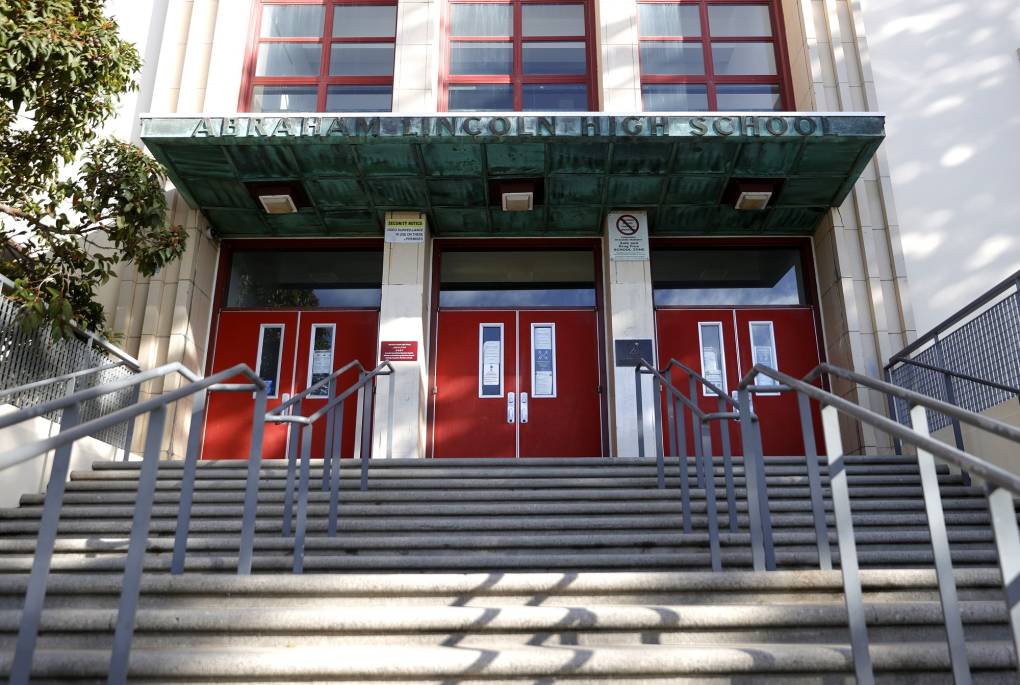
"caption": "San Francisco Unified School District canceled mandatory antisemitism workshops for staff at George Washington, Galileo Academy of Science and Technology, Abraham Lincoln and Balboa High Schools after parents and community groups raised concerns of potential bias. The workshops were initially scheduled in response to reports of increased antisemitism allegations from Jewish students.",
"credit": "Justin Sullivan/Getty Images",
"altTag": null,
"description": null,
"imgSizes": {
"medium": {
"file": "https://cdn.kqed.org/wp-content/uploads/sites/10/2024/09/AbrahamLincolnHSSFGetty1-800x537.jpg",
"width": 800,
"height": 537,
"mimeType": "image/jpeg"
},
"large": {
"file": "https://cdn.kqed.org/wp-content/uploads/sites/10/2024/09/AbrahamLincolnHSSFGetty1-1020x685.jpg",
"width": 1020,
"height": 685,
"mimeType": "image/jpeg"
},
"thumbnail": {
"file": "https://cdn.kqed.org/wp-content/uploads/sites/10/2024/09/AbrahamLincolnHSSFGetty1-160x107.jpg",
"width": 160,
"height": 107,
"mimeType": "image/jpeg"
},
"1536x1536": {
"file": "https://cdn.kqed.org/wp-content/uploads/sites/10/2024/09/AbrahamLincolnHSSFGetty1-1536x1031.jpg",
"width": 1536,
"height": 1031,
"mimeType": "image/jpeg"
},
"post-thumbnail": {
"file": "https://cdn.kqed.org/wp-content/uploads/sites/10/2024/09/AbrahamLincolnHSSFGetty1-672x372.jpg",
"width": 672,
"height": 372,
"mimeType": "image/jpeg"
},
"twentyfourteen-full-width": {
"file": "https://cdn.kqed.org/wp-content/uploads/sites/10/2024/09/AbrahamLincolnHSSFGetty1-1038x576.jpg",
"width": 1038,
"height": 576,
"mimeType": "image/jpeg"
},
"full-width": {
"file": "https://cdn.kqed.org/wp-content/uploads/sites/10/2024/09/AbrahamLincolnHSSFGetty1-1920x1289.jpg",
"width": 1920,
"height": 1289,
"mimeType": "image/jpeg"
},
"kqedFullSize": {
"file": "https://cdn.kqed.org/wp-content/uploads/sites/10/2024/09/AbrahamLincolnHSSFGetty1.jpg",
"width": 2000,
"height": 1343
}
},
"isLoading": false,
"fetchFailed": false
},
"news_12004344": {
"type": "attachments",
"id": "news_12004344",
"meta": {
"index": "attachments_1716263798",
"site": "news",
"id": "12004344",
"found": true
},
"title": "UCBerkeleyMakdisi",
"publishDate": 1726072360,
"status": "inherit",
"parent": 12047251,
"modified": 1752606871,
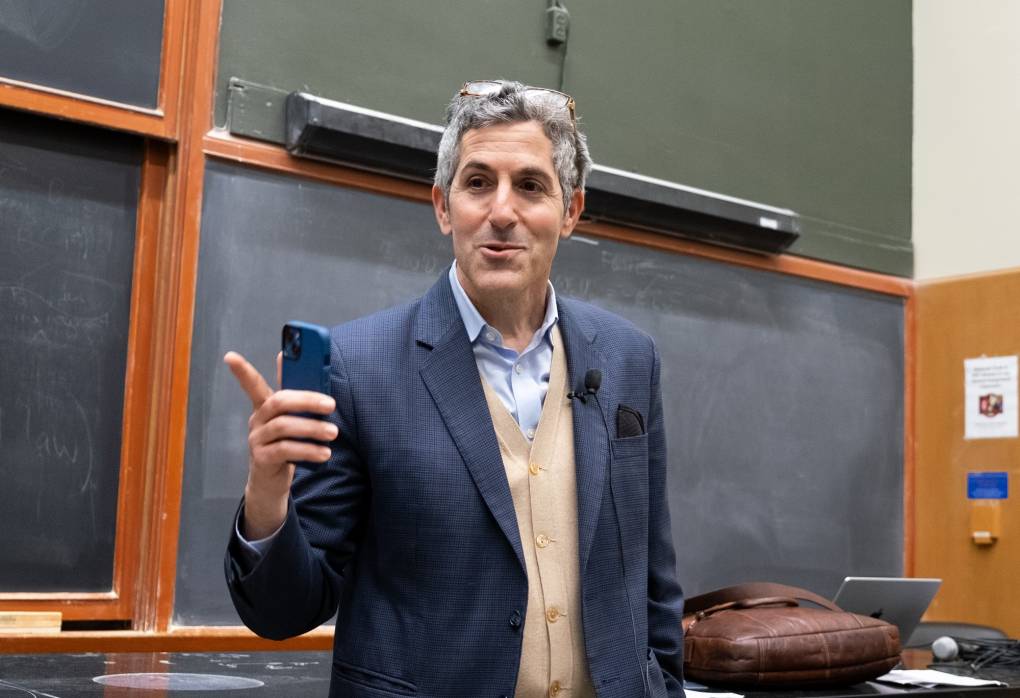
"caption": "UC Berkeley history professor Ussama Makdisi.",
"credit": "Courtesy of Sofia Liashcheva via UC Berkeley",
"altTag": null,
"description": null,
"imgSizes": {
"medium": {
"file": "https://cdn.kqed.org/wp-content/uploads/sites/10/2024/09/UCBerkeleyMakdisi-800x547.jpg",
"width": 800,
"height": 547,
"mimeType": "image/jpeg"
},
"large": {
"file": "https://cdn.kqed.org/wp-content/uploads/sites/10/2024/09/UCBerkeleyMakdisi-1020x698.jpg",
"width": 1020,
"height": 698,
"mimeType": "image/jpeg"
},
"thumbnail": {
"file": "https://cdn.kqed.org/wp-content/uploads/sites/10/2024/09/UCBerkeleyMakdisi-160x109.jpg",
"width": 160,
"height": 109,
"mimeType": "image/jpeg"
},
"1536x1536": {
"file": "https://cdn.kqed.org/wp-content/uploads/sites/10/2024/09/UCBerkeleyMakdisi-1536x1051.jpg",
"width": 1536,
"height": 1051,
"mimeType": "image/jpeg"
},
"post-thumbnail": {
"file": "https://cdn.kqed.org/wp-content/uploads/sites/10/2024/09/UCBerkeleyMakdisi-672x372.jpg",
"width": 672,
"height": 372,
"mimeType": "image/jpeg"
},
"twentyfourteen-full-width": {
"file": "https://cdn.kqed.org/wp-content/uploads/sites/10/2024/09/UCBerkeleyMakdisi-1038x576.jpg",
"width": 1038,
"height": 576,
"mimeType": "image/jpeg"
},
"full-width": {
"file": "https://cdn.kqed.org/wp-content/uploads/sites/10/2024/09/UCBerkeleyMakdisi-1920x1313.jpg",
"width": 1920,
"height": 1313,
"mimeType": "image/jpeg"
},
"kqedFullSize": {
"file": "https://cdn.kqed.org/wp-content/uploads/sites/10/2024/09/UCBerkeleyMakdisi.jpg",
"width": 2000,
"height": 1368
}
},
"isLoading": false,
"fetchFailed": false
},
"news_11987738": {
"type": "attachments",
"id": "news_11987738",
"meta": {
"index": "attachments_1716263798",
"site": "news",
"id": "11987738",
"found": true
},
"title": "UC Santa Cruz Workers Strike Over Treatment Of Pro-Palestinian Protesters",
"publishDate": 1716587632,
"status": "inherit",
"parent": 11987737,
"modified": 1716587703,
"caption": "UC Santa Cruz academic workers who are union members of UAW 4811 and pro-Palestinian protesters carry signs as they demonstrate in front of the campus on May 20, 2024.",
"credit": "Justin Sullivan/Getty Images",
"altTag": null,
"description": null,
"imgSizes": {
"medium": {
"file": "https://cdn.kqed.org/wp-content/uploads/sites/10/2024/05/GettyImages-2153876773-800x532.jpg",
"width": 800,
"height": 532,
"mimeType": "image/jpeg"
},
"large": {
"file": "https://cdn.kqed.org/wp-content/uploads/sites/10/2024/05/GettyImages-2153876773-1020x678.jpg",
"width": 1020,
"height": 678,
"mimeType": "image/jpeg"
},
"thumbnail": {
"file": "https://cdn.kqed.org/wp-content/uploads/sites/10/2024/05/GettyImages-2153876773-160x106.jpg",
"width": 160,
"height": 106,
"mimeType": "image/jpeg"
},
"1536x1536": {
"file": "https://cdn.kqed.org/wp-content/uploads/sites/10/2024/05/GettyImages-2153876773-1536x1021.jpg",
"width": 1536,
"height": 1021,
"mimeType": "image/jpeg"
},
"post-thumbnail": {
"file": "https://cdn.kqed.org/wp-content/uploads/sites/10/2024/05/GettyImages-2153876773-672x372.jpg",
"width": 672,
"height": 372,
"mimeType": "image/jpeg"
},
"twentyfourteen-full-width": {
"file": "https://cdn.kqed.org/wp-content/uploads/sites/10/2024/05/GettyImages-2153876773-1038x576.jpg",
"width": 1038,
"height": 576,
"mimeType": "image/jpeg"
},
"kqedFullSize": {
"file": "https://cdn.kqed.org/wp-content/uploads/sites/10/2024/05/GettyImages-2153876773.jpg",
"width": 1920,
"height": 1276
}
},
"isLoading": false,
"fetchFailed": false
},
"news_12003442": {
"type": "attachments",
"id": "news_12003442",
"meta": {
"index": "attachments_1716263798",
"site": "news",
"id": "12003442",
"found": true
},
"title": "UCSFProPalestineProtest1",
"publishDate": 1725654168,
"status": "inherit",
"parent": 12003439,
"modified": 1725666118,
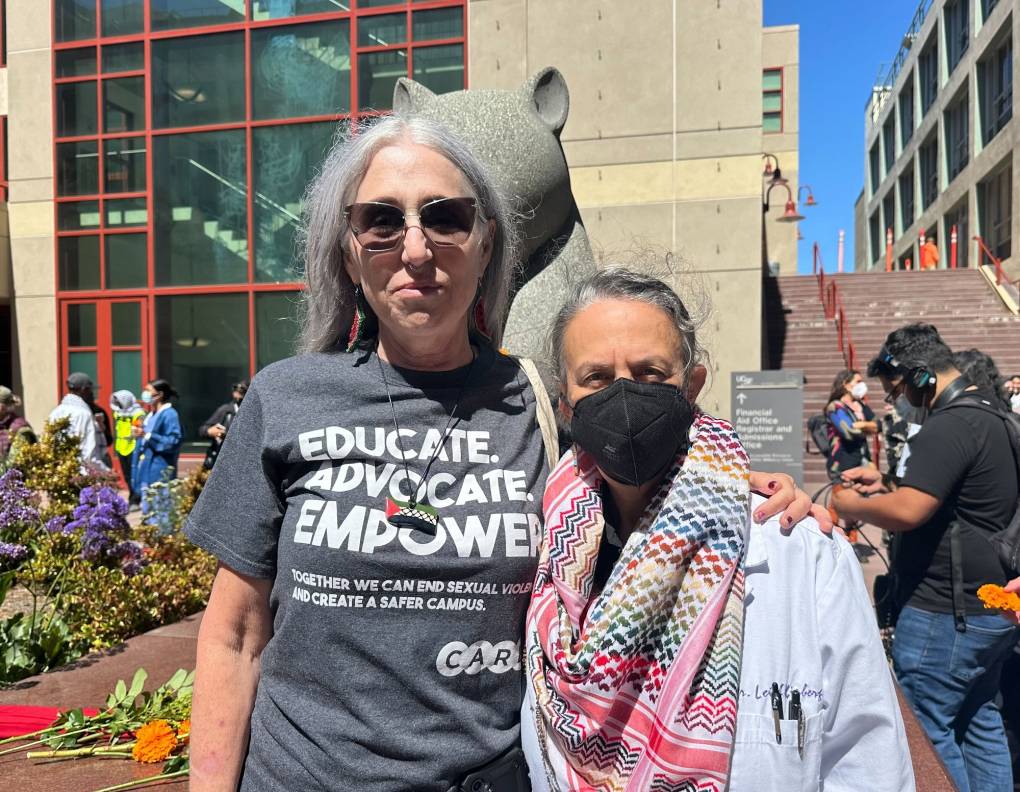
"caption": "Denise Caramagno (left) and Leigh Kimberg protested Friday outside of UCSF. Caramagno, a former violence prevention advocate at the university, believes UCSF is firing her for speaking out about the war in Gaza. ",
"credit": "Katie DeBenedetti/KQED",
"altTag": null,
"description": null,
"imgSizes": {
"medium": {
"file": "https://cdn.kqed.org/wp-content/uploads/sites/10/2024/09/UCSFProPalestineProtest1-800x621.jpg",
"width": 800,
"height": 621,
"mimeType": "image/jpeg"
},
"large": {
"file": "https://cdn.kqed.org/wp-content/uploads/sites/10/2024/09/UCSFProPalestineProtest1-1020x792.jpg",
"width": 1020,
"height": 792,
"mimeType": "image/jpeg"
},
"thumbnail": {
"file": "https://cdn.kqed.org/wp-content/uploads/sites/10/2024/09/UCSFProPalestineProtest1-160x124.jpg",
"width": 160,
"height": 124,
"mimeType": "image/jpeg"
},
"1536x1536": {
"file": "https://cdn.kqed.org/wp-content/uploads/sites/10/2024/09/UCSFProPalestineProtest1-1536x1192.jpg",
"width": 1536,
"height": 1192,
"mimeType": "image/jpeg"
},
"post-thumbnail": {
"file": "https://cdn.kqed.org/wp-content/uploads/sites/10/2024/09/UCSFProPalestineProtest1-672x372.jpg",
"width": 672,
"height": 372,
"mimeType": "image/jpeg"
},
"twentyfourteen-full-width": {
"file": "https://cdn.kqed.org/wp-content/uploads/sites/10/2024/09/UCSFProPalestineProtest1-1038x576.jpg",
"width": 1038,
"height": 576,
"mimeType": "image/jpeg"
},
"full-width": {
"file": "https://cdn.kqed.org/wp-content/uploads/sites/10/2024/09/UCSFProPalestineProtest1-1920x1490.jpg",
"width": 1920,
"height": 1490,
"mimeType": "image/jpeg"
},
"kqedFullSize": {
"file": "https://cdn.kqed.org/wp-content/uploads/sites/10/2024/09/UCSFProPalestineProtest1.jpg",
"width": 2000,
"height": 1552
}
},
"isLoading": false,
"fetchFailed": false
},
"news_11988071": {
"type": "attachments",
"id": "news_11988071",
"meta": {
"index": "attachments_1716263798",
"site": "news",
"id": "11988071",
"found": true
},
"title": "240517-TKBilingualLearners-130-BL_qut",
"publishDate": 1717007287,
"status": "inherit",
"parent": 11989465,
"modified": 1717796432,
"caption": "A student reads a book in English and Spanish in a bilingual transitional kindergarten class at Global Family Elementary School in Oakland on May 17, 2024.",
"credit": "Beth LaBerge/KQED",
"altTag": "A young girl reads a bilingual exercise book at a classroom table",
"description": null,
"imgSizes": {
"medium": {
"file": "https://cdn.kqed.org/wp-content/uploads/sites/10/2024/05/240517-TKBilingualLearners-130-BL_qut-800x533.jpg",
"width": 800,
"height": 533,
"mimeType": "image/jpeg"
},
"large": {
"file": "https://cdn.kqed.org/wp-content/uploads/sites/10/2024/05/240517-TKBilingualLearners-130-BL_qut-1020x680.jpg",
"width": 1020,
"height": 680,
"mimeType": "image/jpeg"
},
"thumbnail": {
"file": "https://cdn.kqed.org/wp-content/uploads/sites/10/2024/05/240517-TKBilingualLearners-130-BL_qut-160x107.jpg",
"width": 160,
"height": 107,
"mimeType": "image/jpeg"
},
"1536x1536": {
"file": "https://cdn.kqed.org/wp-content/uploads/sites/10/2024/05/240517-TKBilingualLearners-130-BL_qut-1536x1024.jpg",
"width": 1536,
"height": 1024,
"mimeType": "image/jpeg"
},
"post-thumbnail": {
"file": "https://cdn.kqed.org/wp-content/uploads/sites/10/2024/05/240517-TKBilingualLearners-130-BL_qut-672x372.jpg",
"width": 672,
"height": 372,
"mimeType": "image/jpeg"
},
"twentyfourteen-full-width": {
"file": "https://cdn.kqed.org/wp-content/uploads/sites/10/2024/05/240517-TKBilingualLearners-130-BL_qut-1038x576.jpg",
"width": 1038,
"height": 576,
"mimeType": "image/jpeg"
},
"kqedFullSize": {
"file": "https://cdn.kqed.org/wp-content/uploads/sites/10/2024/05/240517-TKBilingualLearners-130-BL_qut.jpg",
"width": 1920,
"height": 1280
}
},
"isLoading": false,
"fetchFailed": false
},
"news_11915590": {
"type": "attachments",
"id": "news_11915590",
"meta": {
"index": "attachments_1716263798",
"site": "news",
"id": "11915590",
"found": true
},
"title": "RS19790_GettyImages-493193647-qut",
"publishDate": 1654035304,
"status": "inherit",
"parent": 11915565,
"modified": 1724977959,
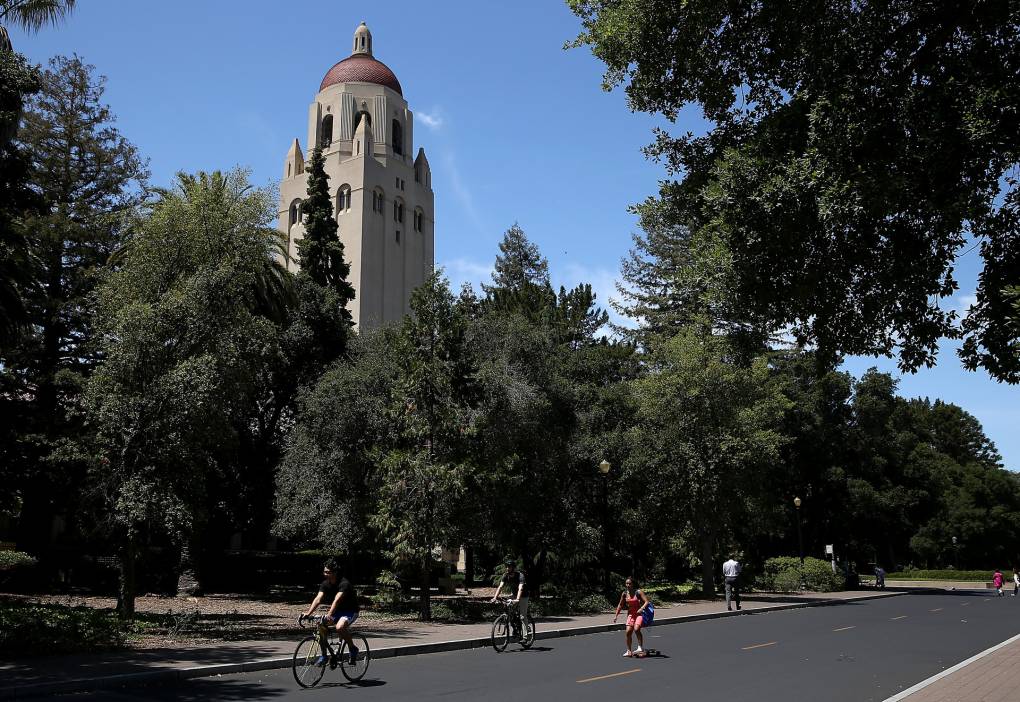
"caption": "Students ride bikes past Hoover Tower on the Stanford University campus. The university strongly supports Senate Bill 748, which would change the rules for how police respond to trespassing on private college campuses.",
"credit": "Justin Sullivan/Getty Images",
"altTag": "Students ride bikes on a tree-lined street on the campus of Stanford University.",
"description": null,
"imgSizes": {
"medium": {
"file": "https://cdn.kqed.org/wp-content/uploads/sites/10/2022/05/RS19790_GettyImages-493193647-qut-800x551.jpg",
"width": 800,
"height": 551,
"mimeType": "image/jpeg"
},
"large": {
"file": "https://cdn.kqed.org/wp-content/uploads/sites/10/2022/05/RS19790_GettyImages-493193647-qut-1020x702.jpg",
"width": 1020,
"height": 702,
"mimeType": "image/jpeg"
},
"thumbnail": {
"file": "https://cdn.kqed.org/wp-content/uploads/sites/10/2022/05/RS19790_GettyImages-493193647-qut-160x110.jpg",
"width": 160,
"height": 110,
"mimeType": "image/jpeg"
},
"1536x1536": {
"file": "https://cdn.kqed.org/wp-content/uploads/sites/10/2022/05/RS19790_GettyImages-493193647-qut-1536x1058.jpg",
"width": 1536,
"height": 1058,
"mimeType": "image/jpeg"
},
"post-thumbnail": {
"file": "https://cdn.kqed.org/wp-content/uploads/sites/10/2022/05/RS19790_GettyImages-493193647-qut-672x372.jpg",
"width": 672,
"height": 372,
"mimeType": "image/jpeg"
},
"twentyfourteen-full-width": {
"file": "https://cdn.kqed.org/wp-content/uploads/sites/10/2022/05/RS19790_GettyImages-493193647-qut-1038x576.jpg",
"width": 1038,
"height": 576,
"mimeType": "image/jpeg"
},
"kqedFullSize": {
"file": "https://cdn.kqed.org/wp-content/uploads/sites/10/2022/05/RS19790_GettyImages-493193647-qut.jpg",
"width": 1920,
"height": 1322
}
},
"isLoading": false,
"fetchFailed": false
},
"news_12002386": {
"type": "attachments",
"id": "news_12002386",
"meta": {
"index": "attachments_1716263798",
"site": "news",
"id": "12002386",
"found": true
},
"title": "LOGO_THEBAY",
"publishDate": 1724964767,
"status": "inherit",
"parent": 12002385,
"modified": 1724964767,
"caption": null,
"credit": null,
"altTag": null,
"description": null,
"imgSizes": {
"thumbnail": {
"file": "https://cdn.kqed.org/wp-content/uploads/sites/10/2024/08/LOGO_THEBAY-160x160.png",
"width": 160,
"height": 160,
"mimeType": "image/png"
},
"kqedFullSize": {
"file": "https://cdn.kqed.org/wp-content/uploads/sites/10/2024/08/LOGO_THEBAY.png",
"width": 300,
"height": 300
}
},
"isLoading": false,
"fetchFailed": false
},
"news_12002050": {
"type": "attachments",
"id": "news_12002050",
"meta": {
"index": "attachments_1716263798",
"site": "news",
"id": "12002050",
"found": true
},
"title": "Frick United Academy of Language in Oakland on Aug. 28, 2024.",
"publishDate": 1724783158,
"status": "inherit",
"parent": 0,
"modified": 1724966795,
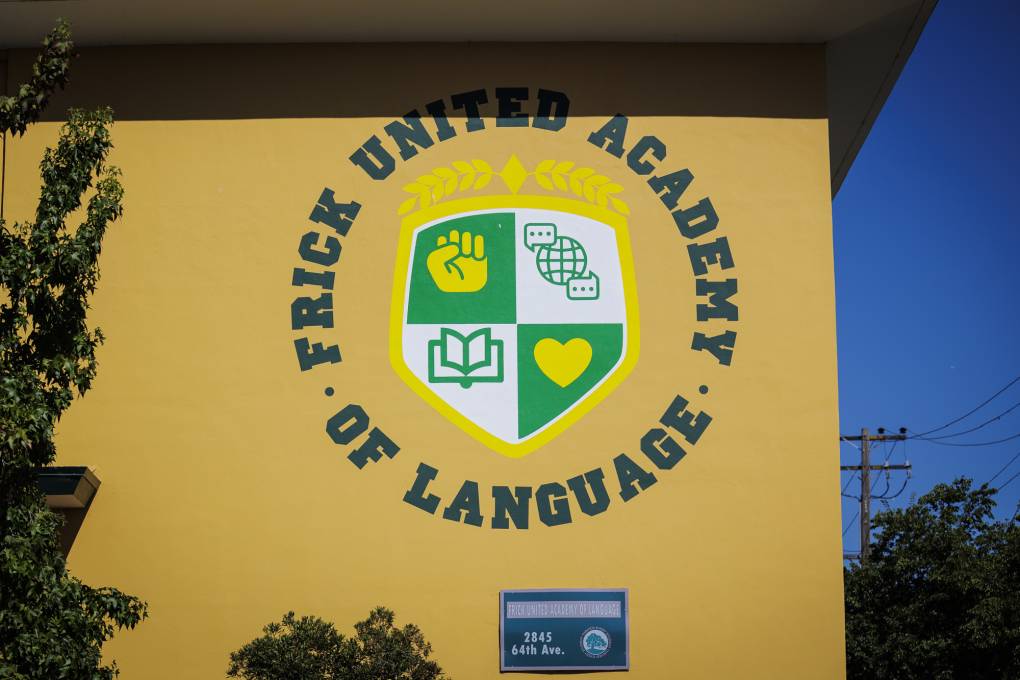
"caption": "Frick United Academy of Language in Oakland on Aug. 28, 2024. It's one of 22 schools identified as having high levels of lead in its drinking water. During last night's Oakland school board meeting, the superintendent discussed efforts to address lead in school drinking water. Officials cited communication delays as a personnel issue under investigation, while the school board vice president urged city and county support for facility repairs.",
"credit": "Martin do Nascimento/KQED",
"altTag": null,
"description": null,
"imgSizes": {
"medium": {
"file": "https://cdn.kqed.org/wp-content/uploads/sites/10/2024/08/240827-OUSD-LEAD-FOLO-MD-04-KQED-800x533.jpg",
"width": 800,
"height": 533,
"mimeType": "image/jpeg"
},
"large": {
"file": "https://cdn.kqed.org/wp-content/uploads/sites/10/2024/08/240827-OUSD-LEAD-FOLO-MD-04-KQED-1020x680.jpg",
"width": 1020,
"height": 680,
"mimeType": "image/jpeg"
},
"thumbnail": {
"file": "https://cdn.kqed.org/wp-content/uploads/sites/10/2024/08/240827-OUSD-LEAD-FOLO-MD-04-KQED-160x107.jpg",
"width": 160,
"height": 107,
"mimeType": "image/jpeg"
},
"1536x1536": {
"file": "https://cdn.kqed.org/wp-content/uploads/sites/10/2024/08/240827-OUSD-LEAD-FOLO-MD-04-KQED-1536x1024.jpg",
"width": 1536,
"height": 1024,
"mimeType": "image/jpeg"
},
"post-thumbnail": {
"file": "https://cdn.kqed.org/wp-content/uploads/sites/10/2024/08/240827-OUSD-LEAD-FOLO-MD-04-KQED-672x372.jpg",
"width": 672,
"height": 372,
"mimeType": "image/jpeg"
},
"twentyfourteen-full-width": {
"file": "https://cdn.kqed.org/wp-content/uploads/sites/10/2024/08/240827-OUSD-LEAD-FOLO-MD-04-KQED-1038x576.jpg",
"width": 1038,
"height": 576,
"mimeType": "image/jpeg"
},
"full-width": {
"file": "https://cdn.kqed.org/wp-content/uploads/sites/10/2024/08/240827-OUSD-LEAD-FOLO-MD-04-KQED-1920x1280.jpg",
"width": 1920,
"height": 1280,
"mimeType": "image/jpeg"
},
"kqedFullSize": {
"file": "https://cdn.kqed.org/wp-content/uploads/sites/10/2024/08/240827-OUSD-LEAD-FOLO-MD-04-KQED.jpg",
"width": 2000,
"height": 1333
}
},
"isLoading": false,
"fetchFailed": false
},
"news_12002407": {
"type": "attachments",
"id": "news_12002407",
"meta": {
"index": "attachments_1716263798",
"site": "news",
"id": "12002407",
"found": true
},
"title": "20240829-SFSUGazarally-JY-011",
"publishDate": 1724966273,
"status": "inherit",
"parent": 0,
"modified": 1756334137,
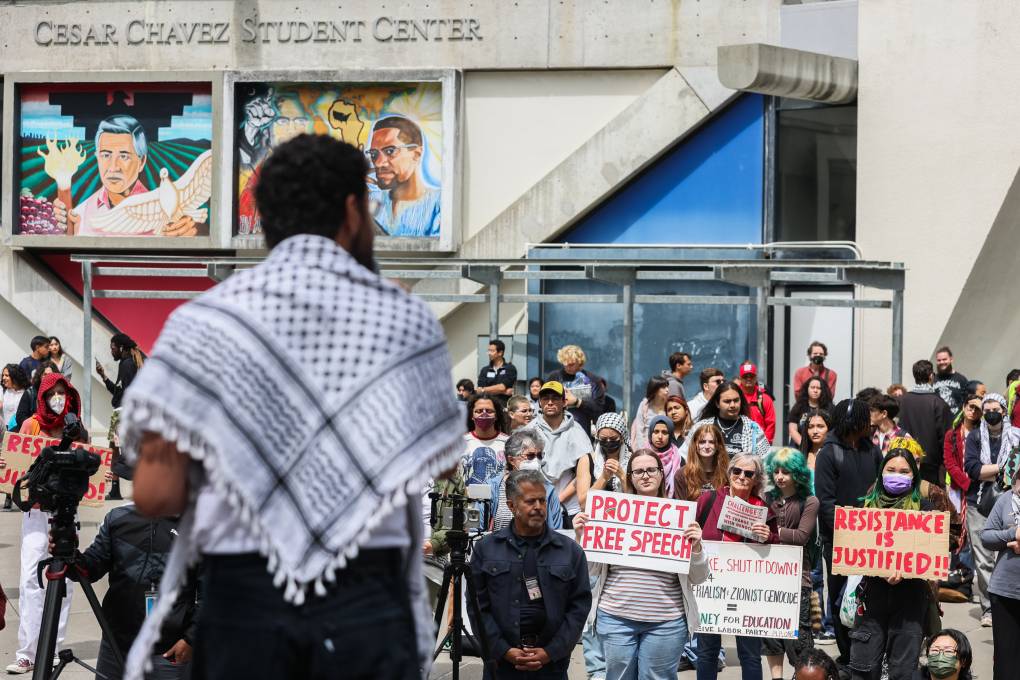
"caption": "A Palestinian Youth Movement press conference and rally to announce San Francisco State University's divestments from weapons manufacturers at the school's Malcolm X Plaza on Thursday.",
"credit": "Juliana Yamada/KQED",
"altTag": null,
"description": null,
"imgSizes": {
"medium": {
"file": "https://cdn.kqed.org/wp-content/uploads/sites/10/2024/08/20240829-SFSUGazarally-JY-011-800x533.jpg",
"width": 800,
"height": 533,
"mimeType": "image/jpeg"
},
"large": {
"file": "https://cdn.kqed.org/wp-content/uploads/sites/10/2024/08/20240829-SFSUGazarally-JY-011-1020x680.jpg",
"width": 1020,
"height": 680,
"mimeType": "image/jpeg"
},
"thumbnail": {
"file": "https://cdn.kqed.org/wp-content/uploads/sites/10/2024/08/20240829-SFSUGazarally-JY-011-160x107.jpg",
"width": 160,
"height": 107,
"mimeType": "image/jpeg"
},
"1536x1536": {
"file": "https://cdn.kqed.org/wp-content/uploads/sites/10/2024/08/20240829-SFSUGazarally-JY-011-1536x1024.jpg",
"width": 1536,
"height": 1024,
"mimeType": "image/jpeg"
},
"2048x2048": {
"file": "https://cdn.kqed.org/wp-content/uploads/sites/10/2024/08/20240829-SFSUGazarally-JY-011-2048x1365.jpg",
"width": 2048,
"height": 1365,
"mimeType": "image/jpeg"
},
"post-thumbnail": {
"file": "https://cdn.kqed.org/wp-content/uploads/sites/10/2024/08/20240829-SFSUGazarally-JY-011-672x372.jpg",
"width": 672,
"height": 372,
"mimeType": "image/jpeg"
},
"twentyfourteen-full-width": {
"file": "https://cdn.kqed.org/wp-content/uploads/sites/10/2024/08/20240829-SFSUGazarally-JY-011-1038x576.jpg",
"width": 1038,
"height": 576,
"mimeType": "image/jpeg"
},
"full-width": {
"file": "https://cdn.kqed.org/wp-content/uploads/sites/10/2024/08/20240829-SFSUGazarally-JY-011-1920x1280.jpg",
"width": 1920,
"height": 1280,
"mimeType": "image/jpeg"
},
"kqedFullSize": {
"file": "https://cdn.kqed.org/wp-content/uploads/sites/10/2024/08/20240829-SFSUGazarally-JY-011-scaled.jpg",
"width": 2560,
"height": 1707
}
},
"isLoading": false,
"fetchFailed": false
},
"news_12002167": {
"type": "attachments",
"id": "news_12002167",
"meta": {
"index": "attachments_1716263798",
"site": "news",
"id": "12002167",
"found": true
},
"title": "240104-PEOPLE'S PARK-MD-19_qed",
"publishDate": 1724870544,
"status": "inherit",
"parent": 12002150,
"modified": 1724870591,
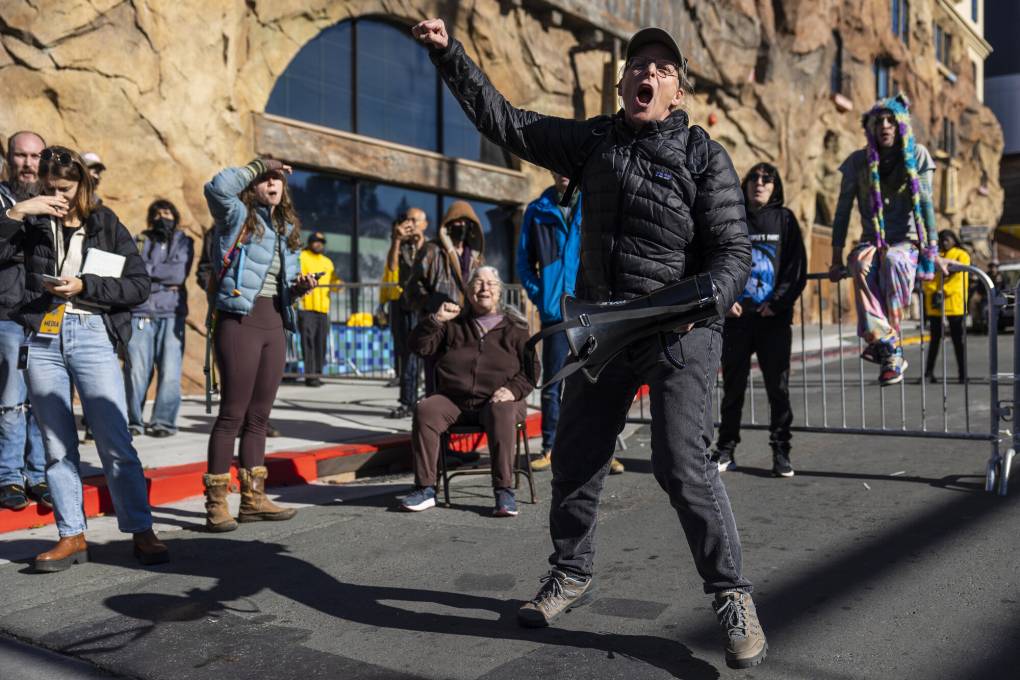
"caption": "Andrea Pritchett leads the crowd of demonstrators in chanting \"Whose park? Our Park\" outside of People's Park in Berkeley on Jan. 4, 2024.",
"credit": "Martin do Nascimento/KQED",
"altTag": null,
"description": null,
"imgSizes": {
"medium": {
"file": "https://cdn.kqed.org/wp-content/uploads/sites/10/2024/08/240104-PEOPLES-PARK-MD-19_qed-800x533.jpg",
"width": 800,
"height": 533,
"mimeType": "image/jpeg"
},
"large": {
"file": "https://cdn.kqed.org/wp-content/uploads/sites/10/2024/08/240104-PEOPLES-PARK-MD-19_qed-1020x680.jpg",
"width": 1020,
"height": 680,
"mimeType": "image/jpeg"
},
"thumbnail": {
"file": "https://cdn.kqed.org/wp-content/uploads/sites/10/2024/08/240104-PEOPLES-PARK-MD-19_qed-160x107.jpg",
"width": 160,
"height": 107,
"mimeType": "image/jpeg"
},
"1536x1536": {
"file": "https://cdn.kqed.org/wp-content/uploads/sites/10/2024/08/240104-PEOPLES-PARK-MD-19_qed-1536x1024.jpg",
"width": 1536,
"height": 1024,
"mimeType": "image/jpeg"
},
"post-thumbnail": {
"file": "https://cdn.kqed.org/wp-content/uploads/sites/10/2024/08/240104-PEOPLES-PARK-MD-19_qed-672x372.jpg",
"width": 672,
"height": 372,
"mimeType": "image/jpeg"
},
"twentyfourteen-full-width": {
"file": "https://cdn.kqed.org/wp-content/uploads/sites/10/2024/08/240104-PEOPLES-PARK-MD-19_qed-1038x576.jpg",
"width": 1038,
"height": 576,
"mimeType": "image/jpeg"
},
"full-width": {
"file": "https://cdn.kqed.org/wp-content/uploads/sites/10/2024/08/240104-PEOPLES-PARK-MD-19_qed-1920x1280.jpg",
"width": 1920,
"height": 1280,
"mimeType": "image/jpeg"
},
"kqedFullSize": {
"file": "https://cdn.kqed.org/wp-content/uploads/sites/10/2024/08/240104-PEOPLES-PARK-MD-19_qed.jpg",
"width": 2000,
"height": 1333
}
},
"isLoading": false,
"fetchFailed": false
},
"news_12002120": {
"type": "attachments",
"id": "news_12002120",
"meta": {
"index": "attachments_1716263798",
"site": "news",
"id": "12002120",
"found": true
},
"title": "20240827_SFUSDPROTEST_GC-10-KQED",
"publishDate": 1724852768,
"status": "inherit",
"parent": 0,
"modified": 1724872428,
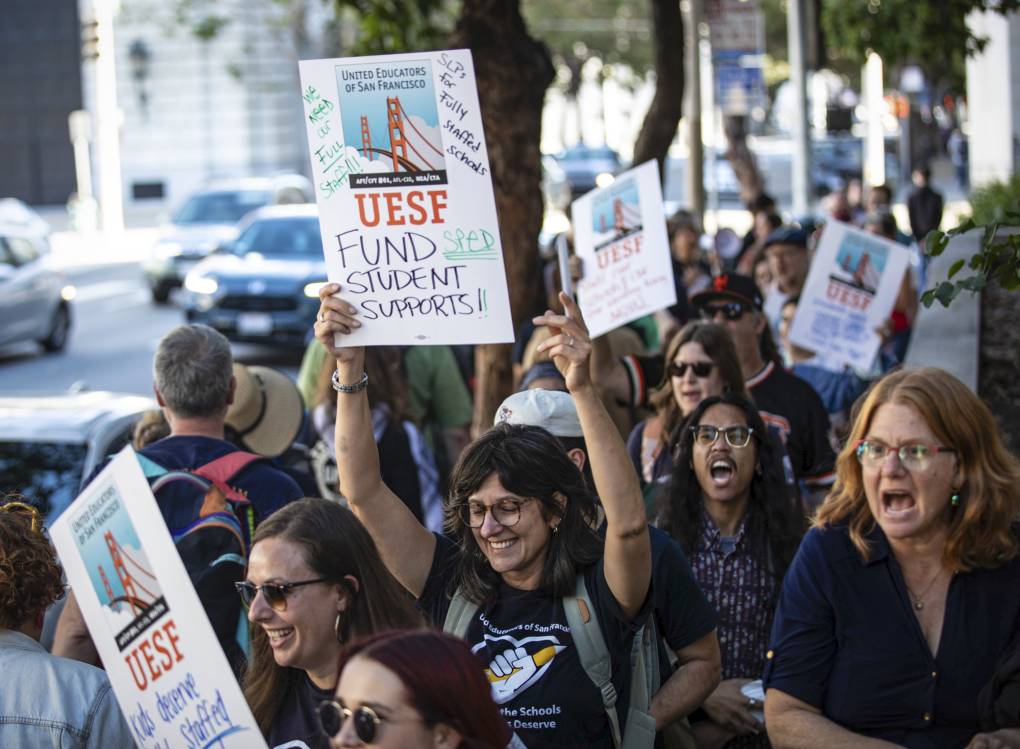
"caption": "People march at an emergency rally and press conference for student support services held by the United Educators of San Francisco, demanding fully staffed schools outside of the San Francisco Unified School District administrative offices on Franklin Street on Aug. 27, 2024.",
"credit": "Gina Castro/KQED",
"altTag": null,
"description": null,
"imgSizes": {
"medium": {
"file": "https://cdn.kqed.org/wp-content/uploads/sites/10/2024/08/20240827_SFUSDPROTEST_GC-10-KQED-800x588.jpg",
"width": 800,
"height": 588,
"mimeType": "image/jpeg"
},
"large": {
"file": "https://cdn.kqed.org/wp-content/uploads/sites/10/2024/08/20240827_SFUSDPROTEST_GC-10-KQED-1020x749.jpg",
"width": 1020,
"height": 749,
"mimeType": "image/jpeg"
},
"thumbnail": {
"file": "https://cdn.kqed.org/wp-content/uploads/sites/10/2024/08/20240827_SFUSDPROTEST_GC-10-KQED-160x118.jpg",
"width": 160,
"height": 118,
"mimeType": "image/jpeg"
},
"1536x1536": {
"file": "https://cdn.kqed.org/wp-content/uploads/sites/10/2024/08/20240827_SFUSDPROTEST_GC-10-KQED-1536x1128.jpg",
"width": 1536,
"height": 1128,
"mimeType": "image/jpeg"
},
"post-thumbnail": {
"file": "https://cdn.kqed.org/wp-content/uploads/sites/10/2024/08/20240827_SFUSDPROTEST_GC-10-KQED-672x372.jpg",
"width": 672,
"height": 372,
"mimeType": "image/jpeg"
},
"twentyfourteen-full-width": {
"file": "https://cdn.kqed.org/wp-content/uploads/sites/10/2024/08/20240827_SFUSDPROTEST_GC-10-KQED-1038x576.jpg",
"width": 1038,
"height": 576,
"mimeType": "image/jpeg"
},
"full-width": {
"file": "https://cdn.kqed.org/wp-content/uploads/sites/10/2024/08/20240827_SFUSDPROTEST_GC-10-KQED-1920x1410.jpg",
"width": 1920,
"height": 1410,
"mimeType": "image/jpeg"
},
"kqedFullSize": {
"file": "https://cdn.kqed.org/wp-content/uploads/sites/10/2024/08/20240827_SFUSDPROTEST_GC-10-KQED.jpg",
"width": 2000,
"height": 1469
}
},
"isLoading": false,
"fetchFailed": false
},
"news_12000970": {
"type": "attachments",
"id": "news_12000970",
"meta": {
"index": "attachments_1716263798",
"site": "news",
"id": "12000970",
"found": true
},
"title": "UC Berkeley Chancellor Rich Lyons in his office on campus on Aug. 20, 2024.",
"publishDate": 1724185095,
"status": "inherit",
"parent": 0,
"modified": 1724798574,
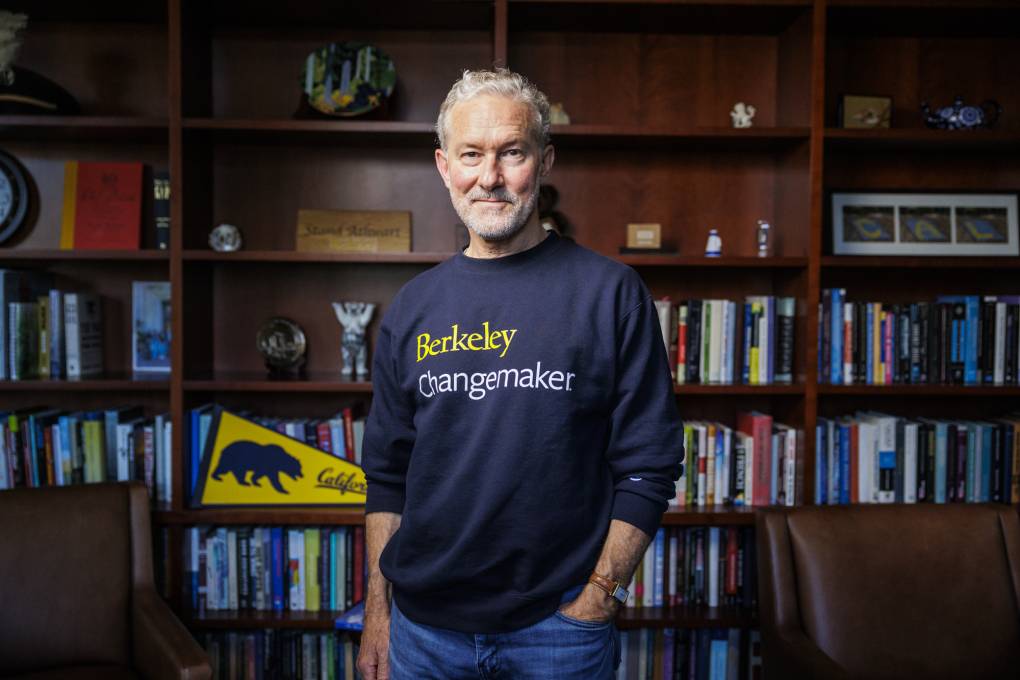
"caption": "UC Berkeley Chancellor Rich Lyons in his office on campus in Berkeley on Aug. 20.",
"credit": "Martin do Nascimento/KQED",
"altTag": null,
"description": null,
"imgSizes": {
"medium": {
"file": "https://cdn.kqed.org/wp-content/uploads/sites/10/2024/08/240820-UCB-CHANCELLOR-LYONS-MD-01-KQED-800x533.jpg",
"width": 800,
"height": 533,
"mimeType": "image/jpeg"
},
"large": {
"file": "https://cdn.kqed.org/wp-content/uploads/sites/10/2024/08/240820-UCB-CHANCELLOR-LYONS-MD-01-KQED-1020x680.jpg",
"width": 1020,
"height": 680,
"mimeType": "image/jpeg"
},
"thumbnail": {
"file": "https://cdn.kqed.org/wp-content/uploads/sites/10/2024/08/240820-UCB-CHANCELLOR-LYONS-MD-01-KQED-160x107.jpg",
"width": 160,
"height": 107,
"mimeType": "image/jpeg"
},
"1536x1536": {
"file": "https://cdn.kqed.org/wp-content/uploads/sites/10/2024/08/240820-UCB-CHANCELLOR-LYONS-MD-01-KQED-1536x1024.jpg",
"width": 1536,
"height": 1024,
"mimeType": "image/jpeg"
},
"post-thumbnail": {
"file": "https://cdn.kqed.org/wp-content/uploads/sites/10/2024/08/240820-UCB-CHANCELLOR-LYONS-MD-01-KQED-672x372.jpg",
"width": 672,
"height": 372,
"mimeType": "image/jpeg"
},
"twentyfourteen-full-width": {
"file": "https://cdn.kqed.org/wp-content/uploads/sites/10/2024/08/240820-UCB-CHANCELLOR-LYONS-MD-01-KQED-1038x576.jpg",
"width": 1038,
"height": 576,
"mimeType": "image/jpeg"
},
"full-width": {
"file": "https://cdn.kqed.org/wp-content/uploads/sites/10/2024/08/240820-UCB-CHANCELLOR-LYONS-MD-01-KQED-1920x1280.jpg",
"width": 1920,
"height": 1280,
"mimeType": "image/jpeg"
},
"kqedFullSize": {
"file": "https://cdn.kqed.org/wp-content/uploads/sites/10/2024/08/240820-UCB-CHANCELLOR-LYONS-MD-01-KQED.jpg",
"width": 2000,
"height": 1333
}
},
"isLoading": false,
"fetchFailed": false
}
},
"audioPlayerReducer": {
"postId": "stream_live",
"isPaused": true,
"isPlaying": false,
"pfsActive": false,
"pledgeModalIsOpen": true,
"playerDrawerIsOpen": false,
"liveAudioPlayStartedAt": 0,
"liveAudioPlayContext": ""
},
"authorsReducer": {
"byline_news_12002815": {
"type": "authors",
"id": "byline_news_12002815",
"meta": {
"override": true
},
"slug": "byline_news_12002815",
"name": "\u003ca href=\"https://edsource.org/author/zstavely\">Zaidee Stavely\u003c/a>, EdSource",
"isLoading": false
},
"ecruzguevarra": {
"type": "authors",
"id": "8654",
"meta": {
"index": "authors_1716337520",
"id": "8654",
"found": true
},
"name": "Ericka Cruz Guevarra",
"firstName": "Ericka",
"lastName": "Cruz Guevarra",
"slug": "ecruzguevarra",
"email": "ecruzguevarra@kqed.org",
"display_author_email": true,
"staff_mastheads": [
"news"
],
"title": "Producer, The Bay Podcast",
"bio": "Ericka Cruz Guevarra is host of \u003ca href=\"https://www.kqed.org/podcasts/thebay\">\u003cem>The Bay\u003c/em>\u003c/a> podcast at KQED. Before host, she was the show’s producer. Her work in that capacity includes a three-part reported series on policing in Vallejo, which won a 2020 excellence in journalism award from the Society of Professional Journalists. Ericka has worked as a breaking news reporter at Oregon Public Broadcasting, helped produce the Code Switch podcast, and was KQED’s inaugural Raul Ramirez Diversity Fund intern. She’s also an alumna of NPR’s Next Generation Radio program. Send her an email if you have strong feelings about whether Fairfield and Suisun City are the Bay. Ericka is represented by SAG-AFTRA.",
"avatar": "https://secure.gravatar.com/avatar/accefc1de4bafc7e234b69bcb9b6f6536c130fd84709bc3069ef11a78787e1bb?s=600&d=blank&r=g",
"twitter": "NotoriousECG",
"bluesky": null,
"facebook": null,
"instagram": null,
"linkedin": null,
"sites": [
{
"site": "arts",
"roles": [
"subscriber"
]
},
{
"site": "news",
"roles": [
"editor",
"manage_categories"
]
},
{
"site": "futureofyou",
"roles": [
"subscriber"
]
},
{
"site": "stateofhealth",
"roles": [
"subscriber"
]
},
{
"site": "science",
"roles": [
"editor"
]
},
{
"site": "forum",
"roles": [
"subscriber"
]
}
],
"headData": {
"title": "Ericka Cruz Guevarra | KQED",
"description": "Producer, The Bay Podcast",
"ogImgSrc": "https://secure.gravatar.com/avatar/accefc1de4bafc7e234b69bcb9b6f6536c130fd84709bc3069ef11a78787e1bb?s=600&d=blank&r=g",
"twImgSrc": "https://secure.gravatar.com/avatar/accefc1de4bafc7e234b69bcb9b6f6536c130fd84709bc3069ef11a78787e1bb?s=600&d=blank&r=g"
},
"isLoading": false,
"link": "/author/ecruzguevarra"
},
"bwatt": {
"type": "authors",
"id": "11238",
"meta": {
"index": "authors_1716337520",
"id": "11238",
"found": true
},
"name": "Brian Watt",
"firstName": "Brian",
"lastName": "Watt",
"slug": "bwatt",
"email": "bwatt@KQED.org",
"display_author_email": false,
"staff_mastheads": [
"news"
],
"title": "Morning News Anchor",
"bio": "Brian Watt is KQED's morning radio news anchor. He joined the KQED News team in April of 2016. Prior to that, he worked as a Reporter for KPCC in Los Angeles and a producer at \u003cem>Marketplace.\u003c/em>\r\n\r\nDuring eight years at KPCC, Brian covered business and economics, and his work won several awards. In 2008, he won the Los Angeles Press Club’s first-place award for Business and Financial Reporting, Broadcast. He’s also received honorable mention and been first runner up for the Press Club’s Radio Journalist of the Year. He won two Golden Mike awards from the Radio and TV News Association of Southern California.\r\n\r\nBrian holds degrees in theater from Yale University and the Sorbonne, and has worked as an actor in France, Italy, Brazil, Hungary and . . . Hollywood. He appeared in a few television shows, including \u003cem>The West Wing, Judging Amy\u003c/em> and \u003cem>The District.\u003c/em>\r\n\r\nEmail: bwatt@KQED.org Twitter: @RadioBWatt",
"avatar": "https://secure.gravatar.com/avatar/55393ff57ed34e2be773ba4789dd6a19?s=600&d=blank&r=g",
"twitter": "@RadioBWatt",
"facebook": null,
"instagram": null,
"linkedin": null,
"sites": [
{
"site": "arts",
"roles": [
"contributor"
]
},
{
"site": "news",
"roles": [
"editor"
]
}
],
"headData": {
"title": "Brian Watt | KQED",
"description": "Morning News Anchor",
"ogImgSrc": "https://secure.gravatar.com/avatar/55393ff57ed34e2be773ba4789dd6a19?s=600&d=blank&r=g",
"twImgSrc": "https://secure.gravatar.com/avatar/55393ff57ed34e2be773ba4789dd6a19?s=600&d=blank&r=g"
},
"isLoading": false,
"link": "/author/bwatt"
},
"hmcdede": {
"type": "authors",
"id": "11635",
"meta": {
"index": "authors_1716337520",
"id": "11635",
"found": true
},
"name": "Holly McDede",
"firstName": "Holly",
"lastName": "McDede",
"slug": "hmcdede",
"email": "hmcdede@KQED.org",
"display_author_email": false,
"staff_mastheads": [],
"title": "KQED Contributor",
"bio": null,
"avatar": "https://secure.gravatar.com/avatar/999d9bf31bb3a2f0511932d99526cb3e?s=600&d=blank&r=g",
"twitter": null,
"facebook": null,
"instagram": null,
"linkedin": null,
"sites": [
{
"site": "arts",
"roles": [
"editor"
]
},
{
"site": "news",
"roles": [
"edit_others_posts",
"editor"
]
},
{
"site": "science",
"roles": [
"editor"
]
},
{
"site": "forum",
"roles": [
"editor"
]
},
{
"site": "perspectives",
"roles": [
"administrator"
]
}
],
"headData": {
"title": "Holly McDede | KQED",
"description": "KQED Contributor",
"ogImgSrc": "https://secure.gravatar.com/avatar/999d9bf31bb3a2f0511932d99526cb3e?s=600&d=blank&r=g",
"twImgSrc": "https://secure.gravatar.com/avatar/999d9bf31bb3a2f0511932d99526cb3e?s=600&d=blank&r=g"
},
"isLoading": false,
"link": "/author/hmcdede"
},
"amontecillo": {
"type": "authors",
"id": "11649",
"meta": {
"index": "authors_1716337520",
"id": "11649",
"found": true
},
"name": "Alan Montecillo",
"firstName": "Alan",
"lastName": "Montecillo",
"slug": "amontecillo",
"email": "amontecillo@kqed.org",
"display_author_email": false,
"staff_mastheads": [
"news"
],
"title": "KQED Contributor",
"bio": "Alan Montecillo is the senior editor of \u003cem>\u003ca href=\"http://kqed.org/thebay\">The Bay\u003c/a>, \u003c/em> KQED's local news podcast. Before moving to the Bay Area, he worked as a senior talk show producer for WILL in Champaign-Urbana, Illinois and at Oregon Public Broadcasting in Portland, Oregon. He has won journalism awards from the Society of Professional Journalists Northern California, the Public Media Journalists Association, The Signal Awards, and has also received a regional Edward R. Murrow award. Alan is a Filipino American from Hong Kong and a graduate of Reed College.",
"avatar": "https://secure.gravatar.com/avatar/268f53a2066899ea9efdd8a5900218b17c822d9862cbc9326cccec53ef41d349?s=600&d=blank&r=g",
"twitter": "alanmontecillo",
"bluesky": null,
"facebook": null,
"instagram": null,
"linkedin": null,
"sites": [
{
"site": "",
"roles": [
"editor"
]
},
{
"site": "news",
"roles": [
"editor",
"manage_categories"
]
}
],
"headData": {
"title": "Alan Montecillo | KQED",
"description": "KQED Contributor",
"ogImgSrc": "https://secure.gravatar.com/avatar/268f53a2066899ea9efdd8a5900218b17c822d9862cbc9326cccec53ef41d349?s=600&d=blank&r=g",
"twImgSrc": "https://secure.gravatar.com/avatar/268f53a2066899ea9efdd8a5900218b17c822d9862cbc9326cccec53ef41d349?s=600&d=blank&r=g"
},
"isLoading": false,
"link": "/author/amontecillo"
},
"msolomon": {
"type": "authors",
"id": "11651",
"meta": {
"index": "authors_1716337520",
"id": "11651",
"found": true
},
"name": "Molly Solomon",
"firstName": "Molly",
"lastName": "Solomon",
"slug": "msolomon",
"email": "msolomon@KQED.org",
"display_author_email": false,
"staff_mastheads": [
"news"
],
"title": "Senior Editor",
"bio": "Molly Solomon is the senior editor of KQED's California Politics and Government Desk. Previously, she was the station's editor-at-large, with a focus on editing early childhood education, politics, and criminal justice. Before that, she managed and edited statewide election coverage for The California Newsroom, a collaboration of local public radio stations, CalMatters and NPR. Molly joined KQED in 2019 to launch the station’s housing affordability desk, where she reported on homelessness, evictions and is the co-host of KQED’s housing podcast, SOLD OUT: Rethinking Housing in America. Before that, she was the Southwest Washington Bureau Chief for Oregon Public Broadcasting and a reporter at Hawaii Public Radio. Her stories have aired on NPR’s \u003cem>Morning Edition\u003c/em>, \u003cem>All Things Considered\u003c/em>, \u003cem>Here & Now\u003c/em>, \u003cem>Science Friday\u003c/em> and \u003cem>Marketplace\u003c/em>. Molly's award-winning reporting has been honored by the Best of the West, Edward R. Murrow awards, Society of Professional Journalists, National Headliner Awards, and the Asian American Journalists Association. Born and raised in Berkeley, Molly is a big fan of burritos and her scruffy terrier, Ollie.",
"avatar": "https://secure.gravatar.com/avatar/9ad9794616923d81c9a79897161545bd?s=600&d=blank&r=g",
"twitter": "solomonout",
"facebook": null,
"instagram": null,
"linkedin": null,
"sites": [
{
"site": "news",
"roles": [
"editor"
]
},
{
"site": "science",
"roles": [
"editor"
]
}
],
"headData": {
"title": "Molly Solomon | KQED",
"description": "Senior Editor",
"ogImgSrc": "https://secure.gravatar.com/avatar/9ad9794616923d81c9a79897161545bd?s=600&d=blank&r=g",
"twImgSrc": "https://secure.gravatar.com/avatar/9ad9794616923d81c9a79897161545bd?s=600&d=blank&r=g"
},
"isLoading": false,
"link": "/author/msolomon"
},
"agonzalez": {
"type": "authors",
"id": "11724",
"meta": {
"index": "authors_1716337520",
"id": "11724",
"found": true
},
"name": "Alexander Gonzalez",
"firstName": "Alexander",
"lastName": "Gonzalez",
"slug": "agonzalez",
"email": "AlexanderGonzalez@KQED.org",
"display_author_email": false,
"staff_mastheads": [
"news"
],
"title": "KQED Contributor",
"bio": null,
"avatar": "https://secure.gravatar.com/avatar/9e291ed34e154df4c662edf858b641d70b4859939bfe40be478408f9dfd057d2?s=600&d=blank&r=g",
"twitter": null,
"bluesky": null,
"facebook": null,
"instagram": null,
"linkedin": null,
"sites": [
{
"site": "arts",
"roles": [
"editor"
]
},
{
"site": "news",
"roles": [
"editor"
]
},
{
"site": "science",
"roles": [
"editor"
]
}
],
"headData": {
"title": "Alexander Gonzalez | KQED",
"description": "KQED Contributor",
"ogImgSrc": "https://secure.gravatar.com/avatar/9e291ed34e154df4c662edf858b641d70b4859939bfe40be478408f9dfd057d2?s=600&d=blank&r=g",
"twImgSrc": "https://secure.gravatar.com/avatar/9e291ed34e154df4c662edf858b641d70b4859939bfe40be478408f9dfd057d2?s=600&d=blank&r=g"
},
"isLoading": false,
"link": "/author/agonzalez"
},
"jlara": {
"type": "authors",
"id": "11761",
"meta": {
"index": "authors_1716337520",
"id": "11761",
"found": true
},
"name": "Juan Carlos Lara",
"firstName": "Juan Carlos",
"lastName": "Lara",
"slug": "jlara",
"email": "jlara@kqed.org",
"display_author_email": false,
"staff_mastheads": [],
"title": "KQED Contributor",
"bio": null,
"avatar": "https://secure.gravatar.com/avatar/19e2052b9b05657c5ff2af2121846e9c?s=600&d=blank&r=g",
"twitter": null,
"facebook": null,
"instagram": null,
"linkedin": null,
"sites": [
{
"site": "arts",
"roles": [
"editor"
]
},
{
"site": "news",
"roles": [
"editor"
]
},
{
"site": "forum",
"roles": [
"editor"
]
},
{
"site": "liveblog",
"roles": [
"contributor"
]
}
],
"headData": {
"title": "Juan Carlos Lara | KQED",
"description": "KQED Contributor",
"ogImgSrc": "https://secure.gravatar.com/avatar/19e2052b9b05657c5ff2af2121846e9c?s=600&d=blank&r=g",
"twImgSrc": "https://secure.gravatar.com/avatar/19e2052b9b05657c5ff2af2121846e9c?s=600&d=blank&r=g"
},
"isLoading": false,
"link": "/author/jlara"
},
"kdebenedetti": {
"type": "authors",
"id": "11913",
"meta": {
"index": "authors_1716337520",
"id": "11913",
"found": true
},
"name": "Katie DeBenedetti",
"firstName": "Katie",
"lastName": "DeBenedetti",
"slug": "kdebenedetti",
"email": "kdebenedetti@kqed.org",
"display_author_email": false,
"staff_mastheads": [
"news",
"science"
],
"title": "KQED Contributor",
"bio": "Katie DeBenedetti is a digital reporter covering daily news for the Express Desk. Prior to joining KQED as a culture reporting intern in January 2024, she covered education and city government for the Napa Valley Register.",
"avatar": "https://secure.gravatar.com/avatar/6e31073cb8f7e4214ab03f42771d0f45?s=600&d=blank&r=g",
"twitter": null,
"facebook": null,
"instagram": null,
"linkedin": null,
"sites": [
{
"site": "news",
"roles": [
"author"
]
},
{
"site": "science",
"roles": [
"author"
]
},
{
"site": "liveblog",
"roles": [
"author"
]
}
],
"headData": {
"title": "Katie DeBenedetti | KQED",
"description": "KQED Contributor",
"ogImgSrc": "https://secure.gravatar.com/avatar/6e31073cb8f7e4214ab03f42771d0f45?s=600&d=blank&r=g",
"twImgSrc": "https://secure.gravatar.com/avatar/6e31073cb8f7e4214ab03f42771d0f45?s=600&d=blank&r=g"
},
"isLoading": false,
"link": "/author/kdebenedetti"
},
"emanoukian": {
"type": "authors",
"id": "11925",
"meta": {
"index": "authors_1716337520",
"id": "11925",
"found": true
},
"name": "Elize Manoukian",
"firstName": "Elize",
"lastName": "Manoukian",
"slug": "emanoukian",
"email": "emanoukian@KQED.org",
"display_author_email": false,
"staff_mastheads": [
"news"
],
"title": "Digital News Editor",
"bio": "Elize Manoukian is an award-winning audio producer and Senior Editor on the Express Desk, KQED's digital news platform. Her work has appeared on KPFA, Interlochen Public Radio, Oregon Public Broadcast, the New York Daily News, LA Times and the San Diego Union-Tribune.",
"avatar": "https://secure.gravatar.com/avatar/4525f1a8e46ccb30933b32653d9772064cfefe3fa655eb45b3b3a80341f6bdad?s=600&d=blank&r=g",
"twitter": null,
"bluesky": null,
"facebook": null,
"instagram": null,
"linkedin": null,
"sites": [
{
"site": "arts",
"roles": [
"editor"
]
},
{
"site": "news",
"roles": [
"editor"
]
},
{
"site": "science",
"roles": [
"editor"
]
}
],
"headData": {
"title": "Elize Manoukian | KQED",
"description": "Digital News Editor",
"ogImgSrc": "https://secure.gravatar.com/avatar/4525f1a8e46ccb30933b32653d9772064cfefe3fa655eb45b3b3a80341f6bdad?s=600&d=blank&r=g",
"twImgSrc": "https://secure.gravatar.com/avatar/4525f1a8e46ccb30933b32653d9772064cfefe3fa655eb45b3b3a80341f6bdad?s=600&d=blank&r=g"
},
"isLoading": false,
"link": "/author/emanoukian"
}
},
"pagesReducer": {
"news_tag_education": {
"type": "terms",
"id": "news_20013",
"meta": {
"index": "terms_1716263798",
"site": "news",
"id": "20013",
"score": 6.9701343
},
"featImg": null,
"name": "education",
"description": null,
"taxonomy": "tag",
"headData": {
"twImgId": null,
"twTitle": null,
"ogTitle": null,
"ogImgId": null,
"twDescription": null,
"description": null,
"title": "education Archives | KQED News",
"ogDescription": null
},
"ttid": 20030,
"slug": "education",
"isLoading": false,
"title": "education",
"pageMeta": {
"site": "news",
"WpPageTemplate": "page-topic-editorial",
"currentPage": 39
},
"blocks": [
{
"blockName": "kqed/post-list",
"attrs": {
"layout": "cardArticle2",
"query": "posts/news?tag=education",
"seeMore": false,
"paginated": true,
"page": 39
}
},
{
"blockName": "kqed/ad"
}
]
}
},
"pfsSessionReducer": {},
"postsReducer": {
"stream_live": {
"type": "live",
"id": "stream_live",
"audioUrl": "https://streams.kqed.org/kqedradio",
"title": "Live Stream",
"excerpt": "Live Stream information currently unavailable.",
"link": "/radio",
"featImg": "",
"label": {
"name": "KQED Live",
"link": "/"
}
},
"stream_kqedNewscast": {
"type": "posts",
"id": "stream_kqedNewscast",
"audioUrl": "https://www.kqed.org/.stream/anon/radio/RDnews/newscast.mp3?_=1",
"title": "KQED Newscast",
"featImg": "",
"label": {
"name": "88.5 FM",
"link": "/"
}
},
"news_12003864": {
"type": "posts",
"id": "news_12003864",
"meta": {
"index": "posts_1716263798",
"site": "news",
"id": "12003864",
"score": null,
"sort": [
1726237800000
]
},
"guestAuthors": [],
"slug": "san-francisco-schools-cancel-antisemitism-workshops-after-complaints-about-potential-bias",
"title": "San Francisco Schools Cancel Antisemitism Workshops After Complaints About Potential Bias",
"publishDate": 1726237800,
"format": "standard",
"headTitle": "San Francisco Schools Cancel Antisemitism Workshops After Complaints About Potential Bias | KQED",
"labelTerm": {
"site": "news"
},
"content": "\u003cp>\u003ca href=\"https://www.kqed.org/news/tag/san-francisco-unified-school-district\">San Francisco Unified School District\u003c/a> canceled mandatory antisemitism workshops for staff at four San Francisco high schools this week after parents and community groups expressed concerns of potential bias.\u003c/p>\n\u003cp>A group of SFUSD parents and staff called for the workshops, scheduled for Wednesday, in response to a reported uptick in allegations of antisemitism from Jewish students. The district contracted the American Jewish Committee to provide training at George Washington High School, Galileo Academy of Science and Technology, Abraham Lincoln High School and Balboa High School.\u003c/p>\n\u003cp>The training was titled “Who Are the Jews: Jewish Identity and Antisemitism in 2024,” and there was a plan to include more schools in the future.\u003c/p>\n\u003cp>In the 11 months since Hamas attacked Israel, and since Israel retaliated with a military campaign in Gaza that has killed over 40,000 Palestinians, schools across the Bay Area have been disrupted by tension over how to supervise education about the war, political expression by faculty and students, and accusations of antisemitism and Islamophobia.\u003c/p>\n\u003cp>[ad fullwidth]\u003c/p>\n\u003cp>The workshop cancellation reveals a unique challenge facing school districts, teachers, administrators and parents tasked with educating students in a multicultural setting like San Francisco’s public schools amid a fraught and emotional conflict that hits close to home.\u003c/p>\n\u003cp>To understand how the workshop unraveled, KQED spoke with parents, staff and experts, along with advocacy groups that supported or opposed the training.\u003c/p>\n\u003cp>“Folks don’t focus as much as we should on just how hard it is to educate effectively and appropriately about issues that are this complex and nuanced, like the history of Israel and the Middle East, as well as where the stakes are enormously high and emotions are understandably high, like the war in Gaza, because people are dying,” Joe Kahne, a UC Merced professor who studies student civic engagement, said.\u003c/p>\n\u003cp>[aside postID=news_12003861 hero='https://cdn.kqed.org/wp-content/uploads/sites/10/2024/09/UCBerkeleyMakdisi-1020x698.jpg']\u003c/p>\n\u003cp>Last December, dozens of teachers in Oakland participated in unauthorized teach-ins, presenting pro-Palestinian lessons. In May, Berkeley Unified School District Superintendent Enikia Ford Morthel \u003ca href=\"https://www.kqed.org/news/11985599/berkeley-antisemitism-hearing\">testified before Congress\u003c/a> on the district’s handling of antisemitism allegations in public schools after a group of Jewish parents, along with the Brandeis Center and Anti-Defamation League, filed a federal complaint in February alleging severe antisemitism in the district.\u003c/p>\n\u003cp>In January, the U.S. Department of Education announced investigations into SFUSD and Oakland Unified School District for alleged civil rights violations and claims of religious discrimination.\u003c/p>\n\u003cp>Some SFUSD parents and local community groups raised alarms about the American Jewish Committee’s support for Israel. In an internal email forwarded to staff by school principals on Monday, SFUSD administrators Karling Aguilera-Fort and Davina Goldwasser said the workshop wouldn’t take a position on the Israel-Hamas war and that the training was “just awareness building.”\u003c/p>\n\u003cp>On Wednesday morning, Katrina Kincade, an SFUSD spokesperson, told KQED that the workshops would be rescheduled.\u003c/p>\n\u003cp>“We want to ensure each and every student and staff member feels and experiences safety and a sense of belonging in our schools,” she said in an email.\u003c/p>\n\u003cp>Julia David, an English teacher at George Washington, said that the idea for the training originated among parents and staff concerned about the treatment of Jewish students in the city’s schools. She described incidents ranging from pro-Palestinian student walkouts to protests of war to reports of “Free Palestine” being written on campus to graffiti of swastikas on campuses.\u003c/p>\n\u003cp>She also said the Jewish Student Union, which she sponsors, had been made to feel uncomfortable on campus by staff who identified as pro-Palestine.\u003c/p>\n\u003cp>[aside postID=news_12003439 hero='https://cdn.kqed.org/wp-content/uploads/sites/10/2024/09/UCSFProPalestineProtest1-1020x792.jpg']\u003c/p>\n\u003cp>“We thought that it was really important to have training about Jewish identity in a multicultural society led by Jews,” David said. “Being a Jewish student in the middle of a really charged political time has brought unique challenges to our school and to our students, and to our educators and our parents.\u003c/p>\n\u003cp>“This training is just about educating people on what the Jewish identity is and our experiences.”\u003c/p>\n\u003cp>David said she and a small group of other Jewish parents and staff reached out to the American Jewish Committee, one of the oldest Jewish advocacy organizations. The nonprofit agreed to provide the workshops at no cost to the district.\u003c/p>\n\u003cp>Parent Lee Filner pointed out that the AJC was chosen by the Biden administration to lead the national effort against antisemitism.\u003c/p>\n\u003cp>“There have just been too many antisemitic incidents in the district,” Filner said. “It’s leading a lot of parents I personally know to flee the district for private school, and we just can’t afford to lose more students from the district. Especially in this budget situation, because we’ve created a hostile environment for students just because of who they are.”\u003c/p>\n\u003cp>An email announcing the workshops reached a group of Jewish parents and political organizers who are critical of Israel. Alex Lantsberg, a Jewish parent of students at two of the high schools on the workshop list, said he was shocked and dismayed when he learned about the AJC-led training.\u003c/p>\n\u003cp>“Educating people on antisemitism is absolutely imperative in this time when antisemitism is being used to justify an ongoing genocide,” he said. “If SFUSD wanted to actually assist its faculty and staff, it would be best to do so in a way that actually recognizes the multiple strands of Jewish thought regarding the question of antisemitism and how all of these things come together.”\u003c/p>\n\u003cp>Parents of Palestinian students in the district, like Sonya Awwad, questioned how closely the AJC’s values align with San Francisco’s.\u003c/p>\n\u003cp>“This is a group that openly opposes a cease-fire in this war and does not have a neutral position in the conflict,” she said. “And San Francisco did vote on a resolution for a cease-fire, so that in itself seems conflicting.”\u003c/p>\n\u003cp>Progressive groups affiliated with SFUSD, like the Arab Resource Organizing Committee, the Council on American-Islamic Relations and Jewish Voices for Peace, criticized the workshop. The groups called for the district to hold a similar training about Islamophobia or anti-Palestinian sentiment, which they said is also on the rise, according to a joint press release.\u003c/p>\n\u003cp>Last year, Awwad and a small group of parents met with administrators to discuss the war’s impact on their children. Awwad said parents described bullying, racism and isolation plaguing students, particularly those with family in Gaza.\u003c/p>\n\u003cp>[aside postID=news_12002125 hero='https://cdn.kqed.org/wp-content/uploads/sites/10/2024/08/20240827_SFUSDPROTEST_GC-10-KQED-1020x749.jpg']\u003c/p>\n\u003cp>“Any kind of anti-racism training is important,” Awwad said. “So why are our students’ concerns not being met with training that would advocate for them as well?”\u003c/p>\n\u003cp>Several parents who advocated for antisemitism training said the overwhelming political messaging coming into their children’s schools made it difficult for students to learn. Some voiced their frustrations with AROC, a group that has come under scrutiny for facilitating student walkouts at SFUSD schools. After a parent group demanded an investigation into AROC’s contract with schools last year, students rallied outside of the district’s office in the organization’s defense.\u003c/p>\n\u003cp>Seth Brysk, the AJC’s regional director of northern California, hopes the antisemitism training will be rescheduled.\u003c/p>\n\u003cp>“We neither endorse nor oppose candidates for office. We’re an apolitical organization, not only because that’s what the law requires, but we’re also known to be a nonpartisan organization that doesn’t engage in politics,” he said. “More importantly, I don’t see how that relates to anti-bias training about antisemitism.”\u003c/p>\n\u003cp>Nearly 50,000 students are enrolled in San Francisco public schools, which educate the majority of the city’s children. As SFUSD struggles with low enrollment, administrators must worry about retaining students. At the same time, they are trying to placate teachers, including many who embrace progressive politics and parents who have increasingly demanded a say in how schools respond to the war.\u003c/p>\n\u003cp>While these tense moments may raise big questions for schools, Kahne said there are inevitable learning opportunities — for children and adults.\u003c/p>\n\u003cp>“As educators, we often say our goal is to teach young people how to think, not what to think. A big part of what educators should be doing in those contexts is modeling,” Kahne said. “The better we do that, the better our democracy will run.\u003c/p>\n\u003cp>“Unfortunately, what we are seeing is that many teachers are choosing to do less of this kind of work, and many districts are putting less support towards this kind of work in an effort to avoid conflict.”\u003c/p>\n\u003cp>[ad floatright]\u003c/p>\n",
"blocks": [],
"excerpt": "Workshops that help staff at San Francisco high schools address allegations of antisemitism were canceled after pressure from parents amid the Israel-Hamas war.",
"status": "publish",
"parent": 0,
"modified": 1726254617,
"stats": {
"hasAudio": false,
"hasVideo": false,
"hasChartOrMap": false,
"iframeSrcs": [],
"hasGoogleForm": false,
"hasGallery": false,
"hasHearkenModule": false,
"hasPolis": false,
"paragraphCount": 38,
"wordCount": 1512
},
"headData": {
"title": "San Francisco Schools Cancel Antisemitism Workshops After Complaints About Potential Bias | KQED",
"description": "Workshops that help staff at San Francisco high schools address allegations of antisemitism were canceled after pressure from parents amid the Israel-Hamas war.",
"ogTitle": "",
"ogDescription": "",
"ogImgId": "",
"twTitle": "",
"twDescription": "",
"twImgId": "",
"schema": {
"@context": "https://schema.org",
"@type": "NewsArticle",
"headline": "San Francisco Schools Cancel Antisemitism Workshops After Complaints About Potential Bias",
"datePublished": "2024-09-13T07:30:00-07:00",
"dateModified": "2024-09-13T12:10:17-07:00",
"image": "https://cdn.kqed.org/wp-content/uploads/2020/02/KQED-OG-Image@1x.png",
"isAccessibleForFree": "True",
"publisher": {
"@type": "NewsMediaOrganization",
"@id": "https://www.kqed.org/#organization",
"name": "KQED",
"logo": "https://cdn.kqed.org/wp-content/uploads/2020/02/KQED-OG-Image@1x.png",
"url": "https://www.kqed.org",
"sameAs": [
"https://www.facebook.com/KQED",
"https://twitter.com/KQED",
"https://www.instagram.com/kqed/",
"https://www.tiktok.com/@kqedofficial",
"https://www.linkedin.com/company/kqed",
"https://www.youtube.com/channel/UCeC0IOo7i1P_61zVUWbJ4nw"
]
}
}
},
"sticky": false,
"nprStoryId": "kqed-12003864",
"excludeFromSiteSearch": "Include",
"articleAge": "0",
"path": "/news/12003864/san-francisco-schools-cancel-antisemitism-workshops-after-complaints-about-potential-bias",
"audioTrackLength": null,
"parsedContent": [
{
"type": "contentString",
"content": "\u003cdiv class=\"post-body\">\u003cp>\u003cp>\u003ca href=\"https://www.kqed.org/news/tag/san-francisco-unified-school-district\">San Francisco Unified School District\u003c/a> canceled mandatory antisemitism workshops for staff at four San Francisco high schools this week after parents and community groups expressed concerns of potential bias.\u003c/p>\n\u003cp>A group of SFUSD parents and staff called for the workshops, scheduled for Wednesday, in response to a reported uptick in allegations of antisemitism from Jewish students. The district contracted the American Jewish Committee to provide training at George Washington High School, Galileo Academy of Science and Technology, Abraham Lincoln High School and Balboa High School.\u003c/p>\n\u003cp>The training was titled “Who Are the Jews: Jewish Identity and Antisemitism in 2024,” and there was a plan to include more schools in the future.\u003c/p>\n\u003cp>In the 11 months since Hamas attacked Israel, and since Israel retaliated with a military campaign in Gaza that has killed over 40,000 Palestinians, schools across the Bay Area have been disrupted by tension over how to supervise education about the war, political expression by faculty and students, and accusations of antisemitism and Islamophobia.\u003c/p>\n\u003cp>\u003c/p>\u003c/div>",
"attributes": {
"named": {},
"numeric": []
}
},
{
"type": "component",
"content": "",
"name": "ad",
"attributes": {
"named": {
"label": "fullwidth"
},
"numeric": [
"fullwidth"
]
}
},
{
"type": "contentString",
"content": "\u003cdiv class=\"post-body\">\u003cp>\u003c/p>\n\u003cp>The workshop cancellation reveals a unique challenge facing school districts, teachers, administrators and parents tasked with educating students in a multicultural setting like San Francisco’s public schools amid a fraught and emotional conflict that hits close to home.\u003c/p>\n\u003cp>To understand how the workshop unraveled, KQED spoke with parents, staff and experts, along with advocacy groups that supported or opposed the training.\u003c/p>\n\u003cp>“Folks don’t focus as much as we should on just how hard it is to educate effectively and appropriately about issues that are this complex and nuanced, like the history of Israel and the Middle East, as well as where the stakes are enormously high and emotions are understandably high, like the war in Gaza, because people are dying,” Joe Kahne, a UC Merced professor who studies student civic engagement, said.\u003c/p>\n\u003cp>\u003c/p>\u003c/div>",
"attributes": {
"named": {},
"numeric": []
}
},
{
"type": "component",
"content": "",
"name": "aside",
"attributes": {
"named": {
"postid": "news_12003861",
"hero": "https://cdn.kqed.org/wp-content/uploads/sites/10/2024/09/UCBerkeleyMakdisi-1020x698.jpg",
"label": ""
},
"numeric": []
}
},
{
"type": "contentString",
"content": "\u003cdiv class=\"post-body\">\u003cp>\u003c/p>\n\u003cp>Last December, dozens of teachers in Oakland participated in unauthorized teach-ins, presenting pro-Palestinian lessons. In May, Berkeley Unified School District Superintendent Enikia Ford Morthel \u003ca href=\"https://www.kqed.org/news/11985599/berkeley-antisemitism-hearing\">testified before Congress\u003c/a> on the district’s handling of antisemitism allegations in public schools after a group of Jewish parents, along with the Brandeis Center and Anti-Defamation League, filed a federal complaint in February alleging severe antisemitism in the district.\u003c/p>\n\u003cp>In January, the U.S. Department of Education announced investigations into SFUSD and Oakland Unified School District for alleged civil rights violations and claims of religious discrimination.\u003c/p>\n\u003cp>Some SFUSD parents and local community groups raised alarms about the American Jewish Committee’s support for Israel. In an internal email forwarded to staff by school principals on Monday, SFUSD administrators Karling Aguilera-Fort and Davina Goldwasser said the workshop wouldn’t take a position on the Israel-Hamas war and that the training was “just awareness building.”\u003c/p>\n\u003cp>On Wednesday morning, Katrina Kincade, an SFUSD spokesperson, told KQED that the workshops would be rescheduled.\u003c/p>\n\u003cp>“We want to ensure each and every student and staff member feels and experiences safety and a sense of belonging in our schools,” she said in an email.\u003c/p>\n\u003cp>Julia David, an English teacher at George Washington, said that the idea for the training originated among parents and staff concerned about the treatment of Jewish students in the city’s schools. She described incidents ranging from pro-Palestinian student walkouts to protests of war to reports of “Free Palestine” being written on campus to graffiti of swastikas on campuses.\u003c/p>\n\u003cp>She also said the Jewish Student Union, which she sponsors, had been made to feel uncomfortable on campus by staff who identified as pro-Palestine.\u003c/p>\n\u003cp>\u003c/p>\u003c/div>",
"attributes": {
"named": {},
"numeric": []
}
},
{
"type": "component",
"content": "",
"name": "aside",
"attributes": {
"named": {
"postid": "news_12003439",
"hero": "https://cdn.kqed.org/wp-content/uploads/sites/10/2024/09/UCSFProPalestineProtest1-1020x792.jpg",
"label": ""
},
"numeric": []
}
},
{
"type": "contentString",
"content": "\u003cdiv class=\"post-body\">\u003cp>\u003c/p>\n\u003cp>“We thought that it was really important to have training about Jewish identity in a multicultural society led by Jews,” David said. “Being a Jewish student in the middle of a really charged political time has brought unique challenges to our school and to our students, and to our educators and our parents.\u003c/p>\n\u003cp>“This training is just about educating people on what the Jewish identity is and our experiences.”\u003c/p>\n\u003cp>David said she and a small group of other Jewish parents and staff reached out to the American Jewish Committee, one of the oldest Jewish advocacy organizations. The nonprofit agreed to provide the workshops at no cost to the district.\u003c/p>\n\u003cp>Parent Lee Filner pointed out that the AJC was chosen by the Biden administration to lead the national effort against antisemitism.\u003c/p>\n\u003cp>“There have just been too many antisemitic incidents in the district,” Filner said. “It’s leading a lot of parents I personally know to flee the district for private school, and we just can’t afford to lose more students from the district. Especially in this budget situation, because we’ve created a hostile environment for students just because of who they are.”\u003c/p>\n\u003cp>An email announcing the workshops reached a group of Jewish parents and political organizers who are critical of Israel. Alex Lantsberg, a Jewish parent of students at two of the high schools on the workshop list, said he was shocked and dismayed when he learned about the AJC-led training.\u003c/p>\n\u003cp>“Educating people on antisemitism is absolutely imperative in this time when antisemitism is being used to justify an ongoing genocide,” he said. “If SFUSD wanted to actually assist its faculty and staff, it would be best to do so in a way that actually recognizes the multiple strands of Jewish thought regarding the question of antisemitism and how all of these things come together.”\u003c/p>\n\u003cp>Parents of Palestinian students in the district, like Sonya Awwad, questioned how closely the AJC’s values align with San Francisco’s.\u003c/p>\n\u003cp>“This is a group that openly opposes a cease-fire in this war and does not have a neutral position in the conflict,” she said. “And San Francisco did vote on a resolution for a cease-fire, so that in itself seems conflicting.”\u003c/p>\n\u003cp>Progressive groups affiliated with SFUSD, like the Arab Resource Organizing Committee, the Council on American-Islamic Relations and Jewish Voices for Peace, criticized the workshop. The groups called for the district to hold a similar training about Islamophobia or anti-Palestinian sentiment, which they said is also on the rise, according to a joint press release.\u003c/p>\n\u003cp>Last year, Awwad and a small group of parents met with administrators to discuss the war’s impact on their children. Awwad said parents described bullying, racism and isolation plaguing students, particularly those with family in Gaza.\u003c/p>\n\u003cp>\u003c/p>\u003c/div>",
"attributes": {
"named": {},
"numeric": []
}
},
{
"type": "component",
"content": "",
"name": "aside",
"attributes": {
"named": {
"postid": "news_12002125",
"hero": "https://cdn.kqed.org/wp-content/uploads/sites/10/2024/08/20240827_SFUSDPROTEST_GC-10-KQED-1020x749.jpg",
"label": ""
},
"numeric": []
}
},
{
"type": "contentString",
"content": "\u003cdiv class=\"post-body\">\u003cp>\u003c/p>\n\u003cp>“Any kind of anti-racism training is important,” Awwad said. “So why are our students’ concerns not being met with training that would advocate for them as well?”\u003c/p>\n\u003cp>Several parents who advocated for antisemitism training said the overwhelming political messaging coming into their children’s schools made it difficult for students to learn. Some voiced their frustrations with AROC, a group that has come under scrutiny for facilitating student walkouts at SFUSD schools. After a parent group demanded an investigation into AROC’s contract with schools last year, students rallied outside of the district’s office in the organization’s defense.\u003c/p>\n\u003cp>Seth Brysk, the AJC’s regional director of northern California, hopes the antisemitism training will be rescheduled.\u003c/p>\n\u003cp>“We neither endorse nor oppose candidates for office. We’re an apolitical organization, not only because that’s what the law requires, but we’re also known to be a nonpartisan organization that doesn’t engage in politics,” he said. “More importantly, I don’t see how that relates to anti-bias training about antisemitism.”\u003c/p>\n\u003cp>Nearly 50,000 students are enrolled in San Francisco public schools, which educate the majority of the city’s children. As SFUSD struggles with low enrollment, administrators must worry about retaining students. At the same time, they are trying to placate teachers, including many who embrace progressive politics and parents who have increasingly demanded a say in how schools respond to the war.\u003c/p>\n\u003cp>While these tense moments may raise big questions for schools, Kahne said there are inevitable learning opportunities — for children and adults.\u003c/p>\n\u003cp>“As educators, we often say our goal is to teach young people how to think, not what to think. A big part of what educators should be doing in those contexts is modeling,” Kahne said. “The better we do that, the better our democracy will run.\u003c/p>\n\u003cp>“Unfortunately, what we are seeing is that many teachers are choosing to do less of this kind of work, and many districts are putting less support towards this kind of work in an effort to avoid conflict.”\u003c/p>\n\u003cp>\u003c/p>\u003c/div>",
"attributes": {
"named": {},
"numeric": []
}
},
{
"type": "component",
"content": "",
"name": "ad",
"attributes": {
"named": {
"label": "floatright"
},
"numeric": [
"floatright"
]
}
},
{
"type": "contentString",
"content": "\u003cdiv class=\"post-body\">\u003cp>\u003c/p>\n\u003c/div>\u003c/p>",
"attributes": {
"named": {},
"numeric": []
}
}
],
"link": "/news/12003864/san-francisco-schools-cancel-antisemitism-workshops-after-complaints-about-potential-bias",
"authors": [
"11925"
],
"categories": [
"news_18540",
"news_8"
],
"tags": [
"news_24276",
"news_143",
"news_20013",
"news_28094",
"news_1768",
"news_20310",
"news_33439",
"news_33440",
"news_38",
"news_30812",
"news_3946",
"news_1290"
],
"featImg": "news_12004371",
"label": "news"
},
"news_12003861": {
"type": "posts",
"id": "news_12003861",
"meta": {
"index": "posts_1716263798",
"site": "news",
"id": "12003861",
"score": null,
"sort": [
1726091350000
]
},
"guestAuthors": [],
"slug": "uc-berkeley-launches-new-palestinian-studies-program-this-fall",
"title": "UC Berkeley Launches New Palestinian Studies Program This Fall",
"publishDate": 1726091350,
"format": "audio",
"headTitle": "UC Berkeley Launches New Palestinian Studies Program This Fall | KQED",
"labelTerm": {
"site": "news"
},
"content": "\u003cp>\u003ca href=\"https://www.kqed.org/news/tag/uc-berkeley\">UC Berkeley\u003c/a> will launch an endowed program and chair in Palestinian and Arab Studies — one of the first in the nation — amid an ongoing war between Israel and Hamas that has fueled high student demand and interest in better understanding the region.\u003c/p>\n\u003cp>Ussama Makdisi, a UC Berkeley history professor and leading scholar of modern Arab history, was named the program’s inaugural chair. Makdisi said the program, announced Monday, represents an opportunity to build more understanding about the Palestinian people, who are often seen through the lens of conflict but who have a rich history of their own.\u003c/p>\n\u003cp>He said it would also allow students and faculty to connect Palestinian history more deeply with related fields such as Indigenous, Latinx and Black studies.\u003c/p>\n\u003cp>“It’s really important for us to contextualize and understand more deeply all the beauty, all the complexity of a pluralist people who have been very unfairly maligned and defamed. And at the same time, it can teach us a lot about ourselves,” Makdisi said.\u003c/p>\n\u003cp>[ad fullwidth]\u003c/p>\n\u003cp>“It’s a beautiful history that needs to be brought out. Of course, there are also tragic aspects to the history that we’re seeing play out right now.”\u003c/p>\n\u003cp>A $3.25 million gift by anonymous donors led to the establishment of the program and the May Ziadeh Chair in Palestinian and Arab Studies, which holds a mandate of providing students with an opportunity to discuss and learn freely about Palestinian and Arab history, culture, politics and society.\u003c/p>\n\u003cp>May Ziadeh was a pioneering Palestinian-Lebanese feminist, poet and writer, who played a key role in the Arab cultural renaissance in the modern Middle East. Ziadeh “personified the deep interconnections between Palestinians and the rest of the Arab world,” the University said in a release.\u003c/p>\n\u003cp>[aside postID=science_1994014 hero='https://cdn.kqed.org/wp-content/uploads/sites/35/2020/01/RS36479_GettyImages-110129474_Justin-Sullivan-qut-1020x701.jpg']\u003c/p>\n\u003cp>The University has also contributed $500,000 to student-facing activities, undergraduate scholarships and conferences.\u003c/p>\n\u003cp>Makdisi said there has been a high demand for courses about Palestinian history and culture since he first began teaching at the University in 2022, but it has increased since the war kicked off by Hamas’ attack on Oct. 7.\u003c/p>\n\u003cp>“There’s just a tremendous hunger to know more about Palestinian history, more about Palestinian society, more about Palestinian culture, more about their life, more about their context,” Makdisi said.\u003c/p>\n\u003cp>“Most people in this country are just not exposed to any of this knowledge.”\u003c/p>\n\u003cp>Makdisi joined UC Berkeley in 2022 from Rice University, where he was the first holder of the Arab-American Educational Foundation Chair of Arab Studies.\u003c/p>\n\u003cp>UC Berkeley’s new program, which will be housed in the University’s Social Science Department, is believed to be one of a few to focus on Palestinians in the nation, according\u003ca href=\"https://www.latimes.com/california/story/2024-09-10/uc-berkeley-launches-palestinian-studies-amid-high-demand\"> to the\u003cem> Los Angeles Times\u003c/em>\u003c/a>.\u003c/p>\n\u003cp>“At a time when understanding the complexities of the Middle East is more crucial than ever, this gift allows the Social Sciences to take a leading role in fostering critical scholarship and dialogue,” Berkeley Social Sciences Dean Raka Ray said in a statement.\u003c/p>\n\u003cp>Makdisi also highlighted the urgency of grappling with this history in light of the obliteration of education institutions, teachers, and students in Gaza, which the UN has termed “scholasticide.”\u003c/p>\n\u003cp>“There’s a huge amount of work ahead of us,” Makdisi said.\u003c/p>\n\u003cp>The program will host its inaugural conference on Nov. 12 and 13.\u003c/p>\n\u003cp>The announcement of the program came just as students returned to Berkeley’s campuses after a turbulent spring that saw mass protests and encampments over University investments in weapons companies. After state legislators decided to \u003ca href=\"https://www.dailycal.org/news/uc/state-withholds-25m-from-uc-until-systemwide-free-speech-rules-enforced/article_7d1339d4-44db-11ef-bc87-d33ae1af64bb.html\">withhold $25 million in funding\u003c/a> from the UC, \u003ca href=\"https://www.kqed.org/news/12001778/students-suspended-over-pro-palestinian-protests-tread-a-fine-line-as-fall-semester-begins-at-bay-area-universities\">university leaders announced policy changes to campus free speech\u003c/a>.\u003c/p>\n\u003cp>“Historians understand that there’s a desperate need to provide our students a better sense of what’s going on now,” Makdisi said.\u003c/p>\n\u003cp>“But it’s also important to provide what Berkeley is all about — a first-class education.”\u003c/p>\n\u003cp>\u003c/p>\n",
"blocks": [],
"excerpt": "UC Berkeley has launched a new program to meet huge student demand to understand Palestinian history in the context of the Israel-Hamas war.",
"status": "publish",
"parent": 0,
"modified": 1726687083,
"stats": {
"hasAudio": false,
"hasVideo": false,
"hasChartOrMap": false,
"iframeSrcs": [],
"hasGoogleForm": false,
"hasGallery": false,
"hasHearkenModule": false,
"hasPolis": false,
"paragraphCount": 23,
"wordCount": 699
},
"headData": {
"title": "UC Berkeley Launches New Palestinian Studies Program This Fall | KQED",
"description": "UC Berkeley has launched a new program to meet huge student demand to understand Palestinian history in the context of the Israel-Hamas war.",
"ogTitle": "",
"ogDescription": "",
"ogImgId": "",
"twTitle": "",
"twDescription": "",
"twImgId": "",
"schema": {
"@context": "https://schema.org",
"@type": "NewsArticle",
"headline": "UC Berkeley Launches New Palestinian Studies Program This Fall",
"datePublished": "2024-09-11T14:49:10-07:00",
"dateModified": "2024-09-18T12:18:03-07:00",
"image": "https://cdn.kqed.org/wp-content/uploads/2020/02/KQED-OG-Image@1x.png",
"isAccessibleForFree": "True",
"publisher": {
"@type": "NewsMediaOrganization",
"@id": "https://www.kqed.org/#organization",
"name": "KQED",
"logo": "https://cdn.kqed.org/wp-content/uploads/2020/02/KQED-OG-Image@1x.png",
"url": "https://www.kqed.org",
"sameAs": [
"https://www.facebook.com/KQED",
"https://twitter.com/KQED",
"https://www.instagram.com/kqed/",
"https://www.tiktok.com/@kqedofficial",
"https://www.linkedin.com/company/kqed",
"https://www.youtube.com/channel/UCeC0IOo7i1P_61zVUWbJ4nw"
]
}
}
},
"audioUrl": "https://traffic.omny.fm/d/clips/0af137ef-751e-4b19-a055-aaef00d2d578/ffca7e9f-6831-4[…]f-aaef00f5a073/bc326bae-7ac4-4d36-8676-b1e9000abb82/audio.mp3",
"sticky": false,
"nprStoryId": "kqed-12003861",
"excludeFromSiteSearch": "Include",
"articleAge": "0",
"path": "/news/12003861/uc-berkeley-launches-new-palestinian-studies-program-this-fall",
"audioTrackLength": null,
"parsedContent": [
{
"type": "contentString",
"content": "\u003cdiv class=\"post-body\">\u003cp>\u003cp>\u003ca href=\"https://www.kqed.org/news/tag/uc-berkeley\">UC Berkeley\u003c/a> will launch an endowed program and chair in Palestinian and Arab Studies — one of the first in the nation — amid an ongoing war between Israel and Hamas that has fueled high student demand and interest in better understanding the region.\u003c/p>\n\u003cp>Ussama Makdisi, a UC Berkeley history professor and leading scholar of modern Arab history, was named the program’s inaugural chair. Makdisi said the program, announced Monday, represents an opportunity to build more understanding about the Palestinian people, who are often seen through the lens of conflict but who have a rich history of their own.\u003c/p>\n\u003cp>He said it would also allow students and faculty to connect Palestinian history more deeply with related fields such as Indigenous, Latinx and Black studies.\u003c/p>\n\u003cp>“It’s really important for us to contextualize and understand more deeply all the beauty, all the complexity of a pluralist people who have been very unfairly maligned and defamed. And at the same time, it can teach us a lot about ourselves,” Makdisi said.\u003c/p>\n\u003cp>\u003c/p>\u003c/div>",
"attributes": {
"named": {},
"numeric": []
}
},
{
"type": "component",
"content": "",
"name": "ad",
"attributes": {
"named": {
"label": "fullwidth"
},
"numeric": [
"fullwidth"
]
}
},
{
"type": "contentString",
"content": "\u003cdiv class=\"post-body\">\u003cp>\u003c/p>\n\u003cp>“It’s a beautiful history that needs to be brought out. Of course, there are also tragic aspects to the history that we’re seeing play out right now.”\u003c/p>\n\u003cp>A $3.25 million gift by anonymous donors led to the establishment of the program and the May Ziadeh Chair in Palestinian and Arab Studies, which holds a mandate of providing students with an opportunity to discuss and learn freely about Palestinian and Arab history, culture, politics and society.\u003c/p>\n\u003cp>May Ziadeh was a pioneering Palestinian-Lebanese feminist, poet and writer, who played a key role in the Arab cultural renaissance in the modern Middle East. Ziadeh “personified the deep interconnections between Palestinians and the rest of the Arab world,” the University said in a release.\u003c/p>\n\u003cp>\u003c/p>\u003c/div>",
"attributes": {
"named": {},
"numeric": []
}
},
{
"type": "component",
"content": "",
"name": "aside",
"attributes": {
"named": {
"postid": "science_1994014",
"hero": "https://cdn.kqed.org/wp-content/uploads/sites/35/2020/01/RS36479_GettyImages-110129474_Justin-Sullivan-qut-1020x701.jpg",
"label": ""
},
"numeric": []
}
},
{
"type": "contentString",
"content": "\u003cdiv class=\"post-body\">\u003cp>\u003c/p>\n\u003cp>The University has also contributed $500,000 to student-facing activities, undergraduate scholarships and conferences.\u003c/p>\n\u003cp>Makdisi said there has been a high demand for courses about Palestinian history and culture since he first began teaching at the University in 2022, but it has increased since the war kicked off by Hamas’ attack on Oct. 7.\u003c/p>\n\u003cp>“There’s just a tremendous hunger to know more about Palestinian history, more about Palestinian society, more about Palestinian culture, more about their life, more about their context,” Makdisi said.\u003c/p>\n\u003cp>“Most people in this country are just not exposed to any of this knowledge.”\u003c/p>\n\u003cp>Makdisi joined UC Berkeley in 2022 from Rice University, where he was the first holder of the Arab-American Educational Foundation Chair of Arab Studies.\u003c/p>\n\u003cp>UC Berkeley’s new program, which will be housed in the University’s Social Science Department, is believed to be one of a few to focus on Palestinians in the nation, according\u003ca href=\"https://www.latimes.com/california/story/2024-09-10/uc-berkeley-launches-palestinian-studies-amid-high-demand\"> to the\u003cem> Los Angeles Times\u003c/em>\u003c/a>.\u003c/p>\n\u003cp>“At a time when understanding the complexities of the Middle East is more crucial than ever, this gift allows the Social Sciences to take a leading role in fostering critical scholarship and dialogue,” Berkeley Social Sciences Dean Raka Ray said in a statement.\u003c/p>\n\u003cp>Makdisi also highlighted the urgency of grappling with this history in light of the obliteration of education institutions, teachers, and students in Gaza, which the UN has termed “scholasticide.”\u003c/p>\n\u003cp>“There’s a huge amount of work ahead of us,” Makdisi said.\u003c/p>\n\u003cp>The program will host its inaugural conference on Nov. 12 and 13.\u003c/p>\n\u003cp>The announcement of the program came just as students returned to Berkeley’s campuses after a turbulent spring that saw mass protests and encampments over University investments in weapons companies. After state legislators decided to \u003ca href=\"https://www.dailycal.org/news/uc/state-withholds-25m-from-uc-until-systemwide-free-speech-rules-enforced/article_7d1339d4-44db-11ef-bc87-d33ae1af64bb.html\">withhold $25 million in funding\u003c/a> from the UC, \u003ca href=\"https://www.kqed.org/news/12001778/students-suspended-over-pro-palestinian-protests-tread-a-fine-line-as-fall-semester-begins-at-bay-area-universities\">university leaders announced policy changes to campus free speech\u003c/a>.\u003c/p>\n\u003cp>“Historians understand that there’s a desperate need to provide our students a better sense of what’s going on now,” Makdisi said.\u003c/p>\n\u003cp>“But it’s also important to provide what Berkeley is all about — a first-class education.”\u003c/p>\n\u003cp>\u003c/p>\n\u003c/div>\u003c/p>",
"attributes": {
"named": {},
"numeric": []
}
}
],
"link": "/news/12003861/uc-berkeley-launches-new-palestinian-studies-program-this-fall",
"authors": [
"11925"
],
"categories": [
"news_31795",
"news_18540",
"news_8"
],
"tags": [
"news_1386",
"news_129",
"news_20013",
"news_6631",
"news_33333",
"news_33439",
"news_33440",
"news_17597"
],
"featImg": "news_12004344",
"label": "news"
},
"news_12003855": {
"type": "posts",
"id": "news_12003855",
"meta": {
"index": "posts_1716263798",
"site": "news",
"id": "12003855",
"score": null,
"sort": [
1726002990000
]
},
"guestAuthors": [],
"slug": "uc-santa-cruz-students-professor-sue-over-campus-bans-after-pro-palestinian-protest",
"title": "UC Santa Cruz Students, Professor Sue Over Campus Bans After Pro-Palestinian Protest",
"publishDate": 1726002990,
"format": "standard",
"headTitle": "UC Santa Cruz Students, Professor Sue Over Campus Bans After Pro-Palestinian Protest | KQED",
"labelTerm": {
"site": "news"
},
"content": "\u003cp>As pro-Palestinian activism resumes on college campuses this fall, a group of \u003ca href=\"https://www.kqed.org/news/tag/uc-santa-cruz\">UC Santa Cruz\u003c/a> activists is suing the school for issuing what they believe were illegal campus bans to protesters last spring. Their goal is to prevent the school from doing so again.\u003c/p>\n\u003cp>On Monday, lawyers filed a lawsuit on behalf of two students and a professor who were among more than 110 people arrested during a \u003ca href=\"https://www.kqed.org/news/11988397/many-protesters-arrested-at-uc-santa-cruz-pro-palestinian-encampment\">protest in May\u003c/a>. They say that campus officials issued up to two-week bans to many of the people arrested, leaving some without housing, campus resources, or places to take their final exams for the spring quarter.\u003c/p>\n\u003cp>“They flunked classes and had difficulty obtaining enough food during this period of time,” Rachel Lederman, a member of the legal team, said. “One of my clients couldn’t access an important health care appointment at the campus health center because she was banned from campus. The effects were pretty devastating, even though the ban was short term.”\u003c/p>\n\u003cp>Late on May 30, police in riot gear were deployed to a pro-Palestinian encampment set up in a little-used parking lot near the base of UC Santa Cruz’s mountainous campus.\u003c/p>\n\u003cp>[ad fullwidth]\u003c/p>\n\u003cp>Lederman said that when students and professors heard police were arriving, many joined to stand in solidarity with the protesters. Throughout the night, she said police surrounded and squeezed in on them and eventually arrested and detained 112 people.\u003c/p>\n\u003cp>When they were released, many were told they were temporarily banned from campus and could face a misdemeanor charge if they did not comply.\u003c/p>\n\u003cp>The suit filed by Lederman and the protesters’ legal team claims that UCSC officials illegally imposed a California penal code that allows the school to “withdraw permission for a person to be on campus.” The statute limits these temporary bans to 14 days.\u003c/p>\n\u003cp>She said that the California Supreme Court has limited the scope of the legal code so that a ban without a hearing can only be imposed if a person’s presence on campus constitutes a “substantial and material threat of significant injury to persons or property.”\u003c/p>\n\u003cp>“They didn’t present any such threat,” Lederman told KQED. “There was no violence or disruption caused by this protest. The only disruption was caused by these bans that instantly banished students from campus.”\u003c/p>\n\u003cp>Lederman said that some students were able to have hearings that resulted in an earlier end to their campus bans, but those didn’t take place until at least a week after they were issued.\u003c/p>\n\u003cp>[aside postID=news_11988397 hero='https://cdn.kqed.org/wp-content/uploads/sites/10/2024/05/GettyImages-2153876789-1020x676.jpg']\u003c/p>\n\u003cp>UC Santa Cruz officials said that they had not been served the suit as of Tuesday morning but that they are committed to upholding community members’ rights of free expression and speech and “remain confident that decisions made in the spring were necessary and critical to preserve safety, access, and operations of the campus.”\u003c/p>\n\u003cp>Laaila Irshad, one of the students named in the suit, was a resident adviser and was compensated for her work through free housing and meal points. The campus ban meant she wasn’t able to access it either.\u003c/p>\n\u003cp>“She didn’t really have a way to get food. She doesn’t receive parental support; she depends on the meal points that she receives in compensation for her R.A. job,” Lederman said. “She also couldn’t do her R.A. job, even though residents were still contacting her for help.”\u003c/p>\n\u003cp>Irshad said that she failed her classes when she couldn’t access her computer, complete assignments, or attend classes.\u003c/p>\n\u003cp>Now, Irshad is considering taking time off of school due to the stress and concerns for safety.\u003c/p>\n\u003cp>“The ban prevented me from accessing my meal plan, my job, and my housing. It was incredibly destabilizing physically, emotionally, and financially,” she said in a statement published by the\u003c/p>\n\u003cp>American Civil Liberties Union NorCal branch.\u003c/p>\n\u003cp>The bans occurred during the last two weeks of the spring quarter, and according to Professor Christine Hong, who is also joining the lawsuit over her ban, it was up to individual instructors to decide whether to offer students a remote option for their final exam.\u003c/p>\n\u003cp>Hong said she arrived at the protest around 11 p.m. after hearing from a student that police were present.\u003c/p>\n\u003cp>“In the past, faculty have served as a buffer between students and the police at different protests. We’ve also been there to witness what has happened, and I also went because I also was joining in the protest,” Hong, who is the director of the campus Center for Racial Justice, said.\u003c/p>\n\u003cp>Her banishment prevented her from accessing her personal library, which was on campus, and her office. She also wasn’t able to record the necessary asynchronous lectures in the campus’s recording studio.\u003c/p>\n\u003cp>Hong had a hearing after ten days, and her campus ban was overturned that evening. The lawsuit is asking for an injunction to prevent the school from issuing these bans and a declaration that doing so is illegal, she said.\u003c/p>\n\u003cp>“We are trying to make sure that both UC Santa Cruz and others don’t use this tactic again to just banish students and faculty from campus for speaking out for Palestine,” Lederman told KQED.\u003c/p>\n\u003cp>\u003cem>KQED’s \u003ca href=\"https://www.kqed.org/author/kmizuguchi\">Keith Mizuguchi\u003c/a> contributed to this report.\u003c/em>\u003c/p>\n\u003cp>\u003c/p>\n",
"blocks": [],
"excerpt": "The lawsuit argues the university’s ban was illegal and prevented them from accessing vital campus resources.",
"status": "publish",
"parent": 0,
"modified": 1726004367,
"stats": {
"hasAudio": false,
"hasVideo": false,
"hasChartOrMap": false,
"iframeSrcs": [],
"hasGoogleForm": false,
"hasGallery": false,
"hasHearkenModule": false,
"hasPolis": false,
"paragraphCount": 27,
"wordCount": 930
},
"headData": {
"title": "UC Santa Cruz Students, Professor Sue Over Campus Bans After Pro-Palestinian Protest | KQED",
"description": "The lawsuit argues the university’s ban was illegal and prevented them from accessing vital campus resources.",
"ogTitle": "",
"ogDescription": "",
"ogImgId": "",
"twTitle": "",
"twDescription": "",
"twImgId": "",
"schema": {
"@context": "https://schema.org",
"@type": "NewsArticle",
"headline": "UC Santa Cruz Students, Professor Sue Over Campus Bans After Pro-Palestinian Protest",
"datePublished": "2024-09-10T14:16:30-07:00",
"dateModified": "2024-09-10T14:39:27-07:00",
"image": "https://cdn.kqed.org/wp-content/uploads/2020/02/KQED-OG-Image@1x.png",
"isAccessibleForFree": "True",
"publisher": {
"@type": "NewsMediaOrganization",
"@id": "https://www.kqed.org/#organization",
"name": "KQED",
"logo": "https://cdn.kqed.org/wp-content/uploads/2020/02/KQED-OG-Image@1x.png",
"url": "https://www.kqed.org",
"sameAs": [
"https://www.facebook.com/KQED",
"https://twitter.com/KQED",
"https://www.instagram.com/kqed/",
"https://www.tiktok.com/@kqedofficial",
"https://www.linkedin.com/company/kqed",
"https://www.youtube.com/channel/UCeC0IOo7i1P_61zVUWbJ4nw"
]
}
}
},
"sticky": false,
"nprStoryId": "kqed-12003855",
"excludeFromSiteSearch": "Include",
"articleAge": "0",
"path": "/news/12003855/uc-santa-cruz-students-professor-sue-over-campus-bans-after-pro-palestinian-protest",
"audioTrackLength": null,
"parsedContent": [
{
"type": "contentString",
"content": "\u003cdiv class=\"post-body\">\u003cp>\u003cp>As pro-Palestinian activism resumes on college campuses this fall, a group of \u003ca href=\"https://www.kqed.org/news/tag/uc-santa-cruz\">UC Santa Cruz\u003c/a> activists is suing the school for issuing what they believe were illegal campus bans to protesters last spring. Their goal is to prevent the school from doing so again.\u003c/p>\n\u003cp>On Monday, lawyers filed a lawsuit on behalf of two students and a professor who were among more than 110 people arrested during a \u003ca href=\"https://www.kqed.org/news/11988397/many-protesters-arrested-at-uc-santa-cruz-pro-palestinian-encampment\">protest in May\u003c/a>. They say that campus officials issued up to two-week bans to many of the people arrested, leaving some without housing, campus resources, or places to take their final exams for the spring quarter.\u003c/p>\n\u003cp>“They flunked classes and had difficulty obtaining enough food during this period of time,” Rachel Lederman, a member of the legal team, said. “One of my clients couldn’t access an important health care appointment at the campus health center because she was banned from campus. The effects were pretty devastating, even though the ban was short term.”\u003c/p>\n\u003cp>Late on May 30, police in riot gear were deployed to a pro-Palestinian encampment set up in a little-used parking lot near the base of UC Santa Cruz’s mountainous campus.\u003c/p>\n\u003cp>\u003c/p>\u003c/div>",
"attributes": {
"named": {},
"numeric": []
}
},
{
"type": "component",
"content": "",
"name": "ad",
"attributes": {
"named": {
"label": "fullwidth"
},
"numeric": [
"fullwidth"
]
}
},
{
"type": "contentString",
"content": "\u003cdiv class=\"post-body\">\u003cp>\u003c/p>\n\u003cp>Lederman said that when students and professors heard police were arriving, many joined to stand in solidarity with the protesters. Throughout the night, she said police surrounded and squeezed in on them and eventually arrested and detained 112 people.\u003c/p>\n\u003cp>When they were released, many were told they were temporarily banned from campus and could face a misdemeanor charge if they did not comply.\u003c/p>\n\u003cp>The suit filed by Lederman and the protesters’ legal team claims that UCSC officials illegally imposed a California penal code that allows the school to “withdraw permission for a person to be on campus.” The statute limits these temporary bans to 14 days.\u003c/p>\n\u003cp>She said that the California Supreme Court has limited the scope of the legal code so that a ban without a hearing can only be imposed if a person’s presence on campus constitutes a “substantial and material threat of significant injury to persons or property.”\u003c/p>\n\u003cp>“They didn’t present any such threat,” Lederman told KQED. “There was no violence or disruption caused by this protest. The only disruption was caused by these bans that instantly banished students from campus.”\u003c/p>\n\u003cp>Lederman said that some students were able to have hearings that resulted in an earlier end to their campus bans, but those didn’t take place until at least a week after they were issued.\u003c/p>\n\u003cp>\u003c/p>\u003c/div>",
"attributes": {
"named": {},
"numeric": []
}
},
{
"type": "component",
"content": "",
"name": "aside",
"attributes": {
"named": {
"postid": "news_11988397",
"hero": "https://cdn.kqed.org/wp-content/uploads/sites/10/2024/05/GettyImages-2153876789-1020x676.jpg",
"label": ""
},
"numeric": []
}
},
{
"type": "contentString",
"content": "\u003cdiv class=\"post-body\">\u003cp>\u003c/p>\n\u003cp>UC Santa Cruz officials said that they had not been served the suit as of Tuesday morning but that they are committed to upholding community members’ rights of free expression and speech and “remain confident that decisions made in the spring were necessary and critical to preserve safety, access, and operations of the campus.”\u003c/p>\n\u003cp>Laaila Irshad, one of the students named in the suit, was a resident adviser and was compensated for her work through free housing and meal points. The campus ban meant she wasn’t able to access it either.\u003c/p>\n\u003cp>“She didn’t really have a way to get food. She doesn’t receive parental support; she depends on the meal points that she receives in compensation for her R.A. job,” Lederman said. “She also couldn’t do her R.A. job, even though residents were still contacting her for help.”\u003c/p>\n\u003cp>Irshad said that she failed her classes when she couldn’t access her computer, complete assignments, or attend classes.\u003c/p>\n\u003cp>Now, Irshad is considering taking time off of school due to the stress and concerns for safety.\u003c/p>\n\u003cp>“The ban prevented me from accessing my meal plan, my job, and my housing. It was incredibly destabilizing physically, emotionally, and financially,” she said in a statement published by the\u003c/p>\n\u003cp>American Civil Liberties Union NorCal branch.\u003c/p>\n\u003cp>The bans occurred during the last two weeks of the spring quarter, and according to Professor Christine Hong, who is also joining the lawsuit over her ban, it was up to individual instructors to decide whether to offer students a remote option for their final exam.\u003c/p>\n\u003cp>Hong said she arrived at the protest around 11 p.m. after hearing from a student that police were present.\u003c/p>\n\u003cp>“In the past, faculty have served as a buffer between students and the police at different protests. We’ve also been there to witness what has happened, and I also went because I also was joining in the protest,” Hong, who is the director of the campus Center for Racial Justice, said.\u003c/p>\n\u003cp>Her banishment prevented her from accessing her personal library, which was on campus, and her office. She also wasn’t able to record the necessary asynchronous lectures in the campus’s recording studio.\u003c/p>\n\u003cp>Hong had a hearing after ten days, and her campus ban was overturned that evening. The lawsuit is asking for an injunction to prevent the school from issuing these bans and a declaration that doing so is illegal, she said.\u003c/p>\n\u003cp>“We are trying to make sure that both UC Santa Cruz and others don’t use this tactic again to just banish students and faculty from campus for speaking out for Palestine,” Lederman told KQED.\u003c/p>\n\u003cp>\u003cem>KQED’s \u003ca href=\"https://www.kqed.org/author/kmizuguchi\">Keith Mizuguchi\u003c/a> contributed to this report.\u003c/em>\u003c/p>\n\u003cp>\u003c/p>\n\u003c/div>\u003c/p>",
"attributes": {
"named": {},
"numeric": []
}
}
],
"link": "/news/12003855/uc-santa-cruz-students-professor-sue-over-campus-bans-after-pro-palestinian-protest",
"authors": [
"11913"
],
"categories": [
"news_31795",
"news_18540",
"news_8"
],
"tags": [
"news_18538",
"news_20013",
"news_6631",
"news_33333",
"news_21891",
"news_33647",
"news_745",
"news_721",
"news_25682"
],
"featImg": "news_11987738",
"label": "news"
},
"news_12003439": {
"type": "posts",
"id": "news_12003439",
"meta": {
"index": "posts_1716263798",
"site": "news",
"id": "12003439",
"score": null,
"sort": [
1725728409000
]
},
"guestAuthors": [],
"slug": "a-ucsf-student-advocate-spoke-up-for-faculty-of-color-then-she-was-fired",
"title": "A UCSF Student Advocate Spoke Up for Faculty of Color. Then She Was Fired",
"publishDate": 1725728409,
"format": "standard",
"headTitle": "A UCSF Student Advocate Spoke Up for Faculty of Color. Then She Was Fired | KQED",
"labelTerm": {
"site": "news"
},
"content": "\u003cp>Updated at 1:05 p.m.\u003c/p>\n\u003cp>\u003cem>\u003cstrong>Editor’s Note:\u003c/strong> Because of an editing error, an earlier version of this story incorrectly referred to the university that suspended 22 students for establishing an encampment to protest the Israel-Hamas war. It was the University of San Francisco, not UC San Francisco. The earlier version also erroneously reported that Denise Caramagno had reached out to former clients. This story has been corrected.\u003c/em>\u003c/p>\n\u003cp>Denise Caramagno has worked as a violence prevention advocate at UC San Francisco for almost a decade. Last month, she received an email notifying her of the university’s intent to fire her.\u003c/p>\n\u003cp>“UCSF hired me to support people who experienced different kinds of violence and harm. And part of my job was prevention of violence,” she said during a protest outside of the university’s campus on Friday. “I saw my colleagues being silenced as they spoke about genocide in Gaza. I spoke out. I felt a professional obligation to do so.\u003c/p>\n\u003cp>“I think they’re firing me for doing the job they hired me to do.”\u003c/p>\n\u003cp>Most Bay Area universities are back in session for the fall semester, and with the return of classes comes the return of student organizers whose \u003ca href=\"https://www.kqed.org/news/11986812/some-bay-area-universities-reach-deal-to-end-encampments-but-students-say-their-fight-continues\">mass demonstrations and encampments rocked campuses\u003c/a> across the country in the spring, including at UCSF.\u003c/p>\n\u003cp>[ad fullwidth]\u003c/p>\n\u003cp>In January, Rupa Marya, a UCSF professor of internal medicine, wrote a series of posts on X that claimed the “presence of Zionism” in U.S. medicine should be examined as a “structural impediment to health equity.” The posts sparked backlash, including from state Sen. Scott Weiner, who \u003ca href=\"https://x.com/Scott_Wiener/status/1742966467484868909?ref_src=twsrc%5Etfw%7Ctwcamp%5Etweetembed%7Ctwterm%5E1742966467484868909%7Ctwgr%5E4efe6d1fc94503206ec77c65018bd1c0e629682f%7Ctwcon%5Es1_&ref_url=https%3A%2F%2F48hills.org%2F2024%2F09%2Fucsf-fires-staffer-who-challenged-schools-stance-on-palestine%2F\">wrote\u003c/a> that the posts played into an antisemitic trope accusing Jewish doctors of harm.\u003c/p>\n\u003cp>Days later, UCSF released a statement, without reference to Mayra or her posts, that said a “conspiracy theory” circulating on social media was “stating that ‘Zionist’ doctors are a threat to Arab, Palestinian, South Asian, Muslim and Black patients.”\u003c/p>\n\u003cp>“This sweeping, baseless and racist generalization must be condemned,” the statement continued.\u003c/p>\n\u003cfigure id=\"attachment_12003443\" class=\"wp-caption aligncenter\" style=\"max-width: 2000px\">\u003cimg loading=\"lazy\" decoding=\"async\" class=\"size-full wp-image-12003443\" src=\"https://cdn.kqed.org/wp-content/uploads/sites/10/2024/09/UCSFProPalestineProtest2.jpg\" alt=\"\" width=\"2000\" height=\"1500\" srcset=\"https://cdn.kqed.org/wp-content/uploads/sites/10/2024/09/UCSFProPalestineProtest2.jpg 2000w, https://cdn.kqed.org/wp-content/uploads/sites/10/2024/09/UCSFProPalestineProtest2-800x600.jpg 800w, https://cdn.kqed.org/wp-content/uploads/sites/10/2024/09/UCSFProPalestineProtest2-1020x765.jpg 1020w, https://cdn.kqed.org/wp-content/uploads/sites/10/2024/09/UCSFProPalestineProtest2-160x120.jpg 160w, https://cdn.kqed.org/wp-content/uploads/sites/10/2024/09/UCSFProPalestineProtest2-1536x1152.jpg 1536w, https://cdn.kqed.org/wp-content/uploads/sites/10/2024/09/UCSFProPalestineProtest2-1920x1440.jpg 1920w\" sizes=\"(max-width: 2000px) 100vw, 2000px\">\u003cfigcaption class=\"wp-caption-text\">Dr. Rupa Marya, whose posts on X prompted Caramagno to speak out, addressed attendees during Friday’s press conference. \u003ccite>(Katie DeBenedetti/KQED)\u003c/cite>\u003c/figcaption>\u003c/figure>\n\u003cp>Caramagno responded on social media, writing that UCSF was “coordinating an attack on its own faculty of color who are asking legitimate questions about social determinants of health.”\u003c/p>\n\u003cp>She said her post led to complaints from staff, which were sent to her. Initially, she was told that she hadn’t violated any policies, but after forwarding one complaint to colleagues, she was notified that she wasn’t allowed to share the complaint against her. In August, she received an email that the university intended to terminate her.\u003c/p>\n\u003cp>“I’m being fired for speaking out in support of my Black and brown colleagues who are experts in health disparities,” she said Friday.\u003c/p>\n\u003cp>[aside postID=news_11986194 hero='https://cdn.kqed.org/wp-content/uploads/sites/10/2024/05/9AC167B8-3D82-4AF2-9121-585F5E8B99EB-e1715732459324.jpg']\u003c/p>\n\u003cp>In a statement responding to claims by Caramagno that she was being fired for doing her job, UCSF said,\u003c/p>\n\u003cp>“Privacy laws prevent us from commenting on any specific individual or situation. However, what is being discussed on social media is factually inaccurate.”\u003c/p>\n\u003cp>The university still employs Marya. She said that for more than 20 years, she has advocated for communities of color, including during the Black Lives Matter movement, as well as for immigrant patients, women and LGBTQ communities.\u003c/p>\n\u003cp>“I’ve never come up against the kind of repression and, specifically, racist repression that I’ve seen and experienced since I’ve said ‘stop bombing hospitals,’” she said.\u003c/p>\n\u003cp>Throughout the protest, which was attended by about 100 doctors, nurses, students and staff, Caramagno stood on the sidewalk just off campus grounds. She has not been allowed to enter since the university initiated a formal investigation about a month ago.\u003c/p>\n\u003cp>Her official termination date was Aug. 29, but the process has not officially ended, according to Caramagno, who said she has an upcoming hearing. She told KQED that she was not allowed to contact any of her roughly 30 active clients.\u003c/p>\n\u003cp>“I’m not sure how they’re being supported, and I feel genuine concern for the people who need support,” Caramagno said.\u003c/p>\n\u003cp>\u003cem>KQED’s \u003c/em>\u003ca href=\"https://www.kqed.org/author/jlara\">\u003cem>Juan Carlos Lara\u003c/em>\u003c/a>\u003cem> contributed to this story\u003c/em>.\u003c/p>\n\u003cp>\u003c/p>\n",
"blocks": [],
"excerpt": "Denise Caramagno claims she was terminated for posting in support of colleagues she says were being silenced for speaking about genocide in Gaza. The university’s administration disagrees.",
"status": "publish",
"parent": 0,
"modified": 1725739608,
"stats": {
"hasAudio": false,
"hasVideo": false,
"hasChartOrMap": false,
"iframeSrcs": [],
"hasGoogleForm": false,
"hasGallery": false,
"hasHearkenModule": false,
"hasPolis": false,
"paragraphCount": 23,
"wordCount": 752
},
"headData": {
"title": "A UCSF Student Advocate Spoke Up for Faculty of Color. Then She Was Fired | KQED",
"description": "Denise Caramagno claims she was terminated for posting in support of colleagues she says were being silenced for speaking about genocide in Gaza. The university’s administration disagrees.",
"ogTitle": "",
"ogDescription": "",
"ogImgId": "",
"twTitle": "",
"twDescription": "",
"twImgId": "",
"schema": {
"@context": "https://schema.org",
"@type": "NewsArticle",
"headline": "A UCSF Student Advocate Spoke Up for Faculty of Color. Then She Was Fired",
"datePublished": "2024-09-07T10:00:09-07:00",
"dateModified": "2024-09-07T13:06:48-07:00",
"image": "https://cdn.kqed.org/wp-content/uploads/2020/02/KQED-OG-Image@1x.png",
"isAccessibleForFree": "True",
"publisher": {
"@type": "NewsMediaOrganization",
"@id": "https://www.kqed.org/#organization",
"name": "KQED",
"logo": "https://cdn.kqed.org/wp-content/uploads/2020/02/KQED-OG-Image@1x.png",
"url": "https://www.kqed.org",
"sameAs": [
"https://www.facebook.com/KQED",
"https://twitter.com/KQED",
"https://www.instagram.com/kqed/",
"https://www.tiktok.com/@kqedofficial",
"https://www.linkedin.com/company/kqed",
"https://www.youtube.com/channel/UCeC0IOo7i1P_61zVUWbJ4nw"
]
}
}
},
"sticky": false,
"nprStoryId": "kqed-12003439",
"excludeFromSiteSearch": "Include",
"articleAge": "0",
"path": "/news/12003439/a-ucsf-student-advocate-spoke-up-for-faculty-of-color-then-she-was-fired",
"audioTrackLength": null,
"parsedContent": [
{
"type": "contentString",
"content": "\u003cdiv class=\"post-body\">\u003cp>\u003cp>Updated at 1:05 p.m.\u003c/p>\n\u003cp>\u003cem>\u003cstrong>Editor’s Note:\u003c/strong> Because of an editing error, an earlier version of this story incorrectly referred to the university that suspended 22 students for establishing an encampment to protest the Israel-Hamas war. It was the University of San Francisco, not UC San Francisco. The earlier version also erroneously reported that Denise Caramagno had reached out to former clients. This story has been corrected.\u003c/em>\u003c/p>\n\u003cp>Denise Caramagno has worked as a violence prevention advocate at UC San Francisco for almost a decade. Last month, she received an email notifying her of the university’s intent to fire her.\u003c/p>\n\u003cp>“UCSF hired me to support people who experienced different kinds of violence and harm. And part of my job was prevention of violence,” she said during a protest outside of the university’s campus on Friday. “I saw my colleagues being silenced as they spoke about genocide in Gaza. I spoke out. I felt a professional obligation to do so.\u003c/p>\n\u003cp>“I think they’re firing me for doing the job they hired me to do.”\u003c/p>\n\u003cp>Most Bay Area universities are back in session for the fall semester, and with the return of classes comes the return of student organizers whose \u003ca href=\"https://www.kqed.org/news/11986812/some-bay-area-universities-reach-deal-to-end-encampments-but-students-say-their-fight-continues\">mass demonstrations and encampments rocked campuses\u003c/a> across the country in the spring, including at UCSF.\u003c/p>\n\u003cp>\u003c/p>\u003c/div>",
"attributes": {
"named": {},
"numeric": []
}
},
{
"type": "component",
"content": "",
"name": "ad",
"attributes": {
"named": {
"label": "fullwidth"
},
"numeric": [
"fullwidth"
]
}
},
{
"type": "contentString",
"content": "\u003cdiv class=\"post-body\">\u003cp>\u003c/p>\n\u003cp>In January, Rupa Marya, a UCSF professor of internal medicine, wrote a series of posts on X that claimed the “presence of Zionism” in U.S. medicine should be examined as a “structural impediment to health equity.” The posts sparked backlash, including from state Sen. Scott Weiner, who \u003ca href=\"https://x.com/Scott_Wiener/status/1742966467484868909?ref_src=twsrc%5Etfw%7Ctwcamp%5Etweetembed%7Ctwterm%5E1742966467484868909%7Ctwgr%5E4efe6d1fc94503206ec77c65018bd1c0e629682f%7Ctwcon%5Es1_&ref_url=https%3A%2F%2F48hills.org%2F2024%2F09%2Fucsf-fires-staffer-who-challenged-schools-stance-on-palestine%2F\">wrote\u003c/a> that the posts played into an antisemitic trope accusing Jewish doctors of harm.\u003c/p>\n\u003cp>Days later, UCSF released a statement, without reference to Mayra or her posts, that said a “conspiracy theory” circulating on social media was “stating that ‘Zionist’ doctors are a threat to Arab, Palestinian, South Asian, Muslim and Black patients.”\u003c/p>\n\u003cp>“This sweeping, baseless and racist generalization must be condemned,” the statement continued.\u003c/p>\n\u003cfigure id=\"attachment_12003443\" class=\"wp-caption aligncenter\" style=\"max-width: 2000px\">\u003cimg loading=\"lazy\" decoding=\"async\" class=\"size-full wp-image-12003443\" src=\"https://cdn.kqed.org/wp-content/uploads/sites/10/2024/09/UCSFProPalestineProtest2.jpg\" alt=\"\" width=\"2000\" height=\"1500\" srcset=\"https://cdn.kqed.org/wp-content/uploads/sites/10/2024/09/UCSFProPalestineProtest2.jpg 2000w, https://cdn.kqed.org/wp-content/uploads/sites/10/2024/09/UCSFProPalestineProtest2-800x600.jpg 800w, https://cdn.kqed.org/wp-content/uploads/sites/10/2024/09/UCSFProPalestineProtest2-1020x765.jpg 1020w, https://cdn.kqed.org/wp-content/uploads/sites/10/2024/09/UCSFProPalestineProtest2-160x120.jpg 160w, https://cdn.kqed.org/wp-content/uploads/sites/10/2024/09/UCSFProPalestineProtest2-1536x1152.jpg 1536w, https://cdn.kqed.org/wp-content/uploads/sites/10/2024/09/UCSFProPalestineProtest2-1920x1440.jpg 1920w\" sizes=\"(max-width: 2000px) 100vw, 2000px\">\u003cfigcaption class=\"wp-caption-text\">Dr. Rupa Marya, whose posts on X prompted Caramagno to speak out, addressed attendees during Friday’s press conference. \u003ccite>(Katie DeBenedetti/KQED)\u003c/cite>\u003c/figcaption>\u003c/figure>\n\u003cp>Caramagno responded on social media, writing that UCSF was “coordinating an attack on its own faculty of color who are asking legitimate questions about social determinants of health.”\u003c/p>\n\u003cp>She said her post led to complaints from staff, which were sent to her. Initially, she was told that she hadn’t violated any policies, but after forwarding one complaint to colleagues, she was notified that she wasn’t allowed to share the complaint against her. In August, she received an email that the university intended to terminate her.\u003c/p>\n\u003cp>“I’m being fired for speaking out in support of my Black and brown colleagues who are experts in health disparities,” she said Friday.\u003c/p>\n\u003cp>\u003c/p>\u003c/div>",
"attributes": {
"named": {},
"numeric": []
}
},
{
"type": "component",
"content": "",
"name": "aside",
"attributes": {
"named": {
"postid": "news_11986194",
"hero": "https://cdn.kqed.org/wp-content/uploads/sites/10/2024/05/9AC167B8-3D82-4AF2-9121-585F5E8B99EB-e1715732459324.jpg",
"label": ""
},
"numeric": []
}
},
{
"type": "contentString",
"content": "\u003cdiv class=\"post-body\">\u003cp>\u003c/p>\n\u003cp>In a statement responding to claims by Caramagno that she was being fired for doing her job, UCSF said,\u003c/p>\n\u003cp>“Privacy laws prevent us from commenting on any specific individual or situation. However, what is being discussed on social media is factually inaccurate.”\u003c/p>\n\u003cp>The university still employs Marya. She said that for more than 20 years, she has advocated for communities of color, including during the Black Lives Matter movement, as well as for immigrant patients, women and LGBTQ communities.\u003c/p>\n\u003cp>“I’ve never come up against the kind of repression and, specifically, racist repression that I’ve seen and experienced since I’ve said ‘stop bombing hospitals,’” she said.\u003c/p>\n\u003cp>Throughout the protest, which was attended by about 100 doctors, nurses, students and staff, Caramagno stood on the sidewalk just off campus grounds. She has not been allowed to enter since the university initiated a formal investigation about a month ago.\u003c/p>\n\u003cp>Her official termination date was Aug. 29, but the process has not officially ended, according to Caramagno, who said she has an upcoming hearing. She told KQED that she was not allowed to contact any of her roughly 30 active clients.\u003c/p>\n\u003cp>“I’m not sure how they’re being supported, and I feel genuine concern for the people who need support,” Caramagno said.\u003c/p>\n\u003cp>\u003cem>KQED’s \u003c/em>\u003ca href=\"https://www.kqed.org/author/jlara\">\u003cem>Juan Carlos Lara\u003c/em>\u003c/a>\u003cem> contributed to this story\u003c/em>.\u003c/p>\n\u003cp>\u003c/p>\n\u003c/div>\u003c/p>",
"attributes": {
"named": {},
"numeric": []
}
}
],
"link": "/news/12003439/a-ucsf-student-advocate-spoke-up-for-faculty-of-color-then-she-was-fired",
"authors": [
"11913"
],
"categories": [
"news_31795",
"news_18540",
"news_8"
],
"tags": [
"news_34008",
"news_20013",
"news_6631",
"news_33333",
"news_33647",
"news_745",
"news_38",
"news_922",
"news_676"
],
"featImg": "news_12003442",
"label": "news"
},
"news_12002815": {
"type": "posts",
"id": "news_12002815",
"meta": {
"index": "posts_1716263798",
"site": "news",
"id": "12002815",
"score": null,
"sort": [
1725460227000
]
},
"guestAuthors": [],
"slug": "lawmakers-push-to-fully-implement-english-learner-roadmap-in-california-schools",
"title": "Lawmakers Push to Fully Implement English Learner Roadmap in California Schools",
"publishDate": 1725460227,
"format": "standard",
"headTitle": "Lawmakers Push to Fully Implement English Learner Roadmap in California Schools | KQED",
"labelTerm": {
"term": 33681,
"site": "news"
},
"content": "\u003cp>California published a guide for how districts should serve English learners seven years ago. It’s called \u003ca href=\"https://www.cde.ca.gov/sp/ml/elroadmappolicy.asp\">the English Learner Roadmap Policy\u003c/a>, and it’s largely seen as groundbreaking.\u003c/p>\n\u003cp>But many districts still haven’t used that road map to change their practices, advocates say.\u003c/p>\n\u003cp>“It’s not systemic across the state,” said Shelly Spiegel-Coleman, strategic adviser to Californians Together, a coalition of organizations that advocates for English learners. “You can go to school districts and ask teachers, ‘Have you ever heard of the road map?’ And they look at you like you’re from Mars. They’ve never heard of it.”\u003c/p>\n\u003cp>Lawmakers are now pushing to fully implement the road map, by passing \u003ca href=\"https://leginfo.legislature.ca.gov/faces/billNavClient.xhtml?bill_id=202320240AB2074\">Assembly Bill 2074\u003c/a>, introduced by Assemblymembers Al Muratsuchi (D-Torrance) and David Alvarez (D-Chula Vista). If signed by Gov. Gavin Newsom, the bill will require the California Department of Education to create a state implementation plan for the English Learner Roadmap with goals and a system to monitor whether those goals are met.\u003c/p>\n\u003cp>The department will have to first convene an advisory committee, made up of district and county offices of education, teachers, parents of English learners and nonprofit organizations with experience implementing the English Learner Roadmap Policy. The department will have to submit the final implementation plan to the Legislature by Nov. 1, 2026, and begin reporting on which districts, county offices of education and charter schools are implementing the plan by Jan. 1, 2027.\u003c/p>\n\u003cp>[ad fullwidth]\u003c/p>\n\u003cp>A lack of funding changed the scope of the bill. An earlier version would have also created three positions in the state Department of Education to develop, plan and then support districts to implement the English Learner Roadmap Policy. However, those positions were cut from the bill by the Senate Appropriations Committee due to costs. A separate bill that would have created a grant program to implement the road map, Assembly Bill 2071, failed to pass the Senate Appropriations Committee, because there was no money allocated in the budget.\u003c/p>\n\u003cp>\u003ca href=\"https://www.cde.ca.gov/sp/ml/elroadmappolicy.asp\">The California English Learner Roadmap Policy\u003c/a> was first approved by the California State Board of Education in 2017 as a guide for school districts, county offices of education and charter schools to better support English learners.\u003c/p>\n\u003cp>For many, the road map represented a pivotal change in the state’s approach to teaching English learners. It was adopted just months after voters passed Proposition 58 in 2016, which eliminated restrictions on bilingual education put in place by Proposition 227 in 1998. In stark contrast to the English-only policies in place under Proposition 227, the road map emphasizes the importance of bilingual education and bilingualism and of recognizing the assets of students who speak other languages, in addition to emphasizing teaching that “fosters high levels of English proficiency.”\u003c/p>\n\u003cp>[aside label=\"Related Stories\" tag=\"english-learners\"]\u003c/p>\n\u003cp>Anya Hurwitz, executive director of SEAL, a nonprofit organization that trains teachers and district leaders and promotes bilingual education, called the English Learner Roadmap a “comprehensive, visionary, research-based policy.”\u003c/p>\n\u003cp>“It’s aspirational. It’s very much written for a future state, when California can center the student population that is so much at the core of who we are as a state and yet has this history of being treated as an afterthought or a box at the end of a curriculum,” said Hurwitz. “And nonetheless the state needs an implementation plan. Things don’t get done unless we have methodical plans.”\u003c/p>\n\u003cp>The Legislature has twice created grant programs for districts to get help implementing the English Learner Roadmap Policy. In 2020, the California Department of Education (CDE) awarded $10 million to two grantees, Californians Together and the California Association for Bilingual Education, each of which worked with other organizations, county offices of education and school districts. In 2023, the department awarded another $10 million to four county offices of education, in Sacramento, Los Angeles, San Bernardino and Orange counties.\u003c/p>\n\u003cp>These programs, however, were optional, and not all districts participated in the training or assistance.\u003c/p>\n\u003cp>“We feel it’s really necessary for CDE to be very vocal and in the center of stating how important the English Learner Roadmap is, and how important it is to implement,” said Martha Hernandez, executive director of Californians Together. “When CDE says the road map is a priority, it begins to filter down to the districts. But we’re not really hearing that it’s that important from CDE.”\u003c/p>\n\u003cp>Graciela García-Torres, director of multilingual education for the Sacramento County Office of Education, said the English Learner Roadmap brings her hope, as a former English learner herself and as a parent.\u003c/p>\n\u003cp>“As a parent, I also see that it supports me in my endeavor to have children that grow up bilingually, knowing their culture and language is just as beautiful and important as English,” García-Torres said.\u003c/p>\n\u003cp>García-Torres said the Sacramento County Office of Education has worked hard to help districts implement the road map, but a state implementation plan and more funding are needed.\u003c/p>\n\u003cp>“I’m afraid that without another grant or an implementation plan, it may go back to being pretty words on the page,” García-Torres said.\u003c/p>\n\u003cp>Debra Duardo, Los Angeles County superintendent of schools, said the English Learner Roadmap has made a big difference in some districts.\u003c/p>\n\u003cp>“Some of the things I’ve seen changing is the philosophy around English language learners and really moving from this deficit mentality, of ‘these are children who can’t speak English,’ to really celebrating the fact that they’re speaking multiple languages,” said Duardo.\u003c/p>\n\u003cp>She said having clear goals and requiring districts to report how they’re implementing the plan will be crucial, so that the state can see where districts are struggling and how CDE can help them.\u003c/p>\n\u003cp>“There are always going to people who feel like this is one more thing that you’re placing on us and it doesn’t come with funding attached to it,” said Duardo. “Districts are struggling. They don’t have their extra pandemic dollars, they didn’t have a very big COLA, and just finding the resources to implement anything can be a challenge.”\u003c/p>\n\u003cp>Megan Hopkins, professor and chair of UC San Diego’s department of education studies, said many states struggle with implementation of guidance around English learners. She said a statewide plan for implementing the road map is needed, in part because many teachers and administrators don’t think English learner education applies to them.\u003c/p>\n\u003cp>“English learners are often sort of viewed as separate from, or an add-on, to core instructional programs. I think what happens is people are like, ‘Oh, that’s nice, but it’s not related to what I do over here in math education,’ when in fact it is,” said Hopkins.\u003c/p>\n\u003cp>Aleyda Barrera-Cruz, executive director for multilingual learner services at the San Mateo-Foster City School District, south of San Francisco, said she has attended professional development sessions on the English Learner Roadmap Policy with EL RISE!, the coalition led by Californians Together, and read through every guidance document they’ve written about the road map.\u003c/p>\n\u003cp>[aside label=\"More Education Coverage\" tag=\"education\"]\u003c/p>\n\u003cp>“Where it gets tricky is sometimes things are written in a way that are not very implementation-friendly. They’re written in a very theoretical way like, ‘These are the recommendations,’ so we as districts have to decide what that would look like in our district. There’s a lot of room for interpretation,” Barrera-Cruz said.\u003c/p>\n\u003cp>She said principals and teachers sometimes interpret the guidelines in different ways at different schools. She would like to see CDE make it very clear how to do things like teaching English language development (teaching English to children who do not know the language), including examples of lesson plans and videos of best practices in the classroom.\u003c/p>\n\u003cp>“I’m working with a very diverse group of educators. Some have learned this in their teaching credential program; some have not,” Barrera-Cruz said.\u003c/p>\n\u003cp>Elodia Ortega-Lampkin, superintendent of Woodland Joint Unified School District, near Sacramento, said superintendents and school board members need training to understand why the English Learner Roadmap is needed.\u003c/p>\n\u003cp>“People watch what you value and the message you send,” Ortega-Lampkin said. “It’s very hard for a principal to do this on their own without the district support. It’s got to come down from the top, including the board.”\u003c/p>\n\u003cp>She said Woodland Joint Unified required all administrators and teachers to attend training about the English Learner Roadmap. They also have to use the road map when writing their mandatory annual school plans for student achievement.\u003c/p>\n\u003cp>“It was not an option. It was an expectation. If we have English learners in Woodland and we’re serious about helping them succeed, we need to use a framework that is research-based and provides support for districts. Instead of piecemealing, it’s all in one to help guide those conversations in our schools,” Ortega-Lampkin said.\u003c/p>\n\u003cp>Before training with the English Learner Roadmap, Ortega-Lampkin said not everyone understood how to teach English language development, often referred to as ELD.\u003c/p>\n\u003cp>“It was hard to get everyone to buy in and teach ELD. We don’t have that anymore. It’s not a discussion. People just know that ELD needs to happen. I think it’s helped change the mindset and build a better understanding,” Ortega-Lampkin said.\u003c/p>\n\u003cp>[ad floatright]\u003c/p>\n\u003cp>\u003ca href=\"https://edsource.org/2024/what-will-it-take-to-implement-the-english-learner-roadmap-in-all-california-schools/718243\">\u003cem>This story originally appeared in EdSource.\u003c/em>\u003c/a>\u003c/p>\n\n",
"blocks": [],
"excerpt": "A bill would require the California Department of Education to create a plan and set goals for rolling out the English Learner Roadmap and establish a way to monitor how those goals are being met.",
"status": "publish",
"parent": 0,
"modified": 1725407058,
"stats": {
"hasAudio": false,
"hasVideo": false,
"hasChartOrMap": false,
"iframeSrcs": [],
"hasGoogleForm": false,
"hasGallery": false,
"hasHearkenModule": false,
"hasPolis": false,
"paragraphCount": 38,
"wordCount": 1661
},
"headData": {
"title": "Lawmakers Push to Fully Implement English Learner Roadmap in California Schools | KQED",
"description": "A bill would require the California Department of Education to create a plan and set goals for rolling out the English Learner Roadmap and establish a way to monitor how those goals are being met.",
"ogTitle": "",
"ogDescription": "",
"ogImgId": "",
"twTitle": "",
"twDescription": "",
"twImgId": "",
"schema": {
"@context": "https://schema.org",
"@type": "NewsArticle",
"headline": "Lawmakers Push to Fully Implement English Learner Roadmap in California Schools",
"datePublished": "2024-09-04T07:30:27-07:00",
"dateModified": "2024-09-03T16:44:18-07:00",
"image": "https://cdn.kqed.org/wp-content/uploads/2020/02/KQED-OG-Image@1x.png",
"isAccessibleForFree": "True",
"publisher": {
"@type": "NewsMediaOrganization",
"@id": "https://www.kqed.org/#organization",
"name": "KQED",
"logo": "https://cdn.kqed.org/wp-content/uploads/2020/02/KQED-OG-Image@1x.png",
"url": "https://www.kqed.org",
"sameAs": [
"https://www.facebook.com/KQED",
"https://twitter.com/KQED",
"https://www.instagram.com/kqed/",
"https://www.tiktok.com/@kqedofficial",
"https://www.linkedin.com/company/kqed",
"https://www.youtube.com/channel/UCeC0IOo7i1P_61zVUWbJ4nw"
]
}
}
},
"sticky": false,
"nprByline": "\u003ca href=\"https://edsource.org/author/zstavely\">Zaidee Stavely\u003c/a>, EdSource",
"excludeFromSiteSearch": "Include",
"showOnAuthorArchivePages": "No",
"articleAge": "0",
"path": "/news/12002815/lawmakers-push-to-fully-implement-english-learner-roadmap-in-california-schools",
"audioTrackLength": null,
"parsedContent": [
{
"type": "contentString",
"content": "\u003cdiv class=\"post-body\">\u003cp>\u003cp>California published a guide for how districts should serve English learners seven years ago. It’s called \u003ca href=\"https://www.cde.ca.gov/sp/ml/elroadmappolicy.asp\">the English Learner Roadmap Policy\u003c/a>, and it’s largely seen as groundbreaking.\u003c/p>\n\u003cp>But many districts still haven’t used that road map to change their practices, advocates say.\u003c/p>\n\u003cp>“It’s not systemic across the state,” said Shelly Spiegel-Coleman, strategic adviser to Californians Together, a coalition of organizations that advocates for English learners. “You can go to school districts and ask teachers, ‘Have you ever heard of the road map?’ And they look at you like you’re from Mars. They’ve never heard of it.”\u003c/p>\n\u003cp>Lawmakers are now pushing to fully implement the road map, by passing \u003ca href=\"https://leginfo.legislature.ca.gov/faces/billNavClient.xhtml?bill_id=202320240AB2074\">Assembly Bill 2074\u003c/a>, introduced by Assemblymembers Al Muratsuchi (D-Torrance) and David Alvarez (D-Chula Vista). If signed by Gov. Gavin Newsom, the bill will require the California Department of Education to create a state implementation plan for the English Learner Roadmap with goals and a system to monitor whether those goals are met.\u003c/p>\n\u003cp>The department will have to first convene an advisory committee, made up of district and county offices of education, teachers, parents of English learners and nonprofit organizations with experience implementing the English Learner Roadmap Policy. The department will have to submit the final implementation plan to the Legislature by Nov. 1, 2026, and begin reporting on which districts, county offices of education and charter schools are implementing the plan by Jan. 1, 2027.\u003c/p>\n\u003cp>\u003c/p>\u003c/div>",
"attributes": {
"named": {},
"numeric": []
}
},
{
"type": "component",
"content": "",
"name": "ad",
"attributes": {
"named": {
"label": "fullwidth"
},
"numeric": [
"fullwidth"
]
}
},
{
"type": "contentString",
"content": "\u003cdiv class=\"post-body\">\u003cp>\u003c/p>\n\u003cp>A lack of funding changed the scope of the bill. An earlier version would have also created three positions in the state Department of Education to develop, plan and then support districts to implement the English Learner Roadmap Policy. However, those positions were cut from the bill by the Senate Appropriations Committee due to costs. A separate bill that would have created a grant program to implement the road map, Assembly Bill 2071, failed to pass the Senate Appropriations Committee, because there was no money allocated in the budget.\u003c/p>\n\u003cp>\u003ca href=\"https://www.cde.ca.gov/sp/ml/elroadmappolicy.asp\">The California English Learner Roadmap Policy\u003c/a> was first approved by the California State Board of Education in 2017 as a guide for school districts, county offices of education and charter schools to better support English learners.\u003c/p>\n\u003cp>For many, the road map represented a pivotal change in the state’s approach to teaching English learners. It was adopted just months after voters passed Proposition 58 in 2016, which eliminated restrictions on bilingual education put in place by Proposition 227 in 1998. In stark contrast to the English-only policies in place under Proposition 227, the road map emphasizes the importance of bilingual education and bilingualism and of recognizing the assets of students who speak other languages, in addition to emphasizing teaching that “fosters high levels of English proficiency.”\u003c/p>\n\u003cp>\u003c/p>\u003c/div>",
"attributes": {
"named": {},
"numeric": []
}
},
{
"type": "component",
"content": "",
"name": "aside",
"attributes": {
"named": {
"label": "Related Stories ",
"tag": "english-learners"
},
"numeric": []
}
},
{
"type": "contentString",
"content": "\u003cdiv class=\"post-body\">\u003cp>\u003c/p>\n\u003cp>Anya Hurwitz, executive director of SEAL, a nonprofit organization that trains teachers and district leaders and promotes bilingual education, called the English Learner Roadmap a “comprehensive, visionary, research-based policy.”\u003c/p>\n\u003cp>“It’s aspirational. It’s very much written for a future state, when California can center the student population that is so much at the core of who we are as a state and yet has this history of being treated as an afterthought or a box at the end of a curriculum,” said Hurwitz. “And nonetheless the state needs an implementation plan. Things don’t get done unless we have methodical plans.”\u003c/p>\n\u003cp>The Legislature has twice created grant programs for districts to get help implementing the English Learner Roadmap Policy. In 2020, the California Department of Education (CDE) awarded $10 million to two grantees, Californians Together and the California Association for Bilingual Education, each of which worked with other organizations, county offices of education and school districts. In 2023, the department awarded another $10 million to four county offices of education, in Sacramento, Los Angeles, San Bernardino and Orange counties.\u003c/p>\n\u003cp>These programs, however, were optional, and not all districts participated in the training or assistance.\u003c/p>\n\u003cp>“We feel it’s really necessary for CDE to be very vocal and in the center of stating how important the English Learner Roadmap is, and how important it is to implement,” said Martha Hernandez, executive director of Californians Together. “When CDE says the road map is a priority, it begins to filter down to the districts. But we’re not really hearing that it’s that important from CDE.”\u003c/p>\n\u003cp>Graciela García-Torres, director of multilingual education for the Sacramento County Office of Education, said the English Learner Roadmap brings her hope, as a former English learner herself and as a parent.\u003c/p>\n\u003cp>“As a parent, I also see that it supports me in my endeavor to have children that grow up bilingually, knowing their culture and language is just as beautiful and important as English,” García-Torres said.\u003c/p>\n\u003cp>García-Torres said the Sacramento County Office of Education has worked hard to help districts implement the road map, but a state implementation plan and more funding are needed.\u003c/p>\n\u003cp>“I’m afraid that without another grant or an implementation plan, it may go back to being pretty words on the page,” García-Torres said.\u003c/p>\n\u003cp>Debra Duardo, Los Angeles County superintendent of schools, said the English Learner Roadmap has made a big difference in some districts.\u003c/p>\n\u003cp>“Some of the things I’ve seen changing is the philosophy around English language learners and really moving from this deficit mentality, of ‘these are children who can’t speak English,’ to really celebrating the fact that they’re speaking multiple languages,” said Duardo.\u003c/p>\n\u003cp>She said having clear goals and requiring districts to report how they’re implementing the plan will be crucial, so that the state can see where districts are struggling and how CDE can help them.\u003c/p>\n\u003cp>“There are always going to people who feel like this is one more thing that you’re placing on us and it doesn’t come with funding attached to it,” said Duardo. “Districts are struggling. They don’t have their extra pandemic dollars, they didn’t have a very big COLA, and just finding the resources to implement anything can be a challenge.”\u003c/p>\n\u003cp>Megan Hopkins, professor and chair of UC San Diego’s department of education studies, said many states struggle with implementation of guidance around English learners. She said a statewide plan for implementing the road map is needed, in part because many teachers and administrators don’t think English learner education applies to them.\u003c/p>\n\u003cp>“English learners are often sort of viewed as separate from, or an add-on, to core instructional programs. I think what happens is people are like, ‘Oh, that’s nice, but it’s not related to what I do over here in math education,’ when in fact it is,” said Hopkins.\u003c/p>\n\u003cp>Aleyda Barrera-Cruz, executive director for multilingual learner services at the San Mateo-Foster City School District, south of San Francisco, said she has attended professional development sessions on the English Learner Roadmap Policy with EL RISE!, the coalition led by Californians Together, and read through every guidance document they’ve written about the road map.\u003c/p>\n\u003cp>\u003c/p>\u003c/div>",
"attributes": {
"named": {},
"numeric": []
}
},
{
"type": "component",
"content": "",
"name": "aside",
"attributes": {
"named": {
"label": "More Education Coverage ",
"tag": "education"
},
"numeric": []
}
},
{
"type": "contentString",
"content": "\u003cdiv class=\"post-body\">\u003cp>\u003c/p>\n\u003cp>“Where it gets tricky is sometimes things are written in a way that are not very implementation-friendly. They’re written in a very theoretical way like, ‘These are the recommendations,’ so we as districts have to decide what that would look like in our district. There’s a lot of room for interpretation,” Barrera-Cruz said.\u003c/p>\n\u003cp>She said principals and teachers sometimes interpret the guidelines in different ways at different schools. She would like to see CDE make it very clear how to do things like teaching English language development (teaching English to children who do not know the language), including examples of lesson plans and videos of best practices in the classroom.\u003c/p>\n\u003cp>“I’m working with a very diverse group of educators. Some have learned this in their teaching credential program; some have not,” Barrera-Cruz said.\u003c/p>\n\u003cp>Elodia Ortega-Lampkin, superintendent of Woodland Joint Unified School District, near Sacramento, said superintendents and school board members need training to understand why the English Learner Roadmap is needed.\u003c/p>\n\u003cp>“People watch what you value and the message you send,” Ortega-Lampkin said. “It’s very hard for a principal to do this on their own without the district support. It’s got to come down from the top, including the board.”\u003c/p>\n\u003cp>She said Woodland Joint Unified required all administrators and teachers to attend training about the English Learner Roadmap. They also have to use the road map when writing their mandatory annual school plans for student achievement.\u003c/p>\n\u003cp>“It was not an option. It was an expectation. If we have English learners in Woodland and we’re serious about helping them succeed, we need to use a framework that is research-based and provides support for districts. Instead of piecemealing, it’s all in one to help guide those conversations in our schools,” Ortega-Lampkin said.\u003c/p>\n\u003cp>Before training with the English Learner Roadmap, Ortega-Lampkin said not everyone understood how to teach English language development, often referred to as ELD.\u003c/p>\n\u003cp>“It was hard to get everyone to buy in and teach ELD. We don’t have that anymore. It’s not a discussion. People just know that ELD needs to happen. I think it’s helped change the mindset and build a better understanding,” Ortega-Lampkin said.\u003c/p>\n\u003cp>\u003c/p>\u003c/div>",
"attributes": {
"named": {},
"numeric": []
}
},
{
"type": "component",
"content": "",
"name": "ad",
"attributes": {
"named": {
"label": "floatright"
},
"numeric": [
"floatright"
]
}
},
{
"type": "contentString",
"content": "\u003cdiv class=\"post-body\">\u003cp>\u003c/p>\n\u003cp>\u003ca href=\"https://edsource.org/2024/what-will-it-take-to-implement-the-english-learner-roadmap-in-all-california-schools/718243\">\u003cem>This story originally appeared in EdSource.\u003c/em>\u003c/a>\u003c/p>\n\n\u003c/div>\u003c/p>",
"attributes": {
"named": {},
"numeric": []
}
}
],
"link": "/news/12002815/lawmakers-push-to-fully-implement-english-learner-roadmap-in-california-schools",
"authors": [
"byline_news_12002815"
],
"categories": [
"news_18540",
"news_8"
],
"tags": [
"news_20013"
],
"affiliates": [
"news_33681"
],
"featImg": "news_11988071",
"label": "news_33681"
},
"news_12002172": {
"type": "posts",
"id": "news_12002172",
"meta": {
"index": "posts_1716263798",
"site": "news",
"id": "12002172",
"score": null,
"sort": [
1725028249000
]
},
"guestAuthors": [],
"slug": "stanford-sparks-literary-backlash-by-phasing-out-creative-writing-lecturers-jobs",
"title": "Stanford Sparks Literary Backlash by Phasing Out Creative Writing Lecturers’ Jobs",
"publishDate": 1725028249,
"format": "standard",
"headTitle": "Stanford Sparks Literary Backlash by Phasing Out Creative Writing Lecturers’ Jobs | KQED",
"labelTerm": {
"site": "news"
},
"content": "\u003cp>Sarah Frisch starts each of her creative writing courses at \u003ca href=\"https://www.kqed.org/news/tag/stanford\">Stanford\u003c/a> University by letting her students know the classroom is a working community.\u003c/p>\n\u003cp>Stanford can be a difficult, high-pressure space, and Frisch said creative writing courses can be a respite.\u003c/p>\n\u003cp>“Students read this incredible literature, and they meet people they ordinarily just read about,” Frisch said. “But I think the part that’s really powerful is to see that writers are ordinary people. Writers write within friendships, and they get plugged into that community.”\u003c/p>\n\u003cp>Now, Frisch and other lecturers worry that the job security and lecturer longevity that make those relationships possible will disappear. During a video meeting last week, Frisch and her colleagues learned the Stanford Creative Writing Program’s nearly two dozen lecturers would lose their current positions over the next two years.\u003c/p>\n\u003cp>[ad fullwidth]\u003c/p>\n\u003cp>Instead, a faculty working group recommended the program’s lectureships consist of one-year appointments with the possibility of renewal for a limited period of up to five years.\u003c/p>\n\u003cp>Many of the current lecturers have taught at the university for more than a decade.\u003c/p>\n\u003cp>“I feel like our students were betrayed,” said Frisch, who has been a Stanford lecturer since 2009. “The whole program is going to be based on temporary labor, and that is a sea change from the program that we have. And that means that the program we have no longer exists.”\u003c/p>\n\u003ch2>Transitioning to short-term futures\u003c/h2>\n\u003cp>In a \u003ca href=\"https://creativewriting.stanford.edu/news/stanford-creative-writing-program\">statement\u003c/a> posted on the university’s website on Wednesday, the School of Humanities and Sciences and Creative Writing Program leadership defended the changes, arguing that the lectureship program, known as Jones lectureships, was originally intended for limited-term appointments.\u003c/p>\n\u003cp>[aside postID=news_11951849 hero='https://ww2.kqed.org/app/uploads/sites/10/2023/06/RS65953_003_KQED_StanfordGradUnion_05302023-qut-1020x680.jpg']\u003c/p>\n\u003cp>“We plan for there to be as many lecturers in the Program in five years as there are today, and we expect to offer more classes then than now,” the statement reads. “The university, school, and numerous generous donors are committed to not only the excellence of the program but also its growth.”\u003c/p>\n\u003cp>Colleagues credit the Creative Writing Program’s success and popularity to support for lecturers from the late Eavan Boland, a distinguished poet and former director of the program. Boland, who died in 2020, encouraged lecturers to develop their own ambitious classes and foster deep mentoring relationships with undergraduates.\u003c/p>\n\u003cp>“She empowered lecturers not only to have job longevity but to use that time to innovate in the classroom,” said Nina Schloesser Tárano, who has been teaching in the Creative Writing Program since 2012.\u003c/p>\n\u003cp>“This is being treated as a luxury — my ability to be there for the entirety of somebody’s career as an undergraduate. But it’s my job, and it should be,” Schloesser Tárano said.\u003c/p>\n\u003ch2>Students, alums and writers sound off\u003c/h2>\n\u003cp>The changes to Stanford’s Creative Writing Program quickly generated widespread outrage online. In a \u003ca href=\"https://medium.com/@tom.kealey/more-details-in-the-stanford-creative-writing-scandal-5a91193a4ab6\">Medium post\u003c/a>, lecturer Tom Kealey noted that the changes come a year after lecturers, who made around $52,000, asked for a pay increase.\u003c/p>\n\u003cp>\u003ca href=\"https://x.com/JoyceCarolOates/status/1828529858923606156\">Writer Joyce Carol Oates wrote on X\u003c/a>, “I am puzzled most by the lack of simple collegiality & generosity at one of the most wealthy universities in the world. Stanford’s endowment could support an entire nation.”\u003c/p>\n\u003cp>[aside postID=news_11989520 hero='https://cdn.kqed.org/wp-content/uploads/sites/10/2024/06/240605-STANFORD-JG-14-1-1020x680.jpg']\u003c/p>\n\u003cp>Kyle Wang, who graduated from Stanford in 2023 with a master’s in the modern thought and literature program, started a \u003ca href=\"https://docs.google.com/document/d/10PoTTX9UtWr9-fCm6Rk-JyBl2tmwpInAyaFEyTSp_B8/mobilebasic\">petition\u003c/a> calling on the university to change course and reinstate the lecturers whose contracts will be phased out.\u003c/p>\n\u003cp>Wang said the lecturers in the Creative Writing Program changed his life.\u003c/p>\n\u003cp>When Wang first came to Stanford, he was unsure what to study. He had grown up in Silicon Valley, “where everyone and their mother” worked in tech or tech-adjacent fields. He took computer science class after computer science class. Then, in January 2019, he took his first creative writing class.\u003c/p>\n\u003cp>“A couple of weeks later, I think I knew deep down that I was going to be studying English,” Wang said. “Every single class that I’ve taken with a Jones lecturer has, in some new way, shape, or form, not only pushed me as a writer and thinker — it showed me a different way of imagining that a life in writing and a life in the arts could be possible.”\u003c/p>\n\u003cp>He worries for future generations of students who may not be able to build those same life-changing relationships with lecturers and about the institutional knowledge that could be lost.\u003c/p>\n\u003cp>Sarah Frisch is not sure what’s next when her lectureship ends. Classes start again next month, and she said in the meantime, she will focus on her students.\u003c/p>\n\u003cp>“I just want them to know those of us who are in this crappy position see and hear them,” Frisch said. “We’re willing to fight for their experience and their futures.”\u003c/p>\n\u003cp>\u003c/p>\n",
"blocks": [],
"excerpt": "Stanford creative writing lecturers will lose their positions within the next two years as the program shifts to short-term appointments.",
"status": "publish",
"parent": 0,
"modified": 1725056237,
"stats": {
"hasAudio": false,
"hasVideo": false,
"hasChartOrMap": false,
"iframeSrcs": [],
"hasGoogleForm": false,
"hasGallery": false,
"hasHearkenModule": false,
"hasPolis": false,
"paragraphCount": 25,
"wordCount": 882
},
"headData": {
"title": "Stanford Sparks Literary Backlash by Phasing Out Creative Writing Lecturers’ Jobs | KQED",
"description": "Stanford creative writing lecturers will lose their positions within the next two years as the program shifts to short-term appointments.",
"ogTitle": "",
"ogDescription": "",
"ogImgId": "",
"twTitle": "",
"twDescription": "",
"twImgId": "",
"schema": {
"@context": "https://schema.org",
"@type": "NewsArticle",
"headline": "Stanford Sparks Literary Backlash by Phasing Out Creative Writing Lecturers’ Jobs",
"datePublished": "2024-08-30T07:30:49-07:00",
"dateModified": "2024-08-30T15:17:17-07:00",
"image": "https://cdn.kqed.org/wp-content/uploads/2020/02/KQED-OG-Image@1x.png",
"isAccessibleForFree": "True",
"publisher": {
"@type": "NewsMediaOrganization",
"@id": "https://www.kqed.org/#organization",
"name": "KQED",
"logo": "https://cdn.kqed.org/wp-content/uploads/2020/02/KQED-OG-Image@1x.png",
"url": "https://www.kqed.org",
"sameAs": [
"https://www.facebook.com/KQED",
"https://twitter.com/KQED",
"https://www.instagram.com/kqed/",
"https://www.tiktok.com/@kqedofficial",
"https://www.linkedin.com/company/kqed",
"https://www.youtube.com/channel/UCeC0IOo7i1P_61zVUWbJ4nw"
]
}
}
},
"sticky": false,
"nprStoryId": "kqed-12002172",
"excludeFromSiteSearch": "Include",
"articleAge": "0",
"path": "/news/12002172/stanford-sparks-literary-backlash-by-phasing-out-creative-writing-lecturers-jobs",
"audioTrackLength": null,
"parsedContent": [
{
"type": "contentString",
"content": "\u003cdiv class=\"post-body\">\u003cp>\u003cp>Sarah Frisch starts each of her creative writing courses at \u003ca href=\"https://www.kqed.org/news/tag/stanford\">Stanford\u003c/a> University by letting her students know the classroom is a working community.\u003c/p>\n\u003cp>Stanford can be a difficult, high-pressure space, and Frisch said creative writing courses can be a respite.\u003c/p>\n\u003cp>“Students read this incredible literature, and they meet people they ordinarily just read about,” Frisch said. “But I think the part that’s really powerful is to see that writers are ordinary people. Writers write within friendships, and they get plugged into that community.”\u003c/p>\n\u003cp>Now, Frisch and other lecturers worry that the job security and lecturer longevity that make those relationships possible will disappear. During a video meeting last week, Frisch and her colleagues learned the Stanford Creative Writing Program’s nearly two dozen lecturers would lose their current positions over the next two years.\u003c/p>\n\u003cp>\u003c/p>\u003c/div>",
"attributes": {
"named": {},
"numeric": []
}
},
{
"type": "component",
"content": "",
"name": "ad",
"attributes": {
"named": {
"label": "fullwidth"
},
"numeric": [
"fullwidth"
]
}
},
{
"type": "contentString",
"content": "\u003cdiv class=\"post-body\">\u003cp>\u003c/p>\n\u003cp>Instead, a faculty working group recommended the program’s lectureships consist of one-year appointments with the possibility of renewal for a limited period of up to five years.\u003c/p>\n\u003cp>Many of the current lecturers have taught at the university for more than a decade.\u003c/p>\n\u003cp>“I feel like our students were betrayed,” said Frisch, who has been a Stanford lecturer since 2009. “The whole program is going to be based on temporary labor, and that is a sea change from the program that we have. And that means that the program we have no longer exists.”\u003c/p>\n\u003ch2>Transitioning to short-term futures\u003c/h2>\n\u003cp>In a \u003ca href=\"https://creativewriting.stanford.edu/news/stanford-creative-writing-program\">statement\u003c/a> posted on the university’s website on Wednesday, the School of Humanities and Sciences and Creative Writing Program leadership defended the changes, arguing that the lectureship program, known as Jones lectureships, was originally intended for limited-term appointments.\u003c/p>\n\u003cp>\u003c/p>\u003c/div>",
"attributes": {
"named": {},
"numeric": []
}
},
{
"type": "component",
"content": "",
"name": "aside",
"attributes": {
"named": {
"postid": "news_11951849",
"hero": "https://ww2.kqed.org/app/uploads/sites/10/2023/06/RS65953_003_KQED_StanfordGradUnion_05302023-qut-1020x680.jpg",
"label": ""
},
"numeric": []
}
},
{
"type": "contentString",
"content": "\u003cdiv class=\"post-body\">\u003cp>\u003c/p>\n\u003cp>“We plan for there to be as many lecturers in the Program in five years as there are today, and we expect to offer more classes then than now,” the statement reads. “The university, school, and numerous generous donors are committed to not only the excellence of the program but also its growth.”\u003c/p>\n\u003cp>Colleagues credit the Creative Writing Program’s success and popularity to support for lecturers from the late Eavan Boland, a distinguished poet and former director of the program. Boland, who died in 2020, encouraged lecturers to develop their own ambitious classes and foster deep mentoring relationships with undergraduates.\u003c/p>\n\u003cp>“She empowered lecturers not only to have job longevity but to use that time to innovate in the classroom,” said Nina Schloesser Tárano, who has been teaching in the Creative Writing Program since 2012.\u003c/p>\n\u003cp>“This is being treated as a luxury — my ability to be there for the entirety of somebody’s career as an undergraduate. But it’s my job, and it should be,” Schloesser Tárano said.\u003c/p>\n\u003ch2>Students, alums and writers sound off\u003c/h2>\n\u003cp>The changes to Stanford’s Creative Writing Program quickly generated widespread outrage online. In a \u003ca href=\"https://medium.com/@tom.kealey/more-details-in-the-stanford-creative-writing-scandal-5a91193a4ab6\">Medium post\u003c/a>, lecturer Tom Kealey noted that the changes come a year after lecturers, who made around $52,000, asked for a pay increase.\u003c/p>\n\u003cp>\u003ca href=\"https://x.com/JoyceCarolOates/status/1828529858923606156\">Writer Joyce Carol Oates wrote on X\u003c/a>, “I am puzzled most by the lack of simple collegiality & generosity at one of the most wealthy universities in the world. Stanford’s endowment could support an entire nation.”\u003c/p>\n\u003cp>\u003c/p>\u003c/div>",
"attributes": {
"named": {},
"numeric": []
}
},
{
"type": "component",
"content": "",
"name": "aside",
"attributes": {
"named": {
"postid": "news_11989520",
"hero": "https://cdn.kqed.org/wp-content/uploads/sites/10/2024/06/240605-STANFORD-JG-14-1-1020x680.jpg",
"label": ""
},
"numeric": []
}
},
{
"type": "contentString",
"content": "\u003cdiv class=\"post-body\">\u003cp>\u003c/p>\n\u003cp>Kyle Wang, who graduated from Stanford in 2023 with a master’s in the modern thought and literature program, started a \u003ca href=\"https://docs.google.com/document/d/10PoTTX9UtWr9-fCm6Rk-JyBl2tmwpInAyaFEyTSp_B8/mobilebasic\">petition\u003c/a> calling on the university to change course and reinstate the lecturers whose contracts will be phased out.\u003c/p>\n\u003cp>Wang said the lecturers in the Creative Writing Program changed his life.\u003c/p>\n\u003cp>When Wang first came to Stanford, he was unsure what to study. He had grown up in Silicon Valley, “where everyone and their mother” worked in tech or tech-adjacent fields. He took computer science class after computer science class. Then, in January 2019, he took his first creative writing class.\u003c/p>\n\u003cp>“A couple of weeks later, I think I knew deep down that I was going to be studying English,” Wang said. “Every single class that I’ve taken with a Jones lecturer has, in some new way, shape, or form, not only pushed me as a writer and thinker — it showed me a different way of imagining that a life in writing and a life in the arts could be possible.”\u003c/p>\n\u003cp>He worries for future generations of students who may not be able to build those same life-changing relationships with lecturers and about the institutional knowledge that could be lost.\u003c/p>\n\u003cp>Sarah Frisch is not sure what’s next when her lectureship ends. Classes start again next month, and she said in the meantime, she will focus on her students.\u003c/p>\n\u003cp>“I just want them to know those of us who are in this crappy position see and hear them,” Frisch said. “We’re willing to fight for their experience and their futures.”\u003c/p>\n\u003cp>\u003c/p>\n\u003c/div>\u003c/p>",
"attributes": {
"named": {},
"numeric": []
}
}
],
"link": "/news/12002172/stanford-sparks-literary-backlash-by-phasing-out-creative-writing-lecturers-jobs",
"authors": [
"11635"
],
"categories": [
"news_31795",
"news_18540",
"news_8"
],
"tags": [
"news_18538",
"news_20013",
"news_19904",
"news_178",
"news_3733"
],
"featImg": "news_11915590",
"label": "news"
},
"news_12002385": {
"type": "posts",
"id": "news_12002385",
"meta": {
"index": "posts_1716263798",
"site": "news",
"id": "12002385",
"score": null,
"sort": [
1725012041000
]
},
"guestAuthors": [],
"slug": "the-bays-august-news-roundup",
"title": "The Bay’s August News Roundup",
"publishDate": 1725012041,
"format": "audio",
"headTitle": "The Bay’s August News Roundup | KQED",
"labelTerm": {},
"content": "\u003cp class=\"p1\">\u003ca href=\"#episode-transcript\">\u003ci>View the full episode transcript.\u003c/i>\u003c/a>\u003c/p>\n\u003cp class=\"p1\">\u003cspan style=\"font-weight: 400\">In this edition of The Bay’s monthly news roundup, California politics and government senior editor Molly Solomon joins us to talk about how Kamala Harris tells her life story to a national audience — and why she might be reluctant to mention Berkeley. Also, we discuss a lead water crisis at Oakland schools, and why some journalists are dismayed with a deal Google just reached with state lawmakers to pay millions of dollars to support local news.\u003c/span>\u003c/p>\n\u003cdiv class=\"card card--enclosed grey\">\n\u003cp id=\"embed-code\" class=\"inconsolata\">\n\u003c!-- iframe plugin v.4.3 wordpress.org/plugins/iframe/ -->\u003cbr>\n\u003ciframe loading=\"lazy\" frameborder=\"0\" height=\"200\" scrolling=\"no\" src=\"https://playlist.megaphone.fm/?e=KQINC3489421666&light=true\" width=\"100%\" class=\"iframe-class\">\u003c/iframe>\n\u003c/p>\n\u003c/div>\n\u003cp>\u003cstrong>Links:\u003c/strong>\u003c/p>\n\u003cul>\n\u003cli>\n\u003cul>\n\u003cli>\u003ca href=\"https://www.nytimes.com/2024/08/25/us/politics/kamala-harris-berkeley-hometown.html\" target=\"_blank\" rel=\"noopener noreferrer\">As Kamala Harris Claims Oakland, Berkeley Forgives\u003c/a>\u003c/li>\n\u003cli>\u003ca href=\"https://oaklandside.org/2024/08/29/ousd-has-failed-at-its-most-basic-job-families-teachers-demand-answers-on-lead/\" target=\"_blank\" rel=\"noopener noreferrer\">‘OUSD has failed at its most basic job’: Families, teachers demand answers on lead\u003c/a>\u003c/li>\n\u003cli>\u003ca href=\"https://calmatters.org/politics/capitol/2024/08/california-journalism-deal-legislature-google/\" target=\"_blank\" rel=\"noopener noreferrer\">California tried to make Google pay news outlets. The company cut a deal that includes funding AI\u003c/a>\u003c/li>\n\u003c/ul>\n\u003c/li>\n\u003c/ul>\n\u003ch2 id=\"episode-transcript\">Episode Transcript\u003c/h2>\n\u003cp class=\"p1\">\u003ci>This is a computer-generated transcript. While our team has reviewed it, there may be errors.\u003c/i>\u003c/p>\n\u003cp>\u003cstrong>Ericka Cruz Guevarra: \u003c/strong>I’m Ericka Cruz Guevarra and welcome to the Bay. Local news to keep you rooted and welcome to our August news roundup where me and the rest of the Bay team sit down to talk about some of the other stories that we have been following this month. I am joined by our senior editor, Alan Montecillo. What’s up, Alan?\u003c/p>\n\u003cp>[ad fullwidth]\u003c/p>\n\u003cp>\u003cstrong>Alan Montecillo: \u003c/strong>Hey. Hey.\u003c/p>\n\u003cp>\u003cstrong>Ericka Cruz Guevarra: \u003c/strong>And we’re also joined by a very special guest today, senior editor of KQED’s California politics and government desk, Molly Solomon. What’s up, Molly?\u003c/p>\n\u003cp>\u003cstrong>Molly Solomon: \u003c/strong>Hey, thanks for having me.\u003c/p>\n\u003cp>\u003cstrong>Ericka Cruz Guevarra: \u003c/strong>My thank you so much for taking the time. You guys have been super busy over there at the Politics desk, and I know your time is very precious. Can you talk about what you all have been up to this last month?\u003c/p>\n\u003cp>\u003cstrong>Molly Solomon: \u003c/strong>Yeah. Busy is like the understatement of the year. It has been a busy, busy week slash man slash. This election has probably aged me like a decade, but this I think more recently, the excitement on our team was being able to go to Chicago to cover in person the Democratic National Convention.\u003c/p>\n\u003cp>\u003cstrong>Molly Solomon: \u003c/strong>I think clearly the big story for us has also been this really quick, sudden ascension of Kamala Harris to the top of the Democratic ticket, replacing Biden. So obviously with her connections and her roots to San Francisco politics, to the Bay Area, that’s been a big story for us.\u003c/p>\n\u003cp>\u003cstrong>Alan Montecillo: \u003c/strong>There are times when I go throughout my day and I realize, again, that that happened, that Biden dropped out and that Harris is the nominee. And I still kind of can’t believe that happened.\u003c/p>\n\u003cp>\u003cstrong>Molly Solomon: \u003c/strong>And that was a month ago. Allen What is time? Yeah, it’s wild. The last two months have been have been a roller coaster ride.\u003c/p>\n\u003cp>\u003cstrong>Ericka Cruz Guevarra: \u003c/strong>And I mean, while we are on the topic, why don’t you kick us off with the first story of our news roundup, Molly, that you’ve been watching very closely this month.\u003c/p>\n\u003cp>\u003cstrong>Molly Solomon: \u003c/strong>The story that caught my eye. This last month is really this issue of how Kamala Harris is telling her story. And I think more specifically how she seems to be, as some people say, downplaying or even just saying the name of her hometown where she’s from, Berkeley. I just think it’s been fascinating because all of us, you know, reporters here, especially some of the local reporters on our team, have been covering her for decades.\u003c/p>\n\u003cp>\u003cstrong>Molly Solomon: \u003c/strong>So I just find it very fascinating the way she decides to tell her story, especially now that she’s on this national stage, including, you know, more recently, I was kind of watching for that when she was giving her speech at the Democratic National Convention.\u003c/p>\n\u003cp>\u003cstrong>Kamala Harris: \u003c/strong>Before she could finally afford to buy a home. She rented a small apartment in the east bay. In the bay, in the bay, you either live in the hills or the flatlands. We lived in the flats.\u003c/p>\n\u003cp>\u003cstrong>Molly Solomon: \u003c/strong>A beautiful I think I had actually sent out a tweet when we got the transcript of her speech and I was like, Hey, like, shout out to Berkeley Flatlands. And people immediately, even just in that tweet that I sent out were like, actually, she did not specifically say Berkeley in her speech. So they were already really, like keen to, like, highlight what she was and was not saying.\u003c/p>\n\u003cp>\u003cstrong>Molly Solomon: \u003c/strong>She was actually born in a hospital in Oakland. You know, when she was younger, they did spend some time actually, and then moved to the Midwest. She did end up moving back to Berkeley when her parents divorced and she lived with her mom in this now iconic yellow duplex house on Bancroft in kind of a southwest corner of Berkeley. After that, you know, she spent some of her adolescence actually in Canada.\u003c/p>\n\u003cp>\u003cstrong>Molly Solomon: \u003c/strong>Her mom had gotten a teaching research job at one of the universities there before. You know, the stage that she’s on now, like Harris has talked about growing up in Berkeley, like she wrote about it in her autobiography. She’s talked about, you know, going to protests with her parents in a stroller. Obviously, she moved back and was an adult and lived in Oakland as she was a prosecutor in Alameda County.\u003c/p>\n\u003cp>\u003cstrong>Molly Solomon: \u003c/strong>And she was also, I think, as a young child, she was part of this integrated bussing program in Berkeley. And she was actually bussed from, you know, her home in southwest Berkeley up to the wealthier North Berkeley Hills to go to school. So it has played a part in, you know, how she’s talked about her childhood in the past.\u003c/p>\n\u003cp>\u003cstrong>Molly Solomon: \u003c/strong>I just think it’s more interesting because it seems like there has been this deliberate omission of it. I mean, even in just how she referred to where she’s from in her speech, she said the bay and other times, you know, she’s called herself a daughter of Oakland. So for whatever reason and we can talk about it, it seems like she’s downplaying naming the city that she spent most of her time growing up.\u003c/p>\n\u003cp>\u003cstrong>Ericka Cruz Guevarra: \u003c/strong>Why is that? Like, why not? Claim Berkeley as much now, or even Oakland explicitly for that matter.\u003c/p>\n\u003cp>\u003cstrong>Molly Solomon: \u003c/strong>I think it’s pretty strategic. You know, there is a political strategy here of emphasizing, you know, Oakland over Berkeley or maybe neither and just saying East Bay, there’s this idea that it’s just a bunch of like hippies and radical leftist that are in Berkeley. It’s got the nickname, bizarrely.\u003c/p>\n\u003cp>\u003cstrong>Molly Solomon: \u003c/strong>So I think if she is trying to, you know, as a candidate, make herself palatable to people that don’t live in the Bay Area, especially like one of the more progressive parts of California, she might want to distance herself from that.\u003c/p>\n\u003cp>\u003cstrong>Molly Solomon: \u003c/strong>So I think from a political strategy standpoint, I could see her either wanting to paint herself with a broader brush or just maybe not even naming that city as a way to connect herself to to this bigger audience that she’s now speaking to.\u003c/p>\n\u003cp>\u003cstrong>Alan Montecillo: \u003c/strong>But, you know, it’s not like Harris is the first candidate to overplay or downplay certain parts of her background as someone from Berkeley. Molly, how does this make you feel?\u003c/p>\n\u003cp>\u003cstrong>Molly Solomon: \u003c/strong>I think there’s like an immense amount of pride for this place for people that have grown up in Berkeley. I mean, for people that have grown up in the Bay, I’m sure you feel this, too, from where you grew up. But, you know, to me, it’s like that is always been this thing that you claim, you know, and that you tell everybody about.\u003c/p>\n\u003cp>\u003cstrong>Molly Solomon: \u003c/strong>I’m from Berkeley, I’m from the bay, you know, almost to the point of like annoyance from my husband or anyone else that is not grown up here. So so I think about it with with this, you know, I think this is something that’s interesting to me and sort of stood out to me because, you know, it tells me a little bit also about how Kamala Harris is choosing to show different parts of her identity.\u003c/p>\n\u003cp>\u003cstrong>Molly Solomon: \u003c/strong>I mean, not just with the hometown thing and being from Berkeley. And I’m sure that, like they were quoted in this article that I read to a lot of people in Berkeley were like, we get it. It’s fine. Our feelings are not hurt. We understand you got an election to win, whatever. But I think it’s just interesting to see the way that like what she chooses to claim and reveal about herself. You know, she’s really leaned into this law and order prosecutor role.\u003c/p>\n\u003cp>\u003cstrong>Molly Solomon: \u003c/strong>I think that has a lot to do with the current climate around crime being a mixed race woman, South Asian, black woman. I think these are parts of her identity, what she is publicly claiming and telling us who she is as a national candidate says something. So that’s why it stood out to me.\u003c/p>\n\u003cp>\u003cstrong>Ericka Cruz Guevarra: \u003c/strong>All right. Well, Molly, thank you so much.\u003c/p>\n\u003cp>\u003cstrong>Molly Solomon: \u003c/strong>Thanks for having me.\u003c/p>\n\u003cp>\u003cstrong>Ericka Cruz Guevarra: \u003c/strong>And after the break, we’ll talk about a lead crisis at Oakland schools and a deal that Google just cut with the state to help California’s struggling local news industry. Stay with us.\u003c/p>\n\u003cp>\u003cstrong>Ericka Cruz Guevarra: \u003c/strong>And welcome back to the Bay’s Monthly News roundup, where we sit down to talk about some of the other stories that we’ve been following this month. Alan Kids are back to school and it’s been a pretty chaotic return for students in Oakland. What’s going on?\u003c/p>\n\u003cp>\u003cstrong>Alan Montecillo: \u003c/strong>Well, there is lead in the drinking water at dozens of Oakland public schools. You know, it has obviously kids, parents, teachers, very frustrated with the district, afraid for their kids safety. I mean, not a great start to the school year in Oakland.\u003c/p>\n\u003cp>\u003cstrong>Ericka Cruz Guevarra: \u003c/strong>And how many schools are we talking about here? How bad and widespread is this problem?\u003c/p>\n\u003cp>\u003cstrong>Alan Montecillo: \u003c/strong>Well, as of now, we know of at least 30. There’s been a lot of reporting on this from the Oakland side. KQED has done some reporting as well. Now, the district has a policy that if the lead in drinking water is five parts per billion, just the concentration of lead or higher that the district needs to basically get rid of the fountains and replace them.\u003c/p>\n\u003cp>\u003cstrong>Alan Montecillo: \u003c/strong>We know of more than 30 schools in Oakland that are above that five parts per billion number. Some of the schools have much, much higher concentrations of lead. One school, a Lincoln Elementary, tested for 930 parts per billion. And there are at least a dozen that have about 50 parts per million, which is, you know, ten times the district’s sort of minimum level.\u003c/p>\n\u003cp>\u003cstrong>Ericka Cruz Guevarra: \u003c/strong>So how were parents and students finding out about these high levels of lead in the school’s drinking water?\u003c/p>\n\u003cp>\u003cstrong>Alan Montecillo: \u003c/strong>So in mid-August, when almost was starting the new school year, families were getting notified that that there was lead or unsafe levels of lead in the drinking water in some of their schools. In many cases, the testing had actually been done much, much earlier. One example of this is at the Frick United Academy of Language.\u003c/p>\n\u003cp>\u003cstrong>Alan Montecillo: \u003c/strong>So on August 12th, which is, you know, the first day of school, teachers say they found out that six water fixtures at their schools tested over the safe limit of lead. But the testing was done in April. So teachers find this out on day one and they’re furious because, A, we have to now tell all of the kids on the first day of school, hey, do not drink the water from the fountain.\u003c/p>\n\u003cp>\u003cstrong>Alan Montecillo: \u003c/strong>And B, kids were probably drinking it during the end of the school year during summer school. So the firestorm of anger in the district is not just about the fact that there is lead in the water. I mean, it should get fixed.\u003c/p>\n\u003cp>\u003cstrong>Alan Montecillo: \u003c/strong>You know, this happens when pipes are old, but that the notification didn’t happen in an efficient way. They found out months later. And that’s something that the district has even copped to, that they did not communicate the test results fast enough to families.\u003c/p>\n\u003cp>\u003cstrong>Molly Solomon: \u003c/strong>I think, like if I’m a parent and I have a kid in an Oakland school that has like, you know, maybe one of these schools that has a high amount, like you mentioned, should I be worried? I mean, is this dangerous? Is my child affected by this?\u003c/p>\n\u003cp>\u003cstrong>Alan Montecillo: \u003c/strong>Well, there are no safe levels of lead in drinking water. I mean, the county health department even recommended that parents who have kids at one of these schools have them tested for lead exposure and that they actually bring along the communication from the district to their primary care doctor’s office.\u003c/p>\n\u003cp>\u003cstrong>Alan Montecillo: \u003c/strong>The fountains that are known to have this lead in it have been shut down. But, you know, in in many cases, it’s possible that the kids have already drink the water that has led in it, because the way the district communicated this was so late.\u003c/p>\n\u003cp>\u003cstrong>Ericka Cruz Guevarra: \u003c/strong>I mean, what has the district said about why it took them so long to notify parents, students and sounds like even teachers?\u003c/p>\n\u003cp>\u003cstrong>Alan Montecillo: \u003c/strong>As of now, we don’t totally know what went wrong here with the notification process. I should say we’re taping this before. Superintendent Kyla Johnson Tremmel is set to give a presentation to the public. The district has promised now that they will notify families within three days of testing and they will publish all of the results on a public dashboard. They say they’ll get this set up by January, but right now we don’t really know why this happened.\u003c/p>\n\u003cp>\u003cstrong>Molly Solomon: \u003c/strong>Okay. So it sounds like there’s some plans in the works a little farther off. But what’s being done now about all of this?\u003c/p>\n\u003cp>\u003cstrong>Alan Montecillo: \u003c/strong>Well, I think for the district, just in the immediate term, there’s just the basic like explaining to families what happened here and trying to reassure them. In the meantime, there’s still more testing going on as of this taping. Not all of that. Schools have been fully tested yet.\u003c/p>\n\u003cp>\u003cstrong>Alan Montecillo: \u003c/strong>And in terms of just being at school, the district is also providing filtered water dispensers at schools that have been affected. I think for teachers and kids, it’s just trying to get through the first month of school with this, you know, huge inconvenience that in many cases a lot of your drinking fountains are unsafe.\u003c/p>\n\u003cp>\u003cstrong>Ericka Cruz Guevarra: \u003c/strong>All right. Well, we’ll definitely continue to follow that story as it develops. Thank you so much, Alan.\u003c/p>\n\u003cp>\u003cstrong>Alan Montecillo: \u003c/strong>Thank you.\u003c/p>\n\u003cp>\u003cstrong>Ericka Cruz Guevarra: \u003c/strong>And last but not least, will cap off our news roundup with a story about an effort to try and force big tech to help the state’s struggling local news industry. This is a story that I have been following this month in a deal with state lawmakers. Google has agreed to pay $55 million over five years to a fund that would be distributed to local newsrooms and also fund AA technology.\u003c/p>\n\u003cp>\u003cstrong>Ericka Cruz Guevarra: \u003c/strong>This deal comes after this effort by two Bay Area lawmakers to try and force the biggest tech companies in Silicon Valley to really pay up essentially for the impact that some of these tech companies have had on our really I mean, faltering local news industry here in California.\u003c/p>\n\u003cp>\u003cstrong>Alan Montecillo: \u003c/strong>What role have they played specifically that led to some state lawmakers in California saying, hey, you guys got to pay up or at least help?\u003c/p>\n\u003cp>\u003cstrong>Ericka Cruz Guevarra: \u003c/strong>Yeah. So some of the context here, I mean, the state of California has lost like about a third of its local newspapers since 2005. And as we know very well, I mean, news organizations are really trying to keep up with the changing media ecosystem. I mean, advertising has always been a huge source of revenue for newspapers.\u003c/p>\n\u003cp>\u003cstrong>Ericka Cruz Guevarra: \u003c/strong>But now publishers argue that search engines and social media platforms have really harmed the journalism business by hogging up all that advertising revenue while also benefiting from news content that they don’t pay for. And so to local lawmakers in the Bay Area tried to put forward these two laws that were really set up to try and secure a cut of tech money, really to kind of help prop up California’s struggling local news industry.\u003c/p>\n\u003cp>\u003cstrong>Ericka Cruz Guevarra: \u003c/strong>So one of them would have forced Google and Medha to negotiate a so-called usage fee with news outlets directly. Basically, Google pays a local news outlet for how many clicks it gets on Google when a user searches for a story.\u003c/p>\n\u003cp>\u003cstrong>Ericka Cruz Guevarra: \u003c/strong>Another lawmaker from the Bay Area proposed a separate law that would have enforced a fee on major platforms like Google and Meta to basically provide a news outlet tax credit to help employ local journalists. And that ad actually would have raised $500 million a year, according to some estimates.\u003c/p>\n\u003cp>\u003cstrong>Molly Solomon: \u003c/strong>I mean, it sounds like the original idea is not exactly what they ended up agreeing on in the end. Could you kind of walk us through what those changes were? Was there pushback and how they ended up landing on this new deal? That has, you know, I as a part of it as well?\u003c/p>\n\u003cp>\u003cstrong>Ericka Cruz Guevarra: \u003c/strong>Yeah. Basically, Google is going to be paying much less than this. The original two bills that these lawmakers proposed. What’s happening instead is that the tech giant has agreed to pay $55 million over five years to support local media outlets. This money is going to be administered by UC Berkeley and kind of distributed to local news outlets from there.\u003c/p>\n\u003cp>\u003cstrong>Ericka Cruz Guevarra: \u003c/strong>And it’s also going to help start an artificial intelligence program. The idea is to basically give some of these outlets some financial support to see how I can help them in their work. And there are kind of two big reasons I’d say why the original plan kind of failed. One being that Google has spent a lot of money lobbying against these bills. They spent about $2.1 million in response to Buffy Wicks bill.\u003c/p>\n\u003cp>\u003cstrong>Ericka Cruz Guevarra: \u003c/strong>And once Buffy Wicks is, Bill actually passed it in the state Assembly. Google actually retaliated and temporarily removed some links to California news websites from its search results. So there was just a lot of concern about how willing Google would be to kind of go along with this idea. And there was concern about whether Governor Newsom would have been willing to support this idea to.\u003c/p>\n\u003cp>\u003cstrong>Ericka Cruz Guevarra: \u003c/strong>Calmatters actually reported that proponents said that it was actually really unlikely that Newsom would support any one of these bills because he pledged no tax increases this year. So those are two kind of big reasons why their original idea didn’t kind of come to fruition.\u003c/p>\n\u003cp>\u003cstrong>Alan Montecillo: \u003c/strong>Where were journalists in these negotiations? I mean, you know, this is a little bit of a meta conversation. I didn’t get a call about going to talk about this bill. I assume neither of you did either. What groups, if any, were weighing in on behalf of journalists who would be affected by this? Well, this now new law.\u003c/p>\n\u003cp>\u003cstrong>Ericka Cruz Guevarra: \u003c/strong>Some groups representing journalists across California are really not happy about this deal. One really outspoken opponent is the Media Guild of the West, which represents reporters down in Southern California. The guild said that it was particularly concerned about this part of the deal involving artificial intelligence.\u003c/p>\n\u003cp>\u003cstrong>Ericka Cruz Guevarra: \u003c/strong>And they sort of have concerns about what promoting A.I. could further do to the local news industry. They saw it as sort of a concession to the tech industry in that way that could actually lead to even more devastation to the local news industry and maybe even a further loss of of jobs among, like, reporters.\u003c/p>\n\u003cp>\u003cstrong>Ericka Cruz Guevarra: \u003c/strong>So, yeah, I mean, basically, like there are a bunch of unions and and other groups sort of representing journalists across the the state who are accusing California lawmakers of kind of settling and others who say that, you know, local media is not really in a position to say no to more money either.\u003c/p>\n\u003cp>\u003cstrong>Ericka Cruz Guevarra: \u003c/strong>So there’s a lot more work to be done to kind of help local news organizations across the state to to be as healthy as we need them to be, especially in an election year. And that is it for our August news roundup. Thank you so much, Alan and Molly, for joining me, it was fun guys.\u003c/p>\n\u003cp>\u003cstrong>Alan Montecillo: \u003c/strong> Thank you.\u003c/p>\n\u003cp>\u003cstrong>Molly Solomon: \u003c/strong>Thanks so much for having me. This was fun, you guys.\u003c/p>\n\u003cp>[ad floatright]\u003c/p>\n\u003cp>\u003cstrong>Ericka Cruz Guevarra: \u003c/strong>The Bay is made by me and Alan Montecillo. We get support from Jen Chien, Katie Sprenger, Maha Sanad and Holly Kernan Music courtesy of Audio Network. The Bay is a production of listener supported KQED in San Francisco. I’m Ericka Cruz Guevarra…peace.\u003c/p>\n\n",
"blocks": [],
"excerpt": "In this episode of The Bay, KQED's California politics and government senior editor Molly Solomon joins Ericka and Alan for the show's monthly news roundup.",
"status": "publish",
"parent": 0,
"modified": 1729892290,
"stats": {
"hasAudio": true,
"hasVideo": false,
"hasChartOrMap": false,
"iframeSrcs": [],
"hasGoogleForm": false,
"hasGallery": false,
"hasHearkenModule": false,
"hasPolis": false,
"paragraphCount": 73,
"wordCount": 3746
},
"headData": {
"title": "The Bay’s August News Roundup | KQED",
"description": "In this episode of The Bay, KQED's California politics and government senior editor Molly Solomon joins Ericka and Alan for the show's monthly news roundup.",
"ogTitle": "",
"ogDescription": "",
"ogImgId": "",
"twTitle": "",
"twDescription": "",
"twImgId": "",
"schema": {
"@context": "https://schema.org",
"@type": "NewsArticle",
"headline": "The Bay’s August News Roundup",
"datePublished": "2024-08-30T03:00:41-07:00",
"dateModified": "2024-10-25T14:38:10-07:00",
"image": "https://cdn.kqed.org/wp-content/uploads/2020/02/KQED-OG-Image@1x.png",
"isAccessibleForFree": "True",
"publisher": {
"@type": "NewsMediaOrganization",
"@id": "https://www.kqed.org/#organization",
"name": "KQED",
"logo": "https://cdn.kqed.org/wp-content/uploads/2020/02/KQED-OG-Image@1x.png",
"url": "https://www.kqed.org",
"sameAs": [
"https://www.facebook.com/KQED",
"https://twitter.com/KQED",
"https://www.instagram.com/kqed/",
"https://www.tiktok.com/@kqedofficial",
"https://www.linkedin.com/company/kqed",
"https://www.youtube.com/channel/UCeC0IOo7i1P_61zVUWbJ4nw"
]
}
}
},
"source": "The Bay",
"sourceUrl": "https://www.kqed.org/podcasts/thebay",
"audioUrl": "https://www.podtrac.com/pts/redirect.mp3/chrt.fm/track/G6C7C3/traffic.megaphone.fm/KQINC3489421666.mp3?updated=1724965147",
"sticky": false,
"nprStoryId": "kqed-12002385",
"excludeFromSiteSearch": "Include",
"articleAge": "0",
"path": "/news/12002385/the-bays-august-news-roundup",
"audioTrackLength": null,
"parsedContent": [
{
"type": "contentString",
"content": "\u003cdiv class=\"post-body\">\u003cp>\u003cp class=\"p1\">\u003ca href=\"#episode-transcript\">\u003ci>View the full episode transcript.\u003c/i>\u003c/a>\u003c/p>\n\u003cp class=\"p1\">\u003cspan style=\"font-weight: 400\">In this edition of The Bay’s monthly news roundup, California politics and government senior editor Molly Solomon joins us to talk about how Kamala Harris tells her life story to a national audience — and why she might be reluctant to mention Berkeley. Also, we discuss a lead water crisis at Oakland schools, and why some journalists are dismayed with a deal Google just reached with state lawmakers to pay millions of dollars to support local news.\u003c/span>\u003c/p>\n\u003cdiv class=\"card card--enclosed grey\">\n\u003cp id=\"embed-code\" class=\"inconsolata\">\n\u003c!-- iframe plugin v.4.3 wordpress.org/plugins/iframe/ -->\u003cbr>\n\u003ciframe loading=\"lazy\" frameborder=\"0\" height=\"200\" scrolling=\"no\" src=\"https://playlist.megaphone.fm/?e=KQINC3489421666&light=true\" width=\"100%\" class=\"iframe-class\">\u003c/iframe>\n\u003c/p>\n\u003c/div>\n\u003cp>\u003cstrong>Links:\u003c/strong>\u003c/p>\n\u003cul>\n\u003cli>\n\u003cul>\n\u003cli>\u003ca href=\"https://www.nytimes.com/2024/08/25/us/politics/kamala-harris-berkeley-hometown.html\" target=\"_blank\" rel=\"noopener noreferrer\">As Kamala Harris Claims Oakland, Berkeley Forgives\u003c/a>\u003c/li>\n\u003cli>\u003ca href=\"https://oaklandside.org/2024/08/29/ousd-has-failed-at-its-most-basic-job-families-teachers-demand-answers-on-lead/\" target=\"_blank\" rel=\"noopener noreferrer\">‘OUSD has failed at its most basic job’: Families, teachers demand answers on lead\u003c/a>\u003c/li>\n\u003cli>\u003ca href=\"https://calmatters.org/politics/capitol/2024/08/california-journalism-deal-legislature-google/\" target=\"_blank\" rel=\"noopener noreferrer\">California tried to make Google pay news outlets. The company cut a deal that includes funding AI\u003c/a>\u003c/li>\n\u003c/ul>\n\u003c/li>\n\u003c/ul>\u003c/div>",
"attributes": {
"named": {},
"numeric": []
}
},
{
"type": "contentString",
"content": "\u003cdiv class=\"post-content post-body\">\u003ch2 id=\"episode-transcript\">Episode Transcript\u003c/h2>\n\u003cp class=\"p1\">\u003ci>This is a computer-generated transcript. While our team has reviewed it, there may be errors.\u003c/i>\u003c/p>\n\u003cp>\u003cstrong>Ericka Cruz Guevarra: \u003c/strong>I’m Ericka Cruz Guevarra and welcome to the Bay. Local news to keep you rooted and welcome to our August news roundup where me and the rest of the Bay team sit down to talk about some of the other stories that we have been following this month. I am joined by our senior editor, Alan Montecillo. What’s up, Alan?\u003c/p>\n\u003cp>\u003c/p>\n\u003cp>\u003cstrong>Alan Montecillo: \u003c/strong>Hey. Hey.\u003c/p>\n\u003cp>\u003cstrong>Ericka Cruz Guevarra: \u003c/strong>And we’re also joined by a very special guest today, senior editor of KQED’s California politics and government desk, Molly Solomon. What’s up, Molly?\u003c/p>\n\u003cp>\u003cstrong>Molly Solomon: \u003c/strong>Hey, thanks for having me.\u003c/p>\n\u003cp>\u003cstrong>Ericka Cruz Guevarra: \u003c/strong>My thank you so much for taking the time. You guys have been super busy over there at the Politics desk, and I know your time is very precious. Can you talk about what you all have been up to this last month?\u003c/p>\n\u003cp>\u003cstrong>Molly Solomon: \u003c/strong>Yeah. Busy is like the understatement of the year. It has been a busy, busy week slash man slash. This election has probably aged me like a decade, but this I think more recently, the excitement on our team was being able to go to Chicago to cover in person the Democratic National Convention.\u003c/p>\n\u003cp>\u003cstrong>Molly Solomon: \u003c/strong>I think clearly the big story for us has also been this really quick, sudden ascension of Kamala Harris to the top of the Democratic ticket, replacing Biden. So obviously with her connections and her roots to San Francisco politics, to the Bay Area, that’s been a big story for us.\u003c/p>\n\u003cp>\u003cstrong>Alan Montecillo: \u003c/strong>There are times when I go throughout my day and I realize, again, that that happened, that Biden dropped out and that Harris is the nominee. And I still kind of can’t believe that happened.\u003c/p>\n\u003cp>\u003cstrong>Molly Solomon: \u003c/strong>And that was a month ago. Allen What is time? Yeah, it’s wild. The last two months have been have been a roller coaster ride.\u003c/p>\n\u003cp>\u003cstrong>Ericka Cruz Guevarra: \u003c/strong>And I mean, while we are on the topic, why don’t you kick us off with the first story of our news roundup, Molly, that you’ve been watching very closely this month.\u003c/p>\n\u003cp>\u003cstrong>Molly Solomon: \u003c/strong>The story that caught my eye. This last month is really this issue of how Kamala Harris is telling her story. And I think more specifically how she seems to be, as some people say, downplaying or even just saying the name of her hometown where she’s from, Berkeley. I just think it’s been fascinating because all of us, you know, reporters here, especially some of the local reporters on our team, have been covering her for decades.\u003c/p>\n\u003cp>\u003cstrong>Molly Solomon: \u003c/strong>So I just find it very fascinating the way she decides to tell her story, especially now that she’s on this national stage, including, you know, more recently, I was kind of watching for that when she was giving her speech at the Democratic National Convention.\u003c/p>\n\u003cp>\u003cstrong>Kamala Harris: \u003c/strong>Before she could finally afford to buy a home. She rented a small apartment in the east bay. In the bay, in the bay, you either live in the hills or the flatlands. We lived in the flats.\u003c/p>\n\u003cp>\u003cstrong>Molly Solomon: \u003c/strong>A beautiful I think I had actually sent out a tweet when we got the transcript of her speech and I was like, Hey, like, shout out to Berkeley Flatlands. And people immediately, even just in that tweet that I sent out were like, actually, she did not specifically say Berkeley in her speech. So they were already really, like keen to, like, highlight what she was and was not saying.\u003c/p>\n\u003cp>\u003cstrong>Molly Solomon: \u003c/strong>She was actually born in a hospital in Oakland. You know, when she was younger, they did spend some time actually, and then moved to the Midwest. She did end up moving back to Berkeley when her parents divorced and she lived with her mom in this now iconic yellow duplex house on Bancroft in kind of a southwest corner of Berkeley. After that, you know, she spent some of her adolescence actually in Canada.\u003c/p>\n\u003cp>\u003cstrong>Molly Solomon: \u003c/strong>Her mom had gotten a teaching research job at one of the universities there before. You know, the stage that she’s on now, like Harris has talked about growing up in Berkeley, like she wrote about it in her autobiography. She’s talked about, you know, going to protests with her parents in a stroller. Obviously, she moved back and was an adult and lived in Oakland as she was a prosecutor in Alameda County.\u003c/p>\n\u003cp>\u003cstrong>Molly Solomon: \u003c/strong>And she was also, I think, as a young child, she was part of this integrated bussing program in Berkeley. And she was actually bussed from, you know, her home in southwest Berkeley up to the wealthier North Berkeley Hills to go to school. So it has played a part in, you know, how she’s talked about her childhood in the past.\u003c/p>\n\u003cp>\u003cstrong>Molly Solomon: \u003c/strong>I just think it’s more interesting because it seems like there has been this deliberate omission of it. I mean, even in just how she referred to where she’s from in her speech, she said the bay and other times, you know, she’s called herself a daughter of Oakland. So for whatever reason and we can talk about it, it seems like she’s downplaying naming the city that she spent most of her time growing up.\u003c/p>\n\u003cp>\u003cstrong>Ericka Cruz Guevarra: \u003c/strong>Why is that? Like, why not? Claim Berkeley as much now, or even Oakland explicitly for that matter.\u003c/p>\n\u003cp>\u003cstrong>Molly Solomon: \u003c/strong>I think it’s pretty strategic. You know, there is a political strategy here of emphasizing, you know, Oakland over Berkeley or maybe neither and just saying East Bay, there’s this idea that it’s just a bunch of like hippies and radical leftist that are in Berkeley. It’s got the nickname, bizarrely.\u003c/p>\n\u003cp>\u003cstrong>Molly Solomon: \u003c/strong>So I think if she is trying to, you know, as a candidate, make herself palatable to people that don’t live in the Bay Area, especially like one of the more progressive parts of California, she might want to distance herself from that.\u003c/p>\n\u003cp>\u003cstrong>Molly Solomon: \u003c/strong>So I think from a political strategy standpoint, I could see her either wanting to paint herself with a broader brush or just maybe not even naming that city as a way to connect herself to to this bigger audience that she’s now speaking to.\u003c/p>\n\u003cp>\u003cstrong>Alan Montecillo: \u003c/strong>But, you know, it’s not like Harris is the first candidate to overplay or downplay certain parts of her background as someone from Berkeley. Molly, how does this make you feel?\u003c/p>\n\u003cp>\u003cstrong>Molly Solomon: \u003c/strong>I think there’s like an immense amount of pride for this place for people that have grown up in Berkeley. I mean, for people that have grown up in the Bay, I’m sure you feel this, too, from where you grew up. But, you know, to me, it’s like that is always been this thing that you claim, you know, and that you tell everybody about.\u003c/p>\n\u003cp>\u003cstrong>Molly Solomon: \u003c/strong>I’m from Berkeley, I’m from the bay, you know, almost to the point of like annoyance from my husband or anyone else that is not grown up here. So so I think about it with with this, you know, I think this is something that’s interesting to me and sort of stood out to me because, you know, it tells me a little bit also about how Kamala Harris is choosing to show different parts of her identity.\u003c/p>\n\u003cp>\u003cstrong>Molly Solomon: \u003c/strong>I mean, not just with the hometown thing and being from Berkeley. And I’m sure that, like they were quoted in this article that I read to a lot of people in Berkeley were like, we get it. It’s fine. Our feelings are not hurt. We understand you got an election to win, whatever. But I think it’s just interesting to see the way that like what she chooses to claim and reveal about herself. You know, she’s really leaned into this law and order prosecutor role.\u003c/p>\n\u003cp>\u003cstrong>Molly Solomon: \u003c/strong>I think that has a lot to do with the current climate around crime being a mixed race woman, South Asian, black woman. I think these are parts of her identity, what she is publicly claiming and telling us who she is as a national candidate says something. So that’s why it stood out to me.\u003c/p>\n\u003cp>\u003cstrong>Ericka Cruz Guevarra: \u003c/strong>All right. Well, Molly, thank you so much.\u003c/p>\n\u003cp>\u003cstrong>Molly Solomon: \u003c/strong>Thanks for having me.\u003c/p>\n\u003cp>\u003cstrong>Ericka Cruz Guevarra: \u003c/strong>And after the break, we’ll talk about a lead crisis at Oakland schools and a deal that Google just cut with the state to help California’s struggling local news industry. Stay with us.\u003c/p>\n\u003cp>\u003cstrong>Ericka Cruz Guevarra: \u003c/strong>And welcome back to the Bay’s Monthly News roundup, where we sit down to talk about some of the other stories that we’ve been following this month. Alan Kids are back to school and it’s been a pretty chaotic return for students in Oakland. What’s going on?\u003c/p>\n\u003cp>\u003cstrong>Alan Montecillo: \u003c/strong>Well, there is lead in the drinking water at dozens of Oakland public schools. You know, it has obviously kids, parents, teachers, very frustrated with the district, afraid for their kids safety. I mean, not a great start to the school year in Oakland.\u003c/p>\n\u003cp>\u003cstrong>Ericka Cruz Guevarra: \u003c/strong>And how many schools are we talking about here? How bad and widespread is this problem?\u003c/p>\n\u003cp>\u003cstrong>Alan Montecillo: \u003c/strong>Well, as of now, we know of at least 30. There’s been a lot of reporting on this from the Oakland side. KQED has done some reporting as well. Now, the district has a policy that if the lead in drinking water is five parts per billion, just the concentration of lead or higher that the district needs to basically get rid of the fountains and replace them.\u003c/p>\n\u003cp>\u003cstrong>Alan Montecillo: \u003c/strong>We know of more than 30 schools in Oakland that are above that five parts per billion number. Some of the schools have much, much higher concentrations of lead. One school, a Lincoln Elementary, tested for 930 parts per billion. And there are at least a dozen that have about 50 parts per million, which is, you know, ten times the district’s sort of minimum level.\u003c/p>\n\u003cp>\u003cstrong>Ericka Cruz Guevarra: \u003c/strong>So how were parents and students finding out about these high levels of lead in the school’s drinking water?\u003c/p>\n\u003cp>\u003cstrong>Alan Montecillo: \u003c/strong>So in mid-August, when almost was starting the new school year, families were getting notified that that there was lead or unsafe levels of lead in the drinking water in some of their schools. In many cases, the testing had actually been done much, much earlier. One example of this is at the Frick United Academy of Language.\u003c/p>\n\u003cp>\u003cstrong>Alan Montecillo: \u003c/strong>So on August 12th, which is, you know, the first day of school, teachers say they found out that six water fixtures at their schools tested over the safe limit of lead. But the testing was done in April. So teachers find this out on day one and they’re furious because, A, we have to now tell all of the kids on the first day of school, hey, do not drink the water from the fountain.\u003c/p>\n\u003cp>\u003cstrong>Alan Montecillo: \u003c/strong>And B, kids were probably drinking it during the end of the school year during summer school. So the firestorm of anger in the district is not just about the fact that there is lead in the water. I mean, it should get fixed.\u003c/p>\n\u003cp>\u003cstrong>Alan Montecillo: \u003c/strong>You know, this happens when pipes are old, but that the notification didn’t happen in an efficient way. They found out months later. And that’s something that the district has even copped to, that they did not communicate the test results fast enough to families.\u003c/p>\n\u003cp>\u003cstrong>Molly Solomon: \u003c/strong>I think, like if I’m a parent and I have a kid in an Oakland school that has like, you know, maybe one of these schools that has a high amount, like you mentioned, should I be worried? I mean, is this dangerous? Is my child affected by this?\u003c/p>\n\u003cp>\u003cstrong>Alan Montecillo: \u003c/strong>Well, there are no safe levels of lead in drinking water. I mean, the county health department even recommended that parents who have kids at one of these schools have them tested for lead exposure and that they actually bring along the communication from the district to their primary care doctor’s office.\u003c/p>\n\u003cp>\u003cstrong>Alan Montecillo: \u003c/strong>The fountains that are known to have this lead in it have been shut down. But, you know, in in many cases, it’s possible that the kids have already drink the water that has led in it, because the way the district communicated this was so late.\u003c/p>\n\u003cp>\u003cstrong>Ericka Cruz Guevarra: \u003c/strong>I mean, what has the district said about why it took them so long to notify parents, students and sounds like even teachers?\u003c/p>\n\u003cp>\u003cstrong>Alan Montecillo: \u003c/strong>As of now, we don’t totally know what went wrong here with the notification process. I should say we’re taping this before. Superintendent Kyla Johnson Tremmel is set to give a presentation to the public. The district has promised now that they will notify families within three days of testing and they will publish all of the results on a public dashboard. They say they’ll get this set up by January, but right now we don’t really know why this happened.\u003c/p>\n\u003cp>\u003cstrong>Molly Solomon: \u003c/strong>Okay. So it sounds like there’s some plans in the works a little farther off. But what’s being done now about all of this?\u003c/p>\n\u003cp>\u003cstrong>Alan Montecillo: \u003c/strong>Well, I think for the district, just in the immediate term, there’s just the basic like explaining to families what happened here and trying to reassure them. In the meantime, there’s still more testing going on as of this taping. Not all of that. Schools have been fully tested yet.\u003c/p>\n\u003cp>\u003cstrong>Alan Montecillo: \u003c/strong>And in terms of just being at school, the district is also providing filtered water dispensers at schools that have been affected. I think for teachers and kids, it’s just trying to get through the first month of school with this, you know, huge inconvenience that in many cases a lot of your drinking fountains are unsafe.\u003c/p>\n\u003cp>\u003cstrong>Ericka Cruz Guevarra: \u003c/strong>All right. Well, we’ll definitely continue to follow that story as it develops. Thank you so much, Alan.\u003c/p>\n\u003cp>\u003cstrong>Alan Montecillo: \u003c/strong>Thank you.\u003c/p>\n\u003cp>\u003cstrong>Ericka Cruz Guevarra: \u003c/strong>And last but not least, will cap off our news roundup with a story about an effort to try and force big tech to help the state’s struggling local news industry. This is a story that I have been following this month in a deal with state lawmakers. Google has agreed to pay $55 million over five years to a fund that would be distributed to local newsrooms and also fund AA technology.\u003c/p>\n\u003cp>\u003cstrong>Ericka Cruz Guevarra: \u003c/strong>This deal comes after this effort by two Bay Area lawmakers to try and force the biggest tech companies in Silicon Valley to really pay up essentially for the impact that some of these tech companies have had on our really I mean, faltering local news industry here in California.\u003c/p>\n\u003cp>\u003cstrong>Alan Montecillo: \u003c/strong>What role have they played specifically that led to some state lawmakers in California saying, hey, you guys got to pay up or at least help?\u003c/p>\n\u003cp>\u003cstrong>Ericka Cruz Guevarra: \u003c/strong>Yeah. So some of the context here, I mean, the state of California has lost like about a third of its local newspapers since 2005. And as we know very well, I mean, news organizations are really trying to keep up with the changing media ecosystem. I mean, advertising has always been a huge source of revenue for newspapers.\u003c/p>\n\u003cp>\u003cstrong>Ericka Cruz Guevarra: \u003c/strong>But now publishers argue that search engines and social media platforms have really harmed the journalism business by hogging up all that advertising revenue while also benefiting from news content that they don’t pay for. And so to local lawmakers in the Bay Area tried to put forward these two laws that were really set up to try and secure a cut of tech money, really to kind of help prop up California’s struggling local news industry.\u003c/p>\n\u003cp>\u003cstrong>Ericka Cruz Guevarra: \u003c/strong>So one of them would have forced Google and Medha to negotiate a so-called usage fee with news outlets directly. Basically, Google pays a local news outlet for how many clicks it gets on Google when a user searches for a story.\u003c/p>\n\u003cp>\u003cstrong>Ericka Cruz Guevarra: \u003c/strong>Another lawmaker from the Bay Area proposed a separate law that would have enforced a fee on major platforms like Google and Meta to basically provide a news outlet tax credit to help employ local journalists. And that ad actually would have raised $500 million a year, according to some estimates.\u003c/p>\n\u003cp>\u003cstrong>Molly Solomon: \u003c/strong>I mean, it sounds like the original idea is not exactly what they ended up agreeing on in the end. Could you kind of walk us through what those changes were? Was there pushback and how they ended up landing on this new deal? That has, you know, I as a part of it as well?\u003c/p>\n\u003cp>\u003cstrong>Ericka Cruz Guevarra: \u003c/strong>Yeah. Basically, Google is going to be paying much less than this. The original two bills that these lawmakers proposed. What’s happening instead is that the tech giant has agreed to pay $55 million over five years to support local media outlets. This money is going to be administered by UC Berkeley and kind of distributed to local news outlets from there.\u003c/p>\n\u003cp>\u003cstrong>Ericka Cruz Guevarra: \u003c/strong>And it’s also going to help start an artificial intelligence program. The idea is to basically give some of these outlets some financial support to see how I can help them in their work. And there are kind of two big reasons I’d say why the original plan kind of failed. One being that Google has spent a lot of money lobbying against these bills. They spent about $2.1 million in response to Buffy Wicks bill.\u003c/p>\n\u003cp>\u003cstrong>Ericka Cruz Guevarra: \u003c/strong>And once Buffy Wicks is, Bill actually passed it in the state Assembly. Google actually retaliated and temporarily removed some links to California news websites from its search results. So there was just a lot of concern about how willing Google would be to kind of go along with this idea. And there was concern about whether Governor Newsom would have been willing to support this idea to.\u003c/p>\n\u003cp>\u003cstrong>Ericka Cruz Guevarra: \u003c/strong>Calmatters actually reported that proponents said that it was actually really unlikely that Newsom would support any one of these bills because he pledged no tax increases this year. So those are two kind of big reasons why their original idea didn’t kind of come to fruition.\u003c/p>\n\u003cp>\u003cstrong>Alan Montecillo: \u003c/strong>Where were journalists in these negotiations? I mean, you know, this is a little bit of a meta conversation. I didn’t get a call about going to talk about this bill. I assume neither of you did either. What groups, if any, were weighing in on behalf of journalists who would be affected by this? Well, this now new law.\u003c/p>\n\u003cp>\u003cstrong>Ericka Cruz Guevarra: \u003c/strong>Some groups representing journalists across California are really not happy about this deal. One really outspoken opponent is the Media Guild of the West, which represents reporters down in Southern California. The guild said that it was particularly concerned about this part of the deal involving artificial intelligence.\u003c/p>\n\u003cp>\u003cstrong>Ericka Cruz Guevarra: \u003c/strong>And they sort of have concerns about what promoting A.I. could further do to the local news industry. They saw it as sort of a concession to the tech industry in that way that could actually lead to even more devastation to the local news industry and maybe even a further loss of of jobs among, like, reporters.\u003c/p>\n\u003cp>\u003cstrong>Ericka Cruz Guevarra: \u003c/strong>So, yeah, I mean, basically, like there are a bunch of unions and and other groups sort of representing journalists across the the state who are accusing California lawmakers of kind of settling and others who say that, you know, local media is not really in a position to say no to more money either.\u003c/p>\n\u003cp>\u003cstrong>Ericka Cruz Guevarra: \u003c/strong>So there’s a lot more work to be done to kind of help local news organizations across the state to to be as healthy as we need them to be, especially in an election year. And that is it for our August news roundup. Thank you so much, Alan and Molly, for joining me, it was fun guys.\u003c/p>\n\u003cp>\u003cstrong>Alan Montecillo: \u003c/strong> Thank you.\u003c/p>\n\u003cp>\u003cstrong>Molly Solomon: \u003c/strong>Thanks so much for having me. This was fun, you guys.\u003c/p>\n\u003cp>\u003c/p>\n\u003cp>\u003cstrong>Ericka Cruz Guevarra: \u003c/strong>The Bay is made by me and Alan Montecillo. We get support from Jen Chien, Katie Sprenger, Maha Sanad and Holly Kernan Music courtesy of Audio Network. The Bay is a production of listener supported KQED in San Francisco. I’m Ericka Cruz Guevarra…peace.\u003c/p>\n\n\u003c/div>"
}
],
"link": "/news/12002385/the-bays-august-news-roundup",
"authors": [
"8654",
"11651",
"11649"
],
"programs": [
"news_28779"
],
"categories": [
"news_18540",
"news_8",
"news_33520"
],
"tags": [
"news_20013",
"news_93",
"news_33812",
"news_17996",
"news_17968",
"news_22598"
],
"featImg": "news_12002386",
"label": "source_news_12002385"
},
"news_12002387": {
"type": "posts",
"id": "news_12002387",
"meta": {
"index": "posts_1716263798",
"site": "news",
"id": "12002387",
"score": null,
"sort": [
1724974896000
]
},
"guestAuthors": [],
"slug": "oakland-schools-official-calls-for-state-federal-help-after-lead-contamination-findings",
"title": "Oakland Schools Official Calls for State, Federal Help After Lead Contamination Findings",
"publishDate": 1724974896,
"format": "standard",
"headTitle": "Oakland Schools Official Calls for State, Federal Help After Lead Contamination Findings | KQED",
"labelTerm": {
"site": "news"
},
"content": "\u003cp>At a contentious Oakland school board meeting where officials gave an update on \u003ca href=\"https://www.kqed.org/news/12002005/oakland-schools-vow-to-step-up-lead-testing-but-teachers-arent-convinced\">elevated lead levels\u003c/a> found in water at nearly two dozen campuses, district leaders called for state and federal help to address aging infrastructure and criticized communication lapses.\u003c/p>\n\u003cp>“This is a legacy problem that we’re facing,” board Vice President Mike Hutchinson said, addressing district officials and community members in attendance Wednesday night. “It’s something that’s been known, and it’s something that, as a community and a district, we need to be able to figure out how to address.”\u003c/p>\n\u003cp>Testing that found water sources on 22 campuses had lead levels above the Oakland Unified School District’s acceptable standard of 5 parts per billion was completed as early as April in some cases.\u003c/p>\n\u003cp>Emails to the affected school communities \u003ca href=\"https://www.kqed.org/news/12000525/water-at-22-oakland-schools-tested-high-for-lead-its-no-surprise-parents-and-teachers-say\">were only sent this month\u003c/a>, during the first week of class, prompting anger and fears about the students and staff drinking water in the months between.\u003c/p>\n\u003cp>[ad fullwidth]\u003c/p>\n\u003cp>At Wednesday night’s meeting, Superintendent Kyla Johnson-Trammell apologized for the lapse in communication, calling it “completely unacceptable.” She said a full personnel investigation was underway to determine the cause of the shortcomings.\u003c/p>\n\u003cp>“I sincerely apologize for the stress and concern this has caused our school sites, students and families,” Johnson-Trammell said. “We understand the gravity of this situation, and we are fully committed to taking immediate, transparent and corrective action.”\u003c/p>\n\u003cp>Still, board members and parents pressed that more should be done to replace the aging water fixtures and ensure that lead contamination isn’t just tested more regularly but absent in the schools.\u003c/p>\n\u003cp>[aside postID=news_12000525 hero='https://cdn.kqed.org/wp-content/uploads/sites/10/2024/08/016_KQEDScience_IntCommunitySchoolOakland_10202022_qed-1020x680.jpg']\u003c/p>\n\u003cp>Multiple district directors said they would work to access local funds allocated for lead abatement after Oakland and Alameda County were allotted a combined $24 million in a 2019 settlement “to clean up lead paint that poisons tens of thousands of children across California each year,” according to a \u003ca href=\"https://www.oaklandcityattorney.org/california-cities-and-counties-announce-groundbreaking-305-million-settlement-of-landmark-lead-paint-litigation/\">release from the city attorney’s office\u003c/a>.\u003c/p>\n\u003cp>Hutchinson also said the district needed “help to improve our infrastructure from both the state and federal government.”\u003c/p>\n\u003cp>“Our local facilities bonds cannot build our way out of this,” he said.\u003c/p>\n\u003cp>Preston Thomas, the district’s chief systems and services officer, said the cost of fixing aging water systems, brought in front of the board in 2017, was estimated at $38 million.\u003c/p>\n\u003cp>Currently, the district is watching Proposition 2, which could allot California schools funding for the renovation of aging facilities if it passes in November, as well as a state bill that would establish a pilot program to require lead testing and remediation at participating school sites built before 2010.\u003c/p>\n\u003cp>Other funding sources that have been discussed come from the lead paint settlement as well as revenue from Oakland’s tax on sugary drinks, which Thomas believed helped fund some of the district’s current FloWater bottle-filling systems.\u003c/p>\n\u003cp>During the meeting, Thomas \u003ca href=\"https://www.kqed.org/news/12002005/oakland-schools-vow-to-step-up-lead-testing-but-teachers-arent-convinced\">outlined the district’s plan\u003c/a> to restore water fixtures where lead was detected and create a more structured and transparent testing policy.\u003c/p>\n\u003cp>Thomas also said that the district had already ordered additional FloWater stations to be installed at the most affected schools this week and that a second round of testing, focusing on schools with the oldest buildings that were not tested this spring and summer, was completed. Results, which showed six fixtures identified for repair, according to the presentation, were communicated to the campus communities, he said.\u003c/p>\n\u003cp>\u003c/p>\n",
"blocks": [],
"excerpt": "Oakland school district leaders acknowledged problems with aging infrastructure and communication after elevated lead levels were found in water at 22 campuses.",
"status": "publish",
"parent": 0,
"modified": 1724977583,
"stats": {
"hasAudio": false,
"hasVideo": false,
"hasChartOrMap": false,
"iframeSrcs": [],
"hasGoogleForm": false,
"hasGallery": false,
"hasHearkenModule": false,
"hasPolis": false,
"paragraphCount": 18,
"wordCount": 612
},
"headData": {
"title": "Oakland Schools Official Calls for State, Federal Help After Lead Contamination Findings | KQED",
"description": "Oakland school district leaders acknowledged problems with aging infrastructure and communication after elevated lead levels were found in water at 22 campuses.",
"ogTitle": "",
"ogDescription": "",
"ogImgId": "",
"twTitle": "",
"twDescription": "",
"twImgId": "",
"schema": {
"@context": "https://schema.org",
"@type": "NewsArticle",
"headline": "Oakland Schools Official Calls for State, Federal Help After Lead Contamination Findings",
"datePublished": "2024-08-29T16:41:36-07:00",
"dateModified": "2024-08-29T17:26:23-07:00",
"image": "https://cdn.kqed.org/wp-content/uploads/2020/02/KQED-OG-Image@1x.png",
"isAccessibleForFree": "True",
"publisher": {
"@type": "NewsMediaOrganization",
"@id": "https://www.kqed.org/#organization",
"name": "KQED",
"logo": "https://cdn.kqed.org/wp-content/uploads/2020/02/KQED-OG-Image@1x.png",
"url": "https://www.kqed.org",
"sameAs": [
"https://www.facebook.com/KQED",
"https://twitter.com/KQED",
"https://www.instagram.com/kqed/",
"https://www.tiktok.com/@kqedofficial",
"https://www.linkedin.com/company/kqed",
"https://www.youtube.com/channel/UCeC0IOo7i1P_61zVUWbJ4nw"
]
}
}
},
"sticky": false,
"nprStoryId": "kqed-12002387",
"excludeFromSiteSearch": "Include",
"articleAge": "0",
"path": "/news/12002387/oakland-schools-official-calls-for-state-federal-help-after-lead-contamination-findings",
"audioTrackLength": null,
"parsedContent": [
{
"type": "contentString",
"content": "\u003cdiv class=\"post-body\">\u003cp>\u003cp>At a contentious Oakland school board meeting where officials gave an update on \u003ca href=\"https://www.kqed.org/news/12002005/oakland-schools-vow-to-step-up-lead-testing-but-teachers-arent-convinced\">elevated lead levels\u003c/a> found in water at nearly two dozen campuses, district leaders called for state and federal help to address aging infrastructure and criticized communication lapses.\u003c/p>\n\u003cp>“This is a legacy problem that we’re facing,” board Vice President Mike Hutchinson said, addressing district officials and community members in attendance Wednesday night. “It’s something that’s been known, and it’s something that, as a community and a district, we need to be able to figure out how to address.”\u003c/p>\n\u003cp>Testing that found water sources on 22 campuses had lead levels above the Oakland Unified School District’s acceptable standard of 5 parts per billion was completed as early as April in some cases.\u003c/p>\n\u003cp>Emails to the affected school communities \u003ca href=\"https://www.kqed.org/news/12000525/water-at-22-oakland-schools-tested-high-for-lead-its-no-surprise-parents-and-teachers-say\">were only sent this month\u003c/a>, during the first week of class, prompting anger and fears about the students and staff drinking water in the months between.\u003c/p>\n\u003cp>\u003c/p>\u003c/div>",
"attributes": {
"named": {},
"numeric": []
}
},
{
"type": "component",
"content": "",
"name": "ad",
"attributes": {
"named": {
"label": "fullwidth"
},
"numeric": [
"fullwidth"
]
}
},
{
"type": "contentString",
"content": "\u003cdiv class=\"post-body\">\u003cp>\u003c/p>\n\u003cp>At Wednesday night’s meeting, Superintendent Kyla Johnson-Trammell apologized for the lapse in communication, calling it “completely unacceptable.” She said a full personnel investigation was underway to determine the cause of the shortcomings.\u003c/p>\n\u003cp>“I sincerely apologize for the stress and concern this has caused our school sites, students and families,” Johnson-Trammell said. “We understand the gravity of this situation, and we are fully committed to taking immediate, transparent and corrective action.”\u003c/p>\n\u003cp>Still, board members and parents pressed that more should be done to replace the aging water fixtures and ensure that lead contamination isn’t just tested more regularly but absent in the schools.\u003c/p>\n\u003cp>\u003c/p>\u003c/div>",
"attributes": {
"named": {},
"numeric": []
}
},
{
"type": "component",
"content": "",
"name": "aside",
"attributes": {
"named": {
"postid": "news_12000525",
"hero": "https://cdn.kqed.org/wp-content/uploads/sites/10/2024/08/016_KQEDScience_IntCommunitySchoolOakland_10202022_qed-1020x680.jpg",
"label": ""
},
"numeric": []
}
},
{
"type": "contentString",
"content": "\u003cdiv class=\"post-body\">\u003cp>\u003c/p>\n\u003cp>Multiple district directors said they would work to access local funds allocated for lead abatement after Oakland and Alameda County were allotted a combined $24 million in a 2019 settlement “to clean up lead paint that poisons tens of thousands of children across California each year,” according to a \u003ca href=\"https://www.oaklandcityattorney.org/california-cities-and-counties-announce-groundbreaking-305-million-settlement-of-landmark-lead-paint-litigation/\">release from the city attorney’s office\u003c/a>.\u003c/p>\n\u003cp>Hutchinson also said the district needed “help to improve our infrastructure from both the state and federal government.”\u003c/p>\n\u003cp>“Our local facilities bonds cannot build our way out of this,” he said.\u003c/p>\n\u003cp>Preston Thomas, the district’s chief systems and services officer, said the cost of fixing aging water systems, brought in front of the board in 2017, was estimated at $38 million.\u003c/p>\n\u003cp>Currently, the district is watching Proposition 2, which could allot California schools funding for the renovation of aging facilities if it passes in November, as well as a state bill that would establish a pilot program to require lead testing and remediation at participating school sites built before 2010.\u003c/p>\n\u003cp>Other funding sources that have been discussed come from the lead paint settlement as well as revenue from Oakland’s tax on sugary drinks, which Thomas believed helped fund some of the district’s current FloWater bottle-filling systems.\u003c/p>\n\u003cp>During the meeting, Thomas \u003ca href=\"https://www.kqed.org/news/12002005/oakland-schools-vow-to-step-up-lead-testing-but-teachers-arent-convinced\">outlined the district’s plan\u003c/a> to restore water fixtures where lead was detected and create a more structured and transparent testing policy.\u003c/p>\n\u003cp>Thomas also said that the district had already ordered additional FloWater stations to be installed at the most affected schools this week and that a second round of testing, focusing on schools with the oldest buildings that were not tested this spring and summer, was completed. Results, which showed six fixtures identified for repair, according to the presentation, were communicated to the campus communities, he said.\u003c/p>\n\u003cp>\u003c/p>\n\u003c/div>\u003c/p>",
"attributes": {
"named": {},
"numeric": []
}
}
],
"link": "/news/12002387/oakland-schools-official-calls-for-state-federal-help-after-lead-contamination-findings",
"authors": [
"11913"
],
"categories": [
"news_18540",
"news_457",
"news_8"
],
"tags": [
"news_19232",
"news_20013",
"news_18543",
"news_3025",
"news_34054",
"news_3202",
"news_1826",
"news_3366",
"news_19960",
"news_3457"
],
"featImg": "news_12002050",
"label": "news"
},
"news_12002307": {
"type": "posts",
"id": "news_12002307",
"meta": {
"index": "posts_1716263798",
"site": "news",
"id": "12002307",
"score": null,
"sort": [
1724970355000
]
},
"guestAuthors": [],
"slug": "san-francisco-state-divests-from-weapons-makers-after-working-with-student-activists",
"title": "San Francisco State Divests From Weapons Makers After Working With Student Activists",
"publishDate": 1724970355,
"format": "standard",
"headTitle": "San Francisco State Divests From Weapons Makers After Working With Student Activists | KQED",
"labelTerm": {
"site": "news"
},
"content": "\u003cp>San Francisco State University has pulled its investments from four companies tied to weapons manufacturing, a move that was celebrated by student activists \u003ca href=\"https://www.kqed.org/news/11985130/sfsu-president-begins-negotiations-with-campus-gaza-protesters\">whose protests last year\u003c/a> brought campus administrators to the negotiating table.\u003c/p>\n\u003cp>Pro-Palestinian student organizers rallied at the university’s central Malcolm X Plaza on Thursday, a day after they first announced that they had worked with university administrators to identify four companies for divestment: weapons manufacturers Lockheed Martin and Leonardo, data analysis company and military contractor Palantir, and construction equipment maker Caterpillar, whose \u003ca href=\"https://www.forbes.com/sites/erictegler/2023/10/24/israels-armored-caterpillar-bulldozers-will-be-active-in-gaza/\">bulldozers have been armored and in some cases weaponized\u003c/a> by the Israel Defense Forces.\u003c/p>\n\u003cp>The group worked over the summer to draft new policies against investments in weapons manufacturers and companies involved in violations of human rights and international law. The draft still requires a final vote by the board of the San Francisco State University Foundation, scheduled for December.\u003c/p>\n\u003cp>[ad fullwidth]\u003c/p>\n\u003cp>Representatives for the foundation, which handles the fundraising of private donations and how they’re invested, \u003ca href=\"https://edsource.org/2024/san-francisco-state-drops-investments-in-arms-makers-following-negotiations-with-pro-palestinian-students/718266\">confirmed to Edsource\u003c/a> that its stocks and bonds in Lockheed Martin, Leonardo and Palantir had already been sold according to the proposed revisions — and that Caterpillar was screened out under a pre-existing policy against fossil fuel investments.\u003c/p>\n\u003cp>“I want to thank all the work group participants who dedicated time this summer to the creation of this plan, including the representatives from Students for Gaza and members of our Investment Committee,” foundation president and university vice president Jeff Jackanicz said.\u003c/p>\n\u003cfigure id=\"attachment_12002403\" class=\"wp-caption aligncenter\" style=\"max-width: 2560px\">\u003cimg loading=\"lazy\" decoding=\"async\" class=\"size-full wp-image-12002403\" src=\"https://cdn.kqed.org/wp-content/uploads/sites/10/2024/08/20240829-SFSUGazarally-JY-007-scaled.jpg\" alt=\"\" width=\"2560\" height=\"1707\" srcset=\"https://cdn.kqed.org/wp-content/uploads/sites/10/2024/08/20240829-SFSUGazarally-JY-007-scaled.jpg 2560w, https://cdn.kqed.org/wp-content/uploads/sites/10/2024/08/20240829-SFSUGazarally-JY-007-800x533.jpg 800w, https://cdn.kqed.org/wp-content/uploads/sites/10/2024/08/20240829-SFSUGazarally-JY-007-1020x680.jpg 1020w, https://cdn.kqed.org/wp-content/uploads/sites/10/2024/08/20240829-SFSUGazarally-JY-007-160x107.jpg 160w, https://cdn.kqed.org/wp-content/uploads/sites/10/2024/08/20240829-SFSUGazarally-JY-007-1536x1024.jpg 1536w, https://cdn.kqed.org/wp-content/uploads/sites/10/2024/08/20240829-SFSUGazarally-JY-007-2048x1365.jpg 2048w, https://cdn.kqed.org/wp-content/uploads/sites/10/2024/08/20240829-SFSUGazarally-JY-007-1920x1280.jpg 1920w\" sizes=\"auto, (max-width: 2560px) 100vw, 2560px\">\u003cfigcaption class=\"wp-caption-text\">Students gather for a San Francisco State University Students for Gaza press conference and rally to announce the university’s divestments from weapons manufacturers on SFSU’s campus on Thursday. \u003ccite>(Juliana Yamada/KQED)\u003c/cite>\u003c/figcaption>\u003c/figure>\n\u003cp>The announcement fulfills one of the terms university president Lynn Mahoney agreed to in May after \u003ca href=\"https://www.kqed.org/news/11984403/sfsu-pro-palestinian-encampment-established-as-students-rally-for-divestment\">student organizers camped on campus\u003c/a> for nearly three weeks. Mahoney’s meeting with protesters to discuss their demands was believed to be the first of its kind amid last spring’s wave of student demonstrations.\u003c/p>\n\u003cp>[aside postID=news_12001778 hero='https://cdn.kqed.org/wp-content/uploads/sites/10/2024/08/240821-GAZACAMPUSPROTESTS-05-BL-KQED-1020x680.jpg']\u003c/p>\n\u003cp>Rama Ali Kased, an associate professor of race and resistance studies and a faculty advisor for Students for Gaza at SF State, said the working groups that arose out of that agreement were collaborative.\u003c/p>\n\u003cp>“We worked with the university this summer to ensure that our investment policy was aligned with the values of our university, a university that upholds social justice, economic justice and racial justice as part of the mission of the university,” Kased said.\u003c/p>\n\u003cp>Student organizers’ campus rally on Thursday to celebrate the news was planned in coordination with students from other campuses, including UC Berkeley, the University of San Francisco and San José State University, they said.\u003c/p>\n\u003cp>The coordinated action is consistent with recent statements by student activists, some of whom have said they want to prioritize more \u003ca href=\"https://www.kqed.org/news/12001778/students-suspended-over-pro-palestinian-protests-tread-a-fine-line-as-fall-semester-begins-at-bay-area-universities\">cross-campus organizing\u003c/a> as this school year gets underway.\u003c/p>\n\u003cp>“Many students will be returning back to campus from their summer breaks,” said Zaid Yousef, a member of Students for Justice in Palestine at UC Berkeley. “Yet there was no such thing as a ‘summer break’ for the people of Gaza. There are no more universities left in Gaza.”\u003c/p>\n\u003cp>\u003c/p>\n",
"blocks": [],
"excerpt": "Pro-Palestinian student organizers celebrated the divestment from Lockheed Martin, Leonardo, Palantir and Caterpillar, which follow last spring’s campus protests. ",
"status": "publish",
"parent": 0,
"modified": 1746242890,
"stats": {
"hasAudio": false,
"hasVideo": false,
"hasChartOrMap": false,
"iframeSrcs": [],
"hasGoogleForm": false,
"hasGallery": false,
"hasHearkenModule": false,
"hasPolis": false,
"paragraphCount": 14,
"wordCount": 559
},
"headData": {
"title": "San Francisco State Divests From Weapons Makers After Working With Student Activists | KQED",
"description": "Pro-Palestinian student organizers celebrated the divestment from Lockheed Martin, Leonardo, Palantir and Caterpillar, which follow last spring’s campus protests. ",
"ogTitle": "",
"ogDescription": "",
"ogImgId": "",
"twTitle": "",
"twDescription": "",
"twImgId": "",
"schema": {
"@context": "https://schema.org",
"@type": "NewsArticle",
"headline": "San Francisco State Divests From Weapons Makers After Working With Student Activists",
"datePublished": "2024-08-29T15:25:55-07:00",
"dateModified": "2025-05-02T20:28:10-07:00",
"image": "https://cdn.kqed.org/wp-content/uploads/2020/02/KQED-OG-Image@1x.png",
"isAccessibleForFree": "True",
"publisher": {
"@type": "NewsMediaOrganization",
"@id": "https://www.kqed.org/#organization",
"name": "KQED",
"logo": "https://cdn.kqed.org/wp-content/uploads/2020/02/KQED-OG-Image@1x.png",
"url": "https://www.kqed.org",
"sameAs": [
"https://www.facebook.com/KQED",
"https://twitter.com/KQED",
"https://www.instagram.com/kqed/",
"https://www.tiktok.com/@kqedofficial",
"https://www.linkedin.com/company/kqed",
"https://www.youtube.com/channel/UCeC0IOo7i1P_61zVUWbJ4nw"
]
}
}
},
"sticky": false,
"nprStoryId": "kqed-12002307",
"templateType": "standard",
"featuredImageType": "standard",
"excludeFromSiteSearch": "Include",
"articleAge": "0",
"path": "/news/12002307/san-francisco-state-divests-from-weapons-makers-after-working-with-student-activists",
"audioTrackLength": null,
"parsedContent": [
{
"type": "contentString",
"content": "\u003cdiv class=\"post-body\">\u003cp>\u003cp>San Francisco State University has pulled its investments from four companies tied to weapons manufacturing, a move that was celebrated by student activists \u003ca href=\"https://www.kqed.org/news/11985130/sfsu-president-begins-negotiations-with-campus-gaza-protesters\">whose protests last year\u003c/a> brought campus administrators to the negotiating table.\u003c/p>\n\u003cp>Pro-Palestinian student organizers rallied at the university’s central Malcolm X Plaza on Thursday, a day after they first announced that they had worked with university administrators to identify four companies for divestment: weapons manufacturers Lockheed Martin and Leonardo, data analysis company and military contractor Palantir, and construction equipment maker Caterpillar, whose \u003ca href=\"https://www.forbes.com/sites/erictegler/2023/10/24/israels-armored-caterpillar-bulldozers-will-be-active-in-gaza/\">bulldozers have been armored and in some cases weaponized\u003c/a> by the Israel Defense Forces.\u003c/p>\n\u003cp>The group worked over the summer to draft new policies against investments in weapons manufacturers and companies involved in violations of human rights and international law. The draft still requires a final vote by the board of the San Francisco State University Foundation, scheduled for December.\u003c/p>\n\u003cp>\u003c/p>\u003c/div>",
"attributes": {
"named": {},
"numeric": []
}
},
{
"type": "component",
"content": "",
"name": "ad",
"attributes": {
"named": {
"label": "fullwidth"
},
"numeric": [
"fullwidth"
]
}
},
{
"type": "contentString",
"content": "\u003cdiv class=\"post-body\">\u003cp>\u003c/p>\n\u003cp>Representatives for the foundation, which handles the fundraising of private donations and how they’re invested, \u003ca href=\"https://edsource.org/2024/san-francisco-state-drops-investments-in-arms-makers-following-negotiations-with-pro-palestinian-students/718266\">confirmed to Edsource\u003c/a> that its stocks and bonds in Lockheed Martin, Leonardo and Palantir had already been sold according to the proposed revisions — and that Caterpillar was screened out under a pre-existing policy against fossil fuel investments.\u003c/p>\n\u003cp>“I want to thank all the work group participants who dedicated time this summer to the creation of this plan, including the representatives from Students for Gaza and members of our Investment Committee,” foundation president and university vice president Jeff Jackanicz said.\u003c/p>\n\u003cfigure id=\"attachment_12002403\" class=\"wp-caption aligncenter\" style=\"max-width: 2560px\">\u003cimg loading=\"lazy\" decoding=\"async\" class=\"size-full wp-image-12002403\" src=\"https://cdn.kqed.org/wp-content/uploads/sites/10/2024/08/20240829-SFSUGazarally-JY-007-scaled.jpg\" alt=\"\" width=\"2560\" height=\"1707\" srcset=\"https://cdn.kqed.org/wp-content/uploads/sites/10/2024/08/20240829-SFSUGazarally-JY-007-scaled.jpg 2560w, https://cdn.kqed.org/wp-content/uploads/sites/10/2024/08/20240829-SFSUGazarally-JY-007-800x533.jpg 800w, https://cdn.kqed.org/wp-content/uploads/sites/10/2024/08/20240829-SFSUGazarally-JY-007-1020x680.jpg 1020w, https://cdn.kqed.org/wp-content/uploads/sites/10/2024/08/20240829-SFSUGazarally-JY-007-160x107.jpg 160w, https://cdn.kqed.org/wp-content/uploads/sites/10/2024/08/20240829-SFSUGazarally-JY-007-1536x1024.jpg 1536w, https://cdn.kqed.org/wp-content/uploads/sites/10/2024/08/20240829-SFSUGazarally-JY-007-2048x1365.jpg 2048w, https://cdn.kqed.org/wp-content/uploads/sites/10/2024/08/20240829-SFSUGazarally-JY-007-1920x1280.jpg 1920w\" sizes=\"auto, (max-width: 2560px) 100vw, 2560px\">\u003cfigcaption class=\"wp-caption-text\">Students gather for a San Francisco State University Students for Gaza press conference and rally to announce the university’s divestments from weapons manufacturers on SFSU’s campus on Thursday. \u003ccite>(Juliana Yamada/KQED)\u003c/cite>\u003c/figcaption>\u003c/figure>\n\u003cp>The announcement fulfills one of the terms university president Lynn Mahoney agreed to in May after \u003ca href=\"https://www.kqed.org/news/11984403/sfsu-pro-palestinian-encampment-established-as-students-rally-for-divestment\">student organizers camped on campus\u003c/a> for nearly three weeks. Mahoney’s meeting with protesters to discuss their demands was believed to be the first of its kind amid last spring’s wave of student demonstrations.\u003c/p>\n\u003cp>\u003c/p>\u003c/div>",
"attributes": {
"named": {},
"numeric": []
}
},
{
"type": "component",
"content": "",
"name": "aside",
"attributes": {
"named": {
"postid": "news_12001778",
"hero": "https://cdn.kqed.org/wp-content/uploads/sites/10/2024/08/240821-GAZACAMPUSPROTESTS-05-BL-KQED-1020x680.jpg",
"label": ""
},
"numeric": []
}
},
{
"type": "contentString",
"content": "\u003cdiv class=\"post-body\">\u003cp>\u003c/p>\n\u003cp>Rama Ali Kased, an associate professor of race and resistance studies and a faculty advisor for Students for Gaza at SF State, said the working groups that arose out of that agreement were collaborative.\u003c/p>\n\u003cp>“We worked with the university this summer to ensure that our investment policy was aligned with the values of our university, a university that upholds social justice, economic justice and racial justice as part of the mission of the university,” Kased said.\u003c/p>\n\u003cp>Student organizers’ campus rally on Thursday to celebrate the news was planned in coordination with students from other campuses, including UC Berkeley, the University of San Francisco and San José State University, they said.\u003c/p>\n\u003cp>The coordinated action is consistent with recent statements by student activists, some of whom have said they want to prioritize more \u003ca href=\"https://www.kqed.org/news/12001778/students-suspended-over-pro-palestinian-protests-tread-a-fine-line-as-fall-semester-begins-at-bay-area-universities\">cross-campus organizing\u003c/a> as this school year gets underway.\u003c/p>\n\u003cp>“Many students will be returning back to campus from their summer breaks,” said Zaid Yousef, a member of Students for Justice in Palestine at UC Berkeley. “Yet there was no such thing as a ‘summer break’ for the people of Gaza. There are no more universities left in Gaza.”\u003c/p>\n\u003cp>\u003c/p>\n\u003c/div>\u003c/p>",
"attributes": {
"named": {},
"numeric": []
}
}
],
"link": "/news/12002307/san-francisco-state-divests-from-weapons-makers-after-working-with-student-activists",
"authors": [
"11761"
],
"categories": [
"news_18540",
"news_8"
],
"tags": [
"news_34006",
"news_20013",
"news_6631",
"news_33333",
"news_38",
"news_2200"
],
"featImg": "news_12002407",
"label": "news"
},
"news_12002150": {
"type": "posts",
"id": "news_12002150",
"meta": {
"index": "posts_1716263798",
"site": "news",
"id": "12002150",
"score": null,
"sort": [
1724881647000
]
},
"guestAuthors": [],
"slug": "uc-academic-workers-union-says-new-protest-policies-will-limit-free-speech",
"title": "UC Academic Workers Union Says New Protest Policies Will Limit Free Speech",
"publishDate": 1724881647,
"format": "standard",
"headTitle": "UC Academic Workers Union Says New Protest Policies Will Limit Free Speech | KQED",
"labelTerm": {
"site": "news"
},
"content": "\u003cp>The University of California academic workers’ union is demanding that administrators bargain with them over recently announced \u003ca href=\"https://www.kqed.org/news/12000770/uc-president-orders-new-rules-on-encampments-masks-as-students-return-to-school\">changes to campus protest policies\u003c/a>.\u003c/p>\n\u003cp>In a \u003ca href=\"https://news.berkeley.edu/wp-content/uploads/2024/08/Letter-from-President-Drake-Chancellors-Policies-Impacting-Expressive-Activity.pdf\">directive last week\u003c/a>, UC President Michael V. Drake instructed chancellors at all 10 UC campuses to compile all of their protest-related policies, which he said specifically should include bans on the blocking of walkways or doorways, unauthorized structures and masking to conceal one’s identity or intimidate others.\u003c/p>\n\u003cp>Officials with United Auto Workers Local 4811, representing some 48,000 academic workers, said the policies would limit their ability to exercise their free speech rights within the workplace.\u003c/p>\n\u003cp>[ad fullwidth]\u003c/p>\n\u003cp>“The law is clear — UC cannot unilaterally change the terms of our employment,” said Max Green, a graduate student researcher at UC Berkeley. “We are demanding that UC come to the bargaining table to negotiate this profound new limit on our ability to exercise our free speech rights within our workplace.”\u003c/p>\n\u003cp>[aside postID=news_12000770 hero='https://cdn.kqed.org/wp-content/uploads/sites/10/2024/08/240424-BERKELEY-GAZA-ENCAMPMENT-MD-06_qed-1020x680.jpg']\u003c/p>\n\u003cp>In a statement, UAW 4811 President Rafael Jaime said the new policies have “a significant and consequential impact on the terms and conditions of employment for members of UAW bargaining units.”\u003c/p>\n\u003cp>Green and other students have said they believe the new policies are \u003ca href=\"https://www.kqed.org/news/12001778/students-suspended-over-pro-palestinian-protests-tread-a-fine-line-as-fall-semester-begins-at-bay-area-universities\">targeting demonstrations against Israel’s war in Gaza\u003c/a> and university investments in companies they say are complicit in that war.\u003c/p>\n\u003cp>The union officially called for a ceasefire in Gaza last October. In the spring, it filed unfair labor practice charges against the UC over the university’s handling of on-campus pro-Palestinian protests, including the use of police to clear encampments. Those charges were followed by \u003ca href=\"https://www.kqed.org/news/11988823/state-board-upholds-uc-workers-right-to-strike-over-response-to-campus-protests\">rolling walkout strikes\u003c/a> on campuses across the state.\u003c/p>\n\u003cp>The university \u003ca href=\"https://www.kqed.org/news/11989178/uc-sues-academic-workers-union-to-halt-pro-palestinian-solidarity-strikes\">sued the union\u003c/a> and ultimately won \u003ca href=\"https://www.kqed.org/news/11989563/judge-orders-temporary-halt-to-uc-academic-workers-strike-over-war-in-gaza\">a temporary restraining order to stop the strikes\u003c/a>, though Green pointed out that the restraining order expired in late July.\u003c/p>\n\u003cp>University administrators did not respond to a request for comment.\u003c/p>\n\u003cp>\u003c/p>\n",
"blocks": [],
"excerpt": "The union representing some 48,000 University of California academic workers is demanding that administrators bargain with them over the changes to campus protest policies.",
"status": "publish",
"parent": 0,
"modified": 1724882805,
"stats": {
"hasAudio": false,
"hasVideo": false,
"hasChartOrMap": false,
"iframeSrcs": [],
"hasGoogleForm": false,
"hasGallery": false,
"hasHearkenModule": false,
"hasPolis": false,
"paragraphCount": 12,
"wordCount": 345
},
"headData": {
"title": "UC Academic Workers Union Says New Protest Policies Will Limit Free Speech | KQED",
"description": "The union representing some 48,000 University of California academic workers is demanding that administrators bargain with them over the changes to campus protest policies.",
"ogTitle": "",
"ogDescription": "",
"ogImgId": "",
"twTitle": "",
"twDescription": "",
"twImgId": "",
"schema": {
"@context": "https://schema.org",
"@type": "NewsArticle",
"headline": "UC Academic Workers Union Says New Protest Policies Will Limit Free Speech",
"datePublished": "2024-08-28T14:47:27-07:00",
"dateModified": "2024-08-28T15:06:45-07:00",
"image": "https://cdn.kqed.org/wp-content/uploads/2020/02/KQED-OG-Image@1x.png",
"isAccessibleForFree": "True",
"publisher": {
"@type": "NewsMediaOrganization",
"@id": "https://www.kqed.org/#organization",
"name": "KQED",
"logo": "https://cdn.kqed.org/wp-content/uploads/2020/02/KQED-OG-Image@1x.png",
"url": "https://www.kqed.org",
"sameAs": [
"https://www.facebook.com/KQED",
"https://twitter.com/KQED",
"https://www.instagram.com/kqed/",
"https://www.tiktok.com/@kqedofficial",
"https://www.linkedin.com/company/kqed",
"https://www.youtube.com/channel/UCeC0IOo7i1P_61zVUWbJ4nw"
]
}
}
},
"sticky": false,
"nprStoryId": "kqed-12002150",
"excludeFromSiteSearch": "Include",
"articleAge": "0",
"path": "/news/12002150/uc-academic-workers-union-says-new-protest-policies-will-limit-free-speech",
"audioTrackLength": null,
"parsedContent": [
{
"type": "contentString",
"content": "\u003cdiv class=\"post-body\">\u003cp>\u003cp>The University of California academic workers’ union is demanding that administrators bargain with them over recently announced \u003ca href=\"https://www.kqed.org/news/12000770/uc-president-orders-new-rules-on-encampments-masks-as-students-return-to-school\">changes to campus protest policies\u003c/a>.\u003c/p>\n\u003cp>In a \u003ca href=\"https://news.berkeley.edu/wp-content/uploads/2024/08/Letter-from-President-Drake-Chancellors-Policies-Impacting-Expressive-Activity.pdf\">directive last week\u003c/a>, UC President Michael V. Drake instructed chancellors at all 10 UC campuses to compile all of their protest-related policies, which he said specifically should include bans on the blocking of walkways or doorways, unauthorized structures and masking to conceal one’s identity or intimidate others.\u003c/p>\n\u003cp>Officials with United Auto Workers Local 4811, representing some 48,000 academic workers, said the policies would limit their ability to exercise their free speech rights within the workplace.\u003c/p>\n\u003cp>\u003c/p>\u003c/div>",
"attributes": {
"named": {},
"numeric": []
}
},
{
"type": "component",
"content": "",
"name": "ad",
"attributes": {
"named": {
"label": "fullwidth"
},
"numeric": [
"fullwidth"
]
}
},
{
"type": "contentString",
"content": "\u003cdiv class=\"post-body\">\u003cp>\u003c/p>\n\u003cp>“The law is clear — UC cannot unilaterally change the terms of our employment,” said Max Green, a graduate student researcher at UC Berkeley. “We are demanding that UC come to the bargaining table to negotiate this profound new limit on our ability to exercise our free speech rights within our workplace.”\u003c/p>\n\u003cp>\u003c/p>\u003c/div>",
"attributes": {
"named": {},
"numeric": []
}
},
{
"type": "component",
"content": "",
"name": "aside",
"attributes": {
"named": {
"postid": "news_12000770",
"hero": "https://cdn.kqed.org/wp-content/uploads/sites/10/2024/08/240424-BERKELEY-GAZA-ENCAMPMENT-MD-06_qed-1020x680.jpg",
"label": ""
},
"numeric": []
}
},
{
"type": "contentString",
"content": "\u003cdiv class=\"post-body\">\u003cp>\u003c/p>\n\u003cp>In a statement, UAW 4811 President Rafael Jaime said the new policies have “a significant and consequential impact on the terms and conditions of employment for members of UAW bargaining units.”\u003c/p>\n\u003cp>Green and other students have said they believe the new policies are \u003ca href=\"https://www.kqed.org/news/12001778/students-suspended-over-pro-palestinian-protests-tread-a-fine-line-as-fall-semester-begins-at-bay-area-universities\">targeting demonstrations against Israel’s war in Gaza\u003c/a> and university investments in companies they say are complicit in that war.\u003c/p>\n\u003cp>The union officially called for a ceasefire in Gaza last October. In the spring, it filed unfair labor practice charges against the UC over the university’s handling of on-campus pro-Palestinian protests, including the use of police to clear encampments. Those charges were followed by \u003ca href=\"https://www.kqed.org/news/11988823/state-board-upholds-uc-workers-right-to-strike-over-response-to-campus-protests\">rolling walkout strikes\u003c/a> on campuses across the state.\u003c/p>\n\u003cp>The university \u003ca href=\"https://www.kqed.org/news/11989178/uc-sues-academic-workers-union-to-halt-pro-palestinian-solidarity-strikes\">sued the union\u003c/a> and ultimately won \u003ca href=\"https://www.kqed.org/news/11989563/judge-orders-temporary-halt-to-uc-academic-workers-strike-over-war-in-gaza\">a temporary restraining order to stop the strikes\u003c/a>, though Green pointed out that the restraining order expired in late July.\u003c/p>\n\u003cp>University administrators did not respond to a request for comment.\u003c/p>\n\u003cp>\u003c/p>\n\u003c/div>\u003c/p>",
"attributes": {
"named": {},
"numeric": []
}
}
],
"link": "/news/12002150/uc-academic-workers-union-says-new-protest-policies-will-limit-free-speech",
"authors": [
"11761"
],
"categories": [
"news_31795",
"news_18540",
"news_8"
],
"tags": [
"news_1386",
"news_129",
"news_17423",
"news_18538",
"news_20013",
"news_27626",
"news_20482",
"news_745",
"news_17597",
"news_794"
],
"featImg": "news_12002167",
"label": "news"
},
"news_12002125": {
"type": "posts",
"id": "news_12002125",
"meta": {
"index": "posts_1716263798",
"site": "news",
"id": "12002125",
"score": null,
"sort": [
1724869851000
]
},
"guestAuthors": [],
"slug": "as-san-francisco-school-closures-loom-frustrated-teachers-say-hiring-has-hit-a-wall",
"title": "As San Francisco School Closures Loom, Frustrated Teachers Say Hiring Has Hit a Wall",
"publishDate": 1724869851,
"format": "standard",
"headTitle": "As San Francisco School Closures Loom, Frustrated Teachers Say Hiring Has Hit a Wall | KQED",
"labelTerm": {
"site": "news"
},
"content": "\u003cp>\u003cem>Updated 5:30 p.m. Wednesday\u003c/em>\u003c/p>\n\u003cp>As parents crowded the \u003ca href=\"https://www.kqed.org/news/12001593/sudden-shakeup-on-san-francisco-school-board-adds-another-challenge-for-district\">San Francisco school board\u003c/a> meeting on Tuesday night to push back against the district’s plans for upcoming school closures, a rally by frustrated teachers and staff called out how the district’s budget crisis is already here.\u003c/p>\n\u003cp>The \u003ca href=\"https://www.kqed.org/news/12000784/sf-teachers-students-face-uncertain-future-as-budget-crisis-threatens-closures\">proposed closures\u003c/a> come amid continuing enrollment declines and a \u003ca href=\"https://www.kqed.org/forum/2010101906869/san-francisco-superintendent-matt-wayne-talks-about-solving-the-school-districts-budget-crisis\">$420 million budget deficit\u003c/a>, which the San Francisco Unified School District must close or risk a state takeover. Intervention from California’s Department of Education has already begun.\u003c/p>\n\u003cp>In the spring, advisers appointed by CDE a few years ago were granted veto power over SFUSD’s financial decisions, deeming it at high risk of running out of money. Teachers say that the move is blocking hiring in their schools, leaving students without resources and available staffers without work.\u003c/p>\n\u003cp>“We’re glad that somebody is now watching and ensuring that the district is doing the right thing,” Cassondra Curiel, the president of United Educators of San Francisco, said during a union protest on Tuesday afternoon outside the district office.\u003c/p>\n\u003cp>[ad fullwidth]\u003c/p>\n\u003cp>“But if the process is delaying our hiring, if the process and the correctness of these line items is in any way hindering the ability for our students to get what they need, then we are not centering students but centering bureaucracy.”\u003c/p>\n\u003cp>Curiel said that she has met with CDE staff multiple times and that their “priority is shared with [the union’s] priority.” The “failure lies with the system of the district not getting it right,” she said at the rally. In a press release ahead of the protest, though, the unions said, “CDE is currently blocking the hiring of critical school staff.\u003c/p>\n\u003cfigure id=\"attachment_12002119\" class=\"wp-caption aligncenter\" style=\"max-width: 2000px\">\u003cimg loading=\"lazy\" decoding=\"async\" class=\"size-full wp-image-12002119\" src=\"https://cdn.kqed.org/wp-content/uploads/sites/10/2024/08/20240827_SFUSDPROTEST_GC-6-KQED.jpg\" alt=\"\" width=\"2000\" height=\"1244\" srcset=\"https://cdn.kqed.org/wp-content/uploads/sites/10/2024/08/20240827_SFUSDPROTEST_GC-6-KQED.jpg 2000w, https://cdn.kqed.org/wp-content/uploads/sites/10/2024/08/20240827_SFUSDPROTEST_GC-6-KQED-800x498.jpg 800w, https://cdn.kqed.org/wp-content/uploads/sites/10/2024/08/20240827_SFUSDPROTEST_GC-6-KQED-1020x634.jpg 1020w, https://cdn.kqed.org/wp-content/uploads/sites/10/2024/08/20240827_SFUSDPROTEST_GC-6-KQED-160x100.jpg 160w, https://cdn.kqed.org/wp-content/uploads/sites/10/2024/08/20240827_SFUSDPROTEST_GC-6-KQED-1536x955.jpg 1536w, https://cdn.kqed.org/wp-content/uploads/sites/10/2024/08/20240827_SFUSDPROTEST_GC-6-KQED-1920x1194.jpg 1920w\" sizes=\"(max-width: 2000px) 100vw, 2000px\">\u003cfigcaption class=\"wp-caption-text\">People cheer during an emergency rally and press conference held by the United Educators of San Francisco on Aug. 27, 2024. \u003ccite>(Gina Castro/KQED)\u003c/cite>\u003c/figcaption>\u003c/figure>\n\u003cp>Laura Dudnick, SFUSD’s executive director of communications, said in an email that the district is continuing to work “collaboratively” with fiscal advisers and labor partners to hire for vacant positions.\u003c/p>\n\u003cp>“The escalated state oversight has further highlighted the need for SFUSD to take corrective action to eliminate deficit spending and implement sustainable financial practices,” Dudnick said. “We all share the goal of returning SFUSD’s budget to local control.”\u003c/p>\n\u003cp>It’s not entirely clear where the breakdown in the hiring process is, but Curiel told KQED that 104 student-facing positions are vacant across SFUSD, including nurses, psychologists, social workers and paraeducators. She said the number of vacancies was even higher at the start of last year.\u003c/p>\n\u003cp>[aside postID=news_12002005 hero='https://cdn.kqed.org/wp-content/uploads/sites/10/2024/08/240827-OUSD-LEAD-FOLO-MD-03-KQED-1020x680.jpg']\u003c/p>\n\u003cp>The district has already cut nearly 900 roles, many of which were vacant, and currently has a hiring freeze on non-classroom positions.\u003c/p>\n\u003cp>The frustration shared by Curiel and protest attendees is that they say some people have been selected for many of the roles and money budgeted to pay them, but they have been unable to start.\u003c/p>\n\u003cp>“I work with elementary school social workers, and this school year, we were really excited because we were going to welcome at least 14 new school social workers,” said Yajaira Cuapio, who works at the district level. “We were only able to welcome four because 10 are stuck in this hiring freeze.”\u003c/p>\n\u003cp>Cynthia Vasquez, a \u003ca href=\"https://www.kqed.org/news/11989955/what-to-expect-when-enrolling-your-child-in-transitional-kindergarten\">transitional kindergarten\u003c/a> teacher at Junipero Serra Elementary School, told the crowd that she has been housing one paraprofessional who she said is slated for a role but isn’t hired.\u003c/p>\n\u003cp>“She’s awesome, she’s honest, she’s smart, she’s bilingual, she’s everything you want in a paraprofessional,” Vasquez said. “She can not get an offer letter in order to get a place to live.”\u003c/p>\n\u003cfigure id=\"attachment_12002121\" class=\"wp-caption aligncenter\" style=\"max-width: 2000px\">\u003cimg loading=\"lazy\" decoding=\"async\" class=\"size-full wp-image-12002121\" src=\"https://cdn.kqed.org/wp-content/uploads/sites/10/2024/08/20240827_SFUSDPROTEST_GC-16-KQED.jpg\" alt=\"\" width=\"2000\" height=\"1333\" srcset=\"https://cdn.kqed.org/wp-content/uploads/sites/10/2024/08/20240827_SFUSDPROTEST_GC-16-KQED.jpg 2000w, https://cdn.kqed.org/wp-content/uploads/sites/10/2024/08/20240827_SFUSDPROTEST_GC-16-KQED-800x533.jpg 800w, https://cdn.kqed.org/wp-content/uploads/sites/10/2024/08/20240827_SFUSDPROTEST_GC-16-KQED-1020x680.jpg 1020w, https://cdn.kqed.org/wp-content/uploads/sites/10/2024/08/20240827_SFUSDPROTEST_GC-16-KQED-160x107.jpg 160w, https://cdn.kqed.org/wp-content/uploads/sites/10/2024/08/20240827_SFUSDPROTEST_GC-16-KQED-1536x1024.jpg 1536w, https://cdn.kqed.org/wp-content/uploads/sites/10/2024/08/20240827_SFUSDPROTEST_GC-16-KQED-1920x1280.jpg 1920w\" sizes=\"(max-width: 2000px) 100vw, 2000px\">\u003cfigcaption class=\"wp-caption-text\">Individuals picket during an emergency rally and press conference for student support services outside of the San Francisco Unified School District administrative offices on Franklin Street on Aug. 27, 2024. \u003ccite>(Gina Castro/KQED)\u003c/cite>\u003c/figcaption>\u003c/figure>\n\u003cp>During the school board meeting that followed the protest, Superintendent Matt Wayne presented an update about the district’s plan to close several schools at the end of the academic year. Parents, meanwhile, pleaded for their children’s schools to remain open.\u003c/p>\n\u003cp>Wayne is set to announce the list of schools recommended for closures on Sept. 18. District officials said letters will be sent out to the campus communities, and staff will be on hand that day to answer questions and address concerns.\u003c/p>\n\u003cp>The closures will be the first in the district in 20 years despite enrollment consistently declining since 1999, leaving more than 14,000 empty seats across campuses. More than 4,000 students have left the district since the 2017–18 school year, and SFUSD could lose 4,600 more by 2032, according to the district.\u003c/p>\n\u003cp>Speaking \u003ca href=\"https://www.kqed.org/forum/2010101906869/san-francisco-superintendent-matt-wayne-talks-about-solving-the-school-districts-budget-crisis\">on KQED’s Forum\u003c/a> on Wednesday morning, Wayne argued that the closures would improve opportunities for students by concentrating resources.\u003c/p>\n\u003cp>“We need to do this now so we’re not trying to maintain a status quo that overall is not working for our students — and particularly our students that over the years have been the most vulnerable and most underserved,” he said.\u003c/p>\n\u003cp>District officials will consider three factors in deciding which schools will close, according to the presentation: equity, excellence and effective use of resources. Equity is weighted the highest at 50%, while the other two categories split the remaining half of the score.\u003c/p>\n\u003cp>Teacher turnover, social and emotional learning development, academics, and school culture will all be factors in those composite scores.\u003c/p>\n\u003cp>\u003c/p>\n",
"blocks": [],
"excerpt": "State-appointed advisers have veto power over SFUSD’s financial decisions, which teachers say is slowing the hiring of much-needed nurses, social workers and others.",
"status": "publish",
"parent": 0,
"modified": 1724891566,
"stats": {
"hasAudio": false,
"hasVideo": false,
"hasChartOrMap": false,
"iframeSrcs": [],
"hasGoogleForm": false,
"hasGallery": false,
"hasHearkenModule": false,
"hasPolis": false,
"paragraphCount": 25,
"wordCount": 969
},
"headData": {
"title": "As San Francisco School Closures Loom, Frustrated Teachers Say Hiring Has Hit a Wall | KQED",
"description": "State-appointed advisers have veto power over SFUSD’s financial decisions, which teachers say is slowing the hiring of much-needed nurses, social workers and others.",
"ogTitle": "",
"ogDescription": "",
"ogImgId": "",
"twTitle": "",
"twDescription": "",
"twImgId": "",
"schema": {
"@context": "https://schema.org",
"@type": "NewsArticle",
"headline": "As San Francisco School Closures Loom, Frustrated Teachers Say Hiring Has Hit a Wall",
"datePublished": "2024-08-28T11:30:51-07:00",
"dateModified": "2024-08-28T17:32:46-07:00",
"image": "https://cdn.kqed.org/wp-content/uploads/2020/02/KQED-OG-Image@1x.png",
"isAccessibleForFree": "True",
"publisher": {
"@type": "NewsMediaOrganization",
"@id": "https://www.kqed.org/#organization",
"name": "KQED",
"logo": "https://cdn.kqed.org/wp-content/uploads/2020/02/KQED-OG-Image@1x.png",
"url": "https://www.kqed.org",
"sameAs": [
"https://www.facebook.com/KQED",
"https://twitter.com/KQED",
"https://www.instagram.com/kqed/",
"https://www.tiktok.com/@kqedofficial",
"https://www.linkedin.com/company/kqed",
"https://www.youtube.com/channel/UCeC0IOo7i1P_61zVUWbJ4nw"
]
}
}
},
"sticky": false,
"nprStoryId": "kqed-12002125",
"excludeFromSiteSearch": "Include",
"articleAge": "0",
"path": "/news/12002125/as-san-francisco-school-closures-loom-frustrated-teachers-say-hiring-has-hit-a-wall",
"audioTrackLength": null,
"parsedContent": [
{
"type": "contentString",
"content": "\u003cdiv class=\"post-body\">\u003cp>\u003cp>\u003cem>Updated 5:30 p.m. Wednesday\u003c/em>\u003c/p>\n\u003cp>As parents crowded the \u003ca href=\"https://www.kqed.org/news/12001593/sudden-shakeup-on-san-francisco-school-board-adds-another-challenge-for-district\">San Francisco school board\u003c/a> meeting on Tuesday night to push back against the district’s plans for upcoming school closures, a rally by frustrated teachers and staff called out how the district’s budget crisis is already here.\u003c/p>\n\u003cp>The \u003ca href=\"https://www.kqed.org/news/12000784/sf-teachers-students-face-uncertain-future-as-budget-crisis-threatens-closures\">proposed closures\u003c/a> come amid continuing enrollment declines and a \u003ca href=\"https://www.kqed.org/forum/2010101906869/san-francisco-superintendent-matt-wayne-talks-about-solving-the-school-districts-budget-crisis\">$420 million budget deficit\u003c/a>, which the San Francisco Unified School District must close or risk a state takeover. Intervention from California’s Department of Education has already begun.\u003c/p>\n\u003cp>In the spring, advisers appointed by CDE a few years ago were granted veto power over SFUSD’s financial decisions, deeming it at high risk of running out of money. Teachers say that the move is blocking hiring in their schools, leaving students without resources and available staffers without work.\u003c/p>\n\u003cp>“We’re glad that somebody is now watching and ensuring that the district is doing the right thing,” Cassondra Curiel, the president of United Educators of San Francisco, said during a union protest on Tuesday afternoon outside the district office.\u003c/p>\n\u003cp>\u003c/p>\u003c/div>",
"attributes": {
"named": {},
"numeric": []
}
},
{
"type": "component",
"content": "",
"name": "ad",
"attributes": {
"named": {
"label": "fullwidth"
},
"numeric": [
"fullwidth"
]
}
},
{
"type": "contentString",
"content": "\u003cdiv class=\"post-body\">\u003cp>\u003c/p>\n\u003cp>“But if the process is delaying our hiring, if the process and the correctness of these line items is in any way hindering the ability for our students to get what they need, then we are not centering students but centering bureaucracy.”\u003c/p>\n\u003cp>Curiel said that she has met with CDE staff multiple times and that their “priority is shared with [the union’s] priority.” The “failure lies with the system of the district not getting it right,” she said at the rally. In a press release ahead of the protest, though, the unions said, “CDE is currently blocking the hiring of critical school staff.\u003c/p>\n\u003cfigure id=\"attachment_12002119\" class=\"wp-caption aligncenter\" style=\"max-width: 2000px\">\u003cimg loading=\"lazy\" decoding=\"async\" class=\"size-full wp-image-12002119\" src=\"https://cdn.kqed.org/wp-content/uploads/sites/10/2024/08/20240827_SFUSDPROTEST_GC-6-KQED.jpg\" alt=\"\" width=\"2000\" height=\"1244\" srcset=\"https://cdn.kqed.org/wp-content/uploads/sites/10/2024/08/20240827_SFUSDPROTEST_GC-6-KQED.jpg 2000w, https://cdn.kqed.org/wp-content/uploads/sites/10/2024/08/20240827_SFUSDPROTEST_GC-6-KQED-800x498.jpg 800w, https://cdn.kqed.org/wp-content/uploads/sites/10/2024/08/20240827_SFUSDPROTEST_GC-6-KQED-1020x634.jpg 1020w, https://cdn.kqed.org/wp-content/uploads/sites/10/2024/08/20240827_SFUSDPROTEST_GC-6-KQED-160x100.jpg 160w, https://cdn.kqed.org/wp-content/uploads/sites/10/2024/08/20240827_SFUSDPROTEST_GC-6-KQED-1536x955.jpg 1536w, https://cdn.kqed.org/wp-content/uploads/sites/10/2024/08/20240827_SFUSDPROTEST_GC-6-KQED-1920x1194.jpg 1920w\" sizes=\"(max-width: 2000px) 100vw, 2000px\">\u003cfigcaption class=\"wp-caption-text\">People cheer during an emergency rally and press conference held by the United Educators of San Francisco on Aug. 27, 2024. \u003ccite>(Gina Castro/KQED)\u003c/cite>\u003c/figcaption>\u003c/figure>\n\u003cp>Laura Dudnick, SFUSD’s executive director of communications, said in an email that the district is continuing to work “collaboratively” with fiscal advisers and labor partners to hire for vacant positions.\u003c/p>\n\u003cp>“The escalated state oversight has further highlighted the need for SFUSD to take corrective action to eliminate deficit spending and implement sustainable financial practices,” Dudnick said. “We all share the goal of returning SFUSD’s budget to local control.”\u003c/p>\n\u003cp>It’s not entirely clear where the breakdown in the hiring process is, but Curiel told KQED that 104 student-facing positions are vacant across SFUSD, including nurses, psychologists, social workers and paraeducators. She said the number of vacancies was even higher at the start of last year.\u003c/p>\n\u003cp>\u003c/p>\u003c/div>",
"attributes": {
"named": {},
"numeric": []
}
},
{
"type": "component",
"content": "",
"name": "aside",
"attributes": {
"named": {
"postid": "news_12002005",
"hero": "https://cdn.kqed.org/wp-content/uploads/sites/10/2024/08/240827-OUSD-LEAD-FOLO-MD-03-KQED-1020x680.jpg",
"label": ""
},
"numeric": []
}
},
{
"type": "contentString",
"content": "\u003cdiv class=\"post-body\">\u003cp>\u003c/p>\n\u003cp>The district has already cut nearly 900 roles, many of which were vacant, and currently has a hiring freeze on non-classroom positions.\u003c/p>\n\u003cp>The frustration shared by Curiel and protest attendees is that they say some people have been selected for many of the roles and money budgeted to pay them, but they have been unable to start.\u003c/p>\n\u003cp>“I work with elementary school social workers, and this school year, we were really excited because we were going to welcome at least 14 new school social workers,” said Yajaira Cuapio, who works at the district level. “We were only able to welcome four because 10 are stuck in this hiring freeze.”\u003c/p>\n\u003cp>Cynthia Vasquez, a \u003ca href=\"https://www.kqed.org/news/11989955/what-to-expect-when-enrolling-your-child-in-transitional-kindergarten\">transitional kindergarten\u003c/a> teacher at Junipero Serra Elementary School, told the crowd that she has been housing one paraprofessional who she said is slated for a role but isn’t hired.\u003c/p>\n\u003cp>“She’s awesome, she’s honest, she’s smart, she’s bilingual, she’s everything you want in a paraprofessional,” Vasquez said. “She can not get an offer letter in order to get a place to live.”\u003c/p>\n\u003cfigure id=\"attachment_12002121\" class=\"wp-caption aligncenter\" style=\"max-width: 2000px\">\u003cimg loading=\"lazy\" decoding=\"async\" class=\"size-full wp-image-12002121\" src=\"https://cdn.kqed.org/wp-content/uploads/sites/10/2024/08/20240827_SFUSDPROTEST_GC-16-KQED.jpg\" alt=\"\" width=\"2000\" height=\"1333\" srcset=\"https://cdn.kqed.org/wp-content/uploads/sites/10/2024/08/20240827_SFUSDPROTEST_GC-16-KQED.jpg 2000w, https://cdn.kqed.org/wp-content/uploads/sites/10/2024/08/20240827_SFUSDPROTEST_GC-16-KQED-800x533.jpg 800w, https://cdn.kqed.org/wp-content/uploads/sites/10/2024/08/20240827_SFUSDPROTEST_GC-16-KQED-1020x680.jpg 1020w, https://cdn.kqed.org/wp-content/uploads/sites/10/2024/08/20240827_SFUSDPROTEST_GC-16-KQED-160x107.jpg 160w, https://cdn.kqed.org/wp-content/uploads/sites/10/2024/08/20240827_SFUSDPROTEST_GC-16-KQED-1536x1024.jpg 1536w, https://cdn.kqed.org/wp-content/uploads/sites/10/2024/08/20240827_SFUSDPROTEST_GC-16-KQED-1920x1280.jpg 1920w\" sizes=\"(max-width: 2000px) 100vw, 2000px\">\u003cfigcaption class=\"wp-caption-text\">Individuals picket during an emergency rally and press conference for student support services outside of the San Francisco Unified School District administrative offices on Franklin Street on Aug. 27, 2024. \u003ccite>(Gina Castro/KQED)\u003c/cite>\u003c/figcaption>\u003c/figure>\n\u003cp>During the school board meeting that followed the protest, Superintendent Matt Wayne presented an update about the district’s plan to close several schools at the end of the academic year. Parents, meanwhile, pleaded for their children’s schools to remain open.\u003c/p>\n\u003cp>Wayne is set to announce the list of schools recommended for closures on Sept. 18. District officials said letters will be sent out to the campus communities, and staff will be on hand that day to answer questions and address concerns.\u003c/p>\n\u003cp>The closures will be the first in the district in 20 years despite enrollment consistently declining since 1999, leaving more than 14,000 empty seats across campuses. More than 4,000 students have left the district since the 2017–18 school year, and SFUSD could lose 4,600 more by 2032, according to the district.\u003c/p>\n\u003cp>Speaking \u003ca href=\"https://www.kqed.org/forum/2010101906869/san-francisco-superintendent-matt-wayne-talks-about-solving-the-school-districts-budget-crisis\">on KQED’s Forum\u003c/a> on Wednesday morning, Wayne argued that the closures would improve opportunities for students by concentrating resources.\u003c/p>\n\u003cp>“We need to do this now so we’re not trying to maintain a status quo that overall is not working for our students — and particularly our students that over the years have been the most vulnerable and most underserved,” he said.\u003c/p>\n\u003cp>District officials will consider three factors in deciding which schools will close, according to the presentation: equity, excellence and effective use of resources. Equity is weighted the highest at 50%, while the other two categories split the remaining half of the score.\u003c/p>\n\u003cp>Teacher turnover, social and emotional learning development, academics, and school culture will all be factors in those composite scores.\u003c/p>\n\u003cp>\u003c/p>\n\u003c/div>\u003c/p>",
"attributes": {
"named": {},
"numeric": []
}
}
],
"link": "/news/12002125/as-san-francisco-school-closures-loom-frustrated-teachers-say-hiring-has-hit-a-wall",
"authors": [
"11913"
],
"categories": [
"news_18540",
"news_8"
],
"tags": [
"news_20013",
"news_27626",
"news_745",
"news_1290",
"news_3457"
],
"featImg": "news_12002120",
"label": "news"
},
"news_12002011": {
"type": "posts",
"id": "news_12002011",
"meta": {
"index": "posts_1716263798",
"site": "news",
"id": "12002011",
"score": null,
"sort": [
1724842914000
]
},
"guestAuthors": [],
"slug": "new-uc-berkeley-chancellor-sees-opportunity-as-new-semester-of-campus-activism-kicks-off",
"title": "UC Berkeley's New Chancellor Aims for 'Institutional Neutrality' on Gaza Activism, Talks People's Park and Cal Athletics",
"publishDate": 1724842914,
"format": "standard",
"headTitle": "UC Berkeley’s New Chancellor Aims for ‘Institutional Neutrality’ on Gaza Activism, Talks People’s Park and Cal Athletics | KQED",
"labelTerm": {
"site": "news"
},
"content": "\u003cp>Rich Lyons is reliving his college years every day at work, leading UC Berkeley, his alma mater, as its 12th chancellor.\u003c/p>\n\u003cp>“It’s not like I thought it was very likely. But I did start thinking, ‘Wow, that would be a crazy job,’” he said, sporting an unusually non-presidential look — faded jeans, white sneakers and a Berkeley-branded sweatshirt.\u003c/p>\n\u003cp>Lyons, who took office in July, was dressed for move-in day, a week before the start of the new semester, which begins Wednesday. His large office — the kind befitting the president of a flagship university — belies the personable tenor of its primary occupant.\u003c/p>\n\u003cp>[ad fullwidth]\u003c/p>\n\u003cp>“Why do you stay with any institution for so darn long? It’s because your values align well with what the institution is about,” he said.\u003c/p>\n\u003cp>Lyons was a member of Cal’s undergraduate class of 1982 and went on to become an economist. He returned to campus about a decade later to teach at the Haas School of Business, eventually becoming the school’s dean. Most recently, he led efforts to promote entrepreneurship and innovation on campus.\u003c/p>\n\u003cp>Lyons — who grew up in the South Bay and attended Los Altos High School — says the Silicon Valley spirit, rooted in the potential for start-ups to generate social good, is at the core of his vision for the university.\u003c/p>\n\u003cp>“I view this next decade as among the most positively exciting, in terms of higher education, of my lifetime,” he said. “Berkeley’s undergraduates, over the last 10 years, have produced more funded start-ups than any university in the world. It’s like we’re all entrepreneurs with the way we manage our careers and our lives. So that’s a really good development for Berkeley.”\u003c/p>\n\u003cp>Despite that optimism, being a university president is probably one of the hardest jobs in higher education right now. Just in the last year, three presidents of Ivy League universities have resigned over their responses to protests over Israel’s war in Gaza that rocked campuses across the country last spring.\u003c/p>\n\u003cp>Pro-Palestinian demonstrators camped out for weeks. They echoed calls for a global cease-fire and demanded that administrators divest from companies that do business with Israel.\u003c/p>\n\u003cp>[aside postID=news_12001778 hero='https://cdn.kqed.org/wp-content/uploads/sites/10/2024/08/240821-GAZACAMPUSPROTESTS-05-BL-KQED-1020x680.jpg']\u003c/p>\n\u003cp>Tensions flared at some California campuses, like \u003ca href=\"https://www.kqed.org/news/11984636/violence-erupts-at-ucla-as-protests-over-israels-war-in-gaza-escalate-across-the-u-s\">UCLA.\u003c/a> In one incident, counter-demonstrators attacked pro-Palestinian protesters. It took police hours to intervene.\u003c/p>\n\u003cp>At UC Berkeley, the home of the Free Speech Movement and 1960s anti-war protests, hundreds of students rallied peacefully and eventually dismantled their encampments after reaching an agreement with the administration.\u003c/p>\n\u003cp>While UC Regents alone make investment-related decisions, Carol Christ, Lyons’ predecessor, \u003ca href=\"https://chancellor.berkeley.edu/sites/default/files/encampment_letter_051424.pdf\">said\u003c/a> she supported a review of investments in certain industries that profit from “weapons manufacturing, mass incarceration and/or surveillance industries.”\u003c/p>\n\u003cp>“That discussion is actually taking place,” Lyons said. “[Christ] drew a firm line around any kind of divestment connected to Israel or Israeli companies, and that was absolutely the right thing to hold the line on.”\u003c/p>\n\u003cp>With the prospect of pro-Palestinian demonstrations recommencing this semester, Michael V. Drake, president of the UC system, \u003ca href=\"https://www.kqed.org/news/12000770/uc-president-orders-new-rules-on-encampments-masks-as-students-return-to-school\">recently directed chancellors\u003c/a>, in a controversial move, to strictly enforce rules against encampments and protests that block hallways.\u003c/p>\n\u003cp>“We have to make sure people across all different kinds of needs and wants are feeling welcome at Berkeley and that they’re not being met with harassment and intimidation in their daily lives here,” Lyons said in response to the order. “These are not easy things to balance because if there’s a free speech university, it is Berkeley.”\u003c/p>\n\u003cp>\u003cem>Lyons spoke more with KQED’s Brian Watt about how he plans to navigate this challenging political moment, his thoughts on the controversy over housing at historic People’s Park, and where he stands on the future of Cal’s athletic program.\u003c/em>\u003c/p>\n\u003cp>\u003cem>Here’s an excerpt from their conversation, edited for brevity and clarity.\u003c/em>\u003c/p>\n\u003cp>\u003cstrong>Brian Watt: Activism is part of the Berkeley brand. Do you remember that being part of the culture when you were a student?\u003c/strong>\u003c/p>\n\u003cp>\u003cstrong>Rich Lyons:\u003c/strong> And it’s still here. So we sometimes use the phrase ‘Question the status quo,’ right? This mindset — there’s got to be a better way to do this. Oh, I love people who think that way; I really do. I thrive on that.\u003c/p>\n\u003cp>Conjure in your mind the president of a great private university in this country. I won’t specify anyone, but just imagine one that you’re very familiar with. And then imagine me as the president of that university standing up and saying, ‘This university, we’re all about questioning the status quo.’ Ain’t going to happen. It doesn’t mean their scholars aren’t questioning the status quo. But it’s not where they come from. It’s not their history. It’s sort of like, are you ready to say ‘question the status quo’ and stand by it? So Berkeley still says that.\u003c/p>\n\u003cp>\u003cstrong>Activism is probably the biggest issue on college campuses right now. How are you thinking about that as this new school year, the first of your tenure as chancellor, begins?\u003c/strong>\u003c/p>\n\u003cp>One of the things that’s distinguishing what we’re going through right now is if you thought about the Free Speech Movement or anti-Vietnam, a lot of those were sort of students versus the administration. Here, it’s students opposing students. It’s faculty opposing faculty. It’s staff opposing staff. And we’re up against that in society. The idea that being in Berkeley is a reflection of society.\u003c/p>\n\u003cp>If we think about how do we manage that? There’s actually an opportunity to lead. How do we get people talking to each other more and understanding a little bit better and empathizing a little bit more across these deep divisions, these identity divisions in many cases?\u003c/p>\n\u003cp>So when people ask me, ‘What are you going to do if X happens?’ it’s sort of like, OK, if X happens, are we talking about a Berkeley student? Or is X driven by an unaffiliated person who’s on the Berkeley campus? That’s a consideration. Is it designed to be intimidating and harassing? Or is it not? There are limits to free speech in this country. Inciting lawlessness is not OK under the First Amendment.\u003c/p>\n\u003cp>The way I think about it is there are hundreds of places on the Berkeley campus and hundreds of ways for our students to express their free speech rights. We don’t just condone that; we encourage it. So if a student is standing in front of the main gate on campus and is professing views, it’s sort of like, good on you. If they then block an opening, then the idea is you’ve just stepped into civil disobedience, which is a different thing.\u003c/p>\n\u003cp>\u003cstrong>One of the criticisms about the way UCLA handled its protests was that it didn’t equally protect both Jewish and pro-Palestinian students. How do you work to feel that both of those student communities feel safe on a campus like UC Berkeley?\u003c/strong>\u003c/p>\n\u003cp>We actually have a positive obligation under what’s called Title IX of the Civil Rights Act to make sure that students are given full access to all the educational opportunities without harassment, without intimidation. And at the same time, we have a positive obligation to allow for free speech under the First Amendment.\u003c/p>\n\u003cp>So I think part of it is how do we do the best that we can in a content-neutral way? That’s the key idea here. If somebody says, we’re going to allow that to happen because it feels like it’s more likely to be on the right side of history, it’s like, No! We’re not going to do that anymore. I’m moving this university in the direction of institutional neutrality.\u003c/p>\n\u003cp>[aside label='Related Coverage' tag='uc-berkeley']\u003c/p>\n\u003cp>\u003cstrong>Let’s talk a little bit about housing. Construction of a new housing project has begun at People’s Park. And there’s a lot of controversy, partly due to the history of that place. This decision predates your chancellorship. But do you think it was the right call to build housing there?\u003c/strong>\u003c/p>\n\u003cp>We go back to the mission. I know it sounds hokey to do that, but that’s what we do. And then you start thinking about, how do we get students who can’t afford private housing to be able to come to Berkeley when we have a housing stock at Berkeley that covers so much lower a percentage of our students than a lot of other public universities? We’re not providing the access and the excellence together that we are promising people.\u003c/p>\n\u003cp>So now we have an opportunity to build 1,000 more beds, to make affordable and accessible 1,000 more living situations. And were there trade-offs? Absolutely. Was it hard on the community? Absolutely. Are we going to make sure that we codify and celebrate that part of Berkeley’s history? Absolutely. And I think Berkeley made the right decision, and I’m going to continue down that path. But I recognize that this was not the right decision for everyone.\u003c/p>\n\u003cp>\u003cstrong>On sports, Cal has joined the Atlantic Coast Conference. That is going to require student-athletes traveling thousands of miles during an academic year to be competitive. Are you concerned about that?\u003c/strong>\u003c/p>\n\u003cp>They have to be [traveling]. That’s a reality. We believe we can manage it, and we’re doing everything we can to support our scholar-athletes. They’re really students first. And we’re putting a lot of investment into trying to mitigate that and support that. But it is a challenge.\u003c/p>\n\u003cp>\u003cstrong>Some students have recommended that “Cal Berkeley” be on the school’s athletic uniforms rather than just “Cal.” How do you feel about that? Do you feel like that’s an important distinction in terms of how people come to know the institution?\u003c/strong>\u003c/p>\n\u003cp>The root source of Berkeley’s reputation is fundamental research. We are known the world around because CRISPR comes out of Berkeley because immunotherapy in cancer comes out of Berkeley. That’s a UC Berkeley thing. Cal is largely historically an athletics brand. I believe what we have to end is the idea that you walk into New York City or Atlanta or name your city, and people don’t know that Cal or California is UC Berkeley. That does not serve us.\u003c/p>\n\u003cp>Now, are we going to force everybody into Cal or into Berkeley or into some kind of crazy permutation of the two? That’s not necessary. But for example, when I go into Memorial Stadium on a Saturday, I want people to see not just Cal, which is all appropriate and all over there, but you don’t see Berkeley in very many places. You have to really look for it. And I promise you, this fall, you will see UC Berkeley in California Memorial Stadium. We want people to understand that these are the same great institution.\u003c/p>\n\u003cp>[ad floatright]\u003c/p>\n",
"blocks": [],
"excerpt": "In a KQED interview, Rich Lyons indicated he won't change course on divestment and said People's Park housing was the right decision.",
"status": "publish",
"parent": 0,
"modified": 1724864156,
"stats": {
"hasAudio": false,
"hasVideo": false,
"hasChartOrMap": false,
"iframeSrcs": [],
"hasGoogleForm": false,
"hasGallery": false,
"hasHearkenModule": false,
"hasPolis": false,
"paragraphCount": 40,
"wordCount": 1971
},
"headData": {
"title": "UC Berkeley's New Chancellor Aims for 'Institutional Neutrality' on Gaza Activism, Talks People's Park and Cal Athletics | KQED",
"description": "In a KQED interview, Rich Lyons indicated he won't change course on divestment and said People's Park housing was the right decision.",
"ogTitle": "",
"ogDescription": "",
"ogImgId": "",
"twTitle": "",
"twDescription": "",
"twImgId": "",
"schema": {
"@context": "https://schema.org",
"@type": "NewsArticle",
"headline": "UC Berkeley's New Chancellor Aims for 'Institutional Neutrality' on Gaza Activism, Talks People's Park and Cal Athletics",
"datePublished": "2024-08-28T04:01:54-07:00",
"dateModified": "2024-08-28T09:55:56-07:00",
"image": "https://cdn.kqed.org/wp-content/uploads/2020/02/KQED-OG-Image@1x.png",
"isAccessibleForFree": "True",
"publisher": {
"@type": "NewsMediaOrganization",
"@id": "https://www.kqed.org/#organization",
"name": "KQED",
"logo": "https://cdn.kqed.org/wp-content/uploads/2020/02/KQED-OG-Image@1x.png",
"url": "https://www.kqed.org",
"sameAs": [
"https://www.facebook.com/KQED",
"https://twitter.com/KQED",
"https://www.instagram.com/kqed/",
"https://www.tiktok.com/@kqedofficial",
"https://www.linkedin.com/company/kqed",
"https://www.youtube.com/channel/UCeC0IOo7i1P_61zVUWbJ4nw"
]
}
}
},
"audioUrl": "https://traffic.omny.fm/d/clips/0af137ef-751e-4b19-a055-aaef00d2d578/ffca7e9f-6831-41c5-bcaf-aaef00f5a073/91fa82d0-2ae9-4fd8-a4ca-b1da010cd16b/audio.mp3",
"sticky": false,
"nprStoryId": "kqed-12002011",
"excludeFromSiteSearch": "Include",
"articleAge": "0",
"path": "/news/12002011/new-uc-berkeley-chancellor-sees-opportunity-as-new-semester-of-campus-activism-kicks-off",
"audioTrackLength": null,
"parsedContent": [
{
"type": "contentString",
"content": "\u003cdiv class=\"post-body\">\u003cp>\u003cp>Rich Lyons is reliving his college years every day at work, leading UC Berkeley, his alma mater, as its 12th chancellor.\u003c/p>\n\u003cp>“It’s not like I thought it was very likely. But I did start thinking, ‘Wow, that would be a crazy job,’” he said, sporting an unusually non-presidential look — faded jeans, white sneakers and a Berkeley-branded sweatshirt.\u003c/p>\n\u003cp>Lyons, who took office in July, was dressed for move-in day, a week before the start of the new semester, which begins Wednesday. His large office — the kind befitting the president of a flagship university — belies the personable tenor of its primary occupant.\u003c/p>\n\u003cp>\u003c/p>\u003c/div>",
"attributes": {
"named": {},
"numeric": []
}
},
{
"type": "component",
"content": "",
"name": "ad",
"attributes": {
"named": {
"label": "fullwidth"
},
"numeric": [
"fullwidth"
]
}
},
{
"type": "contentString",
"content": "\u003cdiv class=\"post-body\">\u003cp>\u003c/p>\n\u003cp>“Why do you stay with any institution for so darn long? It’s because your values align well with what the institution is about,” he said.\u003c/p>\n\u003cp>Lyons was a member of Cal’s undergraduate class of 1982 and went on to become an economist. He returned to campus about a decade later to teach at the Haas School of Business, eventually becoming the school’s dean. Most recently, he led efforts to promote entrepreneurship and innovation on campus.\u003c/p>\n\u003cp>Lyons — who grew up in the South Bay and attended Los Altos High School — says the Silicon Valley spirit, rooted in the potential for start-ups to generate social good, is at the core of his vision for the university.\u003c/p>\n\u003cp>“I view this next decade as among the most positively exciting, in terms of higher education, of my lifetime,” he said. “Berkeley’s undergraduates, over the last 10 years, have produced more funded start-ups than any university in the world. It’s like we’re all entrepreneurs with the way we manage our careers and our lives. So that’s a really good development for Berkeley.”\u003c/p>\n\u003cp>Despite that optimism, being a university president is probably one of the hardest jobs in higher education right now. Just in the last year, three presidents of Ivy League universities have resigned over their responses to protests over Israel’s war in Gaza that rocked campuses across the country last spring.\u003c/p>\n\u003cp>Pro-Palestinian demonstrators camped out for weeks. They echoed calls for a global cease-fire and demanded that administrators divest from companies that do business with Israel.\u003c/p>\n\u003cp>\u003c/p>\u003c/div>",
"attributes": {
"named": {},
"numeric": []
}
},
{
"type": "component",
"content": "",
"name": "aside",
"attributes": {
"named": {
"postid": "news_12001778",
"hero": "https://cdn.kqed.org/wp-content/uploads/sites/10/2024/08/240821-GAZACAMPUSPROTESTS-05-BL-KQED-1020x680.jpg",
"label": ""
},
"numeric": []
}
},
{
"type": "contentString",
"content": "\u003cdiv class=\"post-body\">\u003cp>\u003c/p>\n\u003cp>Tensions flared at some California campuses, like \u003ca href=\"https://www.kqed.org/news/11984636/violence-erupts-at-ucla-as-protests-over-israels-war-in-gaza-escalate-across-the-u-s\">UCLA.\u003c/a> In one incident, counter-demonstrators attacked pro-Palestinian protesters. It took police hours to intervene.\u003c/p>\n\u003cp>At UC Berkeley, the home of the Free Speech Movement and 1960s anti-war protests, hundreds of students rallied peacefully and eventually dismantled their encampments after reaching an agreement with the administration.\u003c/p>\n\u003cp>While UC Regents alone make investment-related decisions, Carol Christ, Lyons’ predecessor, \u003ca href=\"https://chancellor.berkeley.edu/sites/default/files/encampment_letter_051424.pdf\">said\u003c/a> she supported a review of investments in certain industries that profit from “weapons manufacturing, mass incarceration and/or surveillance industries.”\u003c/p>\n\u003cp>“That discussion is actually taking place,” Lyons said. “[Christ] drew a firm line around any kind of divestment connected to Israel or Israeli companies, and that was absolutely the right thing to hold the line on.”\u003c/p>\n\u003cp>With the prospect of pro-Palestinian demonstrations recommencing this semester, Michael V. Drake, president of the UC system, \u003ca href=\"https://www.kqed.org/news/12000770/uc-president-orders-new-rules-on-encampments-masks-as-students-return-to-school\">recently directed chancellors\u003c/a>, in a controversial move, to strictly enforce rules against encampments and protests that block hallways.\u003c/p>\n\u003cp>“We have to make sure people across all different kinds of needs and wants are feeling welcome at Berkeley and that they’re not being met with harassment and intimidation in their daily lives here,” Lyons said in response to the order. “These are not easy things to balance because if there’s a free speech university, it is Berkeley.”\u003c/p>\n\u003cp>\u003cem>Lyons spoke more with KQED’s Brian Watt about how he plans to navigate this challenging political moment, his thoughts on the controversy over housing at historic People’s Park, and where he stands on the future of Cal’s athletic program.\u003c/em>\u003c/p>\n\u003cp>\u003cem>Here’s an excerpt from their conversation, edited for brevity and clarity.\u003c/em>\u003c/p>\n\u003cp>\u003cstrong>Brian Watt: Activism is part of the Berkeley brand. Do you remember that being part of the culture when you were a student?\u003c/strong>\u003c/p>\n\u003cp>\u003cstrong>Rich Lyons:\u003c/strong> And it’s still here. So we sometimes use the phrase ‘Question the status quo,’ right? This mindset — there’s got to be a better way to do this. Oh, I love people who think that way; I really do. I thrive on that.\u003c/p>\n\u003cp>Conjure in your mind the president of a great private university in this country. I won’t specify anyone, but just imagine one that you’re very familiar with. And then imagine me as the president of that university standing up and saying, ‘This university, we’re all about questioning the status quo.’ Ain’t going to happen. It doesn’t mean their scholars aren’t questioning the status quo. But it’s not where they come from. It’s not their history. It’s sort of like, are you ready to say ‘question the status quo’ and stand by it? So Berkeley still says that.\u003c/p>\n\u003cp>\u003cstrong>Activism is probably the biggest issue on college campuses right now. How are you thinking about that as this new school year, the first of your tenure as chancellor, begins?\u003c/strong>\u003c/p>\n\u003cp>One of the things that’s distinguishing what we’re going through right now is if you thought about the Free Speech Movement or anti-Vietnam, a lot of those were sort of students versus the administration. Here, it’s students opposing students. It’s faculty opposing faculty. It’s staff opposing staff. And we’re up against that in society. The idea that being in Berkeley is a reflection of society.\u003c/p>\n\u003cp>If we think about how do we manage that? There’s actually an opportunity to lead. How do we get people talking to each other more and understanding a little bit better and empathizing a little bit more across these deep divisions, these identity divisions in many cases?\u003c/p>\n\u003cp>So when people ask me, ‘What are you going to do if X happens?’ it’s sort of like, OK, if X happens, are we talking about a Berkeley student? Or is X driven by an unaffiliated person who’s on the Berkeley campus? That’s a consideration. Is it designed to be intimidating and harassing? Or is it not? There are limits to free speech in this country. Inciting lawlessness is not OK under the First Amendment.\u003c/p>\n\u003cp>The way I think about it is there are hundreds of places on the Berkeley campus and hundreds of ways for our students to express their free speech rights. We don’t just condone that; we encourage it. So if a student is standing in front of the main gate on campus and is professing views, it’s sort of like, good on you. If they then block an opening, then the idea is you’ve just stepped into civil disobedience, which is a different thing.\u003c/p>\n\u003cp>\u003cstrong>One of the criticisms about the way UCLA handled its protests was that it didn’t equally protect both Jewish and pro-Palestinian students. How do you work to feel that both of those student communities feel safe on a campus like UC Berkeley?\u003c/strong>\u003c/p>\n\u003cp>We actually have a positive obligation under what’s called Title IX of the Civil Rights Act to make sure that students are given full access to all the educational opportunities without harassment, without intimidation. And at the same time, we have a positive obligation to allow for free speech under the First Amendment.\u003c/p>\n\u003cp>So I think part of it is how do we do the best that we can in a content-neutral way? That’s the key idea here. If somebody says, we’re going to allow that to happen because it feels like it’s more likely to be on the right side of history, it’s like, No! We’re not going to do that anymore. I’m moving this university in the direction of institutional neutrality.\u003c/p>\n\u003cp>\u003c/p>\u003c/div>",
"attributes": {
"named": {},
"numeric": []
}
},
{
"type": "component",
"content": "",
"name": "aside",
"attributes": {
"named": {
"label": "Related Coverage ",
"tag": "uc-berkeley"
},
"numeric": []
}
},
{
"type": "contentString",
"content": "\u003cdiv class=\"post-body\">\u003cp>\u003c/p>\n\u003cp>\u003cstrong>Let’s talk a little bit about housing. Construction of a new housing project has begun at People’s Park. And there’s a lot of controversy, partly due to the history of that place. This decision predates your chancellorship. But do you think it was the right call to build housing there?\u003c/strong>\u003c/p>\n\u003cp>We go back to the mission. I know it sounds hokey to do that, but that’s what we do. And then you start thinking about, how do we get students who can’t afford private housing to be able to come to Berkeley when we have a housing stock at Berkeley that covers so much lower a percentage of our students than a lot of other public universities? We’re not providing the access and the excellence together that we are promising people.\u003c/p>\n\u003cp>So now we have an opportunity to build 1,000 more beds, to make affordable and accessible 1,000 more living situations. And were there trade-offs? Absolutely. Was it hard on the community? Absolutely. Are we going to make sure that we codify and celebrate that part of Berkeley’s history? Absolutely. And I think Berkeley made the right decision, and I’m going to continue down that path. But I recognize that this was not the right decision for everyone.\u003c/p>\n\u003cp>\u003cstrong>On sports, Cal has joined the Atlantic Coast Conference. That is going to require student-athletes traveling thousands of miles during an academic year to be competitive. Are you concerned about that?\u003c/strong>\u003c/p>\n\u003cp>They have to be [traveling]. That’s a reality. We believe we can manage it, and we’re doing everything we can to support our scholar-athletes. They’re really students first. And we’re putting a lot of investment into trying to mitigate that and support that. But it is a challenge.\u003c/p>\n\u003cp>\u003cstrong>Some students have recommended that “Cal Berkeley” be on the school’s athletic uniforms rather than just “Cal.” How do you feel about that? Do you feel like that’s an important distinction in terms of how people come to know the institution?\u003c/strong>\u003c/p>\n\u003cp>The root source of Berkeley’s reputation is fundamental research. We are known the world around because CRISPR comes out of Berkeley because immunotherapy in cancer comes out of Berkeley. That’s a UC Berkeley thing. Cal is largely historically an athletics brand. I believe what we have to end is the idea that you walk into New York City or Atlanta or name your city, and people don’t know that Cal or California is UC Berkeley. That does not serve us.\u003c/p>\n\u003cp>Now, are we going to force everybody into Cal or into Berkeley or into some kind of crazy permutation of the two? That’s not necessary. But for example, when I go into Memorial Stadium on a Saturday, I want people to see not just Cal, which is all appropriate and all over there, but you don’t see Berkeley in very many places. You have to really look for it. And I promise you, this fall, you will see UC Berkeley in California Memorial Stadium. We want people to understand that these are the same great institution.\u003c/p>\n\u003cp>\u003c/p>\u003c/div>",
"attributes": {
"named": {},
"numeric": []
}
},
{
"type": "component",
"content": "",
"name": "ad",
"attributes": {
"named": {
"label": "floatright"
},
"numeric": [
"floatright"
]
}
},
{
"type": "contentString",
"content": "\u003cdiv class=\"post-body\">\u003cp>\u003c/p>\n\u003c/div>\u003c/p>",
"attributes": {
"named": {},
"numeric": []
}
}
],
"link": "/news/12002011/new-uc-berkeley-chancellor-sees-opportunity-as-new-semester-of-campus-activism-kicks-off",
"authors": [
"11724",
"11238"
],
"categories": [
"news_31795",
"news_18540",
"news_8"
],
"tags": [
"news_20013",
"news_27626",
"news_17597"
],
"featImg": "news_12000970",
"label": "news"
}
},
"podcastsReducer": {
"isFetching": false,
"fetchFailed": false,
"hasFetched": false,
"podcasts": {}
},
"radioProgramsReducer": {
"isFetching": false,
"fetchFailed": false,
"hasFetched": false,
"radioPrograms": {}
},
"radioSearchSegmentsReducer": {},
"programsReducer": {
"all-things-considered": {
"id": "all-things-considered",
"title": "All Things Considered",
"info": "Every weekday, \u003cem>All Things Considered\u003c/em> hosts Robert Siegel, Audie Cornish, Ari Shapiro, and Kelly McEvers present the program's trademark mix of news, interviews, commentaries, reviews, and offbeat features. Michel Martin hosts on the weekends.",
"airtime": "MON-FRI 1pm-2pm, 4:30pm-6:30pm\u003cbr />SAT-SUN 5pm-6pm",
"imageSrc": "https://cdn.kqed.org/wp-content/uploads/2024/04/All-Things-Considered-Podcast-Tile-360x360-1.jpg",
"officialWebsiteLink": "https://www.npr.org/programs/all-things-considered/",
"meta": {
"site": "news",
"source": "npr"
},
"link": "/radio/program/all-things-considered"
},
"american-suburb-podcast": {
"id": "american-suburb-podcast",
"title": "American Suburb: The Podcast",
"tagline": "The flip side of gentrification, told through one town",
"info": "Gentrification is changing cities across America, forcing people from neighborhoods they have long called home. Call them the displaced. Now those priced out of the Bay Area are looking for a better life in an unlikely place. American Suburb follows this migration to one California town along the Delta, 45 miles from San Francisco. But is this once sleepy suburb ready for them?",
"imageSrc": "https://cdn.kqed.org/wp-content/uploads/2024/04/American-Suburb-Podcast-Tile-703x703-1.jpg",
"officialWebsiteLink": "/news/series/american-suburb-podcast",
"meta": {
"site": "news",
"source": "kqed",
"order": 19
},
"link": "/news/series/american-suburb-podcast/",
"subscribe": {
"npr": "https://rpb3r.app.goo.gl/RBrW",
"apple": "https://itunes.apple.com/WebObjects/MZStore.woa/wa/viewPodcast?mt=2&id=1287748328",
"tuneIn": "https://tunein.com/radio/American-Suburb-p1086805/",
"rss": "https://ww2.kqed.org/news/series/american-suburb-podcast/feed/podcast",
"google": "https://podcasts.google.com/feed/aHR0cHM6Ly9mZWVkcy5tZWdhcGhvbmUuZm0vS1FJTkMzMDExODgxNjA5"
}
},
"baycurious": {
"id": "baycurious",
"title": "Bay Curious",
"tagline": "Exploring the Bay Area, one question at a time",
"info": "KQED’s new podcast, Bay Curious, gets to the bottom of the mysteries — both profound and peculiar — that give the Bay Area its unique identity. And we’ll do it with your help! You ask the questions. You decide what Bay Curious investigates. And you join us on the journey to find the answers.",
"imageSrc": "https://cdn.kqed.org/wp-content/uploads/2024/04/Bay-Curious-Podcast-Tile-703x703-1.jpg",
"imageAlt": "KQED Bay Curious",
"officialWebsiteLink": "/news/series/baycurious",
"meta": {
"site": "news",
"source": "kqed",
"order": 3
},
"link": "/podcasts/baycurious",
"subscribe": {
"apple": "https://podcasts.apple.com/us/podcast/bay-curious/id1172473406",
"npr": "https://www.npr.org/podcasts/500557090/bay-curious",
"rss": "https://ww2.kqed.org/news/category/bay-curious-podcast/feed/podcast",
"amazon": "https://music.amazon.com/podcasts/9a90d476-aa04-455d-9a4c-0871ed6216d4/bay-curious",
"stitcher": "https://www.stitcher.com/podcast/kqed/bay-curious",
"spotify": "https://open.spotify.com/show/6O76IdmhixfijmhTZLIJ8k"
}
},
"bbc-world-service": {
"id": "bbc-world-service",
"title": "BBC World Service",
"info": "The day's top stories from BBC News compiled twice daily in the week, once at weekends.",
"airtime": "MON-FRI 9pm-10pm, TUE-FRI 1am-2am",
"imageSrc": "https://cdn.kqed.org/wp-content/uploads/2024/04/BBC-World-Service-Podcast-Tile-360x360-1.jpg",
"officialWebsiteLink": "https://www.bbc.co.uk/sounds/play/live:bbc_world_service",
"meta": {
"site": "news",
"source": "BBC World Service"
},
"link": "/radio/program/bbc-world-service",
"subscribe": {
"apple": "https://itunes.apple.com/us/podcast/global-news-podcast/id135067274?mt=2",
"tuneIn": "https://tunein.com/radio/BBC-World-Service-p455581/",
"rss": "https://podcasts.files.bbci.co.uk/p02nq0gn.rss"
}
},
"californiareport": {
"id": "californiareport",
"title": "The California Report",
"tagline": "California, day by day",
"info": "KQED’s statewide radio news program providing daily coverage of issues, trends and public policy decisions.",
"imageSrc": "https://cdn.kqed.org/wp-content/uploads/2024/04/The-California-Report-Podcast-Tile-703x703-1.jpg",
"imageAlt": "KQED The California Report",
"officialWebsiteLink": "/californiareport",
"meta": {
"site": "news",
"source": "kqed",
"order": 8
},
"link": "/californiareport",
"subscribe": {
"apple": "https://podcasts.apple.com/us/podcast/kqeds-the-california-report/id79681292",
"amazon": "https://music.amazon.com/podcasts/26099305-72af-4542-9dde-ac1807fe36d5/kqed-s-the-california-report",
"npr": "https://www.npr.org/podcasts/432285393/the-california-report",
"stitcher": "https://www.stitcher.com/podcast/kqedfm-kqeds-the-california-report-podcast-8838",
"rss": "https://ww2.kqed.org/news/tag/tcram/feed/podcast"
}
},
"californiareportmagazine": {
"id": "californiareportmagazine",
"title": "The California Report Magazine",
"tagline": "Your state, your stories",
"info": "Every week, The California Report Magazine takes you on a road trip for the ears: to visit the places and meet the people who make California unique. The in-depth storytelling podcast from the California Report.",
"airtime": "FRI 4:30pm-5pm, 6:30pm-7pm, 11pm-11:30pm",
"imageSrc": "https://cdn.kqed.org/wp-content/uploads/2024/04/The-California-Report-Magazine-Podcast-Tile-703x703-1.jpg",
"imageAlt": "KQED The California Report Magazine",
"officialWebsiteLink": "/californiareportmagazine",
"meta": {
"site": "news",
"source": "kqed",
"order": 10
},
"link": "/californiareportmagazine",
"subscribe": {
"apple": "https://podcasts.apple.com/us/podcast/the-california-report-magazine/id1314750545",
"google": "https://podcasts.google.com/feed/aHR0cHM6Ly9mZWVkcy5tZWdhcGhvbmUuZm0vS1FJTkM3NjkwNjk1OTAz",
"npr": "https://www.npr.org/podcasts/564733126/the-california-report-magazine",
"stitcher": "https://www.stitcher.com/podcast/kqed/the-california-report-magazine",
"rss": "https://ww2.kqed.org/news/tag/tcrmag/feed/podcast"
}
},
"city-arts": {
"id": "city-arts",
"title": "City Arts & Lectures",
"info": "A one-hour radio program to hear celebrated writers, artists and thinkers address contemporary ideas and values, often discussing the creative process. Please note: tapes or transcripts are not available",
"imageSrc": "https://ww2.kqed.org/radio/wp-content/uploads/sites/50/2018/05/cityartsandlecture-300x300.jpg",
"officialWebsiteLink": "https://www.cityarts.net/",
"airtime": "SUN 1pm-2pm, TUE 10pm, WED 1am",
"meta": {
"site": "news",
"source": "City Arts & Lectures"
},
"link": "https://www.cityarts.net",
"subscribe": {
"tuneIn": "https://tunein.com/radio/City-Arts-and-Lectures-p692/",
"rss": "https://www.cityarts.net/feed/"
}
},
"closealltabs": {
"id": "closealltabs",
"title": "Close All Tabs",
"tagline": "Your irreverent guide to the trends redefining our world",
"info": "Close All Tabs breaks down how digital culture shapes our world through thoughtful insights and irreverent humor.",
"imageSrc": "https://cdn.kqed.org/wp-content/uploads/2025/02/CAT_2_Tile-scaled.jpg",
"imageAlt": "KQED Close All Tabs",
"officialWebsiteLink": "/podcasts/closealltabs",
"meta": {
"site": "news",
"source": "kqed",
"order": 1
},
"link": "/podcasts/closealltabs",
"subscribe": {
"apple": "https://podcasts.apple.com/us/podcast/close-all-tabs/id214663465",
"rss": "https://feeds.megaphone.fm/KQINC6993880386",
"amazon": "https://music.amazon.com/podcasts/92d9d4ac-67a3-4eed-b10a-fb45d45b1ef2/close-all-tabs",
"spotify": "https://open.spotify.com/show/6LAJFHnGK1pYXYzv6SIol6?si=deb0cae19813417c"
}
},
"code-switch-life-kit": {
"id": "code-switch-life-kit",
"title": "Code Switch / Life Kit",
"info": "\u003cem>Code Switch\u003c/em>, which listeners will hear in the first part of the hour, has fearless and much-needed conversations about race. Hosted by journalists of color, the show tackles the subject of race head-on, exploring how it impacts every part of society — from politics and pop culture to history, sports and more.\u003cbr />\u003cbr />\u003cem>Life Kit\u003c/em>, which will be in the second part of the hour, guides you through spaces and feelings no one prepares you for — from finances to mental health, from workplace microaggressions to imposter syndrome, from relationships to parenting. The show features experts with real world experience and shares their knowledge. Because everyone needs a little help being human.\u003cbr />\u003cbr />\u003ca href=\"https://www.npr.org/podcasts/510312/codeswitch\">\u003cem>Code Switch\u003c/em> offical site and podcast\u003c/a>\u003cbr />\u003ca href=\"https://www.npr.org/lifekit\">\u003cem>Life Kit\u003c/em> offical site and podcast\u003c/a>\u003cbr />",
"airtime": "SUN 9pm-10pm",
"imageSrc": "https://cdn.kqed.org/wp-content/uploads/2024/04/Code-Switch-Life-Kit-Podcast-Tile-360x360-1.jpg",
"meta": {
"site": "radio",
"source": "npr"
},
"link": "/radio/program/code-switch-life-kit",
"subscribe": {
"apple": "https://podcasts.apple.com/podcast/1112190608?mt=2&at=11l79Y&ct=nprdirectory",
"google": "https://podcasts.google.com/feed/aHR0cHM6Ly93d3cubnByLm9yZy9yc3MvcG9kY2FzdC5waHA_aWQ9NTEwMzEy",
"spotify": "https://open.spotify.com/show/3bExJ9JQpkwNhoHvaIIuyV",
"rss": "https://feeds.npr.org/510312/podcast.xml"
}
},
"commonwealth-club": {
"id": "commonwealth-club",
"title": "Commonwealth Club of California Podcast",
"info": "The Commonwealth Club of California is the nation's oldest and largest public affairs forum. As a non-partisan forum, The Club brings to the public airwaves diverse viewpoints on important topics. The Club's weekly radio broadcast - the oldest in the U.S., dating back to 1924 - is carried across the nation on public radio stations and is now podcasting. Our website archive features audio of our recent programs, as well as selected speeches from our long and distinguished history. This podcast feed is usually updated twice a week and is always un-edited.",
"airtime": "THU 10pm, FRI 1am",
"imageSrc": "https://cdn.kqed.org/wp-content/uploads/2024/04/Commonwealth-Club-Podcast-Tile-360x360-1.jpg",
"officialWebsiteLink": "https://www.commonwealthclub.org/podcasts",
"meta": {
"site": "news",
"source": "Commonwealth Club of California"
},
"link": "/radio/program/commonwealth-club",
"subscribe": {
"apple": "https://itunes.apple.com/us/podcast/commonwealth-club-of-california-podcast/id976334034?mt=2",
"google": "https://podcasts.google.com/feed/aHR0cDovL3d3dy5jb21tb253ZWFsdGhjbHViLm9yZy9hdWRpby9wb2RjYXN0L3dlZWtseS54bWw",
"tuneIn": "https://tunein.com/radio/Commonwealth-Club-of-California-p1060/"
}
},
"forum": {
"id": "forum",
"title": "Forum",
"tagline": "The conversation starts here",
"info": "KQED’s live call-in program discussing local, state, national and international issues, as well as in-depth interviews.",
"airtime": "MON-FRI 9am-11am, 10pm-11pm",
"imageSrc": "https://cdn.kqed.org/wp-content/uploads/2024/04/Forum-Podcast-Tile-703x703-1.jpg",
"imageAlt": "KQED Forum with Mina Kim and Alexis Madrigal",
"officialWebsiteLink": "/forum",
"meta": {
"site": "news",
"source": "kqed",
"order": 9
},
"link": "/forum",
"subscribe": {
"apple": "https://podcasts.apple.com/us/podcast/kqeds-forum/id73329719",
"google": "https://podcasts.google.com/feed/aHR0cHM6Ly9mZWVkcy5tZWdhcGhvbmUuZm0vS1FJTkM5NTU3MzgxNjMz",
"npr": "https://www.npr.org/podcasts/432307980/forum",
"stitcher": "https://www.stitcher.com/podcast/kqedfm-kqeds-forum-podcast",
"rss": "https://feeds.megaphone.fm/KQINC9557381633"
}
},
"freakonomics-radio": {
"id": "freakonomics-radio",
"title": "Freakonomics Radio",
"info": "Freakonomics Radio is a one-hour award-winning podcast and public-radio project hosted by Stephen Dubner, with co-author Steve Levitt as a regular guest. It is produced in partnership with WNYC.",
"imageSrc": "https://ww2.kqed.org/news/wp-content/uploads/sites/10/2018/05/freakonomicsRadio.png",
"officialWebsiteLink": "http://freakonomics.com/",
"airtime": "SUN 1am-2am, SAT 3pm-4pm",
"meta": {
"site": "radio",
"source": "WNYC"
},
"link": "/radio/program/freakonomics-radio",
"subscribe": {
"npr": "https://rpb3r.app.goo.gl/4s8b",
"apple": "https://itunes.apple.com/us/podcast/freakonomics-radio/id354668519",
"tuneIn": "https://tunein.com/podcasts/WNYC-Podcasts/Freakonomics-Radio-p272293/",
"rss": "https://feeds.feedburner.com/freakonomicsradio"
}
},
"fresh-air": {
"id": "fresh-air",
"title": "Fresh Air",
"info": "Hosted by Terry Gross, \u003cem>Fresh Air from WHYY\u003c/em> is the Peabody Award-winning weekday magazine of contemporary arts and issues. One of public radio's most popular programs, Fresh Air features intimate conversations with today's biggest luminaries.",
"airtime": "MON-FRI 7pm-8pm",
"imageSrc": "https://cdn.kqed.org/wp-content/uploads/2024/04/Fresh-Air-Podcast-Tile-360x360-1.jpg",
"officialWebsiteLink": "https://www.npr.org/programs/fresh-air/",
"meta": {
"site": "radio",
"source": "npr"
},
"link": "/radio/program/fresh-air",
"subscribe": {
"npr": "https://rpb3r.app.goo.gl/4s8b",
"apple": "https://itunes.apple.com/WebObjects/MZStore.woa/wa/viewPodcast?s=143441&mt=2&id=214089682&at=11l79Y&ct=nprdirectory",
"tuneIn": "https://tunein.com/radio/Fresh-Air-p17/",
"rss": "https://feeds.npr.org/381444908/podcast.xml"
}
},
"here-and-now": {
"id": "here-and-now",
"title": "Here & Now",
"info": "A live production of NPR and WBUR Boston, in collaboration with stations across the country, Here & Now reflects the fluid world of news as it's happening in the middle of the day, with timely, in-depth news, interviews and conversation. Hosted by Robin Young, Jeremy Hobson and Tonya Mosley.",
"airtime": "MON-THU 11am-12pm",
"imageSrc": "https://cdn.kqed.org/wp-content/uploads/2024/04/Here-And-Now-Podcast-Tile-360x360-1.jpg",
"officialWebsiteLink": "http://www.wbur.org/hereandnow",
"meta": {
"site": "news",
"source": "npr"
},
"link": "/radio/program/here-and-now",
"subsdcribe": {
"apple": "https://itunes.apple.com/WebObjects/MZStore.woa/wa/viewPodcast?mt=2&id=426698661",
"tuneIn": "https://tunein.com/radio/Here--Now-p211/",
"rss": "https://feeds.npr.org/510051/podcast.xml"
}
},
"hidden-brain": {
"id": "hidden-brain",
"title": "Hidden Brain",
"info": "Shankar Vedantam uses science and storytelling to reveal the unconscious patterns that drive human behavior, shape our choices and direct our relationships.",
"imageSrc": "https://ww2.kqed.org/radio/wp-content/uploads/sites/50/2018/05/hiddenbrain.jpg",
"officialWebsiteLink": "https://www.npr.org/series/423302056/hidden-brain",
"airtime": "SUN 7pm-8pm",
"meta": {
"site": "news",
"source": "NPR"
},
"link": "/radio/program/hidden-brain",
"subscribe": {
"apple": "https://itunes.apple.com/us/podcast/hidden-brain/id1028908750?mt=2",
"tuneIn": "https://tunein.com/podcasts/Science-Podcasts/Hidden-Brain-p787503/",
"rss": "https://feeds.npr.org/510308/podcast.xml"
}
},
"how-i-built-this": {
"id": "how-i-built-this",
"title": "How I Built This with Guy Raz",
"info": "Guy Raz dives into the stories behind some of the world's best known companies. How I Built This weaves a narrative journey about innovators, entrepreneurs and idealists—and the movements they built.",
"imageSrc": "https://ww2.kqed.org/news/wp-content/uploads/sites/10/2018/05/howIBuiltThis.png",
"officialWebsiteLink": "https://www.npr.org/podcasts/510313/how-i-built-this",
"airtime": "SUN 7:30pm-8pm",
"meta": {
"site": "news",
"source": "npr"
},
"link": "/radio/program/how-i-built-this",
"subscribe": {
"npr": "https://rpb3r.app.goo.gl/3zxy",
"apple": "https://itunes.apple.com/us/podcast/how-i-built-this-with-guy-raz/id1150510297?mt=2",
"tuneIn": "https://tunein.com/podcasts/Arts--Culture-Podcasts/How-I-Built-This-p910896/",
"rss": "https://feeds.npr.org/510313/podcast.xml"
}
},
"hyphenacion": {
"id": "hyphenacion",
"title": "Hyphenación",
"tagline": "Where conversation and cultura meet",
"info": "What kind of no sabo word is Hyphenación? For us, it’s about living within a hyphenation. Like being a third-gen Mexican-American from the Texas border now living that Bay Area Chicano life. Like Xorje! Each week we bring together a couple of hyphenated Latinos to talk all about personal life choices: family, careers, relationships, belonging … everything is on the table. ",
"imageSrc": "https://cdn.kqed.org/wp-content/uploads/2025/03/Hyphenacion_FinalAssets_PodcastTile.png",
"imageAlt": "KQED Hyphenación",
"officialWebsiteLink": "/podcasts/hyphenacion",
"meta": {
"site": "news",
"source": "kqed",
"order": 15
},
"link": "/podcasts/hyphenacion",
"subscribe": {
"apple": "https://podcasts.apple.com/us/podcast/hyphenaci%C3%B3n/id1191591838",
"spotify": "https://open.spotify.com/show/2p3Fifq96nw9BPcmFdIq0o?si=39209f7b25774f38",
"youtube": "https://www.youtube.com/c/kqedarts",
"amazon": "https://music.amazon.com/podcasts/6c3dd23c-93fb-4aab-97ba-1725fa6315f1/hyphenaci%C3%B3n",
"rss": "https://feeds.megaphone.fm/KQINC2275451163"
}
},
"jerrybrown": {
"id": "jerrybrown",
"title": "The Political Mind of Jerry Brown",
"tagline": "Lessons from a lifetime in politics",
"info": "The Political Mind of Jerry Brown brings listeners the wisdom of the former Governor, Mayor, and presidential candidate. Scott Shafer interviewed Brown for more than 40 hours, covering the former governor's life and half-century in the political game – and Brown has some lessons he'd like to share. ",
"imageSrc": "https://cdn.kqed.org/wp-content/uploads/2024/04/The-Political-Mind-of-Jerry-Brown-Podcast-Tile-703x703-1.jpg",
"imageAlt": "KQED The Political Mind of Jerry Brown",
"officialWebsiteLink": "/podcasts/jerrybrown",
"meta": {
"site": "news",
"source": "kqed",
"order": 18
},
"link": "/podcasts/jerrybrown",
"subscribe": {
"npr": "https://www.npr.org/podcasts/790253322/the-political-mind-of-jerry-brown",
"apple": "https://itunes.apple.com/us/podcast/id1492194549",
"rss": "https://ww2.kqed.org/news/series/jerrybrown/feed/podcast/",
"tuneIn": "http://tun.in/pjGcK",
"stitcher": "https://www.stitcher.com/podcast/kqed/the-political-mind-of-jerry-brown",
"spotify": "https://open.spotify.com/show/54C1dmuyFyKMFttY6X2j6r?si=K8SgRCoISNK6ZbjpXrX5-w",
"amazon": "https://music.amazon.com/podcasts/44420f75-3b0e-4301-ab3b-16da6b09e543/the-political-mind-of-jerry-brown"
}
},
"latino-usa": {
"id": "latino-usa",
"title": "Latino USA",
"airtime": "MON 1am-2am, SUN 6pm-7pm",
"info": "Latino USA, the radio journal of news and culture, is the only national, English-language radio program produced from a Latino perspective.",
"imageSrc": "https://ww2.kqed.org/radio/wp-content/uploads/sites/50/2018/04/latinoUsa.jpg",
"officialWebsiteLink": "http://latinousa.org/",
"meta": {
"site": "news",
"source": "npr"
},
"link": "/radio/program/latino-usa",
"subscribe": {
"npr": "https://rpb3r.app.goo.gl/xtTd",
"apple": "https://itunes.apple.com/WebObjects/MZStore.woa/wa/viewPodcast?s=143441&mt=2&id=79681317&at=11l79Y&ct=nprdirectory",
"tuneIn": "https://tunein.com/radio/Latino-USA-p621/",
"rss": "https://feeds.npr.org/510016/podcast.xml"
}
},
"marketplace": {
"id": "marketplace",
"title": "Marketplace",
"info": "Our flagship program, helmed by Kai Ryssdal, examines what the day in money delivered, through stories, conversations, newsworthy numbers and more. Updated Monday through Friday at about 3:30 p.m. PT.",
"airtime": "MON-FRI 4pm-4:30pm, MON-WED 6:30pm-7pm",
"imageSrc": "https://cdn.kqed.org/wp-content/uploads/2024/04/Marketplace-Podcast-Tile-360x360-1.jpg",
"officialWebsiteLink": "https://www.marketplace.org/",
"meta": {
"site": "news",
"source": "American Public Media"
},
"link": "/radio/program/marketplace",
"subscribe": {
"apple": "https://itunes.apple.com/WebObjects/MZStore.woa/wa/viewPodcast?s=143441&mt=2&id=201853034&at=11l79Y&ct=nprdirectory",
"tuneIn": "https://tunein.com/radio/APM-Marketplace-p88/",
"rss": "https://feeds.publicradio.org/public_feeds/marketplace-pm/rss/rss"
}
},
"masters-of-scale": {
"id": "masters-of-scale",
"title": "Masters of Scale",
"info": "Masters of Scale is an original podcast in which LinkedIn co-founder and Greylock Partner Reid Hoffman sets out to describe and prove theories that explain how great entrepreneurs take their companies from zero to a gazillion in ingenious fashion.",
"airtime": "Every other Wednesday June 12 through October 16 at 8pm (repeats Thursdays at 2am)",
"imageSrc": "https://cdn.kqed.org/wp-content/uploads/2024/04/Masters-of-Scale-Podcast-Tile-360x360-1.jpg",
"officialWebsiteLink": "https://mastersofscale.com/",
"meta": {
"site": "radio",
"source": "WaitWhat"
},
"link": "/radio/program/masters-of-scale",
"subscribe": {
"apple": "http://mastersofscale.app.link/",
"rss": "https://rss.art19.com/masters-of-scale"
}
},
"mindshift": {
"id": "mindshift",
"title": "MindShift",
"tagline": "A podcast about the future of learning and how we raise our kids",
"info": "The MindShift podcast explores the innovations in education that are shaping how kids learn. Hosts Ki Sung and Katrina Schwartz introduce listeners to educators, researchers, parents and students who are developing effective ways to improve how kids learn. We cover topics like how fed-up administrators are developing surprising tactics to deal with classroom disruptions; how listening to podcasts are helping kids develop reading skills; the consequences of overparenting; and why interdisciplinary learning can engage students on all ends of the traditional achievement spectrum. This podcast is part of the MindShift education site, a division of KQED News. KQED is an NPR/PBS member station based in San Francisco. You can also visit the MindShift website for episodes and supplemental blog posts or tweet us \u003ca href=\"https://twitter.com/MindShiftKQED\">@MindShiftKQED\u003c/a> or visit us at \u003ca href=\"/mindshift\">MindShift.KQED.org\u003c/a>",
"imageSrc": "https://cdn.kqed.org/wp-content/uploads/2024/04/Mindshift-Podcast-Tile-703x703-1.jpg",
"imageAlt": "KQED MindShift: How We Will Learn",
"officialWebsiteLink": "/mindshift/",
"meta": {
"site": "news",
"source": "kqed",
"order": 12
},
"link": "/podcasts/mindshift",
"subscribe": {
"apple": "https://podcasts.apple.com/us/podcast/mindshift-podcast/id1078765985",
"google": "https://podcasts.google.com/feed/aHR0cHM6Ly9mZWVkcy5tZWdhcGhvbmUuZm0vS1FJTkM1NzY0NjAwNDI5",
"npr": "https://www.npr.org/podcasts/464615685/mind-shift-podcast",
"stitcher": "https://www.stitcher.com/podcast/kqed/stories-teachers-share",
"spotify": "https://open.spotify.com/show/0MxSpNYZKNprFLCl7eEtyx"
}
},
"morning-edition": {
"id": "morning-edition",
"title": "Morning Edition",
"info": "\u003cem>Morning Edition\u003c/em> takes listeners around the country and the world with multi-faceted stories and commentaries every weekday. Hosts Steve Inskeep, David Greene and Rachel Martin bring you the latest breaking news and features to prepare you for the day.",
"airtime": "MON-FRI 3am-9am",
"imageSrc": "https://cdn.kqed.org/wp-content/uploads/2024/04/Morning-Edition-Podcast-Tile-360x360-1.jpg",
"officialWebsiteLink": "https://www.npr.org/programs/morning-edition/",
"meta": {
"site": "news",
"source": "npr"
},
"link": "/radio/program/morning-edition"
},
"onourwatch": {
"id": "onourwatch",
"title": "On Our Watch",
"tagline": "Deeply-reported investigative journalism",
"info": "For decades, the process for how police police themselves has been inconsistent – if not opaque. In some states, like California, these proceedings were completely hidden. After a new police transparency law unsealed scores of internal affairs files, our reporters set out to examine these cases and the shadow world of police discipline. On Our Watch brings listeners into the rooms where officers are questioned and witnesses are interrogated to find out who this system is really protecting. Is it the officers, or the public they've sworn to serve?",
"imageSrc": "https://cdn.kqed.org/wp-content/uploads/2024/04/On-Our-Watch-Podcast-Tile-703x703-1.jpg",
"imageAlt": "On Our Watch from NPR and KQED",
"officialWebsiteLink": "/podcasts/onourwatch",
"meta": {
"site": "news",
"source": "kqed",
"order": 11
},
"link": "/podcasts/onourwatch",
"subscribe": {
"apple": "https://podcasts.apple.com/podcast/id1567098962",
"google": "https://podcasts.google.com/feed/aHR0cHM6Ly9mZWVkcy5ucHIub3JnLzUxMDM2MC9wb2RjYXN0LnhtbD9zYz1nb29nbGVwb2RjYXN0cw",
"npr": "https://rpb3r.app.goo.gl/onourwatch",
"spotify": "https://open.spotify.com/show/0OLWoyizopu6tY1XiuX70x",
"tuneIn": "https://tunein.com/radio/On-Our-Watch-p1436229/",
"stitcher": "https://www.stitcher.com/show/on-our-watch",
"rss": "https://feeds.npr.org/510360/podcast.xml"
}
},
"on-the-media": {
"id": "on-the-media",
"title": "On The Media",
"info": "Our weekly podcast explores how the media 'sausage' is made, casts an incisive eye on fluctuations in the marketplace of ideas, and examines threats to the freedom of information and expression in America and abroad. For one hour a week, the show tries to lift the veil from the process of \"making media,\" especially news media, because it's through that lens that we see the world and the world sees us",
"airtime": "SUN 2pm-3pm, MON 12am-1am",
"imageSrc": "https://ww2.kqed.org/radio/wp-content/uploads/sites/50/2018/04/onTheMedia.png",
"officialWebsiteLink": "https://www.wnycstudios.org/shows/otm",
"meta": {
"site": "news",
"source": "wnyc"
},
"link": "/radio/program/on-the-media",
"subscribe": {
"apple": "https://itunes.apple.com/us/podcast/on-the-media/id73330715?mt=2",
"tuneIn": "https://tunein.com/radio/On-the-Media-p69/",
"rss": "http://feeds.wnyc.org/onthemedia"
}
},
"pbs-newshour": {
"id": "pbs-newshour",
"title": "PBS NewsHour",
"info": "Analysis, background reports and updates from the PBS NewsHour putting today's news in context.",
"airtime": "MON-FRI 3pm-4pm",
"imageSrc": "https://cdn.kqed.org/wp-content/uploads/2024/04/PBS-News-Hour-Podcast-Tile-360x360-1.jpg",
"officialWebsiteLink": "https://www.pbs.org/newshour/",
"meta": {
"site": "news",
"source": "pbs"
},
"link": "/radio/program/pbs-newshour",
"subscribe": {
"apple": "https://itunes.apple.com/us/podcast/pbs-newshour-full-show/id394432287?mt=2",
"tuneIn": "https://tunein.com/radio/PBS-NewsHour---Full-Show-p425698/",
"rss": "https://www.pbs.org/newshour/feeds/rss/podcasts/show"
}
},
"perspectives": {
"id": "perspectives",
"title": "Perspectives",
"tagline": "KQED's series of daily listener commentaries since 1991",
"info": "KQED's series of daily listener commentaries since 1991.",
"imageSrc": "https://cdn.kqed.org/wp-content/uploads/2025/01/Perspectives_Tile_Final.jpg",
"imageAlt": "KQED Perspectives",
"officialWebsiteLink": "/perspectives/",
"meta": {
"site": "radio",
"source": "kqed",
"order": 14
},
"link": "/perspectives",
"subscribe": {
"apple": "https://podcasts.apple.com/us/podcast/id73801135",
"npr": "https://www.npr.org/podcasts/432309616/perspectives",
"rss": "https://ww2.kqed.org/perspectives/category/perspectives/feed/",
"google": "https://podcasts.google.com/feed/aHR0cHM6Ly93dzIua3FlZC5vcmcvcGVyc3BlY3RpdmVzL2NhdGVnb3J5L3BlcnNwZWN0aXZlcy9mZWVkLw"
}
},
"planet-money": {
"id": "planet-money",
"title": "Planet Money",
"info": "The economy explained. Imagine you could call up a friend and say, Meet me at the bar and tell me what's going on with the economy. Now imagine that's actually a fun evening.",
"airtime": "SUN 3pm-4pm",
"imageSrc": "https://ww2.kqed.org/radio/wp-content/uploads/sites/50/2018/04/planetmoney.jpg",
"officialWebsiteLink": "https://www.npr.org/sections/money/",
"meta": {
"site": "news",
"source": "npr"
},
"link": "/radio/program/planet-money",
"subscribe": {
"npr": "https://rpb3r.app.goo.gl/M4f5",
"apple": "https://itunes.apple.com/us/podcast/planet-money/id290783428?mt=2",
"tuneIn": "https://tunein.com/podcasts/Business--Economics-Podcasts/Planet-Money-p164680/",
"rss": "https://feeds.npr.org/510289/podcast.xml"
}
},
"politicalbreakdown": {
"id": "politicalbreakdown",
"title": "Political Breakdown",
"tagline": "Politics from a personal perspective",
"info": "Political Breakdown is a new series that explores the political intersection of California and the nation. Each week hosts Scott Shafer and Marisa Lagos are joined with a new special guest to unpack politics -- with personality — and offer an insider’s glimpse at how politics happens.",
"airtime": "THU 6:30pm-7pm",
"imageSrc": "https://cdn.kqed.org/wp-content/uploads/2024/04/Political-Breakdown-2024-Podcast-Tile-703x703-1.jpg",
"imageAlt": "KQED Political Breakdown",
"officialWebsiteLink": "/podcasts/politicalbreakdown",
"meta": {
"site": "radio",
"source": "kqed",
"order": 5
},
"link": "/podcasts/politicalbreakdown",
"subscribe": {
"apple": "https://podcasts.apple.com/us/podcast/political-breakdown/id1327641087",
"amazon": "https://music.amazon.com/podcasts/e0c2d153-ad36-4c8d-901d-f1da6a724824/political-breakdown",
"npr": "https://www.npr.org/podcasts/572155894/political-breakdown",
"stitcher": "https://www.stitcher.com/podcast/kqed/political-breakdown",
"spotify": "https://open.spotify.com/show/07RVyIjIdk2WDuVehvBMoN",
"rss": "https://ww2.kqed.org/news/tag/political-breakdown/feed/podcast"
}
},
"possible": {
"id": "possible",
"title": "Possible",
"info": "Possible is hosted by entrepreneur Reid Hoffman and writer Aria Finger. Together in Possible, Hoffman and Finger lead enlightening discussions about building a brighter collective future. The show features interviews with visionary guests like Trevor Noah, Sam Altman and Janette Sadik-Khan. Possible paints an optimistic portrait of the world we can create through science, policy, business, art and our shared humanity. It asks: What if everything goes right for once? How can we get there? Each episode also includes a short fiction story generated by advanced AI GPT-4, serving as a thought-provoking springboard to speculate how humanity could leverage technology for good.",
"airtime": "SUN 2pm",
"imageSrc": "https://cdn.kqed.org/wp-content/uploads/2024/04/Possible-Podcast-Tile-360x360-1.jpg",
"officialWebsiteLink": "https://www.possible.fm/",
"meta": {
"site": "news",
"source": "Possible"
},
"link": "/radio/program/possible",
"subscribe": {
"apple": "https://podcasts.apple.com/us/podcast/possible/id1677184070",
"spotify": "https://open.spotify.com/show/730YpdUSNlMyPQwNnyjp4k"
}
},
"pri-the-world": {
"id": "pri-the-world",
"title": "PRI's The World: Latest Edition",
"info": "Each weekday, host Marco Werman and his team of producers bring you the world's most interesting stories in an hour of radio that reminds us just how small our planet really is.",
"airtime": "MON-FRI 2pm-3pm",
"imageSrc": "https://cdn.kqed.org/wp-content/uploads/2024/04/The-World-Podcast-Tile-360x360-1.jpg",
"officialWebsiteLink": "https://www.pri.org/programs/the-world",
"meta": {
"site": "news",
"source": "PRI"
},
"link": "/radio/program/pri-the-world",
"subscribe": {
"apple": "https://itunes.apple.com/us/podcast/pris-the-world-latest-edition/id278196007?mt=2",
"tuneIn": "https://tunein.com/podcasts/News--Politics-Podcasts/PRIs-The-World-p24/",
"rss": "http://feeds.feedburner.com/pri/theworld"
}
},
"radiolab": {
"id": "radiolab",
"title": "Radiolab",
"info": "A two-time Peabody Award-winner, Radiolab is an investigation told through sounds and stories, and centered around one big idea. In the Radiolab world, information sounds like music and science and culture collide. Hosted by Jad Abumrad and Robert Krulwich, the show is designed for listeners who demand skepticism, but appreciate wonder. WNYC Studios is the producer of other leading podcasts including Freakonomics Radio, Death, Sex & Money, On the Media and many more.",
"airtime": "SUN 12am-1am, SAT 2pm-3pm",
"imageSrc": "https://ww2.kqed.org/radio/wp-content/uploads/sites/50/2018/04/radiolab1400.png",
"officialWebsiteLink": "https://www.wnycstudios.org/shows/radiolab/",
"meta": {
"site": "science",
"source": "WNYC"
},
"link": "/radio/program/radiolab",
"subscribe": {
"apple": "https://itunes.apple.com/us/podcast/radiolab/id152249110?mt=2",
"tuneIn": "https://tunein.com/radio/RadioLab-p68032/",
"rss": "https://feeds.wnyc.org/radiolab"
}
},
"reveal": {
"id": "reveal",
"title": "Reveal",
"info": "Created by The Center for Investigative Reporting and PRX, Reveal is public radios first one-hour weekly radio show and podcast dedicated to investigative reporting. Credible, fact based and without a partisan agenda, Reveal combines the power and artistry of driveway moment storytelling with data-rich reporting on critically important issues. The result is stories that inform and inspire, arming our listeners with information to right injustices, hold the powerful accountable and improve lives.Reveal is hosted by Al Letson and showcases the award-winning work of CIR and newsrooms large and small across the nation. In a radio and podcast market crowded with choices, Reveal focuses on important and often surprising stories that illuminate the world for our listeners.",
"airtime": "SAT 4pm-5pm",
"imageSrc": "https://ww2.kqed.org/radio/wp-content/uploads/sites/50/2018/04/reveal300px.png",
"officialWebsiteLink": "https://www.revealnews.org/episodes/",
"meta": {
"site": "news",
"source": "npr"
},
"link": "/radio/program/reveal",
"subscribe": {
"apple": "https://itunes.apple.com/us/podcast/reveal/id886009669",
"tuneIn": "https://tunein.com/radio/Reveal-p679597/",
"rss": "http://feeds.revealradio.org/revealpodcast"
}
},
"rightnowish": {
"id": "rightnowish",
"title": "Rightnowish",
"tagline": "Art is where you find it",
"info": "Rightnowish digs into life in the Bay Area right now… ish. Journalist Pendarvis Harshaw takes us to galleries painted on the sides of liquor stores in West Oakland. We'll dance in warehouses in the Bayview, make smoothies with kids in South Berkeley, and listen to classical music in a 1984 Cutlass Supreme in Richmond. Every week, Pen talks to movers and shakers about how the Bay Area shapes what they create, and how they shape the place we call home.",
"imageSrc": "https://cdn.kqed.org/wp-content/uploads/2024/04/Rightnowish-Podcast-Tile-500x500-1.jpg",
"imageAlt": "KQED Rightnowish with Pendarvis Harshaw",
"officialWebsiteLink": "/podcasts/rightnowish",
"meta": {
"site": "arts",
"source": "kqed",
"order": 16
},
"link": "/podcasts/rightnowish",
"subscribe": {
"npr": "https://www.npr.org/podcasts/721590300/rightnowish",
"rss": "https://ww2.kqed.org/arts/programs/rightnowish/feed/podcast",
"apple": "https://podcasts.apple.com/us/podcast/rightnowish/id1482187648",
"stitcher": "https://www.stitcher.com/podcast/kqed/rightnowish",
"google": "https://podcasts.google.com/feed/aHR0cHM6Ly9mZWVkcy5tZWdhcGhvbmUuZm0vS1FJTkMxMjU5MTY3NDc4",
"spotify": "https://open.spotify.com/show/7kEJuafTzTVan7B78ttz1I"
}
},
"science-friday": {
"id": "science-friday",
"title": "Science Friday",
"info": "Science Friday is a weekly science talk show, broadcast live over public radio stations nationwide. Each week, the show focuses on science topics that are in the news and tries to bring an educated, balanced discussion to bear on the scientific issues at hand. Panels of expert guests join host Ira Flatow, a veteran science journalist, to discuss science and to take questions from listeners during the call-in portion of the program.",
"airtime": "FRI 11am-1pm",
"imageSrc": "https://cdn.kqed.org/wp-content/uploads/2024/04/Science-Friday-Podcast-Tile-360x360-1.jpg",
"officialWebsiteLink": "https://www.wnycstudios.org/shows/science-friday",
"meta": {
"site": "news",
"source": "npr"
},
"link": "/radio/program/science-friday",
"subscribe": {
"apple": "https://itunes.apple.com/WebObjects/MZStore.woa/wa/viewPodcast?s=143441&mt=2&id=73329284&at=11l79Y&ct=nprdirectory",
"tuneIn": "https://tunein.com/radio/Science-Friday-p394/",
"rss": "http://feeds.wnyc.org/science-friday"
}
},
"snap-judgment": {
"id": "snap-judgment",
"title": "Snap Judgment",
"tagline": "Real stories with killer beats",
"info": "The Snap Judgment radio show and podcast mixes real stories with killer beats to produce cinematic, dramatic radio. Snap's musical brand of storytelling dares listeners to see the world through the eyes of another. This is storytelling... with a BEAT!! Snap first aired on public radio stations nationwide in July 2010. Today, Snap Judgment airs on over 450 public radio stations and is brought to the airwaves by KQED & PRX.",
"airtime": "SAT 1pm-2pm, 9pm-10pm",
"imageSrc": "https://cdn.kqed.org/wp-content/uploads/2024/05/Snap-Judgment-Podcast-Tile-703x703-1.jpg",
"imageAlt": "KQED Snap Judgment",
"officialWebsiteLink": "https://snapjudgment.org",
"meta": {
"site": "arts",
"source": "kqed",
"order": 4
},
"link": "https://snapjudgment.org",
"subscribe": {
"apple": "https://podcasts.apple.com/us/podcast/snap-judgment/id283657561",
"npr": "https://www.npr.org/podcasts/449018144/snap-judgment",
"stitcher": "https://www.pandora.com/podcast/snap-judgment/PC:241?source=stitcher-sunset",
"spotify": "https://open.spotify.com/show/3Cct7ZWmxHNAtLgBTqjC5v",
"rss": "https://snap.feed.snapjudgment.org/"
}
},
"soldout": {
"id": "soldout",
"title": "SOLD OUT: Rethinking Housing in America",
"tagline": "A new future for housing",
"info": "Sold Out: Rethinking Housing in America",
"imageSrc": "https://cdn.kqed.org/wp-content/uploads/2024/04/Sold-Out-Podcast-Tile-703x703-1.jpg",
"imageAlt": "KQED Sold Out: Rethinking Housing in America",
"officialWebsiteLink": "/podcasts/soldout",
"meta": {
"site": "news",
"source": "kqed",
"order": 13
},
"link": "/podcasts/soldout",
"subscribe": {
"npr": "https://www.npr.org/podcasts/911586047/s-o-l-d-o-u-t-a-new-future-for-housing",
"apple": "https://podcasts.apple.com/us/podcast/introducing-sold-out-rethinking-housing-in-america/id1531354937",
"rss": "https://feeds.megaphone.fm/soldout",
"spotify": "https://open.spotify.com/show/38dTBSk2ISFoPiyYNoKn1X",
"stitcher": "https://www.stitcher.com/podcast/kqed/sold-out-rethinking-housing-in-america",
"tunein": "https://tunein.com/radio/SOLD-OUT-Rethinking-Housing-in-America-p1365871/"
}
},
"spooked": {
"id": "spooked",
"title": "Spooked",
"tagline": "True-life supernatural stories",
"info": "",
"imageSrc": "https://cdn.kqed.org/wp-content/uploads/2024/10/Spooked-Podcast-Tile-703x703-1.jpg",
"imageAlt": "KQED Spooked",
"officialWebsiteLink": "https://spookedpodcast.org/",
"meta": {
"site": "news",
"source": "kqed",
"order": 7
},
"link": "https://spookedpodcast.org/",
"subscribe": {
"apple": "https://podcasts.apple.com/us/podcast/spooked/id1279361017",
"npr": "https://www.npr.org/podcasts/549547848/snap-judgment-presents-spooked",
"spotify": "https://open.spotify.com/show/76571Rfl3m7PLJQZKQIGCT",
"rss": "https://feeds.simplecast.com/TBotaapn"
}
},
"tech-nation": {
"id": "tech-nation",
"title": "Tech Nation Radio Podcast",
"info": "Tech Nation is a weekly public radio program, hosted by Dr. Moira Gunn. Founded in 1993, it has grown from a simple interview show to a multi-faceted production, featuring conversations with noted technology and science leaders, and a weekly science and technology-related commentary.",
"airtime": "FRI 10pm",
"imageSrc": "https://cdn.kqed.org/wp-content/uploads/2024/04/Tech-Nation-Radio-Podcast-Tile-360x360-1.jpg",
"officialWebsiteLink": "http://technation.podomatic.com/",
"meta": {
"site": "science",
"source": "Tech Nation Media"
},
"link": "/radio/program/tech-nation",
"subscribe": {
"rss": "https://technation.podomatic.com/rss2.xml"
}
},
"ted-radio-hour": {
"id": "ted-radio-hour",
"title": "TED Radio Hour",
"info": "The TED Radio Hour is a journey through fascinating ideas, astonishing inventions, fresh approaches to old problems, and new ways to think and create.",
"airtime": "SUN 3pm-4pm, SAT 10pm-11pm",
"imageSrc": "https://ww2.kqed.org/radio/wp-content/uploads/sites/50/2018/04/tedRadioHour.jpg",
"officialWebsiteLink": "https://www.npr.org/programs/ted-radio-hour/?showDate=2018-06-22",
"meta": {
"site": "news",
"source": "npr"
},
"link": "/radio/program/ted-radio-hour",
"subscribe": {
"npr": "https://rpb3r.app.goo.gl/8vsS",
"apple": "https://itunes.apple.com/WebObjects/MZStore.woa/wa/viewPodcast?s=143441&mt=2&id=523121474&at=11l79Y&ct=nprdirectory",
"tuneIn": "https://tunein.com/radio/TED-Radio-Hour-p418021/",
"rss": "https://feeds.npr.org/510298/podcast.xml"
}
},
"thebay": {
"id": "thebay",
"title": "The Bay",
"tagline": "Local news to keep you rooted",
"info": "Host Devin Katayama walks you through the biggest story of the day with reporters and newsmakers.",
"imageSrc": "https://cdn.kqed.org/wp-content/uploads/2024/04/The-Bay-Podcast-Tile-703x703-1.jpg",
"imageAlt": "KQED The Bay",
"officialWebsiteLink": "/podcasts/thebay",
"meta": {
"site": "radio",
"source": "kqed",
"order": 2
},
"link": "/podcasts/thebay",
"subscribe": {
"apple": "https://podcasts.apple.com/us/podcast/the-bay/id1350043452",
"amazon": "https://music.amazon.com/podcasts/d800ea4c-7a2c-42f2-b861-edaf78a5db0b/the-bay",
"npr": "https://www.npr.org/podcasts/586725995/the-bay",
"stitcher": "https://www.stitcher.com/podcast/kqed/the-bay",
"spotify": "https://open.spotify.com/show/4BIKBKIujizLHlIlBNaAqQ",
"rss": "https://feeds.megaphone.fm/KQINC8259786327"
}
},
"thelatest": {
"id": "thelatest",
"title": "The Latest",
"tagline": "Trusted local news in real time",
"info": "",
"imageSrc": "https://cdn.kqed.org/wp-content/uploads/2025/05/The-Latest-2025-Podcast-Tile-703x703-1.jpg",
"imageAlt": "KQED The Latest",
"officialWebsiteLink": "/thelatest",
"meta": {
"site": "news",
"source": "kqed",
"order": 6
},
"link": "/thelatest",
"subscribe": {
"apple": "https://podcasts.apple.com/us/podcast/the-latest-from-kqed/id1197721799",
"npr": "https://www.npr.org/podcasts/1257949365/the-latest-from-k-q-e-d",
"spotify": "https://open.spotify.com/show/5KIIXMgM9GTi5AepwOYvIZ?si=bd3053fec7244dba",
"rss": "https://feeds.megaphone.fm/KQINC9137121918"
}
},
"theleap": {
"id": "theleap",
"title": "The Leap",
"tagline": "What if you closed your eyes, and jumped?",
"info": "Stories about people making dramatic, risky changes, told by award-winning public radio reporter Judy Campbell.",
"imageSrc": "https://cdn.kqed.org/wp-content/uploads/2024/04/The-Leap-Podcast-Tile-703x703-1.jpg",
"imageAlt": "KQED The Leap",
"officialWebsiteLink": "/podcasts/theleap",
"meta": {
"site": "news",
"source": "kqed",
"order": 17
},
"link": "/podcasts/theleap",
"subscribe": {
"apple": "https://podcasts.apple.com/us/podcast/the-leap/id1046668171",
"npr": "https://www.npr.org/podcasts/447248267/the-leap",
"stitcher": "https://www.stitcher.com/podcast/kqed/the-leap",
"spotify": "https://open.spotify.com/show/3sSlVHHzU0ytLwuGs1SD1U",
"rss": "https://ww2.kqed.org/news/programs/the-leap/feed/podcast"
}
},
"the-moth-radio-hour": {
"id": "the-moth-radio-hour",
"title": "The Moth Radio Hour",
"info": "Since its launch in 1997, The Moth has presented thousands of true stories, told live and without notes, to standing-room-only crowds worldwide. Moth storytellers stand alone, under a spotlight, with only a microphone and a roomful of strangers. The storyteller and the audience embark on a high-wire act of shared experience which is both terrifying and exhilarating. Since 2008, The Moth podcast has featured many of our favorite stories told live on Moth stages around the country. For information on all of our programs and live events, visit themoth.org.",
"airtime": "SAT 8pm-9pm and SUN 11am-12pm",
"imageSrc": "https://ww2.kqed.org/radio/wp-content/uploads/sites/50/2018/04/theMoth.jpg",
"officialWebsiteLink": "https://themoth.org/",
"meta": {
"site": "arts",
"source": "prx"
},
"link": "/radio/program/the-moth-radio-hour",
"subscribe": {
"apple": "https://itunes.apple.com/us/podcast/the-moth-podcast/id275699983?mt=2",
"tuneIn": "https://tunein.com/radio/The-Moth-p273888/",
"rss": "http://feeds.themoth.org/themothpodcast"
}
},
"the-new-yorker-radio-hour": {
"id": "the-new-yorker-radio-hour",
"title": "The New Yorker Radio Hour",
"info": "The New Yorker Radio Hour is a weekly program presented by the magazine's editor, David Remnick, and produced by WNYC Studios and The New Yorker. Each episode features a diverse mix of interviews, profiles, storytelling, and an occasional burst of humor inspired by the magazine, and shaped by its writers, artists, and editors. This isn't a radio version of a magazine, but something all its own, reflecting the rich possibilities of audio storytelling and conversation. Theme music for the show was composed and performed by Merrill Garbus of tUnE-YArDs.",
"airtime": "SAT 10am-11am",
"imageSrc": "https://cdn.kqed.org/wp-content/uploads/2024/04/The-New-Yorker-Podcast-Tile-360x360-1.jpg",
"officialWebsiteLink": "https://www.wnycstudios.org/shows/tnyradiohour",
"meta": {
"site": "arts",
"source": "WNYC"
},
"link": "/radio/program/the-new-yorker-radio-hour",
"subscribe": {
"apple": "https://itunes.apple.com/us/podcast/id1050430296",
"tuneIn": "https://tunein.com/podcasts/WNYC-Podcasts/New-Yorker-Radio-Hour-p803804/",
"rss": "https://feeds.feedburner.com/newyorkerradiohour"
}
},
"the-sam-sanders-show": {
"id": "the-sam-sanders-show",
"title": "The Sam Sanders Show",
"info": "One of public radio's most dynamic voices, Sam Sanders helped launch The NPR Politics Podcast and hosted NPR's hit show It's Been A Minute. Now, the award-winning host returns with something brand new, The Sam Sanders Show. Every week, Sam Sanders and friends dig into the culture that shapes our lives: what's driving the biggest trends, how artists really think, and even the memes you can't stop scrolling past. Sam is beloved for his way of unpacking the world and bringing you up close to fresh currents and engaging conversations. The Sam Sanders Show is smart, funny and always a good time.",
"airtime": "FRI 12-1pm AND SAT 11am-12pm",
"imageSrc": "https://cdn.kqed.org/wp-content/uploads/2025/11/The-Sam-Sanders-Show-Podcast-Tile-400x400-1.jpg",
"officialWebsiteLink": "https://www.kcrw.com/shows/the-sam-sanders-show/latest",
"meta": {
"site": "arts",
"source": "KCRW"
},
"link": "https://www.kcrw.com/shows/the-sam-sanders-show/latest",
"subscribe": {
"rss": "https://feed.cdnstream1.com/zjb/feed/download/ac/28/59/ac28594c-e1d0-4231-8728-61865cdc80e8.xml"
}
},
"the-splendid-table": {
"id": "the-splendid-table",
"title": "The Splendid Table",
"info": "\u003cem>The Splendid Table\u003c/em> hosts our nation's conversations about cooking, sustainability and food culture.",
"imageSrc": "https://cdn.kqed.org/wp-content/uploads/2024/04/The-Splendid-Table-Podcast-Tile-360x360-1.jpg",
"officialWebsiteLink": "https://www.splendidtable.org/",
"airtime": "SUN 10-11 pm",
"meta": {
"site": "radio",
"source": "npr"
},
"link": "/radio/program/the-splendid-table"
},
"this-american-life": {
"id": "this-american-life",
"title": "This American Life",
"info": "This American Life is a weekly public radio show, heard by 2.2 million people on more than 500 stations. Another 2.5 million people download the weekly podcast. It is hosted by Ira Glass, produced in collaboration with Chicago Public Media, delivered to stations by PRX The Public Radio Exchange, and has won all of the major broadcasting awards.",
"airtime": "SAT 12pm-1pm, 7pm-8pm",
"imageSrc": "https://ww2.kqed.org/radio/wp-content/uploads/sites/50/2018/04/thisAmericanLife.png",
"officialWebsiteLink": "https://www.thisamericanlife.org/",
"meta": {
"site": "news",
"source": "wbez"
},
"link": "/radio/program/this-american-life",
"subscribe": {
"apple": "https://itunes.apple.com/WebObjects/MZStore.woa/wa/viewPodcast?s=143441&mt=2&id=201671138&at=11l79Y&ct=nprdirectory",
"rss": "https://www.thisamericanlife.org/podcast/rss.xml"
}
},
"tinydeskradio": {
"id": "tinydeskradio",
"title": "Tiny Desk Radio",
"info": "We're bringing the best of Tiny Desk to the airwaves, only on public radio.",
"airtime": "SUN 8pm and SAT 9pm",
"imageSrc": "https://cdn.kqed.org/wp-content/uploads/2025/04/300x300-For-Member-Station-Logo-Tiny-Desk-Radio-@2x.png",
"officialWebsiteLink": "https://www.npr.org/series/g-s1-52030/tiny-desk-radio",
"meta": {
"site": "news",
"source": "npr"
},
"link": "/radio/program/tinydeskradio",
"subscribe": {
"rss": "https://feeds.npr.org/g-s1-52030/rss.xml"
}
},
"wait-wait-dont-tell-me": {
"id": "wait-wait-dont-tell-me",
"title": "Wait Wait... Don't Tell Me!",
"info": "Peter Sagal and Bill Kurtis host the weekly NPR News quiz show alongside some of the best and brightest news and entertainment personalities.",
"airtime": "SUN 10am-11am, SAT 11am-12pm, SAT 6pm-7pm",
"imageSrc": "https://cdn.kqed.org/wp-content/uploads/2024/04/Wait-Wait-Podcast-Tile-300x300-1.jpg",
"officialWebsiteLink": "https://www.npr.org/programs/wait-wait-dont-tell-me/",
"meta": {
"site": "news",
"source": "npr"
},
"link": "/radio/program/wait-wait-dont-tell-me",
"subscribe": {
"npr": "https://rpb3r.app.goo.gl/Xogv",
"apple": "https://itunes.apple.com/WebObjects/MZStore.woa/wa/viewPodcast?s=143441&mt=2&id=121493804&at=11l79Y&ct=nprdirectory",
"tuneIn": "https://tunein.com/radio/Wait-Wait-Dont-Tell-Me-p46/",
"rss": "https://feeds.npr.org/344098539/podcast.xml"
}
},
"weekend-edition-saturday": {
"id": "weekend-edition-saturday",
"title": "Weekend Edition Saturday",
"info": "Weekend Edition Saturday wraps up the week's news and offers a mix of analysis and features on a wide range of topics, including arts, sports, entertainment, and human interest stories. The two-hour program is hosted by NPR's Peabody Award-winning Scott Simon.",
"airtime": "SAT 5am-10am",
"imageSrc": "https://cdn.kqed.org/wp-content/uploads/2024/04/Weekend-Edition-Podcast-Tile-360x360-1.jpg",
"officialWebsiteLink": "https://www.npr.org/programs/weekend-edition-saturday/",
"meta": {
"site": "news",
"source": "npr"
},
"link": "/radio/program/weekend-edition-saturday"
},
"weekend-edition-sunday": {
"id": "weekend-edition-sunday",
"title": "Weekend Edition Sunday",
"info": "Weekend Edition Sunday features interviews with newsmakers, artists, scientists, politicians, musicians, writers, theologians and historians. The program has covered news events from Nelson Mandela's 1990 release from a South African prison to the capture of Saddam Hussein.",
"airtime": "SUN 5am-10am",
"imageSrc": "https://cdn.kqed.org/wp-content/uploads/2024/04/Weekend-Edition-Podcast-Tile-360x360-1.jpg",
"officialWebsiteLink": "https://www.npr.org/programs/weekend-edition-sunday/",
"meta": {
"site": "news",
"source": "npr"
},
"link": "/radio/program/weekend-edition-sunday"
}
},
"racesReducer": {},
"racesGenElectionReducer": {},
"racesGenElection2026Reducer": {},
"racesGenElection2026PresidentialReducer": {},
"radioSchedulesReducer": {},
"listsReducer": {
"posts/news?tag=education": {
"isFetching": false,
"latestQuery": {
"from": 456,
"size": 12
},
"vitalsOnly": false,
"totalRequested": 12,
"isLoading": false,
"isLoadingMore": true,
"total": {
"value": 1523,
"relation": "eq"
},
"items": [
"news_12003864",
"news_12003861",
"news_12003855",
"news_12003439",
"news_12002815",
"news_12002172",
"news_12002385",
"news_12002387",
"news_12002307",
"news_12002150",
"news_12002125",
"news_12002011"
],
"complete": true
}
},
"recallGuideReducer": {
"intros": {},
"policy": {},
"candidates": {}
},
"savedArticleReducer": {
"articles": [],
"status": {}
},
"newslettersReducer": {
"isFetching": false,
"fetchFailed": false,
"hasFetched": false,
"newsletters": {},
"isSubscribing": false,
"isUnsubscribing": false,
"subscribedNewsletters": {}
},
"termsReducer": {
"about": {
"name": "About",
"type": "terms",
"id": "about",
"slug": "about",
"link": "/about",
"taxonomy": "site"
},
"arts": {
"name": "Arts & Culture",
"grouping": [
"arts",
"pop",
"trulyca"
],
"description": "KQED Arts provides daily in-depth coverage of the Bay Area's music, art, film, performing arts, literature and arts news, as well as cultural commentary and criticism.",
"type": "terms",
"id": "arts",
"slug": "arts",
"link": "/arts",
"taxonomy": "site"
},
"artschool": {
"name": "Art School",
"parent": "arts",
"type": "terms",
"id": "artschool",
"slug": "artschool",
"link": "/artschool",
"taxonomy": "site"
},
"bayareabites": {
"name": "KQED food",
"grouping": [
"food",
"bayareabites",
"checkplease"
],
"parent": "food",
"type": "terms",
"id": "bayareabites",
"slug": "bayareabites",
"link": "/food",
"taxonomy": "site"
},
"bayareahiphop": {
"name": "Bay Area Hiphop",
"type": "terms",
"id": "bayareahiphop",
"slug": "bayareahiphop",
"link": "/bayareahiphop",
"taxonomy": "site"
},
"campaign21": {
"name": "Campaign 21",
"type": "terms",
"id": "campaign21",
"slug": "campaign21",
"link": "/campaign21",
"taxonomy": "site"
},
"careers": {
"name": "Careers",
"type": "terms",
"id": "careers",
"slug": "careers",
"link": "/careers",
"taxonomy": "site"
},
"checkplease": {
"name": "KQED food",
"grouping": [
"food",
"bayareabites",
"checkplease"
],
"parent": "food",
"type": "terms",
"id": "checkplease",
"slug": "checkplease",
"link": "/food",
"taxonomy": "site"
},
"education": {
"name": "Education",
"grouping": [
"education"
],
"type": "terms",
"id": "education",
"slug": "education",
"link": "/education",
"taxonomy": "site"
},
"elections": {
"name": "Elections",
"type": "terms",
"id": "elections",
"slug": "elections",
"link": "/elections",
"taxonomy": "site"
},
"events": {
"name": "Events",
"type": "terms",
"id": "events",
"slug": "events",
"link": "/events",
"taxonomy": "site"
},
"event": {
"name": "Event",
"alias": "events",
"type": "terms",
"id": "event",
"slug": "event",
"link": "/event",
"taxonomy": "site"
},
"filmschoolshorts": {
"name": "Film School Shorts",
"type": "terms",
"id": "filmschoolshorts",
"slug": "filmschoolshorts",
"link": "/filmschoolshorts",
"taxonomy": "site"
},
"food": {
"name": "KQED food",
"grouping": [
"food",
"bayareabites",
"checkplease"
],
"type": "terms",
"id": "food",
"slug": "food",
"link": "/food",
"taxonomy": "site"
},
"forum": {
"name": "Forum",
"relatedContentQuery": "posts/forum?",
"parent": "news",
"type": "terms",
"id": "forum",
"slug": "forum",
"link": "/forum",
"taxonomy": "site"
},
"futureofyou": {
"name": "Future of You",
"grouping": [
"science",
"futureofyou"
],
"parent": "science",
"type": "terms",
"id": "futureofyou",
"slug": "futureofyou",
"link": "/futureofyou",
"taxonomy": "site"
},
"jpepinheart": {
"name": "KQED food",
"relatedContentQuery": "posts/food,bayareabites,checkplease",
"parent": "food",
"type": "terms",
"id": "jpepinheart",
"slug": "jpepinheart",
"link": "/food",
"taxonomy": "site"
},
"liveblog": {
"name": "Live Blog",
"type": "terms",
"id": "liveblog",
"slug": "liveblog",
"link": "/liveblog",
"taxonomy": "site"
},
"livetv": {
"name": "Live TV",
"parent": "tv",
"type": "terms",
"id": "livetv",
"slug": "livetv",
"link": "/livetv",
"taxonomy": "site"
},
"lowdown": {
"name": "The Lowdown",
"relatedContentQuery": "posts/lowdown?",
"parent": "news",
"type": "terms",
"id": "lowdown",
"slug": "lowdown",
"link": "/lowdown",
"taxonomy": "site"
},
"mindshift": {
"name": "Mindshift",
"parent": "news",
"description": "MindShift explores the future of education by highlighting the innovative – and sometimes counterintuitive – ways educators and parents are helping all children succeed.",
"type": "terms",
"id": "mindshift",
"slug": "mindshift",
"link": "/mindshift",
"taxonomy": "site"
},
"news": {
"name": "News",
"grouping": [
"news",
"forum"
],
"type": "terms",
"id": "news",
"slug": "news",
"link": "/news",
"taxonomy": "site"
},
"newsletters": {
"name": "newsletters",
"type": "terms",
"id": "newsletters",
"slug": "newsletters",
"link": "/newsletters",
"taxonomy": "site"
},
"perspectives": {
"name": "Perspectives",
"parent": "radio",
"type": "terms",
"id": "perspectives",
"slug": "perspectives",
"link": "/perspectives",
"taxonomy": "site"
},
"podcasts": {
"name": "Podcasts",
"type": "terms",
"id": "podcasts",
"slug": "podcasts",
"link": "/podcasts",
"taxonomy": "site"
},
"pop": {
"name": "Pop",
"parent": "arts",
"type": "terms",
"id": "pop",
"slug": "pop",
"link": "/pop",
"taxonomy": "site"
},
"pressroom": {
"name": "Pressroom",
"type": "terms",
"id": "pressroom",
"slug": "pressroom",
"link": "/pressroom",
"taxonomy": "site"
},
"quest": {
"name": "Quest",
"parent": "science",
"type": "terms",
"id": "quest",
"slug": "quest",
"link": "/quest",
"taxonomy": "site"
},
"radio": {
"name": "Radio",
"grouping": [
"forum",
"perspectives"
],
"description": "Listen to KQED Public Radio – home of Forum and The California Report – on 88.5 FM in San Francisco, 89.3 FM in Sacramento, 88.3 FM in Santa Rosa and 88.1 FM in Martinez.",
"type": "terms",
"id": "radio",
"slug": "radio",
"link": "/radio",
"taxonomy": "site"
},
"root": {
"name": "KQED",
"image": "https://ww2.kqed.org/app/uploads/2020/02/KQED-OG-Image@1x.png",
"imageWidth": 1200,
"imageHeight": 630,
"headData": {
"title": "KQED | News, Radio, Podcasts, TV | Public Media for Northern California",
"description": "KQED provides public radio, television, and independent reporting on issues that matter to the Bay Area. We’re the NPR and PBS member station for Northern California."
},
"type": "terms",
"id": "root",
"slug": "root",
"link": "/root",
"taxonomy": "site"
},
"science": {
"name": "Science",
"grouping": [
"science",
"futureofyou"
],
"description": "KQED Science brings you award-winning science and environment coverage from the Bay Area and beyond.",
"type": "terms",
"id": "science",
"slug": "science",
"link": "/science",
"taxonomy": "site"
},
"stateofhealth": {
"name": "State of Health",
"parent": "science",
"type": "terms",
"id": "stateofhealth",
"slug": "stateofhealth",
"link": "/stateofhealth",
"taxonomy": "site"
},
"support": {
"name": "Support",
"type": "terms",
"id": "support",
"slug": "support",
"link": "/support",
"taxonomy": "site"
},
"thedolist": {
"name": "The Do List",
"parent": "arts",
"type": "terms",
"id": "thedolist",
"slug": "thedolist",
"link": "/thedolist",
"taxonomy": "site"
},
"trulyca": {
"name": "Truly CA",
"grouping": [
"arts",
"pop",
"trulyca"
],
"parent": "arts",
"type": "terms",
"id": "trulyca",
"slug": "trulyca",
"link": "/trulyca",
"taxonomy": "site"
},
"tv": {
"name": "TV",
"type": "terms",
"id": "tv",
"slug": "tv",
"link": "/tv",
"taxonomy": "site"
},
"voterguide": {
"name": "Voter Guide",
"parent": "elections",
"alias": "elections",
"type": "terms",
"id": "voterguide",
"slug": "voterguide",
"link": "/voterguide",
"taxonomy": "site"
},
"guiaelectoral": {
"name": "Guia Electoral",
"parent": "elections",
"alias": "elections",
"type": "terms",
"id": "guiaelectoral",
"slug": "guiaelectoral",
"link": "/guiaelectoral",
"taxonomy": "site"
},
"news_tag_education": {
"isLoading": true
},
"news_20013": {
"type": "terms",
"id": "news_20013",
"meta": {
"index": "terms_1716263798",
"site": "news",
"id": "20013",
"found": true
},
"relationships": {},
"featImg": null,
"name": "education",
"description": null,
"taxonomy": "tag",
"headData": {
"twImgId": null,
"twTitle": null,
"ogTitle": null,
"ogImgId": null,
"twDescription": null,
"description": null,
"title": "education Archives | KQED News",
"ogDescription": null
},
"ttid": 20030,
"slug": "education",
"isLoading": false,
"link": "/news/tag/education"
},
"source_news_12002385": {
"type": "terms",
"id": "source_news_12002385",
"meta": {
"override": true
},
"name": "The Bay",
"link": "https://www.kqed.org/podcasts/thebay",
"isLoading": false
},
"news_18540": {
"type": "terms",
"id": "news_18540",
"meta": {
"index": "terms_1716263798",
"site": "news",
"id": "18540",
"found": true
},
"relationships": {},
"featImg": null,
"name": "Education",
"description": null,
"taxonomy": "category",
"headData": {
"twImgId": null,
"twTitle": null,
"ogTitle": null,
"ogImgId": null,
"twDescription": null,
"description": null,
"title": "Education Archives | KQED News",
"ogDescription": null
},
"ttid": 2595,
"slug": "education",
"isLoading": false,
"link": "/news/category/education"
},
"news_8": {
"type": "terms",
"id": "news_8",
"meta": {
"index": "terms_1716263798",
"site": "news",
"id": "8",
"found": true
},
"relationships": {},
"featImg": null,
"name": "News",
"description": null,
"taxonomy": "category",
"headData": {
"twImgId": null,
"twTitle": null,
"ogTitle": null,
"ogImgId": null,
"twDescription": null,
"description": null,
"title": "News Archives | KQED News",
"ogDescription": null
},
"ttid": 8,
"slug": "news",
"isLoading": false,
"link": "/news/category/news"
},
"news_24276": {
"type": "terms",
"id": "news_24276",
"meta": {
"index": "terms_1716263798",
"site": "news",
"id": "24276",
"found": true
},
"relationships": {},
"featImg": null,
"name": "Anti-Semitism",
"description": null,
"taxonomy": "tag",
"headData": {
"twImgId": null,
"twTitle": null,
"ogTitle": null,
"ogImgId": null,
"twDescription": null,
"description": null,
"title": "Anti-Semitism Archives | KQED News",
"ogDescription": null
},
"ttid": 24293,
"slug": "anti-semitism",
"isLoading": false,
"link": "/news/tag/anti-semitism"
},
"news_143": {
"type": "terms",
"id": "news_143",
"meta": {
"index": "terms_1716263798",
"site": "news",
"id": "143",
"found": true
},
"relationships": {},
"featImg": null,
"name": "Arab Americans",
"description": null,
"taxonomy": "tag",
"headData": {
"twImgId": null,
"twTitle": null,
"ogTitle": null,
"ogImgId": null,
"twDescription": null,
"description": null,
"title": "Arab Americans Archives | KQED News",
"ogDescription": null
},
"ttid": 147,
"slug": "arab-americans",
"isLoading": false,
"link": "/news/tag/arab-americans"
},
"news_28094": {
"type": "terms",
"id": "news_28094",
"meta": {
"index": "terms_1716263798",
"site": "news",
"id": "28094",
"found": true
},
"relationships": {},
"featImg": null,
"name": "identity",
"description": null,
"taxonomy": "tag",
"headData": {
"twImgId": null,
"twTitle": null,
"ogTitle": null,
"ogImgId": null,
"twDescription": null,
"description": null,
"title": "identity Archives | KQED News",
"ogDescription": null
},
"ttid": 28111,
"slug": "identity",
"isLoading": false,
"link": "/news/tag/identity"
},
"news_1768": {
"type": "terms",
"id": "news_1768",
"meta": {
"index": "terms_1716263798",
"site": "news",
"id": "1768",
"found": true
},
"relationships": {},
"featImg": null,
"name": "Islam",
"description": null,
"taxonomy": "tag",
"headData": {
"twImgId": null,
"twTitle": null,
"ogTitle": null,
"ogImgId": null,
"twDescription": null,
"description": null,
"title": "Islam Archives | KQED News",
"ogDescription": null
},
"ttid": 1782,
"slug": "islam",
"isLoading": false,
"link": "/news/tag/islam"
},
"news_20310": {
"type": "terms",
"id": "news_20310",
"meta": {
"index": "terms_1716263798",
"site": "news",
"id": "20310",
"found": true
},
"relationships": {},
"featImg": null,
"name": "Jewish",
"description": null,
"taxonomy": "tag",
"headData": {
"twImgId": null,
"twTitle": null,
"ogTitle": null,
"ogImgId": null,
"twDescription": null,
"description": null,
"title": "Jewish Archives | KQED News",
"ogDescription": null
},
"ttid": 20327,
"slug": "jewish",
"isLoading": false,
"link": "/news/tag/jewish"
},
"news_33439": {
"type": "terms",
"id": "news_33439",
"meta": {
"index": "terms_1716263798",
"site": "news",
"id": "33439",
"found": true
},
"relationships": {},
"featImg": null,
"name": "Palestinian-Americans",
"description": null,
"taxonomy": "tag",
"headData": {
"twImgId": null,
"twTitle": null,
"ogTitle": null,
"ogImgId": null,
"twDescription": null,
"description": null,
"title": "Palestinian-Americans Archives | KQED News",
"ogDescription": null
},
"ttid": 33456,
"slug": "palestinian-americans",
"isLoading": false,
"link": "/news/tag/palestinian-americans"
},
"news_33440": {
"type": "terms",
"id": "news_33440",
"meta": {
"index": "terms_1716263798",
"site": "news",
"id": "33440",
"found": true
},
"relationships": {},
"featImg": null,
"name": "Palestinians",
"description": null,
"taxonomy": "tag",
"headData": {
"twImgId": null,
"twTitle": null,
"ogTitle": null,
"ogImgId": null,
"twDescription": null,
"description": null,
"title": "Palestinians Archives | KQED News",
"ogDescription": null
},
"ttid": 33457,
"slug": "palestinians",
"isLoading": false,
"link": "/news/tag/palestinians"
},
"news_38": {
"type": "terms",
"id": "news_38",
"meta": {
"index": "terms_1716263798",
"site": "news",
"id": "38",
"found": true
},
"relationships": {},
"featImg": null,
"name": "San Francisco",
"description": null,
"taxonomy": "tag",
"headData": {
"twImgId": null,
"twTitle": null,
"ogTitle": null,
"ogImgId": null,
"twDescription": null,
"description": null,
"title": "San Francisco Archives | KQED News",
"ogDescription": null
},
"ttid": 58,
"slug": "san-francisco",
"isLoading": false,
"link": "/news/tag/san-francisco"
},
"news_30812": {
"type": "terms",
"id": "news_30812",
"meta": {
"index": "terms_1716263798",
"site": "news",
"id": "30812",
"found": true
},
"relationships": {},
"featImg": null,
"name": "san francisco teachers",
"description": null,
"taxonomy": "tag",
"headData": {
"twImgId": null,
"twTitle": null,
"ogTitle": null,
"ogImgId": null,
"twDescription": null,
"description": null,
"title": "san francisco teachers Archives | KQED News",
"ogDescription": null
},
"ttid": 30829,
"slug": "san-francisco-teachers",
"isLoading": false,
"link": "/news/tag/san-francisco-teachers"
},
"news_3946": {
"type": "terms",
"id": "news_3946",
"meta": {
"index": "terms_1716263798",
"site": "news",
"id": "3946",
"found": true
},
"relationships": {},
"featImg": null,
"name": "San Francisco Unified School District",
"description": null,
"taxonomy": "tag",
"headData": {
"twImgId": null,
"twTitle": null,
"ogTitle": null,
"ogImgId": null,
"twDescription": null,
"description": null,
"title": "San Francisco Unified School District Archives | KQED News",
"ogDescription": null
},
"ttid": 3965,
"slug": "san-francisco-unified-school-district",
"isLoading": false,
"link": "/news/tag/san-francisco-unified-school-district"
},
"news_1290": {
"type": "terms",
"id": "news_1290",
"meta": {
"index": "terms_1716263798",
"site": "news",
"id": "1290",
"found": true
},
"relationships": {},
"featImg": null,
"name": "SFUSD",
"description": null,
"taxonomy": "tag",
"headData": {
"twImgId": null,
"twTitle": null,
"ogTitle": null,
"ogImgId": null,
"twDescription": null,
"description": null,
"title": "SFUSD Archives | KQED News",
"ogDescription": null
},
"ttid": 1302,
"slug": "sfusd",
"isLoading": false,
"link": "/news/tag/sfusd"
},
"news_33746": {
"type": "terms",
"id": "news_33746",
"meta": {
"index": "terms_1716263798",
"site": "news",
"id": "33746",
"found": true
},
"relationships": {},
"featImg": null,
"name": "Education",
"description": null,
"taxonomy": "interest",
"headData": {
"twImgId": null,
"twTitle": null,
"ogTitle": null,
"ogImgId": null,
"twDescription": null,
"description": null,
"title": "Education Archives | KQED News",
"ogDescription": null
},
"ttid": 33763,
"slug": "education",
"isLoading": false,
"link": "/news/interest/education"
},
"news_33733": {
"type": "terms",
"id": "news_33733",
"meta": {
"index": "terms_1716263798",
"site": "news",
"id": "33733",
"found": true
},
"relationships": {},
"featImg": null,
"name": "News",
"description": null,
"taxonomy": "interest",
"headData": {
"twImgId": null,
"twTitle": null,
"ogTitle": null,
"ogImgId": null,
"twDescription": null,
"description": null,
"title": "News Archives | KQED News",
"ogDescription": null
},
"ttid": 33750,
"slug": "news",
"isLoading": false,
"link": "/news/interest/news"
},
"news_33729": {
"type": "terms",
"id": "news_33729",
"meta": {
"index": "terms_1716263798",
"site": "news",
"id": "33729",
"found": true
},
"relationships": {},
"featImg": null,
"name": "San Francisco",
"description": null,
"taxonomy": "interest",
"headData": {
"twImgId": null,
"twTitle": null,
"ogTitle": null,
"ogImgId": null,
"twDescription": null,
"description": null,
"title": "San Francisco Archives | KQED News",
"ogDescription": null
},
"ttid": 33746,
"slug": "san-francisco",
"isLoading": false,
"link": "/news/interest/san-francisco"
},
"news_31795": {
"type": "terms",
"id": "news_31795",
"meta": {
"index": "terms_1716263798",
"site": "news",
"id": "31795",
"found": true
},
"relationships": {},
"featImg": null,
"name": "California",
"description": null,
"taxonomy": "category",
"headData": {
"twImgId": null,
"twTitle": null,
"ogTitle": null,
"ogImgId": null,
"twDescription": null,
"description": null,
"title": "California Archives | KQED News",
"ogDescription": null
},
"ttid": 31812,
"slug": "california",
"isLoading": false,
"link": "/news/category/california"
},
"news_1386": {
"type": "terms",
"id": "news_1386",
"meta": {
"index": "terms_1716263798",
"site": "news",
"id": "1386",
"found": true
},
"relationships": {},
"featImg": null,
"name": "Bay Area",
"description": null,
"taxonomy": "tag",
"headData": {
"twImgId": null,
"twTitle": null,
"ogTitle": null,
"ogImgId": null,
"twDescription": null,
"description": null,
"title": "Bay Area Archives | KQED News",
"ogDescription": null
},
"ttid": 1398,
"slug": "bay-area",
"isLoading": false,
"link": "/news/tag/bay-area"
},
"news_129": {
"type": "terms",
"id": "news_129",
"meta": {
"index": "terms_1716263798",
"site": "news",
"id": "129",
"found": true
},
"relationships": {},
"featImg": null,
"name": "Berkeley",
"description": null,
"taxonomy": "tag",
"headData": {
"twImgId": null,
"twTitle": null,
"ogTitle": null,
"ogImgId": null,
"twDescription": null,
"description": null,
"title": "Berkeley Archives | KQED News",
"ogDescription": null
},
"ttid": 133,
"slug": "berkeley",
"isLoading": false,
"link": "/news/tag/berkeley"
},
"news_6631": {
"type": "terms",
"id": "news_6631",
"meta": {
"index": "terms_1716263798",
"site": "news",
"id": "6631",
"found": true
},
"relationships": {},
"featImg": null,
"name": "Gaza",
"description": null,
"taxonomy": "tag",
"headData": {
"twImgId": null,
"twTitle": null,
"ogTitle": null,
"ogImgId": null,
"twDescription": null,
"description": null,
"title": "Gaza Archives | KQED News",
"ogDescription": null
},
"ttid": 6655,
"slug": "gaza",
"isLoading": false,
"link": "/news/tag/gaza"
},
"news_33333": {
"type": "terms",
"id": "news_33333",
"meta": {
"index": "terms_1716263798",
"site": "news",
"id": "33333",
"found": true
},
"relationships": {},
"featImg": null,
"name": "Israel-Hamas War",
"description": null,
"taxonomy": "tag",
"headData": {
"twImgId": null,
"twTitle": null,
"ogTitle": null,
"ogImgId": null,
"twDescription": null,
"description": null,
"title": "Israel-Hamas War Archives | KQED News",
"ogDescription": null
},
"ttid": 33350,
"slug": "israel-hamas-war",
"isLoading": false,
"link": "/news/tag/israel-hamas-war"
},
"news_17597": {
"type": "terms",
"id": "news_17597",
"meta": {
"index": "terms_1716263798",
"site": "news",
"id": "17597",
"found": true
},
"relationships": {},
"featImg": null,
"name": "UC Berkeley",
"description": null,
"taxonomy": "tag",
"headData": {
"twImgId": null,
"twTitle": null,
"ogTitle": null,
"ogImgId": null,
"twDescription": null,
"description": null,
"title": "UC Berkeley Archives | KQED News",
"ogDescription": null
},
"ttid": 17631,
"slug": "uc-berkeley",
"isLoading": false,
"link": "/news/tag/uc-berkeley"
},
"news_33742": {
"type": "terms",
"id": "news_33742",
"meta": {
"index": "terms_1716263798",
"site": "news",
"id": "33742",
"found": true
},
"relationships": {},
"featImg": null,
"name": "Berkeley",
"description": null,
"taxonomy": "interest",
"headData": {
"twImgId": null,
"twTitle": null,
"ogTitle": null,
"ogImgId": null,
"twDescription": null,
"description": null,
"title": "Berkeley Archives | KQED News",
"ogDescription": null
},
"ttid": 33759,
"slug": "berkeley",
"isLoading": false,
"link": "/news/interest/berkeley"
},
"news_18538": {
"type": "terms",
"id": "news_18538",
"meta": {
"index": "terms_1716263798",
"site": "news",
"id": "18538",
"found": true
},
"relationships": {},
"featImg": null,
"name": "California",
"description": null,
"taxonomy": "tag",
"headData": {
"twImgId": null,
"twTitle": null,
"ogTitle": null,
"ogImgId": null,
"twDescription": null,
"description": null,
"title": "California Archives | KQED News",
"ogDescription": null
},
"ttid": 31,
"slug": "california",
"isLoading": false,
"link": "/news/tag/california"
},
"news_21891": {
"type": "terms",
"id": "news_21891",
"meta": {
"index": "terms_1716263798",
"site": "news",
"id": "21891",
"found": true
},
"relationships": {},
"featImg": null,
"name": "lawsuits",
"description": null,
"taxonomy": "tag",
"headData": {
"twImgId": null,
"twTitle": null,
"ogTitle": null,
"ogImgId": null,
"twDescription": null,
"description": null,
"title": "lawsuits Archives | KQED News",
"ogDescription": null
},
"ttid": 21908,
"slug": "lawsuits",
"isLoading": false,
"link": "/news/tag/lawsuits"
},
"news_33647": {
"type": "terms",
"id": "news_33647",
"meta": {
"index": "terms_1716263798",
"site": "news",
"id": "33647",
"found": true
},
"relationships": {},
"featImg": null,
"name": "pro-palestinian protest",
"description": null,
"taxonomy": "tag",
"headData": {
"twImgId": null,
"twTitle": null,
"ogTitle": null,
"ogImgId": null,
"twDescription": null,
"description": null,
"title": "pro-palestinian protest Archives | KQED News",
"ogDescription": null
},
"ttid": 33664,
"slug": "pro-palestinian-protest",
"isLoading": false,
"link": "/news/tag/pro-palestinian-protest"
},
"news_745": {
"type": "terms",
"id": "news_745",
"meta": {
"index": "terms_1716263798",
"site": "news",
"id": "745",
"found": true
},
"relationships": {},
"featImg": null,
"name": "protests",
"description": null,
"taxonomy": "tag",
"headData": {
"twImgId": null,
"twTitle": null,
"ogTitle": null,
"ogImgId": null,
"twDescription": null,
"description": null,
"title": "protests Archives | KQED News",
"ogDescription": null
},
"ttid": 754,
"slug": "protests",
"isLoading": false,
"link": "/news/tag/protests"
},
"news_721": {
"type": "terms",
"id": "news_721",
"meta": {
"index": "terms_1716263798",
"site": "news",
"id": "721",
"found": true
},
"relationships": {},
"featImg": null,
"name": "Santa Cruz",
"description": null,
"taxonomy": "tag",
"headData": {
"twImgId": null,
"twTitle": null,
"ogTitle": null,
"ogImgId": null,
"twDescription": null,
"description": null,
"title": "Santa Cruz Archives | KQED News",
"ogDescription": null
},
"ttid": 730,
"slug": "santa-cruz",
"isLoading": false,
"link": "/news/tag/santa-cruz"
},
"news_25682": {
"type": "terms",
"id": "news_25682",
"meta": {
"index": "terms_1716263798",
"site": "news",
"id": "25682",
"found": true
},
"relationships": {},
"featImg": null,
"name": "UC Santa Cruz",
"description": null,
"taxonomy": "tag",
"headData": {
"twImgId": null,
"twTitle": null,
"ogTitle": null,
"ogImgId": null,
"twDescription": null,
"description": null,
"title": "UC Santa Cruz Archives | KQED News",
"ogDescription": null
},
"ttid": 25699,
"slug": "uc-santa-cruz",
"isLoading": false,
"link": "/news/tag/uc-santa-cruz"
},
"news_33738": {
"type": "terms",
"id": "news_33738",
"meta": {
"index": "terms_1716263798",
"site": "news",
"id": "33738",
"found": true
},
"relationships": {},
"featImg": null,
"name": "California",
"description": null,
"taxonomy": "interest",
"headData": {
"twImgId": null,
"twTitle": null,
"ogTitle": null,
"ogImgId": null,
"twDescription": null,
"description": null,
"title": "California Archives | KQED News",
"ogDescription": null
},
"ttid": 33755,
"slug": "california",
"isLoading": false,
"link": "/news/interest/california"
},
"news_34008": {
"type": "terms",
"id": "news_34008",
"meta": {
"index": "terms_1716263798",
"site": "news",
"id": "34008",
"found": true
},
"relationships": {},
"featImg": null,
"name": "campus protests",
"description": null,
"taxonomy": "tag",
"headData": {
"twImgId": null,
"twTitle": null,
"ogTitle": null,
"ogImgId": null,
"twDescription": null,
"description": null,
"title": "campus protests Archives | KQED News",
"ogDescription": null
},
"ttid": 34025,
"slug": "campus-protests",
"isLoading": false,
"link": "/news/tag/campus-protests"
},
"news_922": {
"type": "terms",
"id": "news_922",
"meta": {
"index": "terms_1716263798",
"site": "news",
"id": "922",
"found": true
},
"relationships": {},
"featImg": null,
"name": "ucsf",
"description": null,
"taxonomy": "tag",
"headData": {
"twImgId": null,
"twTitle": null,
"ogTitle": null,
"ogImgId": null,
"twDescription": null,
"description": null,
"title": "ucsf Archives | KQED News",
"ogDescription": null
},
"ttid": 932,
"slug": "ucsf",
"isLoading": false,
"link": "/news/tag/ucsf"
},
"news_676": {
"type": "terms",
"id": "news_676",
"meta": {
"index": "terms_1716263798",
"site": "news",
"id": "676",
"found": true
},
"relationships": {},
"featImg": null,
"name": "University of San Francisco",
"description": null,
"taxonomy": "tag",
"headData": {
"twImgId": null,
"twTitle": null,
"ogTitle": null,
"ogImgId": null,
"twDescription": null,
"description": null,
"title": "University of San Francisco Archives | KQED News",
"ogDescription": null
},
"ttid": 685,
"slug": "university-of-san-francisco",
"isLoading": false,
"link": "/news/tag/university-of-san-francisco"
},
"news_33681": {
"type": "terms",
"id": "news_33681",
"meta": {
"index": "terms_1716263798",
"site": "news",
"id": "33681",
"found": true
},
"relationships": {},
"featImg": null,
"name": "EdSource",
"description": null,
"taxonomy": "affiliate",
"headData": {
"twImgId": null,
"twTitle": null,
"ogTitle": null,
"ogImgId": null,
"twDescription": null,
"description": null,
"title": "EdSource Archives | KQED News",
"ogDescription": null
},
"ttid": 33698,
"slug": "edsource",
"isLoading": false,
"link": "/news/affiliate/edsource"
},
"news_19904": {
"type": "terms",
"id": "news_19904",
"meta": {
"index": "terms_1716263798",
"site": "news",
"id": "19904",
"found": true
},
"relationships": {},
"name": "Labor",
"slug": "labor",
"taxonomy": "tag",
"description": null,
"featImg": null,
"headData": {
"title": "Labor | KQED News",
"description": null,
"ogTitle": null,
"ogDescription": null,
"ogImgId": null,
"twTitle": null,
"twDescription": null,
"twImgId": null
},
"ttid": 19921,
"isLoading": false,
"link": "/news/tag/labor"
},
"news_178": {
"type": "terms",
"id": "news_178",
"meta": {
"index": "terms_1716263798",
"site": "news",
"id": "178",
"found": true
},
"relationships": {},
"featImg": null,
"name": "Stanford",
"description": null,
"taxonomy": "tag",
"headData": {
"twImgId": null,
"twTitle": null,
"ogTitle": null,
"ogImgId": null,
"twDescription": null,
"description": null,
"title": "Stanford Archives | KQED News",
"ogDescription": null
},
"ttid": 185,
"slug": "stanford",
"isLoading": false,
"link": "/news/tag/stanford"
},
"news_3733": {
"type": "terms",
"id": "news_3733",
"meta": {
"index": "terms_1716263798",
"site": "news",
"id": "3733",
"found": true
},
"relationships": {},
"featImg": null,
"name": "wages",
"description": null,
"taxonomy": "tag",
"headData": {
"twImgId": null,
"twTitle": null,
"ogTitle": null,
"ogImgId": null,
"twDescription": null,
"description": null,
"title": "wages Archives | KQED News",
"ogDescription": null
},
"ttid": 3751,
"slug": "wages",
"isLoading": false,
"link": "/news/tag/wages"
},
"news_28779": {
"type": "terms",
"id": "news_28779",
"meta": {
"index": "terms_1716263798",
"site": "news",
"id": "28779",
"found": true
},
"relationships": {},
"featImg": null,
"name": "The Bay",
"description": null,
"taxonomy": "program",
"headData": {
"twImgId": null,
"twTitle": null,
"ogTitle": null,
"ogImgId": null,
"twDescription": null,
"description": "The Bay is a daily news and culture program from KQED that covers the latest headlines, trends, and stories that matter to the Bay Area.",
"title": "The Bay Area Archives | KQED",
"ogDescription": null
},
"ttid": 28796,
"slug": "the-bay",
"isLoading": false,
"link": "/news/program/the-bay"
},
"news_33520": {
"type": "terms",
"id": "news_33520",
"meta": {
"index": "terms_1716263798",
"site": "news",
"id": "33520",
"found": true
},
"relationships": {},
"featImg": null,
"name": "Podcast",
"description": null,
"taxonomy": "category",
"headData": {
"twImgId": null,
"twTitle": null,
"ogTitle": null,
"ogImgId": null,
"twDescription": null,
"description": null,
"title": "Podcast Archives | KQED News",
"ogDescription": null
},
"ttid": 33537,
"slug": "podcast",
"isLoading": false,
"link": "/news/category/podcast"
},
"news_93": {
"type": "terms",
"id": "news_93",
"meta": {
"index": "terms_1716263798",
"site": "news",
"id": "93",
"found": true
},
"relationships": {},
"featImg": null,
"name": "Google",
"description": null,
"taxonomy": "tag",
"headData": {
"twImgId": null,
"twTitle": null,
"ogTitle": null,
"ogImgId": null,
"twDescription": null,
"description": null,
"title": "Google Archives | KQED News",
"ogDescription": null
},
"ttid": 96,
"slug": "google",
"isLoading": false,
"link": "/news/tag/google"
},
"news_33812": {
"type": "terms",
"id": "news_33812",
"meta": {
"index": "terms_1716263798",
"site": "news",
"id": "33812",
"found": true
},
"relationships": {},
"featImg": null,
"name": "Interests",
"description": null,
"taxonomy": "tag",
"headData": {
"twImgId": null,
"twTitle": null,
"ogTitle": null,
"ogImgId": null,
"twDescription": null,
"description": null,
"title": "Interests Archives | KQED News",
"ogDescription": null
},
"ttid": 33829,
"slug": "interests",
"isLoading": false,
"link": "/news/tag/interests"
},
"news_17996": {
"type": "terms",
"id": "news_17996",
"meta": {
"index": "terms_1716263798",
"site": "news",
"id": "17996",
"found": true
},
"relationships": {},
"featImg": null,
"name": "News",
"description": null,
"taxonomy": "tag",
"headData": {
"twImgId": null,
"twTitle": null,
"ogTitle": null,
"ogImgId": null,
"twDescription": null,
"description": null,
"title": "News Archives | KQED News",
"ogDescription": null
},
"ttid": 18030,
"slug": "news",
"isLoading": false,
"link": "/news/tag/news"
},
"news_17968": {
"type": "terms",
"id": "news_17968",
"meta": {
"index": "terms_1716263798",
"site": "news",
"id": "17968",
"found": true
},
"relationships": {},
"name": "Politics",
"slug": "politics",
"taxonomy": "tag",
"description": null,
"featImg": null,
"headData": {
"title": "Politics | KQED News",
"description": null,
"ogTitle": null,
"ogDescription": null,
"ogImgId": null,
"twTitle": null,
"twDescription": null,
"twImgId": null
},
"ttid": 18002,
"isLoading": false,
"link": "/news/tag/politics"
},
"news_22598": {
"type": "terms",
"id": "news_22598",
"meta": {
"index": "terms_1716263798",
"site": "news",
"id": "22598",
"found": true
},
"relationships": {},
"featImg": null,
"name": "The Bay",
"description": "\u003cimg class=\"alignnone size-medium wp-image-11638190\" src=\"https://ww2.kqed.org/news/wp-content/uploads/sites/10/2018/02/TheBay_1200x6301.png\" alt=\"\" />\r\n\u003cbr/>\r\n\r\nEvery good story starts local. So that’s where we start. \u003ci>The Bay\u003c/i> is storytelling for daily news. KQED host Devin Katayama talks with reporters to help us make sense of what’s happening in the Bay Area. One story. One conversation. One idea.\r\n\r\n\u003cstrong>Subscribe to The Bay:\u003c/strong>\r\n\r\n\u003ca href=\"https://itunes.apple.com/us/podcast/the-bay/id1350043452?mt=2\">\u003cimg src=\"https://ww2.kqed.org/news/wp-content/uploads/sites/10/2018/01/Listen_on_Apple_Podcasts_sRGB_US-e1515635079510.png\" />\u003c/a>",
"taxonomy": "tag",
"headData": {
"twImgId": null,
"twTitle": null,
"ogTitle": null,
"ogImgId": null,
"twDescription": null,
"description": "Every good story starts local. So that’s where we start. The Bay is storytelling for daily news. KQED host Devin Katayama talks with reporters to help us make sense of what’s happening in the Bay Area. One story. One conversation. One idea. Subscribe to The Bay:",
"title": "The Bay Archives | KQED News",
"ogDescription": null
},
"ttid": 22615,
"slug": "the-bay",
"isLoading": false,
"link": "/news/tag/the-bay"
},
"news_457": {
"type": "terms",
"id": "news_457",
"meta": {
"index": "terms_1716263798",
"site": "news",
"id": "457",
"found": true
},
"relationships": {},
"featImg": null,
"name": "Health",
"description": null,
"taxonomy": "category",
"headData": {
"twImgId": null,
"twTitle": null,
"ogTitle": null,
"ogImgId": null,
"twDescription": null,
"description": null,
"title": "Health Archives | KQED News",
"ogDescription": null
},
"ttid": 16998,
"slug": "health",
"isLoading": false,
"link": "/news/category/health"
},
"news_19232": {
"type": "terms",
"id": "news_19232",
"meta": {
"index": "terms_1716263798",
"site": "news",
"id": "19232",
"found": true
},
"relationships": {},
"featImg": null,
"name": "drinking water",
"description": null,
"taxonomy": "tag",
"headData": {
"twImgId": null,
"twTitle": null,
"ogTitle": null,
"ogImgId": null,
"twDescription": null,
"description": null,
"title": "drinking water Archives | KQED News",
"ogDescription": null
},
"ttid": 19249,
"slug": "drinking-water",
"isLoading": false,
"link": "/news/tag/drinking-water"
},
"news_18543": {
"type": "terms",
"id": "news_18543",
"meta": {
"index": "terms_1716263798",
"site": "news",
"id": "18543",
"found": true
},
"relationships": {},
"featImg": null,
"name": "Health",
"description": null,
"taxonomy": "tag",
"headData": {
"twImgId": null,
"twTitle": null,
"ogTitle": null,
"ogImgId": null,
"twDescription": null,
"description": null,
"title": "Health Archives | KQED News",
"ogDescription": null
},
"ttid": 466,
"slug": "health",
"isLoading": false,
"link": "/news/tag/health"
},
"news_3025": {
"type": "terms",
"id": "news_3025",
"meta": {
"index": "terms_1716263798",
"site": "news",
"id": "3025",
"found": true
},
"relationships": {},
"featImg": null,
"name": "lead",
"description": null,
"taxonomy": "tag",
"headData": {
"twImgId": null,
"twTitle": null,
"ogTitle": null,
"ogImgId": null,
"twDescription": null,
"description": null,
"title": "lead Archives | KQED News",
"ogDescription": null
},
"ttid": 3043,
"slug": "lead",
"isLoading": false,
"link": "/news/tag/lead"
},
"news_34054": {
"type": "terms",
"id": "news_34054",
"meta": {
"index": "terms_1716263798",
"site": "news",
"id": "34054",
"found": true
},
"relationships": {},
"featImg": null,
"name": "oakland",
"description": null,
"taxonomy": "tag",
"headData": {
"twImgId": null,
"twTitle": null,
"ogTitle": null,
"ogImgId": null,
"twDescription": null,
"description": null,
"title": "oakland Archives | KQED News",
"ogDescription": null
},
"ttid": 34071,
"slug": "oakland",
"isLoading": false,
"link": "/news/tag/oakland"
},
"news_3202": {
"type": "terms",
"id": "news_3202",
"meta": {
"index": "terms_1716263798",
"site": "news",
"id": "3202",
"found": true
},
"relationships": {},
"featImg": null,
"name": "Oakland schools",
"description": null,
"taxonomy": "tag",
"headData": {
"twImgId": null,
"twTitle": null,
"ogTitle": null,
"ogImgId": null,
"twDescription": null,
"description": null,
"title": "Oakland schools Archives | KQED News",
"ogDescription": null
},
"ttid": 3220,
"slug": "oakland-schools",
"isLoading": false,
"link": "/news/tag/oakland-schools"
},
"news_1826": {
"type": "terms",
"id": "news_1826",
"meta": {
"index": "terms_1716263798",
"site": "news",
"id": "1826",
"found": true
},
"relationships": {},
"featImg": null,
"name": "Oakland Unified School District",
"description": null,
"taxonomy": "tag",
"headData": {
"twImgId": null,
"twTitle": null,
"ogTitle": null,
"ogImgId": null,
"twDescription": null,
"description": null,
"title": "Oakland Unified School District Archives | KQED News",
"ogDescription": null
},
"ttid": 1841,
"slug": "oakland-unified-school-district",
"isLoading": false,
"link": "/news/tag/oakland-unified-school-district"
},
"news_3366": {
"type": "terms",
"id": "news_3366",
"meta": {
"index": "terms_1716263798",
"site": "news",
"id": "3366",
"found": true
},
"relationships": {},
"featImg": null,
"name": "OUSD",
"description": null,
"taxonomy": "tag",
"headData": {
"twImgId": null,
"twTitle": null,
"ogTitle": null,
"ogImgId": null,
"twDescription": null,
"description": null,
"title": "OUSD Archives | KQED News",
"ogDescription": null
},
"ttid": 3384,
"slug": "ousd",
"isLoading": false,
"link": "/news/tag/ousd"
},
"news_19960": {
"type": "terms",
"id": "news_19960",
"meta": {
"index": "terms_1716263798",
"site": "news",
"id": "19960",
"found": true
},
"relationships": {},
"featImg": null,
"name": "public health",
"description": null,
"taxonomy": "tag",
"headData": {
"twImgId": null,
"twTitle": null,
"ogTitle": null,
"ogImgId": null,
"twDescription": null,
"description": null,
"title": "public health Archives | KQED News",
"ogDescription": null
},
"ttid": 19977,
"slug": "public-health",
"isLoading": false,
"link": "/news/tag/public-health"
},
"news_3457": {
"type": "terms",
"id": "news_3457",
"meta": {
"index": "terms_1716263798",
"site": "news",
"id": "3457",
"found": true
},
"relationships": {},
"name": "Students",
"slug": "students",
"taxonomy": "tag",
"description": null,
"featImg": null,
"headData": {
"title": "Students | KQED News",
"description": null,
"ogTitle": null,
"ogDescription": null,
"ogImgId": null,
"twTitle": null,
"twDescription": null,
"twImgId": null
},
"ttid": 3475,
"isLoading": false,
"link": "/news/tag/students"
},
"news_33730": {
"type": "terms",
"id": "news_33730",
"meta": {
"index": "terms_1716263798",
"site": "news",
"id": "33730",
"found": true
},
"relationships": {},
"featImg": null,
"name": "Oakland",
"description": null,
"taxonomy": "interest",
"headData": {
"twImgId": null,
"twTitle": null,
"ogTitle": null,
"ogImgId": null,
"twDescription": null,
"description": null,
"title": "Oakland Archives | KQED News",
"ogDescription": null
},
"ttid": 33747,
"slug": "oakland",
"isLoading": false,
"link": "/news/interest/oakland"
},
"news_34006": {
"type": "terms",
"id": "news_34006",
"meta": {
"index": "terms_1716263798",
"site": "news",
"id": "34006",
"found": true
},
"relationships": {},
"name": "divestment",
"slug": "divestment",
"taxonomy": "tag",
"description": null,
"featImg": null,
"headData": {
"title": "divestment | KQED News",
"description": null,
"ogTitle": null,
"ogDescription": null,
"ogImgId": null,
"twTitle": null,
"twDescription": null,
"twImgId": null,
"metaRobotsNoIndex": "noindex"
},
"ttid": 34023,
"isLoading": false,
"link": "/news/tag/divestment"
},
"news_2200": {
"type": "terms",
"id": "news_2200",
"meta": {
"index": "terms_1716263798",
"site": "news",
"id": "2200",
"found": true
},
"relationships": {},
"featImg": null,
"name": "San Francisco State University",
"description": null,
"taxonomy": "tag",
"headData": {
"twImgId": null,
"twTitle": null,
"ogTitle": null,
"ogImgId": null,
"twDescription": null,
"description": null,
"title": "San Francisco State University Archives | KQED News",
"ogDescription": null
},
"ttid": 2215,
"slug": "san-francisco-state-university",
"isLoading": false,
"link": "/news/tag/san-francisco-state-university"
},
"news_17423": {
"type": "terms",
"id": "news_17423",
"meta": {
"index": "terms_1716263798",
"site": "news",
"id": "17423",
"found": true
},
"relationships": {},
"featImg": null,
"name": "Berkeley protests",
"description": null,
"taxonomy": "tag",
"headData": {
"twImgId": null,
"twTitle": null,
"ogTitle": null,
"ogImgId": null,
"twDescription": null,
"description": null,
"title": "Berkeley protests Archives | KQED News",
"ogDescription": null
},
"ttid": 17456,
"slug": "berkeley-protests",
"isLoading": false,
"link": "/news/tag/berkeley-protests"
},
"news_27626": {
"type": "terms",
"id": "news_27626",
"meta": {
"index": "terms_1716263798",
"site": "news",
"id": "27626",
"found": true
},
"relationships": {},
"featImg": null,
"name": "featured-news",
"description": null,
"taxonomy": "tag",
"headData": {
"twImgId": null,
"twTitle": null,
"ogTitle": null,
"ogImgId": null,
"twDescription": null,
"description": null,
"title": "featured-news Archives | KQED News",
"ogDescription": null
},
"ttid": 27643,
"slug": "featured-news",
"isLoading": false,
"link": "/news/tag/featured-news"
},
"news_20482": {
"type": "terms",
"id": "news_20482",
"meta": {
"index": "terms_1716263798",
"site": "news",
"id": "20482",
"found": true
},
"relationships": {},
"featImg": null,
"name": "labor unions",
"description": null,
"taxonomy": "tag",
"headData": {
"twImgId": null,
"twTitle": null,
"ogTitle": null,
"ogImgId": null,
"twDescription": null,
"description": null,
"title": "labor unions Archives | KQED News",
"ogDescription": null
},
"ttid": 20499,
"slug": "labor-unions",
"isLoading": false,
"link": "/news/tag/labor-unions"
},
"news_794": {
"type": "terms",
"id": "news_794",
"meta": {
"index": "terms_1716263798",
"site": "news",
"id": "794",
"found": true
},
"relationships": {},
"name": "Unions",
"slug": "unions",
"taxonomy": "tag",
"description": null,
"featImg": null,
"headData": {
"title": "Unions | KQED News",
"description": null,
"ogTitle": null,
"ogDescription": null,
"ogImgId": null,
"twTitle": null,
"twDescription": null,
"twImgId": null
},
"ttid": 804,
"isLoading": false,
"link": "/news/tag/unions"
}
},
"userPermissionsReducer": {
"wpLoggedIn": false
},
"eventsReducer": {},
"fssReducer": {},
"tvDailyScheduleReducer": {},
"tvWeeklyScheduleReducer": {},
"tvPrimetimeScheduleReducer": {},
"tvMonthlyScheduleReducer": {},
"userAccountReducer": {
"user": {
"email": null,
"emailStatus": "EMAIL_UNVALIDATED",
"loggedStatus": "LOGGED_OUT",
"loggingChecked": false,
"articles": [],
"firstName": null,
"lastName": null,
"phoneNumber": null,
"fetchingMembership": false,
"membershipError": false,
"memberships": [
{
"id": null,
"startDate": null,
"firstName": null,
"lastName": null,
"familyNumber": null,
"memberNumber": null,
"memberSince": null,
"expirationDate": null,
"pfsEligible": false,
"isSustaining": false,
"membershipLevel": "Prospect",
"membershipStatus": "Non Member",
"lastGiftDate": null,
"renewalDate": null,
"lastDonationAmount": null
}
]
},
"authModal": {
"isOpen": false,
"view": "LANDING_VIEW"
},
"error": null
},
"youthMediaReducer": {},
"checkPleaseReducer": {
"filterData": {
"region": {
"key": "Restaurant Region",
"filters": [
"Any Region"
]
},
"cuisine": {
"key": "Restaurant Cuisine",
"filters": [
"Any Cuisine"
]
}
},
"restaurantDataById": {},
"restaurantIdsSorted": [],
"error": null
},
"userAgentReducer": {
"userAgent": "Mozilla/5.0 AppleWebKit/537.36 (KHTML, like Gecko; compatible; ClaudeBot/1.0; +claudebot@anthropic.com)",
"isBot": true
},
"requestOutcomesReducer": {
"notFound": []
}
}