window.__IS_SSR__=true
window.__INITIAL_STATE__={
"attachmentsReducer": {
"audio_0": {
"type": "attachments",
"id": "audio_0",
"imgSizes": {
"kqedFullSize": {
"file": "https://ww2.kqed.org/news/wp-content/themes/KQED-unified/img/audio_bgs/background0.jpg"
}
}
},
"audio_1": {
"type": "attachments",
"id": "audio_1",
"imgSizes": {
"kqedFullSize": {
"file": "https://ww2.kqed.org/news/wp-content/themes/KQED-unified/img/audio_bgs/background1.jpg"
}
}
},
"audio_2": {
"type": "attachments",
"id": "audio_2",
"imgSizes": {
"kqedFullSize": {
"file": "https://ww2.kqed.org/news/wp-content/themes/KQED-unified/img/audio_bgs/background2.jpg"
}
}
},
"audio_3": {
"type": "attachments",
"id": "audio_3",
"imgSizes": {
"kqedFullSize": {
"file": "https://ww2.kqed.org/news/wp-content/themes/KQED-unified/img/audio_bgs/background3.jpg"
}
}
},
"audio_4": {
"type": "attachments",
"id": "audio_4",
"imgSizes": {
"kqedFullSize": {
"file": "https://ww2.kqed.org/news/wp-content/themes/KQED-unified/img/audio_bgs/background4.jpg"
}
}
},
"placeholder": {
"type": "attachments",
"id": "placeholder",
"imgSizes": {
"thumbnail": {
"file": "https://cdn.kqed.org/wp-content/uploads/2024/12/KQED-Default-Image-816638274-2000x1333-1-160x107.jpg",
"width": 160,
"height": 107,
"mimeType": "image/jpeg"
},
"medium": {
"file": "https://cdn.kqed.org/wp-content/uploads/2024/12/KQED-Default-Image-816638274-2000x1333-1-800x533.jpg",
"width": 800,
"height": 533,
"mimeType": "image/jpeg"
},
"medium_large": {
"file": "https://cdn.kqed.org/wp-content/uploads/2024/12/KQED-Default-Image-816638274-2000x1333-1-768x512.jpg",
"width": 768,
"height": 512,
"mimeType": "image/jpeg"
},
"large": {
"file": "https://cdn.kqed.org/wp-content/uploads/2024/12/KQED-Default-Image-816638274-2000x1333-1-1020x680.jpg",
"width": 1020,
"height": 680,
"mimeType": "image/jpeg"
},
"1536x1536": {
"file": "https://cdn.kqed.org/wp-content/uploads/2024/12/KQED-Default-Image-816638274-2000x1333-1-1536x1024.jpg",
"width": 1536,
"height": 1024,
"mimeType": "image/jpeg"
},
"fd-lrg": {
"file": "https://cdn.kqed.org/wp-content/uploads/2024/12/KQED-Default-Image-816638274-2000x1333-1-1536x1024.jpg",
"width": 1536,
"height": 1024,
"mimeType": "image/jpeg"
},
"fd-med": {
"file": "https://cdn.kqed.org/wp-content/uploads/2024/12/KQED-Default-Image-816638274-2000x1333-1-1020x680.jpg",
"width": 1020,
"height": 680,
"mimeType": "image/jpeg"
},
"fd-sm": {
"file": "https://cdn.kqed.org/wp-content/uploads/2024/12/KQED-Default-Image-816638274-2000x1333-1-800x533.jpg",
"width": 800,
"height": 533,
"mimeType": "image/jpeg"
},
"post-thumbnail": {
"file": "https://cdn.kqed.org/wp-content/uploads/2024/12/KQED-Default-Image-816638274-2000x1333-1-672x372.jpg",
"width": 672,
"height": 372,
"mimeType": "image/jpeg"
},
"twentyfourteen-full-width": {
"file": "https://cdn.kqed.org/wp-content/uploads/2024/12/KQED-Default-Image-816638274-2000x1333-1-1038x576.jpg",
"width": 1038,
"height": 576,
"mimeType": "image/jpeg"
},
"xxsmall": {
"file": "https://cdn.kqed.org/wp-content/uploads/2024/12/KQED-Default-Image-816638274-2000x1333-1-160x107.jpg",
"width": 160,
"height": 107,
"mimeType": "image/jpeg"
},
"xsmall": {
"file": "https://cdn.kqed.org/wp-content/uploads/2024/12/KQED-Default-Image-816638274-2000x1333-1-672x372.jpg",
"width": 672,
"height": 372,
"mimeType": "image/jpeg"
},
"small": {
"file": "https://cdn.kqed.org/wp-content/uploads/2024/12/KQED-Default-Image-816638274-2000x1333-1-672x372.jpg",
"width": 672,
"height": 372,
"mimeType": "image/jpeg"
},
"xlarge": {
"file": "https://cdn.kqed.org/wp-content/uploads/2024/12/KQED-Default-Image-816638274-2000x1333-1-1020x680.jpg",
"width": 1020,
"height": 680,
"mimeType": "image/jpeg"
},
"full-width": {
"file": "https://cdn.kqed.org/wp-content/uploads/2024/12/KQED-Default-Image-816638274-2000x1333-1-1920x1280.jpg",
"width": 1920,
"height": 1280,
"mimeType": "image/jpeg"
},
"guest-author-32": {
"file": "https://cdn.kqed.org/wp-content/uploads/2025/01/KQED-Default-Image-816638274-1333x1333-1-160x160.jpg",
"width": 32,
"height": 32,
"mimeType": "image/jpeg"
},
"guest-author-50": {
"file": "https://cdn.kqed.org/wp-content/uploads/2025/01/KQED-Default-Image-816638274-1333x1333-1-160x160.jpg",
"width": 50,
"height": 50,
"mimeType": "image/jpeg"
},
"guest-author-64": {
"file": "https://cdn.kqed.org/wp-content/uploads/2025/01/KQED-Default-Image-816638274-1333x1333-1-160x160.jpg",
"width": 64,
"height": 64,
"mimeType": "image/jpeg"
},
"guest-author-96": {
"file": "https://cdn.kqed.org/wp-content/uploads/2025/01/KQED-Default-Image-816638274-1333x1333-1-160x160.jpg",
"width": 96,
"height": 96,
"mimeType": "image/jpeg"
},
"guest-author-128": {
"file": "https://cdn.kqed.org/wp-content/uploads/2025/01/KQED-Default-Image-816638274-1333x1333-1-160x160.jpg",
"width": 128,
"height": 128,
"mimeType": "image/jpeg"
},
"detail": {
"file": "https://cdn.kqed.org/wp-content/uploads/2025/01/KQED-Default-Image-816638274-1333x1333-1-160x160.jpg",
"width": 160,
"height": 160,
"mimeType": "image/jpeg"
},
"kqedFullSize": {
"file": "https://cdn.kqed.org/wp-content/uploads/2024/12/KQED-Default-Image-816638274-2000x1333-1.jpg",
"width": 2000,
"height": 1333
}
}
},
"news_12023603": {
"type": "attachments",
"id": "news_12023603",
"meta": {
"index": "attachments_1716263798",
"site": "news",
"id": "12023603",
"found": true
},
"title": "StanfordUniversity",
"publishDate": 1737589031,
"status": "inherit",
"parent": 12023600,
"modified": 1737589090,
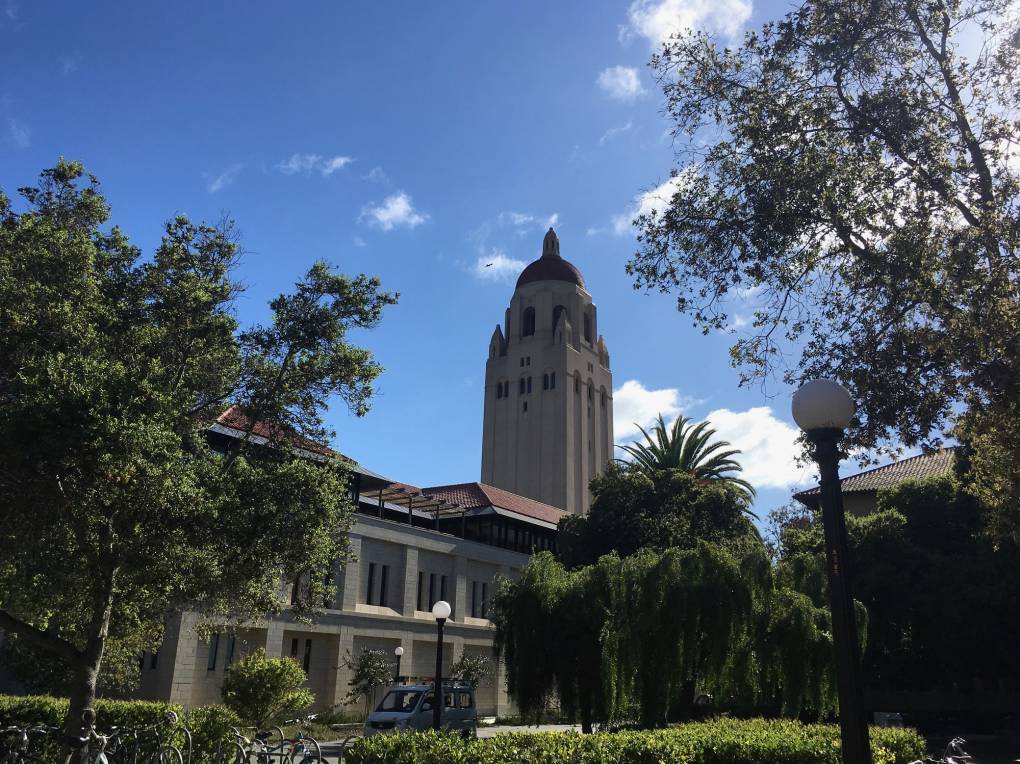
"caption": "Hoover Tower on the Stanford University campus on April 9, 2019. ",
"credit": "Rachael Myrow/KQED",
"altTag": null,
"description": null,
"imgSizes": {
"medium": {
"file": "https://cdn.kqed.org/wp-content/uploads/sites/10/2025/01/StanfordUniversity-800x600.jpg",
"width": 800,
"height": 600,
"mimeType": "image/jpeg"
},
"large": {
"file": "https://cdn.kqed.org/wp-content/uploads/sites/10/2025/01/StanfordUniversity-1020x764.jpg",
"width": 1020,
"height": 764,
"mimeType": "image/jpeg"
},
"thumbnail": {
"file": "https://cdn.kqed.org/wp-content/uploads/sites/10/2025/01/StanfordUniversity-160x120.jpg",
"width": 160,
"height": 120,
"mimeType": "image/jpeg"
},
"1536x1536": {
"file": "https://cdn.kqed.org/wp-content/uploads/sites/10/2025/01/StanfordUniversity-1536x1151.jpg",
"width": 1536,
"height": 1151,
"mimeType": "image/jpeg"
},
"post-thumbnail": {
"file": "https://cdn.kqed.org/wp-content/uploads/sites/10/2025/01/StanfordUniversity-672x372.jpg",
"width": 672,
"height": 372,
"mimeType": "image/jpeg"
},
"twentyfourteen-full-width": {
"file": "https://cdn.kqed.org/wp-content/uploads/sites/10/2025/01/StanfordUniversity-1038x576.jpg",
"width": 1038,
"height": 576,
"mimeType": "image/jpeg"
},
"full-width": {
"file": "https://cdn.kqed.org/wp-content/uploads/sites/10/2025/01/StanfordUniversity-1920x1439.jpg",
"width": 1920,
"height": 1439,
"mimeType": "image/jpeg"
},
"kqedFullSize": {
"file": "https://cdn.kqed.org/wp-content/uploads/sites/10/2025/01/StanfordUniversity.jpg",
"width": 2000,
"height": 1499
}
},
"isLoading": false,
"fetchFailed": false
},
"news_12023608": {
"type": "attachments",
"id": "news_12023608",
"meta": {
"index": "attachments_1716263798",
"site": "news",
"id": "12023608",
"found": true
},
"title": "Stanford's 22- Jarrett Mann brings the ball down court as the Stanford men take on Sonoma State in college basketball action at Maples Pavilion on Friday November 06, 2009 in Palo Alto, Calif.",
"publishDate": 1737589549,
"status": "inherit",
"parent": 12023598,
"modified": 1737590655,
"caption": "Stanford University's No. 22, Jarrett Mann, brings the ball down court as the Stanford men take on Sonoma State in college basketball at Maples Pavilion on Friday, Nov. 6, 2009, in Palo Alto, California.",
"credit": "Michael Macor/The San Francisco Chronicle via Getty Images",
"altTag": null,
"description": null,
"imgSizes": {
"medium": {
"file": "https://cdn.kqed.org/wp-content/uploads/sites/10/2025/01/SonomaStateBasketballGetty-800x518.jpg",
"width": 800,
"height": 518,
"mimeType": "image/jpeg"
},
"large": {
"file": "https://cdn.kqed.org/wp-content/uploads/sites/10/2025/01/SonomaStateBasketballGetty-1020x660.jpg",
"width": 1020,
"height": 660,
"mimeType": "image/jpeg"
},
"thumbnail": {
"file": "https://cdn.kqed.org/wp-content/uploads/sites/10/2025/01/SonomaStateBasketballGetty-160x104.jpg",
"width": 160,
"height": 104,
"mimeType": "image/jpeg"
},
"1536x1536": {
"file": "https://cdn.kqed.org/wp-content/uploads/sites/10/2025/01/SonomaStateBasketballGetty-1536x995.jpg",
"width": 1536,
"height": 995,
"mimeType": "image/jpeg"
},
"post-thumbnail": {
"file": "https://cdn.kqed.org/wp-content/uploads/sites/10/2025/01/SonomaStateBasketballGetty-672x372.jpg",
"width": 672,
"height": 372,
"mimeType": "image/jpeg"
},
"twentyfourteen-full-width": {
"file": "https://cdn.kqed.org/wp-content/uploads/sites/10/2025/01/SonomaStateBasketballGetty-1038x576.jpg",
"width": 1038,
"height": 576,
"mimeType": "image/jpeg"
},
"full-width": {
"file": "https://cdn.kqed.org/wp-content/uploads/sites/10/2025/01/SonomaStateBasketballGetty-1920x1243.jpg",
"width": 1920,
"height": 1243,
"mimeType": "image/jpeg"
},
"kqedFullSize": {
"file": "https://cdn.kqed.org/wp-content/uploads/sites/10/2025/01/SonomaStateBasketballGetty.jpg",
"width": 2000,
"height": 1295
}
},
"isLoading": false,
"fetchFailed": false
},
"news_12023453": {
"type": "attachments",
"id": "news_12023453",
"meta": {
"index": "attachments_1716263798",
"site": "news",
"id": "12023453",
"found": true
},
"title": "National Walk and Roll to School Day",
"publishDate": 1737570313,
"status": "inherit",
"parent": 12023442,
"modified": 1737570385,
"caption": "Students pass chalk drawings on their way to class at Sequoia Academy in Westminster, Orange County, on Wednesday, Oct. 9, 2024.",
"credit": "Paul Bersebach/MediaNews Group/Orange County Register via Getty Images",
"altTag": null,
"description": null,
"imgSizes": {
"medium": {
"file": "https://cdn.kqed.org/wp-content/uploads/sites/10/2025/01/GettyImages-2177021825-800x538.jpg",
"width": 800,
"height": 538,
"mimeType": "image/jpeg"
},
"large": {
"file": "https://cdn.kqed.org/wp-content/uploads/sites/10/2025/01/GettyImages-2177021825-1020x685.jpg",
"width": 1020,
"height": 685,
"mimeType": "image/jpeg"
},
"thumbnail": {
"file": "https://cdn.kqed.org/wp-content/uploads/sites/10/2025/01/GettyImages-2177021825-160x108.jpg",
"width": 160,
"height": 108,
"mimeType": "image/jpeg"
},
"post-thumbnail": {
"file": "https://cdn.kqed.org/wp-content/uploads/sites/10/2025/01/GettyImages-2177021825-672x372.jpg",
"width": 672,
"height": 372,
"mimeType": "image/jpeg"
},
"twentyfourteen-full-width": {
"file": "https://cdn.kqed.org/wp-content/uploads/sites/10/2025/01/GettyImages-2177021825-1024x576.jpg",
"width": 1024,
"height": 576,
"mimeType": "image/jpeg"
},
"kqedFullSize": {
"file": "https://cdn.kqed.org/wp-content/uploads/sites/10/2025/01/GettyImages-2177021825.jpg",
"width": 1024,
"height": 688
}
},
"isLoading": false,
"fetchFailed": false
},
"news_12017852": {
"type": "attachments",
"id": "news_12017852",
"meta": {
"index": "attachments_1716263798",
"site": "news",
"id": "12017852",
"found": true
},
"title": "20241211-OUSDMergerVote-JY-033",
"publishDate": 1733989002,
"status": "inherit",
"parent": 12027158,
"modified": 1739579285,
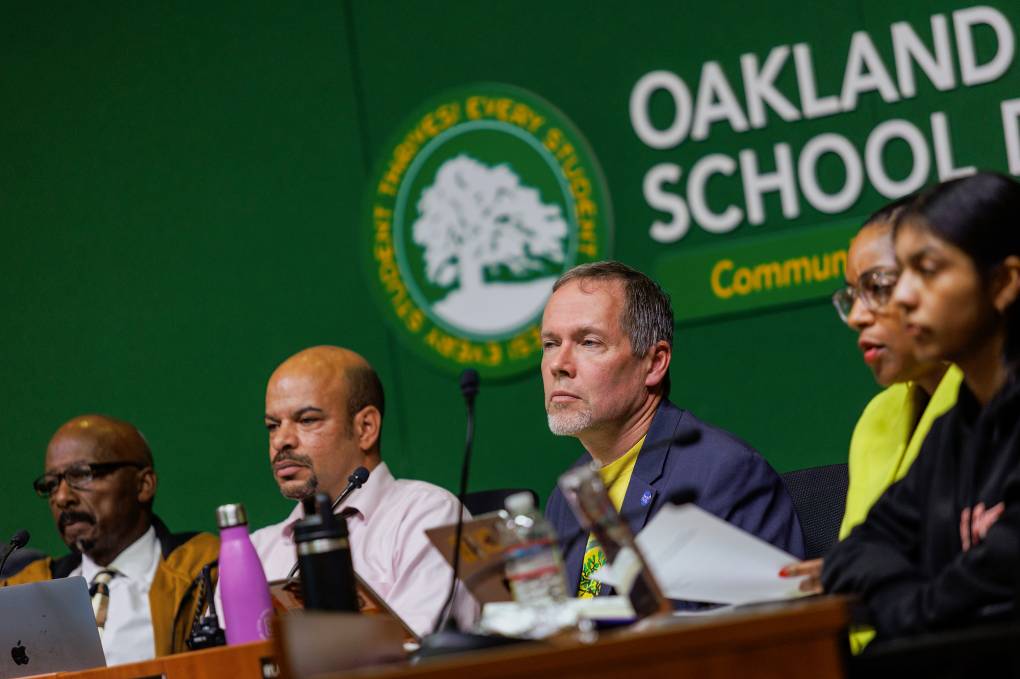
"caption": "The Oakland Unified School District Board listens to public comment during a meeting at La Escuelita Elementary School in Oakland, California, on Wednesday, Dec. 11, 2024. Students, families, educators, and community members raised their concerns about a proposed merger of their schools.",
"credit": "Juliana Yamada/KQED",
"altTag": null,
"description": null,
"imgSizes": {
"medium": {
"file": "https://cdn.kqed.org/wp-content/uploads/sites/10/2024/12/20241211-OUSDMergerVote-JY-033-800x533.jpg",
"width": 800,
"height": 533,
"mimeType": "image/jpeg"
},
"large": {
"file": "https://cdn.kqed.org/wp-content/uploads/sites/10/2024/12/20241211-OUSDMergerVote-JY-033-1020x679.jpg",
"width": 1020,
"height": 679,
"mimeType": "image/jpeg"
},
"thumbnail": {
"file": "https://cdn.kqed.org/wp-content/uploads/sites/10/2024/12/20241211-OUSDMergerVote-JY-033-160x107.jpg",
"width": 160,
"height": 107,
"mimeType": "image/jpeg"
},
"1536x1536": {
"file": "https://cdn.kqed.org/wp-content/uploads/sites/10/2024/12/20241211-OUSDMergerVote-JY-033-1536x1023.jpg",
"width": 1536,
"height": 1023,
"mimeType": "image/jpeg"
},
"post-thumbnail": {
"file": "https://cdn.kqed.org/wp-content/uploads/sites/10/2024/12/20241211-OUSDMergerVote-JY-033-672x372.jpg",
"width": 672,
"height": 372,
"mimeType": "image/jpeg"
},
"twentyfourteen-full-width": {
"file": "https://cdn.kqed.org/wp-content/uploads/sites/10/2024/12/20241211-OUSDMergerVote-JY-033-1038x576.jpg",
"width": 1038,
"height": 576,
"mimeType": "image/jpeg"
},
"full-width": {
"file": "https://cdn.kqed.org/wp-content/uploads/sites/10/2024/12/20241211-OUSDMergerVote-JY-033-1920x1279.jpg",
"width": 1920,
"height": 1279,
"mimeType": "image/jpeg"
},
"kqedFullSize": {
"file": "https://cdn.kqed.org/wp-content/uploads/sites/10/2024/12/20241211-OUSDMergerVote-JY-033.jpg",
"width": 2000,
"height": 1332
}
},
"isLoading": false,
"fetchFailed": false
},
"news_12016604": {
"type": "attachments",
"id": "news_12016604",
"meta": {
"index": "attachments_1716263798",
"site": "news",
"id": "12016604",
"found": true
},
"title": "The UC Berkeley Campus in Berkeley on Aug. 17, 2023.",
"publishDate": 1733334753,
"status": "inherit",
"parent": 12016602,
"modified": 1733334766,
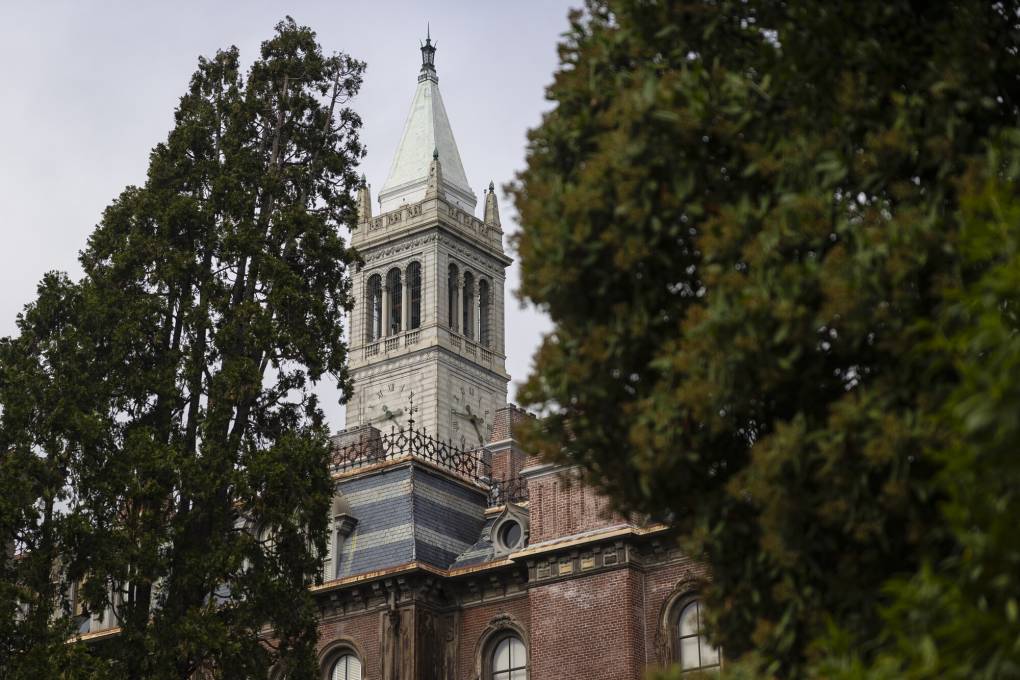
"caption": "The UC Berkeley Campus in Berkeley on Aug. 17, 2023.",
"credit": "Martin do Nascimento/KQED",
"altTag": null,
"description": null,
"imgSizes": {
"medium": {
"file": "https://cdn.kqed.org/wp-content/uploads/sites/10/2024/12/230817-UC-BERKELEY-CAMPUS-MD-02_qed-800x533.jpg",
"width": 800,
"height": 533,
"mimeType": "image/jpeg"
},
"large": {
"file": "https://cdn.kqed.org/wp-content/uploads/sites/10/2024/12/230817-UC-BERKELEY-CAMPUS-MD-02_qed-1020x680.jpg",
"width": 1020,
"height": 680,
"mimeType": "image/jpeg"
},
"thumbnail": {
"file": "https://cdn.kqed.org/wp-content/uploads/sites/10/2024/12/230817-UC-BERKELEY-CAMPUS-MD-02_qed-160x107.jpg",
"width": 160,
"height": 107,
"mimeType": "image/jpeg"
},
"1536x1536": {
"file": "https://cdn.kqed.org/wp-content/uploads/sites/10/2024/12/230817-UC-BERKELEY-CAMPUS-MD-02_qed-1536x1024.jpg",
"width": 1536,
"height": 1024,
"mimeType": "image/jpeg"
},
"post-thumbnail": {
"file": "https://cdn.kqed.org/wp-content/uploads/sites/10/2024/12/230817-UC-BERKELEY-CAMPUS-MD-02_qed-672x372.jpg",
"width": 672,
"height": 372,
"mimeType": "image/jpeg"
},
"twentyfourteen-full-width": {
"file": "https://cdn.kqed.org/wp-content/uploads/sites/10/2024/12/230817-UC-BERKELEY-CAMPUS-MD-02_qed-1038x576.jpg",
"width": 1038,
"height": 576,
"mimeType": "image/jpeg"
},
"full-width": {
"file": "https://cdn.kqed.org/wp-content/uploads/sites/10/2024/12/230817-UC-BERKELEY-CAMPUS-MD-02_qed-1920x1280.jpg",
"width": 1920,
"height": 1280,
"mimeType": "image/jpeg"
},
"kqedFullSize": {
"file": "https://cdn.kqed.org/wp-content/uploads/sites/10/2024/12/230817-UC-BERKELEY-CAMPUS-MD-02_qed.jpg",
"width": 2000,
"height": 1333
}
},
"isLoading": false,
"fetchFailed": false
},
"news_11997446": {
"type": "attachments",
"id": "news_11997446",
"meta": {
"index": "attachments_1716263798",
"site": "news",
"id": "11997446",
"found": true
},
"title": "240725-UC BERKELEY FIREBOMB-01-KQED",
"publishDate": 1721943589,
"status": "inherit",
"parent": 0,
"modified": 1736974083,
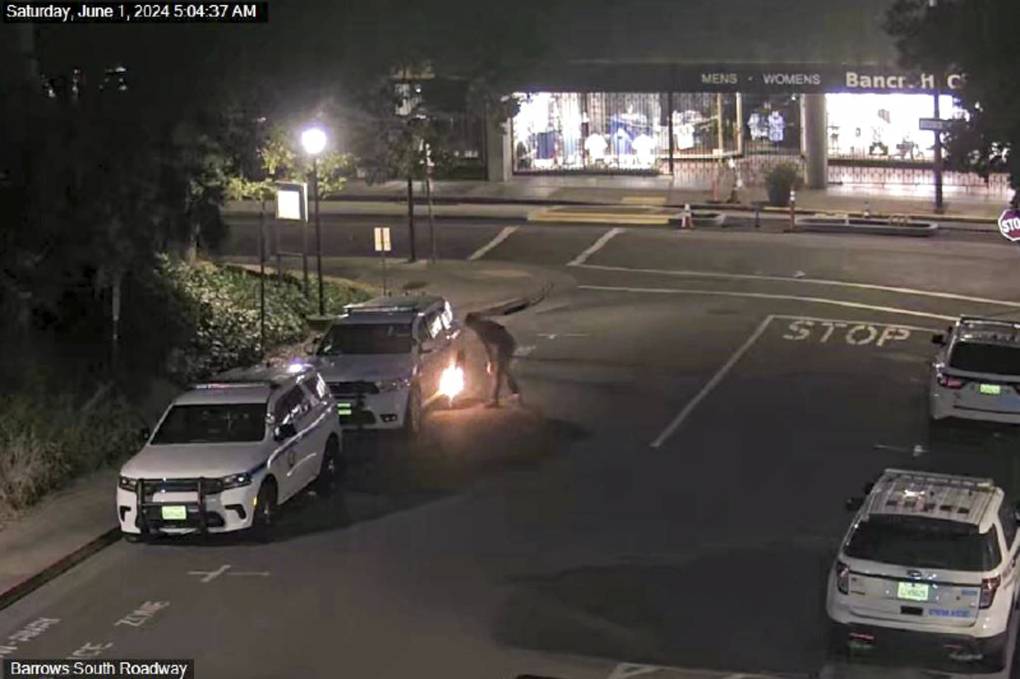
"caption": "An image from the indictment against Casey Robert Goonan filed on July 24, 2024. \"Goonan kicked the shopping bag underneath the fuel tank of a marked UCPD patrol vehicle and ignited the Molotov cocktails,\" reads the indictment.",
"credit": "Courtesy of U.S. District Court of Norther California",
"altTag": null,
"description": null,
"imgSizes": {
"medium": {
"file": "https://cdn.kqed.org/wp-content/uploads/sites/10/2024/07/240725-UC-BERKELEY-FIREBOMB-01-KQED-800x533.jpg",
"width": 800,
"height": 533,
"mimeType": "image/jpeg"
},
"large": {
"file": "https://cdn.kqed.org/wp-content/uploads/sites/10/2024/07/240725-UC-BERKELEY-FIREBOMB-01-KQED-1020x679.jpg",
"width": 1020,
"height": 679,
"mimeType": "image/jpeg"
},
"thumbnail": {
"file": "https://cdn.kqed.org/wp-content/uploads/sites/10/2024/07/240725-UC-BERKELEY-FIREBOMB-01-KQED-160x107.jpg",
"width": 160,
"height": 107,
"mimeType": "image/jpeg"
},
"1536x1536": {
"file": "https://cdn.kqed.org/wp-content/uploads/sites/10/2024/07/240725-UC-BERKELEY-FIREBOMB-01-KQED-1536x1023.jpg",
"width": 1536,
"height": 1023,
"mimeType": "image/jpeg"
},
"post-thumbnail": {
"file": "https://cdn.kqed.org/wp-content/uploads/sites/10/2024/07/240725-UC-BERKELEY-FIREBOMB-01-KQED-672x372.jpg",
"width": 672,
"height": 372,
"mimeType": "image/jpeg"
},
"twentyfourteen-full-width": {
"file": "https://cdn.kqed.org/wp-content/uploads/sites/10/2024/07/240725-UC-BERKELEY-FIREBOMB-01-KQED-1038x576.jpg",
"width": 1038,
"height": 576,
"mimeType": "image/jpeg"
},
"full-width": {
"file": "https://cdn.kqed.org/wp-content/uploads/sites/10/2024/07/240725-UC-BERKELEY-FIREBOMB-01-KQED-1920x1279.jpg",
"width": 1920,
"height": 1279,
"mimeType": "image/jpeg"
},
"kqedFullSize": {
"file": "https://cdn.kqed.org/wp-content/uploads/sites/10/2024/07/240725-UC-BERKELEY-FIREBOMB-01-KQED.jpg",
"width": 2000,
"height": 1332
}
},
"isLoading": false,
"fetchFailed": false
},
"news_12022073": {
"type": "attachments",
"id": "news_12022073",
"meta": {
"index": "attachments_1716263798",
"site": "news",
"id": "12022073",
"found": true
},
"title": "Stege-Elementary34-1280x765",
"publishDate": 1736883763,
"status": "inherit",
"parent": 12022069,
"modified": 1736883791,
"caption": "West Contra Costa Unified's Stege Elementary School in Richmond.",
"credit": "Andrew Reed/EdSource",
"altTag": null,
"description": null,
"imgSizes": {
"medium": {
"file": "https://cdn.kqed.org/wp-content/uploads/sites/10/2025/01/Stege-Elementary34-1280x765-1-800x478.jpg",
"width": 800,
"height": 478,
"mimeType": "image/jpeg"
},
"large": {
"file": "https://cdn.kqed.org/wp-content/uploads/sites/10/2025/01/Stege-Elementary34-1280x765-1-1020x610.jpg",
"width": 1020,
"height": 610,
"mimeType": "image/jpeg"
},
"thumbnail": {
"file": "https://cdn.kqed.org/wp-content/uploads/sites/10/2025/01/Stege-Elementary34-1280x765-1-160x96.jpg",
"width": 160,
"height": 96,
"mimeType": "image/jpeg"
},
"post-thumbnail": {
"file": "https://cdn.kqed.org/wp-content/uploads/sites/10/2025/01/Stege-Elementary34-1280x765-1-672x372.jpg",
"width": 672,
"height": 372,
"mimeType": "image/jpeg"
},
"twentyfourteen-full-width": {
"file": "https://cdn.kqed.org/wp-content/uploads/sites/10/2025/01/Stege-Elementary34-1280x765-1-1038x576.jpg",
"width": 1038,
"height": 576,
"mimeType": "image/jpeg"
},
"kqedFullSize": {
"file": "https://cdn.kqed.org/wp-content/uploads/sites/10/2025/01/Stege-Elementary34-1280x765-1.jpg",
"width": 1280,
"height": 765
}
},
"isLoading": false,
"fetchFailed": false
},
"news_12021944": {
"type": "attachments",
"id": "news_12021944",
"meta": {
"index": "attachments_1716263798",
"site": "news",
"id": "12021944",
"found": true
},
"title": "02172023_ksuzuki_tkprogress 010_qed",
"publishDate": 1736813006,
"status": "inherit",
"parent": 12021883,
"modified": 1736820012,
"caption": "Santa Rosa City Schools district is beginning to hold a series of town hall meetings from Jan. 13–23 to address the community's concerns over potential school closures and consolidations — an issue also playing out in San Francisco and Oakland. ",
"credit": "Kori Suzuki/KQED",
"altTag": null,
"description": null,
"imgSizes": {
"medium": {
"file": "https://cdn.kqed.org/wp-content/uploads/sites/10/2025/01/02172023_ksuzuki_tkprogress-010_qed-800x532.jpg",
"width": 800,
"height": 532,
"mimeType": "image/jpeg"
},
"large": {
"file": "https://cdn.kqed.org/wp-content/uploads/sites/10/2025/01/02172023_ksuzuki_tkprogress-010_qed-1020x679.jpg",
"width": 1020,
"height": 679,
"mimeType": "image/jpeg"
},
"thumbnail": {
"file": "https://cdn.kqed.org/wp-content/uploads/sites/10/2025/01/02172023_ksuzuki_tkprogress-010_qed-160x106.jpg",
"width": 160,
"height": 106,
"mimeType": "image/jpeg"
},
"1536x1536": {
"file": "https://cdn.kqed.org/wp-content/uploads/sites/10/2025/01/02172023_ksuzuki_tkprogress-010_qed-1536x1022.jpg",
"width": 1536,
"height": 1022,
"mimeType": "image/jpeg"
},
"post-thumbnail": {
"file": "https://cdn.kqed.org/wp-content/uploads/sites/10/2025/01/02172023_ksuzuki_tkprogress-010_qed-672x372.jpg",
"width": 672,
"height": 372,
"mimeType": "image/jpeg"
},
"twentyfourteen-full-width": {
"file": "https://cdn.kqed.org/wp-content/uploads/sites/10/2025/01/02172023_ksuzuki_tkprogress-010_qed-1038x576.jpg",
"width": 1038,
"height": 576,
"mimeType": "image/jpeg"
},
"full-width": {
"file": "https://cdn.kqed.org/wp-content/uploads/sites/10/2025/01/02172023_ksuzuki_tkprogress-010_qed-1920x1278.jpg",
"width": 1920,
"height": 1278,
"mimeType": "image/jpeg"
},
"kqedFullSize": {
"file": "https://cdn.kqed.org/wp-content/uploads/sites/10/2025/01/02172023_ksuzuki_tkprogress-010_qed.jpg",
"width": 2000,
"height": 1331
}
},
"isLoading": false,
"fetchFailed": false
},
"news_12021639": {
"type": "attachments",
"id": "news_12021639",
"meta": {
"index": "attachments_1716263798",
"site": "news",
"id": "12021639",
"found": true
},
"title": "010625-Newsom-Budget-AP-CM",
"publishDate": 1736555497,
"status": "inherit",
"parent": 12021637,
"modified": 1736555532,
"caption": "Gov. Gavin Newsom outlines his proposed 2025-2026 state budget during a news conference at California State University, Stanislaus in Turlock, on Jan. 6, 2025.",
"credit": "Rich Pedroncelli, AP Photo",
"altTag": null,
"description": null,
"imgSizes": {
"medium": {
"file": "https://cdn.kqed.org/wp-content/uploads/sites/10/2025/01/010625-Newsom-Budget-AP-CM-800x533.jpg",
"width": 800,
"height": 533,
"mimeType": "image/jpeg"
},
"large": {
"file": "https://cdn.kqed.org/wp-content/uploads/sites/10/2025/01/010625-Newsom-Budget-AP-CM-1020x680.jpg",
"width": 1020,
"height": 680,
"mimeType": "image/jpeg"
},
"thumbnail": {
"file": "https://cdn.kqed.org/wp-content/uploads/sites/10/2025/01/010625-Newsom-Budget-AP-CM-160x107.jpg",
"width": 160,
"height": 107,
"mimeType": "image/jpeg"
},
"1536x1536": {
"file": "https://cdn.kqed.org/wp-content/uploads/sites/10/2025/01/010625-Newsom-Budget-AP-CM-1536x1024.jpg",
"width": 1536,
"height": 1024,
"mimeType": "image/jpeg"
},
"post-thumbnail": {
"file": "https://cdn.kqed.org/wp-content/uploads/sites/10/2025/01/010625-Newsom-Budget-AP-CM-672x372.jpg",
"width": 672,
"height": 372,
"mimeType": "image/jpeg"
},
"twentyfourteen-full-width": {
"file": "https://cdn.kqed.org/wp-content/uploads/sites/10/2025/01/010625-Newsom-Budget-AP-CM-1038x576.jpg",
"width": 1038,
"height": 576,
"mimeType": "image/jpeg"
},
"full-width": {
"file": "https://cdn.kqed.org/wp-content/uploads/sites/10/2025/01/010625-Newsom-Budget-AP-CM-1920x1280.jpg",
"width": 1920,
"height": 1280,
"mimeType": "image/jpeg"
},
"kqedFullSize": {
"file": "https://cdn.kqed.org/wp-content/uploads/sites/10/2025/01/010625-Newsom-Budget-AP-CM.jpg",
"width": 2000,
"height": 1333
}
},
"isLoading": false,
"fetchFailed": false
},
"news_12020520": {
"type": "attachments",
"id": "news_12020520",
"meta": {
"index": "attachments_1716263798",
"site": "news",
"id": "12020520",
"found": true
},
"title": "Edsource1",
"publishDate": 1736210282,
"status": "inherit",
"parent": 12020519,
"modified": 1736210298,
"caption": "Two students sit on a bench during lunch at Rudsdale Newcomer High School in Oakland, California on January 28, 2019.",
"credit": "Anne Wernikoff for EdSource",
"altTag": null,
"description": null,
"imgSizes": {
"medium": {
"file": "https://cdn.kqed.org/wp-content/uploads/sites/10/2025/01/Edsource1-800x572.jpg",
"width": 800,
"height": 572,
"mimeType": "image/jpeg"
},
"large": {
"file": "https://cdn.kqed.org/wp-content/uploads/sites/10/2025/01/Edsource1-1020x729.jpg",
"width": 1020,
"height": 729,
"mimeType": "image/jpeg"
},
"thumbnail": {
"file": "https://cdn.kqed.org/wp-content/uploads/sites/10/2025/01/Edsource1-160x114.jpg",
"width": 160,
"height": 114,
"mimeType": "image/jpeg"
},
"post-thumbnail": {
"file": "https://cdn.kqed.org/wp-content/uploads/sites/10/2025/01/Edsource1-672x372.jpg",
"width": 672,
"height": 372,
"mimeType": "image/jpeg"
},
"twentyfourteen-full-width": {
"file": "https://cdn.kqed.org/wp-content/uploads/sites/10/2025/01/Edsource1-1038x576.jpg",
"width": 1038,
"height": 576,
"mimeType": "image/jpeg"
},
"kqedFullSize": {
"file": "https://cdn.kqed.org/wp-content/uploads/sites/10/2025/01/Edsource1.jpg",
"width": 1119,
"height": 800
}
},
"isLoading": false,
"fetchFailed": false
},
"news_12020312": {
"type": "attachments",
"id": "news_12020312",
"meta": {
"index": "attachments_1716263798",
"site": "news",
"id": "12020312",
"found": true
},
"title": "080923_School-Attendance_SN_CM_01",
"publishDate": 1735940194,
"status": "inherit",
"parent": 12020308,
"modified": 1735940231,
"caption": "Parents and their kids on the first day of classes at Loma Vista Elementary School in Salinas on Aug. 8, 2023. State legislators want to limit deportation actions at schools.",
"credit": "Semantha Norris/CalMatters",
"altTag": null,
"description": null,
"imgSizes": {
"medium": {
"file": "https://cdn.kqed.org/wp-content/uploads/sites/10/2025/01/080923_School-Attendance_SN_CM_01-800x533.jpg",
"width": 800,
"height": 533,
"mimeType": "image/jpeg"
},
"large": {
"file": "https://cdn.kqed.org/wp-content/uploads/sites/10/2025/01/080923_School-Attendance_SN_CM_01-1020x680.jpg",
"width": 1020,
"height": 680,
"mimeType": "image/jpeg"
},
"thumbnail": {
"file": "https://cdn.kqed.org/wp-content/uploads/sites/10/2025/01/080923_School-Attendance_SN_CM_01-160x107.jpg",
"width": 160,
"height": 107,
"mimeType": "image/jpeg"
},
"1536x1536": {
"file": "https://cdn.kqed.org/wp-content/uploads/sites/10/2025/01/080923_School-Attendance_SN_CM_01-1536x1024.jpg",
"width": 1536,
"height": 1024,
"mimeType": "image/jpeg"
},
"post-thumbnail": {
"file": "https://cdn.kqed.org/wp-content/uploads/sites/10/2025/01/080923_School-Attendance_SN_CM_01-672x372.jpg",
"width": 672,
"height": 372,
"mimeType": "image/jpeg"
},
"twentyfourteen-full-width": {
"file": "https://cdn.kqed.org/wp-content/uploads/sites/10/2025/01/080923_School-Attendance_SN_CM_01-1038x576.jpg",
"width": 1038,
"height": 576,
"mimeType": "image/jpeg"
},
"full-width": {
"file": "https://cdn.kqed.org/wp-content/uploads/sites/10/2025/01/080923_School-Attendance_SN_CM_01-1920x1280.jpg",
"width": 1920,
"height": 1280,
"mimeType": "image/jpeg"
},
"kqedFullSize": {
"file": "https://cdn.kqed.org/wp-content/uploads/sites/10/2025/01/080923_School-Attendance_SN_CM_01.jpg",
"width": 2000,
"height": 1333
}
},
"isLoading": false,
"fetchFailed": false
},
"news_12020091": {
"type": "attachments",
"id": "news_12020091",
"meta": {
"index": "attachments_1716263798",
"site": "news",
"id": "12020091",
"found": true
},
"title": "06152021_OpenCA_PU_Sized_10 copy",
"publishDate": 1735692872,
"status": "inherit",
"parent": 12020089,
"modified": 1735692962,
"caption": "Johnny McMahan completes a transaction with a maskless customer at Bargain Liquors in Long Beach, on June 15, 2021. Starting Tuesday, California will not have rules regarding social distancing and capacity limits inside restaurants, bars, gyms or stadiums. Mandates for masks have also been lifted by the state. ",
"credit": "Pablo Unzueta for CalMatters",
"altTag": null,
"description": null,
"imgSizes": {
"medium": {
"file": "https://cdn.kqed.org/wp-content/uploads/sites/10/2024/12/06152021_OpenCA_PU_Sized_10-copy-800x533.jpg",
"width": 800,
"height": 533,
"mimeType": "image/jpeg"
},
"large": {
"file": "https://cdn.kqed.org/wp-content/uploads/sites/10/2024/12/06152021_OpenCA_PU_Sized_10-copy-1020x680.jpg",
"width": 1020,
"height": 680,
"mimeType": "image/jpeg"
},
"thumbnail": {
"file": "https://cdn.kqed.org/wp-content/uploads/sites/10/2024/12/06152021_OpenCA_PU_Sized_10-copy-160x107.jpg",
"width": 160,
"height": 107,
"mimeType": "image/jpeg"
},
"1536x1536": {
"file": "https://cdn.kqed.org/wp-content/uploads/sites/10/2024/12/06152021_OpenCA_PU_Sized_10-copy-1536x1024.jpg",
"width": 1536,
"height": 1024,
"mimeType": "image/jpeg"
},
"post-thumbnail": {
"file": "https://cdn.kqed.org/wp-content/uploads/sites/10/2024/12/06152021_OpenCA_PU_Sized_10-copy-672x372.jpg",
"width": 672,
"height": 372,
"mimeType": "image/jpeg"
},
"twentyfourteen-full-width": {
"file": "https://cdn.kqed.org/wp-content/uploads/sites/10/2024/12/06152021_OpenCA_PU_Sized_10-copy-1038x576.jpg",
"width": 1038,
"height": 576,
"mimeType": "image/jpeg"
},
"full-width": {
"file": "https://cdn.kqed.org/wp-content/uploads/sites/10/2024/12/06152021_OpenCA_PU_Sized_10-copy-1920x1280.jpg",
"width": 1920,
"height": 1280,
"mimeType": "image/jpeg"
},
"kqedFullSize": {
"file": "https://cdn.kqed.org/wp-content/uploads/sites/10/2024/12/06152021_OpenCA_PU_Sized_10-copy.jpg",
"width": 2000,
"height": 1333
}
},
"isLoading": false,
"fetchFailed": false
}
},
"audioPlayerReducer": {
"postId": "stream_live",
"isPaused": true,
"isPlaying": false,
"pfsActive": false,
"pledgeModalIsOpen": true,
"playerDrawerIsOpen": false,
"liveAudioPlayStartedAt": 0,
"liveAudioPlayContext": ""
},
"authorsReducer": {
"byline_news_12023442": {
"type": "authors",
"id": "byline_news_12023442",
"meta": {
"override": true
},
"slug": "byline_news_12023442",
"name": "Olga R. Rodriguez, Moriah Balingit, Bianca Vázquez Toness and Jocelyn Gecker, Associated Press",
"isLoading": false
},
"byline_news_12022069": {
"type": "authors",
"id": "byline_news_12022069",
"meta": {
"override": true
},
"slug": "byline_news_12022069",
"name": "Kenneth Howe, EdSource",
"isLoading": false
},
"byline_news_12021637": {
"type": "authors",
"id": "byline_news_12021637",
"meta": {
"override": true
},
"slug": "byline_news_12021637",
"name": "\u003ca href=\"https://calmatters.org/author/mikhailzinshteyn/\">Mikhail Zinshteyn\u003c/a> and \u003ca href=\"https://calmatters.org/author/yue-yu/\">Yue Stella Yu\u003c/a>, CalMatters",
"isLoading": false
},
"byline_news_12020519": {
"type": "authors",
"id": "byline_news_12020519",
"meta": {
"override": true
},
"slug": "byline_news_12020519",
"name": "Zaidee Stavely, EdSource",
"isLoading": false
},
"byline_news_12020308": {
"type": "authors",
"id": "byline_news_12020308",
"meta": {
"override": true
},
"slug": "byline_news_12020308",
"name": "\u003ca href=\"https://calmatters.org/author/carolyn-jones/\">Carolyn Jones\u003c/a>, CalMatters",
"isLoading": false
},
"byline_news_12020089": {
"type": "authors",
"id": "byline_news_12020089",
"meta": {
"override": true
},
"slug": "byline_news_12020089",
"name": "\u003ca href=\"https://calmatters.org/author/ryan-sabalow/\">Ryan Sabalow\u003c/a>, CalMatters",
"isLoading": false
},
"rachael-myrow": {
"type": "authors",
"id": "251",
"meta": {
"index": "authors_1716337520",
"id": "251",
"found": true
},
"name": "Rachael Myrow",
"firstName": "Rachael",
"lastName": "Myrow",
"slug": "rachael-myrow",
"email": "rmyrow@kqed.org",
"display_author_email": true,
"staff_mastheads": [
"news"
],
"title": "Senior Editor of KQED's Silicon Valley News Desk",
"bio": "• I write and edit stories about how Silicon Valley power and policies shape everyday life in California. I’m also passionate about making Bay Area history and culture more accessible to a broad public. • I’ve been a journalist for most of my life, starting in high school with The Franklin Press in Los Angeles, where I grew up. While earning my first degree in English at UC Berkeley, I got my start in public radio at KALX-FM. After completing a second degree in journalism at Cal, I landed my first professional job at Marketplace, then moved on to KPCC (now LAist), and then KQED, where I hosted The California Report for more than seven years. • My reporting has appeared on NPR, The World, WBUR’s \u003ci>Here & Now\u003c/i>, and the BBC. I also guest host for KQED’s \u003ci>Forum\u003c/i>, as well as the Commonwealth Club in San Francisco. • I speak periodically on media, democracy and technology issues, and do voiceover work for documentaries and educational video projects. • Outside of the studio, you'll find me hiking Bay Area trails and whipping up Insta-ready meals in my kitchen. • I do not accept gifts, money, or favors from anyone connected to my reporting, I don't pay people for information, and I do not support or donate to political causes. • I strive to treat the people I report on with fairness, honesty, and respect. I also recognize there are often multiple sides to a story and work to verify information through multiple sources and documentation. If I get something wrong, I correct it.",
"avatar": "https://secure.gravatar.com/avatar/3ed8a3c5f26025e4a805ba634cda8cd764906b97438a6d9ce216b044e340da4e?s=600&d=blank&r=g",
"twitter": "rachaelmyrow",
"bluesky": null,
"facebook": null,
"instagram": null,
"linkedin": "https://www.linkedin.com/in/rachaelmyrow/",
"sites": [
{
"site": "arts",
"roles": [
"administrator"
]
},
{
"site": "news",
"roles": [
"edit_others_posts",
"editor"
]
},
{
"site": "futureofyou",
"roles": [
"editor"
]
},
{
"site": "bayareabites",
"roles": [
"editor"
]
},
{
"site": "stateofhealth",
"roles": [
"editor"
]
},
{
"site": "science",
"roles": [
"editor"
]
},
{
"site": "food",
"roles": [
"editor"
]
},
{
"site": "forum",
"roles": [
"editor"
]
},
{
"site": "liveblog",
"roles": [
"author"
]
}
],
"headData": {
"title": "Rachael Myrow | KQED",
"description": "Senior Editor of KQED's Silicon Valley News Desk",
"ogImgSrc": "https://secure.gravatar.com/avatar/3ed8a3c5f26025e4a805ba634cda8cd764906b97438a6d9ce216b044e340da4e?s=600&d=blank&r=g",
"twImgSrc": "https://secure.gravatar.com/avatar/3ed8a3c5f26025e4a805ba634cda8cd764906b97438a6d9ce216b044e340da4e?s=600&d=blank&r=g"
},
"isLoading": false,
"link": "/author/rachael-myrow"
},
"daisynguyen": {
"type": "authors",
"id": "11829",
"meta": {
"index": "authors_1716337520",
"id": "11829",
"found": true
},
"name": "Daisy Nguyen",
"firstName": "Daisy",
"lastName": "Nguyen",
"slug": "daisynguyen",
"email": "daisynguyen@kqed.org",
"display_author_email": true,
"staff_mastheads": [
"news"
],
"title": "KQED Contributor",
"bio": "I have covered early childhood education and child care for KQED since 2022. I focus on policies aimed at increasing access to early care and education and how they shape individual lives. I've been a journalist for more than two decades, with most of that time devoted to covering breaking news throughout California for The Associated Press. I grew up in San Francisco and studied at UC Davis and Columbia University's Graduate School of Journalism. I live in Oakland with my husband and two kids.",
"avatar": "https://secure.gravatar.com/avatar/2da2127c27f7143b53ebd419800fd55f?s=600&d=blank&r=g",
"twitter": null,
"facebook": null,
"instagram": null,
"linkedin": "https://www.linkedin.com/in/daisynguyen/",
"sites": [
{
"site": "news",
"roles": [
"author"
]
},
{
"site": "liveblog",
"roles": [
"author"
]
}
],
"headData": {
"title": "Daisy Nguyen | KQED",
"description": "KQED Contributor",
"ogImgSrc": "https://secure.gravatar.com/avatar/2da2127c27f7143b53ebd419800fd55f?s=600&d=blank&r=g",
"twImgSrc": "https://secure.gravatar.com/avatar/2da2127c27f7143b53ebd419800fd55f?s=600&d=blank&r=g"
},
"isLoading": false,
"link": "/author/daisynguyen"
},
"jgeha": {
"type": "authors",
"id": "11906",
"meta": {
"index": "authors_1716337520",
"id": "11906",
"found": true
},
"name": "Joseph Geha",
"firstName": "Joseph",
"lastName": "Geha",
"slug": "jgeha",
"email": "jgeha@kqed.org",
"display_author_email": false,
"staff_mastheads": [
"news",
"science"
],
"title": "KQED Contributor",
"bio": null,
"avatar": "https://secure.gravatar.com/avatar/ea84d2b6dd93d6369d453edf19dd583f117cd1759d2d9c9c92f9de77017354fe?s=600&d=blank&r=g",
"twitter": null,
"bluesky": null,
"facebook": null,
"instagram": null,
"linkedin": null,
"sites": [
{
"site": "news",
"roles": [
"editor"
]
},
{
"site": "liveblog",
"roles": [
"author"
]
}
],
"headData": {
"title": "Joseph Geha | KQED",
"description": "KQED Contributor",
"ogImgSrc": "https://secure.gravatar.com/avatar/ea84d2b6dd93d6369d453edf19dd583f117cd1759d2d9c9c92f9de77017354fe?s=600&d=blank&r=g",
"twImgSrc": "https://secure.gravatar.com/avatar/ea84d2b6dd93d6369d453edf19dd583f117cd1759d2d9c9c92f9de77017354fe?s=600&d=blank&r=g"
},
"isLoading": false,
"link": "/author/jgeha"
},
"jservantez": {
"type": "authors",
"id": "11909",
"meta": {
"index": "authors_1716337520",
"id": "11909",
"found": true
},
"name": "Jared Servantez",
"firstName": "Jared",
"lastName": "Servantez",
"slug": "jservantez",
"email": "jservantez@kqed.org",
"display_author_email": true,
"staff_mastheads": [
"news"
],
"title": "KQED Contributor",
"bio": "Jared Servantez is the editor of KQED's Express Desk, leading the newsroom's online breaking news operation. He most recently worked for the Los Angeles Times, where he served as a breaking news editor, the Metro Desk's night editor, and a copy editor. Jared is a graduate of the USC Annenberg School for Communication and Journalism.",
"avatar": "https://secure.gravatar.com/avatar/f0e317c67bb498c3f077f033d1cc79e62f3bc1303fa20a14e8880d31fbe7e01e?s=600&d=blank&r=g",
"twitter": "jservantez",
"bluesky": null,
"facebook": null,
"instagram": null,
"linkedin": null,
"sites": [
{
"site": "news",
"roles": [
"editor"
]
},
{
"site": "science",
"roles": [
"editor",
"author"
]
},
{
"site": "liveblog",
"roles": [
"editor"
]
}
],
"headData": {
"title": "Jared Servantez | KQED",
"description": "KQED Contributor",
"ogImgSrc": "https://secure.gravatar.com/avatar/f0e317c67bb498c3f077f033d1cc79e62f3bc1303fa20a14e8880d31fbe7e01e?s=600&d=blank&r=g",
"twImgSrc": "https://secure.gravatar.com/avatar/f0e317c67bb498c3f077f033d1cc79e62f3bc1303fa20a14e8880d31fbe7e01e?s=600&d=blank&r=g"
},
"isLoading": false,
"link": "/author/jservantez"
},
"kdebenedetti": {
"type": "authors",
"id": "11913",
"meta": {
"index": "authors_1716337520",
"id": "11913",
"found": true
},
"name": "Katie DeBenedetti",
"firstName": "Katie",
"lastName": "DeBenedetti",
"slug": "kdebenedetti",
"email": "kdebenedetti@kqed.org",
"display_author_email": false,
"staff_mastheads": [
"news",
"science"
],
"title": "KQED Contributor",
"bio": "Katie DeBenedetti is a digital reporter covering daily news for the Express Desk. Prior to joining KQED as a culture reporting intern in January 2024, she covered education and city government for the Napa Valley Register.",
"avatar": "https://secure.gravatar.com/avatar/6e31073cb8f7e4214ab03f42771d0f45?s=600&d=blank&r=g",
"twitter": null,
"facebook": null,
"instagram": null,
"linkedin": null,
"sites": [
{
"site": "news",
"roles": [
"author"
]
},
{
"site": "science",
"roles": [
"author"
]
},
{
"site": "liveblog",
"roles": [
"author"
]
}
],
"headData": {
"title": "Katie DeBenedetti | KQED",
"description": "KQED Contributor",
"ogImgSrc": "https://secure.gravatar.com/avatar/6e31073cb8f7e4214ab03f42771d0f45?s=600&d=blank&r=g",
"twImgSrc": "https://secure.gravatar.com/avatar/6e31073cb8f7e4214ab03f42771d0f45?s=600&d=blank&r=g"
},
"isLoading": false,
"link": "/author/kdebenedetti"
}
},
"pagesReducer": {
"news_tag_education": {
"type": "terms",
"id": "news_20013",
"meta": {
"index": "terms_1716263798",
"site": "news",
"id": "20013",
"score": 6.970073
},
"featImg": null,
"name": "education",
"description": null,
"taxonomy": "tag",
"headData": {
"twImgId": null,
"twTitle": null,
"ogTitle": null,
"ogImgId": null,
"twDescription": null,
"description": null,
"title": "education Archives | KQED News",
"ogDescription": null
},
"ttid": 20030,
"slug": "education",
"isLoading": false,
"title": "education",
"pageMeta": {
"site": "news",
"WpPageTemplate": "page-topic-editorial",
"currentPage": 31
},
"blocks": [
{
"blockName": "kqed/post-list",
"attrs": {
"layout": "cardArticle2",
"query": "posts/news?tag=education",
"seeMore": false,
"paginated": true,
"page": 31
}
},
{
"blockName": "kqed/ad"
}
]
}
},
"pfsSessionReducer": {},
"postsReducer": {
"stream_live": {
"type": "live",
"id": "stream_live",
"audioUrl": "https://streams.kqed.org/kqedradio",
"title": "Live Stream",
"excerpt": "Live Stream information currently unavailable.",
"link": "/radio",
"featImg": "",
"label": {
"name": "KQED Live",
"link": "/"
}
},
"stream_kqedNewscast": {
"type": "posts",
"id": "stream_kqedNewscast",
"audioUrl": "https://www.kqed.org/.stream/anon/radio/RDnews/newscast.mp3?_=1",
"title": "KQED Newscast",
"featImg": "",
"label": {
"name": "88.5 FM",
"link": "/"
}
},
"news_12023600": {
"type": "posts",
"id": "news_12023600",
"meta": {
"index": "posts_1716263798",
"site": "news",
"id": "12023600",
"score": null,
"sort": [
1737592542000
]
},
"guestAuthors": [],
"slug": "stanford-wont-discipline-student-journalist-arrested-during-pro-palestinian-protest",
"title": "Stanford Won’t Discipline Student Journalist Arrested During Pro-Palestinian Protest",
"publishDate": 1737592542,
"format": "standard",
"headTitle": "Stanford Won’t Discipline Student Journalist Arrested During Pro-Palestinian Protest | KQED",
"labelTerm": {
"site": "news"
},
"content": "\u003cp>More than seven months after a \u003ca href=\"https://www.kqed.org/news/11989520/stanford-student-newspaper-editors-call-for-charges-against-reporter-to-be-dropped\">former Stanford University student journalist was arrested\u003c/a> while covering a pro-Palestinian protest, the school confirmed it would not discipline him.\u003c/p>\n\u003cp>The news comes as a relief to the student, Dilan Gohill, though top university officials have not walked back previous statements supporting the criminal prosecution of Gohill in Santa Clara County.\u003c/p>\n\u003cp>“I think that the university realized that punishing a journalist for doing their job was probably not a great idea for an institution of higher learning,” Max Szabo, an attorney and a spokesperson for Gohill, said about the discipline decision.\u003c/p>\n\u003cp>“But I have to say, we’re still a little troubled by the fact that the university hasn’t come out and very clearly and unequivocally called on the district attorney not to pursue criminal actions,” Szabo continued.\u003c/p>\n\u003cp>[ad fullwidth]\u003c/p>\n\u003cp>Gohill was \u003ca href=\"https://www.kqed.org/news/11989050/pro-palestinian-stanford-protesters-detained-after-occupying-presidents-office\">one of 13 people arrested\u003c/a> on June 5 when protesters broke into the president’s office and barricaded themselves inside before law enforcement later entered and removed them. Gohill, who was reporting on the incident for The Stanford Daily, was booked into Santa Clara County Main Jail on charges of burglary, vandalism and conspiracy.\u003c/p>\n\u003cp>The Bay Area-based First Amendment Coalition and the Virginia-based Student Press Law Center \u003ca href=\"https://splc.org/2025/01/splc-fac-urge-stanford-to-call-for-da-to-decline-charges-against-student-journalist/\">received a letter\u003c/a> from Stanford President Jonathan Levin on Monday that said the school’s disciplinary process regarding Gohill “is complete and resulted in no disciplinary action.”\u003c/p>\n\u003cp>KQED News obtained a copy of the letter. \u003cem>The San Francisco Chronicle\u003c/em> \u003ca href=\"https://www.sfchronicle.com/bayarea/article/stanford-drops-case-against-student-journalist-20047810.php\">first reported\u003c/a> the development on Wednesday. Levin was replying to a \u003ca href=\"https://firstamendmentcoalition.org/2025/01/17/fac-splc-urge-stanford-president-to-decline-charges-against-student-journalist-dilan-gohill/\">Jan. 17 letter\u003c/a> from the two press freedom organizations, which have advocated for \u003ca href=\"https://www.kqed.org/news/11991389/press-freedom-groups-want-charges-dropped-against-stanford-student-journalist\">ending all disciplinary and legal action against Gohill\u003c/a>.\u003c/p>\n\u003cp>“Because of the university’s disappointing and very public role in this ordeal, we request that you publicly confirm that Gohill will face no university disciplinary action and that you urge the Santa Clara District Attorney’s Office not to pursue charges against him,” the letter to Levin said.\u003c/p>\n\u003cp>Gohill has also received support from \u003cem>The Stanford Daily\u003c/em> editors and school \u003ca href=\"https://www.kqed.org/news/12018109/stanford-student-reporters-fate-still-in-limbo-months-after-arrest-at-protest\">alumni groups\u003c/a>.\u003c/p>\n\u003cp>The school’s previous president, Richard Saller, and Provost Jenny Martinez, said in a June 10 \u003ca href=\"https://news.stanford.edu/stories/2024/06/university-statement-on-stanford-daily-students-arrested-on-june-5\">statement\u003c/a> that they believe Gohill “acted in violation of the law and university policies and fully support having him be criminally prosecuted and referred to Stanford’s Office of Community Standards along with the other students.”\u003c/p>\n\u003cp>However, in his response to advocates backing Gohill this week, Levin said he’d leave the judgment of whether to prosecute Gohill up to the Santa Clara County district attorney.\u003c/p>\n\u003cp>Jean-Paul Jassy, an attorney for Gohill, said Stanford’s actions don’t make any sense.\u003c/p>\n\u003cp>“They should be saying, ‘We were wrong, we never should have encouraged the district attorney to pursue any prosecution against Dilan,’” Jassy said. “Why wouldn’t they say that? They don’t even think that they have grounds for discipline, and they think that there could be a crime proven beyond a reasonable doubt?”[aside postID=news_11991389 hero='https://cdn.kqed.org/wp-content/uploads/sites/10/2024/06/GOHILL-1-KQED.jpg']\u003c/p>\n\u003cp>Dee Mostofi, a Stanford spokesperson, said in an email to KQED that the “student conduct review process” for Gohill was completed at the end of last year but did not address concerns from Gohill’s representatives about whether the university would retract its statements about prosecution.\u003c/p>\n\u003cp>As of Wednesday afternoon, the district attorney’s office had not filed charges against Gohill. Sean Webby, communications director for the office, said it is still waiting on all the information from the case before making a decision.\u003c/p>\n\u003cp>Many of the groups supporting Gohill have emphasized that on the day of the protests, he was dressed in red Stanford Daily attire and displayed a press badge. The protesters were dressed in black. His attorneys said Gohill did not participate in the protest in any way and that he identified himself as a journalist to officers.\u003c/p>\n\u003cp>“It’s shameful that a university seemingly committed to the ideals of free expression and a free press cannot be bothered to come to the aid of its own student-facing potential felony charges for the act of reporting the news,” said Mike Hiestand, the senior legal counsel for the Student Press Law Center.\u003c/p>\n\u003cp>Gohill still works at The Stanford Daily but no longer as a reporter. He serves as the newsroom development director, Szabo said. Stanford employs Gohill as a tour guide for prospective students of the university, as well.\u003c/p>\n\u003cp>“While he is still suffering from the threat of potential criminal charges today, this news, I think, has lifted a great burden off of his shoulders,” Szabo said. “He feels vindicated. The university made allegations, which they themselves decided not to pursue.\u003c/p>\n\u003cp>“We’re at this point shifting our focus to the district attorney’s office to make sure that they don’t fall into a similar trap and pursue charges that are simply without any merit.”\u003c/p>\n\u003cp>\u003c/p>\n",
"blocks": [],
"excerpt": "Stanford University won’t discipline a former student journalist arrested during a pro-Palestinan protest, but the school hasn’t backed off its support for prosecution. ",
"status": "publish",
"parent": 0,
"modified": 1737597141,
"stats": {
"hasAudio": false,
"hasVideo": false,
"hasChartOrMap": false,
"iframeSrcs": [],
"hasGoogleForm": false,
"hasGallery": false,
"hasHearkenModule": false,
"hasPolis": false,
"paragraphCount": 22,
"wordCount": 867
},
"headData": {
"title": "Stanford Won’t Discipline Student Journalist Arrested During Pro-Palestinian Protest | KQED",
"description": "Stanford University won’t discipline a former student journalist arrested during a pro-Palestinan protest, but the school hasn’t backed off its support for prosecution. ",
"ogTitle": "",
"ogDescription": "",
"ogImgId": "",
"twTitle": "",
"twDescription": "",
"twImgId": "",
"schema": {
"@context": "https://schema.org",
"@type": "NewsArticle",
"headline": "Stanford Won’t Discipline Student Journalist Arrested During Pro-Palestinian Protest",
"datePublished": "2025-01-22T16:35:42-08:00",
"dateModified": "2025-01-22T17:52:21-08:00",
"image": "https://cdn.kqed.org/wp-content/uploads/2020/02/KQED-OG-Image@1x.png",
"isAccessibleForFree": "True",
"publisher": {
"@type": "NewsMediaOrganization",
"@id": "https://www.kqed.org/#organization",
"name": "KQED",
"logo": "https://cdn.kqed.org/wp-content/uploads/2020/02/KQED-OG-Image@1x.png",
"url": "https://www.kqed.org",
"sameAs": [
"https://www.facebook.com/KQED",
"https://twitter.com/KQED",
"https://www.instagram.com/kqed/",
"https://www.tiktok.com/@kqedofficial",
"https://www.linkedin.com/company/kqed",
"https://www.youtube.com/channel/UCeC0IOo7i1P_61zVUWbJ4nw"
]
}
}
},
"sticky": false,
"nprStoryId": "kqed-12023600",
"excludeFromSiteSearch": "Include",
"articleAge": "0",
"path": "/news/12023600/stanford-wont-discipline-student-journalist-arrested-during-pro-palestinian-protest",
"audioTrackLength": null,
"parsedContent": [
{
"type": "contentString",
"content": "\u003cdiv class=\"post-body\">\u003cp>\u003cp>More than seven months after a \u003ca href=\"https://www.kqed.org/news/11989520/stanford-student-newspaper-editors-call-for-charges-against-reporter-to-be-dropped\">former Stanford University student journalist was arrested\u003c/a> while covering a pro-Palestinian protest, the school confirmed it would not discipline him.\u003c/p>\n\u003cp>The news comes as a relief to the student, Dilan Gohill, though top university officials have not walked back previous statements supporting the criminal prosecution of Gohill in Santa Clara County.\u003c/p>\n\u003cp>“I think that the university realized that punishing a journalist for doing their job was probably not a great idea for an institution of higher learning,” Max Szabo, an attorney and a spokesperson for Gohill, said about the discipline decision.\u003c/p>\n\u003cp>“But I have to say, we’re still a little troubled by the fact that the university hasn’t come out and very clearly and unequivocally called on the district attorney not to pursue criminal actions,” Szabo continued.\u003c/p>\n\u003cp>\u003c/p>\u003c/div>",
"attributes": {
"named": {},
"numeric": []
}
},
{
"type": "component",
"content": "",
"name": "ad",
"attributes": {
"named": {
"label": "fullwidth"
},
"numeric": [
"fullwidth"
]
}
},
{
"type": "contentString",
"content": "\u003cdiv class=\"post-body\">\u003cp>\u003c/p>\n\u003cp>Gohill was \u003ca href=\"https://www.kqed.org/news/11989050/pro-palestinian-stanford-protesters-detained-after-occupying-presidents-office\">one of 13 people arrested\u003c/a> on June 5 when protesters broke into the president’s office and barricaded themselves inside before law enforcement later entered and removed them. Gohill, who was reporting on the incident for The Stanford Daily, was booked into Santa Clara County Main Jail on charges of burglary, vandalism and conspiracy.\u003c/p>\n\u003cp>The Bay Area-based First Amendment Coalition and the Virginia-based Student Press Law Center \u003ca href=\"https://splc.org/2025/01/splc-fac-urge-stanford-to-call-for-da-to-decline-charges-against-student-journalist/\">received a letter\u003c/a> from Stanford President Jonathan Levin on Monday that said the school’s disciplinary process regarding Gohill “is complete and resulted in no disciplinary action.”\u003c/p>\n\u003cp>KQED News obtained a copy of the letter. \u003cem>The San Francisco Chronicle\u003c/em> \u003ca href=\"https://www.sfchronicle.com/bayarea/article/stanford-drops-case-against-student-journalist-20047810.php\">first reported\u003c/a> the development on Wednesday. Levin was replying to a \u003ca href=\"https://firstamendmentcoalition.org/2025/01/17/fac-splc-urge-stanford-president-to-decline-charges-against-student-journalist-dilan-gohill/\">Jan. 17 letter\u003c/a> from the two press freedom organizations, which have advocated for \u003ca href=\"https://www.kqed.org/news/11991389/press-freedom-groups-want-charges-dropped-against-stanford-student-journalist\">ending all disciplinary and legal action against Gohill\u003c/a>.\u003c/p>\n\u003cp>“Because of the university’s disappointing and very public role in this ordeal, we request that you publicly confirm that Gohill will face no university disciplinary action and that you urge the Santa Clara District Attorney’s Office not to pursue charges against him,” the letter to Levin said.\u003c/p>\n\u003cp>Gohill has also received support from \u003cem>The Stanford Daily\u003c/em> editors and school \u003ca href=\"https://www.kqed.org/news/12018109/stanford-student-reporters-fate-still-in-limbo-months-after-arrest-at-protest\">alumni groups\u003c/a>.\u003c/p>\n\u003cp>The school’s previous president, Richard Saller, and Provost Jenny Martinez, said in a June 10 \u003ca href=\"https://news.stanford.edu/stories/2024/06/university-statement-on-stanford-daily-students-arrested-on-june-5\">statement\u003c/a> that they believe Gohill “acted in violation of the law and university policies and fully support having him be criminally prosecuted and referred to Stanford’s Office of Community Standards along with the other students.”\u003c/p>\n\u003cp>However, in his response to advocates backing Gohill this week, Levin said he’d leave the judgment of whether to prosecute Gohill up to the Santa Clara County district attorney.\u003c/p>\n\u003cp>Jean-Paul Jassy, an attorney for Gohill, said Stanford’s actions don’t make any sense.\u003c/p>\n\u003cp>“They should be saying, ‘We were wrong, we never should have encouraged the district attorney to pursue any prosecution against Dilan,’” Jassy said. “Why wouldn’t they say that? They don’t even think that they have grounds for discipline, and they think that there could be a crime proven beyond a reasonable doubt?”\u003c/p>\u003c/div>",
"attributes": {
"named": {},
"numeric": []
}
},
{
"type": "component",
"content": "",
"name": "aside",
"attributes": {
"named": {
"postid": "news_11991389",
"hero": "https://cdn.kqed.org/wp-content/uploads/sites/10/2024/06/GOHILL-1-KQED.jpg",
"label": ""
},
"numeric": []
}
},
{
"type": "contentString",
"content": "\u003cdiv class=\"post-body\">\u003cp>\u003c/p>\n\u003cp>Dee Mostofi, a Stanford spokesperson, said in an email to KQED that the “student conduct review process” for Gohill was completed at the end of last year but did not address concerns from Gohill’s representatives about whether the university would retract its statements about prosecution.\u003c/p>\n\u003cp>As of Wednesday afternoon, the district attorney’s office had not filed charges against Gohill. Sean Webby, communications director for the office, said it is still waiting on all the information from the case before making a decision.\u003c/p>\n\u003cp>Many of the groups supporting Gohill have emphasized that on the day of the protests, he was dressed in red Stanford Daily attire and displayed a press badge. The protesters were dressed in black. His attorneys said Gohill did not participate in the protest in any way and that he identified himself as a journalist to officers.\u003c/p>\n\u003cp>“It’s shameful that a university seemingly committed to the ideals of free expression and a free press cannot be bothered to come to the aid of its own student-facing potential felony charges for the act of reporting the news,” said Mike Hiestand, the senior legal counsel for the Student Press Law Center.\u003c/p>\n\u003cp>Gohill still works at The Stanford Daily but no longer as a reporter. He serves as the newsroom development director, Szabo said. Stanford employs Gohill as a tour guide for prospective students of the university, as well.\u003c/p>\n\u003cp>“While he is still suffering from the threat of potential criminal charges today, this news, I think, has lifted a great burden off of his shoulders,” Szabo said. “He feels vindicated. The university made allegations, which they themselves decided not to pursue.\u003c/p>\n\u003cp>“We’re at this point shifting our focus to the district attorney’s office to make sure that they don’t fall into a similar trap and pursue charges that are simply without any merit.”\u003c/p>\n\u003cp>\u003c/p>\n\u003c/div>\u003c/p>",
"attributes": {
"named": {},
"numeric": []
}
}
],
"link": "/news/12023600/stanford-wont-discipline-student-journalist-arrested-during-pro-palestinian-protest",
"authors": [
"11906"
],
"categories": [
"news_18540",
"news_8",
"news_13"
],
"tags": [
"news_18538",
"news_17725",
"news_20013",
"news_6631",
"news_33333",
"news_17968",
"news_33647",
"news_178",
"news_1928",
"news_22646"
],
"featImg": "news_12023603",
"label": "news"
},
"news_12023598": {
"type": "posts",
"id": "news_12023598",
"meta": {
"index": "posts_1716263798",
"site": "news",
"id": "12023598",
"score": null,
"sort": [
1737590318000
]
},
"guestAuthors": [],
"slug": "sonoma-state-is-eliminating-athletics-slashing-several-degree-programs-to-cut-budget",
"title": "Sonoma State Is Eliminating Athletics, Slashing Several Degree Programs to Cut Budget",
"publishDate": 1737590318,
"format": "standard",
"headTitle": "Sonoma State Is Eliminating Athletics, Slashing Several Degree Programs to Cut Budget | KQED",
"labelTerm": {
"site": "news"
},
"content": "\u003cp>\u003cem>Updated 6:14 p.m. Wednesday\u003c/em>\u003c/p>\n\u003cp>Sonoma State University is eliminating its entire athletic department, dropping several degree programs and closing or merging some academic departments in a major cost-cutting effort, officials announced Wednesday.\u003c/p>\n\u003cp>Additionally, the university will cut 46 faculty positions, four management positions and 12 staff positions, interim President Emily Cutrer said.\u003c/p>\n\u003cp>The athletic director is notifying student-athletes and coaching staffs of the decision to eliminate all Division II athletics on Wednesday, Cutrer said, and athletes who choose to remain students at Sonoma State will still be eligible for scholarships as long as they meet their current terms.\u003c/p>\n\u003cp>[ad fullwidth]\u003c/p>\n\u003cp>Sonoma State is facing a projected budget deficit of $23.9 million, and the California State University system as a whole could be \u003ca href=\"https://www.kqed.org/news/11998761/california-state-university-stares-down-a-1-billion-budget-gap-as-campuses-cut-costs\">staring down a $1 billion shortfall\u003c/a> in the 2025–26 academic year as funding and enrollment both shrink while costs continue to rise.\u003c/p>\n\u003cp>Sonoma State’s enrollment has plummeted 38% from its 2015 peak, Cutrer \u003ca href=\"https://budget.sonoma.edu/sites/budget/files/2025-01/Message%20from%20the%20President%201_22%20FINAL%20%281%29.pdf\">said in a message to the campus community\u003c/a>, and efforts it has already made to trim spending are not enough.\u003c/p>\n\u003cp>Leaders of the CSU Employees Union, which represents thousands of support staff at Sonoma State and the system’s 22 other campuses, blasted the deep cuts and said they will be meeting with students “to make plans to fight for a better path forward.”\u003c/p>\n\u003cp>“Sonoma State’s plan for massive layoffs and elimination of whole programs — including student athletics — can only mean one thing: The University is waving a white flag and signaling it sees no future for itself,” said Michael Cullinane, a 21-year employee of the Sonoma State library and president of the campus’ CSUEU chapter. “A campus with very few courses, no athletics, and a workforce so reduced they struggle to meet the needs of their student body is not going to attract prospective students.”\u003c/p>\n\u003cp>Nicholas Arnold, who works in information technology at Sonoma State, said staff members were shocked by the breadth and scale of the cuts.\u003c/p>\n\u003cp>“People knew that layoffs were on the table, but I don’t know that people knew the extent of what that would look like,” said Arnold, who is also a CSUEU labor representative. “I’m not surprised that there were cuts. I just don’t know that we’re going to be able to solve the budget issues by eliminating staff.”\u003c/p>\n\u003cp>[aside postID=news_12023461 hero='https://cdn.kqed.org/wp-content/uploads/sites/10/2024/12/20241211-OUSDMergerVote-JY-033-1020x679.jpg']\u003c/p>\n\u003cp>In addition to the elimination of athletics and reductions in faculty and staff, the university is closing the departments of art history, economics, geology, philosophy, theater/dance and women and gender studies.\u003c/p>\n\u003cp>It will no longer offer the following degree and certificate programs: administrative services credential in educational leadership and special education; art history BA; art studio BFA; dance BA; earth and environmental sciences BA; economics BA; education leadership MA; English MA; French BA; geology BS; German minor; global studies BA; history MA; interdisciplinary studies BA; interdisciplinary studies MA; philosophy BA; physical science BA; physics BA; physics BS; public administration MPA; Spanish MA; theatre arts BA; women and gender studies BA.\u003c/p>\n\u003cp>All ethnic studies programs — currently including the departments of American multicultural studies, Chicano and Latino studies and Native American studies — will be consolidated into one department offering a single major. The anthropology and human development programs will also merge, as will liberal studies programs.\u003c/p>\n\u003cp>“People are distraught. There were some very, very deep cuts,” Arnold said.\u003c/p>\n\u003cp>The university plans a town hall meeting for 1:30 p.m. on Jan. 30 in the Student Center ballrooms to discuss the program reductions and their fallout.\u003c/p>\n\u003cp>\u003cem>KQED’s Samantha Lim contributed to this report.\u003c/em>\u003c/p>\n\u003cp>\u003c/p>\n",
"blocks": [],
"excerpt": "Sonoma State faces a multimillion-dollar budget deficit as the California State University system as a whole could be staring down a $1 billion shortfall next year.",
"status": "publish",
"parent": 0,
"modified": 1737598954,
"stats": {
"hasAudio": false,
"hasVideo": false,
"hasChartOrMap": false,
"iframeSrcs": [],
"hasGoogleForm": false,
"hasGallery": false,
"hasHearkenModule": false,
"hasPolis": false,
"paragraphCount": 19,
"wordCount": 644
},
"headData": {
"title": "Sonoma State Is Eliminating Athletics, Slashing Several Degree Programs to Cut Budget | KQED",
"description": "Sonoma State faces a multimillion-dollar budget deficit as the California State University system as a whole could be staring down a $1 billion shortfall next year.",
"ogTitle": "",
"ogDescription": "",
"ogImgId": "",
"twTitle": "",
"twDescription": "",
"twImgId": "",
"schema": {
"@context": "https://schema.org",
"@type": "NewsArticle",
"headline": "Sonoma State Is Eliminating Athletics, Slashing Several Degree Programs to Cut Budget",
"datePublished": "2025-01-22T15:58:38-08:00",
"dateModified": "2025-01-22T18:22:34-08:00",
"image": "https://cdn.kqed.org/wp-content/uploads/2020/02/KQED-OG-Image@1x.png",
"isAccessibleForFree": "True",
"publisher": {
"@type": "NewsMediaOrganization",
"@id": "https://www.kqed.org/#organization",
"name": "KQED",
"logo": "https://cdn.kqed.org/wp-content/uploads/2020/02/KQED-OG-Image@1x.png",
"url": "https://www.kqed.org",
"sameAs": [
"https://www.facebook.com/KQED",
"https://twitter.com/KQED",
"https://www.instagram.com/kqed/",
"https://www.tiktok.com/@kqedofficial",
"https://www.linkedin.com/company/kqed",
"https://www.youtube.com/channel/UCeC0IOo7i1P_61zVUWbJ4nw"
]
}
}
},
"sticky": false,
"nprStoryId": "kqed-12023598",
"excludeFromSiteSearch": "Include",
"articleAge": "0",
"path": "/news/12023598/sonoma-state-is-eliminating-athletics-slashing-several-degree-programs-to-cut-budget",
"audioTrackLength": null,
"parsedContent": [
{
"type": "contentString",
"content": "\u003cdiv class=\"post-body\">\u003cp>\u003cp>\u003cem>Updated 6:14 p.m. Wednesday\u003c/em>\u003c/p>\n\u003cp>Sonoma State University is eliminating its entire athletic department, dropping several degree programs and closing or merging some academic departments in a major cost-cutting effort, officials announced Wednesday.\u003c/p>\n\u003cp>Additionally, the university will cut 46 faculty positions, four management positions and 12 staff positions, interim President Emily Cutrer said.\u003c/p>\n\u003cp>The athletic director is notifying student-athletes and coaching staffs of the decision to eliminate all Division II athletics on Wednesday, Cutrer said, and athletes who choose to remain students at Sonoma State will still be eligible for scholarships as long as they meet their current terms.\u003c/p>\n\u003cp>\u003c/p>\u003c/div>",
"attributes": {
"named": {},
"numeric": []
}
},
{
"type": "component",
"content": "",
"name": "ad",
"attributes": {
"named": {
"label": "fullwidth"
},
"numeric": [
"fullwidth"
]
}
},
{
"type": "contentString",
"content": "\u003cdiv class=\"post-body\">\u003cp>\u003c/p>\n\u003cp>Sonoma State is facing a projected budget deficit of $23.9 million, and the California State University system as a whole could be \u003ca href=\"https://www.kqed.org/news/11998761/california-state-university-stares-down-a-1-billion-budget-gap-as-campuses-cut-costs\">staring down a $1 billion shortfall\u003c/a> in the 2025–26 academic year as funding and enrollment both shrink while costs continue to rise.\u003c/p>\n\u003cp>Sonoma State’s enrollment has plummeted 38% from its 2015 peak, Cutrer \u003ca href=\"https://budget.sonoma.edu/sites/budget/files/2025-01/Message%20from%20the%20President%201_22%20FINAL%20%281%29.pdf\">said in a message to the campus community\u003c/a>, and efforts it has already made to trim spending are not enough.\u003c/p>\n\u003cp>Leaders of the CSU Employees Union, which represents thousands of support staff at Sonoma State and the system’s 22 other campuses, blasted the deep cuts and said they will be meeting with students “to make plans to fight for a better path forward.”\u003c/p>\n\u003cp>“Sonoma State’s plan for massive layoffs and elimination of whole programs — including student athletics — can only mean one thing: The University is waving a white flag and signaling it sees no future for itself,” said Michael Cullinane, a 21-year employee of the Sonoma State library and president of the campus’ CSUEU chapter. “A campus with very few courses, no athletics, and a workforce so reduced they struggle to meet the needs of their student body is not going to attract prospective students.”\u003c/p>\n\u003cp>Nicholas Arnold, who works in information technology at Sonoma State, said staff members were shocked by the breadth and scale of the cuts.\u003c/p>\n\u003cp>“People knew that layoffs were on the table, but I don’t know that people knew the extent of what that would look like,” said Arnold, who is also a CSUEU labor representative. “I’m not surprised that there were cuts. I just don’t know that we’re going to be able to solve the budget issues by eliminating staff.”\u003c/p>\n\u003cp>\u003c/p>\u003c/div>",
"attributes": {
"named": {},
"numeric": []
}
},
{
"type": "component",
"content": "",
"name": "aside",
"attributes": {
"named": {
"postid": "news_12023461",
"hero": "https://cdn.kqed.org/wp-content/uploads/sites/10/2024/12/20241211-OUSDMergerVote-JY-033-1020x679.jpg",
"label": ""
},
"numeric": []
}
},
{
"type": "contentString",
"content": "\u003cdiv class=\"post-body\">\u003cp>\u003c/p>\n\u003cp>In addition to the elimination of athletics and reductions in faculty and staff, the university is closing the departments of art history, economics, geology, philosophy, theater/dance and women and gender studies.\u003c/p>\n\u003cp>It will no longer offer the following degree and certificate programs: administrative services credential in educational leadership and special education; art history BA; art studio BFA; dance BA; earth and environmental sciences BA; economics BA; education leadership MA; English MA; French BA; geology BS; German minor; global studies BA; history MA; interdisciplinary studies BA; interdisciplinary studies MA; philosophy BA; physical science BA; physics BA; physics BS; public administration MPA; Spanish MA; theatre arts BA; women and gender studies BA.\u003c/p>\n\u003cp>All ethnic studies programs — currently including the departments of American multicultural studies, Chicano and Latino studies and Native American studies — will be consolidated into one department offering a single major. The anthropology and human development programs will also merge, as will liberal studies programs.\u003c/p>\n\u003cp>“People are distraught. There were some very, very deep cuts,” Arnold said.\u003c/p>\n\u003cp>The university plans a town hall meeting for 1:30 p.m. on Jan. 30 in the Student Center ballrooms to discuss the program reductions and their fallout.\u003c/p>\n\u003cp>\u003cem>KQED’s Samantha Lim contributed to this report.\u003c/em>\u003c/p>\n\u003cp>\u003c/p>\n\u003c/div>\u003c/p>",
"attributes": {
"named": {},
"numeric": []
}
}
],
"link": "/news/12023598/sonoma-state-is-eliminating-athletics-slashing-several-degree-programs-to-cut-budget",
"authors": [
"11909"
],
"categories": [
"news_31795",
"news_18540",
"news_8"
],
"tags": [
"news_20013",
"news_34058"
],
"featImg": "news_12023608",
"label": "news"
},
"news_12023442": {
"type": "posts",
"id": "news_12023442",
"meta": {
"index": "posts_1716263798",
"site": "news",
"id": "12023442",
"score": null,
"sort": [
1737576001000
]
},
"guestAuthors": [],
"slug": "some-parents-weigh-school-attendance-amid-fear-of-immigration-arrests",
"title": "Some Parents Weigh School Attendance Amid Fear of Immigration Arrests",
"publishDate": 1737576001,
"format": "standard",
"headTitle": "Some Parents Weigh School Attendance Amid Fear of Immigration Arrests | KQED",
"labelTerm": {
"site": "news"
},
"content": "\u003cp>As President Donald Trump \u003ca href=\"https://apnews.com/article/trump-deportation-immigration-homan-asylum-inauguration-ac10480dc636b758ab3c435b974aeb19\">cracks down on immigrants\u003c/a> in the U.S. illegally, some families are wondering if it is safe to send their children to school.\u003c/p>\n\u003cp>In many districts, educators have sought to reassure immigrant parents that schools are safe places for their kids, despite the president’s campaign pledge to carry out mass deportations. But fears intensified for some when the Trump administration announced Tuesday it would allow federal immigration agencies to \u003ca href=\"https://apnews.com/article/immigration-enforcement-sensitive-locations-trump-ab0d2d2652e9df696f14410ebb52a1fc\">make arrests at schools\u003c/a>, churches and hospitals, ending a policy that had been in effect since 2011.\u003c/p>\n\u003cp>“Oh, dear God! I can’t imagine why they would do that,” said Carmen, an immigrant from Mexico, after hearing that the Trump administration had rescinded the policy against arrests in “sensitive locations.”\u003c/p>\n\u003cp>[ad fullwidth]\u003c/p>\n\u003cp>She took her two grandchildren, ages 6 and 4, to their school Wednesday in the San Francisco Bay Area after school officials assured her it is safe.\u003c/p>\n\u003cp>“What has helped calm my nerves is knowing that the school stands with us and promised to inform us if it’s not safe at school,” said Carmen, who spoke on condition that only her first name be used, out of fear she could be targeted by immigration officials.\u003c/p>\n\u003cp>Immigrants across the country have been anxious about Trump’s pledge to \u003ca href=\"https://apnews.com/article/trump-immigration-mass-deportations-kobach-kansas-1918efac421cf5772a932917757a4642\">deport millions of people\u003c/a>. While fears of raids did not come to pass on the administration’s first day, rapid changes on immigration policy have left many confused and uncertain about their future.\u003c/p>\n\u003cp>At a time when many migrant families — even those in the country legally — are assessing whether and how to go about in public, many school systems are watching for effects on \u003ca href=\"https://apnews.com/article/immigration-school-deportation-9747be35d2eb109693930f114f148b94\">student attendance\u003c/a>. Several schools said they were fielding calls from worried parents about rumors that immigration agents would try to enter schools, but it was too early to tell whether large numbers of families are keeping their children home.\u003c/p>\n\u003cp>Missing school can deprive students of more than learning. For students from low-income families, including many immigrants, schools are a primary way to access \u003ca href=\"https://apnews.com/article/school-lunch-fees-usda-bbe8dcf809018369e561613585c18a43\">food\u003c/a>, mental health services and other support.\u003c/p>\n\u003cp>Tuesday’s move to clear the way for arrests at schools reverses guidance that restricted two federal agencies — Immigration and Customs Enforcement and Customs and Border Protection — from carrying out enforcement in sensitive locations. In a statement, the Department of Homeland Security said: “Criminals will no longer be able to hide in America’s schools and churches to avoid arrest.”\u003c/p>\n\u003cp>Daniela Anello, who heads D.C. Bilingual Public Charter School in the nation’s capital, said she was shocked by the announcement.\u003c/p>\n\u003cp>“It’s horrific,” Anello said. “There’s no such thing as hiding anyone. It doesn’t happen, hasn’t happened. … It’s ridiculous.”\u003c/p>\n\u003cp>An estimated \u003ca href=\"https://www.migrationpolicy.org/data/unauthorized-immigrant-population/state/US\">733,000 school-aged children\u003c/a> are in the U.S. illegally, according to the Migration Policy Institute. Many more have U.S. citizenship but have parents who are in the country illegally.\u003c/p>\n\u003ch2 class=\"mb-0 pb-2 ap-font-bold\">Schools work to reassure parents\u003c/h2>\n\u003cp>Education officials in some states and districts have vowed to stand up for immigrant students, including their \u003ca href=\"https://apnews.com/article/immigration-students-education-plyler-d16e72263e68fd7fa12991ae5057897d\">right to a public education\u003c/a>. In California, for one, officials have offered guidance to schools on state law limiting local participation in immigration enforcement.\u003c/p>\n\u003cp>A \u003ca href=\"https://www.cpsboe.org/content/actions/2024_11s/24-1114-RS2.pdf\">resolution (PDF)\u003c/a> passed by Chicago Public Schools’ Board of Education in November said schools would not assist ICE in enforcing immigration law. Agents would not be allowed into schools without a criminal warrant, it said. And New York City principals last month were reminded by the district of policies including one against collecting information on a student’s immigration status.\u003c/p>\n\u003cp>That’s not the case everywhere. Many districts have not offered any reassurances for immigrant families.\u003c/p>\n\u003cp>Educators at Georgia Fugees Academy Charter School have learned even students and families in the country legally are intimidated by Trump’s wide-ranging proposals to deport millions of immigrants and roll back non-citizens’ rights.\u003c/p>\n\u003cp>“They’re not even at risk of deportation and they’re still scared,” Chief Operating Officer Luma Mufleh said. Officials at the small Atlanta charter school focused on serving refugees and immigrants expected so many students to miss school the day after Trump took office that educators accelerated the school’s exam schedule so students wouldn’t miss important tests.\u003c/p>\n\u003cp>Asked on Tuesday for attendance data, school officials did not feel comfortable sharing it. “We don’t want our school to be targeted,“ Mufleh said.\u003c/p>\n\u003cp>The new policy on immigration enforcement at schools likely will prompt some immigrant parents who fear deportation to keep their children home, even if they face little risk, said Michael Lukens, executive director for the Amica Center for Immigrant Rights. He said he believes it’s part of the administration’s goal to make life so untenable that immigrants eventually leave the United States on their own.\u003c/p>\n\u003cp>While many U.S. adults are on board with the idea of undertaking some targeted deportations, a shift toward arresting people in the country illegally at places like schools would be \u003ca href=\"https://apnews.com/article/immigration-poll-deportation-trump-border-security-40b2a28e34f8d0c76b4a6589f3db1ba3\">highly unpopular\u003c/a>, according to a survey from The Associated Press-NORC Center for Public Affairs Research. It found only about 2 in 10 U.S. adults somewhat or strongly favor arresting children who are in the country illegally while they are at school.\u003c/p>\n\u003ch2 class=\"mb-0 pb-2 ap-font-bold\">Some parents see school as one of the last safe places\u003c/h2>\n\u003cp>For Iris Gonzalez in Boston, schools seem like just about the only safe place for her to go as someone in the country illegally. She’s had children in Boston schools for nearly a decade and she doesn’t expect anyone there to bother her or her daughters for proof they’re here legally. So her children will keep going to school. “Education is important,” she said in Spanish.[aside label=\"Related Stories\" postID=\"news_12020308,news_12023167,forum_2010101908347\"]Gonzalez, who came to the U.S. from Guatemala illegally 14 years ago, does worry about entering a courthouse or driving, even though she has a license. “What if they stop me?” she wonders.\u003c/p>\n\u003cp>“I don’t sleep,” she said. “There’s a lot of uncertainty about how to look for work, whether to keep driving and what’s going to change.”\u003c/p>\n\u003cp>Carmen, the Mexican grandmother who now lives in California, said returning home is not an option for her family, which faced threats after her son-in-law was kidnapped two years from their home in Michoacan state, an area overrun with drug trafficking gangs.\u003c/p>\n\u003cp>Her family arrived two years ago under former President Joe Biden’s program allowing asylum-seekers to enter the U.S. and then apply for permission to stay. Following his inauguration Monday, Trump promptly \u003ca href=\"https://apnews.com/article/trump-deportation-immigration-homan-asylum-inauguration-ac10480dc636b758ab3c435b974aeb19\">shut down the CBP One app\u003c/a> that processed these and other arrivals and has promised to “end asylum” during his presidency.\u003c/p>\n\u003cp>Carmen has had several hearings on her asylum request, which has not yet been granted.\u003c/p>\n\u003cp>“My biggest fear is that we don’t have anywhere to go back to,” she said. “It’s about saving our lives. And protecting our children.”\u003c/p>\n\u003cp>[ad floatright]\u003c/p>\n",
"blocks": [],
"excerpt": "Many migrants’ fears intensified when the Trump administration announced Tuesday it would allow federal immigration agencies to make arrests at schools, churches and hospitals, ending a policy that had been in effect since 2011.",
"status": "publish",
"parent": 0,
"modified": 1737571060,
"stats": {
"hasAudio": false,
"hasVideo": false,
"hasChartOrMap": false,
"iframeSrcs": [],
"hasGoogleForm": false,
"hasGallery": false,
"hasHearkenModule": false,
"hasPolis": false,
"paragraphCount": 28,
"wordCount": 1248
},
"headData": {
"title": "Some Parents Weigh School Attendance Amid Fear of Immigration Arrests | KQED",
"description": "Many migrants’ fears intensified when the Trump administration announced Tuesday it would allow federal immigration agencies to make arrests at schools, churches and hospitals, ending a policy that had been in effect since 2011.",
"ogTitle": "",
"ogDescription": "",
"ogImgId": "",
"twTitle": "",
"twDescription": "",
"twImgId": "",
"schema": {
"@context": "https://schema.org",
"@type": "NewsArticle",
"headline": "Some Parents Weigh School Attendance Amid Fear of Immigration Arrests",
"datePublished": "2025-01-22T12:00:01-08:00",
"dateModified": "2025-01-22T10:37:40-08:00",
"image": "https://cdn.kqed.org/wp-content/uploads/2020/02/KQED-OG-Image@1x.png",
"isAccessibleForFree": "True",
"publisher": {
"@type": "NewsMediaOrganization",
"@id": "https://www.kqed.org/#organization",
"name": "KQED",
"logo": "https://cdn.kqed.org/wp-content/uploads/2020/02/KQED-OG-Image@1x.png",
"url": "https://www.kqed.org",
"sameAs": [
"https://www.facebook.com/KQED",
"https://twitter.com/KQED",
"https://www.instagram.com/kqed/",
"https://www.tiktok.com/@kqedofficial",
"https://www.linkedin.com/company/kqed",
"https://www.youtube.com/channel/UCeC0IOo7i1P_61zVUWbJ4nw"
]
}
}
},
"sticky": false,
"nprByline": "Olga R. Rodriguez, Moriah Balingit, Bianca Vázquez Toness and Jocelyn Gecker, Associated Press",
"excludeFromSiteSearch": "Include",
"showOnAuthorArchivePages": "No",
"articleAge": "0",
"path": "/news/12023442/some-parents-weigh-school-attendance-amid-fear-of-immigration-arrests",
"audioTrackLength": null,
"parsedContent": [
{
"type": "contentString",
"content": "\u003cdiv class=\"post-body\">\u003cp>\u003cp>As President Donald Trump \u003ca href=\"https://apnews.com/article/trump-deportation-immigration-homan-asylum-inauguration-ac10480dc636b758ab3c435b974aeb19\">cracks down on immigrants\u003c/a> in the U.S. illegally, some families are wondering if it is safe to send their children to school.\u003c/p>\n\u003cp>In many districts, educators have sought to reassure immigrant parents that schools are safe places for their kids, despite the president’s campaign pledge to carry out mass deportations. But fears intensified for some when the Trump administration announced Tuesday it would allow federal immigration agencies to \u003ca href=\"https://apnews.com/article/immigration-enforcement-sensitive-locations-trump-ab0d2d2652e9df696f14410ebb52a1fc\">make arrests at schools\u003c/a>, churches and hospitals, ending a policy that had been in effect since 2011.\u003c/p>\n\u003cp>“Oh, dear God! I can’t imagine why they would do that,” said Carmen, an immigrant from Mexico, after hearing that the Trump administration had rescinded the policy against arrests in “sensitive locations.”\u003c/p>\n\u003cp>\u003c/p>\u003c/div>",
"attributes": {
"named": {},
"numeric": []
}
},
{
"type": "component",
"content": "",
"name": "ad",
"attributes": {
"named": {
"label": "fullwidth"
},
"numeric": [
"fullwidth"
]
}
},
{
"type": "contentString",
"content": "\u003cdiv class=\"post-body\">\u003cp>\u003c/p>\n\u003cp>She took her two grandchildren, ages 6 and 4, to their school Wednesday in the San Francisco Bay Area after school officials assured her it is safe.\u003c/p>\n\u003cp>“What has helped calm my nerves is knowing that the school stands with us and promised to inform us if it’s not safe at school,” said Carmen, who spoke on condition that only her first name be used, out of fear she could be targeted by immigration officials.\u003c/p>\n\u003cp>Immigrants across the country have been anxious about Trump’s pledge to \u003ca href=\"https://apnews.com/article/trump-immigration-mass-deportations-kobach-kansas-1918efac421cf5772a932917757a4642\">deport millions of people\u003c/a>. While fears of raids did not come to pass on the administration’s first day, rapid changes on immigration policy have left many confused and uncertain about their future.\u003c/p>\n\u003cp>At a time when many migrant families — even those in the country legally — are assessing whether and how to go about in public, many school systems are watching for effects on \u003ca href=\"https://apnews.com/article/immigration-school-deportation-9747be35d2eb109693930f114f148b94\">student attendance\u003c/a>. Several schools said they were fielding calls from worried parents about rumors that immigration agents would try to enter schools, but it was too early to tell whether large numbers of families are keeping their children home.\u003c/p>\n\u003cp>Missing school can deprive students of more than learning. For students from low-income families, including many immigrants, schools are a primary way to access \u003ca href=\"https://apnews.com/article/school-lunch-fees-usda-bbe8dcf809018369e561613585c18a43\">food\u003c/a>, mental health services and other support.\u003c/p>\n\u003cp>Tuesday’s move to clear the way for arrests at schools reverses guidance that restricted two federal agencies — Immigration and Customs Enforcement and Customs and Border Protection — from carrying out enforcement in sensitive locations. In a statement, the Department of Homeland Security said: “Criminals will no longer be able to hide in America’s schools and churches to avoid arrest.”\u003c/p>\n\u003cp>Daniela Anello, who heads D.C. Bilingual Public Charter School in the nation’s capital, said she was shocked by the announcement.\u003c/p>\n\u003cp>“It’s horrific,” Anello said. “There’s no such thing as hiding anyone. It doesn’t happen, hasn’t happened. … It’s ridiculous.”\u003c/p>\n\u003cp>An estimated \u003ca href=\"https://www.migrationpolicy.org/data/unauthorized-immigrant-population/state/US\">733,000 school-aged children\u003c/a> are in the U.S. illegally, according to the Migration Policy Institute. Many more have U.S. citizenship but have parents who are in the country illegally.\u003c/p>\n\u003ch2 class=\"mb-0 pb-2 ap-font-bold\">Schools work to reassure parents\u003c/h2>\n\u003cp>Education officials in some states and districts have vowed to stand up for immigrant students, including their \u003ca href=\"https://apnews.com/article/immigration-students-education-plyler-d16e72263e68fd7fa12991ae5057897d\">right to a public education\u003c/a>. In California, for one, officials have offered guidance to schools on state law limiting local participation in immigration enforcement.\u003c/p>\n\u003cp>A \u003ca href=\"https://www.cpsboe.org/content/actions/2024_11s/24-1114-RS2.pdf\">resolution (PDF)\u003c/a> passed by Chicago Public Schools’ Board of Education in November said schools would not assist ICE in enforcing immigration law. Agents would not be allowed into schools without a criminal warrant, it said. And New York City principals last month were reminded by the district of policies including one against collecting information on a student’s immigration status.\u003c/p>\n\u003cp>That’s not the case everywhere. Many districts have not offered any reassurances for immigrant families.\u003c/p>\n\u003cp>Educators at Georgia Fugees Academy Charter School have learned even students and families in the country legally are intimidated by Trump’s wide-ranging proposals to deport millions of immigrants and roll back non-citizens’ rights.\u003c/p>\n\u003cp>“They’re not even at risk of deportation and they’re still scared,” Chief Operating Officer Luma Mufleh said. Officials at the small Atlanta charter school focused on serving refugees and immigrants expected so many students to miss school the day after Trump took office that educators accelerated the school’s exam schedule so students wouldn’t miss important tests.\u003c/p>\n\u003cp>Asked on Tuesday for attendance data, school officials did not feel comfortable sharing it. “We don’t want our school to be targeted,“ Mufleh said.\u003c/p>\n\u003cp>The new policy on immigration enforcement at schools likely will prompt some immigrant parents who fear deportation to keep their children home, even if they face little risk, said Michael Lukens, executive director for the Amica Center for Immigrant Rights. He said he believes it’s part of the administration’s goal to make life so untenable that immigrants eventually leave the United States on their own.\u003c/p>\n\u003cp>While many U.S. adults are on board with the idea of undertaking some targeted deportations, a shift toward arresting people in the country illegally at places like schools would be \u003ca href=\"https://apnews.com/article/immigration-poll-deportation-trump-border-security-40b2a28e34f8d0c76b4a6589f3db1ba3\">highly unpopular\u003c/a>, according to a survey from The Associated Press-NORC Center for Public Affairs Research. It found only about 2 in 10 U.S. adults somewhat or strongly favor arresting children who are in the country illegally while they are at school.\u003c/p>\n\u003ch2 class=\"mb-0 pb-2 ap-font-bold\">Some parents see school as one of the last safe places\u003c/h2>\n\u003cp>For Iris Gonzalez in Boston, schools seem like just about the only safe place for her to go as someone in the country illegally. She’s had children in Boston schools for nearly a decade and she doesn’t expect anyone there to bother her or her daughters for proof they’re here legally. So her children will keep going to school. “Education is important,” she said in Spanish.\u003c/p>\u003c/div>",
"attributes": {
"named": {},
"numeric": []
}
},
{
"type": "component",
"content": "",
"name": "aside",
"attributes": {
"named": {
"label": "Related Stories ",
"postid": "news_12020308,news_12023167,forum_2010101908347"
},
"numeric": []
}
},
{
"type": "contentString",
"content": "\u003cdiv class=\"post-body\">\u003cp>Gonzalez, who came to the U.S. from Guatemala illegally 14 years ago, does worry about entering a courthouse or driving, even though she has a license. “What if they stop me?” she wonders.\u003c/p>\n\u003cp>“I don’t sleep,” she said. “There’s a lot of uncertainty about how to look for work, whether to keep driving and what’s going to change.”\u003c/p>\n\u003cp>Carmen, the Mexican grandmother who now lives in California, said returning home is not an option for her family, which faced threats after her son-in-law was kidnapped two years from their home in Michoacan state, an area overrun with drug trafficking gangs.\u003c/p>\n\u003cp>Her family arrived two years ago under former President Joe Biden’s program allowing asylum-seekers to enter the U.S. and then apply for permission to stay. Following his inauguration Monday, Trump promptly \u003ca href=\"https://apnews.com/article/trump-deportation-immigration-homan-asylum-inauguration-ac10480dc636b758ab3c435b974aeb19\">shut down the CBP One app\u003c/a> that processed these and other arrivals and has promised to “end asylum” during his presidency.\u003c/p>\n\u003cp>Carmen has had several hearings on her asylum request, which has not yet been granted.\u003c/p>\n\u003cp>“My biggest fear is that we don’t have anywhere to go back to,” she said. “It’s about saving our lives. And protecting our children.”\u003c/p>\n\u003cp>\u003c/p>\u003c/div>",
"attributes": {
"named": {},
"numeric": []
}
},
{
"type": "component",
"content": "",
"name": "ad",
"attributes": {
"named": {
"label": "floatright"
},
"numeric": [
"floatright"
]
}
},
{
"type": "contentString",
"content": "\u003cdiv class=\"post-body\">\u003cp>\u003c/p>\n\u003c/div>\u003c/p>",
"attributes": {
"named": {},
"numeric": []
}
}
],
"link": "/news/12023442/some-parents-weigh-school-attendance-amid-fear-of-immigration-arrests",
"authors": [
"byline_news_12023442"
],
"categories": [
"news_18540",
"news_1169",
"news_8",
"news_13"
],
"tags": [
"news_1323",
"news_20013",
"news_20202",
"news_17968",
"news_244"
],
"featImg": "news_12023453",
"label": "news"
},
"news_12023461": {
"type": "posts",
"id": "news_12023461",
"meta": {
"index": "posts_1716263798",
"site": "news",
"id": "12023461",
"score": null,
"sort": [
1737573373000
]
},
"guestAuthors": [],
"slug": "ousd-on-track-run-out-of-cash-after-avoiding-hard-decisions-scathing-letter-says",
"title": "OUSD on Track to Run Out of Cash After Avoiding Hard Decisions, Scathing Letter Says",
"publishDate": 1737573373,
"format": "standard",
"headTitle": "OUSD on Track to Run Out of Cash After Avoiding Hard Decisions, Scathing Letter Says | KQED",
"labelTerm": {
"site": "news"
},
"content": "\u003cp>\u003cem>Updated 4:39 p.m. Wednesday\u003c/em>\u003c/p>\n\u003cp>Oakland’s school district will run out of money as soon as next fall if it doesn’t make significant budget changes, the head of the Alameda County Office of Education said in a new letter that lays out in stark terms the \u003ca href=\"https://www.kqed.org/news/12017719/oaklands-school-merger-plan-stalled-districts-huge-deficit-remains\">fiscal crisis gripping the district\u003c/a>.\u003c/p>\n\u003cp>The \u003ca href=\"https://www.kqed.org/news/tag/oakland-unified-school-district\">Oakland Unified School District\u003c/a>, while facing a $152 million budget shortfall this year, is putting off difficult but consequential decisions, according to the letter sent to the district on Tuesday and obtained by KQED. The letter went on to say OUSD could be out of cash by November and unable to meet its financial obligations if it doesn’t approve long-delayed cost-saving measures — most significantly by possibly \u003ca href=\"https://www.kqed.org/news/12014397/parents-teachers-say-oakland-school-mergers-could-hurt-students-in-the-flatlands\">closing and merging schools\u003c/a> — in the next six months.\u003c/p>\n\u003cp>“If the Board does not make decisions now, it will rapidly lose the ability to make them at all,” Alameda County Superintendent Alysse Castro wrote in the letter, raising the specter of the total loss of local control if the district needs another bankruptcy loan from the state.\u003c/p>\n\u003cp>[ad fullwidth]\u003c/p>\n\u003cp>Castro’s office is also stepping up its oversight of the beleaguered district, a move that was automatically triggered by the district’s negative budget certification in its first fiscal review of the year. The Alameda County Office of Education will assign a fiscal adviser to guide OUSD through the next six months as it rolls out its latest budget-balancing plan, passed in June.\u003c/p>\n\u003cp>“This is a last opportunity to provide additional intervention to support the Board in their decision-making efforts,” Castro wrote in the letter.\u003c/p>\n\u003cfigure id=\"attachment_12017853\" class=\"wp-caption aligncenter\" style=\"max-width: 2000px\">\u003cimg loading=\"lazy\" decoding=\"async\" class=\"size-full wp-image-12017853\" src=\"https://cdn.kqed.org/wp-content/uploads/sites/10/2024/12/20241211-OUSDMergerVote-JY-029.jpg\" alt=\"\" width=\"2000\" height=\"1334\" srcset=\"https://cdn.kqed.org/wp-content/uploads/sites/10/2024/12/20241211-OUSDMergerVote-JY-029.jpg 2000w, https://cdn.kqed.org/wp-content/uploads/sites/10/2024/12/20241211-OUSDMergerVote-JY-029-800x534.jpg 800w, https://cdn.kqed.org/wp-content/uploads/sites/10/2024/12/20241211-OUSDMergerVote-JY-029-1020x680.jpg 1020w, https://cdn.kqed.org/wp-content/uploads/sites/10/2024/12/20241211-OUSDMergerVote-JY-029-160x107.jpg 160w, https://cdn.kqed.org/wp-content/uploads/sites/10/2024/12/20241211-OUSDMergerVote-JY-029-1536x1025.jpg 1536w, https://cdn.kqed.org/wp-content/uploads/sites/10/2024/12/20241211-OUSDMergerVote-JY-029-1920x1281.jpg 1920w\" sizes=\"auto, (max-width: 2000px) 100vw, 2000px\">\u003cfigcaption class=\"wp-caption-text\">Naija Garg, 8, attends the Oakland Unified School District Board Meeting at La Escuelita Elementary School in Oakland on Wednesday, Dec. 11, 2024. The School Board took public comment on a proposed merger of 10 different schools. \u003ccite>(Juliana Yamada/KQED)\u003c/cite>\u003c/figcaption>\u003c/figure>\n\u003cp>The warning comes on the heels of a tense final \u003ca href=\"https://www.kqed.org/news/12017719/oaklands-school-merger-plan-stalled-districts-huge-deficit-remains\">school board meeting in December\u003c/a>, where board members were expected to vote on a proposal to merge 10 small schools that are co-located on five campuses. Despite the standing-room-only crowd of emotional parents, students and staff, no representative made a motion to vote on the plan, leaving it stalled indefinitely.\u003c/p>\n\u003cp>Former board president Sam Davis, who opted not to run for re-election, cautioned against kicking the can further down the road, since it would only mean making larger cuts later.\u003c/p>\n\u003cp>“I did my best this year as your president to carry us through the AB 1912 [consolidation] process,” he said before the meeting closed. “Yet here we are in December without a decision to move forward with the school closures and consolidations that we all know are inevitable given the rising cost of living that is pushing families out of Oakland and declining enrollment overall.”\u003c/p>\n\u003cp>[aside postID=news_12021883 hero='https://cdn.kqed.org/wp-content/uploads/sites/10/2025/01/02172023_ksuzuki_tkprogress-010_qed-1020x679.jpg']\u003c/p>\n\u003cp>OUSD has backed off of plans to close schools twice since 2021, when a plan to shutter 11 schools led to widespread anger from families and a hunger strike by two staff members. That proposal passed, but it was \u003ca href=\"https://www.kqed.org/news/11937906/oakland-school-board-halts-controversial-closure-plan-sparing-5-elementary-schools\">reversed\u003c/a> when a new board took office in January 2023.\u003c/p>\n\u003cp>Last fall, the mergers were proposed after a \u003ca href=\"https://www.kqed.org/news/12013739/oakland-school-board-spurns-campus-closures-plans-merge-some-schools-instead\">larger list of schools\u003c/a> to shutter was floated to board members by OUSD Superintendent Kyla Johnson-Trammell but didn’t receive enough support, Davis told KQED at the time.\u003c/p>\n\u003cp>FCMAT, the financial company tasked with assisting the district and county with financial management, said the district has repeatedly failed to use its tools to develop a “coherent” fiscal solvency plan, according to the Alameda County letter.\u003c/p>\n\u003cp>“Instead of using these resources, the district has created multiple alternative plans, which it continues to alter or bypass when faced with difficult decisions,” FCMAT’s review said. “As a result, the district board defers necessary decisions, and when made, they are either rescinded or their implementation is delayed.”\u003c/p>\n\u003cp>The budget crisis isn’t new — OUSD has been in state receivership since 2003 and is currently set to regain full financial control in 2026 after making its final loan payment to the state — but it has been exacerbated by declining enrollment and significant increases in compensation.\u003c/p>\n\u003cp>During the COVID-19 pandemic, OUSD was able to lean on one-time relief funds, especially as its number of students declined, but those have now dried up.\u003c/p>\n\u003cfigure id=\"attachment_12017854\" class=\"wp-caption aligncenter\" style=\"max-width: 2000px\">\u003cimg loading=\"lazy\" decoding=\"async\" class=\"size-full wp-image-12017854\" src=\"https://cdn.kqed.org/wp-content/uploads/sites/10/2024/12/20241211-OUSDMergerVote-JY-016.jpg\" alt=\"\" width=\"2000\" height=\"1332\" srcset=\"https://cdn.kqed.org/wp-content/uploads/sites/10/2024/12/20241211-OUSDMergerVote-JY-016.jpg 2000w, https://cdn.kqed.org/wp-content/uploads/sites/10/2024/12/20241211-OUSDMergerVote-JY-016-800x533.jpg 800w, https://cdn.kqed.org/wp-content/uploads/sites/10/2024/12/20241211-OUSDMergerVote-JY-016-1020x679.jpg 1020w, https://cdn.kqed.org/wp-content/uploads/sites/10/2024/12/20241211-OUSDMergerVote-JY-016-160x107.jpg 160w, https://cdn.kqed.org/wp-content/uploads/sites/10/2024/12/20241211-OUSDMergerVote-JY-016-1536x1023.jpg 1536w, https://cdn.kqed.org/wp-content/uploads/sites/10/2024/12/20241211-OUSDMergerVote-JY-016-1920x1279.jpg 1920w\" sizes=\"auto, (max-width: 2000px) 100vw, 2000px\">\u003cfigcaption class=\"wp-caption-text\">Students, families, educators and community members attend the Oakland Unified School District Board Meeting at La Escuelita Elementary School in Oakland on Wednesday, Dec. 11, 2024. \u003ccite>(Juliana Yamada/KQED)\u003c/cite>\u003c/figcaption>\u003c/figure>\n\u003cp>In June 2023, the board voted to give teachers a 10% raise after they went on a \u003ca href=\"https://www.kqed.org/news/11949458/oakland-teachers-strike-ends-as-union-reaches-agreement-with-school-district\">seven-day strike\u003c/a>, but without making necessary budget adjustments elsewhere, it’s been spending beyond its means to cover these new wages.\u003c/p>\n\u003cp>While enrollment dropped in the early 2000s, OUSD opened \u003ca href=\"https://www.kqed.org/news/11726682/why-does-oakland-have-so-many-small-schools\">more than 40 new small campuses\u003c/a> as part of a movement meant to improve equity for students in Oakland’s lower-income neighborhoods.\u003c/p>\n\u003cp>Lisa Grant-Dawson, the district’s chief budget officer, said that in the past, declining enrollment was something “almost not accepted” by the district. For years, they’ve pushed off restructuring and scraped by by making mid-year cuts.\u003c/p>\n\u003cp>“It’s been decades of not dealing with systemic issues and ultimately asking the superintendent … and the staff to make it work for the year with some commitment that ‘We’ll do something in the future,’” she told KQED. “That doesn’t happen and we just reach the place where we’ve run out of space for us to be able to make amends as we have historically.”\u003c/p>\n\u003cp>The current budget-balancing process — known as the Re-Envision, Redesign, and Restructure plan — includes reviewing the district’s footprint, which could mean closing or merging schools and restructuring its staffing formula, business and operations, and school site allocations. The board will also examine equity and student outcomes.\u003c/p>\n\u003cp>It will add to the cost savings the budget team identifies in the 2025-2026 spending plan after the board approved more than two dozen budget-balancing solutions for district staff last month. These include centralizing contracts with community agencies and supply manufacturers and reducing school site discretionary funding.\u003c/p>\n\u003cp>The new board seems less amenable to school consolidations than the last without Davis, but Castro warned that officials have reached the “fork in the road” she’s warned about for the last year of the budget discussion.\u003c/p>\n\u003cp>“One path leads back to full local control: paying off the loan, exiting trusteeship, and embarking on a new era of sustainable community schools. The other path — one paved by refusing to make tradeoffs and by deferring hard decisions — leads quickly to another bankruptcy loan from the State and a forfeit of local decision-making authority,” she wrote.\u003c/p>\n\u003cp>Grant-Dawson isn’t sure that’s enough time to fully develop a strategic fiscal plan or if the board will move to implement it.\u003c/p>\n\u003cp>“I think that they can develop concepts. I think what we’ve seen historically, though, is there is a commitment to move in a direction, you just don’t get there,” she said.\u003c/p>\n\u003cp>[ad floatright]\u003c/p>\n",
"blocks": [],
"excerpt": "Oakland’s school district will run out of money as soon as next fall if it doesn’t take long-delayed cost-saving measures, according to Alameda County education officials.",
"status": "publish",
"parent": 0,
"modified": 1737592801,
"stats": {
"hasAudio": false,
"hasVideo": false,
"hasChartOrMap": false,
"iframeSrcs": [],
"hasGoogleForm": false,
"hasGallery": false,
"hasHearkenModule": false,
"hasPolis": false,
"paragraphCount": 28,
"wordCount": 1256
},
"headData": {
"title": "OUSD on Track to Run Out of Cash After Avoiding Hard Decisions, Scathing Letter Says | KQED",
"description": "Oakland’s school district will run out of money as soon as next fall if it doesn’t take long-delayed cost-saving measures, according to Alameda County education officials.",
"ogTitle": "",
"ogDescription": "",
"ogImgId": "",
"twTitle": "",
"twDescription": "",
"twImgId": "",
"schema": {
"@context": "https://schema.org",
"@type": "NewsArticle",
"headline": "OUSD on Track to Run Out of Cash After Avoiding Hard Decisions, Scathing Letter Says",
"datePublished": "2025-01-22T11:16:13-08:00",
"dateModified": "2025-01-22T16:40:01-08:00",
"image": "https://cdn.kqed.org/wp-content/uploads/2020/02/KQED-OG-Image@1x.png",
"isAccessibleForFree": "True",
"publisher": {
"@type": "NewsMediaOrganization",
"@id": "https://www.kqed.org/#organization",
"name": "KQED",
"logo": "https://cdn.kqed.org/wp-content/uploads/2020/02/KQED-OG-Image@1x.png",
"url": "https://www.kqed.org",
"sameAs": [
"https://www.facebook.com/KQED",
"https://twitter.com/KQED",
"https://www.instagram.com/kqed/",
"https://www.tiktok.com/@kqedofficial",
"https://www.linkedin.com/company/kqed",
"https://www.youtube.com/channel/UCeC0IOo7i1P_61zVUWbJ4nw"
]
}
}
},
"sticky": false,
"nprStoryId": "kqed-12023461",
"excludeFromSiteSearch": "Include",
"articleAge": "0",
"path": "/news/12023461/ousd-on-track-run-out-of-cash-after-avoiding-hard-decisions-scathing-letter-says",
"audioTrackLength": null,
"parsedContent": [
{
"type": "contentString",
"content": "\u003cdiv class=\"post-body\">\u003cp>\u003cp>\u003cem>Updated 4:39 p.m. Wednesday\u003c/em>\u003c/p>\n\u003cp>Oakland’s school district will run out of money as soon as next fall if it doesn’t make significant budget changes, the head of the Alameda County Office of Education said in a new letter that lays out in stark terms the \u003ca href=\"https://www.kqed.org/news/12017719/oaklands-school-merger-plan-stalled-districts-huge-deficit-remains\">fiscal crisis gripping the district\u003c/a>.\u003c/p>\n\u003cp>The \u003ca href=\"https://www.kqed.org/news/tag/oakland-unified-school-district\">Oakland Unified School District\u003c/a>, while facing a $152 million budget shortfall this year, is putting off difficult but consequential decisions, according to the letter sent to the district on Tuesday and obtained by KQED. The letter went on to say OUSD could be out of cash by November and unable to meet its financial obligations if it doesn’t approve long-delayed cost-saving measures — most significantly by possibly \u003ca href=\"https://www.kqed.org/news/12014397/parents-teachers-say-oakland-school-mergers-could-hurt-students-in-the-flatlands\">closing and merging schools\u003c/a> — in the next six months.\u003c/p>\n\u003cp>“If the Board does not make decisions now, it will rapidly lose the ability to make them at all,” Alameda County Superintendent Alysse Castro wrote in the letter, raising the specter of the total loss of local control if the district needs another bankruptcy loan from the state.\u003c/p>\n\u003cp>\u003c/p>\u003c/div>",
"attributes": {
"named": {},
"numeric": []
}
},
{
"type": "component",
"content": "",
"name": "ad",
"attributes": {
"named": {
"label": "fullwidth"
},
"numeric": [
"fullwidth"
]
}
},
{
"type": "contentString",
"content": "\u003cdiv class=\"post-body\">\u003cp>\u003c/p>\n\u003cp>Castro’s office is also stepping up its oversight of the beleaguered district, a move that was automatically triggered by the district’s negative budget certification in its first fiscal review of the year. The Alameda County Office of Education will assign a fiscal adviser to guide OUSD through the next six months as it rolls out its latest budget-balancing plan, passed in June.\u003c/p>\n\u003cp>“This is a last opportunity to provide additional intervention to support the Board in their decision-making efforts,” Castro wrote in the letter.\u003c/p>\n\u003cfigure id=\"attachment_12017853\" class=\"wp-caption aligncenter\" style=\"max-width: 2000px\">\u003cimg loading=\"lazy\" decoding=\"async\" class=\"size-full wp-image-12017853\" src=\"https://cdn.kqed.org/wp-content/uploads/sites/10/2024/12/20241211-OUSDMergerVote-JY-029.jpg\" alt=\"\" width=\"2000\" height=\"1334\" srcset=\"https://cdn.kqed.org/wp-content/uploads/sites/10/2024/12/20241211-OUSDMergerVote-JY-029.jpg 2000w, https://cdn.kqed.org/wp-content/uploads/sites/10/2024/12/20241211-OUSDMergerVote-JY-029-800x534.jpg 800w, https://cdn.kqed.org/wp-content/uploads/sites/10/2024/12/20241211-OUSDMergerVote-JY-029-1020x680.jpg 1020w, https://cdn.kqed.org/wp-content/uploads/sites/10/2024/12/20241211-OUSDMergerVote-JY-029-160x107.jpg 160w, https://cdn.kqed.org/wp-content/uploads/sites/10/2024/12/20241211-OUSDMergerVote-JY-029-1536x1025.jpg 1536w, https://cdn.kqed.org/wp-content/uploads/sites/10/2024/12/20241211-OUSDMergerVote-JY-029-1920x1281.jpg 1920w\" sizes=\"auto, (max-width: 2000px) 100vw, 2000px\">\u003cfigcaption class=\"wp-caption-text\">Naija Garg, 8, attends the Oakland Unified School District Board Meeting at La Escuelita Elementary School in Oakland on Wednesday, Dec. 11, 2024. The School Board took public comment on a proposed merger of 10 different schools. \u003ccite>(Juliana Yamada/KQED)\u003c/cite>\u003c/figcaption>\u003c/figure>\n\u003cp>The warning comes on the heels of a tense final \u003ca href=\"https://www.kqed.org/news/12017719/oaklands-school-merger-plan-stalled-districts-huge-deficit-remains\">school board meeting in December\u003c/a>, where board members were expected to vote on a proposal to merge 10 small schools that are co-located on five campuses. Despite the standing-room-only crowd of emotional parents, students and staff, no representative made a motion to vote on the plan, leaving it stalled indefinitely.\u003c/p>\n\u003cp>Former board president Sam Davis, who opted not to run for re-election, cautioned against kicking the can further down the road, since it would only mean making larger cuts later.\u003c/p>\n\u003cp>“I did my best this year as your president to carry us through the AB 1912 [consolidation] process,” he said before the meeting closed. “Yet here we are in December without a decision to move forward with the school closures and consolidations that we all know are inevitable given the rising cost of living that is pushing families out of Oakland and declining enrollment overall.”\u003c/p>\n\u003cp>\u003c/p>\u003c/div>",
"attributes": {
"named": {},
"numeric": []
}
},
{
"type": "component",
"content": "",
"name": "aside",
"attributes": {
"named": {
"postid": "news_12021883",
"hero": "https://cdn.kqed.org/wp-content/uploads/sites/10/2025/01/02172023_ksuzuki_tkprogress-010_qed-1020x679.jpg",
"label": ""
},
"numeric": []
}
},
{
"type": "contentString",
"content": "\u003cdiv class=\"post-body\">\u003cp>\u003c/p>\n\u003cp>OUSD has backed off of plans to close schools twice since 2021, when a plan to shutter 11 schools led to widespread anger from families and a hunger strike by two staff members. That proposal passed, but it was \u003ca href=\"https://www.kqed.org/news/11937906/oakland-school-board-halts-controversial-closure-plan-sparing-5-elementary-schools\">reversed\u003c/a> when a new board took office in January 2023.\u003c/p>\n\u003cp>Last fall, the mergers were proposed after a \u003ca href=\"https://www.kqed.org/news/12013739/oakland-school-board-spurns-campus-closures-plans-merge-some-schools-instead\">larger list of schools\u003c/a> to shutter was floated to board members by OUSD Superintendent Kyla Johnson-Trammell but didn’t receive enough support, Davis told KQED at the time.\u003c/p>\n\u003cp>FCMAT, the financial company tasked with assisting the district and county with financial management, said the district has repeatedly failed to use its tools to develop a “coherent” fiscal solvency plan, according to the Alameda County letter.\u003c/p>\n\u003cp>“Instead of using these resources, the district has created multiple alternative plans, which it continues to alter or bypass when faced with difficult decisions,” FCMAT’s review said. “As a result, the district board defers necessary decisions, and when made, they are either rescinded or their implementation is delayed.”\u003c/p>\n\u003cp>The budget crisis isn’t new — OUSD has been in state receivership since 2003 and is currently set to regain full financial control in 2026 after making its final loan payment to the state — but it has been exacerbated by declining enrollment and significant increases in compensation.\u003c/p>\n\u003cp>During the COVID-19 pandemic, OUSD was able to lean on one-time relief funds, especially as its number of students declined, but those have now dried up.\u003c/p>\n\u003cfigure id=\"attachment_12017854\" class=\"wp-caption aligncenter\" style=\"max-width: 2000px\">\u003cimg loading=\"lazy\" decoding=\"async\" class=\"size-full wp-image-12017854\" src=\"https://cdn.kqed.org/wp-content/uploads/sites/10/2024/12/20241211-OUSDMergerVote-JY-016.jpg\" alt=\"\" width=\"2000\" height=\"1332\" srcset=\"https://cdn.kqed.org/wp-content/uploads/sites/10/2024/12/20241211-OUSDMergerVote-JY-016.jpg 2000w, https://cdn.kqed.org/wp-content/uploads/sites/10/2024/12/20241211-OUSDMergerVote-JY-016-800x533.jpg 800w, https://cdn.kqed.org/wp-content/uploads/sites/10/2024/12/20241211-OUSDMergerVote-JY-016-1020x679.jpg 1020w, https://cdn.kqed.org/wp-content/uploads/sites/10/2024/12/20241211-OUSDMergerVote-JY-016-160x107.jpg 160w, https://cdn.kqed.org/wp-content/uploads/sites/10/2024/12/20241211-OUSDMergerVote-JY-016-1536x1023.jpg 1536w, https://cdn.kqed.org/wp-content/uploads/sites/10/2024/12/20241211-OUSDMergerVote-JY-016-1920x1279.jpg 1920w\" sizes=\"auto, (max-width: 2000px) 100vw, 2000px\">\u003cfigcaption class=\"wp-caption-text\">Students, families, educators and community members attend the Oakland Unified School District Board Meeting at La Escuelita Elementary School in Oakland on Wednesday, Dec. 11, 2024. \u003ccite>(Juliana Yamada/KQED)\u003c/cite>\u003c/figcaption>\u003c/figure>\n\u003cp>In June 2023, the board voted to give teachers a 10% raise after they went on a \u003ca href=\"https://www.kqed.org/news/11949458/oakland-teachers-strike-ends-as-union-reaches-agreement-with-school-district\">seven-day strike\u003c/a>, but without making necessary budget adjustments elsewhere, it’s been spending beyond its means to cover these new wages.\u003c/p>\n\u003cp>While enrollment dropped in the early 2000s, OUSD opened \u003ca href=\"https://www.kqed.org/news/11726682/why-does-oakland-have-so-many-small-schools\">more than 40 new small campuses\u003c/a> as part of a movement meant to improve equity for students in Oakland’s lower-income neighborhoods.\u003c/p>\n\u003cp>Lisa Grant-Dawson, the district’s chief budget officer, said that in the past, declining enrollment was something “almost not accepted” by the district. For years, they’ve pushed off restructuring and scraped by by making mid-year cuts.\u003c/p>\n\u003cp>“It’s been decades of not dealing with systemic issues and ultimately asking the superintendent … and the staff to make it work for the year with some commitment that ‘We’ll do something in the future,’” she told KQED. “That doesn’t happen and we just reach the place where we’ve run out of space for us to be able to make amends as we have historically.”\u003c/p>\n\u003cp>The current budget-balancing process — known as the Re-Envision, Redesign, and Restructure plan — includes reviewing the district’s footprint, which could mean closing or merging schools and restructuring its staffing formula, business and operations, and school site allocations. The board will also examine equity and student outcomes.\u003c/p>\n\u003cp>It will add to the cost savings the budget team identifies in the 2025-2026 spending plan after the board approved more than two dozen budget-balancing solutions for district staff last month. These include centralizing contracts with community agencies and supply manufacturers and reducing school site discretionary funding.\u003c/p>\n\u003cp>The new board seems less amenable to school consolidations than the last without Davis, but Castro warned that officials have reached the “fork in the road” she’s warned about for the last year of the budget discussion.\u003c/p>\n\u003cp>“One path leads back to full local control: paying off the loan, exiting trusteeship, and embarking on a new era of sustainable community schools. The other path — one paved by refusing to make tradeoffs and by deferring hard decisions — leads quickly to another bankruptcy loan from the State and a forfeit of local decision-making authority,” she wrote.\u003c/p>\n\u003cp>Grant-Dawson isn’t sure that’s enough time to fully develop a strategic fiscal plan or if the board will move to implement it.\u003c/p>\n\u003cp>“I think that they can develop concepts. I think what we’ve seen historically, though, is there is a commitment to move in a direction, you just don’t get there,” she said.\u003c/p>\n\u003cp>\u003c/p>\u003c/div>",
"attributes": {
"named": {},
"numeric": []
}
},
{
"type": "component",
"content": "",
"name": "ad",
"attributes": {
"named": {
"label": "floatright"
},
"numeric": [
"floatright"
]
}
},
{
"type": "contentString",
"content": "\u003cdiv class=\"post-body\">\u003cp>\u003c/p>\n\u003c/div>\u003c/p>",
"attributes": {
"named": {},
"numeric": []
}
}
],
"link": "/news/12023461/ousd-on-track-run-out-of-cash-after-avoiding-hard-decisions-scathing-letter-says",
"authors": [
"11913"
],
"categories": [
"news_18540",
"news_28250",
"news_8"
],
"tags": [
"news_1386",
"news_18538",
"news_25612",
"news_32983",
"news_18352",
"news_20013",
"news_27626",
"news_34054",
"news_1826",
"news_3366",
"news_24524"
],
"featImg": "news_12017852",
"label": "news"
},
"news_12022776": {
"type": "posts",
"id": "news_12022776",
"meta": {
"index": "posts_1716263798",
"site": "news",
"id": "12022776",
"score": null,
"sort": [
1737151109000
]
},
"guestAuthors": [],
"slug": "googles-journalism-deal-california-up-in-air-after-uc-berkeley-backs-out",
"title": "Google’s Journalism Deal With California Up in the Air After UC Berkeley Backs Out",
"publishDate": 1737151109,
"format": "standard",
"headTitle": "Google’s Journalism Deal With California Up in the Air After UC Berkeley Backs Out | KQED",
"labelTerm": {
"site": "news"
},
"content": "\u003cp>California officials are looking for another school to help execute its \u003ca href=\"https://www.kqed.org/news/12020406/journalists-union-california-should-renegotiate-states-newsroom-funding-deal-google\">controversial\u003c/a> deal with Google to fund journalism in the state after the University of California, Berkeley, announced it would not host the partnership.\u003c/p>\n\u003cp>The deal, reached last summer, came after Google and Meta lobbied against legislation, modeled after agreements in\u003ca href=\"https://www.latimes.com/world-nation/story/2024-07-24/california-is-trying-to-pressure-big-tech-to-pay-for-news-what-can-we-learn-from-australia-and-canada\"> Australia and Canada\u003c/a>, that would have mandated that digital platforms pay publishers for using their content.\u003c/p>\n\u003cp>The legislation, authored by Assemblymember Buffy Wicks and approved by Gov. Gavin Newsom, promises to send $180 million to California journalism programs over five years, beginning in 2025. Of that money, $125 million was earmarked for a proposed News Transformation Fund to be housed at the UC Berkeley Graduate School of Journalism.\u003c/p>\n\u003cp>[ad fullwidth]\u003c/p>\n\u003cp>However, a spokesperson for Wicks confirmed, “The journalism school did write a letter indicating that UC Berkeley cannot serve as a passthrough for funds from Google and the state. However, the letter does express an interest in other potential ways for us to work together, and there have been continuing conversations with members of the journalism school in recent months,” Erin Ivie wrote.\u003c/p>\n\u003cp>In the letter sent to Wicks’ office in mid-October, school officials wrote they had concerns about the fact the school would not have the power to determine how money would be allocated to newsrooms. The agreement would leave decisions up to a seven-member board that has yet to be named.\u003c/p>\n\u003cp>[aside postID=news_12020406 hero='https://cdn.kqed.org/wp-content/uploads/sites/10/2022/07/RS26525_GettyImages-486234008-1020x681.jpg']\u003c/p>\n\u003cp>“We remain actively in conversation with Assemblymember Wicks about how our school can be helpful and about any and all efforts that can support California newsrooms,” Acting Dean Elena Conis told KQED.\u003c/p>\n\u003cp>A spokesperson for Gov. Gavin Newsom’s office wrote to KQED, “The Governor agreed to allocate $30 million as part of the proposed budget for this program, and we have done that,” in his 2025 budget proposal, released last week. The final budget is expected to be approved this summer.\u003c/p>\n\u003cp>A spokesperson for the University of Southern California — which previously indicated it was approached by state negotiators about housing the fund — told KQED that no final decision had been made.\u003c/p>\n\u003cp>“We were contacted about the proposal last fall. We are learning more, and no commitment has been made,” the USC spokesperson wrote in an email on Thursday.\u003c/p>\n\u003cp>Earlier this month, the Media Guild of the West \u003ca href=\"https://www.kqed.org/news/12020406/journalists-union-california-should-renegotiate-states-newsroom-funding-deal-google\">called for an overhaul\u003c/a> of the agreement. Union President Matt Pearce wrote that the “meager” contributions of the deal will not be enough to “correct” the market and stimulate job growth across California’s collapsing news sector.\u003c/p>\n\u003cp>Google did not respond to repeated requests for comment.\u003c/p>\n\u003cp>\u003c/p>\n",
"blocks": [],
"excerpt": "The university’s journalism school informed Assemblymember Buffy Wicks that it could not act as an intermediary for funds from Google and the state.",
"status": "publish",
"parent": 0,
"modified": 1737153369,
"stats": {
"hasAudio": false,
"hasVideo": false,
"hasChartOrMap": false,
"iframeSrcs": [],
"hasGoogleForm": false,
"hasGallery": false,
"hasHearkenModule": false,
"hasPolis": false,
"paragraphCount": 14,
"wordCount": 466
},
"headData": {
"title": "Google’s Journalism Deal With California Up in the Air After UC Berkeley Backs Out | KQED",
"description": "The university’s journalism school informed Assemblymember Buffy Wicks that it could not act as an intermediary for funds from Google and the state.",
"ogTitle": "",
"ogDescription": "",
"ogImgId": "",
"twTitle": "",
"twDescription": "",
"twImgId": "",
"schema": {
"@context": "https://schema.org",
"@type": "NewsArticle",
"headline": "Google’s Journalism Deal With California Up in the Air After UC Berkeley Backs Out",
"datePublished": "2025-01-17T13:58:29-08:00",
"dateModified": "2025-01-17T14:36:09-08:00",
"image": "https://cdn.kqed.org/wp-content/uploads/2020/02/KQED-OG-Image@1x.png",
"isAccessibleForFree": "True",
"publisher": {
"@type": "NewsMediaOrganization",
"@id": "https://www.kqed.org/#organization",
"name": "KQED",
"logo": "https://cdn.kqed.org/wp-content/uploads/2020/02/KQED-OG-Image@1x.png",
"url": "https://www.kqed.org",
"sameAs": [
"https://www.facebook.com/KQED",
"https://twitter.com/KQED",
"https://www.instagram.com/kqed/",
"https://www.tiktok.com/@kqedofficial",
"https://www.linkedin.com/company/kqed",
"https://www.youtube.com/channel/UCeC0IOo7i1P_61zVUWbJ4nw"
]
}
}
},
"sticky": false,
"nprStoryId": "kqed-12022776",
"excludeFromSiteSearch": "Include",
"articleAge": "0",
"path": "/news/12022776/googles-journalism-deal-california-up-in-air-after-uc-berkeley-backs-out",
"audioTrackLength": null,
"parsedContent": [
{
"type": "contentString",
"content": "\u003cdiv class=\"post-body\">\u003cp>\u003cp>California officials are looking for another school to help execute its \u003ca href=\"https://www.kqed.org/news/12020406/journalists-union-california-should-renegotiate-states-newsroom-funding-deal-google\">controversial\u003c/a> deal with Google to fund journalism in the state after the University of California, Berkeley, announced it would not host the partnership.\u003c/p>\n\u003cp>The deal, reached last summer, came after Google and Meta lobbied against legislation, modeled after agreements in\u003ca href=\"https://www.latimes.com/world-nation/story/2024-07-24/california-is-trying-to-pressure-big-tech-to-pay-for-news-what-can-we-learn-from-australia-and-canada\"> Australia and Canada\u003c/a>, that would have mandated that digital platforms pay publishers for using their content.\u003c/p>\n\u003cp>The legislation, authored by Assemblymember Buffy Wicks and approved by Gov. Gavin Newsom, promises to send $180 million to California journalism programs over five years, beginning in 2025. Of that money, $125 million was earmarked for a proposed News Transformation Fund to be housed at the UC Berkeley Graduate School of Journalism.\u003c/p>\n\u003cp>\u003c/p>\u003c/div>",
"attributes": {
"named": {},
"numeric": []
}
},
{
"type": "component",
"content": "",
"name": "ad",
"attributes": {
"named": {
"label": "fullwidth"
},
"numeric": [
"fullwidth"
]
}
},
{
"type": "contentString",
"content": "\u003cdiv class=\"post-body\">\u003cp>\u003c/p>\n\u003cp>However, a spokesperson for Wicks confirmed, “The journalism school did write a letter indicating that UC Berkeley cannot serve as a passthrough for funds from Google and the state. However, the letter does express an interest in other potential ways for us to work together, and there have been continuing conversations with members of the journalism school in recent months,” Erin Ivie wrote.\u003c/p>\n\u003cp>In the letter sent to Wicks’ office in mid-October, school officials wrote they had concerns about the fact the school would not have the power to determine how money would be allocated to newsrooms. The agreement would leave decisions up to a seven-member board that has yet to be named.\u003c/p>\n\u003cp>\u003c/p>\u003c/div>",
"attributes": {
"named": {},
"numeric": []
}
},
{
"type": "component",
"content": "",
"name": "aside",
"attributes": {
"named": {
"postid": "news_12020406",
"hero": "https://cdn.kqed.org/wp-content/uploads/sites/10/2022/07/RS26525_GettyImages-486234008-1020x681.jpg",
"label": ""
},
"numeric": []
}
},
{
"type": "contentString",
"content": "\u003cdiv class=\"post-body\">\u003cp>\u003c/p>\n\u003cp>“We remain actively in conversation with Assemblymember Wicks about how our school can be helpful and about any and all efforts that can support California newsrooms,” Acting Dean Elena Conis told KQED.\u003c/p>\n\u003cp>A spokesperson for Gov. Gavin Newsom’s office wrote to KQED, “The Governor agreed to allocate $30 million as part of the proposed budget for this program, and we have done that,” in his 2025 budget proposal, released last week. The final budget is expected to be approved this summer.\u003c/p>\n\u003cp>A spokesperson for the University of Southern California — which previously indicated it was approached by state negotiators about housing the fund — told KQED that no final decision had been made.\u003c/p>\n\u003cp>“We were contacted about the proposal last fall. We are learning more, and no commitment has been made,” the USC spokesperson wrote in an email on Thursday.\u003c/p>\n\u003cp>Earlier this month, the Media Guild of the West \u003ca href=\"https://www.kqed.org/news/12020406/journalists-union-california-should-renegotiate-states-newsroom-funding-deal-google\">called for an overhaul\u003c/a> of the agreement. Union President Matt Pearce wrote that the “meager” contributions of the deal will not be enough to “correct” the market and stimulate job growth across California’s collapsing news sector.\u003c/p>\n\u003cp>Google did not respond to repeated requests for comment.\u003c/p>\n\u003cp>\u003c/p>\n\u003c/div>\u003c/p>",
"attributes": {
"named": {},
"numeric": []
}
}
],
"link": "/news/12022776/googles-journalism-deal-california-up-in-air-after-uc-berkeley-backs-out",
"authors": [
"251"
],
"categories": [
"news_31795",
"news_8",
"news_248"
],
"tags": [
"news_25184",
"news_34755",
"news_18538",
"news_20013",
"news_34377",
"news_16",
"news_93",
"news_2670",
"news_17968",
"news_34586",
"news_1631",
"news_17597"
],
"featImg": "news_12016604",
"label": "news"
},
"news_12022359": {
"type": "posts",
"id": "news_12022359",
"meta": {
"index": "posts_1716263798",
"site": "news",
"id": "12022359",
"score": null,
"sort": [
1736974869000
]
},
"guestAuthors": [],
"slug": "pro-palestinian-activist-admits-torching-uc-berkeley-police-car-4-other-fires",
"title": "Pro-Palestinian Activist Admits to Torching UC Berkeley Police Car and 4 Other Fires",
"publishDate": 1736974869,
"format": "standard",
"headTitle": "Pro-Palestinian Activist Admits to Torching UC Berkeley Police Car and 4 Other Fires | KQED",
"labelTerm": {
"site": "news"
},
"content": "\u003cp>The person accused of firebombing a \u003ca href=\"https://www.kqed.org/news/tag/uc-berkeley\">UC Berkeley\u003c/a> police vehicle pleaded guilty to setting the blaze and took responsibility for four other acts of arson in the East Bay last June as part of the plea deal.\u003c/p>\n\u003cp>Casey Robert Goonan, 34, pleaded guilty Tuesday to one federal count of arson for the June 1 firebombing after previously \u003ca href=\"https://www.kqed.org/news/11997528/uc-berkeley-firebombing-suspect-pleads-not-guilty-in-federal-court\">pleading not guilty\u003c/a> in July. They were originally \u003ca href=\"https://www.kqed.org/news/11993676/suspect-in-firebombing-of-uc-berkeley-police-vehicle-could-face-20-years-in-prison\">indicted by a federal grand jury\u003c/a> on two arson charges and a third for possession of an unregistered firearm.\u003c/p>\n\u003cp>The deal was initially \u003ca href=\"https://www.kqed.org/news/12016602/uc-berkeley-firebombing-suspect-reaches-plea-deal-federal-arson-charge\">reached last month\u003c/a> when Goonan agreed to plead guilty to damaging property used in or affecting interstate commerce by fire in exchange for dropping the other two charges. Goonan officially changed their plea in Tuesday’s hearing.\u003c/p>\n\u003cp>[ad fullwidth]\u003c/p>\n\u003cp>They took responsibility for setting a university police vehicle on fire by lighting Molotov cocktails under it and starting three other blazes on the campus as protests over the war in Gaza took hold of UC Berkeley and colleges throughout the country last June. Goonan also claimed responsibility for attempting to set fire to the Ronald V. Dellums Federal Building and U.S. Courthouse in downtown Oakland.\u003c/p>\n\u003cp>According to the Department of Justice, Goonan planned to throw three Molotov cocktails into the Oakland federal building but, after being seen by law enforcement officials, set fire to the explosives in a planter outside the building instead.\u003c/p>\n\u003cp>Goonan’s attorney, Jeff Wozniak, said that between now and the sentencing, he plans to introduce information about Goonan’s mental state leading up to the arsons.\u003c/p>\n\u003cp>[aside postID=news_12022344 hero='https://cdn.kqed.org/wp-content/uploads/sites/10/2025/01/CeasefireGazaAP-1020x680.jpg']\u003c/p>\n\u003cp>“Casey has long been an activist, long cared about Palestinian liberation and been very vocal against the ongoing genocide,” Wozniak told KQED. “This is not the type of action that Casey was involved in before, and so we’re going to provide more information, more context about Casey’s mental health struggles and specifically what was going on before these acts happened.”\u003c/p>\n\u003cp>The three other fires at the campus were set near the C.V. Starr East Asian Library on June 1, outside Koshland Hall on June 13, and at a construction site near Dwinelle Annex on June 16.\u003c/p>\n\u003cp>At the time, unidentified pro-Palestinian activists claimed responsibility for the firebombing and the three other arsons on campus.\u003c/p>\n\u003cp>A post published anonymously on Indybay.com under the name “marilyn’s daughters” said they set the fire at the construction site near Dwinelle Annex as part of a weeklong effort “in retaliation for [University of California police]’s violent assaults on vulnerable student demonstrators,” citing incidents at UCLA and UC Santa Cruz.\u003c/p>\n\u003cp>Goonan is being held without bail at Santa Rita Jail until their sentencing on April 8. They could face up to 20 years in federal prison.\u003c/p>\n\u003cp>Wozniak said Wednesday that he hopes a forthcoming memorandum detailing their mental state and the backdrop of the war in Gaza will provide context about the crimes linked to Goonan, an activist with a doctorate in African American studies.\u003c/p>\n\u003cp>“Dr. Goonan’s other attorney and I are going to put together a robust sentencing memorandum contextualizing Dr. Goonan’s acts within the ongoing genocide in Gaza, the impact on Dr. Goonan that that had, the mental health struggles that Dr. Goonan had around the time and right before leading up to the arsons,” he said. “We are hoping for a fair sentence from Judge White.”\u003c/p>\n\u003cp>\u003c/p>\n",
"blocks": [],
"excerpt": "Casey Robert Goonan, 34, pleaded guilty to lighting Molotov cocktails under a UC Berkeley police vehicle as protests over the war in Gaza gripped the campus in June.",
"status": "publish",
"parent": 0,
"modified": 1736976622,
"stats": {
"hasAudio": false,
"hasVideo": false,
"hasChartOrMap": false,
"iframeSrcs": [],
"hasGoogleForm": false,
"hasGallery": false,
"hasHearkenModule": false,
"hasPolis": false,
"paragraphCount": 16,
"wordCount": 601
},
"headData": {
"title": "Pro-Palestinian Activist Admits to Torching UC Berkeley Police Car and 4 Other Fires | KQED",
"description": "Casey Robert Goonan, 34, pleaded guilty to lighting Molotov cocktails under a UC Berkeley police vehicle as protests over the war in Gaza gripped the campus in June.",
"ogTitle": "",
"ogDescription": "",
"ogImgId": "",
"twTitle": "",
"twDescription": "",
"twImgId": "",
"schema": {
"@context": "https://schema.org",
"@type": "NewsArticle",
"headline": "Pro-Palestinian Activist Admits to Torching UC Berkeley Police Car and 4 Other Fires",
"datePublished": "2025-01-15T13:01:09-08:00",
"dateModified": "2025-01-15T13:30:22-08:00",
"image": "https://cdn.kqed.org/wp-content/uploads/2020/02/KQED-OG-Image@1x.png",
"isAccessibleForFree": "True",
"publisher": {
"@type": "NewsMediaOrganization",
"@id": "https://www.kqed.org/#organization",
"name": "KQED",
"logo": "https://cdn.kqed.org/wp-content/uploads/2020/02/KQED-OG-Image@1x.png",
"url": "https://www.kqed.org",
"sameAs": [
"https://www.facebook.com/KQED",
"https://twitter.com/KQED",
"https://www.instagram.com/kqed/",
"https://www.tiktok.com/@kqedofficial",
"https://www.linkedin.com/company/kqed",
"https://www.youtube.com/channel/UCeC0IOo7i1P_61zVUWbJ4nw"
]
}
}
},
"sticky": false,
"nprStoryId": "kqed-12022359",
"excludeFromSiteSearch": "Include",
"articleAge": "0",
"path": "/news/12022359/pro-palestinian-activist-admits-torching-uc-berkeley-police-car-4-other-fires",
"audioTrackLength": null,
"parsedContent": [
{
"type": "contentString",
"content": "\u003cdiv class=\"post-body\">\u003cp>\u003cp>The person accused of firebombing a \u003ca href=\"https://www.kqed.org/news/tag/uc-berkeley\">UC Berkeley\u003c/a> police vehicle pleaded guilty to setting the blaze and took responsibility for four other acts of arson in the East Bay last June as part of the plea deal.\u003c/p>\n\u003cp>Casey Robert Goonan, 34, pleaded guilty Tuesday to one federal count of arson for the June 1 firebombing after previously \u003ca href=\"https://www.kqed.org/news/11997528/uc-berkeley-firebombing-suspect-pleads-not-guilty-in-federal-court\">pleading not guilty\u003c/a> in July. They were originally \u003ca href=\"https://www.kqed.org/news/11993676/suspect-in-firebombing-of-uc-berkeley-police-vehicle-could-face-20-years-in-prison\">indicted by a federal grand jury\u003c/a> on two arson charges and a third for possession of an unregistered firearm.\u003c/p>\n\u003cp>The deal was initially \u003ca href=\"https://www.kqed.org/news/12016602/uc-berkeley-firebombing-suspect-reaches-plea-deal-federal-arson-charge\">reached last month\u003c/a> when Goonan agreed to plead guilty to damaging property used in or affecting interstate commerce by fire in exchange for dropping the other two charges. Goonan officially changed their plea in Tuesday’s hearing.\u003c/p>\n\u003cp>\u003c/p>\u003c/div>",
"attributes": {
"named": {},
"numeric": []
}
},
{
"type": "component",
"content": "",
"name": "ad",
"attributes": {
"named": {
"label": "fullwidth"
},
"numeric": [
"fullwidth"
]
}
},
{
"type": "contentString",
"content": "\u003cdiv class=\"post-body\">\u003cp>\u003c/p>\n\u003cp>They took responsibility for setting a university police vehicle on fire by lighting Molotov cocktails under it and starting three other blazes on the campus as protests over the war in Gaza took hold of UC Berkeley and colleges throughout the country last June. Goonan also claimed responsibility for attempting to set fire to the Ronald V. Dellums Federal Building and U.S. Courthouse in downtown Oakland.\u003c/p>\n\u003cp>According to the Department of Justice, Goonan planned to throw three Molotov cocktails into the Oakland federal building but, after being seen by law enforcement officials, set fire to the explosives in a planter outside the building instead.\u003c/p>\n\u003cp>Goonan’s attorney, Jeff Wozniak, said that between now and the sentencing, he plans to introduce information about Goonan’s mental state leading up to the arsons.\u003c/p>\n\u003cp>\u003c/p>\u003c/div>",
"attributes": {
"named": {},
"numeric": []
}
},
{
"type": "component",
"content": "",
"name": "aside",
"attributes": {
"named": {
"postid": "news_12022344",
"hero": "https://cdn.kqed.org/wp-content/uploads/sites/10/2025/01/CeasefireGazaAP-1020x680.jpg",
"label": ""
},
"numeric": []
}
},
{
"type": "contentString",
"content": "\u003cdiv class=\"post-body\">\u003cp>\u003c/p>\n\u003cp>“Casey has long been an activist, long cared about Palestinian liberation and been very vocal against the ongoing genocide,” Wozniak told KQED. “This is not the type of action that Casey was involved in before, and so we’re going to provide more information, more context about Casey’s mental health struggles and specifically what was going on before these acts happened.”\u003c/p>\n\u003cp>The three other fires at the campus were set near the C.V. Starr East Asian Library on June 1, outside Koshland Hall on June 13, and at a construction site near Dwinelle Annex on June 16.\u003c/p>\n\u003cp>At the time, unidentified pro-Palestinian activists claimed responsibility for the firebombing and the three other arsons on campus.\u003c/p>\n\u003cp>A post published anonymously on Indybay.com under the name “marilyn’s daughters” said they set the fire at the construction site near Dwinelle Annex as part of a weeklong effort “in retaliation for [University of California police]’s violent assaults on vulnerable student demonstrators,” citing incidents at UCLA and UC Santa Cruz.\u003c/p>\n\u003cp>Goonan is being held without bail at Santa Rita Jail until their sentencing on April 8. They could face up to 20 years in federal prison.\u003c/p>\n\u003cp>Wozniak said Wednesday that he hopes a forthcoming memorandum detailing their mental state and the backdrop of the war in Gaza will provide context about the crimes linked to Goonan, an activist with a doctorate in African American studies.\u003c/p>\n\u003cp>“Dr. Goonan’s other attorney and I are going to put together a robust sentencing memorandum contextualizing Dr. Goonan’s acts within the ongoing genocide in Gaza, the impact on Dr. Goonan that that had, the mental health struggles that Dr. Goonan had around the time and right before leading up to the arsons,” he said. “We are hoping for a fair sentence from Judge White.”\u003c/p>\n\u003cp>\u003c/p>\n\u003c/div>\u003c/p>",
"attributes": {
"named": {},
"numeric": []
}
}
],
"link": "/news/12022359/pro-palestinian-activist-admits-torching-uc-berkeley-police-car-4-other-fires",
"authors": [
"11913"
],
"categories": [
"news_34167",
"news_18540",
"news_8"
],
"tags": [
"news_129",
"news_2385",
"news_18538",
"news_17725",
"news_20013",
"news_6631",
"news_33333",
"news_17597"
],
"featImg": "news_11997446",
"label": "news"
},
"news_12022069": {
"type": "posts",
"id": "news_12022069",
"meta": {
"index": "posts_1716263798",
"site": "news",
"id": "12022069",
"score": null,
"sort": [
1736892003000
]
},
"guestAuthors": [],
"slug": "west-contra-costa-unified-struggles-to-stay-solvent-and-avoid-state-takeover",
"title": "West Contra Costa Unified Struggles to Stay Solvent Amid Looming Threat of State Takeover",
"publishDate": 1736892003,
"format": "standard",
"headTitle": "West Contra Costa Unified Struggles to Stay Solvent Amid Looming Threat of State Takeover | KQED",
"labelTerm": {
"term": 33681,
"site": "news"
},
"content": "\u003cp>West Contra Costa Unified School District is on the cusp of a new and uncertain era following the retirement of its superintendent, Chris Hurst, who \u003ca class=\"external\" href=\"https://www.kqed.org/news/12007378/west-contra-costa-school-district-to-appoint-interim-leader-after-superintendent-announces-retirement\">stepped down in December\u003c/a> after just over three years on the job.\u003c/p>\n\u003cp>Whoever is chosen to permanently replace him will face a daunting set of concerns, including ensuring that the district is not placed under state control. For now, that job is in the hands of interim Superintendent Kim Moses, who, until December, was the district’s associate superintendent for business services.\u003c/p>\n\u003cp>With an enrollment of just under 30,000 students, more than half from lower-income families, the district comprises 54 schools in El Cerrito, Richmond and other East Bay communities in the San Francisco Bay Area.\u003c/p>\n\u003cp>Chief among the issues the district faces are declining enrollment, persistent budget deficits, a sluggish improvement in post-COVID test scores, teacher shortages, and meeting the multiple needs of a diverse and largely lower-income student body, along with a sometimes-contentious school board not always in alignment with its superintendent.\u003c/p>\n\u003cp>[ad fullwidth]\u003c/p>\n\u003cp>To a greater or lesser extent, these are problems facing many urban districts across California, including some larger neighbors around the Bay Area.\u003c/p>\n\u003cp>San Francisco Unified also got a new superintendent last month and is grappling with \u003ca href=\"https://edsource.org/2024/san-francisco-schools-must-avoid-state-takeover-at-all-costs-education-veteran-warns/720851\">severe budget deficits\u003c/a> and intense pressure to close schools.\u003c/p>\n\u003cp>While Oakland Unified’s superintendent, Kyla Johnson-Trammell, is still in her job after seven years, surviving a teacher strike, the pandemic, and other travails, the district is dealing with similar \u003ca class=\"external\" href=\"https://abc7news.com/post/ousd-budget-deficit-oakland-unified-schools/15438418/\">profound challenges\u003c/a>. Both San Francisco and Oakland also face the prospect \u003ca class=\"external\" href=\"https://oaklandside.org/2024/12/12/oakland-school-board-mergers-vote-budget/\">of a state takeover\u003c/a>.\u003c/p>\n\u003cp>Last Wednesday, at West Contra Costa’s first board meeting of 2025, Moses issued a blunt warning about the need to make further budget cuts to avoid insolvency.\u003c/p>\n\u003cp>After making $19 million in cuts during the current year, the district still has a “significant structural deficit,” she said, and warned that under current scenarios, its budget reserves “will be exhausted within three years.”\u003c/p>\n\u003cp>Without further reductions in the next two school years, the district would be “placed under (state) receivership, which means we’ll no longer be in charge of making financial decisions for our district,” she said.\u003c/p>\n\u003cp>In 1991, the district had the unfortunate distinction of being the \u003ca class=\"external\" href=\"https://www.sfgate.com/bayarea/article/west-contra-costa-school-district-pays-off-debt-3603036.php\">first in the state\u003c/a> to go insolvent. To rescue it, the district received a $29 million bailout loan, which took 21 years to pay off. Now, it is trying to head off a similar fate.\u003c/p>\n\u003cp>In December, the West Contra Costa school board passed a budget that members said met the standard to receive a “positive certification,” which, under state regulations, means it would not spend its entire reserve over the next three years.\u003c/p>\n\u003cp>However, the county office of education has refused to approve that certification without the district providing a multiyear deficit-reduction plan. That is what Moses \u003ca class=\"external\" href=\"https://simbli.eboardsolutions.com/SB_Meetings/ViewMeeting.aspx?S=36030499&MID=35548&Tab=Agenda&enIID=RHWWplusB2gtQOQVppslshZ6fPAw%3D%3D\">presented to the board \u003c/a>on Wednesday night, involving cuts of $7 million next year and an additional $6 million the following year.\u003c/p>\n\u003cp>Declining enrollment — by 8% over the past four years alone — is perhaps West Contra Costa’s primary concern, according to Michael Fine, CEO of California’s \u003ca class=\"external\" href=\"https://www.fcmat.org/\">Fiscal Crisis and Management Assistance Team\u003c/a>, an agency created by the state to help districts resolve financial and management problems.\u003c/p>\n\u003cp>Fine largely attributes the decline — which is mirrored in many other districts and the \u003ca class=\"external\" href=\"https://www.the74million.org/article/california-lost-420k-public-school-kids-in-4-years-may-drop-1m-more-by-2031/\">state as a whole\u003c/a> — to lower birth rates.\u003c/p>\n\u003cp>“It’s a long-term problem” for schools, he said. “Right now, schools are feeling it most in kindergarten and elementary school. In 10 years, it will be middle school, then high school.”\u003c/p>\n\u003cp>The problem translates directly into money. In California, schools have a variety of sources of funds, but they are primarily based on “average daily attendance,” that is, the number of kids in the classroom each day. In 2022-23, the district received \u003ca class=\"external\" href=\"https://ed-data.org/ShareData/Html/120187\">nearly $24,000\u003c/a> per student from various sources, most of it from the state based on actual attendance, according to Ed-Data.\u003c/p>\n\u003cp>As enrollment declines — either through lower birth rates or families leaving the expensive Bay Area — so, too, does the district’s revenues. Another factor reducing income is the end of the federal government’s Elementary and Secondary School Emergency Relief fund, designed to help with COVID-19 recovery. The fund brought the district some $53 million by 2023.\u003c/p>\n\u003cp>All of which has had an effect on West Contra Costa Unified’s budget.\u003c/p>\n\u003cp>One approach the district is examining to reduce its deficit is so-called “purpose-based budgeting.” The method, designed to more tightly control expenses, is to evaluate how well specific funds match the district’s priorities.\u003c/p>\n\u003cp>But that may not be enough.\u003c/p>\n\u003cp>“Look, I understand. No one joins a school board to lay off people,” Fine said. “But your revenue is going away, and they’re overstaffed compared to their enrollment.”\u003c/p>\n\u003cp>However, Francisco Ortiz, president of United Teachers of Richmond, the union representing teachers, said there are already too many unfilled positions in West Contra Costa, and the district cannot afford to save more by further reducing staff.\u003c/p>\n\u003cp>“In secondary schools alone, we have 27 vacant FTEs — full-time equivalent (positions),” he said. “And in elementary, it’s 30.8 vacancies and 22 in special ed. The majority of these folks are teachers, some counselors, in elementary, but the majority are classroom teachers.” Most schools, he said, have to use substitutes on a daily basis.[aside label=\"Related Stories\" postID=\"news_12007378,news_11996607,news_11806638\"]At the board meeting this week, interim Superintendent Moses argued that increasing student attendance and enrollment is the only realistic way to reduce the district’s deficits without making further cuts. For every 1% increase in attendance, the district would generate $2.75 million in additional state funding. To that end, the district is launching what it calls its “Why We Show Up” campaign. “It’s really cut and dried,” Moses said. “We only get revenue based upon the number of children we have in a seat.”\u003c/p>\n\u003cp>At last week’s board meeting, many parents and teachers expressed concerns that there would be cuts in district offerings like its International Baccalaureate and bilingual and dual immersion programs.\u003c/p>\n\u003cp>But Moses tried to reassure the school community that no programs would be cut. A big chunk of reductions she is proposing would come from central office reductions, moving teachers out of classrooms with small numbers of students, and so on.\u003c/p>\n\u003cp>Part of the problem, union leader Ortiz said, is that the district has done a poor job of budgeting for how many teachers it will need each year. As for covering the district’s deficit — to pay for more teachers — he said the district should draw further on its reserve. “The reserve is for a rainy day, and right now, it’s flooding. Our most vulnerable students are the ones receiving the blunt end of this. Cutting classroom teachers is not the answer.”\u003c/p>\n\u003cp>However, FCMAT’s Fine argues that it has to be part of the equation. “Lots of school boards say cut as far away from the classroom as you can, but when you have declining enrollment, you cut at the classroom level. But it’s really tough. It’s difficult as heck. It is horrendous.”\u003c/p>\n\u003cp>Fine argues that the issue of teacher vacancies is a nuanced one and that there may be possible solutions. There may, for example, may be too many English teachers and not enough math teachers or too many PE teachers and not enough special education teachers. He suggests that districts consider offering programs to re-credential teachers, even though this is not a short-term strategy.\u003c/p>\n\u003cp>“The solution doesn’t work for everyone, but why don’t we pay, say, English teachers, to get credentialed to teach the sixth grade? Or invest in someone to get a special ed credential?”\u003c/p>\n\u003cp>Before his departure, outgoing superintendent Hurst outlined several of the district’s recent accomplishments in his \u003ca class=\"external\" href=\"https://www.wccusd.net/cms/lib/CA01001466/Centricity/Domain/77/State%20of%20Our%20District_Presentation_9_30.pdf\">State of Our District (PDF)\u003c/a> report — a reminder that putting all the attention on finances can obscure progress in other areas.\u003c/p>\n\u003cp>Among those is the return to 100% in-person learning in the district after the pandemic. Another is “improved staff recruitment, development and retention,” with teacher vacancies declining from 143 two years ago to 64 in the current school year.\u003c/p>\n\u003cp>Test scores have also improved somewhat in the district, according to \u003ca class=\"external\" href=\"https://caaspp.edsource.org/sbac/west-contra-costa-unified-07617960000000\">results of the Smarter Balanced assessments\u003c/a> students took last spring, though they still lag statewide averages and, like almost all districts in the state, are not yet up to pre-pandemic levels.\u003c/p>\n\u003cp>The board recently hired David Hart as chief business manager, at least through the remainder of the school year. He’s the highly regarded former chief financial officer of the massive Los Angeles Unified, a district 20 times the size of West Contra Costa. Fine is hopeful Hart’s experience with a vastly more complex district will accelerate the district’s path to recovery.\u003c/p>\n\u003cp>“They are hiring a very skilled interim CBO,” he said. “I hope they listen to him.”\u003c/p>\n\u003cp>\u003cem>Louis Freedberg contributed to this report, \u003ca href=\"https://edsource.org/2025/west-contra-costa-unified-struggles-to-stay-solvent-avoid-state-takeover/725039\">which originally appeared in EdSource.\u003c/a>\u003c/em>\u003c/p>\n\u003cp>[ad floatright]\u003c/p>\n",
"blocks": [],
"excerpt": "The district has struggled with declining enrollment, budget deficits, post-COVID test scores, teacher shortages and meeting the multiple needs of a diverse and largely lower-income student body, among other issues.",
"status": "publish",
"parent": 0,
"modified": 1736891760,
"stats": {
"hasAudio": false,
"hasVideo": false,
"hasChartOrMap": false,
"iframeSrcs": [],
"hasGoogleForm": false,
"hasGallery": false,
"hasHearkenModule": false,
"hasPolis": false,
"paragraphCount": 38,
"wordCount": 1615
},
"headData": {
"title": "West Contra Costa Unified Struggles to Stay Solvent Amid Looming Threat of State Takeover | KQED",
"description": "The district has struggled with declining enrollment, budget deficits, post-COVID test scores, teacher shortages and meeting the multiple needs of a diverse and largely lower-income student body, among other issues.",
"ogTitle": "",
"ogDescription": "",
"ogImgId": "",
"twTitle": "",
"twDescription": "",
"twImgId": "",
"schema": {
"@context": "https://schema.org",
"@type": "NewsArticle",
"headline": "West Contra Costa Unified Struggles to Stay Solvent Amid Looming Threat of State Takeover",
"datePublished": "2025-01-14T14:00:03-08:00",
"dateModified": "2025-01-14T13:56:00-08:00",
"image": "https://cdn.kqed.org/wp-content/uploads/2020/02/KQED-OG-Image@1x.png",
"isAccessibleForFree": "True",
"publisher": {
"@type": "NewsMediaOrganization",
"@id": "https://www.kqed.org/#organization",
"name": "KQED",
"logo": "https://cdn.kqed.org/wp-content/uploads/2020/02/KQED-OG-Image@1x.png",
"url": "https://www.kqed.org",
"sameAs": [
"https://www.facebook.com/KQED",
"https://twitter.com/KQED",
"https://www.instagram.com/kqed/",
"https://www.tiktok.com/@kqedofficial",
"https://www.linkedin.com/company/kqed",
"https://www.youtube.com/channel/UCeC0IOo7i1P_61zVUWbJ4nw"
]
}
}
},
"sticky": false,
"nprByline": "Kenneth Howe, EdSource",
"excludeFromSiteSearch": "Include",
"showOnAuthorArchivePages": "No",
"articleAge": "0",
"path": "/news/12022069/west-contra-costa-unified-struggles-to-stay-solvent-and-avoid-state-takeover",
"audioTrackLength": null,
"parsedContent": [
{
"type": "contentString",
"content": "\u003cdiv class=\"post-body\">\u003cp>\u003cp>West Contra Costa Unified School District is on the cusp of a new and uncertain era following the retirement of its superintendent, Chris Hurst, who \u003ca class=\"external\" href=\"https://www.kqed.org/news/12007378/west-contra-costa-school-district-to-appoint-interim-leader-after-superintendent-announces-retirement\">stepped down in December\u003c/a> after just over three years on the job.\u003c/p>\n\u003cp>Whoever is chosen to permanently replace him will face a daunting set of concerns, including ensuring that the district is not placed under state control. For now, that job is in the hands of interim Superintendent Kim Moses, who, until December, was the district’s associate superintendent for business services.\u003c/p>\n\u003cp>With an enrollment of just under 30,000 students, more than half from lower-income families, the district comprises 54 schools in El Cerrito, Richmond and other East Bay communities in the San Francisco Bay Area.\u003c/p>\n\u003cp>Chief among the issues the district faces are declining enrollment, persistent budget deficits, a sluggish improvement in post-COVID test scores, teacher shortages, and meeting the multiple needs of a diverse and largely lower-income student body, along with a sometimes-contentious school board not always in alignment with its superintendent.\u003c/p>\n\u003cp>\u003c/p>\u003c/div>",
"attributes": {
"named": {},
"numeric": []
}
},
{
"type": "component",
"content": "",
"name": "ad",
"attributes": {
"named": {
"label": "fullwidth"
},
"numeric": [
"fullwidth"
]
}
},
{
"type": "contentString",
"content": "\u003cdiv class=\"post-body\">\u003cp>\u003c/p>\n\u003cp>To a greater or lesser extent, these are problems facing many urban districts across California, including some larger neighbors around the Bay Area.\u003c/p>\n\u003cp>San Francisco Unified also got a new superintendent last month and is grappling with \u003ca href=\"https://edsource.org/2024/san-francisco-schools-must-avoid-state-takeover-at-all-costs-education-veteran-warns/720851\">severe budget deficits\u003c/a> and intense pressure to close schools.\u003c/p>\n\u003cp>While Oakland Unified’s superintendent, Kyla Johnson-Trammell, is still in her job after seven years, surviving a teacher strike, the pandemic, and other travails, the district is dealing with similar \u003ca class=\"external\" href=\"https://abc7news.com/post/ousd-budget-deficit-oakland-unified-schools/15438418/\">profound challenges\u003c/a>. Both San Francisco and Oakland also face the prospect \u003ca class=\"external\" href=\"https://oaklandside.org/2024/12/12/oakland-school-board-mergers-vote-budget/\">of a state takeover\u003c/a>.\u003c/p>\n\u003cp>Last Wednesday, at West Contra Costa’s first board meeting of 2025, Moses issued a blunt warning about the need to make further budget cuts to avoid insolvency.\u003c/p>\n\u003cp>After making $19 million in cuts during the current year, the district still has a “significant structural deficit,” she said, and warned that under current scenarios, its budget reserves “will be exhausted within three years.”\u003c/p>\n\u003cp>Without further reductions in the next two school years, the district would be “placed under (state) receivership, which means we’ll no longer be in charge of making financial decisions for our district,” she said.\u003c/p>\n\u003cp>In 1991, the district had the unfortunate distinction of being the \u003ca class=\"external\" href=\"https://www.sfgate.com/bayarea/article/west-contra-costa-school-district-pays-off-debt-3603036.php\">first in the state\u003c/a> to go insolvent. To rescue it, the district received a $29 million bailout loan, which took 21 years to pay off. Now, it is trying to head off a similar fate.\u003c/p>\n\u003cp>In December, the West Contra Costa school board passed a budget that members said met the standard to receive a “positive certification,” which, under state regulations, means it would not spend its entire reserve over the next three years.\u003c/p>\n\u003cp>However, the county office of education has refused to approve that certification without the district providing a multiyear deficit-reduction plan. That is what Moses \u003ca class=\"external\" href=\"https://simbli.eboardsolutions.com/SB_Meetings/ViewMeeting.aspx?S=36030499&MID=35548&Tab=Agenda&enIID=RHWWplusB2gtQOQVppslshZ6fPAw%3D%3D\">presented to the board \u003c/a>on Wednesday night, involving cuts of $7 million next year and an additional $6 million the following year.\u003c/p>\n\u003cp>Declining enrollment — by 8% over the past four years alone — is perhaps West Contra Costa’s primary concern, according to Michael Fine, CEO of California’s \u003ca class=\"external\" href=\"https://www.fcmat.org/\">Fiscal Crisis and Management Assistance Team\u003c/a>, an agency created by the state to help districts resolve financial and management problems.\u003c/p>\n\u003cp>Fine largely attributes the decline — which is mirrored in many other districts and the \u003ca class=\"external\" href=\"https://www.the74million.org/article/california-lost-420k-public-school-kids-in-4-years-may-drop-1m-more-by-2031/\">state as a whole\u003c/a> — to lower birth rates.\u003c/p>\n\u003cp>“It’s a long-term problem” for schools, he said. “Right now, schools are feeling it most in kindergarten and elementary school. In 10 years, it will be middle school, then high school.”\u003c/p>\n\u003cp>The problem translates directly into money. In California, schools have a variety of sources of funds, but they are primarily based on “average daily attendance,” that is, the number of kids in the classroom each day. In 2022-23, the district received \u003ca class=\"external\" href=\"https://ed-data.org/ShareData/Html/120187\">nearly $24,000\u003c/a> per student from various sources, most of it from the state based on actual attendance, according to Ed-Data.\u003c/p>\n\u003cp>As enrollment declines — either through lower birth rates or families leaving the expensive Bay Area — so, too, does the district’s revenues. Another factor reducing income is the end of the federal government’s Elementary and Secondary School Emergency Relief fund, designed to help with COVID-19 recovery. The fund brought the district some $53 million by 2023.\u003c/p>\n\u003cp>All of which has had an effect on West Contra Costa Unified’s budget.\u003c/p>\n\u003cp>One approach the district is examining to reduce its deficit is so-called “purpose-based budgeting.” The method, designed to more tightly control expenses, is to evaluate how well specific funds match the district’s priorities.\u003c/p>\n\u003cp>But that may not be enough.\u003c/p>\n\u003cp>“Look, I understand. No one joins a school board to lay off people,” Fine said. “But your revenue is going away, and they’re overstaffed compared to their enrollment.”\u003c/p>\n\u003cp>However, Francisco Ortiz, president of United Teachers of Richmond, the union representing teachers, said there are already too many unfilled positions in West Contra Costa, and the district cannot afford to save more by further reducing staff.\u003c/p>\n\u003cp>“In secondary schools alone, we have 27 vacant FTEs — full-time equivalent (positions),” he said. “And in elementary, it’s 30.8 vacancies and 22 in special ed. The majority of these folks are teachers, some counselors, in elementary, but the majority are classroom teachers.” Most schools, he said, have to use substitutes on a daily basis.\u003c/p>\u003c/div>",
"attributes": {
"named": {},
"numeric": []
}
},
{
"type": "component",
"content": "",
"name": "aside",
"attributes": {
"named": {
"label": "Related Stories ",
"postid": "news_12007378,news_11996607,news_11806638"
},
"numeric": []
}
},
{
"type": "contentString",
"content": "\u003cdiv class=\"post-body\">\u003cp>At the board meeting this week, interim Superintendent Moses argued that increasing student attendance and enrollment is the only realistic way to reduce the district’s deficits without making further cuts. For every 1% increase in attendance, the district would generate $2.75 million in additional state funding. To that end, the district is launching what it calls its “Why We Show Up” campaign. “It’s really cut and dried,” Moses said. “We only get revenue based upon the number of children we have in a seat.”\u003c/p>\n\u003cp>At last week’s board meeting, many parents and teachers expressed concerns that there would be cuts in district offerings like its International Baccalaureate and bilingual and dual immersion programs.\u003c/p>\n\u003cp>But Moses tried to reassure the school community that no programs would be cut. A big chunk of reductions she is proposing would come from central office reductions, moving teachers out of classrooms with small numbers of students, and so on.\u003c/p>\n\u003cp>Part of the problem, union leader Ortiz said, is that the district has done a poor job of budgeting for how many teachers it will need each year. As for covering the district’s deficit — to pay for more teachers — he said the district should draw further on its reserve. “The reserve is for a rainy day, and right now, it’s flooding. Our most vulnerable students are the ones receiving the blunt end of this. Cutting classroom teachers is not the answer.”\u003c/p>\n\u003cp>However, FCMAT’s Fine argues that it has to be part of the equation. “Lots of school boards say cut as far away from the classroom as you can, but when you have declining enrollment, you cut at the classroom level. But it’s really tough. It’s difficult as heck. It is horrendous.”\u003c/p>\n\u003cp>Fine argues that the issue of teacher vacancies is a nuanced one and that there may be possible solutions. There may, for example, may be too many English teachers and not enough math teachers or too many PE teachers and not enough special education teachers. He suggests that districts consider offering programs to re-credential teachers, even though this is not a short-term strategy.\u003c/p>\n\u003cp>“The solution doesn’t work for everyone, but why don’t we pay, say, English teachers, to get credentialed to teach the sixth grade? Or invest in someone to get a special ed credential?”\u003c/p>\n\u003cp>Before his departure, outgoing superintendent Hurst outlined several of the district’s recent accomplishments in his \u003ca class=\"external\" href=\"https://www.wccusd.net/cms/lib/CA01001466/Centricity/Domain/77/State%20of%20Our%20District_Presentation_9_30.pdf\">State of Our District (PDF)\u003c/a> report — a reminder that putting all the attention on finances can obscure progress in other areas.\u003c/p>\n\u003cp>Among those is the return to 100% in-person learning in the district after the pandemic. Another is “improved staff recruitment, development and retention,” with teacher vacancies declining from 143 two years ago to 64 in the current school year.\u003c/p>\n\u003cp>Test scores have also improved somewhat in the district, according to \u003ca class=\"external\" href=\"https://caaspp.edsource.org/sbac/west-contra-costa-unified-07617960000000\">results of the Smarter Balanced assessments\u003c/a> students took last spring, though they still lag statewide averages and, like almost all districts in the state, are not yet up to pre-pandemic levels.\u003c/p>\n\u003cp>The board recently hired David Hart as chief business manager, at least through the remainder of the school year. He’s the highly regarded former chief financial officer of the massive Los Angeles Unified, a district 20 times the size of West Contra Costa. Fine is hopeful Hart’s experience with a vastly more complex district will accelerate the district’s path to recovery.\u003c/p>\n\u003cp>“They are hiring a very skilled interim CBO,” he said. “I hope they listen to him.”\u003c/p>\n\u003cp>\u003cem>Louis Freedberg contributed to this report, \u003ca href=\"https://edsource.org/2025/west-contra-costa-unified-struggles-to-stay-solvent-avoid-state-takeover/725039\">which originally appeared in EdSource.\u003c/a>\u003c/em>\u003c/p>\n\u003cp>\u003c/p>\u003c/div>",
"attributes": {
"named": {},
"numeric": []
}
},
{
"type": "component",
"content": "",
"name": "ad",
"attributes": {
"named": {
"label": "floatright"
},
"numeric": [
"floatright"
]
}
},
{
"type": "contentString",
"content": "\u003cdiv class=\"post-body\">\u003cp>\u003c/p>\n\u003c/div>\u003c/p>",
"attributes": {
"named": {},
"numeric": []
}
}
],
"link": "/news/12022069/west-contra-costa-unified-struggles-to-stay-solvent-and-avoid-state-takeover",
"authors": [
"byline_news_12022069"
],
"categories": [
"news_18540",
"news_28250",
"news_8"
],
"tags": [
"news_1467",
"news_20013",
"news_579",
"news_27458"
],
"affiliates": [
"news_33681"
],
"featImg": "news_12022073",
"label": "news_33681"
},
"news_12021883": {
"type": "posts",
"id": "news_12021883",
"meta": {
"index": "posts_1716263798",
"site": "news",
"id": "12021883",
"score": null,
"sort": [
1736870459000
]
},
"guestAuthors": [],
"slug": "santa-rosa-weighs-school-mergers-district-faces-30-million-budget-deficit",
"title": "Santa Rosa Weighs School Mergers as District Faces $30 Million Budget Deficit",
"publishDate": 1736870459,
"format": "standard",
"headTitle": "Santa Rosa Weighs School Mergers as District Faces $30 Million Budget Deficit | KQED",
"labelTerm": {
"site": "news"
},
"content": "\u003cp>\u003ca href=\"https://www.kqed.org/news/tag/santa-rosa\">Santa Rosa\u003c/a> City Schools held the first in a series of town halls on Monday night to discuss proposals to close or merge several schools as the district faces declining student enrollment and up to $30 million in budget deficits in the next two years.\u003c/p>\n\u003cp>School district officials suggest closing three elementary schools, a middle school and a high school to save $11 million annually.\u003c/p>\n\u003cp>An advisory committee made up of district staff, teachers, parents and community members is deciding which schools they will recommend to close and where students in the affected schools will go. A district spokesman said all schools are being considered.\u003c/p>\n\u003cp>[ad fullwidth]\u003c/p>\n\u003cp>Meanwhile, the committee has\u003ca href=\"https://docs.google.com/presentation/d/1d1q6-iBTIugWLx-mwNOpKSSmDk2RorTHU5er82pEbkU/view#slide=id.g32603b5876c_2_0\"> laid out several scenarios for consolidating schools\u003c/a>. At the town halls, the committee is asking people to weigh the pros and cons of each alternative, such as putting all transitional kindergarten through 8th-grade students in one school or putting TK to 3rd-grade students in one school and 4th to 8th-grade students in another. Another possibility is to combine 7th to 12th-grade students onto one campus.\u003c/p>\n\u003cp>“There’s all kinds of different ways to look at [consolidation],” said Lisa August, the district’s chief business officer. “It’s always looking at: how can we reinvigorate and reimagine, not just ‘what are we taking away?”\u003c/p>\n\u003cp>[aside postID=news_11986750 hero='https://cdn.kqed.org/wp-content/uploads/sites/10/2024/05/20240514_OAKGROVEUNIONDISTRICTPARENTS-3-KQED-1020x680.jpg']\u003c/p>\n\u003cp>\u003ca href=\"https://calmatters.org/education/k-12-education/2024/03/funding-for-schools/\">Like many school districts across the state\u003c/a>, Santa Rosa City Schools must consider austerity measures as millions of dollars in federal COVID-19 relief funds run out. In addition to school closure or consolidation, the district\u003ca href=\"https://www.pressdemocrat.com/article/news/school-closures-cuts-santa-rosa-sonoma/?artslide=2\"> proposes cutting staff and streamlining special education services\u003c/a>.\u003c/p>\n\u003cp>At the same time, the district is facing declining enrollment. A little more than 15,300 students were enrolled in the school district in the 2013–14 school year, according to district data. A decade later, that number dropped to 12,860.\u003c/p>\n\u003cp>“We’ve operated in the same way for a number of years, as have most schools,” August said. “But we have a declining population of school-aged children, not just a declining enrollment here at our schools. And so we have to do things differently to meet the students in our community where they’re at.”\u003c/p>\n\u003cp>The advisory committee will gather input from the town halls, and will send their recommendation to the superintendent and school board, which is expected to make a final decision on Feb. 19.\u003c/p>\n\u003cp>\u003c/p>\n",
"blocks": [],
"excerpt": "Declining enrollment and the loss of COVID-19 relief funds have put many California school districts in a tight spot. ",
"status": "publish",
"parent": 0,
"modified": 1736820180,
"stats": {
"hasAudio": false,
"hasVideo": false,
"hasChartOrMap": false,
"iframeSrcs": [],
"hasGoogleForm": false,
"hasGallery": false,
"hasHearkenModule": false,
"hasPolis": false,
"paragraphCount": 12,
"wordCount": 427
},
"headData": {
"title": "Santa Rosa Weighs School Mergers as District Faces $30 Million Budget Deficit | KQED",
"description": "Declining enrollment and the loss of COVID-19 relief funds have put many California school districts in a tight spot. ",
"ogTitle": "",
"ogDescription": "",
"ogImgId": "",
"twTitle": "",
"twDescription": "",
"twImgId": "",
"schema": {
"@context": "https://schema.org",
"@type": "NewsArticle",
"headline": "Santa Rosa Weighs School Mergers as District Faces $30 Million Budget Deficit",
"datePublished": "2025-01-14T08:00:59-08:00",
"dateModified": "2025-01-13T18:03:00-08:00",
"image": "https://cdn.kqed.org/wp-content/uploads/2020/02/KQED-OG-Image@1x.png",
"isAccessibleForFree": "True",
"publisher": {
"@type": "NewsMediaOrganization",
"@id": "https://www.kqed.org/#organization",
"name": "KQED",
"logo": "https://cdn.kqed.org/wp-content/uploads/2020/02/KQED-OG-Image@1x.png",
"url": "https://www.kqed.org",
"sameAs": [
"https://www.facebook.com/KQED",
"https://twitter.com/KQED",
"https://www.instagram.com/kqed/",
"https://www.tiktok.com/@kqedofficial",
"https://www.linkedin.com/company/kqed",
"https://www.youtube.com/channel/UCeC0IOo7i1P_61zVUWbJ4nw"
]
}
}
},
"sticky": false,
"excludeFromSiteSearch": "Include",
"articleAge": "0",
"path": "/news/12021883/santa-rosa-weighs-school-mergers-district-faces-30-million-budget-deficit",
"audioTrackLength": null,
"parsedContent": [
{
"type": "contentString",
"content": "\u003cdiv class=\"post-body\">\u003cp>\u003cp>\u003ca href=\"https://www.kqed.org/news/tag/santa-rosa\">Santa Rosa\u003c/a> City Schools held the first in a series of town halls on Monday night to discuss proposals to close or merge several schools as the district faces declining student enrollment and up to $30 million in budget deficits in the next two years.\u003c/p>\n\u003cp>School district officials suggest closing three elementary schools, a middle school and a high school to save $11 million annually.\u003c/p>\n\u003cp>An advisory committee made up of district staff, teachers, parents and community members is deciding which schools they will recommend to close and where students in the affected schools will go. A district spokesman said all schools are being considered.\u003c/p>\n\u003cp>\u003c/p>\u003c/div>",
"attributes": {
"named": {},
"numeric": []
}
},
{
"type": "component",
"content": "",
"name": "ad",
"attributes": {
"named": {
"label": "fullwidth"
},
"numeric": [
"fullwidth"
]
}
},
{
"type": "contentString",
"content": "\u003cdiv class=\"post-body\">\u003cp>\u003c/p>\n\u003cp>Meanwhile, the committee has\u003ca href=\"https://docs.google.com/presentation/d/1d1q6-iBTIugWLx-mwNOpKSSmDk2RorTHU5er82pEbkU/view#slide=id.g32603b5876c_2_0\"> laid out several scenarios for consolidating schools\u003c/a>. At the town halls, the committee is asking people to weigh the pros and cons of each alternative, such as putting all transitional kindergarten through 8th-grade students in one school or putting TK to 3rd-grade students in one school and 4th to 8th-grade students in another. Another possibility is to combine 7th to 12th-grade students onto one campus.\u003c/p>\n\u003cp>“There’s all kinds of different ways to look at [consolidation],” said Lisa August, the district’s chief business officer. “It’s always looking at: how can we reinvigorate and reimagine, not just ‘what are we taking away?”\u003c/p>\n\u003cp>\u003c/p>\u003c/div>",
"attributes": {
"named": {},
"numeric": []
}
},
{
"type": "component",
"content": "",
"name": "aside",
"attributes": {
"named": {
"postid": "news_11986750",
"hero": "https://cdn.kqed.org/wp-content/uploads/sites/10/2024/05/20240514_OAKGROVEUNIONDISTRICTPARENTS-3-KQED-1020x680.jpg",
"label": ""
},
"numeric": []
}
},
{
"type": "contentString",
"content": "\u003cdiv class=\"post-body\">\u003cp>\u003c/p>\n\u003cp>\u003ca href=\"https://calmatters.org/education/k-12-education/2024/03/funding-for-schools/\">Like many school districts across the state\u003c/a>, Santa Rosa City Schools must consider austerity measures as millions of dollars in federal COVID-19 relief funds run out. In addition to school closure or consolidation, the district\u003ca href=\"https://www.pressdemocrat.com/article/news/school-closures-cuts-santa-rosa-sonoma/?artslide=2\"> proposes cutting staff and streamlining special education services\u003c/a>.\u003c/p>\n\u003cp>At the same time, the district is facing declining enrollment. A little more than 15,300 students were enrolled in the school district in the 2013–14 school year, according to district data. A decade later, that number dropped to 12,860.\u003c/p>\n\u003cp>“We’ve operated in the same way for a number of years, as have most schools,” August said. “But we have a declining population of school-aged children, not just a declining enrollment here at our schools. And so we have to do things differently to meet the students in our community where they’re at.”\u003c/p>\n\u003cp>The advisory committee will gather input from the town halls, and will send their recommendation to the superintendent and school board, which is expected to make a final decision on Feb. 19.\u003c/p>\n\u003cp>\u003c/p>\n\u003c/div>\u003c/p>",
"attributes": {
"named": {},
"numeric": []
}
}
],
"link": "/news/12021883/santa-rosa-weighs-school-mergers-district-faces-30-million-budget-deficit",
"authors": [
"11829"
],
"categories": [
"news_31795",
"news_18540",
"news_8"
],
"tags": [
"news_18538",
"news_20013",
"news_3457"
],
"featImg": "news_12021944",
"label": "news"
},
"news_12021637": {
"type": "posts",
"id": "news_12021637",
"meta": {
"index": "posts_1716263798",
"site": "news",
"id": "12021637",
"score": null,
"sort": [
1736557860000
]
},
"guestAuthors": [],
"slug": "california-has-more-money-than-expected-heres-how-gov-newsom-wants-to-spend-it",
"title": "California Has More Money Than Expected. Here's How Gov. Newsom Wants to Spend It",
"publishDate": 1736557860,
"format": "standard",
"headTitle": "California Has More Money Than Expected. Here’s How Gov. Newsom Wants to Spend It | KQED",
"labelTerm": {
"term": 18481,
"site": "news"
},
"content": "\u003cp>No deficits. A “modest” surplus of $363 million. Almost $17 billion more in revenue than planned.\u003c/p>\n\u003cp>Gov. \u003ca href=\"https://dof.ca.gov/wp-content/uploads/sites/352/2023/03/CHART-B.pdf\">Gavin Newsom\u003c/a>’s office laid out its vision today for how California should spend its considerable bounty, a total budget of $322 billion — projected to be the \u003ca href=\"https://dof.ca.gov/wp-content/uploads/sites/352/2023/03/CHART-B.pdf\">second largest\u003c/a> state spending plan ever.\u003c/p>\n\u003cp>It released the proposal — on the date required by law — at a moment of deep uncertainty with devastating fires continuing to burn in Los Angeles County and President-elect Donald Trump preparing to take office this month. Those developments could require significant changes to Newsom’s plan before he finalizes the state budget in late June.\u003c/p>\n\u003cp>The economic impact of the ongoing Los Angeles-area fires alone is estimated to be at least $135 billion. That’s based on damage caused to homes, cars, businesses and lost economic activity, said Dan DePodwin, senior director of forecasting operations at AccuWeather. A spokesperson for the Governor’s Office of Emergency Services said it’s too soon to calculate the cost of the fires to the state.\u003c/p>\n\u003cp>\u003ca href=\"https://calmatters.org/environment/wildfires/2025/01/california-fires-donald-trump-money/\">Trump, meanwhile, has repeatedly threatened\u003c/a> to withhold federal disaster aid from California, which is facing \u003ca href=\"https://calmatters.org/explainers/california-wildfire-season-worsening-explained/\">one of its most destructive wildfires this week\u003c/a>. While outgoing President Joe Biden has approved Newsom’s request for a major disaster declaration — allowing the state to tap into \u003ca href=\"https://www.gov.ca.gov/2025/01/08/governor-newsom-quickly-secures-major-disaster-declaration-from-president-biden-for-los-angeles-fires/\">federal funding and assistance programs\u003c/a> — the state could still need more federal disaster funding under Trump’s administration.\u003c/p>\n\u003cp>[ad fullwidth]\u003c/p>\n\u003cp>“The bottom could completely fall out,” Newsom said in a preview of his budget proposal earlier this week.\u003c/p>\n\u003cp>Nonetheless, the fiscal outlook is far rosier than the pall that hung over California last year when lawmakers and the governor scrambled to plug a more than $46 billion budget hole. \u003ca href=\"https://calmatters.org/politics/capitol/2024/06/california-budget-deal-4/\">In June\u003c/a>, they struck a deal to cut $16 billion in spending, delay another $3 billion in funding for various services and draw a total $12 billion from the state’s rainy day fund for two fiscal years.\u003c/p>\n\u003cp>Now, the administration projects the state budget’s main tranche of cash, the general fund, will rise to $229 billion in 2025-26. That’s about \u003ca href=\"https://ebudget.ca.gov/reference/MultiYearProjection.pdf\">$10 billion more\u003c/a> than what his office and lawmakers predicted last June and roughly $17 billion more than what’s in this year’s budget.\u003c/p>\n\u003cp>But Newsom’s also sticking to last year’s deal with the Legislature to \u003ca href=\"https://ebudget.ca.gov/2024-25/pdf/Enacted/BudgetSummary/Introduction.pdf#page=2\">pull $7.1 billion\u003c/a> from the state’s main reserve account — even though his office projected on Monday that revenues are up by $16.5 billion more than planned across a three-year budget window.\u003c/p>\n\u003cp>Sen. \u003ca href=\"https://calmatters.digitaldemocracy.org/legislators/roger-niello-165442\">Roger Niello\u003c/a>, a Republican representing Roseville, criticized Newsom’s plan to continue drawing from reserves.\u003c/p>\n\u003cp>“We’re talking about increased revenues and a relatively strong economy, and yet we have to pull from reserves, which doesn’t make sense to a lot of people,” said Niello, the top Republican on the Senate budget committee. “And it also kind of doesn’t make sense that you’re talking about actually having a surplus when you had to pull from the reserves to create that surplus.”\u003c/p>\n\u003ch2>New homeless agency, free diapers\u003c/h2>\n\u003cp>Those conditions allowed Newsom to make several new proposals, including creating a state agency to better coordinate homelessness and housing policies. The administration did not propose new spending on homelessness, and it did not release details on how it would reorganize existing departments under the agency Newsom envisions.\u003c/p>\n\u003cp>Finance Director Joe Stepenshaw said the spending plan proposes just $1.2 billion in new funding. “There is very limited new commitments in this budget,” he said.\u003c/p>\n\u003ch2>Most state revenue comes from personal income tax\u003c/h2>\n\u003cp>The personal income Californians pay accounts for about 60% of money that goes toward the state’s general fund. Corporate taxes as well as sales and use taxes make up another third. \u003cem>General fund revenue by source for the past three budget years\u003c/em>\u003c/p>\n\u003cp>\u003c!-- iframe plugin v.4.3 wordpress.org/plugins/iframe/ -->\u003cbr>\n\u003ciframe loading=\"lazy\" src=\"https://datawrapper.dwcdn.net/Owxvx/4/\" width=\"800\" height=\"500\" scrolling=\"yes\" class=\"iframe-class\" frameborder=\"0\">\u003c/iframe>\u003cbr>\n In a small item that could make a meaningful difference to new parents, Newsom wants to spend $7.4 million to provide a three month supply of diapers for newborns. He also seeks to \u003ca href=\"https://ebudget.ca.gov/2025-26/pdf/BudgetSummary/TK-12Education.pdf#page=7\">add $40 million in funds\u003c/a> for schools to screen students for reading difficulties, including dyslexia.\u003c/p>\n\u003cp>Newsom also wants to add 700 firefighters next fiscal year, bringing the total number of firefighters almost 10,000. \u003ca href=\"https://eservices.calhr.ca.gov/enterprisehrblazorpublic/public/api/MOU/GetPublicDocumentContentByID?DocumentIdentifier=8926a1bc-88b3-40e9-9585-fa00c065083f\">Cal Fire had about 5,800 firefighters\u003c/a> just seven years ago. The state has been increasing their headcount because of the growing intensity of California wildfires to accommodate contract changes that are meant to \u003ca href=\"https://calmatters.org/environment/wildfires/2022/12/cal-fire-labor-contract/\">give firefighters better schedules\u003c/a>.\u003c/p>\n\u003cp>And, voters gave Newsom more flexibility last year when they approved three substantial bonds, which allow the state to borrow money and repay it over time.\u003c/p>\n\u003cp>As a result, the budget includes $2.7 billion in \u003ca href=\"https://calmatters.org/politics/elections/2024/11/california-election-news-proposition-4-environment/\">new climate spending\u003c/a> stemming from Proposition 4; $8.5 billion for \u003ca href=\"https://calmatters.org/education/k-12-education/2024/11/california-election-result-prop-2/\">school facilities\u003c/a> thanks to Proposition 2; and $6.4 billion for \u003ca href=\"https://calmatters.org/health/mental-health/2024/05/mental-health-housing-proposition-1/\">mental health housing\u003c/a> from Proposition 1.\u003c/p>\n\u003cfigure id=\"attachment_11971855\" class=\"wp-caption aligncenter\" style=\"max-width: 2560px\">\u003cimg loading=\"lazy\" decoding=\"async\" class=\"size-full wp-image-11971855\" src=\"https://cdn.kqed.org/wp-content/uploads/sites/10/2024/01/230726-SAN-QUENTIN-MHN-24-scaled.jpg\" alt=\"A prison guard in uniform stands in front of a gate with a building in the background.\" width=\"2560\" height=\"1707\" srcset=\"https://cdn.kqed.org/wp-content/uploads/sites/10/2024/01/230726-SAN-QUENTIN-MHN-24-scaled.jpg 2560w, https://cdn.kqed.org/wp-content/uploads/sites/10/2024/01/230726-SAN-QUENTIN-MHN-24-800x533.jpg 800w, https://cdn.kqed.org/wp-content/uploads/sites/10/2024/01/230726-SAN-QUENTIN-MHN-24-1020x680.jpg 1020w, https://cdn.kqed.org/wp-content/uploads/sites/10/2024/01/230726-SAN-QUENTIN-MHN-24-160x107.jpg 160w, https://cdn.kqed.org/wp-content/uploads/sites/10/2024/01/230726-SAN-QUENTIN-MHN-24-1536x1024.jpg 1536w, https://cdn.kqed.org/wp-content/uploads/sites/10/2024/01/230726-SAN-QUENTIN-MHN-24-2048x1365.jpg 2048w, https://cdn.kqed.org/wp-content/uploads/sites/10/2024/01/230726-SAN-QUENTIN-MHN-24-1920x1280.jpg 1920w\" sizes=\"auto, (max-width: 2560px) 100vw, 2560px\">\u003cfigcaption class=\"wp-caption-text\">The entry gate at San Quentin State Prison on July 26, 2023. \u003ccite>(Martin do Nascimento/KQED)\u003c/cite>\u003c/figcaption>\u003c/figure>\n\u003ch2>Lower spending on prisons, tight budgets for UC and Cal State\u003c/h2>\n\u003cp>Still, the balanced budget rests on proceeding with cuts to many state programs that Newsom and the Legislature agreed to last June, including a 7.95% cut in operational budget to nearly all state agencies.\u003c/p>\n\u003cp>Newsom said earlier this week that his administration has been tightening spending, including by eliminating 6,500 vacant positions. By eliminating those positions, the state saves $1.2 billion, Newsom said.\u003c/p>\n\u003cp>The administration also projects lower spending in state prisons even though it expects California’s incarcerated population to increase in the short term because of the sentencing changes voters approved when \u003ca href=\"https://calmatters.org/justice/2024/11/retail-theft-proposition-36-election/\">they passed Proposition 36\u003c/a> in November. Newsom’s budget would cut corrections spending by $400 million, bringing it down to $13.6 billion.\u003c/p>\n\u003cp>Most of the cuts took hold last summer, but Newsom is going forward with slashing state support to the University of California and California State University by nearly 8% in 2025–26 — a combined hit of $772 million.\u003c/p>\n\u003cp>“Larger class sizes, fewer course offerings and a reduced workforce will hinder students’ ability to graduate on time,” said Cal State’s chancellor, Mildred Garcia, in a statement.\u003c/p>\n\u003cp>For UC, the cuts and delays mean that the system will end up with $400 million more in state support in 2027–28 than it got in 2023–24. Ongoing increases to tuition also will bring in more money. But, with growing labor and academic costs to teach its students of roughly half a billion dollars annually, the UC told CalMatters that it expects to see a revenue shortfall of more than $700 million in 2027–28.\u003c/p>\n\u003cp>[aside tag='education' label='More Education Coverage']\u003c/p>\n\u003cp>“I am disappointed reductions have been proposed in both the University of California and California State University budgets. We will explore ways to restore these cuts, particularly to the CSUs,” said John Sen. Laird, the Santa Cruz Democrat who is the chairperson the budget committee that oversees education spending.\u003c/p>\n\u003cp>Student financial aid remains mostly untouched in the budget plan. The state’s flagship tuition waiver program, the Cal Grant, remains unscathed — a $2.6 billion behemoth benefiting more than 400,000 students.\u003c/p>\n\u003cp>Public K–12 education and community colleges would be fully funded under Newsom’s proposal. Newsom intends to proceed with fully funding the state’s \u003ca href=\"https://calmatters.org/education/k-12-education/2024/07/transitional-kindergarten/\">expanded early education programming\u003c/a>, transitional kindergarten, to all eligible 4-year-olds. His budget would mean the \u003ca href=\"https://ebudget.ca.gov/2025-26/pdf/BudgetSummary/TK-12Education.pdf#page=4\">second largest amount of state support\u003c/a> for K–12 and community colleges. About half of the state’s general fund \u003ca href=\"https://ebudget.ca.gov/budget/2025-26/#/BudgetDetail\">supports education\u003c/a>, and most of that flows to public K–12.\u003c/p>\n\u003cp>The proposed budget includes \u003ca href=\"https://ebudget.ca.gov/2025-26/pdf/BudgetSummary/HigherEducation.pdf#page=3\">$100 million in new money\u003c/a> to help community colleges provide students with course credit for prior work experience. The end goal in \u003ca href=\"https://calmatters.org/education/higher-education/2024/12/job-training/\">his master plan for career education\u003c/a> is to overhaul the state’s \u003ca href=\"https://calmatters.org/economy/2024/09/trade-schools-job-training-california/\">convoluted job training programs\u003c/a>.\u003c/p>\n\u003ch2>Asking voters to put more money in reserves\u003c/h2>\n\u003cp>Newsom’s budget proposal includes $17 billion in reserves. But, he cautioned, the state may decide to set aside more money because of the economic uncertainty his administration anticipates from Trump’s trade and immigration policies.\u003c/p>\n\u003cp>That’s partly why his office wants to raise the cap on how much money the state can deposit to its rainy day fund. As a \u003ca href=\"https://www.sacbee.com/news/politics-government/article5369607.html\">result of Proposition 2\u003c/a> — a ballot measure approved by voters in 2014 — the state is required to make deposits until the balance reaches 10% of the state’s general fund tax revenue.\u003c/p>\n\u003cp>During the budget presentation, Stephenshaw said Newsom wants to up the limit to 20%. That change would require voters to pass a ballot measure allowing it.\u003c/p>\n\u003cp>[ad floatright]\u003c/p>\n\u003cp>“This will enable us to save a lot more during the upswings and be able to provide a more stable management of our funds going forward to protect the programs and services that the Californians rely upon,” Stephenshaw said.\u003c/p>\n\n",
"blocks": [],
"excerpt": "Gov. Gavin Newsom expects a small California budget surplus after facing a deficit one year ago. ",
"status": "publish",
"parent": 0,
"modified": 1736635602,
"stats": {
"hasAudio": false,
"hasVideo": false,
"hasChartOrMap": true,
"iframeSrcs": [
"https://datawrapper.dwcdn.net/Owxvx/4/"
],
"hasGoogleForm": false,
"hasGallery": false,
"hasHearkenModule": false,
"hasPolis": false,
"paragraphCount": 35,
"wordCount": 1541
},
"headData": {
"title": "California Has More Money Than Expected. Here's How Gov. Newsom Wants to Spend It | KQED",
"description": "Gov. Gavin Newsom expects a small California budget surplus after facing a deficit one year ago. ",
"ogTitle": "",
"ogDescription": "",
"ogImgId": "",
"twTitle": "",
"twDescription": "",
"twImgId": "",
"schema": {
"@context": "https://schema.org",
"@type": "NewsArticle",
"headline": "California Has More Money Than Expected. Here's How Gov. Newsom Wants to Spend It",
"datePublished": "2025-01-10T17:11:00-08:00",
"dateModified": "2025-01-11T14:46:42-08:00",
"image": "https://cdn.kqed.org/wp-content/uploads/2020/02/KQED-OG-Image@1x.png",
"isAccessibleForFree": "True",
"publisher": {
"@type": "NewsMediaOrganization",
"@id": "https://www.kqed.org/#organization",
"name": "KQED",
"logo": "https://cdn.kqed.org/wp-content/uploads/2020/02/KQED-OG-Image@1x.png",
"url": "https://www.kqed.org",
"sameAs": [
"https://www.facebook.com/KQED",
"https://twitter.com/KQED",
"https://www.instagram.com/kqed/",
"https://www.tiktok.com/@kqedofficial",
"https://www.linkedin.com/company/kqed",
"https://www.youtube.com/channel/UCeC0IOo7i1P_61zVUWbJ4nw"
]
}
}
},
"sticky": false,
"nprByline": "\u003ca href=\"https://calmatters.org/author/mikhailzinshteyn/\">Mikhail Zinshteyn\u003c/a> and \u003ca href=\"https://calmatters.org/author/yue-yu/\">Yue Stella Yu\u003c/a>, CalMatters",
"nprStoryId": "kqed-12021637",
"excludeFromSiteSearch": "Include",
"showOnAuthorArchivePages": "No",
"articleAge": "0",
"path": "/news/12021637/california-has-more-money-than-expected-heres-how-gov-newsom-wants-to-spend-it",
"audioTrackLength": null,
"parsedContent": [
{
"type": "contentString",
"content": "\u003cdiv class=\"post-body\">\u003cp>\u003cp>No deficits. A “modest” surplus of $363 million. Almost $17 billion more in revenue than planned.\u003c/p>\n\u003cp>Gov. \u003ca href=\"https://dof.ca.gov/wp-content/uploads/sites/352/2023/03/CHART-B.pdf\">Gavin Newsom\u003c/a>’s office laid out its vision today for how California should spend its considerable bounty, a total budget of $322 billion — projected to be the \u003ca href=\"https://dof.ca.gov/wp-content/uploads/sites/352/2023/03/CHART-B.pdf\">second largest\u003c/a> state spending plan ever.\u003c/p>\n\u003cp>It released the proposal — on the date required by law — at a moment of deep uncertainty with devastating fires continuing to burn in Los Angeles County and President-elect Donald Trump preparing to take office this month. Those developments could require significant changes to Newsom’s plan before he finalizes the state budget in late June.\u003c/p>\n\u003cp>The economic impact of the ongoing Los Angeles-area fires alone is estimated to be at least $135 billion. That’s based on damage caused to homes, cars, businesses and lost economic activity, said Dan DePodwin, senior director of forecasting operations at AccuWeather. A spokesperson for the Governor’s Office of Emergency Services said it’s too soon to calculate the cost of the fires to the state.\u003c/p>\n\u003cp>\u003ca href=\"https://calmatters.org/environment/wildfires/2025/01/california-fires-donald-trump-money/\">Trump, meanwhile, has repeatedly threatened\u003c/a> to withhold federal disaster aid from California, which is facing \u003ca href=\"https://calmatters.org/explainers/california-wildfire-season-worsening-explained/\">one of its most destructive wildfires this week\u003c/a>. While outgoing President Joe Biden has approved Newsom’s request for a major disaster declaration — allowing the state to tap into \u003ca href=\"https://www.gov.ca.gov/2025/01/08/governor-newsom-quickly-secures-major-disaster-declaration-from-president-biden-for-los-angeles-fires/\">federal funding and assistance programs\u003c/a> — the state could still need more federal disaster funding under Trump’s administration.\u003c/p>\n\u003cp>\u003c/p>\u003c/div>",
"attributes": {
"named": {},
"numeric": []
}
},
{
"type": "component",
"content": "",
"name": "ad",
"attributes": {
"named": {
"label": "fullwidth"
},
"numeric": [
"fullwidth"
]
}
},
{
"type": "contentString",
"content": "\u003cdiv class=\"post-body\">\u003cp>\u003c/p>\n\u003cp>“The bottom could completely fall out,” Newsom said in a preview of his budget proposal earlier this week.\u003c/p>\n\u003cp>Nonetheless, the fiscal outlook is far rosier than the pall that hung over California last year when lawmakers and the governor scrambled to plug a more than $46 billion budget hole. \u003ca href=\"https://calmatters.org/politics/capitol/2024/06/california-budget-deal-4/\">In June\u003c/a>, they struck a deal to cut $16 billion in spending, delay another $3 billion in funding for various services and draw a total $12 billion from the state’s rainy day fund for two fiscal years.\u003c/p>\n\u003cp>Now, the administration projects the state budget’s main tranche of cash, the general fund, will rise to $229 billion in 2025-26. That’s about \u003ca href=\"https://ebudget.ca.gov/reference/MultiYearProjection.pdf\">$10 billion more\u003c/a> than what his office and lawmakers predicted last June and roughly $17 billion more than what’s in this year’s budget.\u003c/p>\n\u003cp>But Newsom’s also sticking to last year’s deal with the Legislature to \u003ca href=\"https://ebudget.ca.gov/2024-25/pdf/Enacted/BudgetSummary/Introduction.pdf#page=2\">pull $7.1 billion\u003c/a> from the state’s main reserve account — even though his office projected on Monday that revenues are up by $16.5 billion more than planned across a three-year budget window.\u003c/p>\n\u003cp>Sen. \u003ca href=\"https://calmatters.digitaldemocracy.org/legislators/roger-niello-165442\">Roger Niello\u003c/a>, a Republican representing Roseville, criticized Newsom’s plan to continue drawing from reserves.\u003c/p>\n\u003cp>“We’re talking about increased revenues and a relatively strong economy, and yet we have to pull from reserves, which doesn’t make sense to a lot of people,” said Niello, the top Republican on the Senate budget committee. “And it also kind of doesn’t make sense that you’re talking about actually having a surplus when you had to pull from the reserves to create that surplus.”\u003c/p>\n\u003ch2>New homeless agency, free diapers\u003c/h2>\n\u003cp>Those conditions allowed Newsom to make several new proposals, including creating a state agency to better coordinate homelessness and housing policies. The administration did not propose new spending on homelessness, and it did not release details on how it would reorganize existing departments under the agency Newsom envisions.\u003c/p>\n\u003cp>Finance Director Joe Stepenshaw said the spending plan proposes just $1.2 billion in new funding. “There is very limited new commitments in this budget,” he said.\u003c/p>\n\u003ch2>Most state revenue comes from personal income tax\u003c/h2>\n\u003cp>The personal income Californians pay accounts for about 60% of money that goes toward the state’s general fund. Corporate taxes as well as sales and use taxes make up another third. \u003cem>General fund revenue by source for the past three budget years\u003c/em>\u003c/p>\n\u003cp>\u003c!-- iframe plugin v.4.3 wordpress.org/plugins/iframe/ -->\u003cbr>\n\u003ciframe loading=\"lazy\" src=\"https://datawrapper.dwcdn.net/Owxvx/4/\" width=\"800\" height=\"500\" scrolling=\"yes\" class=\"iframe-class\" frameborder=\"0\">\u003c/iframe>\u003cbr>\n In a small item that could make a meaningful difference to new parents, Newsom wants to spend $7.4 million to provide a three month supply of diapers for newborns. He also seeks to \u003ca href=\"https://ebudget.ca.gov/2025-26/pdf/BudgetSummary/TK-12Education.pdf#page=7\">add $40 million in funds\u003c/a> for schools to screen students for reading difficulties, including dyslexia.\u003c/p>\n\u003cp>Newsom also wants to add 700 firefighters next fiscal year, bringing the total number of firefighters almost 10,000. \u003ca href=\"https://eservices.calhr.ca.gov/enterprisehrblazorpublic/public/api/MOU/GetPublicDocumentContentByID?DocumentIdentifier=8926a1bc-88b3-40e9-9585-fa00c065083f\">Cal Fire had about 5,800 firefighters\u003c/a> just seven years ago. The state has been increasing their headcount because of the growing intensity of California wildfires to accommodate contract changes that are meant to \u003ca href=\"https://calmatters.org/environment/wildfires/2022/12/cal-fire-labor-contract/\">give firefighters better schedules\u003c/a>.\u003c/p>\n\u003cp>And, voters gave Newsom more flexibility last year when they approved three substantial bonds, which allow the state to borrow money and repay it over time.\u003c/p>\n\u003cp>As a result, the budget includes $2.7 billion in \u003ca href=\"https://calmatters.org/politics/elections/2024/11/california-election-news-proposition-4-environment/\">new climate spending\u003c/a> stemming from Proposition 4; $8.5 billion for \u003ca href=\"https://calmatters.org/education/k-12-education/2024/11/california-election-result-prop-2/\">school facilities\u003c/a> thanks to Proposition 2; and $6.4 billion for \u003ca href=\"https://calmatters.org/health/mental-health/2024/05/mental-health-housing-proposition-1/\">mental health housing\u003c/a> from Proposition 1.\u003c/p>\n\u003cfigure id=\"attachment_11971855\" class=\"wp-caption aligncenter\" style=\"max-width: 2560px\">\u003cimg loading=\"lazy\" decoding=\"async\" class=\"size-full wp-image-11971855\" src=\"https://cdn.kqed.org/wp-content/uploads/sites/10/2024/01/230726-SAN-QUENTIN-MHN-24-scaled.jpg\" alt=\"A prison guard in uniform stands in front of a gate with a building in the background.\" width=\"2560\" height=\"1707\" srcset=\"https://cdn.kqed.org/wp-content/uploads/sites/10/2024/01/230726-SAN-QUENTIN-MHN-24-scaled.jpg 2560w, https://cdn.kqed.org/wp-content/uploads/sites/10/2024/01/230726-SAN-QUENTIN-MHN-24-800x533.jpg 800w, https://cdn.kqed.org/wp-content/uploads/sites/10/2024/01/230726-SAN-QUENTIN-MHN-24-1020x680.jpg 1020w, https://cdn.kqed.org/wp-content/uploads/sites/10/2024/01/230726-SAN-QUENTIN-MHN-24-160x107.jpg 160w, https://cdn.kqed.org/wp-content/uploads/sites/10/2024/01/230726-SAN-QUENTIN-MHN-24-1536x1024.jpg 1536w, https://cdn.kqed.org/wp-content/uploads/sites/10/2024/01/230726-SAN-QUENTIN-MHN-24-2048x1365.jpg 2048w, https://cdn.kqed.org/wp-content/uploads/sites/10/2024/01/230726-SAN-QUENTIN-MHN-24-1920x1280.jpg 1920w\" sizes=\"auto, (max-width: 2560px) 100vw, 2560px\">\u003cfigcaption class=\"wp-caption-text\">The entry gate at San Quentin State Prison on July 26, 2023. \u003ccite>(Martin do Nascimento/KQED)\u003c/cite>\u003c/figcaption>\u003c/figure>\n\u003ch2>Lower spending on prisons, tight budgets for UC and Cal State\u003c/h2>\n\u003cp>Still, the balanced budget rests on proceeding with cuts to many state programs that Newsom and the Legislature agreed to last June, including a 7.95% cut in operational budget to nearly all state agencies.\u003c/p>\n\u003cp>Newsom said earlier this week that his administration has been tightening spending, including by eliminating 6,500 vacant positions. By eliminating those positions, the state saves $1.2 billion, Newsom said.\u003c/p>\n\u003cp>The administration also projects lower spending in state prisons even though it expects California’s incarcerated population to increase in the short term because of the sentencing changes voters approved when \u003ca href=\"https://calmatters.org/justice/2024/11/retail-theft-proposition-36-election/\">they passed Proposition 36\u003c/a> in November. Newsom’s budget would cut corrections spending by $400 million, bringing it down to $13.6 billion.\u003c/p>\n\u003cp>Most of the cuts took hold last summer, but Newsom is going forward with slashing state support to the University of California and California State University by nearly 8% in 2025–26 — a combined hit of $772 million.\u003c/p>\n\u003cp>“Larger class sizes, fewer course offerings and a reduced workforce will hinder students’ ability to graduate on time,” said Cal State’s chancellor, Mildred Garcia, in a statement.\u003c/p>\n\u003cp>For UC, the cuts and delays mean that the system will end up with $400 million more in state support in 2027–28 than it got in 2023–24. Ongoing increases to tuition also will bring in more money. But, with growing labor and academic costs to teach its students of roughly half a billion dollars annually, the UC told CalMatters that it expects to see a revenue shortfall of more than $700 million in 2027–28.\u003c/p>\n\u003cp>\u003c/p>\u003c/div>",
"attributes": {
"named": {},
"numeric": []
}
},
{
"type": "component",
"content": "",
"name": "aside",
"attributes": {
"named": {
"tag": "education",
"label": "More Education Coverage "
},
"numeric": []
}
},
{
"type": "contentString",
"content": "\u003cdiv class=\"post-body\">\u003cp>\u003c/p>\n\u003cp>“I am disappointed reductions have been proposed in both the University of California and California State University budgets. We will explore ways to restore these cuts, particularly to the CSUs,” said John Sen. Laird, the Santa Cruz Democrat who is the chairperson the budget committee that oversees education spending.\u003c/p>\n\u003cp>Student financial aid remains mostly untouched in the budget plan. The state’s flagship tuition waiver program, the Cal Grant, remains unscathed — a $2.6 billion behemoth benefiting more than 400,000 students.\u003c/p>\n\u003cp>Public K–12 education and community colleges would be fully funded under Newsom’s proposal. Newsom intends to proceed with fully funding the state’s \u003ca href=\"https://calmatters.org/education/k-12-education/2024/07/transitional-kindergarten/\">expanded early education programming\u003c/a>, transitional kindergarten, to all eligible 4-year-olds. His budget would mean the \u003ca href=\"https://ebudget.ca.gov/2025-26/pdf/BudgetSummary/TK-12Education.pdf#page=4\">second largest amount of state support\u003c/a> for K–12 and community colleges. About half of the state’s general fund \u003ca href=\"https://ebudget.ca.gov/budget/2025-26/#/BudgetDetail\">supports education\u003c/a>, and most of that flows to public K–12.\u003c/p>\n\u003cp>The proposed budget includes \u003ca href=\"https://ebudget.ca.gov/2025-26/pdf/BudgetSummary/HigherEducation.pdf#page=3\">$100 million in new money\u003c/a> to help community colleges provide students with course credit for prior work experience. The end goal in \u003ca href=\"https://calmatters.org/education/higher-education/2024/12/job-training/\">his master plan for career education\u003c/a> is to overhaul the state’s \u003ca href=\"https://calmatters.org/economy/2024/09/trade-schools-job-training-california/\">convoluted job training programs\u003c/a>.\u003c/p>\n\u003ch2>Asking voters to put more money in reserves\u003c/h2>\n\u003cp>Newsom’s budget proposal includes $17 billion in reserves. But, he cautioned, the state may decide to set aside more money because of the economic uncertainty his administration anticipates from Trump’s trade and immigration policies.\u003c/p>\n\u003cp>That’s partly why his office wants to raise the cap on how much money the state can deposit to its rainy day fund. As a \u003ca href=\"https://www.sacbee.com/news/politics-government/article5369607.html\">result of Proposition 2\u003c/a> — a ballot measure approved by voters in 2014 — the state is required to make deposits until the balance reaches 10% of the state’s general fund tax revenue.\u003c/p>\n\u003cp>During the budget presentation, Stephenshaw said Newsom wants to up the limit to 20%. That change would require voters to pass a ballot measure allowing it.\u003c/p>\n\u003cp>\u003c/p>\u003c/div>",
"attributes": {
"named": {},
"numeric": []
}
},
{
"type": "component",
"content": "",
"name": "ad",
"attributes": {
"named": {
"label": "floatright"
},
"numeric": [
"floatright"
]
}
},
{
"type": "contentString",
"content": "\u003cdiv class=\"post-body\">\u003cp>\u003c/p>\n\u003cp>“This will enable us to save a lot more during the upswings and be able to provide a more stable management of our funds going forward to protect the programs and services that the Californians rely upon,” Stephenshaw said.\u003c/p>\n\n\u003c/div>\u003c/p>",
"attributes": {
"named": {},
"numeric": []
}
}
],
"link": "/news/12021637/california-has-more-money-than-expected-heres-how-gov-newsom-wants-to-spend-it",
"authors": [
"byline_news_12021637"
],
"categories": [
"news_31795",
"news_1758",
"news_28250",
"news_8"
],
"tags": [
"news_1759",
"news_29447",
"news_402",
"news_20013",
"news_16",
"news_4020",
"news_25694"
],
"affiliates": [
"news_18481"
],
"featImg": "news_12021639",
"label": "news_18481"
},
"news_12020519": {
"type": "posts",
"id": "news_12020519",
"meta": {
"index": "posts_1716263798",
"site": "news",
"id": "12020519",
"score": null,
"sort": [
1736251252000
]
},
"guestAuthors": [],
"slug": "guide-what-rights-do-undocumented-students-and-families-have-at-california-schools",
"title": "Guide: What Are the Rights of Undocumented Students in California Schools?",
"publishDate": 1736251252,
"format": "standard",
"headTitle": "Guide: What Are the Rights of Undocumented Students in California Schools? | KQED",
"labelTerm": {},
"content": "\u003cp>In the first months of the first Trump administration in 2017, a father in Los Angeles was detained by Immigration and Customs Enforcement (ICE) after dropping his 12-year-old daughter off at school.\u003c/p>\n\u003cp>The ripple effect was immediate.\u003c/p>\n\u003cp>“Right away there was a drop in attendance in L.A. schools because parents were thinking, ‘Oh, if I drop off my kids, ICE is going to pick me up,’” said Ana Mendoza, senior staff attorney at ACLU of Southern California and director of the organization’s \u003ca href=\"https://www.myschoolmyrights.com/\">Education Equity Project\u003c/a>. “The need for safety and sanctuary policies became really salient because students weren’t going to schools or families were tentative about their participation in schools.”\u003c/p>\n\u003cp>In the wake of this year’s presidential election, there is again widespread uncertainty among immigrant families in California about what is to come, given President-elect Donald Trump’s promises of mass deportation.\u003c/p>\n\u003cp>State Attorney General Rob Bonta recently released updated guidelines and model policies about what K-12 schools, colleges and universities can and cannot do under state and federal law, regarding keeping immigrant students and families’ data private, when to allow an immigration enforcement officer on campus, how to respond to the detention or deportation of a student’s family member, and how to respond to bullying or harassment of a student based on immigration status.\u003c/p>\n\u003cp>[ad fullwidth]\u003c/p>\n\u003cp>The original guidelines and policies were released in 2018 by then-Attorney General Xavier Becerra, after California passed \u003ca href=\"https://leginfo.legislature.ca.gov/faces/billNavClient.xhtml?bill_id=201720180AB699\">Assembly Bill 699\u003c/a>, requiring schools to pass policies that limited collaboration with immigration enforcement. Bonta is now asking schools to update their policies.\u003c/p>\n\u003cp>“School districts should be examining what their board policies are and to make sure they’re updated and take any measures to make sure that families feel safe,” Mendoza said.\u003c/p>\n\u003cp>An estimated \u003ca href=\"https://www.nccp.org/immigration/?state=CA\">1 in 10\u003c/a>, or 1 million, children in California have at least one undocumented parent. And about \u003ca href=\"https://www.migrationpolicy.org/data/unauthorized-immigrant-population/state/CA\">133,000\u003c/a> children in California public schools are undocumented themselves, according to the Migration Policy Institute.\u003c/p>\n\u003cp>In California’s colleges and universities, an estimated 86,800 students are undocumented, and about 6,800 employees in TK-12 schools, colleges and universities have temporary work permits and protection from deportation under Deferred Action for Childhood Arrivals, or DACA, according to the \u003ca href=\"https://www.higheredimmigrationportal.org/state/california/\">Higher Ed Immigration Portal\u003c/a>.\u003c/p>\n\u003cp>“Undocumented students and faculty and staff are afraid for their safety, and this will impact their retention and enrollment in higher education if they’re not feeling safe or they’re feeling targeted,” said Luz Bertadillo, director of campus engagement for the Presidents’ Alliance for Higher Education and Immigration, a national organization of college and university leaders. “For campuses to have a strong stance on what they’re doing to support undocumented students is important, or at least letting their students know they’re thinking about them and they’re taking action. Even though they cannot guarantee their safety, at least they’re taking those initiatives to safeguard.”\u003c/p>\n\u003cp>What rights do immigrant students and family members have at school and college, regardless of their immigration status?\u003c/p>\n\u003ch2>The right to attend public school\u003c/h2>\n\u003cp>All children present in the United States, regardless of immigration status, have a right to attend public school. In 1982, the Supreme Court ruled in the case Plyler v. Doe that states cannot deny students a free, public education based on their immigration status or their parents or guardians’ immigration status. Some states — including California in 1994 with Proposition 187 — and school districts have since attempted to pass laws that would either deny enrollment to students who did not have valid immigration status or report their status to authorities, but all these laws have been struck down by courts.\u003c/p>\n\u003cp>California schools are not allowed to request or collect information about Social Security numbers, immigration status or U.S. citizenship when enrolling students. Students and parents do not have to answer questions from schools about their immigration status, citizenship or whether they have a Social Security number.\u003c/p>\n\u003cp>“This often comes up in requests for student documents,” Mendoza said. “I had an intake once where a parent gave a passport during enrollment, and the front office person was asking the parent for a visa. No. The school has no right to ask for documents about your citizenship or immigration status.”\u003c/p>\n\u003cp>Schools can ask for some information like a student’s place of birth, when they first came to the U.S. or attended school in the U.S., in order to determine whether a student is eligible for special federal or state programs for recently arrived immigrant students or English learners. However, parents are not required to give schools this information, and schools cannot use this information to prevent children from enrolling in school. The Office of the Attorney General suggests that schools should collect this information separately from enrolling students.\u003c/p>\n\u003ch2>Privacy of school records\u003c/h2>\n\u003cp>The federal Family Educational Rights and Privacy Act, or FERPA, restricts schools from sharing students’ personal information in most cases with other agencies or organizations, including federal immigration authorities. The law requires that schools get a parent or guardian’s consent before releasing any student information to another agency or organization, or if the student is 18 or older, schools must get consent from the student.\u003c/p>\n\u003cp>However, in some cases, schools may be required to provide information without consent in response to a court order or judicial subpoena.\u003c/p>\n\u003cp>Colleges are also restricted from sharing information except in certain cases. Bertadillo said her organization recommends that college leaders have conversations with all the different departments that might manage information about students’ or families’ immigration status, such as information technology, admissions, registrar, and financial aid, to review their practices for storing or sharing the data.\u003c/p>\n\u003cp>“We hear some campuses have citizenship status on their transcripts and those transcripts get sent to graduate schools, to jobs, and that’s essentially outing students,” Bertadillo said.\u003c/p>\n\u003cp>She said it’s important for colleges and schools to pass or revisit procedures about what to do if immigration officials ask for data or attempt to enter a campus.\u003c/p>\n\u003cp>“A lot of institutions created them back in Trump 1.0. We’re recommending they reaffirm or revisit them, so that the campus knows that this is in place,” Bertadillo said.\u003c/p>\n\u003ch2>Safe haven at school\u003c/h2>\n\u003cp>The Department of Homeland Security has designated schools and colleges \u003ca href=\"https://www.dhs.gov/guidelines-enforcement-actions-or-near-protected-areas\">as protected areas\u003c/a> where immigration enforcement should be avoided as much as possible. President-elect Trump has said he may rescind this policy.\u003c/p>\n\u003cp>In the event that ICE officers do enter schools or ask to question students, the attorney general’s guidelines say school staff should ask officers for a judicial warrant. Without a judicial warrant, school staff are not required to give an ICE officer permission to enter the school or conduct a search, or to provide information or records about a student or family, the guidelines say.\u003c/p>\n\u003cp>A \u003ca href=\"https://leginfo.legislature.ca.gov/faces/billNavClient.xhtml?bill_id=202520260SB48\">bill introduced\u003c/a> by state Sen. Lena Gonzalez, D-Long Beach, and State Superintendent of Public Instruction Tony Thurmond would establish a “safe zone” of 1 mile around schools and prohibit schools from allowing ICE to enter a campus or share information without a judicial warrant.\u003c/p>\n\u003cp>Under California law, schools must notify parents or guardians if they release a student to a law-enforcement officer, except in cases of suspected child abuse or neglect.\u003c/p>\n\u003cp>California law does not require schools to notify parents or guardians before law enforcement officers question a child at school, but it does not prohibit schools from notifying them either. California’s attorney general suggests that school districts and charter schools should create policies that require notification of parents or guardians before a law enforcement officer questions or removes a student, unless that officer has a judicial warrant or court order.\u003c/p>\n\u003cp>In addition, the attorney general says if a police officer or immigration agent tries to enter a school or talk to a student for purposes of immigration enforcement, the superintendent or principal should e-mail the Bureau of Children’s Justice in the California Department of Justice.\u003c/p>\n\u003cp>“Schools should retrain their staff on their visitor management policies, to make sure everyone who comes onto campus, including law enforcement, is questioned about what their purpose is, and that school staff is trained on what to do if law enforcement asks to see information about students or staff,” said Mendoza.\u003c/p>\n\u003cp>Support from school if a family member is detained or deported\u003cbr>\nIf a student reports that their parents or guardians were detained or deported, California law requires that the school must follow parents’ instructions about whom to contact in an emergency. The attorney general’s guidance says “schools should not contact Child Protective Services unless the school is unsuccessful in arranging for the care of the child through the emergency contact information.”\u003c/p>\n\u003cp>The guidance also suggests that schools should help students and family members contact legal assistance, their consulate, and help them locate their detained family members through \u003ca href=\"https://locator.ice.gov/odls/#/search\">ICE’s detainee locator system\u003c/a>.\u003c/p>\n\u003cp>Mendoza said it is important to note that if a student’s parents are detained or deported, and as a result they have to go live with another family member, at that point, they are eligible for support for homeless students under the federal McKinney-Vento Act.\u003c/p>\n\u003ch2>Protection from discrimination and harassment\u003c/h2>\n\u003cp>Federal law prohibits discrimination and harassment based on race, national origin, color, sex, age, disability and religion. California’s law AB 699 also made immigration status a protected characteristic, meaning that schools are required to have policies that prohibit discrimination, harassment and bullying based on immigration status.\u003c/p>\n\u003cp>Mendoza said it’s important for families and students who experience bullying or harassment to know they can submit complaints through their schools or to different agencies in California. “There are advocates out there willing to support them if their schools do not act in accordance with best practices or with the law,” Mendoza said.\u003c/p>\n\u003ch2>\u003cstrong>Free lunch, subsidized child care and special education\u003c/strong>\u003c/h2>\n\u003cp>In California, all students have a right to a free school lunch, since the 2022-23 school year. In addition, some students whose families are considered low-income qualify for subsidized child care, either all day for infants and preschoolers, or after school for school-age children. Students with disabilities have a right to special education to meet their needs, under federal law.\u003c/p>\n\u003cp>Immigrant families are often afraid to apply for public services because they are worried this will count against them when applying for permanent residency. This is largely due to the “public charge” test, which immigration officers use to determine whether green-card applicants are likely to depend on public benefits.\u003c/p>\n\u003cp>Currently, immigration officers can only consider whether applicants have used cash assistance for income, like SSI or CalWORKs, or long-term institutionalized care paid for by public insurance, such as Medi-Cal. They do not consider school lunch, child care or food stamps. And officers are not allowed to look at whether applicants’ family members, like U.S. citizen children, use public benefits. During the first Trump administration, the president changed this policy to include family members and some other benefits. It is unclear whether he may attempt to change this again in the future. However, even under the changes during his first term, school lunch and child care were not included.\u003c/p>\n\u003ch2>\u003cstrong>In-state tuition and scholarships for college\u003c/strong>\u003c/h2>\n\u003cp>Under the \u003ca href=\"https://dream.csac.ca.gov/\">California Dream Act\u003c/a>, undocumented students qualify for in-state tuition and state financial aid at California colleges and universities if they attended high school for three or more years or attained credits at community college or adult school and graduated from high school or attained an associate degree or finished minimum transfer requirements at a California community college. The number of students applying for the California Dream Act has \u003ca href=\"https://edsource.org/2024/study-finds-drop-in-csu-uc-enrollment-of-low-income-undocumented-students/719344\">plummeted\u003c/a> in recent years.\u003c/p>\n\u003cp>[ad floatright]\u003c/p>\n\u003cp>\u003ca href=\"https://edsource.org/2025/what-rights-do-immigrant-students-and-families-have-in-california-schools-and-colleges-quick-guide/724175\">\u003cem>This story was originally published by EdSource.\u003c/em>\u003c/a>\u003c/p>\n\n",
"blocks": [],
"excerpt": "In the wake of this year’s presidential election, there is again widespread uncertainty among undocumented families in California about what’s to come, given President-elect Donald Trump’s promises of mass deportation. Here are some of the rights guaranteed to students, regardless of immigration status.",
"status": "publish",
"parent": 0,
"modified": 1738715703,
"stats": {
"hasAudio": false,
"hasVideo": false,
"hasChartOrMap": false,
"iframeSrcs": [],
"hasGoogleForm": false,
"hasGallery": false,
"hasHearkenModule": false,
"hasPolis": false,
"paragraphCount": 40,
"wordCount": 2029
},
"headData": {
"title": "Guide: What Are the Rights of Undocumented Students in California Schools? | KQED",
"description": "In the wake of this year’s presidential election, there is again widespread uncertainty among undocumented families in California about what’s to come, given President-elect Donald Trump’s promises of mass deportation. Here are some of the rights guaranteed to students, regardless of immigration status.",
"ogTitle": "",
"ogDescription": "",
"ogImgId": "",
"twTitle": "",
"twDescription": "",
"twImgId": "",
"schema": {
"@context": "https://schema.org",
"@type": "NewsArticle",
"headline": "Guide: What Are the Rights of Undocumented Students in California Schools?",
"datePublished": "2025-01-07T04:00:52-08:00",
"dateModified": "2025-02-04T16:35:03-08:00",
"image": "https://cdn.kqed.org/wp-content/uploads/2020/02/KQED-OG-Image@1x.png",
"isAccessibleForFree": "True",
"publisher": {
"@type": "NewsMediaOrganization",
"@id": "https://www.kqed.org/#organization",
"name": "KQED",
"logo": "https://cdn.kqed.org/wp-content/uploads/2020/02/KQED-OG-Image@1x.png",
"url": "https://www.kqed.org",
"sameAs": [
"https://www.facebook.com/KQED",
"https://twitter.com/KQED",
"https://www.instagram.com/kqed/",
"https://www.tiktok.com/@kqedofficial",
"https://www.linkedin.com/company/kqed",
"https://www.youtube.com/channel/UCeC0IOo7i1P_61zVUWbJ4nw"
]
}
}
},
"source": "EdSource",
"sourceUrl": "https://edsource.org/",
"sticky": false,
"nprByline": "Zaidee Stavely, EdSource",
"nprStoryId": "kqed-12020519",
"excludeFromSiteSearch": "Include",
"showOnAuthorArchivePages": "No",
"articleAge": "0",
"path": "/news/12020519/guide-what-rights-do-undocumented-students-and-families-have-at-california-schools",
"audioTrackLength": null,
"parsedContent": [
{
"type": "contentString",
"content": "\u003cdiv class=\"post-body\">\u003cp>\u003cp>In the first months of the first Trump administration in 2017, a father in Los Angeles was detained by Immigration and Customs Enforcement (ICE) after dropping his 12-year-old daughter off at school.\u003c/p>\n\u003cp>The ripple effect was immediate.\u003c/p>\n\u003cp>“Right away there was a drop in attendance in L.A. schools because parents were thinking, ‘Oh, if I drop off my kids, ICE is going to pick me up,’” said Ana Mendoza, senior staff attorney at ACLU of Southern California and director of the organization’s \u003ca href=\"https://www.myschoolmyrights.com/\">Education Equity Project\u003c/a>. “The need for safety and sanctuary policies became really salient because students weren’t going to schools or families were tentative about their participation in schools.”\u003c/p>\n\u003cp>In the wake of this year’s presidential election, there is again widespread uncertainty among immigrant families in California about what is to come, given President-elect Donald Trump’s promises of mass deportation.\u003c/p>\n\u003cp>State Attorney General Rob Bonta recently released updated guidelines and model policies about what K-12 schools, colleges and universities can and cannot do under state and federal law, regarding keeping immigrant students and families’ data private, when to allow an immigration enforcement officer on campus, how to respond to the detention or deportation of a student’s family member, and how to respond to bullying or harassment of a student based on immigration status.\u003c/p>\n\u003cp>\u003c/p>\u003c/div>",
"attributes": {
"named": {},
"numeric": []
}
},
{
"type": "component",
"content": "",
"name": "ad",
"attributes": {
"named": {
"label": "fullwidth"
},
"numeric": [
"fullwidth"
]
}
},
{
"type": "contentString",
"content": "\u003cdiv class=\"post-body\">\u003cp>\u003c/p>\n\u003cp>The original guidelines and policies were released in 2018 by then-Attorney General Xavier Becerra, after California passed \u003ca href=\"https://leginfo.legislature.ca.gov/faces/billNavClient.xhtml?bill_id=201720180AB699\">Assembly Bill 699\u003c/a>, requiring schools to pass policies that limited collaboration with immigration enforcement. Bonta is now asking schools to update their policies.\u003c/p>\n\u003cp>“School districts should be examining what their board policies are and to make sure they’re updated and take any measures to make sure that families feel safe,” Mendoza said.\u003c/p>\n\u003cp>An estimated \u003ca href=\"https://www.nccp.org/immigration/?state=CA\">1 in 10\u003c/a>, or 1 million, children in California have at least one undocumented parent. And about \u003ca href=\"https://www.migrationpolicy.org/data/unauthorized-immigrant-population/state/CA\">133,000\u003c/a> children in California public schools are undocumented themselves, according to the Migration Policy Institute.\u003c/p>\n\u003cp>In California’s colleges and universities, an estimated 86,800 students are undocumented, and about 6,800 employees in TK-12 schools, colleges and universities have temporary work permits and protection from deportation under Deferred Action for Childhood Arrivals, or DACA, according to the \u003ca href=\"https://www.higheredimmigrationportal.org/state/california/\">Higher Ed Immigration Portal\u003c/a>.\u003c/p>\n\u003cp>“Undocumented students and faculty and staff are afraid for their safety, and this will impact their retention and enrollment in higher education if they’re not feeling safe or they’re feeling targeted,” said Luz Bertadillo, director of campus engagement for the Presidents’ Alliance for Higher Education and Immigration, a national organization of college and university leaders. “For campuses to have a strong stance on what they’re doing to support undocumented students is important, or at least letting their students know they’re thinking about them and they’re taking action. Even though they cannot guarantee their safety, at least they’re taking those initiatives to safeguard.”\u003c/p>\n\u003cp>What rights do immigrant students and family members have at school and college, regardless of their immigration status?\u003c/p>\n\u003ch2>The right to attend public school\u003c/h2>\n\u003cp>All children present in the United States, regardless of immigration status, have a right to attend public school. In 1982, the Supreme Court ruled in the case Plyler v. Doe that states cannot deny students a free, public education based on their immigration status or their parents or guardians’ immigration status. Some states — including California in 1994 with Proposition 187 — and school districts have since attempted to pass laws that would either deny enrollment to students who did not have valid immigration status or report their status to authorities, but all these laws have been struck down by courts.\u003c/p>\n\u003cp>California schools are not allowed to request or collect information about Social Security numbers, immigration status or U.S. citizenship when enrolling students. Students and parents do not have to answer questions from schools about their immigration status, citizenship or whether they have a Social Security number.\u003c/p>\n\u003cp>“This often comes up in requests for student documents,” Mendoza said. “I had an intake once where a parent gave a passport during enrollment, and the front office person was asking the parent for a visa. No. The school has no right to ask for documents about your citizenship or immigration status.”\u003c/p>\n\u003cp>Schools can ask for some information like a student’s place of birth, when they first came to the U.S. or attended school in the U.S., in order to determine whether a student is eligible for special federal or state programs for recently arrived immigrant students or English learners. However, parents are not required to give schools this information, and schools cannot use this information to prevent children from enrolling in school. The Office of the Attorney General suggests that schools should collect this information separately from enrolling students.\u003c/p>\n\u003ch2>Privacy of school records\u003c/h2>\n\u003cp>The federal Family Educational Rights and Privacy Act, or FERPA, restricts schools from sharing students’ personal information in most cases with other agencies or organizations, including federal immigration authorities. The law requires that schools get a parent or guardian’s consent before releasing any student information to another agency or organization, or if the student is 18 or older, schools must get consent from the student.\u003c/p>\n\u003cp>However, in some cases, schools may be required to provide information without consent in response to a court order or judicial subpoena.\u003c/p>\n\u003cp>Colleges are also restricted from sharing information except in certain cases. Bertadillo said her organization recommends that college leaders have conversations with all the different departments that might manage information about students’ or families’ immigration status, such as information technology, admissions, registrar, and financial aid, to review their practices for storing or sharing the data.\u003c/p>\n\u003cp>“We hear some campuses have citizenship status on their transcripts and those transcripts get sent to graduate schools, to jobs, and that’s essentially outing students,” Bertadillo said.\u003c/p>\n\u003cp>She said it’s important for colleges and schools to pass or revisit procedures about what to do if immigration officials ask for data or attempt to enter a campus.\u003c/p>\n\u003cp>“A lot of institutions created them back in Trump 1.0. We’re recommending they reaffirm or revisit them, so that the campus knows that this is in place,” Bertadillo said.\u003c/p>\n\u003ch2>Safe haven at school\u003c/h2>\n\u003cp>The Department of Homeland Security has designated schools and colleges \u003ca href=\"https://www.dhs.gov/guidelines-enforcement-actions-or-near-protected-areas\">as protected areas\u003c/a> where immigration enforcement should be avoided as much as possible. President-elect Trump has said he may rescind this policy.\u003c/p>\n\u003cp>In the event that ICE officers do enter schools or ask to question students, the attorney general’s guidelines say school staff should ask officers for a judicial warrant. Without a judicial warrant, school staff are not required to give an ICE officer permission to enter the school or conduct a search, or to provide information or records about a student or family, the guidelines say.\u003c/p>\n\u003cp>A \u003ca href=\"https://leginfo.legislature.ca.gov/faces/billNavClient.xhtml?bill_id=202520260SB48\">bill introduced\u003c/a> by state Sen. Lena Gonzalez, D-Long Beach, and State Superintendent of Public Instruction Tony Thurmond would establish a “safe zone” of 1 mile around schools and prohibit schools from allowing ICE to enter a campus or share information without a judicial warrant.\u003c/p>\n\u003cp>Under California law, schools must notify parents or guardians if they release a student to a law-enforcement officer, except in cases of suspected child abuse or neglect.\u003c/p>\n\u003cp>California law does not require schools to notify parents or guardians before law enforcement officers question a child at school, but it does not prohibit schools from notifying them either. California’s attorney general suggests that school districts and charter schools should create policies that require notification of parents or guardians before a law enforcement officer questions or removes a student, unless that officer has a judicial warrant or court order.\u003c/p>\n\u003cp>In addition, the attorney general says if a police officer or immigration agent tries to enter a school or talk to a student for purposes of immigration enforcement, the superintendent or principal should e-mail the Bureau of Children’s Justice in the California Department of Justice.\u003c/p>\n\u003cp>“Schools should retrain their staff on their visitor management policies, to make sure everyone who comes onto campus, including law enforcement, is questioned about what their purpose is, and that school staff is trained on what to do if law enforcement asks to see information about students or staff,” said Mendoza.\u003c/p>\n\u003cp>Support from school if a family member is detained or deported\u003cbr>\nIf a student reports that their parents or guardians were detained or deported, California law requires that the school must follow parents’ instructions about whom to contact in an emergency. The attorney general’s guidance says “schools should not contact Child Protective Services unless the school is unsuccessful in arranging for the care of the child through the emergency contact information.”\u003c/p>\n\u003cp>The guidance also suggests that schools should help students and family members contact legal assistance, their consulate, and help them locate their detained family members through \u003ca href=\"https://locator.ice.gov/odls/#/search\">ICE’s detainee locator system\u003c/a>.\u003c/p>\n\u003cp>Mendoza said it is important to note that if a student’s parents are detained or deported, and as a result they have to go live with another family member, at that point, they are eligible for support for homeless students under the federal McKinney-Vento Act.\u003c/p>\n\u003ch2>Protection from discrimination and harassment\u003c/h2>\n\u003cp>Federal law prohibits discrimination and harassment based on race, national origin, color, sex, age, disability and religion. California’s law AB 699 also made immigration status a protected characteristic, meaning that schools are required to have policies that prohibit discrimination, harassment and bullying based on immigration status.\u003c/p>\n\u003cp>Mendoza said it’s important for families and students who experience bullying or harassment to know they can submit complaints through their schools or to different agencies in California. “There are advocates out there willing to support them if their schools do not act in accordance with best practices or with the law,” Mendoza said.\u003c/p>\n\u003ch2>\u003cstrong>Free lunch, subsidized child care and special education\u003c/strong>\u003c/h2>\n\u003cp>In California, all students have a right to a free school lunch, since the 2022-23 school year. In addition, some students whose families are considered low-income qualify for subsidized child care, either all day for infants and preschoolers, or after school for school-age children. Students with disabilities have a right to special education to meet their needs, under federal law.\u003c/p>\n\u003cp>Immigrant families are often afraid to apply for public services because they are worried this will count against them when applying for permanent residency. This is largely due to the “public charge” test, which immigration officers use to determine whether green-card applicants are likely to depend on public benefits.\u003c/p>\n\u003cp>Currently, immigration officers can only consider whether applicants have used cash assistance for income, like SSI or CalWORKs, or long-term institutionalized care paid for by public insurance, such as Medi-Cal. They do not consider school lunch, child care or food stamps. And officers are not allowed to look at whether applicants’ family members, like U.S. citizen children, use public benefits. During the first Trump administration, the president changed this policy to include family members and some other benefits. It is unclear whether he may attempt to change this again in the future. However, even under the changes during his first term, school lunch and child care were not included.\u003c/p>\n\u003ch2>\u003cstrong>In-state tuition and scholarships for college\u003c/strong>\u003c/h2>\n\u003cp>Under the \u003ca href=\"https://dream.csac.ca.gov/\">California Dream Act\u003c/a>, undocumented students qualify for in-state tuition and state financial aid at California colleges and universities if they attended high school for three or more years or attained credits at community college or adult school and graduated from high school or attained an associate degree or finished minimum transfer requirements at a California community college. The number of students applying for the California Dream Act has \u003ca href=\"https://edsource.org/2024/study-finds-drop-in-csu-uc-enrollment-of-low-income-undocumented-students/719344\">plummeted\u003c/a> in recent years.\u003c/p>\n\u003cp>\u003c/p>\u003c/div>",
"attributes": {
"named": {},
"numeric": []
}
},
{
"type": "component",
"content": "",
"name": "ad",
"attributes": {
"named": {
"label": "floatright"
},
"numeric": [
"floatright"
]
}
},
{
"type": "contentString",
"content": "\u003cdiv class=\"post-body\">\u003cp>\u003c/p>\n\u003cp>\u003ca href=\"https://edsource.org/2025/what-rights-do-immigrant-students-and-families-have-in-california-schools-and-colleges-quick-guide/724175\">\u003cem>This story was originally published by EdSource.\u003c/em>\u003c/a>\u003c/p>\n\n\u003c/div>\u003c/p>",
"attributes": {
"named": {},
"numeric": []
}
}
],
"link": "/news/12020519/guide-what-rights-do-undocumented-students-and-families-have-at-california-schools",
"authors": [
"byline_news_12020519"
],
"categories": [
"news_18540",
"news_8"
],
"tags": [
"news_32707",
"news_1350",
"news_20013",
"news_27626",
"news_21027",
"news_20202"
],
"affiliates": [
"news_33681"
],
"featImg": "news_12020520",
"label": "source_news_12020519"
},
"news_12020308": {
"type": "posts",
"id": "news_12020308",
"meta": {
"index": "posts_1716263798",
"site": "news",
"id": "12020308",
"score": null,
"sort": [
1736013622000
]
},
"guestAuthors": [],
"slug": "can-california-keep-ice-away-from-schools-lawmakers-want-to-try-as-crackdowns-loom",
"title": "Can California Keep ICE Away From Schools? Lawmakers Want to Try as Crackdowns Loom",
"publishDate": 1736013622,
"format": "standard",
"headTitle": "Can California Keep ICE Away From Schools? Lawmakers Want to Try as Crackdowns Loom | KQED",
"labelTerm": {},
"content": "\u003cp>California lawmakers are proposing steps to protect K–12 students and families from mass deportations — although the real value of those proposals may be symbolic.\u003c/p>\n\u003cp>A pair of bills in the Legislature — \u003ca href=\"https://digitaldemocracy.calmatters.org/bills/ca_202520260ab49?slug=CA_202520260AB49&_gl=1*11t00sp*_gcl_au*Nzk3MzE2MDMuMTczMTAyMjU2Mg..*_ga*Mjk2NjI4MjAxLjE3MzEwMjI1NjI.*_ga_5TKXNLE5NK*MTczNTk0MDA1NS4zNi4xLjE3MzU5NDAxOTkuNjAuMC4w*_ga_DX0K9PCWYH*MTczNTk0MDA1NS4zNi4xLjE3MzU5NDAxOTkuMC4wLjA.*_ga_GNY4L81DZE*MTczNTk0MDA1NS4zNi4xLjE3MzU5NDAxOTkuMC4wLjA.\">AB 49\u003c/a> and \u003ca href=\"https://digitaldemocracy.calmatters.org/bills/ca_202520260sb48?slug=CA_202520260SB48&_gl=1*11t00sp*_gcl_au*Nzk3MzE2MDMuMTczMTAyMjU2Mg..*_ga*Mjk2NjI4MjAxLjE3MzEwMjI1NjI.*_ga_5TKXNLE5NK*MTczNTk0MDA1NS4zNi4xLjE3MzU5NDAxOTkuNjAuMC4w*_ga_DX0K9PCWYH*MTczNTk0MDA1NS4zNi4xLjE3MzU5NDAxOTkuMC4wLjA.*_ga_GNY4L81DZE*MTczNTk0MDA1NS4zNi4xLjE3MzU5NDAxOTkuMC4wLjA.\">SB 48\u003c/a> — aim to keep federal agents from detaining undocumented students or their families on or near school property without a warrant. The bills are a response to President-elect Donald Trump’s threat to deport undocumented immigrants, a move that could have major consequences for schools in California, which funds its schools based on attendance and where \u003ca href=\"https://www.fwd.us/news/k-12-undocumented-students/\">12% of students\u003c/a> have at least one undocumented parent.\u003c/p>\n\u003cp>Both bills would make it harder and more time-consuming for agents to enter schools or day care centers. But they can only delay, not stop, arrests.\u003c/p>\n\u003cp>“In no way can these bills override federal law,” said Kevin Johnson, a law professor at UC Davis. “But the bills respond to a great concern in the community that it’s not safe to take your children to school. … I can’t emphasize enough how important this is, how vulnerable undocumented immigrants feel right now.”\u003c/p>\n\u003cp>AB 49, proposed by Assemblymember Al Muratsuchi, a Democrat from Torrance, would require immigration agents to obtain written permission from the superintendent before coming onto school property. It also bars agents from being in rooms where children are present. SB 48, introduced by Sen. Lena Gonzalez, a Democrat from Long Beach, would prohibit local police from cooperating with federal agents — such as assisting in arrests or providing information about families’ immigration status — within one mile of a school. It also bars schools from sharing student and family information with federal authorities.\u003c/p>\n\u003cp>[ad fullwidth]\u003c/p>\n\u003cp>School districts have also doubled down on their efforts to protect students and families. Los Angeles Unified has partnered with legal aid organizations to assist families and instructed schools not to ask students about their immigration status. San Francisco Unified \u003ca href=\"https://go.boarddocs.com/ca/sfusd/Board.nsf/goto?open&id=D2NW4T83765C\">has similar policies\u003c/a>.\u003c/p>\n\u003cp>“(San Francisco Unified) is a safe haven for all students regardless of citizenship status,” Superintendent Maria Su wrote to the community after the November election. “SFUSD restates our position that all students have the right to attend school regardless of their immigration status or that of their family members.”\u003c/p>\n\u003ch2>Schools as safe havens\u003c/h2>\n\u003cp>Schools have long been safe havens for immigrant students. Under a \u003ca href=\"https://www.oyez.org/cases/1981/80-1538\">1982 Supreme Court ruling\u003c/a>, public schools must enroll all students regardless of their immigration status and can’t charge tuition to students who aren’t legal residents. And since 2011, \u003ca href=\"https://www.ice.gov/doclib/ero-outreach/pdf/10029.2-policy.pdf\">federal guidelines\u003c/a> discourage agents from making immigration arrests at schools, hospitals, churches, courthouses and other “sensitive locations.”\u003c/p>\n\u003cp>But Trump said he plans to \u003ca href=\"https://www.nbcnews.com/investigations/trump-scrap-restriction-ice-arrests-churches-schools-rcna183688\">eliminate the “sensitive locations”\u003c/a> guidelines, and the Heritage Foundation, which published the right-leaning Project 2025 manifesto, is encouraging states to \u003ca href=\"https://www.heritage.org/education/report/the-consequences-unchecked-illegal-immigration-americas-public-schools\">charge tuition to undocumented K–12 students\u003c/a>. That could set up the possible overturn of the Supreme Court decision guaranteeing access to school for undocumented students. The foundation’s rationale is that government agencies such as schools are already overburdened and need to prioritize services for U.S. citizens.\u003c/p>\n\u003cp>“The (Biden) administration’s new version of America is nothing more than an open-border welfare state,” Lora Ries, director of the Heritage Foundation’s Border Security and Immigration Center, \u003ca href=\"https://www.heritage.org/press/heritage-releases-more-50-immigration-policies-and-principles-overhaul-us-immigration-system\">wrote\u003c/a>. “No country can sustain or survive such a vision.”\u003c/p>\n\u003cp>Muratsuchi, chair of the Assembly Education Committee, said he was inspired to author AB 49 just after the election when he listened to the concerns of immigrant students in the political science class he teaches at El Camino Community College in Torrance.\u003c/p>\n\u003cp>“It became clear there was more and more fear among my students, not only for themselves but for their families. The fear of families being torn apart is very real,” Muratuschi said. “We want to send a strong message to our immigrant students that we’re going to do everything we can to protect them.”\u003c/p>\n\u003cfigure id=\"attachment_11958277\" class=\"wp-caption aligncenter\" style=\"max-width: 2000px\">\u003cimg loading=\"lazy\" decoding=\"async\" class=\"size-full wp-image-11958277\" src=\"https://cdn.kqed.org/wp-content/uploads/sites/10/2023/08/230815-IMMIGRATION-RALLY-AP-JC-KQED.jpg\" alt=\"People fill a plaza holding signs in front of a large ornate building.\" width=\"2000\" height=\"1397\" srcset=\"https://cdn.kqed.org/wp-content/uploads/sites/10/2023/08/230815-IMMIGRATION-RALLY-AP-JC-KQED.jpg 2000w, https://cdn.kqed.org/wp-content/uploads/sites/10/2023/08/230815-IMMIGRATION-RALLY-AP-JC-KQED-800x559.jpg 800w, https://cdn.kqed.org/wp-content/uploads/sites/10/2023/08/230815-IMMIGRATION-RALLY-AP-JC-KQED-1020x712.jpg 1020w, https://cdn.kqed.org/wp-content/uploads/sites/10/2023/08/230815-IMMIGRATION-RALLY-AP-JC-KQED-160x112.jpg 160w, https://cdn.kqed.org/wp-content/uploads/sites/10/2023/08/230815-IMMIGRATION-RALLY-AP-JC-KQED-1536x1073.jpg 1536w, https://cdn.kqed.org/wp-content/uploads/sites/10/2023/08/230815-IMMIGRATION-RALLY-AP-JC-KQED-1920x1341.jpg 1920w\" sizes=\"auto, (max-width: 2000px) 100vw, 2000px\">\u003cfigcaption class=\"wp-caption-text\">Mercedes and Adan Meneses hold signs at a rally held by immigrant and union groups march to mark May Day and protest against President Donald Trump’s efforts to boost deportations at the San Francisco City Hall on May 1, 2017. \u003ccite>(Jeff Chiu/AP Photo)\u003c/cite>\u003c/figcaption>\u003c/figure>\n\u003ch2>‘Too scared to speak up’\u003c/h2>\n\u003cp>For most undocumented families, deportation would mean a plunging into poverty and, in many cases, violence. Nahomi, a high school senior in Fresno County whom CalMatters is identifying by her middle name because of her immigration status, described the threat of deportation as “a major worry for my family and I. Our lives could change completely in a blink of an eye.”\u003c/p>\n\u003cp>Nahomi and her parents arrived in California in 2011 from the city of Culiacan in Sinaloa, Mexico, an area plagued by \u003ca href=\"https://mx.usembassy.gov/security-alert-ongoing-violence-and-security-concerns-in-culiacan-and-mazatlan-sinaloa-mexico/#:~:text=Culiacan%2C%20the%20Mazatlan%2DCuliacan%20highway,and%20operating%20in%20Sinaloa%20state.\">widespread violence\u003c/a>. They initially planned to stay until Sinaloa became safer, but once they settled in the Central Valley, they decided the risks of returning outweighed the risk of deportation, so they stayed. Nahomi’s father works in construction, and her mother is a homemaker, raising Nahomi and her younger sister.\u003c/p>\n\u003cp>While she and her family fear deportation, Nahomi is not afraid to attend school. She said schools can help families know their rights and help children feel safe.\u003c/p>\n\u003cp>“I feel very welcomed and safe there,” she said. “It is a very diverse high school, and I just feel like any other student. … (But) a lot of these families are probably too scared to speak up about doubts they might have.”\u003c/p>\n\u003ch2>Politically unpopular?\u003c/h2>\n\u003cp>Patricia Gándara, an education professor and co-director of the Civil Rights Project at UCLA, said the risk of federal agents arresting students at schools is probably small. It’s unclear how many children in K–12 schools are undocumented, but it’s probably a relatively small number, she said. In any case, immigration enforcement that affects children almost always sparks public outcry from both parties, she said.\u003c/p>\n\u003cp>[aside tag='immigration' label='More Immigration News']\u003c/p>\n\u003cp>“Some people might say they’re anti-immigrant, but it’s another thing entirely when the family up the street, whom they’ve known for 20 years, suddenly gets deported, or your kid’s best friend gets deported,” said Gandara, who’s studied the topic extensively. “It’s politically very unpopular.”\u003c/p>\n\u003cp>Still, the proposed bills could send a powerful message that schools are safe places, she said. Immigration crackdowns can have a \u003ca href=\"https://siepr.stanford.edu/publications/policy-brief/how-strict-immigration-enforcement-harms-schoolchildren\">significant impact on student attendance\u003c/a>, a Stanford study found, which can lead to less funding for schools, particularly low-income schools that enroll large numbers of immigrant children.\u003c/p>\n\u003cp>Immigration crackdowns can also lead to an increase in bullying, anxiety and general uncertainty on campus, not just for immigrant children but for everyone, Gándara said. Teachers, in particular, experience high levels of stress when their students’ safety is endangered, she said.\u003c/p>\n\u003cp>Schools can’t rely solely on state laws to protect immigrant families, though, she added. They should partner with local nonprofits to provide legal services and other support to families who need assistance, Gándara said.\u003c/p>\n\u003cp>“Schools are one of the last places immigrant families feel safe,” she said. “But as soon as (federal agents) move into schools, they’re not so safe any more. These bills say, ‘We’re not going to sit back and let this happen. Not all of government is against you.’”\u003c/p>\n\u003ch2>California ‘one of the best places to be’\u003c/h2>\n\u003cp>Both bills are awaiting hearings in the Legislature. Tammy Lin, supervising attorney with the University of San Diego Immigration Clinic, expects California to continue to take steps to protect undocumented families, but political conflicts will be inevitable.\u003c/p>\n\u003cp>The incoming Trump administration is likely to battle California and other left-leaning states over immigration matters. Even within California, conflicts are likely to erupt between state leaders and those in more conservative regions or even between agencies in the same area. In San Diego County, for example, the Board of Supervisors ordered the sheriff’s office not to notify federal immigration officers when it releases suspected undocumented inmates from jail, but the \u003ca href=\"https://www.latimes.com/california/story/2024-12-18/san-diego-sheriff-and-county-spar-over-immigration\">sheriff refused to comply\u003c/a>.\u003c/p>\n\u003cp>Lin also said she wouldn’t be surprised if there’s an attempt to overturn the Supreme Court ruling guaranteeing education to undocumented children, potentially paving the way for other immigrants’ rights to be reversed.\u003c/p>\n\u003cp>“It’s a slippery slope,” Lin said. “Immigrants know this, which is why there’s immense fear and uncertainty right now. But bills like these show that California is still one of the best places you can be.”\u003c/p>\n\u003cp>[ad floatright]\u003c/p>\n\u003cp>\u003cem>Suriyah Jones, a member of the CalMatters Youth Journalism Initiative, contributed to this story.\u003c/em>\u003c/p>\n\n",
"blocks": [],
"excerpt": "California legislators want to limit deportation actions at schools, but they can’t ban immigration officials.",
"status": "publish",
"parent": 0,
"modified": 1738179935,
"stats": {
"hasAudio": false,
"hasVideo": false,
"hasChartOrMap": false,
"iframeSrcs": [],
"hasGoogleForm": false,
"hasGallery": false,
"hasHearkenModule": false,
"hasPolis": false,
"paragraphCount": 30,
"wordCount": 1504
},
"headData": {
"title": "Can California Keep ICE Away From Schools? Lawmakers Want to Try as Crackdowns Loom | KQED",
"description": "California legislators want to limit deportation actions at schools, but they can’t ban immigration officials.",
"ogTitle": "",
"ogDescription": "",
"ogImgId": "",
"twTitle": "",
"twDescription": "",
"twImgId": "",
"schema": {
"@context": "https://schema.org",
"@type": "NewsArticle",
"headline": "Can California Keep ICE Away From Schools? Lawmakers Want to Try as Crackdowns Loom",
"datePublished": "2025-01-04T10:00:22-08:00",
"dateModified": "2025-01-29T11:45:35-08:00",
"image": "https://cdn.kqed.org/wp-content/uploads/2020/02/KQED-OG-Image@1x.png",
"isAccessibleForFree": "True",
"publisher": {
"@type": "NewsMediaOrganization",
"@id": "https://www.kqed.org/#organization",
"name": "KQED",
"logo": "https://cdn.kqed.org/wp-content/uploads/2020/02/KQED-OG-Image@1x.png",
"url": "https://www.kqed.org",
"sameAs": [
"https://www.facebook.com/KQED",
"https://twitter.com/KQED",
"https://www.instagram.com/kqed/",
"https://www.tiktok.com/@kqedofficial",
"https://www.linkedin.com/company/kqed",
"https://www.youtube.com/channel/UCeC0IOo7i1P_61zVUWbJ4nw"
]
}
}
},
"source": "CalMatters",
"sourceUrl": "https://calmatters.org/",
"sticky": false,
"nprByline": "\u003ca href=\"https://calmatters.org/author/carolyn-jones/\">Carolyn Jones\u003c/a>, CalMatters",
"excludeFromSiteSearch": "Include",
"showOnAuthorArchivePages": "No",
"articleAge": "0",
"path": "/news/12020308/can-california-keep-ice-away-from-schools-lawmakers-want-to-try-as-crackdowns-loom",
"audioTrackLength": null,
"parsedContent": [
{
"type": "contentString",
"content": "\u003cdiv class=\"post-body\">\u003cp>\u003cp>California lawmakers are proposing steps to protect K–12 students and families from mass deportations — although the real value of those proposals may be symbolic.\u003c/p>\n\u003cp>A pair of bills in the Legislature — \u003ca href=\"https://digitaldemocracy.calmatters.org/bills/ca_202520260ab49?slug=CA_202520260AB49&_gl=1*11t00sp*_gcl_au*Nzk3MzE2MDMuMTczMTAyMjU2Mg..*_ga*Mjk2NjI4MjAxLjE3MzEwMjI1NjI.*_ga_5TKXNLE5NK*MTczNTk0MDA1NS4zNi4xLjE3MzU5NDAxOTkuNjAuMC4w*_ga_DX0K9PCWYH*MTczNTk0MDA1NS4zNi4xLjE3MzU5NDAxOTkuMC4wLjA.*_ga_GNY4L81DZE*MTczNTk0MDA1NS4zNi4xLjE3MzU5NDAxOTkuMC4wLjA.\">AB 49\u003c/a> and \u003ca href=\"https://digitaldemocracy.calmatters.org/bills/ca_202520260sb48?slug=CA_202520260SB48&_gl=1*11t00sp*_gcl_au*Nzk3MzE2MDMuMTczMTAyMjU2Mg..*_ga*Mjk2NjI4MjAxLjE3MzEwMjI1NjI.*_ga_5TKXNLE5NK*MTczNTk0MDA1NS4zNi4xLjE3MzU5NDAxOTkuNjAuMC4w*_ga_DX0K9PCWYH*MTczNTk0MDA1NS4zNi4xLjE3MzU5NDAxOTkuMC4wLjA.*_ga_GNY4L81DZE*MTczNTk0MDA1NS4zNi4xLjE3MzU5NDAxOTkuMC4wLjA.\">SB 48\u003c/a> — aim to keep federal agents from detaining undocumented students or their families on or near school property without a warrant. The bills are a response to President-elect Donald Trump’s threat to deport undocumented immigrants, a move that could have major consequences for schools in California, which funds its schools based on attendance and where \u003ca href=\"https://www.fwd.us/news/k-12-undocumented-students/\">12% of students\u003c/a> have at least one undocumented parent.\u003c/p>\n\u003cp>Both bills would make it harder and more time-consuming for agents to enter schools or day care centers. But they can only delay, not stop, arrests.\u003c/p>\n\u003cp>“In no way can these bills override federal law,” said Kevin Johnson, a law professor at UC Davis. “But the bills respond to a great concern in the community that it’s not safe to take your children to school. … I can’t emphasize enough how important this is, how vulnerable undocumented immigrants feel right now.”\u003c/p>\n\u003cp>AB 49, proposed by Assemblymember Al Muratsuchi, a Democrat from Torrance, would require immigration agents to obtain written permission from the superintendent before coming onto school property. It also bars agents from being in rooms where children are present. SB 48, introduced by Sen. Lena Gonzalez, a Democrat from Long Beach, would prohibit local police from cooperating with federal agents — such as assisting in arrests or providing information about families’ immigration status — within one mile of a school. It also bars schools from sharing student and family information with federal authorities.\u003c/p>\n\u003cp>\u003c/p>\u003c/div>",
"attributes": {
"named": {},
"numeric": []
}
},
{
"type": "component",
"content": "",
"name": "ad",
"attributes": {
"named": {
"label": "fullwidth"
},
"numeric": [
"fullwidth"
]
}
},
{
"type": "contentString",
"content": "\u003cdiv class=\"post-body\">\u003cp>\u003c/p>\n\u003cp>School districts have also doubled down on their efforts to protect students and families. Los Angeles Unified has partnered with legal aid organizations to assist families and instructed schools not to ask students about their immigration status. San Francisco Unified \u003ca href=\"https://go.boarddocs.com/ca/sfusd/Board.nsf/goto?open&id=D2NW4T83765C\">has similar policies\u003c/a>.\u003c/p>\n\u003cp>“(San Francisco Unified) is a safe haven for all students regardless of citizenship status,” Superintendent Maria Su wrote to the community after the November election. “SFUSD restates our position that all students have the right to attend school regardless of their immigration status or that of their family members.”\u003c/p>\n\u003ch2>Schools as safe havens\u003c/h2>\n\u003cp>Schools have long been safe havens for immigrant students. Under a \u003ca href=\"https://www.oyez.org/cases/1981/80-1538\">1982 Supreme Court ruling\u003c/a>, public schools must enroll all students regardless of their immigration status and can’t charge tuition to students who aren’t legal residents. And since 2011, \u003ca href=\"https://www.ice.gov/doclib/ero-outreach/pdf/10029.2-policy.pdf\">federal guidelines\u003c/a> discourage agents from making immigration arrests at schools, hospitals, churches, courthouses and other “sensitive locations.”\u003c/p>\n\u003cp>But Trump said he plans to \u003ca href=\"https://www.nbcnews.com/investigations/trump-scrap-restriction-ice-arrests-churches-schools-rcna183688\">eliminate the “sensitive locations”\u003c/a> guidelines, and the Heritage Foundation, which published the right-leaning Project 2025 manifesto, is encouraging states to \u003ca href=\"https://www.heritage.org/education/report/the-consequences-unchecked-illegal-immigration-americas-public-schools\">charge tuition to undocumented K–12 students\u003c/a>. That could set up the possible overturn of the Supreme Court decision guaranteeing access to school for undocumented students. The foundation’s rationale is that government agencies such as schools are already overburdened and need to prioritize services for U.S. citizens.\u003c/p>\n\u003cp>“The (Biden) administration’s new version of America is nothing more than an open-border welfare state,” Lora Ries, director of the Heritage Foundation’s Border Security and Immigration Center, \u003ca href=\"https://www.heritage.org/press/heritage-releases-more-50-immigration-policies-and-principles-overhaul-us-immigration-system\">wrote\u003c/a>. “No country can sustain or survive such a vision.”\u003c/p>\n\u003cp>Muratsuchi, chair of the Assembly Education Committee, said he was inspired to author AB 49 just after the election when he listened to the concerns of immigrant students in the political science class he teaches at El Camino Community College in Torrance.\u003c/p>\n\u003cp>“It became clear there was more and more fear among my students, not only for themselves but for their families. The fear of families being torn apart is very real,” Muratuschi said. “We want to send a strong message to our immigrant students that we’re going to do everything we can to protect them.”\u003c/p>\n\u003cfigure id=\"attachment_11958277\" class=\"wp-caption aligncenter\" style=\"max-width: 2000px\">\u003cimg loading=\"lazy\" decoding=\"async\" class=\"size-full wp-image-11958277\" src=\"https://cdn.kqed.org/wp-content/uploads/sites/10/2023/08/230815-IMMIGRATION-RALLY-AP-JC-KQED.jpg\" alt=\"People fill a plaza holding signs in front of a large ornate building.\" width=\"2000\" height=\"1397\" srcset=\"https://cdn.kqed.org/wp-content/uploads/sites/10/2023/08/230815-IMMIGRATION-RALLY-AP-JC-KQED.jpg 2000w, https://cdn.kqed.org/wp-content/uploads/sites/10/2023/08/230815-IMMIGRATION-RALLY-AP-JC-KQED-800x559.jpg 800w, https://cdn.kqed.org/wp-content/uploads/sites/10/2023/08/230815-IMMIGRATION-RALLY-AP-JC-KQED-1020x712.jpg 1020w, https://cdn.kqed.org/wp-content/uploads/sites/10/2023/08/230815-IMMIGRATION-RALLY-AP-JC-KQED-160x112.jpg 160w, https://cdn.kqed.org/wp-content/uploads/sites/10/2023/08/230815-IMMIGRATION-RALLY-AP-JC-KQED-1536x1073.jpg 1536w, https://cdn.kqed.org/wp-content/uploads/sites/10/2023/08/230815-IMMIGRATION-RALLY-AP-JC-KQED-1920x1341.jpg 1920w\" sizes=\"auto, (max-width: 2000px) 100vw, 2000px\">\u003cfigcaption class=\"wp-caption-text\">Mercedes and Adan Meneses hold signs at a rally held by immigrant and union groups march to mark May Day and protest against President Donald Trump’s efforts to boost deportations at the San Francisco City Hall on May 1, 2017. \u003ccite>(Jeff Chiu/AP Photo)\u003c/cite>\u003c/figcaption>\u003c/figure>\n\u003ch2>‘Too scared to speak up’\u003c/h2>\n\u003cp>For most undocumented families, deportation would mean a plunging into poverty and, in many cases, violence. Nahomi, a high school senior in Fresno County whom CalMatters is identifying by her middle name because of her immigration status, described the threat of deportation as “a major worry for my family and I. Our lives could change completely in a blink of an eye.”\u003c/p>\n\u003cp>Nahomi and her parents arrived in California in 2011 from the city of Culiacan in Sinaloa, Mexico, an area plagued by \u003ca href=\"https://mx.usembassy.gov/security-alert-ongoing-violence-and-security-concerns-in-culiacan-and-mazatlan-sinaloa-mexico/#:~:text=Culiacan%2C%20the%20Mazatlan%2DCuliacan%20highway,and%20operating%20in%20Sinaloa%20state.\">widespread violence\u003c/a>. They initially planned to stay until Sinaloa became safer, but once they settled in the Central Valley, they decided the risks of returning outweighed the risk of deportation, so they stayed. Nahomi’s father works in construction, and her mother is a homemaker, raising Nahomi and her younger sister.\u003c/p>\n\u003cp>While she and her family fear deportation, Nahomi is not afraid to attend school. She said schools can help families know their rights and help children feel safe.\u003c/p>\n\u003cp>“I feel very welcomed and safe there,” she said. “It is a very diverse high school, and I just feel like any other student. … (But) a lot of these families are probably too scared to speak up about doubts they might have.”\u003c/p>\n\u003ch2>Politically unpopular?\u003c/h2>\n\u003cp>Patricia Gándara, an education professor and co-director of the Civil Rights Project at UCLA, said the risk of federal agents arresting students at schools is probably small. It’s unclear how many children in K–12 schools are undocumented, but it’s probably a relatively small number, she said. In any case, immigration enforcement that affects children almost always sparks public outcry from both parties, she said.\u003c/p>\n\u003cp>\u003c/p>\u003c/div>",
"attributes": {
"named": {},
"numeric": []
}
},
{
"type": "component",
"content": "",
"name": "aside",
"attributes": {
"named": {
"tag": "immigration",
"label": "More Immigration News "
},
"numeric": []
}
},
{
"type": "contentString",
"content": "\u003cdiv class=\"post-body\">\u003cp>\u003c/p>\n\u003cp>“Some people might say they’re anti-immigrant, but it’s another thing entirely when the family up the street, whom they’ve known for 20 years, suddenly gets deported, or your kid’s best friend gets deported,” said Gandara, who’s studied the topic extensively. “It’s politically very unpopular.”\u003c/p>\n\u003cp>Still, the proposed bills could send a powerful message that schools are safe places, she said. Immigration crackdowns can have a \u003ca href=\"https://siepr.stanford.edu/publications/policy-brief/how-strict-immigration-enforcement-harms-schoolchildren\">significant impact on student attendance\u003c/a>, a Stanford study found, which can lead to less funding for schools, particularly low-income schools that enroll large numbers of immigrant children.\u003c/p>\n\u003cp>Immigration crackdowns can also lead to an increase in bullying, anxiety and general uncertainty on campus, not just for immigrant children but for everyone, Gándara said. Teachers, in particular, experience high levels of stress when their students’ safety is endangered, she said.\u003c/p>\n\u003cp>Schools can’t rely solely on state laws to protect immigrant families, though, she added. They should partner with local nonprofits to provide legal services and other support to families who need assistance, Gándara said.\u003c/p>\n\u003cp>“Schools are one of the last places immigrant families feel safe,” she said. “But as soon as (federal agents) move into schools, they’re not so safe any more. These bills say, ‘We’re not going to sit back and let this happen. Not all of government is against you.’”\u003c/p>\n\u003ch2>California ‘one of the best places to be’\u003c/h2>\n\u003cp>Both bills are awaiting hearings in the Legislature. Tammy Lin, supervising attorney with the University of San Diego Immigration Clinic, expects California to continue to take steps to protect undocumented families, but political conflicts will be inevitable.\u003c/p>\n\u003cp>The incoming Trump administration is likely to battle California and other left-leaning states over immigration matters. Even within California, conflicts are likely to erupt between state leaders and those in more conservative regions or even between agencies in the same area. In San Diego County, for example, the Board of Supervisors ordered the sheriff’s office not to notify federal immigration officers when it releases suspected undocumented inmates from jail, but the \u003ca href=\"https://www.latimes.com/california/story/2024-12-18/san-diego-sheriff-and-county-spar-over-immigration\">sheriff refused to comply\u003c/a>.\u003c/p>\n\u003cp>Lin also said she wouldn’t be surprised if there’s an attempt to overturn the Supreme Court ruling guaranteeing education to undocumented children, potentially paving the way for other immigrants’ rights to be reversed.\u003c/p>\n\u003cp>“It’s a slippery slope,” Lin said. “Immigrants know this, which is why there’s immense fear and uncertainty right now. But bills like these show that California is still one of the best places you can be.”\u003c/p>\n\u003cp>\u003c/p>\u003c/div>",
"attributes": {
"named": {},
"numeric": []
}
},
{
"type": "component",
"content": "",
"name": "ad",
"attributes": {
"named": {
"label": "floatright"
},
"numeric": [
"floatright"
]
}
},
{
"type": "contentString",
"content": "\u003cdiv class=\"post-body\">\u003cp>\u003c/p>\n\u003cp>\u003cem>Suriyah Jones, a member of the CalMatters Youth Journalism Initiative, contributed to this story.\u003c/em>\u003c/p>\n\n\u003c/div>\u003c/p>",
"attributes": {
"named": {},
"numeric": []
}
}
],
"link": "/news/12020308/can-california-keep-ice-away-from-schools-lawmakers-want-to-try-as-crackdowns-loom",
"authors": [
"byline_news_12020308"
],
"categories": [
"news_31795",
"news_18540",
"news_1169",
"news_8",
"news_13"
],
"tags": [
"news_30911",
"news_1323",
"news_20013",
"news_20202"
],
"affiliates": [
"news_18481"
],
"featImg": "news_12020312",
"label": "source_news_12020308"
},
"news_12020089": {
"type": "posts",
"id": "news_12020089",
"meta": {
"index": "posts_1716263798",
"site": "news",
"id": "12020089",
"score": null,
"sort": [
1735758050000
]
},
"guestAuthors": [],
"slug": "new-law-inspired-by-ex-lawmakers-dui-adds-to-alcohol-education-in-california-schools",
"title": "New Law Inspired by Ex-Lawmaker's DUI Adds to Alcohol Education in California Schools",
"publishDate": 1735758050,
"format": "standard",
"headTitle": "New Law Inspired by Ex-Lawmaker’s DUI Adds to Alcohol Education in California Schools | KQED",
"labelTerm": {
"term": 18481,
"site": "news"
},
"content": "\u003cp>California public school students will get additional coursework on the harms of alcohol in 2025, thanks to a new law from a former lawmaker whose drunken driving arrest inspired her legislation.\u003c/p>\n\u003cp>In September, Gov. Gavin Newsom signed \u003ca href=\"https://digitaldemocracy.calmatters.org/bills/ca_202320240ab2865?slug=CA_202320240AB2865\">Assembly Bill 2865\u003c/a> by former Los Angeles Democratic Assemblymember \u003ca href=\"https://digitaldemocracy.calmatters.org/people/144588\">Wendy Carrillo\u003c/a>, whose DUI last year helped derail her political career.\u003c/p>\n\u003cp>California schools are already required to provide instruction about alcohol, narcotics and other dangerous drugs. This bill \u003ca href=\"https://calmatters.org/politics/2024/06/ca-alcohol-harms-high-school/\">would require\u003c/a> that schools also provide instruction about the short- and long-term harms of excessive drinking — including alcohol’s link to chronic diseases, mental health problems and deaths.\u003c/p>\n\u003cp>As she pitched her bill to her colleagues in 2024, Carrillo told them that it was important for students to learn about alcohol’s consequences in the hopes they don’t go down the path she did.\u003c/p>\n\u003cp>[ad fullwidth]\u003c/p>\n\u003cp>“I wish I would have known in high school what I know now,” she said at one hearing. “I would have made different choices.”\u003c/p>\n\u003cp>On Nov. 3, 2023, Carrillo crashed into parked cars in Northeast Los Angeles. Police said her blood-alcohol level was twice the legal limit, according to the \u003cem>Los Angeles Times\u003c/em>. She ended up pleading no contest to the DUI in the middle of her race for Los Angeles City Council, which she lost. Because she ran for city council, Carrillo left her Assembly seat this year.\u003c/p>\n\u003cp>Carrillo said her DUI was a wake up call for her. She said she started going to therapy and became sober. As she reflected on her life, she said her own struggles with booze began at an early age. And she was troubled by how prevalent alcohol is in society, despite its documented dangers.\u003c/p>\n\u003ch2>Alcohol is a national and global health issue\u003c/h2>\n\u003cp>According to federal health officials, alcohol-related diseases kill 178,000 people in the U.S. each year, and death rates are increasing. Noting that alcohol causes at least seven types of cancer, including bowel and breast cancers, the World Health Organization last year declared that “when it comes to alcohol consumption, there is no safe amount.”\u003c/p>\n\u003cp>Carrillo testified that 54 Californians die each day from alcohol.\u003c/p>\n\u003cp>“I want young people to learn early how something that is so legally and easily accessible can do so much harm if not consumed with more knowledge and more responsibility,” she told her colleagues.\u003c/p>\n\u003cp>Her bill passed without any lawmakers voting against it.\u003c/p>\n\u003ch2>What law will do\u003c/h2>\n\u003cp>Under the new law, school boards can decide which grades receive the new instruction. They can ask the state for reimbursements for the costs of instruction, training and updates to instructional materials, said Nicholas Filipas, a spokesperson for the California Department of Education.[aside label=\"Related Stories\" postID=\"news_12013558,news_12019076,news_12013686\"]At the San Juan Unified School District in the Sacramento region, educators shouldn’t have trouble rolling the bill’s requirements into their schools’ curriculum, said Raj Rai, a spokesperson for the district, which educates about 39,000 students.\u003c/p>\n\u003cp>“Alcohol education has been embedded into our high school health class curriculum for quite some time,” Rai said in an email. “Our curriculum team will review the currently adopted health materials to see if anything additional is needed to meet the new requirements.”\u003c/p>\n\u003cp>The \u003ca href=\"https://www.sanjuan.edu/resources/student-support-services/prevention-programs/substance-use-prevention-education-supe\">district already has several programs\u003c/a> that teach students grades six through 12 about the harms of alcohol and drugs with the goal of reducing or eliminating teen substance abuse.\u003c/p>\n\u003cp>The district’s high schools also regularly participate in California’s Highway Patrol’s “Every 15 Minutes,” Rai said.\u003c/p>\n\u003cp>The \u003ca href=\"https://www.chp.ca.gov/programs-services/programs/youth-programs/every-15-minutes\">CHP describes the program\u003c/a> as challenging teens to “think about drinking, driving, personal safety, the responsibility of making mature decisions and the impact their decisions have on family, friends, their community, and many others.”\u003c/p>\n\u003cp>\u003c/p>\n",
"blocks": [],
"excerpt": "California public schools will expand alcohol education in 2025 thanks to a new law authored by Wendy Carrillo following her DUI arrest, saying she didn’t want students to make the same mistakes she did.",
"status": "publish",
"parent": 0,
"modified": 1735693787,
"stats": {
"hasAudio": false,
"hasVideo": false,
"hasChartOrMap": false,
"iframeSrcs": [],
"hasGoogleForm": false,
"hasGallery": false,
"hasHearkenModule": false,
"hasPolis": false,
"paragraphCount": 18,
"wordCount": 660
},
"headData": {
"title": "New Law Inspired by Ex-Lawmaker's DUI Adds to Alcohol Education in California Schools | KQED",
"description": "California public schools will expand alcohol education in 2025 thanks to a new law authored by Wendy Carrillo following her DUI arrest, saying she didn’t want students to make the same mistakes she did.",
"ogTitle": "",
"ogDescription": "",
"ogImgId": "",
"twTitle": "",
"twDescription": "",
"twImgId": "",
"schema": {
"@context": "https://schema.org",
"@type": "NewsArticle",
"headline": "New Law Inspired by Ex-Lawmaker's DUI Adds to Alcohol Education in California Schools",
"datePublished": "2025-01-01T11:00:50-08:00",
"dateModified": "2024-12-31T17:09:47-08:00",
"image": "https://cdn.kqed.org/wp-content/uploads/2020/02/KQED-OG-Image@1x.png",
"isAccessibleForFree": "True",
"publisher": {
"@type": "NewsMediaOrganization",
"@id": "https://www.kqed.org/#organization",
"name": "KQED",
"logo": "https://cdn.kqed.org/wp-content/uploads/2020/02/KQED-OG-Image@1x.png",
"url": "https://www.kqed.org",
"sameAs": [
"https://www.facebook.com/KQED",
"https://twitter.com/KQED",
"https://www.instagram.com/kqed/",
"https://www.tiktok.com/@kqedofficial",
"https://www.linkedin.com/company/kqed",
"https://www.youtube.com/channel/UCeC0IOo7i1P_61zVUWbJ4nw"
]
}
}
},
"sticky": false,
"nprByline": "\u003ca href=\"https://calmatters.org/author/ryan-sabalow/\">Ryan Sabalow\u003c/a>, CalMatters",
"excludeFromSiteSearch": "Include",
"showOnAuthorArchivePages": "No",
"articleAge": "0",
"path": "/news/12020089/new-law-inspired-by-ex-lawmakers-dui-adds-to-alcohol-education-in-california-schools",
"audioTrackLength": null,
"parsedContent": [
{
"type": "contentString",
"content": "\u003cdiv class=\"post-body\">\u003cp>\u003cp>California public school students will get additional coursework on the harms of alcohol in 2025, thanks to a new law from a former lawmaker whose drunken driving arrest inspired her legislation.\u003c/p>\n\u003cp>In September, Gov. Gavin Newsom signed \u003ca href=\"https://digitaldemocracy.calmatters.org/bills/ca_202320240ab2865?slug=CA_202320240AB2865\">Assembly Bill 2865\u003c/a> by former Los Angeles Democratic Assemblymember \u003ca href=\"https://digitaldemocracy.calmatters.org/people/144588\">Wendy Carrillo\u003c/a>, whose DUI last year helped derail her political career.\u003c/p>\n\u003cp>California schools are already required to provide instruction about alcohol, narcotics and other dangerous drugs. This bill \u003ca href=\"https://calmatters.org/politics/2024/06/ca-alcohol-harms-high-school/\">would require\u003c/a> that schools also provide instruction about the short- and long-term harms of excessive drinking — including alcohol’s link to chronic diseases, mental health problems and deaths.\u003c/p>\n\u003cp>As she pitched her bill to her colleagues in 2024, Carrillo told them that it was important for students to learn about alcohol’s consequences in the hopes they don’t go down the path she did.\u003c/p>\n\u003cp>\u003c/p>\u003c/div>",
"attributes": {
"named": {},
"numeric": []
}
},
{
"type": "component",
"content": "",
"name": "ad",
"attributes": {
"named": {
"label": "fullwidth"
},
"numeric": [
"fullwidth"
]
}
},
{
"type": "contentString",
"content": "\u003cdiv class=\"post-body\">\u003cp>\u003c/p>\n\u003cp>“I wish I would have known in high school what I know now,” she said at one hearing. “I would have made different choices.”\u003c/p>\n\u003cp>On Nov. 3, 2023, Carrillo crashed into parked cars in Northeast Los Angeles. Police said her blood-alcohol level was twice the legal limit, according to the \u003cem>Los Angeles Times\u003c/em>. She ended up pleading no contest to the DUI in the middle of her race for Los Angeles City Council, which she lost. Because she ran for city council, Carrillo left her Assembly seat this year.\u003c/p>\n\u003cp>Carrillo said her DUI was a wake up call for her. She said she started going to therapy and became sober. As she reflected on her life, she said her own struggles with booze began at an early age. And she was troubled by how prevalent alcohol is in society, despite its documented dangers.\u003c/p>\n\u003ch2>Alcohol is a national and global health issue\u003c/h2>\n\u003cp>According to federal health officials, alcohol-related diseases kill 178,000 people in the U.S. each year, and death rates are increasing. Noting that alcohol causes at least seven types of cancer, including bowel and breast cancers, the World Health Organization last year declared that “when it comes to alcohol consumption, there is no safe amount.”\u003c/p>\n\u003cp>Carrillo testified that 54 Californians die each day from alcohol.\u003c/p>\n\u003cp>“I want young people to learn early how something that is so legally and easily accessible can do so much harm if not consumed with more knowledge and more responsibility,” she told her colleagues.\u003c/p>\n\u003cp>Her bill passed without any lawmakers voting against it.\u003c/p>\n\u003ch2>What law will do\u003c/h2>\n\u003cp>Under the new law, school boards can decide which grades receive the new instruction. They can ask the state for reimbursements for the costs of instruction, training and updates to instructional materials, said Nicholas Filipas, a spokesperson for the California Department of Education.\u003c/p>\u003c/div>",
"attributes": {
"named": {},
"numeric": []
}
},
{
"type": "component",
"content": "",
"name": "aside",
"attributes": {
"named": {
"label": "Related Stories ",
"postid": "news_12013558,news_12019076,news_12013686"
},
"numeric": []
}
},
{
"type": "contentString",
"content": "\u003cdiv class=\"post-body\">\u003cp>At the San Juan Unified School District in the Sacramento region, educators shouldn’t have trouble rolling the bill’s requirements into their schools’ curriculum, said Raj Rai, a spokesperson for the district, which educates about 39,000 students.\u003c/p>\n\u003cp>“Alcohol education has been embedded into our high school health class curriculum for quite some time,” Rai said in an email. “Our curriculum team will review the currently adopted health materials to see if anything additional is needed to meet the new requirements.”\u003c/p>\n\u003cp>The \u003ca href=\"https://www.sanjuan.edu/resources/student-support-services/prevention-programs/substance-use-prevention-education-supe\">district already has several programs\u003c/a> that teach students grades six through 12 about the harms of alcohol and drugs with the goal of reducing or eliminating teen substance abuse.\u003c/p>\n\u003cp>The district’s high schools also regularly participate in California’s Highway Patrol’s “Every 15 Minutes,” Rai said.\u003c/p>\n\u003cp>The \u003ca href=\"https://www.chp.ca.gov/programs-services/programs/youth-programs/every-15-minutes\">CHP describes the program\u003c/a> as challenging teens to “think about drinking, driving, personal safety, the responsibility of making mature decisions and the impact their decisions have on family, friends, their community, and many others.”\u003c/p>\n\u003cp>\u003c/p>\n\u003c/div>\u003c/p>",
"attributes": {
"named": {},
"numeric": []
}
}
],
"link": "/news/12020089/new-law-inspired-by-ex-lawmakers-dui-adds-to-alcohol-education-in-california-schools",
"authors": [
"byline_news_12020089"
],
"categories": [
"news_18540",
"news_8",
"news_13"
],
"tags": [
"news_20353",
"news_30911",
"news_20013"
],
"affiliates": [
"news_18481"
],
"featImg": "news_12020091",
"label": "news_18481"
}
},
"podcastsReducer": {
"isFetching": false,
"fetchFailed": false,
"hasFetched": false,
"podcasts": {}
},
"radioProgramsReducer": {
"isFetching": false,
"fetchFailed": false,
"hasFetched": false,
"radioPrograms": {}
},
"radioSearchSegmentsReducer": {},
"programsReducer": {
"all-things-considered": {
"id": "all-things-considered",
"title": "All Things Considered",
"info": "Every weekday, \u003cem>All Things Considered\u003c/em> hosts Robert Siegel, Audie Cornish, Ari Shapiro, and Kelly McEvers present the program's trademark mix of news, interviews, commentaries, reviews, and offbeat features. Michel Martin hosts on the weekends.",
"airtime": "MON-FRI 1pm-2pm, 4:30pm-6:30pm\u003cbr />SAT-SUN 5pm-6pm",
"imageSrc": "https://cdn.kqed.org/wp-content/uploads/2024/04/All-Things-Considered-Podcast-Tile-360x360-1.jpg",
"officialWebsiteLink": "https://www.npr.org/programs/all-things-considered/",
"meta": {
"site": "news",
"source": "npr"
},
"link": "/radio/program/all-things-considered"
},
"american-suburb-podcast": {
"id": "american-suburb-podcast",
"title": "American Suburb: The Podcast",
"tagline": "The flip side of gentrification, told through one town",
"info": "Gentrification is changing cities across America, forcing people from neighborhoods they have long called home. Call them the displaced. Now those priced out of the Bay Area are looking for a better life in an unlikely place. American Suburb follows this migration to one California town along the Delta, 45 miles from San Francisco. But is this once sleepy suburb ready for them?",
"imageSrc": "https://cdn.kqed.org/wp-content/uploads/2024/04/American-Suburb-Podcast-Tile-703x703-1.jpg",
"officialWebsiteLink": "/news/series/american-suburb-podcast",
"meta": {
"site": "news",
"source": "kqed",
"order": 19
},
"link": "/news/series/american-suburb-podcast/",
"subscribe": {
"npr": "https://rpb3r.app.goo.gl/RBrW",
"apple": "https://itunes.apple.com/WebObjects/MZStore.woa/wa/viewPodcast?mt=2&id=1287748328",
"tuneIn": "https://tunein.com/radio/American-Suburb-p1086805/",
"rss": "https://ww2.kqed.org/news/series/american-suburb-podcast/feed/podcast",
"google": "https://podcasts.google.com/feed/aHR0cHM6Ly9mZWVkcy5tZWdhcGhvbmUuZm0vS1FJTkMzMDExODgxNjA5"
}
},
"baycurious": {
"id": "baycurious",
"title": "Bay Curious",
"tagline": "Exploring the Bay Area, one question at a time",
"info": "KQED’s new podcast, Bay Curious, gets to the bottom of the mysteries — both profound and peculiar — that give the Bay Area its unique identity. And we’ll do it with your help! You ask the questions. You decide what Bay Curious investigates. And you join us on the journey to find the answers.",
"imageSrc": "https://cdn.kqed.org/wp-content/uploads/2024/04/Bay-Curious-Podcast-Tile-703x703-1.jpg",
"imageAlt": "KQED Bay Curious",
"officialWebsiteLink": "/news/series/baycurious",
"meta": {
"site": "news",
"source": "kqed",
"order": 3
},
"link": "/podcasts/baycurious",
"subscribe": {
"apple": "https://podcasts.apple.com/us/podcast/bay-curious/id1172473406",
"npr": "https://www.npr.org/podcasts/500557090/bay-curious",
"rss": "https://ww2.kqed.org/news/category/bay-curious-podcast/feed/podcast",
"amazon": "https://music.amazon.com/podcasts/9a90d476-aa04-455d-9a4c-0871ed6216d4/bay-curious",
"stitcher": "https://www.stitcher.com/podcast/kqed/bay-curious",
"spotify": "https://open.spotify.com/show/6O76IdmhixfijmhTZLIJ8k"
}
},
"bbc-world-service": {
"id": "bbc-world-service",
"title": "BBC World Service",
"info": "The day's top stories from BBC News compiled twice daily in the week, once at weekends.",
"airtime": "MON-FRI 9pm-10pm, TUE-FRI 1am-2am",
"imageSrc": "https://cdn.kqed.org/wp-content/uploads/2024/04/BBC-World-Service-Podcast-Tile-360x360-1.jpg",
"officialWebsiteLink": "https://www.bbc.co.uk/sounds/play/live:bbc_world_service",
"meta": {
"site": "news",
"source": "BBC World Service"
},
"link": "/radio/program/bbc-world-service",
"subscribe": {
"apple": "https://itunes.apple.com/us/podcast/global-news-podcast/id135067274?mt=2",
"tuneIn": "https://tunein.com/radio/BBC-World-Service-p455581/",
"rss": "https://podcasts.files.bbci.co.uk/p02nq0gn.rss"
}
},
"californiareport": {
"id": "californiareport",
"title": "The California Report",
"tagline": "California, day by day",
"info": "KQED’s statewide radio news program providing daily coverage of issues, trends and public policy decisions.",
"imageSrc": "https://cdn.kqed.org/wp-content/uploads/2024/04/The-California-Report-Podcast-Tile-703x703-1.jpg",
"imageAlt": "KQED The California Report",
"officialWebsiteLink": "/californiareport",
"meta": {
"site": "news",
"source": "kqed",
"order": 8
},
"link": "/californiareport",
"subscribe": {
"apple": "https://podcasts.apple.com/us/podcast/kqeds-the-california-report/id79681292",
"amazon": "https://music.amazon.com/podcasts/26099305-72af-4542-9dde-ac1807fe36d5/kqed-s-the-california-report",
"npr": "https://www.npr.org/podcasts/432285393/the-california-report",
"stitcher": "https://www.stitcher.com/podcast/kqedfm-kqeds-the-california-report-podcast-8838",
"rss": "https://ww2.kqed.org/news/tag/tcram/feed/podcast"
}
},
"californiareportmagazine": {
"id": "californiareportmagazine",
"title": "The California Report Magazine",
"tagline": "Your state, your stories",
"info": "Every week, The California Report Magazine takes you on a road trip for the ears: to visit the places and meet the people who make California unique. The in-depth storytelling podcast from the California Report.",
"airtime": "FRI 4:30pm-5pm, 6:30pm-7pm, 11pm-11:30pm",
"imageSrc": "https://cdn.kqed.org/wp-content/uploads/2024/04/The-California-Report-Magazine-Podcast-Tile-703x703-1.jpg",
"imageAlt": "KQED The California Report Magazine",
"officialWebsiteLink": "/californiareportmagazine",
"meta": {
"site": "news",
"source": "kqed",
"order": 10
},
"link": "/californiareportmagazine",
"subscribe": {
"apple": "https://podcasts.apple.com/us/podcast/the-california-report-magazine/id1314750545",
"google": "https://podcasts.google.com/feed/aHR0cHM6Ly9mZWVkcy5tZWdhcGhvbmUuZm0vS1FJTkM3NjkwNjk1OTAz",
"npr": "https://www.npr.org/podcasts/564733126/the-california-report-magazine",
"stitcher": "https://www.stitcher.com/podcast/kqed/the-california-report-magazine",
"rss": "https://ww2.kqed.org/news/tag/tcrmag/feed/podcast"
}
},
"city-arts": {
"id": "city-arts",
"title": "City Arts & Lectures",
"info": "A one-hour radio program to hear celebrated writers, artists and thinkers address contemporary ideas and values, often discussing the creative process. Please note: tapes or transcripts are not available",
"imageSrc": "https://ww2.kqed.org/radio/wp-content/uploads/sites/50/2018/05/cityartsandlecture-300x300.jpg",
"officialWebsiteLink": "https://www.cityarts.net/",
"airtime": "SUN 1pm-2pm, TUE 10pm, WED 1am",
"meta": {
"site": "news",
"source": "City Arts & Lectures"
},
"link": "https://www.cityarts.net",
"subscribe": {
"tuneIn": "https://tunein.com/radio/City-Arts-and-Lectures-p692/",
"rss": "https://www.cityarts.net/feed/"
}
},
"closealltabs": {
"id": "closealltabs",
"title": "Close All Tabs",
"tagline": "Your irreverent guide to the trends redefining our world",
"info": "Close All Tabs breaks down how digital culture shapes our world through thoughtful insights and irreverent humor.",
"imageSrc": "https://cdn.kqed.org/wp-content/uploads/2025/02/CAT_2_Tile-scaled.jpg",
"imageAlt": "KQED Close All Tabs",
"officialWebsiteLink": "/podcasts/closealltabs",
"meta": {
"site": "news",
"source": "kqed",
"order": 1
},
"link": "/podcasts/closealltabs",
"subscribe": {
"apple": "https://podcasts.apple.com/us/podcast/close-all-tabs/id214663465",
"rss": "https://feeds.megaphone.fm/KQINC6993880386",
"amazon": "https://music.amazon.com/podcasts/92d9d4ac-67a3-4eed-b10a-fb45d45b1ef2/close-all-tabs",
"spotify": "https://open.spotify.com/show/6LAJFHnGK1pYXYzv6SIol6?si=deb0cae19813417c"
}
},
"code-switch-life-kit": {
"id": "code-switch-life-kit",
"title": "Code Switch / Life Kit",
"info": "\u003cem>Code Switch\u003c/em>, which listeners will hear in the first part of the hour, has fearless and much-needed conversations about race. Hosted by journalists of color, the show tackles the subject of race head-on, exploring how it impacts every part of society — from politics and pop culture to history, sports and more.\u003cbr />\u003cbr />\u003cem>Life Kit\u003c/em>, which will be in the second part of the hour, guides you through spaces and feelings no one prepares you for — from finances to mental health, from workplace microaggressions to imposter syndrome, from relationships to parenting. The show features experts with real world experience and shares their knowledge. Because everyone needs a little help being human.\u003cbr />\u003cbr />\u003ca href=\"https://www.npr.org/podcasts/510312/codeswitch\">\u003cem>Code Switch\u003c/em> offical site and podcast\u003c/a>\u003cbr />\u003ca href=\"https://www.npr.org/lifekit\">\u003cem>Life Kit\u003c/em> offical site and podcast\u003c/a>\u003cbr />",
"airtime": "SUN 9pm-10pm",
"imageSrc": "https://cdn.kqed.org/wp-content/uploads/2024/04/Code-Switch-Life-Kit-Podcast-Tile-360x360-1.jpg",
"meta": {
"site": "radio",
"source": "npr"
},
"link": "/radio/program/code-switch-life-kit",
"subscribe": {
"apple": "https://podcasts.apple.com/podcast/1112190608?mt=2&at=11l79Y&ct=nprdirectory",
"google": "https://podcasts.google.com/feed/aHR0cHM6Ly93d3cubnByLm9yZy9yc3MvcG9kY2FzdC5waHA_aWQ9NTEwMzEy",
"spotify": "https://open.spotify.com/show/3bExJ9JQpkwNhoHvaIIuyV",
"rss": "https://feeds.npr.org/510312/podcast.xml"
}
},
"commonwealth-club": {
"id": "commonwealth-club",
"title": "Commonwealth Club of California Podcast",
"info": "The Commonwealth Club of California is the nation's oldest and largest public affairs forum. As a non-partisan forum, The Club brings to the public airwaves diverse viewpoints on important topics. The Club's weekly radio broadcast - the oldest in the U.S., dating back to 1924 - is carried across the nation on public radio stations and is now podcasting. Our website archive features audio of our recent programs, as well as selected speeches from our long and distinguished history. This podcast feed is usually updated twice a week and is always un-edited.",
"airtime": "THU 10pm, FRI 1am",
"imageSrc": "https://cdn.kqed.org/wp-content/uploads/2024/04/Commonwealth-Club-Podcast-Tile-360x360-1.jpg",
"officialWebsiteLink": "https://www.commonwealthclub.org/podcasts",
"meta": {
"site": "news",
"source": "Commonwealth Club of California"
},
"link": "/radio/program/commonwealth-club",
"subscribe": {
"apple": "https://itunes.apple.com/us/podcast/commonwealth-club-of-california-podcast/id976334034?mt=2",
"google": "https://podcasts.google.com/feed/aHR0cDovL3d3dy5jb21tb253ZWFsdGhjbHViLm9yZy9hdWRpby9wb2RjYXN0L3dlZWtseS54bWw",
"tuneIn": "https://tunein.com/radio/Commonwealth-Club-of-California-p1060/"
}
},
"forum": {
"id": "forum",
"title": "Forum",
"tagline": "The conversation starts here",
"info": "KQED’s live call-in program discussing local, state, national and international issues, as well as in-depth interviews.",
"airtime": "MON-FRI 9am-11am, 10pm-11pm",
"imageSrc": "https://cdn.kqed.org/wp-content/uploads/2024/04/Forum-Podcast-Tile-703x703-1.jpg",
"imageAlt": "KQED Forum with Mina Kim and Alexis Madrigal",
"officialWebsiteLink": "/forum",
"meta": {
"site": "news",
"source": "kqed",
"order": 9
},
"link": "/forum",
"subscribe": {
"apple": "https://podcasts.apple.com/us/podcast/kqeds-forum/id73329719",
"google": "https://podcasts.google.com/feed/aHR0cHM6Ly9mZWVkcy5tZWdhcGhvbmUuZm0vS1FJTkM5NTU3MzgxNjMz",
"npr": "https://www.npr.org/podcasts/432307980/forum",
"stitcher": "https://www.stitcher.com/podcast/kqedfm-kqeds-forum-podcast",
"rss": "https://feeds.megaphone.fm/KQINC9557381633"
}
},
"freakonomics-radio": {
"id": "freakonomics-radio",
"title": "Freakonomics Radio",
"info": "Freakonomics Radio is a one-hour award-winning podcast and public-radio project hosted by Stephen Dubner, with co-author Steve Levitt as a regular guest. It is produced in partnership with WNYC.",
"imageSrc": "https://ww2.kqed.org/news/wp-content/uploads/sites/10/2018/05/freakonomicsRadio.png",
"officialWebsiteLink": "http://freakonomics.com/",
"airtime": "SUN 1am-2am, SAT 3pm-4pm",
"meta": {
"site": "radio",
"source": "WNYC"
},
"link": "/radio/program/freakonomics-radio",
"subscribe": {
"npr": "https://rpb3r.app.goo.gl/4s8b",
"apple": "https://itunes.apple.com/us/podcast/freakonomics-radio/id354668519",
"tuneIn": "https://tunein.com/podcasts/WNYC-Podcasts/Freakonomics-Radio-p272293/",
"rss": "https://feeds.feedburner.com/freakonomicsradio"
}
},
"fresh-air": {
"id": "fresh-air",
"title": "Fresh Air",
"info": "Hosted by Terry Gross, \u003cem>Fresh Air from WHYY\u003c/em> is the Peabody Award-winning weekday magazine of contemporary arts and issues. One of public radio's most popular programs, Fresh Air features intimate conversations with today's biggest luminaries.",
"airtime": "MON-FRI 7pm-8pm",
"imageSrc": "https://cdn.kqed.org/wp-content/uploads/2024/04/Fresh-Air-Podcast-Tile-360x360-1.jpg",
"officialWebsiteLink": "https://www.npr.org/programs/fresh-air/",
"meta": {
"site": "radio",
"source": "npr"
},
"link": "/radio/program/fresh-air",
"subscribe": {
"npr": "https://rpb3r.app.goo.gl/4s8b",
"apple": "https://itunes.apple.com/WebObjects/MZStore.woa/wa/viewPodcast?s=143441&mt=2&id=214089682&at=11l79Y&ct=nprdirectory",
"tuneIn": "https://tunein.com/radio/Fresh-Air-p17/",
"rss": "https://feeds.npr.org/381444908/podcast.xml"
}
},
"here-and-now": {
"id": "here-and-now",
"title": "Here & Now",
"info": "A live production of NPR and WBUR Boston, in collaboration with stations across the country, Here & Now reflects the fluid world of news as it's happening in the middle of the day, with timely, in-depth news, interviews and conversation. Hosted by Robin Young, Jeremy Hobson and Tonya Mosley.",
"airtime": "MON-THU 11am-12pm",
"imageSrc": "https://cdn.kqed.org/wp-content/uploads/2024/04/Here-And-Now-Podcast-Tile-360x360-1.jpg",
"officialWebsiteLink": "http://www.wbur.org/hereandnow",
"meta": {
"site": "news",
"source": "npr"
},
"link": "/radio/program/here-and-now",
"subsdcribe": {
"apple": "https://itunes.apple.com/WebObjects/MZStore.woa/wa/viewPodcast?mt=2&id=426698661",
"tuneIn": "https://tunein.com/radio/Here--Now-p211/",
"rss": "https://feeds.npr.org/510051/podcast.xml"
}
},
"hidden-brain": {
"id": "hidden-brain",
"title": "Hidden Brain",
"info": "Shankar Vedantam uses science and storytelling to reveal the unconscious patterns that drive human behavior, shape our choices and direct our relationships.",
"imageSrc": "https://ww2.kqed.org/radio/wp-content/uploads/sites/50/2018/05/hiddenbrain.jpg",
"officialWebsiteLink": "https://www.npr.org/series/423302056/hidden-brain",
"airtime": "SUN 7pm-8pm",
"meta": {
"site": "news",
"source": "NPR"
},
"link": "/radio/program/hidden-brain",
"subscribe": {
"apple": "https://itunes.apple.com/us/podcast/hidden-brain/id1028908750?mt=2",
"tuneIn": "https://tunein.com/podcasts/Science-Podcasts/Hidden-Brain-p787503/",
"rss": "https://feeds.npr.org/510308/podcast.xml"
}
},
"how-i-built-this": {
"id": "how-i-built-this",
"title": "How I Built This with Guy Raz",
"info": "Guy Raz dives into the stories behind some of the world's best known companies. How I Built This weaves a narrative journey about innovators, entrepreneurs and idealists—and the movements they built.",
"imageSrc": "https://ww2.kqed.org/news/wp-content/uploads/sites/10/2018/05/howIBuiltThis.png",
"officialWebsiteLink": "https://www.npr.org/podcasts/510313/how-i-built-this",
"airtime": "SUN 7:30pm-8pm",
"meta": {
"site": "news",
"source": "npr"
},
"link": "/radio/program/how-i-built-this",
"subscribe": {
"npr": "https://rpb3r.app.goo.gl/3zxy",
"apple": "https://itunes.apple.com/us/podcast/how-i-built-this-with-guy-raz/id1150510297?mt=2",
"tuneIn": "https://tunein.com/podcasts/Arts--Culture-Podcasts/How-I-Built-This-p910896/",
"rss": "https://feeds.npr.org/510313/podcast.xml"
}
},
"hyphenacion": {
"id": "hyphenacion",
"title": "Hyphenación",
"tagline": "Where conversation and cultura meet",
"info": "What kind of no sabo word is Hyphenación? For us, it’s about living within a hyphenation. Like being a third-gen Mexican-American from the Texas border now living that Bay Area Chicano life. Like Xorje! Each week we bring together a couple of hyphenated Latinos to talk all about personal life choices: family, careers, relationships, belonging … everything is on the table. ",
"imageSrc": "https://cdn.kqed.org/wp-content/uploads/2025/03/Hyphenacion_FinalAssets_PodcastTile.png",
"imageAlt": "KQED Hyphenación",
"officialWebsiteLink": "/podcasts/hyphenacion",
"meta": {
"site": "news",
"source": "kqed",
"order": 15
},
"link": "/podcasts/hyphenacion",
"subscribe": {
"apple": "https://podcasts.apple.com/us/podcast/hyphenaci%C3%B3n/id1191591838",
"spotify": "https://open.spotify.com/show/2p3Fifq96nw9BPcmFdIq0o?si=39209f7b25774f38",
"youtube": "https://www.youtube.com/c/kqedarts",
"amazon": "https://music.amazon.com/podcasts/6c3dd23c-93fb-4aab-97ba-1725fa6315f1/hyphenaci%C3%B3n",
"rss": "https://feeds.megaphone.fm/KQINC2275451163"
}
},
"jerrybrown": {
"id": "jerrybrown",
"title": "The Political Mind of Jerry Brown",
"tagline": "Lessons from a lifetime in politics",
"info": "The Political Mind of Jerry Brown brings listeners the wisdom of the former Governor, Mayor, and presidential candidate. Scott Shafer interviewed Brown for more than 40 hours, covering the former governor's life and half-century in the political game – and Brown has some lessons he'd like to share. ",
"imageSrc": "https://cdn.kqed.org/wp-content/uploads/2024/04/The-Political-Mind-of-Jerry-Brown-Podcast-Tile-703x703-1.jpg",
"imageAlt": "KQED The Political Mind of Jerry Brown",
"officialWebsiteLink": "/podcasts/jerrybrown",
"meta": {
"site": "news",
"source": "kqed",
"order": 18
},
"link": "/podcasts/jerrybrown",
"subscribe": {
"npr": "https://www.npr.org/podcasts/790253322/the-political-mind-of-jerry-brown",
"apple": "https://itunes.apple.com/us/podcast/id1492194549",
"rss": "https://ww2.kqed.org/news/series/jerrybrown/feed/podcast/",
"tuneIn": "http://tun.in/pjGcK",
"stitcher": "https://www.stitcher.com/podcast/kqed/the-political-mind-of-jerry-brown",
"spotify": "https://open.spotify.com/show/54C1dmuyFyKMFttY6X2j6r?si=K8SgRCoISNK6ZbjpXrX5-w",
"amazon": "https://music.amazon.com/podcasts/44420f75-3b0e-4301-ab3b-16da6b09e543/the-political-mind-of-jerry-brown"
}
},
"latino-usa": {
"id": "latino-usa",
"title": "Latino USA",
"airtime": "MON 1am-2am, SUN 6pm-7pm",
"info": "Latino USA, the radio journal of news and culture, is the only national, English-language radio program produced from a Latino perspective.",
"imageSrc": "https://ww2.kqed.org/radio/wp-content/uploads/sites/50/2018/04/latinoUsa.jpg",
"officialWebsiteLink": "http://latinousa.org/",
"meta": {
"site": "news",
"source": "npr"
},
"link": "/radio/program/latino-usa",
"subscribe": {
"npr": "https://rpb3r.app.goo.gl/xtTd",
"apple": "https://itunes.apple.com/WebObjects/MZStore.woa/wa/viewPodcast?s=143441&mt=2&id=79681317&at=11l79Y&ct=nprdirectory",
"tuneIn": "https://tunein.com/radio/Latino-USA-p621/",
"rss": "https://feeds.npr.org/510016/podcast.xml"
}
},
"marketplace": {
"id": "marketplace",
"title": "Marketplace",
"info": "Our flagship program, helmed by Kai Ryssdal, examines what the day in money delivered, through stories, conversations, newsworthy numbers and more. Updated Monday through Friday at about 3:30 p.m. PT.",
"airtime": "MON-FRI 4pm-4:30pm, MON-WED 6:30pm-7pm",
"imageSrc": "https://cdn.kqed.org/wp-content/uploads/2024/04/Marketplace-Podcast-Tile-360x360-1.jpg",
"officialWebsiteLink": "https://www.marketplace.org/",
"meta": {
"site": "news",
"source": "American Public Media"
},
"link": "/radio/program/marketplace",
"subscribe": {
"apple": "https://itunes.apple.com/WebObjects/MZStore.woa/wa/viewPodcast?s=143441&mt=2&id=201853034&at=11l79Y&ct=nprdirectory",
"tuneIn": "https://tunein.com/radio/APM-Marketplace-p88/",
"rss": "https://feeds.publicradio.org/public_feeds/marketplace-pm/rss/rss"
}
},
"masters-of-scale": {
"id": "masters-of-scale",
"title": "Masters of Scale",
"info": "Masters of Scale is an original podcast in which LinkedIn co-founder and Greylock Partner Reid Hoffman sets out to describe and prove theories that explain how great entrepreneurs take their companies from zero to a gazillion in ingenious fashion.",
"airtime": "Every other Wednesday June 12 through October 16 at 8pm (repeats Thursdays at 2am)",
"imageSrc": "https://cdn.kqed.org/wp-content/uploads/2024/04/Masters-of-Scale-Podcast-Tile-360x360-1.jpg",
"officialWebsiteLink": "https://mastersofscale.com/",
"meta": {
"site": "radio",
"source": "WaitWhat"
},
"link": "/radio/program/masters-of-scale",
"subscribe": {
"apple": "http://mastersofscale.app.link/",
"rss": "https://rss.art19.com/masters-of-scale"
}
},
"mindshift": {
"id": "mindshift",
"title": "MindShift",
"tagline": "A podcast about the future of learning and how we raise our kids",
"info": "The MindShift podcast explores the innovations in education that are shaping how kids learn. Hosts Ki Sung and Katrina Schwartz introduce listeners to educators, researchers, parents and students who are developing effective ways to improve how kids learn. We cover topics like how fed-up administrators are developing surprising tactics to deal with classroom disruptions; how listening to podcasts are helping kids develop reading skills; the consequences of overparenting; and why interdisciplinary learning can engage students on all ends of the traditional achievement spectrum. This podcast is part of the MindShift education site, a division of KQED News. KQED is an NPR/PBS member station based in San Francisco. You can also visit the MindShift website for episodes and supplemental blog posts or tweet us \u003ca href=\"https://twitter.com/MindShiftKQED\">@MindShiftKQED\u003c/a> or visit us at \u003ca href=\"/mindshift\">MindShift.KQED.org\u003c/a>",
"imageSrc": "https://cdn.kqed.org/wp-content/uploads/2024/04/Mindshift-Podcast-Tile-703x703-1.jpg",
"imageAlt": "KQED MindShift: How We Will Learn",
"officialWebsiteLink": "/mindshift/",
"meta": {
"site": "news",
"source": "kqed",
"order": 12
},
"link": "/podcasts/mindshift",
"subscribe": {
"apple": "https://podcasts.apple.com/us/podcast/mindshift-podcast/id1078765985",
"google": "https://podcasts.google.com/feed/aHR0cHM6Ly9mZWVkcy5tZWdhcGhvbmUuZm0vS1FJTkM1NzY0NjAwNDI5",
"npr": "https://www.npr.org/podcasts/464615685/mind-shift-podcast",
"stitcher": "https://www.stitcher.com/podcast/kqed/stories-teachers-share",
"spotify": "https://open.spotify.com/show/0MxSpNYZKNprFLCl7eEtyx"
}
},
"morning-edition": {
"id": "morning-edition",
"title": "Morning Edition",
"info": "\u003cem>Morning Edition\u003c/em> takes listeners around the country and the world with multi-faceted stories and commentaries every weekday. Hosts Steve Inskeep, David Greene and Rachel Martin bring you the latest breaking news and features to prepare you for the day.",
"airtime": "MON-FRI 3am-9am",
"imageSrc": "https://cdn.kqed.org/wp-content/uploads/2024/04/Morning-Edition-Podcast-Tile-360x360-1.jpg",
"officialWebsiteLink": "https://www.npr.org/programs/morning-edition/",
"meta": {
"site": "news",
"source": "npr"
},
"link": "/radio/program/morning-edition"
},
"onourwatch": {
"id": "onourwatch",
"title": "On Our Watch",
"tagline": "Deeply-reported investigative journalism",
"info": "For decades, the process for how police police themselves has been inconsistent – if not opaque. In some states, like California, these proceedings were completely hidden. After a new police transparency law unsealed scores of internal affairs files, our reporters set out to examine these cases and the shadow world of police discipline. On Our Watch brings listeners into the rooms where officers are questioned and witnesses are interrogated to find out who this system is really protecting. Is it the officers, or the public they've sworn to serve?",
"imageSrc": "https://cdn.kqed.org/wp-content/uploads/2024/04/On-Our-Watch-Podcast-Tile-703x703-1.jpg",
"imageAlt": "On Our Watch from NPR and KQED",
"officialWebsiteLink": "/podcasts/onourwatch",
"meta": {
"site": "news",
"source": "kqed",
"order": 11
},
"link": "/podcasts/onourwatch",
"subscribe": {
"apple": "https://podcasts.apple.com/podcast/id1567098962",
"google": "https://podcasts.google.com/feed/aHR0cHM6Ly9mZWVkcy5ucHIub3JnLzUxMDM2MC9wb2RjYXN0LnhtbD9zYz1nb29nbGVwb2RjYXN0cw",
"npr": "https://rpb3r.app.goo.gl/onourwatch",
"spotify": "https://open.spotify.com/show/0OLWoyizopu6tY1XiuX70x",
"tuneIn": "https://tunein.com/radio/On-Our-Watch-p1436229/",
"stitcher": "https://www.stitcher.com/show/on-our-watch",
"rss": "https://feeds.npr.org/510360/podcast.xml"
}
},
"on-the-media": {
"id": "on-the-media",
"title": "On The Media",
"info": "Our weekly podcast explores how the media 'sausage' is made, casts an incisive eye on fluctuations in the marketplace of ideas, and examines threats to the freedom of information and expression in America and abroad. For one hour a week, the show tries to lift the veil from the process of \"making media,\" especially news media, because it's through that lens that we see the world and the world sees us",
"airtime": "SUN 2pm-3pm, MON 12am-1am",
"imageSrc": "https://ww2.kqed.org/radio/wp-content/uploads/sites/50/2018/04/onTheMedia.png",
"officialWebsiteLink": "https://www.wnycstudios.org/shows/otm",
"meta": {
"site": "news",
"source": "wnyc"
},
"link": "/radio/program/on-the-media",
"subscribe": {
"apple": "https://itunes.apple.com/us/podcast/on-the-media/id73330715?mt=2",
"tuneIn": "https://tunein.com/radio/On-the-Media-p69/",
"rss": "http://feeds.wnyc.org/onthemedia"
}
},
"pbs-newshour": {
"id": "pbs-newshour",
"title": "PBS NewsHour",
"info": "Analysis, background reports and updates from the PBS NewsHour putting today's news in context.",
"airtime": "MON-FRI 3pm-4pm",
"imageSrc": "https://cdn.kqed.org/wp-content/uploads/2024/04/PBS-News-Hour-Podcast-Tile-360x360-1.jpg",
"officialWebsiteLink": "https://www.pbs.org/newshour/",
"meta": {
"site": "news",
"source": "pbs"
},
"link": "/radio/program/pbs-newshour",
"subscribe": {
"apple": "https://itunes.apple.com/us/podcast/pbs-newshour-full-show/id394432287?mt=2",
"tuneIn": "https://tunein.com/radio/PBS-NewsHour---Full-Show-p425698/",
"rss": "https://www.pbs.org/newshour/feeds/rss/podcasts/show"
}
},
"perspectives": {
"id": "perspectives",
"title": "Perspectives",
"tagline": "KQED's series of daily listener commentaries since 1991",
"info": "KQED's series of daily listener commentaries since 1991.",
"imageSrc": "https://cdn.kqed.org/wp-content/uploads/2025/01/Perspectives_Tile_Final.jpg",
"imageAlt": "KQED Perspectives",
"officialWebsiteLink": "/perspectives/",
"meta": {
"site": "radio",
"source": "kqed",
"order": 14
},
"link": "/perspectives",
"subscribe": {
"apple": "https://podcasts.apple.com/us/podcast/id73801135",
"npr": "https://www.npr.org/podcasts/432309616/perspectives",
"rss": "https://ww2.kqed.org/perspectives/category/perspectives/feed/",
"google": "https://podcasts.google.com/feed/aHR0cHM6Ly93dzIua3FlZC5vcmcvcGVyc3BlY3RpdmVzL2NhdGVnb3J5L3BlcnNwZWN0aXZlcy9mZWVkLw"
}
},
"planet-money": {
"id": "planet-money",
"title": "Planet Money",
"info": "The economy explained. Imagine you could call up a friend and say, Meet me at the bar and tell me what's going on with the economy. Now imagine that's actually a fun evening.",
"airtime": "SUN 3pm-4pm",
"imageSrc": "https://ww2.kqed.org/radio/wp-content/uploads/sites/50/2018/04/planetmoney.jpg",
"officialWebsiteLink": "https://www.npr.org/sections/money/",
"meta": {
"site": "news",
"source": "npr"
},
"link": "/radio/program/planet-money",
"subscribe": {
"npr": "https://rpb3r.app.goo.gl/M4f5",
"apple": "https://itunes.apple.com/us/podcast/planet-money/id290783428?mt=2",
"tuneIn": "https://tunein.com/podcasts/Business--Economics-Podcasts/Planet-Money-p164680/",
"rss": "https://feeds.npr.org/510289/podcast.xml"
}
},
"politicalbreakdown": {
"id": "politicalbreakdown",
"title": "Political Breakdown",
"tagline": "Politics from a personal perspective",
"info": "Political Breakdown is a new series that explores the political intersection of California and the nation. Each week hosts Scott Shafer and Marisa Lagos are joined with a new special guest to unpack politics -- with personality — and offer an insider’s glimpse at how politics happens.",
"airtime": "THU 6:30pm-7pm",
"imageSrc": "https://cdn.kqed.org/wp-content/uploads/2024/04/Political-Breakdown-2024-Podcast-Tile-703x703-1.jpg",
"imageAlt": "KQED Political Breakdown",
"officialWebsiteLink": "/podcasts/politicalbreakdown",
"meta": {
"site": "radio",
"source": "kqed",
"order": 5
},
"link": "/podcasts/politicalbreakdown",
"subscribe": {
"apple": "https://podcasts.apple.com/us/podcast/political-breakdown/id1327641087",
"amazon": "https://music.amazon.com/podcasts/e0c2d153-ad36-4c8d-901d-f1da6a724824/political-breakdown",
"npr": "https://www.npr.org/podcasts/572155894/political-breakdown",
"stitcher": "https://www.stitcher.com/podcast/kqed/political-breakdown",
"spotify": "https://open.spotify.com/show/07RVyIjIdk2WDuVehvBMoN",
"rss": "https://ww2.kqed.org/news/tag/political-breakdown/feed/podcast"
}
},
"possible": {
"id": "possible",
"title": "Possible",
"info": "Possible is hosted by entrepreneur Reid Hoffman and writer Aria Finger. Together in Possible, Hoffman and Finger lead enlightening discussions about building a brighter collective future. The show features interviews with visionary guests like Trevor Noah, Sam Altman and Janette Sadik-Khan. Possible paints an optimistic portrait of the world we can create through science, policy, business, art and our shared humanity. It asks: What if everything goes right for once? How can we get there? Each episode also includes a short fiction story generated by advanced AI GPT-4, serving as a thought-provoking springboard to speculate how humanity could leverage technology for good.",
"airtime": "SUN 2pm",
"imageSrc": "https://cdn.kqed.org/wp-content/uploads/2024/04/Possible-Podcast-Tile-360x360-1.jpg",
"officialWebsiteLink": "https://www.possible.fm/",
"meta": {
"site": "news",
"source": "Possible"
},
"link": "/radio/program/possible",
"subscribe": {
"apple": "https://podcasts.apple.com/us/podcast/possible/id1677184070",
"spotify": "https://open.spotify.com/show/730YpdUSNlMyPQwNnyjp4k"
}
},
"pri-the-world": {
"id": "pri-the-world",
"title": "PRI's The World: Latest Edition",
"info": "Each weekday, host Marco Werman and his team of producers bring you the world's most interesting stories in an hour of radio that reminds us just how small our planet really is.",
"airtime": "MON-FRI 2pm-3pm",
"imageSrc": "https://cdn.kqed.org/wp-content/uploads/2024/04/The-World-Podcast-Tile-360x360-1.jpg",
"officialWebsiteLink": "https://www.pri.org/programs/the-world",
"meta": {
"site": "news",
"source": "PRI"
},
"link": "/radio/program/pri-the-world",
"subscribe": {
"apple": "https://itunes.apple.com/us/podcast/pris-the-world-latest-edition/id278196007?mt=2",
"tuneIn": "https://tunein.com/podcasts/News--Politics-Podcasts/PRIs-The-World-p24/",
"rss": "http://feeds.feedburner.com/pri/theworld"
}
},
"radiolab": {
"id": "radiolab",
"title": "Radiolab",
"info": "A two-time Peabody Award-winner, Radiolab is an investigation told through sounds and stories, and centered around one big idea. In the Radiolab world, information sounds like music and science and culture collide. Hosted by Jad Abumrad and Robert Krulwich, the show is designed for listeners who demand skepticism, but appreciate wonder. WNYC Studios is the producer of other leading podcasts including Freakonomics Radio, Death, Sex & Money, On the Media and many more.",
"airtime": "SUN 12am-1am, SAT 2pm-3pm",
"imageSrc": "https://ww2.kqed.org/radio/wp-content/uploads/sites/50/2018/04/radiolab1400.png",
"officialWebsiteLink": "https://www.wnycstudios.org/shows/radiolab/",
"meta": {
"site": "science",
"source": "WNYC"
},
"link": "/radio/program/radiolab",
"subscribe": {
"apple": "https://itunes.apple.com/us/podcast/radiolab/id152249110?mt=2",
"tuneIn": "https://tunein.com/radio/RadioLab-p68032/",
"rss": "https://feeds.wnyc.org/radiolab"
}
},
"reveal": {
"id": "reveal",
"title": "Reveal",
"info": "Created by The Center for Investigative Reporting and PRX, Reveal is public radios first one-hour weekly radio show and podcast dedicated to investigative reporting. Credible, fact based and without a partisan agenda, Reveal combines the power and artistry of driveway moment storytelling with data-rich reporting on critically important issues. The result is stories that inform and inspire, arming our listeners with information to right injustices, hold the powerful accountable and improve lives.Reveal is hosted by Al Letson and showcases the award-winning work of CIR and newsrooms large and small across the nation. In a radio and podcast market crowded with choices, Reveal focuses on important and often surprising stories that illuminate the world for our listeners.",
"airtime": "SAT 4pm-5pm",
"imageSrc": "https://ww2.kqed.org/radio/wp-content/uploads/sites/50/2018/04/reveal300px.png",
"officialWebsiteLink": "https://www.revealnews.org/episodes/",
"meta": {
"site": "news",
"source": "npr"
},
"link": "/radio/program/reveal",
"subscribe": {
"apple": "https://itunes.apple.com/us/podcast/reveal/id886009669",
"tuneIn": "https://tunein.com/radio/Reveal-p679597/",
"rss": "http://feeds.revealradio.org/revealpodcast"
}
},
"rightnowish": {
"id": "rightnowish",
"title": "Rightnowish",
"tagline": "Art is where you find it",
"info": "Rightnowish digs into life in the Bay Area right now… ish. Journalist Pendarvis Harshaw takes us to galleries painted on the sides of liquor stores in West Oakland. We'll dance in warehouses in the Bayview, make smoothies with kids in South Berkeley, and listen to classical music in a 1984 Cutlass Supreme in Richmond. Every week, Pen talks to movers and shakers about how the Bay Area shapes what they create, and how they shape the place we call home.",
"imageSrc": "https://cdn.kqed.org/wp-content/uploads/2024/04/Rightnowish-Podcast-Tile-500x500-1.jpg",
"imageAlt": "KQED Rightnowish with Pendarvis Harshaw",
"officialWebsiteLink": "/podcasts/rightnowish",
"meta": {
"site": "arts",
"source": "kqed",
"order": 16
},
"link": "/podcasts/rightnowish",
"subscribe": {
"npr": "https://www.npr.org/podcasts/721590300/rightnowish",
"rss": "https://ww2.kqed.org/arts/programs/rightnowish/feed/podcast",
"apple": "https://podcasts.apple.com/us/podcast/rightnowish/id1482187648",
"stitcher": "https://www.stitcher.com/podcast/kqed/rightnowish",
"google": "https://podcasts.google.com/feed/aHR0cHM6Ly9mZWVkcy5tZWdhcGhvbmUuZm0vS1FJTkMxMjU5MTY3NDc4",
"spotify": "https://open.spotify.com/show/7kEJuafTzTVan7B78ttz1I"
}
},
"science-friday": {
"id": "science-friday",
"title": "Science Friday",
"info": "Science Friday is a weekly science talk show, broadcast live over public radio stations nationwide. Each week, the show focuses on science topics that are in the news and tries to bring an educated, balanced discussion to bear on the scientific issues at hand. Panels of expert guests join host Ira Flatow, a veteran science journalist, to discuss science and to take questions from listeners during the call-in portion of the program.",
"airtime": "FRI 11am-1pm",
"imageSrc": "https://cdn.kqed.org/wp-content/uploads/2024/04/Science-Friday-Podcast-Tile-360x360-1.jpg",
"officialWebsiteLink": "https://www.wnycstudios.org/shows/science-friday",
"meta": {
"site": "news",
"source": "npr"
},
"link": "/radio/program/science-friday",
"subscribe": {
"apple": "https://itunes.apple.com/WebObjects/MZStore.woa/wa/viewPodcast?s=143441&mt=2&id=73329284&at=11l79Y&ct=nprdirectory",
"tuneIn": "https://tunein.com/radio/Science-Friday-p394/",
"rss": "http://feeds.wnyc.org/science-friday"
}
},
"snap-judgment": {
"id": "snap-judgment",
"title": "Snap Judgment",
"tagline": "Real stories with killer beats",
"info": "The Snap Judgment radio show and podcast mixes real stories with killer beats to produce cinematic, dramatic radio. Snap's musical brand of storytelling dares listeners to see the world through the eyes of another. This is storytelling... with a BEAT!! Snap first aired on public radio stations nationwide in July 2010. Today, Snap Judgment airs on over 450 public radio stations and is brought to the airwaves by KQED & PRX.",
"airtime": "SAT 1pm-2pm, 9pm-10pm",
"imageSrc": "https://cdn.kqed.org/wp-content/uploads/2024/05/Snap-Judgment-Podcast-Tile-703x703-1.jpg",
"imageAlt": "KQED Snap Judgment",
"officialWebsiteLink": "https://snapjudgment.org",
"meta": {
"site": "arts",
"source": "kqed",
"order": 4
},
"link": "https://snapjudgment.org",
"subscribe": {
"apple": "https://podcasts.apple.com/us/podcast/snap-judgment/id283657561",
"npr": "https://www.npr.org/podcasts/449018144/snap-judgment",
"stitcher": "https://www.pandora.com/podcast/snap-judgment/PC:241?source=stitcher-sunset",
"spotify": "https://open.spotify.com/show/3Cct7ZWmxHNAtLgBTqjC5v",
"rss": "https://snap.feed.snapjudgment.org/"
}
},
"soldout": {
"id": "soldout",
"title": "SOLD OUT: Rethinking Housing in America",
"tagline": "A new future for housing",
"info": "Sold Out: Rethinking Housing in America",
"imageSrc": "https://cdn.kqed.org/wp-content/uploads/2024/04/Sold-Out-Podcast-Tile-703x703-1.jpg",
"imageAlt": "KQED Sold Out: Rethinking Housing in America",
"officialWebsiteLink": "/podcasts/soldout",
"meta": {
"site": "news",
"source": "kqed",
"order": 13
},
"link": "/podcasts/soldout",
"subscribe": {
"npr": "https://www.npr.org/podcasts/911586047/s-o-l-d-o-u-t-a-new-future-for-housing",
"apple": "https://podcasts.apple.com/us/podcast/introducing-sold-out-rethinking-housing-in-america/id1531354937",
"rss": "https://feeds.megaphone.fm/soldout",
"spotify": "https://open.spotify.com/show/38dTBSk2ISFoPiyYNoKn1X",
"stitcher": "https://www.stitcher.com/podcast/kqed/sold-out-rethinking-housing-in-america",
"tunein": "https://tunein.com/radio/SOLD-OUT-Rethinking-Housing-in-America-p1365871/"
}
},
"spooked": {
"id": "spooked",
"title": "Spooked",
"tagline": "True-life supernatural stories",
"info": "",
"imageSrc": "https://cdn.kqed.org/wp-content/uploads/2024/10/Spooked-Podcast-Tile-703x703-1.jpg",
"imageAlt": "KQED Spooked",
"officialWebsiteLink": "https://spookedpodcast.org/",
"meta": {
"site": "news",
"source": "kqed",
"order": 7
},
"link": "https://spookedpodcast.org/",
"subscribe": {
"apple": "https://podcasts.apple.com/us/podcast/spooked/id1279361017",
"npr": "https://www.npr.org/podcasts/549547848/snap-judgment-presents-spooked",
"spotify": "https://open.spotify.com/show/76571Rfl3m7PLJQZKQIGCT",
"rss": "https://feeds.simplecast.com/TBotaapn"
}
},
"tech-nation": {
"id": "tech-nation",
"title": "Tech Nation Radio Podcast",
"info": "Tech Nation is a weekly public radio program, hosted by Dr. Moira Gunn. Founded in 1993, it has grown from a simple interview show to a multi-faceted production, featuring conversations with noted technology and science leaders, and a weekly science and technology-related commentary.",
"airtime": "FRI 10pm",
"imageSrc": "https://cdn.kqed.org/wp-content/uploads/2024/04/Tech-Nation-Radio-Podcast-Tile-360x360-1.jpg",
"officialWebsiteLink": "http://technation.podomatic.com/",
"meta": {
"site": "science",
"source": "Tech Nation Media"
},
"link": "/radio/program/tech-nation",
"subscribe": {
"rss": "https://technation.podomatic.com/rss2.xml"
}
},
"ted-radio-hour": {
"id": "ted-radio-hour",
"title": "TED Radio Hour",
"info": "The TED Radio Hour is a journey through fascinating ideas, astonishing inventions, fresh approaches to old problems, and new ways to think and create.",
"airtime": "SUN 3pm-4pm, SAT 10pm-11pm",
"imageSrc": "https://ww2.kqed.org/radio/wp-content/uploads/sites/50/2018/04/tedRadioHour.jpg",
"officialWebsiteLink": "https://www.npr.org/programs/ted-radio-hour/?showDate=2018-06-22",
"meta": {
"site": "news",
"source": "npr"
},
"link": "/radio/program/ted-radio-hour",
"subscribe": {
"npr": "https://rpb3r.app.goo.gl/8vsS",
"apple": "https://itunes.apple.com/WebObjects/MZStore.woa/wa/viewPodcast?s=143441&mt=2&id=523121474&at=11l79Y&ct=nprdirectory",
"tuneIn": "https://tunein.com/radio/TED-Radio-Hour-p418021/",
"rss": "https://feeds.npr.org/510298/podcast.xml"
}
},
"thebay": {
"id": "thebay",
"title": "The Bay",
"tagline": "Local news to keep you rooted",
"info": "Host Devin Katayama walks you through the biggest story of the day with reporters and newsmakers.",
"imageSrc": "https://cdn.kqed.org/wp-content/uploads/2024/04/The-Bay-Podcast-Tile-703x703-1.jpg",
"imageAlt": "KQED The Bay",
"officialWebsiteLink": "/podcasts/thebay",
"meta": {
"site": "radio",
"source": "kqed",
"order": 2
},
"link": "/podcasts/thebay",
"subscribe": {
"apple": "https://podcasts.apple.com/us/podcast/the-bay/id1350043452",
"amazon": "https://music.amazon.com/podcasts/d800ea4c-7a2c-42f2-b861-edaf78a5db0b/the-bay",
"npr": "https://www.npr.org/podcasts/586725995/the-bay",
"stitcher": "https://www.stitcher.com/podcast/kqed/the-bay",
"spotify": "https://open.spotify.com/show/4BIKBKIujizLHlIlBNaAqQ",
"rss": "https://feeds.megaphone.fm/KQINC8259786327"
}
},
"thelatest": {
"id": "thelatest",
"title": "The Latest",
"tagline": "Trusted local news in real time",
"info": "",
"imageSrc": "https://cdn.kqed.org/wp-content/uploads/2025/05/The-Latest-2025-Podcast-Tile-703x703-1.jpg",
"imageAlt": "KQED The Latest",
"officialWebsiteLink": "/thelatest",
"meta": {
"site": "news",
"source": "kqed",
"order": 6
},
"link": "/thelatest",
"subscribe": {
"apple": "https://podcasts.apple.com/us/podcast/the-latest-from-kqed/id1197721799",
"npr": "https://www.npr.org/podcasts/1257949365/the-latest-from-k-q-e-d",
"spotify": "https://open.spotify.com/show/5KIIXMgM9GTi5AepwOYvIZ?si=bd3053fec7244dba",
"rss": "https://feeds.megaphone.fm/KQINC9137121918"
}
},
"theleap": {
"id": "theleap",
"title": "The Leap",
"tagline": "What if you closed your eyes, and jumped?",
"info": "Stories about people making dramatic, risky changes, told by award-winning public radio reporter Judy Campbell.",
"imageSrc": "https://cdn.kqed.org/wp-content/uploads/2024/04/The-Leap-Podcast-Tile-703x703-1.jpg",
"imageAlt": "KQED The Leap",
"officialWebsiteLink": "/podcasts/theleap",
"meta": {
"site": "news",
"source": "kqed",
"order": 17
},
"link": "/podcasts/theleap",
"subscribe": {
"apple": "https://podcasts.apple.com/us/podcast/the-leap/id1046668171",
"npr": "https://www.npr.org/podcasts/447248267/the-leap",
"stitcher": "https://www.stitcher.com/podcast/kqed/the-leap",
"spotify": "https://open.spotify.com/show/3sSlVHHzU0ytLwuGs1SD1U",
"rss": "https://ww2.kqed.org/news/programs/the-leap/feed/podcast"
}
},
"the-moth-radio-hour": {
"id": "the-moth-radio-hour",
"title": "The Moth Radio Hour",
"info": "Since its launch in 1997, The Moth has presented thousands of true stories, told live and without notes, to standing-room-only crowds worldwide. Moth storytellers stand alone, under a spotlight, with only a microphone and a roomful of strangers. The storyteller and the audience embark on a high-wire act of shared experience which is both terrifying and exhilarating. Since 2008, The Moth podcast has featured many of our favorite stories told live on Moth stages around the country. For information on all of our programs and live events, visit themoth.org.",
"airtime": "SAT 8pm-9pm and SUN 11am-12pm",
"imageSrc": "https://ww2.kqed.org/radio/wp-content/uploads/sites/50/2018/04/theMoth.jpg",
"officialWebsiteLink": "https://themoth.org/",
"meta": {
"site": "arts",
"source": "prx"
},
"link": "/radio/program/the-moth-radio-hour",
"subscribe": {
"apple": "https://itunes.apple.com/us/podcast/the-moth-podcast/id275699983?mt=2",
"tuneIn": "https://tunein.com/radio/The-Moth-p273888/",
"rss": "http://feeds.themoth.org/themothpodcast"
}
},
"the-new-yorker-radio-hour": {
"id": "the-new-yorker-radio-hour",
"title": "The New Yorker Radio Hour",
"info": "The New Yorker Radio Hour is a weekly program presented by the magazine's editor, David Remnick, and produced by WNYC Studios and The New Yorker. Each episode features a diverse mix of interviews, profiles, storytelling, and an occasional burst of humor inspired by the magazine, and shaped by its writers, artists, and editors. This isn't a radio version of a magazine, but something all its own, reflecting the rich possibilities of audio storytelling and conversation. Theme music for the show was composed and performed by Merrill Garbus of tUnE-YArDs.",
"airtime": "SAT 10am-11am",
"imageSrc": "https://cdn.kqed.org/wp-content/uploads/2024/04/The-New-Yorker-Podcast-Tile-360x360-1.jpg",
"officialWebsiteLink": "https://www.wnycstudios.org/shows/tnyradiohour",
"meta": {
"site": "arts",
"source": "WNYC"
},
"link": "/radio/program/the-new-yorker-radio-hour",
"subscribe": {
"apple": "https://itunes.apple.com/us/podcast/id1050430296",
"tuneIn": "https://tunein.com/podcasts/WNYC-Podcasts/New-Yorker-Radio-Hour-p803804/",
"rss": "https://feeds.feedburner.com/newyorkerradiohour"
}
},
"the-sam-sanders-show": {
"id": "the-sam-sanders-show",
"title": "The Sam Sanders Show",
"info": "One of public radio's most dynamic voices, Sam Sanders helped launch The NPR Politics Podcast and hosted NPR's hit show It's Been A Minute. Now, the award-winning host returns with something brand new, The Sam Sanders Show. Every week, Sam Sanders and friends dig into the culture that shapes our lives: what's driving the biggest trends, how artists really think, and even the memes you can't stop scrolling past. Sam is beloved for his way of unpacking the world and bringing you up close to fresh currents and engaging conversations. The Sam Sanders Show is smart, funny and always a good time.",
"airtime": "FRI 12-1pm AND SAT 11am-12pm",
"imageSrc": "https://cdn.kqed.org/wp-content/uploads/2025/11/The-Sam-Sanders-Show-Podcast-Tile-400x400-1.jpg",
"officialWebsiteLink": "https://www.kcrw.com/shows/the-sam-sanders-show/latest",
"meta": {
"site": "arts",
"source": "KCRW"
},
"link": "https://www.kcrw.com/shows/the-sam-sanders-show/latest",
"subscribe": {
"rss": "https://feed.cdnstream1.com/zjb/feed/download/ac/28/59/ac28594c-e1d0-4231-8728-61865cdc80e8.xml"
}
},
"the-splendid-table": {
"id": "the-splendid-table",
"title": "The Splendid Table",
"info": "\u003cem>The Splendid Table\u003c/em> hosts our nation's conversations about cooking, sustainability and food culture.",
"imageSrc": "https://cdn.kqed.org/wp-content/uploads/2024/04/The-Splendid-Table-Podcast-Tile-360x360-1.jpg",
"officialWebsiteLink": "https://www.splendidtable.org/",
"airtime": "SUN 10-11 pm",
"meta": {
"site": "radio",
"source": "npr"
},
"link": "/radio/program/the-splendid-table"
},
"this-american-life": {
"id": "this-american-life",
"title": "This American Life",
"info": "This American Life is a weekly public radio show, heard by 2.2 million people on more than 500 stations. Another 2.5 million people download the weekly podcast. It is hosted by Ira Glass, produced in collaboration with Chicago Public Media, delivered to stations by PRX The Public Radio Exchange, and has won all of the major broadcasting awards.",
"airtime": "SAT 12pm-1pm, 7pm-8pm",
"imageSrc": "https://ww2.kqed.org/radio/wp-content/uploads/sites/50/2018/04/thisAmericanLife.png",
"officialWebsiteLink": "https://www.thisamericanlife.org/",
"meta": {
"site": "news",
"source": "wbez"
},
"link": "/radio/program/this-american-life",
"subscribe": {
"apple": "https://itunes.apple.com/WebObjects/MZStore.woa/wa/viewPodcast?s=143441&mt=2&id=201671138&at=11l79Y&ct=nprdirectory",
"rss": "https://www.thisamericanlife.org/podcast/rss.xml"
}
},
"tinydeskradio": {
"id": "tinydeskradio",
"title": "Tiny Desk Radio",
"info": "We're bringing the best of Tiny Desk to the airwaves, only on public radio.",
"airtime": "SUN 8pm and SAT 9pm",
"imageSrc": "https://cdn.kqed.org/wp-content/uploads/2025/04/300x300-For-Member-Station-Logo-Tiny-Desk-Radio-@2x.png",
"officialWebsiteLink": "https://www.npr.org/series/g-s1-52030/tiny-desk-radio",
"meta": {
"site": "news",
"source": "npr"
},
"link": "/radio/program/tinydeskradio",
"subscribe": {
"rss": "https://feeds.npr.org/g-s1-52030/rss.xml"
}
},
"wait-wait-dont-tell-me": {
"id": "wait-wait-dont-tell-me",
"title": "Wait Wait... Don't Tell Me!",
"info": "Peter Sagal and Bill Kurtis host the weekly NPR News quiz show alongside some of the best and brightest news and entertainment personalities.",
"airtime": "SUN 10am-11am, SAT 11am-12pm, SAT 6pm-7pm",
"imageSrc": "https://cdn.kqed.org/wp-content/uploads/2024/04/Wait-Wait-Podcast-Tile-300x300-1.jpg",
"officialWebsiteLink": "https://www.npr.org/programs/wait-wait-dont-tell-me/",
"meta": {
"site": "news",
"source": "npr"
},
"link": "/radio/program/wait-wait-dont-tell-me",
"subscribe": {
"npr": "https://rpb3r.app.goo.gl/Xogv",
"apple": "https://itunes.apple.com/WebObjects/MZStore.woa/wa/viewPodcast?s=143441&mt=2&id=121493804&at=11l79Y&ct=nprdirectory",
"tuneIn": "https://tunein.com/radio/Wait-Wait-Dont-Tell-Me-p46/",
"rss": "https://feeds.npr.org/344098539/podcast.xml"
}
},
"weekend-edition-saturday": {
"id": "weekend-edition-saturday",
"title": "Weekend Edition Saturday",
"info": "Weekend Edition Saturday wraps up the week's news and offers a mix of analysis and features on a wide range of topics, including arts, sports, entertainment, and human interest stories. The two-hour program is hosted by NPR's Peabody Award-winning Scott Simon.",
"airtime": "SAT 5am-10am",
"imageSrc": "https://cdn.kqed.org/wp-content/uploads/2024/04/Weekend-Edition-Podcast-Tile-360x360-1.jpg",
"officialWebsiteLink": "https://www.npr.org/programs/weekend-edition-saturday/",
"meta": {
"site": "news",
"source": "npr"
},
"link": "/radio/program/weekend-edition-saturday"
},
"weekend-edition-sunday": {
"id": "weekend-edition-sunday",
"title": "Weekend Edition Sunday",
"info": "Weekend Edition Sunday features interviews with newsmakers, artists, scientists, politicians, musicians, writers, theologians and historians. The program has covered news events from Nelson Mandela's 1990 release from a South African prison to the capture of Saddam Hussein.",
"airtime": "SUN 5am-10am",
"imageSrc": "https://cdn.kqed.org/wp-content/uploads/2024/04/Weekend-Edition-Podcast-Tile-360x360-1.jpg",
"officialWebsiteLink": "https://www.npr.org/programs/weekend-edition-sunday/",
"meta": {
"site": "news",
"source": "npr"
},
"link": "/radio/program/weekend-edition-sunday"
}
},
"racesReducer": {},
"racesGenElectionReducer": {},
"racesGenElection2026Reducer": {},
"radioSchedulesReducer": {},
"listsReducer": {
"posts/news?tag=education": {
"isFetching": false,
"latestQuery": {
"from": 360,
"size": 12
},
"vitalsOnly": false,
"totalRequested": 12,
"isLoading": false,
"isLoadingMore": true,
"total": {
"value": 1523,
"relation": "eq"
},
"items": [
"news_12023600",
"news_12023598",
"news_12023442",
"news_12023461",
"news_12022776",
"news_12022359",
"news_12022069",
"news_12021883",
"news_12021637",
"news_12020519",
"news_12020308",
"news_12020089"
],
"complete": true
}
},
"recallGuideReducer": {
"intros": {},
"policy": {},
"candidates": {}
},
"savedArticleReducer": {
"articles": [],
"status": {}
},
"newslettersReducer": {
"isFetching": false,
"fetchFailed": false,
"hasFetched": false,
"newsletters": {},
"isSubscribing": false,
"isUnsubscribing": false,
"subscribedNewsletters": {}
},
"termsReducer": {
"about": {
"name": "About",
"type": "terms",
"id": "about",
"slug": "about",
"link": "/about",
"taxonomy": "site"
},
"arts": {
"name": "Arts & Culture",
"grouping": [
"arts",
"pop",
"trulyca"
],
"description": "KQED Arts provides daily in-depth coverage of the Bay Area's music, art, film, performing arts, literature and arts news, as well as cultural commentary and criticism.",
"type": "terms",
"id": "arts",
"slug": "arts",
"link": "/arts",
"taxonomy": "site"
},
"artschool": {
"name": "Art School",
"parent": "arts",
"type": "terms",
"id": "artschool",
"slug": "artschool",
"link": "/artschool",
"taxonomy": "site"
},
"bayareabites": {
"name": "KQED food",
"grouping": [
"food",
"bayareabites",
"checkplease"
],
"parent": "food",
"type": "terms",
"id": "bayareabites",
"slug": "bayareabites",
"link": "/food",
"taxonomy": "site"
},
"bayareahiphop": {
"name": "Bay Area Hiphop",
"type": "terms",
"id": "bayareahiphop",
"slug": "bayareahiphop",
"link": "/bayareahiphop",
"taxonomy": "site"
},
"campaign21": {
"name": "Campaign 21",
"type": "terms",
"id": "campaign21",
"slug": "campaign21",
"link": "/campaign21",
"taxonomy": "site"
},
"careers": {
"name": "Careers",
"type": "terms",
"id": "careers",
"slug": "careers",
"link": "/careers",
"taxonomy": "site"
},
"checkplease": {
"name": "KQED food",
"grouping": [
"food",
"bayareabites",
"checkplease"
],
"parent": "food",
"type": "terms",
"id": "checkplease",
"slug": "checkplease",
"link": "/food",
"taxonomy": "site"
},
"education": {
"name": "Education",
"grouping": [
"education"
],
"type": "terms",
"id": "education",
"slug": "education",
"link": "/education",
"taxonomy": "site"
},
"elections": {
"name": "Elections",
"type": "terms",
"id": "elections",
"slug": "elections",
"link": "/elections",
"taxonomy": "site"
},
"events": {
"name": "Events",
"type": "terms",
"id": "events",
"slug": "events",
"link": "/events",
"taxonomy": "site"
},
"event": {
"name": "Event",
"alias": "events",
"type": "terms",
"id": "event",
"slug": "event",
"link": "/event",
"taxonomy": "site"
},
"filmschoolshorts": {
"name": "Film School Shorts",
"type": "terms",
"id": "filmschoolshorts",
"slug": "filmschoolshorts",
"link": "/filmschoolshorts",
"taxonomy": "site"
},
"food": {
"name": "KQED food",
"grouping": [
"food",
"bayareabites",
"checkplease"
],
"type": "terms",
"id": "food",
"slug": "food",
"link": "/food",
"taxonomy": "site"
},
"forum": {
"name": "Forum",
"relatedContentQuery": "posts/forum?",
"parent": "news",
"type": "terms",
"id": "forum",
"slug": "forum",
"link": "/forum",
"taxonomy": "site"
},
"futureofyou": {
"name": "Future of You",
"grouping": [
"science",
"futureofyou"
],
"parent": "science",
"type": "terms",
"id": "futureofyou",
"slug": "futureofyou",
"link": "/futureofyou",
"taxonomy": "site"
},
"jpepinheart": {
"name": "KQED food",
"relatedContentQuery": "posts/food,bayareabites,checkplease",
"parent": "food",
"type": "terms",
"id": "jpepinheart",
"slug": "jpepinheart",
"link": "/food",
"taxonomy": "site"
},
"liveblog": {
"name": "Live Blog",
"type": "terms",
"id": "liveblog",
"slug": "liveblog",
"link": "/liveblog",
"taxonomy": "site"
},
"livetv": {
"name": "Live TV",
"parent": "tv",
"type": "terms",
"id": "livetv",
"slug": "livetv",
"link": "/livetv",
"taxonomy": "site"
},
"lowdown": {
"name": "The Lowdown",
"relatedContentQuery": "posts/lowdown?",
"parent": "news",
"type": "terms",
"id": "lowdown",
"slug": "lowdown",
"link": "/lowdown",
"taxonomy": "site"
},
"mindshift": {
"name": "Mindshift",
"parent": "news",
"description": "MindShift explores the future of education by highlighting the innovative – and sometimes counterintuitive – ways educators and parents are helping all children succeed.",
"type": "terms",
"id": "mindshift",
"slug": "mindshift",
"link": "/mindshift",
"taxonomy": "site"
},
"news": {
"name": "News",
"grouping": [
"news",
"forum"
],
"type": "terms",
"id": "news",
"slug": "news",
"link": "/news",
"taxonomy": "site"
},
"newsletters": {
"name": "newsletters",
"type": "terms",
"id": "newsletters",
"slug": "newsletters",
"link": "/newsletters",
"taxonomy": "site"
},
"perspectives": {
"name": "Perspectives",
"parent": "radio",
"type": "terms",
"id": "perspectives",
"slug": "perspectives",
"link": "/perspectives",
"taxonomy": "site"
},
"podcasts": {
"name": "Podcasts",
"type": "terms",
"id": "podcasts",
"slug": "podcasts",
"link": "/podcasts",
"taxonomy": "site"
},
"pop": {
"name": "Pop",
"parent": "arts",
"type": "terms",
"id": "pop",
"slug": "pop",
"link": "/pop",
"taxonomy": "site"
},
"pressroom": {
"name": "Pressroom",
"type": "terms",
"id": "pressroom",
"slug": "pressroom",
"link": "/pressroom",
"taxonomy": "site"
},
"quest": {
"name": "Quest",
"parent": "science",
"type": "terms",
"id": "quest",
"slug": "quest",
"link": "/quest",
"taxonomy": "site"
},
"radio": {
"name": "Radio",
"grouping": [
"forum",
"perspectives"
],
"description": "Listen to KQED Public Radio – home of Forum and The California Report – on 88.5 FM in San Francisco, 89.3 FM in Sacramento, 88.3 FM in Santa Rosa and 88.1 FM in Martinez.",
"type": "terms",
"id": "radio",
"slug": "radio",
"link": "/radio",
"taxonomy": "site"
},
"root": {
"name": "KQED",
"image": "https://ww2.kqed.org/app/uploads/2020/02/KQED-OG-Image@1x.png",
"imageWidth": 1200,
"imageHeight": 630,
"headData": {
"title": "KQED | News, Radio, Podcasts, TV | Public Media for Northern California",
"description": "KQED provides public radio, television, and independent reporting on issues that matter to the Bay Area. We’re the NPR and PBS member station for Northern California."
},
"type": "terms",
"id": "root",
"slug": "root",
"link": "/root",
"taxonomy": "site"
},
"science": {
"name": "Science",
"grouping": [
"science",
"futureofyou"
],
"description": "KQED Science brings you award-winning science and environment coverage from the Bay Area and beyond.",
"type": "terms",
"id": "science",
"slug": "science",
"link": "/science",
"taxonomy": "site"
},
"stateofhealth": {
"name": "State of Health",
"parent": "science",
"type": "terms",
"id": "stateofhealth",
"slug": "stateofhealth",
"link": "/stateofhealth",
"taxonomy": "site"
},
"support": {
"name": "Support",
"type": "terms",
"id": "support",
"slug": "support",
"link": "/support",
"taxonomy": "site"
},
"thedolist": {
"name": "The Do List",
"parent": "arts",
"type": "terms",
"id": "thedolist",
"slug": "thedolist",
"link": "/thedolist",
"taxonomy": "site"
},
"trulyca": {
"name": "Truly CA",
"grouping": [
"arts",
"pop",
"trulyca"
],
"parent": "arts",
"type": "terms",
"id": "trulyca",
"slug": "trulyca",
"link": "/trulyca",
"taxonomy": "site"
},
"tv": {
"name": "TV",
"type": "terms",
"id": "tv",
"slug": "tv",
"link": "/tv",
"taxonomy": "site"
},
"voterguide": {
"name": "Voter Guide",
"parent": "elections",
"alias": "elections",
"type": "terms",
"id": "voterguide",
"slug": "voterguide",
"link": "/voterguide",
"taxonomy": "site"
},
"guiaelectoral": {
"name": "Guia Electoral",
"parent": "elections",
"alias": "elections",
"type": "terms",
"id": "guiaelectoral",
"slug": "guiaelectoral",
"link": "/guiaelectoral",
"taxonomy": "site"
},
"news_tag_education": {
"isLoading": true
},
"news_20013": {
"type": "terms",
"id": "news_20013",
"meta": {
"index": "terms_1716263798",
"site": "news",
"id": "20013",
"found": true
},
"relationships": {},
"featImg": null,
"name": "education",
"description": null,
"taxonomy": "tag",
"headData": {
"twImgId": null,
"twTitle": null,
"ogTitle": null,
"ogImgId": null,
"twDescription": null,
"description": null,
"title": "education Archives | KQED News",
"ogDescription": null
},
"ttid": 20030,
"slug": "education",
"isLoading": false,
"link": "/news/tag/education"
},
"source_news_12020519": {
"type": "terms",
"id": "source_news_12020519",
"meta": {
"override": true
},
"name": "EdSource",
"link": "https://edsource.org/",
"isLoading": false
},
"source_news_12020308": {
"type": "terms",
"id": "source_news_12020308",
"meta": {
"override": true
},
"name": "CalMatters",
"link": "https://calmatters.org/",
"isLoading": false
},
"news_18540": {
"type": "terms",
"id": "news_18540",
"meta": {
"index": "terms_1716263798",
"site": "news",
"id": "18540",
"found": true
},
"relationships": {},
"featImg": null,
"name": "Education",
"description": null,
"taxonomy": "category",
"headData": {
"twImgId": null,
"twTitle": null,
"ogTitle": null,
"ogImgId": null,
"twDescription": null,
"description": null,
"title": "Education Archives | KQED News",
"ogDescription": null
},
"ttid": 2595,
"slug": "education",
"isLoading": false,
"link": "/news/category/education"
},
"news_8": {
"type": "terms",
"id": "news_8",
"meta": {
"index": "terms_1716263798",
"site": "news",
"id": "8",
"found": true
},
"relationships": {},
"featImg": null,
"name": "News",
"description": null,
"taxonomy": "category",
"headData": {
"twImgId": null,
"twTitle": null,
"ogTitle": null,
"ogImgId": null,
"twDescription": null,
"description": null,
"title": "News Archives | KQED News",
"ogDescription": null
},
"ttid": 8,
"slug": "news",
"isLoading": false,
"link": "/news/category/news"
},
"news_13": {
"type": "terms",
"id": "news_13",
"meta": {
"index": "terms_1716263798",
"site": "news",
"id": "13",
"found": true
},
"relationships": {},
"name": "Politics",
"slug": "politics",
"taxonomy": "category",
"description": null,
"featImg": null,
"headData": {
"title": "Politics | KQED News",
"description": null,
"ogTitle": null,
"ogDescription": null,
"ogImgId": null,
"twTitle": null,
"twDescription": null,
"twImgId": null
},
"ttid": 13,
"isLoading": false,
"link": "/news/category/politics"
},
"news_18538": {
"type": "terms",
"id": "news_18538",
"meta": {
"index": "terms_1716263798",
"site": "news",
"id": "18538",
"found": true
},
"relationships": {},
"featImg": null,
"name": "California",
"description": null,
"taxonomy": "tag",
"headData": {
"twImgId": null,
"twTitle": null,
"ogTitle": null,
"ogImgId": null,
"twDescription": null,
"description": null,
"title": "California Archives | KQED News",
"ogDescription": null
},
"ttid": 31,
"slug": "california",
"isLoading": false,
"link": "/news/tag/california"
},
"news_17725": {
"type": "terms",
"id": "news_17725",
"meta": {
"index": "terms_1716263798",
"site": "news",
"id": "17725",
"found": true
},
"relationships": {},
"featImg": null,
"name": "criminal justice",
"description": null,
"taxonomy": "tag",
"headData": {
"twImgId": null,
"twTitle": null,
"ogTitle": null,
"ogImgId": null,
"twDescription": null,
"description": null,
"title": "criminal justice Archives | KQED News",
"ogDescription": null
},
"ttid": 17759,
"slug": "criminal-justice",
"isLoading": false,
"link": "/news/tag/criminal-justice"
},
"news_6631": {
"type": "terms",
"id": "news_6631",
"meta": {
"index": "terms_1716263798",
"site": "news",
"id": "6631",
"found": true
},
"relationships": {},
"featImg": null,
"name": "Gaza",
"description": null,
"taxonomy": "tag",
"headData": {
"twImgId": null,
"twTitle": null,
"ogTitle": null,
"ogImgId": null,
"twDescription": null,
"description": null,
"title": "Gaza Archives | KQED News",
"ogDescription": null
},
"ttid": 6655,
"slug": "gaza",
"isLoading": false,
"link": "/news/tag/gaza"
},
"news_33333": {
"type": "terms",
"id": "news_33333",
"meta": {
"index": "terms_1716263798",
"site": "news",
"id": "33333",
"found": true
},
"relationships": {},
"featImg": null,
"name": "Israel-Hamas War",
"description": null,
"taxonomy": "tag",
"headData": {
"twImgId": null,
"twTitle": null,
"ogTitle": null,
"ogImgId": null,
"twDescription": null,
"description": null,
"title": "Israel-Hamas War Archives | KQED News",
"ogDescription": null
},
"ttid": 33350,
"slug": "israel-hamas-war",
"isLoading": false,
"link": "/news/tag/israel-hamas-war"
},
"news_17968": {
"type": "terms",
"id": "news_17968",
"meta": {
"index": "terms_1716263798",
"site": "news",
"id": "17968",
"found": true
},
"relationships": {},
"name": "Politics",
"slug": "politics",
"taxonomy": "tag",
"description": null,
"featImg": null,
"headData": {
"title": "Politics | KQED News",
"description": null,
"ogTitle": null,
"ogDescription": null,
"ogImgId": null,
"twTitle": null,
"twDescription": null,
"twImgId": null
},
"ttid": 18002,
"isLoading": false,
"link": "/news/tag/politics"
},
"news_33647": {
"type": "terms",
"id": "news_33647",
"meta": {
"index": "terms_1716263798",
"site": "news",
"id": "33647",
"found": true
},
"relationships": {},
"featImg": null,
"name": "pro-palestinian protest",
"description": null,
"taxonomy": "tag",
"headData": {
"twImgId": null,
"twTitle": null,
"ogTitle": null,
"ogImgId": null,
"twDescription": null,
"description": null,
"title": "pro-palestinian protest Archives | KQED News",
"ogDescription": null
},
"ttid": 33664,
"slug": "pro-palestinian-protest",
"isLoading": false,
"link": "/news/tag/pro-palestinian-protest"
},
"news_178": {
"type": "terms",
"id": "news_178",
"meta": {
"index": "terms_1716263798",
"site": "news",
"id": "178",
"found": true
},
"relationships": {},
"featImg": null,
"name": "Stanford",
"description": null,
"taxonomy": "tag",
"headData": {
"twImgId": null,
"twTitle": null,
"ogTitle": null,
"ogImgId": null,
"twDescription": null,
"description": null,
"title": "Stanford Archives | KQED News",
"ogDescription": null
},
"ttid": 185,
"slug": "stanford",
"isLoading": false,
"link": "/news/tag/stanford"
},
"news_1928": {
"type": "terms",
"id": "news_1928",
"meta": {
"index": "terms_1716263798",
"site": "news",
"id": "1928",
"found": true
},
"relationships": {},
"featImg": null,
"name": "Stanford University",
"description": null,
"taxonomy": "tag",
"headData": {
"twImgId": null,
"twTitle": null,
"ogTitle": null,
"ogImgId": null,
"twDescription": null,
"description": null,
"title": "Stanford University Archives | KQED News",
"ogDescription": null
},
"ttid": 1943,
"slug": "stanford-university",
"isLoading": false,
"link": "/news/tag/stanford-university"
},
"news_22646": {
"type": "terms",
"id": "news_22646",
"meta": {
"index": "terms_1716263798",
"site": "news",
"id": "22646",
"found": true
},
"relationships": {},
"featImg": null,
"name": "student activism",
"description": null,
"taxonomy": "tag",
"headData": {
"twImgId": null,
"twTitle": null,
"ogTitle": null,
"ogImgId": null,
"twDescription": null,
"description": null,
"title": "student activism Archives | KQED News",
"ogDescription": null
},
"ttid": 22663,
"slug": "student-activism",
"isLoading": false,
"link": "/news/tag/student-activism"
},
"news_33746": {
"type": "terms",
"id": "news_33746",
"meta": {
"index": "terms_1716263798",
"site": "news",
"id": "33746",
"found": true
},
"relationships": {},
"featImg": null,
"name": "Education",
"description": null,
"taxonomy": "interest",
"headData": {
"twImgId": null,
"twTitle": null,
"ogTitle": null,
"ogImgId": null,
"twDescription": null,
"description": null,
"title": "Education Archives | KQED News",
"ogDescription": null
},
"ttid": 33763,
"slug": "education",
"isLoading": false,
"link": "/news/interest/education"
},
"news_33734": {
"type": "terms",
"id": "news_33734",
"meta": {
"index": "terms_1716263798",
"site": "news",
"id": "33734",
"found": true
},
"relationships": {},
"featImg": null,
"name": "Local Politics",
"description": null,
"taxonomy": "interest",
"headData": {
"twImgId": null,
"twTitle": null,
"ogTitle": null,
"ogImgId": null,
"twDescription": null,
"description": null,
"title": "Local Politics Archives | KQED News",
"ogDescription": null
},
"ttid": 33751,
"slug": "local-politics",
"isLoading": false,
"link": "/news/interest/local-politics"
},
"news_33733": {
"type": "terms",
"id": "news_33733",
"meta": {
"index": "terms_1716263798",
"site": "news",
"id": "33733",
"found": true
},
"relationships": {},
"featImg": null,
"name": "News",
"description": null,
"taxonomy": "interest",
"headData": {
"twImgId": null,
"twTitle": null,
"ogTitle": null,
"ogImgId": null,
"twDescription": null,
"description": null,
"title": "News Archives | KQED News",
"ogDescription": null
},
"ttid": 33750,
"slug": "news",
"isLoading": false,
"link": "/news/interest/news"
},
"news_31795": {
"type": "terms",
"id": "news_31795",
"meta": {
"index": "terms_1716263798",
"site": "news",
"id": "31795",
"found": true
},
"relationships": {},
"featImg": null,
"name": "California",
"description": null,
"taxonomy": "category",
"headData": {
"twImgId": null,
"twTitle": null,
"ogTitle": null,
"ogImgId": null,
"twDescription": null,
"description": null,
"title": "California Archives | KQED News",
"ogDescription": null
},
"ttid": 31812,
"slug": "california",
"isLoading": false,
"link": "/news/category/california"
},
"news_34058": {
"type": "terms",
"id": "news_34058",
"meta": {
"index": "terms_1716263798",
"site": "news",
"id": "34058",
"found": true
},
"relationships": {},
"featImg": null,
"name": "Sonoma State",
"description": null,
"taxonomy": "tag",
"headData": {
"twImgId": null,
"twTitle": null,
"ogTitle": null,
"ogImgId": null,
"twDescription": null,
"description": null,
"title": "Sonoma State Archives | KQED News",
"ogDescription": null
},
"ttid": 34075,
"slug": "sonoma-state",
"isLoading": false,
"link": "/news/tag/sonoma-state"
},
"news_33738": {
"type": "terms",
"id": "news_33738",
"meta": {
"index": "terms_1716263798",
"site": "news",
"id": "33738",
"found": true
},
"relationships": {},
"featImg": null,
"name": "California",
"description": null,
"taxonomy": "interest",
"headData": {
"twImgId": null,
"twTitle": null,
"ogTitle": null,
"ogImgId": null,
"twDescription": null,
"description": null,
"title": "California Archives | KQED News",
"ogDescription": null
},
"ttid": 33755,
"slug": "california",
"isLoading": false,
"link": "/news/interest/california"
},
"news_1169": {
"type": "terms",
"id": "news_1169",
"meta": {
"index": "terms_1716263798",
"site": "news",
"id": "1169",
"found": true
},
"relationships": {},
"featImg": null,
"name": "Immigration",
"description": null,
"taxonomy": "category",
"headData": {
"twImgId": null,
"twTitle": null,
"ogTitle": null,
"ogImgId": null,
"twDescription": null,
"description": null,
"title": "Immigration Archives | KQED News",
"ogDescription": null
},
"ttid": 1180,
"slug": "immigration",
"isLoading": false,
"link": "/news/category/immigration"
},
"news_1323": {
"type": "terms",
"id": "news_1323",
"meta": {
"index": "terms_1716263798",
"site": "news",
"id": "1323",
"found": true
},
"relationships": {},
"featImg": null,
"name": "Donald Trump",
"description": null,
"taxonomy": "tag",
"headData": {
"twImgId": null,
"twTitle": null,
"ogTitle": null,
"ogImgId": null,
"twDescription": null,
"description": null,
"title": "Donald Trump Archives | KQED News",
"ogDescription": null
},
"ttid": 1335,
"slug": "donald-trump",
"isLoading": false,
"link": "/news/tag/donald-trump"
},
"news_20202": {
"type": "terms",
"id": "news_20202",
"meta": {
"index": "terms_1716263798",
"site": "news",
"id": "20202",
"found": true
},
"relationships": {},
"featImg": null,
"name": "immigration",
"description": null,
"taxonomy": "tag",
"headData": {
"twImgId": null,
"twTitle": null,
"ogTitle": null,
"ogImgId": null,
"twDescription": null,
"description": null,
"title": "immigration Archives | KQED News",
"ogDescription": null
},
"ttid": 20219,
"slug": "immigration",
"isLoading": false,
"link": "/news/tag/immigration"
},
"news_244": {
"type": "terms",
"id": "news_244",
"meta": {
"index": "terms_1716263798",
"site": "news",
"id": "244",
"found": true
},
"relationships": {},
"featImg": null,
"name": "undocumented immigrants",
"description": null,
"taxonomy": "tag",
"headData": {
"twImgId": null,
"twTitle": null,
"ogTitle": null,
"ogImgId": null,
"twDescription": null,
"description": null,
"title": "undocumented immigrants Archives | KQED News",
"ogDescription": null
},
"ttid": 252,
"slug": "undocumented-immigrants",
"isLoading": false,
"link": "/news/tag/undocumented-immigrants"
},
"news_33748": {
"type": "terms",
"id": "news_33748",
"meta": {
"index": "terms_1716263798",
"site": "news",
"id": "33748",
"found": true
},
"relationships": {},
"featImg": null,
"name": "Immigration",
"description": null,
"taxonomy": "interest",
"headData": {
"twImgId": null,
"twTitle": null,
"ogTitle": null,
"ogImgId": null,
"twDescription": null,
"description": null,
"title": "Immigration Archives | KQED News",
"ogDescription": null
},
"ttid": 33765,
"slug": "immigration",
"isLoading": false,
"link": "/news/interest/immigration"
},
"news_28250": {
"type": "terms",
"id": "news_28250",
"meta": {
"index": "terms_1716263798",
"site": "news",
"id": "28250",
"found": true
},
"relationships": {},
"featImg": null,
"name": "Local",
"description": null,
"taxonomy": "category",
"headData": {
"twImgId": null,
"twTitle": null,
"ogTitle": null,
"ogImgId": null,
"twDescription": null,
"description": null,
"title": "Local Archives | KQED News",
"ogDescription": null
},
"ttid": 28267,
"slug": "local",
"isLoading": false,
"link": "/news/category/local"
},
"news_1386": {
"type": "terms",
"id": "news_1386",
"meta": {
"index": "terms_1716263798",
"site": "news",
"id": "1386",
"found": true
},
"relationships": {},
"featImg": null,
"name": "Bay Area",
"description": null,
"taxonomy": "tag",
"headData": {
"twImgId": null,
"twTitle": null,
"ogTitle": null,
"ogImgId": null,
"twDescription": null,
"description": null,
"title": "Bay Area Archives | KQED News",
"ogDescription": null
},
"ttid": 1398,
"slug": "bay-area",
"isLoading": false,
"link": "/news/tag/bay-area"
},
"news_25612": {
"type": "terms",
"id": "news_25612",
"meta": {
"index": "terms_1716263798",
"site": "news",
"id": "25612",
"found": true
},
"relationships": {},
"featImg": null,
"name": "California Department of Education",
"description": null,
"taxonomy": "tag",
"headData": {
"twImgId": null,
"twTitle": null,
"ogTitle": null,
"ogImgId": null,
"twDescription": null,
"description": null,
"title": "California Department of Education Archives | KQED News",
"ogDescription": null
},
"ttid": 25629,
"slug": "california-department-of-education",
"isLoading": false,
"link": "/news/tag/california-department-of-education"
},
"news_32983": {
"type": "terms",
"id": "news_32983",
"meta": {
"index": "terms_1716263798",
"site": "news",
"id": "32983",
"found": true
},
"relationships": {},
"featImg": null,
"name": "city budgets",
"description": null,
"taxonomy": "tag",
"headData": {
"twImgId": null,
"twTitle": null,
"ogTitle": null,
"ogImgId": null,
"twDescription": null,
"description": null,
"title": "city budgets Archives | KQED News",
"ogDescription": null
},
"ttid": 33000,
"slug": "city-budgets",
"isLoading": false,
"link": "/news/tag/city-budgets"
},
"news_18352": {
"type": "terms",
"id": "news_18352",
"meta": {
"index": "terms_1716263798",
"site": "news",
"id": "18352",
"found": true
},
"relationships": {},
"featImg": null,
"name": "East Bay",
"description": null,
"taxonomy": "tag",
"headData": {
"twImgId": null,
"twTitle": null,
"ogTitle": null,
"ogImgId": null,
"twDescription": null,
"description": null,
"title": "East Bay Archives | KQED News",
"ogDescription": null
},
"ttid": 18386,
"slug": "east-bay",
"isLoading": false,
"link": "/news/tag/east-bay"
},
"news_27626": {
"type": "terms",
"id": "news_27626",
"meta": {
"index": "terms_1716263798",
"site": "news",
"id": "27626",
"found": true
},
"relationships": {},
"featImg": null,
"name": "featured-news",
"description": null,
"taxonomy": "tag",
"headData": {
"twImgId": null,
"twTitle": null,
"ogTitle": null,
"ogImgId": null,
"twDescription": null,
"description": null,
"title": "featured-news Archives | KQED News",
"ogDescription": null
},
"ttid": 27643,
"slug": "featured-news",
"isLoading": false,
"link": "/news/tag/featured-news"
},
"news_34054": {
"type": "terms",
"id": "news_34054",
"meta": {
"index": "terms_1716263798",
"site": "news",
"id": "34054",
"found": true
},
"relationships": {},
"featImg": null,
"name": "oakland",
"description": null,
"taxonomy": "tag",
"headData": {
"twImgId": null,
"twTitle": null,
"ogTitle": null,
"ogImgId": null,
"twDescription": null,
"description": null,
"title": "oakland Archives | KQED News",
"ogDescription": null
},
"ttid": 34071,
"slug": "oakland",
"isLoading": false,
"link": "/news/tag/oakland"
},
"news_1826": {
"type": "terms",
"id": "news_1826",
"meta": {
"index": "terms_1716263798",
"site": "news",
"id": "1826",
"found": true
},
"relationships": {},
"featImg": null,
"name": "Oakland Unified School District",
"description": null,
"taxonomy": "tag",
"headData": {
"twImgId": null,
"twTitle": null,
"ogTitle": null,
"ogImgId": null,
"twDescription": null,
"description": null,
"title": "Oakland Unified School District Archives | KQED News",
"ogDescription": null
},
"ttid": 1841,
"slug": "oakland-unified-school-district",
"isLoading": false,
"link": "/news/tag/oakland-unified-school-district"
},
"news_3366": {
"type": "terms",
"id": "news_3366",
"meta": {
"index": "terms_1716263798",
"site": "news",
"id": "3366",
"found": true
},
"relationships": {},
"featImg": null,
"name": "OUSD",
"description": null,
"taxonomy": "tag",
"headData": {
"twImgId": null,
"twTitle": null,
"ogTitle": null,
"ogImgId": null,
"twDescription": null,
"description": null,
"title": "OUSD Archives | KQED News",
"ogDescription": null
},
"ttid": 3384,
"slug": "ousd",
"isLoading": false,
"link": "/news/tag/ousd"
},
"news_24524": {
"type": "terms",
"id": "news_24524",
"meta": {
"index": "terms_1716263798",
"site": "news",
"id": "24524",
"found": true
},
"relationships": {},
"featImg": null,
"name": "school closures",
"description": null,
"taxonomy": "tag",
"headData": {
"twImgId": null,
"twTitle": null,
"ogTitle": null,
"ogImgId": null,
"twDescription": null,
"description": null,
"title": "school closures Archives | KQED News",
"ogDescription": null
},
"ttid": 24541,
"slug": "school-closures",
"isLoading": false,
"link": "/news/tag/school-closures"
},
"news_33730": {
"type": "terms",
"id": "news_33730",
"meta": {
"index": "terms_1716263798",
"site": "news",
"id": "33730",
"found": true
},
"relationships": {},
"featImg": null,
"name": "Oakland",
"description": null,
"taxonomy": "interest",
"headData": {
"twImgId": null,
"twTitle": null,
"ogTitle": null,
"ogImgId": null,
"twDescription": null,
"description": null,
"title": "Oakland Archives | KQED News",
"ogDescription": null
},
"ttid": 33747,
"slug": "oakland",
"isLoading": false,
"link": "/news/interest/oakland"
},
"news_248": {
"type": "terms",
"id": "news_248",
"meta": {
"index": "terms_1716263798",
"site": "news",
"id": "248",
"found": true
},
"relationships": {},
"featImg": null,
"name": "Technology",
"description": null,
"taxonomy": "category",
"headData": {
"twImgId": null,
"twTitle": null,
"ogTitle": null,
"ogImgId": null,
"twDescription": null,
"description": null,
"title": "Technology Archives | KQED News",
"ogDescription": null
},
"ttid": 256,
"slug": "technology",
"isLoading": false,
"link": "/news/category/technology"
},
"news_25184": {
"type": "terms",
"id": "news_25184",
"meta": {
"index": "terms_1716263798",
"site": "news",
"id": "25184",
"found": true
},
"relationships": {},
"featImg": null,
"name": "AI",
"description": null,
"taxonomy": "tag",
"headData": {
"twImgId": null,
"twTitle": null,
"ogTitle": null,
"ogImgId": null,
"twDescription": null,
"description": null,
"title": "AI Archives | KQED News",
"ogDescription": null
},
"ttid": 25201,
"slug": "ai",
"isLoading": false,
"link": "/news/tag/ai"
},
"news_34755": {
"type": "terms",
"id": "news_34755",
"meta": {
"index": "terms_1716263798",
"site": "news",
"id": "34755",
"found": true
},
"relationships": {},
"name": "artificial intelligence",
"slug": "artificial-intelligence",
"taxonomy": "tag",
"description": null,
"featImg": null,
"headData": {
"title": "artificial intelligence | KQED News",
"description": null,
"ogTitle": null,
"ogDescription": null,
"ogImgId": null,
"twTitle": null,
"twDescription": null,
"twImgId": null
},
"ttid": 34772,
"isLoading": false,
"link": "/news/tag/artificial-intelligence"
},
"news_34377": {
"type": "terms",
"id": "news_34377",
"meta": {
"index": "terms_1716263798",
"site": "news",
"id": "34377",
"found": true
},
"relationships": {},
"name": "featured-politics",
"slug": "featured-politics",
"taxonomy": "tag",
"description": null,
"featImg": null,
"headData": {
"title": "featured-politics Archives | KQED News",
"description": null,
"ogTitle": null,
"ogDescription": null,
"ogImgId": null,
"twTitle": null,
"twDescription": null,
"twImgId": null
},
"ttid": 34394,
"isLoading": false,
"link": "/news/tag/featured-politics"
},
"news_16": {
"type": "terms",
"id": "news_16",
"meta": {
"index": "terms_1716263798",
"site": "news",
"id": "16",
"found": true
},
"relationships": {},
"featImg": null,
"name": "Gavin Newsom",
"description": null,
"taxonomy": "tag",
"headData": {
"twImgId": null,
"twTitle": null,
"ogTitle": null,
"ogImgId": null,
"twDescription": null,
"description": null,
"title": "Gavin Newsom Archives | KQED News",
"ogDescription": null
},
"ttid": 16,
"slug": "gavin-newsom",
"isLoading": false,
"link": "/news/tag/gavin-newsom"
},
"news_93": {
"type": "terms",
"id": "news_93",
"meta": {
"index": "terms_1716263798",
"site": "news",
"id": "93",
"found": true
},
"relationships": {},
"featImg": null,
"name": "Google",
"description": null,
"taxonomy": "tag",
"headData": {
"twImgId": null,
"twTitle": null,
"ogTitle": null,
"ogImgId": null,
"twDescription": null,
"description": null,
"title": "Google Archives | KQED News",
"ogDescription": null
},
"ttid": 96,
"slug": "google",
"isLoading": false,
"link": "/news/tag/google"
},
"news_2670": {
"type": "terms",
"id": "news_2670",
"meta": {
"index": "terms_1716263798",
"site": "news",
"id": "2670",
"found": true
},
"relationships": {},
"featImg": null,
"name": "journalism",
"description": null,
"taxonomy": "tag",
"headData": {
"twImgId": null,
"twTitle": null,
"ogTitle": null,
"ogImgId": null,
"twDescription": null,
"description": null,
"title": "journalism Archives | KQED News",
"ogDescription": null
},
"ttid": 2687,
"slug": "journalism",
"isLoading": false,
"link": "/news/tag/journalism"
},
"news_34586": {
"type": "terms",
"id": "news_34586",
"meta": {
"index": "terms_1716263798",
"site": "news",
"id": "34586",
"found": true
},
"relationships": {},
"name": "Silicon Valley",
"slug": "silicon-valley",
"taxonomy": "tag",
"description": null,
"featImg": null,
"headData": {
"title": "Silicon Valley | KQED News",
"description": null,
"ogTitle": null,
"ogDescription": null,
"ogImgId": null,
"twTitle": null,
"twDescription": null,
"twImgId": null
},
"ttid": 34603,
"isLoading": false,
"link": "/news/tag/silicon-valley"
},
"news_1631": {
"type": "terms",
"id": "news_1631",
"meta": {
"index": "terms_1716263798",
"site": "news",
"id": "1631",
"found": true
},
"relationships": {},
"name": "Technology",
"slug": "technology",
"taxonomy": "tag",
"description": null,
"featImg": null,
"headData": {
"title": "Technology | KQED News",
"description": null,
"ogTitle": null,
"ogDescription": null,
"ogImgId": null,
"twTitle": null,
"twDescription": null,
"twImgId": null
},
"ttid": 1643,
"isLoading": false,
"link": "/news/tag/technology"
},
"news_17597": {
"type": "terms",
"id": "news_17597",
"meta": {
"index": "terms_1716263798",
"site": "news",
"id": "17597",
"found": true
},
"relationships": {},
"featImg": null,
"name": "UC Berkeley",
"description": null,
"taxonomy": "tag",
"headData": {
"twImgId": null,
"twTitle": null,
"ogTitle": null,
"ogImgId": null,
"twDescription": null,
"description": null,
"title": "UC Berkeley Archives | KQED News",
"ogDescription": null
},
"ttid": 17631,
"slug": "uc-berkeley",
"isLoading": false,
"link": "/news/tag/uc-berkeley"
},
"news_33742": {
"type": "terms",
"id": "news_33742",
"meta": {
"index": "terms_1716263798",
"site": "news",
"id": "33742",
"found": true
},
"relationships": {},
"featImg": null,
"name": "Berkeley",
"description": null,
"taxonomy": "interest",
"headData": {
"twImgId": null,
"twTitle": null,
"ogTitle": null,
"ogImgId": null,
"twDescription": null,
"description": null,
"title": "Berkeley Archives | KQED News",
"ogDescription": null
},
"ttid": 33759,
"slug": "berkeley",
"isLoading": false,
"link": "/news/interest/berkeley"
},
"news_33732": {
"type": "terms",
"id": "news_33732",
"meta": {
"index": "terms_1716263798",
"site": "news",
"id": "33732",
"found": true
},
"relationships": {},
"featImg": null,
"name": "Technology",
"description": null,
"taxonomy": "interest",
"headData": {
"twImgId": null,
"twTitle": null,
"ogTitle": null,
"ogImgId": null,
"twDescription": null,
"description": null,
"title": "Technology Archives | KQED News",
"ogDescription": null
},
"ttid": 33749,
"slug": "technology",
"isLoading": false,
"link": "/news/interest/technology"
},
"news_34167": {
"type": "terms",
"id": "news_34167",
"meta": {
"index": "terms_1716263798",
"site": "news",
"id": "34167",
"found": true
},
"relationships": {},
"name": "Criminal Justice",
"slug": "criminal-justice",
"taxonomy": "category",
"description": null,
"featImg": null,
"headData": {
"title": "Criminal Justice Archives | KQED News",
"description": null,
"ogTitle": null,
"ogDescription": null,
"ogImgId": null,
"twTitle": null,
"twDescription": null,
"twImgId": null
},
"ttid": 34184,
"isLoading": false,
"link": "/news/category/criminal-justice"
},
"news_129": {
"type": "terms",
"id": "news_129",
"meta": {
"index": "terms_1716263798",
"site": "news",
"id": "129",
"found": true
},
"relationships": {},
"featImg": null,
"name": "Berkeley",
"description": null,
"taxonomy": "tag",
"headData": {
"twImgId": null,
"twTitle": null,
"ogTitle": null,
"ogImgId": null,
"twDescription": null,
"description": null,
"title": "Berkeley Archives | KQED News",
"ogDescription": null
},
"ttid": 133,
"slug": "berkeley",
"isLoading": false,
"link": "/news/tag/berkeley"
},
"news_2385": {
"type": "terms",
"id": "news_2385",
"meta": {
"index": "terms_1716263798",
"site": "news",
"id": "2385",
"found": true
},
"relationships": {},
"featImg": null,
"name": "Berkeley Police",
"description": null,
"taxonomy": "tag",
"headData": {
"twImgId": null,
"twTitle": null,
"ogTitle": null,
"ogImgId": null,
"twDescription": null,
"description": null,
"title": "Berkeley Police Archives | KQED News",
"ogDescription": null
},
"ttid": 2400,
"slug": "berkeley-police",
"isLoading": false,
"link": "/news/tag/berkeley-police"
},
"news_33745": {
"type": "terms",
"id": "news_33745",
"meta": {
"index": "terms_1716263798",
"site": "news",
"id": "33745",
"found": true
},
"relationships": {},
"featImg": null,
"name": "Criminal Justice",
"description": null,
"taxonomy": "interest",
"headData": {
"twImgId": null,
"twTitle": null,
"ogTitle": null,
"ogImgId": null,
"twDescription": null,
"description": null,
"title": "Criminal Justice Archives | KQED News",
"ogDescription": null
},
"ttid": 33762,
"slug": "criminal-justice",
"isLoading": false,
"link": "/news/interest/criminal-justice"
},
"news_1467": {
"type": "terms",
"id": "news_1467",
"meta": {
"index": "terms_1716263798",
"site": "news",
"id": "1467",
"found": true
},
"relationships": {},
"featImg": null,
"name": "Contra Costa County",
"description": null,
"taxonomy": "tag",
"headData": {
"twImgId": null,
"twTitle": null,
"ogTitle": null,
"ogImgId": null,
"twDescription": null,
"description": null,
"title": "Contra Costa County Archives | KQED News",
"ogDescription": null
},
"ttid": 1479,
"slug": "contra-costa-county",
"isLoading": false,
"link": "/news/tag/contra-costa-county"
},
"news_579": {
"type": "terms",
"id": "news_579",
"meta": {
"index": "terms_1716263798",
"site": "news",
"id": "579",
"found": true
},
"relationships": {},
"featImg": null,
"name": "Richmond",
"description": null,
"taxonomy": "tag",
"headData": {
"twImgId": null,
"twTitle": null,
"ogTitle": null,
"ogImgId": null,
"twDescription": null,
"description": null,
"title": "Richmond Archives | KQED News",
"ogDescription": null
},
"ttid": 2717,
"slug": "richmond",
"isLoading": false,
"link": "/news/tag/richmond"
},
"news_27458": {
"type": "terms",
"id": "news_27458",
"meta": {
"index": "terms_1716263798",
"site": "news",
"id": "27458",
"found": true
},
"relationships": {},
"featImg": null,
"name": "West Contra Costa Unified School District",
"description": null,
"taxonomy": "tag",
"headData": {
"twImgId": null,
"twTitle": null,
"ogTitle": null,
"ogImgId": null,
"twDescription": null,
"description": null,
"title": "West Contra Costa Unified School District Archives | KQED News",
"ogDescription": null
},
"ttid": 27475,
"slug": "west-contra-costa-unified-school-district",
"isLoading": false,
"link": "/news/tag/west-contra-costa-unified-school-district"
},
"news_33681": {
"type": "terms",
"id": "news_33681",
"meta": {
"index": "terms_1716263798",
"site": "news",
"id": "33681",
"found": true
},
"relationships": {},
"featImg": null,
"name": "EdSource",
"description": null,
"taxonomy": "affiliate",
"headData": {
"twImgId": null,
"twTitle": null,
"ogTitle": null,
"ogImgId": null,
"twDescription": null,
"description": null,
"title": "EdSource Archives | KQED News",
"ogDescription": null
},
"ttid": 33698,
"slug": "edsource",
"isLoading": false,
"link": "/news/affiliate/edsource"
},
"news_33741": {
"type": "terms",
"id": "news_33741",
"meta": {
"index": "terms_1716263798",
"site": "news",
"id": "33741",
"found": true
},
"relationships": {},
"featImg": null,
"name": "East Bay",
"description": null,
"taxonomy": "interest",
"headData": {
"twImgId": null,
"twTitle": null,
"ogTitle": null,
"ogImgId": null,
"twDescription": null,
"description": null,
"title": "East Bay Archives | KQED News",
"ogDescription": null
},
"ttid": 33758,
"slug": "east-bay",
"isLoading": false,
"link": "/news/interest/east-bay"
},
"news_3457": {
"type": "terms",
"id": "news_3457",
"meta": {
"index": "terms_1716263798",
"site": "news",
"id": "3457",
"found": true
},
"relationships": {},
"name": "Students",
"slug": "students",
"taxonomy": "tag",
"description": null,
"featImg": null,
"headData": {
"title": "Students | KQED News",
"description": null,
"ogTitle": null,
"ogDescription": null,
"ogImgId": null,
"twTitle": null,
"twDescription": null,
"twImgId": null
},
"ttid": 3475,
"isLoading": false,
"link": "/news/tag/students"
},
"news_1758": {
"type": "terms",
"id": "news_1758",
"meta": {
"index": "terms_1716263798",
"site": "news",
"id": "1758",
"found": true
},
"relationships": {},
"featImg": null,
"name": "Economy",
"description": null,
"taxonomy": "category",
"headData": {
"twImgId": null,
"twTitle": null,
"ogTitle": null,
"ogImgId": null,
"twDescription": null,
"description": "Full coverage of the economy",
"title": "Economy Archives | KQED News",
"ogDescription": null
},
"ttid": 2648,
"slug": "economy",
"isLoading": false,
"link": "/news/category/economy"
},
"news_1759": {
"type": "terms",
"id": "news_1759",
"meta": {
"index": "terms_1716263798",
"site": "news",
"id": "1759",
"found": true
},
"relationships": {},
"featImg": null,
"name": "budget",
"description": null,
"taxonomy": "tag",
"headData": {
"twImgId": null,
"twTitle": null,
"ogTitle": null,
"ogImgId": null,
"twDescription": null,
"description": null,
"title": "budget Archives | KQED News",
"ogDescription": null
},
"ttid": 1772,
"slug": "budget",
"isLoading": false,
"link": "/news/tag/budget"
},
"news_29447": {
"type": "terms",
"id": "news_29447",
"meta": {
"index": "terms_1716263798",
"site": "news",
"id": "29447",
"found": true
},
"relationships": {},
"featImg": null,
"name": "budget surplus",
"description": null,
"taxonomy": "tag",
"headData": {
"twImgId": null,
"twTitle": null,
"ogTitle": null,
"ogImgId": null,
"twDescription": null,
"description": null,
"title": "budget surplus Archives | KQED News",
"ogDescription": null
},
"ttid": 29464,
"slug": "budget-surplus",
"isLoading": false,
"link": "/news/tag/budget-surplus"
},
"news_402": {
"type": "terms",
"id": "news_402",
"meta": {
"index": "terms_1716263798",
"site": "news",
"id": "402",
"found": true
},
"relationships": {},
"featImg": null,
"name": "California budget",
"description": null,
"taxonomy": "tag",
"headData": {
"twImgId": null,
"twTitle": null,
"ogTitle": null,
"ogImgId": null,
"twDescription": null,
"description": null,
"title": "California budget Archives | KQED News",
"ogDescription": null
},
"ttid": 410,
"slug": "california-budget",
"isLoading": false,
"link": "/news/tag/california-budget"
},
"news_4020": {
"type": "terms",
"id": "news_4020",
"meta": {
"index": "terms_1716263798",
"site": "news",
"id": "4020",
"found": true
},
"relationships": {},
"name": "Homelessness",
"slug": "homelessness",
"taxonomy": "tag",
"description": null,
"featImg": null,
"headData": {
"title": "Homelessness | KQED News",
"description": null,
"ogTitle": null,
"ogDescription": null,
"ogImgId": null,
"twTitle": null,
"twDescription": null,
"twImgId": null,
"metaRobotsNoIndex": "index"
},
"ttid": 4039,
"isLoading": false,
"link": "/news/tag/homelessness"
},
"news_25694": {
"type": "terms",
"id": "news_25694",
"meta": {
"index": "terms_1716263798",
"site": "news",
"id": "25694",
"found": true
},
"relationships": {},
"featImg": null,
"name": "income taxes",
"description": null,
"taxonomy": "tag",
"headData": {
"twImgId": null,
"twTitle": null,
"ogTitle": null,
"ogImgId": null,
"twDescription": null,
"description": null,
"title": "income taxes Archives | KQED News",
"ogDescription": null
},
"ttid": 25711,
"slug": "income-taxes",
"isLoading": false,
"link": "/news/tag/income-taxes"
},
"news_18481": {
"type": "terms",
"id": "news_18481",
"meta": {
"index": "terms_1716263798",
"site": "news",
"id": "18481",
"found": true
},
"relationships": {},
"featImg": null,
"name": "CALmatters",
"description": null,
"taxonomy": "affiliate",
"headData": {
"twImgId": null,
"twTitle": null,
"ogTitle": null,
"ogImgId": null,
"twDescription": null,
"description": null,
"title": "CALmatters Archives | KQED Arts",
"ogDescription": null
},
"ttid": 18515,
"slug": "calmatters",
"isLoading": false,
"link": "/news/affiliate/calmatters"
},
"news_32707": {
"type": "terms",
"id": "news_32707",
"meta": {
"index": "terms_1716263798",
"site": "news",
"id": "32707",
"found": true
},
"relationships": {},
"featImg": null,
"name": "audience-news",
"description": null,
"taxonomy": "tag",
"headData": {
"twImgId": null,
"twTitle": null,
"ogTitle": null,
"ogImgId": null,
"twDescription": null,
"description": null,
"title": "audience-news Archives | KQED News",
"ogDescription": null
},
"ttid": 32724,
"slug": "audience-news",
"isLoading": false,
"link": "/news/tag/audience-news"
},
"news_1350": {
"type": "terms",
"id": "news_1350",
"meta": {
"index": "terms_1716263798",
"site": "news",
"id": "1350",
"found": true
},
"relationships": {},
"featImg": null,
"name": "California Dream Act",
"description": null,
"taxonomy": "tag",
"headData": {
"twImgId": null,
"twTitle": null,
"ogTitle": null,
"ogImgId": null,
"twDescription": null,
"description": null,
"title": "California Dream Act Archives | KQED News",
"ogDescription": null
},
"ttid": 1362,
"slug": "california-dream-act",
"isLoading": false,
"link": "/news/tag/california-dream-act"
},
"news_21027": {
"type": "terms",
"id": "news_21027",
"meta": {
"index": "terms_1716263798",
"site": "news",
"id": "21027",
"found": true
},
"relationships": {},
"featImg": null,
"name": "ICE",
"description": null,
"taxonomy": "tag",
"headData": {
"twImgId": null,
"twTitle": null,
"ogTitle": null,
"ogImgId": null,
"twDescription": null,
"description": null,
"title": "ICE Archives | KQED News",
"ogDescription": null
},
"ttid": 21044,
"slug": "ice",
"isLoading": false,
"link": "/news/tag/ice"
},
"news_30911": {
"type": "terms",
"id": "news_30911",
"meta": {
"index": "terms_1716263798",
"site": "news",
"id": "30911",
"found": true
},
"relationships": {},
"featImg": null,
"name": "california schools",
"description": null,
"taxonomy": "tag",
"headData": {
"twImgId": null,
"twTitle": null,
"ogTitle": null,
"ogImgId": null,
"twDescription": null,
"description": null,
"title": "california schools Archives | KQED News",
"ogDescription": null
},
"ttid": 30928,
"slug": "california-schools",
"isLoading": false,
"link": "/news/tag/california-schools"
},
"news_20353": {
"type": "terms",
"id": "news_20353",
"meta": {
"index": "terms_1716263798",
"site": "news",
"id": "20353",
"found": true
},
"relationships": {},
"name": "alcohol",
"slug": "alcohol",
"taxonomy": "tag",
"description": null,
"featImg": null,
"headData": {
"title": "alcohol | KQED News",
"description": null,
"ogTitle": null,
"ogDescription": null,
"ogImgId": null,
"twTitle": null,
"twDescription": null,
"twImgId": null,
"metaRobotsNoIndex": "noindex"
},
"ttid": 20370,
"isLoading": false,
"link": "/news/tag/alcohol"
}
},
"userPermissionsReducer": {
"wpLoggedIn": false
},
"eventsReducer": {},
"fssReducer": {},
"tvDailyScheduleReducer": {},
"tvWeeklyScheduleReducer": {},
"tvPrimetimeScheduleReducer": {},
"tvMonthlyScheduleReducer": {},
"userAccountReducer": {
"user": {
"email": null,
"emailStatus": "EMAIL_UNVALIDATED",
"loggedStatus": "LOGGED_OUT",
"loggingChecked": false,
"articles": [],
"firstName": null,
"lastName": null,
"phoneNumber": null,
"fetchingMembership": false,
"membershipError": false,
"memberships": [
{
"id": null,
"startDate": null,
"firstName": null,
"lastName": null,
"familyNumber": null,
"memberNumber": null,
"memberSince": null,
"expirationDate": null,
"pfsEligible": false,
"isSustaining": false,
"membershipLevel": "Prospect",
"membershipStatus": "Non Member",
"lastGiftDate": null,
"renewalDate": null,
"lastDonationAmount": null
}
]
},
"authModal": {
"isOpen": false,
"view": "LANDING_VIEW"
},
"error": null
},
"youthMediaReducer": {},
"checkPleaseReducer": {
"filterData": {
"region": {
"key": "Restaurant Region",
"filters": [
"Any Region"
]
},
"cuisine": {
"key": "Restaurant Cuisine",
"filters": [
"Any Cuisine"
]
}
},
"restaurantDataById": {},
"restaurantIdsSorted": [],
"error": null
},
"userAgentReducer": {
"userAgent": "Mozilla/5.0 AppleWebKit/537.36 (KHTML, like Gecko; compatible; ClaudeBot/1.0; +claudebot@anthropic.com)",
"isBot": true
},
"requestOutcomesReducer": {
"notFound": []
}
}