window.__IS_SSR__=true
window.__INITIAL_STATE__={
"attachmentsReducer": {
"audio_0": {
"type": "attachments",
"id": "audio_0",
"imgSizes": {
"kqedFullSize": {
"file": "https://ww2.kqed.org/news/wp-content/themes/KQED-unified/img/audio_bgs/background0.jpg"
}
}
},
"audio_1": {
"type": "attachments",
"id": "audio_1",
"imgSizes": {
"kqedFullSize": {
"file": "https://ww2.kqed.org/news/wp-content/themes/KQED-unified/img/audio_bgs/background1.jpg"
}
}
},
"audio_2": {
"type": "attachments",
"id": "audio_2",
"imgSizes": {
"kqedFullSize": {
"file": "https://ww2.kqed.org/news/wp-content/themes/KQED-unified/img/audio_bgs/background2.jpg"
}
}
},
"audio_3": {
"type": "attachments",
"id": "audio_3",
"imgSizes": {
"kqedFullSize": {
"file": "https://ww2.kqed.org/news/wp-content/themes/KQED-unified/img/audio_bgs/background3.jpg"
}
}
},
"audio_4": {
"type": "attachments",
"id": "audio_4",
"imgSizes": {
"kqedFullSize": {
"file": "https://ww2.kqed.org/news/wp-content/themes/KQED-unified/img/audio_bgs/background4.jpg"
}
}
},
"placeholder": {
"type": "attachments",
"id": "placeholder",
"imgSizes": {
"thumbnail": {
"file": "https://cdn.kqed.org/wp-content/uploads/2024/12/KQED-Default-Image-816638274-2000x1333-1-160x107.jpg",
"width": 160,
"height": 107,
"mimeType": "image/jpeg"
},
"medium": {
"file": "https://cdn.kqed.org/wp-content/uploads/2024/12/KQED-Default-Image-816638274-2000x1333-1-800x533.jpg",
"width": 800,
"height": 533,
"mimeType": "image/jpeg"
},
"medium_large": {
"file": "https://cdn.kqed.org/wp-content/uploads/2024/12/KQED-Default-Image-816638274-2000x1333-1-768x512.jpg",
"width": 768,
"height": 512,
"mimeType": "image/jpeg"
},
"large": {
"file": "https://cdn.kqed.org/wp-content/uploads/2024/12/KQED-Default-Image-816638274-2000x1333-1-1020x680.jpg",
"width": 1020,
"height": 680,
"mimeType": "image/jpeg"
},
"1536x1536": {
"file": "https://cdn.kqed.org/wp-content/uploads/2024/12/KQED-Default-Image-816638274-2000x1333-1-1536x1024.jpg",
"width": 1536,
"height": 1024,
"mimeType": "image/jpeg"
},
"fd-lrg": {
"file": "https://cdn.kqed.org/wp-content/uploads/2024/12/KQED-Default-Image-816638274-2000x1333-1-1536x1024.jpg",
"width": 1536,
"height": 1024,
"mimeType": "image/jpeg"
},
"fd-med": {
"file": "https://cdn.kqed.org/wp-content/uploads/2024/12/KQED-Default-Image-816638274-2000x1333-1-1020x680.jpg",
"width": 1020,
"height": 680,
"mimeType": "image/jpeg"
},
"fd-sm": {
"file": "https://cdn.kqed.org/wp-content/uploads/2024/12/KQED-Default-Image-816638274-2000x1333-1-800x533.jpg",
"width": 800,
"height": 533,
"mimeType": "image/jpeg"
},
"post-thumbnail": {
"file": "https://cdn.kqed.org/wp-content/uploads/2024/12/KQED-Default-Image-816638274-2000x1333-1-672x372.jpg",
"width": 672,
"height": 372,
"mimeType": "image/jpeg"
},
"twentyfourteen-full-width": {
"file": "https://cdn.kqed.org/wp-content/uploads/2024/12/KQED-Default-Image-816638274-2000x1333-1-1038x576.jpg",
"width": 1038,
"height": 576,
"mimeType": "image/jpeg"
},
"xxsmall": {
"file": "https://cdn.kqed.org/wp-content/uploads/2024/12/KQED-Default-Image-816638274-2000x1333-1-160x107.jpg",
"width": 160,
"height": 107,
"mimeType": "image/jpeg"
},
"xsmall": {
"file": "https://cdn.kqed.org/wp-content/uploads/2024/12/KQED-Default-Image-816638274-2000x1333-1-672x372.jpg",
"width": 672,
"height": 372,
"mimeType": "image/jpeg"
},
"small": {
"file": "https://cdn.kqed.org/wp-content/uploads/2024/12/KQED-Default-Image-816638274-2000x1333-1-672x372.jpg",
"width": 672,
"height": 372,
"mimeType": "image/jpeg"
},
"xlarge": {
"file": "https://cdn.kqed.org/wp-content/uploads/2024/12/KQED-Default-Image-816638274-2000x1333-1-1020x680.jpg",
"width": 1020,
"height": 680,
"mimeType": "image/jpeg"
},
"full-width": {
"file": "https://cdn.kqed.org/wp-content/uploads/2024/12/KQED-Default-Image-816638274-2000x1333-1-1920x1280.jpg",
"width": 1920,
"height": 1280,
"mimeType": "image/jpeg"
},
"guest-author-32": {
"file": "https://cdn.kqed.org/wp-content/uploads/2025/01/KQED-Default-Image-816638274-1333x1333-1-160x160.jpg",
"width": 32,
"height": 32,
"mimeType": "image/jpeg"
},
"guest-author-50": {
"file": "https://cdn.kqed.org/wp-content/uploads/2025/01/KQED-Default-Image-816638274-1333x1333-1-160x160.jpg",
"width": 50,
"height": 50,
"mimeType": "image/jpeg"
},
"guest-author-64": {
"file": "https://cdn.kqed.org/wp-content/uploads/2025/01/KQED-Default-Image-816638274-1333x1333-1-160x160.jpg",
"width": 64,
"height": 64,
"mimeType": "image/jpeg"
},
"guest-author-96": {
"file": "https://cdn.kqed.org/wp-content/uploads/2025/01/KQED-Default-Image-816638274-1333x1333-1-160x160.jpg",
"width": 96,
"height": 96,
"mimeType": "image/jpeg"
},
"guest-author-128": {
"file": "https://cdn.kqed.org/wp-content/uploads/2025/01/KQED-Default-Image-816638274-1333x1333-1-160x160.jpg",
"width": 128,
"height": 128,
"mimeType": "image/jpeg"
},
"detail": {
"file": "https://cdn.kqed.org/wp-content/uploads/2025/01/KQED-Default-Image-816638274-1333x1333-1-160x160.jpg",
"width": 160,
"height": 160,
"mimeType": "image/jpeg"
},
"kqedFullSize": {
"file": "https://cdn.kqed.org/wp-content/uploads/2024/12/KQED-Default-Image-816638274-2000x1333-1.jpg",
"width": 2000,
"height": 1333
}
}
},
"news_12031930": {
"type": "attachments",
"id": "news_12031930",
"meta": {
"index": "attachments_1716263798",
"site": "news",
"id": "12031930",
"found": true
},
"title": "250318-FCI DUBLIN-VB-1A-KQED",
"publishDate": 1742336665,
"status": "inherit",
"parent": 0,
"modified": 1742337962,
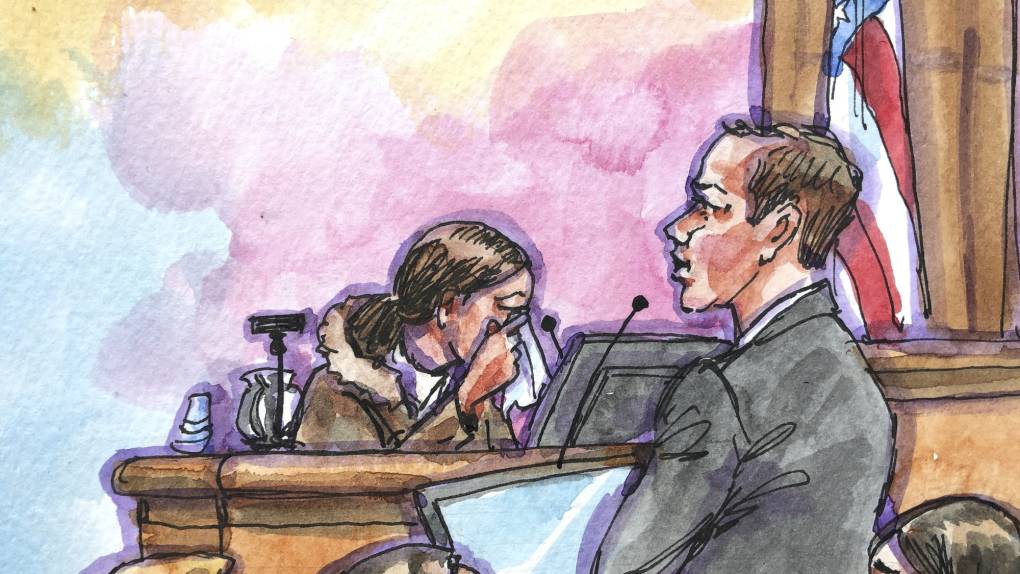
"caption": "A courtroom sketch of a witness crying while giving testimony in the trial of former FCI Dublin correctional officer Darrell Wayne Smith in Oakland on March 18, 2025. Three women named in the case against former FCI Dublin officer Smith have testified against him so far. ",
"credit": "Vicki Behringer for KQED",
"altTag": null,
"description": null,
"imgSizes": {
"medium": {
"file": "https://cdn.kqed.org/wp-content/uploads/sites/10/2025/03/250318-FCI-DUBLIN-VB-1A-KQED-800x450.jpg",
"width": 800,
"height": 450,
"mimeType": "image/jpeg"
},
"large": {
"file": "https://cdn.kqed.org/wp-content/uploads/sites/10/2025/03/250318-FCI-DUBLIN-VB-1A-KQED-1020x574.jpg",
"width": 1020,
"height": 574,
"mimeType": "image/jpeg"
},
"thumbnail": {
"file": "https://cdn.kqed.org/wp-content/uploads/sites/10/2025/03/250318-FCI-DUBLIN-VB-1A-KQED-160x90.jpg",
"width": 160,
"height": 90,
"mimeType": "image/jpeg"
},
"1536x1536": {
"file": "https://cdn.kqed.org/wp-content/uploads/sites/10/2025/03/250318-FCI-DUBLIN-VB-1A-KQED-1536x864.jpg",
"width": 1536,
"height": 864,
"mimeType": "image/jpeg"
},
"post-thumbnail": {
"file": "https://cdn.kqed.org/wp-content/uploads/sites/10/2025/03/250318-FCI-DUBLIN-VB-1A-KQED-672x372.jpg",
"width": 672,
"height": 372,
"mimeType": "image/jpeg"
},
"twentyfourteen-full-width": {
"file": "https://cdn.kqed.org/wp-content/uploads/sites/10/2025/03/250318-FCI-DUBLIN-VB-1A-KQED-1038x576.jpg",
"width": 1038,
"height": 576,
"mimeType": "image/jpeg"
},
"full-width": {
"file": "https://cdn.kqed.org/wp-content/uploads/sites/10/2025/03/250318-FCI-DUBLIN-VB-1A-KQED-1920x1080.jpg",
"width": 1920,
"height": 1080,
"mimeType": "image/jpeg"
},
"kqedFullSize": {
"file": "https://cdn.kqed.org/wp-content/uploads/sites/10/2025/03/250318-FCI-DUBLIN-VB-1A-KQED.jpg",
"width": 2000,
"height": 1125
}
},
"isLoading": false,
"fetchFailed": false
},
"news_12032262": {
"type": "attachments",
"id": "news_12032262",
"meta": {
"index": "attachments_1716263798",
"site": "news",
"id": "12032262",
"found": true
},
"title": "REI Sign",
"publishDate": 1742496205,
"status": "inherit",
"parent": 12032259,
"modified": 1742496290,
"caption": "The Recreational Equipment Incorporated (REI) outdoor clothing store in Dublin, California, July 23, 2018. ",
"credit": "Smith Collection/Gado/Getty Images",
"altTag": null,
"description": null,
"imgSizes": {
"medium": {
"file": "https://cdn.kqed.org/wp-content/uploads/sites/10/2025/03/REIDublinGetty-800x533.jpg",
"width": 800,
"height": 533,
"mimeType": "image/jpeg"
},
"large": {
"file": "https://cdn.kqed.org/wp-content/uploads/sites/10/2025/03/REIDublinGetty-1020x680.jpg",
"width": 1020,
"height": 680,
"mimeType": "image/jpeg"
},
"thumbnail": {
"file": "https://cdn.kqed.org/wp-content/uploads/sites/10/2025/03/REIDublinGetty-160x107.jpg",
"width": 160,
"height": 107,
"mimeType": "image/jpeg"
},
"1536x1536": {
"file": "https://cdn.kqed.org/wp-content/uploads/sites/10/2025/03/REIDublinGetty-1536x1024.jpg",
"width": 1536,
"height": 1024,
"mimeType": "image/jpeg"
},
"post-thumbnail": {
"file": "https://cdn.kqed.org/wp-content/uploads/sites/10/2025/03/REIDublinGetty-672x372.jpg",
"width": 672,
"height": 372,
"mimeType": "image/jpeg"
},
"twentyfourteen-full-width": {
"file": "https://cdn.kqed.org/wp-content/uploads/sites/10/2025/03/REIDublinGetty-1038x576.jpg",
"width": 1038,
"height": 576,
"mimeType": "image/jpeg"
},
"full-width": {
"file": "https://cdn.kqed.org/wp-content/uploads/sites/10/2025/03/REIDublinGetty-1920x1280.jpg",
"width": 1920,
"height": 1280,
"mimeType": "image/jpeg"
},
"kqedFullSize": {
"file": "https://cdn.kqed.org/wp-content/uploads/sites/10/2025/03/REIDublinGetty.jpg",
"width": 2000,
"height": 1333
}
},
"isLoading": false,
"fetchFailed": false
},
"news_12029717": {
"type": "attachments",
"id": "news_12029717",
"meta": {
"index": "attachments_1716263798",
"site": "news",
"id": "12029717",
"found": true
},
"title": "The Antioch Police Department in Antioch on March 3, 2025.",
"publishDate": 1741131806,
"status": "inherit",
"parent": 12029643,
"modified": 1741214577,
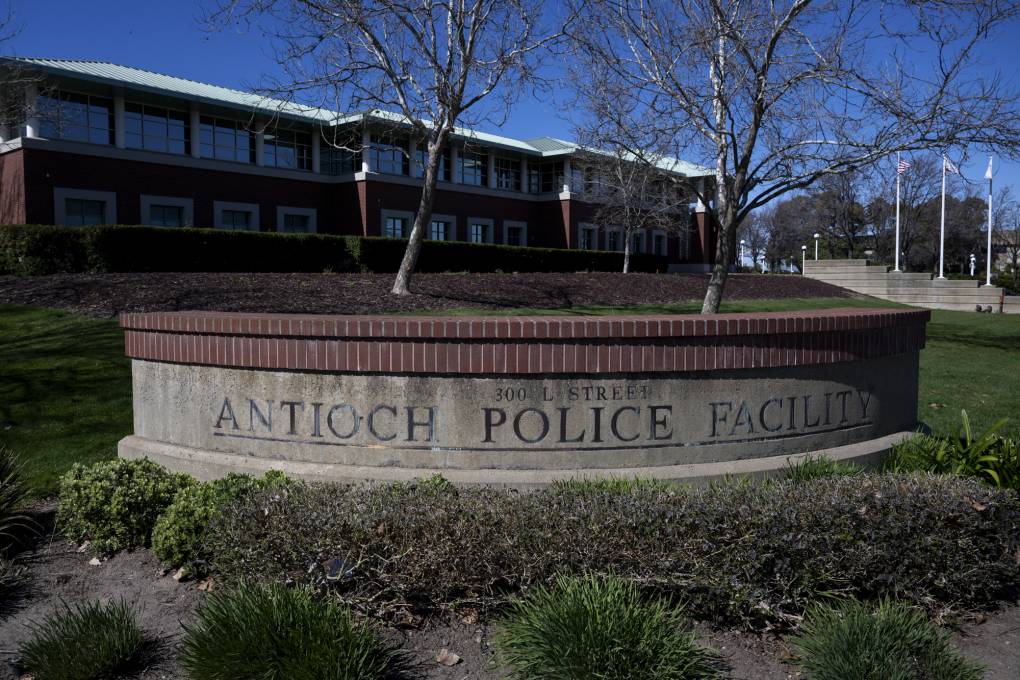
"caption": "The Antioch Police Department in Antioch on March 3, 2025.",
"credit": "Beth LaBerge/KQED",
"altTag": null,
"description": null,
"imgSizes": {
"medium": {
"file": "https://cdn.kqed.org/wp-content/uploads/sites/10/2025/03/250303-ANTIOCHPOLICE-01-BL-KQED-800x533.jpg",
"width": 800,
"height": 533,
"mimeType": "image/jpeg"
},
"large": {
"file": "https://cdn.kqed.org/wp-content/uploads/sites/10/2025/03/250303-ANTIOCHPOLICE-01-BL-KQED-1020x680.jpg",
"width": 1020,
"height": 680,
"mimeType": "image/jpeg"
},
"thumbnail": {
"file": "https://cdn.kqed.org/wp-content/uploads/sites/10/2025/03/250303-ANTIOCHPOLICE-01-BL-KQED-160x107.jpg",
"width": 160,
"height": 107,
"mimeType": "image/jpeg"
},
"1536x1536": {
"file": "https://cdn.kqed.org/wp-content/uploads/sites/10/2025/03/250303-ANTIOCHPOLICE-01-BL-KQED-1536x1024.jpg",
"width": 1536,
"height": 1024,
"mimeType": "image/jpeg"
},
"post-thumbnail": {
"file": "https://cdn.kqed.org/wp-content/uploads/sites/10/2025/03/250303-ANTIOCHPOLICE-01-BL-KQED-672x372.jpg",
"width": 672,
"height": 372,
"mimeType": "image/jpeg"
},
"twentyfourteen-full-width": {
"file": "https://cdn.kqed.org/wp-content/uploads/sites/10/2025/03/250303-ANTIOCHPOLICE-01-BL-KQED-1038x576.jpg",
"width": 1038,
"height": 576,
"mimeType": "image/jpeg"
},
"full-width": {
"file": "https://cdn.kqed.org/wp-content/uploads/sites/10/2025/03/250303-ANTIOCHPOLICE-01-BL-KQED-1920x1280.jpg",
"width": 1920,
"height": 1280,
"mimeType": "image/jpeg"
},
"kqedFullSize": {
"file": "https://cdn.kqed.org/wp-content/uploads/sites/10/2025/03/250303-ANTIOCHPOLICE-01-BL-KQED.jpg",
"width": 2000,
"height": 1333
}
},
"isLoading": false,
"fetchFailed": false
},
"news_12028939": {
"type": "attachments",
"id": "news_12028939",
"meta": {
"index": "attachments_1716263798",
"site": "news",
"id": "12028939",
"found": true
},
"title": "At McClymonds High School in Oakland on Feb. 6, 2025.",
"publishDate": 1740672046,
"status": "inherit",
"parent": 0,
"modified": 1740672401,
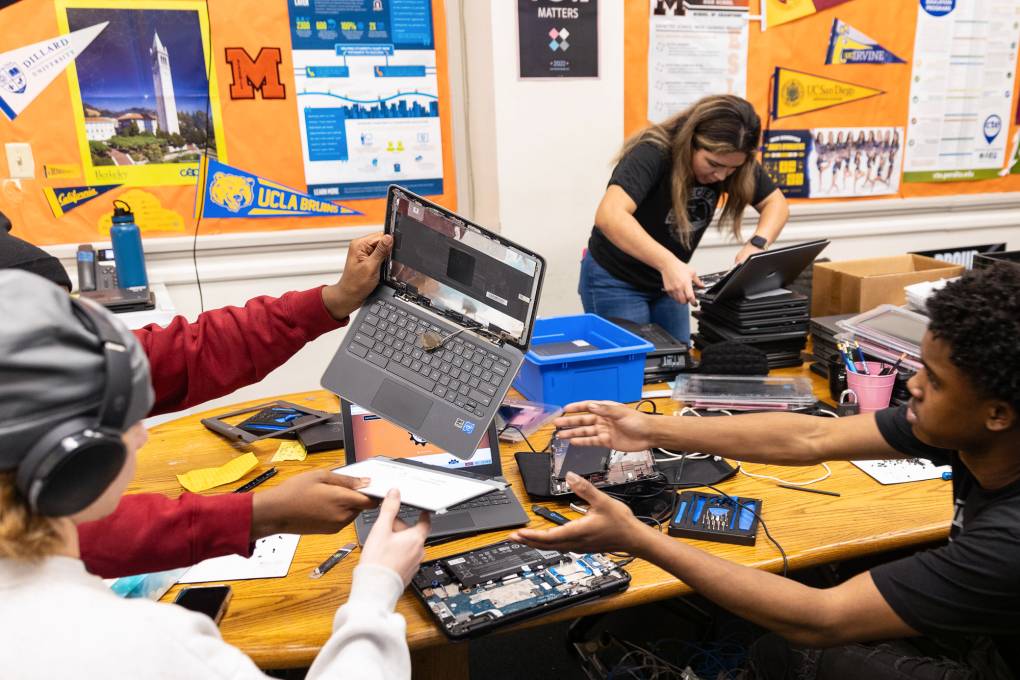
"caption": "At McClymonds High School in Oakland on Feb. 6, 2025.",
"credit": "Gina Castro/KQED",
"altTag": null,
"description": null,
"imgSizes": {
"medium": {
"file": "https://cdn.kqed.org/wp-content/uploads/sites/10/2025/02/20250206_OUSDChromebooks_GC-33-800x533.jpg",
"width": 800,
"height": 533,
"mimeType": "image/jpeg"
},
"large": {
"file": "https://cdn.kqed.org/wp-content/uploads/sites/10/2025/02/20250206_OUSDChromebooks_GC-33-1020x680.jpg",
"width": 1020,
"height": 680,
"mimeType": "image/jpeg"
},
"thumbnail": {
"file": "https://cdn.kqed.org/wp-content/uploads/sites/10/2025/02/20250206_OUSDChromebooks_GC-33-160x107.jpg",
"width": 160,
"height": 107,
"mimeType": "image/jpeg"
},
"1536x1536": {
"file": "https://cdn.kqed.org/wp-content/uploads/sites/10/2025/02/20250206_OUSDChromebooks_GC-33-1536x1024.jpg",
"width": 1536,
"height": 1024,
"mimeType": "image/jpeg"
},
"post-thumbnail": {
"file": "https://cdn.kqed.org/wp-content/uploads/sites/10/2025/02/20250206_OUSDChromebooks_GC-33-672x372.jpg",
"width": 672,
"height": 372,
"mimeType": "image/jpeg"
},
"twentyfourteen-full-width": {
"file": "https://cdn.kqed.org/wp-content/uploads/sites/10/2025/02/20250206_OUSDChromebooks_GC-33-1038x576.jpg",
"width": 1038,
"height": 576,
"mimeType": "image/jpeg"
},
"full-width": {
"file": "https://cdn.kqed.org/wp-content/uploads/sites/10/2025/02/20250206_OUSDChromebooks_GC-33-1920x1280.jpg",
"width": 1920,
"height": 1280,
"mimeType": "image/jpeg"
},
"kqedFullSize": {
"file": "https://cdn.kqed.org/wp-content/uploads/sites/10/2025/02/20250206_OUSDChromebooks_GC-33.jpg",
"width": 2000,
"height": 1333
}
},
"isLoading": false,
"fetchFailed": false
},
"news_12028936": {
"type": "attachments",
"id": "news_12028936",
"meta": {
"index": "attachments_1716263798",
"site": "news",
"id": "12028936",
"found": true
},
"title": "20250206_OUSDChromebooks_GC-19",
"publishDate": 1740672029,
"status": "inherit",
"parent": 12028948,
"modified": 1741035054,
"caption": "David Anderson, a junior at McClymonds High School, holds a Chromebook’s bezel in Oakland on Feb. 6, 2025. David is one of three paid interns at McClymonds High, under Oakland Unified’s student-led Chromebook repair program, where students are hired to repair the devices during the school year.",
"credit": "Gina Castro/KQED",
"altTag": null,
"description": null,
"imgSizes": {
"medium": {
"file": "https://cdn.kqed.org/wp-content/uploads/sites/10/2025/02/20250206_OUSDChromebooks_GC-19-800x533.jpg",
"width": 800,
"height": 533,
"mimeType": "image/jpeg"
},
"large": {
"file": "https://cdn.kqed.org/wp-content/uploads/sites/10/2025/02/20250206_OUSDChromebooks_GC-19-1020x680.jpg",
"width": 1020,
"height": 680,
"mimeType": "image/jpeg"
},
"thumbnail": {
"file": "https://cdn.kqed.org/wp-content/uploads/sites/10/2025/02/20250206_OUSDChromebooks_GC-19-160x107.jpg",
"width": 160,
"height": 107,
"mimeType": "image/jpeg"
},
"1536x1536": {
"file": "https://cdn.kqed.org/wp-content/uploads/sites/10/2025/02/20250206_OUSDChromebooks_GC-19-1536x1024.jpg",
"width": 1536,
"height": 1024,
"mimeType": "image/jpeg"
},
"post-thumbnail": {
"file": "https://cdn.kqed.org/wp-content/uploads/sites/10/2025/02/20250206_OUSDChromebooks_GC-19-672x372.jpg",
"width": 672,
"height": 372,
"mimeType": "image/jpeg"
},
"twentyfourteen-full-width": {
"file": "https://cdn.kqed.org/wp-content/uploads/sites/10/2025/02/20250206_OUSDChromebooks_GC-19-1038x576.jpg",
"width": 1038,
"height": 576,
"mimeType": "image/jpeg"
},
"full-width": {
"file": "https://cdn.kqed.org/wp-content/uploads/sites/10/2025/02/20250206_OUSDChromebooks_GC-19-1920x1280.jpg",
"width": 1920,
"height": 1280,
"mimeType": "image/jpeg"
},
"kqedFullSize": {
"file": "https://cdn.kqed.org/wp-content/uploads/sites/10/2025/02/20250206_OUSDChromebooks_GC-19.jpg",
"width": 2000,
"height": 1333
}
},
"isLoading": false,
"fetchFailed": false
},
"news_12029719": {
"type": "attachments",
"id": "news_12029719",
"meta": {
"index": "attachments_1716263798",
"site": "news",
"id": "12029719",
"found": true
},
"title": "250303-ANTIOCHPOLICE-11-BL-KQED",
"publishDate": 1741131815,
"status": "inherit",
"parent": 12037299,
"modified": 1745444449,
"caption": "An Antioch Police vehicle sits in the parking lot of the Antioch Police Department on March 3, 2025.",
"credit": "Beth LaBerge/KQED",
"altTag": null,
"description": null,
"imgSizes": {
"medium": {
"file": "https://cdn.kqed.org/wp-content/uploads/sites/10/2025/03/250303-ANTIOCHPOLICE-11-BL-KQED-800x533.jpg",
"width": 800,
"height": 533,
"mimeType": "image/jpeg"
},
"large": {
"file": "https://cdn.kqed.org/wp-content/uploads/sites/10/2025/03/250303-ANTIOCHPOLICE-11-BL-KQED-1020x680.jpg",
"width": 1020,
"height": 680,
"mimeType": "image/jpeg"
},
"thumbnail": {
"file": "https://cdn.kqed.org/wp-content/uploads/sites/10/2025/03/250303-ANTIOCHPOLICE-11-BL-KQED-160x107.jpg",
"width": 160,
"height": 107,
"mimeType": "image/jpeg"
},
"1536x1536": {
"file": "https://cdn.kqed.org/wp-content/uploads/sites/10/2025/03/250303-ANTIOCHPOLICE-11-BL-KQED-1536x1024.jpg",
"width": 1536,
"height": 1024,
"mimeType": "image/jpeg"
},
"post-thumbnail": {
"file": "https://cdn.kqed.org/wp-content/uploads/sites/10/2025/03/250303-ANTIOCHPOLICE-11-BL-KQED-672x372.jpg",
"width": 672,
"height": 372,
"mimeType": "image/jpeg"
},
"twentyfourteen-full-width": {
"file": "https://cdn.kqed.org/wp-content/uploads/sites/10/2025/03/250303-ANTIOCHPOLICE-11-BL-KQED-1038x576.jpg",
"width": 1038,
"height": 576,
"mimeType": "image/jpeg"
},
"full-width": {
"file": "https://cdn.kqed.org/wp-content/uploads/sites/10/2025/03/250303-ANTIOCHPOLICE-11-BL-KQED-1920x1280.jpg",
"width": 1920,
"height": 1280,
"mimeType": "image/jpeg"
},
"kqedFullSize": {
"file": "https://cdn.kqed.org/wp-content/uploads/sites/10/2025/03/250303-ANTIOCHPOLICE-11-BL-KQED.jpg",
"width": 2000,
"height": 1333
}
},
"isLoading": false,
"fetchFailed": false
},
"news_12030531": {
"type": "attachments",
"id": "news_12030531",
"meta": {
"index": "attachments_1716263798",
"site": "news",
"id": "12030531",
"found": true
},
"title": "Stock Photography. Generic Boxing Image. Everlast",
"publishDate": 1741565488,
"status": "inherit",
"parent": 12030525,
"modified": 1768507687,
"caption": "Everlast boxing gloves and a medicine ball. ",
"credit": "Ross Land/Getty Images",
"altTag": null,
"description": null,
"imgSizes": {
"medium": {
"file": "https://cdn.kqed.org/wp-content/uploads/sites/10/2025/03/GettyImages-55804139_qed-800x530.jpg",
"width": 800,
"height": 530,
"mimeType": "image/jpeg"
},
"large": {
"file": "https://cdn.kqed.org/wp-content/uploads/sites/10/2025/03/GettyImages-55804139_qed-1020x676.jpg",
"width": 1020,
"height": 676,
"mimeType": "image/jpeg"
},
"thumbnail": {
"file": "https://cdn.kqed.org/wp-content/uploads/sites/10/2025/03/GettyImages-55804139_qed-160x106.jpg",
"width": 160,
"height": 106,
"mimeType": "image/jpeg"
},
"1536x1536": {
"file": "https://cdn.kqed.org/wp-content/uploads/sites/10/2025/03/GettyImages-55804139_qed-1536x1018.jpg",
"width": 1536,
"height": 1018,
"mimeType": "image/jpeg"
},
"post-thumbnail": {
"file": "https://cdn.kqed.org/wp-content/uploads/sites/10/2025/03/GettyImages-55804139_qed-672x372.jpg",
"width": 672,
"height": 372,
"mimeType": "image/jpeg"
},
"twentyfourteen-full-width": {
"file": "https://cdn.kqed.org/wp-content/uploads/sites/10/2025/03/GettyImages-55804139_qed-1038x576.jpg",
"width": 1038,
"height": 576,
"mimeType": "image/jpeg"
},
"full-width": {
"file": "https://cdn.kqed.org/wp-content/uploads/sites/10/2025/03/GettyImages-55804139_qed-1920x1272.jpg",
"width": 1920,
"height": 1272,
"mimeType": "image/jpeg"
},
"kqedFullSize": {
"file": "https://cdn.kqed.org/wp-content/uploads/sites/10/2025/03/GettyImages-55804139_qed.jpg",
"width": 2000,
"height": 1325
}
},
"isLoading": false,
"fetchFailed": false
},
"news_12027414": {
"type": "attachments",
"id": "news_12027414",
"meta": {
"index": "attachments_1716263798",
"site": "news",
"id": "12027414",
"found": true
},
"title": "20241215-JSEI-JY-917",
"publishDate": 1739804952,
"status": "inherit",
"parent": 12025613,
"modified": 1741375858,
"caption": "Grace Aikawa looks around at her empty room at her new care facility in Castro Valley, California, on Sunday, Dec. 15, 2024.",
"credit": "Juliana Yamada/KQED",
"altTag": null,
"description": null,
"imgSizes": {
"medium": {
"file": "https://cdn.kqed.org/wp-content/uploads/sites/10/2025/02/20241215-JSEI-JY-917-800x533.jpg",
"width": 800,
"height": 533,
"mimeType": "image/jpeg"
},
"large": {
"file": "https://cdn.kqed.org/wp-content/uploads/sites/10/2025/02/20241215-JSEI-JY-917-1020x680.jpg",
"width": 1020,
"height": 680,
"mimeType": "image/jpeg"
},
"thumbnail": {
"file": "https://cdn.kqed.org/wp-content/uploads/sites/10/2025/02/20241215-JSEI-JY-917-160x107.jpg",
"width": 160,
"height": 107,
"mimeType": "image/jpeg"
},
"1536x1536": {
"file": "https://cdn.kqed.org/wp-content/uploads/sites/10/2025/02/20241215-JSEI-JY-917-1536x1024.jpg",
"width": 1536,
"height": 1024,
"mimeType": "image/jpeg"
},
"post-thumbnail": {
"file": "https://cdn.kqed.org/wp-content/uploads/sites/10/2025/02/20241215-JSEI-JY-917-672x372.jpg",
"width": 672,
"height": 372,
"mimeType": "image/jpeg"
},
"twentyfourteen-full-width": {
"file": "https://cdn.kqed.org/wp-content/uploads/sites/10/2025/02/20241215-JSEI-JY-917-1038x576.jpg",
"width": 1038,
"height": 576,
"mimeType": "image/jpeg"
},
"full-width": {
"file": "https://cdn.kqed.org/wp-content/uploads/sites/10/2025/02/20241215-JSEI-JY-917-1920x1280.jpg",
"width": 1920,
"height": 1280,
"mimeType": "image/jpeg"
},
"kqedFullSize": {
"file": "https://cdn.kqed.org/wp-content/uploads/sites/10/2025/02/20241215-JSEI-JY-917.jpg",
"width": 2000,
"height": 1333
}
},
"isLoading": false,
"fetchFailed": false
},
"news_12029718": {
"type": "attachments",
"id": "news_12029718",
"meta": {
"index": "attachments_1716263798",
"site": "news",
"id": "12029718",
"found": true
},
"title": "An Antioch Police vehicle drives through Antioch on March 3, 2025.",
"publishDate": 1741131809,
"status": "inherit",
"parent": 12037887,
"modified": 1745881734,
"caption": "An Antioch Police vehicle drives through Antioch on March 3, 2025. ",
"credit": "Beth LaBerge/KQED",
"altTag": null,
"description": null,
"imgSizes": {
"medium": {
"file": "https://cdn.kqed.org/wp-content/uploads/sites/10/2025/03/250303-ANTIOCHPOLICE-10-BL-KQED-800x533.jpg",
"width": 800,
"height": 533,
"mimeType": "image/jpeg"
},
"large": {
"file": "https://cdn.kqed.org/wp-content/uploads/sites/10/2025/03/250303-ANTIOCHPOLICE-10-BL-KQED-1020x680.jpg",
"width": 1020,
"height": 680,
"mimeType": "image/jpeg"
},
"thumbnail": {
"file": "https://cdn.kqed.org/wp-content/uploads/sites/10/2025/03/250303-ANTIOCHPOLICE-10-BL-KQED-160x107.jpg",
"width": 160,
"height": 107,
"mimeType": "image/jpeg"
},
"1536x1536": {
"file": "https://cdn.kqed.org/wp-content/uploads/sites/10/2025/03/250303-ANTIOCHPOLICE-10-BL-KQED-1536x1024.jpg",
"width": 1536,
"height": 1024,
"mimeType": "image/jpeg"
},
"post-thumbnail": {
"file": "https://cdn.kqed.org/wp-content/uploads/sites/10/2025/03/250303-ANTIOCHPOLICE-10-BL-KQED-672x372.jpg",
"width": 672,
"height": 372,
"mimeType": "image/jpeg"
},
"twentyfourteen-full-width": {
"file": "https://cdn.kqed.org/wp-content/uploads/sites/10/2025/03/250303-ANTIOCHPOLICE-10-BL-KQED-1038x576.jpg",
"width": 1038,
"height": 576,
"mimeType": "image/jpeg"
},
"full-width": {
"file": "https://cdn.kqed.org/wp-content/uploads/sites/10/2025/03/250303-ANTIOCHPOLICE-10-BL-KQED-1920x1280.jpg",
"width": 1920,
"height": 1280,
"mimeType": "image/jpeg"
},
"kqedFullSize": {
"file": "https://cdn.kqed.org/wp-content/uploads/sites/10/2025/03/250303-ANTIOCHPOLICE-10-BL-KQED.jpg",
"width": 2000,
"height": 1333
}
},
"isLoading": false,
"fetchFailed": false
},
"news_12029523": {
"type": "attachments",
"id": "news_12029523",
"meta": {
"index": "attachments_1716263798",
"site": "news",
"id": "12029523",
"found": true
},
"title": "IMG_5881-KQED",
"publishDate": 1741049692,
"status": "inherit",
"parent": 12030234,
"modified": 1758239571,
"caption": "Nicole Castronovo, defense attorney for former Antioch police officer Devon Christopher Wenger, gives her opening statement in the federal trial against Wenger and another former Antioch officer at the U.S. District Courthouse in Oakland on March 3, 2025. ",
"credit": "Vicki Behringer/KQED",
"altTag": null,
"description": null,
"imgSizes": {
"medium": {
"file": "https://cdn.kqed.org/wp-content/uploads/sites/10/2025/03/IMG_5881-KQED-800x450.jpg",
"width": 800,
"height": 450,
"mimeType": "image/jpeg"
},
"large": {
"file": "https://cdn.kqed.org/wp-content/uploads/sites/10/2025/03/IMG_5881-KQED-1020x574.jpg",
"width": 1020,
"height": 574,
"mimeType": "image/jpeg"
},
"thumbnail": {
"file": "https://cdn.kqed.org/wp-content/uploads/sites/10/2025/03/IMG_5881-KQED-160x90.jpg",
"width": 160,
"height": 90,
"mimeType": "image/jpeg"
},
"1536x1536": {
"file": "https://cdn.kqed.org/wp-content/uploads/sites/10/2025/03/IMG_5881-KQED-1536x864.jpg",
"width": 1536,
"height": 864,
"mimeType": "image/jpeg"
},
"post-thumbnail": {
"file": "https://cdn.kqed.org/wp-content/uploads/sites/10/2025/03/IMG_5881-KQED-672x372.jpg",
"width": 672,
"height": 372,
"mimeType": "image/jpeg"
},
"twentyfourteen-full-width": {
"file": "https://cdn.kqed.org/wp-content/uploads/sites/10/2025/03/IMG_5881-KQED-1038x576.jpg",
"width": 1038,
"height": 576,
"mimeType": "image/jpeg"
},
"full-width": {
"file": "https://cdn.kqed.org/wp-content/uploads/sites/10/2025/03/IMG_5881-KQED-1920x1080.jpg",
"width": 1920,
"height": 1080,
"mimeType": "image/jpeg"
},
"kqedFullSize": {
"file": "https://cdn.kqed.org/wp-content/uploads/sites/10/2025/03/IMG_5881-KQED.jpg",
"width": 2000,
"height": 1125
}
},
"isLoading": false,
"fetchFailed": false
},
"news_12029338": {
"type": "attachments",
"id": "news_12029338",
"meta": {
"index": "attachments_1716263798",
"site": "news",
"id": "12029338",
"found": true
},
"title": "20241211-OUSDMergerVote-JY-026_qed",
"publishDate": 1740786072,
"status": "inherit",
"parent": 12036400,
"modified": 1744912996,
"caption": "The Oakland Unified School District Board listens to public comment during a meeting at La Escuelita Elementary School in Oakland, California, on Dec. 11, 2024. ",
"credit": "Juliana Yamada/KQED",
"altTag": null,
"description": null,
"imgSizes": {
"medium": {
"file": "https://cdn.kqed.org/wp-content/uploads/sites/10/2025/02/20241211-OUSDMergerVote-JY-026_qed-800x533.jpg",
"width": 800,
"height": 533,
"mimeType": "image/jpeg"
},
"large": {
"file": "https://cdn.kqed.org/wp-content/uploads/sites/10/2025/02/20241211-OUSDMergerVote-JY-026_qed-1020x680.jpg",
"width": 1020,
"height": 680,
"mimeType": "image/jpeg"
},
"thumbnail": {
"file": "https://cdn.kqed.org/wp-content/uploads/sites/10/2025/02/20241211-OUSDMergerVote-JY-026_qed-160x107.jpg",
"width": 160,
"height": 107,
"mimeType": "image/jpeg"
},
"1536x1536": {
"file": "https://cdn.kqed.org/wp-content/uploads/sites/10/2025/02/20241211-OUSDMergerVote-JY-026_qed-1536x1024.jpg",
"width": 1536,
"height": 1024,
"mimeType": "image/jpeg"
},
"post-thumbnail": {
"file": "https://cdn.kqed.org/wp-content/uploads/sites/10/2025/02/20241211-OUSDMergerVote-JY-026_qed-672x372.jpg",
"width": 672,
"height": 372,
"mimeType": "image/jpeg"
},
"twentyfourteen-full-width": {
"file": "https://cdn.kqed.org/wp-content/uploads/sites/10/2025/02/20241211-OUSDMergerVote-JY-026_qed-1038x576.jpg",
"width": 1038,
"height": 576,
"mimeType": "image/jpeg"
},
"full-width": {
"file": "https://cdn.kqed.org/wp-content/uploads/sites/10/2025/02/20241211-OUSDMergerVote-JY-026_qed-1920x1280.jpg",
"width": 1920,
"height": 1280,
"mimeType": "image/jpeg"
},
"kqedFullSize": {
"file": "https://cdn.kqed.org/wp-content/uploads/sites/10/2025/02/20241211-OUSDMergerVote-JY-026_qed.jpg",
"width": 2000,
"height": 1333
}
},
"isLoading": false,
"fetchFailed": false
},
"news_12029452": {
"type": "attachments",
"id": "news_12029452",
"meta": {
"index": "attachments_1716263798",
"site": "news",
"id": "12029452",
"found": true
},
"title": "Boxing gloves on boxing ring",
"publishDate": 1741025376,
"status": "inherit",
"parent": 12029450,
"modified": 1741025445,
"caption": "Federal prosecutors have charged Solomon Howard, former executive director of the East Oakland Boxing Association, with mail fraud and tax evasion, alleging he embezzled over $100,000 — including a donation from Steph and Ayesha Curry.",
"credit": "Kathrin Ziegler/Getty Images",
"altTag": null,
"description": null,
"imgSizes": {
"medium": {
"file": "https://cdn.kqed.org/wp-content/uploads/sites/10/2025/03/BoxingGetty-800x550.jpg",
"width": 800,
"height": 550,
"mimeType": "image/jpeg"
},
"large": {
"file": "https://cdn.kqed.org/wp-content/uploads/sites/10/2025/03/BoxingGetty-1020x701.jpg",
"width": 1020,
"height": 701,
"mimeType": "image/jpeg"
},
"thumbnail": {
"file": "https://cdn.kqed.org/wp-content/uploads/sites/10/2025/03/BoxingGetty-160x110.jpg",
"width": 160,
"height": 110,
"mimeType": "image/jpeg"
},
"1536x1536": {
"file": "https://cdn.kqed.org/wp-content/uploads/sites/10/2025/03/BoxingGetty-1536x1056.jpg",
"width": 1536,
"height": 1056,
"mimeType": "image/jpeg"
},
"post-thumbnail": {
"file": "https://cdn.kqed.org/wp-content/uploads/sites/10/2025/03/BoxingGetty-672x372.jpg",
"width": 672,
"height": 372,
"mimeType": "image/jpeg"
},
"twentyfourteen-full-width": {
"file": "https://cdn.kqed.org/wp-content/uploads/sites/10/2025/03/BoxingGetty-1038x576.jpg",
"width": 1038,
"height": 576,
"mimeType": "image/jpeg"
},
"full-width": {
"file": "https://cdn.kqed.org/wp-content/uploads/sites/10/2025/03/BoxingGetty-1920x1320.jpg",
"width": 1920,
"height": 1320,
"mimeType": "image/jpeg"
},
"kqedFullSize": {
"file": "https://cdn.kqed.org/wp-content/uploads/sites/10/2025/03/BoxingGetty.jpg",
"width": 2000,
"height": 1375
}
},
"isLoading": false,
"fetchFailed": false
},
"news_12029481": {
"type": "attachments",
"id": "news_12029481",
"meta": {
"index": "attachments_1716263798",
"site": "news",
"id": "12029481",
"found": true
},
"title": "Amiri Opening_KQED",
"publishDate": 1741037643,
"status": "inherit",
"parent": 12029444,
"modified": 1741038753,
"caption": "The prosecution presents text messages on the first day of the federal trial against Morteza Amiri and Devon Christopher Wenger at the U.S. District Courthouse in Oakland on March 3, 2025. Amiri and Wenger face charges that they conspired to severely injure suspects over a period of three years.",
"credit": "Vicki Behringer for KQED",
"altTag": null,
"description": null,
"imgSizes": {
"medium": {
"file": "https://cdn.kqed.org/wp-content/uploads/sites/10/2025/03/Amiri-Opening_KQED-800x450.jpg",
"width": 800,
"height": 450,
"mimeType": "image/jpeg"
},
"large": {
"file": "https://cdn.kqed.org/wp-content/uploads/sites/10/2025/03/Amiri-Opening_KQED-1020x574.jpg",
"width": 1020,
"height": 574,
"mimeType": "image/jpeg"
},
"thumbnail": {
"file": "https://cdn.kqed.org/wp-content/uploads/sites/10/2025/03/Amiri-Opening_KQED-160x90.jpg",
"width": 160,
"height": 90,
"mimeType": "image/jpeg"
},
"1536x1536": {
"file": "https://cdn.kqed.org/wp-content/uploads/sites/10/2025/03/Amiri-Opening_KQED-1536x864.jpg",
"width": 1536,
"height": 864,
"mimeType": "image/jpeg"
},
"post-thumbnail": {
"file": "https://cdn.kqed.org/wp-content/uploads/sites/10/2025/03/Amiri-Opening_KQED-672x372.jpg",
"width": 672,
"height": 372,
"mimeType": "image/jpeg"
},
"twentyfourteen-full-width": {
"file": "https://cdn.kqed.org/wp-content/uploads/sites/10/2025/03/Amiri-Opening_KQED-1038x576.jpg",
"width": 1038,
"height": 576,
"mimeType": "image/jpeg"
},
"full-width": {
"file": "https://cdn.kqed.org/wp-content/uploads/sites/10/2025/03/Amiri-Opening_KQED-1920x1080.jpg",
"width": 1920,
"height": 1080,
"mimeType": "image/jpeg"
},
"kqedFullSize": {
"file": "https://cdn.kqed.org/wp-content/uploads/sites/10/2025/03/Amiri-Opening_KQED.jpg",
"width": 2000,
"height": 1125
}
},
"isLoading": false,
"fetchFailed": false
}
},
"audioPlayerReducer": {
"postId": "stream_live",
"isPaused": true,
"isPlaying": false,
"pfsActive": false,
"pledgeModalIsOpen": true,
"playerDrawerIsOpen": false,
"liveAudioPlayStartedAt": 0,
"liveAudioPlayContext": ""
},
"authorsReducer": {
"matthewgreen": {
"type": "authors",
"id": "1263",
"meta": {
"index": "authors_1716337520",
"id": "1263",
"found": true
},
"name": "Matthew Green",
"firstName": "Matthew",
"lastName": "Green",
"slug": "matthewgreen",
"email": "mgreen@kqed.org",
"display_author_email": false,
"staff_mastheads": [],
"title": "KQED Editor/Reporter",
"bio": "Matthew Green is a digital media producer for KQED News. He previously produced \u003ca href=\"http://www.kqed.org/lowdown\">The Lowdown\u003c/a>, KQED’s multimedia news education blog. Matthew's written for numerous Bay Area publications, including the Oakland Tribune and San Francisco Chronicle. He also taught journalism classes at Fremont High School in East Oakland.\r\n\r\nEmail: mgreen@kqed.org; Twitter: @MGreenKQED",
"avatar": "https://secure.gravatar.com/avatar/3bf498d1267ca02c8494f33d8cfc575e?s=600&d=blank&r=g",
"twitter": "MGreenKQED",
"facebook": null,
"instagram": null,
"linkedin": null,
"sites": [
{
"site": "news",
"roles": []
},
{
"site": "lowdown",
"roles": []
},
{
"site": "science",
"roles": []
},
{
"site": "education",
"roles": []
},
{
"site": "quest",
"roles": []
},
{
"site": "liveblog",
"roles": []
}
],
"headData": {
"title": "Matthew Green | KQED",
"description": "KQED Editor/Reporter",
"ogImgSrc": "https://secure.gravatar.com/avatar/3bf498d1267ca02c8494f33d8cfc575e?s=600&d=blank&r=g",
"twImgSrc": "https://secure.gravatar.com/avatar/3bf498d1267ca02c8494f33d8cfc575e?s=600&d=blank&r=g"
},
"isLoading": false,
"link": "/author/matthewgreen"
},
"aemslie": {
"type": "authors",
"id": "3206",
"meta": {
"index": "authors_1716337520",
"id": "3206",
"found": true
},
"name": "Alex Emslie",
"firstName": "Alex",
"lastName": "Emslie",
"slug": "aemslie",
"email": "aemslie@kqed.org",
"display_author_email": true,
"staff_mastheads": [
"news"
],
"title": "KQED Senior Editor",
"bio": "Alex Emslie is senior editor of talent and development at KQED, where he manages dozens of early career journalists and oversees news department internships.\r\n\r\nHe is a former carpenter and proud graduate of City College of San Francisco and San Francisco State University, where he studied journalism and criminal justice before joining KQED in 2013.\r\n\r\nAlex produced investigative journalism focused on \u003ca href=\"https://www.kqed.org/news/11667594/the-trials-of-marvin-mutch-video\">criminal justice\u003c/a> and policing for most of a decade. He has broken major stories about \u003ca href=\"https://www.kqed.org/news/135682/amid-a-series-of-vallejo-police-shootings-one-officers-name-stands-out\">police use of deadly force\u003c/a>, \u003ca href=\"https://www.kqed.org/news/10454955/racist-texts-prompt-sfpd-internal-investigation\">officer misconduct\u003c/a> and \u003ca href=\"https://www.kqed.org/news/11712239/terrorist-or-troll-judge-to-weigh-whether-oakland-man-really-intended-to-attack-bay-area\">other\u003c/a> \u003ca href=\"https://www.kqed.org/news/11221414/hayward-paid-159000-to-husband-of-retired-police-chief-documents-show\">high\u003c/a>-\u003ca href=\"https://www.kqed.org/news/10622762/the-forgotten-tracking-two-homicides-in-san-francisco-public-housing\">profile\u003c/a> \u003ca href=\"https://www.kqed.org/news/11624516/federal-agency-promoted-ranger-just-months-after-his-gun-was-stolen-and-used-in-steinle-killing\">cases\u003c/a>. He co-founded the \u003ca href=\"https://projects.scpr.org/california-reporting-project/\">California Reporting Project\u003c/a> in 2019 to obtain and report on previously confidential police internal investigations. The effort produced well over 100 original stories and changed the course of multiple criminal cases.\r\n\r\nHis work has been recognized with numerous journalism awards, including a national Edward R. Murrow award for several years of \u003ca href=\"https://www.kqed.org/news/11688481/sfpd-officers-in-mario-woods-case-recount-shooting-in-newly-filed-depositions\">reporting\u003c/a> on the San Francisco Police shooting of Mario Woods. His \u003ca href=\"https://www.kqed.org/news/147854/half-of-those-killed-by-san-francisco-police-are-mentally-ill\">reporting\u003c/a> on police killings of people in psychiatric crisis was cited in amicus briefs before the U.S. Supreme Court.\r\n\r\nAlex now enjoys mentoring the next generation of journalists at KQED.",
"avatar": "https://secure.gravatar.com/avatar/e691e65209f20e9da202bd730ead5663?s=600&d=blank&r=g",
"twitter": "SFNewsReporter",
"facebook": null,
"instagram": null,
"linkedin": null,
"sites": [
{
"site": "arts",
"roles": [
"editor"
]
},
{
"site": "news",
"roles": [
"editor"
]
},
{
"site": "mindshift",
"roles": [
"editor"
]
},
{
"site": "stateofhealth",
"roles": [
"editor"
]
},
{
"site": "science",
"roles": [
"administrator"
]
}
],
"headData": {
"title": "Alex Emslie | KQED",
"description": "KQED Senior Editor",
"ogImgSrc": "https://secure.gravatar.com/avatar/e691e65209f20e9da202bd730ead5663?s=600&d=blank&r=g",
"twImgSrc": "https://secure.gravatar.com/avatar/e691e65209f20e9da202bd730ead5663?s=600&d=blank&r=g"
},
"isLoading": false,
"link": "/author/aemslie"
},
"shossaini": {
"type": "authors",
"id": "3214",
"meta": {
"index": "authors_1716337520",
"id": "3214",
"found": true
},
"name": "Sara Hossaini",
"firstName": "Sara",
"lastName": "Hossaini",
"slug": "shossaini",
"email": "shossaini@kqed.org",
"display_author_email": true,
"staff_mastheads": [
"news"
],
"title": "KQED Reporter",
"bio": "Sara Hossaini came to general assignment reporting at KQED in 2013 after two winters reporting at Wyoming Public Radio. She holds a bachelor's degree in broadcast journalism from the University of Nebraska-Lincoln. Her radio romance began after a bitter breakup with documentary film (Ok, maybe it's still complicated). Her first simultaneous jobs in San Francisco were as Associate Producer on a PBS film series through the Center for Asian American Media and as a butler. She likes to trot, plot and make things with her hands.",
"avatar": "https://secure.gravatar.com/avatar/060e9f56b9554e17942e89f413242774?s=600&d=blank&r=g",
"twitter": "mshossaini",
"facebook": null,
"instagram": null,
"linkedin": null,
"sites": [
{
"site": "news",
"roles": [
"author"
]
},
{
"site": "stateofhealth",
"roles": [
"author"
]
}
],
"headData": {
"title": "Sara Hossaini | KQED",
"description": "KQED Reporter",
"ogImgSrc": "https://secure.gravatar.com/avatar/060e9f56b9554e17942e89f413242774?s=600&d=blank&r=g",
"twImgSrc": "https://secure.gravatar.com/avatar/060e9f56b9554e17942e89f413242774?s=600&d=blank&r=g"
},
"isLoading": false,
"link": "/author/shossaini"
},
"fjhabvala": {
"type": "authors",
"id": "8659",
"meta": {
"index": "authors_1716337520",
"id": "8659",
"found": true
},
"name": "Farida Jhabvala Romero",
"firstName": "Farida",
"lastName": "Jhabvala Romero",
"slug": "fjhabvala",
"email": "fjhabvala@kqed.org",
"display_author_email": true,
"staff_mastheads": [
"news"
],
"title": "KQED Contributor",
"bio": "\u003cspan style=\"font-weight: 400;\">Farida Jhabvala Romero is a Labor Correspondent for KQED. She previously covered immigration. Farida was \u003ca href=\"https://www.ccnma.org/2022-most-influential-latina-journalists\">named\u003c/a> one of the 10 Most Influential Latina Journalists in California in 2022 by the California Chicano News Media Association. Her work has won awards from the Society of Professional Journalists (Northern California), as well as a national and regional Edward M. Murrow Award for the collaborative reporting projects “Dangerous Air” and “Graying California.” \u003c/span>\u003cspan style=\"font-weight: 400;\">Before joining KQED, Farida worked as a producer at Radio Bilingüe, a national public radio network. Farida earned her master’s degree in journalism from Stanford University.\u003c/span>",
"avatar": "https://secure.gravatar.com/avatar/c3ab27c5554b67b478f80971e515aa02?s=600&d=blank&r=g",
"twitter": "FaridaJhabvala",
"facebook": null,
"instagram": null,
"linkedin": "https://www.linkedin.com/in/faridajhabvala/",
"sites": [
{
"site": "news",
"roles": [
"editor"
]
},
{
"site": "stateofhealth",
"roles": [
"author"
]
}
],
"headData": {
"title": "Farida Jhabvala Romero | KQED",
"description": "KQED Contributor",
"ogImgSrc": "https://secure.gravatar.com/avatar/c3ab27c5554b67b478f80971e515aa02?s=600&d=blank&r=g",
"twImgSrc": "https://secure.gravatar.com/avatar/c3ab27c5554b67b478f80971e515aa02?s=600&d=blank&r=g"
},
"isLoading": false,
"link": "/author/fjhabvala"
},
"adahlstromeckman": {
"type": "authors",
"id": "11785",
"meta": {
"index": "authors_1716337520",
"id": "11785",
"found": true
},
"name": "Azul Dahlstrom-Eckman",
"firstName": "Azul",
"lastName": "Dahlstrom-Eckman",
"slug": "adahlstromeckman",
"email": "adahlstrom-eckman@kqed.org",
"display_author_email": true,
"staff_mastheads": [],
"title": "Reporter",
"bio": "Azul is a reporter for KQED focusing on transportation and features. He joined KQED in 2021 as an alumna of KALW's Audio Academy radio journalism training program.",
"avatar": "https://secure.gravatar.com/avatar/9cb750298435add7815a777f55bf1f46845c1386bb8452555c60a7b820b5aba3?s=600&d=blank&r=g",
"twitter": "@zuliemann",
"bluesky": "@azul415.bsky.social",
"facebook": null,
"instagram": null,
"linkedin": null,
"sites": [
{
"site": "arts",
"roles": [
"editor"
]
},
{
"site": "news",
"roles": [
"editor"
]
},
{
"site": "science",
"roles": [
"editor"
]
},
{
"site": "liveblog",
"roles": [
"author"
]
}
],
"headData": {
"title": "Azul Dahlstrom-Eckman | KQED",
"description": "Reporter",
"ogImgSrc": "https://secure.gravatar.com/avatar/9cb750298435add7815a777f55bf1f46845c1386bb8452555c60a7b820b5aba3?s=600&d=blank&r=g",
"twImgSrc": "https://secure.gravatar.com/avatar/9cb750298435add7815a777f55bf1f46845c1386bb8452555c60a7b820b5aba3?s=600&d=blank&r=g"
},
"isLoading": false,
"link": "/author/adahlstromeckman"
},
"jyamada": {
"type": "authors",
"id": "11876",
"meta": {
"index": "authors_1716337520",
"id": "11876",
"found": true
},
"name": "Juliana Yamada",
"firstName": "Juliana",
"lastName": "Yamada",
"slug": "jyamada",
"email": "julianayamada@kqed.org",
"display_author_email": false,
"staff_mastheads": [],
"title": "KQED Photojournalist",
"bio": null,
"avatar": "https://secure.gravatar.com/avatar/cf3070075b6f3d12aac4e1e40079b3ba5fd828442b579f0ce48c293178a5f269?s=600&d=blank&r=g",
"twitter": "julianayphoto",
"bluesky": null,
"facebook": null,
"instagram": "https://www.instagram.com/julianayamadaphoto/",
"linkedin": null,
"sites": [
{
"site": "arts",
"roles": [
"author"
]
},
{
"site": "news",
"roles": [
"editor"
]
}
],
"headData": {
"title": "Juliana Yamada | KQED",
"description": "KQED Photojournalist",
"ogImgSrc": "https://secure.gravatar.com/avatar/cf3070075b6f3d12aac4e1e40079b3ba5fd828442b579f0ce48c293178a5f269?s=600&d=blank&r=g",
"twImgSrc": "https://secure.gravatar.com/avatar/cf3070075b6f3d12aac4e1e40079b3ba5fd828442b579f0ce48c293178a5f269?s=600&d=blank&r=g"
},
"isLoading": false,
"link": "/author/jyamada"
},
"gcastro": {
"type": "authors",
"id": "11908",
"meta": {
"index": "authors_1716337520",
"id": "11908",
"found": true
},
"name": "Gina Castro",
"firstName": "Gina",
"lastName": "Castro",
"slug": "gcastro",
"email": "gcastro@kqed.org",
"display_author_email": false,
"staff_mastheads": [
"news"
],
"title": "KQED Contributor",
"bio": null,
"avatar": "https://secure.gravatar.com/avatar/27b36c9ac0b86aced91deb0fc63fc510307488fa6761ac6062ac2eb798ed123f?s=600&d=blank&r=g",
"twitter": null,
"bluesky": null,
"facebook": null,
"instagram": null,
"linkedin": null,
"sites": [
{
"site": "arts",
"roles": [
"editor"
]
},
{
"site": "news",
"roles": [
"editor"
]
},
{
"site": "science",
"roles": [
"editor"
]
}
],
"headData": {
"title": "Gina Castro | KQED",
"description": "KQED Contributor",
"ogImgSrc": "https://secure.gravatar.com/avatar/27b36c9ac0b86aced91deb0fc63fc510307488fa6761ac6062ac2eb798ed123f?s=600&d=blank&r=g",
"twImgSrc": "https://secure.gravatar.com/avatar/27b36c9ac0b86aced91deb0fc63fc510307488fa6761ac6062ac2eb798ed123f?s=600&d=blank&r=g"
},
"isLoading": false,
"link": "/author/gcastro"
},
"kdebenedetti": {
"type": "authors",
"id": "11913",
"meta": {
"index": "authors_1716337520",
"id": "11913",
"found": true
},
"name": "Katie DeBenedetti",
"firstName": "Katie",
"lastName": "DeBenedetti",
"slug": "kdebenedetti",
"email": "kdebenedetti@kqed.org",
"display_author_email": false,
"staff_mastheads": [
"news",
"science"
],
"title": "KQED Contributor",
"bio": "Katie DeBenedetti is a digital reporter covering daily news for the Express Desk. Prior to joining KQED as a culture reporting intern in January 2024, she covered education and city government for the Napa Valley Register.",
"avatar": "https://secure.gravatar.com/avatar/6e31073cb8f7e4214ab03f42771d0f45?s=600&d=blank&r=g",
"twitter": null,
"facebook": null,
"instagram": null,
"linkedin": null,
"sites": [
{
"site": "news",
"roles": [
"author"
]
},
{
"site": "science",
"roles": [
"author"
]
},
{
"site": "liveblog",
"roles": [
"author"
]
}
],
"headData": {
"title": "Katie DeBenedetti | KQED",
"description": "KQED Contributor",
"ogImgSrc": "https://secure.gravatar.com/avatar/6e31073cb8f7e4214ab03f42771d0f45?s=600&d=blank&r=g",
"twImgSrc": "https://secure.gravatar.com/avatar/6e31073cb8f7e4214ab03f42771d0f45?s=600&d=blank&r=g"
},
"isLoading": false,
"link": "/author/kdebenedetti"
},
"slim": {
"type": "authors",
"id": "11920",
"meta": {
"index": "authors_1716337520",
"id": "11920",
"found": true
},
"name": "Samantha Lim",
"firstName": "Samantha",
"lastName": "Lim",
"slug": "slim",
"email": "slim@KQED.org",
"display_author_email": false,
"staff_mastheads": [],
"title": "KQED Contributor",
"bio": null,
"avatar": "https://secure.gravatar.com/avatar/82e592e6c15fe1a04d385e8ad0fb0b4e?s=600&d=blank&r=g",
"twitter": null,
"facebook": null,
"instagram": null,
"linkedin": null,
"sites": [
{
"site": "news",
"roles": []
}
],
"headData": {
"title": "Samantha Lim | KQED",
"description": "KQED Contributor",
"ogImgSrc": "https://secure.gravatar.com/avatar/82e592e6c15fe1a04d385e8ad0fb0b4e?s=600&d=blank&r=g",
"twImgSrc": "https://secure.gravatar.com/avatar/82e592e6c15fe1a04d385e8ad0fb0b4e?s=600&d=blank&r=g"
},
"isLoading": false,
"link": "/author/slim"
},
"rcooke": {
"type": "authors",
"id": "11921",
"meta": {
"index": "authors_1716337520",
"id": "11921",
"found": true
},
"name": "Riley Cooke",
"firstName": "Riley",
"lastName": "Cooke",
"slug": "rcooke",
"email": "rcooke@kqed.org",
"display_author_email": true,
"staff_mastheads": [
"news"
],
"title": "KQED Contributor",
"bio": "Riley is a senior at UC Berkeley, where she studies political science and journalism. Her work has appeared in SFGate, NBC Bay Area, Local News Matters and more. She enjoys reporting on politics, housing and homelessness — and using as many em dashes as her editors will allow.",
"avatar": "https://secure.gravatar.com/avatar/792f98c126cc5e270a8a96f77f7224ea?s=600&d=blank&r=g",
"twitter": "rrileycooke",
"facebook": null,
"instagram": null,
"linkedin": null,
"sites": [
{
"site": "arts",
"roles": [
"author"
]
},
{
"site": "news",
"roles": [
"author"
]
}
],
"headData": {
"title": "Riley Cooke | KQED",
"description": "KQED Contributor",
"ogImgSrc": "https://secure.gravatar.com/avatar/792f98c126cc5e270a8a96f77f7224ea?s=600&d=blank&r=g",
"twImgSrc": "https://secure.gravatar.com/avatar/792f98c126cc5e270a8a96f77f7224ea?s=600&d=blank&r=g"
},
"isLoading": false,
"link": "/author/rcooke"
}
},
"pagesReducer": {
"news_tag_east-bay": {
"type": "terms",
"id": "news_18352",
"meta": {
"index": "terms_1716263798",
"site": "news",
"id": "18352",
"score": 7.0109935
},
"featImg": null,
"name": "East Bay",
"description": null,
"taxonomy": "tag",
"headData": {
"twImgId": null,
"twTitle": null,
"ogTitle": null,
"ogImgId": null,
"twDescription": null,
"description": null,
"title": "East Bay Archives | KQED News",
"ogDescription": null
},
"ttid": 18386,
"slug": "east-bay",
"isLoading": false,
"title": "East Bay",
"pageMeta": {
"site": "news",
"WpPageTemplate": "page-topic-editorial",
"currentPage": 19
},
"blocks": [
{
"blockName": "kqed/post-list",
"attrs": {
"layout": "cardArticle2",
"query": "posts/news?tag=east-bay",
"seeMore": false,
"paginated": true,
"page": 19
}
},
{
"blockName": "kqed/ad"
}
]
}
},
"pfsSessionReducer": {},
"postsReducer": {
"stream_live": {
"type": "live",
"id": "stream_live",
"audioUrl": "https://streams.kqed.org/kqedradio",
"title": "Live Stream",
"excerpt": "Live Stream information currently unavailable.",
"link": "/radio",
"featImg": "",
"label": {
"name": "KQED Live",
"link": "/"
}
},
"stream_kqedNewscast": {
"type": "posts",
"id": "stream_kqedNewscast",
"audioUrl": "https://www.kqed.org/.stream/anon/radio/RDnews/newscast.mp3?_=1",
"title": "KQED Newscast",
"featImg": "",
"label": {
"name": "88.5 FM",
"link": "/"
}
},
"news_12032044": {
"type": "posts",
"id": "news_12032044",
"meta": {
"index": "posts_1716263798",
"site": "news",
"id": "12032044",
"score": null,
"sort": [
1742648402000
]
},
"guestAuthors": [],
"slug": "in-court-women-detail-abuse-east-bay-federal-prison-officer",
"title": "In Court, Women Detail Abuse by East Bay Federal Prison Officer: ‘It Finished Me’",
"publishDate": 1742648402,
"format": "standard",
"headTitle": "In Court, Women Detail Abuse by East Bay Federal Prison Officer: ‘It Finished Me’ | KQED",
"labelTerm": {
"site": "news"
},
"content": "\u003cp>\u003cem>Warning: This story contains graphic language and descriptions of sexual violence.\u003c/em>\u003c/p>\n\u003cp>\u003ca href=\"https://www.kqed.org/news/12031367/for-years-abuse-plagued-an-east-bay-prison-dubbed-the-rape-club-one-trial-remains\">Darrell Wayne Smith\u003c/a> had a reputation as a correctional officer at \u003ca href=\"https://www.kqed.org/news/tag/fci-dublin\">FCI Dublin\u003c/a>.\u003c/p>\n\u003cp>Women incarcerated at the East Bay federal prison said he patrolled housing units wearing a cowboy hat and boots, often leaving his shirts unbuttoned with nothing underneath. When he wasn’t making rounds, they said, he sat back in his chair at the officer’s desk, kicking his feet up and leering at women as they walked by.\u003c/p>\n\u003cp>He made passing sexual comments and locked women in cells when they broke the rules, ordering them to flash him to get out or to be awarded special privileges, women testified in federal court in Oakland this week. Whenever new women arrived at the prison, they said they were warned about Smith.\u003c/p>\n\u003cp>[ad fullwidth]\u003c/p>\n\u003cp>“Officers were known for several things, but he was the officer that walked around with his shirt open, kind of cowboy style, not professional at all,” said one woman, who remembers learning his nickname, “Dirty Dick Smith,” soon after she arrived at Dublin in 2017.\u003c/p>\n\u003cp>“He carried himself in a different way than other officers,” she said. “He was always talking to the girls in inappropriate ways or trying to get with all the girls. Kind of flirtatious.”\u003c/p>\n\u003cp>“I heard rumors about him,” another woman told the jury. “But I never thought I was going to go through things like that.”\u003c/p>\n\u003cfigure id=\"attachment_12031936\" class=\"wp-caption aligncenter\" style=\"max-width: 2000px\">\u003cimg loading=\"lazy\" decoding=\"async\" class=\"size-full wp-image-12031936\" src=\"https://cdn.kqed.org/wp-content/uploads/sites/10/2025/03/250318-FCI-DUBLIN-VB-3A-KQED.jpg\" alt=\"\" width=\"2000\" height=\"1125\" srcset=\"https://cdn.kqed.org/wp-content/uploads/sites/10/2025/03/250318-FCI-DUBLIN-VB-3A-KQED.jpg 2000w, https://cdn.kqed.org/wp-content/uploads/sites/10/2025/03/250318-FCI-DUBLIN-VB-3A-KQED-800x450.jpg 800w, https://cdn.kqed.org/wp-content/uploads/sites/10/2025/03/250318-FCI-DUBLIN-VB-3A-KQED-1020x574.jpg 1020w, https://cdn.kqed.org/wp-content/uploads/sites/10/2025/03/250318-FCI-DUBLIN-VB-3A-KQED-160x90.jpg 160w, https://cdn.kqed.org/wp-content/uploads/sites/10/2025/03/250318-FCI-DUBLIN-VB-3A-KQED-1536x864.jpg 1536w, https://cdn.kqed.org/wp-content/uploads/sites/10/2025/03/250318-FCI-DUBLIN-VB-3A-KQED-1920x1080.jpg 1920w\" sizes=\"auto, (max-width: 2000px) 100vw, 2000px\">\u003cfigcaption class=\"wp-caption-text\">A courtroom sketch of a witness giving testimony under questioning by Assistant U.S. Attorney Sailaja Paidipaty in the trial of former FCI Dublin correctional officer Darrell Wayne Smith in Oakland on March 18, 2025. \u003ccite>(Vicki Behringer for KQED)\u003c/cite>\u003c/figcaption>\u003c/figure>\n\u003cp>They are among eight women who have testified that Smith’s harassment went much further. Although they used their first names in court, KQED does not identify survivors of sexual assault.\u003c/p>\n\u003cp>Smith is charged with 15 counts of sexual abuse and related crimes against five women who were incarcerated at FCI Dublin between 2016 and 2021. The low-security women’s prison was \u003ca href=\"https://www.kqed.org/news/11982973/feds-abruptly-close-east-bay-womens-prison-following-sexual-abuse-scandals\">shut down last year\u003c/a> after a sprawling federal investigation revealed a culture of abuse, retaliation and cover-ups.\u003c/p>\n\u003cp>Eight officers were charged in the fallout. Smith, whose \u003ca href=\"https://www.kqed.org/news/12031584/east-bay-prison-sex-abuse-trial-opens-account-guards-ultimate-control\">trial began Monday\u003c/a> and will continue next week, is the \u003ca href=\"https://www.kqed.org/news/12031367/for-years-abuse-plagued-an-east-bay-prison-dubbed-the-rape-club-one-trial-remains\">last to be tried\u003c/a>.\u003c/p>\n\u003cp>Three women named in Smith’s case have testified against him so far. This is what they say they endured under his watch.\u003c/p>\n\u003ch2>‘He thought it was a joke’\u003c/h2>\n\u003cp>The first woman who took the stand on Monday, wrapped in an oversized black coat with her long dark hair pulled tightly into a bun, recalled meeting Smith while picking up her mail. She had just arrived at FCI Dublin and said he tried to connect with her about her Native heritage and told her about his home in Florida and his marital problems.\u003c/p>\n\u003cp>Soon, she said, he began to invite her to the small desk and office that formed the officer’s station at the center of the housing unit, where he would ask her invasive questions about her sexuality and told her he liked small breasts. One day, he called her over as he was locking up at the end of his shift.\u003c/p>\n\u003cfigure id=\"attachment_12031934\" class=\"wp-caption aligncenter\" style=\"max-width: 2000px\">\u003cimg loading=\"lazy\" decoding=\"async\" class=\"size-full wp-image-12031934\" src=\"https://cdn.kqed.org/wp-content/uploads/sites/10/2025/03/250318-FCI-DUBLIN-VB-2B-KQED.jpg\" alt=\"\" width=\"2000\" height=\"1310\" srcset=\"https://cdn.kqed.org/wp-content/uploads/sites/10/2025/03/250318-FCI-DUBLIN-VB-2B-KQED.jpg 2000w, https://cdn.kqed.org/wp-content/uploads/sites/10/2025/03/250318-FCI-DUBLIN-VB-2B-KQED-800x524.jpg 800w, https://cdn.kqed.org/wp-content/uploads/sites/10/2025/03/250318-FCI-DUBLIN-VB-2B-KQED-1020x668.jpg 1020w, https://cdn.kqed.org/wp-content/uploads/sites/10/2025/03/250318-FCI-DUBLIN-VB-2B-KQED-160x105.jpg 160w, https://cdn.kqed.org/wp-content/uploads/sites/10/2025/03/250318-FCI-DUBLIN-VB-2B-KQED-1536x1006.jpg 1536w, https://cdn.kqed.org/wp-content/uploads/sites/10/2025/03/250318-FCI-DUBLIN-VB-2B-KQED-1920x1258.jpg 1920w\" sizes=\"auto, (max-width: 2000px) 100vw, 2000px\">\u003cfigcaption class=\"wp-caption-text\">A courtroom sketch of former FCI Dublin correctional officer Darrell Wayne Smith watching as a witness gives testimony against him in federal court in Oakland on March 18, 2025. \u003ccite>(Vicki Behringer for KQED)\u003c/cite>\u003c/figcaption>\u003c/figure>\n\u003cp>Looking down at a clipboard in his hands, he asked her quietly what she might need when she was released, she said.\u003c/p>\n\u003cp>“I said a job, I said a car,” the woman testified. “He said he’d get one for me if I’d be with him at night,” gesturing toward his groin as he responded.\u003c/p>\n\u003cp>The woman said she shook her head and walked away, upset, but Smith’s actions only escalated. He started to comment on her feet when she wore slides to the shower, tried to touch her, and came into her cell when she was alone.\u003c/p>\n\u003cp>In early 2020, the woman said, she was beading on her bed when Smith showed up in her doorway. He ordered her to grab a stack of books on top of her white metal storage locker across the cell.[aside postID=news_12031584 hero='https://cdn.kqed.org/wp-content/uploads/sites/10/2025/03/GettyImages-1181905632_qed-1020x680.jpg']“When I reached up, he took off one of my socks and he pointed to my foot. He said, ‘That’s nice,’ and I stood there,” she said. “Then he cupped my butt underneath and in between my legs.”\u003c/p>\n\u003cp>Over the next year, the woman said, Smith kissed her, stuck his fingers into her vagina and anus on multiple occasions, and once forced her to touch his penis. She started asking to be transferred to a different prison.\u003c/p>\n\u003cp>“I just wanted a change,” she told attorneys when they questioned why.\u003c/p>\n\u003cp>The final time Smith assaulted her, she said, was in the spring of 2021. She was kneeling, facing out to the window at the back of her cell, when he rushed in and stuck his hands down her pants, touching her buttocks, she said.\u003c/p>\n\u003cp>“He laughed and walked away. He thought it was a joke, and I was playing with him,” she testified.\u003c/p>\n\u003cp>Later that day, she said, he came back. She was standing with her back to the closed door, mixing instant coffee into hot water at her locker.\u003c/p>\n\u003cfigure id=\"attachment_12002795\" class=\"wp-caption aligncenter\" style=\"max-width: 2000px\">\u003cimg loading=\"lazy\" decoding=\"async\" class=\"size-full wp-image-12002795\" src=\"https://cdn.kqed.org/wp-content/uploads/sites/10/2024/09/240408-FCIDublin-009-BL_qed.jpg\" alt=\"\" width=\"2000\" height=\"1333\" srcset=\"https://cdn.kqed.org/wp-content/uploads/sites/10/2024/09/240408-FCIDublin-009-BL_qed.jpg 2000w, https://cdn.kqed.org/wp-content/uploads/sites/10/2024/09/240408-FCIDublin-009-BL_qed-800x533.jpg 800w, https://cdn.kqed.org/wp-content/uploads/sites/10/2024/09/240408-FCIDublin-009-BL_qed-1020x680.jpg 1020w, https://cdn.kqed.org/wp-content/uploads/sites/10/2024/09/240408-FCIDublin-009-BL_qed-160x107.jpg 160w, https://cdn.kqed.org/wp-content/uploads/sites/10/2024/09/240408-FCIDublin-009-BL_qed-1536x1024.jpg 1536w, https://cdn.kqed.org/wp-content/uploads/sites/10/2024/09/240408-FCIDublin-009-BL_qed-1920x1280.jpg 1920w\" sizes=\"auto, (max-width: 2000px) 100vw, 2000px\">\u003cfigcaption class=\"wp-caption-text\">The Federal Correctional Institution, Dublin, a prison for women, in Dublin on April 8, 2024. \u003ccite>(Beth LaBerge/KQED)\u003c/cite>\u003c/figcaption>\u003c/figure>\n\u003cp>“He came in very fast. He had my arm with his arm, and at the same time, he was trying to put his hands down my pants,” she said.\u003c/p>\n\u003cp>She swatted and tried to push him off, but Smith backed her against a wall, she said. Pinning her by her wrist, she said, Smith reached into her pants and inserted his finger into her anus.\u003c/p>\n\u003cp>“I just kept trying to fight him off of me,” she testified through tears, looking down as Smith sat across the courtroom. “I was scared, and it brought back flashbacks of other times I had been assaulted.”\u003c/p>\n\u003cp>When Smith left her room, she said, she heard another woman in the hallway ask him what he had been doing.\u003c/p>\n\u003cp>“He said, ‘I’m trying to help her get transferred,’” the woman said, wiping her nose with a tissue.\u003c/p>\n\u003cp>After that, Smith continued to harass her but did not touch her again, she said.\u003c/p>\n\u003cp>For months, she feared she would be sent to a solitary housing unit or face a retaliatory investigation if she reported him, but she eventually did so in March 2022. Shortly after, she was transferred to a facility in Minnesota. Two weeks ago, she was released to a reentry center, multiple years before her sentence was set to end, after being granted compassionate release because of the abuse she endured at Dublin.\u003c/p>\n\u003ch2>‘That was his unit’\u003c/h2>\n\u003cp>The second woman who Smith is charged with abusing said her interactions with him started when she was moved to Housing Unit C during the pandemic.\u003c/p>\n\u003cp>“That was his unit,” she said Tuesday, looking out toward Smith, who sat next to his defense team in a blue button-down shirt. “He bid for the unit and worked doubles. I think he got a lot of attention from that unit, and he liked it.”\u003c/p>\n\u003cfigure id=\"attachment_12031931\" class=\"wp-caption aligncenter\" style=\"max-width: 2000px\">\u003cimg loading=\"lazy\" decoding=\"async\" class=\"size-full wp-image-12031931\" src=\"https://cdn.kqed.org/wp-content/uploads/sites/10/2025/03/250318-FCI-DUBLIN-VB-1B-KQED.jpg\" alt=\"\" width=\"2000\" height=\"1125\" srcset=\"https://cdn.kqed.org/wp-content/uploads/sites/10/2025/03/250318-FCI-DUBLIN-VB-1B-KQED.jpg 2000w, https://cdn.kqed.org/wp-content/uploads/sites/10/2025/03/250318-FCI-DUBLIN-VB-1B-KQED-800x450.jpg 800w, https://cdn.kqed.org/wp-content/uploads/sites/10/2025/03/250318-FCI-DUBLIN-VB-1B-KQED-1020x574.jpg 1020w, https://cdn.kqed.org/wp-content/uploads/sites/10/2025/03/250318-FCI-DUBLIN-VB-1B-KQED-160x90.jpg 160w, https://cdn.kqed.org/wp-content/uploads/sites/10/2025/03/250318-FCI-DUBLIN-VB-1B-KQED-1536x864.jpg 1536w, https://cdn.kqed.org/wp-content/uploads/sites/10/2025/03/250318-FCI-DUBLIN-VB-1B-KQED-1920x1080.jpg 1920w\" sizes=\"auto, (max-width: 2000px) 100vw, 2000px\">\u003cfigcaption class=\"wp-caption-text\">A courtroom sketch of former FCI Dublin correctional officer Darrell Wayne Smith, right, watching as a witness cries while giving testimony against him on March 18, 2025. \u003ccite>(Vicki Behringer for KQED)\u003c/cite>\u003c/figcaption>\u003c/figure>\n\u003cp>She said Smith started coming by her cell for a few minutes every now and then while she was reading in bed or making food by her locker.\u003c/p>\n\u003cp>“He would comment about my body if he thought I looked nice,” she said. “He told me I had the nicest ass he had ever seen.”\u003c/p>\n\u003cp>The woman told Smith that she was dating another woman in the unit, thinking it would get him to stop pursuing her. She said Smith responded by asking if he could watch them have sex.\u003c/p>\n\u003cp>A few months after she had moved into Housing Unit C, the woman said she went to the officer’s station to confront Smith.\u003c/p>\n\u003cp>“I told him to leave me alone and said he was causing problems in my relationships,” she told the court. He dismissed her, and she went back upstairs to her room.\u003c/p>\n\u003cfigure id=\"attachment_11972312\" class=\"wp-caption aligncenter\" style=\"max-width: 2000px\">\u003cimg loading=\"lazy\" decoding=\"async\" class=\"size-full wp-image-11972312\" src=\"https://cdn.kqed.org/wp-content/uploads/sites/10/2024/01/240111-FCI-DUBLIN-MD-01-KQED.jpg\" alt=\"FCI Dublin Women's Prison in Dublin on Aug. 16, 2023.\" width=\"2000\" height=\"1333\" srcset=\"https://cdn.kqed.org/wp-content/uploads/sites/10/2024/01/240111-FCI-DUBLIN-MD-01-KQED.jpg 2000w, https://cdn.kqed.org/wp-content/uploads/sites/10/2024/01/240111-FCI-DUBLIN-MD-01-KQED-800x533.jpg 800w, https://cdn.kqed.org/wp-content/uploads/sites/10/2024/01/240111-FCI-DUBLIN-MD-01-KQED-1020x680.jpg 1020w, https://cdn.kqed.org/wp-content/uploads/sites/10/2024/01/240111-FCI-DUBLIN-MD-01-KQED-160x107.jpg 160w, https://cdn.kqed.org/wp-content/uploads/sites/10/2024/01/240111-FCI-DUBLIN-MD-01-KQED-1536x1024.jpg 1536w, https://cdn.kqed.org/wp-content/uploads/sites/10/2024/01/240111-FCI-DUBLIN-MD-01-KQED-1920x1280.jpg 1920w\" sizes=\"auto, (max-width: 2000px) 100vw, 2000px\">\u003cfigcaption class=\"wp-caption-text\">Federal Correctional Institution Dublin, a women’s prison in the East Bay, on Aug. 16, 2023. \u003ccite>(Martin do Nascimento/KQED)\u003c/cite>\u003c/figcaption>\u003c/figure>\n\u003cp>“I didn’t even make it to the back of the cell before he was in the room, closing the door behind him,” she said.\u003c/p>\n\u003cp>She said she had just walked past the room’s toilet and was standing in front of the lockers squeezed into the corner opposite her bed when “he told me to take my clothes off.”\u003c/p>\n\u003cp>He said, “to lean over the locker. He put his fingers inside me,” she said. “I felt violated. I was in pain because he was rough. It didn’t feel like a sexual thing, it was an ‘I run shit’ thing … ‘This is my house, and I am going to do what I want.’”\u003c/p>\n\u003cp>The woman said Smith pulled back after that. Sometimes, he would stand in her way, forcing her to brush up against him when she passed, she said, but he left her mostly alone.\u003c/p>\n\u003cp>“I was really relieved and hoping that would be the end of it,” she said.\u003c/p>\n\u003cp>But one morning, in the fall or winter of 2020, she said, she was starting the early load on her new job as a laundry orderly for her unit when Smith came into the room behind her.\u003c/p>\n\u003cp>“He told me to bend over, and he again put his fingers in my vagina,” she said.\u003c/p>\n\u003cp>The job was one of the few positions that gave women permission to leave their cells during COVID-19 restrictions. Every morning, she would roll out of bed just after 4 a.m. and drag the first load of dirty uniforms down the dark hallway to the laundry room. She said she would be half-asleep as she started the washing machine and stumbled back to her cell.\u003c/p>\n\u003cp>Over the next few months, the woman said, Smith followed her into the laundry room again.\u003c/p>\n\u003cp>“I felt like, ‘When is this going to end?’” she said. “Before he even did it [the second time], I thought he was going to. I heard his keys coming down the hall, and he just said, ‘Bend over.’ It was almost like a routine.”\u003c/p>\n\u003cp>The woman said that after the two incidents in the laundry room, she wasn’t assaulted by Smith again. She filed a Prison Rape Elimination Act report against him at the end of 2022 and was released from prison in May, 18 months early, through a compassionate release agreement based on her abuse.\u003c/p>\n\u003ch2>‘I felt like I couldn’t do anything’\u003c/h2>\n\u003cp>The third of Smith’s victims who testified this week was also transferred to Housing Unit C in the early days of the pandemic.\u003c/p>\n\u003cp>“He said, ‘Welcome to my unit,’” the woman recalled.\u003c/p>\n\u003cp>“He started being nice to me, getting close to me, talking to me at the balcony outside my room,” she said. “I heard rumors about him. I never thought I was going to go through things like that, but he made me uncomfortable.”\u003c/p>\n\u003cfigure id=\"attachment_12031939\" class=\"wp-caption aligncenter\" style=\"max-width: 2000px\">\u003cimg loading=\"lazy\" decoding=\"async\" class=\"size-full wp-image-12031939\" src=\"https://cdn.kqed.org/wp-content/uploads/sites/10/2025/03/250318-FCI-DUBLIN-VB-1-KQED-1.jpg\" alt=\"\" width=\"2000\" height=\"1222\" srcset=\"https://cdn.kqed.org/wp-content/uploads/sites/10/2025/03/250318-FCI-DUBLIN-VB-1-KQED-1.jpg 2000w, https://cdn.kqed.org/wp-content/uploads/sites/10/2025/03/250318-FCI-DUBLIN-VB-1-KQED-1-800x489.jpg 800w, https://cdn.kqed.org/wp-content/uploads/sites/10/2025/03/250318-FCI-DUBLIN-VB-1-KQED-1-1020x623.jpg 1020w, https://cdn.kqed.org/wp-content/uploads/sites/10/2025/03/250318-FCI-DUBLIN-VB-1-KQED-1-160x98.jpg 160w, https://cdn.kqed.org/wp-content/uploads/sites/10/2025/03/250318-FCI-DUBLIN-VB-1-KQED-1-1536x938.jpg 1536w, https://cdn.kqed.org/wp-content/uploads/sites/10/2025/03/250318-FCI-DUBLIN-VB-1-KQED-1-1920x1173.jpg 1920w\" sizes=\"auto, (max-width: 2000px) 100vw, 2000px\">\u003cfigcaption class=\"wp-caption-text\">A courtroom sketch shows former FCI Dublin correctional officer Darrell Wayne Smith, right, listen as a witness testifies in federal court in Oakland on March 18, 2025. Assistant U.S. Attorney Andrew Paulson is questioning her, and District Judge Yvonne Gonzalez Rogers sits on the bench. \u003ccite>(Vicki Behringer for KQED)\u003c/cite>\u003c/figcaption>\u003c/figure>\n\u003cp>He started calling her over to the officer’s station, where he would tell her about his trips to Tijuana and ask about her family, she said. He told her he was attracted to Hispanic women with long hair, like her.\u003c/p>\n\u003cp>If she was lying on her bed when she was supposed to line up for a count or have gotten up for the day, she said Smith would come in her room and spank her, saying she needed to “get ready for him.”\u003c/p>\n\u003cp>He began to call her his girlfriend, she said.\u003c/p>\n\u003cp>“I said he was crazy and that I didn’t want to be part of it, I was not his girlfriend,” she told the jury. “He said I would come around.”\u003c/p>\n\u003cp>Smith started withholding mail her husband had sent, she said, shaking the physical letters over her head while he motioned for her to lift up her shirt. On multiple occasions, he would pull back her shower curtain and stare.[aside postID=news_12031908 hero='https://cdn.kqed.org/wp-content/uploads/sites/10/2025/03/250303-ANTIOCHPOLICE-01-BL-KQED-1020x680.jpg']“He would touch me, spank me, rub my back when I was sleeping,” she testified. “He told me to get up and look pretty for [him].”\u003c/p>\n\u003cp>She said he told her that if she didn’t cooperate, he would take away her mail or her telephone and commissary privileges. Once, he ripped up a letter of hers in front of her, she said.\u003c/p>\n\u003cp>Then, in September 2020, he came by her cell in the evening. He told her that if she met him in the laundry room after curfew, he would give her a cellphone to call her children.\u003c/p>\n\u003cp>“He told me to walk in, and he started touching me,” she said. “I started pushing him away and saying I just wanted to see my kids. He said I needed to earn it. I wasn’t ready for that.”\u003c/p>\n\u003cp>The woman said Smith assaulted her three times in the laundry room, sticking his fingers into her anus and vagina and exposing his penis.\u003c/p>\n\u003cp>“I just closed my eyes and just lost it,” she said. “I felt so disgusted, I felt powerless. I wanted to defend myself. I wanted to do something, and I felt like I couldn’t do anything. Who was I going to ask for help, who was I going to tell?”\u003c/p>\n\u003cp>The last time Smith assaulted her was in the winter of 2020, she said. This time, he told her to go to the janitor’s closet, which was down the dark, sterile hallway from the laundry room she had grown accustomed to meeting him in.\u003c/p>\n\u003cp>She said that she knew “he wanted more.”\u003c/p>\n\u003cp>“He didn’t want to finger me or play with me or just interact with me no more,” she said. “He wanted to hurt me by getting what he wanted, to use me, to have sex with me.”\u003c/p>\n\u003cp>Smith waited for her at the entrance to the hallway that led to the closet and followed behind her, walking slowly in his jeans and cowboy boots, she said.\u003c/p>\n\u003cp>“He just walked toward me and told me to turn around. I wanted to push him away, but I guess he was tired of me, my actions, my mouth,” she said.\u003c/p>\n\u003cfigure id=\"attachment_11997597\" class=\"wp-caption aligncenter\" style=\"max-width: 2000px\">\u003cimg loading=\"lazy\" decoding=\"async\" class=\"size-full wp-image-11997597\" src=\"https://cdn.kqed.org/wp-content/uploads/sites/10/2024/07/240408-FCIDublin-012-BL_qed.jpg\" alt=\"\" width=\"2000\" height=\"1333\" srcset=\"https://cdn.kqed.org/wp-content/uploads/sites/10/2024/07/240408-FCIDublin-012-BL_qed.jpg 2000w, https://cdn.kqed.org/wp-content/uploads/sites/10/2024/07/240408-FCIDublin-012-BL_qed-800x533.jpg 800w, https://cdn.kqed.org/wp-content/uploads/sites/10/2024/07/240408-FCIDublin-012-BL_qed-1020x680.jpg 1020w, https://cdn.kqed.org/wp-content/uploads/sites/10/2024/07/240408-FCIDublin-012-BL_qed-160x107.jpg 160w, https://cdn.kqed.org/wp-content/uploads/sites/10/2024/07/240408-FCIDublin-012-BL_qed-1536x1024.jpg 1536w, https://cdn.kqed.org/wp-content/uploads/sites/10/2024/07/240408-FCIDublin-012-BL_qed-1920x1280.jpg 1920w\" sizes=\"auto, (max-width: 2000px) 100vw, 2000px\">\u003cfigcaption class=\"wp-caption-text\">A sign for the Federal Correctional Institution, Dublin, a prison for women, in Dublin on April 8, 2024. \u003ccite>(Beth LaBerge/KQED)\u003c/cite>\u003c/figcaption>\u003c/figure>\n\u003cp>Backed into a wall of tall black lockers, she said, she turned around and bent over. He forced her to have sex with him.\u003c/p>\n\u003cp>“I was nothing,” she said quietly in court, pausing as she spoke. “I had no say. I couldn’t defend myself toward somebody who was there to do right for us. Instead of helping, he had done all the wrongs and really hurt me, really damaged me and showed me that I had no way of getting out of it.”\u003c/p>\n\u003cp>The woman said that after that, Smith moved on to a new “girlfriend” but continued to harass her. She reported his abuse in December 2022.\u003c/p>\n\u003cp>She said she remained in Dublin until it was abruptly shuttered last April, when she was transferred to a federal prison in Florida. She was also party to a civil suit that was \u003ca href=\"https://www.kqed.org/news/12018828/prison-sex-abuse-survivor-speaks-on-fci-dublins-cultural-rot-after-record-settlement\">settled in December\u003c/a> and has had her sentence shortened by seven years as part of a compassionate release deal. Smith’s defense pointed out that she was undocumented when she was arrested and will likely be granted a U-visa — which is set aside for victims of certain crimes — for aiding the government in Smith’s trial.\u003c/p>\n\u003cp>Still, she said, Smith’s “abuse broke me, it finished me.”\u003c/p>\n\u003cp>“There’s no money, there’s no visa that would change anything. Not even me looking at my kids would change the damage that he cost me,” she said. “It is more painful than anything, and I don’t think I can recover from it.”\u003c/p>\n\u003cp>[ad floatright]\u003c/p>\n",
"blocks": [],
"excerpt": "Three women named in the case against former FCI Dublin officer Darrell Wayne Smith have testified against him so far. This is what they say they endured under his watch.",
"status": "publish",
"parent": 0,
"modified": 1742604901,
"stats": {
"hasAudio": false,
"hasVideo": false,
"hasChartOrMap": false,
"iframeSrcs": [],
"hasGoogleForm": false,
"hasGallery": false,
"hasHearkenModule": false,
"hasPolis": false,
"paragraphCount": 73,
"wordCount": 2942
},
"headData": {
"title": "In Court, Women Detail Abuse by East Bay Federal Prison Officer: ‘It Finished Me’ | KQED",
"description": "Three women named in the case against former FCI Dublin officer Darrell Wayne Smith have testified against him so far. This is what they say they endured under his watch.",
"ogTitle": "",
"ogDescription": "",
"ogImgId": "",
"twTitle": "",
"twDescription": "",
"twImgId": "",
"schema": {
"@context": "https://schema.org",
"@type": "NewsArticle",
"headline": "In Court, Women Detail Abuse by East Bay Federal Prison Officer: ‘It Finished Me’",
"datePublished": "2025-03-22T06:00:02-07:00",
"dateModified": "2025-03-21T17:55:01-07:00",
"image": "https://cdn.kqed.org/wp-content/uploads/2020/02/KQED-OG-Image@1x.png",
"isAccessibleForFree": "True",
"publisher": {
"@type": "NewsMediaOrganization",
"@id": "https://www.kqed.org/#organization",
"name": "KQED",
"logo": "https://cdn.kqed.org/wp-content/uploads/2020/02/KQED-OG-Image@1x.png",
"url": "https://www.kqed.org",
"sameAs": [
"https://www.facebook.com/KQED",
"https://twitter.com/KQED",
"https://www.instagram.com/kqed/",
"https://www.tiktok.com/@kqedofficial",
"https://www.linkedin.com/company/kqed",
"https://www.youtube.com/channel/UCeC0IOo7i1P_61zVUWbJ4nw"
]
}
}
},
"sticky": false,
"templateType": "standard",
"featuredImageType": "standard",
"excludeFromSiteSearch": "Include",
"articleAge": "0",
"path": "/news/12032044/in-court-women-detail-abuse-east-bay-federal-prison-officer",
"audioTrackLength": null,
"parsedContent": [
{
"type": "contentString",
"content": "\u003cdiv class=\"post-body\">\u003cp>\u003cp>\u003cem>Warning: This story contains graphic language and descriptions of sexual violence.\u003c/em>\u003c/p>\n\u003cp>\u003ca href=\"https://www.kqed.org/news/12031367/for-years-abuse-plagued-an-east-bay-prison-dubbed-the-rape-club-one-trial-remains\">Darrell Wayne Smith\u003c/a> had a reputation as a correctional officer at \u003ca href=\"https://www.kqed.org/news/tag/fci-dublin\">FCI Dublin\u003c/a>.\u003c/p>\n\u003cp>Women incarcerated at the East Bay federal prison said he patrolled housing units wearing a cowboy hat and boots, often leaving his shirts unbuttoned with nothing underneath. When he wasn’t making rounds, they said, he sat back in his chair at the officer’s desk, kicking his feet up and leering at women as they walked by.\u003c/p>\n\u003cp>He made passing sexual comments and locked women in cells when they broke the rules, ordering them to flash him to get out or to be awarded special privileges, women testified in federal court in Oakland this week. Whenever new women arrived at the prison, they said they were warned about Smith.\u003c/p>\n\u003cp>\u003c/p>\u003c/div>",
"attributes": {
"named": {},
"numeric": []
}
},
{
"type": "component",
"content": "",
"name": "ad",
"attributes": {
"named": {
"label": "fullwidth"
},
"numeric": [
"fullwidth"
]
}
},
{
"type": "contentString",
"content": "\u003cdiv class=\"post-body\">\u003cp>\u003c/p>\n\u003cp>“Officers were known for several things, but he was the officer that walked around with his shirt open, kind of cowboy style, not professional at all,” said one woman, who remembers learning his nickname, “Dirty Dick Smith,” soon after she arrived at Dublin in 2017.\u003c/p>\n\u003cp>“He carried himself in a different way than other officers,” she said. “He was always talking to the girls in inappropriate ways or trying to get with all the girls. Kind of flirtatious.”\u003c/p>\n\u003cp>“I heard rumors about him,” another woman told the jury. “But I never thought I was going to go through things like that.”\u003c/p>\n\u003cfigure id=\"attachment_12031936\" class=\"wp-caption aligncenter\" style=\"max-width: 2000px\">\u003cimg loading=\"lazy\" decoding=\"async\" class=\"size-full wp-image-12031936\" src=\"https://cdn.kqed.org/wp-content/uploads/sites/10/2025/03/250318-FCI-DUBLIN-VB-3A-KQED.jpg\" alt=\"\" width=\"2000\" height=\"1125\" srcset=\"https://cdn.kqed.org/wp-content/uploads/sites/10/2025/03/250318-FCI-DUBLIN-VB-3A-KQED.jpg 2000w, https://cdn.kqed.org/wp-content/uploads/sites/10/2025/03/250318-FCI-DUBLIN-VB-3A-KQED-800x450.jpg 800w, https://cdn.kqed.org/wp-content/uploads/sites/10/2025/03/250318-FCI-DUBLIN-VB-3A-KQED-1020x574.jpg 1020w, https://cdn.kqed.org/wp-content/uploads/sites/10/2025/03/250318-FCI-DUBLIN-VB-3A-KQED-160x90.jpg 160w, https://cdn.kqed.org/wp-content/uploads/sites/10/2025/03/250318-FCI-DUBLIN-VB-3A-KQED-1536x864.jpg 1536w, https://cdn.kqed.org/wp-content/uploads/sites/10/2025/03/250318-FCI-DUBLIN-VB-3A-KQED-1920x1080.jpg 1920w\" sizes=\"auto, (max-width: 2000px) 100vw, 2000px\">\u003cfigcaption class=\"wp-caption-text\">A courtroom sketch of a witness giving testimony under questioning by Assistant U.S. Attorney Sailaja Paidipaty in the trial of former FCI Dublin correctional officer Darrell Wayne Smith in Oakland on March 18, 2025. \u003ccite>(Vicki Behringer for KQED)\u003c/cite>\u003c/figcaption>\u003c/figure>\n\u003cp>They are among eight women who have testified that Smith’s harassment went much further. Although they used their first names in court, KQED does not identify survivors of sexual assault.\u003c/p>\n\u003cp>Smith is charged with 15 counts of sexual abuse and related crimes against five women who were incarcerated at FCI Dublin between 2016 and 2021. The low-security women’s prison was \u003ca href=\"https://www.kqed.org/news/11982973/feds-abruptly-close-east-bay-womens-prison-following-sexual-abuse-scandals\">shut down last year\u003c/a> after a sprawling federal investigation revealed a culture of abuse, retaliation and cover-ups.\u003c/p>\n\u003cp>Eight officers were charged in the fallout. Smith, whose \u003ca href=\"https://www.kqed.org/news/12031584/east-bay-prison-sex-abuse-trial-opens-account-guards-ultimate-control\">trial began Monday\u003c/a> and will continue next week, is the \u003ca href=\"https://www.kqed.org/news/12031367/for-years-abuse-plagued-an-east-bay-prison-dubbed-the-rape-club-one-trial-remains\">last to be tried\u003c/a>.\u003c/p>\n\u003cp>Three women named in Smith’s case have testified against him so far. This is what they say they endured under his watch.\u003c/p>\n\u003ch2>‘He thought it was a joke’\u003c/h2>\n\u003cp>The first woman who took the stand on Monday, wrapped in an oversized black coat with her long dark hair pulled tightly into a bun, recalled meeting Smith while picking up her mail. She had just arrived at FCI Dublin and said he tried to connect with her about her Native heritage and told her about his home in Florida and his marital problems.\u003c/p>\n\u003cp>Soon, she said, he began to invite her to the small desk and office that formed the officer’s station at the center of the housing unit, where he would ask her invasive questions about her sexuality and told her he liked small breasts. One day, he called her over as he was locking up at the end of his shift.\u003c/p>\n\u003cfigure id=\"attachment_12031934\" class=\"wp-caption aligncenter\" style=\"max-width: 2000px\">\u003cimg loading=\"lazy\" decoding=\"async\" class=\"size-full wp-image-12031934\" src=\"https://cdn.kqed.org/wp-content/uploads/sites/10/2025/03/250318-FCI-DUBLIN-VB-2B-KQED.jpg\" alt=\"\" width=\"2000\" height=\"1310\" srcset=\"https://cdn.kqed.org/wp-content/uploads/sites/10/2025/03/250318-FCI-DUBLIN-VB-2B-KQED.jpg 2000w, https://cdn.kqed.org/wp-content/uploads/sites/10/2025/03/250318-FCI-DUBLIN-VB-2B-KQED-800x524.jpg 800w, https://cdn.kqed.org/wp-content/uploads/sites/10/2025/03/250318-FCI-DUBLIN-VB-2B-KQED-1020x668.jpg 1020w, https://cdn.kqed.org/wp-content/uploads/sites/10/2025/03/250318-FCI-DUBLIN-VB-2B-KQED-160x105.jpg 160w, https://cdn.kqed.org/wp-content/uploads/sites/10/2025/03/250318-FCI-DUBLIN-VB-2B-KQED-1536x1006.jpg 1536w, https://cdn.kqed.org/wp-content/uploads/sites/10/2025/03/250318-FCI-DUBLIN-VB-2B-KQED-1920x1258.jpg 1920w\" sizes=\"auto, (max-width: 2000px) 100vw, 2000px\">\u003cfigcaption class=\"wp-caption-text\">A courtroom sketch of former FCI Dublin correctional officer Darrell Wayne Smith watching as a witness gives testimony against him in federal court in Oakland on March 18, 2025. \u003ccite>(Vicki Behringer for KQED)\u003c/cite>\u003c/figcaption>\u003c/figure>\n\u003cp>Looking down at a clipboard in his hands, he asked her quietly what she might need when she was released, she said.\u003c/p>\n\u003cp>“I said a job, I said a car,” the woman testified. “He said he’d get one for me if I’d be with him at night,” gesturing toward his groin as he responded.\u003c/p>\n\u003cp>The woman said she shook her head and walked away, upset, but Smith’s actions only escalated. He started to comment on her feet when she wore slides to the shower, tried to touch her, and came into her cell when she was alone.\u003c/p>\n\u003cp>In early 2020, the woman said, she was beading on her bed when Smith showed up in her doorway. He ordered her to grab a stack of books on top of her white metal storage locker across the cell.\u003c/p>\u003c/div>",
"attributes": {
"named": {},
"numeric": []
}
},
{
"type": "component",
"content": "",
"name": "aside",
"attributes": {
"named": {
"postid": "news_12031584",
"hero": "https://cdn.kqed.org/wp-content/uploads/sites/10/2025/03/GettyImages-1181905632_qed-1020x680.jpg",
"label": ""
},
"numeric": []
}
},
{
"type": "contentString",
"content": "\u003cdiv class=\"post-body\">\u003cp>“When I reached up, he took off one of my socks and he pointed to my foot. He said, ‘That’s nice,’ and I stood there,” she said. “Then he cupped my butt underneath and in between my legs.”\u003c/p>\n\u003cp>Over the next year, the woman said, Smith kissed her, stuck his fingers into her vagina and anus on multiple occasions, and once forced her to touch his penis. She started asking to be transferred to a different prison.\u003c/p>\n\u003cp>“I just wanted a change,” she told attorneys when they questioned why.\u003c/p>\n\u003cp>The final time Smith assaulted her, she said, was in the spring of 2021. She was kneeling, facing out to the window at the back of her cell, when he rushed in and stuck his hands down her pants, touching her buttocks, she said.\u003c/p>\n\u003cp>“He laughed and walked away. He thought it was a joke, and I was playing with him,” she testified.\u003c/p>\n\u003cp>Later that day, she said, he came back. She was standing with her back to the closed door, mixing instant coffee into hot water at her locker.\u003c/p>\n\u003cfigure id=\"attachment_12002795\" class=\"wp-caption aligncenter\" style=\"max-width: 2000px\">\u003cimg loading=\"lazy\" decoding=\"async\" class=\"size-full wp-image-12002795\" src=\"https://cdn.kqed.org/wp-content/uploads/sites/10/2024/09/240408-FCIDublin-009-BL_qed.jpg\" alt=\"\" width=\"2000\" height=\"1333\" srcset=\"https://cdn.kqed.org/wp-content/uploads/sites/10/2024/09/240408-FCIDublin-009-BL_qed.jpg 2000w, https://cdn.kqed.org/wp-content/uploads/sites/10/2024/09/240408-FCIDublin-009-BL_qed-800x533.jpg 800w, https://cdn.kqed.org/wp-content/uploads/sites/10/2024/09/240408-FCIDublin-009-BL_qed-1020x680.jpg 1020w, https://cdn.kqed.org/wp-content/uploads/sites/10/2024/09/240408-FCIDublin-009-BL_qed-160x107.jpg 160w, https://cdn.kqed.org/wp-content/uploads/sites/10/2024/09/240408-FCIDublin-009-BL_qed-1536x1024.jpg 1536w, https://cdn.kqed.org/wp-content/uploads/sites/10/2024/09/240408-FCIDublin-009-BL_qed-1920x1280.jpg 1920w\" sizes=\"auto, (max-width: 2000px) 100vw, 2000px\">\u003cfigcaption class=\"wp-caption-text\">The Federal Correctional Institution, Dublin, a prison for women, in Dublin on April 8, 2024. \u003ccite>(Beth LaBerge/KQED)\u003c/cite>\u003c/figcaption>\u003c/figure>\n\u003cp>“He came in very fast. He had my arm with his arm, and at the same time, he was trying to put his hands down my pants,” she said.\u003c/p>\n\u003cp>She swatted and tried to push him off, but Smith backed her against a wall, she said. Pinning her by her wrist, she said, Smith reached into her pants and inserted his finger into her anus.\u003c/p>\n\u003cp>“I just kept trying to fight him off of me,” she testified through tears, looking down as Smith sat across the courtroom. “I was scared, and it brought back flashbacks of other times I had been assaulted.”\u003c/p>\n\u003cp>When Smith left her room, she said, she heard another woman in the hallway ask him what he had been doing.\u003c/p>\n\u003cp>“He said, ‘I’m trying to help her get transferred,’” the woman said, wiping her nose with a tissue.\u003c/p>\n\u003cp>After that, Smith continued to harass her but did not touch her again, she said.\u003c/p>\n\u003cp>For months, she feared she would be sent to a solitary housing unit or face a retaliatory investigation if she reported him, but she eventually did so in March 2022. Shortly after, she was transferred to a facility in Minnesota. Two weeks ago, she was released to a reentry center, multiple years before her sentence was set to end, after being granted compassionate release because of the abuse she endured at Dublin.\u003c/p>\n\u003ch2>‘That was his unit’\u003c/h2>\n\u003cp>The second woman who Smith is charged with abusing said her interactions with him started when she was moved to Housing Unit C during the pandemic.\u003c/p>\n\u003cp>“That was his unit,” she said Tuesday, looking out toward Smith, who sat next to his defense team in a blue button-down shirt. “He bid for the unit and worked doubles. I think he got a lot of attention from that unit, and he liked it.”\u003c/p>\n\u003cfigure id=\"attachment_12031931\" class=\"wp-caption aligncenter\" style=\"max-width: 2000px\">\u003cimg loading=\"lazy\" decoding=\"async\" class=\"size-full wp-image-12031931\" src=\"https://cdn.kqed.org/wp-content/uploads/sites/10/2025/03/250318-FCI-DUBLIN-VB-1B-KQED.jpg\" alt=\"\" width=\"2000\" height=\"1125\" srcset=\"https://cdn.kqed.org/wp-content/uploads/sites/10/2025/03/250318-FCI-DUBLIN-VB-1B-KQED.jpg 2000w, https://cdn.kqed.org/wp-content/uploads/sites/10/2025/03/250318-FCI-DUBLIN-VB-1B-KQED-800x450.jpg 800w, https://cdn.kqed.org/wp-content/uploads/sites/10/2025/03/250318-FCI-DUBLIN-VB-1B-KQED-1020x574.jpg 1020w, https://cdn.kqed.org/wp-content/uploads/sites/10/2025/03/250318-FCI-DUBLIN-VB-1B-KQED-160x90.jpg 160w, https://cdn.kqed.org/wp-content/uploads/sites/10/2025/03/250318-FCI-DUBLIN-VB-1B-KQED-1536x864.jpg 1536w, https://cdn.kqed.org/wp-content/uploads/sites/10/2025/03/250318-FCI-DUBLIN-VB-1B-KQED-1920x1080.jpg 1920w\" sizes=\"auto, (max-width: 2000px) 100vw, 2000px\">\u003cfigcaption class=\"wp-caption-text\">A courtroom sketch of former FCI Dublin correctional officer Darrell Wayne Smith, right, watching as a witness cries while giving testimony against him on March 18, 2025. \u003ccite>(Vicki Behringer for KQED)\u003c/cite>\u003c/figcaption>\u003c/figure>\n\u003cp>She said Smith started coming by her cell for a few minutes every now and then while she was reading in bed or making food by her locker.\u003c/p>\n\u003cp>“He would comment about my body if he thought I looked nice,” she said. “He told me I had the nicest ass he had ever seen.”\u003c/p>\n\u003cp>The woman told Smith that she was dating another woman in the unit, thinking it would get him to stop pursuing her. She said Smith responded by asking if he could watch them have sex.\u003c/p>\n\u003cp>A few months after she had moved into Housing Unit C, the woman said she went to the officer’s station to confront Smith.\u003c/p>\n\u003cp>“I told him to leave me alone and said he was causing problems in my relationships,” she told the court. He dismissed her, and she went back upstairs to her room.\u003c/p>\n\u003cfigure id=\"attachment_11972312\" class=\"wp-caption aligncenter\" style=\"max-width: 2000px\">\u003cimg loading=\"lazy\" decoding=\"async\" class=\"size-full wp-image-11972312\" src=\"https://cdn.kqed.org/wp-content/uploads/sites/10/2024/01/240111-FCI-DUBLIN-MD-01-KQED.jpg\" alt=\"FCI Dublin Women's Prison in Dublin on Aug. 16, 2023.\" width=\"2000\" height=\"1333\" srcset=\"https://cdn.kqed.org/wp-content/uploads/sites/10/2024/01/240111-FCI-DUBLIN-MD-01-KQED.jpg 2000w, https://cdn.kqed.org/wp-content/uploads/sites/10/2024/01/240111-FCI-DUBLIN-MD-01-KQED-800x533.jpg 800w, https://cdn.kqed.org/wp-content/uploads/sites/10/2024/01/240111-FCI-DUBLIN-MD-01-KQED-1020x680.jpg 1020w, https://cdn.kqed.org/wp-content/uploads/sites/10/2024/01/240111-FCI-DUBLIN-MD-01-KQED-160x107.jpg 160w, https://cdn.kqed.org/wp-content/uploads/sites/10/2024/01/240111-FCI-DUBLIN-MD-01-KQED-1536x1024.jpg 1536w, https://cdn.kqed.org/wp-content/uploads/sites/10/2024/01/240111-FCI-DUBLIN-MD-01-KQED-1920x1280.jpg 1920w\" sizes=\"auto, (max-width: 2000px) 100vw, 2000px\">\u003cfigcaption class=\"wp-caption-text\">Federal Correctional Institution Dublin, a women’s prison in the East Bay, on Aug. 16, 2023. \u003ccite>(Martin do Nascimento/KQED)\u003c/cite>\u003c/figcaption>\u003c/figure>\n\u003cp>“I didn’t even make it to the back of the cell before he was in the room, closing the door behind him,” she said.\u003c/p>\n\u003cp>She said she had just walked past the room’s toilet and was standing in front of the lockers squeezed into the corner opposite her bed when “he told me to take my clothes off.”\u003c/p>\n\u003cp>He said, “to lean over the locker. He put his fingers inside me,” she said. “I felt violated. I was in pain because he was rough. It didn’t feel like a sexual thing, it was an ‘I run shit’ thing … ‘This is my house, and I am going to do what I want.’”\u003c/p>\n\u003cp>The woman said Smith pulled back after that. Sometimes, he would stand in her way, forcing her to brush up against him when she passed, she said, but he left her mostly alone.\u003c/p>\n\u003cp>“I was really relieved and hoping that would be the end of it,” she said.\u003c/p>\n\u003cp>But one morning, in the fall or winter of 2020, she said, she was starting the early load on her new job as a laundry orderly for her unit when Smith came into the room behind her.\u003c/p>\n\u003cp>“He told me to bend over, and he again put his fingers in my vagina,” she said.\u003c/p>\n\u003cp>The job was one of the few positions that gave women permission to leave their cells during COVID-19 restrictions. Every morning, she would roll out of bed just after 4 a.m. and drag the first load of dirty uniforms down the dark hallway to the laundry room. She said she would be half-asleep as she started the washing machine and stumbled back to her cell.\u003c/p>\n\u003cp>Over the next few months, the woman said, Smith followed her into the laundry room again.\u003c/p>\n\u003cp>“I felt like, ‘When is this going to end?’” she said. “Before he even did it [the second time], I thought he was going to. I heard his keys coming down the hall, and he just said, ‘Bend over.’ It was almost like a routine.”\u003c/p>\n\u003cp>The woman said that after the two incidents in the laundry room, she wasn’t assaulted by Smith again. She filed a Prison Rape Elimination Act report against him at the end of 2022 and was released from prison in May, 18 months early, through a compassionate release agreement based on her abuse.\u003c/p>\n\u003ch2>‘I felt like I couldn’t do anything’\u003c/h2>\n\u003cp>The third of Smith’s victims who testified this week was also transferred to Housing Unit C in the early days of the pandemic.\u003c/p>\n\u003cp>“He said, ‘Welcome to my unit,’” the woman recalled.\u003c/p>\n\u003cp>“He started being nice to me, getting close to me, talking to me at the balcony outside my room,” she said. “I heard rumors about him. I never thought I was going to go through things like that, but he made me uncomfortable.”\u003c/p>\n\u003cfigure id=\"attachment_12031939\" class=\"wp-caption aligncenter\" style=\"max-width: 2000px\">\u003cimg loading=\"lazy\" decoding=\"async\" class=\"size-full wp-image-12031939\" src=\"https://cdn.kqed.org/wp-content/uploads/sites/10/2025/03/250318-FCI-DUBLIN-VB-1-KQED-1.jpg\" alt=\"\" width=\"2000\" height=\"1222\" srcset=\"https://cdn.kqed.org/wp-content/uploads/sites/10/2025/03/250318-FCI-DUBLIN-VB-1-KQED-1.jpg 2000w, https://cdn.kqed.org/wp-content/uploads/sites/10/2025/03/250318-FCI-DUBLIN-VB-1-KQED-1-800x489.jpg 800w, https://cdn.kqed.org/wp-content/uploads/sites/10/2025/03/250318-FCI-DUBLIN-VB-1-KQED-1-1020x623.jpg 1020w, https://cdn.kqed.org/wp-content/uploads/sites/10/2025/03/250318-FCI-DUBLIN-VB-1-KQED-1-160x98.jpg 160w, https://cdn.kqed.org/wp-content/uploads/sites/10/2025/03/250318-FCI-DUBLIN-VB-1-KQED-1-1536x938.jpg 1536w, https://cdn.kqed.org/wp-content/uploads/sites/10/2025/03/250318-FCI-DUBLIN-VB-1-KQED-1-1920x1173.jpg 1920w\" sizes=\"auto, (max-width: 2000px) 100vw, 2000px\">\u003cfigcaption class=\"wp-caption-text\">A courtroom sketch shows former FCI Dublin correctional officer Darrell Wayne Smith, right, listen as a witness testifies in federal court in Oakland on March 18, 2025. Assistant U.S. Attorney Andrew Paulson is questioning her, and District Judge Yvonne Gonzalez Rogers sits on the bench. \u003ccite>(Vicki Behringer for KQED)\u003c/cite>\u003c/figcaption>\u003c/figure>\n\u003cp>He started calling her over to the officer’s station, where he would tell her about his trips to Tijuana and ask about her family, she said. He told her he was attracted to Hispanic women with long hair, like her.\u003c/p>\n\u003cp>If she was lying on her bed when she was supposed to line up for a count or have gotten up for the day, she said Smith would come in her room and spank her, saying she needed to “get ready for him.”\u003c/p>\n\u003cp>He began to call her his girlfriend, she said.\u003c/p>\n\u003cp>“I said he was crazy and that I didn’t want to be part of it, I was not his girlfriend,” she told the jury. “He said I would come around.”\u003c/p>\n\u003cp>Smith started withholding mail her husband had sent, she said, shaking the physical letters over her head while he motioned for her to lift up her shirt. On multiple occasions, he would pull back her shower curtain and stare.\u003c/p>\u003c/div>",
"attributes": {
"named": {},
"numeric": []
}
},
{
"type": "component",
"content": "",
"name": "aside",
"attributes": {
"named": {
"postid": "news_12031908",
"hero": "https://cdn.kqed.org/wp-content/uploads/sites/10/2025/03/250303-ANTIOCHPOLICE-01-BL-KQED-1020x680.jpg",
"label": ""
},
"numeric": []
}
},
{
"type": "contentString",
"content": "\u003cdiv class=\"post-body\">\u003cp>“He would touch me, spank me, rub my back when I was sleeping,” she testified. “He told me to get up and look pretty for [him].”\u003c/p>\n\u003cp>She said he told her that if she didn’t cooperate, he would take away her mail or her telephone and commissary privileges. Once, he ripped up a letter of hers in front of her, she said.\u003c/p>\n\u003cp>Then, in September 2020, he came by her cell in the evening. He told her that if she met him in the laundry room after curfew, he would give her a cellphone to call her children.\u003c/p>\n\u003cp>“He told me to walk in, and he started touching me,” she said. “I started pushing him away and saying I just wanted to see my kids. He said I needed to earn it. I wasn’t ready for that.”\u003c/p>\n\u003cp>The woman said Smith assaulted her three times in the laundry room, sticking his fingers into her anus and vagina and exposing his penis.\u003c/p>\n\u003cp>“I just closed my eyes and just lost it,” she said. “I felt so disgusted, I felt powerless. I wanted to defend myself. I wanted to do something, and I felt like I couldn’t do anything. Who was I going to ask for help, who was I going to tell?”\u003c/p>\n\u003cp>The last time Smith assaulted her was in the winter of 2020, she said. This time, he told her to go to the janitor’s closet, which was down the dark, sterile hallway from the laundry room she had grown accustomed to meeting him in.\u003c/p>\n\u003cp>She said that she knew “he wanted more.”\u003c/p>\n\u003cp>“He didn’t want to finger me or play with me or just interact with me no more,” she said. “He wanted to hurt me by getting what he wanted, to use me, to have sex with me.”\u003c/p>\n\u003cp>Smith waited for her at the entrance to the hallway that led to the closet and followed behind her, walking slowly in his jeans and cowboy boots, she said.\u003c/p>\n\u003cp>“He just walked toward me and told me to turn around. I wanted to push him away, but I guess he was tired of me, my actions, my mouth,” she said.\u003c/p>\n\u003cfigure id=\"attachment_11997597\" class=\"wp-caption aligncenter\" style=\"max-width: 2000px\">\u003cimg loading=\"lazy\" decoding=\"async\" class=\"size-full wp-image-11997597\" src=\"https://cdn.kqed.org/wp-content/uploads/sites/10/2024/07/240408-FCIDublin-012-BL_qed.jpg\" alt=\"\" width=\"2000\" height=\"1333\" srcset=\"https://cdn.kqed.org/wp-content/uploads/sites/10/2024/07/240408-FCIDublin-012-BL_qed.jpg 2000w, https://cdn.kqed.org/wp-content/uploads/sites/10/2024/07/240408-FCIDublin-012-BL_qed-800x533.jpg 800w, https://cdn.kqed.org/wp-content/uploads/sites/10/2024/07/240408-FCIDublin-012-BL_qed-1020x680.jpg 1020w, https://cdn.kqed.org/wp-content/uploads/sites/10/2024/07/240408-FCIDublin-012-BL_qed-160x107.jpg 160w, https://cdn.kqed.org/wp-content/uploads/sites/10/2024/07/240408-FCIDublin-012-BL_qed-1536x1024.jpg 1536w, https://cdn.kqed.org/wp-content/uploads/sites/10/2024/07/240408-FCIDublin-012-BL_qed-1920x1280.jpg 1920w\" sizes=\"auto, (max-width: 2000px) 100vw, 2000px\">\u003cfigcaption class=\"wp-caption-text\">A sign for the Federal Correctional Institution, Dublin, a prison for women, in Dublin on April 8, 2024. \u003ccite>(Beth LaBerge/KQED)\u003c/cite>\u003c/figcaption>\u003c/figure>\n\u003cp>Backed into a wall of tall black lockers, she said, she turned around and bent over. He forced her to have sex with him.\u003c/p>\n\u003cp>“I was nothing,” she said quietly in court, pausing as she spoke. “I had no say. I couldn’t defend myself toward somebody who was there to do right for us. Instead of helping, he had done all the wrongs and really hurt me, really damaged me and showed me that I had no way of getting out of it.”\u003c/p>\n\u003cp>The woman said that after that, Smith moved on to a new “girlfriend” but continued to harass her. She reported his abuse in December 2022.\u003c/p>\n\u003cp>She said she remained in Dublin until it was abruptly shuttered last April, when she was transferred to a federal prison in Florida. She was also party to a civil suit that was \u003ca href=\"https://www.kqed.org/news/12018828/prison-sex-abuse-survivor-speaks-on-fci-dublins-cultural-rot-after-record-settlement\">settled in December\u003c/a> and has had her sentence shortened by seven years as part of a compassionate release deal. Smith’s defense pointed out that she was undocumented when she was arrested and will likely be granted a U-visa — which is set aside for victims of certain crimes — for aiding the government in Smith’s trial.\u003c/p>\n\u003cp>Still, she said, Smith’s “abuse broke me, it finished me.”\u003c/p>\n\u003cp>“There’s no money, there’s no visa that would change anything. Not even me looking at my kids would change the damage that he cost me,” she said. “It is more painful than anything, and I don’t think I can recover from it.”\u003c/p>\n\u003cp>\u003c/p>\u003c/div>",
"attributes": {
"named": {},
"numeric": []
}
},
{
"type": "component",
"content": "",
"name": "ad",
"attributes": {
"named": {
"label": "floatright"
},
"numeric": [
"floatright"
]
}
},
{
"type": "contentString",
"content": "\u003cdiv class=\"post-body\">\u003cp>\u003c/p>\n\u003c/div>\u003c/p>",
"attributes": {
"named": {},
"numeric": []
}
}
],
"link": "/news/12032044/in-court-women-detail-abuse-east-bay-federal-prison-officer",
"authors": [
"11913"
],
"categories": [
"news_31795",
"news_34167",
"news_8"
],
"tags": [
"news_18538",
"news_616",
"news_17725",
"news_3543",
"news_18352",
"news_33723",
"news_27626",
"news_33888",
"news_19954",
"news_1305",
"news_4435",
"news_2700",
"news_1527",
"news_2838",
"news_1917"
],
"featImg": "news_12031930",
"label": "news"
},
"news_12032259": {
"type": "posts",
"id": "news_12032259",
"meta": {
"index": "posts_1716263798",
"site": "news",
"id": "12032259",
"score": null,
"sort": [
1742587760000
]
},
"guestAuthors": [],
"slug": "rei-punished-unionized-workers-in-berkeley-by-holding-back-raises-labor-board-alleges",
"title": "REI Punished Unionized Workers in Berkeley by Holding Back Raises, Labor Board Alleges",
"publishDate": 1742587760,
"format": "standard",
"headTitle": "REI Punished Unionized Workers in Berkeley by Holding Back Raises, Labor Board Alleges | KQED",
"labelTerm": {
"site": "news"
},
"content": "\u003cp>National Labor Relations Board investigators allege that outdoor equipment retailer REI illegally excluded unionized employees in \u003ca href=\"https://www.kqed.org/news/tag/berkeley\">Berkeley\u003c/a> and elsewhere from pay increases and bonuses given to non-unionized workers, according to a new complaint.\u003c/p>\n\u003cp>The complaint, issued Wednesday by the NLRB’s regional director in Oakland, means investigators have found enough evidence to support charges that REI withheld those benefits from hundreds of employees at nine stores to discourage union membership. For years, the company has regularly rewarded workers with annual merit raises and bonuses.\u003c/p>\n\u003cp>“It’s vindication, vindication that the workers deserve this pay,” said Jim Araby, who directs strategic campaigns for United Food and Commercial Workers Local 5, which represents REI employees in Berkeley. “It is a violation of the status quo to not give a benefit to workers just because they organized, where all the other workers in the REI co-op have received this.”\u003c/p>\n\u003cp>[ad fullwidth]\u003c/p>\n\u003cp>By law, employers are \u003ca href=\"https://www.kqed.org/news/11940014/inside-the-long-uphill-battle-to-unionize-workers-at-one-bay-area-nonprofit\">prohibited from retaliating against workers\u003c/a> for coming together to try to improve job conditions and from unilaterally changing the terms of employment while bargaining with a union for an initial contract. Of the 11 REI stores that have unionized since 2022, not one has reached a labor contract with the retailer, which operates more than 180 stores in the U.S. and has more than 16,000 employees.\u003c/p>\n\u003cp>A company spokesperson said REI will continue to bargain in good faith with the stores now represented by UFCW locals. The NLRB complaint covers the first two locations that successfully unionized in New York City and Berkeley, plus seven others.\u003c/p>\n\u003cp>“Federal law requires us to bargain in good faith on all aspects of the employment agreement, including pay and benefits, rather than making unilateral changes. We’re actively negotiating these topics with the union, so no pay changes have been implemented — there’s nothing to ‘withhold,’” the spokesperson wrote in an email.\u003c/p>\n\u003cp>[aside postID=news_12031623 hero='https://cdn.kqed.org/wp-content/uploads/sites/10/2025/03/20250311_VTAStrikeDay2_GC-7_qed-1020x680.jpg']\u003c/p>\n\u003cp>A hearing before an NLRB administrative law judge is scheduled to begin Dec. 9 unless the company settles the case before then.\u003c/p>\n\u003cp>The complaint comes after REI, which brands itself as a consumer co-op, has faced dozens of accusations of unfair labor practices during contract negotiations that workers say have moved at a glacial pace.\u003c/p>\n\u003cp>In 2023, REI hired the law firm Morgan Lewis to represent the company in bargaining and against charges of unfair labor practices before the NLRB. Morgan Lewis is also representing SpaceX in a separate case \u003ca href=\"https://www.kqed.org/forum/2010101907450/lawsuits-against-national-labor-relations-board-could-cloud-future-of-organized-labor\">challenging the constitutionality of the 90-year-old agency in federal court\u003c/a>.\u003c/p>\n\u003cp>The REI complaint also comes at a tumultuous time for the NLRB. Last month, President Trump — himself a one-time Morgan Lewis client — \u003ca href=\"https://www.npr.org/2025/01/28/nx-s1-5277103/nlrb-trump-wilcox-abruzzo-democrats-labor\">fired Democratic board member Gwynne Wilcox\u003c/a> before her term had expired, giving him three vacant seats to fill on the five-member board, which essentially functions as a panel of appeals judges for workers’ complaints.\u003c/p>\n\u003cp>After Wilcox sued, a federal judge reinstated her on March 6, finding that the president didn’t have the authority to remove her without cause. The administration appealed that ruling.\u003c/p>\n\u003cp>Trump’s actions and the barrage of litigation by employers threatening the agency’s existence could make it more challenging for workers to assert their rights to organize, according to Wilma Liebman, who chaired the NLRB during President Obama’s administration.\u003c/p>\n\u003cp>[aside postID=news_12032232 hero='https://cdn.kqed.org/wp-content/uploads/sites/10/2025/03/GettyImages-2201544551-1020x729.jpg']\u003c/p>\n\u003cp>“It’s a very volatile period in the law and in government that, I think, doesn’t bode well for the enforcement of workers’ rights,” said Liebman, an adjunct law professor at New York University who also served on the NLRB under Presidents Bush and Clinton. “Hopefully, the system works well enough that a case like this [on REI] can proceed.”\u003c/p>\n\u003cp>Samuel Wirt, who works at the REI Berkeley store helping customers select camping and climbing gear, said he hopes the complaint by the agency’s investigators pressures the company to live up to its co-op values.\u003c/p>\n\u003cp>Unionized employees are asking customer members to reject candidates to REI’s board, which oversees executive decisions, in protest, Wirt said. The company’s board election, which started earlier this month, ends May 1.\u003c/p>\n\u003cp>“If they’re not interested in doing the right thing by us, then we’re going to make them do the right thing by us,” said Wirt, 35, a bargaining committee member. “It’s our place as workers to assert that we’re worth something.”\u003c/p>\n\u003cp>\u003c/p>\n",
"blocks": [],
"excerpt": "National Labor Relations Board investigators allege REI illegally excluded employees in Berkeley and eight other unionized stores from merit raises and bonuses.",
"status": "publish",
"parent": 0,
"modified": 1742695730,
"stats": {
"hasAudio": false,
"hasVideo": false,
"hasChartOrMap": false,
"iframeSrcs": [],
"hasGoogleForm": false,
"hasGallery": false,
"hasHearkenModule": false,
"hasPolis": false,
"paragraphCount": 20,
"wordCount": 799
},
"headData": {
"title": "REI Punished Unionized Workers in Berkeley by Holding Back Raises, Labor Board Alleges | KQED",
"description": "National Labor Relations Board investigators allege REI illegally excluded employees in Berkeley and eight other unionized stores from merit raises and bonuses.",
"ogTitle": "",
"ogDescription": "",
"ogImgId": "",
"twTitle": "",
"twDescription": "",
"twImgId": "",
"schema": {
"@context": "https://schema.org",
"@type": "NewsArticle",
"headline": "REI Punished Unionized Workers in Berkeley by Holding Back Raises, Labor Board Alleges",
"datePublished": "2025-03-21T13:09:20-07:00",
"dateModified": "2025-03-22T19:08:50-07:00",
"image": "https://cdn.kqed.org/wp-content/uploads/2020/02/KQED-OG-Image@1x.png",
"isAccessibleForFree": "True",
"publisher": {
"@type": "NewsMediaOrganization",
"@id": "https://www.kqed.org/#organization",
"name": "KQED",
"logo": "https://cdn.kqed.org/wp-content/uploads/2020/02/KQED-OG-Image@1x.png",
"url": "https://www.kqed.org",
"sameAs": [
"https://www.facebook.com/KQED",
"https://twitter.com/KQED",
"https://www.instagram.com/kqed/",
"https://www.tiktok.com/@kqedofficial",
"https://www.linkedin.com/company/kqed",
"https://www.youtube.com/channel/UCeC0IOo7i1P_61zVUWbJ4nw"
]
}
}
},
"sticky": false,
"nprStoryId": "kqed-12032259",
"templateType": "standard",
"featuredImageType": "standard",
"excludeFromSiteSearch": "Include",
"articleAge": "0",
"path": "/news/12032259/rei-punished-unionized-workers-in-berkeley-by-holding-back-raises-labor-board-alleges",
"audioTrackLength": null,
"parsedContent": [
{
"type": "contentString",
"content": "\u003cdiv class=\"post-body\">\u003cp>\u003cp>National Labor Relations Board investigators allege that outdoor equipment retailer REI illegally excluded unionized employees in \u003ca href=\"https://www.kqed.org/news/tag/berkeley\">Berkeley\u003c/a> and elsewhere from pay increases and bonuses given to non-unionized workers, according to a new complaint.\u003c/p>\n\u003cp>The complaint, issued Wednesday by the NLRB’s regional director in Oakland, means investigators have found enough evidence to support charges that REI withheld those benefits from hundreds of employees at nine stores to discourage union membership. For years, the company has regularly rewarded workers with annual merit raises and bonuses.\u003c/p>\n\u003cp>“It’s vindication, vindication that the workers deserve this pay,” said Jim Araby, who directs strategic campaigns for United Food and Commercial Workers Local 5, which represents REI employees in Berkeley. “It is a violation of the status quo to not give a benefit to workers just because they organized, where all the other workers in the REI co-op have received this.”\u003c/p>\n\u003cp>\u003c/p>\u003c/div>",
"attributes": {
"named": {},
"numeric": []
}
},
{
"type": "component",
"content": "",
"name": "ad",
"attributes": {
"named": {
"label": "fullwidth"
},
"numeric": [
"fullwidth"
]
}
},
{
"type": "contentString",
"content": "\u003cdiv class=\"post-body\">\u003cp>\u003c/p>\n\u003cp>By law, employers are \u003ca href=\"https://www.kqed.org/news/11940014/inside-the-long-uphill-battle-to-unionize-workers-at-one-bay-area-nonprofit\">prohibited from retaliating against workers\u003c/a> for coming together to try to improve job conditions and from unilaterally changing the terms of employment while bargaining with a union for an initial contract. Of the 11 REI stores that have unionized since 2022, not one has reached a labor contract with the retailer, which operates more than 180 stores in the U.S. and has more than 16,000 employees.\u003c/p>\n\u003cp>A company spokesperson said REI will continue to bargain in good faith with the stores now represented by UFCW locals. The NLRB complaint covers the first two locations that successfully unionized in New York City and Berkeley, plus seven others.\u003c/p>\n\u003cp>“Federal law requires us to bargain in good faith on all aspects of the employment agreement, including pay and benefits, rather than making unilateral changes. We’re actively negotiating these topics with the union, so no pay changes have been implemented — there’s nothing to ‘withhold,’” the spokesperson wrote in an email.\u003c/p>\n\u003cp>\u003c/p>\u003c/div>",
"attributes": {
"named": {},
"numeric": []
}
},
{
"type": "component",
"content": "",
"name": "aside",
"attributes": {
"named": {
"postid": "news_12031623",
"hero": "https://cdn.kqed.org/wp-content/uploads/sites/10/2025/03/20250311_VTAStrikeDay2_GC-7_qed-1020x680.jpg",
"label": ""
},
"numeric": []
}
},
{
"type": "contentString",
"content": "\u003cdiv class=\"post-body\">\u003cp>\u003c/p>\n\u003cp>A hearing before an NLRB administrative law judge is scheduled to begin Dec. 9 unless the company settles the case before then.\u003c/p>\n\u003cp>The complaint comes after REI, which brands itself as a consumer co-op, has faced dozens of accusations of unfair labor practices during contract negotiations that workers say have moved at a glacial pace.\u003c/p>\n\u003cp>In 2023, REI hired the law firm Morgan Lewis to represent the company in bargaining and against charges of unfair labor practices before the NLRB. Morgan Lewis is also representing SpaceX in a separate case \u003ca href=\"https://www.kqed.org/forum/2010101907450/lawsuits-against-national-labor-relations-board-could-cloud-future-of-organized-labor\">challenging the constitutionality of the 90-year-old agency in federal court\u003c/a>.\u003c/p>\n\u003cp>The REI complaint also comes at a tumultuous time for the NLRB. Last month, President Trump — himself a one-time Morgan Lewis client — \u003ca href=\"https://www.npr.org/2025/01/28/nx-s1-5277103/nlrb-trump-wilcox-abruzzo-democrats-labor\">fired Democratic board member Gwynne Wilcox\u003c/a> before her term had expired, giving him three vacant seats to fill on the five-member board, which essentially functions as a panel of appeals judges for workers’ complaints.\u003c/p>\n\u003cp>After Wilcox sued, a federal judge reinstated her on March 6, finding that the president didn’t have the authority to remove her without cause. The administration appealed that ruling.\u003c/p>\n\u003cp>Trump’s actions and the barrage of litigation by employers threatening the agency’s existence could make it more challenging for workers to assert their rights to organize, according to Wilma Liebman, who chaired the NLRB during President Obama’s administration.\u003c/p>\n\u003cp>\u003c/p>\u003c/div>",
"attributes": {
"named": {},
"numeric": []
}
},
{
"type": "component",
"content": "",
"name": "aside",
"attributes": {
"named": {
"postid": "news_12032232",
"hero": "https://cdn.kqed.org/wp-content/uploads/sites/10/2025/03/GettyImages-2201544551-1020x729.jpg",
"label": ""
},
"numeric": []
}
},
{
"type": "contentString",
"content": "\u003cdiv class=\"post-body\">\u003cp>\u003c/p>\n\u003cp>“It’s a very volatile period in the law and in government that, I think, doesn’t bode well for the enforcement of workers’ rights,” said Liebman, an adjunct law professor at New York University who also served on the NLRB under Presidents Bush and Clinton. “Hopefully, the system works well enough that a case like this [on REI] can proceed.”\u003c/p>\n\u003cp>Samuel Wirt, who works at the REI Berkeley store helping customers select camping and climbing gear, said he hopes the complaint by the agency’s investigators pressures the company to live up to its co-op values.\u003c/p>\n\u003cp>Unionized employees are asking customer members to reject candidates to REI’s board, which oversees executive decisions, in protest, Wirt said. The company’s board election, which started earlier this month, ends May 1.\u003c/p>\n\u003cp>“If they’re not interested in doing the right thing by us, then we’re going to make them do the right thing by us,” said Wirt, 35, a bargaining committee member. “It’s our place as workers to assert that we’re worth something.”\u003c/p>\n\u003cp>\u003c/p>\n\u003c/div>\u003c/p>",
"attributes": {
"named": {},
"numeric": []
}
}
],
"link": "/news/12032259/rei-punished-unionized-workers-in-berkeley-by-holding-back-raises-labor-board-alleges",
"authors": [
"8659"
],
"categories": [
"news_31795",
"news_34551",
"news_8"
],
"tags": [
"news_129",
"news_18538",
"news_18352",
"news_19904",
"news_20482",
"news_34054"
],
"featImg": "news_12032262",
"label": "news"
},
"news_12031908": {
"type": "posts",
"id": "news_12031908",
"meta": {
"index": "posts_1716263798",
"site": "news",
"id": "12031908",
"score": null,
"sort": [
1742336029000
]
},
"guestAuthors": [],
"slug": "former-east-bay-cop-is-a-flight-risk-judge-rules-in-jailing-him-until-sentencing",
"title": "Former East Bay Cop Is a Flight Risk, Judge Rules in Jailing Him Until Sentencing",
"publishDate": 1742336029,
"format": "standard",
"headTitle": "Former East Bay Cop Is a Flight Risk, Judge Rules in Jailing Him Until Sentencing | KQED",
"labelTerm": {
"site": "news"
},
"content": "\u003cp>Former Antioch police officer Morteza Amiri will be held in custody while awaiting sentencing, a federal judge ordered Tuesday afternoon after he was \u003ca href=\"https://www.kqed.org/news/12031189/federal-trial-of-former-antioch-police-officer-ends-in-limited-split-verdict\">convicted of two charges\u003c/a> in a split verdict last week.\u003c/p>\n\u003cp>“The court finds that Mr. Amiri is a flight risk and is a risk to the community,” Senior U.S. District Judge Jeffrey White ruled, remanding Amiri to custody.\u003c/p>\n\u003cp>He was convicted Friday of violating one man’s rights by using excessive force with his police K-9 in 2019 and of later falsifying the police report about that incident, in which he omitted that another off-duty officer was present. He was acquitted of two additional excessive force charges, as well as a broader charge that he participated with other officers in \u003ca href=\"https://www.kqed.org/news/12030325/dog-bites-foam-bullets-and-fear-victims-testify-to-ex-antioch-officers-excessive-force\">a conspiracy to use unlawful force\u003c/a> against Antioch residents over a three-year period.\u003c/p>\n\u003cp>[ad fullwidth]\u003c/p>\n\u003cp>Amiri’s attorney, Paul Goyette, asked the court to consider an ankle monitor or other form of detention until his sentencing, saying it was likely that being jailed in Alameda County would be dangerous for him, given his status as a former police officer.\u003c/p>\n\u003cp>White, however, said that Goyette did not meet the burden of proof to show that Amiri would be neither a flight risk nor a risk to the community if he were allowed to remain out of custody until his sentencing.\u003c/p>\n\u003cfigure id=\"attachment_12029459\" class=\"wp-caption aligncenter\" style=\"max-width: 2000px\">\u003ca href=\"https://cdn.kqed.org/wp-content/uploads/sites/10/2025/03/AmiriOpening.jpg\">\u003cimg loading=\"lazy\" decoding=\"async\" class=\"size-full wp-image-12029459\" src=\"https://cdn.kqed.org/wp-content/uploads/sites/10/2025/03/AmiriOpening.jpg\" alt=\"\" width=\"2000\" height=\"1125\" srcset=\"https://cdn.kqed.org/wp-content/uploads/sites/10/2025/03/AmiriOpening.jpg 2000w, https://cdn.kqed.org/wp-content/uploads/sites/10/2025/03/AmiriOpening-800x450.jpg 800w, https://cdn.kqed.org/wp-content/uploads/sites/10/2025/03/AmiriOpening-1020x574.jpg 1020w, https://cdn.kqed.org/wp-content/uploads/sites/10/2025/03/AmiriOpening-160x90.jpg 160w, https://cdn.kqed.org/wp-content/uploads/sites/10/2025/03/AmiriOpening-1536x864.jpg 1536w, https://cdn.kqed.org/wp-content/uploads/sites/10/2025/03/AmiriOpening-1920x1080.jpg 1920w\" sizes=\"auto, (max-width: 2000px) 100vw, 2000px\">\u003c/a>\u003cfigcaption class=\"wp-caption-text\">Paul Goyette, defense attorney for former Antioch police officer Morteza Amiri, gives his opening statement in the federal trial against Amiri and another former Antioch officer at the U.S. District Courthouse in Oakland on March 3, 2025. Amiri, seated at lower right, faces charges that he and former officer Devon Christopher Wenger conspired to severely injure suspects over a period of three years. \u003ccite>(Vicki Behringer for KQED)\u003c/cite>\u003c/figcaption>\u003c/figure>\n\u003cp>Amiri’s “stated fear of treatment by inmates that he arrested” added to his status as a flight risk, White said, but the judge added that the court informed jailers of Amiri’s former job and will “inform them that they should take appropriate measures” to ensure his safety.\u003c/p>\n\u003cp>Amiri’s case stemmed from a larger \u003ca href=\"https://www.kqed.org/news/11958522/fbi-arrests-antioch-pittsburg-police-officers-following-indictments\">police corruption scandal\u003c/a> within the Antioch and Pittsburg police departments that was made public in 2023. The federal investigation revealed a trove of racist and violent text messages sent between officers. Amiri was also convicted last year with five other officers who schemed to obtain fraudulent college degrees for a pay raise.\u003c/p>\n\u003cp>As evidence of his risk to the community, White cited texts that Amiri sent, which included “pride over inflicting pain and sending people to the hospital” and his “use of slurs, which indicates that he dehumanizes suspects.” He also mentioned the “savagery” of the K-9 attack on Adrian Arroyo, for which Amiri was convicted of the excessive force charge.\u003c/p>\n\u003cp>Amiri’s K-9, Purcy, bit Arroyo after Amiri stopped him for riding his bicycle without any lights after dark. Arroyo resisted Amiri, prompting Amiri to bring him to the ground.\u003c/p>\n\u003cp>Former police officer Timothy Manly Williams, Amiri’s then-roommate and an officer with a different department, testified at trial that he was with Amiri at the time of the attack and opened the door of Amiri’s police vehicle to let Purcy out after Arroyo tried to resist being stopped.\u003c/p>\n\u003cp>In text messages sent to colleagues later, Amiri said that his approach to Arroyo “was a stretch and he was glad he did not need to defend the use of his K9 in court.” He also acknowledged omitting Manly Williams’ participation in the encounter when he wrote his police report.\u003c/p>\n\u003cp>Amiri’s sentencing is set for June 3. He faces a maximum sentence of 10 years in prison for the deprivation of rights charge and 20 years for falsifying the police report.\u003c/p>\n\u003cp>\u003c/p>\n",
"blocks": [],
"excerpt": "Former Antioch police officer Morteza Amiri will be held in custody in Alameda County while awaiting sentencing on two charges, a federal judge in Oakland ruled.",
"status": "publish",
"parent": 0,
"modified": 1742337371,
"stats": {
"hasAudio": false,
"hasVideo": false,
"hasChartOrMap": false,
"iframeSrcs": [],
"hasGoogleForm": false,
"hasGallery": false,
"hasHearkenModule": false,
"hasPolis": false,
"paragraphCount": 14,
"wordCount": 650
},
"headData": {
"title": "Former East Bay Cop Is a Flight Risk, Judge Rules in Jailing Him Until Sentencing | KQED",
"description": "Former Antioch police officer Morteza Amiri will be held in custody in Alameda County while awaiting sentencing on two charges, a federal judge in Oakland ruled.",
"ogTitle": "",
"ogDescription": "",
"ogImgId": "",
"twTitle": "",
"twDescription": "",
"twImgId": "",
"schema": {
"@context": "https://schema.org",
"@type": "NewsArticle",
"headline": "Former East Bay Cop Is a Flight Risk, Judge Rules in Jailing Him Until Sentencing",
"datePublished": "2025-03-18T15:13:49-07:00",
"dateModified": "2025-03-18T15:36:11-07:00",
"image": "https://cdn.kqed.org/wp-content/uploads/2020/02/KQED-OG-Image@1x.png",
"isAccessibleForFree": "True",
"publisher": {
"@type": "NewsMediaOrganization",
"@id": "https://www.kqed.org/#organization",
"name": "KQED",
"logo": "https://cdn.kqed.org/wp-content/uploads/2020/02/KQED-OG-Image@1x.png",
"url": "https://www.kqed.org",
"sameAs": [
"https://www.facebook.com/KQED",
"https://twitter.com/KQED",
"https://www.instagram.com/kqed/",
"https://www.tiktok.com/@kqedofficial",
"https://www.linkedin.com/company/kqed",
"https://www.youtube.com/channel/UCeC0IOo7i1P_61zVUWbJ4nw"
]
}
}
},
"sticky": false,
"nprStoryId": "kqed-12031908",
"templateType": "standard",
"featuredImageType": "standard",
"excludeFromSiteSearch": "Include",
"articleAge": "1",
"path": "/news/12031908/former-east-bay-cop-is-a-flight-risk-judge-rules-in-jailing-him-until-sentencing",
"audioTrackLength": null,
"parsedContent": [
{
"type": "contentString",
"content": "\u003cdiv class=\"post-body\">\u003cp>\u003cp>Former Antioch police officer Morteza Amiri will be held in custody while awaiting sentencing, a federal judge ordered Tuesday afternoon after he was \u003ca href=\"https://www.kqed.org/news/12031189/federal-trial-of-former-antioch-police-officer-ends-in-limited-split-verdict\">convicted of two charges\u003c/a> in a split verdict last week.\u003c/p>\n\u003cp>“The court finds that Mr. Amiri is a flight risk and is a risk to the community,” Senior U.S. District Judge Jeffrey White ruled, remanding Amiri to custody.\u003c/p>\n\u003cp>He was convicted Friday of violating one man’s rights by using excessive force with his police K-9 in 2019 and of later falsifying the police report about that incident, in which he omitted that another off-duty officer was present. He was acquitted of two additional excessive force charges, as well as a broader charge that he participated with other officers in \u003ca href=\"https://www.kqed.org/news/12030325/dog-bites-foam-bullets-and-fear-victims-testify-to-ex-antioch-officers-excessive-force\">a conspiracy to use unlawful force\u003c/a> against Antioch residents over a three-year period.\u003c/p>\n\u003cp>\u003c/p>\u003c/div>",
"attributes": {
"named": {},
"numeric": []
}
},
{
"type": "component",
"content": "",
"name": "ad",
"attributes": {
"named": {
"label": "fullwidth"
},
"numeric": [
"fullwidth"
]
}
},
{
"type": "contentString",
"content": "\u003cdiv class=\"post-body\">\u003cp>\u003c/p>\n\u003cp>Amiri’s attorney, Paul Goyette, asked the court to consider an ankle monitor or other form of detention until his sentencing, saying it was likely that being jailed in Alameda County would be dangerous for him, given his status as a former police officer.\u003c/p>\n\u003cp>White, however, said that Goyette did not meet the burden of proof to show that Amiri would be neither a flight risk nor a risk to the community if he were allowed to remain out of custody until his sentencing.\u003c/p>\n\u003cfigure id=\"attachment_12029459\" class=\"wp-caption aligncenter\" style=\"max-width: 2000px\">\u003ca href=\"https://cdn.kqed.org/wp-content/uploads/sites/10/2025/03/AmiriOpening.jpg\">\u003cimg loading=\"lazy\" decoding=\"async\" class=\"size-full wp-image-12029459\" src=\"https://cdn.kqed.org/wp-content/uploads/sites/10/2025/03/AmiriOpening.jpg\" alt=\"\" width=\"2000\" height=\"1125\" srcset=\"https://cdn.kqed.org/wp-content/uploads/sites/10/2025/03/AmiriOpening.jpg 2000w, https://cdn.kqed.org/wp-content/uploads/sites/10/2025/03/AmiriOpening-800x450.jpg 800w, https://cdn.kqed.org/wp-content/uploads/sites/10/2025/03/AmiriOpening-1020x574.jpg 1020w, https://cdn.kqed.org/wp-content/uploads/sites/10/2025/03/AmiriOpening-160x90.jpg 160w, https://cdn.kqed.org/wp-content/uploads/sites/10/2025/03/AmiriOpening-1536x864.jpg 1536w, https://cdn.kqed.org/wp-content/uploads/sites/10/2025/03/AmiriOpening-1920x1080.jpg 1920w\" sizes=\"auto, (max-width: 2000px) 100vw, 2000px\">\u003c/a>\u003cfigcaption class=\"wp-caption-text\">Paul Goyette, defense attorney for former Antioch police officer Morteza Amiri, gives his opening statement in the federal trial against Amiri and another former Antioch officer at the U.S. District Courthouse in Oakland on March 3, 2025. Amiri, seated at lower right, faces charges that he and former officer Devon Christopher Wenger conspired to severely injure suspects over a period of three years. \u003ccite>(Vicki Behringer for KQED)\u003c/cite>\u003c/figcaption>\u003c/figure>\n\u003cp>Amiri’s “stated fear of treatment by inmates that he arrested” added to his status as a flight risk, White said, but the judge added that the court informed jailers of Amiri’s former job and will “inform them that they should take appropriate measures” to ensure his safety.\u003c/p>\n\u003cp>Amiri’s case stemmed from a larger \u003ca href=\"https://www.kqed.org/news/11958522/fbi-arrests-antioch-pittsburg-police-officers-following-indictments\">police corruption scandal\u003c/a> within the Antioch and Pittsburg police departments that was made public in 2023. The federal investigation revealed a trove of racist and violent text messages sent between officers. Amiri was also convicted last year with five other officers who schemed to obtain fraudulent college degrees for a pay raise.\u003c/p>\n\u003cp>As evidence of his risk to the community, White cited texts that Amiri sent, which included “pride over inflicting pain and sending people to the hospital” and his “use of slurs, which indicates that he dehumanizes suspects.” He also mentioned the “savagery” of the K-9 attack on Adrian Arroyo, for which Amiri was convicted of the excessive force charge.\u003c/p>\n\u003cp>Amiri’s K-9, Purcy, bit Arroyo after Amiri stopped him for riding his bicycle without any lights after dark. Arroyo resisted Amiri, prompting Amiri to bring him to the ground.\u003c/p>\n\u003cp>Former police officer Timothy Manly Williams, Amiri’s then-roommate and an officer with a different department, testified at trial that he was with Amiri at the time of the attack and opened the door of Amiri’s police vehicle to let Purcy out after Arroyo tried to resist being stopped.\u003c/p>\n\u003cp>In text messages sent to colleagues later, Amiri said that his approach to Arroyo “was a stretch and he was glad he did not need to defend the use of his K9 in court.” He also acknowledged omitting Manly Williams’ participation in the encounter when he wrote his police report.\u003c/p>\n\u003cp>Amiri’s sentencing is set for June 3. He faces a maximum sentence of 10 years in prison for the deprivation of rights charge and 20 years for falsifying the police report.\u003c/p>\n\u003cp>\u003c/p>\n\u003c/div>\u003c/p>",
"attributes": {
"named": {},
"numeric": []
}
}
],
"link": "/news/12031908/former-east-bay-cop-is-a-flight-risk-judge-rules-in-jailing-him-until-sentencing",
"authors": [
"11913"
],
"categories": [
"news_31795",
"news_34167",
"news_8"
],
"tags": [
"news_19122",
"news_32621",
"news_17626",
"news_17725",
"news_18352",
"news_19954",
"news_22050"
],
"featImg": "news_12029717",
"label": "news"
},
"news_12028948": {
"type": "posts",
"id": "news_12028948",
"meta": {
"index": "posts_1716263798",
"site": "news",
"id": "12028948",
"score": null,
"sort": [
1742144447000
]
},
"guestAuthors": [],
"slug": "oakland-students-repair-school-laptops-hands-on-tech-program",
"title": "When Oakland Students’ Laptops Break, Their Peers Get Paid To Fix Them",
"publishDate": 1742144447,
"format": "standard",
"headTitle": "When Oakland Students’ Laptops Break, Their Peers Get Paid To Fix Them | KQED",
"labelTerm": {
"site": "news"
},
"content": "\u003cp>David Anderson has a knack for fixing computers. He’s gotten a lot of practice at McClymonds High School in \u003ca href=\"https://www.kqed.org/news/tag/west-oakland\">West Oakland\u003c/a>.\u003c/p>\n\u003cp>On a recent afternoon, the 17-year-old junior quickly replaced a screen. There were laptops from all over the school district marked with sticky notes with messages such as “charger not working” or “screen cracked.”\u003c/p>\n\u003cp>“ You get to learn the layout of a computer and how they work,” Anderson said. “It gives people the skills to actually repair their own things.”\u003c/p>\n\u003cp>[ad fullwidth]\u003c/p>\n\u003cp>Anderson is one of three paid student interns at McClymonds High School who help repair and maintain the 41,000 Chromebooks used by more than 33,000 Oakland Unified School District students.\u003c/p>\n\u003cp>The program, called OUSD Tech Repair Hub, started in the summer of 2021 as the district navigated remote learning in response to COVID-19, which the World Health Organization \u003ca href=\"https://www.kqed.org/news/11864254/march-11-2020-the-day-everything-changed\">declared a global pandemic\u003c/a> five years ago Tuesday.\u003c/p>\n\u003cfigure id=\"attachment_12028942\" class=\"wp-caption aligncenter\" style=\"max-width: 2000px\">\u003ca href=\"https://cdn.kqed.org/wp-content/uploads/sites/10/2025/02/20250211_OUSDChromebooks_GC-2.jpg\">\u003cimg loading=\"lazy\" decoding=\"async\" class=\"size-full wp-image-12028942\" src=\"https://cdn.kqed.org/wp-content/uploads/sites/10/2025/02/20250211_OUSDChromebooks_GC-2.jpg\" alt=\"\" width=\"2000\" height=\"1333\" srcset=\"https://cdn.kqed.org/wp-content/uploads/sites/10/2025/02/20250211_OUSDChromebooks_GC-2.jpg 2000w, https://cdn.kqed.org/wp-content/uploads/sites/10/2025/02/20250211_OUSDChromebooks_GC-2-800x533.jpg 800w, https://cdn.kqed.org/wp-content/uploads/sites/10/2025/02/20250211_OUSDChromebooks_GC-2-1020x680.jpg 1020w, https://cdn.kqed.org/wp-content/uploads/sites/10/2025/02/20250211_OUSDChromebooks_GC-2-160x107.jpg 160w, https://cdn.kqed.org/wp-content/uploads/sites/10/2025/02/20250211_OUSDChromebooks_GC-2-1536x1024.jpg 1536w, https://cdn.kqed.org/wp-content/uploads/sites/10/2025/02/20250211_OUSDChromebooks_GC-2-1920x1280.jpg 1920w\" sizes=\"auto, (max-width: 2000px) 100vw, 2000px\">\u003c/a>\u003cfigcaption class=\"wp-caption-text\">David Anderson, a junior at McClymonds High School, works through a stack of broken Chromebooks at his job as one of three paid interns at his high school under Oakland Unified’s student-led Chromebook repair program, where students are hired to repair the devices during the school year. \u003ccite>(Gina Castro/KQED)\u003c/cite>\u003c/figcaption>\u003c/figure>\n\u003cfigure id=\"attachment_12028951\" class=\"wp-caption aligncenter\" style=\"max-width: 2000px\">\u003ca href=\"https://cdn.kqed.org/wp-content/uploads/sites/10/2025/02/20250206_OUSDChromebooks_GC-29_duo.jpg\">\u003cimg loading=\"lazy\" decoding=\"async\" class=\"size-full wp-image-12028951\" src=\"https://cdn.kqed.org/wp-content/uploads/sites/10/2025/02/20250206_OUSDChromebooks_GC-29_duo.jpg\" alt=\"\" width=\"2000\" height=\"660\" srcset=\"https://cdn.kqed.org/wp-content/uploads/sites/10/2025/02/20250206_OUSDChromebooks_GC-29_duo.jpg 2000w, https://cdn.kqed.org/wp-content/uploads/sites/10/2025/02/20250206_OUSDChromebooks_GC-29_duo-800x264.jpg 800w, https://cdn.kqed.org/wp-content/uploads/sites/10/2025/02/20250206_OUSDChromebooks_GC-29_duo-1020x337.jpg 1020w, https://cdn.kqed.org/wp-content/uploads/sites/10/2025/02/20250206_OUSDChromebooks_GC-29_duo-160x53.jpg 160w, https://cdn.kqed.org/wp-content/uploads/sites/10/2025/02/20250206_OUSDChromebooks_GC-29_duo-1536x507.jpg 1536w, https://cdn.kqed.org/wp-content/uploads/sites/10/2025/02/20250206_OUSDChromebooks_GC-29_duo-1920x634.jpg 1920w\" sizes=\"auto, (max-width: 2000px) 100vw, 2000px\">\u003c/a>\u003cfigcaption class=\"wp-caption-text\">The district maintains 41,000 Chromebooks, many of them repaired by students. \u003ccite>(Gina Castro/KQED)\u003c/cite>\u003c/figcaption>\u003c/figure>\n\u003cfigure id=\"attachment_12028933\" class=\"wp-caption aligncenter\" style=\"max-width: 2000px\">\u003ca href=\"https://cdn.kqed.org/wp-content/uploads/sites/10/2025/02/20250206_OUSDChromebooks_GC-7.jpg\">\u003cimg loading=\"lazy\" decoding=\"async\" class=\"size-full wp-image-12028933\" src=\"https://cdn.kqed.org/wp-content/uploads/sites/10/2025/02/20250206_OUSDChromebooks_GC-7.jpg\" alt=\"\" width=\"2000\" height=\"1333\" srcset=\"https://cdn.kqed.org/wp-content/uploads/sites/10/2025/02/20250206_OUSDChromebooks_GC-7.jpg 2000w, https://cdn.kqed.org/wp-content/uploads/sites/10/2025/02/20250206_OUSDChromebooks_GC-7-800x533.jpg 800w, https://cdn.kqed.org/wp-content/uploads/sites/10/2025/02/20250206_OUSDChromebooks_GC-7-1020x680.jpg 1020w, https://cdn.kqed.org/wp-content/uploads/sites/10/2025/02/20250206_OUSDChromebooks_GC-7-160x107.jpg 160w, https://cdn.kqed.org/wp-content/uploads/sites/10/2025/02/20250206_OUSDChromebooks_GC-7-1536x1024.jpg 1536w, https://cdn.kqed.org/wp-content/uploads/sites/10/2025/02/20250206_OUSDChromebooks_GC-7-1920x1280.jpg 1920w\" sizes=\"auto, (max-width: 2000px) 100vw, 2000px\">\u003c/a>\u003cfigcaption class=\"wp-caption-text\">A Chromebook with a removed bezel is ready to be repaired by one of the students who work up to eight hours a week during the school year and receive $18/hr. \u003ccite>(Gina Castro/KQED)\u003c/cite>\u003c/figcaption>\u003c/figure>\n\u003cp>OUSD’s Technology Services teach the student interns, who are paid $18 an hour, to repair keyboards, screens and batteries. The program also relies heavily on peer-to-peer education, with more experienced students teaching those who are new to the program.\u003c/p>\n\u003cp>https://www.youtube.com/watch?v=4SDnOjqusgA\u003c/p>\n\u003cp>The students at McClymonds work during their free periods for up to eight hours a week during the school year. The district also operates repair hubs at Oakland High School and Fremont High School. According to OUSD, the hubs have repaired over 800 devices so far this school year.\u003c/p>\n\u003cfigure id=\"attachment_12028943\" class=\"wp-caption aligncenter\" style=\"max-width: 2000px\">\u003ca href=\"https://cdn.kqed.org/wp-content/uploads/sites/10/2025/02/20250211_OUSDChromebooks_GC-11.jpg\">\u003cimg loading=\"lazy\" decoding=\"async\" class=\"size-full wp-image-12028943\" src=\"https://cdn.kqed.org/wp-content/uploads/sites/10/2025/02/20250211_OUSDChromebooks_GC-11.jpg\" alt=\"\" width=\"2000\" height=\"1333\" srcset=\"https://cdn.kqed.org/wp-content/uploads/sites/10/2025/02/20250211_OUSDChromebooks_GC-11.jpg 2000w, https://cdn.kqed.org/wp-content/uploads/sites/10/2025/02/20250211_OUSDChromebooks_GC-11-800x533.jpg 800w, https://cdn.kqed.org/wp-content/uploads/sites/10/2025/02/20250211_OUSDChromebooks_GC-11-1020x680.jpg 1020w, https://cdn.kqed.org/wp-content/uploads/sites/10/2025/02/20250211_OUSDChromebooks_GC-11-160x107.jpg 160w, https://cdn.kqed.org/wp-content/uploads/sites/10/2025/02/20250211_OUSDChromebooks_GC-11-1536x1024.jpg 1536w, https://cdn.kqed.org/wp-content/uploads/sites/10/2025/02/20250211_OUSDChromebooks_GC-11-1920x1280.jpg 1920w\" sizes=\"auto, (max-width: 2000px) 100vw, 2000px\">\u003c/a>\u003cfigcaption class=\"wp-caption-text\">From left, interns David Anderson and Gavin Armstrong, along with Colleen Piper, a college readiness manager, and Samantha Nuñez, an IT program manager, organize stacks of Chromebooks that need to be repaired. \u003ccite>(Gina Castro/KQED)\u003c/cite>\u003c/figcaption>\u003c/figure>\n\u003cfigure id=\"attachment_12028946\" class=\"wp-caption aligncenter\" style=\"max-width: 2000px\">\u003ca href=\"https://cdn.kqed.org/wp-content/uploads/sites/10/2025/02/20250211_OUSDChromebooks_GC-19.jpg\">\u003cimg loading=\"lazy\" decoding=\"async\" class=\"size-full wp-image-12028946\" src=\"https://cdn.kqed.org/wp-content/uploads/sites/10/2025/02/20250211_OUSDChromebooks_GC-19.jpg\" alt=\"\" width=\"2000\" height=\"1348\" srcset=\"https://cdn.kqed.org/wp-content/uploads/sites/10/2025/02/20250211_OUSDChromebooks_GC-19.jpg 2000w, https://cdn.kqed.org/wp-content/uploads/sites/10/2025/02/20250211_OUSDChromebooks_GC-19-800x539.jpg 800w, https://cdn.kqed.org/wp-content/uploads/sites/10/2025/02/20250211_OUSDChromebooks_GC-19-1020x687.jpg 1020w, https://cdn.kqed.org/wp-content/uploads/sites/10/2025/02/20250211_OUSDChromebooks_GC-19-160x108.jpg 160w, https://cdn.kqed.org/wp-content/uploads/sites/10/2025/02/20250211_OUSDChromebooks_GC-19-1536x1035.jpg 1536w, https://cdn.kqed.org/wp-content/uploads/sites/10/2025/02/20250211_OUSDChromebooks_GC-19-1920x1294.jpg 1920w\" sizes=\"auto, (max-width: 2000px) 100vw, 2000px\">\u003c/a>\u003cfigcaption class=\"wp-caption-text\">From left, interns and high school juniors Gavin Armstrong and David Anderson look at a broken Chromebook during their free period. This internship programs helps reduce OUSD’s carbon footprint in addition to saving the district money with each repair. \u003ccite>(Gina Castro/KQED)\u003c/cite>\u003c/figcaption>\u003c/figure>\n\u003cp>During the summer, the program employs 15 interns who work 30 hours a week.\u003c/p>\n\u003cp>“ We always thought that this was something that students would be able to do, and it frees up OUSD’s Tech Services to do more complicated repairs,” said Sam Berg, OUSD’s computer science coordinator.\u003c/p>\n\u003cp>Berg estimates the program saves OUSD about $240 for every Chromebook repair. The program also helps reduce OUSD’s carbon footprint. When a Chromebook breaks, the interns harvest reusable parts to be used to keep other Chromebooks in service.\u003c/p>\n\u003cfigure id=\"attachment_12028960\" class=\"wp-caption aligncenter\" style=\"max-width: 2000px\">\u003ca href=\"https://cdn.kqed.org/wp-content/uploads/sites/10/2025/02/20250211_OUSDChromebooks_GC-14_duo.jpg\">\u003cimg loading=\"lazy\" decoding=\"async\" class=\"wp-image-12028960 size-full\" src=\"https://cdn.kqed.org/wp-content/uploads/sites/10/2025/02/20250211_OUSDChromebooks_GC-14_duo.jpg\" alt=\"\" width=\"2000\" height=\"1235\" srcset=\"https://cdn.kqed.org/wp-content/uploads/sites/10/2025/02/20250211_OUSDChromebooks_GC-14_duo.jpg 2000w, https://cdn.kqed.org/wp-content/uploads/sites/10/2025/02/20250211_OUSDChromebooks_GC-14_duo-800x494.jpg 800w, https://cdn.kqed.org/wp-content/uploads/sites/10/2025/02/20250211_OUSDChromebooks_GC-14_duo-1020x630.jpg 1020w, https://cdn.kqed.org/wp-content/uploads/sites/10/2025/02/20250211_OUSDChromebooks_GC-14_duo-160x99.jpg 160w, https://cdn.kqed.org/wp-content/uploads/sites/10/2025/02/20250211_OUSDChromebooks_GC-14_duo-1536x948.jpg 1536w, https://cdn.kqed.org/wp-content/uploads/sites/10/2025/02/20250211_OUSDChromebooks_GC-14_duo-1920x1186.jpg 1920w\" sizes=\"auto, (max-width: 2000px) 100vw, 2000px\">\u003c/a>\u003cfigcaption class=\"wp-caption-text\">California is one of several states that have passed “right-to-repair” legislation in recent years. \u003ccite>(Gina Castro/KQED)\u003c/cite>\u003c/figcaption>\u003c/figure>\n\u003cfigure id=\"attachment_12028936\" class=\"wp-caption aligncenter\" style=\"max-width: 2000px\">\u003ca href=\"https://cdn.kqed.org/wp-content/uploads/sites/10/2025/02/20250206_OUSDChromebooks_GC-19.jpg\">\u003cimg loading=\"lazy\" decoding=\"async\" class=\"size-full wp-image-12028936\" src=\"https://cdn.kqed.org/wp-content/uploads/sites/10/2025/02/20250206_OUSDChromebooks_GC-19.jpg\" alt=\"\" width=\"2000\" height=\"1333\" srcset=\"https://cdn.kqed.org/wp-content/uploads/sites/10/2025/02/20250206_OUSDChromebooks_GC-19.jpg 2000w, https://cdn.kqed.org/wp-content/uploads/sites/10/2025/02/20250206_OUSDChromebooks_GC-19-800x533.jpg 800w, https://cdn.kqed.org/wp-content/uploads/sites/10/2025/02/20250206_OUSDChromebooks_GC-19-1020x680.jpg 1020w, https://cdn.kqed.org/wp-content/uploads/sites/10/2025/02/20250206_OUSDChromebooks_GC-19-160x107.jpg 160w, https://cdn.kqed.org/wp-content/uploads/sites/10/2025/02/20250206_OUSDChromebooks_GC-19-1536x1024.jpg 1536w, https://cdn.kqed.org/wp-content/uploads/sites/10/2025/02/20250206_OUSDChromebooks_GC-19-1920x1280.jpg 1920w\" sizes=\"auto, (max-width: 2000px) 100vw, 2000px\">\u003c/a>\u003cfigcaption class=\"wp-caption-text\">Anderson says his internship with the \u003cspan style=\"font-weight: 400\">OUSD Tech Repair Hub\u003c/span> “\u003cspan style=\"font-weight: 400\">gives people the skills to actually repair their own things.”\u003c/span> \u003ccite>(Gina Castro/KQED)\u003c/cite>\u003c/figcaption>\u003c/figure>\n\u003cp>Last June, California joined a small but growing list of states that have passed \u003ca href=\"https://www.kqed.org/news/11976367/bay-areas-fix-it-culture-thrives-as-right-to-repair-law-takes-effect-soon\">“right-to-repair” legislation\u003c/a>. The law is boosting programs like OUSD’s by requiring manufacturers of appliances and electronics to provide consumers with parts, tools, and information needed for repairs.\u003c/p>\n\u003cp>Nehemiah Cody, a senior at McClymonds, will be the school’s eighth intern to graduate from the program. He said the internship has inspired him to consider pursuing biomedical engineering in college.\u003c/p>\n\u003cp>“This internship opened a lot of doors for me,” Cody, 17, said. “ Anytime I see something broken, I feel like I can fix it.”\u003c/p>\n\u003cp>\u003c/p>\n",
"blocks": [],
"excerpt": "Oakland Unified students in a paid tech internship repair school laptops, saving OUSD $240 per fix and supporting 41,000 Chromebooks for more than 33,000 students.",
"status": "publish",
"parent": 0,
"modified": 1742142101,
"stats": {
"hasAudio": false,
"hasVideo": true,
"hasChartOrMap": false,
"iframeSrcs": [],
"hasGoogleForm": false,
"hasGallery": false,
"hasHearkenModule": false,
"hasPolis": false,
"paragraphCount": 15,
"wordCount": 698
},
"headData": {
"title": "When Oakland Students’ Laptops Break, Their Peers Get Paid To Fix Them | KQED",
"description": "Oakland Unified students in a paid tech internship repair school laptops, saving OUSD $240 per fix and supporting 41,000 Chromebooks for more than 33,000 students.",
"ogTitle": "",
"ogDescription": "",
"ogImgId": "news_12028936",
"twTitle": "",
"twDescription": "",
"twImgId": "news_12028936",
"schema": {
"@context": "https://schema.org",
"@type": "NewsArticle",
"headline": "When Oakland Students’ Laptops Break, Their Peers Get Paid To Fix Them",
"datePublished": "2025-03-16T10:00:47-07:00",
"dateModified": "2025-03-16T09:21:41-07:00",
"image": "https://cdn.kqed.org/wp-content/uploads/2020/02/KQED-OG-Image@1x.png",
"isAccessibleForFree": "True",
"publisher": {
"@type": "NewsMediaOrganization",
"@id": "https://www.kqed.org/#organization",
"name": "KQED",
"logo": "https://cdn.kqed.org/wp-content/uploads/2020/02/KQED-OG-Image@1x.png",
"url": "https://www.kqed.org",
"sameAs": [
"https://www.facebook.com/KQED",
"https://twitter.com/KQED",
"https://www.instagram.com/kqed/",
"https://www.tiktok.com/@kqedofficial",
"https://www.linkedin.com/company/kqed",
"https://www.youtube.com/channel/UCeC0IOo7i1P_61zVUWbJ4nw"
]
}
}
},
"audioUrl": "https://traffic.omny.fm/d/clips/0af137ef-751e-4b19-a055-aaef00d2d578/ffca7e9f-6831-4[…]f-aaef00f5a073/b3c369ed-3478-4593-b560-b29e01058d87/audio.mp3",
"sticky": false,
"nprStoryId": "kqed-12028948",
"templateType": "standard",
"featuredImageType": "standard",
"excludeFromSiteSearch": "Include",
"articleAge": "0",
"path": "/news/12028948/oakland-students-repair-school-laptops-hands-on-tech-program",
"audioTrackLength": null,
"parsedContent": [
{
"type": "contentString",
"content": "\u003cdiv class=\"post-body\">\u003cp>\u003cp>David Anderson has a knack for fixing computers. He’s gotten a lot of practice at McClymonds High School in \u003ca href=\"https://www.kqed.org/news/tag/west-oakland\">West Oakland\u003c/a>.\u003c/p>\n\u003cp>On a recent afternoon, the 17-year-old junior quickly replaced a screen. There were laptops from all over the school district marked with sticky notes with messages such as “charger not working” or “screen cracked.”\u003c/p>\n\u003cp>“ You get to learn the layout of a computer and how they work,” Anderson said. “It gives people the skills to actually repair their own things.”\u003c/p>\n\u003cp>\u003c/p>\u003c/div>",
"attributes": {
"named": {},
"numeric": []
}
},
{
"type": "component",
"content": "",
"name": "ad",
"attributes": {
"named": {
"label": "fullwidth"
},
"numeric": [
"fullwidth"
]
}
},
{
"type": "contentString",
"content": "\u003cdiv class=\"post-body\">\u003cp>\u003c/p>\n\u003cp>Anderson is one of three paid student interns at McClymonds High School who help repair and maintain the 41,000 Chromebooks used by more than 33,000 Oakland Unified School District students.\u003c/p>\n\u003cp>The program, called OUSD Tech Repair Hub, started in the summer of 2021 as the district navigated remote learning in response to COVID-19, which the World Health Organization \u003ca href=\"https://www.kqed.org/news/11864254/march-11-2020-the-day-everything-changed\">declared a global pandemic\u003c/a> five years ago Tuesday.\u003c/p>\n\u003cfigure id=\"attachment_12028942\" class=\"wp-caption aligncenter\" style=\"max-width: 2000px\">\u003ca href=\"https://cdn.kqed.org/wp-content/uploads/sites/10/2025/02/20250211_OUSDChromebooks_GC-2.jpg\">\u003cimg loading=\"lazy\" decoding=\"async\" class=\"size-full wp-image-12028942\" src=\"https://cdn.kqed.org/wp-content/uploads/sites/10/2025/02/20250211_OUSDChromebooks_GC-2.jpg\" alt=\"\" width=\"2000\" height=\"1333\" srcset=\"https://cdn.kqed.org/wp-content/uploads/sites/10/2025/02/20250211_OUSDChromebooks_GC-2.jpg 2000w, https://cdn.kqed.org/wp-content/uploads/sites/10/2025/02/20250211_OUSDChromebooks_GC-2-800x533.jpg 800w, https://cdn.kqed.org/wp-content/uploads/sites/10/2025/02/20250211_OUSDChromebooks_GC-2-1020x680.jpg 1020w, https://cdn.kqed.org/wp-content/uploads/sites/10/2025/02/20250211_OUSDChromebooks_GC-2-160x107.jpg 160w, https://cdn.kqed.org/wp-content/uploads/sites/10/2025/02/20250211_OUSDChromebooks_GC-2-1536x1024.jpg 1536w, https://cdn.kqed.org/wp-content/uploads/sites/10/2025/02/20250211_OUSDChromebooks_GC-2-1920x1280.jpg 1920w\" sizes=\"auto, (max-width: 2000px) 100vw, 2000px\">\u003c/a>\u003cfigcaption class=\"wp-caption-text\">David Anderson, a junior at McClymonds High School, works through a stack of broken Chromebooks at his job as one of three paid interns at his high school under Oakland Unified’s student-led Chromebook repair program, where students are hired to repair the devices during the school year. \u003ccite>(Gina Castro/KQED)\u003c/cite>\u003c/figcaption>\u003c/figure>\n\u003cfigure id=\"attachment_12028951\" class=\"wp-caption aligncenter\" style=\"max-width: 2000px\">\u003ca href=\"https://cdn.kqed.org/wp-content/uploads/sites/10/2025/02/20250206_OUSDChromebooks_GC-29_duo.jpg\">\u003cimg loading=\"lazy\" decoding=\"async\" class=\"size-full wp-image-12028951\" src=\"https://cdn.kqed.org/wp-content/uploads/sites/10/2025/02/20250206_OUSDChromebooks_GC-29_duo.jpg\" alt=\"\" width=\"2000\" height=\"660\" srcset=\"https://cdn.kqed.org/wp-content/uploads/sites/10/2025/02/20250206_OUSDChromebooks_GC-29_duo.jpg 2000w, https://cdn.kqed.org/wp-content/uploads/sites/10/2025/02/20250206_OUSDChromebooks_GC-29_duo-800x264.jpg 800w, https://cdn.kqed.org/wp-content/uploads/sites/10/2025/02/20250206_OUSDChromebooks_GC-29_duo-1020x337.jpg 1020w, https://cdn.kqed.org/wp-content/uploads/sites/10/2025/02/20250206_OUSDChromebooks_GC-29_duo-160x53.jpg 160w, https://cdn.kqed.org/wp-content/uploads/sites/10/2025/02/20250206_OUSDChromebooks_GC-29_duo-1536x507.jpg 1536w, https://cdn.kqed.org/wp-content/uploads/sites/10/2025/02/20250206_OUSDChromebooks_GC-29_duo-1920x634.jpg 1920w\" sizes=\"auto, (max-width: 2000px) 100vw, 2000px\">\u003c/a>\u003cfigcaption class=\"wp-caption-text\">The district maintains 41,000 Chromebooks, many of them repaired by students. \u003ccite>(Gina Castro/KQED)\u003c/cite>\u003c/figcaption>\u003c/figure>\n\u003cfigure id=\"attachment_12028933\" class=\"wp-caption aligncenter\" style=\"max-width: 2000px\">\u003ca href=\"https://cdn.kqed.org/wp-content/uploads/sites/10/2025/02/20250206_OUSDChromebooks_GC-7.jpg\">\u003cimg loading=\"lazy\" decoding=\"async\" class=\"size-full wp-image-12028933\" src=\"https://cdn.kqed.org/wp-content/uploads/sites/10/2025/02/20250206_OUSDChromebooks_GC-7.jpg\" alt=\"\" width=\"2000\" height=\"1333\" srcset=\"https://cdn.kqed.org/wp-content/uploads/sites/10/2025/02/20250206_OUSDChromebooks_GC-7.jpg 2000w, https://cdn.kqed.org/wp-content/uploads/sites/10/2025/02/20250206_OUSDChromebooks_GC-7-800x533.jpg 800w, https://cdn.kqed.org/wp-content/uploads/sites/10/2025/02/20250206_OUSDChromebooks_GC-7-1020x680.jpg 1020w, https://cdn.kqed.org/wp-content/uploads/sites/10/2025/02/20250206_OUSDChromebooks_GC-7-160x107.jpg 160w, https://cdn.kqed.org/wp-content/uploads/sites/10/2025/02/20250206_OUSDChromebooks_GC-7-1536x1024.jpg 1536w, https://cdn.kqed.org/wp-content/uploads/sites/10/2025/02/20250206_OUSDChromebooks_GC-7-1920x1280.jpg 1920w\" sizes=\"auto, (max-width: 2000px) 100vw, 2000px\">\u003c/a>\u003cfigcaption class=\"wp-caption-text\">A Chromebook with a removed bezel is ready to be repaired by one of the students who work up to eight hours a week during the school year and receive $18/hr. \u003ccite>(Gina Castro/KQED)\u003c/cite>\u003c/figcaption>\u003c/figure>\n\u003cp>OUSD’s Technology Services teach the student interns, who are paid $18 an hour, to repair keyboards, screens and batteries. The program also relies heavily on peer-to-peer education, with more experienced students teaching those who are new to the program.\u003c/p>\u003c/p>\u003cp>\u003cspan class='utils-parseShortcode-shortcodes-__youtubeShortcode__embedYoutube'>\n \u003cspan class='utils-parseShortcode-shortcodes-__youtubeShortcode__embedYoutubeInside'>\n \u003ciframe\n loading='lazy'\n class='utils-parseShortcode-shortcodes-__youtubeShortcode__youtubePlayer'\n type='text/html'\n src='//www.youtube.com/embed/4SDnOjqusgA'\n title='//www.youtube.com/embed/4SDnOjqusgA'\n allowfullscreen='true'\n style='border:0;'>\u003c/iframe>\n \u003c/span>\n \u003c/span>\u003c/p>\u003cp>\u003cp>The students at McClymonds work during their free periods for up to eight hours a week during the school year. The district also operates repair hubs at Oakland High School and Fremont High School. According to OUSD, the hubs have repaired over 800 devices so far this school year.\u003c/p>\n\u003cfigure id=\"attachment_12028943\" class=\"wp-caption aligncenter\" style=\"max-width: 2000px\">\u003ca href=\"https://cdn.kqed.org/wp-content/uploads/sites/10/2025/02/20250211_OUSDChromebooks_GC-11.jpg\">\u003cimg loading=\"lazy\" decoding=\"async\" class=\"size-full wp-image-12028943\" src=\"https://cdn.kqed.org/wp-content/uploads/sites/10/2025/02/20250211_OUSDChromebooks_GC-11.jpg\" alt=\"\" width=\"2000\" height=\"1333\" srcset=\"https://cdn.kqed.org/wp-content/uploads/sites/10/2025/02/20250211_OUSDChromebooks_GC-11.jpg 2000w, https://cdn.kqed.org/wp-content/uploads/sites/10/2025/02/20250211_OUSDChromebooks_GC-11-800x533.jpg 800w, https://cdn.kqed.org/wp-content/uploads/sites/10/2025/02/20250211_OUSDChromebooks_GC-11-1020x680.jpg 1020w, https://cdn.kqed.org/wp-content/uploads/sites/10/2025/02/20250211_OUSDChromebooks_GC-11-160x107.jpg 160w, https://cdn.kqed.org/wp-content/uploads/sites/10/2025/02/20250211_OUSDChromebooks_GC-11-1536x1024.jpg 1536w, https://cdn.kqed.org/wp-content/uploads/sites/10/2025/02/20250211_OUSDChromebooks_GC-11-1920x1280.jpg 1920w\" sizes=\"auto, (max-width: 2000px) 100vw, 2000px\">\u003c/a>\u003cfigcaption class=\"wp-caption-text\">From left, interns David Anderson and Gavin Armstrong, along with Colleen Piper, a college readiness manager, and Samantha Nuñez, an IT program manager, organize stacks of Chromebooks that need to be repaired. \u003ccite>(Gina Castro/KQED)\u003c/cite>\u003c/figcaption>\u003c/figure>\n\u003cfigure id=\"attachment_12028946\" class=\"wp-caption aligncenter\" style=\"max-width: 2000px\">\u003ca href=\"https://cdn.kqed.org/wp-content/uploads/sites/10/2025/02/20250211_OUSDChromebooks_GC-19.jpg\">\u003cimg loading=\"lazy\" decoding=\"async\" class=\"size-full wp-image-12028946\" src=\"https://cdn.kqed.org/wp-content/uploads/sites/10/2025/02/20250211_OUSDChromebooks_GC-19.jpg\" alt=\"\" width=\"2000\" height=\"1348\" srcset=\"https://cdn.kqed.org/wp-content/uploads/sites/10/2025/02/20250211_OUSDChromebooks_GC-19.jpg 2000w, https://cdn.kqed.org/wp-content/uploads/sites/10/2025/02/20250211_OUSDChromebooks_GC-19-800x539.jpg 800w, https://cdn.kqed.org/wp-content/uploads/sites/10/2025/02/20250211_OUSDChromebooks_GC-19-1020x687.jpg 1020w, https://cdn.kqed.org/wp-content/uploads/sites/10/2025/02/20250211_OUSDChromebooks_GC-19-160x108.jpg 160w, https://cdn.kqed.org/wp-content/uploads/sites/10/2025/02/20250211_OUSDChromebooks_GC-19-1536x1035.jpg 1536w, https://cdn.kqed.org/wp-content/uploads/sites/10/2025/02/20250211_OUSDChromebooks_GC-19-1920x1294.jpg 1920w\" sizes=\"auto, (max-width: 2000px) 100vw, 2000px\">\u003c/a>\u003cfigcaption class=\"wp-caption-text\">From left, interns and high school juniors Gavin Armstrong and David Anderson look at a broken Chromebook during their free period. This internship programs helps reduce OUSD’s carbon footprint in addition to saving the district money with each repair. \u003ccite>(Gina Castro/KQED)\u003c/cite>\u003c/figcaption>\u003c/figure>\n\u003cp>During the summer, the program employs 15 interns who work 30 hours a week.\u003c/p>\n\u003cp>“ We always thought that this was something that students would be able to do, and it frees up OUSD’s Tech Services to do more complicated repairs,” said Sam Berg, OUSD’s computer science coordinator.\u003c/p>\n\u003cp>Berg estimates the program saves OUSD about $240 for every Chromebook repair. The program also helps reduce OUSD’s carbon footprint. When a Chromebook breaks, the interns harvest reusable parts to be used to keep other Chromebooks in service.\u003c/p>\n\u003cfigure id=\"attachment_12028960\" class=\"wp-caption aligncenter\" style=\"max-width: 2000px\">\u003ca href=\"https://cdn.kqed.org/wp-content/uploads/sites/10/2025/02/20250211_OUSDChromebooks_GC-14_duo.jpg\">\u003cimg loading=\"lazy\" decoding=\"async\" class=\"wp-image-12028960 size-full\" src=\"https://cdn.kqed.org/wp-content/uploads/sites/10/2025/02/20250211_OUSDChromebooks_GC-14_duo.jpg\" alt=\"\" width=\"2000\" height=\"1235\" srcset=\"https://cdn.kqed.org/wp-content/uploads/sites/10/2025/02/20250211_OUSDChromebooks_GC-14_duo.jpg 2000w, https://cdn.kqed.org/wp-content/uploads/sites/10/2025/02/20250211_OUSDChromebooks_GC-14_duo-800x494.jpg 800w, https://cdn.kqed.org/wp-content/uploads/sites/10/2025/02/20250211_OUSDChromebooks_GC-14_duo-1020x630.jpg 1020w, https://cdn.kqed.org/wp-content/uploads/sites/10/2025/02/20250211_OUSDChromebooks_GC-14_duo-160x99.jpg 160w, https://cdn.kqed.org/wp-content/uploads/sites/10/2025/02/20250211_OUSDChromebooks_GC-14_duo-1536x948.jpg 1536w, https://cdn.kqed.org/wp-content/uploads/sites/10/2025/02/20250211_OUSDChromebooks_GC-14_duo-1920x1186.jpg 1920w\" sizes=\"auto, (max-width: 2000px) 100vw, 2000px\">\u003c/a>\u003cfigcaption class=\"wp-caption-text\">California is one of several states that have passed “right-to-repair” legislation in recent years. \u003ccite>(Gina Castro/KQED)\u003c/cite>\u003c/figcaption>\u003c/figure>\n\u003cfigure id=\"attachment_12028936\" class=\"wp-caption aligncenter\" style=\"max-width: 2000px\">\u003ca href=\"https://cdn.kqed.org/wp-content/uploads/sites/10/2025/02/20250206_OUSDChromebooks_GC-19.jpg\">\u003cimg loading=\"lazy\" decoding=\"async\" class=\"size-full wp-image-12028936\" src=\"https://cdn.kqed.org/wp-content/uploads/sites/10/2025/02/20250206_OUSDChromebooks_GC-19.jpg\" alt=\"\" width=\"2000\" height=\"1333\" srcset=\"https://cdn.kqed.org/wp-content/uploads/sites/10/2025/02/20250206_OUSDChromebooks_GC-19.jpg 2000w, https://cdn.kqed.org/wp-content/uploads/sites/10/2025/02/20250206_OUSDChromebooks_GC-19-800x533.jpg 800w, https://cdn.kqed.org/wp-content/uploads/sites/10/2025/02/20250206_OUSDChromebooks_GC-19-1020x680.jpg 1020w, https://cdn.kqed.org/wp-content/uploads/sites/10/2025/02/20250206_OUSDChromebooks_GC-19-160x107.jpg 160w, https://cdn.kqed.org/wp-content/uploads/sites/10/2025/02/20250206_OUSDChromebooks_GC-19-1536x1024.jpg 1536w, https://cdn.kqed.org/wp-content/uploads/sites/10/2025/02/20250206_OUSDChromebooks_GC-19-1920x1280.jpg 1920w\" sizes=\"auto, (max-width: 2000px) 100vw, 2000px\">\u003c/a>\u003cfigcaption class=\"wp-caption-text\">Anderson says his internship with the \u003cspan style=\"font-weight: 400\">OUSD Tech Repair Hub\u003c/span> “\u003cspan style=\"font-weight: 400\">gives people the skills to actually repair their own things.”\u003c/span> \u003ccite>(Gina Castro/KQED)\u003c/cite>\u003c/figcaption>\u003c/figure>\n\u003cp>Last June, California joined a small but growing list of states that have passed \u003ca href=\"https://www.kqed.org/news/11976367/bay-areas-fix-it-culture-thrives-as-right-to-repair-law-takes-effect-soon\">“right-to-repair” legislation\u003c/a>. The law is boosting programs like OUSD’s by requiring manufacturers of appliances and electronics to provide consumers with parts, tools, and information needed for repairs.\u003c/p>\n\u003cp>Nehemiah Cody, a senior at McClymonds, will be the school’s eighth intern to graduate from the program. He said the internship has inspired him to consider pursuing biomedical engineering in college.\u003c/p>\n\u003cp>“This internship opened a lot of doors for me,” Cody, 17, said. “ Anytime I see something broken, I feel like I can fix it.”\u003c/p>\n\u003cp>\u003c/p>\n\u003c/div>\u003c/p>",
"attributes": {
"named": {},
"numeric": []
}
}
],
"link": "/news/12028948/oakland-students-repair-school-laptops-hands-on-tech-program",
"authors": [
"11785",
"11908"
],
"categories": [
"news_18540",
"news_8",
"news_248"
],
"tags": [
"news_18352",
"news_20013",
"news_27626",
"news_34054",
"news_1826",
"news_3366",
"news_2672",
"news_1631"
],
"featImg": "news_12028939",
"label": "news"
},
"news_12031189": {
"type": "posts",
"id": "news_12031189",
"meta": {
"index": "posts_1716263798",
"site": "news",
"id": "12031189",
"score": null,
"sort": [
1741987622000
]
},
"guestAuthors": [],
"slug": "federal-trial-of-former-antioch-police-officer-ends-in-limited-split-verdict",
"title": "Federal Trial of Former Antioch Police Officer Ends in Limited Split Verdict",
"publishDate": 1741987622,
"format": "standard",
"headTitle": "Federal Trial of Former Antioch Police Officer Ends in Limited Split Verdict | KQED",
"labelTerm": {
"site": "news"
},
"content": "\u003cp>\u003cem>Updated at 4:08 p.m. \u003c/em>\u003c/p>\n\u003cp>A federal jury returned a split verdict \u003ca href=\"https://www.kqed.org/news/12030621/police-corruption-trial-of-ex-antioch-officer-goes-to-jury-deliberations\">against former Antioch police officer Morteza Amiri\u003c/a> on Friday afternoon, finding him guilty of violating one person’s rights and falsifying a police report but acquitting him of a broader charge that he and other officers engaged in a systemic conspiracy to use excessive force repeatedly over a three-year period.\u003c/p>\n\u003cp>“Morteza Amiri violated the oath he swore to protect the people of Antioch,” said acting U.S. District Attorney Patrick D. Robbins in a statement. “As today’s jury verdict makes clear, officers who put themselves above the law will be held accountable.” \u003c/p>\n\u003cp>The case against Amiri stems from a \u003ca href=\"https://www.kqed.org/news/11958522/fbi-arrests-antioch-pittsburg-police-officers-following-indictments\">police corruption scandal\u003c/a> that became public in 2023 and implicated members of both the Antioch and Pittsburg police departments for exchanging violently racist text messages, falsifying college coursework to bump their pay and allegedly distributing steroids.\u003c/p>\n\u003cp>Amiri and two other former Antioch officers initially faced what may have been the most serious criminal charges to emerge in the case. But one officer took a plea deal, another case ended in a mistrial, and Amiri’s conviction was far more limited than the \u003ca href=\"https://www.kqed.org/news/12030325/dog-bites-foam-bullets-and-fear-victims-testify-to-ex-antioch-officers-excessive-force\">broad conspiracy prosecutors had set out to prove\u003c/a>.\u003c/p>\n\u003cp>[ad fullwidth]\u003c/p>\n\u003cp>Amiri’s sentencing on the two guilty counts is set for June, according to his attorney, Paul Goyette. He said the jury “got it right” when it found Amiri not guilty of conspiracy.\u003c/p>\n\u003cp>Prosecutors had presented to the jury volumes of offensive text messages as evidence that Amiri and other officers were conspiring and \u003ca href=\"https://www.kqed.org/news/11985781/antioch-police-targeted-black-people-with-dogs-and-40mm-launchers-suit-alleges\">encouraging one another to use excessive force\u003c/a>. Goyette called those texts “trash talking” among numerous colleagues in a dangerous profession.\u003c/p>\n\u003cfigure id=\"attachment_12029521\" class=\"wp-caption aligncenter\" style=\"max-width: 2000px\">\u003ca href=\"https://cdn.kqed.org/wp-content/uploads/sites/10/2025/03/IMG_5882-KQED.jpg\">\u003cimg loading=\"lazy\" decoding=\"async\" class=\"size-full wp-image-12029521\" src=\"https://cdn.kqed.org/wp-content/uploads/sites/10/2025/03/IMG_5882-KQED.jpg\" alt=\"\" width=\"2000\" height=\"1125\" srcset=\"https://cdn.kqed.org/wp-content/uploads/sites/10/2025/03/IMG_5882-KQED.jpg 2000w, https://cdn.kqed.org/wp-content/uploads/sites/10/2025/03/IMG_5882-KQED-800x450.jpg 800w, https://cdn.kqed.org/wp-content/uploads/sites/10/2025/03/IMG_5882-KQED-1020x574.jpg 1020w, https://cdn.kqed.org/wp-content/uploads/sites/10/2025/03/IMG_5882-KQED-160x90.jpg 160w, https://cdn.kqed.org/wp-content/uploads/sites/10/2025/03/IMG_5882-KQED-1536x864.jpg 1536w, https://cdn.kqed.org/wp-content/uploads/sites/10/2025/03/IMG_5882-KQED-1920x1080.jpg 1920w\" sizes=\"auto, (max-width: 2000px) 100vw, 2000px\">\u003c/a>\u003cfigcaption class=\"wp-caption-text\">Daniel Romo testifies on the first day of the federal trial against Morteza Amiri and Devon Christopher Wenger at the U.S. District Courthouse in Oakland on March 3, 2025. Amiri and Wenger face charges that they conspired to severely injure suspects over a period of three years. \u003ccite>(Vicki Behringer for KQED)\u003c/cite>\u003c/figcaption>\u003c/figure>\n\u003cp>“What the text messages weren’t — they weren’t evidence of an agreement between Mr. Amiri and anybody to go out and violate anybody’s rights,” Goyette said.\u003c/p>\n\u003cp>Former Antioch officer Eric Rombough pleaded guilty shortly before the trial began, and he was a prominent witness in the prosecution’s case, as was another former Antioch and Pittsburg officer who pleaded guilty to charges in a separate federal case — Timothy Manly-Williams. The trial took a surprising turn two weeks ago when the judge \u003ca href=\"https://www.kqed.org/news/12029643/bay-area-police-conspiracy-trial-shaken-up-by-mistrial-for-1-of-2-former-officers\">declared a mistrial\u003c/a> against Amiri’s co-defendant, Devon Christopher Wenger.\u003c/p>\n\u003cp>Rombough testified for the prosecution that he and Amiri encouraged each other to violently punish suspects. He testified that he lost respect for the civil rights of the people he was policing and felt “a huge sense of shame.”\u003c/p>\n\u003cp>The single use of force for which Amiri was convicted Friday of deprivation of rights and falsifying records came on July 24, 2019, when Manly-Williams was on a ride-along with Amiri, his roommate at the time. Amiri started a conflict with a man on a bicycle, and Manly-Williams released the police dog to maul the bicyclist.\u003c/p>\n\u003cp>[aside postID=news_12029173 hero='https://cdn.kqed.org/wp-content/uploads/sites/10/2025/02/Sacramento-Shove_Horiz.00_00_09_16.Still005-1020x574.jpg']\u003c/p>\n\u003cp>Amiri texted colleagues that it was a “stretch” of a resisting arrest case, that he’d left information out of his official report and joked while referencing a “piece of the suspect’s flesh” hanging from the jaws of his K9.\u003c/p>\n\u003cp>The split verdict comes after about two days of jury deliberations, which started Wednesday. In \u003ca href=\"https://www.kqed.org/news/12030621/police-corruption-trial-of-ex-antioch-officer-goes-to-jury-deliberations\">closing arguments\u003c/a>, the prosecution and defense presented two very different pictures of Amiri’s time at the Antioch Police Department.\u003c/p>\n\u003cp>The prosecution argued that Amiri showed a pattern of repeated excessive force, aided by his police K9, Purcy, and studded with celebrations of violent incidents in private text messages with other officers.\u003c/p>\n\u003cp>Goyette argued that the vulgar messages were cherry-picked to make his client look bad and depicted the “rough” way officers speak to each other in a stressful and desensitizing work environment. Goyette also attempted to discredit many of the prosecution’s witnesses, including people who were unhoused when they were arrested and had criminal records.\u003c/p>\n\u003cp>Amiri was \u003ca href=\"https://www.justice.gov/usao-ndca/pr/antioch-police-officer-convicted-federal-jury-conspiracy-and-wire-fraud\">convicted last year\u003c/a>, along with five other officers, in a scheme to obtain fraudulent college degrees for a raise in pay.\u003c/p>\n\u003cp>Prosecutors have not indicated whether they will bring Wenger to trial again on civil rights charges. He still faces separate charges of illegally distributing steroids. A jury trial on the steroid charges is set for late April.\u003c/p>\n\u003cp>\u003cem>KQED’s \u003c/em>\u003ca href=\"https://www.kqed.org/author/kdebenedetti\">\u003cem>Katie DeBenedetti\u003c/em>\u003c/a>\u003cem> contributed to this report.\u003c/em>\u003c/p>\n\u003cp>\u003c/p>\n",
"blocks": [],
"excerpt": "Morteza Amiri was found guilty of violating a single person’s civil rights and falsifying a police report, but he was acquitted of engaging in a broader conspiracy to use excessive force.",
"status": "publish",
"parent": 0,
"modified": 1741993760,
"stats": {
"hasAudio": false,
"hasVideo": false,
"hasChartOrMap": false,
"iframeSrcs": [],
"hasGoogleForm": false,
"hasGallery": false,
"hasHearkenModule": false,
"hasPolis": false,
"paragraphCount": 21,
"wordCount": 812
},
"headData": {
"title": "Federal Trial of Former Antioch Police Officer Ends in Limited Split Verdict | KQED",
"description": "Morteza Amiri was found guilty of violating a single person’s civil rights and falsifying a police report, but he was acquitted of engaging in a broader conspiracy to use excessive force.",
"ogTitle": "",
"ogDescription": "",
"ogImgId": "",
"twTitle": "",
"twDescription": "",
"twImgId": "",
"schema": {
"@context": "https://schema.org",
"@type": "NewsArticle",
"headline": "Federal Trial of Former Antioch Police Officer Ends in Limited Split Verdict",
"datePublished": "2025-03-14T14:27:02-07:00",
"dateModified": "2025-03-14T16:09:20-07:00",
"image": "https://cdn.kqed.org/wp-content/uploads/2020/02/KQED-OG-Image@1x.png",
"isAccessibleForFree": "True",
"publisher": {
"@type": "NewsMediaOrganization",
"@id": "https://www.kqed.org/#organization",
"name": "KQED",
"logo": "https://cdn.kqed.org/wp-content/uploads/2020/02/KQED-OG-Image@1x.png",
"url": "https://www.kqed.org",
"sameAs": [
"https://www.facebook.com/KQED",
"https://twitter.com/KQED",
"https://www.instagram.com/kqed/",
"https://www.tiktok.com/@kqedofficial",
"https://www.linkedin.com/company/kqed",
"https://www.youtube.com/channel/UCeC0IOo7i1P_61zVUWbJ4nw"
]
}
}
},
"sticky": false,
"nprStoryId": "kqed-12031189",
"templateType": "standard",
"featuredImageType": "standard",
"excludeFromSiteSearch": "Include",
"articleAge": "0",
"path": "/news/12031189/federal-trial-of-former-antioch-police-officer-ends-in-limited-split-verdict",
"audioTrackLength": null,
"parsedContent": [
{
"type": "contentString",
"content": "\u003cdiv class=\"post-body\">\u003cp>\u003cp>\u003cem>Updated at 4:08 p.m. \u003c/em>\u003c/p>\n\u003cp>A federal jury returned a split verdict \u003ca href=\"https://www.kqed.org/news/12030621/police-corruption-trial-of-ex-antioch-officer-goes-to-jury-deliberations\">against former Antioch police officer Morteza Amiri\u003c/a> on Friday afternoon, finding him guilty of violating one person’s rights and falsifying a police report but acquitting him of a broader charge that he and other officers engaged in a systemic conspiracy to use excessive force repeatedly over a three-year period.\u003c/p>\n\u003cp>“Morteza Amiri violated the oath he swore to protect the people of Antioch,” said acting U.S. District Attorney Patrick D. Robbins in a statement. “As today’s jury verdict makes clear, officers who put themselves above the law will be held accountable.” \u003c/p>\n\u003cp>The case against Amiri stems from a \u003ca href=\"https://www.kqed.org/news/11958522/fbi-arrests-antioch-pittsburg-police-officers-following-indictments\">police corruption scandal\u003c/a> that became public in 2023 and implicated members of both the Antioch and Pittsburg police departments for exchanging violently racist text messages, falsifying college coursework to bump their pay and allegedly distributing steroids.\u003c/p>\n\u003cp>Amiri and two other former Antioch officers initially faced what may have been the most serious criminal charges to emerge in the case. But one officer took a plea deal, another case ended in a mistrial, and Amiri’s conviction was far more limited than the \u003ca href=\"https://www.kqed.org/news/12030325/dog-bites-foam-bullets-and-fear-victims-testify-to-ex-antioch-officers-excessive-force\">broad conspiracy prosecutors had set out to prove\u003c/a>.\u003c/p>\n\u003cp>\u003c/p>\u003c/div>",
"attributes": {
"named": {},
"numeric": []
}
},
{
"type": "component",
"content": "",
"name": "ad",
"attributes": {
"named": {
"label": "fullwidth"
},
"numeric": [
"fullwidth"
]
}
},
{
"type": "contentString",
"content": "\u003cdiv class=\"post-body\">\u003cp>\u003c/p>\n\u003cp>Amiri’s sentencing on the two guilty counts is set for June, according to his attorney, Paul Goyette. He said the jury “got it right” when it found Amiri not guilty of conspiracy.\u003c/p>\n\u003cp>Prosecutors had presented to the jury volumes of offensive text messages as evidence that Amiri and other officers were conspiring and \u003ca href=\"https://www.kqed.org/news/11985781/antioch-police-targeted-black-people-with-dogs-and-40mm-launchers-suit-alleges\">encouraging one another to use excessive force\u003c/a>. Goyette called those texts “trash talking” among numerous colleagues in a dangerous profession.\u003c/p>\n\u003cfigure id=\"attachment_12029521\" class=\"wp-caption aligncenter\" style=\"max-width: 2000px\">\u003ca href=\"https://cdn.kqed.org/wp-content/uploads/sites/10/2025/03/IMG_5882-KQED.jpg\">\u003cimg loading=\"lazy\" decoding=\"async\" class=\"size-full wp-image-12029521\" src=\"https://cdn.kqed.org/wp-content/uploads/sites/10/2025/03/IMG_5882-KQED.jpg\" alt=\"\" width=\"2000\" height=\"1125\" srcset=\"https://cdn.kqed.org/wp-content/uploads/sites/10/2025/03/IMG_5882-KQED.jpg 2000w, https://cdn.kqed.org/wp-content/uploads/sites/10/2025/03/IMG_5882-KQED-800x450.jpg 800w, https://cdn.kqed.org/wp-content/uploads/sites/10/2025/03/IMG_5882-KQED-1020x574.jpg 1020w, https://cdn.kqed.org/wp-content/uploads/sites/10/2025/03/IMG_5882-KQED-160x90.jpg 160w, https://cdn.kqed.org/wp-content/uploads/sites/10/2025/03/IMG_5882-KQED-1536x864.jpg 1536w, https://cdn.kqed.org/wp-content/uploads/sites/10/2025/03/IMG_5882-KQED-1920x1080.jpg 1920w\" sizes=\"auto, (max-width: 2000px) 100vw, 2000px\">\u003c/a>\u003cfigcaption class=\"wp-caption-text\">Daniel Romo testifies on the first day of the federal trial against Morteza Amiri and Devon Christopher Wenger at the U.S. District Courthouse in Oakland on March 3, 2025. Amiri and Wenger face charges that they conspired to severely injure suspects over a period of three years. \u003ccite>(Vicki Behringer for KQED)\u003c/cite>\u003c/figcaption>\u003c/figure>\n\u003cp>“What the text messages weren’t — they weren’t evidence of an agreement between Mr. Amiri and anybody to go out and violate anybody’s rights,” Goyette said.\u003c/p>\n\u003cp>Former Antioch officer Eric Rombough pleaded guilty shortly before the trial began, and he was a prominent witness in the prosecution’s case, as was another former Antioch and Pittsburg officer who pleaded guilty to charges in a separate federal case — Timothy Manly-Williams. The trial took a surprising turn two weeks ago when the judge \u003ca href=\"https://www.kqed.org/news/12029643/bay-area-police-conspiracy-trial-shaken-up-by-mistrial-for-1-of-2-former-officers\">declared a mistrial\u003c/a> against Amiri’s co-defendant, Devon Christopher Wenger.\u003c/p>\n\u003cp>Rombough testified for the prosecution that he and Amiri encouraged each other to violently punish suspects. He testified that he lost respect for the civil rights of the people he was policing and felt “a huge sense of shame.”\u003c/p>\n\u003cp>The single use of force for which Amiri was convicted Friday of deprivation of rights and falsifying records came on July 24, 2019, when Manly-Williams was on a ride-along with Amiri, his roommate at the time. Amiri started a conflict with a man on a bicycle, and Manly-Williams released the police dog to maul the bicyclist.\u003c/p>\n\u003cp>\u003c/p>\u003c/div>",
"attributes": {
"named": {},
"numeric": []
}
},
{
"type": "component",
"content": "",
"name": "aside",
"attributes": {
"named": {
"postid": "news_12029173",
"hero": "https://cdn.kqed.org/wp-content/uploads/sites/10/2025/02/Sacramento-Shove_Horiz.00_00_09_16.Still005-1020x574.jpg",
"label": ""
},
"numeric": []
}
},
{
"type": "contentString",
"content": "\u003cdiv class=\"post-body\">\u003cp>\u003c/p>\n\u003cp>Amiri texted colleagues that it was a “stretch” of a resisting arrest case, that he’d left information out of his official report and joked while referencing a “piece of the suspect’s flesh” hanging from the jaws of his K9.\u003c/p>\n\u003cp>The split verdict comes after about two days of jury deliberations, which started Wednesday. In \u003ca href=\"https://www.kqed.org/news/12030621/police-corruption-trial-of-ex-antioch-officer-goes-to-jury-deliberations\">closing arguments\u003c/a>, the prosecution and defense presented two very different pictures of Amiri’s time at the Antioch Police Department.\u003c/p>\n\u003cp>The prosecution argued that Amiri showed a pattern of repeated excessive force, aided by his police K9, Purcy, and studded with celebrations of violent incidents in private text messages with other officers.\u003c/p>\n\u003cp>Goyette argued that the vulgar messages were cherry-picked to make his client look bad and depicted the “rough” way officers speak to each other in a stressful and desensitizing work environment. Goyette also attempted to discredit many of the prosecution’s witnesses, including people who were unhoused when they were arrested and had criminal records.\u003c/p>\n\u003cp>Amiri was \u003ca href=\"https://www.justice.gov/usao-ndca/pr/antioch-police-officer-convicted-federal-jury-conspiracy-and-wire-fraud\">convicted last year\u003c/a>, along with five other officers, in a scheme to obtain fraudulent college degrees for a raise in pay.\u003c/p>\n\u003cp>Prosecutors have not indicated whether they will bring Wenger to trial again on civil rights charges. He still faces separate charges of illegally distributing steroids. A jury trial on the steroid charges is set for late April.\u003c/p>\n\u003cp>\u003cem>KQED’s \u003c/em>\u003ca href=\"https://www.kqed.org/author/kdebenedetti\">\u003cem>Katie DeBenedetti\u003c/em>\u003c/a>\u003cem> contributed to this report.\u003c/em>\u003c/p>\n\u003cp>\u003c/p>\n\u003c/div>\u003c/p>",
"attributes": {
"named": {},
"numeric": []
}
}
],
"link": "/news/12031189/federal-trial-of-former-antioch-police-officer-ends-in-limited-split-verdict",
"authors": [
"3206"
],
"categories": [
"news_31795",
"news_34167",
"news_8"
],
"tags": [
"news_19122",
"news_32621",
"news_18538",
"news_17725",
"news_18352",
"news_27626",
"news_19954",
"news_22050"
],
"featImg": "news_12029719",
"label": "news"
},
"news_12030525": {
"type": "posts",
"id": "news_12030525",
"meta": {
"index": "posts_1716263798",
"site": "news",
"id": "12030525",
"score": null,
"sort": [
1741624229000
]
},
"guestAuthors": [],
"slug": "steph-currys-donation-among-funds-stolen-in-larger-theft-nonprofit-leader-claims",
"title": "Steph Curry’s Donation Among Funds Stolen in Larger Theft, Nonprofit Leader Claims",
"publishDate": 1741624229,
"format": "standard",
"headTitle": "Steph Curry’s Donation Among Funds Stolen in Larger Theft, Nonprofit Leader Claims | KQED",
"labelTerm": {
"site": "news"
},
"content": "\u003cp>The former head of an \u003ca href=\"https://www.kqed.org/news/tag/east-oakland\">East Oakland\u003c/a> youth boxing program stole significantly more money than the roughly $100,000 that prosecutors accused him of embezzling, according to its acting director.\u003c/p>\n\u003cp>“It’s substantially more than that. Substantially,” said Dawna Williams, the interim executive director of the East Oakland Boxing Association.\u003c/p>\n\u003cp>Williams, who declined to provide the exact amount, said the EOBA \u003ca href=\"https://www.kqed.org/news/12029450/steph-curry-surprised-oakland-youth-gym-with-50000-its-leader-kept-the-cash-feds-say\">reported the theft\u003c/a> to the Internal Revenue Service more than two years ago and that the $100,000 figure cited in the complaint was based on the most direct evidence of impropriety.\u003c/p>\n\u003cp>Solomon Howard, who served as the EOBA’s executive director from 2017-2021, is accused of using the East Oakland Boxing Association’s debit cards to make personal Amazon purchases — including a queen-size bed and a memory foam mattress — and falsely reporting them as “program supplies” and other generic descriptions, according to \u003ca href=\"https://cdn.kqed.org/wp-content/uploads/sites/10/2025/03/SolomonHowardCharges.pdf\">charges filed in February\u003c/a> in an Oakland federal court.\u003c/p>\n\u003cp>Howard pleaded not guilty last week in Oakland federal court to mail fraud and tax evasion, following accusations that he embezzled funds from the organization — including a $50,000 donation that Stephen and Ayesha Curry presented to him in 2019 on an episode Ellen DeGeneres’ show, “Ellen’s Greatest Night of Giveaways.”\u003c/p>\n\u003cp>[ad fullwidth]\u003c/p>\n\u003cp>Williams was on the organization’s board of directors in 2021 when she said board members began noticing numerous accounting irregularities. When the board questioned Howard, he was suspiciously evasive, she said.\u003c/p>\n\u003cp>“We were met with lots of excuses and things like that,” she said, noting that he “had the gift of gab.” “And that was just like, ‘Oh no, something’s not right here. Something is really off.’”\u003c/p>\n\u003cp>As the board continued questioning Howard, he abruptly laid off his entire staff of about nine people and then resigned, Williams, who became interim director in March 2024, said.\u003c/p>\n\u003cp>“He terminated everyone to kind of cover his tracks, I think,” she said. “We hired an independent accounting expert to come in and review our books because he had also terminated the bookkeeper.”\u003c/p>\n\u003cp>“It was like a DOGE moment here,” she added, referring to Elon Musk’s Department of Government Efficiency.\u003c/p>\n\u003cp>The evidence became irrefutable, Williams said.\u003c/p>\n\u003cp>“I knew that we could not allow somebody to do this to the kids and do this to the people who trusted us with this funding,” she said, noting that the IRS ultimately referred the case to the U.S. Attorney’s Office. “We knew that we had to find justice here. However long it took, whatever it took, we had to find justice.”\u003c/p>\n\u003cp>Prosecutors also allege that Howard used the organization’s funds to pay for a vacation rental, reporting it as business expense, and to purchase a Ford Explorer, which he later traded in for a Cadillac Escalade and registered in his own name.\u003c/p>\n\u003cp>“It’s all greed-related,” Williams said. “Literally, the things that he spent money on, he could have done those same things with the salary that he made, but he chose not to.”\u003c/p>\n\u003cp>Howard’s attorney declined KQED’s multiple requests for comment.\u003c/p>\n\u003cp>Founded in 1987, \u003ca href=\"https://www.eoba.org/youth-programs\">the East Oakland nonprofit\u003c/a> offers boxing lessons to children and young adults, as well as a range of other youth development programming, including gardening and academic support. Most participants come from low-income backgrounds.[aside postID=news_12029450 hero='https://cdn.kqed.org/wp-content/uploads/sites/10/2025/03/BoxingGetty.jpg']\u003c/p>\n\u003cp>“The kids that come to this program, they already don’t have much,” Williams said. That makes it that much harder to understand how “somebody [could] take it from them, what somebody entrusted us with.”\u003c/p>\n\u003cp>In the 2019 episode of DeGeneres’ show, Howard described the organization as an after-school program “focused on keeping young folks off the streets and engaged in more holistic wellness activity.” He said it serves kids in “essentially kind of the forgotten part of Oakland, where a lot of poverty, crime, violence and negative activities happen.”\u003c/p>\n\u003cp>At the end of the episode, the Currys delivered a box-truck full of supplies and revealed a surprise $50,000 donation from the show.\u003c/p>\n\u003cp>“Hopefully, it goes a long way, man,” Steph Curry told Howard as the two men hugged.\u003c/p>\n\u003cp>Prosecutors allege that Howard subsequently deposited that entire donation into his own personal account without the knowledge of EOBA staff or its board members.\u003c/p>\n\u003cp>If convicted of the charges, Howard faces up to 20 years in prison and a $250,000 fine, as well as restitution.\u003c/p>\n\u003cp>“He needs to have his day in court. And hopefully, he makes some level of restitution,” said Williams, who predicts there will be a plea deal. “I don’t think he’s remorseful at all.”\u003c/p>\n\u003cp>Williams said EOBA has since taken aggressive steps to ensure this will never happen again, including using an external bookkeeper and requiring multiple signatures on all checks.\u003c/p>\n\u003cp>“The small mom-and-pop nonprofits, they do need to have someone who is professionally there to manage their books and have some level of oversight,” she said, noting that this kind of theft is probably more common than most people realize. “I’m happy for us to have that oversight.\u003cbr>\nThat just keeps us on our Ps and Qs, [so] this will never happen again for us.”\u003c/p>\n\u003cp>\u003c/p>\n",
"blocks": [],
"excerpt": "The current head of the East Oakland Boxing Association said former director Solomon Howard embezzled more than prosecutors allege.",
"status": "publish",
"parent": 0,
"modified": 1745343083,
"stats": {
"hasAudio": false,
"hasVideo": false,
"hasChartOrMap": false,
"iframeSrcs": [],
"hasGoogleForm": false,
"hasGallery": false,
"hasHearkenModule": false,
"hasPolis": false,
"paragraphCount": 27,
"wordCount": 942
},
"headData": {
"title": "Steph Curry’s Donation Among Funds Stolen in Larger Theft, Nonprofit Leader Claims | KQED",
"description": "The current head of the East Oakland Boxing Association said former director Solomon Howard embezzled more than prosecutors allege.",
"ogTitle": "",
"ogDescription": "",
"ogImgId": "",
"twTitle": "",
"twDescription": "",
"twImgId": "",
"schema": {
"@context": "https://schema.org",
"@type": "NewsArticle",
"headline": "Steph Curry’s Donation Among Funds Stolen in Larger Theft, Nonprofit Leader Claims",
"datePublished": "2025-03-10T09:30:29-07:00",
"dateModified": "2025-04-22T10:31:23-07:00",
"image": "https://cdn.kqed.org/wp-content/uploads/2020/02/KQED-OG-Image@1x.png",
"isAccessibleForFree": "True",
"publisher": {
"@type": "NewsMediaOrganization",
"@id": "https://www.kqed.org/#organization",
"name": "KQED",
"logo": "https://cdn.kqed.org/wp-content/uploads/2020/02/KQED-OG-Image@1x.png",
"url": "https://www.kqed.org",
"sameAs": [
"https://www.facebook.com/KQED",
"https://twitter.com/KQED",
"https://www.instagram.com/kqed/",
"https://www.tiktok.com/@kqedofficial",
"https://www.linkedin.com/company/kqed",
"https://www.youtube.com/channel/UCeC0IOo7i1P_61zVUWbJ4nw"
]
}
}
},
"sticky": false,
"nprStoryId": "kqed-12030525",
"templateType": "standard",
"featuredImageType": "standard",
"excludeFromSiteSearch": "Include",
"articleAge": "0",
"path": "/news/12030525/steph-currys-donation-among-funds-stolen-in-larger-theft-nonprofit-leader-claims",
"audioTrackLength": null,
"parsedContent": [
{
"type": "contentString",
"content": "\u003cdiv class=\"post-body\">\u003cp>\u003cp>The former head of an \u003ca href=\"https://www.kqed.org/news/tag/east-oakland\">East Oakland\u003c/a> youth boxing program stole significantly more money than the roughly $100,000 that prosecutors accused him of embezzling, according to its acting director.\u003c/p>\n\u003cp>“It’s substantially more than that. Substantially,” said Dawna Williams, the interim executive director of the East Oakland Boxing Association.\u003c/p>\n\u003cp>Williams, who declined to provide the exact amount, said the EOBA \u003ca href=\"https://www.kqed.org/news/12029450/steph-curry-surprised-oakland-youth-gym-with-50000-its-leader-kept-the-cash-feds-say\">reported the theft\u003c/a> to the Internal Revenue Service more than two years ago and that the $100,000 figure cited in the complaint was based on the most direct evidence of impropriety.\u003c/p>\n\u003cp>Solomon Howard, who served as the EOBA’s executive director from 2017-2021, is accused of using the East Oakland Boxing Association’s debit cards to make personal Amazon purchases — including a queen-size bed and a memory foam mattress — and falsely reporting them as “program supplies” and other generic descriptions, according to \u003ca href=\"https://cdn.kqed.org/wp-content/uploads/sites/10/2025/03/SolomonHowardCharges.pdf\">charges filed in February\u003c/a> in an Oakland federal court.\u003c/p>\n\u003cp>Howard pleaded not guilty last week in Oakland federal court to mail fraud and tax evasion, following accusations that he embezzled funds from the organization — including a $50,000 donation that Stephen and Ayesha Curry presented to him in 2019 on an episode Ellen DeGeneres’ show, “Ellen’s Greatest Night of Giveaways.”\u003c/p>\n\u003cp>\u003c/p>\u003c/div>",
"attributes": {
"named": {},
"numeric": []
}
},
{
"type": "component",
"content": "",
"name": "ad",
"attributes": {
"named": {
"label": "fullwidth"
},
"numeric": [
"fullwidth"
]
}
},
{
"type": "contentString",
"content": "\u003cdiv class=\"post-body\">\u003cp>\u003c/p>\n\u003cp>Williams was on the organization’s board of directors in 2021 when she said board members began noticing numerous accounting irregularities. When the board questioned Howard, he was suspiciously evasive, she said.\u003c/p>\n\u003cp>“We were met with lots of excuses and things like that,” she said, noting that he “had the gift of gab.” “And that was just like, ‘Oh no, something’s not right here. Something is really off.’”\u003c/p>\n\u003cp>As the board continued questioning Howard, he abruptly laid off his entire staff of about nine people and then resigned, Williams, who became interim director in March 2024, said.\u003c/p>\n\u003cp>“He terminated everyone to kind of cover his tracks, I think,” she said. “We hired an independent accounting expert to come in and review our books because he had also terminated the bookkeeper.”\u003c/p>\n\u003cp>“It was like a DOGE moment here,” she added, referring to Elon Musk’s Department of Government Efficiency.\u003c/p>\n\u003cp>The evidence became irrefutable, Williams said.\u003c/p>\n\u003cp>“I knew that we could not allow somebody to do this to the kids and do this to the people who trusted us with this funding,” she said, noting that the IRS ultimately referred the case to the U.S. Attorney’s Office. “We knew that we had to find justice here. However long it took, whatever it took, we had to find justice.”\u003c/p>\n\u003cp>Prosecutors also allege that Howard used the organization’s funds to pay for a vacation rental, reporting it as business expense, and to purchase a Ford Explorer, which he later traded in for a Cadillac Escalade and registered in his own name.\u003c/p>\n\u003cp>“It’s all greed-related,” Williams said. “Literally, the things that he spent money on, he could have done those same things with the salary that he made, but he chose not to.”\u003c/p>\n\u003cp>Howard’s attorney declined KQED’s multiple requests for comment.\u003c/p>\n\u003cp>Founded in 1987, \u003ca href=\"https://www.eoba.org/youth-programs\">the East Oakland nonprofit\u003c/a> offers boxing lessons to children and young adults, as well as a range of other youth development programming, including gardening and academic support. Most participants come from low-income backgrounds.\u003c/p>\u003c/div>",
"attributes": {
"named": {},
"numeric": []
}
},
{
"type": "component",
"content": "",
"name": "aside",
"attributes": {
"named": {
"postid": "news_12029450",
"hero": "https://cdn.kqed.org/wp-content/uploads/sites/10/2025/03/BoxingGetty.jpg",
"label": ""
},
"numeric": []
}
},
{
"type": "contentString",
"content": "\u003cdiv class=\"post-body\">\u003cp>\u003c/p>\n\u003cp>“The kids that come to this program, they already don’t have much,” Williams said. That makes it that much harder to understand how “somebody [could] take it from them, what somebody entrusted us with.”\u003c/p>\n\u003cp>In the 2019 episode of DeGeneres’ show, Howard described the organization as an after-school program “focused on keeping young folks off the streets and engaged in more holistic wellness activity.” He said it serves kids in “essentially kind of the forgotten part of Oakland, where a lot of poverty, crime, violence and negative activities happen.”\u003c/p>\n\u003cp>At the end of the episode, the Currys delivered a box-truck full of supplies and revealed a surprise $50,000 donation from the show.\u003c/p>\n\u003cp>“Hopefully, it goes a long way, man,” Steph Curry told Howard as the two men hugged.\u003c/p>\n\u003cp>Prosecutors allege that Howard subsequently deposited that entire donation into his own personal account without the knowledge of EOBA staff or its board members.\u003c/p>\n\u003cp>If convicted of the charges, Howard faces up to 20 years in prison and a $250,000 fine, as well as restitution.\u003c/p>\n\u003cp>“He needs to have his day in court. And hopefully, he makes some level of restitution,” said Williams, who predicts there will be a plea deal. “I don’t think he’s remorseful at all.”\u003c/p>\n\u003cp>Williams said EOBA has since taken aggressive steps to ensure this will never happen again, including using an external bookkeeper and requiring multiple signatures on all checks.\u003c/p>\n\u003cp>“The small mom-and-pop nonprofits, they do need to have someone who is professionally there to manage their books and have some level of oversight,” she said, noting that this kind of theft is probably more common than most people realize. “I’m happy for us to have that oversight.\u003cbr>\nThat just keeps us on our Ps and Qs, [so] this will never happen again for us.”\u003c/p>\n\u003cp>\u003c/p>\n\u003c/div>\u003c/p>",
"attributes": {
"named": {},
"numeric": []
}
}
],
"link": "/news/12030525/steph-currys-donation-among-funds-stolen-in-larger-theft-nonprofit-leader-claims",
"authors": [
"1263"
],
"categories": [
"news_31795",
"news_8",
"news_10"
],
"tags": [
"news_17626",
"news_17725",
"news_18352",
"news_18066",
"news_27626",
"news_34054",
"news_34078",
"news_18016"
],
"featImg": "news_12030531",
"label": "news"
},
"news_12027418": {
"type": "posts",
"id": "news_12027418",
"meta": {
"index": "posts_1716263798",
"site": "news",
"id": "12027418",
"score": null,
"sort": [
1741525230000
]
},
"guestAuthors": [],
"slug": "japanese-american-seniors-caregivers-say-goodbye-j-sei-home",
"title": "‘Like Family’: Japanese American Seniors and Caregivers Say Goodbye to J-Sei Home",
"publishDate": 1741525230,
"format": "standard",
"headTitle": "‘Like Family’: Japanese American Seniors and Caregivers Say Goodbye to J-Sei Home | KQED",
"labelTerm": {
"site": "news"
},
"content": "\u003cp>\u003cem>\u003cstrong>[This is the first story of a two-part project that explores the influence and importance of culture in end-of-life care. \u003ca href=\"https://www.kqed.org/news/12025613/j-sei-home-closes-after-30-years-leaving-bay-area-japanese-seniors-in-need\">Part two will be published Monday\u003c/a>.] \u003c/strong>\u003c/em>\u003c/p>\n\u003cp>J-Sei Home was a 14-bed residential care facility for the elderly geared toward \u003ca href=\"https://www.kqed.org/news/tag/japanese-americans\">Japanese Americans\u003c/a> in Hayward, California.\u003c/p>\n\u003cp>The residents ate Japanese meals, walked through the Japanese garden, watched Japanese TV programs, celebrated Japanese holidays and spoke Japanese with the staff. Residents were embraced by the tight-knit community of caregivers and staff, whether they lived there for seven years or nine months.\u003c/p>\n\u003cp>In October 2024, J-Sei Home announced that it was closing because of financial instability. Families had five months to find new facilities for their loved ones. By the end of January, J-Sei Home was empty.\u003c/p>\n\u003cp>Photographer \u003ca href=\"https://www.julianayamada.com/\">Juliana Yamada\u003c/a> spent 13 months documenting the lives of the facility’s residents and staff.\u003c/p>\n\u003cp>[ad fullwidth]\u003c/p>\n\u003ch2>Grace Aikawa, 96\u003c/h2>\n\u003cfigure id=\"attachment_12027417\" class=\"wp-caption aligncenter\" style=\"max-width: 2000px\">\u003ca href=\"https://cdn.kqed.org/wp-content/uploads/sites/10/2025/02/jsei_JY_278.jpg\">\u003cimg loading=\"lazy\" decoding=\"async\" class=\"wp-image-12027417 size-full\" src=\"https://cdn.kqed.org/wp-content/uploads/sites/10/2025/02/jsei_JY_278.jpg\" alt=\"\" width=\"2000\" height=\"1333\" srcset=\"https://cdn.kqed.org/wp-content/uploads/sites/10/2025/02/jsei_JY_278.jpg 2000w, https://cdn.kqed.org/wp-content/uploads/sites/10/2025/02/jsei_JY_278-800x533.jpg 800w, https://cdn.kqed.org/wp-content/uploads/sites/10/2025/02/jsei_JY_278-1020x680.jpg 1020w, https://cdn.kqed.org/wp-content/uploads/sites/10/2025/02/jsei_JY_278-160x107.jpg 160w, https://cdn.kqed.org/wp-content/uploads/sites/10/2025/02/jsei_JY_278-1536x1024.jpg 1536w, https://cdn.kqed.org/wp-content/uploads/sites/10/2025/02/jsei_JY_278-1920x1280.jpg 1920w\" sizes=\"auto, (max-width: 2000px) 100vw, 2000px\">\u003c/a>\u003cfigcaption class=\"wp-caption-text\">Grace Aikawa poses for a portrait in the garden at J-Sei Home in Hayward, California, last October. That month, the board announced they were closing the facility due to financial instability. \u003ccite>(Juliana Yamada/KQED)\u003c/cite>\u003c/figcaption>\u003c/figure>\n\u003cp>Grace Aikawa was born in 1928 in San José, California, but grew up more than 100 miles north in the town of Loomis, a commercial and cultural center for Japanese families.\u003c/p>\n\u003cp>When Executive Order 9066 was signed during World War II, Aikawa and her family were forcibly relocated, and she spent her high school years at the Granada War Relocation Center, commonly known as Camp Amache, in eastern Colorado. Aikawa and her husband raised four children in the Oakland hills, where she lived until moving to J-Sei Home in March 2024.\u003c/p>\n\u003cfigure id=\"attachment_12027416\" class=\"wp-caption aligncenter\" style=\"max-width: 2000px\">\u003cimg loading=\"lazy\" decoding=\"async\" class=\"wp-image-12027416 size-full\" src=\"https://cdn.kqed.org/wp-content/uploads/sites/10/2025/02/jsei_JY_147.jpg\" alt=\"\" width=\"2000\" height=\"1333\" srcset=\"https://cdn.kqed.org/wp-content/uploads/sites/10/2025/02/jsei_JY_147.jpg 2000w, https://cdn.kqed.org/wp-content/uploads/sites/10/2025/02/jsei_JY_147-800x533.jpg 800w, https://cdn.kqed.org/wp-content/uploads/sites/10/2025/02/jsei_JY_147-1020x680.jpg 1020w, https://cdn.kqed.org/wp-content/uploads/sites/10/2025/02/jsei_JY_147-160x107.jpg 160w, https://cdn.kqed.org/wp-content/uploads/sites/10/2025/02/jsei_JY_147-1536x1024.jpg 1536w, https://cdn.kqed.org/wp-content/uploads/sites/10/2025/02/jsei_JY_147-1920x1280.jpg 1920w\" sizes=\"auto, (max-width: 2000px) 100vw, 2000px\">\u003cfigcaption class=\"wp-caption-text\">Administrator Ron Salvador shows new resident Grace Aikawa the view from her room as she moves into J-Sei Home in Hayward, California, on Wednesday, March 27, 2024. \u003ccite>(Juliana Yamada/KQED)\u003c/cite>\u003c/figcaption>\u003c/figure>\n\u003cp>Aikawa quickly made friends at J-Sei Home and settled into her activities and habits. She and her next-door neighbor Emiko Roaden, 93, took walks in the yard together after each meal, feeding the stray cats kibble and scraps of meat or fish. Aikawa spent days working on puzzles or crocheting in front of the TV.\u003c/p>\n\u003cp>She spent most evenings with fellow resident Sawako Issacs, watching \u003cem>Jeopardy\u003c/em> and \u003cem>Wheel of Fortune\u003c/em> while the rest of the house got ready for bed. Aikawa’s daughter, Kim Aikawa-Olin, said her mom loved living in the community and was fortunate to move into the same new facility as Roaden — once again as next-door neighbors.\u003c/p>\n\u003cfigure id=\"attachment_12027421\" class=\"wp-caption aligncenter\" style=\"max-width: 2000px\">\u003cimg loading=\"lazy\" decoding=\"async\" class=\"size-full wp-image-12027421\" src=\"https://cdn.kqed.org/wp-content/uploads/sites/10/2025/02/20241215-JSEI-JY-966_duo.jpg\" alt=\"\" width=\"2000\" height=\"660\" srcset=\"https://cdn.kqed.org/wp-content/uploads/sites/10/2025/02/20241215-JSEI-JY-966_duo.jpg 2000w, https://cdn.kqed.org/wp-content/uploads/sites/10/2025/02/20241215-JSEI-JY-966_duo-800x264.jpg 800w, https://cdn.kqed.org/wp-content/uploads/sites/10/2025/02/20241215-JSEI-JY-966_duo-1020x337.jpg 1020w, https://cdn.kqed.org/wp-content/uploads/sites/10/2025/02/20241215-JSEI-JY-966_duo-160x53.jpg 160w, https://cdn.kqed.org/wp-content/uploads/sites/10/2025/02/20241215-JSEI-JY-966_duo-1536x507.jpg 1536w, https://cdn.kqed.org/wp-content/uploads/sites/10/2025/02/20241215-JSEI-JY-966_duo-1920x634.jpg 1920w\" sizes=\"auto, (max-width: 2000px) 100vw, 2000px\">\u003cfigcaption class=\"wp-caption-text\">(Left) Caregivers Nida Maagma, left, and Imelda Merritt, center, cry as resident Aikawa, right, moves out of J-Sei Home in December 2024. Aikawa lived at J-Sei Home for only about nine months. (Right) Aikawa’s family helps move her into her new care facility in the Castro Valley. \u003ccite>(Juliana Yamada/KQED)\u003c/cite>\u003c/figcaption>\u003c/figure>\n\u003cfigure id=\"attachment_12027411\" class=\"wp-caption aligncenter\" style=\"max-width: 2000px\">\u003cimg loading=\"lazy\" decoding=\"async\" class=\"size-full wp-image-12027411\" src=\"https://cdn.kqed.org/wp-content/uploads/sites/10/2025/02/20241215-JSEI-JY-026.jpg\" alt=\"\" width=\"2000\" height=\"1333\" srcset=\"https://cdn.kqed.org/wp-content/uploads/sites/10/2025/02/20241215-JSEI-JY-026.jpg 2000w, https://cdn.kqed.org/wp-content/uploads/sites/10/2025/02/20241215-JSEI-JY-026-800x533.jpg 800w, https://cdn.kqed.org/wp-content/uploads/sites/10/2025/02/20241215-JSEI-JY-026-1020x680.jpg 1020w, https://cdn.kqed.org/wp-content/uploads/sites/10/2025/02/20241215-JSEI-JY-026-160x107.jpg 160w, https://cdn.kqed.org/wp-content/uploads/sites/10/2025/02/20241215-JSEI-JY-026-1536x1024.jpg 1536w, https://cdn.kqed.org/wp-content/uploads/sites/10/2025/02/20241215-JSEI-JY-026-1920x1280.jpg 1920w\" sizes=\"auto, (max-width: 2000px) 100vw, 2000px\">\u003cfigcaption class=\"wp-caption-text\">From left to right: Karen Aikawa-Simkover, Kim Aikawa-Olin and Mark Aikawa prepare to move the final boxes of their mother’s belongings out of J-Sei Home. \u003ccite>(Juliana Yamada/KQED)\u003c/cite>\u003c/figcaption>\u003c/figure>\n\u003cfigure id=\"attachment_12027412\" class=\"wp-caption aligncenter\" style=\"max-width: 800px\">\u003cimg loading=\"lazy\" decoding=\"async\" class=\"wp-image-12027412 size-medium\" src=\"https://cdn.kqed.org/wp-content/uploads/sites/10/2025/02/20241215-JSEI-JY-528-800x533.jpg\" alt=\"\" width=\"800\" height=\"533\" srcset=\"https://cdn.kqed.org/wp-content/uploads/sites/10/2025/02/20241215-JSEI-JY-528-800x533.jpg 800w, https://cdn.kqed.org/wp-content/uploads/sites/10/2025/02/20241215-JSEI-JY-528-1020x680.jpg 1020w, https://cdn.kqed.org/wp-content/uploads/sites/10/2025/02/20241215-JSEI-JY-528-160x107.jpg 160w, https://cdn.kqed.org/wp-content/uploads/sites/10/2025/02/20241215-JSEI-JY-528-1536x1024.jpg 1536w, https://cdn.kqed.org/wp-content/uploads/sites/10/2025/02/20241215-JSEI-JY-528-1920x1280.jpg 1920w, https://cdn.kqed.org/wp-content/uploads/sites/10/2025/02/20241215-JSEI-JY-528.jpg 2000w\" sizes=\"auto, (max-width: 800px) 100vw, 800px\">\u003cfigcaption class=\"wp-caption-text\">Aikawa holds hands with her friend and neighbor Sawako Issacs, 91, as they watch TV together for the last time before Aikawa moved out of J-Sei Home. The two watched TV together nightly, often being the last two residents awake. \u003ccite>(Juliana Yamada/KQED)\u003c/cite>\u003c/figcaption>\u003c/figure>\n\u003ch2>Kazue Granich, 101\u003c/h2>\n\u003cfigure id=\"attachment_12027424\" class=\"wp-caption aligncenter\" style=\"max-width: 2000px\">\u003cimg loading=\"lazy\" decoding=\"async\" class=\"size-full wp-image-12027424\" src=\"https://cdn.kqed.org/wp-content/uploads/sites/10/2025/02/jsei_JY_126.jpg\" alt=\"\" width=\"2000\" height=\"1333\" srcset=\"https://cdn.kqed.org/wp-content/uploads/sites/10/2025/02/jsei_JY_126.jpg 2000w, https://cdn.kqed.org/wp-content/uploads/sites/10/2025/02/jsei_JY_126-800x533.jpg 800w, https://cdn.kqed.org/wp-content/uploads/sites/10/2025/02/jsei_JY_126-1020x680.jpg 1020w, https://cdn.kqed.org/wp-content/uploads/sites/10/2025/02/jsei_JY_126-160x107.jpg 160w, https://cdn.kqed.org/wp-content/uploads/sites/10/2025/02/jsei_JY_126-1536x1024.jpg 1536w, https://cdn.kqed.org/wp-content/uploads/sites/10/2025/02/jsei_JY_126-1920x1280.jpg 1920w\" sizes=\"auto, (max-width: 2000px) 100vw, 2000px\">\u003cfigcaption class=\"wp-caption-text\">Caregiver Amparo Chow helps Kazue Granich, 101, eat lunch at J-Sei Home on Friday, March 15, 2024. \u003ccite>(Juliana Yamada/KQED)\u003c/cite>\u003c/figcaption>\u003c/figure>\n\u003cp>Kazue Granich was J-Sei Home’s oldest resident and, possibly, the shortest at just shy of 5 feet tall. She lived there for over seven years.\u003c/p>\n\u003cp>Born and raised on the Big Island of Hawaii, Granich obtained her bachelor’s degree from the University of Hawaii before earning a master’s degree at Columbia University. She and her husband, Michael, had three children and moved to the Bay Area in the early 1950s.\u003c/p>\n\u003cfigure id=\"attachment_12027426\" class=\"wp-caption aligncenter\" style=\"max-width: 2000px\">\u003cimg loading=\"lazy\" decoding=\"async\" class=\"size-full wp-image-12027426\" src=\"https://cdn.kqed.org/wp-content/uploads/sites/10/2025/02/20241219-JSEI-JY-130.jpg\" alt=\"\" width=\"2000\" height=\"1333\" srcset=\"https://cdn.kqed.org/wp-content/uploads/sites/10/2025/02/20241219-JSEI-JY-130.jpg 2000w, https://cdn.kqed.org/wp-content/uploads/sites/10/2025/02/20241219-JSEI-JY-130-800x533.jpg 800w, https://cdn.kqed.org/wp-content/uploads/sites/10/2025/02/20241219-JSEI-JY-130-1020x680.jpg 1020w, https://cdn.kqed.org/wp-content/uploads/sites/10/2025/02/20241219-JSEI-JY-130-160x107.jpg 160w, https://cdn.kqed.org/wp-content/uploads/sites/10/2025/02/20241219-JSEI-JY-130-1536x1024.jpg 1536w, https://cdn.kqed.org/wp-content/uploads/sites/10/2025/02/20241219-JSEI-JY-130-1920x1280.jpg 1920w\" sizes=\"auto, (max-width: 2000px) 100vw, 2000px\">\u003cfigcaption class=\"wp-caption-text\">Caregiver Rose Velasco, left, and son Charles Granich, right, help Kazue Granich to the car as she moves out of J-Sei Home in December 2024. Granich lived at J-Sei Home for seven years but had to find a new home when the facility announced its closure. \u003ccite>(Juliana Yamada/KQED)\u003c/cite>\u003c/figcaption>\u003c/figure>\n\u003cp>Granich was a special education teacher for the majority of her career and loved teaching and learning new arts and crafts. She was an avid swimmer at the Berkeley YMCA.\u003c/p>\n\u003cp>While at J-Sei Home, Granich was normally in her designated recliner in the living room, watching the other residents or resting. In the past few years, she has become less conversational. However, she would become instantly animated during visits with her children.\u003c/p>\n\u003cfigure id=\"attachment_12027425\" class=\"wp-caption aligncenter\" style=\"max-width: 2000px\">\u003cimg loading=\"lazy\" decoding=\"async\" class=\"size-full wp-image-12027425\" src=\"https://cdn.kqed.org/wp-content/uploads/sites/10/2025/02/jsei_JY_133.jpg\" alt=\"\" width=\"2000\" height=\"1333\" srcset=\"https://cdn.kqed.org/wp-content/uploads/sites/10/2025/02/jsei_JY_133.jpg 2000w, https://cdn.kqed.org/wp-content/uploads/sites/10/2025/02/jsei_JY_133-800x533.jpg 800w, https://cdn.kqed.org/wp-content/uploads/sites/10/2025/02/jsei_JY_133-1020x680.jpg 1020w, https://cdn.kqed.org/wp-content/uploads/sites/10/2025/02/jsei_JY_133-160x107.jpg 160w, https://cdn.kqed.org/wp-content/uploads/sites/10/2025/02/jsei_JY_133-1536x1024.jpg 1536w, https://cdn.kqed.org/wp-content/uploads/sites/10/2025/02/jsei_JY_133-1920x1280.jpg 1920w\" sizes=\"auto, (max-width: 2000px) 100vw, 2000px\">\u003cfigcaption class=\"wp-caption-text\">Kazi Okamoto, 9, and Momo Okamoto, 8, play with a recliner chair next to Granich in the living room at J-Sei Home. The Okamotos’ mother, Hiroko, is one of the caregivers at J-Sei Home. \u003ccite>(Juliana Yamada/KQED)\u003c/cite>\u003c/figcaption>\u003c/figure>\n\u003cp>While Granich isn’t a woman of many words, she was J-Sei Home’s loudest karaoke singer. Once or twice a week, caregiver Fumi Tsuchiya would lead the residents in karaoke through the J-Sei songbook. Granich would belt the lyrics to “You are My Sunshine” and “Somewhere Over the Rainbow.”\u003c/p>\n\u003cfigure id=\"attachment_12027422\" class=\"wp-caption aligncenter\" style=\"max-width: 2560px\">\u003cimg loading=\"lazy\" decoding=\"async\" class=\"wp-image-12027422 size-full\" src=\"https://cdn.kqed.org/wp-content/uploads/sites/10/2025/02/jsei_JY_173_duo-scaled.jpg\" alt=\"\" width=\"2560\" height=\"845\" srcset=\"https://cdn.kqed.org/wp-content/uploads/sites/10/2025/02/jsei_JY_173_duo-scaled.jpg 2560w, https://cdn.kqed.org/wp-content/uploads/sites/10/2025/02/jsei_JY_173_duo-800x264.jpg 800w, https://cdn.kqed.org/wp-content/uploads/sites/10/2025/02/jsei_JY_173_duo-1020x337.jpg 1020w, https://cdn.kqed.org/wp-content/uploads/sites/10/2025/02/jsei_JY_173_duo-160x53.jpg 160w, https://cdn.kqed.org/wp-content/uploads/sites/10/2025/02/jsei_JY_173_duo-1536x507.jpg 1536w, https://cdn.kqed.org/wp-content/uploads/sites/10/2025/02/jsei_JY_173_duo-2048x676.jpg 2048w, https://cdn.kqed.org/wp-content/uploads/sites/10/2025/02/jsei_JY_173_duo-1920x634.jpg 1920w\" sizes=\"auto, (max-width: 2560px) 100vw, 2560px\">\u003cfigcaption class=\"wp-caption-text\">(Left) Caregiver Fumi Tsuchiya sings karaoke with Granich at J-Sei Home last year. Granich preferred singing karaoke to conversations most days. (Right) Granich is helped into the car by caregiver Hiroko Okamoto, left, and her son Charles, right, as she moves out of J-Sei Home. \u003ccite>(Juliana Yamada/KQED)\u003c/cite>\u003c/figcaption>\u003c/figure>\n\u003cfigure id=\"attachment_12027423\" class=\"wp-caption aligncenter\" style=\"max-width: 2000px\">\u003cimg loading=\"lazy\" decoding=\"async\" class=\"wp-image-12027423 size-full\" src=\"https://cdn.kqed.org/wp-content/uploads/sites/10/2025/02/20250130-JSeiHome-JY-711.jpg\" alt=\"\" width=\"2000\" height=\"1333\" srcset=\"https://cdn.kqed.org/wp-content/uploads/sites/10/2025/02/20250130-JSeiHome-JY-711.jpg 2000w, https://cdn.kqed.org/wp-content/uploads/sites/10/2025/02/20250130-JSeiHome-JY-711-800x533.jpg 800w, https://cdn.kqed.org/wp-content/uploads/sites/10/2025/02/20250130-JSeiHome-JY-711-1020x680.jpg 1020w, https://cdn.kqed.org/wp-content/uploads/sites/10/2025/02/20250130-JSeiHome-JY-711-160x107.jpg 160w, https://cdn.kqed.org/wp-content/uploads/sites/10/2025/02/20250130-JSeiHome-JY-711-1536x1024.jpg 1536w, https://cdn.kqed.org/wp-content/uploads/sites/10/2025/02/20250130-JSeiHome-JY-711-1920x1280.jpg 1920w\" sizes=\"auto, (max-width: 2000px) 100vw, 2000px\">\u003cfigcaption class=\"wp-caption-text\">Sandy Granich, right, sits with her mother, Kazue Granich, at RN Loving Care Home in El Cerrito, California, in January 2025. Her mother has been less engaged and talkative since leaving J-Sei Home. \u003ccite>(Juliana Yamada/KQED)\u003c/cite>\u003c/figcaption>\u003c/figure>\n\u003ch2>Emiko Roaden, 93\u003c/h2>\n\u003cfigure id=\"attachment_12027429\" class=\"wp-caption aligncenter\" style=\"max-width: 2000px\">\u003cimg loading=\"lazy\" decoding=\"async\" class=\"wp-image-12027429 size-full\" src=\"https://cdn.kqed.org/wp-content/uploads/sites/10/2025/02/jsei_JY_195_duo.jpg\" alt=\"\" width=\"2000\" height=\"1339\" srcset=\"https://cdn.kqed.org/wp-content/uploads/sites/10/2025/02/jsei_JY_195_duo.jpg 2000w, https://cdn.kqed.org/wp-content/uploads/sites/10/2025/02/jsei_JY_195_duo-800x536.jpg 800w, https://cdn.kqed.org/wp-content/uploads/sites/10/2025/02/jsei_JY_195_duo-1020x683.jpg 1020w, https://cdn.kqed.org/wp-content/uploads/sites/10/2025/02/jsei_JY_195_duo-160x107.jpg 160w, https://cdn.kqed.org/wp-content/uploads/sites/10/2025/02/jsei_JY_195_duo-1536x1028.jpg 1536w, https://cdn.kqed.org/wp-content/uploads/sites/10/2025/02/jsei_JY_195_duo-1920x1285.jpg 1920w\" sizes=\"auto, (max-width: 2000px) 100vw, 2000px\">\u003cfigcaption class=\"wp-caption-text\">(Clockwise from top left) Emiko Roaden’s old photos are displayed in her room. Roaden holds a photo of her younger self, wearing a dress she made. Roaden was a skilled seamstress, making many clothes for herself throughout her life. Photos from Roaden’s past are on display on a wooden shelf. A wedding day photograph of Roaden and her late husband Don circa 1963. \u003ccite>(Juliana Yamada/KQED)\u003c/cite>\u003c/figcaption>\u003c/figure>\n\u003cp>Emiko Roaden was the fashionista of J-Sei Home. Originally from Hakata, a ward in Fukuoka, Japan, Roaden moved to the United States in 1938.\u003c/p>\n\u003cp>[aside postID=news_12021919 hero='https://cdn.kqed.org/wp-content/uploads/sites/10/2025/01/20250115_JapaneseAmericanActivism_GC-47-1020x680.jpg']\u003c/p>\n\u003cp>In 1963, she married her husband, Don, and they bought a house in San Leandro, where they lived for more than 50 years. Roaden was a skilled seamstress and homemaker, keeping a meticulous home and garden, according to Craig Wenger, her best friend’s son.\u003c/p>\n\u003cp>She moved to J-Sei Home in 2023 after Don passed away. Her closet was filled with sweaters she had knitted and crocheted and a jewelry collection that spanned decades, much of which her husband had carved and polished. Photos from her life decorated her room.\u003c/p>\n\u003cp>She was always proud to show photos of her husband and her younger self, including photographs showcasing her handmade clothing. Roaden loved taking walks in the yard at J-Sei Home and was thrilled to gain a walking partner when Grace Aikawa moved in. She and Aikawa became close.\u003c/p>\n\u003cp>When J-Sei Home announced its closure, the two were lucky enough to move into a new care facility together in Castro Valley.\u003c/p>\n\u003ch2>Ruth Fukuchi, 90\u003c/h2>\n\u003cfigure id=\"attachment_12027444\" class=\"wp-caption aligncenter\" style=\"max-width: 2000px\">\u003cimg loading=\"lazy\" decoding=\"async\" class=\"wp-image-12027444 size-full\" src=\"https://cdn.kqed.org/wp-content/uploads/sites/10/2025/02/jsei_JY_270.jpg\" alt=\"\" width=\"2000\" height=\"1333\" srcset=\"https://cdn.kqed.org/wp-content/uploads/sites/10/2025/02/jsei_JY_270.jpg 2000w, https://cdn.kqed.org/wp-content/uploads/sites/10/2025/02/jsei_JY_270-800x533.jpg 800w, https://cdn.kqed.org/wp-content/uploads/sites/10/2025/02/jsei_JY_270-1020x680.jpg 1020w, https://cdn.kqed.org/wp-content/uploads/sites/10/2025/02/jsei_JY_270-160x107.jpg 160w, https://cdn.kqed.org/wp-content/uploads/sites/10/2025/02/jsei_JY_270-1536x1024.jpg 1536w, https://cdn.kqed.org/wp-content/uploads/sites/10/2025/02/jsei_JY_270-1920x1280.jpg 1920w\" sizes=\"auto, (max-width: 2000px) 100vw, 2000px\">\u003cfigcaption class=\"wp-caption-text\">Resident Ruth Fukuchi, 90, poses for a portrait at J-Sei Home in October 2024. \u003ccite>(Juliana Yamada/KQED)\u003c/cite>\u003c/figcaption>\u003c/figure>\n\u003cp>Ruth Fukuchi was 8 when her family was incarcerated at the Poston War Relocation Center in Arizona during World War II. Fukuchi earned a degree in microbiology from UC Berkeley, becoming a successful microbiologist in Berkeley and Richmond.\u003c/p>\n\u003cp>She and her husband, Tak, raised two children, Cathy Fukuchi-Wong and Matt Fukuchi. Fukuchi developed vascular dementia in her later years and eventually needed more care than her family could offer.\u003c/p>\n\u003cfigure id=\"attachment_12027438\" class=\"wp-caption aligncenter\" style=\"max-width: 2000px\">\u003cimg loading=\"lazy\" decoding=\"async\" class=\"size-full wp-image-12027438\" src=\"https://cdn.kqed.org/wp-content/uploads/sites/10/2025/02/jsei_JY_167_duo.jpg\" alt=\"\" width=\"2000\" height=\"660\" srcset=\"https://cdn.kqed.org/wp-content/uploads/sites/10/2025/02/jsei_JY_167_duo.jpg 2000w, https://cdn.kqed.org/wp-content/uploads/sites/10/2025/02/jsei_JY_167_duo-800x264.jpg 800w, https://cdn.kqed.org/wp-content/uploads/sites/10/2025/02/jsei_JY_167_duo-1020x337.jpg 1020w, https://cdn.kqed.org/wp-content/uploads/sites/10/2025/02/jsei_JY_167_duo-160x53.jpg 160w, https://cdn.kqed.org/wp-content/uploads/sites/10/2025/02/jsei_JY_167_duo-1536x507.jpg 1536w, https://cdn.kqed.org/wp-content/uploads/sites/10/2025/02/jsei_JY_167_duo-1920x634.jpg 1920w\" sizes=\"auto, (max-width: 2000px) 100vw, 2000px\">\u003cfigcaption class=\"wp-caption-text\">(Left) Cathy Fukuchi-Wong speaks to her mother, Ruth Fukuchi, during a visit at J Sei Home in May 2024. Fukuchi-Wong drove from Marin almost every day to visit her mother because she said she knew she wasn’t “getting more days with her, but less.” (Right) Fukuchi flips through a book of tulips at J-Sei Home. While other residents watch TV, Fukuchi often reads newspapers, magazines and books. \u003ccite>(Juliana Yamada/KQED)\u003c/cite>\u003c/figcaption>\u003c/figure>\n\u003cp>J-Sei Home was an obvious choice for Fukuchi’s children, as their family has been involved with the organization for generations. Fukuchi moved to J-Sei Home in 2021 and remained there until her death on Dec. 29, 2024.\u003c/p>\n\u003cp>The caregivers and staff compassionately helped Fukuchi with her basic needs. Fukuchi-Wong said the care meant everything to their family. “I don’t think you can get this sort of family feeling anywhere else.”\u003c/p>\n\u003cfigure id=\"attachment_12027442\" class=\"wp-caption aligncenter\" style=\"max-width: 2000px\">\u003cimg loading=\"lazy\" decoding=\"async\" class=\"size-full wp-image-12027442\" src=\"https://cdn.kqed.org/wp-content/uploads/sites/10/2025/02/jsei_JY_223.jpg\" alt=\"\" width=\"2000\" height=\"1333\" srcset=\"https://cdn.kqed.org/wp-content/uploads/sites/10/2025/02/jsei_JY_223.jpg 2000w, https://cdn.kqed.org/wp-content/uploads/sites/10/2025/02/jsei_JY_223-800x533.jpg 800w, https://cdn.kqed.org/wp-content/uploads/sites/10/2025/02/jsei_JY_223-1020x680.jpg 1020w, https://cdn.kqed.org/wp-content/uploads/sites/10/2025/02/jsei_JY_223-160x107.jpg 160w, https://cdn.kqed.org/wp-content/uploads/sites/10/2025/02/jsei_JY_223-1536x1024.jpg 1536w, https://cdn.kqed.org/wp-content/uploads/sites/10/2025/02/jsei_JY_223-1920x1280.jpg 1920w\" sizes=\"auto, (max-width: 2000px) 100vw, 2000px\">\u003cfigcaption class=\"wp-caption-text\">J-Sei Home caregiver Fumi Tsuchiya helps Ruth Fukuchi out of her wheelchair before bed on Friday, Aug. 9, 2024. Fukuchi relied completely on the J-Sei staff for daily tasks. \u003ccite>(Juliana Yamada/KQED)\u003c/cite>\u003c/figcaption>\u003c/figure>\n\u003cfigure id=\"attachment_12027437\" class=\"wp-caption aligncenter\" style=\"max-width: 2560px\">\u003cimg loading=\"lazy\" decoding=\"async\" class=\"size-full wp-image-12027437\" src=\"https://cdn.kqed.org/wp-content/uploads/sites/10/2025/02/jsei_JY_212_duo-scaled.jpg\" alt=\"\" width=\"2560\" height=\"845\" srcset=\"https://cdn.kqed.org/wp-content/uploads/sites/10/2025/02/jsei_JY_212_duo-scaled.jpg 2560w, https://cdn.kqed.org/wp-content/uploads/sites/10/2025/02/jsei_JY_212_duo-800x264.jpg 800w, https://cdn.kqed.org/wp-content/uploads/sites/10/2025/02/jsei_JY_212_duo-1020x337.jpg 1020w, https://cdn.kqed.org/wp-content/uploads/sites/10/2025/02/jsei_JY_212_duo-160x53.jpg 160w, https://cdn.kqed.org/wp-content/uploads/sites/10/2025/02/jsei_JY_212_duo-1536x507.jpg 1536w, https://cdn.kqed.org/wp-content/uploads/sites/10/2025/02/jsei_JY_212_duo-2048x676.jpg 2048w, https://cdn.kqed.org/wp-content/uploads/sites/10/2025/02/jsei_JY_212_duo-1920x634.jpg 1920w\" sizes=\"auto, (max-width: 2560px) 100vw, 2560px\">\u003cfigcaption class=\"wp-caption-text\">(Left) Sonata Hospice licensed vocational nurse Danilo Valle changes a dressing on Fukuchi’s leg at J-Sei Home. (Right) Tsuchiya helps Fukuchi brush her teeth after dinner. \u003ccite>(Juliana Yamada/KQED)\u003c/cite>\u003c/figcaption>\u003c/figure>\n\u003cfigure id=\"attachment_12027441\" class=\"wp-caption aligncenter\" style=\"max-width: 2000px\">\u003cimg loading=\"lazy\" decoding=\"async\" class=\"size-full wp-image-12027441\" src=\"https://cdn.kqed.org/wp-content/uploads/sites/10/2025/02/20241225-JSEI-JY-058.jpg\" alt=\"\" width=\"2000\" height=\"1333\" srcset=\"https://cdn.kqed.org/wp-content/uploads/sites/10/2025/02/20241225-JSEI-JY-058.jpg 2000w, https://cdn.kqed.org/wp-content/uploads/sites/10/2025/02/20241225-JSEI-JY-058-800x533.jpg 800w, https://cdn.kqed.org/wp-content/uploads/sites/10/2025/02/20241225-JSEI-JY-058-1020x680.jpg 1020w, https://cdn.kqed.org/wp-content/uploads/sites/10/2025/02/20241225-JSEI-JY-058-160x107.jpg 160w, https://cdn.kqed.org/wp-content/uploads/sites/10/2025/02/20241225-JSEI-JY-058-1536x1024.jpg 1536w, https://cdn.kqed.org/wp-content/uploads/sites/10/2025/02/20241225-JSEI-JY-058-1920x1280.jpg 1920w\" sizes=\"auto, (max-width: 2000px) 100vw, 2000px\">\u003cfigcaption class=\"wp-caption-text\">Fukuchi-Wong offers her mom tea as she lies in bed at J-Sei Home on Christmas Day 2024. In Fukuchi’s final days, she only wanted to eat Japanese arare, rice crackers, beef donburi or rice bowls, and drink green tea. \u003ccite>(Juliana Yamada/KQED)\u003c/cite>\u003c/figcaption>\u003c/figure>\n\u003cfigure id=\"attachment_12027440\" class=\"wp-caption aligncenter\" style=\"max-width: 2000px\">\u003cimg loading=\"lazy\" decoding=\"async\" class=\"size-full wp-image-12027440\" src=\"https://cdn.kqed.org/wp-content/uploads/sites/10/2025/02/20250130-JSeiHome-JY-1742.jpg\" alt=\"\" width=\"2000\" height=\"1333\" srcset=\"https://cdn.kqed.org/wp-content/uploads/sites/10/2025/02/20250130-JSeiHome-JY-1742.jpg 2000w, https://cdn.kqed.org/wp-content/uploads/sites/10/2025/02/20250130-JSeiHome-JY-1742-800x533.jpg 800w, https://cdn.kqed.org/wp-content/uploads/sites/10/2025/02/20250130-JSeiHome-JY-1742-1020x680.jpg 1020w, https://cdn.kqed.org/wp-content/uploads/sites/10/2025/02/20250130-JSeiHome-JY-1742-160x107.jpg 160w, https://cdn.kqed.org/wp-content/uploads/sites/10/2025/02/20250130-JSeiHome-JY-1742-1536x1024.jpg 1536w, https://cdn.kqed.org/wp-content/uploads/sites/10/2025/02/20250130-JSeiHome-JY-1742-1920x1280.jpg 1920w\" sizes=\"auto, (max-width: 2000px) 100vw, 2000px\">\u003cfigcaption class=\"wp-caption-text\">Mourners lined up to offer flowers and pay their respects to Fukuchi and her family at Sycamore Congregational Church in El Cerrito in January. \u003ccite>(Juliana Yamada/KQED)\u003c/cite>\u003c/figcaption>\u003c/figure>\n\u003cfigure id=\"attachment_12027439\" class=\"wp-caption aligncenter\" style=\"max-width: 2000px\">\u003cimg loading=\"lazy\" decoding=\"async\" class=\"size-full wp-image-12027439\" src=\"https://cdn.kqed.org/wp-content/uploads/sites/10/2025/02/20250130-JSeiHome-JY-1708.jpg\" alt=\"\" width=\"2000\" height=\"1333\" srcset=\"https://cdn.kqed.org/wp-content/uploads/sites/10/2025/02/20250130-JSeiHome-JY-1708.jpg 2000w, https://cdn.kqed.org/wp-content/uploads/sites/10/2025/02/20250130-JSeiHome-JY-1708-800x533.jpg 800w, https://cdn.kqed.org/wp-content/uploads/sites/10/2025/02/20250130-JSeiHome-JY-1708-1020x680.jpg 1020w, https://cdn.kqed.org/wp-content/uploads/sites/10/2025/02/20250130-JSeiHome-JY-1708-160x107.jpg 160w, https://cdn.kqed.org/wp-content/uploads/sites/10/2025/02/20250130-JSeiHome-JY-1708-1536x1024.jpg 1536w, https://cdn.kqed.org/wp-content/uploads/sites/10/2025/02/20250130-JSeiHome-JY-1708-1920x1280.jpg 1920w\" sizes=\"auto, (max-width: 2000px) 100vw, 2000px\">\u003cfigcaption class=\"wp-caption-text\">A “Dear Grammy” sash decorates a wreath of flowers at the memorial service. Fukuchi is survived by three grandchildren: Lauren, Rex and Vanessa. \u003ccite>(Juliana Yamada/KQED)\u003c/cite>\u003c/figcaption>\u003c/figure>\n\u003cp>\u003ci>This piece was made possible by the help of \u003ca href=\"https://www.womenphotograph.com/\" target=\"_blank\" rel=\"noopener\">Women Photograph\u003c/a>.\u003c/i>\u003c/p>\n\u003cp>[ad floatright]\u003c/p>\n",
"blocks": [],
"excerpt": "For more than a year, KQED documented the closure of J-Sei Home, a residential care facility for elderly Japanese Americans in Hayward.",
"status": "publish",
"parent": 0,
"modified": 1741894313,
"stats": {
"hasAudio": false,
"hasVideo": false,
"hasChartOrMap": false,
"iframeSrcs": [],
"hasGoogleForm": false,
"hasGallery": false,
"hasHearkenModule": false,
"hasPolis": false,
"paragraphCount": 27,
"wordCount": 1677
},
"headData": {
"title": "‘Like Family’: Japanese American Seniors and Caregivers Say Goodbye to J-Sei Home | KQED",
"description": "For more than a year, KQED documented the closure of J-Sei Home, a residential care facility for elderly Japanese Americans in Hayward.",
"ogTitle": "",
"ogDescription": "",
"ogImgId": "",
"twTitle": "",
"twDescription": "",
"twImgId": "",
"schema": {
"@context": "https://schema.org",
"@type": "NewsArticle",
"headline": "‘Like Family’: Japanese American Seniors and Caregivers Say Goodbye to J-Sei Home",
"datePublished": "2025-03-09T06:00:30-07:00",
"dateModified": "2025-03-13T12:31:53-07:00",
"image": "https://cdn.kqed.org/wp-content/uploads/2020/02/KQED-OG-Image@1x.png",
"isAccessibleForFree": "True",
"publisher": {
"@type": "NewsMediaOrganization",
"@id": "https://www.kqed.org/#organization",
"name": "KQED",
"logo": "https://cdn.kqed.org/wp-content/uploads/2020/02/KQED-OG-Image@1x.png",
"url": "https://www.kqed.org",
"sameAs": [
"https://www.facebook.com/KQED",
"https://twitter.com/KQED",
"https://www.instagram.com/kqed/",
"https://www.tiktok.com/@kqedofficial",
"https://www.linkedin.com/company/kqed",
"https://www.youtube.com/channel/UCeC0IOo7i1P_61zVUWbJ4nw"
]
}
}
},
"sticky": false,
"nprStoryId": "kqed-12027418",
"templateType": "standard",
"featuredImageType": "standard",
"excludeFromSiteSearch": "Include",
"articleAge": "0",
"path": "/news/12027418/japanese-american-seniors-caregivers-say-goodbye-j-sei-home",
"audioTrackLength": null,
"parsedContent": [
{
"type": "contentString",
"content": "\u003cdiv class=\"post-body\">\u003cp>\u003cp>\u003cem>\u003cstrong>[This is the first story of a two-part project that explores the influence and importance of culture in end-of-life care. \u003ca href=\"https://www.kqed.org/news/12025613/j-sei-home-closes-after-30-years-leaving-bay-area-japanese-seniors-in-need\">Part two will be published Monday\u003c/a>.] \u003c/strong>\u003c/em>\u003c/p>\n\u003cp>J-Sei Home was a 14-bed residential care facility for the elderly geared toward \u003ca href=\"https://www.kqed.org/news/tag/japanese-americans\">Japanese Americans\u003c/a> in Hayward, California.\u003c/p>\n\u003cp>The residents ate Japanese meals, walked through the Japanese garden, watched Japanese TV programs, celebrated Japanese holidays and spoke Japanese with the staff. Residents were embraced by the tight-knit community of caregivers and staff, whether they lived there for seven years or nine months.\u003c/p>\n\u003cp>In October 2024, J-Sei Home announced that it was closing because of financial instability. Families had five months to find new facilities for their loved ones. By the end of January, J-Sei Home was empty.\u003c/p>\n\u003cp>Photographer \u003ca href=\"https://www.julianayamada.com/\">Juliana Yamada\u003c/a> spent 13 months documenting the lives of the facility’s residents and staff.\u003c/p>\n\u003cp>\u003c/p>\u003c/div>",
"attributes": {
"named": {},
"numeric": []
}
},
{
"type": "component",
"content": "",
"name": "ad",
"attributes": {
"named": {
"label": "fullwidth"
},
"numeric": [
"fullwidth"
]
}
},
{
"type": "contentString",
"content": "\u003cdiv class=\"post-body\">\u003cp>\u003c/p>\n\u003ch2>Grace Aikawa, 96\u003c/h2>\n\u003cfigure id=\"attachment_12027417\" class=\"wp-caption aligncenter\" style=\"max-width: 2000px\">\u003ca href=\"https://cdn.kqed.org/wp-content/uploads/sites/10/2025/02/jsei_JY_278.jpg\">\u003cimg loading=\"lazy\" decoding=\"async\" class=\"wp-image-12027417 size-full\" src=\"https://cdn.kqed.org/wp-content/uploads/sites/10/2025/02/jsei_JY_278.jpg\" alt=\"\" width=\"2000\" height=\"1333\" srcset=\"https://cdn.kqed.org/wp-content/uploads/sites/10/2025/02/jsei_JY_278.jpg 2000w, https://cdn.kqed.org/wp-content/uploads/sites/10/2025/02/jsei_JY_278-800x533.jpg 800w, https://cdn.kqed.org/wp-content/uploads/sites/10/2025/02/jsei_JY_278-1020x680.jpg 1020w, https://cdn.kqed.org/wp-content/uploads/sites/10/2025/02/jsei_JY_278-160x107.jpg 160w, https://cdn.kqed.org/wp-content/uploads/sites/10/2025/02/jsei_JY_278-1536x1024.jpg 1536w, https://cdn.kqed.org/wp-content/uploads/sites/10/2025/02/jsei_JY_278-1920x1280.jpg 1920w\" sizes=\"auto, (max-width: 2000px) 100vw, 2000px\">\u003c/a>\u003cfigcaption class=\"wp-caption-text\">Grace Aikawa poses for a portrait in the garden at J-Sei Home in Hayward, California, last October. That month, the board announced they were closing the facility due to financial instability. \u003ccite>(Juliana Yamada/KQED)\u003c/cite>\u003c/figcaption>\u003c/figure>\n\u003cp>Grace Aikawa was born in 1928 in San José, California, but grew up more than 100 miles north in the town of Loomis, a commercial and cultural center for Japanese families.\u003c/p>\n\u003cp>When Executive Order 9066 was signed during World War II, Aikawa and her family were forcibly relocated, and she spent her high school years at the Granada War Relocation Center, commonly known as Camp Amache, in eastern Colorado. Aikawa and her husband raised four children in the Oakland hills, where she lived until moving to J-Sei Home in March 2024.\u003c/p>\n\u003cfigure id=\"attachment_12027416\" class=\"wp-caption aligncenter\" style=\"max-width: 2000px\">\u003cimg loading=\"lazy\" decoding=\"async\" class=\"wp-image-12027416 size-full\" src=\"https://cdn.kqed.org/wp-content/uploads/sites/10/2025/02/jsei_JY_147.jpg\" alt=\"\" width=\"2000\" height=\"1333\" srcset=\"https://cdn.kqed.org/wp-content/uploads/sites/10/2025/02/jsei_JY_147.jpg 2000w, https://cdn.kqed.org/wp-content/uploads/sites/10/2025/02/jsei_JY_147-800x533.jpg 800w, https://cdn.kqed.org/wp-content/uploads/sites/10/2025/02/jsei_JY_147-1020x680.jpg 1020w, https://cdn.kqed.org/wp-content/uploads/sites/10/2025/02/jsei_JY_147-160x107.jpg 160w, https://cdn.kqed.org/wp-content/uploads/sites/10/2025/02/jsei_JY_147-1536x1024.jpg 1536w, https://cdn.kqed.org/wp-content/uploads/sites/10/2025/02/jsei_JY_147-1920x1280.jpg 1920w\" sizes=\"auto, (max-width: 2000px) 100vw, 2000px\">\u003cfigcaption class=\"wp-caption-text\">Administrator Ron Salvador shows new resident Grace Aikawa the view from her room as she moves into J-Sei Home in Hayward, California, on Wednesday, March 27, 2024. \u003ccite>(Juliana Yamada/KQED)\u003c/cite>\u003c/figcaption>\u003c/figure>\n\u003cp>Aikawa quickly made friends at J-Sei Home and settled into her activities and habits. She and her next-door neighbor Emiko Roaden, 93, took walks in the yard together after each meal, feeding the stray cats kibble and scraps of meat or fish. Aikawa spent days working on puzzles or crocheting in front of the TV.\u003c/p>\n\u003cp>She spent most evenings with fellow resident Sawako Issacs, watching \u003cem>Jeopardy\u003c/em> and \u003cem>Wheel of Fortune\u003c/em> while the rest of the house got ready for bed. Aikawa’s daughter, Kim Aikawa-Olin, said her mom loved living in the community and was fortunate to move into the same new facility as Roaden — once again as next-door neighbors.\u003c/p>\n\u003cfigure id=\"attachment_12027421\" class=\"wp-caption aligncenter\" style=\"max-width: 2000px\">\u003cimg loading=\"lazy\" decoding=\"async\" class=\"size-full wp-image-12027421\" src=\"https://cdn.kqed.org/wp-content/uploads/sites/10/2025/02/20241215-JSEI-JY-966_duo.jpg\" alt=\"\" width=\"2000\" height=\"660\" srcset=\"https://cdn.kqed.org/wp-content/uploads/sites/10/2025/02/20241215-JSEI-JY-966_duo.jpg 2000w, https://cdn.kqed.org/wp-content/uploads/sites/10/2025/02/20241215-JSEI-JY-966_duo-800x264.jpg 800w, https://cdn.kqed.org/wp-content/uploads/sites/10/2025/02/20241215-JSEI-JY-966_duo-1020x337.jpg 1020w, https://cdn.kqed.org/wp-content/uploads/sites/10/2025/02/20241215-JSEI-JY-966_duo-160x53.jpg 160w, https://cdn.kqed.org/wp-content/uploads/sites/10/2025/02/20241215-JSEI-JY-966_duo-1536x507.jpg 1536w, https://cdn.kqed.org/wp-content/uploads/sites/10/2025/02/20241215-JSEI-JY-966_duo-1920x634.jpg 1920w\" sizes=\"auto, (max-width: 2000px) 100vw, 2000px\">\u003cfigcaption class=\"wp-caption-text\">(Left) Caregivers Nida Maagma, left, and Imelda Merritt, center, cry as resident Aikawa, right, moves out of J-Sei Home in December 2024. Aikawa lived at J-Sei Home for only about nine months. (Right) Aikawa’s family helps move her into her new care facility in the Castro Valley. \u003ccite>(Juliana Yamada/KQED)\u003c/cite>\u003c/figcaption>\u003c/figure>\n\u003cfigure id=\"attachment_12027411\" class=\"wp-caption aligncenter\" style=\"max-width: 2000px\">\u003cimg loading=\"lazy\" decoding=\"async\" class=\"size-full wp-image-12027411\" src=\"https://cdn.kqed.org/wp-content/uploads/sites/10/2025/02/20241215-JSEI-JY-026.jpg\" alt=\"\" width=\"2000\" height=\"1333\" srcset=\"https://cdn.kqed.org/wp-content/uploads/sites/10/2025/02/20241215-JSEI-JY-026.jpg 2000w, https://cdn.kqed.org/wp-content/uploads/sites/10/2025/02/20241215-JSEI-JY-026-800x533.jpg 800w, https://cdn.kqed.org/wp-content/uploads/sites/10/2025/02/20241215-JSEI-JY-026-1020x680.jpg 1020w, https://cdn.kqed.org/wp-content/uploads/sites/10/2025/02/20241215-JSEI-JY-026-160x107.jpg 160w, https://cdn.kqed.org/wp-content/uploads/sites/10/2025/02/20241215-JSEI-JY-026-1536x1024.jpg 1536w, https://cdn.kqed.org/wp-content/uploads/sites/10/2025/02/20241215-JSEI-JY-026-1920x1280.jpg 1920w\" sizes=\"auto, (max-width: 2000px) 100vw, 2000px\">\u003cfigcaption class=\"wp-caption-text\">From left to right: Karen Aikawa-Simkover, Kim Aikawa-Olin and Mark Aikawa prepare to move the final boxes of their mother’s belongings out of J-Sei Home. \u003ccite>(Juliana Yamada/KQED)\u003c/cite>\u003c/figcaption>\u003c/figure>\n\u003cfigure id=\"attachment_12027412\" class=\"wp-caption aligncenter\" style=\"max-width: 800px\">\u003cimg loading=\"lazy\" decoding=\"async\" class=\"wp-image-12027412 size-medium\" src=\"https://cdn.kqed.org/wp-content/uploads/sites/10/2025/02/20241215-JSEI-JY-528-800x533.jpg\" alt=\"\" width=\"800\" height=\"533\" srcset=\"https://cdn.kqed.org/wp-content/uploads/sites/10/2025/02/20241215-JSEI-JY-528-800x533.jpg 800w, https://cdn.kqed.org/wp-content/uploads/sites/10/2025/02/20241215-JSEI-JY-528-1020x680.jpg 1020w, https://cdn.kqed.org/wp-content/uploads/sites/10/2025/02/20241215-JSEI-JY-528-160x107.jpg 160w, https://cdn.kqed.org/wp-content/uploads/sites/10/2025/02/20241215-JSEI-JY-528-1536x1024.jpg 1536w, https://cdn.kqed.org/wp-content/uploads/sites/10/2025/02/20241215-JSEI-JY-528-1920x1280.jpg 1920w, https://cdn.kqed.org/wp-content/uploads/sites/10/2025/02/20241215-JSEI-JY-528.jpg 2000w\" sizes=\"auto, (max-width: 800px) 100vw, 800px\">\u003cfigcaption class=\"wp-caption-text\">Aikawa holds hands with her friend and neighbor Sawako Issacs, 91, as they watch TV together for the last time before Aikawa moved out of J-Sei Home. The two watched TV together nightly, often being the last two residents awake. \u003ccite>(Juliana Yamada/KQED)\u003c/cite>\u003c/figcaption>\u003c/figure>\n\u003ch2>Kazue Granich, 101\u003c/h2>\n\u003cfigure id=\"attachment_12027424\" class=\"wp-caption aligncenter\" style=\"max-width: 2000px\">\u003cimg loading=\"lazy\" decoding=\"async\" class=\"size-full wp-image-12027424\" src=\"https://cdn.kqed.org/wp-content/uploads/sites/10/2025/02/jsei_JY_126.jpg\" alt=\"\" width=\"2000\" height=\"1333\" srcset=\"https://cdn.kqed.org/wp-content/uploads/sites/10/2025/02/jsei_JY_126.jpg 2000w, https://cdn.kqed.org/wp-content/uploads/sites/10/2025/02/jsei_JY_126-800x533.jpg 800w, https://cdn.kqed.org/wp-content/uploads/sites/10/2025/02/jsei_JY_126-1020x680.jpg 1020w, https://cdn.kqed.org/wp-content/uploads/sites/10/2025/02/jsei_JY_126-160x107.jpg 160w, https://cdn.kqed.org/wp-content/uploads/sites/10/2025/02/jsei_JY_126-1536x1024.jpg 1536w, https://cdn.kqed.org/wp-content/uploads/sites/10/2025/02/jsei_JY_126-1920x1280.jpg 1920w\" sizes=\"auto, (max-width: 2000px) 100vw, 2000px\">\u003cfigcaption class=\"wp-caption-text\">Caregiver Amparo Chow helps Kazue Granich, 101, eat lunch at J-Sei Home on Friday, March 15, 2024. \u003ccite>(Juliana Yamada/KQED)\u003c/cite>\u003c/figcaption>\u003c/figure>\n\u003cp>Kazue Granich was J-Sei Home’s oldest resident and, possibly, the shortest at just shy of 5 feet tall. She lived there for over seven years.\u003c/p>\n\u003cp>Born and raised on the Big Island of Hawaii, Granich obtained her bachelor’s degree from the University of Hawaii before earning a master’s degree at Columbia University. She and her husband, Michael, had three children and moved to the Bay Area in the early 1950s.\u003c/p>\n\u003cfigure id=\"attachment_12027426\" class=\"wp-caption aligncenter\" style=\"max-width: 2000px\">\u003cimg loading=\"lazy\" decoding=\"async\" class=\"size-full wp-image-12027426\" src=\"https://cdn.kqed.org/wp-content/uploads/sites/10/2025/02/20241219-JSEI-JY-130.jpg\" alt=\"\" width=\"2000\" height=\"1333\" srcset=\"https://cdn.kqed.org/wp-content/uploads/sites/10/2025/02/20241219-JSEI-JY-130.jpg 2000w, https://cdn.kqed.org/wp-content/uploads/sites/10/2025/02/20241219-JSEI-JY-130-800x533.jpg 800w, https://cdn.kqed.org/wp-content/uploads/sites/10/2025/02/20241219-JSEI-JY-130-1020x680.jpg 1020w, https://cdn.kqed.org/wp-content/uploads/sites/10/2025/02/20241219-JSEI-JY-130-160x107.jpg 160w, https://cdn.kqed.org/wp-content/uploads/sites/10/2025/02/20241219-JSEI-JY-130-1536x1024.jpg 1536w, https://cdn.kqed.org/wp-content/uploads/sites/10/2025/02/20241219-JSEI-JY-130-1920x1280.jpg 1920w\" sizes=\"auto, (max-width: 2000px) 100vw, 2000px\">\u003cfigcaption class=\"wp-caption-text\">Caregiver Rose Velasco, left, and son Charles Granich, right, help Kazue Granich to the car as she moves out of J-Sei Home in December 2024. Granich lived at J-Sei Home for seven years but had to find a new home when the facility announced its closure. \u003ccite>(Juliana Yamada/KQED)\u003c/cite>\u003c/figcaption>\u003c/figure>\n\u003cp>Granich was a special education teacher for the majority of her career and loved teaching and learning new arts and crafts. She was an avid swimmer at the Berkeley YMCA.\u003c/p>\n\u003cp>While at J-Sei Home, Granich was normally in her designated recliner in the living room, watching the other residents or resting. In the past few years, she has become less conversational. However, she would become instantly animated during visits with her children.\u003c/p>\n\u003cfigure id=\"attachment_12027425\" class=\"wp-caption aligncenter\" style=\"max-width: 2000px\">\u003cimg loading=\"lazy\" decoding=\"async\" class=\"size-full wp-image-12027425\" src=\"https://cdn.kqed.org/wp-content/uploads/sites/10/2025/02/jsei_JY_133.jpg\" alt=\"\" width=\"2000\" height=\"1333\" srcset=\"https://cdn.kqed.org/wp-content/uploads/sites/10/2025/02/jsei_JY_133.jpg 2000w, https://cdn.kqed.org/wp-content/uploads/sites/10/2025/02/jsei_JY_133-800x533.jpg 800w, https://cdn.kqed.org/wp-content/uploads/sites/10/2025/02/jsei_JY_133-1020x680.jpg 1020w, https://cdn.kqed.org/wp-content/uploads/sites/10/2025/02/jsei_JY_133-160x107.jpg 160w, https://cdn.kqed.org/wp-content/uploads/sites/10/2025/02/jsei_JY_133-1536x1024.jpg 1536w, https://cdn.kqed.org/wp-content/uploads/sites/10/2025/02/jsei_JY_133-1920x1280.jpg 1920w\" sizes=\"auto, (max-width: 2000px) 100vw, 2000px\">\u003cfigcaption class=\"wp-caption-text\">Kazi Okamoto, 9, and Momo Okamoto, 8, play with a recliner chair next to Granich in the living room at J-Sei Home. The Okamotos’ mother, Hiroko, is one of the caregivers at J-Sei Home. \u003ccite>(Juliana Yamada/KQED)\u003c/cite>\u003c/figcaption>\u003c/figure>\n\u003cp>While Granich isn’t a woman of many words, she was J-Sei Home’s loudest karaoke singer. Once or twice a week, caregiver Fumi Tsuchiya would lead the residents in karaoke through the J-Sei songbook. Granich would belt the lyrics to “You are My Sunshine” and “Somewhere Over the Rainbow.”\u003c/p>\n\u003cfigure id=\"attachment_12027422\" class=\"wp-caption aligncenter\" style=\"max-width: 2560px\">\u003cimg loading=\"lazy\" decoding=\"async\" class=\"wp-image-12027422 size-full\" src=\"https://cdn.kqed.org/wp-content/uploads/sites/10/2025/02/jsei_JY_173_duo-scaled.jpg\" alt=\"\" width=\"2560\" height=\"845\" srcset=\"https://cdn.kqed.org/wp-content/uploads/sites/10/2025/02/jsei_JY_173_duo-scaled.jpg 2560w, https://cdn.kqed.org/wp-content/uploads/sites/10/2025/02/jsei_JY_173_duo-800x264.jpg 800w, https://cdn.kqed.org/wp-content/uploads/sites/10/2025/02/jsei_JY_173_duo-1020x337.jpg 1020w, https://cdn.kqed.org/wp-content/uploads/sites/10/2025/02/jsei_JY_173_duo-160x53.jpg 160w, https://cdn.kqed.org/wp-content/uploads/sites/10/2025/02/jsei_JY_173_duo-1536x507.jpg 1536w, https://cdn.kqed.org/wp-content/uploads/sites/10/2025/02/jsei_JY_173_duo-2048x676.jpg 2048w, https://cdn.kqed.org/wp-content/uploads/sites/10/2025/02/jsei_JY_173_duo-1920x634.jpg 1920w\" sizes=\"auto, (max-width: 2560px) 100vw, 2560px\">\u003cfigcaption class=\"wp-caption-text\">(Left) Caregiver Fumi Tsuchiya sings karaoke with Granich at J-Sei Home last year. Granich preferred singing karaoke to conversations most days. (Right) Granich is helped into the car by caregiver Hiroko Okamoto, left, and her son Charles, right, as she moves out of J-Sei Home. \u003ccite>(Juliana Yamada/KQED)\u003c/cite>\u003c/figcaption>\u003c/figure>\n\u003cfigure id=\"attachment_12027423\" class=\"wp-caption aligncenter\" style=\"max-width: 2000px\">\u003cimg loading=\"lazy\" decoding=\"async\" class=\"wp-image-12027423 size-full\" src=\"https://cdn.kqed.org/wp-content/uploads/sites/10/2025/02/20250130-JSeiHome-JY-711.jpg\" alt=\"\" width=\"2000\" height=\"1333\" srcset=\"https://cdn.kqed.org/wp-content/uploads/sites/10/2025/02/20250130-JSeiHome-JY-711.jpg 2000w, https://cdn.kqed.org/wp-content/uploads/sites/10/2025/02/20250130-JSeiHome-JY-711-800x533.jpg 800w, https://cdn.kqed.org/wp-content/uploads/sites/10/2025/02/20250130-JSeiHome-JY-711-1020x680.jpg 1020w, https://cdn.kqed.org/wp-content/uploads/sites/10/2025/02/20250130-JSeiHome-JY-711-160x107.jpg 160w, https://cdn.kqed.org/wp-content/uploads/sites/10/2025/02/20250130-JSeiHome-JY-711-1536x1024.jpg 1536w, https://cdn.kqed.org/wp-content/uploads/sites/10/2025/02/20250130-JSeiHome-JY-711-1920x1280.jpg 1920w\" sizes=\"auto, (max-width: 2000px) 100vw, 2000px\">\u003cfigcaption class=\"wp-caption-text\">Sandy Granich, right, sits with her mother, Kazue Granich, at RN Loving Care Home in El Cerrito, California, in January 2025. Her mother has been less engaged and talkative since leaving J-Sei Home. \u003ccite>(Juliana Yamada/KQED)\u003c/cite>\u003c/figcaption>\u003c/figure>\n\u003ch2>Emiko Roaden, 93\u003c/h2>\n\u003cfigure id=\"attachment_12027429\" class=\"wp-caption aligncenter\" style=\"max-width: 2000px\">\u003cimg loading=\"lazy\" decoding=\"async\" class=\"wp-image-12027429 size-full\" src=\"https://cdn.kqed.org/wp-content/uploads/sites/10/2025/02/jsei_JY_195_duo.jpg\" alt=\"\" width=\"2000\" height=\"1339\" srcset=\"https://cdn.kqed.org/wp-content/uploads/sites/10/2025/02/jsei_JY_195_duo.jpg 2000w, https://cdn.kqed.org/wp-content/uploads/sites/10/2025/02/jsei_JY_195_duo-800x536.jpg 800w, https://cdn.kqed.org/wp-content/uploads/sites/10/2025/02/jsei_JY_195_duo-1020x683.jpg 1020w, https://cdn.kqed.org/wp-content/uploads/sites/10/2025/02/jsei_JY_195_duo-160x107.jpg 160w, https://cdn.kqed.org/wp-content/uploads/sites/10/2025/02/jsei_JY_195_duo-1536x1028.jpg 1536w, https://cdn.kqed.org/wp-content/uploads/sites/10/2025/02/jsei_JY_195_duo-1920x1285.jpg 1920w\" sizes=\"auto, (max-width: 2000px) 100vw, 2000px\">\u003cfigcaption class=\"wp-caption-text\">(Clockwise from top left) Emiko Roaden’s old photos are displayed in her room. Roaden holds a photo of her younger self, wearing a dress she made. Roaden was a skilled seamstress, making many clothes for herself throughout her life. Photos from Roaden’s past are on display on a wooden shelf. A wedding day photograph of Roaden and her late husband Don circa 1963. \u003ccite>(Juliana Yamada/KQED)\u003c/cite>\u003c/figcaption>\u003c/figure>\n\u003cp>Emiko Roaden was the fashionista of J-Sei Home. Originally from Hakata, a ward in Fukuoka, Japan, Roaden moved to the United States in 1938.\u003c/p>\n\u003cp>\u003c/p>\u003c/div>",
"attributes": {
"named": {},
"numeric": []
}
},
{
"type": "component",
"content": "",
"name": "aside",
"attributes": {
"named": {
"postid": "news_12021919",
"hero": "https://cdn.kqed.org/wp-content/uploads/sites/10/2025/01/20250115_JapaneseAmericanActivism_GC-47-1020x680.jpg",
"label": ""
},
"numeric": []
}
},
{
"type": "contentString",
"content": "\u003cdiv class=\"post-body\">\u003cp>\u003c/p>\n\u003cp>In 1963, she married her husband, Don, and they bought a house in San Leandro, where they lived for more than 50 years. Roaden was a skilled seamstress and homemaker, keeping a meticulous home and garden, according to Craig Wenger, her best friend’s son.\u003c/p>\n\u003cp>She moved to J-Sei Home in 2023 after Don passed away. Her closet was filled with sweaters she had knitted and crocheted and a jewelry collection that spanned decades, much of which her husband had carved and polished. Photos from her life decorated her room.\u003c/p>\n\u003cp>She was always proud to show photos of her husband and her younger self, including photographs showcasing her handmade clothing. Roaden loved taking walks in the yard at J-Sei Home and was thrilled to gain a walking partner when Grace Aikawa moved in. She and Aikawa became close.\u003c/p>\n\u003cp>When J-Sei Home announced its closure, the two were lucky enough to move into a new care facility together in Castro Valley.\u003c/p>\n\u003ch2>Ruth Fukuchi, 90\u003c/h2>\n\u003cfigure id=\"attachment_12027444\" class=\"wp-caption aligncenter\" style=\"max-width: 2000px\">\u003cimg loading=\"lazy\" decoding=\"async\" class=\"wp-image-12027444 size-full\" src=\"https://cdn.kqed.org/wp-content/uploads/sites/10/2025/02/jsei_JY_270.jpg\" alt=\"\" width=\"2000\" height=\"1333\" srcset=\"https://cdn.kqed.org/wp-content/uploads/sites/10/2025/02/jsei_JY_270.jpg 2000w, https://cdn.kqed.org/wp-content/uploads/sites/10/2025/02/jsei_JY_270-800x533.jpg 800w, https://cdn.kqed.org/wp-content/uploads/sites/10/2025/02/jsei_JY_270-1020x680.jpg 1020w, https://cdn.kqed.org/wp-content/uploads/sites/10/2025/02/jsei_JY_270-160x107.jpg 160w, https://cdn.kqed.org/wp-content/uploads/sites/10/2025/02/jsei_JY_270-1536x1024.jpg 1536w, https://cdn.kqed.org/wp-content/uploads/sites/10/2025/02/jsei_JY_270-1920x1280.jpg 1920w\" sizes=\"auto, (max-width: 2000px) 100vw, 2000px\">\u003cfigcaption class=\"wp-caption-text\">Resident Ruth Fukuchi, 90, poses for a portrait at J-Sei Home in October 2024. \u003ccite>(Juliana Yamada/KQED)\u003c/cite>\u003c/figcaption>\u003c/figure>\n\u003cp>Ruth Fukuchi was 8 when her family was incarcerated at the Poston War Relocation Center in Arizona during World War II. Fukuchi earned a degree in microbiology from UC Berkeley, becoming a successful microbiologist in Berkeley and Richmond.\u003c/p>\n\u003cp>She and her husband, Tak, raised two children, Cathy Fukuchi-Wong and Matt Fukuchi. Fukuchi developed vascular dementia in her later years and eventually needed more care than her family could offer.\u003c/p>\n\u003cfigure id=\"attachment_12027438\" class=\"wp-caption aligncenter\" style=\"max-width: 2000px\">\u003cimg loading=\"lazy\" decoding=\"async\" class=\"size-full wp-image-12027438\" src=\"https://cdn.kqed.org/wp-content/uploads/sites/10/2025/02/jsei_JY_167_duo.jpg\" alt=\"\" width=\"2000\" height=\"660\" srcset=\"https://cdn.kqed.org/wp-content/uploads/sites/10/2025/02/jsei_JY_167_duo.jpg 2000w, https://cdn.kqed.org/wp-content/uploads/sites/10/2025/02/jsei_JY_167_duo-800x264.jpg 800w, https://cdn.kqed.org/wp-content/uploads/sites/10/2025/02/jsei_JY_167_duo-1020x337.jpg 1020w, https://cdn.kqed.org/wp-content/uploads/sites/10/2025/02/jsei_JY_167_duo-160x53.jpg 160w, https://cdn.kqed.org/wp-content/uploads/sites/10/2025/02/jsei_JY_167_duo-1536x507.jpg 1536w, https://cdn.kqed.org/wp-content/uploads/sites/10/2025/02/jsei_JY_167_duo-1920x634.jpg 1920w\" sizes=\"auto, (max-width: 2000px) 100vw, 2000px\">\u003cfigcaption class=\"wp-caption-text\">(Left) Cathy Fukuchi-Wong speaks to her mother, Ruth Fukuchi, during a visit at J Sei Home in May 2024. Fukuchi-Wong drove from Marin almost every day to visit her mother because she said she knew she wasn’t “getting more days with her, but less.” (Right) Fukuchi flips through a book of tulips at J-Sei Home. While other residents watch TV, Fukuchi often reads newspapers, magazines and books. \u003ccite>(Juliana Yamada/KQED)\u003c/cite>\u003c/figcaption>\u003c/figure>\n\u003cp>J-Sei Home was an obvious choice for Fukuchi’s children, as their family has been involved with the organization for generations. Fukuchi moved to J-Sei Home in 2021 and remained there until her death on Dec. 29, 2024.\u003c/p>\n\u003cp>The caregivers and staff compassionately helped Fukuchi with her basic needs. Fukuchi-Wong said the care meant everything to their family. “I don’t think you can get this sort of family feeling anywhere else.”\u003c/p>\n\u003cfigure id=\"attachment_12027442\" class=\"wp-caption aligncenter\" style=\"max-width: 2000px\">\u003cimg loading=\"lazy\" decoding=\"async\" class=\"size-full wp-image-12027442\" src=\"https://cdn.kqed.org/wp-content/uploads/sites/10/2025/02/jsei_JY_223.jpg\" alt=\"\" width=\"2000\" height=\"1333\" srcset=\"https://cdn.kqed.org/wp-content/uploads/sites/10/2025/02/jsei_JY_223.jpg 2000w, https://cdn.kqed.org/wp-content/uploads/sites/10/2025/02/jsei_JY_223-800x533.jpg 800w, https://cdn.kqed.org/wp-content/uploads/sites/10/2025/02/jsei_JY_223-1020x680.jpg 1020w, https://cdn.kqed.org/wp-content/uploads/sites/10/2025/02/jsei_JY_223-160x107.jpg 160w, https://cdn.kqed.org/wp-content/uploads/sites/10/2025/02/jsei_JY_223-1536x1024.jpg 1536w, https://cdn.kqed.org/wp-content/uploads/sites/10/2025/02/jsei_JY_223-1920x1280.jpg 1920w\" sizes=\"auto, (max-width: 2000px) 100vw, 2000px\">\u003cfigcaption class=\"wp-caption-text\">J-Sei Home caregiver Fumi Tsuchiya helps Ruth Fukuchi out of her wheelchair before bed on Friday, Aug. 9, 2024. Fukuchi relied completely on the J-Sei staff for daily tasks. \u003ccite>(Juliana Yamada/KQED)\u003c/cite>\u003c/figcaption>\u003c/figure>\n\u003cfigure id=\"attachment_12027437\" class=\"wp-caption aligncenter\" style=\"max-width: 2560px\">\u003cimg loading=\"lazy\" decoding=\"async\" class=\"size-full wp-image-12027437\" src=\"https://cdn.kqed.org/wp-content/uploads/sites/10/2025/02/jsei_JY_212_duo-scaled.jpg\" alt=\"\" width=\"2560\" height=\"845\" srcset=\"https://cdn.kqed.org/wp-content/uploads/sites/10/2025/02/jsei_JY_212_duo-scaled.jpg 2560w, https://cdn.kqed.org/wp-content/uploads/sites/10/2025/02/jsei_JY_212_duo-800x264.jpg 800w, https://cdn.kqed.org/wp-content/uploads/sites/10/2025/02/jsei_JY_212_duo-1020x337.jpg 1020w, https://cdn.kqed.org/wp-content/uploads/sites/10/2025/02/jsei_JY_212_duo-160x53.jpg 160w, https://cdn.kqed.org/wp-content/uploads/sites/10/2025/02/jsei_JY_212_duo-1536x507.jpg 1536w, https://cdn.kqed.org/wp-content/uploads/sites/10/2025/02/jsei_JY_212_duo-2048x676.jpg 2048w, https://cdn.kqed.org/wp-content/uploads/sites/10/2025/02/jsei_JY_212_duo-1920x634.jpg 1920w\" sizes=\"auto, (max-width: 2560px) 100vw, 2560px\">\u003cfigcaption class=\"wp-caption-text\">(Left) Sonata Hospice licensed vocational nurse Danilo Valle changes a dressing on Fukuchi’s leg at J-Sei Home. (Right) Tsuchiya helps Fukuchi brush her teeth after dinner. \u003ccite>(Juliana Yamada/KQED)\u003c/cite>\u003c/figcaption>\u003c/figure>\n\u003cfigure id=\"attachment_12027441\" class=\"wp-caption aligncenter\" style=\"max-width: 2000px\">\u003cimg loading=\"lazy\" decoding=\"async\" class=\"size-full wp-image-12027441\" src=\"https://cdn.kqed.org/wp-content/uploads/sites/10/2025/02/20241225-JSEI-JY-058.jpg\" alt=\"\" width=\"2000\" height=\"1333\" srcset=\"https://cdn.kqed.org/wp-content/uploads/sites/10/2025/02/20241225-JSEI-JY-058.jpg 2000w, https://cdn.kqed.org/wp-content/uploads/sites/10/2025/02/20241225-JSEI-JY-058-800x533.jpg 800w, https://cdn.kqed.org/wp-content/uploads/sites/10/2025/02/20241225-JSEI-JY-058-1020x680.jpg 1020w, https://cdn.kqed.org/wp-content/uploads/sites/10/2025/02/20241225-JSEI-JY-058-160x107.jpg 160w, https://cdn.kqed.org/wp-content/uploads/sites/10/2025/02/20241225-JSEI-JY-058-1536x1024.jpg 1536w, https://cdn.kqed.org/wp-content/uploads/sites/10/2025/02/20241225-JSEI-JY-058-1920x1280.jpg 1920w\" sizes=\"auto, (max-width: 2000px) 100vw, 2000px\">\u003cfigcaption class=\"wp-caption-text\">Fukuchi-Wong offers her mom tea as she lies in bed at J-Sei Home on Christmas Day 2024. In Fukuchi’s final days, she only wanted to eat Japanese arare, rice crackers, beef donburi or rice bowls, and drink green tea. \u003ccite>(Juliana Yamada/KQED)\u003c/cite>\u003c/figcaption>\u003c/figure>\n\u003cfigure id=\"attachment_12027440\" class=\"wp-caption aligncenter\" style=\"max-width: 2000px\">\u003cimg loading=\"lazy\" decoding=\"async\" class=\"size-full wp-image-12027440\" src=\"https://cdn.kqed.org/wp-content/uploads/sites/10/2025/02/20250130-JSeiHome-JY-1742.jpg\" alt=\"\" width=\"2000\" height=\"1333\" srcset=\"https://cdn.kqed.org/wp-content/uploads/sites/10/2025/02/20250130-JSeiHome-JY-1742.jpg 2000w, https://cdn.kqed.org/wp-content/uploads/sites/10/2025/02/20250130-JSeiHome-JY-1742-800x533.jpg 800w, https://cdn.kqed.org/wp-content/uploads/sites/10/2025/02/20250130-JSeiHome-JY-1742-1020x680.jpg 1020w, https://cdn.kqed.org/wp-content/uploads/sites/10/2025/02/20250130-JSeiHome-JY-1742-160x107.jpg 160w, https://cdn.kqed.org/wp-content/uploads/sites/10/2025/02/20250130-JSeiHome-JY-1742-1536x1024.jpg 1536w, https://cdn.kqed.org/wp-content/uploads/sites/10/2025/02/20250130-JSeiHome-JY-1742-1920x1280.jpg 1920w\" sizes=\"auto, (max-width: 2000px) 100vw, 2000px\">\u003cfigcaption class=\"wp-caption-text\">Mourners lined up to offer flowers and pay their respects to Fukuchi and her family at Sycamore Congregational Church in El Cerrito in January. \u003ccite>(Juliana Yamada/KQED)\u003c/cite>\u003c/figcaption>\u003c/figure>\n\u003cfigure id=\"attachment_12027439\" class=\"wp-caption aligncenter\" style=\"max-width: 2000px\">\u003cimg loading=\"lazy\" decoding=\"async\" class=\"size-full wp-image-12027439\" src=\"https://cdn.kqed.org/wp-content/uploads/sites/10/2025/02/20250130-JSeiHome-JY-1708.jpg\" alt=\"\" width=\"2000\" height=\"1333\" srcset=\"https://cdn.kqed.org/wp-content/uploads/sites/10/2025/02/20250130-JSeiHome-JY-1708.jpg 2000w, https://cdn.kqed.org/wp-content/uploads/sites/10/2025/02/20250130-JSeiHome-JY-1708-800x533.jpg 800w, https://cdn.kqed.org/wp-content/uploads/sites/10/2025/02/20250130-JSeiHome-JY-1708-1020x680.jpg 1020w, https://cdn.kqed.org/wp-content/uploads/sites/10/2025/02/20250130-JSeiHome-JY-1708-160x107.jpg 160w, https://cdn.kqed.org/wp-content/uploads/sites/10/2025/02/20250130-JSeiHome-JY-1708-1536x1024.jpg 1536w, https://cdn.kqed.org/wp-content/uploads/sites/10/2025/02/20250130-JSeiHome-JY-1708-1920x1280.jpg 1920w\" sizes=\"auto, (max-width: 2000px) 100vw, 2000px\">\u003cfigcaption class=\"wp-caption-text\">A “Dear Grammy” sash decorates a wreath of flowers at the memorial service. Fukuchi is survived by three grandchildren: Lauren, Rex and Vanessa. \u003ccite>(Juliana Yamada/KQED)\u003c/cite>\u003c/figcaption>\u003c/figure>\n\u003cp>\u003ci>This piece was made possible by the help of \u003ca href=\"https://www.womenphotograph.com/\" target=\"_blank\" rel=\"noopener\">Women Photograph\u003c/a>.\u003c/i>\u003c/p>\n\u003cp>\u003c/p>\u003c/div>",
"attributes": {
"named": {},
"numeric": []
}
},
{
"type": "component",
"content": "",
"name": "ad",
"attributes": {
"named": {
"label": "floatright"
},
"numeric": [
"floatright"
]
}
},
{
"type": "contentString",
"content": "\u003cdiv class=\"post-body\">\u003cp>\u003c/p>\n\u003c/div>\u003c/p>",
"attributes": {
"named": {},
"numeric": []
}
}
],
"link": "/news/12027418/japanese-american-seniors-caregivers-say-goodbye-j-sei-home",
"authors": [
"11876"
],
"categories": [
"news_223",
"news_1169",
"news_8"
],
"tags": [
"news_1386",
"news_35161",
"news_22960",
"news_22973",
"news_18352",
"news_22072",
"news_460",
"news_27626",
"news_34512",
"news_20202",
"news_17856",
"news_2672",
"news_2923"
],
"featImg": "news_12027414",
"label": "news"
},
"news_12030325": {
"type": "posts",
"id": "news_12030325",
"meta": {
"index": "posts_1716263798",
"site": "news",
"id": "12030325",
"score": null,
"sort": [
1741391662000
]
},
"guestAuthors": [],
"slug": "dog-bites-foam-bullets-and-fear-victims-testify-to-ex-antioch-officers-excessive-force",
"title": "Dog Bites, Foam Bullets and Fear: Victims Testify to Ex-Antioch Officers’ Excessive Force",
"publishDate": 1741391662,
"format": "standard",
"headTitle": "Dog Bites, Foam Bullets and Fear: Victims Testify to Ex-Antioch Officers’ Excessive Force | KQED",
"labelTerm": {
"site": "news"
},
"content": "\u003cp>Daniel Romo recalled the feeling of a police K9 “eating [his] back” as officers yelled at him to stop resisting. Lying on his stomach in a tent in a homeless encampment, he said he was neither resisting arrest nor attempting to fight off the police dog.\u003c/p>\n\u003cp>Romo testified on Monday as one of several people to take the stand this week to describe being subjected to excessive force by former \u003ca href=\"https://www.kqed.org/news/tag/antioch\">Antioch\u003c/a> officers in a \u003ca href=\"https://www.kqed.org/news/12029300/former-antioch-officers-face-trial-for-alleged-conspiracy-civil-rights-violations\">major police corruption trial\u003c/a>. On Friday, the trial continued against Morteza Amiri, who is charged with taking part in a three-year conspiracy with the other officers to violate people’s civil rights through their \u003ca href=\"https://www.kqed.org/news/12029444/ex-antioch-officers-corruption-trial-begins\">repeated use of unlawful force\u003c/a>.\u003c/p>\n\u003cp>In a text message sent by Amiri to former officer Devon Christopher Wenger after the 2020 incident with Romo, Amiri included several images of Romo’s dog bite injuries and said Oakley police officers who were with him had agreed to keep their cameras off during the attack. Wenger referred to the bites as “the morty special.”\u003c/p>\n\u003cp>“Bro we saw him laying in bed just acting like he was asleep,” Amiri texted Wenger. “I walked out the tent and game planned how to f— him up. Went back and did justice … you would have loved it.”\u003c/p>\n\u003cp>[ad fullwidth]\u003c/p>\n\u003cp>Defense attorneys representing Amiri and Wenger argued earlier this week that the officers were justified in their uses of force and that any messages exchanged between the two were simply a means of coping with a highly stressful work environment.\u003c/p>\n\u003cp>The case against Wenger \u003ca href=\"https://www.kqed.org/news/12029643/bay-area-police-conspiracy-trial-shaken-up-by-mistrial-for-1-of-2-former-officers\">was declared a mistrial\u003c/a> on Wednesday after his attorney said her firm had provided her with insufficient support. Federal prosecutors will have to refile against Wenger, and Amiri’s case is expected to continue independently.\u003c/p>\n\u003cfigure id=\"attachment_12029459\" class=\"wp-caption alignnone\" style=\"max-width: 2000px\">\u003ca href=\"https://cdn.kqed.org/wp-content/uploads/sites/10/2025/03/AmiriOpening.jpg\">\u003cimg loading=\"lazy\" decoding=\"async\" class=\"size-full wp-image-12029459\" src=\"https://cdn.kqed.org/wp-content/uploads/sites/10/2025/03/AmiriOpening.jpg\" alt=\"\" width=\"2000\" height=\"1125\" srcset=\"https://cdn.kqed.org/wp-content/uploads/sites/10/2025/03/AmiriOpening.jpg 2000w, https://cdn.kqed.org/wp-content/uploads/sites/10/2025/03/AmiriOpening-800x450.jpg 800w, https://cdn.kqed.org/wp-content/uploads/sites/10/2025/03/AmiriOpening-1020x574.jpg 1020w, https://cdn.kqed.org/wp-content/uploads/sites/10/2025/03/AmiriOpening-160x90.jpg 160w, https://cdn.kqed.org/wp-content/uploads/sites/10/2025/03/AmiriOpening-1536x864.jpg 1536w, https://cdn.kqed.org/wp-content/uploads/sites/10/2025/03/AmiriOpening-1920x1080.jpg 1920w\" sizes=\"auto, (max-width: 2000px) 100vw, 2000px\">\u003c/a>\u003cfigcaption class=\"wp-caption-text\">Paul Goyette, defense attorney for former Antioch police officer Morteza Amiri, gives his opening statement in the federal trial against Amiri and another former Antioch officer at the US District Courthouse in Oakland on March 3, 2025. Amiri, seated at lower right, faces charges that he and former officer Devon Christopher Wenger conspired to severely injure suspects over a period of 3 years. \u003ccite>(Vicki Behringer for KQED)\u003c/cite>\u003c/figcaption>\u003c/figure>\n\u003cp>Romo, 38, has a criminal record of several felony convictions relating to vehicle theft and illicit drug use. He testified he was only test-driving a car when he spotted officers with the Oakley Police Department waiting for him at a fast food drive-thru. “Darryl,” who Romo said owned the vehicle, was sitting in the passenger seat next to him, reached over to step on the gas and forced Romo to keep driving during the ensuing high-speed police chase, Romo testified.\u003c/p>\n\u003cp>The pursuit ended at the homeless encampment Romo was staying in, where he said he ran into a tent and passed out as a result of sleep deprivation and methamphetamine use. Romo said he woke up shortly after to the feeling of Amiri’s K9, Purcy, attacking him. He said he felt disoriented and confused and screamed out in pain.\u003c/p>\n\u003cp>After the attack, Romo was taken to a nearby hospital in Antioch, where he said he heard officers laughing about what had happened to him. One officer asked him if he could take pictures of Romo’s wounds, and he agreed. In photos of Romo shared with the jury by federal prosecutors, about two dozen lacerations could be seen across his shoulders, presumably caused by Amiri’s police dog.\u003c/p>\n\u003cp>During his cross-examination of Romo, Amiri’s attorney, Paul Goyette, questioned why Romo never complained about being attacked by the K9. Romo said he was fearful of what would happen if he did.[aside postID=news_12030060 hero='https://cdn.kqed.org/wp-content/uploads/sites/10/2025/03/240830-SFSideshowLegislation-21-BL_qed-1020x680.jpg']“I was afraid to stand up or say anything like that toward a law enforcement officer,” he said. “I’m not protected. I don’t care what anybody says. I was in fear.”\u003c/p>\n\u003cp>Two other people also testified this week that they were subjected to excessive force by Eric Rombough, another officer who was charged with conspiracy alongside Amiri and Wenger. Rombough, who pleaded guilty to conspiracy in January, \u003ca href=\"https://www.kqed.org/news/12030234/ex-antioch-officer-testifies-against-former-partner-in-federal-civil-rights-case\">served as a key witness\u003c/a> for the prosecution on Thursday.\u003c/p>\n\u003cp>Jessie Lee Wilson, 29, said he was staying over at his sister’s house and playing video games when officers barged into his room with flashlights and guns. According to Wilson, he immediately put his hands in the air and was grabbed by an officer when he heard a shot go off.\u003c/p>\n\u003cp>Wilson immediately felt a sharp pain in his stomach, presumably caused by a foam projectile from Rombough’s 40-millimeter impact round launcher.\u003c/p>\n\u003cp>Wilson described the event as mentally traumatizing.\u003c/p>\n\u003cp>“I try to move cautiously now,” Wilson said during his testimony on Tuesday. “I just have a whole other outlook on law enforcement.”\u003c/p>\n\u003cp>Larry Reed, 45, testified this week that he was also shot by Rombough during an unexpected police raid. Bursting into tears on the stand, Reed said he was sleeping at his girlfriend’s house when he awoke to the sound of officers yelling at him.\u003c/p>\n\u003cp>As Reed began to stand up with his arms raised, a shot was fired at his chest, causing him immediate pain. Officers quickly climbed on top of him and handcuffed him, Reed said, adding they ignored his cries while doing so. Reed said he was arrested shortly after, but no charges were brought against him.\u003c/p>\n\u003cfigure id=\"attachment_12029523\" class=\"wp-caption alignnone\" style=\"max-width: 2000px\">\u003ca href=\"https://cdn.kqed.org/wp-content/uploads/sites/10/2025/03/IMG_5881-KQED.jpg\">\u003cimg loading=\"lazy\" decoding=\"async\" class=\"size-full wp-image-12029523\" src=\"https://cdn.kqed.org/wp-content/uploads/sites/10/2025/03/IMG_5881-KQED.jpg\" alt=\"\" width=\"2000\" height=\"1125\" srcset=\"https://cdn.kqed.org/wp-content/uploads/sites/10/2025/03/IMG_5881-KQED.jpg 2000w, https://cdn.kqed.org/wp-content/uploads/sites/10/2025/03/IMG_5881-KQED-800x450.jpg 800w, https://cdn.kqed.org/wp-content/uploads/sites/10/2025/03/IMG_5881-KQED-1020x574.jpg 1020w, https://cdn.kqed.org/wp-content/uploads/sites/10/2025/03/IMG_5881-KQED-160x90.jpg 160w, https://cdn.kqed.org/wp-content/uploads/sites/10/2025/03/IMG_5881-KQED-1536x864.jpg 1536w, https://cdn.kqed.org/wp-content/uploads/sites/10/2025/03/IMG_5881-KQED-1920x1080.jpg 1920w\" sizes=\"auto, (max-width: 2000px) 100vw, 2000px\">\u003c/a>\u003cfigcaption class=\"wp-caption-text\">Nicole Castronovo, defense attorney for former Antioch police officer Devon Christopher Wenger, gives her opening statement in the federal trial against Wegner and another former Antioch officer at the US District Courthouse in Oakland on March 3, 2025. \u003ccite>(Vicki Behringer for KQED)\u003c/cite>\u003c/figcaption>\u003c/figure>\n\u003cp>“I know it wasn’t right,” Reed said in tears. “It shouldn’t have happened … They really misjudged me and thought I was something I wasn’t.”\u003c/p>\n\u003cp>When Rombough took the stand, he testified that he and Amiri encouraged each other to violently punish suspects, often with the unlawful use of Amiri’s police K9 and Rombough’s 40-millimeter impact round launcher, which fires a hard foam projectile.\u003c/p>\n\u003cp>Rombough, who prosecutors said during trial on Monday would collect spent impact round shells to place on his fireplace mantle, said he and Amiri would congratulate each other after uses of force.\u003c/p>\n\u003cp>The two would send photos of victims’ injuries to one another and mock other officers who refrained from using excessive force in their arrests, he said. Amiri would also promise to get food for officers who gave him the opportunity to deploy Purcy, Rombough said.\u003c/p>\n\u003cp>“Anyone that helps me get a bite will get a filet mignon dinner,” Amiri texted in a group chat with other officers.\u003c/p>\n\u003cp>Wenger, who stood trial alongside Amiri earlier this week before the mistrial, is also accused of excessively using a less-lethal firearm to hurt suspects.\u003c/p>\n\u003cp>Amiri’s trial is set to continue next week.\u003c/p>\n\u003cp>[ad floatright]\u003c/p>\n",
"blocks": [],
"excerpt": "Several people took the stand this week in a major Bay Area police corruption trial to describe being subjected to excessive force by former Antioch police officers.",
"status": "publish",
"parent": 0,
"modified": 1741402071,
"stats": {
"hasAudio": false,
"hasVideo": false,
"hasChartOrMap": false,
"iframeSrcs": [],
"hasGoogleForm": false,
"hasGallery": false,
"hasHearkenModule": false,
"hasPolis": false,
"paragraphCount": 26,
"wordCount": 1201
},
"headData": {
"title": "Dog Bites, Foam Bullets and Fear: Victims Testify to Ex-Antioch Officers’ Excessive Force | KQED",
"description": "Several people took the stand this week in a major Bay Area police corruption trial to describe being subjected to excessive force by former Antioch police officers.",
"ogTitle": "",
"ogDescription": "",
"ogImgId": "",
"twTitle": "",
"twDescription": "",
"twImgId": "",
"schema": {
"@context": "https://schema.org",
"@type": "NewsArticle",
"headline": "Dog Bites, Foam Bullets and Fear: Victims Testify to Ex-Antioch Officers’ Excessive Force",
"datePublished": "2025-03-07T15:54:22-08:00",
"dateModified": "2025-03-07T18:47:51-08:00",
"image": "https://cdn.kqed.org/wp-content/uploads/2020/02/KQED-OG-Image@1x.png",
"isAccessibleForFree": "True",
"publisher": {
"@type": "NewsMediaOrganization",
"@id": "https://www.kqed.org/#organization",
"name": "KQED",
"logo": "https://cdn.kqed.org/wp-content/uploads/2020/02/KQED-OG-Image@1x.png",
"url": "https://www.kqed.org",
"sameAs": [
"https://www.facebook.com/KQED",
"https://twitter.com/KQED",
"https://www.instagram.com/kqed/",
"https://www.tiktok.com/@kqedofficial",
"https://www.linkedin.com/company/kqed",
"https://www.youtube.com/channel/UCeC0IOo7i1P_61zVUWbJ4nw"
]
}
}
},
"sticky": false,
"nprStoryId": "kqed-12030325",
"templateType": "standard",
"featuredImageType": "standard",
"excludeFromSiteSearch": "Include",
"articleAge": "0",
"path": "/news/12030325/dog-bites-foam-bullets-and-fear-victims-testify-to-ex-antioch-officers-excessive-force",
"audioTrackLength": null,
"parsedContent": [
{
"type": "contentString",
"content": "\u003cdiv class=\"post-body\">\u003cp>\u003cp>Daniel Romo recalled the feeling of a police K9 “eating [his] back” as officers yelled at him to stop resisting. Lying on his stomach in a tent in a homeless encampment, he said he was neither resisting arrest nor attempting to fight off the police dog.\u003c/p>\n\u003cp>Romo testified on Monday as one of several people to take the stand this week to describe being subjected to excessive force by former \u003ca href=\"https://www.kqed.org/news/tag/antioch\">Antioch\u003c/a> officers in a \u003ca href=\"https://www.kqed.org/news/12029300/former-antioch-officers-face-trial-for-alleged-conspiracy-civil-rights-violations\">major police corruption trial\u003c/a>. On Friday, the trial continued against Morteza Amiri, who is charged with taking part in a three-year conspiracy with the other officers to violate people’s civil rights through their \u003ca href=\"https://www.kqed.org/news/12029444/ex-antioch-officers-corruption-trial-begins\">repeated use of unlawful force\u003c/a>.\u003c/p>\n\u003cp>In a text message sent by Amiri to former officer Devon Christopher Wenger after the 2020 incident with Romo, Amiri included several images of Romo’s dog bite injuries and said Oakley police officers who were with him had agreed to keep their cameras off during the attack. Wenger referred to the bites as “the morty special.”\u003c/p>\n\u003cp>“Bro we saw him laying in bed just acting like he was asleep,” Amiri texted Wenger. “I walked out the tent and game planned how to f— him up. Went back and did justice … you would have loved it.”\u003c/p>\n\u003cp>\u003c/p>\u003c/div>",
"attributes": {
"named": {},
"numeric": []
}
},
{
"type": "component",
"content": "",
"name": "ad",
"attributes": {
"named": {
"label": "fullwidth"
},
"numeric": [
"fullwidth"
]
}
},
{
"type": "contentString",
"content": "\u003cdiv class=\"post-body\">\u003cp>\u003c/p>\n\u003cp>Defense attorneys representing Amiri and Wenger argued earlier this week that the officers were justified in their uses of force and that any messages exchanged between the two were simply a means of coping with a highly stressful work environment.\u003c/p>\n\u003cp>The case against Wenger \u003ca href=\"https://www.kqed.org/news/12029643/bay-area-police-conspiracy-trial-shaken-up-by-mistrial-for-1-of-2-former-officers\">was declared a mistrial\u003c/a> on Wednesday after his attorney said her firm had provided her with insufficient support. Federal prosecutors will have to refile against Wenger, and Amiri’s case is expected to continue independently.\u003c/p>\n\u003cfigure id=\"attachment_12029459\" class=\"wp-caption alignnone\" style=\"max-width: 2000px\">\u003ca href=\"https://cdn.kqed.org/wp-content/uploads/sites/10/2025/03/AmiriOpening.jpg\">\u003cimg loading=\"lazy\" decoding=\"async\" class=\"size-full wp-image-12029459\" src=\"https://cdn.kqed.org/wp-content/uploads/sites/10/2025/03/AmiriOpening.jpg\" alt=\"\" width=\"2000\" height=\"1125\" srcset=\"https://cdn.kqed.org/wp-content/uploads/sites/10/2025/03/AmiriOpening.jpg 2000w, https://cdn.kqed.org/wp-content/uploads/sites/10/2025/03/AmiriOpening-800x450.jpg 800w, https://cdn.kqed.org/wp-content/uploads/sites/10/2025/03/AmiriOpening-1020x574.jpg 1020w, https://cdn.kqed.org/wp-content/uploads/sites/10/2025/03/AmiriOpening-160x90.jpg 160w, https://cdn.kqed.org/wp-content/uploads/sites/10/2025/03/AmiriOpening-1536x864.jpg 1536w, https://cdn.kqed.org/wp-content/uploads/sites/10/2025/03/AmiriOpening-1920x1080.jpg 1920w\" sizes=\"auto, (max-width: 2000px) 100vw, 2000px\">\u003c/a>\u003cfigcaption class=\"wp-caption-text\">Paul Goyette, defense attorney for former Antioch police officer Morteza Amiri, gives his opening statement in the federal trial against Amiri and another former Antioch officer at the US District Courthouse in Oakland on March 3, 2025. Amiri, seated at lower right, faces charges that he and former officer Devon Christopher Wenger conspired to severely injure suspects over a period of 3 years. \u003ccite>(Vicki Behringer for KQED)\u003c/cite>\u003c/figcaption>\u003c/figure>\n\u003cp>Romo, 38, has a criminal record of several felony convictions relating to vehicle theft and illicit drug use. He testified he was only test-driving a car when he spotted officers with the Oakley Police Department waiting for him at a fast food drive-thru. “Darryl,” who Romo said owned the vehicle, was sitting in the passenger seat next to him, reached over to step on the gas and forced Romo to keep driving during the ensuing high-speed police chase, Romo testified.\u003c/p>\n\u003cp>The pursuit ended at the homeless encampment Romo was staying in, where he said he ran into a tent and passed out as a result of sleep deprivation and methamphetamine use. Romo said he woke up shortly after to the feeling of Amiri’s K9, Purcy, attacking him. He said he felt disoriented and confused and screamed out in pain.\u003c/p>\n\u003cp>After the attack, Romo was taken to a nearby hospital in Antioch, where he said he heard officers laughing about what had happened to him. One officer asked him if he could take pictures of Romo’s wounds, and he agreed. In photos of Romo shared with the jury by federal prosecutors, about two dozen lacerations could be seen across his shoulders, presumably caused by Amiri’s police dog.\u003c/p>\n\u003cp>During his cross-examination of Romo, Amiri’s attorney, Paul Goyette, questioned why Romo never complained about being attacked by the K9. Romo said he was fearful of what would happen if he did.\u003c/p>\u003c/div>",
"attributes": {
"named": {},
"numeric": []
}
},
{
"type": "component",
"content": "",
"name": "aside",
"attributes": {
"named": {
"postid": "news_12030060",
"hero": "https://cdn.kqed.org/wp-content/uploads/sites/10/2025/03/240830-SFSideshowLegislation-21-BL_qed-1020x680.jpg",
"label": ""
},
"numeric": []
}
},
{
"type": "contentString",
"content": "\u003cdiv class=\"post-body\">\u003cp>“I was afraid to stand up or say anything like that toward a law enforcement officer,” he said. “I’m not protected. I don’t care what anybody says. I was in fear.”\u003c/p>\n\u003cp>Two other people also testified this week that they were subjected to excessive force by Eric Rombough, another officer who was charged with conspiracy alongside Amiri and Wenger. Rombough, who pleaded guilty to conspiracy in January, \u003ca href=\"https://www.kqed.org/news/12030234/ex-antioch-officer-testifies-against-former-partner-in-federal-civil-rights-case\">served as a key witness\u003c/a> for the prosecution on Thursday.\u003c/p>\n\u003cp>Jessie Lee Wilson, 29, said he was staying over at his sister’s house and playing video games when officers barged into his room with flashlights and guns. According to Wilson, he immediately put his hands in the air and was grabbed by an officer when he heard a shot go off.\u003c/p>\n\u003cp>Wilson immediately felt a sharp pain in his stomach, presumably caused by a foam projectile from Rombough’s 40-millimeter impact round launcher.\u003c/p>\n\u003cp>Wilson described the event as mentally traumatizing.\u003c/p>\n\u003cp>“I try to move cautiously now,” Wilson said during his testimony on Tuesday. “I just have a whole other outlook on law enforcement.”\u003c/p>\n\u003cp>Larry Reed, 45, testified this week that he was also shot by Rombough during an unexpected police raid. Bursting into tears on the stand, Reed said he was sleeping at his girlfriend’s house when he awoke to the sound of officers yelling at him.\u003c/p>\n\u003cp>As Reed began to stand up with his arms raised, a shot was fired at his chest, causing him immediate pain. Officers quickly climbed on top of him and handcuffed him, Reed said, adding they ignored his cries while doing so. Reed said he was arrested shortly after, but no charges were brought against him.\u003c/p>\n\u003cfigure id=\"attachment_12029523\" class=\"wp-caption alignnone\" style=\"max-width: 2000px\">\u003ca href=\"https://cdn.kqed.org/wp-content/uploads/sites/10/2025/03/IMG_5881-KQED.jpg\">\u003cimg loading=\"lazy\" decoding=\"async\" class=\"size-full wp-image-12029523\" src=\"https://cdn.kqed.org/wp-content/uploads/sites/10/2025/03/IMG_5881-KQED.jpg\" alt=\"\" width=\"2000\" height=\"1125\" srcset=\"https://cdn.kqed.org/wp-content/uploads/sites/10/2025/03/IMG_5881-KQED.jpg 2000w, https://cdn.kqed.org/wp-content/uploads/sites/10/2025/03/IMG_5881-KQED-800x450.jpg 800w, https://cdn.kqed.org/wp-content/uploads/sites/10/2025/03/IMG_5881-KQED-1020x574.jpg 1020w, https://cdn.kqed.org/wp-content/uploads/sites/10/2025/03/IMG_5881-KQED-160x90.jpg 160w, https://cdn.kqed.org/wp-content/uploads/sites/10/2025/03/IMG_5881-KQED-1536x864.jpg 1536w, https://cdn.kqed.org/wp-content/uploads/sites/10/2025/03/IMG_5881-KQED-1920x1080.jpg 1920w\" sizes=\"auto, (max-width: 2000px) 100vw, 2000px\">\u003c/a>\u003cfigcaption class=\"wp-caption-text\">Nicole Castronovo, defense attorney for former Antioch police officer Devon Christopher Wenger, gives her opening statement in the federal trial against Wegner and another former Antioch officer at the US District Courthouse in Oakland on March 3, 2025. \u003ccite>(Vicki Behringer for KQED)\u003c/cite>\u003c/figcaption>\u003c/figure>\n\u003cp>“I know it wasn’t right,” Reed said in tears. “It shouldn’t have happened … They really misjudged me and thought I was something I wasn’t.”\u003c/p>\n\u003cp>When Rombough took the stand, he testified that he and Amiri encouraged each other to violently punish suspects, often with the unlawful use of Amiri’s police K9 and Rombough’s 40-millimeter impact round launcher, which fires a hard foam projectile.\u003c/p>\n\u003cp>Rombough, who prosecutors said during trial on Monday would collect spent impact round shells to place on his fireplace mantle, said he and Amiri would congratulate each other after uses of force.\u003c/p>\n\u003cp>The two would send photos of victims’ injuries to one another and mock other officers who refrained from using excessive force in their arrests, he said. Amiri would also promise to get food for officers who gave him the opportunity to deploy Purcy, Rombough said.\u003c/p>\n\u003cp>“Anyone that helps me get a bite will get a filet mignon dinner,” Amiri texted in a group chat with other officers.\u003c/p>\n\u003cp>Wenger, who stood trial alongside Amiri earlier this week before the mistrial, is also accused of excessively using a less-lethal firearm to hurt suspects.\u003c/p>\n\u003cp>Amiri’s trial is set to continue next week.\u003c/p>\n\u003cp>\u003c/p>\u003c/div>",
"attributes": {
"named": {},
"numeric": []
}
},
{
"type": "component",
"content": "",
"name": "ad",
"attributes": {
"named": {
"label": "floatright"
},
"numeric": [
"floatright"
]
}
},
{
"type": "contentString",
"content": "\u003cdiv class=\"post-body\">\u003cp>\u003c/p>\n\u003c/div>\u003c/p>",
"attributes": {
"named": {},
"numeric": []
}
}
],
"link": "/news/12030325/dog-bites-foam-bullets-and-fear-victims-testify-to-ex-antioch-officers-excessive-force",
"authors": [
"11920"
],
"categories": [
"news_31795",
"news_6188",
"news_8"
],
"tags": [
"news_32621",
"news_35019",
"news_18538",
"news_17725",
"news_18352",
"news_17996",
"news_22050"
],
"featImg": "news_12029718",
"label": "news"
},
"news_12029643": {
"type": "posts",
"id": "news_12029643",
"meta": {
"index": "posts_1716263798",
"site": "news",
"id": "12029643",
"score": null,
"sort": [
1741214822000
]
},
"guestAuthors": [],
"slug": "bay-area-police-conspiracy-trial-shaken-up-by-mistrial-for-1-of-2-former-officers",
"title": "Bay Area Police Conspiracy Trial Shaken Up by Mistrial for 1 of 2 Former Officers",
"publishDate": 1741214822,
"format": "standard",
"headTitle": "Bay Area Police Conspiracy Trial Shaken Up by Mistrial for 1 of 2 Former Officers | KQED",
"labelTerm": {
"site": "news"
},
"content": "\u003cp>\u003cem>Updated 3:30 p.m. Thursday\u003c/em>\u003c/p>\n\u003cp>A federal judge in Oakland declared a mistrial Wednesday against one of the \u003ca href=\"https://www.kqed.org/news/12029300/former-antioch-officers-face-trial-for-alleged-conspiracy-civil-rights-violations\">two former Antioch police officers charged with conspiracy\u003c/a> as part of a major police corruption scandal that shook the Bay Area.\u003c/p>\n\u003cp>Devon Christopher Wenger was in court this week alongside Morteza Amiri to face charges that they repeatedly used unlawful and excessive force as part of a three-year conspiracy to violate civil rights. On the third day of trial, however, Judge Jeffrey S. White announced that the case against Wenger would not continue.\u003c/p>\n\u003cp>The ruling came after White took the courtroom into closed-door proceedings, ordering everyone but the attorneys and defendants out just minutes after the day began. The court’s order was sealed, providing little information about the reason for the mistrial.\u003c/p>\n\u003cp>[ad fullwidth]\u003c/p>\n\u003cp>While the charges against Wenger — including a constitutional violation involving the \u003ca href=\"https://www.kqed.org/news/11985781/antioch-police-targeted-black-people-with-dogs-and-40mm-launchers-suit-alleges\">unreasonable use of a 40-millimeter impact launcher\u003c/a> — have not been dismissed, U.S. attorneys presiding over the case will need to refile against Wenger if they want his case to be heard, said his attorney, Nicole Castronovo.\u003c/p>\n\u003cp>Amiri’s case will continue independently and is presumed to be unaffected by Wenger’s mistrial.\u003c/p>\n\u003cfigure id=\"attachment_12029717\" class=\"wp-caption aligncenter\" style=\"max-width: 2000px\">\u003cimg loading=\"lazy\" decoding=\"async\" class=\"size-full wp-image-12029717\" src=\"https://cdn.kqed.org/wp-content/uploads/sites/10/2025/03/250303-ANTIOCHPOLICE-01-BL-KQED.jpg\" alt=\"\" width=\"2000\" height=\"1333\" srcset=\"https://cdn.kqed.org/wp-content/uploads/sites/10/2025/03/250303-ANTIOCHPOLICE-01-BL-KQED.jpg 2000w, https://cdn.kqed.org/wp-content/uploads/sites/10/2025/03/250303-ANTIOCHPOLICE-01-BL-KQED-800x533.jpg 800w, https://cdn.kqed.org/wp-content/uploads/sites/10/2025/03/250303-ANTIOCHPOLICE-01-BL-KQED-1020x680.jpg 1020w, https://cdn.kqed.org/wp-content/uploads/sites/10/2025/03/250303-ANTIOCHPOLICE-01-BL-KQED-160x107.jpg 160w, https://cdn.kqed.org/wp-content/uploads/sites/10/2025/03/250303-ANTIOCHPOLICE-01-BL-KQED-1536x1024.jpg 1536w, https://cdn.kqed.org/wp-content/uploads/sites/10/2025/03/250303-ANTIOCHPOLICE-01-BL-KQED-1920x1280.jpg 1920w\" sizes=\"auto, (max-width: 2000px) 100vw, 2000px\">\u003cfigcaption class=\"wp-caption-text\">The Antioch Police Department in Antioch on March 3, 2025. \u003ccite>(Beth LaBerge/KQED)\u003c/cite>\u003c/figcaption>\u003c/figure>\n\u003cp>“It was an unexpected outcome,” Castronovo told KQED. “The way the media ran with him and the optics and dynamics of how this whole Antioch story unfolded, it was a very difficult case to present because of that.”\u003c/p>\n\u003cp>The U.S. attorney’s office declined to comment on the mistrial.\u003c/p>\n\u003cp>Castronovo said she could not comment on why the judge ordered a mistrial. However, in a court filing Wednesday, White said that Wenger’s attorney had “made an oral motion for mistrial based upon her inability to provide effective representation.” Amiri’s attorney then asked to sever the trial so that the case against his client could still proceed.\u003c/p>\n\u003cp>Both motions were granted “for the reasons stated under seal” in a separate filing, White wrote. \u003c/p>\n\u003cp>In an earlier order filed Tuesday to Bill Seki, a founding partner at the law firm representing Wenger, White wrote that Castronovo was unable to keep up with the pace of the trial and was falling behind in complying with court orders. Several times during the trial, Castronovo complained about not having access to certain materials presented by the prosecution and was admonished by White for “meandering” during her cross-examination of witnesses and for being otherwise ill prepared. \u003c/p>\n\u003cp>Castronovo also accused prosecutors Monday of violating a previous court order when they moved to submit messages that Wenger sent Amiri into evidence, an objection that was repeatedly overruled by White. \u003c/p>\n\u003cp>“Although the Court notes that thus far [Castronovo] has effectively represented her client, the Court is concerned that she has been unable to work with the Court and counsel to administer this trial effectively, which could potentially affect the completion of the trial and inconvenience the Court and jury,” White wrote in his filing to Seki. \u003c/p>\n\u003cp>White ordered Seki to provide Castronovo with more support in her defense of Wenger, which Seki said he was “unable to do” because of the firm’s recent reorganization. He and Castronovo are the only attorneys within the firm with criminal law experience, Seki said.\u003c/p>\n\u003cp>A response filed Tuesday by White declared Seki’s explanation insufficient, and the judge ordered that the firm provide Castronovo with additional help immediately. Seki responded that a paralegal would be sent into Oakland the next day to assist Castronovo. An investigator familiar with the case and another associate in the firm would also be made available as the trial progressed. \u003c/p>\n\u003cp>By Wednesday, however, White officially declared the proceedings involving Wenger a mistrial. \u003c/p>\n\u003cp>Castronovo said she could not comment on the filings between White and Seki, citing the court’s sealed order, and added that she could not confirm whether the concerns in the filings are related to White’s decision.\u003c/p>\n\u003cp>As part of the evidence against them, Wenger and Amiri were accused of exchanging graphic and racist text messages about the use of force and suspects. They were among at least 14 Antioch officers and supervisors found to have sent such messages to one another, according to a report by the Contra Costa District Attorney’s Office that was spurred by an FBI investigation into \u003ca href=\"https://www.kqed.org/news/11947876/antioch-police-racist-texting-scandal-confirms-what-many-black-and-brown-residents-have-decried-for-years\">the racist text scandal\u003c/a>.\u003c/p>\n\u003cp>During the trial, prosecutors read aloud from several of the text messages exchanged between Wenger and Amiri, many of which specifically pertained to Amiri’s use of his K9 to maul suspects.\u003c/p>\n\u003cp>[aside postID=news_12029444 hero='https://cdn.kqed.org/wp-content/uploads/sites/10/2025/03/Amiri-Opening_KQED-1020x574.jpg']\u003c/p>\n\u003cp>Assistant U.S. Attorney Alexandra Shepard said during her opening statements on Monday that the messages between Amiri and Wenger showed the two conspiring and \u003ca href=\"https://www.kqed.org/news/12029444/ex-antioch-officers-corruption-trial-begins\">encouraging each other to hurt Antioch civilians\u003c/a> without cause.\u003c/p>\n\u003cp>“We need to get into something tonight bro!!!! Let’s go 3 nights in a row dog bite,” Wenger texted Amiri in one of the messages Shepard read to the jury.\u003c/p>\n\u003cp>According to Castronovo, the messages that prosecutors showed the jury were “cherry-picked” and were not enough to demonstrate a conspiracy between Amiri and Wenger to hurt people. Being in law enforcement is a stressful job, and officers will speak “rough” as a way of coping, she said during her opening statements.\u003c/p>\n\u003cp>Amiri and Wenger were not present at each other’s alleged use-of-force incidents, Castronovo said, calling prosecutors’ decision to present their cases as if they were misleading.\u003c/p>\n\u003cp>“It’s always difficult to represent a police client as a defendant, especially in areas where the police are especially unpopular,” Castronovo said. “I just hope that should this matter be refiled, that the truth, [Wenger’s] innocence and how good he is will come across.”\u003c/p>\n\u003cp>The case against Wenger and Amiri is part of a larger \u003ca href=\"https://www.kqed.org/news/11958522/fbi-arrests-antioch-pittsburg-police-officers-following-indictments\">federal investigation into the Antioch Police Department\u003c/a>. Two other former police officers, Eric Rombough and Timothy Allen Manly Williams, were also charged amid the several allegations of misconduct facing the police force.\u003c/p>\n\u003cp>Rombough took a plea deal earlier this year and was expected to be a key witness for prosecutors. Manley, who is charged with communicating with the target of a wiretap investigation and unlawfully tampering with a witness’ cellphone, is also on the list of witnesses the prosecutors may call as part of their remaining case against Amiri.\u003c/p>\n\u003cp>Although a mistrial was declared in the conspiracy case against Wenger, he also faces charges of illegally distributing steroids in a separate case to be tried in April.\u003c/p>\n\u003cp>\u003cem>KQED’s \u003ca href=\"https://www.kqed.org/author/shossaini\">Sara Hossaini\u003c/a> contributed to this report.\u003c/em>\u003c/p>\n\u003cp>[ad floatright]\u003c/p>\n",
"blocks": [],
"excerpt": "A federal judge in Oakland declared a mistrial in the case against one of the two former Antioch police officers charged with conspiring to violate civil rights by using excessive force.",
"status": "publish",
"parent": 0,
"modified": 1741304625,
"stats": {
"hasAudio": false,
"hasVideo": false,
"hasChartOrMap": false,
"iframeSrcs": [],
"hasGoogleForm": false,
"hasGallery": false,
"hasHearkenModule": false,
"hasPolis": false,
"paragraphCount": 31,
"wordCount": 1156
},
"headData": {
"title": "Bay Area Police Conspiracy Trial Shaken Up by Mistrial for 1 of 2 Former Officers | KQED",
"description": "A federal judge in Oakland declared a mistrial in the case against one of the two former Antioch police officers charged with conspiring to violate civil rights by using excessive force.",
"ogTitle": "",
"ogDescription": "",
"ogImgId": "",
"twTitle": "",
"twDescription": "",
"twImgId": "",
"schema": {
"@context": "https://schema.org",
"@type": "NewsArticle",
"headline": "Bay Area Police Conspiracy Trial Shaken Up by Mistrial for 1 of 2 Former Officers",
"datePublished": "2025-03-05T14:47:02-08:00",
"dateModified": "2025-03-06T15:43:45-08:00",
"image": "https://cdn.kqed.org/wp-content/uploads/2020/02/KQED-OG-Image@1x.png",
"isAccessibleForFree": "True",
"publisher": {
"@type": "NewsMediaOrganization",
"@id": "https://www.kqed.org/#organization",
"name": "KQED",
"logo": "https://cdn.kqed.org/wp-content/uploads/2020/02/KQED-OG-Image@1x.png",
"url": "https://www.kqed.org",
"sameAs": [
"https://www.facebook.com/KQED",
"https://twitter.com/KQED",
"https://www.instagram.com/kqed/",
"https://www.tiktok.com/@kqedofficial",
"https://www.linkedin.com/company/kqed",
"https://www.youtube.com/channel/UCeC0IOo7i1P_61zVUWbJ4nw"
]
}
}
},
"sticky": false,
"nprStoryId": "kqed-12029643",
"templateType": "standard",
"featuredImageType": "standard",
"excludeFromSiteSearch": "Include",
"articleAge": "0",
"path": "/news/12029643/bay-area-police-conspiracy-trial-shaken-up-by-mistrial-for-1-of-2-former-officers",
"audioTrackLength": null,
"parsedContent": [
{
"type": "contentString",
"content": "\u003cdiv class=\"post-body\">\u003cp>\u003cp>\u003cem>Updated 3:30 p.m. Thursday\u003c/em>\u003c/p>\n\u003cp>A federal judge in Oakland declared a mistrial Wednesday against one of the \u003ca href=\"https://www.kqed.org/news/12029300/former-antioch-officers-face-trial-for-alleged-conspiracy-civil-rights-violations\">two former Antioch police officers charged with conspiracy\u003c/a> as part of a major police corruption scandal that shook the Bay Area.\u003c/p>\n\u003cp>Devon Christopher Wenger was in court this week alongside Morteza Amiri to face charges that they repeatedly used unlawful and excessive force as part of a three-year conspiracy to violate civil rights. On the third day of trial, however, Judge Jeffrey S. White announced that the case against Wenger would not continue.\u003c/p>\n\u003cp>The ruling came after White took the courtroom into closed-door proceedings, ordering everyone but the attorneys and defendants out just minutes after the day began. The court’s order was sealed, providing little information about the reason for the mistrial.\u003c/p>\n\u003cp>\u003c/p>\u003c/div>",
"attributes": {
"named": {},
"numeric": []
}
},
{
"type": "component",
"content": "",
"name": "ad",
"attributes": {
"named": {
"label": "fullwidth"
},
"numeric": [
"fullwidth"
]
}
},
{
"type": "contentString",
"content": "\u003cdiv class=\"post-body\">\u003cp>\u003c/p>\n\u003cp>While the charges against Wenger — including a constitutional violation involving the \u003ca href=\"https://www.kqed.org/news/11985781/antioch-police-targeted-black-people-with-dogs-and-40mm-launchers-suit-alleges\">unreasonable use of a 40-millimeter impact launcher\u003c/a> — have not been dismissed, U.S. attorneys presiding over the case will need to refile against Wenger if they want his case to be heard, said his attorney, Nicole Castronovo.\u003c/p>\n\u003cp>Amiri’s case will continue independently and is presumed to be unaffected by Wenger’s mistrial.\u003c/p>\n\u003cfigure id=\"attachment_12029717\" class=\"wp-caption aligncenter\" style=\"max-width: 2000px\">\u003cimg loading=\"lazy\" decoding=\"async\" class=\"size-full wp-image-12029717\" src=\"https://cdn.kqed.org/wp-content/uploads/sites/10/2025/03/250303-ANTIOCHPOLICE-01-BL-KQED.jpg\" alt=\"\" width=\"2000\" height=\"1333\" srcset=\"https://cdn.kqed.org/wp-content/uploads/sites/10/2025/03/250303-ANTIOCHPOLICE-01-BL-KQED.jpg 2000w, https://cdn.kqed.org/wp-content/uploads/sites/10/2025/03/250303-ANTIOCHPOLICE-01-BL-KQED-800x533.jpg 800w, https://cdn.kqed.org/wp-content/uploads/sites/10/2025/03/250303-ANTIOCHPOLICE-01-BL-KQED-1020x680.jpg 1020w, https://cdn.kqed.org/wp-content/uploads/sites/10/2025/03/250303-ANTIOCHPOLICE-01-BL-KQED-160x107.jpg 160w, https://cdn.kqed.org/wp-content/uploads/sites/10/2025/03/250303-ANTIOCHPOLICE-01-BL-KQED-1536x1024.jpg 1536w, https://cdn.kqed.org/wp-content/uploads/sites/10/2025/03/250303-ANTIOCHPOLICE-01-BL-KQED-1920x1280.jpg 1920w\" sizes=\"auto, (max-width: 2000px) 100vw, 2000px\">\u003cfigcaption class=\"wp-caption-text\">The Antioch Police Department in Antioch on March 3, 2025. \u003ccite>(Beth LaBerge/KQED)\u003c/cite>\u003c/figcaption>\u003c/figure>\n\u003cp>“It was an unexpected outcome,” Castronovo told KQED. “The way the media ran with him and the optics and dynamics of how this whole Antioch story unfolded, it was a very difficult case to present because of that.”\u003c/p>\n\u003cp>The U.S. attorney’s office declined to comment on the mistrial.\u003c/p>\n\u003cp>Castronovo said she could not comment on why the judge ordered a mistrial. However, in a court filing Wednesday, White said that Wenger’s attorney had “made an oral motion for mistrial based upon her inability to provide effective representation.” Amiri’s attorney then asked to sever the trial so that the case against his client could still proceed.\u003c/p>\n\u003cp>Both motions were granted “for the reasons stated under seal” in a separate filing, White wrote. \u003c/p>\n\u003cp>In an earlier order filed Tuesday to Bill Seki, a founding partner at the law firm representing Wenger, White wrote that Castronovo was unable to keep up with the pace of the trial and was falling behind in complying with court orders. Several times during the trial, Castronovo complained about not having access to certain materials presented by the prosecution and was admonished by White for “meandering” during her cross-examination of witnesses and for being otherwise ill prepared. \u003c/p>\n\u003cp>Castronovo also accused prosecutors Monday of violating a previous court order when they moved to submit messages that Wenger sent Amiri into evidence, an objection that was repeatedly overruled by White. \u003c/p>\n\u003cp>“Although the Court notes that thus far [Castronovo] has effectively represented her client, the Court is concerned that she has been unable to work with the Court and counsel to administer this trial effectively, which could potentially affect the completion of the trial and inconvenience the Court and jury,” White wrote in his filing to Seki. \u003c/p>\n\u003cp>White ordered Seki to provide Castronovo with more support in her defense of Wenger, which Seki said he was “unable to do” because of the firm’s recent reorganization. He and Castronovo are the only attorneys within the firm with criminal law experience, Seki said.\u003c/p>\n\u003cp>A response filed Tuesday by White declared Seki’s explanation insufficient, and the judge ordered that the firm provide Castronovo with additional help immediately. Seki responded that a paralegal would be sent into Oakland the next day to assist Castronovo. An investigator familiar with the case and another associate in the firm would also be made available as the trial progressed. \u003c/p>\n\u003cp>By Wednesday, however, White officially declared the proceedings involving Wenger a mistrial. \u003c/p>\n\u003cp>Castronovo said she could not comment on the filings between White and Seki, citing the court’s sealed order, and added that she could not confirm whether the concerns in the filings are related to White’s decision.\u003c/p>\n\u003cp>As part of the evidence against them, Wenger and Amiri were accused of exchanging graphic and racist text messages about the use of force and suspects. They were among at least 14 Antioch officers and supervisors found to have sent such messages to one another, according to a report by the Contra Costa District Attorney’s Office that was spurred by an FBI investigation into \u003ca href=\"https://www.kqed.org/news/11947876/antioch-police-racist-texting-scandal-confirms-what-many-black-and-brown-residents-have-decried-for-years\">the racist text scandal\u003c/a>.\u003c/p>\n\u003cp>During the trial, prosecutors read aloud from several of the text messages exchanged between Wenger and Amiri, many of which specifically pertained to Amiri’s use of his K9 to maul suspects.\u003c/p>\n\u003cp>\u003c/p>\u003c/div>",
"attributes": {
"named": {},
"numeric": []
}
},
{
"type": "component",
"content": "",
"name": "aside",
"attributes": {
"named": {
"postid": "news_12029444",
"hero": "https://cdn.kqed.org/wp-content/uploads/sites/10/2025/03/Amiri-Opening_KQED-1020x574.jpg",
"label": ""
},
"numeric": []
}
},
{
"type": "contentString",
"content": "\u003cdiv class=\"post-body\">\u003cp>\u003c/p>\n\u003cp>Assistant U.S. Attorney Alexandra Shepard said during her opening statements on Monday that the messages between Amiri and Wenger showed the two conspiring and \u003ca href=\"https://www.kqed.org/news/12029444/ex-antioch-officers-corruption-trial-begins\">encouraging each other to hurt Antioch civilians\u003c/a> without cause.\u003c/p>\n\u003cp>“We need to get into something tonight bro!!!! Let’s go 3 nights in a row dog bite,” Wenger texted Amiri in one of the messages Shepard read to the jury.\u003c/p>\n\u003cp>According to Castronovo, the messages that prosecutors showed the jury were “cherry-picked” and were not enough to demonstrate a conspiracy between Amiri and Wenger to hurt people. Being in law enforcement is a stressful job, and officers will speak “rough” as a way of coping, she said during her opening statements.\u003c/p>\n\u003cp>Amiri and Wenger were not present at each other’s alleged use-of-force incidents, Castronovo said, calling prosecutors’ decision to present their cases as if they were misleading.\u003c/p>\n\u003cp>“It’s always difficult to represent a police client as a defendant, especially in areas where the police are especially unpopular,” Castronovo said. “I just hope that should this matter be refiled, that the truth, [Wenger’s] innocence and how good he is will come across.”\u003c/p>\n\u003cp>The case against Wenger and Amiri is part of a larger \u003ca href=\"https://www.kqed.org/news/11958522/fbi-arrests-antioch-pittsburg-police-officers-following-indictments\">federal investigation into the Antioch Police Department\u003c/a>. Two other former police officers, Eric Rombough and Timothy Allen Manly Williams, were also charged amid the several allegations of misconduct facing the police force.\u003c/p>\n\u003cp>Rombough took a plea deal earlier this year and was expected to be a key witness for prosecutors. Manley, who is charged with communicating with the target of a wiretap investigation and unlawfully tampering with a witness’ cellphone, is also on the list of witnesses the prosecutors may call as part of their remaining case against Amiri.\u003c/p>\n\u003cp>Although a mistrial was declared in the conspiracy case against Wenger, he also faces charges of illegally distributing steroids in a separate case to be tried in April.\u003c/p>\n\u003cp>\u003cem>KQED’s \u003ca href=\"https://www.kqed.org/author/shossaini\">Sara Hossaini\u003c/a> contributed to this report.\u003c/em>\u003c/p>\n\u003cp>\u003c/p>\u003c/div>",
"attributes": {
"named": {},
"numeric": []
}
},
{
"type": "component",
"content": "",
"name": "ad",
"attributes": {
"named": {
"label": "floatright"
},
"numeric": [
"floatright"
]
}
},
{
"type": "contentString",
"content": "\u003cdiv class=\"post-body\">\u003cp>\u003c/p>\n\u003c/div>\u003c/p>",
"attributes": {
"named": {},
"numeric": []
}
}
],
"link": "/news/12029643/bay-area-police-conspiracy-trial-shaken-up-by-mistrial-for-1-of-2-former-officers",
"authors": [
"11920",
"11921"
],
"categories": [
"news_31795",
"news_34167",
"news_8"
],
"tags": [
"news_19122",
"news_32621",
"news_17725",
"news_18352",
"news_27626",
"news_19954",
"news_22050"
],
"featImg": "news_12029523",
"label": "news"
},
"news_12029333": {
"type": "posts",
"id": "news_12029333",
"meta": {
"index": "posts_1716263798",
"site": "news",
"id": "12029333",
"score": null,
"sort": [
1741115371000
]
},
"guestAuthors": [],
"slug": "oaklands-school-board-long-been-disarray-is-it-turning-corner",
"title": "Oakland’s School Board Has Long Been in Disarray. Is It Turning a Corner?",
"publishDate": 1741115371,
"format": "standard",
"headTitle": "Oakland’s School Board Has Long Been in Disarray. Is It Turning a Corner? | KQED",
"labelTerm": {
"site": "news"
},
"content": "\u003cp>\u003ca href=\"https://www.kqed.org/news/tag/oakland-unified-school-district\">Oakland’s school board\u003c/a> has been on rocky ground for years — board members bicker, and tensions at public meetings often run high.\u003c/p>\n\u003cp>New board president Jennifer Brouhard said that when she tells school representatives from other cities that she represents Oakland, it’s not uncommon for them to ask, “How do you do it?”\u003c/p>\n\u003cp>“We’ve been seen as a board that can’t get things done, that’s divisive,” she told KQED.\u003c/p>\n\u003cp>Despite the board’s reputation — and the \u003ca href=\"https://www.kqed.org/news/12017719/oaklands-school-merger-plan-stalled-districts-huge-deficit-remains\">$95 million budget deficit\u003c/a> looming over its head — Brouhard and some other education officials feel the current group is coming together as it faces significant challenges to start the year. But infighting on the board is far from gone.\u003c/p>\n\u003cp>[ad fullwidth]\u003c/p>\n\u003cp>“I am more optimistic about this board than I have been for a while,” said Alameda County Superintendent Alysse Castro, who \u003ca href=\"https://www.kqed.org/news/12023461/ousd-on-track-run-out-of-cash-after-avoiding-hard-decisions-scathing-letter-says\">stepped up oversight of the district\u003c/a> in January after the board certified a negative interim budget for the first time in over 20 years, spurring dire warnings that its members were \u003ca href=\"https://www.kqed.org/news/12027158/how-oakland-and-sf-ended-up-among-7-ca-school-districts-who-cant-pay-their-bills\">avoiding difficult decisions\u003c/a>.\u003c/p>\n\u003cp>How the battles play out over two new proposals this month will offer insight into whether the school board has truly turned a corner.\u003c/p>\n\u003cfigure id=\"attachment_12029337\" class=\"wp-caption aligncenter\" style=\"max-width: 2000px\">\u003cimg loading=\"lazy\" decoding=\"async\" class=\"size-full wp-image-12029337\" src=\"https://cdn.kqed.org/wp-content/uploads/sites/10/2025/02/20241211-OUSDMergerVote-JY-022_qed.jpg\" alt=\"\" width=\"2000\" height=\"1333\" srcset=\"https://cdn.kqed.org/wp-content/uploads/sites/10/2025/02/20241211-OUSDMergerVote-JY-022_qed.jpg 2000w, https://cdn.kqed.org/wp-content/uploads/sites/10/2025/02/20241211-OUSDMergerVote-JY-022_qed-800x533.jpg 800w, https://cdn.kqed.org/wp-content/uploads/sites/10/2025/02/20241211-OUSDMergerVote-JY-022_qed-1020x680.jpg 1020w, https://cdn.kqed.org/wp-content/uploads/sites/10/2025/02/20241211-OUSDMergerVote-JY-022_qed-160x107.jpg 160w, https://cdn.kqed.org/wp-content/uploads/sites/10/2025/02/20241211-OUSDMergerVote-JY-022_qed-1536x1024.jpg 1536w, https://cdn.kqed.org/wp-content/uploads/sites/10/2025/02/20241211-OUSDMergerVote-JY-022_qed-1920x1280.jpg 1920w\" sizes=\"auto, (max-width: 2000px) 100vw, 2000px\">\u003cfigcaption class=\"wp-caption-text\">The Oakland Unified School District Board takes public comment during a meeting at La Escuelita Elementary School in Oakland, California, on Dec. 11, 2024. \u003ccite>(Juliana Yamada/KQED)\u003c/cite>\u003c/figcaption>\u003c/figure>\n\u003cp>As the board \u003ca href=\"https://www.kqed.org/news/12029001/oakland-school-board-approves-over-100-layoffs-a-day-after-similar-vote-in-sf\">approved layoff notices\u003c/a> and slung accusations about unprofessionalism during last week’s meeting, Brouhard read into the record the first proposal, which she introduced with Vice President Valarie Bachelor. It’s a set of “alternative budget adjustments” meant to supplement rather than replace the budget proposals passed by the board in December, Brouhard said.\u003c/p>\n\u003cp>“The intent is really to give the board more direction in things,” she told KQED. “A lot of times it feels to us that we’re in charge of making sure that the district is financially solvent, but we don’t always have the ways to direct that.”\u003c/p>\n\u003cp>The alternatives would add more guardrails to the budget proposed by district staff for next year and aim to make spending cuts away from school sites, limiting their direct effect on students, according to Brouhard.\u003c/p>\n\u003cp>Board member Mike Hutchinson, who heads the Budget and Finance Committee, was highly critical.\u003c/p>\n\u003cp>[aside postID=news_12028120 hero='https://cdn.kqed.org/wp-content/uploads/sites/10/2025/02/20250226_Youth-Vote_DMB_00479-1020x680.jpg']\u003c/p>\n\u003cp>“I would be embarrassed to submit that with my name on it,” Hutchinson said, adding that the budget-balancing proposal passed in December has the district on track. “There’s been no work to even develop a real alternative plan. If that’s what they wanted to do — five bullet points — when we’ve been working on this for five months, [it] doesn’t cut it.”\u003c/p>\n\u003cp>The short document instructs the district to cap spending on contracts with outside vendors, confidential employees, and books and supplies, a line item that Brouhard said is often used to fund other expenses that arise throughout the year. It would also require staff to alert the board of any new ongoing funds that become available and prioritize rescinding potential layoff notices the board approved sending to staff this month.\u003c/p>\n\u003cp>Hutchinson said that the board doesn’t cap spending categorically.\u003c/p>\n\u003cp>Latta said she was “cautiously supportive” of the proposal and looking forward to discussing its merits with the whole board.\u003c/p>\n\u003cp>Hutchinson also took issue with the other proposal, which new board member Rachel Latta introduced with Brouhard and would create a task force to do a deep dive on the district’s spending on services and contracts. It would be made up of representatives from OUSD labor partners, parent groups, student board delegates and a board member with district staff, and look for excessive or repetitive contracts with third-party vendors.\u003c/p>\n\u003cfigure id=\"attachment_12029603\" class=\"wp-caption aligncenter\" style=\"max-width: 2000px\">\u003cimg loading=\"lazy\" decoding=\"async\" class=\"wp-image-12029603 size-full\" src=\"https://cdn.kqed.org/wp-content/uploads/sites/10/2025/03/DSC06407_qed.jpg\" alt=\"\" width=\"2000\" height=\"1333\" srcset=\"https://cdn.kqed.org/wp-content/uploads/sites/10/2025/03/DSC06407_qed.jpg 2000w, https://cdn.kqed.org/wp-content/uploads/sites/10/2025/03/DSC06407_qed-800x533.jpg 800w, https://cdn.kqed.org/wp-content/uploads/sites/10/2025/03/DSC06407_qed-1020x680.jpg 1020w, https://cdn.kqed.org/wp-content/uploads/sites/10/2025/03/DSC06407_qed-160x107.jpg 160w, https://cdn.kqed.org/wp-content/uploads/sites/10/2025/03/DSC06407_qed-1536x1024.jpg 1536w, https://cdn.kqed.org/wp-content/uploads/sites/10/2025/03/DSC06407_qed-1920x1280.jpg 1920w\" sizes=\"auto, (max-width: 2000px) 100vw, 2000px\">\u003cfigcaption class=\"wp-caption-text\">Oakland School Board member Mike Hutchinson delivered a speech to the media with the OUSD’s response to an ongoing teacher’s strike on May 4, 2023. \u003ccite>(Aryk Copley/KQED)\u003c/cite>\u003c/figcaption>\u003c/figure>\n\u003cp>“We have a Budget and Finance Committee,” Hutchinson said. “If this is something that people want the board to address and discuss, then the board should do that — and the board does the work.”\u003c/p>\n\u003cp>He suggested that creating a task force would allow board members to outsource the work of sifting through spending to others. However, Latta’s reasoning for the makeup of the group is different.\u003c/p>\n\u003cp>“I want to honor the expertise that every stakeholder brings, and so I think it’s worth [the] little extra time to get their input,” she told KQED, saying that it “upholds a value that I have around meaningful community engagement.”\u003c/p>\n\u003cp>In the background of Hutchinson’s ire with both proposals, there seems to be a larger frustration with this year’s board leadership.\u003c/p>\n\u003cp>He’s accused Brouhard of “locking” the school board into the budget-balancing plan passed by last year’s board by canceling meetings in February, including a study session on the budget set for Feb. 5 and a meeting originally scheduled for Feb. 20, when an item regarding the layoffs would have been agendized.\u003c/p>\n\u003cfigure id=\"attachment_12029339\" class=\"wp-caption aligncenter\" style=\"max-width: 2000px\">\u003cimg loading=\"lazy\" decoding=\"async\" class=\"size-full wp-image-12029339\" src=\"https://cdn.kqed.org/wp-content/uploads/sites/10/2025/02/20241211-OUSDMergerVote-JY-013_qed.jpg\" alt=\"\" width=\"2000\" height=\"1333\" srcset=\"https://cdn.kqed.org/wp-content/uploads/sites/10/2025/02/20241211-OUSDMergerVote-JY-013_qed.jpg 2000w, https://cdn.kqed.org/wp-content/uploads/sites/10/2025/02/20241211-OUSDMergerVote-JY-013_qed-800x533.jpg 800w, https://cdn.kqed.org/wp-content/uploads/sites/10/2025/02/20241211-OUSDMergerVote-JY-013_qed-1020x680.jpg 1020w, https://cdn.kqed.org/wp-content/uploads/sites/10/2025/02/20241211-OUSDMergerVote-JY-013_qed-160x107.jpg 160w, https://cdn.kqed.org/wp-content/uploads/sites/10/2025/02/20241211-OUSDMergerVote-JY-013_qed-1536x1024.jpg 1536w, https://cdn.kqed.org/wp-content/uploads/sites/10/2025/02/20241211-OUSDMergerVote-JY-013_qed-1920x1280.jpg 1920w\" sizes=\"auto, (max-width: 2000px) 100vw, 2000px\">\u003cfigcaption class=\"wp-caption-text\">Alexandria Poole, right, comforts Navie Davis, left, as she becomes emotional while making a public comment to the Oakland Unified School District Board about a proposed merger during a meeting at La Escuelita Elementary School in Oakland, California, on Dec. 11, 2024. \u003ccite>(Juliana Yamada/KQED)\u003c/cite>\u003c/figcaption>\u003c/figure>\n\u003cp>“President Brouhard has canceled a series of meetings, taking away any opportunity to introduce any alternatives or even discuss the budget adjustments recommendations,” he wrote on \u003ca href=\"https://www.facebook.com/MikeHutchinson4SchoolBoard/posts/pfbid02KTnBqYyuWwawwWeKijzG9yG5Y6rCLmmy3in2k7ZVwSEUPCf53MwEdiwwp2CoRXBLl\">Facebook\u003c/a> ahead of the layoff notice vote. “Now she hasn’t even put a vote on the $95M budget adjustments package (attachment C) on the agenda for a vote.” That package was approved by the former school board on Dec. 11.\u003c/p>\n\u003cp>“The only time there was a discussion was at the February Budget and Finance Committee [meeting] because I set the agenda for that committee,” he told KQED, adding that instead of a discussion, Brouhard gave Castro time to present her plan to support OUSD’s budgeting in an expanded oversight role during one of the district’s two monthly meetings.\u003c/p>\n\u003cp>Multiple board members said a meeting slated for Feb. 20 was canceled after district staff told the board they would not be prepared to present layoff data by that time.\u003c/p>\n\u003cp>“They weren’t prepared yet with the financials and the number of [preliminary layoff] March 15 letters. So that meeting was canceled because I felt if you’re not ready for it, you don’t want to hand these things out to people who may not get them,” Brouhard told KQED.[aside postID=news_12029289 hero='https://cdn.kqed.org/wp-content/uploads/sites/10/2025/02/StanfordAthleticsGetty-1020x680.jpg']She said staff also hadn’t been prepared to have the discussion scheduled for Feb. 5, and that at the time, the board was “figuring out what our relationship was, how we’re going to navigate this thing with the county.”\u003c/p>\n\u003cp>“Those were opportunities that we could have wrestled with some of these issues in public a little bit more, in a slightly less formal manner,” according to Latta. “But I’ll just also name that because the county wanted to run that meeting. I think there was like an internal tension on the board of ‘Is that what we want to do?’”\u003c/p>\n\u003cp>Still, she doesn’t agree that board leadership has stifled discussion about the budget.\u003c/p>\n\u003cp>“We’re trying to be to the strictest letter of the law, the Brown Act, because with the county also being involved, it kind of adds an additional layer of complexity,” Latta said. “I understand why it feels like maybe things have come from on high, but some decisions also come through the county that we don’t have any control over.”\u003c/p>\n\u003cp>The board does seem to agree on a few key things, though: passing a balanced budget in June and regaining full local control by next year.\u003c/p>\n\u003cp>“We are now less than 18 months away from leaving receivership; we’ve taken away the cloud of fear hanging over our school sites,” Hutchinson said. “But, projecting forward, we do have to figure out how our district needs to be built going forward, and we can’t stay the same.\u003c/p>\n\u003cp>“It’s very unfortunate that in Oakland, we elected some school board members who are not prepared for the job.”\u003c/p>\n\u003cp>Latta said she expects bickering at board meetings to continue but is “confident we’re going to pass a balanced budget.\u003c/p>\n\u003cp>“We’ve already identified well over the amount of cuts in dollars than our projected deficit; we’re projected to beat our enrollment targets that all of our funding is based on,” she said. “Even though people see arguing, they see tension; I would just want to reassure people that that doesn’t mean that we’re not going to get our work done for the students of the district.”\u003c/p>\n\u003cp>[ad floatright]\u003c/p>\n",
"blocks": [],
"excerpt": "As the Oakland school board takes steps to deal with a $95 million budget deficit, some education officials feel it’s finally coming together. But infighting is far from gone.",
"status": "publish",
"parent": 0,
"modified": 1741117035,
"stats": {
"hasAudio": false,
"hasVideo": false,
"hasChartOrMap": false,
"iframeSrcs": [],
"hasGoogleForm": false,
"hasGallery": false,
"hasHearkenModule": false,
"hasPolis": false,
"paragraphCount": 35,
"wordCount": 1599
},
"headData": {
"title": "Oakland’s School Board Has Long Been in Disarray. Is It Turning a Corner? | KQED",
"description": "As the Oakland school board takes steps to deal with a $95 million budget deficit, some education officials feel it’s finally coming together. But infighting is far from gone.",
"ogTitle": "",
"ogDescription": "",
"ogImgId": "",
"twTitle": "",
"twDescription": "",
"twImgId": "",
"schema": {
"@context": "https://schema.org",
"@type": "NewsArticle",
"headline": "Oakland’s School Board Has Long Been in Disarray. Is It Turning a Corner?",
"datePublished": "2025-03-04T11:09:31-08:00",
"dateModified": "2025-03-04T11:37:15-08:00",
"image": "https://cdn.kqed.org/wp-content/uploads/2020/02/KQED-OG-Image@1x.png",
"isAccessibleForFree": "True",
"publisher": {
"@type": "NewsMediaOrganization",
"@id": "https://www.kqed.org/#organization",
"name": "KQED",
"logo": "https://cdn.kqed.org/wp-content/uploads/2020/02/KQED-OG-Image@1x.png",
"url": "https://www.kqed.org",
"sameAs": [
"https://www.facebook.com/KQED",
"https://twitter.com/KQED",
"https://www.instagram.com/kqed/",
"https://www.tiktok.com/@kqedofficial",
"https://www.linkedin.com/company/kqed",
"https://www.youtube.com/channel/UCeC0IOo7i1P_61zVUWbJ4nw"
]
}
}
},
"sticky": false,
"nprStoryId": "kqed-12029333",
"templateType": "standard",
"featuredImageType": "standard",
"excludeFromSiteSearch": "Include",
"articleAge": "0",
"path": "/news/12029333/oaklands-school-board-long-been-disarray-is-it-turning-corner",
"audioTrackLength": null,
"parsedContent": [
{
"type": "contentString",
"content": "\u003cdiv class=\"post-body\">\u003cp>\u003cp>\u003ca href=\"https://www.kqed.org/news/tag/oakland-unified-school-district\">Oakland’s school board\u003c/a> has been on rocky ground for years — board members bicker, and tensions at public meetings often run high.\u003c/p>\n\u003cp>New board president Jennifer Brouhard said that when she tells school representatives from other cities that she represents Oakland, it’s not uncommon for them to ask, “How do you do it?”\u003c/p>\n\u003cp>“We’ve been seen as a board that can’t get things done, that’s divisive,” she told KQED.\u003c/p>\n\u003cp>Despite the board’s reputation — and the \u003ca href=\"https://www.kqed.org/news/12017719/oaklands-school-merger-plan-stalled-districts-huge-deficit-remains\">$95 million budget deficit\u003c/a> looming over its head — Brouhard and some other education officials feel the current group is coming together as it faces significant challenges to start the year. But infighting on the board is far from gone.\u003c/p>\n\u003cp>\u003c/p>\u003c/div>",
"attributes": {
"named": {},
"numeric": []
}
},
{
"type": "component",
"content": "",
"name": "ad",
"attributes": {
"named": {
"label": "fullwidth"
},
"numeric": [
"fullwidth"
]
}
},
{
"type": "contentString",
"content": "\u003cdiv class=\"post-body\">\u003cp>\u003c/p>\n\u003cp>“I am more optimistic about this board than I have been for a while,” said Alameda County Superintendent Alysse Castro, who \u003ca href=\"https://www.kqed.org/news/12023461/ousd-on-track-run-out-of-cash-after-avoiding-hard-decisions-scathing-letter-says\">stepped up oversight of the district\u003c/a> in January after the board certified a negative interim budget for the first time in over 20 years, spurring dire warnings that its members were \u003ca href=\"https://www.kqed.org/news/12027158/how-oakland-and-sf-ended-up-among-7-ca-school-districts-who-cant-pay-their-bills\">avoiding difficult decisions\u003c/a>.\u003c/p>\n\u003cp>How the battles play out over two new proposals this month will offer insight into whether the school board has truly turned a corner.\u003c/p>\n\u003cfigure id=\"attachment_12029337\" class=\"wp-caption aligncenter\" style=\"max-width: 2000px\">\u003cimg loading=\"lazy\" decoding=\"async\" class=\"size-full wp-image-12029337\" src=\"https://cdn.kqed.org/wp-content/uploads/sites/10/2025/02/20241211-OUSDMergerVote-JY-022_qed.jpg\" alt=\"\" width=\"2000\" height=\"1333\" srcset=\"https://cdn.kqed.org/wp-content/uploads/sites/10/2025/02/20241211-OUSDMergerVote-JY-022_qed.jpg 2000w, https://cdn.kqed.org/wp-content/uploads/sites/10/2025/02/20241211-OUSDMergerVote-JY-022_qed-800x533.jpg 800w, https://cdn.kqed.org/wp-content/uploads/sites/10/2025/02/20241211-OUSDMergerVote-JY-022_qed-1020x680.jpg 1020w, https://cdn.kqed.org/wp-content/uploads/sites/10/2025/02/20241211-OUSDMergerVote-JY-022_qed-160x107.jpg 160w, https://cdn.kqed.org/wp-content/uploads/sites/10/2025/02/20241211-OUSDMergerVote-JY-022_qed-1536x1024.jpg 1536w, https://cdn.kqed.org/wp-content/uploads/sites/10/2025/02/20241211-OUSDMergerVote-JY-022_qed-1920x1280.jpg 1920w\" sizes=\"auto, (max-width: 2000px) 100vw, 2000px\">\u003cfigcaption class=\"wp-caption-text\">The Oakland Unified School District Board takes public comment during a meeting at La Escuelita Elementary School in Oakland, California, on Dec. 11, 2024. \u003ccite>(Juliana Yamada/KQED)\u003c/cite>\u003c/figcaption>\u003c/figure>\n\u003cp>As the board \u003ca href=\"https://www.kqed.org/news/12029001/oakland-school-board-approves-over-100-layoffs-a-day-after-similar-vote-in-sf\">approved layoff notices\u003c/a> and slung accusations about unprofessionalism during last week’s meeting, Brouhard read into the record the first proposal, which she introduced with Vice President Valarie Bachelor. It’s a set of “alternative budget adjustments” meant to supplement rather than replace the budget proposals passed by the board in December, Brouhard said.\u003c/p>\n\u003cp>“The intent is really to give the board more direction in things,” she told KQED. “A lot of times it feels to us that we’re in charge of making sure that the district is financially solvent, but we don’t always have the ways to direct that.”\u003c/p>\n\u003cp>The alternatives would add more guardrails to the budget proposed by district staff for next year and aim to make spending cuts away from school sites, limiting their direct effect on students, according to Brouhard.\u003c/p>\n\u003cp>Board member Mike Hutchinson, who heads the Budget and Finance Committee, was highly critical.\u003c/p>\n\u003cp>\u003c/p>\u003c/div>",
"attributes": {
"named": {},
"numeric": []
}
},
{
"type": "component",
"content": "",
"name": "aside",
"attributes": {
"named": {
"postid": "news_12028120",
"hero": "https://cdn.kqed.org/wp-content/uploads/sites/10/2025/02/20250226_Youth-Vote_DMB_00479-1020x680.jpg",
"label": ""
},
"numeric": []
}
},
{
"type": "contentString",
"content": "\u003cdiv class=\"post-body\">\u003cp>\u003c/p>\n\u003cp>“I would be embarrassed to submit that with my name on it,” Hutchinson said, adding that the budget-balancing proposal passed in December has the district on track. “There’s been no work to even develop a real alternative plan. If that’s what they wanted to do — five bullet points — when we’ve been working on this for five months, [it] doesn’t cut it.”\u003c/p>\n\u003cp>The short document instructs the district to cap spending on contracts with outside vendors, confidential employees, and books and supplies, a line item that Brouhard said is often used to fund other expenses that arise throughout the year. It would also require staff to alert the board of any new ongoing funds that become available and prioritize rescinding potential layoff notices the board approved sending to staff this month.\u003c/p>\n\u003cp>Hutchinson said that the board doesn’t cap spending categorically.\u003c/p>\n\u003cp>Latta said she was “cautiously supportive” of the proposal and looking forward to discussing its merits with the whole board.\u003c/p>\n\u003cp>Hutchinson also took issue with the other proposal, which new board member Rachel Latta introduced with Brouhard and would create a task force to do a deep dive on the district’s spending on services and contracts. It would be made up of representatives from OUSD labor partners, parent groups, student board delegates and a board member with district staff, and look for excessive or repetitive contracts with third-party vendors.\u003c/p>\n\u003cfigure id=\"attachment_12029603\" class=\"wp-caption aligncenter\" style=\"max-width: 2000px\">\u003cimg loading=\"lazy\" decoding=\"async\" class=\"wp-image-12029603 size-full\" src=\"https://cdn.kqed.org/wp-content/uploads/sites/10/2025/03/DSC06407_qed.jpg\" alt=\"\" width=\"2000\" height=\"1333\" srcset=\"https://cdn.kqed.org/wp-content/uploads/sites/10/2025/03/DSC06407_qed.jpg 2000w, https://cdn.kqed.org/wp-content/uploads/sites/10/2025/03/DSC06407_qed-800x533.jpg 800w, https://cdn.kqed.org/wp-content/uploads/sites/10/2025/03/DSC06407_qed-1020x680.jpg 1020w, https://cdn.kqed.org/wp-content/uploads/sites/10/2025/03/DSC06407_qed-160x107.jpg 160w, https://cdn.kqed.org/wp-content/uploads/sites/10/2025/03/DSC06407_qed-1536x1024.jpg 1536w, https://cdn.kqed.org/wp-content/uploads/sites/10/2025/03/DSC06407_qed-1920x1280.jpg 1920w\" sizes=\"auto, (max-width: 2000px) 100vw, 2000px\">\u003cfigcaption class=\"wp-caption-text\">Oakland School Board member Mike Hutchinson delivered a speech to the media with the OUSD’s response to an ongoing teacher’s strike on May 4, 2023. \u003ccite>(Aryk Copley/KQED)\u003c/cite>\u003c/figcaption>\u003c/figure>\n\u003cp>“We have a Budget and Finance Committee,” Hutchinson said. “If this is something that people want the board to address and discuss, then the board should do that — and the board does the work.”\u003c/p>\n\u003cp>He suggested that creating a task force would allow board members to outsource the work of sifting through spending to others. However, Latta’s reasoning for the makeup of the group is different.\u003c/p>\n\u003cp>“I want to honor the expertise that every stakeholder brings, and so I think it’s worth [the] little extra time to get their input,” she told KQED, saying that it “upholds a value that I have around meaningful community engagement.”\u003c/p>\n\u003cp>In the background of Hutchinson’s ire with both proposals, there seems to be a larger frustration with this year’s board leadership.\u003c/p>\n\u003cp>He’s accused Brouhard of “locking” the school board into the budget-balancing plan passed by last year’s board by canceling meetings in February, including a study session on the budget set for Feb. 5 and a meeting originally scheduled for Feb. 20, when an item regarding the layoffs would have been agendized.\u003c/p>\n\u003cfigure id=\"attachment_12029339\" class=\"wp-caption aligncenter\" style=\"max-width: 2000px\">\u003cimg loading=\"lazy\" decoding=\"async\" class=\"size-full wp-image-12029339\" src=\"https://cdn.kqed.org/wp-content/uploads/sites/10/2025/02/20241211-OUSDMergerVote-JY-013_qed.jpg\" alt=\"\" width=\"2000\" height=\"1333\" srcset=\"https://cdn.kqed.org/wp-content/uploads/sites/10/2025/02/20241211-OUSDMergerVote-JY-013_qed.jpg 2000w, https://cdn.kqed.org/wp-content/uploads/sites/10/2025/02/20241211-OUSDMergerVote-JY-013_qed-800x533.jpg 800w, https://cdn.kqed.org/wp-content/uploads/sites/10/2025/02/20241211-OUSDMergerVote-JY-013_qed-1020x680.jpg 1020w, https://cdn.kqed.org/wp-content/uploads/sites/10/2025/02/20241211-OUSDMergerVote-JY-013_qed-160x107.jpg 160w, https://cdn.kqed.org/wp-content/uploads/sites/10/2025/02/20241211-OUSDMergerVote-JY-013_qed-1536x1024.jpg 1536w, https://cdn.kqed.org/wp-content/uploads/sites/10/2025/02/20241211-OUSDMergerVote-JY-013_qed-1920x1280.jpg 1920w\" sizes=\"auto, (max-width: 2000px) 100vw, 2000px\">\u003cfigcaption class=\"wp-caption-text\">Alexandria Poole, right, comforts Navie Davis, left, as she becomes emotional while making a public comment to the Oakland Unified School District Board about a proposed merger during a meeting at La Escuelita Elementary School in Oakland, California, on Dec. 11, 2024. \u003ccite>(Juliana Yamada/KQED)\u003c/cite>\u003c/figcaption>\u003c/figure>\n\u003cp>“President Brouhard has canceled a series of meetings, taking away any opportunity to introduce any alternatives or even discuss the budget adjustments recommendations,” he wrote on \u003ca href=\"https://www.facebook.com/MikeHutchinson4SchoolBoard/posts/pfbid02KTnBqYyuWwawwWeKijzG9yG5Y6rCLmmy3in2k7ZVwSEUPCf53MwEdiwwp2CoRXBLl\">Facebook\u003c/a> ahead of the layoff notice vote. “Now she hasn’t even put a vote on the $95M budget adjustments package (attachment C) on the agenda for a vote.” That package was approved by the former school board on Dec. 11.\u003c/p>\n\u003cp>“The only time there was a discussion was at the February Budget and Finance Committee [meeting] because I set the agenda for that committee,” he told KQED, adding that instead of a discussion, Brouhard gave Castro time to present her plan to support OUSD’s budgeting in an expanded oversight role during one of the district’s two monthly meetings.\u003c/p>\n\u003cp>Multiple board members said a meeting slated for Feb. 20 was canceled after district staff told the board they would not be prepared to present layoff data by that time.\u003c/p>\n\u003cp>“They weren’t prepared yet with the financials and the number of [preliminary layoff] March 15 letters. So that meeting was canceled because I felt if you’re not ready for it, you don’t want to hand these things out to people who may not get them,” Brouhard told KQED.\u003c/p>\u003c/div>",
"attributes": {
"named": {},
"numeric": []
}
},
{
"type": "component",
"content": "",
"name": "aside",
"attributes": {
"named": {
"postid": "news_12029289",
"hero": "https://cdn.kqed.org/wp-content/uploads/sites/10/2025/02/StanfordAthleticsGetty-1020x680.jpg",
"label": ""
},
"numeric": []
}
},
{
"type": "contentString",
"content": "\u003cdiv class=\"post-body\">\u003cp>She said staff also hadn’t been prepared to have the discussion scheduled for Feb. 5, and that at the time, the board was “figuring out what our relationship was, how we’re going to navigate this thing with the county.”\u003c/p>\n\u003cp>“Those were opportunities that we could have wrestled with some of these issues in public a little bit more, in a slightly less formal manner,” according to Latta. “But I’ll just also name that because the county wanted to run that meeting. I think there was like an internal tension on the board of ‘Is that what we want to do?’”\u003c/p>\n\u003cp>Still, she doesn’t agree that board leadership has stifled discussion about the budget.\u003c/p>\n\u003cp>“We’re trying to be to the strictest letter of the law, the Brown Act, because with the county also being involved, it kind of adds an additional layer of complexity,” Latta said. “I understand why it feels like maybe things have come from on high, but some decisions also come through the county that we don’t have any control over.”\u003c/p>\n\u003cp>The board does seem to agree on a few key things, though: passing a balanced budget in June and regaining full local control by next year.\u003c/p>\n\u003cp>“We are now less than 18 months away from leaving receivership; we’ve taken away the cloud of fear hanging over our school sites,” Hutchinson said. “But, projecting forward, we do have to figure out how our district needs to be built going forward, and we can’t stay the same.\u003c/p>\n\u003cp>“It’s very unfortunate that in Oakland, we elected some school board members who are not prepared for the job.”\u003c/p>\n\u003cp>Latta said she expects bickering at board meetings to continue but is “confident we’re going to pass a balanced budget.\u003c/p>\n\u003cp>“We’ve already identified well over the amount of cuts in dollars than our projected deficit; we’re projected to beat our enrollment targets that all of our funding is based on,” she said. “Even though people see arguing, they see tension; I would just want to reassure people that that doesn’t mean that we’re not going to get our work done for the students of the district.”\u003c/p>\n\u003cp>\u003c/p>\u003c/div>",
"attributes": {
"named": {},
"numeric": []
}
},
{
"type": "component",
"content": "",
"name": "ad",
"attributes": {
"named": {
"label": "floatright"
},
"numeric": [
"floatright"
]
}
},
{
"type": "contentString",
"content": "\u003cdiv class=\"post-body\">\u003cp>\u003c/p>\n\u003c/div>\u003c/p>",
"attributes": {
"named": {},
"numeric": []
}
}
],
"link": "/news/12029333/oaklands-school-board-long-been-disarray-is-it-turning-corner",
"authors": [
"11913"
],
"categories": [
"news_31795",
"news_18540",
"news_8"
],
"tags": [
"news_34186",
"news_18352",
"news_20013",
"news_19904",
"news_352",
"news_34054",
"news_4281",
"news_1826",
"news_3366"
],
"featImg": "news_12029338",
"label": "news"
},
"news_12029450": {
"type": "posts",
"id": "news_12029450",
"meta": {
"index": "posts_1716263798",
"site": "news",
"id": "12029450",
"score": null,
"sort": [
1741042087000
]
},
"guestAuthors": [],
"slug": "steph-curry-surprised-oakland-youth-gym-with-50000-its-leader-kept-the-cash-feds-say",
"title": "Steph Curry Surprised Oakland Youth Gym With $50,000. Its Leader Kept the Cash, Feds Say",
"publishDate": 1741042087,
"format": "standard",
"headTitle": "Steph Curry Surprised Oakland Youth Gym With $50,000. Its Leader Kept the Cash, Feds Say | KQED",
"labelTerm": {
"site": "news"
},
"content": "\u003cp>\u003cem>Updated 10:40 a.m. Friday\u003c/em>\u003c/p>\n\u003cp>The former head of an \u003ca href=\"https://www.kqed.org/news/tag/east-oakland\">East Oakland\u003c/a> youth boxing program pleaded not guilty on Monday to mail fraud and tax evasion following accusations that he embezzled more than $100,000 — including a $50,000 donation that Stephen and Ayesha Curry presented to the organization on TV.\u003c/p>\n\u003cp>Solomon Howard is accused of using the East Oakland Boxing Association’s debit cards to make personal Amazon purchases — including a queen-size bed and a memory foam mattress — falsely reporting them as “program supplies” and other generic descriptions, according to \u003ca href=\"https://cdn.kqed.org/wp-content/uploads/sites/10/2025/03/SolomonHowardCharges.pdf\">charges\u003c/a> filed last week in an Oakland federal court.\u003c/p>\n\u003cp>Federal prosecutors also allege that Howard, who led the organization from 2017 to 2021, used its funds to pay for a vacation rental, reporting it as a business expense, and to purchase a Ford Explorer, which he later traded in for a Cadillac Escalade and registered in his own name.\u003c/p>\n\u003cp>He is also accused of grossly underreporting his taxable income throughout much of his tenure as executive director.\u003c/p>\n\u003cp>[ad fullwidth]\u003c/p>\n\u003cp>Howard’s attorney declined to comment on Monday but confirmed that he had entered a not-guilty plea in court.\u003c/p>\n\u003cp>On Monday, Dawna Williams, EOBA’s interim executive director, also declined to comment, saying the organization was still in the process of notifying its funders about the charges against Howard.\u003c/p>\n\u003cp>In a statement released on Thursday, the organization called it a “devastating moment for our community but one that EOBA had been preparing for.”\u003c/p>\n\u003cp>“When we uncovered financial irregularities, we took action, raising concerns that led to a full investigation to protect our mission, our supporters, and — most importantly — the children who rely on us,” the statement said. “We condemn the alleged actions that led to the misuse of funds and betrayal of trust. … Despite this, EOBA remains steadfast in our commitment to rebuilding trust and ensuring this never happens again.”\u003c/p>\n\u003cp>Founded in 1987, the \u003ca href=\"https://www.eoba.org/youth-programs\">East Oakland nonprofit\u003c/a> offers boxing lessons to children and young adults, as well as a range of other youth development programming, including gardening and academic support.\u003c/p>\n\u003cp>EOBA drew national attention in 2019 when the Currys made a surprise visit to the organization as part of an episode of \u003ca href=\"https://www.facebook.com/watch/?v=2377252442587352\">Ellen DeGeneres’ show\u003c/a>, “Ellen’s Greatest Night of Giveaways.” On the show, the celebrity couple personally deliver a truck full of boxing equipment, computers and other gifts to the program.\u003c/p>\n\u003cp>“Solomon is a man after our own heart in terms of the work that he’s doing in the community,” the Golden State Warriors’ All-Star point guard tells his celebrity chef wife as they drive the truck to the gym.\u003c/p>\n\u003cp>In the episode, Howard describes the organization as an after-school program “focused on keeping young folks off the streets and engaged in more holistic wellness activity.” He says it serves kids in “essentially kind of the forgotten part of Oakland, where a lot of poverty, crime, violence and negative activities happen.”\u003c/p>\n\u003cp>At the end of the episode, the Currys reveal the surprise $50,000 donation. “Hopefully, it goes a long way, man,” Steph Curry tells Howard as the two men hug each other.\u003c/p>\n\u003cp>Howard subsequently deposited that entire donation into his own personal account without the knowledge of EOBA staff or its board members, prosecutors allege.\u003c/p>\n\u003cp>The media firm representing the Currys declined to comment but emphasized that the donation was facilitated by the producers of DeGeneres’ show and not given directly by the couple.\u003c/p>\n\u003cp>If convicted of the charges, Howard faces up to 20 years in prison and a $250,000 fine, as well as restitution.\u003c/p>\n\u003cp>\u003c/p>\n\u003cp>\u003cem>March 7: This story was updated to include a statement from the East Oakland Boxing Association.\u003c/em>\u003c/p>\n\n",
"blocks": [],
"excerpt": "Solomon Howard is accused of embezzling over $100,000 from the East Oakland Boxing Association, which Steph and Ayesha Curry visited on Ellen DeGeneres’ TV show. He pleaded not guilty.",
"status": "publish",
"parent": 0,
"modified": 1741373046,
"stats": {
"hasAudio": false,
"hasVideo": false,
"hasChartOrMap": false,
"iframeSrcs": [],
"hasGoogleForm": false,
"hasGallery": false,
"hasHearkenModule": false,
"hasPolis": false,
"paragraphCount": 20,
"wordCount": 642
},
"headData": {
"title": "Steph Curry Surprised Oakland Youth Gym With $50,000. Its Leader Kept the Cash, Feds Say | KQED",
"description": "Solomon Howard is accused of embezzling over $100,000 from the East Oakland Boxing Association, which Steph and Ayesha Curry visited on Ellen DeGeneres’ TV show. He pleaded not guilty.",
"ogTitle": "",
"ogDescription": "",
"ogImgId": "",
"twTitle": "",
"twDescription": "",
"twImgId": "",
"schema": {
"@context": "https://schema.org",
"@type": "NewsArticle",
"headline": "Steph Curry Surprised Oakland Youth Gym With $50,000. Its Leader Kept the Cash, Feds Say",
"datePublished": "2025-03-03T14:48:07-08:00",
"dateModified": "2025-03-07T10:44:06-08:00",
"image": "https://cdn.kqed.org/wp-content/uploads/2020/02/KQED-OG-Image@1x.png",
"isAccessibleForFree": "True",
"publisher": {
"@type": "NewsMediaOrganization",
"@id": "https://www.kqed.org/#organization",
"name": "KQED",
"logo": "https://cdn.kqed.org/wp-content/uploads/2020/02/KQED-OG-Image@1x.png",
"url": "https://www.kqed.org",
"sameAs": [
"https://www.facebook.com/KQED",
"https://twitter.com/KQED",
"https://www.instagram.com/kqed/",
"https://www.tiktok.com/@kqedofficial",
"https://www.linkedin.com/company/kqed",
"https://www.youtube.com/channel/UCeC0IOo7i1P_61zVUWbJ4nw"
]
}
}
},
"sticky": false,
"nprStoryId": "kqed-12029450",
"templateType": "standard",
"featuredImageType": "standard",
"excludeFromSiteSearch": "Include",
"articleAge": "0",
"path": "/news/12029450/steph-curry-surprised-oakland-youth-gym-with-50000-its-leader-kept-the-cash-feds-say",
"audioTrackLength": null,
"parsedContent": [
{
"type": "contentString",
"content": "\u003cdiv class=\"post-body\">\u003cp>\u003cp>\u003cem>Updated 10:40 a.m. Friday\u003c/em>\u003c/p>\n\u003cp>The former head of an \u003ca href=\"https://www.kqed.org/news/tag/east-oakland\">East Oakland\u003c/a> youth boxing program pleaded not guilty on Monday to mail fraud and tax evasion following accusations that he embezzled more than $100,000 — including a $50,000 donation that Stephen and Ayesha Curry presented to the organization on TV.\u003c/p>\n\u003cp>Solomon Howard is accused of using the East Oakland Boxing Association’s debit cards to make personal Amazon purchases — including a queen-size bed and a memory foam mattress — falsely reporting them as “program supplies” and other generic descriptions, according to \u003ca href=\"https://cdn.kqed.org/wp-content/uploads/sites/10/2025/03/SolomonHowardCharges.pdf\">charges\u003c/a> filed last week in an Oakland federal court.\u003c/p>\n\u003cp>Federal prosecutors also allege that Howard, who led the organization from 2017 to 2021, used its funds to pay for a vacation rental, reporting it as a business expense, and to purchase a Ford Explorer, which he later traded in for a Cadillac Escalade and registered in his own name.\u003c/p>\n\u003cp>He is also accused of grossly underreporting his taxable income throughout much of his tenure as executive director.\u003c/p>\n\u003cp>\u003c/p>\u003c/div>",
"attributes": {
"named": {},
"numeric": []
}
},
{
"type": "component",
"content": "",
"name": "ad",
"attributes": {
"named": {
"label": "fullwidth"
},
"numeric": [
"fullwidth"
]
}
},
{
"type": "contentString",
"content": "\u003cdiv class=\"post-body\">\u003cp>\u003c/p>\n\u003cp>Howard’s attorney declined to comment on Monday but confirmed that he had entered a not-guilty plea in court.\u003c/p>\n\u003cp>On Monday, Dawna Williams, EOBA’s interim executive director, also declined to comment, saying the organization was still in the process of notifying its funders about the charges against Howard.\u003c/p>\n\u003cp>In a statement released on Thursday, the organization called it a “devastating moment for our community but one that EOBA had been preparing for.”\u003c/p>\n\u003cp>“When we uncovered financial irregularities, we took action, raising concerns that led to a full investigation to protect our mission, our supporters, and — most importantly — the children who rely on us,” the statement said. “We condemn the alleged actions that led to the misuse of funds and betrayal of trust. … Despite this, EOBA remains steadfast in our commitment to rebuilding trust and ensuring this never happens again.”\u003c/p>\n\u003cp>Founded in 1987, the \u003ca href=\"https://www.eoba.org/youth-programs\">East Oakland nonprofit\u003c/a> offers boxing lessons to children and young adults, as well as a range of other youth development programming, including gardening and academic support.\u003c/p>\n\u003cp>EOBA drew national attention in 2019 when the Currys made a surprise visit to the organization as part of an episode of \u003ca href=\"https://www.facebook.com/watch/?v=2377252442587352\">Ellen DeGeneres’ show\u003c/a>, “Ellen’s Greatest Night of Giveaways.” On the show, the celebrity couple personally deliver a truck full of boxing equipment, computers and other gifts to the program.\u003c/p>\n\u003cp>“Solomon is a man after our own heart in terms of the work that he’s doing in the community,” the Golden State Warriors’ All-Star point guard tells his celebrity chef wife as they drive the truck to the gym.\u003c/p>\n\u003cp>In the episode, Howard describes the organization as an after-school program “focused on keeping young folks off the streets and engaged in more holistic wellness activity.” He says it serves kids in “essentially kind of the forgotten part of Oakland, where a lot of poverty, crime, violence and negative activities happen.”\u003c/p>\n\u003cp>At the end of the episode, the Currys reveal the surprise $50,000 donation. “Hopefully, it goes a long way, man,” Steph Curry tells Howard as the two men hug each other.\u003c/p>\n\u003cp>Howard subsequently deposited that entire donation into his own personal account without the knowledge of EOBA staff or its board members, prosecutors allege.\u003c/p>\n\u003cp>The media firm representing the Currys declined to comment but emphasized that the donation was facilitated by the producers of DeGeneres’ show and not given directly by the couple.\u003c/p>\n\u003cp>If convicted of the charges, Howard faces up to 20 years in prison and a $250,000 fine, as well as restitution.\u003c/p>\n\u003cp>\u003c/p>\n\u003cp>\u003cem>March 7: This story was updated to include a statement from the East Oakland Boxing Association.\u003c/em>\u003c/p>\n\n\u003c/div>\u003c/p>",
"attributes": {
"named": {},
"numeric": []
}
}
],
"link": "/news/12029450/steph-curry-surprised-oakland-youth-gym-with-50000-its-leader-kept-the-cash-feds-say",
"authors": [
"1263"
],
"categories": [
"news_31795",
"news_8",
"news_10"
],
"tags": [
"news_17626",
"news_17725",
"news_18352",
"news_18066",
"news_23052",
"news_25694",
"news_34324",
"news_34054",
"news_34078",
"news_18016",
"news_423"
],
"featImg": "news_12029452",
"label": "news"
},
"news_12029444": {
"type": "posts",
"id": "news_12029444",
"meta": {
"index": "posts_1716263798",
"site": "news",
"id": "12029444",
"score": null,
"sort": [
1741035407000
]
},
"guestAuthors": [],
"slug": "ex-antioch-officers-corruption-trial-begins",
"title": "‘They Planned to Hurt People’: Ex-Antioch Officers’ Corruption Trial Begins",
"publishDate": 1741035407,
"format": "standard",
"headTitle": "‘They Planned to Hurt People’: Ex-Antioch Officers’ Corruption Trial Begins | KQED",
"labelTerm": {
"site": "news"
},
"content": "\u003cp>As a major police corruption trial \u003ca href=\"https://www.kqed.org/news/12029300/former-antioch-officers-face-trial-for-alleged-conspiracy-civil-rights-violations\">against two former Antioch officers\u003c/a> kicked off Monday, federal prosecutors laid out what they alleged were agreements among a group of officers to maim, maul and severely injure suspects.\u003c/p>\n\u003cp>Morteza Amiri and Devon Christopher Wenger are charged with taking part in a three-year conspiracy to violate civil rights, often using unlawful and excessive force in the process. They face several additional charges alleging specific constitutional violations involving \u003ca href=\"https://www.kqed.org/news/11985781/antioch-police-targeted-black-people-with-dogs-and-40mm-launchers-suit-alleges\">unreasonable use of a police K9 and a 40-millimeter impact round launcher\u003c/a>.\u003c/p>\n\u003cp>“They planned to hurt people, they encouraged each other to hurt people, then they went out to hurt people who didn’t deserve it,” Assistant U.S. Attorney Alexandra Shepard told the jury assembled in federal court in Oakland. “The acts in this trial were criminal, unreasonable, unjustified and unlawful. And as you will see, they were planned.”\u003c/p>\n\u003cp>[ad fullwidth]\u003c/p>\n\u003cp>A third officer, Eric Rombough, took a plea deal a little over a month ago, and he’s now expected to be a key witness for the prosecution. Shepard mentioned Rombough’s hobby of collecting spent impact round shells he’d fired at people on his fireplace mantel.\u003c/p>\n\u003cp>“They planned to use force even when it wasn’t necessary,” Shepard told the jury, adding that the officers celebrated it by exchanging photographs of the damage they caused.\u003c/p>\n\u003cp>She read out loud directly from texts the officers exchanged, according to evidence prosecutors intend to introduce.\u003c/p>\n\u003cfigure id=\"attachment_12029459\" class=\"wp-caption aligncenter\" style=\"max-width: 2000px\">\u003cimg loading=\"lazy\" decoding=\"async\" class=\"size-full wp-image-12029459\" src=\"https://cdn.kqed.org/wp-content/uploads/sites/10/2025/03/AmiriOpening.jpg\" alt=\"\" width=\"2000\" height=\"1125\" srcset=\"https://cdn.kqed.org/wp-content/uploads/sites/10/2025/03/AmiriOpening.jpg 2000w, https://cdn.kqed.org/wp-content/uploads/sites/10/2025/03/AmiriOpening-800x450.jpg 800w, https://cdn.kqed.org/wp-content/uploads/sites/10/2025/03/AmiriOpening-1020x574.jpg 1020w, https://cdn.kqed.org/wp-content/uploads/sites/10/2025/03/AmiriOpening-160x90.jpg 160w, https://cdn.kqed.org/wp-content/uploads/sites/10/2025/03/AmiriOpening-1536x864.jpg 1536w, https://cdn.kqed.org/wp-content/uploads/sites/10/2025/03/AmiriOpening-1920x1080.jpg 1920w\" sizes=\"auto, (max-width: 2000px) 100vw, 2000px\">\u003cfigcaption class=\"wp-caption-text\">Paul Goyette, defense attorney for former Antioch police officer Morteza Amiri, gives his opening statement in the federal trial against Amiri and another former Antioch officer at the U.S. District Courthouse in Oakland on March 3, 2025. Amiri, seated at lower right, faces charges that he and former officer Devon Christopher Wenger conspired to severely injure suspects over a period of three years. \u003ccite>(Vicki Behringer for KQED)\u003c/cite>\u003c/figcaption>\u003c/figure>\n\u003cp>“Gory pics are for personal stuff,” she read from one of Amiri’s texts, referencing gruesome injuries inflicted by his K9. “Cleaned up for the case.”\u003c/p>\n\u003cp>Describing the dog attack of Daniel Romo in 2020, Amiri texted: “Bro, we saw him laying in bed just acting like he was asleep. I walked out of the tent and game planned how to f— him up,” Shepard read to the jury. “Went back and did justice.” The prosecution displayed a photo of about two dozen shred-like lacerations under Romo’s shoulder blade.\u003c/p>\n\u003cp>In addition to the federal corruption case built on officers’ text messages, Amiri, Wenger and Rombough were among at least 14 Antioch officers and supervisors found to have \u003ca href=\"https://www.kqed.org/news/11947876/antioch-police-racist-texting-scandal-confirms-what-many-black-and-brown-residents-have-decried-for-years\">swapped racist texts\u003c/a>, according to a report by the Contra Costa District Attorney’s Office that was released independent of the FBI investigation.\u003c/p>\n\u003cp>In the first defense opening statement, Amiri’s attorney, Paul Goyette, described a somewhat casual culture in the Antioch Police Department, where officers were encouraged to communicate with each other in group text messages on their personal phones.\u003c/p>\n\u003cp>[aside postID=news_12029300 hero='https://cdn.kqed.org/wp-content/uploads/sites/10/2025/02/AntiochPoliceDepartmentAP-1020x680.jpg']\u003c/p>\n\u003cp>“These texts are … a bunch of trash-talking that doesn’t connect up in any shape or form with arrests made,” Goyette said.\u003c/p>\n\u003cp>Goyette defended Amiri’s use of his K9, Purcy, noting that well over 90% of the time Purcy was deployed, no one was bitten. “The prosecution wants you to believe that Morteza Amiri and Purcy were on a feeding frenzy, feeding on the people of Antioch,” Goyette said.\u003c/p>\n\u003cp>He also told the jury no complaint was filed over the use of the K9 against Romo, which he said Amiri used as a safer alternative for officers after Romo fled and hid in a homeless encampment.\u003c/p>\n\u003cp>Wenger’s attorney, Nicole Castronovo, told the jury that prosecutors had “cherry-picked” officers’ text messages.\u003c/p>\n\u003cp>Amiri, Wenger and Rombough were not there for each other’s uses of force highlighted in the case, she said. “Yet the government put them all together as if they planned these things and planned these events, based off texts with no context.”\u003c/p>\n\u003cp>The trial, expected to last about three weeks, is related to several other federal prosecutions spawned from the same sprawling \u003ca href=\"https://www.kqed.org/news/11958522/fbi-arrests-antioch-pittsburg-police-officers-following-indictments\">investigation into the Antioch Police Department\u003c/a>.\u003c/p>\n\u003cp>Another former Antioch officer, Timothy Allen Manly Williams, is charged with communicating with the target of a wiretap investigation and unlawfully seizing and destroying a witness’ cellphone. He is also listed as a witness prosecutors expect to call in their case against Amiri and Wenger.\u003c/p>\n\u003cp>A federal jury convicted Amiri last year of wire fraud and conspiracy for a scheme in which officers obtained fraudulent college degrees to get a bump in their pay.\u003c/p>\n\u003cp>Wenger faces charges of illegally distributing anabolic steroids in another case currently set to go to trial in April.\u003c/p>\n\u003cp>\u003c/p>\n",
"blocks": [],
"excerpt": "Federal prosecutors in the trial of two former Bay Area police officers laid out what they said was a yearslong conspiracy to maim, maul and severely injure suspects.",
"status": "publish",
"parent": 0,
"modified": 1741043336,
"stats": {
"hasAudio": false,
"hasVideo": false,
"hasChartOrMap": false,
"iframeSrcs": [],
"hasGoogleForm": false,
"hasGallery": false,
"hasHearkenModule": false,
"hasPolis": false,
"paragraphCount": 22,
"wordCount": 833
},
"headData": {
"title": "‘They Planned to Hurt People’: Ex-Antioch Officers’ Corruption Trial Begins | KQED",
"description": "Federal prosecutors in the trial of two former Bay Area police officers laid out what they said was a yearslong conspiracy to maim, maul and severely injure suspects.",
"ogTitle": "",
"ogDescription": "",
"ogImgId": "",
"twTitle": "",
"twDescription": "",
"twImgId": "",
"schema": {
"@context": "https://schema.org",
"@type": "NewsArticle",
"headline": "‘They Planned to Hurt People’: Ex-Antioch Officers’ Corruption Trial Begins",
"datePublished": "2025-03-03T12:56:47-08:00",
"dateModified": "2025-03-03T15:08:56-08:00",
"image": "https://cdn.kqed.org/wp-content/uploads/2020/02/KQED-OG-Image@1x.png",
"isAccessibleForFree": "True",
"publisher": {
"@type": "NewsMediaOrganization",
"@id": "https://www.kqed.org/#organization",
"name": "KQED",
"logo": "https://cdn.kqed.org/wp-content/uploads/2020/02/KQED-OG-Image@1x.png",
"url": "https://www.kqed.org",
"sameAs": [
"https://www.facebook.com/KQED",
"https://twitter.com/KQED",
"https://www.instagram.com/kqed/",
"https://www.tiktok.com/@kqedofficial",
"https://www.linkedin.com/company/kqed",
"https://www.youtube.com/channel/UCeC0IOo7i1P_61zVUWbJ4nw"
]
}
}
},
"sticky": false,
"nprStoryId": "kqed-12029444",
"templateType": "standard",
"featuredImageType": "standard",
"excludeFromSiteSearch": "Include",
"articleAge": "0",
"path": "/news/12029444/ex-antioch-officers-corruption-trial-begins",
"audioTrackLength": null,
"parsedContent": [
{
"type": "contentString",
"content": "\u003cdiv class=\"post-body\">\u003cp>\u003cp>As a major police corruption trial \u003ca href=\"https://www.kqed.org/news/12029300/former-antioch-officers-face-trial-for-alleged-conspiracy-civil-rights-violations\">against two former Antioch officers\u003c/a> kicked off Monday, federal prosecutors laid out what they alleged were agreements among a group of officers to maim, maul and severely injure suspects.\u003c/p>\n\u003cp>Morteza Amiri and Devon Christopher Wenger are charged with taking part in a three-year conspiracy to violate civil rights, often using unlawful and excessive force in the process. They face several additional charges alleging specific constitutional violations involving \u003ca href=\"https://www.kqed.org/news/11985781/antioch-police-targeted-black-people-with-dogs-and-40mm-launchers-suit-alleges\">unreasonable use of a police K9 and a 40-millimeter impact round launcher\u003c/a>.\u003c/p>\n\u003cp>“They planned to hurt people, they encouraged each other to hurt people, then they went out to hurt people who didn’t deserve it,” Assistant U.S. Attorney Alexandra Shepard told the jury assembled in federal court in Oakland. “The acts in this trial were criminal, unreasonable, unjustified and unlawful. And as you will see, they were planned.”\u003c/p>\n\u003cp>\u003c/p>\u003c/div>",
"attributes": {
"named": {},
"numeric": []
}
},
{
"type": "component",
"content": "",
"name": "ad",
"attributes": {
"named": {
"label": "fullwidth"
},
"numeric": [
"fullwidth"
]
}
},
{
"type": "contentString",
"content": "\u003cdiv class=\"post-body\">\u003cp>\u003c/p>\n\u003cp>A third officer, Eric Rombough, took a plea deal a little over a month ago, and he’s now expected to be a key witness for the prosecution. Shepard mentioned Rombough’s hobby of collecting spent impact round shells he’d fired at people on his fireplace mantel.\u003c/p>\n\u003cp>“They planned to use force even when it wasn’t necessary,” Shepard told the jury, adding that the officers celebrated it by exchanging photographs of the damage they caused.\u003c/p>\n\u003cp>She read out loud directly from texts the officers exchanged, according to evidence prosecutors intend to introduce.\u003c/p>\n\u003cfigure id=\"attachment_12029459\" class=\"wp-caption aligncenter\" style=\"max-width: 2000px\">\u003cimg loading=\"lazy\" decoding=\"async\" class=\"size-full wp-image-12029459\" src=\"https://cdn.kqed.org/wp-content/uploads/sites/10/2025/03/AmiriOpening.jpg\" alt=\"\" width=\"2000\" height=\"1125\" srcset=\"https://cdn.kqed.org/wp-content/uploads/sites/10/2025/03/AmiriOpening.jpg 2000w, https://cdn.kqed.org/wp-content/uploads/sites/10/2025/03/AmiriOpening-800x450.jpg 800w, https://cdn.kqed.org/wp-content/uploads/sites/10/2025/03/AmiriOpening-1020x574.jpg 1020w, https://cdn.kqed.org/wp-content/uploads/sites/10/2025/03/AmiriOpening-160x90.jpg 160w, https://cdn.kqed.org/wp-content/uploads/sites/10/2025/03/AmiriOpening-1536x864.jpg 1536w, https://cdn.kqed.org/wp-content/uploads/sites/10/2025/03/AmiriOpening-1920x1080.jpg 1920w\" sizes=\"auto, (max-width: 2000px) 100vw, 2000px\">\u003cfigcaption class=\"wp-caption-text\">Paul Goyette, defense attorney for former Antioch police officer Morteza Amiri, gives his opening statement in the federal trial against Amiri and another former Antioch officer at the U.S. District Courthouse in Oakland on March 3, 2025. Amiri, seated at lower right, faces charges that he and former officer Devon Christopher Wenger conspired to severely injure suspects over a period of three years. \u003ccite>(Vicki Behringer for KQED)\u003c/cite>\u003c/figcaption>\u003c/figure>\n\u003cp>“Gory pics are for personal stuff,” she read from one of Amiri’s texts, referencing gruesome injuries inflicted by his K9. “Cleaned up for the case.”\u003c/p>\n\u003cp>Describing the dog attack of Daniel Romo in 2020, Amiri texted: “Bro, we saw him laying in bed just acting like he was asleep. I walked out of the tent and game planned how to f— him up,” Shepard read to the jury. “Went back and did justice.” The prosecution displayed a photo of about two dozen shred-like lacerations under Romo’s shoulder blade.\u003c/p>\n\u003cp>In addition to the federal corruption case built on officers’ text messages, Amiri, Wenger and Rombough were among at least 14 Antioch officers and supervisors found to have \u003ca href=\"https://www.kqed.org/news/11947876/antioch-police-racist-texting-scandal-confirms-what-many-black-and-brown-residents-have-decried-for-years\">swapped racist texts\u003c/a>, according to a report by the Contra Costa District Attorney’s Office that was released independent of the FBI investigation.\u003c/p>\n\u003cp>In the first defense opening statement, Amiri’s attorney, Paul Goyette, described a somewhat casual culture in the Antioch Police Department, where officers were encouraged to communicate with each other in group text messages on their personal phones.\u003c/p>\n\u003cp>\u003c/p>\u003c/div>",
"attributes": {
"named": {},
"numeric": []
}
},
{
"type": "component",
"content": "",
"name": "aside",
"attributes": {
"named": {
"postid": "news_12029300",
"hero": "https://cdn.kqed.org/wp-content/uploads/sites/10/2025/02/AntiochPoliceDepartmentAP-1020x680.jpg",
"label": ""
},
"numeric": []
}
},
{
"type": "contentString",
"content": "\u003cdiv class=\"post-body\">\u003cp>\u003c/p>\n\u003cp>“These texts are … a bunch of trash-talking that doesn’t connect up in any shape or form with arrests made,” Goyette said.\u003c/p>\n\u003cp>Goyette defended Amiri’s use of his K9, Purcy, noting that well over 90% of the time Purcy was deployed, no one was bitten. “The prosecution wants you to believe that Morteza Amiri and Purcy were on a feeding frenzy, feeding on the people of Antioch,” Goyette said.\u003c/p>\n\u003cp>He also told the jury no complaint was filed over the use of the K9 against Romo, which he said Amiri used as a safer alternative for officers after Romo fled and hid in a homeless encampment.\u003c/p>\n\u003cp>Wenger’s attorney, Nicole Castronovo, told the jury that prosecutors had “cherry-picked” officers’ text messages.\u003c/p>\n\u003cp>Amiri, Wenger and Rombough were not there for each other’s uses of force highlighted in the case, she said. “Yet the government put them all together as if they planned these things and planned these events, based off texts with no context.”\u003c/p>\n\u003cp>The trial, expected to last about three weeks, is related to several other federal prosecutions spawned from the same sprawling \u003ca href=\"https://www.kqed.org/news/11958522/fbi-arrests-antioch-pittsburg-police-officers-following-indictments\">investigation into the Antioch Police Department\u003c/a>.\u003c/p>\n\u003cp>Another former Antioch officer, Timothy Allen Manly Williams, is charged with communicating with the target of a wiretap investigation and unlawfully seizing and destroying a witness’ cellphone. He is also listed as a witness prosecutors expect to call in their case against Amiri and Wenger.\u003c/p>\n\u003cp>A federal jury convicted Amiri last year of wire fraud and conspiracy for a scheme in which officers obtained fraudulent college degrees to get a bump in their pay.\u003c/p>\n\u003cp>Wenger faces charges of illegally distributing anabolic steroids in another case currently set to go to trial in April.\u003c/p>\n\u003cp>\u003c/p>\n\u003c/div>\u003c/p>",
"attributes": {
"named": {},
"numeric": []
}
}
],
"link": "/news/12029444/ex-antioch-officers-corruption-trial-begins",
"authors": [
"3214",
"11920",
"3206"
],
"categories": [
"news_31795",
"news_34167",
"news_8"
],
"tags": [
"news_19122",
"news_32621",
"news_18538",
"news_17725",
"news_18352",
"news_27626",
"news_19954",
"news_22050"
],
"featImg": "news_12029481",
"label": "news"
}
},
"podcastsReducer": {
"isFetching": false,
"fetchFailed": false,
"hasFetched": false,
"podcasts": {}
},
"radioProgramsReducer": {
"isFetching": false,
"fetchFailed": false,
"hasFetched": false,
"radioPrograms": {}
},
"programsReducer": {
"all-things-considered": {
"id": "all-things-considered",
"title": "All Things Considered",
"info": "Every weekday, \u003cem>All Things Considered\u003c/em> hosts Robert Siegel, Audie Cornish, Ari Shapiro, and Kelly McEvers present the program's trademark mix of news, interviews, commentaries, reviews, and offbeat features. Michel Martin hosts on the weekends.",
"airtime": "MON-FRI 1pm-2pm, 4:30pm-6:30pm\u003cbr />SAT-SUN 5pm-6pm",
"imageSrc": "https://cdn.kqed.org/wp-content/uploads/2024/04/All-Things-Considered-Podcast-Tile-360x360-1.jpg",
"officialWebsiteLink": "https://www.npr.org/programs/all-things-considered/",
"meta": {
"site": "news",
"source": "npr"
},
"link": "/radio/program/all-things-considered"
},
"american-suburb-podcast": {
"id": "american-suburb-podcast",
"title": "American Suburb: The Podcast",
"tagline": "The flip side of gentrification, told through one town",
"info": "Gentrification is changing cities across America, forcing people from neighborhoods they have long called home. Call them the displaced. Now those priced out of the Bay Area are looking for a better life in an unlikely place. American Suburb follows this migration to one California town along the Delta, 45 miles from San Francisco. But is this once sleepy suburb ready for them?",
"imageSrc": "https://cdn.kqed.org/wp-content/uploads/2024/04/American-Suburb-Podcast-Tile-703x703-1.jpg",
"officialWebsiteLink": "/news/series/american-suburb-podcast",
"meta": {
"site": "news",
"source": "kqed",
"order": 19
},
"link": "/news/series/american-suburb-podcast/",
"subscribe": {
"npr": "https://rpb3r.app.goo.gl/RBrW",
"apple": "https://itunes.apple.com/WebObjects/MZStore.woa/wa/viewPodcast?mt=2&id=1287748328",
"tuneIn": "https://tunein.com/radio/American-Suburb-p1086805/",
"rss": "https://ww2.kqed.org/news/series/american-suburb-podcast/feed/podcast",
"google": "https://podcasts.google.com/feed/aHR0cHM6Ly9mZWVkcy5tZWdhcGhvbmUuZm0vS1FJTkMzMDExODgxNjA5"
}
},
"baycurious": {
"id": "baycurious",
"title": "Bay Curious",
"tagline": "Exploring the Bay Area, one question at a time",
"info": "KQED’s new podcast, Bay Curious, gets to the bottom of the mysteries — both profound and peculiar — that give the Bay Area its unique identity. And we’ll do it with your help! You ask the questions. You decide what Bay Curious investigates. And you join us on the journey to find the answers.",
"imageSrc": "https://cdn.kqed.org/wp-content/uploads/2024/04/Bay-Curious-Podcast-Tile-703x703-1.jpg",
"imageAlt": "KQED Bay Curious",
"officialWebsiteLink": "/news/series/baycurious",
"meta": {
"site": "news",
"source": "kqed",
"order": 3
},
"link": "/podcasts/baycurious",
"subscribe": {
"apple": "https://podcasts.apple.com/us/podcast/bay-curious/id1172473406",
"npr": "https://www.npr.org/podcasts/500557090/bay-curious",
"rss": "https://ww2.kqed.org/news/category/bay-curious-podcast/feed/podcast",
"amazon": "https://music.amazon.com/podcasts/9a90d476-aa04-455d-9a4c-0871ed6216d4/bay-curious",
"stitcher": "https://www.stitcher.com/podcast/kqed/bay-curious",
"spotify": "https://open.spotify.com/show/6O76IdmhixfijmhTZLIJ8k"
}
},
"bbc-world-service": {
"id": "bbc-world-service",
"title": "BBC World Service",
"info": "The day's top stories from BBC News compiled twice daily in the week, once at weekends.",
"airtime": "MON-FRI 9pm-10pm, TUE-FRI 1am-2am",
"imageSrc": "https://cdn.kqed.org/wp-content/uploads/2024/04/BBC-World-Service-Podcast-Tile-360x360-1.jpg",
"officialWebsiteLink": "https://www.bbc.co.uk/sounds/play/live:bbc_world_service",
"meta": {
"site": "news",
"source": "BBC World Service"
},
"link": "/radio/program/bbc-world-service",
"subscribe": {
"apple": "https://itunes.apple.com/us/podcast/global-news-podcast/id135067274?mt=2",
"tuneIn": "https://tunein.com/radio/BBC-World-Service-p455581/",
"rss": "https://podcasts.files.bbci.co.uk/p02nq0gn.rss"
}
},
"californiareport": {
"id": "californiareport",
"title": "The California Report",
"tagline": "California, day by day",
"info": "KQED’s statewide radio news program providing daily coverage of issues, trends and public policy decisions.",
"imageSrc": "https://cdn.kqed.org/wp-content/uploads/2024/04/The-California-Report-Podcast-Tile-703x703-1.jpg",
"imageAlt": "KQED The California Report",
"officialWebsiteLink": "/californiareport",
"meta": {
"site": "news",
"source": "kqed",
"order": 8
},
"link": "/californiareport",
"subscribe": {
"apple": "https://podcasts.apple.com/us/podcast/kqeds-the-california-report/id79681292",
"amazon": "https://music.amazon.com/podcasts/26099305-72af-4542-9dde-ac1807fe36d5/kqed-s-the-california-report",
"npr": "https://www.npr.org/podcasts/432285393/the-california-report",
"stitcher": "https://www.stitcher.com/podcast/kqedfm-kqeds-the-california-report-podcast-8838",
"rss": "https://ww2.kqed.org/news/tag/tcram/feed/podcast"
}
},
"californiareportmagazine": {
"id": "californiareportmagazine",
"title": "The California Report Magazine",
"tagline": "Your state, your stories",
"info": "Every week, The California Report Magazine takes you on a road trip for the ears: to visit the places and meet the people who make California unique. The in-depth storytelling podcast from the California Report.",
"airtime": "FRI 4:30pm-5pm, 6:30pm-7pm, 11pm-11:30pm",
"imageSrc": "https://cdn.kqed.org/wp-content/uploads/2024/04/The-California-Report-Magazine-Podcast-Tile-703x703-1.jpg",
"imageAlt": "KQED The California Report Magazine",
"officialWebsiteLink": "/californiareportmagazine",
"meta": {
"site": "news",
"source": "kqed",
"order": 10
},
"link": "/californiareportmagazine",
"subscribe": {
"apple": "https://podcasts.apple.com/us/podcast/the-california-report-magazine/id1314750545",
"google": "https://podcasts.google.com/feed/aHR0cHM6Ly9mZWVkcy5tZWdhcGhvbmUuZm0vS1FJTkM3NjkwNjk1OTAz",
"npr": "https://www.npr.org/podcasts/564733126/the-california-report-magazine",
"stitcher": "https://www.stitcher.com/podcast/kqed/the-california-report-magazine",
"rss": "https://ww2.kqed.org/news/tag/tcrmag/feed/podcast"
}
},
"city-arts": {
"id": "city-arts",
"title": "City Arts & Lectures",
"info": "A one-hour radio program to hear celebrated writers, artists and thinkers address contemporary ideas and values, often discussing the creative process. Please note: tapes or transcripts are not available",
"imageSrc": "https://ww2.kqed.org/radio/wp-content/uploads/sites/50/2018/05/cityartsandlecture-300x300.jpg",
"officialWebsiteLink": "https://www.cityarts.net/",
"airtime": "SUN 1pm-2pm, TUE 10pm, WED 1am",
"meta": {
"site": "news",
"source": "City Arts & Lectures"
},
"link": "https://www.cityarts.net",
"subscribe": {
"tuneIn": "https://tunein.com/radio/City-Arts-and-Lectures-p692/",
"rss": "https://www.cityarts.net/feed/"
}
},
"closealltabs": {
"id": "closealltabs",
"title": "Close All Tabs",
"tagline": "Your irreverent guide to the trends redefining our world",
"info": "Close All Tabs breaks down how digital culture shapes our world through thoughtful insights and irreverent humor.",
"imageSrc": "https://cdn.kqed.org/wp-content/uploads/2025/02/CAT_2_Tile-scaled.jpg",
"imageAlt": "KQED Close All Tabs",
"officialWebsiteLink": "/podcasts/closealltabs",
"meta": {
"site": "news",
"source": "kqed",
"order": 1
},
"link": "/podcasts/closealltabs",
"subscribe": {
"apple": "https://podcasts.apple.com/us/podcast/close-all-tabs/id214663465",
"rss": "https://feeds.megaphone.fm/KQINC6993880386",
"amazon": "https://music.amazon.com/podcasts/92d9d4ac-67a3-4eed-b10a-fb45d45b1ef2/close-all-tabs",
"spotify": "https://open.spotify.com/show/6LAJFHnGK1pYXYzv6SIol6?si=deb0cae19813417c"
}
},
"code-switch-life-kit": {
"id": "code-switch-life-kit",
"title": "Code Switch / Life Kit",
"info": "\u003cem>Code Switch\u003c/em>, which listeners will hear in the first part of the hour, has fearless and much-needed conversations about race. Hosted by journalists of color, the show tackles the subject of race head-on, exploring how it impacts every part of society — from politics and pop culture to history, sports and more.\u003cbr />\u003cbr />\u003cem>Life Kit\u003c/em>, which will be in the second part of the hour, guides you through spaces and feelings no one prepares you for — from finances to mental health, from workplace microaggressions to imposter syndrome, from relationships to parenting. The show features experts with real world experience and shares their knowledge. Because everyone needs a little help being human.\u003cbr />\u003cbr />\u003ca href=\"https://www.npr.org/podcasts/510312/codeswitch\">\u003cem>Code Switch\u003c/em> offical site and podcast\u003c/a>\u003cbr />\u003ca href=\"https://www.npr.org/lifekit\">\u003cem>Life Kit\u003c/em> offical site and podcast\u003c/a>\u003cbr />",
"airtime": "SUN 9pm-10pm",
"imageSrc": "https://cdn.kqed.org/wp-content/uploads/2024/04/Code-Switch-Life-Kit-Podcast-Tile-360x360-1.jpg",
"meta": {
"site": "radio",
"source": "npr"
},
"link": "/radio/program/code-switch-life-kit",
"subscribe": {
"apple": "https://podcasts.apple.com/podcast/1112190608?mt=2&at=11l79Y&ct=nprdirectory",
"google": "https://podcasts.google.com/feed/aHR0cHM6Ly93d3cubnByLm9yZy9yc3MvcG9kY2FzdC5waHA_aWQ9NTEwMzEy",
"spotify": "https://open.spotify.com/show/3bExJ9JQpkwNhoHvaIIuyV",
"rss": "https://feeds.npr.org/510312/podcast.xml"
}
},
"commonwealth-club": {
"id": "commonwealth-club",
"title": "Commonwealth Club of California Podcast",
"info": "The Commonwealth Club of California is the nation's oldest and largest public affairs forum. As a non-partisan forum, The Club brings to the public airwaves diverse viewpoints on important topics. The Club's weekly radio broadcast - the oldest in the U.S., dating back to 1924 - is carried across the nation on public radio stations and is now podcasting. Our website archive features audio of our recent programs, as well as selected speeches from our long and distinguished history. This podcast feed is usually updated twice a week and is always un-edited.",
"airtime": "THU 10pm, FRI 1am",
"imageSrc": "https://cdn.kqed.org/wp-content/uploads/2024/04/Commonwealth-Club-Podcast-Tile-360x360-1.jpg",
"officialWebsiteLink": "https://www.commonwealthclub.org/podcasts",
"meta": {
"site": "news",
"source": "Commonwealth Club of California"
},
"link": "/radio/program/commonwealth-club",
"subscribe": {
"apple": "https://itunes.apple.com/us/podcast/commonwealth-club-of-california-podcast/id976334034?mt=2",
"google": "https://podcasts.google.com/feed/aHR0cDovL3d3dy5jb21tb253ZWFsdGhjbHViLm9yZy9hdWRpby9wb2RjYXN0L3dlZWtseS54bWw",
"tuneIn": "https://tunein.com/radio/Commonwealth-Club-of-California-p1060/"
}
},
"forum": {
"id": "forum",
"title": "Forum",
"tagline": "The conversation starts here",
"info": "KQED’s live call-in program discussing local, state, national and international issues, as well as in-depth interviews.",
"airtime": "MON-FRI 9am-11am, 10pm-11pm",
"imageSrc": "https://cdn.kqed.org/wp-content/uploads/2024/04/Forum-Podcast-Tile-703x703-1.jpg",
"imageAlt": "KQED Forum with Mina Kim and Alexis Madrigal",
"officialWebsiteLink": "/forum",
"meta": {
"site": "news",
"source": "kqed",
"order": 9
},
"link": "/forum",
"subscribe": {
"apple": "https://podcasts.apple.com/us/podcast/kqeds-forum/id73329719",
"google": "https://podcasts.google.com/feed/aHR0cHM6Ly9mZWVkcy5tZWdhcGhvbmUuZm0vS1FJTkM5NTU3MzgxNjMz",
"npr": "https://www.npr.org/podcasts/432307980/forum",
"stitcher": "https://www.stitcher.com/podcast/kqedfm-kqeds-forum-podcast",
"rss": "https://feeds.megaphone.fm/KQINC9557381633"
}
},
"freakonomics-radio": {
"id": "freakonomics-radio",
"title": "Freakonomics Radio",
"info": "Freakonomics Radio is a one-hour award-winning podcast and public-radio project hosted by Stephen Dubner, with co-author Steve Levitt as a regular guest. It is produced in partnership with WNYC.",
"imageSrc": "https://ww2.kqed.org/news/wp-content/uploads/sites/10/2018/05/freakonomicsRadio.png",
"officialWebsiteLink": "http://freakonomics.com/",
"airtime": "SUN 1am-2am, SAT 3pm-4pm",
"meta": {
"site": "radio",
"source": "WNYC"
},
"link": "/radio/program/freakonomics-radio",
"subscribe": {
"npr": "https://rpb3r.app.goo.gl/4s8b",
"apple": "https://itunes.apple.com/us/podcast/freakonomics-radio/id354668519",
"tuneIn": "https://tunein.com/podcasts/WNYC-Podcasts/Freakonomics-Radio-p272293/",
"rss": "https://feeds.feedburner.com/freakonomicsradio"
}
},
"fresh-air": {
"id": "fresh-air",
"title": "Fresh Air",
"info": "Hosted by Terry Gross, \u003cem>Fresh Air from WHYY\u003c/em> is the Peabody Award-winning weekday magazine of contemporary arts and issues. One of public radio's most popular programs, Fresh Air features intimate conversations with today's biggest luminaries.",
"airtime": "MON-FRI 7pm-8pm",
"imageSrc": "https://cdn.kqed.org/wp-content/uploads/2024/04/Fresh-Air-Podcast-Tile-360x360-1.jpg",
"officialWebsiteLink": "https://www.npr.org/programs/fresh-air/",
"meta": {
"site": "radio",
"source": "npr"
},
"link": "/radio/program/fresh-air",
"subscribe": {
"npr": "https://rpb3r.app.goo.gl/4s8b",
"apple": "https://itunes.apple.com/WebObjects/MZStore.woa/wa/viewPodcast?s=143441&mt=2&id=214089682&at=11l79Y&ct=nprdirectory",
"tuneIn": "https://tunein.com/radio/Fresh-Air-p17/",
"rss": "https://feeds.npr.org/381444908/podcast.xml"
}
},
"here-and-now": {
"id": "here-and-now",
"title": "Here & Now",
"info": "A live production of NPR and WBUR Boston, in collaboration with stations across the country, Here & Now reflects the fluid world of news as it's happening in the middle of the day, with timely, in-depth news, interviews and conversation. Hosted by Robin Young, Jeremy Hobson and Tonya Mosley.",
"airtime": "MON-THU 11am-12pm",
"imageSrc": "https://cdn.kqed.org/wp-content/uploads/2024/04/Here-And-Now-Podcast-Tile-360x360-1.jpg",
"officialWebsiteLink": "http://www.wbur.org/hereandnow",
"meta": {
"site": "news",
"source": "npr"
},
"link": "/radio/program/here-and-now",
"subsdcribe": {
"apple": "https://itunes.apple.com/WebObjects/MZStore.woa/wa/viewPodcast?mt=2&id=426698661",
"tuneIn": "https://tunein.com/radio/Here--Now-p211/",
"rss": "https://feeds.npr.org/510051/podcast.xml"
}
},
"hidden-brain": {
"id": "hidden-brain",
"title": "Hidden Brain",
"info": "Shankar Vedantam uses science and storytelling to reveal the unconscious patterns that drive human behavior, shape our choices and direct our relationships.",
"imageSrc": "https://ww2.kqed.org/radio/wp-content/uploads/sites/50/2018/05/hiddenbrain.jpg",
"officialWebsiteLink": "https://www.npr.org/series/423302056/hidden-brain",
"airtime": "SUN 7pm-8pm",
"meta": {
"site": "news",
"source": "NPR"
},
"link": "/radio/program/hidden-brain",
"subscribe": {
"apple": "https://itunes.apple.com/us/podcast/hidden-brain/id1028908750?mt=2",
"tuneIn": "https://tunein.com/podcasts/Science-Podcasts/Hidden-Brain-p787503/",
"rss": "https://feeds.npr.org/510308/podcast.xml"
}
},
"how-i-built-this": {
"id": "how-i-built-this",
"title": "How I Built This with Guy Raz",
"info": "Guy Raz dives into the stories behind some of the world's best known companies. How I Built This weaves a narrative journey about innovators, entrepreneurs and idealists—and the movements they built.",
"imageSrc": "https://ww2.kqed.org/news/wp-content/uploads/sites/10/2018/05/howIBuiltThis.png",
"officialWebsiteLink": "https://www.npr.org/podcasts/510313/how-i-built-this",
"airtime": "SUN 7:30pm-8pm",
"meta": {
"site": "news",
"source": "npr"
},
"link": "/radio/program/how-i-built-this",
"subscribe": {
"npr": "https://rpb3r.app.goo.gl/3zxy",
"apple": "https://itunes.apple.com/us/podcast/how-i-built-this-with-guy-raz/id1150510297?mt=2",
"tuneIn": "https://tunein.com/podcasts/Arts--Culture-Podcasts/How-I-Built-This-p910896/",
"rss": "https://feeds.npr.org/510313/podcast.xml"
}
},
"hyphenacion": {
"id": "hyphenacion",
"title": "Hyphenación",
"tagline": "Where conversation and cultura meet",
"info": "What kind of no sabo word is Hyphenación? For us, it’s about living within a hyphenation. Like being a third-gen Mexican-American from the Texas border now living that Bay Area Chicano life. Like Xorje! Each week we bring together a couple of hyphenated Latinos to talk all about personal life choices: family, careers, relationships, belonging … everything is on the table. ",
"imageSrc": "https://cdn.kqed.org/wp-content/uploads/2025/03/Hyphenacion_FinalAssets_PodcastTile.png",
"imageAlt": "KQED Hyphenación",
"officialWebsiteLink": "/podcasts/hyphenacion",
"meta": {
"site": "news",
"source": "kqed",
"order": 15
},
"link": "/podcasts/hyphenacion",
"subscribe": {
"apple": "https://podcasts.apple.com/us/podcast/hyphenaci%C3%B3n/id1191591838",
"spotify": "https://open.spotify.com/show/2p3Fifq96nw9BPcmFdIq0o?si=39209f7b25774f38",
"youtube": "https://www.youtube.com/c/kqedarts",
"amazon": "https://music.amazon.com/podcasts/6c3dd23c-93fb-4aab-97ba-1725fa6315f1/hyphenaci%C3%B3n",
"rss": "https://feeds.megaphone.fm/KQINC2275451163"
}
},
"jerrybrown": {
"id": "jerrybrown",
"title": "The Political Mind of Jerry Brown",
"tagline": "Lessons from a lifetime in politics",
"info": "The Political Mind of Jerry Brown brings listeners the wisdom of the former Governor, Mayor, and presidential candidate. Scott Shafer interviewed Brown for more than 40 hours, covering the former governor's life and half-century in the political game – and Brown has some lessons he'd like to share. ",
"imageSrc": "https://cdn.kqed.org/wp-content/uploads/2024/04/The-Political-Mind-of-Jerry-Brown-Podcast-Tile-703x703-1.jpg",
"imageAlt": "KQED The Political Mind of Jerry Brown",
"officialWebsiteLink": "/podcasts/jerrybrown",
"meta": {
"site": "news",
"source": "kqed",
"order": 18
},
"link": "/podcasts/jerrybrown",
"subscribe": {
"npr": "https://www.npr.org/podcasts/790253322/the-political-mind-of-jerry-brown",
"apple": "https://itunes.apple.com/us/podcast/id1492194549",
"rss": "https://ww2.kqed.org/news/series/jerrybrown/feed/podcast/",
"tuneIn": "http://tun.in/pjGcK",
"stitcher": "https://www.stitcher.com/podcast/kqed/the-political-mind-of-jerry-brown",
"spotify": "https://open.spotify.com/show/54C1dmuyFyKMFttY6X2j6r?si=K8SgRCoISNK6ZbjpXrX5-w",
"amazon": "https://music.amazon.com/podcasts/44420f75-3b0e-4301-ab3b-16da6b09e543/the-political-mind-of-jerry-brown"
}
},
"latino-usa": {
"id": "latino-usa",
"title": "Latino USA",
"airtime": "MON 1am-2am, SUN 6pm-7pm",
"info": "Latino USA, the radio journal of news and culture, is the only national, English-language radio program produced from a Latino perspective.",
"imageSrc": "https://ww2.kqed.org/radio/wp-content/uploads/sites/50/2018/04/latinoUsa.jpg",
"officialWebsiteLink": "http://latinousa.org/",
"meta": {
"site": "news",
"source": "npr"
},
"link": "/radio/program/latino-usa",
"subscribe": {
"npr": "https://rpb3r.app.goo.gl/xtTd",
"apple": "https://itunes.apple.com/WebObjects/MZStore.woa/wa/viewPodcast?s=143441&mt=2&id=79681317&at=11l79Y&ct=nprdirectory",
"tuneIn": "https://tunein.com/radio/Latino-USA-p621/",
"rss": "https://feeds.npr.org/510016/podcast.xml"
}
},
"marketplace": {
"id": "marketplace",
"title": "Marketplace",
"info": "Our flagship program, helmed by Kai Ryssdal, examines what the day in money delivered, through stories, conversations, newsworthy numbers and more. Updated Monday through Friday at about 3:30 p.m. PT.",
"airtime": "MON-FRI 4pm-4:30pm, MON-WED 6:30pm-7pm",
"imageSrc": "https://cdn.kqed.org/wp-content/uploads/2024/04/Marketplace-Podcast-Tile-360x360-1.jpg",
"officialWebsiteLink": "https://www.marketplace.org/",
"meta": {
"site": "news",
"source": "American Public Media"
},
"link": "/radio/program/marketplace",
"subscribe": {
"apple": "https://itunes.apple.com/WebObjects/MZStore.woa/wa/viewPodcast?s=143441&mt=2&id=201853034&at=11l79Y&ct=nprdirectory",
"tuneIn": "https://tunein.com/radio/APM-Marketplace-p88/",
"rss": "https://feeds.publicradio.org/public_feeds/marketplace-pm/rss/rss"
}
},
"masters-of-scale": {
"id": "masters-of-scale",
"title": "Masters of Scale",
"info": "Masters of Scale is an original podcast in which LinkedIn co-founder and Greylock Partner Reid Hoffman sets out to describe and prove theories that explain how great entrepreneurs take their companies from zero to a gazillion in ingenious fashion.",
"airtime": "Every other Wednesday June 12 through October 16 at 8pm (repeats Thursdays at 2am)",
"imageSrc": "https://cdn.kqed.org/wp-content/uploads/2024/04/Masters-of-Scale-Podcast-Tile-360x360-1.jpg",
"officialWebsiteLink": "https://mastersofscale.com/",
"meta": {
"site": "radio",
"source": "WaitWhat"
},
"link": "/radio/program/masters-of-scale",
"subscribe": {
"apple": "http://mastersofscale.app.link/",
"rss": "https://rss.art19.com/masters-of-scale"
}
},
"mindshift": {
"id": "mindshift",
"title": "MindShift",
"tagline": "A podcast about the future of learning and how we raise our kids",
"info": "The MindShift podcast explores the innovations in education that are shaping how kids learn. Hosts Ki Sung and Katrina Schwartz introduce listeners to educators, researchers, parents and students who are developing effective ways to improve how kids learn. We cover topics like how fed-up administrators are developing surprising tactics to deal with classroom disruptions; how listening to podcasts are helping kids develop reading skills; the consequences of overparenting; and why interdisciplinary learning can engage students on all ends of the traditional achievement spectrum. This podcast is part of the MindShift education site, a division of KQED News. KQED is an NPR/PBS member station based in San Francisco. You can also visit the MindShift website for episodes and supplemental blog posts or tweet us \u003ca href=\"https://twitter.com/MindShiftKQED\">@MindShiftKQED\u003c/a> or visit us at \u003ca href=\"/mindshift\">MindShift.KQED.org\u003c/a>",
"imageSrc": "https://cdn.kqed.org/wp-content/uploads/2024/04/Mindshift-Podcast-Tile-703x703-1.jpg",
"imageAlt": "KQED MindShift: How We Will Learn",
"officialWebsiteLink": "/mindshift/",
"meta": {
"site": "news",
"source": "kqed",
"order": 12
},
"link": "/podcasts/mindshift",
"subscribe": {
"apple": "https://podcasts.apple.com/us/podcast/mindshift-podcast/id1078765985",
"google": "https://podcasts.google.com/feed/aHR0cHM6Ly9mZWVkcy5tZWdhcGhvbmUuZm0vS1FJTkM1NzY0NjAwNDI5",
"npr": "https://www.npr.org/podcasts/464615685/mind-shift-podcast",
"stitcher": "https://www.stitcher.com/podcast/kqed/stories-teachers-share",
"spotify": "https://open.spotify.com/show/0MxSpNYZKNprFLCl7eEtyx"
}
},
"morning-edition": {
"id": "morning-edition",
"title": "Morning Edition",
"info": "\u003cem>Morning Edition\u003c/em> takes listeners around the country and the world with multi-faceted stories and commentaries every weekday. Hosts Steve Inskeep, David Greene and Rachel Martin bring you the latest breaking news and features to prepare you for the day.",
"airtime": "MON-FRI 3am-9am",
"imageSrc": "https://cdn.kqed.org/wp-content/uploads/2024/04/Morning-Edition-Podcast-Tile-360x360-1.jpg",
"officialWebsiteLink": "https://www.npr.org/programs/morning-edition/",
"meta": {
"site": "news",
"source": "npr"
},
"link": "/radio/program/morning-edition"
},
"onourwatch": {
"id": "onourwatch",
"title": "On Our Watch",
"tagline": "Deeply-reported investigative journalism",
"info": "For decades, the process for how police police themselves has been inconsistent – if not opaque. In some states, like California, these proceedings were completely hidden. After a new police transparency law unsealed scores of internal affairs files, our reporters set out to examine these cases and the shadow world of police discipline. On Our Watch brings listeners into the rooms where officers are questioned and witnesses are interrogated to find out who this system is really protecting. Is it the officers, or the public they've sworn to serve?",
"imageSrc": "https://cdn.kqed.org/wp-content/uploads/2024/04/On-Our-Watch-Podcast-Tile-703x703-1.jpg",
"imageAlt": "On Our Watch from NPR and KQED",
"officialWebsiteLink": "/podcasts/onourwatch",
"meta": {
"site": "news",
"source": "kqed",
"order": 11
},
"link": "/podcasts/onourwatch",
"subscribe": {
"apple": "https://podcasts.apple.com/podcast/id1567098962",
"google": "https://podcasts.google.com/feed/aHR0cHM6Ly9mZWVkcy5ucHIub3JnLzUxMDM2MC9wb2RjYXN0LnhtbD9zYz1nb29nbGVwb2RjYXN0cw",
"npr": "https://rpb3r.app.goo.gl/onourwatch",
"spotify": "https://open.spotify.com/show/0OLWoyizopu6tY1XiuX70x",
"tuneIn": "https://tunein.com/radio/On-Our-Watch-p1436229/",
"stitcher": "https://www.stitcher.com/show/on-our-watch",
"rss": "https://feeds.npr.org/510360/podcast.xml"
}
},
"on-the-media": {
"id": "on-the-media",
"title": "On The Media",
"info": "Our weekly podcast explores how the media 'sausage' is made, casts an incisive eye on fluctuations in the marketplace of ideas, and examines threats to the freedom of information and expression in America and abroad. For one hour a week, the show tries to lift the veil from the process of \"making media,\" especially news media, because it's through that lens that we see the world and the world sees us",
"airtime": "SUN 2pm-3pm, MON 12am-1am",
"imageSrc": "https://ww2.kqed.org/radio/wp-content/uploads/sites/50/2018/04/onTheMedia.png",
"officialWebsiteLink": "https://www.wnycstudios.org/shows/otm",
"meta": {
"site": "news",
"source": "wnyc"
},
"link": "/radio/program/on-the-media",
"subscribe": {
"apple": "https://itunes.apple.com/us/podcast/on-the-media/id73330715?mt=2",
"tuneIn": "https://tunein.com/radio/On-the-Media-p69/",
"rss": "http://feeds.wnyc.org/onthemedia"
}
},
"pbs-newshour": {
"id": "pbs-newshour",
"title": "PBS NewsHour",
"info": "Analysis, background reports and updates from the PBS NewsHour putting today's news in context.",
"airtime": "MON-FRI 3pm-4pm",
"imageSrc": "https://cdn.kqed.org/wp-content/uploads/2024/04/PBS-News-Hour-Podcast-Tile-360x360-1.jpg",
"officialWebsiteLink": "https://www.pbs.org/newshour/",
"meta": {
"site": "news",
"source": "pbs"
},
"link": "/radio/program/pbs-newshour",
"subscribe": {
"apple": "https://itunes.apple.com/us/podcast/pbs-newshour-full-show/id394432287?mt=2",
"tuneIn": "https://tunein.com/radio/PBS-NewsHour---Full-Show-p425698/",
"rss": "https://www.pbs.org/newshour/feeds/rss/podcasts/show"
}
},
"perspectives": {
"id": "perspectives",
"title": "Perspectives",
"tagline": "KQED's series of daily listener commentaries since 1991",
"info": "KQED's series of daily listener commentaries since 1991.",
"imageSrc": "https://cdn.kqed.org/wp-content/uploads/2025/01/Perspectives_Tile_Final.jpg",
"imageAlt": "KQED Perspectives",
"officialWebsiteLink": "/perspectives/",
"meta": {
"site": "radio",
"source": "kqed",
"order": 14
},
"link": "/perspectives",
"subscribe": {
"apple": "https://podcasts.apple.com/us/podcast/id73801135",
"npr": "https://www.npr.org/podcasts/432309616/perspectives",
"rss": "https://ww2.kqed.org/perspectives/category/perspectives/feed/",
"google": "https://podcasts.google.com/feed/aHR0cHM6Ly93dzIua3FlZC5vcmcvcGVyc3BlY3RpdmVzL2NhdGVnb3J5L3BlcnNwZWN0aXZlcy9mZWVkLw"
}
},
"planet-money": {
"id": "planet-money",
"title": "Planet Money",
"info": "The economy explained. Imagine you could call up a friend and say, Meet me at the bar and tell me what's going on with the economy. Now imagine that's actually a fun evening.",
"airtime": "SUN 3pm-4pm",
"imageSrc": "https://ww2.kqed.org/radio/wp-content/uploads/sites/50/2018/04/planetmoney.jpg",
"officialWebsiteLink": "https://www.npr.org/sections/money/",
"meta": {
"site": "news",
"source": "npr"
},
"link": "/radio/program/planet-money",
"subscribe": {
"npr": "https://rpb3r.app.goo.gl/M4f5",
"apple": "https://itunes.apple.com/us/podcast/planet-money/id290783428?mt=2",
"tuneIn": "https://tunein.com/podcasts/Business--Economics-Podcasts/Planet-Money-p164680/",
"rss": "https://feeds.npr.org/510289/podcast.xml"
}
},
"politicalbreakdown": {
"id": "politicalbreakdown",
"title": "Political Breakdown",
"tagline": "Politics from a personal perspective",
"info": "Political Breakdown is a new series that explores the political intersection of California and the nation. Each week hosts Scott Shafer and Marisa Lagos are joined with a new special guest to unpack politics -- with personality — and offer an insider’s glimpse at how politics happens.",
"airtime": "THU 6:30pm-7pm",
"imageSrc": "https://cdn.kqed.org/wp-content/uploads/2024/04/Political-Breakdown-2024-Podcast-Tile-703x703-1.jpg",
"imageAlt": "KQED Political Breakdown",
"officialWebsiteLink": "/podcasts/politicalbreakdown",
"meta": {
"site": "radio",
"source": "kqed",
"order": 5
},
"link": "/podcasts/politicalbreakdown",
"subscribe": {
"apple": "https://podcasts.apple.com/us/podcast/political-breakdown/id1327641087",
"amazon": "https://music.amazon.com/podcasts/e0c2d153-ad36-4c8d-901d-f1da6a724824/political-breakdown",
"npr": "https://www.npr.org/podcasts/572155894/political-breakdown",
"stitcher": "https://www.stitcher.com/podcast/kqed/political-breakdown",
"spotify": "https://open.spotify.com/show/07RVyIjIdk2WDuVehvBMoN",
"rss": "https://ww2.kqed.org/news/tag/political-breakdown/feed/podcast"
}
},
"possible": {
"id": "possible",
"title": "Possible",
"info": "Possible is hosted by entrepreneur Reid Hoffman and writer Aria Finger. Together in Possible, Hoffman and Finger lead enlightening discussions about building a brighter collective future. The show features interviews with visionary guests like Trevor Noah, Sam Altman and Janette Sadik-Khan. Possible paints an optimistic portrait of the world we can create through science, policy, business, art and our shared humanity. It asks: What if everything goes right for once? How can we get there? Each episode also includes a short fiction story generated by advanced AI GPT-4, serving as a thought-provoking springboard to speculate how humanity could leverage technology for good.",
"airtime": "SUN 2pm",
"imageSrc": "https://cdn.kqed.org/wp-content/uploads/2024/04/Possible-Podcast-Tile-360x360-1.jpg",
"officialWebsiteLink": "https://www.possible.fm/",
"meta": {
"site": "news",
"source": "Possible"
},
"link": "/radio/program/possible",
"subscribe": {
"apple": "https://podcasts.apple.com/us/podcast/possible/id1677184070",
"spotify": "https://open.spotify.com/show/730YpdUSNlMyPQwNnyjp4k"
}
},
"pri-the-world": {
"id": "pri-the-world",
"title": "PRI's The World: Latest Edition",
"info": "Each weekday, host Marco Werman and his team of producers bring you the world's most interesting stories in an hour of radio that reminds us just how small our planet really is.",
"airtime": "MON-FRI 2pm-3pm",
"imageSrc": "https://cdn.kqed.org/wp-content/uploads/2024/04/The-World-Podcast-Tile-360x360-1.jpg",
"officialWebsiteLink": "https://www.pri.org/programs/the-world",
"meta": {
"site": "news",
"source": "PRI"
},
"link": "/radio/program/pri-the-world",
"subscribe": {
"apple": "https://itunes.apple.com/us/podcast/pris-the-world-latest-edition/id278196007?mt=2",
"tuneIn": "https://tunein.com/podcasts/News--Politics-Podcasts/PRIs-The-World-p24/",
"rss": "http://feeds.feedburner.com/pri/theworld"
}
},
"radiolab": {
"id": "radiolab",
"title": "Radiolab",
"info": "A two-time Peabody Award-winner, Radiolab is an investigation told through sounds and stories, and centered around one big idea. In the Radiolab world, information sounds like music and science and culture collide. Hosted by Jad Abumrad and Robert Krulwich, the show is designed for listeners who demand skepticism, but appreciate wonder. WNYC Studios is the producer of other leading podcasts including Freakonomics Radio, Death, Sex & Money, On the Media and many more.",
"airtime": "SUN 12am-1am, SAT 2pm-3pm",
"imageSrc": "https://ww2.kqed.org/radio/wp-content/uploads/sites/50/2018/04/radiolab1400.png",
"officialWebsiteLink": "https://www.wnycstudios.org/shows/radiolab/",
"meta": {
"site": "science",
"source": "WNYC"
},
"link": "/radio/program/radiolab",
"subscribe": {
"apple": "https://itunes.apple.com/us/podcast/radiolab/id152249110?mt=2",
"tuneIn": "https://tunein.com/radio/RadioLab-p68032/",
"rss": "https://feeds.wnyc.org/radiolab"
}
},
"reveal": {
"id": "reveal",
"title": "Reveal",
"info": "Created by The Center for Investigative Reporting and PRX, Reveal is public radios first one-hour weekly radio show and podcast dedicated to investigative reporting. Credible, fact based and without a partisan agenda, Reveal combines the power and artistry of driveway moment storytelling with data-rich reporting on critically important issues. The result is stories that inform and inspire, arming our listeners with information to right injustices, hold the powerful accountable and improve lives.Reveal is hosted by Al Letson and showcases the award-winning work of CIR and newsrooms large and small across the nation. In a radio and podcast market crowded with choices, Reveal focuses on important and often surprising stories that illuminate the world for our listeners.",
"airtime": "SAT 4pm-5pm",
"imageSrc": "https://ww2.kqed.org/radio/wp-content/uploads/sites/50/2018/04/reveal300px.png",
"officialWebsiteLink": "https://www.revealnews.org/episodes/",
"meta": {
"site": "news",
"source": "npr"
},
"link": "/radio/program/reveal",
"subscribe": {
"apple": "https://itunes.apple.com/us/podcast/reveal/id886009669",
"tuneIn": "https://tunein.com/radio/Reveal-p679597/",
"rss": "http://feeds.revealradio.org/revealpodcast"
}
},
"rightnowish": {
"id": "rightnowish",
"title": "Rightnowish",
"tagline": "Art is where you find it",
"info": "Rightnowish digs into life in the Bay Area right now… ish. Journalist Pendarvis Harshaw takes us to galleries painted on the sides of liquor stores in West Oakland. We'll dance in warehouses in the Bayview, make smoothies with kids in South Berkeley, and listen to classical music in a 1984 Cutlass Supreme in Richmond. Every week, Pen talks to movers and shakers about how the Bay Area shapes what they create, and how they shape the place we call home.",
"imageSrc": "https://cdn.kqed.org/wp-content/uploads/2024/04/Rightnowish-Podcast-Tile-500x500-1.jpg",
"imageAlt": "KQED Rightnowish with Pendarvis Harshaw",
"officialWebsiteLink": "/podcasts/rightnowish",
"meta": {
"site": "arts",
"source": "kqed",
"order": 16
},
"link": "/podcasts/rightnowish",
"subscribe": {
"npr": "https://www.npr.org/podcasts/721590300/rightnowish",
"rss": "https://ww2.kqed.org/arts/programs/rightnowish/feed/podcast",
"apple": "https://podcasts.apple.com/us/podcast/rightnowish/id1482187648",
"stitcher": "https://www.stitcher.com/podcast/kqed/rightnowish",
"google": "https://podcasts.google.com/feed/aHR0cHM6Ly9mZWVkcy5tZWdhcGhvbmUuZm0vS1FJTkMxMjU5MTY3NDc4",
"spotify": "https://open.spotify.com/show/7kEJuafTzTVan7B78ttz1I"
}
},
"science-friday": {
"id": "science-friday",
"title": "Science Friday",
"info": "Science Friday is a weekly science talk show, broadcast live over public radio stations nationwide. Each week, the show focuses on science topics that are in the news and tries to bring an educated, balanced discussion to bear on the scientific issues at hand. Panels of expert guests join host Ira Flatow, a veteran science journalist, to discuss science and to take questions from listeners during the call-in portion of the program.",
"airtime": "FRI 11am-1pm",
"imageSrc": "https://cdn.kqed.org/wp-content/uploads/2024/04/Science-Friday-Podcast-Tile-360x360-1.jpg",
"officialWebsiteLink": "https://www.wnycstudios.org/shows/science-friday",
"meta": {
"site": "news",
"source": "npr"
},
"link": "/radio/program/science-friday",
"subscribe": {
"apple": "https://itunes.apple.com/WebObjects/MZStore.woa/wa/viewPodcast?s=143441&mt=2&id=73329284&at=11l79Y&ct=nprdirectory",
"tuneIn": "https://tunein.com/radio/Science-Friday-p394/",
"rss": "http://feeds.wnyc.org/science-friday"
}
},
"snap-judgment": {
"id": "snap-judgment",
"title": "Snap Judgment",
"tagline": "Real stories with killer beats",
"info": "The Snap Judgment radio show and podcast mixes real stories with killer beats to produce cinematic, dramatic radio. Snap's musical brand of storytelling dares listeners to see the world through the eyes of another. This is storytelling... with a BEAT!! Snap first aired on public radio stations nationwide in July 2010. Today, Snap Judgment airs on over 450 public radio stations and is brought to the airwaves by KQED & PRX.",
"airtime": "SAT 1pm-2pm, 9pm-10pm",
"imageSrc": "https://cdn.kqed.org/wp-content/uploads/2024/05/Snap-Judgment-Podcast-Tile-703x703-1.jpg",
"imageAlt": "KQED Snap Judgment",
"officialWebsiteLink": "https://snapjudgment.org",
"meta": {
"site": "arts",
"source": "kqed",
"order": 4
},
"link": "https://snapjudgment.org",
"subscribe": {
"apple": "https://podcasts.apple.com/us/podcast/snap-judgment/id283657561",
"npr": "https://www.npr.org/podcasts/449018144/snap-judgment",
"stitcher": "https://www.pandora.com/podcast/snap-judgment/PC:241?source=stitcher-sunset",
"spotify": "https://open.spotify.com/show/3Cct7ZWmxHNAtLgBTqjC5v",
"rss": "https://snap.feed.snapjudgment.org/"
}
},
"soldout": {
"id": "soldout",
"title": "SOLD OUT: Rethinking Housing in America",
"tagline": "A new future for housing",
"info": "Sold Out: Rethinking Housing in America",
"imageSrc": "https://cdn.kqed.org/wp-content/uploads/2024/04/Sold-Out-Podcast-Tile-703x703-1.jpg",
"imageAlt": "KQED Sold Out: Rethinking Housing in America",
"officialWebsiteLink": "/podcasts/soldout",
"meta": {
"site": "news",
"source": "kqed",
"order": 13
},
"link": "/podcasts/soldout",
"subscribe": {
"npr": "https://www.npr.org/podcasts/911586047/s-o-l-d-o-u-t-a-new-future-for-housing",
"apple": "https://podcasts.apple.com/us/podcast/introducing-sold-out-rethinking-housing-in-america/id1531354937",
"rss": "https://feeds.megaphone.fm/soldout",
"spotify": "https://open.spotify.com/show/38dTBSk2ISFoPiyYNoKn1X",
"stitcher": "https://www.stitcher.com/podcast/kqed/sold-out-rethinking-housing-in-america",
"tunein": "https://tunein.com/radio/SOLD-OUT-Rethinking-Housing-in-America-p1365871/"
}
},
"spooked": {
"id": "spooked",
"title": "Spooked",
"tagline": "True-life supernatural stories",
"info": "",
"imageSrc": "https://cdn.kqed.org/wp-content/uploads/2024/10/Spooked-Podcast-Tile-703x703-1.jpg",
"imageAlt": "KQED Spooked",
"officialWebsiteLink": "https://spookedpodcast.org/",
"meta": {
"site": "news",
"source": "kqed",
"order": 7
},
"link": "https://spookedpodcast.org/",
"subscribe": {
"apple": "https://podcasts.apple.com/us/podcast/spooked/id1279361017",
"npr": "https://www.npr.org/podcasts/549547848/snap-judgment-presents-spooked",
"spotify": "https://open.spotify.com/show/76571Rfl3m7PLJQZKQIGCT",
"rss": "https://feeds.simplecast.com/TBotaapn"
}
},
"tech-nation": {
"id": "tech-nation",
"title": "Tech Nation Radio Podcast",
"info": "Tech Nation is a weekly public radio program, hosted by Dr. Moira Gunn. Founded in 1993, it has grown from a simple interview show to a multi-faceted production, featuring conversations with noted technology and science leaders, and a weekly science and technology-related commentary.",
"airtime": "FRI 10pm",
"imageSrc": "https://cdn.kqed.org/wp-content/uploads/2024/04/Tech-Nation-Radio-Podcast-Tile-360x360-1.jpg",
"officialWebsiteLink": "http://technation.podomatic.com/",
"meta": {
"site": "science",
"source": "Tech Nation Media"
},
"link": "/radio/program/tech-nation",
"subscribe": {
"rss": "https://technation.podomatic.com/rss2.xml"
}
},
"ted-radio-hour": {
"id": "ted-radio-hour",
"title": "TED Radio Hour",
"info": "The TED Radio Hour is a journey through fascinating ideas, astonishing inventions, fresh approaches to old problems, and new ways to think and create.",
"airtime": "SUN 3pm-4pm, SAT 10pm-11pm",
"imageSrc": "https://ww2.kqed.org/radio/wp-content/uploads/sites/50/2018/04/tedRadioHour.jpg",
"officialWebsiteLink": "https://www.npr.org/programs/ted-radio-hour/?showDate=2018-06-22",
"meta": {
"site": "news",
"source": "npr"
},
"link": "/radio/program/ted-radio-hour",
"subscribe": {
"npr": "https://rpb3r.app.goo.gl/8vsS",
"apple": "https://itunes.apple.com/WebObjects/MZStore.woa/wa/viewPodcast?s=143441&mt=2&id=523121474&at=11l79Y&ct=nprdirectory",
"tuneIn": "https://tunein.com/radio/TED-Radio-Hour-p418021/",
"rss": "https://feeds.npr.org/510298/podcast.xml"
}
},
"thebay": {
"id": "thebay",
"title": "The Bay",
"tagline": "Local news to keep you rooted",
"info": "Host Devin Katayama walks you through the biggest story of the day with reporters and newsmakers.",
"imageSrc": "https://cdn.kqed.org/wp-content/uploads/2024/04/The-Bay-Podcast-Tile-703x703-1.jpg",
"imageAlt": "KQED The Bay",
"officialWebsiteLink": "/podcasts/thebay",
"meta": {
"site": "radio",
"source": "kqed",
"order": 2
},
"link": "/podcasts/thebay",
"subscribe": {
"apple": "https://podcasts.apple.com/us/podcast/the-bay/id1350043452",
"amazon": "https://music.amazon.com/podcasts/d800ea4c-7a2c-42f2-b861-edaf78a5db0b/the-bay",
"npr": "https://www.npr.org/podcasts/586725995/the-bay",
"stitcher": "https://www.stitcher.com/podcast/kqed/the-bay",
"spotify": "https://open.spotify.com/show/4BIKBKIujizLHlIlBNaAqQ",
"rss": "https://feeds.megaphone.fm/KQINC8259786327"
}
},
"thelatest": {
"id": "thelatest",
"title": "The Latest",
"tagline": "Trusted local news in real time",
"info": "",
"imageSrc": "https://cdn.kqed.org/wp-content/uploads/2025/05/The-Latest-2025-Podcast-Tile-703x703-1.jpg",
"imageAlt": "KQED The Latest",
"officialWebsiteLink": "/thelatest",
"meta": {
"site": "news",
"source": "kqed",
"order": 6
},
"link": "/thelatest",
"subscribe": {
"apple": "https://podcasts.apple.com/us/podcast/the-latest-from-kqed/id1197721799",
"npr": "https://www.npr.org/podcasts/1257949365/the-latest-from-k-q-e-d",
"spotify": "https://open.spotify.com/show/5KIIXMgM9GTi5AepwOYvIZ?si=bd3053fec7244dba",
"rss": "https://feeds.megaphone.fm/KQINC9137121918"
}
},
"theleap": {
"id": "theleap",
"title": "The Leap",
"tagline": "What if you closed your eyes, and jumped?",
"info": "Stories about people making dramatic, risky changes, told by award-winning public radio reporter Judy Campbell.",
"imageSrc": "https://cdn.kqed.org/wp-content/uploads/2024/04/The-Leap-Podcast-Tile-703x703-1.jpg",
"imageAlt": "KQED The Leap",
"officialWebsiteLink": "/podcasts/theleap",
"meta": {
"site": "news",
"source": "kqed",
"order": 17
},
"link": "/podcasts/theleap",
"subscribe": {
"apple": "https://podcasts.apple.com/us/podcast/the-leap/id1046668171",
"npr": "https://www.npr.org/podcasts/447248267/the-leap",
"stitcher": "https://www.stitcher.com/podcast/kqed/the-leap",
"spotify": "https://open.spotify.com/show/3sSlVHHzU0ytLwuGs1SD1U",
"rss": "https://ww2.kqed.org/news/programs/the-leap/feed/podcast"
}
},
"the-moth-radio-hour": {
"id": "the-moth-radio-hour",
"title": "The Moth Radio Hour",
"info": "Since its launch in 1997, The Moth has presented thousands of true stories, told live and without notes, to standing-room-only crowds worldwide. Moth storytellers stand alone, under a spotlight, with only a microphone and a roomful of strangers. The storyteller and the audience embark on a high-wire act of shared experience which is both terrifying and exhilarating. Since 2008, The Moth podcast has featured many of our favorite stories told live on Moth stages around the country. For information on all of our programs and live events, visit themoth.org.",
"airtime": "SAT 8pm-9pm and SUN 11am-12pm",
"imageSrc": "https://ww2.kqed.org/radio/wp-content/uploads/sites/50/2018/04/theMoth.jpg",
"officialWebsiteLink": "https://themoth.org/",
"meta": {
"site": "arts",
"source": "prx"
},
"link": "/radio/program/the-moth-radio-hour",
"subscribe": {
"apple": "https://itunes.apple.com/us/podcast/the-moth-podcast/id275699983?mt=2",
"tuneIn": "https://tunein.com/radio/The-Moth-p273888/",
"rss": "http://feeds.themoth.org/themothpodcast"
}
},
"the-new-yorker-radio-hour": {
"id": "the-new-yorker-radio-hour",
"title": "The New Yorker Radio Hour",
"info": "The New Yorker Radio Hour is a weekly program presented by the magazine's editor, David Remnick, and produced by WNYC Studios and The New Yorker. Each episode features a diverse mix of interviews, profiles, storytelling, and an occasional burst of humor inspired by the magazine, and shaped by its writers, artists, and editors. This isn't a radio version of a magazine, but something all its own, reflecting the rich possibilities of audio storytelling and conversation. Theme music for the show was composed and performed by Merrill Garbus of tUnE-YArDs.",
"airtime": "SAT 10am-11am",
"imageSrc": "https://cdn.kqed.org/wp-content/uploads/2024/04/The-New-Yorker-Podcast-Tile-360x360-1.jpg",
"officialWebsiteLink": "https://www.wnycstudios.org/shows/tnyradiohour",
"meta": {
"site": "arts",
"source": "WNYC"
},
"link": "/radio/program/the-new-yorker-radio-hour",
"subscribe": {
"apple": "https://itunes.apple.com/us/podcast/id1050430296",
"tuneIn": "https://tunein.com/podcasts/WNYC-Podcasts/New-Yorker-Radio-Hour-p803804/",
"rss": "https://feeds.feedburner.com/newyorkerradiohour"
}
},
"the-sam-sanders-show": {
"id": "the-sam-sanders-show",
"title": "The Sam Sanders Show",
"info": "One of public radio's most dynamic voices, Sam Sanders helped launch The NPR Politics Podcast and hosted NPR's hit show It's Been A Minute. Now, the award-winning host returns with something brand new, The Sam Sanders Show. Every week, Sam Sanders and friends dig into the culture that shapes our lives: what's driving the biggest trends, how artists really think, and even the memes you can't stop scrolling past. Sam is beloved for his way of unpacking the world and bringing you up close to fresh currents and engaging conversations. The Sam Sanders Show is smart, funny and always a good time.",
"airtime": "FRI 12-1pm AND SAT 11am-12pm",
"imageSrc": "https://cdn.kqed.org/wp-content/uploads/2025/11/The-Sam-Sanders-Show-Podcast-Tile-400x400-1.jpg",
"officialWebsiteLink": "https://www.kcrw.com/shows/the-sam-sanders-show/latest",
"meta": {
"site": "arts",
"source": "KCRW"
},
"link": "https://www.kcrw.com/shows/the-sam-sanders-show/latest",
"subscribe": {
"rss": "https://feed.cdnstream1.com/zjb/feed/download/ac/28/59/ac28594c-e1d0-4231-8728-61865cdc80e8.xml"
}
},
"the-splendid-table": {
"id": "the-splendid-table",
"title": "The Splendid Table",
"info": "\u003cem>The Splendid Table\u003c/em> hosts our nation's conversations about cooking, sustainability and food culture.",
"imageSrc": "https://cdn.kqed.org/wp-content/uploads/2024/04/The-Splendid-Table-Podcast-Tile-360x360-1.jpg",
"officialWebsiteLink": "https://www.splendidtable.org/",
"airtime": "SUN 10-11 pm",
"meta": {
"site": "radio",
"source": "npr"
},
"link": "/radio/program/the-splendid-table"
},
"this-american-life": {
"id": "this-american-life",
"title": "This American Life",
"info": "This American Life is a weekly public radio show, heard by 2.2 million people on more than 500 stations. Another 2.5 million people download the weekly podcast. It is hosted by Ira Glass, produced in collaboration with Chicago Public Media, delivered to stations by PRX The Public Radio Exchange, and has won all of the major broadcasting awards.",
"airtime": "SAT 12pm-1pm, 7pm-8pm",
"imageSrc": "https://ww2.kqed.org/radio/wp-content/uploads/sites/50/2018/04/thisAmericanLife.png",
"officialWebsiteLink": "https://www.thisamericanlife.org/",
"meta": {
"site": "news",
"source": "wbez"
},
"link": "/radio/program/this-american-life",
"subscribe": {
"apple": "https://itunes.apple.com/WebObjects/MZStore.woa/wa/viewPodcast?s=143441&mt=2&id=201671138&at=11l79Y&ct=nprdirectory",
"rss": "https://www.thisamericanlife.org/podcast/rss.xml"
}
},
"tinydeskradio": {
"id": "tinydeskradio",
"title": "Tiny Desk Radio",
"info": "We're bringing the best of Tiny Desk to the airwaves, only on public radio.",
"airtime": "SUN 8pm and SAT 9pm",
"imageSrc": "https://cdn.kqed.org/wp-content/uploads/2025/04/300x300-For-Member-Station-Logo-Tiny-Desk-Radio-@2x.png",
"officialWebsiteLink": "https://www.npr.org/series/g-s1-52030/tiny-desk-radio",
"meta": {
"site": "news",
"source": "npr"
},
"link": "/radio/program/tinydeskradio",
"subscribe": {
"rss": "https://feeds.npr.org/g-s1-52030/rss.xml"
}
},
"wait-wait-dont-tell-me": {
"id": "wait-wait-dont-tell-me",
"title": "Wait Wait... Don't Tell Me!",
"info": "Peter Sagal and Bill Kurtis host the weekly NPR News quiz show alongside some of the best and brightest news and entertainment personalities.",
"airtime": "SUN 10am-11am, SAT 11am-12pm, SAT 6pm-7pm",
"imageSrc": "https://cdn.kqed.org/wp-content/uploads/2024/04/Wait-Wait-Podcast-Tile-300x300-1.jpg",
"officialWebsiteLink": "https://www.npr.org/programs/wait-wait-dont-tell-me/",
"meta": {
"site": "news",
"source": "npr"
},
"link": "/radio/program/wait-wait-dont-tell-me",
"subscribe": {
"npr": "https://rpb3r.app.goo.gl/Xogv",
"apple": "https://itunes.apple.com/WebObjects/MZStore.woa/wa/viewPodcast?s=143441&mt=2&id=121493804&at=11l79Y&ct=nprdirectory",
"tuneIn": "https://tunein.com/radio/Wait-Wait-Dont-Tell-Me-p46/",
"rss": "https://feeds.npr.org/344098539/podcast.xml"
}
},
"weekend-edition-saturday": {
"id": "weekend-edition-saturday",
"title": "Weekend Edition Saturday",
"info": "Weekend Edition Saturday wraps up the week's news and offers a mix of analysis and features on a wide range of topics, including arts, sports, entertainment, and human interest stories. The two-hour program is hosted by NPR's Peabody Award-winning Scott Simon.",
"airtime": "SAT 5am-10am",
"imageSrc": "https://cdn.kqed.org/wp-content/uploads/2024/04/Weekend-Edition-Podcast-Tile-360x360-1.jpg",
"officialWebsiteLink": "https://www.npr.org/programs/weekend-edition-saturday/",
"meta": {
"site": "news",
"source": "npr"
},
"link": "/radio/program/weekend-edition-saturday"
},
"weekend-edition-sunday": {
"id": "weekend-edition-sunday",
"title": "Weekend Edition Sunday",
"info": "Weekend Edition Sunday features interviews with newsmakers, artists, scientists, politicians, musicians, writers, theologians and historians. The program has covered news events from Nelson Mandela's 1990 release from a South African prison to the capture of Saddam Hussein.",
"airtime": "SUN 5am-10am",
"imageSrc": "https://cdn.kqed.org/wp-content/uploads/2024/04/Weekend-Edition-Podcast-Tile-360x360-1.jpg",
"officialWebsiteLink": "https://www.npr.org/programs/weekend-edition-sunday/",
"meta": {
"site": "news",
"source": "npr"
},
"link": "/radio/program/weekend-edition-sunday"
}
},
"racesReducer": {},
"racesGenElectionReducer": {},
"racesGenElection2026Reducer": {},
"radioSchedulesReducer": {},
"listsReducer": {
"posts/news?tag=east-bay": {
"isFetching": false,
"latestQuery": {
"from": 216,
"size": 12
},
"vitalsOnly": false,
"totalRequested": 12,
"isLoading": false,
"isLoadingMore": true,
"total": {
"value": 297,
"relation": "eq"
},
"items": [
"news_12032044",
"news_12032259",
"news_12031908",
"news_12028948",
"news_12031189",
"news_12030525",
"news_12027418",
"news_12030325",
"news_12029643",
"news_12029333",
"news_12029450",
"news_12029444"
],
"complete": true
}
},
"recallGuideReducer": {
"intros": {},
"policy": {},
"candidates": {}
},
"savedArticleReducer": {
"articles": [],
"status": {}
},
"newslettersReducer": {
"isFetching": false,
"fetchFailed": false,
"hasFetched": false,
"newsletters": {},
"isSubscribing": false,
"isUnsubscribing": false,
"subscribedNewsletters": {}
},
"termsReducer": {
"about": {
"name": "About",
"type": "terms",
"id": "about",
"slug": "about",
"link": "/about",
"taxonomy": "site"
},
"arts": {
"name": "Arts & Culture",
"grouping": [
"arts",
"pop",
"trulyca"
],
"description": "KQED Arts provides daily in-depth coverage of the Bay Area's music, art, film, performing arts, literature and arts news, as well as cultural commentary and criticism.",
"type": "terms",
"id": "arts",
"slug": "arts",
"link": "/arts",
"taxonomy": "site"
},
"artschool": {
"name": "Art School",
"parent": "arts",
"type": "terms",
"id": "artschool",
"slug": "artschool",
"link": "/artschool",
"taxonomy": "site"
},
"bayareabites": {
"name": "KQED food",
"grouping": [
"food",
"bayareabites",
"checkplease"
],
"parent": "food",
"type": "terms",
"id": "bayareabites",
"slug": "bayareabites",
"link": "/food",
"taxonomy": "site"
},
"bayareahiphop": {
"name": "Bay Area Hiphop",
"type": "terms",
"id": "bayareahiphop",
"slug": "bayareahiphop",
"link": "/bayareahiphop",
"taxonomy": "site"
},
"campaign21": {
"name": "Campaign 21",
"type": "terms",
"id": "campaign21",
"slug": "campaign21",
"link": "/campaign21",
"taxonomy": "site"
},
"careers": {
"name": "Careers",
"type": "terms",
"id": "careers",
"slug": "careers",
"link": "/careers",
"taxonomy": "site"
},
"checkplease": {
"name": "KQED food",
"grouping": [
"food",
"bayareabites",
"checkplease"
],
"parent": "food",
"type": "terms",
"id": "checkplease",
"slug": "checkplease",
"link": "/food",
"taxonomy": "site"
},
"education": {
"name": "Education",
"grouping": [
"education"
],
"type": "terms",
"id": "education",
"slug": "education",
"link": "/education",
"taxonomy": "site"
},
"elections": {
"name": "Elections",
"type": "terms",
"id": "elections",
"slug": "elections",
"link": "/elections",
"taxonomy": "site"
},
"events": {
"name": "Events",
"type": "terms",
"id": "events",
"slug": "events",
"link": "/events",
"taxonomy": "site"
},
"event": {
"name": "Event",
"alias": "events",
"type": "terms",
"id": "event",
"slug": "event",
"link": "/event",
"taxonomy": "site"
},
"filmschoolshorts": {
"name": "Film School Shorts",
"type": "terms",
"id": "filmschoolshorts",
"slug": "filmschoolshorts",
"link": "/filmschoolshorts",
"taxonomy": "site"
},
"food": {
"name": "KQED food",
"grouping": [
"food",
"bayareabites",
"checkplease"
],
"type": "terms",
"id": "food",
"slug": "food",
"link": "/food",
"taxonomy": "site"
},
"forum": {
"name": "Forum",
"relatedContentQuery": "posts/forum?",
"parent": "news",
"type": "terms",
"id": "forum",
"slug": "forum",
"link": "/forum",
"taxonomy": "site"
},
"futureofyou": {
"name": "Future of You",
"grouping": [
"science",
"futureofyou"
],
"parent": "science",
"type": "terms",
"id": "futureofyou",
"slug": "futureofyou",
"link": "/futureofyou",
"taxonomy": "site"
},
"jpepinheart": {
"name": "KQED food",
"relatedContentQuery": "posts/food,bayareabites,checkplease",
"parent": "food",
"type": "terms",
"id": "jpepinheart",
"slug": "jpepinheart",
"link": "/food",
"taxonomy": "site"
},
"liveblog": {
"name": "Live Blog",
"type": "terms",
"id": "liveblog",
"slug": "liveblog",
"link": "/liveblog",
"taxonomy": "site"
},
"livetv": {
"name": "Live TV",
"parent": "tv",
"type": "terms",
"id": "livetv",
"slug": "livetv",
"link": "/livetv",
"taxonomy": "site"
},
"lowdown": {
"name": "The Lowdown",
"relatedContentQuery": "posts/lowdown?",
"parent": "news",
"type": "terms",
"id": "lowdown",
"slug": "lowdown",
"link": "/lowdown",
"taxonomy": "site"
},
"mindshift": {
"name": "Mindshift",
"parent": "news",
"description": "MindShift explores the future of education by highlighting the innovative – and sometimes counterintuitive – ways educators and parents are helping all children succeed.",
"type": "terms",
"id": "mindshift",
"slug": "mindshift",
"link": "/mindshift",
"taxonomy": "site"
},
"news": {
"name": "News",
"grouping": [
"news",
"forum"
],
"type": "terms",
"id": "news",
"slug": "news",
"link": "/news",
"taxonomy": "site"
},
"newsletters": {
"name": "newsletters",
"type": "terms",
"id": "newsletters",
"slug": "newsletters",
"link": "/newsletters",
"taxonomy": "site"
},
"perspectives": {
"name": "Perspectives",
"parent": "radio",
"type": "terms",
"id": "perspectives",
"slug": "perspectives",
"link": "/perspectives",
"taxonomy": "site"
},
"podcasts": {
"name": "Podcasts",
"type": "terms",
"id": "podcasts",
"slug": "podcasts",
"link": "/podcasts",
"taxonomy": "site"
},
"pop": {
"name": "Pop",
"parent": "arts",
"type": "terms",
"id": "pop",
"slug": "pop",
"link": "/pop",
"taxonomy": "site"
},
"pressroom": {
"name": "Pressroom",
"type": "terms",
"id": "pressroom",
"slug": "pressroom",
"link": "/pressroom",
"taxonomy": "site"
},
"quest": {
"name": "Quest",
"parent": "science",
"type": "terms",
"id": "quest",
"slug": "quest",
"link": "/quest",
"taxonomy": "site"
},
"radio": {
"name": "Radio",
"grouping": [
"forum",
"perspectives"
],
"description": "Listen to KQED Public Radio – home of Forum and The California Report – on 88.5 FM in San Francisco, 89.3 FM in Sacramento, 88.3 FM in Santa Rosa and 88.1 FM in Martinez.",
"type": "terms",
"id": "radio",
"slug": "radio",
"link": "/radio",
"taxonomy": "site"
},
"root": {
"name": "KQED",
"image": "https://ww2.kqed.org/app/uploads/2020/02/KQED-OG-Image@1x.png",
"imageWidth": 1200,
"imageHeight": 630,
"headData": {
"title": "KQED | News, Radio, Podcasts, TV | Public Media for Northern California",
"description": "KQED provides public radio, television, and independent reporting on issues that matter to the Bay Area. We’re the NPR and PBS member station for Northern California."
},
"type": "terms",
"id": "root",
"slug": "root",
"link": "/root",
"taxonomy": "site"
},
"science": {
"name": "Science",
"grouping": [
"science",
"futureofyou"
],
"description": "KQED Science brings you award-winning science and environment coverage from the Bay Area and beyond.",
"type": "terms",
"id": "science",
"slug": "science",
"link": "/science",
"taxonomy": "site"
},
"stateofhealth": {
"name": "State of Health",
"parent": "science",
"type": "terms",
"id": "stateofhealth",
"slug": "stateofhealth",
"link": "/stateofhealth",
"taxonomy": "site"
},
"support": {
"name": "Support",
"type": "terms",
"id": "support",
"slug": "support",
"link": "/support",
"taxonomy": "site"
},
"thedolist": {
"name": "The Do List",
"parent": "arts",
"type": "terms",
"id": "thedolist",
"slug": "thedolist",
"link": "/thedolist",
"taxonomy": "site"
},
"trulyca": {
"name": "Truly CA",
"grouping": [
"arts",
"pop",
"trulyca"
],
"parent": "arts",
"type": "terms",
"id": "trulyca",
"slug": "trulyca",
"link": "/trulyca",
"taxonomy": "site"
},
"tv": {
"name": "TV",
"type": "terms",
"id": "tv",
"slug": "tv",
"link": "/tv",
"taxonomy": "site"
},
"voterguide": {
"name": "Voter Guide",
"parent": "elections",
"alias": "elections",
"type": "terms",
"id": "voterguide",
"slug": "voterguide",
"link": "/voterguide",
"taxonomy": "site"
},
"guiaelectoral": {
"name": "Guia Electoral",
"parent": "elections",
"alias": "elections",
"type": "terms",
"id": "guiaelectoral",
"slug": "guiaelectoral",
"link": "/guiaelectoral",
"taxonomy": "site"
},
"news_tag_east-bay": {
"isLoading": true
},
"news_18352": {
"type": "terms",
"id": "news_18352",
"meta": {
"index": "terms_1716263798",
"site": "news",
"id": "18352",
"found": true
},
"relationships": {},
"featImg": null,
"name": "East Bay",
"description": null,
"taxonomy": "tag",
"headData": {
"twImgId": null,
"twTitle": null,
"ogTitle": null,
"ogImgId": null,
"twDescription": null,
"description": null,
"title": "East Bay Archives | KQED News",
"ogDescription": null
},
"ttid": 18386,
"slug": "east-bay",
"isLoading": false,
"link": "/news/tag/east-bay"
},
"news_31795": {
"type": "terms",
"id": "news_31795",
"meta": {
"index": "terms_1716263798",
"site": "news",
"id": "31795",
"found": true
},
"relationships": {},
"featImg": null,
"name": "California",
"description": null,
"taxonomy": "category",
"headData": {
"twImgId": null,
"twTitle": null,
"ogTitle": null,
"ogImgId": null,
"twDescription": null,
"description": null,
"title": "California Archives | KQED News",
"ogDescription": null
},
"ttid": 31812,
"slug": "california",
"isLoading": false,
"link": "/news/category/california"
},
"news_34167": {
"type": "terms",
"id": "news_34167",
"meta": {
"index": "terms_1716263798",
"site": "news",
"id": "34167",
"found": true
},
"relationships": {},
"name": "Criminal Justice",
"slug": "criminal-justice",
"taxonomy": "category",
"description": null,
"featImg": null,
"headData": {
"title": "Criminal Justice Archives | KQED News",
"description": null,
"ogTitle": null,
"ogDescription": null,
"ogImgId": null,
"twTitle": null,
"twDescription": null,
"twImgId": null
},
"ttid": 34184,
"isLoading": false,
"link": "/news/category/criminal-justice"
},
"news_8": {
"type": "terms",
"id": "news_8",
"meta": {
"index": "terms_1716263798",
"site": "news",
"id": "8",
"found": true
},
"relationships": {},
"featImg": null,
"name": "News",
"description": null,
"taxonomy": "category",
"headData": {
"twImgId": null,
"twTitle": null,
"ogTitle": null,
"ogImgId": null,
"twDescription": null,
"description": null,
"title": "News Archives | KQED News",
"ogDescription": null
},
"ttid": 8,
"slug": "news",
"isLoading": false,
"link": "/news/category/news"
},
"news_18538": {
"type": "terms",
"id": "news_18538",
"meta": {
"index": "terms_1716263798",
"site": "news",
"id": "18538",
"found": true
},
"relationships": {},
"featImg": null,
"name": "California",
"description": null,
"taxonomy": "tag",
"headData": {
"twImgId": null,
"twTitle": null,
"ogTitle": null,
"ogImgId": null,
"twDescription": null,
"description": null,
"title": "California Archives | KQED News",
"ogDescription": null
},
"ttid": 31,
"slug": "california",
"isLoading": false,
"link": "/news/tag/california"
},
"news_616": {
"type": "terms",
"id": "news_616",
"meta": {
"index": "terms_1716263798",
"site": "news",
"id": "616",
"found": true
},
"relationships": {},
"featImg": null,
"name": "California prisons",
"description": null,
"taxonomy": "tag",
"headData": {
"twImgId": null,
"twTitle": null,
"ogTitle": null,
"ogImgId": null,
"twDescription": null,
"description": null,
"title": "California prisons Archives | KQED News",
"ogDescription": null
},
"ttid": 625,
"slug": "california-prisons",
"isLoading": false,
"link": "/news/tag/california-prisons"
},
"news_17725": {
"type": "terms",
"id": "news_17725",
"meta": {
"index": "terms_1716263798",
"site": "news",
"id": "17725",
"found": true
},
"relationships": {},
"featImg": null,
"name": "criminal justice",
"description": null,
"taxonomy": "tag",
"headData": {
"twImgId": null,
"twTitle": null,
"ogTitle": null,
"ogImgId": null,
"twDescription": null,
"description": null,
"title": "criminal justice Archives | KQED News",
"ogDescription": null
},
"ttid": 17759,
"slug": "criminal-justice",
"isLoading": false,
"link": "/news/tag/criminal-justice"
},
"news_3543": {
"type": "terms",
"id": "news_3543",
"meta": {
"index": "terms_1716263798",
"site": "news",
"id": "3543",
"found": true
},
"relationships": {},
"featImg": null,
"name": "Dublin",
"description": null,
"taxonomy": "tag",
"headData": {
"twImgId": null,
"twTitle": null,
"ogTitle": null,
"ogImgId": null,
"twDescription": null,
"description": null,
"title": "Dublin Archives | KQED News",
"ogDescription": null
},
"ttid": 3561,
"slug": "dublin",
"isLoading": false,
"link": "/news/tag/dublin"
},
"news_33723": {
"type": "terms",
"id": "news_33723",
"meta": {
"index": "terms_1716263798",
"site": "news",
"id": "33723",
"found": true
},
"relationships": {},
"featImg": null,
"name": "fci dublin",
"description": null,
"taxonomy": "tag",
"headData": {
"twImgId": null,
"twTitle": null,
"ogTitle": null,
"ogImgId": null,
"twDescription": null,
"description": null,
"title": "fci dublin Archives | KQED News",
"ogDescription": null
},
"ttid": 33740,
"slug": "fci-dublin",
"isLoading": false,
"link": "/news/tag/fci-dublin"
},
"news_27626": {
"type": "terms",
"id": "news_27626",
"meta": {
"index": "terms_1716263798",
"site": "news",
"id": "27626",
"found": true
},
"relationships": {},
"featImg": null,
"name": "featured-news",
"description": null,
"taxonomy": "tag",
"headData": {
"twImgId": null,
"twTitle": null,
"ogTitle": null,
"ogImgId": null,
"twDescription": null,
"description": null,
"title": "featured-news Archives | KQED News",
"ogDescription": null
},
"ttid": 27643,
"slug": "featured-news",
"isLoading": false,
"link": "/news/tag/featured-news"
},
"news_33888": {
"type": "terms",
"id": "news_33888",
"meta": {
"index": "terms_1716263798",
"site": "news",
"id": "33888",
"found": true
},
"relationships": {},
"featImg": null,
"name": "Federal Correctional Institution in Dublin",
"description": null,
"taxonomy": "tag",
"headData": {
"twImgId": null,
"twTitle": null,
"ogTitle": null,
"ogImgId": null,
"twDescription": null,
"description": null,
"title": "Federal Correctional Institution in Dublin Archives | KQED News",
"ogDescription": null
},
"ttid": 33905,
"slug": "federal-correctional-institution-in-dublin",
"isLoading": false,
"link": "/news/tag/federal-correctional-institution-in-dublin"
},
"news_19954": {
"type": "terms",
"id": "news_19954",
"meta": {
"index": "terms_1716263798",
"site": "news",
"id": "19954",
"found": true
},
"relationships": {},
"featImg": null,
"name": "Law and Justice",
"description": null,
"taxonomy": "tag",
"headData": {
"twImgId": null,
"twTitle": null,
"ogTitle": null,
"ogImgId": null,
"twDescription": null,
"description": null,
"title": "Law and Justice Archives | KQED News",
"ogDescription": null
},
"ttid": 19971,
"slug": "law-and-justice",
"isLoading": false,
"link": "/news/tag/law-and-justice"
},
"news_1305": {
"type": "terms",
"id": "news_1305",
"meta": {
"index": "terms_1716263798",
"site": "news",
"id": "1305",
"found": true
},
"relationships": {},
"featImg": null,
"name": "prison guards",
"description": null,
"taxonomy": "tag",
"headData": {
"twImgId": null,
"twTitle": null,
"ogTitle": null,
"ogImgId": null,
"twDescription": null,
"description": null,
"title": "prison guards Archives | KQED News",
"ogDescription": null
},
"ttid": 1317,
"slug": "prison-guards",
"isLoading": false,
"link": "/news/tag/prison-guards"
},
"news_4435": {
"type": "terms",
"id": "news_4435",
"meta": {
"index": "terms_1716263798",
"site": "news",
"id": "4435",
"found": true
},
"relationships": {},
"featImg": null,
"name": "Rape",
"description": null,
"taxonomy": "tag",
"headData": {
"twImgId": null,
"twTitle": null,
"ogTitle": null,
"ogImgId": null,
"twDescription": null,
"description": null,
"title": "Rape Archives | KQED News",
"ogDescription": null
},
"ttid": 4454,
"slug": "rape",
"isLoading": false,
"link": "/news/tag/rape"
},
"news_2700": {
"type": "terms",
"id": "news_2700",
"meta": {
"index": "terms_1716263798",
"site": "news",
"id": "2700",
"found": true
},
"relationships": {},
"featImg": null,
"name": "sexual abuse",
"description": null,
"taxonomy": "tag",
"headData": {
"twImgId": null,
"twTitle": null,
"ogTitle": null,
"ogImgId": null,
"twDescription": null,
"description": null,
"title": "sexual abuse Archives | KQED News",
"ogDescription": null
},
"ttid": 2718,
"slug": "sexual-abuse",
"isLoading": false,
"link": "/news/tag/sexual-abuse"
},
"news_1527": {
"type": "terms",
"id": "news_1527",
"meta": {
"index": "terms_1716263798",
"site": "news",
"id": "1527",
"found": true
},
"relationships": {},
"featImg": null,
"name": "sexual assault",
"description": null,
"taxonomy": "tag",
"headData": {
"twImgId": null,
"twTitle": null,
"ogTitle": null,
"ogImgId": null,
"twDescription": null,
"description": null,
"title": "sexual assault Archives | KQED News",
"ogDescription": null
},
"ttid": 1539,
"slug": "sexual-assault",
"isLoading": false,
"link": "/news/tag/sexual-assault"
},
"news_2838": {
"type": "terms",
"id": "news_2838",
"meta": {
"index": "terms_1716263798",
"site": "news",
"id": "2838",
"found": true
},
"relationships": {},
"featImg": null,
"name": "sexual harassment",
"description": null,
"taxonomy": "tag",
"headData": {
"twImgId": null,
"twTitle": null,
"ogTitle": null,
"ogImgId": null,
"twDescription": null,
"description": null,
"title": "sexual harassment Archives | KQED News",
"ogDescription": null
},
"ttid": 2856,
"slug": "sexual-harassment",
"isLoading": false,
"link": "/news/tag/sexual-harassment"
},
"news_1917": {
"type": "terms",
"id": "news_1917",
"meta": {
"index": "terms_1716263798",
"site": "news",
"id": "1917",
"found": true
},
"relationships": {},
"featImg": null,
"name": "women's rights",
"description": null,
"taxonomy": "tag",
"headData": {
"twImgId": null,
"twTitle": null,
"ogTitle": null,
"ogImgId": null,
"twDescription": null,
"description": null,
"title": "women's rights Archives | KQED News",
"ogDescription": null
},
"ttid": 1932,
"slug": "womens-rights",
"isLoading": false,
"link": "/news/tag/womens-rights"
},
"news_33745": {
"type": "terms",
"id": "news_33745",
"meta": {
"index": "terms_1716263798",
"site": "news",
"id": "33745",
"found": true
},
"relationships": {},
"featImg": null,
"name": "Criminal Justice",
"description": null,
"taxonomy": "interest",
"headData": {
"twImgId": null,
"twTitle": null,
"ogTitle": null,
"ogImgId": null,
"twDescription": null,
"description": null,
"title": "Criminal Justice Archives | KQED News",
"ogDescription": null
},
"ttid": 33762,
"slug": "criminal-justice",
"isLoading": false,
"link": "/news/interest/criminal-justice"
},
"news_33741": {
"type": "terms",
"id": "news_33741",
"meta": {
"index": "terms_1716263798",
"site": "news",
"id": "33741",
"found": true
},
"relationships": {},
"featImg": null,
"name": "East Bay",
"description": null,
"taxonomy": "interest",
"headData": {
"twImgId": null,
"twTitle": null,
"ogTitle": null,
"ogImgId": null,
"twDescription": null,
"description": null,
"title": "East Bay Archives | KQED News",
"ogDescription": null
},
"ttid": 33758,
"slug": "east-bay",
"isLoading": false,
"link": "/news/interest/east-bay"
},
"news_33733": {
"type": "terms",
"id": "news_33733",
"meta": {
"index": "terms_1716263798",
"site": "news",
"id": "33733",
"found": true
},
"relationships": {},
"featImg": null,
"name": "News",
"description": null,
"taxonomy": "interest",
"headData": {
"twImgId": null,
"twTitle": null,
"ogTitle": null,
"ogImgId": null,
"twDescription": null,
"description": null,
"title": "News Archives | KQED News",
"ogDescription": null
},
"ttid": 33750,
"slug": "news",
"isLoading": false,
"link": "/news/interest/news"
},
"news_34551": {
"type": "terms",
"id": "news_34551",
"meta": {
"index": "terms_1716263798",
"site": "news",
"id": "34551",
"found": true
},
"relationships": {},
"name": "Labor",
"slug": "labor",
"taxonomy": "category",
"description": "We examine worker safety, workplace regulation, employment trends and union organizing.",
"featImg": null,
"headData": {
"title": "Labor | KQED News",
"description": "We examine worker safety, workplace regulation, employment trends and union organizing.",
"ogTitle": null,
"ogDescription": null,
"ogImgId": null,
"twTitle": null,
"twDescription": null,
"twImgId": null
},
"ttid": 34568,
"isLoading": false,
"link": "/news/category/labor"
},
"news_129": {
"type": "terms",
"id": "news_129",
"meta": {
"index": "terms_1716263798",
"site": "news",
"id": "129",
"found": true
},
"relationships": {},
"featImg": null,
"name": "Berkeley",
"description": null,
"taxonomy": "tag",
"headData": {
"twImgId": null,
"twTitle": null,
"ogTitle": null,
"ogImgId": null,
"twDescription": null,
"description": null,
"title": "Berkeley Archives | KQED News",
"ogDescription": null
},
"ttid": 133,
"slug": "berkeley",
"isLoading": false,
"link": "/news/tag/berkeley"
},
"news_19904": {
"type": "terms",
"id": "news_19904",
"meta": {
"index": "terms_1716263798",
"site": "news",
"id": "19904",
"found": true
},
"relationships": {},
"name": "Labor",
"slug": "labor",
"taxonomy": "tag",
"description": null,
"featImg": null,
"headData": {
"title": "Labor | KQED News",
"description": null,
"ogTitle": null,
"ogDescription": null,
"ogImgId": null,
"twTitle": null,
"twDescription": null,
"twImgId": null
},
"ttid": 19921,
"isLoading": false,
"link": "/news/tag/labor"
},
"news_20482": {
"type": "terms",
"id": "news_20482",
"meta": {
"index": "terms_1716263798",
"site": "news",
"id": "20482",
"found": true
},
"relationships": {},
"featImg": null,
"name": "labor unions",
"description": null,
"taxonomy": "tag",
"headData": {
"twImgId": null,
"twTitle": null,
"ogTitle": null,
"ogImgId": null,
"twDescription": null,
"description": null,
"title": "labor unions Archives | KQED News",
"ogDescription": null
},
"ttid": 20499,
"slug": "labor-unions",
"isLoading": false,
"link": "/news/tag/labor-unions"
},
"news_34054": {
"type": "terms",
"id": "news_34054",
"meta": {
"index": "terms_1716263798",
"site": "news",
"id": "34054",
"found": true
},
"relationships": {},
"featImg": null,
"name": "oakland",
"description": null,
"taxonomy": "tag",
"headData": {
"twImgId": null,
"twTitle": null,
"ogTitle": null,
"ogImgId": null,
"twDescription": null,
"description": null,
"title": "oakland Archives | KQED News",
"ogDescription": null
},
"ttid": 34071,
"slug": "oakland",
"isLoading": false,
"link": "/news/tag/oakland"
},
"news_33738": {
"type": "terms",
"id": "news_33738",
"meta": {
"index": "terms_1716263798",
"site": "news",
"id": "33738",
"found": true
},
"relationships": {},
"featImg": null,
"name": "California",
"description": null,
"taxonomy": "interest",
"headData": {
"twImgId": null,
"twTitle": null,
"ogTitle": null,
"ogImgId": null,
"twDescription": null,
"description": null,
"title": "California Archives | KQED News",
"ogDescription": null
},
"ttid": 33755,
"slug": "california",
"isLoading": false,
"link": "/news/interest/california"
},
"news_33730": {
"type": "terms",
"id": "news_33730",
"meta": {
"index": "terms_1716263798",
"site": "news",
"id": "33730",
"found": true
},
"relationships": {},
"featImg": null,
"name": "Oakland",
"description": null,
"taxonomy": "interest",
"headData": {
"twImgId": null,
"twTitle": null,
"ogTitle": null,
"ogImgId": null,
"twDescription": null,
"description": null,
"title": "Oakland Archives | KQED News",
"ogDescription": null
},
"ttid": 33747,
"slug": "oakland",
"isLoading": false,
"link": "/news/interest/oakland"
},
"news_19122": {
"type": "terms",
"id": "news_19122",
"meta": {
"index": "terms_1716263798",
"site": "news",
"id": "19122",
"found": true
},
"relationships": {},
"featImg": null,
"name": "Antioch",
"description": null,
"taxonomy": "tag",
"headData": {
"twImgId": null,
"twTitle": null,
"ogTitle": null,
"ogImgId": null,
"twDescription": null,
"description": null,
"title": "Antioch Archives | KQED News",
"ogDescription": null
},
"ttid": 19139,
"slug": "antioch",
"isLoading": false,
"link": "/news/tag/antioch"
},
"news_32621": {
"type": "terms",
"id": "news_32621",
"meta": {
"index": "terms_1716263798",
"site": "news",
"id": "32621",
"found": true
},
"relationships": {},
"featImg": null,
"name": "Antioch Police Department",
"description": null,
"taxonomy": "tag",
"headData": {
"twImgId": null,
"twTitle": null,
"ogTitle": null,
"ogImgId": null,
"twDescription": null,
"description": null,
"title": "Antioch Police Department Archives | KQED News",
"ogDescription": null
},
"ttid": 32638,
"slug": "antioch-police-department",
"isLoading": false,
"link": "/news/tag/antioch-police-department"
},
"news_17626": {
"type": "terms",
"id": "news_17626",
"meta": {
"index": "terms_1716263798",
"site": "news",
"id": "17626",
"found": true
},
"relationships": {},
"featImg": null,
"name": "crime",
"description": null,
"taxonomy": "tag",
"headData": {
"twImgId": null,
"twTitle": null,
"ogTitle": null,
"ogImgId": null,
"twDescription": null,
"description": null,
"title": "crime Archives | KQED News",
"ogDescription": null
},
"ttid": 17660,
"slug": "crime",
"isLoading": false,
"link": "/news/tag/crime"
},
"news_22050": {
"type": "terms",
"id": "news_22050",
"meta": {
"index": "terms_1716263798",
"site": "news",
"id": "22050",
"found": true
},
"relationships": {},
"featImg": null,
"name": "police brutality",
"description": null,
"taxonomy": "tag",
"headData": {
"twImgId": null,
"twTitle": null,
"ogTitle": null,
"ogImgId": null,
"twDescription": null,
"description": null,
"title": "police brutality Archives | KQED News",
"ogDescription": null
},
"ttid": 22067,
"slug": "police-brutality",
"isLoading": false,
"link": "/news/tag/police-brutality"
},
"news_18540": {
"type": "terms",
"id": "news_18540",
"meta": {
"index": "terms_1716263798",
"site": "news",
"id": "18540",
"found": true
},
"relationships": {},
"featImg": null,
"name": "Education",
"description": null,
"taxonomy": "category",
"headData": {
"twImgId": null,
"twTitle": null,
"ogTitle": null,
"ogImgId": null,
"twDescription": null,
"description": null,
"title": "Education Archives | KQED News",
"ogDescription": null
},
"ttid": 2595,
"slug": "education",
"isLoading": false,
"link": "/news/category/education"
},
"news_248": {
"type": "terms",
"id": "news_248",
"meta": {
"index": "terms_1716263798",
"site": "news",
"id": "248",
"found": true
},
"relationships": {},
"featImg": null,
"name": "Technology",
"description": null,
"taxonomy": "category",
"headData": {
"twImgId": null,
"twTitle": null,
"ogTitle": null,
"ogImgId": null,
"twDescription": null,
"description": null,
"title": "Technology Archives | KQED News",
"ogDescription": null
},
"ttid": 256,
"slug": "technology",
"isLoading": false,
"link": "/news/category/technology"
},
"news_20013": {
"type": "terms",
"id": "news_20013",
"meta": {
"index": "terms_1716263798",
"site": "news",
"id": "20013",
"found": true
},
"relationships": {},
"featImg": null,
"name": "education",
"description": null,
"taxonomy": "tag",
"headData": {
"twImgId": null,
"twTitle": null,
"ogTitle": null,
"ogImgId": null,
"twDescription": null,
"description": null,
"title": "education Archives | KQED News",
"ogDescription": null
},
"ttid": 20030,
"slug": "education",
"isLoading": false,
"link": "/news/tag/education"
},
"news_1826": {
"type": "terms",
"id": "news_1826",
"meta": {
"index": "terms_1716263798",
"site": "news",
"id": "1826",
"found": true
},
"relationships": {},
"featImg": null,
"name": "Oakland Unified School District",
"description": null,
"taxonomy": "tag",
"headData": {
"twImgId": null,
"twTitle": null,
"ogTitle": null,
"ogImgId": null,
"twDescription": null,
"description": null,
"title": "Oakland Unified School District Archives | KQED News",
"ogDescription": null
},
"ttid": 1841,
"slug": "oakland-unified-school-district",
"isLoading": false,
"link": "/news/tag/oakland-unified-school-district"
},
"news_3366": {
"type": "terms",
"id": "news_3366",
"meta": {
"index": "terms_1716263798",
"site": "news",
"id": "3366",
"found": true
},
"relationships": {},
"featImg": null,
"name": "OUSD",
"description": null,
"taxonomy": "tag",
"headData": {
"twImgId": null,
"twTitle": null,
"ogTitle": null,
"ogImgId": null,
"twDescription": null,
"description": null,
"title": "OUSD Archives | KQED News",
"ogDescription": null
},
"ttid": 3384,
"slug": "ousd",
"isLoading": false,
"link": "/news/tag/ousd"
},
"news_2672": {
"type": "terms",
"id": "news_2672",
"meta": {
"index": "terms_1716263798",
"site": "news",
"id": "2672",
"found": true
},
"relationships": {},
"featImg": null,
"name": "Photography",
"description": "Witness the Bay Area through captivating images and compelling narratives. Explore the latest visually-driven storytelling by KQED and immerse yourself in the heart of our community.",
"taxonomy": "tag",
"headData": {
"twImgId": null,
"twTitle": null,
"ogTitle": null,
"ogImgId": null,
"twDescription": null,
"description": "Witness the Bay Area through captivating images and compelling narratives. Explore the latest visually-driven storytelling by KQED and immerse yourself in the heart of our community.",
"title": "Photography Archives | KQED News",
"ogDescription": null
},
"ttid": 2689,
"slug": "photography",
"isLoading": false,
"link": "/news/tag/photography"
},
"news_1631": {
"type": "terms",
"id": "news_1631",
"meta": {
"index": "terms_1716263798",
"site": "news",
"id": "1631",
"found": true
},
"relationships": {},
"name": "Technology",
"slug": "technology",
"taxonomy": "tag",
"description": null,
"featImg": null,
"headData": {
"title": "Technology | KQED News",
"description": null,
"ogTitle": null,
"ogDescription": null,
"ogImgId": null,
"twTitle": null,
"twDescription": null,
"twImgId": null
},
"ttid": 1643,
"isLoading": false,
"link": "/news/tag/technology"
},
"news_33746": {
"type": "terms",
"id": "news_33746",
"meta": {
"index": "terms_1716263798",
"site": "news",
"id": "33746",
"found": true
},
"relationships": {},
"featImg": null,
"name": "Education",
"description": null,
"taxonomy": "interest",
"headData": {
"twImgId": null,
"twTitle": null,
"ogTitle": null,
"ogImgId": null,
"twDescription": null,
"description": null,
"title": "Education Archives | KQED News",
"ogDescription": null
},
"ttid": 33763,
"slug": "education",
"isLoading": false,
"link": "/news/interest/education"
},
"news_10": {
"type": "terms",
"id": "news_10",
"meta": {
"index": "terms_1716263798",
"site": "news",
"id": "10",
"found": true
},
"relationships": {},
"featImg": null,
"name": "Sports",
"description": null,
"taxonomy": "category",
"headData": {
"twImgId": null,
"twTitle": null,
"ogTitle": null,
"ogImgId": null,
"twDescription": null,
"description": null,
"title": "Sports Archives | KQED News",
"ogDescription": null
},
"ttid": 10,
"slug": "sports",
"isLoading": false,
"link": "/news/category/sports"
},
"news_18066": {
"type": "terms",
"id": "news_18066",
"meta": {
"index": "terms_1716263798",
"site": "news",
"id": "18066",
"found": true
},
"relationships": {},
"featImg": null,
"name": "east oakland",
"description": null,
"taxonomy": "tag",
"headData": {
"twImgId": null,
"twTitle": null,
"ogTitle": null,
"ogImgId": null,
"twDescription": null,
"description": null,
"title": "east oakland Archives | KQED News",
"ogDescription": null
},
"ttid": 18100,
"slug": "east-oakland",
"isLoading": false,
"link": "/news/tag/east-oakland"
},
"news_34078": {
"type": "terms",
"id": "news_34078",
"meta": {
"index": "terms_1716263798",
"site": "news",
"id": "34078",
"found": true
},
"relationships": {},
"featImg": null,
"name": "sports",
"description": null,
"taxonomy": "tag",
"headData": {
"twImgId": null,
"twTitle": null,
"ogTitle": null,
"ogImgId": null,
"twDescription": null,
"description": null,
"title": "sports Archives | KQED News",
"ogDescription": null
},
"ttid": 34095,
"slug": "sports",
"isLoading": false,
"link": "/news/tag/sports"
},
"news_18016": {
"type": "terms",
"id": "news_18016",
"meta": {
"index": "terms_1716263798",
"site": "news",
"id": "18016",
"found": true
},
"relationships": {},
"featImg": null,
"name": "Steph Curry",
"description": null,
"taxonomy": "tag",
"headData": {
"twImgId": null,
"twTitle": null,
"ogTitle": null,
"ogImgId": null,
"twDescription": null,
"description": null,
"title": "Steph Curry Archives | KQED News",
"ogDescription": null
},
"ttid": 18050,
"slug": "steph-curry",
"isLoading": false,
"link": "/news/tag/steph-curry"
},
"news_223": {
"type": "terms",
"id": "news_223",
"meta": {
"index": "terms_1716263798",
"site": "news",
"id": "223",
"found": true
},
"relationships": {},
"featImg": null,
"name": "Arts and Culture",
"description": null,
"taxonomy": "category",
"headData": {
"twImgId": null,
"twTitle": null,
"ogTitle": null,
"ogImgId": null,
"twDescription": null,
"description": null,
"title": "Arts and Culture Archives | KQED News",
"ogDescription": null
},
"ttid": 231,
"slug": "arts-and-culture",
"isLoading": false,
"link": "/news/category/arts-and-culture"
},
"news_1169": {
"type": "terms",
"id": "news_1169",
"meta": {
"index": "terms_1716263798",
"site": "news",
"id": "1169",
"found": true
},
"relationships": {},
"featImg": null,
"name": "Immigration",
"description": null,
"taxonomy": "category",
"headData": {
"twImgId": null,
"twTitle": null,
"ogTitle": null,
"ogImgId": null,
"twDescription": null,
"description": null,
"title": "Immigration Archives | KQED News",
"ogDescription": null
},
"ttid": 1180,
"slug": "immigration",
"isLoading": false,
"link": "/news/category/immigration"
},
"news_1386": {
"type": "terms",
"id": "news_1386",
"meta": {
"index": "terms_1716263798",
"site": "news",
"id": "1386",
"found": true
},
"relationships": {},
"featImg": null,
"name": "Bay Area",
"description": null,
"taxonomy": "tag",
"headData": {
"twImgId": null,
"twTitle": null,
"ogTitle": null,
"ogImgId": null,
"twDescription": null,
"description": null,
"title": "Bay Area Archives | KQED News",
"ogDescription": null
},
"ttid": 1398,
"slug": "bay-area",
"isLoading": false,
"link": "/news/tag/bay-area"
},
"news_35161": {
"type": "terms",
"id": "news_35161",
"meta": {
"index": "terms_1716263798",
"site": "news",
"id": "35161",
"found": true
},
"relationships": {},
"name": "california re",
"slug": "california-re",
"taxonomy": "tag",
"description": null,
"featImg": null,
"headData": {
"title": "california re | KQED News",
"description": null,
"ogTitle": null,
"ogDescription": null,
"ogImgId": null,
"twTitle": null,
"twDescription": null,
"twImgId": null
},
"ttid": 35178,
"isLoading": false,
"link": "/news/tag/california-re"
},
"news_22960": {
"type": "terms",
"id": "news_22960",
"meta": {
"index": "terms_1716263798",
"site": "news",
"id": "22960",
"found": true
},
"relationships": {},
"featImg": null,
"name": "community",
"description": null,
"taxonomy": "tag",
"headData": {
"twImgId": null,
"twTitle": null,
"ogTitle": null,
"ogImgId": null,
"twDescription": null,
"description": null,
"title": "community Archives | KQED News",
"ogDescription": null
},
"ttid": 22977,
"slug": "community",
"isLoading": false,
"link": "/news/tag/community"
},
"news_22973": {
"type": "terms",
"id": "news_22973",
"meta": {
"index": "terms_1716263798",
"site": "news",
"id": "22973",
"found": true
},
"relationships": {},
"featImg": null,
"name": "culture",
"description": null,
"taxonomy": "tag",
"headData": {
"twImgId": null,
"twTitle": null,
"ogTitle": null,
"ogImgId": null,
"twDescription": null,
"description": null,
"title": "culture Archives | KQED News",
"ogDescription": null
},
"ttid": 22990,
"slug": "culture",
"isLoading": false,
"link": "/news/tag/culture"
},
"news_22072": {
"type": "terms",
"id": "news_22072",
"meta": {
"index": "terms_1716263798",
"site": "news",
"id": "22072",
"found": true
},
"relationships": {},
"featImg": null,
"name": "elderly",
"description": null,
"taxonomy": "tag",
"headData": {
"twImgId": null,
"twTitle": null,
"ogTitle": null,
"ogImgId": null,
"twDescription": null,
"description": null,
"title": "elderly Archives | KQED News",
"ogDescription": null
},
"ttid": 22089,
"slug": "elderly",
"isLoading": false,
"link": "/news/tag/elderly"
},
"news_460": {
"type": "terms",
"id": "news_460",
"meta": {
"index": "terms_1716263798",
"site": "news",
"id": "460",
"found": true
},
"relationships": {},
"featImg": null,
"name": "Emeryville",
"description": null,
"taxonomy": "tag",
"headData": {
"twImgId": null,
"twTitle": null,
"ogTitle": null,
"ogImgId": null,
"twDescription": null,
"description": null,
"title": "Emeryville Archives | KQED News",
"ogDescription": null
},
"ttid": 469,
"slug": "emeryville",
"isLoading": false,
"link": "/news/tag/emeryville"
},
"news_34512": {
"type": "terms",
"id": "news_34512",
"meta": {
"index": "terms_1716263798",
"site": "news",
"id": "34512",
"found": true
},
"relationships": {},
"name": "featured-reparations",
"slug": "featured-reparations",
"taxonomy": "tag",
"description": null,
"featImg": null,
"headData": {
"title": "featured-reparations | KQED News",
"description": null,
"ogTitle": null,
"ogDescription": null,
"ogImgId": null,
"twTitle": null,
"twDescription": null,
"twImgId": null
},
"ttid": 34529,
"isLoading": false,
"link": "/news/tag/featured-reparations"
},
"news_20202": {
"type": "terms",
"id": "news_20202",
"meta": {
"index": "terms_1716263798",
"site": "news",
"id": "20202",
"found": true
},
"relationships": {},
"featImg": null,
"name": "immigration",
"description": null,
"taxonomy": "tag",
"headData": {
"twImgId": null,
"twTitle": null,
"ogTitle": null,
"ogImgId": null,
"twDescription": null,
"description": null,
"title": "immigration Archives | KQED News",
"ogDescription": null
},
"ttid": 20219,
"slug": "immigration",
"isLoading": false,
"link": "/news/tag/immigration"
},
"news_17856": {
"type": "terms",
"id": "news_17856",
"meta": {
"index": "terms_1716263798",
"site": "news",
"id": "17856",
"found": true
},
"relationships": {},
"featImg": null,
"name": "Japanese Americans",
"description": null,
"taxonomy": "tag",
"headData": {
"twImgId": null,
"twTitle": null,
"ogTitle": null,
"ogImgId": null,
"twDescription": null,
"description": null,
"title": "Japanese Americans Archives | KQED News",
"ogDescription": null
},
"ttid": 17890,
"slug": "japanese-americans",
"isLoading": false,
"link": "/news/tag/japanese-americans"
},
"news_2923": {
"type": "terms",
"id": "news_2923",
"meta": {
"index": "terms_1716263798",
"site": "news",
"id": "2923",
"found": true
},
"relationships": {},
"featImg": null,
"name": "reparations",
"description": null,
"taxonomy": "tag",
"headData": {
"twImgId": null,
"twTitle": null,
"ogTitle": null,
"ogImgId": null,
"twDescription": null,
"description": null,
"title": "reparations Archives | KQED News",
"ogDescription": null
},
"ttid": 2941,
"slug": "reparations",
"isLoading": false,
"link": "/news/tag/reparations"
},
"news_33736": {
"type": "terms",
"id": "news_33736",
"meta": {
"index": "terms_1716263798",
"site": "news",
"id": "33736",
"found": true
},
"relationships": {},
"featImg": null,
"name": "Arts and Culture",
"description": null,
"taxonomy": "interest",
"headData": {
"twImgId": null,
"twTitle": null,
"ogTitle": null,
"ogImgId": null,
"twDescription": null,
"description": null,
"title": "Arts and Culture Archives | KQED News",
"ogDescription": null
},
"ttid": 33753,
"slug": "arts-and-culture",
"isLoading": false,
"link": "/news/interest/arts-and-culture"
},
"news_33748": {
"type": "terms",
"id": "news_33748",
"meta": {
"index": "terms_1716263798",
"site": "news",
"id": "33748",
"found": true
},
"relationships": {},
"featImg": null,
"name": "Immigration",
"description": null,
"taxonomy": "interest",
"headData": {
"twImgId": null,
"twTitle": null,
"ogTitle": null,
"ogImgId": null,
"twDescription": null,
"description": null,
"title": "Immigration Archives | KQED News",
"ogDescription": null
},
"ttid": 33765,
"slug": "immigration",
"isLoading": false,
"link": "/news/interest/immigration"
},
"news_6188": {
"type": "terms",
"id": "news_6188",
"meta": {
"index": "terms_1716263798",
"site": "news",
"id": "6188",
"found": true
},
"relationships": {},
"featImg": null,
"name": "Law and Justice",
"description": null,
"taxonomy": "category",
"headData": {
"twImgId": null,
"twTitle": null,
"ogTitle": null,
"ogImgId": null,
"twDescription": null,
"description": null,
"title": "Law and Justice Archives | KQED News",
"ogDescription": null
},
"ttid": 6212,
"slug": "law-and-justice",
"isLoading": false,
"link": "/news/category/law-and-justice"
},
"news_35019": {
"type": "terms",
"id": "news_35019",
"meta": {
"index": "terms_1716263798",
"site": "news",
"id": "35019",
"found": true
},
"relationships": {},
"name": "Bay Area news",
"slug": "bay-area-news",
"taxonomy": "tag",
"description": null,
"featImg": null,
"headData": {
"title": "Bay Area news | KQED News",
"description": null,
"ogTitle": null,
"ogDescription": null,
"ogImgId": null,
"twTitle": null,
"twDescription": null,
"twImgId": null
},
"ttid": 35036,
"isLoading": false,
"link": "/news/tag/bay-area-news"
},
"news_17996": {
"type": "terms",
"id": "news_17996",
"meta": {
"index": "terms_1716263798",
"site": "news",
"id": "17996",
"found": true
},
"relationships": {},
"featImg": null,
"name": "News",
"description": null,
"taxonomy": "tag",
"headData": {
"twImgId": null,
"twTitle": null,
"ogTitle": null,
"ogImgId": null,
"twDescription": null,
"description": null,
"title": "News Archives | KQED News",
"ogDescription": null
},
"ttid": 18030,
"slug": "news",
"isLoading": false,
"link": "/news/tag/news"
},
"news_34186": {
"type": "terms",
"id": "news_34186",
"meta": {
"index": "terms_1716263798",
"site": "news",
"id": "34186",
"found": true
},
"relationships": {},
"name": "budget deficit",
"slug": "budget-deficit",
"taxonomy": "tag",
"description": null,
"featImg": null,
"headData": {
"title": "budget deficit Archives | KQED News",
"description": null,
"ogTitle": null,
"ogDescription": null,
"ogImgId": null,
"twTitle": null,
"twDescription": null,
"twImgId": null
},
"ttid": 34203,
"isLoading": false,
"link": "/news/tag/budget-deficit"
},
"news_352": {
"type": "terms",
"id": "news_352",
"meta": {
"index": "terms_1716263798",
"site": "news",
"id": "352",
"found": true
},
"relationships": {},
"featImg": null,
"name": "layoffs",
"description": null,
"taxonomy": "tag",
"headData": {
"twImgId": null,
"twTitle": null,
"ogTitle": null,
"ogImgId": null,
"twDescription": null,
"description": null,
"title": "layoffs Archives | KQED News",
"ogDescription": null
},
"ttid": 360,
"slug": "layoffs",
"isLoading": false,
"link": "/news/tag/layoffs"
},
"news_4281": {
"type": "terms",
"id": "news_4281",
"meta": {
"index": "terms_1716263798",
"site": "news",
"id": "4281",
"found": true
},
"relationships": {},
"featImg": null,
"name": "Oakland School Board",
"description": null,
"taxonomy": "tag",
"headData": {
"twImgId": null,
"twTitle": null,
"ogTitle": null,
"ogImgId": null,
"twDescription": null,
"description": null,
"title": "Oakland School Board Archives | KQED News",
"ogDescription": null
},
"ttid": 4300,
"slug": "oakland-school-board",
"isLoading": false,
"link": "/news/tag/oakland-school-board"
},
"news_23052": {
"type": "terms",
"id": "news_23052",
"meta": {
"index": "terms_1716263798",
"site": "news",
"id": "23052",
"found": true
},
"relationships": {},
"featImg": null,
"name": "fraud",
"description": null,
"taxonomy": "tag",
"headData": {
"twImgId": null,
"twTitle": null,
"ogTitle": null,
"ogImgId": null,
"twDescription": null,
"description": null,
"title": "fraud Archives | KQED News",
"ogDescription": null
},
"ttid": 23069,
"slug": "fraud",
"isLoading": false,
"link": "/news/tag/fraud"
},
"news_25694": {
"type": "terms",
"id": "news_25694",
"meta": {
"index": "terms_1716263798",
"site": "news",
"id": "25694",
"found": true
},
"relationships": {},
"featImg": null,
"name": "income taxes",
"description": null,
"taxonomy": "tag",
"headData": {
"twImgId": null,
"twTitle": null,
"ogTitle": null,
"ogImgId": null,
"twDescription": null,
"description": null,
"title": "income taxes Archives | KQED News",
"ogDescription": null
},
"ttid": 25711,
"slug": "income-taxes",
"isLoading": false,
"link": "/news/tag/income-taxes"
},
"news_34324": {
"type": "terms",
"id": "news_34324",
"meta": {
"index": "terms_1716263798",
"site": "news",
"id": "34324",
"found": true
},
"relationships": {},
"name": "mail theft",
"slug": "mail-theft",
"taxonomy": "tag",
"description": null,
"featImg": null,
"headData": {
"title": "mail theft Archives | KQED News",
"description": null,
"ogTitle": null,
"ogDescription": null,
"ogImgId": null,
"twTitle": null,
"twDescription": null,
"twImgId": null
},
"ttid": 34341,
"isLoading": false,
"link": "/news/tag/mail-theft"
},
"news_423": {
"type": "terms",
"id": "news_423",
"meta": {
"index": "terms_1716263798",
"site": "news",
"id": "423",
"found": true
},
"relationships": {},
"featImg": null,
"name": "taxes",
"description": null,
"taxonomy": "tag",
"headData": {
"twImgId": null,
"twTitle": null,
"ogTitle": null,
"ogImgId": null,
"twDescription": null,
"description": null,
"title": "taxes Archives | KQED News",
"ogDescription": null
},
"ttid": 432,
"slug": "taxes",
"isLoading": false,
"link": "/news/tag/taxes"
}
},
"userPermissionsReducer": {
"wpLoggedIn": false
},
"eventsReducer": {},
"fssReducer": {},
"tvDailyScheduleReducer": {},
"tvWeeklyScheduleReducer": {},
"tvPrimetimeScheduleReducer": {},
"tvMonthlyScheduleReducer": {},
"userAccountReducer": {
"user": {
"email": null,
"emailStatus": "EMAIL_UNVALIDATED",
"loggedStatus": "LOGGED_OUT",
"loggingChecked": false,
"articles": [],
"firstName": null,
"lastName": null,
"phoneNumber": null,
"fetchingMembership": false,
"membershipError": false,
"memberships": [
{
"id": null,
"startDate": null,
"firstName": null,
"lastName": null,
"familyNumber": null,
"memberNumber": null,
"memberSince": null,
"expirationDate": null,
"pfsEligible": false,
"isSustaining": false,
"membershipLevel": "Prospect",
"membershipStatus": "Non Member",
"lastGiftDate": null,
"renewalDate": null,
"lastDonationAmount": null
}
]
},
"authModal": {
"isOpen": false,
"view": "LANDING_VIEW"
},
"error": null
},
"youthMediaReducer": {},
"checkPleaseReducer": {
"filterData": {
"region": {
"key": "Restaurant Region",
"filters": [
"Any Region"
]
},
"cuisine": {
"key": "Restaurant Cuisine",
"filters": [
"Any Cuisine"
]
}
},
"restaurantDataById": {},
"restaurantIdsSorted": [],
"error": null
},
"userAgentReducer": {
"userAgent": "Mozilla/5.0 AppleWebKit/537.36 (KHTML, like Gecko; compatible; ClaudeBot/1.0; +claudebot@anthropic.com)",
"isBot": true
}
}