window.__IS_SSR__=true
window.__INITIAL_STATE__={
"attachmentsReducer": {
"audio_0": {
"type": "attachments",
"id": "audio_0",
"imgSizes": {
"kqedFullSize": {
"file": "https://ww2.kqed.org/news/wp-content/themes/KQED-unified/img/audio_bgs/background0.jpg"
}
}
},
"audio_1": {
"type": "attachments",
"id": "audio_1",
"imgSizes": {
"kqedFullSize": {
"file": "https://ww2.kqed.org/news/wp-content/themes/KQED-unified/img/audio_bgs/background1.jpg"
}
}
},
"audio_2": {
"type": "attachments",
"id": "audio_2",
"imgSizes": {
"kqedFullSize": {
"file": "https://ww2.kqed.org/news/wp-content/themes/KQED-unified/img/audio_bgs/background2.jpg"
}
}
},
"audio_3": {
"type": "attachments",
"id": "audio_3",
"imgSizes": {
"kqedFullSize": {
"file": "https://ww2.kqed.org/news/wp-content/themes/KQED-unified/img/audio_bgs/background3.jpg"
}
}
},
"audio_4": {
"type": "attachments",
"id": "audio_4",
"imgSizes": {
"kqedFullSize": {
"file": "https://ww2.kqed.org/news/wp-content/themes/KQED-unified/img/audio_bgs/background4.jpg"
}
}
},
"placeholder": {
"type": "attachments",
"id": "placeholder",
"imgSizes": {
"thumbnail": {
"file": "https://cdn.kqed.org/wp-content/uploads/2024/12/KQED-Default-Image-816638274-2000x1333-1-160x107.jpg",
"width": 160,
"height": 107,
"mimeType": "image/jpeg"
},
"medium": {
"file": "https://cdn.kqed.org/wp-content/uploads/2024/12/KQED-Default-Image-816638274-2000x1333-1-800x533.jpg",
"width": 800,
"height": 533,
"mimeType": "image/jpeg"
},
"medium_large": {
"file": "https://cdn.kqed.org/wp-content/uploads/2024/12/KQED-Default-Image-816638274-2000x1333-1-768x512.jpg",
"width": 768,
"height": 512,
"mimeType": "image/jpeg"
},
"large": {
"file": "https://cdn.kqed.org/wp-content/uploads/2024/12/KQED-Default-Image-816638274-2000x1333-1-1020x680.jpg",
"width": 1020,
"height": 680,
"mimeType": "image/jpeg"
},
"1536x1536": {
"file": "https://cdn.kqed.org/wp-content/uploads/2024/12/KQED-Default-Image-816638274-2000x1333-1-1536x1024.jpg",
"width": 1536,
"height": 1024,
"mimeType": "image/jpeg"
},
"fd-lrg": {
"file": "https://cdn.kqed.org/wp-content/uploads/2024/12/KQED-Default-Image-816638274-2000x1333-1-1536x1024.jpg",
"width": 1536,
"height": 1024,
"mimeType": "image/jpeg"
},
"fd-med": {
"file": "https://cdn.kqed.org/wp-content/uploads/2024/12/KQED-Default-Image-816638274-2000x1333-1-1020x680.jpg",
"width": 1020,
"height": 680,
"mimeType": "image/jpeg"
},
"fd-sm": {
"file": "https://cdn.kqed.org/wp-content/uploads/2024/12/KQED-Default-Image-816638274-2000x1333-1-800x533.jpg",
"width": 800,
"height": 533,
"mimeType": "image/jpeg"
},
"post-thumbnail": {
"file": "https://cdn.kqed.org/wp-content/uploads/2024/12/KQED-Default-Image-816638274-2000x1333-1-672x372.jpg",
"width": 672,
"height": 372,
"mimeType": "image/jpeg"
},
"twentyfourteen-full-width": {
"file": "https://cdn.kqed.org/wp-content/uploads/2024/12/KQED-Default-Image-816638274-2000x1333-1-1038x576.jpg",
"width": 1038,
"height": 576,
"mimeType": "image/jpeg"
},
"xxsmall": {
"file": "https://cdn.kqed.org/wp-content/uploads/2024/12/KQED-Default-Image-816638274-2000x1333-1-160x107.jpg",
"width": 160,
"height": 107,
"mimeType": "image/jpeg"
},
"xsmall": {
"file": "https://cdn.kqed.org/wp-content/uploads/2024/12/KQED-Default-Image-816638274-2000x1333-1-672x372.jpg",
"width": 672,
"height": 372,
"mimeType": "image/jpeg"
},
"small": {
"file": "https://cdn.kqed.org/wp-content/uploads/2024/12/KQED-Default-Image-816638274-2000x1333-1-672x372.jpg",
"width": 672,
"height": 372,
"mimeType": "image/jpeg"
},
"xlarge": {
"file": "https://cdn.kqed.org/wp-content/uploads/2024/12/KQED-Default-Image-816638274-2000x1333-1-1020x680.jpg",
"width": 1020,
"height": 680,
"mimeType": "image/jpeg"
},
"full-width": {
"file": "https://cdn.kqed.org/wp-content/uploads/2024/12/KQED-Default-Image-816638274-2000x1333-1-1920x1280.jpg",
"width": 1920,
"height": 1280,
"mimeType": "image/jpeg"
},
"guest-author-32": {
"file": "https://cdn.kqed.org/wp-content/uploads/2025/01/KQED-Default-Image-816638274-1333x1333-1-160x160.jpg",
"width": 32,
"height": 32,
"mimeType": "image/jpeg"
},
"guest-author-50": {
"file": "https://cdn.kqed.org/wp-content/uploads/2025/01/KQED-Default-Image-816638274-1333x1333-1-160x160.jpg",
"width": 50,
"height": 50,
"mimeType": "image/jpeg"
},
"guest-author-64": {
"file": "https://cdn.kqed.org/wp-content/uploads/2025/01/KQED-Default-Image-816638274-1333x1333-1-160x160.jpg",
"width": 64,
"height": 64,
"mimeType": "image/jpeg"
},
"guest-author-96": {
"file": "https://cdn.kqed.org/wp-content/uploads/2025/01/KQED-Default-Image-816638274-1333x1333-1-160x160.jpg",
"width": 96,
"height": 96,
"mimeType": "image/jpeg"
},
"guest-author-128": {
"file": "https://cdn.kqed.org/wp-content/uploads/2025/01/KQED-Default-Image-816638274-1333x1333-1-160x160.jpg",
"width": 128,
"height": 128,
"mimeType": "image/jpeg"
},
"detail": {
"file": "https://cdn.kqed.org/wp-content/uploads/2025/01/KQED-Default-Image-816638274-1333x1333-1-160x160.jpg",
"width": 160,
"height": 160,
"mimeType": "image/jpeg"
},
"kqedFullSize": {
"file": "https://cdn.kqed.org/wp-content/uploads/2024/12/KQED-Default-Image-816638274-2000x1333-1.jpg",
"width": 2000,
"height": 1333
}
}
},
"news_11756610": {
"type": "attachments",
"id": "news_11756610",
"meta": {
"index": "attachments_1716263798",
"site": "news",
"id": "11756610",
"found": true
},
"parent": 11755431,
"imgSizes": {
"apple_news_ca_landscape_5_5": {
"file": "https://ww2.kqed.org/app/uploads/sites/10/2019/06/RS37865_GettyImages-1583033-qut-1044x783.jpg",
"width": 1044,
"mimeType": "image/jpeg",
"height": 783
},
"apple_news_ca_square_4_0": {
"file": "https://ww2.kqed.org/app/uploads/sites/10/2019/06/RS37865_GettyImages-1583033-qut-470x470.jpg",
"width": 470,
"mimeType": "image/jpeg",
"height": 470
},
"twentyfourteen-full-width": {
"file": "https://ww2.kqed.org/app/uploads/sites/10/2019/06/RS37865_GettyImages-1583033-qut-1038x576.jpg",
"width": 1038,
"mimeType": "image/jpeg",
"height": 576
},
"thumbnail": {
"file": "https://ww2.kqed.org/app/uploads/sites/10/2019/06/RS37865_GettyImages-1583033-qut-160x108.jpg",
"width": 160,
"mimeType": "image/jpeg",
"height": 108
},
"post-thumbnail": {
"file": "https://ww2.kqed.org/app/uploads/sites/10/2019/06/RS37865_GettyImages-1583033-qut-672x372.jpg",
"width": 672,
"mimeType": "image/jpeg",
"height": 372
},
"kqedFullSize": {
"file": "https://ww2.kqed.org/app/uploads/sites/10/2019/06/RS37865_GettyImages-1583033-qut.jpg",
"width": 1920,
"height": 1290
},
"apple_news_ca_landscape_4_7": {
"file": "https://ww2.kqed.org/app/uploads/sites/10/2019/06/RS37865_GettyImages-1583033-qut-632x474.jpg",
"width": 632,
"mimeType": "image/jpeg",
"height": 474
},
"large": {
"file": "https://ww2.kqed.org/app/uploads/sites/10/2019/06/RS37865_GettyImages-1583033-qut-1020x685.jpg",
"width": 1020,
"mimeType": "image/jpeg",
"height": 685
},
"complete_open_graph": {
"file": "https://ww2.kqed.org/app/uploads/sites/10/2019/06/RS37865_GettyImages-1583033-qut-1200x806.jpg",
"width": 1200,
"mimeType": "image/jpeg",
"height": 806
},
"apple_news_ca_landscape_4_0": {
"file": "https://ww2.kqed.org/app/uploads/sites/10/2019/06/RS37865_GettyImages-1583033-qut-536x402.jpg",
"width": 536,
"mimeType": "image/jpeg",
"height": 402
},
"apple_news_ca_portrait_12_9": {
"file": "https://ww2.kqed.org/app/uploads/sites/10/2019/06/RS37865_GettyImages-1583033-qut-1122x1290.jpg",
"width": 1122,
"mimeType": "image/jpeg",
"height": 1290
},
"medium": {
"file": "https://ww2.kqed.org/app/uploads/sites/10/2019/06/RS37865_GettyImages-1583033-qut-800x538.jpg",
"width": 800,
"mimeType": "image/jpeg",
"height": 538
},
"apple_news_ca_portrait_4_0": {
"file": "https://ww2.kqed.org/app/uploads/sites/10/2019/06/RS37865_GettyImages-1583033-qut-354x472.jpg",
"width": 354,
"mimeType": "image/jpeg",
"height": 472
},
"apple_news_ca_portrait_9_7": {
"file": "https://ww2.kqed.org/app/uploads/sites/10/2019/06/RS37865_GettyImages-1583033-qut-840x1120.jpg",
"width": 840,
"mimeType": "image/jpeg",
"height": 1120
},
"apple_news_ca_landscape_12_9": {
"file": "https://ww2.kqed.org/app/uploads/sites/10/2019/06/RS37865_GettyImages-1583033-qut-1832x1290.jpg",
"width": 1832,
"mimeType": "image/jpeg",
"height": 1290
},
"apple_news_ca_square_9_7": {
"file": "https://ww2.kqed.org/app/uploads/sites/10/2019/06/RS37865_GettyImages-1583033-qut-1104x1104.jpg",
"width": 1104,
"mimeType": "image/jpeg",
"height": 1104
},
"apple_news_ca_portrait_4_7": {
"file": "https://ww2.kqed.org/app/uploads/sites/10/2019/06/RS37865_GettyImages-1583033-qut-414x552.jpg",
"width": 414,
"mimeType": "image/jpeg",
"height": 552
},
"apple_news_ca_square_12_9": {
"file": "https://ww2.kqed.org/app/uploads/sites/10/2019/06/RS37865_GettyImages-1583033-qut-1472x1290.jpg",
"width": 1472,
"mimeType": "image/jpeg",
"height": 1290
},
"apple_news_ca_portrait_5_5": {
"file": "https://ww2.kqed.org/app/uploads/sites/10/2019/06/RS37865_GettyImages-1583033-qut-687x916.jpg",
"width": 687,
"mimeType": "image/jpeg",
"height": 916
},
"full-width": {
"file": "https://ww2.kqed.org/app/uploads/sites/10/2019/06/RS37865_GettyImages-1583033-qut-1920x1290.jpg",
"width": 1920,
"mimeType": "image/jpeg",
"height": 1290
},
"apple_news_ca_square_4_7": {
"file": "https://ww2.kqed.org/app/uploads/sites/10/2019/06/RS37865_GettyImages-1583033-qut-550x550.jpg",
"width": 550,
"mimeType": "image/jpeg",
"height": 550
},
"apple_news_ca_landscape_9_7": {
"file": "https://ww2.kqed.org/app/uploads/sites/10/2019/06/RS37865_GettyImages-1583033-qut-1376x1032.jpg",
"width": 1376,
"mimeType": "image/jpeg",
"height": 1032
},
"apple_news_ca_square_5_5": {
"file": "https://ww2.kqed.org/app/uploads/sites/10/2019/06/RS37865_GettyImages-1583033-qut-912x912.jpg",
"width": 912,
"mimeType": "image/jpeg",
"height": 912
}
},
"publishDate": 1561165846,
"modified": 1561590508,
"caption": "The Loma Prieta earthquake on Oct. 17, 1989, helped give a modern boost to the ancient myth of 'earthquake weather.'",
"description": "The Loma Prieta earthquake on October 17, 1989, measured 6.9 on the richter scale and helped give a modern boost to the ancient myth of 'earthquake weather.'",
"title": "General view of debris after the earthquake",
"credit": "Otto Greule Jr./Getty Images",
"status": "inherit",
"isLoading": false,
"fetchFailed": false
},
"news_11741286": {
"type": "attachments",
"id": "news_11741286",
"meta": {
"index": "attachments_1716263798",
"site": "news",
"id": "11741286",
"found": true
},
"parent": 11741285,
"imgSizes": {
"twentyfourteen-full-width": {
"file": "https://ww2.kqed.org/app/uploads/sites/10/2019/04/faultlines_wide-c7a727d8f1a9a0fd3ea161cf75551a5ff86189d8-1038x576.jpg",
"width": 1038,
"mimeType": "image/jpeg",
"height": 576
},
"thumbnail": {
"file": "https://ww2.kqed.org/app/uploads/sites/10/2019/04/faultlines_wide-c7a727d8f1a9a0fd3ea161cf75551a5ff86189d8-160x90.jpg",
"width": 160,
"mimeType": "image/jpeg",
"height": 90
},
"post-thumbnail": {
"file": "https://ww2.kqed.org/app/uploads/sites/10/2019/04/faultlines_wide-c7a727d8f1a9a0fd3ea161cf75551a5ff86189d8-672x372.jpg",
"width": 672,
"mimeType": "image/jpeg",
"height": 372
},
"kqedFullSize": {
"file": "https://ww2.kqed.org/app/uploads/sites/10/2019/04/faultlines_wide-c7a727d8f1a9a0fd3ea161cf75551a5ff86189d8-e1555622927966.jpg",
"width": 1920,
"height": 1080
},
"large": {
"file": "https://ww2.kqed.org/app/uploads/sites/10/2019/04/faultlines_wide-c7a727d8f1a9a0fd3ea161cf75551a5ff86189d8-1020x574.jpg",
"width": 1020,
"mimeType": "image/jpeg",
"height": 574
},
"complete_open_graph": {
"file": "https://ww2.kqed.org/app/uploads/sites/10/2019/04/faultlines_wide-c7a727d8f1a9a0fd3ea161cf75551a5ff86189d8-1200x675.jpg",
"width": 1200,
"mimeType": "image/jpeg",
"height": 675
},
"full-width": {
"file": "https://ww2.kqed.org/app/uploads/sites/10/2019/04/faultlines_wide-c7a727d8f1a9a0fd3ea161cf75551a5ff86189d8-1920x1080.jpg",
"width": 1920,
"mimeType": "image/jpeg",
"height": 1080
},
"medium": {
"file": "https://ww2.kqed.org/app/uploads/sites/10/2019/04/faultlines_wide-c7a727d8f1a9a0fd3ea161cf75551a5ff86189d8-800x450.jpg",
"width": 800,
"mimeType": "image/jpeg",
"height": 450
}
},
"publishDate": 1555620586,
"modified": 1555622917,
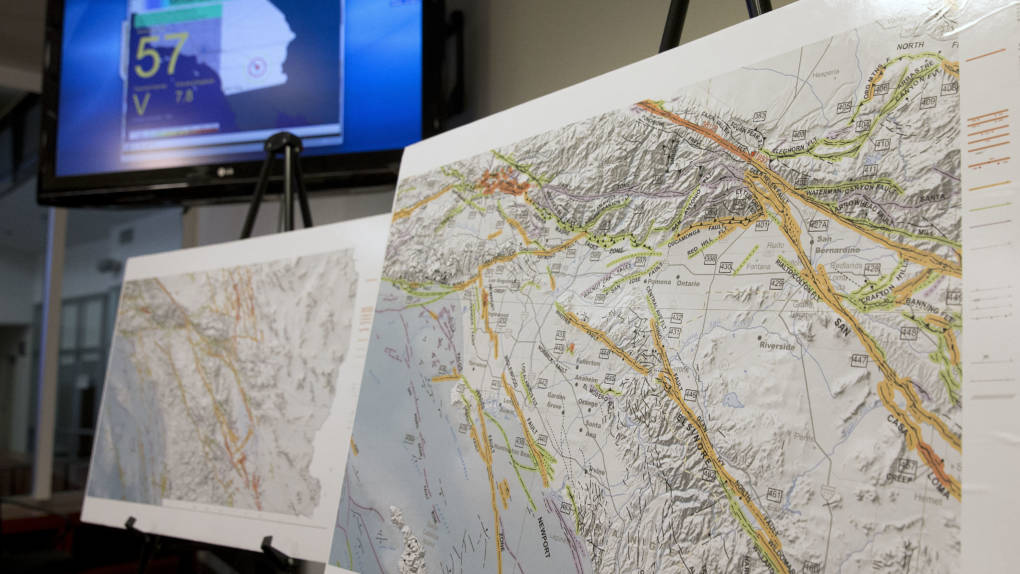
"caption": "A map shows earthquake faults in part of Southern California. Scientists using hundreds of graphics processors found that the region experienced 1.81 million temblors over a decade-long span — 10 times more than what had previously been detected.",
"description": "A map shows earthquake faults in part of Southern California. Scientists using hundreds of graphics processors found that the region experienced 1.81 million temblors over a decade-long span — 10 times more than what had previously been detecte",
"title": "A map shows earthquake faults in part of Southern California. Scientists using hundreds of graphics processors found that the region experienced 1.81 million temblors over a decade-long span — 10 times more than what had previously been detected.",
"credit": "Rich Pedroncelli/AP",
"status": "inherit",
"isLoading": false,
"fetchFailed": false
},
"news_11719070": {
"type": "attachments",
"id": "news_11719070",
"meta": {
"index": "attachments_1716263798",
"site": "news",
"id": "11719070",
"found": true
},
"parent": 11719066,
"imgSizes": {
"twentyfourteen-full-width": {
"file": "https://ww2.kqed.org/app/uploads/sites/10/2019/01/GettyImages-145949283-e1547777908495-1038x576.jpg",
"width": 1038,
"mimeType": "image/jpeg",
"height": 576
},
"thumbnail": {
"file": "https://ww2.kqed.org/app/uploads/sites/10/2019/01/GettyImages-145949283-e1547777908495-160x105.jpg",
"width": 160,
"mimeType": "image/jpeg",
"height": 105
},
"post-thumbnail": {
"file": "https://ww2.kqed.org/app/uploads/sites/10/2019/01/GettyImages-145949283-e1547777908495-672x372.jpg",
"width": 672,
"mimeType": "image/jpeg",
"height": 372
},
"kqedFullSize": {
"file": "https://ww2.kqed.org/app/uploads/sites/10/2019/01/GettyImages-145949283-e1547777908495.jpg",
"width": 1920,
"height": 1264
},
"large": {
"file": "https://ww2.kqed.org/app/uploads/sites/10/2019/01/GettyImages-145949283-e1547777908495-1020x672.jpg",
"width": 1020,
"mimeType": "image/jpeg",
"height": 672
},
"complete_open_graph": {
"file": "https://ww2.kqed.org/app/uploads/sites/10/2019/01/GettyImages-145949283-e1547777908495-1200x790.jpg",
"width": 1200,
"mimeType": "image/jpeg",
"height": 790
},
"guest-author-50": {
"file": "https://ww2.kqed.org/app/uploads/sites/10/2019/01/GettyImages-145949283-e1547777908495-50x50.jpg",
"width": 50,
"mimeType": "image/jpeg",
"height": 50
},
"guest-author-96": {
"file": "https://ww2.kqed.org/app/uploads/sites/10/2019/01/GettyImages-145949283-e1547777908495-96x96.jpg",
"width": 96,
"mimeType": "image/jpeg",
"height": 96
},
"medium": {
"file": "https://ww2.kqed.org/app/uploads/sites/10/2019/01/GettyImages-145949283-e1547777908495-800x527.jpg",
"width": 800,
"mimeType": "image/jpeg",
"height": 527
},
"guest-author-64": {
"file": "https://ww2.kqed.org/app/uploads/sites/10/2019/01/GettyImages-145949283-e1547777908495-64x64.jpg",
"width": 64,
"mimeType": "image/jpeg",
"height": 64
},
"guest-author-32": {
"file": "https://ww2.kqed.org/app/uploads/sites/10/2019/01/GettyImages-145949283-e1547777908495-32x32.jpg",
"width": 32,
"mimeType": "image/jpeg",
"height": 32
},
"full-width": {
"file": "https://ww2.kqed.org/app/uploads/sites/10/2019/01/GettyImages-145949283-e1547777908495-1920x1264.jpg",
"width": 1920,
"mimeType": "image/jpeg",
"height": 1264
},
"detail": {
"file": "https://ww2.kqed.org/app/uploads/sites/10/2019/01/GettyImages-145949283-e1547777908495-150x150.jpg",
"width": 150,
"mimeType": "image/jpeg",
"height": 150
},
"guest-author-128": {
"file": "https://ww2.kqed.org/app/uploads/sites/10/2019/01/GettyImages-145949283-e1547777908495-128x128.jpg",
"width": 128,
"mimeType": "image/jpeg",
"height": 128
}
},
"publishDate": 1547769539,
"modified": 1547777897,
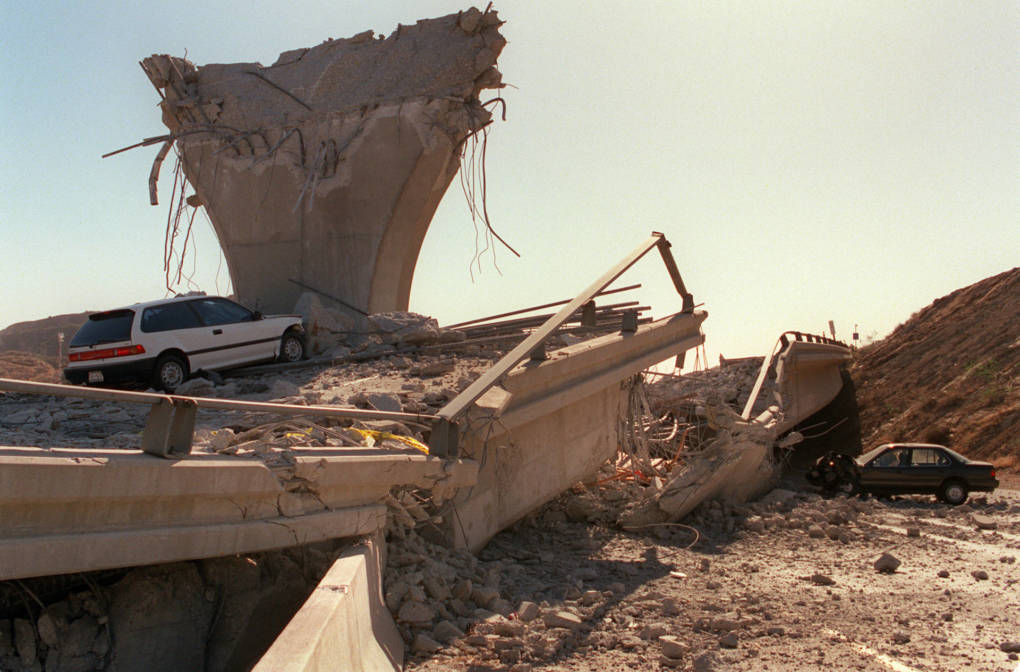
"caption": "Cars lie smashed by the collapsed Interstate 5 connector few hours after Northridge earthquake, on January 17, 1994, in Sylmar, California.",
"description": "Cars lie smashed by the collapsed Interstate 5 connector few hours after Northridge earthquake, on January 17, 1994, in Sylmar, California.",
"title": "USA-EARTHQUAKE-DAMAGES",
"credit": "Jonathan Nourak/AFP/Getty Images",
"status": "inherit",
"isLoading": false,
"fetchFailed": false
},
"news_11718569": {
"type": "attachments",
"id": "news_11718569",
"meta": {
"index": "attachments_1716263798",
"site": "news",
"id": "11718569",
"found": true
},
"parent": 11718567,
"imgSizes": {
"twentyfourteen-full-width": {
"file": "https://ww2.kqed.org/app/uploads/sites/10/2019/01/Screen-Shot-2019-01-16-at-5.22.10-AM-1038x576.png",
"width": 1038,
"mimeType": "image/png",
"height": 576
},
"thumbnail": {
"file": "https://ww2.kqed.org/app/uploads/sites/10/2019/01/Screen-Shot-2019-01-16-at-5.22.10-AM-160x93.png",
"width": 160,
"mimeType": "image/png",
"height": 93
},
"post-thumbnail": {
"file": "https://ww2.kqed.org/app/uploads/sites/10/2019/01/Screen-Shot-2019-01-16-at-5.22.10-AM-672x372.png",
"width": 672,
"mimeType": "image/png",
"height": 372
},
"kqedFullSize": {
"file": "https://ww2.kqed.org/app/uploads/sites/10/2019/01/Screen-Shot-2019-01-16-at-5.22.10-AM.png",
"width": 2316,
"height": 1344
},
"large": {
"file": "https://ww2.kqed.org/app/uploads/sites/10/2019/01/Screen-Shot-2019-01-16-at-5.22.10-AM-1020x592.png",
"width": 1020,
"mimeType": "image/png",
"height": 592
},
"complete_open_graph": {
"file": "https://ww2.kqed.org/app/uploads/sites/10/2019/01/Screen-Shot-2019-01-16-at-5.22.10-AM-1200x696.png",
"width": 1200,
"mimeType": "image/png",
"height": 696
},
"guest-author-50": {
"file": "https://ww2.kqed.org/app/uploads/sites/10/2019/01/Screen-Shot-2019-01-16-at-5.22.10-AM-50x50.png",
"width": 50,
"mimeType": "image/png",
"height": 50
},
"guest-author-96": {
"file": "https://ww2.kqed.org/app/uploads/sites/10/2019/01/Screen-Shot-2019-01-16-at-5.22.10-AM-96x96.png",
"width": 96,
"mimeType": "image/png",
"height": 96
},
"medium": {
"file": "https://ww2.kqed.org/app/uploads/sites/10/2019/01/Screen-Shot-2019-01-16-at-5.22.10-AM-800x464.png",
"width": 800,
"mimeType": "image/png",
"height": 464
},
"guest-author-64": {
"file": "https://ww2.kqed.org/app/uploads/sites/10/2019/01/Screen-Shot-2019-01-16-at-5.22.10-AM-64x64.png",
"width": 64,
"mimeType": "image/png",
"height": 64
},
"guest-author-32": {
"file": "https://ww2.kqed.org/app/uploads/sites/10/2019/01/Screen-Shot-2019-01-16-at-5.22.10-AM-32x32.png",
"width": 32,
"mimeType": "image/png",
"height": 32
},
"full-width": {
"file": "https://ww2.kqed.org/app/uploads/sites/10/2019/01/Screen-Shot-2019-01-16-at-5.22.10-AM-1920x1114.png",
"width": 1920,
"mimeType": "image/png",
"height": 1114
},
"detail": {
"file": "https://ww2.kqed.org/app/uploads/sites/10/2019/01/Screen-Shot-2019-01-16-at-5.22.10-AM-150x150.png",
"width": 150,
"mimeType": "image/png",
"height": 150
},
"guest-author-128": {
"file": "https://ww2.kqed.org/app/uploads/sites/10/2019/01/Screen-Shot-2019-01-16-at-5.22.10-AM-128x128.png",
"width": 128,
"mimeType": "image/png",
"height": 128
}
},
"publishDate": 1547644963,
"modified": 1547735547,
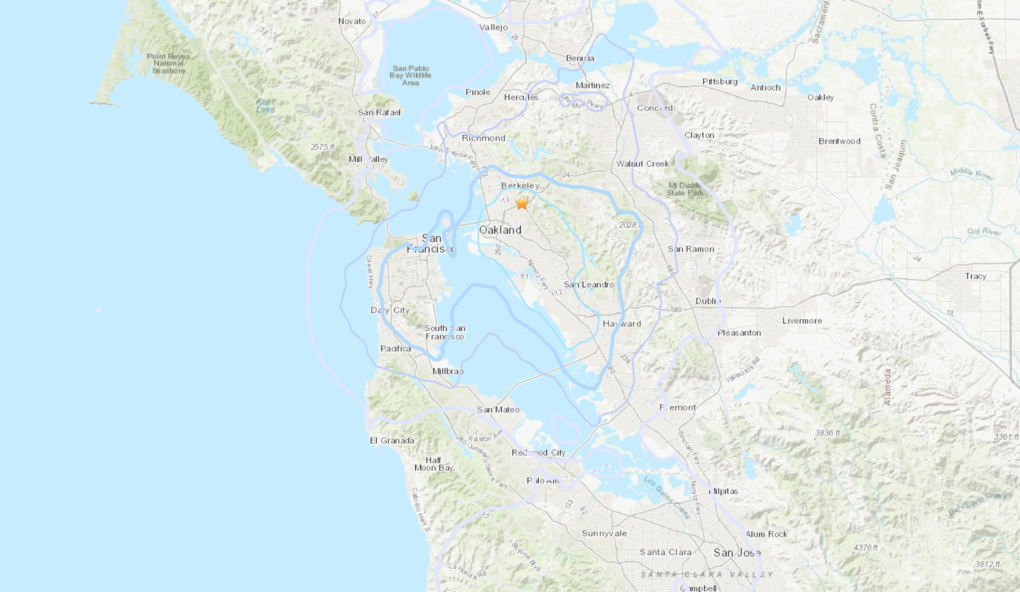
"caption": "Thursday's 3.5 earthquake was centered in the East Bay Hills, just uphill from Berkeley's Claremont Hotel. ",
"description": "The earthquake was centered about 3km north of Piedmont, Calif.",
"title": "East Bay Hills-Earthquake",
"credit": "USGS",
"status": "inherit",
"isLoading": false,
"fetchFailed": false
},
"news_11715830": {
"type": "attachments",
"id": "news_11715830",
"meta": {
"index": "attachments_1716263798",
"site": "news",
"id": "11715830",
"found": true
},
"parent": 11715793,
"imgSizes": {
"twentyfourteen-full-width": {
"file": "https://ww2.kqed.org/app/uploads/sites/10/2019/01/ShakeAlertLA_App-1038x576.jpg",
"width": 1038,
"mimeType": "image/jpeg",
"height": 576
},
"thumbnail": {
"file": "https://ww2.kqed.org/app/uploads/sites/10/2019/01/ShakeAlertLA_App-160x110.jpg",
"width": 160,
"mimeType": "image/jpeg",
"height": 110
},
"post-thumbnail": {
"file": "https://ww2.kqed.org/app/uploads/sites/10/2019/01/ShakeAlertLA_App-672x372.jpg",
"width": 672,
"mimeType": "image/jpeg",
"height": 372
},
"kqedFullSize": {
"file": "https://ww2.kqed.org/app/uploads/sites/10/2019/01/ShakeAlertLA_App.jpg",
"width": 1590,
"height": 1095
},
"large": {
"file": "https://ww2.kqed.org/app/uploads/sites/10/2019/01/ShakeAlertLA_App-1020x702.jpg",
"width": 1020,
"mimeType": "image/jpeg",
"height": 702
},
"complete_open_graph": {
"file": "https://ww2.kqed.org/app/uploads/sites/10/2019/01/ShakeAlertLA_App-1200x826.jpg",
"width": 1200,
"mimeType": "image/jpeg",
"height": 826
},
"guest-author-50": {
"file": "https://ww2.kqed.org/app/uploads/sites/10/2019/01/ShakeAlertLA_App-50x50.jpg",
"width": 50,
"mimeType": "image/jpeg",
"height": 50
},
"guest-author-96": {
"file": "https://ww2.kqed.org/app/uploads/sites/10/2019/01/ShakeAlertLA_App-96x96.jpg",
"width": 96,
"mimeType": "image/jpeg",
"height": 96
},
"medium": {
"file": "https://ww2.kqed.org/app/uploads/sites/10/2019/01/ShakeAlertLA_App-800x551.jpg",
"width": 800,
"mimeType": "image/jpeg",
"height": 551
},
"guest-author-64": {
"file": "https://ww2.kqed.org/app/uploads/sites/10/2019/01/ShakeAlertLA_App-64x64.jpg",
"width": 64,
"mimeType": "image/jpeg",
"height": 64
},
"guest-author-32": {
"file": "https://ww2.kqed.org/app/uploads/sites/10/2019/01/ShakeAlertLA_App-32x32.jpg",
"width": 32,
"mimeType": "image/jpeg",
"height": 32
},
"detail": {
"file": "https://ww2.kqed.org/app/uploads/sites/10/2019/01/ShakeAlertLA_App-150x150.jpg",
"width": 150,
"mimeType": "image/jpeg",
"height": 150
},
"guest-author-128": {
"file": "https://ww2.kqed.org/app/uploads/sites/10/2019/01/ShakeAlertLA_App-128x128.jpg",
"width": 128,
"mimeType": "image/jpeg",
"height": 128
}
},
"publishDate": 1546567364,
"modified": 1571404205,
"caption": "California’s new Earthquake Early Warning System app- MyShake. ",
"description": null,
"title": "ShakeAlertLA_App",
"credit": "Screenshots via Itunes",
"status": "inherit",
"isLoading": false,
"fetchFailed": false
},
"news_11648327": {
"type": "attachments",
"id": "news_11648327",
"meta": {
"index": "attachments_1716263798",
"site": "news",
"id": "11648327",
"found": true
},
"parent": 11648324,
"imgSizes": {
"small": {
"file": "https://ww2.kqed.org/app/uploads/sites/10/2018/02/quake1-file-20180126-100908-1qg3z3l-520x365.jpg",
"width": 520,
"mimeType": "image/jpeg",
"height": 365
},
"twentyfourteen-full-width": {
"file": "https://ww2.kqed.org/app/uploads/sites/10/2018/02/quake1-file-20180126-100908-1qg3z3l-926x576.jpg",
"width": 926,
"mimeType": "image/jpeg",
"height": 576
},
"thumbnail": {
"file": "https://ww2.kqed.org/app/uploads/sites/10/2018/02/quake1-file-20180126-100908-1qg3z3l-160x112.jpg",
"width": 160,
"mimeType": "image/jpeg",
"height": 112
},
"post-thumbnail": {
"file": "https://ww2.kqed.org/app/uploads/sites/10/2018/02/quake1-file-20180126-100908-1qg3z3l-672x372.jpg",
"width": 672,
"mimeType": "image/jpeg",
"height": 372
},
"xsmall": {
"file": "https://ww2.kqed.org/app/uploads/sites/10/2018/02/quake1-file-20180126-100908-1qg3z3l-375x263.jpg",
"width": 375,
"mimeType": "image/jpeg",
"height": 263
},
"kqedFullSize": {
"file": "https://ww2.kqed.org/app/uploads/sites/10/2018/02/quake1-file-20180126-100908-1qg3z3l.jpg",
"width": 926,
"height": 650
},
"guest-author-50": {
"file": "https://ww2.kqed.org/app/uploads/sites/10/2018/02/quake1-file-20180126-100908-1qg3z3l-50x50.jpg",
"width": 50,
"mimeType": "image/jpeg",
"height": 50
},
"guest-author-96": {
"file": "https://ww2.kqed.org/app/uploads/sites/10/2018/02/quake1-file-20180126-100908-1qg3z3l-96x96.jpg",
"width": 96,
"mimeType": "image/jpeg",
"height": 96
},
"medium": {
"file": "https://ww2.kqed.org/app/uploads/sites/10/2018/02/quake1-file-20180126-100908-1qg3z3l-800x562.jpg",
"width": 800,
"mimeType": "image/jpeg",
"height": 562
},
"guest-author-64": {
"file": "https://ww2.kqed.org/app/uploads/sites/10/2018/02/quake1-file-20180126-100908-1qg3z3l-64x64.jpg",
"width": 64,
"mimeType": "image/jpeg",
"height": 64
},
"guest-author-32": {
"file": "https://ww2.kqed.org/app/uploads/sites/10/2018/02/quake1-file-20180126-100908-1qg3z3l-32x32.jpg",
"width": 32,
"mimeType": "image/jpeg",
"height": 32
},
"detail": {
"file": "https://ww2.kqed.org/app/uploads/sites/10/2018/02/quake1-file-20180126-100908-1qg3z3l-150x150.jpg",
"width": 150,
"mimeType": "image/jpeg",
"height": 150
},
"guest-author-128": {
"file": "https://ww2.kqed.org/app/uploads/sites/10/2018/02/quake1-file-20180126-100908-1qg3z3l-128x128.jpg",
"width": 128,
"mimeType": "image/jpeg",
"height": 128
},
"xxsmall": {
"file": "https://ww2.kqed.org/app/uploads/sites/10/2018/02/quake1-file-20180126-100908-1qg3z3l-240x168.jpg",
"width": 240,
"mimeType": "image/jpeg",
"height": 168
}
},
"publishDate": 1517951193,
"modified": 1517952034,
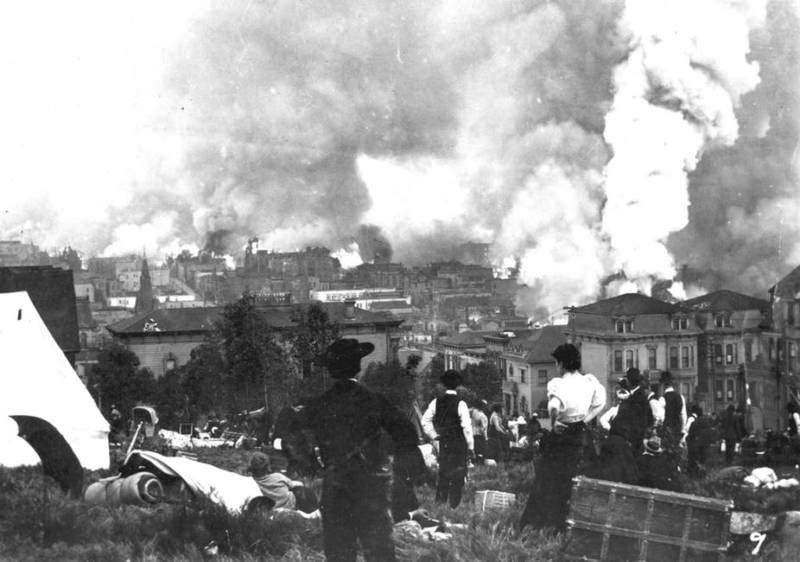
"caption": "Fires break out across San Francisco after the 1906 earthquake.",
"description": null,
"title": "quake1-file-20180126-100908-1qg3z3l",
"credit": "\u003ca class=\"source\" href=\"https://flic.kr/p/p1Jbxu\">USGS\u003c/a>\u003c/span>",
"status": "inherit",
"isLoading": false,
"fetchFailed": false
},
"news_11640097": {
"type": "attachments",
"id": "news_11640097",
"meta": {
"index": "attachments_1716263798",
"site": "news",
"id": "11640097",
"found": true
},
"parent": 11640096,
"imgSizes": {
"thumbnail": {
"file": "https://ww2.kqed.org/app/uploads/sites/10/2018/01/Screen-Shot-2018-01-04-at-3.14.14-AM-160x132.png",
"width": 160,
"mimeType": "image/png",
"height": 132
},
"post-thumbnail": {
"file": "https://ww2.kqed.org/app/uploads/sites/10/2018/01/Screen-Shot-2018-01-04-at-3.14.14-AM-456x372.png",
"width": 456,
"mimeType": "image/png",
"height": 372
},
"xsmall": {
"file": "https://ww2.kqed.org/app/uploads/sites/10/2018/01/Screen-Shot-2018-01-04-at-3.14.14-AM-375x309.png",
"width": 375,
"mimeType": "image/png",
"height": 309
},
"kqedFullSize": {
"file": "https://ww2.kqed.org/app/uploads/sites/10/2018/01/Screen-Shot-2018-01-04-at-3.14.14-AM.png",
"width": 456,
"height": 376
},
"guest-author-50": {
"file": "https://ww2.kqed.org/app/uploads/sites/10/2018/01/Screen-Shot-2018-01-04-at-3.14.14-AM-50x50.png",
"width": 50,
"mimeType": "image/png",
"height": 50
},
"guest-author-96": {
"file": "https://ww2.kqed.org/app/uploads/sites/10/2018/01/Screen-Shot-2018-01-04-at-3.14.14-AM-96x96.png",
"width": 96,
"mimeType": "image/png",
"height": 96
},
"guest-author-64": {
"file": "https://ww2.kqed.org/app/uploads/sites/10/2018/01/Screen-Shot-2018-01-04-at-3.14.14-AM-64x64.png",
"width": 64,
"mimeType": "image/png",
"height": 64
},
"detail": {
"file": "https://ww2.kqed.org/app/uploads/sites/10/2018/01/Screen-Shot-2018-01-04-at-3.14.14-AM-150x150.png",
"width": 150,
"mimeType": "image/png",
"height": 150
},
"guest-author-32": {
"file": "https://ww2.kqed.org/app/uploads/sites/10/2018/01/Screen-Shot-2018-01-04-at-3.14.14-AM-32x32.png",
"width": 32,
"mimeType": "image/png",
"height": 32
},
"guest-author-128": {
"file": "https://ww2.kqed.org/app/uploads/sites/10/2018/01/Screen-Shot-2018-01-04-at-3.14.14-AM-128x128.png",
"width": 128,
"mimeType": "image/png",
"height": 128
},
"xxsmall": {
"file": "https://ww2.kqed.org/app/uploads/sites/10/2018/01/Screen-Shot-2018-01-04-at-3.14.14-AM-240x198.png",
"width": 240,
"mimeType": "image/png",
"height": 198
}
},
"publishDate": 1515065242,
"modified": 1515065289,
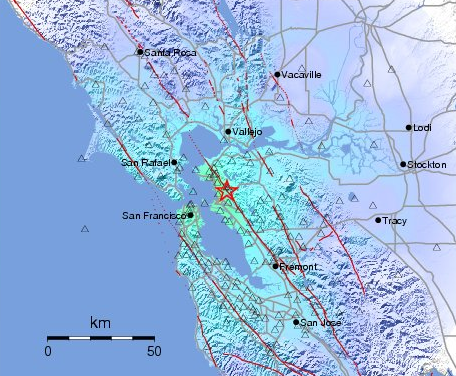
"caption": "USGS map shows location of M 4.4 quake.",
"description": "Quake map",
"title": "Screen Shot 2018-01-04 at 3.14.14 AM",
"credit": null,
"status": "inherit",
"isLoading": false,
"fetchFailed": false
},
"news_11619992": {
"type": "attachments",
"id": "news_11619992",
"meta": {
"index": "attachments_1716263798",
"site": "news",
"id": "11619992",
"found": true
},
"parent": 11619987,
"imgSizes": {
"small": {
"file": "https://ww2.kqed.org/app/uploads/sites/10/2017/09/Capt-Sara-Rathbun_1-520x390.jpg",
"width": 520,
"mimeType": "image/jpeg",
"height": 390
},
"twentyfourteen-full-width": {
"file": "https://ww2.kqed.org/app/uploads/sites/10/2017/09/Capt-Sara-Rathbun_1-1038x576.jpg",
"width": 1038,
"mimeType": "image/jpeg",
"height": 576
},
"thumbnail": {
"file": "https://ww2.kqed.org/app/uploads/sites/10/2017/09/Capt-Sara-Rathbun_1-160x120.jpg",
"width": 160,
"mimeType": "image/jpeg",
"height": 120
},
"fd-sm": {
"file": "https://ww2.kqed.org/app/uploads/sites/10/2017/09/Capt-Sara-Rathbun_1-960x720.jpg",
"width": 960,
"mimeType": "image/jpeg",
"height": 720
},
"post-thumbnail": {
"file": "https://ww2.kqed.org/app/uploads/sites/10/2017/09/Capt-Sara-Rathbun_1-672x372.jpg",
"width": 672,
"mimeType": "image/jpeg",
"height": 372
},
"xsmall": {
"file": "https://ww2.kqed.org/app/uploads/sites/10/2017/09/Capt-Sara-Rathbun_1-375x281.jpg",
"width": 375,
"mimeType": "image/jpeg",
"height": 281
},
"kqedFullSize": {
"file": "https://ww2.kqed.org/app/uploads/sites/10/2017/09/Capt-Sara-Rathbun_1-e1506719658457.jpg",
"width": 1920,
"height": 1440
},
"large": {
"file": "https://ww2.kqed.org/app/uploads/sites/10/2017/09/Capt-Sara-Rathbun_1-1020x765.jpg",
"width": 1020,
"mimeType": "image/jpeg",
"height": 765
},
"xlarge": {
"file": "https://ww2.kqed.org/app/uploads/sites/10/2017/09/Capt-Sara-Rathbun_1-1180x885.jpg",
"width": 1180,
"mimeType": "image/jpeg",
"height": 885
},
"guest-author-50": {
"file": "https://ww2.kqed.org/app/uploads/sites/10/2017/09/Capt-Sara-Rathbun_1-50x50.jpg",
"width": 50,
"mimeType": "image/jpeg",
"height": 50
},
"guest-author-96": {
"file": "https://ww2.kqed.org/app/uploads/sites/10/2017/09/Capt-Sara-Rathbun_1-96x96.jpg",
"width": 96,
"mimeType": "image/jpeg",
"height": 96
},
"medium": {
"file": "https://ww2.kqed.org/app/uploads/sites/10/2017/09/Capt-Sara-Rathbun_1-800x600.jpg",
"width": 800,
"mimeType": "image/jpeg",
"height": 600
},
"guest-author-64": {
"file": "https://ww2.kqed.org/app/uploads/sites/10/2017/09/Capt-Sara-Rathbun_1-64x64.jpg",
"width": 64,
"mimeType": "image/jpeg",
"height": 64
},
"guest-author-32": {
"file": "https://ww2.kqed.org/app/uploads/sites/10/2017/09/Capt-Sara-Rathbun_1-32x32.jpg",
"width": 32,
"mimeType": "image/jpeg",
"height": 32
},
"fd-lrg": {
"file": "https://ww2.kqed.org/app/uploads/sites/10/2017/09/Capt-Sara-Rathbun_1-1920x1440.jpg",
"width": 1920,
"mimeType": "image/jpeg",
"height": 1440
},
"fd-med": {
"file": "https://ww2.kqed.org/app/uploads/sites/10/2017/09/Capt-Sara-Rathbun_1-1180x885.jpg",
"width": 1180,
"mimeType": "image/jpeg",
"height": 885
},
"full-width": {
"file": "https://ww2.kqed.org/app/uploads/sites/10/2017/09/Capt-Sara-Rathbun_1-1920x1440.jpg",
"width": 1920,
"mimeType": "image/jpeg",
"height": 1440
},
"detail": {
"file": "https://ww2.kqed.org/app/uploads/sites/10/2017/09/Capt-Sara-Rathbun_1-150x150.jpg",
"width": 150,
"mimeType": "image/jpeg",
"height": 150
},
"guest-author-128": {
"file": "https://ww2.kqed.org/app/uploads/sites/10/2017/09/Capt-Sara-Rathbun_1-128x128.jpg",
"width": 128,
"mimeType": "image/jpeg",
"height": 128
},
"xxsmall": {
"file": "https://ww2.kqed.org/app/uploads/sites/10/2017/09/Capt-Sara-Rathbun_1-240x180.jpg",
"width": 240,
"mimeType": "image/jpeg",
"height": 180
}
},
"publishDate": 1506712263,
"modified": 1507250835,
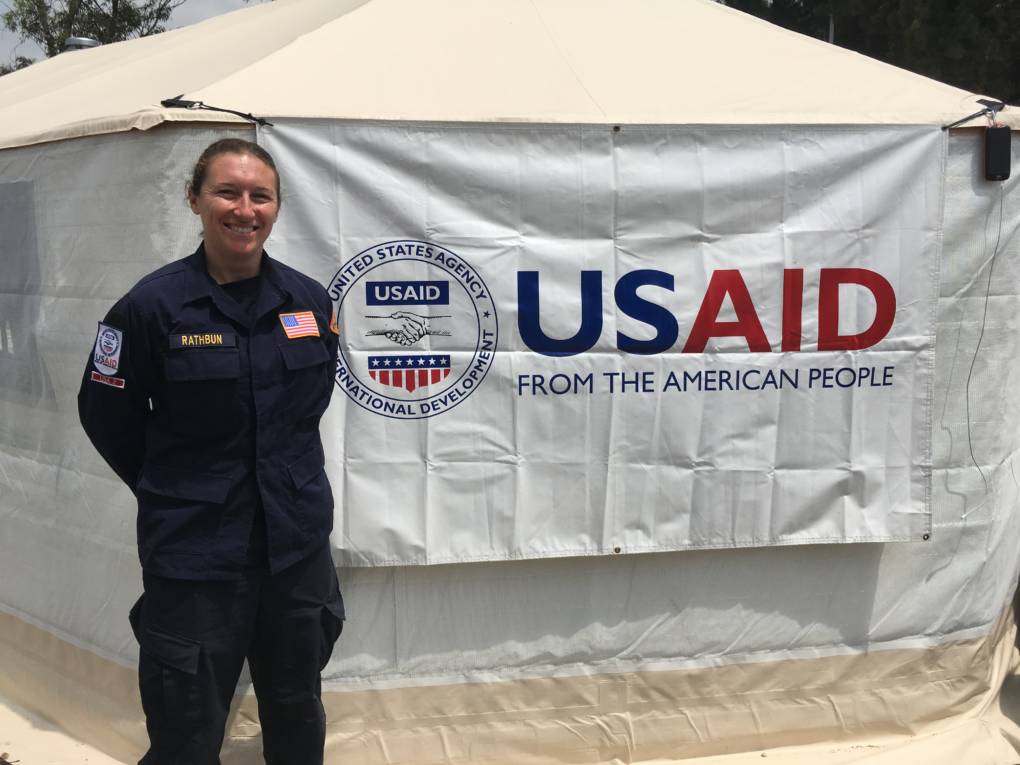
"caption": "California Urban Search and Rescue Task Force-2 Capt. Sara Rathbun.",
"description": "California Urban Search and Rescue Task Force-2 Captain Sara Rathbun.",
"title": "CA-Task Force 2 Captain Sara Rathbun. KQED/Emily Green",
"credit": "Emily Green/KQED",
"status": "inherit",
"isLoading": false,
"fetchFailed": false
},
"news_11619464": {
"type": "attachments",
"id": "news_11619464",
"meta": {
"index": "attachments_1716263798",
"site": "news",
"id": "11619464",
"found": true
},
"parent": 11619187,
"imgSizes": {
"small": {
"file": "https://ww2.kqed.org/app/uploads/sites/10/2017/09/Gemma-Urena-L_Jennifer-Zepeda-R-e1506547183262-520x389.jpg",
"width": 520,
"mimeType": "image/jpeg",
"height": 389
},
"twentyfourteen-full-width": {
"file": "https://ww2.kqed.org/app/uploads/sites/10/2017/09/Gemma-Urena-L_Jennifer-Zepeda-R-e1506547183262-1038x576.jpg",
"width": 1038,
"mimeType": "image/jpeg",
"height": 576
},
"thumbnail": {
"file": "https://ww2.kqed.org/app/uploads/sites/10/2017/09/Gemma-Urena-L_Jennifer-Zepeda-R-e1506547183262-160x120.jpg",
"width": 160,
"mimeType": "image/jpeg",
"height": 120
},
"fd-sm": {
"file": "https://ww2.kqed.org/app/uploads/sites/10/2017/09/Gemma-Urena-L_Jennifer-Zepeda-R-e1506547183262-960x719.jpg",
"width": 960,
"mimeType": "image/jpeg",
"height": 719
},
"post-thumbnail": {
"file": "https://ww2.kqed.org/app/uploads/sites/10/2017/09/Gemma-Urena-L_Jennifer-Zepeda-R-e1506547183262-672x372.jpg",
"width": 672,
"mimeType": "image/jpeg",
"height": 372
},
"xsmall": {
"file": "https://ww2.kqed.org/app/uploads/sites/10/2017/09/Gemma-Urena-L_Jennifer-Zepeda-R-e1506547183262-375x281.jpg",
"width": 375,
"mimeType": "image/jpeg",
"height": 281
},
"kqedFullSize": {
"file": "https://ww2.kqed.org/app/uploads/sites/10/2017/09/Gemma-Urena-L_Jennifer-Zepeda-R-e1506547205950.jpg",
"width": 1920,
"height": 1437
},
"large": {
"file": "https://ww2.kqed.org/app/uploads/sites/10/2017/09/Gemma-Urena-L_Jennifer-Zepeda-R-e1506547183262-1020x763.jpg",
"width": 1020,
"mimeType": "image/jpeg",
"height": 763
},
"xlarge": {
"file": "https://ww2.kqed.org/app/uploads/sites/10/2017/09/Gemma-Urena-L_Jennifer-Zepeda-R-e1506547183262-1180x883.jpg",
"width": 1180,
"mimeType": "image/jpeg",
"height": 883
},
"guest-author-50": {
"file": "https://ww2.kqed.org/app/uploads/sites/10/2017/09/Gemma-Urena-L_Jennifer-Zepeda-R-e1506547183262-50x50.jpg",
"width": 50,
"mimeType": "image/jpeg",
"height": 50
},
"guest-author-96": {
"file": "https://ww2.kqed.org/app/uploads/sites/10/2017/09/Gemma-Urena-L_Jennifer-Zepeda-R-e1506547183262-96x96.jpg",
"width": 96,
"mimeType": "image/jpeg",
"height": 96
},
"medium": {
"file": "https://ww2.kqed.org/app/uploads/sites/10/2017/09/Gemma-Urena-L_Jennifer-Zepeda-R-e1506547183262-800x599.jpg",
"width": 800,
"mimeType": "image/jpeg",
"height": 599
},
"guest-author-64": {
"file": "https://ww2.kqed.org/app/uploads/sites/10/2017/09/Gemma-Urena-L_Jennifer-Zepeda-R-e1506547183262-64x64.jpg",
"width": 64,
"mimeType": "image/jpeg",
"height": 64
},
"guest-author-32": {
"file": "https://ww2.kqed.org/app/uploads/sites/10/2017/09/Gemma-Urena-L_Jennifer-Zepeda-R-e1506547183262-32x32.jpg",
"width": 32,
"mimeType": "image/jpeg",
"height": 32
},
"fd-lrg": {
"file": "https://ww2.kqed.org/app/uploads/sites/10/2017/09/Gemma-Urena-L_Jennifer-Zepeda-R-e1506547183262-1920x1437.jpg",
"width": 1920,
"mimeType": "image/jpeg",
"height": 1437
},
"fd-med": {
"file": "https://ww2.kqed.org/app/uploads/sites/10/2017/09/Gemma-Urena-L_Jennifer-Zepeda-R-e1506547183262-1180x883.jpg",
"width": 1180,
"mimeType": "image/jpeg",
"height": 883
},
"full-width": {
"file": "https://ww2.kqed.org/app/uploads/sites/10/2017/09/Gemma-Urena-L_Jennifer-Zepeda-R-e1506547183262-1920x1437.jpg",
"width": 1920,
"mimeType": "image/jpeg",
"height": 1437
},
"detail": {
"file": "https://ww2.kqed.org/app/uploads/sites/10/2017/09/Gemma-Urena-L_Jennifer-Zepeda-R-e1506547183262-150x150.jpg",
"width": 150,
"mimeType": "image/jpeg",
"height": 150
},
"guest-author-128": {
"file": "https://ww2.kqed.org/app/uploads/sites/10/2017/09/Gemma-Urena-L_Jennifer-Zepeda-R-e1506547183262-128x128.jpg",
"width": 128,
"mimeType": "image/jpeg",
"height": 128
},
"xxsmall": {
"file": "https://ww2.kqed.org/app/uploads/sites/10/2017/09/Gemma-Urena-L_Jennifer-Zepeda-R-e1506547183262-240x180.jpg",
"width": 240,
"mimeType": "image/jpeg",
"height": 180
}
},
"publishDate": 1506543385,
"modified": 1506549171,
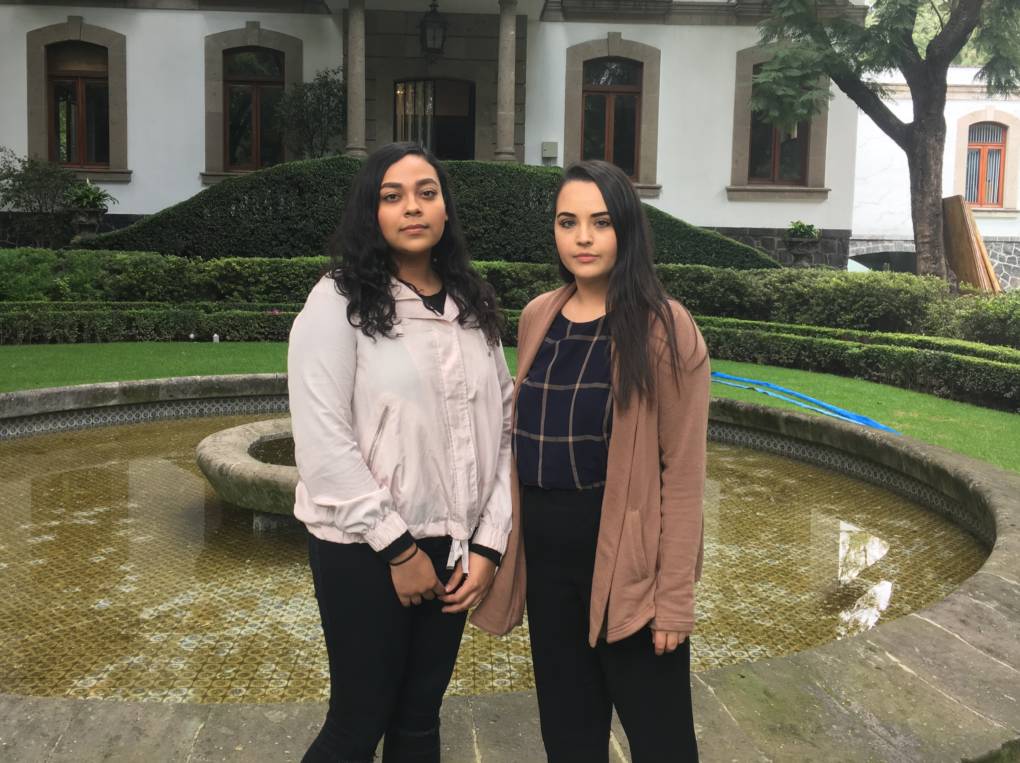
"caption": "Gemma Urena (left) and Jennifer Zepeda (right) are exchange students from UC Santa Cruz studying in Mexico City. They are raising money to help earthquake victims. ",
"description": "Gemma Urena (left) and Jennifer Zepeda (right) are exchange students from the University of California, Santa Cruz, studying in Mexico City. They are raising money to help earthquake victims. KQED/Emily Green. ",
"title": "Gemma Urena (left) and Jennifer Zepeda (right) are exchange students from the University of California, Santa Cruz, studying in Mexico City. They are raising money to help earthquake victims. KQED/Emily Green.",
"credit": "Emily Green/KQED",
"status": "inherit",
"isLoading": false,
"fetchFailed": false
},
"news_11618576": {
"type": "attachments",
"id": "news_11618576",
"meta": {
"index": "attachments_1716263798",
"site": "news",
"id": "11618576",
"found": true
},
"parent": 11618155,
"imgSizes": {
"small": {
"file": "https://ww2.kqed.org/app/uploads/sites/10/2017/09/placita-praying-520x390.jpg",
"width": 520,
"mimeType": "image/jpeg",
"height": 390
},
"twentyfourteen-full-width": {
"file": "https://ww2.kqed.org/app/uploads/sites/10/2017/09/placita-praying-1038x576.jpg",
"width": 1038,
"mimeType": "image/jpeg",
"height": 576
},
"thumbnail": {
"file": "https://ww2.kqed.org/app/uploads/sites/10/2017/09/placita-praying-160x120.jpg",
"width": 160,
"mimeType": "image/jpeg",
"height": 120
},
"fd-sm": {
"file": "https://ww2.kqed.org/app/uploads/sites/10/2017/09/placita-praying-960x720.jpg",
"width": 960,
"mimeType": "image/jpeg",
"height": 720
},
"post-thumbnail": {
"file": "https://ww2.kqed.org/app/uploads/sites/10/2017/09/placita-praying-672x372.jpg",
"width": 672,
"mimeType": "image/jpeg",
"height": 372
},
"xsmall": {
"file": "https://ww2.kqed.org/app/uploads/sites/10/2017/09/placita-praying-375x281.jpg",
"width": 375,
"mimeType": "image/jpeg",
"height": 281
},
"kqedFullSize": {
"file": "https://ww2.kqed.org/app/uploads/sites/10/2017/09/placita-praying.jpg",
"width": 1920,
"height": 1440
},
"large": {
"file": "https://ww2.kqed.org/app/uploads/sites/10/2017/09/placita-praying-1020x765.jpg",
"width": 1020,
"mimeType": "image/jpeg",
"height": 765
},
"xlarge": {
"file": "https://ww2.kqed.org/app/uploads/sites/10/2017/09/placita-praying-1180x885.jpg",
"width": 1180,
"mimeType": "image/jpeg",
"height": 885
},
"guest-author-50": {
"file": "https://ww2.kqed.org/app/uploads/sites/10/2017/09/placita-praying-50x50.jpg",
"width": 50,
"mimeType": "image/jpeg",
"height": 50
},
"guest-author-96": {
"file": "https://ww2.kqed.org/app/uploads/sites/10/2017/09/placita-praying-96x96.jpg",
"width": 96,
"mimeType": "image/jpeg",
"height": 96
},
"medium": {
"file": "https://ww2.kqed.org/app/uploads/sites/10/2017/09/placita-praying-800x600.jpg",
"width": 800,
"mimeType": "image/jpeg",
"height": 600
},
"guest-author-64": {
"file": "https://ww2.kqed.org/app/uploads/sites/10/2017/09/placita-praying-64x64.jpg",
"width": 64,
"mimeType": "image/jpeg",
"height": 64
},
"guest-author-32": {
"file": "https://ww2.kqed.org/app/uploads/sites/10/2017/09/placita-praying-32x32.jpg",
"width": 32,
"mimeType": "image/jpeg",
"height": 32
},
"fd-lrg": {
"file": "https://ww2.kqed.org/app/uploads/sites/10/2017/09/placita-praying-1920x1440.jpg",
"width": 1920,
"mimeType": "image/jpeg",
"height": 1440
},
"fd-med": {
"file": "https://ww2.kqed.org/app/uploads/sites/10/2017/09/placita-praying-1180x885.jpg",
"width": 1180,
"mimeType": "image/jpeg",
"height": 885
},
"full-width": {
"file": "https://ww2.kqed.org/app/uploads/sites/10/2017/09/placita-praying-1920x1440.jpg",
"width": 1920,
"mimeType": "image/jpeg",
"height": 1440
},
"detail": {
"file": "https://ww2.kqed.org/app/uploads/sites/10/2017/09/placita-praying-150x150.jpg",
"width": 150,
"mimeType": "image/jpeg",
"height": 150
},
"guest-author-128": {
"file": "https://ww2.kqed.org/app/uploads/sites/10/2017/09/placita-praying-128x128.jpg",
"width": 128,
"mimeType": "image/jpeg",
"height": 128
},
"xxsmall": {
"file": "https://ww2.kqed.org/app/uploads/sites/10/2017/09/placita-praying-240x180.jpg",
"width": 240,
"mimeType": "image/jpeg",
"height": 180
}
},
"publishDate": 1506107315,
"modified": 1506107383,
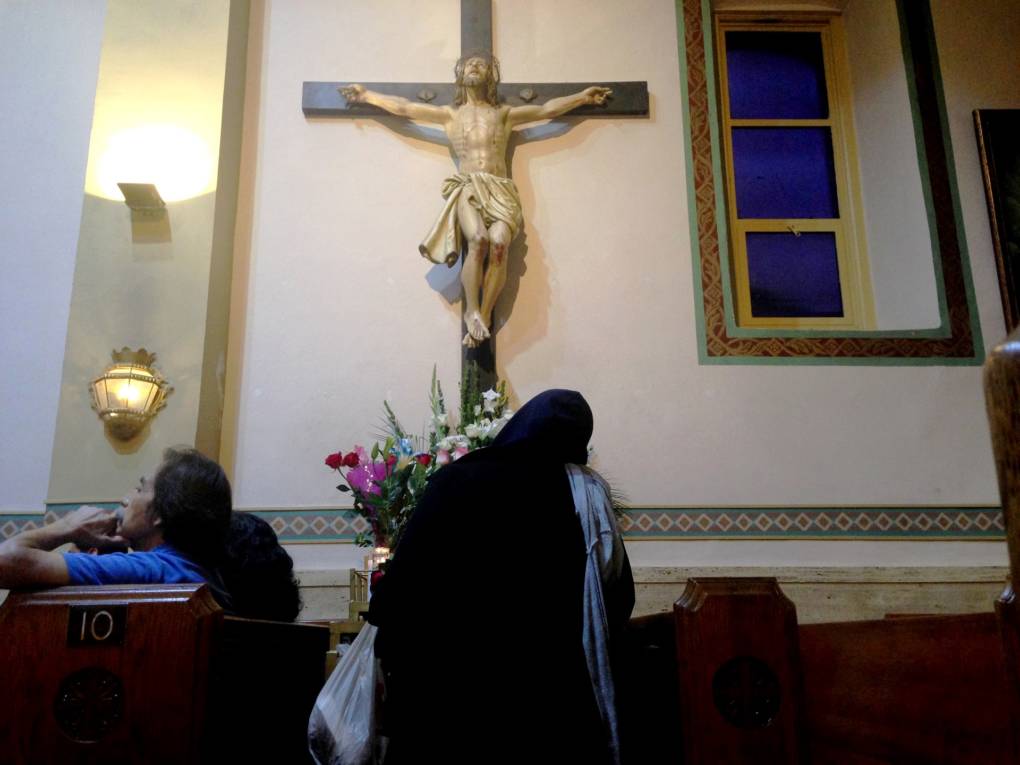
"caption": "L.A.’s historic Our Lady Queen of Angels church, is commemorating victims of the Mexico earthquake with several days of church service dedications, vigils and fundraising.",
"description": null,
"title": "placita praying",
"credit": "Steven CUevas / KQED",
"status": "inherit",
"isLoading": false,
"fetchFailed": false
},
"news_11617739": {
"type": "attachments",
"id": "news_11617739",
"meta": {
"index": "attachments_1716263798",
"site": "news",
"id": "11617739",
"found": true
},
"parent": 11617736,
"imgSizes": {
"small": {
"file": "https://ww2.kqed.org/app/uploads/sites/10/2017/09/quake_091917_final-520x520.jpg",
"width": 520,
"mimeType": "image/jpeg",
"height": 520
},
"twentyfourteen-full-width": {
"file": "https://ww2.kqed.org/app/uploads/sites/10/2017/09/quake_091917_final-1038x576.jpg",
"width": 1038,
"mimeType": "image/jpeg",
"height": 576
},
"thumbnail": {
"file": "https://ww2.kqed.org/app/uploads/sites/10/2017/09/quake_091917_final-160x160.jpg",
"width": 160,
"mimeType": "image/jpeg",
"height": 160
},
"fd-sm": {
"file": "https://ww2.kqed.org/app/uploads/sites/10/2017/09/quake_091917_final-960x960.jpg",
"width": 960,
"mimeType": "image/jpeg",
"height": 960
},
"post-thumbnail": {
"file": "https://ww2.kqed.org/app/uploads/sites/10/2017/09/quake_091917_final-672x372.jpg",
"width": 672,
"mimeType": "image/jpeg",
"height": 372
},
"xsmall": {
"file": "https://ww2.kqed.org/app/uploads/sites/10/2017/09/quake_091917_final-375x375.jpg",
"width": 375,
"mimeType": "image/jpeg",
"height": 375
},
"kqedFullSize": {
"file": "https://ww2.kqed.org/app/uploads/sites/10/2017/09/quake_091917_final.jpg",
"width": 1920,
"height": 1920
},
"large": {
"file": "https://ww2.kqed.org/app/uploads/sites/10/2017/09/quake_091917_final-1020x1020.jpg",
"width": 1020,
"mimeType": "image/jpeg",
"height": 1020
},
"xlarge": {
"file": "https://ww2.kqed.org/app/uploads/sites/10/2017/09/quake_091917_final-1180x1180.jpg",
"width": 1180,
"mimeType": "image/jpeg",
"height": 1180
},
"guest-author-50": {
"file": "https://ww2.kqed.org/app/uploads/sites/10/2017/09/quake_091917_final-50x50.jpg",
"width": 50,
"mimeType": "image/jpeg",
"height": 50
},
"guest-author-96": {
"file": "https://ww2.kqed.org/app/uploads/sites/10/2017/09/quake_091917_final-96x96.jpg",
"width": 96,
"mimeType": "image/jpeg",
"height": 96
},
"medium": {
"file": "https://ww2.kqed.org/app/uploads/sites/10/2017/09/quake_091917_final-800x800.jpg",
"width": 800,
"mimeType": "image/jpeg",
"height": 800
},
"guest-author-64": {
"file": "https://ww2.kqed.org/app/uploads/sites/10/2017/09/quake_091917_final-64x64.jpg",
"width": 64,
"mimeType": "image/jpeg",
"height": 64
},
"guest-author-32": {
"file": "https://ww2.kqed.org/app/uploads/sites/10/2017/09/quake_091917_final-32x32.jpg",
"width": 32,
"mimeType": "image/jpeg",
"height": 32
},
"fd-lrg": {
"file": "https://ww2.kqed.org/app/uploads/sites/10/2017/09/quake_091917_final-1920x1920.jpg",
"width": 1920,
"mimeType": "image/jpeg",
"height": 1920
},
"fd-med": {
"file": "https://ww2.kqed.org/app/uploads/sites/10/2017/09/quake_091917_final-1180x1180.jpg",
"width": 1180,
"mimeType": "image/jpeg",
"height": 1180
},
"full-width": {
"file": "https://ww2.kqed.org/app/uploads/sites/10/2017/09/quake_091917_final-1920x1920.jpg",
"width": 1920,
"mimeType": "image/jpeg",
"height": 1920
},
"detail": {
"file": "https://ww2.kqed.org/app/uploads/sites/10/2017/09/quake_091917_final-150x150.jpg",
"width": 150,
"mimeType": "image/jpeg",
"height": 150
},
"guest-author-128": {
"file": "https://ww2.kqed.org/app/uploads/sites/10/2017/09/quake_091917_final-128x128.jpg",
"width": 128,
"mimeType": "image/jpeg",
"height": 128
},
"xxsmall": {
"file": "https://ww2.kqed.org/app/uploads/sites/10/2017/09/quake_091917_final-240x240.jpg",
"width": 240,
"mimeType": "image/jpeg",
"height": 240
}
},
"publishDate": 1505855268,
"modified": 1505855298,
"caption": null,
"description": null,
"title": "quake_091917_final",
"credit": null,
"status": "inherit",
"isLoading": false,
"fetchFailed": false
},
"news_11616067": {
"type": "attachments",
"id": "news_11616067",
"meta": {
"index": "attachments_1716263798",
"site": "news",
"id": "11616067",
"found": true
},
"parent": 11616062,
"imgSizes": {
"small": {
"file": "https://ww2.kqed.org/app/uploads/sites/10/2017/09/hurriquake_090817_final-520x520.jpg",
"width": 520,
"mimeType": "image/jpeg",
"height": 520
},
"twentyfourteen-full-width": {
"file": "https://ww2.kqed.org/app/uploads/sites/10/2017/09/hurriquake_090817_final-1038x576.jpg",
"width": 1038,
"mimeType": "image/jpeg",
"height": 576
},
"thumbnail": {
"file": "https://ww2.kqed.org/app/uploads/sites/10/2017/09/hurriquake_090817_final-160x160.jpg",
"width": 160,
"mimeType": "image/jpeg",
"height": 160
},
"fd-sm": {
"file": "https://ww2.kqed.org/app/uploads/sites/10/2017/09/hurriquake_090817_final-960x960.jpg",
"width": 960,
"mimeType": "image/jpeg",
"height": 960
},
"post-thumbnail": {
"file": "https://ww2.kqed.org/app/uploads/sites/10/2017/09/hurriquake_090817_final-672x372.jpg",
"width": 672,
"mimeType": "image/jpeg",
"height": 372
},
"xsmall": {
"file": "https://ww2.kqed.org/app/uploads/sites/10/2017/09/hurriquake_090817_final-375x375.jpg",
"width": 375,
"mimeType": "image/jpeg",
"height": 375
},
"kqedFullSize": {
"file": "https://ww2.kqed.org/app/uploads/sites/10/2017/09/hurriquake_090817_final.jpg",
"width": 1920,
"height": 1920
},
"large": {
"file": "https://ww2.kqed.org/app/uploads/sites/10/2017/09/hurriquake_090817_final-1020x1020.jpg",
"width": 1020,
"mimeType": "image/jpeg",
"height": 1020
},
"xlarge": {
"file": "https://ww2.kqed.org/app/uploads/sites/10/2017/09/hurriquake_090817_final-1180x1180.jpg",
"width": 1180,
"mimeType": "image/jpeg",
"height": 1180
},
"guest-author-50": {
"file": "https://ww2.kqed.org/app/uploads/sites/10/2017/09/hurriquake_090817_final-50x50.jpg",
"width": 50,
"mimeType": "image/jpeg",
"height": 50
},
"guest-author-96": {
"file": "https://ww2.kqed.org/app/uploads/sites/10/2017/09/hurriquake_090817_final-96x96.jpg",
"width": 96,
"mimeType": "image/jpeg",
"height": 96
},
"medium": {
"file": "https://ww2.kqed.org/app/uploads/sites/10/2017/09/hurriquake_090817_final-800x800.jpg",
"width": 800,
"mimeType": "image/jpeg",
"height": 800
},
"guest-author-64": {
"file": "https://ww2.kqed.org/app/uploads/sites/10/2017/09/hurriquake_090817_final-64x64.jpg",
"width": 64,
"mimeType": "image/jpeg",
"height": 64
},
"guest-author-32": {
"file": "https://ww2.kqed.org/app/uploads/sites/10/2017/09/hurriquake_090817_final-32x32.jpg",
"width": 32,
"mimeType": "image/jpeg",
"height": 32
},
"fd-lrg": {
"file": "https://ww2.kqed.org/app/uploads/sites/10/2017/09/hurriquake_090817_final-1920x1920.jpg",
"width": 1920,
"mimeType": "image/jpeg",
"height": 1920
},
"fd-med": {
"file": "https://ww2.kqed.org/app/uploads/sites/10/2017/09/hurriquake_090817_final-1180x1180.jpg",
"width": 1180,
"mimeType": "image/jpeg",
"height": 1180
},
"full-width": {
"file": "https://ww2.kqed.org/app/uploads/sites/10/2017/09/hurriquake_090817_final-1920x1920.jpg",
"width": 1920,
"mimeType": "image/jpeg",
"height": 1920
},
"detail": {
"file": "https://ww2.kqed.org/app/uploads/sites/10/2017/09/hurriquake_090817_final-150x150.jpg",
"width": 150,
"mimeType": "image/jpeg",
"height": 150
},
"guest-author-128": {
"file": "https://ww2.kqed.org/app/uploads/sites/10/2017/09/hurriquake_090817_final-128x128.jpg",
"width": 128,
"mimeType": "image/jpeg",
"height": 128
},
"xxsmall": {
"file": "https://ww2.kqed.org/app/uploads/sites/10/2017/09/hurriquake_090817_final-240x240.jpg",
"width": 240,
"mimeType": "image/jpeg",
"height": 240
}
},
"publishDate": 1504901395,
"modified": 1504901424,
"caption": null,
"description": null,
"title": "hurriquake_090817_final",
"credit": null,
"status": "inherit",
"isLoading": false,
"fetchFailed": false
}
},
"audioPlayerReducer": {
"postId": "stream_live",
"isPaused": true,
"isPlaying": false,
"pfsActive": false,
"pledgeModalIsOpen": true,
"playerDrawerIsOpen": false,
"liveAudioPlayStartedAt": 0,
"liveAudioPlayContext": ""
},
"authorsReducer": {
"byline_news_11741285": {
"type": "authors",
"id": "byline_news_11741285",
"meta": {
"override": true
},
"slug": "byline_news_11741285",
"name": "Rebecca Hersher",
"isLoading": false
},
"byline_news_11719066": {
"type": "authors",
"id": "byline_news_11719066",
"meta": {
"override": true
},
"slug": "byline_news_11719066",
"name": "Jacob Margolis\u003cbr>NPR",
"isLoading": false
},
"byline_news_11715793": {
"type": "authors",
"id": "byline_news_11715793",
"meta": {
"override": true
},
"slug": "byline_news_11715793",
"name": "\u003cstrong>\u003ca href=\"https://laist.com/author/Jessica%20P.%20Ogilvie\">Jessica Ogilvie\u003c/strong>",
"isLoading": false
},
"byline_news_11648324": {
"type": "authors",
"id": "byline_news_11648324",
"meta": {
"override": true
},
"slug": "byline_news_11648324",
"name": "\u003cstrong>\u003ca href=\"https://theconversation.com/profiles/richard-aster-331808\" target=\"_blank\" rel=\"noopener\">Richard Aster\u003c/a>\u003c/strong>\u003cbr />\u003cem>Colorado State, for \u003ca href=\"https://theconversation.com\">The Conversation\u003c/a>\u003c/em>",
"isLoading": false
},
"byline_news_11619987": {
"type": "authors",
"id": "byline_news_11619987",
"meta": {
"override": true
},
"slug": "byline_news_11619987",
"name": "Emily Green",
"isLoading": false
},
"byline_news_11619187": {
"type": "authors",
"id": "byline_news_11619187",
"meta": {
"override": true
},
"slug": "byline_news_11619187",
"name": "Emily Green",
"isLoading": false
},
"cmiller": {
"type": "authors",
"id": "221",
"meta": {
"index": "authors_1716337520",
"id": "221",
"found": true
},
"name": "Craig Miller",
"firstName": "Craig",
"lastName": "Miller",
"slug": "cmiller",
"email": "craig@voxterra.net",
"display_author_email": false,
"staff_mastheads": [
"science"
],
"title": "Editor Emeritus, Science",
"bio": "Craig is a former KQED Science editor, specializing in weather, climate, water & energy issues, with a little seismology thrown in just to shake things up. Prior to that, he launched and led the station's award-winning multimedia project, Climate Watch. Craig is also an accomplished writer/producer of television documentaries, with a focus on natural resource issues.",
"avatar": "https://secure.gravatar.com/avatar/b91661df645e001a9cafe0861fa685f9?s=600&d=blank&r=g",
"twitter": "voxterra",
"facebook": null,
"instagram": null,
"linkedin": null,
"sites": [
{
"site": "news",
"roles": [
"author"
]
},
{
"site": "futureofyou",
"roles": [
"editor"
]
},
{
"site": "stateofhealth",
"roles": [
"author"
]
},
{
"site": "science",
"roles": [
"editor"
]
},
{
"site": "quest",
"roles": [
"editor"
]
}
],
"headData": {
"title": "Craig Miller | KQED",
"description": "Editor Emeritus, Science",
"ogImgSrc": "https://secure.gravatar.com/avatar/b91661df645e001a9cafe0861fa685f9?s=600&d=blank&r=g",
"twImgSrc": "https://secure.gravatar.com/avatar/b91661df645e001a9cafe0861fa685f9?s=600&d=blank&r=g"
},
"isLoading": false,
"link": "/author/cmiller"
},
"kqed": {
"type": "authors",
"id": "236",
"meta": {
"index": "authors_1716337520",
"id": "236",
"found": true
},
"name": "KQED News Staff",
"firstName": "KQED News Staff",
"lastName": null,
"slug": "kqed",
"email": "faq@kqed.org",
"display_author_email": false,
"staff_mastheads": [],
"title": null,
"bio": null,
"avatar": "https://secure.gravatar.com/avatar/ef0e801a68c4c54afa9180db14084167?s=600&d=blank&r=g",
"twitter": null,
"facebook": null,
"instagram": null,
"linkedin": null,
"sites": [
{
"site": "arts",
"roles": [
"contributor"
]
},
{
"site": "news",
"roles": [
"editor"
]
},
{
"site": "futureofyou",
"roles": [
"author"
]
}
],
"headData": {
"title": "KQED News Staff | KQED",
"description": null,
"ogImgSrc": "https://secure.gravatar.com/avatar/ef0e801a68c4c54afa9180db14084167?s=600&d=blank&r=g",
"twImgSrc": "https://secure.gravatar.com/avatar/ef0e801a68c4c54afa9180db14084167?s=600&d=blank&r=g"
},
"isLoading": false,
"link": "/author/kqed"
},
"scuevas": {
"type": "authors",
"id": "2600",
"meta": {
"index": "authors_1716337520",
"id": "2600",
"found": true
},
"name": "Steven Cuevas",
"firstName": "Steven",
"lastName": "Cuevas",
"slug": "scuevas",
"email": "scuevas@kqed.org",
"display_author_email": false,
"staff_mastheads": [],
"title": "KQED Contributor",
"bio": "Steven is a former Los Angeles bureau chief for The California Report.\r\n\r\nHe reports on an array of issues across the Southland, from immigration and regional politics to religion, the performing arts and pop culture.\r\n\r\nPrior to joining KQED in 2012, Steven covered Inland southern California for KPCC in Pasadena. He also helped establish the first newsroom at \u003ca href=\"http://kut.org/\">KUT\u003c/a> in Austin, Texas where he was a general assignment reporter.\r\n\r\nSteven has received numerous awards for his reporting including an RTNDA Edward R. Murrow Award for investigative reporting in addition to awards from the LA Press Club, the Associated Press and the Society for Professional Journalists.\r\n\r\nSteven grew up in and around San Francisco and now lives in Pasadena just a short jog from the foot of the San Gabriel Mountains.",
"avatar": "https://secure.gravatar.com/avatar/bbb0bb7b496f83ab350e23ad0dc7c81c?s=600&d=blank&r=g",
"twitter": null,
"facebook": null,
"instagram": null,
"linkedin": null,
"sites": [
{
"site": "news",
"roles": [
"contributor"
]
},
{
"site": "stateofhealth",
"roles": [
"author"
]
}
],
"headData": {
"title": "Steven Cuevas | KQED",
"description": "KQED Contributor",
"ogImgSrc": "https://secure.gravatar.com/avatar/bbb0bb7b496f83ab350e23ad0dc7c81c?s=600&d=blank&r=g",
"twImgSrc": "https://secure.gravatar.com/avatar/bbb0bb7b496f83ab350e23ad0dc7c81c?s=600&d=blank&r=g"
},
"isLoading": false,
"link": "/author/scuevas"
},
"markfiore": {
"type": "authors",
"id": "3236",
"meta": {
"index": "authors_1716337520",
"id": "3236",
"found": true
},
"name": "Mark Fiore",
"firstName": "Mark",
"lastName": "Fiore",
"slug": "markfiore",
"email": "mark@markfiore.com",
"display_author_email": false,
"staff_mastheads": [
"news"
],
"title": "KQED News Cartoonist",
"bio": "\u003ca href=\"http://www.MarkFiore.com\">MarkFiore.com\u003c/a> | \u003ca href=\"https://twitter.com/markfiore\">Follow on Twitter\u003c/a> | \u003ca href=\"https://www.facebook.com/pages/Mark-Fiore-Animated-Political-Cartoons/94451707396?ref=bookmarks\">Facebook\u003c/a> | \u003ca href=\"mailto:mark@markfiore.com\">email\u003c/a>\r\n\r\nPulitzer Prize-winner, Mark Fiore, who the Wall Street Journal has called “the undisputed guru of the form,” creates animated political cartoons in San Francisco, where his work has been featured regularly on the San Francisco Chronicle’s web site, SFGate.com. His work has appeared on Newsweek.com, Slate.com, CBSNews.com, MotherJones.com, DailyKos.com and NPR’s web site. Fiore’s political animation has appeared on CNN, Frontline, Bill Moyers Journal, Salon.com and cable and broadcast outlets across the globe.\r\n\r\nBeginning his professional life by drawing traditional political cartoons for newspapers, Fiore’s work appeared in publications ranging from the Washington Post to the Los Angeles Times. In the late 1990s, he began to experiment with animating political cartoons and, after a short stint at the San Jose Mercury News as their staff cartoonist, Fiore devoted all his energies to animation.\r\nGrowing up in California, Fiore also spent a good portion of his life in the backwoods of Idaho. It was this combination that shaped him politically. Mark majored in political science at Colorado College, where, in a perfect send-off for a cartoonist, he received his diploma in 1991 as commencement speaker Dick Cheney smiled approvingly.\r\nMark Fiore was awarded the Pulitzer Prize for political cartooning in 2010, a Robert F. Kennedy Journalism Award in 2004 and has twice received an Online Journalism Award for commentary from the Online News Association (2002, 2008). Fiore has received two awards for his work in new media from the National Cartoonists Society (2001, 2002), and in 2006 received The James Madison Freedom of Information Award from The Society of Professional Journalists.",
"avatar": "https://secure.gravatar.com/avatar/fc4e2a612b15b67bad0c6f0e1db4ca9b?s=600&d=blank&r=g",
"twitter": "MarkFiore",
"facebook": null,
"instagram": "https://www.instagram.com/markfiore/?hl=en",
"linkedin": null,
"sites": [
{
"site": "arts",
"roles": [
"contributor"
]
},
{
"site": "news",
"roles": [
"editor"
]
},
{
"site": "futureofyou",
"roles": [
"editor"
]
},
{
"site": "science",
"roles": [
"editor"
]
}
],
"headData": {
"title": "Mark Fiore | KQED",
"description": "KQED News Cartoonist",
"ogImgSrc": "https://secure.gravatar.com/avatar/fc4e2a612b15b67bad0c6f0e1db4ca9b?s=600&d=blank&r=g",
"twImgSrc": "https://secure.gravatar.com/avatar/fc4e2a612b15b67bad0c6f0e1db4ca9b?s=600&d=blank&r=g"
},
"isLoading": false,
"link": "/author/markfiore"
}
},
"pagesReducer": {
"news_tag_earthquake": {
"type": "terms",
"id": "news_1012",
"meta": {
"index": "terms_1716263798",
"site": "news",
"id": "1012",
"score": 8.666416
},
"featImg": null,
"name": "earthquake",
"description": null,
"taxonomy": "tag",
"headData": {
"twImgId": null,
"twTitle": null,
"ogTitle": null,
"ogImgId": null,
"twDescription": null,
"description": null,
"title": "earthquake Archives | KQED News",
"ogDescription": null
},
"ttid": 1022,
"slug": "earthquake",
"isLoading": false,
"title": "earthquake",
"pageMeta": {
"site": "news",
"WpPageTemplate": "page-topic-editorial",
"currentPage": 4
},
"blocks": [
{
"blockName": "kqed/post-list",
"attrs": {
"layout": "cardArticle2",
"query": "posts/news?tag=earthquake",
"seeMore": false,
"paginated": true,
"page": 4
}
},
{
"blockName": "kqed/ad"
}
]
}
},
"pfsSessionReducer": {},
"postsReducer": {
"stream_live": {
"type": "live",
"id": "stream_live",
"audioUrl": "https://streams.kqed.org/kqedradio",
"title": "Live Stream",
"excerpt": "Live Stream information currently unavailable.",
"link": "/radio",
"featImg": "",
"label": {
"name": "KQED Live",
"link": "/"
}
},
"stream_kqedNewscast": {
"type": "posts",
"id": "stream_kqedNewscast",
"audioUrl": "https://www.kqed.org/.stream/anon/radio/RDnews/newscast.mp3?_=1",
"title": "KQED Newscast",
"featImg": "",
"label": {
"name": "88.5 FM",
"link": "/"
}
},
"news_11755431": {
"type": "posts",
"id": "news_11755431",
"meta": {
"index": "posts_1716263798",
"site": "news",
"id": "11755431",
"score": null,
"sort": [
1561658422000
]
},
"parent": 0,
"labelTerm": {},
"blocks": [],
"publishDate": 1561658422,
"format": "image",
"title": "No, Earthquake Weather Is Not a Real Thing",
"headTitle": "No, Earthquake Weather Is Not a Real Thing | KQED",
"content": "\u003cp>\u003cem>To listen to this story, click the play button above and fast forward to 9:20.\u003c/em>\u003c/p>\n\u003cp>During the \u003ca href=\"https://www.kqed.org/news/11753427/first-heat-wave-of-the-year-hits-bay-area\" target=\"_blank\" rel=\"noopener\">heat wave\u003c/a> in early June, a lot of \u003ca href=\"https://twitter.com/kedana01/status/1138824822480285697\" target=\"_blank\" rel=\"noopener\">people\u003c/a> were calling it “earthquake weather” and felt a little more cautious moving around the Bay Area.\u003c/p>\n\u003cp>[baycuriouspodcastinfo]Hiro Sato of San Mateo has heard people in the Bay Area talk about earthquake weather. He asked \u003ca href=\"https://www.kqed.org/news/series/baycurious\" target=\"_blank\" rel=\"noopener\">Bay Curious\u003c/a>, “Is there actually any correlation between weather and earthquakes?”\u003c/p>\n\u003cp>In short, no. There’s no such thing as earthquake weather. The idea goes all the way back to \u003ca href=\"https://www.usgs.gov/faqs/there-earthquake-weather?qt-news_science_products=0#qt-news_science_products\" target=\"_blank\" rel=\"noopener\">Aristotle in ancient Greece\u003c/a>, but it’s just not a thing.\u003c/p>\n\u003cp>Bay Curious asked KQED Science editor Craig Miller to unpack the meteorological myth.\u003c/p>\n\u003cp>\u003cem>The following interview has been edited for clarity.\u003c/em>\u003cbr>\n[ad fullwidth]\u003cbr>\n\u003cstrong>BC: What is earthquake weather?\u003c/strong>\u003c/p>\n\u003cp>CM: I think it may depend on where you live. There are different notions of it around the world. In California, the notion of earthquake weather is typically warmer than usual and still. There’s a lack of wind. It’s almost kind of like this eerie calm before the storm feeling. If you look back at the \u003ca href=\"http://1989quake.com/\" target=\"_blank\" rel=\"noopener\">Loma Prieta earthquake\u003c/a>, for example, in October 1989, I recall the weather was kind of like that.\u003c/p>\n\u003cp>\u003cstrong>BC: Spooky. Is it true then?\u003c/strong>\u003c/p>\n\u003cp>CM: No. A couple of years ago a contributing geologist to KQED \u003ca href=\"https://ww2.kqed.org/quest/2012/07/26/what-shall-we-do-about-earthquake-weather/\" target=\"_blank\" rel=\"noopener\">wrote a piece\u003c/a> on this, postulating that the stillness in a place that is usually pretty breezy can give one a sense that the earth is holding its breath. So it might cause us to hold our collective breaths, to wait and wonder what’s next.\u003c/p>\n\u003cp>But no, earthquakes are a geological thing and not a meteorological thing, and there is no known connection between the weather and earthquakes themselves.\u003c/p>\n\u003cp>\u003cstrong>BC: However, in your reporting you’ve found an interesting twist on this myth. Can you talk about that?\u003c/strong>\u003c/p>\n\u003cp>CM: This dates back to the \u003ca href=\"https://www.kqed.org/news/145601/quake-rolls-through-bay-area\" target=\"_blank\" rel=\"noopener\">6.0 earthquake in Napa\u003c/a> five years ago. A scientist at the University of Nevada started looking at [earthquakes] and \u003ca href=\"https://www.kqed.org/science/1925744/study-2014-napa-quake-may-be-linked-to-groundwater-changes\" target=\"_blank\" rel=\"noopener\">comparing them\u003c/a> to the location of groundwater reserves and the natural fluctuations in the earth.\u003c/p>\n\u003cfigure id=\"attachment_11756603\" class=\"wp-caption aligncenter\" style=\"max-width: 800px\">\u003cimg decoding=\"async\" loading=\"lazy\" class=\"size-medium wp-image-11756603\" src=\"https://ww2.kqed.org/news/wp-content/uploads/sites/10/2019/06/RS37866_GettyImages-454098700-qut-800x557.jpg\" alt=\"Cracks slice through a United States Post Office building in downtown Napa after a 6.0 earthquake struck the area on August 24, 2014.\" width=\"800\" height=\"557\" srcset=\"https://ww2.kqed.org/app/uploads/sites/10/2019/06/RS37866_GettyImages-454098700-qut-800x557.jpg 800w, https://ww2.kqed.org/app/uploads/sites/10/2019/06/RS37866_GettyImages-454098700-qut-160x111.jpg 160w, https://ww2.kqed.org/app/uploads/sites/10/2019/06/RS37866_GettyImages-454098700-qut-1020x710.jpg 1020w, https://ww2.kqed.org/app/uploads/sites/10/2019/06/RS37866_GettyImages-454098700-qut-1200x835.jpg 1200w, https://ww2.kqed.org/app/uploads/sites/10/2019/06/RS37866_GettyImages-454098700-qut.jpg 1920w\" sizes=\"(max-width: 800px) 100vw, 800px\">\u003cfigcaption class=\"wp-caption-text\">Cracks slice through a United States Post Office building in downtown Napa after a 6.0 earthquake struck the area on Aug. 24, 2014. \u003ccite>(Josh Edelson/AFP/Getty Images)\u003c/cite>\u003c/figcaption>\u003c/figure>\n\u003cp>Seasonally, groundwater aquifers fill up in the winter and spring, and then get depleted later in the season. This might be especially true in agricultural areas.\u003c/p>\n\u003cp>What happens is the reduced weight of that water pressure underground might release or unlock faults so that they’re more likely to slip. The study even suggests that this may have played a role in the Napa earthquake. So while there’s no earthquake weather, there could be an earthquake season in the late summer or early fall.\u003c/p>\n\u003cp>\u003cstrong>BC: That is wild.\u003c/strong>\u003c/p>\n\u003cp>CM: And if you go back and you look at when the Napa quake happened, it was late summer, in August. The Loma Prieta was in October during that time of year when the groundwater is lessening in its pressure.\u003c/p>\n\u003cp>[ad fullwidth]\u003c/p>\n\u003cp>[baycuriousquestion]\u003c/p>\n\u003cp>\u003c/p>\n",
"stats": {
"hasVideo": false,
"hasChartOrMap": false,
"hasAudio": false,
"hasPolis": false,
"wordCount": 528,
"hasGoogleForm": false,
"hasGallery": false,
"hasHearkenModule": true,
"iframeSrcs": [],
"paragraphCount": 19
},
"modified": 1700591227,
"excerpt": "The myth of 'earthquake weather' goes all the way back to ancient times.",
"headData": {
"twImgId": "",
"twTitle": "",
"ogTitle": "",
"ogImgId": "",
"twDescription": "",
"description": "The myth of 'earthquake weather' goes all the way back to ancient times.",
"title": "No, Earthquake Weather Is Not a Real Thing | KQED",
"ogDescription": "",
"schema": {
"@context": "https://schema.org",
"@type": "NewsArticle",
"headline": "No, Earthquake Weather Is Not a Real Thing",
"datePublished": "2019-06-27T11:00:22-07:00",
"dateModified": "2023-11-21T10:27:07-08:00",
"image": "https://cdn.kqed.org/wp-content/uploads/2020/02/KQED-OG-Image@1x.png",
"isAccessibleForFree": "True",
"publisher": {
"@type": "NewsMediaOrganization",
"@id": "https://www.kqed.org/#organization",
"name": "KQED",
"logo": "https://cdn.kqed.org/wp-content/uploads/2020/02/KQED-OG-Image@1x.png",
"url": "https://www.kqed.org",
"sameAs": [
"https://www.facebook.com/KQED",
"https://twitter.com/KQED",
"https://www.instagram.com/kqed/",
"https://www.tiktok.com/@kqedofficial",
"https://www.linkedin.com/company/kqed",
"https://www.youtube.com/channel/UCeC0IOo7i1P_61zVUWbJ4nw"
]
}
}
},
"guestAuthors": [],
"slug": "no-earthquake-weather-is-not-a-real-thing",
"status": "publish",
"sourceUrl": "https://www.kqed.org/news/series/baycurious",
"audioUrl": "https://www.kqed.org/.stream/anon/radio/new-bay-curious/2019/06/JuneLighting.mp3",
"audioTrackLength": 826,
"source": "Bay Curious",
"path": "/news/11755431/no-earthquake-weather-is-not-a-real-thing",
"parsedContent": [
{
"type": "contentString",
"content": "\u003cdiv class=\"post-body\">\u003cp>\u003cp>\u003cem>To listen to this story, click the play button above and fast forward to 9:20.\u003c/em>\u003c/p>\n\u003cp>During the \u003ca href=\"https://www.kqed.org/news/11753427/first-heat-wave-of-the-year-hits-bay-area\" target=\"_blank\" rel=\"noopener\">heat wave\u003c/a> in early June, a lot of \u003ca href=\"https://twitter.com/kedana01/status/1138824822480285697\" target=\"_blank\" rel=\"noopener\">people\u003c/a> were calling it “earthquake weather” and felt a little more cautious moving around the Bay Area.\u003c/p>\n\u003cp>\u003c/p>\u003cp>\u003caside class=\"alignleft utils-parseShortcode-shortcodes-__bayCuriousPodcastShortcode__bayCurious\">\u003cimg src=https://cdn.kqed.org/wp-content/uploads/2023/02/bayCuriousLogo.png alt=\"Bay Curious Podcast\" loading=\"lazy\" />\n \u003ca href=\"/news/series/baycurious\">Bay Curious\u003c/a> is a podcast that answers your questions about the Bay Area.\n Subscribe on \u003ca href=\"https://itunes.apple.com/us/podcast/bay-curious/id1172473406\" target=\"_blank\" rel=\"noopener noreferrer\">Apple Podcasts\u003c/a>,\n \u003ca href=\"http://www.npr.org/podcasts/500557090/bay-curious\" target=\"_blank\" rel=\"noopener noreferrer\">NPR One\u003c/a> or your favorite podcast platform.\u003c/aside>\u003c/p>\u003cp>Hiro Sato of San Mateo has heard people in the Bay Area talk about earthquake weather. He asked \u003ca href=\"https://www.kqed.org/news/series/baycurious\" target=\"_blank\" rel=\"noopener\">Bay Curious\u003c/a>, “Is there actually any correlation between weather and earthquakes?”\u003c/p>\n\u003cp>In short, no. There’s no such thing as earthquake weather. The idea goes all the way back to \u003ca href=\"https://www.usgs.gov/faqs/there-earthquake-weather?qt-news_science_products=0#qt-news_science_products\" target=\"_blank\" rel=\"noopener\">Aristotle in ancient Greece\u003c/a>, but it’s just not a thing.\u003c/p>\n\u003cp>Bay Curious asked KQED Science editor Craig Miller to unpack the meteorological myth.\u003c/p>\n\u003cp>\u003cem>The following interview has been edited for clarity.\u003c/em>\u003cbr>\n\u003c/p>\u003c/div>",
"attributes": {
"named": {},
"numeric": []
}
},
{
"type": "component",
"content": "",
"name": "ad",
"attributes": {
"named": {
"label": "fullwidth"
},
"numeric": [
"fullwidth"
]
}
},
{
"type": "contentString",
"content": "\u003cdiv class=\"post-body\">\u003cp>\u003cbr>\n\u003cstrong>BC: What is earthquake weather?\u003c/strong>\u003c/p>\n\u003cp>CM: I think it may depend on where you live. There are different notions of it around the world. In California, the notion of earthquake weather is typically warmer than usual and still. There’s a lack of wind. It’s almost kind of like this eerie calm before the storm feeling. If you look back at the \u003ca href=\"http://1989quake.com/\" target=\"_blank\" rel=\"noopener\">Loma Prieta earthquake\u003c/a>, for example, in October 1989, I recall the weather was kind of like that.\u003c/p>\n\u003cp>\u003cstrong>BC: Spooky. Is it true then?\u003c/strong>\u003c/p>\n\u003cp>CM: No. A couple of years ago a contributing geologist to KQED \u003ca href=\"https://ww2.kqed.org/quest/2012/07/26/what-shall-we-do-about-earthquake-weather/\" target=\"_blank\" rel=\"noopener\">wrote a piece\u003c/a> on this, postulating that the stillness in a place that is usually pretty breezy can give one a sense that the earth is holding its breath. So it might cause us to hold our collective breaths, to wait and wonder what’s next.\u003c/p>\n\u003cp>But no, earthquakes are a geological thing and not a meteorological thing, and there is no known connection between the weather and earthquakes themselves.\u003c/p>\n\u003cp>\u003cstrong>BC: However, in your reporting you’ve found an interesting twist on this myth. Can you talk about that?\u003c/strong>\u003c/p>\n\u003cp>CM: This dates back to the \u003ca href=\"https://www.kqed.org/news/145601/quake-rolls-through-bay-area\" target=\"_blank\" rel=\"noopener\">6.0 earthquake in Napa\u003c/a> five years ago. A scientist at the University of Nevada started looking at [earthquakes] and \u003ca href=\"https://www.kqed.org/science/1925744/study-2014-napa-quake-may-be-linked-to-groundwater-changes\" target=\"_blank\" rel=\"noopener\">comparing them\u003c/a> to the location of groundwater reserves and the natural fluctuations in the earth.\u003c/p>\n\u003cfigure id=\"attachment_11756603\" class=\"wp-caption aligncenter\" style=\"max-width: 800px\">\u003cimg decoding=\"async\" loading=\"lazy\" class=\"size-medium wp-image-11756603\" src=\"https://ww2.kqed.org/news/wp-content/uploads/sites/10/2019/06/RS37866_GettyImages-454098700-qut-800x557.jpg\" alt=\"Cracks slice through a United States Post Office building in downtown Napa after a 6.0 earthquake struck the area on August 24, 2014.\" width=\"800\" height=\"557\" srcset=\"https://ww2.kqed.org/app/uploads/sites/10/2019/06/RS37866_GettyImages-454098700-qut-800x557.jpg 800w, https://ww2.kqed.org/app/uploads/sites/10/2019/06/RS37866_GettyImages-454098700-qut-160x111.jpg 160w, https://ww2.kqed.org/app/uploads/sites/10/2019/06/RS37866_GettyImages-454098700-qut-1020x710.jpg 1020w, https://ww2.kqed.org/app/uploads/sites/10/2019/06/RS37866_GettyImages-454098700-qut-1200x835.jpg 1200w, https://ww2.kqed.org/app/uploads/sites/10/2019/06/RS37866_GettyImages-454098700-qut.jpg 1920w\" sizes=\"(max-width: 800px) 100vw, 800px\">\u003cfigcaption class=\"wp-caption-text\">Cracks slice through a United States Post Office building in downtown Napa after a 6.0 earthquake struck the area on Aug. 24, 2014. \u003ccite>(Josh Edelson/AFP/Getty Images)\u003c/cite>\u003c/figcaption>\u003c/figure>\n\u003cp>Seasonally, groundwater aquifers fill up in the winter and spring, and then get depleted later in the season. This might be especially true in agricultural areas.\u003c/p>\n\u003cp>What happens is the reduced weight of that water pressure underground might release or unlock faults so that they’re more likely to slip. The study even suggests that this may have played a role in the Napa earthquake. So while there’s no earthquake weather, there could be an earthquake season in the late summer or early fall.\u003c/p>\n\u003cp>\u003cstrong>BC: That is wild.\u003c/strong>\u003c/p>\n\u003cp>CM: And if you go back and you look at when the Napa quake happened, it was late summer, in August. The Loma Prieta was in October during that time of year when the groundwater is lessening in its pressure.\u003c/p>\n\u003cp>\u003c/p>\u003c/div>",
"attributes": {
"named": {},
"numeric": []
}
},
{
"type": "component",
"content": "",
"name": "ad",
"attributes": {
"named": {
"label": "fullwidth"
},
"numeric": [
"fullwidth"
]
}
},
{
"type": "contentString",
"content": "\u003cdiv class=\"post-body\">\u003cp>\u003c/p>\n\u003cp>\u003c/p>\u003c/div>",
"attributes": {
"named": {},
"numeric": []
}
},
{
"type": "component",
"content": "",
"name": "baycuriousquestion",
"attributes": {
"named": {
"label": ""
},
"numeric": []
}
},
{
"type": "contentString",
"content": "\u003cdiv class=\"post-body\">\u003cp>\u003c/p>\n\u003cp>\u003c/p>\n\u003c/div>\u003c/p>",
"attributes": {
"named": {},
"numeric": []
}
}
],
"link": "/news/11755431/no-earthquake-weather-is-not-a-real-thing",
"authors": [
"221"
],
"programs": [
"news_33523"
],
"series": [
"news_17986"
],
"categories": [
"news_8",
"news_33520",
"news_356"
],
"tags": [
"news_1012",
"news_4677"
],
"featImg": "news_11756610",
"label": "source_news_11755431"
},
"news_11741285": {
"type": "posts",
"id": "news_11741285",
"meta": {
"index": "posts_1716263798",
"site": "news",
"id": "11741285",
"score": null,
"sort": [
1555624653000
]
},
"guestAuthors": [],
"slug": "tiny-earthquakes-happen-every-few-minutes-in-southern-california-study-finds",
"title": "Tiny Earthquakes Happen Every Few Minutes in Southern California, Study Finds",
"publishDate": 1555624653,
"format": "standard",
"headTitle": "Tiny Earthquakes Happen Every Few Minutes in Southern California, Study Finds | KQED",
"labelTerm": {},
"content": "\u003cp>Detecting very small earthquakes is notoriously difficult. The rumbling of the ocean, a passing car or even the wind can feel a lot like a minor quake to the sensors that blanket seismically active parts of the U.S.\u003c/p>\n\u003cp>That’s a problem for scientists who rely on data about all the earthquakes in a region to study what triggers the biggest, most destructive ones. \u003c/p>\n\u003cp>[aside label=\"Related Coverage\" tag=\"earthquakes\"]\u003c/p>\n\u003cp>Now, a team of scientists says it has found a way to accurately detect tiny earthquakes, and it has published a new, more comprehensive list of quakes that occurred over a recent 10-year period in Southern California. The work was \u003ca href=\"https://science.sciencemag.org/cgi/doi/10.1126/science.aaw6888\">published Thursday\u003c/a> in the journal \u003cem>Science.\u003c/em>\u003c/p>\n\u003cp>The team relied on data \u003ca href=\"http://www.scsn.org/index.php/scsn/index.html\">from a network\u003c/a> of about 400 seismic sensors in California, spread from the U.S.-Mexico border up through the southern part of the state. Those sensors continuously measure movement in the Earth’s crust, looking for evidence of quakes. During the decade from 2008 to 2017, scientists had already identified 180,000 earthquakes in the region.\u003c/p>\n\u003cp>“They have a robust seismic network in Southern California,” explains \u003ca href=\"https://www.lanl.gov/expertise/profiles/view/daniel-trugman\">Daniel Trugman\u003c/a>, a seismologist at Los Alamos National Laboratory and an author of the study. But while 180,000 might seem like a large number of quakes, there were many, many more hiding undetected in the data. \u003c/p>\n\u003cp>When Trugman and his collaborators re-analyzed the data using a powerful array of computer processors, they found evidence of 10 times as many earthquakes — 1.81 million temblors in a decade, or roughly one tiny earthquake every three minutes or so.\u003c/p>\n\u003cp>“You don’t feel them happening all the time,” Trugman says. But “they’re happening all the time.”\u003c/p>\n\u003cp>[ad fullwidth]\u003c/p>\n\u003cp>Most quakes detected in the study are so small, their magnitude falls below zero. It’s not impossible for humans to feel such subtle trembling in the rock beneath our feet, but it is unlikely. Trugman equates it to a table being kicked over in your kitchen. If you are standing in the kitchen when it happens, you’ll notice the table hitting the ground. But if you’re up the street when it happens, or even just outside, you’re likely to miss it.\u003c/p>\n\u003cp>To detect the tiny quakes without mistaking them for nonquake vibrations (like a passing truck), Trugman and scientists at the California Institute of Technology and the University of California, San Diego used computers to search a decade’s worth of data for patterns that resembled known earthquakes.\u003c/p>\n\u003cp>The analysis was made possible by advances in computer processors over the past decade or so. Even so, it took tens of thousands of hours for a group of 200 graphics processors housed at Caltech — basically souped-up versions of the graphics cards in laptop computers — to search through all the data and pinpoint potential quakes, and hundreds of thousands of hours more for other computers to finish the analysis.\u003c/p>\n\u003cp>The ability to measure more, smaller earthquakes will hopefully help scientists answer some of the most intriguing questions about how, where and why earthquakes happen.\u003c/p>\n\u003cfigure id=\"attachment_11741287\" class=\"wp-caption aligncenter\" style=\"max-width: 800px\">\u003cimg loading=\"lazy\" decoding=\"async\" src=\"https://ww2.kqed.org/news/wp-content/uploads/sites/10/2019/04/ap_19016104913493-2feb9bcb92d855dafae8610109635cda8f85b1bf-800x600.jpg\" alt=\"The 1994 Northridge earthquake in Southern California, which killed dozens of people and caused this overpass to collapse, had a magnitude of 6.7. Scientists say improvements in quake detection reveal that hundreds of small quakes occur every day in the region.\" width=\"800\" height=\"600\" class=\"size-medium wp-image-11741287\">\u003cfigcaption class=\"wp-caption-text\">The 1994 Northridge earthquake in Southern California, which killed dozens of people and caused this overpass to collapse, had a magnitude of 6.7. Scientists say improvements in quake detection reveal that hundreds of small quakes occur every day in the region. \u003ccite>(Douglas C. Pizac/AP)\u003c/cite>\u003c/figcaption>\u003c/figure>\n\u003cp>In California, many communities \u003ca href=\"http://scecinfo.usc.edu/ucerf/index.html\">rely on\u003c/a> \u003ca href=\"https://pubs.usgs.gov/fs/2004/3033/fs-2004-3033.html\">fault maps\u003c/a> showing where earthquakes are most likely to happen to help make decisions about infrastructure, building codes and emergency plans. Having more complete information about quakes in the region could make those maps more complete and could help identify what are known as blind faults, which aren’t visible on the surface but have the potential to shift underground.\u003c/p>\n\u003cp>A blind thrust fault was responsible for the 1994 \u003ca href=\"https://www.kcrw.com/news/articles/the-northridge-earthquake-at-20\">Northridge earthquake\u003c/a> in Southern California that killed more than 50 people, injured thousands of others and caused billions of dollars in damage. In fact, the network of seismic sensors that made the new study possible was \u003ca href=\"https://news.usc.edu/58305/earthquake-science-in-the-era-of-big-data/\">put in place\u003c/a> in the aftermath of that disaster.\u003c/p>\n\u003cp>It also might be possible to use data from similar sensor networks in other parts of the U.S. — for example, in the \u003ca href=\"https://pnsn.org/\">Pacific Northwest\u003c/a> — to create more comprehensive catalogs of quakes in those regions.\u003c/p>\n\u003cp>The study’s authors hope to use the data to look at how large earthquakes are triggered and what role small earthquakes play in that process. Understanding that complex relationship could eventually help seismologists predict earthquakes.\u003c/p>\n\u003cp>“We’re going to be looking at a lot of these questions in a lot more detail,” says lead author \u003ca href=\"http://www.seismolab.caltech.edu/ross_z.html\">Zachary Ross\u003c/a>, a geophysicist at Caltech. \u003c/p>\n\u003cp>“The holy grail of earthquake seismology has always been prediction,” explains Trugman. In recent years, for example, the U.S. government has rolled out an \u003ca href=\"https://www.npr.org/2018/01/07/576301183/what-happened-to-mexicos-earthquake-warning-system\">earthquake warning system\u003c/a> along the West Coast, which uses the same networks of sensors that scientists are studying. Having a deeper understanding of the seismic information that is fed into that early alert system could help make it more accurate. \u003c/p>\n\u003cp>“I’m cautiously optimistic that we’ll make progress on earthquake prediction,” Trugman says. \u003c/p>\n\u003cdiv class=\"fullattribution\">Copyright 2019 NPR. To see more, visit \u003ca href=\"https://www.npr.org\" rel=\"noopener\" target=\"_blank\">NPR.org\u003c/a>.\u003cimg decoding=\"async\" src=\"https://www.google-analytics.com/__utm.gif?utmac=UA-5828686-4&utmdt=Tiny+Earthquakes+Happen+Every+Few+Minutes+In+Southern+California%2C+Study+Finds&utme=8(APIKey)9(MDAxOTAwOTE4MDEyMTkxMDAzNjczZDljZA004)\">\u003c/div>\n\u003cp>\u003c/p>\n",
"blocks": [],
"excerpt": "A new catalog of Southern California earthquakes is 10 times larger than its predecessor list. The details of frequent, small quakes help scientists study what triggers large, destructive ones.",
"status": "publish",
"parent": 0,
"modified": 1721105025,
"stats": {
"hasAudio": false,
"hasVideo": false,
"hasChartOrMap": false,
"iframeSrcs": [],
"hasGoogleForm": false,
"hasGallery": false,
"hasHearkenModule": false,
"hasPolis": false,
"paragraphCount": 21,
"wordCount": 898
},
"headData": {
"title": "Tiny Earthquakes Happen Every Few Minutes in Southern California, Study Finds | KQED",
"description": "A new catalog of Southern California earthquakes is 10 times larger than its predecessor list. The details of frequent, small quakes help scientists study what triggers large, destructive ones.",
"ogTitle": "",
"ogDescription": "",
"ogImgId": "",
"twTitle": "",
"twDescription": "",
"twImgId": "",
"schema": {
"@context": "https://schema.org",
"@type": "NewsArticle",
"headline": "Tiny Earthquakes Happen Every Few Minutes in Southern California, Study Finds",
"datePublished": "2019-04-18T14:57:33-07:00",
"dateModified": "2024-07-15T21:43:45-07:00",
"image": "https://cdn.kqed.org/wp-content/uploads/2020/02/KQED-OG-Image@1x.png",
"isAccessibleForFree": "True",
"publisher": {
"@type": "NewsMediaOrganization",
"@id": "https://www.kqed.org/#organization",
"name": "KQED",
"logo": "https://cdn.kqed.org/wp-content/uploads/2020/02/KQED-OG-Image@1x.png",
"url": "https://www.kqed.org",
"sameAs": [
"https://www.facebook.com/KQED",
"https://twitter.com/KQED",
"https://www.instagram.com/kqed/",
"https://www.tiktok.com/@kqedofficial",
"https://www.linkedin.com/company/kqed",
"https://www.youtube.com/channel/UCeC0IOo7i1P_61zVUWbJ4nw"
]
}
}
},
"source": "NPR",
"sourceUrl": "https://www.npr.org/",
"sticky": false,
"nprImageCredit": "Rich Pedroncelli",
"nprByline": "Rebecca Hersher",
"nprImageAgency": "AP",
"nprStoryId": "714621123",
"nprApiLink": "http://api.npr.org/query?id=714621123&apiKey=MDAxOTAwOTE4MDEyMTkxMDAzNjczZDljZA004",
"nprHtmlLink": "https://www.npr.org/2019/04/18/714621123/tiny-earthquakes-happen-every-few-minutes-in-southern-california-study-finds?ft=nprml&f=714621123",
"nprRetrievedStory": "1",
"nprPubDate": "Thu, 18 Apr 2019 16:16:00 -0400",
"nprStoryDate": "Thu, 18 Apr 2019 14:01:25 -0400",
"nprLastModifiedDate": "Thu, 18 Apr 2019 16:16:59 -0400",
"path": "/news/11741285/tiny-earthquakes-happen-every-few-minutes-in-southern-california-study-finds",
"audioTrackLength": null,
"parsedContent": [
{
"type": "contentString",
"content": "\u003cdiv class=\"post-body\">\u003cp>\u003cp>Detecting very small earthquakes is notoriously difficult. The rumbling of the ocean, a passing car or even the wind can feel a lot like a minor quake to the sensors that blanket seismically active parts of the U.S.\u003c/p>\n\u003cp>That’s a problem for scientists who rely on data about all the earthquakes in a region to study what triggers the biggest, most destructive ones. \u003c/p>\n\u003cp>\u003c/p>\u003c/div>",
"attributes": {
"named": {},
"numeric": []
}
},
{
"type": "component",
"content": "",
"name": "aside",
"attributes": {
"named": {
"label": "Related Coverage ",
"tag": "earthquakes"
},
"numeric": []
}
},
{
"type": "contentString",
"content": "\u003cdiv class=\"post-body\">\u003cp>\u003c/p>\n\u003cp>Now, a team of scientists says it has found a way to accurately detect tiny earthquakes, and it has published a new, more comprehensive list of quakes that occurred over a recent 10-year period in Southern California. The work was \u003ca href=\"https://science.sciencemag.org/cgi/doi/10.1126/science.aaw6888\">published Thursday\u003c/a> in the journal \u003cem>Science.\u003c/em>\u003c/p>\n\u003cp>The team relied on data \u003ca href=\"http://www.scsn.org/index.php/scsn/index.html\">from a network\u003c/a> of about 400 seismic sensors in California, spread from the U.S.-Mexico border up through the southern part of the state. Those sensors continuously measure movement in the Earth’s crust, looking for evidence of quakes. During the decade from 2008 to 2017, scientists had already identified 180,000 earthquakes in the region.\u003c/p>\n\u003cp>“They have a robust seismic network in Southern California,” explains \u003ca href=\"https://www.lanl.gov/expertise/profiles/view/daniel-trugman\">Daniel Trugman\u003c/a>, a seismologist at Los Alamos National Laboratory and an author of the study. But while 180,000 might seem like a large number of quakes, there were many, many more hiding undetected in the data. \u003c/p>\n\u003cp>When Trugman and his collaborators re-analyzed the data using a powerful array of computer processors, they found evidence of 10 times as many earthquakes — 1.81 million temblors in a decade, or roughly one tiny earthquake every three minutes or so.\u003c/p>\n\u003cp>“You don’t feel them happening all the time,” Trugman says. But “they’re happening all the time.”\u003c/p>\n\u003cp>\u003c/p>\u003c/div>",
"attributes": {
"named": {},
"numeric": []
}
},
{
"type": "component",
"content": "",
"name": "ad",
"attributes": {
"named": {
"label": "fullwidth"
},
"numeric": [
"fullwidth"
]
}
},
{
"type": "contentString",
"content": "\u003cdiv class=\"post-body\">\u003cp>\u003c/p>\n\u003cp>Most quakes detected in the study are so small, their magnitude falls below zero. It’s not impossible for humans to feel such subtle trembling in the rock beneath our feet, but it is unlikely. Trugman equates it to a table being kicked over in your kitchen. If you are standing in the kitchen when it happens, you’ll notice the table hitting the ground. But if you’re up the street when it happens, or even just outside, you’re likely to miss it.\u003c/p>\n\u003cp>To detect the tiny quakes without mistaking them for nonquake vibrations (like a passing truck), Trugman and scientists at the California Institute of Technology and the University of California, San Diego used computers to search a decade’s worth of data for patterns that resembled known earthquakes.\u003c/p>\n\u003cp>The analysis was made possible by advances in computer processors over the past decade or so. Even so, it took tens of thousands of hours for a group of 200 graphics processors housed at Caltech — basically souped-up versions of the graphics cards in laptop computers — to search through all the data and pinpoint potential quakes, and hundreds of thousands of hours more for other computers to finish the analysis.\u003c/p>\n\u003cp>The ability to measure more, smaller earthquakes will hopefully help scientists answer some of the most intriguing questions about how, where and why earthquakes happen.\u003c/p>\n\u003cfigure id=\"attachment_11741287\" class=\"wp-caption aligncenter\" style=\"max-width: 800px\">\u003cimg loading=\"lazy\" decoding=\"async\" src=\"https://ww2.kqed.org/news/wp-content/uploads/sites/10/2019/04/ap_19016104913493-2feb9bcb92d855dafae8610109635cda8f85b1bf-800x600.jpg\" alt=\"The 1994 Northridge earthquake in Southern California, which killed dozens of people and caused this overpass to collapse, had a magnitude of 6.7. Scientists say improvements in quake detection reveal that hundreds of small quakes occur every day in the region.\" width=\"800\" height=\"600\" class=\"size-medium wp-image-11741287\">\u003cfigcaption class=\"wp-caption-text\">The 1994 Northridge earthquake in Southern California, which killed dozens of people and caused this overpass to collapse, had a magnitude of 6.7. Scientists say improvements in quake detection reveal that hundreds of small quakes occur every day in the region. \u003ccite>(Douglas C. Pizac/AP)\u003c/cite>\u003c/figcaption>\u003c/figure>\n\u003cp>In California, many communities \u003ca href=\"http://scecinfo.usc.edu/ucerf/index.html\">rely on\u003c/a> \u003ca href=\"https://pubs.usgs.gov/fs/2004/3033/fs-2004-3033.html\">fault maps\u003c/a> showing where earthquakes are most likely to happen to help make decisions about infrastructure, building codes and emergency plans. Having more complete information about quakes in the region could make those maps more complete and could help identify what are known as blind faults, which aren’t visible on the surface but have the potential to shift underground.\u003c/p>\n\u003cp>A blind thrust fault was responsible for the 1994 \u003ca href=\"https://www.kcrw.com/news/articles/the-northridge-earthquake-at-20\">Northridge earthquake\u003c/a> in Southern California that killed more than 50 people, injured thousands of others and caused billions of dollars in damage. In fact, the network of seismic sensors that made the new study possible was \u003ca href=\"https://news.usc.edu/58305/earthquake-science-in-the-era-of-big-data/\">put in place\u003c/a> in the aftermath of that disaster.\u003c/p>\n\u003cp>It also might be possible to use data from similar sensor networks in other parts of the U.S. — for example, in the \u003ca href=\"https://pnsn.org/\">Pacific Northwest\u003c/a> — to create more comprehensive catalogs of quakes in those regions.\u003c/p>\n\u003cp>The study’s authors hope to use the data to look at how large earthquakes are triggered and what role small earthquakes play in that process. Understanding that complex relationship could eventually help seismologists predict earthquakes.\u003c/p>\n\u003cp>“We’re going to be looking at a lot of these questions in a lot more detail,” says lead author \u003ca href=\"http://www.seismolab.caltech.edu/ross_z.html\">Zachary Ross\u003c/a>, a geophysicist at Caltech. \u003c/p>\n\u003cp>“The holy grail of earthquake seismology has always been prediction,” explains Trugman. In recent years, for example, the U.S. government has rolled out an \u003ca href=\"https://www.npr.org/2018/01/07/576301183/what-happened-to-mexicos-earthquake-warning-system\">earthquake warning system\u003c/a> along the West Coast, which uses the same networks of sensors that scientists are studying. Having a deeper understanding of the seismic information that is fed into that early alert system could help make it more accurate. \u003c/p>\n\u003cp>“I’m cautiously optimistic that we’ll make progress on earthquake prediction,” Trugman says. \u003c/p>\n\u003cdiv class=\"fullattribution\">Copyright 2019 NPR. To see more, visit \u003ca href=\"https://www.npr.org\" rel=\"noopener\" target=\"_blank\">NPR.org\u003c/a>.\u003cimg decoding=\"async\" src=\"https://www.google-analytics.com/__utm.gif?utmac=UA-5828686-4&utmdt=Tiny+Earthquakes+Happen+Every+Few+Minutes+In+Southern+California%2C+Study+Finds&utme=8(APIKey)9(MDAxOTAwOTE4MDEyMTkxMDAzNjczZDljZA004)\">\u003c/div>\n\u003cp>\u003c/p>\n\u003c/div>\u003c/p>",
"attributes": {
"named": {},
"numeric": []
}
}
],
"link": "/news/11741285/tiny-earthquakes-happen-every-few-minutes-in-southern-california-study-finds",
"authors": [
"byline_news_11741285"
],
"programs": [
"news_72"
],
"categories": [
"news_19906",
"news_8",
"news_356"
],
"tags": [
"news_1012",
"news_17826",
"news_4"
],
"affiliates": [
"news_253"
],
"featImg": "news_11741286",
"label": "source_news_11741285"
},
"news_11719066": {
"type": "posts",
"id": "news_11719066",
"meta": {
"index": "posts_1716263798",
"site": "news",
"id": "11719066",
"score": null,
"sort": [
1547778000000
]
},
"parent": 0,
"labelTerm": {},
"blocks": [],
"publishDate": 1547778000,
"format": "image",
"disqusTitle": "25 Years After the Northridge Earthquake: Is Los Angeles Ready for the Big One?",
"title": "25 Years After the Northridge Earthquake: Is Los Angeles Ready for the Big One?",
"headTitle": "The California Report | KQED News",
"content": "\u003cp>Twenty five years ago — at 4:30 a.m. on Jan. 17, 1994 — the Northridge earthquake shook Angelenos from their beds. For those of us who lived through it, the memories of chaos early in the morning are unforgettable.\u003c/p>\n\u003cp>\"We were just literally startled awake by a freight train driving right through our bedroom,\" said my father, Mark Margolis, who along with my sister, my mother and myself, was sleeping just about seven miles from the epicenter. \"I mean the blinds that were supposed to be hanging vertical were horizontal. So, there was a tremendous amount of movement.\"\u003c/p>\n\u003cp>I was only five, and remember being pulled from my bed into the dark hallway by my parents. Our house was a mess with everything from our shelves and what was inside of our refrigerator being thrown out to the ground.\u003c/p>\n\u003cp>After things calmed down, we walked outside. I remember dark silhouettes of my neighbors milling about, trying to figure out what to do, just as dawn began to break and aftershocks rolled through.\u003c/p>\n\u003caside class=\"alignright\">\n\u003ch3>\u003ca href=\"https://www.kqed.org/news/11718873/another-morning-another-wake-up-quake-in-the-east-bay-hills\">Another Morning, Another Wake-Up Quake in the East Bay Hills\u003c/a>\u003c/h3>\n\u003cfigure>\u003ca href=\"https://www.kqed.org/news/11718873/another-morning-another-wake-up-quake-in-the-east-bay-hills\">\u003cimg src=\"https://cartocdn-gusc-a.global.ssl.fastly.net/mgreen/api/v1/map/mgreen@d73c934c@1120027215d6d346a00faa7d7307e8ae:1547770994786/1,2/8/41/99.png\" alt=\"\">\u003c/a>\u003c/figure>\n\u003c/aside>\n\u003cp>When the sun rose, everyone was able to take stock of the damage.\u003c/p>\n\u003cp>The 6.7 magnitude earthquake destroyed freeways and buildings, cracked streets and left swaths of Los Angeles without power for a period of time.\u003c/p>\n\u003cp>\"I remember driving down one of the main streets and there was like water coming up from the street because there were broken gas lines as well as broken water lines. There was water, but there were also flames coming out of the water,\" said my father. \"Burning water -- how often do you see that?\"\u003c/p>\n\u003cp>The earthquake killed at least 57 people and damages reached $40 billion.\u003c/p>\n\u003cp>Many Angelenos were displaced for a period of time. Some people were lucky enough to stay with family and friends. Some had to live for days in parks as the structural integrity of their buildings was assessed.\u003cbr>\n[ad fullwidth]\u003cbr>\n\u003cstrong>Prepared for the next one?\u003c/strong>\u003c/p>\n\u003cp>Every time an earthquake hits, we learn new things about just how unprepared we are.\u003c/p>\n\u003cp>Since the Northridge earthquake, building codes have improved and retrofit programs for hospitals, apartments and freeways have been implemented. The hope is that those improvements leave us safer. But Southern California hasn't had an earthquake strong enough to test the region for its preparedness for some time.\u003c/p>\n\u003cp>About 7,000 miles of water pipes are currently being retrofitted by the Los Angeles Department of Water and Power, so that they don't crack in an earthquake. Those pipes rupturing could mean contamination or complete loss of water to homes. Craig Davis, the Water System Resilience Program Manager, said that it will take 120 years to fix the entire system.\u003c/p>\n\u003cp>According to seismologists, an earthquake far bigger than Northridge could hit at anytime.\u003c/p>\n\u003cp>Seismologist Lucile Jones was the lead author of a 2008 report called \"\u003ca href=\"https://pubs.usgs.gov/of/2008/1150/\">The ShakeOut Scenario\u003c/a>\" for the U.S. Geological Survey. In it, researchers described a theoretical but likely earthquake: A 7.8 magnitude temblor on the southern San Andreas fault that would be 44 times stronger than Northridge.\u003c/p>\n\u003cp>The report estimated that if that earthquake occured, 1,800 people could die, buildings could collapse, an estimated $200 billion in damage could be done and conflagrations could break out.\u003c/p>\n\u003cp>\"Northridge was an event that disrupted the lives of people in the San Fernando Valley extensively ... disrupted our community for a year or two,\" Jones said. \"The big San Andreas earthquake is going to disrupt the lives of everybody in Southern California and it could take us decades to recover what we lose.\"\u003c/p>\n\u003cp>Los Angeles Mayor Eric Garcetti has worked with Jones to implement various programs designed to improve the city's \u003ca href=\"http://100resilientcities.org/wp-content/uploads/2018/03/Los-Angeles-Resilience-Strategy-PDF.pdf\">resilience\u003c/a>. \"We're better prepared for the big one than any big city in America,\" he said, \"which is to say, we're woefully unprepared.\"\u003c/p>\n\u003cp>Limited water and overwhelmed emergency services after a big quake hits could mean large fires spreading quickly throughout the hills and neighborhoods, according to Jones. Mark Ghilarducci, director of California Governor's Office of Emergency Services, said it could take 48 to 72 hours for outside help to arrive in Southern California. Meaning, 10 million people should expect to be largely on their own for a couple of days after the disaster.\u003c/p>\n\u003cp>There is some good news: \"Most of the time under most circumstances ... you're going to see people become the best version, the most altruistic version of themselves, especially in those first couple of minutes and moments after the event,\" said Joe Trainor, who studies disasters and crisis at the University of Delaware.\u003c/p>\n\u003cp>That said, to survive a major earthquake, it's important that \u003ca href=\"https://laist.com/2019/01/07/the_big_one_earthquake_surivival_guide_101_how_to.php\">people take steps to prepare\u003c/a>. Stock up on water, food, medicine and make sure that there's some alternate form of shelter in case homes are unlivable. Everyone who lives in an earthquake zone should have some sort of emergency plan in place and coordinate that plan with friends and family.\u003c/p>\n\u003cp>\u003c/p>\n",
"disqusIdentifier": "11719066 https://ww2.kqed.org/news/?p=11719066",
"disqusUrl": "https://ww2.kqed.org/news/2019/01/17/25-years-after-the-northridge-earthquake-is-los-angeles-ready-for-the-big-one/",
"stats": {
"hasVideo": false,
"hasChartOrMap": false,
"hasAudio": false,
"hasPolis": false,
"wordCount": 834,
"hasGoogleForm": false,
"hasGallery": false,
"hasHearkenModule": false,
"iframeSrcs": [],
"paragraphCount": 21
},
"modified": 1547778000,
"excerpt": "On Jan. 17, 1994, a 6.7 magnitude quake rocked the suburbs north of Los Angeles, leaving 57 dead and causing more than $43 billion in damage. Officials worry LA isn't ready for the next big quake.",
"headData": {
"twImgId": "",
"twTitle": "",
"ogTitle": "",
"ogImgId": "",
"twDescription": "",
"description": "On Jan. 17, 1994, a 6.7 magnitude quake rocked the suburbs north of Los Angeles, leaving 57 dead and causing more than $43 billion in damage. Officials worry LA isn't ready for the next big quake.",
"title": "25 Years After the Northridge Earthquake: Is Los Angeles Ready for the Big One? | KQED",
"ogDescription": "",
"schema": {
"@context": "https://schema.org",
"@type": "NewsArticle",
"headline": "25 Years After the Northridge Earthquake: Is Los Angeles Ready for the Big One?",
"datePublished": "2019-01-17T18:20:00-08:00",
"dateModified": "2019-01-17T18:20:00-08:00",
"image": "https://cdn.kqed.org/wp-content/uploads/2020/02/KQED-OG-Image@1x.png",
"isAccessibleForFree": "True",
"publisher": {
"@type": "NewsMediaOrganization",
"@id": "https://www.kqed.org/#organization",
"name": "KQED",
"logo": "https://cdn.kqed.org/wp-content/uploads/2020/02/KQED-OG-Image@1x.png",
"url": "https://www.kqed.org",
"sameAs": [
"https://www.facebook.com/KQED",
"https://twitter.com/KQED",
"https://www.instagram.com/kqed/",
"https://www.tiktok.com/@kqedofficial",
"https://www.linkedin.com/company/kqed",
"https://www.youtube.com/channel/UCeC0IOo7i1P_61zVUWbJ4nw"
]
}
}
},
"guestAuthors": [],
"slug": "25-years-after-the-northridge-earthquake-is-los-angeles-ready-for-the-big-one",
"status": "publish",
"nprApiLink": "http://api.npr.org/query?id=686020821&apiKey=MDAxOTAwOTE4MDEyMTkxMDAzNjczZDljZA004",
"nprStoryDate": "Thu, 17 Jan 2019 05:01:00 -0500",
"nprLastModifiedDate": "Thu, 17 Jan 2019 10:07:34 -0500",
"nprHtmlLink": "https://www.npr.org/2019/01/17/686020821/25-years-after-the-northridge-earthquake-is-la-ready-for-the-big-one?ft=nprml&f=686020821",
"nprAudio": "https://ondemand.npr.org/anon.npr-mp3/npr/me/2019/01/20190117_me_25_years_after_the_northridge_earthquake_is_la_ready_for_the_big_one.mp3?orgId=144&topicId=1003&d=248&p=3&story=686020821&ft=nprml&f=686020821",
"nprImageAgency": "AFP/Getty Images",
"source": "NPR",
"nprAudioM3u": "http://api.npr.org/m3u/1686124085-f0c7d4.m3u?orgId=144&topicId=1003&d=248&p=3&story=686020821&ft=nprml&f=686020821",
"nprStoryId": "686020821",
"sourceUrl": "https://www.npr.org/",
"nprByline": "Jacob Margolis\u003cbr>NPR",
"audioTrackLength": 248,
"nprImageCredit": "TIM CLARY",
"nprRetrievedStory": "1",
"nprPubDate": "Thu, 17 Jan 2019 08:36:00 -0500",
"path": "/news/11719066/25-years-after-the-northridge-earthquake-is-los-angeles-ready-for-the-big-one",
"audioUrl": "https://ondemand.npr.org/anon.npr-mp3/npr/me/2019/01/20190117_me_25_years_after_the_northridge_earthquake_is_la_ready_for_the_big_one.mp3?orgId=144&topicId=1003&d=248&p=3&story=686020821&ft=nprml&f=686020821",
"parsedContent": [
{
"type": "contentString",
"content": "\u003cdiv class=\"post-body\">\u003cp>\u003cp>Twenty five years ago — at 4:30 a.m. on Jan. 17, 1994 — the Northridge earthquake shook Angelenos from their beds. For those of us who lived through it, the memories of chaos early in the morning are unforgettable.\u003c/p>\n\u003cp>\"We were just literally startled awake by a freight train driving right through our bedroom,\" said my father, Mark Margolis, who along with my sister, my mother and myself, was sleeping just about seven miles from the epicenter. \"I mean the blinds that were supposed to be hanging vertical were horizontal. So, there was a tremendous amount of movement.\"\u003c/p>\n\u003cp>I was only five, and remember being pulled from my bed into the dark hallway by my parents. Our house was a mess with everything from our shelves and what was inside of our refrigerator being thrown out to the ground.\u003c/p>\n\u003cp>After things calmed down, we walked outside. I remember dark silhouettes of my neighbors milling about, trying to figure out what to do, just as dawn began to break and aftershocks rolled through.\u003c/p>\n\u003caside class=\"alignright\">\n\u003ch3>\u003ca href=\"https://www.kqed.org/news/11718873/another-morning-another-wake-up-quake-in-the-east-bay-hills\">Another Morning, Another Wake-Up Quake in the East Bay Hills\u003c/a>\u003c/h3>\n\u003cfigure>\u003ca href=\"https://www.kqed.org/news/11718873/another-morning-another-wake-up-quake-in-the-east-bay-hills\">\u003cimg src=\"https://cartocdn-gusc-a.global.ssl.fastly.net/mgreen/api/v1/map/mgreen@d73c934c@1120027215d6d346a00faa7d7307e8ae:1547770994786/1,2/8/41/99.png\" alt=\"\">\u003c/a>\u003c/figure>\n\u003c/aside>\n\u003cp>When the sun rose, everyone was able to take stock of the damage.\u003c/p>\n\u003cp>The 6.7 magnitude earthquake destroyed freeways and buildings, cracked streets and left swaths of Los Angeles without power for a period of time.\u003c/p>\n\u003cp>\"I remember driving down one of the main streets and there was like water coming up from the street because there were broken gas lines as well as broken water lines. There was water, but there were also flames coming out of the water,\" said my father. \"Burning water -- how often do you see that?\"\u003c/p>\n\u003cp>The earthquake killed at least 57 people and damages reached $40 billion.\u003c/p>\n\u003cp>Many Angelenos were displaced for a period of time. Some people were lucky enough to stay with family and friends. Some had to live for days in parks as the structural integrity of their buildings was assessed.\u003cbr>\n\u003c/p>\u003c/div>",
"attributes": {
"named": {},
"numeric": []
}
},
{
"type": "component",
"content": "",
"name": "ad",
"attributes": {
"named": {
"label": "fullwidth"
},
"numeric": [
"fullwidth"
]
}
},
{
"type": "contentString",
"content": "\u003cdiv class=\"post-body\">\u003cp>\u003cbr>\n\u003cstrong>Prepared for the next one?\u003c/strong>\u003c/p>\n\u003cp>Every time an earthquake hits, we learn new things about just how unprepared we are.\u003c/p>\n\u003cp>Since the Northridge earthquake, building codes have improved and retrofit programs for hospitals, apartments and freeways have been implemented. The hope is that those improvements leave us safer. But Southern California hasn't had an earthquake strong enough to test the region for its preparedness for some time.\u003c/p>\n\u003cp>About 7,000 miles of water pipes are currently being retrofitted by the Los Angeles Department of Water and Power, so that they don't crack in an earthquake. Those pipes rupturing could mean contamination or complete loss of water to homes. Craig Davis, the Water System Resilience Program Manager, said that it will take 120 years to fix the entire system.\u003c/p>\n\u003cp>According to seismologists, an earthquake far bigger than Northridge could hit at anytime.\u003c/p>\n\u003cp>Seismologist Lucile Jones was the lead author of a 2008 report called \"\u003ca href=\"https://pubs.usgs.gov/of/2008/1150/\">The ShakeOut Scenario\u003c/a>\" for the U.S. Geological Survey. In it, researchers described a theoretical but likely earthquake: A 7.8 magnitude temblor on the southern San Andreas fault that would be 44 times stronger than Northridge.\u003c/p>\n\u003cp>The report estimated that if that earthquake occured, 1,800 people could die, buildings could collapse, an estimated $200 billion in damage could be done and conflagrations could break out.\u003c/p>\n\u003cp>\"Northridge was an event that disrupted the lives of people in the San Fernando Valley extensively ... disrupted our community for a year or two,\" Jones said. \"The big San Andreas earthquake is going to disrupt the lives of everybody in Southern California and it could take us decades to recover what we lose.\"\u003c/p>\n\u003cp>Los Angeles Mayor Eric Garcetti has worked with Jones to implement various programs designed to improve the city's \u003ca href=\"http://100resilientcities.org/wp-content/uploads/2018/03/Los-Angeles-Resilience-Strategy-PDF.pdf\">resilience\u003c/a>. \"We're better prepared for the big one than any big city in America,\" he said, \"which is to say, we're woefully unprepared.\"\u003c/p>\n\u003cp>Limited water and overwhelmed emergency services after a big quake hits could mean large fires spreading quickly throughout the hills and neighborhoods, according to Jones. Mark Ghilarducci, director of California Governor's Office of Emergency Services, said it could take 48 to 72 hours for outside help to arrive in Southern California. Meaning, 10 million people should expect to be largely on their own for a couple of days after the disaster.\u003c/p>\n\u003cp>There is some good news: \"Most of the time under most circumstances ... you're going to see people become the best version, the most altruistic version of themselves, especially in those first couple of minutes and moments after the event,\" said Joe Trainor, who studies disasters and crisis at the University of Delaware.\u003c/p>\n\u003cp>That said, to survive a major earthquake, it's important that \u003ca href=\"https://laist.com/2019/01/07/the_big_one_earthquake_surivival_guide_101_how_to.php\">people take steps to prepare\u003c/a>. Stock up on water, food, medicine and make sure that there's some alternate form of shelter in case homes are unlivable. Everyone who lives in an earthquake zone should have some sort of emergency plan in place and coordinate that plan with friends and family.\u003c/p>\n\u003cp>\u003c/p>\n\u003c/div>\u003c/p>",
"attributes": {
"named": {},
"numeric": []
}
}
],
"link": "/news/11719066/25-years-after-the-northridge-earthquake-is-los-angeles-ready-for-the-big-one",
"authors": [
"byline_news_11719066"
],
"programs": [
"news_72"
],
"categories": [
"news_19906",
"news_8",
"news_356"
],
"tags": [
"news_1012",
"news_17826",
"news_4",
"news_5925",
"news_6902"
],
"affiliates": [
"news_253"
],
"featImg": "news_11719070",
"label": "source_news_11719066"
},
"news_11718567": {
"type": "posts",
"id": "news_11718567",
"meta": {
"index": "posts_1716263798",
"site": "news",
"id": "11718567",
"score": null,
"sort": [
1547645230000
]
},
"parent": 0,
"labelTerm": {
"site": "news"
},
"blocks": [],
"publishDate": 1547645230,
"format": "standard",
"disqusTitle": "3.4-Magnitude Quake in East Bay Hills Shakes Much of Bay Area Awake",
"title": "3.4-Magnitude Quake in East Bay Hills Shakes Much of Bay Area Awake",
"headTitle": "KQED News",
"content": "\u003cp>The \u003ca href=\"https://earthquake.usgs.gov/earthquakes/eventpage/nc73133456/executive\">USGS\u003c/a> reported a magnitude 3.4 earthquake with an epicenter near Berkeley's Claremont Hotel at 4:42 a.m. Wednesday.\u003c/p>\n\u003cp>Public reports on the 5-second shake to \u003ca href=\"https://earthquake.usgs.gov/earthquakes/eventpage/nc73133456/dyfi/intensity\" target=\"_blank\" rel=\"noopener\">the USGS \"Did You Feel It?\" page\u003c/a> came from as far away as Santa Cruz, Santa Rosa and the Folsom area, east of Sacramento.\u003c/p>\n\u003cp>The intensity of the shaking -- as gleaned both from those public reports and \u003ca href=\"https://earthquake.usgs.gov/earthquakes/eventpage/nc73133456/map?shakemap-code=nc73133456&shakemap-source=nc&shakemap-intensity=true&shakemap-stations=true\">instruments\u003c/a> -- was highest in the East Bay and San Francisco.\u003c/p>\n\u003cp>BART reported a 20-minute delay for systemwide track inspections.\u003c/p>\n\u003cp>https://twitter.com/SFBARTalert/status/1085525077964320768\u003c/p>\n\u003cp>[ad fullwidth]\u003c/p>\n\u003cp>The quake hit along the Hayward Fault, according to Richard Allen, director of UC Berkeley's Seismology Lab.\u003c/p>\n\u003cp>\u003c/p>\n\u003cp>The USGS website originally said the quake was a magnitude 3.7, but downgraded it about 40 minutes later. The temblor was followed by two smaller quakes -- 1.9 and 2.7 magnitude -- within 6 minutes of the initial shaking.\u003c/p>\n\n",
"disqusIdentifier": "11718567 https://ww2.kqed.org/news/?p=11718567",
"disqusUrl": "https://ww2.kqed.org/news/2019/01/16/usgs-reporting-small-earthquake-near-piedmont/",
"stats": {
"hasVideo": false,
"hasChartOrMap": false,
"hasAudio": false,
"hasPolis": false,
"wordCount": 153,
"hasGoogleForm": false,
"hasGallery": false,
"hasHearkenModule": false,
"iframeSrcs": [],
"paragraphCount": 8
},
"modified": 1547677561,
"excerpt": "The USGS says the temblor's epicenter was on the Hayward Fault, near Berkeley's Claremont Hotel.",
"headData": {
"twImgId": "",
"twTitle": "",
"ogTitle": "",
"ogImgId": "",
"twDescription": "",
"description": "The USGS says the temblor's epicenter was on the Hayward Fault, near Berkeley's Claremont Hotel.",
"title": "3.4-Magnitude Quake in East Bay Hills Shakes Much of Bay Area Awake | KQED",
"ogDescription": "",
"schema": {
"@context": "https://schema.org",
"@type": "NewsArticle",
"headline": "3.4-Magnitude Quake in East Bay Hills Shakes Much of Bay Area Awake",
"datePublished": "2019-01-16T05:27:10-08:00",
"dateModified": "2019-01-16T14:26:01-08:00",
"image": "https://cdn.kqed.org/wp-content/uploads/2020/02/KQED-OG-Image@1x.png",
"isAccessibleForFree": "True",
"publisher": {
"@type": "NewsMediaOrganization",
"@id": "https://www.kqed.org/#organization",
"name": "KQED",
"logo": "https://cdn.kqed.org/wp-content/uploads/2020/02/KQED-OG-Image@1x.png",
"url": "https://www.kqed.org",
"sameAs": [
"https://www.facebook.com/KQED",
"https://twitter.com/KQED",
"https://www.instagram.com/kqed/",
"https://www.tiktok.com/@kqedofficial",
"https://www.linkedin.com/company/kqed",
"https://www.youtube.com/channel/UCeC0IOo7i1P_61zVUWbJ4nw"
]
}
}
},
"guestAuthors": [],
"slug": "usgs-reporting-small-earthquake-near-piedmont",
"status": "publish",
"path": "/news/11718567/usgs-reporting-small-earthquake-near-piedmont",
"audioTrackLength": null,
"parsedContent": [
{
"type": "contentString",
"content": "\u003cdiv class=\"post-body\">\u003cp>\u003cp>The \u003ca href=\"https://earthquake.usgs.gov/earthquakes/eventpage/nc73133456/executive\">USGS\u003c/a> reported a magnitude 3.4 earthquake with an epicenter near Berkeley's Claremont Hotel at 4:42 a.m. Wednesday.\u003c/p>\n\u003cp>Public reports on the 5-second shake to \u003ca href=\"https://earthquake.usgs.gov/earthquakes/eventpage/nc73133456/dyfi/intensity\" target=\"_blank\" rel=\"noopener\">the USGS \"Did You Feel It?\" page\u003c/a> came from as far away as Santa Cruz, Santa Rosa and the Folsom area, east of Sacramento.\u003c/p>\n\u003cp>The intensity of the shaking -- as gleaned both from those public reports and \u003ca href=\"https://earthquake.usgs.gov/earthquakes/eventpage/nc73133456/map?shakemap-code=nc73133456&shakemap-source=nc&shakemap-intensity=true&shakemap-stations=true\">instruments\u003c/a> -- was highest in the East Bay and San Francisco.\u003c/p>\n\u003cp>BART reported a 20-minute delay for systemwide track inspections.\u003c/p>\u003c/p>\u003c/div>",
"attributes": {
"named": {},
"numeric": []
}
},
{
"type": "component",
"content": "",
"name": "singleTwitterStatus",
"attributes": {
"named": {
"id": "1085525077964320768"
},
"numeric": []
}
},
{
"type": "contentString",
"content": "\u003cdiv class=\"post-body\">\u003cp>\n\u003cp>\u003c/p>\u003c/div>",
"attributes": {
"named": {},
"numeric": []
}
},
{
"type": "component",
"content": "",
"name": "ad",
"attributes": {
"named": {
"label": "fullwidth"
},
"numeric": [
"fullwidth"
]
}
},
{
"type": "contentString",
"content": "\u003cdiv class=\"post-body\">\u003cp>\u003c/p>\n\u003cp>The quake hit along the Hayward Fault, according to Richard Allen, director of UC Berkeley's Seismology Lab.\u003c/p>\n\u003cp>\u003c/p>\n\u003cp>The USGS website originally said the quake was a magnitude 3.7, but downgraded it about 40 minutes later. The temblor was followed by two smaller quakes -- 1.9 and 2.7 magnitude -- within 6 minutes of the initial shaking.\u003c/p>\n\n\u003c/div>\u003c/p>",
"attributes": {
"named": {},
"numeric": []
}
}
],
"link": "/news/11718567/usgs-reporting-small-earthquake-near-piedmont",
"authors": [
"236"
],
"categories": [
"news_8"
],
"tags": [
"news_1012",
"news_664"
],
"featImg": "news_11718569",
"label": "news"
},
"news_11715793": {
"type": "posts",
"id": "news_11715793",
"meta": {
"index": "posts_1716263798",
"site": "news",
"id": "11715793",
"score": null,
"sort": [
1546556434000
]
},
"parent": 0,
"labelTerm": {},
"blocks": [],
"publishDate": 1546556434,
"format": "standard",
"disqusTitle": "L.A. Now Has Earthquake Alert App to Warn Users Before the Big One Hits",
"title": "L.A. Now Has Earthquake Alert App to Warn Users Before the Big One Hits",
"headTitle": "The California Report | KQED News",
"content": "\u003cp>Mayor Eric Garcetti officially unveiled an app Thursday morning that lets users know when a major earthquake is about to shake Los Angeles County.\u003c/p>\n\u003caside class=\"alignright\">\n\u003ch3>\u003ca href=\"https://www.kqed.org/science/1932489/pieces-finally-falling-into-place-for-earthquake-warnings-in-california\">Pieces Finally Falling Into Place for Earthquake Warnings in California\u003c/a>\u003c/h3>\n\u003cp>\u003ca href=\"https://www.kqed.org/science/1932489/pieces-finally-falling-into-place-for-earthquake-warnings-in-california\">\u003cimg src=\"https://ww2.kqed.org/science/wp-content/uploads/sites/35/2018/10/IMG_0967-1180x881.jpg\">\u003c/a>\u003c/p>\n\u003c/aside>\n\u003cp>The app, called ShakeAlertLA, sends notifications to let users know if a quake of 5.0 magnitude or greater has started, buying anywhere from a few seconds to tens of seconds before heavy shaking starts. That difference, says Caltech seismologist Tom Heaton, can \"really affect how you react ... before and during an earthquake.\"\u003c/p>\n\u003cp>Officials point out that the app does not predict earthquakes before they happen, but detects them early. According to a website associated with the app, the technology works by detecting P-wave energy — the first energy to emanate from an earthquake — allowing the app to detect where the earthquake is coming from, and how strong it will be. An alert is then issued to people who have downloaded ShakeAlertLA.\u003c/p>\n\u003caside class=\"alignleft\">\n\u003ch3>\u003ca>Earthquake App That Gives Up to 30-Second Warning May Be Available This Year\u003c/a>\u003c/h3>\n\u003cp>\u003ca href=\"https://www.kqed.org/science/1922600/112-years-after-the-san-francisco-earthquake-an-app-to-give-warning\">\u003cimg src=\"https://ww2.kqed.org/science/wp-content/uploads/sites/35/2018/04/1024px-Aftermath_of_San_Francisco_earthquake_1906-1020x606.jpeg\">\u003c/a>\u003c/p>\n\u003c/aside>\n\u003cp>KPCC/LAist's head of podcasting, Arwen Champion-Nicks, has been spearheading a new podcast called \"The Big One: Your Survival Guide,\" which details everything listeners need to know to get through a major earthquake in Southern California. She said the warning app could save lives.\u003c/p>\n\u003cp>\"A few seconds of warning can make a huge difference,\" Champion-Nicks said. \"It can be the difference between getting out of an elevator because the doors pop open, and being stuck in an elevator for 19 days. It can be the difference between having enough warning to get under your desk so nothing hits you in the head, and getting hit in the head so hard you don't remember that you have a desk.\"\u003c/p>\n\u003cp>When will the Bay Area get a similar app?\u003c/p>\n\u003cp>UC Berkeley Seismological Laboratory Director Richard Allen said the sensors for the early warning system for Northern California are being installed.\u003c/p>\n\u003cp>But no one has invested in building one for the Bay Area.\u003c/p>\n\u003cp>\"Hopefully, we will have it very soon,\" said Allen. \"But there are also all of these other mechanisms that are currently underway to deliver ShakeAlert to users across the Bay Area.\"\u003c/p>\n\u003cp>BART and PG&E are part of a pilot program so they can shut down their equipment seconds before a quake. Allen said he hopes the app in Los Angeles will encourage other cities to develop their own delivery systems to the public.\u003c/p>\n\u003ch3>\u003ca href=\"https://laist.com/2019/01/03/finally_a_phone_app_to_warn_us_before_the_big_one_hits.php\">Read the full story via LAist.\u003c/a>\u003c/h3>\n\u003cp>\u003cem>This story includes reporting from KQED's Monica Samayoa\u003c/em>.\u003c/p>\n\u003cp>[ad fullwidth]\u003c/p>\n\u003cp>\u003c/p>\n",
"disqusIdentifier": "11715793 https://ww2.kqed.org/news/?p=11715793",
"disqusUrl": "https://ww2.kqed.org/news/2019/01/03/la-now-has-an-earthquake-alert-app-to-warn-us-before-the-big-one-hits/",
"stats": {
"hasVideo": false,
"hasChartOrMap": false,
"hasAudio": false,
"hasPolis": false,
"wordCount": 427,
"hasGoogleForm": false,
"hasGallery": false,
"hasHearkenModule": false,
"iframeSrcs": [],
"paragraphCount": 15
},
"modified": 1546622898,
"excerpt": "The app, called ShakeAlertLA, sends notifications to let users know if a quake of 5.0 magnitude or greater has started, buying anywhere from a few seconds to tens of seconds before heavy shaking starts.",
"headData": {
"twImgId": "",
"twTitle": "",
"ogTitle": "",
"ogImgId": "",
"twDescription": "",
"description": "The app, called ShakeAlertLA, sends notifications to let users know if a quake of 5.0 magnitude or greater has started, buying anywhere from a few seconds to tens of seconds before heavy shaking starts.",
"title": "L.A. Now Has Earthquake Alert App to Warn Users Before the Big One Hits | KQED",
"ogDescription": "",
"schema": {
"@context": "https://schema.org",
"@type": "NewsArticle",
"headline": "L.A. Now Has Earthquake Alert App to Warn Users Before the Big One Hits",
"datePublished": "2019-01-03T15:00:34-08:00",
"dateModified": "2019-01-04T09:28:18-08:00",
"image": "https://cdn.kqed.org/wp-content/uploads/2020/02/KQED-OG-Image@1x.png",
"isAccessibleForFree": "True",
"publisher": {
"@type": "NewsMediaOrganization",
"@id": "https://www.kqed.org/#organization",
"name": "KQED",
"logo": "https://cdn.kqed.org/wp-content/uploads/2020/02/KQED-OG-Image@1x.png",
"url": "https://www.kqed.org",
"sameAs": [
"https://www.facebook.com/KQED",
"https://twitter.com/KQED",
"https://www.instagram.com/kqed/",
"https://www.tiktok.com/@kqedofficial",
"https://www.linkedin.com/company/kqed",
"https://www.youtube.com/channel/UCeC0IOo7i1P_61zVUWbJ4nw"
]
}
}
},
"guestAuthors": [],
"slug": "la-now-has-an-earthquake-alert-app-to-warn-us-before-the-big-one-hits",
"status": "publish",
"sourceUrl": "http://www.laist.com/",
"nprByline": "\u003cstrong>\u003ca href=\"https://laist.com/author/Jessica%20P.%20Ogilvie\">Jessica Ogilvie\u003c/strong>",
"source": "LAist",
"path": "/news/11715793/la-now-has-an-earthquake-alert-app-to-warn-us-before-the-big-one-hits",
"audioTrackLength": null,
"parsedContent": [
{
"type": "contentString",
"content": "\u003cdiv class=\"post-body\">\u003cp>\u003cp>Mayor Eric Garcetti officially unveiled an app Thursday morning that lets users know when a major earthquake is about to shake Los Angeles County.\u003c/p>\n\u003caside class=\"alignright\">\n\u003ch3>\u003ca href=\"https://www.kqed.org/science/1932489/pieces-finally-falling-into-place-for-earthquake-warnings-in-california\">Pieces Finally Falling Into Place for Earthquake Warnings in California\u003c/a>\u003c/h3>\n\u003cp>\u003ca href=\"https://www.kqed.org/science/1932489/pieces-finally-falling-into-place-for-earthquake-warnings-in-california\">\u003cimg src=\"https://ww2.kqed.org/science/wp-content/uploads/sites/35/2018/10/IMG_0967-1180x881.jpg\">\u003c/a>\u003c/p>\n\u003c/aside>\n\u003cp>The app, called ShakeAlertLA, sends notifications to let users know if a quake of 5.0 magnitude or greater has started, buying anywhere from a few seconds to tens of seconds before heavy shaking starts. That difference, says Caltech seismologist Tom Heaton, can \"really affect how you react ... before and during an earthquake.\"\u003c/p>\n\u003cp>Officials point out that the app does not predict earthquakes before they happen, but detects them early. According to a website associated with the app, the technology works by detecting P-wave energy — the first energy to emanate from an earthquake — allowing the app to detect where the earthquake is coming from, and how strong it will be. An alert is then issued to people who have downloaded ShakeAlertLA.\u003c/p>\n\u003caside class=\"alignleft\">\n\u003ch3>\u003ca>Earthquake App That Gives Up to 30-Second Warning May Be Available This Year\u003c/a>\u003c/h3>\n\u003cp>\u003ca href=\"https://www.kqed.org/science/1922600/112-years-after-the-san-francisco-earthquake-an-app-to-give-warning\">\u003cimg src=\"https://ww2.kqed.org/science/wp-content/uploads/sites/35/2018/04/1024px-Aftermath_of_San_Francisco_earthquake_1906-1020x606.jpeg\">\u003c/a>\u003c/p>\n\u003c/aside>\n\u003cp>KPCC/LAist's head of podcasting, Arwen Champion-Nicks, has been spearheading a new podcast called \"The Big One: Your Survival Guide,\" which details everything listeners need to know to get through a major earthquake in Southern California. She said the warning app could save lives.\u003c/p>\n\u003cp>\"A few seconds of warning can make a huge difference,\" Champion-Nicks said. \"It can be the difference between getting out of an elevator because the doors pop open, and being stuck in an elevator for 19 days. It can be the difference between having enough warning to get under your desk so nothing hits you in the head, and getting hit in the head so hard you don't remember that you have a desk.\"\u003c/p>\n\u003cp>When will the Bay Area get a similar app?\u003c/p>\n\u003cp>UC Berkeley Seismological Laboratory Director Richard Allen said the sensors for the early warning system for Northern California are being installed.\u003c/p>\n\u003cp>But no one has invested in building one for the Bay Area.\u003c/p>\n\u003cp>\"Hopefully, we will have it very soon,\" said Allen. \"But there are also all of these other mechanisms that are currently underway to deliver ShakeAlert to users across the Bay Area.\"\u003c/p>\n\u003cp>BART and PG&E are part of a pilot program so they can shut down their equipment seconds before a quake. Allen said he hopes the app in Los Angeles will encourage other cities to develop their own delivery systems to the public.\u003c/p>\n\u003ch3>\u003ca href=\"https://laist.com/2019/01/03/finally_a_phone_app_to_warn_us_before_the_big_one_hits.php\">Read the full story via LAist.\u003c/a>\u003c/h3>\n\u003cp>\u003cem>This story includes reporting from KQED's Monica Samayoa\u003c/em>.\u003c/p>\n\u003cp>\u003c/p>\u003c/div>",
"attributes": {
"named": {},
"numeric": []
}
},
{
"type": "component",
"content": "",
"name": "ad",
"attributes": {
"named": {
"label": "fullwidth"
},
"numeric": [
"fullwidth"
]
}
},
{
"type": "contentString",
"content": "\u003cdiv class=\"post-body\">\u003cp>\u003c/p>\n\u003cp>\u003c/p>\n\u003c/div>\u003c/p>",
"attributes": {
"named": {},
"numeric": []
}
}
],
"link": "/news/11715793/la-now-has-an-earthquake-alert-app-to-warn-us-before-the-big-one-hits",
"authors": [
"byline_news_11715793"
],
"programs": [
"news_72"
],
"categories": [
"news_8",
"news_356"
],
"tags": [
"news_1012",
"news_4",
"news_24755",
"news_17041"
],
"affiliates": [
"news_24117"
],
"featImg": "news_11715830",
"label": "source_news_11715793"
},
"news_11648324": {
"type": "posts",
"id": "news_11648324",
"meta": {
"index": "posts_1716263798",
"site": "news",
"id": "11648324",
"score": null,
"sort": [
1518468318000
]
},
"guestAuthors": [],
"slug": "californias-other-drought-a-major-earthquake-is-overdue",
"title": "California's Other Drought: A Major Earthquake Is Overdue",
"publishDate": 1518468318,
"format": "standard",
"headTitle": "California’s Other Drought: A Major Earthquake Is Overdue | KQED",
"labelTerm": {
"term": 72,
"site": "news"
},
"content": "\u003cp>\u003cem>\u003ca href=\"https://theconversation.com/profiles/richard-aster-331808\" target=\"_blank\" rel=\"noopener\">Richard Aster\u003c/a> is professor of geophysics at \u003ca href=\"http://theconversation.com/institutions/colorado-state-university-1267\" target=\"_blank\" rel=\"noopener\">Colorado State University\u003c/a>\u003c/em>\u003c/p>\n\u003cp>California earthquakes are a geologic inevitability. The state straddles the North American and Pacific tectonic plates and is crisscrossed by the San Andreas and other active fault systems. The magnitude 7.9 earthquake that struck off Alaska’s Kodiak Island on Jan. 23, 2018, was just the latest reminder of major seismic activity along the Pacific Rim.\u003c/p>\n\u003cp>Tragic quakes that occurred in 2017 \u003ca href=\"http://www.cnn.com/2017/11/12/middleeast/iraq-earthquake/index.html\" target=\"_blank\" rel=\"noopener\">near the Iran-Iraq border\u003c/a> and in \u003ca href=\"https://www.nytimes.com/2017/09/08/world/americas/mexico-earthquake.html\" target=\"_blank\" rel=\"noopener\">central Mexico\u003c/a>, with magnitudes of 7.3 and 7.1, respectively, are well within the range of earthquake sizes that have a high likelihood of occurring in highly populated parts of California during the next few decades.\u003c/p>\n\u003cp>The earthquake situation in California is actually more dire than people who aren’t seismologists like myself may realize. Although many Californians can recount experiencing an earthquake, most have never personally experienced a strong one. For major events, with magnitudes of 7 or greater, California is actually in an \u003ca href=\"http://projects.scpr.org/timelines/historic-california-earthquakes\" target=\"_blank\" rel=\"noopener\">earthquake drought\u003c/a>. Multiple segments of the expansive San Andreas Fault system are now sufficiently stressed to produce large and damaging events.\u003c/p>\n\u003cp>The good news is that earthquake readiness is part of the state’s culture, and earthquake science is advancing — including much-improved simulations of large quake effects and development of an early warning system for the Pacific coast.\u003c/p>\n\u003ch2>The Last Big One\u003c/h2>\n\u003cp>California occupies a central place in the history of seismology. The April 18, 1906, San Francisco earthquake (magnitude 7.8) was pivotal to both earthquake hazard awareness and the development of earthquake science — including the fundamental insight that earthquakes arise from faults that abruptly rupture and slip. The San Andreas Fault slipped by as much as 20 feet (6 meters) in this earthquake.\u003c/p>\n\u003cp>[ad fullwidth]\u003c/p>\n\u003cp>Although ground-shaking damage was severe in many places along the nearly 310-mile (500-kilometer) fault rupture, much of San Francisco was actually destroyed by the subsequent fire, due to the large number of ignition points and a breakdown in emergency services. That scenario continues to haunt earthquake response planners. Consider what might happen if a major earthquake were to strike Los Angeles during fire season.\u003c/p>\n\u003cfigure id=\"attachment_11648354\" class=\"wp-caption aligncenter\" style=\"max-width: 800px\">\u003cimg loading=\"lazy\" decoding=\"async\" class=\"size-medium wp-image-11648354\" src=\"https://ww2.kqed.org/news/wp-content/uploads/sites/10/2018/02/quake2-file-20180126-100908-wl4bex-800x531.jpg\" alt=\"\" width=\"800\" height=\"531\" srcset=\"https://cdn.kqed.org/wp-content/uploads/sites/10/2018/02/quake2-file-20180126-100908-wl4bex-800x531.jpg 800w, https://cdn.kqed.org/wp-content/uploads/sites/10/2018/02/quake2-file-20180126-100908-wl4bex-160x106.jpg 160w, https://cdn.kqed.org/wp-content/uploads/sites/10/2018/02/quake2-file-20180126-100908-wl4bex-1020x677.jpg 1020w, https://cdn.kqed.org/wp-content/uploads/sites/10/2018/02/quake2-file-20180126-100908-wl4bex-960x638.jpg 960w, https://cdn.kqed.org/wp-content/uploads/sites/10/2018/02/quake2-file-20180126-100908-wl4bex-240x159.jpg 240w, https://cdn.kqed.org/wp-content/uploads/sites/10/2018/02/quake2-file-20180126-100908-wl4bex-375x249.jpg 375w, https://cdn.kqed.org/wp-content/uploads/sites/10/2018/02/quake2-file-20180126-100908-wl4bex-520x345.jpg 520w, https://cdn.kqed.org/wp-content/uploads/sites/10/2018/02/quake2-file-20180126-100908-wl4bex.jpg 1024w\" sizes=\"(max-width: 800px) 100vw, 800px\">\u003cfigcaption class=\"wp-caption-text\">Collapsed Santa Monica Freeway bridge across La Cienega Boulevard, Los Angeles, after the Northridge earthquake, Jan. 17, 1994. \u003ccite>(\u003ca class=\"source\" href=\"https://commons.wikimedia.org/wiki/File:FEMA_-_1766_-_Photograph_by_Robert_A._Eplett_taken_on_01-17-1994_in_California.jpg\">Robert A. Eplett/FEMA\u003c/a>)\u003c/cite>\u003c/figcaption>\u003c/figure>\n\u003ch2>Seismic Science\u003c/h2>\n\u003cp>When a major earthquake occurs anywhere on the planet, \u003ca href=\"https://earthquake.usgs.gov/earthquakes\" target=\"_blank\" rel=\"noopener\">modern global seismographic networks and rapid response protocols\u003c/a> now enable scientists, emergency responders and the public to assess it quickly — typically, within tens of minutes or less — including location, magnitude, ground motion and estimated casualties and property losses. And by studying the buildup of stresses along mapped faults, \u003ca href=\"https://theconversation.com/seismologists-deploy-after-a-quake-to-learn-more-so-we-can-prepare-for-the-next-one-34472\" target=\"_blank\" rel=\"noopener\">past earthquake history\u003c/a>, and other data and modeling, we can forecast likelihoods and magnitudes of earthquakes over long time periods in California and elsewhere.\u003c/p>\n\u003cp>However, the interplay of stresses and faults in the Earth is dauntingly chaotic. And even with continuing advances in basic research and ever-improving data, laboratory and theoretical studies, there are no known reliable and universal precursory phenomena to suggest that the time, location and size of individual large earthquakes can be predicted.\u003c/p>\n\u003cp>Major earthquakes thus typically occur with no immediate warning whatsoever, and mitigating risks requires sustained readiness and resource commitments. This can pose serious challenges, since cities and nations may thrive for many decades or longer without experiencing major earthquakes.\u003c/p>\n\u003ch2>California’s Earthquake Drought\u003c/h2>\n\u003cp>The 1906 San Francisco earthquake was the last quake greater than magnitude 7 to occur on the San Andreas Fault system. The inexorable motions of plate tectonics mean that every year, strands of the fault system accumulate stresses that correspond to a seismic slip of millimeters to centimeters. Eventually, these stresses will be released suddenly in earthquakes.\u003c/p>\n\u003cp>But the central-southern stretch of the San Andreas Fault has not slipped since 1857, and the southernmost segment may not have ruptured since 1680. The highly urbanized \u003ca href=\"https://pubs.usgs.gov/sir/2017/5013/sir20175013ah.pdf\" target=\"_blank\" rel=\"noopener\">Hayward Fault\u003c/a> in the East Bay region has not generated a major earthquake since 1868.\u003c/p>\n\u003cp>Reflecting this deficit, the \u003ca href=\"https://pubs.usgs.gov/fs/2015/3009/pdf/fs2015-3009.pdf\" target=\"_blank\" rel=\"noopener\">Uniform California Earthquake Rupture Forecast\u003c/a> estimates that there is a 93 percent probability of a 7.0 or larger earthquake occurring in the Golden State region by 2045, with the highest probabilities occurring along the San Andreas Fault system.\u003c/p>\n\u003cfigure id=\"attachment_11648355\" class=\"wp-caption aligncenter\" style=\"max-width: 800px\">\u003cimg loading=\"lazy\" decoding=\"async\" class=\"size-medium wp-image-11648355\" src=\"https://ww2.kqed.org/news/wp-content/uploads/sites/10/2018/02/quake3-file-20180126-100893-18czthx-800x572.jpg\" alt=\"\" width=\"800\" height=\"572\" srcset=\"https://cdn.kqed.org/wp-content/uploads/sites/10/2018/02/quake3-file-20180126-100893-18czthx-800x572.jpg 800w, https://cdn.kqed.org/wp-content/uploads/sites/10/2018/02/quake3-file-20180126-100893-18czthx-160x114.jpg 160w, https://cdn.kqed.org/wp-content/uploads/sites/10/2018/02/quake3-file-20180126-100893-18czthx-960x686.jpg 960w, https://cdn.kqed.org/wp-content/uploads/sites/10/2018/02/quake3-file-20180126-100893-18czthx-240x172.jpg 240w, https://cdn.kqed.org/wp-content/uploads/sites/10/2018/02/quake3-file-20180126-100893-18czthx-375x268.jpg 375w, https://cdn.kqed.org/wp-content/uploads/sites/10/2018/02/quake3-file-20180126-100893-18czthx-520x372.jpg 520w, https://cdn.kqed.org/wp-content/uploads/sites/10/2018/02/quake3-file-20180126-100893-18czthx.jpg 1000w\" sizes=\"(max-width: 800px) 100vw, 800px\">\u003cfigcaption class=\"wp-caption-text\">Perspective view of California’s major faults, showing forecast probabilities estimated by the third Uniform California Earthquake Rupture Forecast. The color bar shows the estimated percent likelihood of a magnitude 6.7 or larger earthquake during the next 30 years, as of 2014. Note that nearly the entire San Andreas Fault system is red. \u003ccite>(\u003ca class=\"source\" href=\"https://commons.wikimedia.org/wiki/File:UCERF3_fig01-b.jpg\">USGS\u003c/a>)\u003c/cite>\u003c/figcaption>\u003c/figure>\n\u003ch2>Can California Do More?\u003c/h2>\n\u003cp>California’s population has grown more than 20-fold since the 1906 earthquake and currently is close to 40 million. Many residents and all state emergency managers are widely engaged in earthquake readiness and planning. These preparations are among the most advanced in the world.\u003c/p>\n\u003cp>For the general public, preparations include participating in drills like the \u003ca href=\"https://www.shakeout.org/california/\" target=\"_blank\" rel=\"noopener\">Great California Shakeout\u003c/a>, held annually since 2008, and preparing for earthquakes and other natural hazards with \u003ca href=\"https://www.cdph.ca.gov/Programs/EPO/Pages/BePreparedCalifornia.aspx\" target=\"_blank\" rel=\"noopener\">home and car disaster kits and a family disaster plan\u003c/a>.\u003c/p>\n\u003cp>No California earthquake since the 1933 Long Beach event (6.4) has killed more than 100 people. Quakes in 1971 (San Fernando, 6.7); 1989 (Loma Prieta; 6.9); 1994 (Northridge; 6.7); and 2014 (South Napa; 6.0) each caused more than $1 billion in property damage, but fatalities in each event were, remarkably, dozens or less. Strong and proactive implementation of seismically informed building codes and other preparations and emergency planning in California saved scores of lives in these medium-sized earthquakes. Any of them could have been disastrous in less prepared nations.\u003c/p>\n\u003cp>\u003c!-- iframe plugin v.4.3 wordpress.org/plugins/iframe/ -->\u003cbr>\n\u003ciframe loading=\"lazy\" src=\"https://player.vimeo.com/video/142904146\" width=\"640\" height=\"360\" frameborder=\"0\" scrolling=\"yes\" class=\"iframe-class\">\u003c/iframe>\u003c/p>\n\u003cp>Nonetheless, California’s infrastructure, response planning and general preparedness will doubtlessly be tested when the inevitable and long-delayed “big ones” occur along the San Andreas Fault system. Ultimate damage and casualty levels are hard to project and hinge on the severity of associated hazards such as landslides and fires.\u003c/p>\n\u003cp>Several nations and regions now have or are developing earthquake early warning systems, which use early detected ground motion near a quake’s origin to alert more distant populations before strong seismic shaking arrives. This permits rapid responses that can reduce infrastructure damage. Such systems provide warning times of up to tens of seconds in the most favorable circumstances, but the notice will likely be shorter than this for many California earthquakes.\u003c/p>\n\u003cp>Early warning systems are operational now in Japan, Taiwan, Mexico and Romania. Systems in \u003ca href=\"http://www.cisn.org/eew/eew.html\" target=\"_blank\" rel=\"noopener\">California\u003c/a> and the \u003ca href=\"https://pnsn.org/pnsn-data-products/earthquake-early-warning\" target=\"_blank\" rel=\"noopener\">Pacific Northwest\u003c/a> are presently under development with early versions in operation. Earthquake early warning is by no means a panacea for saving lives and property, but it represents a significant step toward improving earthquake safety and awareness along the West Coast.\u003c/p>\n\u003cp>\u003cimg loading=\"lazy\" decoding=\"async\" src=\"https://counter.theconversation.com/content/90517/count.gif?distributor=republish-lightbox-basic\" alt=\"The Conversation\" width=\"1\" height=\"1\">Managing earthquake risk requires a resilient system of social awareness, education and communications, coupled with effective short- and long-term responses and implemented within an optimally safe built environment. As California prepares for large earthquakes after a hiatus of more than a century, the clock is ticking.\u003c/p>\n\u003cp>[ad floatright]\u003c/p>\n\u003cp>\u003cem>This article originally appeared in \u003ca href=\"http://theconversation.com\" target=\"_blank\" rel=\"noopener\">The Conversation\u003c/a>, an online publication that features academics writing about their research and ideas for the public. KQED and The Conversation are partners in the \u003ca href=\"https://ww2.kqed.org/news/series/californiadream/\" target=\"_blank\" rel=\"noopener\">California Dream\u003c/a> project, a collaboration looking at the Golden State’s promise, whether we are achieving it, and the future of California.\u003c/em>\u003c/p>\n\n",
"blocks": [],
"excerpt": "Multiple segments of the expansive San Andreas Fault system are now sufficiently stressed to produce large and damaging events.",
"status": "publish",
"parent": 0,
"modified": 1721109052,
"stats": {
"hasAudio": false,
"hasVideo": true,
"hasChartOrMap": false,
"iframeSrcs": [],
"hasGoogleForm": false,
"hasGallery": false,
"hasHearkenModule": false,
"hasPolis": false,
"paragraphCount": 24,
"wordCount": 1235
},
"headData": {
"title": "California's Other Drought: A Major Earthquake Is Overdue | KQED",
"description": "Multiple segments of the expansive San Andreas Fault system are now sufficiently stressed to produce large and damaging events.",
"ogTitle": "",
"ogDescription": "",
"ogImgId": "",
"twTitle": "",
"twDescription": "",
"twImgId": "",
"schema": {
"@context": "https://schema.org",
"@type": "NewsArticle",
"headline": "California's Other Drought: A Major Earthquake Is Overdue",
"datePublished": "2018-02-12T12:45:18-08:00",
"dateModified": "2024-07-15T22:50:52-07:00",
"image": "https://cdn.kqed.org/wp-content/uploads/2020/02/KQED-OG-Image@1x.png",
"isAccessibleForFree": "True",
"publisher": {
"@type": "NewsMediaOrganization",
"@id": "https://www.kqed.org/#organization",
"name": "KQED",
"logo": "https://cdn.kqed.org/wp-content/uploads/2020/02/KQED-OG-Image@1x.png",
"url": "https://www.kqed.org",
"sameAs": [
"https://www.facebook.com/KQED",
"https://twitter.com/KQED",
"https://www.instagram.com/kqed/",
"https://www.tiktok.com/@kqedofficial",
"https://www.linkedin.com/company/kqed",
"https://www.youtube.com/channel/UCeC0IOo7i1P_61zVUWbJ4nw"
]
}
}
},
"sticky": false,
"nprByline": "\u003cstrong>\u003ca href=\"https://theconversation.com/profiles/richard-aster-331808\" target=\"_blank\" rel=\"noopener\">Richard Aster\u003c/a>\u003c/strong>\u003cbr />\u003cem>Colorado State, for \u003ca href=\"https://theconversation.com\">The Conversation\u003c/a>\u003c/em>",
"path": "/news/11648324/californias-other-drought-a-major-earthquake-is-overdue",
"audioTrackLength": null,
"parsedContent": [
{
"type": "contentString",
"content": "\u003cdiv class=\"post-body\">\u003cp>\u003cp>\u003cem>\u003ca href=\"https://theconversation.com/profiles/richard-aster-331808\" target=\"_blank\" rel=\"noopener\">Richard Aster\u003c/a> is professor of geophysics at \u003ca href=\"http://theconversation.com/institutions/colorado-state-university-1267\" target=\"_blank\" rel=\"noopener\">Colorado State University\u003c/a>\u003c/em>\u003c/p>\n\u003cp>California earthquakes are a geologic inevitability. The state straddles the North American and Pacific tectonic plates and is crisscrossed by the San Andreas and other active fault systems. The magnitude 7.9 earthquake that struck off Alaska’s Kodiak Island on Jan. 23, 2018, was just the latest reminder of major seismic activity along the Pacific Rim.\u003c/p>\n\u003cp>Tragic quakes that occurred in 2017 \u003ca href=\"http://www.cnn.com/2017/11/12/middleeast/iraq-earthquake/index.html\" target=\"_blank\" rel=\"noopener\">near the Iran-Iraq border\u003c/a> and in \u003ca href=\"https://www.nytimes.com/2017/09/08/world/americas/mexico-earthquake.html\" target=\"_blank\" rel=\"noopener\">central Mexico\u003c/a>, with magnitudes of 7.3 and 7.1, respectively, are well within the range of earthquake sizes that have a high likelihood of occurring in highly populated parts of California during the next few decades.\u003c/p>\n\u003cp>The earthquake situation in California is actually more dire than people who aren’t seismologists like myself may realize. Although many Californians can recount experiencing an earthquake, most have never personally experienced a strong one. For major events, with magnitudes of 7 or greater, California is actually in an \u003ca href=\"http://projects.scpr.org/timelines/historic-california-earthquakes\" target=\"_blank\" rel=\"noopener\">earthquake drought\u003c/a>. Multiple segments of the expansive San Andreas Fault system are now sufficiently stressed to produce large and damaging events.\u003c/p>\n\u003cp>The good news is that earthquake readiness is part of the state’s culture, and earthquake science is advancing — including much-improved simulations of large quake effects and development of an early warning system for the Pacific coast.\u003c/p>\n\u003ch2>The Last Big One\u003c/h2>\n\u003cp>California occupies a central place in the history of seismology. The April 18, 1906, San Francisco earthquake (magnitude 7.8) was pivotal to both earthquake hazard awareness and the development of earthquake science — including the fundamental insight that earthquakes arise from faults that abruptly rupture and slip. The San Andreas Fault slipped by as much as 20 feet (6 meters) in this earthquake.\u003c/p>\n\u003cp>\u003c/p>\u003c/div>",
"attributes": {
"named": {},
"numeric": []
}
},
{
"type": "component",
"content": "",
"name": "ad",
"attributes": {
"named": {
"label": "fullwidth"
},
"numeric": [
"fullwidth"
]
}
},
{
"type": "contentString",
"content": "\u003cdiv class=\"post-body\">\u003cp>\u003c/p>\n\u003cp>Although ground-shaking damage was severe in many places along the nearly 310-mile (500-kilometer) fault rupture, much of San Francisco was actually destroyed by the subsequent fire, due to the large number of ignition points and a breakdown in emergency services. That scenario continues to haunt earthquake response planners. Consider what might happen if a major earthquake were to strike Los Angeles during fire season.\u003c/p>\n\u003cfigure id=\"attachment_11648354\" class=\"wp-caption aligncenter\" style=\"max-width: 800px\">\u003cimg loading=\"lazy\" decoding=\"async\" class=\"size-medium wp-image-11648354\" src=\"https://ww2.kqed.org/news/wp-content/uploads/sites/10/2018/02/quake2-file-20180126-100908-wl4bex-800x531.jpg\" alt=\"\" width=\"800\" height=\"531\" srcset=\"https://cdn.kqed.org/wp-content/uploads/sites/10/2018/02/quake2-file-20180126-100908-wl4bex-800x531.jpg 800w, https://cdn.kqed.org/wp-content/uploads/sites/10/2018/02/quake2-file-20180126-100908-wl4bex-160x106.jpg 160w, https://cdn.kqed.org/wp-content/uploads/sites/10/2018/02/quake2-file-20180126-100908-wl4bex-1020x677.jpg 1020w, https://cdn.kqed.org/wp-content/uploads/sites/10/2018/02/quake2-file-20180126-100908-wl4bex-960x638.jpg 960w, https://cdn.kqed.org/wp-content/uploads/sites/10/2018/02/quake2-file-20180126-100908-wl4bex-240x159.jpg 240w, https://cdn.kqed.org/wp-content/uploads/sites/10/2018/02/quake2-file-20180126-100908-wl4bex-375x249.jpg 375w, https://cdn.kqed.org/wp-content/uploads/sites/10/2018/02/quake2-file-20180126-100908-wl4bex-520x345.jpg 520w, https://cdn.kqed.org/wp-content/uploads/sites/10/2018/02/quake2-file-20180126-100908-wl4bex.jpg 1024w\" sizes=\"(max-width: 800px) 100vw, 800px\">\u003cfigcaption class=\"wp-caption-text\">Collapsed Santa Monica Freeway bridge across La Cienega Boulevard, Los Angeles, after the Northridge earthquake, Jan. 17, 1994. \u003ccite>(\u003ca class=\"source\" href=\"https://commons.wikimedia.org/wiki/File:FEMA_-_1766_-_Photograph_by_Robert_A._Eplett_taken_on_01-17-1994_in_California.jpg\">Robert A. Eplett/FEMA\u003c/a>)\u003c/cite>\u003c/figcaption>\u003c/figure>\n\u003ch2>Seismic Science\u003c/h2>\n\u003cp>When a major earthquake occurs anywhere on the planet, \u003ca href=\"https://earthquake.usgs.gov/earthquakes\" target=\"_blank\" rel=\"noopener\">modern global seismographic networks and rapid response protocols\u003c/a> now enable scientists, emergency responders and the public to assess it quickly — typically, within tens of minutes or less — including location, magnitude, ground motion and estimated casualties and property losses. And by studying the buildup of stresses along mapped faults, \u003ca href=\"https://theconversation.com/seismologists-deploy-after-a-quake-to-learn-more-so-we-can-prepare-for-the-next-one-34472\" target=\"_blank\" rel=\"noopener\">past earthquake history\u003c/a>, and other data and modeling, we can forecast likelihoods and magnitudes of earthquakes over long time periods in California and elsewhere.\u003c/p>\n\u003cp>However, the interplay of stresses and faults in the Earth is dauntingly chaotic. And even with continuing advances in basic research and ever-improving data, laboratory and theoretical studies, there are no known reliable and universal precursory phenomena to suggest that the time, location and size of individual large earthquakes can be predicted.\u003c/p>\n\u003cp>Major earthquakes thus typically occur with no immediate warning whatsoever, and mitigating risks requires sustained readiness and resource commitments. This can pose serious challenges, since cities and nations may thrive for many decades or longer without experiencing major earthquakes.\u003c/p>\n\u003ch2>California’s Earthquake Drought\u003c/h2>\n\u003cp>The 1906 San Francisco earthquake was the last quake greater than magnitude 7 to occur on the San Andreas Fault system. The inexorable motions of plate tectonics mean that every year, strands of the fault system accumulate stresses that correspond to a seismic slip of millimeters to centimeters. Eventually, these stresses will be released suddenly in earthquakes.\u003c/p>\n\u003cp>But the central-southern stretch of the San Andreas Fault has not slipped since 1857, and the southernmost segment may not have ruptured since 1680. The highly urbanized \u003ca href=\"https://pubs.usgs.gov/sir/2017/5013/sir20175013ah.pdf\" target=\"_blank\" rel=\"noopener\">Hayward Fault\u003c/a> in the East Bay region has not generated a major earthquake since 1868.\u003c/p>\n\u003cp>Reflecting this deficit, the \u003ca href=\"https://pubs.usgs.gov/fs/2015/3009/pdf/fs2015-3009.pdf\" target=\"_blank\" rel=\"noopener\">Uniform California Earthquake Rupture Forecast\u003c/a> estimates that there is a 93 percent probability of a 7.0 or larger earthquake occurring in the Golden State region by 2045, with the highest probabilities occurring along the San Andreas Fault system.\u003c/p>\n\u003cfigure id=\"attachment_11648355\" class=\"wp-caption aligncenter\" style=\"max-width: 800px\">\u003cimg loading=\"lazy\" decoding=\"async\" class=\"size-medium wp-image-11648355\" src=\"https://ww2.kqed.org/news/wp-content/uploads/sites/10/2018/02/quake3-file-20180126-100893-18czthx-800x572.jpg\" alt=\"\" width=\"800\" height=\"572\" srcset=\"https://cdn.kqed.org/wp-content/uploads/sites/10/2018/02/quake3-file-20180126-100893-18czthx-800x572.jpg 800w, https://cdn.kqed.org/wp-content/uploads/sites/10/2018/02/quake3-file-20180126-100893-18czthx-160x114.jpg 160w, https://cdn.kqed.org/wp-content/uploads/sites/10/2018/02/quake3-file-20180126-100893-18czthx-960x686.jpg 960w, https://cdn.kqed.org/wp-content/uploads/sites/10/2018/02/quake3-file-20180126-100893-18czthx-240x172.jpg 240w, https://cdn.kqed.org/wp-content/uploads/sites/10/2018/02/quake3-file-20180126-100893-18czthx-375x268.jpg 375w, https://cdn.kqed.org/wp-content/uploads/sites/10/2018/02/quake3-file-20180126-100893-18czthx-520x372.jpg 520w, https://cdn.kqed.org/wp-content/uploads/sites/10/2018/02/quake3-file-20180126-100893-18czthx.jpg 1000w\" sizes=\"(max-width: 800px) 100vw, 800px\">\u003cfigcaption class=\"wp-caption-text\">Perspective view of California’s major faults, showing forecast probabilities estimated by the third Uniform California Earthquake Rupture Forecast. The color bar shows the estimated percent likelihood of a magnitude 6.7 or larger earthquake during the next 30 years, as of 2014. Note that nearly the entire San Andreas Fault system is red. \u003ccite>(\u003ca class=\"source\" href=\"https://commons.wikimedia.org/wiki/File:UCERF3_fig01-b.jpg\">USGS\u003c/a>)\u003c/cite>\u003c/figcaption>\u003c/figure>\n\u003ch2>Can California Do More?\u003c/h2>\n\u003cp>California’s population has grown more than 20-fold since the 1906 earthquake and currently is close to 40 million. Many residents and all state emergency managers are widely engaged in earthquake readiness and planning. These preparations are among the most advanced in the world.\u003c/p>\n\u003cp>For the general public, preparations include participating in drills like the \u003ca href=\"https://www.shakeout.org/california/\" target=\"_blank\" rel=\"noopener\">Great California Shakeout\u003c/a>, held annually since 2008, and preparing for earthquakes and other natural hazards with \u003ca href=\"https://www.cdph.ca.gov/Programs/EPO/Pages/BePreparedCalifornia.aspx\" target=\"_blank\" rel=\"noopener\">home and car disaster kits and a family disaster plan\u003c/a>.\u003c/p>\n\u003cp>No California earthquake since the 1933 Long Beach event (6.4) has killed more than 100 people. Quakes in 1971 (San Fernando, 6.7); 1989 (Loma Prieta; 6.9); 1994 (Northridge; 6.7); and 2014 (South Napa; 6.0) each caused more than $1 billion in property damage, but fatalities in each event were, remarkably, dozens or less. Strong and proactive implementation of seismically informed building codes and other preparations and emergency planning in California saved scores of lives in these medium-sized earthquakes. Any of them could have been disastrous in less prepared nations.\u003c/p>\n\u003cp>\u003c!-- iframe plugin v.4.3 wordpress.org/plugins/iframe/ -->\u003cbr>\n\u003ciframe loading=\"lazy\" src=\"https://player.vimeo.com/video/142904146\" width=\"640\" height=\"360\" frameborder=\"0\" scrolling=\"yes\" class=\"iframe-class\">\u003c/iframe>\u003c/p>\n\u003cp>Nonetheless, California’s infrastructure, response planning and general preparedness will doubtlessly be tested when the inevitable and long-delayed “big ones” occur along the San Andreas Fault system. Ultimate damage and casualty levels are hard to project and hinge on the severity of associated hazards such as landslides and fires.\u003c/p>\n\u003cp>Several nations and regions now have or are developing earthquake early warning systems, which use early detected ground motion near a quake’s origin to alert more distant populations before strong seismic shaking arrives. This permits rapid responses that can reduce infrastructure damage. Such systems provide warning times of up to tens of seconds in the most favorable circumstances, but the notice will likely be shorter than this for many California earthquakes.\u003c/p>\n\u003cp>Early warning systems are operational now in Japan, Taiwan, Mexico and Romania. Systems in \u003ca href=\"http://www.cisn.org/eew/eew.html\" target=\"_blank\" rel=\"noopener\">California\u003c/a> and the \u003ca href=\"https://pnsn.org/pnsn-data-products/earthquake-early-warning\" target=\"_blank\" rel=\"noopener\">Pacific Northwest\u003c/a> are presently under development with early versions in operation. Earthquake early warning is by no means a panacea for saving lives and property, but it represents a significant step toward improving earthquake safety and awareness along the West Coast.\u003c/p>\n\u003cp>\u003cimg loading=\"lazy\" decoding=\"async\" src=\"https://counter.theconversation.com/content/90517/count.gif?distributor=republish-lightbox-basic\" alt=\"The Conversation\" width=\"1\" height=\"1\">Managing earthquake risk requires a resilient system of social awareness, education and communications, coupled with effective short- and long-term responses and implemented within an optimally safe built environment. As California prepares for large earthquakes after a hiatus of more than a century, the clock is ticking.\u003c/p>\n\u003cp>\u003c/p>\u003c/div>",
"attributes": {
"named": {},
"numeric": []
}
},
{
"type": "component",
"content": "",
"name": "ad",
"attributes": {
"named": {
"label": "floatright"
},
"numeric": [
"floatright"
]
}
},
{
"type": "contentString",
"content": "\u003cdiv class=\"post-body\">\u003cp>\u003c/p>\n\u003cp>\u003cem>This article originally appeared in \u003ca href=\"http://theconversation.com\" target=\"_blank\" rel=\"noopener\">The Conversation\u003c/a>, an online publication that features academics writing about their research and ideas for the public. KQED and The Conversation are partners in the \u003ca href=\"https://ww2.kqed.org/news/series/californiadream/\" target=\"_blank\" rel=\"noopener\">California Dream\u003c/a> project, a collaboration looking at the Golden State’s promise, whether we are achieving it, and the future of California.\u003c/em>\u003c/p>\n\n\u003c/div>\u003c/p>",
"attributes": {
"named": {},
"numeric": []
}
}
],
"link": "/news/11648324/californias-other-drought-a-major-earthquake-is-overdue",
"authors": [
"byline_news_11648324"
],
"programs": [
"news_6944",
"news_72"
],
"categories": [
"news_8",
"news_356"
],
"tags": [
"news_993",
"news_1012",
"news_17826",
"news_6902",
"news_3091"
],
"featImg": "news_11648327",
"label": "news_72"
},
"news_11640096": {
"type": "posts",
"id": "news_11640096",
"meta": {
"index": "posts_1716263798",
"site": "news",
"id": "11640096",
"score": null,
"sort": [
1515065458000
]
},
"parent": 0,
"labelTerm": {
"site": "news",
"term": 6944
},
"blocks": [],
"publishDate": 1515065458,
"format": "standard",
"disqusTitle": "Rude Awakening: Moderate Quake Rattles East Bay Overnight",
"title": "Rude Awakening: Moderate Quake Rattles East Bay Overnight",
"headTitle": "News Fix | KQED News",
"content": "\u003cp>An earthquake along \u003ca href=\"http://seismo.berkeley.edu/hayward/\">the Hayward Fault\u003c/a> jolted Bay Area residents out of bed shortly before 3 a.m.\u003c/p>\n\u003cp>Initially recorded as a magnitude 4.7 temblor, it was quickly downgraded to 4.4.\u003c/p>\n\u003cp>Though there were no immediate reports of significant damage, the tremor at 2:39 a.m. was felt as short-duration shaking -- typically five seconds or less -- around the Bay Area. Residents \u003ca href=\"https://earthquake.usgs.gov/earthquakes/eventpage/nc72948801#shakemap\" target=\"_blank\" rel=\"noopener\">close to the epicenter\u003c/a> near Berkeley's historic Claremont Hotel reported alarming degrees of shaking. TV meteorologist Roberta Gonzales was among callers who told KCBS that it felt as though their homes were \"picked up and dropped.\" Others described a rolling sensation.\u003c/p>\n\u003cp>Commuters were advised to expect early-morning delays on BART to allow time for routine track inspections.\u003c/p>\n\u003cp>USGS geologist David Schwartz says the quake occurred within about a 5-mile section of the Hayward Fault that has been active, with numerous quakes of magnitude 3 to 4 over the past decade.\u003c/p>\n\u003cp>[ad fullwidth]\u003c/p>\n\u003cp>\"It's a hot spot on the Hayward Fault,\" Schwartz told KQED.\u003c/p>\n\u003cp>The Hayward Fault runs along the western edge of the East Bay hills, from San Jose into the North Bay. The last major quake on the fault broke with magnitude 6.8 in 1868. Five fatalities were recorded. According to USGS, it is \"very likely that the Hayward Fault will rupture and produce a significant earthquake within the next 30 years.\"\u003c/p>\n\u003cp>Schwartz says you would typically start to see damage from quakes in the magnitude 5.5 range -- but that Thursday morning's event was a wake-up call in more ways than one.\u003c/p>\n\u003cp>\"This is a mid-4 quake and it's felt all around,\" notes Schwartz. \"So imagine if we had a 7. This is just a little sample of what to expect down the road.\"\u003c/p>\n\u003cp>\u003c/p>\n\u003cp>\u003cem>Ted Goldberg of KQED News contributed to this report.\u003c/em>\u003c/p>\n\n",
"disqusIdentifier": "11640096 https://ww2.kqed.org/news/?p=11640096",
"disqusUrl": "https://ww2.kqed.org/news/2018/01/04/rude-awakening-moderate-quake-rattles-east-bay-overnight/",
"stats": {
"hasVideo": false,
"hasChartOrMap": false,
"hasAudio": false,
"hasPolis": false,
"wordCount": 311,
"hasGoogleForm": false,
"hasGallery": false,
"hasHearkenModule": false,
"iframeSrcs": [],
"paragraphCount": 12
},
"modified": 1515109506,
"excerpt": "Magnitude 4.4 shaker is the latest along a \"hot spot\" on the Hayward Fault.",
"headData": {
"twImgId": "",
"twTitle": "",
"ogTitle": "",
"ogImgId": "",
"twDescription": "",
"description": "Magnitude 4.4 shaker is the latest along a "hot spot" on the Hayward Fault.",
"title": "Rude Awakening: Moderate Quake Rattles East Bay Overnight | KQED",
"ogDescription": "",
"schema": {
"@context": "https://schema.org",
"@type": "NewsArticle",
"headline": "Rude Awakening: Moderate Quake Rattles East Bay Overnight",
"datePublished": "2018-01-04T03:30:58-08:00",
"dateModified": "2018-01-04T15:45:06-08:00",
"image": "https://cdn.kqed.org/wp-content/uploads/2020/02/KQED-OG-Image@1x.png",
"isAccessibleForFree": "True",
"publisher": {
"@type": "NewsMediaOrganization",
"@id": "https://www.kqed.org/#organization",
"name": "KQED",
"logo": "https://cdn.kqed.org/wp-content/uploads/2020/02/KQED-OG-Image@1x.png",
"url": "https://www.kqed.org",
"sameAs": [
"https://www.facebook.com/KQED",
"https://twitter.com/KQED",
"https://www.instagram.com/kqed/",
"https://www.tiktok.com/@kqedofficial",
"https://www.linkedin.com/company/kqed",
"https://www.youtube.com/channel/UCeC0IOo7i1P_61zVUWbJ4nw"
]
}
}
},
"guestAuthors": [],
"slug": "rude-awakening-moderate-quake-rattles-east-bay-overnight",
"status": "publish",
"path": "/news/11640096/rude-awakening-moderate-quake-rattles-east-bay-overnight",
"audioTrackLength": null,
"parsedContent": [
{
"type": "contentString",
"content": "\u003cdiv class=\"post-body\">\u003cp>\u003cp>An earthquake along \u003ca href=\"http://seismo.berkeley.edu/hayward/\">the Hayward Fault\u003c/a> jolted Bay Area residents out of bed shortly before 3 a.m.\u003c/p>\n\u003cp>Initially recorded as a magnitude 4.7 temblor, it was quickly downgraded to 4.4.\u003c/p>\n\u003cp>Though there were no immediate reports of significant damage, the tremor at 2:39 a.m. was felt as short-duration shaking -- typically five seconds or less -- around the Bay Area. Residents \u003ca href=\"https://earthquake.usgs.gov/earthquakes/eventpage/nc72948801#shakemap\" target=\"_blank\" rel=\"noopener\">close to the epicenter\u003c/a> near Berkeley's historic Claremont Hotel reported alarming degrees of shaking. TV meteorologist Roberta Gonzales was among callers who told KCBS that it felt as though their homes were \"picked up and dropped.\" Others described a rolling sensation.\u003c/p>\n\u003cp>Commuters were advised to expect early-morning delays on BART to allow time for routine track inspections.\u003c/p>\n\u003cp>USGS geologist David Schwartz says the quake occurred within about a 5-mile section of the Hayward Fault that has been active, with numerous quakes of magnitude 3 to 4 over the past decade.\u003c/p>\n\u003cp>\u003c/p>\u003c/div>",
"attributes": {
"named": {},
"numeric": []
}
},
{
"type": "component",
"content": "",
"name": "ad",
"attributes": {
"named": {
"label": "fullwidth"
},
"numeric": [
"fullwidth"
]
}
},
{
"type": "contentString",
"content": "\u003cdiv class=\"post-body\">\u003cp>\u003c/p>\n\u003cp>\"It's a hot spot on the Hayward Fault,\" Schwartz told KQED.\u003c/p>\n\u003cp>The Hayward Fault runs along the western edge of the East Bay hills, from San Jose into the North Bay. The last major quake on the fault broke with magnitude 6.8 in 1868. Five fatalities were recorded. According to USGS, it is \"very likely that the Hayward Fault will rupture and produce a significant earthquake within the next 30 years.\"\u003c/p>\n\u003cp>Schwartz says you would typically start to see damage from quakes in the magnitude 5.5 range -- but that Thursday morning's event was a wake-up call in more ways than one.\u003c/p>\n\u003cp>\"This is a mid-4 quake and it's felt all around,\" notes Schwartz. \"So imagine if we had a 7. This is just a little sample of what to expect down the road.\"\u003c/p>\n\u003cp>\u003c/p>\n\u003cp>\u003cem>Ted Goldberg of KQED News contributed to this report.\u003c/em>\u003c/p>\n\n\u003c/div>\u003c/p>",
"attributes": {
"named": {},
"numeric": []
}
}
],
"link": "/news/11640096/rude-awakening-moderate-quake-rattles-east-bay-overnight",
"authors": [
"221"
],
"programs": [
"news_6944"
],
"categories": [
"news_8",
"news_356"
],
"tags": [
"news_1012",
"news_19542",
"news_2016"
],
"featImg": "news_11640097",
"label": "news_6944"
},
"news_11619987": {
"type": "posts",
"id": "news_11619987",
"meta": {
"index": "posts_1716263798",
"site": "news",
"id": "11619987",
"score": null,
"sort": [
1506726070000
]
},
"guestAuthors": [],
"slug": "elite-l-a-search-and-rescue-team-member-hopes-to-inspire-other-women",
"title": "Elite L.A. Search and Rescue Team Member Hopes to Inspire Other Women",
"publishDate": 1506726070,
"format": "standard",
"headTitle": "Elite L.A. Search and Rescue Team Member Hopes to Inspire Other Women | KQED",
"labelTerm": {
"term": 72,
"site": "news"
},
"content": "\u003cp>Over the past week, 67 members of \u003ca href=\"http://www.caloes.ca.gov/cal-oes-divisions/fire-rescue/special-operations/urban-search-rescue-task-forces\">California Urban Search and Rescue Task Force-2\u003c/a> — an elite search and rescue team out of the Los Angeles County Fire Department — have worked around the clock in Mexico City helping the city recover from the devastating \u003ca href=\"http://www.latimes.com/world/la-fg-mexico-earthquake-20170919-story.html\">7.1-magnitude earthquake\u003c/a>.\u003c/p>\n\u003cp>Two women are on the team. One of them is 36-year-old Capt. Sara Rathbun, a communications specialist.\u003c/p>\n\u003cp>“That means gadgets,” she says.\u003c/p>\n\u003cp>In other words, it means making sure the rescue team has functioning radios and setting up satellite internet, among a whole lot of other responsibilities. But don’t mistake Rathbun for a gadget geek. She’s also trained as a rescue worker — that’s what she did after the 2011 earthquake and tsunami in Japan — and as a medical specialist, which she worked as after the 2015 earthquake in Nepal.\u003c/p>\n\u003cp>Rathbun has been breaking stereotypes for a long time.\u003c/p>\n\u003cp>[ad fullwidth]\u003c/p>\n\u003cp>As a high school senior in Los Angeles County, she went to pick up her younger brother from football practice. The coach invited her to join the team.\u003c/p>\n\u003cp>“And I said, ‘You would mess yourself if I came out here. What a nightmare for you.’ And he said, ‘No, if you’re really interested. I’ve seen you. You’re an athlete. You’ve been out on the track. I see you pole vaulting and doing soccer and stuff. I’d love to have you.'”\u003c/p>\n\u003cp>So she joined the team as a cornerback, tackling the opposing teams’ wide receivers.\u003c/p>\n\u003cfigure id=\"attachment_11619996\" class=\"wp-caption aligncenter\" style=\"max-width: 800px\">\u003cimg loading=\"lazy\" decoding=\"async\" class=\"size-medium wp-image-11619996\" src=\"https://ww2.kqed.org/news/wp-content/uploads/sites/10/2017/09/Sara-Rathbun_football-800x999.jpg\" alt=\"Sara Rathbun on the football team.\" width=\"800\" height=\"999\" srcset=\"https://cdn.kqed.org/wp-content/uploads/sites/10/2017/09/Sara-Rathbun_football-800x999.jpg 800w, https://cdn.kqed.org/wp-content/uploads/sites/10/2017/09/Sara-Rathbun_football-160x200.jpg 160w, https://cdn.kqed.org/wp-content/uploads/sites/10/2017/09/Sara-Rathbun_football-1020x1274.jpg 1020w, https://cdn.kqed.org/wp-content/uploads/sites/10/2017/09/Sara-Rathbun_football-1180x1474.jpg 1180w, https://cdn.kqed.org/wp-content/uploads/sites/10/2017/09/Sara-Rathbun_football-960x1199.jpg 960w, https://cdn.kqed.org/wp-content/uploads/sites/10/2017/09/Sara-Rathbun_football-240x300.jpg 240w, https://cdn.kqed.org/wp-content/uploads/sites/10/2017/09/Sara-Rathbun_football-375x468.jpg 375w, https://cdn.kqed.org/wp-content/uploads/sites/10/2017/09/Sara-Rathbun_football-520x649.jpg 520w, https://cdn.kqed.org/wp-content/uploads/sites/10/2017/09/Sara-Rathbun_football.jpg 1189w\" sizes=\"(max-width: 800px) 100vw, 800px\">\u003cfigcaption class=\"wp-caption-text\">Sara Rathbun on the football team. \u003ccite>(Courtesy of Sara Rathbun)\u003c/cite>\u003c/figcaption>\u003c/figure>\n\u003cp>Rathbun’s parents raised her to believe she could do anything she wanted to. But she says it wasn’t until she saw a woman rappelling out of a helicopter with her paramedic bag that it all clicked.\u003c/p>\n\u003cp>That image led her to join the Los Angeles Fire Department and eventually Task Force-2, one of the elite search-and-rescue teams the U.S. government sends around the world to provide assistance after a disaster. Rathbun calls it the “best job in the world.”\u003c/p>\n\u003cp>Rathbun says being a woman on the team has its challenges. For example, some cultures aren’t comfortable with a female rescue worker, in which case she willingly takes a behind-the-scenes role (not the case in Mexico).\u003c/p>\n\u003cp>But being a woman also has its benefits. Rathbun says children in crisis often gravitate toward female figures. And there’s the fact that her team sees some terrible things.\u003c/p>\n\u003cp>“What is ironic is I have more tools to deal with it than perhaps the men do, because they are in a position where it is not socially acceptable for them to show as much emotion as it is for me,” she says.\u003c/p>\n\u003cfigure id=\"attachment_11620001\" class=\"wp-caption aligncenter\" style=\"max-width: 800px\">\u003cimg loading=\"lazy\" decoding=\"async\" class=\"size-medium wp-image-11620001\" src=\"https://ww2.kqed.org/news/wp-content/uploads/sites/10/2017/09/Capt-Sara-Rathbun_2-800x1067.jpg\" alt=\"Captain Sara Rathbun on the job.\" width=\"800\" height=\"1067\" srcset=\"https://cdn.kqed.org/wp-content/uploads/sites/10/2017/09/Capt-Sara-Rathbun_2-800x1067.jpg 800w, https://cdn.kqed.org/wp-content/uploads/sites/10/2017/09/Capt-Sara-Rathbun_2-160x213.jpg 160w, https://cdn.kqed.org/wp-content/uploads/sites/10/2017/09/Capt-Sara-Rathbun_2-1020x1360.jpg 1020w, https://cdn.kqed.org/wp-content/uploads/sites/10/2017/09/Capt-Sara-Rathbun_2-1180x1573.jpg 1180w, https://cdn.kqed.org/wp-content/uploads/sites/10/2017/09/Capt-Sara-Rathbun_2-960x1280.jpg 960w, https://cdn.kqed.org/wp-content/uploads/sites/10/2017/09/Capt-Sara-Rathbun_2-240x320.jpg 240w, https://cdn.kqed.org/wp-content/uploads/sites/10/2017/09/Capt-Sara-Rathbun_2-375x500.jpg 375w, https://cdn.kqed.org/wp-content/uploads/sites/10/2017/09/Capt-Sara-Rathbun_2-520x693.jpg 520w, https://cdn.kqed.org/wp-content/uploads/sites/10/2017/09/Capt-Sara-Rathbun_2.jpg 1536w\" sizes=\"(max-width: 800px) 100vw, 800px\">\u003cfigcaption class=\"wp-caption-text\">Capt. Sara Rathbun on the job. \u003ccite>(Courtesy Sara Rathbun)\u003c/cite>\u003c/figcaption>\u003c/figure>\n\u003cp>Just as it was the woman rappelling out of a helicopter that inspired Rathbun, she hopes other women will be inspired by her example.\u003c/p>\n\u003cp>\u003c/p>\n\u003cp>California Task Force-2 is packing up to head home to Los Angeles this week. Until the next time they get called out.\u003c/p>\n\n",
"blocks": [],
"excerpt": "Traveling around the globe to assist after disasters with California Task Force-2 is the ‘best job in the world,’ says Capt. Sara Rathbun.",
"status": "publish",
"parent": 0,
"modified": 1721112304,
"stats": {
"hasAudio": false,
"hasVideo": false,
"hasChartOrMap": false,
"iframeSrcs": [],
"hasGoogleForm": false,
"hasGallery": false,
"hasHearkenModule": false,
"hasPolis": false,
"paragraphCount": 17,
"wordCount": 543
},
"headData": {
"title": "Elite L.A. Search and Rescue Team Member Hopes to Inspire Other Women | KQED",
"description": "Traveling around the globe to assist after disasters with California Task Force-2 is the ‘best job in the world,’ says Capt. Sara Rathbun.",
"ogTitle": "",
"ogDescription": "",
"ogImgId": "",
"twTitle": "",
"twDescription": "",
"twImgId": "",
"schema": {
"@context": "https://schema.org",
"@type": "NewsArticle",
"headline": "Elite L.A. Search and Rescue Team Member Hopes to Inspire Other Women",
"datePublished": "2017-09-29T16:01:10-07:00",
"dateModified": "2024-07-15T23:45:04-07:00",
"image": "https://cdn.kqed.org/wp-content/uploads/2020/02/KQED-OG-Image@1x.png",
"isAccessibleForFree": "True",
"publisher": {
"@type": "NewsMediaOrganization",
"@id": "https://www.kqed.org/#organization",
"name": "KQED",
"logo": "https://cdn.kqed.org/wp-content/uploads/2020/02/KQED-OG-Image@1x.png",
"url": "https://www.kqed.org",
"sameAs": [
"https://www.facebook.com/KQED",
"https://twitter.com/KQED",
"https://www.instagram.com/kqed/",
"https://www.tiktok.com/@kqedofficial",
"https://www.linkedin.com/company/kqed",
"https://www.youtube.com/channel/UCeC0IOo7i1P_61zVUWbJ4nw"
]
}
}
},
"sticky": false,
"nprByline": "Emily Green",
"path": "/news/11619987/elite-l-a-search-and-rescue-team-member-hopes-to-inspire-other-women",
"audioTrackLength": null,
"parsedContent": [
{
"type": "contentString",
"content": "\u003cdiv class=\"post-body\">\u003cp>\u003cp>Over the past week, 67 members of \u003ca href=\"http://www.caloes.ca.gov/cal-oes-divisions/fire-rescue/special-operations/urban-search-rescue-task-forces\">California Urban Search and Rescue Task Force-2\u003c/a> — an elite search and rescue team out of the Los Angeles County Fire Department — have worked around the clock in Mexico City helping the city recover from the devastating \u003ca href=\"http://www.latimes.com/world/la-fg-mexico-earthquake-20170919-story.html\">7.1-magnitude earthquake\u003c/a>.\u003c/p>\n\u003cp>Two women are on the team. One of them is 36-year-old Capt. Sara Rathbun, a communications specialist.\u003c/p>\n\u003cp>“That means gadgets,” she says.\u003c/p>\n\u003cp>In other words, it means making sure the rescue team has functioning radios and setting up satellite internet, among a whole lot of other responsibilities. But don’t mistake Rathbun for a gadget geek. She’s also trained as a rescue worker — that’s what she did after the 2011 earthquake and tsunami in Japan — and as a medical specialist, which she worked as after the 2015 earthquake in Nepal.\u003c/p>\n\u003cp>Rathbun has been breaking stereotypes for a long time.\u003c/p>\n\u003cp>\u003c/p>\u003c/div>",
"attributes": {
"named": {},
"numeric": []
}
},
{
"type": "component",
"content": "",
"name": "ad",
"attributes": {
"named": {
"label": "fullwidth"
},
"numeric": [
"fullwidth"
]
}
},
{
"type": "contentString",
"content": "\u003cdiv class=\"post-body\">\u003cp>\u003c/p>\n\u003cp>As a high school senior in Los Angeles County, she went to pick up her younger brother from football practice. The coach invited her to join the team.\u003c/p>\n\u003cp>“And I said, ‘You would mess yourself if I came out here. What a nightmare for you.’ And he said, ‘No, if you’re really interested. I’ve seen you. You’re an athlete. You’ve been out on the track. I see you pole vaulting and doing soccer and stuff. I’d love to have you.'”\u003c/p>\n\u003cp>So she joined the team as a cornerback, tackling the opposing teams’ wide receivers.\u003c/p>\n\u003cfigure id=\"attachment_11619996\" class=\"wp-caption aligncenter\" style=\"max-width: 800px\">\u003cimg loading=\"lazy\" decoding=\"async\" class=\"size-medium wp-image-11619996\" src=\"https://ww2.kqed.org/news/wp-content/uploads/sites/10/2017/09/Sara-Rathbun_football-800x999.jpg\" alt=\"Sara Rathbun on the football team.\" width=\"800\" height=\"999\" srcset=\"https://cdn.kqed.org/wp-content/uploads/sites/10/2017/09/Sara-Rathbun_football-800x999.jpg 800w, https://cdn.kqed.org/wp-content/uploads/sites/10/2017/09/Sara-Rathbun_football-160x200.jpg 160w, https://cdn.kqed.org/wp-content/uploads/sites/10/2017/09/Sara-Rathbun_football-1020x1274.jpg 1020w, https://cdn.kqed.org/wp-content/uploads/sites/10/2017/09/Sara-Rathbun_football-1180x1474.jpg 1180w, https://cdn.kqed.org/wp-content/uploads/sites/10/2017/09/Sara-Rathbun_football-960x1199.jpg 960w, https://cdn.kqed.org/wp-content/uploads/sites/10/2017/09/Sara-Rathbun_football-240x300.jpg 240w, https://cdn.kqed.org/wp-content/uploads/sites/10/2017/09/Sara-Rathbun_football-375x468.jpg 375w, https://cdn.kqed.org/wp-content/uploads/sites/10/2017/09/Sara-Rathbun_football-520x649.jpg 520w, https://cdn.kqed.org/wp-content/uploads/sites/10/2017/09/Sara-Rathbun_football.jpg 1189w\" sizes=\"(max-width: 800px) 100vw, 800px\">\u003cfigcaption class=\"wp-caption-text\">Sara Rathbun on the football team. \u003ccite>(Courtesy of Sara Rathbun)\u003c/cite>\u003c/figcaption>\u003c/figure>\n\u003cp>Rathbun’s parents raised her to believe she could do anything she wanted to. But she says it wasn’t until she saw a woman rappelling out of a helicopter with her paramedic bag that it all clicked.\u003c/p>\n\u003cp>That image led her to join the Los Angeles Fire Department and eventually Task Force-2, one of the elite search-and-rescue teams the U.S. government sends around the world to provide assistance after a disaster. Rathbun calls it the “best job in the world.”\u003c/p>\n\u003cp>Rathbun says being a woman on the team has its challenges. For example, some cultures aren’t comfortable with a female rescue worker, in which case she willingly takes a behind-the-scenes role (not the case in Mexico).\u003c/p>\n\u003cp>But being a woman also has its benefits. Rathbun says children in crisis often gravitate toward female figures. And there’s the fact that her team sees some terrible things.\u003c/p>\n\u003cp>“What is ironic is I have more tools to deal with it than perhaps the men do, because they are in a position where it is not socially acceptable for them to show as much emotion as it is for me,” she says.\u003c/p>\n\u003cfigure id=\"attachment_11620001\" class=\"wp-caption aligncenter\" style=\"max-width: 800px\">\u003cimg loading=\"lazy\" decoding=\"async\" class=\"size-medium wp-image-11620001\" src=\"https://ww2.kqed.org/news/wp-content/uploads/sites/10/2017/09/Capt-Sara-Rathbun_2-800x1067.jpg\" alt=\"Captain Sara Rathbun on the job.\" width=\"800\" height=\"1067\" srcset=\"https://cdn.kqed.org/wp-content/uploads/sites/10/2017/09/Capt-Sara-Rathbun_2-800x1067.jpg 800w, https://cdn.kqed.org/wp-content/uploads/sites/10/2017/09/Capt-Sara-Rathbun_2-160x213.jpg 160w, https://cdn.kqed.org/wp-content/uploads/sites/10/2017/09/Capt-Sara-Rathbun_2-1020x1360.jpg 1020w, https://cdn.kqed.org/wp-content/uploads/sites/10/2017/09/Capt-Sara-Rathbun_2-1180x1573.jpg 1180w, https://cdn.kqed.org/wp-content/uploads/sites/10/2017/09/Capt-Sara-Rathbun_2-960x1280.jpg 960w, https://cdn.kqed.org/wp-content/uploads/sites/10/2017/09/Capt-Sara-Rathbun_2-240x320.jpg 240w, https://cdn.kqed.org/wp-content/uploads/sites/10/2017/09/Capt-Sara-Rathbun_2-375x500.jpg 375w, https://cdn.kqed.org/wp-content/uploads/sites/10/2017/09/Capt-Sara-Rathbun_2-520x693.jpg 520w, https://cdn.kqed.org/wp-content/uploads/sites/10/2017/09/Capt-Sara-Rathbun_2.jpg 1536w\" sizes=\"(max-width: 800px) 100vw, 800px\">\u003cfigcaption class=\"wp-caption-text\">Capt. Sara Rathbun on the job. \u003ccite>(Courtesy Sara Rathbun)\u003c/cite>\u003c/figcaption>\u003c/figure>\n\u003cp>Just as it was the woman rappelling out of a helicopter that inspired Rathbun, she hopes other women will be inspired by her example.\u003c/p>\n\u003cp>\u003c/p>\n\u003cp>California Task Force-2 is packing up to head home to Los Angeles this week. Until the next time they get called out.\u003c/p>\n\n\u003c/div>\u003c/p>",
"attributes": {
"named": {},
"numeric": []
}
}
],
"link": "/news/11619987/elite-l-a-search-and-rescue-team-member-hopes-to-inspire-other-women",
"authors": [
"byline_news_11619987"
],
"programs": [
"news_72"
],
"categories": [
"news_8"
],
"tags": [
"news_1012",
"news_18512",
"news_4",
"news_17286"
],
"featImg": "news_11619992",
"label": "news_72"
},
"news_11619187": {
"type": "posts",
"id": "news_11619187",
"meta": {
"index": "posts_1716263798",
"site": "news",
"id": "11619187",
"score": null,
"sort": [
1506547367000
]
},
"guestAuthors": [],
"slug": "uc-exchange-students-pitch-in-to-help-mexico-quake-victims",
"title": "UC Exchange Students Pitch In to Help Mexico Quake Victims",
"publishDate": 1506547367,
"format": "standard",
"headTitle": "UC Exchange Students Pitch In to Help Mexico Quake Victims | KQED",
"labelTerm": {
"term": 72,
"site": "news"
},
"content": "\u003cp>Dozens of University of California students were in or near Mexico City when a 7.1 earthquake devastated the capital last week. After their initial shock, many took it upon themselves to raise money or buy supplies for victims.\u003c/p>\n\u003cp>Gemma Urena, a 22-year-old exchange student from UC Santa Cruz, says she and her roommates felt helpless after the quake.\u003c/p>\n\u003cp>“We were seeing a lot of organizations raising money, but we wanted to do something more proactive and see something more direct,” Urena said.\u003c/p>\n\u003cp>The group decided to ask friends and family back home in California to donate money to their Venmo accounts, which they used to buy medical supplies, baby formula and other aid for quake victims. In all, the three UC students received $1,200 — most of it, they say, from Latinos living in California.\u003c/p>\n\u003cp>[audio src=\"https://www.kqed.org/.stream/anon/radio/tcr/2017/09/UCMexicosegment.mp3\" Image=\"https://ww2.kqed.org/news/wp-content/uploads/sites/10/2017/09/Gemma-Urena-L_Jennifer-Zepeda-R-e1506547183262-800x599.jpg\" Title=\"UC Exchange Students Pitch In to Help Mexico Quake Victims\" program=\"The California Report\"]\u003c/p>\n\u003cp>Jennifer Zepeda, another UC Santa Cruz student who helped Urena raise money, says donors “wanted to see their money being used appropriately.”\u003c/p>\n\u003cp>[ad fullwidth]\u003c/p>\n\u003cp>Zepeda, 22, says many Latinos are skeptical of giving money to the Mexican government or to established groups like the Red Cross that have come under fire for how they spend donations.\u003c/p>\n\u003cp>The people who gave money, she says, were comforted by the fact that she and Urena could send them photos of how they spent the donation.\u003c/p>\n\u003cp>“A lot of people of were like, thank you so much for letting us send you money so you can buy this stuff there,” Zepeda said.\u003c/p>\n\u003cp>There are 44 UC exchange students studying in Mexico. Most attend the Mexico City campus of National Autonomous University of Mexico, while others are doing field research.\u003c/p>\n\u003cp>Donations raised from UC students for Mexico’s earthquake victims totaled over $9,000, with some giving their own money.\u003c/p>\n\u003cfigure id=\"attachment_11619466\" class=\"wp-caption aligncenter\" style=\"max-width: 800px\">\u003cimg loading=\"lazy\" decoding=\"async\" src=\"https://ww2.kqed.org/news/wp-content/uploads/sites/10/2017/09/Jason-Barajas_Brieanna-Martin-800x600.jpg\" alt=\"Jason Barajas and Brieanna Martin are University of California exchange students studying in Mexico City. KQED/Emily Green\" width=\"800\" height=\"600\" class=\"size-medium wp-image-11619466\">\u003cfigcaption class=\"wp-caption-text\">Jason Barajas and Brieanna Martin are University of California exchange students studying in Mexico City. \u003ccite>(Emily Green/KQED)\u003c/cite>\u003c/figcaption>\u003c/figure>\n\u003cp>Twenty-year-old Jason Barajas was doing research at an HIV/AIDS clinic in Mexico City when the earthquake hit. He says that in the days following the quake, he felt anxious and depressed.\u003c/p>\n\u003cp>“When I get anxious I get cold sores, so that’s how I know,” Barajas said. “The city just felt really sad in general.”\u003c/p>\n\u003cp>The day after the earthquake hit, he and his roommates bought canned tuna, milk and other food and supplies to donate. Barajas says it made him feel better, but his mom urged him to return home to Los Angeles. She was scared.\u003c/p>\n\u003cp>“I told her I just can’t leave yet,” Barajas said. “I came here for a reason, and I’m not leaving until I finish what I came here for.”\u003c/p>\n\u003cp>\u003c/p>\n\u003cp>That was the sentiment of several UC exchange students in Mexico. Not even a deadly earthquake could send them packing.\u003c/p>\n\n",
"blocks": [],
"excerpt": "California students in Mexico City raised money and bought supplies after the disaster, with contributions totaling over $9,000.\r\n",
"status": "publish",
"parent": 0,
"modified": 1721112309,
"stats": {
"hasAudio": true,
"hasVideo": false,
"hasChartOrMap": false,
"iframeSrcs": [],
"hasGoogleForm": false,
"hasGallery": false,
"hasHearkenModule": false,
"hasPolis": false,
"paragraphCount": 17,
"wordCount": 530
},
"headData": {
"title": "UC Exchange Students Pitch In to Help Mexico Quake Victims | KQED",
"description": "California students in Mexico City raised money and bought supplies after the disaster, with contributions totaling over $9,000.\r\n",
"ogTitle": "",
"ogDescription": "",
"ogImgId": "",
"twTitle": "",
"twDescription": "",
"twImgId": "",
"schema": {
"@context": "https://schema.org",
"@type": "NewsArticle",
"headline": "UC Exchange Students Pitch In to Help Mexico Quake Victims",
"datePublished": "2017-09-27T14:22:47-07:00",
"dateModified": "2024-07-15T23:45:09-07:00",
"image": "https://cdn.kqed.org/wp-content/uploads/2020/02/KQED-OG-Image@1x.png",
"isAccessibleForFree": "True",
"publisher": {
"@type": "NewsMediaOrganization",
"@id": "https://www.kqed.org/#organization",
"name": "KQED",
"logo": "https://cdn.kqed.org/wp-content/uploads/2020/02/KQED-OG-Image@1x.png",
"url": "https://www.kqed.org",
"sameAs": [
"https://www.facebook.com/KQED",
"https://twitter.com/KQED",
"https://www.instagram.com/kqed/",
"https://www.tiktok.com/@kqedofficial",
"https://www.linkedin.com/company/kqed",
"https://www.youtube.com/channel/UCeC0IOo7i1P_61zVUWbJ4nw"
]
}
}
},
"sticky": false,
"nprByline": "Emily Green",
"path": "/news/11619187/uc-exchange-students-pitch-in-to-help-mexico-quake-victims",
"audioUrl": "https://www.kqed.org/.stream/anon/radio/tcr/2017/09/UCMexicosegment.mp3",
"audioDuration": null,
"audioTrackLength": null,
"parsedContent": [
{
"type": "contentString",
"content": "\u003cdiv class=\"post-body\">\u003cp>\u003cp>Dozens of University of California students were in or near Mexico City when a 7.1 earthquake devastated the capital last week. After their initial shock, many took it upon themselves to raise money or buy supplies for victims.\u003c/p>\n\u003cp>Gemma Urena, a 22-year-old exchange student from UC Santa Cruz, says she and her roommates felt helpless after the quake.\u003c/p>\n\u003cp>“We were seeing a lot of organizations raising money, but we wanted to do something more proactive and see something more direct,” Urena said.\u003c/p>\n\u003cp>The group decided to ask friends and family back home in California to donate money to their Venmo accounts, which they used to buy medical supplies, baby formula and other aid for quake victims. In all, the three UC students received $1,200 — most of it, they say, from Latinos living in California.\u003c/p>\n\u003cp>\u003c/p>\u003c/div>",
"attributes": {
"named": {},
"numeric": []
}
},
{
"type": "component",
"content": "",
"name": "audio",
"attributes": {
"named": {
"src": "https://www.kqed.org/.stream/anon/radio/tcr/2017/09/UCMexicosegment.mp3",
"image": "https://ww2.kqed.org/news/wp-content/uploads/sites/10/2017/09/Gemma-Urena-L_Jennifer-Zepeda-R-e1506547183262-800x599.jpg",
"title": "UC Exchange Students Pitch In to Help Mexico Quake Victims",
"program": "The California Report",
"label": ""
},
"numeric": []
}
},
{
"type": "contentString",
"content": "\u003cdiv class=\"post-body\">\u003cp>\u003c/p>\n\u003cp>Jennifer Zepeda, another UC Santa Cruz student who helped Urena raise money, says donors “wanted to see their money being used appropriately.”\u003c/p>\n\u003cp>\u003c/p>\u003c/div>",
"attributes": {
"named": {},
"numeric": []
}
},
{
"type": "component",
"content": "",
"name": "ad",
"attributes": {
"named": {
"label": "fullwidth"
},
"numeric": [
"fullwidth"
]
}
},
{
"type": "contentString",
"content": "\u003cdiv class=\"post-body\">\u003cp>\u003c/p>\n\u003cp>Zepeda, 22, says many Latinos are skeptical of giving money to the Mexican government or to established groups like the Red Cross that have come under fire for how they spend donations.\u003c/p>\n\u003cp>The people who gave money, she says, were comforted by the fact that she and Urena could send them photos of how they spent the donation.\u003c/p>\n\u003cp>“A lot of people of were like, thank you so much for letting us send you money so you can buy this stuff there,” Zepeda said.\u003c/p>\n\u003cp>There are 44 UC exchange students studying in Mexico. Most attend the Mexico City campus of National Autonomous University of Mexico, while others are doing field research.\u003c/p>\n\u003cp>Donations raised from UC students for Mexico’s earthquake victims totaled over $9,000, with some giving their own money.\u003c/p>\n\u003cfigure id=\"attachment_11619466\" class=\"wp-caption aligncenter\" style=\"max-width: 800px\">\u003cimg loading=\"lazy\" decoding=\"async\" src=\"https://ww2.kqed.org/news/wp-content/uploads/sites/10/2017/09/Jason-Barajas_Brieanna-Martin-800x600.jpg\" alt=\"Jason Barajas and Brieanna Martin are University of California exchange students studying in Mexico City. KQED/Emily Green\" width=\"800\" height=\"600\" class=\"size-medium wp-image-11619466\">\u003cfigcaption class=\"wp-caption-text\">Jason Barajas and Brieanna Martin are University of California exchange students studying in Mexico City. \u003ccite>(Emily Green/KQED)\u003c/cite>\u003c/figcaption>\u003c/figure>\n\u003cp>Twenty-year-old Jason Barajas was doing research at an HIV/AIDS clinic in Mexico City when the earthquake hit. He says that in the days following the quake, he felt anxious and depressed.\u003c/p>\n\u003cp>“When I get anxious I get cold sores, so that’s how I know,” Barajas said. “The city just felt really sad in general.”\u003c/p>\n\u003cp>The day after the earthquake hit, he and his roommates bought canned tuna, milk and other food and supplies to donate. Barajas says it made him feel better, but his mom urged him to return home to Los Angeles. She was scared.\u003c/p>\n\u003cp>“I told her I just can’t leave yet,” Barajas said. “I came here for a reason, and I’m not leaving until I finish what I came here for.”\u003c/p>\n\u003cp>\u003c/p>\n\u003cp>That was the sentiment of several UC exchange students in Mexico. Not even a deadly earthquake could send them packing.\u003c/p>\n\n\u003c/div>\u003c/p>",
"attributes": {
"named": {},
"numeric": []
}
}
],
"link": "/news/11619187/uc-exchange-students-pitch-in-to-help-mexico-quake-victims",
"authors": [
"byline_news_11619187"
],
"programs": [
"news_6944",
"news_72"
],
"categories": [
"news_18540",
"news_8"
],
"tags": [
"news_1012",
"news_17286",
"news_206"
],
"featImg": "news_11619464",
"label": "news_72"
},
"news_11618155": {
"type": "posts",
"id": "news_11618155",
"meta": {
"index": "posts_1716263798",
"site": "news",
"id": "11618155",
"score": null,
"sort": [
1506103214000
]
},
"guestAuthors": [],
"slug": "l-a-s-oldest-roman-catholic-church-mobilizes-mexico-earthquake-relief-effort",
"title": "L.A.'s Oldest Roman Catholic Church Mobilizes Mexico Earthquake Relief Effort",
"publishDate": 1506103214,
"format": "audio",
"headTitle": "L.A.’s Oldest Roman Catholic Church Mobilizes Mexico Earthquake Relief Effort | KQED",
"labelTerm": {
"term": 72,
"site": "news"
},
"content": "\u003cp>As search teams continue to \u003ca href=\"http://www.npr.org/sections/thetwo-way/2017/09/20/552306866/mexico-combs-rubble-for-survivors-after-earthquake-kills-more-than-200\" target=\"_blank\" rel=\"noopener noreferrer\">dig through mountains of rubble and ruin\u003c/a> in the aftermath of this week’s deadly Mexico earthquake, Mexican president Enrique Peña Nieto has declared three days of national mourning.\u003c/p>\n\u003cp>In Los Angeles, the grief runs deep throughout the city’s sprawling \u003ca href=\"http://www.la-archdiocese.org/Pages/default.aspx\" target=\"_blank\" rel=\"noopener noreferrer\">Roman Catholic Archdiocese\u003c/a>.\u003c/p>\n\u003cp>L.A.’s historic \u003ca href=\"http://laplacita.org/\" target=\"_blank\" rel=\"noopener noreferrer\">Our Lady Queen of Angels\u003c/a> church, known as La Placita, is considered the spiritual cradle of Catholicism in the city.\u003c/p>\n\u003cfigure id=\"attachment_11618235\" class=\"wp-caption alignright\" style=\"max-width: 800px\">\u003cimg loading=\"lazy\" decoding=\"async\" class=\"size-medium wp-image-11618235\" src=\"https://ww2.kqed.org/news/wp-content/uploads/sites/10/2017/09/ChurchMain-800x494.jpg\" alt=\"L.A.’s historic Our Lady Queen of Angels church.\" width=\"800\" height=\"494\" srcset=\"https://cdn.kqed.org/wp-content/uploads/sites/10/2017/09/ChurchMain-800x494.jpg 800w, https://cdn.kqed.org/wp-content/uploads/sites/10/2017/09/ChurchMain-160x99.jpg 160w, https://cdn.kqed.org/wp-content/uploads/sites/10/2017/09/ChurchMain-1020x630.jpg 1020w, https://cdn.kqed.org/wp-content/uploads/sites/10/2017/09/ChurchMain.jpg 1920w, https://cdn.kqed.org/wp-content/uploads/sites/10/2017/09/ChurchMain-1180x728.jpg 1180w, https://cdn.kqed.org/wp-content/uploads/sites/10/2017/09/ChurchMain-960x593.jpg 960w, https://cdn.kqed.org/wp-content/uploads/sites/10/2017/09/ChurchMain-240x148.jpg 240w, https://cdn.kqed.org/wp-content/uploads/sites/10/2017/09/ChurchMain-375x231.jpg 375w, https://cdn.kqed.org/wp-content/uploads/sites/10/2017/09/ChurchMain-520x321.jpg 520w\" sizes=\"(max-width: 800px) 100vw, 800px\">\u003cfigcaption class=\"wp-caption-text\">L.A.’s historic Our Lady Queen of Angels church. \u003ccite>(Steven Cuevas/KQED)\u003c/cite>\u003c/figcaption>\u003c/figure>\n\u003cp>The church and adjacent Spanish Mission-style buildings on the edge of Chinatown date back to the late 18th century and the predominantly Latino congregation and clergy have deep ties to Mexico. All daily church services are in Spanish.\u003c/p>\n\u003cp>[contextly_sidebar id=”6le9wQS7b5C8cCJn5wZV7yxXLa9zBLkH”]\u003c/p>\n\u003cp>“The archdiocese has 284 parishes and this is the first one, founded back in 1781,” says the Rev. Luis Estrada Rivera, an associate pastor at the church.\u003c/p>\n\u003cp>[ad fullwidth]\u003c/p>\n\u003cp>La Placita is commemorating victims of the Mexico earthquake with several days of church service dedications, vigils and fundraising.\u003c/p>\n\u003cp>“We will do special Masses for the rest of this week and through the weekend and perhaps even on into next week,” says Estrada Rivera.\u003c/p>\n\u003cp>A small crowd of worshipers gathered inside the ornate downtown church on Thursday night. Together their voices unified in hymns, could fill the heavens.\u003c/p>\n\u003cfigure id=\"attachment_11618581\" class=\"wp-caption alignleft\" style=\"max-width: 800px\">\u003cimg loading=\"lazy\" decoding=\"async\" class=\"size-medium wp-image-11618581\" src=\"https://ww2.kqed.org/news/wp-content/uploads/sites/10/2017/09/PLACITA-mass-fr-back-800x600.jpg\" alt=\"\" width=\"800\" height=\"600\" srcset=\"https://cdn.kqed.org/wp-content/uploads/sites/10/2017/09/PLACITA-mass-fr-back-800x600.jpg 800w, https://cdn.kqed.org/wp-content/uploads/sites/10/2017/09/PLACITA-mass-fr-back-160x120.jpg 160w, https://cdn.kqed.org/wp-content/uploads/sites/10/2017/09/PLACITA-mass-fr-back-1020x765.jpg 1020w, https://cdn.kqed.org/wp-content/uploads/sites/10/2017/09/PLACITA-mass-fr-back.jpg 1920w, https://cdn.kqed.org/wp-content/uploads/sites/10/2017/09/PLACITA-mass-fr-back-1180x885.jpg 1180w, https://cdn.kqed.org/wp-content/uploads/sites/10/2017/09/PLACITA-mass-fr-back-960x720.jpg 960w, https://cdn.kqed.org/wp-content/uploads/sites/10/2017/09/PLACITA-mass-fr-back-240x180.jpg 240w, https://cdn.kqed.org/wp-content/uploads/sites/10/2017/09/PLACITA-mass-fr-back-375x281.jpg 375w, https://cdn.kqed.org/wp-content/uploads/sites/10/2017/09/PLACITA-mass-fr-back-520x390.jpg 520w\" sizes=\"(max-width: 800px) 100vw, 800px\">\u003cfigcaption class=\"wp-caption-text\">Victims, survivors, the spirit of Mexico itself were mourned for and celebrated in song and prayer during a two hour evening Mass and vigil Thursday night at L.A.’s historic Our Lady Queen of Angels church. \u003ccite>(Steven Cuevas / KQED)\u003c/cite>\u003c/figcaption>\u003c/figure>\n\u003cp>Victims, survivors, the spirit of Mexico itself were mourned for and celebrated in song and prayer during a two hour evening Mass and vigil.\u003c/p>\n\u003cp>Outside the church, Galilea Camposano lit a candle at a shrine for the Virgin of Guadalupe.\u003c/p>\n\u003cp>“Every week, I’ve (come) to bring the candles and cry and I ask ‘help me please, the situation is bad, you know,’” says Camposano.\u003c/p>\n\u003cp>Camposano says a prayer to the Virgin helps get her through life’s every day travails, this week especially.\u003c/p>\n\u003cp>She left the Cuernavaca area 29 years age as a teenager. She’s only returned once. The region was hit hard. Her sister is still there, other family and friends too so Thursday night’s prayers were special\u003c/p>\n\u003cp>“I pray for them for the people,” says Camposano. “I was in front of the Virgin of Guadalupe, and my heart is broken because my city, you know? My people,” she adds, her voice trailing off.\u003c/p>\n\u003cfigure id=\"attachment_11618240\" class=\"wp-caption alignleft\" style=\"max-width: 800px\">\u003cimg loading=\"lazy\" decoding=\"async\" class=\"size-medium wp-image-11618240\" src=\"https://ww2.kqed.org/news/wp-content/uploads/sites/10/2017/09/ReinaMural-800x406.jpg\" alt=\"The immense Our Lady of Guadalupe mural at L.A.’s historic Our Lady Queen of Angels church.\" width=\"800\" height=\"406\" srcset=\"https://cdn.kqed.org/wp-content/uploads/sites/10/2017/09/ReinaMural-800x406.jpg 800w, https://cdn.kqed.org/wp-content/uploads/sites/10/2017/09/ReinaMural-160x81.jpg 160w, https://cdn.kqed.org/wp-content/uploads/sites/10/2017/09/ReinaMural-1020x517.jpg 1020w, https://cdn.kqed.org/wp-content/uploads/sites/10/2017/09/ReinaMural.jpg 1920w, https://cdn.kqed.org/wp-content/uploads/sites/10/2017/09/ReinaMural-1180x599.jpg 1180w, https://cdn.kqed.org/wp-content/uploads/sites/10/2017/09/ReinaMural-960x487.jpg 960w, https://cdn.kqed.org/wp-content/uploads/sites/10/2017/09/ReinaMural-240x122.jpg 240w, https://cdn.kqed.org/wp-content/uploads/sites/10/2017/09/ReinaMural-375x190.jpg 375w, https://cdn.kqed.org/wp-content/uploads/sites/10/2017/09/ReinaMural-520x264.jpg 520w\" sizes=\"(max-width: 800px) 100vw, 800px\">\u003cfigcaption class=\"wp-caption-text\">The immense Our Lady of Guadalupe mural at L.A.’s historic Our Lady Queen of Angels church. \u003ccite>(Steven Cuevas/KQED)\u003c/cite>\u003c/figcaption>\u003c/figure>\n\u003cp>Many parishioners, even some from Guatemala and El Salvador, said they have no family in areas rocked by the earthquake. Yet they came to pray for their Mexican sisters and brothers. At a time like this said one woman , “We’re all Mexican, we’re all one.”\u003c/p>\n\u003cp>“I see a lot of unity and I see a lot of devotion in the families that we have here,” says the Rev. Luis Estrada Rivera. “They come with open hearts willing to pray, willing to do anything for our brothers and sisters who got devastated in this earthquake.”\u003c/p>\n\u003cp>Church employee Medea Lopez has family on the edge of Mexico City. They’re safe, but without power. Water is being trucked in. The family home is standing. But the store her relatives work in is badly damaged, so they don’t know how they’ll earn money.\u003c/p>\n\u003cp>Asked what her family and their neighbors need most?\u003c/p>\n\u003cp>“Oración,” says Lopez in Spanish.\u003c/p>\n\u003cp>“Oracion y ayuda monetaria.”\u003c/p>\n\u003cp>Prayers and financial help.\u003c/p>\n\u003cp>The Archdiocese of Los Angeles has not finalized a formal earthquake relief effort, but a spokeswoman says individual churches are already directing efforts of their own.\u003c/p>\n\u003cfigure id=\"attachment_11618201\" class=\"wp-caption aligncenter\" style=\"max-width: 800px\">\u003cimg loading=\"lazy\" decoding=\"async\" class=\"wp-image-11618201 size-medium\" src=\"https://ww2.kqed.org/news/wp-content/uploads/sites/10/2017/09/LA-PLACITA-pastors-1-800x586.jpg\" alt=\"\" width=\"800\" height=\"586\" srcset=\"https://cdn.kqed.org/wp-content/uploads/sites/10/2017/09/LA-PLACITA-pastors-1-800x586.jpg 800w, https://cdn.kqed.org/wp-content/uploads/sites/10/2017/09/LA-PLACITA-pastors-1-160x117.jpg 160w, https://cdn.kqed.org/wp-content/uploads/sites/10/2017/09/LA-PLACITA-pastors-1-1020x748.jpg 1020w, https://cdn.kqed.org/wp-content/uploads/sites/10/2017/09/LA-PLACITA-pastors-1-1180x865.jpg 1180w, https://cdn.kqed.org/wp-content/uploads/sites/10/2017/09/LA-PLACITA-pastors-1-960x704.jpg 960w, https://cdn.kqed.org/wp-content/uploads/sites/10/2017/09/LA-PLACITA-pastors-1-240x176.jpg 240w, https://cdn.kqed.org/wp-content/uploads/sites/10/2017/09/LA-PLACITA-pastors-1-375x275.jpg 375w, https://cdn.kqed.org/wp-content/uploads/sites/10/2017/09/LA-PLACITA-pastors-1-520x381.jpg 520w, https://cdn.kqed.org/wp-content/uploads/sites/10/2017/09/LA-PLACITA-pastors-1.jpg 1228w\" sizes=\"(max-width: 800px) 100vw, 800px\">\u003cfigcaption class=\"wp-caption-text\">The Rev. Arturo Corral (r) and associate pastor the Rev. Luis Estrada Rivera (l) of Our Lady Queen of Angels church in Los Angeles are helping their Latino congregation cope after a massive earthquake in Mexico. \u003ccite>(Roman Catholic Archdiocese of Los Angeles)\u003c/cite>\u003c/figcaption>\u003c/figure>\n\u003cp>Estrada Rivera says they collected about $7,000 during last Sunday’s services. That and future collections will now be steered to earthquake relief.\u003c/p>\n\u003cp>“And right after I finish with you, I’m going to go to the bank and do the wire transaction. It will go to Mexico,” he says.\u003c/p>\n\u003cp>The church has also been collecting money for victims of the massive earthquake that rumbled across parts of southern Mexico two weeks ago.\u003c/p>\n\u003cp>“We can pray for them and we can unite in prayer, but we need to help our brothers and sisters who are in need financially,” he says.\u003c/p>\n\u003cp>\u003c/p>\n\u003cp>\u003cem>This post has been updated.\u003c/em>\u003c/p>\n\n",
"blocks": [],
"excerpt": "'I see a lot of unity in the families that we have here. They come with open hearts... willing to do anything for our brothers and sisters who got devastated in this earthquake,' says the Rev. Luis Estrada Rivera.",
"status": "publish",
"parent": 0,
"modified": 1721112250,
"stats": {
"hasAudio": false,
"hasVideo": false,
"hasChartOrMap": false,
"iframeSrcs": [],
"hasGoogleForm": false,
"hasGallery": false,
"hasHearkenModule": false,
"hasPolis": false,
"paragraphCount": 30,
"wordCount": 845
},
"headData": {
"title": "L.A.'s Oldest Roman Catholic Church Mobilizes Mexico Earthquake Relief Effort | KQED",
"description": "'I see a lot of unity in the families that we have here. They come with open hearts... willing to do anything for our brothers and sisters who got devastated in this earthquake,' says the Rev. Luis Estrada Rivera.",
"ogTitle": "",
"ogDescription": "",
"ogImgId": "",
"twTitle": "",
"twDescription": "",
"twImgId": "",
"schema": {
"@context": "https://schema.org",
"@type": "NewsArticle",
"headline": "L.A.'s Oldest Roman Catholic Church Mobilizes Mexico Earthquake Relief Effort",
"datePublished": "2017-09-22T11:00:14-07:00",
"dateModified": "2024-07-15T23:44:10-07:00",
"image": "https://cdn.kqed.org/wp-content/uploads/2020/02/KQED-OG-Image@1x.png",
"isAccessibleForFree": "True",
"publisher": {
"@type": "NewsMediaOrganization",
"@id": "https://www.kqed.org/#organization",
"name": "KQED",
"logo": "https://cdn.kqed.org/wp-content/uploads/2020/02/KQED-OG-Image@1x.png",
"url": "https://www.kqed.org",
"sameAs": [
"https://www.facebook.com/KQED",
"https://twitter.com/KQED",
"https://www.instagram.com/kqed/",
"https://www.tiktok.com/@kqedofficial",
"https://www.linkedin.com/company/kqed",
"https://www.youtube.com/channel/UCeC0IOo7i1P_61zVUWbJ4nw"
]
}
}
},
"audioUrl": "https://www.kqed.org/.stream/anon/radio/tcr/2017/09/20170922tcrcuevasmexicoquakemass.mp3",
"sticky": false,
"path": "/news/11618155/l-a-s-oldest-roman-catholic-church-mobilizes-mexico-earthquake-relief-effort",
"audioDuration": null,
"audioTrackLength": null,
"parsedContent": [
{
"type": "contentString",
"content": "\u003cdiv class=\"post-body\">\u003cp>\u003cp>As search teams continue to \u003ca href=\"http://www.npr.org/sections/thetwo-way/2017/09/20/552306866/mexico-combs-rubble-for-survivors-after-earthquake-kills-more-than-200\" target=\"_blank\" rel=\"noopener noreferrer\">dig through mountains of rubble and ruin\u003c/a> in the aftermath of this week’s deadly Mexico earthquake, Mexican president Enrique Peña Nieto has declared three days of national mourning.\u003c/p>\n\u003cp>In Los Angeles, the grief runs deep throughout the city’s sprawling \u003ca href=\"http://www.la-archdiocese.org/Pages/default.aspx\" target=\"_blank\" rel=\"noopener noreferrer\">Roman Catholic Archdiocese\u003c/a>.\u003c/p>\n\u003cp>L.A.’s historic \u003ca href=\"http://laplacita.org/\" target=\"_blank\" rel=\"noopener noreferrer\">Our Lady Queen of Angels\u003c/a> church, known as La Placita, is considered the spiritual cradle of Catholicism in the city.\u003c/p>\n\u003cfigure id=\"attachment_11618235\" class=\"wp-caption alignright\" style=\"max-width: 800px\">\u003cimg loading=\"lazy\" decoding=\"async\" class=\"size-medium wp-image-11618235\" src=\"https://ww2.kqed.org/news/wp-content/uploads/sites/10/2017/09/ChurchMain-800x494.jpg\" alt=\"L.A.’s historic Our Lady Queen of Angels church.\" width=\"800\" height=\"494\" srcset=\"https://cdn.kqed.org/wp-content/uploads/sites/10/2017/09/ChurchMain-800x494.jpg 800w, https://cdn.kqed.org/wp-content/uploads/sites/10/2017/09/ChurchMain-160x99.jpg 160w, https://cdn.kqed.org/wp-content/uploads/sites/10/2017/09/ChurchMain-1020x630.jpg 1020w, https://cdn.kqed.org/wp-content/uploads/sites/10/2017/09/ChurchMain.jpg 1920w, https://cdn.kqed.org/wp-content/uploads/sites/10/2017/09/ChurchMain-1180x728.jpg 1180w, https://cdn.kqed.org/wp-content/uploads/sites/10/2017/09/ChurchMain-960x593.jpg 960w, https://cdn.kqed.org/wp-content/uploads/sites/10/2017/09/ChurchMain-240x148.jpg 240w, https://cdn.kqed.org/wp-content/uploads/sites/10/2017/09/ChurchMain-375x231.jpg 375w, https://cdn.kqed.org/wp-content/uploads/sites/10/2017/09/ChurchMain-520x321.jpg 520w\" sizes=\"(max-width: 800px) 100vw, 800px\">\u003cfigcaption class=\"wp-caption-text\">L.A.’s historic Our Lady Queen of Angels church. \u003ccite>(Steven Cuevas/KQED)\u003c/cite>\u003c/figcaption>\u003c/figure>\n\u003cp>The church and adjacent Spanish Mission-style buildings on the edge of Chinatown date back to the late 18th century and the predominantly Latino congregation and clergy have deep ties to Mexico. All daily church services are in Spanish.\u003c/p>\n\u003cp>\u003c/p>\u003cp>\u003c/p>\u003cp>\u003c/p>\n\u003cp>“The archdiocese has 284 parishes and this is the first one, founded back in 1781,” says the Rev. Luis Estrada Rivera, an associate pastor at the church.\u003c/p>\n\u003cp>\u003c/p>\u003c/div>",
"attributes": {
"named": {},
"numeric": []
}
},
{
"type": "component",
"content": "",
"name": "ad",
"attributes": {
"named": {
"label": "fullwidth"
},
"numeric": [
"fullwidth"
]
}
},
{
"type": "contentString",
"content": "\u003cdiv class=\"post-body\">\u003cp>\u003c/p>\n\u003cp>La Placita is commemorating victims of the Mexico earthquake with several days of church service dedications, vigils and fundraising.\u003c/p>\n\u003cp>“We will do special Masses for the rest of this week and through the weekend and perhaps even on into next week,” says Estrada Rivera.\u003c/p>\n\u003cp>A small crowd of worshipers gathered inside the ornate downtown church on Thursday night. Together their voices unified in hymns, could fill the heavens.\u003c/p>\n\u003cfigure id=\"attachment_11618581\" class=\"wp-caption alignleft\" style=\"max-width: 800px\">\u003cimg loading=\"lazy\" decoding=\"async\" class=\"size-medium wp-image-11618581\" src=\"https://ww2.kqed.org/news/wp-content/uploads/sites/10/2017/09/PLACITA-mass-fr-back-800x600.jpg\" alt=\"\" width=\"800\" height=\"600\" srcset=\"https://cdn.kqed.org/wp-content/uploads/sites/10/2017/09/PLACITA-mass-fr-back-800x600.jpg 800w, https://cdn.kqed.org/wp-content/uploads/sites/10/2017/09/PLACITA-mass-fr-back-160x120.jpg 160w, https://cdn.kqed.org/wp-content/uploads/sites/10/2017/09/PLACITA-mass-fr-back-1020x765.jpg 1020w, https://cdn.kqed.org/wp-content/uploads/sites/10/2017/09/PLACITA-mass-fr-back.jpg 1920w, https://cdn.kqed.org/wp-content/uploads/sites/10/2017/09/PLACITA-mass-fr-back-1180x885.jpg 1180w, https://cdn.kqed.org/wp-content/uploads/sites/10/2017/09/PLACITA-mass-fr-back-960x720.jpg 960w, https://cdn.kqed.org/wp-content/uploads/sites/10/2017/09/PLACITA-mass-fr-back-240x180.jpg 240w, https://cdn.kqed.org/wp-content/uploads/sites/10/2017/09/PLACITA-mass-fr-back-375x281.jpg 375w, https://cdn.kqed.org/wp-content/uploads/sites/10/2017/09/PLACITA-mass-fr-back-520x390.jpg 520w\" sizes=\"(max-width: 800px) 100vw, 800px\">\u003cfigcaption class=\"wp-caption-text\">Victims, survivors, the spirit of Mexico itself were mourned for and celebrated in song and prayer during a two hour evening Mass and vigil Thursday night at L.A.’s historic Our Lady Queen of Angels church. \u003ccite>(Steven Cuevas / KQED)\u003c/cite>\u003c/figcaption>\u003c/figure>\n\u003cp>Victims, survivors, the spirit of Mexico itself were mourned for and celebrated in song and prayer during a two hour evening Mass and vigil.\u003c/p>\n\u003cp>Outside the church, Galilea Camposano lit a candle at a shrine for the Virgin of Guadalupe.\u003c/p>\n\u003cp>“Every week, I’ve (come) to bring the candles and cry and I ask ‘help me please, the situation is bad, you know,’” says Camposano.\u003c/p>\n\u003cp>Camposano says a prayer to the Virgin helps get her through life’s every day travails, this week especially.\u003c/p>\n\u003cp>She left the Cuernavaca area 29 years age as a teenager. She’s only returned once. The region was hit hard. Her sister is still there, other family and friends too so Thursday night’s prayers were special\u003c/p>\n\u003cp>“I pray for them for the people,” says Camposano. “I was in front of the Virgin of Guadalupe, and my heart is broken because my city, you know? My people,” she adds, her voice trailing off.\u003c/p>\n\u003cfigure id=\"attachment_11618240\" class=\"wp-caption alignleft\" style=\"max-width: 800px\">\u003cimg loading=\"lazy\" decoding=\"async\" class=\"size-medium wp-image-11618240\" src=\"https://ww2.kqed.org/news/wp-content/uploads/sites/10/2017/09/ReinaMural-800x406.jpg\" alt=\"The immense Our Lady of Guadalupe mural at L.A.’s historic Our Lady Queen of Angels church.\" width=\"800\" height=\"406\" srcset=\"https://cdn.kqed.org/wp-content/uploads/sites/10/2017/09/ReinaMural-800x406.jpg 800w, https://cdn.kqed.org/wp-content/uploads/sites/10/2017/09/ReinaMural-160x81.jpg 160w, https://cdn.kqed.org/wp-content/uploads/sites/10/2017/09/ReinaMural-1020x517.jpg 1020w, https://cdn.kqed.org/wp-content/uploads/sites/10/2017/09/ReinaMural.jpg 1920w, https://cdn.kqed.org/wp-content/uploads/sites/10/2017/09/ReinaMural-1180x599.jpg 1180w, https://cdn.kqed.org/wp-content/uploads/sites/10/2017/09/ReinaMural-960x487.jpg 960w, https://cdn.kqed.org/wp-content/uploads/sites/10/2017/09/ReinaMural-240x122.jpg 240w, https://cdn.kqed.org/wp-content/uploads/sites/10/2017/09/ReinaMural-375x190.jpg 375w, https://cdn.kqed.org/wp-content/uploads/sites/10/2017/09/ReinaMural-520x264.jpg 520w\" sizes=\"(max-width: 800px) 100vw, 800px\">\u003cfigcaption class=\"wp-caption-text\">The immense Our Lady of Guadalupe mural at L.A.’s historic Our Lady Queen of Angels church. \u003ccite>(Steven Cuevas/KQED)\u003c/cite>\u003c/figcaption>\u003c/figure>\n\u003cp>Many parishioners, even some from Guatemala and El Salvador, said they have no family in areas rocked by the earthquake. Yet they came to pray for their Mexican sisters and brothers. At a time like this said one woman , “We’re all Mexican, we’re all one.”\u003c/p>\n\u003cp>“I see a lot of unity and I see a lot of devotion in the families that we have here,” says the Rev. Luis Estrada Rivera. “They come with open hearts willing to pray, willing to do anything for our brothers and sisters who got devastated in this earthquake.”\u003c/p>\n\u003cp>Church employee Medea Lopez has family on the edge of Mexico City. They’re safe, but without power. Water is being trucked in. The family home is standing. But the store her relatives work in is badly damaged, so they don’t know how they’ll earn money.\u003c/p>\n\u003cp>Asked what her family and their neighbors need most?\u003c/p>\n\u003cp>“Oración,” says Lopez in Spanish.\u003c/p>\n\u003cp>“Oracion y ayuda monetaria.”\u003c/p>\n\u003cp>Prayers and financial help.\u003c/p>\n\u003cp>The Archdiocese of Los Angeles has not finalized a formal earthquake relief effort, but a spokeswoman says individual churches are already directing efforts of their own.\u003c/p>\n\u003cfigure id=\"attachment_11618201\" class=\"wp-caption aligncenter\" style=\"max-width: 800px\">\u003cimg loading=\"lazy\" decoding=\"async\" class=\"wp-image-11618201 size-medium\" src=\"https://ww2.kqed.org/news/wp-content/uploads/sites/10/2017/09/LA-PLACITA-pastors-1-800x586.jpg\" alt=\"\" width=\"800\" height=\"586\" srcset=\"https://cdn.kqed.org/wp-content/uploads/sites/10/2017/09/LA-PLACITA-pastors-1-800x586.jpg 800w, https://cdn.kqed.org/wp-content/uploads/sites/10/2017/09/LA-PLACITA-pastors-1-160x117.jpg 160w, https://cdn.kqed.org/wp-content/uploads/sites/10/2017/09/LA-PLACITA-pastors-1-1020x748.jpg 1020w, https://cdn.kqed.org/wp-content/uploads/sites/10/2017/09/LA-PLACITA-pastors-1-1180x865.jpg 1180w, https://cdn.kqed.org/wp-content/uploads/sites/10/2017/09/LA-PLACITA-pastors-1-960x704.jpg 960w, https://cdn.kqed.org/wp-content/uploads/sites/10/2017/09/LA-PLACITA-pastors-1-240x176.jpg 240w, https://cdn.kqed.org/wp-content/uploads/sites/10/2017/09/LA-PLACITA-pastors-1-375x275.jpg 375w, https://cdn.kqed.org/wp-content/uploads/sites/10/2017/09/LA-PLACITA-pastors-1-520x381.jpg 520w, https://cdn.kqed.org/wp-content/uploads/sites/10/2017/09/LA-PLACITA-pastors-1.jpg 1228w\" sizes=\"(max-width: 800px) 100vw, 800px\">\u003cfigcaption class=\"wp-caption-text\">The Rev. Arturo Corral (r) and associate pastor the Rev. Luis Estrada Rivera (l) of Our Lady Queen of Angels church in Los Angeles are helping their Latino congregation cope after a massive earthquake in Mexico. \u003ccite>(Roman Catholic Archdiocese of Los Angeles)\u003c/cite>\u003c/figcaption>\u003c/figure>\n\u003cp>Estrada Rivera says they collected about $7,000 during last Sunday’s services. That and future collections will now be steered to earthquake relief.\u003c/p>\n\u003cp>“And right after I finish with you, I’m going to go to the bank and do the wire transaction. It will go to Mexico,” he says.\u003c/p>\n\u003cp>The church has also been collecting money for victims of the massive earthquake that rumbled across parts of southern Mexico two weeks ago.\u003c/p>\n\u003cp>“We can pray for them and we can unite in prayer, but we need to help our brothers and sisters who are in need financially,” he says.\u003c/p>\n\u003cp>\u003c/p>\n\u003cp>\u003cem>This post has been updated.\u003c/em>\u003c/p>\n\n\u003c/div>\u003c/p>",
"attributes": {
"named": {},
"numeric": []
}
}
],
"link": "/news/11618155/l-a-s-oldest-roman-catholic-church-mobilizes-mexico-earthquake-relief-effort",
"authors": [
"2600"
],
"programs": [
"news_72"
],
"categories": [
"news_8"
],
"tags": [
"news_1177",
"news_21641",
"news_1012",
"news_20023",
"news_4",
"news_2403",
"news_856",
"news_17286"
],
"featImg": "news_11618576",
"label": "news_72"
},
"news_11617736": {
"type": "posts",
"id": "news_11617736",
"meta": {
"index": "posts_1716263798",
"site": "news",
"id": "11617736",
"score": null,
"sort": [
1505858056000
]
},
"guestAuthors": [],
"slug": "strong-earthquakes-hit-mexico-city-32-years-apart",
"title": "Strong Earthquakes Hit Mexico City 32 Years Apart",
"publishDate": 1505858056,
"format": "standard",
"headTitle": "Strong Earthquakes Hit Mexico City 32 Years Apart | KQED",
"labelTerm": {
"term": 18515,
"site": "news"
},
"content": "\u003cp>Thirty-two years to the day after a huge earthquake killed thousands in Mexico, \u003ca href=\"https://ww2.kqed.org/news/2017/09/19/powerful-earthquake-roils-central-mexico-leaving-at-least-42-people-dead/\">a strong quake shook Mexico City\u003c/a>.\u003c/p>\n\u003cp>Collapsed buildings and deaths are being reported. Today’s quake comes two weeks after another earthquake struck Mexico’s southern coast.\u003c/p>\n\u003cp>[ad fullwidth]\u003c/p>\u003cp>\u003c/p>\n",
"blocks": [],
"excerpt": "Thirty-two years to the day after a huge earthquake killed thousands in Mexico, a strong quake shook Mexico City.",
"status": "publish",
"parent": 0,
"modified": 1721153232,
"stats": {
"hasAudio": false,
"hasVideo": false,
"hasChartOrMap": false,
"iframeSrcs": [],
"hasGoogleForm": false,
"hasGallery": false,
"hasHearkenModule": false,
"hasPolis": false,
"paragraphCount": 4,
"wordCount": 45
},
"headData": {
"title": "Strong Earthquakes Hit Mexico City 32 Years Apart | KQED",
"description": "Thirty-two years to the day after a huge earthquake killed thousands in Mexico, a strong quake shook Mexico City.",
"ogTitle": "",
"ogDescription": "",
"ogImgId": "",
"twTitle": "",
"twDescription": "",
"twImgId": "",
"schema": {
"@context": "https://schema.org",
"@type": "NewsArticle",
"headline": "Strong Earthquakes Hit Mexico City 32 Years Apart",
"datePublished": "2017-09-19T14:54:16-07:00",
"dateModified": "2024-07-16T11:07:12-07:00",
"image": "https://cdn.kqed.org/wp-content/uploads/2020/02/KQED-OG-Image@1x.png",
"isAccessibleForFree": "True",
"publisher": {
"@type": "NewsMediaOrganization",
"@id": "https://www.kqed.org/#organization",
"name": "KQED",
"logo": "https://cdn.kqed.org/wp-content/uploads/2020/02/KQED-OG-Image@1x.png",
"url": "https://www.kqed.org",
"sameAs": [
"https://www.facebook.com/KQED",
"https://twitter.com/KQED",
"https://www.instagram.com/kqed/",
"https://www.tiktok.com/@kqedofficial",
"https://www.linkedin.com/company/kqed",
"https://www.youtube.com/channel/UCeC0IOo7i1P_61zVUWbJ4nw"
]
}
}
},
"sticky": false,
"path": "/news/11617736/strong-earthquakes-hit-mexico-city-32-years-apart",
"audioTrackLength": null,
"parsedContent": [
{
"type": "contentString",
"content": "\u003cdiv class=\"post-body\">\u003cp>\u003cp>Thirty-two years to the day after a huge earthquake killed thousands in Mexico, \u003ca href=\"https://ww2.kqed.org/news/2017/09/19/powerful-earthquake-roils-central-mexico-leaving-at-least-42-people-dead/\">a strong quake shook Mexico City\u003c/a>.\u003c/p>\n\u003cp>Collapsed buildings and deaths are being reported. Today’s quake comes two weeks after another earthquake struck Mexico’s southern coast.\u003c/p>\n\u003cp>\u003c/p>\u003c/div>",
"attributes": {
"named": {},
"numeric": []
}
},
{
"type": "component",
"content": "",
"name": "ad",
"attributes": {
"named": {
"label": "fullwidth"
},
"numeric": [
"fullwidth"
]
}
},
{
"type": "contentString",
"content": "\u003cdiv class=\"post-body\">\u003cp>\u003c/p>\u003cp>\u003c/p>\n\u003c/div>\u003c/p>",
"attributes": {
"named": {},
"numeric": []
}
}
],
"link": "/news/11617736/strong-earthquakes-hit-mexico-city-32-years-apart",
"authors": [
"3236"
],
"series": [
"news_18515"
],
"categories": [
"news_19906",
"news_8",
"news_356"
],
"tags": [
"news_1012",
"news_17826",
"news_20150",
"news_20949"
],
"featImg": "news_11617739",
"label": "news_18515"
},
"news_11616062": {
"type": "posts",
"id": "news_11616062",
"meta": {
"index": "posts_1716263798",
"site": "news",
"id": "11616062",
"score": null,
"sort": [
1504901845000
]
},
"guestAuthors": [],
"slug": "mexico-gets-hit-from-east-and-west",
"title": "Mexico Gets Hit from East and West",
"publishDate": 1504901845,
"format": "standard",
"headTitle": "Mexico Gets Hit from East and West | KQED",
"labelTerm": {
"term": 18515,
"site": "news"
},
"content": "\u003cp>The death toll is rising from a \u003ca href=\"https://ww2.kqed.org/news/2017/09/08/massive-earthquake-strikes-off-coast-of-mexico-triggers-tsunami-warnings/\">massive earthquake\u003c/a> off the coast of Mexico as Hurricane Katia bears down on the country’s Gulf coast. Katia is one of \u003ca href=\"http://www.nhc.noaa.gov/#irma\">three hurricanes\u003c/a> set to make landfall.\u003c/p>\n\u003cp>Mexico’s earthquake comes as the nation is bracing for Katia’s life-threatening floods.\u003c/p>\n\u003cp>[ad fullwidth]\u003c/p>\u003cp>\u003c/p>\n",
"blocks": [],
"excerpt": "The death toll is rising from a massive earthquake off the coast of Mexico as Hurricane Katia bears down on the country's Gulf coast. ",
"status": "publish",
"parent": 0,
"modified": 1721111861,
"stats": {
"hasAudio": false,
"hasVideo": false,
"hasChartOrMap": false,
"iframeSrcs": [],
"hasGoogleForm": false,
"hasGallery": false,
"hasHearkenModule": false,
"hasPolis": false,
"paragraphCount": 4,
"wordCount": 57
},
"headData": {
"title": "Mexico Gets Hit from East and West | KQED",
"description": "The death toll is rising from a massive earthquake off the coast of Mexico as Hurricane Katia bears down on the country's Gulf coast. ",
"ogTitle": "",
"ogDescription": "",
"ogImgId": "",
"twTitle": "",
"twDescription": "",
"twImgId": "",
"schema": {
"@context": "https://schema.org",
"@type": "NewsArticle",
"headline": "Mexico Gets Hit from East and West",
"datePublished": "2017-09-08T13:17:25-07:00",
"dateModified": "2024-07-15T23:37:41-07:00",
"image": "https://cdn.kqed.org/wp-content/uploads/2020/02/KQED-OG-Image@1x.png",
"isAccessibleForFree": "True",
"publisher": {
"@type": "NewsMediaOrganization",
"@id": "https://www.kqed.org/#organization",
"name": "KQED",
"logo": "https://cdn.kqed.org/wp-content/uploads/2020/02/KQED-OG-Image@1x.png",
"url": "https://www.kqed.org",
"sameAs": [
"https://www.facebook.com/KQED",
"https://twitter.com/KQED",
"https://www.instagram.com/kqed/",
"https://www.tiktok.com/@kqedofficial",
"https://www.linkedin.com/company/kqed",
"https://www.youtube.com/channel/UCeC0IOo7i1P_61zVUWbJ4nw"
]
}
}
},
"sticky": false,
"path": "/news/11616062/mexico-gets-hit-from-east-and-west",
"audioTrackLength": null,
"parsedContent": [
{
"type": "contentString",
"content": "\u003cdiv class=\"post-body\">\u003cp>\u003cp>The death toll is rising from a \u003ca href=\"https://ww2.kqed.org/news/2017/09/08/massive-earthquake-strikes-off-coast-of-mexico-triggers-tsunami-warnings/\">massive earthquake\u003c/a> off the coast of Mexico as Hurricane Katia bears down on the country’s Gulf coast. Katia is one of \u003ca href=\"http://www.nhc.noaa.gov/#irma\">three hurricanes\u003c/a> set to make landfall.\u003c/p>\n\u003cp>Mexico’s earthquake comes as the nation is bracing for Katia’s life-threatening floods.\u003c/p>\n\u003cp>\u003c/p>\u003c/div>",
"attributes": {
"named": {},
"numeric": []
}
},
{
"type": "component",
"content": "",
"name": "ad",
"attributes": {
"named": {
"label": "fullwidth"
},
"numeric": [
"fullwidth"
]
}
},
{
"type": "contentString",
"content": "\u003cdiv class=\"post-body\">\u003cp>\u003c/p>\u003cp>\u003c/p>\n\u003c/div>\u003c/p>",
"attributes": {
"named": {},
"numeric": []
}
}
],
"link": "/news/11616062/mexico-gets-hit-from-east-and-west",
"authors": [
"3236"
],
"series": [
"news_18515"
],
"categories": [
"news_19906",
"news_8",
"news_356"
],
"tags": [
"news_1012",
"news_20150",
"news_20949",
"news_3"
],
"featImg": "news_11616067",
"label": "news_18515"
}
},
"podcastsReducer": {
"isFetching": false,
"fetchFailed": false,
"hasFetched": false,
"podcasts": {}
},
"radioProgramsReducer": {
"isFetching": false,
"fetchFailed": false,
"hasFetched": false,
"radioPrograms": {}
},
"programsReducer": {
"all-things-considered": {
"id": "all-things-considered",
"title": "All Things Considered",
"info": "Every weekday, \u003cem>All Things Considered\u003c/em> hosts Robert Siegel, Audie Cornish, Ari Shapiro, and Kelly McEvers present the program's trademark mix of news, interviews, commentaries, reviews, and offbeat features. Michel Martin hosts on the weekends.",
"airtime": "MON-FRI 1pm-2pm, 4:30pm-6:30pm\u003cbr />SAT-SUN 5pm-6pm",
"imageSrc": "https://cdn.kqed.org/wp-content/uploads/2024/04/All-Things-Considered-Podcast-Tile-360x360-1.jpg",
"officialWebsiteLink": "https://www.npr.org/programs/all-things-considered/",
"meta": {
"site": "news",
"source": "npr"
},
"link": "/radio/program/all-things-considered"
},
"american-suburb-podcast": {
"id": "american-suburb-podcast",
"title": "American Suburb: The Podcast",
"tagline": "The flip side of gentrification, told through one town",
"info": "Gentrification is changing cities across America, forcing people from neighborhoods they have long called home. Call them the displaced. Now those priced out of the Bay Area are looking for a better life in an unlikely place. American Suburb follows this migration to one California town along the Delta, 45 miles from San Francisco. But is this once sleepy suburb ready for them?",
"imageSrc": "https://cdn.kqed.org/wp-content/uploads/2024/04/American-Suburb-Podcast-Tile-703x703-1.jpg",
"officialWebsiteLink": "/news/series/american-suburb-podcast",
"meta": {
"site": "news",
"source": "kqed",
"order": 19
},
"link": "/news/series/american-suburb-podcast/",
"subscribe": {
"npr": "https://rpb3r.app.goo.gl/RBrW",
"apple": "https://itunes.apple.com/WebObjects/MZStore.woa/wa/viewPodcast?mt=2&id=1287748328",
"tuneIn": "https://tunein.com/radio/American-Suburb-p1086805/",
"rss": "https://ww2.kqed.org/news/series/american-suburb-podcast/feed/podcast",
"google": "https://podcasts.google.com/feed/aHR0cHM6Ly9mZWVkcy5tZWdhcGhvbmUuZm0vS1FJTkMzMDExODgxNjA5"
}
},
"baycurious": {
"id": "baycurious",
"title": "Bay Curious",
"tagline": "Exploring the Bay Area, one question at a time",
"info": "KQED’s new podcast, Bay Curious, gets to the bottom of the mysteries — both profound and peculiar — that give the Bay Area its unique identity. And we’ll do it with your help! You ask the questions. You decide what Bay Curious investigates. And you join us on the journey to find the answers.",
"imageSrc": "https://cdn.kqed.org/wp-content/uploads/2024/04/Bay-Curious-Podcast-Tile-703x703-1.jpg",
"imageAlt": "KQED Bay Curious",
"officialWebsiteLink": "/news/series/baycurious",
"meta": {
"site": "news",
"source": "kqed",
"order": 3
},
"link": "/podcasts/baycurious",
"subscribe": {
"apple": "https://podcasts.apple.com/us/podcast/bay-curious/id1172473406",
"npr": "https://www.npr.org/podcasts/500557090/bay-curious",
"rss": "https://ww2.kqed.org/news/category/bay-curious-podcast/feed/podcast",
"amazon": "https://music.amazon.com/podcasts/9a90d476-aa04-455d-9a4c-0871ed6216d4/bay-curious",
"stitcher": "https://www.stitcher.com/podcast/kqed/bay-curious",
"spotify": "https://open.spotify.com/show/6O76IdmhixfijmhTZLIJ8k"
}
},
"bbc-world-service": {
"id": "bbc-world-service",
"title": "BBC World Service",
"info": "The day's top stories from BBC News compiled twice daily in the week, once at weekends.",
"airtime": "MON-FRI 9pm-10pm, TUE-FRI 1am-2am",
"imageSrc": "https://cdn.kqed.org/wp-content/uploads/2024/04/BBC-World-Service-Podcast-Tile-360x360-1.jpg",
"officialWebsiteLink": "https://www.bbc.co.uk/sounds/play/live:bbc_world_service",
"meta": {
"site": "news",
"source": "BBC World Service"
},
"link": "/radio/program/bbc-world-service",
"subscribe": {
"apple": "https://itunes.apple.com/us/podcast/global-news-podcast/id135067274?mt=2",
"tuneIn": "https://tunein.com/radio/BBC-World-Service-p455581/",
"rss": "https://podcasts.files.bbci.co.uk/p02nq0gn.rss"
}
},
"californiareport": {
"id": "californiareport",
"title": "The California Report",
"tagline": "California, day by day",
"info": "KQED’s statewide radio news program providing daily coverage of issues, trends and public policy decisions.",
"imageSrc": "https://cdn.kqed.org/wp-content/uploads/2024/04/The-California-Report-Podcast-Tile-703x703-1.jpg",
"imageAlt": "KQED The California Report",
"officialWebsiteLink": "/californiareport",
"meta": {
"site": "news",
"source": "kqed",
"order": 8
},
"link": "/californiareport",
"subscribe": {
"apple": "https://podcasts.apple.com/us/podcast/kqeds-the-california-report/id79681292",
"amazon": "https://music.amazon.com/podcasts/26099305-72af-4542-9dde-ac1807fe36d5/kqed-s-the-california-report",
"npr": "https://www.npr.org/podcasts/432285393/the-california-report",
"stitcher": "https://www.stitcher.com/podcast/kqedfm-kqeds-the-california-report-podcast-8838",
"rss": "https://ww2.kqed.org/news/tag/tcram/feed/podcast"
}
},
"californiareportmagazine": {
"id": "californiareportmagazine",
"title": "The California Report Magazine",
"tagline": "Your state, your stories",
"info": "Every week, The California Report Magazine takes you on a road trip for the ears: to visit the places and meet the people who make California unique. The in-depth storytelling podcast from the California Report.",
"airtime": "FRI 4:30pm-5pm, 6:30pm-7pm, 11pm-11:30pm",
"imageSrc": "https://cdn.kqed.org/wp-content/uploads/2024/04/The-California-Report-Magazine-Podcast-Tile-703x703-1.jpg",
"imageAlt": "KQED The California Report Magazine",
"officialWebsiteLink": "/californiareportmagazine",
"meta": {
"site": "news",
"source": "kqed",
"order": 10
},
"link": "/californiareportmagazine",
"subscribe": {
"apple": "https://podcasts.apple.com/us/podcast/the-california-report-magazine/id1314750545",
"google": "https://podcasts.google.com/feed/aHR0cHM6Ly9mZWVkcy5tZWdhcGhvbmUuZm0vS1FJTkM3NjkwNjk1OTAz",
"npr": "https://www.npr.org/podcasts/564733126/the-california-report-magazine",
"stitcher": "https://www.stitcher.com/podcast/kqed/the-california-report-magazine",
"rss": "https://ww2.kqed.org/news/tag/tcrmag/feed/podcast"
}
},
"city-arts": {
"id": "city-arts",
"title": "City Arts & Lectures",
"info": "A one-hour radio program to hear celebrated writers, artists and thinkers address contemporary ideas and values, often discussing the creative process. Please note: tapes or transcripts are not available",
"imageSrc": "https://ww2.kqed.org/radio/wp-content/uploads/sites/50/2018/05/cityartsandlecture-300x300.jpg",
"officialWebsiteLink": "https://www.cityarts.net/",
"airtime": "SUN 1pm-2pm, TUE 10pm, WED 1am",
"meta": {
"site": "news",
"source": "City Arts & Lectures"
},
"link": "https://www.cityarts.net",
"subscribe": {
"tuneIn": "https://tunein.com/radio/City-Arts-and-Lectures-p692/",
"rss": "https://www.cityarts.net/feed/"
}
},
"closealltabs": {
"id": "closealltabs",
"title": "Close All Tabs",
"tagline": "Your irreverent guide to the trends redefining our world",
"info": "Close All Tabs breaks down how digital culture shapes our world through thoughtful insights and irreverent humor.",
"imageSrc": "https://cdn.kqed.org/wp-content/uploads/2025/02/CAT_2_Tile-scaled.jpg",
"imageAlt": "KQED Close All Tabs",
"officialWebsiteLink": "/podcasts/closealltabs",
"meta": {
"site": "news",
"source": "kqed",
"order": 1
},
"link": "/podcasts/closealltabs",
"subscribe": {
"apple": "https://podcasts.apple.com/us/podcast/close-all-tabs/id214663465",
"rss": "https://feeds.megaphone.fm/KQINC6993880386",
"amazon": "https://music.amazon.com/podcasts/92d9d4ac-67a3-4eed-b10a-fb45d45b1ef2/close-all-tabs",
"spotify": "https://open.spotify.com/show/6LAJFHnGK1pYXYzv6SIol6?si=deb0cae19813417c"
}
},
"code-switch-life-kit": {
"id": "code-switch-life-kit",
"title": "Code Switch / Life Kit",
"info": "\u003cem>Code Switch\u003c/em>, which listeners will hear in the first part of the hour, has fearless and much-needed conversations about race. Hosted by journalists of color, the show tackles the subject of race head-on, exploring how it impacts every part of society — from politics and pop culture to history, sports and more.\u003cbr />\u003cbr />\u003cem>Life Kit\u003c/em>, which will be in the second part of the hour, guides you through spaces and feelings no one prepares you for — from finances to mental health, from workplace microaggressions to imposter syndrome, from relationships to parenting. The show features experts with real world experience and shares their knowledge. Because everyone needs a little help being human.\u003cbr />\u003cbr />\u003ca href=\"https://www.npr.org/podcasts/510312/codeswitch\">\u003cem>Code Switch\u003c/em> offical site and podcast\u003c/a>\u003cbr />\u003ca href=\"https://www.npr.org/lifekit\">\u003cem>Life Kit\u003c/em> offical site and podcast\u003c/a>\u003cbr />",
"airtime": "SUN 9pm-10pm",
"imageSrc": "https://cdn.kqed.org/wp-content/uploads/2024/04/Code-Switch-Life-Kit-Podcast-Tile-360x360-1.jpg",
"meta": {
"site": "radio",
"source": "npr"
},
"link": "/radio/program/code-switch-life-kit",
"subscribe": {
"apple": "https://podcasts.apple.com/podcast/1112190608?mt=2&at=11l79Y&ct=nprdirectory",
"google": "https://podcasts.google.com/feed/aHR0cHM6Ly93d3cubnByLm9yZy9yc3MvcG9kY2FzdC5waHA_aWQ9NTEwMzEy",
"spotify": "https://open.spotify.com/show/3bExJ9JQpkwNhoHvaIIuyV",
"rss": "https://feeds.npr.org/510312/podcast.xml"
}
},
"commonwealth-club": {
"id": "commonwealth-club",
"title": "Commonwealth Club of California Podcast",
"info": "The Commonwealth Club of California is the nation's oldest and largest public affairs forum. As a non-partisan forum, The Club brings to the public airwaves diverse viewpoints on important topics. The Club's weekly radio broadcast - the oldest in the U.S., dating back to 1924 - is carried across the nation on public radio stations and is now podcasting. Our website archive features audio of our recent programs, as well as selected speeches from our long and distinguished history. This podcast feed is usually updated twice a week and is always un-edited.",
"airtime": "THU 10pm, FRI 1am",
"imageSrc": "https://cdn.kqed.org/wp-content/uploads/2024/04/Commonwealth-Club-Podcast-Tile-360x360-1.jpg",
"officialWebsiteLink": "https://www.commonwealthclub.org/podcasts",
"meta": {
"site": "news",
"source": "Commonwealth Club of California"
},
"link": "/radio/program/commonwealth-club",
"subscribe": {
"apple": "https://itunes.apple.com/us/podcast/commonwealth-club-of-california-podcast/id976334034?mt=2",
"google": "https://podcasts.google.com/feed/aHR0cDovL3d3dy5jb21tb253ZWFsdGhjbHViLm9yZy9hdWRpby9wb2RjYXN0L3dlZWtseS54bWw",
"tuneIn": "https://tunein.com/radio/Commonwealth-Club-of-California-p1060/"
}
},
"forum": {
"id": "forum",
"title": "Forum",
"tagline": "The conversation starts here",
"info": "KQED’s live call-in program discussing local, state, national and international issues, as well as in-depth interviews.",
"airtime": "MON-FRI 9am-11am, 10pm-11pm",
"imageSrc": "https://cdn.kqed.org/wp-content/uploads/2024/04/Forum-Podcast-Tile-703x703-1.jpg",
"imageAlt": "KQED Forum with Mina Kim and Alexis Madrigal",
"officialWebsiteLink": "/forum",
"meta": {
"site": "news",
"source": "kqed",
"order": 9
},
"link": "/forum",
"subscribe": {
"apple": "https://podcasts.apple.com/us/podcast/kqeds-forum/id73329719",
"google": "https://podcasts.google.com/feed/aHR0cHM6Ly9mZWVkcy5tZWdhcGhvbmUuZm0vS1FJTkM5NTU3MzgxNjMz",
"npr": "https://www.npr.org/podcasts/432307980/forum",
"stitcher": "https://www.stitcher.com/podcast/kqedfm-kqeds-forum-podcast",
"rss": "https://feeds.megaphone.fm/KQINC9557381633"
}
},
"freakonomics-radio": {
"id": "freakonomics-radio",
"title": "Freakonomics Radio",
"info": "Freakonomics Radio is a one-hour award-winning podcast and public-radio project hosted by Stephen Dubner, with co-author Steve Levitt as a regular guest. It is produced in partnership with WNYC.",
"imageSrc": "https://ww2.kqed.org/news/wp-content/uploads/sites/10/2018/05/freakonomicsRadio.png",
"officialWebsiteLink": "http://freakonomics.com/",
"airtime": "SUN 1am-2am, SAT 3pm-4pm",
"meta": {
"site": "radio",
"source": "WNYC"
},
"link": "/radio/program/freakonomics-radio",
"subscribe": {
"npr": "https://rpb3r.app.goo.gl/4s8b",
"apple": "https://itunes.apple.com/us/podcast/freakonomics-radio/id354668519",
"tuneIn": "https://tunein.com/podcasts/WNYC-Podcasts/Freakonomics-Radio-p272293/",
"rss": "https://feeds.feedburner.com/freakonomicsradio"
}
},
"fresh-air": {
"id": "fresh-air",
"title": "Fresh Air",
"info": "Hosted by Terry Gross, \u003cem>Fresh Air from WHYY\u003c/em> is the Peabody Award-winning weekday magazine of contemporary arts and issues. One of public radio's most popular programs, Fresh Air features intimate conversations with today's biggest luminaries.",
"airtime": "MON-FRI 7pm-8pm",
"imageSrc": "https://cdn.kqed.org/wp-content/uploads/2024/04/Fresh-Air-Podcast-Tile-360x360-1.jpg",
"officialWebsiteLink": "https://www.npr.org/programs/fresh-air/",
"meta": {
"site": "radio",
"source": "npr"
},
"link": "/radio/program/fresh-air",
"subscribe": {
"npr": "https://rpb3r.app.goo.gl/4s8b",
"apple": "https://itunes.apple.com/WebObjects/MZStore.woa/wa/viewPodcast?s=143441&mt=2&id=214089682&at=11l79Y&ct=nprdirectory",
"tuneIn": "https://tunein.com/radio/Fresh-Air-p17/",
"rss": "https://feeds.npr.org/381444908/podcast.xml"
}
},
"here-and-now": {
"id": "here-and-now",
"title": "Here & Now",
"info": "A live production of NPR and WBUR Boston, in collaboration with stations across the country, Here & Now reflects the fluid world of news as it's happening in the middle of the day, with timely, in-depth news, interviews and conversation. Hosted by Robin Young, Jeremy Hobson and Tonya Mosley.",
"airtime": "MON-THU 11am-12pm",
"imageSrc": "https://cdn.kqed.org/wp-content/uploads/2024/04/Here-And-Now-Podcast-Tile-360x360-1.jpg",
"officialWebsiteLink": "http://www.wbur.org/hereandnow",
"meta": {
"site": "news",
"source": "npr"
},
"link": "/radio/program/here-and-now",
"subsdcribe": {
"apple": "https://itunes.apple.com/WebObjects/MZStore.woa/wa/viewPodcast?mt=2&id=426698661",
"tuneIn": "https://tunein.com/radio/Here--Now-p211/",
"rss": "https://feeds.npr.org/510051/podcast.xml"
}
},
"hidden-brain": {
"id": "hidden-brain",
"title": "Hidden Brain",
"info": "Shankar Vedantam uses science and storytelling to reveal the unconscious patterns that drive human behavior, shape our choices and direct our relationships.",
"imageSrc": "https://ww2.kqed.org/radio/wp-content/uploads/sites/50/2018/05/hiddenbrain.jpg",
"officialWebsiteLink": "https://www.npr.org/series/423302056/hidden-brain",
"airtime": "SUN 7pm-8pm",
"meta": {
"site": "news",
"source": "NPR"
},
"link": "/radio/program/hidden-brain",
"subscribe": {
"apple": "https://itunes.apple.com/us/podcast/hidden-brain/id1028908750?mt=2",
"tuneIn": "https://tunein.com/podcasts/Science-Podcasts/Hidden-Brain-p787503/",
"rss": "https://feeds.npr.org/510308/podcast.xml"
}
},
"how-i-built-this": {
"id": "how-i-built-this",
"title": "How I Built This with Guy Raz",
"info": "Guy Raz dives into the stories behind some of the world's best known companies. How I Built This weaves a narrative journey about innovators, entrepreneurs and idealists—and the movements they built.",
"imageSrc": "https://ww2.kqed.org/news/wp-content/uploads/sites/10/2018/05/howIBuiltThis.png",
"officialWebsiteLink": "https://www.npr.org/podcasts/510313/how-i-built-this",
"airtime": "SUN 7:30pm-8pm",
"meta": {
"site": "news",
"source": "npr"
},
"link": "/radio/program/how-i-built-this",
"subscribe": {
"npr": "https://rpb3r.app.goo.gl/3zxy",
"apple": "https://itunes.apple.com/us/podcast/how-i-built-this-with-guy-raz/id1150510297?mt=2",
"tuneIn": "https://tunein.com/podcasts/Arts--Culture-Podcasts/How-I-Built-This-p910896/",
"rss": "https://feeds.npr.org/510313/podcast.xml"
}
},
"hyphenacion": {
"id": "hyphenacion",
"title": "Hyphenación",
"tagline": "Where conversation and cultura meet",
"info": "What kind of no sabo word is Hyphenación? For us, it’s about living within a hyphenation. Like being a third-gen Mexican-American from the Texas border now living that Bay Area Chicano life. Like Xorje! Each week we bring together a couple of hyphenated Latinos to talk all about personal life choices: family, careers, relationships, belonging … everything is on the table. ",
"imageSrc": "https://cdn.kqed.org/wp-content/uploads/2025/03/Hyphenacion_FinalAssets_PodcastTile.png",
"imageAlt": "KQED Hyphenación",
"officialWebsiteLink": "/podcasts/hyphenacion",
"meta": {
"site": "news",
"source": "kqed",
"order": 15
},
"link": "/podcasts/hyphenacion",
"subscribe": {
"apple": "https://podcasts.apple.com/us/podcast/hyphenaci%C3%B3n/id1191591838",
"spotify": "https://open.spotify.com/show/2p3Fifq96nw9BPcmFdIq0o?si=39209f7b25774f38",
"youtube": "https://www.youtube.com/c/kqedarts",
"amazon": "https://music.amazon.com/podcasts/6c3dd23c-93fb-4aab-97ba-1725fa6315f1/hyphenaci%C3%B3n",
"rss": "https://feeds.megaphone.fm/KQINC2275451163"
}
},
"jerrybrown": {
"id": "jerrybrown",
"title": "The Political Mind of Jerry Brown",
"tagline": "Lessons from a lifetime in politics",
"info": "The Political Mind of Jerry Brown brings listeners the wisdom of the former Governor, Mayor, and presidential candidate. Scott Shafer interviewed Brown for more than 40 hours, covering the former governor's life and half-century in the political game – and Brown has some lessons he'd like to share. ",
"imageSrc": "https://cdn.kqed.org/wp-content/uploads/2024/04/The-Political-Mind-of-Jerry-Brown-Podcast-Tile-703x703-1.jpg",
"imageAlt": "KQED The Political Mind of Jerry Brown",
"officialWebsiteLink": "/podcasts/jerrybrown",
"meta": {
"site": "news",
"source": "kqed",
"order": 18
},
"link": "/podcasts/jerrybrown",
"subscribe": {
"npr": "https://www.npr.org/podcasts/790253322/the-political-mind-of-jerry-brown",
"apple": "https://itunes.apple.com/us/podcast/id1492194549",
"rss": "https://ww2.kqed.org/news/series/jerrybrown/feed/podcast/",
"tuneIn": "http://tun.in/pjGcK",
"stitcher": "https://www.stitcher.com/podcast/kqed/the-political-mind-of-jerry-brown",
"spotify": "https://open.spotify.com/show/54C1dmuyFyKMFttY6X2j6r?si=K8SgRCoISNK6ZbjpXrX5-w",
"amazon": "https://music.amazon.com/podcasts/44420f75-3b0e-4301-ab3b-16da6b09e543/the-political-mind-of-jerry-brown"
}
},
"latino-usa": {
"id": "latino-usa",
"title": "Latino USA",
"airtime": "MON 1am-2am, SUN 6pm-7pm",
"info": "Latino USA, the radio journal of news and culture, is the only national, English-language radio program produced from a Latino perspective.",
"imageSrc": "https://ww2.kqed.org/radio/wp-content/uploads/sites/50/2018/04/latinoUsa.jpg",
"officialWebsiteLink": "http://latinousa.org/",
"meta": {
"site": "news",
"source": "npr"
},
"link": "/radio/program/latino-usa",
"subscribe": {
"npr": "https://rpb3r.app.goo.gl/xtTd",
"apple": "https://itunes.apple.com/WebObjects/MZStore.woa/wa/viewPodcast?s=143441&mt=2&id=79681317&at=11l79Y&ct=nprdirectory",
"tuneIn": "https://tunein.com/radio/Latino-USA-p621/",
"rss": "https://feeds.npr.org/510016/podcast.xml"
}
},
"marketplace": {
"id": "marketplace",
"title": "Marketplace",
"info": "Our flagship program, helmed by Kai Ryssdal, examines what the day in money delivered, through stories, conversations, newsworthy numbers and more. Updated Monday through Friday at about 3:30 p.m. PT.",
"airtime": "MON-FRI 4pm-4:30pm, MON-WED 6:30pm-7pm",
"imageSrc": "https://cdn.kqed.org/wp-content/uploads/2024/04/Marketplace-Podcast-Tile-360x360-1.jpg",
"officialWebsiteLink": "https://www.marketplace.org/",
"meta": {
"site": "news",
"source": "American Public Media"
},
"link": "/radio/program/marketplace",
"subscribe": {
"apple": "https://itunes.apple.com/WebObjects/MZStore.woa/wa/viewPodcast?s=143441&mt=2&id=201853034&at=11l79Y&ct=nprdirectory",
"tuneIn": "https://tunein.com/radio/APM-Marketplace-p88/",
"rss": "https://feeds.publicradio.org/public_feeds/marketplace-pm/rss/rss"
}
},
"masters-of-scale": {
"id": "masters-of-scale",
"title": "Masters of Scale",
"info": "Masters of Scale is an original podcast in which LinkedIn co-founder and Greylock Partner Reid Hoffman sets out to describe and prove theories that explain how great entrepreneurs take their companies from zero to a gazillion in ingenious fashion.",
"airtime": "Every other Wednesday June 12 through October 16 at 8pm (repeats Thursdays at 2am)",
"imageSrc": "https://cdn.kqed.org/wp-content/uploads/2024/04/Masters-of-Scale-Podcast-Tile-360x360-1.jpg",
"officialWebsiteLink": "https://mastersofscale.com/",
"meta": {
"site": "radio",
"source": "WaitWhat"
},
"link": "/radio/program/masters-of-scale",
"subscribe": {
"apple": "http://mastersofscale.app.link/",
"rss": "https://rss.art19.com/masters-of-scale"
}
},
"mindshift": {
"id": "mindshift",
"title": "MindShift",
"tagline": "A podcast about the future of learning and how we raise our kids",
"info": "The MindShift podcast explores the innovations in education that are shaping how kids learn. Hosts Ki Sung and Katrina Schwartz introduce listeners to educators, researchers, parents and students who are developing effective ways to improve how kids learn. We cover topics like how fed-up administrators are developing surprising tactics to deal with classroom disruptions; how listening to podcasts are helping kids develop reading skills; the consequences of overparenting; and why interdisciplinary learning can engage students on all ends of the traditional achievement spectrum. This podcast is part of the MindShift education site, a division of KQED News. KQED is an NPR/PBS member station based in San Francisco. You can also visit the MindShift website for episodes and supplemental blog posts or tweet us \u003ca href=\"https://twitter.com/MindShiftKQED\">@MindShiftKQED\u003c/a> or visit us at \u003ca href=\"/mindshift\">MindShift.KQED.org\u003c/a>",
"imageSrc": "https://cdn.kqed.org/wp-content/uploads/2024/04/Mindshift-Podcast-Tile-703x703-1.jpg",
"imageAlt": "KQED MindShift: How We Will Learn",
"officialWebsiteLink": "/mindshift/",
"meta": {
"site": "news",
"source": "kqed",
"order": 12
},
"link": "/podcasts/mindshift",
"subscribe": {
"apple": "https://podcasts.apple.com/us/podcast/mindshift-podcast/id1078765985",
"google": "https://podcasts.google.com/feed/aHR0cHM6Ly9mZWVkcy5tZWdhcGhvbmUuZm0vS1FJTkM1NzY0NjAwNDI5",
"npr": "https://www.npr.org/podcasts/464615685/mind-shift-podcast",
"stitcher": "https://www.stitcher.com/podcast/kqed/stories-teachers-share",
"spotify": "https://open.spotify.com/show/0MxSpNYZKNprFLCl7eEtyx"
}
},
"morning-edition": {
"id": "morning-edition",
"title": "Morning Edition",
"info": "\u003cem>Morning Edition\u003c/em> takes listeners around the country and the world with multi-faceted stories and commentaries every weekday. Hosts Steve Inskeep, David Greene and Rachel Martin bring you the latest breaking news and features to prepare you for the day.",
"airtime": "MON-FRI 3am-9am",
"imageSrc": "https://cdn.kqed.org/wp-content/uploads/2024/04/Morning-Edition-Podcast-Tile-360x360-1.jpg",
"officialWebsiteLink": "https://www.npr.org/programs/morning-edition/",
"meta": {
"site": "news",
"source": "npr"
},
"link": "/radio/program/morning-edition"
},
"onourwatch": {
"id": "onourwatch",
"title": "On Our Watch",
"tagline": "Deeply-reported investigative journalism",
"info": "For decades, the process for how police police themselves has been inconsistent – if not opaque. In some states, like California, these proceedings were completely hidden. After a new police transparency law unsealed scores of internal affairs files, our reporters set out to examine these cases and the shadow world of police discipline. On Our Watch brings listeners into the rooms where officers are questioned and witnesses are interrogated to find out who this system is really protecting. Is it the officers, or the public they've sworn to serve?",
"imageSrc": "https://cdn.kqed.org/wp-content/uploads/2024/04/On-Our-Watch-Podcast-Tile-703x703-1.jpg",
"imageAlt": "On Our Watch from NPR and KQED",
"officialWebsiteLink": "/podcasts/onourwatch",
"meta": {
"site": "news",
"source": "kqed",
"order": 11
},
"link": "/podcasts/onourwatch",
"subscribe": {
"apple": "https://podcasts.apple.com/podcast/id1567098962",
"google": "https://podcasts.google.com/feed/aHR0cHM6Ly9mZWVkcy5ucHIub3JnLzUxMDM2MC9wb2RjYXN0LnhtbD9zYz1nb29nbGVwb2RjYXN0cw",
"npr": "https://rpb3r.app.goo.gl/onourwatch",
"spotify": "https://open.spotify.com/show/0OLWoyizopu6tY1XiuX70x",
"tuneIn": "https://tunein.com/radio/On-Our-Watch-p1436229/",
"stitcher": "https://www.stitcher.com/show/on-our-watch",
"rss": "https://feeds.npr.org/510360/podcast.xml"
}
},
"on-the-media": {
"id": "on-the-media",
"title": "On The Media",
"info": "Our weekly podcast explores how the media 'sausage' is made, casts an incisive eye on fluctuations in the marketplace of ideas, and examines threats to the freedom of information and expression in America and abroad. For one hour a week, the show tries to lift the veil from the process of \"making media,\" especially news media, because it's through that lens that we see the world and the world sees us",
"airtime": "SUN 2pm-3pm, MON 12am-1am",
"imageSrc": "https://ww2.kqed.org/radio/wp-content/uploads/sites/50/2018/04/onTheMedia.png",
"officialWebsiteLink": "https://www.wnycstudios.org/shows/otm",
"meta": {
"site": "news",
"source": "wnyc"
},
"link": "/radio/program/on-the-media",
"subscribe": {
"apple": "https://itunes.apple.com/us/podcast/on-the-media/id73330715?mt=2",
"tuneIn": "https://tunein.com/radio/On-the-Media-p69/",
"rss": "http://feeds.wnyc.org/onthemedia"
}
},
"pbs-newshour": {
"id": "pbs-newshour",
"title": "PBS NewsHour",
"info": "Analysis, background reports and updates from the PBS NewsHour putting today's news in context.",
"airtime": "MON-FRI 3pm-4pm",
"imageSrc": "https://cdn.kqed.org/wp-content/uploads/2024/04/PBS-News-Hour-Podcast-Tile-360x360-1.jpg",
"officialWebsiteLink": "https://www.pbs.org/newshour/",
"meta": {
"site": "news",
"source": "pbs"
},
"link": "/radio/program/pbs-newshour",
"subscribe": {
"apple": "https://itunes.apple.com/us/podcast/pbs-newshour-full-show/id394432287?mt=2",
"tuneIn": "https://tunein.com/radio/PBS-NewsHour---Full-Show-p425698/",
"rss": "https://www.pbs.org/newshour/feeds/rss/podcasts/show"
}
},
"perspectives": {
"id": "perspectives",
"title": "Perspectives",
"tagline": "KQED's series of daily listener commentaries since 1991",
"info": "KQED's series of daily listener commentaries since 1991.",
"imageSrc": "https://cdn.kqed.org/wp-content/uploads/2025/01/Perspectives_Tile_Final.jpg",
"imageAlt": "KQED Perspectives",
"officialWebsiteLink": "/perspectives/",
"meta": {
"site": "radio",
"source": "kqed",
"order": 14
},
"link": "/perspectives",
"subscribe": {
"apple": "https://podcasts.apple.com/us/podcast/id73801135",
"npr": "https://www.npr.org/podcasts/432309616/perspectives",
"rss": "https://ww2.kqed.org/perspectives/category/perspectives/feed/",
"google": "https://podcasts.google.com/feed/aHR0cHM6Ly93dzIua3FlZC5vcmcvcGVyc3BlY3RpdmVzL2NhdGVnb3J5L3BlcnNwZWN0aXZlcy9mZWVkLw"
}
},
"planet-money": {
"id": "planet-money",
"title": "Planet Money",
"info": "The economy explained. Imagine you could call up a friend and say, Meet me at the bar and tell me what's going on with the economy. Now imagine that's actually a fun evening.",
"airtime": "SUN 3pm-4pm",
"imageSrc": "https://ww2.kqed.org/radio/wp-content/uploads/sites/50/2018/04/planetmoney.jpg",
"officialWebsiteLink": "https://www.npr.org/sections/money/",
"meta": {
"site": "news",
"source": "npr"
},
"link": "/radio/program/planet-money",
"subscribe": {
"npr": "https://rpb3r.app.goo.gl/M4f5",
"apple": "https://itunes.apple.com/us/podcast/planet-money/id290783428?mt=2",
"tuneIn": "https://tunein.com/podcasts/Business--Economics-Podcasts/Planet-Money-p164680/",
"rss": "https://feeds.npr.org/510289/podcast.xml"
}
},
"politicalbreakdown": {
"id": "politicalbreakdown",
"title": "Political Breakdown",
"tagline": "Politics from a personal perspective",
"info": "Political Breakdown is a new series that explores the political intersection of California and the nation. Each week hosts Scott Shafer and Marisa Lagos are joined with a new special guest to unpack politics -- with personality — and offer an insider’s glimpse at how politics happens.",
"airtime": "THU 6:30pm-7pm",
"imageSrc": "https://cdn.kqed.org/wp-content/uploads/2024/04/Political-Breakdown-2024-Podcast-Tile-703x703-1.jpg",
"imageAlt": "KQED Political Breakdown",
"officialWebsiteLink": "/podcasts/politicalbreakdown",
"meta": {
"site": "radio",
"source": "kqed",
"order": 5
},
"link": "/podcasts/politicalbreakdown",
"subscribe": {
"apple": "https://podcasts.apple.com/us/podcast/political-breakdown/id1327641087",
"amazon": "https://music.amazon.com/podcasts/e0c2d153-ad36-4c8d-901d-f1da6a724824/political-breakdown",
"npr": "https://www.npr.org/podcasts/572155894/political-breakdown",
"stitcher": "https://www.stitcher.com/podcast/kqed/political-breakdown",
"spotify": "https://open.spotify.com/show/07RVyIjIdk2WDuVehvBMoN",
"rss": "https://ww2.kqed.org/news/tag/political-breakdown/feed/podcast"
}
},
"possible": {
"id": "possible",
"title": "Possible",
"info": "Possible is hosted by entrepreneur Reid Hoffman and writer Aria Finger. Together in Possible, Hoffman and Finger lead enlightening discussions about building a brighter collective future. The show features interviews with visionary guests like Trevor Noah, Sam Altman and Janette Sadik-Khan. Possible paints an optimistic portrait of the world we can create through science, policy, business, art and our shared humanity. It asks: What if everything goes right for once? How can we get there? Each episode also includes a short fiction story generated by advanced AI GPT-4, serving as a thought-provoking springboard to speculate how humanity could leverage technology for good.",
"airtime": "SUN 2pm",
"imageSrc": "https://cdn.kqed.org/wp-content/uploads/2024/04/Possible-Podcast-Tile-360x360-1.jpg",
"officialWebsiteLink": "https://www.possible.fm/",
"meta": {
"site": "news",
"source": "Possible"
},
"link": "/radio/program/possible",
"subscribe": {
"apple": "https://podcasts.apple.com/us/podcast/possible/id1677184070",
"spotify": "https://open.spotify.com/show/730YpdUSNlMyPQwNnyjp4k"
}
},
"pri-the-world": {
"id": "pri-the-world",
"title": "PRI's The World: Latest Edition",
"info": "Each weekday, host Marco Werman and his team of producers bring you the world's most interesting stories in an hour of radio that reminds us just how small our planet really is.",
"airtime": "MON-FRI 2pm-3pm",
"imageSrc": "https://cdn.kqed.org/wp-content/uploads/2024/04/The-World-Podcast-Tile-360x360-1.jpg",
"officialWebsiteLink": "https://www.pri.org/programs/the-world",
"meta": {
"site": "news",
"source": "PRI"
},
"link": "/radio/program/pri-the-world",
"subscribe": {
"apple": "https://itunes.apple.com/us/podcast/pris-the-world-latest-edition/id278196007?mt=2",
"tuneIn": "https://tunein.com/podcasts/News--Politics-Podcasts/PRIs-The-World-p24/",
"rss": "http://feeds.feedburner.com/pri/theworld"
}
},
"radiolab": {
"id": "radiolab",
"title": "Radiolab",
"info": "A two-time Peabody Award-winner, Radiolab is an investigation told through sounds and stories, and centered around one big idea. In the Radiolab world, information sounds like music and science and culture collide. Hosted by Jad Abumrad and Robert Krulwich, the show is designed for listeners who demand skepticism, but appreciate wonder. WNYC Studios is the producer of other leading podcasts including Freakonomics Radio, Death, Sex & Money, On the Media and many more.",
"airtime": "SUN 12am-1am, SAT 2pm-3pm",
"imageSrc": "https://ww2.kqed.org/radio/wp-content/uploads/sites/50/2018/04/radiolab1400.png",
"officialWebsiteLink": "https://www.wnycstudios.org/shows/radiolab/",
"meta": {
"site": "science",
"source": "WNYC"
},
"link": "/radio/program/radiolab",
"subscribe": {
"apple": "https://itunes.apple.com/us/podcast/radiolab/id152249110?mt=2",
"tuneIn": "https://tunein.com/radio/RadioLab-p68032/",
"rss": "https://feeds.wnyc.org/radiolab"
}
},
"reveal": {
"id": "reveal",
"title": "Reveal",
"info": "Created by The Center for Investigative Reporting and PRX, Reveal is public radios first one-hour weekly radio show and podcast dedicated to investigative reporting. Credible, fact based and without a partisan agenda, Reveal combines the power and artistry of driveway moment storytelling with data-rich reporting on critically important issues. The result is stories that inform and inspire, arming our listeners with information to right injustices, hold the powerful accountable and improve lives.Reveal is hosted by Al Letson and showcases the award-winning work of CIR and newsrooms large and small across the nation. In a radio and podcast market crowded with choices, Reveal focuses on important and often surprising stories that illuminate the world for our listeners.",
"airtime": "SAT 4pm-5pm",
"imageSrc": "https://ww2.kqed.org/radio/wp-content/uploads/sites/50/2018/04/reveal300px.png",
"officialWebsiteLink": "https://www.revealnews.org/episodes/",
"meta": {
"site": "news",
"source": "npr"
},
"link": "/radio/program/reveal",
"subscribe": {
"apple": "https://itunes.apple.com/us/podcast/reveal/id886009669",
"tuneIn": "https://tunein.com/radio/Reveal-p679597/",
"rss": "http://feeds.revealradio.org/revealpodcast"
}
},
"rightnowish": {
"id": "rightnowish",
"title": "Rightnowish",
"tagline": "Art is where you find it",
"info": "Rightnowish digs into life in the Bay Area right now… ish. Journalist Pendarvis Harshaw takes us to galleries painted on the sides of liquor stores in West Oakland. We'll dance in warehouses in the Bayview, make smoothies with kids in South Berkeley, and listen to classical music in a 1984 Cutlass Supreme in Richmond. Every week, Pen talks to movers and shakers about how the Bay Area shapes what they create, and how they shape the place we call home.",
"imageSrc": "https://cdn.kqed.org/wp-content/uploads/2024/04/Rightnowish-Podcast-Tile-500x500-1.jpg",
"imageAlt": "KQED Rightnowish with Pendarvis Harshaw",
"officialWebsiteLink": "/podcasts/rightnowish",
"meta": {
"site": "arts",
"source": "kqed",
"order": 16
},
"link": "/podcasts/rightnowish",
"subscribe": {
"npr": "https://www.npr.org/podcasts/721590300/rightnowish",
"rss": "https://ww2.kqed.org/arts/programs/rightnowish/feed/podcast",
"apple": "https://podcasts.apple.com/us/podcast/rightnowish/id1482187648",
"stitcher": "https://www.stitcher.com/podcast/kqed/rightnowish",
"google": "https://podcasts.google.com/feed/aHR0cHM6Ly9mZWVkcy5tZWdhcGhvbmUuZm0vS1FJTkMxMjU5MTY3NDc4",
"spotify": "https://open.spotify.com/show/7kEJuafTzTVan7B78ttz1I"
}
},
"science-friday": {
"id": "science-friday",
"title": "Science Friday",
"info": "Science Friday is a weekly science talk show, broadcast live over public radio stations nationwide. Each week, the show focuses on science topics that are in the news and tries to bring an educated, balanced discussion to bear on the scientific issues at hand. Panels of expert guests join host Ira Flatow, a veteran science journalist, to discuss science and to take questions from listeners during the call-in portion of the program.",
"airtime": "FRI 11am-1pm",
"imageSrc": "https://cdn.kqed.org/wp-content/uploads/2024/04/Science-Friday-Podcast-Tile-360x360-1.jpg",
"officialWebsiteLink": "https://www.wnycstudios.org/shows/science-friday",
"meta": {
"site": "news",
"source": "npr"
},
"link": "/radio/program/science-friday",
"subscribe": {
"apple": "https://itunes.apple.com/WebObjects/MZStore.woa/wa/viewPodcast?s=143441&mt=2&id=73329284&at=11l79Y&ct=nprdirectory",
"tuneIn": "https://tunein.com/radio/Science-Friday-p394/",
"rss": "http://feeds.wnyc.org/science-friday"
}
},
"snap-judgment": {
"id": "snap-judgment",
"title": "Snap Judgment",
"tagline": "Real stories with killer beats",
"info": "The Snap Judgment radio show and podcast mixes real stories with killer beats to produce cinematic, dramatic radio. Snap's musical brand of storytelling dares listeners to see the world through the eyes of another. This is storytelling... with a BEAT!! Snap first aired on public radio stations nationwide in July 2010. Today, Snap Judgment airs on over 450 public radio stations and is brought to the airwaves by KQED & PRX.",
"airtime": "SAT 1pm-2pm, 9pm-10pm",
"imageSrc": "https://cdn.kqed.org/wp-content/uploads/2024/05/Snap-Judgment-Podcast-Tile-703x703-1.jpg",
"imageAlt": "KQED Snap Judgment",
"officialWebsiteLink": "https://snapjudgment.org",
"meta": {
"site": "arts",
"source": "kqed",
"order": 4
},
"link": "https://snapjudgment.org",
"subscribe": {
"apple": "https://podcasts.apple.com/us/podcast/snap-judgment/id283657561",
"npr": "https://www.npr.org/podcasts/449018144/snap-judgment",
"stitcher": "https://www.pandora.com/podcast/snap-judgment/PC:241?source=stitcher-sunset",
"spotify": "https://open.spotify.com/show/3Cct7ZWmxHNAtLgBTqjC5v",
"rss": "https://snap.feed.snapjudgment.org/"
}
},
"soldout": {
"id": "soldout",
"title": "SOLD OUT: Rethinking Housing in America",
"tagline": "A new future for housing",
"info": "Sold Out: Rethinking Housing in America",
"imageSrc": "https://cdn.kqed.org/wp-content/uploads/2024/04/Sold-Out-Podcast-Tile-703x703-1.jpg",
"imageAlt": "KQED Sold Out: Rethinking Housing in America",
"officialWebsiteLink": "/podcasts/soldout",
"meta": {
"site": "news",
"source": "kqed",
"order": 13
},
"link": "/podcasts/soldout",
"subscribe": {
"npr": "https://www.npr.org/podcasts/911586047/s-o-l-d-o-u-t-a-new-future-for-housing",
"apple": "https://podcasts.apple.com/us/podcast/introducing-sold-out-rethinking-housing-in-america/id1531354937",
"rss": "https://feeds.megaphone.fm/soldout",
"spotify": "https://open.spotify.com/show/38dTBSk2ISFoPiyYNoKn1X",
"stitcher": "https://www.stitcher.com/podcast/kqed/sold-out-rethinking-housing-in-america",
"tunein": "https://tunein.com/radio/SOLD-OUT-Rethinking-Housing-in-America-p1365871/"
}
},
"spooked": {
"id": "spooked",
"title": "Spooked",
"tagline": "True-life supernatural stories",
"info": "",
"imageSrc": "https://cdn.kqed.org/wp-content/uploads/2024/10/Spooked-Podcast-Tile-703x703-1.jpg",
"imageAlt": "KQED Spooked",
"officialWebsiteLink": "https://spookedpodcast.org/",
"meta": {
"site": "news",
"source": "kqed",
"order": 7
},
"link": "https://spookedpodcast.org/",
"subscribe": {
"apple": "https://podcasts.apple.com/us/podcast/spooked/id1279361017",
"npr": "https://www.npr.org/podcasts/549547848/snap-judgment-presents-spooked",
"spotify": "https://open.spotify.com/show/76571Rfl3m7PLJQZKQIGCT",
"rss": "https://feeds.simplecast.com/TBotaapn"
}
},
"tech-nation": {
"id": "tech-nation",
"title": "Tech Nation Radio Podcast",
"info": "Tech Nation is a weekly public radio program, hosted by Dr. Moira Gunn. Founded in 1993, it has grown from a simple interview show to a multi-faceted production, featuring conversations with noted technology and science leaders, and a weekly science and technology-related commentary.",
"airtime": "FRI 10pm",
"imageSrc": "https://cdn.kqed.org/wp-content/uploads/2024/04/Tech-Nation-Radio-Podcast-Tile-360x360-1.jpg",
"officialWebsiteLink": "http://technation.podomatic.com/",
"meta": {
"site": "science",
"source": "Tech Nation Media"
},
"link": "/radio/program/tech-nation",
"subscribe": {
"rss": "https://technation.podomatic.com/rss2.xml"
}
},
"ted-radio-hour": {
"id": "ted-radio-hour",
"title": "TED Radio Hour",
"info": "The TED Radio Hour is a journey through fascinating ideas, astonishing inventions, fresh approaches to old problems, and new ways to think and create.",
"airtime": "SUN 3pm-4pm, SAT 10pm-11pm",
"imageSrc": "https://ww2.kqed.org/radio/wp-content/uploads/sites/50/2018/04/tedRadioHour.jpg",
"officialWebsiteLink": "https://www.npr.org/programs/ted-radio-hour/?showDate=2018-06-22",
"meta": {
"site": "news",
"source": "npr"
},
"link": "/radio/program/ted-radio-hour",
"subscribe": {
"npr": "https://rpb3r.app.goo.gl/8vsS",
"apple": "https://itunes.apple.com/WebObjects/MZStore.woa/wa/viewPodcast?s=143441&mt=2&id=523121474&at=11l79Y&ct=nprdirectory",
"tuneIn": "https://tunein.com/radio/TED-Radio-Hour-p418021/",
"rss": "https://feeds.npr.org/510298/podcast.xml"
}
},
"thebay": {
"id": "thebay",
"title": "The Bay",
"tagline": "Local news to keep you rooted",
"info": "Host Devin Katayama walks you through the biggest story of the day with reporters and newsmakers.",
"imageSrc": "https://cdn.kqed.org/wp-content/uploads/2024/04/The-Bay-Podcast-Tile-703x703-1.jpg",
"imageAlt": "KQED The Bay",
"officialWebsiteLink": "/podcasts/thebay",
"meta": {
"site": "radio",
"source": "kqed",
"order": 2
},
"link": "/podcasts/thebay",
"subscribe": {
"apple": "https://podcasts.apple.com/us/podcast/the-bay/id1350043452",
"amazon": "https://music.amazon.com/podcasts/d800ea4c-7a2c-42f2-b861-edaf78a5db0b/the-bay",
"npr": "https://www.npr.org/podcasts/586725995/the-bay",
"stitcher": "https://www.stitcher.com/podcast/kqed/the-bay",
"spotify": "https://open.spotify.com/show/4BIKBKIujizLHlIlBNaAqQ",
"rss": "https://feeds.megaphone.fm/KQINC8259786327"
}
},
"thelatest": {
"id": "thelatest",
"title": "The Latest",
"tagline": "Trusted local news in real time",
"info": "",
"imageSrc": "https://cdn.kqed.org/wp-content/uploads/2025/05/The-Latest-2025-Podcast-Tile-703x703-1.jpg",
"imageAlt": "KQED The Latest",
"officialWebsiteLink": "/thelatest",
"meta": {
"site": "news",
"source": "kqed",
"order": 6
},
"link": "/thelatest",
"subscribe": {
"apple": "https://podcasts.apple.com/us/podcast/the-latest-from-kqed/id1197721799",
"npr": "https://www.npr.org/podcasts/1257949365/the-latest-from-k-q-e-d",
"spotify": "https://open.spotify.com/show/5KIIXMgM9GTi5AepwOYvIZ?si=bd3053fec7244dba",
"rss": "https://feeds.megaphone.fm/KQINC9137121918"
}
},
"theleap": {
"id": "theleap",
"title": "The Leap",
"tagline": "What if you closed your eyes, and jumped?",
"info": "Stories about people making dramatic, risky changes, told by award-winning public radio reporter Judy Campbell.",
"imageSrc": "https://cdn.kqed.org/wp-content/uploads/2024/04/The-Leap-Podcast-Tile-703x703-1.jpg",
"imageAlt": "KQED The Leap",
"officialWebsiteLink": "/podcasts/theleap",
"meta": {
"site": "news",
"source": "kqed",
"order": 17
},
"link": "/podcasts/theleap",
"subscribe": {
"apple": "https://podcasts.apple.com/us/podcast/the-leap/id1046668171",
"npr": "https://www.npr.org/podcasts/447248267/the-leap",
"stitcher": "https://www.stitcher.com/podcast/kqed/the-leap",
"spotify": "https://open.spotify.com/show/3sSlVHHzU0ytLwuGs1SD1U",
"rss": "https://ww2.kqed.org/news/programs/the-leap/feed/podcast"
}
},
"the-moth-radio-hour": {
"id": "the-moth-radio-hour",
"title": "The Moth Radio Hour",
"info": "Since its launch in 1997, The Moth has presented thousands of true stories, told live and without notes, to standing-room-only crowds worldwide. Moth storytellers stand alone, under a spotlight, with only a microphone and a roomful of strangers. The storyteller and the audience embark on a high-wire act of shared experience which is both terrifying and exhilarating. Since 2008, The Moth podcast has featured many of our favorite stories told live on Moth stages around the country. For information on all of our programs and live events, visit themoth.org.",
"airtime": "SAT 8pm-9pm and SUN 11am-12pm",
"imageSrc": "https://ww2.kqed.org/radio/wp-content/uploads/sites/50/2018/04/theMoth.jpg",
"officialWebsiteLink": "https://themoth.org/",
"meta": {
"site": "arts",
"source": "prx"
},
"link": "/radio/program/the-moth-radio-hour",
"subscribe": {
"apple": "https://itunes.apple.com/us/podcast/the-moth-podcast/id275699983?mt=2",
"tuneIn": "https://tunein.com/radio/The-Moth-p273888/",
"rss": "http://feeds.themoth.org/themothpodcast"
}
},
"the-new-yorker-radio-hour": {
"id": "the-new-yorker-radio-hour",
"title": "The New Yorker Radio Hour",
"info": "The New Yorker Radio Hour is a weekly program presented by the magazine's editor, David Remnick, and produced by WNYC Studios and The New Yorker. Each episode features a diverse mix of interviews, profiles, storytelling, and an occasional burst of humor inspired by the magazine, and shaped by its writers, artists, and editors. This isn't a radio version of a magazine, but something all its own, reflecting the rich possibilities of audio storytelling and conversation. Theme music for the show was composed and performed by Merrill Garbus of tUnE-YArDs.",
"airtime": "SAT 10am-11am",
"imageSrc": "https://cdn.kqed.org/wp-content/uploads/2024/04/The-New-Yorker-Podcast-Tile-360x360-1.jpg",
"officialWebsiteLink": "https://www.wnycstudios.org/shows/tnyradiohour",
"meta": {
"site": "arts",
"source": "WNYC"
},
"link": "/radio/program/the-new-yorker-radio-hour",
"subscribe": {
"apple": "https://itunes.apple.com/us/podcast/id1050430296",
"tuneIn": "https://tunein.com/podcasts/WNYC-Podcasts/New-Yorker-Radio-Hour-p803804/",
"rss": "https://feeds.feedburner.com/newyorkerradiohour"
}
},
"the-sam-sanders-show": {
"id": "the-sam-sanders-show",
"title": "The Sam Sanders Show",
"info": "One of public radio's most dynamic voices, Sam Sanders helped launch The NPR Politics Podcast and hosted NPR's hit show It's Been A Minute. Now, the award-winning host returns with something brand new, The Sam Sanders Show. Every week, Sam Sanders and friends dig into the culture that shapes our lives: what's driving the biggest trends, how artists really think, and even the memes you can't stop scrolling past. Sam is beloved for his way of unpacking the world and bringing you up close to fresh currents and engaging conversations. The Sam Sanders Show is smart, funny and always a good time.",
"airtime": "FRI 12-1pm AND SAT 11am-12pm",
"imageSrc": "https://cdn.kqed.org/wp-content/uploads/2025/11/The-Sam-Sanders-Show-Podcast-Tile-400x400-1.jpg",
"officialWebsiteLink": "https://www.kcrw.com/shows/the-sam-sanders-show/latest",
"meta": {
"site": "arts",
"source": "KCRW"
},
"link": "https://www.kcrw.com/shows/the-sam-sanders-show/latest",
"subscribe": {
"rss": "https://feed.cdnstream1.com/zjb/feed/download/ac/28/59/ac28594c-e1d0-4231-8728-61865cdc80e8.xml"
}
},
"the-splendid-table": {
"id": "the-splendid-table",
"title": "The Splendid Table",
"info": "\u003cem>The Splendid Table\u003c/em> hosts our nation's conversations about cooking, sustainability and food culture.",
"imageSrc": "https://cdn.kqed.org/wp-content/uploads/2024/04/The-Splendid-Table-Podcast-Tile-360x360-1.jpg",
"officialWebsiteLink": "https://www.splendidtable.org/",
"airtime": "SUN 10-11 pm",
"meta": {
"site": "radio",
"source": "npr"
},
"link": "/radio/program/the-splendid-table"
},
"this-american-life": {
"id": "this-american-life",
"title": "This American Life",
"info": "This American Life is a weekly public radio show, heard by 2.2 million people on more than 500 stations. Another 2.5 million people download the weekly podcast. It is hosted by Ira Glass, produced in collaboration with Chicago Public Media, delivered to stations by PRX The Public Radio Exchange, and has won all of the major broadcasting awards.",
"airtime": "SAT 12pm-1pm, 7pm-8pm",
"imageSrc": "https://ww2.kqed.org/radio/wp-content/uploads/sites/50/2018/04/thisAmericanLife.png",
"officialWebsiteLink": "https://www.thisamericanlife.org/",
"meta": {
"site": "news",
"source": "wbez"
},
"link": "/radio/program/this-american-life",
"subscribe": {
"apple": "https://itunes.apple.com/WebObjects/MZStore.woa/wa/viewPodcast?s=143441&mt=2&id=201671138&at=11l79Y&ct=nprdirectory",
"rss": "https://www.thisamericanlife.org/podcast/rss.xml"
}
},
"tinydeskradio": {
"id": "tinydeskradio",
"title": "Tiny Desk Radio",
"info": "We're bringing the best of Tiny Desk to the airwaves, only on public radio.",
"airtime": "SUN 8pm and SAT 9pm",
"imageSrc": "https://cdn.kqed.org/wp-content/uploads/2025/04/300x300-For-Member-Station-Logo-Tiny-Desk-Radio-@2x.png",
"officialWebsiteLink": "https://www.npr.org/series/g-s1-52030/tiny-desk-radio",
"meta": {
"site": "news",
"source": "npr"
},
"link": "/radio/program/tinydeskradio",
"subscribe": {
"rss": "https://feeds.npr.org/g-s1-52030/rss.xml"
}
},
"wait-wait-dont-tell-me": {
"id": "wait-wait-dont-tell-me",
"title": "Wait Wait... Don't Tell Me!",
"info": "Peter Sagal and Bill Kurtis host the weekly NPR News quiz show alongside some of the best and brightest news and entertainment personalities.",
"airtime": "SUN 10am-11am, SAT 11am-12pm, SAT 6pm-7pm",
"imageSrc": "https://cdn.kqed.org/wp-content/uploads/2024/04/Wait-Wait-Podcast-Tile-300x300-1.jpg",
"officialWebsiteLink": "https://www.npr.org/programs/wait-wait-dont-tell-me/",
"meta": {
"site": "news",
"source": "npr"
},
"link": "/radio/program/wait-wait-dont-tell-me",
"subscribe": {
"npr": "https://rpb3r.app.goo.gl/Xogv",
"apple": "https://itunes.apple.com/WebObjects/MZStore.woa/wa/viewPodcast?s=143441&mt=2&id=121493804&at=11l79Y&ct=nprdirectory",
"tuneIn": "https://tunein.com/radio/Wait-Wait-Dont-Tell-Me-p46/",
"rss": "https://feeds.npr.org/344098539/podcast.xml"
}
},
"weekend-edition-saturday": {
"id": "weekend-edition-saturday",
"title": "Weekend Edition Saturday",
"info": "Weekend Edition Saturday wraps up the week's news and offers a mix of analysis and features on a wide range of topics, including arts, sports, entertainment, and human interest stories. The two-hour program is hosted by NPR's Peabody Award-winning Scott Simon.",
"airtime": "SAT 5am-10am",
"imageSrc": "https://cdn.kqed.org/wp-content/uploads/2024/04/Weekend-Edition-Podcast-Tile-360x360-1.jpg",
"officialWebsiteLink": "https://www.npr.org/programs/weekend-edition-saturday/",
"meta": {
"site": "news",
"source": "npr"
},
"link": "/radio/program/weekend-edition-saturday"
},
"weekend-edition-sunday": {
"id": "weekend-edition-sunday",
"title": "Weekend Edition Sunday",
"info": "Weekend Edition Sunday features interviews with newsmakers, artists, scientists, politicians, musicians, writers, theologians and historians. The program has covered news events from Nelson Mandela's 1990 release from a South African prison to the capture of Saddam Hussein.",
"airtime": "SUN 5am-10am",
"imageSrc": "https://cdn.kqed.org/wp-content/uploads/2024/04/Weekend-Edition-Podcast-Tile-360x360-1.jpg",
"officialWebsiteLink": "https://www.npr.org/programs/weekend-edition-sunday/",
"meta": {
"site": "news",
"source": "npr"
},
"link": "/radio/program/weekend-edition-sunday"
}
},
"racesReducer": {},
"racesGenElectionReducer": {},
"racesGenElection2026Reducer": {},
"radioSchedulesReducer": {},
"listsReducer": {
"posts/news?tag=earthquake": {
"isFetching": false,
"latestQuery": {
"from": 36,
"size": 12
},
"vitalsOnly": false,
"totalRequested": 12,
"isLoading": false,
"isLoadingMore": true,
"total": {
"value": 80,
"relation": "eq"
},
"items": [
"news_11755431",
"news_11741285",
"news_11719066",
"news_11718567",
"news_11715793",
"news_11648324",
"news_11640096",
"news_11619987",
"news_11619187",
"news_11618155",
"news_11617736",
"news_11616062"
],
"complete": true
}
},
"recallGuideReducer": {
"intros": {},
"policy": {},
"candidates": {}
},
"savedArticleReducer": {
"articles": [],
"status": {}
},
"newslettersReducer": {
"isFetching": false,
"fetchFailed": false,
"hasFetched": false,
"newsletters": {},
"isSubscribing": false,
"isUnsubscribing": false,
"subscribedNewsletters": {}
},
"termsReducer": {
"about": {
"name": "About",
"type": "terms",
"id": "about",
"slug": "about",
"link": "/about",
"taxonomy": "site"
},
"arts": {
"name": "Arts & Culture",
"grouping": [
"arts",
"pop",
"trulyca"
],
"description": "KQED Arts provides daily in-depth coverage of the Bay Area's music, art, film, performing arts, literature and arts news, as well as cultural commentary and criticism.",
"type": "terms",
"id": "arts",
"slug": "arts",
"link": "/arts",
"taxonomy": "site"
},
"artschool": {
"name": "Art School",
"parent": "arts",
"type": "terms",
"id": "artschool",
"slug": "artschool",
"link": "/artschool",
"taxonomy": "site"
},
"bayareabites": {
"name": "KQED food",
"grouping": [
"food",
"bayareabites",
"checkplease"
],
"parent": "food",
"type": "terms",
"id": "bayareabites",
"slug": "bayareabites",
"link": "/food",
"taxonomy": "site"
},
"bayareahiphop": {
"name": "Bay Area Hiphop",
"type": "terms",
"id": "bayareahiphop",
"slug": "bayareahiphop",
"link": "/bayareahiphop",
"taxonomy": "site"
},
"campaign21": {
"name": "Campaign 21",
"type": "terms",
"id": "campaign21",
"slug": "campaign21",
"link": "/campaign21",
"taxonomy": "site"
},
"careers": {
"name": "Careers",
"type": "terms",
"id": "careers",
"slug": "careers",
"link": "/careers",
"taxonomy": "site"
},
"checkplease": {
"name": "KQED food",
"grouping": [
"food",
"bayareabites",
"checkplease"
],
"parent": "food",
"type": "terms",
"id": "checkplease",
"slug": "checkplease",
"link": "/food",
"taxonomy": "site"
},
"education": {
"name": "Education",
"grouping": [
"education"
],
"type": "terms",
"id": "education",
"slug": "education",
"link": "/education",
"taxonomy": "site"
},
"elections": {
"name": "Elections",
"type": "terms",
"id": "elections",
"slug": "elections",
"link": "/elections",
"taxonomy": "site"
},
"events": {
"name": "Events",
"type": "terms",
"id": "events",
"slug": "events",
"link": "/events",
"taxonomy": "site"
},
"event": {
"name": "Event",
"alias": "events",
"type": "terms",
"id": "event",
"slug": "event",
"link": "/event",
"taxonomy": "site"
},
"filmschoolshorts": {
"name": "Film School Shorts",
"type": "terms",
"id": "filmschoolshorts",
"slug": "filmschoolshorts",
"link": "/filmschoolshorts",
"taxonomy": "site"
},
"food": {
"name": "KQED food",
"grouping": [
"food",
"bayareabites",
"checkplease"
],
"type": "terms",
"id": "food",
"slug": "food",
"link": "/food",
"taxonomy": "site"
},
"forum": {
"name": "Forum",
"relatedContentQuery": "posts/forum?",
"parent": "news",
"type": "terms",
"id": "forum",
"slug": "forum",
"link": "/forum",
"taxonomy": "site"
},
"futureofyou": {
"name": "Future of You",
"grouping": [
"science",
"futureofyou"
],
"parent": "science",
"type": "terms",
"id": "futureofyou",
"slug": "futureofyou",
"link": "/futureofyou",
"taxonomy": "site"
},
"jpepinheart": {
"name": "KQED food",
"relatedContentQuery": "posts/food,bayareabites,checkplease",
"parent": "food",
"type": "terms",
"id": "jpepinheart",
"slug": "jpepinheart",
"link": "/food",
"taxonomy": "site"
},
"liveblog": {
"name": "Live Blog",
"type": "terms",
"id": "liveblog",
"slug": "liveblog",
"link": "/liveblog",
"taxonomy": "site"
},
"livetv": {
"name": "Live TV",
"parent": "tv",
"type": "terms",
"id": "livetv",
"slug": "livetv",
"link": "/livetv",
"taxonomy": "site"
},
"lowdown": {
"name": "The Lowdown",
"relatedContentQuery": "posts/lowdown?",
"parent": "news",
"type": "terms",
"id": "lowdown",
"slug": "lowdown",
"link": "/lowdown",
"taxonomy": "site"
},
"mindshift": {
"name": "Mindshift",
"parent": "news",
"description": "MindShift explores the future of education by highlighting the innovative – and sometimes counterintuitive – ways educators and parents are helping all children succeed.",
"type": "terms",
"id": "mindshift",
"slug": "mindshift",
"link": "/mindshift",
"taxonomy": "site"
},
"news": {
"name": "News",
"grouping": [
"news",
"forum"
],
"type": "terms",
"id": "news",
"slug": "news",
"link": "/news",
"taxonomy": "site"
},
"newsletters": {
"name": "newsletters",
"type": "terms",
"id": "newsletters",
"slug": "newsletters",
"link": "/newsletters",
"taxonomy": "site"
},
"perspectives": {
"name": "Perspectives",
"parent": "radio",
"type": "terms",
"id": "perspectives",
"slug": "perspectives",
"link": "/perspectives",
"taxonomy": "site"
},
"podcasts": {
"name": "Podcasts",
"type": "terms",
"id": "podcasts",
"slug": "podcasts",
"link": "/podcasts",
"taxonomy": "site"
},
"pop": {
"name": "Pop",
"parent": "arts",
"type": "terms",
"id": "pop",
"slug": "pop",
"link": "/pop",
"taxonomy": "site"
},
"pressroom": {
"name": "Pressroom",
"type": "terms",
"id": "pressroom",
"slug": "pressroom",
"link": "/pressroom",
"taxonomy": "site"
},
"quest": {
"name": "Quest",
"parent": "science",
"type": "terms",
"id": "quest",
"slug": "quest",
"link": "/quest",
"taxonomy": "site"
},
"radio": {
"name": "Radio",
"grouping": [
"forum",
"perspectives"
],
"description": "Listen to KQED Public Radio – home of Forum and The California Report – on 88.5 FM in San Francisco, 89.3 FM in Sacramento, 88.3 FM in Santa Rosa and 88.1 FM in Martinez.",
"type": "terms",
"id": "radio",
"slug": "radio",
"link": "/radio",
"taxonomy": "site"
},
"root": {
"name": "KQED",
"image": "https://ww2.kqed.org/app/uploads/2020/02/KQED-OG-Image@1x.png",
"imageWidth": 1200,
"imageHeight": 630,
"headData": {
"title": "KQED | News, Radio, Podcasts, TV | Public Media for Northern California",
"description": "KQED provides public radio, television, and independent reporting on issues that matter to the Bay Area. We’re the NPR and PBS member station for Northern California."
},
"type": "terms",
"id": "root",
"slug": "root",
"link": "/root",
"taxonomy": "site"
},
"science": {
"name": "Science",
"grouping": [
"science",
"futureofyou"
],
"description": "KQED Science brings you award-winning science and environment coverage from the Bay Area and beyond.",
"type": "terms",
"id": "science",
"slug": "science",
"link": "/science",
"taxonomy": "site"
},
"stateofhealth": {
"name": "State of Health",
"parent": "science",
"type": "terms",
"id": "stateofhealth",
"slug": "stateofhealth",
"link": "/stateofhealth",
"taxonomy": "site"
},
"support": {
"name": "Support",
"type": "terms",
"id": "support",
"slug": "support",
"link": "/support",
"taxonomy": "site"
},
"thedolist": {
"name": "The Do List",
"parent": "arts",
"type": "terms",
"id": "thedolist",
"slug": "thedolist",
"link": "/thedolist",
"taxonomy": "site"
},
"trulyca": {
"name": "Truly CA",
"grouping": [
"arts",
"pop",
"trulyca"
],
"parent": "arts",
"type": "terms",
"id": "trulyca",
"slug": "trulyca",
"link": "/trulyca",
"taxonomy": "site"
},
"tv": {
"name": "TV",
"type": "terms",
"id": "tv",
"slug": "tv",
"link": "/tv",
"taxonomy": "site"
},
"voterguide": {
"name": "Voter Guide",
"parent": "elections",
"alias": "elections",
"type": "terms",
"id": "voterguide",
"slug": "voterguide",
"link": "/voterguide",
"taxonomy": "site"
},
"guiaelectoral": {
"name": "Guia Electoral",
"parent": "elections",
"alias": "elections",
"type": "terms",
"id": "guiaelectoral",
"slug": "guiaelectoral",
"link": "/guiaelectoral",
"taxonomy": "site"
},
"news_tag_earthquake": {
"isLoading": true
},
"news_1012": {
"type": "terms",
"id": "news_1012",
"meta": {
"index": "terms_1716263798",
"site": "news",
"id": "1012",
"found": true
},
"relationships": {},
"featImg": null,
"name": "earthquake",
"description": null,
"taxonomy": "tag",
"headData": {
"twImgId": null,
"twTitle": null,
"ogTitle": null,
"ogImgId": null,
"twDescription": null,
"description": null,
"title": "earthquake Archives | KQED News",
"ogDescription": null
},
"ttid": 1022,
"slug": "earthquake",
"isLoading": false,
"link": "/news/tag/earthquake"
},
"source_news_11755431": {
"type": "terms",
"id": "source_news_11755431",
"meta": {
"override": true
},
"name": "Bay Curious",
"link": "https://www.kqed.org/news/series/baycurious",
"isLoading": false
},
"source_news_11741285": {
"type": "terms",
"id": "source_news_11741285",
"meta": {
"override": true
},
"name": "NPR",
"link": "https://www.npr.org/",
"isLoading": false
},
"source_news_11719066": {
"type": "terms",
"id": "source_news_11719066",
"meta": {
"override": true
},
"name": "NPR",
"link": "https://www.npr.org/",
"isLoading": false
},
"source_news_11715793": {
"type": "terms",
"id": "source_news_11715793",
"meta": {
"override": true
},
"name": "LAist",
"link": "http://www.laist.com/",
"isLoading": false
},
"news_33523": {
"type": "terms",
"id": "news_33523",
"meta": {
"index": "terms_1716263798",
"site": "news",
"id": "33523",
"found": true
},
"relationships": {},
"featImg": null,
"name": "Bay Curious",
"description": null,
"taxonomy": "program",
"headData": {
"twImgId": null,
"twTitle": null,
"ogTitle": null,
"ogImgId": null,
"twDescription": null,
"description": null,
"title": "Bay Curious Archives | KQED News",
"ogDescription": null
},
"ttid": 33540,
"slug": "bay-curious",
"isLoading": false,
"link": "/news/program/bay-curious"
},
"news_17986": {
"type": "terms",
"id": "news_17986",
"meta": {
"index": "terms_1716263798",
"site": "news",
"id": "17986",
"found": true
},
"relationships": {},
"featImg": "https://ww2.kqed.org/app/uploads/sites/10/2016/11/BayCuriousLogoFinal01-e1493662037229.png",
"name": "Bay Curious",
"description": "\u003ch2>A podcast exploring the Bay Area one question at a time\u003c/h2>\r\n\r\n\u003caside>\r\n\u003cdiv style=\"width: 100%; padding-right: 20px;\">\r\n\r\nKQED’s \u003cstrong>Bay Curious\u003c/strong> gets to the bottom of the mysteries — both profound and peculiar — that give the Bay Area its unique identity. And we’ll do it with your help! You ask the questions. You decide what Bay Curious investigates. And you join us on the journey to find the answers.\r\n\u003cbr />\r\n\u003cspan class=\"alignleft\">\u003ca href=\"https://itunes.apple.com/us/podcast/id1172473406\">\u003cimg width=\"75px\" src=\"https://ww2.kqed.org/news/wp-content/uploads/sites/10/2016/11/DownloadOniTunes_100x100.png\">\u003c/a> \u003ca href=\"https://goo.gl/app/playmusic?ibi=com.google.PlayMusic&isi=691797987&ius=googleplaymusic&link=https://play.google.com/music/m/Ipi2mc5aqfen4nr2daayiziiyuy?t%3DBay_Curious\">\u003cimg width=\"75px\" src=\"https://ww2.kqed.org/news/wp-content/uploads/sites/10/2016/11/Google_Play_100x100.png\">\u003c/a>\u003c/span>\u003c/div>\r\n\u003c/aside> \r\n\u003ch2>What's your question?\u003c/h2>\r\n\u003cdiv id=\"huxq6\" class=\"curiosity-module\" data-pym-src=\"//modules.wearehearken.com/kqed/curiosity_modules/133\">\u003c/div>\r\n\u003cscript src=\"//assets.wearehearken.com/production/thirdparty/p.m.js\">\u003c/script>\r\n\u003ch2>Bay Curious monthly newsletter\u003c/h2>\r\nWe're launching it soon! \u003ca href=\"https://docs.google.com/forms/d/e/1FAIpQLSdEtzbyNbSQkRHCCAkKhoGiAl3Bd0zWxhk0ZseJ1KH_o_ZDjQ/viewform\" target=\"_blank\">Sign up\u003c/a> so you don't miss it when it drops.\r\n",
"taxonomy": "series",
"headData": {
"twImgId": null,
"twTitle": null,
"ogTitle": null,
"ogImgId": null,
"twDescription": null,
"description": "A podcast exploring the Bay Area one question at a time KQED’s Bay Curious gets to the bottom of the mysteries — both profound and peculiar — that give the Bay Area its unique identity. And we’ll do it with your help! You ask the questions. You decide what Bay Curious investigates. And you join us on the journey to find the answers. What's your question? Bay Curious monthly newsletter We're launching it soon! Sign up so you don't miss it when it drops.",
"title": "Bay Curious Archives | KQED News",
"ogDescription": null
},
"ttid": 18020,
"slug": "baycurious",
"isLoading": false,
"link": "/news/series/baycurious"
},
"news_8": {
"type": "terms",
"id": "news_8",
"meta": {
"index": "terms_1716263798",
"site": "news",
"id": "8",
"found": true
},
"relationships": {},
"featImg": null,
"name": "News",
"description": null,
"taxonomy": "category",
"headData": {
"twImgId": null,
"twTitle": null,
"ogTitle": null,
"ogImgId": null,
"twDescription": null,
"description": null,
"title": "News Archives | KQED News",
"ogDescription": null
},
"ttid": 8,
"slug": "news",
"isLoading": false,
"link": "/news/category/news"
},
"news_33520": {
"type": "terms",
"id": "news_33520",
"meta": {
"index": "terms_1716263798",
"site": "news",
"id": "33520",
"found": true
},
"relationships": {},
"featImg": null,
"name": "Podcast",
"description": null,
"taxonomy": "category",
"headData": {
"twImgId": null,
"twTitle": null,
"ogTitle": null,
"ogImgId": null,
"twDescription": null,
"description": null,
"title": "Podcast Archives | KQED News",
"ogDescription": null
},
"ttid": 33537,
"slug": "podcast",
"isLoading": false,
"link": "/news/category/podcast"
},
"news_356": {
"type": "terms",
"id": "news_356",
"meta": {
"index": "terms_1716263798",
"site": "news",
"id": "356",
"found": true
},
"relationships": {},
"featImg": null,
"name": "Science",
"description": null,
"taxonomy": "category",
"headData": {
"twImgId": null,
"twTitle": null,
"ogTitle": null,
"ogImgId": null,
"twDescription": null,
"description": null,
"title": "Science Archives | KQED News",
"ogDescription": null
},
"ttid": 364,
"slug": "science",
"isLoading": false,
"link": "/news/category/science"
},
"news_72": {
"type": "terms",
"id": "news_72",
"meta": {
"index": "terms_1716263798",
"site": "news",
"id": "72",
"found": true
},
"relationships": {},
"featImg": "https://ww2.kqed.org/app/uploads/sites/10/2014/10/TCR-2-Logo-Web-Banners-03.png",
"name": "The California Report",
"description": null,
"taxonomy": "program",
"headData": {
"twImgId": null,
"twTitle": null,
"ogTitle": null,
"ogImgId": null,
"twDescription": null,
"description": null,
"title": "The California Report Archives | KQED News",
"ogDescription": null
},
"ttid": 6969,
"slug": "the-california-report",
"isLoading": false,
"link": "/news/program/the-california-report"
},
"news_19906": {
"type": "terms",
"id": "news_19906",
"meta": {
"index": "terms_1716263798",
"site": "news",
"id": "19906",
"found": true
},
"relationships": {},
"featImg": null,
"name": "Environment",
"description": null,
"taxonomy": "category",
"headData": {
"twImgId": null,
"twTitle": null,
"ogTitle": null,
"ogImgId": null,
"twDescription": null,
"description": null,
"title": "Environment Archives | KQED News",
"ogDescription": null
},
"ttid": 19923,
"slug": "environment",
"isLoading": false,
"link": "/news/category/environment"
},
"news_17826": {
"type": "terms",
"id": "news_17826",
"meta": {
"index": "terms_1716263798",
"site": "news",
"id": "17826",
"found": true
},
"relationships": {},
"featImg": null,
"name": "earthquakes",
"description": null,
"taxonomy": "tag",
"headData": {
"twImgId": null,
"twTitle": null,
"ogTitle": null,
"ogImgId": null,
"twDescription": null,
"description": null,
"title": "earthquakes Archives | KQED News",
"ogDescription": null
},
"ttid": 17860,
"slug": "earthquakes",
"isLoading": false,
"link": "/news/tag/earthquakes"
},
"news_4": {
"type": "terms",
"id": "news_4",
"meta": {
"index": "terms_1716263798",
"site": "news",
"id": "4",
"found": true
},
"relationships": {},
"featImg": null,
"name": "los angeles",
"description": null,
"taxonomy": "tag",
"headData": {
"twImgId": null,
"twTitle": null,
"ogTitle": null,
"ogImgId": null,
"twDescription": null,
"description": null,
"title": "los angeles Archives | KQED News",
"ogDescription": null
},
"ttid": 4,
"slug": "los-angeles",
"isLoading": false,
"link": "/news/tag/los-angeles"
},
"news_253": {
"type": "terms",
"id": "news_253",
"meta": {
"index": "terms_1716263798",
"site": "news",
"id": "253",
"found": true
},
"relationships": {},
"featImg": null,
"name": "NPR",
"description": null,
"taxonomy": "affiliate",
"headData": {
"twImgId": null,
"twTitle": null,
"ogTitle": null,
"ogImgId": null,
"twDescription": null,
"description": "KQED is the NPR station for the Bay Area, providing award-winning news, programming, and community engagement.",
"title": "NPR Archives - Get the Latest News and Reports from California | KQED",
"ogDescription": null
},
"ttid": 7083,
"slug": "npr",
"isLoading": false,
"link": "/news/affiliate/npr"
},
"news_5925": {
"type": "terms",
"id": "news_5925",
"meta": {
"index": "terms_1716263798",
"site": "news",
"id": "5925",
"found": true
},
"relationships": {},
"featImg": null,
"name": "quake",
"description": null,
"taxonomy": "tag",
"headData": {
"twImgId": null,
"twTitle": null,
"ogTitle": null,
"ogImgId": null,
"twDescription": null,
"description": null,
"title": "quake Archives | KQED News",
"ogDescription": null
},
"ttid": 5949,
"slug": "quake",
"isLoading": false,
"link": "/news/tag/quake"
},
"news_6902": {
"type": "terms",
"id": "news_6902",
"meta": {
"index": "terms_1716263798",
"site": "news",
"id": "6902",
"found": true
},
"relationships": {},
"featImg": null,
"name": "San Andreas Fault",
"description": null,
"taxonomy": "tag",
"headData": {
"twImgId": null,
"twTitle": null,
"ogTitle": null,
"ogImgId": null,
"twDescription": null,
"description": null,
"title": "San Andreas Fault Archives | KQED News",
"ogDescription": null
},
"ttid": 6926,
"slug": "san-andreas-fault",
"isLoading": false,
"link": "/news/tag/san-andreas-fault"
},
"news_664": {
"type": "terms",
"id": "news_664",
"meta": {
"index": "terms_1716263798",
"site": "news",
"id": "664",
"found": true
},
"relationships": {},
"featImg": null,
"name": "USGS",
"description": null,
"taxonomy": "tag",
"headData": {
"twImgId": null,
"twTitle": null,
"ogTitle": null,
"ogImgId": null,
"twDescription": null,
"description": null,
"title": "USGS Archives | KQED News",
"ogDescription": null
},
"ttid": 673,
"slug": "usgs",
"isLoading": false,
"link": "/news/tag/usgs"
},
"news_24755": {
"type": "terms",
"id": "news_24755",
"meta": {
"index": "terms_1716263798",
"site": "news",
"id": "24755",
"found": true
},
"relationships": {},
"name": "ShakeAlert",
"slug": "shakealert",
"taxonomy": "tag",
"description": null,
"featImg": null,
"headData": {
"title": "ShakeAlert | KQED News",
"description": null,
"ogTitle": null,
"ogDescription": null,
"ogImgId": null,
"twTitle": null,
"twDescription": null,
"twImgId": null,
"metaRobotsNoIndex": "noindex"
},
"ttid": 24772,
"isLoading": false,
"link": "/news/tag/shakealert"
},
"news_17041": {
"type": "terms",
"id": "news_17041",
"meta": {
"index": "terms_1716263798",
"site": "news",
"id": "17041",
"found": true
},
"relationships": {},
"featImg": null,
"name": "the-california-report-featured",
"description": null,
"taxonomy": "tag",
"headData": {
"twImgId": null,
"twTitle": null,
"ogTitle": null,
"ogImgId": null,
"twDescription": null,
"description": null,
"title": "the-california-report-featured Archives | KQED News",
"ogDescription": null
},
"ttid": 17067,
"slug": "the-california-report-featured",
"isLoading": false,
"link": "/news/tag/the-california-report-featured"
},
"news_24117": {
"type": "terms",
"id": "news_24117",
"meta": {
"index": "terms_1716263798",
"site": "news",
"id": "24117",
"found": true
},
"relationships": {},
"featImg": null,
"name": "LAist",
"description": null,
"taxonomy": "affiliate",
"headData": {
"twImgId": null,
"twTitle": null,
"ogTitle": null,
"ogImgId": null,
"twDescription": null,
"description": null,
"title": "LAist Archives | KQED Arts",
"ogDescription": null
},
"ttid": 24134,
"slug": "laist",
"isLoading": false,
"link": "/news/affiliate/laist"
},
"news_6944": {
"type": "terms",
"id": "news_6944",
"meta": {
"index": "terms_1716263798",
"site": "news",
"id": "6944",
"found": true
},
"relationships": {},
"featImg": "https://ww2.kqed.org/app/uploads/sites/10/2014/10/News-Fix-Logo-Web-Banners-04.png",
"name": "News Fix",
"description": null,
"taxonomy": "program",
"headData": {
"twImgId": null,
"twTitle": null,
"ogTitle": null,
"ogImgId": null,
"twDescription": null,
"description": "The News Fix is a daily news podcast from KQED that breaks down the latest headlines and provides in-depth analysis of the stories that matter to the Bay Area.",
"title": "News Fix - Daily Dose of Bay Area News | KQED",
"ogDescription": null
},
"ttid": 6968,
"slug": "news-fix",
"isLoading": false,
"link": "/news/program/news-fix"
},
"news_993": {
"type": "terms",
"id": "news_993",
"meta": {
"index": "terms_1716263798",
"site": "news",
"id": "993",
"found": true
},
"relationships": {},
"featImg": null,
"name": "1906 earthquake",
"description": null,
"taxonomy": "tag",
"headData": {
"twImgId": null,
"twTitle": null,
"ogTitle": null,
"ogImgId": null,
"twDescription": null,
"description": null,
"title": "1906 earthquake Archives | KQED News",
"ogDescription": null
},
"ttid": 1003,
"slug": "1906-earthquake",
"isLoading": false,
"link": "/news/tag/1906-earthquake"
},
"news_3091": {
"type": "terms",
"id": "news_3091",
"meta": {
"index": "terms_1716263798",
"site": "news",
"id": "3091",
"found": true
},
"relationships": {},
"featImg": null,
"name": "seismic safety",
"description": null,
"taxonomy": "tag",
"headData": {
"twImgId": null,
"twTitle": null,
"ogTitle": null,
"ogImgId": null,
"twDescription": null,
"description": null,
"title": "seismic safety Archives | KQED News",
"ogDescription": null
},
"ttid": 3109,
"slug": "seismic-safety",
"isLoading": false,
"link": "/news/tag/seismic-safety"
},
"news_19542": {
"type": "terms",
"id": "news_19542",
"meta": {
"index": "terms_1716263798",
"site": "news",
"id": "19542",
"found": true
},
"relationships": {},
"featImg": null,
"name": "featured",
"description": null,
"taxonomy": "tag",
"headData": {
"twImgId": null,
"twTitle": null,
"ogTitle": null,
"ogImgId": null,
"twDescription": null,
"description": null,
"title": "featured Archives | KQED News",
"ogDescription": null
},
"ttid": 19559,
"slug": "featured",
"isLoading": false,
"link": "/news/tag/featured"
},
"news_2016": {
"type": "terms",
"id": "news_2016",
"meta": {
"index": "terms_1716263798",
"site": "news",
"id": "2016",
"found": true
},
"relationships": {},
"featImg": null,
"name": "Hayward Fault",
"description": null,
"taxonomy": "tag",
"headData": {
"twImgId": null,
"twTitle": null,
"ogTitle": null,
"ogImgId": null,
"twDescription": null,
"description": null,
"title": "Hayward Fault Archives | KQED News",
"ogDescription": null
},
"ttid": 2031,
"slug": "hayward-fault",
"isLoading": false,
"link": "/news/tag/hayward-fault"
},
"news_18512": {
"type": "terms",
"id": "news_18512",
"meta": {
"index": "terms_1716263798",
"site": "news",
"id": "18512",
"found": true
},
"relationships": {},
"featImg": null,
"name": "firefighters",
"description": null,
"taxonomy": "tag",
"headData": {
"twImgId": null,
"twTitle": null,
"ogTitle": null,
"ogImgId": null,
"twDescription": null,
"description": null,
"title": "firefighters Archives | KQED News",
"ogDescription": null
},
"ttid": 18546,
"slug": "firefighters",
"isLoading": false,
"link": "/news/tag/firefighters"
},
"news_17286": {
"type": "terms",
"id": "news_17286",
"meta": {
"index": "terms_1716263798",
"site": "news",
"id": "17286",
"found": true
},
"relationships": {},
"featImg": null,
"name": "tcr",
"description": null,
"taxonomy": "tag",
"headData": {
"twImgId": null,
"twTitle": null,
"ogTitle": null,
"ogImgId": null,
"twDescription": null,
"description": null,
"title": "tcr Archives | KQED News",
"ogDescription": null
},
"ttid": 17318,
"slug": "tcr",
"isLoading": false,
"link": "/news/tag/tcr"
},
"news_18540": {
"type": "terms",
"id": "news_18540",
"meta": {
"index": "terms_1716263798",
"site": "news",
"id": "18540",
"found": true
},
"relationships": {},
"featImg": null,
"name": "Education",
"description": null,
"taxonomy": "category",
"headData": {
"twImgId": null,
"twTitle": null,
"ogTitle": null,
"ogImgId": null,
"twDescription": null,
"description": null,
"title": "Education Archives | KQED News",
"ogDescription": null
},
"ttid": 2595,
"slug": "education",
"isLoading": false,
"link": "/news/category/education"
},
"news_206": {
"type": "terms",
"id": "news_206",
"meta": {
"index": "terms_1716263798",
"site": "news",
"id": "206",
"found": true
},
"relationships": {},
"featImg": null,
"name": "University of California",
"description": null,
"taxonomy": "tag",
"headData": {
"twImgId": null,
"twTitle": null,
"ogTitle": null,
"ogImgId": null,
"twDescription": null,
"description": null,
"title": "University of California Archives | KQED News",
"ogDescription": null
},
"ttid": 214,
"slug": "university-of-california",
"isLoading": false,
"link": "/news/tag/university-of-california"
},
"news_1177": {
"type": "terms",
"id": "news_1177",
"meta": {
"index": "terms_1716263798",
"site": "news",
"id": "1177",
"found": true
},
"relationships": {},
"featImg": null,
"name": "Catholic Church",
"description": null,
"taxonomy": "tag",
"headData": {
"twImgId": null,
"twTitle": null,
"ogTitle": null,
"ogImgId": null,
"twDescription": null,
"description": null,
"title": "Catholic Church Archives | KQED News",
"ogDescription": null
},
"ttid": 1188,
"slug": "catholic-church",
"isLoading": false,
"link": "/news/tag/catholic-church"
},
"news_21641": {
"type": "terms",
"id": "news_21641",
"meta": {
"index": "terms_1716263798",
"site": "news",
"id": "21641",
"found": true
},
"relationships": {},
"featImg": null,
"name": "churches",
"description": null,
"taxonomy": "tag",
"headData": {
"twImgId": null,
"twTitle": null,
"ogTitle": null,
"ogImgId": null,
"twDescription": null,
"description": null,
"title": "churches Archives | KQED News",
"ogDescription": null
},
"ttid": 21658,
"slug": "churches",
"isLoading": false,
"link": "/news/tag/churches"
},
"news_20023": {
"type": "terms",
"id": "news_20023",
"meta": {
"index": "terms_1716263798",
"site": "news",
"id": "20023",
"found": true
},
"relationships": {},
"featImg": null,
"name": "environment",
"description": null,
"taxonomy": "tag",
"headData": {
"twImgId": null,
"twTitle": null,
"ogTitle": null,
"ogImgId": null,
"twDescription": null,
"description": null,
"title": "environment Archives | KQED News",
"ogDescription": null
},
"ttid": 20040,
"slug": "environment",
"isLoading": false,
"link": "/news/tag/environment"
},
"news_2403": {
"type": "terms",
"id": "news_2403",
"meta": {
"index": "terms_1716263798",
"site": "news",
"id": "2403",
"found": true
},
"relationships": {},
"featImg": null,
"name": "Mexico",
"description": null,
"taxonomy": "tag",
"headData": {
"twImgId": null,
"twTitle": null,
"ogTitle": null,
"ogImgId": null,
"twDescription": null,
"description": null,
"title": "Mexico Archives | KQED News",
"ogDescription": null
},
"ttid": 2418,
"slug": "mexico",
"isLoading": false,
"link": "/news/tag/mexico"
},
"news_856": {
"type": "terms",
"id": "news_856",
"meta": {
"index": "terms_1716263798",
"site": "news",
"id": "856",
"found": true
},
"relationships": {},
"featImg": null,
"name": "Religion",
"description": null,
"taxonomy": "tag",
"headData": {
"twImgId": null,
"twTitle": null,
"ogTitle": null,
"ogImgId": null,
"twDescription": null,
"description": null,
"title": "Religion Archives | KQED News",
"ogDescription": null
},
"ttid": 866,
"slug": "religion",
"isLoading": false,
"link": "/news/tag/religion"
},
"news_18515": {
"type": "terms",
"id": "news_18515",
"meta": {
"index": "terms_1716263798",
"site": "news",
"id": "18515",
"found": true
},
"relationships": {},
"featImg": "https://ww2.kqed.org/app/uploads/sites/10/2015/09/DrawnBayHeader.jpg",
"name": "Mark Fiore: Drawn to the Bay",
"description": "\"Mark Fiore: Drawn to the Bay\" is a look at the Bay Area through the eyes of a longtime local cartoonist. Sometimes current, sometimes quirky, always interesting and engaging, you can find Drawn to the Bay here and on KQED’s Facebook, Twitter and Instagram feeds Monday through Friday. Mark Fiore is a Pulitzer Prize-winning political animator and cartoonist who hatched in California before the Intertubes were even invented.\r\n",
"taxonomy": "series",
"headData": {
"twImgId": null,
"twTitle": null,
"ogTitle": null,
"ogImgId": null,
"twDescription": null,
"description": "\"Mark Fiore: Drawn to the Bay\" is a look at the Bay Area through the eyes of a longtime local cartoonist. Sometimes current, sometimes quirky, always interesting and engaging, you can find Drawn to the Bay here and on KQED’s Facebook, Twitter and Instagram feeds Monday through Friday. Mark Fiore is a Pulitzer Prize-winning political animator and cartoonist who hatched in California before the Intertubes were even invented.",
"title": "Mark Fiore: Drawn to the Bay Archives | KQED News",
"ogDescription": null
},
"ttid": 18549,
"slug": "mark-fiore-drawn-to-the-bay",
"isLoading": false,
"link": "/news/series/mark-fiore-drawn-to-the-bay"
},
"news_20150": {
"type": "terms",
"id": "news_20150",
"meta": {
"index": "terms_1716263798",
"site": "news",
"id": "20150",
"found": true
},
"relationships": {},
"featImg": null,
"name": "exclude",
"description": null,
"taxonomy": "tag",
"headData": {
"twImgId": null,
"twTitle": null,
"ogTitle": null,
"ogImgId": null,
"twDescription": null,
"description": null,
"title": "exclude Archives | KQED News",
"ogDescription": null
},
"ttid": 20167,
"slug": "exclude",
"isLoading": false,
"link": "/news/tag/exclude"
},
"news_20949": {
"type": "terms",
"id": "news_20949",
"meta": {
"index": "terms_1716263798",
"site": "news",
"id": "20949",
"found": true
},
"relationships": {},
"featImg": null,
"name": "mark-fiore-drawn-to-the-bay-featured",
"description": null,
"taxonomy": "tag",
"headData": {
"twImgId": null,
"twTitle": null,
"ogTitle": null,
"ogImgId": null,
"twDescription": null,
"description": null,
"title": "mark-fiore-drawn-to-the-bay-featured Archives | KQED News",
"ogDescription": null
},
"ttid": 20966,
"slug": "mark-fiore-drawn-to-the-bay-featured",
"isLoading": false,
"link": "/news/tag/mark-fiore-drawn-to-the-bay-featured"
},
"news_3": {
"type": "terms",
"id": "news_3",
"meta": {
"index": "terms_1716263798",
"site": "news",
"id": "3",
"found": true
},
"relationships": {},
"featImg": null,
"name": "weather",
"description": null,
"taxonomy": "tag",
"headData": {
"twImgId": null,
"twTitle": null,
"ogTitle": null,
"ogImgId": null,
"twDescription": null,
"description": null,
"title": "weather Archives | KQED News",
"ogDescription": null
},
"ttid": 3,
"slug": "weather",
"isLoading": false,
"link": "/news/tag/weather"
}
},
"userPermissionsReducer": {
"wpLoggedIn": false
},
"eventsReducer": {},
"fssReducer": {},
"tvDailyScheduleReducer": {},
"tvWeeklyScheduleReducer": {},
"tvPrimetimeScheduleReducer": {},
"tvMonthlyScheduleReducer": {},
"userAccountReducer": {
"user": {
"email": null,
"emailStatus": "EMAIL_UNVALIDATED",
"loggedStatus": "LOGGED_OUT",
"loggingChecked": false,
"articles": [],
"firstName": null,
"lastName": null,
"phoneNumber": null,
"fetchingMembership": false,
"membershipError": false,
"memberships": [
{
"id": null,
"startDate": null,
"firstName": null,
"lastName": null,
"familyNumber": null,
"memberNumber": null,
"memberSince": null,
"expirationDate": null,
"pfsEligible": false,
"isSustaining": false,
"membershipLevel": "Prospect",
"membershipStatus": "Non Member",
"lastGiftDate": null,
"renewalDate": null,
"lastDonationAmount": null
}
]
},
"authModal": {
"isOpen": false,
"view": "LANDING_VIEW"
},
"error": null
},
"youthMediaReducer": {},
"checkPleaseReducer": {
"filterData": {
"region": {
"key": "Restaurant Region",
"filters": [
"Any Region"
]
},
"cuisine": {
"key": "Restaurant Cuisine",
"filters": [
"Any Cuisine"
]
}
},
"restaurantDataById": {},
"restaurantIdsSorted": [],
"error": null
},
"userAgentReducer": {
"userAgent": "Mozilla/5.0 AppleWebKit/537.36 (KHTML, like Gecko; compatible; ClaudeBot/1.0; +claudebot@anthropic.com)",
"isBot": true
}
}