window.__IS_SSR__=true
window.__INITIAL_STATE__={
"attachmentsReducer": {
"audio_0": {
"type": "attachments",
"id": "audio_0",
"imgSizes": {
"kqedFullSize": {
"file": "https://ww2.kqed.org/news/wp-content/themes/KQED-unified/img/audio_bgs/background0.jpg"
}
}
},
"audio_1": {
"type": "attachments",
"id": "audio_1",
"imgSizes": {
"kqedFullSize": {
"file": "https://ww2.kqed.org/news/wp-content/themes/KQED-unified/img/audio_bgs/background1.jpg"
}
}
},
"audio_2": {
"type": "attachments",
"id": "audio_2",
"imgSizes": {
"kqedFullSize": {
"file": "https://ww2.kqed.org/news/wp-content/themes/KQED-unified/img/audio_bgs/background2.jpg"
}
}
},
"audio_3": {
"type": "attachments",
"id": "audio_3",
"imgSizes": {
"kqedFullSize": {
"file": "https://ww2.kqed.org/news/wp-content/themes/KQED-unified/img/audio_bgs/background3.jpg"
}
}
},
"audio_4": {
"type": "attachments",
"id": "audio_4",
"imgSizes": {
"kqedFullSize": {
"file": "https://ww2.kqed.org/news/wp-content/themes/KQED-unified/img/audio_bgs/background4.jpg"
}
}
},
"placeholder": {
"type": "attachments",
"id": "placeholder",
"imgSizes": {
"thumbnail": {
"file": "https://cdn.kqed.org/wp-content/uploads/2024/12/KQED-Default-Image-816638274-2000x1333-1-160x107.jpg",
"width": 160,
"height": 107,
"mimeType": "image/jpeg"
},
"medium": {
"file": "https://cdn.kqed.org/wp-content/uploads/2024/12/KQED-Default-Image-816638274-2000x1333-1-800x533.jpg",
"width": 800,
"height": 533,
"mimeType": "image/jpeg"
},
"medium_large": {
"file": "https://cdn.kqed.org/wp-content/uploads/2024/12/KQED-Default-Image-816638274-2000x1333-1-768x512.jpg",
"width": 768,
"height": 512,
"mimeType": "image/jpeg"
},
"large": {
"file": "https://cdn.kqed.org/wp-content/uploads/2024/12/KQED-Default-Image-816638274-2000x1333-1-1020x680.jpg",
"width": 1020,
"height": 680,
"mimeType": "image/jpeg"
},
"1536x1536": {
"file": "https://cdn.kqed.org/wp-content/uploads/2024/12/KQED-Default-Image-816638274-2000x1333-1-1536x1024.jpg",
"width": 1536,
"height": 1024,
"mimeType": "image/jpeg"
},
"fd-lrg": {
"file": "https://cdn.kqed.org/wp-content/uploads/2024/12/KQED-Default-Image-816638274-2000x1333-1-1536x1024.jpg",
"width": 1536,
"height": 1024,
"mimeType": "image/jpeg"
},
"fd-med": {
"file": "https://cdn.kqed.org/wp-content/uploads/2024/12/KQED-Default-Image-816638274-2000x1333-1-1020x680.jpg",
"width": 1020,
"height": 680,
"mimeType": "image/jpeg"
},
"fd-sm": {
"file": "https://cdn.kqed.org/wp-content/uploads/2024/12/KQED-Default-Image-816638274-2000x1333-1-800x533.jpg",
"width": 800,
"height": 533,
"mimeType": "image/jpeg"
},
"post-thumbnail": {
"file": "https://cdn.kqed.org/wp-content/uploads/2024/12/KQED-Default-Image-816638274-2000x1333-1-672x372.jpg",
"width": 672,
"height": 372,
"mimeType": "image/jpeg"
},
"twentyfourteen-full-width": {
"file": "https://cdn.kqed.org/wp-content/uploads/2024/12/KQED-Default-Image-816638274-2000x1333-1-1038x576.jpg",
"width": 1038,
"height": 576,
"mimeType": "image/jpeg"
},
"xxsmall": {
"file": "https://cdn.kqed.org/wp-content/uploads/2024/12/KQED-Default-Image-816638274-2000x1333-1-160x107.jpg",
"width": 160,
"height": 107,
"mimeType": "image/jpeg"
},
"xsmall": {
"file": "https://cdn.kqed.org/wp-content/uploads/2024/12/KQED-Default-Image-816638274-2000x1333-1-672x372.jpg",
"width": 672,
"height": 372,
"mimeType": "image/jpeg"
},
"small": {
"file": "https://cdn.kqed.org/wp-content/uploads/2024/12/KQED-Default-Image-816638274-2000x1333-1-672x372.jpg",
"width": 672,
"height": 372,
"mimeType": "image/jpeg"
},
"xlarge": {
"file": "https://cdn.kqed.org/wp-content/uploads/2024/12/KQED-Default-Image-816638274-2000x1333-1-1020x680.jpg",
"width": 1020,
"height": 680,
"mimeType": "image/jpeg"
},
"full-width": {
"file": "https://cdn.kqed.org/wp-content/uploads/2024/12/KQED-Default-Image-816638274-2000x1333-1-1920x1280.jpg",
"width": 1920,
"height": 1280,
"mimeType": "image/jpeg"
},
"guest-author-32": {
"file": "https://cdn.kqed.org/wp-content/uploads/2025/01/KQED-Default-Image-816638274-1333x1333-1-160x160.jpg",
"width": 32,
"height": 32,
"mimeType": "image/jpeg"
},
"guest-author-50": {
"file": "https://cdn.kqed.org/wp-content/uploads/2025/01/KQED-Default-Image-816638274-1333x1333-1-160x160.jpg",
"width": 50,
"height": 50,
"mimeType": "image/jpeg"
},
"guest-author-64": {
"file": "https://cdn.kqed.org/wp-content/uploads/2025/01/KQED-Default-Image-816638274-1333x1333-1-160x160.jpg",
"width": 64,
"height": 64,
"mimeType": "image/jpeg"
},
"guest-author-96": {
"file": "https://cdn.kqed.org/wp-content/uploads/2025/01/KQED-Default-Image-816638274-1333x1333-1-160x160.jpg",
"width": 96,
"height": 96,
"mimeType": "image/jpeg"
},
"guest-author-128": {
"file": "https://cdn.kqed.org/wp-content/uploads/2025/01/KQED-Default-Image-816638274-1333x1333-1-160x160.jpg",
"width": 128,
"height": 128,
"mimeType": "image/jpeg"
},
"detail": {
"file": "https://cdn.kqed.org/wp-content/uploads/2025/01/KQED-Default-Image-816638274-1333x1333-1-160x160.jpg",
"width": 160,
"height": 160,
"mimeType": "image/jpeg"
},
"kqedFullSize": {
"file": "https://cdn.kqed.org/wp-content/uploads/2024/12/KQED-Default-Image-816638274-2000x1333-1.jpg",
"width": 2000,
"height": 1333
}
}
},
"news_12022144": {
"type": "attachments",
"id": "news_12022144",
"meta": {
"index": "attachments_1716263798",
"site": "news",
"id": "12022144",
"found": true
},
"title": "House Republicans Speak Following Vote On The Protection Of Women And Girls In Sports Act",
"publishDate": 1736892225,
"status": "inherit",
"parent": 12022111,
"modified": 1736905554,
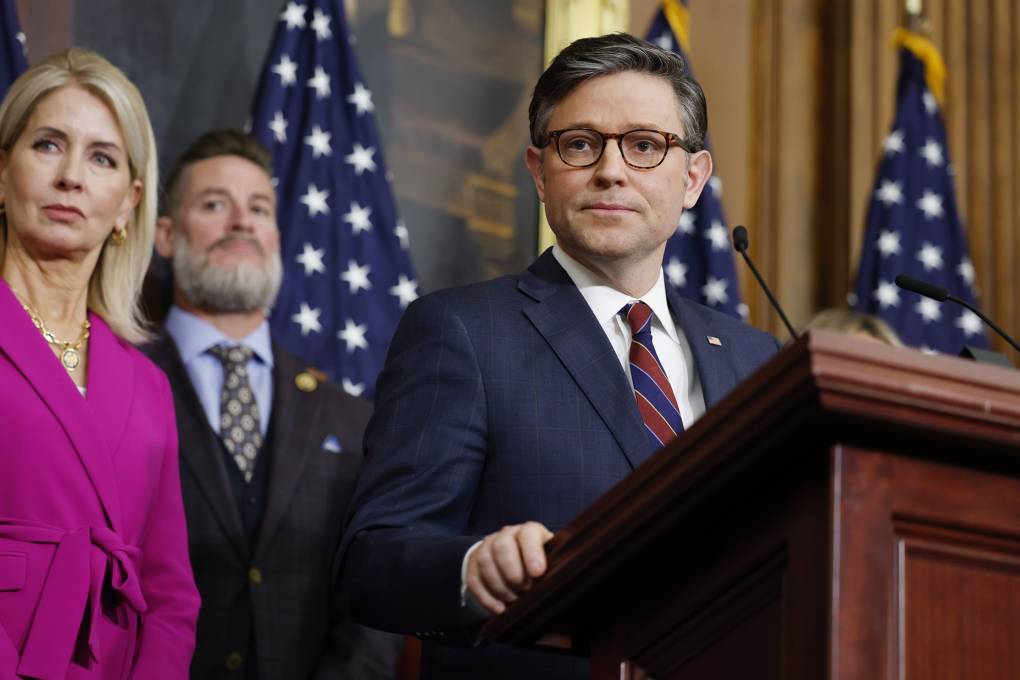
"caption": "U.S. Speaker of the House Mike Johnson (R-LA) at a news conference at the U.S. Capitol on Jan. 14, 2025 in Washington, D.C. Johnson is one of many Republicans who have sought to blame state and local officials for the deadly wildfires in Los Angeles.",
"credit": "Anna Moneymaker/Getty Images",
"altTag": null,
"description": null,
"imgSizes": {
"medium": {
"file": "https://cdn.kqed.org/wp-content/uploads/sites/10/2025/01/MikeJohnsonGetty-800x533.jpg",
"width": 800,
"height": 533,
"mimeType": "image/jpeg"
},
"large": {
"file": "https://cdn.kqed.org/wp-content/uploads/sites/10/2025/01/MikeJohnsonGetty-1020x680.jpg",
"width": 1020,
"height": 680,
"mimeType": "image/jpeg"
},
"thumbnail": {
"file": "https://cdn.kqed.org/wp-content/uploads/sites/10/2025/01/MikeJohnsonGetty-160x107.jpg",
"width": 160,
"height": 107,
"mimeType": "image/jpeg"
},
"1536x1536": {
"file": "https://cdn.kqed.org/wp-content/uploads/sites/10/2025/01/MikeJohnsonGetty-1536x1024.jpg",
"width": 1536,
"height": 1024,
"mimeType": "image/jpeg"
},
"post-thumbnail": {
"file": "https://cdn.kqed.org/wp-content/uploads/sites/10/2025/01/MikeJohnsonGetty-672x372.jpg",
"width": 672,
"height": 372,
"mimeType": "image/jpeg"
},
"twentyfourteen-full-width": {
"file": "https://cdn.kqed.org/wp-content/uploads/sites/10/2025/01/MikeJohnsonGetty-1038x576.jpg",
"width": 1038,
"height": 576,
"mimeType": "image/jpeg"
},
"full-width": {
"file": "https://cdn.kqed.org/wp-content/uploads/sites/10/2025/01/MikeJohnsonGetty-1920x1280.jpg",
"width": 1920,
"height": 1280,
"mimeType": "image/jpeg"
},
"kqedFullSize": {
"file": "https://cdn.kqed.org/wp-content/uploads/sites/10/2025/01/MikeJohnsonGetty.jpg",
"width": 2000,
"height": 1333
}
},
"isLoading": false,
"fetchFailed": false
},
"news_12021950": {
"type": "attachments",
"id": "news_12021950",
"meta": {
"index": "attachments_1716263798",
"site": "news",
"id": "12021950",
"found": true
},
"title": "Powerful Winds Fuel Multiple Fires Across Los Angeles Area",
"publishDate": 1736814283,
"status": "inherit",
"parent": 12021941,
"modified": 1736814671,
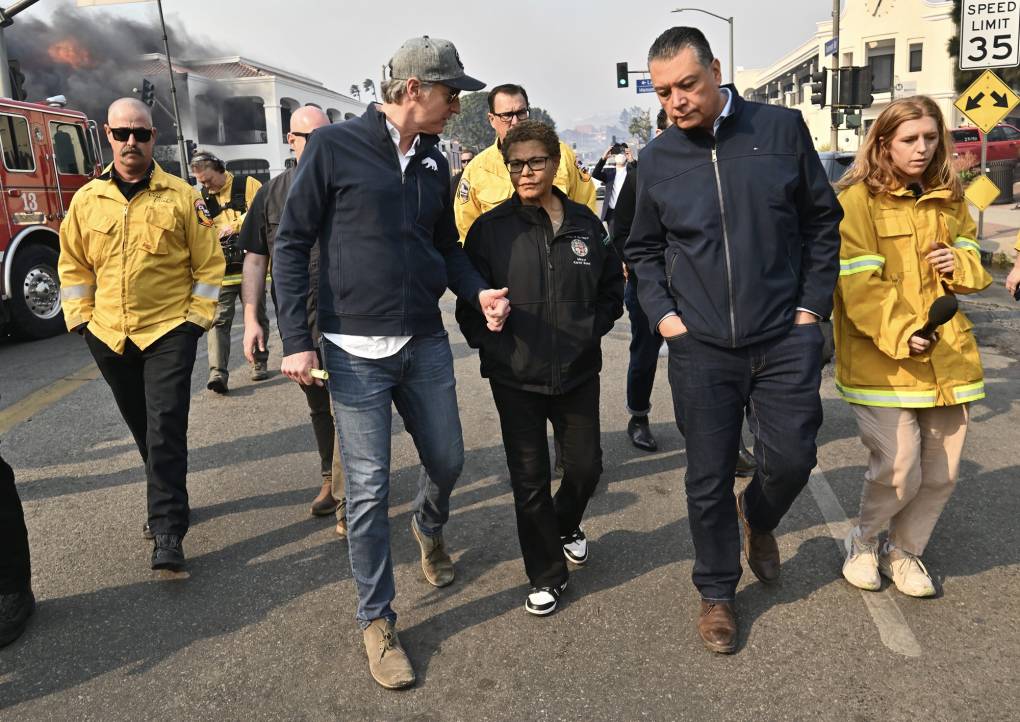
"caption": "Los Angeles Mayor Karen Bass joins Gov. Gavin Newsom, left, and State Sen. Alex Padilla while surveying damage during the Palisades Fire on Wednesday, Jan. 8, 2025, in Pacific Palisades, California.",
"credit": "Jeff Gritchen/MediaNews Group/Orange County Register via Getty Images",
"altTag": null,
"description": null,
"imgSizes": {
"medium": {
"file": "https://cdn.kqed.org/wp-content/uploads/sites/10/2025/01/GavinNewsomSpecialSessionGetty-800x566.jpg",
"width": 800,
"height": 566,
"mimeType": "image/jpeg"
},
"large": {
"file": "https://cdn.kqed.org/wp-content/uploads/sites/10/2025/01/GavinNewsomSpecialSessionGetty-1020x722.jpg",
"width": 1020,
"height": 722,
"mimeType": "image/jpeg"
},
"thumbnail": {
"file": "https://cdn.kqed.org/wp-content/uploads/sites/10/2025/01/GavinNewsomSpecialSessionGetty-160x113.jpg",
"width": 160,
"height": 113,
"mimeType": "image/jpeg"
},
"1536x1536": {
"file": "https://cdn.kqed.org/wp-content/uploads/sites/10/2025/01/GavinNewsomSpecialSessionGetty-1536x1087.jpg",
"width": 1536,
"height": 1087,
"mimeType": "image/jpeg"
},
"post-thumbnail": {
"file": "https://cdn.kqed.org/wp-content/uploads/sites/10/2025/01/GavinNewsomSpecialSessionGetty-672x372.jpg",
"width": 672,
"height": 372,
"mimeType": "image/jpeg"
},
"twentyfourteen-full-width": {
"file": "https://cdn.kqed.org/wp-content/uploads/sites/10/2025/01/GavinNewsomSpecialSessionGetty-1038x576.jpg",
"width": 1038,
"height": 576,
"mimeType": "image/jpeg"
},
"full-width": {
"file": "https://cdn.kqed.org/wp-content/uploads/sites/10/2025/01/GavinNewsomSpecialSessionGetty-1920x1358.jpg",
"width": 1920,
"height": 1358,
"mimeType": "image/jpeg"
},
"kqedFullSize": {
"file": "https://cdn.kqed.org/wp-content/uploads/sites/10/2025/01/GavinNewsomSpecialSessionGetty.jpg",
"width": 2000,
"height": 1415
}
},
"isLoading": false,
"fetchFailed": false
},
"news_12021741": {
"type": "attachments",
"id": "news_12021741",
"meta": {
"index": "attachments_1716263798",
"site": "news",
"id": "12021741",
"found": true
},
"title": "010825_Newsom-Palisades-Fire_GETTY_CM_01 copy",
"publishDate": 1736633931,
"status": "inherit",
"parent": 12021740,
"modified": 1736633988,
"caption": "Gov. Gavin Newsom, right, tours the downtown business district of Pacific Palisades as the Palisades Fire continues to burn in Los Angeles on Jan. 8, 2025. Newsom is appealing to President-elect Donald Trump to visit the LA fires. ",
"credit": "Eric Thayer/Getty Images",
"altTag": "A middle aged man in a hat and casual clothes walks next to a fire chief with smoke billowing behind them on a city street.",
"description": null,
"imgSizes": {
"medium": {
"file": "https://cdn.kqed.org/wp-content/uploads/sites/10/2025/01/010825_Newsom-Palisades-Fire_GETTY_CM_01-copy-800x533.jpg",
"width": 800,
"height": 533,
"mimeType": "image/jpeg"
},
"large": {
"file": "https://cdn.kqed.org/wp-content/uploads/sites/10/2025/01/010825_Newsom-Palisades-Fire_GETTY_CM_01-copy-1020x680.jpg",
"width": 1020,
"height": 680,
"mimeType": "image/jpeg"
},
"thumbnail": {
"file": "https://cdn.kqed.org/wp-content/uploads/sites/10/2025/01/010825_Newsom-Palisades-Fire_GETTY_CM_01-copy-160x107.jpg",
"width": 160,
"height": 107,
"mimeType": "image/jpeg"
},
"1536x1536": {
"file": "https://cdn.kqed.org/wp-content/uploads/sites/10/2025/01/010825_Newsom-Palisades-Fire_GETTY_CM_01-copy-1536x1024.jpg",
"width": 1536,
"height": 1024,
"mimeType": "image/jpeg"
},
"post-thumbnail": {
"file": "https://cdn.kqed.org/wp-content/uploads/sites/10/2025/01/010825_Newsom-Palisades-Fire_GETTY_CM_01-copy-672x372.jpg",
"width": 672,
"height": 372,
"mimeType": "image/jpeg"
},
"twentyfourteen-full-width": {
"file": "https://cdn.kqed.org/wp-content/uploads/sites/10/2025/01/010825_Newsom-Palisades-Fire_GETTY_CM_01-copy-1038x576.jpg",
"width": 1038,
"height": 576,
"mimeType": "image/jpeg"
},
"full-width": {
"file": "https://cdn.kqed.org/wp-content/uploads/sites/10/2025/01/010825_Newsom-Palisades-Fire_GETTY_CM_01-copy-1920x1280.jpg",
"width": 1920,
"height": 1280,
"mimeType": "image/jpeg"
},
"kqedFullSize": {
"file": "https://cdn.kqed.org/wp-content/uploads/sites/10/2025/01/010825_Newsom-Palisades-Fire_GETTY_CM_01-copy.jpg",
"width": 2000,
"height": 1333
}
},
"isLoading": false,
"fetchFailed": false
},
"news_11964709": {
"type": "attachments",
"id": "news_11964709",
"meta": {
"index": "attachments_1716263798",
"site": "news",
"id": "11964709",
"found": true
},
"title": "IMG_7960",
"publishDate": 1697492675,
"status": "inherit",
"parent": 11964707,
"modified": 1697495174,
"caption": "A prescribed fire in Hayfork on April 10, 2019. Advocates for the practice of setting planned burns to manage lands and minimize wildfire risk say the exceptional events rule gets in the way.",
"credit": "Molly Peterson/California Newsroom",
"altTag": "A firefighter uses an instrument to douse flames in a forest.",
"description": null,
"imgSizes": {
"medium": {
"file": "https://cdn.kqed.org/wp-content/uploads/sites/10/2023/10/IMG_7960-800x599.jpg",
"width": 800,
"height": 599,
"mimeType": "image/jpeg"
},
"large": {
"file": "https://cdn.kqed.org/wp-content/uploads/sites/10/2023/10/IMG_7960-1020x764.jpg",
"width": 1020,
"height": 764,
"mimeType": "image/jpeg"
},
"thumbnail": {
"file": "https://cdn.kqed.org/wp-content/uploads/sites/10/2023/10/IMG_7960-160x120.jpg",
"width": 160,
"height": 120,
"mimeType": "image/jpeg"
},
"1536x1536": {
"file": "https://cdn.kqed.org/wp-content/uploads/sites/10/2023/10/IMG_7960-1536x1151.jpg",
"width": 1536,
"height": 1151,
"mimeType": "image/jpeg"
},
"2048x2048": {
"file": "https://cdn.kqed.org/wp-content/uploads/sites/10/2023/10/IMG_7960-2048x1535.jpg",
"width": 2048,
"height": 1535,
"mimeType": "image/jpeg"
},
"post-thumbnail": {
"file": "https://cdn.kqed.org/wp-content/uploads/sites/10/2023/10/IMG_7960-672x372.jpg",
"width": 672,
"height": 372,
"mimeType": "image/jpeg"
},
"twentyfourteen-full-width": {
"file": "https://cdn.kqed.org/wp-content/uploads/sites/10/2023/10/IMG_7960-1038x576.jpg",
"width": 1038,
"height": 576,
"mimeType": "image/jpeg"
},
"full-width": {
"file": "https://cdn.kqed.org/wp-content/uploads/sites/10/2023/10/IMG_7960-1920x1439.jpg",
"width": 1920,
"height": 1439,
"mimeType": "image/jpeg"
},
"kqedFullSize": {
"file": "https://cdn.kqed.org/wp-content/uploads/sites/10/2023/10/IMG_7960-scaled-e1736446701514.jpg",
"width": 2000,
"height": 1498
}
},
"isLoading": false,
"fetchFailed": false
},
"news_12021240": {
"type": "attachments",
"id": "news_12021240",
"meta": {
"index": "attachments_1716263798",
"site": "news",
"id": "12021240",
"found": true
},
"title": "Gavin Newsom, Donald Trump",
"publishDate": 1736460214,
"status": "inherit",
"parent": 12021128,
"modified": 1736460270,
"caption": "President Donald Trump participates in a briefing on wildfires with Gov. Gavin Newsom, left, at Sacramento McClellan Airport, in McClellan Park, California, on Sept. 14, 2020. ",
"credit": "Andrew Harnik/AP Photo",
"altTag": null,
"description": null,
"imgSizes": {
"medium": {
"file": "https://cdn.kqed.org/wp-content/uploads/sites/10/2025/01/CAWildfireNewsomTrumpAP-800x533.jpg",
"width": 800,
"height": 533,
"mimeType": "image/jpeg"
},
"large": {
"file": "https://cdn.kqed.org/wp-content/uploads/sites/10/2025/01/CAWildfireNewsomTrumpAP-1020x680.jpg",
"width": 1020,
"height": 680,
"mimeType": "image/jpeg"
},
"thumbnail": {
"file": "https://cdn.kqed.org/wp-content/uploads/sites/10/2025/01/CAWildfireNewsomTrumpAP-160x107.jpg",
"width": 160,
"height": 107,
"mimeType": "image/jpeg"
},
"1536x1536": {
"file": "https://cdn.kqed.org/wp-content/uploads/sites/10/2025/01/CAWildfireNewsomTrumpAP-1536x1024.jpg",
"width": 1536,
"height": 1024,
"mimeType": "image/jpeg"
},
"post-thumbnail": {
"file": "https://cdn.kqed.org/wp-content/uploads/sites/10/2025/01/CAWildfireNewsomTrumpAP-672x372.jpg",
"width": 672,
"height": 372,
"mimeType": "image/jpeg"
},
"twentyfourteen-full-width": {
"file": "https://cdn.kqed.org/wp-content/uploads/sites/10/2025/01/CAWildfireNewsomTrumpAP-1038x576.jpg",
"width": 1038,
"height": 576,
"mimeType": "image/jpeg"
},
"full-width": {
"file": "https://cdn.kqed.org/wp-content/uploads/sites/10/2025/01/CAWildfireNewsomTrumpAP-1920x1280.jpg",
"width": 1920,
"height": 1280,
"mimeType": "image/jpeg"
},
"kqedFullSize": {
"file": "https://cdn.kqed.org/wp-content/uploads/sites/10/2025/01/CAWildfireNewsomTrumpAP.jpg",
"width": 2000,
"height": 1333
}
},
"isLoading": false,
"fetchFailed": false
},
"news_12021257": {
"type": "attachments",
"id": "news_12021257",
"meta": {
"index": "attachments_1716263798",
"site": "news",
"id": "12021257",
"found": true
},
"title": "npr.brightspotcdn copy",
"publishDate": 1736461456,
"status": "inherit",
"parent": 12021254,
"modified": 1736464844,
"caption": "President Biden touches the casket containing former President Jimmy Carter's remains after delivering a speech during the state funeral at the Washington National Cathedral on Thursday.",
"credit": "Haiyun Jiang/Pool/Getty Images",
"altTag": "An older man in a suit and tie lays a hand on a casket with a U.S. flag draped over it with a priest before him and clergymen behind him.",
"description": null,
"imgSizes": {
"medium": {
"file": "https://cdn.kqed.org/wp-content/uploads/sites/10/2025/01/npr.brightspotcdn-copy-27-800x533.jpg",
"width": 800,
"height": 533,
"mimeType": "image/jpeg"
},
"large": {
"file": "https://cdn.kqed.org/wp-content/uploads/sites/10/2025/01/npr.brightspotcdn-copy-27-1020x680.jpg",
"width": 1020,
"height": 680,
"mimeType": "image/jpeg"
},
"thumbnail": {
"file": "https://cdn.kqed.org/wp-content/uploads/sites/10/2025/01/npr.brightspotcdn-copy-27-160x107.jpg",
"width": 160,
"height": 107,
"mimeType": "image/jpeg"
},
"post-thumbnail": {
"file": "https://cdn.kqed.org/wp-content/uploads/sites/10/2025/01/npr.brightspotcdn-copy-27-672x372.jpg",
"width": 672,
"height": 372,
"mimeType": "image/jpeg"
},
"twentyfourteen-full-width": {
"file": "https://cdn.kqed.org/wp-content/uploads/sites/10/2025/01/npr.brightspotcdn-copy-27-1038x576.jpg",
"width": 1038,
"height": 576,
"mimeType": "image/jpeg"
},
"kqedFullSize": {
"file": "https://cdn.kqed.org/wp-content/uploads/sites/10/2025/01/npr.brightspotcdn-copy-27.jpg",
"width": 1100,
"height": 733
}
},
"isLoading": false,
"fetchFailed": false
},
"news_12019645": {
"type": "attachments",
"id": "news_12019645",
"meta": {
"index": "attachments_1716263798",
"site": "news",
"id": "12019645",
"found": true
},
"title": "npr.brightspotcdn copy",
"publishDate": 1734984167,
"status": "inherit",
"parent": 12019638,
"modified": 1734984191,
"caption": "Oksana Demidenko brushes her cat Java while watching updates about the war in Ukraine at their home in Richmond, on Dec. 17, 2024.",
"credit": "Beth LaBerge for NPR",
"altTag": null,
"description": null,
"imgSizes": {
"medium": {
"file": "https://cdn.kqed.org/wp-content/uploads/sites/10/2024/12/npr.brightspotcdn-copy-6-800x534.jpg",
"width": 800,
"height": 534,
"mimeType": "image/jpeg"
},
"large": {
"file": "https://cdn.kqed.org/wp-content/uploads/sites/10/2024/12/npr.brightspotcdn-copy-6-1020x680.jpg",
"width": 1020,
"height": 680,
"mimeType": "image/jpeg"
},
"thumbnail": {
"file": "https://cdn.kqed.org/wp-content/uploads/sites/10/2024/12/npr.brightspotcdn-copy-6-160x107.jpg",
"width": 160,
"height": 107,
"mimeType": "image/jpeg"
},
"1536x1536": {
"file": "https://cdn.kqed.org/wp-content/uploads/sites/10/2024/12/npr.brightspotcdn-copy-6-1536x1024.jpg",
"width": 1536,
"height": 1024,
"mimeType": "image/jpeg"
},
"post-thumbnail": {
"file": "https://cdn.kqed.org/wp-content/uploads/sites/10/2024/12/npr.brightspotcdn-copy-6-672x372.jpg",
"width": 672,
"height": 372,
"mimeType": "image/jpeg"
},
"twentyfourteen-full-width": {
"file": "https://cdn.kqed.org/wp-content/uploads/sites/10/2024/12/npr.brightspotcdn-copy-6-1038x576.jpg",
"width": 1038,
"height": 576,
"mimeType": "image/jpeg"
},
"kqedFullSize": {
"file": "https://cdn.kqed.org/wp-content/uploads/sites/10/2024/12/npr.brightspotcdn-copy-6.jpg",
"width": 1600,
"height": 1067
}
},
"isLoading": false,
"fetchFailed": false
},
"news_12020469": {
"type": "attachments",
"id": "news_12020469",
"meta": {
"index": "attachments_1716263798",
"site": "news",
"id": "12020469",
"found": true
},
"title": "California Budget",
"publishDate": 1736201641,
"status": "inherit",
"parent": 12020389,
"modified": 1736205557,
"caption": "Gov. Gavin Newsom delivers a briefing of his proposed 2025–26 state budget at California State University, Stanislaus, in Turlock on Jan. 6, 2025.",
"credit": "Rich Pedroncelli/AP Photo",
"altTag": null,
"description": null,
"imgSizes": {
"medium": {
"file": "https://cdn.kqed.org/wp-content/uploads/sites/10/2025/01/GavinNewsomCABudget2025AP-800x533.jpg",
"width": 800,
"height": 533,
"mimeType": "image/jpeg"
},
"large": {
"file": "https://cdn.kqed.org/wp-content/uploads/sites/10/2025/01/GavinNewsomCABudget2025AP-1020x680.jpg",
"width": 1020,
"height": 680,
"mimeType": "image/jpeg"
},
"thumbnail": {
"file": "https://cdn.kqed.org/wp-content/uploads/sites/10/2025/01/GavinNewsomCABudget2025AP-160x107.jpg",
"width": 160,
"height": 107,
"mimeType": "image/jpeg"
},
"1536x1536": {
"file": "https://cdn.kqed.org/wp-content/uploads/sites/10/2025/01/GavinNewsomCABudget2025AP-1536x1024.jpg",
"width": 1536,
"height": 1024,
"mimeType": "image/jpeg"
},
"post-thumbnail": {
"file": "https://cdn.kqed.org/wp-content/uploads/sites/10/2025/01/GavinNewsomCABudget2025AP-672x372.jpg",
"width": 672,
"height": 372,
"mimeType": "image/jpeg"
},
"twentyfourteen-full-width": {
"file": "https://cdn.kqed.org/wp-content/uploads/sites/10/2025/01/GavinNewsomCABudget2025AP-1038x576.jpg",
"width": 1038,
"height": 576,
"mimeType": "image/jpeg"
},
"full-width": {
"file": "https://cdn.kqed.org/wp-content/uploads/sites/10/2025/01/GavinNewsomCABudget2025AP-1920x1280.jpg",
"width": 1920,
"height": 1280,
"mimeType": "image/jpeg"
},
"kqedFullSize": {
"file": "https://cdn.kqed.org/wp-content/uploads/sites/10/2025/01/GavinNewsomCABudget2025AP.jpg",
"width": 2000,
"height": 1333
}
},
"isLoading": false,
"fetchFailed": false
},
"news_12020428": {
"type": "attachments",
"id": "news_12020428",
"meta": {
"index": "attachments_1716263798",
"site": "news",
"id": "12020428",
"found": true
},
"title": "082924_StateCapitolSession_FM_CM_01",
"publishDate": 1736192782,
"status": "inherit",
"parent": 12020419,
"modified": 1737570759,
"caption": "The state Senate during a floor session of the California Legislature at the state Capitol in Sacramento on Aug. 29, 2024.",
"credit": "Florence Middleton/CalMatters",
"altTag": null,
"description": null,
"imgSizes": {
"medium": {
"file": "https://cdn.kqed.org/wp-content/uploads/sites/10/2025/01/082924_StateCapitolSession_FM_CM_01-800x533.jpg",
"width": 800,
"height": 533,
"mimeType": "image/jpeg"
},
"large": {
"file": "https://cdn.kqed.org/wp-content/uploads/sites/10/2025/01/082924_StateCapitolSession_FM_CM_01-1020x680.jpg",
"width": 1020,
"height": 680,
"mimeType": "image/jpeg"
},
"thumbnail": {
"file": "https://cdn.kqed.org/wp-content/uploads/sites/10/2025/01/082924_StateCapitolSession_FM_CM_01-160x107.jpg",
"width": 160,
"height": 107,
"mimeType": "image/jpeg"
},
"1536x1536": {
"file": "https://cdn.kqed.org/wp-content/uploads/sites/10/2025/01/082924_StateCapitolSession_FM_CM_01-1536x1024.jpg",
"width": 1536,
"height": 1024,
"mimeType": "image/jpeg"
},
"post-thumbnail": {
"file": "https://cdn.kqed.org/wp-content/uploads/sites/10/2025/01/082924_StateCapitolSession_FM_CM_01-672x372.jpg",
"width": 672,
"height": 372,
"mimeType": "image/jpeg"
},
"twentyfourteen-full-width": {
"file": "https://cdn.kqed.org/wp-content/uploads/sites/10/2025/01/082924_StateCapitolSession_FM_CM_01-1038x576.jpg",
"width": 1038,
"height": 576,
"mimeType": "image/jpeg"
},
"full-width": {
"file": "https://cdn.kqed.org/wp-content/uploads/sites/10/2025/01/082924_StateCapitolSession_FM_CM_01-1920x1280.jpg",
"width": 1920,
"height": 1280,
"mimeType": "image/jpeg"
},
"kqedFullSize": {
"file": "https://cdn.kqed.org/wp-content/uploads/sites/10/2025/01/082924_StateCapitolSession_FM_CM_01.jpg",
"width": 2000,
"height": 1333
}
},
"isLoading": false,
"fetchFailed": false
},
"news_11970528": {
"type": "attachments",
"id": "news_11970528",
"meta": {
"index": "attachments_1716263798",
"site": "news",
"id": "11970528",
"found": true
},
"parent": 11970527,
"imgSizes": {
"twentyfourteen-full-width": {
"file": "https://cdn.kqed.org/wp-content/uploads/sites/10/2023/12/ap23340591748181-5651d97437fbb94ac55d057bc5a764605b7069bc-1038x576.jpg",
"width": 1038,
"mimeType": "image/jpeg",
"height": 576
},
"thumbnail": {
"file": "https://cdn.kqed.org/wp-content/uploads/sites/10/2023/12/ap23340591748181-5651d97437fbb94ac55d057bc5a764605b7069bc-160x120.jpg",
"width": 160,
"mimeType": "image/jpeg",
"height": 120
},
"post-thumbnail": {
"file": "https://cdn.kqed.org/wp-content/uploads/sites/10/2023/12/ap23340591748181-5651d97437fbb94ac55d057bc5a764605b7069bc-672x372.jpg",
"width": 672,
"mimeType": "image/jpeg",
"height": 372
},
"kqedFullSize": {
"file": "https://cdn.kqed.org/wp-content/uploads/sites/10/2023/12/ap23340591748181-5651d97437fbb94ac55d057bc5a764605b7069bc-scaled.jpg",
"width": 2560,
"height": 1920
},
"2048x2048": {
"file": "https://cdn.kqed.org/wp-content/uploads/sites/10/2023/12/ap23340591748181-5651d97437fbb94ac55d057bc5a764605b7069bc-2048x1536.jpg",
"width": 2048,
"mimeType": "image/jpeg",
"height": 1536
},
"large": {
"file": "https://cdn.kqed.org/wp-content/uploads/sites/10/2023/12/ap23340591748181-5651d97437fbb94ac55d057bc5a764605b7069bc-1020x765.jpg",
"width": 1020,
"mimeType": "image/jpeg",
"height": 765
},
"1536x1536": {
"file": "https://cdn.kqed.org/wp-content/uploads/sites/10/2023/12/ap23340591748181-5651d97437fbb94ac55d057bc5a764605b7069bc-1536x1152.jpg",
"width": 1536,
"mimeType": "image/jpeg",
"height": 1152
},
"full-width": {
"file": "https://cdn.kqed.org/wp-content/uploads/sites/10/2023/12/ap23340591748181-5651d97437fbb94ac55d057bc5a764605b7069bc-1920x1440.jpg",
"width": 1920,
"mimeType": "image/jpeg",
"height": 1440
},
"medium": {
"file": "https://cdn.kqed.org/wp-content/uploads/sites/10/2023/12/ap23340591748181-5651d97437fbb94ac55d057bc5a764605b7069bc-800x600.jpg",
"width": 800,
"mimeType": "image/jpeg",
"height": 600
}
},
"publishDate": 1703099043,
"modified": 1703099043,
"caption": null,
"description": "FILE - Trump supporters participate in a rally Jan. 6, 2021, in Washington. The Colorado Supreme Court hears arguments in a case seeking to use the Constitution’s insurrection clause to keep former President Donald Trump off the ballot. Both sides are appealing a ruling from a district court judge who found Trump incited an insurrection on Jan. 6, 2021, but could remain on the ballot regardless. (AP Photo/John Minchillo, File)",
"title": "The Colorado Supreme Court ruled that Donald Trump's actions on and around Jan. 6 disqualify him from the presidency and from appearing on the state's 2024 primary ballot.",
"credit": null,
"status": "inherit",
"altTag": null,
"isLoading": false,
"fetchFailed": false
},
"news_12020312": {
"type": "attachments",
"id": "news_12020312",
"meta": {
"index": "attachments_1716263798",
"site": "news",
"id": "12020312",
"found": true
},
"title": "080923_School-Attendance_SN_CM_01",
"publishDate": 1735940194,
"status": "inherit",
"parent": 12020308,
"modified": 1735940231,
"caption": "Parents and their kids on the first day of classes at Loma Vista Elementary School in Salinas on Aug. 8, 2023. State legislators want to limit deportation actions at schools.",
"credit": "Semantha Norris/CalMatters",
"altTag": null,
"description": null,
"imgSizes": {
"medium": {
"file": "https://cdn.kqed.org/wp-content/uploads/sites/10/2025/01/080923_School-Attendance_SN_CM_01-800x533.jpg",
"width": 800,
"height": 533,
"mimeType": "image/jpeg"
},
"large": {
"file": "https://cdn.kqed.org/wp-content/uploads/sites/10/2025/01/080923_School-Attendance_SN_CM_01-1020x680.jpg",
"width": 1020,
"height": 680,
"mimeType": "image/jpeg"
},
"thumbnail": {
"file": "https://cdn.kqed.org/wp-content/uploads/sites/10/2025/01/080923_School-Attendance_SN_CM_01-160x107.jpg",
"width": 160,
"height": 107,
"mimeType": "image/jpeg"
},
"1536x1536": {
"file": "https://cdn.kqed.org/wp-content/uploads/sites/10/2025/01/080923_School-Attendance_SN_CM_01-1536x1024.jpg",
"width": 1536,
"height": 1024,
"mimeType": "image/jpeg"
},
"post-thumbnail": {
"file": "https://cdn.kqed.org/wp-content/uploads/sites/10/2025/01/080923_School-Attendance_SN_CM_01-672x372.jpg",
"width": 672,
"height": 372,
"mimeType": "image/jpeg"
},
"twentyfourteen-full-width": {
"file": "https://cdn.kqed.org/wp-content/uploads/sites/10/2025/01/080923_School-Attendance_SN_CM_01-1038x576.jpg",
"width": 1038,
"height": 576,
"mimeType": "image/jpeg"
},
"full-width": {
"file": "https://cdn.kqed.org/wp-content/uploads/sites/10/2025/01/080923_School-Attendance_SN_CM_01-1920x1280.jpg",
"width": 1920,
"height": 1280,
"mimeType": "image/jpeg"
},
"kqedFullSize": {
"file": "https://cdn.kqed.org/wp-content/uploads/sites/10/2025/01/080923_School-Attendance_SN_CM_01.jpg",
"width": 2000,
"height": 1333
}
},
"isLoading": false,
"fetchFailed": false
},
"news_12019415": {
"type": "attachments",
"id": "news_12019415",
"meta": {
"index": "attachments_1716263798",
"site": "news",
"id": "12019415",
"found": true
},
"title": "California Capitol One",
"publishDate": 1734727150,
"status": "inherit",
"parent": 12019378,
"modified": 1734727193,
"caption": "The California State Capitol in Sacramento.",
"credit": "Getty Images",
"altTag": null,
"description": null,
"imgSizes": {
"medium": {
"file": "https://cdn.kqed.org/wp-content/uploads/sites/10/2024/12/GettyImages-182664622-800x420.jpg",
"width": 800,
"height": 420,
"mimeType": "image/jpeg"
},
"large": {
"file": "https://cdn.kqed.org/wp-content/uploads/sites/10/2024/12/GettyImages-182664622-1020x535.jpg",
"width": 1020,
"height": 535,
"mimeType": "image/jpeg"
},
"thumbnail": {
"file": "https://cdn.kqed.org/wp-content/uploads/sites/10/2024/12/GettyImages-182664622-160x84.jpg",
"width": 160,
"height": 84,
"mimeType": "image/jpeg"
},
"1536x1536": {
"file": "https://cdn.kqed.org/wp-content/uploads/sites/10/2024/12/GettyImages-182664622-1536x806.jpg",
"width": 1536,
"height": 806,
"mimeType": "image/jpeg"
},
"2048x2048": {
"file": "https://cdn.kqed.org/wp-content/uploads/sites/10/2024/12/GettyImages-182664622-2048x1075.jpg",
"width": 2048,
"height": 1075,
"mimeType": "image/jpeg"
},
"post-thumbnail": {
"file": "https://cdn.kqed.org/wp-content/uploads/sites/10/2024/12/GettyImages-182664622-672x372.jpg",
"width": 672,
"height": 372,
"mimeType": "image/jpeg"
},
"twentyfourteen-full-width": {
"file": "https://cdn.kqed.org/wp-content/uploads/sites/10/2024/12/GettyImages-182664622-1038x576.jpg",
"width": 1038,
"height": 576,
"mimeType": "image/jpeg"
},
"full-width": {
"file": "https://cdn.kqed.org/wp-content/uploads/sites/10/2024/12/GettyImages-182664622-1920x1008.jpg",
"width": 1920,
"height": 1008,
"mimeType": "image/jpeg"
},
"kqedFullSize": {
"file": "https://cdn.kqed.org/wp-content/uploads/sites/10/2024/12/GettyImages-182664622-scaled.jpg",
"width": 2560,
"height": 1344
}
},
"isLoading": false,
"fetchFailed": false
}
},
"audioPlayerReducer": {
"postId": "stream_live",
"isPaused": true,
"isPlaying": false,
"pfsActive": false,
"pledgeModalIsOpen": true,
"playerDrawerIsOpen": false,
"liveAudioPlayStartedAt": 0,
"liveAudioPlayContext": ""
},
"authorsReducer": {
"byline_news_12021740": {
"type": "authors",
"id": "byline_news_12021740",
"meta": {
"override": true
},
"slug": "byline_news_12021740",
"name": "\u003ca href=\"https://calmatters.org/author/alexei-koseff/\">Alexei Koseff\u003c/a> and \u003ca href=\"https://calmatters.org/author/yue-yu/\">Yue Stella Yu\u003c/a>, CalMatters",
"isLoading": false
},
"byline_news_12021254": {
"type": "authors",
"id": "byline_news_12021254",
"meta": {
"override": true
},
"slug": "byline_news_12021254",
"name": "\u003ca href=\"https://www.npr.org/people/732818534/elena-moore\">Elena Moore\u003c/a> and \u003ca href=\"https://www.npr.org/people/122805042/tamara-keith\">Tamara Keith\u003c/a>, NPR",
"isLoading": false
},
"byline_news_12020620": {
"type": "authors",
"id": "byline_news_12020620",
"meta": {
"override": true
},
"slug": "byline_news_12020620",
"name": "Cecilia Lei, Tyche Hendricks, Ericka Cruz Guevarra, Alan Montecillo",
"isLoading": false
},
"byline_news_12020419": {
"type": "authors",
"id": "byline_news_12020419",
"meta": {
"override": true
},
"slug": "byline_news_12020419",
"name": "Alexei Koseff, CalMatters",
"isLoading": false
},
"byline_news_12020391": {
"type": "authors",
"id": "byline_news_12020391",
"meta": {
"override": true
},
"slug": "byline_news_12020391",
"name": "Miles Parks, NPR",
"isLoading": false
},
"byline_news_12020308": {
"type": "authors",
"id": "byline_news_12020308",
"meta": {
"override": true
},
"slug": "byline_news_12020308",
"name": "\u003ca href=\"https://calmatters.org/author/carolyn-jones/\">Carolyn Jones\u003c/a>, CalMatters",
"isLoading": false
},
"gmarzorati": {
"type": "authors",
"id": "227",
"meta": {
"index": "authors_1716337520",
"id": "227",
"found": true
},
"name": "Guy Marzorati",
"firstName": "Guy",
"lastName": "Marzorati",
"slug": "gmarzorati",
"email": "gmarzorati@KQED.org",
"display_author_email": true,
"staff_mastheads": [
"news"
],
"title": "Correspondent",
"bio": "Guy Marzorati is a correspondent on KQED's California Politics and Government Desk, based in San Jose. A graduate of Santa Clara University, Guy joined KQED in 2013. He reports on state and local politics and produces KQED's digital voter guide.",
"avatar": "https://secure.gravatar.com/avatar/771cddf45ce3a8ed533d82dcc214e9ef925d76d2af5794a33da1ce439eb54a32?s=600&d=blank&r=g",
"twitter": "guymarzorati",
"bluesky": null,
"facebook": null,
"instagram": null,
"linkedin": null,
"sites": [
{
"site": "",
"roles": [
"editor"
]
},
{
"site": "news",
"roles": [
"editor"
]
},
{
"site": "science",
"roles": [
"editor"
]
},
{
"site": "forum",
"roles": [
"editor"
]
},
{
"site": "elections",
"roles": [
"editor"
]
},
{
"site": "liveblog",
"roles": [
"editor"
]
}
],
"headData": {
"title": "Guy Marzorati | KQED",
"description": "Correspondent",
"ogImgSrc": "https://secure.gravatar.com/avatar/771cddf45ce3a8ed533d82dcc214e9ef925d76d2af5794a33da1ce439eb54a32?s=600&d=blank&r=g",
"twImgSrc": "https://secure.gravatar.com/avatar/771cddf45ce3a8ed533d82dcc214e9ef925d76d2af5794a33da1ce439eb54a32?s=600&d=blank&r=g"
},
"isLoading": false,
"link": "/author/gmarzorati"
},
"dventon": {
"type": "authors",
"id": "11088",
"meta": {
"index": "authors_1716337520",
"id": "11088",
"found": true
},
"name": "Danielle Venton",
"firstName": "Danielle",
"lastName": "Venton",
"slug": "dventon",
"email": "dventon@kqed.org",
"display_author_email": true,
"staff_mastheads": [
"science"
],
"title": "Science reporter",
"bio": "Danielle Venton is a reporter for KQED Science. She covers wildfires, space and oceans (though she is prone to sea sickness).\r\n\r\nBefore joining KQED in 2015, Danielle was a staff reporter at KRCB in Sonoma County and a freelancer. She studied science communication at UC Santa Cruz and formerly worked at CERN in Geneva, Switzerland where she wrote about computing. She lives in Sonoma County and enjoys backpacking.",
"avatar": "https://secure.gravatar.com/avatar/37b292b5c40c8d93959c4f48d73b5286f41b7abd8588277e941905a3ed4c801c?s=600&d=blank&r=g",
"twitter": "DanielleVenton",
"bluesky": null,
"facebook": null,
"instagram": null,
"linkedin": null,
"sites": [
{
"site": "arts",
"roles": [
"contributor"
]
},
{
"site": "news",
"roles": [
"editor"
]
},
{
"site": "futureofyou",
"roles": [
"editor"
]
},
{
"site": "science",
"roles": [
"editor"
]
},
{
"site": "liveblog",
"roles": [
"contributor"
]
}
],
"headData": {
"title": "Danielle Venton | KQED",
"description": "Science reporter",
"ogImgSrc": "https://secure.gravatar.com/avatar/37b292b5c40c8d93959c4f48d73b5286f41b7abd8588277e941905a3ed4c801c?s=600&d=blank&r=g",
"twImgSrc": "https://secure.gravatar.com/avatar/37b292b5c40c8d93959c4f48d73b5286f41b7abd8588277e941905a3ed4c801c?s=600&d=blank&r=g"
},
"isLoading": false,
"link": "/author/dventon"
},
"kmizuguchi": {
"type": "authors",
"id": "11739",
"meta": {
"index": "authors_1716337520",
"id": "11739",
"found": true
},
"name": "Keith Mizuguchi",
"firstName": "Keith",
"lastName": "Mizuguchi",
"slug": "kmizuguchi",
"email": "kmizuguchi@kqed.org",
"display_author_email": false,
"staff_mastheads": [],
"title": "KQED Contributor",
"bio": null,
"avatar": "https://secure.gravatar.com/avatar/64d8a7de0723d4099b9fe4e915136103febcc20809abce228ee4415bcb237023?s=600&d=blank&r=g",
"twitter": null,
"bluesky": null,
"facebook": null,
"instagram": null,
"linkedin": null,
"sites": [
{
"site": "news",
"roles": [
"editor"
]
},
{
"site": "science",
"roles": [
"editor"
]
}
],
"headData": {
"title": "Keith Mizuguchi | KQED",
"description": "KQED Contributor",
"ogImgSrc": "https://secure.gravatar.com/avatar/64d8a7de0723d4099b9fe4e915136103febcc20809abce228ee4415bcb237023?s=600&d=blank&r=g",
"twImgSrc": "https://secure.gravatar.com/avatar/64d8a7de0723d4099b9fe4e915136103febcc20809abce228ee4415bcb237023?s=600&d=blank&r=g"
},
"isLoading": false,
"link": "/author/kmizuguchi"
},
"slim": {
"type": "authors",
"id": "11920",
"meta": {
"index": "authors_1716337520",
"id": "11920",
"found": true
},
"name": "Samantha Lim",
"firstName": "Samantha",
"lastName": "Lim",
"slug": "slim",
"email": "slim@KQED.org",
"display_author_email": false,
"staff_mastheads": [],
"title": "KQED Contributor",
"bio": null,
"avatar": "https://secure.gravatar.com/avatar/82e592e6c15fe1a04d385e8ad0fb0b4e?s=600&d=blank&r=g",
"twitter": null,
"facebook": null,
"instagram": null,
"linkedin": null,
"sites": [
{
"site": "news",
"roles": []
}
],
"headData": {
"title": "Samantha Lim | KQED",
"description": "KQED Contributor",
"ogImgSrc": "https://secure.gravatar.com/avatar/82e592e6c15fe1a04d385e8ad0fb0b4e?s=600&d=blank&r=g",
"twImgSrc": "https://secure.gravatar.com/avatar/82e592e6c15fe1a04d385e8ad0fb0b4e?s=600&d=blank&r=g"
},
"isLoading": false,
"link": "/author/slim"
}
},
"pagesReducer": {
"news_tag_donald-trump": {
"type": "terms",
"id": "news_1323",
"meta": {
"index": "terms_1716263798",
"site": "news",
"id": "1323",
"score": 8.561954
},
"featImg": null,
"name": "Donald Trump",
"description": null,
"taxonomy": "tag",
"headData": {
"twImgId": null,
"twTitle": null,
"ogTitle": null,
"ogImgId": null,
"twDescription": null,
"description": null,
"title": "Donald Trump Archives | KQED News",
"ogDescription": null
},
"ttid": 1335,
"slug": "donald-trump",
"isLoading": false,
"title": "Donald Trump",
"pageMeta": {
"site": "news",
"WpPageTemplate": "page-topic-editorial",
"currentPage": 65
},
"blocks": [
{
"blockName": "kqed/post-list",
"attrs": {
"layout": "cardArticle2",
"query": "posts/news?tag=donald-trump",
"seeMore": false,
"paginated": true,
"page": 65
}
},
{
"blockName": "kqed/ad"
}
]
}
},
"pfsSessionReducer": {},
"postsReducer": {
"stream_live": {
"type": "live",
"id": "stream_live",
"audioUrl": "https://hls.kqed.org/hls/kqed_app/playlist.m3u8",
"title": "Live Stream",
"excerpt": "Live Stream information currently unavailable.",
"link": "/radio",
"featImg": "",
"label": {
"name": "KQED Live",
"link": "/"
}
},
"stream_kqedNewscast": {
"type": "posts",
"id": "stream_kqedNewscast",
"audioUrl": "https://www.kqed.org/.stream/anon/radio/RDnews/newscast.mp3?_=1",
"title": "KQED Newscast",
"featImg": "",
"label": {
"name": "88.5 FM",
"link": "/"
}
},
"news_12022111": {
"type": "posts",
"id": "news_12022111",
"meta": {
"index": "posts_1716263798",
"site": "news",
"id": "12022111",
"score": null,
"sort": [
1736900299000
]
},
"guestAuthors": [],
"slug": "republican-leaders-push-conditions-disaster-relief-california-wildfire-victims",
"title": "Republican Leaders Push for Conditions on Disaster Relief for California Wildfire Victims",
"publishDate": 1736900299,
"format": "standard",
"headTitle": "Republican Leaders Push for Conditions on Disaster Relief for California Wildfire Victims | KQED",
"labelTerm": {
"site": "news"
},
"content": "\u003cp>Republican congressional leaders are touting the idea of placing conditions on the billions of dollars in federal aid for California’s \u003ca href=\"https://www.kqed.org/news/tag/wildfire\">wildfire\u003c/a> victims, a strategy they say will force state officials to address alleged resource mismanagement and poor policymaking.\u003c/p>\n\u003cp>At a Monday press conference, House Speaker Mike Johnson (R-Louisiana) criticized state and local officials for exacerbating conditions in California through “unwise” governance, something he said should be addressed before aid is distributed.\u003c/p>\n\u003cp>“We’re all Americans, and the Americans there that are affected desperately need and deserve help,” Johnson told reporters. “But you’ve also heard us talk about our concerns with the governance of the state of California — state and local — and to the extent that there is complicity involved in the scope of the disaster, then we think that’s something that needs to be carefully regarded.”\u003c/p>\n\u003cp>[ad fullwidth]\u003c/p>\n\u003cp>In Los Angeles County, deadly wildfires have burned more than 12,000 structures and forced over 100,000 people to evacuate. The suggestion that Congress should place conditions on relief aid needed by thousands of Californians provoked a mixed response from state leaders.\u003c/p>\n\u003cp>Bill Jackson, who leads the San Francisco Republican Party, said it would be appropriate to put stipulations on federal assistance. He agreed with Johnson’s reasoning.\u003c/p>\n\u003cfigure id=\"attachment_12021323\" class=\"wp-caption aligncenter\" style=\"max-width: 2000px\">\u003cimg loading=\"lazy\" decoding=\"async\" class=\"size-full wp-image-12021323\" src=\"https://cdn.kqed.org/wp-content/uploads/sites/10/2025/01/240109-CAWindStorm-056.jpg\" alt=\"\" width=\"2000\" height=\"1333\" srcset=\"https://cdn.kqed.org/wp-content/uploads/sites/10/2025/01/240109-CAWindStorm-056.jpg 2000w, https://cdn.kqed.org/wp-content/uploads/sites/10/2025/01/240109-CAWindStorm-056-800x533.jpg 800w, https://cdn.kqed.org/wp-content/uploads/sites/10/2025/01/240109-CAWindStorm-056-1020x680.jpg 1020w, https://cdn.kqed.org/wp-content/uploads/sites/10/2025/01/240109-CAWindStorm-056-160x107.jpg 160w, https://cdn.kqed.org/wp-content/uploads/sites/10/2025/01/240109-CAWindStorm-056-1536x1024.jpg 1536w, https://cdn.kqed.org/wp-content/uploads/sites/10/2025/01/240109-CAWindStorm-056-1920x1280.jpg 1920w\" sizes=\"auto, (max-width: 2000px) 100vw, 2000px\">\u003cfigcaption class=\"wp-caption-text\">The remains of a house in Altadena, California, after the Eaton Fire swept through the area northeast of Los Angeles on Thursday, Jan. 9, 2025. \u003ccite>(Beth LaBerge/KQED)\u003c/cite>\u003c/figcaption>\u003c/figure>\n\u003cp>“I don’t think it’s a left-wing or right-wing thing. It’s a pragmatic thing,” Jackson said. “We should not use our federal government as a piggy bank to bail out residents or cities that build extremely fire-prone areas, especially when they haven’t done enough mitigation to prevent a disaster like this.”\u003c/p>\n\u003cp>He added that while it would be impossible to completely prevent natural disasters from occurring, things can be done to reduce the impact of wildfires in cities such as Los Angeles. Californians, Jackson claimed, should consider how much risk is associated with building in certain areas and what measures can be taken to make sure \u003ca href=\"https://www.kqed.org/news/12021125/la-fires-renew-debate-over-prescribed-burns-and-fire-preparedness-in-california\">a neighborhood is more resilient to wildfire\u003c/a>.\u003c/p>\n\u003cp>[aside postID=news_12021435 hero='https://cdn.kqed.org/wp-content/uploads/sites/10/2025/01/CAPalisadesFireAP-1020x679.jpg']\u003c/p>\n\u003cp>Although he disagrees with tying relief considerations to political issues like the country’s debt ceiling, which Johnson and \u003ca href=\"https://www.politico.com/news/2025/01/13/house-republicans-trump-wildfire-aid-00197766\">other Republican politicians\u003c/a> have suggested, Jackson said state officials should feel the pressure to be fiscally responsible when it comes to recovering from the fires.\u003c/p>\n\u003cp>“The rules and policies have to change to force the state and localities to make shifts that dramatically reduce the chances that people are going to come back to the federal government for a large bailout in the future,” Jackson said.\u003c/p>\n\u003cp>Rep. Ted Lieu (D-Los Angeles), whose district faced evacuation orders last week, called Johnson’s stance “outrageous.”\u003c/p>\n\u003cp>Conditions such as low humidity, prolonged drought and strong winds contributed to the spread of the Los Angeles fires and, Lieu added, were outside of anyone’s control.\u003c/p>\n\u003cp>Lieu said the first concern of any representative right now should be figuring out how to help the impacted communities. Efforts to politicize the crisis or to \u003ca href=\"https://www.kqed.org/news/12021435/trumps-misinformation-la-fires-fuels-concerns-over-future-disaster-aid-california\">spread disinformation\u003c/a> should be met with resistance, Lieu told KQED.\u003c/p>\n\u003cp>“There is no human being or system that could have prevented most of this destruction,” Lieu said. “I am very distressed and upset that the Speaker of the House and other members of the Republican Caucus have politicized what is a tragedy. We should be focused on helping our fellow Americans.”\u003c/p>\n\u003cp>\u003c/p>\n",
"blocks": [],
"excerpt": "House Speaker Mike Johnson is one of many Republicans who have sought to blame state and local officials for the deadly wildfires in Los Angeles.",
"status": "publish",
"parent": 0,
"modified": 1736906102,
"stats": {
"hasAudio": false,
"hasVideo": false,
"hasChartOrMap": false,
"iframeSrcs": [],
"hasGoogleForm": false,
"hasGallery": false,
"hasHearkenModule": false,
"hasPolis": false,
"paragraphCount": 16,
"wordCount": 627
},
"headData": {
"title": "Republican Leaders Push for Conditions on Disaster Relief for California Wildfire Victims | KQED",
"description": "House Speaker Mike Johnson is one of many Republicans who have sought to blame state and local officials for the deadly wildfires in Los Angeles.",
"ogTitle": "",
"ogDescription": "",
"ogImgId": "",
"twTitle": "",
"twDescription": "",
"twImgId": "",
"schema": {
"@context": "https://schema.org",
"@type": "NewsArticle",
"headline": "Republican Leaders Push for Conditions on Disaster Relief for California Wildfire Victims",
"datePublished": "2025-01-14T16:18:19-08:00",
"dateModified": "2025-01-14T17:55:02-08:00",
"image": "https://cdn.kqed.org/wp-content/uploads/2020/02/KQED-OG-Image@1x.png",
"isAccessibleForFree": "True",
"publisher": {
"@type": "NewsMediaOrganization",
"@id": "https://www.kqed.org/#organization",
"name": "KQED",
"logo": "https://cdn.kqed.org/wp-content/uploads/2020/02/KQED-OG-Image@1x.png",
"url": "https://www.kqed.org",
"sameAs": [
"https://www.facebook.com/KQED",
"https://twitter.com/KQED",
"https://www.instagram.com/kqed/",
"https://www.tiktok.com/@kqedofficial",
"https://www.linkedin.com/company/kqed",
"https://www.youtube.com/channel/UCeC0IOo7i1P_61zVUWbJ4nw"
]
}
}
},
"sticky": false,
"nprStoryId": "kqed-12022111",
"excludeFromSiteSearch": "Include",
"articleAge": "0",
"path": "/news/12022111/republican-leaders-push-conditions-disaster-relief-california-wildfire-victims",
"audioTrackLength": null,
"parsedContent": [
{
"type": "contentString",
"content": "\u003cdiv class=\"post-body\">\u003cp>\u003cp>Republican congressional leaders are touting the idea of placing conditions on the billions of dollars in federal aid for California’s \u003ca href=\"https://www.kqed.org/news/tag/wildfire\">wildfire\u003c/a> victims, a strategy they say will force state officials to address alleged resource mismanagement and poor policymaking.\u003c/p>\n\u003cp>At a Monday press conference, House Speaker Mike Johnson (R-Louisiana) criticized state and local officials for exacerbating conditions in California through “unwise” governance, something he said should be addressed before aid is distributed.\u003c/p>\n\u003cp>“We’re all Americans, and the Americans there that are affected desperately need and deserve help,” Johnson told reporters. “But you’ve also heard us talk about our concerns with the governance of the state of California — state and local — and to the extent that there is complicity involved in the scope of the disaster, then we think that’s something that needs to be carefully regarded.”\u003c/p>\n\u003cp>\u003c/p>\u003c/div>",
"attributes": {
"named": {},
"numeric": []
}
},
{
"type": "component",
"content": "",
"name": "ad",
"attributes": {
"named": {
"label": "fullwidth"
},
"numeric": [
"fullwidth"
]
}
},
{
"type": "contentString",
"content": "\u003cdiv class=\"post-body\">\u003cp>\u003c/p>\n\u003cp>In Los Angeles County, deadly wildfires have burned more than 12,000 structures and forced over 100,000 people to evacuate. The suggestion that Congress should place conditions on relief aid needed by thousands of Californians provoked a mixed response from state leaders.\u003c/p>\n\u003cp>Bill Jackson, who leads the San Francisco Republican Party, said it would be appropriate to put stipulations on federal assistance. He agreed with Johnson’s reasoning.\u003c/p>\n\u003cfigure id=\"attachment_12021323\" class=\"wp-caption aligncenter\" style=\"max-width: 2000px\">\u003cimg loading=\"lazy\" decoding=\"async\" class=\"size-full wp-image-12021323\" src=\"https://cdn.kqed.org/wp-content/uploads/sites/10/2025/01/240109-CAWindStorm-056.jpg\" alt=\"\" width=\"2000\" height=\"1333\" srcset=\"https://cdn.kqed.org/wp-content/uploads/sites/10/2025/01/240109-CAWindStorm-056.jpg 2000w, https://cdn.kqed.org/wp-content/uploads/sites/10/2025/01/240109-CAWindStorm-056-800x533.jpg 800w, https://cdn.kqed.org/wp-content/uploads/sites/10/2025/01/240109-CAWindStorm-056-1020x680.jpg 1020w, https://cdn.kqed.org/wp-content/uploads/sites/10/2025/01/240109-CAWindStorm-056-160x107.jpg 160w, https://cdn.kqed.org/wp-content/uploads/sites/10/2025/01/240109-CAWindStorm-056-1536x1024.jpg 1536w, https://cdn.kqed.org/wp-content/uploads/sites/10/2025/01/240109-CAWindStorm-056-1920x1280.jpg 1920w\" sizes=\"auto, (max-width: 2000px) 100vw, 2000px\">\u003cfigcaption class=\"wp-caption-text\">The remains of a house in Altadena, California, after the Eaton Fire swept through the area northeast of Los Angeles on Thursday, Jan. 9, 2025. \u003ccite>(Beth LaBerge/KQED)\u003c/cite>\u003c/figcaption>\u003c/figure>\n\u003cp>“I don’t think it’s a left-wing or right-wing thing. It’s a pragmatic thing,” Jackson said. “We should not use our federal government as a piggy bank to bail out residents or cities that build extremely fire-prone areas, especially when they haven’t done enough mitigation to prevent a disaster like this.”\u003c/p>\n\u003cp>He added that while it would be impossible to completely prevent natural disasters from occurring, things can be done to reduce the impact of wildfires in cities such as Los Angeles. Californians, Jackson claimed, should consider how much risk is associated with building in certain areas and what measures can be taken to make sure \u003ca href=\"https://www.kqed.org/news/12021125/la-fires-renew-debate-over-prescribed-burns-and-fire-preparedness-in-california\">a neighborhood is more resilient to wildfire\u003c/a>.\u003c/p>\n\u003cp>\u003c/p>\u003c/div>",
"attributes": {
"named": {},
"numeric": []
}
},
{
"type": "component",
"content": "",
"name": "aside",
"attributes": {
"named": {
"postid": "news_12021435",
"hero": "https://cdn.kqed.org/wp-content/uploads/sites/10/2025/01/CAPalisadesFireAP-1020x679.jpg",
"label": ""
},
"numeric": []
}
},
{
"type": "contentString",
"content": "\u003cdiv class=\"post-body\">\u003cp>\u003c/p>\n\u003cp>Although he disagrees with tying relief considerations to political issues like the country’s debt ceiling, which Johnson and \u003ca href=\"https://www.politico.com/news/2025/01/13/house-republicans-trump-wildfire-aid-00197766\">other Republican politicians\u003c/a> have suggested, Jackson said state officials should feel the pressure to be fiscally responsible when it comes to recovering from the fires.\u003c/p>\n\u003cp>“The rules and policies have to change to force the state and localities to make shifts that dramatically reduce the chances that people are going to come back to the federal government for a large bailout in the future,” Jackson said.\u003c/p>\n\u003cp>Rep. Ted Lieu (D-Los Angeles), whose district faced evacuation orders last week, called Johnson’s stance “outrageous.”\u003c/p>\n\u003cp>Conditions such as low humidity, prolonged drought and strong winds contributed to the spread of the Los Angeles fires and, Lieu added, were outside of anyone’s control.\u003c/p>\n\u003cp>Lieu said the first concern of any representative right now should be figuring out how to help the impacted communities. Efforts to politicize the crisis or to \u003ca href=\"https://www.kqed.org/news/12021435/trumps-misinformation-la-fires-fuels-concerns-over-future-disaster-aid-california\">spread disinformation\u003c/a> should be met with resistance, Lieu told KQED.\u003c/p>\n\u003cp>“There is no human being or system that could have prevented most of this destruction,” Lieu said. “I am very distressed and upset that the Speaker of the House and other members of the Republican Caucus have politicized what is a tragedy. We should be focused on helping our fellow Americans.”\u003c/p>\n\u003cp>\u003c/p>\n\u003c/div>\u003c/p>",
"attributes": {
"named": {},
"numeric": []
}
}
],
"link": "/news/12022111/republican-leaders-push-conditions-disaster-relief-california-wildfire-victims",
"authors": [
"11920"
],
"categories": [
"news_31795",
"news_34165",
"news_8"
],
"tags": [
"news_18538",
"news_23064",
"news_19204",
"news_255",
"news_1323",
"news_27626",
"news_34377",
"news_16",
"news_4",
"news_21238",
"news_33426",
"news_881",
"news_17968",
"news_4463"
],
"featImg": "news_12022144",
"label": "news"
},
"news_12021941": {
"type": "posts",
"id": "news_12021941",
"meta": {
"index": "posts_1716263798",
"site": "news",
"id": "12021941",
"score": null,
"sort": [
1736814871000
]
},
"guestAuthors": [],
"slug": "newsom-expands-special-session-speed-up-los-angeles-wildfire-relief-funds",
"title": "Newsom Expands Special Session to Speed Up Los Angeles Wildfire Relief Funds",
"publishDate": 1736814871,
"format": "standard",
"headTitle": "Newsom Expands Special Session to Speed Up Los Angeles Wildfire Relief Funds | KQED",
"labelTerm": {
"site": "news"
},
"content": "\u003cp>Gov. \u003ca href=\"https://www.kqed.org/news/tag/gavin-newsom\">Gavin Newsom\u003c/a> on Monday asked the state Legislature to approve a $2.5 billion aid package in response to the Southern California wildfires, folding the request into a special session that the governor initially called to fund legal battles against the incoming Trump administration.\u003c/p>\n\u003cp>The move came as Democrats in the Legislature appeared to reach an agreement on bills that will allow the governor to sign off on \u003ca href=\"https://www.kqed.org/news/12013395/newsom-calls-special-session-prepare-california-legal-fight-against-trump\">new funding for lawyers at the California Department of Justice and in legal aid centers\u003c/a> across the state before President-elect Donald Trump takes office on Monday. Republicans largely criticized those investments as they called on Newsom to put wildfire-related spending through the same fast-tracked process allowed in a special session.\u003c/p>\n\u003cp>That process allows bills passed by the Senate and Assembly to take effect more quickly than under the Legislature’s normal rules, which require a supermajority vote to speed up the enactment of a law.\u003c/p>\n\u003cp>[ad fullwidth]\u003c/p>\n\u003cp>“California is organizing a Marshall Plan to help Los Angeles rebuild faster and stronger — including billions in new and accelerated state funding so we can move faster to deliver for the thousands who’ve lost their homes and livelihoods in these firestorms,” Newsom said in a statement. “To the people of Los Angeles: We have your back.”\u003c/p>\n\u003cp>Newsom’s proposal includes $1 billion for emergency response and cleanup, for which the administration anticipates reimbursement from the federal government. The governor is also asking the Legislature to sign off on $1.5 billion to prepare for future natural disasters and an unspecified amount to provide technical assistance for school districts attempting to rebuild campuses that were burned down or damaged in the fires.\u003c/p>\n\u003cfigure id=\"attachment_12021951\" class=\"wp-caption aligncenter\" style=\"max-width: 2000px\">\u003cimg loading=\"lazy\" decoding=\"async\" class=\"size-full wp-image-12021951\" src=\"https://cdn.kqed.org/wp-content/uploads/sites/10/2025/01/CAWildfireSchoolAP.jpg\" alt=\"\" width=\"2000\" height=\"1328\" srcset=\"https://cdn.kqed.org/wp-content/uploads/sites/10/2025/01/CAWildfireSchoolAP.jpg 2000w, https://cdn.kqed.org/wp-content/uploads/sites/10/2025/01/CAWildfireSchoolAP-800x531.jpg 800w, https://cdn.kqed.org/wp-content/uploads/sites/10/2025/01/CAWildfireSchoolAP-1020x677.jpg 1020w, https://cdn.kqed.org/wp-content/uploads/sites/10/2025/01/CAWildfireSchoolAP-160x106.jpg 160w, https://cdn.kqed.org/wp-content/uploads/sites/10/2025/01/CAWildfireSchoolAP-1536x1020.jpg 1536w, https://cdn.kqed.org/wp-content/uploads/sites/10/2025/01/CAWildfireSchoolAP-1920x1275.jpg 1920w\" sizes=\"auto, (max-width: 2000px) 100vw, 2000px\">\u003cfigcaption class=\"wp-caption-text\">A firefighter studies the charred remains of St. Mark’s School, a preschool and K–6 grade school on Altadena Drive, on Friday, Jan. 10, 2025, in Altadena, California. \u003ccite>(Chris Pizzello/AP Photo)\u003c/cite>\u003c/figcaption>\u003c/figure>\n\u003cp>“California is moving heaven and earth to ensure an expedited and successful recovery and rebuild for all Angelenos,” said Senate President pro tempore Mike McGuire (D–North Coast) in a statement. “This early funding is a down payment that will kickstart the cleanup of neighborhoods and start the process of rebuilding lives. And we’ll do all of this while investing in legal protections for some of our most vulnerable Californians.”\u003c/p>\n\u003cp>\u003ca href=\"https://www.kqed.org/news/12016294/california-democrats-prepare-for-trump-vow-renewed-focus-affordability\">Newsom initially called the special session\u003c/a> in the wake of Trump’s November election victory.\u003c/p>\n\u003cp>Under an agreement on legal funding announced by Sen. Scott Wiener (D–San Francisco), the chair of the Senate Budget Committee, $25 million will be set aside for potential lawsuits to contest actions taken by the federal government or to defend the state in court against legal actions taken by Trump’s Department of Justice.\u003c/p>\n\u003cp>[aside postID=news_12021872 hero='https://cdn.kqed.org/wp-content/uploads/sites/10/2025/01/240109-CAWindStorm-043-1020x680.jpg']\u003c/p>\n\u003cp>Another $25 million will be used to fund legal nonprofits that are defending Californians “at risk of detention, deportation, eviction, wage theft, intimate partner violence, and other actions that put their safety at risk, as a result of potential or actual federal actions,” according \u003ca href=\"https://leginfo.legislature.ca.gov/faces/billNavClient.xhtml?bill_id=202520261SB2\">to the language of Senate Bill 1X-2\u003c/a>.\u003c/p>\n\u003cp>During Trump’s first term, California filed more than 100 lawsuits against the federal government, challenging Trump’s changes to climate rules, immigration enforcement and health care access.\u003c/p>\n\u003cp>Republicans in the state Legislature had spent days arguing that Newsom should abandon his initial special session declaration given the crisis in Los Angeles County. Hours before Newsom’s announcement on Monday, Republican lawmakers gathered outside the Capitol for a press conference, where they called for a new special session on wildfire response and \u003ca href=\"https://www.kqed.org/news/12021019/la-fires-threaten-california-insurance-market-stability-housing-costs\">the related instability in the state’s home insurance\u003c/a> market.\u003c/p>\n\u003cp>“I’m glad to see Governor Newsom agreeing that the state needs to prioritize relief for Californians impacted by these fires,” Republican Assembly Leader James Gallagher (R–Yuba City) said in a post on social media platform X. “I certainly hope he doesn’t play politics with this money by tying it to his slush fund for government lawyers and left-wing groups to fight President Trump. This is a time for all of us to come together and take care of our fellow Californians who have lost everything.”\u003c/p>\n\u003cp>The governor’s office did not immediately respond to questions about whether Newsom’s proposals will be included in the existing Trump-related legislation or if he fully agrees with legislative leaders on the Trump-related legal funding.\u003c/p>\n\u003cp>\u003c/p>\n",
"blocks": [],
"excerpt": "Gov. Gavin Newsom called on the Legislature to approve $2.5 billion in aid, folding the request into a session currently focused on legal battles with President-elect Donald Trump.",
"status": "publish",
"parent": 0,
"modified": 1736819453,
"stats": {
"hasAudio": false,
"hasVideo": false,
"hasChartOrMap": false,
"iframeSrcs": [],
"hasGoogleForm": false,
"hasGallery": false,
"hasHearkenModule": false,
"hasPolis": false,
"paragraphCount": 16,
"wordCount": 780
},
"headData": {
"title": "Newsom Expands Special Session to Speed Up Los Angeles Wildfire Relief Funds | KQED",
"description": "Gov. Gavin Newsom called on the Legislature to approve $2.5 billion in aid, folding the request into a session currently focused on legal battles with President-elect Donald Trump.",
"ogTitle": "",
"ogDescription": "",
"ogImgId": "",
"twTitle": "",
"twDescription": "",
"twImgId": "",
"schema": {
"@context": "https://schema.org",
"@type": "NewsArticle",
"headline": "Newsom Expands Special Session to Speed Up Los Angeles Wildfire Relief Funds",
"datePublished": "2025-01-13T16:34:31-08:00",
"dateModified": "2025-01-13T17:50:53-08:00",
"image": "https://cdn.kqed.org/wp-content/uploads/2020/02/KQED-OG-Image@1x.png",
"isAccessibleForFree": "True",
"publisher": {
"@type": "NewsMediaOrganization",
"@id": "https://www.kqed.org/#organization",
"name": "KQED",
"logo": "https://cdn.kqed.org/wp-content/uploads/2020/02/KQED-OG-Image@1x.png",
"url": "https://www.kqed.org",
"sameAs": [
"https://www.facebook.com/KQED",
"https://twitter.com/KQED",
"https://www.instagram.com/kqed/",
"https://www.tiktok.com/@kqedofficial",
"https://www.linkedin.com/company/kqed",
"https://www.youtube.com/channel/UCeC0IOo7i1P_61zVUWbJ4nw"
]
}
}
},
"sticky": false,
"nprStoryId": "kqed-12021941",
"excludeFromSiteSearch": "Include",
"articleAge": "0",
"path": "/news/12021941/newsom-expands-special-session-speed-up-los-angeles-wildfire-relief-funds",
"audioTrackLength": null,
"parsedContent": [
{
"type": "contentString",
"content": "\u003cdiv class=\"post-body\">\u003cp>\u003cp>Gov. \u003ca href=\"https://www.kqed.org/news/tag/gavin-newsom\">Gavin Newsom\u003c/a> on Monday asked the state Legislature to approve a $2.5 billion aid package in response to the Southern California wildfires, folding the request into a special session that the governor initially called to fund legal battles against the incoming Trump administration.\u003c/p>\n\u003cp>The move came as Democrats in the Legislature appeared to reach an agreement on bills that will allow the governor to sign off on \u003ca href=\"https://www.kqed.org/news/12013395/newsom-calls-special-session-prepare-california-legal-fight-against-trump\">new funding for lawyers at the California Department of Justice and in legal aid centers\u003c/a> across the state before President-elect Donald Trump takes office on Monday. Republicans largely criticized those investments as they called on Newsom to put wildfire-related spending through the same fast-tracked process allowed in a special session.\u003c/p>\n\u003cp>That process allows bills passed by the Senate and Assembly to take effect more quickly than under the Legislature’s normal rules, which require a supermajority vote to speed up the enactment of a law.\u003c/p>\n\u003cp>\u003c/p>\u003c/div>",
"attributes": {
"named": {},
"numeric": []
}
},
{
"type": "component",
"content": "",
"name": "ad",
"attributes": {
"named": {
"label": "fullwidth"
},
"numeric": [
"fullwidth"
]
}
},
{
"type": "contentString",
"content": "\u003cdiv class=\"post-body\">\u003cp>\u003c/p>\n\u003cp>“California is organizing a Marshall Plan to help Los Angeles rebuild faster and stronger — including billions in new and accelerated state funding so we can move faster to deliver for the thousands who’ve lost their homes and livelihoods in these firestorms,” Newsom said in a statement. “To the people of Los Angeles: We have your back.”\u003c/p>\n\u003cp>Newsom’s proposal includes $1 billion for emergency response and cleanup, for which the administration anticipates reimbursement from the federal government. The governor is also asking the Legislature to sign off on $1.5 billion to prepare for future natural disasters and an unspecified amount to provide technical assistance for school districts attempting to rebuild campuses that were burned down or damaged in the fires.\u003c/p>\n\u003cfigure id=\"attachment_12021951\" class=\"wp-caption aligncenter\" style=\"max-width: 2000px\">\u003cimg loading=\"lazy\" decoding=\"async\" class=\"size-full wp-image-12021951\" src=\"https://cdn.kqed.org/wp-content/uploads/sites/10/2025/01/CAWildfireSchoolAP.jpg\" alt=\"\" width=\"2000\" height=\"1328\" srcset=\"https://cdn.kqed.org/wp-content/uploads/sites/10/2025/01/CAWildfireSchoolAP.jpg 2000w, https://cdn.kqed.org/wp-content/uploads/sites/10/2025/01/CAWildfireSchoolAP-800x531.jpg 800w, https://cdn.kqed.org/wp-content/uploads/sites/10/2025/01/CAWildfireSchoolAP-1020x677.jpg 1020w, https://cdn.kqed.org/wp-content/uploads/sites/10/2025/01/CAWildfireSchoolAP-160x106.jpg 160w, https://cdn.kqed.org/wp-content/uploads/sites/10/2025/01/CAWildfireSchoolAP-1536x1020.jpg 1536w, https://cdn.kqed.org/wp-content/uploads/sites/10/2025/01/CAWildfireSchoolAP-1920x1275.jpg 1920w\" sizes=\"auto, (max-width: 2000px) 100vw, 2000px\">\u003cfigcaption class=\"wp-caption-text\">A firefighter studies the charred remains of St. Mark’s School, a preschool and K–6 grade school on Altadena Drive, on Friday, Jan. 10, 2025, in Altadena, California. \u003ccite>(Chris Pizzello/AP Photo)\u003c/cite>\u003c/figcaption>\u003c/figure>\n\u003cp>“California is moving heaven and earth to ensure an expedited and successful recovery and rebuild for all Angelenos,” said Senate President pro tempore Mike McGuire (D–North Coast) in a statement. “This early funding is a down payment that will kickstart the cleanup of neighborhoods and start the process of rebuilding lives. And we’ll do all of this while investing in legal protections for some of our most vulnerable Californians.”\u003c/p>\n\u003cp>\u003ca href=\"https://www.kqed.org/news/12016294/california-democrats-prepare-for-trump-vow-renewed-focus-affordability\">Newsom initially called the special session\u003c/a> in the wake of Trump’s November election victory.\u003c/p>\n\u003cp>Under an agreement on legal funding announced by Sen. Scott Wiener (D–San Francisco), the chair of the Senate Budget Committee, $25 million will be set aside for potential lawsuits to contest actions taken by the federal government or to defend the state in court against legal actions taken by Trump’s Department of Justice.\u003c/p>\n\u003cp>\u003c/p>\u003c/div>",
"attributes": {
"named": {},
"numeric": []
}
},
{
"type": "component",
"content": "",
"name": "aside",
"attributes": {
"named": {
"postid": "news_12021872",
"hero": "https://cdn.kqed.org/wp-content/uploads/sites/10/2025/01/240109-CAWindStorm-043-1020x680.jpg",
"label": ""
},
"numeric": []
}
},
{
"type": "contentString",
"content": "\u003cdiv class=\"post-body\">\u003cp>\u003c/p>\n\u003cp>Another $25 million will be used to fund legal nonprofits that are defending Californians “at risk of detention, deportation, eviction, wage theft, intimate partner violence, and other actions that put their safety at risk, as a result of potential or actual federal actions,” according \u003ca href=\"https://leginfo.legislature.ca.gov/faces/billNavClient.xhtml?bill_id=202520261SB2\">to the language of Senate Bill 1X-2\u003c/a>.\u003c/p>\n\u003cp>During Trump’s first term, California filed more than 100 lawsuits against the federal government, challenging Trump’s changes to climate rules, immigration enforcement and health care access.\u003c/p>\n\u003cp>Republicans in the state Legislature had spent days arguing that Newsom should abandon his initial special session declaration given the crisis in Los Angeles County. Hours before Newsom’s announcement on Monday, Republican lawmakers gathered outside the Capitol for a press conference, where they called for a new special session on wildfire response and \u003ca href=\"https://www.kqed.org/news/12021019/la-fires-threaten-california-insurance-market-stability-housing-costs\">the related instability in the state’s home insurance\u003c/a> market.\u003c/p>\n\u003cp>“I’m glad to see Governor Newsom agreeing that the state needs to prioritize relief for Californians impacted by these fires,” Republican Assembly Leader James Gallagher (R–Yuba City) said in a post on social media platform X. “I certainly hope he doesn’t play politics with this money by tying it to his slush fund for government lawyers and left-wing groups to fight President Trump. This is a time for all of us to come together and take care of our fellow Californians who have lost everything.”\u003c/p>\n\u003cp>The governor’s office did not immediately respond to questions about whether Newsom’s proposals will be included in the existing Trump-related legislation or if he fully agrees with legislative leaders on the Trump-related legal funding.\u003c/p>\n\u003cp>\u003c/p>\n\u003c/div>\u003c/p>",
"attributes": {
"named": {},
"numeric": []
}
}
],
"link": "/news/12021941/newsom-expands-special-session-speed-up-los-angeles-wildfire-relief-funds",
"authors": [
"227"
],
"categories": [
"news_31795",
"news_8",
"news_13"
],
"tags": [
"news_18538",
"news_1323",
"news_27626",
"news_34377",
"news_16",
"news_4",
"news_21238",
"news_881",
"news_17968",
"news_18355",
"news_4463"
],
"featImg": "news_12021950",
"label": "news"
},
"news_12021740": {
"type": "posts",
"id": "news_12021740",
"meta": {
"index": "posts_1716263798",
"site": "news",
"id": "12021740",
"score": null,
"sort": [
1736636455000
]
},
"guestAuthors": [],
"slug": "newsom-invites-trump-to-visit-la-fire-zones-amid-worries-hell-block-disaster-aid",
"title": "Newsom Invites Trump to Visit LA Fire Zones Amid Worries He'll Block Disaster Aid",
"publishDate": 1736636455,
"format": "standard",
"headTitle": "Newsom Invites Trump to Visit LA Fire Zones Amid Worries He’ll Block Disaster Aid | KQED",
"labelTerm": {
"term": 18481,
"site": "news"
},
"content": "\u003cp>After days of sniping back and forth with President-elect Donald Trump over California’s handling of the fires ravaging Los Angeles, Gov. Gavin Newsom today invited the incoming Republican president to visit the state and survey the damage.\u003c/p>\n\u003cp>The Democratic governor signed his public overture “with respect and an open hand.” But he also included praise for outgoing President Joe Biden and implicit criticism of Trump’s early handling of the tragedy — reflecting the tricky balance between cooperation and controlling the narrative that Newsom is trying to maintain as he seeks help from his biggest political nemesis to address one of the worst disasters in California history.\u003c/p>\n\u003cp>“In the spirit of this great country, we must not politicize human tragedy or spread disinformation from the sidelines,” Newsom wrote in a \u003ca href=\"https://x.com/GavinNewsom/status/1877845635359191191/photo/1\">letter also shared on social media\u003c/a>. “Hundreds of thousands of Americans — displaced from their homes and fearful for the future — deserve to see all of us working in their best interests to ensure a fast recovery and rebuild.”\u003c/p>\n\u003cp>Since Tuesday, when a series of fires driven by hurricane-force winds began breaking out across the Los Angeles region, Trump has repeatedly blasted Newsom and other California leaders online for \u003ca href=\"https://calmatters.org/environment/wildfires/2025/01/la-fires-donald-trump-fact-check/\">mismanaging the state’s water\u003c/a> and \u003ca href=\"https://truthsocial.com/@realDonaldTrump/posts/113796555731896970\">called on “Newscum” to resign\u003c/a>. Frustrations that \u003ca href=\"https://www.latimes.com/california/story/2025-01-08/lack-of-water-from-hydrants-in-palisades-fire-is-hampering-firefighters-caruso-says\">some fire hydrants ran dry\u003c/a> as crews battled a massive blaze in the Pacific Palisades — a failure that Newsom on Friday ordered the state to investigate — has underpinned much of the criticism.\u003c/p>\n\u003cp>[ad fullwidth]\u003c/p>\n\u003cp>The hostile rhetoric has \u003ca href=\"https://calmatters.org/environment/wildfires/2025/01/california-fires-donald-trump-money/\">raised fears that Trump may follow through\u003c/a> on earlier threats to withhold disaster aid from California unless the state overhauls its water policy by allowing more supply to flow south to Central Valley farmers and Southern California. That would make it substantially more costly for the state to recover from the Los Angeles fires, which are already estimated to have caused economic losses of more than $50 billion.\u003c/p>\n\u003cp>Former Trump administration officials told Politico last fall that the president-elect was \u003ca href=\"https://www.politico.com/news/2024/10/03/helene-trump-politics-natural-disaster-00182419\">flagrantly political with disaster funding\u003c/a> during his first term. Trump reportedly withheld approval for aid related to California’s 2018 wildfires because of the state’s Democratic leanings, until aides showed him that many of the residents of the affected areas had voted for him.\u003c/p>\n\u003cp>On the \u003ca href=\"https://www.nytimes.com/2024/09/13/us/politics/trump-california-wildfire-aid-newsom.html\">campaign trail last year\u003c/a>, he vowed that if the governor didn’t agree to divert more money to farmers, “we won’t give him money to put out all his fires.”[aside label=\"Related Stories\" postID=\"news_12021693,news_12016262,news_12013395\"]The Trump transition team did not immediately respond to an inquiry about Newsom’s invitation to visit.\u003c/p>\n\u003cp>Because Biden has already issued a major disaster declaration for the Los Angeles fires, unlocking critical aid for the response and recovery, Trump could try to punish California by reversing the order.\u003c/p>\n\u003cp>That would be an unprecedented move that would almost certainly be challenged in court, said Daniel Farber, a law professor at UC Berkeley.\u003c/p>\n\u003cp>Federal law gives sitting presidents the power to issue a disaster declaration but does not spell out if they can retract one, Farber said. “I don’t think that ever occurred to Congress that that would be an issue.” He noted that the statute’s purpose was to dispense disaster aid “orderly and efficiently” — so a president reversing a previous administration’s declaration “would really undermine the whole premise.”\u003c/p>\n\u003cp>“I think there are no backseats,” Farber said.\u003c/p>\n\u003cp>But Trump could still slow-walk how the Federal Emergency Management Agency distributed funds. That’s something he did in his first term, after Hurricane Maria hit Puerto Rico in 2017. A 2021 federal report \u003ca href=\"https://www.hudoig.gov/sites/default/files/2021-04/HUD%20OIG%20Final%20Report_2019SU008945I.pdf\">found that the Trump administration delayed $20 billion\u003c/a> in disaster aid to the island.\u003c/p>\n\u003cp>“He could definitely let FEMA know to drag their feet,” Farber said. “You say they are dragging their feet deliberately for political reasons, and they just say, ‘No, we are doing the best we can. There’s a lot of paperwork.’”\u003c/p>\n\u003ch2>Newsom: ‘Sickens me to my core’\u003c/h2>\n\u003cp>Newsom and his administration have pushed back with increasing vehemence against accusations from Trump and other prominent Republicans that a lack of available water, poor vegetation management and bureaucratic incompetence are to blame for Los Angeles fires.\u003c/p>\n\u003cp>On a video call with Biden on Friday morning, Newsom lamented the “hurricane-force winds of mis- and disinformation, lies, that people want to divide this country,” which he said were damaging California’s response efforts.\u003c/p>\n\u003cp>“We’ve got to deal with this misinformation,” he said. “It infects real people that are out there, people I meet every single day.”\u003c/p>\n\u003cp>A few hours later, in an email to political supporters, Newsom explicitly called out Trump and his allies for their “politically motivated lies” about the fires, which “sickens me to my core,” he wrote.\u003c/p>\n\u003cp>His letter to Trump, released not long after, was far softer. Newsom invoked their joint visits to Paradise and Malibu in 2018 to tour the devastation from the deadly Camp and Woolsey fires.\u003c/p>\n\u003cfigure id=\"attachment_12021743\" class=\"wp-caption aligncenter\" style=\"max-width: 1568px\">\u003cimg loading=\"lazy\" decoding=\"async\" class=\"size-full wp-image-12021743\" src=\"https://cdn.kqed.org/wp-content/uploads/sites/10/2025/01/111718_Newsom-Trump-Fire_REUTERS_CM_01-copy.jpg\" alt=\"A group of people stand and talk in a brunt out part of a forested area.\" width=\"1568\" height=\"1045\" srcset=\"https://cdn.kqed.org/wp-content/uploads/sites/10/2025/01/111718_Newsom-Trump-Fire_REUTERS_CM_01-copy.jpg 1568w, https://cdn.kqed.org/wp-content/uploads/sites/10/2025/01/111718_Newsom-Trump-Fire_REUTERS_CM_01-copy-800x533.jpg 800w, https://cdn.kqed.org/wp-content/uploads/sites/10/2025/01/111718_Newsom-Trump-Fire_REUTERS_CM_01-copy-1020x680.jpg 1020w, https://cdn.kqed.org/wp-content/uploads/sites/10/2025/01/111718_Newsom-Trump-Fire_REUTERS_CM_01-copy-160x107.jpg 160w, https://cdn.kqed.org/wp-content/uploads/sites/10/2025/01/111718_Newsom-Trump-Fire_REUTERS_CM_01-copy-1536x1024.jpg 1536w\" sizes=\"auto, (max-width: 1568px) 100vw, 1568px\">\u003cfigcaption class=\"wp-caption-text\">Former US President Donald Trump visits the charred wreckage of Skyway Villa Mobile Home and RV Park with then Governor-elect Gavin Newsom, FEMA Administrator Brock Long, Paradise Mayor Jody Jones and then-Gov. Jerry Brown in Paradise on Nov. 17, 2018. \u003ccite>(Leah Millis/Reuters)\u003c/cite>\u003c/figcaption>\u003c/figure>\n\u003cp>“As you prepare to assume the presidency once more, I invite you to come to California again — to meet with the Americans affected by these fires, see the devastation firsthand, and join me and others in thanking the heroic firefighters and first responders who are putting their lives on the line,” Newsom wrote.\u003c/p>\n\u003cp>But Bob Salladay, a spokesperson for the governor, said the invitation was not an attempt to reset their relationship, nor would Newsom soft-pedal his criticism about Trump’s behavior.\u003c/p>\n\u003cp>“It’s not a binary choice,” Salladay said in a text message. “We will have to engage with the Trump administration — he’s going to be the president.”\u003c/p>\n\u003cp>“As for the letter, we would like to see the president-elect out here to show some compassion and interest in the people of California and Los Angeles,” he added. “Nothing more than that. His response will speak volumes.”\u003c/p>\n\u003cp>State Sen. Roger Niello, a Roseville Republican, suggested that the California GOP could help Newsom navigate the complicated dynamics with the Trump administration — although he said the governor has yet to ask.\u003c/p>\n\u003cp>“Though we’re in the minority, we do have a number of Republican legislators who have relationships with Republicans in Washington, D.C.,” Niello said. “To the extent that there are any challenges there, to the extent that we have a common approach toward things, we could assist.”\u003c/p>\n\u003cp>\u003cem>CalMatters reporter Mikhail Zinshteyn contributed to this report.\u003c/em>\u003c/p>\n\u003cp>[ad floatright]\u003c/p>\n",
"blocks": [],
"excerpt": "Gov. Gavin Newsom invited President-elect Donald Trump, saying Californians deserve to see them work together to address the devastation of the LA fires. Trump has threatened to block disaster relief to California.",
"status": "publish",
"parent": 0,
"modified": 1736635543,
"stats": {
"hasAudio": false,
"hasVideo": false,
"hasChartOrMap": false,
"iframeSrcs": [],
"hasGoogleForm": false,
"hasGallery": false,
"hasHearkenModule": false,
"hasPolis": false,
"paragraphCount": 27,
"wordCount": 1207
},
"headData": {
"title": "Newsom Invites Trump to Visit LA Fire Zones Amid Worries He'll Block Disaster Aid | KQED",
"description": "Gov. Gavin Newsom invited President-elect Donald Trump, saying Californians deserve to see them work together to address the devastation of the LA fires. Trump has threatened to block disaster relief to California.",
"ogTitle": "",
"ogDescription": "",
"ogImgId": "",
"twTitle": "",
"twDescription": "",
"twImgId": "",
"schema": {
"@context": "https://schema.org",
"@type": "NewsArticle",
"headline": "Newsom Invites Trump to Visit LA Fire Zones Amid Worries He'll Block Disaster Aid",
"datePublished": "2025-01-11T15:00:55-08:00",
"dateModified": "2025-01-11T14:45:43-08:00",
"image": "https://cdn.kqed.org/wp-content/uploads/2020/02/KQED-OG-Image@1x.png",
"isAccessibleForFree": "True",
"publisher": {
"@type": "NewsMediaOrganization",
"@id": "https://www.kqed.org/#organization",
"name": "KQED",
"logo": "https://cdn.kqed.org/wp-content/uploads/2020/02/KQED-OG-Image@1x.png",
"url": "https://www.kqed.org",
"sameAs": [
"https://www.facebook.com/KQED",
"https://twitter.com/KQED",
"https://www.instagram.com/kqed/",
"https://www.tiktok.com/@kqedofficial",
"https://www.linkedin.com/company/kqed",
"https://www.youtube.com/channel/UCeC0IOo7i1P_61zVUWbJ4nw"
]
}
}
},
"sticky": false,
"nprByline": "\u003ca href=\"https://calmatters.org/author/alexei-koseff/\">Alexei Koseff\u003c/a> and \u003ca href=\"https://calmatters.org/author/yue-yu/\">Yue Stella Yu\u003c/a>, CalMatters",
"excludeFromSiteSearch": "Include",
"showOnAuthorArchivePages": "No",
"articleAge": "0",
"path": "/news/12021740/newsom-invites-trump-to-visit-la-fire-zones-amid-worries-hell-block-disaster-aid",
"audioTrackLength": null,
"parsedContent": [
{
"type": "contentString",
"content": "\u003cdiv class=\"post-body\">\u003cp>\u003cp>After days of sniping back and forth with President-elect Donald Trump over California’s handling of the fires ravaging Los Angeles, Gov. Gavin Newsom today invited the incoming Republican president to visit the state and survey the damage.\u003c/p>\n\u003cp>The Democratic governor signed his public overture “with respect and an open hand.” But he also included praise for outgoing President Joe Biden and implicit criticism of Trump’s early handling of the tragedy — reflecting the tricky balance between cooperation and controlling the narrative that Newsom is trying to maintain as he seeks help from his biggest political nemesis to address one of the worst disasters in California history.\u003c/p>\n\u003cp>“In the spirit of this great country, we must not politicize human tragedy or spread disinformation from the sidelines,” Newsom wrote in a \u003ca href=\"https://x.com/GavinNewsom/status/1877845635359191191/photo/1\">letter also shared on social media\u003c/a>. “Hundreds of thousands of Americans — displaced from their homes and fearful for the future — deserve to see all of us working in their best interests to ensure a fast recovery and rebuild.”\u003c/p>\n\u003cp>Since Tuesday, when a series of fires driven by hurricane-force winds began breaking out across the Los Angeles region, Trump has repeatedly blasted Newsom and other California leaders online for \u003ca href=\"https://calmatters.org/environment/wildfires/2025/01/la-fires-donald-trump-fact-check/\">mismanaging the state’s water\u003c/a> and \u003ca href=\"https://truthsocial.com/@realDonaldTrump/posts/113796555731896970\">called on “Newscum” to resign\u003c/a>. Frustrations that \u003ca href=\"https://www.latimes.com/california/story/2025-01-08/lack-of-water-from-hydrants-in-palisades-fire-is-hampering-firefighters-caruso-says\">some fire hydrants ran dry\u003c/a> as crews battled a massive blaze in the Pacific Palisades — a failure that Newsom on Friday ordered the state to investigate — has underpinned much of the criticism.\u003c/p>\n\u003cp>\u003c/p>\u003c/div>",
"attributes": {
"named": {},
"numeric": []
}
},
{
"type": "component",
"content": "",
"name": "ad",
"attributes": {
"named": {
"label": "fullwidth"
},
"numeric": [
"fullwidth"
]
}
},
{
"type": "contentString",
"content": "\u003cdiv class=\"post-body\">\u003cp>\u003c/p>\n\u003cp>The hostile rhetoric has \u003ca href=\"https://calmatters.org/environment/wildfires/2025/01/california-fires-donald-trump-money/\">raised fears that Trump may follow through\u003c/a> on earlier threats to withhold disaster aid from California unless the state overhauls its water policy by allowing more supply to flow south to Central Valley farmers and Southern California. That would make it substantially more costly for the state to recover from the Los Angeles fires, which are already estimated to have caused economic losses of more than $50 billion.\u003c/p>\n\u003cp>Former Trump administration officials told Politico last fall that the president-elect was \u003ca href=\"https://www.politico.com/news/2024/10/03/helene-trump-politics-natural-disaster-00182419\">flagrantly political with disaster funding\u003c/a> during his first term. Trump reportedly withheld approval for aid related to California’s 2018 wildfires because of the state’s Democratic leanings, until aides showed him that many of the residents of the affected areas had voted for him.\u003c/p>\n\u003cp>On the \u003ca href=\"https://www.nytimes.com/2024/09/13/us/politics/trump-california-wildfire-aid-newsom.html\">campaign trail last year\u003c/a>, he vowed that if the governor didn’t agree to divert more money to farmers, “we won’t give him money to put out all his fires.”\u003c/p>\u003c/div>",
"attributes": {
"named": {},
"numeric": []
}
},
{
"type": "component",
"content": "",
"name": "aside",
"attributes": {
"named": {
"label": "Related Stories ",
"postid": "news_12021693,news_12016262,news_12013395"
},
"numeric": []
}
},
{
"type": "contentString",
"content": "\u003cdiv class=\"post-body\">\u003cp>The Trump transition team did not immediately respond to an inquiry about Newsom’s invitation to visit.\u003c/p>\n\u003cp>Because Biden has already issued a major disaster declaration for the Los Angeles fires, unlocking critical aid for the response and recovery, Trump could try to punish California by reversing the order.\u003c/p>\n\u003cp>That would be an unprecedented move that would almost certainly be challenged in court, said Daniel Farber, a law professor at UC Berkeley.\u003c/p>\n\u003cp>Federal law gives sitting presidents the power to issue a disaster declaration but does not spell out if they can retract one, Farber said. “I don’t think that ever occurred to Congress that that would be an issue.” He noted that the statute’s purpose was to dispense disaster aid “orderly and efficiently” — so a president reversing a previous administration’s declaration “would really undermine the whole premise.”\u003c/p>\n\u003cp>“I think there are no backseats,” Farber said.\u003c/p>\n\u003cp>But Trump could still slow-walk how the Federal Emergency Management Agency distributed funds. That’s something he did in his first term, after Hurricane Maria hit Puerto Rico in 2017. A 2021 federal report \u003ca href=\"https://www.hudoig.gov/sites/default/files/2021-04/HUD%20OIG%20Final%20Report_2019SU008945I.pdf\">found that the Trump administration delayed $20 billion\u003c/a> in disaster aid to the island.\u003c/p>\n\u003cp>“He could definitely let FEMA know to drag their feet,” Farber said. “You say they are dragging their feet deliberately for political reasons, and they just say, ‘No, we are doing the best we can. There’s a lot of paperwork.’”\u003c/p>\n\u003ch2>Newsom: ‘Sickens me to my core’\u003c/h2>\n\u003cp>Newsom and his administration have pushed back with increasing vehemence against accusations from Trump and other prominent Republicans that a lack of available water, poor vegetation management and bureaucratic incompetence are to blame for Los Angeles fires.\u003c/p>\n\u003cp>On a video call with Biden on Friday morning, Newsom lamented the “hurricane-force winds of mis- and disinformation, lies, that people want to divide this country,” which he said were damaging California’s response efforts.\u003c/p>\n\u003cp>“We’ve got to deal with this misinformation,” he said. “It infects real people that are out there, people I meet every single day.”\u003c/p>\n\u003cp>A few hours later, in an email to political supporters, Newsom explicitly called out Trump and his allies for their “politically motivated lies” about the fires, which “sickens me to my core,” he wrote.\u003c/p>\n\u003cp>His letter to Trump, released not long after, was far softer. Newsom invoked their joint visits to Paradise and Malibu in 2018 to tour the devastation from the deadly Camp and Woolsey fires.\u003c/p>\n\u003cfigure id=\"attachment_12021743\" class=\"wp-caption aligncenter\" style=\"max-width: 1568px\">\u003cimg loading=\"lazy\" decoding=\"async\" class=\"size-full wp-image-12021743\" src=\"https://cdn.kqed.org/wp-content/uploads/sites/10/2025/01/111718_Newsom-Trump-Fire_REUTERS_CM_01-copy.jpg\" alt=\"A group of people stand and talk in a brunt out part of a forested area.\" width=\"1568\" height=\"1045\" srcset=\"https://cdn.kqed.org/wp-content/uploads/sites/10/2025/01/111718_Newsom-Trump-Fire_REUTERS_CM_01-copy.jpg 1568w, https://cdn.kqed.org/wp-content/uploads/sites/10/2025/01/111718_Newsom-Trump-Fire_REUTERS_CM_01-copy-800x533.jpg 800w, https://cdn.kqed.org/wp-content/uploads/sites/10/2025/01/111718_Newsom-Trump-Fire_REUTERS_CM_01-copy-1020x680.jpg 1020w, https://cdn.kqed.org/wp-content/uploads/sites/10/2025/01/111718_Newsom-Trump-Fire_REUTERS_CM_01-copy-160x107.jpg 160w, https://cdn.kqed.org/wp-content/uploads/sites/10/2025/01/111718_Newsom-Trump-Fire_REUTERS_CM_01-copy-1536x1024.jpg 1536w\" sizes=\"auto, (max-width: 1568px) 100vw, 1568px\">\u003cfigcaption class=\"wp-caption-text\">Former US President Donald Trump visits the charred wreckage of Skyway Villa Mobile Home and RV Park with then Governor-elect Gavin Newsom, FEMA Administrator Brock Long, Paradise Mayor Jody Jones and then-Gov. Jerry Brown in Paradise on Nov. 17, 2018. \u003ccite>(Leah Millis/Reuters)\u003c/cite>\u003c/figcaption>\u003c/figure>\n\u003cp>“As you prepare to assume the presidency once more, I invite you to come to California again — to meet with the Americans affected by these fires, see the devastation firsthand, and join me and others in thanking the heroic firefighters and first responders who are putting their lives on the line,” Newsom wrote.\u003c/p>\n\u003cp>But Bob Salladay, a spokesperson for the governor, said the invitation was not an attempt to reset their relationship, nor would Newsom soft-pedal his criticism about Trump’s behavior.\u003c/p>\n\u003cp>“It’s not a binary choice,” Salladay said in a text message. “We will have to engage with the Trump administration — he’s going to be the president.”\u003c/p>\n\u003cp>“As for the letter, we would like to see the president-elect out here to show some compassion and interest in the people of California and Los Angeles,” he added. “Nothing more than that. His response will speak volumes.”\u003c/p>\n\u003cp>State Sen. Roger Niello, a Roseville Republican, suggested that the California GOP could help Newsom navigate the complicated dynamics with the Trump administration — although he said the governor has yet to ask.\u003c/p>\n\u003cp>“Though we’re in the minority, we do have a number of Republican legislators who have relationships with Republicans in Washington, D.C.,” Niello said. “To the extent that there are any challenges there, to the extent that we have a common approach toward things, we could assist.”\u003c/p>\n\u003cp>\u003cem>CalMatters reporter Mikhail Zinshteyn contributed to this report.\u003c/em>\u003c/p>\n\u003cp>\u003c/p>\u003c/div>",
"attributes": {
"named": {},
"numeric": []
}
},
{
"type": "component",
"content": "",
"name": "ad",
"attributes": {
"named": {
"label": "floatright"
},
"numeric": [
"floatright"
]
}
},
{
"type": "contentString",
"content": "\u003cdiv class=\"post-body\">\u003cp>\u003c/p>\n\u003c/div>\u003c/p>",
"attributes": {
"named": {},
"numeric": []
}
}
],
"link": "/news/12021740/newsom-invites-trump-to-visit-la-fire-zones-amid-worries-hell-block-disaster-aid",
"authors": [
"byline_news_12021740"
],
"categories": [
"news_31795",
"news_34165",
"news_8",
"news_13"
],
"tags": [
"news_18538",
"news_1323",
"news_21917",
"news_16",
"news_32406",
"news_4",
"news_881",
"news_17968",
"news_4463"
],
"affiliates": [
"news_18481"
],
"featImg": "news_12021741",
"label": "news_18481"
},
"news_12021125": {
"type": "posts",
"id": "news_12021125",
"meta": {
"index": "posts_1716263798",
"site": "news",
"id": "12021125",
"score": null,
"sort": [
1736510422000
]
},
"guestAuthors": [],
"slug": "la-fires-renew-debate-over-prescribed-burns-and-fire-preparedness-in-california",
"title": "LA Fires Renew Debate Over Prescribed Burns and Fire Preparedness in California",
"publishDate": 1736510422,
"format": "standard",
"headTitle": "LA Fires Renew Debate Over Prescribed Burns and Fire Preparedness in California | KQED",
"labelTerm": {
"site": "news"
},
"content": "\u003cp>Prescribed fire is \u003ca href=\"https://www.kqed.org/science/1985230/stanford-researchers-publish-first-paper-to-quantify-how-much-protection-we-get-from-beneficial-fires\">one of the best tools\u003c/a> California has to prevent forest fires from exploding out of control. While the use of controlled burns to reduce vegetation and wildfire risk has increased in recent years, experts say much more needs to be done across California.\u003c/p>\n\u003cp>In October, KQED reported on the U.S. Forest Service’s \u003ca href=\"https://www.kqed.org/science/1994972/forest-service-halts-prescribed-burns-california-worth-risk\">decision to halt prescribed burns in California\u003c/a>, a directive officials said was meant to preserve staff and equipment to fight wildfires. The pause occurred during the crucial fall window for controlled burns, raising concerns that it could increase long-term fire risks.\u003c/p>\n\u003cp>The story has been circulating on the internet this week.\u003c/p>\n\u003cp>The fires in Los Angeles have been politicized online as people search for politicians and policies to blame — and for evidence to reinforce personal beliefs.\u003c/p>\n\u003cp>[ad fullwidth]\u003c/p>\n\u003cp>Even if the U.S. Forest Service had continued to allow burning, it would not have prevented this week’s devastation from deadly fires that have destroyed thousands of homes. The \u003ca href=\"https://www.kqed.org/news/12021203/widespread-scope-southern-california-fires-shown-satellite-images\">fires we’re seeing\u003c/a> are primarily spreading through urban neighborhoods, with the possible exception of the Eaton Fire, which is burning, in part, on federal forest lands.\u003c/p>\n\u003cp>Given the wind, weather and location of the fires, it’s unlikely a controlled burn would have stopped the disaster. The houses and surrounding vegetation are fuels in communities that were not designed for fire resilience when they were planned decades ago.[aside postID=science_1965575 hero='https://cdn.kqed.org/wp-content/uploads/sites/10/2024/04/102523-Paradise-Rebuild-AP-CM-02-copy.jpg']\u003c/p>\n\u003cp>“There’s vegetation all around homes and trees overlapping, and [residents] love the beauty and the look of that,” said Michael Gollner, a researcher and fire expert at UC Berkeley. “But when a fire comes through, it has a clear path to just keep propagating through the community.”\u003c/p>\n\u003cp>So what would have helped? Living in communities \u003ca href=\"https://www.kqed.org/science/1965575/and-now-fire-season-heres-how-to-prepare\">prepared for fire\u003c/a>. How to prepare isn’t a mystery. It just takes \u003ca href=\"https://www.kqed.org/news/11887158/in-california-restoring-our-relationship-with-fire-is-possible\">convincing residents\u003c/a> to get their communities involved.\u003c/p>\n\u003cp>“I hope that emerging from this [disaster] can be a much more serious conversation around fuels and community design,” said Michael Wara, a climate and energy expert at Stanford University.\u003c/p>\n\u003cp>California and the federal government have poured a lot of money into fire resilience, but there is room for much more, Wara said. For example, the state has taken steps to ramp up prescribed fire, but there have not been many burns next to communities.\u003c/p>\n\u003cp>There has been more investment in fuels management crews, but less investment in enforcing tough, defensible space codes, like having a five-foot buffer of non-combustible material around a house, what experts call “Zone 0.”\u003c/p>\n\u003cp>When an area rebuilds after a fire, \u003ca href=\"https://www.hcd.ca.gov/building-standards/state-housing-law/wildland-urban-interface/docs/2010-part-2-cbc-ch7a.pdf\">adopting stringent requirements \u003c/a>— such as using fire-resistant materials and requiring 30 feet between buildings — helps neighborhoods prepare for the next fire.\u003c/p>\n\u003cp>What’s needed is community support for fire resilience. Some communities oppose vegetation removal or defensible space inspections or prescribed fire near homes. Some areas that have rebuilt chose to waive certain requirements, including parts of Santa Rosa that burned in 2017.\u003c/p>\n\u003cfigure id=\"attachment_12021207\" class=\"wp-caption aligncenter\" style=\"max-width: 2000px\">\u003cimg loading=\"lazy\" decoding=\"async\" class=\"size-full wp-image-12021207\" src=\"https://cdn.kqed.org/wp-content/uploads/sites/10/2025/01/240109-CAWindStorm-030.jpg\" alt=\"\" width=\"2000\" height=\"1333\" srcset=\"https://cdn.kqed.org/wp-content/uploads/sites/10/2025/01/240109-CAWindStorm-030.jpg 2000w, https://cdn.kqed.org/wp-content/uploads/sites/10/2025/01/240109-CAWindStorm-030-800x533.jpg 800w, https://cdn.kqed.org/wp-content/uploads/sites/10/2025/01/240109-CAWindStorm-030-1020x680.jpg 1020w, https://cdn.kqed.org/wp-content/uploads/sites/10/2025/01/240109-CAWindStorm-030-160x107.jpg 160w, https://cdn.kqed.org/wp-content/uploads/sites/10/2025/01/240109-CAWindStorm-030-1536x1024.jpg 1536w, https://cdn.kqed.org/wp-content/uploads/sites/10/2025/01/240109-CAWindStorm-030-1920x1280.jpg 1920w\" sizes=\"auto, (max-width: 2000px) 100vw, 2000px\">\u003cfigcaption class=\"wp-caption-text\">Altadena resident Herb Wilson and his wife, Loyda Wilson, survey their home that was destroyed in the Eaton Fire northeast of Los Angeles on Thursday, Jan. 9, 2025. The couple was on vacation in Hawaii when the fire broke out, so they were not able to retrieve any belongings. \u003ccite>(Beth LaBerge/KQED)\u003c/cite>\u003c/figcaption>\u003c/figure>\n\u003cp>While adopting new fire safety codes can be expensive and inconvenient, according to Gollner, he hopes the impacted Los Angeles communities will embrace them “so that if there’s a future fire in this area, we no longer would see such a destructive event.”\u003c/p>\n\u003cp>“If we’re going to have available, affordable insurance in California — not just now, but in 10 years as climate change gets worse — we need to do that stuff now,” Wara said, adding that there is only so much politicians can do.\u003c/p>\n\u003cp>“I don’t blame the politicians for that at all. It is about the people in communities,” he continued. “It is about community consensus and community solidarity, people taking responsibility for doing the work and for helping their neighbors to do the work.”\u003c/p>\n\u003cp>Fires that ignited in the San Bernardino National Forest last year were successfully fought, in part, because of prescribed burns by the U.S. Forest Service. The Line Fire threatened the Angelus Oaks community in early September 2024, but it slowed, and firefighters were able to \u003ca href=\"https://www.fs.usda.gov/about-agency/features/flame-without-fuel\">control and redirect\u003c/a> it when it entered a burn scar from the previous June.\u003c/p>\n\u003cp>“They saved that community using prescribed fire,” Wara said. “We need more of that. And the real barrier there is not the money, it’s not the agency, it’s the community acceptance.”[aside postID=news_11887158 hero='https://cdn.kqed.org/wp-content/uploads/sites/10/2023/07/RS66829_230626-HousingNevadaCoWildfire-53-BL-KQED.jpg']\u003c/p>\n\u003cp>In the Los Angeles area, Malibu fires have become notorious. The despair and folly of continually rebuilding what continually gets burned is captured in \u003ca href=\"https://www.jstor.org/stable/3984830\">\u003cem>The Case for Letting Malibu Burn\u003c/em>\u003c/a>, the provocative 1995 essay by Mike Davis, former writer and professor at UC Riverside.\u003c/p>\n\u003cp>“This has occurred across this state at different times throughout history and will keep happening if we’re not prepared for it,” Gollner said.\u003c/p>\n\u003cp>Stringent codes guiding construction and landscaping can prevent the vast majority of ignition spread and give firefighters a much better chance of saving communities.\u003c/p>\n\u003cp>“If we prevent 95% of the ignitions — it doesn’t have to be perfect — then firefighters will do a great job catching the few [ignitions] that slip through,” Gollner said. “But we have to help them. When there’s hundreds or thousands of structures igniting, they cannot handle it.”\u003c/p>\n\u003cp>\u003c/p>\n",
"blocks": [],
"excerpt": "The debate over controlled burns has gained new urgency, with experts arguing for more fire-resilient community planning to reduce fire risk in California.",
"status": "publish",
"parent": 0,
"modified": 1736544819,
"stats": {
"hasAudio": false,
"hasVideo": false,
"hasChartOrMap": false,
"iframeSrcs": [],
"hasGoogleForm": false,
"hasGallery": false,
"hasHearkenModule": false,
"hasPolis": false,
"paragraphCount": 24,
"wordCount": 1000
},
"headData": {
"title": "LA Fires Renew Debate Over Prescribed Burns and Fire Preparedness in California | KQED",
"description": "The debate over controlled burns has gained new urgency, with experts arguing for more fire-resilient community planning to reduce fire risk in California.",
"ogTitle": "",
"ogDescription": "",
"ogImgId": "",
"twTitle": "",
"twDescription": "",
"twImgId": "",
"schema": {
"@context": "https://schema.org",
"@type": "NewsArticle",
"headline": "LA Fires Renew Debate Over Prescribed Burns and Fire Preparedness in California",
"datePublished": "2025-01-10T04:00:22-08:00",
"dateModified": "2025-01-10T13:33:39-08:00",
"image": "https://cdn.kqed.org/wp-content/uploads/2020/02/KQED-OG-Image@1x.png",
"isAccessibleForFree": "True",
"publisher": {
"@type": "NewsMediaOrganization",
"@id": "https://www.kqed.org/#organization",
"name": "KQED",
"logo": "https://cdn.kqed.org/wp-content/uploads/2020/02/KQED-OG-Image@1x.png",
"url": "https://www.kqed.org",
"sameAs": [
"https://www.facebook.com/KQED",
"https://twitter.com/KQED",
"https://www.instagram.com/kqed/",
"https://www.tiktok.com/@kqedofficial",
"https://www.linkedin.com/company/kqed",
"https://www.youtube.com/channel/UCeC0IOo7i1P_61zVUWbJ4nw"
]
}
}
},
"sticky": false,
"nprStoryId": "kqed-12021125",
"excludeFromSiteSearch": "Include",
"articleAge": "0",
"path": "/news/12021125/la-fires-renew-debate-over-prescribed-burns-and-fire-preparedness-in-california",
"audioTrackLength": null,
"parsedContent": [
{
"type": "contentString",
"content": "\u003cdiv class=\"post-body\">\u003cp>\u003cp>Prescribed fire is \u003ca href=\"https://www.kqed.org/science/1985230/stanford-researchers-publish-first-paper-to-quantify-how-much-protection-we-get-from-beneficial-fires\">one of the best tools\u003c/a> California has to prevent forest fires from exploding out of control. While the use of controlled burns to reduce vegetation and wildfire risk has increased in recent years, experts say much more needs to be done across California.\u003c/p>\n\u003cp>In October, KQED reported on the U.S. Forest Service’s \u003ca href=\"https://www.kqed.org/science/1994972/forest-service-halts-prescribed-burns-california-worth-risk\">decision to halt prescribed burns in California\u003c/a>, a directive officials said was meant to preserve staff and equipment to fight wildfires. The pause occurred during the crucial fall window for controlled burns, raising concerns that it could increase long-term fire risks.\u003c/p>\n\u003cp>The story has been circulating on the internet this week.\u003c/p>\n\u003cp>The fires in Los Angeles have been politicized online as people search for politicians and policies to blame — and for evidence to reinforce personal beliefs.\u003c/p>\n\u003cp>\u003c/p>\u003c/div>",
"attributes": {
"named": {},
"numeric": []
}
},
{
"type": "component",
"content": "",
"name": "ad",
"attributes": {
"named": {
"label": "fullwidth"
},
"numeric": [
"fullwidth"
]
}
},
{
"type": "contentString",
"content": "\u003cdiv class=\"post-body\">\u003cp>\u003c/p>\n\u003cp>Even if the U.S. Forest Service had continued to allow burning, it would not have prevented this week’s devastation from deadly fires that have destroyed thousands of homes. The \u003ca href=\"https://www.kqed.org/news/12021203/widespread-scope-southern-california-fires-shown-satellite-images\">fires we’re seeing\u003c/a> are primarily spreading through urban neighborhoods, with the possible exception of the Eaton Fire, which is burning, in part, on federal forest lands.\u003c/p>\n\u003cp>Given the wind, weather and location of the fires, it’s unlikely a controlled burn would have stopped the disaster. The houses and surrounding vegetation are fuels in communities that were not designed for fire resilience when they were planned decades ago.\u003c/p>\u003c/div>",
"attributes": {
"named": {},
"numeric": []
}
},
{
"type": "component",
"content": "",
"name": "aside",
"attributes": {
"named": {
"postid": "science_1965575",
"hero": "https://cdn.kqed.org/wp-content/uploads/sites/10/2024/04/102523-Paradise-Rebuild-AP-CM-02-copy.jpg",
"label": ""
},
"numeric": []
}
},
{
"type": "contentString",
"content": "\u003cdiv class=\"post-body\">\u003cp>\u003c/p>\n\u003cp>“There’s vegetation all around homes and trees overlapping, and [residents] love the beauty and the look of that,” said Michael Gollner, a researcher and fire expert at UC Berkeley. “But when a fire comes through, it has a clear path to just keep propagating through the community.”\u003c/p>\n\u003cp>So what would have helped? Living in communities \u003ca href=\"https://www.kqed.org/science/1965575/and-now-fire-season-heres-how-to-prepare\">prepared for fire\u003c/a>. How to prepare isn’t a mystery. It just takes \u003ca href=\"https://www.kqed.org/news/11887158/in-california-restoring-our-relationship-with-fire-is-possible\">convincing residents\u003c/a> to get their communities involved.\u003c/p>\n\u003cp>“I hope that emerging from this [disaster] can be a much more serious conversation around fuels and community design,” said Michael Wara, a climate and energy expert at Stanford University.\u003c/p>\n\u003cp>California and the federal government have poured a lot of money into fire resilience, but there is room for much more, Wara said. For example, the state has taken steps to ramp up prescribed fire, but there have not been many burns next to communities.\u003c/p>\n\u003cp>There has been more investment in fuels management crews, but less investment in enforcing tough, defensible space codes, like having a five-foot buffer of non-combustible material around a house, what experts call “Zone 0.”\u003c/p>\n\u003cp>When an area rebuilds after a fire, \u003ca href=\"https://www.hcd.ca.gov/building-standards/state-housing-law/wildland-urban-interface/docs/2010-part-2-cbc-ch7a.pdf\">adopting stringent requirements \u003c/a>— such as using fire-resistant materials and requiring 30 feet between buildings — helps neighborhoods prepare for the next fire.\u003c/p>\n\u003cp>What’s needed is community support for fire resilience. Some communities oppose vegetation removal or defensible space inspections or prescribed fire near homes. Some areas that have rebuilt chose to waive certain requirements, including parts of Santa Rosa that burned in 2017.\u003c/p>\n\u003cfigure id=\"attachment_12021207\" class=\"wp-caption aligncenter\" style=\"max-width: 2000px\">\u003cimg loading=\"lazy\" decoding=\"async\" class=\"size-full wp-image-12021207\" src=\"https://cdn.kqed.org/wp-content/uploads/sites/10/2025/01/240109-CAWindStorm-030.jpg\" alt=\"\" width=\"2000\" height=\"1333\" srcset=\"https://cdn.kqed.org/wp-content/uploads/sites/10/2025/01/240109-CAWindStorm-030.jpg 2000w, https://cdn.kqed.org/wp-content/uploads/sites/10/2025/01/240109-CAWindStorm-030-800x533.jpg 800w, https://cdn.kqed.org/wp-content/uploads/sites/10/2025/01/240109-CAWindStorm-030-1020x680.jpg 1020w, https://cdn.kqed.org/wp-content/uploads/sites/10/2025/01/240109-CAWindStorm-030-160x107.jpg 160w, https://cdn.kqed.org/wp-content/uploads/sites/10/2025/01/240109-CAWindStorm-030-1536x1024.jpg 1536w, https://cdn.kqed.org/wp-content/uploads/sites/10/2025/01/240109-CAWindStorm-030-1920x1280.jpg 1920w\" sizes=\"auto, (max-width: 2000px) 100vw, 2000px\">\u003cfigcaption class=\"wp-caption-text\">Altadena resident Herb Wilson and his wife, Loyda Wilson, survey their home that was destroyed in the Eaton Fire northeast of Los Angeles on Thursday, Jan. 9, 2025. The couple was on vacation in Hawaii when the fire broke out, so they were not able to retrieve any belongings. \u003ccite>(Beth LaBerge/KQED)\u003c/cite>\u003c/figcaption>\u003c/figure>\n\u003cp>While adopting new fire safety codes can be expensive and inconvenient, according to Gollner, he hopes the impacted Los Angeles communities will embrace them “so that if there’s a future fire in this area, we no longer would see such a destructive event.”\u003c/p>\n\u003cp>“If we’re going to have available, affordable insurance in California — not just now, but in 10 years as climate change gets worse — we need to do that stuff now,” Wara said, adding that there is only so much politicians can do.\u003c/p>\n\u003cp>“I don’t blame the politicians for that at all. It is about the people in communities,” he continued. “It is about community consensus and community solidarity, people taking responsibility for doing the work and for helping their neighbors to do the work.”\u003c/p>\n\u003cp>Fires that ignited in the San Bernardino National Forest last year were successfully fought, in part, because of prescribed burns by the U.S. Forest Service. The Line Fire threatened the Angelus Oaks community in early September 2024, but it slowed, and firefighters were able to \u003ca href=\"https://www.fs.usda.gov/about-agency/features/flame-without-fuel\">control and redirect\u003c/a> it when it entered a burn scar from the previous June.\u003c/p>\n\u003cp>“They saved that community using prescribed fire,” Wara said. “We need more of that. And the real barrier there is not the money, it’s not the agency, it’s the community acceptance.”\u003c/p>\u003c/div>",
"attributes": {
"named": {},
"numeric": []
}
},
{
"type": "component",
"content": "",
"name": "aside",
"attributes": {
"named": {
"postid": "news_11887158",
"hero": "https://cdn.kqed.org/wp-content/uploads/sites/10/2023/07/RS66829_230626-HousingNevadaCoWildfire-53-BL-KQED.jpg",
"label": ""
},
"numeric": []
}
},
{
"type": "contentString",
"content": "\u003cdiv class=\"post-body\">\u003cp>\u003c/p>\n\u003cp>In the Los Angeles area, Malibu fires have become notorious. The despair and folly of continually rebuilding what continually gets burned is captured in \u003ca href=\"https://www.jstor.org/stable/3984830\">\u003cem>The Case for Letting Malibu Burn\u003c/em>\u003c/a>, the provocative 1995 essay by Mike Davis, former writer and professor at UC Riverside.\u003c/p>\n\u003cp>“This has occurred across this state at different times throughout history and will keep happening if we’re not prepared for it,” Gollner said.\u003c/p>\n\u003cp>Stringent codes guiding construction and landscaping can prevent the vast majority of ignition spread and give firefighters a much better chance of saving communities.\u003c/p>\n\u003cp>“If we prevent 95% of the ignitions — it doesn’t have to be perfect — then firefighters will do a great job catching the few [ignitions] that slip through,” Gollner said. “But we have to help them. When there’s hundreds or thousands of structures igniting, they cannot handle it.”\u003c/p>\n\u003cp>\u003c/p>\n\u003c/div>\u003c/p>",
"attributes": {
"named": {},
"numeric": []
}
}
],
"link": "/news/12021125/la-fires-renew-debate-over-prescribed-burns-and-fire-preparedness-in-california",
"authors": [
"11088"
],
"categories": [
"news_31795",
"news_34165",
"news_8",
"news_356"
],
"tags": [
"news_18538",
"news_20447",
"news_23064",
"news_1323",
"news_27626",
"news_28199",
"news_23932",
"news_16",
"news_4",
"news_21238",
"news_5930",
"news_18355",
"news_20792",
"news_3",
"news_4463"
],
"featImg": "news_11964709",
"label": "news"
},
"news_12021128": {
"type": "posts",
"id": "news_12021128",
"meta": {
"index": "posts_1716263798",
"site": "news",
"id": "12021128",
"score": null,
"sort": [
1736469163000
]
},
"guestAuthors": [],
"slug": "california-quick-federal-aid-la-fires-soon-trump-will-make-calls",
"title": "California Is Quick to Get Federal Aid for LA Fires. But Soon, Trump Will Make Such Calls",
"publishDate": 1736469163,
"format": "standard",
"headTitle": "California Is Quick to Get Federal Aid for LA Fires. But Soon, Trump Will Make Such Calls | KQED",
"labelTerm": {
"site": "news"
},
"content": "\u003cp>As devastating fires continue to burn in \u003ca href=\"https://www.kqed.org/news/tag/los-angeles-county\">Los Angeles County\u003c/a>, state lawmakers have moved quickly to secure federal aid — help that some fear could be delayed or cut off in a future disaster under the Trump administration.\u003c/p>\n\u003cp>The Palisades and Eaton fires, which began Tuesday and spread rapidly during strong winds, have destroyed thousands of homes and forced over 100,000 residents to evacuate.\u003c/p>\n\u003cp>President Joe Biden approved a major disaster declaration on Wednesday after several California representatives and Gov. Gavin Newsom urged the president to swiftly respond to the crisis.\u003c/p>\n\u003cp>[ad fullwidth]\u003c/p>\n\u003cp>“It didn’t take more than a text message to get [Fire Management Assistance Grants] approved, which means we’re reimbursed for the vast majority of these costs. No politics, no hand wringing, no kissing of the feet,” Newsom said during a press conference on Tuesday. “Emergency proclamations are being drafted as we speak, and I just want to thank the president because that’s something I don’t take for granted.”\u003c/p>\n\u003cp>On Thursday, Biden pledged that the \u003ca href=\"https://www.latimes.com/california/story/2025-01-09/biden-to-address-the-nation-about-la-fires\">federal government\u003c/a> would cover 100% of the costs associated with the wildfires. He also noted that all possible resources are being sent to California to help with firefighting and rescue efforts.\u003c/p>\n\u003cfigure id=\"attachment_12021339\" class=\"wp-caption aligncenter\" style=\"max-width: 2000px\">\u003cimg loading=\"lazy\" decoding=\"async\" class=\"wp-image-12021339 size-full\" src=\"https://cdn.kqed.org/wp-content/uploads/sites/10/2025/01/CAWildfiresJoeBidenAP.jpg\" alt=\"\" width=\"2000\" height=\"1333\" srcset=\"https://cdn.kqed.org/wp-content/uploads/sites/10/2025/01/CAWildfiresJoeBidenAP.jpg 2000w, https://cdn.kqed.org/wp-content/uploads/sites/10/2025/01/CAWildfiresJoeBidenAP-800x533.jpg 800w, https://cdn.kqed.org/wp-content/uploads/sites/10/2025/01/CAWildfiresJoeBidenAP-1020x680.jpg 1020w, https://cdn.kqed.org/wp-content/uploads/sites/10/2025/01/CAWildfiresJoeBidenAP-160x107.jpg 160w, https://cdn.kqed.org/wp-content/uploads/sites/10/2025/01/CAWildfiresJoeBidenAP-1536x1024.jpg 1536w, https://cdn.kqed.org/wp-content/uploads/sites/10/2025/01/CAWildfiresJoeBidenAP-1920x1280.jpg 1920w\" sizes=\"auto, (max-width: 2000px) 100vw, 2000px\">\u003cfigcaption class=\"wp-caption-text\">President Joe Biden delivers remarks regarding the ongoing wildfires impacting Southern California alongside Gov. Gavin Newsom at Santa Monica Fire Department Station 5 in Santa Monica, California, on Wednesday, Jan. 8, 2025. \u003ccite>(Stephanie Scarbrough/AP Photo)\u003c/cite>\u003c/figcaption>\u003c/figure>\n\u003cp>Rep. Zoe Lofgren (D–San José), who signed the letter to Biden, said his quick response “will accelerate the assistance that is so desperately needed.” But she also acknowledged that Biden only has a few more days left in office. Once his term ends this month, it will be President-elect Donald Trump who is in charge of approving emergency aid distribution on the federal level.\u003c/p>\n\u003cp>During his first term as president and throughout his most recent campaign, Trump frequently \u003ca href=\"https://www.kqed.org/news/12014403/can-trump-really-withhold-fire-relief-from-california-hes-tried-it-before\">threatened\u003c/a> to limit and even cut the amount of financial aid going to California for disaster recovery, decisions that would be well within his authority as president.\u003c/p>\n\u003cp>When a natural disaster occurs, states can seek federal assistance through the \u003ca href=\"https://www.fema.gov/pdf/emergency/nrf/nrf-stafford.pdf\">Stafford Disaster Relief and Emergency Assistance Act\u003c/a>, a law that designed the process by which states can request financial aid in times of emergency.\u003c/p>\n\u003cp>First, state officials proclaim a state of emergency. Then, the governor can look to the Federal Emergency Management Agency for a disaster declaration.\u003c/p>\n\u003cp>Upon determining that a declaration is warranted, FEMA’s recommendation is brought to the Secretary of Homeland Security, who then brings it to the president for final approval.\u003c/p>\n\u003cfigure id=\"attachment_12021323\" class=\"wp-caption aligncenter\" style=\"max-width: 2000px\">\u003cimg loading=\"lazy\" decoding=\"async\" class=\"size-full wp-image-12021323\" src=\"https://cdn.kqed.org/wp-content/uploads/sites/10/2025/01/240109-CAWindStorm-056.jpg\" alt=\"\" width=\"2000\" height=\"1333\" srcset=\"https://cdn.kqed.org/wp-content/uploads/sites/10/2025/01/240109-CAWindStorm-056.jpg 2000w, https://cdn.kqed.org/wp-content/uploads/sites/10/2025/01/240109-CAWindStorm-056-800x533.jpg 800w, https://cdn.kqed.org/wp-content/uploads/sites/10/2025/01/240109-CAWindStorm-056-1020x680.jpg 1020w, https://cdn.kqed.org/wp-content/uploads/sites/10/2025/01/240109-CAWindStorm-056-160x107.jpg 160w, https://cdn.kqed.org/wp-content/uploads/sites/10/2025/01/240109-CAWindStorm-056-1536x1024.jpg 1536w, https://cdn.kqed.org/wp-content/uploads/sites/10/2025/01/240109-CAWindStorm-056-1920x1280.jpg 1920w\" sizes=\"auto, (max-width: 2000px) 100vw, 2000px\">\u003cfigcaption class=\"wp-caption-text\">The remains of a house in Altadena, California, after the Eaton Fire swept through the area northeast of Los Angeles, California, on Thursday, Jan. 9, 2025. \u003ccite>(Beth LaBerge/KQED)\u003c/cite>\u003c/figcaption>\u003c/figure>\n\u003cp>Federal aid can help with cash assistance for people who have been evacuated or lost their homes, as well as expedite the process of debris removal and other assistive measures.\u003c/p>\n\u003cp>After the catastrophic \u003ca href=\"https://www.kqed.org/news/tag/camp-fire\">Camp Fire\u003c/a> in 2018 and the major wildfires in 2020, Trump resisted providing aid before eventually capitulating. When eastern Washington also experienced a massive wildfire in 2020, Trump refused to approve any federal assistance, allegedly due to his conflicts with Washington Gov. Jay Inslee, according to an \u003ca href=\"https://www.npr.org/2021/05/18/997690599/a-destroyed-town-denied-aid-by-trump-braces-for-more-wildfires\">NPR report\u003c/a>.\u003c/p>\n\u003cp>Biden also faced criticism in 2021 for his denial of individual assistance to those affected by the Caldor Fire in Northern California after FEMA found that enough victims were covered by insurance.\u003c/p>\n\u003cp>Stephen Collier, a professor of regional and city planning at UC Berkeley, said the issue goes beyond just the president.\u003c/p>\n\u003cfigure id=\"attachment_12021263\" class=\"wp-caption aligncenter\" style=\"max-width: 2000px\">\u003cimg loading=\"lazy\" decoding=\"async\" class=\"size-full wp-image-12021263\" src=\"https://cdn.kqed.org/wp-content/uploads/sites/10/2025/01/240109-CAWindStorm-043.jpg\" alt=\"\" width=\"2000\" height=\"1333\" srcset=\"https://cdn.kqed.org/wp-content/uploads/sites/10/2025/01/240109-CAWindStorm-043.jpg 2000w, https://cdn.kqed.org/wp-content/uploads/sites/10/2025/01/240109-CAWindStorm-043-800x533.jpg 800w, https://cdn.kqed.org/wp-content/uploads/sites/10/2025/01/240109-CAWindStorm-043-1020x680.jpg 1020w, https://cdn.kqed.org/wp-content/uploads/sites/10/2025/01/240109-CAWindStorm-043-160x107.jpg 160w, https://cdn.kqed.org/wp-content/uploads/sites/10/2025/01/240109-CAWindStorm-043-1536x1024.jpg 1536w, https://cdn.kqed.org/wp-content/uploads/sites/10/2025/01/240109-CAWindStorm-043-1920x1280.jpg 1920w\" sizes=\"auto, (max-width: 2000px) 100vw, 2000px\">\u003cfigcaption class=\"wp-caption-text\">Buildings are destroyed along Fair Oaks Avenue in Altadena, California, after the Eaton Fire swept through the area northeast of Los Angeles, California, on Thursday, Jan. 9, 2025. \u003ccite>(Beth LaBerge/KQED)\u003c/cite>\u003c/figcaption>\u003c/figure>\n\u003cp>“It’s complicated how this stuff is going to exactly play out,” Collier said. “There are moments when the Republicans in Congress have resisted more federal aid, but the moment there are disasters in their own states, which happens every year, they ultimately get on board.”\u003c/p>\n\u003cp>Several Republicans, including Trump, have already vocalized their criticisms of Democratic politicians and policies since the fires began, according to a report by \u003ca href=\"https://www.politico.com/news/2025/01/08/trump-musk-california-democrats-wildfires-00197080\">\u003cem>Politico\u003c/em>\u003c/a>\u003cem>.\u003c/em>\u003c/p>\n\u003cp>The president-elect criticized Newsom in a Truth Social post on Wednesday, calling the fires “virtually apocalyptic” and blaming the governor for not signing a water restoration declaration that he said would have prevented the disaster.\u003c/p>\n\u003cp>[aside postID=news_12021203 hero='https://cdn.kqed.org/wp-content/uploads/sites/10/2025/01/240109-CAWindStorm-019-1020x680.jpg']\u003c/p>\n\u003cp>As Trump’s second term approaches, some lawmakers and experts are concerned about how his attitudes toward California may affect future federal response to such disasters.\u003c/p>\n\u003cp>Matt Sedlar, a climate analyst at the Center for Economic and Policy Research, said the distribution of federal emergency aid can sometimes become a matter of politics.\u003c/p>\n\u003cp>“One of the very few positive things you can get out of what’s happening right now in Southern California is that Biden is still technically president. The White House did declare a disaster yesterday and they’re starting the process of determining whether funding can go to specific areas,” Sedlar said.\u003c/p>\n\u003cp>He continued: “If this was happening in February, we would be having a very different conversation because there’s a lot of unpredictability around Trump. But because Biden is still in office, California is likely to get that federal aid.”\u003c/p>\n\u003cp>Sedlar and Collier urged state officials and residents to begin thinking about mitigation and risk management when it comes to addressing natural disasters and wildfires.\u003c/p>\n\u003cp>“We’re playing defense, and we need to start playing offense. We need to start building better homes. We need to start building better communities,” Sedlar said. “More money needs to go into mitigating these disasters rather than thinking of this after the fact.”\u003c/p>\n\u003cp>\u003cem>KQED’s \u003c/em>\u003ca href=\"https://www.kqed.org/author/jlara\">\u003cem>Juan Carlos Lara\u003c/em>\u003c/a>\u003cem> and \u003c/em>\u003ca href=\"https://www.kqed.org/author/mlagos\">\u003cem>Marisa Lagos\u003c/em>\u003c/a>\u003cem> contributed to this report.\u003c/em>\u003c/p>\n\u003cp>\u003c/p>\n",
"blocks": [],
"excerpt": "President Joe Biden approved a disaster declaration and said the federal government would cover 100% of costs, but President-elect Trump has floated withholding aid from California.",
"status": "publish",
"parent": 0,
"modified": 1736470297,
"stats": {
"hasAudio": false,
"hasVideo": false,
"hasChartOrMap": false,
"iframeSrcs": [],
"hasGoogleForm": false,
"hasGallery": false,
"hasHearkenModule": false,
"hasPolis": false,
"paragraphCount": 27,
"wordCount": 1013
},
"headData": {
"title": "California Is Quick to Get Federal Aid for LA Fires. But Soon, Trump Will Make Such Calls | KQED",
"description": "President Joe Biden approved a disaster declaration and said the federal government would cover 100% of costs, but President-elect Trump has floated withholding aid from California.",
"ogTitle": "",
"ogDescription": "",
"ogImgId": "",
"twTitle": "",
"twDescription": "",
"twImgId": "",
"schema": {
"@context": "https://schema.org",
"@type": "NewsArticle",
"headline": "California Is Quick to Get Federal Aid for LA Fires. But Soon, Trump Will Make Such Calls",
"datePublished": "2025-01-09T16:32:43-08:00",
"dateModified": "2025-01-09T16:51:37-08:00",
"image": "https://cdn.kqed.org/wp-content/uploads/2020/02/KQED-OG-Image@1x.png",
"isAccessibleForFree": "True",
"publisher": {
"@type": "NewsMediaOrganization",
"@id": "https://www.kqed.org/#organization",
"name": "KQED",
"logo": "https://cdn.kqed.org/wp-content/uploads/2020/02/KQED-OG-Image@1x.png",
"url": "https://www.kqed.org",
"sameAs": [
"https://www.facebook.com/KQED",
"https://twitter.com/KQED",
"https://www.instagram.com/kqed/",
"https://www.tiktok.com/@kqedofficial",
"https://www.linkedin.com/company/kqed",
"https://www.youtube.com/channel/UCeC0IOo7i1P_61zVUWbJ4nw"
]
}
}
},
"sticky": false,
"nprStoryId": "kqed-12021128",
"excludeFromSiteSearch": "Include",
"articleAge": "0",
"path": "/news/12021128/california-quick-federal-aid-la-fires-soon-trump-will-make-calls",
"audioTrackLength": null,
"parsedContent": [
{
"type": "contentString",
"content": "\u003cdiv class=\"post-body\">\u003cp>\u003cp>As devastating fires continue to burn in \u003ca href=\"https://www.kqed.org/news/tag/los-angeles-county\">Los Angeles County\u003c/a>, state lawmakers have moved quickly to secure federal aid — help that some fear could be delayed or cut off in a future disaster under the Trump administration.\u003c/p>\n\u003cp>The Palisades and Eaton fires, which began Tuesday and spread rapidly during strong winds, have destroyed thousands of homes and forced over 100,000 residents to evacuate.\u003c/p>\n\u003cp>President Joe Biden approved a major disaster declaration on Wednesday after several California representatives and Gov. Gavin Newsom urged the president to swiftly respond to the crisis.\u003c/p>\n\u003cp>\u003c/p>\u003c/div>",
"attributes": {
"named": {},
"numeric": []
}
},
{
"type": "component",
"content": "",
"name": "ad",
"attributes": {
"named": {
"label": "fullwidth"
},
"numeric": [
"fullwidth"
]
}
},
{
"type": "contentString",
"content": "\u003cdiv class=\"post-body\">\u003cp>\u003c/p>\n\u003cp>“It didn’t take more than a text message to get [Fire Management Assistance Grants] approved, which means we’re reimbursed for the vast majority of these costs. No politics, no hand wringing, no kissing of the feet,” Newsom said during a press conference on Tuesday. “Emergency proclamations are being drafted as we speak, and I just want to thank the president because that’s something I don’t take for granted.”\u003c/p>\n\u003cp>On Thursday, Biden pledged that the \u003ca href=\"https://www.latimes.com/california/story/2025-01-09/biden-to-address-the-nation-about-la-fires\">federal government\u003c/a> would cover 100% of the costs associated with the wildfires. He also noted that all possible resources are being sent to California to help with firefighting and rescue efforts.\u003c/p>\n\u003cfigure id=\"attachment_12021339\" class=\"wp-caption aligncenter\" style=\"max-width: 2000px\">\u003cimg loading=\"lazy\" decoding=\"async\" class=\"wp-image-12021339 size-full\" src=\"https://cdn.kqed.org/wp-content/uploads/sites/10/2025/01/CAWildfiresJoeBidenAP.jpg\" alt=\"\" width=\"2000\" height=\"1333\" srcset=\"https://cdn.kqed.org/wp-content/uploads/sites/10/2025/01/CAWildfiresJoeBidenAP.jpg 2000w, https://cdn.kqed.org/wp-content/uploads/sites/10/2025/01/CAWildfiresJoeBidenAP-800x533.jpg 800w, https://cdn.kqed.org/wp-content/uploads/sites/10/2025/01/CAWildfiresJoeBidenAP-1020x680.jpg 1020w, https://cdn.kqed.org/wp-content/uploads/sites/10/2025/01/CAWildfiresJoeBidenAP-160x107.jpg 160w, https://cdn.kqed.org/wp-content/uploads/sites/10/2025/01/CAWildfiresJoeBidenAP-1536x1024.jpg 1536w, https://cdn.kqed.org/wp-content/uploads/sites/10/2025/01/CAWildfiresJoeBidenAP-1920x1280.jpg 1920w\" sizes=\"auto, (max-width: 2000px) 100vw, 2000px\">\u003cfigcaption class=\"wp-caption-text\">President Joe Biden delivers remarks regarding the ongoing wildfires impacting Southern California alongside Gov. Gavin Newsom at Santa Monica Fire Department Station 5 in Santa Monica, California, on Wednesday, Jan. 8, 2025. \u003ccite>(Stephanie Scarbrough/AP Photo)\u003c/cite>\u003c/figcaption>\u003c/figure>\n\u003cp>Rep. Zoe Lofgren (D–San José), who signed the letter to Biden, said his quick response “will accelerate the assistance that is so desperately needed.” But she also acknowledged that Biden only has a few more days left in office. Once his term ends this month, it will be President-elect Donald Trump who is in charge of approving emergency aid distribution on the federal level.\u003c/p>\n\u003cp>During his first term as president and throughout his most recent campaign, Trump frequently \u003ca href=\"https://www.kqed.org/news/12014403/can-trump-really-withhold-fire-relief-from-california-hes-tried-it-before\">threatened\u003c/a> to limit and even cut the amount of financial aid going to California for disaster recovery, decisions that would be well within his authority as president.\u003c/p>\n\u003cp>When a natural disaster occurs, states can seek federal assistance through the \u003ca href=\"https://www.fema.gov/pdf/emergency/nrf/nrf-stafford.pdf\">Stafford Disaster Relief and Emergency Assistance Act\u003c/a>, a law that designed the process by which states can request financial aid in times of emergency.\u003c/p>\n\u003cp>First, state officials proclaim a state of emergency. Then, the governor can look to the Federal Emergency Management Agency for a disaster declaration.\u003c/p>\n\u003cp>Upon determining that a declaration is warranted, FEMA’s recommendation is brought to the Secretary of Homeland Security, who then brings it to the president for final approval.\u003c/p>\n\u003cfigure id=\"attachment_12021323\" class=\"wp-caption aligncenter\" style=\"max-width: 2000px\">\u003cimg loading=\"lazy\" decoding=\"async\" class=\"size-full wp-image-12021323\" src=\"https://cdn.kqed.org/wp-content/uploads/sites/10/2025/01/240109-CAWindStorm-056.jpg\" alt=\"\" width=\"2000\" height=\"1333\" srcset=\"https://cdn.kqed.org/wp-content/uploads/sites/10/2025/01/240109-CAWindStorm-056.jpg 2000w, https://cdn.kqed.org/wp-content/uploads/sites/10/2025/01/240109-CAWindStorm-056-800x533.jpg 800w, https://cdn.kqed.org/wp-content/uploads/sites/10/2025/01/240109-CAWindStorm-056-1020x680.jpg 1020w, https://cdn.kqed.org/wp-content/uploads/sites/10/2025/01/240109-CAWindStorm-056-160x107.jpg 160w, https://cdn.kqed.org/wp-content/uploads/sites/10/2025/01/240109-CAWindStorm-056-1536x1024.jpg 1536w, https://cdn.kqed.org/wp-content/uploads/sites/10/2025/01/240109-CAWindStorm-056-1920x1280.jpg 1920w\" sizes=\"auto, (max-width: 2000px) 100vw, 2000px\">\u003cfigcaption class=\"wp-caption-text\">The remains of a house in Altadena, California, after the Eaton Fire swept through the area northeast of Los Angeles, California, on Thursday, Jan. 9, 2025. \u003ccite>(Beth LaBerge/KQED)\u003c/cite>\u003c/figcaption>\u003c/figure>\n\u003cp>Federal aid can help with cash assistance for people who have been evacuated or lost their homes, as well as expedite the process of debris removal and other assistive measures.\u003c/p>\n\u003cp>After the catastrophic \u003ca href=\"https://www.kqed.org/news/tag/camp-fire\">Camp Fire\u003c/a> in 2018 and the major wildfires in 2020, Trump resisted providing aid before eventually capitulating. When eastern Washington also experienced a massive wildfire in 2020, Trump refused to approve any federal assistance, allegedly due to his conflicts with Washington Gov. Jay Inslee, according to an \u003ca href=\"https://www.npr.org/2021/05/18/997690599/a-destroyed-town-denied-aid-by-trump-braces-for-more-wildfires\">NPR report\u003c/a>.\u003c/p>\n\u003cp>Biden also faced criticism in 2021 for his denial of individual assistance to those affected by the Caldor Fire in Northern California after FEMA found that enough victims were covered by insurance.\u003c/p>\n\u003cp>Stephen Collier, a professor of regional and city planning at UC Berkeley, said the issue goes beyond just the president.\u003c/p>\n\u003cfigure id=\"attachment_12021263\" class=\"wp-caption aligncenter\" style=\"max-width: 2000px\">\u003cimg loading=\"lazy\" decoding=\"async\" class=\"size-full wp-image-12021263\" src=\"https://cdn.kqed.org/wp-content/uploads/sites/10/2025/01/240109-CAWindStorm-043.jpg\" alt=\"\" width=\"2000\" height=\"1333\" srcset=\"https://cdn.kqed.org/wp-content/uploads/sites/10/2025/01/240109-CAWindStorm-043.jpg 2000w, https://cdn.kqed.org/wp-content/uploads/sites/10/2025/01/240109-CAWindStorm-043-800x533.jpg 800w, https://cdn.kqed.org/wp-content/uploads/sites/10/2025/01/240109-CAWindStorm-043-1020x680.jpg 1020w, https://cdn.kqed.org/wp-content/uploads/sites/10/2025/01/240109-CAWindStorm-043-160x107.jpg 160w, https://cdn.kqed.org/wp-content/uploads/sites/10/2025/01/240109-CAWindStorm-043-1536x1024.jpg 1536w, https://cdn.kqed.org/wp-content/uploads/sites/10/2025/01/240109-CAWindStorm-043-1920x1280.jpg 1920w\" sizes=\"auto, (max-width: 2000px) 100vw, 2000px\">\u003cfigcaption class=\"wp-caption-text\">Buildings are destroyed along Fair Oaks Avenue in Altadena, California, after the Eaton Fire swept through the area northeast of Los Angeles, California, on Thursday, Jan. 9, 2025. \u003ccite>(Beth LaBerge/KQED)\u003c/cite>\u003c/figcaption>\u003c/figure>\n\u003cp>“It’s complicated how this stuff is going to exactly play out,” Collier said. “There are moments when the Republicans in Congress have resisted more federal aid, but the moment there are disasters in their own states, which happens every year, they ultimately get on board.”\u003c/p>\n\u003cp>Several Republicans, including Trump, have already vocalized their criticisms of Democratic politicians and policies since the fires began, according to a report by \u003ca href=\"https://www.politico.com/news/2025/01/08/trump-musk-california-democrats-wildfires-00197080\">\u003cem>Politico\u003c/em>\u003c/a>\u003cem>.\u003c/em>\u003c/p>\n\u003cp>The president-elect criticized Newsom in a Truth Social post on Wednesday, calling the fires “virtually apocalyptic” and blaming the governor for not signing a water restoration declaration that he said would have prevented the disaster.\u003c/p>\n\u003cp>\u003c/p>\u003c/div>",
"attributes": {
"named": {},
"numeric": []
}
},
{
"type": "component",
"content": "",
"name": "aside",
"attributes": {
"named": {
"postid": "news_12021203",
"hero": "https://cdn.kqed.org/wp-content/uploads/sites/10/2025/01/240109-CAWindStorm-019-1020x680.jpg",
"label": ""
},
"numeric": []
}
},
{
"type": "contentString",
"content": "\u003cdiv class=\"post-body\">\u003cp>\u003c/p>\n\u003cp>As Trump’s second term approaches, some lawmakers and experts are concerned about how his attitudes toward California may affect future federal response to such disasters.\u003c/p>\n\u003cp>Matt Sedlar, a climate analyst at the Center for Economic and Policy Research, said the distribution of federal emergency aid can sometimes become a matter of politics.\u003c/p>\n\u003cp>“One of the very few positive things you can get out of what’s happening right now in Southern California is that Biden is still technically president. The White House did declare a disaster yesterday and they’re starting the process of determining whether funding can go to specific areas,” Sedlar said.\u003c/p>\n\u003cp>He continued: “If this was happening in February, we would be having a very different conversation because there’s a lot of unpredictability around Trump. But because Biden is still in office, California is likely to get that federal aid.”\u003c/p>\n\u003cp>Sedlar and Collier urged state officials and residents to begin thinking about mitigation and risk management when it comes to addressing natural disasters and wildfires.\u003c/p>\n\u003cp>“We’re playing defense, and we need to start playing offense. We need to start building better homes. We need to start building better communities,” Sedlar said. “More money needs to go into mitigating these disasters rather than thinking of this after the fact.”\u003c/p>\n\u003cp>\u003cem>KQED’s \u003c/em>\u003ca href=\"https://www.kqed.org/author/jlara\">\u003cem>Juan Carlos Lara\u003c/em>\u003c/a>\u003cem> and \u003c/em>\u003ca href=\"https://www.kqed.org/author/mlagos\">\u003cem>Marisa Lagos\u003c/em>\u003c/a>\u003cem> contributed to this report.\u003c/em>\u003c/p>\n\u003cp>\u003c/p>\n\u003c/div>\u003c/p>",
"attributes": {
"named": {},
"numeric": []
}
}
],
"link": "/news/12021128/california-quick-federal-aid-la-fires-soon-trump-will-make-calls",
"authors": [
"11920"
],
"categories": [
"news_31795",
"news_34165",
"news_8"
],
"tags": [
"news_18538",
"news_20447",
"news_23064",
"news_19204",
"news_255",
"news_1323",
"news_28199",
"news_16",
"news_717",
"news_18355",
"news_3",
"news_4463"
],
"featImg": "news_12021240",
"label": "news"
},
"news_12021254": {
"type": "posts",
"id": "news_12021254",
"meta": {
"index": "posts_1716263798",
"site": "news",
"id": "12021254",
"score": null,
"sort": [
1736464448000
]
},
"guestAuthors": [],
"slug": "jimmy-carter-remembered-by-colleagues-family-and-friends-as-a-devoted-public-servant",
"title": "Jimmy Carter Remembered by Colleagues, Family and Friends as a Devoted Public Servant",
"publishDate": 1736464448,
"format": "standard",
"headTitle": "Jimmy Carter Remembered by Colleagues, Family and Friends as a Devoted Public Servant | KQED",
"labelTerm": {
"term": 253,
"site": "news"
},
"content": "\u003cp>Political leaders, friends and family honored the life of former President Jimmy Carter at a funeral service at the Washington National Cathedral on Thursday, concluding\u003cstrong> \u003c/strong>more than a week of public tributes to the 39th president, who died \u003ca href=\"https://www.npr.org/2024/12/29/130189535/jimmy-carter-former-president-dead-at-100\">on Dec. 29\u003c/a> at the age of 100.\u003c/p>\n\u003cp>The service, which lasted roughly two hours, was packed with heartfelt and vivid remembrances that recalled both a powerful president and politician as well as a thoughtful and giving man of faith.\u003c/p>\n\u003cp>It was an ultimate Washington insider sendoff for a public servant known throughout his career as a \u003ca href=\"https://www.npr.org/2024/12/29/432214948/carters-single-white-house-term-controversy\">political outsider\u003c/a>. All five living presidents attended the funeral, including President-elect Donald Trump, who takes office in less than two weeks.\u003c/p>\n\u003cfigure id=\"attachment_12021258\" class=\"wp-caption aligncenter\" style=\"max-width: 1600px\">\u003cimg loading=\"lazy\" decoding=\"async\" class=\"size-full wp-image-12021258\" src=\"https://cdn.kqed.org/wp-content/uploads/sites/10/2025/01/npr.brightspotcdn-1-copy-2.jpg\" alt=\"A funeral procession with guards carries a coffin with a US flag draped over it down stairs with people on both sides.\" width=\"1600\" height=\"1067\" srcset=\"https://cdn.kqed.org/wp-content/uploads/sites/10/2025/01/npr.brightspotcdn-1-copy-2.jpg 1600w, https://cdn.kqed.org/wp-content/uploads/sites/10/2025/01/npr.brightspotcdn-1-copy-2-800x534.jpg 800w, https://cdn.kqed.org/wp-content/uploads/sites/10/2025/01/npr.brightspotcdn-1-copy-2-1020x680.jpg 1020w, https://cdn.kqed.org/wp-content/uploads/sites/10/2025/01/npr.brightspotcdn-1-copy-2-160x107.jpg 160w, https://cdn.kqed.org/wp-content/uploads/sites/10/2025/01/npr.brightspotcdn-1-copy-2-1536x1024.jpg 1536w\" sizes=\"auto, (max-width: 1600px) 100vw, 1600px\">\u003cfigcaption class=\"wp-caption-text\">U.S. military members carry the casket with Carter’s remains down the steps of the U.S. Capitol before the state funeral at the Washington National Cathedral on Thursday. \u003ccite>(Tyrone Turner/WAMU)\u003c/cite>\u003c/figcaption>\u003c/figure>\n\u003cp>Carter, who is the nation’s longest-living president, planned much of the funeral with the help of his wife, former first lady Rosalynn Carter, an effort they began decades ago. Many of their choices rang clear, deliberate and poignant, from the selection of the late president’s favorite music to the list of speakers.\u003c/p>\n\u003cp>President Biden — a \u003ca href=\"https://www.npr.org/2024/12/30/1161050106/jimmy-carter-biden-relationship\">longtime friend and colleague\u003c/a> of the 39th president — delivered a eulogy, \u003ca href=\"https://www.npr.org/2023/03/14/1163392887/biden-jimmy-carter-eulogy\">a request made by Carter directly in 2021\u003c/a>. Biden celebrated Carter’s character and their friendship of nearly 50 years and cast a forward-looking message.\u003c/p>\n\u003cp>“Today, many think he was from a bygone era,” Biden said. “But in reality, he saw well into the future.”\u003c/p>\n\u003cfigure id=\"attachment_12021259\" class=\"wp-caption aligncenter\" style=\"max-width: 1600px\">\u003cimg loading=\"lazy\" decoding=\"async\" class=\"size-full wp-image-12021259\" src=\"https://cdn.kqed.org/wp-content/uploads/sites/10/2025/01/npr.brightspotcdn-copy-28.jpg\" alt=\"\" width=\"1600\" height=\"1067\" srcset=\"https://cdn.kqed.org/wp-content/uploads/sites/10/2025/01/npr.brightspotcdn-copy-28.jpg 1600w, https://cdn.kqed.org/wp-content/uploads/sites/10/2025/01/npr.brightspotcdn-copy-28-800x534.jpg 800w, https://cdn.kqed.org/wp-content/uploads/sites/10/2025/01/npr.brightspotcdn-copy-28-1020x680.jpg 1020w, https://cdn.kqed.org/wp-content/uploads/sites/10/2025/01/npr.brightspotcdn-copy-28-160x107.jpg 160w, https://cdn.kqed.org/wp-content/uploads/sites/10/2025/01/npr.brightspotcdn-copy-28-1536x1024.jpg 1536w\" sizes=\"auto, (max-width: 1600px) 100vw, 1600px\">\u003cfigcaption class=\"wp-caption-text\">From Left to Right, first row, U.S. President Joe Biden, First Lady Jill Biden, Vice President Kamala Harris, Second Gentleman Doug Emhoff, second row, former President Bill Clinton, former Secretary of State Hillary Clinton, former President George W. Bush, his wife Laura Bush, former President Barack Obama, President-elect Donald Trump and his wife Melania Trump attend the State Funeral Service for former U.S. President Jimmy Carter at the Washington National Cathedral in Washington, D.C., on Jan. 9, 2025. \u003ccite>(Mandel Ngan/AFP)\u003c/cite>\u003c/figcaption>\u003c/figure>\n\u003cp>Biden also argued there is “an obligation” to “to give hate no safe harbor” and to stand up to “the abuse of power.”\u003c/p>\n\u003cp>“That’s not about being perfect because none of us are perfect. We’re all fallible,” he said. “But it’s about asking ourselves, are we striving to do things — the right things?”\u003c/p>\n\u003cp>“What are the values that animate our spirit to operate from fear or hope? Ego for generosity? Do we show grace? Do we keep the faith when it’s most tested?” Biden added. “For keeping the faith with the best of humankind and the best of America is a story, in my view, from my perspective, Jimmy Carter’s life.”\u003c/p>\n\u003cfigure id=\"attachment_12021260\" class=\"wp-caption aligncenter\" style=\"max-width: 1600px\">\u003cimg loading=\"lazy\" decoding=\"async\" class=\"size-full wp-image-12021260\" src=\"https://cdn.kqed.org/wp-content/uploads/sites/10/2025/01/npr.brightspotcdn-copy-29.jpg\" alt=\"\" width=\"1600\" height=\"1067\" srcset=\"https://cdn.kqed.org/wp-content/uploads/sites/10/2025/01/npr.brightspotcdn-copy-29.jpg 1600w, https://cdn.kqed.org/wp-content/uploads/sites/10/2025/01/npr.brightspotcdn-copy-29-800x534.jpg 800w, https://cdn.kqed.org/wp-content/uploads/sites/10/2025/01/npr.brightspotcdn-copy-29-1020x680.jpg 1020w, https://cdn.kqed.org/wp-content/uploads/sites/10/2025/01/npr.brightspotcdn-copy-29-160x107.jpg 160w, https://cdn.kqed.org/wp-content/uploads/sites/10/2025/01/npr.brightspotcdn-copy-29-1536x1024.jpg 1536w\" sizes=\"auto, (max-width: 1600px) 100vw, 1600px\">\u003cfigcaption class=\"wp-caption-text\">Former President Jimmy Carter’s state funeral service begins with the entrance of his flag-draped casket at the Washington National Cathedral in Washington, D.C., on Thursday. \u003ccite>(Maansi Srivastava for NPR/Maansi Srivastava for NPR)\u003c/cite>\u003c/figcaption>\u003c/figure>\n\u003cp>The funeral at the National Cathedral is part of a national day of mourning, which Biden \u003ca href=\"https://www.whitehouse.gov/briefing-room/presidential-actions/2024/12/29/proclamation-announcing-the-death-of-james-earl-carter-jr/\">declared in Carter’s honor\u003c/a> after his death. The service followed additional memorials and ceremonies since last Saturday at the \u003ca href=\"https://www.npr.org/2025/01/07/nx-s1-5249994/jimmy-carter-funeral-washington-dc\">U.S. Capitol\u003c/a>, the \u003ca href=\"https://www.npr.org/2025/01/04/nx-s1-5246282/live-coverage-jimmy-carter-atlanta-funeral-georgia-carter-center\">Carter Presidential Center in Atlanta and his hometown of Plains, Georgia. \u003c/a>Carter’s remains will be transported back to Georgia for a private ceremony and burial in Plains.\u003c/p>\n\u003cp>In addition to Biden’s eulogy, Carter’s grandsons, Josh and Jason Carter, delivered personal and passionate family tributes.\u003c/p>\n\u003cfigure id=\"attachment_12021261\" class=\"wp-caption aligncenter\" style=\"max-width: 1600px\">\u003cimg loading=\"lazy\" decoding=\"async\" class=\"size-full wp-image-12021261\" src=\"https://cdn.kqed.org/wp-content/uploads/sites/10/2025/01/npr.brightspotcdn-copy-30.jpg\" alt=\"\" width=\"1600\" height=\"1067\" srcset=\"https://cdn.kqed.org/wp-content/uploads/sites/10/2025/01/npr.brightspotcdn-copy-30.jpg 1600w, https://cdn.kqed.org/wp-content/uploads/sites/10/2025/01/npr.brightspotcdn-copy-30-800x534.jpg 800w, https://cdn.kqed.org/wp-content/uploads/sites/10/2025/01/npr.brightspotcdn-copy-30-1020x680.jpg 1020w, https://cdn.kqed.org/wp-content/uploads/sites/10/2025/01/npr.brightspotcdn-copy-30-160x107.jpg 160w, https://cdn.kqed.org/wp-content/uploads/sites/10/2025/01/npr.brightspotcdn-copy-30-1536x1024.jpg 1536w\" sizes=\"auto, (max-width: 1600px) 100vw, 1600px\">\u003cfigcaption class=\"wp-caption-text\">Jason Carter speaks during the state funeral for his grandfather, former President Jimmy Carter. \u003ccite>(Ben Curtis/AP)\u003c/cite>\u003c/figcaption>\u003c/figure>\n\u003cp>Jason Carter highlighted his grandfather’s 77-year marriage to Rosalynn Carter, \u003ca href=\"https://www.npr.org/2023/11/19/1019825478/former-first-lady-rosalynn-carter-dies\">who died in 2023\u003c/a>, along with his lifelong outlook tied to his faith, given Carter was a devout Southern Baptist.\u003c/p>\n\u003cp>“Rest assured that in these last weeks, he told us that he was ready to see her again,” Jason Carter said. “But his life was also a broader love story about love for his fellow humans and about living out the commandment to love your neighbor as yourself.”\u003c/p>\n\u003cp>Notably, Steve Ford — the son of former President Gerald Ford, whom Carter \u003ca href=\"https://www.npr.org/2024/12/29/432214948/carters-single-white-house-term-controversy\">beat in the 1976 presidential race\u003c/a> — delivered a posthumous eulogy to the 39th president written by his father — a striking nod to Carter’s longevity, given he outlived Ford by nearly 18 years.\u003c/p>\n\u003cfigure id=\"attachment_12021262\" class=\"wp-caption aligncenter\" style=\"max-width: 1600px\">\u003cimg loading=\"lazy\" decoding=\"async\" class=\"size-full wp-image-12021262\" src=\"https://cdn.kqed.org/wp-content/uploads/sites/10/2025/01/npr.brightspotcdn-copy-31.jpg\" alt=\"\" width=\"1600\" height=\"1067\" srcset=\"https://cdn.kqed.org/wp-content/uploads/sites/10/2025/01/npr.brightspotcdn-copy-31.jpg 1600w, https://cdn.kqed.org/wp-content/uploads/sites/10/2025/01/npr.brightspotcdn-copy-31-800x534.jpg 800w, https://cdn.kqed.org/wp-content/uploads/sites/10/2025/01/npr.brightspotcdn-copy-31-1020x680.jpg 1020w, https://cdn.kqed.org/wp-content/uploads/sites/10/2025/01/npr.brightspotcdn-copy-31-160x107.jpg 160w, https://cdn.kqed.org/wp-content/uploads/sites/10/2025/01/npr.brightspotcdn-copy-31-1536x1024.jpg 1536w\" sizes=\"auto, (max-width: 1600px) 100vw, 1600px\">\u003cfigcaption class=\"wp-caption-text\">The casket of former President Jimmy Carter arrives at the National Cathedral in Washington, D.C., for procession before the funeral on Thursday, Jan. 9, 2025. \u003ccite>(Haiyun Jiang for The New York Times)\u003c/cite>\u003c/figcaption>\u003c/figure>\n\u003cp>“It’s a long way between Grand Rapids, Michigan, and Plains, Georgia, but distances have a way of vanishing when measured in values rather than miles,” Ford said. “It was because of our shared values that Jimmy and I respected each other as adversaries even before we cherished one another as dear friends.”\u003c/p>\n\u003cp>The son of former Vice President Walter Mondale, Ted Mondale, also read a eulogy written by the late vice president. Mondale, who served as Carter’s vice president, died in the spring of 2021.\u003c/p>\n\u003cp>Mondale emphasized the late president’s record and highlighted his work addressing climate change, gender discrimination and income inequality.\u003c/p>\n\u003cfigure id=\"attachment_12021266\" class=\"wp-caption aligncenter\" style=\"max-width: 1600px\">\u003cimg loading=\"lazy\" decoding=\"async\" class=\"size-full wp-image-12021266\" src=\"https://cdn.kqed.org/wp-content/uploads/sites/10/2025/01/npr.brightspotcdn-copy-32.jpg\" alt=\"\" width=\"1600\" height=\"1227\" srcset=\"https://cdn.kqed.org/wp-content/uploads/sites/10/2025/01/npr.brightspotcdn-copy-32.jpg 1600w, https://cdn.kqed.org/wp-content/uploads/sites/10/2025/01/npr.brightspotcdn-copy-32-800x614.jpg 800w, https://cdn.kqed.org/wp-content/uploads/sites/10/2025/01/npr.brightspotcdn-copy-32-1020x782.jpg 1020w, https://cdn.kqed.org/wp-content/uploads/sites/10/2025/01/npr.brightspotcdn-copy-32-160x123.jpg 160w, https://cdn.kqed.org/wp-content/uploads/sites/10/2025/01/npr.brightspotcdn-copy-32-1536x1178.jpg 1536w\" sizes=\"auto, (max-width: 1600px) 100vw, 1600px\">\u003cfigcaption class=\"wp-caption-text\">A young person wearing Carter pins waits near the Washington National Cathedral along with others, hoping to get a glimpse of the procession after the state funeral. \u003ccite>(Tyrone Turner/WAMU)\u003c/cite>\u003c/figcaption>\u003c/figure>\n\u003cp>“Towards the end of our time in the White House, the president and I were talking about how we might describe what we tried to accomplish in office,” Mondale said. “We came up with a sentence, which remains an important summary of our work. We told the truth, we obeyed the law, and we kept the peace.”\u003c/p>\n\u003cp>“That we did, Mr. President,” he added. “I will always be proud and grateful to have had the chance to work with you towards noble ends.”\u003c/p>\n\u003cp>Carter’s former aide, Stu Eizenstat, passionately ticked through Carter’s presidential record.\u003c/p>\n\u003cp>[ad fullwidth]\u003c/p>\n\u003cp>“It is time to redeem his presidency and also lay to rest the myth that his greatest achievements came only as a former president,” Eizenstat said, characterizing him as “the most consequential one-term presidents in American history.”\u003c/p>\n\u003cp>He defended Carter’s domestic policy efforts, particularly around the environment and curbing inflation. He also detailed Carter’s foreign policy record, referencing his leadership on the \u003ca href=\"https://www.npr.org/2019/09/10/759268550/at-camp-david-trump-sought-the-mantle-of-history-but-afghanistan-is-different\">Camp David Accords\u003c/a> and his work easing relations with Panama by \u003ca href=\"https://www.npr.org/2024/12/29/1161146405/president-jimmy-carter-legacy-panama\">relinquishing control\u003c/a> of the Canal Zone.\u003c/p>\n\u003cfigure id=\"attachment_12021268\" class=\"wp-caption aligncenter\" style=\"max-width: 1600px\">\u003cimg loading=\"lazy\" decoding=\"async\" class=\"size-full wp-image-12021268\" src=\"https://cdn.kqed.org/wp-content/uploads/sites/10/2025/01/npr.brightspotcdn-copy-33.jpg\" alt=\"\" width=\"1600\" height=\"1067\" srcset=\"https://cdn.kqed.org/wp-content/uploads/sites/10/2025/01/npr.brightspotcdn-copy-33.jpg 1600w, https://cdn.kqed.org/wp-content/uploads/sites/10/2025/01/npr.brightspotcdn-copy-33-800x534.jpg 800w, https://cdn.kqed.org/wp-content/uploads/sites/10/2025/01/npr.brightspotcdn-copy-33-1020x680.jpg 1020w, https://cdn.kqed.org/wp-content/uploads/sites/10/2025/01/npr.brightspotcdn-copy-33-160x107.jpg 160w, https://cdn.kqed.org/wp-content/uploads/sites/10/2025/01/npr.brightspotcdn-copy-33-1536x1024.jpg 1536w\" sizes=\"auto, (max-width: 1600px) 100vw, 1600px\">\u003cfigcaption class=\"wp-caption-text\">U.S. military members and mourners depart from the Washington National Cathedral after the state funeral. \u003ccite>(Maansi Srivastava for NPR)\u003c/cite>\u003c/figcaption>\u003c/figure>\n\u003cp>Eizenstat also offered a personal tribute to Carter and his ability to uplift other religions, sharing he came to Eizenstat’s house for a Passover Seder and was the first president to light a Hanukkah menorah. He also created the United States Holocaust Memorial Museum.\u003c/p>\n\u003cp>“In the end, Jimmy Carter taught us how to live a life filled with faith and service,” he said. “He may not be a candidate for Mount Rushmore, but he belongs in its foothills, making the U.S. stronger and the world safer.”\u003c/p>\n\u003cp>Nestled in between remarks was a cover of “Imagine” by John Lennon — known as Carter’s favorite song — performed by country stars Garth Brooks and Tricia Yearwood, friends of the Carters.\u003c/p>\n\u003ch2>Since Carter died, Biden has repeatedly praised his character\u003c/h2>\n\u003cp>Biden’s eulogy on Thursday echoed some of his initial remarks in the immediate aftermath of Carter’s death at the end of the year.\u003c/p>\n\u003cp>“What I find extraordinary about Jimmy Carter, though, is that millions of people all around the world, all over the world, feel they lost a friend, as well, even though they never met him,” Biden said. “That’s because Jimmy Carter lived a life measured not by words but by his deeds.”\u003c/p>\n\u003cp>Trump recently criticized Carter’s presidential record during a news conference, arguing that the late former president lost his 1980 reelection bid due to his handling of the Panama Canal.\u003c/p>\n\u003cfigure id=\"attachment_12021271\" class=\"wp-caption aligncenter\" style=\"max-width: 1600px\">\u003cimg loading=\"lazy\" decoding=\"async\" class=\"size-full wp-image-12021271\" src=\"https://cdn.kqed.org/wp-content/uploads/sites/10/2025/01/npr.brightspotcdn-1-copy-3.jpg\" alt=\"\" width=\"1600\" height=\"1067\" srcset=\"https://cdn.kqed.org/wp-content/uploads/sites/10/2025/01/npr.brightspotcdn-1-copy-3.jpg 1600w, https://cdn.kqed.org/wp-content/uploads/sites/10/2025/01/npr.brightspotcdn-1-copy-3-800x534.jpg 800w, https://cdn.kqed.org/wp-content/uploads/sites/10/2025/01/npr.brightspotcdn-1-copy-3-1020x680.jpg 1020w, https://cdn.kqed.org/wp-content/uploads/sites/10/2025/01/npr.brightspotcdn-1-copy-3-160x107.jpg 160w, https://cdn.kqed.org/wp-content/uploads/sites/10/2025/01/npr.brightspotcdn-1-copy-3-1536x1024.jpg 1536w\" sizes=\"auto, (max-width: 1600px) 100vw, 1600px\">\u003cfigcaption class=\"wp-caption-text\">President-elect Donald Trump and former first lady Melania Trump pay their respects in front of the flag-draped casket of former President Jimmy Carter at the U.S. Capitol Rotunda in Washington, D.C., on Jan. 8. \u003ccite>(Tyrone Turner/WAMU)\u003c/cite>\u003c/figcaption>\u003c/figure>\n\u003cp>“Nobody wants to talk about the Panama Canal now because, you know, it’s inappropriate, I guess,” Trump said. “Because it’s a bad part of the Carter legacy.”\u003c/p>\n\u003cp>“He was a good man. I knew him a little bit, and he was a very fine person, but that was a big mistake,” Trump added. On Wednesday evening, the president-elect and his wife, former first lady Melania Trump, paid their respects to Carter, who was lying in state at the Capitol Rotunda this week. Trump later told reporters he had met with members of the Carter family earlier in the day.\u003c/p>\n\u003cp>The public was also able to pay tribute to the former president at the Capitol. While waiting in line outside, Carter’s supporters praised his long career in public life.\u003c/p>\n\u003cfigure id=\"attachment_12021272\" class=\"wp-caption aligncenter\" style=\"max-width: 1600px\">\u003cimg loading=\"lazy\" decoding=\"async\" class=\"size-full wp-image-12021272\" src=\"https://cdn.kqed.org/wp-content/uploads/sites/10/2025/01/npr.brightspotcdn-copy-34.jpg\" alt=\"\" width=\"1600\" height=\"1067\" srcset=\"https://cdn.kqed.org/wp-content/uploads/sites/10/2025/01/npr.brightspotcdn-copy-34.jpg 1600w, https://cdn.kqed.org/wp-content/uploads/sites/10/2025/01/npr.brightspotcdn-copy-34-800x534.jpg 800w, https://cdn.kqed.org/wp-content/uploads/sites/10/2025/01/npr.brightspotcdn-copy-34-1020x680.jpg 1020w, https://cdn.kqed.org/wp-content/uploads/sites/10/2025/01/npr.brightspotcdn-copy-34-160x107.jpg 160w, https://cdn.kqed.org/wp-content/uploads/sites/10/2025/01/npr.brightspotcdn-copy-34-1536x1024.jpg 1536w\" sizes=\"auto, (max-width: 1600px) 100vw, 1600px\">\u003cfigcaption class=\"wp-caption-text\">The public write notes in condolence books in the Capitol Visitor Center, near the flag-draped casket of former President Jimmy Carter lying in state in the U.S. Capitol in Washington, D.C., on Jan. 8. \u003ccite>(Maansi Srivastava for NPR)\u003c/cite>\u003c/figcaption>\u003c/figure>\n\u003cp>Mark Wentzell of Minneapolis, Minnesota, who traveled to the memorial with his daughter, told NPR that Carter was “a real role model for everyone.”\u003c/p>\n\u003cp>“He was so sincere in everything he did,” he said.\u003c/p>\n\u003cp>“I view him as a really good man, high moral values,” Washington, D.C., resident Bruce Meredith said as he got in line. “He seriously was a public servant. He gave all he had to this country. And that’s why I respect him so much.”\u003c/p>\n\u003cp>Susan Prolman was just 11 years old when Carter ran for president, but she recalled fondly how he stayed in her family’s home in New Hampshire during the 1976 primary.\u003c/p>\n\u003cp>“Instead of staying at hotels, they \u003ca href=\"https://www.wabe.org/jimmy-carter-will-be-honored-in-washington-a-city-where-he-remained-an-outsider/\">stayed at people’s houses\u003c/a>,” she said. “It was very exciting.”\u003c/p>\n\u003cfigure id=\"attachment_12021274\" class=\"wp-caption aligncenter\" style=\"max-width: 1600px\">\u003cimg loading=\"lazy\" decoding=\"async\" class=\"size-full wp-image-12021274\" src=\"https://cdn.kqed.org/wp-content/uploads/sites/10/2025/01/npr.brightspotcdn-copy-35.jpg\" alt=\"\" width=\"1600\" height=\"1067\" srcset=\"https://cdn.kqed.org/wp-content/uploads/sites/10/2025/01/npr.brightspotcdn-copy-35.jpg 1600w, https://cdn.kqed.org/wp-content/uploads/sites/10/2025/01/npr.brightspotcdn-copy-35-800x534.jpg 800w, https://cdn.kqed.org/wp-content/uploads/sites/10/2025/01/npr.brightspotcdn-copy-35-1020x680.jpg 1020w, https://cdn.kqed.org/wp-content/uploads/sites/10/2025/01/npr.brightspotcdn-copy-35-160x107.jpg 160w, https://cdn.kqed.org/wp-content/uploads/sites/10/2025/01/npr.brightspotcdn-copy-35-1536x1024.jpg 1536w\" sizes=\"auto, (max-width: 1600px) 100vw, 1600px\">\u003cfigcaption class=\"wp-caption-text\">Susan Prolman, 59, holds up a sign from when she campaigned for President Jimmy Carter as a child growing up in New Hampshire. She remembers him coming to stay with her family during a campaign visit. Prolman visited the flag-draped casket of former President Jimmy Carter lying in state in the U.S. Capitol in Washington, D.C., on Jan. 8. \u003ccite>(Maansi Srivastava for NPR)\u003c/cite>\u003c/figcaption>\u003c/figure>\n\u003cp>Standing outside the Capitol, Prolman, who now lives in D.C., held up her handwritten ‘Carter for President’ poster that she made nearly 50 years ago. Under those words were small hand-drawn peanuts, a nod to his time as a peanut farmer.\u003c/p>\n\u003cp>“He was a truly kind man,” she said. “He brought so much to this country.”\u003c/p>\n\u003cp>[ad floatright]\u003c/p>\n",
"blocks": [],
"excerpt": "The two-hour funeral service was packed with heartfelt remembrances that recalled both a powerful president and a thoughtful and giving man of faith. All five living presidents attended the funeral, including President-elect Donald Trump.",
"status": "publish",
"parent": 0,
"modified": 1738109330,
"stats": {
"hasAudio": false,
"hasVideo": false,
"hasChartOrMap": false,
"iframeSrcs": [],
"hasGoogleForm": false,
"hasGallery": false,
"hasHearkenModule": false,
"hasPolis": false,
"paragraphCount": 40,
"wordCount": 1938
},
"headData": {
"title": "Jimmy Carter Remembered by Colleagues, Family and Friends as a Devoted Public Servant | KQED",
"description": "The two-hour funeral service was packed with heartfelt remembrances that recalled both a powerful president and a thoughtful and giving man of faith. All five living presidents attended the funeral, including President-elect Donald Trump.",
"ogTitle": "",
"ogDescription": "",
"ogImgId": "",
"twTitle": "",
"twDescription": "",
"twImgId": "",
"schema": {
"@context": "https://schema.org",
"@type": "NewsArticle",
"headline": "Jimmy Carter Remembered by Colleagues, Family and Friends as a Devoted Public Servant",
"datePublished": "2025-01-09T15:14:08-08:00",
"dateModified": "2025-01-28T16:08:50-08:00",
"image": "https://cdn.kqed.org/wp-content/uploads/2020/02/KQED-OG-Image@1x.png",
"isAccessibleForFree": "True",
"publisher": {
"@type": "NewsMediaOrganization",
"@id": "https://www.kqed.org/#organization",
"name": "KQED",
"logo": "https://cdn.kqed.org/wp-content/uploads/2020/02/KQED-OG-Image@1x.png",
"url": "https://www.kqed.org",
"sameAs": [
"https://www.facebook.com/KQED",
"https://twitter.com/KQED",
"https://www.instagram.com/kqed/",
"https://www.tiktok.com/@kqedofficial",
"https://www.linkedin.com/company/kqed",
"https://www.youtube.com/channel/UCeC0IOo7i1P_61zVUWbJ4nw"
]
}
}
},
"sticky": false,
"nprByline": "\u003ca href=\"https://www.npr.org/people/732818534/elena-moore\">Elena Moore\u003c/a> and \u003ca href=\"https://www.npr.org/people/122805042/tamara-keith\">Tamara Keith\u003c/a>, NPR",
"nprStoryId": "kqed-12021254",
"excludeFromSiteSearch": "Include",
"showOnAuthorArchivePages": "No",
"articleAge": "0",
"path": "/news/12021254/jimmy-carter-remembered-by-colleagues-family-and-friends-as-a-devoted-public-servant",
"audioTrackLength": null,
"parsedContent": [
{
"type": "contentString",
"content": "\u003cdiv class=\"post-body\">\u003cp>\u003cp>Political leaders, friends and family honored the life of former President Jimmy Carter at a funeral service at the Washington National Cathedral on Thursday, concluding\u003cstrong> \u003c/strong>more than a week of public tributes to the 39th president, who died \u003ca href=\"https://www.npr.org/2024/12/29/130189535/jimmy-carter-former-president-dead-at-100\">on Dec. 29\u003c/a> at the age of 100.\u003c/p>\n\u003cp>The service, which lasted roughly two hours, was packed with heartfelt and vivid remembrances that recalled both a powerful president and politician as well as a thoughtful and giving man of faith.\u003c/p>\n\u003cp>It was an ultimate Washington insider sendoff for a public servant known throughout his career as a \u003ca href=\"https://www.npr.org/2024/12/29/432214948/carters-single-white-house-term-controversy\">political outsider\u003c/a>. All five living presidents attended the funeral, including President-elect Donald Trump, who takes office in less than two weeks.\u003c/p>\n\u003cfigure id=\"attachment_12021258\" class=\"wp-caption aligncenter\" style=\"max-width: 1600px\">\u003cimg loading=\"lazy\" decoding=\"async\" class=\"size-full wp-image-12021258\" src=\"https://cdn.kqed.org/wp-content/uploads/sites/10/2025/01/npr.brightspotcdn-1-copy-2.jpg\" alt=\"A funeral procession with guards carries a coffin with a US flag draped over it down stairs with people on both sides.\" width=\"1600\" height=\"1067\" srcset=\"https://cdn.kqed.org/wp-content/uploads/sites/10/2025/01/npr.brightspotcdn-1-copy-2.jpg 1600w, https://cdn.kqed.org/wp-content/uploads/sites/10/2025/01/npr.brightspotcdn-1-copy-2-800x534.jpg 800w, https://cdn.kqed.org/wp-content/uploads/sites/10/2025/01/npr.brightspotcdn-1-copy-2-1020x680.jpg 1020w, https://cdn.kqed.org/wp-content/uploads/sites/10/2025/01/npr.brightspotcdn-1-copy-2-160x107.jpg 160w, https://cdn.kqed.org/wp-content/uploads/sites/10/2025/01/npr.brightspotcdn-1-copy-2-1536x1024.jpg 1536w\" sizes=\"auto, (max-width: 1600px) 100vw, 1600px\">\u003cfigcaption class=\"wp-caption-text\">U.S. military members carry the casket with Carter’s remains down the steps of the U.S. Capitol before the state funeral at the Washington National Cathedral on Thursday. \u003ccite>(Tyrone Turner/WAMU)\u003c/cite>\u003c/figcaption>\u003c/figure>\n\u003cp>Carter, who is the nation’s longest-living president, planned much of the funeral with the help of his wife, former first lady Rosalynn Carter, an effort they began decades ago. Many of their choices rang clear, deliberate and poignant, from the selection of the late president’s favorite music to the list of speakers.\u003c/p>\n\u003cp>President Biden — a \u003ca href=\"https://www.npr.org/2024/12/30/1161050106/jimmy-carter-biden-relationship\">longtime friend and colleague\u003c/a> of the 39th president — delivered a eulogy, \u003ca href=\"https://www.npr.org/2023/03/14/1163392887/biden-jimmy-carter-eulogy\">a request made by Carter directly in 2021\u003c/a>. Biden celebrated Carter’s character and their friendship of nearly 50 years and cast a forward-looking message.\u003c/p>\n\u003cp>“Today, many think he was from a bygone era,” Biden said. “But in reality, he saw well into the future.”\u003c/p>\n\u003cfigure id=\"attachment_12021259\" class=\"wp-caption aligncenter\" style=\"max-width: 1600px\">\u003cimg loading=\"lazy\" decoding=\"async\" class=\"size-full wp-image-12021259\" src=\"https://cdn.kqed.org/wp-content/uploads/sites/10/2025/01/npr.brightspotcdn-copy-28.jpg\" alt=\"\" width=\"1600\" height=\"1067\" srcset=\"https://cdn.kqed.org/wp-content/uploads/sites/10/2025/01/npr.brightspotcdn-copy-28.jpg 1600w, https://cdn.kqed.org/wp-content/uploads/sites/10/2025/01/npr.brightspotcdn-copy-28-800x534.jpg 800w, https://cdn.kqed.org/wp-content/uploads/sites/10/2025/01/npr.brightspotcdn-copy-28-1020x680.jpg 1020w, https://cdn.kqed.org/wp-content/uploads/sites/10/2025/01/npr.brightspotcdn-copy-28-160x107.jpg 160w, https://cdn.kqed.org/wp-content/uploads/sites/10/2025/01/npr.brightspotcdn-copy-28-1536x1024.jpg 1536w\" sizes=\"auto, (max-width: 1600px) 100vw, 1600px\">\u003cfigcaption class=\"wp-caption-text\">From Left to Right, first row, U.S. President Joe Biden, First Lady Jill Biden, Vice President Kamala Harris, Second Gentleman Doug Emhoff, second row, former President Bill Clinton, former Secretary of State Hillary Clinton, former President George W. Bush, his wife Laura Bush, former President Barack Obama, President-elect Donald Trump and his wife Melania Trump attend the State Funeral Service for former U.S. President Jimmy Carter at the Washington National Cathedral in Washington, D.C., on Jan. 9, 2025. \u003ccite>(Mandel Ngan/AFP)\u003c/cite>\u003c/figcaption>\u003c/figure>\n\u003cp>Biden also argued there is “an obligation” to “to give hate no safe harbor” and to stand up to “the abuse of power.”\u003c/p>\n\u003cp>“That’s not about being perfect because none of us are perfect. We’re all fallible,” he said. “But it’s about asking ourselves, are we striving to do things — the right things?”\u003c/p>\n\u003cp>“What are the values that animate our spirit to operate from fear or hope? Ego for generosity? Do we show grace? Do we keep the faith when it’s most tested?” Biden added. “For keeping the faith with the best of humankind and the best of America is a story, in my view, from my perspective, Jimmy Carter’s life.”\u003c/p>\n\u003cfigure id=\"attachment_12021260\" class=\"wp-caption aligncenter\" style=\"max-width: 1600px\">\u003cimg loading=\"lazy\" decoding=\"async\" class=\"size-full wp-image-12021260\" src=\"https://cdn.kqed.org/wp-content/uploads/sites/10/2025/01/npr.brightspotcdn-copy-29.jpg\" alt=\"\" width=\"1600\" height=\"1067\" srcset=\"https://cdn.kqed.org/wp-content/uploads/sites/10/2025/01/npr.brightspotcdn-copy-29.jpg 1600w, https://cdn.kqed.org/wp-content/uploads/sites/10/2025/01/npr.brightspotcdn-copy-29-800x534.jpg 800w, https://cdn.kqed.org/wp-content/uploads/sites/10/2025/01/npr.brightspotcdn-copy-29-1020x680.jpg 1020w, https://cdn.kqed.org/wp-content/uploads/sites/10/2025/01/npr.brightspotcdn-copy-29-160x107.jpg 160w, https://cdn.kqed.org/wp-content/uploads/sites/10/2025/01/npr.brightspotcdn-copy-29-1536x1024.jpg 1536w\" sizes=\"auto, (max-width: 1600px) 100vw, 1600px\">\u003cfigcaption class=\"wp-caption-text\">Former President Jimmy Carter’s state funeral service begins with the entrance of his flag-draped casket at the Washington National Cathedral in Washington, D.C., on Thursday. \u003ccite>(Maansi Srivastava for NPR/Maansi Srivastava for NPR)\u003c/cite>\u003c/figcaption>\u003c/figure>\n\u003cp>The funeral at the National Cathedral is part of a national day of mourning, which Biden \u003ca href=\"https://www.whitehouse.gov/briefing-room/presidential-actions/2024/12/29/proclamation-announcing-the-death-of-james-earl-carter-jr/\">declared in Carter’s honor\u003c/a> after his death. The service followed additional memorials and ceremonies since last Saturday at the \u003ca href=\"https://www.npr.org/2025/01/07/nx-s1-5249994/jimmy-carter-funeral-washington-dc\">U.S. Capitol\u003c/a>, the \u003ca href=\"https://www.npr.org/2025/01/04/nx-s1-5246282/live-coverage-jimmy-carter-atlanta-funeral-georgia-carter-center\">Carter Presidential Center in Atlanta and his hometown of Plains, Georgia. \u003c/a>Carter’s remains will be transported back to Georgia for a private ceremony and burial in Plains.\u003c/p>\n\u003cp>In addition to Biden’s eulogy, Carter’s grandsons, Josh and Jason Carter, delivered personal and passionate family tributes.\u003c/p>\n\u003cfigure id=\"attachment_12021261\" class=\"wp-caption aligncenter\" style=\"max-width: 1600px\">\u003cimg loading=\"lazy\" decoding=\"async\" class=\"size-full wp-image-12021261\" src=\"https://cdn.kqed.org/wp-content/uploads/sites/10/2025/01/npr.brightspotcdn-copy-30.jpg\" alt=\"\" width=\"1600\" height=\"1067\" srcset=\"https://cdn.kqed.org/wp-content/uploads/sites/10/2025/01/npr.brightspotcdn-copy-30.jpg 1600w, https://cdn.kqed.org/wp-content/uploads/sites/10/2025/01/npr.brightspotcdn-copy-30-800x534.jpg 800w, https://cdn.kqed.org/wp-content/uploads/sites/10/2025/01/npr.brightspotcdn-copy-30-1020x680.jpg 1020w, https://cdn.kqed.org/wp-content/uploads/sites/10/2025/01/npr.brightspotcdn-copy-30-160x107.jpg 160w, https://cdn.kqed.org/wp-content/uploads/sites/10/2025/01/npr.brightspotcdn-copy-30-1536x1024.jpg 1536w\" sizes=\"auto, (max-width: 1600px) 100vw, 1600px\">\u003cfigcaption class=\"wp-caption-text\">Jason Carter speaks during the state funeral for his grandfather, former President Jimmy Carter. \u003ccite>(Ben Curtis/AP)\u003c/cite>\u003c/figcaption>\u003c/figure>\n\u003cp>Jason Carter highlighted his grandfather’s 77-year marriage to Rosalynn Carter, \u003ca href=\"https://www.npr.org/2023/11/19/1019825478/former-first-lady-rosalynn-carter-dies\">who died in 2023\u003c/a>, along with his lifelong outlook tied to his faith, given Carter was a devout Southern Baptist.\u003c/p>\n\u003cp>“Rest assured that in these last weeks, he told us that he was ready to see her again,” Jason Carter said. “But his life was also a broader love story about love for his fellow humans and about living out the commandment to love your neighbor as yourself.”\u003c/p>\n\u003cp>Notably, Steve Ford — the son of former President Gerald Ford, whom Carter \u003ca href=\"https://www.npr.org/2024/12/29/432214948/carters-single-white-house-term-controversy\">beat in the 1976 presidential race\u003c/a> — delivered a posthumous eulogy to the 39th president written by his father — a striking nod to Carter’s longevity, given he outlived Ford by nearly 18 years.\u003c/p>\n\u003cfigure id=\"attachment_12021262\" class=\"wp-caption aligncenter\" style=\"max-width: 1600px\">\u003cimg loading=\"lazy\" decoding=\"async\" class=\"size-full wp-image-12021262\" src=\"https://cdn.kqed.org/wp-content/uploads/sites/10/2025/01/npr.brightspotcdn-copy-31.jpg\" alt=\"\" width=\"1600\" height=\"1067\" srcset=\"https://cdn.kqed.org/wp-content/uploads/sites/10/2025/01/npr.brightspotcdn-copy-31.jpg 1600w, https://cdn.kqed.org/wp-content/uploads/sites/10/2025/01/npr.brightspotcdn-copy-31-800x534.jpg 800w, https://cdn.kqed.org/wp-content/uploads/sites/10/2025/01/npr.brightspotcdn-copy-31-1020x680.jpg 1020w, https://cdn.kqed.org/wp-content/uploads/sites/10/2025/01/npr.brightspotcdn-copy-31-160x107.jpg 160w, https://cdn.kqed.org/wp-content/uploads/sites/10/2025/01/npr.brightspotcdn-copy-31-1536x1024.jpg 1536w\" sizes=\"auto, (max-width: 1600px) 100vw, 1600px\">\u003cfigcaption class=\"wp-caption-text\">The casket of former President Jimmy Carter arrives at the National Cathedral in Washington, D.C., for procession before the funeral on Thursday, Jan. 9, 2025. \u003ccite>(Haiyun Jiang for The New York Times)\u003c/cite>\u003c/figcaption>\u003c/figure>\n\u003cp>“It’s a long way between Grand Rapids, Michigan, and Plains, Georgia, but distances have a way of vanishing when measured in values rather than miles,” Ford said. “It was because of our shared values that Jimmy and I respected each other as adversaries even before we cherished one another as dear friends.”\u003c/p>\n\u003cp>The son of former Vice President Walter Mondale, Ted Mondale, also read a eulogy written by the late vice president. Mondale, who served as Carter’s vice president, died in the spring of 2021.\u003c/p>\n\u003cp>Mondale emphasized the late president’s record and highlighted his work addressing climate change, gender discrimination and income inequality.\u003c/p>\n\u003cfigure id=\"attachment_12021266\" class=\"wp-caption aligncenter\" style=\"max-width: 1600px\">\u003cimg loading=\"lazy\" decoding=\"async\" class=\"size-full wp-image-12021266\" src=\"https://cdn.kqed.org/wp-content/uploads/sites/10/2025/01/npr.brightspotcdn-copy-32.jpg\" alt=\"\" width=\"1600\" height=\"1227\" srcset=\"https://cdn.kqed.org/wp-content/uploads/sites/10/2025/01/npr.brightspotcdn-copy-32.jpg 1600w, https://cdn.kqed.org/wp-content/uploads/sites/10/2025/01/npr.brightspotcdn-copy-32-800x614.jpg 800w, https://cdn.kqed.org/wp-content/uploads/sites/10/2025/01/npr.brightspotcdn-copy-32-1020x782.jpg 1020w, https://cdn.kqed.org/wp-content/uploads/sites/10/2025/01/npr.brightspotcdn-copy-32-160x123.jpg 160w, https://cdn.kqed.org/wp-content/uploads/sites/10/2025/01/npr.brightspotcdn-copy-32-1536x1178.jpg 1536w\" sizes=\"auto, (max-width: 1600px) 100vw, 1600px\">\u003cfigcaption class=\"wp-caption-text\">A young person wearing Carter pins waits near the Washington National Cathedral along with others, hoping to get a glimpse of the procession after the state funeral. \u003ccite>(Tyrone Turner/WAMU)\u003c/cite>\u003c/figcaption>\u003c/figure>\n\u003cp>“Towards the end of our time in the White House, the president and I were talking about how we might describe what we tried to accomplish in office,” Mondale said. “We came up with a sentence, which remains an important summary of our work. We told the truth, we obeyed the law, and we kept the peace.”\u003c/p>\n\u003cp>“That we did, Mr. President,” he added. “I will always be proud and grateful to have had the chance to work with you towards noble ends.”\u003c/p>\n\u003cp>Carter’s former aide, Stu Eizenstat, passionately ticked through Carter’s presidential record.\u003c/p>\n\u003cp>\u003c/p>\u003c/div>",
"attributes": {
"named": {},
"numeric": []
}
},
{
"type": "component",
"content": "",
"name": "ad",
"attributes": {
"named": {
"label": "fullwidth"
},
"numeric": [
"fullwidth"
]
}
},
{
"type": "contentString",
"content": "\u003cdiv class=\"post-body\">\u003cp>\u003c/p>\n\u003cp>“It is time to redeem his presidency and also lay to rest the myth that his greatest achievements came only as a former president,” Eizenstat said, characterizing him as “the most consequential one-term presidents in American history.”\u003c/p>\n\u003cp>He defended Carter’s domestic policy efforts, particularly around the environment and curbing inflation. He also detailed Carter’s foreign policy record, referencing his leadership on the \u003ca href=\"https://www.npr.org/2019/09/10/759268550/at-camp-david-trump-sought-the-mantle-of-history-but-afghanistan-is-different\">Camp David Accords\u003c/a> and his work easing relations with Panama by \u003ca href=\"https://www.npr.org/2024/12/29/1161146405/president-jimmy-carter-legacy-panama\">relinquishing control\u003c/a> of the Canal Zone.\u003c/p>\n\u003cfigure id=\"attachment_12021268\" class=\"wp-caption aligncenter\" style=\"max-width: 1600px\">\u003cimg loading=\"lazy\" decoding=\"async\" class=\"size-full wp-image-12021268\" src=\"https://cdn.kqed.org/wp-content/uploads/sites/10/2025/01/npr.brightspotcdn-copy-33.jpg\" alt=\"\" width=\"1600\" height=\"1067\" srcset=\"https://cdn.kqed.org/wp-content/uploads/sites/10/2025/01/npr.brightspotcdn-copy-33.jpg 1600w, https://cdn.kqed.org/wp-content/uploads/sites/10/2025/01/npr.brightspotcdn-copy-33-800x534.jpg 800w, https://cdn.kqed.org/wp-content/uploads/sites/10/2025/01/npr.brightspotcdn-copy-33-1020x680.jpg 1020w, https://cdn.kqed.org/wp-content/uploads/sites/10/2025/01/npr.brightspotcdn-copy-33-160x107.jpg 160w, https://cdn.kqed.org/wp-content/uploads/sites/10/2025/01/npr.brightspotcdn-copy-33-1536x1024.jpg 1536w\" sizes=\"auto, (max-width: 1600px) 100vw, 1600px\">\u003cfigcaption class=\"wp-caption-text\">U.S. military members and mourners depart from the Washington National Cathedral after the state funeral. \u003ccite>(Maansi Srivastava for NPR)\u003c/cite>\u003c/figcaption>\u003c/figure>\n\u003cp>Eizenstat also offered a personal tribute to Carter and his ability to uplift other religions, sharing he came to Eizenstat’s house for a Passover Seder and was the first president to light a Hanukkah menorah. He also created the United States Holocaust Memorial Museum.\u003c/p>\n\u003cp>“In the end, Jimmy Carter taught us how to live a life filled with faith and service,” he said. “He may not be a candidate for Mount Rushmore, but he belongs in its foothills, making the U.S. stronger and the world safer.”\u003c/p>\n\u003cp>Nestled in between remarks was a cover of “Imagine” by John Lennon — known as Carter’s favorite song — performed by country stars Garth Brooks and Tricia Yearwood, friends of the Carters.\u003c/p>\n\u003ch2>Since Carter died, Biden has repeatedly praised his character\u003c/h2>\n\u003cp>Biden’s eulogy on Thursday echoed some of his initial remarks in the immediate aftermath of Carter’s death at the end of the year.\u003c/p>\n\u003cp>“What I find extraordinary about Jimmy Carter, though, is that millions of people all around the world, all over the world, feel they lost a friend, as well, even though they never met him,” Biden said. “That’s because Jimmy Carter lived a life measured not by words but by his deeds.”\u003c/p>\n\u003cp>Trump recently criticized Carter’s presidential record during a news conference, arguing that the late former president lost his 1980 reelection bid due to his handling of the Panama Canal.\u003c/p>\n\u003cfigure id=\"attachment_12021271\" class=\"wp-caption aligncenter\" style=\"max-width: 1600px\">\u003cimg loading=\"lazy\" decoding=\"async\" class=\"size-full wp-image-12021271\" src=\"https://cdn.kqed.org/wp-content/uploads/sites/10/2025/01/npr.brightspotcdn-1-copy-3.jpg\" alt=\"\" width=\"1600\" height=\"1067\" srcset=\"https://cdn.kqed.org/wp-content/uploads/sites/10/2025/01/npr.brightspotcdn-1-copy-3.jpg 1600w, https://cdn.kqed.org/wp-content/uploads/sites/10/2025/01/npr.brightspotcdn-1-copy-3-800x534.jpg 800w, https://cdn.kqed.org/wp-content/uploads/sites/10/2025/01/npr.brightspotcdn-1-copy-3-1020x680.jpg 1020w, https://cdn.kqed.org/wp-content/uploads/sites/10/2025/01/npr.brightspotcdn-1-copy-3-160x107.jpg 160w, https://cdn.kqed.org/wp-content/uploads/sites/10/2025/01/npr.brightspotcdn-1-copy-3-1536x1024.jpg 1536w\" sizes=\"auto, (max-width: 1600px) 100vw, 1600px\">\u003cfigcaption class=\"wp-caption-text\">President-elect Donald Trump and former first lady Melania Trump pay their respects in front of the flag-draped casket of former President Jimmy Carter at the U.S. Capitol Rotunda in Washington, D.C., on Jan. 8. \u003ccite>(Tyrone Turner/WAMU)\u003c/cite>\u003c/figcaption>\u003c/figure>\n\u003cp>“Nobody wants to talk about the Panama Canal now because, you know, it’s inappropriate, I guess,” Trump said. “Because it’s a bad part of the Carter legacy.”\u003c/p>\n\u003cp>“He was a good man. I knew him a little bit, and he was a very fine person, but that was a big mistake,” Trump added. On Wednesday evening, the president-elect and his wife, former first lady Melania Trump, paid their respects to Carter, who was lying in state at the Capitol Rotunda this week. Trump later told reporters he had met with members of the Carter family earlier in the day.\u003c/p>\n\u003cp>The public was also able to pay tribute to the former president at the Capitol. While waiting in line outside, Carter’s supporters praised his long career in public life.\u003c/p>\n\u003cfigure id=\"attachment_12021272\" class=\"wp-caption aligncenter\" style=\"max-width: 1600px\">\u003cimg loading=\"lazy\" decoding=\"async\" class=\"size-full wp-image-12021272\" src=\"https://cdn.kqed.org/wp-content/uploads/sites/10/2025/01/npr.brightspotcdn-copy-34.jpg\" alt=\"\" width=\"1600\" height=\"1067\" srcset=\"https://cdn.kqed.org/wp-content/uploads/sites/10/2025/01/npr.brightspotcdn-copy-34.jpg 1600w, https://cdn.kqed.org/wp-content/uploads/sites/10/2025/01/npr.brightspotcdn-copy-34-800x534.jpg 800w, https://cdn.kqed.org/wp-content/uploads/sites/10/2025/01/npr.brightspotcdn-copy-34-1020x680.jpg 1020w, https://cdn.kqed.org/wp-content/uploads/sites/10/2025/01/npr.brightspotcdn-copy-34-160x107.jpg 160w, https://cdn.kqed.org/wp-content/uploads/sites/10/2025/01/npr.brightspotcdn-copy-34-1536x1024.jpg 1536w\" sizes=\"auto, (max-width: 1600px) 100vw, 1600px\">\u003cfigcaption class=\"wp-caption-text\">The public write notes in condolence books in the Capitol Visitor Center, near the flag-draped casket of former President Jimmy Carter lying in state in the U.S. Capitol in Washington, D.C., on Jan. 8. \u003ccite>(Maansi Srivastava for NPR)\u003c/cite>\u003c/figcaption>\u003c/figure>\n\u003cp>Mark Wentzell of Minneapolis, Minnesota, who traveled to the memorial with his daughter, told NPR that Carter was “a real role model for everyone.”\u003c/p>\n\u003cp>“He was so sincere in everything he did,” he said.\u003c/p>\n\u003cp>“I view him as a really good man, high moral values,” Washington, D.C., resident Bruce Meredith said as he got in line. “He seriously was a public servant. He gave all he had to this country. And that’s why I respect him so much.”\u003c/p>\n\u003cp>Susan Prolman was just 11 years old when Carter ran for president, but she recalled fondly how he stayed in her family’s home in New Hampshire during the 1976 primary.\u003c/p>\n\u003cp>“Instead of staying at hotels, they \u003ca href=\"https://www.wabe.org/jimmy-carter-will-be-honored-in-washington-a-city-where-he-remained-an-outsider/\">stayed at people’s houses\u003c/a>,” she said. “It was very exciting.”\u003c/p>\n\u003cfigure id=\"attachment_12021274\" class=\"wp-caption aligncenter\" style=\"max-width: 1600px\">\u003cimg loading=\"lazy\" decoding=\"async\" class=\"size-full wp-image-12021274\" src=\"https://cdn.kqed.org/wp-content/uploads/sites/10/2025/01/npr.brightspotcdn-copy-35.jpg\" alt=\"\" width=\"1600\" height=\"1067\" srcset=\"https://cdn.kqed.org/wp-content/uploads/sites/10/2025/01/npr.brightspotcdn-copy-35.jpg 1600w, https://cdn.kqed.org/wp-content/uploads/sites/10/2025/01/npr.brightspotcdn-copy-35-800x534.jpg 800w, https://cdn.kqed.org/wp-content/uploads/sites/10/2025/01/npr.brightspotcdn-copy-35-1020x680.jpg 1020w, https://cdn.kqed.org/wp-content/uploads/sites/10/2025/01/npr.brightspotcdn-copy-35-160x107.jpg 160w, https://cdn.kqed.org/wp-content/uploads/sites/10/2025/01/npr.brightspotcdn-copy-35-1536x1024.jpg 1536w\" sizes=\"auto, (max-width: 1600px) 100vw, 1600px\">\u003cfigcaption class=\"wp-caption-text\">Susan Prolman, 59, holds up a sign from when she campaigned for President Jimmy Carter as a child growing up in New Hampshire. She remembers him coming to stay with her family during a campaign visit. Prolman visited the flag-draped casket of former President Jimmy Carter lying in state in the U.S. Capitol in Washington, D.C., on Jan. 8. \u003ccite>(Maansi Srivastava for NPR)\u003c/cite>\u003c/figcaption>\u003c/figure>\n\u003cp>Standing outside the Capitol, Prolman, who now lives in D.C., held up her handwritten ‘Carter for President’ poster that she made nearly 50 years ago. Under those words were small hand-drawn peanuts, a nod to his time as a peanut farmer.\u003c/p>\n\u003cp>“He was a truly kind man,” she said. “He brought so much to this country.”\u003c/p>\n\u003cp>\u003c/p>\u003c/div>",
"attributes": {
"named": {},
"numeric": []
}
},
{
"type": "component",
"content": "",
"name": "ad",
"attributes": {
"named": {
"label": "floatright"
},
"numeric": [
"floatright"
]
}
},
{
"type": "contentString",
"content": "\u003cdiv class=\"post-body\">\u003cp>\u003c/p>\n\u003c/div>\u003c/p>",
"attributes": {
"named": {},
"numeric": []
}
}
],
"link": "/news/12021254/jimmy-carter-remembered-by-colleagues-family-and-friends-as-a-devoted-public-servant",
"authors": [
"byline_news_12021254"
],
"categories": [
"news_8",
"news_13"
],
"tags": [
"news_1323",
"news_717",
"news_61",
"news_1737",
"news_28983"
],
"affiliates": [
"news_253"
],
"featImg": "news_12021257",
"label": "news_253"
},
"news_12020620": {
"type": "posts",
"id": "news_12020620",
"meta": {
"index": "posts_1716263798",
"site": "news",
"id": "12020620",
"score": null,
"sort": [
1736334050000
]
},
"guestAuthors": [],
"slug": "thebay-tps-trump",
"title": "Bay Area Immigrants With Temporary Protected Status Brace for Trump 2.0",
"publishDate": 1736334050,
"format": "audio",
"headTitle": "Bay Area Immigrants With Temporary Protected Status Brace for Trump 2.0 | KQED",
"labelTerm": {},
"content": "\u003cp>\u003cspan style=\"font-weight: 400\">The Bay Area is home to thousands of people with Temporary Protected Status, or TPS. Immigrants with TPS are provided a temporary shield from deportation and a work permit as a result of upheaval in their home countries. But as Donald Trump prepares to enter his second term, many fear deportation.\u003c/span>\u003c/p>\n\u003cp>\u003c!-- iframe plugin v.4.3 wordpress.org/plugins/iframe/ -->\u003cbr>\n\u003ciframe loading=\"lazy\" frameborder=\"0\" height=\"200\" scrolling=\"no\" src=\"https://playlist.megaphone.fm?e=KQINC5403018978&light=true\" width=\"100%\" class=\"iframe-class\">\u003c/iframe>\u003c/p>\n\u003cp>\u003cem>This is a computer-generated transcript. While our team has reviewed it, there may be errors.\u003c/em>\u003c/p>\n\u003cp>\u003cstrong>Cecilia Lei: \u003c/strong>So Tyche, the Bay Area is home to thousands of immigrants who have Temporary Protected status or TPS. Tell me, what are the origins of the TPS program and what does it do?\u003c/p>\n\u003cp>\u003cstrong>Tyche Hendricks:\u003c/strong> So this is something that Congress put into law in 1990. The idea is that when there’s a war or a natural disaster or some other extraordinary crisis conditions in a country, if there are people in the U.S. who are deportable, we’re not going to send them back into that crisis. And so the U.S. is giving people a temporary protection from deportation and a work permit. It’s not a visa. It’s not, you know, a green card. But they’ve been vetted by the government and the government knows who they are and where they are and has said, you can stay here. But they have no path to a green card and to citizenship. The Secretary of Homeland Security decides to grant TPS and for how long. It could be anywhere from six months to 18 months. The secretary has to look at the country conditions. They consult with the Secretary of State or the State Department and, you know, determine that this is a country we want to grant this for. And I will say there are currently 1.1 million people right now in the United States who have that status.\u003c/p>\n\u003cp>[ad fullwidth]\u003c/p>\n\u003cp>\u003cstrong>Cecilia Lei: \u003c/strong>And then for those protections, once that period of time is over, what happens then?\u003c/p>\n\u003cp>\u003cstrong>Tyche Hendricks \u003c/strong>[00:05:27] This law that Congress passed in 1990 very clearly spells out a process. 60 days before a TPS grant is is set to expire again, the Secretary of Homeland Security has to take a look and decide, am I going to extend it? Am I going to terminate it, let it expire? And they have to give their reasons and then they have to publish in the Federal Register what they plan to do.\u003c/p>\n\u003cp>\u003cstrong>Cecilia Lei \u003c/strong>[00:05:52] Now, Tyche, you’ve met with someone in the Bay Area who’s here through TPS. Her name is Oksana Demidenko. Tell me more about her. Who is she and where did you meet her?\u003c/p>\n\u003cp>\u003cstrong>Tyche Hendricks \u003c/strong>[00:06:06] Oksana’s from Ukraine. She lived in Kiev with her mother and her four cats.\u003c/p>\n\u003cp>\u003cstrong>Oksana Demidenko \u003c/strong>[00:06:13] Yes, I’m leave Ukrainian because in the Ukraine, the war.\u003c/p>\n\u003cp>\u003cstrong>Tyche Hendricks \u003c/strong>[00:06:16] You know, bombs were raining down in 2022. They were huddling in the hallway under coats at night.\u003c/p>\n\u003cp>\u003cstrong>Oksana Demidenko \u003c/strong>[00:06:23] And, you know, some some day very hard. It’s now in the Ukraine, it’s genocide.\u003c/p>\n\u003cp>\u003cstrong>Tyche Hendricks \u003c/strong>[00:06:30] And so she was able to come to the U.S. under a program that you might have heard of Uniting for Ukraine, which was a what they call a humanitarian parole, where we said, you know, Ukrainians, if you can find a U.S. sponsor and there was a system for matching Ukrainians with sponsors, then you can come to the U.S. again on a similar temporary period with a work permit. And so Oksana did that.\u003c/p>\n\u003cp>\u003cstrong>Oksana Demidenko \u003c/strong>[00:06:56] And then open program for Ukrainian in America. Just send message to everybody in sight. Welcome US.\u003c/p>\n\u003cp>\u003cstrong>Cecilia Lei \u003c/strong>[00:07:05] And you also met with the person who sponsored her, the Bay Area resident, right?\u003c/p>\n\u003cp>\u003cstrong>Tyche Hendricks \u003c/strong>[00:07:10] That’s right. Mary Wogec is a public health administrator. As I said, she lives in Richmond.\u003c/p>\n\u003cp>\u003cstrong>Mary Wogec \u003c/strong>[00:07:16] My family is from Eastern Europe. My grandfather was from Croatia and my grandmother was from Hungary. So, you know, I, I care about Eastern Europe.\u003c/p>\n\u003cp>\u003cstrong>Tyche Hendricks \u003c/strong>[00:07:28] And she was so raw up over watching the war unfold on television.\u003c/p>\n\u003cp>\u003cstrong>Mary Wogec \u003c/strong>[00:07:33] Then it occurred to me, I live alone in a three bedroom house with my two cats. And I thought if –when I, when I learned about the Uniting for Ukraine program, I thought, wow, I actually have room in my house and in my life for people.\u003c/p>\n\u003cp>\u003cstrong>Tyche Hendricks \u003c/strong>[00:07:51] And she ended up getting a lot of Ukrainians wanting to come and be hosted by her. She said it came down to a mom with a couple of kids. And Oksana with her four cats. And she said, I bet the woman with the kids is going to have an easier time finding a place here. And so she took Oksana and her cats.\u003c/p>\n\u003cp>\u003cstrong>Mary Wogec \u003c/strong>[00:08:10] Probably the only glitch was that the cats really didn’t enjoy each other’s company as much as we enjoyed each other’s company.\u003c/p>\n\u003cp>\u003cstrong>Cecilia Lei \u003c/strong>[00:08:19] I mean, that’s an incredible story. First, that generosity, but also for someone like Oksana, who has to come here under really hard conditions. What has she shared with you about what life has been like for her living in Richmond?\u003c/p>\n\u003cp>\u003cstrong>Tyche Hendricks \u003c/strong>[00:08:33] Yeah. Oksana was trained as a nurse in Ukraine, and when she got here, she thought she was going to get certified as an American nurse and do that for work. But when she met Mary, her host, who works for the state’s Department of Public Health. She learned that there are actually there’s a shortage of laboratory researchers.\u003c/p>\n\u003cp>\u003cstrong>Mary Wogec \u003c/strong>[00:08:54] And we have a lot of lab tech positions at the state. So I encouraged Oksana to apply.\u003c/p>\n\u003cp>\u003cstrong>Tyche Hendricks \u003c/strong>[00:09:01] So she applied for a job and she works in a lab that’s tracking contagious respiratory viruses like the avian flu. And so she feels like she really has found a niche that has real, you know, real importance and real value.\u003c/p>\n\u003cp>\u003cstrong>Oksana Demidenko \u003c/strong>[00:09:17] Every week they have an online club and talk about some interesting cases. I love my work, my team. Amazing.\u003c/p>\n\u003cp>\u003cstrong>Tyche Hendricks \u003c/strong>[00:09:27] It was really remarkable to watch these two women. They’ve been housemates now for a couple of years, two and a half years, I’d say. And they really formed this bond in this partnership. But for Oksana, you know, it’s been a big adjustment.\u003c/p>\n\u003cp>\u003cstrong>Oksana Demidenko \u003c/strong>[00:09:42] You know, when I’m just arrived, it’s it’s still with me. When I’m sleep, in rocket attack\u003c/p>\n\u003cp>\u003cstrong>Tyche Hendricks \u003c/strong>[00:09:48] And she had a little story about when she first got here. Mary gave her a box of See’s candy, little chocolates as a welcome gift. And she said when she would wake up in the night in a terror, she would take a chocolate and she would eat the chocolate, and she would be like, I’m safe. I’m in California.\u003c/p>\n\u003cp>\u003cstrong>Oksana Demidenko \u003c/strong>[00:10:07] And then I’m in night, like, just, you know, like like this. I’m just take candy in America. It’s American candy. It’s my anti-depressant candy.\u003c/p>\n\u003cp>\u003cstrong>Tyche Hendricks \u003c/strong>[00:10:22] So Oksana has protection now, but she knows that the Trump administration could take that away. And she is feeling a tremendous amount of anxiety about her future. She knows that she can’t live in Ukraine. You know, she’s really fearful about what will happen. And she really doesn’t want to live here as an undocumented person. She’s been trying to figure out alternatives for herself. She had a hobby of making soap back in Ukraine, and she’s taken Mary’s garage and she’s started a little soap workshop. And she thinks like, if I could build a business, you know, maybe I could get like an entrepreneur visa or something to stay, which is very hard to do. You know, she’s just casting about for any way that she can stay here. And really, a lot of it is not in her control.\u003c/p>\n\u003cp>\u003cstrong>Oksana Demidenko \u003c/strong>[00:11:13] I can’t live in country illegal. And if this close, I my work authorization goes too. I need work. I love my work. My job.\u003c/p>\n\u003cp>\u003cstrong>Cecilia Lei \u003c/strong>[00:11:31] That sense of safety now is is precarious for someone like Oksana, who is worried as Trump enters his second term and this uncertainty around the future of the TPS program. Tell me, what exactly has Trump said and his team said about TPS?\u003c/p>\n\u003cp>\u003cstrong>Tyche Hendricks \u003c/strong>[00:11:49] I mean, we can go back. You know, in his first term, Trump tried to end TPS, and we can talk about that. But on the campaign trail, you remember there was a kerfuffle around Springfield, Ohio, where a lot of Haitian immigrants had settled, have been invited, in fact, by the the city leaders to to work there. Some of them are on TPS in Springfield.\u003c/p>\n\u003cp>\u003cstrong>Trump \u003c/strong>[00:12:13] They’re eating the dogs, the people that came in. They’re eating the cats. They’re eating. They’re eating the pets of the people that lives there.\u003c/p>\n\u003cp>\u003cstrong>Tyche Hendricks \u003c/strong>[00:12:23] Trump was making preposterous claims about Haitians eating cats and dogs and then was saying, look, I’m going to end TPS for Haitians. I’m going to deport them. J.D. Vance, his vice president, was saying, you know, we’re not going to keep granting TPS. Trump named someone into a position that he’s created a border czar. Tom Holman, who worked in Homeland Security as a career person.\u003c/p>\n\u003cp>\u003cstrong>Tom Holman \u003c/strong>[00:12:49] TPS is at the discretion of the secretary of Homeland Security.\u003c/p>\n\u003cp>\u003cstrong>Tyche Hendricks \u003c/strong>[00:12:52] Homan I heard on a radio program talking about how he feels that the new administration needs to really go tough on TPS and remove people who are here as soon as their their TPS expires.\u003c/p>\n\u003cp>\u003cstrong>Tom Holman \u003c/strong>[00:13:09] Whatever whatever reason you got temporary protected status, maybe it’s a hurricane in your homeland maybe, war in your homeland. So in that situation, you need to go home and we need to be real hard on that. That temporary means temporary.\u003c/p>\n\u003cp>\u003cstrong>Cecilia Lei \u003c/strong>[00:13:25] A lot of us taking are familiar with the anti-immigration rhetoric that we’ve been hearing during the election cycle. What are the specific arguments they have against TPS?\u003c/p>\n\u003cp>\u003cstrong>Tyche Hendricks \u003c/strong>[00:13:36] Yeah, I mean, I think it’s fair to say that that Trump and people in his orbit are looking to slash immigration overall and have a general sense of hostility towards immigrants. So this is one way to accomplish that. With regard specifically to TPS, I mean, this came up in the first Trump administration when, as I say, he tried to end the program. There were multiple lawsuits actually challenging that. The Trump administration reads the 1990 law that created TPS as saying as soon as those crisis conditions in a country have resolved, then people need to go home. Other administrations, both Democratic and Republican, have said they need to look at what’s happening on the ground at that time. For example, TPS for Haiti was established after a major earthquake about eight years ago. But now there’s like totally nonfunctioning government. Gangs are running rampant and slaughtering people. And the U.S. has said we’re going to keep extending TPS because it’s not safe to deport people back there right now. So it’s a question of like, was it the original conditions or can you keep looking at the facts on the ground?\u003c/p>\n\u003cp>\u003cstrong>Cecilia Lei \u003c/strong>[00:15:00] Okay. What would it take to end the program? Today, as Trump enters the White House for the second time, could Trump and his administration be more successful and aggressive this time around?\u003c/p>\n\u003cp>\u003cstrong>Tyche Hendricks \u003c/strong>[00:15:15] Well, they’ve definitely signaled that they are going to be more aggressive. Now, what does that look like when it comes to TPS? Unlike a lot of other kinds of humanitarian parole, including DACA, which was created by Obama by executive action. TPS is in the law. It was written by Congress. And so really, it’s up to Congress to if they’re going to eliminate the program altogether. That’s the job for Congress. What a president can do or an administration can do is to say, we’re not going to renew TPS. You know, each time it expires for a different country, we’re just going to let it let it go. And then we’re going to go after people who are still here and make sure they leave.\u003c/p>\n\u003cp>[00:15:58] Now, as we saw in the first administration, that was easier said than done. There were TPS holders and their children, their U.S. citizen children, who filed a lawsuit and basically said, you know, the way he went about it was disregarded. The law was was not following procedure was illegal. The courts blocked Trump from terminating TPS at that time for long enough that once Biden came into office, he reinstated those TPS grants. And the the case wound down. It’s very possible that this administration will go more full bore and try to to end TPS designations before they expire, and then that would surely end up in the courts.\u003c/p>\n\u003cp>\u003cstrong>Cecilia Lei \u003c/strong>[00:17:05] So you mentioned this lawsuit during Trump’s first term when he tried to end TPS and this lawsuit was successful in blocking his effort. And you spoke to this other Bay Area resident, Krista Ramos, who was a key figure in that lawsuit. Tell me a little bit about her. Who is she and what is her story?\u003c/p>\n\u003cp>\u003cstrong>Tyche Hendricks \u003c/strong>[00:17:35] You know, she came of age in this struggle over several years through high school of fighting to keep TPS so that her mother wouldn’t be deported.\u003c/p>\n\u003cp>[00:17:46] You were 14 when you got involved with with the case. And how old are you now?\u003c/p>\n\u003cp>\u003cstrong>Krista Ramos \u003c/strong>[00:17:52] I’m 20 and I’ll be 20. I’ll be 21 in 2 months. Yeah.\u003c/p>\n\u003cp>\u003cstrong>Tyche Hendricks \u003c/strong>[00:17:58] Krista Ramos and her mother, Christina Morales, were named plaintiffs in this big lawsuit. It was called Ramos v Nielsen. Kirstjen Nielsen was the Homeland Security secretary. Krista Ramos was a 14 year old kid in San Paolo, California.\u003c/p>\n\u003cp>\u003cstrong>Krista Ramos \u003c/strong>[00:18:16] My worry was high school. Like I was going to what was my high school experience going to be like? But in that moment, my focus became on my family and keeping my family together.\u003c/p>\n\u003cp>\u003cstrong>Tyche Hendricks \u003c/strong>[00:18:26] Now, her mother, Christina, came from El Salvador in the 90s, actually as a teenager herself, fleeing war and so forth in El Salvador. And Christina came to the U.S. illegally. She had no way of of legalizing her status. Then TPS for El Salvador was declared and she was eligible. And so she has lived her basically her adult life on this status.\u003c/p>\n\u003cp>\u003cstrong>Christina Ramos \u003c/strong>[00:18:53] It’s a very hard situation. There’s a lot of fear.\u003c/p>\n\u003cp>\u003cstrong>Tyche Hendricks \u003c/strong>[00:19:01] There’s an insecurity every 18 months. Is it going to be renewed? Is it going to be renewed? You know, she’s married. She’s got two kids. She’s active coaching soccer, active in the church, has become active in this campaign for immigrant rights. And her daughter has too.\u003c/p>\n\u003cp>\u003cstrong>Krista Ramos \u003c/strong>[00:19:19] And then this time around, the anti-gay anti-immigrant rhetoric just got even stronger, more hateful. This time, it feels like we’re really reliving what we went through when we were teenagers.\u003c/p>\n\u003cp>\u003cstrong>Tyche Hendricks \u003c/strong>[00:19:32] Her mom was really. You know, sort of feeling pain and sadness at the thought that Trump was going to return to office and really had so much disregard for immigrants like herself. She’s a she’s an educator. She works with autistic kids. She’s you know, she’s she’s thinks of herself as a contributing member of her community. And Krista said, you know, I don’t it’s not even pain for me. I’m just mad.\u003c/p>\n\u003cp>\u003cstrong>Krista Ramos \u003c/strong>[00:20:01] Yeah. It’s just I feel so much anger, but I want to turn that anger into change to fight and that I’m not just going to stand by with whatever happens, that I’m going to be involved in fighting for my family, but also overall, the entire immigrant community, because what’s going to happen next is not just going to affect TPS. recipients. It’s going to affect all immigrants.\u003c/p>\n\u003cp>\u003cstrong>Cecilia Lei \u003c/strong>[00:20:30] So is there anything, Tyche, that the outgoing Biden administration can do to respond to these threats from the Trump administration to end TPS?\u003c/p>\n\u003cp>\u003cstrong>Tyche Hendricks \u003c/strong>[00:20:41] These grants of TPS for each individual country, run for, you know, 18 months at the max. And as I said, 60 days before one expires, the president, well the Secretary of Homeland Security has to say, I’m extending or I’m terminating. And the very first one that’s going to expire after Biden leaves office is for El Salvador, for Krista’s mom, Cristina. So Biden, his administration has the power to say and has to say we’re extending or we’re terminating the secretary of state. Blinken has, you know, back in the fall, made some recommendations. And Blinken sent a letter saying, look, Ukraine, Sudan, Venezuela. Biden, what he could do is to re-designate them, which means that people who don’t have it currently can apply. Maybe people who arrived in this country since the last TPS designation for that country. And so it would protect more people here. We’ll see. I mean, Biden has two more weeks. We’ll see if he takes any action on those.\u003c/p>\n\u003cp>\u003cstrong>Cecilia Lei \u003c/strong>[00:21:51] And worth noting, since you mentioned the El Salvador protections expiring soon. Yeah, there’s many Salvadorans in the Bay Area.\u003c/p>\n\u003cp>\u003cstrong>Tyche Hendricks \u003c/strong>[00:22:00] Yes, there are. And, you know, of the 17 countries with TPS, I mean, Salvadorans, Hondurans, we have a big Ukrainian population here. We have quite a lot of Afghans who’ve settled from the Bay Area up to Sacramento. And, you know, numbers of those are people with temporary protected status. So these are all people whose, you know, whose lives are on the line here. There are about 75,000 TPS holders across California. You know, this is very much a concern for those individuals and their families and their bosses and, you know, their communities.\u003c/p>\n\u003cp>\u003cstrong>Cecilia Lei \u003c/strong>[00:22:46] Certainly, you know, immigrant advocates, many different people in the Bay Area are sort of bracing themselves for the incoming Trump administration. It’s happening in a couple of weeks. And I wonder for you, Tyche, like you mentioned, you’ve been reporting on immigration for over two decades. And for you, how are you feeling in this moment? What are you sort of keeping your eyes and ears open for as you prepare for what’s coming in the next couple of weeks?\u003c/p>\n\u003cp>\u003cstrong>Tyche Hendricks \u003c/strong>[00:23:14] I’m mindful of the fact that California is a state of immigrants. More than a quarter of the people who live in this state are are people who were born in another country. One out of three people in the California workforce was born in another country. And that includes people on temporary protected status. There’s a lot of fear out there.\u003c/p>\n\u003cp>[ad floatright]\u003c/p>\n\u003cp>[00:23:42] And so while I keep an eye on the policy and looking at what, you know, what Washington is doing, I’m also really, keeping in mind that these are people’s lives and, you know, sort of human family relationships and that our economy runs on the work and the ingenuity and the diligence of of immigrants amongst all of us, the ripple effects of what a Trump administration does politically, you know, affect people in very personal ways and affect, you know, those of us who are not immigrants, too, because that is the fabric of our society and our communities.\u003c/p>\n\n",
"blocks": [],
"excerpt": "The Bay Area is home to thousands of people with Temporary Protected Status, or TPS.",
"status": "publish",
"parent": 0,
"modified": 1738109835,
"stats": {
"hasAudio": true,
"hasVideo": false,
"hasChartOrMap": false,
"iframeSrcs": [],
"hasGoogleForm": false,
"hasGallery": false,
"hasHearkenModule": false,
"hasPolis": false,
"paragraphCount": 65,
"wordCount": 3616
},
"headData": {
"title": "Bay Area Immigrants With Temporary Protected Status Brace for Trump 2.0 | KQED",
"description": "The Bay Area is home to thousands of people with Temporary Protected Status, or TPS.",
"ogTitle": "",
"ogDescription": "",
"ogImgId": "",
"twTitle": "",
"twDescription": "",
"twImgId": "",
"schema": {
"@context": "https://schema.org",
"@type": "NewsArticle",
"headline": "Bay Area Immigrants With Temporary Protected Status Brace for Trump 2.0",
"datePublished": "2025-01-08T03:00:50-08:00",
"dateModified": "2025-01-28T16:17:15-08:00",
"image": "https://cdn.kqed.org/wp-content/uploads/2020/02/KQED-OG-Image@1x.png",
"isAccessibleForFree": "True",
"publisher": {
"@type": "NewsMediaOrganization",
"@id": "https://www.kqed.org/#organization",
"name": "KQED",
"logo": "https://cdn.kqed.org/wp-content/uploads/2020/02/KQED-OG-Image@1x.png",
"url": "https://www.kqed.org",
"sameAs": [
"https://www.facebook.com/KQED",
"https://twitter.com/KQED",
"https://www.instagram.com/kqed/",
"https://www.tiktok.com/@kqedofficial",
"https://www.linkedin.com/company/kqed",
"https://www.youtube.com/channel/UCeC0IOo7i1P_61zVUWbJ4nw"
]
}
}
},
"source": "The Bay",
"sourceUrl": "https://www.kqed.org/podcasts/thebay",
"audioUrl": "https://www.podtrac.com/pts/redirect.mp3/chrt.fm/track/G6C7C3/traffic.megaphone.fm/KQINC5403018978.mp3?updated=1736283380",
"sticky": false,
"nprByline": "Cecilia Lei, Tyche Hendricks, Ericka Cruz Guevarra, Alan Montecillo",
"nprStoryId": "kqed-12020620",
"excludeFromSiteSearch": "Include",
"showOnAuthorArchivePages": "Yes",
"articleAge": "0",
"path": "/news/12020620/thebay-tps-trump",
"audioTrackLength": null,
"parsedContent": [
{
"type": "contentString",
"content": "\u003cdiv class=\"post-body\">\u003cp>\u003cp>\u003cspan style=\"font-weight: 400\">The Bay Area is home to thousands of people with Temporary Protected Status, or TPS. Immigrants with TPS are provided a temporary shield from deportation and a work permit as a result of upheaval in their home countries. But as Donald Trump prepares to enter his second term, many fear deportation.\u003c/span>\u003c/p>\n\u003cp>\u003c!-- iframe plugin v.4.3 wordpress.org/plugins/iframe/ -->\u003cbr>\n\u003ciframe loading=\"lazy\" frameborder=\"0\" height=\"200\" scrolling=\"no\" src=\"https://playlist.megaphone.fm?e=KQINC5403018978&light=true\" width=\"100%\" class=\"iframe-class\">\u003c/iframe>\u003c/p>\n\u003cp>\u003cem>This is a computer-generated transcript. While our team has reviewed it, there may be errors.\u003c/em>\u003c/p>\n\u003cp>\u003cstrong>Cecilia Lei: \u003c/strong>So Tyche, the Bay Area is home to thousands of immigrants who have Temporary Protected status or TPS. Tell me, what are the origins of the TPS program and what does it do?\u003c/p>\n\u003cp>\u003cstrong>Tyche Hendricks:\u003c/strong> So this is something that Congress put into law in 1990. The idea is that when there’s a war or a natural disaster or some other extraordinary crisis conditions in a country, if there are people in the U.S. who are deportable, we’re not going to send them back into that crisis. And so the U.S. is giving people a temporary protection from deportation and a work permit. It’s not a visa. It’s not, you know, a green card. But they’ve been vetted by the government and the government knows who they are and where they are and has said, you can stay here. But they have no path to a green card and to citizenship. The Secretary of Homeland Security decides to grant TPS and for how long. It could be anywhere from six months to 18 months. The secretary has to look at the country conditions. They consult with the Secretary of State or the State Department and, you know, determine that this is a country we want to grant this for. And I will say there are currently 1.1 million people right now in the United States who have that status.\u003c/p>\n\u003cp>\u003c/p>\u003c/div>",
"attributes": {
"named": {},
"numeric": []
}
},
{
"type": "component",
"content": "",
"name": "ad",
"attributes": {
"named": {
"label": "fullwidth"
},
"numeric": [
"fullwidth"
]
}
},
{
"type": "contentString",
"content": "\u003cdiv class=\"post-body\">\u003cp>\u003c/p>\n\u003cp>\u003cstrong>Cecilia Lei: \u003c/strong>And then for those protections, once that period of time is over, what happens then?\u003c/p>\n\u003cp>\u003cstrong>Tyche Hendricks \u003c/strong>[00:05:27] This law that Congress passed in 1990 very clearly spells out a process. 60 days before a TPS grant is is set to expire again, the Secretary of Homeland Security has to take a look and decide, am I going to extend it? Am I going to terminate it, let it expire? And they have to give their reasons and then they have to publish in the Federal Register what they plan to do.\u003c/p>\n\u003cp>\u003cstrong>Cecilia Lei \u003c/strong>[00:05:52] Now, Tyche, you’ve met with someone in the Bay Area who’s here through TPS. Her name is Oksana Demidenko. Tell me more about her. Who is she and where did you meet her?\u003c/p>\n\u003cp>\u003cstrong>Tyche Hendricks \u003c/strong>[00:06:06] Oksana’s from Ukraine. She lived in Kiev with her mother and her four cats.\u003c/p>\n\u003cp>\u003cstrong>Oksana Demidenko \u003c/strong>[00:06:13] Yes, I’m leave Ukrainian because in the Ukraine, the war.\u003c/p>\n\u003cp>\u003cstrong>Tyche Hendricks \u003c/strong>[00:06:16] You know, bombs were raining down in 2022. They were huddling in the hallway under coats at night.\u003c/p>\n\u003cp>\u003cstrong>Oksana Demidenko \u003c/strong>[00:06:23] And, you know, some some day very hard. It’s now in the Ukraine, it’s genocide.\u003c/p>\n\u003cp>\u003cstrong>Tyche Hendricks \u003c/strong>[00:06:30] And so she was able to come to the U.S. under a program that you might have heard of Uniting for Ukraine, which was a what they call a humanitarian parole, where we said, you know, Ukrainians, if you can find a U.S. sponsor and there was a system for matching Ukrainians with sponsors, then you can come to the U.S. again on a similar temporary period with a work permit. And so Oksana did that.\u003c/p>\n\u003cp>\u003cstrong>Oksana Demidenko \u003c/strong>[00:06:56] And then open program for Ukrainian in America. Just send message to everybody in sight. Welcome US.\u003c/p>\n\u003cp>\u003cstrong>Cecilia Lei \u003c/strong>[00:07:05] And you also met with the person who sponsored her, the Bay Area resident, right?\u003c/p>\n\u003cp>\u003cstrong>Tyche Hendricks \u003c/strong>[00:07:10] That’s right. Mary Wogec is a public health administrator. As I said, she lives in Richmond.\u003c/p>\n\u003cp>\u003cstrong>Mary Wogec \u003c/strong>[00:07:16] My family is from Eastern Europe. My grandfather was from Croatia and my grandmother was from Hungary. So, you know, I, I care about Eastern Europe.\u003c/p>\n\u003cp>\u003cstrong>Tyche Hendricks \u003c/strong>[00:07:28] And she was so raw up over watching the war unfold on television.\u003c/p>\n\u003cp>\u003cstrong>Mary Wogec \u003c/strong>[00:07:33] Then it occurred to me, I live alone in a three bedroom house with my two cats. And I thought if –when I, when I learned about the Uniting for Ukraine program, I thought, wow, I actually have room in my house and in my life for people.\u003c/p>\n\u003cp>\u003cstrong>Tyche Hendricks \u003c/strong>[00:07:51] And she ended up getting a lot of Ukrainians wanting to come and be hosted by her. She said it came down to a mom with a couple of kids. And Oksana with her four cats. And she said, I bet the woman with the kids is going to have an easier time finding a place here. And so she took Oksana and her cats.\u003c/p>\n\u003cp>\u003cstrong>Mary Wogec \u003c/strong>[00:08:10] Probably the only glitch was that the cats really didn’t enjoy each other’s company as much as we enjoyed each other’s company.\u003c/p>\n\u003cp>\u003cstrong>Cecilia Lei \u003c/strong>[00:08:19] I mean, that’s an incredible story. First, that generosity, but also for someone like Oksana, who has to come here under really hard conditions. What has she shared with you about what life has been like for her living in Richmond?\u003c/p>\n\u003cp>\u003cstrong>Tyche Hendricks \u003c/strong>[00:08:33] Yeah. Oksana was trained as a nurse in Ukraine, and when she got here, she thought she was going to get certified as an American nurse and do that for work. But when she met Mary, her host, who works for the state’s Department of Public Health. She learned that there are actually there’s a shortage of laboratory researchers.\u003c/p>\n\u003cp>\u003cstrong>Mary Wogec \u003c/strong>[00:08:54] And we have a lot of lab tech positions at the state. So I encouraged Oksana to apply.\u003c/p>\n\u003cp>\u003cstrong>Tyche Hendricks \u003c/strong>[00:09:01] So she applied for a job and she works in a lab that’s tracking contagious respiratory viruses like the avian flu. And so she feels like she really has found a niche that has real, you know, real importance and real value.\u003c/p>\n\u003cp>\u003cstrong>Oksana Demidenko \u003c/strong>[00:09:17] Every week they have an online club and talk about some interesting cases. I love my work, my team. Amazing.\u003c/p>\n\u003cp>\u003cstrong>Tyche Hendricks \u003c/strong>[00:09:27] It was really remarkable to watch these two women. They’ve been housemates now for a couple of years, two and a half years, I’d say. And they really formed this bond in this partnership. But for Oksana, you know, it’s been a big adjustment.\u003c/p>\n\u003cp>\u003cstrong>Oksana Demidenko \u003c/strong>[00:09:42] You know, when I’m just arrived, it’s it’s still with me. When I’m sleep, in rocket attack\u003c/p>\n\u003cp>\u003cstrong>Tyche Hendricks \u003c/strong>[00:09:48] And she had a little story about when she first got here. Mary gave her a box of See’s candy, little chocolates as a welcome gift. And she said when she would wake up in the night in a terror, she would take a chocolate and she would eat the chocolate, and she would be like, I’m safe. I’m in California.\u003c/p>\n\u003cp>\u003cstrong>Oksana Demidenko \u003c/strong>[00:10:07] And then I’m in night, like, just, you know, like like this. I’m just take candy in America. It’s American candy. It’s my anti-depressant candy.\u003c/p>\n\u003cp>\u003cstrong>Tyche Hendricks \u003c/strong>[00:10:22] So Oksana has protection now, but she knows that the Trump administration could take that away. And she is feeling a tremendous amount of anxiety about her future. She knows that she can’t live in Ukraine. You know, she’s really fearful about what will happen. And she really doesn’t want to live here as an undocumented person. She’s been trying to figure out alternatives for herself. She had a hobby of making soap back in Ukraine, and she’s taken Mary’s garage and she’s started a little soap workshop. And she thinks like, if I could build a business, you know, maybe I could get like an entrepreneur visa or something to stay, which is very hard to do. You know, she’s just casting about for any way that she can stay here. And really, a lot of it is not in her control.\u003c/p>\n\u003cp>\u003cstrong>Oksana Demidenko \u003c/strong>[00:11:13] I can’t live in country illegal. And if this close, I my work authorization goes too. I need work. I love my work. My job.\u003c/p>\n\u003cp>\u003cstrong>Cecilia Lei \u003c/strong>[00:11:31] That sense of safety now is is precarious for someone like Oksana, who is worried as Trump enters his second term and this uncertainty around the future of the TPS program. Tell me, what exactly has Trump said and his team said about TPS?\u003c/p>\n\u003cp>\u003cstrong>Tyche Hendricks \u003c/strong>[00:11:49] I mean, we can go back. You know, in his first term, Trump tried to end TPS, and we can talk about that. But on the campaign trail, you remember there was a kerfuffle around Springfield, Ohio, where a lot of Haitian immigrants had settled, have been invited, in fact, by the the city leaders to to work there. Some of them are on TPS in Springfield.\u003c/p>\n\u003cp>\u003cstrong>Trump \u003c/strong>[00:12:13] They’re eating the dogs, the people that came in. They’re eating the cats. They’re eating. They’re eating the pets of the people that lives there.\u003c/p>\n\u003cp>\u003cstrong>Tyche Hendricks \u003c/strong>[00:12:23] Trump was making preposterous claims about Haitians eating cats and dogs and then was saying, look, I’m going to end TPS for Haitians. I’m going to deport them. J.D. Vance, his vice president, was saying, you know, we’re not going to keep granting TPS. Trump named someone into a position that he’s created a border czar. Tom Holman, who worked in Homeland Security as a career person.\u003c/p>\n\u003cp>\u003cstrong>Tom Holman \u003c/strong>[00:12:49] TPS is at the discretion of the secretary of Homeland Security.\u003c/p>\n\u003cp>\u003cstrong>Tyche Hendricks \u003c/strong>[00:12:52] Homan I heard on a radio program talking about how he feels that the new administration needs to really go tough on TPS and remove people who are here as soon as their their TPS expires.\u003c/p>\n\u003cp>\u003cstrong>Tom Holman \u003c/strong>[00:13:09] Whatever whatever reason you got temporary protected status, maybe it’s a hurricane in your homeland maybe, war in your homeland. So in that situation, you need to go home and we need to be real hard on that. That temporary means temporary.\u003c/p>\n\u003cp>\u003cstrong>Cecilia Lei \u003c/strong>[00:13:25] A lot of us taking are familiar with the anti-immigration rhetoric that we’ve been hearing during the election cycle. What are the specific arguments they have against TPS?\u003c/p>\n\u003cp>\u003cstrong>Tyche Hendricks \u003c/strong>[00:13:36] Yeah, I mean, I think it’s fair to say that that Trump and people in his orbit are looking to slash immigration overall and have a general sense of hostility towards immigrants. So this is one way to accomplish that. With regard specifically to TPS, I mean, this came up in the first Trump administration when, as I say, he tried to end the program. There were multiple lawsuits actually challenging that. The Trump administration reads the 1990 law that created TPS as saying as soon as those crisis conditions in a country have resolved, then people need to go home. Other administrations, both Democratic and Republican, have said they need to look at what’s happening on the ground at that time. For example, TPS for Haiti was established after a major earthquake about eight years ago. But now there’s like totally nonfunctioning government. Gangs are running rampant and slaughtering people. And the U.S. has said we’re going to keep extending TPS because it’s not safe to deport people back there right now. So it’s a question of like, was it the original conditions or can you keep looking at the facts on the ground?\u003c/p>\n\u003cp>\u003cstrong>Cecilia Lei \u003c/strong>[00:15:00] Okay. What would it take to end the program? Today, as Trump enters the White House for the second time, could Trump and his administration be more successful and aggressive this time around?\u003c/p>\n\u003cp>\u003cstrong>Tyche Hendricks \u003c/strong>[00:15:15] Well, they’ve definitely signaled that they are going to be more aggressive. Now, what does that look like when it comes to TPS? Unlike a lot of other kinds of humanitarian parole, including DACA, which was created by Obama by executive action. TPS is in the law. It was written by Congress. And so really, it’s up to Congress to if they’re going to eliminate the program altogether. That’s the job for Congress. What a president can do or an administration can do is to say, we’re not going to renew TPS. You know, each time it expires for a different country, we’re just going to let it let it go. And then we’re going to go after people who are still here and make sure they leave.\u003c/p>\n\u003cp>[00:15:58] Now, as we saw in the first administration, that was easier said than done. There were TPS holders and their children, their U.S. citizen children, who filed a lawsuit and basically said, you know, the way he went about it was disregarded. The law was was not following procedure was illegal. The courts blocked Trump from terminating TPS at that time for long enough that once Biden came into office, he reinstated those TPS grants. And the the case wound down. It’s very possible that this administration will go more full bore and try to to end TPS designations before they expire, and then that would surely end up in the courts.\u003c/p>\n\u003cp>\u003cstrong>Cecilia Lei \u003c/strong>[00:17:05] So you mentioned this lawsuit during Trump’s first term when he tried to end TPS and this lawsuit was successful in blocking his effort. And you spoke to this other Bay Area resident, Krista Ramos, who was a key figure in that lawsuit. Tell me a little bit about her. Who is she and what is her story?\u003c/p>\n\u003cp>\u003cstrong>Tyche Hendricks \u003c/strong>[00:17:35] You know, she came of age in this struggle over several years through high school of fighting to keep TPS so that her mother wouldn’t be deported.\u003c/p>\n\u003cp>[00:17:46] You were 14 when you got involved with with the case. And how old are you now?\u003c/p>\n\u003cp>\u003cstrong>Krista Ramos \u003c/strong>[00:17:52] I’m 20 and I’ll be 20. I’ll be 21 in 2 months. Yeah.\u003c/p>\n\u003cp>\u003cstrong>Tyche Hendricks \u003c/strong>[00:17:58] Krista Ramos and her mother, Christina Morales, were named plaintiffs in this big lawsuit. It was called Ramos v Nielsen. Kirstjen Nielsen was the Homeland Security secretary. Krista Ramos was a 14 year old kid in San Paolo, California.\u003c/p>\n\u003cp>\u003cstrong>Krista Ramos \u003c/strong>[00:18:16] My worry was high school. Like I was going to what was my high school experience going to be like? But in that moment, my focus became on my family and keeping my family together.\u003c/p>\n\u003cp>\u003cstrong>Tyche Hendricks \u003c/strong>[00:18:26] Now, her mother, Christina, came from El Salvador in the 90s, actually as a teenager herself, fleeing war and so forth in El Salvador. And Christina came to the U.S. illegally. She had no way of of legalizing her status. Then TPS for El Salvador was declared and she was eligible. And so she has lived her basically her adult life on this status.\u003c/p>\n\u003cp>\u003cstrong>Christina Ramos \u003c/strong>[00:18:53] It’s a very hard situation. There’s a lot of fear.\u003c/p>\n\u003cp>\u003cstrong>Tyche Hendricks \u003c/strong>[00:19:01] There’s an insecurity every 18 months. Is it going to be renewed? Is it going to be renewed? You know, she’s married. She’s got two kids. She’s active coaching soccer, active in the church, has become active in this campaign for immigrant rights. And her daughter has too.\u003c/p>\n\u003cp>\u003cstrong>Krista Ramos \u003c/strong>[00:19:19] And then this time around, the anti-gay anti-immigrant rhetoric just got even stronger, more hateful. This time, it feels like we’re really reliving what we went through when we were teenagers.\u003c/p>\n\u003cp>\u003cstrong>Tyche Hendricks \u003c/strong>[00:19:32] Her mom was really. You know, sort of feeling pain and sadness at the thought that Trump was going to return to office and really had so much disregard for immigrants like herself. She’s a she’s an educator. She works with autistic kids. She’s you know, she’s she’s thinks of herself as a contributing member of her community. And Krista said, you know, I don’t it’s not even pain for me. I’m just mad.\u003c/p>\n\u003cp>\u003cstrong>Krista Ramos \u003c/strong>[00:20:01] Yeah. It’s just I feel so much anger, but I want to turn that anger into change to fight and that I’m not just going to stand by with whatever happens, that I’m going to be involved in fighting for my family, but also overall, the entire immigrant community, because what’s going to happen next is not just going to affect TPS. recipients. It’s going to affect all immigrants.\u003c/p>\n\u003cp>\u003cstrong>Cecilia Lei \u003c/strong>[00:20:30] So is there anything, Tyche, that the outgoing Biden administration can do to respond to these threats from the Trump administration to end TPS?\u003c/p>\n\u003cp>\u003cstrong>Tyche Hendricks \u003c/strong>[00:20:41] These grants of TPS for each individual country, run for, you know, 18 months at the max. And as I said, 60 days before one expires, the president, well the Secretary of Homeland Security has to say, I’m extending or I’m terminating. And the very first one that’s going to expire after Biden leaves office is for El Salvador, for Krista’s mom, Cristina. So Biden, his administration has the power to say and has to say we’re extending or we’re terminating the secretary of state. Blinken has, you know, back in the fall, made some recommendations. And Blinken sent a letter saying, look, Ukraine, Sudan, Venezuela. Biden, what he could do is to re-designate them, which means that people who don’t have it currently can apply. Maybe people who arrived in this country since the last TPS designation for that country. And so it would protect more people here. We’ll see. I mean, Biden has two more weeks. We’ll see if he takes any action on those.\u003c/p>\n\u003cp>\u003cstrong>Cecilia Lei \u003c/strong>[00:21:51] And worth noting, since you mentioned the El Salvador protections expiring soon. Yeah, there’s many Salvadorans in the Bay Area.\u003c/p>\n\u003cp>\u003cstrong>Tyche Hendricks \u003c/strong>[00:22:00] Yes, there are. And, you know, of the 17 countries with TPS, I mean, Salvadorans, Hondurans, we have a big Ukrainian population here. We have quite a lot of Afghans who’ve settled from the Bay Area up to Sacramento. And, you know, numbers of those are people with temporary protected status. So these are all people whose, you know, whose lives are on the line here. There are about 75,000 TPS holders across California. You know, this is very much a concern for those individuals and their families and their bosses and, you know, their communities.\u003c/p>\n\u003cp>\u003cstrong>Cecilia Lei \u003c/strong>[00:22:46] Certainly, you know, immigrant advocates, many different people in the Bay Area are sort of bracing themselves for the incoming Trump administration. It’s happening in a couple of weeks. And I wonder for you, Tyche, like you mentioned, you’ve been reporting on immigration for over two decades. And for you, how are you feeling in this moment? What are you sort of keeping your eyes and ears open for as you prepare for what’s coming in the next couple of weeks?\u003c/p>\n\u003cp>\u003cstrong>Tyche Hendricks \u003c/strong>[00:23:14] I’m mindful of the fact that California is a state of immigrants. More than a quarter of the people who live in this state are are people who were born in another country. One out of three people in the California workforce was born in another country. And that includes people on temporary protected status. There’s a lot of fear out there.\u003c/p>\n\u003cp>\u003c/p>\u003c/div>",
"attributes": {
"named": {},
"numeric": []
}
},
{
"type": "component",
"content": "",
"name": "ad",
"attributes": {
"named": {
"label": "floatright"
},
"numeric": [
"floatright"
]
}
},
{
"type": "contentString",
"content": "\u003cdiv class=\"post-body\">\u003cp>\u003c/p>\n\u003cp>[00:23:42] And so while I keep an eye on the policy and looking at what, you know, what Washington is doing, I’m also really, keeping in mind that these are people’s lives and, you know, sort of human family relationships and that our economy runs on the work and the ingenuity and the diligence of of immigrants amongst all of us, the ripple effects of what a Trump administration does politically, you know, affect people in very personal ways and affect, you know, those of us who are not immigrants, too, because that is the fabric of our society and our communities.\u003c/p>\n\n\u003c/div>\u003c/p>",
"attributes": {
"named": {},
"numeric": []
}
}
],
"link": "/news/12020620/thebay-tps-trump",
"authors": [
"byline_news_12020620"
],
"categories": [
"news_8"
],
"tags": [
"news_1323",
"news_20202",
"news_33812",
"news_22598",
"news_24242"
],
"featImg": "news_12019645",
"label": "source_news_12020620"
},
"news_12020389": {
"type": "posts",
"id": "news_12020389",
"meta": {
"index": "posts_1716263798",
"site": "news",
"id": "12020389",
"score": null,
"sort": [
1736203774000
]
},
"guestAuthors": [],
"slug": "newsom-projects-slight-budget-surplus-with-focus-on-saving-accountability",
"title": "Newsom Projects Slight Budget Surplus, With Focus on Saving, Accountability",
"publishDate": 1736203774,
"format": "standard",
"headTitle": "Newsom Projects Slight Budget Surplus, With Focus on Saving, Accountability | KQED",
"labelTerm": {
"site": "news"
},
"content": "\u003cp>Bolstered by the rosiest fiscal picture of his second term, \u003ca href=\"https://www.kqed.org/news/tag/gavin-newsom\">Gov. Gavin Newsom\u003c/a> on Monday announced a plan to balance the state budget without any spending cuts — prioritizing existing programs and future savings over any ambitious new investments.\u003c/p>\n\u003cp>As he unveiled his $322.2 billion spending plan for the 2025–26 budget year, Newsom called on the Legislature to approve modest new investments in economic development and \u003ca href=\"https://www.kqed.org/news/12016294/california-democrats-prepare-for-trump-vow-renewed-focus-affordability\">funding potential court battles\u003c/a> with the incoming Trump administration, along with reforms to allow California to save more money for future budget downturns.\u003c/p>\n\u003cp>“It’s about more transparency, it’s about reform and it’s about being prepared for uncertainties into the future,” Newsom said of the budget plan.\u003c/p>\n\u003cp>Officially, the administration is projecting a slight surplus in the spending plan, although the governor did not specify the surplus amount. In November, the Legislative Analyst’s Office had projected a $2 billion shortfall, which it described as leaving the budget “roughly balanced.”\u003c/p>\n\u003cp>[ad fullwidth]\u003c/p>\n\u003cp>The projected surplus, fueled by higher-than-expected tax revenue, represents a likely turnaround from the budget shortfalls of the last two years, including the $27.6 billion deficit that was \u003ca href=\"https://www.kqed.org/news/11992607/newsom-signs-california-budget-to-close-46-8-billion-deficit\">closed in the last state budget\u003c/a> passed in June.\u003c/p>\n\u003cp>Speaking at an event in Turlock, Newsom departed from past practice by sharing only highlights from his budget plan, leaving the full release of the spending plan until Friday. The January proposal signals the beginning of the annual state budget process at the Capitol. Newsom will release a revised proposal in May after most Californians file their taxes, and the budget will cover July 2025 through June 2026.\u003c/p>\n\u003cp>The governor’s most significant new policy announcement was a proposal to allow the state to stash more money in its rainy day fund. Currently, the reserve is capped at 10% of the state’s expected tax revenue — a limit Newsom wants to double. He also proposed exempting the rainy day savings from the state’s limit on spending. Both changes would need approval from California voters.\u003c/p>\n\u003cp>“We need to create the right political conditions to advance it,” Newsom said. “That’s going to take a Herculean effort, but we’ve been talking about it for long enough — it’s time to move forward.”\u003c/p>\n\u003cp>[aside postID=news_12020393 hero='https://cdn.kqed.org/wp-content/uploads/sites/10/2025/01/20250105_OakFireClose_DMB_00044-1020x680.jpg']\u003c/p>\n\u003cp>Newsom described the moves as a way to temper California’s notorious budget volatility. The state’s progressive tax system relies heavily on revenue from a small share of high-earners, whose incomes and tax liability can fluctuate with the stock market.\u003c/p>\n\u003cp>Last year’s \u003ca href=\"https://www.kqed.org/news/12007585/california-saw-a-huge-tax-windfall-this-summer-that-points-to-silicon-valley\">stock market surge\u003c/a>, driven by California-based chip maker Nvidia, has led to income and capital gains tax revenue exceeding the expectations of state budget officials.\u003c/p>\n\u003cp>However, the current fiscal picture is still a far cry from the record surpluses Newsom enjoyed in the years immediately after the pandemic. Newsom signaled his administration will focus on implementing existing initiatives, such as \u003ca href=\"https://www.kqed.org/news/11989789/as-californias-transitional-kindergarten-enrollment-grows-parents-must-make-big-choices\">transitional kindergarten for all 4-year-olds\u003c/a> in the state, along with efforts to improve government efficiency.\u003c/p>\n\u003cp>New spending initiatives announced so far are modest: a $100 million economic plan centered on programs to \u003ca href=\"https://www.kqed.org/news/12018471/newsom-pitches-plan-help-californians-without-degrees-land-high-paying-jobs\">support workers without a college degree\u003c/a> in the job market and a $25 million set-aside for anticipated legal costs as the state gears up to challenge the Trump administration in court.\u003c/p>\n\u003cp>Newsom proposed the litigation funding as part of \u003ca href=\"https://www.kqed.org/news/12013395/newsom-calls-special-session-prepare-california-legal-fight-against-trump\">a special legislative session\u003c/a> focused on the incoming administration, and the governor said Monday he remains confident the funds will be approved prior to President-elect Donald Trump’s inauguration on Jan. 20.\u003c/p>\n\u003cp>“We’re also walking into headwinds,” Newsom said of the incoming administration, describing a “radically different moment in U.S. history — world history, arguably — and as a consequence, we need to be prepared.”\u003c/p>\n\u003cp>\u003c/p>\n",
"blocks": [],
"excerpt": "With California’s budget roughly balanced, the governor said his spending plan would avoid cuts but lack ambitious new spending.",
"status": "publish",
"parent": 0,
"modified": 1736290405,
"stats": {
"hasAudio": false,
"hasVideo": false,
"hasChartOrMap": false,
"iframeSrcs": [],
"hasGoogleForm": false,
"hasGallery": false,
"hasHearkenModule": false,
"hasPolis": false,
"paragraphCount": 17,
"wordCount": 671
},
"headData": {
"title": "Newsom Projects Slight Budget Surplus, With Focus on Saving, Accountability | KQED",
"description": "With California’s budget roughly balanced, the governor said his spending plan would avoid cuts but lack ambitious new spending.",
"ogTitle": "",
"ogDescription": "",
"ogImgId": "",
"twTitle": "",
"twDescription": "",
"twImgId": "",
"schema": {
"@context": "https://schema.org",
"@type": "NewsArticle",
"headline": "Newsom Projects Slight Budget Surplus, With Focus on Saving, Accountability",
"datePublished": "2025-01-06T14:49:34-08:00",
"dateModified": "2025-01-07T14:53:25-08:00",
"image": "https://cdn.kqed.org/wp-content/uploads/2020/02/KQED-OG-Image@1x.png",
"isAccessibleForFree": "True",
"publisher": {
"@type": "NewsMediaOrganization",
"@id": "https://www.kqed.org/#organization",
"name": "KQED",
"logo": "https://cdn.kqed.org/wp-content/uploads/2020/02/KQED-OG-Image@1x.png",
"url": "https://www.kqed.org",
"sameAs": [
"https://www.facebook.com/KQED",
"https://twitter.com/KQED",
"https://www.instagram.com/kqed/",
"https://www.tiktok.com/@kqedofficial",
"https://www.linkedin.com/company/kqed",
"https://www.youtube.com/channel/UCeC0IOo7i1P_61zVUWbJ4nw"
]
}
}
},
"audioUrl": "https://traffic.omny.fm/d/clips/0af137ef-751e-4b19-a055-aaef00d2d578/ffca7e9f-6831-41c5-bcaf-aaef00f5a073/c63f2636-0ba9-48de-af00-b25e0118875c/audio.mp3",
"sticky": false,
"nprStoryId": "kqed-12020389",
"excludeFromSiteSearch": "Include",
"articleAge": "0",
"path": "/news/12020389/newsom-projects-slight-budget-surplus-with-focus-on-saving-accountability",
"audioTrackLength": null,
"parsedContent": [
{
"type": "contentString",
"content": "\u003cdiv class=\"post-body\">\u003cp>\u003cp>Bolstered by the rosiest fiscal picture of his second term, \u003ca href=\"https://www.kqed.org/news/tag/gavin-newsom\">Gov. Gavin Newsom\u003c/a> on Monday announced a plan to balance the state budget without any spending cuts — prioritizing existing programs and future savings over any ambitious new investments.\u003c/p>\n\u003cp>As he unveiled his $322.2 billion spending plan for the 2025–26 budget year, Newsom called on the Legislature to approve modest new investments in economic development and \u003ca href=\"https://www.kqed.org/news/12016294/california-democrats-prepare-for-trump-vow-renewed-focus-affordability\">funding potential court battles\u003c/a> with the incoming Trump administration, along with reforms to allow California to save more money for future budget downturns.\u003c/p>\n\u003cp>“It’s about more transparency, it’s about reform and it’s about being prepared for uncertainties into the future,” Newsom said of the budget plan.\u003c/p>\n\u003cp>Officially, the administration is projecting a slight surplus in the spending plan, although the governor did not specify the surplus amount. In November, the Legislative Analyst’s Office had projected a $2 billion shortfall, which it described as leaving the budget “roughly balanced.”\u003c/p>\n\u003cp>\u003c/p>\u003c/div>",
"attributes": {
"named": {},
"numeric": []
}
},
{
"type": "component",
"content": "",
"name": "ad",
"attributes": {
"named": {
"label": "fullwidth"
},
"numeric": [
"fullwidth"
]
}
},
{
"type": "contentString",
"content": "\u003cdiv class=\"post-body\">\u003cp>\u003c/p>\n\u003cp>The projected surplus, fueled by higher-than-expected tax revenue, represents a likely turnaround from the budget shortfalls of the last two years, including the $27.6 billion deficit that was \u003ca href=\"https://www.kqed.org/news/11992607/newsom-signs-california-budget-to-close-46-8-billion-deficit\">closed in the last state budget\u003c/a> passed in June.\u003c/p>\n\u003cp>Speaking at an event in Turlock, Newsom departed from past practice by sharing only highlights from his budget plan, leaving the full release of the spending plan until Friday. The January proposal signals the beginning of the annual state budget process at the Capitol. Newsom will release a revised proposal in May after most Californians file their taxes, and the budget will cover July 2025 through June 2026.\u003c/p>\n\u003cp>The governor’s most significant new policy announcement was a proposal to allow the state to stash more money in its rainy day fund. Currently, the reserve is capped at 10% of the state’s expected tax revenue — a limit Newsom wants to double. He also proposed exempting the rainy day savings from the state’s limit on spending. Both changes would need approval from California voters.\u003c/p>\n\u003cp>“We need to create the right political conditions to advance it,” Newsom said. “That’s going to take a Herculean effort, but we’ve been talking about it for long enough — it’s time to move forward.”\u003c/p>\n\u003cp>\u003c/p>\u003c/div>",
"attributes": {
"named": {},
"numeric": []
}
},
{
"type": "component",
"content": "",
"name": "aside",
"attributes": {
"named": {
"postid": "news_12020393",
"hero": "https://cdn.kqed.org/wp-content/uploads/sites/10/2025/01/20250105_OakFireClose_DMB_00044-1020x680.jpg",
"label": ""
},
"numeric": []
}
},
{
"type": "contentString",
"content": "\u003cdiv class=\"post-body\">\u003cp>\u003c/p>\n\u003cp>Newsom described the moves as a way to temper California’s notorious budget volatility. The state’s progressive tax system relies heavily on revenue from a small share of high-earners, whose incomes and tax liability can fluctuate with the stock market.\u003c/p>\n\u003cp>Last year’s \u003ca href=\"https://www.kqed.org/news/12007585/california-saw-a-huge-tax-windfall-this-summer-that-points-to-silicon-valley\">stock market surge\u003c/a>, driven by California-based chip maker Nvidia, has led to income and capital gains tax revenue exceeding the expectations of state budget officials.\u003c/p>\n\u003cp>However, the current fiscal picture is still a far cry from the record surpluses Newsom enjoyed in the years immediately after the pandemic. Newsom signaled his administration will focus on implementing existing initiatives, such as \u003ca href=\"https://www.kqed.org/news/11989789/as-californias-transitional-kindergarten-enrollment-grows-parents-must-make-big-choices\">transitional kindergarten for all 4-year-olds\u003c/a> in the state, along with efforts to improve government efficiency.\u003c/p>\n\u003cp>New spending initiatives announced so far are modest: a $100 million economic plan centered on programs to \u003ca href=\"https://www.kqed.org/news/12018471/newsom-pitches-plan-help-californians-without-degrees-land-high-paying-jobs\">support workers without a college degree\u003c/a> in the job market and a $25 million set-aside for anticipated legal costs as the state gears up to challenge the Trump administration in court.\u003c/p>\n\u003cp>Newsom proposed the litigation funding as part of \u003ca href=\"https://www.kqed.org/news/12013395/newsom-calls-special-session-prepare-california-legal-fight-against-trump\">a special legislative session\u003c/a> focused on the incoming administration, and the governor said Monday he remains confident the funds will be approved prior to President-elect Donald Trump’s inauguration on Jan. 20.\u003c/p>\n\u003cp>“We’re also walking into headwinds,” Newsom said of the incoming administration, describing a “radically different moment in U.S. history — world history, arguably — and as a consequence, we need to be prepared.”\u003c/p>\n\u003cp>\u003c/p>\n\u003c/div>\u003c/p>",
"attributes": {
"named": {},
"numeric": []
}
}
],
"link": "/news/12020389/newsom-projects-slight-budget-surplus-with-focus-on-saving-accountability",
"authors": [
"227"
],
"categories": [
"news_31795",
"news_8",
"news_13"
],
"tags": [
"news_18538",
"news_402",
"news_1323",
"news_27626",
"news_34377",
"news_16",
"news_17968"
],
"featImg": "news_12020469",
"label": "news"
},
"news_12020419": {
"type": "posts",
"id": "news_12020419",
"meta": {
"index": "posts_1716263798",
"site": "news",
"id": "12020419",
"score": null,
"sort": [
1736200850000
]
},
"guestAuthors": [],
"slug": "5-big-priorities-california-lawmakers-aim-to-tackle-in-2025",
"title": "5 Big Priorities California Lawmakers Aim to Tackle in 2025",
"publishDate": 1736200850,
"format": "standard",
"headTitle": "5 Big Priorities California Lawmakers Aim to Tackle in 2025 | KQED",
"labelTerm": {},
"content": "\u003cp>With the election and the holidays behind them, the California Legislature returns to Sacramento today to kick off a new session in earnest. It will be several more months before the political wrangling over the state budget and thousands of proposed bills truly ramps up, but priorities are emerging as lawmakers try to stake their claim on the hottest issues of the day. Here are some stories to watch at the Capitol in 2025:\u003c/p>\n\u003ch2>Tackling affordability\u003c/h2>\n\u003cp>After a disappointing election for Democrats, legislative leaders reemerged with a message aimed at easing voters’ anxieties about how expensive California is. Senate President Pro Tem Mike McGuire, a Healdsburg Democrat, and Assembly Speaker Robert Rivas, a Salinas Democrat, both told CalMatters last month that their focus this session will be \u003ca href=\"https://calmatters.org/politics/capitol/2024/12/california-legislature-rivas-mcguire-newsom/\">advancing policies that lower the cost of living for working Californians\u003c/a>, including by building more housing, making energy cheaper and improving public infrastructure.\u003c/p>\n\u003cp>“Our only way forward is to acknowledge that we have to do better,” Rivas said. “It’s clear — we haven’t done enough.”\u003c/p>\n\u003cp>Their colleagues have responded so far with bills that would \u003ca href=\"https://digitaldemocracy.calmatters.org/bills/ca_202520260ab6?_gl=1*itv6kb*_gcl_au*Nzk3MzE2MDMuMTczMTAyMjU2Mg..*_ga*Mjk2NjI4MjAxLjE3MzEwMjI1NjI.*_ga_5TKXNLE5NK*MTczNjE4OTA2NC4zNy4xLjE3MzYxOTMyNjEuNTkuMC4w*_ga_DX0K9PCWYH*MTczNjE4OTA2NC4zNy4xLjE3MzYxOTMxNDAuMC4wLjA.*_ga_GNY4L81DZE*MTczNjE4OTA2NC4zNy4xLjE3MzYxOTMxNDAuMC4wLjA.\">ease construction standards\u003c/a> for small apartment buildings and \u003ca href=\"https://digitaldemocracy.calmatters.org/bills/ca_202520260ab30?_gl=1*itv6kb*_gcl_au*Nzk3MzE2MDMuMTczMTAyMjU2Mg..*_ga*Mjk2NjI4MjAxLjE3MzEwMjI1NjI.*_ga_5TKXNLE5NK*MTczNjE4OTA2NC4zNy4xLjE3MzYxOTMyNjEuNTkuMC4w*_ga_DX0K9PCWYH*MTczNjE4OTA2NC4zNy4xLjE3MzYxOTMxNDAuMC4wLjA.*_ga_GNY4L81DZE*MTczNjE4OTA2NC4zNy4xLjE3MzYxOTMxNDAuMC4wLjA.\">increase the amount of ethanol\u003c/a> that can be blended with gasoline, an effort to reduce prices at the pump. Expect many more proposals as legislators finalize their agendas in the weeks ahead.\u003c/p>\n\u003cp>But Democrats, who hold a three-quarters supermajority in both houses, face an arduous messaging war with the emboldened Republican minority, which flipped three seats in November. GOP lawmakers quickly introduced far-reaching measures — \u003ca href=\"https://digitaldemocracy.calmatters.org/bills/ca_202520260ab23?_gl=1*87651r*_gcl_au*Nzk3MzE2MDMuMTczMTAyMjU2Mg..*_ga*Mjk2NjI4MjAxLjE3MzEwMjI1NjI.*_ga_5TKXNLE5NK*MTczNjE4OTA2NC4zNy4xLjE3MzYxOTMyNjEuNTkuMC4w*_ga_DX0K9PCWYH*MTczNjE4OTA2NC4zNy4xLjE3MzYxOTMxNDAuMC4wLjA.*_ga_GNY4L81DZE*MTczNjE4OTA2NC4zNy4xLjE3MzYxOTMxNDAuMC4wLjA.\">ending gas and electricity taxes\u003c/a>, \u003ca href=\"https://digitaldemocracy.calmatters.org/bills/ca_202520260sb2?_gl=1*87651r*_gcl_au*Nzk3MzE2MDMuMTczMTAyMjU2Mg..*_ga*Mjk2NjI4MjAxLjE3MzEwMjI1NjI.*_ga_5TKXNLE5NK*MTczNjE4OTA2NC4zNy4xLjE3MzYxOTMyNjEuNTkuMC4w*_ga_DX0K9PCWYH*MTczNjE4OTA2NC4zNy4xLjE3MzYxOTMxNDAuMC4wLjA.*_ga_GNY4L81DZE*MTczNjE4OTA2NC4zNy4xLjE3MzYxOTMxNDAuMC4wLjA.\">voiding low-carbon fuel standards\u003c/a>, \u003ca href=\"https://digitaldemocracy.calmatters.org/bills/ca_202520260sb17?_gl=1*87651r*_gcl_au*Nzk3MzE2MDMuMTczMTAyMjU2Mg..*_ga*Mjk2NjI4MjAxLjE3MzEwMjI1NjI.*_ga_5TKXNLE5NK*MTczNjE4OTA2NC4zNy4xLjE3MzYxOTMyNjEuNTkuMC4w*_ga_DX0K9PCWYH*MTczNjE4OTA2NC4zNy4xLjE3MzYxOTMxNDAuMC4wLjA.*_ga_GNY4L81DZE*MTczNjE4OTA2NC4zNy4xLjE3MzYxOTMxNDAuMC4wLjA.\">exempting tipped wages from taxation\u003c/a> — that will almost certainly go nowhere but stand to make Democrats’ efforts look less consequential by comparison.\u003c/p>\n\u003cp>“I would call it an invitation to the Democrats,” Assembly Republican Leader James Gallagher of Yuba City said in an interview. “In order to actually do something about affordability, they have to back away from the policies they’ve championed.”\u003c/p>\n\u003cp>\u003cspan style=\"font-weight: 400\">[ad fullwidth]\u003c/span>\u003c/p>\n\u003ch2>Resistance 2.0\u003c/h2>\n\u003cp>While the response from California politicians to Donald Trump’s victory in the November presidential election has been far more subdued than it was eight years ago, they are still gearing up for a fight.\u003c/p>\n\u003cp>Days after Trump’s win, Democratic Gov. Gavin Newsom \u003ca href=\"https://calmatters.org/politics/capitol/2024/11/gavin-newsom-special-session-trump-resistance/\">called for a special session\u003c/a> to set aside funding for the state to take his Republican administration to court. Democratic lawmakers plan to rush in the coming weeks to \u003ca href=\"https://leginfo.legislature.ca.gov/faces/billNavClient.xhtml?bill_id=202520261AB1\">appropriate $25 million\u003c/a> for legal resources before Trump takes office on Jan. 20.\u003c/p>\n\u003cp>Though some have warned against getting sidetracked by another showdown with the president, legislators are also already putting forward proposals to safeguard Californians against actions they anticipate Trump will take. These include bills to \u003ca href=\"https://digitaldemocracy.calmatters.org/bills/ca_202520260ab54?_gl=1*mwy5ql*_gcl_au*Nzk3MzE2MDMuMTczMTAyMjU2Mg..*_ga*Mjk2NjI4MjAxLjE3MzEwMjI1NjI.*_ga_5TKXNLE5NK*MTczNjE4OTA2NC4zNy4xLjE3MzYxOTMyNjEuNTkuMC4w*_ga_DX0K9PCWYH*MTczNjE4OTA2NC4zNy4xLjE3MzYxOTMxNDAuMC4wLjA.*_ga_GNY4L81DZE*MTczNjE4OTA2NC4zNy4xLjE3MzYxOTMxNDAuMC4wLjA.\">ensure access to medication abortion\u003c/a>, make contraceptives \u003ca href=\"https://digitaldemocracy.calmatters.org/bills/ca_202520260ab50?_gl=1*10jpkwb*_gcl_au*Nzk3MzE2MDMuMTczMTAyMjU2Mg..*_ga*Mjk2NjI4MjAxLjE3MzEwMjI1NjI.*_ga_5TKXNLE5NK*MTczNjE4OTA2NC4zNy4xLjE3MzYxOTMyNjEuNTkuMC4w*_ga_DX0K9PCWYH*MTczNjE4OTA2NC4zNy4xLjE3MzYxOTMxNDAuMC4wLjA.*_ga_GNY4L81DZE*MTczNjE4OTA2NC4zNy4xLjE3MzYxOTMxNDAuMC4wLjA.\">more readily available over the counter\u003c/a>, and \u003ca href=\"https://digitaldemocracy.calmatters.org/bills/ca_202520260ab45?_gl=1*10jpkwb*_gcl_au*Nzk3MzE2MDMuMTczMTAyMjU2Mg..*_ga*Mjk2NjI4MjAxLjE3MzEwMjI1NjI.*_ga_5TKXNLE5NK*MTczNjE4OTA2NC4zNy4xLjE3MzYxOTMyNjEuNTkuMC4w*_ga_DX0K9PCWYH*MTczNjE4OTA2NC4zNy4xLjE3MzYxOTMxNDAuMC4wLjA.*_ga_GNY4L81DZE*MTczNjE4OTA2NC4zNy4xLjE3MzYxOTMxNDAuMC4wLjA.\">protect the privacy of patients\u003c/a> getting abortions in California, as well as to further limit \u003ca href=\"https://digitaldemocracy.calmatters.org/bills/ca_202520260ab15?_gl=1*1ks1761*_gcl_au*Nzk3MzE2MDMuMTczMTAyMjU2Mg..*_ga*Mjk2NjI4MjAxLjE3MzEwMjI1NjI.*_ga_5TKXNLE5NK*MTczNjE4OTA2NC4zNy4xLjE3MzYxOTMyNjEuNTkuMC4w*_ga_DX0K9PCWYH*MTczNjE4OTA2NC4zNy4xLjE3MzYxOTMxNDAuMC4wLjA.*_ga_GNY4L81DZE*MTczNjE4OTA2NC4zNy4xLjE3MzYxOTMxNDAuMC4wLjA.\">collaboration by state prisons\u003c/a> and \u003ca href=\"https://digitaldemocracy.calmatters.org/bills/ca_202520260sb48?slug=CA_202520260SB48&_gl=1*1ks1761*_gcl_au*Nzk3MzE2MDMuMTczMTAyMjU2Mg..*_ga*Mjk2NjI4MjAxLjE3MzEwMjI1NjI.*_ga_5TKXNLE5NK*MTczNjE4OTA2NC4zNy4xLjE3MzYxOTMyNjEuNTkuMC4w*_ga_DX0K9PCWYH*MTczNjE4OTA2NC4zNy4xLjE3MzYxOTMxNDAuMC4wLjA.*_ga_GNY4L81DZE*MTczNjE4OTA2NC4zNy4xLjE3MzYxOTMxNDAuMC4wLjA.\">school districts\u003c/a> with federal immigrant enforcement.\u003c/p>\n\u003cp>“The United States of America is in the calm before the storm. The hurricane is about to hit,” McGuire told CalMatters last month. “And shame on us if we’re not battening down the hatches.”\u003c/p>\n\u003cp>However, even California shifted toward Trump in November: He \u003ca href=\"https://calmatters.org/politics/elections/2024/12/california-election-results-trump-vote-2024/\">gained vote share\u003c/a> in all but one county, albeit by only enough for him to reach 38% of the statewide vote. Newly elected Assemblymember Carl DeMaio, a San Diego Republican, said in an interview that the GOP has an opportunity to capitalize on an overwhelming “appetite for change” among Californians.\u003c/p>\n\u003cp>While Democrats are “dividing and distracting” the public with their fight against Trump instead of “getting things done,” DeMaio said, he plans to use his popular conservative podcast as a daily platform to ramp up public pressure on the Legislature to shift course. He has introduced a 10-bill package challenging liberal orthodoxy on \u003ca href=\"https://digitaldemocracy.calmatters.org/bills/ca_202520260ab18?_gl=1*1xiywcm*_gcl_au*Nzk3MzE2MDMuMTczMTAyMjU2Mg..*_ga*Mjk2NjI4MjAxLjE3MzEwMjI1NjI.*_ga_5TKXNLE5NK*MTczNjE4OTA2NC4zNy4xLjE3MzYxOTMyNjEuNTkuMC4w*_ga_DX0K9PCWYH*MTczNjE4OTA2NC4zNy4xLjE3MzYxOTMxNDAuMC4wLjA.*_ga_GNY4L81DZE*MTczNjE4OTA2NC4zNy4xLjE3MzYxOTMxNDAuMC4wLjA.\">border security\u003c/a>, \u003ca href=\"https://digitaldemocracy.calmatters.org/bills/ca_202520260ab25?_gl=1*1xiywcm*_gcl_au*Nzk3MzE2MDMuMTczMTAyMjU2Mg..*_ga*Mjk2NjI4MjAxLjE3MzEwMjI1NjI.*_ga_5TKXNLE5NK*MTczNjE4OTA2NC4zNy4xLjE3MzYxOTMyNjEuNTkuMC4w*_ga_DX0K9PCWYH*MTczNjE4OTA2NC4zNy4xLjE3MzYxOTMxNDAuMC4wLjA.*_ga_GNY4L81DZE*MTczNjE4OTA2NC4zNy4xLjE3MzYxOTMxNDAuMC4wLjA.\">voter identification requirements\u003c/a>, \u003ca href=\"https://digitaldemocracy.calmatters.org/bills/ca_202520260ab21?_gl=1*1xiywcm*_gcl_au*Nzk3MzE2MDMuMTczMTAyMjU2Mg..*_ga*Mjk2NjI4MjAxLjE3MzEwMjI1NjI.*_ga_5TKXNLE5NK*MTczNjE4OTA2NC4zNy4xLjE3MzYxOTMyNjEuNTkuMC4w*_ga_DX0K9PCWYH*MTczNjE4OTA2NC4zNy4xLjE3MzYxOTMxNDAuMC4wLjA.*_ga_GNY4L81DZE*MTczNjE4OTA2NC4zNy4xLjE3MzYxOTMxNDAuMC4wLjA.\">tax increases\u003c/a> and \u003ca href=\"https://digitaldemocracy.calmatters.org/bills/ca_202520260ab22?_gl=1*1xiywcm*_gcl_au*Nzk3MzE2MDMuMTczMTAyMjU2Mg..*_ga*Mjk2NjI4MjAxLjE3MzEwMjI1NjI.*_ga_5TKXNLE5NK*MTczNjE4OTA2NC4zNy4xLjE3MzYxOTMyNjEuNTkuMC4w*_ga_DX0K9PCWYH*MTczNjE4OTA2NC4zNy4xLjE3MzYxOTMxNDAuMC4wLjA.*_ga_GNY4L81DZE*MTczNjE4OTA2NC4zNy4xLjE3MzYxOTMxNDAuMC4wLjA.\">early prison releases\u003c/a>.\u003c/p>\n\u003cp>“The political system is untethered from where the public is,” DeMaio said. “The only way politicians see the light is when they feel the heat.”\u003c/p>\n\u003ch2>Budget woes\u003c/h2>\n\u003cp>Fiscal advisers to the Legislature warned in November that \u003ca href=\"https://calmatters.org/politics/capitol/2024/11/california-budget-deficit-legislative-analyst/\">California’s finances are precarious\u003c/a>: roughly balanced for now but barreling toward increasing deficits in the years ahead. Fear of losing federal funding under Trump, who has repeatedly threatened to withhold disaster aid from the state, is adding another layer of uncertainty.\u003c/p>\n\u003cp>Yet even as legislative leaders endorsed a cautious approach to the upcoming state budget, Newsom has \u003ca href=\"https://calmatters.org/newsletter/gavin-newsom-legislature-electric-vehicles/\">floated several new programs\u003c/a> with hefty price tags — from expanding the film and television production tax credit to reviving a rebate for electric vehicles. His full budget proposal is due by the end of this week.\u003c/p>\n\u003cp>Lawmakers have yet to meet to discuss their priorities, so it’s unclear how much they will be at odds with the governor as they work to pass a spending plan by the end of June.\u003c/p>\n\u003cp>Assemblymember Jesse Gabriel, an Encino Democrat who leads the Assembly budget committee, said the Legislature will carefully vet Newsom’s proposals, but any new programs it approves will likely require spending cuts elsewhere.\u003c/p>\n\u003cp>“We’re very clear-eyed about the fact that there’s potentially a lot of tough choices ahead,” Gabriel said in an interview.\u003c/p>\n\u003cp>So he expects the Legislature will lean more into its oversight role through the budget process this year to determine which programs are actually moving the needle and delivering results. “If they’re not working as intended, then they don’t deserve continued funding,” he said.\u003c/p>\n\u003cfigure id=\"attachment_11985621\" class=\"wp-caption aligncenter\" style=\"max-width: 2560px\">\u003cimg loading=\"lazy\" decoding=\"async\" class=\"size-full wp-image-11985621\" src=\"https://cdn.kqed.org/wp-content/uploads/sites/10/2024/05/AP24130599594139-scaled.jpg\" alt=\"A white, middle-aged man in a suit and white shirt with no tie gestures to his right while speaking into a microphone outdoors.\" width=\"2560\" height=\"1707\" srcset=\"https://cdn.kqed.org/wp-content/uploads/sites/10/2024/05/AP24130599594139-scaled.jpg 2560w, https://cdn.kqed.org/wp-content/uploads/sites/10/2024/05/AP24130599594139-800x533.jpg 800w, https://cdn.kqed.org/wp-content/uploads/sites/10/2024/05/AP24130599594139-1020x680.jpg 1020w, https://cdn.kqed.org/wp-content/uploads/sites/10/2024/05/AP24130599594139-160x107.jpg 160w, https://cdn.kqed.org/wp-content/uploads/sites/10/2024/05/AP24130599594139-1536x1024.jpg 1536w, https://cdn.kqed.org/wp-content/uploads/sites/10/2024/05/AP24130599594139-2048x1365.jpg 2048w, https://cdn.kqed.org/wp-content/uploads/sites/10/2024/05/AP24130599594139-1920x1280.jpg 1920w\" sizes=\"auto, (max-width: 2560px) 100vw, 2560px\">\u003cfigcaption class=\"wp-caption-text\">California Gov. Gavin Newsom speaks in Larkspur, Marin County, on April 16, 2024. California could soon deploy generative artificial intelligence tools to help reduce traffic jams, make roads safer and provide tax guidance, among other things, under new agreements announced on May 9, 2024, as part of Gov. Gavin Newsom’s efforts to harness the power of new technologies for public services. \u003ccite>(Jeff Chiu/AP Photo)\u003c/cite>\u003c/figcaption>\u003c/figure>\n\u003ch2>Tilting at tech giants\u003c/h2>\n\u003cp>California remains at the center of tech innovation — and is increasingly at the forefront of regulating it, too. That tension over how to rein in potential abuses of Silicon Valley without kneecapping an industry \u003ca href=\"https://calmatters.org/economy/technology/2024/10/ca-corporate-tax-revenue-surge/\">vital to the state’s economy\u003c/a> has become inescapable at the Capitol, especially with the rise of artificial intelligence.\u003c/p>\n\u003cp>“We still want to be a leader in AI. We don’t want China to surpass us,” Gallagher said. “The trick is really finding the right balance. I think there’s going to be a lot of discussion on this front.”\u003c/p>\n\u003cp>Lawmakers introduced a gusher of AI legislation last year, though major tech companies managed to \u003ca href=\"https://calmatters.org/economy/2024/09/california-artificial-intelligence-bill-veto/\">beat back the most ambitious proposal\u003c/a>, which would have required them to test their models for potential harms to society, by winning Newsom over to their side.\u003c/p>\n\u003cp>Expect the clashes to intensify this session as legislators seek to weigh in on everything from \u003ca href=\"https://digitaldemocracy.calmatters.org/bills/ca_202520260ab33?_gl=1*8mk32m*_gcl_au*Nzk3MzE2MDMuMTczMTAyMjU2Mg..*_ga*Mjk2NjI4MjAxLjE3MzEwMjI1NjI.*_ga_5TKXNLE5NK*MTczNjE4OTA2NC4zNy4xLjE3MzYxOTMyNjEuNTkuMC4w*_ga_DX0K9PCWYH*MTczNjE4OTA2NC4zNy4xLjE3MzYxOTMxNDAuMC4wLjA.*_ga_GNY4L81DZE*MTczNjE4OTA2NC4zNy4xLjE3MzYxOTMxNDAuMC4wLjA.\">autonomous vehicles\u003c/a> to \u003ca href=\"https://digitaldemocracy.calmatters.org/bills/ca_202520260sb11?_gl=1*8mk32m*_gcl_au*Nzk3MzE2MDMuMTczMTAyMjU2Mg..*_ga*Mjk2NjI4MjAxLjE3MzEwMjI1NjI.*_ga_5TKXNLE5NK*MTczNjE4OTA2NC4zNy4xLjE3MzYxOTMyNjEuNTkuMC4w*_ga_DX0K9PCWYH*MTczNjE4OTA2NC4zNy4xLjE3MzYxOTMxNDAuMC4wLjA.*_ga_GNY4L81DZE*MTczNjE4OTA2NC4zNy4xLjE3MzYxOTMxNDAuMC4wLjA.\">false impersonation assisted by AI\u003c/a>.\u003c/p>\n\u003cp>Social media use among young people is another charged debate. A bill to hold platforms \u003ca href=\"https://digitaldemocracy.calmatters.org/bills/ca_202520260ab2?_gl=1*8mk32m*_gcl_au*Nzk3MzE2MDMuMTczMTAyMjU2Mg..*_ga*Mjk2NjI4MjAxLjE3MzEwMjI1NjI.*_ga_5TKXNLE5NK*MTczNjE4OTA2NC4zNy4xLjE3MzYxOTMyNjEuNTkuMC4w*_ga_DX0K9PCWYH*MTczNjE4OTA2NC4zNy4xLjE3MzYxOTMxNDAuMC4wLjA.*_ga_GNY4L81DZE*MTczNjE4OTA2NC4zNy4xLjE3MzYxOTMxNDAuMC4wLjA.\">liable for causing harm to children\u003c/a> is back after dying last year amid fierce industry opposition. With the backing of Attorney General Rob Bonta, lawmakers may also consider \u003ca href=\"https://digitaldemocracy.calmatters.org/bills/ca_202520260ab56?_gl=1*8mk32m*_gcl_au*Nzk3MzE2MDMuMTczMTAyMjU2Mg..*_ga*Mjk2NjI4MjAxLjE3MzEwMjI1NjI.*_ga_5TKXNLE5NK*MTczNjE4OTA2NC4zNy4xLjE3MzYxOTMyNjEuNTkuMC4w*_ga_DX0K9PCWYH*MTczNjE4OTA2NC4zNy4xLjE3MzYxOTMxNDAuMC4wLjA.*_ga_GNY4L81DZE*MTczNjE4OTA2NC4zNy4xLjE3MzYxOTMxNDAuMC4wLjA.\">creating mental health warning labels\u003c/a> for social media.\u003c/p>\n\u003ch2>\u003cstrong>Return of reparations\u003c/strong>\u003c/h2>\n\u003cp>The previous legislative session \u003ca href=\"https://calmatters.org/california-divide/2024/08/california-reparations-bills-3/\">exploded into unexpected rancor\u003c/a> just before its conclusion last summer when key Black legislators tabled a pair of bills that would have established a new state agency to work on reparations for descendants of slaves, bitterly disappointing activists.\u003c/p>\n\u003cp>[aside tag='california-legislature' label='More Legislature Coverage']\u003c/p>\n\u003cp>Though a dozen other reparations-related measures were signed into law, the disagreement about how far and how fast to push for a policy that does not enjoy broad public approval \u003ca href=\"https://calmatters.org/california-divide/2024/09/california-reparations-whats-next/\">opened a schism in the movement\u003c/a> that could undermine its political momentum.\u003c/p>\n\u003cp>Lawmakers have introduced a handful of follow-up bills this session, including to \u003ca href=\"https://digitaldemocracy.calmatters.org/bills/ca_202520260ab7?_gl=1*m7m0wc*_gcl_au*Nzk3MzE2MDMuMTczMTAyMjU2Mg..*_ga*Mjk2NjI4MjAxLjE3MzEwMjI1NjI.*_ga_5TKXNLE5NK*MTczNjE4OTA2NC4zNy4xLjE3MzYxOTMyNjEuNTkuMC4w*_ga_DX0K9PCWYH*MTczNjE4OTA2NC4zNy4xLjE3MzYxOTMxNDAuMC4wLjA.*_ga_GNY4L81DZE*MTczNjE4OTA2NC4zNy4xLjE3MzYxOTMxNDAuMC4wLjA.\">establish admissions preferences\u003c/a> at California universities and \u003ca href=\"https://digitaldemocracy.calmatters.org/bills/ca_202520260ab57?_gl=1*m7m0wc*_gcl_au*Nzk3MzE2MDMuMTczMTAyMjU2Mg..*_ga*Mjk2NjI4MjAxLjE3MzEwMjI1NjI.*_ga_5TKXNLE5NK*MTczNjE4OTA2NC4zNy4xLjE3MzYxOTMyNjEuNTkuMC4w*_ga_DX0K9PCWYH*MTczNjE4OTA2NC4zNy4xLjE3MzYxOTMxNDAuMC4wLjA.*_ga_GNY4L81DZE*MTczNjE4OTA2NC4zNy4xLjE3MzYxOTMxNDAuMC4wLjA.\">set aside money in a home purchase assistance program\u003c/a> for descendants of slaves.\u003c/p>\n\u003cp>Assemblymember Tina McKinnor, a Los Angeles Democrat, revived a proposal to provide compensation to people whose property was taken by the government through \u003ca href=\"https://digitaldemocracy.calmatters.org/bills/ca_202520260ab62?_gl=1*2opvlq*_gcl_au*Nzk3MzE2MDMuMTczMTAyMjU2Mg..*_ga*Mjk2NjI4MjAxLjE3MzEwMjI1NjI.*_ga_5TKXNLE5NK*MTczNjE4OTA2NC4zNy4xLjE3MzYxOTMyNjEuNTkuMC4w*_ga_DX0K9PCWYH*MTczNjE4OTA2NC4zNy4xLjE3MzYxOTMxNDAuMC4wLjA.*_ga_GNY4L81DZE*MTczNjE4OTA2NC4zNy4xLjE3MzYxOTMxNDAuMC4wLjA.\">racially motivated use of eminent domain\u003c/a>, a bill Newsom vetoed last year. She said reparations proponents must continue to take baby steps to build support for their ultimate goal of cash payments to descendants of slaves, which she expected would take five to 10 years.\u003c/p>\n\u003cp>“As leaders, we have to do things sometimes that are unpopular,” McKinnor said in an interview. “I know last year, it ended in a bang. That’s not going to stop the Black Caucus from our plans.”\u003c/p>\n\u003cp>[ad floatright]\u003c/p>\n",
"blocks": [],
"excerpt": "Lawmakers return to the Capitol today to tackle lowering the cost of living, addressing a second Trump presidency, trimming state spending, harnessing tech, and reparations.",
"status": "publish",
"parent": 0,
"modified": 1736198355,
"stats": {
"hasAudio": false,
"hasVideo": false,
"hasChartOrMap": false,
"iframeSrcs": [],
"hasGoogleForm": false,
"hasGallery": false,
"hasHearkenModule": false,
"hasPolis": false,
"paragraphCount": 32,
"wordCount": 1496
},
"headData": {
"title": "5 Big Priorities California Lawmakers Aim to Tackle in 2025 | KQED",
"description": "Lawmakers return to the Capitol today to tackle lowering the cost of living, addressing a second Trump presidency, trimming state spending, harnessing tech, and reparations.",
"ogTitle": "",
"ogDescription": "",
"ogImgId": "",
"twTitle": "",
"twDescription": "",
"twImgId": "",
"schema": {
"@context": "https://schema.org",
"@type": "NewsArticle",
"headline": "5 Big Priorities California Lawmakers Aim to Tackle in 2025",
"datePublished": "2025-01-06T14:00:50-08:00",
"dateModified": "2025-01-06T13:19:15-08:00",
"image": "https://cdn.kqed.org/wp-content/uploads/2020/02/KQED-OG-Image@1x.png",
"isAccessibleForFree": "True",
"publisher": {
"@type": "NewsMediaOrganization",
"@id": "https://www.kqed.org/#organization",
"name": "KQED",
"logo": "https://cdn.kqed.org/wp-content/uploads/2020/02/KQED-OG-Image@1x.png",
"url": "https://www.kqed.org",
"sameAs": [
"https://www.facebook.com/KQED",
"https://twitter.com/KQED",
"https://www.instagram.com/kqed/",
"https://www.tiktok.com/@kqedofficial",
"https://www.linkedin.com/company/kqed",
"https://www.youtube.com/channel/UCeC0IOo7i1P_61zVUWbJ4nw"
]
}
}
},
"source": "CalMatters",
"sourceUrl": "https://calmatters.org/",
"sticky": false,
"nprByline": "Alexei Koseff, CalMatters",
"excludeFromSiteSearch": "Include",
"showOnAuthorArchivePages": "No",
"articleAge": "0",
"path": "/news/12020419/5-big-priorities-california-lawmakers-aim-to-tackle-in-2025",
"audioTrackLength": null,
"parsedContent": [
{
"type": "contentString",
"content": "\u003cdiv class=\"post-body\">\u003cp>\u003cp>With the election and the holidays behind them, the California Legislature returns to Sacramento today to kick off a new session in earnest. It will be several more months before the political wrangling over the state budget and thousands of proposed bills truly ramps up, but priorities are emerging as lawmakers try to stake their claim on the hottest issues of the day. Here are some stories to watch at the Capitol in 2025:\u003c/p>\n\u003ch2>Tackling affordability\u003c/h2>\n\u003cp>After a disappointing election for Democrats, legislative leaders reemerged with a message aimed at easing voters’ anxieties about how expensive California is. Senate President Pro Tem Mike McGuire, a Healdsburg Democrat, and Assembly Speaker Robert Rivas, a Salinas Democrat, both told CalMatters last month that their focus this session will be \u003ca href=\"https://calmatters.org/politics/capitol/2024/12/california-legislature-rivas-mcguire-newsom/\">advancing policies that lower the cost of living for working Californians\u003c/a>, including by building more housing, making energy cheaper and improving public infrastructure.\u003c/p>\n\u003cp>“Our only way forward is to acknowledge that we have to do better,” Rivas said. “It’s clear — we haven’t done enough.”\u003c/p>\n\u003cp>Their colleagues have responded so far with bills that would \u003ca href=\"https://digitaldemocracy.calmatters.org/bills/ca_202520260ab6?_gl=1*itv6kb*_gcl_au*Nzk3MzE2MDMuMTczMTAyMjU2Mg..*_ga*Mjk2NjI4MjAxLjE3MzEwMjI1NjI.*_ga_5TKXNLE5NK*MTczNjE4OTA2NC4zNy4xLjE3MzYxOTMyNjEuNTkuMC4w*_ga_DX0K9PCWYH*MTczNjE4OTA2NC4zNy4xLjE3MzYxOTMxNDAuMC4wLjA.*_ga_GNY4L81DZE*MTczNjE4OTA2NC4zNy4xLjE3MzYxOTMxNDAuMC4wLjA.\">ease construction standards\u003c/a> for small apartment buildings and \u003ca href=\"https://digitaldemocracy.calmatters.org/bills/ca_202520260ab30?_gl=1*itv6kb*_gcl_au*Nzk3MzE2MDMuMTczMTAyMjU2Mg..*_ga*Mjk2NjI4MjAxLjE3MzEwMjI1NjI.*_ga_5TKXNLE5NK*MTczNjE4OTA2NC4zNy4xLjE3MzYxOTMyNjEuNTkuMC4w*_ga_DX0K9PCWYH*MTczNjE4OTA2NC4zNy4xLjE3MzYxOTMxNDAuMC4wLjA.*_ga_GNY4L81DZE*MTczNjE4OTA2NC4zNy4xLjE3MzYxOTMxNDAuMC4wLjA.\">increase the amount of ethanol\u003c/a> that can be blended with gasoline, an effort to reduce prices at the pump. Expect many more proposals as legislators finalize their agendas in the weeks ahead.\u003c/p>\n\u003cp>But Democrats, who hold a three-quarters supermajority in both houses, face an arduous messaging war with the emboldened Republican minority, which flipped three seats in November. GOP lawmakers quickly introduced far-reaching measures — \u003ca href=\"https://digitaldemocracy.calmatters.org/bills/ca_202520260ab23?_gl=1*87651r*_gcl_au*Nzk3MzE2MDMuMTczMTAyMjU2Mg..*_ga*Mjk2NjI4MjAxLjE3MzEwMjI1NjI.*_ga_5TKXNLE5NK*MTczNjE4OTA2NC4zNy4xLjE3MzYxOTMyNjEuNTkuMC4w*_ga_DX0K9PCWYH*MTczNjE4OTA2NC4zNy4xLjE3MzYxOTMxNDAuMC4wLjA.*_ga_GNY4L81DZE*MTczNjE4OTA2NC4zNy4xLjE3MzYxOTMxNDAuMC4wLjA.\">ending gas and electricity taxes\u003c/a>, \u003ca href=\"https://digitaldemocracy.calmatters.org/bills/ca_202520260sb2?_gl=1*87651r*_gcl_au*Nzk3MzE2MDMuMTczMTAyMjU2Mg..*_ga*Mjk2NjI4MjAxLjE3MzEwMjI1NjI.*_ga_5TKXNLE5NK*MTczNjE4OTA2NC4zNy4xLjE3MzYxOTMyNjEuNTkuMC4w*_ga_DX0K9PCWYH*MTczNjE4OTA2NC4zNy4xLjE3MzYxOTMxNDAuMC4wLjA.*_ga_GNY4L81DZE*MTczNjE4OTA2NC4zNy4xLjE3MzYxOTMxNDAuMC4wLjA.\">voiding low-carbon fuel standards\u003c/a>, \u003ca href=\"https://digitaldemocracy.calmatters.org/bills/ca_202520260sb17?_gl=1*87651r*_gcl_au*Nzk3MzE2MDMuMTczMTAyMjU2Mg..*_ga*Mjk2NjI4MjAxLjE3MzEwMjI1NjI.*_ga_5TKXNLE5NK*MTczNjE4OTA2NC4zNy4xLjE3MzYxOTMyNjEuNTkuMC4w*_ga_DX0K9PCWYH*MTczNjE4OTA2NC4zNy4xLjE3MzYxOTMxNDAuMC4wLjA.*_ga_GNY4L81DZE*MTczNjE4OTA2NC4zNy4xLjE3MzYxOTMxNDAuMC4wLjA.\">exempting tipped wages from taxation\u003c/a> — that will almost certainly go nowhere but stand to make Democrats’ efforts look less consequential by comparison.\u003c/p>\n\u003cp>“I would call it an invitation to the Democrats,” Assembly Republican Leader James Gallagher of Yuba City said in an interview. “In order to actually do something about affordability, they have to back away from the policies they’ve championed.”\u003c/p>\n\u003cp>\u003cspan style=\"font-weight: 400\">\u003c/p>\u003c/div>",
"attributes": {
"named": {},
"numeric": []
}
},
{
"type": "component",
"content": "",
"name": "ad",
"attributes": {
"named": {
"label": "fullwidth"
},
"numeric": [
"fullwidth"
]
}
},
{
"type": "contentString",
"content": "\u003cdiv class=\"post-body\">\u003cp>\u003c/span>\u003c/p>\n\u003ch2>Resistance 2.0\u003c/h2>\n\u003cp>While the response from California politicians to Donald Trump’s victory in the November presidential election has been far more subdued than it was eight years ago, they are still gearing up for a fight.\u003c/p>\n\u003cp>Days after Trump’s win, Democratic Gov. Gavin Newsom \u003ca href=\"https://calmatters.org/politics/capitol/2024/11/gavin-newsom-special-session-trump-resistance/\">called for a special session\u003c/a> to set aside funding for the state to take his Republican administration to court. Democratic lawmakers plan to rush in the coming weeks to \u003ca href=\"https://leginfo.legislature.ca.gov/faces/billNavClient.xhtml?bill_id=202520261AB1\">appropriate $25 million\u003c/a> for legal resources before Trump takes office on Jan. 20.\u003c/p>\n\u003cp>Though some have warned against getting sidetracked by another showdown with the president, legislators are also already putting forward proposals to safeguard Californians against actions they anticipate Trump will take. These include bills to \u003ca href=\"https://digitaldemocracy.calmatters.org/bills/ca_202520260ab54?_gl=1*mwy5ql*_gcl_au*Nzk3MzE2MDMuMTczMTAyMjU2Mg..*_ga*Mjk2NjI4MjAxLjE3MzEwMjI1NjI.*_ga_5TKXNLE5NK*MTczNjE4OTA2NC4zNy4xLjE3MzYxOTMyNjEuNTkuMC4w*_ga_DX0K9PCWYH*MTczNjE4OTA2NC4zNy4xLjE3MzYxOTMxNDAuMC4wLjA.*_ga_GNY4L81DZE*MTczNjE4OTA2NC4zNy4xLjE3MzYxOTMxNDAuMC4wLjA.\">ensure access to medication abortion\u003c/a>, make contraceptives \u003ca href=\"https://digitaldemocracy.calmatters.org/bills/ca_202520260ab50?_gl=1*10jpkwb*_gcl_au*Nzk3MzE2MDMuMTczMTAyMjU2Mg..*_ga*Mjk2NjI4MjAxLjE3MzEwMjI1NjI.*_ga_5TKXNLE5NK*MTczNjE4OTA2NC4zNy4xLjE3MzYxOTMyNjEuNTkuMC4w*_ga_DX0K9PCWYH*MTczNjE4OTA2NC4zNy4xLjE3MzYxOTMxNDAuMC4wLjA.*_ga_GNY4L81DZE*MTczNjE4OTA2NC4zNy4xLjE3MzYxOTMxNDAuMC4wLjA.\">more readily available over the counter\u003c/a>, and \u003ca href=\"https://digitaldemocracy.calmatters.org/bills/ca_202520260ab45?_gl=1*10jpkwb*_gcl_au*Nzk3MzE2MDMuMTczMTAyMjU2Mg..*_ga*Mjk2NjI4MjAxLjE3MzEwMjI1NjI.*_ga_5TKXNLE5NK*MTczNjE4OTA2NC4zNy4xLjE3MzYxOTMyNjEuNTkuMC4w*_ga_DX0K9PCWYH*MTczNjE4OTA2NC4zNy4xLjE3MzYxOTMxNDAuMC4wLjA.*_ga_GNY4L81DZE*MTczNjE4OTA2NC4zNy4xLjE3MzYxOTMxNDAuMC4wLjA.\">protect the privacy of patients\u003c/a> getting abortions in California, as well as to further limit \u003ca href=\"https://digitaldemocracy.calmatters.org/bills/ca_202520260ab15?_gl=1*1ks1761*_gcl_au*Nzk3MzE2MDMuMTczMTAyMjU2Mg..*_ga*Mjk2NjI4MjAxLjE3MzEwMjI1NjI.*_ga_5TKXNLE5NK*MTczNjE4OTA2NC4zNy4xLjE3MzYxOTMyNjEuNTkuMC4w*_ga_DX0K9PCWYH*MTczNjE4OTA2NC4zNy4xLjE3MzYxOTMxNDAuMC4wLjA.*_ga_GNY4L81DZE*MTczNjE4OTA2NC4zNy4xLjE3MzYxOTMxNDAuMC4wLjA.\">collaboration by state prisons\u003c/a> and \u003ca href=\"https://digitaldemocracy.calmatters.org/bills/ca_202520260sb48?slug=CA_202520260SB48&_gl=1*1ks1761*_gcl_au*Nzk3MzE2MDMuMTczMTAyMjU2Mg..*_ga*Mjk2NjI4MjAxLjE3MzEwMjI1NjI.*_ga_5TKXNLE5NK*MTczNjE4OTA2NC4zNy4xLjE3MzYxOTMyNjEuNTkuMC4w*_ga_DX0K9PCWYH*MTczNjE4OTA2NC4zNy4xLjE3MzYxOTMxNDAuMC4wLjA.*_ga_GNY4L81DZE*MTczNjE4OTA2NC4zNy4xLjE3MzYxOTMxNDAuMC4wLjA.\">school districts\u003c/a> with federal immigrant enforcement.\u003c/p>\n\u003cp>“The United States of America is in the calm before the storm. The hurricane is about to hit,” McGuire told CalMatters last month. “And shame on us if we’re not battening down the hatches.”\u003c/p>\n\u003cp>However, even California shifted toward Trump in November: He \u003ca href=\"https://calmatters.org/politics/elections/2024/12/california-election-results-trump-vote-2024/\">gained vote share\u003c/a> in all but one county, albeit by only enough for him to reach 38% of the statewide vote. Newly elected Assemblymember Carl DeMaio, a San Diego Republican, said in an interview that the GOP has an opportunity to capitalize on an overwhelming “appetite for change” among Californians.\u003c/p>\n\u003cp>While Democrats are “dividing and distracting” the public with their fight against Trump instead of “getting things done,” DeMaio said, he plans to use his popular conservative podcast as a daily platform to ramp up public pressure on the Legislature to shift course. He has introduced a 10-bill package challenging liberal orthodoxy on \u003ca href=\"https://digitaldemocracy.calmatters.org/bills/ca_202520260ab18?_gl=1*1xiywcm*_gcl_au*Nzk3MzE2MDMuMTczMTAyMjU2Mg..*_ga*Mjk2NjI4MjAxLjE3MzEwMjI1NjI.*_ga_5TKXNLE5NK*MTczNjE4OTA2NC4zNy4xLjE3MzYxOTMyNjEuNTkuMC4w*_ga_DX0K9PCWYH*MTczNjE4OTA2NC4zNy4xLjE3MzYxOTMxNDAuMC4wLjA.*_ga_GNY4L81DZE*MTczNjE4OTA2NC4zNy4xLjE3MzYxOTMxNDAuMC4wLjA.\">border security\u003c/a>, \u003ca href=\"https://digitaldemocracy.calmatters.org/bills/ca_202520260ab25?_gl=1*1xiywcm*_gcl_au*Nzk3MzE2MDMuMTczMTAyMjU2Mg..*_ga*Mjk2NjI4MjAxLjE3MzEwMjI1NjI.*_ga_5TKXNLE5NK*MTczNjE4OTA2NC4zNy4xLjE3MzYxOTMyNjEuNTkuMC4w*_ga_DX0K9PCWYH*MTczNjE4OTA2NC4zNy4xLjE3MzYxOTMxNDAuMC4wLjA.*_ga_GNY4L81DZE*MTczNjE4OTA2NC4zNy4xLjE3MzYxOTMxNDAuMC4wLjA.\">voter identification requirements\u003c/a>, \u003ca href=\"https://digitaldemocracy.calmatters.org/bills/ca_202520260ab21?_gl=1*1xiywcm*_gcl_au*Nzk3MzE2MDMuMTczMTAyMjU2Mg..*_ga*Mjk2NjI4MjAxLjE3MzEwMjI1NjI.*_ga_5TKXNLE5NK*MTczNjE4OTA2NC4zNy4xLjE3MzYxOTMyNjEuNTkuMC4w*_ga_DX0K9PCWYH*MTczNjE4OTA2NC4zNy4xLjE3MzYxOTMxNDAuMC4wLjA.*_ga_GNY4L81DZE*MTczNjE4OTA2NC4zNy4xLjE3MzYxOTMxNDAuMC4wLjA.\">tax increases\u003c/a> and \u003ca href=\"https://digitaldemocracy.calmatters.org/bills/ca_202520260ab22?_gl=1*1xiywcm*_gcl_au*Nzk3MzE2MDMuMTczMTAyMjU2Mg..*_ga*Mjk2NjI4MjAxLjE3MzEwMjI1NjI.*_ga_5TKXNLE5NK*MTczNjE4OTA2NC4zNy4xLjE3MzYxOTMyNjEuNTkuMC4w*_ga_DX0K9PCWYH*MTczNjE4OTA2NC4zNy4xLjE3MzYxOTMxNDAuMC4wLjA.*_ga_GNY4L81DZE*MTczNjE4OTA2NC4zNy4xLjE3MzYxOTMxNDAuMC4wLjA.\">early prison releases\u003c/a>.\u003c/p>\n\u003cp>“The political system is untethered from where the public is,” DeMaio said. “The only way politicians see the light is when they feel the heat.”\u003c/p>\n\u003ch2>Budget woes\u003c/h2>\n\u003cp>Fiscal advisers to the Legislature warned in November that \u003ca href=\"https://calmatters.org/politics/capitol/2024/11/california-budget-deficit-legislative-analyst/\">California’s finances are precarious\u003c/a>: roughly balanced for now but barreling toward increasing deficits in the years ahead. Fear of losing federal funding under Trump, who has repeatedly threatened to withhold disaster aid from the state, is adding another layer of uncertainty.\u003c/p>\n\u003cp>Yet even as legislative leaders endorsed a cautious approach to the upcoming state budget, Newsom has \u003ca href=\"https://calmatters.org/newsletter/gavin-newsom-legislature-electric-vehicles/\">floated several new programs\u003c/a> with hefty price tags — from expanding the film and television production tax credit to reviving a rebate for electric vehicles. His full budget proposal is due by the end of this week.\u003c/p>\n\u003cp>Lawmakers have yet to meet to discuss their priorities, so it’s unclear how much they will be at odds with the governor as they work to pass a spending plan by the end of June.\u003c/p>\n\u003cp>Assemblymember Jesse Gabriel, an Encino Democrat who leads the Assembly budget committee, said the Legislature will carefully vet Newsom’s proposals, but any new programs it approves will likely require spending cuts elsewhere.\u003c/p>\n\u003cp>“We’re very clear-eyed about the fact that there’s potentially a lot of tough choices ahead,” Gabriel said in an interview.\u003c/p>\n\u003cp>So he expects the Legislature will lean more into its oversight role through the budget process this year to determine which programs are actually moving the needle and delivering results. “If they’re not working as intended, then they don’t deserve continued funding,” he said.\u003c/p>\n\u003cfigure id=\"attachment_11985621\" class=\"wp-caption aligncenter\" style=\"max-width: 2560px\">\u003cimg loading=\"lazy\" decoding=\"async\" class=\"size-full wp-image-11985621\" src=\"https://cdn.kqed.org/wp-content/uploads/sites/10/2024/05/AP24130599594139-scaled.jpg\" alt=\"A white, middle-aged man in a suit and white shirt with no tie gestures to his right while speaking into a microphone outdoors.\" width=\"2560\" height=\"1707\" srcset=\"https://cdn.kqed.org/wp-content/uploads/sites/10/2024/05/AP24130599594139-scaled.jpg 2560w, https://cdn.kqed.org/wp-content/uploads/sites/10/2024/05/AP24130599594139-800x533.jpg 800w, https://cdn.kqed.org/wp-content/uploads/sites/10/2024/05/AP24130599594139-1020x680.jpg 1020w, https://cdn.kqed.org/wp-content/uploads/sites/10/2024/05/AP24130599594139-160x107.jpg 160w, https://cdn.kqed.org/wp-content/uploads/sites/10/2024/05/AP24130599594139-1536x1024.jpg 1536w, https://cdn.kqed.org/wp-content/uploads/sites/10/2024/05/AP24130599594139-2048x1365.jpg 2048w, https://cdn.kqed.org/wp-content/uploads/sites/10/2024/05/AP24130599594139-1920x1280.jpg 1920w\" sizes=\"auto, (max-width: 2560px) 100vw, 2560px\">\u003cfigcaption class=\"wp-caption-text\">California Gov. Gavin Newsom speaks in Larkspur, Marin County, on April 16, 2024. California could soon deploy generative artificial intelligence tools to help reduce traffic jams, make roads safer and provide tax guidance, among other things, under new agreements announced on May 9, 2024, as part of Gov. Gavin Newsom’s efforts to harness the power of new technologies for public services. \u003ccite>(Jeff Chiu/AP Photo)\u003c/cite>\u003c/figcaption>\u003c/figure>\n\u003ch2>Tilting at tech giants\u003c/h2>\n\u003cp>California remains at the center of tech innovation — and is increasingly at the forefront of regulating it, too. That tension over how to rein in potential abuses of Silicon Valley without kneecapping an industry \u003ca href=\"https://calmatters.org/economy/technology/2024/10/ca-corporate-tax-revenue-surge/\">vital to the state’s economy\u003c/a> has become inescapable at the Capitol, especially with the rise of artificial intelligence.\u003c/p>\n\u003cp>“We still want to be a leader in AI. We don’t want China to surpass us,” Gallagher said. “The trick is really finding the right balance. I think there’s going to be a lot of discussion on this front.”\u003c/p>\n\u003cp>Lawmakers introduced a gusher of AI legislation last year, though major tech companies managed to \u003ca href=\"https://calmatters.org/economy/2024/09/california-artificial-intelligence-bill-veto/\">beat back the most ambitious proposal\u003c/a>, which would have required them to test their models for potential harms to society, by winning Newsom over to their side.\u003c/p>\n\u003cp>Expect the clashes to intensify this session as legislators seek to weigh in on everything from \u003ca href=\"https://digitaldemocracy.calmatters.org/bills/ca_202520260ab33?_gl=1*8mk32m*_gcl_au*Nzk3MzE2MDMuMTczMTAyMjU2Mg..*_ga*Mjk2NjI4MjAxLjE3MzEwMjI1NjI.*_ga_5TKXNLE5NK*MTczNjE4OTA2NC4zNy4xLjE3MzYxOTMyNjEuNTkuMC4w*_ga_DX0K9PCWYH*MTczNjE4OTA2NC4zNy4xLjE3MzYxOTMxNDAuMC4wLjA.*_ga_GNY4L81DZE*MTczNjE4OTA2NC4zNy4xLjE3MzYxOTMxNDAuMC4wLjA.\">autonomous vehicles\u003c/a> to \u003ca href=\"https://digitaldemocracy.calmatters.org/bills/ca_202520260sb11?_gl=1*8mk32m*_gcl_au*Nzk3MzE2MDMuMTczMTAyMjU2Mg..*_ga*Mjk2NjI4MjAxLjE3MzEwMjI1NjI.*_ga_5TKXNLE5NK*MTczNjE4OTA2NC4zNy4xLjE3MzYxOTMyNjEuNTkuMC4w*_ga_DX0K9PCWYH*MTczNjE4OTA2NC4zNy4xLjE3MzYxOTMxNDAuMC4wLjA.*_ga_GNY4L81DZE*MTczNjE4OTA2NC4zNy4xLjE3MzYxOTMxNDAuMC4wLjA.\">false impersonation assisted by AI\u003c/a>.\u003c/p>\n\u003cp>Social media use among young people is another charged debate. A bill to hold platforms \u003ca href=\"https://digitaldemocracy.calmatters.org/bills/ca_202520260ab2?_gl=1*8mk32m*_gcl_au*Nzk3MzE2MDMuMTczMTAyMjU2Mg..*_ga*Mjk2NjI4MjAxLjE3MzEwMjI1NjI.*_ga_5TKXNLE5NK*MTczNjE4OTA2NC4zNy4xLjE3MzYxOTMyNjEuNTkuMC4w*_ga_DX0K9PCWYH*MTczNjE4OTA2NC4zNy4xLjE3MzYxOTMxNDAuMC4wLjA.*_ga_GNY4L81DZE*MTczNjE4OTA2NC4zNy4xLjE3MzYxOTMxNDAuMC4wLjA.\">liable for causing harm to children\u003c/a> is back after dying last year amid fierce industry opposition. With the backing of Attorney General Rob Bonta, lawmakers may also consider \u003ca href=\"https://digitaldemocracy.calmatters.org/bills/ca_202520260ab56?_gl=1*8mk32m*_gcl_au*Nzk3MzE2MDMuMTczMTAyMjU2Mg..*_ga*Mjk2NjI4MjAxLjE3MzEwMjI1NjI.*_ga_5TKXNLE5NK*MTczNjE4OTA2NC4zNy4xLjE3MzYxOTMyNjEuNTkuMC4w*_ga_DX0K9PCWYH*MTczNjE4OTA2NC4zNy4xLjE3MzYxOTMxNDAuMC4wLjA.*_ga_GNY4L81DZE*MTczNjE4OTA2NC4zNy4xLjE3MzYxOTMxNDAuMC4wLjA.\">creating mental health warning labels\u003c/a> for social media.\u003c/p>\n\u003ch2>\u003cstrong>Return of reparations\u003c/strong>\u003c/h2>\n\u003cp>The previous legislative session \u003ca href=\"https://calmatters.org/california-divide/2024/08/california-reparations-bills-3/\">exploded into unexpected rancor\u003c/a> just before its conclusion last summer when key Black legislators tabled a pair of bills that would have established a new state agency to work on reparations for descendants of slaves, bitterly disappointing activists.\u003c/p>\n\u003cp>\u003c/p>\u003c/div>",
"attributes": {
"named": {},
"numeric": []
}
},
{
"type": "component",
"content": "",
"name": "aside",
"attributes": {
"named": {
"tag": "california-legislature",
"label": "More Legislature Coverage "
},
"numeric": []
}
},
{
"type": "contentString",
"content": "\u003cdiv class=\"post-body\">\u003cp>\u003c/p>\n\u003cp>Though a dozen other reparations-related measures were signed into law, the disagreement about how far and how fast to push for a policy that does not enjoy broad public approval \u003ca href=\"https://calmatters.org/california-divide/2024/09/california-reparations-whats-next/\">opened a schism in the movement\u003c/a> that could undermine its political momentum.\u003c/p>\n\u003cp>Lawmakers have introduced a handful of follow-up bills this session, including to \u003ca href=\"https://digitaldemocracy.calmatters.org/bills/ca_202520260ab7?_gl=1*m7m0wc*_gcl_au*Nzk3MzE2MDMuMTczMTAyMjU2Mg..*_ga*Mjk2NjI4MjAxLjE3MzEwMjI1NjI.*_ga_5TKXNLE5NK*MTczNjE4OTA2NC4zNy4xLjE3MzYxOTMyNjEuNTkuMC4w*_ga_DX0K9PCWYH*MTczNjE4OTA2NC4zNy4xLjE3MzYxOTMxNDAuMC4wLjA.*_ga_GNY4L81DZE*MTczNjE4OTA2NC4zNy4xLjE3MzYxOTMxNDAuMC4wLjA.\">establish admissions preferences\u003c/a> at California universities and \u003ca href=\"https://digitaldemocracy.calmatters.org/bills/ca_202520260ab57?_gl=1*m7m0wc*_gcl_au*Nzk3MzE2MDMuMTczMTAyMjU2Mg..*_ga*Mjk2NjI4MjAxLjE3MzEwMjI1NjI.*_ga_5TKXNLE5NK*MTczNjE4OTA2NC4zNy4xLjE3MzYxOTMyNjEuNTkuMC4w*_ga_DX0K9PCWYH*MTczNjE4OTA2NC4zNy4xLjE3MzYxOTMxNDAuMC4wLjA.*_ga_GNY4L81DZE*MTczNjE4OTA2NC4zNy4xLjE3MzYxOTMxNDAuMC4wLjA.\">set aside money in a home purchase assistance program\u003c/a> for descendants of slaves.\u003c/p>\n\u003cp>Assemblymember Tina McKinnor, a Los Angeles Democrat, revived a proposal to provide compensation to people whose property was taken by the government through \u003ca href=\"https://digitaldemocracy.calmatters.org/bills/ca_202520260ab62?_gl=1*2opvlq*_gcl_au*Nzk3MzE2MDMuMTczMTAyMjU2Mg..*_ga*Mjk2NjI4MjAxLjE3MzEwMjI1NjI.*_ga_5TKXNLE5NK*MTczNjE4OTA2NC4zNy4xLjE3MzYxOTMyNjEuNTkuMC4w*_ga_DX0K9PCWYH*MTczNjE4OTA2NC4zNy4xLjE3MzYxOTMxNDAuMC4wLjA.*_ga_GNY4L81DZE*MTczNjE4OTA2NC4zNy4xLjE3MzYxOTMxNDAuMC4wLjA.\">racially motivated use of eminent domain\u003c/a>, a bill Newsom vetoed last year. She said reparations proponents must continue to take baby steps to build support for their ultimate goal of cash payments to descendants of slaves, which she expected would take five to 10 years.\u003c/p>\n\u003cp>“As leaders, we have to do things sometimes that are unpopular,” McKinnor said in an interview. “I know last year, it ended in a bang. That’s not going to stop the Black Caucus from our plans.”\u003c/p>\n\u003cp>\u003c/p>\u003c/div>",
"attributes": {
"named": {},
"numeric": []
}
},
{
"type": "component",
"content": "",
"name": "ad",
"attributes": {
"named": {
"label": "floatright"
},
"numeric": [
"floatright"
]
}
},
{
"type": "contentString",
"content": "\u003cdiv class=\"post-body\">\u003cp>\u003c/p>\n\u003c/div>\u003c/p>",
"attributes": {
"named": {},
"numeric": []
}
}
],
"link": "/news/12020419/5-big-priorities-california-lawmakers-aim-to-tackle-in-2025",
"authors": [
"byline_news_12020419"
],
"categories": [
"news_31795",
"news_1169",
"news_8",
"news_13",
"news_34199",
"news_248"
],
"tags": [
"news_30251",
"news_23790",
"news_19985",
"news_2704",
"news_32695",
"news_1323",
"news_16",
"news_21791",
"news_30877",
"news_423"
],
"affiliates": [
"news_18481"
],
"featImg": "news_12020428",
"label": "source_news_12020419"
},
"news_12020391": {
"type": "posts",
"id": "news_12020391",
"meta": {
"index": "posts_1716263798",
"site": "news",
"id": "12020391",
"score": null,
"sort": [
1736188629000
]
},
"guestAuthors": [],
"slug": "why-this-jan-6-is-expected-to-be-boring-and-bureaucratic-as-it-was-intended",
"title": "Why This Jan. 6 Is Expected to Be Boring and Bureaucratic, as It Was Intended",
"publishDate": 1736188629,
"format": "standard",
"headTitle": "Why This Jan. 6 Is Expected to Be Boring and Bureaucratic, as It Was Intended | KQED",
"labelTerm": {},
"content": "\u003cp>The biggest difference between Jan. 6, 2025, and Jan. 6, 2021, will be obvious.\u003c/p>\n\u003cp>Instead of falsely claiming he won the election in a speech two miles from the U.S. Capitol, stoking a mob of his supporters to violently disrupt the counting of electoral votes, Donald Trump will be certified the winner by Congress.\u003c/p>\n\u003cp>That change has radically impacted all aspects of the post-election period. Election officials say their offices \u003ca href=\"https://www.npr.org/2024/11/13/1212604201/politics-what-is-next-for-the-election-denial-movement\">aren’t getting the same nasty phone calls\u003c/a>. Surveys find that the \u003ca href=\"https://www.npr.org/2024/12/06/nx-s1-5217819/republican-election-confidence-trump-pew-poll\">majority of Americans trust the results\u003c/a>. But there may be no greater contrast this cycle than during the proceedings on Monday.\u003c/p>\n\u003cp>“January 6th is the date, if there is one date, at which we witness the peaceful transfer of power in the United States,” said Rick Pildes, an election law expert at New York University. “In many ways, it is the most important moment of democracy. … And of course, this Jan. 6, in the background, will be the resonances of what happened in [the wake of the] 2020 [election].”\u003c/p>\n\u003cp>In many ways, experts expect the certification at the Capitol to return to what it looked like before 2020: a simple bureaucratic step that makes a result that Americans have long known official.\u003c/p>\n\u003cp>[ad fullwidth]\u003c/p>\n\u003cp>But there will be subtle ways this year’s proceedings will be different, too.\u003c/p>\n\u003cp>In response to the chaos four years ago, Congress \u003ca href=\"https://www.npr.org/2022/12/22/1139951463/electoral-count-act-reform-passes\">passed new rules\u003c/a> to govern and clarify the presidential certification process. After the last election, Trump’s legal team had attempted to exploit the previous framework, which legal experts had widely considered to be full of ambiguities.\u003c/p>\n\u003cp>“It was very badly drafted,” said Pildes, who was one of the \u003ca href=\"https://x.com/RickPildes/status/1869042594849976363\">key legal voices\u003c/a> advising a bipartisan group of lawmakers as they crafted the update, known as the Electoral Count Reform Act (ECRA). “The one thing you want in a legal framework for resolving a disputed election — and this is true of any election, but especially the presidential election — you want a clear legal framework that’s established in advance so that it can’t be manipulated for partisan purposes at the moment of crisis.”\u003c/p>\n\u003cp>This is the first presidential election to be certified under the new law, which also \u003ca href=\"https://campaignlegal.org/document/electoral-count-reform-act-implementation\">clarified\u003c/a> how states \u003ca href=\"https://www.npr.org/2024/12/17/nx-s1-5225588/trump-electoral-college-vote-nevada-fake-electors-michigan\">finalized their results\u003c/a> in December. Here are some of the key changes that will affect Monday’s proceedings.\u003c/p>\n\u003ch2>Objections need merit — and more support\u003c/h2>\n\u003cp>Previously, it took just a single member of the House and one from the Senate to sign off on an electoral objection to send the issue to a potentially days-long debate period with no clear resolution if the two chambers then disagreed with each other on their respective votes on the objection.\u003c/p>\n\u003cp>The previous law also wasn’t clear about what sort of questions could motivate a challenge.\u003c/p>\n\u003cp>The ECRA, however, significantly raises the bar on objections to election results (which have already been certified by each individual state). Now, an objection is only valid if it is signed by one-fifth of each chamber of Congress.\u003c/p>\n\u003cp>And the law significantly narrows the reasons a lawmaker may object to results, essentially making clear that partisan differences over election policies in a certain state aren’t a valid reason to object to the state’s results.\u003c/p>\n\u003cp>\u003cspan style=\"font-weight: 400\">[aside tag='politics' label='More Politics Coverage']\u003c/span>\u003c/p>\n\u003cp>Even before 2020, which saw \u003ca href=\"https://www.npr.org/sections/insurrection-at-the-capitol/2021/01/07/954380156/here-are-the-republicans-who-objected-to-the-electoral-college-count\">more than 100 Republican\u003c/a> members of the House and Senate object to the results in response to Trump’s false claims, objections had started to become \u003ca href=\"https://www.news-leader.com/story/news/politics/2021/01/05/past-objections-electoral-college-vote-counts-president-trump-josh-hawley/4129641001/\">more common\u003c/a> as the electoral processes in 2000, 2004 and 2016 all involved some element of controversy.\u003c/p>\n\u003cp>“Congress had started sort of sliding into this practice of having at least some members object to receiving votes from a state because of their disagreements with how the voting process had played out in those states,” Pildes said. “The [ECRA] is designed to put that genie back in the bottle.”\u003c/p>\n\u003cp>Pildes added that he thinks the violence last election cycle will also make members of Congress more hesitant to object to results for purely political reasons.\u003c/p>\n\u003cp>Democratic Rep. Jamie Raskin, a Trump foil who served on the Jan. 6 investigative select committee, told NPR he’s proud that Democrats have accepted the 2024 election results, even if certifying Trump as a victor after all his election lies has created “a very frustrating situation.”\u003c/p>\n\u003cp>“I think that we can feel proud of the fact that despite our profound disappointment and frustration about what happened in the 2024 presidential election, we’re standing by the results,” Raskin said.\u003c/p>\n\u003cp>The ECRA also clarified that for an objection to be sustained, it requires a majority vote in both the House and the Senate.\u003c/p>\n\u003ch2>A clearer role for Harris\u003c/h2>\n\u003cp>Four years ago, chants of “Hang Mike Pence!” \u003ca href=\"https://www.politico.com/news/2022/05/25/trump-expressed-support-hanging-pence-capitol-riot-jan-6-00035117\">rang out\u003c/a> in the Capitol, as then-President Trump told his supporters that the vice president had the power to overturn the will of the voters.\u003c/p>\n\u003cp>At the time, legal experts said that wasn’t true, that the vice president’s role in certification, even according to the original Electoral Count Act, was purely ministerial.\u003c/p>\n\u003cp>But the new ECRA clarified that point even further, saying explicitly that the vice president “shall be limited to performing solely ministerial duties” and that the VP has “no power to solely determine, accept, reject, or otherwise adjudicate or resolve disputes over the proper certificate of ascertainment of appointment of electors, the validity of electors, or the votes of electors.”\u003c/p>\n\u003cp>The vice president’s role in the process will still present an extraordinary moment, as Kamala Harris will oversee the certification of the election in favor of her opponent in the race (as Al Gore did in 2001).\u003c/p>\n\u003ch2>‘Special Security Event’\u003c/h2>\n\u003cp>\u003cimg loading=\"lazy\" decoding=\"async\" class=\"aligncenter size-full wp-image-12020392\" src=\"https://cdn.kqed.org/wp-content/uploads/sites/10/2025/01/USCapital250106.jpg\" alt=\"\" width=\"1200\" height=\"800\" srcset=\"https://cdn.kqed.org/wp-content/uploads/sites/10/2025/01/USCapital250106.jpg 1200w, https://cdn.kqed.org/wp-content/uploads/sites/10/2025/01/USCapital250106-800x533.jpg 800w, https://cdn.kqed.org/wp-content/uploads/sites/10/2025/01/USCapital250106-1020x680.jpg 1020w, https://cdn.kqed.org/wp-content/uploads/sites/10/2025/01/USCapital250106-160x107.jpg 160w\" sizes=\"auto, (max-width: 1200px) 100vw, 1200px\">\u003c/p>\n\u003cp>The final change doesn’t have to do with the ECRA but will still be felt throughout the day at the Capitol: heightened security.\u003c/p>\n\u003cp>Officials \u003ca href=\"https://www.gao.gov/blog/our-work-january-6th-attack\">across the U.S. government\u003c/a> have admitted that security on the day of the Capitol riot was not commensurate with the risk of a mass violence event.\u003c/p>\n\u003cp>That will not be the case this year.\u003c/p>\n\u003cp>In September, the Department of Homeland Security announced that the counting of electoral votes on Jan. 6 would be designated a “National Special Security Event,” putting it on par with a presidential inauguration and freeing up more federal resources for security.\u003c/p>\n\u003cp>[ad floatright]\u003c/p>\n\u003cp>U.S. Capitol Police have been carrying out drills with officers from 16 different agencies ahead of Jan. 6, according to \u003ca href=\"https://wjla.com/news/local/january-6-election-certification-united-states-capitol-police-security-preparations-fencing-rapid-response-teams-capitol-riot-washington-dc-public-safety-road-closures-metro-dmv\">WJLA in Washington\u003c/a>, and temporary fencing has also gone up around the Capitol.\u003c/p>\n\n",
"blocks": [],
"excerpt": "Unlike Jan. 6, 2021, there are no expectations that people opposed to the outcome of the 2024 election will attempt to overthrow the results of a free and fair election. ",
"status": "publish",
"parent": 0,
"modified": 1736193285,
"stats": {
"hasAudio": false,
"hasVideo": false,
"hasChartOrMap": false,
"iframeSrcs": [],
"hasGoogleForm": false,
"hasGallery": false,
"hasHearkenModule": false,
"hasPolis": false,
"paragraphCount": 32,
"wordCount": 1129
},
"headData": {
"title": "Why This Jan. 6 Is Expected to Be Boring and Bureaucratic, as It Was Intended | KQED",
"description": "Unlike Jan. 6, 2021, there are no expectations that people opposed to the outcome of the 2024 election will attempt to overthrow the results of a free and fair election. ",
"ogTitle": "",
"ogDescription": "",
"ogImgId": "",
"twTitle": "",
"twDescription": "",
"twImgId": "",
"schema": {
"@context": "https://schema.org",
"@type": "NewsArticle",
"headline": "Why This Jan. 6 Is Expected to Be Boring and Bureaucratic, as It Was Intended",
"datePublished": "2025-01-06T10:37:09-08:00",
"dateModified": "2025-01-06T11:54:45-08:00",
"image": "https://cdn.kqed.org/wp-content/uploads/2020/02/KQED-OG-Image@1x.png",
"isAccessibleForFree": "True",
"publisher": {
"@type": "NewsMediaOrganization",
"@id": "https://www.kqed.org/#organization",
"name": "KQED",
"logo": "https://cdn.kqed.org/wp-content/uploads/2020/02/KQED-OG-Image@1x.png",
"url": "https://www.kqed.org",
"sameAs": [
"https://www.facebook.com/KQED",
"https://twitter.com/KQED",
"https://www.instagram.com/kqed/",
"https://www.tiktok.com/@kqedofficial",
"https://www.linkedin.com/company/kqed",
"https://www.youtube.com/channel/UCeC0IOo7i1P_61zVUWbJ4nw"
]
}
}
},
"source": "NPR",
"sourceUrl": "https://www.npr.org/",
"sticky": false,
"nprByline": "Miles Parks, NPR",
"nprStoryId": "kqed-12020391",
"excludeFromSiteSearch": "Include",
"showOnAuthorArchivePages": "No",
"articleAge": "0",
"path": "/news/12020391/why-this-jan-6-is-expected-to-be-boring-and-bureaucratic-as-it-was-intended",
"audioTrackLength": null,
"parsedContent": [
{
"type": "contentString",
"content": "\u003cdiv class=\"post-body\">\u003cp>\u003cp>The biggest difference between Jan. 6, 2025, and Jan. 6, 2021, will be obvious.\u003c/p>\n\u003cp>Instead of falsely claiming he won the election in a speech two miles from the U.S. Capitol, stoking a mob of his supporters to violently disrupt the counting of electoral votes, Donald Trump will be certified the winner by Congress.\u003c/p>\n\u003cp>That change has radically impacted all aspects of the post-election period. Election officials say their offices \u003ca href=\"https://www.npr.org/2024/11/13/1212604201/politics-what-is-next-for-the-election-denial-movement\">aren’t getting the same nasty phone calls\u003c/a>. Surveys find that the \u003ca href=\"https://www.npr.org/2024/12/06/nx-s1-5217819/republican-election-confidence-trump-pew-poll\">majority of Americans trust the results\u003c/a>. But there may be no greater contrast this cycle than during the proceedings on Monday.\u003c/p>\n\u003cp>“January 6th is the date, if there is one date, at which we witness the peaceful transfer of power in the United States,” said Rick Pildes, an election law expert at New York University. “In many ways, it is the most important moment of democracy. … And of course, this Jan. 6, in the background, will be the resonances of what happened in [the wake of the] 2020 [election].”\u003c/p>\n\u003cp>In many ways, experts expect the certification at the Capitol to return to what it looked like before 2020: a simple bureaucratic step that makes a result that Americans have long known official.\u003c/p>\n\u003cp>\u003c/p>\u003c/div>",
"attributes": {
"named": {},
"numeric": []
}
},
{
"type": "component",
"content": "",
"name": "ad",
"attributes": {
"named": {
"label": "fullwidth"
},
"numeric": [
"fullwidth"
]
}
},
{
"type": "contentString",
"content": "\u003cdiv class=\"post-body\">\u003cp>\u003c/p>\n\u003cp>But there will be subtle ways this year’s proceedings will be different, too.\u003c/p>\n\u003cp>In response to the chaos four years ago, Congress \u003ca href=\"https://www.npr.org/2022/12/22/1139951463/electoral-count-act-reform-passes\">passed new rules\u003c/a> to govern and clarify the presidential certification process. After the last election, Trump’s legal team had attempted to exploit the previous framework, which legal experts had widely considered to be full of ambiguities.\u003c/p>\n\u003cp>“It was very badly drafted,” said Pildes, who was one of the \u003ca href=\"https://x.com/RickPildes/status/1869042594849976363\">key legal voices\u003c/a> advising a bipartisan group of lawmakers as they crafted the update, known as the Electoral Count Reform Act (ECRA). “The one thing you want in a legal framework for resolving a disputed election — and this is true of any election, but especially the presidential election — you want a clear legal framework that’s established in advance so that it can’t be manipulated for partisan purposes at the moment of crisis.”\u003c/p>\n\u003cp>This is the first presidential election to be certified under the new law, which also \u003ca href=\"https://campaignlegal.org/document/electoral-count-reform-act-implementation\">clarified\u003c/a> how states \u003ca href=\"https://www.npr.org/2024/12/17/nx-s1-5225588/trump-electoral-college-vote-nevada-fake-electors-michigan\">finalized their results\u003c/a> in December. Here are some of the key changes that will affect Monday’s proceedings.\u003c/p>\n\u003ch2>Objections need merit — and more support\u003c/h2>\n\u003cp>Previously, it took just a single member of the House and one from the Senate to sign off on an electoral objection to send the issue to a potentially days-long debate period with no clear resolution if the two chambers then disagreed with each other on their respective votes on the objection.\u003c/p>\n\u003cp>The previous law also wasn’t clear about what sort of questions could motivate a challenge.\u003c/p>\n\u003cp>The ECRA, however, significantly raises the bar on objections to election results (which have already been certified by each individual state). Now, an objection is only valid if it is signed by one-fifth of each chamber of Congress.\u003c/p>\n\u003cp>And the law significantly narrows the reasons a lawmaker may object to results, essentially making clear that partisan differences over election policies in a certain state aren’t a valid reason to object to the state’s results.\u003c/p>\n\u003cp>\u003cspan style=\"font-weight: 400\">\u003c/p>\u003c/div>",
"attributes": {
"named": {},
"numeric": []
}
},
{
"type": "component",
"content": "",
"name": "aside",
"attributes": {
"named": {
"tag": "politics",
"label": "More Politics Coverage "
},
"numeric": []
}
},
{
"type": "contentString",
"content": "\u003cdiv class=\"post-body\">\u003cp>\u003c/span>\u003c/p>\n\u003cp>Even before 2020, which saw \u003ca href=\"https://www.npr.org/sections/insurrection-at-the-capitol/2021/01/07/954380156/here-are-the-republicans-who-objected-to-the-electoral-college-count\">more than 100 Republican\u003c/a> members of the House and Senate object to the results in response to Trump’s false claims, objections had started to become \u003ca href=\"https://www.news-leader.com/story/news/politics/2021/01/05/past-objections-electoral-college-vote-counts-president-trump-josh-hawley/4129641001/\">more common\u003c/a> as the electoral processes in 2000, 2004 and 2016 all involved some element of controversy.\u003c/p>\n\u003cp>“Congress had started sort of sliding into this practice of having at least some members object to receiving votes from a state because of their disagreements with how the voting process had played out in those states,” Pildes said. “The [ECRA] is designed to put that genie back in the bottle.”\u003c/p>\n\u003cp>Pildes added that he thinks the violence last election cycle will also make members of Congress more hesitant to object to results for purely political reasons.\u003c/p>\n\u003cp>Democratic Rep. Jamie Raskin, a Trump foil who served on the Jan. 6 investigative select committee, told NPR he’s proud that Democrats have accepted the 2024 election results, even if certifying Trump as a victor after all his election lies has created “a very frustrating situation.”\u003c/p>\n\u003cp>“I think that we can feel proud of the fact that despite our profound disappointment and frustration about what happened in the 2024 presidential election, we’re standing by the results,” Raskin said.\u003c/p>\n\u003cp>The ECRA also clarified that for an objection to be sustained, it requires a majority vote in both the House and the Senate.\u003c/p>\n\u003ch2>A clearer role for Harris\u003c/h2>\n\u003cp>Four years ago, chants of “Hang Mike Pence!” \u003ca href=\"https://www.politico.com/news/2022/05/25/trump-expressed-support-hanging-pence-capitol-riot-jan-6-00035117\">rang out\u003c/a> in the Capitol, as then-President Trump told his supporters that the vice president had the power to overturn the will of the voters.\u003c/p>\n\u003cp>At the time, legal experts said that wasn’t true, that the vice president’s role in certification, even according to the original Electoral Count Act, was purely ministerial.\u003c/p>\n\u003cp>But the new ECRA clarified that point even further, saying explicitly that the vice president “shall be limited to performing solely ministerial duties” and that the VP has “no power to solely determine, accept, reject, or otherwise adjudicate or resolve disputes over the proper certificate of ascertainment of appointment of electors, the validity of electors, or the votes of electors.”\u003c/p>\n\u003cp>The vice president’s role in the process will still present an extraordinary moment, as Kamala Harris will oversee the certification of the election in favor of her opponent in the race (as Al Gore did in 2001).\u003c/p>\n\u003ch2>‘Special Security Event’\u003c/h2>\n\u003cp>\u003cimg loading=\"lazy\" decoding=\"async\" class=\"aligncenter size-full wp-image-12020392\" src=\"https://cdn.kqed.org/wp-content/uploads/sites/10/2025/01/USCapital250106.jpg\" alt=\"\" width=\"1200\" height=\"800\" srcset=\"https://cdn.kqed.org/wp-content/uploads/sites/10/2025/01/USCapital250106.jpg 1200w, https://cdn.kqed.org/wp-content/uploads/sites/10/2025/01/USCapital250106-800x533.jpg 800w, https://cdn.kqed.org/wp-content/uploads/sites/10/2025/01/USCapital250106-1020x680.jpg 1020w, https://cdn.kqed.org/wp-content/uploads/sites/10/2025/01/USCapital250106-160x107.jpg 160w\" sizes=\"auto, (max-width: 1200px) 100vw, 1200px\">\u003c/p>\n\u003cp>The final change doesn’t have to do with the ECRA but will still be felt throughout the day at the Capitol: heightened security.\u003c/p>\n\u003cp>Officials \u003ca href=\"https://www.gao.gov/blog/our-work-january-6th-attack\">across the U.S. government\u003c/a> have admitted that security on the day of the Capitol riot was not commensurate with the risk of a mass violence event.\u003c/p>\n\u003cp>That will not be the case this year.\u003c/p>\n\u003cp>In September, the Department of Homeland Security announced that the counting of electoral votes on Jan. 6 would be designated a “National Special Security Event,” putting it on par with a presidential inauguration and freeing up more federal resources for security.\u003c/p>\n\u003cp>\u003c/p>\u003c/div>",
"attributes": {
"named": {},
"numeric": []
}
},
{
"type": "component",
"content": "",
"name": "ad",
"attributes": {
"named": {
"label": "floatright"
},
"numeric": [
"floatright"
]
}
},
{
"type": "contentString",
"content": "\u003cdiv class=\"post-body\">\u003cp>\u003c/p>\n\u003cp>U.S. Capitol Police have been carrying out drills with officers from 16 different agencies ahead of Jan. 6, according to \u003ca href=\"https://wjla.com/news/local/january-6-election-certification-united-states-capitol-police-security-preparations-fencing-rapid-response-teams-capitol-riot-washington-dc-public-safety-road-closures-metro-dmv\">WJLA in Washington\u003c/a>, and temporary fencing has also gone up around the Capitol.\u003c/p>\n\n\u003c/div>\u003c/p>",
"attributes": {
"named": {},
"numeric": []
}
}
],
"link": "/news/12020391/why-this-jan-6-is-expected-to-be-boring-and-bureaucratic-as-it-was-intended",
"authors": [
"byline_news_12020391"
],
"categories": [
"news_34167",
"news_8",
"news_13"
],
"tags": [
"news_34746",
"news_29011",
"news_1323",
"news_32255",
"news_61",
"news_17968"
],
"affiliates": [
"news_253"
],
"featImg": "news_11970528",
"label": "source_news_12020391"
},
"news_12020308": {
"type": "posts",
"id": "news_12020308",
"meta": {
"index": "posts_1716263798",
"site": "news",
"id": "12020308",
"score": null,
"sort": [
1736013622000
]
},
"guestAuthors": [],
"slug": "can-california-keep-ice-away-from-schools-lawmakers-want-to-try-as-crackdowns-loom",
"title": "Can California Keep ICE Away From Schools? Lawmakers Want to Try as Crackdowns Loom",
"publishDate": 1736013622,
"format": "standard",
"headTitle": "Can California Keep ICE Away From Schools? Lawmakers Want to Try as Crackdowns Loom | KQED",
"labelTerm": {},
"content": "\u003cp>California lawmakers are proposing steps to protect K–12 students and families from mass deportations — although the real value of those proposals may be symbolic.\u003c/p>\n\u003cp>A pair of bills in the Legislature — \u003ca href=\"https://digitaldemocracy.calmatters.org/bills/ca_202520260ab49?slug=CA_202520260AB49&_gl=1*11t00sp*_gcl_au*Nzk3MzE2MDMuMTczMTAyMjU2Mg..*_ga*Mjk2NjI4MjAxLjE3MzEwMjI1NjI.*_ga_5TKXNLE5NK*MTczNTk0MDA1NS4zNi4xLjE3MzU5NDAxOTkuNjAuMC4w*_ga_DX0K9PCWYH*MTczNTk0MDA1NS4zNi4xLjE3MzU5NDAxOTkuMC4wLjA.*_ga_GNY4L81DZE*MTczNTk0MDA1NS4zNi4xLjE3MzU5NDAxOTkuMC4wLjA.\">AB 49\u003c/a> and \u003ca href=\"https://digitaldemocracy.calmatters.org/bills/ca_202520260sb48?slug=CA_202520260SB48&_gl=1*11t00sp*_gcl_au*Nzk3MzE2MDMuMTczMTAyMjU2Mg..*_ga*Mjk2NjI4MjAxLjE3MzEwMjI1NjI.*_ga_5TKXNLE5NK*MTczNTk0MDA1NS4zNi4xLjE3MzU5NDAxOTkuNjAuMC4w*_ga_DX0K9PCWYH*MTczNTk0MDA1NS4zNi4xLjE3MzU5NDAxOTkuMC4wLjA.*_ga_GNY4L81DZE*MTczNTk0MDA1NS4zNi4xLjE3MzU5NDAxOTkuMC4wLjA.\">SB 48\u003c/a> — aim to keep federal agents from detaining undocumented students or their families on or near school property without a warrant. The bills are a response to President-elect Donald Trump’s threat to deport undocumented immigrants, a move that could have major consequences for schools in California, which funds its schools based on attendance and where \u003ca href=\"https://www.fwd.us/news/k-12-undocumented-students/\">12% of students\u003c/a> have at least one undocumented parent.\u003c/p>\n\u003cp>Both bills would make it harder and more time-consuming for agents to enter schools or day care centers. But they can only delay, not stop, arrests.\u003c/p>\n\u003cp>“In no way can these bills override federal law,” said Kevin Johnson, a law professor at UC Davis. “But the bills respond to a great concern in the community that it’s not safe to take your children to school. … I can’t emphasize enough how important this is, how vulnerable undocumented immigrants feel right now.”\u003c/p>\n\u003cp>AB 49, proposed by Assemblymember Al Muratsuchi, a Democrat from Torrance, would require immigration agents to obtain written permission from the superintendent before coming onto school property. It also bars agents from being in rooms where children are present. SB 48, introduced by Sen. Lena Gonzalez, a Democrat from Long Beach, would prohibit local police from cooperating with federal agents — such as assisting in arrests or providing information about families’ immigration status — within one mile of a school. It also bars schools from sharing student and family information with federal authorities.\u003c/p>\n\u003cp>[ad fullwidth]\u003c/p>\n\u003cp>School districts have also doubled down on their efforts to protect students and families. Los Angeles Unified has partnered with legal aid organizations to assist families and instructed schools not to ask students about their immigration status. San Francisco Unified \u003ca href=\"https://go.boarddocs.com/ca/sfusd/Board.nsf/goto?open&id=D2NW4T83765C\">has similar policies\u003c/a>.\u003c/p>\n\u003cp>“(San Francisco Unified) is a safe haven for all students regardless of citizenship status,” Superintendent Maria Su wrote to the community after the November election. “SFUSD restates our position that all students have the right to attend school regardless of their immigration status or that of their family members.”\u003c/p>\n\u003ch2>Schools as safe havens\u003c/h2>\n\u003cp>Schools have long been safe havens for immigrant students. Under a \u003ca href=\"https://www.oyez.org/cases/1981/80-1538\">1982 Supreme Court ruling\u003c/a>, public schools must enroll all students regardless of their immigration status and can’t charge tuition to students who aren’t legal residents. And since 2011, \u003ca href=\"https://www.ice.gov/doclib/ero-outreach/pdf/10029.2-policy.pdf\">federal guidelines\u003c/a> discourage agents from making immigration arrests at schools, hospitals, churches, courthouses and other “sensitive locations.”\u003c/p>\n\u003cp>But Trump said he plans to \u003ca href=\"https://www.nbcnews.com/investigations/trump-scrap-restriction-ice-arrests-churches-schools-rcna183688\">eliminate the “sensitive locations”\u003c/a> guidelines, and the Heritage Foundation, which published the right-leaning Project 2025 manifesto, is encouraging states to \u003ca href=\"https://www.heritage.org/education/report/the-consequences-unchecked-illegal-immigration-americas-public-schools\">charge tuition to undocumented K–12 students\u003c/a>. That could set up the possible overturn of the Supreme Court decision guaranteeing access to school for undocumented students. The foundation’s rationale is that government agencies such as schools are already overburdened and need to prioritize services for U.S. citizens.\u003c/p>\n\u003cp>“The (Biden) administration’s new version of America is nothing more than an open-border welfare state,” Lora Ries, director of the Heritage Foundation’s Border Security and Immigration Center, \u003ca href=\"https://www.heritage.org/press/heritage-releases-more-50-immigration-policies-and-principles-overhaul-us-immigration-system\">wrote\u003c/a>. “No country can sustain or survive such a vision.”\u003c/p>\n\u003cp>Muratsuchi, chair of the Assembly Education Committee, said he was inspired to author AB 49 just after the election when he listened to the concerns of immigrant students in the political science class he teaches at El Camino Community College in Torrance.\u003c/p>\n\u003cp>“It became clear there was more and more fear among my students, not only for themselves but for their families. The fear of families being torn apart is very real,” Muratuschi said. “We want to send a strong message to our immigrant students that we’re going to do everything we can to protect them.”\u003c/p>\n\u003cfigure id=\"attachment_11958277\" class=\"wp-caption aligncenter\" style=\"max-width: 2000px\">\u003cimg loading=\"lazy\" decoding=\"async\" class=\"size-full wp-image-11958277\" src=\"https://cdn.kqed.org/wp-content/uploads/sites/10/2023/08/230815-IMMIGRATION-RALLY-AP-JC-KQED.jpg\" alt=\"People fill a plaza holding signs in front of a large ornate building.\" width=\"2000\" height=\"1397\" srcset=\"https://cdn.kqed.org/wp-content/uploads/sites/10/2023/08/230815-IMMIGRATION-RALLY-AP-JC-KQED.jpg 2000w, https://cdn.kqed.org/wp-content/uploads/sites/10/2023/08/230815-IMMIGRATION-RALLY-AP-JC-KQED-800x559.jpg 800w, https://cdn.kqed.org/wp-content/uploads/sites/10/2023/08/230815-IMMIGRATION-RALLY-AP-JC-KQED-1020x712.jpg 1020w, https://cdn.kqed.org/wp-content/uploads/sites/10/2023/08/230815-IMMIGRATION-RALLY-AP-JC-KQED-160x112.jpg 160w, https://cdn.kqed.org/wp-content/uploads/sites/10/2023/08/230815-IMMIGRATION-RALLY-AP-JC-KQED-1536x1073.jpg 1536w, https://cdn.kqed.org/wp-content/uploads/sites/10/2023/08/230815-IMMIGRATION-RALLY-AP-JC-KQED-1920x1341.jpg 1920w\" sizes=\"auto, (max-width: 2000px) 100vw, 2000px\">\u003cfigcaption class=\"wp-caption-text\">Mercedes and Adan Meneses hold signs at a rally held by immigrant and union groups march to mark May Day and protest against President Donald Trump’s efforts to boost deportations at the San Francisco City Hall on May 1, 2017. \u003ccite>(Jeff Chiu/AP Photo)\u003c/cite>\u003c/figcaption>\u003c/figure>\n\u003ch2>‘Too scared to speak up’\u003c/h2>\n\u003cp>For most undocumented families, deportation would mean a plunging into poverty and, in many cases, violence. Nahomi, a high school senior in Fresno County whom CalMatters is identifying by her middle name because of her immigration status, described the threat of deportation as “a major worry for my family and I. Our lives could change completely in a blink of an eye.”\u003c/p>\n\u003cp>Nahomi and her parents arrived in California in 2011 from the city of Culiacan in Sinaloa, Mexico, an area plagued by \u003ca href=\"https://mx.usembassy.gov/security-alert-ongoing-violence-and-security-concerns-in-culiacan-and-mazatlan-sinaloa-mexico/#:~:text=Culiacan%2C%20the%20Mazatlan%2DCuliacan%20highway,and%20operating%20in%20Sinaloa%20state.\">widespread violence\u003c/a>. They initially planned to stay until Sinaloa became safer, but once they settled in the Central Valley, they decided the risks of returning outweighed the risk of deportation, so they stayed. Nahomi’s father works in construction, and her mother is a homemaker, raising Nahomi and her younger sister.\u003c/p>\n\u003cp>While she and her family fear deportation, Nahomi is not afraid to attend school. She said schools can help families know their rights and help children feel safe.\u003c/p>\n\u003cp>“I feel very welcomed and safe there,” she said. “It is a very diverse high school, and I just feel like any other student. … (But) a lot of these families are probably too scared to speak up about doubts they might have.”\u003c/p>\n\u003ch2>Politically unpopular?\u003c/h2>\n\u003cp>Patricia Gándara, an education professor and co-director of the Civil Rights Project at UCLA, said the risk of federal agents arresting students at schools is probably small. It’s unclear how many children in K–12 schools are undocumented, but it’s probably a relatively small number, she said. In any case, immigration enforcement that affects children almost always sparks public outcry from both parties, she said.\u003c/p>\n\u003cp>[aside tag='immigration' label='More Immigration News']\u003c/p>\n\u003cp>“Some people might say they’re anti-immigrant, but it’s another thing entirely when the family up the street, whom they’ve known for 20 years, suddenly gets deported, or your kid’s best friend gets deported,” said Gandara, who’s studied the topic extensively. “It’s politically very unpopular.”\u003c/p>\n\u003cp>Still, the proposed bills could send a powerful message that schools are safe places, she said. Immigration crackdowns can have a \u003ca href=\"https://siepr.stanford.edu/publications/policy-brief/how-strict-immigration-enforcement-harms-schoolchildren\">significant impact on student attendance\u003c/a>, a Stanford study found, which can lead to less funding for schools, particularly low-income schools that enroll large numbers of immigrant children.\u003c/p>\n\u003cp>Immigration crackdowns can also lead to an increase in bullying, anxiety and general uncertainty on campus, not just for immigrant children but for everyone, Gándara said. Teachers, in particular, experience high levels of stress when their students’ safety is endangered, she said.\u003c/p>\n\u003cp>Schools can’t rely solely on state laws to protect immigrant families, though, she added. They should partner with local nonprofits to provide legal services and other support to families who need assistance, Gándara said.\u003c/p>\n\u003cp>“Schools are one of the last places immigrant families feel safe,” she said. “But as soon as (federal agents) move into schools, they’re not so safe any more. These bills say, ‘We’re not going to sit back and let this happen. Not all of government is against you.’”\u003c/p>\n\u003ch2>California ‘one of the best places to be’\u003c/h2>\n\u003cp>Both bills are awaiting hearings in the Legislature. Tammy Lin, supervising attorney with the University of San Diego Immigration Clinic, expects California to continue to take steps to protect undocumented families, but political conflicts will be inevitable.\u003c/p>\n\u003cp>The incoming Trump administration is likely to battle California and other left-leaning states over immigration matters. Even within California, conflicts are likely to erupt between state leaders and those in more conservative regions or even between agencies in the same area. In San Diego County, for example, the Board of Supervisors ordered the sheriff’s office not to notify federal immigration officers when it releases suspected undocumented inmates from jail, but the \u003ca href=\"https://www.latimes.com/california/story/2024-12-18/san-diego-sheriff-and-county-spar-over-immigration\">sheriff refused to comply\u003c/a>.\u003c/p>\n\u003cp>Lin also said she wouldn’t be surprised if there’s an attempt to overturn the Supreme Court ruling guaranteeing education to undocumented children, potentially paving the way for other immigrants’ rights to be reversed.\u003c/p>\n\u003cp>“It’s a slippery slope,” Lin said. “Immigrants know this, which is why there’s immense fear and uncertainty right now. But bills like these show that California is still one of the best places you can be.”\u003c/p>\n\u003cp>[ad floatright]\u003c/p>\n\u003cp>\u003cem>Suriyah Jones, a member of the CalMatters Youth Journalism Initiative, contributed to this story.\u003c/em>\u003c/p>\n\n",
"blocks": [],
"excerpt": "California legislators want to limit deportation actions at schools, but they can’t ban immigration officials.",
"status": "publish",
"parent": 0,
"modified": 1738179935,
"stats": {
"hasAudio": false,
"hasVideo": false,
"hasChartOrMap": false,
"iframeSrcs": [],
"hasGoogleForm": false,
"hasGallery": false,
"hasHearkenModule": false,
"hasPolis": false,
"paragraphCount": 30,
"wordCount": 1504
},
"headData": {
"title": "Can California Keep ICE Away From Schools? Lawmakers Want to Try as Crackdowns Loom | KQED",
"description": "California legislators want to limit deportation actions at schools, but they can’t ban immigration officials.",
"ogTitle": "",
"ogDescription": "",
"ogImgId": "",
"twTitle": "",
"twDescription": "",
"twImgId": "",
"schema": {
"@context": "https://schema.org",
"@type": "NewsArticle",
"headline": "Can California Keep ICE Away From Schools? Lawmakers Want to Try as Crackdowns Loom",
"datePublished": "2025-01-04T10:00:22-08:00",
"dateModified": "2025-01-29T11:45:35-08:00",
"image": "https://cdn.kqed.org/wp-content/uploads/2020/02/KQED-OG-Image@1x.png",
"isAccessibleForFree": "True",
"publisher": {
"@type": "NewsMediaOrganization",
"@id": "https://www.kqed.org/#organization",
"name": "KQED",
"logo": "https://cdn.kqed.org/wp-content/uploads/2020/02/KQED-OG-Image@1x.png",
"url": "https://www.kqed.org",
"sameAs": [
"https://www.facebook.com/KQED",
"https://twitter.com/KQED",
"https://www.instagram.com/kqed/",
"https://www.tiktok.com/@kqedofficial",
"https://www.linkedin.com/company/kqed",
"https://www.youtube.com/channel/UCeC0IOo7i1P_61zVUWbJ4nw"
]
}
}
},
"source": "CalMatters",
"sourceUrl": "https://calmatters.org/",
"sticky": false,
"nprByline": "\u003ca href=\"https://calmatters.org/author/carolyn-jones/\">Carolyn Jones\u003c/a>, CalMatters",
"excludeFromSiteSearch": "Include",
"showOnAuthorArchivePages": "No",
"articleAge": "0",
"path": "/news/12020308/can-california-keep-ice-away-from-schools-lawmakers-want-to-try-as-crackdowns-loom",
"audioTrackLength": null,
"parsedContent": [
{
"type": "contentString",
"content": "\u003cdiv class=\"post-body\">\u003cp>\u003cp>California lawmakers are proposing steps to protect K–12 students and families from mass deportations — although the real value of those proposals may be symbolic.\u003c/p>\n\u003cp>A pair of bills in the Legislature — \u003ca href=\"https://digitaldemocracy.calmatters.org/bills/ca_202520260ab49?slug=CA_202520260AB49&_gl=1*11t00sp*_gcl_au*Nzk3MzE2MDMuMTczMTAyMjU2Mg..*_ga*Mjk2NjI4MjAxLjE3MzEwMjI1NjI.*_ga_5TKXNLE5NK*MTczNTk0MDA1NS4zNi4xLjE3MzU5NDAxOTkuNjAuMC4w*_ga_DX0K9PCWYH*MTczNTk0MDA1NS4zNi4xLjE3MzU5NDAxOTkuMC4wLjA.*_ga_GNY4L81DZE*MTczNTk0MDA1NS4zNi4xLjE3MzU5NDAxOTkuMC4wLjA.\">AB 49\u003c/a> and \u003ca href=\"https://digitaldemocracy.calmatters.org/bills/ca_202520260sb48?slug=CA_202520260SB48&_gl=1*11t00sp*_gcl_au*Nzk3MzE2MDMuMTczMTAyMjU2Mg..*_ga*Mjk2NjI4MjAxLjE3MzEwMjI1NjI.*_ga_5TKXNLE5NK*MTczNTk0MDA1NS4zNi4xLjE3MzU5NDAxOTkuNjAuMC4w*_ga_DX0K9PCWYH*MTczNTk0MDA1NS4zNi4xLjE3MzU5NDAxOTkuMC4wLjA.*_ga_GNY4L81DZE*MTczNTk0MDA1NS4zNi4xLjE3MzU5NDAxOTkuMC4wLjA.\">SB 48\u003c/a> — aim to keep federal agents from detaining undocumented students or their families on or near school property without a warrant. The bills are a response to President-elect Donald Trump’s threat to deport undocumented immigrants, a move that could have major consequences for schools in California, which funds its schools based on attendance and where \u003ca href=\"https://www.fwd.us/news/k-12-undocumented-students/\">12% of students\u003c/a> have at least one undocumented parent.\u003c/p>\n\u003cp>Both bills would make it harder and more time-consuming for agents to enter schools or day care centers. But they can only delay, not stop, arrests.\u003c/p>\n\u003cp>“In no way can these bills override federal law,” said Kevin Johnson, a law professor at UC Davis. “But the bills respond to a great concern in the community that it’s not safe to take your children to school. … I can’t emphasize enough how important this is, how vulnerable undocumented immigrants feel right now.”\u003c/p>\n\u003cp>AB 49, proposed by Assemblymember Al Muratsuchi, a Democrat from Torrance, would require immigration agents to obtain written permission from the superintendent before coming onto school property. It also bars agents from being in rooms where children are present. SB 48, introduced by Sen. Lena Gonzalez, a Democrat from Long Beach, would prohibit local police from cooperating with federal agents — such as assisting in arrests or providing information about families’ immigration status — within one mile of a school. It also bars schools from sharing student and family information with federal authorities.\u003c/p>\n\u003cp>\u003c/p>\u003c/div>",
"attributes": {
"named": {},
"numeric": []
}
},
{
"type": "component",
"content": "",
"name": "ad",
"attributes": {
"named": {
"label": "fullwidth"
},
"numeric": [
"fullwidth"
]
}
},
{
"type": "contentString",
"content": "\u003cdiv class=\"post-body\">\u003cp>\u003c/p>\n\u003cp>School districts have also doubled down on their efforts to protect students and families. Los Angeles Unified has partnered with legal aid organizations to assist families and instructed schools not to ask students about their immigration status. San Francisco Unified \u003ca href=\"https://go.boarddocs.com/ca/sfusd/Board.nsf/goto?open&id=D2NW4T83765C\">has similar policies\u003c/a>.\u003c/p>\n\u003cp>“(San Francisco Unified) is a safe haven for all students regardless of citizenship status,” Superintendent Maria Su wrote to the community after the November election. “SFUSD restates our position that all students have the right to attend school regardless of their immigration status or that of their family members.”\u003c/p>\n\u003ch2>Schools as safe havens\u003c/h2>\n\u003cp>Schools have long been safe havens for immigrant students. Under a \u003ca href=\"https://www.oyez.org/cases/1981/80-1538\">1982 Supreme Court ruling\u003c/a>, public schools must enroll all students regardless of their immigration status and can’t charge tuition to students who aren’t legal residents. And since 2011, \u003ca href=\"https://www.ice.gov/doclib/ero-outreach/pdf/10029.2-policy.pdf\">federal guidelines\u003c/a> discourage agents from making immigration arrests at schools, hospitals, churches, courthouses and other “sensitive locations.”\u003c/p>\n\u003cp>But Trump said he plans to \u003ca href=\"https://www.nbcnews.com/investigations/trump-scrap-restriction-ice-arrests-churches-schools-rcna183688\">eliminate the “sensitive locations”\u003c/a> guidelines, and the Heritage Foundation, which published the right-leaning Project 2025 manifesto, is encouraging states to \u003ca href=\"https://www.heritage.org/education/report/the-consequences-unchecked-illegal-immigration-americas-public-schools\">charge tuition to undocumented K–12 students\u003c/a>. That could set up the possible overturn of the Supreme Court decision guaranteeing access to school for undocumented students. The foundation’s rationale is that government agencies such as schools are already overburdened and need to prioritize services for U.S. citizens.\u003c/p>\n\u003cp>“The (Biden) administration’s new version of America is nothing more than an open-border welfare state,” Lora Ries, director of the Heritage Foundation’s Border Security and Immigration Center, \u003ca href=\"https://www.heritage.org/press/heritage-releases-more-50-immigration-policies-and-principles-overhaul-us-immigration-system\">wrote\u003c/a>. “No country can sustain or survive such a vision.”\u003c/p>\n\u003cp>Muratsuchi, chair of the Assembly Education Committee, said he was inspired to author AB 49 just after the election when he listened to the concerns of immigrant students in the political science class he teaches at El Camino Community College in Torrance.\u003c/p>\n\u003cp>“It became clear there was more and more fear among my students, not only for themselves but for their families. The fear of families being torn apart is very real,” Muratuschi said. “We want to send a strong message to our immigrant students that we’re going to do everything we can to protect them.”\u003c/p>\n\u003cfigure id=\"attachment_11958277\" class=\"wp-caption aligncenter\" style=\"max-width: 2000px\">\u003cimg loading=\"lazy\" decoding=\"async\" class=\"size-full wp-image-11958277\" src=\"https://cdn.kqed.org/wp-content/uploads/sites/10/2023/08/230815-IMMIGRATION-RALLY-AP-JC-KQED.jpg\" alt=\"People fill a plaza holding signs in front of a large ornate building.\" width=\"2000\" height=\"1397\" srcset=\"https://cdn.kqed.org/wp-content/uploads/sites/10/2023/08/230815-IMMIGRATION-RALLY-AP-JC-KQED.jpg 2000w, https://cdn.kqed.org/wp-content/uploads/sites/10/2023/08/230815-IMMIGRATION-RALLY-AP-JC-KQED-800x559.jpg 800w, https://cdn.kqed.org/wp-content/uploads/sites/10/2023/08/230815-IMMIGRATION-RALLY-AP-JC-KQED-1020x712.jpg 1020w, https://cdn.kqed.org/wp-content/uploads/sites/10/2023/08/230815-IMMIGRATION-RALLY-AP-JC-KQED-160x112.jpg 160w, https://cdn.kqed.org/wp-content/uploads/sites/10/2023/08/230815-IMMIGRATION-RALLY-AP-JC-KQED-1536x1073.jpg 1536w, https://cdn.kqed.org/wp-content/uploads/sites/10/2023/08/230815-IMMIGRATION-RALLY-AP-JC-KQED-1920x1341.jpg 1920w\" sizes=\"auto, (max-width: 2000px) 100vw, 2000px\">\u003cfigcaption class=\"wp-caption-text\">Mercedes and Adan Meneses hold signs at a rally held by immigrant and union groups march to mark May Day and protest against President Donald Trump’s efforts to boost deportations at the San Francisco City Hall on May 1, 2017. \u003ccite>(Jeff Chiu/AP Photo)\u003c/cite>\u003c/figcaption>\u003c/figure>\n\u003ch2>‘Too scared to speak up’\u003c/h2>\n\u003cp>For most undocumented families, deportation would mean a plunging into poverty and, in many cases, violence. Nahomi, a high school senior in Fresno County whom CalMatters is identifying by her middle name because of her immigration status, described the threat of deportation as “a major worry for my family and I. Our lives could change completely in a blink of an eye.”\u003c/p>\n\u003cp>Nahomi and her parents arrived in California in 2011 from the city of Culiacan in Sinaloa, Mexico, an area plagued by \u003ca href=\"https://mx.usembassy.gov/security-alert-ongoing-violence-and-security-concerns-in-culiacan-and-mazatlan-sinaloa-mexico/#:~:text=Culiacan%2C%20the%20Mazatlan%2DCuliacan%20highway,and%20operating%20in%20Sinaloa%20state.\">widespread violence\u003c/a>. They initially planned to stay until Sinaloa became safer, but once they settled in the Central Valley, they decided the risks of returning outweighed the risk of deportation, so they stayed. Nahomi’s father works in construction, and her mother is a homemaker, raising Nahomi and her younger sister.\u003c/p>\n\u003cp>While she and her family fear deportation, Nahomi is not afraid to attend school. She said schools can help families know their rights and help children feel safe.\u003c/p>\n\u003cp>“I feel very welcomed and safe there,” she said. “It is a very diverse high school, and I just feel like any other student. … (But) a lot of these families are probably too scared to speak up about doubts they might have.”\u003c/p>\n\u003ch2>Politically unpopular?\u003c/h2>\n\u003cp>Patricia Gándara, an education professor and co-director of the Civil Rights Project at UCLA, said the risk of federal agents arresting students at schools is probably small. It’s unclear how many children in K–12 schools are undocumented, but it’s probably a relatively small number, she said. In any case, immigration enforcement that affects children almost always sparks public outcry from both parties, she said.\u003c/p>\n\u003cp>\u003c/p>\u003c/div>",
"attributes": {
"named": {},
"numeric": []
}
},
{
"type": "component",
"content": "",
"name": "aside",
"attributes": {
"named": {
"tag": "immigration",
"label": "More Immigration News "
},
"numeric": []
}
},
{
"type": "contentString",
"content": "\u003cdiv class=\"post-body\">\u003cp>\u003c/p>\n\u003cp>“Some people might say they’re anti-immigrant, but it’s another thing entirely when the family up the street, whom they’ve known for 20 years, suddenly gets deported, or your kid’s best friend gets deported,” said Gandara, who’s studied the topic extensively. “It’s politically very unpopular.”\u003c/p>\n\u003cp>Still, the proposed bills could send a powerful message that schools are safe places, she said. Immigration crackdowns can have a \u003ca href=\"https://siepr.stanford.edu/publications/policy-brief/how-strict-immigration-enforcement-harms-schoolchildren\">significant impact on student attendance\u003c/a>, a Stanford study found, which can lead to less funding for schools, particularly low-income schools that enroll large numbers of immigrant children.\u003c/p>\n\u003cp>Immigration crackdowns can also lead to an increase in bullying, anxiety and general uncertainty on campus, not just for immigrant children but for everyone, Gándara said. Teachers, in particular, experience high levels of stress when their students’ safety is endangered, she said.\u003c/p>\n\u003cp>Schools can’t rely solely on state laws to protect immigrant families, though, she added. They should partner with local nonprofits to provide legal services and other support to families who need assistance, Gándara said.\u003c/p>\n\u003cp>“Schools are one of the last places immigrant families feel safe,” she said. “But as soon as (federal agents) move into schools, they’re not so safe any more. These bills say, ‘We’re not going to sit back and let this happen. Not all of government is against you.’”\u003c/p>\n\u003ch2>California ‘one of the best places to be’\u003c/h2>\n\u003cp>Both bills are awaiting hearings in the Legislature. Tammy Lin, supervising attorney with the University of San Diego Immigration Clinic, expects California to continue to take steps to protect undocumented families, but political conflicts will be inevitable.\u003c/p>\n\u003cp>The incoming Trump administration is likely to battle California and other left-leaning states over immigration matters. Even within California, conflicts are likely to erupt between state leaders and those in more conservative regions or even between agencies in the same area. In San Diego County, for example, the Board of Supervisors ordered the sheriff’s office not to notify federal immigration officers when it releases suspected undocumented inmates from jail, but the \u003ca href=\"https://www.latimes.com/california/story/2024-12-18/san-diego-sheriff-and-county-spar-over-immigration\">sheriff refused to comply\u003c/a>.\u003c/p>\n\u003cp>Lin also said she wouldn’t be surprised if there’s an attempt to overturn the Supreme Court ruling guaranteeing education to undocumented children, potentially paving the way for other immigrants’ rights to be reversed.\u003c/p>\n\u003cp>“It’s a slippery slope,” Lin said. “Immigrants know this, which is why there’s immense fear and uncertainty right now. But bills like these show that California is still one of the best places you can be.”\u003c/p>\n\u003cp>\u003c/p>\u003c/div>",
"attributes": {
"named": {},
"numeric": []
}
},
{
"type": "component",
"content": "",
"name": "ad",
"attributes": {
"named": {
"label": "floatright"
},
"numeric": [
"floatright"
]
}
},
{
"type": "contentString",
"content": "\u003cdiv class=\"post-body\">\u003cp>\u003c/p>\n\u003cp>\u003cem>Suriyah Jones, a member of the CalMatters Youth Journalism Initiative, contributed to this story.\u003c/em>\u003c/p>\n\n\u003c/div>\u003c/p>",
"attributes": {
"named": {},
"numeric": []
}
}
],
"link": "/news/12020308/can-california-keep-ice-away-from-schools-lawmakers-want-to-try-as-crackdowns-loom",
"authors": [
"byline_news_12020308"
],
"categories": [
"news_31795",
"news_18540",
"news_1169",
"news_8",
"news_13"
],
"tags": [
"news_30911",
"news_1323",
"news_20013",
"news_20202"
],
"affiliates": [
"news_18481"
],
"featImg": "news_12020312",
"label": "source_news_12020308"
},
"news_12020104": {
"type": "posts",
"id": "news_12020104",
"meta": {
"index": "posts_1716263798",
"site": "news",
"id": "12020104",
"score": null,
"sort": [
1735849526000
]
},
"guestAuthors": [],
"slug": "new-laws-go-into-effect-in-california",
"title": "New Laws Go Into Effect In California",
"publishDate": 1735849526,
"format": "audio",
"headTitle": "New Laws Go Into Effect In California | KQED",
"labelTerm": {},
"content": "\u003cp>\u003cb>Here are the morning’s top stories on Thursday, January 2, 2025…\u003c/b>\u003c/p>\n\u003cul>\n\u003cli style=\"font-weight: 400\">\u003cspan style=\"font-weight: 400\">Several \u003c/span>\u003ca href=\"https://www.nytimes.com/2025/01/01/us/new-california-laws-2025.html\">\u003cspan style=\"font-weight: 400\">new laws\u003c/span>\u003c/a>\u003cspan style=\"font-weight: 400\"> went into effect on January 1, dealing with everything from workplace issues to education.\u003c/span>\u003c/li>\n\u003cli>The future of foreign labor in the tech sector could hinge on the outcome of \u003ca href=\"https://www.bbc.com/news/articles/ckg87n2ml11o\">a debate \u003c/a>now raging in the orbit of President-elect Donald Trump, over the H1-B, a temporary visa for skilled workers.\u003c/li>\n\u003c/ul>\n\u003ch2>\u003cb>New Laws Go Into Effect This Week\u003c/b>\u003c/h2>\n\u003cp>\u003cspan style=\"font-weight: 400\">As we ring in 2025, there are lots of new state laws that have just taken effect. Many will impact the workplace. As of January 1, \u003c/span>\u003ca href=\"https://www.dir.ca.gov/dlse/minimum_wage.htm\">\u003cspan style=\"font-weight: 400\">the minimum wage\u003c/span>\u003c/a>\u003cspan style=\"font-weight: 400\"> for California workers is now $16.50 an hour. That’s a 50-cent increase that’s pegged to the Consumer Price Index. But keep in mind, some California cities already have higher minimum wages, as do some industries like fast food and healthcare. Another new workplace law, titled the California Worker Freedom from Employer Intimidation Act, prohibits bosses from requiring employees to attend meetings about politics or religion.\u003c/span>\u003c/p>\n\u003cp>\u003cspan style=\"font-weight: 400\">Another new workplace law, titled the California Worker Freedom from Employer Intimidation Act, prohibits bosses from requiring employees to attend meetings about politics or religion. “So let’s say you, as an employer, want to go and hold a meeting where you are going to be asserting your particular religious and political view. This protects employees against you essentially from doing that,” said employment law attorney Luna Hernandez. “And there are penalties of $500 per violation. The law also protects employees from having to hear the boss’ views on unions or union organizing efforts.”\u003c/span>\u003c/p>\n\u003cp>\u003cspan style=\"font-weight: 400\">On the education front, \u003c/span>\u003ca href=\"https://www.gov.ca.gov/2024/09/30/california-bans-legacy-and-donor-preferences-in-admissions-at-private-nonprofit-universities/\">\u003cspan style=\"font-weight: 400\">a new law\u003c/span>\u003c/a>\u003cspan style=\"font-weight: 400\"> prohibits private colleges and universities in California that receive state funding, from considering a prospective student’s connection to alumni or donors in deciding whether that student gets in. And another prohibits teachers and school staff from disclosing information about students’ gender identity or sexual orientation without the students’ consent.\u003c/span>\u003c/p>\n\u003ch2 class=\"Page-headline\">\u003ca href=\"https://apnews.com/article/trump-maga-immigration-visas-musk-91ab17e141cc9764fb18b8bc862c84dc\">Trump Appears To Side With Musk, Tech Allies In Debate Over Foreign Workers \u003c/a>\u003c/h2>\n\u003cp>President-elect Donald Trump appears to be siding with Elon Musk and his other backers in the tech industry \u003cspan class=\"LinkEnhancement\">\u003ca class=\"Link AnClick-LinkEnhancement\" href=\"https://apnews.com/article/trump-maga-immigration-visas-musk-40b78d2b413aa473e31ca063e4dd5fa8\" data-gtm-enhancement-style=\"LinkEnhancementA\">as a dispute over immigration visas has divided his supporters.\u003c/a>\u003c/span>\u003c/p>\n\u003cp>[ad fullwidth]\u003c/p>\n\u003cp>Trump, \u003cspan class=\"LinkEnhancement\">\u003ca class=\"Link AnClick-LinkEnhancement\" href=\"https://nypost.com/2024/12/28/us-news/donald-trump-backs-h-1b-visa-program-supported-by-elon-musk/\" target=\"_blank\" rel=\"noopener\" data-gtm-enhancement-style=\"LinkEnhancementA\">in an interview with the New York Post\u003c/a>\u003c/span> on Saturday, praised the use of visas to bring skilled foreign workers to the U.S. The topic has become a flashpoint within his conservative base.\u003c/p>\n\u003cp>\u003c/p>\n\u003cp>“I’ve always liked the visas, I have always been in favor of the visas. That’s why we have them,” Trump said.\u003c/p>\n\n",
"blocks": [],
"excerpt": "The laws will affect all forms of everyday life, from the workplace to schools and criminal justice.",
"status": "publish",
"parent": 0,
"modified": 1735849527,
"stats": {
"hasAudio": false,
"hasVideo": false,
"hasChartOrMap": false,
"iframeSrcs": [],
"hasGoogleForm": false,
"hasGallery": false,
"hasHearkenModule": false,
"hasPolis": false,
"paragraphCount": 9,
"wordCount": 445
},
"headData": {
"title": "New Laws Go Into Effect In California | KQED",
"description": "The laws will affect all forms of everyday life, from the workplace to schools and criminal justice.",
"ogTitle": "",
"ogDescription": "",
"ogImgId": "",
"twTitle": "",
"twDescription": "",
"twImgId": "",
"schema": {
"@context": "https://schema.org",
"@type": "NewsArticle",
"headline": "New Laws Go Into Effect In California",
"datePublished": "2025-01-02T12:25:26-08:00",
"dateModified": "2025-01-02T12:25:27-08:00",
"image": "https://cdn.kqed.org/wp-content/uploads/2020/02/KQED-OG-Image@1x.png",
"isAccessibleForFree": "True",
"publisher": {
"@type": "NewsMediaOrganization",
"@id": "https://www.kqed.org/#organization",
"name": "KQED",
"logo": "https://cdn.kqed.org/wp-content/uploads/2020/02/KQED-OG-Image@1x.png",
"url": "https://www.kqed.org",
"sameAs": [
"https://www.facebook.com/KQED",
"https://twitter.com/KQED",
"https://www.instagram.com/kqed/",
"https://www.tiktok.com/@kqedofficial",
"https://www.linkedin.com/company/kqed",
"https://www.youtube.com/channel/UCeC0IOo7i1P_61zVUWbJ4nw"
]
}
}
},
"source": "The California Report",
"sourceUrl": "https://www.kqed.org/news/tag/tcrarchive/",
"audioUrl": "https://www.podtrac.com/pts/redirect.mp3/chrt.fm/track/G6C7C3/traffic.megaphone.fm/KQINC3670886897.mp3?updated=1735830847",
"sticky": false,
"nprStoryId": "kqed-12020104",
"excludeFromSiteSearch": "Include",
"articleAge": "0",
"path": "/news/12020104/new-laws-go-into-effect-in-california",
"audioTrackLength": null,
"parsedContent": [
{
"type": "contentString",
"content": "\u003cdiv class=\"post-body\">\u003cp>\u003cp>\u003cb>Here are the morning’s top stories on Thursday, January 2, 2025…\u003c/b>\u003c/p>\n\u003cul>\n\u003cli style=\"font-weight: 400\">\u003cspan style=\"font-weight: 400\">Several \u003c/span>\u003ca href=\"https://www.nytimes.com/2025/01/01/us/new-california-laws-2025.html\">\u003cspan style=\"font-weight: 400\">new laws\u003c/span>\u003c/a>\u003cspan style=\"font-weight: 400\"> went into effect on January 1, dealing with everything from workplace issues to education.\u003c/span>\u003c/li>\n\u003cli>The future of foreign labor in the tech sector could hinge on the outcome of \u003ca href=\"https://www.bbc.com/news/articles/ckg87n2ml11o\">a debate \u003c/a>now raging in the orbit of President-elect Donald Trump, over the H1-B, a temporary visa for skilled workers.\u003c/li>\n\u003c/ul>\n\u003ch2>\u003cb>New Laws Go Into Effect This Week\u003c/b>\u003c/h2>\n\u003cp>\u003cspan style=\"font-weight: 400\">As we ring in 2025, there are lots of new state laws that have just taken effect. Many will impact the workplace. As of January 1, \u003c/span>\u003ca href=\"https://www.dir.ca.gov/dlse/minimum_wage.htm\">\u003cspan style=\"font-weight: 400\">the minimum wage\u003c/span>\u003c/a>\u003cspan style=\"font-weight: 400\"> for California workers is now $16.50 an hour. That’s a 50-cent increase that’s pegged to the Consumer Price Index. But keep in mind, some California cities already have higher minimum wages, as do some industries like fast food and healthcare. Another new workplace law, titled the California Worker Freedom from Employer Intimidation Act, prohibits bosses from requiring employees to attend meetings about politics or religion.\u003c/span>\u003c/p>\n\u003cp>\u003cspan style=\"font-weight: 400\">Another new workplace law, titled the California Worker Freedom from Employer Intimidation Act, prohibits bosses from requiring employees to attend meetings about politics or religion. “So let’s say you, as an employer, want to go and hold a meeting where you are going to be asserting your particular religious and political view. This protects employees against you essentially from doing that,” said employment law attorney Luna Hernandez. “And there are penalties of $500 per violation. The law also protects employees from having to hear the boss’ views on unions or union organizing efforts.”\u003c/span>\u003c/p>\n\u003cp>\u003cspan style=\"font-weight: 400\">On the education front, \u003c/span>\u003ca href=\"https://www.gov.ca.gov/2024/09/30/california-bans-legacy-and-donor-preferences-in-admissions-at-private-nonprofit-universities/\">\u003cspan style=\"font-weight: 400\">a new law\u003c/span>\u003c/a>\u003cspan style=\"font-weight: 400\"> prohibits private colleges and universities in California that receive state funding, from considering a prospective student’s connection to alumni or donors in deciding whether that student gets in. And another prohibits teachers and school staff from disclosing information about students’ gender identity or sexual orientation without the students’ consent.\u003c/span>\u003c/p>\n\u003ch2 class=\"Page-headline\">\u003ca href=\"https://apnews.com/article/trump-maga-immigration-visas-musk-91ab17e141cc9764fb18b8bc862c84dc\">Trump Appears To Side With Musk, Tech Allies In Debate Over Foreign Workers \u003c/a>\u003c/h2>\n\u003cp>President-elect Donald Trump appears to be siding with Elon Musk and his other backers in the tech industry \u003cspan class=\"LinkEnhancement\">\u003ca class=\"Link AnClick-LinkEnhancement\" href=\"https://apnews.com/article/trump-maga-immigration-visas-musk-40b78d2b413aa473e31ca063e4dd5fa8\" data-gtm-enhancement-style=\"LinkEnhancementA\">as a dispute over immigration visas has divided his supporters.\u003c/a>\u003c/span>\u003c/p>\n\u003cp>\u003c/p>\u003c/div>",
"attributes": {
"named": {},
"numeric": []
}
},
{
"type": "component",
"content": "",
"name": "ad",
"attributes": {
"named": {
"label": "fullwidth"
},
"numeric": [
"fullwidth"
]
}
},
{
"type": "contentString",
"content": "\u003cdiv class=\"post-body\">\u003cp>\u003c/p>\n\u003cp>Trump, \u003cspan class=\"LinkEnhancement\">\u003ca class=\"Link AnClick-LinkEnhancement\" href=\"https://nypost.com/2024/12/28/us-news/donald-trump-backs-h-1b-visa-program-supported-by-elon-musk/\" target=\"_blank\" rel=\"noopener\" data-gtm-enhancement-style=\"LinkEnhancementA\">in an interview with the New York Post\u003c/a>\u003c/span> on Saturday, praised the use of visas to bring skilled foreign workers to the U.S. The topic has become a flashpoint within his conservative base.\u003c/p>\n\u003cp>\u003c/p>\n\u003cp>“I’ve always liked the visas, I have always been in favor of the visas. That’s why we have them,” Trump said.\u003c/p>\n\n\u003c/div>\u003c/p>",
"attributes": {
"named": {},
"numeric": []
}
}
],
"link": "/news/12020104/new-laws-go-into-effect-in-california",
"authors": [
"11739"
],
"programs": [
"news_72"
],
"categories": [
"news_33520",
"news_34018"
],
"tags": [
"news_1323",
"news_28145",
"news_21998",
"news_21268"
],
"featImg": "news_12019415",
"label": "source_news_12020104"
}
},
"podcastsReducer": {
"isFetching": false,
"fetchFailed": false,
"hasFetched": false,
"podcasts": {}
},
"radioProgramsReducer": {
"isFetching": false,
"fetchFailed": false,
"hasFetched": false,
"radioPrograms": {}
},
"radioSearchSegmentsReducer": {},
"programsReducer": {
"all-things-considered": {
"id": "all-things-considered",
"title": "All Things Considered",
"info": "Every weekday, \u003cem>All Things Considered\u003c/em> hosts Robert Siegel, Audie Cornish, Ari Shapiro, and Kelly McEvers present the program's trademark mix of news, interviews, commentaries, reviews, and offbeat features. Michel Martin hosts on the weekends.",
"airtime": "MON-FRI 1pm-2pm, 4:30pm-6:30pm\u003cbr />SAT-SUN 5pm-6pm",
"imageSrc": "https://cdn.kqed.org/wp-content/uploads/2024/04/All-Things-Considered-Podcast-Tile-360x360-1.jpg",
"officialWebsiteLink": "https://www.npr.org/programs/all-things-considered/",
"meta": {
"site": "news",
"source": "npr"
},
"link": "/radio/program/all-things-considered"
},
"american-suburb-podcast": {
"id": "american-suburb-podcast",
"title": "American Suburb: The Podcast",
"tagline": "The flip side of gentrification, told through one town",
"info": "Gentrification is changing cities across America, forcing people from neighborhoods they have long called home. Call them the displaced. Now those priced out of the Bay Area are looking for a better life in an unlikely place. American Suburb follows this migration to one California town along the Delta, 45 miles from San Francisco. But is this once sleepy suburb ready for them?",
"imageSrc": "https://cdn.kqed.org/wp-content/uploads/2024/04/American-Suburb-Podcast-Tile-703x703-1.jpg",
"officialWebsiteLink": "/news/series/american-suburb-podcast",
"meta": {
"site": "news",
"source": "kqed",
"order": 19
},
"link": "/news/series/american-suburb-podcast/",
"subscribe": {
"npr": "https://rpb3r.app.goo.gl/RBrW",
"apple": "https://itunes.apple.com/WebObjects/MZStore.woa/wa/viewPodcast?mt=2&id=1287748328",
"tuneIn": "https://tunein.com/radio/American-Suburb-p1086805/",
"rss": "https://ww2.kqed.org/news/series/american-suburb-podcast/feed/podcast",
"google": "https://podcasts.google.com/feed/aHR0cHM6Ly9mZWVkcy5tZWdhcGhvbmUuZm0vS1FJTkMzMDExODgxNjA5"
}
},
"baycurious": {
"id": "baycurious",
"title": "Bay Curious",
"tagline": "Exploring the Bay Area, one question at a time",
"info": "KQED’s new podcast, Bay Curious, gets to the bottom of the mysteries — both profound and peculiar — that give the Bay Area its unique identity. And we’ll do it with your help! You ask the questions. You decide what Bay Curious investigates. And you join us on the journey to find the answers.",
"imageSrc": "https://cdn.kqed.org/wp-content/uploads/2024/04/Bay-Curious-Podcast-Tile-703x703-1.jpg",
"imageAlt": "KQED Bay Curious",
"officialWebsiteLink": "/news/series/baycurious",
"meta": {
"site": "news",
"source": "kqed",
"order": 3
},
"link": "/podcasts/baycurious",
"subscribe": {
"apple": "https://podcasts.apple.com/us/podcast/bay-curious/id1172473406",
"npr": "https://www.npr.org/podcasts/500557090/bay-curious",
"rss": "https://ww2.kqed.org/news/category/bay-curious-podcast/feed/podcast",
"amazon": "https://music.amazon.com/podcasts/9a90d476-aa04-455d-9a4c-0871ed6216d4/bay-curious",
"stitcher": "https://www.stitcher.com/podcast/kqed/bay-curious",
"spotify": "https://open.spotify.com/show/6O76IdmhixfijmhTZLIJ8k"
}
},
"bbc-world-service": {
"id": "bbc-world-service",
"title": "BBC World Service",
"info": "The day's top stories from BBC News compiled twice daily in the week, once at weekends.",
"airtime": "MON-FRI 9pm-10pm, TUE-FRI 1am-2am",
"imageSrc": "https://cdn.kqed.org/wp-content/uploads/2024/04/BBC-World-Service-Podcast-Tile-360x360-1.jpg",
"officialWebsiteLink": "https://www.bbc.co.uk/sounds/play/live:bbc_world_service",
"meta": {
"site": "news",
"source": "BBC World Service"
},
"link": "/radio/program/bbc-world-service",
"subscribe": {
"apple": "https://itunes.apple.com/us/podcast/global-news-podcast/id135067274?mt=2",
"tuneIn": "https://tunein.com/radio/BBC-World-Service-p455581/",
"rss": "https://podcasts.files.bbci.co.uk/p02nq0gn.rss"
}
},
"californiareport": {
"id": "californiareport",
"title": "The California Report",
"tagline": "California, day by day",
"info": "KQED’s statewide radio news program providing daily coverage of issues, trends and public policy decisions.",
"imageSrc": "https://cdn.kqed.org/wp-content/uploads/2024/04/The-California-Report-Podcast-Tile-703x703-1.jpg",
"imageAlt": "KQED The California Report",
"officialWebsiteLink": "/californiareport",
"meta": {
"site": "news",
"source": "kqed",
"order": 8
},
"link": "/californiareport",
"subscribe": {
"apple": "https://podcasts.apple.com/us/podcast/kqeds-the-california-report/id79681292",
"amazon": "https://music.amazon.com/podcasts/26099305-72af-4542-9dde-ac1807fe36d5/kqed-s-the-california-report",
"npr": "https://www.npr.org/podcasts/432285393/the-california-report",
"stitcher": "https://www.stitcher.com/podcast/kqedfm-kqeds-the-california-report-podcast-8838",
"rss": "https://ww2.kqed.org/news/tag/tcram/feed/podcast"
}
},
"californiareportmagazine": {
"id": "californiareportmagazine",
"title": "The California Report Magazine",
"tagline": "Your state, your stories",
"info": "Every week, The California Report Magazine takes you on a road trip for the ears: to visit the places and meet the people who make California unique. The in-depth storytelling podcast from the California Report.",
"airtime": "FRI 4:30pm-5pm, 6:30pm-7pm, 11pm-11:30pm",
"imageSrc": "https://cdn.kqed.org/wp-content/uploads/2024/04/The-California-Report-Magazine-Podcast-Tile-703x703-1.jpg",
"imageAlt": "KQED The California Report Magazine",
"officialWebsiteLink": "/californiareportmagazine",
"meta": {
"site": "news",
"source": "kqed",
"order": 10
},
"link": "/californiareportmagazine",
"subscribe": {
"apple": "https://podcasts.apple.com/us/podcast/the-california-report-magazine/id1314750545",
"google": "https://podcasts.google.com/feed/aHR0cHM6Ly9mZWVkcy5tZWdhcGhvbmUuZm0vS1FJTkM3NjkwNjk1OTAz",
"npr": "https://www.npr.org/podcasts/564733126/the-california-report-magazine",
"stitcher": "https://www.stitcher.com/podcast/kqed/the-california-report-magazine",
"rss": "https://ww2.kqed.org/news/tag/tcrmag/feed/podcast"
}
},
"city-arts": {
"id": "city-arts",
"title": "City Arts & Lectures",
"info": "A one-hour radio program to hear celebrated writers, artists and thinkers address contemporary ideas and values, often discussing the creative process. Please note: tapes or transcripts are not available",
"imageSrc": "https://ww2.kqed.org/radio/wp-content/uploads/sites/50/2018/05/cityartsandlecture-300x300.jpg",
"officialWebsiteLink": "https://www.cityarts.net/",
"airtime": "SUN 1pm-2pm, TUE 10pm, WED 1am",
"meta": {
"site": "news",
"source": "City Arts & Lectures"
},
"link": "https://www.cityarts.net",
"subscribe": {
"tuneIn": "https://tunein.com/radio/City-Arts-and-Lectures-p692/",
"rss": "https://www.cityarts.net/feed/"
}
},
"closealltabs": {
"id": "closealltabs",
"title": "Close All Tabs",
"tagline": "Your irreverent guide to the trends redefining our world",
"info": "Close All Tabs breaks down how digital culture shapes our world through thoughtful insights and irreverent humor.",
"imageSrc": "https://cdn.kqed.org/wp-content/uploads/2025/02/CAT_2_Tile-scaled.jpg",
"imageAlt": "KQED Close All Tabs",
"officialWebsiteLink": "/podcasts/closealltabs",
"meta": {
"site": "news",
"source": "kqed",
"order": 1
},
"link": "/podcasts/closealltabs",
"subscribe": {
"apple": "https://podcasts.apple.com/us/podcast/close-all-tabs/id214663465",
"rss": "https://feeds.megaphone.fm/KQINC6993880386",
"amazon": "https://music.amazon.com/podcasts/92d9d4ac-67a3-4eed-b10a-fb45d45b1ef2/close-all-tabs",
"spotify": "https://open.spotify.com/show/6LAJFHnGK1pYXYzv6SIol6?si=deb0cae19813417c"
}
},
"code-switch-life-kit": {
"id": "code-switch-life-kit",
"title": "Code Switch / Life Kit",
"info": "\u003cem>Code Switch\u003c/em>, which listeners will hear in the first part of the hour, has fearless and much-needed conversations about race. Hosted by journalists of color, the show tackles the subject of race head-on, exploring how it impacts every part of society — from politics and pop culture to history, sports and more.\u003cbr />\u003cbr />\u003cem>Life Kit\u003c/em>, which will be in the second part of the hour, guides you through spaces and feelings no one prepares you for — from finances to mental health, from workplace microaggressions to imposter syndrome, from relationships to parenting. The show features experts with real world experience and shares their knowledge. Because everyone needs a little help being human.\u003cbr />\u003cbr />\u003ca href=\"https://www.npr.org/podcasts/510312/codeswitch\">\u003cem>Code Switch\u003c/em> offical site and podcast\u003c/a>\u003cbr />\u003ca href=\"https://www.npr.org/lifekit\">\u003cem>Life Kit\u003c/em> offical site and podcast\u003c/a>\u003cbr />",
"airtime": "SUN 9pm-10pm",
"imageSrc": "https://cdn.kqed.org/wp-content/uploads/2024/04/Code-Switch-Life-Kit-Podcast-Tile-360x360-1.jpg",
"meta": {
"site": "radio",
"source": "npr"
},
"link": "/radio/program/code-switch-life-kit",
"subscribe": {
"apple": "https://podcasts.apple.com/podcast/1112190608?mt=2&at=11l79Y&ct=nprdirectory",
"google": "https://podcasts.google.com/feed/aHR0cHM6Ly93d3cubnByLm9yZy9yc3MvcG9kY2FzdC5waHA_aWQ9NTEwMzEy",
"spotify": "https://open.spotify.com/show/3bExJ9JQpkwNhoHvaIIuyV",
"rss": "https://feeds.npr.org/510312/podcast.xml"
}
},
"commonwealth-club": {
"id": "commonwealth-club",
"title": "Commonwealth Club of California Podcast",
"info": "The Commonwealth Club of California is the nation's oldest and largest public affairs forum. As a non-partisan forum, The Club brings to the public airwaves diverse viewpoints on important topics. The Club's weekly radio broadcast - the oldest in the U.S., dating back to 1924 - is carried across the nation on public radio stations and is now podcasting. Our website archive features audio of our recent programs, as well as selected speeches from our long and distinguished history. This podcast feed is usually updated twice a week and is always un-edited.",
"airtime": "THU 10pm, FRI 1am",
"imageSrc": "https://cdn.kqed.org/wp-content/uploads/2024/04/Commonwealth-Club-Podcast-Tile-360x360-1.jpg",
"officialWebsiteLink": "https://www.commonwealthclub.org/podcasts",
"meta": {
"site": "news",
"source": "Commonwealth Club of California"
},
"link": "/radio/program/commonwealth-club",
"subscribe": {
"apple": "https://itunes.apple.com/us/podcast/commonwealth-club-of-california-podcast/id976334034?mt=2",
"google": "https://podcasts.google.com/feed/aHR0cDovL3d3dy5jb21tb253ZWFsdGhjbHViLm9yZy9hdWRpby9wb2RjYXN0L3dlZWtseS54bWw",
"tuneIn": "https://tunein.com/radio/Commonwealth-Club-of-California-p1060/"
}
},
"forum": {
"id": "forum",
"title": "Forum",
"tagline": "The conversation starts here",
"info": "KQED’s live call-in program discussing local, state, national and international issues, as well as in-depth interviews.",
"airtime": "MON-FRI 9am-11am, 10pm-11pm",
"imageSrc": "https://cdn.kqed.org/wp-content/uploads/2024/04/Forum-Podcast-Tile-703x703-1.jpg",
"imageAlt": "KQED Forum with Mina Kim and Alexis Madrigal",
"officialWebsiteLink": "/forum",
"meta": {
"site": "news",
"source": "kqed",
"order": 9
},
"link": "/forum",
"subscribe": {
"apple": "https://podcasts.apple.com/us/podcast/kqeds-forum/id73329719",
"google": "https://podcasts.google.com/feed/aHR0cHM6Ly9mZWVkcy5tZWdhcGhvbmUuZm0vS1FJTkM5NTU3MzgxNjMz",
"npr": "https://www.npr.org/podcasts/432307980/forum",
"stitcher": "https://www.stitcher.com/podcast/kqedfm-kqeds-forum-podcast",
"rss": "https://feeds.megaphone.fm/KQINC9557381633"
}
},
"freakonomics-radio": {
"id": "freakonomics-radio",
"title": "Freakonomics Radio",
"info": "Freakonomics Radio is a one-hour award-winning podcast and public-radio project hosted by Stephen Dubner, with co-author Steve Levitt as a regular guest. It is produced in partnership with WNYC.",
"imageSrc": "https://ww2.kqed.org/news/wp-content/uploads/sites/10/2018/05/freakonomicsRadio.png",
"officialWebsiteLink": "http://freakonomics.com/",
"airtime": "SUN 1am-2am, SAT 3pm-4pm",
"meta": {
"site": "radio",
"source": "WNYC"
},
"link": "/radio/program/freakonomics-radio",
"subscribe": {
"npr": "https://rpb3r.app.goo.gl/4s8b",
"apple": "https://itunes.apple.com/us/podcast/freakonomics-radio/id354668519",
"tuneIn": "https://tunein.com/podcasts/WNYC-Podcasts/Freakonomics-Radio-p272293/",
"rss": "https://feeds.feedburner.com/freakonomicsradio"
}
},
"fresh-air": {
"id": "fresh-air",
"title": "Fresh Air",
"info": "Hosted by Terry Gross, \u003cem>Fresh Air from WHYY\u003c/em> is the Peabody Award-winning weekday magazine of contemporary arts and issues. One of public radio's most popular programs, Fresh Air features intimate conversations with today's biggest luminaries.",
"airtime": "MON-FRI 7pm-8pm",
"imageSrc": "https://cdn.kqed.org/wp-content/uploads/2024/04/Fresh-Air-Podcast-Tile-360x360-1.jpg",
"officialWebsiteLink": "https://www.npr.org/programs/fresh-air/",
"meta": {
"site": "radio",
"source": "npr"
},
"link": "/radio/program/fresh-air",
"subscribe": {
"npr": "https://rpb3r.app.goo.gl/4s8b",
"apple": "https://itunes.apple.com/WebObjects/MZStore.woa/wa/viewPodcast?s=143441&mt=2&id=214089682&at=11l79Y&ct=nprdirectory",
"tuneIn": "https://tunein.com/radio/Fresh-Air-p17/",
"rss": "https://feeds.npr.org/381444908/podcast.xml"
}
},
"here-and-now": {
"id": "here-and-now",
"title": "Here & Now",
"info": "A live production of NPR and WBUR Boston, in collaboration with stations across the country, Here & Now reflects the fluid world of news as it's happening in the middle of the day, with timely, in-depth news, interviews and conversation. Hosted by Robin Young, Jeremy Hobson and Tonya Mosley.",
"airtime": "MON-THU 11am-12pm",
"imageSrc": "https://cdn.kqed.org/wp-content/uploads/2024/04/Here-And-Now-Podcast-Tile-360x360-1.jpg",
"officialWebsiteLink": "http://www.wbur.org/hereandnow",
"meta": {
"site": "news",
"source": "npr"
},
"link": "/radio/program/here-and-now",
"subsdcribe": {
"apple": "https://itunes.apple.com/WebObjects/MZStore.woa/wa/viewPodcast?mt=2&id=426698661",
"tuneIn": "https://tunein.com/radio/Here--Now-p211/",
"rss": "https://feeds.npr.org/510051/podcast.xml"
}
},
"hidden-brain": {
"id": "hidden-brain",
"title": "Hidden Brain",
"info": "Shankar Vedantam uses science and storytelling to reveal the unconscious patterns that drive human behavior, shape our choices and direct our relationships.",
"imageSrc": "https://ww2.kqed.org/radio/wp-content/uploads/sites/50/2018/05/hiddenbrain.jpg",
"officialWebsiteLink": "https://www.npr.org/series/423302056/hidden-brain",
"airtime": "SUN 7pm-8pm",
"meta": {
"site": "news",
"source": "NPR"
},
"link": "/radio/program/hidden-brain",
"subscribe": {
"apple": "https://itunes.apple.com/us/podcast/hidden-brain/id1028908750?mt=2",
"tuneIn": "https://tunein.com/podcasts/Science-Podcasts/Hidden-Brain-p787503/",
"rss": "https://feeds.npr.org/510308/podcast.xml"
}
},
"how-i-built-this": {
"id": "how-i-built-this",
"title": "How I Built This with Guy Raz",
"info": "Guy Raz dives into the stories behind some of the world's best known companies. How I Built This weaves a narrative journey about innovators, entrepreneurs and idealists—and the movements they built.",
"imageSrc": "https://ww2.kqed.org/news/wp-content/uploads/sites/10/2018/05/howIBuiltThis.png",
"officialWebsiteLink": "https://www.npr.org/podcasts/510313/how-i-built-this",
"airtime": "SUN 7:30pm-8pm",
"meta": {
"site": "news",
"source": "npr"
},
"link": "/radio/program/how-i-built-this",
"subscribe": {
"npr": "https://rpb3r.app.goo.gl/3zxy",
"apple": "https://itunes.apple.com/us/podcast/how-i-built-this-with-guy-raz/id1150510297?mt=2",
"tuneIn": "https://tunein.com/podcasts/Arts--Culture-Podcasts/How-I-Built-This-p910896/",
"rss": "https://feeds.npr.org/510313/podcast.xml"
}
},
"hyphenacion": {
"id": "hyphenacion",
"title": "Hyphenación",
"tagline": "Where conversation and cultura meet",
"info": "What kind of no sabo word is Hyphenación? For us, it’s about living within a hyphenation. Like being a third-gen Mexican-American from the Texas border now living that Bay Area Chicano life. Like Xorje! Each week we bring together a couple of hyphenated Latinos to talk all about personal life choices: family, careers, relationships, belonging … everything is on the table. ",
"imageSrc": "https://cdn.kqed.org/wp-content/uploads/2025/03/Hyphenacion_FinalAssets_PodcastTile.png",
"imageAlt": "KQED Hyphenación",
"officialWebsiteLink": "/podcasts/hyphenacion",
"meta": {
"site": "news",
"source": "kqed",
"order": 15
},
"link": "/podcasts/hyphenacion",
"subscribe": {
"apple": "https://podcasts.apple.com/us/podcast/hyphenaci%C3%B3n/id1191591838",
"spotify": "https://open.spotify.com/show/2p3Fifq96nw9BPcmFdIq0o?si=39209f7b25774f38",
"youtube": "https://www.youtube.com/c/kqedarts",
"amazon": "https://music.amazon.com/podcasts/6c3dd23c-93fb-4aab-97ba-1725fa6315f1/hyphenaci%C3%B3n",
"rss": "https://feeds.megaphone.fm/KQINC2275451163"
}
},
"jerrybrown": {
"id": "jerrybrown",
"title": "The Political Mind of Jerry Brown",
"tagline": "Lessons from a lifetime in politics",
"info": "The Political Mind of Jerry Brown brings listeners the wisdom of the former Governor, Mayor, and presidential candidate. Scott Shafer interviewed Brown for more than 40 hours, covering the former governor's life and half-century in the political game – and Brown has some lessons he'd like to share. ",
"imageSrc": "https://cdn.kqed.org/wp-content/uploads/2024/04/The-Political-Mind-of-Jerry-Brown-Podcast-Tile-703x703-1.jpg",
"imageAlt": "KQED The Political Mind of Jerry Brown",
"officialWebsiteLink": "/podcasts/jerrybrown",
"meta": {
"site": "news",
"source": "kqed",
"order": 18
},
"link": "/podcasts/jerrybrown",
"subscribe": {
"npr": "https://www.npr.org/podcasts/790253322/the-political-mind-of-jerry-brown",
"apple": "https://itunes.apple.com/us/podcast/id1492194549",
"rss": "https://ww2.kqed.org/news/series/jerrybrown/feed/podcast/",
"tuneIn": "http://tun.in/pjGcK",
"stitcher": "https://www.stitcher.com/podcast/kqed/the-political-mind-of-jerry-brown",
"spotify": "https://open.spotify.com/show/54C1dmuyFyKMFttY6X2j6r?si=K8SgRCoISNK6ZbjpXrX5-w",
"amazon": "https://music.amazon.com/podcasts/44420f75-3b0e-4301-ab3b-16da6b09e543/the-political-mind-of-jerry-brown"
}
},
"latino-usa": {
"id": "latino-usa",
"title": "Latino USA",
"airtime": "MON 1am-2am, SUN 6pm-7pm",
"info": "Latino USA, the radio journal of news and culture, is the only national, English-language radio program produced from a Latino perspective.",
"imageSrc": "https://ww2.kqed.org/radio/wp-content/uploads/sites/50/2018/04/latinoUsa.jpg",
"officialWebsiteLink": "http://latinousa.org/",
"meta": {
"site": "news",
"source": "npr"
},
"link": "/radio/program/latino-usa",
"subscribe": {
"npr": "https://rpb3r.app.goo.gl/xtTd",
"apple": "https://itunes.apple.com/WebObjects/MZStore.woa/wa/viewPodcast?s=143441&mt=2&id=79681317&at=11l79Y&ct=nprdirectory",
"tuneIn": "https://tunein.com/radio/Latino-USA-p621/",
"rss": "https://feeds.npr.org/510016/podcast.xml"
}
},
"marketplace": {
"id": "marketplace",
"title": "Marketplace",
"info": "Our flagship program, helmed by Kai Ryssdal, examines what the day in money delivered, through stories, conversations, newsworthy numbers and more. Updated Monday through Friday at about 3:30 p.m. PT.",
"airtime": "MON-FRI 4pm-4:30pm, MON-WED 6:30pm-7pm",
"imageSrc": "https://cdn.kqed.org/wp-content/uploads/2024/04/Marketplace-Podcast-Tile-360x360-1.jpg",
"officialWebsiteLink": "https://www.marketplace.org/",
"meta": {
"site": "news",
"source": "American Public Media"
},
"link": "/radio/program/marketplace",
"subscribe": {
"apple": "https://itunes.apple.com/WebObjects/MZStore.woa/wa/viewPodcast?s=143441&mt=2&id=201853034&at=11l79Y&ct=nprdirectory",
"tuneIn": "https://tunein.com/radio/APM-Marketplace-p88/",
"rss": "https://feeds.publicradio.org/public_feeds/marketplace-pm/rss/rss"
}
},
"masters-of-scale": {
"id": "masters-of-scale",
"title": "Masters of Scale",
"info": "Masters of Scale is an original podcast in which LinkedIn co-founder and Greylock Partner Reid Hoffman sets out to describe and prove theories that explain how great entrepreneurs take their companies from zero to a gazillion in ingenious fashion.",
"airtime": "Every other Wednesday June 12 through October 16 at 8pm (repeats Thursdays at 2am)",
"imageSrc": "https://cdn.kqed.org/wp-content/uploads/2024/04/Masters-of-Scale-Podcast-Tile-360x360-1.jpg",
"officialWebsiteLink": "https://mastersofscale.com/",
"meta": {
"site": "radio",
"source": "WaitWhat"
},
"link": "/radio/program/masters-of-scale",
"subscribe": {
"apple": "http://mastersofscale.app.link/",
"rss": "https://rss.art19.com/masters-of-scale"
}
},
"mindshift": {
"id": "mindshift",
"title": "MindShift",
"tagline": "A podcast about the future of learning and how we raise our kids",
"info": "The MindShift podcast explores the innovations in education that are shaping how kids learn. Hosts Ki Sung and Katrina Schwartz introduce listeners to educators, researchers, parents and students who are developing effective ways to improve how kids learn. We cover topics like how fed-up administrators are developing surprising tactics to deal with classroom disruptions; how listening to podcasts are helping kids develop reading skills; the consequences of overparenting; and why interdisciplinary learning can engage students on all ends of the traditional achievement spectrum. This podcast is part of the MindShift education site, a division of KQED News. KQED is an NPR/PBS member station based in San Francisco. You can also visit the MindShift website for episodes and supplemental blog posts or tweet us \u003ca href=\"https://twitter.com/MindShiftKQED\">@MindShiftKQED\u003c/a> or visit us at \u003ca href=\"/mindshift\">MindShift.KQED.org\u003c/a>",
"imageSrc": "https://cdn.kqed.org/wp-content/uploads/2024/04/Mindshift-Podcast-Tile-703x703-1.jpg",
"imageAlt": "KQED MindShift: How We Will Learn",
"officialWebsiteLink": "/mindshift/",
"meta": {
"site": "news",
"source": "kqed",
"order": 12
},
"link": "/podcasts/mindshift",
"subscribe": {
"apple": "https://podcasts.apple.com/us/podcast/mindshift-podcast/id1078765985",
"google": "https://podcasts.google.com/feed/aHR0cHM6Ly9mZWVkcy5tZWdhcGhvbmUuZm0vS1FJTkM1NzY0NjAwNDI5",
"npr": "https://www.npr.org/podcasts/464615685/mind-shift-podcast",
"stitcher": "https://www.stitcher.com/podcast/kqed/stories-teachers-share",
"spotify": "https://open.spotify.com/show/0MxSpNYZKNprFLCl7eEtyx"
}
},
"morning-edition": {
"id": "morning-edition",
"title": "Morning Edition",
"info": "\u003cem>Morning Edition\u003c/em> takes listeners around the country and the world with multi-faceted stories and commentaries every weekday. Hosts Steve Inskeep, David Greene and Rachel Martin bring you the latest breaking news and features to prepare you for the day.",
"airtime": "MON-FRI 3am-9am",
"imageSrc": "https://cdn.kqed.org/wp-content/uploads/2024/04/Morning-Edition-Podcast-Tile-360x360-1.jpg",
"officialWebsiteLink": "https://www.npr.org/programs/morning-edition/",
"meta": {
"site": "news",
"source": "npr"
},
"link": "/radio/program/morning-edition"
},
"onourwatch": {
"id": "onourwatch",
"title": "On Our Watch",
"tagline": "Deeply-reported investigative journalism",
"info": "For decades, the process for how police police themselves has been inconsistent – if not opaque. In some states, like California, these proceedings were completely hidden. After a new police transparency law unsealed scores of internal affairs files, our reporters set out to examine these cases and the shadow world of police discipline. On Our Watch brings listeners into the rooms where officers are questioned and witnesses are interrogated to find out who this system is really protecting. Is it the officers, or the public they've sworn to serve?",
"imageSrc": "https://cdn.kqed.org/wp-content/uploads/2024/04/On-Our-Watch-Podcast-Tile-703x703-1.jpg",
"imageAlt": "On Our Watch from NPR and KQED",
"officialWebsiteLink": "/podcasts/onourwatch",
"meta": {
"site": "news",
"source": "kqed",
"order": 11
},
"link": "/podcasts/onourwatch",
"subscribe": {
"apple": "https://podcasts.apple.com/podcast/id1567098962",
"google": "https://podcasts.google.com/feed/aHR0cHM6Ly9mZWVkcy5ucHIub3JnLzUxMDM2MC9wb2RjYXN0LnhtbD9zYz1nb29nbGVwb2RjYXN0cw",
"npr": "https://rpb3r.app.goo.gl/onourwatch",
"spotify": "https://open.spotify.com/show/0OLWoyizopu6tY1XiuX70x",
"tuneIn": "https://tunein.com/radio/On-Our-Watch-p1436229/",
"stitcher": "https://www.stitcher.com/show/on-our-watch",
"rss": "https://feeds.npr.org/510360/podcast.xml"
}
},
"on-the-media": {
"id": "on-the-media",
"title": "On The Media",
"info": "Our weekly podcast explores how the media 'sausage' is made, casts an incisive eye on fluctuations in the marketplace of ideas, and examines threats to the freedom of information and expression in America and abroad. For one hour a week, the show tries to lift the veil from the process of \"making media,\" especially news media, because it's through that lens that we see the world and the world sees us",
"airtime": "SUN 2pm-3pm, MON 12am-1am",
"imageSrc": "https://ww2.kqed.org/radio/wp-content/uploads/sites/50/2018/04/onTheMedia.png",
"officialWebsiteLink": "https://www.wnycstudios.org/shows/otm",
"meta": {
"site": "news",
"source": "wnyc"
},
"link": "/radio/program/on-the-media",
"subscribe": {
"apple": "https://itunes.apple.com/us/podcast/on-the-media/id73330715?mt=2",
"tuneIn": "https://tunein.com/radio/On-the-Media-p69/",
"rss": "http://feeds.wnyc.org/onthemedia"
}
},
"pbs-newshour": {
"id": "pbs-newshour",
"title": "PBS NewsHour",
"info": "Analysis, background reports and updates from the PBS NewsHour putting today's news in context.",
"airtime": "MON-FRI 3pm-4pm",
"imageSrc": "https://cdn.kqed.org/wp-content/uploads/2024/04/PBS-News-Hour-Podcast-Tile-360x360-1.jpg",
"officialWebsiteLink": "https://www.pbs.org/newshour/",
"meta": {
"site": "news",
"source": "pbs"
},
"link": "/radio/program/pbs-newshour",
"subscribe": {
"apple": "https://itunes.apple.com/us/podcast/pbs-newshour-full-show/id394432287?mt=2",
"tuneIn": "https://tunein.com/radio/PBS-NewsHour---Full-Show-p425698/",
"rss": "https://www.pbs.org/newshour/feeds/rss/podcasts/show"
}
},
"perspectives": {
"id": "perspectives",
"title": "Perspectives",
"tagline": "KQED's series of daily listener commentaries since 1991",
"info": "KQED's series of daily listener commentaries since 1991.",
"imageSrc": "https://cdn.kqed.org/wp-content/uploads/2025/01/Perspectives_Tile_Final.jpg",
"imageAlt": "KQED Perspectives",
"officialWebsiteLink": "/perspectives/",
"meta": {
"site": "radio",
"source": "kqed",
"order": 14
},
"link": "/perspectives",
"subscribe": {
"apple": "https://podcasts.apple.com/us/podcast/id73801135",
"npr": "https://www.npr.org/podcasts/432309616/perspectives",
"rss": "https://ww2.kqed.org/perspectives/category/perspectives/feed/",
"google": "https://podcasts.google.com/feed/aHR0cHM6Ly93dzIua3FlZC5vcmcvcGVyc3BlY3RpdmVzL2NhdGVnb3J5L3BlcnNwZWN0aXZlcy9mZWVkLw"
}
},
"planet-money": {
"id": "planet-money",
"title": "Planet Money",
"info": "The economy explained. Imagine you could call up a friend and say, Meet me at the bar and tell me what's going on with the economy. Now imagine that's actually a fun evening.",
"airtime": "SUN 3pm-4pm",
"imageSrc": "https://ww2.kqed.org/radio/wp-content/uploads/sites/50/2018/04/planetmoney.jpg",
"officialWebsiteLink": "https://www.npr.org/sections/money/",
"meta": {
"site": "news",
"source": "npr"
},
"link": "/radio/program/planet-money",
"subscribe": {
"npr": "https://rpb3r.app.goo.gl/M4f5",
"apple": "https://itunes.apple.com/us/podcast/planet-money/id290783428?mt=2",
"tuneIn": "https://tunein.com/podcasts/Business--Economics-Podcasts/Planet-Money-p164680/",
"rss": "https://feeds.npr.org/510289/podcast.xml"
}
},
"politicalbreakdown": {
"id": "politicalbreakdown",
"title": "Political Breakdown",
"tagline": "Politics from a personal perspective",
"info": "Political Breakdown is a new series that explores the political intersection of California and the nation. Each week hosts Scott Shafer and Marisa Lagos are joined with a new special guest to unpack politics -- with personality — and offer an insider’s glimpse at how politics happens.",
"airtime": "THU 6:30pm-7pm",
"imageSrc": "https://cdn.kqed.org/wp-content/uploads/2024/04/Political-Breakdown-2024-Podcast-Tile-703x703-1.jpg",
"imageAlt": "KQED Political Breakdown",
"officialWebsiteLink": "/podcasts/politicalbreakdown",
"meta": {
"site": "radio",
"source": "kqed",
"order": 5
},
"link": "/podcasts/politicalbreakdown",
"subscribe": {
"apple": "https://podcasts.apple.com/us/podcast/political-breakdown/id1327641087",
"amazon": "https://music.amazon.com/podcasts/e0c2d153-ad36-4c8d-901d-f1da6a724824/political-breakdown",
"npr": "https://www.npr.org/podcasts/572155894/political-breakdown",
"stitcher": "https://www.stitcher.com/podcast/kqed/political-breakdown",
"spotify": "https://open.spotify.com/show/07RVyIjIdk2WDuVehvBMoN",
"rss": "https://ww2.kqed.org/news/tag/political-breakdown/feed/podcast"
}
},
"possible": {
"id": "possible",
"title": "Possible",
"info": "Possible is hosted by entrepreneur Reid Hoffman and writer Aria Finger. Together in Possible, Hoffman and Finger lead enlightening discussions about building a brighter collective future. The show features interviews with visionary guests like Trevor Noah, Sam Altman and Janette Sadik-Khan. Possible paints an optimistic portrait of the world we can create through science, policy, business, art and our shared humanity. It asks: What if everything goes right for once? How can we get there? Each episode also includes a short fiction story generated by advanced AI GPT-4, serving as a thought-provoking springboard to speculate how humanity could leverage technology for good.",
"airtime": "SUN 2pm",
"imageSrc": "https://cdn.kqed.org/wp-content/uploads/2024/04/Possible-Podcast-Tile-360x360-1.jpg",
"officialWebsiteLink": "https://www.possible.fm/",
"meta": {
"site": "news",
"source": "Possible"
},
"link": "/radio/program/possible",
"subscribe": {
"apple": "https://podcasts.apple.com/us/podcast/possible/id1677184070",
"spotify": "https://open.spotify.com/show/730YpdUSNlMyPQwNnyjp4k"
}
},
"pri-the-world": {
"id": "pri-the-world",
"title": "PRI's The World: Latest Edition",
"info": "Each weekday, host Marco Werman and his team of producers bring you the world's most interesting stories in an hour of radio that reminds us just how small our planet really is.",
"airtime": "MON-FRI 2pm-3pm",
"imageSrc": "https://cdn.kqed.org/wp-content/uploads/2024/04/The-World-Podcast-Tile-360x360-1.jpg",
"officialWebsiteLink": "https://www.pri.org/programs/the-world",
"meta": {
"site": "news",
"source": "PRI"
},
"link": "/radio/program/pri-the-world",
"subscribe": {
"apple": "https://itunes.apple.com/us/podcast/pris-the-world-latest-edition/id278196007?mt=2",
"tuneIn": "https://tunein.com/podcasts/News--Politics-Podcasts/PRIs-The-World-p24/",
"rss": "http://feeds.feedburner.com/pri/theworld"
}
},
"radiolab": {
"id": "radiolab",
"title": "Radiolab",
"info": "A two-time Peabody Award-winner, Radiolab is an investigation told through sounds and stories, and centered around one big idea. In the Radiolab world, information sounds like music and science and culture collide. Hosted by Jad Abumrad and Robert Krulwich, the show is designed for listeners who demand skepticism, but appreciate wonder. WNYC Studios is the producer of other leading podcasts including Freakonomics Radio, Death, Sex & Money, On the Media and many more.",
"airtime": "SUN 12am-1am, SAT 2pm-3pm",
"imageSrc": "https://ww2.kqed.org/radio/wp-content/uploads/sites/50/2018/04/radiolab1400.png",
"officialWebsiteLink": "https://www.wnycstudios.org/shows/radiolab/",
"meta": {
"site": "science",
"source": "WNYC"
},
"link": "/radio/program/radiolab",
"subscribe": {
"apple": "https://itunes.apple.com/us/podcast/radiolab/id152249110?mt=2",
"tuneIn": "https://tunein.com/radio/RadioLab-p68032/",
"rss": "https://feeds.wnyc.org/radiolab"
}
},
"reveal": {
"id": "reveal",
"title": "Reveal",
"info": "Created by The Center for Investigative Reporting and PRX, Reveal is public radios first one-hour weekly radio show and podcast dedicated to investigative reporting. Credible, fact based and without a partisan agenda, Reveal combines the power and artistry of driveway moment storytelling with data-rich reporting on critically important issues. The result is stories that inform and inspire, arming our listeners with information to right injustices, hold the powerful accountable and improve lives.Reveal is hosted by Al Letson and showcases the award-winning work of CIR and newsrooms large and small across the nation. In a radio and podcast market crowded with choices, Reveal focuses on important and often surprising stories that illuminate the world for our listeners.",
"airtime": "SAT 4pm-5pm",
"imageSrc": "https://ww2.kqed.org/radio/wp-content/uploads/sites/50/2018/04/reveal300px.png",
"officialWebsiteLink": "https://www.revealnews.org/episodes/",
"meta": {
"site": "news",
"source": "npr"
},
"link": "/radio/program/reveal",
"subscribe": {
"apple": "https://itunes.apple.com/us/podcast/reveal/id886009669",
"tuneIn": "https://tunein.com/radio/Reveal-p679597/",
"rss": "http://feeds.revealradio.org/revealpodcast"
}
},
"rightnowish": {
"id": "rightnowish",
"title": "Rightnowish",
"tagline": "Art is where you find it",
"info": "Rightnowish digs into life in the Bay Area right now… ish. Journalist Pendarvis Harshaw takes us to galleries painted on the sides of liquor stores in West Oakland. We'll dance in warehouses in the Bayview, make smoothies with kids in South Berkeley, and listen to classical music in a 1984 Cutlass Supreme in Richmond. Every week, Pen talks to movers and shakers about how the Bay Area shapes what they create, and how they shape the place we call home.",
"imageSrc": "https://cdn.kqed.org/wp-content/uploads/2024/04/Rightnowish-Podcast-Tile-500x500-1.jpg",
"imageAlt": "KQED Rightnowish with Pendarvis Harshaw",
"officialWebsiteLink": "/podcasts/rightnowish",
"meta": {
"site": "arts",
"source": "kqed",
"order": 16
},
"link": "/podcasts/rightnowish",
"subscribe": {
"npr": "https://www.npr.org/podcasts/721590300/rightnowish",
"rss": "https://ww2.kqed.org/arts/programs/rightnowish/feed/podcast",
"apple": "https://podcasts.apple.com/us/podcast/rightnowish/id1482187648",
"stitcher": "https://www.stitcher.com/podcast/kqed/rightnowish",
"google": "https://podcasts.google.com/feed/aHR0cHM6Ly9mZWVkcy5tZWdhcGhvbmUuZm0vS1FJTkMxMjU5MTY3NDc4",
"spotify": "https://open.spotify.com/show/7kEJuafTzTVan7B78ttz1I"
}
},
"science-friday": {
"id": "science-friday",
"title": "Science Friday",
"info": "Science Friday is a weekly science talk show, broadcast live over public radio stations nationwide. Each week, the show focuses on science topics that are in the news and tries to bring an educated, balanced discussion to bear on the scientific issues at hand. Panels of expert guests join host Ira Flatow, a veteran science journalist, to discuss science and to take questions from listeners during the call-in portion of the program.",
"airtime": "FRI 11am-1pm",
"imageSrc": "https://cdn.kqed.org/wp-content/uploads/2024/04/Science-Friday-Podcast-Tile-360x360-1.jpg",
"officialWebsiteLink": "https://www.wnycstudios.org/shows/science-friday",
"meta": {
"site": "news",
"source": "npr"
},
"link": "/radio/program/science-friday",
"subscribe": {
"apple": "https://itunes.apple.com/WebObjects/MZStore.woa/wa/viewPodcast?s=143441&mt=2&id=73329284&at=11l79Y&ct=nprdirectory",
"tuneIn": "https://tunein.com/radio/Science-Friday-p394/",
"rss": "http://feeds.wnyc.org/science-friday"
}
},
"snap-judgment": {
"id": "snap-judgment",
"title": "Snap Judgment",
"tagline": "Real stories with killer beats",
"info": "The Snap Judgment radio show and podcast mixes real stories with killer beats to produce cinematic, dramatic radio. Snap's musical brand of storytelling dares listeners to see the world through the eyes of another. This is storytelling... with a BEAT!! Snap first aired on public radio stations nationwide in July 2010. Today, Snap Judgment airs on over 450 public radio stations and is brought to the airwaves by KQED & PRX.",
"airtime": "SAT 1pm-2pm, 9pm-10pm",
"imageSrc": "https://cdn.kqed.org/wp-content/uploads/2024/05/Snap-Judgment-Podcast-Tile-703x703-1.jpg",
"imageAlt": "KQED Snap Judgment",
"officialWebsiteLink": "https://snapjudgment.org",
"meta": {
"site": "arts",
"source": "kqed",
"order": 4
},
"link": "https://snapjudgment.org",
"subscribe": {
"apple": "https://podcasts.apple.com/us/podcast/snap-judgment/id283657561",
"npr": "https://www.npr.org/podcasts/449018144/snap-judgment",
"stitcher": "https://www.pandora.com/podcast/snap-judgment/PC:241?source=stitcher-sunset",
"spotify": "https://open.spotify.com/show/3Cct7ZWmxHNAtLgBTqjC5v",
"rss": "https://snap.feed.snapjudgment.org/"
}
},
"soldout": {
"id": "soldout",
"title": "SOLD OUT: Rethinking Housing in America",
"tagline": "A new future for housing",
"info": "Sold Out: Rethinking Housing in America",
"imageSrc": "https://cdn.kqed.org/wp-content/uploads/2024/04/Sold-Out-Podcast-Tile-703x703-1.jpg",
"imageAlt": "KQED Sold Out: Rethinking Housing in America",
"officialWebsiteLink": "/podcasts/soldout",
"meta": {
"site": "news",
"source": "kqed",
"order": 13
},
"link": "/podcasts/soldout",
"subscribe": {
"npr": "https://www.npr.org/podcasts/911586047/s-o-l-d-o-u-t-a-new-future-for-housing",
"apple": "https://podcasts.apple.com/us/podcast/introducing-sold-out-rethinking-housing-in-america/id1531354937",
"rss": "https://feeds.megaphone.fm/soldout",
"spotify": "https://open.spotify.com/show/38dTBSk2ISFoPiyYNoKn1X",
"stitcher": "https://www.stitcher.com/podcast/kqed/sold-out-rethinking-housing-in-america",
"tunein": "https://tunein.com/radio/SOLD-OUT-Rethinking-Housing-in-America-p1365871/"
}
},
"spooked": {
"id": "spooked",
"title": "Spooked",
"tagline": "True-life supernatural stories",
"info": "",
"imageSrc": "https://cdn.kqed.org/wp-content/uploads/2024/10/Spooked-Podcast-Tile-703x703-1.jpg",
"imageAlt": "KQED Spooked",
"officialWebsiteLink": "https://spookedpodcast.org/",
"meta": {
"site": "news",
"source": "kqed",
"order": 7
},
"link": "https://spookedpodcast.org/",
"subscribe": {
"apple": "https://podcasts.apple.com/us/podcast/spooked/id1279361017",
"npr": "https://www.npr.org/podcasts/549547848/snap-judgment-presents-spooked",
"spotify": "https://open.spotify.com/show/76571Rfl3m7PLJQZKQIGCT",
"rss": "https://feeds.simplecast.com/TBotaapn"
}
},
"tech-nation": {
"id": "tech-nation",
"title": "Tech Nation Radio Podcast",
"info": "Tech Nation is a weekly public radio program, hosted by Dr. Moira Gunn. Founded in 1993, it has grown from a simple interview show to a multi-faceted production, featuring conversations with noted technology and science leaders, and a weekly science and technology-related commentary.",
"airtime": "FRI 10pm",
"imageSrc": "https://cdn.kqed.org/wp-content/uploads/2024/04/Tech-Nation-Radio-Podcast-Tile-360x360-1.jpg",
"officialWebsiteLink": "http://technation.podomatic.com/",
"meta": {
"site": "science",
"source": "Tech Nation Media"
},
"link": "/radio/program/tech-nation",
"subscribe": {
"rss": "https://technation.podomatic.com/rss2.xml"
}
},
"ted-radio-hour": {
"id": "ted-radio-hour",
"title": "TED Radio Hour",
"info": "The TED Radio Hour is a journey through fascinating ideas, astonishing inventions, fresh approaches to old problems, and new ways to think and create.",
"airtime": "SUN 3pm-4pm, SAT 10pm-11pm",
"imageSrc": "https://ww2.kqed.org/radio/wp-content/uploads/sites/50/2018/04/tedRadioHour.jpg",
"officialWebsiteLink": "https://www.npr.org/programs/ted-radio-hour/?showDate=2018-06-22",
"meta": {
"site": "news",
"source": "npr"
},
"link": "/radio/program/ted-radio-hour",
"subscribe": {
"npr": "https://rpb3r.app.goo.gl/8vsS",
"apple": "https://itunes.apple.com/WebObjects/MZStore.woa/wa/viewPodcast?s=143441&mt=2&id=523121474&at=11l79Y&ct=nprdirectory",
"tuneIn": "https://tunein.com/radio/TED-Radio-Hour-p418021/",
"rss": "https://feeds.npr.org/510298/podcast.xml"
}
},
"thebay": {
"id": "thebay",
"title": "The Bay",
"tagline": "Local news to keep you rooted",
"info": "Host Devin Katayama walks you through the biggest story of the day with reporters and newsmakers.",
"imageSrc": "https://cdn.kqed.org/wp-content/uploads/2024/04/The-Bay-Podcast-Tile-703x703-1.jpg",
"imageAlt": "KQED The Bay",
"officialWebsiteLink": "/podcasts/thebay",
"meta": {
"site": "radio",
"source": "kqed",
"order": 2
},
"link": "/podcasts/thebay",
"subscribe": {
"apple": "https://podcasts.apple.com/us/podcast/the-bay/id1350043452",
"amazon": "https://music.amazon.com/podcasts/d800ea4c-7a2c-42f2-b861-edaf78a5db0b/the-bay",
"npr": "https://www.npr.org/podcasts/586725995/the-bay",
"stitcher": "https://www.stitcher.com/podcast/kqed/the-bay",
"spotify": "https://open.spotify.com/show/4BIKBKIujizLHlIlBNaAqQ",
"rss": "https://feeds.megaphone.fm/KQINC8259786327"
}
},
"thelatest": {
"id": "thelatest",
"title": "The Latest",
"tagline": "Trusted local news in real time",
"info": "",
"imageSrc": "https://cdn.kqed.org/wp-content/uploads/2025/05/The-Latest-2025-Podcast-Tile-703x703-1.jpg",
"imageAlt": "KQED The Latest",
"officialWebsiteLink": "/thelatest",
"meta": {
"site": "news",
"source": "kqed",
"order": 6
},
"link": "/thelatest",
"subscribe": {
"apple": "https://podcasts.apple.com/us/podcast/the-latest-from-kqed/id1197721799",
"npr": "https://www.npr.org/podcasts/1257949365/the-latest-from-k-q-e-d",
"spotify": "https://open.spotify.com/show/5KIIXMgM9GTi5AepwOYvIZ?si=bd3053fec7244dba",
"rss": "https://feeds.megaphone.fm/KQINC9137121918"
}
},
"theleap": {
"id": "theleap",
"title": "The Leap",
"tagline": "What if you closed your eyes, and jumped?",
"info": "Stories about people making dramatic, risky changes, told by award-winning public radio reporter Judy Campbell.",
"imageSrc": "https://cdn.kqed.org/wp-content/uploads/2024/04/The-Leap-Podcast-Tile-703x703-1.jpg",
"imageAlt": "KQED The Leap",
"officialWebsiteLink": "/podcasts/theleap",
"meta": {
"site": "news",
"source": "kqed",
"order": 17
},
"link": "/podcasts/theleap",
"subscribe": {
"apple": "https://podcasts.apple.com/us/podcast/the-leap/id1046668171",
"npr": "https://www.npr.org/podcasts/447248267/the-leap",
"stitcher": "https://www.stitcher.com/podcast/kqed/the-leap",
"spotify": "https://open.spotify.com/show/3sSlVHHzU0ytLwuGs1SD1U",
"rss": "https://ww2.kqed.org/news/programs/the-leap/feed/podcast"
}
},
"the-moth-radio-hour": {
"id": "the-moth-radio-hour",
"title": "The Moth Radio Hour",
"info": "Since its launch in 1997, The Moth has presented thousands of true stories, told live and without notes, to standing-room-only crowds worldwide. Moth storytellers stand alone, under a spotlight, with only a microphone and a roomful of strangers. The storyteller and the audience embark on a high-wire act of shared experience which is both terrifying and exhilarating. Since 2008, The Moth podcast has featured many of our favorite stories told live on Moth stages around the country. For information on all of our programs and live events, visit themoth.org.",
"airtime": "SAT 8pm-9pm and SUN 11am-12pm",
"imageSrc": "https://ww2.kqed.org/radio/wp-content/uploads/sites/50/2018/04/theMoth.jpg",
"officialWebsiteLink": "https://themoth.org/",
"meta": {
"site": "arts",
"source": "prx"
},
"link": "/radio/program/the-moth-radio-hour",
"subscribe": {
"apple": "https://itunes.apple.com/us/podcast/the-moth-podcast/id275699983?mt=2",
"tuneIn": "https://tunein.com/radio/The-Moth-p273888/",
"rss": "http://feeds.themoth.org/themothpodcast"
}
},
"the-new-yorker-radio-hour": {
"id": "the-new-yorker-radio-hour",
"title": "The New Yorker Radio Hour",
"info": "The New Yorker Radio Hour is a weekly program presented by the magazine's editor, David Remnick, and produced by WNYC Studios and The New Yorker. Each episode features a diverse mix of interviews, profiles, storytelling, and an occasional burst of humor inspired by the magazine, and shaped by its writers, artists, and editors. This isn't a radio version of a magazine, but something all its own, reflecting the rich possibilities of audio storytelling and conversation. Theme music for the show was composed and performed by Merrill Garbus of tUnE-YArDs.",
"airtime": "SAT 10am-11am",
"imageSrc": "https://cdn.kqed.org/wp-content/uploads/2024/04/The-New-Yorker-Podcast-Tile-360x360-1.jpg",
"officialWebsiteLink": "https://www.wnycstudios.org/shows/tnyradiohour",
"meta": {
"site": "arts",
"source": "WNYC"
},
"link": "/radio/program/the-new-yorker-radio-hour",
"subscribe": {
"apple": "https://itunes.apple.com/us/podcast/id1050430296",
"tuneIn": "https://tunein.com/podcasts/WNYC-Podcasts/New-Yorker-Radio-Hour-p803804/",
"rss": "https://feeds.feedburner.com/newyorkerradiohour"
}
},
"the-sam-sanders-show": {
"id": "the-sam-sanders-show",
"title": "The Sam Sanders Show",
"info": "One of public radio's most dynamic voices, Sam Sanders helped launch The NPR Politics Podcast and hosted NPR's hit show It's Been A Minute. Now, the award-winning host returns with something brand new, The Sam Sanders Show. Every week, Sam Sanders and friends dig into the culture that shapes our lives: what's driving the biggest trends, how artists really think, and even the memes you can't stop scrolling past. Sam is beloved for his way of unpacking the world and bringing you up close to fresh currents and engaging conversations. The Sam Sanders Show is smart, funny and always a good time.",
"airtime": "FRI 12-1pm AND SAT 11am-12pm",
"imageSrc": "https://cdn.kqed.org/wp-content/uploads/2025/11/The-Sam-Sanders-Show-Podcast-Tile-400x400-1.jpg",
"officialWebsiteLink": "https://www.kcrw.com/shows/the-sam-sanders-show/latest",
"meta": {
"site": "arts",
"source": "KCRW"
},
"link": "https://www.kcrw.com/shows/the-sam-sanders-show/latest",
"subscribe": {
"rss": "https://feed.cdnstream1.com/zjb/feed/download/ac/28/59/ac28594c-e1d0-4231-8728-61865cdc80e8.xml"
}
},
"the-splendid-table": {
"id": "the-splendid-table",
"title": "The Splendid Table",
"info": "\u003cem>The Splendid Table\u003c/em> hosts our nation's conversations about cooking, sustainability and food culture.",
"imageSrc": "https://cdn.kqed.org/wp-content/uploads/2024/04/The-Splendid-Table-Podcast-Tile-360x360-1.jpg",
"officialWebsiteLink": "https://www.splendidtable.org/",
"airtime": "SUN 10-11 pm",
"meta": {
"site": "radio",
"source": "npr"
},
"link": "/radio/program/the-splendid-table"
},
"this-american-life": {
"id": "this-american-life",
"title": "This American Life",
"info": "This American Life is a weekly public radio show, heard by 2.2 million people on more than 500 stations. Another 2.5 million people download the weekly podcast. It is hosted by Ira Glass, produced in collaboration with Chicago Public Media, delivered to stations by PRX The Public Radio Exchange, and has won all of the major broadcasting awards.",
"airtime": "SAT 12pm-1pm, 7pm-8pm",
"imageSrc": "https://ww2.kqed.org/radio/wp-content/uploads/sites/50/2018/04/thisAmericanLife.png",
"officialWebsiteLink": "https://www.thisamericanlife.org/",
"meta": {
"site": "news",
"source": "wbez"
},
"link": "/radio/program/this-american-life",
"subscribe": {
"apple": "https://itunes.apple.com/WebObjects/MZStore.woa/wa/viewPodcast?s=143441&mt=2&id=201671138&at=11l79Y&ct=nprdirectory",
"rss": "https://www.thisamericanlife.org/podcast/rss.xml"
}
},
"tinydeskradio": {
"id": "tinydeskradio",
"title": "Tiny Desk Radio",
"info": "We're bringing the best of Tiny Desk to the airwaves, only on public radio.",
"airtime": "SUN 8pm and SAT 9pm",
"imageSrc": "https://cdn.kqed.org/wp-content/uploads/2025/04/300x300-For-Member-Station-Logo-Tiny-Desk-Radio-@2x.png",
"officialWebsiteLink": "https://www.npr.org/series/g-s1-52030/tiny-desk-radio",
"meta": {
"site": "news",
"source": "npr"
},
"link": "/radio/program/tinydeskradio",
"subscribe": {
"rss": "https://feeds.npr.org/g-s1-52030/rss.xml"
}
},
"wait-wait-dont-tell-me": {
"id": "wait-wait-dont-tell-me",
"title": "Wait Wait... Don't Tell Me!",
"info": "Peter Sagal and Bill Kurtis host the weekly NPR News quiz show alongside some of the best and brightest news and entertainment personalities.",
"airtime": "SUN 10am-11am, SAT 11am-12pm, SAT 6pm-7pm",
"imageSrc": "https://cdn.kqed.org/wp-content/uploads/2024/04/Wait-Wait-Podcast-Tile-300x300-1.jpg",
"officialWebsiteLink": "https://www.npr.org/programs/wait-wait-dont-tell-me/",
"meta": {
"site": "news",
"source": "npr"
},
"link": "/radio/program/wait-wait-dont-tell-me",
"subscribe": {
"npr": "https://rpb3r.app.goo.gl/Xogv",
"apple": "https://itunes.apple.com/WebObjects/MZStore.woa/wa/viewPodcast?s=143441&mt=2&id=121493804&at=11l79Y&ct=nprdirectory",
"tuneIn": "https://tunein.com/radio/Wait-Wait-Dont-Tell-Me-p46/",
"rss": "https://feeds.npr.org/344098539/podcast.xml"
}
},
"weekend-edition-saturday": {
"id": "weekend-edition-saturday",
"title": "Weekend Edition Saturday",
"info": "Weekend Edition Saturday wraps up the week's news and offers a mix of analysis and features on a wide range of topics, including arts, sports, entertainment, and human interest stories. The two-hour program is hosted by NPR's Peabody Award-winning Scott Simon.",
"airtime": "SAT 5am-10am",
"imageSrc": "https://cdn.kqed.org/wp-content/uploads/2024/04/Weekend-Edition-Podcast-Tile-360x360-1.jpg",
"officialWebsiteLink": "https://www.npr.org/programs/weekend-edition-saturday/",
"meta": {
"site": "news",
"source": "npr"
},
"link": "/radio/program/weekend-edition-saturday"
},
"weekend-edition-sunday": {
"id": "weekend-edition-sunday",
"title": "Weekend Edition Sunday",
"info": "Weekend Edition Sunday features interviews with newsmakers, artists, scientists, politicians, musicians, writers, theologians and historians. The program has covered news events from Nelson Mandela's 1990 release from a South African prison to the capture of Saddam Hussein.",
"airtime": "SUN 5am-10am",
"imageSrc": "https://cdn.kqed.org/wp-content/uploads/2024/04/Weekend-Edition-Podcast-Tile-360x360-1.jpg",
"officialWebsiteLink": "https://www.npr.org/programs/weekend-edition-sunday/",
"meta": {
"site": "news",
"source": "npr"
},
"link": "/radio/program/weekend-edition-sunday"
}
},
"racesReducer": {},
"racesGenElectionReducer": {},
"racesGenElection2026Reducer": {},
"racesGeneralEl2026Reducer": {},
"radioSchedulesReducer": {},
"listsReducer": {
"posts/news?tag=donald-trump": {
"isFetching": false,
"latestQuery": {
"from": 768,
"size": 12
},
"vitalsOnly": false,
"totalRequested": 12,
"isLoading": false,
"isLoadingMore": true,
"total": {
"value": 2327,
"relation": "eq"
},
"items": [
"news_12022111",
"news_12021941",
"news_12021740",
"news_12021125",
"news_12021128",
"news_12021254",
"news_12020620",
"news_12020389",
"news_12020419",
"news_12020391",
"news_12020308",
"news_12020104"
],
"complete": true
}
},
"recallGuideReducer": {
"intros": {},
"policy": {},
"candidates": {}
},
"savedArticleReducer": {
"articles": [],
"status": {}
},
"newslettersReducer": {
"isFetching": false,
"fetchFailed": false,
"hasFetched": false,
"newsletters": {},
"isSubscribing": false,
"isUnsubscribing": false,
"subscribedNewsletters": {}
},
"termsReducer": {
"about": {
"name": "About",
"type": "terms",
"id": "about",
"slug": "about",
"link": "/about",
"taxonomy": "site"
},
"arts": {
"name": "Arts & Culture",
"grouping": [
"arts",
"pop",
"trulyca"
],
"description": "KQED Arts provides daily in-depth coverage of the Bay Area's music, art, film, performing arts, literature and arts news, as well as cultural commentary and criticism.",
"type": "terms",
"id": "arts",
"slug": "arts",
"link": "/arts",
"taxonomy": "site"
},
"artschool": {
"name": "Art School",
"parent": "arts",
"type": "terms",
"id": "artschool",
"slug": "artschool",
"link": "/artschool",
"taxonomy": "site"
},
"bayareabites": {
"name": "KQED food",
"grouping": [
"food",
"bayareabites",
"checkplease"
],
"parent": "food",
"type": "terms",
"id": "bayareabites",
"slug": "bayareabites",
"link": "/food",
"taxonomy": "site"
},
"bayareahiphop": {
"name": "Bay Area Hiphop",
"type": "terms",
"id": "bayareahiphop",
"slug": "bayareahiphop",
"link": "/bayareahiphop",
"taxonomy": "site"
},
"campaign21": {
"name": "Campaign 21",
"type": "terms",
"id": "campaign21",
"slug": "campaign21",
"link": "/campaign21",
"taxonomy": "site"
},
"careers": {
"name": "Careers",
"type": "terms",
"id": "careers",
"slug": "careers",
"link": "/careers",
"taxonomy": "site"
},
"checkplease": {
"name": "KQED food",
"grouping": [
"food",
"bayareabites",
"checkplease"
],
"parent": "food",
"type": "terms",
"id": "checkplease",
"slug": "checkplease",
"link": "/food",
"taxonomy": "site"
},
"education": {
"name": "Education",
"grouping": [
"education"
],
"type": "terms",
"id": "education",
"slug": "education",
"link": "/education",
"taxonomy": "site"
},
"elections": {
"name": "Elections",
"type": "terms",
"id": "elections",
"slug": "elections",
"link": "/elections",
"taxonomy": "site"
},
"events": {
"name": "Events",
"type": "terms",
"id": "events",
"slug": "events",
"link": "/events",
"taxonomy": "site"
},
"event": {
"name": "Event",
"alias": "events",
"type": "terms",
"id": "event",
"slug": "event",
"link": "/event",
"taxonomy": "site"
},
"filmschoolshorts": {
"name": "Film School Shorts",
"type": "terms",
"id": "filmschoolshorts",
"slug": "filmschoolshorts",
"link": "/filmschoolshorts",
"taxonomy": "site"
},
"food": {
"name": "KQED food",
"grouping": [
"food",
"bayareabites",
"checkplease"
],
"type": "terms",
"id": "food",
"slug": "food",
"link": "/food",
"taxonomy": "site"
},
"forum": {
"name": "Forum",
"relatedContentQuery": "posts/forum?",
"parent": "news",
"type": "terms",
"id": "forum",
"slug": "forum",
"link": "/forum",
"taxonomy": "site"
},
"futureofyou": {
"name": "Future of You",
"grouping": [
"science",
"futureofyou"
],
"parent": "science",
"type": "terms",
"id": "futureofyou",
"slug": "futureofyou",
"link": "/futureofyou",
"taxonomy": "site"
},
"jpepinheart": {
"name": "KQED food",
"relatedContentQuery": "posts/food,bayareabites,checkplease",
"parent": "food",
"type": "terms",
"id": "jpepinheart",
"slug": "jpepinheart",
"link": "/food",
"taxonomy": "site"
},
"liveblog": {
"name": "Live Blog",
"type": "terms",
"id": "liveblog",
"slug": "liveblog",
"link": "/liveblog",
"taxonomy": "site"
},
"livetv": {
"name": "Live TV",
"parent": "tv",
"type": "terms",
"id": "livetv",
"slug": "livetv",
"link": "/livetv",
"taxonomy": "site"
},
"lowdown": {
"name": "The Lowdown",
"relatedContentQuery": "posts/lowdown?",
"parent": "news",
"type": "terms",
"id": "lowdown",
"slug": "lowdown",
"link": "/lowdown",
"taxonomy": "site"
},
"mindshift": {
"name": "Mindshift",
"parent": "news",
"description": "MindShift explores the future of education by highlighting the innovative – and sometimes counterintuitive – ways educators and parents are helping all children succeed.",
"type": "terms",
"id": "mindshift",
"slug": "mindshift",
"link": "/mindshift",
"taxonomy": "site"
},
"news": {
"name": "News",
"grouping": [
"news",
"forum"
],
"type": "terms",
"id": "news",
"slug": "news",
"link": "/news",
"taxonomy": "site"
},
"newsletters": {
"name": "newsletters",
"type": "terms",
"id": "newsletters",
"slug": "newsletters",
"link": "/newsletters",
"taxonomy": "site"
},
"perspectives": {
"name": "Perspectives",
"parent": "radio",
"type": "terms",
"id": "perspectives",
"slug": "perspectives",
"link": "/perspectives",
"taxonomy": "site"
},
"podcasts": {
"name": "Podcasts",
"type": "terms",
"id": "podcasts",
"slug": "podcasts",
"link": "/podcasts",
"taxonomy": "site"
},
"pop": {
"name": "Pop",
"parent": "arts",
"type": "terms",
"id": "pop",
"slug": "pop",
"link": "/pop",
"taxonomy": "site"
},
"pressroom": {
"name": "Pressroom",
"type": "terms",
"id": "pressroom",
"slug": "pressroom",
"link": "/pressroom",
"taxonomy": "site"
},
"quest": {
"name": "Quest",
"parent": "science",
"type": "terms",
"id": "quest",
"slug": "quest",
"link": "/quest",
"taxonomy": "site"
},
"radio": {
"name": "Radio",
"grouping": [
"forum",
"perspectives"
],
"description": "Listen to KQED Public Radio – home of Forum and The California Report – on 88.5 FM in San Francisco, 89.3 FM in Sacramento, 88.3 FM in Santa Rosa and 88.1 FM in Martinez.",
"type": "terms",
"id": "radio",
"slug": "radio",
"link": "/radio",
"taxonomy": "site"
},
"root": {
"name": "KQED",
"image": "https://ww2.kqed.org/app/uploads/2020/02/KQED-OG-Image@1x.png",
"imageWidth": 1200,
"imageHeight": 630,
"headData": {
"title": "KQED | News, Radio, Podcasts, TV | Public Media for Northern California",
"description": "KQED provides public radio, television, and independent reporting on issues that matter to the Bay Area. We’re the NPR and PBS member station for Northern California."
},
"type": "terms",
"id": "root",
"slug": "root",
"link": "/root",
"taxonomy": "site"
},
"science": {
"name": "Science",
"grouping": [
"science",
"futureofyou"
],
"description": "KQED Science brings you award-winning science and environment coverage from the Bay Area and beyond.",
"type": "terms",
"id": "science",
"slug": "science",
"link": "/science",
"taxonomy": "site"
},
"stateofhealth": {
"name": "State of Health",
"parent": "science",
"type": "terms",
"id": "stateofhealth",
"slug": "stateofhealth",
"link": "/stateofhealth",
"taxonomy": "site"
},
"support": {
"name": "Support",
"type": "terms",
"id": "support",
"slug": "support",
"link": "/support",
"taxonomy": "site"
},
"thedolist": {
"name": "The Do List",
"parent": "arts",
"type": "terms",
"id": "thedolist",
"slug": "thedolist",
"link": "/thedolist",
"taxonomy": "site"
},
"trulyca": {
"name": "Truly CA",
"grouping": [
"arts",
"pop",
"trulyca"
],
"parent": "arts",
"type": "terms",
"id": "trulyca",
"slug": "trulyca",
"link": "/trulyca",
"taxonomy": "site"
},
"tv": {
"name": "TV",
"type": "terms",
"id": "tv",
"slug": "tv",
"link": "/tv",
"taxonomy": "site"
},
"voterguide": {
"name": "Voter Guide",
"parent": "elections",
"alias": "elections",
"type": "terms",
"id": "voterguide",
"slug": "voterguide",
"link": "/voterguide",
"taxonomy": "site"
},
"guiaelectoral": {
"name": "Guia Electoral",
"parent": "elections",
"alias": "elections",
"type": "terms",
"id": "guiaelectoral",
"slug": "guiaelectoral",
"link": "/guiaelectoral",
"taxonomy": "site"
},
"news_tag_donald-trump": {
"isLoading": true
},
"news_1323": {
"type": "terms",
"id": "news_1323",
"meta": {
"index": "terms_1716263798",
"site": "news",
"id": "1323",
"found": true
},
"relationships": {},
"featImg": null,
"name": "Donald Trump",
"description": null,
"taxonomy": "tag",
"headData": {
"twImgId": null,
"twTitle": null,
"ogTitle": null,
"ogImgId": null,
"twDescription": null,
"description": null,
"title": "Donald Trump Archives | KQED News",
"ogDescription": null
},
"ttid": 1335,
"slug": "donald-trump",
"isLoading": false,
"link": "/news/tag/donald-trump"
},
"source_news_12020620": {
"type": "terms",
"id": "source_news_12020620",
"meta": {
"override": true
},
"name": "The Bay",
"link": "https://www.kqed.org/podcasts/thebay",
"isLoading": false
},
"source_news_12020419": {
"type": "terms",
"id": "source_news_12020419",
"meta": {
"override": true
},
"name": "CalMatters",
"link": "https://calmatters.org/",
"isLoading": false
},
"source_news_12020391": {
"type": "terms",
"id": "source_news_12020391",
"meta": {
"override": true
},
"name": "NPR",
"link": "https://www.npr.org/",
"isLoading": false
},
"source_news_12020308": {
"type": "terms",
"id": "source_news_12020308",
"meta": {
"override": true
},
"name": "CalMatters",
"link": "https://calmatters.org/",
"isLoading": false
},
"source_news_12020104": {
"type": "terms",
"id": "source_news_12020104",
"meta": {
"override": true
},
"name": "The California Report",
"link": "https://www.kqed.org/news/tag/tcrarchive/",
"isLoading": false
},
"news_31795": {
"type": "terms",
"id": "news_31795",
"meta": {
"index": "terms_1716263798",
"site": "news",
"id": "31795",
"found": true
},
"relationships": {},
"featImg": null,
"name": "California",
"description": null,
"taxonomy": "category",
"headData": {
"twImgId": null,
"twTitle": null,
"ogTitle": null,
"ogImgId": null,
"twDescription": null,
"description": null,
"title": "California Archives | KQED News",
"ogDescription": null
},
"ttid": 31812,
"slug": "california",
"isLoading": false,
"link": "/news/category/california"
},
"news_34165": {
"type": "terms",
"id": "news_34165",
"meta": {
"index": "terms_1716263798",
"site": "news",
"id": "34165",
"found": true
},
"relationships": {},
"name": "Climate",
"slug": "climate",
"taxonomy": "category",
"description": null,
"featImg": null,
"headData": {
"title": "Climate Archives | KQED News",
"description": null,
"ogTitle": null,
"ogDescription": null,
"ogImgId": null,
"twTitle": null,
"twDescription": null,
"twImgId": null
},
"ttid": 34182,
"isLoading": false,
"link": "/news/category/climate"
},
"news_8": {
"type": "terms",
"id": "news_8",
"meta": {
"index": "terms_1716263798",
"site": "news",
"id": "8",
"found": true
},
"relationships": {},
"featImg": null,
"name": "News",
"description": null,
"taxonomy": "category",
"headData": {
"twImgId": null,
"twTitle": null,
"ogTitle": null,
"ogImgId": null,
"twDescription": null,
"description": null,
"title": "News Archives | KQED News",
"ogDescription": null
},
"ttid": 8,
"slug": "news",
"isLoading": false,
"link": "/news/category/news"
},
"news_18538": {
"type": "terms",
"id": "news_18538",
"meta": {
"index": "terms_1716263798",
"site": "news",
"id": "18538",
"found": true
},
"relationships": {},
"featImg": null,
"name": "California",
"description": null,
"taxonomy": "tag",
"headData": {
"twImgId": null,
"twTitle": null,
"ogTitle": null,
"ogImgId": null,
"twDescription": null,
"description": null,
"title": "California Archives | KQED News",
"ogDescription": null
},
"ttid": 31,
"slug": "california",
"isLoading": false,
"link": "/news/tag/california"
},
"news_23064": {
"type": "terms",
"id": "news_23064",
"meta": {
"index": "terms_1716263798",
"site": "news",
"id": "23064",
"found": true
},
"relationships": {},
"featImg": null,
"name": "California weather",
"description": null,
"taxonomy": "tag",
"headData": {
"twImgId": null,
"twTitle": null,
"ogTitle": null,
"ogImgId": null,
"twDescription": null,
"description": null,
"title": "California weather Archives | KQED News",
"ogDescription": null
},
"ttid": 23081,
"slug": "california-weather",
"isLoading": false,
"link": "/news/tag/california-weather"
},
"news_19204": {
"type": "terms",
"id": "news_19204",
"meta": {
"index": "terms_1716263798",
"site": "news",
"id": "19204",
"found": true
},
"relationships": {},
"featImg": null,
"name": "climate",
"description": null,
"taxonomy": "tag",
"headData": {
"twImgId": null,
"twTitle": null,
"ogTitle": null,
"ogImgId": null,
"twDescription": null,
"description": null,
"title": "climate Archives | KQED News",
"ogDescription": null
},
"ttid": 19221,
"slug": "climate",
"isLoading": false,
"link": "/news/tag/climate"
},
"news_255": {
"type": "terms",
"id": "news_255",
"meta": {
"index": "terms_1716263798",
"site": "news",
"id": "255",
"found": true
},
"relationships": {},
"featImg": null,
"name": "climate change",
"description": null,
"taxonomy": "tag",
"headData": {
"twImgId": null,
"twTitle": null,
"ogTitle": null,
"ogImgId": null,
"twDescription": null,
"description": null,
"title": "climate change Archives | KQED News",
"ogDescription": null
},
"ttid": 263,
"slug": "climate-change",
"isLoading": false,
"link": "/news/tag/climate-change"
},
"news_27626": {
"type": "terms",
"id": "news_27626",
"meta": {
"index": "terms_1716263798",
"site": "news",
"id": "27626",
"found": true
},
"relationships": {},
"featImg": null,
"name": "featured-news",
"description": null,
"taxonomy": "tag",
"headData": {
"twImgId": null,
"twTitle": null,
"ogTitle": null,
"ogImgId": null,
"twDescription": null,
"description": null,
"title": "featured-news Archives | KQED News",
"ogDescription": null
},
"ttid": 27643,
"slug": "featured-news",
"isLoading": false,
"link": "/news/tag/featured-news"
},
"news_34377": {
"type": "terms",
"id": "news_34377",
"meta": {
"index": "terms_1716263798",
"site": "news",
"id": "34377",
"found": true
},
"relationships": {},
"name": "featured-politics",
"slug": "featured-politics",
"taxonomy": "tag",
"description": null,
"featImg": null,
"headData": {
"title": "featured-politics Archives | KQED News",
"description": null,
"ogTitle": null,
"ogDescription": null,
"ogImgId": null,
"twTitle": null,
"twDescription": null,
"twImgId": null
},
"ttid": 34394,
"isLoading": false,
"link": "/news/tag/featured-politics"
},
"news_16": {
"type": "terms",
"id": "news_16",
"meta": {
"index": "terms_1716263798",
"site": "news",
"id": "16",
"found": true
},
"relationships": {},
"featImg": null,
"name": "Gavin Newsom",
"description": null,
"taxonomy": "tag",
"headData": {
"twImgId": null,
"twTitle": null,
"ogTitle": null,
"ogImgId": null,
"twDescription": null,
"description": null,
"title": "Gavin Newsom Archives | KQED News",
"ogDescription": null
},
"ttid": 16,
"slug": "gavin-newsom",
"isLoading": false,
"link": "/news/tag/gavin-newsom"
},
"news_4": {
"type": "terms",
"id": "news_4",
"meta": {
"index": "terms_1716263798",
"site": "news",
"id": "4",
"found": true
},
"relationships": {},
"featImg": null,
"name": "los angeles",
"description": null,
"taxonomy": "tag",
"headData": {
"twImgId": null,
"twTitle": null,
"ogTitle": null,
"ogImgId": null,
"twDescription": null,
"description": null,
"title": "los angeles Archives | KQED News",
"ogDescription": null
},
"ttid": 4,
"slug": "los-angeles",
"isLoading": false,
"link": "/news/tag/los-angeles"
},
"news_21238": {
"type": "terms",
"id": "news_21238",
"meta": {
"index": "terms_1716263798",
"site": "news",
"id": "21238",
"found": true
},
"relationships": {},
"featImg": null,
"name": "Los Angeles County",
"description": null,
"taxonomy": "tag",
"headData": {
"twImgId": null,
"twTitle": null,
"ogTitle": null,
"ogImgId": null,
"twDescription": null,
"description": null,
"title": "Los Angeles County Archives | KQED News",
"ogDescription": null
},
"ttid": 21255,
"slug": "los-angeles-county",
"isLoading": false,
"link": "/news/tag/los-angeles-county"
},
"news_33426": {
"type": "terms",
"id": "news_33426",
"meta": {
"index": "terms_1716263798",
"site": "news",
"id": "33426",
"found": true
},
"relationships": {},
"featImg": null,
"name": "Mike Johnson",
"description": null,
"taxonomy": "tag",
"headData": {
"twImgId": null,
"twTitle": null,
"ogTitle": null,
"ogImgId": null,
"twDescription": null,
"description": null,
"title": "Mike Johnson Archives | KQED News",
"ogDescription": null
},
"ttid": 33443,
"slug": "mike-johnson",
"isLoading": false,
"link": "/news/tag/mike-johnson"
},
"news_881": {
"type": "terms",
"id": "news_881",
"meta": {
"index": "terms_1716263798",
"site": "news",
"id": "881",
"found": true
},
"relationships": {},
"featImg": null,
"name": "Natural Disasters",
"description": null,
"taxonomy": "tag",
"headData": {
"twImgId": null,
"twTitle": null,
"ogTitle": null,
"ogImgId": null,
"twDescription": null,
"description": null,
"title": "Natural Disasters Archives | KQED News",
"ogDescription": null
},
"ttid": 891,
"slug": "natural-disasters",
"isLoading": false,
"link": "/news/tag/natural-disasters"
},
"news_17968": {
"type": "terms",
"id": "news_17968",
"meta": {
"index": "terms_1716263798",
"site": "news",
"id": "17968",
"found": true
},
"relationships": {},
"name": "Politics",
"slug": "politics",
"taxonomy": "tag",
"description": null,
"featImg": null,
"headData": {
"title": "Politics | KQED News",
"description": null,
"ogTitle": null,
"ogDescription": null,
"ogImgId": null,
"twTitle": null,
"twDescription": null,
"twImgId": null
},
"ttid": 18002,
"isLoading": false,
"link": "/news/tag/politics"
},
"news_4463": {
"type": "terms",
"id": "news_4463",
"meta": {
"index": "terms_1716263798",
"site": "news",
"id": "4463",
"found": true
},
"relationships": {},
"featImg": null,
"name": "wildfires",
"description": null,
"taxonomy": "tag",
"headData": {
"twImgId": null,
"twTitle": null,
"ogTitle": null,
"ogImgId": null,
"twDescription": null,
"description": null,
"title": "wildfires Archives | KQED News",
"ogDescription": null
},
"ttid": 4482,
"slug": "wildfires",
"isLoading": false,
"link": "/news/tag/wildfires"
},
"news_33738": {
"type": "terms",
"id": "news_33738",
"meta": {
"index": "terms_1716263798",
"site": "news",
"id": "33738",
"found": true
},
"relationships": {},
"featImg": null,
"name": "California",
"description": null,
"taxonomy": "interest",
"headData": {
"twImgId": null,
"twTitle": null,
"ogTitle": null,
"ogImgId": null,
"twDescription": null,
"description": null,
"title": "California Archives | KQED News",
"ogDescription": null
},
"ttid": 33755,
"slug": "california",
"isLoading": false,
"link": "/news/interest/california"
},
"news_33750": {
"type": "terms",
"id": "news_33750",
"meta": {
"index": "terms_1716263798",
"site": "news",
"id": "33750",
"found": true
},
"relationships": {},
"featImg": null,
"name": "Climate",
"description": null,
"taxonomy": "interest",
"headData": {
"twImgId": null,
"twTitle": null,
"ogTitle": null,
"ogImgId": null,
"twDescription": null,
"description": null,
"title": "Climate Archives | KQED News",
"ogDescription": null
},
"ttid": 33767,
"slug": "climate",
"isLoading": false,
"link": "/news/interest/climate"
},
"news_33733": {
"type": "terms",
"id": "news_33733",
"meta": {
"index": "terms_1716263798",
"site": "news",
"id": "33733",
"found": true
},
"relationships": {},
"featImg": null,
"name": "News",
"description": null,
"taxonomy": "interest",
"headData": {
"twImgId": null,
"twTitle": null,
"ogTitle": null,
"ogImgId": null,
"twDescription": null,
"description": null,
"title": "News Archives | KQED News",
"ogDescription": null
},
"ttid": 33750,
"slug": "news",
"isLoading": false,
"link": "/news/interest/news"
},
"news_13": {
"type": "terms",
"id": "news_13",
"meta": {
"index": "terms_1716263798",
"site": "news",
"id": "13",
"found": true
},
"relationships": {},
"name": "Politics",
"slug": "politics",
"taxonomy": "category",
"description": null,
"featImg": null,
"headData": {
"title": "Politics | KQED News",
"description": null,
"ogTitle": null,
"ogDescription": null,
"ogImgId": null,
"twTitle": null,
"twDescription": null,
"twImgId": null
},
"ttid": 13,
"isLoading": false,
"link": "/news/category/politics"
},
"news_18355": {
"type": "terms",
"id": "news_18355",
"meta": {
"index": "terms_1716263798",
"site": "news",
"id": "18355",
"found": true
},
"relationships": {},
"featImg": null,
"name": "Southern California",
"description": null,
"taxonomy": "tag",
"headData": {
"twImgId": null,
"twTitle": null,
"ogTitle": null,
"ogImgId": null,
"twDescription": null,
"description": null,
"title": "Southern California Archives | KQED News",
"ogDescription": null
},
"ttid": 18389,
"slug": "southern-california",
"isLoading": false,
"link": "/news/tag/southern-california"
},
"news_33734": {
"type": "terms",
"id": "news_33734",
"meta": {
"index": "terms_1716263798",
"site": "news",
"id": "33734",
"found": true
},
"relationships": {},
"featImg": null,
"name": "Local Politics",
"description": null,
"taxonomy": "interest",
"headData": {
"twImgId": null,
"twTitle": null,
"ogTitle": null,
"ogImgId": null,
"twDescription": null,
"description": null,
"title": "Local Politics Archives | KQED News",
"ogDescription": null
},
"ttid": 33751,
"slug": "local-politics",
"isLoading": false,
"link": "/news/interest/local-politics"
},
"news_21917": {
"type": "terms",
"id": "news_21917",
"meta": {
"index": "terms_1716263798",
"site": "news",
"id": "21917",
"found": true
},
"relationships": {},
"featImg": null,
"name": "FEMA",
"description": null,
"taxonomy": "tag",
"headData": {
"twImgId": null,
"twTitle": null,
"ogTitle": null,
"ogImgId": null,
"twDescription": null,
"description": null,
"title": "FEMA Archives | KQED News",
"ogDescription": null
},
"ttid": 21934,
"slug": "fema",
"isLoading": false,
"link": "/news/tag/fema"
},
"news_32406": {
"type": "terms",
"id": "news_32406",
"meta": {
"index": "terms_1716263798",
"site": "news",
"id": "32406",
"found": true
},
"relationships": {},
"featImg": null,
"name": "humanitarian aid",
"description": null,
"taxonomy": "tag",
"headData": {
"twImgId": null,
"twTitle": null,
"ogTitle": null,
"ogImgId": null,
"twDescription": null,
"description": null,
"title": "humanitarian aid Archives | KQED News",
"ogDescription": null
},
"ttid": 32423,
"slug": "humanitarian-aid",
"isLoading": false,
"link": "/news/tag/humanitarian-aid"
},
"news_18481": {
"type": "terms",
"id": "news_18481",
"meta": {
"index": "terms_1716263798",
"site": "news",
"id": "18481",
"found": true
},
"relationships": {},
"featImg": null,
"name": "CALmatters",
"description": null,
"taxonomy": "affiliate",
"headData": {
"twImgId": null,
"twTitle": null,
"ogTitle": null,
"ogImgId": null,
"twDescription": null,
"description": null,
"title": "CALmatters Archives | KQED Arts",
"ogDescription": null
},
"ttid": 18515,
"slug": "calmatters",
"isLoading": false,
"link": "/news/affiliate/calmatters"
},
"news_356": {
"type": "terms",
"id": "news_356",
"meta": {
"index": "terms_1716263798",
"site": "news",
"id": "356",
"found": true
},
"relationships": {},
"featImg": null,
"name": "Science",
"description": null,
"taxonomy": "category",
"headData": {
"twImgId": null,
"twTitle": null,
"ogTitle": null,
"ogImgId": null,
"twDescription": null,
"description": null,
"title": "Science Archives | KQED News",
"ogDescription": null
},
"ttid": 364,
"slug": "science",
"isLoading": false,
"link": "/news/category/science"
},
"news_20447": {
"type": "terms",
"id": "news_20447",
"meta": {
"index": "terms_1716263798",
"site": "news",
"id": "20447",
"found": true
},
"relationships": {},
"featImg": null,
"name": "California water",
"description": null,
"taxonomy": "tag",
"headData": {
"twImgId": null,
"twTitle": null,
"ogTitle": null,
"ogImgId": null,
"twDescription": null,
"description": null,
"title": "California water Archives | KQED News",
"ogDescription": null
},
"ttid": 20464,
"slug": "california-water",
"isLoading": false,
"link": "/news/tag/california-water"
},
"news_28199": {
"type": "terms",
"id": "news_28199",
"meta": {
"index": "terms_1716263798",
"site": "news",
"id": "28199",
"found": true
},
"relationships": {},
"featImg": null,
"name": "featured-science",
"description": null,
"taxonomy": "tag",
"headData": {
"twImgId": null,
"twTitle": null,
"ogTitle": null,
"ogImgId": null,
"twDescription": null,
"description": null,
"title": "featured-science Archives | KQED News",
"ogDescription": null
},
"ttid": 28216,
"slug": "featured-science",
"isLoading": false,
"link": "/news/tag/featured-science"
},
"news_23932": {
"type": "terms",
"id": "news_23932",
"meta": {
"index": "terms_1716263798",
"site": "news",
"id": "23932",
"found": true
},
"relationships": {},
"featImg": null,
"name": "forest management",
"description": null,
"taxonomy": "tag",
"headData": {
"twImgId": null,
"twTitle": null,
"ogTitle": null,
"ogImgId": null,
"twDescription": null,
"description": null,
"title": "forest management Archives | KQED News",
"ogDescription": null
},
"ttid": 23949,
"slug": "forest-management",
"isLoading": false,
"link": "/news/tag/forest-management"
},
"news_5930": {
"type": "terms",
"id": "news_5930",
"meta": {
"index": "terms_1716263798",
"site": "news",
"id": "5930",
"found": true
},
"relationships": {},
"featImg": null,
"name": "Northern California",
"description": null,
"taxonomy": "tag",
"headData": {
"twImgId": null,
"twTitle": null,
"ogTitle": null,
"ogImgId": null,
"twDescription": null,
"description": null,
"title": "Northern California Archives | KQED News",
"ogDescription": null
},
"ttid": 5954,
"slug": "northern-california",
"isLoading": false,
"link": "/news/tag/northern-california"
},
"news_20792": {
"type": "terms",
"id": "news_20792",
"meta": {
"index": "terms_1716263798",
"site": "news",
"id": "20792",
"found": true
},
"relationships": {},
"featImg": null,
"name": "U.S. Forest Service",
"description": null,
"taxonomy": "tag",
"headData": {
"twImgId": null,
"twTitle": null,
"ogTitle": null,
"ogImgId": null,
"twDescription": null,
"description": null,
"title": "U.S. Forest Service Archives | KQED News",
"ogDescription": null
},
"ttid": 20809,
"slug": "u-s-forest-service",
"isLoading": false,
"link": "/news/tag/u-s-forest-service"
},
"news_3": {
"type": "terms",
"id": "news_3",
"meta": {
"index": "terms_1716263798",
"site": "news",
"id": "3",
"found": true
},
"relationships": {},
"featImg": null,
"name": "weather",
"description": null,
"taxonomy": "tag",
"headData": {
"twImgId": null,
"twTitle": null,
"ogTitle": null,
"ogImgId": null,
"twDescription": null,
"description": null,
"title": "weather Archives | KQED News",
"ogDescription": null
},
"ttid": 3,
"slug": "weather",
"isLoading": false,
"link": "/news/tag/weather"
},
"news_717": {
"type": "terms",
"id": "news_717",
"meta": {
"index": "terms_1716263798",
"site": "news",
"id": "717",
"found": true
},
"relationships": {},
"featImg": null,
"name": "Joe Biden",
"description": null,
"taxonomy": "tag",
"headData": {
"twImgId": null,
"twTitle": null,
"ogTitle": null,
"ogImgId": null,
"twDescription": null,
"description": null,
"title": "Joe Biden Archives | KQED News",
"ogDescription": null
},
"ttid": 726,
"slug": "joe-biden",
"isLoading": false,
"link": "/news/tag/joe-biden"
},
"news_61": {
"type": "terms",
"id": "news_61",
"meta": {
"index": "terms_1716263798",
"site": "news",
"id": "61",
"found": true
},
"relationships": {},
"name": "Kamala Harris",
"slug": "kamala-harris",
"taxonomy": "tag",
"description": "Browse all our stories on Vice President Kamala Harris, including archive coverage of her accomplishments — and controversies — during her time in Bay Area and California politics before 2020.\r\n\r\nThe Oakland-born, Berkeley-raised Harris was San Francisco district attorney from 2004–10, California attorney general from 2011–17 and United States senator for California from 2017–21. In 2020, she became the first woman, the first Black woman and the first South Asian woman to be elected to vice president.",
"featImg": null,
"headData": {
"title": "Kamala Harris Archives | KQED News",
"description": "Browse all our stories on Vice President Kamala Harris, including archive coverage of her accomplishments — and controversies — during her time in Bay Area and California politics before 2020. The Oakland-born, Berkeley-raised Harris was San Francisco district attorney from 2004–10, California attorney general from 2011–17 and United States senator for California from 2017–21. In 2020, she became the first woman, the first Black woman and the first South Asian woman to be elected to vice president.",
"ogTitle": null,
"ogDescription": null,
"ogImgId": null,
"twTitle": null,
"twDescription": null,
"twImgId": null
},
"ttid": 62,
"isLoading": false,
"link": "/news/tag/kamala-harris"
},
"news_1737": {
"type": "terms",
"id": "news_1737",
"meta": {
"index": "terms_1716263798",
"site": "news",
"id": "1737",
"found": true
},
"relationships": {},
"featImg": null,
"name": "President Obama",
"description": null,
"taxonomy": "tag",
"headData": {
"twImgId": null,
"twTitle": null,
"ogTitle": null,
"ogImgId": null,
"twDescription": null,
"description": null,
"title": "President Obama Archives | KQED News",
"ogDescription": null
},
"ttid": 1749,
"slug": "president-obama",
"isLoading": false,
"link": "/news/tag/president-obama"
},
"news_28983": {
"type": "terms",
"id": "news_28983",
"meta": {
"index": "terms_1716263798",
"site": "news",
"id": "28983",
"found": true
},
"relationships": {},
"featImg": null,
"name": "U.S. Capitol",
"description": null,
"taxonomy": "tag",
"headData": {
"twImgId": null,
"twTitle": null,
"ogTitle": null,
"ogImgId": null,
"twDescription": null,
"description": null,
"title": "U.S. Capitol Archives | KQED News",
"ogDescription": null
},
"ttid": 29000,
"slug": "u-s-capitol",
"isLoading": false,
"link": "/news/tag/u-s-capitol"
},
"news_253": {
"type": "terms",
"id": "news_253",
"meta": {
"index": "terms_1716263798",
"site": "news",
"id": "253",
"found": true
},
"relationships": {},
"featImg": null,
"name": "NPR",
"description": null,
"taxonomy": "affiliate",
"headData": {
"twImgId": null,
"twTitle": null,
"ogTitle": null,
"ogImgId": null,
"twDescription": null,
"description": "KQED is the NPR station for the Bay Area, providing award-winning news, programming, and community engagement.",
"title": "NPR Archives - Get the Latest News and Reports from California | KQED",
"ogDescription": null
},
"ttid": 7083,
"slug": "npr",
"isLoading": false,
"link": "/news/affiliate/npr"
},
"news_20202": {
"type": "terms",
"id": "news_20202",
"meta": {
"index": "terms_1716263798",
"site": "news",
"id": "20202",
"found": true
},
"relationships": {},
"featImg": null,
"name": "immigration",
"description": null,
"taxonomy": "tag",
"headData": {
"twImgId": null,
"twTitle": null,
"ogTitle": null,
"ogImgId": null,
"twDescription": null,
"description": null,
"title": "immigration Archives | KQED News",
"ogDescription": null
},
"ttid": 20219,
"slug": "immigration",
"isLoading": false,
"link": "/news/tag/immigration"
},
"news_33812": {
"type": "terms",
"id": "news_33812",
"meta": {
"index": "terms_1716263798",
"site": "news",
"id": "33812",
"found": true
},
"relationships": {},
"featImg": null,
"name": "Interests",
"description": null,
"taxonomy": "tag",
"headData": {
"twImgId": null,
"twTitle": null,
"ogTitle": null,
"ogImgId": null,
"twDescription": null,
"description": null,
"title": "Interests Archives | KQED News",
"ogDescription": null
},
"ttid": 33829,
"slug": "interests",
"isLoading": false,
"link": "/news/tag/interests"
},
"news_22598": {
"type": "terms",
"id": "news_22598",
"meta": {
"index": "terms_1716263798",
"site": "news",
"id": "22598",
"found": true
},
"relationships": {},
"featImg": null,
"name": "The Bay",
"description": "\u003cimg class=\"alignnone size-medium wp-image-11638190\" src=\"https://ww2.kqed.org/news/wp-content/uploads/sites/10/2018/02/TheBay_1200x6301.png\" alt=\"\" />\r\n\u003cbr/>\r\n\r\nEvery good story starts local. So that’s where we start. \u003ci>The Bay\u003c/i> is storytelling for daily news. KQED host Devin Katayama talks with reporters to help us make sense of what’s happening in the Bay Area. One story. One conversation. One idea.\r\n\r\n\u003cstrong>Subscribe to The Bay:\u003c/strong>\r\n\r\n\u003ca href=\"https://itunes.apple.com/us/podcast/the-bay/id1350043452?mt=2\">\u003cimg src=\"https://ww2.kqed.org/news/wp-content/uploads/sites/10/2018/01/Listen_on_Apple_Podcasts_sRGB_US-e1515635079510.png\" />\u003c/a>",
"taxonomy": "tag",
"headData": {
"twImgId": null,
"twTitle": null,
"ogTitle": null,
"ogImgId": null,
"twDescription": null,
"description": "Every good story starts local. So that’s where we start. The Bay is storytelling for daily news. KQED host Devin Katayama talks with reporters to help us make sense of what’s happening in the Bay Area. One story. One conversation. One idea. Subscribe to The Bay:",
"title": "The Bay Archives | KQED News",
"ogDescription": null
},
"ttid": 22615,
"slug": "the-bay",
"isLoading": false,
"link": "/news/tag/the-bay"
},
"news_24242": {
"type": "terms",
"id": "news_24242",
"meta": {
"index": "terms_1716263798",
"site": "news",
"id": "24242",
"found": true
},
"relationships": {},
"featImg": null,
"name": "tps",
"description": null,
"taxonomy": "tag",
"headData": {
"twImgId": null,
"twTitle": null,
"ogTitle": null,
"ogImgId": null,
"twDescription": null,
"description": null,
"title": "tps Archives | KQED News",
"ogDescription": null
},
"ttid": 24259,
"slug": "tps",
"isLoading": false,
"link": "/news/tag/tps"
},
"news_402": {
"type": "terms",
"id": "news_402",
"meta": {
"index": "terms_1716263798",
"site": "news",
"id": "402",
"found": true
},
"relationships": {},
"featImg": null,
"name": "California budget",
"description": null,
"taxonomy": "tag",
"headData": {
"twImgId": null,
"twTitle": null,
"ogTitle": null,
"ogImgId": null,
"twDescription": null,
"description": null,
"title": "California budget Archives | KQED News",
"ogDescription": null
},
"ttid": 410,
"slug": "california-budget",
"isLoading": false,
"link": "/news/tag/california-budget"
},
"news_1169": {
"type": "terms",
"id": "news_1169",
"meta": {
"index": "terms_1716263798",
"site": "news",
"id": "1169",
"found": true
},
"relationships": {},
"featImg": null,
"name": "Immigration",
"description": null,
"taxonomy": "category",
"headData": {
"twImgId": null,
"twTitle": null,
"ogTitle": null,
"ogImgId": null,
"twDescription": null,
"description": null,
"title": "Immigration Archives | KQED News",
"ogDescription": null
},
"ttid": 1180,
"slug": "immigration",
"isLoading": false,
"link": "/news/category/immigration"
},
"news_34199": {
"type": "terms",
"id": "news_34199",
"meta": {
"index": "terms_1716263798",
"site": "news",
"id": "34199",
"found": true
},
"relationships": {},
"name": "Reparations",
"slug": "reparations",
"taxonomy": "category",
"description": null,
"featImg": null,
"headData": {
"title": "Reparations Archives | KQED News",
"description": null,
"ogTitle": null,
"ogDescription": null,
"ogImgId": null,
"twTitle": null,
"twDescription": null,
"twImgId": null
},
"ttid": 34216,
"isLoading": false,
"link": "/news/category/reparations"
},
"news_248": {
"type": "terms",
"id": "news_248",
"meta": {
"index": "terms_1716263798",
"site": "news",
"id": "248",
"found": true
},
"relationships": {},
"featImg": null,
"name": "Technology",
"description": null,
"taxonomy": "category",
"headData": {
"twImgId": null,
"twTitle": null,
"ogTitle": null,
"ogImgId": null,
"twDescription": null,
"description": null,
"title": "Technology Archives | KQED News",
"ogDescription": null
},
"ttid": 256,
"slug": "technology",
"isLoading": false,
"link": "/news/category/technology"
},
"news_30251": {
"type": "terms",
"id": "news_30251",
"meta": {
"index": "terms_1716263798",
"site": "news",
"id": "30251",
"found": true
},
"relationships": {},
"featImg": null,
"name": "abortion access",
"description": null,
"taxonomy": "tag",
"headData": {
"twImgId": null,
"twTitle": null,
"ogTitle": null,
"ogImgId": null,
"twDescription": null,
"description": null,
"title": "abortion access Archives | KQED News",
"ogDescription": null
},
"ttid": 30268,
"slug": "abortion-access",
"isLoading": false,
"link": "/news/tag/abortion-access"
},
"news_23790": {
"type": "terms",
"id": "news_23790",
"meta": {
"index": "terms_1716263798",
"site": "news",
"id": "23790",
"found": true
},
"relationships": {},
"name": "abortion pill",
"slug": "abortion-pill",
"taxonomy": "tag",
"description": null,
"featImg": null,
"headData": {
"title": "abortion pill | KQED News",
"description": null,
"ogTitle": null,
"ogDescription": null,
"ogImgId": null,
"twTitle": null,
"twDescription": null,
"twImgId": null,
"metaRobotsNoIndex": "noindex"
},
"ttid": 23807,
"isLoading": false,
"link": "/news/tag/abortion-pill"
},
"news_19985": {
"type": "terms",
"id": "news_19985",
"meta": {
"index": "terms_1716263798",
"site": "news",
"id": "19985",
"found": true
},
"relationships": {},
"featImg": null,
"name": "birth control",
"description": null,
"taxonomy": "tag",
"headData": {
"twImgId": null,
"twTitle": null,
"ogTitle": null,
"ogImgId": null,
"twDescription": null,
"description": null,
"title": "birth control Archives | KQED News",
"ogDescription": null
},
"ttid": 20002,
"slug": "birth-control",
"isLoading": false,
"link": "/news/tag/birth-control"
},
"news_2704": {
"type": "terms",
"id": "news_2704",
"meta": {
"index": "terms_1716263798",
"site": "news",
"id": "2704",
"found": true
},
"relationships": {},
"featImg": null,
"name": "California Legislature",
"description": null,
"taxonomy": "tag",
"headData": {
"twImgId": null,
"twTitle": null,
"ogTitle": null,
"ogImgId": null,
"twDescription": null,
"description": null,
"title": "California Legislature Archives | KQED News",
"ogDescription": null
},
"ttid": 2722,
"slug": "california-legislature",
"isLoading": false,
"link": "/news/tag/california-legislature"
},
"news_32695": {
"type": "terms",
"id": "news_32695",
"meta": {
"index": "terms_1716263798",
"site": "news",
"id": "32695",
"found": true
},
"relationships": {},
"featImg": null,
"name": "construction",
"description": null,
"taxonomy": "tag",
"headData": {
"twImgId": null,
"twTitle": null,
"ogTitle": null,
"ogImgId": null,
"twDescription": null,
"description": null,
"title": "construction Archives | KQED News",
"ogDescription": null
},
"ttid": 32712,
"slug": "construction",
"isLoading": false,
"link": "/news/tag/construction"
},
"news_21791": {
"type": "terms",
"id": "news_21791",
"meta": {
"index": "terms_1716263798",
"site": "news",
"id": "21791",
"found": true
},
"relationships": {},
"featImg": null,
"name": "immigration enforcement",
"description": null,
"taxonomy": "tag",
"headData": {
"twImgId": null,
"twTitle": null,
"ogTitle": null,
"ogImgId": null,
"twDescription": null,
"description": null,
"title": "immigration enforcement Archives | KQED News",
"ogDescription": null
},
"ttid": 21808,
"slug": "immigration-enforcement",
"isLoading": false,
"link": "/news/tag/immigration-enforcement"
},
"news_30877": {
"type": "terms",
"id": "news_30877",
"meta": {
"index": "terms_1716263798",
"site": "news",
"id": "30877",
"found": true
},
"relationships": {},
"featImg": null,
"name": "inflation",
"description": null,
"taxonomy": "tag",
"headData": {
"twImgId": null,
"twTitle": null,
"ogTitle": null,
"ogImgId": null,
"twDescription": null,
"description": null,
"title": "inflation Archives | KQED News",
"ogDescription": null
},
"ttid": 30894,
"slug": "inflation",
"isLoading": false,
"link": "/news/tag/inflation"
},
"news_423": {
"type": "terms",
"id": "news_423",
"meta": {
"index": "terms_1716263798",
"site": "news",
"id": "423",
"found": true
},
"relationships": {},
"featImg": null,
"name": "taxes",
"description": null,
"taxonomy": "tag",
"headData": {
"twImgId": null,
"twTitle": null,
"ogTitle": null,
"ogImgId": null,
"twDescription": null,
"description": null,
"title": "taxes Archives | KQED News",
"ogDescription": null
},
"ttid": 432,
"slug": "taxes",
"isLoading": false,
"link": "/news/tag/taxes"
},
"news_33732": {
"type": "terms",
"id": "news_33732",
"meta": {
"index": "terms_1716263798",
"site": "news",
"id": "33732",
"found": true
},
"relationships": {},
"featImg": null,
"name": "Technology",
"description": null,
"taxonomy": "interest",
"headData": {
"twImgId": null,
"twTitle": null,
"ogTitle": null,
"ogImgId": null,
"twDescription": null,
"description": null,
"title": "Technology Archives | KQED News",
"ogDescription": null
},
"ttid": 33749,
"slug": "technology",
"isLoading": false,
"link": "/news/interest/technology"
},
"news_34167": {
"type": "terms",
"id": "news_34167",
"meta": {
"index": "terms_1716263798",
"site": "news",
"id": "34167",
"found": true
},
"relationships": {},
"name": "Criminal Justice",
"slug": "criminal-justice",
"taxonomy": "category",
"description": null,
"featImg": null,
"headData": {
"title": "Criminal Justice Archives | KQED News",
"description": null,
"ogTitle": null,
"ogDescription": null,
"ogImgId": null,
"twTitle": null,
"twDescription": null,
"twImgId": null
},
"ttid": 34184,
"isLoading": false,
"link": "/news/category/criminal-justice"
},
"news_34746": {
"type": "terms",
"id": "news_34746",
"meta": {
"index": "terms_1716263798",
"site": "news",
"id": "34746",
"found": true
},
"relationships": {},
"name": "2024 election",
"slug": "2024-election",
"taxonomy": "tag",
"description": null,
"featImg": null,
"headData": {
"title": "2024 election | KQED News",
"description": null,
"ogTitle": null,
"ogDescription": null,
"ogImgId": null,
"twTitle": null,
"twDescription": null,
"twImgId": null
},
"ttid": 34763,
"isLoading": false,
"link": "/news/tag/2024-election"
},
"news_29011": {
"type": "terms",
"id": "news_29011",
"meta": {
"index": "terms_1716263798",
"site": "news",
"id": "29011",
"found": true
},
"relationships": {},
"featImg": null,
"name": "capitol insurrection",
"description": null,
"taxonomy": "tag",
"headData": {
"twImgId": null,
"twTitle": null,
"ogTitle": null,
"ogImgId": null,
"twDescription": null,
"description": null,
"title": "capitol insurrection Archives | KQED News",
"ogDescription": null
},
"ttid": 29028,
"slug": "capitol-insurrection",
"isLoading": false,
"link": "/news/tag/capitol-insurrection"
},
"news_32255": {
"type": "terms",
"id": "news_32255",
"meta": {
"index": "terms_1716263798",
"site": "news",
"id": "32255",
"found": true
},
"relationships": {},
"featImg": null,
"name": "Jan. 6",
"description": null,
"taxonomy": "tag",
"headData": {
"twImgId": null,
"twTitle": null,
"ogTitle": null,
"ogImgId": null,
"twDescription": null,
"description": null,
"title": "Jan. 6 Archives | KQED News",
"ogDescription": null
},
"ttid": 32272,
"slug": "jan-6",
"isLoading": false,
"link": "/news/tag/jan-6"
},
"news_33745": {
"type": "terms",
"id": "news_33745",
"meta": {
"index": "terms_1716263798",
"site": "news",
"id": "33745",
"found": true
},
"relationships": {},
"featImg": null,
"name": "Criminal Justice",
"description": null,
"taxonomy": "interest",
"headData": {
"twImgId": null,
"twTitle": null,
"ogTitle": null,
"ogImgId": null,
"twDescription": null,
"description": null,
"title": "Criminal Justice Archives | KQED News",
"ogDescription": null
},
"ttid": 33762,
"slug": "criminal-justice",
"isLoading": false,
"link": "/news/interest/criminal-justice"
},
"news_18540": {
"type": "terms",
"id": "news_18540",
"meta": {
"index": "terms_1716263798",
"site": "news",
"id": "18540",
"found": true
},
"relationships": {},
"featImg": null,
"name": "Education",
"description": null,
"taxonomy": "category",
"headData": {
"twImgId": null,
"twTitle": null,
"ogTitle": null,
"ogImgId": null,
"twDescription": null,
"description": null,
"title": "Education Archives | KQED News",
"ogDescription": null
},
"ttid": 2595,
"slug": "education",
"isLoading": false,
"link": "/news/category/education"
},
"news_30911": {
"type": "terms",
"id": "news_30911",
"meta": {
"index": "terms_1716263798",
"site": "news",
"id": "30911",
"found": true
},
"relationships": {},
"featImg": null,
"name": "california schools",
"description": null,
"taxonomy": "tag",
"headData": {
"twImgId": null,
"twTitle": null,
"ogTitle": null,
"ogImgId": null,
"twDescription": null,
"description": null,
"title": "california schools Archives | KQED News",
"ogDescription": null
},
"ttid": 30928,
"slug": "california-schools",
"isLoading": false,
"link": "/news/tag/california-schools"
},
"news_20013": {
"type": "terms",
"id": "news_20013",
"meta": {
"index": "terms_1716263798",
"site": "news",
"id": "20013",
"found": true
},
"relationships": {},
"featImg": null,
"name": "education",
"description": null,
"taxonomy": "tag",
"headData": {
"twImgId": null,
"twTitle": null,
"ogTitle": null,
"ogImgId": null,
"twDescription": null,
"description": null,
"title": "education Archives | KQED News",
"ogDescription": null
},
"ttid": 20030,
"slug": "education",
"isLoading": false,
"link": "/news/tag/education"
},
"news_33746": {
"type": "terms",
"id": "news_33746",
"meta": {
"index": "terms_1716263798",
"site": "news",
"id": "33746",
"found": true
},
"relationships": {},
"featImg": null,
"name": "Education",
"description": null,
"taxonomy": "interest",
"headData": {
"twImgId": null,
"twTitle": null,
"ogTitle": null,
"ogImgId": null,
"twDescription": null,
"description": null,
"title": "Education Archives | KQED News",
"ogDescription": null
},
"ttid": 33763,
"slug": "education",
"isLoading": false,
"link": "/news/interest/education"
},
"news_33748": {
"type": "terms",
"id": "news_33748",
"meta": {
"index": "terms_1716263798",
"site": "news",
"id": "33748",
"found": true
},
"relationships": {},
"featImg": null,
"name": "Immigration",
"description": null,
"taxonomy": "interest",
"headData": {
"twImgId": null,
"twTitle": null,
"ogTitle": null,
"ogImgId": null,
"twDescription": null,
"description": null,
"title": "Immigration Archives | KQED News",
"ogDescription": null
},
"ttid": 33765,
"slug": "immigration",
"isLoading": false,
"link": "/news/interest/immigration"
},
"news_72": {
"type": "terms",
"id": "news_72",
"meta": {
"index": "terms_1716263798",
"site": "news",
"id": "72",
"found": true
},
"relationships": {},
"featImg": "https://ww2.kqed.org/app/uploads/sites/10/2014/10/TCR-2-Logo-Web-Banners-03.png",
"name": "The California Report",
"description": null,
"taxonomy": "program",
"headData": {
"twImgId": null,
"twTitle": null,
"ogTitle": null,
"ogImgId": null,
"twDescription": null,
"description": null,
"title": "The California Report Archives | KQED News",
"ogDescription": null
},
"ttid": 6969,
"slug": "the-california-report",
"isLoading": false,
"link": "/news/program/the-california-report"
},
"news_33520": {
"type": "terms",
"id": "news_33520",
"meta": {
"index": "terms_1716263798",
"site": "news",
"id": "33520",
"found": true
},
"relationships": {},
"featImg": null,
"name": "Podcast",
"description": null,
"taxonomy": "category",
"headData": {
"twImgId": null,
"twTitle": null,
"ogTitle": null,
"ogImgId": null,
"twDescription": null,
"description": null,
"title": "Podcast Archives | KQED News",
"ogDescription": null
},
"ttid": 33537,
"slug": "podcast",
"isLoading": false,
"link": "/news/category/podcast"
},
"news_34018": {
"type": "terms",
"id": "news_34018",
"meta": {
"index": "terms_1716263798",
"site": "news",
"id": "34018",
"found": true
},
"relationships": {},
"featImg": null,
"name": "tcr",
"description": null,
"taxonomy": "category",
"headData": {
"twImgId": null,
"twTitle": null,
"ogTitle": null,
"ogImgId": null,
"twDescription": null,
"description": null,
"title": "tcr Archives | KQED News",
"ogDescription": null
},
"ttid": 34035,
"slug": "tcr",
"isLoading": false,
"link": "/news/category/tcr"
},
"news_28145": {
"type": "terms",
"id": "news_28145",
"meta": {
"index": "terms_1716263798",
"site": "news",
"id": "28145",
"found": true
},
"relationships": {},
"featImg": null,
"name": "H1B visas",
"description": null,
"taxonomy": "tag",
"headData": {
"twImgId": null,
"twTitle": null,
"ogTitle": null,
"ogImgId": null,
"twDescription": null,
"description": null,
"title": "H1B visas Archives | KQED News",
"ogDescription": null
},
"ttid": 28162,
"slug": "h1b-visas",
"isLoading": false,
"link": "/news/tag/h1b-visas"
},
"news_21998": {
"type": "terms",
"id": "news_21998",
"meta": {
"index": "terms_1716263798",
"site": "news",
"id": "21998",
"found": true
},
"relationships": {},
"featImg": null,
"name": "TCRAM",
"description": null,
"taxonomy": "tag",
"headData": {
"twImgId": null,
"twTitle": null,
"ogTitle": null,
"ogImgId": null,
"twDescription": null,
"description": null,
"title": "TCRAM Archives | KQED News",
"ogDescription": null
},
"ttid": 22015,
"slug": "tcram",
"isLoading": false,
"link": "/news/tag/tcram"
},
"news_21268": {
"type": "terms",
"id": "news_21268",
"meta": {
"index": "terms_1716263798",
"site": "news",
"id": "21268",
"found": true
},
"relationships": {},
"featImg": null,
"name": "tcrarchive",
"description": null,
"taxonomy": "tag",
"headData": {
"twImgId": null,
"twTitle": null,
"ogTitle": null,
"ogImgId": null,
"twDescription": null,
"description": null,
"title": "tcrarchive Archives | KQED News",
"ogDescription": null
},
"ttid": 21285,
"slug": "tcrarchive",
"isLoading": false,
"link": "/news/tag/tcrarchive"
}
},
"userPermissionsReducer": {
"wpLoggedIn": false
},
"eventsReducer": {},
"fssReducer": {},
"tvDailyScheduleReducer": {},
"tvWeeklyScheduleReducer": {},
"tvPrimetimeScheduleReducer": {},
"tvMonthlyScheduleReducer": {},
"userAccountReducer": {
"user": {
"email": null,
"emailStatus": "EMAIL_UNVALIDATED",
"loggedStatus": "LOGGED_OUT",
"loggingChecked": false,
"articles": [],
"firstName": null,
"lastName": null,
"phoneNumber": null,
"fetchingMembership": false,
"membershipError": false,
"memberships": [
{
"id": null,
"startDate": null,
"firstName": null,
"lastName": null,
"familyNumber": null,
"memberNumber": null,
"memberSince": null,
"expirationDate": null,
"pfsEligible": false,
"isSustaining": false,
"membershipLevel": "Prospect",
"membershipStatus": "Non Member",
"lastGiftDate": null,
"renewalDate": null,
"lastDonationAmount": null
}
]
},
"authModal": {
"isOpen": false,
"view": "LANDING_VIEW"
},
"error": null
},
"youthMediaReducer": {},
"checkPleaseReducer": {
"filterData": {
"region": {
"key": "Restaurant Region",
"filters": [
"Any Region"
]
},
"cuisine": {
"key": "Restaurant Cuisine",
"filters": [
"Any Cuisine"
]
}
},
"restaurantDataById": {},
"restaurantIdsSorted": [],
"error": null
},
"userAgentReducer": {
"userAgent": "Mozilla/5.0 AppleWebKit/537.36 (KHTML, like Gecko; compatible; ClaudeBot/1.0; +claudebot@anthropic.com)",
"isBot": true
},
"requestOutcomesReducer": {
"notFound": []
},
"navPromosReducer": {
"isFetching": false,
"fetchFailed": false,
"hasFetched": true,
"promos": {
"news": {},
"podcasts-radio": {},
"video-tv": {},
"events": {},
"support": {
"name": "Shop exclusive Bay Area offers",
"link": "https://shop.kqed.org/",
"imageURL": "https://cdn.kqed.org/wp-content/uploads/2026/11/Nav-Support-KQED-Marketplace@2x-e29b8111.png",
"description": "100% of net proceeds go to support KQED’s mission."
}
}
}
}