window.__IS_SSR__=true
window.__INITIAL_STATE__={
"attachmentsReducer": {
"audio_0": {
"type": "attachments",
"id": "audio_0",
"imgSizes": {
"kqedFullSize": {
"file": "https://ww2.kqed.org/news/wp-content/themes/KQED-unified/img/audio_bgs/background0.jpg"
}
}
},
"audio_1": {
"type": "attachments",
"id": "audio_1",
"imgSizes": {
"kqedFullSize": {
"file": "https://ww2.kqed.org/news/wp-content/themes/KQED-unified/img/audio_bgs/background1.jpg"
}
}
},
"audio_2": {
"type": "attachments",
"id": "audio_2",
"imgSizes": {
"kqedFullSize": {
"file": "https://ww2.kqed.org/news/wp-content/themes/KQED-unified/img/audio_bgs/background2.jpg"
}
}
},
"audio_3": {
"type": "attachments",
"id": "audio_3",
"imgSizes": {
"kqedFullSize": {
"file": "https://ww2.kqed.org/news/wp-content/themes/KQED-unified/img/audio_bgs/background3.jpg"
}
}
},
"audio_4": {
"type": "attachments",
"id": "audio_4",
"imgSizes": {
"kqedFullSize": {
"file": "https://ww2.kqed.org/news/wp-content/themes/KQED-unified/img/audio_bgs/background4.jpg"
}
}
},
"placeholder": {
"type": "attachments",
"id": "placeholder",
"imgSizes": {
"thumbnail": {
"file": "https://cdn.kqed.org/wp-content/uploads/2024/12/KQED-Default-Image-816638274-2000x1333-1-160x107.jpg",
"width": 160,
"height": 107,
"mimeType": "image/jpeg"
},
"medium": {
"file": "https://cdn.kqed.org/wp-content/uploads/2024/12/KQED-Default-Image-816638274-2000x1333-1-800x533.jpg",
"width": 800,
"height": 533,
"mimeType": "image/jpeg"
},
"medium_large": {
"file": "https://cdn.kqed.org/wp-content/uploads/2024/12/KQED-Default-Image-816638274-2000x1333-1-768x512.jpg",
"width": 768,
"height": 512,
"mimeType": "image/jpeg"
},
"large": {
"file": "https://cdn.kqed.org/wp-content/uploads/2024/12/KQED-Default-Image-816638274-2000x1333-1-1020x680.jpg",
"width": 1020,
"height": 680,
"mimeType": "image/jpeg"
},
"1536x1536": {
"file": "https://cdn.kqed.org/wp-content/uploads/2024/12/KQED-Default-Image-816638274-2000x1333-1-1536x1024.jpg",
"width": 1536,
"height": 1024,
"mimeType": "image/jpeg"
},
"fd-lrg": {
"file": "https://cdn.kqed.org/wp-content/uploads/2024/12/KQED-Default-Image-816638274-2000x1333-1-1536x1024.jpg",
"width": 1536,
"height": 1024,
"mimeType": "image/jpeg"
},
"fd-med": {
"file": "https://cdn.kqed.org/wp-content/uploads/2024/12/KQED-Default-Image-816638274-2000x1333-1-1020x680.jpg",
"width": 1020,
"height": 680,
"mimeType": "image/jpeg"
},
"fd-sm": {
"file": "https://cdn.kqed.org/wp-content/uploads/2024/12/KQED-Default-Image-816638274-2000x1333-1-800x533.jpg",
"width": 800,
"height": 533,
"mimeType": "image/jpeg"
},
"post-thumbnail": {
"file": "https://cdn.kqed.org/wp-content/uploads/2024/12/KQED-Default-Image-816638274-2000x1333-1-672x372.jpg",
"width": 672,
"height": 372,
"mimeType": "image/jpeg"
},
"twentyfourteen-full-width": {
"file": "https://cdn.kqed.org/wp-content/uploads/2024/12/KQED-Default-Image-816638274-2000x1333-1-1038x576.jpg",
"width": 1038,
"height": 576,
"mimeType": "image/jpeg"
},
"xxsmall": {
"file": "https://cdn.kqed.org/wp-content/uploads/2024/12/KQED-Default-Image-816638274-2000x1333-1-160x107.jpg",
"width": 160,
"height": 107,
"mimeType": "image/jpeg"
},
"xsmall": {
"file": "https://cdn.kqed.org/wp-content/uploads/2024/12/KQED-Default-Image-816638274-2000x1333-1-672x372.jpg",
"width": 672,
"height": 372,
"mimeType": "image/jpeg"
},
"small": {
"file": "https://cdn.kqed.org/wp-content/uploads/2024/12/KQED-Default-Image-816638274-2000x1333-1-672x372.jpg",
"width": 672,
"height": 372,
"mimeType": "image/jpeg"
},
"xlarge": {
"file": "https://cdn.kqed.org/wp-content/uploads/2024/12/KQED-Default-Image-816638274-2000x1333-1-1020x680.jpg",
"width": 1020,
"height": 680,
"mimeType": "image/jpeg"
},
"full-width": {
"file": "https://cdn.kqed.org/wp-content/uploads/2024/12/KQED-Default-Image-816638274-2000x1333-1-1920x1280.jpg",
"width": 1920,
"height": 1280,
"mimeType": "image/jpeg"
},
"guest-author-32": {
"file": "https://cdn.kqed.org/wp-content/uploads/2025/01/KQED-Default-Image-816638274-1333x1333-1-160x160.jpg",
"width": 32,
"height": 32,
"mimeType": "image/jpeg"
},
"guest-author-50": {
"file": "https://cdn.kqed.org/wp-content/uploads/2025/01/KQED-Default-Image-816638274-1333x1333-1-160x160.jpg",
"width": 50,
"height": 50,
"mimeType": "image/jpeg"
},
"guest-author-64": {
"file": "https://cdn.kqed.org/wp-content/uploads/2025/01/KQED-Default-Image-816638274-1333x1333-1-160x160.jpg",
"width": 64,
"height": 64,
"mimeType": "image/jpeg"
},
"guest-author-96": {
"file": "https://cdn.kqed.org/wp-content/uploads/2025/01/KQED-Default-Image-816638274-1333x1333-1-160x160.jpg",
"width": 96,
"height": 96,
"mimeType": "image/jpeg"
},
"guest-author-128": {
"file": "https://cdn.kqed.org/wp-content/uploads/2025/01/KQED-Default-Image-816638274-1333x1333-1-160x160.jpg",
"width": 128,
"height": 128,
"mimeType": "image/jpeg"
},
"detail": {
"file": "https://cdn.kqed.org/wp-content/uploads/2025/01/KQED-Default-Image-816638274-1333x1333-1-160x160.jpg",
"width": 160,
"height": 160,
"mimeType": "image/jpeg"
},
"kqedFullSize": {
"file": "https://cdn.kqed.org/wp-content/uploads/2024/12/KQED-Default-Image-816638274-2000x1333-1.jpg",
"width": 2000,
"height": 1333
}
}
},
"news_12016201": {
"type": "attachments",
"id": "news_12016201",
"meta": {
"index": "attachments_1716263798",
"site": "news",
"id": "12016201",
"found": true
},
"title": "House Freedom Caucus COVID Roundtable",
"publishDate": 1732770134,
"status": "inherit",
"parent": 12016188,
"modified": 1732770214,
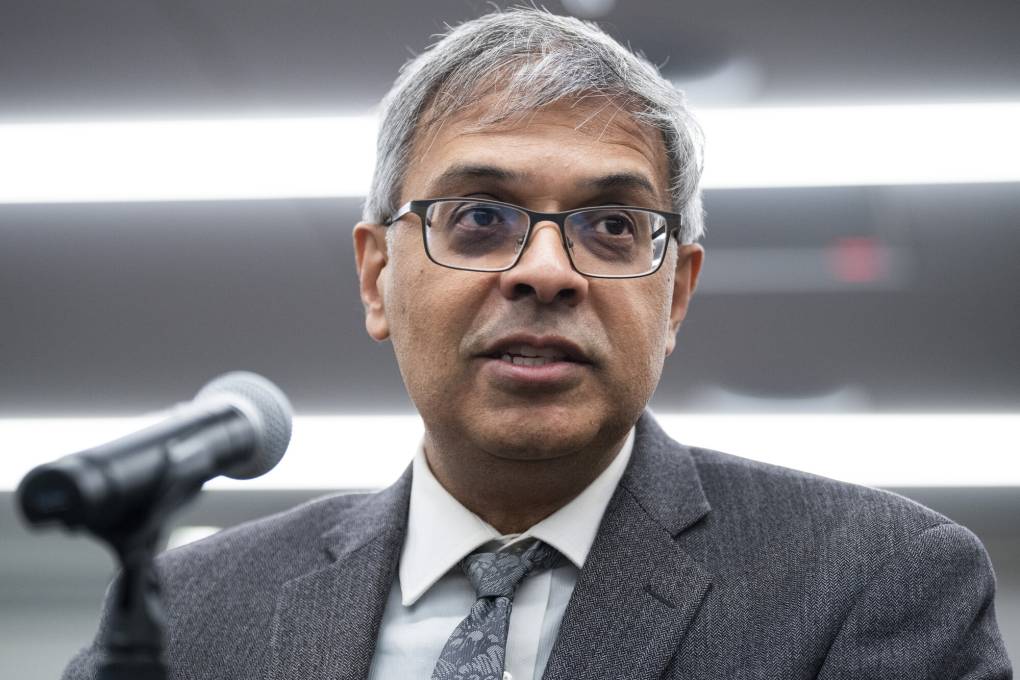
"caption": "Dr. Jay Bhattacharya speaks during a roundtable discussion with members of the House Freedom Caucus on the COVID-19 pandemic at The Heritage Foundation on Nov. 10, 2022. ",
"credit": "Tom Williams/CQ-Roll Call, Inc via Getty Images",
"altTag": null,
"description": null,
"imgSizes": {
"medium": {
"file": "https://cdn.kqed.org/wp-content/uploads/sites/10/2024/11/GettyImages-1244694054_qed-800x533.jpg",
"width": 800,
"height": 533,
"mimeType": "image/jpeg"
},
"large": {
"file": "https://cdn.kqed.org/wp-content/uploads/sites/10/2024/11/GettyImages-1244694054_qed-1020x680.jpg",
"width": 1020,
"height": 680,
"mimeType": "image/jpeg"
},
"thumbnail": {
"file": "https://cdn.kqed.org/wp-content/uploads/sites/10/2024/11/GettyImages-1244694054_qed-160x107.jpg",
"width": 160,
"height": 107,
"mimeType": "image/jpeg"
},
"1536x1536": {
"file": "https://cdn.kqed.org/wp-content/uploads/sites/10/2024/11/GettyImages-1244694054_qed-1536x1024.jpg",
"width": 1536,
"height": 1024,
"mimeType": "image/jpeg"
},
"post-thumbnail": {
"file": "https://cdn.kqed.org/wp-content/uploads/sites/10/2024/11/GettyImages-1244694054_qed-672x372.jpg",
"width": 672,
"height": 372,
"mimeType": "image/jpeg"
},
"twentyfourteen-full-width": {
"file": "https://cdn.kqed.org/wp-content/uploads/sites/10/2024/11/GettyImages-1244694054_qed-1038x576.jpg",
"width": 1038,
"height": 576,
"mimeType": "image/jpeg"
},
"full-width": {
"file": "https://cdn.kqed.org/wp-content/uploads/sites/10/2024/11/GettyImages-1244694054_qed-1920x1280.jpg",
"width": 1920,
"height": 1280,
"mimeType": "image/jpeg"
},
"kqedFullSize": {
"file": "https://cdn.kqed.org/wp-content/uploads/sites/10/2024/11/GettyImages-1244694054_qed.jpg",
"width": 1999,
"height": 1333
}
},
"isLoading": false,
"fetchFailed": false
},
"news_12015881": {
"type": "attachments",
"id": "news_12015881",
"meta": {
"index": "attachments_1716263798",
"site": "news",
"id": "12015881",
"found": true
},
"title": "TOPSHOT-US-VOTE-POLITICS-USELECTION-ELECTION-TRUMP",
"publishDate": 1732576451,
"status": "inherit",
"parent": 12015876,
"modified": 1755644094,
"caption": "Then-former U.S. President Donald Trump speaks about immigration and border security near Coronado National Memorial in Montezuma Pass, Arizona, Aug. 22, 2024. ",
"credit": "Olivier Touron/AFP via Getty Images",
"altTag": null,
"description": null,
"imgSizes": {
"medium": {
"file": "https://cdn.kqed.org/wp-content/uploads/sites/10/2024/11/GettyImages-2167160569-800x530.jpg",
"width": 800,
"height": 530,
"mimeType": "image/jpeg"
},
"large": {
"file": "https://cdn.kqed.org/wp-content/uploads/sites/10/2024/11/GettyImages-2167160569-1020x676.jpg",
"width": 1020,
"height": 676,
"mimeType": "image/jpeg"
},
"thumbnail": {
"file": "https://cdn.kqed.org/wp-content/uploads/sites/10/2024/11/GettyImages-2167160569-160x106.jpg",
"width": 160,
"height": 106,
"mimeType": "image/jpeg"
},
"1536x1536": {
"file": "https://cdn.kqed.org/wp-content/uploads/sites/10/2024/11/GettyImages-2167160569-1536x1017.jpg",
"width": 1536,
"height": 1017,
"mimeType": "image/jpeg"
},
"2048x2048": {
"file": "https://cdn.kqed.org/wp-content/uploads/sites/10/2024/11/GettyImages-2167160569-2048x1357.jpg",
"width": 2048,
"height": 1357,
"mimeType": "image/jpeg"
},
"post-thumbnail": {
"file": "https://cdn.kqed.org/wp-content/uploads/sites/10/2024/11/GettyImages-2167160569-672x372.jpg",
"width": 672,
"height": 372,
"mimeType": "image/jpeg"
},
"twentyfourteen-full-width": {
"file": "https://cdn.kqed.org/wp-content/uploads/sites/10/2024/11/GettyImages-2167160569-1038x576.jpg",
"width": 1038,
"height": 576,
"mimeType": "image/jpeg"
},
"full-width": {
"file": "https://cdn.kqed.org/wp-content/uploads/sites/10/2024/11/GettyImages-2167160569-1920x1272.jpg",
"width": 1920,
"height": 1272,
"mimeType": "image/jpeg"
},
"kqedFullSize": {
"file": "https://cdn.kqed.org/wp-content/uploads/sites/10/2024/11/GettyImages-2167160569-scaled.jpg",
"width": 2560,
"height": 1696
}
},
"isLoading": false,
"fetchFailed": false
},
"news_12013191": {
"type": "attachments",
"id": "news_12013191",
"meta": {
"index": "attachments_1716263798",
"site": "news",
"id": "12013191",
"found": true
},
"title": "Donald Trump",
"publishDate": 1730924373,
"status": "inherit",
"parent": 12013186,
"modified": 1730940022,
"caption": "Former U.S. President and Republican presidential nominee Donald Trump waves as he walks with former First Lady Melania Trump at an election night watch party at the Palm Beach Convention Center on Wednesday, Nov. 6, 2024, in West Palm Beach, Florida.",
"credit": "Evan Vucci/AP Photo",
"altTag": null,
"description": null,
"imgSizes": {
"medium": {
"file": "https://cdn.kqed.org/wp-content/uploads/sites/10/2024/11/DonaldTrumpPresElectAP-800x534.jpg",
"width": 800,
"height": 534,
"mimeType": "image/jpeg"
},
"large": {
"file": "https://cdn.kqed.org/wp-content/uploads/sites/10/2024/11/DonaldTrumpPresElectAP-1020x680.jpg",
"width": 1020,
"height": 680,
"mimeType": "image/jpeg"
},
"thumbnail": {
"file": "https://cdn.kqed.org/wp-content/uploads/sites/10/2024/11/DonaldTrumpPresElectAP-160x107.jpg",
"width": 160,
"height": 107,
"mimeType": "image/jpeg"
},
"1536x1536": {
"file": "https://cdn.kqed.org/wp-content/uploads/sites/10/2024/11/DonaldTrumpPresElectAP-1536x1025.jpg",
"width": 1536,
"height": 1025,
"mimeType": "image/jpeg"
},
"post-thumbnail": {
"file": "https://cdn.kqed.org/wp-content/uploads/sites/10/2024/11/DonaldTrumpPresElectAP-672x372.jpg",
"width": 672,
"height": 372,
"mimeType": "image/jpeg"
},
"twentyfourteen-full-width": {
"file": "https://cdn.kqed.org/wp-content/uploads/sites/10/2024/11/DonaldTrumpPresElectAP-1038x576.jpg",
"width": 1038,
"height": 576,
"mimeType": "image/jpeg"
},
"full-width": {
"file": "https://cdn.kqed.org/wp-content/uploads/sites/10/2024/11/DonaldTrumpPresElectAP-1920x1281.jpg",
"width": 1920,
"height": 1281,
"mimeType": "image/jpeg"
},
"kqedFullSize": {
"file": "https://cdn.kqed.org/wp-content/uploads/sites/10/2024/11/DonaldTrumpPresElectAP.jpg",
"width": 2000,
"height": 1334
}
},
"isLoading": false,
"fetchFailed": false
},
"news_12015956": {
"type": "attachments",
"id": "news_12015956",
"meta": {
"index": "attachments_1716263798",
"site": "news",
"id": "12015956",
"found": true
},
"title": "092722-RPE-L-ABORTION-BANG-CM copy",
"publishDate": 1732649886,
"status": "inherit",
"parent": 12015947,
"modified": 1732649930,
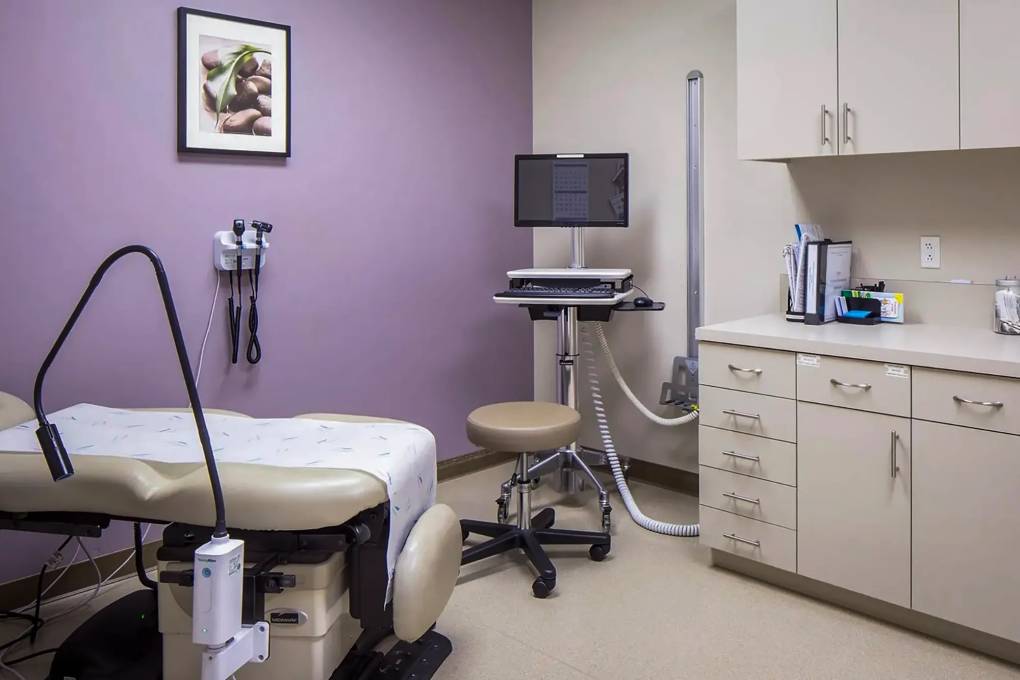
"caption": "An exam room at Planned Parenthood of Orange and San Bernardino Counties’ health center. ",
"credit": "Courtesy of Planned Parenthood of Orange and San Bernardino Counties",
"altTag": null,
"description": null,
"imgSizes": {
"medium": {
"file": "https://cdn.kqed.org/wp-content/uploads/sites/10/2024/11/092722-RPE-L-ABORTION-BANG-CM-copy-800x533.jpg",
"width": 800,
"height": 533,
"mimeType": "image/jpeg"
},
"large": {
"file": "https://cdn.kqed.org/wp-content/uploads/sites/10/2024/11/092722-RPE-L-ABORTION-BANG-CM-copy-1020x680.jpg",
"width": 1020,
"height": 680,
"mimeType": "image/jpeg"
},
"thumbnail": {
"file": "https://cdn.kqed.org/wp-content/uploads/sites/10/2024/11/092722-RPE-L-ABORTION-BANG-CM-copy-160x107.jpg",
"width": 160,
"height": 107,
"mimeType": "image/jpeg"
},
"1536x1536": {
"file": "https://cdn.kqed.org/wp-content/uploads/sites/10/2024/11/092722-RPE-L-ABORTION-BANG-CM-copy-1536x1024.jpg",
"width": 1536,
"height": 1024,
"mimeType": "image/jpeg"
},
"post-thumbnail": {
"file": "https://cdn.kqed.org/wp-content/uploads/sites/10/2024/11/092722-RPE-L-ABORTION-BANG-CM-copy-672x372.jpg",
"width": 672,
"height": 372,
"mimeType": "image/jpeg"
},
"twentyfourteen-full-width": {
"file": "https://cdn.kqed.org/wp-content/uploads/sites/10/2024/11/092722-RPE-L-ABORTION-BANG-CM-copy-1038x576.jpg",
"width": 1038,
"height": 576,
"mimeType": "image/jpeg"
},
"full-width": {
"file": "https://cdn.kqed.org/wp-content/uploads/sites/10/2024/11/092722-RPE-L-ABORTION-BANG-CM-copy-1920x1280.jpg",
"width": 1920,
"height": 1280,
"mimeType": "image/jpeg"
},
"kqedFullSize": {
"file": "https://cdn.kqed.org/wp-content/uploads/sites/10/2024/11/092722-RPE-L-ABORTION-BANG-CM-copy.jpg",
"width": 2000,
"height": 1333
}
},
"isLoading": false,
"fetchFailed": false
},
"news_12015784": {
"type": "attachments",
"id": "news_12015784",
"meta": {
"index": "attachments_1716263798",
"site": "news",
"id": "12015784",
"found": true
},
"title": "Bird Flu Outbreak On California Farms Spreads To Raw Milk",
"publishDate": 1732562540,
"status": "inherit",
"parent": 12015779,
"modified": 1732562578,
"caption": "Raw Farm raw milk containers are displayed on a shelf at a grocery store on Nov. 25, 2024, in San Anselmo, California. Fresno County dairy Raw Farm has recalled its cream top raw milk after bird flu virus was found in a retail sample of the raw milk product over the weekend. Consumers should avoid milk consumption and are encouraged to return the product to the store where it was purchased.",
"credit": "Justin Sullivan/Getty Images",
"altTag": null,
"description": null,
"imgSizes": {
"medium": {
"file": "https://cdn.kqed.org/wp-content/uploads/sites/10/2024/11/BirdFluMilkFresnoGetty-800x560.jpg",
"width": 800,
"height": 560,
"mimeType": "image/jpeg"
},
"large": {
"file": "https://cdn.kqed.org/wp-content/uploads/sites/10/2024/11/BirdFluMilkFresnoGetty-1020x714.jpg",
"width": 1020,
"height": 714,
"mimeType": "image/jpeg"
},
"thumbnail": {
"file": "https://cdn.kqed.org/wp-content/uploads/sites/10/2024/11/BirdFluMilkFresnoGetty-160x112.jpg",
"width": 160,
"height": 112,
"mimeType": "image/jpeg"
},
"1536x1536": {
"file": "https://cdn.kqed.org/wp-content/uploads/sites/10/2024/11/BirdFluMilkFresnoGetty-1536x1075.jpg",
"width": 1536,
"height": 1075,
"mimeType": "image/jpeg"
},
"post-thumbnail": {
"file": "https://cdn.kqed.org/wp-content/uploads/sites/10/2024/11/BirdFluMilkFresnoGetty-672x372.jpg",
"width": 672,
"height": 372,
"mimeType": "image/jpeg"
},
"twentyfourteen-full-width": {
"file": "https://cdn.kqed.org/wp-content/uploads/sites/10/2024/11/BirdFluMilkFresnoGetty-1038x576.jpg",
"width": 1038,
"height": 576,
"mimeType": "image/jpeg"
},
"full-width": {
"file": "https://cdn.kqed.org/wp-content/uploads/sites/10/2024/11/BirdFluMilkFresnoGetty-1920x1344.jpg",
"width": 1920,
"height": 1344,
"mimeType": "image/jpeg"
},
"kqedFullSize": {
"file": "https://cdn.kqed.org/wp-content/uploads/sites/10/2024/11/BirdFluMilkFresnoGetty.jpg",
"width": 2000,
"height": 1400
}
},
"isLoading": false,
"fetchFailed": false
},
"news_12015832": {
"type": "attachments",
"id": "news_12015832",
"meta": {
"index": "attachments_1716263798",
"site": "news",
"id": "12015832",
"found": true
},
"title": "Election 2024 RNC",
"publishDate": 1732568722,
"status": "inherit",
"parent": 12015828,
"modified": 1732568754,
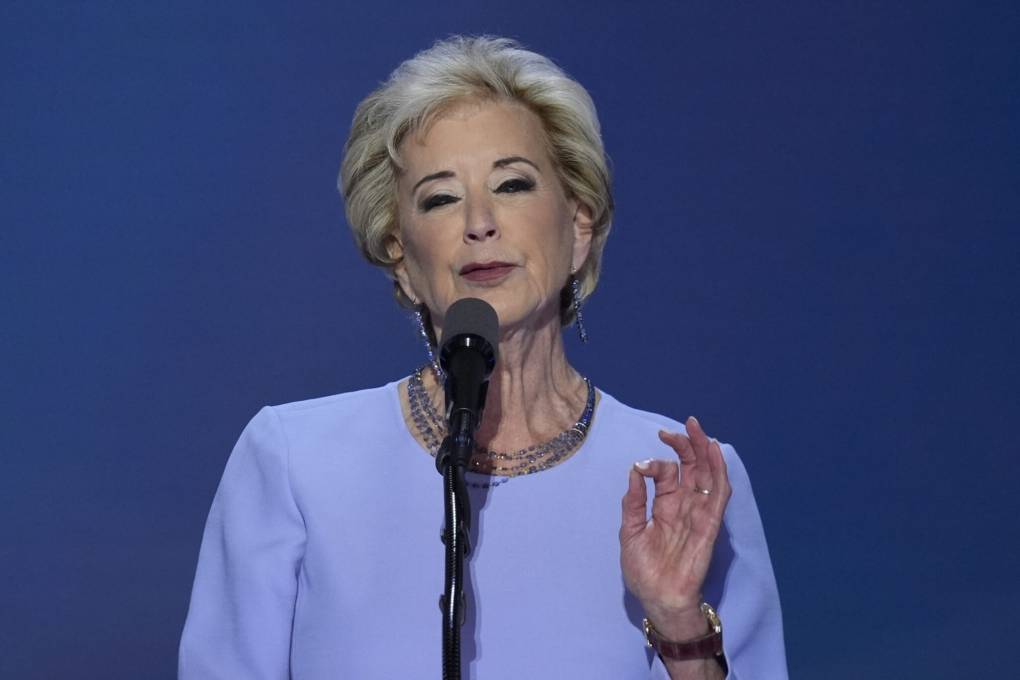
"caption": "Linda McMahon, former Administrator of Small Business Administration, speaking during the Republican National Convention on Thursday, July 18, 2024, in Milwaukee. ",
"credit": "J. Scott Applewhite/AP Photo",
"altTag": null,
"description": null,
"imgSizes": {
"medium": {
"file": "https://cdn.kqed.org/wp-content/uploads/sites/10/2024/11/24200843019562-2048x1365-1-800x533.jpg",
"width": 800,
"height": 533,
"mimeType": "image/jpeg"
},
"large": {
"file": "https://cdn.kqed.org/wp-content/uploads/sites/10/2024/11/24200843019562-2048x1365-1-1020x680.jpg",
"width": 1020,
"height": 680,
"mimeType": "image/jpeg"
},
"thumbnail": {
"file": "https://cdn.kqed.org/wp-content/uploads/sites/10/2024/11/24200843019562-2048x1365-1-160x107.jpg",
"width": 160,
"height": 107,
"mimeType": "image/jpeg"
},
"1536x1536": {
"file": "https://cdn.kqed.org/wp-content/uploads/sites/10/2024/11/24200843019562-2048x1365-1-1536x1024.jpg",
"width": 1536,
"height": 1024,
"mimeType": "image/jpeg"
},
"post-thumbnail": {
"file": "https://cdn.kqed.org/wp-content/uploads/sites/10/2024/11/24200843019562-2048x1365-1-672x372.jpg",
"width": 672,
"height": 372,
"mimeType": "image/jpeg"
},
"twentyfourteen-full-width": {
"file": "https://cdn.kqed.org/wp-content/uploads/sites/10/2024/11/24200843019562-2048x1365-1-1038x576.jpg",
"width": 1038,
"height": 576,
"mimeType": "image/jpeg"
},
"full-width": {
"file": "https://cdn.kqed.org/wp-content/uploads/sites/10/2024/11/24200843019562-2048x1365-1-1920x1280.jpg",
"width": 1920,
"height": 1280,
"mimeType": "image/jpeg"
},
"kqedFullSize": {
"file": "https://cdn.kqed.org/wp-content/uploads/sites/10/2024/11/24200843019562-2048x1365-1.jpg",
"width": 2048,
"height": 1365
}
},
"isLoading": false,
"fetchFailed": false
},
"news_12015756": {
"type": "attachments",
"id": "news_12015756",
"meta": {
"index": "attachments_1716263798",
"site": "news",
"id": "12015756",
"found": true
},
"title": "US-POLITICS-government-Trump",
"publishDate": 1732560501,
"status": "inherit",
"parent": 12015752,
"modified": 1781741530,
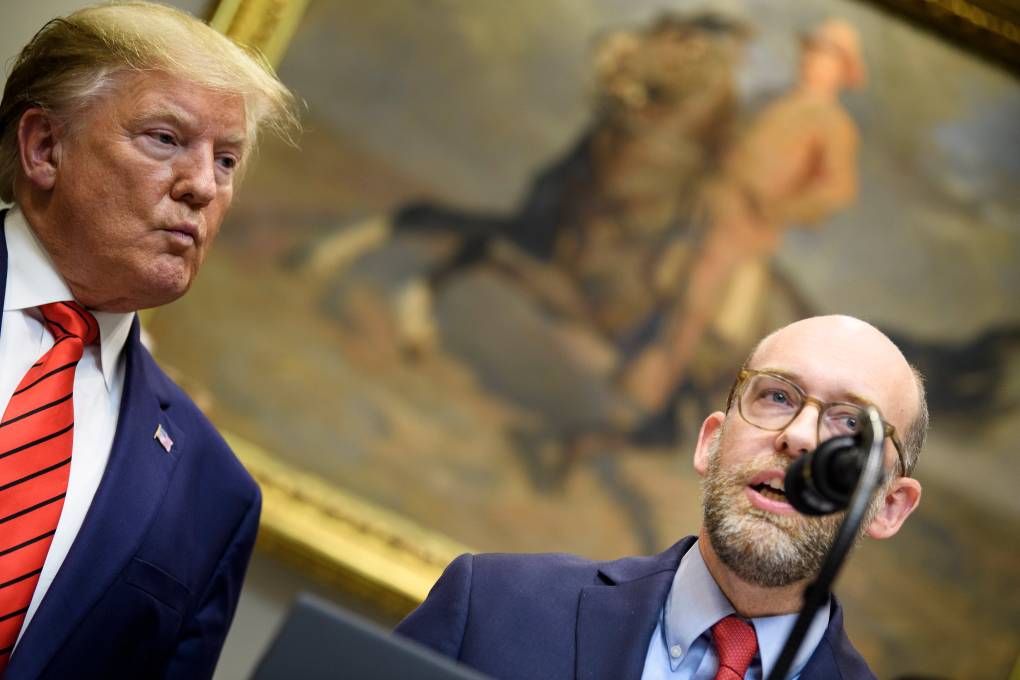
"caption": "U.S. President Donald Trump listens while acting OMB Director Russell Vought speaks during an executive order signing regarding federal regulations in the Roosevelt Room of the White House on Oct. 9, 2019, in Washington, D.C. ",
"credit": "Brendan Smialowski/AFP via Getty Images",
"altTag": null,
"description": null,
"imgSizes": {
"medium": {
"file": "https://cdn.kqed.org/wp-content/uploads/sites/10/2024/11/GettyImages-1174750205-800x533.jpg",
"width": 800,
"height": 533,
"mimeType": "image/jpeg"
},
"large": {
"file": "https://cdn.kqed.org/wp-content/uploads/sites/10/2024/11/GettyImages-1174750205-1020x680.jpg",
"width": 1020,
"height": 680,
"mimeType": "image/jpeg"
},
"thumbnail": {
"file": "https://cdn.kqed.org/wp-content/uploads/sites/10/2024/11/GettyImages-1174750205-160x107.jpg",
"width": 160,
"height": 107,
"mimeType": "image/jpeg"
},
"1536x1536": {
"file": "https://cdn.kqed.org/wp-content/uploads/sites/10/2024/11/GettyImages-1174750205-1536x1024.jpg",
"width": 1536,
"height": 1024,
"mimeType": "image/jpeg"
},
"2048x2048": {
"file": "https://cdn.kqed.org/wp-content/uploads/sites/10/2024/11/GettyImages-1174750205-2048x1365.jpg",
"width": 2048,
"height": 1365,
"mimeType": "image/jpeg"
},
"post-thumbnail": {
"file": "https://cdn.kqed.org/wp-content/uploads/sites/10/2024/11/GettyImages-1174750205-672x372.jpg",
"width": 672,
"height": 372,
"mimeType": "image/jpeg"
},
"twentyfourteen-full-width": {
"file": "https://cdn.kqed.org/wp-content/uploads/sites/10/2024/11/GettyImages-1174750205-1038x576.jpg",
"width": 1038,
"height": 576,
"mimeType": "image/jpeg"
},
"full-width": {
"file": "https://cdn.kqed.org/wp-content/uploads/sites/10/2024/11/GettyImages-1174750205-1920x1280.jpg",
"width": 1920,
"height": 1280,
"mimeType": "image/jpeg"
},
"kqedFullSize": {
"file": "https://cdn.kqed.org/wp-content/uploads/sites/10/2024/11/GettyImages-1174750205-scaled-e1781739384219.jpg",
"width": 2000,
"height": 1334
}
},
"isLoading": false,
"fetchFailed": false
},
"news_12015777": {
"type": "attachments",
"id": "news_12015777",
"meta": {
"index": "attachments_1716263798",
"site": "news",
"id": "12015777",
"found": true
},
"title": "112324_Bun-Portrait_JK_CM_01",
"publishDate": 1732562253,
"status": "inherit",
"parent": 12015773,
"modified": 1732562302,
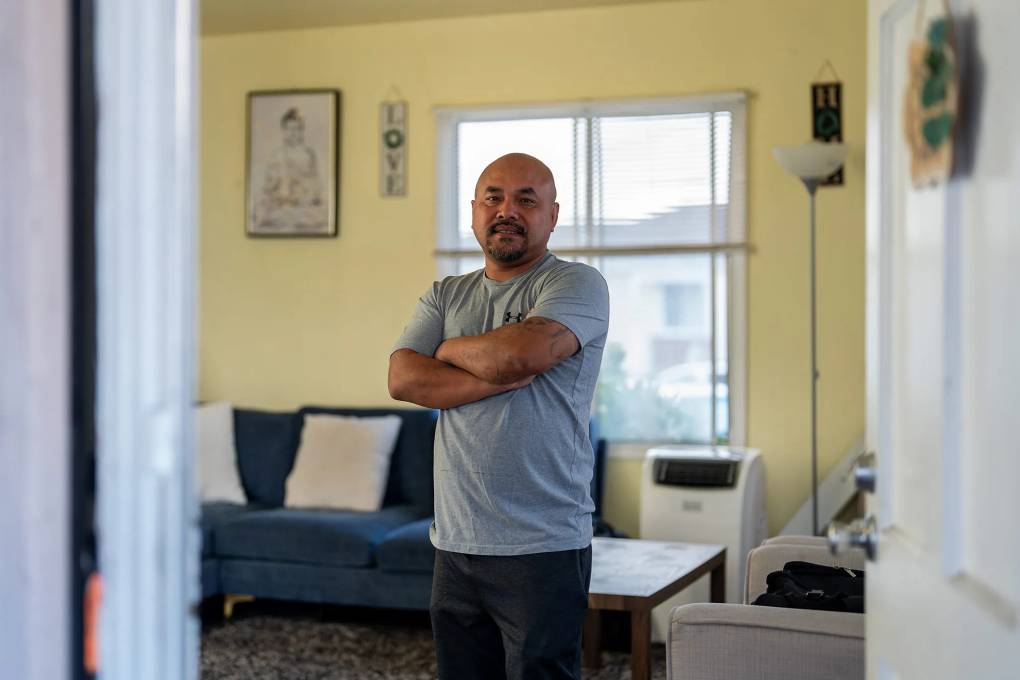
"caption": "Chanthon Bun stands in the living room of his home in San Leandro on Nov. 23, 2024. Bun was born in Cambodia during the genocide in the 1970s and grew up in a refugee camp in Thailand before moving to the United States, where he was convicted of robbery at age 18. That was decades ago, but now he's anxious about President-elect Donald Trump's plan for mass immigrant deportation.",
"credit": "Jungho Kim for CalMatters",
"altTag": null,
"description": null,
"imgSizes": {
"medium": {
"file": "https://cdn.kqed.org/wp-content/uploads/sites/10/2024/11/112324_Bun-Portrait_JK_CM_01-800x533.jpg",
"width": 800,
"height": 533,
"mimeType": "image/jpeg"
},
"large": {
"file": "https://cdn.kqed.org/wp-content/uploads/sites/10/2024/11/112324_Bun-Portrait_JK_CM_01-1020x680.jpg",
"width": 1020,
"height": 680,
"mimeType": "image/jpeg"
},
"thumbnail": {
"file": "https://cdn.kqed.org/wp-content/uploads/sites/10/2024/11/112324_Bun-Portrait_JK_CM_01-160x107.jpg",
"width": 160,
"height": 107,
"mimeType": "image/jpeg"
},
"1536x1536": {
"file": "https://cdn.kqed.org/wp-content/uploads/sites/10/2024/11/112324_Bun-Portrait_JK_CM_01-1536x1024.jpg",
"width": 1536,
"height": 1024,
"mimeType": "image/jpeg"
},
"post-thumbnail": {
"file": "https://cdn.kqed.org/wp-content/uploads/sites/10/2024/11/112324_Bun-Portrait_JK_CM_01-672x372.jpg",
"width": 672,
"height": 372,
"mimeType": "image/jpeg"
},
"twentyfourteen-full-width": {
"file": "https://cdn.kqed.org/wp-content/uploads/sites/10/2024/11/112324_Bun-Portrait_JK_CM_01-1038x576.jpg",
"width": 1038,
"height": 576,
"mimeType": "image/jpeg"
},
"full-width": {
"file": "https://cdn.kqed.org/wp-content/uploads/sites/10/2024/11/112324_Bun-Portrait_JK_CM_01-1920x1280.jpg",
"width": 1920,
"height": 1280,
"mimeType": "image/jpeg"
},
"kqedFullSize": {
"file": "https://cdn.kqed.org/wp-content/uploads/sites/10/2024/11/112324_Bun-Portrait_JK_CM_01.jpg",
"width": 2000,
"height": 1333
}
},
"isLoading": false,
"fetchFailed": false
},
"news_12007166": {
"type": "attachments",
"id": "news_12007166",
"meta": {
"index": "attachments_1716263798",
"site": "news",
"id": "12007166",
"found": true
},
"title": "Gavin Newsom",
"publishDate": 1727724857,
"status": "inherit",
"parent": 12007157,
"modified": 1727725501,
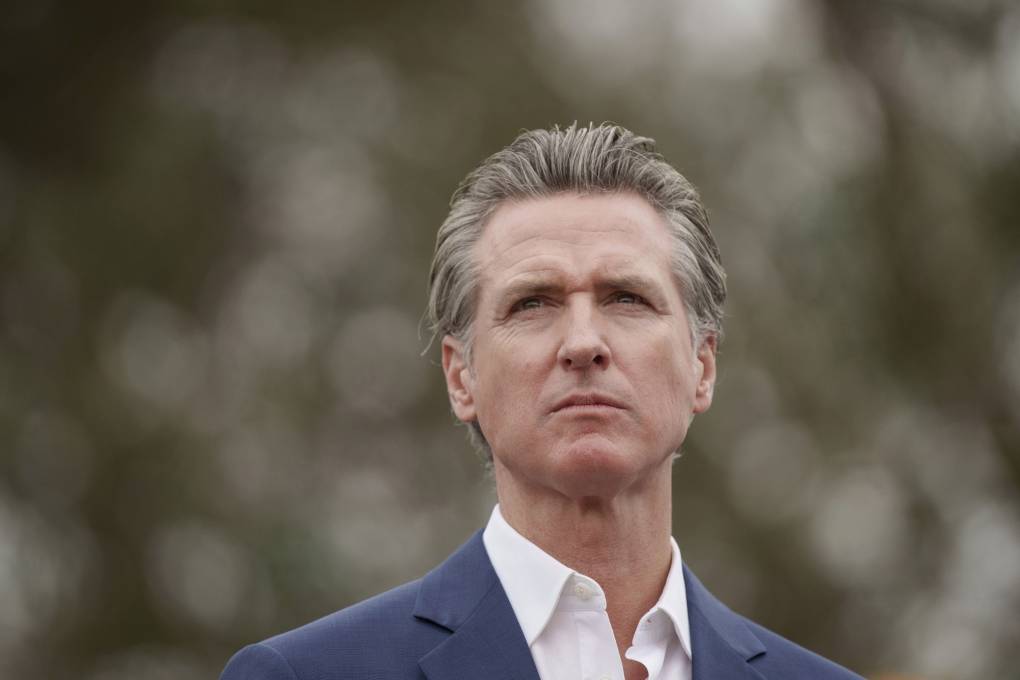
"caption": "Gov. Gavin Newsom speaks during a press conference in Los Angeles on Sept. 25, 2024. Gov. Gavin Newsom vetoed a bill on Monday that would have allowed California to block private equity acquisitions of healthcare facilities. ",
"credit": "Eric Thayer/AP Photo",
"altTag": null,
"description": null,
"imgSizes": {
"medium": {
"file": "https://cdn.kqed.org/wp-content/uploads/sites/10/2024/09/GavinNewsomAP2-800x533.jpg",
"width": 800,
"height": 533,
"mimeType": "image/jpeg"
},
"large": {
"file": "https://cdn.kqed.org/wp-content/uploads/sites/10/2024/09/GavinNewsomAP2-1020x680.jpg",
"width": 1020,
"height": 680,
"mimeType": "image/jpeg"
},
"thumbnail": {
"file": "https://cdn.kqed.org/wp-content/uploads/sites/10/2024/09/GavinNewsomAP2-160x107.jpg",
"width": 160,
"height": 107,
"mimeType": "image/jpeg"
},
"1536x1536": {
"file": "https://cdn.kqed.org/wp-content/uploads/sites/10/2024/09/GavinNewsomAP2-1536x1024.jpg",
"width": 1536,
"height": 1024,
"mimeType": "image/jpeg"
},
"post-thumbnail": {
"file": "https://cdn.kqed.org/wp-content/uploads/sites/10/2024/09/GavinNewsomAP2-672x372.jpg",
"width": 672,
"height": 372,
"mimeType": "image/jpeg"
},
"twentyfourteen-full-width": {
"file": "https://cdn.kqed.org/wp-content/uploads/sites/10/2024/09/GavinNewsomAP2-1038x576.jpg",
"width": 1038,
"height": 576,
"mimeType": "image/jpeg"
},
"full-width": {
"file": "https://cdn.kqed.org/wp-content/uploads/sites/10/2024/09/GavinNewsomAP2-1920x1280.jpg",
"width": 1920,
"height": 1280,
"mimeType": "image/jpeg"
},
"kqedFullSize": {
"file": "https://cdn.kqed.org/wp-content/uploads/sites/10/2024/09/GavinNewsomAP2.jpg",
"width": 2000,
"height": 1333
}
},
"isLoading": false,
"fetchFailed": false
},
"news_12015591": {
"type": "attachments",
"id": "news_12015591",
"meta": {
"index": "attachments_1716263798",
"site": "news",
"id": "12015591",
"found": true
},
"title": "241122NPRTrans",
"publishDate": 1732307925,
"status": "inherit",
"parent": 12015590,
"modified": 1732307967,
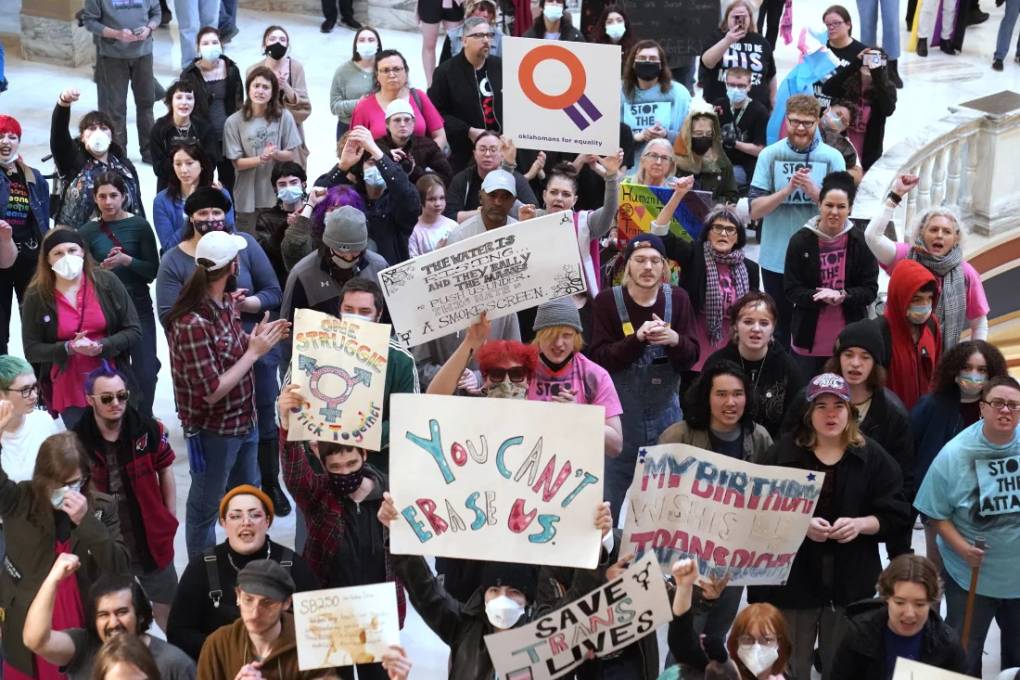
"caption": "Trans-rights activists protest outside the House chamber at the Oklahoma state capitol before the State of the State address, Feb. 6, 2023, in Oklahoma City. Oklahoma and 25 other states have anti-trans laws on the books.",
"credit": "Sue Ogrocki/AP",
"altTag": null,
"description": null,
"imgSizes": {
"medium": {
"file": "https://cdn.kqed.org/wp-content/uploads/sites/10/2024/11/241122NPRTrans-800x533.jpg",
"width": 800,
"height": 533,
"mimeType": "image/jpeg"
},
"large": {
"file": "https://cdn.kqed.org/wp-content/uploads/sites/10/2024/11/241122NPRTrans-1020x680.jpg",
"width": 1020,
"height": 680,
"mimeType": "image/jpeg"
},
"thumbnail": {
"file": "https://cdn.kqed.org/wp-content/uploads/sites/10/2024/11/241122NPRTrans-160x107.jpg",
"width": 160,
"height": 107,
"mimeType": "image/jpeg"
},
"post-thumbnail": {
"file": "https://cdn.kqed.org/wp-content/uploads/sites/10/2024/11/241122NPRTrans-672x372.jpg",
"width": 672,
"height": 372,
"mimeType": "image/jpeg"
},
"twentyfourteen-full-width": {
"file": "https://cdn.kqed.org/wp-content/uploads/sites/10/2024/11/241122NPRTrans-1038x576.jpg",
"width": 1038,
"height": 576,
"mimeType": "image/jpeg"
},
"kqedFullSize": {
"file": "https://cdn.kqed.org/wp-content/uploads/sites/10/2024/11/241122NPRTrans.jpg",
"width": 1100,
"height": 733
}
},
"isLoading": false,
"fetchFailed": false
},
"news_12015473": {
"type": "attachments",
"id": "news_12015473",
"meta": {
"index": "attachments_1716263798",
"site": "news",
"id": "12015473",
"found": true
},
"title": "Los Angeles Department of Public Health, The People Concern, vaccination clinic.",
"publishDate": 1732237168,
"status": "inherit",
"parent": 12015385,
"modified": 1732300216,
"caption": "A registered nurse with the Los Angeles Department of Public Health administers a COVID-19 booster at a vaccination clinic to immunize people against mpox and COVID-19 at The Village Mental Health Services in Los Angeles. ",
"credit": "Christina House/Los Angeles Times via Getty Images",
"altTag": null,
"description": null,
"imgSizes": {
"medium": {
"file": "https://cdn.kqed.org/wp-content/uploads/sites/10/2024/11/GettyImages-1242749971-800x530.jpg",
"width": 800,
"height": 530,
"mimeType": "image/jpeg"
},
"large": {
"file": "https://cdn.kqed.org/wp-content/uploads/sites/10/2024/11/GettyImages-1242749971-1020x676.jpg",
"width": 1020,
"height": 676,
"mimeType": "image/jpeg"
},
"thumbnail": {
"file": "https://cdn.kqed.org/wp-content/uploads/sites/10/2024/11/GettyImages-1242749971-160x106.jpg",
"width": 160,
"height": 106,
"mimeType": "image/jpeg"
},
"post-thumbnail": {
"file": "https://cdn.kqed.org/wp-content/uploads/sites/10/2024/11/GettyImages-1242749971-672x372.jpg",
"width": 672,
"height": 372,
"mimeType": "image/jpeg"
},
"twentyfourteen-full-width": {
"file": "https://cdn.kqed.org/wp-content/uploads/sites/10/2024/11/GettyImages-1242749971-1024x576.jpg",
"width": 1024,
"height": 576,
"mimeType": "image/jpeg"
},
"kqedFullSize": {
"file": "https://cdn.kqed.org/wp-content/uploads/sites/10/2024/11/GettyImages-1242749971.jpg",
"width": 1024,
"height": 679
}
},
"isLoading": false,
"fetchFailed": false
},
"news_12015418": {
"type": "attachments",
"id": "news_12015418",
"meta": {
"index": "attachments_1716263798",
"site": "news",
"id": "12015418",
"found": true
},
"title": "Screen Shot 2024-11-21 at 3.00.51 PM",
"publishDate": 1732230679,
"status": "inherit",
"parent": 12015380,
"modified": 1732230679,
"caption": null,
"credit": null,
"altTag": null,
"description": null,
"imgSizes": {
"medium": {
"file": "https://cdn.kqed.org/wp-content/uploads/sites/10/2024/11/Screen-Shot-2024-11-21-at-3.00.51-PM-800x587.png",
"width": 800,
"height": 587,
"mimeType": "image/png"
},
"large": {
"file": "https://cdn.kqed.org/wp-content/uploads/sites/10/2024/11/Screen-Shot-2024-11-21-at-3.00.51-PM-1020x748.png",
"width": 1020,
"height": 748,
"mimeType": "image/png"
},
"thumbnail": {
"file": "https://cdn.kqed.org/wp-content/uploads/sites/10/2024/11/Screen-Shot-2024-11-21-at-3.00.51-PM-160x117.png",
"width": 160,
"height": 117,
"mimeType": "image/png"
},
"1536x1536": {
"file": "https://cdn.kqed.org/wp-content/uploads/sites/10/2024/11/Screen-Shot-2024-11-21-at-3.00.51-PM-1536x1127.png",
"width": 1536,
"height": 1127,
"mimeType": "image/png"
},
"2048x2048": {
"file": "https://cdn.kqed.org/wp-content/uploads/sites/10/2024/11/Screen-Shot-2024-11-21-at-3.00.51-PM-2048x1502.png",
"width": 2048,
"height": 1502,
"mimeType": "image/png"
},
"post-thumbnail": {
"file": "https://cdn.kqed.org/wp-content/uploads/sites/10/2024/11/Screen-Shot-2024-11-21-at-3.00.51-PM-672x372.png",
"width": 672,
"height": 372,
"mimeType": "image/png"
},
"twentyfourteen-full-width": {
"file": "https://cdn.kqed.org/wp-content/uploads/sites/10/2024/11/Screen-Shot-2024-11-21-at-3.00.51-PM-1038x576.png",
"width": 1038,
"height": 576,
"mimeType": "image/png"
},
"full-width": {
"file": "https://cdn.kqed.org/wp-content/uploads/sites/10/2024/11/Screen-Shot-2024-11-21-at-3.00.51-PM-1920x1409.png",
"width": 1920,
"height": 1409,
"mimeType": "image/png"
},
"kqedFullSize": {
"file": "https://cdn.kqed.org/wp-content/uploads/sites/10/2024/11/Screen-Shot-2024-11-21-at-3.00.51-PM.png",
"width": 2200,
"height": 1614
}
},
"isLoading": false,
"fetchFailed": false
}
},
"audioPlayerReducer": {
"postId": "stream_live",
"isPaused": true,
"isPlaying": false,
"pfsActive": false,
"pledgeModalIsOpen": true,
"playerDrawerIsOpen": false,
"liveAudioPlayStartedAt": 0,
"liveAudioPlayContext": ""
},
"authorsReducer": {
"byline_news_12015947": {
"type": "authors",
"id": "byline_news_12015947",
"meta": {
"override": true
},
"slug": "byline_news_12015947",
"name": "\u003ca href=\"https://calmatters.org/author/monique-madan/\">Monique O. Madan\u003c/a>, CalMatters",
"isLoading": false
},
"byline_news_12015828": {
"type": "authors",
"id": "byline_news_12015828",
"meta": {
"override": true
},
"slug": "byline_news_12015828",
"name": "\u003ca href=\"https://edsource.org/author/lfreedberg\">Louis Freedberg\u003c/a>, EdSource",
"isLoading": false
},
"byline_news_12015773": {
"type": "authors",
"id": "byline_news_12015773",
"meta": {
"override": true
},
"slug": "byline_news_12015773",
"name": "\u003ca href=\"https://calmatters.org/author/wendy-fry/\">Wendy Fry\u003c/a>, CalMatters",
"isLoading": false
},
"byline_news_12015590": {
"type": "authors",
"id": "byline_news_12015590",
"meta": {
"override": true
},
"slug": "byline_news_12015590",
"name": "Selena Simmons-Duffin",
"isLoading": false
},
"byline_news_12015380": {
"type": "authors",
"id": "byline_news_12015380",
"meta": {
"override": true
},
"slug": "byline_news_12015380",
"name": "Domenico Montanaro, Connie Hanzhang Jin, Daniel Wood; NPR",
"isLoading": false
},
"scottshafer": {
"type": "authors",
"id": "255",
"meta": {
"index": "authors_1716337520",
"id": "255",
"found": true
},
"name": "Scott Shafer",
"firstName": "Scott",
"lastName": "Shafer",
"slug": "scottshafer",
"email": "sshafer@kqed.org",
"display_author_email": false,
"staff_mastheads": [
"news"
],
"title": "KQED Contributor",
"bio": "Scott Shafer is a senior editor with the KQED Politics and Government desk. He is co-host of Political Breakdown, the award-winning radio show and podcast with a personal take on the world of politics. Scott came to KQED in 1998 to host the statewide\u003cem> California Report\u003c/em>. Prior to that he had extended stints in politics and government\u003cem>.\u003c/em> He uses that inside experience at KQED in his, reporting, hosting and analysis for the politics desk. Scott collaborated \u003cem>Political Breakdown a\u003c/em>nd on \u003cem>The Political Mind of Jerry Brown, \u003c/em>an eight-part series about the life and extraordinary political career of the former governor. For fun, he plays water polo with the San Francisco Tsunami.",
"avatar": "https://secure.gravatar.com/avatar/a62ebae45b79d7aed1a39a0e3bf68104?s=600&d=blank&r=g",
"twitter": "scottshafer",
"bluesky": null,
"facebook": null,
"instagram": null,
"linkedin": null,
"sites": [
{
"site": "news",
"roles": [
"editor"
]
},
{
"site": "stateofhealth",
"roles": [
"author"
]
},
{
"site": "science",
"roles": [
"author"
]
},
{
"site": "forum",
"roles": [
"subscriber"
]
},
{
"site": "liveblog",
"roles": [
"author"
]
}
],
"headData": {
"title": "Scott Shafer | KQED",
"description": "KQED Contributor",
"ogImgSrc": "https://secure.gravatar.com/avatar/a62ebae45b79d7aed1a39a0e3bf68104?s=600&d=blank&r=g",
"twImgSrc": "https://secure.gravatar.com/avatar/a62ebae45b79d7aed1a39a0e3bf68104?s=600&d=blank&r=g"
},
"isLoading": false,
"link": "/author/scottshafer"
},
"shossaini": {
"type": "authors",
"id": "3214",
"meta": {
"index": "authors_1716337520",
"id": "3214",
"found": true
},
"name": "Sara Hossaini",
"firstName": "Sara",
"lastName": "Hossaini",
"slug": "shossaini",
"email": "shossaini@kqed.org",
"display_author_email": true,
"staff_mastheads": [
"news"
],
"title": "KQED Reporter",
"bio": "Sara Hossaini came to general assignment reporting at KQED in 2013 after two winters reporting at Wyoming Public Radio. She holds a bachelor's degree in broadcast journalism from the University of Nebraska-Lincoln. Her radio romance began after a bitter breakup with documentary film (Ok, maybe it's still complicated). Her first simultaneous jobs in San Francisco were as Associate Producer on a PBS film series through the Center for Asian American Media and as a butler. She likes to trot, plot and make things with her hands.",
"avatar": "https://secure.gravatar.com/avatar/060e9f56b9554e17942e89f413242774?s=600&d=blank&r=g",
"twitter": "mshossaini",
"facebook": null,
"instagram": null,
"linkedin": null,
"sites": [
{
"site": "news",
"roles": [
"author"
]
},
{
"site": "stateofhealth",
"roles": [
"author"
]
}
],
"headData": {
"title": "Sara Hossaini | KQED",
"description": "KQED Reporter",
"ogImgSrc": "https://secure.gravatar.com/avatar/060e9f56b9554e17942e89f413242774?s=600&d=blank&r=g",
"twImgSrc": "https://secure.gravatar.com/avatar/060e9f56b9554e17942e89f413242774?s=600&d=blank&r=g"
},
"isLoading": false,
"link": "/author/shossaini"
},
"mlagos": {
"type": "authors",
"id": "3239",
"meta": {
"index": "authors_1716337520",
"id": "3239",
"found": true
},
"name": "Marisa Lagos",
"firstName": "Marisa",
"lastName": "Lagos",
"slug": "mlagos",
"email": "mlagos@kqed.org",
"display_author_email": false,
"staff_mastheads": [
"news"
],
"title": "KQED Contributor",
"bio": "Marisa Lagos is a correspondent for KQED’s California Politics and Government Desk and co-hosts the award-winning show and podcast, Political Breakdown. At KQED, Lagos also conducts reporting, analysis and investigations into state, local and national politics for radio, TV, online and onstage. In 2022, she and co-host, Scott Shafer, moderated the only gubernatorial debate in California. In 2020, the \u003ci>Washington Post\u003c/i> named her one of the top political journalists in California; she was nominated for a Peabody and won several other awards for her work investigating the 2017 California wildfires. She has worked at the \u003ci>San Francisco Chronicle\u003c/i>, \u003ci>San Francisco Examiner\u003c/i> and \u003ci>Los Angeles Times\u003c/i>. A UC Santa Barbara graduate, she lives in San Francisco with her two sons and husband.",
"avatar": "https://secure.gravatar.com/avatar/a261a0d3696fc066871ef96b85b5e7d2?s=600&d=blank&r=g",
"twitter": "@mlagos",
"facebook": null,
"instagram": null,
"linkedin": null,
"sites": [
{
"site": "arts",
"roles": [
"author"
]
},
{
"site": "news",
"roles": [
"editor"
]
},
{
"site": "science",
"roles": [
"editor"
]
},
{
"site": "forum",
"roles": [
"author"
]
},
{
"site": "liveblog",
"roles": [
"author"
]
}
],
"headData": {
"title": "Marisa Lagos | KQED",
"description": "KQED Contributor",
"ogImgSrc": "https://secure.gravatar.com/avatar/a261a0d3696fc066871ef96b85b5e7d2?s=600&d=blank&r=g",
"twImgSrc": "https://secure.gravatar.com/avatar/a261a0d3696fc066871ef96b85b5e7d2?s=600&d=blank&r=g"
},
"isLoading": false,
"link": "/author/mlagos"
},
"eromero": {
"type": "authors",
"id": "11746",
"meta": {
"index": "authors_1716337520",
"id": "11746",
"found": true
},
"name": "Ezra David Romero",
"firstName": "Ezra David",
"lastName": "Romero",
"slug": "eromero",
"email": "eromero@kqed.org",
"display_author_email": true,
"staff_mastheads": [
"news",
"science"
],
"title": "Climate Reporter",
"bio": "Ezra David Romero is a climate reporter for KQED News. He covers the absence and excess of water in the Bay Area — think sea level rise, flooding and drought. For nearly a decade he’s covered how warming temperatures are altering the lives of Californians. He’s reported on farmers worried their pistachio trees aren’t getting enough sleep, families desperate for water, scientists studying dying giant sequoias, and alongside firefighters containing wildfires. His work has appeared on local stations across California and nationally on public radio shows like Morning Edition, Here and Now, All Things Considered and Science Friday. ",
"avatar": "https://secure.gravatar.com/avatar/9c15bb8bab267e058708a9eeaeef16bf?s=600&d=blank&r=g",
"twitter": "ezraromero",
"bluesky": null,
"facebook": null,
"instagram": null,
"linkedin": null,
"sites": [
{
"site": "arts",
"roles": [
"editor"
]
},
{
"site": "news",
"roles": [
"editor"
]
},
{
"site": "science",
"roles": [
"editor"
]
},
{
"site": "liveblog",
"roles": [
"author"
]
}
],
"headData": {
"title": "Ezra David Romero | KQED",
"description": "Climate Reporter",
"ogImgSrc": "https://secure.gravatar.com/avatar/9c15bb8bab267e058708a9eeaeef16bf?s=600&d=blank&r=g",
"twImgSrc": "https://secure.gravatar.com/avatar/9c15bb8bab267e058708a9eeaeef16bf?s=600&d=blank&r=g"
},
"isLoading": false,
"link": "/author/eromero"
},
"jservantez": {
"type": "authors",
"id": "11909",
"meta": {
"index": "authors_1716337520",
"id": "11909",
"found": true
},
"name": "Jared Servantez",
"firstName": "Jared",
"lastName": "Servantez",
"slug": "jservantez",
"email": "jservantez@kqed.org",
"display_author_email": true,
"staff_mastheads": [
"news"
],
"title": "KQED Contributor",
"bio": "Jared Servantez is the editor of KQED's Express Desk, leading the newsroom's online breaking news operation. He most recently worked for the Los Angeles Times, where he served as a breaking news editor, the Metro Desk's night editor, and a copy editor. Jared is a graduate of the USC Annenberg School for Communication and Journalism.",
"avatar": "https://secure.gravatar.com/avatar/46e9029cd4e3bc3391184e65511d73e6?s=600&d=mm&r=g",
"twitter": "jservantez",
"facebook": null,
"instagram": null,
"linkedin": null,
"sites": [
{
"site": "news",
"roles": [
"editor"
]
},
{
"site": "science",
"roles": [
"editor",
"author"
]
},
{
"site": "liveblog",
"roles": [
"editor"
]
}
],
"headData": {
"title": "Jared Servantez | KQED",
"description": "KQED Contributor",
"ogImgSrc": "https://secure.gravatar.com/avatar/46e9029cd4e3bc3391184e65511d73e6?s=600&d=mm&r=g",
"twImgSrc": "https://secure.gravatar.com/avatar/46e9029cd4e3bc3391184e65511d73e6?s=600&d=mm&r=g"
},
"isLoading": false,
"link": "/author/jservantez"
},
"slim": {
"type": "authors",
"id": "11920",
"meta": {
"index": "authors_1716337520",
"id": "11920",
"found": true
},
"name": "Samantha Lim",
"firstName": "Samantha",
"lastName": "Lim",
"slug": "slim",
"email": "slim@KQED.org",
"display_author_email": false,
"staff_mastheads": [],
"title": "KQED Contributor",
"bio": null,
"avatar": "https://secure.gravatar.com/avatar/82e592e6c15fe1a04d385e8ad0fb0b4e?s=600&d=blank&r=g",
"twitter": null,
"facebook": null,
"instagram": null,
"linkedin": null,
"sites": [
{
"site": "news",
"roles": []
}
],
"headData": {
"title": "Samantha Lim | KQED",
"description": "KQED Contributor",
"ogImgSrc": "https://secure.gravatar.com/avatar/82e592e6c15fe1a04d385e8ad0fb0b4e?s=600&d=blank&r=g",
"twImgSrc": "https://secure.gravatar.com/avatar/82e592e6c15fe1a04d385e8ad0fb0b4e?s=600&d=blank&r=g"
},
"isLoading": false,
"link": "/author/slim"
}
},
"pagesReducer": {
"news_tag_donald-trump": {
"type": "terms",
"id": "news_1323",
"meta": {
"index": "terms_1716263798",
"site": "news",
"id": "1323",
"score": 8.555212
},
"featImg": null,
"name": "Donald Trump",
"description": null,
"taxonomy": "tag",
"headData": {
"twImgId": null,
"twTitle": null,
"ogTitle": null,
"ogImgId": null,
"twDescription": null,
"description": null,
"title": "Donald Trump Archives | KQED News",
"ogDescription": null
},
"ttid": 1335,
"slug": "donald-trump",
"isLoading": false,
"title": "Donald Trump",
"pageMeta": {
"site": "news",
"WpPageTemplate": "page-topic-editorial",
"currentPage": 63
},
"blocks": [
{
"blockName": "kqed/post-list",
"attrs": {
"layout": "cardArticle2",
"query": "posts/news?tag=donald-trump",
"seeMore": false,
"paginated": true,
"page": 63
}
},
{
"blockName": "kqed/ad"
}
]
}
},
"pfsSessionReducer": {},
"postsReducer": {
"stream_live": {
"type": "live",
"id": "stream_live",
"audioUrl": "https://streams.kqed.org/kqedradio",
"title": "Live Stream",
"excerpt": "Live Stream information currently unavailable.",
"link": "/radio",
"featImg": "",
"label": {
"name": "KQED Live",
"link": "/"
}
},
"stream_kqedNewscast": {
"type": "posts",
"id": "stream_kqedNewscast",
"audioUrl": "https://www.kqed.org/.stream/anon/radio/RDnews/newscast.mp3?_=1",
"title": "KQED Newscast",
"featImg": "",
"label": {
"name": "88.5 FM",
"link": "/"
}
},
"news_12016188": {
"type": "posts",
"id": "news_12016188",
"meta": {
"index": "posts_1716263798",
"site": "news",
"id": "12016188",
"score": null,
"sort": [
1732807808000
]
},
"guestAuthors": [],
"slug": "stanford-doctor-tapped-for-key-post-by-trump-advocated-for-letting-covid-spread",
"title": "Stanford Doctor Tapped for Key Post by Trump Advocated for Letting COVID Spread",
"publishDate": 1732807808,
"format": "standard",
"headTitle": "Stanford Doctor Tapped for Key Post by Trump Advocated for Letting COVID Spread | KQED",
"labelTerm": {
"site": "news"
},
"content": "\u003cp>President-elect \u003ca href=\"https://www.kqed.org/news/tag/donald-trump\">Donald Trump’s\u003c/a> choice this week to lead the National Institutes of Health is a controversial Stanford researcher who was highly critical of the COVID-19 pandemic response, drawing pushback from the medical community and some still suffering from the long-term effects of the disease.\u003c/p>\n\u003cp>Dr. Jay Bhattacharya, a professor of health policy and senior fellow at the Stanford Institute for Economic Policy Research, was one of three co-authors of a 2020 letter that challenged policies like lockdowns and mask mandates and called for speeding up herd immunity.\u003c/p>\n\u003cp>The so-called Great Barrington Declaration, which was written before the widespread availability of a vaccine, argued that measures should be taken to protect those who were most vulnerable to dying of COVID-19 but that others “should immediately be allowed to resume life as normal.” Allowing the virus to spread among younger, healthier people would help drive up natural immunity and “minimize mortality and social harm,” it said.\u003c/p>\n\u003cp>The strategy was brought to the attention of then-President Trump by his pandemic adviser, Dr. Scott Atlas — a Stanford colleague of Bhattacharya and Hoover Institution fellow — but the scientific community swiftly excoriated it. Dr. Anthony Fauci, director of the National Institute of Allergy and Infectious Diseases, dismissed it as “\u003ca href=\"https://www.pbs.org/newshour/health/dr-fauci-criticizes-concept-of-herd-immunity\">total nonsense\u003c/a>,” and many physicians, scientists and other experts said the “fringe” approach was unethical and would endanger millions of people.\u003c/p>\n\u003cp>“Hearing from researchers who were pushing ideas for how a health department should be responding, when they themselves were not responding or seeing patients — to me, I was like, you guys have major gaps in what expertise you’re bringing to the kind of things you’re putting forward,” said Dr. Abraar Karaan, a Stanford infectious-diseases physician who helped lead Massachusetts’ COVID-19 response.\u003c/p>\n\u003cp>[ad fullwidth]\u003c/p>\n\u003cp>Bhattacharya is not a practicing physician. \u003ca href=\"https://profiles.stanford.edu/jay-bhattacharya\">According to Stanford\u003c/a>, his research “focuses on the economics of health care around the world with a particular emphasis on the health and well-being of vulnerable populations.”\u003c/p>\n\u003cp>“Dr. Bhattacharya, who is a researcher but doesn’t see patients, was not on the front lines the way many of us as clinicians were,” Karaan said.\u003c/p>\n\u003cp>Karaan did point out Bhattacharya’s impressive track record as a researcher, including receiving the highest level of grants from the NIH.\u003c/p>\n\u003cp>The NIH conducts and funds major biomedical and public health research for the United States. If confirmed by the Senate, Bhattacharya would lead the sprawling agency — with a budget pushing $50 billion.\u003c/p>\n\u003cp>Many have concerns over where that research and funding will be directed under the next Trump administration. His choice to lead the NIH’s parent agency, the Department of Health and Human Services, is Robert F. Kennedy Jr., a vaccine skeptic and conspiracy theorist who has also called for turning the government’s public health focus away from infectious disease.\u003c/p>\n\u003cp>“I agree that chronic disease is a big problem; I totally agree with that,” Karaan said. “But we don’t get to decide where the spotlight goes when you have actual health emergencies happening. We don’t get to decide when infectious diseases are no longer something we care about.”\u003c/p>\n\u003cp>For some \u003ca href=\"https://www.kqed.org/news/11950643/screaming-into-a-void-long-covid-patients-have-waited-in-vain-for-years-for-treatments\">Bay Area patients with long COVID\u003c/a> and their advocates, Bhattacharya’s nomination is especially concerning. Millions of Americans are estimated to have had the increasingly widespread chronic condition, whose symptoms often include brain fog and fatigue.[aside postID=news_11950643 hero='https://cdn.kqed.org/wp-content/uploads/sites/10/2023/05/RS65622_005_KQED_LongCOVIDCharlieMcCone_05182023-qut.jpg']\u003c/p>\n\u003cp>Much is still unknown about long COVID, including what makes people susceptible to it. Many of those still suffering from its debilitating effects were otherwise young and healthy — the same population that Bhattacharya and his Great Barrington Declaration co-authors proposed allowing to contract and spread COVID-19 during the height of the pandemic.\u003c/p>\n\u003cp>Charlie McCone, 34, has had long COVID since March 2020. The San Francisco resident said many in the long COVID community were already frustrated with how the NIH was prioritizing funding and research, though they had seen recent signs of progress.\u003c/p>\n\u003cp>“Zero diseases in the history of the world have been solved with a one-time investment of funds,” he told KQED. “We have to be serious about having substantial funds on an annual basis to actually get somewhere with this condition.”\u003c/p>\n\u003cp>McCone praised the direction of the NIH’s approach under Dr. Jeanne Marrazzo, who was named director of the National Institute of Allergy and Infectious Diseases last year. However, he noted that advocates are still pushing for annual \u003ca href=\"https://www.kqed.org/news/12006894/bay-areas-long-covid-community-celebrates-moonshot-bill-for-10-billion-in-funding\">funding for long COVID research\u003c/a> and to give it a permanent home in the NIH.\u003c/p>\n\u003cp>“If we had allocated a one-time fund to the NIH for HIV in the mid-’80s … and decided we were going to just stop giving funds because we didn’t see a return on investment, that would have been deemed as completely irrational and completely nonsensical,” McCone said. “And so I think anybody who’s taking that perspective now, I think the same applies.”\u003c/p>\n\u003cp>\u003c/p>\n\u003cp>\u003cem>KQED’s Keith Mizuguchi contributed to this report.\u003c/em>\u003c/p>\n\n",
"blocks": [],
"excerpt": "Dr. Jay Bhattacharya was picked to lead the National Institutes of Health, drawing pushback from the medical community over his COVID-19 lockdown skepticism.",
"status": "publish",
"parent": 0,
"modified": 1733165760,
"stats": {
"hasAudio": false,
"hasVideo": false,
"hasChartOrMap": false,
"iframeSrcs": [],
"hasGoogleForm": false,
"hasGallery": false,
"hasHearkenModule": false,
"hasPolis": false,
"paragraphCount": 20,
"wordCount": 890
},
"headData": {
"title": "Stanford Doctor Tapped for Key Post by Trump Advocated for Letting COVID Spread | KQED",
"description": "Dr. Jay Bhattacharya was picked to lead the National Institutes of Health, drawing pushback from the medical community over his COVID-19 lockdown skepticism.",
"ogTitle": "",
"ogDescription": "",
"ogImgId": "",
"twTitle": "",
"twDescription": "",
"twImgId": "",
"schema": {
"@context": "https://schema.org",
"@type": "NewsArticle",
"headline": "Stanford Doctor Tapped for Key Post by Trump Advocated for Letting COVID Spread",
"datePublished": "2024-11-28T07:30:08-08:00",
"dateModified": "2024-12-02T10:56:00-08:00",
"image": "https://cdn.kqed.org/wp-content/uploads/2020/02/KQED-OG-Image@1x.png",
"isAccessibleForFree": "True",
"publisher": {
"@type": "NewsMediaOrganization",
"@id": "https://www.kqed.org/#organization",
"name": "KQED",
"logo": "https://cdn.kqed.org/wp-content/uploads/2020/02/KQED-OG-Image@1x.png",
"url": "https://www.kqed.org",
"sameAs": [
"https://www.facebook.com/KQED",
"https://twitter.com/KQED",
"https://www.instagram.com/kqed/",
"https://www.tiktok.com/@kqedofficial",
"https://www.linkedin.com/company/kqed",
"https://www.youtube.com/channel/UCeC0IOo7i1P_61zVUWbJ4nw"
]
}
}
},
"sticky": false,
"nprStoryId": "kqed-12016188",
"excludeFromSiteSearch": "Include",
"articleAge": "0",
"path": "/news/12016188/stanford-doctor-tapped-for-key-post-by-trump-advocated-for-letting-covid-spread",
"audioTrackLength": null,
"parsedContent": [
{
"type": "contentString",
"content": "\u003cdiv class=\"post-body\">\u003cp>\u003cp>President-elect \u003ca href=\"https://www.kqed.org/news/tag/donald-trump\">Donald Trump’s\u003c/a> choice this week to lead the National Institutes of Health is a controversial Stanford researcher who was highly critical of the COVID-19 pandemic response, drawing pushback from the medical community and some still suffering from the long-term effects of the disease.\u003c/p>\n\u003cp>Dr. Jay Bhattacharya, a professor of health policy and senior fellow at the Stanford Institute for Economic Policy Research, was one of three co-authors of a 2020 letter that challenged policies like lockdowns and mask mandates and called for speeding up herd immunity.\u003c/p>\n\u003cp>The so-called Great Barrington Declaration, which was written before the widespread availability of a vaccine, argued that measures should be taken to protect those who were most vulnerable to dying of COVID-19 but that others “should immediately be allowed to resume life as normal.” Allowing the virus to spread among younger, healthier people would help drive up natural immunity and “minimize mortality and social harm,” it said.\u003c/p>\n\u003cp>The strategy was brought to the attention of then-President Trump by his pandemic adviser, Dr. Scott Atlas — a Stanford colleague of Bhattacharya and Hoover Institution fellow — but the scientific community swiftly excoriated it. Dr. Anthony Fauci, director of the National Institute of Allergy and Infectious Diseases, dismissed it as “\u003ca href=\"https://www.pbs.org/newshour/health/dr-fauci-criticizes-concept-of-herd-immunity\">total nonsense\u003c/a>,” and many physicians, scientists and other experts said the “fringe” approach was unethical and would endanger millions of people.\u003c/p>\n\u003cp>“Hearing from researchers who were pushing ideas for how a health department should be responding, when they themselves were not responding or seeing patients — to me, I was like, you guys have major gaps in what expertise you’re bringing to the kind of things you’re putting forward,” said Dr. Abraar Karaan, a Stanford infectious-diseases physician who helped lead Massachusetts’ COVID-19 response.\u003c/p>\n\u003cp>\u003c/p>\u003c/div>",
"attributes": {
"named": {},
"numeric": []
}
},
{
"type": "component",
"content": "",
"name": "ad",
"attributes": {
"named": {
"label": "fullwidth"
},
"numeric": [
"fullwidth"
]
}
},
{
"type": "contentString",
"content": "\u003cdiv class=\"post-body\">\u003cp>\u003c/p>\n\u003cp>Bhattacharya is not a practicing physician. \u003ca href=\"https://profiles.stanford.edu/jay-bhattacharya\">According to Stanford\u003c/a>, his research “focuses on the economics of health care around the world with a particular emphasis on the health and well-being of vulnerable populations.”\u003c/p>\n\u003cp>“Dr. Bhattacharya, who is a researcher but doesn’t see patients, was not on the front lines the way many of us as clinicians were,” Karaan said.\u003c/p>\n\u003cp>Karaan did point out Bhattacharya’s impressive track record as a researcher, including receiving the highest level of grants from the NIH.\u003c/p>\n\u003cp>The NIH conducts and funds major biomedical and public health research for the United States. If confirmed by the Senate, Bhattacharya would lead the sprawling agency — with a budget pushing $50 billion.\u003c/p>\n\u003cp>Many have concerns over where that research and funding will be directed under the next Trump administration. His choice to lead the NIH’s parent agency, the Department of Health and Human Services, is Robert F. Kennedy Jr., a vaccine skeptic and conspiracy theorist who has also called for turning the government’s public health focus away from infectious disease.\u003c/p>\n\u003cp>“I agree that chronic disease is a big problem; I totally agree with that,” Karaan said. “But we don’t get to decide where the spotlight goes when you have actual health emergencies happening. We don’t get to decide when infectious diseases are no longer something we care about.”\u003c/p>\n\u003cp>For some \u003ca href=\"https://www.kqed.org/news/11950643/screaming-into-a-void-long-covid-patients-have-waited-in-vain-for-years-for-treatments\">Bay Area patients with long COVID\u003c/a> and their advocates, Bhattacharya’s nomination is especially concerning. Millions of Americans are estimated to have had the increasingly widespread chronic condition, whose symptoms often include brain fog and fatigue.\u003c/p>\u003c/div>",
"attributes": {
"named": {},
"numeric": []
}
},
{
"type": "component",
"content": "",
"name": "aside",
"attributes": {
"named": {
"postid": "news_11950643",
"hero": "https://cdn.kqed.org/wp-content/uploads/sites/10/2023/05/RS65622_005_KQED_LongCOVIDCharlieMcCone_05182023-qut.jpg",
"label": ""
},
"numeric": []
}
},
{
"type": "contentString",
"content": "\u003cdiv class=\"post-body\">\u003cp>\u003c/p>\n\u003cp>Much is still unknown about long COVID, including what makes people susceptible to it. Many of those still suffering from its debilitating effects were otherwise young and healthy — the same population that Bhattacharya and his Great Barrington Declaration co-authors proposed allowing to contract and spread COVID-19 during the height of the pandemic.\u003c/p>\n\u003cp>Charlie McCone, 34, has had long COVID since March 2020. The San Francisco resident said many in the long COVID community were already frustrated with how the NIH was prioritizing funding and research, though they had seen recent signs of progress.\u003c/p>\n\u003cp>“Zero diseases in the history of the world have been solved with a one-time investment of funds,” he told KQED. “We have to be serious about having substantial funds on an annual basis to actually get somewhere with this condition.”\u003c/p>\n\u003cp>McCone praised the direction of the NIH’s approach under Dr. Jeanne Marrazzo, who was named director of the National Institute of Allergy and Infectious Diseases last year. However, he noted that advocates are still pushing for annual \u003ca href=\"https://www.kqed.org/news/12006894/bay-areas-long-covid-community-celebrates-moonshot-bill-for-10-billion-in-funding\">funding for long COVID research\u003c/a> and to give it a permanent home in the NIH.\u003c/p>\n\u003cp>“If we had allocated a one-time fund to the NIH for HIV in the mid-’80s … and decided we were going to just stop giving funds because we didn’t see a return on investment, that would have been deemed as completely irrational and completely nonsensical,” McCone said. “And so I think anybody who’s taking that perspective now, I think the same applies.”\u003c/p>\n\u003cp>\u003c/p>\n\u003cp>\u003cem>KQED’s Keith Mizuguchi contributed to this report.\u003c/em>\u003c/p>\n\n\u003c/div>\u003c/p>",
"attributes": {
"named": {},
"numeric": []
}
}
],
"link": "/news/12016188/stanford-doctor-tapped-for-key-post-by-trump-advocated-for-letting-covid-spread",
"authors": [
"11909"
],
"categories": [
"news_457",
"news_28250",
"news_8"
],
"tags": [
"news_27989",
"news_1323",
"news_27626",
"news_30415",
"news_19960",
"news_178"
],
"featImg": "news_12016201",
"label": "news"
},
"news_12015876": {
"type": "posts",
"id": "news_12015876",
"meta": {
"index": "posts_1716263798",
"site": "news",
"id": "12015876",
"score": null,
"sort": [
1732752303000
]
},
"guestAuthors": [],
"slug": "trump-2-0-immigration-and-foreign-affairs",
"title": "Trump 2.0: Immigration and Foreign Affairs",
"publishDate": 1732752303,
"format": "audio",
"headTitle": "Trump 2.0: Immigration and Foreign Affairs | KQED",
"labelTerm": {},
"content": "\u003cp>This holiday week, we are revisiting a series of conversations examining what a second Donald Trump term could look like. Trump focused his campaign around cracking down on immigration and promoting a more isolationist foreign policy which, he’s coined American First. Marisa and Scott spoke with Franco Ordoñez, White House Correspondent for NPR’s Washington Desk about what that could all look like.\u003c/p>\n\u003cp>[ad fullwidth]\u003c/p>\u003cp>\u003c/p>\n",
"blocks": [],
"excerpt": null,
"status": "publish",
"parent": 0,
"modified": 1732579454,
"stats": {
"hasAudio": false,
"hasVideo": false,
"hasChartOrMap": false,
"iframeSrcs": [],
"hasGoogleForm": false,
"hasGallery": false,
"hasHearkenModule": false,
"hasPolis": false,
"paragraphCount": 3,
"wordCount": 70
},
"headData": {
"title": "Trump 2.0: Immigration and Foreign Affairs | KQED",
"description": "This holiday week, we are revisiting a series of conversations examining what a second Donald Trump term could look like. Trump focused his campaign around cracking down on immigration and promoting a more isolationist foreign policy which, he’s coined American First. Marisa and Scott spoke with Franco Ordoñez, White House Correspondent for NPR's Washington Desk",
"ogTitle": "",
"ogDescription": "",
"ogImgId": "",
"twTitle": "",
"twDescription": "",
"twImgId": "",
"schema": {
"@context": "https://schema.org",
"@type": "NewsArticle",
"headline": "Trump 2.0: Immigration and Foreign Affairs",
"datePublished": "2024-11-27T16:05:03-08:00",
"dateModified": "2024-11-25T16:04:14-08:00",
"image": "https://cdn.kqed.org/wp-content/uploads/2020/02/KQED-OG-Image@1x.png",
"isAccessibleForFree": "True",
"publisher": {
"@type": "NewsMediaOrganization",
"@id": "https://www.kqed.org/#organization",
"name": "KQED",
"logo": "https://cdn.kqed.org/wp-content/uploads/2020/02/KQED-OG-Image@1x.png",
"url": "https://www.kqed.org",
"sameAs": [
"https://www.facebook.com/KQED",
"https://twitter.com/KQED",
"https://www.instagram.com/kqed/",
"https://www.tiktok.com/@kqedofficial",
"https://www.linkedin.com/company/kqed",
"https://www.youtube.com/channel/UCeC0IOo7i1P_61zVUWbJ4nw"
]
}
}
},
"source": "Political Breakdown",
"audioUrl": "https://www.podtrac.com/pts/redirect.mp3/chrt.fm/track/G6C7C3/traffic.megaphone.fm/KQINC9581421100.mp3?updated=1732579735",
"sticky": false,
"excludeFromSiteSearch": "Include",
"articleAge": "0",
"path": "/news/12015876/trump-2-0-immigration-and-foreign-affairs",
"audioTrackLength": null,
"parsedContent": [
{
"type": "contentString",
"content": "\u003cdiv class=\"post-body\">\u003cp>\u003cp>This holiday week, we are revisiting a series of conversations examining what a second Donald Trump term could look like. Trump focused his campaign around cracking down on immigration and promoting a more isolationist foreign policy which, he’s coined American First. Marisa and Scott spoke with Franco Ordoñez, White House Correspondent for NPR’s Washington Desk about what that could all look like.\u003c/p>\n\u003cp>\u003c/p>\u003c/div>",
"attributes": {
"named": {},
"numeric": []
}
},
{
"type": "component",
"content": "",
"name": "ad",
"attributes": {
"named": {
"label": "fullwidth"
},
"numeric": [
"fullwidth"
]
}
},
{
"type": "contentString",
"content": "\u003cdiv class=\"post-body\">\u003cp>\u003c/p>\u003cp>\u003c/p>\n\u003c/div>\u003c/p>",
"attributes": {
"named": {},
"numeric": []
}
}
],
"link": "/news/12015876/trump-2-0-immigration-and-foreign-affairs",
"authors": [
"3239",
"255"
],
"programs": [
"news_33544"
],
"categories": [
"news_8"
],
"tags": [
"news_1323",
"news_22235",
"news_17968",
"news_34624"
],
"featImg": "news_12015881",
"label": "source_news_12015876"
},
"news_12015867": {
"type": "posts",
"id": "news_12015867",
"meta": {
"index": "posts_1716263798",
"site": "news",
"id": "12015867",
"score": null,
"sort": [
1732665934000
]
},
"guestAuthors": [],
"slug": "trump-2-0-government-and-democracy",
"title": "Trump 2.0: Government and Democracy",
"publishDate": 1732665934,
"format": "audio",
"headTitle": "Trump 2.0: Government and Democracy | KQED",
"labelTerm": {},
"content": "\u003cp>This holiday week, we are revisiting a series of conversations examining what a second Donald Trump term could look like. Marisa talks with Vann R Newkirk II, senior editor at The Atlantic and the host of the podcasts “\u003ca href=\"https://www.theatlantic.com/podcasts/floodlines/\" target=\"_blank\" rel=\"noopener noreferrer\">Floodlines\u003c/a>” and “\u003ca href=\"http://www.theatlantic.com/holyweek\" target=\"_blank\" rel=\"noopener noreferrer\">Holy Week\u003c/a>,” about how Trump and his allies want to change the federal government and what it would mean for civil rights and democracy.\u003c/p>\n\u003cp>[ad fullwidth]\u003c/p>\u003cp>\u003c/p>\n",
"blocks": [],
"excerpt": null,
"status": "publish",
"parent": 0,
"modified": 1732575947,
"stats": {
"hasAudio": false,
"hasVideo": false,
"hasChartOrMap": false,
"iframeSrcs": [],
"hasGoogleForm": false,
"hasGallery": false,
"hasHearkenModule": false,
"hasPolis": false,
"paragraphCount": 3,
"wordCount": 70
},
"headData": {
"title": "Trump 2.0: Government and Democracy | KQED",
"description": "This holiday week, we are revisiting a series of conversations examining what a second Donald Trump term could look like. Marisa talks with Vann R Newkirk II, senior editor at The Atlantic and the host of the podcasts “Floodlines” and “Holy Week,” about how Trump and his allies want to change the federal government and",
"ogTitle": "",
"ogDescription": "",
"ogImgId": "",
"twTitle": "",
"twDescription": "",
"twImgId": "",
"schema": {
"@context": "https://schema.org",
"@type": "NewsArticle",
"headline": "Trump 2.0: Government and Democracy",
"datePublished": "2024-11-26T16:05:34-08:00",
"dateModified": "2024-11-25T15:05:47-08:00",
"image": "https://cdn.kqed.org/wp-content/uploads/2020/02/KQED-OG-Image@1x.png",
"isAccessibleForFree": "True",
"publisher": {
"@type": "NewsMediaOrganization",
"@id": "https://www.kqed.org/#organization",
"name": "KQED",
"logo": "https://cdn.kqed.org/wp-content/uploads/2020/02/KQED-OG-Image@1x.png",
"url": "https://www.kqed.org",
"sameAs": [
"https://www.facebook.com/KQED",
"https://twitter.com/KQED",
"https://www.instagram.com/kqed/",
"https://www.tiktok.com/@kqedofficial",
"https://www.linkedin.com/company/kqed",
"https://www.youtube.com/channel/UCeC0IOo7i1P_61zVUWbJ4nw"
]
}
}
},
"source": "Political Breakdown",
"audioUrl": "https://www.podtrac.com/pts/redirect.mp3/chrt.fm/track/G6C7C3/traffic.megaphone.fm/KQINC7932274471.mp3?updated=1732575647",
"sticky": false,
"excludeFromSiteSearch": "Include",
"articleAge": "0",
"path": "/news/12015867/trump-2-0-government-and-democracy",
"audioTrackLength": null,
"parsedContent": [
{
"type": "contentString",
"content": "\u003cdiv class=\"post-body\">\u003cp>\u003cp>This holiday week, we are revisiting a series of conversations examining what a second Donald Trump term could look like. Marisa talks with Vann R Newkirk II, senior editor at The Atlantic and the host of the podcasts “\u003ca href=\"https://www.theatlantic.com/podcasts/floodlines/\" target=\"_blank\" rel=\"noopener noreferrer\">Floodlines\u003c/a>” and “\u003ca href=\"http://www.theatlantic.com/holyweek\" target=\"_blank\" rel=\"noopener noreferrer\">Holy Week\u003c/a>,” about how Trump and his allies want to change the federal government and what it would mean for civil rights and democracy.\u003c/p>\n\u003cp>\u003c/p>\u003c/div>",
"attributes": {
"named": {},
"numeric": []
}
},
{
"type": "component",
"content": "",
"name": "ad",
"attributes": {
"named": {
"label": "fullwidth"
},
"numeric": [
"fullwidth"
]
}
},
{
"type": "contentString",
"content": "\u003cdiv class=\"post-body\">\u003cp>\u003c/p>\u003cp>\u003c/p>\n\u003c/div>\u003c/p>",
"attributes": {
"named": {},
"numeric": []
}
}
],
"link": "/news/12015867/trump-2-0-government-and-democracy",
"authors": [
"3239"
],
"programs": [
"news_33544"
],
"categories": [
"news_8"
],
"tags": [
"news_1323",
"news_22235",
"news_17968",
"news_34624"
],
"featImg": "news_12013191",
"label": "source_news_12015867"
},
"news_12015947": {
"type": "posts",
"id": "news_12015947",
"meta": {
"index": "posts_1716263798",
"site": "news",
"id": "12015947",
"score": null,
"sort": [
1732665628000
]
},
"guestAuthors": [],
"slug": "california-could-lose-300-million-in-medi-cal-funding-under-project-2025s-abortion-plan",
"title": "California Could Lose $300 Million in Medi-Cal Funding Under Project 2025's Abortion Plan",
"publishDate": 1732665628,
"format": "standard",
"headTitle": "California Could Lose $300 Million in Medi-Cal Funding Under Project 2025’s Abortion Plan | KQED",
"labelTerm": {
"term": 18481,
"site": "news"
},
"content": "\u003cp>If President-elect Donald Trump goes forward with Project 2025, California could lose out on at least $300 million a year in funding for abortions, family planning and contraception for millions of lower-income residents.\u003c/p>\n\u003cp>Project 2025, a right-wing blueprint for the next president, targeted the state \u003ca href=\"https://calmatters.org/politics/2024/09/project2025-trump-california-abortion-surveillance/\">with an ultimatum\u003c/a> that would require California to start reporting abortion data to the Centers for Disease Control or risk losing critical Medicaid funding.\u003c/p>\n\u003cp>Despite Trump’s attempts to distance himself from the plan during the campaign, at least 140 of his allies produced the report, and \u003ca href=\"https://www.washingtonpost.com/politics/2024/11/20/trump-project-2025-second-administration/\">he’s appointing key figures\u003c/a> from the project to his administration. As California leaders rush to shield the state from a Trump agenda, preserving reproductive freedoms stands as a top priority.\u003c/p>\n\u003cp>Newsom called \u003ca href=\"https://calmatters.org/politics/capitol/2024/11/gavin-newsom-special-session-trump-resistance/\">a special session for next month\u003c/a> to “Trump-proof” California, and he’s hiring lawyers to prepare for Day 1 of the Trump presidency.\u003c/p>\n\u003cp>[ad fullwidth]\u003c/p>\n\u003cp>“Whether it be our fundamental civil rights, reproductive freedom, or climate action — we refuse to turn back the clock and allow our values and laws to be attacked,” Newsom said in a statement.\u003c/p>\n\u003cp>When CalMatters first reported on the ultimatum in September, the California Department of Health Care Services didn’t provide specific figures detailing how much the state receives in federal reimbursements for reproductive health care provided through \u003ca href=\"https://calmatters.org/tag/medi-cal/\">Medi-Cal\u003c/a>. The department now says the federal government reimbursed California about $310.7 million for reproductive health care last year, according to California Department of Health Care Services figures. In the previous year, the state received $334.5 million. That funding supports Medi-Cal, the \u003ca href=\"https://www.acog.org/advocacy/policy-priorities/medicaid#:~:text=Medicaid%20is%20the%20largest%20single,ensuring%20healthy%20moms%20and%20babies.\">single largest payer\u003c/a> of maternity care in the country. Medi-Cal covers about 14.2 million Californians. All told, the federal government reimbursed the state $90.9 billion for Medi-Cal last year.\u003c/p>\n\u003cp>Under Project 2025, all 50 states would be mandated to report detailed abortion-related data to the federal government, including information such as the reason for the abortion, the fetus’ gestational age, the birthing parent’s state of residence, whether the procedure was surgical or medication-induced, and more.\u003c/p>\n\u003cp>Currently, California, Maryland, and New Hampshire do not require abortion providers to share patient data with the federal government. Shortly after the overturning of Roe v. Wade, the California Department of Public Health said that it does not report abortion data federally because\u003ca href=\"https://calmatters.org/health/2022/06/abortion-data-california/\"> it is not legally obligated to do so\u003c/a>. States that do collect abortion data typically use it for public health analyses, which can help identify gaps in care and improve access to services.\u003c/p>\n\u003cp>Newsom’s office did not provide details on the projected costs of lawyering up but said the governor plans for legislation to give additional resources to the California Department of Justice and other state agencies.\u003c/p>\n\u003cp>These resources are intended “to pursue robust affirmative litigation against any unlawful actions by the incoming Trump administration, as well as defend against federal lawsuits aimed at undermining California’s laws and policies,” the governor’s office said. “The funding will support the ability to immediately file litigation and seek injunctive relief against unlawful federal actions.”\u003c/p>\n\u003cfigure id=\"attachment_12015950\" class=\"wp-caption aligncenter\" style=\"max-width: 779px\">\u003cimg loading=\"lazy\" decoding=\"async\" class=\"size-full wp-image-12015950\" src=\"https://cdn.kqed.org/wp-content/uploads/sites/10/2024/11/081423-Project-2025-AP-CM-01-copy.jpg\" alt=\"\" width=\"779\" height=\"519\" srcset=\"https://cdn.kqed.org/wp-content/uploads/sites/10/2024/11/081423-Project-2025-AP-CM-01-copy.jpg 779w, https://cdn.kqed.org/wp-content/uploads/sites/10/2024/11/081423-Project-2025-AP-CM-01-copy-160x107.jpg 160w\" sizes=\"auto, (max-width: 779px) 100vw, 779px\">\u003cfigcaption class=\"wp-caption-text\">Kristen Eichamer, center, talks to fairgoers at the Project 2025 tent at the Iowa State Fair in Des Moines, Iowa, on Aug. 14, 2023. \u003ccite>(Charlie Neibergall/AP Photo)\u003c/cite>\u003c/figcaption>\u003c/figure>\n\u003cp>Trump tapped two individuals associated with Project 2025 for roles in his administration. Brendan Carr, who authored Project 2025’s section on the Federal Communications Commission, will lead the agency.\u003c/p>\n\u003cp>Tom Homan, an immigration hawk who’s listed in Project 2025’s credits as having assisted in developing and writing the playbook, will serve as the border czar, overseeing immigration policies and implementing mass deportation strategies. The spot is not an official cabinet position.\u003c/p>\n\u003cp>To lead the Department of Health and Human Services, Trump tapped Robert F. Kennedy Jr., an environmental lawyer who \u003ca href=\"https://calmatters.org/health/2024/11/robert-f-kennedy-jr-california-vaccine/\">previously fought California\u003c/a> over vaccine mandates. The department controls oversight of Medicaid spending and plays a critical role in abortion reporting by setting federal guidelines and enforcing privacy protections under HIPAA.\u003c/p>\n\u003cp>Kennedy does not appear to have endorsed Project 2025. His stance on abortion has been notably inconsistent over time. In May, \u003ca href=\"https://www.youtube.com/watch?v=ovu7Hu1oEiQ&t=1s\">he expressed\u003c/a> support for unrestricted abortion access, stating he opposed any government restrictions, “even if it’s full term.”\u003c/p>\n\u003cp>However, he later revised his position, advocating for legal \u003ca href=\"https://calmatters.org/tag/abortion/\">abortion\u003c/a> up to the point of \u003ca href=\"https://www.washingtonexaminer.com/news/campaigns/presidential/3000858/rfk-jr-walks-back-stance-abortion/\">fetal viability\u003c/a>, the stage at which a fetus can potentially survive outside the womb.\u003c/p>\n\u003cp>Roger Severino, who served as the Department of Health and Human Services director of the Office for Civil Rights under Trump, authored Project 2025’s abortion surveillance plan. He is now the vice president of domestic policy at the Heritage Foundation, the conservative think tank behind Project 2025. He declined an interview request.[aside label=\"Related Stories\" postID=\"news_12015752,news_12013882,forum_2010101906159\"]Severino’s vision for remaking the department is a cornerstone of Project 2025’s effort to impose stricter federal oversight on abortion practices, particularly targeting states like California, which offers greater access to abortion services than most other states.\u003c/p>\n\u003cp>“Because liberal states have now become sanctuaries for abortion tourism, [the Department of Health and Human Services] should use every available tool, including the cutting of funds, to ensure that every state reports exactly how many abortions take place within its borders, at what gestational age of the child, for what reason, the mother’s state of residence, and by what method,” reads \u003ca href=\"https://static.project2025.org/2025_MandateForLeadership_CHAPTER-14.pdf\">the chapter (PDF)\u003c/a> on abortion reporting.\u003c/p>\n\u003cp>The potential fallout isn’t limited to California. Experts \u003ca href=\"https://calmatters.org/politics/2024/09/project2025-trump-california-abortion-surveillance/\">have warned\u003c/a> that other states with progressive abortion policies may face similar funding threats, amplifying the national debate over reproductive rights under Trump’s second term.\u003c/p>\n\u003cp>After Election Day, Newsom traveled to Washington, D.C., for meetings with the Biden administration and congressional leaders to “discuss strategies for safeguarding health care access,” said Anthony Cava, a spokesperson for the California Department of Health Care Services.\u003c/p>\n\u003cp>Cava would not elaborate on those strategies. He said the department “cannot speculate on the future of these programs under a new federal administration, but the Newsom administration is working to protect the health and well-being of all Californians.”\u003c/p>\n\u003cp>California has long positioned itself as a national leader in reproductive rights, actively opposing federal restrictions on abortion access. The state’s proactive policies, such as safeguarding providers who serve out-of-state patients, stand in stark contrast to the goals of Project 2025. As policymakers and advocates brace for how Trump plans to “\u003ca href=\"https://truthsocial.com/@realDonaldTrump/posts/113448443776000306\">Make California Great Again\u003c/a>,” they’re treating Project 2025 as a looming possibility.\u003c/p>\n\u003cp>Planned Parenthood, one of California’s leading providers of reproductive health care services for lower-income communities, said the organization is preparing for “a variety of scenarios.”\u003c/p>\n\u003cp>Shelby McMichael, a spokesperson for Planned Parenthood Affiliates of California, said “while specifics remain under wraps,” the group is prioritizing expanding California’s abortion provider workforce, increasing investments in abortion funds and infrastructure as well as analyzing data to “improve abortion care access and education.”\u003c/p>\n\u003cp>[ad floatright]\u003c/p>\n",
"blocks": [],
"excerpt": "Under Project 2025, all 50 states would be mandated to report detailed abortion-related data to the federal government or risk funding cuts. California is one of three states that currently does not report.",
"status": "publish",
"parent": 0,
"modified": 1738186046,
"stats": {
"hasAudio": false,
"hasVideo": false,
"hasChartOrMap": false,
"iframeSrcs": [],
"hasGoogleForm": false,
"hasGallery": false,
"hasHearkenModule": false,
"hasPolis": false,
"paragraphCount": 25,
"wordCount": 1227
},
"headData": {
"title": "California Could Lose $300 Million in Medi-Cal Funding Under Project 2025's Abortion Plan | KQED",
"description": "Under Project 2025, all 50 states would be mandated to report detailed abortion-related data to the federal government or risk funding cuts. California is one of three states that currently does not report.",
"ogTitle": "",
"ogDescription": "",
"ogImgId": "",
"twTitle": "",
"twDescription": "",
"twImgId": "",
"schema": {
"@context": "https://schema.org",
"@type": "NewsArticle",
"headline": "California Could Lose $300 Million in Medi-Cal Funding Under Project 2025's Abortion Plan",
"datePublished": "2024-11-26T16:00:28-08:00",
"dateModified": "2025-01-29T13:27:26-08:00",
"image": "https://cdn.kqed.org/wp-content/uploads/2020/02/KQED-OG-Image@1x.png",
"isAccessibleForFree": "True",
"publisher": {
"@type": "NewsMediaOrganization",
"@id": "https://www.kqed.org/#organization",
"name": "KQED",
"logo": "https://cdn.kqed.org/wp-content/uploads/2020/02/KQED-OG-Image@1x.png",
"url": "https://www.kqed.org",
"sameAs": [
"https://www.facebook.com/KQED",
"https://twitter.com/KQED",
"https://www.instagram.com/kqed/",
"https://www.tiktok.com/@kqedofficial",
"https://www.linkedin.com/company/kqed",
"https://www.youtube.com/channel/UCeC0IOo7i1P_61zVUWbJ4nw"
]
}
}
},
"sticky": false,
"nprByline": "\u003ca href=\"https://calmatters.org/author/monique-madan/\">Monique O. Madan\u003c/a>, CalMatters",
"nprStoryId": "kqed-12015947",
"excludeFromSiteSearch": "Include",
"showOnAuthorArchivePages": "No",
"articleAge": "0",
"path": "/news/12015947/california-could-lose-300-million-in-medi-cal-funding-under-project-2025s-abortion-plan",
"audioTrackLength": null,
"parsedContent": [
{
"type": "contentString",
"content": "\u003cdiv class=\"post-body\">\u003cp>\u003cp>If President-elect Donald Trump goes forward with Project 2025, California could lose out on at least $300 million a year in funding for abortions, family planning and contraception for millions of lower-income residents.\u003c/p>\n\u003cp>Project 2025, a right-wing blueprint for the next president, targeted the state \u003ca href=\"https://calmatters.org/politics/2024/09/project2025-trump-california-abortion-surveillance/\">with an ultimatum\u003c/a> that would require California to start reporting abortion data to the Centers for Disease Control or risk losing critical Medicaid funding.\u003c/p>\n\u003cp>Despite Trump’s attempts to distance himself from the plan during the campaign, at least 140 of his allies produced the report, and \u003ca href=\"https://www.washingtonpost.com/politics/2024/11/20/trump-project-2025-second-administration/\">he’s appointing key figures\u003c/a> from the project to his administration. As California leaders rush to shield the state from a Trump agenda, preserving reproductive freedoms stands as a top priority.\u003c/p>\n\u003cp>Newsom called \u003ca href=\"https://calmatters.org/politics/capitol/2024/11/gavin-newsom-special-session-trump-resistance/\">a special session for next month\u003c/a> to “Trump-proof” California, and he’s hiring lawyers to prepare for Day 1 of the Trump presidency.\u003c/p>\n\u003cp>\u003c/p>\u003c/div>",
"attributes": {
"named": {},
"numeric": []
}
},
{
"type": "component",
"content": "",
"name": "ad",
"attributes": {
"named": {
"label": "fullwidth"
},
"numeric": [
"fullwidth"
]
}
},
{
"type": "contentString",
"content": "\u003cdiv class=\"post-body\">\u003cp>\u003c/p>\n\u003cp>“Whether it be our fundamental civil rights, reproductive freedom, or climate action — we refuse to turn back the clock and allow our values and laws to be attacked,” Newsom said in a statement.\u003c/p>\n\u003cp>When CalMatters first reported on the ultimatum in September, the California Department of Health Care Services didn’t provide specific figures detailing how much the state receives in federal reimbursements for reproductive health care provided through \u003ca href=\"https://calmatters.org/tag/medi-cal/\">Medi-Cal\u003c/a>. The department now says the federal government reimbursed California about $310.7 million for reproductive health care last year, according to California Department of Health Care Services figures. In the previous year, the state received $334.5 million. That funding supports Medi-Cal, the \u003ca href=\"https://www.acog.org/advocacy/policy-priorities/medicaid#:~:text=Medicaid%20is%20the%20largest%20single,ensuring%20healthy%20moms%20and%20babies.\">single largest payer\u003c/a> of maternity care in the country. Medi-Cal covers about 14.2 million Californians. All told, the federal government reimbursed the state $90.9 billion for Medi-Cal last year.\u003c/p>\n\u003cp>Under Project 2025, all 50 states would be mandated to report detailed abortion-related data to the federal government, including information such as the reason for the abortion, the fetus’ gestational age, the birthing parent’s state of residence, whether the procedure was surgical or medication-induced, and more.\u003c/p>\n\u003cp>Currently, California, Maryland, and New Hampshire do not require abortion providers to share patient data with the federal government. Shortly after the overturning of Roe v. Wade, the California Department of Public Health said that it does not report abortion data federally because\u003ca href=\"https://calmatters.org/health/2022/06/abortion-data-california/\"> it is not legally obligated to do so\u003c/a>. States that do collect abortion data typically use it for public health analyses, which can help identify gaps in care and improve access to services.\u003c/p>\n\u003cp>Newsom’s office did not provide details on the projected costs of lawyering up but said the governor plans for legislation to give additional resources to the California Department of Justice and other state agencies.\u003c/p>\n\u003cp>These resources are intended “to pursue robust affirmative litigation against any unlawful actions by the incoming Trump administration, as well as defend against federal lawsuits aimed at undermining California’s laws and policies,” the governor’s office said. “The funding will support the ability to immediately file litigation and seek injunctive relief against unlawful federal actions.”\u003c/p>\n\u003cfigure id=\"attachment_12015950\" class=\"wp-caption aligncenter\" style=\"max-width: 779px\">\u003cimg loading=\"lazy\" decoding=\"async\" class=\"size-full wp-image-12015950\" src=\"https://cdn.kqed.org/wp-content/uploads/sites/10/2024/11/081423-Project-2025-AP-CM-01-copy.jpg\" alt=\"\" width=\"779\" height=\"519\" srcset=\"https://cdn.kqed.org/wp-content/uploads/sites/10/2024/11/081423-Project-2025-AP-CM-01-copy.jpg 779w, https://cdn.kqed.org/wp-content/uploads/sites/10/2024/11/081423-Project-2025-AP-CM-01-copy-160x107.jpg 160w\" sizes=\"auto, (max-width: 779px) 100vw, 779px\">\u003cfigcaption class=\"wp-caption-text\">Kristen Eichamer, center, talks to fairgoers at the Project 2025 tent at the Iowa State Fair in Des Moines, Iowa, on Aug. 14, 2023. \u003ccite>(Charlie Neibergall/AP Photo)\u003c/cite>\u003c/figcaption>\u003c/figure>\n\u003cp>Trump tapped two individuals associated with Project 2025 for roles in his administration. Brendan Carr, who authored Project 2025’s section on the Federal Communications Commission, will lead the agency.\u003c/p>\n\u003cp>Tom Homan, an immigration hawk who’s listed in Project 2025’s credits as having assisted in developing and writing the playbook, will serve as the border czar, overseeing immigration policies and implementing mass deportation strategies. The spot is not an official cabinet position.\u003c/p>\n\u003cp>To lead the Department of Health and Human Services, Trump tapped Robert F. Kennedy Jr., an environmental lawyer who \u003ca href=\"https://calmatters.org/health/2024/11/robert-f-kennedy-jr-california-vaccine/\">previously fought California\u003c/a> over vaccine mandates. The department controls oversight of Medicaid spending and plays a critical role in abortion reporting by setting federal guidelines and enforcing privacy protections under HIPAA.\u003c/p>\n\u003cp>Kennedy does not appear to have endorsed Project 2025. His stance on abortion has been notably inconsistent over time. In May, \u003ca href=\"https://www.youtube.com/watch?v=ovu7Hu1oEiQ&t=1s\">he expressed\u003c/a> support for unrestricted abortion access, stating he opposed any government restrictions, “even if it’s full term.”\u003c/p>\n\u003cp>However, he later revised his position, advocating for legal \u003ca href=\"https://calmatters.org/tag/abortion/\">abortion\u003c/a> up to the point of \u003ca href=\"https://www.washingtonexaminer.com/news/campaigns/presidential/3000858/rfk-jr-walks-back-stance-abortion/\">fetal viability\u003c/a>, the stage at which a fetus can potentially survive outside the womb.\u003c/p>\n\u003cp>Roger Severino, who served as the Department of Health and Human Services director of the Office for Civil Rights under Trump, authored Project 2025’s abortion surveillance plan. He is now the vice president of domestic policy at the Heritage Foundation, the conservative think tank behind Project 2025. He declined an interview request.\u003c/p>\u003c/div>",
"attributes": {
"named": {},
"numeric": []
}
},
{
"type": "component",
"content": "",
"name": "aside",
"attributes": {
"named": {
"label": "Related Stories ",
"postid": "news_12015752,news_12013882,forum_2010101906159"
},
"numeric": []
}
},
{
"type": "contentString",
"content": "\u003cdiv class=\"post-body\">\u003cp>Severino’s vision for remaking the department is a cornerstone of Project 2025’s effort to impose stricter federal oversight on abortion practices, particularly targeting states like California, which offers greater access to abortion services than most other states.\u003c/p>\n\u003cp>“Because liberal states have now become sanctuaries for abortion tourism, [the Department of Health and Human Services] should use every available tool, including the cutting of funds, to ensure that every state reports exactly how many abortions take place within its borders, at what gestational age of the child, for what reason, the mother’s state of residence, and by what method,” reads \u003ca href=\"https://static.project2025.org/2025_MandateForLeadership_CHAPTER-14.pdf\">the chapter (PDF)\u003c/a> on abortion reporting.\u003c/p>\n\u003cp>The potential fallout isn’t limited to California. Experts \u003ca href=\"https://calmatters.org/politics/2024/09/project2025-trump-california-abortion-surveillance/\">have warned\u003c/a> that other states with progressive abortion policies may face similar funding threats, amplifying the national debate over reproductive rights under Trump’s second term.\u003c/p>\n\u003cp>After Election Day, Newsom traveled to Washington, D.C., for meetings with the Biden administration and congressional leaders to “discuss strategies for safeguarding health care access,” said Anthony Cava, a spokesperson for the California Department of Health Care Services.\u003c/p>\n\u003cp>Cava would not elaborate on those strategies. He said the department “cannot speculate on the future of these programs under a new federal administration, but the Newsom administration is working to protect the health and well-being of all Californians.”\u003c/p>\n\u003cp>California has long positioned itself as a national leader in reproductive rights, actively opposing federal restrictions on abortion access. The state’s proactive policies, such as safeguarding providers who serve out-of-state patients, stand in stark contrast to the goals of Project 2025. As policymakers and advocates brace for how Trump plans to “\u003ca href=\"https://truthsocial.com/@realDonaldTrump/posts/113448443776000306\">Make California Great Again\u003c/a>,” they’re treating Project 2025 as a looming possibility.\u003c/p>\n\u003cp>Planned Parenthood, one of California’s leading providers of reproductive health care services for lower-income communities, said the organization is preparing for “a variety of scenarios.”\u003c/p>\n\u003cp>Shelby McMichael, a spokesperson for Planned Parenthood Affiliates of California, said “while specifics remain under wraps,” the group is prioritizing expanding California’s abortion provider workforce, increasing investments in abortion funds and infrastructure as well as analyzing data to “improve abortion care access and education.”\u003c/p>\n\u003cp>\u003c/p>\u003c/div>",
"attributes": {
"named": {},
"numeric": []
}
},
{
"type": "component",
"content": "",
"name": "ad",
"attributes": {
"named": {
"label": "floatright"
},
"numeric": [
"floatright"
]
}
},
{
"type": "contentString",
"content": "\u003cdiv class=\"post-body\">\u003cp>\u003c/p>\n\u003c/div>\u003c/p>",
"attributes": {
"named": {},
"numeric": []
}
}
],
"link": "/news/12015947/california-could-lose-300-million-in-medi-cal-funding-under-project-2025s-abortion-plan",
"authors": [
"byline_news_12015947"
],
"categories": [
"news_31795",
"news_457",
"news_8",
"news_13"
],
"tags": [
"news_866",
"news_22880",
"news_4750",
"news_1323",
"news_18543",
"news_2605",
"news_34224"
],
"affiliates": [
"news_18481"
],
"featImg": "news_12015956",
"label": "news_18481"
},
"news_12015779": {
"type": "posts",
"id": "news_12015779",
"meta": {
"index": "posts_1716263798",
"site": "news",
"id": "12015779",
"score": null,
"sort": [
1732647472000
]
},
"guestAuthors": [],
"slug": "bird-flu-found-raw-milk-sold-santa-clara-county-sparks-public-health-concern",
"title": "Bird Flu Found in Raw Milk Sold in Santa Clara County Sparks Public Health Concern",
"publishDate": 1732647472,
"format": "standard",
"headTitle": "Bird Flu Found in Raw Milk Sold in Santa Clara County Sparks Public Health Concern | KQED",
"labelTerm": {
"site": "news"
},
"content": "\u003cp>Public health experts are using the recent discovery of bird flu genes in raw milk sold in \u003ca href=\"https://www.kqed.org/news/tag/santa-clara\">Santa Clara County\u003c/a> earlier this month to underscore the risks of consuming unpasteurized dairy products.\u003c/p>\n\u003cp>The virus was found while testing a batch of cream top, whole raw milk produced by Raw Farm that prompted a warning from the California Department of Public Health. Fresno-based Raw Farm, which sells raw milk, cream, butter and cheddar cheese, according to the company’s website, issued a voluntary recall.\u003c/p>\n\u003cp>This comes several months after \u003ca href=\"https://www.kqed.org/news/11986062/bird-flu-hits-us-dairy-cows-raw-milk-drinkers-arent-deterred\">bird flu hit dairy cows\u003c/a> and \u003ca href=\"https://www.kqed.org/news/12012121/bird-flu-jumped-from-cows-to-people-now-advocates-want-more-farmworkers-tested\">jumped to people\u003c/a>.\u003c/p>\n\u003cp>“No illnesses associated with this lot of raw milk have been reported,” the Department of Public Health said in a statement. “Out of an abundance of caution, and due to the ongoing spread of bird flu in dairy cows, poultry, and sporadic human cases, consumers should not consume any of the affected raw milk.”\u003c/p>\n\u003cp>[ad fullwidth]\u003c/p>\n\u003cp>Public health experts have repeatedly warned that consuming raw milk or raw milk products leads to elevated risks of foodborne illness because raw milk products are not pasteurized, the federally regulated heating process that kills bacteria and viruses such as bird flu.\u003c/p>\n\u003cp>The guidance might change as raw milk proponents have a champion in Robert F. Kennedy Jr., who President-elect Donald Trump appointed to lead the country’s public health agency.\u003c/p>\n\u003cp>Last month on \u003ca href=\"https://x.com/RobertKennedyJr/status/1849925311586238737?ref_src=twsrc%5Etfw%7Ctwcamp%5Etweetembed%7Ctwterm%5E1849925311586238737%7Ctwgr%5Ec7071085a5b1504b2ef4085f71092668b0776ab5%7Ctwcon%5Es1_&ref_url=https%3A%2F%2Fwww.nytimes.com%2F2024%2F11%2F12%2Fhealth%2Frobert-kennedy-jr-fda.html\">social media\u003c/a>, Kennedy criticized Federal Drug Administration employees for “aggressive suppression” of raw milk, among other products. If Kennedy, who has been a prominent \u003ca href=\"https://www.kqed.org/news/12015810/rfk-jr-fought-californias-vaccine-mandates-and-lost-now-he-could-set-us-health-policy\">anti-vaccine conspiracy theorist\u003c/a>, is confirmed by the Senate as the next secretary of the Department of Health and Human Services, he could shake up the country’s food regulations and shape vaccine and drug policies.\u003c/p>\n\u003cp>[aside postID=news_12015119 hero='https://cdn.kqed.org/wp-content/uploads/sites/10/2024/11/479421059_qed-1020x680.jpg']\u003c/p>\n\u003cp>Once bird flu was detected in the state’s dairy herds, the California Department of Food and Agriculture began weekly testing at farms. With about one-third of California’s dairy herds now affected, local public health officials began inspections of their own.\u003c/p>\n\u003cp>According to CDPH, the County of Santa Clara Public Health Laboratory has been testing raw milk products in retail stores as a second line of consumer protection. On Nov. 21, a PCR test found genetic traces of bird flu in a jug of raw milk.\u003c/p>\n\u003cp>In an interview with KQED, Raw Farm CEO Mark McAfee pointed out that the sample did not contain the live virus. He added that even if the genetic material could be cultured and grown into a live virus, there is no evidence that cow milk transmits bird flu to humans.\u003c/p>\n\u003cp>“Remember, the current thinking from the FDA is that this is a terrible virus. You don’t want to have anything to do with it because it may make you sick,” he said. “Well, there’s no evidence of that. Show me one person that’s gotten sick across the United States from consumption of raw milk.”\u003c/p>\n\u003cp>Kennedy has said that he drinks raw milk. In a May advisory on the \u003ca href=\"https://www.fda.gov/food/buy-store-serve-safe-food/dangers-raw-milk-unpasteurized-milk-can-pose-serious-health-risk\">dangers of raw milk\u003c/a>, the FDA stated that unpasteurized milk “can harbor dangerous germs that can pose serious health risks.”\u003c/p>\n\u003cp>“This is a very inconvenient truth time, as Al Gore would say. This is a time of battle between RFK — Bobby Jr. Kennedy — and the FDA,” insisted McAfee, who said the company’s raw milk continues to sell. “We have never been worse off in America in our health because our gut microbiome, which is 80% of our immune system, is shot. We want to build that back better by building back all the elements found in raw milk.”\u003c/p>\n\u003cp>Maurice Pitesky, a bird flu expert and an associate professor at the UC Davis School of Veterinary Medicine, maintains that raw milk should not be sold.\u003c/p>\n\u003cp>Since 2021, he has witnessed bird flu \u003ca href=\"https://experience.arcgis.com/experience/77e38ab79bfe416ca6d72b796612ee83/\">spread\u003c/a> from a small cluster of cases among wild birds in eastern Canada to the West Coast, evolving along the way. It is now believed to cause not only respiratory symptoms but also conjunctivitis, commonly known as pink eye, which is likely transmitted through close contact with infected animals.\u003c/p>\n\u003cp>“Are we going to put a little warning label that says, ‘Don’t rub this milk accidentally on your eyes?’” Pitesky said. “To me, that just seems like we’re playing with fire a little.”\u003c/p>\n\u003cp>Since early October, California has reported 29 confirmed human cases of bird flu, according to CDPH. Of those cases, 28 people had direct contact with infected dairy cows and all cases had mild symptoms, primarily eye infections. None required hospitalization.\u003c/p>\n\u003cp>Last week, California public health officials identified a \u003ca href=\"https://www.kqed.org/news/12014955/bay-area-potential-first-bird-flu-case-reported-alameda-county-child\">possible case of bird flu in a child\u003c/a> in Alameda County.\u003c/p>\n\u003cp>To date, there has been no person-to-person spread in the state or the country, according to CDPH.\u003c/p>\n\u003cp>\u003c/p>\n",
"blocks": [],
"excerpt": "Public health experts have warned against consuming raw milk, but the guidance could change under Robert F. Kennedy Jr., who President-elect Donald Trump appointed to lead the country’s public health agency.",
"status": "publish",
"parent": 0,
"modified": 1732650039,
"stats": {
"hasAudio": false,
"hasVideo": false,
"hasChartOrMap": false,
"iframeSrcs": [],
"hasGoogleForm": false,
"hasGallery": false,
"hasHearkenModule": false,
"hasPolis": false,
"paragraphCount": 22,
"wordCount": 845
},
"headData": {
"title": "Bird Flu Found in Raw Milk Sold in Santa Clara County Sparks Public Health Concern | KQED",
"description": "Public health experts have warned against consuming raw milk, but the guidance could change under Robert F. Kennedy Jr., who President-elect Donald Trump appointed to lead the country’s public health agency.",
"ogTitle": "",
"ogDescription": "",
"ogImgId": "",
"twTitle": "",
"twDescription": "",
"twImgId": "",
"schema": {
"@context": "https://schema.org",
"@type": "NewsArticle",
"headline": "Bird Flu Found in Raw Milk Sold in Santa Clara County Sparks Public Health Concern",
"datePublished": "2024-11-26T10:57:52-08:00",
"dateModified": "2024-11-26T11:40:39-08:00",
"image": "https://cdn.kqed.org/wp-content/uploads/2020/02/KQED-OG-Image@1x.png",
"isAccessibleForFree": "True",
"publisher": {
"@type": "NewsMediaOrganization",
"@id": "https://www.kqed.org/#organization",
"name": "KQED",
"logo": "https://cdn.kqed.org/wp-content/uploads/2020/02/KQED-OG-Image@1x.png",
"url": "https://www.kqed.org",
"sameAs": [
"https://www.facebook.com/KQED",
"https://twitter.com/KQED",
"https://www.instagram.com/kqed/",
"https://www.tiktok.com/@kqedofficial",
"https://www.linkedin.com/company/kqed",
"https://www.youtube.com/channel/UCeC0IOo7i1P_61zVUWbJ4nw"
]
}
}
},
"sticky": false,
"nprStoryId": "kqed-12015779",
"excludeFromSiteSearch": "Include",
"articleAge": "0",
"path": "/news/12015779/bird-flu-found-raw-milk-sold-santa-clara-county-sparks-public-health-concern",
"audioTrackLength": null,
"parsedContent": [
{
"type": "contentString",
"content": "\u003cdiv class=\"post-body\">\u003cp>\u003cp>Public health experts are using the recent discovery of bird flu genes in raw milk sold in \u003ca href=\"https://www.kqed.org/news/tag/santa-clara\">Santa Clara County\u003c/a> earlier this month to underscore the risks of consuming unpasteurized dairy products.\u003c/p>\n\u003cp>The virus was found while testing a batch of cream top, whole raw milk produced by Raw Farm that prompted a warning from the California Department of Public Health. Fresno-based Raw Farm, which sells raw milk, cream, butter and cheddar cheese, according to the company’s website, issued a voluntary recall.\u003c/p>\n\u003cp>This comes several months after \u003ca href=\"https://www.kqed.org/news/11986062/bird-flu-hits-us-dairy-cows-raw-milk-drinkers-arent-deterred\">bird flu hit dairy cows\u003c/a> and \u003ca href=\"https://www.kqed.org/news/12012121/bird-flu-jumped-from-cows-to-people-now-advocates-want-more-farmworkers-tested\">jumped to people\u003c/a>.\u003c/p>\n\u003cp>“No illnesses associated with this lot of raw milk have been reported,” the Department of Public Health said in a statement. “Out of an abundance of caution, and due to the ongoing spread of bird flu in dairy cows, poultry, and sporadic human cases, consumers should not consume any of the affected raw milk.”\u003c/p>\n\u003cp>\u003c/p>\u003c/div>",
"attributes": {
"named": {},
"numeric": []
}
},
{
"type": "component",
"content": "",
"name": "ad",
"attributes": {
"named": {
"label": "fullwidth"
},
"numeric": [
"fullwidth"
]
}
},
{
"type": "contentString",
"content": "\u003cdiv class=\"post-body\">\u003cp>\u003c/p>\n\u003cp>Public health experts have repeatedly warned that consuming raw milk or raw milk products leads to elevated risks of foodborne illness because raw milk products are not pasteurized, the federally regulated heating process that kills bacteria and viruses such as bird flu.\u003c/p>\n\u003cp>The guidance might change as raw milk proponents have a champion in Robert F. Kennedy Jr., who President-elect Donald Trump appointed to lead the country’s public health agency.\u003c/p>\n\u003cp>Last month on \u003ca href=\"https://x.com/RobertKennedyJr/status/1849925311586238737?ref_src=twsrc%5Etfw%7Ctwcamp%5Etweetembed%7Ctwterm%5E1849925311586238737%7Ctwgr%5Ec7071085a5b1504b2ef4085f71092668b0776ab5%7Ctwcon%5Es1_&ref_url=https%3A%2F%2Fwww.nytimes.com%2F2024%2F11%2F12%2Fhealth%2Frobert-kennedy-jr-fda.html\">social media\u003c/a>, Kennedy criticized Federal Drug Administration employees for “aggressive suppression” of raw milk, among other products. If Kennedy, who has been a prominent \u003ca href=\"https://www.kqed.org/news/12015810/rfk-jr-fought-californias-vaccine-mandates-and-lost-now-he-could-set-us-health-policy\">anti-vaccine conspiracy theorist\u003c/a>, is confirmed by the Senate as the next secretary of the Department of Health and Human Services, he could shake up the country’s food regulations and shape vaccine and drug policies.\u003c/p>\n\u003cp>\u003c/p>\u003c/div>",
"attributes": {
"named": {},
"numeric": []
}
},
{
"type": "component",
"content": "",
"name": "aside",
"attributes": {
"named": {
"postid": "news_12015119",
"hero": "https://cdn.kqed.org/wp-content/uploads/sites/10/2024/11/479421059_qed-1020x680.jpg",
"label": ""
},
"numeric": []
}
},
{
"type": "contentString",
"content": "\u003cdiv class=\"post-body\">\u003cp>\u003c/p>\n\u003cp>Once bird flu was detected in the state’s dairy herds, the California Department of Food and Agriculture began weekly testing at farms. With about one-third of California’s dairy herds now affected, local public health officials began inspections of their own.\u003c/p>\n\u003cp>According to CDPH, the County of Santa Clara Public Health Laboratory has been testing raw milk products in retail stores as a second line of consumer protection. On Nov. 21, a PCR test found genetic traces of bird flu in a jug of raw milk.\u003c/p>\n\u003cp>In an interview with KQED, Raw Farm CEO Mark McAfee pointed out that the sample did not contain the live virus. He added that even if the genetic material could be cultured and grown into a live virus, there is no evidence that cow milk transmits bird flu to humans.\u003c/p>\n\u003cp>“Remember, the current thinking from the FDA is that this is a terrible virus. You don’t want to have anything to do with it because it may make you sick,” he said. “Well, there’s no evidence of that. Show me one person that’s gotten sick across the United States from consumption of raw milk.”\u003c/p>\n\u003cp>Kennedy has said that he drinks raw milk. In a May advisory on the \u003ca href=\"https://www.fda.gov/food/buy-store-serve-safe-food/dangers-raw-milk-unpasteurized-milk-can-pose-serious-health-risk\">dangers of raw milk\u003c/a>, the FDA stated that unpasteurized milk “can harbor dangerous germs that can pose serious health risks.”\u003c/p>\n\u003cp>“This is a very inconvenient truth time, as Al Gore would say. This is a time of battle between RFK — Bobby Jr. Kennedy — and the FDA,” insisted McAfee, who said the company’s raw milk continues to sell. “We have never been worse off in America in our health because our gut microbiome, which is 80% of our immune system, is shot. We want to build that back better by building back all the elements found in raw milk.”\u003c/p>\n\u003cp>Maurice Pitesky, a bird flu expert and an associate professor at the UC Davis School of Veterinary Medicine, maintains that raw milk should not be sold.\u003c/p>\n\u003cp>Since 2021, he has witnessed bird flu \u003ca href=\"https://experience.arcgis.com/experience/77e38ab79bfe416ca6d72b796612ee83/\">spread\u003c/a> from a small cluster of cases among wild birds in eastern Canada to the West Coast, evolving along the way. It is now believed to cause not only respiratory symptoms but also conjunctivitis, commonly known as pink eye, which is likely transmitted through close contact with infected animals.\u003c/p>\n\u003cp>“Are we going to put a little warning label that says, ‘Don’t rub this milk accidentally on your eyes?’” Pitesky said. “To me, that just seems like we’re playing with fire a little.”\u003c/p>\n\u003cp>Since early October, California has reported 29 confirmed human cases of bird flu, according to CDPH. Of those cases, 28 people had direct contact with infected dairy cows and all cases had mild symptoms, primarily eye infections. None required hospitalization.\u003c/p>\n\u003cp>Last week, California public health officials identified a \u003ca href=\"https://www.kqed.org/news/12014955/bay-area-potential-first-bird-flu-case-reported-alameda-county-child\">possible case of bird flu in a child\u003c/a> in Alameda County.\u003c/p>\n\u003cp>To date, there has been no person-to-person spread in the state or the country, according to CDPH.\u003c/p>\n\u003cp>\u003c/p>\n\u003c/div>\u003c/p>",
"attributes": {
"named": {},
"numeric": []
}
}
],
"link": "/news/12015779/bird-flu-found-raw-milk-sold-santa-clara-county-sparks-public-health-concern",
"authors": [
"3214"
],
"categories": [
"news_31795",
"news_457",
"news_8"
],
"tags": [
"news_33648",
"news_18538",
"news_1323",
"news_18543",
"news_34267",
"news_19960",
"news_22456",
"news_33926"
],
"featImg": "news_12015784",
"label": "news"
},
"news_12015828": {
"type": "posts",
"id": "news_12015828",
"meta": {
"index": "posts_1716263798",
"site": "news",
"id": "12015828",
"score": null,
"sort": [
1732644022000
]
},
"guestAuthors": [],
"slug": "trump-nominee-for-education-secretary-would-come-backed-with-detailed-policy-agenda",
"title": "Trump's Education Secretary Pick Linda McMahon Is Backed by a Detailed Policy Agenda",
"publishDate": 1732644022,
"format": "standard",
"headTitle": "Trump’s Education Secretary Pick Linda McMahon Is Backed by a Detailed Policy Agenda | KQED",
"labelTerm": {
"term": 33681,
"site": "news"
},
"content": "\u003cp>President-elect Donald Trump’s selection of a close ally and the co-chair of his transition team indicates that education could be a major priority of his administration, even though it did not feature prominently in the 2024 presidential campaign.\u003c/p>\n\u003cp>Linda McMahon, the former CEO of World Wrestling Entertainment, is a leading financial backer Trump has been close to for decades. She is also chair of the board of the little-known \u003ca class=\"external\" href=\"https://americafirstpolicy.com/\">America First Policy Institute,\u003c/a> \u003ca class=\"external\" href=\"https://americafirstpolicy.com/\">sometimes\u003c/a> referred to as a \u003ca class=\"external\" href=\"https://www.forbes.com/sites/alisondurkee/2024/11/06/america-first-agenda-what-to-know-about-the-project-2025-alternative-reportedly-behind-trump-transition/\">“shadow transition operation\u003c/a>” or “\u003ca class=\"external\" href=\"https://www.politico.com/news/2024/08/29/trump-transition-plan-afpi-00176674\">White House in waiting.\u003c/a>”\u003c/p>\n\u003cp>The institute has issued a \u003ca class=\"external\" href=\"https://americafirstpolicy.com/issues/education/k-12\">detailed education policy\u003c/a> agenda that is likely to serve as a guide for McMahon and the Trump administration in general, should the U.S. Senate confirm her.\u003c/p>\n\u003cp>For those reading the political tea leaves, it was notable that in nominating McMahon, Trump did not explicitly charge her with shutting down the U.S. Department of Education and that the agenda of the America First Policy Institute does not call for it either. Instead, Trump called on her “\u003ca class=\"external\" href=\"https://www.cnn.com/2024/11/19/politics/linda-mcmahon-education-secretary-trump/index.html\">to spearhead efforts to send education back to the states,”\u003c/a> an expansive and undefined charge, especially because, by law, education is already mostly a state and local function.\u003c/p>\n\u003cp>[ad fullwidth]\u003c/p>\n\u003cp>Regardless of the fate of the department, the contrast between President Joe Biden’s and Trump’s education agendas — and between McMahon and current Secretary of Education Miguel Cardona — could not be wider.\u003c/p>\n\u003cp>Cardona is a lifelong educator, becoming secretary after a career as a teacher, principal, district administrator and state commissioner of education. McMahon spent most of her career building the WWE, founded with her husband, Vince McMahon.\u003c/p>\n\u003cp>Cardona’s net worth is estimated by Forbes magazine to be \u003ca class=\"external\" href=\"https://www.forbes.com/sites/michelatindera/2021/06/26/heres-how-much-education-secretary-miguel-cardona-is-worth/\">$1 million\u003c/a>, most of it tied up in his principal residence, retirement savings and a 529 college savings account for his children. By contrast, Forbes places McMahon and her husband’s \u003ca class=\"external\" href=\"https://www.yahoo.com/news/billionaire-presidential-administration-trump-plans-170515584.html\">net worth\u003c/a> at $2.5 billion.\u003c/p>\n\u003cp>The only thing they seem to have in common is that they are both from Connecticut.\u003c/p>\n\u003cp>However, even though McMahon has a slim resume regarding education, she is not entirely an education neophyte. She studied to become a French teacher in college. She has been a trustee of \u003ca class=\"external\" href=\"https://www.sacredheart.edu/about-shu/leadership/\">Sacred Heart College,\u003c/a> a Catholic college in Fairfield, Connecticut, for years. She was appointed to the Connecticut State Board of Education in 2009, although she left after a year to run for the U.S. Senate in 2010 and again in 2012 — both times unsuccessfully.\u003c/p>\n\u003cp>McMahon is more of a traditional conservative Republican than several of Trump’s other Cabinet nominees. In some ways, she is more similar to Betsy DeVos, another billionaire, who was Trump’s first secretary of education. However, unlike DeVos, she has had experience in government as head of the Small Business Administration during Trump’s first term.\u003c/p>\n\u003cp>In 2019, she left that post — not under a cloud or fleeing vitriol from Trump, like many others in his administration — to head the America First PAC, which raised funds for Trump’s reelection bid in 2020.\u003c/p>\n\u003cp>On the explosive issue of “school choice,” publicly, at least, she has mostly called for expanding charter schools, rather than taxpayer-funded vouchers. “I am an advocate for choice through charter schools,” she declared in her 2010 campaign for Senate.\u003c/p>\n\u003cp>She also has some bipartisan instincts, even getting support from the Democratic senators she had previously run against when they had to approve her nomination to head the Small Business Administration. Sen. Richard Blumenthal called her “a person of serious accomplishment and ability,” and Sen. Chris Murphy described her as a “talented and experienced businessperson.”\u003c/p>\n\u003cp>As SBA administrator, she drew \u003ca class=\"external\" href=\"https://www.govexec.com/management/2019/04/small-business-administrator-departs-bipartisan-praise/155968/\">high praise\u003c/a> from some Democrats for increasing loans to women-owned businesses and for making the agency more efficient, including from then-Sen. Ben Cardin (D-Md.), the ranking member of the Small Business and Entrepreneur Committee.\u003c/p>\n\u003cp>Another sign of her bipartisan inclinations came in a September \u003ca class=\"external\" href=\"https://thehill.com/opinion/congress-blog/4871602-skilled-workforce-investment/\">commentary \u003c/a>in \u003cem>The Hill\u003c/em> newspaper when she argued for a radical revision of the Pell Grant, the main form of federal student financial aid.\u003c/p>\n\u003cp>While most Pell Grants go to full-time students, McMahon argued that the grant should also be available to students enrolled in “high-quality, shorter-term, industry-aligned education programs that could lead to immediate employment in well-paying jobs.”\u003c/p>\n\u003cp>To that end, she endorsed a bill \u003ca class=\"external\" href=\"https://www.congress.gov/bill/118th-congress/house-bill/6585\">known as the Workforce Pell Act\u003c/a>, sponsored by lawmakers usually on far opposite sides of the political aisle, including Reps. Virginia Foxx (R-N.C.), Elise Stefanik (R-N.Y.), Mark DeSaulnier (D-Calif.) and Bobby Scott (D-Va).\u003c/p>\n\u003cp>Arguably, one of her key qualifications is that she and Trump have a positive relationship. Unlike many who served in his first administration and left reviled by their former boss, when she stepped down as SBA administrator, Trump \u003ca class=\"external\" href=\"https://www.nytimes.com/2019/03/29/us/politics/linda-mcmahon-small-business-trump.html\">praised her as a “superstar\u003c/a>.” “Just so smooth,” he said. “She’s been one of our all-time favorites.”\u003c/p>\n\u003cp>However, her most important credential may well be her role as chair of the board of the America First Policy Institute, which \u003ca class=\"external\" href=\"https://apnews.com/article/linda-mcmahon-trump-education-secretary-wwe-613016d0c164b89765af761404cbb123\">she helped start.\u003c/a>\u003c/p>\n\u003cp>Its 150-person staff includes well-known Trump staffers like Kellyanne Conway and its executive director, Chad Wolf, the former secretary of homeland security. Pam Bondi, the head of the institute’s legal arm, \u003ca class=\"external\" href=\"https://www.nytimes.com/2024/11/21/us/politics/pam-bondi-attorney-general-trump.html\">was just nominated by Trump\u003c/a> to be attorney general in place of Matt Gaetz, who withdrew his nomination.\u003c/p>\n\u003cp>Like \u003ca class=\"external\" href=\"https://www.project2025.org/\">Project 2025\u003c/a>, the conservative blueprint issued by the Heritage Foundation (which Trump \u003ca class=\"external\" href=\"https://www.nytimes.com/article/project-2025.html\">has disavowed\u003c/a> and said he had no role in crafting), the America First Policy Institute has also drawn up a similar detailed policy framework, including one on education. Yet the institute has not done much to publicize its proposals, which Trump has reportedly appreciated.\u003c/p>\n\u003cp>The institute draws a sharp contrast between its “America First” policies and what it calls “America Last” policies championed by Democrats.\u003c/p>\n\u003cp>“America Last” policies, it argues, “prioritize radical ideologies and failing public schools.” These include promoting “transgenderism” and “radical ideologies over core subjects” while fighting “school choice expansion” and parent notification policies regarding curriculum and gender identification.\u003c/p>\n\u003cp>The institute calls for reinstating Trump’s \u003ca class=\"external\" href=\"https://www.heritage.org/american-founders/commentary/bidens-disbanding-1776-commission-shows-lefts-war-us-history\">1776 Commission \u003c/a>to promote “patriotic civic education” and removing critical race theory and diversity, equity and inclusion from what it alleges are requirements for federal grants.[aside label=\"Related Stories\" postID=\"news_12013558,news_12013686,news_12013269\"]And instead of supporting “leftist teachers unions” and teacher tenure, it advocates for “reduced union influence and increasing flexibility in hiring and firing.”\u003c/p>\n\u003cp>For these and other reasons, it is to be expected that key education groups would oppose McMahon’s nomination.\u003c/p>\n\u003cp>“Rather than working to strengthen public schools, expand learning opportunities for students and support educators, McMahon’s only mission is to eliminate the Department of Education and take away taxpayer dollars from public schools,” said President Becky Pringle, president of the National Education Association, the largest teachers union in the U.S.\u003c/p>\n\u003cp>However, for conservatives like Frederick Hess, director of education policy studies at the American Enterprise Institute, McMahon is an unknown quantity when it comes to education, and he made a pitch for approaching her nomination with an open mind. “I’m looking forward to learning more about her views and approach to the role in the weeks to come,” he said. “I’d avoid gross assumptions based on biography. Those seeking reflexive celebration or condemnation should look elsewhere. “\u003c/p>\n\u003cp>Controversy has already surfaced about her nomination. Media reports point to an October lawsuit in Maryland alleging McMahon and her husband failed to stop a prominent WWE ringside announcer in the 1980s and 1990s from sexually abusing 12- and 13-year-olds known as “ring boys” who were hired to do errands in preparation for wrestling matches.\u003c/p>\n\u003cp>What is still an open question is whether Trump will move to eliminate the Department of Education or how aggressively he will do so. His administration may decide that it is more important to keep the department intact for any number of reasons, including transforming its influential Office of Civil Rights into a weapon to impose his education agenda onto states or schools.\u003c/p>\n\u003cp>And it is possible that McMahon will continue to voice her praise for teachers and for public schools, including charter schools. “We have a very good system of public and private schools,” she said \u003ca class=\"external\" href=\"https://www.leadersmag.com/issues/2014.1_jan/Women%20Leaders/LEADERS-Linda-McMahon.html\">in an interview\u003c/a> a decade ago. “I’ve watched some masterful teachers who are innovative and who are reaching kids who are below grade level in many of the subjects. To see how they get turned around is heartwarming and astounding.”\u003c/p>\n\u003cp>\u003ca href=\"https://edsource.org/2024/trump-nominee-for-education-secretary-would-come-backed-with-detailed-policy-agenda/722774\">\u003cem>This story originally appeared in EdSource.\u003c/em>\u003c/a>\u003c/p>\n\u003cp>[ad floatright]\u003c/p>\n",
"blocks": [],
"excerpt": "McMahon, who is chair of the board at the America First Policy Institute, is expected to bring a detailed policy agenda and has not been publicly charged by Trump with shutting down the U.S. Department of Education. ",
"status": "publish",
"parent": 0,
"modified": 1732642758,
"stats": {
"hasAudio": false,
"hasVideo": false,
"hasChartOrMap": false,
"iframeSrcs": [],
"hasGoogleForm": false,
"hasGallery": false,
"hasHearkenModule": false,
"hasPolis": false,
"paragraphCount": 33,
"wordCount": 1524
},
"headData": {
"title": "Trump's Education Secretary Pick Linda McMahon Is Backed by a Detailed Policy Agenda | KQED",
"description": "McMahon, who is chair of the board at the America First Policy Institute, is expected to bring a detailed policy agenda and has not been publicly charged by Trump with shutting down the U.S. Department of Education. ",
"ogTitle": "",
"ogDescription": "",
"ogImgId": "",
"twTitle": "",
"twDescription": "",
"twImgId": "",
"schema": {
"@context": "https://schema.org",
"@type": "NewsArticle",
"headline": "Trump's Education Secretary Pick Linda McMahon Is Backed by a Detailed Policy Agenda",
"datePublished": "2024-11-26T10:00:22-08:00",
"dateModified": "2024-11-26T09:39:18-08:00",
"image": "https://cdn.kqed.org/wp-content/uploads/2020/02/KQED-OG-Image@1x.png",
"isAccessibleForFree": "True",
"publisher": {
"@type": "NewsMediaOrganization",
"@id": "https://www.kqed.org/#organization",
"name": "KQED",
"logo": "https://cdn.kqed.org/wp-content/uploads/2020/02/KQED-OG-Image@1x.png",
"url": "https://www.kqed.org",
"sameAs": [
"https://www.facebook.com/KQED",
"https://twitter.com/KQED",
"https://www.instagram.com/kqed/",
"https://www.tiktok.com/@kqedofficial",
"https://www.linkedin.com/company/kqed",
"https://www.youtube.com/channel/UCeC0IOo7i1P_61zVUWbJ4nw"
]
}
}
},
"sticky": false,
"nprByline": "\u003ca href=\"https://edsource.org/author/lfreedberg\">Louis Freedberg\u003c/a>, EdSource",
"excludeFromSiteSearch": "Include",
"showOnAuthorArchivePages": "No",
"articleAge": "0",
"path": "/news/12015828/trump-nominee-for-education-secretary-would-come-backed-with-detailed-policy-agenda",
"audioTrackLength": null,
"parsedContent": [
{
"type": "contentString",
"content": "\u003cdiv class=\"post-body\">\u003cp>\u003cp>President-elect Donald Trump’s selection of a close ally and the co-chair of his transition team indicates that education could be a major priority of his administration, even though it did not feature prominently in the 2024 presidential campaign.\u003c/p>\n\u003cp>Linda McMahon, the former CEO of World Wrestling Entertainment, is a leading financial backer Trump has been close to for decades. She is also chair of the board of the little-known \u003ca class=\"external\" href=\"https://americafirstpolicy.com/\">America First Policy Institute,\u003c/a> \u003ca class=\"external\" href=\"https://americafirstpolicy.com/\">sometimes\u003c/a> referred to as a \u003ca class=\"external\" href=\"https://www.forbes.com/sites/alisondurkee/2024/11/06/america-first-agenda-what-to-know-about-the-project-2025-alternative-reportedly-behind-trump-transition/\">“shadow transition operation\u003c/a>” or “\u003ca class=\"external\" href=\"https://www.politico.com/news/2024/08/29/trump-transition-plan-afpi-00176674\">White House in waiting.\u003c/a>”\u003c/p>\n\u003cp>The institute has issued a \u003ca class=\"external\" href=\"https://americafirstpolicy.com/issues/education/k-12\">detailed education policy\u003c/a> agenda that is likely to serve as a guide for McMahon and the Trump administration in general, should the U.S. Senate confirm her.\u003c/p>\n\u003cp>For those reading the political tea leaves, it was notable that in nominating McMahon, Trump did not explicitly charge her with shutting down the U.S. Department of Education and that the agenda of the America First Policy Institute does not call for it either. Instead, Trump called on her “\u003ca class=\"external\" href=\"https://www.cnn.com/2024/11/19/politics/linda-mcmahon-education-secretary-trump/index.html\">to spearhead efforts to send education back to the states,”\u003c/a> an expansive and undefined charge, especially because, by law, education is already mostly a state and local function.\u003c/p>\n\u003cp>\u003c/p>\u003c/div>",
"attributes": {
"named": {},
"numeric": []
}
},
{
"type": "component",
"content": "",
"name": "ad",
"attributes": {
"named": {
"label": "fullwidth"
},
"numeric": [
"fullwidth"
]
}
},
{
"type": "contentString",
"content": "\u003cdiv class=\"post-body\">\u003cp>\u003c/p>\n\u003cp>Regardless of the fate of the department, the contrast between President Joe Biden’s and Trump’s education agendas — and between McMahon and current Secretary of Education Miguel Cardona — could not be wider.\u003c/p>\n\u003cp>Cardona is a lifelong educator, becoming secretary after a career as a teacher, principal, district administrator and state commissioner of education. McMahon spent most of her career building the WWE, founded with her husband, Vince McMahon.\u003c/p>\n\u003cp>Cardona’s net worth is estimated by Forbes magazine to be \u003ca class=\"external\" href=\"https://www.forbes.com/sites/michelatindera/2021/06/26/heres-how-much-education-secretary-miguel-cardona-is-worth/\">$1 million\u003c/a>, most of it tied up in his principal residence, retirement savings and a 529 college savings account for his children. By contrast, Forbes places McMahon and her husband’s \u003ca class=\"external\" href=\"https://www.yahoo.com/news/billionaire-presidential-administration-trump-plans-170515584.html\">net worth\u003c/a> at $2.5 billion.\u003c/p>\n\u003cp>The only thing they seem to have in common is that they are both from Connecticut.\u003c/p>\n\u003cp>However, even though McMahon has a slim resume regarding education, she is not entirely an education neophyte. She studied to become a French teacher in college. She has been a trustee of \u003ca class=\"external\" href=\"https://www.sacredheart.edu/about-shu/leadership/\">Sacred Heart College,\u003c/a> a Catholic college in Fairfield, Connecticut, for years. She was appointed to the Connecticut State Board of Education in 2009, although she left after a year to run for the U.S. Senate in 2010 and again in 2012 — both times unsuccessfully.\u003c/p>\n\u003cp>McMahon is more of a traditional conservative Republican than several of Trump’s other Cabinet nominees. In some ways, she is more similar to Betsy DeVos, another billionaire, who was Trump’s first secretary of education. However, unlike DeVos, she has had experience in government as head of the Small Business Administration during Trump’s first term.\u003c/p>\n\u003cp>In 2019, she left that post — not under a cloud or fleeing vitriol from Trump, like many others in his administration — to head the America First PAC, which raised funds for Trump’s reelection bid in 2020.\u003c/p>\n\u003cp>On the explosive issue of “school choice,” publicly, at least, she has mostly called for expanding charter schools, rather than taxpayer-funded vouchers. “I am an advocate for choice through charter schools,” she declared in her 2010 campaign for Senate.\u003c/p>\n\u003cp>She also has some bipartisan instincts, even getting support from the Democratic senators she had previously run against when they had to approve her nomination to head the Small Business Administration. Sen. Richard Blumenthal called her “a person of serious accomplishment and ability,” and Sen. Chris Murphy described her as a “talented and experienced businessperson.”\u003c/p>\n\u003cp>As SBA administrator, she drew \u003ca class=\"external\" href=\"https://www.govexec.com/management/2019/04/small-business-administrator-departs-bipartisan-praise/155968/\">high praise\u003c/a> from some Democrats for increasing loans to women-owned businesses and for making the agency more efficient, including from then-Sen. Ben Cardin (D-Md.), the ranking member of the Small Business and Entrepreneur Committee.\u003c/p>\n\u003cp>Another sign of her bipartisan inclinations came in a September \u003ca class=\"external\" href=\"https://thehill.com/opinion/congress-blog/4871602-skilled-workforce-investment/\">commentary \u003c/a>in \u003cem>The Hill\u003c/em> newspaper when she argued for a radical revision of the Pell Grant, the main form of federal student financial aid.\u003c/p>\n\u003cp>While most Pell Grants go to full-time students, McMahon argued that the grant should also be available to students enrolled in “high-quality, shorter-term, industry-aligned education programs that could lead to immediate employment in well-paying jobs.”\u003c/p>\n\u003cp>To that end, she endorsed a bill \u003ca class=\"external\" href=\"https://www.congress.gov/bill/118th-congress/house-bill/6585\">known as the Workforce Pell Act\u003c/a>, sponsored by lawmakers usually on far opposite sides of the political aisle, including Reps. Virginia Foxx (R-N.C.), Elise Stefanik (R-N.Y.), Mark DeSaulnier (D-Calif.) and Bobby Scott (D-Va).\u003c/p>\n\u003cp>Arguably, one of her key qualifications is that she and Trump have a positive relationship. Unlike many who served in his first administration and left reviled by their former boss, when she stepped down as SBA administrator, Trump \u003ca class=\"external\" href=\"https://www.nytimes.com/2019/03/29/us/politics/linda-mcmahon-small-business-trump.html\">praised her as a “superstar\u003c/a>.” “Just so smooth,” he said. “She’s been one of our all-time favorites.”\u003c/p>\n\u003cp>However, her most important credential may well be her role as chair of the board of the America First Policy Institute, which \u003ca class=\"external\" href=\"https://apnews.com/article/linda-mcmahon-trump-education-secretary-wwe-613016d0c164b89765af761404cbb123\">she helped start.\u003c/a>\u003c/p>\n\u003cp>Its 150-person staff includes well-known Trump staffers like Kellyanne Conway and its executive director, Chad Wolf, the former secretary of homeland security. Pam Bondi, the head of the institute’s legal arm, \u003ca class=\"external\" href=\"https://www.nytimes.com/2024/11/21/us/politics/pam-bondi-attorney-general-trump.html\">was just nominated by Trump\u003c/a> to be attorney general in place of Matt Gaetz, who withdrew his nomination.\u003c/p>\n\u003cp>Like \u003ca class=\"external\" href=\"https://www.project2025.org/\">Project 2025\u003c/a>, the conservative blueprint issued by the Heritage Foundation (which Trump \u003ca class=\"external\" href=\"https://www.nytimes.com/article/project-2025.html\">has disavowed\u003c/a> and said he had no role in crafting), the America First Policy Institute has also drawn up a similar detailed policy framework, including one on education. Yet the institute has not done much to publicize its proposals, which Trump has reportedly appreciated.\u003c/p>\n\u003cp>The institute draws a sharp contrast between its “America First” policies and what it calls “America Last” policies championed by Democrats.\u003c/p>\n\u003cp>“America Last” policies, it argues, “prioritize radical ideologies and failing public schools.” These include promoting “transgenderism” and “radical ideologies over core subjects” while fighting “school choice expansion” and parent notification policies regarding curriculum and gender identification.\u003c/p>\n\u003cp>The institute calls for reinstating Trump’s \u003ca class=\"external\" href=\"https://www.heritage.org/american-founders/commentary/bidens-disbanding-1776-commission-shows-lefts-war-us-history\">1776 Commission \u003c/a>to promote “patriotic civic education” and removing critical race theory and diversity, equity and inclusion from what it alleges are requirements for federal grants.\u003c/p>\u003c/div>",
"attributes": {
"named": {},
"numeric": []
}
},
{
"type": "component",
"content": "",
"name": "aside",
"attributes": {
"named": {
"label": "Related Stories ",
"postid": "news_12013558,news_12013686,news_12013269"
},
"numeric": []
}
},
{
"type": "contentString",
"content": "\u003cdiv class=\"post-body\">\u003cp>And instead of supporting “leftist teachers unions” and teacher tenure, it advocates for “reduced union influence and increasing flexibility in hiring and firing.”\u003c/p>\n\u003cp>For these and other reasons, it is to be expected that key education groups would oppose McMahon’s nomination.\u003c/p>\n\u003cp>“Rather than working to strengthen public schools, expand learning opportunities for students and support educators, McMahon’s only mission is to eliminate the Department of Education and take away taxpayer dollars from public schools,” said President Becky Pringle, president of the National Education Association, the largest teachers union in the U.S.\u003c/p>\n\u003cp>However, for conservatives like Frederick Hess, director of education policy studies at the American Enterprise Institute, McMahon is an unknown quantity when it comes to education, and he made a pitch for approaching her nomination with an open mind. “I’m looking forward to learning more about her views and approach to the role in the weeks to come,” he said. “I’d avoid gross assumptions based on biography. Those seeking reflexive celebration or condemnation should look elsewhere. “\u003c/p>\n\u003cp>Controversy has already surfaced about her nomination. Media reports point to an October lawsuit in Maryland alleging McMahon and her husband failed to stop a prominent WWE ringside announcer in the 1980s and 1990s from sexually abusing 12- and 13-year-olds known as “ring boys” who were hired to do errands in preparation for wrestling matches.\u003c/p>\n\u003cp>What is still an open question is whether Trump will move to eliminate the Department of Education or how aggressively he will do so. His administration may decide that it is more important to keep the department intact for any number of reasons, including transforming its influential Office of Civil Rights into a weapon to impose his education agenda onto states or schools.\u003c/p>\n\u003cp>And it is possible that McMahon will continue to voice her praise for teachers and for public schools, including charter schools. “We have a very good system of public and private schools,” she said \u003ca class=\"external\" href=\"https://www.leadersmag.com/issues/2014.1_jan/Women%20Leaders/LEADERS-Linda-McMahon.html\">in an interview\u003c/a> a decade ago. “I’ve watched some masterful teachers who are innovative and who are reaching kids who are below grade level in many of the subjects. To see how they get turned around is heartwarming and astounding.”\u003c/p>\n\u003cp>\u003ca href=\"https://edsource.org/2024/trump-nominee-for-education-secretary-would-come-backed-with-detailed-policy-agenda/722774\">\u003cem>This story originally appeared in EdSource.\u003c/em>\u003c/a>\u003c/p>\n\u003cp>\u003c/p>\u003c/div>",
"attributes": {
"named": {},
"numeric": []
}
},
{
"type": "component",
"content": "",
"name": "ad",
"attributes": {
"named": {
"label": "floatright"
},
"numeric": [
"floatright"
]
}
},
{
"type": "contentString",
"content": "\u003cdiv class=\"post-body\">\u003cp>\u003c/p>\n\u003c/div>\u003c/p>",
"attributes": {
"named": {},
"numeric": []
}
}
],
"link": "/news/12015828/trump-nominee-for-education-secretary-would-come-backed-with-detailed-policy-agenda",
"authors": [
"byline_news_12015828"
],
"categories": [
"news_18540",
"news_8",
"news_13"
],
"tags": [
"news_1323",
"news_20013",
"news_32839",
"news_21567"
],
"affiliates": [
"news_33681"
],
"featImg": "news_12015832",
"label": "news_33681"
},
"news_12015752": {
"type": "posts",
"id": "news_12015752",
"meta": {
"index": "posts_1716263798",
"site": "news",
"id": "12015752",
"score": null,
"sort": [
1732579559000
]
},
"guestAuthors": [],
"slug": "trump-2-0-project-2025",
"title": "Trump 2.0: Project 2025",
"publishDate": 1732579559,
"format": "audio",
"headTitle": "Trump 2.0: Project 2025 | KQED",
"labelTerm": {},
"content": "\u003cp>This holiday week, we’re revisiting a series of conversations examining what a second Donald Trump term could look like. Although Trump tried to distance himself from Project 2025 during the campaign, the president-elect has already named some of its authors as members of his incoming administration. Back in July, Marisa and Scott talked with \u003cem>Washington Post\u003c/em> columnist Philip Bump about what Trump and those close to him have signaled they want to do with another four years.\u003c/p>\n\u003cp>[ad fullwidth]\u003c/p>\u003cp>\u003c/p>\n",
"blocks": [],
"excerpt": null,
"status": "publish",
"parent": 0,
"modified": 1732582633,
"stats": {
"hasAudio": false,
"hasVideo": false,
"hasChartOrMap": false,
"iframeSrcs": [],
"hasGoogleForm": false,
"hasGallery": false,
"hasHearkenModule": false,
"hasPolis": false,
"paragraphCount": 3,
"wordCount": 82
},
"headData": {
"title": "Trump 2.0: Project 2025 | KQED",
"description": "This holiday week, we're revisiting a series of conversations examining what a second Donald Trump term could look like. Although Trump tried to distance himself from Project 2025 during the campaign, the president-elect has already named some of its authors as members of his incoming administration. Back in July, Marisa and Scott talked with Washington Post columnist Philip Bump about what Trump and those close to him have signaled they want to do with another four years.",
"ogTitle": "",
"ogDescription": "",
"ogImgId": "",
"twTitle": "",
"twDescription": "",
"twImgId": "",
"schema": {
"@context": "https://schema.org",
"@type": "NewsArticle",
"headline": "Trump 2.0: Project 2025",
"datePublished": "2024-11-25T16:05:59-08:00",
"dateModified": "2024-11-25T16:57:13-08:00",
"image": "https://cdn.kqed.org/wp-content/uploads/2020/02/KQED-OG-Image@1x.png",
"isAccessibleForFree": "True",
"publisher": {
"@type": "NewsMediaOrganization",
"@id": "https://www.kqed.org/#organization",
"name": "KQED",
"logo": "https://cdn.kqed.org/wp-content/uploads/2020/02/KQED-OG-Image@1x.png",
"url": "https://www.kqed.org",
"sameAs": [
"https://www.facebook.com/KQED",
"https://twitter.com/KQED",
"https://www.instagram.com/kqed/",
"https://www.tiktok.com/@kqedofficial",
"https://www.linkedin.com/company/kqed",
"https://www.youtube.com/channel/UCeC0IOo7i1P_61zVUWbJ4nw"
]
}
}
},
"source": "Political Breakdown",
"audioUrl": "https://www.podtrac.com/pts/redirect.mp3/chrt.fm/track/G6C7C3/traffic.megaphone.fm/KQINC5755314156.mp3?updated=1732575155",
"sticky": false,
"nprStoryId": "kqed-12015752",
"excludeFromSiteSearch": "Include",
"articleAge": "0",
"path": "/news/12015752/trump-2-0-project-2025",
"audioTrackLength": null,
"parsedContent": [
{
"type": "contentString",
"content": "\u003cdiv class=\"post-body\">\u003cp>\u003cp>This holiday week, we’re revisiting a series of conversations examining what a second Donald Trump term could look like. Although Trump tried to distance himself from Project 2025 during the campaign, the president-elect has already named some of its authors as members of his incoming administration. Back in July, Marisa and Scott talked with \u003cem>Washington Post\u003c/em> columnist Philip Bump about what Trump and those close to him have signaled they want to do with another four years.\u003c/p>\n\u003cp>\u003c/p>\u003c/div>",
"attributes": {
"named": {},
"numeric": []
}
},
{
"type": "component",
"content": "",
"name": "ad",
"attributes": {
"named": {
"label": "fullwidth"
},
"numeric": [
"fullwidth"
]
}
},
{
"type": "contentString",
"content": "\u003cdiv class=\"post-body\">\u003cp>\u003c/p>\u003cp>\u003c/p>\n\u003c/div>\u003c/p>",
"attributes": {
"named": {},
"numeric": []
}
}
],
"link": "/news/12015752/trump-2-0-project-2025",
"authors": [
"3239",
"255"
],
"programs": [
"news_33544"
],
"categories": [
"news_8"
],
"tags": [
"news_1323",
"news_22235",
"news_34157",
"news_17968",
"news_34624",
"news_34224"
],
"featImg": "news_12015756",
"label": "source_news_12015752"
},
"news_12015773": {
"type": "posts",
"id": "news_12015773",
"meta": {
"index": "posts_1716263798",
"site": "news",
"id": "12015773",
"score": null,
"sort": [
1732579219000
]
},
"guestAuthors": [],
"slug": "whats-going-to-happen-to-my-kids-california-prepares-to-resist-trump-deportations",
"title": "'What's Going to Happen to My Kids?': California Prepares to Resist Trump Deportations",
"publishDate": 1732579219,
"format": "standard",
"headTitle": "‘What’s Going to Happen to My Kids?’: California Prepares to Resist Trump Deportations | KQED",
"labelTerm": {},
"content": "\u003cp>When he was 18, Chanthon Bun recalled, he was the lookout during a Los Angeles robbery in which no one was hurt. He was sentenced to 50 years in state prison.\u003c/p>\n\u003cp>Incarcerated for 23 years, he was paroled in 2020 at the height of the COVID-19 pandemic.\u003c/p>\n\u003cp>Bun had come to the United States as a refugee at age 6. He was born during the \u003ca href=\"https://cla.umn.edu/chgs/holocaust-genocide-education/resource-guides/cambodia\">Cambodian Genocide\u003c/a> when millions of people were put into work camps, separated from their families and killed by the communist group Khmer Rouge.\u003c/p>\n\u003cp>Although he’s a legal permanent resident of the United States, the 46-year-old is among the thousands of Californians who live in constant fear of deportation because of a past criminal conviction. That threat became even more serious earlier this month when Donald Trump was reelected. The president-elect has vowed to launch the biggest militarized mass deportation in U.S. history, and his team has since doubled down on those threats.\u003c/p>\n\u003cp>“I worry about what’s going to happen to my kids,” Bun said. “It’s like you’re not even here. Your mind is in such fear that you can’t even enjoy breathing.”\u003c/p>\n\u003cp>[ad fullwidth]\u003c/p>\n\u003cp>Immigration experts warn of an indiscriminate dragnet that could put almost anyone at risk, but some are in more immediate jeopardy than others. Those include noncitizens who have had contact with the criminal justice system, some 1.3 million people nationwide who have already received final orders of removal, and undocumented people who may live or work close to the other two groups.\u003c/p>\n\u003cp>“Folks who have had contact with the criminal legal system will be of high priority,” said Nayna Gupta, the policy director at the left-leaning Washington think tank American Immigration Council. “Under current immigration law, that includes people who might have convictions from decades prior. There’s no statute of limitations on when the government can remove someone.”\u003c/p>\n\u003cp>Communities closer to the border may be at greater risk early in the next Trump administration because that’s where more Customs and Border Protection agents and Border Patrol officials are located. Trump has said he plans to use those agencies to carry out his mass deportation plan.\u003c/p>\n\u003cp>For months, advocates have been planning ways to fight back.\u003c/p>\n\u003cp>“He doesn’t own our states,” said \u003ca href=\"https://www.aclu.org/bio/naureen-shah\">Naureen Shah\u003c/a>, deputy director of government affairs at the American Civil Liberties Union. “And our states will be the frontline in the defense of our civil liberties and our civil rights.”\u003c/p>\n\u003cp>California, which has the country’s largest immigrant population, already has strong state laws to protect immigrant communities from mass deportations, although not as strong as Oregon and Illinois, according to the \u003ca href=\"https://www.ilrc.org/state-map-immigration-enforcement-2024\">Immigrant Legal Resource Center\u003c/a>.\u003c/p>\n\u003cp>Those two states have comprehensive laws restricting transfers of people to ICE, whereas California state prison employees regularly contact the federal immigration enforcement agency about inmates in their custody, including United States citizens, public records show. Immigrant Legal Resource Center, a national nonprofit that provides legal training and does pro-immigrant policy work in California and Texas, estimates 70% to 75% of ICE arrests in the interior of the U.S. are handoffs from another law enforcement agency, such as local jails or state or federal prisons.\u003c/p>\n\u003cp>During Trump’s first term, California led in resisting federal deportation of undocumented immigrants by becoming the first “sanctuary state” that \u003ca href=\"https://calmatters.org/politics/2018/03/how-california-went-from-anti-immigration-to-sanctuary-state/\">curbed local agencies’ cooperation\u003c/a> with Immigration and Customs Enforcement. But before that law was signed, it was weakened to allow state prisons to continue their coordination with ICE and to give federal immigration agents access to interview people in prisons and jails. Protections that limited police agencies sharing data with ICE were also weakened \u003ca href=\"https://www.nbcnews.com/news/us-news/california-s-sanctuary-state-bill-protecting-immigrants-closer-approval-n801976\">to allow for information to be provided\u003c/a> if a person has been convicted of one of some 800 crimes.\u003c/p>\n\u003cp>The day after Trump’s second election, Gov. Gavin Newsom summoned the Legislature, dominated by his fellow Democrats, to a special session starting Dec. 2 — vowing to “protect California values” as the state braces for renewed clashes with the incoming administration.\u003c/p>\n\u003ch2>‘There is no price tag’\u003c/h2>\n\u003cp>Trump’s political ascent was fueled by racist and xenophobic rhetoric about immigrants: At a December 2023 campaign rally in New Hampshire, for instance, he said they were “\u003ca href=\"https://www.nbcnews.com/politics/2024-election/trump-says-immigrants-are-poisoning-blood-country-biden-campaign-liken-rcna130141\">poisoning the blood of our country\u003c/a>.” He’s promised to expend massive federal resources on raids and sweeps in immigrant communities, especially in ‘sanctuary cities.’ One goal is to discourage future illegal immigration.\u003c/p>\n\u003cp>“It’s not a question of a price tag. It’s not — really, we have no choice,” \u003ca href=\"https://www.nbcnews.com/politics/2024-election/trump-says-no-price-tag-mass-deportation-plan-rcna179178\">he recently told NBC\u003c/a>. “When people have killed and murdered, when drug lords have destroyed countries, and now they’re going to go back to those countries because they’re not staying here. There is no price tag.”\u003c/p>\n\u003cp>A majority of registered voters — 56% — agree with \u003ca href=\"https://www.pewresearch.org/wp-content/uploads/sites/20/2024/09/RE_2024.09.27_Voters-on-Immigration_REPORT.pdf\">enforcing mass deportations (PDF)\u003c/a> of immigrants living in the country illegally, according to the Pew Research Center. In a separate survey by Data for Progress, \u003ca href=\"https://www.dataforprogress.org/blog/2024/10/25/mass-deportation-is-actually-very-unpopular\">67% of voters say they supported\u003c/a> deporting an undocumented person who has a criminal record for a non-violent offense.\u003c/p>\n\u003cp>In California, immigrant advocates want the state to step up again.\u003c/p>\n\u003cp>“We’re looking to California to provide leadership,” said Alex Mensing with the California Collaborative for Immigrant Justice. “We fully expect California to stand up to ICE’s terror as a state. We fully expect the state to put as much creativity and as many resources as possible toward supporting a response that defends immigrants.”\u003c/p>\n\u003cp>In an interview with CalMatters, Attorney General Rob Bonta said Friday his office is preparing legal challenges and bracing for “a full frontal assault on our immigrant communities.”\u003c/p>\n\u003cp>“We are ready to file,” he added. “We have been thinking about and preparing and readying ourselves for the possibility of this moment for months.”\u003c/p>\n\u003cp>Bonta said his office has been carefully watching and listening to what the president-elect and his team say they are planning, “and, thankfully, he’s telling us what he’s going to do.”\u003c/p>\n\u003cp>“The Trump administration 1.0 told us one thing: that Trump is unable to not break the law. It’s his brand. He does what he wants to do, when he wants to and how he wants to, regardless of the Constitution or federal law. And by doing that, he breaks the law,” Bonta said. “That’s why our job is so important to be there when he does and to stop him from doing it.”\u003c/p>\n\u003cp>The state’s attorney general office spent about $10 million a year in legal expenses fighting Trump during the last administration, Bonta acknowledged, but “you can’t put a price on freedom, on rights, on democracy. It is always the right time and the right thing to protect those rights.” During the last Trump administration, California’s attorneys successfully defended protections for people who were brought to the U.S. illegally as children, for example.\u003c/p>\n\u003cp>For years, the Golden State has been increasing protections for immigrants.\u003c/p>\n\u003cp>This year, California passed a law that will allow county health workers to inspect inside federal immigration detention centers where there has been a long documented history of medical neglect and worker safety violations. In 2023, the state fined the for-profit prison operator Geo Group \u003ca href=\"https://www.osha.gov/ords/imis/establishment.inspection_detail?id=1609228.015\">$100,000 for six workplace violations\u003c/a>, including lacking a plan to control COVID-19 spread and failure to provide information and training on hazardous chemicals.\u003c/p>\n\u003cfigure id=\"attachment_12015794\" class=\"wp-caption aligncenter\" style=\"max-width: 1200px\">\u003cimg loading=\"lazy\" decoding=\"async\" class=\"size-full wp-image-12015794\" src=\"https://cdn.kqed.org/wp-content/uploads/sites/10/2024/11/112224-Immigration-Detention-Center-CC-AP-02.jpg\" alt=\"\" width=\"1200\" height=\"800\" srcset=\"https://cdn.kqed.org/wp-content/uploads/sites/10/2024/11/112224-Immigration-Detention-Center-CC-AP-02.jpg 1200w, https://cdn.kqed.org/wp-content/uploads/sites/10/2024/11/112224-Immigration-Detention-Center-CC-AP-02-800x533.jpg 800w, https://cdn.kqed.org/wp-content/uploads/sites/10/2024/11/112224-Immigration-Detention-Center-CC-AP-02-1020x680.jpg 1020w, https://cdn.kqed.org/wp-content/uploads/sites/10/2024/11/112224-Immigration-Detention-Center-CC-AP-02-160x107.jpg 160w\" sizes=\"(max-width: 1200px) 100vw, 1200px\">\u003cfigcaption class=\"wp-caption-text\">Detainees exercise at the Adelanto ICE Processing Center in Adelanto on Aug. 28, 2019. The expansion of such facilities would be necessary for President-elect Donald Trump to carry out his immigrant deportation plans. \u003ccite>(Chris Carlson, AP Photo)\u003c/cite>\u003c/figcaption>\u003c/figure>\n\u003cp>Advocates say more could be done, such as strengthening data protections in local police agencies and preventing state prison staff from coordinating with ICE.\u003c/p>\n\u003cp>The governor could pardon immigrants with old criminal records, shielding them from deportation. Newsom has done it when certain refugees faced removal due to old cases, like Bun’s, but Newsom’s clemency rate has been lower than that of other governors.\u003c/p>\n\u003cp>“Gov. Newsom has pardoned far fewer people than Gov. Brown,” said Angela Chan, assistant chief attorney of the San Francisco public defender’s office. “Thus far, in his six years in office, Gov. Newsom has granted \u003ca href=\"https://www.gov.ca.gov/2024/11/11/governor-newsom-grants-executive-clemency-11-11-24/\">186 pardons\u003c/a>, an average of 31 per year. By contrast, Gov. Brown issued \u003ca href=\"https://calmatters.org/politics/2018/12/governor-jerrry-brown-pardon-record-number/\">1,332 pardons\u003c/a> during his third and fourth terms as governor, an average of 166 pardons per year.”\u003c/p>\n\u003cp>There are limits to what California can do. Lots of legal issues remain unresolved and will be battled out in court. Most sanctuary laws have a caveat that says local law enforcement cannot cooperate with immigration authorities “unless required by a valid court order.” Experts said what constitutes a valid court order might become an issue for the courts. The U.S. Supreme Court let California’s sanctuary law stand in 2020 by not hearing a Trump challenge to it.\u003c/p>\n\u003cp>The state also can’t do much about military troops entering California. The president can \u003ca href=\"https://crsreports.congress.gov/product/pdf/LSB/LSB10121\">federalize the National Guard\u003c/a>. In 2018, Trump sent nearly 6,000 active-duty service members to the border, authorizing them to perform “military protective activities.”\u003c/p>\n\u003cp>“It’s going to have to be fought out in the courts,” said Shawn VanDiver, a national security expert.\u003c/p>\n\u003cp>Some of the avenues Trump is exploring to deploy the military, such as the Alien and Sedition Acts of 1798, would require an invasion by a foreign government, some lawyers say. Lee Gelernt, a lawyer at the American Civil Liberties Union who argued challenges to immigration restrictions during Trump’s first term, said the president-elect’s plan to use the military is illegal, and the civil liberties organization was already preparing legal challenges.\u003c/p>\n\u003cp>[aside label='More Immigration Coverage' tag='immigration']\u003c/p>\n\u003cp>“Trump is going to do everything that he can get away with,” Mensing said.\u003c/p>\n\u003cp>However, there are limits to what Trump can do, too, particularly based on the resources he’d need to deliver on some of his campaign promises.\u003c/p>\n\u003cp>The president-elect has said he plans to carry out a million deportations a year. The highest number of deportations in a single fiscal year in recent history was fiscal year 2012 — during the Obama administration — with 407,821 deportations across the United States. During Trump’s first term, he was only able to carry out several hundred thousand removals a year, about on par with other presidents, at least partly because of California and other states’ new sanctuary laws.\u003c/p>\n\u003cp>According to the American Immigration Council, the long-term cost of deporting one million people annually could average $88 billion annually, which would be higher than the Department of Homeland Security’s $62 billion budget in fiscal year 2025. It would also require massive expansions of federal immigration court systems and detention facilities.\u003c/p>\n\u003cp>Deportations from California have reached record lows in recent years following the changes in state law and policy about ICE pick-ups and new federal regulations about COVID-19 testing before pick-ups at state prisons, public records show.\u003c/p>\n\u003ch2>‘Power not panic’\u003c/h2>\n\u003cp>Advocates are emphasizing the need for community preparedness and organization to combat the anticipated crackdown on immigrants in California.\u003c/p>\n\u003cp>“There are a lot of people actively preparing, and I think community members should take heart in that and also participate,” Mensing said. “Ultimately, that is what is going to prevent Trump from getting what he wants, which is to terrorize people.”\u003c/p>\n\u003cp>In immigrant communities across the state, advocates are helping those at risk of detention and deportation make emergency plans, including who will pick up their children from school and how to protect their assets in the United States. “Know your rights” workshops are being organized, and neighbors are helping each other get informed.\u003c/p>\n\u003cp>“Power not panic” is a mantra Mensing and others often repeat. “Trump is going to attack sanctuary cities and sanctuary states because he is vindictive. Our main tools are to be organized and to be informed,” he said.\u003c/p>\n\u003cp>Pedro Rios, director of the American Friends Service Committee’s U.S.-Mexico Border Program, a Quaker organization, said even people with some form of legal status and protection are concerned.\u003c/p>\n\u003cp>“The amount of worry and the amount of uncertainty that people have is just tremendous, and what I tell people is to find a supportive community and to not be alone at this time,” Rios said. He said he was asked to talk to a 6-year-old child “because what he had been hearing in his school terrified him.”\u003c/p>\n\u003cp>Bun said his phone has also been ringing nonstop with urgent calls from fellow Cambodian refugees across the country. Meanwhile, he’s been trying to figure out how to tell his own 3-year-old son that there might be a knock on the door, and he’ll be gone forever.\u003c/p>\n\u003cp>“This is like planning a life sentence,” he said. “How could you plan for that?”\u003c/p>\n\u003cp>[ad floatright]\u003c/p>\n\u003cp>\u003cem>Journalism engineer \u003ca href=\"https://calmatters.org/author/mohamed-al-elew/\">Mohamed Al Elew\u003c/a> contributed to this report.\u003c/em>\u003c/p>\n\n",
"blocks": [],
"excerpt": "California is readying legal challenges to reaffirm a 'sanctuary state' law to thwart a second Trump administration’s mass deportation plans.",
"status": "publish",
"parent": 0,
"modified": 1732582155,
"stats": {
"hasAudio": false,
"hasVideo": false,
"hasChartOrMap": false,
"iframeSrcs": [],
"hasGoogleForm": false,
"hasGallery": false,
"hasHearkenModule": false,
"hasPolis": false,
"paragraphCount": 50,
"wordCount": 2283
},
"headData": {
"title": "'What's Going to Happen to My Kids?': California Prepares to Resist Trump Deportations | KQED",
"description": "California is readying legal challenges to reaffirm a 'sanctuary state' law to thwart a second Trump administration’s mass deportation plans.",
"ogTitle": "",
"ogDescription": "",
"ogImgId": "",
"twTitle": "",
"twDescription": "",
"twImgId": "",
"schema": {
"@context": "https://schema.org",
"@type": "NewsArticle",
"headline": "'What's Going to Happen to My Kids?': California Prepares to Resist Trump Deportations",
"datePublished": "2024-11-25T16:00:19-08:00",
"dateModified": "2024-11-25T16:49:15-08:00",
"image": "https://cdn.kqed.org/wp-content/uploads/2020/02/KQED-OG-Image@1x.png",
"isAccessibleForFree": "True",
"publisher": {
"@type": "NewsMediaOrganization",
"@id": "https://www.kqed.org/#organization",
"name": "KQED",
"logo": "https://cdn.kqed.org/wp-content/uploads/2020/02/KQED-OG-Image@1x.png",
"url": "https://www.kqed.org",
"sameAs": [
"https://www.facebook.com/KQED",
"https://twitter.com/KQED",
"https://www.instagram.com/kqed/",
"https://www.tiktok.com/@kqedofficial",
"https://www.linkedin.com/company/kqed",
"https://www.youtube.com/channel/UCeC0IOo7i1P_61zVUWbJ4nw"
]
}
}
},
"source": "CalMatters",
"sourceUrl": "https://calmatters.org/",
"sticky": false,
"nprByline": "\u003ca href=\"https://calmatters.org/author/wendy-fry/\">Wendy Fry\u003c/a>, CalMatters",
"nprStoryId": "kqed-12015773",
"excludeFromSiteSearch": "Include",
"showOnAuthorArchivePages": "No",
"articleAge": "0",
"path": "/news/12015773/whats-going-to-happen-to-my-kids-california-prepares-to-resist-trump-deportations",
"audioTrackLength": null,
"parsedContent": [
{
"type": "contentString",
"content": "\u003cdiv class=\"post-body\">\u003cp>\u003cp>When he was 18, Chanthon Bun recalled, he was the lookout during a Los Angeles robbery in which no one was hurt. He was sentenced to 50 years in state prison.\u003c/p>\n\u003cp>Incarcerated for 23 years, he was paroled in 2020 at the height of the COVID-19 pandemic.\u003c/p>\n\u003cp>Bun had come to the United States as a refugee at age 6. He was born during the \u003ca href=\"https://cla.umn.edu/chgs/holocaust-genocide-education/resource-guides/cambodia\">Cambodian Genocide\u003c/a> when millions of people were put into work camps, separated from their families and killed by the communist group Khmer Rouge.\u003c/p>\n\u003cp>Although he’s a legal permanent resident of the United States, the 46-year-old is among the thousands of Californians who live in constant fear of deportation because of a past criminal conviction. That threat became even more serious earlier this month when Donald Trump was reelected. The president-elect has vowed to launch the biggest militarized mass deportation in U.S. history, and his team has since doubled down on those threats.\u003c/p>\n\u003cp>“I worry about what’s going to happen to my kids,” Bun said. “It’s like you’re not even here. Your mind is in such fear that you can’t even enjoy breathing.”\u003c/p>\n\u003cp>\u003c/p>\u003c/div>",
"attributes": {
"named": {},
"numeric": []
}
},
{
"type": "component",
"content": "",
"name": "ad",
"attributes": {
"named": {
"label": "fullwidth"
},
"numeric": [
"fullwidth"
]
}
},
{
"type": "contentString",
"content": "\u003cdiv class=\"post-body\">\u003cp>\u003c/p>\n\u003cp>Immigration experts warn of an indiscriminate dragnet that could put almost anyone at risk, but some are in more immediate jeopardy than others. Those include noncitizens who have had contact with the criminal justice system, some 1.3 million people nationwide who have already received final orders of removal, and undocumented people who may live or work close to the other two groups.\u003c/p>\n\u003cp>“Folks who have had contact with the criminal legal system will be of high priority,” said Nayna Gupta, the policy director at the left-leaning Washington think tank American Immigration Council. “Under current immigration law, that includes people who might have convictions from decades prior. There’s no statute of limitations on when the government can remove someone.”\u003c/p>\n\u003cp>Communities closer to the border may be at greater risk early in the next Trump administration because that’s where more Customs and Border Protection agents and Border Patrol officials are located. Trump has said he plans to use those agencies to carry out his mass deportation plan.\u003c/p>\n\u003cp>For months, advocates have been planning ways to fight back.\u003c/p>\n\u003cp>“He doesn’t own our states,” said \u003ca href=\"https://www.aclu.org/bio/naureen-shah\">Naureen Shah\u003c/a>, deputy director of government affairs at the American Civil Liberties Union. “And our states will be the frontline in the defense of our civil liberties and our civil rights.”\u003c/p>\n\u003cp>California, which has the country’s largest immigrant population, already has strong state laws to protect immigrant communities from mass deportations, although not as strong as Oregon and Illinois, according to the \u003ca href=\"https://www.ilrc.org/state-map-immigration-enforcement-2024\">Immigrant Legal Resource Center\u003c/a>.\u003c/p>\n\u003cp>Those two states have comprehensive laws restricting transfers of people to ICE, whereas California state prison employees regularly contact the federal immigration enforcement agency about inmates in their custody, including United States citizens, public records show. Immigrant Legal Resource Center, a national nonprofit that provides legal training and does pro-immigrant policy work in California and Texas, estimates 70% to 75% of ICE arrests in the interior of the U.S. are handoffs from another law enforcement agency, such as local jails or state or federal prisons.\u003c/p>\n\u003cp>During Trump’s first term, California led in resisting federal deportation of undocumented immigrants by becoming the first “sanctuary state” that \u003ca href=\"https://calmatters.org/politics/2018/03/how-california-went-from-anti-immigration-to-sanctuary-state/\">curbed local agencies’ cooperation\u003c/a> with Immigration and Customs Enforcement. But before that law was signed, it was weakened to allow state prisons to continue their coordination with ICE and to give federal immigration agents access to interview people in prisons and jails. Protections that limited police agencies sharing data with ICE were also weakened \u003ca href=\"https://www.nbcnews.com/news/us-news/california-s-sanctuary-state-bill-protecting-immigrants-closer-approval-n801976\">to allow for information to be provided\u003c/a> if a person has been convicted of one of some 800 crimes.\u003c/p>\n\u003cp>The day after Trump’s second election, Gov. Gavin Newsom summoned the Legislature, dominated by his fellow Democrats, to a special session starting Dec. 2 — vowing to “protect California values” as the state braces for renewed clashes with the incoming administration.\u003c/p>\n\u003ch2>‘There is no price tag’\u003c/h2>\n\u003cp>Trump’s political ascent was fueled by racist and xenophobic rhetoric about immigrants: At a December 2023 campaign rally in New Hampshire, for instance, he said they were “\u003ca href=\"https://www.nbcnews.com/politics/2024-election/trump-says-immigrants-are-poisoning-blood-country-biden-campaign-liken-rcna130141\">poisoning the blood of our country\u003c/a>.” He’s promised to expend massive federal resources on raids and sweeps in immigrant communities, especially in ‘sanctuary cities.’ One goal is to discourage future illegal immigration.\u003c/p>\n\u003cp>“It’s not a question of a price tag. It’s not — really, we have no choice,” \u003ca href=\"https://www.nbcnews.com/politics/2024-election/trump-says-no-price-tag-mass-deportation-plan-rcna179178\">he recently told NBC\u003c/a>. “When people have killed and murdered, when drug lords have destroyed countries, and now they’re going to go back to those countries because they’re not staying here. There is no price tag.”\u003c/p>\n\u003cp>A majority of registered voters — 56% — agree with \u003ca href=\"https://www.pewresearch.org/wp-content/uploads/sites/20/2024/09/RE_2024.09.27_Voters-on-Immigration_REPORT.pdf\">enforcing mass deportations (PDF)\u003c/a> of immigrants living in the country illegally, according to the Pew Research Center. In a separate survey by Data for Progress, \u003ca href=\"https://www.dataforprogress.org/blog/2024/10/25/mass-deportation-is-actually-very-unpopular\">67% of voters say they supported\u003c/a> deporting an undocumented person who has a criminal record for a non-violent offense.\u003c/p>\n\u003cp>In California, immigrant advocates want the state to step up again.\u003c/p>\n\u003cp>“We’re looking to California to provide leadership,” said Alex Mensing with the California Collaborative for Immigrant Justice. “We fully expect California to stand up to ICE’s terror as a state. We fully expect the state to put as much creativity and as many resources as possible toward supporting a response that defends immigrants.”\u003c/p>\n\u003cp>In an interview with CalMatters, Attorney General Rob Bonta said Friday his office is preparing legal challenges and bracing for “a full frontal assault on our immigrant communities.”\u003c/p>\n\u003cp>“We are ready to file,” he added. “We have been thinking about and preparing and readying ourselves for the possibility of this moment for months.”\u003c/p>\n\u003cp>Bonta said his office has been carefully watching and listening to what the president-elect and his team say they are planning, “and, thankfully, he’s telling us what he’s going to do.”\u003c/p>\n\u003cp>“The Trump administration 1.0 told us one thing: that Trump is unable to not break the law. It’s his brand. He does what he wants to do, when he wants to and how he wants to, regardless of the Constitution or federal law. And by doing that, he breaks the law,” Bonta said. “That’s why our job is so important to be there when he does and to stop him from doing it.”\u003c/p>\n\u003cp>The state’s attorney general office spent about $10 million a year in legal expenses fighting Trump during the last administration, Bonta acknowledged, but “you can’t put a price on freedom, on rights, on democracy. It is always the right time and the right thing to protect those rights.” During the last Trump administration, California’s attorneys successfully defended protections for people who were brought to the U.S. illegally as children, for example.\u003c/p>\n\u003cp>For years, the Golden State has been increasing protections for immigrants.\u003c/p>\n\u003cp>This year, California passed a law that will allow county health workers to inspect inside federal immigration detention centers where there has been a long documented history of medical neglect and worker safety violations. In 2023, the state fined the for-profit prison operator Geo Group \u003ca href=\"https://www.osha.gov/ords/imis/establishment.inspection_detail?id=1609228.015\">$100,000 for six workplace violations\u003c/a>, including lacking a plan to control COVID-19 spread and failure to provide information and training on hazardous chemicals.\u003c/p>\n\u003cfigure id=\"attachment_12015794\" class=\"wp-caption aligncenter\" style=\"max-width: 1200px\">\u003cimg loading=\"lazy\" decoding=\"async\" class=\"size-full wp-image-12015794\" src=\"https://cdn.kqed.org/wp-content/uploads/sites/10/2024/11/112224-Immigration-Detention-Center-CC-AP-02.jpg\" alt=\"\" width=\"1200\" height=\"800\" srcset=\"https://cdn.kqed.org/wp-content/uploads/sites/10/2024/11/112224-Immigration-Detention-Center-CC-AP-02.jpg 1200w, https://cdn.kqed.org/wp-content/uploads/sites/10/2024/11/112224-Immigration-Detention-Center-CC-AP-02-800x533.jpg 800w, https://cdn.kqed.org/wp-content/uploads/sites/10/2024/11/112224-Immigration-Detention-Center-CC-AP-02-1020x680.jpg 1020w, https://cdn.kqed.org/wp-content/uploads/sites/10/2024/11/112224-Immigration-Detention-Center-CC-AP-02-160x107.jpg 160w\" sizes=\"(max-width: 1200px) 100vw, 1200px\">\u003cfigcaption class=\"wp-caption-text\">Detainees exercise at the Adelanto ICE Processing Center in Adelanto on Aug. 28, 2019. The expansion of such facilities would be necessary for President-elect Donald Trump to carry out his immigrant deportation plans. \u003ccite>(Chris Carlson, AP Photo)\u003c/cite>\u003c/figcaption>\u003c/figure>\n\u003cp>Advocates say more could be done, such as strengthening data protections in local police agencies and preventing state prison staff from coordinating with ICE.\u003c/p>\n\u003cp>The governor could pardon immigrants with old criminal records, shielding them from deportation. Newsom has done it when certain refugees faced removal due to old cases, like Bun’s, but Newsom’s clemency rate has been lower than that of other governors.\u003c/p>\n\u003cp>“Gov. Newsom has pardoned far fewer people than Gov. Brown,” said Angela Chan, assistant chief attorney of the San Francisco public defender’s office. “Thus far, in his six years in office, Gov. Newsom has granted \u003ca href=\"https://www.gov.ca.gov/2024/11/11/governor-newsom-grants-executive-clemency-11-11-24/\">186 pardons\u003c/a>, an average of 31 per year. By contrast, Gov. Brown issued \u003ca href=\"https://calmatters.org/politics/2018/12/governor-jerrry-brown-pardon-record-number/\">1,332 pardons\u003c/a> during his third and fourth terms as governor, an average of 166 pardons per year.”\u003c/p>\n\u003cp>There are limits to what California can do. Lots of legal issues remain unresolved and will be battled out in court. Most sanctuary laws have a caveat that says local law enforcement cannot cooperate with immigration authorities “unless required by a valid court order.” Experts said what constitutes a valid court order might become an issue for the courts. The U.S. Supreme Court let California’s sanctuary law stand in 2020 by not hearing a Trump challenge to it.\u003c/p>\n\u003cp>The state also can’t do much about military troops entering California. The president can \u003ca href=\"https://crsreports.congress.gov/product/pdf/LSB/LSB10121\">federalize the National Guard\u003c/a>. In 2018, Trump sent nearly 6,000 active-duty service members to the border, authorizing them to perform “military protective activities.”\u003c/p>\n\u003cp>“It’s going to have to be fought out in the courts,” said Shawn VanDiver, a national security expert.\u003c/p>\n\u003cp>Some of the avenues Trump is exploring to deploy the military, such as the Alien and Sedition Acts of 1798, would require an invasion by a foreign government, some lawyers say. Lee Gelernt, a lawyer at the American Civil Liberties Union who argued challenges to immigration restrictions during Trump’s first term, said the president-elect’s plan to use the military is illegal, and the civil liberties organization was already preparing legal challenges.\u003c/p>\n\u003cp>\u003c/p>\u003c/div>",
"attributes": {
"named": {},
"numeric": []
}
},
{
"type": "component",
"content": "",
"name": "aside",
"attributes": {
"named": {
"label": "More Immigration Coverage ",
"tag": "immigration"
},
"numeric": []
}
},
{
"type": "contentString",
"content": "\u003cdiv class=\"post-body\">\u003cp>\u003c/p>\n\u003cp>“Trump is going to do everything that he can get away with,” Mensing said.\u003c/p>\n\u003cp>However, there are limits to what Trump can do, too, particularly based on the resources he’d need to deliver on some of his campaign promises.\u003c/p>\n\u003cp>The president-elect has said he plans to carry out a million deportations a year. The highest number of deportations in a single fiscal year in recent history was fiscal year 2012 — during the Obama administration — with 407,821 deportations across the United States. During Trump’s first term, he was only able to carry out several hundred thousand removals a year, about on par with other presidents, at least partly because of California and other states’ new sanctuary laws.\u003c/p>\n\u003cp>According to the American Immigration Council, the long-term cost of deporting one million people annually could average $88 billion annually, which would be higher than the Department of Homeland Security’s $62 billion budget in fiscal year 2025. It would also require massive expansions of federal immigration court systems and detention facilities.\u003c/p>\n\u003cp>Deportations from California have reached record lows in recent years following the changes in state law and policy about ICE pick-ups and new federal regulations about COVID-19 testing before pick-ups at state prisons, public records show.\u003c/p>\n\u003ch2>‘Power not panic’\u003c/h2>\n\u003cp>Advocates are emphasizing the need for community preparedness and organization to combat the anticipated crackdown on immigrants in California.\u003c/p>\n\u003cp>“There are a lot of people actively preparing, and I think community members should take heart in that and also participate,” Mensing said. “Ultimately, that is what is going to prevent Trump from getting what he wants, which is to terrorize people.”\u003c/p>\n\u003cp>In immigrant communities across the state, advocates are helping those at risk of detention and deportation make emergency plans, including who will pick up their children from school and how to protect their assets in the United States. “Know your rights” workshops are being organized, and neighbors are helping each other get informed.\u003c/p>\n\u003cp>“Power not panic” is a mantra Mensing and others often repeat. “Trump is going to attack sanctuary cities and sanctuary states because he is vindictive. Our main tools are to be organized and to be informed,” he said.\u003c/p>\n\u003cp>Pedro Rios, director of the American Friends Service Committee’s U.S.-Mexico Border Program, a Quaker organization, said even people with some form of legal status and protection are concerned.\u003c/p>\n\u003cp>“The amount of worry and the amount of uncertainty that people have is just tremendous, and what I tell people is to find a supportive community and to not be alone at this time,” Rios said. He said he was asked to talk to a 6-year-old child “because what he had been hearing in his school terrified him.”\u003c/p>\n\u003cp>Bun said his phone has also been ringing nonstop with urgent calls from fellow Cambodian refugees across the country. Meanwhile, he’s been trying to figure out how to tell his own 3-year-old son that there might be a knock on the door, and he’ll be gone forever.\u003c/p>\n\u003cp>“This is like planning a life sentence,” he said. “How could you plan for that?”\u003c/p>\n\u003cp>\u003c/p>\u003c/div>",
"attributes": {
"named": {},
"numeric": []
}
},
{
"type": "component",
"content": "",
"name": "ad",
"attributes": {
"named": {
"label": "floatright"
},
"numeric": [
"floatright"
]
}
},
{
"type": "contentString",
"content": "\u003cdiv class=\"post-body\">\u003cp>\u003c/p>\n\u003cp>\u003cem>Journalism engineer \u003ca href=\"https://calmatters.org/author/mohamed-al-elew/\">Mohamed Al Elew\u003c/a> contributed to this report.\u003c/em>\u003c/p>\n\n\u003c/div>\u003c/p>",
"attributes": {
"named": {},
"numeric": []
}
}
],
"link": "/news/12015773/whats-going-to-happen-to-my-kids-california-prepares-to-resist-trump-deportations",
"authors": [
"byline_news_12015773"
],
"categories": [
"news_8"
],
"tags": [
"news_350",
"news_18538",
"news_21200",
"news_1323",
"news_20202",
"news_20584",
"news_21791",
"news_3674",
"news_23272"
],
"affiliates": [
"news_18481"
],
"featImg": "news_12015777",
"label": "source_news_12015773"
},
"news_12015764": {
"type": "posts",
"id": "news_12015764",
"meta": {
"index": "posts_1716263798",
"site": "news",
"id": "12015764",
"score": null,
"sort": [
1732576804000
]
},
"guestAuthors": [],
"slug": "newsom-vows-bring-back-california-ev-rebates-trump-cuts-federal-credit",
"title": "Newsom Vows to Bring Back California EV Rebates if Trump Cuts Federal Credit",
"publishDate": 1732576804,
"format": "standard",
"headTitle": "Newsom Vows to Bring Back California EV Rebates if Trump Cuts Federal Credit | KQED",
"labelTerm": {
"site": "news"
},
"content": "\u003cp>Gov. Gavin Newsom announced Monday that he plans to \u003ca href=\"https://www.kqed.org/news/11960500/california-will-end-electric-car-rebates-to-subsidize-lower-income-car-buyers\">resurrect California’s Clean Vehicle Rebate Program\u003c/a> if President-elect Donald Trump cuts the federal tax credit for zero-emission vehicles.\u003c/p>\n\u003cp>Trump had promised on the campaign trail to end the credit — which the Inflation Reduction Act of 2022 expanded — and the right-wing policy agenda laid out in \u003ca href=\"https://static.project2025.org/2025_MandateForLeadership_FULL.pdf\">Project 2025\u003c/a> urges the next Republican administration to “end federal mandates and subsidies of electric vehicles” as part of ending “the war on fossil fuels.”\u003c/p>\n\u003cp>However, California is pushing to have zero-emission vehicles \u003ca href=\"https://www.kqed.org/science/1985611/is-california-still-on-track-to-meet-its-goal-of-100-clean-power-by-2045\">make up 100% of in-state sales of new vehicles by 2035\u003c/a> — a goal that would be complicated by the possible fight from the Trump administration and a potential state deficit of nearly $2 billion. In the third quarter of this year, 26.4% of all new cars, vans and trucks sold in the state were zero-emission vehicles.\u003c/p>\n\u003cp>[ad fullwidth]\u003c/p>\n\u003cp>“Consumers continue to prove the skeptics wrong — zero-emission vehicles are here to stay,” Newsom said in a statement. “We’re not turning back on a clean transportation future — we’re going to make it more affordable for people to drive vehicles that don’t pollute.”\u003c/p>\n\u003cp>The Alliance for Automotive Innovation — representing automakers like General Motors, Ford and Toyota — asked Trump in a letter earlier this month not to cut the federal program, under which people who buy or lease a new electric vehicle could qualify for \u003ca href=\"https://www.irs.gov/credits-deductions/credits-for-new-clean-vehicles-purchased-in-2023-or-after\">a credit of up to $7,500\u003c/a>, depending on household income. “This is a pro-growth recipe for American leadership and competitiveness will preserve consumer choice,” the alliance wrote.\u003c/p>\n\u003cfigure id=\"attachment_12003260\" class=\"wp-caption aligncenter\" style=\"max-width: 1920px\">\u003cimg loading=\"lazy\" decoding=\"async\" class=\"size-full wp-image-12003260\" src=\"https://cdn.kqed.org/wp-content/uploads/sites/10/2024/09/GettyImages-1938578486.jpg\" alt=\"\" width=\"1920\" height=\"1298\" srcset=\"https://cdn.kqed.org/wp-content/uploads/sites/10/2024/09/GettyImages-1938578486.jpg 1920w, https://cdn.kqed.org/wp-content/uploads/sites/10/2024/09/GettyImages-1938578486-800x541.jpg 800w, https://cdn.kqed.org/wp-content/uploads/sites/10/2024/09/GettyImages-1938578486-1020x690.jpg 1020w, https://cdn.kqed.org/wp-content/uploads/sites/10/2024/09/GettyImages-1938578486-160x108.jpg 160w, https://cdn.kqed.org/wp-content/uploads/sites/10/2024/09/GettyImages-1938578486-1536x1038.jpg 1536w\" sizes=\"(max-width: 1920px) 100vw, 1920px\">\u003cfigcaption class=\"wp-caption-text\">An aerial view, cars travel along Interstate 80 on Jan. 16, 2024, in Berkeley, California. \u003ccite>(Justin Sullivan/Getty Images)\u003c/cite>\u003c/figcaption>\u003c/figure>\n\u003cp>California’s program began in 2010 and ended last year. It \u003ca href=\"https://ww2.arb.ca.gov/our-work/programs/clean-vehicle-rebate-project\">offered car buyers up to $7,500\u003c/a>, funded nearly 600,000 vehicles and saved more than 456 million gallons of fuel.\u003c/p>\n\u003cp>Funding for the revamped state program could come from the Greenhouse Gas Reduction Fund through the state’s cap-and-trade program.\u003c/p>\n\u003cp>However, bringing the program back will require the Legislature’s approval. Even though Newsom has vowed to fight Trump’s climate change-denying policies, the reality is that the state will simultaneously be dealing with a budget deficit that could limit how California pushes back. Though the estimated deficit is significantly smaller than in recent years, the \u003ca href=\"https://lao.ca.gov/Publications/Report/4939\">Legislative’s Analyst Office projects\u003c/a> that “revenues are unlikely to grow fast enough to catch up to atypically high spending growth.”\u003c/p>\n\u003cp>[aside postID=news_12014817 hero='https://cdn.kqed.org/wp-content/uploads/sites/10/2024/11/240111-TransitFile-11-BL_qed-1020x680.jpg']\u003c/p>\n\u003cp>If Newsom does bring back the state rebate program, Scott Moura, associate professor of civil and environmental engineering at UC Berkeley, hopes it will be available to people who want to lease a car.\u003c/p>\n\u003cp>“In the United States, more people lease cars than buy them outright,” he said. “That’s a loophole, a back door where people who don’t meet the income requirements can still gain access to an electric vehicle if they lease the vehicle.”\u003c/p>\n\u003cp>Moura said Newsom’s decision about electric vehicles must benefit all Californians because the rebates have “disproportionately gone to people with higher incomes.”\u003c/p>\n\u003cp>“If the goal is to impact societally on health and climate, we need strong policies so that the lower 50% in terms of wealth distribution can access or use emission vehicles,” Moura said.\u003c/p>\n\u003cp>He’s also unsure how Trump’s alliance with Elon Musk, CEO of Tesla, will fare for electric vehicle sales. Moura thinks Musk might be more “in the ear of Trump” around a national standard for autonomous vehicles.\u003c/p>\n\u003cp>“I’m expecting more action at the federal level to make vehicles like Waymo more common across the U.S.,” Moura said.\u003c/p>\n\u003cp>\u003c/p>\n",
"blocks": [],
"excerpt": "If President-elect Donald Trump cuts the federal tax credit for zero-emission vehicles, Gov. Gavin Newsom said he plans to resurrect California’s Clean Vehicle Rebate Program.",
"status": "publish",
"parent": 0,
"modified": 1732584797,
"stats": {
"hasAudio": false,
"hasVideo": false,
"hasChartOrMap": false,
"iframeSrcs": [],
"hasGoogleForm": false,
"hasGallery": false,
"hasHearkenModule": false,
"hasPolis": false,
"paragraphCount": 17,
"wordCount": 680
},
"headData": {
"title": "Newsom Vows to Bring Back California EV Rebates if Trump Cuts Federal Credit | KQED",
"description": "If President-elect Donald Trump cuts the federal tax credit for zero-emission vehicles, Gov. Gavin Newsom said he plans to resurrect California’s Clean Vehicle Rebate Program.",
"ogTitle": "",
"ogDescription": "",
"ogImgId": "",
"twTitle": "",
"twDescription": "",
"twImgId": "",
"schema": {
"@context": "https://schema.org",
"@type": "NewsArticle",
"headline": "Newsom Vows to Bring Back California EV Rebates if Trump Cuts Federal Credit",
"datePublished": "2024-11-25T15:20:04-08:00",
"dateModified": "2024-11-25T17:33:17-08:00",
"image": "https://cdn.kqed.org/wp-content/uploads/2020/02/KQED-OG-Image@1x.png",
"isAccessibleForFree": "True",
"publisher": {
"@type": "NewsMediaOrganization",
"@id": "https://www.kqed.org/#organization",
"name": "KQED",
"logo": "https://cdn.kqed.org/wp-content/uploads/2020/02/KQED-OG-Image@1x.png",
"url": "https://www.kqed.org",
"sameAs": [
"https://www.facebook.com/KQED",
"https://twitter.com/KQED",
"https://www.instagram.com/kqed/",
"https://www.tiktok.com/@kqedofficial",
"https://www.linkedin.com/company/kqed",
"https://www.youtube.com/channel/UCeC0IOo7i1P_61zVUWbJ4nw"
]
}
}
},
"sticky": false,
"nprStoryId": "kqed-12015764",
"excludeFromSiteSearch": "Include",
"articleAge": "0",
"path": "/news/12015764/newsom-vows-bring-back-california-ev-rebates-trump-cuts-federal-credit",
"audioTrackLength": null,
"parsedContent": [
{
"type": "contentString",
"content": "\u003cdiv class=\"post-body\">\u003cp>\u003cp>Gov. Gavin Newsom announced Monday that he plans to \u003ca href=\"https://www.kqed.org/news/11960500/california-will-end-electric-car-rebates-to-subsidize-lower-income-car-buyers\">resurrect California’s Clean Vehicle Rebate Program\u003c/a> if President-elect Donald Trump cuts the federal tax credit for zero-emission vehicles.\u003c/p>\n\u003cp>Trump had promised on the campaign trail to end the credit — which the Inflation Reduction Act of 2022 expanded — and the right-wing policy agenda laid out in \u003ca href=\"https://static.project2025.org/2025_MandateForLeadership_FULL.pdf\">Project 2025\u003c/a> urges the next Republican administration to “end federal mandates and subsidies of electric vehicles” as part of ending “the war on fossil fuels.”\u003c/p>\n\u003cp>However, California is pushing to have zero-emission vehicles \u003ca href=\"https://www.kqed.org/science/1985611/is-california-still-on-track-to-meet-its-goal-of-100-clean-power-by-2045\">make up 100% of in-state sales of new vehicles by 2035\u003c/a> — a goal that would be complicated by the possible fight from the Trump administration and a potential state deficit of nearly $2 billion. In the third quarter of this year, 26.4% of all new cars, vans and trucks sold in the state were zero-emission vehicles.\u003c/p>\n\u003cp>\u003c/p>\u003c/div>",
"attributes": {
"named": {},
"numeric": []
}
},
{
"type": "component",
"content": "",
"name": "ad",
"attributes": {
"named": {
"label": "fullwidth"
},
"numeric": [
"fullwidth"
]
}
},
{
"type": "contentString",
"content": "\u003cdiv class=\"post-body\">\u003cp>\u003c/p>\n\u003cp>“Consumers continue to prove the skeptics wrong — zero-emission vehicles are here to stay,” Newsom said in a statement. “We’re not turning back on a clean transportation future — we’re going to make it more affordable for people to drive vehicles that don’t pollute.”\u003c/p>\n\u003cp>The Alliance for Automotive Innovation — representing automakers like General Motors, Ford and Toyota — asked Trump in a letter earlier this month not to cut the federal program, under which people who buy or lease a new electric vehicle could qualify for \u003ca href=\"https://www.irs.gov/credits-deductions/credits-for-new-clean-vehicles-purchased-in-2023-or-after\">a credit of up to $7,500\u003c/a>, depending on household income. “This is a pro-growth recipe for American leadership and competitiveness will preserve consumer choice,” the alliance wrote.\u003c/p>\n\u003cfigure id=\"attachment_12003260\" class=\"wp-caption aligncenter\" style=\"max-width: 1920px\">\u003cimg loading=\"lazy\" decoding=\"async\" class=\"size-full wp-image-12003260\" src=\"https://cdn.kqed.org/wp-content/uploads/sites/10/2024/09/GettyImages-1938578486.jpg\" alt=\"\" width=\"1920\" height=\"1298\" srcset=\"https://cdn.kqed.org/wp-content/uploads/sites/10/2024/09/GettyImages-1938578486.jpg 1920w, https://cdn.kqed.org/wp-content/uploads/sites/10/2024/09/GettyImages-1938578486-800x541.jpg 800w, https://cdn.kqed.org/wp-content/uploads/sites/10/2024/09/GettyImages-1938578486-1020x690.jpg 1020w, https://cdn.kqed.org/wp-content/uploads/sites/10/2024/09/GettyImages-1938578486-160x108.jpg 160w, https://cdn.kqed.org/wp-content/uploads/sites/10/2024/09/GettyImages-1938578486-1536x1038.jpg 1536w\" sizes=\"(max-width: 1920px) 100vw, 1920px\">\u003cfigcaption class=\"wp-caption-text\">An aerial view, cars travel along Interstate 80 on Jan. 16, 2024, in Berkeley, California. \u003ccite>(Justin Sullivan/Getty Images)\u003c/cite>\u003c/figcaption>\u003c/figure>\n\u003cp>California’s program began in 2010 and ended last year. It \u003ca href=\"https://ww2.arb.ca.gov/our-work/programs/clean-vehicle-rebate-project\">offered car buyers up to $7,500\u003c/a>, funded nearly 600,000 vehicles and saved more than 456 million gallons of fuel.\u003c/p>\n\u003cp>Funding for the revamped state program could come from the Greenhouse Gas Reduction Fund through the state’s cap-and-trade program.\u003c/p>\n\u003cp>However, bringing the program back will require the Legislature’s approval. Even though Newsom has vowed to fight Trump’s climate change-denying policies, the reality is that the state will simultaneously be dealing with a budget deficit that could limit how California pushes back. Though the estimated deficit is significantly smaller than in recent years, the \u003ca href=\"https://lao.ca.gov/Publications/Report/4939\">Legislative’s Analyst Office projects\u003c/a> that “revenues are unlikely to grow fast enough to catch up to atypically high spending growth.”\u003c/p>\n\u003cp>\u003c/p>\u003c/div>",
"attributes": {
"named": {},
"numeric": []
}
},
{
"type": "component",
"content": "",
"name": "aside",
"attributes": {
"named": {
"postid": "news_12014817",
"hero": "https://cdn.kqed.org/wp-content/uploads/sites/10/2024/11/240111-TransitFile-11-BL_qed-1020x680.jpg",
"label": ""
},
"numeric": []
}
},
{
"type": "contentString",
"content": "\u003cdiv class=\"post-body\">\u003cp>\u003c/p>\n\u003cp>If Newsom does bring back the state rebate program, Scott Moura, associate professor of civil and environmental engineering at UC Berkeley, hopes it will be available to people who want to lease a car.\u003c/p>\n\u003cp>“In the United States, more people lease cars than buy them outright,” he said. “That’s a loophole, a back door where people who don’t meet the income requirements can still gain access to an electric vehicle if they lease the vehicle.”\u003c/p>\n\u003cp>Moura said Newsom’s decision about electric vehicles must benefit all Californians because the rebates have “disproportionately gone to people with higher incomes.”\u003c/p>\n\u003cp>“If the goal is to impact societally on health and climate, we need strong policies so that the lower 50% in terms of wealth distribution can access or use emission vehicles,” Moura said.\u003c/p>\n\u003cp>He’s also unsure how Trump’s alliance with Elon Musk, CEO of Tesla, will fare for electric vehicle sales. Moura thinks Musk might be more “in the ear of Trump” around a national standard for autonomous vehicles.\u003c/p>\n\u003cp>“I’m expecting more action at the federal level to make vehicles like Waymo more common across the U.S.,” Moura said.\u003c/p>\n\u003cp>\u003c/p>\n\u003c/div>\u003c/p>",
"attributes": {
"named": {},
"numeric": []
}
}
],
"link": "/news/12015764/newsom-vows-bring-back-california-ev-rebates-trump-cuts-federal-credit",
"authors": [
"11746"
],
"categories": [
"news_31795",
"news_8",
"news_356"
],
"tags": [
"news_2036",
"news_18538",
"news_21693",
"news_34368",
"news_21349",
"news_255",
"news_1323",
"news_22457",
"news_21348",
"news_20023",
"news_31830",
"news_34146",
"news_16"
],
"featImg": "news_12007166",
"label": "news"
},
"news_12015590": {
"type": "posts",
"id": "news_12015590",
"meta": {
"index": "posts_1716263798",
"site": "news",
"id": "12015590",
"score": null,
"sort": [
1732384821000
]
},
"guestAuthors": [],
"slug": "following-abortion-playbook-trump-likely-to-limit-federal-funding-for-trans-health-care",
"title": "Following Abortion Playbook, Trump Likely to Limit Federal Funding for Trans Health Care",
"publishDate": 1732384821,
"format": "standard",
"headTitle": "Following Abortion Playbook, Trump Likely to Limit Federal Funding for Trans Health Care | KQED",
"labelTerm": {},
"content": "\u003cp>Ringing in voters’ ears in the final weeks of the presidential campaign was the tagline: “Kamala is for they/them. Trump is for you.”\u003c/p>\n\u003cp>With the success of that part of its closing argument, the new Trump administration is likely to turn to policy affecting transgender people early in its tenure. The issue is mentioned twice in President-elect Donald Trump’s 20-point \u003ca href=\"https://www.donaldjtrump.com/platform\">“Agenda 47” platform\u003c/a>: #16 Cut funding to schools that teach “radical gender ideology”; and #17 “Keep men out of women’s sports.”\u003c/p>\n\u003cp>But what about health care for transgender people? The Trump campaign and conservative think tanks offer several indications of how policy could change.\u003c/p>\n\u003cp>A federal ban on gender-affirming care for minors is likely, says Jon Schweppe, policy director at the American Principles Project, a conservative political advocacy group that has advocated against transgender policy for years. “With adults, I think the American people are much less enthusiastic about a full ban [on gender affirming care], but with kids, they’re all about it,” Schweppe asserts. \u003ca href=\"https://www.kff.org/other/dashboard/gender-affirming-care-policy-tracker/\">About half of states\u003c/a> have enacted such a ban, although polls vary on how much or little the broader public supports these efforts.\u003c/p>\n\u003cp>There are also plans to curb access to gender transition by limiting insurance coverage. To do this, Republicans could take a page from the anti-abortion rights playbook.\u003c/p>\n\u003cp>[ad fullwidth]\u003c/p>\n\u003cp>“Definitely one of our goals is to create a Hyde Amendment for so-called gender-affirming care,” says Schweppe. The Hyde Amendment is a \u003ca href=\"https://www.kff.org/womens-health-policy/issue-brief/the-hyde-amendment-and-coverage-for-abortion-services-under-medicaid-in-the-post-roe-era/#:~:text=Starting%20in%201977%2C%20the%20Hyde,result%20from%20rape%20or%20incest.\">1977 policy\u003c/a> that prohibits federal dollars from paying for abortion with limited exceptions.\u003c/p>\n\u003cp>“We don’t believe taxpayer funding should go towards that for minors or for adults. We’ve poll tested that, and we’re pretty confident that the American people agree,” Schweppe says.\u003c/p>\n\u003cp>The Hyde Amendment largely is responsible for how abortion came to operate outside of the usual health insurance system. Patients often pay in cash, either because they don’t have coverage for abortion, or because they don’t want an abortion on their medical record. In response, abortion funds were created to allow people who don’t have insurance coverage or the means to afford an abortion on their own to have access.\u003c/p>\n\u003ch2>Investment in ‘a political winner’\u003c/h2>\n\u003cp>In the presidential race alone, Republicans spent more than $46 million on the “Kamala is for they/them” message, according to a report by AdImpact shared with NPR.\u003c/p>\n\u003cp>“This has shown itself to be a political winner,” says Schweppe. Overall, the party spent $222 million on anti-trans and LGBTQ ads during the 2024 campaign. Democrats, in contrast, spent just under $29 million on LGBTQ ads.\u003c/p>\n\u003cp>Some congressional Republicans are signaling their eagerness to turn anti-trans campaign messaging into lawmaking. Weeks before the new session begins, proposed laws and policies about \u003ca href=\"https://www.npr.org/2024/11/19/nx-s1-5196116/capitol-transgender-bathroom-ban-nancy-mace-sarah-mcbride\">bathroom access\u003c/a> have been crafted to take aim at incoming Rep. Sarah McBride D-Del., who will be the first transgender lawmaker in U.S. history.\u003c/p>\n\u003cfigure id=\"attachment_12012863\" class=\"wp-caption aligncenter\" style=\"max-width: 2560px\">\u003cimg loading=\"lazy\" decoding=\"async\" class=\"size-full wp-image-12012863\" src=\"https://cdn.kqed.org/wp-content/uploads/sites/10/2024/11/gettyimages-2051568476-scaled.jpeg\" alt=\"\" width=\"2560\" height=\"1707\" srcset=\"https://cdn.kqed.org/wp-content/uploads/sites/10/2024/11/gettyimages-2051568476-scaled.jpeg 2560w, https://cdn.kqed.org/wp-content/uploads/sites/10/2024/11/gettyimages-2051568476-800x533.jpeg 800w, https://cdn.kqed.org/wp-content/uploads/sites/10/2024/11/gettyimages-2051568476-1020x680.jpeg 1020w, https://cdn.kqed.org/wp-content/uploads/sites/10/2024/11/gettyimages-2051568476-160x107.jpeg 160w, https://cdn.kqed.org/wp-content/uploads/sites/10/2024/11/gettyimages-2051568476-1536x1024.jpeg 1536w, https://cdn.kqed.org/wp-content/uploads/sites/10/2024/11/gettyimages-2051568476-2048x1365.jpeg 2048w, https://cdn.kqed.org/wp-content/uploads/sites/10/2024/11/gettyimages-2051568476-1920x1280.jpeg 1920w\" sizes=\"auto, (max-width: 2560px) 100vw, 2560px\">\u003cfigcaption class=\"wp-caption-text\">Democratic congressional candidate from Delaware Sarah McBride chats with State Sen. Dave Sokola (left) following a press conference on the steps of Delaware Legislative Hall on March 4, 2024, in Dover, Delaware. \u003ccite>(Kent Nishimura/Getty Images)\u003c/cite>\u003c/figcaption>\u003c/figure>\n\u003ch2>Other promises and policies\u003c/h2>\n\u003cp>In 2023, the Trump campaign \u003ca href=\"https://www.donaldjtrump.com/agenda47/president-trumps-plan-to-protect-children-from-left-wing-gender-insanity\">released a video\u003c/a> and outline of some policy steps Republicans would take “to protect children from left-wing gender insanity.”\u003c/p>\n\u003cp>Specifically, Trump promised to:\u003c/p>\n\u003cul>\n\u003cli>Ban gender-affirming care for youth nationally.\u003c/li>\n\u003cli>Ban Medicare and Medicaid insurance coverage for gender-affirming care for patients of all ages and withhold federal funds from hospitals that provide the care.\u003c/li>\n\u003cli>Enact consequences for schools and teachers that affirm transgender youth.\u003c/li>\n\u003c/ul>\n\u003cp>Trump also wants a Justice Department investigation into how drug companies and hospitals are providing gender-affirming care, and he will seek to pass a federal law saying Title 9 prohibits transgender women and girls from participating in women’s sports.\u003c/p>\n\u003cp>Overall, Matt Sharp of the Christian conservative legal group Alliance Defending Freedom says he’s hopeful that the Trump administration will enact policies establishing that “differences between men and women matter, and that states and schools and other places will be allowed to go back to common sense and to recognize those differences.”\u003c/p>\n\u003cp>Even supporters of access to gender-affirming care agree that restrictions are likely coming when Trump takes office. “It’s very clear that they have a coherent, anti-trans agenda that they’re going to pursue, so we’re preparing along multiple fronts,” says \u003ca href=\"https://www.aclu.org/bio/harper-seldin\">Harper Seldin\u003c/a>, a staff attorney at the ACLU’s LGBTQ & HIV Project.\u003c/p>\n\u003cp>Trans people saw all those ads, too, Seldin says. “Without in any way speculating on what that did or did not do to the ultimate result [of the election], I do think it creates a climate of fear for trans people,” he says. “I think it also creates a lot of permission for a climate of hate for people who are opposed to trans people. It really positions transgender people as the enemy of the regular American polity — and trans people are people, too.”\u003c/p>\n\u003cfigure id=\"attachment_11943966\" class=\"wp-caption aligncenter\" style=\"max-width: 1920px\">\u003cimg loading=\"lazy\" decoding=\"async\" class=\"size-full wp-image-11943966\" src=\"https://cdn.kqed.org/wp-content/uploads/sites/10/2023/03/RS54556_GettyImages-1385208037-qut.jpg\" alt=\"A family with two adults and achild on one of the adults' shoulders see from behind, holding a sign that reads "Protect Trans Kids"\" width=\"1920\" height=\"1280\" srcset=\"https://cdn.kqed.org/wp-content/uploads/sites/10/2023/03/RS54556_GettyImages-1385208037-qut.jpg 1920w, https://cdn.kqed.org/wp-content/uploads/sites/10/2023/03/RS54556_GettyImages-1385208037-qut-800x533.jpg 800w, https://cdn.kqed.org/wp-content/uploads/sites/10/2023/03/RS54556_GettyImages-1385208037-qut-1020x680.jpg 1020w, https://cdn.kqed.org/wp-content/uploads/sites/10/2023/03/RS54556_GettyImages-1385208037-qut-160x107.jpg 160w, https://cdn.kqed.org/wp-content/uploads/sites/10/2023/03/RS54556_GettyImages-1385208037-qut-1536x1024.jpg 1536w\" sizes=\"auto, (max-width: 1920px) 100vw, 1920px\">\u003cfigcaption class=\"wp-caption-text\">People outside the Capitol in St. Paul, Minnesota, on March 6, 2022, protesting attacks against transgender kids. \u003ccite>(Michael Siluk/UCG/Universal Images Group via Getty Images)\u003c/cite>\u003c/figcaption>\u003c/figure>\n\u003ch2>Transgender young people in the spotlight\u003c/h2>\n\u003cp>Although Trump’s policy goals when it comes to trans people would affect adults in some ways, the focus of a lot of conservative activism on this issue has centered on kids.\u003c/p>\n\u003cp>Major American medical groups, including the American Academy of Pediatrics, the American Medical Association, and the Endocrine Society support access to gender-affirming care for youth, which can range from using a child’s preferred pronouns to using puberty blocking medications and sex hormones. (Surgery is very rare for minors.)\u003c/p>\n\u003cp>According to a \u003ca href=\"https://www.cdc.gov/mmwr/volumes/73/su/su7304a9.htm?s_cid=su7304a9_w\">recent report\u003c/a> from the Centers for Disease Control and Prevention, 3% of high school students describe themselves as transgender, although not all of them necessarily want medical interventions related to that identity.\u003c/p>\n\u003cp>CDC found trans students “experienced a higher prevalence of violence, poor mental health, suicidal thoughts and behaviors, and unstable housing.” The report goes on to note that “having supportive families and peers, feeling connected to family and school, having affirmed name and pronouns used consistently by others, and having a sense of pride of identity are protective factors for transgender students that buffer the effects of minority stressors and promote better mental health.”\u003c/p>\n\u003cp>The Trevor Project, which runs a 24/7 crisis line for LGBTQ youth and answers calls from the 988 crisis line for this population, recently \u003ca href=\"https://www.npr.org/sections/shots-health-news/2024/09/25/nx-s1-5127347/more-trans-teens-attempted-suicide-after-states-passed-anti-trans-laws-a-study-shows\">published an analysis\u003c/a> finding that transgender youth were more likely to attempt suicide after their home state passed a ban on gender affirming care for youth.\u003c/p>\n\u003cp>The day after the election, there was a 700% increase in calls to the crisis line, which marked the largest surge in daily contact ever, the Trevor Project wrote to NPR in a statement. Even though the volume has done down since Nov 6, “volume remains higher than normal as LGBTQ+ young people continue to reach out, overwhelmingly, to discuss concerns about the 2024 election results,” the statement reads.\u003c/p>\n\u003cp>Schweppe, of the American Principles Project, dismisses that data point, claiming research on suicide risk in this population is exaggerated. “We are diametrically opposed to what their goals are,” he says of the Trevor Project, whose work he described as indoctrination.\u003c/p>\n\u003cp>Even if children may be suffering from gender dysphoria, he says, “we should be trying to help them identify with their with their biological sex, try to feel help them feel comfortable with their bodies, not tell them that their bodies are wrong, that the way God made them is wrong,” he says.\u003c/p>\n\u003cp>Importantly, the American Academy of Pediatrics notes in \u003ca href=\"https://publications.aap.org/pediatrics/article/142/4/e20182162/37381/Ensuring-Comprehensive-Care-and-Support-for?autologincheck=redirected\">a policy statement\u003c/a> that conversion or reparative therapies “have been proven to be not only unsuccessful but also deleterious and are considered outside the mainstream of traditional medical practice.”\u003c/p>\n\u003ch2>The shifting legal landscape\u003c/h2>\n\u003cp>On Dec. 4, before the next Trump presidential term begins in January, the Supreme Court will hear arguments on whether Tennessee’s ban on gender-affirming care for transgender youth is constitutional, and by extension, the bans in 25 other states.\u003c/p>\n\u003cp>Sharp of the Alliance Defending Freedom says he hopes that the high court will decide on the substance of the case. “Ultimately, we hope that it will rule in favor of these state laws and allow them to go into effect,” he says.\u003c/p>\n\u003cp>Seldin of the ACLU, which represents the Tennessee transgender kids and families who brought the case, says it’s hard to predict what will happen after oral arguments, but that they’re prepared to “be flexible with what we need to do to meet the moment.” He says LGBTQ advocates are equally determined to keep fighting for the rights of transgender people.\u003c/p>\n\u003cp>If the justices do hold that the bans are unconstitutional, conservative advocacy groups like the American Principles Project plan to “pursue other avenues to effectively shut down these gender clinics,” Schweppe says. That’s the overall goal, he adds. “I think we’ve been very transparent about that.”\u003c/p>\n\u003cp>He’s not worried about the difficulties of passing laws on transgender issues with narrow Republican majorities in the House and Senate. He points to \u003ca href=\"https://www.nytimes.com/2024/11/06/nyregion/democrats-house-ny.html\">several Democrats\u003c/a> who argued in recent weeks that support for transgender people cost the party electoral wins, and who might cross party lines to support a bill on women’s sports, for instance.\u003c/p>\n\u003cp>[ad floatright]\u003c/p>\n\u003cp>“The case that groups like ours are making to Republican leadership is that, not only is this the right thing to do and these are the right laws to pass, but they’re also of great political benefit,” he says.\u003c/p>\n\n",
"blocks": [],
"excerpt": "The new Trump administration is likely to enact policy affecting transgender people early in its tenure, including cutting funding for health care. ",
"status": "publish",
"parent": 0,
"modified": 1738777712,
"stats": {
"hasAudio": false,
"hasVideo": false,
"hasChartOrMap": false,
"iframeSrcs": [],
"hasGoogleForm": false,
"hasGallery": false,
"hasHearkenModule": false,
"hasPolis": false,
"paragraphCount": 34,
"wordCount": 1695
},
"headData": {
"title": "Following Abortion Playbook, Trump Likely to Limit Federal Funding for Trans Health Care | KQED",
"description": "The new Trump administration is likely to enact policy affecting transgender people early in its tenure, including cutting funding for health care. ",
"ogTitle": "",
"ogDescription": "",
"ogImgId": "",
"twTitle": "",
"twDescription": "",
"twImgId": "",
"schema": {
"@context": "https://schema.org",
"@type": "NewsArticle",
"headline": "Following Abortion Playbook, Trump Likely to Limit Federal Funding for Trans Health Care",
"datePublished": "2024-11-23T10:00:21-08:00",
"dateModified": "2025-02-05T09:48:32-08:00",
"image": "https://cdn.kqed.org/wp-content/uploads/2020/02/KQED-OG-Image@1x.png",
"isAccessibleForFree": "True",
"publisher": {
"@type": "NewsMediaOrganization",
"@id": "https://www.kqed.org/#organization",
"name": "KQED",
"logo": "https://cdn.kqed.org/wp-content/uploads/2020/02/KQED-OG-Image@1x.png",
"url": "https://www.kqed.org",
"sameAs": [
"https://www.facebook.com/KQED",
"https://twitter.com/KQED",
"https://www.instagram.com/kqed/",
"https://www.tiktok.com/@kqedofficial",
"https://www.linkedin.com/company/kqed",
"https://www.youtube.com/channel/UCeC0IOo7i1P_61zVUWbJ4nw"
]
}
}
},
"source": "NPR",
"sourceUrl": "https://www.kqed.org/news/affiliate/npr",
"sticky": false,
"nprByline": "Selena Simmons-Duffin",
"nprStoryId": "kqed-12015590",
"excludeFromSiteSearch": "Include",
"showOnAuthorArchivePages": "No",
"articleAge": "0",
"path": "/news/12015590/following-abortion-playbook-trump-likely-to-limit-federal-funding-for-trans-health-care",
"audioTrackLength": null,
"parsedContent": [
{
"type": "contentString",
"content": "\u003cdiv class=\"post-body\">\u003cp>\u003cp>Ringing in voters’ ears in the final weeks of the presidential campaign was the tagline: “Kamala is for they/them. Trump is for you.”\u003c/p>\n\u003cp>With the success of that part of its closing argument, the new Trump administration is likely to turn to policy affecting transgender people early in its tenure. The issue is mentioned twice in President-elect Donald Trump’s 20-point \u003ca href=\"https://www.donaldjtrump.com/platform\">“Agenda 47” platform\u003c/a>: #16 Cut funding to schools that teach “radical gender ideology”; and #17 “Keep men out of women’s sports.”\u003c/p>\n\u003cp>But what about health care for transgender people? The Trump campaign and conservative think tanks offer several indications of how policy could change.\u003c/p>\n\u003cp>A federal ban on gender-affirming care for minors is likely, says Jon Schweppe, policy director at the American Principles Project, a conservative political advocacy group that has advocated against transgender policy for years. “With adults, I think the American people are much less enthusiastic about a full ban [on gender affirming care], but with kids, they’re all about it,” Schweppe asserts. \u003ca href=\"https://www.kff.org/other/dashboard/gender-affirming-care-policy-tracker/\">About half of states\u003c/a> have enacted such a ban, although polls vary on how much or little the broader public supports these efforts.\u003c/p>\n\u003cp>There are also plans to curb access to gender transition by limiting insurance coverage. To do this, Republicans could take a page from the anti-abortion rights playbook.\u003c/p>\n\u003cp>\u003c/p>\u003c/div>",
"attributes": {
"named": {},
"numeric": []
}
},
{
"type": "component",
"content": "",
"name": "ad",
"attributes": {
"named": {
"label": "fullwidth"
},
"numeric": [
"fullwidth"
]
}
},
{
"type": "contentString",
"content": "\u003cdiv class=\"post-body\">\u003cp>\u003c/p>\n\u003cp>“Definitely one of our goals is to create a Hyde Amendment for so-called gender-affirming care,” says Schweppe. The Hyde Amendment is a \u003ca href=\"https://www.kff.org/womens-health-policy/issue-brief/the-hyde-amendment-and-coverage-for-abortion-services-under-medicaid-in-the-post-roe-era/#:~:text=Starting%20in%201977%2C%20the%20Hyde,result%20from%20rape%20or%20incest.\">1977 policy\u003c/a> that prohibits federal dollars from paying for abortion with limited exceptions.\u003c/p>\n\u003cp>“We don’t believe taxpayer funding should go towards that for minors or for adults. We’ve poll tested that, and we’re pretty confident that the American people agree,” Schweppe says.\u003c/p>\n\u003cp>The Hyde Amendment largely is responsible for how abortion came to operate outside of the usual health insurance system. Patients often pay in cash, either because they don’t have coverage for abortion, or because they don’t want an abortion on their medical record. In response, abortion funds were created to allow people who don’t have insurance coverage or the means to afford an abortion on their own to have access.\u003c/p>\n\u003ch2>Investment in ‘a political winner’\u003c/h2>\n\u003cp>In the presidential race alone, Republicans spent more than $46 million on the “Kamala is for they/them” message, according to a report by AdImpact shared with NPR.\u003c/p>\n\u003cp>“This has shown itself to be a political winner,” says Schweppe. Overall, the party spent $222 million on anti-trans and LGBTQ ads during the 2024 campaign. Democrats, in contrast, spent just under $29 million on LGBTQ ads.\u003c/p>\n\u003cp>Some congressional Republicans are signaling their eagerness to turn anti-trans campaign messaging into lawmaking. Weeks before the new session begins, proposed laws and policies about \u003ca href=\"https://www.npr.org/2024/11/19/nx-s1-5196116/capitol-transgender-bathroom-ban-nancy-mace-sarah-mcbride\">bathroom access\u003c/a> have been crafted to take aim at incoming Rep. Sarah McBride D-Del., who will be the first transgender lawmaker in U.S. history.\u003c/p>\n\u003cfigure id=\"attachment_12012863\" class=\"wp-caption aligncenter\" style=\"max-width: 2560px\">\u003cimg loading=\"lazy\" decoding=\"async\" class=\"size-full wp-image-12012863\" src=\"https://cdn.kqed.org/wp-content/uploads/sites/10/2024/11/gettyimages-2051568476-scaled.jpeg\" alt=\"\" width=\"2560\" height=\"1707\" srcset=\"https://cdn.kqed.org/wp-content/uploads/sites/10/2024/11/gettyimages-2051568476-scaled.jpeg 2560w, https://cdn.kqed.org/wp-content/uploads/sites/10/2024/11/gettyimages-2051568476-800x533.jpeg 800w, https://cdn.kqed.org/wp-content/uploads/sites/10/2024/11/gettyimages-2051568476-1020x680.jpeg 1020w, https://cdn.kqed.org/wp-content/uploads/sites/10/2024/11/gettyimages-2051568476-160x107.jpeg 160w, https://cdn.kqed.org/wp-content/uploads/sites/10/2024/11/gettyimages-2051568476-1536x1024.jpeg 1536w, https://cdn.kqed.org/wp-content/uploads/sites/10/2024/11/gettyimages-2051568476-2048x1365.jpeg 2048w, https://cdn.kqed.org/wp-content/uploads/sites/10/2024/11/gettyimages-2051568476-1920x1280.jpeg 1920w\" sizes=\"auto, (max-width: 2560px) 100vw, 2560px\">\u003cfigcaption class=\"wp-caption-text\">Democratic congressional candidate from Delaware Sarah McBride chats with State Sen. Dave Sokola (left) following a press conference on the steps of Delaware Legislative Hall on March 4, 2024, in Dover, Delaware. \u003ccite>(Kent Nishimura/Getty Images)\u003c/cite>\u003c/figcaption>\u003c/figure>\n\u003ch2>Other promises and policies\u003c/h2>\n\u003cp>In 2023, the Trump campaign \u003ca href=\"https://www.donaldjtrump.com/agenda47/president-trumps-plan-to-protect-children-from-left-wing-gender-insanity\">released a video\u003c/a> and outline of some policy steps Republicans would take “to protect children from left-wing gender insanity.”\u003c/p>\n\u003cp>Specifically, Trump promised to:\u003c/p>\n\u003cul>\n\u003cli>Ban gender-affirming care for youth nationally.\u003c/li>\n\u003cli>Ban Medicare and Medicaid insurance coverage for gender-affirming care for patients of all ages and withhold federal funds from hospitals that provide the care.\u003c/li>\n\u003cli>Enact consequences for schools and teachers that affirm transgender youth.\u003c/li>\n\u003c/ul>\n\u003cp>Trump also wants a Justice Department investigation into how drug companies and hospitals are providing gender-affirming care, and he will seek to pass a federal law saying Title 9 prohibits transgender women and girls from participating in women’s sports.\u003c/p>\n\u003cp>Overall, Matt Sharp of the Christian conservative legal group Alliance Defending Freedom says he’s hopeful that the Trump administration will enact policies establishing that “differences between men and women matter, and that states and schools and other places will be allowed to go back to common sense and to recognize those differences.”\u003c/p>\n\u003cp>Even supporters of access to gender-affirming care agree that restrictions are likely coming when Trump takes office. “It’s very clear that they have a coherent, anti-trans agenda that they’re going to pursue, so we’re preparing along multiple fronts,” says \u003ca href=\"https://www.aclu.org/bio/harper-seldin\">Harper Seldin\u003c/a>, a staff attorney at the ACLU’s LGBTQ & HIV Project.\u003c/p>\n\u003cp>Trans people saw all those ads, too, Seldin says. “Without in any way speculating on what that did or did not do to the ultimate result [of the election], I do think it creates a climate of fear for trans people,” he says. “I think it also creates a lot of permission for a climate of hate for people who are opposed to trans people. It really positions transgender people as the enemy of the regular American polity — and trans people are people, too.”\u003c/p>\n\u003cfigure id=\"attachment_11943966\" class=\"wp-caption aligncenter\" style=\"max-width: 1920px\">\u003cimg loading=\"lazy\" decoding=\"async\" class=\"size-full wp-image-11943966\" src=\"https://cdn.kqed.org/wp-content/uploads/sites/10/2023/03/RS54556_GettyImages-1385208037-qut.jpg\" alt=\"A family with two adults and achild on one of the adults' shoulders see from behind, holding a sign that reads "Protect Trans Kids"\" width=\"1920\" height=\"1280\" srcset=\"https://cdn.kqed.org/wp-content/uploads/sites/10/2023/03/RS54556_GettyImages-1385208037-qut.jpg 1920w, https://cdn.kqed.org/wp-content/uploads/sites/10/2023/03/RS54556_GettyImages-1385208037-qut-800x533.jpg 800w, https://cdn.kqed.org/wp-content/uploads/sites/10/2023/03/RS54556_GettyImages-1385208037-qut-1020x680.jpg 1020w, https://cdn.kqed.org/wp-content/uploads/sites/10/2023/03/RS54556_GettyImages-1385208037-qut-160x107.jpg 160w, https://cdn.kqed.org/wp-content/uploads/sites/10/2023/03/RS54556_GettyImages-1385208037-qut-1536x1024.jpg 1536w\" sizes=\"auto, (max-width: 1920px) 100vw, 1920px\">\u003cfigcaption class=\"wp-caption-text\">People outside the Capitol in St. Paul, Minnesota, on March 6, 2022, protesting attacks against transgender kids. \u003ccite>(Michael Siluk/UCG/Universal Images Group via Getty Images)\u003c/cite>\u003c/figcaption>\u003c/figure>\n\u003ch2>Transgender young people in the spotlight\u003c/h2>\n\u003cp>Although Trump’s policy goals when it comes to trans people would affect adults in some ways, the focus of a lot of conservative activism on this issue has centered on kids.\u003c/p>\n\u003cp>Major American medical groups, including the American Academy of Pediatrics, the American Medical Association, and the Endocrine Society support access to gender-affirming care for youth, which can range from using a child’s preferred pronouns to using puberty blocking medications and sex hormones. (Surgery is very rare for minors.)\u003c/p>\n\u003cp>According to a \u003ca href=\"https://www.cdc.gov/mmwr/volumes/73/su/su7304a9.htm?s_cid=su7304a9_w\">recent report\u003c/a> from the Centers for Disease Control and Prevention, 3% of high school students describe themselves as transgender, although not all of them necessarily want medical interventions related to that identity.\u003c/p>\n\u003cp>CDC found trans students “experienced a higher prevalence of violence, poor mental health, suicidal thoughts and behaviors, and unstable housing.” The report goes on to note that “having supportive families and peers, feeling connected to family and school, having affirmed name and pronouns used consistently by others, and having a sense of pride of identity are protective factors for transgender students that buffer the effects of minority stressors and promote better mental health.”\u003c/p>\n\u003cp>The Trevor Project, which runs a 24/7 crisis line for LGBTQ youth and answers calls from the 988 crisis line for this population, recently \u003ca href=\"https://www.npr.org/sections/shots-health-news/2024/09/25/nx-s1-5127347/more-trans-teens-attempted-suicide-after-states-passed-anti-trans-laws-a-study-shows\">published an analysis\u003c/a> finding that transgender youth were more likely to attempt suicide after their home state passed a ban on gender affirming care for youth.\u003c/p>\n\u003cp>The day after the election, there was a 700% increase in calls to the crisis line, which marked the largest surge in daily contact ever, the Trevor Project wrote to NPR in a statement. Even though the volume has done down since Nov 6, “volume remains higher than normal as LGBTQ+ young people continue to reach out, overwhelmingly, to discuss concerns about the 2024 election results,” the statement reads.\u003c/p>\n\u003cp>Schweppe, of the American Principles Project, dismisses that data point, claiming research on suicide risk in this population is exaggerated. “We are diametrically opposed to what their goals are,” he says of the Trevor Project, whose work he described as indoctrination.\u003c/p>\n\u003cp>Even if children may be suffering from gender dysphoria, he says, “we should be trying to help them identify with their with their biological sex, try to feel help them feel comfortable with their bodies, not tell them that their bodies are wrong, that the way God made them is wrong,” he says.\u003c/p>\n\u003cp>Importantly, the American Academy of Pediatrics notes in \u003ca href=\"https://publications.aap.org/pediatrics/article/142/4/e20182162/37381/Ensuring-Comprehensive-Care-and-Support-for?autologincheck=redirected\">a policy statement\u003c/a> that conversion or reparative therapies “have been proven to be not only unsuccessful but also deleterious and are considered outside the mainstream of traditional medical practice.”\u003c/p>\n\u003ch2>The shifting legal landscape\u003c/h2>\n\u003cp>On Dec. 4, before the next Trump presidential term begins in January, the Supreme Court will hear arguments on whether Tennessee’s ban on gender-affirming care for transgender youth is constitutional, and by extension, the bans in 25 other states.\u003c/p>\n\u003cp>Sharp of the Alliance Defending Freedom says he hopes that the high court will decide on the substance of the case. “Ultimately, we hope that it will rule in favor of these state laws and allow them to go into effect,” he says.\u003c/p>\n\u003cp>Seldin of the ACLU, which represents the Tennessee transgender kids and families who brought the case, says it’s hard to predict what will happen after oral arguments, but that they’re prepared to “be flexible with what we need to do to meet the moment.” He says LGBTQ advocates are equally determined to keep fighting for the rights of transgender people.\u003c/p>\n\u003cp>If the justices do hold that the bans are unconstitutional, conservative advocacy groups like the American Principles Project plan to “pursue other avenues to effectively shut down these gender clinics,” Schweppe says. That’s the overall goal, he adds. “I think we’ve been very transparent about that.”\u003c/p>\n\u003cp>He’s not worried about the difficulties of passing laws on transgender issues with narrow Republican majorities in the House and Senate. He points to \u003ca href=\"https://www.nytimes.com/2024/11/06/nyregion/democrats-house-ny.html\">several Democrats\u003c/a> who argued in recent weeks that support for transgender people cost the party electoral wins, and who might cross party lines to support a bill on women’s sports, for instance.\u003c/p>\n\u003cp>\u003c/p>\u003c/div>",
"attributes": {
"named": {},
"numeric": []
}
},
{
"type": "component",
"content": "",
"name": "ad",
"attributes": {
"named": {
"label": "floatright"
},
"numeric": [
"floatright"
]
}
},
{
"type": "contentString",
"content": "\u003cdiv class=\"post-body\">\u003cp>\u003c/p>\n\u003cp>“The case that groups like ours are making to Republican leadership is that, not only is this the right thing to do and these are the right laws to pass, but they’re also of great political benefit,” he says.\u003c/p>\n\n\u003c/div>\u003c/p>",
"attributes": {
"named": {},
"numeric": []
}
}
],
"link": "/news/12015590/following-abortion-playbook-trump-likely-to-limit-federal-funding-for-trans-health-care",
"authors": [
"byline_news_12015590"
],
"categories": [
"news_457",
"news_8",
"news_13"
],
"tags": [
"news_1323",
"news_27626",
"news_31843",
"news_18543",
"news_20004",
"news_18542",
"news_2486"
],
"affiliates": [
"news_253"
],
"featImg": "news_12015591",
"label": "source_news_12015590"
},
"news_12015385": {
"type": "posts",
"id": "news_12015385",
"meta": {
"index": "posts_1716263798",
"site": "news",
"id": "12015385",
"score": null,
"sort": [
1732276808000
]
},
"guestAuthors": [],
"slug": "keep-on-keeping-on-california-public-health-officials-express-resolve-ahead-of-2nd-trump-term",
"title": "'Keep On Keeping On': California Public Health Officials Express Resolve Ahead of 2nd Trump Term",
"publishDate": 1732276808,
"format": "standard",
"headTitle": "‘Keep On Keeping On’: California Public Health Officials Express Resolve Ahead of 2nd Trump Term | KQED",
"labelTerm": {
"site": "news"
},
"content": "\u003cp>As the country enters another winter respiratory virus season, public officials say that local health departments will be crucial to combating misinformation and the spread of respiratory diseases over the coming years under the incoming Donald Trump administration.\u003c/p>\n\u003cp>In a press conference on Thursday hosted by the Big Cities Health Coalition — a forum for health officials and leaders operating in major metropolitan areas of more than half a million people — Santa Clara Public Health Department Director Dr. Sara Cody said the “hyperlocal” work of public health would continue regardless of any federal “headwinds.”\u003c/p>\n\u003cp>President-elect Trump recently announced that he will be nominating Robert F. Kennedy Jr., secretary of the Health and Human Services Department. The nomination has sparked concern among many health experts due to Kennedy’s \u003ca href=\"https://apnews.com/article/robert-f-kennedy-vaccines-trump-rfkjr-7f8dcb25de76a5a70710d22bbc63f6fa\">well-known criticisms of vaccines and other public health measures. \u003c/a>\u003c/p>\n\u003cp>[ad fullwidth]\u003c/p>\n\u003cp>Appearing alongside public health officials from North Carolina, Tennessee and Ohio, Cody acknowledged the challenge of misinformation during the COVID-19 pandemic from public leaders — \u003ca href=\"https://www.kqed.org/news/12013256/how-health-care-could-change-under-the-new-trump-administration\">including former president Trump\u003c/a> — fueling widespread skepticism and public discourse over vaccination. Now, as rates of respiratory illnesses, including COVID, whooping cough and RSV continue to increase, \u003ca href=\"https://www.thelancet.com/journals/lancet/article/PIIS0140-6736(24)02518-2/fulltext\">health experts and advocates have expressed concern \u003c/a>that the incoming administration and its policies will result in a renewed distrust of public health officials and their recommendations.\u003c/p>\n\u003cp>In these moments, “our strategy going forward is to keep on keeping on,” said Cody. “When there’s a lot of headwinds federally, we turn to our trusted partners on the ground and our communities to help us ensure that people have the information that they need and the tools that they need to stay healthy.”\u003c/p>\n\u003ch2>\u003cstrong>The challenge of vaccine skepticism\u003c/strong>\u003c/h2>\n\u003cp>As of Nov. 7, \u003ca href=\"https://www.cdph.ca.gov/Programs/CID/DCDC/Pages/RespiratoryVirusReport.aspx\">only 9.6% of Californians are up to date on their COVID-19 vaccinations\u003c/a>. \u003ca href=\"https://www.cdph.ca.gov/Programs/CID/DCDC/Pages/RespiratoryVirusReport.aspx\">While positive cases remain low\u003c/a>, the California Department of Public Health reports that numbers are beginning to rise for the virus — and that the same is true for other preventable respiratory viral diseases, including influenza and RSV.\u003c/p>\n\u003cp>“There’s been a lot of noise throughout the COVID pandemic over the last four years,” said Dr. Raynard Washington, director of public health for Mecklenburg County in North Carolina, during the press conference. “We are going to keep doing our work, and we are all charged with the responsibility of doing the right thing to keep people healthy and safe. I think the same charge is true for our state officials as well as federal officials.”[aside label=\"Related Stories\" postID=\"news_12013256,news_12003006,news_12015119\"]Washington noted that \u003ca href=\"https://www.advancingstates.org/hcbs/article/bridge-access-program-ending-august-2024\">federal funding for certain vaccination and public health programs has decreased\u003c/a> over the last couple of years, especially when it comes to services geared toward adults. He said many local health departments throughout the United States are still working, however, to ensure that everyone has access to some form of vaccination and treatment plan.\u003c/p>\n\u003cp>Cody said the Santa Clara County Public Health Department is deploying multiple strategies to ensure that local communities are cared for, including a mobile response team that can address concerns as they arise. But she emphasized that federal support is necessary for the public health system to work — all around the country.\u003c/p>\n\u003cp>“Every American should have an equal chance of living a healthy and productive life,” Cody said. “Local public health is here to do everything in our power, with our teams, to serve every single person in our community who needs us.”\u003c/p>\n\u003cp>“But that should be the case for every single person who lives in our country,” she said.\u003c/p>\n\u003cp>\u003c/p>\n",
"blocks": [],
"excerpt": "Public officials say that local health departments will be key in stopping the spread of both respiratory diseases and misinformation in the coming years.",
"status": "publish",
"parent": 0,
"modified": 1738185718,
"stats": {
"hasAudio": false,
"hasVideo": false,
"hasChartOrMap": false,
"iframeSrcs": [],
"hasGoogleForm": false,
"hasGallery": false,
"hasHearkenModule": false,
"hasPolis": false,
"paragraphCount": 12,
"wordCount": 615
},
"headData": {
"title": "'Keep On Keeping On': California Public Health Officials Express Resolve Ahead of 2nd Trump Term | KQED",
"description": "Public officials say that local health departments will be key in stopping the spread of both respiratory diseases and misinformation in the coming years.",
"ogTitle": "",
"ogDescription": "",
"ogImgId": "",
"twTitle": "",
"twDescription": "",
"twImgId": "",
"schema": {
"@context": "https://schema.org",
"@type": "NewsArticle",
"headline": "'Keep On Keeping On': California Public Health Officials Express Resolve Ahead of 2nd Trump Term",
"datePublished": "2024-11-22T04:00:08-08:00",
"dateModified": "2025-01-29T13:21:58-08:00",
"image": "https://cdn.kqed.org/wp-content/uploads/2020/02/KQED-OG-Image@1x.png",
"isAccessibleForFree": "True",
"publisher": {
"@type": "NewsMediaOrganization",
"@id": "https://www.kqed.org/#organization",
"name": "KQED",
"logo": "https://cdn.kqed.org/wp-content/uploads/2020/02/KQED-OG-Image@1x.png",
"url": "https://www.kqed.org",
"sameAs": [
"https://www.facebook.com/KQED",
"https://twitter.com/KQED",
"https://www.instagram.com/kqed/",
"https://www.tiktok.com/@kqedofficial",
"https://www.linkedin.com/company/kqed",
"https://www.youtube.com/channel/UCeC0IOo7i1P_61zVUWbJ4nw"
]
}
}
},
"sticky": false,
"nprStoryId": "kqed-12015385",
"excludeFromSiteSearch": "Include",
"articleAge": "0",
"path": "/news/12015385/keep-on-keeping-on-california-public-health-officials-express-resolve-ahead-of-2nd-trump-term",
"audioTrackLength": null,
"parsedContent": [
{
"type": "contentString",
"content": "\u003cdiv class=\"post-body\">\u003cp>\u003cp>As the country enters another winter respiratory virus season, public officials say that local health departments will be crucial to combating misinformation and the spread of respiratory diseases over the coming years under the incoming Donald Trump administration.\u003c/p>\n\u003cp>In a press conference on Thursday hosted by the Big Cities Health Coalition — a forum for health officials and leaders operating in major metropolitan areas of more than half a million people — Santa Clara Public Health Department Director Dr. Sara Cody said the “hyperlocal” work of public health would continue regardless of any federal “headwinds.”\u003c/p>\n\u003cp>President-elect Trump recently announced that he will be nominating Robert F. Kennedy Jr., secretary of the Health and Human Services Department. The nomination has sparked concern among many health experts due to Kennedy’s \u003ca href=\"https://apnews.com/article/robert-f-kennedy-vaccines-trump-rfkjr-7f8dcb25de76a5a70710d22bbc63f6fa\">well-known criticisms of vaccines and other public health measures. \u003c/a>\u003c/p>\n\u003cp>\u003c/p>\u003c/div>",
"attributes": {
"named": {},
"numeric": []
}
},
{
"type": "component",
"content": "",
"name": "ad",
"attributes": {
"named": {
"label": "fullwidth"
},
"numeric": [
"fullwidth"
]
}
},
{
"type": "contentString",
"content": "\u003cdiv class=\"post-body\">\u003cp>\u003c/p>\n\u003cp>Appearing alongside public health officials from North Carolina, Tennessee and Ohio, Cody acknowledged the challenge of misinformation during the COVID-19 pandemic from public leaders — \u003ca href=\"https://www.kqed.org/news/12013256/how-health-care-could-change-under-the-new-trump-administration\">including former president Trump\u003c/a> — fueling widespread skepticism and public discourse over vaccination. Now, as rates of respiratory illnesses, including COVID, whooping cough and RSV continue to increase, \u003ca href=\"https://www.thelancet.com/journals/lancet/article/PIIS0140-6736(24)02518-2/fulltext\">health experts and advocates have expressed concern \u003c/a>that the incoming administration and its policies will result in a renewed distrust of public health officials and their recommendations.\u003c/p>\n\u003cp>In these moments, “our strategy going forward is to keep on keeping on,” said Cody. “When there’s a lot of headwinds federally, we turn to our trusted partners on the ground and our communities to help us ensure that people have the information that they need and the tools that they need to stay healthy.”\u003c/p>\n\u003ch2>\u003cstrong>The challenge of vaccine skepticism\u003c/strong>\u003c/h2>\n\u003cp>As of Nov. 7, \u003ca href=\"https://www.cdph.ca.gov/Programs/CID/DCDC/Pages/RespiratoryVirusReport.aspx\">only 9.6% of Californians are up to date on their COVID-19 vaccinations\u003c/a>. \u003ca href=\"https://www.cdph.ca.gov/Programs/CID/DCDC/Pages/RespiratoryVirusReport.aspx\">While positive cases remain low\u003c/a>, the California Department of Public Health reports that numbers are beginning to rise for the virus — and that the same is true for other preventable respiratory viral diseases, including influenza and RSV.\u003c/p>\n\u003cp>“There’s been a lot of noise throughout the COVID pandemic over the last four years,” said Dr. Raynard Washington, director of public health for Mecklenburg County in North Carolina, during the press conference. “We are going to keep doing our work, and we are all charged with the responsibility of doing the right thing to keep people healthy and safe. I think the same charge is true for our state officials as well as federal officials.”\u003c/p>\u003c/div>",
"attributes": {
"named": {},
"numeric": []
}
},
{
"type": "component",
"content": "",
"name": "aside",
"attributes": {
"named": {
"label": "Related Stories ",
"postid": "news_12013256,news_12003006,news_12015119"
},
"numeric": []
}
},
{
"type": "contentString",
"content": "\u003cdiv class=\"post-body\">\u003cp>Washington noted that \u003ca href=\"https://www.advancingstates.org/hcbs/article/bridge-access-program-ending-august-2024\">federal funding for certain vaccination and public health programs has decreased\u003c/a> over the last couple of years, especially when it comes to services geared toward adults. He said many local health departments throughout the United States are still working, however, to ensure that everyone has access to some form of vaccination and treatment plan.\u003c/p>\n\u003cp>Cody said the Santa Clara County Public Health Department is deploying multiple strategies to ensure that local communities are cared for, including a mobile response team that can address concerns as they arise. But she emphasized that federal support is necessary for the public health system to work — all around the country.\u003c/p>\n\u003cp>“Every American should have an equal chance of living a healthy and productive life,” Cody said. “Local public health is here to do everything in our power, with our teams, to serve every single person in our community who needs us.”\u003c/p>\n\u003cp>“But that should be the case for every single person who lives in our country,” she said.\u003c/p>\n\u003cp>\u003c/p>\n\u003c/div>\u003c/p>",
"attributes": {
"named": {},
"numeric": []
}
}
],
"link": "/news/12015385/keep-on-keeping-on-california-public-health-officials-express-resolve-ahead-of-2nd-trump-term",
"authors": [
"11920"
],
"categories": [
"news_31795",
"news_457",
"news_8",
"news_13",
"news_356"
],
"tags": [
"news_6456",
"news_1323",
"news_18543",
"news_33927"
],
"featImg": "news_12015473",
"label": "news"
},
"news_12015380": {
"type": "posts",
"id": "news_12015380",
"meta": {
"index": "posts_1716263798",
"site": "news",
"id": "12015380",
"score": null,
"sort": [
1732233617000
]
},
"guestAuthors": [],
"slug": "california-largely-shifted-to-the-right-in-the-2024-presidential-election",
"title": "California Largely Shifted to the Right in the 2024 Presidential Election",
"publishDate": 1732233617,
"format": "aside",
"headTitle": "California Largely Shifted to the Right in the 2024 Presidential Election | KQED",
"labelTerm": {},
"content": "\u003cp>\u003c!-- iframe plugin v.4.3 wordpress.org/plugins/iframe/ -->\u003cbr>\n\u003ciframe loading=\"lazy\" src=\"https://apps.npr.org/dailygraphics/graphics/election-2024-shifts-map-v2-20241111/\" width=\"1000\" height=\"850\" scrolling=\"yes\" class=\"iframe-class\" frameborder=\"0\">\u003c/iframe>\u003c/p>\n\u003cp>The country largely shifted to the right in this presidential election from where it was four years ago.\u003c/p>\n\u003cp>In 2020, President Biden won six of the seven most closely watched states, but this year, they all shifted toward President-elect Donald Trump.\u003c/p>\n\u003cp>What’s more, Trump is on track to win the popular vote this time, when Biden won it by 7 million in 2020.\u003c/p>\n\u003ch3>Trump won the suburbs\u003c/h3>\n\u003cp>The suburbs have become increasingly diverse and populous. More than half of voters in 2024 were in suburban areas, according to exit polls. They have become swing areas, home to some of the most closely targeted House seats, and a good barometer of who will win the presidential election.\u003c/p>\n\u003cp>[ad fullwidth]\u003c/p>\n\u003cp>The winner in the suburbs has won 11 of the last 12 presidential elections, dating back to 1980. And this year, that was Trump, 51%–47%, according to exit polls.\u003c/p>\n\u003cp>Vice President Harris hoped she could turn out women in the suburbs in key swing states to get her across the finish line. But that didn’t happen. Trump, for example, won white suburban women by 7 points, as well as white suburban men — by 27. So there were some split kitchen tables, but not enough to help Harris win.\u003c/p>\n\u003cp>In multiple swing states, there were significant shifts in Trump’s direction in the suburbs, based on nearly final vote totals. That includes a net swing of almost 60,000 votes in the four counties that make up the Philadelphia suburbs and the two major ones north of Detroit, more than 10,000 in the “WOW” counties around Milwaukee (Waukesha, Ozaukee and Washington), and in the counties touching Fulton County, Georgia, where Atlanta is.\u003c/p>\n\u003cp>In some of those Atlanta metro counties, though, Harris did better than Biden and her losses weren’t as bad in the Charlotte metro area as in the former Blue Wall states. That’s one reason Democrats have been more optimistic about the future in the Sun Belt than the industrial Midwest.\u003c/p>\n\u003ch3>Rural areas went even more for Trump\u003c/h3>\n\u003cp>Trump has done extremely well in rural areas, and in 2024, he won by a record margin. Since 1980, no candidate has done better. Trump won 64% of voters in rural areas this year, according to exit polls. The previous best was 61% — set by Trump in 2016.\u003c/p>\n\u003cp>That helped him in all of the swing states but also in red states, like Texas, which boosted his total in the popular vote. He gained, for example, a net of more than 900,000 votes in Texas compared to 2020; and more than 1 million in Florida, a longtime competitive state that saw a dramatic swing in Trump’s direction.\u003c/p>\n\u003cp>His improvement in those states also reflects the major shifts in his direction with Latino voters in South Florida and South Texas.\u003c/p>\n\u003ch3>Harris also underperformed in urban areas\u003c/h3>\n\u003cp>A lot of Democratic base voters live in big cities, and those urban areas are often key to a Democrat winning in the swing states. However, Harris got just 59% of voters in urban areas, lower than Biden, former President Barack Obama or Hillary Clinton.\u003c/p>\n\u003cp>That underperformance is a large part of why she lost in key states. For example, in Maricopa County, Arizona, home to Phoenix, Harris got roughly 61,000 fewer votes than Biden in 2020. Trump, on the other hand, gained about 56,000, for a 117,000-vote shift in just one county.\u003cbr>\n[aside label='Related Coverage' tag='election-2024']\u003cbr>\nIn Wayne County, Michigan (Detroit), Harris saw a decline of more than 60,000 votes, while Trump gained about 24,000. Black voters are key in Wayne County, but so are Arab Americans. About 100,000 Arab Americans, the largest population of Arab Americans in the country, live in Dearborn, and many were upset over the Biden administration’s policies toward the war in Gaza.\u003c/p>\n\u003cp>It was a similar story in other key urban areas in the swing states, from Las Vegas to Philadelphia.\u003c/p>\n\u003cp>\u003c/p>\n\u003cp>And Harris saw declines in blue states, too, declining in New York, for example, by more than 800,000 from Biden’s total four years ago.\u003c/p>\n\n",
"blocks": [],
"excerpt": "In 2020, President Biden won six of the seven closely watched states. This year, President-elect Donald Trump won all seven — plus is on track to win a majority of the popular vote, according to AP. ",
"status": "publish",
"parent": 0,
"modified": 1738096067,
"stats": {
"hasAudio": false,
"hasVideo": false,
"hasChartOrMap": true,
"iframeSrcs": [
"https://apps.npr.org/dailygraphics/graphics/election-2024-shifts-map-v2-20241111/"
],
"hasGoogleForm": false,
"hasGallery": false,
"hasHearkenModule": false,
"hasPolis": false,
"paragraphCount": 18,
"wordCount": 707
},
"headData": {
"title": "California Largely Shifted to the Right in the 2024 Presidential Election | KQED",
"description": "In 2020, President Biden won six of the seven closely watched states. This year, President-elect Donald Trump won all seven — plus is on track to win a majority of the popular vote, according to AP. ",
"ogTitle": "",
"ogDescription": "",
"ogImgId": "",
"twTitle": "",
"twDescription": "",
"twImgId": "",
"schema": {
"@context": "https://schema.org",
"@type": "NewsArticle",
"headline": "California Largely Shifted to the Right in the 2024 Presidential Election",
"datePublished": "2024-11-21T16:00:17-08:00",
"dateModified": "2025-01-28T12:27:47-08:00",
"image": "https://cdn.kqed.org/wp-content/uploads/2020/02/KQED-OG-Image@1x.png",
"isAccessibleForFree": "True",
"publisher": {
"@type": "NewsMediaOrganization",
"@id": "https://www.kqed.org/#organization",
"name": "KQED",
"logo": "https://cdn.kqed.org/wp-content/uploads/2020/02/KQED-OG-Image@1x.png",
"url": "https://www.kqed.org",
"sameAs": [
"https://www.facebook.com/KQED",
"https://twitter.com/KQED",
"https://www.instagram.com/kqed/",
"https://www.tiktok.com/@kqedofficial",
"https://www.linkedin.com/company/kqed",
"https://www.youtube.com/channel/UCeC0IOo7i1P_61zVUWbJ4nw"
]
}
}
},
"source": "NPR",
"sourceUrl": "https://www.npr.org/",
"sticky": false,
"nprByline": "Domenico Montanaro, Connie Hanzhang Jin, Daniel Wood; NPR",
"nprStoryId": "nx-s1-5198616",
"nprHtmlLink": "https://www.npr.org/2024/11/21/nx-s1-5198616/2024-presidential-election-results-republican-shift",
"nprRetrievedStory": "1",
"nprPubDate": "2024-11-21T05:00:00-05:00",
"nprStoryDate": "2024-11-21T05:00:00-05:00",
"nprLastModifiedDate": "2024-11-21T10:55:07.678-05:00",
"excludeFromSiteSearch": "Include",
"showOnAuthorArchivePages": "No",
"articleAge": "0",
"path": "/news/12015380/california-largely-shifted-to-the-right-in-the-2024-presidential-election",
"audioTrackLength": null,
"parsedContent": [
{
"type": "contentString",
"content": "\u003cdiv class=\"post-body\">\u003cp>\u003cp>\u003c!-- iframe plugin v.4.3 wordpress.org/plugins/iframe/ -->\u003cbr>\n\u003ciframe loading=\"lazy\" src=\"https://apps.npr.org/dailygraphics/graphics/election-2024-shifts-map-v2-20241111/\" width=\"1000\" height=\"850\" scrolling=\"yes\" class=\"iframe-class\" frameborder=\"0\">\u003c/iframe>\u003c/p>\n\u003cp>The country largely shifted to the right in this presidential election from where it was four years ago.\u003c/p>\n\u003cp>In 2020, President Biden won six of the seven most closely watched states, but this year, they all shifted toward President-elect Donald Trump.\u003c/p>\n\u003cp>What’s more, Trump is on track to win the popular vote this time, when Biden won it by 7 million in 2020.\u003c/p>\n\u003ch3>Trump won the suburbs\u003c/h3>\n\u003cp>The suburbs have become increasingly diverse and populous. More than half of voters in 2024 were in suburban areas, according to exit polls. They have become swing areas, home to some of the most closely targeted House seats, and a good barometer of who will win the presidential election.\u003c/p>\n\u003cp>\u003c/p>\u003c/div>",
"attributes": {
"named": {},
"numeric": []
}
},
{
"type": "component",
"content": "",
"name": "ad",
"attributes": {
"named": {
"label": "fullwidth"
},
"numeric": [
"fullwidth"
]
}
},
{
"type": "contentString",
"content": "\u003cdiv class=\"post-body\">\u003cp>\u003c/p>\n\u003cp>The winner in the suburbs has won 11 of the last 12 presidential elections, dating back to 1980. And this year, that was Trump, 51%–47%, according to exit polls.\u003c/p>\n\u003cp>Vice President Harris hoped she could turn out women in the suburbs in key swing states to get her across the finish line. But that didn’t happen. Trump, for example, won white suburban women by 7 points, as well as white suburban men — by 27. So there were some split kitchen tables, but not enough to help Harris win.\u003c/p>\n\u003cp>In multiple swing states, there were significant shifts in Trump’s direction in the suburbs, based on nearly final vote totals. That includes a net swing of almost 60,000 votes in the four counties that make up the Philadelphia suburbs and the two major ones north of Detroit, more than 10,000 in the “WOW” counties around Milwaukee (Waukesha, Ozaukee and Washington), and in the counties touching Fulton County, Georgia, where Atlanta is.\u003c/p>\n\u003cp>In some of those Atlanta metro counties, though, Harris did better than Biden and her losses weren’t as bad in the Charlotte metro area as in the former Blue Wall states. That’s one reason Democrats have been more optimistic about the future in the Sun Belt than the industrial Midwest.\u003c/p>\n\u003ch3>Rural areas went even more for Trump\u003c/h3>\n\u003cp>Trump has done extremely well in rural areas, and in 2024, he won by a record margin. Since 1980, no candidate has done better. Trump won 64% of voters in rural areas this year, according to exit polls. The previous best was 61% — set by Trump in 2016.\u003c/p>\n\u003cp>That helped him in all of the swing states but also in red states, like Texas, which boosted his total in the popular vote. He gained, for example, a net of more than 900,000 votes in Texas compared to 2020; and more than 1 million in Florida, a longtime competitive state that saw a dramatic swing in Trump’s direction.\u003c/p>\n\u003cp>His improvement in those states also reflects the major shifts in his direction with Latino voters in South Florida and South Texas.\u003c/p>\n\u003ch3>Harris also underperformed in urban areas\u003c/h3>\n\u003cp>A lot of Democratic base voters live in big cities, and those urban areas are often key to a Democrat winning in the swing states. However, Harris got just 59% of voters in urban areas, lower than Biden, former President Barack Obama or Hillary Clinton.\u003c/p>\n\u003cp>That underperformance is a large part of why she lost in key states. For example, in Maricopa County, Arizona, home to Phoenix, Harris got roughly 61,000 fewer votes than Biden in 2020. Trump, on the other hand, gained about 56,000, for a 117,000-vote shift in just one county.\u003cbr>\n\u003c/p>\u003c/div>",
"attributes": {
"named": {},
"numeric": []
}
},
{
"type": "component",
"content": "",
"name": "aside",
"attributes": {
"named": {
"label": "Related Coverage ",
"tag": "election-2024"
},
"numeric": []
}
},
{
"type": "contentString",
"content": "\u003cdiv class=\"post-body\">\u003cp>\u003cbr>\nIn Wayne County, Michigan (Detroit), Harris saw a decline of more than 60,000 votes, while Trump gained about 24,000. Black voters are key in Wayne County, but so are Arab Americans. About 100,000 Arab Americans, the largest population of Arab Americans in the country, live in Dearborn, and many were upset over the Biden administration’s policies toward the war in Gaza.\u003c/p>\n\u003cp>It was a similar story in other key urban areas in the swing states, from Las Vegas to Philadelphia.\u003c/p>\n\u003cp>\u003c/p>\n\u003cp>And Harris saw declines in blue states, too, declining in New York, for example, by more than 800,000 from Biden’s total four years ago.\u003c/p>\n\n\u003c/div>\u003c/p>",
"attributes": {
"named": {},
"numeric": []
}
}
],
"link": "/news/12015380/california-largely-shifted-to-the-right-in-the-2024-presidential-election",
"authors": [
"byline_news_12015380"
],
"categories": [
"news_8",
"news_13"
],
"tags": [
"news_34746",
"news_1323",
"news_61",
"news_18542"
],
"affiliates": [
"news_253"
],
"featImg": "news_12015418",
"label": "source_news_12015380"
}
},
"podcastsReducer": {
"isFetching": false,
"fetchFailed": false,
"hasFetched": false,
"podcasts": {}
},
"radioProgramsReducer": {
"isFetching": false,
"fetchFailed": false,
"hasFetched": false,
"radioPrograms": {}
},
"programsReducer": {
"all-things-considered": {
"id": "all-things-considered",
"title": "All Things Considered",
"info": "Every weekday, \u003cem>All Things Considered\u003c/em> hosts Robert Siegel, Audie Cornish, Ari Shapiro, and Kelly McEvers present the program's trademark mix of news, interviews, commentaries, reviews, and offbeat features. Michel Martin hosts on the weekends.",
"airtime": "MON-FRI 1pm-2pm, 4:30pm-6:30pm\u003cbr />SAT-SUN 5pm-6pm",
"imageSrc": "https://cdn.kqed.org/wp-content/uploads/2024/04/All-Things-Considered-Podcast-Tile-360x360-1.jpg",
"officialWebsiteLink": "https://www.npr.org/programs/all-things-considered/",
"meta": {
"site": "news",
"source": "npr"
},
"link": "/radio/program/all-things-considered"
},
"american-suburb-podcast": {
"id": "american-suburb-podcast",
"title": "American Suburb: The Podcast",
"tagline": "The flip side of gentrification, told through one town",
"info": "Gentrification is changing cities across America, forcing people from neighborhoods they have long called home. Call them the displaced. Now those priced out of the Bay Area are looking for a better life in an unlikely place. American Suburb follows this migration to one California town along the Delta, 45 miles from San Francisco. But is this once sleepy suburb ready for them?",
"imageSrc": "https://cdn.kqed.org/wp-content/uploads/2024/04/American-Suburb-Podcast-Tile-703x703-1.jpg",
"officialWebsiteLink": "/news/series/american-suburb-podcast",
"meta": {
"site": "news",
"source": "kqed",
"order": 19
},
"link": "/news/series/american-suburb-podcast/",
"subscribe": {
"npr": "https://rpb3r.app.goo.gl/RBrW",
"apple": "https://itunes.apple.com/WebObjects/MZStore.woa/wa/viewPodcast?mt=2&id=1287748328",
"tuneIn": "https://tunein.com/radio/American-Suburb-p1086805/",
"rss": "https://ww2.kqed.org/news/series/american-suburb-podcast/feed/podcast",
"google": "https://podcasts.google.com/feed/aHR0cHM6Ly9mZWVkcy5tZWdhcGhvbmUuZm0vS1FJTkMzMDExODgxNjA5"
}
},
"baycurious": {
"id": "baycurious",
"title": "Bay Curious",
"tagline": "Exploring the Bay Area, one question at a time",
"info": "KQED’s new podcast, Bay Curious, gets to the bottom of the mysteries — both profound and peculiar — that give the Bay Area its unique identity. And we’ll do it with your help! You ask the questions. You decide what Bay Curious investigates. And you join us on the journey to find the answers.",
"imageSrc": "https://cdn.kqed.org/wp-content/uploads/2024/04/Bay-Curious-Podcast-Tile-703x703-1.jpg",
"imageAlt": "KQED Bay Curious",
"officialWebsiteLink": "/news/series/baycurious",
"meta": {
"site": "news",
"source": "kqed",
"order": 3
},
"link": "/podcasts/baycurious",
"subscribe": {
"apple": "https://podcasts.apple.com/us/podcast/bay-curious/id1172473406",
"npr": "https://www.npr.org/podcasts/500557090/bay-curious",
"rss": "https://ww2.kqed.org/news/category/bay-curious-podcast/feed/podcast",
"amazon": "https://music.amazon.com/podcasts/9a90d476-aa04-455d-9a4c-0871ed6216d4/bay-curious",
"stitcher": "https://www.stitcher.com/podcast/kqed/bay-curious",
"spotify": "https://open.spotify.com/show/6O76IdmhixfijmhTZLIJ8k"
}
},
"bbc-world-service": {
"id": "bbc-world-service",
"title": "BBC World Service",
"info": "The day's top stories from BBC News compiled twice daily in the week, once at weekends.",
"airtime": "MON-FRI 9pm-10pm, TUE-FRI 1am-2am",
"imageSrc": "https://cdn.kqed.org/wp-content/uploads/2024/04/BBC-World-Service-Podcast-Tile-360x360-1.jpg",
"officialWebsiteLink": "https://www.bbc.co.uk/sounds/play/live:bbc_world_service",
"meta": {
"site": "news",
"source": "BBC World Service"
},
"link": "/radio/program/bbc-world-service",
"subscribe": {
"apple": "https://itunes.apple.com/us/podcast/global-news-podcast/id135067274?mt=2",
"tuneIn": "https://tunein.com/radio/BBC-World-Service-p455581/",
"rss": "https://podcasts.files.bbci.co.uk/p02nq0gn.rss"
}
},
"californiareport": {
"id": "californiareport",
"title": "The California Report",
"tagline": "California, day by day",
"info": "KQED’s statewide radio news program providing daily coverage of issues, trends and public policy decisions.",
"imageSrc": "https://cdn.kqed.org/wp-content/uploads/2024/04/The-California-Report-Podcast-Tile-703x703-1.jpg",
"imageAlt": "KQED The California Report",
"officialWebsiteLink": "/californiareport",
"meta": {
"site": "news",
"source": "kqed",
"order": 8
},
"link": "/californiareport",
"subscribe": {
"apple": "https://podcasts.apple.com/us/podcast/kqeds-the-california-report/id79681292",
"amazon": "https://music.amazon.com/podcasts/26099305-72af-4542-9dde-ac1807fe36d5/kqed-s-the-california-report",
"npr": "https://www.npr.org/podcasts/432285393/the-california-report",
"stitcher": "https://www.stitcher.com/podcast/kqedfm-kqeds-the-california-report-podcast-8838",
"rss": "https://ww2.kqed.org/news/tag/tcram/feed/podcast"
}
},
"californiareportmagazine": {
"id": "californiareportmagazine",
"title": "The California Report Magazine",
"tagline": "Your state, your stories",
"info": "Every week, The California Report Magazine takes you on a road trip for the ears: to visit the places and meet the people who make California unique. The in-depth storytelling podcast from the California Report.",
"airtime": "FRI 4:30pm-5pm, 6:30pm-7pm, 11pm-11:30pm",
"imageSrc": "https://cdn.kqed.org/wp-content/uploads/2024/04/The-California-Report-Magazine-Podcast-Tile-703x703-1.jpg",
"imageAlt": "KQED The California Report Magazine",
"officialWebsiteLink": "/californiareportmagazine",
"meta": {
"site": "news",
"source": "kqed",
"order": 10
},
"link": "/californiareportmagazine",
"subscribe": {
"apple": "https://podcasts.apple.com/us/podcast/the-california-report-magazine/id1314750545",
"google": "https://podcasts.google.com/feed/aHR0cHM6Ly9mZWVkcy5tZWdhcGhvbmUuZm0vS1FJTkM3NjkwNjk1OTAz",
"npr": "https://www.npr.org/podcasts/564733126/the-california-report-magazine",
"stitcher": "https://www.stitcher.com/podcast/kqed/the-california-report-magazine",
"rss": "https://ww2.kqed.org/news/tag/tcrmag/feed/podcast"
}
},
"city-arts": {
"id": "city-arts",
"title": "City Arts & Lectures",
"info": "A one-hour radio program to hear celebrated writers, artists and thinkers address contemporary ideas and values, often discussing the creative process. Please note: tapes or transcripts are not available",
"imageSrc": "https://ww2.kqed.org/radio/wp-content/uploads/sites/50/2018/05/cityartsandlecture-300x300.jpg",
"officialWebsiteLink": "https://www.cityarts.net/",
"airtime": "SUN 1pm-2pm, TUE 10pm, WED 1am",
"meta": {
"site": "news",
"source": "City Arts & Lectures"
},
"link": "https://www.cityarts.net",
"subscribe": {
"tuneIn": "https://tunein.com/radio/City-Arts-and-Lectures-p692/",
"rss": "https://www.cityarts.net/feed/"
}
},
"closealltabs": {
"id": "closealltabs",
"title": "Close All Tabs",
"tagline": "Your irreverent guide to the trends redefining our world",
"info": "Close All Tabs breaks down how digital culture shapes our world through thoughtful insights and irreverent humor.",
"imageSrc": "https://cdn.kqed.org/wp-content/uploads/2025/02/CAT_2_Tile-scaled.jpg",
"imageAlt": "KQED Close All Tabs",
"officialWebsiteLink": "/podcasts/closealltabs",
"meta": {
"site": "news",
"source": "kqed",
"order": 1
},
"link": "/podcasts/closealltabs",
"subscribe": {
"apple": "https://podcasts.apple.com/us/podcast/close-all-tabs/id214663465",
"rss": "https://feeds.megaphone.fm/KQINC6993880386",
"amazon": "https://music.amazon.com/podcasts/92d9d4ac-67a3-4eed-b10a-fb45d45b1ef2/close-all-tabs",
"spotify": "https://open.spotify.com/show/6LAJFHnGK1pYXYzv6SIol6?si=deb0cae19813417c"
}
},
"code-switch-life-kit": {
"id": "code-switch-life-kit",
"title": "Code Switch / Life Kit",
"info": "\u003cem>Code Switch\u003c/em>, which listeners will hear in the first part of the hour, has fearless and much-needed conversations about race. Hosted by journalists of color, the show tackles the subject of race head-on, exploring how it impacts every part of society — from politics and pop culture to history, sports and more.\u003cbr />\u003cbr />\u003cem>Life Kit\u003c/em>, which will be in the second part of the hour, guides you through spaces and feelings no one prepares you for — from finances to mental health, from workplace microaggressions to imposter syndrome, from relationships to parenting. The show features experts with real world experience and shares their knowledge. Because everyone needs a little help being human.\u003cbr />\u003cbr />\u003ca href=\"https://www.npr.org/podcasts/510312/codeswitch\">\u003cem>Code Switch\u003c/em> offical site and podcast\u003c/a>\u003cbr />\u003ca href=\"https://www.npr.org/lifekit\">\u003cem>Life Kit\u003c/em> offical site and podcast\u003c/a>\u003cbr />",
"airtime": "SUN 9pm-10pm",
"imageSrc": "https://cdn.kqed.org/wp-content/uploads/2024/04/Code-Switch-Life-Kit-Podcast-Tile-360x360-1.jpg",
"meta": {
"site": "radio",
"source": "npr"
},
"link": "/radio/program/code-switch-life-kit",
"subscribe": {
"apple": "https://podcasts.apple.com/podcast/1112190608?mt=2&at=11l79Y&ct=nprdirectory",
"google": "https://podcasts.google.com/feed/aHR0cHM6Ly93d3cubnByLm9yZy9yc3MvcG9kY2FzdC5waHA_aWQ9NTEwMzEy",
"spotify": "https://open.spotify.com/show/3bExJ9JQpkwNhoHvaIIuyV",
"rss": "https://feeds.npr.org/510312/podcast.xml"
}
},
"commonwealth-club": {
"id": "commonwealth-club",
"title": "Commonwealth Club of California Podcast",
"info": "The Commonwealth Club of California is the nation's oldest and largest public affairs forum. As a non-partisan forum, The Club brings to the public airwaves diverse viewpoints on important topics. The Club's weekly radio broadcast - the oldest in the U.S., dating back to 1924 - is carried across the nation on public radio stations and is now podcasting. Our website archive features audio of our recent programs, as well as selected speeches from our long and distinguished history. This podcast feed is usually updated twice a week and is always un-edited.",
"airtime": "THU 10pm, FRI 1am",
"imageSrc": "https://cdn.kqed.org/wp-content/uploads/2024/04/Commonwealth-Club-Podcast-Tile-360x360-1.jpg",
"officialWebsiteLink": "https://www.commonwealthclub.org/podcasts",
"meta": {
"site": "news",
"source": "Commonwealth Club of California"
},
"link": "/radio/program/commonwealth-club",
"subscribe": {
"apple": "https://itunes.apple.com/us/podcast/commonwealth-club-of-california-podcast/id976334034?mt=2",
"google": "https://podcasts.google.com/feed/aHR0cDovL3d3dy5jb21tb253ZWFsdGhjbHViLm9yZy9hdWRpby9wb2RjYXN0L3dlZWtseS54bWw",
"tuneIn": "https://tunein.com/radio/Commonwealth-Club-of-California-p1060/"
}
},
"forum": {
"id": "forum",
"title": "Forum",
"tagline": "The conversation starts here",
"info": "KQED’s live call-in program discussing local, state, national and international issues, as well as in-depth interviews.",
"airtime": "MON-FRI 9am-11am, 10pm-11pm",
"imageSrc": "https://cdn.kqed.org/wp-content/uploads/2024/04/Forum-Podcast-Tile-703x703-1.jpg",
"imageAlt": "KQED Forum with Mina Kim and Alexis Madrigal",
"officialWebsiteLink": "/forum",
"meta": {
"site": "news",
"source": "kqed",
"order": 9
},
"link": "/forum",
"subscribe": {
"apple": "https://podcasts.apple.com/us/podcast/kqeds-forum/id73329719",
"google": "https://podcasts.google.com/feed/aHR0cHM6Ly9mZWVkcy5tZWdhcGhvbmUuZm0vS1FJTkM5NTU3MzgxNjMz",
"npr": "https://www.npr.org/podcasts/432307980/forum",
"stitcher": "https://www.stitcher.com/podcast/kqedfm-kqeds-forum-podcast",
"rss": "https://feeds.megaphone.fm/KQINC9557381633"
}
},
"freakonomics-radio": {
"id": "freakonomics-radio",
"title": "Freakonomics Radio",
"info": "Freakonomics Radio is a one-hour award-winning podcast and public-radio project hosted by Stephen Dubner, with co-author Steve Levitt as a regular guest. It is produced in partnership with WNYC.",
"imageSrc": "https://ww2.kqed.org/news/wp-content/uploads/sites/10/2018/05/freakonomicsRadio.png",
"officialWebsiteLink": "http://freakonomics.com/",
"airtime": "SUN 1am-2am, SAT 3pm-4pm",
"meta": {
"site": "radio",
"source": "WNYC"
},
"link": "/radio/program/freakonomics-radio",
"subscribe": {
"npr": "https://rpb3r.app.goo.gl/4s8b",
"apple": "https://itunes.apple.com/us/podcast/freakonomics-radio/id354668519",
"tuneIn": "https://tunein.com/podcasts/WNYC-Podcasts/Freakonomics-Radio-p272293/",
"rss": "https://feeds.feedburner.com/freakonomicsradio"
}
},
"fresh-air": {
"id": "fresh-air",
"title": "Fresh Air",
"info": "Hosted by Terry Gross, \u003cem>Fresh Air from WHYY\u003c/em> is the Peabody Award-winning weekday magazine of contemporary arts and issues. One of public radio's most popular programs, Fresh Air features intimate conversations with today's biggest luminaries.",
"airtime": "MON-FRI 7pm-8pm",
"imageSrc": "https://cdn.kqed.org/wp-content/uploads/2024/04/Fresh-Air-Podcast-Tile-360x360-1.jpg",
"officialWebsiteLink": "https://www.npr.org/programs/fresh-air/",
"meta": {
"site": "radio",
"source": "npr"
},
"link": "/radio/program/fresh-air",
"subscribe": {
"npr": "https://rpb3r.app.goo.gl/4s8b",
"apple": "https://itunes.apple.com/WebObjects/MZStore.woa/wa/viewPodcast?s=143441&mt=2&id=214089682&at=11l79Y&ct=nprdirectory",
"tuneIn": "https://tunein.com/radio/Fresh-Air-p17/",
"rss": "https://feeds.npr.org/381444908/podcast.xml"
}
},
"here-and-now": {
"id": "here-and-now",
"title": "Here & Now",
"info": "A live production of NPR and WBUR Boston, in collaboration with stations across the country, Here & Now reflects the fluid world of news as it's happening in the middle of the day, with timely, in-depth news, interviews and conversation. Hosted by Robin Young, Jeremy Hobson and Tonya Mosley.",
"airtime": "MON-THU 11am-12pm",
"imageSrc": "https://cdn.kqed.org/wp-content/uploads/2024/04/Here-And-Now-Podcast-Tile-360x360-1.jpg",
"officialWebsiteLink": "http://www.wbur.org/hereandnow",
"meta": {
"site": "news",
"source": "npr"
},
"link": "/radio/program/here-and-now",
"subsdcribe": {
"apple": "https://itunes.apple.com/WebObjects/MZStore.woa/wa/viewPodcast?mt=2&id=426698661",
"tuneIn": "https://tunein.com/radio/Here--Now-p211/",
"rss": "https://feeds.npr.org/510051/podcast.xml"
}
},
"hidden-brain": {
"id": "hidden-brain",
"title": "Hidden Brain",
"info": "Shankar Vedantam uses science and storytelling to reveal the unconscious patterns that drive human behavior, shape our choices and direct our relationships.",
"imageSrc": "https://ww2.kqed.org/radio/wp-content/uploads/sites/50/2018/05/hiddenbrain.jpg",
"officialWebsiteLink": "https://www.npr.org/series/423302056/hidden-brain",
"airtime": "SUN 7pm-8pm",
"meta": {
"site": "news",
"source": "NPR"
},
"link": "/radio/program/hidden-brain",
"subscribe": {
"apple": "https://itunes.apple.com/us/podcast/hidden-brain/id1028908750?mt=2",
"tuneIn": "https://tunein.com/podcasts/Science-Podcasts/Hidden-Brain-p787503/",
"rss": "https://feeds.npr.org/510308/podcast.xml"
}
},
"how-i-built-this": {
"id": "how-i-built-this",
"title": "How I Built This with Guy Raz",
"info": "Guy Raz dives into the stories behind some of the world's best known companies. How I Built This weaves a narrative journey about innovators, entrepreneurs and idealists—and the movements they built.",
"imageSrc": "https://ww2.kqed.org/news/wp-content/uploads/sites/10/2018/05/howIBuiltThis.png",
"officialWebsiteLink": "https://www.npr.org/podcasts/510313/how-i-built-this",
"airtime": "SUN 7:30pm-8pm",
"meta": {
"site": "news",
"source": "npr"
},
"link": "/radio/program/how-i-built-this",
"subscribe": {
"npr": "https://rpb3r.app.goo.gl/3zxy",
"apple": "https://itunes.apple.com/us/podcast/how-i-built-this-with-guy-raz/id1150510297?mt=2",
"tuneIn": "https://tunein.com/podcasts/Arts--Culture-Podcasts/How-I-Built-This-p910896/",
"rss": "https://feeds.npr.org/510313/podcast.xml"
}
},
"hyphenacion": {
"id": "hyphenacion",
"title": "Hyphenación",
"tagline": "Where conversation and cultura meet",
"info": "What kind of no sabo word is Hyphenación? For us, it’s about living within a hyphenation. Like being a third-gen Mexican-American from the Texas border now living that Bay Area Chicano life. Like Xorje! Each week we bring together a couple of hyphenated Latinos to talk all about personal life choices: family, careers, relationships, belonging … everything is on the table. ",
"imageSrc": "https://cdn.kqed.org/wp-content/uploads/2025/03/Hyphenacion_FinalAssets_PodcastTile.png",
"imageAlt": "KQED Hyphenación",
"officialWebsiteLink": "/podcasts/hyphenacion",
"meta": {
"site": "news",
"source": "kqed",
"order": 15
},
"link": "/podcasts/hyphenacion",
"subscribe": {
"apple": "https://podcasts.apple.com/us/podcast/hyphenaci%C3%B3n/id1191591838",
"spotify": "https://open.spotify.com/show/2p3Fifq96nw9BPcmFdIq0o?si=39209f7b25774f38",
"youtube": "https://www.youtube.com/c/kqedarts",
"amazon": "https://music.amazon.com/podcasts/6c3dd23c-93fb-4aab-97ba-1725fa6315f1/hyphenaci%C3%B3n",
"rss": "https://feeds.megaphone.fm/KQINC2275451163"
}
},
"jerrybrown": {
"id": "jerrybrown",
"title": "The Political Mind of Jerry Brown",
"tagline": "Lessons from a lifetime in politics",
"info": "The Political Mind of Jerry Brown brings listeners the wisdom of the former Governor, Mayor, and presidential candidate. Scott Shafer interviewed Brown for more than 40 hours, covering the former governor's life and half-century in the political game – and Brown has some lessons he'd like to share. ",
"imageSrc": "https://cdn.kqed.org/wp-content/uploads/2024/04/The-Political-Mind-of-Jerry-Brown-Podcast-Tile-703x703-1.jpg",
"imageAlt": "KQED The Political Mind of Jerry Brown",
"officialWebsiteLink": "/podcasts/jerrybrown",
"meta": {
"site": "news",
"source": "kqed",
"order": 18
},
"link": "/podcasts/jerrybrown",
"subscribe": {
"npr": "https://www.npr.org/podcasts/790253322/the-political-mind-of-jerry-brown",
"apple": "https://itunes.apple.com/us/podcast/id1492194549",
"rss": "https://ww2.kqed.org/news/series/jerrybrown/feed/podcast/",
"tuneIn": "http://tun.in/pjGcK",
"stitcher": "https://www.stitcher.com/podcast/kqed/the-political-mind-of-jerry-brown",
"spotify": "https://open.spotify.com/show/54C1dmuyFyKMFttY6X2j6r?si=K8SgRCoISNK6ZbjpXrX5-w",
"amazon": "https://music.amazon.com/podcasts/44420f75-3b0e-4301-ab3b-16da6b09e543/the-political-mind-of-jerry-brown"
}
},
"latino-usa": {
"id": "latino-usa",
"title": "Latino USA",
"airtime": "MON 1am-2am, SUN 6pm-7pm",
"info": "Latino USA, the radio journal of news and culture, is the only national, English-language radio program produced from a Latino perspective.",
"imageSrc": "https://ww2.kqed.org/radio/wp-content/uploads/sites/50/2018/04/latinoUsa.jpg",
"officialWebsiteLink": "http://latinousa.org/",
"meta": {
"site": "news",
"source": "npr"
},
"link": "/radio/program/latino-usa",
"subscribe": {
"npr": "https://rpb3r.app.goo.gl/xtTd",
"apple": "https://itunes.apple.com/WebObjects/MZStore.woa/wa/viewPodcast?s=143441&mt=2&id=79681317&at=11l79Y&ct=nprdirectory",
"tuneIn": "https://tunein.com/radio/Latino-USA-p621/",
"rss": "https://feeds.npr.org/510016/podcast.xml"
}
},
"marketplace": {
"id": "marketplace",
"title": "Marketplace",
"info": "Our flagship program, helmed by Kai Ryssdal, examines what the day in money delivered, through stories, conversations, newsworthy numbers and more. Updated Monday through Friday at about 3:30 p.m. PT.",
"airtime": "MON-FRI 4pm-4:30pm, MON-WED 6:30pm-7pm",
"imageSrc": "https://cdn.kqed.org/wp-content/uploads/2024/04/Marketplace-Podcast-Tile-360x360-1.jpg",
"officialWebsiteLink": "https://www.marketplace.org/",
"meta": {
"site": "news",
"source": "American Public Media"
},
"link": "/radio/program/marketplace",
"subscribe": {
"apple": "https://itunes.apple.com/WebObjects/MZStore.woa/wa/viewPodcast?s=143441&mt=2&id=201853034&at=11l79Y&ct=nprdirectory",
"tuneIn": "https://tunein.com/radio/APM-Marketplace-p88/",
"rss": "https://feeds.publicradio.org/public_feeds/marketplace-pm/rss/rss"
}
},
"masters-of-scale": {
"id": "masters-of-scale",
"title": "Masters of Scale",
"info": "Masters of Scale is an original podcast in which LinkedIn co-founder and Greylock Partner Reid Hoffman sets out to describe and prove theories that explain how great entrepreneurs take their companies from zero to a gazillion in ingenious fashion.",
"airtime": "Every other Wednesday June 12 through October 16 at 8pm (repeats Thursdays at 2am)",
"imageSrc": "https://cdn.kqed.org/wp-content/uploads/2024/04/Masters-of-Scale-Podcast-Tile-360x360-1.jpg",
"officialWebsiteLink": "https://mastersofscale.com/",
"meta": {
"site": "radio",
"source": "WaitWhat"
},
"link": "/radio/program/masters-of-scale",
"subscribe": {
"apple": "http://mastersofscale.app.link/",
"rss": "https://rss.art19.com/masters-of-scale"
}
},
"mindshift": {
"id": "mindshift",
"title": "MindShift",
"tagline": "A podcast about the future of learning and how we raise our kids",
"info": "The MindShift podcast explores the innovations in education that are shaping how kids learn. Hosts Ki Sung and Katrina Schwartz introduce listeners to educators, researchers, parents and students who are developing effective ways to improve how kids learn. We cover topics like how fed-up administrators are developing surprising tactics to deal with classroom disruptions; how listening to podcasts are helping kids develop reading skills; the consequences of overparenting; and why interdisciplinary learning can engage students on all ends of the traditional achievement spectrum. This podcast is part of the MindShift education site, a division of KQED News. KQED is an NPR/PBS member station based in San Francisco. You can also visit the MindShift website for episodes and supplemental blog posts or tweet us \u003ca href=\"https://twitter.com/MindShiftKQED\">@MindShiftKQED\u003c/a> or visit us at \u003ca href=\"/mindshift\">MindShift.KQED.org\u003c/a>",
"imageSrc": "https://cdn.kqed.org/wp-content/uploads/2024/04/Mindshift-Podcast-Tile-703x703-1.jpg",
"imageAlt": "KQED MindShift: How We Will Learn",
"officialWebsiteLink": "/mindshift/",
"meta": {
"site": "news",
"source": "kqed",
"order": 12
},
"link": "/podcasts/mindshift",
"subscribe": {
"apple": "https://podcasts.apple.com/us/podcast/mindshift-podcast/id1078765985",
"google": "https://podcasts.google.com/feed/aHR0cHM6Ly9mZWVkcy5tZWdhcGhvbmUuZm0vS1FJTkM1NzY0NjAwNDI5",
"npr": "https://www.npr.org/podcasts/464615685/mind-shift-podcast",
"stitcher": "https://www.stitcher.com/podcast/kqed/stories-teachers-share",
"spotify": "https://open.spotify.com/show/0MxSpNYZKNprFLCl7eEtyx"
}
},
"morning-edition": {
"id": "morning-edition",
"title": "Morning Edition",
"info": "\u003cem>Morning Edition\u003c/em> takes listeners around the country and the world with multi-faceted stories and commentaries every weekday. Hosts Steve Inskeep, David Greene and Rachel Martin bring you the latest breaking news and features to prepare you for the day.",
"airtime": "MON-FRI 3am-9am",
"imageSrc": "https://cdn.kqed.org/wp-content/uploads/2024/04/Morning-Edition-Podcast-Tile-360x360-1.jpg",
"officialWebsiteLink": "https://www.npr.org/programs/morning-edition/",
"meta": {
"site": "news",
"source": "npr"
},
"link": "/radio/program/morning-edition"
},
"onourwatch": {
"id": "onourwatch",
"title": "On Our Watch",
"tagline": "Deeply-reported investigative journalism",
"info": "For decades, the process for how police police themselves has been inconsistent – if not opaque. In some states, like California, these proceedings were completely hidden. After a new police transparency law unsealed scores of internal affairs files, our reporters set out to examine these cases and the shadow world of police discipline. On Our Watch brings listeners into the rooms where officers are questioned and witnesses are interrogated to find out who this system is really protecting. Is it the officers, or the public they've sworn to serve?",
"imageSrc": "https://cdn.kqed.org/wp-content/uploads/2024/04/On-Our-Watch-Podcast-Tile-703x703-1.jpg",
"imageAlt": "On Our Watch from NPR and KQED",
"officialWebsiteLink": "/podcasts/onourwatch",
"meta": {
"site": "news",
"source": "kqed",
"order": 11
},
"link": "/podcasts/onourwatch",
"subscribe": {
"apple": "https://podcasts.apple.com/podcast/id1567098962",
"google": "https://podcasts.google.com/feed/aHR0cHM6Ly9mZWVkcy5ucHIub3JnLzUxMDM2MC9wb2RjYXN0LnhtbD9zYz1nb29nbGVwb2RjYXN0cw",
"npr": "https://rpb3r.app.goo.gl/onourwatch",
"spotify": "https://open.spotify.com/show/0OLWoyizopu6tY1XiuX70x",
"tuneIn": "https://tunein.com/radio/On-Our-Watch-p1436229/",
"stitcher": "https://www.stitcher.com/show/on-our-watch",
"rss": "https://feeds.npr.org/510360/podcast.xml"
}
},
"on-the-media": {
"id": "on-the-media",
"title": "On The Media",
"info": "Our weekly podcast explores how the media 'sausage' is made, casts an incisive eye on fluctuations in the marketplace of ideas, and examines threats to the freedom of information and expression in America and abroad. For one hour a week, the show tries to lift the veil from the process of \"making media,\" especially news media, because it's through that lens that we see the world and the world sees us",
"airtime": "SUN 2pm-3pm, MON 12am-1am",
"imageSrc": "https://ww2.kqed.org/radio/wp-content/uploads/sites/50/2018/04/onTheMedia.png",
"officialWebsiteLink": "https://www.wnycstudios.org/shows/otm",
"meta": {
"site": "news",
"source": "wnyc"
},
"link": "/radio/program/on-the-media",
"subscribe": {
"apple": "https://itunes.apple.com/us/podcast/on-the-media/id73330715?mt=2",
"tuneIn": "https://tunein.com/radio/On-the-Media-p69/",
"rss": "http://feeds.wnyc.org/onthemedia"
}
},
"pbs-newshour": {
"id": "pbs-newshour",
"title": "PBS NewsHour",
"info": "Analysis, background reports and updates from the PBS NewsHour putting today's news in context.",
"airtime": "MON-FRI 3pm-4pm",
"imageSrc": "https://cdn.kqed.org/wp-content/uploads/2024/04/PBS-News-Hour-Podcast-Tile-360x360-1.jpg",
"officialWebsiteLink": "https://www.pbs.org/newshour/",
"meta": {
"site": "news",
"source": "pbs"
},
"link": "/radio/program/pbs-newshour",
"subscribe": {
"apple": "https://itunes.apple.com/us/podcast/pbs-newshour-full-show/id394432287?mt=2",
"tuneIn": "https://tunein.com/radio/PBS-NewsHour---Full-Show-p425698/",
"rss": "https://www.pbs.org/newshour/feeds/rss/podcasts/show"
}
},
"perspectives": {
"id": "perspectives",
"title": "Perspectives",
"tagline": "KQED's series of daily listener commentaries since 1991",
"info": "KQED's series of daily listener commentaries since 1991.",
"imageSrc": "https://cdn.kqed.org/wp-content/uploads/2025/01/Perspectives_Tile_Final.jpg",
"imageAlt": "KQED Perspectives",
"officialWebsiteLink": "/perspectives/",
"meta": {
"site": "radio",
"source": "kqed",
"order": 14
},
"link": "/perspectives",
"subscribe": {
"apple": "https://podcasts.apple.com/us/podcast/id73801135",
"npr": "https://www.npr.org/podcasts/432309616/perspectives",
"rss": "https://ww2.kqed.org/perspectives/category/perspectives/feed/",
"google": "https://podcasts.google.com/feed/aHR0cHM6Ly93dzIua3FlZC5vcmcvcGVyc3BlY3RpdmVzL2NhdGVnb3J5L3BlcnNwZWN0aXZlcy9mZWVkLw"
}
},
"planet-money": {
"id": "planet-money",
"title": "Planet Money",
"info": "The economy explained. Imagine you could call up a friend and say, Meet me at the bar and tell me what's going on with the economy. Now imagine that's actually a fun evening.",
"airtime": "SUN 3pm-4pm",
"imageSrc": "https://ww2.kqed.org/radio/wp-content/uploads/sites/50/2018/04/planetmoney.jpg",
"officialWebsiteLink": "https://www.npr.org/sections/money/",
"meta": {
"site": "news",
"source": "npr"
},
"link": "/radio/program/planet-money",
"subscribe": {
"npr": "https://rpb3r.app.goo.gl/M4f5",
"apple": "https://itunes.apple.com/us/podcast/planet-money/id290783428?mt=2",
"tuneIn": "https://tunein.com/podcasts/Business--Economics-Podcasts/Planet-Money-p164680/",
"rss": "https://feeds.npr.org/510289/podcast.xml"
}
},
"politicalbreakdown": {
"id": "politicalbreakdown",
"title": "Political Breakdown",
"tagline": "Politics from a personal perspective",
"info": "Political Breakdown is a new series that explores the political intersection of California and the nation. Each week hosts Scott Shafer and Marisa Lagos are joined with a new special guest to unpack politics -- with personality — and offer an insider’s glimpse at how politics happens.",
"airtime": "THU 6:30pm-7pm",
"imageSrc": "https://cdn.kqed.org/wp-content/uploads/2024/04/Political-Breakdown-2024-Podcast-Tile-703x703-1.jpg",
"imageAlt": "KQED Political Breakdown",
"officialWebsiteLink": "/podcasts/politicalbreakdown",
"meta": {
"site": "radio",
"source": "kqed",
"order": 5
},
"link": "/podcasts/politicalbreakdown",
"subscribe": {
"apple": "https://podcasts.apple.com/us/podcast/political-breakdown/id1327641087",
"amazon": "https://music.amazon.com/podcasts/e0c2d153-ad36-4c8d-901d-f1da6a724824/political-breakdown",
"npr": "https://www.npr.org/podcasts/572155894/political-breakdown",
"stitcher": "https://www.stitcher.com/podcast/kqed/political-breakdown",
"spotify": "https://open.spotify.com/show/07RVyIjIdk2WDuVehvBMoN",
"rss": "https://ww2.kqed.org/news/tag/political-breakdown/feed/podcast"
}
},
"possible": {
"id": "possible",
"title": "Possible",
"info": "Possible is hosted by entrepreneur Reid Hoffman and writer Aria Finger. Together in Possible, Hoffman and Finger lead enlightening discussions about building a brighter collective future. The show features interviews with visionary guests like Trevor Noah, Sam Altman and Janette Sadik-Khan. Possible paints an optimistic portrait of the world we can create through science, policy, business, art and our shared humanity. It asks: What if everything goes right for once? How can we get there? Each episode also includes a short fiction story generated by advanced AI GPT-4, serving as a thought-provoking springboard to speculate how humanity could leverage technology for good.",
"airtime": "SUN 2pm",
"imageSrc": "https://cdn.kqed.org/wp-content/uploads/2024/04/Possible-Podcast-Tile-360x360-1.jpg",
"officialWebsiteLink": "https://www.possible.fm/",
"meta": {
"site": "news",
"source": "Possible"
},
"link": "/radio/program/possible",
"subscribe": {
"apple": "https://podcasts.apple.com/us/podcast/possible/id1677184070",
"spotify": "https://open.spotify.com/show/730YpdUSNlMyPQwNnyjp4k"
}
},
"pri-the-world": {
"id": "pri-the-world",
"title": "PRI's The World: Latest Edition",
"info": "Each weekday, host Marco Werman and his team of producers bring you the world's most interesting stories in an hour of radio that reminds us just how small our planet really is.",
"airtime": "MON-FRI 2pm-3pm",
"imageSrc": "https://cdn.kqed.org/wp-content/uploads/2024/04/The-World-Podcast-Tile-360x360-1.jpg",
"officialWebsiteLink": "https://www.pri.org/programs/the-world",
"meta": {
"site": "news",
"source": "PRI"
},
"link": "/radio/program/pri-the-world",
"subscribe": {
"apple": "https://itunes.apple.com/us/podcast/pris-the-world-latest-edition/id278196007?mt=2",
"tuneIn": "https://tunein.com/podcasts/News--Politics-Podcasts/PRIs-The-World-p24/",
"rss": "http://feeds.feedburner.com/pri/theworld"
}
},
"radiolab": {
"id": "radiolab",
"title": "Radiolab",
"info": "A two-time Peabody Award-winner, Radiolab is an investigation told through sounds and stories, and centered around one big idea. In the Radiolab world, information sounds like music and science and culture collide. Hosted by Jad Abumrad and Robert Krulwich, the show is designed for listeners who demand skepticism, but appreciate wonder. WNYC Studios is the producer of other leading podcasts including Freakonomics Radio, Death, Sex & Money, On the Media and many more.",
"airtime": "SUN 12am-1am, SAT 2pm-3pm",
"imageSrc": "https://ww2.kqed.org/radio/wp-content/uploads/sites/50/2018/04/radiolab1400.png",
"officialWebsiteLink": "https://www.wnycstudios.org/shows/radiolab/",
"meta": {
"site": "science",
"source": "WNYC"
},
"link": "/radio/program/radiolab",
"subscribe": {
"apple": "https://itunes.apple.com/us/podcast/radiolab/id152249110?mt=2",
"tuneIn": "https://tunein.com/radio/RadioLab-p68032/",
"rss": "https://feeds.wnyc.org/radiolab"
}
},
"reveal": {
"id": "reveal",
"title": "Reveal",
"info": "Created by The Center for Investigative Reporting and PRX, Reveal is public radios first one-hour weekly radio show and podcast dedicated to investigative reporting. Credible, fact based and without a partisan agenda, Reveal combines the power and artistry of driveway moment storytelling with data-rich reporting on critically important issues. The result is stories that inform and inspire, arming our listeners with information to right injustices, hold the powerful accountable and improve lives.Reveal is hosted by Al Letson and showcases the award-winning work of CIR and newsrooms large and small across the nation. In a radio and podcast market crowded with choices, Reveal focuses on important and often surprising stories that illuminate the world for our listeners.",
"airtime": "SAT 4pm-5pm",
"imageSrc": "https://ww2.kqed.org/radio/wp-content/uploads/sites/50/2018/04/reveal300px.png",
"officialWebsiteLink": "https://www.revealnews.org/episodes/",
"meta": {
"site": "news",
"source": "npr"
},
"link": "/radio/program/reveal",
"subscribe": {
"apple": "https://itunes.apple.com/us/podcast/reveal/id886009669",
"tuneIn": "https://tunein.com/radio/Reveal-p679597/",
"rss": "http://feeds.revealradio.org/revealpodcast"
}
},
"rightnowish": {
"id": "rightnowish",
"title": "Rightnowish",
"tagline": "Art is where you find it",
"info": "Rightnowish digs into life in the Bay Area right now… ish. Journalist Pendarvis Harshaw takes us to galleries painted on the sides of liquor stores in West Oakland. We'll dance in warehouses in the Bayview, make smoothies with kids in South Berkeley, and listen to classical music in a 1984 Cutlass Supreme in Richmond. Every week, Pen talks to movers and shakers about how the Bay Area shapes what they create, and how they shape the place we call home.",
"imageSrc": "https://cdn.kqed.org/wp-content/uploads/2024/04/Rightnowish-Podcast-Tile-500x500-1.jpg",
"imageAlt": "KQED Rightnowish with Pendarvis Harshaw",
"officialWebsiteLink": "/podcasts/rightnowish",
"meta": {
"site": "arts",
"source": "kqed",
"order": 16
},
"link": "/podcasts/rightnowish",
"subscribe": {
"npr": "https://www.npr.org/podcasts/721590300/rightnowish",
"rss": "https://ww2.kqed.org/arts/programs/rightnowish/feed/podcast",
"apple": "https://podcasts.apple.com/us/podcast/rightnowish/id1482187648",
"stitcher": "https://www.stitcher.com/podcast/kqed/rightnowish",
"google": "https://podcasts.google.com/feed/aHR0cHM6Ly9mZWVkcy5tZWdhcGhvbmUuZm0vS1FJTkMxMjU5MTY3NDc4",
"spotify": "https://open.spotify.com/show/7kEJuafTzTVan7B78ttz1I"
}
},
"science-friday": {
"id": "science-friday",
"title": "Science Friday",
"info": "Science Friday is a weekly science talk show, broadcast live over public radio stations nationwide. Each week, the show focuses on science topics that are in the news and tries to bring an educated, balanced discussion to bear on the scientific issues at hand. Panels of expert guests join host Ira Flatow, a veteran science journalist, to discuss science and to take questions from listeners during the call-in portion of the program.",
"airtime": "FRI 11am-1pm",
"imageSrc": "https://cdn.kqed.org/wp-content/uploads/2024/04/Science-Friday-Podcast-Tile-360x360-1.jpg",
"officialWebsiteLink": "https://www.wnycstudios.org/shows/science-friday",
"meta": {
"site": "news",
"source": "npr"
},
"link": "/radio/program/science-friday",
"subscribe": {
"apple": "https://itunes.apple.com/WebObjects/MZStore.woa/wa/viewPodcast?s=143441&mt=2&id=73329284&at=11l79Y&ct=nprdirectory",
"tuneIn": "https://tunein.com/radio/Science-Friday-p394/",
"rss": "http://feeds.wnyc.org/science-friday"
}
},
"snap-judgment": {
"id": "snap-judgment",
"title": "Snap Judgment",
"tagline": "Real stories with killer beats",
"info": "The Snap Judgment radio show and podcast mixes real stories with killer beats to produce cinematic, dramatic radio. Snap's musical brand of storytelling dares listeners to see the world through the eyes of another. This is storytelling... with a BEAT!! Snap first aired on public radio stations nationwide in July 2010. Today, Snap Judgment airs on over 450 public radio stations and is brought to the airwaves by KQED & PRX.",
"airtime": "SAT 1pm-2pm, 9pm-10pm",
"imageSrc": "https://cdn.kqed.org/wp-content/uploads/2024/05/Snap-Judgment-Podcast-Tile-703x703-1.jpg",
"imageAlt": "KQED Snap Judgment",
"officialWebsiteLink": "https://snapjudgment.org",
"meta": {
"site": "arts",
"source": "kqed",
"order": 4
},
"link": "https://snapjudgment.org",
"subscribe": {
"apple": "https://podcasts.apple.com/us/podcast/snap-judgment/id283657561",
"npr": "https://www.npr.org/podcasts/449018144/snap-judgment",
"stitcher": "https://www.pandora.com/podcast/snap-judgment/PC:241?source=stitcher-sunset",
"spotify": "https://open.spotify.com/show/3Cct7ZWmxHNAtLgBTqjC5v",
"rss": "https://snap.feed.snapjudgment.org/"
}
},
"soldout": {
"id": "soldout",
"title": "SOLD OUT: Rethinking Housing in America",
"tagline": "A new future for housing",
"info": "Sold Out: Rethinking Housing in America",
"imageSrc": "https://cdn.kqed.org/wp-content/uploads/2024/04/Sold-Out-Podcast-Tile-703x703-1.jpg",
"imageAlt": "KQED Sold Out: Rethinking Housing in America",
"officialWebsiteLink": "/podcasts/soldout",
"meta": {
"site": "news",
"source": "kqed",
"order": 13
},
"link": "/podcasts/soldout",
"subscribe": {
"npr": "https://www.npr.org/podcasts/911586047/s-o-l-d-o-u-t-a-new-future-for-housing",
"apple": "https://podcasts.apple.com/us/podcast/introducing-sold-out-rethinking-housing-in-america/id1531354937",
"rss": "https://feeds.megaphone.fm/soldout",
"spotify": "https://open.spotify.com/show/38dTBSk2ISFoPiyYNoKn1X",
"stitcher": "https://www.stitcher.com/podcast/kqed/sold-out-rethinking-housing-in-america",
"tunein": "https://tunein.com/radio/SOLD-OUT-Rethinking-Housing-in-America-p1365871/"
}
},
"spooked": {
"id": "spooked",
"title": "Spooked",
"tagline": "True-life supernatural stories",
"info": "",
"imageSrc": "https://cdn.kqed.org/wp-content/uploads/2024/10/Spooked-Podcast-Tile-703x703-1.jpg",
"imageAlt": "KQED Spooked",
"officialWebsiteLink": "https://spookedpodcast.org/",
"meta": {
"site": "news",
"source": "kqed",
"order": 7
},
"link": "https://spookedpodcast.org/",
"subscribe": {
"apple": "https://podcasts.apple.com/us/podcast/spooked/id1279361017",
"npr": "https://www.npr.org/podcasts/549547848/snap-judgment-presents-spooked",
"spotify": "https://open.spotify.com/show/76571Rfl3m7PLJQZKQIGCT",
"rss": "https://feeds.simplecast.com/TBotaapn"
}
},
"tech-nation": {
"id": "tech-nation",
"title": "Tech Nation Radio Podcast",
"info": "Tech Nation is a weekly public radio program, hosted by Dr. Moira Gunn. Founded in 1993, it has grown from a simple interview show to a multi-faceted production, featuring conversations with noted technology and science leaders, and a weekly science and technology-related commentary.",
"airtime": "FRI 10pm",
"imageSrc": "https://cdn.kqed.org/wp-content/uploads/2024/04/Tech-Nation-Radio-Podcast-Tile-360x360-1.jpg",
"officialWebsiteLink": "http://technation.podomatic.com/",
"meta": {
"site": "science",
"source": "Tech Nation Media"
},
"link": "/radio/program/tech-nation",
"subscribe": {
"rss": "https://technation.podomatic.com/rss2.xml"
}
},
"ted-radio-hour": {
"id": "ted-radio-hour",
"title": "TED Radio Hour",
"info": "The TED Radio Hour is a journey through fascinating ideas, astonishing inventions, fresh approaches to old problems, and new ways to think and create.",
"airtime": "SUN 3pm-4pm, SAT 10pm-11pm",
"imageSrc": "https://ww2.kqed.org/radio/wp-content/uploads/sites/50/2018/04/tedRadioHour.jpg",
"officialWebsiteLink": "https://www.npr.org/programs/ted-radio-hour/?showDate=2018-06-22",
"meta": {
"site": "news",
"source": "npr"
},
"link": "/radio/program/ted-radio-hour",
"subscribe": {
"npr": "https://rpb3r.app.goo.gl/8vsS",
"apple": "https://itunes.apple.com/WebObjects/MZStore.woa/wa/viewPodcast?s=143441&mt=2&id=523121474&at=11l79Y&ct=nprdirectory",
"tuneIn": "https://tunein.com/radio/TED-Radio-Hour-p418021/",
"rss": "https://feeds.npr.org/510298/podcast.xml"
}
},
"thebay": {
"id": "thebay",
"title": "The Bay",
"tagline": "Local news to keep you rooted",
"info": "Host Devin Katayama walks you through the biggest story of the day with reporters and newsmakers.",
"imageSrc": "https://cdn.kqed.org/wp-content/uploads/2024/04/The-Bay-Podcast-Tile-703x703-1.jpg",
"imageAlt": "KQED The Bay",
"officialWebsiteLink": "/podcasts/thebay",
"meta": {
"site": "radio",
"source": "kqed",
"order": 2
},
"link": "/podcasts/thebay",
"subscribe": {
"apple": "https://podcasts.apple.com/us/podcast/the-bay/id1350043452",
"amazon": "https://music.amazon.com/podcasts/d800ea4c-7a2c-42f2-b861-edaf78a5db0b/the-bay",
"npr": "https://www.npr.org/podcasts/586725995/the-bay",
"stitcher": "https://www.stitcher.com/podcast/kqed/the-bay",
"spotify": "https://open.spotify.com/show/4BIKBKIujizLHlIlBNaAqQ",
"rss": "https://feeds.megaphone.fm/KQINC8259786327"
}
},
"thelatest": {
"id": "thelatest",
"title": "The Latest",
"tagline": "Trusted local news in real time",
"info": "",
"imageSrc": "https://cdn.kqed.org/wp-content/uploads/2025/05/The-Latest-2025-Podcast-Tile-703x703-1.jpg",
"imageAlt": "KQED The Latest",
"officialWebsiteLink": "/thelatest",
"meta": {
"site": "news",
"source": "kqed",
"order": 6
},
"link": "/thelatest",
"subscribe": {
"apple": "https://podcasts.apple.com/us/podcast/the-latest-from-kqed/id1197721799",
"npr": "https://www.npr.org/podcasts/1257949365/the-latest-from-k-q-e-d",
"spotify": "https://open.spotify.com/show/5KIIXMgM9GTi5AepwOYvIZ?si=bd3053fec7244dba",
"rss": "https://feeds.megaphone.fm/KQINC9137121918"
}
},
"theleap": {
"id": "theleap",
"title": "The Leap",
"tagline": "What if you closed your eyes, and jumped?",
"info": "Stories about people making dramatic, risky changes, told by award-winning public radio reporter Judy Campbell.",
"imageSrc": "https://cdn.kqed.org/wp-content/uploads/2024/04/The-Leap-Podcast-Tile-703x703-1.jpg",
"imageAlt": "KQED The Leap",
"officialWebsiteLink": "/podcasts/theleap",
"meta": {
"site": "news",
"source": "kqed",
"order": 17
},
"link": "/podcasts/theleap",
"subscribe": {
"apple": "https://podcasts.apple.com/us/podcast/the-leap/id1046668171",
"npr": "https://www.npr.org/podcasts/447248267/the-leap",
"stitcher": "https://www.stitcher.com/podcast/kqed/the-leap",
"spotify": "https://open.spotify.com/show/3sSlVHHzU0ytLwuGs1SD1U",
"rss": "https://ww2.kqed.org/news/programs/the-leap/feed/podcast"
}
},
"the-moth-radio-hour": {
"id": "the-moth-radio-hour",
"title": "The Moth Radio Hour",
"info": "Since its launch in 1997, The Moth has presented thousands of true stories, told live and without notes, to standing-room-only crowds worldwide. Moth storytellers stand alone, under a spotlight, with only a microphone and a roomful of strangers. The storyteller and the audience embark on a high-wire act of shared experience which is both terrifying and exhilarating. Since 2008, The Moth podcast has featured many of our favorite stories told live on Moth stages around the country. For information on all of our programs and live events, visit themoth.org.",
"airtime": "SAT 8pm-9pm and SUN 11am-12pm",
"imageSrc": "https://ww2.kqed.org/radio/wp-content/uploads/sites/50/2018/04/theMoth.jpg",
"officialWebsiteLink": "https://themoth.org/",
"meta": {
"site": "arts",
"source": "prx"
},
"link": "/radio/program/the-moth-radio-hour",
"subscribe": {
"apple": "https://itunes.apple.com/us/podcast/the-moth-podcast/id275699983?mt=2",
"tuneIn": "https://tunein.com/radio/The-Moth-p273888/",
"rss": "http://feeds.themoth.org/themothpodcast"
}
},
"the-new-yorker-radio-hour": {
"id": "the-new-yorker-radio-hour",
"title": "The New Yorker Radio Hour",
"info": "The New Yorker Radio Hour is a weekly program presented by the magazine's editor, David Remnick, and produced by WNYC Studios and The New Yorker. Each episode features a diverse mix of interviews, profiles, storytelling, and an occasional burst of humor inspired by the magazine, and shaped by its writers, artists, and editors. This isn't a radio version of a magazine, but something all its own, reflecting the rich possibilities of audio storytelling and conversation. Theme music for the show was composed and performed by Merrill Garbus of tUnE-YArDs.",
"airtime": "SAT 10am-11am",
"imageSrc": "https://cdn.kqed.org/wp-content/uploads/2024/04/The-New-Yorker-Podcast-Tile-360x360-1.jpg",
"officialWebsiteLink": "https://www.wnycstudios.org/shows/tnyradiohour",
"meta": {
"site": "arts",
"source": "WNYC"
},
"link": "/radio/program/the-new-yorker-radio-hour",
"subscribe": {
"apple": "https://itunes.apple.com/us/podcast/id1050430296",
"tuneIn": "https://tunein.com/podcasts/WNYC-Podcasts/New-Yorker-Radio-Hour-p803804/",
"rss": "https://feeds.feedburner.com/newyorkerradiohour"
}
},
"the-sam-sanders-show": {
"id": "the-sam-sanders-show",
"title": "The Sam Sanders Show",
"info": "One of public radio's most dynamic voices, Sam Sanders helped launch The NPR Politics Podcast and hosted NPR's hit show It's Been A Minute. Now, the award-winning host returns with something brand new, The Sam Sanders Show. Every week, Sam Sanders and friends dig into the culture that shapes our lives: what's driving the biggest trends, how artists really think, and even the memes you can't stop scrolling past. Sam is beloved for his way of unpacking the world and bringing you up close to fresh currents and engaging conversations. The Sam Sanders Show is smart, funny and always a good time.",
"airtime": "FRI 12-1pm AND SAT 11am-12pm",
"imageSrc": "https://cdn.kqed.org/wp-content/uploads/2025/11/The-Sam-Sanders-Show-Podcast-Tile-400x400-1.jpg",
"officialWebsiteLink": "https://www.kcrw.com/shows/the-sam-sanders-show/latest",
"meta": {
"site": "arts",
"source": "KCRW"
},
"link": "https://www.kcrw.com/shows/the-sam-sanders-show/latest",
"subscribe": {
"rss": "https://feed.cdnstream1.com/zjb/feed/download/ac/28/59/ac28594c-e1d0-4231-8728-61865cdc80e8.xml"
}
},
"the-splendid-table": {
"id": "the-splendid-table",
"title": "The Splendid Table",
"info": "\u003cem>The Splendid Table\u003c/em> hosts our nation's conversations about cooking, sustainability and food culture.",
"imageSrc": "https://cdn.kqed.org/wp-content/uploads/2024/04/The-Splendid-Table-Podcast-Tile-360x360-1.jpg",
"officialWebsiteLink": "https://www.splendidtable.org/",
"airtime": "SUN 10-11 pm",
"meta": {
"site": "radio",
"source": "npr"
},
"link": "/radio/program/the-splendid-table"
},
"this-american-life": {
"id": "this-american-life",
"title": "This American Life",
"info": "This American Life is a weekly public radio show, heard by 2.2 million people on more than 500 stations. Another 2.5 million people download the weekly podcast. It is hosted by Ira Glass, produced in collaboration with Chicago Public Media, delivered to stations by PRX The Public Radio Exchange, and has won all of the major broadcasting awards.",
"airtime": "SAT 12pm-1pm, 7pm-8pm",
"imageSrc": "https://ww2.kqed.org/radio/wp-content/uploads/sites/50/2018/04/thisAmericanLife.png",
"officialWebsiteLink": "https://www.thisamericanlife.org/",
"meta": {
"site": "news",
"source": "wbez"
},
"link": "/radio/program/this-american-life",
"subscribe": {
"apple": "https://itunes.apple.com/WebObjects/MZStore.woa/wa/viewPodcast?s=143441&mt=2&id=201671138&at=11l79Y&ct=nprdirectory",
"rss": "https://www.thisamericanlife.org/podcast/rss.xml"
}
},
"tinydeskradio": {
"id": "tinydeskradio",
"title": "Tiny Desk Radio",
"info": "We're bringing the best of Tiny Desk to the airwaves, only on public radio.",
"airtime": "SUN 8pm and SAT 9pm",
"imageSrc": "https://cdn.kqed.org/wp-content/uploads/2025/04/300x300-For-Member-Station-Logo-Tiny-Desk-Radio-@2x.png",
"officialWebsiteLink": "https://www.npr.org/series/g-s1-52030/tiny-desk-radio",
"meta": {
"site": "news",
"source": "npr"
},
"link": "/radio/program/tinydeskradio",
"subscribe": {
"rss": "https://feeds.npr.org/g-s1-52030/rss.xml"
}
},
"wait-wait-dont-tell-me": {
"id": "wait-wait-dont-tell-me",
"title": "Wait Wait... Don't Tell Me!",
"info": "Peter Sagal and Bill Kurtis host the weekly NPR News quiz show alongside some of the best and brightest news and entertainment personalities.",
"airtime": "SUN 10am-11am, SAT 11am-12pm, SAT 6pm-7pm",
"imageSrc": "https://cdn.kqed.org/wp-content/uploads/2024/04/Wait-Wait-Podcast-Tile-300x300-1.jpg",
"officialWebsiteLink": "https://www.npr.org/programs/wait-wait-dont-tell-me/",
"meta": {
"site": "news",
"source": "npr"
},
"link": "/radio/program/wait-wait-dont-tell-me",
"subscribe": {
"npr": "https://rpb3r.app.goo.gl/Xogv",
"apple": "https://itunes.apple.com/WebObjects/MZStore.woa/wa/viewPodcast?s=143441&mt=2&id=121493804&at=11l79Y&ct=nprdirectory",
"tuneIn": "https://tunein.com/radio/Wait-Wait-Dont-Tell-Me-p46/",
"rss": "https://feeds.npr.org/344098539/podcast.xml"
}
},
"weekend-edition-saturday": {
"id": "weekend-edition-saturday",
"title": "Weekend Edition Saturday",
"info": "Weekend Edition Saturday wraps up the week's news and offers a mix of analysis and features on a wide range of topics, including arts, sports, entertainment, and human interest stories. The two-hour program is hosted by NPR's Peabody Award-winning Scott Simon.",
"airtime": "SAT 5am-10am",
"imageSrc": "https://cdn.kqed.org/wp-content/uploads/2024/04/Weekend-Edition-Podcast-Tile-360x360-1.jpg",
"officialWebsiteLink": "https://www.npr.org/programs/weekend-edition-saturday/",
"meta": {
"site": "news",
"source": "npr"
},
"link": "/radio/program/weekend-edition-saturday"
},
"weekend-edition-sunday": {
"id": "weekend-edition-sunday",
"title": "Weekend Edition Sunday",
"info": "Weekend Edition Sunday features interviews with newsmakers, artists, scientists, politicians, musicians, writers, theologians and historians. The program has covered news events from Nelson Mandela's 1990 release from a South African prison to the capture of Saddam Hussein.",
"airtime": "SUN 5am-10am",
"imageSrc": "https://cdn.kqed.org/wp-content/uploads/2024/04/Weekend-Edition-Podcast-Tile-360x360-1.jpg",
"officialWebsiteLink": "https://www.npr.org/programs/weekend-edition-sunday/",
"meta": {
"site": "news",
"source": "npr"
},
"link": "/radio/program/weekend-edition-sunday"
}
},
"racesReducer": {},
"racesGenElectionReducer": {},
"racesGenElection2026Reducer": {},
"radioSchedulesReducer": {},
"listsReducer": {
"posts/news?tag=donald-trump": {
"isFetching": false,
"latestQuery": {
"from": 744,
"size": 12
},
"vitalsOnly": false,
"totalRequested": 12,
"isLoading": false,
"isLoadingMore": true,
"total": {
"value": 2273,
"relation": "eq"
},
"items": [
"news_12016188",
"news_12015876",
"news_12015867",
"news_12015947",
"news_12015779",
"news_12015828",
"news_12015752",
"news_12015773",
"news_12015764",
"news_12015590",
"news_12015385",
"news_12015380"
],
"complete": true
}
},
"recallGuideReducer": {
"intros": {},
"policy": {},
"candidates": {}
},
"savedArticleReducer": {
"articles": [],
"status": {}
},
"newslettersReducer": {
"isFetching": false,
"fetchFailed": false,
"hasFetched": false,
"newsletters": {},
"isSubscribing": false,
"isUnsubscribing": false,
"subscribedNewsletters": {}
},
"termsReducer": {
"about": {
"name": "About",
"type": "terms",
"id": "about",
"slug": "about",
"link": "/about",
"taxonomy": "site"
},
"arts": {
"name": "Arts & Culture",
"grouping": [
"arts",
"pop",
"trulyca"
],
"description": "KQED Arts provides daily in-depth coverage of the Bay Area's music, art, film, performing arts, literature and arts news, as well as cultural commentary and criticism.",
"type": "terms",
"id": "arts",
"slug": "arts",
"link": "/arts",
"taxonomy": "site"
},
"artschool": {
"name": "Art School",
"parent": "arts",
"type": "terms",
"id": "artschool",
"slug": "artschool",
"link": "/artschool",
"taxonomy": "site"
},
"bayareabites": {
"name": "KQED food",
"grouping": [
"food",
"bayareabites",
"checkplease"
],
"parent": "food",
"type": "terms",
"id": "bayareabites",
"slug": "bayareabites",
"link": "/food",
"taxonomy": "site"
},
"bayareahiphop": {
"name": "Bay Area Hiphop",
"type": "terms",
"id": "bayareahiphop",
"slug": "bayareahiphop",
"link": "/bayareahiphop",
"taxonomy": "site"
},
"campaign21": {
"name": "Campaign 21",
"type": "terms",
"id": "campaign21",
"slug": "campaign21",
"link": "/campaign21",
"taxonomy": "site"
},
"careers": {
"name": "Careers",
"type": "terms",
"id": "careers",
"slug": "careers",
"link": "/careers",
"taxonomy": "site"
},
"checkplease": {
"name": "KQED food",
"grouping": [
"food",
"bayareabites",
"checkplease"
],
"parent": "food",
"type": "terms",
"id": "checkplease",
"slug": "checkplease",
"link": "/food",
"taxonomy": "site"
},
"education": {
"name": "Education",
"grouping": [
"education"
],
"type": "terms",
"id": "education",
"slug": "education",
"link": "/education",
"taxonomy": "site"
},
"elections": {
"name": "Elections",
"type": "terms",
"id": "elections",
"slug": "elections",
"link": "/elections",
"taxonomy": "site"
},
"events": {
"name": "Events",
"type": "terms",
"id": "events",
"slug": "events",
"link": "/events",
"taxonomy": "site"
},
"event": {
"name": "Event",
"alias": "events",
"type": "terms",
"id": "event",
"slug": "event",
"link": "/event",
"taxonomy": "site"
},
"filmschoolshorts": {
"name": "Film School Shorts",
"type": "terms",
"id": "filmschoolshorts",
"slug": "filmschoolshorts",
"link": "/filmschoolshorts",
"taxonomy": "site"
},
"food": {
"name": "KQED food",
"grouping": [
"food",
"bayareabites",
"checkplease"
],
"type": "terms",
"id": "food",
"slug": "food",
"link": "/food",
"taxonomy": "site"
},
"forum": {
"name": "Forum",
"relatedContentQuery": "posts/forum?",
"parent": "news",
"type": "terms",
"id": "forum",
"slug": "forum",
"link": "/forum",
"taxonomy": "site"
},
"futureofyou": {
"name": "Future of You",
"grouping": [
"science",
"futureofyou"
],
"parent": "science",
"type": "terms",
"id": "futureofyou",
"slug": "futureofyou",
"link": "/futureofyou",
"taxonomy": "site"
},
"jpepinheart": {
"name": "KQED food",
"relatedContentQuery": "posts/food,bayareabites,checkplease",
"parent": "food",
"type": "terms",
"id": "jpepinheart",
"slug": "jpepinheart",
"link": "/food",
"taxonomy": "site"
},
"liveblog": {
"name": "Live Blog",
"type": "terms",
"id": "liveblog",
"slug": "liveblog",
"link": "/liveblog",
"taxonomy": "site"
},
"livetv": {
"name": "Live TV",
"parent": "tv",
"type": "terms",
"id": "livetv",
"slug": "livetv",
"link": "/livetv",
"taxonomy": "site"
},
"lowdown": {
"name": "The Lowdown",
"relatedContentQuery": "posts/lowdown?",
"parent": "news",
"type": "terms",
"id": "lowdown",
"slug": "lowdown",
"link": "/lowdown",
"taxonomy": "site"
},
"mindshift": {
"name": "Mindshift",
"parent": "news",
"description": "MindShift explores the future of education by highlighting the innovative – and sometimes counterintuitive – ways educators and parents are helping all children succeed.",
"type": "terms",
"id": "mindshift",
"slug": "mindshift",
"link": "/mindshift",
"taxonomy": "site"
},
"news": {
"name": "News",
"grouping": [
"news",
"forum"
],
"type": "terms",
"id": "news",
"slug": "news",
"link": "/news",
"taxonomy": "site"
},
"newsletters": {
"name": "newsletters",
"type": "terms",
"id": "newsletters",
"slug": "newsletters",
"link": "/newsletters",
"taxonomy": "site"
},
"perspectives": {
"name": "Perspectives",
"parent": "radio",
"type": "terms",
"id": "perspectives",
"slug": "perspectives",
"link": "/perspectives",
"taxonomy": "site"
},
"podcasts": {
"name": "Podcasts",
"type": "terms",
"id": "podcasts",
"slug": "podcasts",
"link": "/podcasts",
"taxonomy": "site"
},
"pop": {
"name": "Pop",
"parent": "arts",
"type": "terms",
"id": "pop",
"slug": "pop",
"link": "/pop",
"taxonomy": "site"
},
"pressroom": {
"name": "Pressroom",
"type": "terms",
"id": "pressroom",
"slug": "pressroom",
"link": "/pressroom",
"taxonomy": "site"
},
"quest": {
"name": "Quest",
"parent": "science",
"type": "terms",
"id": "quest",
"slug": "quest",
"link": "/quest",
"taxonomy": "site"
},
"radio": {
"name": "Radio",
"grouping": [
"forum",
"perspectives"
],
"description": "Listen to KQED Public Radio – home of Forum and The California Report – on 88.5 FM in San Francisco, 89.3 FM in Sacramento, 88.3 FM in Santa Rosa and 88.1 FM in Martinez.",
"type": "terms",
"id": "radio",
"slug": "radio",
"link": "/radio",
"taxonomy": "site"
},
"root": {
"name": "KQED",
"image": "https://ww2.kqed.org/app/uploads/2020/02/KQED-OG-Image@1x.png",
"imageWidth": 1200,
"imageHeight": 630,
"headData": {
"title": "KQED | News, Radio, Podcasts, TV | Public Media for Northern California",
"description": "KQED provides public radio, television, and independent reporting on issues that matter to the Bay Area. We’re the NPR and PBS member station for Northern California."
},
"type": "terms",
"id": "root",
"slug": "root",
"link": "/root",
"taxonomy": "site"
},
"science": {
"name": "Science",
"grouping": [
"science",
"futureofyou"
],
"description": "KQED Science brings you award-winning science and environment coverage from the Bay Area and beyond.",
"type": "terms",
"id": "science",
"slug": "science",
"link": "/science",
"taxonomy": "site"
},
"stateofhealth": {
"name": "State of Health",
"parent": "science",
"type": "terms",
"id": "stateofhealth",
"slug": "stateofhealth",
"link": "/stateofhealth",
"taxonomy": "site"
},
"support": {
"name": "Support",
"type": "terms",
"id": "support",
"slug": "support",
"link": "/support",
"taxonomy": "site"
},
"thedolist": {
"name": "The Do List",
"parent": "arts",
"type": "terms",
"id": "thedolist",
"slug": "thedolist",
"link": "/thedolist",
"taxonomy": "site"
},
"trulyca": {
"name": "Truly CA",
"grouping": [
"arts",
"pop",
"trulyca"
],
"parent": "arts",
"type": "terms",
"id": "trulyca",
"slug": "trulyca",
"link": "/trulyca",
"taxonomy": "site"
},
"tv": {
"name": "TV",
"type": "terms",
"id": "tv",
"slug": "tv",
"link": "/tv",
"taxonomy": "site"
},
"voterguide": {
"name": "Voter Guide",
"parent": "elections",
"alias": "elections",
"type": "terms",
"id": "voterguide",
"slug": "voterguide",
"link": "/voterguide",
"taxonomy": "site"
},
"guiaelectoral": {
"name": "Guia Electoral",
"parent": "elections",
"alias": "elections",
"type": "terms",
"id": "guiaelectoral",
"slug": "guiaelectoral",
"link": "/guiaelectoral",
"taxonomy": "site"
},
"news_tag_donald-trump": {
"isLoading": true
},
"news_1323": {
"type": "terms",
"id": "news_1323",
"meta": {
"index": "terms_1716263798",
"site": "news",
"id": "1323",
"found": true
},
"relationships": {},
"featImg": null,
"name": "Donald Trump",
"description": null,
"taxonomy": "tag",
"headData": {
"twImgId": null,
"twTitle": null,
"ogTitle": null,
"ogImgId": null,
"twDescription": null,
"description": null,
"title": "Donald Trump Archives | KQED News",
"ogDescription": null
},
"ttid": 1335,
"slug": "donald-trump",
"isLoading": false,
"link": "/news/tag/donald-trump"
},
"source_news_12015876": {
"type": "terms",
"id": "source_news_12015876",
"meta": {
"override": true
},
"name": "Political Breakdown",
"isLoading": false
},
"source_news_12015867": {
"type": "terms",
"id": "source_news_12015867",
"meta": {
"override": true
},
"name": "Political Breakdown",
"isLoading": false
},
"source_news_12015752": {
"type": "terms",
"id": "source_news_12015752",
"meta": {
"override": true
},
"name": "Political Breakdown",
"isLoading": false
},
"source_news_12015773": {
"type": "terms",
"id": "source_news_12015773",
"meta": {
"override": true
},
"name": "CalMatters",
"link": "https://calmatters.org/",
"isLoading": false
},
"source_news_12015590": {
"type": "terms",
"id": "source_news_12015590",
"meta": {
"override": true
},
"name": "NPR",
"link": "https://www.kqed.org/news/affiliate/npr",
"isLoading": false
},
"source_news_12015380": {
"type": "terms",
"id": "source_news_12015380",
"meta": {
"override": true
},
"name": "NPR",
"link": "https://www.npr.org/",
"isLoading": false
},
"news_457": {
"type": "terms",
"id": "news_457",
"meta": {
"index": "terms_1716263798",
"site": "news",
"id": "457",
"found": true
},
"relationships": {},
"featImg": null,
"name": "Health",
"description": null,
"taxonomy": "category",
"headData": {
"twImgId": null,
"twTitle": null,
"ogTitle": null,
"ogImgId": null,
"twDescription": null,
"description": null,
"title": "Health Archives | KQED News",
"ogDescription": null
},
"ttid": 16998,
"slug": "health",
"isLoading": false,
"link": "/news/category/health"
},
"news_28250": {
"type": "terms",
"id": "news_28250",
"meta": {
"index": "terms_1716263798",
"site": "news",
"id": "28250",
"found": true
},
"relationships": {},
"featImg": null,
"name": "Local",
"description": null,
"taxonomy": "category",
"headData": {
"twImgId": null,
"twTitle": null,
"ogTitle": null,
"ogImgId": null,
"twDescription": null,
"description": null,
"title": "Local Archives | KQED News",
"ogDescription": null
},
"ttid": 28267,
"slug": "local",
"isLoading": false,
"link": "/news/category/local"
},
"news_8": {
"type": "terms",
"id": "news_8",
"meta": {
"index": "terms_1716263798",
"site": "news",
"id": "8",
"found": true
},
"relationships": {},
"featImg": null,
"name": "News",
"description": null,
"taxonomy": "category",
"headData": {
"twImgId": null,
"twTitle": null,
"ogTitle": null,
"ogImgId": null,
"twDescription": null,
"description": null,
"title": "News Archives | KQED News",
"ogDescription": null
},
"ttid": 8,
"slug": "news",
"isLoading": false,
"link": "/news/category/news"
},
"news_27989": {
"type": "terms",
"id": "news_27989",
"meta": {
"index": "terms_1716263798",
"site": "news",
"id": "27989",
"found": true
},
"relationships": {},
"featImg": null,
"name": "covid",
"description": null,
"taxonomy": "tag",
"headData": {
"twImgId": null,
"twTitle": null,
"ogTitle": null,
"ogImgId": null,
"twDescription": null,
"description": null,
"title": "covid Archives | KQED News",
"ogDescription": null
},
"ttid": 28006,
"slug": "covid",
"isLoading": false,
"link": "/news/tag/covid"
},
"news_27626": {
"type": "terms",
"id": "news_27626",
"meta": {
"index": "terms_1716263798",
"site": "news",
"id": "27626",
"found": true
},
"relationships": {},
"featImg": null,
"name": "featured-news",
"description": null,
"taxonomy": "tag",
"headData": {
"twImgId": null,
"twTitle": null,
"ogTitle": null,
"ogImgId": null,
"twDescription": null,
"description": null,
"title": "featured-news Archives | KQED News",
"ogDescription": null
},
"ttid": 27643,
"slug": "featured-news",
"isLoading": false,
"link": "/news/tag/featured-news"
},
"news_30415": {
"type": "terms",
"id": "news_30415",
"meta": {
"index": "terms_1716263798",
"site": "news",
"id": "30415",
"found": true
},
"relationships": {},
"featImg": null,
"name": "long covid",
"description": null,
"taxonomy": "tag",
"headData": {
"twImgId": null,
"twTitle": null,
"ogTitle": null,
"ogImgId": null,
"twDescription": null,
"description": null,
"title": "long covid Archives | KQED News",
"ogDescription": null
},
"ttid": 30432,
"slug": "long-covid",
"isLoading": false,
"link": "/news/tag/long-covid"
},
"news_19960": {
"type": "terms",
"id": "news_19960",
"meta": {
"index": "terms_1716263798",
"site": "news",
"id": "19960",
"found": true
},
"relationships": {},
"featImg": null,
"name": "public health",
"description": null,
"taxonomy": "tag",
"headData": {
"twImgId": null,
"twTitle": null,
"ogTitle": null,
"ogImgId": null,
"twDescription": null,
"description": null,
"title": "public health Archives | KQED News",
"ogDescription": null
},
"ttid": 19977,
"slug": "public-health",
"isLoading": false,
"link": "/news/tag/public-health"
},
"news_178": {
"type": "terms",
"id": "news_178",
"meta": {
"index": "terms_1716263798",
"site": "news",
"id": "178",
"found": true
},
"relationships": {},
"featImg": null,
"name": "Stanford",
"description": null,
"taxonomy": "tag",
"headData": {
"twImgId": null,
"twTitle": null,
"ogTitle": null,
"ogImgId": null,
"twDescription": null,
"description": null,
"title": "Stanford Archives | KQED News",
"ogDescription": null
},
"ttid": 185,
"slug": "stanford",
"isLoading": false,
"link": "/news/tag/stanford"
},
"news_33738": {
"type": "terms",
"id": "news_33738",
"meta": {
"index": "terms_1716263798",
"site": "news",
"id": "33738",
"found": true
},
"relationships": {},
"featImg": null,
"name": "California",
"description": null,
"taxonomy": "interest",
"headData": {
"twImgId": null,
"twTitle": null,
"ogTitle": null,
"ogImgId": null,
"twDescription": null,
"description": null,
"title": "California Archives | KQED News",
"ogDescription": null
},
"ttid": 33755,
"slug": "california",
"isLoading": false,
"link": "/news/interest/california"
},
"news_33747": {
"type": "terms",
"id": "news_33747",
"meta": {
"index": "terms_1716263798",
"site": "news",
"id": "33747",
"found": true
},
"relationships": {},
"featImg": null,
"name": "Health",
"description": null,
"taxonomy": "interest",
"headData": {
"twImgId": null,
"twTitle": null,
"ogTitle": null,
"ogImgId": null,
"twDescription": null,
"description": null,
"title": "Health Archives | KQED News",
"ogDescription": null
},
"ttid": 33764,
"slug": "health",
"isLoading": false,
"link": "/news/interest/health"
},
"news_33733": {
"type": "terms",
"id": "news_33733",
"meta": {
"index": "terms_1716263798",
"site": "news",
"id": "33733",
"found": true
},
"relationships": {},
"featImg": null,
"name": "News",
"description": null,
"taxonomy": "interest",
"headData": {
"twImgId": null,
"twTitle": null,
"ogTitle": null,
"ogImgId": null,
"twDescription": null,
"description": null,
"title": "News Archives | KQED News",
"ogDescription": null
},
"ttid": 33750,
"slug": "news",
"isLoading": false,
"link": "/news/interest/news"
},
"news_33737": {
"type": "terms",
"id": "news_33737",
"meta": {
"index": "terms_1716263798",
"site": "news",
"id": "33737",
"found": true
},
"relationships": {},
"featImg": null,
"name": "Science",
"description": null,
"taxonomy": "interest",
"headData": {
"twImgId": null,
"twTitle": null,
"ogTitle": null,
"ogImgId": null,
"twDescription": null,
"description": null,
"title": "Science Archives | KQED News",
"ogDescription": null
},
"ttid": 33754,
"slug": "science",
"isLoading": false,
"link": "/news/interest/science"
},
"news_33731": {
"type": "terms",
"id": "news_33731",
"meta": {
"index": "terms_1716263798",
"site": "news",
"id": "33731",
"found": true
},
"relationships": {},
"featImg": null,
"name": "South Bay",
"description": null,
"taxonomy": "interest",
"headData": {
"twImgId": null,
"twTitle": null,
"ogTitle": null,
"ogImgId": null,
"twDescription": null,
"description": null,
"title": "South Bay Archives | KQED News",
"ogDescription": null
},
"ttid": 33748,
"slug": "south-bay",
"isLoading": false,
"link": "/news/interest/south-bay"
},
"news_33544": {
"type": "terms",
"id": "news_33544",
"meta": {
"index": "terms_1716263798",
"site": "news",
"id": "33544",
"found": true
},
"relationships": {},
"featImg": null,
"name": "Political Breakdown",
"description": null,
"taxonomy": "program",
"headData": {
"twImgId": null,
"twTitle": null,
"ogTitle": null,
"ogImgId": null,
"twDescription": null,
"description": null,
"title": "Political Breakdown Archives | KQED News",
"ogDescription": null
},
"ttid": 33561,
"slug": "political-breakdown",
"isLoading": false,
"link": "/news/program/political-breakdown"
},
"news_22235": {
"type": "terms",
"id": "news_22235",
"meta": {
"index": "terms_1716263798",
"site": "news",
"id": "22235",
"found": true
},
"relationships": {},
"featImg": null,
"name": "Political Breakdown",
"description": "\u003cimg class=\"alignnone size-medium wp-image-11638190\" src=\"https://ww2.kqed.org/news/wp-content/uploads/sites/10/2018/01/PB-for-FB-links.png\" alt=\"\" />\r\n\r\nJoin hosts\u003cstrong> Scott Shafer\u003c/strong> and \u003cstrong>Marisa Lagos\u003c/strong> as they unpack the week in politics with a California perspective. Featuring interviews with reporters and other insiders involved in the craft of politics—including elected officials, candidates, pollsters, campaign managers, fundraisers, and other political players—\u003ci>Political Breakdown \u003c/i>pulls back the curtain to offer an insider’s glimpse at how politics works today.\r\n\r\n\u003ca href=\"https://itunes.apple.com/us/podcast/political-breakdown/id1327641087?mt=2\">\u003cimg src=\"https://ww2.kqed.org/news/wp-content/uploads/sites/10/2018/01/Listen_on_Apple_Podcasts_sRGB_US-e1515635079510.png\" />\u003c/a>",
"taxonomy": "tag",
"headData": {
"twImgId": null,
"twTitle": null,
"ogTitle": null,
"ogImgId": null,
"twDescription": null,
"description": "Join hosts Scott Shafer and Marisa Lagos as they unpack the week in politics with a California perspective. Featuring interviews with reporters and other insiders involved in the craft of politics—including elected officials, candidates, pollsters, campaign managers, fundraisers, and other political players—Political Breakdown pulls back the curtain to offer an insider’s glimpse at how politics works today.",
"title": "Political Breakdown Archives | KQED News",
"ogDescription": null
},
"ttid": 22252,
"slug": "political-breakdown",
"isLoading": false,
"link": "/news/tag/political-breakdown"
},
"news_17968": {
"type": "terms",
"id": "news_17968",
"meta": {
"index": "terms_1716263798",
"site": "news",
"id": "17968",
"found": true
},
"relationships": {},
"name": "Politics",
"slug": "politics",
"taxonomy": "tag",
"description": null,
"featImg": null,
"headData": {
"title": "Politics | KQED News",
"description": null,
"ogTitle": null,
"ogDescription": null,
"ogImgId": null,
"twTitle": null,
"twDescription": null,
"twImgId": null
},
"ttid": 18002,
"isLoading": false,
"link": "/news/tag/politics"
},
"news_34624": {
"type": "terms",
"id": "news_34624",
"meta": {
"index": "terms_1716263798",
"site": "news",
"id": "34624",
"found": true
},
"relationships": {},
"name": "politics featured",
"slug": "politics-featured",
"taxonomy": "tag",
"description": null,
"featImg": null,
"headData": {
"title": "politics featured | KQED News",
"description": null,
"ogTitle": null,
"ogDescription": null,
"ogImgId": null,
"twTitle": null,
"twDescription": null,
"twImgId": null
},
"ttid": 34641,
"isLoading": false,
"link": "/news/tag/politics-featured"
},
"news_31795": {
"type": "terms",
"id": "news_31795",
"meta": {
"index": "terms_1716263798",
"site": "news",
"id": "31795",
"found": true
},
"relationships": {},
"featImg": null,
"name": "California",
"description": null,
"taxonomy": "category",
"headData": {
"twImgId": null,
"twTitle": null,
"ogTitle": null,
"ogImgId": null,
"twDescription": null,
"description": null,
"title": "California Archives | KQED News",
"ogDescription": null
},
"ttid": 31812,
"slug": "california",
"isLoading": false,
"link": "/news/category/california"
},
"news_13": {
"type": "terms",
"id": "news_13",
"meta": {
"index": "terms_1716263798",
"site": "news",
"id": "13",
"found": true
},
"relationships": {},
"name": "Politics",
"slug": "politics",
"taxonomy": "category",
"description": null,
"featImg": null,
"headData": {
"title": "Politics | KQED News",
"description": null,
"ogTitle": null,
"ogDescription": null,
"ogImgId": null,
"twTitle": null,
"twDescription": null,
"twImgId": null
},
"ttid": 13,
"isLoading": false,
"link": "/news/category/politics"
},
"news_866": {
"type": "terms",
"id": "news_866",
"meta": {
"index": "terms_1716263798",
"site": "news",
"id": "866",
"found": true
},
"relationships": {},
"featImg": null,
"name": "abortion",
"description": null,
"taxonomy": "tag",
"headData": {
"twImgId": null,
"twTitle": null,
"ogTitle": null,
"ogImgId": null,
"twDescription": null,
"description": null,
"title": "abortion Archives | KQED News",
"ogDescription": null
},
"ttid": 876,
"slug": "abortion",
"isLoading": false,
"link": "/news/tag/abortion"
},
"news_22880": {
"type": "terms",
"id": "news_22880",
"meta": {
"index": "terms_1716263798",
"site": "news",
"id": "22880",
"found": true
},
"relationships": {},
"featImg": null,
"name": "abortion rights",
"description": null,
"taxonomy": "tag",
"headData": {
"twImgId": null,
"twTitle": null,
"ogTitle": null,
"ogImgId": null,
"twDescription": null,
"description": null,
"title": "abortion rights Archives | KQED News",
"ogDescription": null
},
"ttid": 22897,
"slug": "abortion-rights",
"isLoading": false,
"link": "/news/tag/abortion-rights"
},
"news_4750": {
"type": "terms",
"id": "news_4750",
"meta": {
"index": "terms_1716263798",
"site": "news",
"id": "4750",
"found": true
},
"relationships": {},
"featImg": null,
"name": "civil rights",
"description": null,
"taxonomy": "tag",
"headData": {
"twImgId": null,
"twTitle": null,
"ogTitle": null,
"ogImgId": null,
"twDescription": null,
"description": null,
"title": "civil rights Archives | KQED News",
"ogDescription": null
},
"ttid": 4769,
"slug": "civil-rights",
"isLoading": false,
"link": "/news/tag/civil-rights"
},
"news_18543": {
"type": "terms",
"id": "news_18543",
"meta": {
"index": "terms_1716263798",
"site": "news",
"id": "18543",
"found": true
},
"relationships": {},
"featImg": null,
"name": "Health",
"description": null,
"taxonomy": "tag",
"headData": {
"twImgId": null,
"twTitle": null,
"ogTitle": null,
"ogImgId": null,
"twDescription": null,
"description": null,
"title": "Health Archives | KQED News",
"ogDescription": null
},
"ttid": 466,
"slug": "health",
"isLoading": false,
"link": "/news/tag/health"
},
"news_2605": {
"type": "terms",
"id": "news_2605",
"meta": {
"index": "terms_1716263798",
"site": "news",
"id": "2605",
"found": true
},
"relationships": {},
"featImg": null,
"name": "Medi-Cal",
"description": null,
"taxonomy": "tag",
"headData": {
"twImgId": null,
"twTitle": null,
"ogTitle": null,
"ogImgId": null,
"twDescription": null,
"description": null,
"title": "Medi-Cal Archives | KQED News",
"ogDescription": null
},
"ttid": 2621,
"slug": "medi-cal",
"isLoading": false,
"link": "/news/tag/medi-cal"
},
"news_34224": {
"type": "terms",
"id": "news_34224",
"meta": {
"index": "terms_1716263798",
"site": "news",
"id": "34224",
"found": true
},
"relationships": {},
"name": "project 2025",
"slug": "project-2025",
"taxonomy": "tag",
"description": null,
"featImg": null,
"headData": {
"title": "project 2025 Archives | KQED News",
"description": null,
"ogTitle": null,
"ogDescription": null,
"ogImgId": null,
"twTitle": null,
"twDescription": null,
"twImgId": null
},
"ttid": 34241,
"isLoading": false,
"link": "/news/tag/project-2025"
},
"news_18481": {
"type": "terms",
"id": "news_18481",
"meta": {
"index": "terms_1716263798",
"site": "news",
"id": "18481",
"found": true
},
"relationships": {},
"featImg": null,
"name": "CALmatters",
"description": null,
"taxonomy": "affiliate",
"headData": {
"twImgId": null,
"twTitle": null,
"ogTitle": null,
"ogImgId": null,
"twDescription": null,
"description": null,
"title": "CALmatters Archives | KQED Arts",
"ogDescription": null
},
"ttid": 18515,
"slug": "calmatters",
"isLoading": false,
"link": "/news/affiliate/calmatters"
},
"news_33648": {
"type": "terms",
"id": "news_33648",
"meta": {
"index": "terms_1716263798",
"site": "news",
"id": "33648",
"found": true
},
"relationships": {},
"featImg": null,
"name": "bird flu",
"description": null,
"taxonomy": "tag",
"headData": {
"twImgId": null,
"twTitle": null,
"ogTitle": null,
"ogImgId": null,
"twDescription": null,
"description": null,
"title": "bird flu Archives | KQED News",
"ogDescription": null
},
"ttid": 33665,
"slug": "bird-flu",
"isLoading": false,
"link": "/news/tag/bird-flu"
},
"news_18538": {
"type": "terms",
"id": "news_18538",
"meta": {
"index": "terms_1716263798",
"site": "news",
"id": "18538",
"found": true
},
"relationships": {},
"featImg": null,
"name": "California",
"description": null,
"taxonomy": "tag",
"headData": {
"twImgId": null,
"twTitle": null,
"ogTitle": null,
"ogImgId": null,
"twDescription": null,
"description": null,
"title": "California Archives | KQED News",
"ogDescription": null
},
"ttid": 31,
"slug": "california",
"isLoading": false,
"link": "/news/tag/california"
},
"news_34267": {
"type": "terms",
"id": "news_34267",
"meta": {
"index": "terms_1716263798",
"site": "news",
"id": "34267",
"found": true
},
"relationships": {},
"name": "milk",
"slug": "milk",
"taxonomy": "tag",
"description": null,
"featImg": null,
"headData": {
"title": "milk | KQED News",
"description": null,
"ogTitle": null,
"ogDescription": null,
"ogImgId": null,
"twTitle": null,
"twDescription": null,
"twImgId": null,
"metaRobotsNoIndex": "noindex"
},
"ttid": 34284,
"isLoading": false,
"link": "/news/tag/milk"
},
"news_22456": {
"type": "terms",
"id": "news_22456",
"meta": {
"index": "terms_1716263798",
"site": "news",
"id": "22456",
"found": true
},
"relationships": {},
"featImg": null,
"name": "public safety",
"description": null,
"taxonomy": "tag",
"headData": {
"twImgId": null,
"twTitle": null,
"ogTitle": null,
"ogImgId": null,
"twDescription": null,
"description": null,
"title": "public safety Archives | KQED News",
"ogDescription": null
},
"ttid": 22473,
"slug": "public-safety",
"isLoading": false,
"link": "/news/tag/public-safety"
},
"news_33926": {
"type": "terms",
"id": "news_33926",
"meta": {
"index": "terms_1716263798",
"site": "news",
"id": "33926",
"found": true
},
"relationships": {},
"featImg": null,
"name": "robert f kennedy jr",
"description": null,
"taxonomy": "tag",
"headData": {
"twImgId": null,
"twTitle": null,
"ogTitle": null,
"ogImgId": null,
"twDescription": null,
"description": null,
"title": "robert f kennedy jr Archives | KQED News",
"ogDescription": null
},
"ttid": 33943,
"slug": "robert-f-kennedy-jr",
"isLoading": false,
"link": "/news/tag/robert-f-kennedy-jr"
},
"news_18540": {
"type": "terms",
"id": "news_18540",
"meta": {
"index": "terms_1716263798",
"site": "news",
"id": "18540",
"found": true
},
"relationships": {},
"featImg": null,
"name": "Education",
"description": null,
"taxonomy": "category",
"headData": {
"twImgId": null,
"twTitle": null,
"ogTitle": null,
"ogImgId": null,
"twDescription": null,
"description": null,
"title": "Education Archives | KQED News",
"ogDescription": null
},
"ttid": 2595,
"slug": "education",
"isLoading": false,
"link": "/news/category/education"
},
"news_20013": {
"type": "terms",
"id": "news_20013",
"meta": {
"index": "terms_1716263798",
"site": "news",
"id": "20013",
"found": true
},
"relationships": {},
"featImg": null,
"name": "education",
"description": null,
"taxonomy": "tag",
"headData": {
"twImgId": null,
"twTitle": null,
"ogTitle": null,
"ogImgId": null,
"twDescription": null,
"description": null,
"title": "education Archives | KQED News",
"ogDescription": null
},
"ttid": 20030,
"slug": "education",
"isLoading": false,
"link": "/news/tag/education"
},
"news_32839": {
"type": "terms",
"id": "news_32839",
"meta": {
"index": "terms_1716263798",
"site": "news",
"id": "32839",
"found": true
},
"relationships": {},
"featImg": null,
"name": "Election 2024",
"description": null,
"taxonomy": "tag",
"headData": {
"twImgId": null,
"twTitle": null,
"ogTitle": null,
"ogImgId": null,
"twDescription": null,
"description": null,
"title": "Election 2024 Archives | KQED News",
"ogDescription": null
},
"ttid": 32856,
"slug": "election-2024",
"isLoading": false,
"link": "/news/tag/election-2024"
},
"news_21567": {
"type": "terms",
"id": "news_21567",
"meta": {
"index": "terms_1716263798",
"site": "news",
"id": "21567",
"found": true
},
"relationships": {},
"featImg": null,
"name": "U.S. Department of Education",
"description": null,
"taxonomy": "tag",
"headData": {
"twImgId": null,
"twTitle": null,
"ogTitle": null,
"ogImgId": null,
"twDescription": null,
"description": null,
"title": "U.S. Department of Education Archives | KQED News",
"ogDescription": null
},
"ttid": 21584,
"slug": "u-s-department-of-education",
"isLoading": false,
"link": "/news/tag/u-s-department-of-education"
},
"news_33681": {
"type": "terms",
"id": "news_33681",
"meta": {
"index": "terms_1716263798",
"site": "news",
"id": "33681",
"found": true
},
"relationships": {},
"featImg": null,
"name": "EdSource",
"description": null,
"taxonomy": "affiliate",
"headData": {
"twImgId": null,
"twTitle": null,
"ogTitle": null,
"ogImgId": null,
"twDescription": null,
"description": null,
"title": "EdSource Archives | KQED News",
"ogDescription": null
},
"ttid": 33698,
"slug": "edsource",
"isLoading": false,
"link": "/news/affiliate/edsource"
},
"news_33746": {
"type": "terms",
"id": "news_33746",
"meta": {
"index": "terms_1716263798",
"site": "news",
"id": "33746",
"found": true
},
"relationships": {},
"featImg": null,
"name": "Education",
"description": null,
"taxonomy": "interest",
"headData": {
"twImgId": null,
"twTitle": null,
"ogTitle": null,
"ogImgId": null,
"twDescription": null,
"description": null,
"title": "Education Archives | KQED News",
"ogDescription": null
},
"ttid": 33763,
"slug": "education",
"isLoading": false,
"link": "/news/interest/education"
},
"news_34157": {
"type": "terms",
"id": "news_34157",
"meta": {
"index": "terms_1716263798",
"site": "news",
"id": "34157",
"found": true
},
"relationships": {},
"name": "politicalbreakdown",
"slug": "politicalbreakdown",
"taxonomy": "tag",
"description": null,
"featImg": null,
"headData": {
"title": "politicalbreakdown Archives | KQED News",
"description": null,
"ogTitle": null,
"ogDescription": null,
"ogImgId": null,
"twTitle": null,
"twDescription": null,
"twImgId": null
},
"ttid": 34174,
"isLoading": false,
"link": "/news/tag/politicalbreakdown"
},
"news_350": {
"type": "terms",
"id": "news_350",
"meta": {
"index": "terms_1716263798",
"site": "news",
"id": "350",
"found": true
},
"relationships": {},
"featImg": null,
"name": "ACLU",
"description": null,
"taxonomy": "tag",
"headData": {
"twImgId": null,
"twTitle": null,
"ogTitle": null,
"ogImgId": null,
"twDescription": null,
"description": null,
"title": "ACLU Archives | KQED News",
"ogDescription": null
},
"ttid": 358,
"slug": "aclu",
"isLoading": false,
"link": "/news/tag/aclu"
},
"news_21200": {
"type": "terms",
"id": "news_21200",
"meta": {
"index": "terms_1716263798",
"site": "news",
"id": "21200",
"found": true
},
"relationships": {},
"featImg": null,
"name": "Customs and Border Protection",
"description": null,
"taxonomy": "tag",
"headData": {
"twImgId": null,
"twTitle": null,
"ogTitle": null,
"ogImgId": null,
"twDescription": null,
"description": null,
"title": "Customs and Border Protection Archives | KQED News",
"ogDescription": null
},
"ttid": 21217,
"slug": "customs-and-border-protection",
"isLoading": false,
"link": "/news/tag/customs-and-border-protection"
},
"news_20202": {
"type": "terms",
"id": "news_20202",
"meta": {
"index": "terms_1716263798",
"site": "news",
"id": "20202",
"found": true
},
"relationships": {},
"featImg": null,
"name": "immigration",
"description": null,
"taxonomy": "tag",
"headData": {
"twImgId": null,
"twTitle": null,
"ogTitle": null,
"ogImgId": null,
"twDescription": null,
"description": null,
"title": "immigration Archives | KQED News",
"ogDescription": null
},
"ttid": 20219,
"slug": "immigration",
"isLoading": false,
"link": "/news/tag/immigration"
},
"news_20584": {
"type": "terms",
"id": "news_20584",
"meta": {
"index": "terms_1716263798",
"site": "news",
"id": "20584",
"found": true
},
"relationships": {},
"featImg": null,
"name": "immigration detention",
"description": null,
"taxonomy": "tag",
"headData": {
"twImgId": null,
"twTitle": null,
"ogTitle": null,
"ogImgId": null,
"twDescription": null,
"description": null,
"title": "immigration detention Archives | KQED News",
"ogDescription": null
},
"ttid": 20601,
"slug": "immigration-detention",
"isLoading": false,
"link": "/news/tag/immigration-detention"
},
"news_21791": {
"type": "terms",
"id": "news_21791",
"meta": {
"index": "terms_1716263798",
"site": "news",
"id": "21791",
"found": true
},
"relationships": {},
"featImg": null,
"name": "immigration enforcement",
"description": null,
"taxonomy": "tag",
"headData": {
"twImgId": null,
"twTitle": null,
"ogTitle": null,
"ogImgId": null,
"twDescription": null,
"description": null,
"title": "immigration enforcement Archives | KQED News",
"ogDescription": null
},
"ttid": 21808,
"slug": "immigration-enforcement",
"isLoading": false,
"link": "/news/tag/immigration-enforcement"
},
"news_3674": {
"type": "terms",
"id": "news_3674",
"meta": {
"index": "terms_1716263798",
"site": "news",
"id": "3674",
"found": true
},
"relationships": {},
"featImg": null,
"name": "Rob Bonta",
"description": null,
"taxonomy": "tag",
"headData": {
"twImgId": null,
"twTitle": null,
"ogTitle": null,
"ogImgId": null,
"twDescription": null,
"description": null,
"title": "Rob Bonta Archives | KQED News",
"ogDescription": null
},
"ttid": 3692,
"slug": "rob-bonta",
"isLoading": false,
"link": "/news/tag/rob-bonta"
},
"news_23272": {
"type": "terms",
"id": "news_23272",
"meta": {
"index": "terms_1716263798",
"site": "news",
"id": "23272",
"found": true
},
"relationships": {},
"featImg": null,
"name": "Sanctuary State",
"description": null,
"taxonomy": "tag",
"headData": {
"twImgId": null,
"twTitle": null,
"ogTitle": null,
"ogImgId": null,
"twDescription": null,
"description": null,
"title": "Sanctuary State Archives | KQED News",
"ogDescription": null
},
"ttid": 23289,
"slug": "sanctuary-state",
"isLoading": false,
"link": "/news/tag/sanctuary-state"
},
"news_33745": {
"type": "terms",
"id": "news_33745",
"meta": {
"index": "terms_1716263798",
"site": "news",
"id": "33745",
"found": true
},
"relationships": {},
"featImg": null,
"name": "Criminal Justice",
"description": null,
"taxonomy": "interest",
"headData": {
"twImgId": null,
"twTitle": null,
"ogTitle": null,
"ogImgId": null,
"twDescription": null,
"description": null,
"title": "Criminal Justice Archives | KQED News",
"ogDescription": null
},
"ttid": 33762,
"slug": "criminal-justice",
"isLoading": false,
"link": "/news/interest/criminal-justice"
},
"news_33748": {
"type": "terms",
"id": "news_33748",
"meta": {
"index": "terms_1716263798",
"site": "news",
"id": "33748",
"found": true
},
"relationships": {},
"featImg": null,
"name": "Immigration",
"description": null,
"taxonomy": "interest",
"headData": {
"twImgId": null,
"twTitle": null,
"ogTitle": null,
"ogImgId": null,
"twDescription": null,
"description": null,
"title": "Immigration Archives | KQED News",
"ogDescription": null
},
"ttid": 33765,
"slug": "immigration",
"isLoading": false,
"link": "/news/interest/immigration"
},
"news_356": {
"type": "terms",
"id": "news_356",
"meta": {
"index": "terms_1716263798",
"site": "news",
"id": "356",
"found": true
},
"relationships": {},
"featImg": null,
"name": "Science",
"description": null,
"taxonomy": "category",
"headData": {
"twImgId": null,
"twTitle": null,
"ogTitle": null,
"ogImgId": null,
"twDescription": null,
"description": null,
"title": "Science Archives | KQED News",
"ogDescription": null
},
"ttid": 364,
"slug": "science",
"isLoading": false,
"link": "/news/category/science"
},
"news_2036": {
"type": "terms",
"id": "news_2036",
"meta": {
"index": "terms_1716263798",
"site": "news",
"id": "2036",
"found": true
},
"relationships": {},
"featImg": null,
"name": "air pollution",
"description": null,
"taxonomy": "tag",
"headData": {
"twImgId": null,
"twTitle": null,
"ogTitle": null,
"ogImgId": null,
"twDescription": null,
"description": null,
"title": "air pollution Archives | KQED News",
"ogDescription": null
},
"ttid": 2051,
"slug": "air-pollution",
"isLoading": false,
"link": "/news/tag/air-pollution"
},
"news_21693": {
"type": "terms",
"id": "news_21693",
"meta": {
"index": "terms_1716263798",
"site": "news",
"id": "21693",
"found": true
},
"relationships": {},
"featImg": null,
"name": "Car emissions",
"description": null,
"taxonomy": "tag",
"headData": {
"twImgId": null,
"twTitle": null,
"ogTitle": null,
"ogImgId": null,
"twDescription": null,
"description": null,
"title": "Car emissions Archives | KQED News",
"ogDescription": null
},
"ttid": 21710,
"slug": "car-emissions",
"isLoading": false,
"link": "/news/tag/car-emissions"
},
"news_34368": {
"type": "terms",
"id": "news_34368",
"meta": {
"index": "terms_1716263798",
"site": "news",
"id": "34368",
"found": true
},
"relationships": {},
"name": "Clean California",
"slug": "clean-california",
"taxonomy": "tag",
"description": null,
"featImg": null,
"headData": {
"title": "Clean California | KQED News",
"description": null,
"ogTitle": null,
"ogDescription": null,
"ogImgId": null,
"twTitle": null,
"twDescription": null,
"twImgId": null,
"metaRobotsNoIndex": "noindex"
},
"ttid": 34385,
"isLoading": false,
"link": "/news/tag/clean-california"
},
"news_21349": {
"type": "terms",
"id": "news_21349",
"meta": {
"index": "terms_1716263798",
"site": "news",
"id": "21349",
"found": true
},
"relationships": {},
"featImg": null,
"name": "clean energy",
"description": null,
"taxonomy": "tag",
"headData": {
"twImgId": null,
"twTitle": null,
"ogTitle": null,
"ogImgId": null,
"twDescription": null,
"description": null,
"title": "clean energy Archives | KQED News",
"ogDescription": null
},
"ttid": 21366,
"slug": "clean-energy",
"isLoading": false,
"link": "/news/tag/clean-energy"
},
"news_255": {
"type": "terms",
"id": "news_255",
"meta": {
"index": "terms_1716263798",
"site": "news",
"id": "255",
"found": true
},
"relationships": {},
"featImg": null,
"name": "climate change",
"description": null,
"taxonomy": "tag",
"headData": {
"twImgId": null,
"twTitle": null,
"ogTitle": null,
"ogImgId": null,
"twDescription": null,
"description": null,
"title": "climate change Archives | KQED News",
"ogDescription": null
},
"ttid": 263,
"slug": "climate-change",
"isLoading": false,
"link": "/news/tag/climate-change"
},
"news_22457": {
"type": "terms",
"id": "news_22457",
"meta": {
"index": "terms_1716263798",
"site": "news",
"id": "22457",
"found": true
},
"relationships": {},
"featImg": null,
"name": "electric cars",
"description": null,
"taxonomy": "tag",
"headData": {
"twImgId": null,
"twTitle": null,
"ogTitle": null,
"ogImgId": null,
"twDescription": null,
"description": null,
"title": "electric cars Archives | KQED News",
"ogDescription": null
},
"ttid": 22474,
"slug": "electric-cars",
"isLoading": false,
"link": "/news/tag/electric-cars"
},
"news_21348": {
"type": "terms",
"id": "news_21348",
"meta": {
"index": "terms_1716263798",
"site": "news",
"id": "21348",
"found": true
},
"relationships": {},
"featImg": null,
"name": "electric vehicles;",
"description": null,
"taxonomy": "tag",
"headData": {
"twImgId": null,
"twTitle": null,
"ogTitle": null,
"ogImgId": null,
"twDescription": null,
"description": null,
"title": "electric vehicles; Archives | KQED News",
"ogDescription": null
},
"ttid": 21365,
"slug": "electric-vehicles",
"isLoading": false,
"link": "/news/tag/electric-vehicles"
},
"news_20023": {
"type": "terms",
"id": "news_20023",
"meta": {
"index": "terms_1716263798",
"site": "news",
"id": "20023",
"found": true
},
"relationships": {},
"featImg": null,
"name": "environment",
"description": null,
"taxonomy": "tag",
"headData": {
"twImgId": null,
"twTitle": null,
"ogTitle": null,
"ogImgId": null,
"twDescription": null,
"description": null,
"title": "environment Archives | KQED News",
"ogDescription": null
},
"ttid": 20040,
"slug": "environment",
"isLoading": false,
"link": "/news/tag/environment"
},
"news_31830": {
"type": "terms",
"id": "news_31830",
"meta": {
"index": "terms_1716263798",
"site": "news",
"id": "31830",
"found": true
},
"relationships": {},
"featImg": null,
"name": "environmental pollution",
"description": null,
"taxonomy": "tag",
"headData": {
"twImgId": null,
"twTitle": null,
"ogTitle": null,
"ogImgId": null,
"twDescription": null,
"description": null,
"title": "environmental pollution Archives | KQED News",
"ogDescription": null
},
"ttid": 31847,
"slug": "environmental-pollution",
"isLoading": false,
"link": "/news/tag/environmental-pollution"
},
"news_34146": {
"type": "terms",
"id": "news_34146",
"meta": {
"index": "terms_1716263798",
"site": "news",
"id": "34146",
"found": true
},
"relationships": {},
"name": "EVs",
"slug": "evs",
"taxonomy": "tag",
"description": null,
"featImg": null,
"headData": {
"title": "EVs Archives | KQED News",
"description": null,
"ogTitle": null,
"ogDescription": null,
"ogImgId": null,
"twTitle": null,
"twDescription": null,
"twImgId": null
},
"ttid": 34163,
"isLoading": false,
"link": "/news/tag/evs"
},
"news_16": {
"type": "terms",
"id": "news_16",
"meta": {
"index": "terms_1716263798",
"site": "news",
"id": "16",
"found": true
},
"relationships": {},
"featImg": null,
"name": "Gavin Newsom",
"description": null,
"taxonomy": "tag",
"headData": {
"twImgId": null,
"twTitle": null,
"ogTitle": null,
"ogImgId": null,
"twDescription": null,
"description": null,
"title": "Gavin Newsom Archives | KQED News",
"ogDescription": null
},
"ttid": 16,
"slug": "gavin-newsom",
"isLoading": false,
"link": "/news/tag/gavin-newsom"
},
"news_33750": {
"type": "terms",
"id": "news_33750",
"meta": {
"index": "terms_1716263798",
"site": "news",
"id": "33750",
"found": true
},
"relationships": {},
"featImg": null,
"name": "Climate",
"description": null,
"taxonomy": "interest",
"headData": {
"twImgId": null,
"twTitle": null,
"ogTitle": null,
"ogImgId": null,
"twDescription": null,
"description": null,
"title": "Climate Archives | KQED News",
"ogDescription": null
},
"ttid": 33767,
"slug": "climate",
"isLoading": false,
"link": "/news/interest/climate"
},
"news_31843": {
"type": "terms",
"id": "news_31843",
"meta": {
"index": "terms_1716263798",
"site": "news",
"id": "31843",
"found": true
},
"relationships": {},
"featImg": null,
"name": "gender affirming care",
"description": null,
"taxonomy": "tag",
"headData": {
"twImgId": null,
"twTitle": null,
"ogTitle": null,
"ogImgId": null,
"twDescription": null,
"description": null,
"title": "gender affirming care Archives | KQED News",
"ogDescription": null
},
"ttid": 31860,
"slug": "gender-affirming-care",
"isLoading": false,
"link": "/news/tag/gender-affirming-care"
},
"news_20004": {
"type": "terms",
"id": "news_20004",
"meta": {
"index": "terms_1716263798",
"site": "news",
"id": "20004",
"found": true
},
"relationships": {},
"featImg": null,
"name": "LGBTQ",
"description": null,
"taxonomy": "tag",
"headData": {
"twImgId": null,
"twTitle": null,
"ogTitle": null,
"ogImgId": null,
"twDescription": null,
"description": null,
"title": "LGBTQ Archives | KQED News",
"ogDescription": null
},
"ttid": 20021,
"slug": "lgbtq",
"isLoading": false,
"link": "/news/tag/lgbtq"
},
"news_18542": {
"type": "terms",
"id": "news_18542",
"meta": {
"index": "terms_1716263798",
"site": "news",
"id": "18542",
"found": true
},
"relationships": {},
"featImg": null,
"name": "NPR",
"description": null,
"taxonomy": "tag",
"headData": {
"twImgId": null,
"twTitle": null,
"ogTitle": null,
"ogImgId": null,
"twDescription": null,
"description": null,
"title": "NPR Archives | KQED News",
"ogDescription": null
},
"ttid": 261,
"slug": "npr",
"isLoading": false,
"link": "/news/tag/npr"
},
"news_2486": {
"type": "terms",
"id": "news_2486",
"meta": {
"index": "terms_1716263798",
"site": "news",
"id": "2486",
"found": true
},
"relationships": {},
"featImg": null,
"name": "transgender",
"description": null,
"taxonomy": "tag",
"headData": {
"twImgId": null,
"twTitle": null,
"ogTitle": null,
"ogImgId": null,
"twDescription": null,
"description": null,
"title": "transgender Archives | KQED News",
"ogDescription": null
},
"ttid": 2501,
"slug": "transgender",
"isLoading": false,
"link": "/news/tag/transgender"
},
"news_253": {
"type": "terms",
"id": "news_253",
"meta": {
"index": "terms_1716263798",
"site": "news",
"id": "253",
"found": true
},
"relationships": {},
"featImg": null,
"name": "NPR",
"description": null,
"taxonomy": "affiliate",
"headData": {
"twImgId": null,
"twTitle": null,
"ogTitle": null,
"ogImgId": null,
"twDescription": null,
"description": "KQED is the NPR station for the Bay Area, providing award-winning news, programming, and community engagement.",
"title": "NPR Archives - Get the Latest News and Reports from California | KQED",
"ogDescription": null
},
"ttid": 7083,
"slug": "npr",
"isLoading": false,
"link": "/news/affiliate/npr"
},
"news_6456": {
"type": "terms",
"id": "news_6456",
"meta": {
"index": "terms_1716263798",
"site": "news",
"id": "6456",
"found": true
},
"relationships": {},
"featImg": null,
"name": "CDPH",
"description": null,
"taxonomy": "tag",
"headData": {
"twImgId": null,
"twTitle": null,
"ogTitle": null,
"ogImgId": null,
"twDescription": null,
"description": null,
"title": "CDPH Archives | KQED News",
"ogDescription": null
},
"ttid": 6480,
"slug": "cdph",
"isLoading": false,
"link": "/news/tag/cdph"
},
"news_33927": {
"type": "terms",
"id": "news_33927",
"meta": {
"index": "terms_1716263798",
"site": "news",
"id": "33927",
"found": true
},
"relationships": {},
"featImg": null,
"name": "RFK Jr.",
"description": null,
"taxonomy": "tag",
"headData": {
"twImgId": null,
"twTitle": null,
"ogTitle": null,
"ogImgId": null,
"twDescription": null,
"description": null,
"title": "RFK Jr. Archives | KQED News",
"ogDescription": null
},
"ttid": 33944,
"slug": "rfk-jr",
"isLoading": false,
"link": "/news/tag/rfk-jr"
},
"news_34746": {
"type": "terms",
"id": "news_34746",
"meta": {
"index": "terms_1716263798",
"site": "news",
"id": "34746",
"found": true
},
"relationships": {},
"name": "2024 election",
"slug": "2024-election",
"taxonomy": "tag",
"description": null,
"featImg": null,
"headData": {
"title": "2024 election | KQED News",
"description": null,
"ogTitle": null,
"ogDescription": null,
"ogImgId": null,
"twTitle": null,
"twDescription": null,
"twImgId": null
},
"ttid": 34763,
"isLoading": false,
"link": "/news/tag/2024-election"
},
"news_61": {
"type": "terms",
"id": "news_61",
"meta": {
"index": "terms_1716263798",
"site": "news",
"id": "61",
"found": true
},
"relationships": {},
"name": "Kamala Harris",
"slug": "kamala-harris",
"taxonomy": "tag",
"description": "Browse all our stories on Vice President Kamala Harris, including archive coverage of her accomplishments — and controversies — during her time in Bay Area and California politics before 2020.\r\n\r\nThe Oakland-born, Berkeley-raised Harris was San Francisco district attorney from 2004–10, California attorney general from 2011–17 and United States senator for California from 2017–21. In 2020, she became the first woman, the first Black woman and the first South Asian woman to be elected to vice president.",
"featImg": null,
"headData": {
"title": "Kamala Harris Archives | KQED News",
"description": "Browse all our stories on Vice President Kamala Harris, including archive coverage of her accomplishments — and controversies — during her time in Bay Area and California politics before 2020. The Oakland-born, Berkeley-raised Harris was San Francisco district attorney from 2004–10, California attorney general from 2011–17 and United States senator for California from 2017–21. In 2020, she became the first woman, the first Black woman and the first South Asian woman to be elected to vice president.",
"ogTitle": null,
"ogDescription": null,
"ogImgId": null,
"twTitle": null,
"twDescription": null,
"twImgId": null
},
"ttid": 62,
"isLoading": false,
"link": "/news/tag/kamala-harris"
},
"news_33734": {
"type": "terms",
"id": "news_33734",
"meta": {
"index": "terms_1716263798",
"site": "news",
"id": "33734",
"found": true
},
"relationships": {},
"featImg": null,
"name": "Local Politics",
"description": null,
"taxonomy": "interest",
"headData": {
"twImgId": null,
"twTitle": null,
"ogTitle": null,
"ogImgId": null,
"twDescription": null,
"description": null,
"title": "Local Politics Archives | KQED News",
"ogDescription": null
},
"ttid": 33751,
"slug": "local-politics",
"isLoading": false,
"link": "/news/interest/local-politics"
}
},
"userPermissionsReducer": {
"wpLoggedIn": false
},
"eventsReducer": {},
"fssReducer": {},
"tvDailyScheduleReducer": {},
"tvWeeklyScheduleReducer": {},
"tvPrimetimeScheduleReducer": {},
"tvMonthlyScheduleReducer": {},
"userAccountReducer": {
"user": {
"email": null,
"emailStatus": "EMAIL_UNVALIDATED",
"loggedStatus": "LOGGED_OUT",
"loggingChecked": false,
"articles": [],
"firstName": null,
"lastName": null,
"phoneNumber": null,
"fetchingMembership": false,
"membershipError": false,
"memberships": [
{
"id": null,
"startDate": null,
"firstName": null,
"lastName": null,
"familyNumber": null,
"memberNumber": null,
"memberSince": null,
"expirationDate": null,
"pfsEligible": false,
"isSustaining": false,
"membershipLevel": "Prospect",
"membershipStatus": "Non Member",
"lastGiftDate": null,
"renewalDate": null,
"lastDonationAmount": null
}
]
},
"authModal": {
"isOpen": false,
"view": "LANDING_VIEW"
},
"error": null
},
"youthMediaReducer": {},
"checkPleaseReducer": {
"filterData": {
"region": {
"key": "Restaurant Region",
"filters": [
"Any Region"
]
},
"cuisine": {
"key": "Restaurant Cuisine",
"filters": [
"Any Cuisine"
]
}
},
"restaurantDataById": {},
"restaurantIdsSorted": [],
"error": null
},
"userAgentReducer": {
"userAgent": "Mozilla/5.0 AppleWebKit/537.36 (KHTML, like Gecko; compatible; ClaudeBot/1.0; +claudebot@anthropic.com)",
"isBot": true
}
}