window.__IS_SSR__=true
window.__INITIAL_STATE__={
"attachmentsReducer": {
"audio_0": {
"type": "attachments",
"id": "audio_0",
"imgSizes": {
"kqedFullSize": {
"file": "https://ww2.kqed.org/news/wp-content/themes/KQED-unified/img/audio_bgs/background0.jpg"
}
}
},
"audio_1": {
"type": "attachments",
"id": "audio_1",
"imgSizes": {
"kqedFullSize": {
"file": "https://ww2.kqed.org/news/wp-content/themes/KQED-unified/img/audio_bgs/background1.jpg"
}
}
},
"audio_2": {
"type": "attachments",
"id": "audio_2",
"imgSizes": {
"kqedFullSize": {
"file": "https://ww2.kqed.org/news/wp-content/themes/KQED-unified/img/audio_bgs/background2.jpg"
}
}
},
"audio_3": {
"type": "attachments",
"id": "audio_3",
"imgSizes": {
"kqedFullSize": {
"file": "https://ww2.kqed.org/news/wp-content/themes/KQED-unified/img/audio_bgs/background3.jpg"
}
}
},
"audio_4": {
"type": "attachments",
"id": "audio_4",
"imgSizes": {
"kqedFullSize": {
"file": "https://ww2.kqed.org/news/wp-content/themes/KQED-unified/img/audio_bgs/background4.jpg"
}
}
},
"placeholder": {
"type": "attachments",
"id": "placeholder",
"imgSizes": {
"thumbnail": {
"file": "https://cdn.kqed.org/wp-content/uploads/2024/12/KQED-Default-Image-816638274-2000x1333-1-160x107.jpg",
"width": 160,
"height": 107,
"mimeType": "image/jpeg"
},
"medium": {
"file": "https://cdn.kqed.org/wp-content/uploads/2024/12/KQED-Default-Image-816638274-2000x1333-1-800x533.jpg",
"width": 800,
"height": 533,
"mimeType": "image/jpeg"
},
"medium_large": {
"file": "https://cdn.kqed.org/wp-content/uploads/2024/12/KQED-Default-Image-816638274-2000x1333-1-768x512.jpg",
"width": 768,
"height": 512,
"mimeType": "image/jpeg"
},
"large": {
"file": "https://cdn.kqed.org/wp-content/uploads/2024/12/KQED-Default-Image-816638274-2000x1333-1-1020x680.jpg",
"width": 1020,
"height": 680,
"mimeType": "image/jpeg"
},
"1536x1536": {
"file": "https://cdn.kqed.org/wp-content/uploads/2024/12/KQED-Default-Image-816638274-2000x1333-1-1536x1024.jpg",
"width": 1536,
"height": 1024,
"mimeType": "image/jpeg"
},
"fd-lrg": {
"file": "https://cdn.kqed.org/wp-content/uploads/2024/12/KQED-Default-Image-816638274-2000x1333-1-1536x1024.jpg",
"width": 1536,
"height": 1024,
"mimeType": "image/jpeg"
},
"fd-med": {
"file": "https://cdn.kqed.org/wp-content/uploads/2024/12/KQED-Default-Image-816638274-2000x1333-1-1020x680.jpg",
"width": 1020,
"height": 680,
"mimeType": "image/jpeg"
},
"fd-sm": {
"file": "https://cdn.kqed.org/wp-content/uploads/2024/12/KQED-Default-Image-816638274-2000x1333-1-800x533.jpg",
"width": 800,
"height": 533,
"mimeType": "image/jpeg"
},
"post-thumbnail": {
"file": "https://cdn.kqed.org/wp-content/uploads/2024/12/KQED-Default-Image-816638274-2000x1333-1-672x372.jpg",
"width": 672,
"height": 372,
"mimeType": "image/jpeg"
},
"twentyfourteen-full-width": {
"file": "https://cdn.kqed.org/wp-content/uploads/2024/12/KQED-Default-Image-816638274-2000x1333-1-1038x576.jpg",
"width": 1038,
"height": 576,
"mimeType": "image/jpeg"
},
"xxsmall": {
"file": "https://cdn.kqed.org/wp-content/uploads/2024/12/KQED-Default-Image-816638274-2000x1333-1-160x107.jpg",
"width": 160,
"height": 107,
"mimeType": "image/jpeg"
},
"xsmall": {
"file": "https://cdn.kqed.org/wp-content/uploads/2024/12/KQED-Default-Image-816638274-2000x1333-1-672x372.jpg",
"width": 672,
"height": 372,
"mimeType": "image/jpeg"
},
"small": {
"file": "https://cdn.kqed.org/wp-content/uploads/2024/12/KQED-Default-Image-816638274-2000x1333-1-672x372.jpg",
"width": 672,
"height": 372,
"mimeType": "image/jpeg"
},
"xlarge": {
"file": "https://cdn.kqed.org/wp-content/uploads/2024/12/KQED-Default-Image-816638274-2000x1333-1-1020x680.jpg",
"width": 1020,
"height": 680,
"mimeType": "image/jpeg"
},
"full-width": {
"file": "https://cdn.kqed.org/wp-content/uploads/2024/12/KQED-Default-Image-816638274-2000x1333-1-1920x1280.jpg",
"width": 1920,
"height": 1280,
"mimeType": "image/jpeg"
},
"guest-author-32": {
"file": "https://cdn.kqed.org/wp-content/uploads/2025/01/KQED-Default-Image-816638274-1333x1333-1-160x160.jpg",
"width": 32,
"height": 32,
"mimeType": "image/jpeg"
},
"guest-author-50": {
"file": "https://cdn.kqed.org/wp-content/uploads/2025/01/KQED-Default-Image-816638274-1333x1333-1-160x160.jpg",
"width": 50,
"height": 50,
"mimeType": "image/jpeg"
},
"guest-author-64": {
"file": "https://cdn.kqed.org/wp-content/uploads/2025/01/KQED-Default-Image-816638274-1333x1333-1-160x160.jpg",
"width": 64,
"height": 64,
"mimeType": "image/jpeg"
},
"guest-author-96": {
"file": "https://cdn.kqed.org/wp-content/uploads/2025/01/KQED-Default-Image-816638274-1333x1333-1-160x160.jpg",
"width": 96,
"height": 96,
"mimeType": "image/jpeg"
},
"guest-author-128": {
"file": "https://cdn.kqed.org/wp-content/uploads/2025/01/KQED-Default-Image-816638274-1333x1333-1-160x160.jpg",
"width": 128,
"height": 128,
"mimeType": "image/jpeg"
},
"detail": {
"file": "https://cdn.kqed.org/wp-content/uploads/2025/01/KQED-Default-Image-816638274-1333x1333-1-160x160.jpg",
"width": 160,
"height": 160,
"mimeType": "image/jpeg"
},
"kqedFullSize": {
"file": "https://cdn.kqed.org/wp-content/uploads/2024/12/KQED-Default-Image-816638274-2000x1333-1.jpg",
"width": 2000,
"height": 1333
}
}
},
"news_12024945": {
"type": "attachments",
"id": "news_12024945",
"meta": {
"index": "attachments_1716263798",
"site": "news",
"id": "12024945",
"found": true
},
"title": "20250130_Pelosi_DB_01393",
"publishDate": 1738279595,
"status": "inherit",
"parent": 0,
"modified": 1738336273,
"caption": "Speaker Emerita Nancy Pelosi meets with KQED in her office in the San Francisco Federal Building on Thursday, Jan. 30, 2025.",
"credit": "David M. Barreda/KQED",
"altTag": null,
"description": null,
"imgSizes": {
"medium": {
"file": "https://cdn.kqed.org/wp-content/uploads/sites/10/2025/01/20250130_Pelosi_DB_01393-800x533.jpg",
"width": 800,
"height": 533,
"mimeType": "image/jpeg"
},
"large": {
"file": "https://cdn.kqed.org/wp-content/uploads/sites/10/2025/01/20250130_Pelosi_DB_01393-1020x680.jpg",
"width": 1020,
"height": 680,
"mimeType": "image/jpeg"
},
"thumbnail": {
"file": "https://cdn.kqed.org/wp-content/uploads/sites/10/2025/01/20250130_Pelosi_DB_01393-160x107.jpg",
"width": 160,
"height": 107,
"mimeType": "image/jpeg"
},
"1536x1536": {
"file": "https://cdn.kqed.org/wp-content/uploads/sites/10/2025/01/20250130_Pelosi_DB_01393-1536x1024.jpg",
"width": 1536,
"height": 1024,
"mimeType": "image/jpeg"
},
"post-thumbnail": {
"file": "https://cdn.kqed.org/wp-content/uploads/sites/10/2025/01/20250130_Pelosi_DB_01393-672x372.jpg",
"width": 672,
"height": 372,
"mimeType": "image/jpeg"
},
"twentyfourteen-full-width": {
"file": "https://cdn.kqed.org/wp-content/uploads/sites/10/2025/01/20250130_Pelosi_DB_01393-1038x576.jpg",
"width": 1038,
"height": 576,
"mimeType": "image/jpeg"
},
"full-width": {
"file": "https://cdn.kqed.org/wp-content/uploads/sites/10/2025/01/20250130_Pelosi_DB_01393-1920x1280.jpg",
"width": 1920,
"height": 1280,
"mimeType": "image/jpeg"
},
"kqedFullSize": {
"file": "https://cdn.kqed.org/wp-content/uploads/sites/10/2025/01/20250130_Pelosi_DB_01393.jpg",
"width": 2000,
"height": 1333
}
},
"isLoading": false,
"fetchFailed": false
},
"news_12015403": {
"type": "attachments",
"id": "news_12015403",
"meta": {
"index": "attachments_1716263798",
"site": "news",
"id": "12015403",
"found": true
},
"title": "U.S. Capitol",
"publishDate": 1732229773,
"status": "inherit",
"parent": 12015395,
"modified": 1776125035,
"caption": "The U.S. Capitol, including the House of Representatives, left, are seen on Nov. 14, 2024, in Washington. ",
"credit": "AP Photo/Mariam Zuhaib",
"altTag": null,
"description": null,
"imgSizes": {
"medium": {
"file": "https://cdn.kqed.org/wp-content/uploads/sites/10/2024/11/AP24319624163000-800x533.jpg",
"width": 800,
"height": 533,
"mimeType": "image/jpeg"
},
"large": {
"file": "https://cdn.kqed.org/wp-content/uploads/sites/10/2024/11/AP24319624163000-1020x680.jpg",
"width": 1020,
"height": 680,
"mimeType": "image/jpeg"
},
"thumbnail": {
"file": "https://cdn.kqed.org/wp-content/uploads/sites/10/2024/11/AP24319624163000-160x107.jpg",
"width": 160,
"height": 107,
"mimeType": "image/jpeg"
},
"1536x1536": {
"file": "https://cdn.kqed.org/wp-content/uploads/sites/10/2024/11/AP24319624163000-1536x1024.jpg",
"width": 1536,
"height": 1024,
"mimeType": "image/jpeg"
},
"2048x2048": {
"file": "https://cdn.kqed.org/wp-content/uploads/sites/10/2024/11/AP24319624163000-2048x1365.jpg",
"width": 2048,
"height": 1365,
"mimeType": "image/jpeg"
},
"post-thumbnail": {
"file": "https://cdn.kqed.org/wp-content/uploads/sites/10/2024/11/AP24319624163000-672x372.jpg",
"width": 672,
"height": 372,
"mimeType": "image/jpeg"
},
"twentyfourteen-full-width": {
"file": "https://cdn.kqed.org/wp-content/uploads/sites/10/2024/11/AP24319624163000-1038x576.jpg",
"width": 1038,
"height": 576,
"mimeType": "image/jpeg"
},
"full-width": {
"file": "https://cdn.kqed.org/wp-content/uploads/sites/10/2024/11/AP24319624163000-1920x1280.jpg",
"width": 1920,
"height": 1280,
"mimeType": "image/jpeg"
},
"kqedFullSize": {
"file": "https://cdn.kqed.org/wp-content/uploads/sites/10/2024/11/AP24319624163000-scaled-e1738263690738.jpg",
"width": 2000,
"height": 1333
}
},
"isLoading": false,
"fetchFailed": false
},
"news_12002386": {
"type": "attachments",
"id": "news_12002386",
"meta": {
"index": "attachments_1716263798",
"site": "news",
"id": "12002386",
"found": true
},
"title": "LOGO_THEBAY",
"publishDate": 1724964767,
"status": "inherit",
"parent": 12002385,
"modified": 1724964767,
"caption": null,
"credit": null,
"altTag": null,
"description": null,
"imgSizes": {
"thumbnail": {
"file": "https://cdn.kqed.org/wp-content/uploads/sites/10/2024/08/LOGO_THEBAY-160x160.png",
"width": 160,
"height": 160,
"mimeType": "image/png"
},
"kqedFullSize": {
"file": "https://cdn.kqed.org/wp-content/uploads/sites/10/2024/08/LOGO_THEBAY.png",
"width": 300,
"height": 300
}
},
"isLoading": false,
"fetchFailed": false
},
"news_12024505": {
"type": "attachments",
"id": "news_12024505",
"meta": {
"index": "attachments_1716263798",
"site": "news",
"id": "12024505",
"found": true
},
"title": "US-POLITICS-TRUMP-IMMIGRATION",
"publishDate": 1738115469,
"status": "inherit",
"parent": 12024454,
"modified": 1738275031,
"caption": "U.S. President Donald Trump gestures as he delivers remarks on immigration at the Rose Garden of the White House in Washington, D.C. on May 16, 2019. ",
"credit": "Mandel Ngan/AFP/Getty Images",
"altTag": null,
"description": null,
"imgSizes": {
"medium": {
"file": "https://cdn.kqed.org/wp-content/uploads/sites/10/2025/01/05162019_Trump_qed-800x526.jpg",
"width": 800,
"height": 526,
"mimeType": "image/jpeg"
},
"large": {
"file": "https://cdn.kqed.org/wp-content/uploads/sites/10/2025/01/05162019_Trump_qed-1020x671.jpg",
"width": 1020,
"height": 671,
"mimeType": "image/jpeg"
},
"thumbnail": {
"file": "https://cdn.kqed.org/wp-content/uploads/sites/10/2025/01/05162019_Trump_qed-160x105.jpg",
"width": 160,
"height": 105,
"mimeType": "image/jpeg"
},
"1536x1536": {
"file": "https://cdn.kqed.org/wp-content/uploads/sites/10/2025/01/05162019_Trump_qed-1536x1011.jpg",
"width": 1536,
"height": 1011,
"mimeType": "image/jpeg"
},
"post-thumbnail": {
"file": "https://cdn.kqed.org/wp-content/uploads/sites/10/2025/01/05162019_Trump_qed-672x372.jpg",
"width": 672,
"height": 372,
"mimeType": "image/jpeg"
},
"twentyfourteen-full-width": {
"file": "https://cdn.kqed.org/wp-content/uploads/sites/10/2025/01/05162019_Trump_qed-1038x576.jpg",
"width": 1038,
"height": 576,
"mimeType": "image/jpeg"
},
"full-width": {
"file": "https://cdn.kqed.org/wp-content/uploads/sites/10/2025/01/05162019_Trump_qed-1920x1263.jpg",
"width": 1920,
"height": 1263,
"mimeType": "image/jpeg"
},
"kqedFullSize": {
"file": "https://cdn.kqed.org/wp-content/uploads/sites/10/2025/01/05162019_Trump_qed.jpg",
"width": 2000,
"height": 1316
}
},
"isLoading": false,
"fetchFailed": false
},
"news_12024899": {
"type": "attachments",
"id": "news_12024899",
"meta": {
"index": "attachments_1716263798",
"site": "news",
"id": "12024899",
"found": true
},
"title": "npr.brightspotcdn copy",
"publishDate": 1738271152,
"status": "inherit",
"parent": 12024893,
"modified": 1738271180,
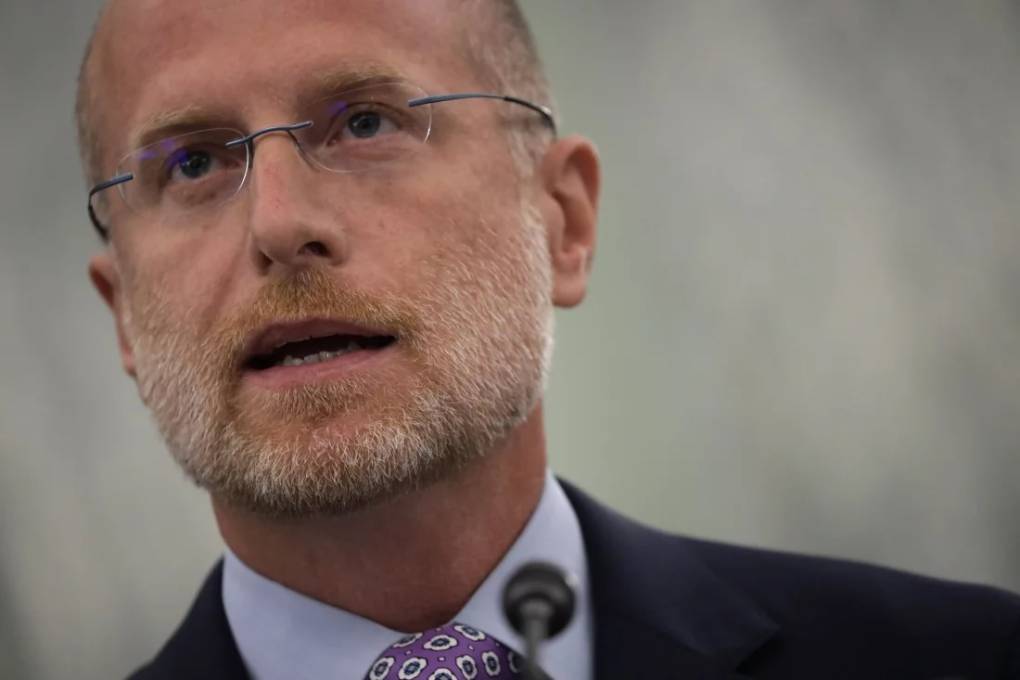
"caption": "FCC Chairman Brendan Carr says NPR and PBS may be 'broadcasting underwriting announcements that cross the line into prohibited commercial advertisements.' The networks say their broadcasts comply with federal regulations and law.",
"credit": "Alex Wong/Getty Images/Getty Images North America",
"altTag": null,
"description": null,
"imgSizes": {
"medium": {
"file": "https://cdn.kqed.org/wp-content/uploads/sites/10/2025/01/npr.brightspotcdn-copy-57-800x533.jpg",
"width": 800,
"height": 533,
"mimeType": "image/jpeg"
},
"large": {
"file": "https://cdn.kqed.org/wp-content/uploads/sites/10/2025/01/npr.brightspotcdn-copy-57-1020x680.jpg",
"width": 1020,
"height": 680,
"mimeType": "image/jpeg"
},
"thumbnail": {
"file": "https://cdn.kqed.org/wp-content/uploads/sites/10/2025/01/npr.brightspotcdn-copy-57-160x107.jpg",
"width": 160,
"height": 107,
"mimeType": "image/jpeg"
},
"post-thumbnail": {
"file": "https://cdn.kqed.org/wp-content/uploads/sites/10/2025/01/npr.brightspotcdn-copy-57-672x372.jpg",
"width": 672,
"height": 372,
"mimeType": "image/jpeg"
},
"twentyfourteen-full-width": {
"file": "https://cdn.kqed.org/wp-content/uploads/sites/10/2025/01/npr.brightspotcdn-copy-57-1038x576.jpg",
"width": 1038,
"height": 576,
"mimeType": "image/jpeg"
},
"kqedFullSize": {
"file": "https://cdn.kqed.org/wp-content/uploads/sites/10/2025/01/npr.brightspotcdn-copy-57.jpg",
"width": 1100,
"height": 733
}
},
"isLoading": false,
"fetchFailed": false
},
"news_12024728": {
"type": "attachments",
"id": "news_12024728",
"meta": {
"index": "attachments_1716263798",
"site": "news",
"id": "12024728",
"found": true
},
"title": "20250129_UcBerkeleyRally_GC-1",
"publishDate": 1738196347,
"status": "inherit",
"parent": 0,
"modified": 1738198234,
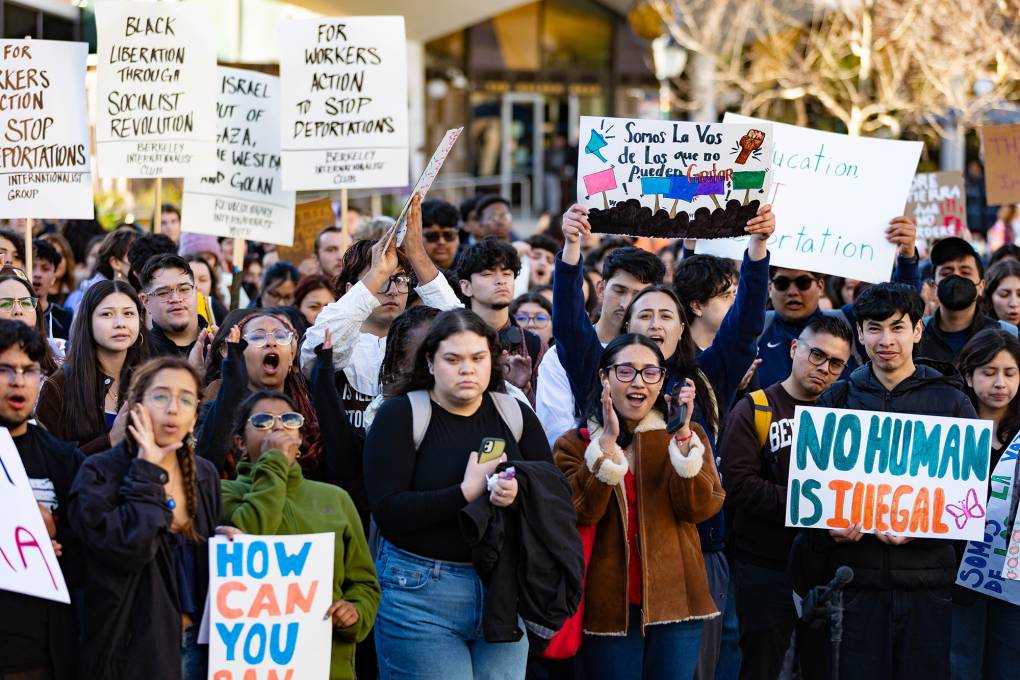
"caption": "Hundreds of students and supporters rally, in solidarity with their undocumented classmates in response to the mass deportations ordered by the Trump administration at Sproul Plaza on the UC Berkeley campus on Wednesday, Jan. 29, 2025.",
"credit": "Gina Castro/KQED",
"altTag": null,
"description": null,
"imgSizes": {
"medium": {
"file": "https://cdn.kqed.org/wp-content/uploads/sites/10/2025/01/20250129_UcBerkeleyRally_GC-1-800x533.jpg",
"width": 800,
"height": 533,
"mimeType": "image/jpeg"
},
"large": {
"file": "https://cdn.kqed.org/wp-content/uploads/sites/10/2025/01/20250129_UcBerkeleyRally_GC-1-1020x680.jpg",
"width": 1020,
"height": 680,
"mimeType": "image/jpeg"
},
"thumbnail": {
"file": "https://cdn.kqed.org/wp-content/uploads/sites/10/2025/01/20250129_UcBerkeleyRally_GC-1-160x107.jpg",
"width": 160,
"height": 107,
"mimeType": "image/jpeg"
},
"1536x1536": {
"file": "https://cdn.kqed.org/wp-content/uploads/sites/10/2025/01/20250129_UcBerkeleyRally_GC-1-1536x1024.jpg",
"width": 1536,
"height": 1024,
"mimeType": "image/jpeg"
},
"post-thumbnail": {
"file": "https://cdn.kqed.org/wp-content/uploads/sites/10/2025/01/20250129_UcBerkeleyRally_GC-1-672x372.jpg",
"width": 672,
"height": 372,
"mimeType": "image/jpeg"
},
"twentyfourteen-full-width": {
"file": "https://cdn.kqed.org/wp-content/uploads/sites/10/2025/01/20250129_UcBerkeleyRally_GC-1-1038x576.jpg",
"width": 1038,
"height": 576,
"mimeType": "image/jpeg"
},
"full-width": {
"file": "https://cdn.kqed.org/wp-content/uploads/sites/10/2025/01/20250129_UcBerkeleyRally_GC-1-1920x1280.jpg",
"width": 1920,
"height": 1280,
"mimeType": "image/jpeg"
},
"kqedFullSize": {
"file": "https://cdn.kqed.org/wp-content/uploads/sites/10/2025/01/20250129_UcBerkeleyRally_GC-1.jpg",
"width": 2000,
"height": 1333
}
},
"isLoading": false,
"fetchFailed": false
},
"news_11974804": {
"type": "attachments",
"id": "news_11974804",
"meta": {
"index": "attachments_1716263798",
"site": "news",
"id": "11974804",
"found": true
},
"title": "UCSF Health",
"publishDate": 1707236451,
"status": "inherit",
"parent": 11974782,
"modified": 1730397198,
"caption": "The outside of UCSF Health in San Francisco.",
"credit": "Smith Collection/Gado/Getty Images",
"altTag": "The exterior shot of the UCSF Health building in San Francisco.",
"description": null,
"imgSizes": {
"medium": {
"file": "https://cdn.kqed.org/wp-content/uploads/sites/10/2024/02/UCSFHealth-800x533.jpg",
"width": 800,
"height": 533,
"mimeType": "image/jpeg"
},
"large": {
"file": "https://cdn.kqed.org/wp-content/uploads/sites/10/2024/02/UCSFHealth-1020x680.jpg",
"width": 1020,
"height": 680,
"mimeType": "image/jpeg"
},
"thumbnail": {
"file": "https://cdn.kqed.org/wp-content/uploads/sites/10/2024/02/UCSFHealth-160x107.jpg",
"width": 160,
"height": 107,
"mimeType": "image/jpeg"
},
"1536x1536": {
"file": "https://cdn.kqed.org/wp-content/uploads/sites/10/2024/02/UCSFHealth-1536x1024.jpg",
"width": 1536,
"height": 1024,
"mimeType": "image/jpeg"
},
"post-thumbnail": {
"file": "https://cdn.kqed.org/wp-content/uploads/sites/10/2024/02/UCSFHealth-672x372.jpg",
"width": 672,
"height": 372,
"mimeType": "image/jpeg"
},
"twentyfourteen-full-width": {
"file": "https://cdn.kqed.org/wp-content/uploads/sites/10/2024/02/UCSFHealth-1038x576.jpg",
"width": 1038,
"height": 576,
"mimeType": "image/jpeg"
},
"kqedFullSize": {
"file": "https://cdn.kqed.org/wp-content/uploads/sites/10/2024/02/UCSFHealth.jpg",
"width": 1920,
"height": 1280
}
},
"isLoading": false,
"fetchFailed": false
},
"news_12023310": {
"type": "attachments",
"id": "news_12023310",
"meta": {
"index": "attachments_1716263798",
"site": "news",
"id": "12023310",
"found": true
},
"title": "TOPSHOT-US-POLITICS-TRUMP-INAUGURATION",
"publishDate": 1737489994,
"status": "inherit",
"parent": 12023252,
"modified": 1737569162,
"caption": "President Donald Trump signs an executive order for pardons on Jan. 6 offenders in the Oval Office of the White House in Washington, D.C., on Jan. 20, 2025. ",
"credit": "Jim Watson/AFP via Getty Images",
"altTag": null,
"description": null,
"imgSizes": {
"medium": {
"file": "https://cdn.kqed.org/wp-content/uploads/sites/10/2025/01/DonaldTrumpJanuary6PardonsGetty-800x538.jpg",
"width": 800,
"height": 538,
"mimeType": "image/jpeg"
},
"large": {
"file": "https://cdn.kqed.org/wp-content/uploads/sites/10/2025/01/DonaldTrumpJanuary6PardonsGetty-1020x686.jpg",
"width": 1020,
"height": 686,
"mimeType": "image/jpeg"
},
"thumbnail": {
"file": "https://cdn.kqed.org/wp-content/uploads/sites/10/2025/01/DonaldTrumpJanuary6PardonsGetty-160x108.jpg",
"width": 160,
"height": 108,
"mimeType": "image/jpeg"
},
"1536x1536": {
"file": "https://cdn.kqed.org/wp-content/uploads/sites/10/2025/01/DonaldTrumpJanuary6PardonsGetty-1536x1033.jpg",
"width": 1536,
"height": 1033,
"mimeType": "image/jpeg"
},
"post-thumbnail": {
"file": "https://cdn.kqed.org/wp-content/uploads/sites/10/2025/01/DonaldTrumpJanuary6PardonsGetty-672x372.jpg",
"width": 672,
"height": 372,
"mimeType": "image/jpeg"
},
"twentyfourteen-full-width": {
"file": "https://cdn.kqed.org/wp-content/uploads/sites/10/2025/01/DonaldTrumpJanuary6PardonsGetty-1038x576.jpg",
"width": 1038,
"height": 576,
"mimeType": "image/jpeg"
},
"full-width": {
"file": "https://cdn.kqed.org/wp-content/uploads/sites/10/2025/01/DonaldTrumpJanuary6PardonsGetty-1920x1291.jpg",
"width": 1920,
"height": 1291,
"mimeType": "image/jpeg"
},
"kqedFullSize": {
"file": "https://cdn.kqed.org/wp-content/uploads/sites/10/2025/01/DonaldTrumpJanuary6PardonsGetty.jpg",
"width": 2000,
"height": 1345
}
},
"isLoading": false,
"fetchFailed": false
},
"news_12024517": {
"type": "attachments",
"id": "news_12024517",
"meta": {
"index": "attachments_1716263798",
"site": "news",
"id": "12024517",
"found": true
},
"title": "President Donald Trump Signs More Executive Orders",
"publishDate": 1738124468,
"status": "inherit",
"parent": 12024454,
"modified": 1739562121,
"caption": "U.S. President Donald Trump speaks to reporters after signing a series of executive orders in the Oval Office of the White House on Jan. 23, 2025, in Washington, D.C. ",
"credit": "Anna Moneymaker/Getty Images",
"altTag": null,
"description": null,
"imgSizes": {
"medium": {
"file": "https://cdn.kqed.org/wp-content/uploads/sites/10/2025/01/GettyImages-2195559727-800x534.jpg",
"width": 800,
"height": 534,
"mimeType": "image/jpeg"
},
"large": {
"file": "https://cdn.kqed.org/wp-content/uploads/sites/10/2025/01/GettyImages-2195559727-1020x680.jpg",
"width": 1020,
"height": 680,
"mimeType": "image/jpeg"
},
"thumbnail": {
"file": "https://cdn.kqed.org/wp-content/uploads/sites/10/2025/01/GettyImages-2195559727-160x107.jpg",
"width": 160,
"height": 107,
"mimeType": "image/jpeg"
},
"post-thumbnail": {
"file": "https://cdn.kqed.org/wp-content/uploads/sites/10/2025/01/GettyImages-2195559727-672x372.jpg",
"width": 672,
"height": 372,
"mimeType": "image/jpeg"
},
"twentyfourteen-full-width": {
"file": "https://cdn.kqed.org/wp-content/uploads/sites/10/2025/01/GettyImages-2195559727-1024x576.jpg",
"width": 1024,
"height": 576,
"mimeType": "image/jpeg"
},
"kqedFullSize": {
"file": "https://cdn.kqed.org/wp-content/uploads/sites/10/2025/01/GettyImages-2195559727.jpg",
"width": 1024,
"height": 683
}
},
"isLoading": false,
"fetchFailed": false
},
"news_12024324": {
"type": "attachments",
"id": "news_12024324",
"meta": {
"index": "attachments_1716263798",
"site": "news",
"id": "12024324",
"found": true
},
"title": "20240524_MobileHeadStart-41_qed",
"publishDate": 1738085781,
"status": "inherit",
"parent": 12024321,
"modified": 1738113694,
"caption": "Five-year-old Chloe draws flowers at Lincoln Square Park in Oakland on Friday, May 24, 2024. Last year, the city of Oakland introduced its “Ready, Set, Go” vehicle, an RV converted into a Head Start classroom, which travels to homeless shelters, providing educational and social services to families experiencing housing instability.",
"credit": "Gina Castro/KQED",
"altTag": null,
"description": null,
"imgSizes": {
"medium": {
"file": "https://cdn.kqed.org/wp-content/uploads/sites/10/2025/01/20240524_MobileHeadStart-41_qed-800x533.jpg",
"width": 800,
"height": 533,
"mimeType": "image/jpeg"
},
"large": {
"file": "https://cdn.kqed.org/wp-content/uploads/sites/10/2025/01/20240524_MobileHeadStart-41_qed-1020x680.jpg",
"width": 1020,
"height": 680,
"mimeType": "image/jpeg"
},
"thumbnail": {
"file": "https://cdn.kqed.org/wp-content/uploads/sites/10/2025/01/20240524_MobileHeadStart-41_qed-160x107.jpg",
"width": 160,
"height": 107,
"mimeType": "image/jpeg"
},
"1536x1536": {
"file": "https://cdn.kqed.org/wp-content/uploads/sites/10/2025/01/20240524_MobileHeadStart-41_qed-1536x1024.jpg",
"width": 1536,
"height": 1024,
"mimeType": "image/jpeg"
},
"post-thumbnail": {
"file": "https://cdn.kqed.org/wp-content/uploads/sites/10/2025/01/20240524_MobileHeadStart-41_qed-672x372.jpg",
"width": 672,
"height": 372,
"mimeType": "image/jpeg"
},
"twentyfourteen-full-width": {
"file": "https://cdn.kqed.org/wp-content/uploads/sites/10/2025/01/20240524_MobileHeadStart-41_qed-1038x576.jpg",
"width": 1038,
"height": 576,
"mimeType": "image/jpeg"
},
"full-width": {
"file": "https://cdn.kqed.org/wp-content/uploads/sites/10/2025/01/20240524_MobileHeadStart-41_qed-1920x1280.jpg",
"width": 1920,
"height": 1280,
"mimeType": "image/jpeg"
},
"kqedFullSize": {
"file": "https://cdn.kqed.org/wp-content/uploads/sites/10/2025/01/20240524_MobileHeadStart-41_qed.jpg",
"width": 2000,
"height": 1333
}
},
"isLoading": false,
"fetchFailed": false
},
"news_12024435": {
"type": "attachments",
"id": "news_12024435",
"meta": {
"index": "attachments_1716263798",
"site": "news",
"id": "12024435",
"found": true
},
"title": "250128-SFImmigration-30-BL",
"publishDate": 1738105128,
"status": "inherit",
"parent": 12028703,
"modified": 1740618033,
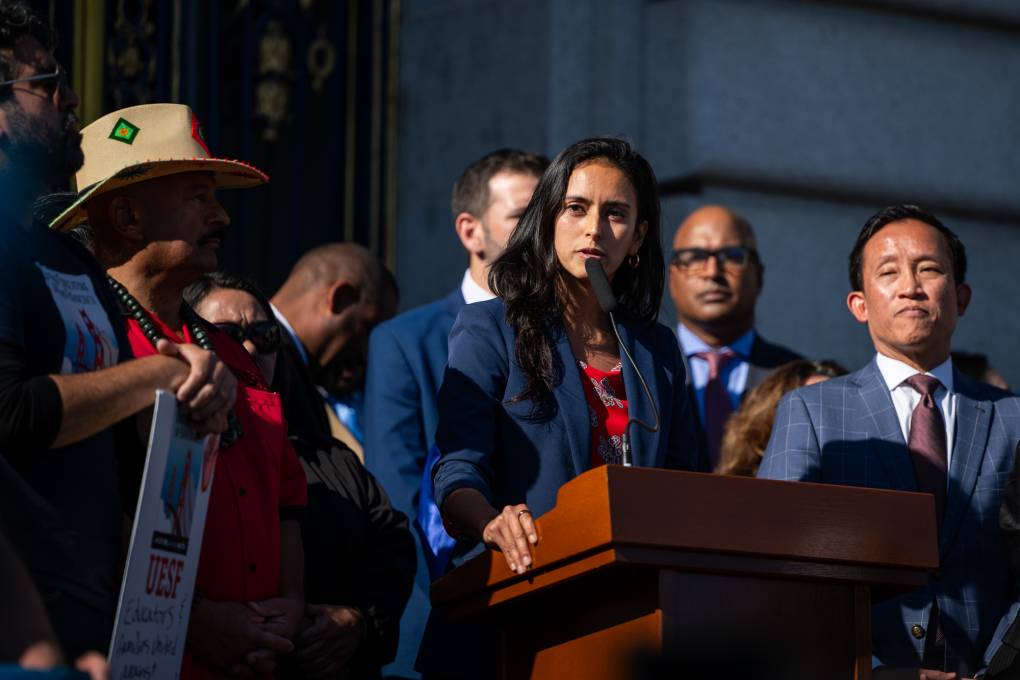
"caption": "San Francisco Supervisor Jackie Fielder speaks during a press conference with elected and public safety officials and labor leaders in front of City Hall in San Francisco on Tuesday, Jan. 28, 2025, to reaffirm San Francisco’s commitment to being a Sanctuary City.",
"credit": "Beth LaBerge/KQED",
"altTag": null,
"description": null,
"imgSizes": {
"medium": {
"file": "https://cdn.kqed.org/wp-content/uploads/sites/10/2025/01/250128-SFImmigration-30-BL-800x533.jpg",
"width": 800,
"height": 533,
"mimeType": "image/jpeg"
},
"large": {
"file": "https://cdn.kqed.org/wp-content/uploads/sites/10/2025/01/250128-SFImmigration-30-BL-1020x680.jpg",
"width": 1020,
"height": 680,
"mimeType": "image/jpeg"
},
"thumbnail": {
"file": "https://cdn.kqed.org/wp-content/uploads/sites/10/2025/01/250128-SFImmigration-30-BL-160x107.jpg",
"width": 160,
"height": 107,
"mimeType": "image/jpeg"
},
"1536x1536": {
"file": "https://cdn.kqed.org/wp-content/uploads/sites/10/2025/01/250128-SFImmigration-30-BL-1536x1024.jpg",
"width": 1536,
"height": 1024,
"mimeType": "image/jpeg"
},
"post-thumbnail": {
"file": "https://cdn.kqed.org/wp-content/uploads/sites/10/2025/01/250128-SFImmigration-30-BL-672x372.jpg",
"width": 672,
"height": 372,
"mimeType": "image/jpeg"
},
"twentyfourteen-full-width": {
"file": "https://cdn.kqed.org/wp-content/uploads/sites/10/2025/01/250128-SFImmigration-30-BL-1038x576.jpg",
"width": 1038,
"height": 576,
"mimeType": "image/jpeg"
},
"full-width": {
"file": "https://cdn.kqed.org/wp-content/uploads/sites/10/2025/01/250128-SFImmigration-30-BL-1920x1280.jpg",
"width": 1920,
"height": 1280,
"mimeType": "image/jpeg"
},
"kqedFullSize": {
"file": "https://cdn.kqed.org/wp-content/uploads/sites/10/2025/01/250128-SFImmigration-30-BL.jpg",
"width": 2000,
"height": 1333
}
},
"isLoading": false,
"fetchFailed": false
},
"news_12024404": {
"type": "attachments",
"id": "news_12024404",
"meta": {
"index": "attachments_1716263798",
"site": "news",
"id": "12024404",
"found": true
},
"title": "ice-raids-california",
"publishDate": 1738101120,
"status": "inherit",
"parent": 12024332,
"modified": 1738101189,
"caption": "Since the inauguration of President Donald Trump, fear and panic about possible ICE raids has spread in California.",
"credit": null,
"altTag": null,
"description": null,
"imgSizes": {
"medium": {
"file": "https://cdn.kqed.org/wp-content/uploads/sites/10/2025/01/GettyImages-2192874110-800x533.png",
"width": 800,
"height": 533,
"mimeType": "image/png"
},
"large": {
"file": "https://cdn.kqed.org/wp-content/uploads/sites/10/2025/01/GettyImages-2192874110-1020x680.png",
"width": 1020,
"height": 680,
"mimeType": "image/png"
},
"thumbnail": {
"file": "https://cdn.kqed.org/wp-content/uploads/sites/10/2025/01/GettyImages-2192874110-160x107.png",
"width": 160,
"height": 107,
"mimeType": "image/png"
},
"1536x1536": {
"file": "https://cdn.kqed.org/wp-content/uploads/sites/10/2025/01/GettyImages-2192874110-1536x1024.png",
"width": 1536,
"height": 1024,
"mimeType": "image/png"
},
"post-thumbnail": {
"file": "https://cdn.kqed.org/wp-content/uploads/sites/10/2025/01/GettyImages-2192874110-672x372.png",
"width": 672,
"height": 372,
"mimeType": "image/png"
},
"twentyfourteen-full-width": {
"file": "https://cdn.kqed.org/wp-content/uploads/sites/10/2025/01/GettyImages-2192874110-1038x576.png",
"width": 1038,
"height": 576,
"mimeType": "image/png"
},
"kqedFullSize": {
"file": "https://cdn.kqed.org/wp-content/uploads/sites/10/2025/01/GettyImages-2192874110.png",
"width": 1920,
"height": 1280
}
},
"isLoading": false,
"fetchFailed": false
}
},
"audioPlayerReducer": {
"postId": "stream_live",
"isPaused": true,
"isPlaying": false,
"pfsActive": false,
"pledgeModalIsOpen": true,
"playerDrawerIsOpen": false,
"liveAudioPlayStartedAt": 0,
"liveAudioPlayContext": ""
},
"authorsReducer": {
"byline_news_12024893": {
"type": "authors",
"id": "byline_news_12024893",
"meta": {
"override": true
},
"slug": "byline_news_12024893",
"name": "\u003ca href=\"https://www.npr.org/people/4459112/david-folkenflik\">David Folkenflik\u003c/a>, NPR",
"isLoading": false
},
"mlagos": {
"type": "authors",
"id": "3239",
"meta": {
"index": "authors_1716337520",
"id": "3239",
"found": true
},
"name": "Marisa Lagos",
"firstName": "Marisa",
"lastName": "Lagos",
"slug": "mlagos",
"email": "mlagos@kqed.org",
"display_author_email": false,
"staff_mastheads": [
"news"
],
"title": "KQED Contributor",
"bio": "Marisa Lagos is a correspondent for KQED’s California Politics and Government Desk and co-hosts the award-winning show and podcast, Political Breakdown. At KQED, Lagos also conducts reporting, analysis and investigations into state, local and national politics for radio, TV, online and onstage. In 2022, she and co-host, Scott Shafer, moderated the only gubernatorial debate in California. In 2020, the \u003ci>Washington Post\u003c/i> named her one of the top political journalists in California; she was nominated for a Peabody and won several other awards for her work investigating the 2017 California wildfires. She has worked at the \u003ci>San Francisco Chronicle\u003c/i>, \u003ci>San Francisco Examiner\u003c/i> and \u003ci>Los Angeles Times\u003c/i>. A UC Santa Barbara graduate, she lives in San Francisco with her two sons and husband.",
"avatar": "https://secure.gravatar.com/avatar/a261a0d3696fc066871ef96b85b5e7d2?s=600&d=blank&r=g",
"twitter": "@mlagos",
"facebook": null,
"instagram": null,
"linkedin": null,
"sites": [
{
"site": "arts",
"roles": [
"author"
]
},
{
"site": "news",
"roles": [
"editor"
]
},
{
"site": "science",
"roles": [
"editor"
]
},
{
"site": "forum",
"roles": [
"author"
]
},
{
"site": "liveblog",
"roles": [
"author"
]
}
],
"headData": {
"title": "Marisa Lagos | KQED",
"description": "KQED Contributor",
"ogImgSrc": "https://secure.gravatar.com/avatar/a261a0d3696fc066871ef96b85b5e7d2?s=600&d=blank&r=g",
"twImgSrc": "https://secure.gravatar.com/avatar/a261a0d3696fc066871ef96b85b5e7d2?s=600&d=blank&r=g"
},
"isLoading": false,
"link": "/author/mlagos"
},
"carlysevern": {
"type": "authors",
"id": "3243",
"meta": {
"index": "authors_1716337520",
"id": "3243",
"found": true
},
"name": "Carly Severn",
"firstName": "Carly",
"lastName": "Severn",
"slug": "carlysevern",
"email": "csevern@kqed.org",
"display_author_email": false,
"staff_mastheads": [
"news"
],
"title": "Senior Editor, Audience News ",
"bio": "Carly is KQED's Senior Editor of Audience News on the Digital News team, and has reported for the California Report Magazine, Bay Curious and KQED Arts. She's formerly the host of \u003ca href=\"http://ww2.kqed.org/pop/category/the-cooler/\" rel=\"noopener noreferrer\">The Cooler\u003c/a> podcast.",
"avatar": "https://secure.gravatar.com/avatar/2d8d6765f186e64c798cf7f0c8088a41?s=600&d=blank&r=g",
"twitter": "teacupinthebay",
"facebook": null,
"instagram": null,
"linkedin": null,
"sites": [
{
"site": "",
"roles": [
"editor"
]
},
{
"site": "arts",
"roles": [
"editor"
]
},
{
"site": "news",
"roles": [
"administrator"
]
},
{
"site": "pop",
"roles": [
"editor"
]
},
{
"site": "futureofyou",
"roles": [
"editor"
]
},
{
"site": "about",
"roles": [
"administrator"
]
},
{
"site": "mindshift",
"roles": [
"editor"
]
},
{
"site": "bayareabites",
"roles": [
"editor"
]
},
{
"site": "stateofhealth",
"roles": [
"editor"
]
},
{
"site": "science",
"roles": [
"editor"
]
},
{
"site": "food",
"roles": [
"contributor"
]
},
{
"site": "forum",
"roles": [
"editor"
]
},
{
"site": "perspectives",
"roles": [
"administrator"
]
},
{
"site": "liveblog",
"roles": [
"editor"
]
}
],
"headData": {
"title": "Carly Severn | KQED",
"description": "Senior Editor, Audience News ",
"ogImgSrc": "https://secure.gravatar.com/avatar/2d8d6765f186e64c798cf7f0c8088a41?s=600&d=blank&r=g",
"twImgSrc": "https://secure.gravatar.com/avatar/2d8d6765f186e64c798cf7f0c8088a41?s=600&d=blank&r=g"
},
"isLoading": false,
"link": "/author/carlysevern"
},
"ecruzguevarra": {
"type": "authors",
"id": "8654",
"meta": {
"index": "authors_1716337520",
"id": "8654",
"found": true
},
"name": "Ericka Cruz Guevarra",
"firstName": "Ericka",
"lastName": "Cruz Guevarra",
"slug": "ecruzguevarra",
"email": "ecruzguevarra@kqed.org",
"display_author_email": true,
"staff_mastheads": [
"news"
],
"title": "Producer, The Bay Podcast",
"bio": "Ericka Cruz Guevarra is host of \u003ca href=\"https://www.kqed.org/podcasts/thebay\">\u003cem>The Bay\u003c/em>\u003c/a> podcast at KQED. Before host, she was the show’s producer. Her work in that capacity includes a three-part reported series on policing in Vallejo, which won a 2020 excellence in journalism award from the Society of Professional Journalists. Ericka has worked as a breaking news reporter at Oregon Public Broadcasting, helped produce the Code Switch podcast, and was KQED’s inaugural Raul Ramirez Diversity Fund intern. She’s also an alumna of NPR’s Next Generation Radio program. Send her an email if you have strong feelings about whether Fairfield and Suisun City are the Bay. Ericka is represented by SAG-AFTRA.",
"avatar": "https://secure.gravatar.com/avatar/25e5ab8d3d53fad2dcc7bb2b5c506b1a?s=600&d=blank&r=g",
"twitter": "NotoriousECG",
"facebook": null,
"instagram": null,
"linkedin": null,
"sites": [
{
"site": "arts",
"roles": [
"subscriber"
]
},
{
"site": "news",
"roles": [
"editor",
"manage_categories"
]
},
{
"site": "futureofyou",
"roles": [
"subscriber"
]
},
{
"site": "stateofhealth",
"roles": [
"subscriber"
]
},
{
"site": "science",
"roles": [
"editor"
]
},
{
"site": "forum",
"roles": [
"subscriber"
]
}
],
"headData": {
"title": "Ericka Cruz Guevarra | KQED",
"description": "Producer, The Bay Podcast",
"ogImgSrc": "https://secure.gravatar.com/avatar/25e5ab8d3d53fad2dcc7bb2b5c506b1a?s=600&d=blank&r=g",
"twImgSrc": "https://secure.gravatar.com/avatar/25e5ab8d3d53fad2dcc7bb2b5c506b1a?s=600&d=blank&r=g"
},
"isLoading": false,
"link": "/author/ecruzguevarra"
},
"fjhabvala": {
"type": "authors",
"id": "8659",
"meta": {
"index": "authors_1716337520",
"id": "8659",
"found": true
},
"name": "Farida Jhabvala Romero",
"firstName": "Farida",
"lastName": "Jhabvala Romero",
"slug": "fjhabvala",
"email": "fjhabvala@kqed.org",
"display_author_email": true,
"staff_mastheads": [
"news"
],
"title": "KQED Contributor",
"bio": "\u003cspan style=\"font-weight: 400;\">Farida Jhabvala Romero is a Labor Correspondent for KQED. She previously covered immigration. Farida was \u003ca href=\"https://www.ccnma.org/2022-most-influential-latina-journalists\">named\u003c/a> one of the 10 Most Influential Latina Journalists in California in 2022 by the California Chicano News Media Association. Her work has won awards from the Society of Professional Journalists (Northern California), as well as a national and regional Edward M. Murrow Award for the collaborative reporting projects “Dangerous Air” and “Graying California.” \u003c/span>\u003cspan style=\"font-weight: 400;\">Before joining KQED, Farida worked as a producer at Radio Bilingüe, a national public radio network. Farida earned her master’s degree in journalism from Stanford University.\u003c/span>",
"avatar": "https://secure.gravatar.com/avatar/c3ab27c5554b67b478f80971e515aa02?s=600&d=blank&r=g",
"twitter": "FaridaJhabvala",
"facebook": null,
"instagram": null,
"linkedin": "https://www.linkedin.com/in/faridajhabvala/",
"sites": [
{
"site": "news",
"roles": [
"editor"
]
},
{
"site": "stateofhealth",
"roles": [
"author"
]
}
],
"headData": {
"title": "Farida Jhabvala Romero | KQED",
"description": "KQED Contributor",
"ogImgSrc": "https://secure.gravatar.com/avatar/c3ab27c5554b67b478f80971e515aa02?s=600&d=blank&r=g",
"twImgSrc": "https://secure.gravatar.com/avatar/c3ab27c5554b67b478f80971e515aa02?s=600&d=blank&r=g"
},
"isLoading": false,
"link": "/author/fjhabvala"
},
"lesleymcclurg": {
"type": "authors",
"id": "11229",
"meta": {
"index": "authors_1716337520",
"id": "11229",
"found": true
},
"name": "Lesley McClurg",
"firstName": "Lesley",
"lastName": "McClurg",
"slug": "lesleymcclurg",
"email": "lmcclurg@KQED.org",
"display_author_email": false,
"staff_mastheads": [
"news",
"science"
],
"title": "KQED Health Correspondent",
"bio": "Lesley McClurg is a health correspondent and fill-in host whose work is regularly rebroadcast on NPR and PBS programs. She’s earned multiple regional Emmy awards, a national and a regional Edward R. Murrow award, and was named Best Beat Reporter by the Association of Health Care Journalists. The Society of Professional Journalists has recognized her work several times, and the Society of Environmental Journalists spotlighted her coverage of California’s historic drought.\r\n\r\nBefore joining KQED in 2016, Lesley covered food and sustainability for Capital Public Radio, environmental issues for Colorado Public Radio, and reported for KUOW and KCTS 9 in Seattle. Away from the newsroom, she loves skiing with her daughter, mountain biking with her partner, and playing with Ollie, the family’s goldendoodle. On deadline, she runs almost entirely on chocolate chips.\r\n\r\n ",
"avatar": "https://secure.gravatar.com/avatar/bab49e972ea10c774fe0f5e29dba1722b158f7c0d58a360923d1389d380b2978?s=600&d=blank&r=g",
"twitter": "lesleywmcclurg",
"bluesky": null,
"facebook": null,
"instagram": null,
"linkedin": null,
"sites": [
{
"site": "arts",
"roles": [
"author"
]
},
{
"site": "news",
"roles": [
"editor"
]
},
{
"site": "futureofyou",
"roles": [
"editor"
]
},
{
"site": "stateofhealth",
"roles": [
"author"
]
},
{
"site": "science",
"roles": [
"editor"
]
},
{
"site": "quest",
"roles": [
"subscriber"
]
},
{
"site": "forum",
"roles": [
"administrator"
]
},
{
"site": "liveblog",
"roles": [
"author"
]
}
],
"headData": {
"title": "Lesley McClurg | KQED",
"description": "KQED Health Correspondent",
"ogImgSrc": "https://secure.gravatar.com/avatar/bab49e972ea10c774fe0f5e29dba1722b158f7c0d58a360923d1389d380b2978?s=600&d=blank&r=g",
"twImgSrc": "https://secure.gravatar.com/avatar/bab49e972ea10c774fe0f5e29dba1722b158f7c0d58a360923d1389d380b2978?s=600&d=blank&r=g"
},
"isLoading": false,
"link": "/author/lesleymcclurg"
},
"amontecillo": {
"type": "authors",
"id": "11649",
"meta": {
"index": "authors_1716337520",
"id": "11649",
"found": true
},
"name": "Alan Montecillo",
"firstName": "Alan",
"lastName": "Montecillo",
"slug": "amontecillo",
"email": "amontecillo@kqed.org",
"display_author_email": false,
"staff_mastheads": [
"news"
],
"title": "KQED Contributor",
"bio": "Alan Montecillo is the senior editor of \u003cem>\u003ca href=\"http://kqed.org/thebay\">The Bay\u003c/a>, \u003c/em> KQED's local news podcast. Before moving to the Bay Area, he worked as a senior talk show producer for WILL in Champaign-Urbana, Illinois and at Oregon Public Broadcasting in Portland, Oregon. He has won journalism awards from the Society of Professional Journalists Northern California, the Public Media Journalists Association, The Signal Awards, and has also received a regional Edward R. Murrow award. Alan is a Filipino American from Hong Kong and a graduate of Reed College.",
"avatar": "https://secure.gravatar.com/avatar/d5e4e7a76481969ccba76f4e2b5ccabc?s=600&d=blank&r=g",
"twitter": "alanmontecillo",
"facebook": null,
"instagram": null,
"linkedin": null,
"sites": [
{
"site": "",
"roles": [
"editor"
]
},
{
"site": "news",
"roles": [
"editor",
"manage_categories"
]
}
],
"headData": {
"title": "Alan Montecillo | KQED",
"description": "KQED Contributor",
"ogImgSrc": "https://secure.gravatar.com/avatar/d5e4e7a76481969ccba76f4e2b5ccabc?s=600&d=blank&r=g",
"twImgSrc": "https://secure.gravatar.com/avatar/d5e4e7a76481969ccba76f4e2b5ccabc?s=600&d=blank&r=g"
},
"isLoading": false,
"link": "/author/amontecillo"
},
"msolomon": {
"type": "authors",
"id": "11651",
"meta": {
"index": "authors_1716337520",
"id": "11651",
"found": true
},
"name": "Molly Solomon",
"firstName": "Molly",
"lastName": "Solomon",
"slug": "msolomon",
"email": "msolomon@KQED.org",
"display_author_email": false,
"staff_mastheads": [
"news"
],
"title": "Senior Editor",
"bio": "Molly Solomon is the senior editor of KQED's California Politics and Government Desk. Previously, she was the station's editor-at-large, with a focus on editing early childhood education, politics, and criminal justice. Before that, she managed and edited statewide election coverage for The California Newsroom, a collaboration of local public radio stations, CalMatters and NPR. Molly joined KQED in 2019 to launch the station’s housing affordability desk, where she reported on homelessness, evictions and is the co-host of KQED’s housing podcast, SOLD OUT: Rethinking Housing in America. Before that, she was the Southwest Washington Bureau Chief for Oregon Public Broadcasting and a reporter at Hawaii Public Radio. Her stories have aired on NPR’s \u003cem>Morning Edition\u003c/em>, \u003cem>All Things Considered\u003c/em>, \u003cem>Here & Now\u003c/em>, \u003cem>Science Friday\u003c/em> and \u003cem>Marketplace\u003c/em>. Molly's award-winning reporting has been honored by the Best of the West, Edward R. Murrow awards, Society of Professional Journalists, National Headliner Awards, and the Asian American Journalists Association. Born and raised in Berkeley, Molly is a big fan of burritos and her scruffy terrier, Ollie.",
"avatar": "https://secure.gravatar.com/avatar/9ad9794616923d81c9a79897161545bd?s=600&d=blank&r=g",
"twitter": "solomonout",
"facebook": null,
"instagram": null,
"linkedin": null,
"sites": [
{
"site": "news",
"roles": [
"editor"
]
},
{
"site": "science",
"roles": [
"editor"
]
}
],
"headData": {
"title": "Molly Solomon | KQED",
"description": "Senior Editor",
"ogImgSrc": "https://secure.gravatar.com/avatar/9ad9794616923d81c9a79897161545bd?s=600&d=blank&r=g",
"twImgSrc": "https://secure.gravatar.com/avatar/9ad9794616923d81c9a79897161545bd?s=600&d=blank&r=g"
},
"isLoading": false,
"link": "/author/msolomon"
},
"ccabreralomeli": {
"type": "authors",
"id": "11708",
"meta": {
"index": "authors_1716337520",
"id": "11708",
"found": true
},
"name": "Carlos Cabrera-Lomelí",
"firstName": "Carlos",
"lastName": "Cabrera-Lomelí",
"slug": "ccabreralomeli",
"email": "ccabreralomeli@KQED.org",
"display_author_email": true,
"staff_mastheads": [
"news"
],
"title": "Community Reporter",
"bio": "Carlos Cabrera-Lomelí is a community reporter with KQED's digital engagement team. He also reports and co-produces for KQED's bilingual news hub KQED en Español. He grew up in San Francisco's Mission District and has previously worked with Univision, 48 Hills and REFORMA in Mexico City.",
"avatar": "https://secure.gravatar.com/avatar/c309be9665e484f887b818c89e273ecc673004f426f36b24d00a4d813a2e0518?s=600&d=blank&r=g",
"twitter": "@LomeliCabrera",
"bluesky": null,
"facebook": null,
"instagram": null,
"linkedin": null,
"sites": [
{
"site": "arts",
"roles": [
"editor"
]
},
{
"site": "news",
"roles": [
"editor"
]
},
{
"site": "about",
"roles": [
"editor"
]
},
{
"site": "science",
"roles": [
"editor"
]
},
{
"site": "perspectives",
"roles": [
"editor"
]
},
{
"site": "elections",
"roles": [
"editor"
]
},
{
"site": "liveblog",
"roles": [
"contributor"
]
}
],
"headData": {
"title": "Carlos Cabrera-Lomelí | KQED",
"description": "Community Reporter",
"ogImgSrc": "https://secure.gravatar.com/avatar/c309be9665e484f887b818c89e273ecc673004f426f36b24d00a4d813a2e0518?s=600&d=blank&r=g",
"twImgSrc": "https://secure.gravatar.com/avatar/c309be9665e484f887b818c89e273ecc673004f426f36b24d00a4d813a2e0518?s=600&d=blank&r=g"
},
"isLoading": false,
"link": "/author/ccabreralomeli"
},
"daisynguyen": {
"type": "authors",
"id": "11829",
"meta": {
"index": "authors_1716337520",
"id": "11829",
"found": true
},
"name": "Daisy Nguyen",
"firstName": "Daisy",
"lastName": "Nguyen",
"slug": "daisynguyen",
"email": "daisynguyen@kqed.org",
"display_author_email": true,
"staff_mastheads": [
"news"
],
"title": "KQED Contributor",
"bio": "I have covered early childhood education and child care for KQED since 2022. I focus on policies aimed at increasing access to early care and education and how they shape individual lives. I've been a journalist for more than two decades, with most of that time devoted to covering breaking news throughout California for The Associated Press. I grew up in San Francisco and studied at UC Davis and Columbia University's Graduate School of Journalism. I live in Oakland with my husband and two kids.",
"avatar": "https://secure.gravatar.com/avatar/2da2127c27f7143b53ebd419800fd55f?s=600&d=blank&r=g",
"twitter": null,
"facebook": null,
"instagram": null,
"linkedin": "https://www.linkedin.com/in/daisynguyen/",
"sites": [
{
"site": "news",
"roles": [
"author"
]
},
{
"site": "liveblog",
"roles": [
"author"
]
}
],
"headData": {
"title": "Daisy Nguyen | KQED",
"description": "KQED Contributor",
"ogImgSrc": "https://secure.gravatar.com/avatar/2da2127c27f7143b53ebd419800fd55f?s=600&d=blank&r=g",
"twImgSrc": "https://secure.gravatar.com/avatar/2da2127c27f7143b53ebd419800fd55f?s=600&d=blank&r=g"
},
"isLoading": false,
"link": "/author/daisynguyen"
},
"jessicakariisa": {
"type": "authors",
"id": "11831",
"meta": {
"index": "authors_1716337520",
"id": "11831",
"found": true
},
"name": "Jessica Kariisa",
"firstName": "Jessica",
"lastName": "Kariisa",
"slug": "jessicakariisa",
"email": "jkariisa@kqed.org",
"display_author_email": false,
"staff_mastheads": [],
"title": "Producer, The Bay",
"bio": "Jessica Kariisa is the producer of The Bay. She first joined KQED as an intern for The California Report Magazine, after which she became an on-call producer. She reported a Bay Curious episode on the use of rap lyrics in criminal trials which won a Society of Professional Journalists award in 2023 for Excellence in Features Journalism and the 2023 Signal Award for Best Conversation Starter. She’s worked on podcasts for Snap Judgment and American Public Media. Before embarking on her audio career, she was a music journalist.\r\n\r\nJessica Kariisa is represented by SAG-AFTRA.",
"avatar": "https://secure.gravatar.com/avatar/522e97b28ac0b3d411621c0fde8f3419c7b71ea2c5c262c57c4bb600963f328c?s=600&d=blank&r=g",
"twitter": null,
"bluesky": null,
"facebook": null,
"instagram": null,
"linkedin": null,
"sites": [
{
"site": "arts",
"roles": [
"author"
]
},
{
"site": "news",
"roles": [
"editor",
"manage_categories"
]
}
],
"headData": {
"title": "Jessica Kariisa | KQED",
"description": "Producer, The Bay",
"ogImgSrc": "https://secure.gravatar.com/avatar/522e97b28ac0b3d411621c0fde8f3419c7b71ea2c5c262c57c4bb600963f328c?s=600&d=blank&r=g",
"twImgSrc": "https://secure.gravatar.com/avatar/522e97b28ac0b3d411621c0fde8f3419c7b71ea2c5c262c57c4bb600963f328c?s=600&d=blank&r=g"
},
"isLoading": false,
"link": "/author/jessicakariisa"
},
"nkhan": {
"type": "authors",
"id": "11867",
"meta": {
"index": "authors_1716337520",
"id": "11867",
"found": true
},
"name": "Nisa Khan",
"firstName": "Nisa",
"lastName": "Khan",
"slug": "nkhan",
"email": "nkhan@kqed.org",
"display_author_email": false,
"staff_mastheads": [],
"title": "KQED Contributor",
"bio": "Nisa Khan is a reporter for KQED's Audience News Desk. She was formerly a data reporter at Michigan Radio. She earned a Bachelor of Science in Information from the University of Michigan and a Master of Arts in Communication from Stanford University.",
"avatar": "https://secure.gravatar.com/avatar/a3bf1efcfbe7658d13a434cc54d0b2e3?s=600&d=blank&r=g",
"twitter": "mnisakhan",
"bluesky": null,
"facebook": null,
"instagram": null,
"linkedin": null,
"sites": [
{
"site": "arts",
"roles": [
"editor"
]
},
{
"site": "news",
"roles": [
"editor"
]
},
{
"site": "science",
"roles": [
"editor",
"author"
]
},
{
"site": "forum",
"roles": [
"editor"
]
},
{
"site": "liveblog",
"roles": [
"contributor"
]
}
],
"headData": {
"title": "Nisa Khan | KQED",
"description": "KQED Contributor",
"ogImgSrc": "https://secure.gravatar.com/avatar/a3bf1efcfbe7658d13a434cc54d0b2e3?s=600&d=blank&r=g",
"twImgSrc": "https://secure.gravatar.com/avatar/a3bf1efcfbe7658d13a434cc54d0b2e3?s=600&d=blank&r=g"
},
"isLoading": false,
"link": "/author/nkhan"
},
"kdebenedetti": {
"type": "authors",
"id": "11913",
"meta": {
"index": "authors_1716337520",
"id": "11913",
"found": true
},
"name": "Katie DeBenedetti",
"firstName": "Katie",
"lastName": "DeBenedetti",
"slug": "kdebenedetti",
"email": "kdebenedetti@kqed.org",
"display_author_email": false,
"staff_mastheads": [
"news",
"science"
],
"title": "KQED Contributor",
"bio": "Katie DeBenedetti is a digital reporter covering daily news for the Express Desk. Prior to joining KQED as a culture reporting intern in January 2024, she covered education and city government for the Napa Valley Register.",
"avatar": "https://secure.gravatar.com/avatar/6e31073cb8f7e4214ab03f42771d0f45?s=600&d=blank&r=g",
"twitter": null,
"facebook": null,
"instagram": null,
"linkedin": null,
"sites": [
{
"site": "news",
"roles": [
"author"
]
},
{
"site": "science",
"roles": [
"author"
]
},
{
"site": "liveblog",
"roles": [
"author"
]
}
],
"headData": {
"title": "Katie DeBenedetti | KQED",
"description": "KQED Contributor",
"ogImgSrc": "https://secure.gravatar.com/avatar/6e31073cb8f7e4214ab03f42771d0f45?s=600&d=blank&r=g",
"twImgSrc": "https://secure.gravatar.com/avatar/6e31073cb8f7e4214ab03f42771d0f45?s=600&d=blank&r=g"
},
"isLoading": false,
"link": "/author/kdebenedetti"
},
"slim": {
"type": "authors",
"id": "11920",
"meta": {
"index": "authors_1716337520",
"id": "11920",
"found": true
},
"name": "Samantha Lim",
"firstName": "Samantha",
"lastName": "Lim",
"slug": "slim",
"email": "slim@KQED.org",
"display_author_email": false,
"staff_mastheads": [],
"title": "KQED Contributor",
"bio": null,
"avatar": "https://secure.gravatar.com/avatar/82e592e6c15fe1a04d385e8ad0fb0b4e?s=600&d=blank&r=g",
"twitter": null,
"facebook": null,
"instagram": null,
"linkedin": null,
"sites": [
{
"site": "news",
"roles": []
}
],
"headData": {
"title": "Samantha Lim | KQED",
"description": "KQED Contributor",
"ogImgSrc": "https://secure.gravatar.com/avatar/82e592e6c15fe1a04d385e8ad0fb0b4e?s=600&d=blank&r=g",
"twImgSrc": "https://secure.gravatar.com/avatar/82e592e6c15fe1a04d385e8ad0fb0b4e?s=600&d=blank&r=g"
},
"isLoading": false,
"link": "/author/slim"
},
"rcooke": {
"type": "authors",
"id": "11921",
"meta": {
"index": "authors_1716337520",
"id": "11921",
"found": true
},
"name": "Riley Cooke",
"firstName": "Riley",
"lastName": "Cooke",
"slug": "rcooke",
"email": "rcooke@kqed.org",
"display_author_email": true,
"staff_mastheads": [
"news"
],
"title": "KQED Contributor",
"bio": "Riley is a senior at UC Berkeley, where she studies political science and journalism. Her work has appeared in SFGate, NBC Bay Area, Local News Matters and more. She enjoys reporting on politics, housing and homelessness — and using as many em dashes as her editors will allow.",
"avatar": "https://secure.gravatar.com/avatar/792f98c126cc5e270a8a96f77f7224ea?s=600&d=blank&r=g",
"twitter": "rrileycooke",
"facebook": null,
"instagram": null,
"linkedin": null,
"sites": [
{
"site": "arts",
"roles": [
"author"
]
},
{
"site": "news",
"roles": [
"author"
]
}
],
"headData": {
"title": "Riley Cooke | KQED",
"description": "KQED Contributor",
"ogImgSrc": "https://secure.gravatar.com/avatar/792f98c126cc5e270a8a96f77f7224ea?s=600&d=blank&r=g",
"twImgSrc": "https://secure.gravatar.com/avatar/792f98c126cc5e270a8a96f77f7224ea?s=600&d=blank&r=g"
},
"isLoading": false,
"link": "/author/rcooke"
},
"mvelasquez": {
"type": "authors",
"id": "11939",
"meta": {
"index": "authors_1716337520",
"id": "11939",
"found": true
},
"name": "Mel Velasquez",
"firstName": "Mel",
"lastName": "Velasquez",
"slug": "mvelasquez",
"email": "mvelasquez@kqed.org",
"display_author_email": false,
"staff_mastheads": [],
"title": "KQED Contributor",
"bio": null,
"avatar": "https://secure.gravatar.com/avatar/409094312d56fab09fef4251e949ffa6?s=600&d=blank&r=g",
"twitter": null,
"facebook": null,
"instagram": null,
"linkedin": "www.linkedin.com/in/melanievelasquezz",
"sites": [
{
"site": "news",
"roles": [
"editor"
]
}
],
"headData": {
"title": "Mel Velasquez | KQED",
"description": "KQED Contributor",
"ogImgSrc": "https://secure.gravatar.com/avatar/409094312d56fab09fef4251e949ffa6?s=600&d=blank&r=g",
"twImgSrc": "https://secure.gravatar.com/avatar/409094312d56fab09fef4251e949ffa6?s=600&d=blank&r=g"
},
"isLoading": false,
"link": "/author/mvelasquez"
}
},
"pagesReducer": {
"news_tag_donald-trump": {
"type": "terms",
"id": "news_1323",
"meta": {
"index": "terms_1716263798",
"site": "news",
"id": "1323",
"score": 8.555212
},
"featImg": null,
"name": "Donald Trump",
"description": null,
"taxonomy": "tag",
"headData": {
"twImgId": null,
"twTitle": null,
"ogTitle": null,
"ogImgId": null,
"twDescription": null,
"description": null,
"title": "Donald Trump Archives | KQED News",
"ogDescription": null
},
"ttid": 1335,
"slug": "donald-trump",
"isLoading": false,
"title": "Donald Trump",
"pageMeta": {
"site": "news",
"WpPageTemplate": "page-topic-editorial",
"currentPage": 55
},
"blocks": [
{
"blockName": "kqed/post-list",
"attrs": {
"layout": "cardArticle2",
"query": "posts/news?tag=donald-trump",
"seeMore": false,
"paginated": true,
"page": 55
}
},
{
"blockName": "kqed/ad"
}
]
}
},
"pfsSessionReducer": {},
"postsReducer": {
"stream_live": {
"type": "live",
"id": "stream_live",
"audioUrl": "https://streams.kqed.org/kqedradio",
"title": "Live Stream",
"excerpt": "Live Stream information currently unavailable.",
"link": "/radio",
"featImg": "",
"label": {
"name": "KQED Live",
"link": "/"
}
},
"stream_kqedNewscast": {
"type": "posts",
"id": "stream_kqedNewscast",
"audioUrl": "https://www.kqed.org/.stream/anon/radio/RDnews/newscast.mp3?_=1",
"title": "KQED Newscast",
"featImg": "",
"label": {
"name": "88.5 FM",
"link": "/"
}
},
"news_12024816": {
"type": "posts",
"id": "news_12024816",
"meta": {
"index": "posts_1716263798",
"site": "news",
"id": "12024816",
"score": null,
"sort": [
1738342858000
]
},
"guestAuthors": [],
"slug": "pelosi-warns-more-budget-cuts-despite-temporary-stay-trumps-funding-order",
"title": "Pelosi Warns of More Budget Cuts Despite Temporary Stay of Trump’s Funding Order",
"publishDate": 1738342858,
"format": "standard",
"headTitle": "Pelosi Warns of More Budget Cuts Despite Temporary Stay of Trump’s Funding Order | KQED",
"labelTerm": {
"site": "news"
},
"content": "\u003cp>\u003ca href=\"https://www.kqed.org/news/tag/donald-trump\">President Donald Trump\u003c/a> issued an executive order earlier this week instructing federal agencies to stop the disbursement of federal grants and loans. His administration \u003ca href=\"https://www.kqed.org/news/12024591/trump-administration-rescinds-federal-funding-freeze-order-confusion-remains\">rescinded the controversial directive\u003c/a> two days later.\u003c/p>\n\u003cp>Trump’s order frustrated state officials, who were concerned that it may jeopardize federal assistance programs such as Medicare and Social Security. Nonprofit organizations, many of which rely heavily on federal grants to subsidize their services, also expressed concern over what the order could mean for workers and the communities they care for.\u003c/p>\n\u003cp>Former House Speaker \u003ca href=\"https://www.kqed.org/news/tag/nancy-pelosi\">Nancy Pelosi\u003c/a> confirmed that the funding freeze is inactive for now but said that the “worst is yet to come.” In a Thursday interview with KQED, she said the current administration fully intends to make budget cuts that will hurt nonprofits and assistance programs.\u003c/p>\n\u003cp>[ad fullwidth]\u003c/p>\n\u003cp>“We have this pause right now, and it shows how wrong they were and the weak ground they were on to do this,” Pelosi said. “But make no mistake … they believe that the executive branch can have discretion over spending or not (spending) money definitely voted by Congress.”\u003c/p>\n\u003cp>A federal judge in Washington issued a \u003ca href=\"https://www.kqed.org/news/12024387/california-22-other-states-sue-to-block-trumps-federal-funding-freeze\">temporary stay on Trump’s directive\u003c/a> through Monday after several nonprofits filed a joint lawsuit. Another lawsuit was filed by a group of states, including California.\u003c/p>\n\u003cfigure id=\"attachment_12024948\" class=\"wp-caption aligncenter\" style=\"max-width: 2000px\">\u003cimg loading=\"lazy\" decoding=\"async\" class=\"size-full wp-image-12024948\" src=\"https://cdn.kqed.org/wp-content/uploads/sites/10/2025/01/20250130_Pelosi_DB_02806.jpg\" alt=\"\" width=\"2000\" height=\"1333\" srcset=\"https://cdn.kqed.org/wp-content/uploads/sites/10/2025/01/20250130_Pelosi_DB_02806.jpg 2000w, https://cdn.kqed.org/wp-content/uploads/sites/10/2025/01/20250130_Pelosi_DB_02806-800x533.jpg 800w, https://cdn.kqed.org/wp-content/uploads/sites/10/2025/01/20250130_Pelosi_DB_02806-1020x680.jpg 1020w, https://cdn.kqed.org/wp-content/uploads/sites/10/2025/01/20250130_Pelosi_DB_02806-160x107.jpg 160w, https://cdn.kqed.org/wp-content/uploads/sites/10/2025/01/20250130_Pelosi_DB_02806-1536x1024.jpg 1536w, https://cdn.kqed.org/wp-content/uploads/sites/10/2025/01/20250130_Pelosi_DB_02806-1920x1280.jpg 1920w\" sizes=\"auto, (max-width: 2000px) 100vw, 2000px\">\u003cfigcaption class=\"wp-caption-text\">Speaker Emerita Nancy Pelosi, right, listens to Sascha Bittner, a disability rights organizer from San Francisco, during an interview with KQED in Pelosi’s office in the San Francisco Federal Building on Thursday, Jan. 30, 2025. \u003ccite>(David M. Barreda/KQED)\u003c/cite>\u003c/figcaption>\u003c/figure>\n\u003cp>Conflicting announcements this week by the Office of Management and Budget and White House Press Secretary Karoline Leavitt have left organizations and communities that depend on the funding confused.\u003c/p>\n\u003cp>“I don’t know whether they just don’t have experience with people who have needs or they just don’t care,” Pelosi said in reference to the Trump administration. “Whatever it is, we don’t agonize. We organize, and we’re going to fight.”\u003c/p>\n\u003cp>Pelosi said she’s spoken with constituents who emphasized the importance of federally funded programs. Parents who use food stamps to feed their children, veterans who rely on assistance from the Department of Veteran Affairs and patients with disabilities on Medicaid are among the people who would be affected by Trump’s order, Pelosi said.\u003c/p>\n\u003cp>“I was frightened for myself … but also for other people with disabilities, for the elderly and also for the workers who do so much for us,” said Sascha Bittner, a member of the National Council on Disability.\u003c/p>\n\u003cp>[aside postID=news_12024582 hero='https://cdn.kqed.org/wp-content/uploads/sites/10/2024/02/UCSFHealth.jpg']\u003c/p>\n\u003cp>Rick Cohen, a spokesperson for the National Council of Nonprofits, said nonprofit organizations are in a vulnerable position because the work continues even when funding from the government is on pause.\u003c/p>\n\u003cp>“There isn’t anywhere else for some people to go,” Cohen said. “Even a short pause in funding can be catastrophic. It’s not a hyperbole to say that it could cost lives.”\u003c/p>\n\u003cp>Workers who operate emergency helplines or who respond to crises like \u003ca href=\"https://www.kqed.org/news/tag/wildfire\">wildfires\u003c/a> have to keep working because the services they provide are necessary, Cohen said. However, when nonprofits cannot pay them because their organizations lack the funds, workers will eventually need to find employment elsewhere.\u003c/p>\n\u003cp>“A lot of people don’t realize that nonprofits are the third largest employer in the country,” Cohen said. “We’re not just a volunteer sector, and so you’ll get all of these ripple effects.”\u003c/p>\n\u003cp>The National Council of Nonprofits, a network of more than 30,000 organizations across the country, was one of several nonprofits that filed a joint suit against Trump’s directive.\u003c/p>\n\u003cp>Cohen said many organizations are still unable to access the federal funding portals they use to request payment despite the judge’s order. Others have successfully put in funding requests only to be informed that their applications are under review. He said organizers and community members feel lost and are hoping that the courts will offer some clarity.\u003c/p>\n\u003cp>“Our message is pretty simple,” Cohen said. “We are the people who are out there every day doing everything we can to help as many people in communities across the country. We may not be seen, but the effects will be if too much is cut.”\u003c/p>\n\u003cp>\u003cem>KQED’s \u003ca href=\"https://www.kqed.org/author/scottshafer\">Scott Shafer\u003c/a> contributed to this report\u003c/em>.\u003c/p>\n\u003cp>\u003c/p>\n",
"blocks": [],
"excerpt": "The Trump administration rescinded the order, but many organizations who depend on federal funds remain concerned.",
"status": "publish",
"parent": 0,
"modified": 1738365651,
"stats": {
"hasAudio": false,
"hasVideo": false,
"hasChartOrMap": false,
"iframeSrcs": [],
"hasGoogleForm": false,
"hasGallery": false,
"hasHearkenModule": false,
"hasPolis": false,
"paragraphCount": 20,
"wordCount": 768
},
"headData": {
"title": "Pelosi Warns of More Budget Cuts Despite Temporary Stay of Trump’s Funding Order | KQED",
"description": "The Trump administration rescinded the order, but many organizations who depend on federal funds remain concerned.",
"ogTitle": "",
"ogDescription": "",
"ogImgId": "",
"twTitle": "",
"twDescription": "",
"twImgId": "",
"schema": {
"@context": "https://schema.org",
"@type": "NewsArticle",
"headline": "Pelosi Warns of More Budget Cuts Despite Temporary Stay of Trump’s Funding Order",
"datePublished": "2025-01-31T09:00:58-08:00",
"dateModified": "2025-01-31T15:20:51-08:00",
"image": "https://cdn.kqed.org/wp-content/uploads/2020/02/KQED-OG-Image@1x.png",
"isAccessibleForFree": "True",
"publisher": {
"@type": "NewsMediaOrganization",
"@id": "https://www.kqed.org/#organization",
"name": "KQED",
"logo": "https://cdn.kqed.org/wp-content/uploads/2020/02/KQED-OG-Image@1x.png",
"url": "https://www.kqed.org",
"sameAs": [
"https://www.facebook.com/KQED",
"https://twitter.com/KQED",
"https://www.instagram.com/kqed/",
"https://www.tiktok.com/@kqedofficial",
"https://www.linkedin.com/company/kqed",
"https://www.youtube.com/channel/UCeC0IOo7i1P_61zVUWbJ4nw"
]
}
}
},
"sticky": false,
"nprStoryId": "kqed-12024816",
"excludeFromSiteSearch": "Include",
"articleAge": "0",
"path": "/news/12024816/pelosi-warns-more-budget-cuts-despite-temporary-stay-trumps-funding-order",
"audioTrackLength": null,
"parsedContent": [
{
"type": "contentString",
"content": "\u003cdiv class=\"post-body\">\u003cp>\u003cp>\u003ca href=\"https://www.kqed.org/news/tag/donald-trump\">President Donald Trump\u003c/a> issued an executive order earlier this week instructing federal agencies to stop the disbursement of federal grants and loans. His administration \u003ca href=\"https://www.kqed.org/news/12024591/trump-administration-rescinds-federal-funding-freeze-order-confusion-remains\">rescinded the controversial directive\u003c/a> two days later.\u003c/p>\n\u003cp>Trump’s order frustrated state officials, who were concerned that it may jeopardize federal assistance programs such as Medicare and Social Security. Nonprofit organizations, many of which rely heavily on federal grants to subsidize their services, also expressed concern over what the order could mean for workers and the communities they care for.\u003c/p>\n\u003cp>Former House Speaker \u003ca href=\"https://www.kqed.org/news/tag/nancy-pelosi\">Nancy Pelosi\u003c/a> confirmed that the funding freeze is inactive for now but said that the “worst is yet to come.” In a Thursday interview with KQED, she said the current administration fully intends to make budget cuts that will hurt nonprofits and assistance programs.\u003c/p>\n\u003cp>\u003c/p>\u003c/div>",
"attributes": {
"named": {},
"numeric": []
}
},
{
"type": "component",
"content": "",
"name": "ad",
"attributes": {
"named": {
"label": "fullwidth"
},
"numeric": [
"fullwidth"
]
}
},
{
"type": "contentString",
"content": "\u003cdiv class=\"post-body\">\u003cp>\u003c/p>\n\u003cp>“We have this pause right now, and it shows how wrong they were and the weak ground they were on to do this,” Pelosi said. “But make no mistake … they believe that the executive branch can have discretion over spending or not (spending) money definitely voted by Congress.”\u003c/p>\n\u003cp>A federal judge in Washington issued a \u003ca href=\"https://www.kqed.org/news/12024387/california-22-other-states-sue-to-block-trumps-federal-funding-freeze\">temporary stay on Trump’s directive\u003c/a> through Monday after several nonprofits filed a joint lawsuit. Another lawsuit was filed by a group of states, including California.\u003c/p>\n\u003cfigure id=\"attachment_12024948\" class=\"wp-caption aligncenter\" style=\"max-width: 2000px\">\u003cimg loading=\"lazy\" decoding=\"async\" class=\"size-full wp-image-12024948\" src=\"https://cdn.kqed.org/wp-content/uploads/sites/10/2025/01/20250130_Pelosi_DB_02806.jpg\" alt=\"\" width=\"2000\" height=\"1333\" srcset=\"https://cdn.kqed.org/wp-content/uploads/sites/10/2025/01/20250130_Pelosi_DB_02806.jpg 2000w, https://cdn.kqed.org/wp-content/uploads/sites/10/2025/01/20250130_Pelosi_DB_02806-800x533.jpg 800w, https://cdn.kqed.org/wp-content/uploads/sites/10/2025/01/20250130_Pelosi_DB_02806-1020x680.jpg 1020w, https://cdn.kqed.org/wp-content/uploads/sites/10/2025/01/20250130_Pelosi_DB_02806-160x107.jpg 160w, https://cdn.kqed.org/wp-content/uploads/sites/10/2025/01/20250130_Pelosi_DB_02806-1536x1024.jpg 1536w, https://cdn.kqed.org/wp-content/uploads/sites/10/2025/01/20250130_Pelosi_DB_02806-1920x1280.jpg 1920w\" sizes=\"auto, (max-width: 2000px) 100vw, 2000px\">\u003cfigcaption class=\"wp-caption-text\">Speaker Emerita Nancy Pelosi, right, listens to Sascha Bittner, a disability rights organizer from San Francisco, during an interview with KQED in Pelosi’s office in the San Francisco Federal Building on Thursday, Jan. 30, 2025. \u003ccite>(David M. Barreda/KQED)\u003c/cite>\u003c/figcaption>\u003c/figure>\n\u003cp>Conflicting announcements this week by the Office of Management and Budget and White House Press Secretary Karoline Leavitt have left organizations and communities that depend on the funding confused.\u003c/p>\n\u003cp>“I don’t know whether they just don’t have experience with people who have needs or they just don’t care,” Pelosi said in reference to the Trump administration. “Whatever it is, we don’t agonize. We organize, and we’re going to fight.”\u003c/p>\n\u003cp>Pelosi said she’s spoken with constituents who emphasized the importance of federally funded programs. Parents who use food stamps to feed their children, veterans who rely on assistance from the Department of Veteran Affairs and patients with disabilities on Medicaid are among the people who would be affected by Trump’s order, Pelosi said.\u003c/p>\n\u003cp>“I was frightened for myself … but also for other people with disabilities, for the elderly and also for the workers who do so much for us,” said Sascha Bittner, a member of the National Council on Disability.\u003c/p>\n\u003cp>\u003c/p>\u003c/div>",
"attributes": {
"named": {},
"numeric": []
}
},
{
"type": "component",
"content": "",
"name": "aside",
"attributes": {
"named": {
"postid": "news_12024582",
"hero": "https://cdn.kqed.org/wp-content/uploads/sites/10/2024/02/UCSFHealth.jpg",
"label": ""
},
"numeric": []
}
},
{
"type": "contentString",
"content": "\u003cdiv class=\"post-body\">\u003cp>\u003c/p>\n\u003cp>Rick Cohen, a spokesperson for the National Council of Nonprofits, said nonprofit organizations are in a vulnerable position because the work continues even when funding from the government is on pause.\u003c/p>\n\u003cp>“There isn’t anywhere else for some people to go,” Cohen said. “Even a short pause in funding can be catastrophic. It’s not a hyperbole to say that it could cost lives.”\u003c/p>\n\u003cp>Workers who operate emergency helplines or who respond to crises like \u003ca href=\"https://www.kqed.org/news/tag/wildfire\">wildfires\u003c/a> have to keep working because the services they provide are necessary, Cohen said. However, when nonprofits cannot pay them because their organizations lack the funds, workers will eventually need to find employment elsewhere.\u003c/p>\n\u003cp>“A lot of people don’t realize that nonprofits are the third largest employer in the country,” Cohen said. “We’re not just a volunteer sector, and so you’ll get all of these ripple effects.”\u003c/p>\n\u003cp>The National Council of Nonprofits, a network of more than 30,000 organizations across the country, was one of several nonprofits that filed a joint suit against Trump’s directive.\u003c/p>\n\u003cp>Cohen said many organizations are still unable to access the federal funding portals they use to request payment despite the judge’s order. Others have successfully put in funding requests only to be informed that their applications are under review. He said organizers and community members feel lost and are hoping that the courts will offer some clarity.\u003c/p>\n\u003cp>“Our message is pretty simple,” Cohen said. “We are the people who are out there every day doing everything we can to help as many people in communities across the country. We may not be seen, but the effects will be if too much is cut.”\u003c/p>\n\u003cp>\u003cem>KQED’s \u003ca href=\"https://www.kqed.org/author/scottshafer\">Scott Shafer\u003c/a> contributed to this report\u003c/em>.\u003c/p>\n\u003cp>\u003c/p>\n\u003c/div>\u003c/p>",
"attributes": {
"named": {},
"numeric": []
}
}
],
"link": "/news/12024816/pelosi-warns-more-budget-cuts-despite-temporary-stay-trumps-funding-order",
"authors": [
"11920"
],
"categories": [
"news_31795",
"news_8",
"news_13"
],
"tags": [
"news_18538",
"news_1323",
"news_34377",
"news_34927",
"news_2582",
"news_177",
"news_17968"
],
"featImg": "news_12024945",
"label": "news"
},
"news_12024788": {
"type": "posts",
"id": "news_12024788",
"meta": {
"index": "posts_1716263798",
"site": "news",
"id": "12024788",
"score": null,
"sort": [
1738332002000
]
},
"guestAuthors": [],
"slug": "suspicion-anger-grow-among-california-federal-employees-over-trumps-resignation-proposal",
"title": "Suspicion, Anger Grow Among California Federal Employees Over Trump’s Resignation Proposal",
"publishDate": 1738332002,
"format": "standard",
"headTitle": "Suspicion, Anger Grow Among California Federal Employees Over Trump’s Resignation Proposal | KQED",
"labelTerm": {
"site": "news"
},
"content": "\u003cp>Workers at several federal agencies in \u003ca href=\"https://www.kqed.org/news/tag/california\">California\u003c/a> expressed deep suspicion, trepidation and concern about a Trump administration offer to resign from civil service in exchange for months of current pay and benefits and not having to work in person.\u003c/p>\n\u003cp>As \u003ca href=\"https://www.kqed.org/news/tag/donald-trump\">President Donald Trump\u003c/a> and billionaire adviser Elon Musk seek to quickly downsize the federal workforce, emotions among civil servants have ranged from defiance to frustration and anger, and Democrats and labor leaders have urged caution.\u003c/p>\n\u003cp>Three California-based employees at the U.S. Department of the Interior, Department of Labor and the Environmental Protection Agency — who spoke with KQED on condition of anonymity because they fear being fired — said they and co-workers were not accepting the so-called deferred resignation offer. The deadline to opt in is Feb. 6.\u003c/p>\n\u003cp>“Nobody is taking the bait,” said a Department of Labor employee during a lunch break. “I enjoy being able to protect workers, and I’m not going to — for a few months of paid work — give up a job that I love.”\u003c/p>\n\u003cp>[ad fullwidth]\u003c/p>\n\u003cp>The U.S. Office of Personnel Management \u003ca href=\"https://www.opm.gov/fork\">email\u003c/a>, sent to roughly 2 million civil servants starting Tuesday, warned most federal agencies are likely to be downsized, including through workforce cuts. The missive promised those who replied with the word “Resign” would keep all pay and benefits through Sept. 30, 2025, or an earlier resignation date they choose.\u003c/p>\n\u003cp>A longtime EPA employee said the ominous message was suspicious and upsetting to her and co-workers.\u003c/p>\n\u003cp>“This is not a typical buyout. All of the ‘Oh, we are going to be reducing, consolidating, who knows what’s going to happen to your agency, so you better resign,’ that’s sort of a threat,” said the staffer. “But if you do take this offer, are we even guaranteed what you are offering?”\u003c/p>\n\u003cp>The American Federation of Government Employees, which represents more than 800,000 nurses, park rangers, social security professionals and other workers at most federal agencies, encouraged its members on Wednesday not to quit or respond to the email until further clarification. Democrats, including Sen. \u003ca href=\"https://www.yahoo.com/news/sen-kaine-claims-trump-stiff-175344217.html?guce_referrer=aHR0cHM6Ly93d3cuZ29vZ2xlLmNvbS8&guce_referrer_sig=AQAAAKVsy24uQqbKbLjrpDSEHshM6MXXOJ4muCLi7fop---oeI4m6OWBdJJ43VoVe-Y5GT0kh2dZoILgzA3gk7SjWrDMmSTciA0cHbCsfx6zosweVVI7Je-SMhib2v-sbyLoUQ-_zXVHUVG_dpgZuM9dZAkowiy-857igKxcnQR2IgcW\">Tim Kaine\u003c/a> and former Labor Secretary \u003ca href=\"https://robertreich.substack.com/p/some-free-advice-to-federal-workers\">Robert Reich,\u003c/a> have also urged civil servants to refuse the offer.\u003c/p>\n\u003cp>“There is not yet any evidence the administration can or will uphold its end of the bargain, that Congress will go along with this unilateral massive restructuring, or that appropriated funds can be used this way, among other issues that have been raised,” said the \u003ca href=\"http://www.afge1647.org/index.cfm?zone=/unionactive/view_article.cfm&homeID=933891\">AFGE letter\u003c/a>.\u003c/p>\n\u003cp>U.S. military personnel, postal service workers, and those in jobs related to immigration enforcement and national security are not targeted by the deferred resignation request.[aside postID=news_12024454 hero='https://cdn.kqed.org/wp-content/uploads/sites/10/2025/01/05162019_Trump_qed.jpg']\u003c/p>\n\u003cp>This comes as Trump ordered changes to make it easier to terminate tens of thousands of federal workers who make or advocate for policy, a move that experts said is meant to strengthen his control over the executive branch. This week, some probationary employees with one or two years of service in some federal agencies also received an \u003ca href=\"https://prospect.org/labor/2025-01-29-probationary-employees-targeted-for-mass-purge/\">email\u003c/a> reminding them they can be immediately fired because they have weaker job protections than co-workers.\u003c/p>\n\u003cp>About \u003ca href=\"https://www.opm.gov/policy-data-oversight/data-analysis-documentation/federal-employment-reports/reports-publications/federal-civilian-employment/\">152,000\u003c/a> civil service employees are based in California. Among non-postal civil agencies, the Department of Veterans Affairs employs the most people — nearly \u003ca href=\"https://www.pewresearch.org/short-reads/2025/01/07/what-the-data-says-about-federal-workers/\">500,000\u003c/a>, according to the Pew Research Center.\u003c/p>\n\u003cp>OPM said employees who agree to deferred resignation won’t be expected to work except in rare cases, according to a frequently asked questions \u003ca href=\"https://www.opm.gov/fork/faq\">webpage\u003c/a>. But the program’s language varies in different documents, and it remains unclear whether staffers would continue to work, be assigned to other jobs, or keep getting a paycheck, said Bethany Dreyfus, president of AFGE Local 1236, which represents EPA employees based in San Francisco and Las Vegas.\u003c/p>\n\u003cp>“Employees at EPA and at other federal agencies, they’re in these jobs because they’re committed to serving the American people and the mission of their agencies,” said Dreyfus, adding that EPA workers are engaged in vital tasks such as helping to clean up hazardous materials from the Los Angeles fires and training first responders on how to react to potential radiation emergencies.\u003c/p>\n\u003cp>“This idea that they would just take a deferred retirement, whatever that might mean, is distressing and a bit offensive to what they’ve committed their careers to,” she added.\u003c/p>\n\u003cp>An employee at the Department of the Interior in the Bay Area worried about the greater impact on critical government functions for the public if the administration massively slashes the workforce. He wondered what would happen to the research and other positions needed to alert the public about a dangerous earthquake, hurricane or volcano eruption coming.\u003c/p>\n\u003cp>“There doesn’t even seem to be recognition for the fact that we are all doing jobs that have civic value and are not things that the private sector does or would ever do because there’s no financial incentive,” he said. “We are doing this because we want to work on science for the public good. That makes the political overtones of this that much more painful.”\u003c/p>\n\u003cp>\u003c/p>\n",
"blocks": [],
"excerpt": "Democrats and labor leaders have urged caution around President Donald Trump’s attempt to downsize the federal workforce. ",
"status": "publish",
"parent": 0,
"modified": 1740182145,
"stats": {
"hasAudio": false,
"hasVideo": false,
"hasChartOrMap": false,
"iframeSrcs": [],
"hasGoogleForm": false,
"hasGallery": false,
"hasHearkenModule": false,
"hasPolis": false,
"paragraphCount": 19,
"wordCount": 890
},
"headData": {
"title": "Suspicion, Anger Grow Among California Federal Employees Over Trump’s Resignation Proposal | KQED",
"description": "Democrats and labor leaders have urged caution around President Donald Trump’s attempt to downsize the federal workforce. ",
"ogTitle": "",
"ogDescription": "",
"ogImgId": "",
"twTitle": "",
"twDescription": "",
"twImgId": "",
"schema": {
"@context": "https://schema.org",
"@type": "NewsArticle",
"headline": "Suspicion, Anger Grow Among California Federal Employees Over Trump’s Resignation Proposal",
"datePublished": "2025-01-31T06:00:02-08:00",
"dateModified": "2025-02-21T15:55:45-08:00",
"image": "https://cdn.kqed.org/wp-content/uploads/2020/02/KQED-OG-Image@1x.png",
"isAccessibleForFree": "True",
"publisher": {
"@type": "NewsMediaOrganization",
"@id": "https://www.kqed.org/#organization",
"name": "KQED",
"logo": "https://cdn.kqed.org/wp-content/uploads/2020/02/KQED-OG-Image@1x.png",
"url": "https://www.kqed.org",
"sameAs": [
"https://www.facebook.com/KQED",
"https://twitter.com/KQED",
"https://www.instagram.com/kqed/",
"https://www.tiktok.com/@kqedofficial",
"https://www.linkedin.com/company/kqed",
"https://www.youtube.com/channel/UCeC0IOo7i1P_61zVUWbJ4nw"
]
}
}
},
"audioUrl": "https://traffic.omny.fm/d/clips/0af137ef-751e-4b19-a055-aaef00d2d578/ffca7e9f-6831-41c5-bcaf-aaef00f5a073/32e00e05-6674-478d-b02c-b279011759ae/audio.mp3",
"sticky": false,
"nprStoryId": "kqed-12024788",
"excludeFromSiteSearch": "Include",
"articleAge": "0",
"path": "/news/12024788/suspicion-anger-grow-among-california-federal-employees-over-trumps-resignation-proposal",
"audioTrackLength": null,
"parsedContent": [
{
"type": "contentString",
"content": "\u003cdiv class=\"post-body\">\u003cp>\u003cp>Workers at several federal agencies in \u003ca href=\"https://www.kqed.org/news/tag/california\">California\u003c/a> expressed deep suspicion, trepidation and concern about a Trump administration offer to resign from civil service in exchange for months of current pay and benefits and not having to work in person.\u003c/p>\n\u003cp>As \u003ca href=\"https://www.kqed.org/news/tag/donald-trump\">President Donald Trump\u003c/a> and billionaire adviser Elon Musk seek to quickly downsize the federal workforce, emotions among civil servants have ranged from defiance to frustration and anger, and Democrats and labor leaders have urged caution.\u003c/p>\n\u003cp>Three California-based employees at the U.S. Department of the Interior, Department of Labor and the Environmental Protection Agency — who spoke with KQED on condition of anonymity because they fear being fired — said they and co-workers were not accepting the so-called deferred resignation offer. The deadline to opt in is Feb. 6.\u003c/p>\n\u003cp>“Nobody is taking the bait,” said a Department of Labor employee during a lunch break. “I enjoy being able to protect workers, and I’m not going to — for a few months of paid work — give up a job that I love.”\u003c/p>\n\u003cp>\u003c/p>\u003c/div>",
"attributes": {
"named": {},
"numeric": []
}
},
{
"type": "component",
"content": "",
"name": "ad",
"attributes": {
"named": {
"label": "fullwidth"
},
"numeric": [
"fullwidth"
]
}
},
{
"type": "contentString",
"content": "\u003cdiv class=\"post-body\">\u003cp>\u003c/p>\n\u003cp>The U.S. Office of Personnel Management \u003ca href=\"https://www.opm.gov/fork\">email\u003c/a>, sent to roughly 2 million civil servants starting Tuesday, warned most federal agencies are likely to be downsized, including through workforce cuts. The missive promised those who replied with the word “Resign” would keep all pay and benefits through Sept. 30, 2025, or an earlier resignation date they choose.\u003c/p>\n\u003cp>A longtime EPA employee said the ominous message was suspicious and upsetting to her and co-workers.\u003c/p>\n\u003cp>“This is not a typical buyout. All of the ‘Oh, we are going to be reducing, consolidating, who knows what’s going to happen to your agency, so you better resign,’ that’s sort of a threat,” said the staffer. “But if you do take this offer, are we even guaranteed what you are offering?”\u003c/p>\n\u003cp>The American Federation of Government Employees, which represents more than 800,000 nurses, park rangers, social security professionals and other workers at most federal agencies, encouraged its members on Wednesday not to quit or respond to the email until further clarification. Democrats, including Sen. \u003ca href=\"https://www.yahoo.com/news/sen-kaine-claims-trump-stiff-175344217.html?guce_referrer=aHR0cHM6Ly93d3cuZ29vZ2xlLmNvbS8&guce_referrer_sig=AQAAAKVsy24uQqbKbLjrpDSEHshM6MXXOJ4muCLi7fop---oeI4m6OWBdJJ43VoVe-Y5GT0kh2dZoILgzA3gk7SjWrDMmSTciA0cHbCsfx6zosweVVI7Je-SMhib2v-sbyLoUQ-_zXVHUVG_dpgZuM9dZAkowiy-857igKxcnQR2IgcW\">Tim Kaine\u003c/a> and former Labor Secretary \u003ca href=\"https://robertreich.substack.com/p/some-free-advice-to-federal-workers\">Robert Reich,\u003c/a> have also urged civil servants to refuse the offer.\u003c/p>\n\u003cp>“There is not yet any evidence the administration can or will uphold its end of the bargain, that Congress will go along with this unilateral massive restructuring, or that appropriated funds can be used this way, among other issues that have been raised,” said the \u003ca href=\"http://www.afge1647.org/index.cfm?zone=/unionactive/view_article.cfm&homeID=933891\">AFGE letter\u003c/a>.\u003c/p>\n\u003cp>U.S. military personnel, postal service workers, and those in jobs related to immigration enforcement and national security are not targeted by the deferred resignation request.\u003c/p>\u003c/div>",
"attributes": {
"named": {},
"numeric": []
}
},
{
"type": "component",
"content": "",
"name": "aside",
"attributes": {
"named": {
"postid": "news_12024454",
"hero": "https://cdn.kqed.org/wp-content/uploads/sites/10/2025/01/05162019_Trump_qed.jpg",
"label": ""
},
"numeric": []
}
},
{
"type": "contentString",
"content": "\u003cdiv class=\"post-body\">\u003cp>\u003c/p>\n\u003cp>This comes as Trump ordered changes to make it easier to terminate tens of thousands of federal workers who make or advocate for policy, a move that experts said is meant to strengthen his control over the executive branch. This week, some probationary employees with one or two years of service in some federal agencies also received an \u003ca href=\"https://prospect.org/labor/2025-01-29-probationary-employees-targeted-for-mass-purge/\">email\u003c/a> reminding them they can be immediately fired because they have weaker job protections than co-workers.\u003c/p>\n\u003cp>About \u003ca href=\"https://www.opm.gov/policy-data-oversight/data-analysis-documentation/federal-employment-reports/reports-publications/federal-civilian-employment/\">152,000\u003c/a> civil service employees are based in California. Among non-postal civil agencies, the Department of Veterans Affairs employs the most people — nearly \u003ca href=\"https://www.pewresearch.org/short-reads/2025/01/07/what-the-data-says-about-federal-workers/\">500,000\u003c/a>, according to the Pew Research Center.\u003c/p>\n\u003cp>OPM said employees who agree to deferred resignation won’t be expected to work except in rare cases, according to a frequently asked questions \u003ca href=\"https://www.opm.gov/fork/faq\">webpage\u003c/a>. But the program’s language varies in different documents, and it remains unclear whether staffers would continue to work, be assigned to other jobs, or keep getting a paycheck, said Bethany Dreyfus, president of AFGE Local 1236, which represents EPA employees based in San Francisco and Las Vegas.\u003c/p>\n\u003cp>“Employees at EPA and at other federal agencies, they’re in these jobs because they’re committed to serving the American people and the mission of their agencies,” said Dreyfus, adding that EPA workers are engaged in vital tasks such as helping to clean up hazardous materials from the Los Angeles fires and training first responders on how to react to potential radiation emergencies.\u003c/p>\n\u003cp>“This idea that they would just take a deferred retirement, whatever that might mean, is distressing and a bit offensive to what they’ve committed their careers to,” she added.\u003c/p>\n\u003cp>An employee at the Department of the Interior in the Bay Area worried about the greater impact on critical government functions for the public if the administration massively slashes the workforce. He wondered what would happen to the research and other positions needed to alert the public about a dangerous earthquake, hurricane or volcano eruption coming.\u003c/p>\n\u003cp>“There doesn’t even seem to be recognition for the fact that we are all doing jobs that have civic value and are not things that the private sector does or would ever do because there’s no financial incentive,” he said. “We are doing this because we want to work on science for the public good. That makes the political overtones of this that much more painful.”\u003c/p>\n\u003cp>\u003c/p>\n\u003c/div>\u003c/p>",
"attributes": {
"named": {},
"numeric": []
}
}
],
"link": "/news/12024788/suspicion-anger-grow-among-california-federal-employees-over-trumps-resignation-proposal",
"authors": [
"8659"
],
"categories": [
"news_31795",
"news_34551",
"news_8",
"news_13"
],
"tags": [
"news_1386",
"news_18538",
"news_1323",
"news_27626",
"news_34377",
"news_34927",
"news_2582",
"news_153",
"news_19904"
],
"featImg": "news_12015403",
"label": "news"
},
"news_12024860": {
"type": "posts",
"id": "news_12024860",
"meta": {
"index": "posts_1716263798",
"site": "news",
"id": "12024860",
"score": null,
"sort": [
1738321250000
]
},
"guestAuthors": [],
"slug": "trumps-immigration-rhetoric-more-walgreens-closures-and-budget-cuts-at-sonoma-state",
"title": "Threats Against Immigrants, More Walgreens Closures, and Budget Cuts at Sonoma State",
"publishDate": 1738321250,
"format": "audio",
"headTitle": "Threats Against Immigrants, More Walgreens Closures, and Budget Cuts at Sonoma State | KQED",
"labelTerm": {},
"content": "\u003cp>\u003cspan style=\"font-weight: 400\">In this edition of The Bay’s monthly news roundup, we hear how President Trump’s immigration rhetoric is impacting farmworker communities in Half Moon Bay. Later, we discuss why so many Walgreens are closing San Francisco and how a major budget shortfall is impacting academic and athletic departments at Sonoma State. \u003c/span>\u003c/p>\n\u003cp>\u003c!-- iframe plugin v.4.3 wordpress.org/plugins/iframe/ -->\u003cbr>\n\u003ciframe loading=\"lazy\" frameborder=\"0\" height=\"200\" scrolling=\"no\" src=\"https://playlist.megaphone.fm?e=KQINC3376032962\" width=\"100%\" class=\"iframe-class\">\u003c/iframe>\u003c/p>\n\u003cp>\u003cb>Links:\u003c/b>\u003c/p>\n\u003cul>\n\u003cli style=\"font-weight: 400\">\u003ca href=\"https://www.kqed.org/news/12024013/trump-is-coming-california-farmworker-groups-rattled-by-threatening-postcards\">\u003cspan style=\"font-weight: 400\">‘Trump’s Coming’: California Farmworker Groups Rattled by Threatening Postcards\u003c/span>\u003c/a>\u003c/li>\n\u003cli style=\"font-weight: 400\">\u003ca href=\"https://sfstandard.com/2025/01/23/san-francisco-residents-losing-neighborhood-pharmacies/\">\u003cspan style=\"font-weight: 400\">Walgreens closures leave entire SF neighborhoods without a pharmacy\u003c/span>\u003c/a>\u003c/li>\n\u003cli>\u003ca href=\"https://www.kqed.org/news/12023790/sonoma-state-is-reeling-after-huge-cuts-where-does-the-school-go-from-here\">\u003cspan style=\"font-weight: 400\">Sonoma State Is Reeling After Huge Cuts. Where Does the School Go From Here?\u003c/span>\u003c/a>\u003c/li>\n\u003cli>\u003ca href=\"https://www.kqed.org/news/12024772/angry-sonoma-state-university-community-protests-wide-cuts\">‘They’re Scared to See Our Faces’: Angry Sonoma State Community Protests Wide Cuts\u003c/a>\u003c/li>\n\u003c/ul>\n\u003cp>[ad fullwidth]\u003c/p>\u003cp>\u003c/p>\n",
"blocks": [],
"excerpt": "The Bay team discusses how President Trump's stance on immigration is affecting the region, more Walgreens closures, and big budget cuts at Sonoma State University.",
"status": "publish",
"parent": 0,
"modified": 1738311722,
"stats": {
"hasAudio": true,
"hasVideo": false,
"hasChartOrMap": false,
"iframeSrcs": [],
"hasGoogleForm": false,
"hasGallery": false,
"hasHearkenModule": false,
"hasPolis": false,
"paragraphCount": 5,
"wordCount": 111
},
"headData": {
"title": "Threats Against Immigrants, More Walgreens Closures, and Budget Cuts at Sonoma State | KQED",
"description": "The Bay team discusses how President Trump's stance on immigration is affecting the region, more Walgreens closures, and big budget cuts at Sonoma State University.",
"ogTitle": "",
"ogDescription": "",
"ogImgId": "",
"twTitle": "",
"twDescription": "",
"twImgId": "",
"schema": {
"@context": "https://schema.org",
"@type": "NewsArticle",
"headline": "Threats Against Immigrants, More Walgreens Closures, and Budget Cuts at Sonoma State",
"datePublished": "2025-01-31T03:00:50-08:00",
"dateModified": "2025-01-31T00:22:02-08:00",
"image": "https://cdn.kqed.org/wp-content/uploads/2020/02/KQED-OG-Image@1x.png",
"isAccessibleForFree": "True",
"publisher": {
"@type": "NewsMediaOrganization",
"@id": "https://www.kqed.org/#organization",
"name": "KQED",
"logo": "https://cdn.kqed.org/wp-content/uploads/2020/02/KQED-OG-Image@1x.png",
"url": "https://www.kqed.org",
"sameAs": [
"https://www.facebook.com/KQED",
"https://twitter.com/KQED",
"https://www.instagram.com/kqed/",
"https://www.tiktok.com/@kqedofficial",
"https://www.linkedin.com/company/kqed",
"https://www.youtube.com/channel/UCeC0IOo7i1P_61zVUWbJ4nw"
]
}
}
},
"source": "The Bay",
"sourceUrl": "https://www.kqed.org/podcasts/thebay",
"audioUrl": "https://www.podtrac.com/pts/redirect.mp3/chrt.fm/track/G6C7C3/traffic.megaphone.fm/KQINC3376032962.mp3?updated=1738281550",
"sticky": false,
"excludeFromSiteSearch": "Include",
"articleAge": "0",
"path": "/news/12024860/trumps-immigration-rhetoric-more-walgreens-closures-and-budget-cuts-at-sonoma-state",
"audioTrackLength": null,
"parsedContent": [
{
"type": "contentString",
"content": "\u003cdiv class=\"post-body\">\u003cp>\u003cp>\u003cspan style=\"font-weight: 400\">In this edition of The Bay’s monthly news roundup, we hear how President Trump’s immigration rhetoric is impacting farmworker communities in Half Moon Bay. Later, we discuss why so many Walgreens are closing San Francisco and how a major budget shortfall is impacting academic and athletic departments at Sonoma State. \u003c/span>\u003c/p>\n\u003cp>\u003c!-- iframe plugin v.4.3 wordpress.org/plugins/iframe/ -->\u003cbr>\n\u003ciframe loading=\"lazy\" frameborder=\"0\" height=\"200\" scrolling=\"no\" src=\"https://playlist.megaphone.fm?e=KQINC3376032962\" width=\"100%\" class=\"iframe-class\">\u003c/iframe>\u003c/p>\n\u003cp>\u003cb>Links:\u003c/b>\u003c/p>\n\u003cul>\n\u003cli style=\"font-weight: 400\">\u003ca href=\"https://www.kqed.org/news/12024013/trump-is-coming-california-farmworker-groups-rattled-by-threatening-postcards\">\u003cspan style=\"font-weight: 400\">‘Trump’s Coming’: California Farmworker Groups Rattled by Threatening Postcards\u003c/span>\u003c/a>\u003c/li>\n\u003cli style=\"font-weight: 400\">\u003ca href=\"https://sfstandard.com/2025/01/23/san-francisco-residents-losing-neighborhood-pharmacies/\">\u003cspan style=\"font-weight: 400\">Walgreens closures leave entire SF neighborhoods without a pharmacy\u003c/span>\u003c/a>\u003c/li>\n\u003cli>\u003ca href=\"https://www.kqed.org/news/12023790/sonoma-state-is-reeling-after-huge-cuts-where-does-the-school-go-from-here\">\u003cspan style=\"font-weight: 400\">Sonoma State Is Reeling After Huge Cuts. Where Does the School Go From Here?\u003c/span>\u003c/a>\u003c/li>\n\u003cli>\u003ca href=\"https://www.kqed.org/news/12024772/angry-sonoma-state-university-community-protests-wide-cuts\">‘They’re Scared to See Our Faces’: Angry Sonoma State Community Protests Wide Cuts\u003c/a>\u003c/li>\n\u003c/ul>\n\u003cp>\u003c/p>\u003c/div>",
"attributes": {
"named": {},
"numeric": []
}
},
{
"type": "component",
"content": "",
"name": "ad",
"attributes": {
"named": {
"label": "fullwidth"
},
"numeric": [
"fullwidth"
]
}
},
{
"type": "contentString",
"content": "\u003cdiv class=\"post-body\">\u003cp>\u003c/p>\u003cp>\u003c/p>\n\u003c/div>\u003c/p>",
"attributes": {
"named": {},
"numeric": []
}
}
],
"link": "/news/12024860/trumps-immigration-rhetoric-more-walgreens-closures-and-budget-cuts-at-sonoma-state",
"authors": [
"8654",
"11831",
"11939",
"11649"
],
"categories": [
"news_8"
],
"tags": [
"news_1323",
"news_20013",
"news_20202",
"news_22598",
"news_2211"
],
"featImg": "news_12002386",
"label": "source_news_12024860"
},
"news_12024776": {
"type": "posts",
"id": "news_12024776",
"meta": {
"index": "posts_1716263798",
"site": "news",
"id": "12024776",
"score": null,
"sort": [
1738273835000
]
},
"guestAuthors": [],
"slug": "laken-riley-act-raises-alarms-from-bay-area-civil-rights-attorneys",
"title": "Laken Riley Act Raises Alarms From Bay Area Civil Rights Attorneys",
"publishDate": 1738273835,
"format": "standard",
"headTitle": "Laken Riley Act Raises Alarms From Bay Area Civil Rights Attorneys | KQED",
"labelTerm": {
"site": "news"
},
"content": "\u003cp>Civil rights attorneys in San Francisco are preparing to challenge the \u003ca href=\"https://www.kqed.org/news/tag/donald-trump\">Trump administration\u003c/a> over a new law that directs federal authorities to detain certain undocumented immigrants who are suspected of theft and other crimes.\u003c/p>\n\u003cp>The \u003ca href=\"https://www.congress.gov/bill/119th-congress/senate-bill/5\">Laken Riley Act\u003c/a>, which President Trump signed into law on Wednesday, requires immigration officers to detain people who lack legal status in the U.S. after they have been charged or arrested — but not necessarily convicted — in connection with burglary, theft, larceny or shoplifting, as well as some violent crimes.\u003c/p>\n\u003cp>People who are detained under the law will be held until their immigration proceedings are concluded, which could take months or years. It expands the scope of mandatory detention that was required under previous immigration law, which only applied to cases where a person was convicted of a crime through due process.\u003c/p>\n\u003cp>[ad fullwidth]\u003c/p>\n\u003cp>“Preventative detention in a free society is really a rare thing, and it’s meant to be rare under our Constitution,” said Jordan Wells, a senior staff attorney with the Lawyers’ Committee for Civil Rights of the San Francisco Bay Area. “This law exposes people who the government has no business detaining without review by a judge to mandatory detention … merely based on an arrest or a charge.”\u003c/p>\n\u003cp>Attorneys in the Lawyers’ Committee are working with other nonprofit organizations to monitor whether \u003ca href=\"https://www.kqed.org/news/12024442/ice-agents-tried-to-enter-downtown-sf-office-buildings-janitors-union-says\">Immigration and Customs Enforcement\u003c/a> is starting to enforce the act. Attorneys are preparing to represent people who are detained under the law and are ready to file lawsuits in California’s federal courts if necessary, Wells said.\u003c/p>\n\u003cfigure id=\"attachment_12022798\" class=\"wp-caption aligncenter\" style=\"max-width: 2000px\">\u003cimg loading=\"lazy\" decoding=\"async\" class=\"size-full wp-image-12022798\" src=\"https://cdn.kqed.org/wp-content/uploads/sites/10/2025/01/20250115_TrumpProtestPresser_GC-14.jpg\" alt=\"\" width=\"2000\" height=\"1333\" srcset=\"https://cdn.kqed.org/wp-content/uploads/sites/10/2025/01/20250115_TrumpProtestPresser_GC-14.jpg 2000w, https://cdn.kqed.org/wp-content/uploads/sites/10/2025/01/20250115_TrumpProtestPresser_GC-14-800x533.jpg 800w, https://cdn.kqed.org/wp-content/uploads/sites/10/2025/01/20250115_TrumpProtestPresser_GC-14-1020x680.jpg 1020w, https://cdn.kqed.org/wp-content/uploads/sites/10/2025/01/20250115_TrumpProtestPresser_GC-14-160x107.jpg 160w, https://cdn.kqed.org/wp-content/uploads/sites/10/2025/01/20250115_TrumpProtestPresser_GC-14-1536x1024.jpg 1536w, https://cdn.kqed.org/wp-content/uploads/sites/10/2025/01/20250115_TrumpProtestPresser_GC-14-1920x1280.jpg 1920w\" sizes=\"auto, (max-width: 2000px) 100vw, 2000px\">\u003cfigcaption class=\"wp-caption-text\">Community leaders and local organizations gather for a photo, following a press conference protesting Trump’s inauguration, in front of City Hall, in San Francisco, Wednesday, Jan. 15, 2025. \u003ccite>(Gina Castro/KQED)\u003c/cite>\u003c/figcaption>\u003c/figure>\n\u003cp>The law presents a direct threat to immigrant communities across the Bay Area and allows authorities to circumvent judicial safeguards guaranteed under the Constitution, he said, noting that it sets a worrisome precedent.\u003c/p>\n\u003cp>“Under the logic of this bill, the government could lock up huge swaths of the population without review by a judge, and that is just completely anathema to our freedoms guaranteed by the Constitution,” Wells said. “I’m confident that the courts will uphold the public’s right to due process in challenges to this law.”\u003c/p>\n\u003cp>Civil rights groups are also concerned about a provision in the bill that authorizes states to sue the federal government over failure to enforce immigration laws. It also gives states the authority to sue if the federal government continues to issue visas to people from countries that resist accepting their citizens who are being deported from the U.S.\u003c/p>\n\u003cp>[aside postID=news_12024593 hero='https://cdn.kqed.org/wp-content/uploads/sites/10/2025/01/20250129_UcBerkeleyRally_GC-1-1020x680.jpg']\u003c/p>\n\u003cp>Minju Cho, an attorney at the ACLU of Northern California, said the provision on states’ rights could be detrimental. States have no power to dictate immigration law, she said, adding that the Supreme Court has made it clear that immigration policy is a matter of federal jurisdiction.\u003c/p>\n\u003cp>Allowing states to act as federal watchdogs is a constitutional upset that could threaten the supremacy clause, which gives federal law precedence over state law, Cho said.\u003c/p>\n\u003cp>“What’s important to emphasize is that this is unprecedented,” Cho said. “It’s too early to say exactly what this will look like, but the goal is obvious. The goal is for states that essentially oppose immigrant rights — particularly red states — to force the federal government to enforce federal immigration law against certain people.”\u003c/p>\n\u003cp>With fear and uncertainty mounting among immigrant communities, Cho said California legislators need to be champions for their residents in the face of unprecedented and discriminatory acts.\u003c/p>\n\u003cp>In the Bay Area, city and state officials have already taken steps to push back against Trump’s anti-immigrant directives by \u003ca href=\"https://www.kqed.org/news/12024325/sf-leaders-reaffirm-sanctuary-city-status-amid-trumps-immigration-crackdown\">reaffirming sanctuary statuses\u003c/a> and filing suits against orders such as Trump’s \u003ca href=\"https://www.kqed.org/news/12023126/california-leaders-to-sue-trump-over-birthright-citizenship-border-policies\">directive on birthright citizenship\u003c/a>.\u003c/p>\n\u003cp>Cho said she’s expecting to see attorneys and civil rights advocates challenge the Laken Riley Act in court soon. She added that it would be difficult for immigration officials to enforce the law’s provisions and encouraged people to keep from panicking.\u003c/p>\n\u003cp>“Know your rights,” she said. “If you have an encounter with ICE, make sure you exercise your right to remain silent and refuse to answer questions without a lawyer present.”\u003c/p>\n\u003cp>\u003c/p>\n",
"blocks": [],
"excerpt": "Lawyers are preparing to represent immigrants detained under the new law and say they are ready to sue the Trump administration if necessary.",
"status": "publish",
"parent": 0,
"modified": 1738278359,
"stats": {
"hasAudio": false,
"hasVideo": false,
"hasChartOrMap": false,
"iframeSrcs": [],
"hasGoogleForm": false,
"hasGallery": false,
"hasHearkenModule": false,
"hasPolis": false,
"paragraphCount": 18,
"wordCount": 759
},
"headData": {
"title": "Laken Riley Act Raises Alarms From Bay Area Civil Rights Attorneys | KQED",
"description": "Lawyers are preparing to represent immigrants detained under the new law and say they are ready to sue the Trump administration if necessary.",
"ogTitle": "",
"ogDescription": "",
"ogImgId": "",
"twTitle": "",
"twDescription": "",
"twImgId": "",
"schema": {
"@context": "https://schema.org",
"@type": "NewsArticle",
"headline": "Laken Riley Act Raises Alarms From Bay Area Civil Rights Attorneys",
"datePublished": "2025-01-30T13:50:35-08:00",
"dateModified": "2025-01-30T15:05:59-08:00",
"image": "https://cdn.kqed.org/wp-content/uploads/2020/02/KQED-OG-Image@1x.png",
"isAccessibleForFree": "True",
"publisher": {
"@type": "NewsMediaOrganization",
"@id": "https://www.kqed.org/#organization",
"name": "KQED",
"logo": "https://cdn.kqed.org/wp-content/uploads/2020/02/KQED-OG-Image@1x.png",
"url": "https://www.kqed.org",
"sameAs": [
"https://www.facebook.com/KQED",
"https://twitter.com/KQED",
"https://www.instagram.com/kqed/",
"https://www.tiktok.com/@kqedofficial",
"https://www.linkedin.com/company/kqed",
"https://www.youtube.com/channel/UCeC0IOo7i1P_61zVUWbJ4nw"
]
}
}
},
"sticky": false,
"nprStoryId": "kqed-12024776",
"excludeFromSiteSearch": "Include",
"articleAge": "0",
"path": "/news/12024776/laken-riley-act-raises-alarms-from-bay-area-civil-rights-attorneys",
"audioTrackLength": null,
"parsedContent": [
{
"type": "contentString",
"content": "\u003cdiv class=\"post-body\">\u003cp>\u003cp>Civil rights attorneys in San Francisco are preparing to challenge the \u003ca href=\"https://www.kqed.org/news/tag/donald-trump\">Trump administration\u003c/a> over a new law that directs federal authorities to detain certain undocumented immigrants who are suspected of theft and other crimes.\u003c/p>\n\u003cp>The \u003ca href=\"https://www.congress.gov/bill/119th-congress/senate-bill/5\">Laken Riley Act\u003c/a>, which President Trump signed into law on Wednesday, requires immigration officers to detain people who lack legal status in the U.S. after they have been charged or arrested — but not necessarily convicted — in connection with burglary, theft, larceny or shoplifting, as well as some violent crimes.\u003c/p>\n\u003cp>People who are detained under the law will be held until their immigration proceedings are concluded, which could take months or years. It expands the scope of mandatory detention that was required under previous immigration law, which only applied to cases where a person was convicted of a crime through due process.\u003c/p>\n\u003cp>\u003c/p>\u003c/div>",
"attributes": {
"named": {},
"numeric": []
}
},
{
"type": "component",
"content": "",
"name": "ad",
"attributes": {
"named": {
"label": "fullwidth"
},
"numeric": [
"fullwidth"
]
}
},
{
"type": "contentString",
"content": "\u003cdiv class=\"post-body\">\u003cp>\u003c/p>\n\u003cp>“Preventative detention in a free society is really a rare thing, and it’s meant to be rare under our Constitution,” said Jordan Wells, a senior staff attorney with the Lawyers’ Committee for Civil Rights of the San Francisco Bay Area. “This law exposes people who the government has no business detaining without review by a judge to mandatory detention … merely based on an arrest or a charge.”\u003c/p>\n\u003cp>Attorneys in the Lawyers’ Committee are working with other nonprofit organizations to monitor whether \u003ca href=\"https://www.kqed.org/news/12024442/ice-agents-tried-to-enter-downtown-sf-office-buildings-janitors-union-says\">Immigration and Customs Enforcement\u003c/a> is starting to enforce the act. Attorneys are preparing to represent people who are detained under the law and are ready to file lawsuits in California’s federal courts if necessary, Wells said.\u003c/p>\n\u003cfigure id=\"attachment_12022798\" class=\"wp-caption aligncenter\" style=\"max-width: 2000px\">\u003cimg loading=\"lazy\" decoding=\"async\" class=\"size-full wp-image-12022798\" src=\"https://cdn.kqed.org/wp-content/uploads/sites/10/2025/01/20250115_TrumpProtestPresser_GC-14.jpg\" alt=\"\" width=\"2000\" height=\"1333\" srcset=\"https://cdn.kqed.org/wp-content/uploads/sites/10/2025/01/20250115_TrumpProtestPresser_GC-14.jpg 2000w, https://cdn.kqed.org/wp-content/uploads/sites/10/2025/01/20250115_TrumpProtestPresser_GC-14-800x533.jpg 800w, https://cdn.kqed.org/wp-content/uploads/sites/10/2025/01/20250115_TrumpProtestPresser_GC-14-1020x680.jpg 1020w, https://cdn.kqed.org/wp-content/uploads/sites/10/2025/01/20250115_TrumpProtestPresser_GC-14-160x107.jpg 160w, https://cdn.kqed.org/wp-content/uploads/sites/10/2025/01/20250115_TrumpProtestPresser_GC-14-1536x1024.jpg 1536w, https://cdn.kqed.org/wp-content/uploads/sites/10/2025/01/20250115_TrumpProtestPresser_GC-14-1920x1280.jpg 1920w\" sizes=\"auto, (max-width: 2000px) 100vw, 2000px\">\u003cfigcaption class=\"wp-caption-text\">Community leaders and local organizations gather for a photo, following a press conference protesting Trump’s inauguration, in front of City Hall, in San Francisco, Wednesday, Jan. 15, 2025. \u003ccite>(Gina Castro/KQED)\u003c/cite>\u003c/figcaption>\u003c/figure>\n\u003cp>The law presents a direct threat to immigrant communities across the Bay Area and allows authorities to circumvent judicial safeguards guaranteed under the Constitution, he said, noting that it sets a worrisome precedent.\u003c/p>\n\u003cp>“Under the logic of this bill, the government could lock up huge swaths of the population without review by a judge, and that is just completely anathema to our freedoms guaranteed by the Constitution,” Wells said. “I’m confident that the courts will uphold the public’s right to due process in challenges to this law.”\u003c/p>\n\u003cp>Civil rights groups are also concerned about a provision in the bill that authorizes states to sue the federal government over failure to enforce immigration laws. It also gives states the authority to sue if the federal government continues to issue visas to people from countries that resist accepting their citizens who are being deported from the U.S.\u003c/p>\n\u003cp>\u003c/p>\u003c/div>",
"attributes": {
"named": {},
"numeric": []
}
},
{
"type": "component",
"content": "",
"name": "aside",
"attributes": {
"named": {
"postid": "news_12024593",
"hero": "https://cdn.kqed.org/wp-content/uploads/sites/10/2025/01/20250129_UcBerkeleyRally_GC-1-1020x680.jpg",
"label": ""
},
"numeric": []
}
},
{
"type": "contentString",
"content": "\u003cdiv class=\"post-body\">\u003cp>\u003c/p>\n\u003cp>Minju Cho, an attorney at the ACLU of Northern California, said the provision on states’ rights could be detrimental. States have no power to dictate immigration law, she said, adding that the Supreme Court has made it clear that immigration policy is a matter of federal jurisdiction.\u003c/p>\n\u003cp>Allowing states to act as federal watchdogs is a constitutional upset that could threaten the supremacy clause, which gives federal law precedence over state law, Cho said.\u003c/p>\n\u003cp>“What’s important to emphasize is that this is unprecedented,” Cho said. “It’s too early to say exactly what this will look like, but the goal is obvious. The goal is for states that essentially oppose immigrant rights — particularly red states — to force the federal government to enforce federal immigration law against certain people.”\u003c/p>\n\u003cp>With fear and uncertainty mounting among immigrant communities, Cho said California legislators need to be champions for their residents in the face of unprecedented and discriminatory acts.\u003c/p>\n\u003cp>In the Bay Area, city and state officials have already taken steps to push back against Trump’s anti-immigrant directives by \u003ca href=\"https://www.kqed.org/news/12024325/sf-leaders-reaffirm-sanctuary-city-status-amid-trumps-immigration-crackdown\">reaffirming sanctuary statuses\u003c/a> and filing suits against orders such as Trump’s \u003ca href=\"https://www.kqed.org/news/12023126/california-leaders-to-sue-trump-over-birthright-citizenship-border-policies\">directive on birthright citizenship\u003c/a>.\u003c/p>\n\u003cp>Cho said she’s expecting to see attorneys and civil rights advocates challenge the Laken Riley Act in court soon. She added that it would be difficult for immigration officials to enforce the law’s provisions and encouraged people to keep from panicking.\u003c/p>\n\u003cp>“Know your rights,” she said. “If you have an encounter with ICE, make sure you exercise your right to remain silent and refuse to answer questions without a lawyer present.”\u003c/p>\n\u003cp>\u003c/p>\n\u003c/div>\u003c/p>",
"attributes": {
"named": {},
"numeric": []
}
}
],
"link": "/news/12024776/laken-riley-act-raises-alarms-from-bay-area-civil-rights-attorneys",
"authors": [
"11920"
],
"categories": [
"news_31795",
"news_8",
"news_13"
],
"tags": [
"news_18538",
"news_1323",
"news_20466",
"news_27626",
"news_34377",
"news_20202",
"news_17968",
"news_38"
],
"featImg": "news_12024505",
"label": "news"
},
"news_12024893": {
"type": "posts",
"id": "news_12024893",
"meta": {
"index": "posts_1716263798",
"site": "news",
"id": "12024893",
"score": null,
"sort": [
1738271435000
]
},
"guestAuthors": [],
"slug": "trumps-fcc-chief-opens-investigation-into-npr-and-pbs",
"title": "Trump's FCC Chief Opens Investigation Into NPR and PBS",
"publishDate": 1738271435,
"format": "standard",
"headTitle": "Trump’s FCC Chief Opens Investigation Into NPR and PBS | KQED",
"labelTerm": {
"term": 253,
"site": "news"
},
"content": "\u003cp>President Trump’s new head of the Federal Communications Commission has ordered an investigation of NPR and PBS, with an eye toward unraveling federal funding for all public broadcasting.\u003c/p>\n\u003cp>“I am concerned that NPR and PBS broadcasts could be violating federal law by airing commercials,” \u003ca href=\"https://www.npr.org/2024/11/17/nx-s1-5193064/fcc-chair-brendan-carr-trump\">Chairman Brendan Carr\u003c/a> wrote on Wednesday to the presidents and chief executives of NPR and PBS, Katherine Maher and Paula A. Kerger, respectively. “In particular, it is possible that NPR and PBS member stations are broadcasting underwriting announcements that cross the line into prohibited commercial advertisements.”\u003c/p>\n\u003cp>The FCC does not directly regulate the two networks. Instead, it evaluates the actions of roughly 1,500 public broadcasting stations across the country, which hold licenses granted by the FCC for use of public airwaves for radio and television, even in the digital age.\u003c/p>\n\u003cp>[ad fullwidth]\u003c/p>\n\u003cp>Public broadcasting stations are prohibited from running commercials. Instead, they present what are considered corporate underwriting spots, which are supposed to stop shy of a “call to action” telling listeners and viewers to buy a product or service.\u003c/p>\n\u003cp>Both CEOs rejected the claim that the public broadcasters had violated federal laws or practices that stretch back decades.\u003c/p>\n\u003cp>“PBS is proud of the noncommercial educational programming we provide to all Americans through our member stations,” Kerger said in a statement shared with NPR. “We work diligently to comply with the FCC’s underwriting regulations and welcome the opportunity to demonstrate that to the Commission.”\u003c/p>\n\u003cp>\u003ca href=\"https://www.npr.org/2025/01/30/g-s1-45619/statement-from-npr-president-and-ceo-katherine-maher\">In a statement posted publicly\u003c/a>, Maher said NPR’s corporate sponsorship credits and programs complied with federal regulations and FCC guidelines.\u003c/p>\n\u003cp>“We are confident any review of our programming and underwriting practices will confirm NPR’s adherence to these rules,” Maher stated. “We have worked for decades with the FCC in support of noncommercial educational broadcasters who provide essential information, educational programming, and emergency alerts to local communities across the United States.”\u003c/p>\n\u003ch2>Reviving debate about public funding\u003c/h2>\n\u003cp>Carr noted in his letter that he was sharing it with lawmakers on Capitol Hill because he thought it could inform their debate over whether to cut off all taxpayer subsidies of NPR and PBS programming.\u003c/p>\n\u003cp>“For my own part, I do not see a reason why Congress should continue sending taxpayer dollars to NPR and PBS given the changes in the media marketplace,” Carr wrote. He argued that any sign that taxpayer dollars are supporting a broadcaster running what are effectively commercials further undermines the case to send federal dollars to public broadcasters.\u003c/p>\n\u003cp>In a statement, FCC Commissioner Geoffrey Starks, a Democratic appointee, said Carr’s announcement was a source of “serious concern.”\u003c/p>\n\u003cp>“Public television and radio stations play a significant role in our media ecosystem,” Starks said. “Any attempt to intimidate these local media outlets is a threat to the free flow of information and the marketplace of ideas.”[aside label=\"Related Stories\" postID=\"news_12024591,news_12023091,news_12022866\"]Carr’s letter fits into Trump’s calls for the end of public funding for NPR and for PBS and into the president’s broader rhetorical onslaught against media outlets.\u003c/p>\n\u003cp>“There’s no reason to believe there are significant or widespread violations of Section 399b of the Communications Act, as referred to in the letter, or of FCC guidelines adopted under that law,” says Andrew Jay Schwartzman, a public interest media lawyer who has represented consumer groups before the agency. “It leads me to conclude it’s much more of a scare tactic than the identification of a genuine problem.”\u003c/p>\n\u003cp>The FCC chair under former President Joe Biden, Jessica Rosenworcel, cited free speech principles in dismissing complaints earlier this month against local stations owned by three TV networks: CBS, NBC and Fox. Last week, Carr reinstated the complaints filed by a Trump-affiliated group against CBS and NBC for their treatment of the presidential campaign. He left untouched the dismissal of the one focusing on a Fox station owned by conservative media magnate Rupert Murdoch.\u003c/p>\n\u003cp>Underwriting has been an increasingly important part of public broadcasting finances in recent decades as federal and state governments have pulled back from such funding. On average, NPR receives about 1% of its funding directly from the federal government each year, according to publicly available materials. PBS receives 16%, according to a network spokesperson.\u003c/p>\n\u003cp>On average, NPR’s member stations get 10% of their funds from the U.S.-chartered Corporation for Public Broadcasting. Rural stations are generally among the most dependent on such federal largesse. As a result, public broadcasting has often enjoyed bipartisan support.\u003c/p>\n\u003cp>Trump has used the conservative Heritage Foundation’s Project 2025 as an informal blueprint for his second administration, nominating one of its co-authors as his budget chief. The section on public broadcasting called for the elimination of all federal funding.\u003c/p>\n\u003cp>“The next conservative President must finally get this done and do it despite opposition from congressional members of his own party if necessary,” \u003ca href=\"https://static.project2025.org/2025_MandateForLeadership_CHAPTER-08.pdf\">Mike Gonzalez, a senior fellow at Heritage, wrote in the report (PDF)\u003c/a>, “To stop public funding is good policy and good politics.”\u003c/p>\n\u003cp>In his first term, Trump \u003ca href=\"https://firstamendmentwatch.org/deep-dive/the-chilling-effect-of-public-broadcasting-funding-cuts/\">repeatedly sought to eliminate federal funds for the Corporation for Public Broadcasting without success\u003c/a>.\u003c/p>\n\u003cp>“There’s an internal inconsistency with complaining about underwriting paying for public broadcasting and simultaneously objecting to public funding,” Schwartzman adds. “There’s an illogic to those two positions unless you don’t really want the nation’s audiences served by public broadcasting at all.”\u003c/p>\n\u003cp>\u003cem>Disclosure: This story was reported and written by NPR Media Correspondent David Folkenflik and edited by Deputy Business Editor Emily Kopp and Managing Editor Vickie Walton-James. Under NPR’s protocol for reporting on itself, no corporate official or news executive reviewed this story before it was posted publicly.\u003c/em>\u003c/p>\n\u003cp>\u003c/p>\n",
"blocks": [],
"excerpt": "The new head of the Federal Communications Commission, Brendan Carr, has ordered an investigation of NPR and PBS over what he called 'prohibited commercial advertisements' with an eye toward unraveling federal funding for all public broadcasting.",
"status": "publish",
"parent": 0,
"modified": 1738274750,
"stats": {
"hasAudio": false,
"hasVideo": false,
"hasChartOrMap": false,
"iframeSrcs": [],
"hasGoogleForm": false,
"hasGallery": false,
"hasHearkenModule": false,
"hasPolis": false,
"paragraphCount": 23,
"wordCount": 1002
},
"headData": {
"title": "Trump's FCC Chief Opens Investigation Into NPR and PBS | KQED",
"description": "The new head of the Federal Communications Commission, Brendan Carr, has ordered an investigation of NPR and PBS over what he called 'prohibited commercial advertisements' with an eye toward unraveling federal funding for all public broadcasting.",
"ogTitle": "",
"ogDescription": "",
"ogImgId": "",
"twTitle": "",
"twDescription": "",
"twImgId": "",
"schema": {
"@context": "https://schema.org",
"@type": "NewsArticle",
"headline": "Trump's FCC Chief Opens Investigation Into NPR and PBS",
"datePublished": "2025-01-30T13:10:35-08:00",
"dateModified": "2025-01-30T14:05:50-08:00",
"image": "https://cdn.kqed.org/wp-content/uploads/2020/02/KQED-OG-Image@1x.png",
"isAccessibleForFree": "True",
"publisher": {
"@type": "NewsMediaOrganization",
"@id": "https://www.kqed.org/#organization",
"name": "KQED",
"logo": "https://cdn.kqed.org/wp-content/uploads/2020/02/KQED-OG-Image@1x.png",
"url": "https://www.kqed.org",
"sameAs": [
"https://www.facebook.com/KQED",
"https://twitter.com/KQED",
"https://www.instagram.com/kqed/",
"https://www.tiktok.com/@kqedofficial",
"https://www.linkedin.com/company/kqed",
"https://www.youtube.com/channel/UCeC0IOo7i1P_61zVUWbJ4nw"
]
}
}
},
"sticky": false,
"nprByline": "\u003ca href=\"https://www.npr.org/people/4459112/david-folkenflik\">David Folkenflik\u003c/a>, NPR",
"nprStoryId": "kqed-12024893",
"excludeFromSiteSearch": "Include",
"showOnAuthorArchivePages": "No",
"articleAge": "0",
"path": "/news/12024893/trumps-fcc-chief-opens-investigation-into-npr-and-pbs",
"audioTrackLength": null,
"parsedContent": [
{
"type": "contentString",
"content": "\u003cdiv class=\"post-body\">\u003cp>\u003cp>President Trump’s new head of the Federal Communications Commission has ordered an investigation of NPR and PBS, with an eye toward unraveling federal funding for all public broadcasting.\u003c/p>\n\u003cp>“I am concerned that NPR and PBS broadcasts could be violating federal law by airing commercials,” \u003ca href=\"https://www.npr.org/2024/11/17/nx-s1-5193064/fcc-chair-brendan-carr-trump\">Chairman Brendan Carr\u003c/a> wrote on Wednesday to the presidents and chief executives of NPR and PBS, Katherine Maher and Paula A. Kerger, respectively. “In particular, it is possible that NPR and PBS member stations are broadcasting underwriting announcements that cross the line into prohibited commercial advertisements.”\u003c/p>\n\u003cp>The FCC does not directly regulate the two networks. Instead, it evaluates the actions of roughly 1,500 public broadcasting stations across the country, which hold licenses granted by the FCC for use of public airwaves for radio and television, even in the digital age.\u003c/p>\n\u003cp>\u003c/p>\u003c/div>",
"attributes": {
"named": {},
"numeric": []
}
},
{
"type": "component",
"content": "",
"name": "ad",
"attributes": {
"named": {
"label": "fullwidth"
},
"numeric": [
"fullwidth"
]
}
},
{
"type": "contentString",
"content": "\u003cdiv class=\"post-body\">\u003cp>\u003c/p>\n\u003cp>Public broadcasting stations are prohibited from running commercials. Instead, they present what are considered corporate underwriting spots, which are supposed to stop shy of a “call to action” telling listeners and viewers to buy a product or service.\u003c/p>\n\u003cp>Both CEOs rejected the claim that the public broadcasters had violated federal laws or practices that stretch back decades.\u003c/p>\n\u003cp>“PBS is proud of the noncommercial educational programming we provide to all Americans through our member stations,” Kerger said in a statement shared with NPR. “We work diligently to comply with the FCC’s underwriting regulations and welcome the opportunity to demonstrate that to the Commission.”\u003c/p>\n\u003cp>\u003ca href=\"https://www.npr.org/2025/01/30/g-s1-45619/statement-from-npr-president-and-ceo-katherine-maher\">In a statement posted publicly\u003c/a>, Maher said NPR’s corporate sponsorship credits and programs complied with federal regulations and FCC guidelines.\u003c/p>\n\u003cp>“We are confident any review of our programming and underwriting practices will confirm NPR’s adherence to these rules,” Maher stated. “We have worked for decades with the FCC in support of noncommercial educational broadcasters who provide essential information, educational programming, and emergency alerts to local communities across the United States.”\u003c/p>\n\u003ch2>Reviving debate about public funding\u003c/h2>\n\u003cp>Carr noted in his letter that he was sharing it with lawmakers on Capitol Hill because he thought it could inform their debate over whether to cut off all taxpayer subsidies of NPR and PBS programming.\u003c/p>\n\u003cp>“For my own part, I do not see a reason why Congress should continue sending taxpayer dollars to NPR and PBS given the changes in the media marketplace,” Carr wrote. He argued that any sign that taxpayer dollars are supporting a broadcaster running what are effectively commercials further undermines the case to send federal dollars to public broadcasters.\u003c/p>\n\u003cp>In a statement, FCC Commissioner Geoffrey Starks, a Democratic appointee, said Carr’s announcement was a source of “serious concern.”\u003c/p>\n\u003cp>“Public television and radio stations play a significant role in our media ecosystem,” Starks said. “Any attempt to intimidate these local media outlets is a threat to the free flow of information and the marketplace of ideas.”\u003c/p>\u003c/div>",
"attributes": {
"named": {},
"numeric": []
}
},
{
"type": "component",
"content": "",
"name": "aside",
"attributes": {
"named": {
"label": "Related Stories ",
"postid": "news_12024591,news_12023091,news_12022866"
},
"numeric": []
}
},
{
"type": "contentString",
"content": "\u003cdiv class=\"post-body\">\u003cp>Carr’s letter fits into Trump’s calls for the end of public funding for NPR and for PBS and into the president’s broader rhetorical onslaught against media outlets.\u003c/p>\n\u003cp>“There’s no reason to believe there are significant or widespread violations of Section 399b of the Communications Act, as referred to in the letter, or of FCC guidelines adopted under that law,” says Andrew Jay Schwartzman, a public interest media lawyer who has represented consumer groups before the agency. “It leads me to conclude it’s much more of a scare tactic than the identification of a genuine problem.”\u003c/p>\n\u003cp>The FCC chair under former President Joe Biden, Jessica Rosenworcel, cited free speech principles in dismissing complaints earlier this month against local stations owned by three TV networks: CBS, NBC and Fox. Last week, Carr reinstated the complaints filed by a Trump-affiliated group against CBS and NBC for their treatment of the presidential campaign. He left untouched the dismissal of the one focusing on a Fox station owned by conservative media magnate Rupert Murdoch.\u003c/p>\n\u003cp>Underwriting has been an increasingly important part of public broadcasting finances in recent decades as federal and state governments have pulled back from such funding. On average, NPR receives about 1% of its funding directly from the federal government each year, according to publicly available materials. PBS receives 16%, according to a network spokesperson.\u003c/p>\n\u003cp>On average, NPR’s member stations get 10% of their funds from the U.S.-chartered Corporation for Public Broadcasting. Rural stations are generally among the most dependent on such federal largesse. As a result, public broadcasting has often enjoyed bipartisan support.\u003c/p>\n\u003cp>Trump has used the conservative Heritage Foundation’s Project 2025 as an informal blueprint for his second administration, nominating one of its co-authors as his budget chief. The section on public broadcasting called for the elimination of all federal funding.\u003c/p>\n\u003cp>“The next conservative President must finally get this done and do it despite opposition from congressional members of his own party if necessary,” \u003ca href=\"https://static.project2025.org/2025_MandateForLeadership_CHAPTER-08.pdf\">Mike Gonzalez, a senior fellow at Heritage, wrote in the report (PDF)\u003c/a>, “To stop public funding is good policy and good politics.”\u003c/p>\n\u003cp>In his first term, Trump \u003ca href=\"https://firstamendmentwatch.org/deep-dive/the-chilling-effect-of-public-broadcasting-funding-cuts/\">repeatedly sought to eliminate federal funds for the Corporation for Public Broadcasting without success\u003c/a>.\u003c/p>\n\u003cp>“There’s an internal inconsistency with complaining about underwriting paying for public broadcasting and simultaneously objecting to public funding,” Schwartzman adds. “There’s an illogic to those two positions unless you don’t really want the nation’s audiences served by public broadcasting at all.”\u003c/p>\n\u003cp>\u003cem>Disclosure: This story was reported and written by NPR Media Correspondent David Folkenflik and edited by Deputy Business Editor Emily Kopp and Managing Editor Vickie Walton-James. Under NPR’s protocol for reporting on itself, no corporate official or news executive reviewed this story before it was posted publicly.\u003c/em>\u003c/p>\n\u003cp>\u003c/p>\n\u003c/div>\u003c/p>",
"attributes": {
"named": {},
"numeric": []
}
}
],
"link": "/news/12024893/trumps-fcc-chief-opens-investigation-into-npr-and-pbs",
"authors": [
"byline_news_12024893"
],
"categories": [
"news_8"
],
"tags": [
"news_21267",
"news_1323",
"news_22057",
"news_18542",
"news_1400"
],
"affiliates": [
"news_253"
],
"featImg": "news_12024899",
"label": "news_253"
},
"news_12024593": {
"type": "posts",
"id": "news_12024593",
"meta": {
"index": "posts_1716263798",
"site": "news",
"id": "12024593",
"score": null,
"sort": [
1738193681000
]
},
"guestAuthors": [],
"slug": "uc-berkeley-students-march-for-undocumented-classmates-say-school-isnt-doing-enough",
"title": "UC Berkeley Students March for Undocumented Classmates, Say School Isn’t Doing Enough",
"publishDate": 1738193681,
"format": "standard",
"headTitle": "UC Berkeley Students March for Undocumented Classmates, Say School Isn’t Doing Enough | KQED",
"labelTerm": {
"site": "news"
},
"content": "\u003cp>Hundreds of \u003ca href=\"https://www.kqed.org/news/tag/uc-berkeley\">UC Berkeley\u003c/a> students are marching through campus on Wednesday afternoon in a show of solidarity with their undocumented classmates as the Trump administration promises to carry out mass deportations.\u003c/p>\n\u003cp>Protest organizer Hulissa Aguilar said the rally is an example of students showing support for each other — especially in the absence of support from University of California administrators.\u003c/p>\n\u003cp>“We are fearful right now,” Aguilar said. “As the students of the university that make this university what it is, they should really be addressing those concerns and giving us the support that we need right now.”\u003c/p>\n\u003cp>[ad fullwidth]\u003c/p>\n\u003cp>She said many students were directly affected by the ICE raids in Bakersfield earlier this month, and there have been \u003ca href=\"https://www.kqed.org/news/12024442/ice-agents-tried-to-enter-downtown-sf-office-buildings-janitors-union-says\">reports of operations in the Bay Area\u003c/a>. The uncertainty is striking fear in many students and their families, Aguilar said.\u003c/p>\n\u003cp>“My main goal in this is just to show the community of immigrants here at Berkeley that they do have a voice and there’s people out here that obviously care for them and want them to succeed,” said sophomore Karen Magana, who helped plan the rally.\u003c/p>\n\u003cp>Organizers have a list of demands, but Aguilar said the primary goal of the march is to urge the university administration to publicly stand with its undocumented students.\u003c/p>\n\u003cp>[aside postID=news_12024572 hero='https://cdn.kqed.org/wp-content/uploads/sites/10/2025/01/20250123_SonomaStateFile_GC-11-1020x680.jpg']\u003c/p>\n\u003cp>“First is for the university to show some kind of sign of solidarity with the undocumented students at the school, because we have not received anything in our emails or really anything about them addressing it,” Aguilar said.\u003c/p>\n\u003cp>In 2016, the UC system released a \u003ca href=\"https://undoc.universityofcalifornia.edu/files/uc-principles-in-support-of-undocumented-members-of-the-uc-community.pdf\">statement of principles in support of undocumented students and community members\u003c/a> ahead of Trump’s first term as president.\u003c/p>\n\u003cp>For example, UC police will not comply with local, state or federal immigration enforcement efforts and will consider undocumented applicants to the university the same as applicants who are citizens. Each campus also provides free legal support for undocumented students, such as access to an attorney.\u003c/p>\n\u003cp>The university has not updated these principles in the wake of more aggressive immigration policies from the second Trump administration. However, officials \u003ca href=\"https://www.universityofcalifornia.edu/frequently-asked-questions-university-employees-about-possible-federal-immigration-enforcement\">updated a FAQ page\u003c/a> on Dec. 18 with information about immigration enforcement on its campuses, using information from its 2016 statement of principles.\u003c/p>\n\u003cp>The UC Office of the President did not immediately respond to a request for comment on Wednesday.\u003c/p>\n\u003cp>Some students see the lack of updated statements as the university choosing to stay silent while the Trump administration \u003ca href=\"https://www.kqed.org/news/12024246/trump-signals-schools-hospitals-and-churches-could-see-ice-raids\">ramps up immigration enforcement\u003c/a>, Aguilar said. Magana added that being undocumented can be a particularly alienating experience at a prestigious university like UC Berkeley.\u003c/p>\n\u003cp>To address these concerns on campus, clubs and student government officials are stepping in to offer support and resources, such as career fairs, town halls and statements of solidarity.\u003c/p>\n\u003cp>“We planned this very, very last minute … it was just kind of out of necessity,” Aguilar said. “I think that we could really show other schools as well that it’s time that we take action.”\u003c/p>\n\u003cp>\u003c/p>\n",
"blocks": [],
"excerpt": "Organizers of Wednesday’s protest at UC Berkeley said they want the university to publicly stand with its students who are undocumented immigrants.",
"status": "publish",
"parent": 0,
"modified": 1738198618,
"stats": {
"hasAudio": false,
"hasVideo": false,
"hasChartOrMap": false,
"iframeSrcs": [],
"hasGoogleForm": false,
"hasGallery": false,
"hasHearkenModule": false,
"hasPolis": false,
"paragraphCount": 17,
"wordCount": 529
},
"headData": {
"title": "UC Berkeley Students March for Undocumented Classmates, Say School Isn’t Doing Enough | KQED",
"description": "Organizers of Wednesday’s protest at UC Berkeley said they want the university to publicly stand with its students who are undocumented immigrants.",
"ogTitle": "",
"ogDescription": "",
"ogImgId": "",
"twTitle": "",
"twDescription": "",
"twImgId": "",
"schema": {
"@context": "https://schema.org",
"@type": "NewsArticle",
"headline": "UC Berkeley Students March for Undocumented Classmates, Say School Isn’t Doing Enough",
"datePublished": "2025-01-29T15:34:41-08:00",
"dateModified": "2025-01-29T16:56:58-08:00",
"image": "https://cdn.kqed.org/wp-content/uploads/2020/02/KQED-OG-Image@1x.png",
"isAccessibleForFree": "True",
"publisher": {
"@type": "NewsMediaOrganization",
"@id": "https://www.kqed.org/#organization",
"name": "KQED",
"logo": "https://cdn.kqed.org/wp-content/uploads/2020/02/KQED-OG-Image@1x.png",
"url": "https://www.kqed.org",
"sameAs": [
"https://www.facebook.com/KQED",
"https://twitter.com/KQED",
"https://www.instagram.com/kqed/",
"https://www.tiktok.com/@kqedofficial",
"https://www.linkedin.com/company/kqed",
"https://www.youtube.com/channel/UCeC0IOo7i1P_61zVUWbJ4nw"
]
}
}
},
"sticky": false,
"WpOldSlug": "uc-berkeley-students-march-for-undocumented-classmates-say-school-isnt-doing-enough__trashed",
"nprStoryId": "kqed-12024593",
"excludeFromSiteSearch": "Include",
"articleAge": "0",
"path": "/news/12024593/uc-berkeley-students-march-for-undocumented-classmates-say-school-isnt-doing-enough",
"audioTrackLength": null,
"parsedContent": [
{
"type": "contentString",
"content": "\u003cdiv class=\"post-body\">\u003cp>\u003cp>Hundreds of \u003ca href=\"https://www.kqed.org/news/tag/uc-berkeley\">UC Berkeley\u003c/a> students are marching through campus on Wednesday afternoon in a show of solidarity with their undocumented classmates as the Trump administration promises to carry out mass deportations.\u003c/p>\n\u003cp>Protest organizer Hulissa Aguilar said the rally is an example of students showing support for each other — especially in the absence of support from University of California administrators.\u003c/p>\n\u003cp>“We are fearful right now,” Aguilar said. “As the students of the university that make this university what it is, they should really be addressing those concerns and giving us the support that we need right now.”\u003c/p>\n\u003cp>\u003c/p>\u003c/div>",
"attributes": {
"named": {},
"numeric": []
}
},
{
"type": "component",
"content": "",
"name": "ad",
"attributes": {
"named": {
"label": "fullwidth"
},
"numeric": [
"fullwidth"
]
}
},
{
"type": "contentString",
"content": "\u003cdiv class=\"post-body\">\u003cp>\u003c/p>\n\u003cp>She said many students were directly affected by the ICE raids in Bakersfield earlier this month, and there have been \u003ca href=\"https://www.kqed.org/news/12024442/ice-agents-tried-to-enter-downtown-sf-office-buildings-janitors-union-says\">reports of operations in the Bay Area\u003c/a>. The uncertainty is striking fear in many students and their families, Aguilar said.\u003c/p>\n\u003cp>“My main goal in this is just to show the community of immigrants here at Berkeley that they do have a voice and there’s people out here that obviously care for them and want them to succeed,” said sophomore Karen Magana, who helped plan the rally.\u003c/p>\n\u003cp>Organizers have a list of demands, but Aguilar said the primary goal of the march is to urge the university administration to publicly stand with its undocumented students.\u003c/p>\n\u003cp>\u003c/p>\u003c/div>",
"attributes": {
"named": {},
"numeric": []
}
},
{
"type": "component",
"content": "",
"name": "aside",
"attributes": {
"named": {
"postid": "news_12024572",
"hero": "https://cdn.kqed.org/wp-content/uploads/sites/10/2025/01/20250123_SonomaStateFile_GC-11-1020x680.jpg",
"label": ""
},
"numeric": []
}
},
{
"type": "contentString",
"content": "\u003cdiv class=\"post-body\">\u003cp>\u003c/p>\n\u003cp>“First is for the university to show some kind of sign of solidarity with the undocumented students at the school, because we have not received anything in our emails or really anything about them addressing it,” Aguilar said.\u003c/p>\n\u003cp>In 2016, the UC system released a \u003ca href=\"https://undoc.universityofcalifornia.edu/files/uc-principles-in-support-of-undocumented-members-of-the-uc-community.pdf\">statement of principles in support of undocumented students and community members\u003c/a> ahead of Trump’s first term as president.\u003c/p>\n\u003cp>For example, UC police will not comply with local, state or federal immigration enforcement efforts and will consider undocumented applicants to the university the same as applicants who are citizens. Each campus also provides free legal support for undocumented students, such as access to an attorney.\u003c/p>\n\u003cp>The university has not updated these principles in the wake of more aggressive immigration policies from the second Trump administration. However, officials \u003ca href=\"https://www.universityofcalifornia.edu/frequently-asked-questions-university-employees-about-possible-federal-immigration-enforcement\">updated a FAQ page\u003c/a> on Dec. 18 with information about immigration enforcement on its campuses, using information from its 2016 statement of principles.\u003c/p>\n\u003cp>The UC Office of the President did not immediately respond to a request for comment on Wednesday.\u003c/p>\n\u003cp>Some students see the lack of updated statements as the university choosing to stay silent while the Trump administration \u003ca href=\"https://www.kqed.org/news/12024246/trump-signals-schools-hospitals-and-churches-could-see-ice-raids\">ramps up immigration enforcement\u003c/a>, Aguilar said. Magana added that being undocumented can be a particularly alienating experience at a prestigious university like UC Berkeley.\u003c/p>\n\u003cp>To address these concerns on campus, clubs and student government officials are stepping in to offer support and resources, such as career fairs, town halls and statements of solidarity.\u003c/p>\n\u003cp>“We planned this very, very last minute … it was just kind of out of necessity,” Aguilar said. “I think that we could really show other schools as well that it’s time that we take action.”\u003c/p>\n\u003cp>\u003c/p>\n\u003c/div>\u003c/p>",
"attributes": {
"named": {},
"numeric": []
}
}
],
"link": "/news/12024593/uc-berkeley-students-march-for-undocumented-classmates-say-school-isnt-doing-enough",
"authors": [
"11921"
],
"categories": [
"news_31795",
"news_18540",
"news_1169",
"news_8",
"news_13"
],
"tags": [
"news_129",
"news_18538",
"news_1323",
"news_20013",
"news_34377",
"news_27924",
"news_20202",
"news_17968",
"news_17597",
"news_244"
],
"featImg": "news_12024728",
"label": "news"
},
"news_12024582": {
"type": "posts",
"id": "news_12024582",
"meta": {
"index": "posts_1716263798",
"site": "news",
"id": "12024582",
"score": null,
"sort": [
1738184443000
]
},
"guestAuthors": [],
"slug": "bay-area-doctors-warn-cancer-patients-cant-afford-delays-under-trumps-directives",
"title": "Bay Area Doctors Warn Cancer Patients Can’t Afford Delays Under Trump’s Directives",
"publishDate": 1738184443,
"format": "audio",
"headTitle": "Bay Area Doctors Warn Cancer Patients Can’t Afford Delays Under Trump’s Directives | KQED",
"labelTerm": {
"site": "news"
},
"content": "\u003cp>Dr. Adil Daud, a \u003ca href=\"https://www.kqed.org/news/tag/cancer\">cancer\u003c/a> researcher, is scrambling to keep a critical clinical trial afloat.\u003c/p>\n\u003cp>His team is developing a treatment for mucosal melanoma, a rare and aggressive cancer. In December, they submitted a proposal to the Department of Defense to test a novel checkpoint inhibitor for patients who don’t respond to current immunotherapies.\u003c/p>\n\u003cp>“If I can’t secure alternative funding in the next few months, I don’t know if these patients will get a chance,” Daud said. “If you only have a few months to live, a pause in research could mean the difference between accessing a potentially life-saving trial and not having that option at all.”\u003c/p>\n\u003cp>[ad fullwidth]\u003c/p>\n\u003cp>Daud and other researchers are caught in the crosshairs of a dizzying number of directives pouring out of the White House.\u003c/p>\n\u003cp>Since taking office, \u003ca href=\"https://www.kqed.org/news/tag/donald-trump\">President Donald Trump\u003c/a> has announced plans for the U.S. to withdraw from the World Health Organization, suspended public reports from the Centers for Disease Control and Prevention and abruptly halted grant review panels at the National Institutes of Health — all without explanation.\u003c/p>\n\u003cp>Then, on Monday night, the administration sent further shockwaves through federal agencies, issuing \u003ca href=\"https://static01.nyt.com/newsgraphics/documenttools/da3a3829590efbb7/b0c025ff-full.pdf\">a memo\u003c/a> that halted all federal financial assistance. The order was accompanied by a spreadsheet listing about \u003ca href=\"https://www.nytimes.com/interactive/2025/01/28/upshot/federal-programs-funding-trump-omb.html\">2,600 initiatives\u003c/a> now under review. A federal judge has temporarily paused the directive. By Wednesday morning, the administration \u003ca href=\"https://www.nytimes.com/live/2025/01/29/us/trump-federal-freeze-funding-news#nih-trials-research\">rescinded the freeze\u003c/a>, according to the \u003cem>New York Times\u003c/em>.\u003c/p>\n\u003cfigure id=\"attachment_12023747\" class=\"wp-caption aligncenter\" style=\"max-width: 2000px\">\u003cimg loading=\"lazy\" decoding=\"async\" class=\"size-full wp-image-12023747\" src=\"https://cdn.kqed.org/wp-content/uploads/sites/10/2025/01/DonaldTrumpEOGetty.jpg\" alt=\"\" width=\"2000\" height=\"1302\" srcset=\"https://cdn.kqed.org/wp-content/uploads/sites/10/2025/01/DonaldTrumpEOGetty.jpg 2000w, https://cdn.kqed.org/wp-content/uploads/sites/10/2025/01/DonaldTrumpEOGetty-800x521.jpg 800w, https://cdn.kqed.org/wp-content/uploads/sites/10/2025/01/DonaldTrumpEOGetty-1020x664.jpg 1020w, https://cdn.kqed.org/wp-content/uploads/sites/10/2025/01/DonaldTrumpEOGetty-160x104.jpg 160w, https://cdn.kqed.org/wp-content/uploads/sites/10/2025/01/DonaldTrumpEOGetty-1536x1000.jpg 1536w, https://cdn.kqed.org/wp-content/uploads/sites/10/2025/01/DonaldTrumpEOGetty-1920x1250.jpg 1920w\" sizes=\"auto, (max-width: 2000px) 100vw, 2000px\">\u003cfigcaption class=\"wp-caption-text\">U.S. President Donald Trump signs an executive order in the Oval Office of the White House in Washington, D.C., on Jan. 20, 2025. \u003ccite>(Jim Watson/Pool/AFP via Getty Images)\u003c/cite>\u003c/figcaption>\u003c/figure>\n\u003cp>The disruption coincides with this week’s Senate hearings evaluating Robert F. Kennedy Jr.’s nomination to lead the Department of Health and Human Services, which oversees the NIH.\u003c/p>\n\u003cp>Dr. Pamela Munster, a cancer researcher, said she has never seen anything like it.\u003c/p>\n\u003cp>“I’ve been here since 1992, through multiple presidents — Clinton, Bush, Obama. This is completely new territory,” she said. “Scientific meetings aren’t just paused, halted or delayed like this. Even during COVID, we found ways to continue virtually.”\u003c/p>\n\u003cp>At institutions such as UCSF, where NIH funding supports grants, the consequences could be devastating. In 2023 alone, UCSF received $789 million in NIH funding — more than any other public university in the nation, a distinction it has held for 17 consecutive years.\u003c/p>\n\u003cfigure id=\"attachment_12011885\" class=\"wp-caption aligncenter\" style=\"max-width: 2000px\">\u003cimg loading=\"lazy\" decoding=\"async\" class=\"wp-image-12011885 size-full\" src=\"https://cdn.kqed.org/wp-content/uploads/sites/10/2024/10/3050240908_520abecbfb_o_qed.jpg\" alt=\"\" width=\"2000\" height=\"1156\" srcset=\"https://cdn.kqed.org/wp-content/uploads/sites/10/2024/10/3050240908_520abecbfb_o_qed.jpg 2000w, https://cdn.kqed.org/wp-content/uploads/sites/10/2024/10/3050240908_520abecbfb_o_qed-800x462.jpg 800w, https://cdn.kqed.org/wp-content/uploads/sites/10/2024/10/3050240908_520abecbfb_o_qed-1020x590.jpg 1020w, https://cdn.kqed.org/wp-content/uploads/sites/10/2024/10/3050240908_520abecbfb_o_qed-160x92.jpg 160w, https://cdn.kqed.org/wp-content/uploads/sites/10/2024/10/3050240908_520abecbfb_o_qed-1536x888.jpg 1536w, https://cdn.kqed.org/wp-content/uploads/sites/10/2024/10/3050240908_520abecbfb_o_qed-1920x1110.jpg 1920w\" sizes=\"auto, (max-width: 2000px) 100vw, 2000px\">\u003cfigcaption class=\"wp-caption-text\">UCSF, the nation’s top public recipient of NIH funding for 17 years, received $789 million in 2023 — vital support that could face serious consequences if funding is cut. \u003ccite>(Thomas Hawk/Flickr)\u003c/cite>\u003c/figcaption>\u003c/figure>\n\u003cp>“It’s almost like PTSD,” said Dr. Peter Chin-Hong, an infectious disease expert. “I’m really activated because it’s all so uncertain. I think it’s leading to confusion, a decrease in morale and chronic stress because you don’t know what’s coming.”\u003c/p>\n\u003cp>Securing NIH funding is grueling, even under normal circumstances. Researchers spend months crafting grant applications that can span hundreds of pages, undergoing rigorous reviews by numerous expert panels. The entire system depends on intricate scheduling and coordination.\u003c/p>\n\u003cp>“It’s not easy to just postpone them,” Munster said. “I’m not sure how we make up for these delays.”\u003c/p>\n\u003cp>Adding to the chaos, NIH staff were reportedly instructed to cease communication with external scientists, halt travel to scientific conferences and cancel meetings between researchers and NIH program officers.\u003c/p>\n\u003cp>The University of California is evaluating the deluge of orders issued by Trump and the subsequent agency guidance to understand their potential impact, according to a statement from the Office of the President.\u003c/p>\n\u003cp>For physician-scientists who split their time between treating patients and conducting research, the instability is particularly concerning. Munster said she and her colleagues translate discoveries from the lab into treatments for patients and bring insights from patient care back to the lab.\u003c/p>\n\u003cp>[aside postID=news_12024591 hero='https://cdn.kqed.org/wp-content/uploads/sites/10/2025/01/DonaldTrumpJanuary6PardonsGetty-1020x686.jpg']\u003c/p>\n\u003cp>“We’re somewhat of an endangered species already,” Munster explained. “I bring a lot of bedside-to-bench expertise. That will be lost if people like me don’t see academic medicine as a viable career path.”\u003c/p>\n\u003cp>Munster predicts more scientists will abandon academia for the private sector, where salaries are often significantly higher.\u003c/p>\n\u003cp>“We put our hearts and souls into medical research,” she said. “Don’t get me wrong — I make a decent salary as a physician-scientist. But I could make a lot more money if I went into industry.”\u003c/p>\n\u003cp>Kennedy has publicly stated his intent to fire and replace 600 of NIH’s 20,000 employees and shift half of the NIH budget toward “preventive, alternative and holistic approaches to health.” While experts agree lifestyle changes are important, they stress that exercise and nutrition won’t be enough for terminal cancer patients who need breakthrough treatments.\u003c/p>\n\u003cp>Dr. Elad Sharon, an oncologist at Harvard University, likens the current situation to a government shutdown.\u003c/p>\n\u003cp>“The reason why there is so much confusion in the scientific community is that there is no purported end date associated with this decision to stop some aspect of grant review and public communication,” he said.\u003c/p>\n\u003cp>While he acknowledges that a short pause may not immediately derail scientific progress, the broader implications of these disruptions raise serious concerns.\u003c/p>\n\u003cp>“Public health agencies like the NIH play a critical role not just in supporting researchers but in addressing the needs of vulnerable populations,” Sharon said. “Without federal support, many critical questions, especially those affecting individuals overlooked by commercial interests, simply won’t be answered.”\u003c/p>\n\u003cp>He said the more federal health agencies are restricted, the greater the impact on people’s lives.\u003c/p>\n\u003cp>“We serve the public regardless of political ideology,” Sharon said. “Cancer research shouldn’t be turned on and off based on politics.”\u003c/p>\n\u003cp>\u003c/p>\n",
"blocks": [],
"excerpt": "After the Trump administration froze federal funding, scientists are bracing for more potential disruptions to cancer trials.",
"status": "publish",
"parent": 0,
"modified": 1738698469,
"stats": {
"hasAudio": false,
"hasVideo": false,
"hasChartOrMap": false,
"iframeSrcs": [],
"hasGoogleForm": false,
"hasGallery": false,
"hasHearkenModule": false,
"hasPolis": false,
"paragraphCount": 29,
"wordCount": 1025
},
"headData": {
"title": "Bay Area Doctors Warn Cancer Patients Can’t Afford Delays Under Trump’s Directives | KQED",
"description": "After the Trump administration froze federal funding, scientists are bracing for more potential disruptions to cancer trials.",
"ogTitle": "",
"ogDescription": "",
"ogImgId": "",
"twTitle": "",
"twDescription": "",
"twImgId": "",
"schema": {
"@context": "https://schema.org",
"@type": "NewsArticle",
"headline": "Bay Area Doctors Warn Cancer Patients Can’t Afford Delays Under Trump’s Directives",
"datePublished": "2025-01-29T13:00:43-08:00",
"dateModified": "2025-02-04T11:47:49-08:00",
"image": "https://cdn.kqed.org/wp-content/uploads/2020/02/KQED-OG-Image@1x.png",
"isAccessibleForFree": "True",
"publisher": {
"@type": "NewsMediaOrganization",
"@id": "https://www.kqed.org/#organization",
"name": "KQED",
"logo": "https://cdn.kqed.org/wp-content/uploads/2020/02/KQED-OG-Image@1x.png",
"url": "https://www.kqed.org",
"sameAs": [
"https://www.facebook.com/KQED",
"https://twitter.com/KQED",
"https://www.instagram.com/kqed/",
"https://www.tiktok.com/@kqedofficial",
"https://www.linkedin.com/company/kqed",
"https://www.youtube.com/channel/UCeC0IOo7i1P_61zVUWbJ4nw"
]
}
}
},
"audioUrl": "https://traffic.omny.fm/d/clips/0af137ef-751e-4b19-a055-aaef00d2d578/ffca7e9f-6831-4[…]f-aaef00f5a073/d08e67a3-1c40-4a1c-bb65-b27a01133c2e/audio.mp3",
"sticky": false,
"nprStoryId": "kqed-12024582",
"excludeFromSiteSearch": "Include",
"articleAge": "0",
"path": "/news/12024582/bay-area-doctors-warn-cancer-patients-cant-afford-delays-under-trumps-directives",
"audioTrackLength": null,
"parsedContent": [
{
"type": "contentString",
"content": "\u003cdiv class=\"post-body\">\u003cp>\u003cp>Dr. Adil Daud, a \u003ca href=\"https://www.kqed.org/news/tag/cancer\">cancer\u003c/a> researcher, is scrambling to keep a critical clinical trial afloat.\u003c/p>\n\u003cp>His team is developing a treatment for mucosal melanoma, a rare and aggressive cancer. In December, they submitted a proposal to the Department of Defense to test a novel checkpoint inhibitor for patients who don’t respond to current immunotherapies.\u003c/p>\n\u003cp>“If I can’t secure alternative funding in the next few months, I don’t know if these patients will get a chance,” Daud said. “If you only have a few months to live, a pause in research could mean the difference between accessing a potentially life-saving trial and not having that option at all.”\u003c/p>\n\u003cp>\u003c/p>\u003c/div>",
"attributes": {
"named": {},
"numeric": []
}
},
{
"type": "component",
"content": "",
"name": "ad",
"attributes": {
"named": {
"label": "fullwidth"
},
"numeric": [
"fullwidth"
]
}
},
{
"type": "contentString",
"content": "\u003cdiv class=\"post-body\">\u003cp>\u003c/p>\n\u003cp>Daud and other researchers are caught in the crosshairs of a dizzying number of directives pouring out of the White House.\u003c/p>\n\u003cp>Since taking office, \u003ca href=\"https://www.kqed.org/news/tag/donald-trump\">President Donald Trump\u003c/a> has announced plans for the U.S. to withdraw from the World Health Organization, suspended public reports from the Centers for Disease Control and Prevention and abruptly halted grant review panels at the National Institutes of Health — all without explanation.\u003c/p>\n\u003cp>Then, on Monday night, the administration sent further shockwaves through federal agencies, issuing \u003ca href=\"https://static01.nyt.com/newsgraphics/documenttools/da3a3829590efbb7/b0c025ff-full.pdf\">a memo\u003c/a> that halted all federal financial assistance. The order was accompanied by a spreadsheet listing about \u003ca href=\"https://www.nytimes.com/interactive/2025/01/28/upshot/federal-programs-funding-trump-omb.html\">2,600 initiatives\u003c/a> now under review. A federal judge has temporarily paused the directive. By Wednesday morning, the administration \u003ca href=\"https://www.nytimes.com/live/2025/01/29/us/trump-federal-freeze-funding-news#nih-trials-research\">rescinded the freeze\u003c/a>, according to the \u003cem>New York Times\u003c/em>.\u003c/p>\n\u003cfigure id=\"attachment_12023747\" class=\"wp-caption aligncenter\" style=\"max-width: 2000px\">\u003cimg loading=\"lazy\" decoding=\"async\" class=\"size-full wp-image-12023747\" src=\"https://cdn.kqed.org/wp-content/uploads/sites/10/2025/01/DonaldTrumpEOGetty.jpg\" alt=\"\" width=\"2000\" height=\"1302\" srcset=\"https://cdn.kqed.org/wp-content/uploads/sites/10/2025/01/DonaldTrumpEOGetty.jpg 2000w, https://cdn.kqed.org/wp-content/uploads/sites/10/2025/01/DonaldTrumpEOGetty-800x521.jpg 800w, https://cdn.kqed.org/wp-content/uploads/sites/10/2025/01/DonaldTrumpEOGetty-1020x664.jpg 1020w, https://cdn.kqed.org/wp-content/uploads/sites/10/2025/01/DonaldTrumpEOGetty-160x104.jpg 160w, https://cdn.kqed.org/wp-content/uploads/sites/10/2025/01/DonaldTrumpEOGetty-1536x1000.jpg 1536w, https://cdn.kqed.org/wp-content/uploads/sites/10/2025/01/DonaldTrumpEOGetty-1920x1250.jpg 1920w\" sizes=\"auto, (max-width: 2000px) 100vw, 2000px\">\u003cfigcaption class=\"wp-caption-text\">U.S. President Donald Trump signs an executive order in the Oval Office of the White House in Washington, D.C., on Jan. 20, 2025. \u003ccite>(Jim Watson/Pool/AFP via Getty Images)\u003c/cite>\u003c/figcaption>\u003c/figure>\n\u003cp>The disruption coincides with this week’s Senate hearings evaluating Robert F. Kennedy Jr.’s nomination to lead the Department of Health and Human Services, which oversees the NIH.\u003c/p>\n\u003cp>Dr. Pamela Munster, a cancer researcher, said she has never seen anything like it.\u003c/p>\n\u003cp>“I’ve been here since 1992, through multiple presidents — Clinton, Bush, Obama. This is completely new territory,” she said. “Scientific meetings aren’t just paused, halted or delayed like this. Even during COVID, we found ways to continue virtually.”\u003c/p>\n\u003cp>At institutions such as UCSF, where NIH funding supports grants, the consequences could be devastating. In 2023 alone, UCSF received $789 million in NIH funding — more than any other public university in the nation, a distinction it has held for 17 consecutive years.\u003c/p>\n\u003cfigure id=\"attachment_12011885\" class=\"wp-caption aligncenter\" style=\"max-width: 2000px\">\u003cimg loading=\"lazy\" decoding=\"async\" class=\"wp-image-12011885 size-full\" src=\"https://cdn.kqed.org/wp-content/uploads/sites/10/2024/10/3050240908_520abecbfb_o_qed.jpg\" alt=\"\" width=\"2000\" height=\"1156\" srcset=\"https://cdn.kqed.org/wp-content/uploads/sites/10/2024/10/3050240908_520abecbfb_o_qed.jpg 2000w, https://cdn.kqed.org/wp-content/uploads/sites/10/2024/10/3050240908_520abecbfb_o_qed-800x462.jpg 800w, https://cdn.kqed.org/wp-content/uploads/sites/10/2024/10/3050240908_520abecbfb_o_qed-1020x590.jpg 1020w, https://cdn.kqed.org/wp-content/uploads/sites/10/2024/10/3050240908_520abecbfb_o_qed-160x92.jpg 160w, https://cdn.kqed.org/wp-content/uploads/sites/10/2024/10/3050240908_520abecbfb_o_qed-1536x888.jpg 1536w, https://cdn.kqed.org/wp-content/uploads/sites/10/2024/10/3050240908_520abecbfb_o_qed-1920x1110.jpg 1920w\" sizes=\"auto, (max-width: 2000px) 100vw, 2000px\">\u003cfigcaption class=\"wp-caption-text\">UCSF, the nation’s top public recipient of NIH funding for 17 years, received $789 million in 2023 — vital support that could face serious consequences if funding is cut. \u003ccite>(Thomas Hawk/Flickr)\u003c/cite>\u003c/figcaption>\u003c/figure>\n\u003cp>“It’s almost like PTSD,” said Dr. Peter Chin-Hong, an infectious disease expert. “I’m really activated because it’s all so uncertain. I think it’s leading to confusion, a decrease in morale and chronic stress because you don’t know what’s coming.”\u003c/p>\n\u003cp>Securing NIH funding is grueling, even under normal circumstances. Researchers spend months crafting grant applications that can span hundreds of pages, undergoing rigorous reviews by numerous expert panels. The entire system depends on intricate scheduling and coordination.\u003c/p>\n\u003cp>“It’s not easy to just postpone them,” Munster said. “I’m not sure how we make up for these delays.”\u003c/p>\n\u003cp>Adding to the chaos, NIH staff were reportedly instructed to cease communication with external scientists, halt travel to scientific conferences and cancel meetings between researchers and NIH program officers.\u003c/p>\n\u003cp>The University of California is evaluating the deluge of orders issued by Trump and the subsequent agency guidance to understand their potential impact, according to a statement from the Office of the President.\u003c/p>\n\u003cp>For physician-scientists who split their time between treating patients and conducting research, the instability is particularly concerning. Munster said she and her colleagues translate discoveries from the lab into treatments for patients and bring insights from patient care back to the lab.\u003c/p>\n\u003cp>\u003c/p>\u003c/div>",
"attributes": {
"named": {},
"numeric": []
}
},
{
"type": "component",
"content": "",
"name": "aside",
"attributes": {
"named": {
"postid": "news_12024591",
"hero": "https://cdn.kqed.org/wp-content/uploads/sites/10/2025/01/DonaldTrumpJanuary6PardonsGetty-1020x686.jpg",
"label": ""
},
"numeric": []
}
},
{
"type": "contentString",
"content": "\u003cdiv class=\"post-body\">\u003cp>\u003c/p>\n\u003cp>“We’re somewhat of an endangered species already,” Munster explained. “I bring a lot of bedside-to-bench expertise. That will be lost if people like me don’t see academic medicine as a viable career path.”\u003c/p>\n\u003cp>Munster predicts more scientists will abandon academia for the private sector, where salaries are often significantly higher.\u003c/p>\n\u003cp>“We put our hearts and souls into medical research,” she said. “Don’t get me wrong — I make a decent salary as a physician-scientist. But I could make a lot more money if I went into industry.”\u003c/p>\n\u003cp>Kennedy has publicly stated his intent to fire and replace 600 of NIH’s 20,000 employees and shift half of the NIH budget toward “preventive, alternative and holistic approaches to health.” While experts agree lifestyle changes are important, they stress that exercise and nutrition won’t be enough for terminal cancer patients who need breakthrough treatments.\u003c/p>\n\u003cp>Dr. Elad Sharon, an oncologist at Harvard University, likens the current situation to a government shutdown.\u003c/p>\n\u003cp>“The reason why there is so much confusion in the scientific community is that there is no purported end date associated with this decision to stop some aspect of grant review and public communication,” he said.\u003c/p>\n\u003cp>While he acknowledges that a short pause may not immediately derail scientific progress, the broader implications of these disruptions raise serious concerns.\u003c/p>\n\u003cp>“Public health agencies like the NIH play a critical role not just in supporting researchers but in addressing the needs of vulnerable populations,” Sharon said. “Without federal support, many critical questions, especially those affecting individuals overlooked by commercial interests, simply won’t be answered.”\u003c/p>\n\u003cp>He said the more federal health agencies are restricted, the greater the impact on people’s lives.\u003c/p>\n\u003cp>“We serve the public regardless of political ideology,” Sharon said. “Cancer research shouldn’t be turned on and off based on politics.”\u003c/p>\n\u003cp>\u003c/p>\n\u003c/div>\u003c/p>",
"attributes": {
"named": {},
"numeric": []
}
}
],
"link": "/news/12024582/bay-area-doctors-warn-cancer-patients-cant-afford-delays-under-trumps-directives",
"authors": [
"11229"
],
"categories": [
"news_31795",
"news_457",
"news_8",
"news_13"
],
"tags": [
"news_2275",
"news_32547",
"news_17617",
"news_17606",
"news_1323",
"news_27626",
"news_34377",
"news_28199",
"news_34927",
"news_18543",
"news_17968",
"news_922",
"news_31295"
],
"featImg": "news_11974804",
"label": "news"
},
"news_12024591": {
"type": "posts",
"id": "news_12024591",
"meta": {
"index": "posts_1716263798",
"site": "news",
"id": "12024591",
"score": null,
"sort": [
1738181213000
]
},
"guestAuthors": [],
"slug": "trump-administration-rescinds-federal-funding-freeze-order-confusion-remains",
"title": "Trump Administration Rescinds Federal Funding Freeze Order, but Confusion Remains",
"publishDate": 1738181213,
"format": "standard",
"headTitle": "Trump Administration Rescinds Federal Funding Freeze Order, but Confusion Remains | KQED",
"labelTerm": {
"site": "news"
},
"content": "\u003cp>\u003cem>Updated 3:43 p.m. Wednesday\u003c/em>\u003c/p>\n\u003cp>The Trump administration on Wednesday rescinded a controversial directive that ordered a freeze on disbursements of nearly all federal funding — a memo that \u003ca href=\"https://www.kqed.org/news/12024387/california-22-other-states-sue-to-block-trumps-federal-funding-freeze\">resulted in mass confusion and multiple lawsuits\u003c/a> before a judge temporarily suspended it.\u003c/p>\n\u003cp>In a\u003ca href=\"https://x.com/PeterAlexander/status/1884661943715176503/photo/1\"> two-sentence memo\u003c/a> to the heads of executive departments and agencies, the acting director of the Office of Management and Budget said that the initial directive, issued Monday, “is rescinded” and that questions about President Donald Trump’s executive orders should go to agency lawyers.\u003c/p>\n\u003cp>[ad fullwidth]\u003c/p>\n\u003cp>A short time later, White House press secretary Karoline Leavitt\u003ca href=\"https://x.com/presssec/status/1884672871944901034?s=42\"> issued a statement on social media platform X\u003c/a> saying that the new memo is “NOT a rescission of the federal funding freeze. It is simply a rescission of the OMB memo. Why? To end any confusion created by the court’s injunction. The President’s EOs on federal funding remain in full force and effect and will be rigorously implemented.”\u003c/p>\n\u003cp>Leavitt is referring to \u003ca href=\"https://www.whitehouse.gov/presidential-actions/\">a spate of EOs, or executive orders\u003c/a>, Trump has signed over the past week and a half that seek to block spending on programs and policies he opposes, including those he considers “DEI” or “woke” initiatives.\u003c/p>\n\u003cp>[aside postID=news_12024325 hero='https://cdn.kqed.org/wp-content/uploads/sites/10/2025/01/250128-SFImmigration-30-BL-1020x680.jpg']\u003c/p>\n\u003cp>It’s likely that the latest move by the White House will only sow more confusion since none of the orders specify exactly what qualifies. The initial directive from OMB this week threw state and local officials into panic, sparking concerns that federal funding for health care, education and even emergency aid for the Los Angeles fires would be suddenly halted.\u003c/p>\n\u003cp>It wasn’t theoretical: A number of states, including California, said the portal that they use to receive Medicaid funds from the federal government was temporarily unusable Tuesday. The White House said payments would not be affected.\u003c/p>\n\u003cp>California officials, who joined with nearly two dozen states to \u003ca href=\"https://oag.ca.gov/system/files/attachments/press-docs/New%20York%20et%20al.%20v.%20Trump%20et%20al.%20Compl.pdf\">sue over the funding freeze\u003c/a>, are continuing to pursue their suits. The state case, filed in Rhode Island, is progressing; at a hearing Wednesday on a temporary restraining order, the judge expressed support for the position of the Democratic attorneys general and asked them to draft a temporary restraining order within 24 hours.\u003c/p>\n\u003cp>A separate lawsuit filed by a group of nonprofits that receive funding from the federal government led to Tuesday’s temporary suspension of the directive minutes before it was set to take effect.\u003c/p>\n\u003cp>\u003cem>Jan. 29: A previous version of this story said a hearing on a temporary restraining order in the states’ lawsuit was scheduled for Thursday. It was underway Wednesday.\u003c/em>\u003c/p>\n\u003cp>\u003c/p>\n",
"blocks": [],
"excerpt": "Although the controversial directive was rescinded, the White House said President Trump’s federal funding executive orders would still be “rigorously implemented.”",
"status": "publish",
"parent": 0,
"modified": 1742517058,
"stats": {
"hasAudio": false,
"hasVideo": false,
"hasChartOrMap": false,
"iframeSrcs": [],
"hasGoogleForm": false,
"hasGallery": false,
"hasHearkenModule": false,
"hasPolis": false,
"paragraphCount": 13,
"wordCount": 460
},
"headData": {
"title": "Trump Administration Rescinds Federal Funding Freeze Order, but Confusion Remains | KQED",
"description": "Although the controversial directive was rescinded, the White House said President Trump’s federal funding executive orders would still be “rigorously implemented.”",
"ogTitle": "",
"ogDescription": "",
"ogImgId": "",
"twTitle": "",
"twDescription": "",
"twImgId": "",
"schema": {
"@context": "https://schema.org",
"@type": "NewsArticle",
"headline": "Trump Administration Rescinds Federal Funding Freeze Order, but Confusion Remains",
"datePublished": "2025-01-29T12:06:53-08:00",
"dateModified": "2025-03-20T17:30:58-07:00",
"image": "https://cdn.kqed.org/wp-content/uploads/2020/02/KQED-OG-Image@1x.png",
"isAccessibleForFree": "True",
"publisher": {
"@type": "NewsMediaOrganization",
"@id": "https://www.kqed.org/#organization",
"name": "KQED",
"logo": "https://cdn.kqed.org/wp-content/uploads/2020/02/KQED-OG-Image@1x.png",
"url": "https://www.kqed.org",
"sameAs": [
"https://www.facebook.com/KQED",
"https://twitter.com/KQED",
"https://www.instagram.com/kqed/",
"https://www.tiktok.com/@kqedofficial",
"https://www.linkedin.com/company/kqed",
"https://www.youtube.com/channel/UCeC0IOo7i1P_61zVUWbJ4nw"
]
}
}
},
"sticky": false,
"nprStoryId": "kqed-12024591",
"templateType": "standard",
"featuredImageType": "standard",
"excludeFromSiteSearch": "Include",
"articleAge": "0",
"path": "/news/12024591/trump-administration-rescinds-federal-funding-freeze-order-confusion-remains",
"audioTrackLength": null,
"parsedContent": [
{
"type": "contentString",
"content": "\u003cdiv class=\"post-body\">\u003cp>\u003cp>\u003cem>Updated 3:43 p.m. Wednesday\u003c/em>\u003c/p>\n\u003cp>The Trump administration on Wednesday rescinded a controversial directive that ordered a freeze on disbursements of nearly all federal funding — a memo that \u003ca href=\"https://www.kqed.org/news/12024387/california-22-other-states-sue-to-block-trumps-federal-funding-freeze\">resulted in mass confusion and multiple lawsuits\u003c/a> before a judge temporarily suspended it.\u003c/p>\n\u003cp>In a\u003ca href=\"https://x.com/PeterAlexander/status/1884661943715176503/photo/1\"> two-sentence memo\u003c/a> to the heads of executive departments and agencies, the acting director of the Office of Management and Budget said that the initial directive, issued Monday, “is rescinded” and that questions about President Donald Trump’s executive orders should go to agency lawyers.\u003c/p>\n\u003cp>\u003c/p>\u003c/div>",
"attributes": {
"named": {},
"numeric": []
}
},
{
"type": "component",
"content": "",
"name": "ad",
"attributes": {
"named": {
"label": "fullwidth"
},
"numeric": [
"fullwidth"
]
}
},
{
"type": "contentString",
"content": "\u003cdiv class=\"post-body\">\u003cp>\u003c/p>\n\u003cp>A short time later, White House press secretary Karoline Leavitt\u003ca href=\"https://x.com/presssec/status/1884672871944901034?s=42\"> issued a statement on social media platform X\u003c/a> saying that the new memo is “NOT a rescission of the federal funding freeze. It is simply a rescission of the OMB memo. Why? To end any confusion created by the court’s injunction. The President’s EOs on federal funding remain in full force and effect and will be rigorously implemented.”\u003c/p>\n\u003cp>Leavitt is referring to \u003ca href=\"https://www.whitehouse.gov/presidential-actions/\">a spate of EOs, or executive orders\u003c/a>, Trump has signed over the past week and a half that seek to block spending on programs and policies he opposes, including those he considers “DEI” or “woke” initiatives.\u003c/p>\n\u003cp>\u003c/p>\u003c/div>",
"attributes": {
"named": {},
"numeric": []
}
},
{
"type": "component",
"content": "",
"name": "aside",
"attributes": {
"named": {
"postid": "news_12024325",
"hero": "https://cdn.kqed.org/wp-content/uploads/sites/10/2025/01/250128-SFImmigration-30-BL-1020x680.jpg",
"label": ""
},
"numeric": []
}
},
{
"type": "contentString",
"content": "\u003cdiv class=\"post-body\">\u003cp>\u003c/p>\n\u003cp>It’s likely that the latest move by the White House will only sow more confusion since none of the orders specify exactly what qualifies. The initial directive from OMB this week threw state and local officials into panic, sparking concerns that federal funding for health care, education and even emergency aid for the Los Angeles fires would be suddenly halted.\u003c/p>\n\u003cp>It wasn’t theoretical: A number of states, including California, said the portal that they use to receive Medicaid funds from the federal government was temporarily unusable Tuesday. The White House said payments would not be affected.\u003c/p>\n\u003cp>California officials, who joined with nearly two dozen states to \u003ca href=\"https://oag.ca.gov/system/files/attachments/press-docs/New%20York%20et%20al.%20v.%20Trump%20et%20al.%20Compl.pdf\">sue over the funding freeze\u003c/a>, are continuing to pursue their suits. The state case, filed in Rhode Island, is progressing; at a hearing Wednesday on a temporary restraining order, the judge expressed support for the position of the Democratic attorneys general and asked them to draft a temporary restraining order within 24 hours.\u003c/p>\n\u003cp>A separate lawsuit filed by a group of nonprofits that receive funding from the federal government led to Tuesday’s temporary suspension of the directive minutes before it was set to take effect.\u003c/p>\n\u003cp>\u003cem>Jan. 29: A previous version of this story said a hearing on a temporary restraining order in the states’ lawsuit was scheduled for Thursday. It was underway Wednesday.\u003c/em>\u003c/p>\n\u003cp>\u003c/p>\n\u003c/div>\u003c/p>",
"attributes": {
"named": {},
"numeric": []
}
}
],
"link": "/news/12024591/trump-administration-rescinds-federal-funding-freeze-order-confusion-remains",
"authors": [
"3239"
],
"categories": [
"news_31795",
"news_8",
"news_13"
],
"tags": [
"news_1323",
"news_27626",
"news_34377",
"news_34927",
"news_17968"
],
"featImg": "news_12023310",
"label": "news"
},
"news_12024454": {
"type": "posts",
"id": "news_12024454",
"meta": {
"index": "posts_1716263798",
"site": "news",
"id": "12024454",
"score": null,
"sort": [
1738164639000
]
},
"guestAuthors": [],
"slug": "how-will-this-second-trump-presidency-impact-different-parts-of-california-you-told-us",
"title": "How Will This Second Trump Presidency Impact Different Parts of California? You Told Us",
"publishDate": 1738164639,
"format": "standard",
"headTitle": "How Will This Second Trump Presidency Impact Different Parts of California? You Told Us | KQED",
"labelTerm": {
"site": "news"
},
"content": "\u003cp>How do you think the next four years under President Donald Trump will affect your daily life and community?\u003c/p>\n\u003cp>That’s \u003ca href=\"https://www.kqed.org/news/12022187/how-would-another-trump-term-impact-your-corner-of-california\">the question KQED and its California public radio partners in The California Newsroom posed\u003c/a> to our listeners and readers around the state as Trump returned to the White House for a second term. More than 150 of you shared your questions, hopes and fears about the coming years, from concerns about immigration, the economy to social services and the future of California under Trump 2.0.\u003c/p>\n\u003cp>We’ve gathered this selection of responses below from Californians across the state. If these comments strike a chord with you — or if you don’t see your particular issues or concerns reflected below — you can \u003ca href=\"#A\">submit your own thoughts using our Google Form below\u003c/a>. What you share with us could be shared on kqed.org, KQED Public Radio or KQED’s social media.\u003c/p>\n\u003cp>\u003cem>Responses have been lightly edited for brevity and clarity.\u003c/em>\u003c/p>\n\u003ch2>\u003cstrong>The future of California under Trump \u003c/strong>\u003c/h2>\n\u003cfigure id=\"attachment_12004715\" class=\"wp-caption aligncenter\" style=\"max-width: 2000px\">\u003cimg loading=\"lazy\" decoding=\"async\" class=\"size-full wp-image-12004715\" src=\"https://cdn.kqed.org/wp-content/uploads/sites/10/2024/09/240913-TRUMPRALLY-JG-1.jpg\" alt=\"\" width=\"2000\" height=\"1333\" srcset=\"https://cdn.kqed.org/wp-content/uploads/sites/10/2024/09/240913-TRUMPRALLY-JG-1.jpg 2000w, https://cdn.kqed.org/wp-content/uploads/sites/10/2024/09/240913-TRUMPRALLY-JG-1-800x533.jpg 800w, https://cdn.kqed.org/wp-content/uploads/sites/10/2024/09/240913-TRUMPRALLY-JG-1-1020x680.jpg 1020w, https://cdn.kqed.org/wp-content/uploads/sites/10/2024/09/240913-TRUMPRALLY-JG-1-160x107.jpg 160w, https://cdn.kqed.org/wp-content/uploads/sites/10/2024/09/240913-TRUMPRALLY-JG-1-1536x1024.jpg 1536w, https://cdn.kqed.org/wp-content/uploads/sites/10/2024/09/240913-TRUMPRALLY-JG-1-1920x1280.jpg 1920w\" sizes=\"auto, (max-width: 2000px) 100vw, 2000px\">\u003cfigcaption class=\"wp-caption-text\">Paul Nguyen of San José chants on the side of El Camino Real in Palo Alto during a rally supporting Donald Trump for President on Friday, Sept. 13, 2024. \u003ccite>(Joseph Geha/KQED)\u003c/cite>\u003c/figcaption>\u003c/figure>\n\u003cp>Being a California resident for all my life, I feel that Trump policies will have little effect on California residents other than costing taxpayers millions that our state will spend on lawsuits against the federal government. Just seeing California Trump-proof itself by using taxpayer funds to litigate all things Trump instead of looking at the future makes me want to leave this great state in search of a more pleasant and positive place in America. I hope there can be some kind of peaceful alternative to all the upcoming lawsuits.\u003c/p>\n\u003cp>\u003cstrong>– James, Shasta\u003c/strong>\u003c/p>\n\u003cp>Trump’s cabinet selections are to me the most troubling. There are none that aren’t willing to do his bidding, rather than what is in the best interest of the United States … Therefore, they will be willing to take hostages and make California pay for any slight they feel they have suffered. This time around, there will be very few people standing in his way when he wants to enact poor policies that further degrade the environment, the social safety net, and humanitarian relief.\u003c/p>\n\u003cp>\u003cstrong>– Ana, Contra Costa County\u003c/strong>\u003c/p>\n\u003cp>[ad fullwidth]\u003c/p>\n\u003cp>I think that I will benefit from the increased job possibilities from oil drilling and as a business owner I am glad to see limits on the EPA’s oversteps into our daily work. As a realtor I look forward to reduced regulations that will lead to more urgently needed housing being built.\u003c/p>\n\u003cp>\u003cstrong>– Shannon, San Luis Obispo County\u003c/strong>\u003c/p>\n\u003cp>It will be very disruptive. We have just suffered catastrophic wildfires that are still burning, and he doesn’t care. We are a region of immigrants proud of our diversity, and he wants to rip that apart with deportations. We are increasingly harmed by the climate crisis and he calls that a hoax. His tariffs will stop business at our ports. Congress under the Republicans will try to harm us and he will enjoy that.\u003c/p>\n\u003cp>\u003cstrong>– Sally, L.A.\u003c/strong>\u003c/p>\n\u003ch2>\u003cstrong>The economy\u003c/strong>\u003c/h2>\n\u003cfigure id=\"attachment_12024465\" class=\"wp-caption aligncenter\" style=\"max-width: 2000px\">\u003cimg loading=\"lazy\" decoding=\"async\" class=\"size-full wp-image-12024465\" src=\"https://cdn.kqed.org/wp-content/uploads/sites/10/2025/01/food-stamp-cuts-photo-1-_qed.jpg\" alt=\"\" width=\"2000\" height=\"1316\" srcset=\"https://cdn.kqed.org/wp-content/uploads/sites/10/2025/01/food-stamp-cuts-photo-1-_qed.jpg 2000w, https://cdn.kqed.org/wp-content/uploads/sites/10/2025/01/food-stamp-cuts-photo-1-_qed-800x526.jpg 800w, https://cdn.kqed.org/wp-content/uploads/sites/10/2025/01/food-stamp-cuts-photo-1-_qed-1020x671.jpg 1020w, https://cdn.kqed.org/wp-content/uploads/sites/10/2025/01/food-stamp-cuts-photo-1-_qed-160x105.jpg 160w, https://cdn.kqed.org/wp-content/uploads/sites/10/2025/01/food-stamp-cuts-photo-1-_qed-1536x1011.jpg 1536w, https://cdn.kqed.org/wp-content/uploads/sites/10/2025/01/food-stamp-cuts-photo-1-_qed-1920x1263.jpg 1920w\" sizes=\"auto, (max-width: 2000px) 100vw, 2000px\">\u003cfigcaption class=\"wp-caption-text\">Antoinette Martinez does her weekly grocery shopping at FoodMaxx on July 26, 2019. \u003ccite>(Anne Wernikoff/CalMatters)\u003c/cite>\u003c/figcaption>\u003c/figure>\n\u003cp>I can’t help but think his economic ideas will cause problematic inflationary issues. His threats to withhold federal emergency funds cause me to wonder if there’s a way we can “redirect” our federal tax payments to the state of California as a way to challenge his audacity. As he requires quid pro quo of other nations to receive our support, maybe we as a state should enact the same mentality.\u003c/p>\n\u003cp>\u003cstrong>– Carl, Manteca\u003c/strong>\u003c/p>\n\u003cp>I am hoping for lower taxes, cheaper gasoline and utilities, and streamlined regulation for small businesses. I am optimistic about better economic growth and the enforcement of law.\u003c/p>\n\u003cp>\u003cstrong>– Emerson, Pleasant Valley\u003c/strong>\u003c/p>\n\u003cp>I think I’ll be hurt. Silicon Valley has caved to this man and many within that community, while not supporting him philosophically, recognize that economically they will do well. For people like me, who have professional jobs but can’t compete with high tech and finance salaries, the struggle will drive me out or limit my lifestyle. Meanwhile, many of my more privileged friends just want to avoid the news for the next 4 years. That’s not an option. We need to know what is coming at us and our nation.\u003c/p>\n\u003cp>\u003cstrong>– Andria, San José\u003c/strong>\u003c/p>\n\u003cp>People have given up looking for jobs and everything is so expensive I’m going into credit debt. I think the economy will get better and I hope housing prices can go down decreasing the homeless here in CA.\u003c/p>\n\u003cp>\u003cstrong>– John, Folsom\u003c/strong>\u003c/p>\n\u003ch2>\u003cstrong>Discrimination and civil rights\u003c/strong>\u003c/h2>\n\u003cfigure id=\"attachment_12024467\" class=\"wp-caption aligncenter\" style=\"max-width: 1777px\">\u003cimg loading=\"lazy\" decoding=\"async\" class=\"size-full wp-image-12024467\" src=\"https://cdn.kqed.org/wp-content/uploads/sites/10/2025/01/IMG_1361_qed.jpg\" alt=\"\" width=\"1777\" height=\"1333\" srcset=\"https://cdn.kqed.org/wp-content/uploads/sites/10/2025/01/IMG_1361_qed.jpg 1777w, https://cdn.kqed.org/wp-content/uploads/sites/10/2025/01/IMG_1361_qed-800x600.jpg 800w, https://cdn.kqed.org/wp-content/uploads/sites/10/2025/01/IMG_1361_qed-1020x765.jpg 1020w, https://cdn.kqed.org/wp-content/uploads/sites/10/2025/01/IMG_1361_qed-160x120.jpg 160w, https://cdn.kqed.org/wp-content/uploads/sites/10/2025/01/IMG_1361_qed-1536x1152.jpg 1536w\" sizes=\"auto, (max-width: 1777px) 100vw, 1777px\">\u003cfigcaption class=\"wp-caption-text\">People protest President Donald Trump’s decision to bar transgender people from serving in the military, in a march through San Francisco’s Castro neighborhood on July 26, 2017. \u003ccite>(Polly Stryker/KQED)\u003c/cite>\u003c/figcaption>\u003c/figure>\n\u003cp>I am a transgender woman and my life is severely impacted. With the recent passing of executive orders on January 20. With changes like workplace protections and private spaces, I no longer have the safety and security of how I do trivial things like shop, go to a bathroom, workout in a gym, or even use the post office. … Right now my right to live as who I am is under siege, and I don’t see myself staying in the U.S. much longer.\u003c/p>\n\u003cp>\u003cstrong>– Kaedi, Tustin\u003c/strong>\u003c/p>\n\u003cp>Any online interactions have increased bigotry since the bigots feel protected now, which is unfortunate. I am an LGBTQ ally but I wouldn’t consider myself in that bracket. I get attacked online for mentioning that everyone has a right to their opinion and their identity. I’m also concerned for myself that we are regressing in terms of rights for minorities as I am a minority.\u003c/p>\n\u003cp>\u003cstrong>– Alexander, San Francisco\u003c/strong>\u003c/p>\n\u003cp>The media is making a lot of noise, but Trump’s tactics of shock and awe can be very effective. Some fights/policies will fail and some I’ll disagree with, but the nation requires a much needed kick in the ass, so we could lead again, instead of being the woke nation that’s more focused on gender equality and DEI initiatives than creating opportunities for all.\u003c/p>\n\u003cp>\u003cstrong>– Cindy, Encinitas\u003c/strong>\u003c/p>\n\u003cp>I live in East San José, a vibrant and ethnically diverse neighborhood. I also work for the UC system and was a community college counselor for years. I have seen first hand the long term/short term effects of the bigotry, blatant racism, and discrimination against undocumented Americans and folks who identify as LGBTQIA. Former students and their families living under intense fear is detrimental to their health and yet they all work here and pay taxes that they get zero benefits for.\u003c/p>\n\u003cp>\u003cstrong>– Nohemy, San José\u003c/strong>\u003c/p>\n\u003cp>I hope that I am not directly impacted, but I believe that Trump’s elitism and selfishness will empower the rich and the ignorant to treat perceived “others” with discrimination, contempt, or worse. As a white person, I am not that fearful; as a woman, I am extremely anxious and concerned. And for people of color, I am also very anxious and concerned.\u003c/p>\n\u003cp>\u003cstrong>– Sarah, Orange County\u003c/strong>\u003c/p>\n\u003cp>The impact of fear, preparation, and resolve has been felt by the trans community since he was nominated to run for the Republican Party. We began to save medications, learn self-defense, understand our fragile rights, and learn to read legislation and Supreme Court tea leaves. … My optimism comes from knowing my elders have fought this before. Trans people have always, and will always, exist. We find joy in small moments while rusting the gears of the hate machine.\u003c/p>\n\u003cp>\u003cstrong>Chloe, L.A.\u003c/strong>\u003c/p>\n\u003ch2>\u003cstrong>Housing and homelessness\u003c/strong>\u003c/h2>\n\u003cfigure id=\"attachment_12024498\" class=\"wp-caption aligncenter\" style=\"max-width: 2000px\">\u003cimg loading=\"lazy\" decoding=\"async\" class=\"size-full wp-image-12024498\" src=\"https://cdn.kqed.org/wp-content/uploads/sites/10/2025/01/027_KQED_WoodStreetEncampment_07192022_qed.jpg\" alt=\"\" width=\"2000\" height=\"1333\" srcset=\"https://cdn.kqed.org/wp-content/uploads/sites/10/2025/01/027_KQED_WoodStreetEncampment_07192022_qed.jpg 2000w, https://cdn.kqed.org/wp-content/uploads/sites/10/2025/01/027_KQED_WoodStreetEncampment_07192022_qed-800x533.jpg 800w, https://cdn.kqed.org/wp-content/uploads/sites/10/2025/01/027_KQED_WoodStreetEncampment_07192022_qed-1020x680.jpg 1020w, https://cdn.kqed.org/wp-content/uploads/sites/10/2025/01/027_KQED_WoodStreetEncampment_07192022_qed-160x107.jpg 160w, https://cdn.kqed.org/wp-content/uploads/sites/10/2025/01/027_KQED_WoodStreetEncampment_07192022_qed-1536x1024.jpg 1536w, https://cdn.kqed.org/wp-content/uploads/sites/10/2025/01/027_KQED_WoodStreetEncampment_07192022_qed-1920x1280.jpg 1920w\" sizes=\"auto, (max-width: 2000px) 100vw, 2000px\">\u003cfigcaption class=\"wp-caption-text\">A sign says, ‘Housing is a Human Right’ at the Cob on Wood Project at the Wood Street encampment in West Oakland on Tuesday, July 19, 2022. \u003ccite>(Beth LaBerge/KQED)\u003c/cite>\u003c/figcaption>\u003c/figure>\n\u003cp>I wish to see reduced homelessness, easier paths to home construction and easier agricultural access to water. Optimistic about the America First policies to focus on building more homes and propping up businesses by reducing the onerous regulatory state.\u003c/p>\n\u003cp>\u003cstrong>– Shannon, San Luis Obispo \u003c/strong>\u003c/p>\n\u003cp>We need to help the homeless more as well as build housing for them and also for people whose income is considered “extremely low” and “low” income. I live in Senior subsidized housing so I have the lowest rent I can find but I worry if Trump takes away housing subsidies, rent will go up and I’ll be on the street as will many other seniors who live here.I also worry that I won’t be able to afford food.\u003c/p>\n\u003cp>\u003cstrong>– Jody, Contra Costa County\u003c/strong>\u003c/p>\n\u003cp>By no means MAGA, I consider myself pretty moderate. But this state and much of the country needs a hard reboot. Voters feel overburdened with the cost of utilities, gas and housing. … Though Trump will not get some of his agenda accomplished, he’s going to shake things up.\u003c/p>\n\u003cp>\u003cstrong>– Cindy, Encinitas\u003c/strong>\u003c/p>\n\u003ch2>\u003cstrong>Immigration and border security \u003c/strong>\u003c/h2>\n\u003cfigure id=\"attachment_11971660\" class=\"wp-caption aligncenter\" style=\"max-width: 1568px\">\u003cimg loading=\"lazy\" decoding=\"async\" class=\"size-full wp-image-11971660\" src=\"https://cdn.kqed.org/wp-content/uploads/sites/10/2024/01/080923_Salinas-Farmworkers_SN_CM_16-copy.jpg\" alt=\"\" width=\"1568\" height=\"1045\" srcset=\"https://cdn.kqed.org/wp-content/uploads/sites/10/2024/01/080923_Salinas-Farmworkers_SN_CM_16-copy.jpg 1568w, https://cdn.kqed.org/wp-content/uploads/sites/10/2024/01/080923_Salinas-Farmworkers_SN_CM_16-copy-800x533.jpg 800w, https://cdn.kqed.org/wp-content/uploads/sites/10/2024/01/080923_Salinas-Farmworkers_SN_CM_16-copy-1020x680.jpg 1020w, https://cdn.kqed.org/wp-content/uploads/sites/10/2024/01/080923_Salinas-Farmworkers_SN_CM_16-copy-160x107.jpg 160w, https://cdn.kqed.org/wp-content/uploads/sites/10/2024/01/080923_Salinas-Farmworkers_SN_CM_16-copy-1536x1024.jpg 1536w\" sizes=\"auto, (max-width: 1568px) 100vw, 1568px\">\u003cfigcaption class=\"wp-caption-text\">Farmworkers harvest strawberries in Salinas on Aug. 9, 2023. \u003ccite>(Semantha Norris/CalMatters)\u003c/cite>\u003c/figcaption>\u003c/figure>\n\u003cp>I went to work yesterday, the first day of class; the first day since Trump’s executive orders. I am sitting in a circle with my students. These are first generation young adults from all over California and a few international students from Uganda, Nigeria and China. My heart stops. What can I say to them to reassure them? As I pass out markers and construction paper so they can place their names, I add that they can also write their preferred pronoun. “Oops,” I add, “I just broke an executive order.” I refrain from saying that I will defy the other orders. If ICE comes to remove them, they will have to remove me too.\u003c/p>\n\u003cp>\u003cstrong>– Susan, Merced\u003c/strong>\u003c/p>\n\u003cp>We need to prioritize fairness and justice. It’s unacceptable that illegal immigrants are often treated better than our Native American communities — this has to change, and I stand firmly for it. Ending birthright citizenship is a strong first step toward addressing these issues.\u003c/p>\n\u003cp>\u003cstrong>– Amanda, Crescent City\u003c/strong>\u003c/p>\n\u003cp>I live near the border and to see families separated from one another is heartbreaking. I’ve experienced immigration raids when I lived at the racetrack and the agents are completely lacking in compassion. My sister may have a harder time getting the medicine she needs. My adult children are half Mexican and already fear racist policies. I’m a bilingual teacher (white) and I worry for students. I work in minority communities. I’m afraid for the gardener here at the apartment complex where I live. And I’m angry at people who voted for Trump including my younger sister and brother.\u003c/p>\n\u003cp>\u003cstrong>– Stacey, La Mesa\u003c/strong>\u003c/p>\n\u003cp>I am very concerned that we have illegal immigrants, gang members in drug cartels in our community and the state is refusing to work with the Trump administration to clear criminals out. I am concerned that California has become a criminal enabling state.\u003c/p>\n\u003cp>\u003cstrong>– Kerry, Los Angeles\u003c/strong>\u003c/p>\n\u003cp>I am a teacher and I know there are several undocumented families in our community. I fear the day where I might not see my students anymore. I love my students and I will worry about them for the next four years. Also I have undocumented family members. I fear for their safety and whether the last day I saw them would have been my last.\u003c/p>\n\u003cp>\u003cstrong>– Cynthia, Santa Clara County\u003c/strong>\u003c/p>\n\u003cp>If this incoming administration deports undocumented Americans, imagine all the jobs that would be unfilled, education enrollments would continue to drop, tax revenue would decrease, but most tragic of all is that we would lose wonderful people who make our country better. In my 13 plus years of being in education, no one works harder and wants to be a contributor to our country than undocumented Americans.\u003c/p>\n\u003cp>\u003cstrong>– Nohemy, East San José\u003c/strong>\u003c/p>\n\u003ch2>\u003cstrong>Climate and the environment\u003c/strong>\u003c/h2>\n\u003cfigure id=\"attachment_12021737\" class=\"wp-caption aligncenter\" style=\"max-width: 1024px\">\u003cimg loading=\"lazy\" decoding=\"async\" class=\"size-full wp-image-12021737\" src=\"https://cdn.kqed.org/wp-content/uploads/sites/10/2025/01/GettyImages-2192687291.jpg\" alt=\"Firefighters look on as a big red smoky blaze comes over a hill.\" width=\"1024\" height=\"683\" srcset=\"https://cdn.kqed.org/wp-content/uploads/sites/10/2025/01/GettyImages-2192687291.jpg 1024w, https://cdn.kqed.org/wp-content/uploads/sites/10/2025/01/GettyImages-2192687291-800x534.jpg 800w, https://cdn.kqed.org/wp-content/uploads/sites/10/2025/01/GettyImages-2192687291-1020x680.jpg 1020w, https://cdn.kqed.org/wp-content/uploads/sites/10/2025/01/GettyImages-2192687291-160x107.jpg 160w\" sizes=\"auto, (max-width: 1024px) 100vw, 1024px\">\u003cfigcaption class=\"wp-caption-text\">A view of Palisades Fire as firefighting planes and helicopters drop water over flames in Mandeville Canyon in Los Angeles, on Jan. 10, 2025. \u003ccite>(Tayfun Coskun/Anadolu via Getty Images)\u003c/cite>\u003c/figcaption>\u003c/figure>\n\u003cp>I think that I will benefit from the increased job possibilities from oil drilling and as a business owner I am glad to see limits on the EPA’s oversteps into our daily work.\u003c/p>\n\u003cp>\u003cstrong>– Shannon, San Luis Obispo\u003c/strong>\u003c/p>\n\u003cp>I am worried about California receiving financial help for the L.A. fires. And I am afraid Trump will undo all climate change legislation, and as a result there will be more catastrophic weather events.\u003c/p>\n\u003cp>\u003cstrong>– Susan, San José\u003c/strong>\u003c/p>\n\u003cp>It will be very disruptive. We have just suffered catastrophic wildfires that are still burning, and he doesn’t care. We are increasingly harmed by the climate crisis and he calls that a hoax. Our recovery from the Palisades and Eaton fires is likely to be harder, slower and meaner with his administration.\u003c/p>\n\u003cp>\u003cstrong>– Sally, Los Angeles\u003c/strong>\u003c/p>\n\u003ch2>\u003cstrong>Division and anxiety \u003c/strong>\u003c/h2>\n\u003cfigure id=\"attachment_12007728\" class=\"wp-caption aligncenter\" style=\"max-width: 2000px\">\u003cimg loading=\"lazy\" decoding=\"async\" class=\"size-full wp-image-12007728\" src=\"https://cdn.kqed.org/wp-content/uploads/sites/10/2024/10/20240623_GAZAEVACUATION_GC-20-KQED.jpg\" alt=\"\" width=\"2000\" height=\"1333\" srcset=\"https://cdn.kqed.org/wp-content/uploads/sites/10/2024/10/20240623_GAZAEVACUATION_GC-20-KQED.jpg 2000w, https://cdn.kqed.org/wp-content/uploads/sites/10/2024/10/20240623_GAZAEVACUATION_GC-20-KQED-800x533.jpg 800w, https://cdn.kqed.org/wp-content/uploads/sites/10/2024/10/20240623_GAZAEVACUATION_GC-20-KQED-1020x680.jpg 1020w, https://cdn.kqed.org/wp-content/uploads/sites/10/2024/10/20240623_GAZAEVACUATION_GC-20-KQED-160x107.jpg 160w, https://cdn.kqed.org/wp-content/uploads/sites/10/2024/10/20240623_GAZAEVACUATION_GC-20-KQED-1536x1024.jpg 1536w, https://cdn.kqed.org/wp-content/uploads/sites/10/2024/10/20240623_GAZAEVACUATION_GC-20-KQED-1920x1280.jpg 1920w\" sizes=\"auto, (max-width: 2000px) 100vw, 2000px\">\u003cfigcaption class=\"wp-caption-text\">Angelica Davila (right) faces off with a counterprotester at Window on the Bay Park in Monterey on June 23, 2024. Ceasefire demonstrators and Former President Trump supporters rallied at the same park. \u003ccite>(Gina Castro/KQED)\u003c/cite>\u003c/figcaption>\u003c/figure>\n\u003cp>Trump’s presidency is intentionally designed to keep us in constant states of anxiety and depression so that we’ll be worried about what he intends to do next and depressed about what he has done already. He will lie constantly & convince us to mistrust reliable sources of news.\u003c/p>\n\u003cp>\u003cstrong>– Barbara, Newark\u003c/strong>\u003c/p>\n\u003cp>The lies and disinformation that Trump’s team will be spewing out will certainly cause me great emotional distress because I fear it will lead more and more people from factual information and therefore to actions threatening our democracy.\u003c/p>\n\u003cp>\u003cstrong>– Elli, Yolo County\u003c/strong>\u003c/p>\n\u003cp>It will make my life a living hell of chaos and confusion along with the never ending pack of lies that he tells … Why are there two systems of justice in this country? One for white males and the other for the rest of us.\u003c/p>\n\u003cp>\u003cstrong>– D.C., Fresno\u003c/strong>\u003c/p>\n\u003cp>There’s going to be more chaos and hate. Less facts. Unfortunately I live in a predominantly red area in SLO County … I’ve had to be very careful not to discuss politics in any way shape or form for fear of being bullied and insulted for not confirming to the MAGA way.\u003c/p>\n\u003cp>\u003cstrong>– Catherine, Atascadero\u003c/strong>\u003c/p>\n\u003cp>I won’t be decreasing my amitriptyline dose anytime soon.\u003c/p>\n\u003cp>\u003cstrong>– Charmaine, Walnut Creek\u003c/strong>\u003c/p>\n\u003ch2>\u003cstrong>Cuts to social services programs\u003c/strong>\u003c/h2>\n\u003cfigure id=\"attachment_12024503\" class=\"wp-caption aligncenter\" style=\"max-width: 2000px\">\u003cimg loading=\"lazy\" decoding=\"async\" class=\"size-full wp-image-12024503\" src=\"https://cdn.kqed.org/wp-content/uploads/sites/10/2025/01/240903-OverdoseResponse-56-BL_qed.jpg\" alt=\"\" width=\"2000\" height=\"1333\" srcset=\"https://cdn.kqed.org/wp-content/uploads/sites/10/2025/01/240903-OverdoseResponse-56-BL_qed.jpg 2000w, https://cdn.kqed.org/wp-content/uploads/sites/10/2025/01/240903-OverdoseResponse-56-BL_qed-800x533.jpg 800w, https://cdn.kqed.org/wp-content/uploads/sites/10/2025/01/240903-OverdoseResponse-56-BL_qed-1020x680.jpg 1020w, https://cdn.kqed.org/wp-content/uploads/sites/10/2025/01/240903-OverdoseResponse-56-BL_qed-160x107.jpg 160w, https://cdn.kqed.org/wp-content/uploads/sites/10/2025/01/240903-OverdoseResponse-56-BL_qed-1536x1024.jpg 1536w, https://cdn.kqed.org/wp-content/uploads/sites/10/2025/01/240903-OverdoseResponse-56-BL_qed-1920x1280.jpg 1920w\" sizes=\"auto, (max-width: 2000px) 100vw, 2000px\">\u003cfigcaption class=\"wp-caption-text\">Paramedic Isaac James (left) and counselor Chantel Hernandez-Coleman, members of the Street Overdose Response Team, speak with 2 people sitting on the street in the South of Market neighborhood in San Francisco on Sept. 3, 2024. \u003ccite>(Beth LaBerge/KQED)\u003c/cite>\u003c/figcaption>\u003c/figure>\n\u003cp>Since I am disabled & have Medicare & Medi-Cal I worry that funding for my healthcare will be cut. I worry that there may be reduced funding for Section 8 (subsidized housing) and that also will affect me directly.\u003c/p>\n\u003cp>\u003cstrong>– Delia, South San Francisco\u003c/strong>\u003c/p>\n\u003cp>I’m hoping the next four years under [Trump] will have little to no effect on my life or community, since the only effect we might see will be negative. Plans to cut social services, including Medicare and Social Security while cutting taxes for the oligarchs and increasing tariffs on foreign goods, including food, may bankrupt our family and put us out onto the street, worst case.\u003c/p>\n\u003cp>\u003cstrong>– Mike, Merced\u003c/strong>\u003c/p>\n\u003cp>I’m not optimistic that anything will get better. I think he’s out to dismantle health care, Medicare and social security. I’m concerned for the farm workers who are instrumental in our rural agricultural community. His rhetoric is mean spirited and negative.\u003c/p>\n\u003cp>– \u003cstrong>Claudia, Nicolaus\u003c/strong>\u003c/p>\n\u003cp>Prices are going to go crazy and those of us on programs like Medicare, Social Security etc. will shiver in our boots until Trump leaves office. It’s very difficult to live under these threats when you are old and barely getting by as it is.\u003c/p>\n\u003cp>\u003cstrong>– Jody, Contra Costa County\u003c/strong>\u003c/p>\n\u003cp>\u003ca id=\"A\">\u003c/a>\u003cstrong>Tell Us: How Will a Second Trump Presidency Impact Your Corner of California?\u003c/strong>\u003c/p>\n\u003cp>https://docs.google.com/forms/d/e/1FAIpQLSe-6Em0FA1xZECy5BUiL9ZpDYksuiNmoh2TaPYkoWn-fV9wlQ/viewform?usp=preview\u003c/p>\n\u003cp>[ad floatright]\u003c/p>\n",
"blocks": [],
"excerpt": null,
"status": "publish",
"parent": 0,
"modified": 1738179896,
"stats": {
"hasAudio": false,
"hasVideo": false,
"hasChartOrMap": false,
"iframeSrcs": [],
"hasGoogleForm": true,
"hasGallery": false,
"hasHearkenModule": false,
"hasPolis": false,
"paragraphCount": 77,
"wordCount": 2783
},
"headData": {
"title": "How Will This Second Trump Presidency Impact Different Parts of California? You Told Us | KQED",
"description": "How do you think the next four years under President Donald Trump will affect your daily life and community? That’s the question KQED and its California public radio partners in The California Newsroom posed to our listeners and readers around the state as Trump returned to the White House for a second term. More than 150 of you shared your questions, hopes and fears about the coming years, from concerns about immigration, the economy to social services and the future of California under Trump 2.0. We’ve gathered this selection of responses below from Californians across the state. If these comments",
"ogTitle": "",
"ogDescription": "",
"ogImgId": "",
"twTitle": "",
"twDescription": "",
"twImgId": "",
"schema": {
"@context": "https://schema.org",
"@type": "NewsArticle",
"headline": "How Will This Second Trump Presidency Impact Different Parts of California? You Told Us",
"datePublished": "2025-01-29T07:30:39-08:00",
"dateModified": "2025-01-29T11:44:56-08:00",
"image": "https://cdn.kqed.org/wp-content/uploads/2020/02/KQED-OG-Image@1x.png",
"isAccessibleForFree": "True",
"publisher": {
"@type": "NewsMediaOrganization",
"@id": "https://www.kqed.org/#organization",
"name": "KQED",
"logo": "https://cdn.kqed.org/wp-content/uploads/2020/02/KQED-OG-Image@1x.png",
"url": "https://www.kqed.org",
"sameAs": [
"https://www.facebook.com/KQED",
"https://twitter.com/KQED",
"https://www.instagram.com/kqed/",
"https://www.tiktok.com/@kqedofficial",
"https://www.linkedin.com/company/kqed",
"https://www.youtube.com/channel/UCeC0IOo7i1P_61zVUWbJ4nw"
]
}
}
},
"audioUrl": "https://cdn.kqed.org/wp-content/uploads/sites/10/2025/01/KQED-Inauguration-Special.mp3",
"sticky": false,
"nprStoryId": "kqed-12024454",
"excludeFromSiteSearch": "Include",
"articleAge": "0",
"path": "/news/12024454/how-will-this-second-trump-presidency-impact-different-parts-of-california-you-told-us",
"audioTrackLength": null,
"parsedContent": [
{
"type": "contentString",
"content": "\u003cdiv class=\"post-body\">\u003cp>\u003cp>How do you think the next four years under President Donald Trump will affect your daily life and community?\u003c/p>\n\u003cp>That’s \u003ca href=\"https://www.kqed.org/news/12022187/how-would-another-trump-term-impact-your-corner-of-california\">the question KQED and its California public radio partners in The California Newsroom posed\u003c/a> to our listeners and readers around the state as Trump returned to the White House for a second term. More than 150 of you shared your questions, hopes and fears about the coming years, from concerns about immigration, the economy to social services and the future of California under Trump 2.0.\u003c/p>\n\u003cp>We’ve gathered this selection of responses below from Californians across the state. If these comments strike a chord with you — or if you don’t see your particular issues or concerns reflected below — you can \u003ca href=\"#A\">submit your own thoughts using our Google Form below\u003c/a>. What you share with us could be shared on kqed.org, KQED Public Radio or KQED’s social media.\u003c/p>\n\u003cp>\u003cem>Responses have been lightly edited for brevity and clarity.\u003c/em>\u003c/p>\n\u003ch2>\u003cstrong>The future of California under Trump \u003c/strong>\u003c/h2>\n\u003cfigure id=\"attachment_12004715\" class=\"wp-caption aligncenter\" style=\"max-width: 2000px\">\u003cimg loading=\"lazy\" decoding=\"async\" class=\"size-full wp-image-12004715\" src=\"https://cdn.kqed.org/wp-content/uploads/sites/10/2024/09/240913-TRUMPRALLY-JG-1.jpg\" alt=\"\" width=\"2000\" height=\"1333\" srcset=\"https://cdn.kqed.org/wp-content/uploads/sites/10/2024/09/240913-TRUMPRALLY-JG-1.jpg 2000w, https://cdn.kqed.org/wp-content/uploads/sites/10/2024/09/240913-TRUMPRALLY-JG-1-800x533.jpg 800w, https://cdn.kqed.org/wp-content/uploads/sites/10/2024/09/240913-TRUMPRALLY-JG-1-1020x680.jpg 1020w, https://cdn.kqed.org/wp-content/uploads/sites/10/2024/09/240913-TRUMPRALLY-JG-1-160x107.jpg 160w, https://cdn.kqed.org/wp-content/uploads/sites/10/2024/09/240913-TRUMPRALLY-JG-1-1536x1024.jpg 1536w, https://cdn.kqed.org/wp-content/uploads/sites/10/2024/09/240913-TRUMPRALLY-JG-1-1920x1280.jpg 1920w\" sizes=\"auto, (max-width: 2000px) 100vw, 2000px\">\u003cfigcaption class=\"wp-caption-text\">Paul Nguyen of San José chants on the side of El Camino Real in Palo Alto during a rally supporting Donald Trump for President on Friday, Sept. 13, 2024. \u003ccite>(Joseph Geha/KQED)\u003c/cite>\u003c/figcaption>\u003c/figure>\n\u003cp>Being a California resident for all my life, I feel that Trump policies will have little effect on California residents other than costing taxpayers millions that our state will spend on lawsuits against the federal government. Just seeing California Trump-proof itself by using taxpayer funds to litigate all things Trump instead of looking at the future makes me want to leave this great state in search of a more pleasant and positive place in America. I hope there can be some kind of peaceful alternative to all the upcoming lawsuits.\u003c/p>\n\u003cp>\u003cstrong>– James, Shasta\u003c/strong>\u003c/p>\n\u003cp>Trump’s cabinet selections are to me the most troubling. There are none that aren’t willing to do his bidding, rather than what is in the best interest of the United States … Therefore, they will be willing to take hostages and make California pay for any slight they feel they have suffered. This time around, there will be very few people standing in his way when he wants to enact poor policies that further degrade the environment, the social safety net, and humanitarian relief.\u003c/p>\n\u003cp>\u003cstrong>– Ana, Contra Costa County\u003c/strong>\u003c/p>\n\u003cp>\u003c/p>\u003c/div>",
"attributes": {
"named": {},
"numeric": []
}
},
{
"type": "component",
"content": "",
"name": "ad",
"attributes": {
"named": {
"label": "fullwidth"
},
"numeric": [
"fullwidth"
]
}
},
{
"type": "contentString",
"content": "\u003cdiv class=\"post-body\">\u003cp>\u003c/p>\n\u003cp>I think that I will benefit from the increased job possibilities from oil drilling and as a business owner I am glad to see limits on the EPA’s oversteps into our daily work. As a realtor I look forward to reduced regulations that will lead to more urgently needed housing being built.\u003c/p>\n\u003cp>\u003cstrong>– Shannon, San Luis Obispo County\u003c/strong>\u003c/p>\n\u003cp>It will be very disruptive. We have just suffered catastrophic wildfires that are still burning, and he doesn’t care. We are a region of immigrants proud of our diversity, and he wants to rip that apart with deportations. We are increasingly harmed by the climate crisis and he calls that a hoax. His tariffs will stop business at our ports. Congress under the Republicans will try to harm us and he will enjoy that.\u003c/p>\n\u003cp>\u003cstrong>– Sally, L.A.\u003c/strong>\u003c/p>\n\u003ch2>\u003cstrong>The economy\u003c/strong>\u003c/h2>\n\u003cfigure id=\"attachment_12024465\" class=\"wp-caption aligncenter\" style=\"max-width: 2000px\">\u003cimg loading=\"lazy\" decoding=\"async\" class=\"size-full wp-image-12024465\" src=\"https://cdn.kqed.org/wp-content/uploads/sites/10/2025/01/food-stamp-cuts-photo-1-_qed.jpg\" alt=\"\" width=\"2000\" height=\"1316\" srcset=\"https://cdn.kqed.org/wp-content/uploads/sites/10/2025/01/food-stamp-cuts-photo-1-_qed.jpg 2000w, https://cdn.kqed.org/wp-content/uploads/sites/10/2025/01/food-stamp-cuts-photo-1-_qed-800x526.jpg 800w, https://cdn.kqed.org/wp-content/uploads/sites/10/2025/01/food-stamp-cuts-photo-1-_qed-1020x671.jpg 1020w, https://cdn.kqed.org/wp-content/uploads/sites/10/2025/01/food-stamp-cuts-photo-1-_qed-160x105.jpg 160w, https://cdn.kqed.org/wp-content/uploads/sites/10/2025/01/food-stamp-cuts-photo-1-_qed-1536x1011.jpg 1536w, https://cdn.kqed.org/wp-content/uploads/sites/10/2025/01/food-stamp-cuts-photo-1-_qed-1920x1263.jpg 1920w\" sizes=\"auto, (max-width: 2000px) 100vw, 2000px\">\u003cfigcaption class=\"wp-caption-text\">Antoinette Martinez does her weekly grocery shopping at FoodMaxx on July 26, 2019. \u003ccite>(Anne Wernikoff/CalMatters)\u003c/cite>\u003c/figcaption>\u003c/figure>\n\u003cp>I can’t help but think his economic ideas will cause problematic inflationary issues. His threats to withhold federal emergency funds cause me to wonder if there’s a way we can “redirect” our federal tax payments to the state of California as a way to challenge his audacity. As he requires quid pro quo of other nations to receive our support, maybe we as a state should enact the same mentality.\u003c/p>\n\u003cp>\u003cstrong>– Carl, Manteca\u003c/strong>\u003c/p>\n\u003cp>I am hoping for lower taxes, cheaper gasoline and utilities, and streamlined regulation for small businesses. I am optimistic about better economic growth and the enforcement of law.\u003c/p>\n\u003cp>\u003cstrong>– Emerson, Pleasant Valley\u003c/strong>\u003c/p>\n\u003cp>I think I’ll be hurt. Silicon Valley has caved to this man and many within that community, while not supporting him philosophically, recognize that economically they will do well. For people like me, who have professional jobs but can’t compete with high tech and finance salaries, the struggle will drive me out or limit my lifestyle. Meanwhile, many of my more privileged friends just want to avoid the news for the next 4 years. That’s not an option. We need to know what is coming at us and our nation.\u003c/p>\n\u003cp>\u003cstrong>– Andria, San José\u003c/strong>\u003c/p>\n\u003cp>People have given up looking for jobs and everything is so expensive I’m going into credit debt. I think the economy will get better and I hope housing prices can go down decreasing the homeless here in CA.\u003c/p>\n\u003cp>\u003cstrong>– John, Folsom\u003c/strong>\u003c/p>\n\u003ch2>\u003cstrong>Discrimination and civil rights\u003c/strong>\u003c/h2>\n\u003cfigure id=\"attachment_12024467\" class=\"wp-caption aligncenter\" style=\"max-width: 1777px\">\u003cimg loading=\"lazy\" decoding=\"async\" class=\"size-full wp-image-12024467\" src=\"https://cdn.kqed.org/wp-content/uploads/sites/10/2025/01/IMG_1361_qed.jpg\" alt=\"\" width=\"1777\" height=\"1333\" srcset=\"https://cdn.kqed.org/wp-content/uploads/sites/10/2025/01/IMG_1361_qed.jpg 1777w, https://cdn.kqed.org/wp-content/uploads/sites/10/2025/01/IMG_1361_qed-800x600.jpg 800w, https://cdn.kqed.org/wp-content/uploads/sites/10/2025/01/IMG_1361_qed-1020x765.jpg 1020w, https://cdn.kqed.org/wp-content/uploads/sites/10/2025/01/IMG_1361_qed-160x120.jpg 160w, https://cdn.kqed.org/wp-content/uploads/sites/10/2025/01/IMG_1361_qed-1536x1152.jpg 1536w\" sizes=\"auto, (max-width: 1777px) 100vw, 1777px\">\u003cfigcaption class=\"wp-caption-text\">People protest President Donald Trump’s decision to bar transgender people from serving in the military, in a march through San Francisco’s Castro neighborhood on July 26, 2017. \u003ccite>(Polly Stryker/KQED)\u003c/cite>\u003c/figcaption>\u003c/figure>\n\u003cp>I am a transgender woman and my life is severely impacted. With the recent passing of executive orders on January 20. With changes like workplace protections and private spaces, I no longer have the safety and security of how I do trivial things like shop, go to a bathroom, workout in a gym, or even use the post office. … Right now my right to live as who I am is under siege, and I don’t see myself staying in the U.S. much longer.\u003c/p>\n\u003cp>\u003cstrong>– Kaedi, Tustin\u003c/strong>\u003c/p>\n\u003cp>Any online interactions have increased bigotry since the bigots feel protected now, which is unfortunate. I am an LGBTQ ally but I wouldn’t consider myself in that bracket. I get attacked online for mentioning that everyone has a right to their opinion and their identity. I’m also concerned for myself that we are regressing in terms of rights for minorities as I am a minority.\u003c/p>\n\u003cp>\u003cstrong>– Alexander, San Francisco\u003c/strong>\u003c/p>\n\u003cp>The media is making a lot of noise, but Trump’s tactics of shock and awe can be very effective. Some fights/policies will fail and some I’ll disagree with, but the nation requires a much needed kick in the ass, so we could lead again, instead of being the woke nation that’s more focused on gender equality and DEI initiatives than creating opportunities for all.\u003c/p>\n\u003cp>\u003cstrong>– Cindy, Encinitas\u003c/strong>\u003c/p>\n\u003cp>I live in East San José, a vibrant and ethnically diverse neighborhood. I also work for the UC system and was a community college counselor for years. I have seen first hand the long term/short term effects of the bigotry, blatant racism, and discrimination against undocumented Americans and folks who identify as LGBTQIA. Former students and their families living under intense fear is detrimental to their health and yet they all work here and pay taxes that they get zero benefits for.\u003c/p>\n\u003cp>\u003cstrong>– Nohemy, San José\u003c/strong>\u003c/p>\n\u003cp>I hope that I am not directly impacted, but I believe that Trump’s elitism and selfishness will empower the rich and the ignorant to treat perceived “others” with discrimination, contempt, or worse. As a white person, I am not that fearful; as a woman, I am extremely anxious and concerned. And for people of color, I am also very anxious and concerned.\u003c/p>\n\u003cp>\u003cstrong>– Sarah, Orange County\u003c/strong>\u003c/p>\n\u003cp>The impact of fear, preparation, and resolve has been felt by the trans community since he was nominated to run for the Republican Party. We began to save medications, learn self-defense, understand our fragile rights, and learn to read legislation and Supreme Court tea leaves. … My optimism comes from knowing my elders have fought this before. Trans people have always, and will always, exist. We find joy in small moments while rusting the gears of the hate machine.\u003c/p>\n\u003cp>\u003cstrong>Chloe, L.A.\u003c/strong>\u003c/p>\n\u003ch2>\u003cstrong>Housing and homelessness\u003c/strong>\u003c/h2>\n\u003cfigure id=\"attachment_12024498\" class=\"wp-caption aligncenter\" style=\"max-width: 2000px\">\u003cimg loading=\"lazy\" decoding=\"async\" class=\"size-full wp-image-12024498\" src=\"https://cdn.kqed.org/wp-content/uploads/sites/10/2025/01/027_KQED_WoodStreetEncampment_07192022_qed.jpg\" alt=\"\" width=\"2000\" height=\"1333\" srcset=\"https://cdn.kqed.org/wp-content/uploads/sites/10/2025/01/027_KQED_WoodStreetEncampment_07192022_qed.jpg 2000w, https://cdn.kqed.org/wp-content/uploads/sites/10/2025/01/027_KQED_WoodStreetEncampment_07192022_qed-800x533.jpg 800w, https://cdn.kqed.org/wp-content/uploads/sites/10/2025/01/027_KQED_WoodStreetEncampment_07192022_qed-1020x680.jpg 1020w, https://cdn.kqed.org/wp-content/uploads/sites/10/2025/01/027_KQED_WoodStreetEncampment_07192022_qed-160x107.jpg 160w, https://cdn.kqed.org/wp-content/uploads/sites/10/2025/01/027_KQED_WoodStreetEncampment_07192022_qed-1536x1024.jpg 1536w, https://cdn.kqed.org/wp-content/uploads/sites/10/2025/01/027_KQED_WoodStreetEncampment_07192022_qed-1920x1280.jpg 1920w\" sizes=\"auto, (max-width: 2000px) 100vw, 2000px\">\u003cfigcaption class=\"wp-caption-text\">A sign says, ‘Housing is a Human Right’ at the Cob on Wood Project at the Wood Street encampment in West Oakland on Tuesday, July 19, 2022. \u003ccite>(Beth LaBerge/KQED)\u003c/cite>\u003c/figcaption>\u003c/figure>\n\u003cp>I wish to see reduced homelessness, easier paths to home construction and easier agricultural access to water. Optimistic about the America First policies to focus on building more homes and propping up businesses by reducing the onerous regulatory state.\u003c/p>\n\u003cp>\u003cstrong>– Shannon, San Luis Obispo \u003c/strong>\u003c/p>\n\u003cp>We need to help the homeless more as well as build housing for them and also for people whose income is considered “extremely low” and “low” income. I live in Senior subsidized housing so I have the lowest rent I can find but I worry if Trump takes away housing subsidies, rent will go up and I’ll be on the street as will many other seniors who live here.I also worry that I won’t be able to afford food.\u003c/p>\n\u003cp>\u003cstrong>– Jody, Contra Costa County\u003c/strong>\u003c/p>\n\u003cp>By no means MAGA, I consider myself pretty moderate. But this state and much of the country needs a hard reboot. Voters feel overburdened with the cost of utilities, gas and housing. … Though Trump will not get some of his agenda accomplished, he’s going to shake things up.\u003c/p>\n\u003cp>\u003cstrong>– Cindy, Encinitas\u003c/strong>\u003c/p>\n\u003ch2>\u003cstrong>Immigration and border security \u003c/strong>\u003c/h2>\n\u003cfigure id=\"attachment_11971660\" class=\"wp-caption aligncenter\" style=\"max-width: 1568px\">\u003cimg loading=\"lazy\" decoding=\"async\" class=\"size-full wp-image-11971660\" src=\"https://cdn.kqed.org/wp-content/uploads/sites/10/2024/01/080923_Salinas-Farmworkers_SN_CM_16-copy.jpg\" alt=\"\" width=\"1568\" height=\"1045\" srcset=\"https://cdn.kqed.org/wp-content/uploads/sites/10/2024/01/080923_Salinas-Farmworkers_SN_CM_16-copy.jpg 1568w, https://cdn.kqed.org/wp-content/uploads/sites/10/2024/01/080923_Salinas-Farmworkers_SN_CM_16-copy-800x533.jpg 800w, https://cdn.kqed.org/wp-content/uploads/sites/10/2024/01/080923_Salinas-Farmworkers_SN_CM_16-copy-1020x680.jpg 1020w, https://cdn.kqed.org/wp-content/uploads/sites/10/2024/01/080923_Salinas-Farmworkers_SN_CM_16-copy-160x107.jpg 160w, https://cdn.kqed.org/wp-content/uploads/sites/10/2024/01/080923_Salinas-Farmworkers_SN_CM_16-copy-1536x1024.jpg 1536w\" sizes=\"auto, (max-width: 1568px) 100vw, 1568px\">\u003cfigcaption class=\"wp-caption-text\">Farmworkers harvest strawberries in Salinas on Aug. 9, 2023. \u003ccite>(Semantha Norris/CalMatters)\u003c/cite>\u003c/figcaption>\u003c/figure>\n\u003cp>I went to work yesterday, the first day of class; the first day since Trump’s executive orders. I am sitting in a circle with my students. These are first generation young adults from all over California and a few international students from Uganda, Nigeria and China. My heart stops. What can I say to them to reassure them? As I pass out markers and construction paper so they can place their names, I add that they can also write their preferred pronoun. “Oops,” I add, “I just broke an executive order.” I refrain from saying that I will defy the other orders. If ICE comes to remove them, they will have to remove me too.\u003c/p>\n\u003cp>\u003cstrong>– Susan, Merced\u003c/strong>\u003c/p>\n\u003cp>We need to prioritize fairness and justice. It’s unacceptable that illegal immigrants are often treated better than our Native American communities — this has to change, and I stand firmly for it. Ending birthright citizenship is a strong first step toward addressing these issues.\u003c/p>\n\u003cp>\u003cstrong>– Amanda, Crescent City\u003c/strong>\u003c/p>\n\u003cp>I live near the border and to see families separated from one another is heartbreaking. I’ve experienced immigration raids when I lived at the racetrack and the agents are completely lacking in compassion. My sister may have a harder time getting the medicine she needs. My adult children are half Mexican and already fear racist policies. I’m a bilingual teacher (white) and I worry for students. I work in minority communities. I’m afraid for the gardener here at the apartment complex where I live. And I’m angry at people who voted for Trump including my younger sister and brother.\u003c/p>\n\u003cp>\u003cstrong>– Stacey, La Mesa\u003c/strong>\u003c/p>\n\u003cp>I am very concerned that we have illegal immigrants, gang members in drug cartels in our community and the state is refusing to work with the Trump administration to clear criminals out. I am concerned that California has become a criminal enabling state.\u003c/p>\n\u003cp>\u003cstrong>– Kerry, Los Angeles\u003c/strong>\u003c/p>\n\u003cp>I am a teacher and I know there are several undocumented families in our community. I fear the day where I might not see my students anymore. I love my students and I will worry about them for the next four years. Also I have undocumented family members. I fear for their safety and whether the last day I saw them would have been my last.\u003c/p>\n\u003cp>\u003cstrong>– Cynthia, Santa Clara County\u003c/strong>\u003c/p>\n\u003cp>If this incoming administration deports undocumented Americans, imagine all the jobs that would be unfilled, education enrollments would continue to drop, tax revenue would decrease, but most tragic of all is that we would lose wonderful people who make our country better. In my 13 plus years of being in education, no one works harder and wants to be a contributor to our country than undocumented Americans.\u003c/p>\n\u003cp>\u003cstrong>– Nohemy, East San José\u003c/strong>\u003c/p>\n\u003ch2>\u003cstrong>Climate and the environment\u003c/strong>\u003c/h2>\n\u003cfigure id=\"attachment_12021737\" class=\"wp-caption aligncenter\" style=\"max-width: 1024px\">\u003cimg loading=\"lazy\" decoding=\"async\" class=\"size-full wp-image-12021737\" src=\"https://cdn.kqed.org/wp-content/uploads/sites/10/2025/01/GettyImages-2192687291.jpg\" alt=\"Firefighters look on as a big red smoky blaze comes over a hill.\" width=\"1024\" height=\"683\" srcset=\"https://cdn.kqed.org/wp-content/uploads/sites/10/2025/01/GettyImages-2192687291.jpg 1024w, https://cdn.kqed.org/wp-content/uploads/sites/10/2025/01/GettyImages-2192687291-800x534.jpg 800w, https://cdn.kqed.org/wp-content/uploads/sites/10/2025/01/GettyImages-2192687291-1020x680.jpg 1020w, https://cdn.kqed.org/wp-content/uploads/sites/10/2025/01/GettyImages-2192687291-160x107.jpg 160w\" sizes=\"auto, (max-width: 1024px) 100vw, 1024px\">\u003cfigcaption class=\"wp-caption-text\">A view of Palisades Fire as firefighting planes and helicopters drop water over flames in Mandeville Canyon in Los Angeles, on Jan. 10, 2025. \u003ccite>(Tayfun Coskun/Anadolu via Getty Images)\u003c/cite>\u003c/figcaption>\u003c/figure>\n\u003cp>I think that I will benefit from the increased job possibilities from oil drilling and as a business owner I am glad to see limits on the EPA’s oversteps into our daily work.\u003c/p>\n\u003cp>\u003cstrong>– Shannon, San Luis Obispo\u003c/strong>\u003c/p>\n\u003cp>I am worried about California receiving financial help for the L.A. fires. And I am afraid Trump will undo all climate change legislation, and as a result there will be more catastrophic weather events.\u003c/p>\n\u003cp>\u003cstrong>– Susan, San José\u003c/strong>\u003c/p>\n\u003cp>It will be very disruptive. We have just suffered catastrophic wildfires that are still burning, and he doesn’t care. We are increasingly harmed by the climate crisis and he calls that a hoax. Our recovery from the Palisades and Eaton fires is likely to be harder, slower and meaner with his administration.\u003c/p>\n\u003cp>\u003cstrong>– Sally, Los Angeles\u003c/strong>\u003c/p>\n\u003ch2>\u003cstrong>Division and anxiety \u003c/strong>\u003c/h2>\n\u003cfigure id=\"attachment_12007728\" class=\"wp-caption aligncenter\" style=\"max-width: 2000px\">\u003cimg loading=\"lazy\" decoding=\"async\" class=\"size-full wp-image-12007728\" src=\"https://cdn.kqed.org/wp-content/uploads/sites/10/2024/10/20240623_GAZAEVACUATION_GC-20-KQED.jpg\" alt=\"\" width=\"2000\" height=\"1333\" srcset=\"https://cdn.kqed.org/wp-content/uploads/sites/10/2024/10/20240623_GAZAEVACUATION_GC-20-KQED.jpg 2000w, https://cdn.kqed.org/wp-content/uploads/sites/10/2024/10/20240623_GAZAEVACUATION_GC-20-KQED-800x533.jpg 800w, https://cdn.kqed.org/wp-content/uploads/sites/10/2024/10/20240623_GAZAEVACUATION_GC-20-KQED-1020x680.jpg 1020w, https://cdn.kqed.org/wp-content/uploads/sites/10/2024/10/20240623_GAZAEVACUATION_GC-20-KQED-160x107.jpg 160w, https://cdn.kqed.org/wp-content/uploads/sites/10/2024/10/20240623_GAZAEVACUATION_GC-20-KQED-1536x1024.jpg 1536w, https://cdn.kqed.org/wp-content/uploads/sites/10/2024/10/20240623_GAZAEVACUATION_GC-20-KQED-1920x1280.jpg 1920w\" sizes=\"auto, (max-width: 2000px) 100vw, 2000px\">\u003cfigcaption class=\"wp-caption-text\">Angelica Davila (right) faces off with a counterprotester at Window on the Bay Park in Monterey on June 23, 2024. Ceasefire demonstrators and Former President Trump supporters rallied at the same park. \u003ccite>(Gina Castro/KQED)\u003c/cite>\u003c/figcaption>\u003c/figure>\n\u003cp>Trump’s presidency is intentionally designed to keep us in constant states of anxiety and depression so that we’ll be worried about what he intends to do next and depressed about what he has done already. He will lie constantly & convince us to mistrust reliable sources of news.\u003c/p>\n\u003cp>\u003cstrong>– Barbara, Newark\u003c/strong>\u003c/p>\n\u003cp>The lies and disinformation that Trump’s team will be spewing out will certainly cause me great emotional distress because I fear it will lead more and more people from factual information and therefore to actions threatening our democracy.\u003c/p>\n\u003cp>\u003cstrong>– Elli, Yolo County\u003c/strong>\u003c/p>\n\u003cp>It will make my life a living hell of chaos and confusion along with the never ending pack of lies that he tells … Why are there two systems of justice in this country? One for white males and the other for the rest of us.\u003c/p>\n\u003cp>\u003cstrong>– D.C., Fresno\u003c/strong>\u003c/p>\n\u003cp>There’s going to be more chaos and hate. Less facts. Unfortunately I live in a predominantly red area in SLO County … I’ve had to be very careful not to discuss politics in any way shape or form for fear of being bullied and insulted for not confirming to the MAGA way.\u003c/p>\n\u003cp>\u003cstrong>– Catherine, Atascadero\u003c/strong>\u003c/p>\n\u003cp>I won’t be decreasing my amitriptyline dose anytime soon.\u003c/p>\n\u003cp>\u003cstrong>– Charmaine, Walnut Creek\u003c/strong>\u003c/p>\n\u003ch2>\u003cstrong>Cuts to social services programs\u003c/strong>\u003c/h2>\n\u003cfigure id=\"attachment_12024503\" class=\"wp-caption aligncenter\" style=\"max-width: 2000px\">\u003cimg loading=\"lazy\" decoding=\"async\" class=\"size-full wp-image-12024503\" src=\"https://cdn.kqed.org/wp-content/uploads/sites/10/2025/01/240903-OverdoseResponse-56-BL_qed.jpg\" alt=\"\" width=\"2000\" height=\"1333\" srcset=\"https://cdn.kqed.org/wp-content/uploads/sites/10/2025/01/240903-OverdoseResponse-56-BL_qed.jpg 2000w, https://cdn.kqed.org/wp-content/uploads/sites/10/2025/01/240903-OverdoseResponse-56-BL_qed-800x533.jpg 800w, https://cdn.kqed.org/wp-content/uploads/sites/10/2025/01/240903-OverdoseResponse-56-BL_qed-1020x680.jpg 1020w, https://cdn.kqed.org/wp-content/uploads/sites/10/2025/01/240903-OverdoseResponse-56-BL_qed-160x107.jpg 160w, https://cdn.kqed.org/wp-content/uploads/sites/10/2025/01/240903-OverdoseResponse-56-BL_qed-1536x1024.jpg 1536w, https://cdn.kqed.org/wp-content/uploads/sites/10/2025/01/240903-OverdoseResponse-56-BL_qed-1920x1280.jpg 1920w\" sizes=\"auto, (max-width: 2000px) 100vw, 2000px\">\u003cfigcaption class=\"wp-caption-text\">Paramedic Isaac James (left) and counselor Chantel Hernandez-Coleman, members of the Street Overdose Response Team, speak with 2 people sitting on the street in the South of Market neighborhood in San Francisco on Sept. 3, 2024. \u003ccite>(Beth LaBerge/KQED)\u003c/cite>\u003c/figcaption>\u003c/figure>\n\u003cp>Since I am disabled & have Medicare & Medi-Cal I worry that funding for my healthcare will be cut. I worry that there may be reduced funding for Section 8 (subsidized housing) and that also will affect me directly.\u003c/p>\n\u003cp>\u003cstrong>– Delia, South San Francisco\u003c/strong>\u003c/p>\n\u003cp>I’m hoping the next four years under [Trump] will have little to no effect on my life or community, since the only effect we might see will be negative. Plans to cut social services, including Medicare and Social Security while cutting taxes for the oligarchs and increasing tariffs on foreign goods, including food, may bankrupt our family and put us out onto the street, worst case.\u003c/p>\n\u003cp>\u003cstrong>– Mike, Merced\u003c/strong>\u003c/p>\n\u003cp>I’m not optimistic that anything will get better. I think he’s out to dismantle health care, Medicare and social security. I’m concerned for the farm workers who are instrumental in our rural agricultural community. His rhetoric is mean spirited and negative.\u003c/p>\n\u003cp>– \u003cstrong>Claudia, Nicolaus\u003c/strong>\u003c/p>\n\u003cp>Prices are going to go crazy and those of us on programs like Medicare, Social Security etc. will shiver in our boots until Trump leaves office. It’s very difficult to live under these threats when you are old and barely getting by as it is.\u003c/p>\n\u003cp>\u003cstrong>– Jody, Contra Costa County\u003c/strong>\u003c/p>\n\u003cp>\u003ca id=\"A\">\u003c/a>\u003cstrong>Tell Us: How Will a Second Trump Presidency Impact Your Corner of California?\u003c/strong>\u003c/p>\u003c/p>\u003cp>\u003cdiv class='utils-parseShortcode-shortcodes-__shortcodes__shortcodeWrapper'>\n \u003ciframe\n src='https://docs.google.com/forms/d/e/1FAIpQLSe-6Em0FA1xZECy5BUiL9ZpDYksuiNmoh2TaPYkoWn-fV9wlQ/viewform?usp=preview?embedded=true'\n title='https://docs.google.com/forms/d/e/1FAIpQLSe-6Em0FA1xZECy5BUiL9ZpDYksuiNmoh2TaPYkoWn-fV9wlQ/viewform?usp=preview'\n width='760' height='500'\n frameborder='0'\n marginheight='0' marginwidth='0'>\u003c/iframe>\u003c/div>\u003c/p>\u003cp>\u003cp>\u003c/p>\u003c/div>",
"attributes": {
"named": {},
"numeric": []
}
},
{
"type": "component",
"content": "",
"name": "ad",
"attributes": {
"named": {
"label": "floatright"
},
"numeric": [
"floatright"
]
}
},
{
"type": "contentString",
"content": "\u003cdiv class=\"post-body\">\u003cp>\u003c/p>\n\u003c/div>\u003c/p>",
"attributes": {
"named": {},
"numeric": []
}
}
],
"link": "/news/12024454/how-will-this-second-trump-presidency-impact-different-parts-of-california-you-told-us",
"authors": [
"3243",
"11651"
],
"categories": [
"news_31795",
"news_34165",
"news_1758",
"news_19906",
"news_34168",
"news_6266",
"news_1169",
"news_8",
"news_13"
],
"tags": [
"news_32707",
"news_18538",
"news_1323",
"news_18545",
"news_4020",
"news_1775",
"news_20202",
"news_17968"
],
"featImg": "news_12024517",
"label": "news"
},
"news_12024321": {
"type": "posts",
"id": "news_12024321",
"meta": {
"index": "posts_1716263798",
"site": "news",
"id": "12024321",
"score": null,
"sort": [
1738112238000
]
},
"guestAuthors": [],
"slug": "california-head-start-programs-caught-up-in-trumps-funding-freeze",
"title": "California Head Start Programs Caught Up in Trump’s Funding Freeze",
"publishDate": 1738112238,
"format": "standard",
"headTitle": "California Head Start Programs Caught Up in Trump’s Funding Freeze | KQED",
"labelTerm": {
"site": "news"
},
"content": "\u003cp>Some \u003ca href=\"https://www.kqed.org/news/tag/head-start\">Head Start\u003c/a> programs in California were swept up in the confusion over President Donald Trump’s directive to freeze trillions of dollars in federal grants and loans, reporting that they temporarily lost access to an online payment system on Tuesday morning.\u003c/p>\n\u003cp>The programs regained access to funds after the White House insisted that its order doesn’t apply to child care, housing assistance and other vital programs.\u003c/p>\n\u003cp>Trump administration officials said the decision to pause federal funding was necessary to ensure that the spending aligns with the president’s priorities. However, a judge temporarily blocked the administration’s objective after a group of nonprofits and \u003ca href=\"https://www.kqed.org/news/12024387/california-22-other-states-sue-to-block-trumps-federal-funding-freeze\">states, including California,\u003c/a> challenged the directive in court.\u003c/p>\n\u003cp>[ad fullwidth]\u003c/p>\n\u003cp>The turnaround capped a dramatic and stressful day for Head Start and other nonprofits across the country that receive funding from the federal government.\u003c/p>\n\u003cp>Some Head Start programs run on very tight budgets, and if they can’t draw those funds, they risk closing their doors in a matter of days, said Melanee Cottrill, executive director of Head Start California, an association that serves up to 85,000 children in the early education program.\u003c/p>\n\u003cfigure id=\"attachment_11988306\" class=\"wp-caption aligncenter\" style=\"max-width: 1920px\">\u003cimg loading=\"lazy\" decoding=\"async\" class=\"size-full wp-image-11988306\" src=\"https://cdn.kqed.org/wp-content/uploads/sites/10/2024/05/20240524_MobileHeadStart-34_qut.jpg\" alt=\"Two mothers play with their young children on a green rug inside a classroom.\" width=\"1920\" height=\"1280\" srcset=\"https://cdn.kqed.org/wp-content/uploads/sites/10/2024/05/20240524_MobileHeadStart-34_qut.jpg 1920w, https://cdn.kqed.org/wp-content/uploads/sites/10/2024/05/20240524_MobileHeadStart-34_qut-800x533.jpg 800w, https://cdn.kqed.org/wp-content/uploads/sites/10/2024/05/20240524_MobileHeadStart-34_qut-1020x680.jpg 1020w, https://cdn.kqed.org/wp-content/uploads/sites/10/2024/05/20240524_MobileHeadStart-34_qut-160x107.jpg 160w, https://cdn.kqed.org/wp-content/uploads/sites/10/2024/05/20240524_MobileHeadStart-34_qut-1536x1024.jpg 1536w\" sizes=\"auto, (max-width: 1920px) 100vw, 1920px\">\u003cfigcaption class=\"wp-caption-text\">Families play with their children inside Oakland’s Head Start mobile classroom on May 24, 2024. \u003ccite>(Gina Castro/KQED)\u003c/cite>\u003c/figcaption>\u003c/figure>\n\u003cp>“There are a couple of programs that I heard from this morning that did anticipate having to close their doors within a day or two if this pause was implemented,” Cottrill said.\u003c/p>\n\u003cp>Early childhood education advocates worry the confusion or uncertainty over Trump’s spending freeze will discourage families from enrolling in Head Start.\u003c/p>\n\u003cp>Mary Ignatius, executive director of Parent Voices, said her grassroots organization often fields calls from parents anxious about the fate of their food, housing or child care assistance benefits.\u003c/p>\n\u003cp>[aside postID=news_12018681 hero='https://cdn.kqed.org/wp-content/uploads/sites/10/2024/12/230601-MindShift-33-BL_qed-1020x680.jpg']\u003c/p>\n\u003cp>“We have to be able to provide some kind of hopeful assurance, but it’s very difficult to do that when the news is changing so rapidly,” Ignatius said. “It’s very difficult to understand what is the truth.”\u003c/p>\n\u003cp>She said hearing about interruptions to the payment system gave her pause.\u003c/p>\n\u003cp>“I was just thinking Congress had already passed funding for these programs, so does he even have the authority to do this,” she said, referring to the new president. “Hearing from folks who can’t access [the] Head Start payment system made me feel like, ‘oh wait, actually maybe there are some teeth to this,’” she said.\u003c/p>\n\u003cp>The federal Office of Head Start also sent out an email on Tuesday morning saying it was ordered not to communicate with anyone externally. For Donna Sneeringer, vice president and chief strategy officer for Child Care Resource Center, an early education and care agency in Southern California, it seemed similar to \u003ca href=\"https://apnews.com/article/cdc-who-trump-548cf18b1c409c7d22e17311ccdfe1f6\">a memo American public health officials received last week, ordering them to stop working with the World Health Organization\u003c/a>.\u003c/p>\n\u003cp>“I think that this is a dangerous precedent to not allow organizations like ours, who do business with the government, to communicate and understand the parameters [of the funding freeze],” Sneeringer said.\u003c/p>\n\u003cp>“And just to have it shut down has tremendous ripple effects that I don’t think have been really thought out,” she said.\u003c/p>\n\u003cp>\u003c/p>\n",
"blocks": [],
"excerpt": "Early childhood education advocates worry the confusion and uncertainty will discourage families from enrolling in Head Start.",
"status": "publish",
"parent": 0,
"modified": 1738115457,
"stats": {
"hasAudio": false,
"hasVideo": false,
"hasChartOrMap": false,
"iframeSrcs": [],
"hasGoogleForm": false,
"hasGallery": false,
"hasHearkenModule": false,
"hasPolis": false,
"paragraphCount": 17,
"wordCount": 573
},
"headData": {
"title": "California Head Start Programs Caught Up in Trump’s Funding Freeze | KQED",
"description": "Early childhood education advocates worry the confusion and uncertainty will discourage families from enrolling in Head Start.",
"ogTitle": "",
"ogDescription": "",
"ogImgId": "",
"twTitle": "",
"twDescription": "",
"twImgId": "",
"schema": {
"@context": "https://schema.org",
"@type": "NewsArticle",
"headline": "California Head Start Programs Caught Up in Trump’s Funding Freeze",
"datePublished": "2025-01-28T16:57:18-08:00",
"dateModified": "2025-01-28T17:50:57-08:00",
"image": "https://cdn.kqed.org/wp-content/uploads/2020/02/KQED-OG-Image@1x.png",
"isAccessibleForFree": "True",
"publisher": {
"@type": "NewsMediaOrganization",
"@id": "https://www.kqed.org/#organization",
"name": "KQED",
"logo": "https://cdn.kqed.org/wp-content/uploads/2020/02/KQED-OG-Image@1x.png",
"url": "https://www.kqed.org",
"sameAs": [
"https://www.facebook.com/KQED",
"https://twitter.com/KQED",
"https://www.instagram.com/kqed/",
"https://www.tiktok.com/@kqedofficial",
"https://www.linkedin.com/company/kqed",
"https://www.youtube.com/channel/UCeC0IOo7i1P_61zVUWbJ4nw"
]
}
}
},
"sticky": false,
"nprStoryId": "kqed-12024321",
"excludeFromSiteSearch": "Include",
"articleAge": "0",
"path": "/news/12024321/california-head-start-programs-caught-up-in-trumps-funding-freeze",
"audioTrackLength": null,
"parsedContent": [
{
"type": "contentString",
"content": "\u003cdiv class=\"post-body\">\u003cp>\u003cp>Some \u003ca href=\"https://www.kqed.org/news/tag/head-start\">Head Start\u003c/a> programs in California were swept up in the confusion over President Donald Trump’s directive to freeze trillions of dollars in federal grants and loans, reporting that they temporarily lost access to an online payment system on Tuesday morning.\u003c/p>\n\u003cp>The programs regained access to funds after the White House insisted that its order doesn’t apply to child care, housing assistance and other vital programs.\u003c/p>\n\u003cp>Trump administration officials said the decision to pause federal funding was necessary to ensure that the spending aligns with the president’s priorities. However, a judge temporarily blocked the administration’s objective after a group of nonprofits and \u003ca href=\"https://www.kqed.org/news/12024387/california-22-other-states-sue-to-block-trumps-federal-funding-freeze\">states, including California,\u003c/a> challenged the directive in court.\u003c/p>\n\u003cp>\u003c/p>\u003c/div>",
"attributes": {
"named": {},
"numeric": []
}
},
{
"type": "component",
"content": "",
"name": "ad",
"attributes": {
"named": {
"label": "fullwidth"
},
"numeric": [
"fullwidth"
]
}
},
{
"type": "contentString",
"content": "\u003cdiv class=\"post-body\">\u003cp>\u003c/p>\n\u003cp>The turnaround capped a dramatic and stressful day for Head Start and other nonprofits across the country that receive funding from the federal government.\u003c/p>\n\u003cp>Some Head Start programs run on very tight budgets, and if they can’t draw those funds, they risk closing their doors in a matter of days, said Melanee Cottrill, executive director of Head Start California, an association that serves up to 85,000 children in the early education program.\u003c/p>\n\u003cfigure id=\"attachment_11988306\" class=\"wp-caption aligncenter\" style=\"max-width: 1920px\">\u003cimg loading=\"lazy\" decoding=\"async\" class=\"size-full wp-image-11988306\" src=\"https://cdn.kqed.org/wp-content/uploads/sites/10/2024/05/20240524_MobileHeadStart-34_qut.jpg\" alt=\"Two mothers play with their young children on a green rug inside a classroom.\" width=\"1920\" height=\"1280\" srcset=\"https://cdn.kqed.org/wp-content/uploads/sites/10/2024/05/20240524_MobileHeadStart-34_qut.jpg 1920w, https://cdn.kqed.org/wp-content/uploads/sites/10/2024/05/20240524_MobileHeadStart-34_qut-800x533.jpg 800w, https://cdn.kqed.org/wp-content/uploads/sites/10/2024/05/20240524_MobileHeadStart-34_qut-1020x680.jpg 1020w, https://cdn.kqed.org/wp-content/uploads/sites/10/2024/05/20240524_MobileHeadStart-34_qut-160x107.jpg 160w, https://cdn.kqed.org/wp-content/uploads/sites/10/2024/05/20240524_MobileHeadStart-34_qut-1536x1024.jpg 1536w\" sizes=\"auto, (max-width: 1920px) 100vw, 1920px\">\u003cfigcaption class=\"wp-caption-text\">Families play with their children inside Oakland’s Head Start mobile classroom on May 24, 2024. \u003ccite>(Gina Castro/KQED)\u003c/cite>\u003c/figcaption>\u003c/figure>\n\u003cp>“There are a couple of programs that I heard from this morning that did anticipate having to close their doors within a day or two if this pause was implemented,” Cottrill said.\u003c/p>\n\u003cp>Early childhood education advocates worry the confusion or uncertainty over Trump’s spending freeze will discourage families from enrolling in Head Start.\u003c/p>\n\u003cp>Mary Ignatius, executive director of Parent Voices, said her grassroots organization often fields calls from parents anxious about the fate of their food, housing or child care assistance benefits.\u003c/p>\n\u003cp>\u003c/p>\u003c/div>",
"attributes": {
"named": {},
"numeric": []
}
},
{
"type": "component",
"content": "",
"name": "aside",
"attributes": {
"named": {
"postid": "news_12018681",
"hero": "https://cdn.kqed.org/wp-content/uploads/sites/10/2024/12/230601-MindShift-33-BL_qed-1020x680.jpg",
"label": ""
},
"numeric": []
}
},
{
"type": "contentString",
"content": "\u003cdiv class=\"post-body\">\u003cp>\u003c/p>\n\u003cp>“We have to be able to provide some kind of hopeful assurance, but it’s very difficult to do that when the news is changing so rapidly,” Ignatius said. “It’s very difficult to understand what is the truth.”\u003c/p>\n\u003cp>She said hearing about interruptions to the payment system gave her pause.\u003c/p>\n\u003cp>“I was just thinking Congress had already passed funding for these programs, so does he even have the authority to do this,” she said, referring to the new president. “Hearing from folks who can’t access [the] Head Start payment system made me feel like, ‘oh wait, actually maybe there are some teeth to this,’” she said.\u003c/p>\n\u003cp>The federal Office of Head Start also sent out an email on Tuesday morning saying it was ordered not to communicate with anyone externally. For Donna Sneeringer, vice president and chief strategy officer for Child Care Resource Center, an early education and care agency in Southern California, it seemed similar to \u003ca href=\"https://apnews.com/article/cdc-who-trump-548cf18b1c409c7d22e17311ccdfe1f6\">a memo American public health officials received last week, ordering them to stop working with the World Health Organization\u003c/a>.\u003c/p>\n\u003cp>“I think that this is a dangerous precedent to not allow organizations like ours, who do business with the government, to communicate and understand the parameters [of the funding freeze],” Sneeringer said.\u003c/p>\n\u003cp>“And just to have it shut down has tremendous ripple effects that I don’t think have been really thought out,” she said.\u003c/p>\n\u003cp>\u003c/p>\n\u003c/div>\u003c/p>",
"attributes": {
"named": {},
"numeric": []
}
}
],
"link": "/news/12024321/california-head-start-programs-caught-up-in-trumps-funding-freeze",
"authors": [
"11829"
],
"categories": [
"news_31795",
"news_18540",
"news_8"
],
"tags": [
"news_18538",
"news_29886",
"news_1323",
"news_32102",
"news_32928",
"news_27626",
"news_34377",
"news_33388",
"news_17968"
],
"featImg": "news_12024324",
"label": "news"
},
"news_12024325": {
"type": "posts",
"id": "news_12024325",
"meta": {
"index": "posts_1716263798",
"site": "news",
"id": "12024325",
"score": null,
"sort": [
1738107015000
]
},
"guestAuthors": [],
"slug": "sf-leaders-reaffirm-sanctuary-city-status-amid-trumps-immigration-crackdown",
"title": "SF Leaders Reaffirm ‘Sanctuary City’ Status Amid Trump’s Immigration Crackdown",
"publishDate": 1738107015,
"format": "standard",
"headTitle": "SF Leaders Reaffirm ‘Sanctuary City’ Status Amid Trump’s Immigration Crackdown | KQED",
"labelTerm": {
"site": "news"
},
"content": "\u003cp>\u003ca href=\"https://www.kqed.org/news/tag/san-francisco\">San Francisco\u003c/a> officials gathered Tuesday on the steps of City Hall to send a message to President Trump, reaffirming the city’s pledge not to use local resources to support his \u003ca href=\"https://www.kqed.org/news/12023991/republicans-target-sfs-presidio-for-tax-cuts-immigration-crackdown\">immigration enforcement efforts\u003c/a>.\u003c/p>\n\u003cp>The press conference came ahead of a Board of Supervisors meeting where members unanimously passed a resolution upholding San Francisco’s long-standing \u003ca href=\"https://www.kqed.org/news/12023560/bay-area-officials-vow-uphold-sanctuary-immigrants-despite-threats-from-trump\">sanctuary city ordinance\u003c/a>, which prevents city agencies from aiding federal immigration enforcement.\u003c/p>\n\u003cp>“There are factions of this city and this country that want to see cities like San Francisco roll back their sanctuary policies,” Supervisor Jackie Fielder said at the press conference, which was well attended by the city’s local political figures, from Mayor Daniel Lurie to state Sen. Scott Wiener and San Francisco Unified School District Superintendent Maria Su.\u003c/p>\n\u003cp>[ad fullwidth]\u003c/p>\n\u003cp>“What [this] should communicate to Trump, to anyone that wants to see us roll back, is we are not going back,” Fielder said.\u003c/p>\n\u003cp>The ordinance promises to provide resources and tools to the city’s immigrant community, which it says is “an essential part of ensuring public safety, public health, and community integrity.”\u003c/p>\n\u003cfigure id=\"attachment_12024430\" class=\"wp-caption aligncenter\" style=\"max-width: 2000px\">\u003cimg loading=\"lazy\" decoding=\"async\" class=\"size-full wp-image-12024430\" src=\"https://cdn.kqed.org/wp-content/uploads/sites/10/2025/01/250128-SFImmigration-08-BL.jpg\" alt=\"\" width=\"2000\" height=\"1333\" srcset=\"https://cdn.kqed.org/wp-content/uploads/sites/10/2025/01/250128-SFImmigration-08-BL.jpg 2000w, https://cdn.kqed.org/wp-content/uploads/sites/10/2025/01/250128-SFImmigration-08-BL-800x533.jpg 800w, https://cdn.kqed.org/wp-content/uploads/sites/10/2025/01/250128-SFImmigration-08-BL-1020x680.jpg 1020w, https://cdn.kqed.org/wp-content/uploads/sites/10/2025/01/250128-SFImmigration-08-BL-160x107.jpg 160w, https://cdn.kqed.org/wp-content/uploads/sites/10/2025/01/250128-SFImmigration-08-BL-1536x1024.jpg 1536w, https://cdn.kqed.org/wp-content/uploads/sites/10/2025/01/250128-SFImmigration-08-BL-1920x1280.jpg 1920w\" sizes=\"auto, (max-width: 2000px) 100vw, 2000px\">\u003cfigcaption class=\"wp-caption-text\">A group of elected and public safety officials, labor leaders, and community members fill the steps in front of City Hall in San Francisco on Tuesday, Jan. 28, 2025, during a press conference to reaffirm San Francisco’s commitment to being a Sanctuary City. \u003ccite>(Beth LaBerge/KQED)\u003c/cite>\u003c/figcaption>\u003c/figure>\n\u003cp>The Board of Supervisors’ vote comes just over a week after Trump took office, intensifying \u003ca href=\"https://www.kqed.org/news/12024332/ice-raids-in-california-how-to-sort-fact-from-rumor-online\">fears over local Immigration and Customs Enforcement raids\u003c/a>. Fielder said she proposed the resolution reaffirming San Francisco’s sanctuary status after hearing from residents who felt unsafe seeking city services for fear that they could be reported to immigration officials.\u003c/p>\n\u003cp>“We are here with our immigrant neighbors,” said Fielder, who newly represents the Mission District, where about half of the residents identify as Latinx. “We will be here whether you are a tech CEO, a tech worker, a student, a janitor — no matter your status, you deserve to feel safe.”\u003c/p>\n\u003cp>[aside postID=news_12024332 hero='https://cdn.kqed.org/wp-content/uploads/sites/10/2025/01/GettyImages-2192874110-1020x680.png']\u003c/p>\n\u003cp>Last week, a now-disproven email from SFUSD said a student reported seeing immigration officials on a Muni bus, sending panic through many school communities. But there have been immigration enforcement operations in the Bay Area.\u003c/p>\n\u003cp>At Tuesday’s press conference, SEIU Local 87 President Olga Miranda confirmed that ICE agents entered two locations downtown last week, and immigration officials carried out searches at two locations in San José over the weekend, according to the nonprofit Rapid Response Network of Santa Clara County.\u003c/p>\n\u003cp>The reports follow a \u003ca href=\"https://www.dhs.gov/news/2025/01/21/statement-dhs-spokesperson-directives-expanding-law-enforcement-and-ending-abuse\">directive from the Department of Homeland Security\u003c/a> to rescind President Obama’s guidelines for ICE enforcement actions, which barred the officers from acting in “sensitive areas,” such as schools and churches.\u003c/p>\n\u003cp>City Attorney David Chiu, whose office joined a federal lawsuit to \u003ca href=\"https://www.kqed.org/news/12023333/san-francisco-takes-on-trumps-birthright-citizenship-ban\">block Trump’s order to curtail birthright citizenship\u003c/a> the day after he reentered the White House, said the city’s sanctuary status keeps residents safe.\u003c/p>\n\u003cp>“When immigrant families trust law enforcement, victims and witnesses come forward, criminals are arrested, crimes are solved,” he said at Tuesday’s press conference. “We know that effective law enforcement requires community trust. To be safe, our immigrant families and workers must trust. Our victims and witnesses need to know that our police officers are not ICE agents.”\u003c/p>\n\u003cfigure id=\"attachment_12024429\" class=\"wp-caption aligncenter\" style=\"max-width: 2000px\">\u003cimg loading=\"lazy\" decoding=\"async\" class=\"size-full wp-image-12024429\" src=\"https://cdn.kqed.org/wp-content/uploads/sites/10/2025/01/250128-SFImmigration-05-BL.jpg\" alt=\"\" width=\"2000\" height=\"1333\" srcset=\"https://cdn.kqed.org/wp-content/uploads/sites/10/2025/01/250128-SFImmigration-05-BL.jpg 2000w, https://cdn.kqed.org/wp-content/uploads/sites/10/2025/01/250128-SFImmigration-05-BL-800x533.jpg 800w, https://cdn.kqed.org/wp-content/uploads/sites/10/2025/01/250128-SFImmigration-05-BL-1020x680.jpg 1020w, https://cdn.kqed.org/wp-content/uploads/sites/10/2025/01/250128-SFImmigration-05-BL-160x107.jpg 160w, https://cdn.kqed.org/wp-content/uploads/sites/10/2025/01/250128-SFImmigration-05-BL-1536x1024.jpg 1536w, https://cdn.kqed.org/wp-content/uploads/sites/10/2025/01/250128-SFImmigration-05-BL-1920x1280.jpg 1920w\" sizes=\"auto, (max-width: 2000px) 100vw, 2000px\">\u003cfigcaption class=\"wp-caption-text\">San Francisco City Attorney David Chiu speaks during a press conference with elected and public safety officials and labor leaders in front of City Hall in San Francisco on Tuesday, Jan. 28, 2025. \u003ccite>(Beth LaBerge/KQED)\u003c/cite>\u003c/figcaption>\u003c/figure>\n\u003cp>A federal judge has\u003ca href=\"https://www.kqed.org/news/12023740/federal-judge-temporarily-blocks-trumps-executive-order-ending-birthright-citizenship\"> temporarily blocked\u003c/a> the birthright citizenship order.\u003c/p>\n\u003cp>Lurie — who has mostly \u003ca href=\"https://www.kqed.org/news/12023569/lurie-tiptoes-around-trump-as-sf-leaders-challenge-executive-orders\">avoided going toe-to-toe\u003c/a> with Trump since his inauguration — alluded to the president’s slew of immigration policies as stoking “uncertainty and fear throughout our immigrant communities right now.”\u003c/p>\n\u003cp>“I’ve always said that public safety is my first priority,” he said. “That means everyone in our city should feel comfortable interacting with local law enforcement and accessing city services. For decades, we have had policies that do that. These policies make us all safer, and you have my commitment to uphold them.”\u003c/p>\n\u003cp>According to his press secretary, Charles Lutvak, Lurie does not plan to comment or act on the resolution that supervisors passed.\u003c/p>\n\u003cp>\u003c/p>\n",
"blocks": [],
"excerpt": "San Francisco supervisors passed a resolution upholding the sanctuary city ordinance as officials promised not to use local resources to support federal immigration enforcement.",
"status": "publish",
"parent": 0,
"modified": 1738109740,
"stats": {
"hasAudio": false,
"hasVideo": false,
"hasChartOrMap": false,
"iframeSrcs": [],
"hasGoogleForm": false,
"hasGallery": false,
"hasHearkenModule": false,
"hasPolis": false,
"paragraphCount": 19,
"wordCount": 761
},
"headData": {
"title": "SF Leaders Reaffirm ‘Sanctuary City’ Status Amid Trump’s Immigration Crackdown | KQED",
"description": "San Francisco supervisors passed a resolution upholding the sanctuary city ordinance as officials promised not to use local resources to support federal immigration enforcement.",
"ogTitle": "",
"ogDescription": "",
"ogImgId": "",
"twTitle": "",
"twDescription": "",
"twImgId": "",
"schema": {
"@context": "https://schema.org",
"@type": "NewsArticle",
"headline": "SF Leaders Reaffirm ‘Sanctuary City’ Status Amid Trump’s Immigration Crackdown",
"datePublished": "2025-01-28T15:30:15-08:00",
"dateModified": "2025-01-28T16:15:40-08:00",
"image": "https://cdn.kqed.org/wp-content/uploads/2020/02/KQED-OG-Image@1x.png",
"isAccessibleForFree": "True",
"publisher": {
"@type": "NewsMediaOrganization",
"@id": "https://www.kqed.org/#organization",
"name": "KQED",
"logo": "https://cdn.kqed.org/wp-content/uploads/2020/02/KQED-OG-Image@1x.png",
"url": "https://www.kqed.org",
"sameAs": [
"https://www.facebook.com/KQED",
"https://twitter.com/KQED",
"https://www.instagram.com/kqed/",
"https://www.tiktok.com/@kqedofficial",
"https://www.linkedin.com/company/kqed",
"https://www.youtube.com/channel/UCeC0IOo7i1P_61zVUWbJ4nw"
]
}
}
},
"sticky": false,
"nprStoryId": "kqed-12024325",
"excludeFromSiteSearch": "Include",
"articleAge": "0",
"path": "/news/12024325/sf-leaders-reaffirm-sanctuary-city-status-amid-trumps-immigration-crackdown",
"audioTrackLength": null,
"parsedContent": [
{
"type": "contentString",
"content": "\u003cdiv class=\"post-body\">\u003cp>\u003cp>\u003ca href=\"https://www.kqed.org/news/tag/san-francisco\">San Francisco\u003c/a> officials gathered Tuesday on the steps of City Hall to send a message to President Trump, reaffirming the city’s pledge not to use local resources to support his \u003ca href=\"https://www.kqed.org/news/12023991/republicans-target-sfs-presidio-for-tax-cuts-immigration-crackdown\">immigration enforcement efforts\u003c/a>.\u003c/p>\n\u003cp>The press conference came ahead of a Board of Supervisors meeting where members unanimously passed a resolution upholding San Francisco’s long-standing \u003ca href=\"https://www.kqed.org/news/12023560/bay-area-officials-vow-uphold-sanctuary-immigrants-despite-threats-from-trump\">sanctuary city ordinance\u003c/a>, which prevents city agencies from aiding federal immigration enforcement.\u003c/p>\n\u003cp>“There are factions of this city and this country that want to see cities like San Francisco roll back their sanctuary policies,” Supervisor Jackie Fielder said at the press conference, which was well attended by the city’s local political figures, from Mayor Daniel Lurie to state Sen. Scott Wiener and San Francisco Unified School District Superintendent Maria Su.\u003c/p>\n\u003cp>\u003c/p>\u003c/div>",
"attributes": {
"named": {},
"numeric": []
}
},
{
"type": "component",
"content": "",
"name": "ad",
"attributes": {
"named": {
"label": "fullwidth"
},
"numeric": [
"fullwidth"
]
}
},
{
"type": "contentString",
"content": "\u003cdiv class=\"post-body\">\u003cp>\u003c/p>\n\u003cp>“What [this] should communicate to Trump, to anyone that wants to see us roll back, is we are not going back,” Fielder said.\u003c/p>\n\u003cp>The ordinance promises to provide resources and tools to the city’s immigrant community, which it says is “an essential part of ensuring public safety, public health, and community integrity.”\u003c/p>\n\u003cfigure id=\"attachment_12024430\" class=\"wp-caption aligncenter\" style=\"max-width: 2000px\">\u003cimg loading=\"lazy\" decoding=\"async\" class=\"size-full wp-image-12024430\" src=\"https://cdn.kqed.org/wp-content/uploads/sites/10/2025/01/250128-SFImmigration-08-BL.jpg\" alt=\"\" width=\"2000\" height=\"1333\" srcset=\"https://cdn.kqed.org/wp-content/uploads/sites/10/2025/01/250128-SFImmigration-08-BL.jpg 2000w, https://cdn.kqed.org/wp-content/uploads/sites/10/2025/01/250128-SFImmigration-08-BL-800x533.jpg 800w, https://cdn.kqed.org/wp-content/uploads/sites/10/2025/01/250128-SFImmigration-08-BL-1020x680.jpg 1020w, https://cdn.kqed.org/wp-content/uploads/sites/10/2025/01/250128-SFImmigration-08-BL-160x107.jpg 160w, https://cdn.kqed.org/wp-content/uploads/sites/10/2025/01/250128-SFImmigration-08-BL-1536x1024.jpg 1536w, https://cdn.kqed.org/wp-content/uploads/sites/10/2025/01/250128-SFImmigration-08-BL-1920x1280.jpg 1920w\" sizes=\"auto, (max-width: 2000px) 100vw, 2000px\">\u003cfigcaption class=\"wp-caption-text\">A group of elected and public safety officials, labor leaders, and community members fill the steps in front of City Hall in San Francisco on Tuesday, Jan. 28, 2025, during a press conference to reaffirm San Francisco’s commitment to being a Sanctuary City. \u003ccite>(Beth LaBerge/KQED)\u003c/cite>\u003c/figcaption>\u003c/figure>\n\u003cp>The Board of Supervisors’ vote comes just over a week after Trump took office, intensifying \u003ca href=\"https://www.kqed.org/news/12024332/ice-raids-in-california-how-to-sort-fact-from-rumor-online\">fears over local Immigration and Customs Enforcement raids\u003c/a>. Fielder said she proposed the resolution reaffirming San Francisco’s sanctuary status after hearing from residents who felt unsafe seeking city services for fear that they could be reported to immigration officials.\u003c/p>\n\u003cp>“We are here with our immigrant neighbors,” said Fielder, who newly represents the Mission District, where about half of the residents identify as Latinx. “We will be here whether you are a tech CEO, a tech worker, a student, a janitor — no matter your status, you deserve to feel safe.”\u003c/p>\n\u003cp>\u003c/p>\u003c/div>",
"attributes": {
"named": {},
"numeric": []
}
},
{
"type": "component",
"content": "",
"name": "aside",
"attributes": {
"named": {
"postid": "news_12024332",
"hero": "https://cdn.kqed.org/wp-content/uploads/sites/10/2025/01/GettyImages-2192874110-1020x680.png",
"label": ""
},
"numeric": []
}
},
{
"type": "contentString",
"content": "\u003cdiv class=\"post-body\">\u003cp>\u003c/p>\n\u003cp>Last week, a now-disproven email from SFUSD said a student reported seeing immigration officials on a Muni bus, sending panic through many school communities. But there have been immigration enforcement operations in the Bay Area.\u003c/p>\n\u003cp>At Tuesday’s press conference, SEIU Local 87 President Olga Miranda confirmed that ICE agents entered two locations downtown last week, and immigration officials carried out searches at two locations in San José over the weekend, according to the nonprofit Rapid Response Network of Santa Clara County.\u003c/p>\n\u003cp>The reports follow a \u003ca href=\"https://www.dhs.gov/news/2025/01/21/statement-dhs-spokesperson-directives-expanding-law-enforcement-and-ending-abuse\">directive from the Department of Homeland Security\u003c/a> to rescind President Obama’s guidelines for ICE enforcement actions, which barred the officers from acting in “sensitive areas,” such as schools and churches.\u003c/p>\n\u003cp>City Attorney David Chiu, whose office joined a federal lawsuit to \u003ca href=\"https://www.kqed.org/news/12023333/san-francisco-takes-on-trumps-birthright-citizenship-ban\">block Trump’s order to curtail birthright citizenship\u003c/a> the day after he reentered the White House, said the city’s sanctuary status keeps residents safe.\u003c/p>\n\u003cp>“When immigrant families trust law enforcement, victims and witnesses come forward, criminals are arrested, crimes are solved,” he said at Tuesday’s press conference. “We know that effective law enforcement requires community trust. To be safe, our immigrant families and workers must trust. Our victims and witnesses need to know that our police officers are not ICE agents.”\u003c/p>\n\u003cfigure id=\"attachment_12024429\" class=\"wp-caption aligncenter\" style=\"max-width: 2000px\">\u003cimg loading=\"lazy\" decoding=\"async\" class=\"size-full wp-image-12024429\" src=\"https://cdn.kqed.org/wp-content/uploads/sites/10/2025/01/250128-SFImmigration-05-BL.jpg\" alt=\"\" width=\"2000\" height=\"1333\" srcset=\"https://cdn.kqed.org/wp-content/uploads/sites/10/2025/01/250128-SFImmigration-05-BL.jpg 2000w, https://cdn.kqed.org/wp-content/uploads/sites/10/2025/01/250128-SFImmigration-05-BL-800x533.jpg 800w, https://cdn.kqed.org/wp-content/uploads/sites/10/2025/01/250128-SFImmigration-05-BL-1020x680.jpg 1020w, https://cdn.kqed.org/wp-content/uploads/sites/10/2025/01/250128-SFImmigration-05-BL-160x107.jpg 160w, https://cdn.kqed.org/wp-content/uploads/sites/10/2025/01/250128-SFImmigration-05-BL-1536x1024.jpg 1536w, https://cdn.kqed.org/wp-content/uploads/sites/10/2025/01/250128-SFImmigration-05-BL-1920x1280.jpg 1920w\" sizes=\"auto, (max-width: 2000px) 100vw, 2000px\">\u003cfigcaption class=\"wp-caption-text\">San Francisco City Attorney David Chiu speaks during a press conference with elected and public safety officials and labor leaders in front of City Hall in San Francisco on Tuesday, Jan. 28, 2025. \u003ccite>(Beth LaBerge/KQED)\u003c/cite>\u003c/figcaption>\u003c/figure>\n\u003cp>A federal judge has\u003ca href=\"https://www.kqed.org/news/12023740/federal-judge-temporarily-blocks-trumps-executive-order-ending-birthright-citizenship\"> temporarily blocked\u003c/a> the birthright citizenship order.\u003c/p>\n\u003cp>Lurie — who has mostly \u003ca href=\"https://www.kqed.org/news/12023569/lurie-tiptoes-around-trump-as-sf-leaders-challenge-executive-orders\">avoided going toe-to-toe\u003c/a> with Trump since his inauguration — alluded to the president’s slew of immigration policies as stoking “uncertainty and fear throughout our immigrant communities right now.”\u003c/p>\n\u003cp>“I’ve always said that public safety is my first priority,” he said. “That means everyone in our city should feel comfortable interacting with local law enforcement and accessing city services. For decades, we have had policies that do that. These policies make us all safer, and you have my commitment to uphold them.”\u003c/p>\n\u003cp>According to his press secretary, Charles Lutvak, Lurie does not plan to comment or act on the resolution that supervisors passed.\u003c/p>\n\u003cp>\u003c/p>\n\u003c/div>\u003c/p>",
"attributes": {
"named": {},
"numeric": []
}
}
],
"link": "/news/12024325/sf-leaders-reaffirm-sanctuary-city-status-amid-trumps-immigration-crackdown",
"authors": [
"11913"
],
"categories": [
"news_31795",
"news_1169",
"news_8"
],
"tags": [
"news_18538",
"news_20226",
"news_1323",
"news_27626",
"news_34377",
"news_20579",
"news_20202",
"news_19904",
"news_17968",
"news_25305"
],
"featImg": "news_12024435",
"label": "news"
},
"news_12024332": {
"type": "posts",
"id": "news_12024332",
"meta": {
"index": "posts_1716263798",
"site": "news",
"id": "12024332",
"score": null,
"sort": [
1738101030000
]
},
"guestAuthors": [],
"slug": "ice-raids-in-california-how-to-sort-fact-from-rumor-online",
"title": "How to Verify ICE Raid Rumors in California",
"publishDate": 1738101030,
"format": "standard",
"headTitle": "How to Verify ICE Raid Rumors in California | KQED",
"labelTerm": {
"site": "news"
},
"content": "\u003cp>\u003cem>Updated 8:11 a.m. Friday, Feb. 7\u003c/em>\u003c/p>\n\u003cp>\u003cem>\u003ca href=\"https://www.kqed.org/news/12025026/ice-redadas-desinformacion\">Leer en español\u003c/a>\u003c/em>\u003c/p>\n\u003cp>Even before President Donald Trump took office for a second time, \u003ca href=\"https://www.kqed.org/news/12023560/bay-area-officials-vow-uphold-sanctuary-immigrants-despite-threats-from-trump\">panic about his promised “mass deportations”\u003c/a> — and raids by U.S. Immigration and Customs Enforcement (ICE) — was already spreading throughout California.\u003c/p>\n\u003cp>For example, in an early January operation unrelated to ICE, the Santa Clara County Sheriff’s Office \u003ca href=\"https://sheriff.santaclaracounty.gov/misinformation-about-raids-triggers-panic-among-immigrant-communities\">served two search warrants related to retail theft\u003c/a>. But photos of the vans used by the sheriff’s office began spreading on social media, accompanied by messages claiming that ICE was present and detaining people in East San José, where thousands of immigrant families live.\u003c/p>\n\u003cp>“People in the community were reaching out to me to ask me if this was true,” said Huy Tran, executive director of Services, Immigrant Rights and Education Network (SIREN), an organization with offices in San José and Fresno that offers legal aid, trainings and leadership development to immigrant communities.\u003c/p>\n\u003cp>Throughout California, there are networks of dedicated volunteers and attorneys who are responding to possible ICE activity around the clock — called \u003ca href=\"https://podersf.org/wp-content/uploads/2023/11/Northern-California-Rapid-Response-Network.pdf\">Rapid Response Networks\u003c/a>. SIREN, for example, forms part of Santa Clara County Rapid Response Network, which, on Jan. 26, responded to reports from neighbors about ICE sightings in East San José. This time around, the Rapid Response Network \u003ca href=\"https://www.facebook.com/photo/?fbid=641298691891287&set=pcb.641298741891282\">confirmed that the rumors were true\u003c/a>: ICE agents were indeed transferring individuals who had received deportation orders.\u003c/p>\n\u003cp>https://www.instagram.com/reel/DFgRPYWzrAD/\u003c/p>\n\u003cp>Since the inauguration, \u003ca href=\"https://www.cbsnews.com/minnesota/news/immigration-advocates-ice-raids-deportation-social/\"> social media posts about apparent ICE sightings in the Bay Area’s immigrant communities have ramped up\u003c/a> — bringing understandable concern and panic with them. Last week, a San Francisco middle student’s report that \u003ca href=\"https://www.kron4.com/news/bay-area/student-reports-ice-agent-asked-for-id-on-muni-bus-sfusd/\">they were questioned by an immigration agent on a city Muni bus\u003c/a> prompted \u003ca href=\"https://missionlocal.org/2025/01/sfpd-confirms-no-ice-activity-on-muni-but-sfusd-helped-to-spread-rumor/\">SFUSD officials to send emails to local families warning them about the alleged incident\u003c/a> — even though representatives for both ICE and the San Francisco Sheriff’s Office ultimately denied any involvement in the incident.\u003c/p>\n\u003cp>But it \u003cem>can \u003c/em>be difficult to distinguish fact from rumor while you’re scrolling, especially when the news is concerning. We spoke to immigration experts and advocates about what to know about current ICE operations in California and how to avoid sharing misinformation about ICE raids yourself — even with the best of intentions.\u003c/p>\n\u003cp>\u003cstrong>Jump straight to:\u003c/strong>\u003c/p>\n\u003cul>\n\u003cli>\u003cstrong>\u003ca href=\"#ice-raids-on-social-media\">How can I verify an ICE sighting before sharing on social media?\u003c/a>\u003c/strong>\u003c/li>\n\u003cli>\u003cstrong>\u003ca href=\"#what-does-ice-look-like\">How can I recognize an ICE agent in a video?\u003c/a>\u003c/strong>\u003c/li>\n\u003c/ul>\n\u003ch2>\u003cstrong>ICE, fear and perception\u003c/strong>\u003c/h2>\n\u003cp>In California, a state with roughly 2 million undocumented individuals, according to \u003ca href=\"https://www.pewresearch.org/short-reads/2024/07/22/what-we-know-about-unauthorized-immigrants-living-in-the-us/\">the Pew Research Center\u003c/a>, advocates say Trump has been weaponizing fear, along with harsher enforcement of immigration policies.\u003c/p>\n\u003cp>“The federal government is more likely going to do the things that can get the Trump administration visibility,” said Lourdes Martínez, who helps lead the immigrants’ rights practice at Oakland legal services nonprofit \u003ca href=\"https://www.centrolegal.org/\">Centro Legal de la Raza\u003c/a>. “They only have to detain a few people for the fear to really reverberate.”\u003c/p>\n\u003cp>It’s normal to feel scared about ICE showing up in your community, said Tran from SIREN. “I understand the desire to want to do something, to share information right away,” he added.\u003c/p>\n\u003cp>But fear also makes it hard for people to sort bad information from good, and panic can lead folks to quickly share online posts without checking them out further. “Anxiety, fear, it spreads incredibly quickly,” Tran said. “When people send information out to these huge networks, it spreads far, wide and fast.”\u003c/p>\n\u003cfigure id=\"attachment_12024338\" class=\"wp-caption aligncenter\" style=\"max-width: 2560px\">\u003cimg loading=\"lazy\" decoding=\"async\" class=\"size-full wp-image-12024338\" src=\"https://cdn.kqed.org/wp-content/uploads/sites/10/2025/01/GettyImages-1181956018-scaled.jpg\" alt=\"\" width=\"2560\" height=\"1582\" srcset=\"https://cdn.kqed.org/wp-content/uploads/sites/10/2025/01/GettyImages-1181956018-scaled.jpg 2560w, https://cdn.kqed.org/wp-content/uploads/sites/10/2025/01/GettyImages-1181956018-800x494.jpg 800w, https://cdn.kqed.org/wp-content/uploads/sites/10/2025/01/GettyImages-1181956018-1020x630.jpg 1020w, https://cdn.kqed.org/wp-content/uploads/sites/10/2025/01/GettyImages-1181956018-160x99.jpg 160w, https://cdn.kqed.org/wp-content/uploads/sites/10/2025/01/GettyImages-1181956018-1536x949.jpg 1536w, https://cdn.kqed.org/wp-content/uploads/sites/10/2025/01/GettyImages-1181956018-2048x1265.jpg 2048w, https://cdn.kqed.org/wp-content/uploads/sites/10/2025/01/GettyImages-1181956018-1920x1186.jpg 1920w\" sizes=\"auto, (max-width: 2560px) 100vw, 2560px\">\u003cfigcaption class=\"wp-caption-text\">Students and supporters of DACA (Deferred Action for Childhood Arrivals) rally in downtown Los Angeles on Nov. 12, 2019. \u003ccite>(Frederic J. BrownAFP via Getty Images)\u003c/cite>\u003c/figcaption>\u003c/figure>\n\u003ch2>Q. What have ICE arrests looked like in Trump’s first days, and what is the focus?\u003c/h2>\n\u003cp>During his 2024 campaign, Trump promised his administration would launch “\u003ca href=\"https://www.opb.org/article/2024/11/15/trump-mass-deportation-immigration-border/\">the largest deportation program of criminals in the history of America.\u003c/a>” He even \u003ca href=\"https://www.politico.com/live-updates/2024/11/18/congress/donald-trump-military-deportation-plan-00190168\">promised to deploy the military for deportations\u003c/a>.\u003c/p>\n\u003cp>In his first week back as president, Trump signed both an executive order declaring “\u003ca href=\"https://www.whitehouse.gov/presidential-actions/2025/01/declaring-a-national-emergency-at-the-southern-border-of-the-united-states/\">an invasion” at the southern border\u003c/a> and ended a \u003ca href=\"https://www.dhs.gov/sites/default/files/publications/21_1027_opa_guidelines-enforcement-actions-in-near-protected-areas.pdf\">2011 Homeland Security policy\u003c/a> that restricted immigration officers from \u003ca href=\"https://www.pbs.org/newshour/politics/migrants-can-now-be-arrested-at-churches-and-schools-after-trump-administration-throws-out-policies\">detaining people at “sensitive locations” like schools, churches and hospitals\u003c/a>. ICE detentions have also \u003ca href=\"https://blockclubchicago.org/2025/01/27/ice-arrests-dozens-in-chicago-as-part-of-targeted-operation-with-dr-phil-broadcasting-live/\">intensified in Chicago\u003c/a> since the inauguration, where officials said they have launched “enhanced targeted operations.”\u003c/p>\n\u003cp>But while Trump still said his administration would go ahead with mass deportations, officials appointed by him are being more careful with their words — laying emphasis, for now, on people with criminal convictions. “If you’re in the country illegally, ICE can visit you,” said Tom Homan, who Trump designated as “border czar.” “But right now … we’re concentrating on the worst first,” he clarified during an interview with Fox News on Wednesday. “The public safety threats.”\u003cbr>\n[ad fullwidth]\u003cbr>\nIn the same interview, Homan said that ICE had arrested 308 undocumented individuals with criminal convictions the previous day alone. For context, that’s still way below \u003ca href=\"https://www.migrationpolicy.org/article/obama-record-deportations-deporter-chief-or-not\">the average daily number of arrests and deportations during the Obama administration\u003c/a>.\u003c/p>\n\u003cp>As for Trump’s promise of using the military for deportations, the only evidence of the administration doing this is \u003ca href=\"https://www.reuters.com/world/americas/us-military-aircraft-deport-migrants-pentagon-readies-more-troops-border-2025-01-24/\">using military aircraft to fly migrants detained by ICE to their countries of origin\u003c/a>. Additional troops have \u003ca href=\"https://www.kpbs.org/news/border-immigration/2025/01/24/camp-pendleton-troops-arrive-at-us-mexico-border\">arrived in San Diego\u003c/a>, but the Pentagon said \u003ca href=\"https://www.cbsnews.com/news/trump-troops-us-mexico-border/\">these troops will not be involved in law enforcement\u003c/a>.\u003c/p>\n\u003ch2>\u003ca id=\"ice-raids-on-social-media\">\u003c/a>Q. What should I do if I see an online post about ICE in the community?\u003c/h2>\n\u003cp>The major takeaway: If you think you see ICE in your neighborhood or see ICE reported nearby on social media, \u003cstrong>advocates advise that you call them \u003cem>instead \u003c/em>of circulating anything online.\u003c/strong>\u003c/p>\n\u003cp>Tran of SIREN explained further: Before posting anything, you should first reach out to your local Rapid Response Network — a coalition of volunteers, organizations and attorneys that work together to confirm ICE sightings and connect people who have been detained by ICE to legal representation.\u003c/p>\n\u003cp>https://twitter.com/BarrioDrive/status/1882505353289769141\u003c/p>\n\u003cp>\u003ca href=\"https://www.ccijustice.org/find-your-local-rr-hotline\">Find the Rapid Response Network that serves your community.\u003c/a>\u003c/p>\n\u003cp>It’s possible that the Rapid Response Network in your city has already checked out the reported ICE sighting you’re seeing on your feed — so by calling them, you can get information from folks who are at the scene. You could also be \u003ca href=\"https://library.witness.org/product/verify-ice-raids/\">alerting them to an ICE sighting\u003c/a> that isn’t already on their radar.\u003c/p>\n\u003cp>San Francisco community organization \u003ca href=\"https://www.missionaction.org/\">Mission Action\u003c/a> urged people to avoid sharing unverified information, with Executive Director Laura Valdez saying that such rumors “can unnecessarily heighten fear and confusion” and that communities should trust Rapid Response Networks to “verify reports and share clear, actionable updates.”\u003c/p>\n\u003cp>The organization said that anyone directly witnessing ICE activity can contact the 24-hour San Francisco hotline at 415-200-1548. (\u003ca href=\"https://www.ccijustice.org/find-your-local-rr-hotline\">Find other hotlines available in Northern California.\u003c/a>)\u003c/p>\n\u003cp>As a general rule, to be wary of misinformation online, check which organization is posting about apparent ICE sightings, and look for \u003ca href=\"https://guides.law.stanford.edu/c.php?g=1255722&p=9200578\">any sources for their information\u003c/a>. Keep in mind that \u003ca href=\"https://www.cnn.com/2023/04/24/tech/musk-twitter-blue-check-mark/index.html\">users of social media platform X can purchase “blue check marks\u003c/a>,” so a blue check alone isn’t proof of reliability.\u003c/p>\n\u003cp>\u003ca href=\"https://sites.google.com/view/reverse-images/home\">Google’s reverse image search\u003c/a> can be a \u003ca href=\"https://firstdraftnews.org/long-form-article/too-much-information/\">quick way\u003c/a> to see where a photo has been used on the internet. For example, an image purporting to show a recent “ICE raid” could be, in fact, an archive image from another year entirely. However, keep in mind that Google prioritizes its own AI results at the top of the page. Those results have been proven to sometimes be \u003ca href=\"https://apnews.com/article/google-ai-overviews-96e763ea2a6203978f581ca9c10f1b07\">unreliable, inconsistent\u003c/a> and \u003ca href=\"https://www.404media.co/google-ai-overview-search-magic-wand/\">even inappropriate\u003c/a>, so it’s best if you actually visit the source through the links provided.\u003c/p>\n\u003cp>\u003ca href=\"https://www.kqed.org/news/12021954/misinformation-about-the-la-fires-spreads-fast-heres-how-to-spot-it#how-to-spot-ai-and-misinformation\">Read more tips for spotting misinformation online.\u003c/a>\u003c/p>\n\u003ch2>\u003ca id=\"what-does-ice-look-like\">\u003c/a>Q. How can I recognize an ICE agent in real life or in a video?\u003c/h2>\n\u003cp>ICE agents can sometimes wear uniforms or gear that \u003cem>suggests \u003c/em>they are police officers or probation officers, according to \u003ca href=\"https://www.aclusocal.org/en/icenotwelcome\">the American Civil Liberties Union Southern California\u003c/a>.\u003c/p>\n\u003cp>This can sometimes convince people to let \u003ca href=\"https://www.npr.org/2017/02/21/516488396/without-warrants-immigration-agents-often-pose-as-police-officers\">agents enter a home without a warrant\u003c/a>. In 2018, several San Francisco police commissioners \u003ca href=\"https://www.kqed.org/news/11642905/s-f-police-commissioners-want-ice-agents-to-stop-impersonating-police\">called on ICE\u003c/a> to stop \u003ca href=\"https://www.immigrantdefenseproject.org/raids-foia/\">these practices\u003c/a>, saying it interfered with local policing.\u003c/p>\n\u003cp>ICE agents can also wear civilian clothes or plain dark clothing with a bulletproof vest.\u003c/p>\n\u003cp>Police officers, however, usually wear a more specific-looking uniform “\u003ca href=\"https://www.aclusocal.org/en/icenotwelcome\">with identifying insignias,\u003c/a>” ACLU SoCal said.[aside label=\"Related Stories\" postID=\"news_12019638,news_12024082,forum_2010101908578\"]\u003c/p>\n\u003ch2>Q. What is the difference between ICE and CBP?\u003c/h2>\n\u003cp>U.S. Immigration and Customs Enforcement, or ICE, and Customs and Border Protection, CBP, are both immigration enforcement agencies within the Department of Homeland Security. \u003ca href=\"https://crsreports.congress.gov/product/pdf/LSB/LSB10362\">ICE conducts enforcement within the U.S.\u003c/a> and manages detention and deportation operations. CBP conducts inspections at all U.S. “ports of entry” – at land borders, seaports, and airports. And the Border Patrol, which is part of CBP, polices the land borders in between the official ports of entry.\u003c/p>\n\u003cp>ICE and CBP officers generally need an administrative warrant (signed by an ICE or CBP supervisor) in order to arrest a person. However they can make an arrest without a warrant if they see a person illegally entering the country, or they have “reason to believe” a person is here illegally and likely to escape before they can get a warrant.\u003c/p>\n\u003cp>You have more protections if the encounter happens when you are in your home. Under the Fourth Amendment, if ICE or CBP agents (or any law enforcement officer) comes to your door and wants to enter your home, they either need to present a warrant signed by a judge (not just an administrative warrant from their agency) – or they need your consent. \u003ca href=\"https://www.axios.com/2025/01/27/ice-warrants-undocumented-immigrants-raids-arrests\">Agents could also technically enter without permission if they report hearing an emergency\u003c/a> happening inside the home.\u003c/p>\n\u003cp>If you don’t want the agent to come in, legal advocates say, you don’t have to open the door unless the agent shows you a judicial warrant. (Advocates suggest asking the agent to slide the warrant under the door or hold it up to a window where you can read it.)\u003c/p>\n\u003cp>Similar to ICE, CBP officers \u003ca href=\"https://careers.cbp.gov/s/career-paths/ofo/cbpo\">may have “police” written prominently on their uniform\u003c/a>. “U.S. Customs and Border Protection” may be written on their sleeve or on their back.\u003c/p>\n\u003cp>Federal law grants additional powers to CBP within \u003ca href=\"https://www.aclu.org/know-your-rights/border-zone\">a wide border zone\u003c/a> that the government has defined as 100 air miles from an “external boundary” of the U.S. Within that zone – which covers most coastal cities in the country, including \u003ca href=\"https://www.kqed.org/news/11801962/immigration-advocates-call-sending-border-patrol-agents-to-sanctuary-cities-a-scare-tactic\">San Francisco\u003c/a> – \u003ca href=\"https://crsreports.congress.gov/product/pdf/LSB/LSB10559\">CBP agents can stop and question people\u003c/a>, and board vessels, buses and trains to search for unauthorized immigrants without a warrant.\u003c/p>\n\u003cp>That said, you do still have constitutional protections, including the right to remain silent so you don’t say something that could incriminate you. Immigration officers cannot detain you without “reasonable suspicion” of a crime, and they cannot search you or your belongings without “probable cause” – unless you give your consent.\u003c/p>\n\u003cp>\u003ca href=\"https://www.axios.com/2025/01/27/ice-warrants-undocumented-immigrants-raids-arrests\">Read more from Axios on how ICE agents apply warrants to entering a home and making arrests\u003c/a>.\u003c/p>\n\u003ch2>\u003cstrong>Hotlines for ICE encounters and sightings:\u003c/strong>\u003c/h2>\n\u003cul>\n\u003cli>\u003ca href=\"https://immigrants.sf.gov/help/rapid-response\">San Francisco’s 24-hour hotline\u003c/a> to either report ICE sightings or get legal assistance: \u003cstrong>415-200-1548\u003c/strong>. This is run by the \u003ca href=\"https://sfilen.org/\">San Francisco Immigrant Legal & Education Network\u003c/a>.\u003c/li>\n\u003cli>In Alameda County, local organizations \u003ca href=\"https://www.acilep.org/\">are working to establish a hotline that will be operational on Feb. 17\u003c/a>. In the meantime, folks can call \u003ca href=\"https://www.centrolegal.org/\">Centro Legal de la Raza\u003c/a> from 9 a.m. to 5 p.m. at \u003cstrong>510-437-1554\u003c/strong>.\u003c/li>\n\u003cli>\u003ca href=\"https://pactsj.org/\">Santa Clara County’s\u003c/a> hotline: \u003cstrong>408-290-1144\u003c/strong>\u003c/li>\n\u003cli>\u003ca href=\"https://montereycountyrrn.com/\">Monterey County’s\u003c/a> hotline: \u003cstrong>831-643-5225\u003c/strong>\u003c/li>\n\u003cli>\u003ca href=\"https://www.facebook.com/YARRsantacruz/\">Santa Cruz County’s\u003c/a> hotline:\u003cstrong> 831-239-4289\u003c/strong>\u003c/li>\n\u003cli>\u003ca href=\"https://www.marinrrn.org/\">Marin County’s\u003c/a> hotline: \u003cstrong>415-991-4545\u003c/strong>\u003c/li>\n\u003cli>\u003ca href=\"https://podersf.org/wp-content/uploads/2023/11/Northern-California-Rapid-Response-Network.pdf\">San Mateo County’s\u003c/a> hotline: \u003cstrong>203-666-4472\u003c/strong>\u003c/li>\n\u003cli>Fresno County’s hotline: \u003cstrong>559-206-0151\u003c/strong>\u003c/li>\n\u003cli>Sacramento County’s hotline: \u003cstrong>916-245-6773\u003c/strong>\u003c/li>\n\u003cli>\u003ca href=\"http://northbayop.org/rapidresponse/\">Sonoma, Solano and Napa counties’\u003c/a> hotline: \u003cstrong>707-800-4544\u003c/strong>\u003c/li>\n\u003cli>Central Valley (Fresno, San Joaquin, Merced, Stanislaus, and Kern counties) hotline: \u003cstrong>559-206-0151\u003c/strong>\u003c/li>\n\u003cli>Los Angeles County’s hotline: \u003cstrong>888-624-4752\u003c/strong>\u003c/li>\n\u003cli>\u003ca href=\"https://www.aclusocal.org/en/mobilejustice\">Mobile Justice\u003c/a>, which sends information, incident reporting and more to the ACLU.\u003c/li>\n\u003cli>If someone is inside a detention facility, they can dial \u003cstrong>9233# from a facility phone\u003c/strong> on Tuesdays, Wednesdays and Thursdays to reach the \u003ca href=\"https://www.freedomforimmigrants.org/resources\">National Immigration Detention Hotline\u003c/a>.\u003c/li>\n\u003c/ul>\n\u003ch2>\u003cstrong>Selected resources:\u003c/strong>\u003c/h2>\n\u003cul>\n\u003cli>\u003ca href=\"https://www.centrolegal.org/\">Centro Legal de la Raza\u003c/a>\u003c/li>\n\u003cli>\u003ca href=\"https://www.larazacrc.org/\">La Raza Community\u003c/a>\u003c/li>\n\u003cli>\u003ca href=\"https://www.missionaction.org/find-services/\">Mission Action\u003c/a>\u003c/li>\n\u003cli>\u003ca href=\"https://mujeresunidas.net/en/programas/\">Mujeres Unidas y Activas \u003c/a>\u003c/li>\n\u003cli>\u003ca href=\"https://www.asianlawcaucus.org/\">Asian Law Caucus\u003c/a>\u003c/li>\n\u003cli>\u003ca href=\"https://immigrantsrising.org/\">Immigrants Rising\u003c/a>\u003c/li>\n\u003cli>\u003ca href=\"https://unitedwedream.org/our-work/undocuhealth-wellness/\">UndocuHealth\u003c/a>\u003c/li>\n\u003cli>\u003ca href=\"https://iibayarea.org/get-involved/\">Immigration Institute of the Bay Area\u003c/a>\u003c/li>\n\u003cli>\u003ca href=\"https://www.chirla.org/\">Coalition for Humane Immigrant Rights\u003c/a>\u003c/li>\n\u003cli>\u003ca href=\"https://www.sfbar.org/jdc/immigrant-legal-defense/attorney-of-the-day-resources-for-our-immigrant-community/\">Bar Association of San Francisco\u003c/a>\u003c/li>\n\u003cli>\u003ca href=\"https://www.immigrationadvocates.org/nonprofit/legaldirectory/search?state=CA\">National Immigration Legal Services Directory for California\u003c/a>\u003c/li>\n\u003cli>\u003ca href=\"https://www.informedimmigrant.com/help/\">Informed Immigrant\u003c/a>\u003c/li>\n\u003cli>\u003ca href=\"https://help.asylumadvocacy.org/private-attorneys/\">Private immigration lawyer lookup\u003c/a>\u003c/li>\n\u003c/ul>\n\u003cp>\u003cem>KQED’s Tyche Hendricks and Samantha Lim contributed to this article.\u003c/em>\u003c/p>\n\u003cp>\u003cem>Correction: A previous version of this story stated that the policy preventing ICE from operating in schools and churches was President Biden-era guidance. This was in fact\u003ca href=\"https://www.dhs.gov/sites/default/files/publications/21_1027_opa_guidelines-enforcement-actions-in-near-protected-areas.pdf\"> guidance from 2011,\u003c/a> which Biden had \u003ca href=\"https://www.pbs.org/newshour/politics/migrants-can-now-be-arrested-at-churches-and-schools-after-trump-administration-throws-out-policies\">expanded\u003c/a> upon during his term. \u003c/em>\u003c/p>\n\u003cp>[ad floatright]\u003c/p>\n",
"blocks": [],
"excerpt": "Since President Trump's inauguration, social media posts about apparent ICE sightings in the Bay Area have ramped up, causing fear and panic in immigrant communities. Immigration experts say it's important to avoid sharing misinformation.",
"status": "publish",
"parent": 0,
"modified": 1749136732,
"stats": {
"hasAudio": false,
"hasVideo": false,
"hasChartOrMap": false,
"iframeSrcs": [],
"hasGoogleForm": false,
"hasGallery": false,
"hasHearkenModule": false,
"hasPolis": false,
"paragraphCount": 41,
"wordCount": 2221
},
"headData": {
"title": "Verifying ICE Raid Rumors in California: A Guide | KQED",
"description": "Learn how to identify reliable information about ICE raids in California & avoid spreading rumors. Tips on staying informed and protecting your community.",
"ogTitle": "",
"ogDescription": "",
"ogImgId": "",
"twTitle": "",
"twDescription": "",
"twImgId": "",
"socialTitle": "Verifying ICE Raid Rumors in California: A Guide | KQED",
"socialDescription": "Learn how to identify reliable information about ICE raids in California & avoid spreading rumors. Tips on staying informed and protecting your community.",
"schema": {
"@context": "https://schema.org",
"@type": "NewsArticle",
"headline": "How to Verify ICE Raid Rumors in California",
"datePublished": "2025-01-28T13:50:30-08:00",
"dateModified": "2025-06-05T08:18:52-07:00",
"image": "https://cdn.kqed.org/wp-content/uploads/2020/02/KQED-OG-Image@1x.png",
"isAccessibleForFree": "True",
"publisher": {
"@type": "NewsMediaOrganization",
"@id": "https://www.kqed.org/#organization",
"name": "KQED",
"logo": "https://cdn.kqed.org/wp-content/uploads/2020/02/KQED-OG-Image@1x.png",
"url": "https://www.kqed.org",
"sameAs": [
"https://www.facebook.com/KQED",
"https://twitter.com/KQED",
"https://www.instagram.com/kqed/",
"https://www.tiktok.com/@kqedofficial",
"https://www.linkedin.com/company/kqed",
"https://www.youtube.com/channel/UCeC0IOo7i1P_61zVUWbJ4nw"
]
}
}
},
"sticky": false,
"nprStoryId": "kqed-12024332",
"templateType": "standard",
"featuredImageType": "standard",
"excludeFromSiteSearch": "Include",
"articleAge": "0",
"path": "/news/12024332/ice-raids-in-california-how-to-sort-fact-from-rumor-online",
"audioTrackLength": null,
"parsedContent": [
{
"type": "contentString",
"content": "\u003cdiv class=\"post-body\">\u003cp>\u003cp>\u003cem>Updated 8:11 a.m. Friday, Feb. 7\u003c/em>\u003c/p>\n\u003cp>\u003cem>\u003ca href=\"https://www.kqed.org/news/12025026/ice-redadas-desinformacion\">Leer en español\u003c/a>\u003c/em>\u003c/p>\n\u003cp>Even before President Donald Trump took office for a second time, \u003ca href=\"https://www.kqed.org/news/12023560/bay-area-officials-vow-uphold-sanctuary-immigrants-despite-threats-from-trump\">panic about his promised “mass deportations”\u003c/a> — and raids by U.S. Immigration and Customs Enforcement (ICE) — was already spreading throughout California.\u003c/p>\n\u003cp>For example, in an early January operation unrelated to ICE, the Santa Clara County Sheriff’s Office \u003ca href=\"https://sheriff.santaclaracounty.gov/misinformation-about-raids-triggers-panic-among-immigrant-communities\">served two search warrants related to retail theft\u003c/a>. But photos of the vans used by the sheriff’s office began spreading on social media, accompanied by messages claiming that ICE was present and detaining people in East San José, where thousands of immigrant families live.\u003c/p>\n\u003cp>“People in the community were reaching out to me to ask me if this was true,” said Huy Tran, executive director of Services, Immigrant Rights and Education Network (SIREN), an organization with offices in San José and Fresno that offers legal aid, trainings and leadership development to immigrant communities.\u003c/p>\n\u003cp>Throughout California, there are networks of dedicated volunteers and attorneys who are responding to possible ICE activity around the clock — called \u003ca href=\"https://podersf.org/wp-content/uploads/2023/11/Northern-California-Rapid-Response-Network.pdf\">Rapid Response Networks\u003c/a>. SIREN, for example, forms part of Santa Clara County Rapid Response Network, which, on Jan. 26, responded to reports from neighbors about ICE sightings in East San José. This time around, the Rapid Response Network \u003ca href=\"https://www.facebook.com/photo/?fbid=641298691891287&set=pcb.641298741891282\">confirmed that the rumors were true\u003c/a>: ICE agents were indeed transferring individuals who had received deportation orders.\u003c/p>\u003c/p>\u003c/div>",
"attributes": {
"named": {},
"numeric": []
}
},
{
"type": "component",
"content": "",
"name": "instagramLink",
"attributes": {
"named": {
"instagramUrl": "https://www.instagram.com/reel/DFgRPYWzrAD/"
},
"numeric": []
}
},
{
"type": "contentString",
"content": "\u003cdiv class=\"post-body\">\u003cp>\u003cp>Since the inauguration, \u003ca href=\"https://www.cbsnews.com/minnesota/news/immigration-advocates-ice-raids-deportation-social/\"> social media posts about apparent ICE sightings in the Bay Area’s immigrant communities have ramped up\u003c/a> — bringing understandable concern and panic with them. Last week, a San Francisco middle student’s report that \u003ca href=\"https://www.kron4.com/news/bay-area/student-reports-ice-agent-asked-for-id-on-muni-bus-sfusd/\">they were questioned by an immigration agent on a city Muni bus\u003c/a> prompted \u003ca href=\"https://missionlocal.org/2025/01/sfpd-confirms-no-ice-activity-on-muni-but-sfusd-helped-to-spread-rumor/\">SFUSD officials to send emails to local families warning them about the alleged incident\u003c/a> — even though representatives for both ICE and the San Francisco Sheriff’s Office ultimately denied any involvement in the incident.\u003c/p>\n\u003cp>But it \u003cem>can \u003c/em>be difficult to distinguish fact from rumor while you’re scrolling, especially when the news is concerning. We spoke to immigration experts and advocates about what to know about current ICE operations in California and how to avoid sharing misinformation about ICE raids yourself — even with the best of intentions.\u003c/p>\n\u003cp>\u003cstrong>Jump straight to:\u003c/strong>\u003c/p>\n\u003cul>\n\u003cli>\u003cstrong>\u003ca href=\"#ice-raids-on-social-media\">How can I verify an ICE sighting before sharing on social media?\u003c/a>\u003c/strong>\u003c/li>\n\u003cli>\u003cstrong>\u003ca href=\"#what-does-ice-look-like\">How can I recognize an ICE agent in a video?\u003c/a>\u003c/strong>\u003c/li>\n\u003c/ul>\n\u003ch2>\u003cstrong>ICE, fear and perception\u003c/strong>\u003c/h2>\n\u003cp>In California, a state with roughly 2 million undocumented individuals, according to \u003ca href=\"https://www.pewresearch.org/short-reads/2024/07/22/what-we-know-about-unauthorized-immigrants-living-in-the-us/\">the Pew Research Center\u003c/a>, advocates say Trump has been weaponizing fear, along with harsher enforcement of immigration policies.\u003c/p>\n\u003cp>“The federal government is more likely going to do the things that can get the Trump administration visibility,” said Lourdes Martínez, who helps lead the immigrants’ rights practice at Oakland legal services nonprofit \u003ca href=\"https://www.centrolegal.org/\">Centro Legal de la Raza\u003c/a>. “They only have to detain a few people for the fear to really reverberate.”\u003c/p>\n\u003cp>It’s normal to feel scared about ICE showing up in your community, said Tran from SIREN. “I understand the desire to want to do something, to share information right away,” he added.\u003c/p>\n\u003cp>But fear also makes it hard for people to sort bad information from good, and panic can lead folks to quickly share online posts without checking them out further. “Anxiety, fear, it spreads incredibly quickly,” Tran said. “When people send information out to these huge networks, it spreads far, wide and fast.”\u003c/p>\n\u003cfigure id=\"attachment_12024338\" class=\"wp-caption aligncenter\" style=\"max-width: 2560px\">\u003cimg loading=\"lazy\" decoding=\"async\" class=\"size-full wp-image-12024338\" src=\"https://cdn.kqed.org/wp-content/uploads/sites/10/2025/01/GettyImages-1181956018-scaled.jpg\" alt=\"\" width=\"2560\" height=\"1582\" srcset=\"https://cdn.kqed.org/wp-content/uploads/sites/10/2025/01/GettyImages-1181956018-scaled.jpg 2560w, https://cdn.kqed.org/wp-content/uploads/sites/10/2025/01/GettyImages-1181956018-800x494.jpg 800w, https://cdn.kqed.org/wp-content/uploads/sites/10/2025/01/GettyImages-1181956018-1020x630.jpg 1020w, https://cdn.kqed.org/wp-content/uploads/sites/10/2025/01/GettyImages-1181956018-160x99.jpg 160w, https://cdn.kqed.org/wp-content/uploads/sites/10/2025/01/GettyImages-1181956018-1536x949.jpg 1536w, https://cdn.kqed.org/wp-content/uploads/sites/10/2025/01/GettyImages-1181956018-2048x1265.jpg 2048w, https://cdn.kqed.org/wp-content/uploads/sites/10/2025/01/GettyImages-1181956018-1920x1186.jpg 1920w\" sizes=\"auto, (max-width: 2560px) 100vw, 2560px\">\u003cfigcaption class=\"wp-caption-text\">Students and supporters of DACA (Deferred Action for Childhood Arrivals) rally in downtown Los Angeles on Nov. 12, 2019. \u003ccite>(Frederic J. BrownAFP via Getty Images)\u003c/cite>\u003c/figcaption>\u003c/figure>\n\u003ch2>Q. What have ICE arrests looked like in Trump’s first days, and what is the focus?\u003c/h2>\n\u003cp>During his 2024 campaign, Trump promised his administration would launch “\u003ca href=\"https://www.opb.org/article/2024/11/15/trump-mass-deportation-immigration-border/\">the largest deportation program of criminals in the history of America.\u003c/a>” He even \u003ca href=\"https://www.politico.com/live-updates/2024/11/18/congress/donald-trump-military-deportation-plan-00190168\">promised to deploy the military for deportations\u003c/a>.\u003c/p>\n\u003cp>In his first week back as president, Trump signed both an executive order declaring “\u003ca href=\"https://www.whitehouse.gov/presidential-actions/2025/01/declaring-a-national-emergency-at-the-southern-border-of-the-united-states/\">an invasion” at the southern border\u003c/a> and ended a \u003ca href=\"https://www.dhs.gov/sites/default/files/publications/21_1027_opa_guidelines-enforcement-actions-in-near-protected-areas.pdf\">2011 Homeland Security policy\u003c/a> that restricted immigration officers from \u003ca href=\"https://www.pbs.org/newshour/politics/migrants-can-now-be-arrested-at-churches-and-schools-after-trump-administration-throws-out-policies\">detaining people at “sensitive locations” like schools, churches and hospitals\u003c/a>. ICE detentions have also \u003ca href=\"https://blockclubchicago.org/2025/01/27/ice-arrests-dozens-in-chicago-as-part-of-targeted-operation-with-dr-phil-broadcasting-live/\">intensified in Chicago\u003c/a> since the inauguration, where officials said they have launched “enhanced targeted operations.”\u003c/p>\n\u003cp>But while Trump still said his administration would go ahead with mass deportations, officials appointed by him are being more careful with their words — laying emphasis, for now, on people with criminal convictions. “If you’re in the country illegally, ICE can visit you,” said Tom Homan, who Trump designated as “border czar.” “But right now … we’re concentrating on the worst first,” he clarified during an interview with Fox News on Wednesday. “The public safety threats.”\u003cbr>\n\u003c/p>\u003c/div>",
"attributes": {
"named": {},
"numeric": []
}
},
{
"type": "component",
"content": "",
"name": "ad",
"attributes": {
"named": {
"label": "fullwidth"
},
"numeric": [
"fullwidth"
]
}
},
{
"type": "contentString",
"content": "\u003cdiv class=\"post-body\">\u003cp>\u003cbr>\nIn the same interview, Homan said that ICE had arrested 308 undocumented individuals with criminal convictions the previous day alone. For context, that’s still way below \u003ca href=\"https://www.migrationpolicy.org/article/obama-record-deportations-deporter-chief-or-not\">the average daily number of arrests and deportations during the Obama administration\u003c/a>.\u003c/p>\n\u003cp>As for Trump’s promise of using the military for deportations, the only evidence of the administration doing this is \u003ca href=\"https://www.reuters.com/world/americas/us-military-aircraft-deport-migrants-pentagon-readies-more-troops-border-2025-01-24/\">using military aircraft to fly migrants detained by ICE to their countries of origin\u003c/a>. Additional troops have \u003ca href=\"https://www.kpbs.org/news/border-immigration/2025/01/24/camp-pendleton-troops-arrive-at-us-mexico-border\">arrived in San Diego\u003c/a>, but the Pentagon said \u003ca href=\"https://www.cbsnews.com/news/trump-troops-us-mexico-border/\">these troops will not be involved in law enforcement\u003c/a>.\u003c/p>\n\u003ch2>\u003ca id=\"ice-raids-on-social-media\">\u003c/a>Q. What should I do if I see an online post about ICE in the community?\u003c/h2>\n\u003cp>The major takeaway: If you think you see ICE in your neighborhood or see ICE reported nearby on social media, \u003cstrong>advocates advise that you call them \u003cem>instead \u003c/em>of circulating anything online.\u003c/strong>\u003c/p>\n\u003cp>Tran of SIREN explained further: Before posting anything, you should first reach out to your local Rapid Response Network — a coalition of volunteers, organizations and attorneys that work together to confirm ICE sightings and connect people who have been detained by ICE to legal representation.\u003c/p>\u003c/p>\u003c/div>",
"attributes": {
"named": {},
"numeric": []
}
},
{
"type": "component",
"content": "",
"name": "singleTwitterStatus",
"attributes": {
"named": {
"id": "1882505353289769141"
},
"numeric": []
}
},
{
"type": "contentString",
"content": "\u003cdiv class=\"post-body\">\u003cp>\n\u003cp>\u003ca href=\"https://www.ccijustice.org/find-your-local-rr-hotline\">Find the Rapid Response Network that serves your community.\u003c/a>\u003c/p>\n\u003cp>It’s possible that the Rapid Response Network in your city has already checked out the reported ICE sighting you’re seeing on your feed — so by calling them, you can get information from folks who are at the scene. You could also be \u003ca href=\"https://library.witness.org/product/verify-ice-raids/\">alerting them to an ICE sighting\u003c/a> that isn’t already on their radar.\u003c/p>\n\u003cp>San Francisco community organization \u003ca href=\"https://www.missionaction.org/\">Mission Action\u003c/a> urged people to avoid sharing unverified information, with Executive Director Laura Valdez saying that such rumors “can unnecessarily heighten fear and confusion” and that communities should trust Rapid Response Networks to “verify reports and share clear, actionable updates.”\u003c/p>\n\u003cp>The organization said that anyone directly witnessing ICE activity can contact the 24-hour San Francisco hotline at 415-200-1548. (\u003ca href=\"https://www.ccijustice.org/find-your-local-rr-hotline\">Find other hotlines available in Northern California.\u003c/a>)\u003c/p>\n\u003cp>As a general rule, to be wary of misinformation online, check which organization is posting about apparent ICE sightings, and look for \u003ca href=\"https://guides.law.stanford.edu/c.php?g=1255722&p=9200578\">any sources for their information\u003c/a>. Keep in mind that \u003ca href=\"https://www.cnn.com/2023/04/24/tech/musk-twitter-blue-check-mark/index.html\">users of social media platform X can purchase “blue check marks\u003c/a>,” so a blue check alone isn’t proof of reliability.\u003c/p>\n\u003cp>\u003ca href=\"https://sites.google.com/view/reverse-images/home\">Google’s reverse image search\u003c/a> can be a \u003ca href=\"https://firstdraftnews.org/long-form-article/too-much-information/\">quick way\u003c/a> to see where a photo has been used on the internet. For example, an image purporting to show a recent “ICE raid” could be, in fact, an archive image from another year entirely. However, keep in mind that Google prioritizes its own AI results at the top of the page. Those results have been proven to sometimes be \u003ca href=\"https://apnews.com/article/google-ai-overviews-96e763ea2a6203978f581ca9c10f1b07\">unreliable, inconsistent\u003c/a> and \u003ca href=\"https://www.404media.co/google-ai-overview-search-magic-wand/\">even inappropriate\u003c/a>, so it’s best if you actually visit the source through the links provided.\u003c/p>\n\u003cp>\u003ca href=\"https://www.kqed.org/news/12021954/misinformation-about-the-la-fires-spreads-fast-heres-how-to-spot-it#how-to-spot-ai-and-misinformation\">Read more tips for spotting misinformation online.\u003c/a>\u003c/p>\n\u003ch2>\u003ca id=\"what-does-ice-look-like\">\u003c/a>Q. How can I recognize an ICE agent in real life or in a video?\u003c/h2>\n\u003cp>ICE agents can sometimes wear uniforms or gear that \u003cem>suggests \u003c/em>they are police officers or probation officers, according to \u003ca href=\"https://www.aclusocal.org/en/icenotwelcome\">the American Civil Liberties Union Southern California\u003c/a>.\u003c/p>\n\u003cp>This can sometimes convince people to let \u003ca href=\"https://www.npr.org/2017/02/21/516488396/without-warrants-immigration-agents-often-pose-as-police-officers\">agents enter a home without a warrant\u003c/a>. In 2018, several San Francisco police commissioners \u003ca href=\"https://www.kqed.org/news/11642905/s-f-police-commissioners-want-ice-agents-to-stop-impersonating-police\">called on ICE\u003c/a> to stop \u003ca href=\"https://www.immigrantdefenseproject.org/raids-foia/\">these practices\u003c/a>, saying it interfered with local policing.\u003c/p>\n\u003cp>ICE agents can also wear civilian clothes or plain dark clothing with a bulletproof vest.\u003c/p>\n\u003cp>Police officers, however, usually wear a more specific-looking uniform “\u003ca href=\"https://www.aclusocal.org/en/icenotwelcome\">with identifying insignias,\u003c/a>” ACLU SoCal said.\u003c/p>\u003c/div>",
"attributes": {
"named": {},
"numeric": []
}
},
{
"type": "component",
"content": "",
"name": "aside",
"attributes": {
"named": {
"label": "Related Stories ",
"postid": "news_12019638,news_12024082,forum_2010101908578"
},
"numeric": []
}
},
{
"type": "contentString",
"content": "\u003cdiv class=\"post-body\">\u003cp>\u003c/p>\n\u003ch2>Q. What is the difference between ICE and CBP?\u003c/h2>\n\u003cp>U.S. Immigration and Customs Enforcement, or ICE, and Customs and Border Protection, CBP, are both immigration enforcement agencies within the Department of Homeland Security. \u003ca href=\"https://crsreports.congress.gov/product/pdf/LSB/LSB10362\">ICE conducts enforcement within the U.S.\u003c/a> and manages detention and deportation operations. CBP conducts inspections at all U.S. “ports of entry” – at land borders, seaports, and airports. And the Border Patrol, which is part of CBP, polices the land borders in between the official ports of entry.\u003c/p>\n\u003cp>ICE and CBP officers generally need an administrative warrant (signed by an ICE or CBP supervisor) in order to arrest a person. However they can make an arrest without a warrant if they see a person illegally entering the country, or they have “reason to believe” a person is here illegally and likely to escape before they can get a warrant.\u003c/p>\n\u003cp>You have more protections if the encounter happens when you are in your home. Under the Fourth Amendment, if ICE or CBP agents (or any law enforcement officer) comes to your door and wants to enter your home, they either need to present a warrant signed by a judge (not just an administrative warrant from their agency) – or they need your consent. \u003ca href=\"https://www.axios.com/2025/01/27/ice-warrants-undocumented-immigrants-raids-arrests\">Agents could also technically enter without permission if they report hearing an emergency\u003c/a> happening inside the home.\u003c/p>\n\u003cp>If you don’t want the agent to come in, legal advocates say, you don’t have to open the door unless the agent shows you a judicial warrant. (Advocates suggest asking the agent to slide the warrant under the door or hold it up to a window where you can read it.)\u003c/p>\n\u003cp>Similar to ICE, CBP officers \u003ca href=\"https://careers.cbp.gov/s/career-paths/ofo/cbpo\">may have “police” written prominently on their uniform\u003c/a>. “U.S. Customs and Border Protection” may be written on their sleeve or on their back.\u003c/p>\n\u003cp>Federal law grants additional powers to CBP within \u003ca href=\"https://www.aclu.org/know-your-rights/border-zone\">a wide border zone\u003c/a> that the government has defined as 100 air miles from an “external boundary” of the U.S. Within that zone – which covers most coastal cities in the country, including \u003ca href=\"https://www.kqed.org/news/11801962/immigration-advocates-call-sending-border-patrol-agents-to-sanctuary-cities-a-scare-tactic\">San Francisco\u003c/a> – \u003ca href=\"https://crsreports.congress.gov/product/pdf/LSB/LSB10559\">CBP agents can stop and question people\u003c/a>, and board vessels, buses and trains to search for unauthorized immigrants without a warrant.\u003c/p>\n\u003cp>That said, you do still have constitutional protections, including the right to remain silent so you don’t say something that could incriminate you. Immigration officers cannot detain you without “reasonable suspicion” of a crime, and they cannot search you or your belongings without “probable cause” – unless you give your consent.\u003c/p>\n\u003cp>\u003ca href=\"https://www.axios.com/2025/01/27/ice-warrants-undocumented-immigrants-raids-arrests\">Read more from Axios on how ICE agents apply warrants to entering a home and making arrests\u003c/a>.\u003c/p>\n\u003ch2>\u003cstrong>Hotlines for ICE encounters and sightings:\u003c/strong>\u003c/h2>\n\u003cul>\n\u003cli>\u003ca href=\"https://immigrants.sf.gov/help/rapid-response\">San Francisco’s 24-hour hotline\u003c/a> to either report ICE sightings or get legal assistance: \u003cstrong>415-200-1548\u003c/strong>. This is run by the \u003ca href=\"https://sfilen.org/\">San Francisco Immigrant Legal & Education Network\u003c/a>.\u003c/li>\n\u003cli>In Alameda County, local organizations \u003ca href=\"https://www.acilep.org/\">are working to establish a hotline that will be operational on Feb. 17\u003c/a>. In the meantime, folks can call \u003ca href=\"https://www.centrolegal.org/\">Centro Legal de la Raza\u003c/a> from 9 a.m. to 5 p.m. at \u003cstrong>510-437-1554\u003c/strong>.\u003c/li>\n\u003cli>\u003ca href=\"https://pactsj.org/\">Santa Clara County’s\u003c/a> hotline: \u003cstrong>408-290-1144\u003c/strong>\u003c/li>\n\u003cli>\u003ca href=\"https://montereycountyrrn.com/\">Monterey County’s\u003c/a> hotline: \u003cstrong>831-643-5225\u003c/strong>\u003c/li>\n\u003cli>\u003ca href=\"https://www.facebook.com/YARRsantacruz/\">Santa Cruz County’s\u003c/a> hotline:\u003cstrong> 831-239-4289\u003c/strong>\u003c/li>\n\u003cli>\u003ca href=\"https://www.marinrrn.org/\">Marin County’s\u003c/a> hotline: \u003cstrong>415-991-4545\u003c/strong>\u003c/li>\n\u003cli>\u003ca href=\"https://podersf.org/wp-content/uploads/2023/11/Northern-California-Rapid-Response-Network.pdf\">San Mateo County’s\u003c/a> hotline: \u003cstrong>203-666-4472\u003c/strong>\u003c/li>\n\u003cli>Fresno County’s hotline: \u003cstrong>559-206-0151\u003c/strong>\u003c/li>\n\u003cli>Sacramento County’s hotline: \u003cstrong>916-245-6773\u003c/strong>\u003c/li>\n\u003cli>\u003ca href=\"http://northbayop.org/rapidresponse/\">Sonoma, Solano and Napa counties’\u003c/a> hotline: \u003cstrong>707-800-4544\u003c/strong>\u003c/li>\n\u003cli>Central Valley (Fresno, San Joaquin, Merced, Stanislaus, and Kern counties) hotline: \u003cstrong>559-206-0151\u003c/strong>\u003c/li>\n\u003cli>Los Angeles County’s hotline: \u003cstrong>888-624-4752\u003c/strong>\u003c/li>\n\u003cli>\u003ca href=\"https://www.aclusocal.org/en/mobilejustice\">Mobile Justice\u003c/a>, which sends information, incident reporting and more to the ACLU.\u003c/li>\n\u003cli>If someone is inside a detention facility, they can dial \u003cstrong>9233# from a facility phone\u003c/strong> on Tuesdays, Wednesdays and Thursdays to reach the \u003ca href=\"https://www.freedomforimmigrants.org/resources\">National Immigration Detention Hotline\u003c/a>.\u003c/li>\n\u003c/ul>\n\u003ch2>\u003cstrong>Selected resources:\u003c/strong>\u003c/h2>\n\u003cul>\n\u003cli>\u003ca href=\"https://www.centrolegal.org/\">Centro Legal de la Raza\u003c/a>\u003c/li>\n\u003cli>\u003ca href=\"https://www.larazacrc.org/\">La Raza Community\u003c/a>\u003c/li>\n\u003cli>\u003ca href=\"https://www.missionaction.org/find-services/\">Mission Action\u003c/a>\u003c/li>\n\u003cli>\u003ca href=\"https://mujeresunidas.net/en/programas/\">Mujeres Unidas y Activas \u003c/a>\u003c/li>\n\u003cli>\u003ca href=\"https://www.asianlawcaucus.org/\">Asian Law Caucus\u003c/a>\u003c/li>\n\u003cli>\u003ca href=\"https://immigrantsrising.org/\">Immigrants Rising\u003c/a>\u003c/li>\n\u003cli>\u003ca href=\"https://unitedwedream.org/our-work/undocuhealth-wellness/\">UndocuHealth\u003c/a>\u003c/li>\n\u003cli>\u003ca href=\"https://iibayarea.org/get-involved/\">Immigration Institute of the Bay Area\u003c/a>\u003c/li>\n\u003cli>\u003ca href=\"https://www.chirla.org/\">Coalition for Humane Immigrant Rights\u003c/a>\u003c/li>\n\u003cli>\u003ca href=\"https://www.sfbar.org/jdc/immigrant-legal-defense/attorney-of-the-day-resources-for-our-immigrant-community/\">Bar Association of San Francisco\u003c/a>\u003c/li>\n\u003cli>\u003ca href=\"https://www.immigrationadvocates.org/nonprofit/legaldirectory/search?state=CA\">National Immigration Legal Services Directory for California\u003c/a>\u003c/li>\n\u003cli>\u003ca href=\"https://www.informedimmigrant.com/help/\">Informed Immigrant\u003c/a>\u003c/li>\n\u003cli>\u003ca href=\"https://help.asylumadvocacy.org/private-attorneys/\">Private immigration lawyer lookup\u003c/a>\u003c/li>\n\u003c/ul>\n\u003cp>\u003cem>KQED’s Tyche Hendricks and Samantha Lim contributed to this article.\u003c/em>\u003c/p>\n\u003cp>\u003cem>Correction: A previous version of this story stated that the policy preventing ICE from operating in schools and churches was President Biden-era guidance. This was in fact\u003ca href=\"https://www.dhs.gov/sites/default/files/publications/21_1027_opa_guidelines-enforcement-actions-in-near-protected-areas.pdf\"> guidance from 2011,\u003c/a> which Biden had \u003ca href=\"https://www.pbs.org/newshour/politics/migrants-can-now-be-arrested-at-churches-and-schools-after-trump-administration-throws-out-policies\">expanded\u003c/a> upon during his term. \u003c/em>\u003c/p>\n\u003cp>\u003c/p>\u003c/div>",
"attributes": {
"named": {},
"numeric": []
}
},
{
"type": "component",
"content": "",
"name": "ad",
"attributes": {
"named": {
"label": "floatright"
},
"numeric": [
"floatright"
]
}
},
{
"type": "contentString",
"content": "\u003cdiv class=\"post-body\">\u003cp>\u003c/p>\n\u003c/div>\u003c/p>",
"attributes": {
"named": {},
"numeric": []
}
}
],
"link": "/news/12024332/ice-raids-in-california-how-to-sort-fact-from-rumor-online",
"authors": [
"11867",
"11708"
],
"categories": [
"news_31795",
"news_34168",
"news_1169",
"news_8",
"news_13"
],
"tags": [
"news_32707",
"news_18538",
"news_1323",
"news_21027",
"news_20202"
],
"featImg": "news_12024404",
"label": "news"
}
},
"podcastsReducer": {
"isFetching": false,
"fetchFailed": false,
"hasFetched": false,
"podcasts": {}
},
"radioProgramsReducer": {
"isFetching": false,
"fetchFailed": false,
"hasFetched": false,
"radioPrograms": {}
},
"programsReducer": {
"all-things-considered": {
"id": "all-things-considered",
"title": "All Things Considered",
"info": "Every weekday, \u003cem>All Things Considered\u003c/em> hosts Robert Siegel, Audie Cornish, Ari Shapiro, and Kelly McEvers present the program's trademark mix of news, interviews, commentaries, reviews, and offbeat features. Michel Martin hosts on the weekends.",
"airtime": "MON-FRI 1pm-2pm, 4:30pm-6:30pm\u003cbr />SAT-SUN 5pm-6pm",
"imageSrc": "https://cdn.kqed.org/wp-content/uploads/2024/04/All-Things-Considered-Podcast-Tile-360x360-1.jpg",
"officialWebsiteLink": "https://www.npr.org/programs/all-things-considered/",
"meta": {
"site": "news",
"source": "npr"
},
"link": "/radio/program/all-things-considered"
},
"american-suburb-podcast": {
"id": "american-suburb-podcast",
"title": "American Suburb: The Podcast",
"tagline": "The flip side of gentrification, told through one town",
"info": "Gentrification is changing cities across America, forcing people from neighborhoods they have long called home. Call them the displaced. Now those priced out of the Bay Area are looking for a better life in an unlikely place. American Suburb follows this migration to one California town along the Delta, 45 miles from San Francisco. But is this once sleepy suburb ready for them?",
"imageSrc": "https://cdn.kqed.org/wp-content/uploads/2024/04/American-Suburb-Podcast-Tile-703x703-1.jpg",
"officialWebsiteLink": "/news/series/american-suburb-podcast",
"meta": {
"site": "news",
"source": "kqed",
"order": 19
},
"link": "/news/series/american-suburb-podcast/",
"subscribe": {
"npr": "https://rpb3r.app.goo.gl/RBrW",
"apple": "https://itunes.apple.com/WebObjects/MZStore.woa/wa/viewPodcast?mt=2&id=1287748328",
"tuneIn": "https://tunein.com/radio/American-Suburb-p1086805/",
"rss": "https://ww2.kqed.org/news/series/american-suburb-podcast/feed/podcast",
"google": "https://podcasts.google.com/feed/aHR0cHM6Ly9mZWVkcy5tZWdhcGhvbmUuZm0vS1FJTkMzMDExODgxNjA5"
}
},
"baycurious": {
"id": "baycurious",
"title": "Bay Curious",
"tagline": "Exploring the Bay Area, one question at a time",
"info": "KQED’s new podcast, Bay Curious, gets to the bottom of the mysteries — both profound and peculiar — that give the Bay Area its unique identity. And we’ll do it with your help! You ask the questions. You decide what Bay Curious investigates. And you join us on the journey to find the answers.",
"imageSrc": "https://cdn.kqed.org/wp-content/uploads/2024/04/Bay-Curious-Podcast-Tile-703x703-1.jpg",
"imageAlt": "KQED Bay Curious",
"officialWebsiteLink": "/news/series/baycurious",
"meta": {
"site": "news",
"source": "kqed",
"order": 3
},
"link": "/podcasts/baycurious",
"subscribe": {
"apple": "https://podcasts.apple.com/us/podcast/bay-curious/id1172473406",
"npr": "https://www.npr.org/podcasts/500557090/bay-curious",
"rss": "https://ww2.kqed.org/news/category/bay-curious-podcast/feed/podcast",
"amazon": "https://music.amazon.com/podcasts/9a90d476-aa04-455d-9a4c-0871ed6216d4/bay-curious",
"stitcher": "https://www.stitcher.com/podcast/kqed/bay-curious",
"spotify": "https://open.spotify.com/show/6O76IdmhixfijmhTZLIJ8k"
}
},
"bbc-world-service": {
"id": "bbc-world-service",
"title": "BBC World Service",
"info": "The day's top stories from BBC News compiled twice daily in the week, once at weekends.",
"airtime": "MON-FRI 9pm-10pm, TUE-FRI 1am-2am",
"imageSrc": "https://cdn.kqed.org/wp-content/uploads/2024/04/BBC-World-Service-Podcast-Tile-360x360-1.jpg",
"officialWebsiteLink": "https://www.bbc.co.uk/sounds/play/live:bbc_world_service",
"meta": {
"site": "news",
"source": "BBC World Service"
},
"link": "/radio/program/bbc-world-service",
"subscribe": {
"apple": "https://itunes.apple.com/us/podcast/global-news-podcast/id135067274?mt=2",
"tuneIn": "https://tunein.com/radio/BBC-World-Service-p455581/",
"rss": "https://podcasts.files.bbci.co.uk/p02nq0gn.rss"
}
},
"californiareport": {
"id": "californiareport",
"title": "The California Report",
"tagline": "California, day by day",
"info": "KQED’s statewide radio news program providing daily coverage of issues, trends and public policy decisions.",
"imageSrc": "https://cdn.kqed.org/wp-content/uploads/2024/04/The-California-Report-Podcast-Tile-703x703-1.jpg",
"imageAlt": "KQED The California Report",
"officialWebsiteLink": "/californiareport",
"meta": {
"site": "news",
"source": "kqed",
"order": 8
},
"link": "/californiareport",
"subscribe": {
"apple": "https://podcasts.apple.com/us/podcast/kqeds-the-california-report/id79681292",
"amazon": "https://music.amazon.com/podcasts/26099305-72af-4542-9dde-ac1807fe36d5/kqed-s-the-california-report",
"npr": "https://www.npr.org/podcasts/432285393/the-california-report",
"stitcher": "https://www.stitcher.com/podcast/kqedfm-kqeds-the-california-report-podcast-8838",
"rss": "https://ww2.kqed.org/news/tag/tcram/feed/podcast"
}
},
"californiareportmagazine": {
"id": "californiareportmagazine",
"title": "The California Report Magazine",
"tagline": "Your state, your stories",
"info": "Every week, The California Report Magazine takes you on a road trip for the ears: to visit the places and meet the people who make California unique. The in-depth storytelling podcast from the California Report.",
"airtime": "FRI 4:30pm-5pm, 6:30pm-7pm, 11pm-11:30pm",
"imageSrc": "https://cdn.kqed.org/wp-content/uploads/2024/04/The-California-Report-Magazine-Podcast-Tile-703x703-1.jpg",
"imageAlt": "KQED The California Report Magazine",
"officialWebsiteLink": "/californiareportmagazine",
"meta": {
"site": "news",
"source": "kqed",
"order": 10
},
"link": "/californiareportmagazine",
"subscribe": {
"apple": "https://podcasts.apple.com/us/podcast/the-california-report-magazine/id1314750545",
"google": "https://podcasts.google.com/feed/aHR0cHM6Ly9mZWVkcy5tZWdhcGhvbmUuZm0vS1FJTkM3NjkwNjk1OTAz",
"npr": "https://www.npr.org/podcasts/564733126/the-california-report-magazine",
"stitcher": "https://www.stitcher.com/podcast/kqed/the-california-report-magazine",
"rss": "https://ww2.kqed.org/news/tag/tcrmag/feed/podcast"
}
},
"city-arts": {
"id": "city-arts",
"title": "City Arts & Lectures",
"info": "A one-hour radio program to hear celebrated writers, artists and thinkers address contemporary ideas and values, often discussing the creative process. Please note: tapes or transcripts are not available",
"imageSrc": "https://ww2.kqed.org/radio/wp-content/uploads/sites/50/2018/05/cityartsandlecture-300x300.jpg",
"officialWebsiteLink": "https://www.cityarts.net/",
"airtime": "SUN 1pm-2pm, TUE 10pm, WED 1am",
"meta": {
"site": "news",
"source": "City Arts & Lectures"
},
"link": "https://www.cityarts.net",
"subscribe": {
"tuneIn": "https://tunein.com/radio/City-Arts-and-Lectures-p692/",
"rss": "https://www.cityarts.net/feed/"
}
},
"closealltabs": {
"id": "closealltabs",
"title": "Close All Tabs",
"tagline": "Your irreverent guide to the trends redefining our world",
"info": "Close All Tabs breaks down how digital culture shapes our world through thoughtful insights and irreverent humor.",
"imageSrc": "https://cdn.kqed.org/wp-content/uploads/2025/02/CAT_2_Tile-scaled.jpg",
"imageAlt": "KQED Close All Tabs",
"officialWebsiteLink": "/podcasts/closealltabs",
"meta": {
"site": "news",
"source": "kqed",
"order": 1
},
"link": "/podcasts/closealltabs",
"subscribe": {
"apple": "https://podcasts.apple.com/us/podcast/close-all-tabs/id214663465",
"rss": "https://feeds.megaphone.fm/KQINC6993880386",
"amazon": "https://music.amazon.com/podcasts/92d9d4ac-67a3-4eed-b10a-fb45d45b1ef2/close-all-tabs",
"spotify": "https://open.spotify.com/show/6LAJFHnGK1pYXYzv6SIol6?si=deb0cae19813417c"
}
},
"code-switch-life-kit": {
"id": "code-switch-life-kit",
"title": "Code Switch / Life Kit",
"info": "\u003cem>Code Switch\u003c/em>, which listeners will hear in the first part of the hour, has fearless and much-needed conversations about race. Hosted by journalists of color, the show tackles the subject of race head-on, exploring how it impacts every part of society — from politics and pop culture to history, sports and more.\u003cbr />\u003cbr />\u003cem>Life Kit\u003c/em>, which will be in the second part of the hour, guides you through spaces and feelings no one prepares you for — from finances to mental health, from workplace microaggressions to imposter syndrome, from relationships to parenting. The show features experts with real world experience and shares their knowledge. Because everyone needs a little help being human.\u003cbr />\u003cbr />\u003ca href=\"https://www.npr.org/podcasts/510312/codeswitch\">\u003cem>Code Switch\u003c/em> offical site and podcast\u003c/a>\u003cbr />\u003ca href=\"https://www.npr.org/lifekit\">\u003cem>Life Kit\u003c/em> offical site and podcast\u003c/a>\u003cbr />",
"airtime": "SUN 9pm-10pm",
"imageSrc": "https://cdn.kqed.org/wp-content/uploads/2024/04/Code-Switch-Life-Kit-Podcast-Tile-360x360-1.jpg",
"meta": {
"site": "radio",
"source": "npr"
},
"link": "/radio/program/code-switch-life-kit",
"subscribe": {
"apple": "https://podcasts.apple.com/podcast/1112190608?mt=2&at=11l79Y&ct=nprdirectory",
"google": "https://podcasts.google.com/feed/aHR0cHM6Ly93d3cubnByLm9yZy9yc3MvcG9kY2FzdC5waHA_aWQ9NTEwMzEy",
"spotify": "https://open.spotify.com/show/3bExJ9JQpkwNhoHvaIIuyV",
"rss": "https://feeds.npr.org/510312/podcast.xml"
}
},
"commonwealth-club": {
"id": "commonwealth-club",
"title": "Commonwealth Club of California Podcast",
"info": "The Commonwealth Club of California is the nation's oldest and largest public affairs forum. As a non-partisan forum, The Club brings to the public airwaves diverse viewpoints on important topics. The Club's weekly radio broadcast - the oldest in the U.S., dating back to 1924 - is carried across the nation on public radio stations and is now podcasting. Our website archive features audio of our recent programs, as well as selected speeches from our long and distinguished history. This podcast feed is usually updated twice a week and is always un-edited.",
"airtime": "THU 10pm, FRI 1am",
"imageSrc": "https://cdn.kqed.org/wp-content/uploads/2024/04/Commonwealth-Club-Podcast-Tile-360x360-1.jpg",
"officialWebsiteLink": "https://www.commonwealthclub.org/podcasts",
"meta": {
"site": "news",
"source": "Commonwealth Club of California"
},
"link": "/radio/program/commonwealth-club",
"subscribe": {
"apple": "https://itunes.apple.com/us/podcast/commonwealth-club-of-california-podcast/id976334034?mt=2",
"google": "https://podcasts.google.com/feed/aHR0cDovL3d3dy5jb21tb253ZWFsdGhjbHViLm9yZy9hdWRpby9wb2RjYXN0L3dlZWtseS54bWw",
"tuneIn": "https://tunein.com/radio/Commonwealth-Club-of-California-p1060/"
}
},
"forum": {
"id": "forum",
"title": "Forum",
"tagline": "The conversation starts here",
"info": "KQED’s live call-in program discussing local, state, national and international issues, as well as in-depth interviews.",
"airtime": "MON-FRI 9am-11am, 10pm-11pm",
"imageSrc": "https://cdn.kqed.org/wp-content/uploads/2024/04/Forum-Podcast-Tile-703x703-1.jpg",
"imageAlt": "KQED Forum with Mina Kim and Alexis Madrigal",
"officialWebsiteLink": "/forum",
"meta": {
"site": "news",
"source": "kqed",
"order": 9
},
"link": "/forum",
"subscribe": {
"apple": "https://podcasts.apple.com/us/podcast/kqeds-forum/id73329719",
"google": "https://podcasts.google.com/feed/aHR0cHM6Ly9mZWVkcy5tZWdhcGhvbmUuZm0vS1FJTkM5NTU3MzgxNjMz",
"npr": "https://www.npr.org/podcasts/432307980/forum",
"stitcher": "https://www.stitcher.com/podcast/kqedfm-kqeds-forum-podcast",
"rss": "https://feeds.megaphone.fm/KQINC9557381633"
}
},
"freakonomics-radio": {
"id": "freakonomics-radio",
"title": "Freakonomics Radio",
"info": "Freakonomics Radio is a one-hour award-winning podcast and public-radio project hosted by Stephen Dubner, with co-author Steve Levitt as a regular guest. It is produced in partnership with WNYC.",
"imageSrc": "https://ww2.kqed.org/news/wp-content/uploads/sites/10/2018/05/freakonomicsRadio.png",
"officialWebsiteLink": "http://freakonomics.com/",
"airtime": "SUN 1am-2am, SAT 3pm-4pm",
"meta": {
"site": "radio",
"source": "WNYC"
},
"link": "/radio/program/freakonomics-radio",
"subscribe": {
"npr": "https://rpb3r.app.goo.gl/4s8b",
"apple": "https://itunes.apple.com/us/podcast/freakonomics-radio/id354668519",
"tuneIn": "https://tunein.com/podcasts/WNYC-Podcasts/Freakonomics-Radio-p272293/",
"rss": "https://feeds.feedburner.com/freakonomicsradio"
}
},
"fresh-air": {
"id": "fresh-air",
"title": "Fresh Air",
"info": "Hosted by Terry Gross, \u003cem>Fresh Air from WHYY\u003c/em> is the Peabody Award-winning weekday magazine of contemporary arts and issues. One of public radio's most popular programs, Fresh Air features intimate conversations with today's biggest luminaries.",
"airtime": "MON-FRI 7pm-8pm",
"imageSrc": "https://cdn.kqed.org/wp-content/uploads/2024/04/Fresh-Air-Podcast-Tile-360x360-1.jpg",
"officialWebsiteLink": "https://www.npr.org/programs/fresh-air/",
"meta": {
"site": "radio",
"source": "npr"
},
"link": "/radio/program/fresh-air",
"subscribe": {
"npr": "https://rpb3r.app.goo.gl/4s8b",
"apple": "https://itunes.apple.com/WebObjects/MZStore.woa/wa/viewPodcast?s=143441&mt=2&id=214089682&at=11l79Y&ct=nprdirectory",
"tuneIn": "https://tunein.com/radio/Fresh-Air-p17/",
"rss": "https://feeds.npr.org/381444908/podcast.xml"
}
},
"here-and-now": {
"id": "here-and-now",
"title": "Here & Now",
"info": "A live production of NPR and WBUR Boston, in collaboration with stations across the country, Here & Now reflects the fluid world of news as it's happening in the middle of the day, with timely, in-depth news, interviews and conversation. Hosted by Robin Young, Jeremy Hobson and Tonya Mosley.",
"airtime": "MON-THU 11am-12pm",
"imageSrc": "https://cdn.kqed.org/wp-content/uploads/2024/04/Here-And-Now-Podcast-Tile-360x360-1.jpg",
"officialWebsiteLink": "http://www.wbur.org/hereandnow",
"meta": {
"site": "news",
"source": "npr"
},
"link": "/radio/program/here-and-now",
"subsdcribe": {
"apple": "https://itunes.apple.com/WebObjects/MZStore.woa/wa/viewPodcast?mt=2&id=426698661",
"tuneIn": "https://tunein.com/radio/Here--Now-p211/",
"rss": "https://feeds.npr.org/510051/podcast.xml"
}
},
"hidden-brain": {
"id": "hidden-brain",
"title": "Hidden Brain",
"info": "Shankar Vedantam uses science and storytelling to reveal the unconscious patterns that drive human behavior, shape our choices and direct our relationships.",
"imageSrc": "https://ww2.kqed.org/radio/wp-content/uploads/sites/50/2018/05/hiddenbrain.jpg",
"officialWebsiteLink": "https://www.npr.org/series/423302056/hidden-brain",
"airtime": "SUN 7pm-8pm",
"meta": {
"site": "news",
"source": "NPR"
},
"link": "/radio/program/hidden-brain",
"subscribe": {
"apple": "https://itunes.apple.com/us/podcast/hidden-brain/id1028908750?mt=2",
"tuneIn": "https://tunein.com/podcasts/Science-Podcasts/Hidden-Brain-p787503/",
"rss": "https://feeds.npr.org/510308/podcast.xml"
}
},
"how-i-built-this": {
"id": "how-i-built-this",
"title": "How I Built This with Guy Raz",
"info": "Guy Raz dives into the stories behind some of the world's best known companies. How I Built This weaves a narrative journey about innovators, entrepreneurs and idealists—and the movements they built.",
"imageSrc": "https://ww2.kqed.org/news/wp-content/uploads/sites/10/2018/05/howIBuiltThis.png",
"officialWebsiteLink": "https://www.npr.org/podcasts/510313/how-i-built-this",
"airtime": "SUN 7:30pm-8pm",
"meta": {
"site": "news",
"source": "npr"
},
"link": "/radio/program/how-i-built-this",
"subscribe": {
"npr": "https://rpb3r.app.goo.gl/3zxy",
"apple": "https://itunes.apple.com/us/podcast/how-i-built-this-with-guy-raz/id1150510297?mt=2",
"tuneIn": "https://tunein.com/podcasts/Arts--Culture-Podcasts/How-I-Built-This-p910896/",
"rss": "https://feeds.npr.org/510313/podcast.xml"
}
},
"hyphenacion": {
"id": "hyphenacion",
"title": "Hyphenación",
"tagline": "Where conversation and cultura meet",
"info": "What kind of no sabo word is Hyphenación? For us, it’s about living within a hyphenation. Like being a third-gen Mexican-American from the Texas border now living that Bay Area Chicano life. Like Xorje! Each week we bring together a couple of hyphenated Latinos to talk all about personal life choices: family, careers, relationships, belonging … everything is on the table. ",
"imageSrc": "https://cdn.kqed.org/wp-content/uploads/2025/03/Hyphenacion_FinalAssets_PodcastTile.png",
"imageAlt": "KQED Hyphenación",
"officialWebsiteLink": "/podcasts/hyphenacion",
"meta": {
"site": "news",
"source": "kqed",
"order": 15
},
"link": "/podcasts/hyphenacion",
"subscribe": {
"apple": "https://podcasts.apple.com/us/podcast/hyphenaci%C3%B3n/id1191591838",
"spotify": "https://open.spotify.com/show/2p3Fifq96nw9BPcmFdIq0o?si=39209f7b25774f38",
"youtube": "https://www.youtube.com/c/kqedarts",
"amazon": "https://music.amazon.com/podcasts/6c3dd23c-93fb-4aab-97ba-1725fa6315f1/hyphenaci%C3%B3n",
"rss": "https://feeds.megaphone.fm/KQINC2275451163"
}
},
"jerrybrown": {
"id": "jerrybrown",
"title": "The Political Mind of Jerry Brown",
"tagline": "Lessons from a lifetime in politics",
"info": "The Political Mind of Jerry Brown brings listeners the wisdom of the former Governor, Mayor, and presidential candidate. Scott Shafer interviewed Brown for more than 40 hours, covering the former governor's life and half-century in the political game – and Brown has some lessons he'd like to share. ",
"imageSrc": "https://cdn.kqed.org/wp-content/uploads/2024/04/The-Political-Mind-of-Jerry-Brown-Podcast-Tile-703x703-1.jpg",
"imageAlt": "KQED The Political Mind of Jerry Brown",
"officialWebsiteLink": "/podcasts/jerrybrown",
"meta": {
"site": "news",
"source": "kqed",
"order": 18
},
"link": "/podcasts/jerrybrown",
"subscribe": {
"npr": "https://www.npr.org/podcasts/790253322/the-political-mind-of-jerry-brown",
"apple": "https://itunes.apple.com/us/podcast/id1492194549",
"rss": "https://ww2.kqed.org/news/series/jerrybrown/feed/podcast/",
"tuneIn": "http://tun.in/pjGcK",
"stitcher": "https://www.stitcher.com/podcast/kqed/the-political-mind-of-jerry-brown",
"spotify": "https://open.spotify.com/show/54C1dmuyFyKMFttY6X2j6r?si=K8SgRCoISNK6ZbjpXrX5-w",
"amazon": "https://music.amazon.com/podcasts/44420f75-3b0e-4301-ab3b-16da6b09e543/the-political-mind-of-jerry-brown"
}
},
"latino-usa": {
"id": "latino-usa",
"title": "Latino USA",
"airtime": "MON 1am-2am, SUN 6pm-7pm",
"info": "Latino USA, the radio journal of news and culture, is the only national, English-language radio program produced from a Latino perspective.",
"imageSrc": "https://ww2.kqed.org/radio/wp-content/uploads/sites/50/2018/04/latinoUsa.jpg",
"officialWebsiteLink": "http://latinousa.org/",
"meta": {
"site": "news",
"source": "npr"
},
"link": "/radio/program/latino-usa",
"subscribe": {
"npr": "https://rpb3r.app.goo.gl/xtTd",
"apple": "https://itunes.apple.com/WebObjects/MZStore.woa/wa/viewPodcast?s=143441&mt=2&id=79681317&at=11l79Y&ct=nprdirectory",
"tuneIn": "https://tunein.com/radio/Latino-USA-p621/",
"rss": "https://feeds.npr.org/510016/podcast.xml"
}
},
"marketplace": {
"id": "marketplace",
"title": "Marketplace",
"info": "Our flagship program, helmed by Kai Ryssdal, examines what the day in money delivered, through stories, conversations, newsworthy numbers and more. Updated Monday through Friday at about 3:30 p.m. PT.",
"airtime": "MON-FRI 4pm-4:30pm, MON-WED 6:30pm-7pm",
"imageSrc": "https://cdn.kqed.org/wp-content/uploads/2024/04/Marketplace-Podcast-Tile-360x360-1.jpg",
"officialWebsiteLink": "https://www.marketplace.org/",
"meta": {
"site": "news",
"source": "American Public Media"
},
"link": "/radio/program/marketplace",
"subscribe": {
"apple": "https://itunes.apple.com/WebObjects/MZStore.woa/wa/viewPodcast?s=143441&mt=2&id=201853034&at=11l79Y&ct=nprdirectory",
"tuneIn": "https://tunein.com/radio/APM-Marketplace-p88/",
"rss": "https://feeds.publicradio.org/public_feeds/marketplace-pm/rss/rss"
}
},
"masters-of-scale": {
"id": "masters-of-scale",
"title": "Masters of Scale",
"info": "Masters of Scale is an original podcast in which LinkedIn co-founder and Greylock Partner Reid Hoffman sets out to describe and prove theories that explain how great entrepreneurs take their companies from zero to a gazillion in ingenious fashion.",
"airtime": "Every other Wednesday June 12 through October 16 at 8pm (repeats Thursdays at 2am)",
"imageSrc": "https://cdn.kqed.org/wp-content/uploads/2024/04/Masters-of-Scale-Podcast-Tile-360x360-1.jpg",
"officialWebsiteLink": "https://mastersofscale.com/",
"meta": {
"site": "radio",
"source": "WaitWhat"
},
"link": "/radio/program/masters-of-scale",
"subscribe": {
"apple": "http://mastersofscale.app.link/",
"rss": "https://rss.art19.com/masters-of-scale"
}
},
"mindshift": {
"id": "mindshift",
"title": "MindShift",
"tagline": "A podcast about the future of learning and how we raise our kids",
"info": "The MindShift podcast explores the innovations in education that are shaping how kids learn. Hosts Ki Sung and Katrina Schwartz introduce listeners to educators, researchers, parents and students who are developing effective ways to improve how kids learn. We cover topics like how fed-up administrators are developing surprising tactics to deal with classroom disruptions; how listening to podcasts are helping kids develop reading skills; the consequences of overparenting; and why interdisciplinary learning can engage students on all ends of the traditional achievement spectrum. This podcast is part of the MindShift education site, a division of KQED News. KQED is an NPR/PBS member station based in San Francisco. You can also visit the MindShift website for episodes and supplemental blog posts or tweet us \u003ca href=\"https://twitter.com/MindShiftKQED\">@MindShiftKQED\u003c/a> or visit us at \u003ca href=\"/mindshift\">MindShift.KQED.org\u003c/a>",
"imageSrc": "https://cdn.kqed.org/wp-content/uploads/2024/04/Mindshift-Podcast-Tile-703x703-1.jpg",
"imageAlt": "KQED MindShift: How We Will Learn",
"officialWebsiteLink": "/mindshift/",
"meta": {
"site": "news",
"source": "kqed",
"order": 12
},
"link": "/podcasts/mindshift",
"subscribe": {
"apple": "https://podcasts.apple.com/us/podcast/mindshift-podcast/id1078765985",
"google": "https://podcasts.google.com/feed/aHR0cHM6Ly9mZWVkcy5tZWdhcGhvbmUuZm0vS1FJTkM1NzY0NjAwNDI5",
"npr": "https://www.npr.org/podcasts/464615685/mind-shift-podcast",
"stitcher": "https://www.stitcher.com/podcast/kqed/stories-teachers-share",
"spotify": "https://open.spotify.com/show/0MxSpNYZKNprFLCl7eEtyx"
}
},
"morning-edition": {
"id": "morning-edition",
"title": "Morning Edition",
"info": "\u003cem>Morning Edition\u003c/em> takes listeners around the country and the world with multi-faceted stories and commentaries every weekday. Hosts Steve Inskeep, David Greene and Rachel Martin bring you the latest breaking news and features to prepare you for the day.",
"airtime": "MON-FRI 3am-9am",
"imageSrc": "https://cdn.kqed.org/wp-content/uploads/2024/04/Morning-Edition-Podcast-Tile-360x360-1.jpg",
"officialWebsiteLink": "https://www.npr.org/programs/morning-edition/",
"meta": {
"site": "news",
"source": "npr"
},
"link": "/radio/program/morning-edition"
},
"onourwatch": {
"id": "onourwatch",
"title": "On Our Watch",
"tagline": "Deeply-reported investigative journalism",
"info": "For decades, the process for how police police themselves has been inconsistent – if not opaque. In some states, like California, these proceedings were completely hidden. After a new police transparency law unsealed scores of internal affairs files, our reporters set out to examine these cases and the shadow world of police discipline. On Our Watch brings listeners into the rooms where officers are questioned and witnesses are interrogated to find out who this system is really protecting. Is it the officers, or the public they've sworn to serve?",
"imageSrc": "https://cdn.kqed.org/wp-content/uploads/2024/04/On-Our-Watch-Podcast-Tile-703x703-1.jpg",
"imageAlt": "On Our Watch from NPR and KQED",
"officialWebsiteLink": "/podcasts/onourwatch",
"meta": {
"site": "news",
"source": "kqed",
"order": 11
},
"link": "/podcasts/onourwatch",
"subscribe": {
"apple": "https://podcasts.apple.com/podcast/id1567098962",
"google": "https://podcasts.google.com/feed/aHR0cHM6Ly9mZWVkcy5ucHIub3JnLzUxMDM2MC9wb2RjYXN0LnhtbD9zYz1nb29nbGVwb2RjYXN0cw",
"npr": "https://rpb3r.app.goo.gl/onourwatch",
"spotify": "https://open.spotify.com/show/0OLWoyizopu6tY1XiuX70x",
"tuneIn": "https://tunein.com/radio/On-Our-Watch-p1436229/",
"stitcher": "https://www.stitcher.com/show/on-our-watch",
"rss": "https://feeds.npr.org/510360/podcast.xml"
}
},
"on-the-media": {
"id": "on-the-media",
"title": "On The Media",
"info": "Our weekly podcast explores how the media 'sausage' is made, casts an incisive eye on fluctuations in the marketplace of ideas, and examines threats to the freedom of information and expression in America and abroad. For one hour a week, the show tries to lift the veil from the process of \"making media,\" especially news media, because it's through that lens that we see the world and the world sees us",
"airtime": "SUN 2pm-3pm, MON 12am-1am",
"imageSrc": "https://ww2.kqed.org/radio/wp-content/uploads/sites/50/2018/04/onTheMedia.png",
"officialWebsiteLink": "https://www.wnycstudios.org/shows/otm",
"meta": {
"site": "news",
"source": "wnyc"
},
"link": "/radio/program/on-the-media",
"subscribe": {
"apple": "https://itunes.apple.com/us/podcast/on-the-media/id73330715?mt=2",
"tuneIn": "https://tunein.com/radio/On-the-Media-p69/",
"rss": "http://feeds.wnyc.org/onthemedia"
}
},
"pbs-newshour": {
"id": "pbs-newshour",
"title": "PBS NewsHour",
"info": "Analysis, background reports and updates from the PBS NewsHour putting today's news in context.",
"airtime": "MON-FRI 3pm-4pm",
"imageSrc": "https://cdn.kqed.org/wp-content/uploads/2024/04/PBS-News-Hour-Podcast-Tile-360x360-1.jpg",
"officialWebsiteLink": "https://www.pbs.org/newshour/",
"meta": {
"site": "news",
"source": "pbs"
},
"link": "/radio/program/pbs-newshour",
"subscribe": {
"apple": "https://itunes.apple.com/us/podcast/pbs-newshour-full-show/id394432287?mt=2",
"tuneIn": "https://tunein.com/radio/PBS-NewsHour---Full-Show-p425698/",
"rss": "https://www.pbs.org/newshour/feeds/rss/podcasts/show"
}
},
"perspectives": {
"id": "perspectives",
"title": "Perspectives",
"tagline": "KQED's series of daily listener commentaries since 1991",
"info": "KQED's series of daily listener commentaries since 1991.",
"imageSrc": "https://cdn.kqed.org/wp-content/uploads/2025/01/Perspectives_Tile_Final.jpg",
"imageAlt": "KQED Perspectives",
"officialWebsiteLink": "/perspectives/",
"meta": {
"site": "radio",
"source": "kqed",
"order": 14
},
"link": "/perspectives",
"subscribe": {
"apple": "https://podcasts.apple.com/us/podcast/id73801135",
"npr": "https://www.npr.org/podcasts/432309616/perspectives",
"rss": "https://ww2.kqed.org/perspectives/category/perspectives/feed/",
"google": "https://podcasts.google.com/feed/aHR0cHM6Ly93dzIua3FlZC5vcmcvcGVyc3BlY3RpdmVzL2NhdGVnb3J5L3BlcnNwZWN0aXZlcy9mZWVkLw"
}
},
"planet-money": {
"id": "planet-money",
"title": "Planet Money",
"info": "The economy explained. Imagine you could call up a friend and say, Meet me at the bar and tell me what's going on with the economy. Now imagine that's actually a fun evening.",
"airtime": "SUN 3pm-4pm",
"imageSrc": "https://ww2.kqed.org/radio/wp-content/uploads/sites/50/2018/04/planetmoney.jpg",
"officialWebsiteLink": "https://www.npr.org/sections/money/",
"meta": {
"site": "news",
"source": "npr"
},
"link": "/radio/program/planet-money",
"subscribe": {
"npr": "https://rpb3r.app.goo.gl/M4f5",
"apple": "https://itunes.apple.com/us/podcast/planet-money/id290783428?mt=2",
"tuneIn": "https://tunein.com/podcasts/Business--Economics-Podcasts/Planet-Money-p164680/",
"rss": "https://feeds.npr.org/510289/podcast.xml"
}
},
"politicalbreakdown": {
"id": "politicalbreakdown",
"title": "Political Breakdown",
"tagline": "Politics from a personal perspective",
"info": "Political Breakdown is a new series that explores the political intersection of California and the nation. Each week hosts Scott Shafer and Marisa Lagos are joined with a new special guest to unpack politics -- with personality — and offer an insider’s glimpse at how politics happens.",
"airtime": "THU 6:30pm-7pm",
"imageSrc": "https://cdn.kqed.org/wp-content/uploads/2024/04/Political-Breakdown-2024-Podcast-Tile-703x703-1.jpg",
"imageAlt": "KQED Political Breakdown",
"officialWebsiteLink": "/podcasts/politicalbreakdown",
"meta": {
"site": "radio",
"source": "kqed",
"order": 5
},
"link": "/podcasts/politicalbreakdown",
"subscribe": {
"apple": "https://podcasts.apple.com/us/podcast/political-breakdown/id1327641087",
"amazon": "https://music.amazon.com/podcasts/e0c2d153-ad36-4c8d-901d-f1da6a724824/political-breakdown",
"npr": "https://www.npr.org/podcasts/572155894/political-breakdown",
"stitcher": "https://www.stitcher.com/podcast/kqed/political-breakdown",
"spotify": "https://open.spotify.com/show/07RVyIjIdk2WDuVehvBMoN",
"rss": "https://ww2.kqed.org/news/tag/political-breakdown/feed/podcast"
}
},
"possible": {
"id": "possible",
"title": "Possible",
"info": "Possible is hosted by entrepreneur Reid Hoffman and writer Aria Finger. Together in Possible, Hoffman and Finger lead enlightening discussions about building a brighter collective future. The show features interviews with visionary guests like Trevor Noah, Sam Altman and Janette Sadik-Khan. Possible paints an optimistic portrait of the world we can create through science, policy, business, art and our shared humanity. It asks: What if everything goes right for once? How can we get there? Each episode also includes a short fiction story generated by advanced AI GPT-4, serving as a thought-provoking springboard to speculate how humanity could leverage technology for good.",
"airtime": "SUN 2pm",
"imageSrc": "https://cdn.kqed.org/wp-content/uploads/2024/04/Possible-Podcast-Tile-360x360-1.jpg",
"officialWebsiteLink": "https://www.possible.fm/",
"meta": {
"site": "news",
"source": "Possible"
},
"link": "/radio/program/possible",
"subscribe": {
"apple": "https://podcasts.apple.com/us/podcast/possible/id1677184070",
"spotify": "https://open.spotify.com/show/730YpdUSNlMyPQwNnyjp4k"
}
},
"pri-the-world": {
"id": "pri-the-world",
"title": "PRI's The World: Latest Edition",
"info": "Each weekday, host Marco Werman and his team of producers bring you the world's most interesting stories in an hour of radio that reminds us just how small our planet really is.",
"airtime": "MON-FRI 2pm-3pm",
"imageSrc": "https://cdn.kqed.org/wp-content/uploads/2024/04/The-World-Podcast-Tile-360x360-1.jpg",
"officialWebsiteLink": "https://www.pri.org/programs/the-world",
"meta": {
"site": "news",
"source": "PRI"
},
"link": "/radio/program/pri-the-world",
"subscribe": {
"apple": "https://itunes.apple.com/us/podcast/pris-the-world-latest-edition/id278196007?mt=2",
"tuneIn": "https://tunein.com/podcasts/News--Politics-Podcasts/PRIs-The-World-p24/",
"rss": "http://feeds.feedburner.com/pri/theworld"
}
},
"radiolab": {
"id": "radiolab",
"title": "Radiolab",
"info": "A two-time Peabody Award-winner, Radiolab is an investigation told through sounds and stories, and centered around one big idea. In the Radiolab world, information sounds like music and science and culture collide. Hosted by Jad Abumrad and Robert Krulwich, the show is designed for listeners who demand skepticism, but appreciate wonder. WNYC Studios is the producer of other leading podcasts including Freakonomics Radio, Death, Sex & Money, On the Media and many more.",
"airtime": "SUN 12am-1am, SAT 2pm-3pm",
"imageSrc": "https://ww2.kqed.org/radio/wp-content/uploads/sites/50/2018/04/radiolab1400.png",
"officialWebsiteLink": "https://www.wnycstudios.org/shows/radiolab/",
"meta": {
"site": "science",
"source": "WNYC"
},
"link": "/radio/program/radiolab",
"subscribe": {
"apple": "https://itunes.apple.com/us/podcast/radiolab/id152249110?mt=2",
"tuneIn": "https://tunein.com/radio/RadioLab-p68032/",
"rss": "https://feeds.wnyc.org/radiolab"
}
},
"reveal": {
"id": "reveal",
"title": "Reveal",
"info": "Created by The Center for Investigative Reporting and PRX, Reveal is public radios first one-hour weekly radio show and podcast dedicated to investigative reporting. Credible, fact based and without a partisan agenda, Reveal combines the power and artistry of driveway moment storytelling with data-rich reporting on critically important issues. The result is stories that inform and inspire, arming our listeners with information to right injustices, hold the powerful accountable and improve lives.Reveal is hosted by Al Letson and showcases the award-winning work of CIR and newsrooms large and small across the nation. In a radio and podcast market crowded with choices, Reveal focuses on important and often surprising stories that illuminate the world for our listeners.",
"airtime": "SAT 4pm-5pm",
"imageSrc": "https://ww2.kqed.org/radio/wp-content/uploads/sites/50/2018/04/reveal300px.png",
"officialWebsiteLink": "https://www.revealnews.org/episodes/",
"meta": {
"site": "news",
"source": "npr"
},
"link": "/radio/program/reveal",
"subscribe": {
"apple": "https://itunes.apple.com/us/podcast/reveal/id886009669",
"tuneIn": "https://tunein.com/radio/Reveal-p679597/",
"rss": "http://feeds.revealradio.org/revealpodcast"
}
},
"rightnowish": {
"id": "rightnowish",
"title": "Rightnowish",
"tagline": "Art is where you find it",
"info": "Rightnowish digs into life in the Bay Area right now… ish. Journalist Pendarvis Harshaw takes us to galleries painted on the sides of liquor stores in West Oakland. We'll dance in warehouses in the Bayview, make smoothies with kids in South Berkeley, and listen to classical music in a 1984 Cutlass Supreme in Richmond. Every week, Pen talks to movers and shakers about how the Bay Area shapes what they create, and how they shape the place we call home.",
"imageSrc": "https://cdn.kqed.org/wp-content/uploads/2024/04/Rightnowish-Podcast-Tile-500x500-1.jpg",
"imageAlt": "KQED Rightnowish with Pendarvis Harshaw",
"officialWebsiteLink": "/podcasts/rightnowish",
"meta": {
"site": "arts",
"source": "kqed",
"order": 16
},
"link": "/podcasts/rightnowish",
"subscribe": {
"npr": "https://www.npr.org/podcasts/721590300/rightnowish",
"rss": "https://ww2.kqed.org/arts/programs/rightnowish/feed/podcast",
"apple": "https://podcasts.apple.com/us/podcast/rightnowish/id1482187648",
"stitcher": "https://www.stitcher.com/podcast/kqed/rightnowish",
"google": "https://podcasts.google.com/feed/aHR0cHM6Ly9mZWVkcy5tZWdhcGhvbmUuZm0vS1FJTkMxMjU5MTY3NDc4",
"spotify": "https://open.spotify.com/show/7kEJuafTzTVan7B78ttz1I"
}
},
"science-friday": {
"id": "science-friday",
"title": "Science Friday",
"info": "Science Friday is a weekly science talk show, broadcast live over public radio stations nationwide. Each week, the show focuses on science topics that are in the news and tries to bring an educated, balanced discussion to bear on the scientific issues at hand. Panels of expert guests join host Ira Flatow, a veteran science journalist, to discuss science and to take questions from listeners during the call-in portion of the program.",
"airtime": "FRI 11am-1pm",
"imageSrc": "https://cdn.kqed.org/wp-content/uploads/2024/04/Science-Friday-Podcast-Tile-360x360-1.jpg",
"officialWebsiteLink": "https://www.wnycstudios.org/shows/science-friday",
"meta": {
"site": "news",
"source": "npr"
},
"link": "/radio/program/science-friday",
"subscribe": {
"apple": "https://itunes.apple.com/WebObjects/MZStore.woa/wa/viewPodcast?s=143441&mt=2&id=73329284&at=11l79Y&ct=nprdirectory",
"tuneIn": "https://tunein.com/radio/Science-Friday-p394/",
"rss": "http://feeds.wnyc.org/science-friday"
}
},
"snap-judgment": {
"id": "snap-judgment",
"title": "Snap Judgment",
"tagline": "Real stories with killer beats",
"info": "The Snap Judgment radio show and podcast mixes real stories with killer beats to produce cinematic, dramatic radio. Snap's musical brand of storytelling dares listeners to see the world through the eyes of another. This is storytelling... with a BEAT!! Snap first aired on public radio stations nationwide in July 2010. Today, Snap Judgment airs on over 450 public radio stations and is brought to the airwaves by KQED & PRX.",
"airtime": "SAT 1pm-2pm, 9pm-10pm",
"imageSrc": "https://cdn.kqed.org/wp-content/uploads/2024/05/Snap-Judgment-Podcast-Tile-703x703-1.jpg",
"imageAlt": "KQED Snap Judgment",
"officialWebsiteLink": "https://snapjudgment.org",
"meta": {
"site": "arts",
"source": "kqed",
"order": 4
},
"link": "https://snapjudgment.org",
"subscribe": {
"apple": "https://podcasts.apple.com/us/podcast/snap-judgment/id283657561",
"npr": "https://www.npr.org/podcasts/449018144/snap-judgment",
"stitcher": "https://www.pandora.com/podcast/snap-judgment/PC:241?source=stitcher-sunset",
"spotify": "https://open.spotify.com/show/3Cct7ZWmxHNAtLgBTqjC5v",
"rss": "https://snap.feed.snapjudgment.org/"
}
},
"soldout": {
"id": "soldout",
"title": "SOLD OUT: Rethinking Housing in America",
"tagline": "A new future for housing",
"info": "Sold Out: Rethinking Housing in America",
"imageSrc": "https://cdn.kqed.org/wp-content/uploads/2024/04/Sold-Out-Podcast-Tile-703x703-1.jpg",
"imageAlt": "KQED Sold Out: Rethinking Housing in America",
"officialWebsiteLink": "/podcasts/soldout",
"meta": {
"site": "news",
"source": "kqed",
"order": 13
},
"link": "/podcasts/soldout",
"subscribe": {
"npr": "https://www.npr.org/podcasts/911586047/s-o-l-d-o-u-t-a-new-future-for-housing",
"apple": "https://podcasts.apple.com/us/podcast/introducing-sold-out-rethinking-housing-in-america/id1531354937",
"rss": "https://feeds.megaphone.fm/soldout",
"spotify": "https://open.spotify.com/show/38dTBSk2ISFoPiyYNoKn1X",
"stitcher": "https://www.stitcher.com/podcast/kqed/sold-out-rethinking-housing-in-america",
"tunein": "https://tunein.com/radio/SOLD-OUT-Rethinking-Housing-in-America-p1365871/"
}
},
"spooked": {
"id": "spooked",
"title": "Spooked",
"tagline": "True-life supernatural stories",
"info": "",
"imageSrc": "https://cdn.kqed.org/wp-content/uploads/2024/10/Spooked-Podcast-Tile-703x703-1.jpg",
"imageAlt": "KQED Spooked",
"officialWebsiteLink": "https://spookedpodcast.org/",
"meta": {
"site": "news",
"source": "kqed",
"order": 7
},
"link": "https://spookedpodcast.org/",
"subscribe": {
"apple": "https://podcasts.apple.com/us/podcast/spooked/id1279361017",
"npr": "https://www.npr.org/podcasts/549547848/snap-judgment-presents-spooked",
"spotify": "https://open.spotify.com/show/76571Rfl3m7PLJQZKQIGCT",
"rss": "https://feeds.simplecast.com/TBotaapn"
}
},
"tech-nation": {
"id": "tech-nation",
"title": "Tech Nation Radio Podcast",
"info": "Tech Nation is a weekly public radio program, hosted by Dr. Moira Gunn. Founded in 1993, it has grown from a simple interview show to a multi-faceted production, featuring conversations with noted technology and science leaders, and a weekly science and technology-related commentary.",
"airtime": "FRI 10pm",
"imageSrc": "https://cdn.kqed.org/wp-content/uploads/2024/04/Tech-Nation-Radio-Podcast-Tile-360x360-1.jpg",
"officialWebsiteLink": "http://technation.podomatic.com/",
"meta": {
"site": "science",
"source": "Tech Nation Media"
},
"link": "/radio/program/tech-nation",
"subscribe": {
"rss": "https://technation.podomatic.com/rss2.xml"
}
},
"ted-radio-hour": {
"id": "ted-radio-hour",
"title": "TED Radio Hour",
"info": "The TED Radio Hour is a journey through fascinating ideas, astonishing inventions, fresh approaches to old problems, and new ways to think and create.",
"airtime": "SUN 3pm-4pm, SAT 10pm-11pm",
"imageSrc": "https://ww2.kqed.org/radio/wp-content/uploads/sites/50/2018/04/tedRadioHour.jpg",
"officialWebsiteLink": "https://www.npr.org/programs/ted-radio-hour/?showDate=2018-06-22",
"meta": {
"site": "news",
"source": "npr"
},
"link": "/radio/program/ted-radio-hour",
"subscribe": {
"npr": "https://rpb3r.app.goo.gl/8vsS",
"apple": "https://itunes.apple.com/WebObjects/MZStore.woa/wa/viewPodcast?s=143441&mt=2&id=523121474&at=11l79Y&ct=nprdirectory",
"tuneIn": "https://tunein.com/radio/TED-Radio-Hour-p418021/",
"rss": "https://feeds.npr.org/510298/podcast.xml"
}
},
"thebay": {
"id": "thebay",
"title": "The Bay",
"tagline": "Local news to keep you rooted",
"info": "Host Devin Katayama walks you through the biggest story of the day with reporters and newsmakers.",
"imageSrc": "https://cdn.kqed.org/wp-content/uploads/2024/04/The-Bay-Podcast-Tile-703x703-1.jpg",
"imageAlt": "KQED The Bay",
"officialWebsiteLink": "/podcasts/thebay",
"meta": {
"site": "radio",
"source": "kqed",
"order": 2
},
"link": "/podcasts/thebay",
"subscribe": {
"apple": "https://podcasts.apple.com/us/podcast/the-bay/id1350043452",
"amazon": "https://music.amazon.com/podcasts/d800ea4c-7a2c-42f2-b861-edaf78a5db0b/the-bay",
"npr": "https://www.npr.org/podcasts/586725995/the-bay",
"stitcher": "https://www.stitcher.com/podcast/kqed/the-bay",
"spotify": "https://open.spotify.com/show/4BIKBKIujizLHlIlBNaAqQ",
"rss": "https://feeds.megaphone.fm/KQINC8259786327"
}
},
"thelatest": {
"id": "thelatest",
"title": "The Latest",
"tagline": "Trusted local news in real time",
"info": "",
"imageSrc": "https://cdn.kqed.org/wp-content/uploads/2025/05/The-Latest-2025-Podcast-Tile-703x703-1.jpg",
"imageAlt": "KQED The Latest",
"officialWebsiteLink": "/thelatest",
"meta": {
"site": "news",
"source": "kqed",
"order": 6
},
"link": "/thelatest",
"subscribe": {
"apple": "https://podcasts.apple.com/us/podcast/the-latest-from-kqed/id1197721799",
"npr": "https://www.npr.org/podcasts/1257949365/the-latest-from-k-q-e-d",
"spotify": "https://open.spotify.com/show/5KIIXMgM9GTi5AepwOYvIZ?si=bd3053fec7244dba",
"rss": "https://feeds.megaphone.fm/KQINC9137121918"
}
},
"theleap": {
"id": "theleap",
"title": "The Leap",
"tagline": "What if you closed your eyes, and jumped?",
"info": "Stories about people making dramatic, risky changes, told by award-winning public radio reporter Judy Campbell.",
"imageSrc": "https://cdn.kqed.org/wp-content/uploads/2024/04/The-Leap-Podcast-Tile-703x703-1.jpg",
"imageAlt": "KQED The Leap",
"officialWebsiteLink": "/podcasts/theleap",
"meta": {
"site": "news",
"source": "kqed",
"order": 17
},
"link": "/podcasts/theleap",
"subscribe": {
"apple": "https://podcasts.apple.com/us/podcast/the-leap/id1046668171",
"npr": "https://www.npr.org/podcasts/447248267/the-leap",
"stitcher": "https://www.stitcher.com/podcast/kqed/the-leap",
"spotify": "https://open.spotify.com/show/3sSlVHHzU0ytLwuGs1SD1U",
"rss": "https://ww2.kqed.org/news/programs/the-leap/feed/podcast"
}
},
"the-moth-radio-hour": {
"id": "the-moth-radio-hour",
"title": "The Moth Radio Hour",
"info": "Since its launch in 1997, The Moth has presented thousands of true stories, told live and without notes, to standing-room-only crowds worldwide. Moth storytellers stand alone, under a spotlight, with only a microphone and a roomful of strangers. The storyteller and the audience embark on a high-wire act of shared experience which is both terrifying and exhilarating. Since 2008, The Moth podcast has featured many of our favorite stories told live on Moth stages around the country. For information on all of our programs and live events, visit themoth.org.",
"airtime": "SAT 8pm-9pm and SUN 11am-12pm",
"imageSrc": "https://ww2.kqed.org/radio/wp-content/uploads/sites/50/2018/04/theMoth.jpg",
"officialWebsiteLink": "https://themoth.org/",
"meta": {
"site": "arts",
"source": "prx"
},
"link": "/radio/program/the-moth-radio-hour",
"subscribe": {
"apple": "https://itunes.apple.com/us/podcast/the-moth-podcast/id275699983?mt=2",
"tuneIn": "https://tunein.com/radio/The-Moth-p273888/",
"rss": "http://feeds.themoth.org/themothpodcast"
}
},
"the-new-yorker-radio-hour": {
"id": "the-new-yorker-radio-hour",
"title": "The New Yorker Radio Hour",
"info": "The New Yorker Radio Hour is a weekly program presented by the magazine's editor, David Remnick, and produced by WNYC Studios and The New Yorker. Each episode features a diverse mix of interviews, profiles, storytelling, and an occasional burst of humor inspired by the magazine, and shaped by its writers, artists, and editors. This isn't a radio version of a magazine, but something all its own, reflecting the rich possibilities of audio storytelling and conversation. Theme music for the show was composed and performed by Merrill Garbus of tUnE-YArDs.",
"airtime": "SAT 10am-11am",
"imageSrc": "https://cdn.kqed.org/wp-content/uploads/2024/04/The-New-Yorker-Podcast-Tile-360x360-1.jpg",
"officialWebsiteLink": "https://www.wnycstudios.org/shows/tnyradiohour",
"meta": {
"site": "arts",
"source": "WNYC"
},
"link": "/radio/program/the-new-yorker-radio-hour",
"subscribe": {
"apple": "https://itunes.apple.com/us/podcast/id1050430296",
"tuneIn": "https://tunein.com/podcasts/WNYC-Podcasts/New-Yorker-Radio-Hour-p803804/",
"rss": "https://feeds.feedburner.com/newyorkerradiohour"
}
},
"the-sam-sanders-show": {
"id": "the-sam-sanders-show",
"title": "The Sam Sanders Show",
"info": "One of public radio's most dynamic voices, Sam Sanders helped launch The NPR Politics Podcast and hosted NPR's hit show It's Been A Minute. Now, the award-winning host returns with something brand new, The Sam Sanders Show. Every week, Sam Sanders and friends dig into the culture that shapes our lives: what's driving the biggest trends, how artists really think, and even the memes you can't stop scrolling past. Sam is beloved for his way of unpacking the world and bringing you up close to fresh currents and engaging conversations. The Sam Sanders Show is smart, funny and always a good time.",
"airtime": "FRI 12-1pm AND SAT 11am-12pm",
"imageSrc": "https://cdn.kqed.org/wp-content/uploads/2025/11/The-Sam-Sanders-Show-Podcast-Tile-400x400-1.jpg",
"officialWebsiteLink": "https://www.kcrw.com/shows/the-sam-sanders-show/latest",
"meta": {
"site": "arts",
"source": "KCRW"
},
"link": "https://www.kcrw.com/shows/the-sam-sanders-show/latest",
"subscribe": {
"rss": "https://feed.cdnstream1.com/zjb/feed/download/ac/28/59/ac28594c-e1d0-4231-8728-61865cdc80e8.xml"
}
},
"the-splendid-table": {
"id": "the-splendid-table",
"title": "The Splendid Table",
"info": "\u003cem>The Splendid Table\u003c/em> hosts our nation's conversations about cooking, sustainability and food culture.",
"imageSrc": "https://cdn.kqed.org/wp-content/uploads/2024/04/The-Splendid-Table-Podcast-Tile-360x360-1.jpg",
"officialWebsiteLink": "https://www.splendidtable.org/",
"airtime": "SUN 10-11 pm",
"meta": {
"site": "radio",
"source": "npr"
},
"link": "/radio/program/the-splendid-table"
},
"this-american-life": {
"id": "this-american-life",
"title": "This American Life",
"info": "This American Life is a weekly public radio show, heard by 2.2 million people on more than 500 stations. Another 2.5 million people download the weekly podcast. It is hosted by Ira Glass, produced in collaboration with Chicago Public Media, delivered to stations by PRX The Public Radio Exchange, and has won all of the major broadcasting awards.",
"airtime": "SAT 12pm-1pm, 7pm-8pm",
"imageSrc": "https://ww2.kqed.org/radio/wp-content/uploads/sites/50/2018/04/thisAmericanLife.png",
"officialWebsiteLink": "https://www.thisamericanlife.org/",
"meta": {
"site": "news",
"source": "wbez"
},
"link": "/radio/program/this-american-life",
"subscribe": {
"apple": "https://itunes.apple.com/WebObjects/MZStore.woa/wa/viewPodcast?s=143441&mt=2&id=201671138&at=11l79Y&ct=nprdirectory",
"rss": "https://www.thisamericanlife.org/podcast/rss.xml"
}
},
"tinydeskradio": {
"id": "tinydeskradio",
"title": "Tiny Desk Radio",
"info": "We're bringing the best of Tiny Desk to the airwaves, only on public radio.",
"airtime": "SUN 8pm and SAT 9pm",
"imageSrc": "https://cdn.kqed.org/wp-content/uploads/2025/04/300x300-For-Member-Station-Logo-Tiny-Desk-Radio-@2x.png",
"officialWebsiteLink": "https://www.npr.org/series/g-s1-52030/tiny-desk-radio",
"meta": {
"site": "news",
"source": "npr"
},
"link": "/radio/program/tinydeskradio",
"subscribe": {
"rss": "https://feeds.npr.org/g-s1-52030/rss.xml"
}
},
"wait-wait-dont-tell-me": {
"id": "wait-wait-dont-tell-me",
"title": "Wait Wait... Don't Tell Me!",
"info": "Peter Sagal and Bill Kurtis host the weekly NPR News quiz show alongside some of the best and brightest news and entertainment personalities.",
"airtime": "SUN 10am-11am, SAT 11am-12pm, SAT 6pm-7pm",
"imageSrc": "https://cdn.kqed.org/wp-content/uploads/2024/04/Wait-Wait-Podcast-Tile-300x300-1.jpg",
"officialWebsiteLink": "https://www.npr.org/programs/wait-wait-dont-tell-me/",
"meta": {
"site": "news",
"source": "npr"
},
"link": "/radio/program/wait-wait-dont-tell-me",
"subscribe": {
"npr": "https://rpb3r.app.goo.gl/Xogv",
"apple": "https://itunes.apple.com/WebObjects/MZStore.woa/wa/viewPodcast?s=143441&mt=2&id=121493804&at=11l79Y&ct=nprdirectory",
"tuneIn": "https://tunein.com/radio/Wait-Wait-Dont-Tell-Me-p46/",
"rss": "https://feeds.npr.org/344098539/podcast.xml"
}
},
"weekend-edition-saturday": {
"id": "weekend-edition-saturday",
"title": "Weekend Edition Saturday",
"info": "Weekend Edition Saturday wraps up the week's news and offers a mix of analysis and features on a wide range of topics, including arts, sports, entertainment, and human interest stories. The two-hour program is hosted by NPR's Peabody Award-winning Scott Simon.",
"airtime": "SAT 5am-10am",
"imageSrc": "https://cdn.kqed.org/wp-content/uploads/2024/04/Weekend-Edition-Podcast-Tile-360x360-1.jpg",
"officialWebsiteLink": "https://www.npr.org/programs/weekend-edition-saturday/",
"meta": {
"site": "news",
"source": "npr"
},
"link": "/radio/program/weekend-edition-saturday"
},
"weekend-edition-sunday": {
"id": "weekend-edition-sunday",
"title": "Weekend Edition Sunday",
"info": "Weekend Edition Sunday features interviews with newsmakers, artists, scientists, politicians, musicians, writers, theologians and historians. The program has covered news events from Nelson Mandela's 1990 release from a South African prison to the capture of Saddam Hussein.",
"airtime": "SUN 5am-10am",
"imageSrc": "https://cdn.kqed.org/wp-content/uploads/2024/04/Weekend-Edition-Podcast-Tile-360x360-1.jpg",
"officialWebsiteLink": "https://www.npr.org/programs/weekend-edition-sunday/",
"meta": {
"site": "news",
"source": "npr"
},
"link": "/radio/program/weekend-edition-sunday"
}
},
"racesReducer": {},
"racesGenElectionReducer": {},
"racesGenElection2026Reducer": {},
"radioSchedulesReducer": {},
"listsReducer": {
"posts/news?tag=donald-trump": {
"isFetching": false,
"latestQuery": {
"from": 648,
"size": 12
},
"vitalsOnly": false,
"totalRequested": 12,
"isLoading": false,
"isLoadingMore": true,
"total": {
"value": 2273,
"relation": "eq"
},
"items": [
"news_12024816",
"news_12024788",
"news_12024860",
"news_12024776",
"news_12024893",
"news_12024593",
"news_12024582",
"news_12024591",
"news_12024454",
"news_12024321",
"news_12024325",
"news_12024332"
],
"complete": true
}
},
"recallGuideReducer": {
"intros": {},
"policy": {},
"candidates": {}
},
"savedArticleReducer": {
"articles": [],
"status": {}
},
"newslettersReducer": {
"isFetching": false,
"fetchFailed": false,
"hasFetched": false,
"newsletters": {},
"isSubscribing": false,
"isUnsubscribing": false,
"subscribedNewsletters": {}
},
"termsReducer": {
"about": {
"name": "About",
"type": "terms",
"id": "about",
"slug": "about",
"link": "/about",
"taxonomy": "site"
},
"arts": {
"name": "Arts & Culture",
"grouping": [
"arts",
"pop",
"trulyca"
],
"description": "KQED Arts provides daily in-depth coverage of the Bay Area's music, art, film, performing arts, literature and arts news, as well as cultural commentary and criticism.",
"type": "terms",
"id": "arts",
"slug": "arts",
"link": "/arts",
"taxonomy": "site"
},
"artschool": {
"name": "Art School",
"parent": "arts",
"type": "terms",
"id": "artschool",
"slug": "artschool",
"link": "/artschool",
"taxonomy": "site"
},
"bayareabites": {
"name": "KQED food",
"grouping": [
"food",
"bayareabites",
"checkplease"
],
"parent": "food",
"type": "terms",
"id": "bayareabites",
"slug": "bayareabites",
"link": "/food",
"taxonomy": "site"
},
"bayareahiphop": {
"name": "Bay Area Hiphop",
"type": "terms",
"id": "bayareahiphop",
"slug": "bayareahiphop",
"link": "/bayareahiphop",
"taxonomy": "site"
},
"campaign21": {
"name": "Campaign 21",
"type": "terms",
"id": "campaign21",
"slug": "campaign21",
"link": "/campaign21",
"taxonomy": "site"
},
"careers": {
"name": "Careers",
"type": "terms",
"id": "careers",
"slug": "careers",
"link": "/careers",
"taxonomy": "site"
},
"checkplease": {
"name": "KQED food",
"grouping": [
"food",
"bayareabites",
"checkplease"
],
"parent": "food",
"type": "terms",
"id": "checkplease",
"slug": "checkplease",
"link": "/food",
"taxonomy": "site"
},
"education": {
"name": "Education",
"grouping": [
"education"
],
"type": "terms",
"id": "education",
"slug": "education",
"link": "/education",
"taxonomy": "site"
},
"elections": {
"name": "Elections",
"type": "terms",
"id": "elections",
"slug": "elections",
"link": "/elections",
"taxonomy": "site"
},
"events": {
"name": "Events",
"type": "terms",
"id": "events",
"slug": "events",
"link": "/events",
"taxonomy": "site"
},
"event": {
"name": "Event",
"alias": "events",
"type": "terms",
"id": "event",
"slug": "event",
"link": "/event",
"taxonomy": "site"
},
"filmschoolshorts": {
"name": "Film School Shorts",
"type": "terms",
"id": "filmschoolshorts",
"slug": "filmschoolshorts",
"link": "/filmschoolshorts",
"taxonomy": "site"
},
"food": {
"name": "KQED food",
"grouping": [
"food",
"bayareabites",
"checkplease"
],
"type": "terms",
"id": "food",
"slug": "food",
"link": "/food",
"taxonomy": "site"
},
"forum": {
"name": "Forum",
"relatedContentQuery": "posts/forum?",
"parent": "news",
"type": "terms",
"id": "forum",
"slug": "forum",
"link": "/forum",
"taxonomy": "site"
},
"futureofyou": {
"name": "Future of You",
"grouping": [
"science",
"futureofyou"
],
"parent": "science",
"type": "terms",
"id": "futureofyou",
"slug": "futureofyou",
"link": "/futureofyou",
"taxonomy": "site"
},
"jpepinheart": {
"name": "KQED food",
"relatedContentQuery": "posts/food,bayareabites,checkplease",
"parent": "food",
"type": "terms",
"id": "jpepinheart",
"slug": "jpepinheart",
"link": "/food",
"taxonomy": "site"
},
"liveblog": {
"name": "Live Blog",
"type": "terms",
"id": "liveblog",
"slug": "liveblog",
"link": "/liveblog",
"taxonomy": "site"
},
"livetv": {
"name": "Live TV",
"parent": "tv",
"type": "terms",
"id": "livetv",
"slug": "livetv",
"link": "/livetv",
"taxonomy": "site"
},
"lowdown": {
"name": "The Lowdown",
"relatedContentQuery": "posts/lowdown?",
"parent": "news",
"type": "terms",
"id": "lowdown",
"slug": "lowdown",
"link": "/lowdown",
"taxonomy": "site"
},
"mindshift": {
"name": "Mindshift",
"parent": "news",
"description": "MindShift explores the future of education by highlighting the innovative – and sometimes counterintuitive – ways educators and parents are helping all children succeed.",
"type": "terms",
"id": "mindshift",
"slug": "mindshift",
"link": "/mindshift",
"taxonomy": "site"
},
"news": {
"name": "News",
"grouping": [
"news",
"forum"
],
"type": "terms",
"id": "news",
"slug": "news",
"link": "/news",
"taxonomy": "site"
},
"newsletters": {
"name": "newsletters",
"type": "terms",
"id": "newsletters",
"slug": "newsletters",
"link": "/newsletters",
"taxonomy": "site"
},
"perspectives": {
"name": "Perspectives",
"parent": "radio",
"type": "terms",
"id": "perspectives",
"slug": "perspectives",
"link": "/perspectives",
"taxonomy": "site"
},
"podcasts": {
"name": "Podcasts",
"type": "terms",
"id": "podcasts",
"slug": "podcasts",
"link": "/podcasts",
"taxonomy": "site"
},
"pop": {
"name": "Pop",
"parent": "arts",
"type": "terms",
"id": "pop",
"slug": "pop",
"link": "/pop",
"taxonomy": "site"
},
"pressroom": {
"name": "Pressroom",
"type": "terms",
"id": "pressroom",
"slug": "pressroom",
"link": "/pressroom",
"taxonomy": "site"
},
"quest": {
"name": "Quest",
"parent": "science",
"type": "terms",
"id": "quest",
"slug": "quest",
"link": "/quest",
"taxonomy": "site"
},
"radio": {
"name": "Radio",
"grouping": [
"forum",
"perspectives"
],
"description": "Listen to KQED Public Radio – home of Forum and The California Report – on 88.5 FM in San Francisco, 89.3 FM in Sacramento, 88.3 FM in Santa Rosa and 88.1 FM in Martinez.",
"type": "terms",
"id": "radio",
"slug": "radio",
"link": "/radio",
"taxonomy": "site"
},
"root": {
"name": "KQED",
"image": "https://ww2.kqed.org/app/uploads/2020/02/KQED-OG-Image@1x.png",
"imageWidth": 1200,
"imageHeight": 630,
"headData": {
"title": "KQED | News, Radio, Podcasts, TV | Public Media for Northern California",
"description": "KQED provides public radio, television, and independent reporting on issues that matter to the Bay Area. We’re the NPR and PBS member station for Northern California."
},
"type": "terms",
"id": "root",
"slug": "root",
"link": "/root",
"taxonomy": "site"
},
"science": {
"name": "Science",
"grouping": [
"science",
"futureofyou"
],
"description": "KQED Science brings you award-winning science and environment coverage from the Bay Area and beyond.",
"type": "terms",
"id": "science",
"slug": "science",
"link": "/science",
"taxonomy": "site"
},
"stateofhealth": {
"name": "State of Health",
"parent": "science",
"type": "terms",
"id": "stateofhealth",
"slug": "stateofhealth",
"link": "/stateofhealth",
"taxonomy": "site"
},
"support": {
"name": "Support",
"type": "terms",
"id": "support",
"slug": "support",
"link": "/support",
"taxonomy": "site"
},
"thedolist": {
"name": "The Do List",
"parent": "arts",
"type": "terms",
"id": "thedolist",
"slug": "thedolist",
"link": "/thedolist",
"taxonomy": "site"
},
"trulyca": {
"name": "Truly CA",
"grouping": [
"arts",
"pop",
"trulyca"
],
"parent": "arts",
"type": "terms",
"id": "trulyca",
"slug": "trulyca",
"link": "/trulyca",
"taxonomy": "site"
},
"tv": {
"name": "TV",
"type": "terms",
"id": "tv",
"slug": "tv",
"link": "/tv",
"taxonomy": "site"
},
"voterguide": {
"name": "Voter Guide",
"parent": "elections",
"alias": "elections",
"type": "terms",
"id": "voterguide",
"slug": "voterguide",
"link": "/voterguide",
"taxonomy": "site"
},
"guiaelectoral": {
"name": "Guia Electoral",
"parent": "elections",
"alias": "elections",
"type": "terms",
"id": "guiaelectoral",
"slug": "guiaelectoral",
"link": "/guiaelectoral",
"taxonomy": "site"
},
"news_tag_donald-trump": {
"isLoading": true
},
"news_1323": {
"type": "terms",
"id": "news_1323",
"meta": {
"index": "terms_1716263798",
"site": "news",
"id": "1323",
"found": true
},
"relationships": {},
"featImg": null,
"name": "Donald Trump",
"description": null,
"taxonomy": "tag",
"headData": {
"twImgId": null,
"twTitle": null,
"ogTitle": null,
"ogImgId": null,
"twDescription": null,
"description": null,
"title": "Donald Trump Archives | KQED News",
"ogDescription": null
},
"ttid": 1335,
"slug": "donald-trump",
"isLoading": false,
"link": "/news/tag/donald-trump"
},
"source_news_12024860": {
"type": "terms",
"id": "source_news_12024860",
"meta": {
"override": true
},
"name": "The Bay",
"link": "https://www.kqed.org/podcasts/thebay",
"isLoading": false
},
"news_31795": {
"type": "terms",
"id": "news_31795",
"meta": {
"index": "terms_1716263798",
"site": "news",
"id": "31795",
"found": true
},
"relationships": {},
"featImg": null,
"name": "California",
"description": null,
"taxonomy": "category",
"headData": {
"twImgId": null,
"twTitle": null,
"ogTitle": null,
"ogImgId": null,
"twDescription": null,
"description": null,
"title": "California Archives | KQED News",
"ogDescription": null
},
"ttid": 31812,
"slug": "california",
"isLoading": false,
"link": "/news/category/california"
},
"news_8": {
"type": "terms",
"id": "news_8",
"meta": {
"index": "terms_1716263798",
"site": "news",
"id": "8",
"found": true
},
"relationships": {},
"featImg": null,
"name": "News",
"description": null,
"taxonomy": "category",
"headData": {
"twImgId": null,
"twTitle": null,
"ogTitle": null,
"ogImgId": null,
"twDescription": null,
"description": null,
"title": "News Archives | KQED News",
"ogDescription": null
},
"ttid": 8,
"slug": "news",
"isLoading": false,
"link": "/news/category/news"
},
"news_13": {
"type": "terms",
"id": "news_13",
"meta": {
"index": "terms_1716263798",
"site": "news",
"id": "13",
"found": true
},
"relationships": {},
"name": "Politics",
"slug": "politics",
"taxonomy": "category",
"description": null,
"featImg": null,
"headData": {
"title": "Politics | KQED News",
"description": null,
"ogTitle": null,
"ogDescription": null,
"ogImgId": null,
"twTitle": null,
"twDescription": null,
"twImgId": null
},
"ttid": 13,
"isLoading": false,
"link": "/news/category/politics"
},
"news_18538": {
"type": "terms",
"id": "news_18538",
"meta": {
"index": "terms_1716263798",
"site": "news",
"id": "18538",
"found": true
},
"relationships": {},
"featImg": null,
"name": "California",
"description": null,
"taxonomy": "tag",
"headData": {
"twImgId": null,
"twTitle": null,
"ogTitle": null,
"ogImgId": null,
"twDescription": null,
"description": null,
"title": "California Archives | KQED News",
"ogDescription": null
},
"ttid": 31,
"slug": "california",
"isLoading": false,
"link": "/news/tag/california"
},
"news_34377": {
"type": "terms",
"id": "news_34377",
"meta": {
"index": "terms_1716263798",
"site": "news",
"id": "34377",
"found": true
},
"relationships": {},
"name": "featured-politics",
"slug": "featured-politics",
"taxonomy": "tag",
"description": null,
"featImg": null,
"headData": {
"title": "featured-politics Archives | KQED News",
"description": null,
"ogTitle": null,
"ogDescription": null,
"ogImgId": null,
"twTitle": null,
"twDescription": null,
"twImgId": null
},
"ttid": 34394,
"isLoading": false,
"link": "/news/tag/featured-politics"
},
"news_34927": {
"type": "terms",
"id": "news_34927",
"meta": {
"index": "terms_1716263798",
"site": "news",
"id": "34927",
"found": true
},
"relationships": {},
"name": "federal funds",
"slug": "federal-funds",
"taxonomy": "tag",
"description": null,
"featImg": null,
"headData": {
"title": "federal funds | KQED News",
"description": null,
"ogTitle": null,
"ogDescription": null,
"ogImgId": null,
"twTitle": null,
"twDescription": null,
"twImgId": null
},
"ttid": 34944,
"isLoading": false,
"link": "/news/tag/federal-funds"
},
"news_2582": {
"type": "terms",
"id": "news_2582",
"meta": {
"index": "terms_1716263798",
"site": "news",
"id": "2582",
"found": true
},
"relationships": {},
"featImg": null,
"name": "government",
"description": null,
"taxonomy": "tag",
"headData": {
"twImgId": null,
"twTitle": null,
"ogTitle": null,
"ogImgId": null,
"twDescription": null,
"description": null,
"title": "government Archives | KQED News",
"ogDescription": null
},
"ttid": 2598,
"slug": "government-2",
"isLoading": false,
"link": "/news/tag/government-2"
},
"news_177": {
"type": "terms",
"id": "news_177",
"meta": {
"index": "terms_1716263798",
"site": "news",
"id": "177",
"found": true
},
"relationships": {},
"featImg": null,
"name": "Nancy Pelosi",
"description": null,
"taxonomy": "tag",
"headData": {
"twImgId": null,
"twTitle": null,
"ogTitle": null,
"ogImgId": null,
"twDescription": null,
"description": null,
"title": "Nancy Pelosi Archives | KQED News",
"ogDescription": null
},
"ttid": 184,
"slug": "nancy-pelosi",
"isLoading": false,
"link": "/news/tag/nancy-pelosi"
},
"news_17968": {
"type": "terms",
"id": "news_17968",
"meta": {
"index": "terms_1716263798",
"site": "news",
"id": "17968",
"found": true
},
"relationships": {},
"name": "Politics",
"slug": "politics",
"taxonomy": "tag",
"description": null,
"featImg": null,
"headData": {
"title": "Politics | KQED News",
"description": null,
"ogTitle": null,
"ogDescription": null,
"ogImgId": null,
"twTitle": null,
"twDescription": null,
"twImgId": null
},
"ttid": 18002,
"isLoading": false,
"link": "/news/tag/politics"
},
"news_33734": {
"type": "terms",
"id": "news_33734",
"meta": {
"index": "terms_1716263798",
"site": "news",
"id": "33734",
"found": true
},
"relationships": {},
"featImg": null,
"name": "Local Politics",
"description": null,
"taxonomy": "interest",
"headData": {
"twImgId": null,
"twTitle": null,
"ogTitle": null,
"ogImgId": null,
"twDescription": null,
"description": null,
"title": "Local Politics Archives | KQED News",
"ogDescription": null
},
"ttid": 33751,
"slug": "local-politics",
"isLoading": false,
"link": "/news/interest/local-politics"
},
"news_33733": {
"type": "terms",
"id": "news_33733",
"meta": {
"index": "terms_1716263798",
"site": "news",
"id": "33733",
"found": true
},
"relationships": {},
"featImg": null,
"name": "News",
"description": null,
"taxonomy": "interest",
"headData": {
"twImgId": null,
"twTitle": null,
"ogTitle": null,
"ogImgId": null,
"twDescription": null,
"description": null,
"title": "News Archives | KQED News",
"ogDescription": null
},
"ttid": 33750,
"slug": "news",
"isLoading": false,
"link": "/news/interest/news"
},
"news_33729": {
"type": "terms",
"id": "news_33729",
"meta": {
"index": "terms_1716263798",
"site": "news",
"id": "33729",
"found": true
},
"relationships": {},
"featImg": null,
"name": "San Francisco",
"description": null,
"taxonomy": "interest",
"headData": {
"twImgId": null,
"twTitle": null,
"ogTitle": null,
"ogImgId": null,
"twDescription": null,
"description": null,
"title": "San Francisco Archives | KQED News",
"ogDescription": null
},
"ttid": 33746,
"slug": "san-francisco",
"isLoading": false,
"link": "/news/interest/san-francisco"
},
"news_34551": {
"type": "terms",
"id": "news_34551",
"meta": {
"index": "terms_1716263798",
"site": "news",
"id": "34551",
"found": true
},
"relationships": {},
"name": "Labor",
"slug": "labor",
"taxonomy": "category",
"description": "We examine worker safety, workplace regulation, employment trends and union organizing.",
"featImg": null,
"headData": {
"title": "Labor | KQED News",
"description": "We examine worker safety, workplace regulation, employment trends and union organizing.",
"ogTitle": null,
"ogDescription": null,
"ogImgId": null,
"twTitle": null,
"twDescription": null,
"twImgId": null
},
"ttid": 34568,
"isLoading": false,
"link": "/news/category/labor"
},
"news_1386": {
"type": "terms",
"id": "news_1386",
"meta": {
"index": "terms_1716263798",
"site": "news",
"id": "1386",
"found": true
},
"relationships": {},
"featImg": null,
"name": "Bay Area",
"description": null,
"taxonomy": "tag",
"headData": {
"twImgId": null,
"twTitle": null,
"ogTitle": null,
"ogImgId": null,
"twDescription": null,
"description": null,
"title": "Bay Area Archives | KQED News",
"ogDescription": null
},
"ttid": 1398,
"slug": "bay-area",
"isLoading": false,
"link": "/news/tag/bay-area"
},
"news_27626": {
"type": "terms",
"id": "news_27626",
"meta": {
"index": "terms_1716263798",
"site": "news",
"id": "27626",
"found": true
},
"relationships": {},
"featImg": null,
"name": "featured-news",
"description": null,
"taxonomy": "tag",
"headData": {
"twImgId": null,
"twTitle": null,
"ogTitle": null,
"ogImgId": null,
"twDescription": null,
"description": null,
"title": "featured-news Archives | KQED News",
"ogDescription": null
},
"ttid": 27643,
"slug": "featured-news",
"isLoading": false,
"link": "/news/tag/featured-news"
},
"news_153": {
"type": "terms",
"id": "news_153",
"meta": {
"index": "terms_1716263798",
"site": "news",
"id": "153",
"found": true
},
"relationships": {},
"featImg": null,
"name": "government workers",
"description": null,
"taxonomy": "tag",
"headData": {
"twImgId": null,
"twTitle": null,
"ogTitle": null,
"ogImgId": null,
"twDescription": null,
"description": null,
"title": "government workers Archives | KQED News",
"ogDescription": null
},
"ttid": 160,
"slug": "government-workers",
"isLoading": false,
"link": "/news/tag/government-workers"
},
"news_19904": {
"type": "terms",
"id": "news_19904",
"meta": {
"index": "terms_1716263798",
"site": "news",
"id": "19904",
"found": true
},
"relationships": {},
"name": "Labor",
"slug": "labor",
"taxonomy": "tag",
"description": null,
"featImg": null,
"headData": {
"title": "Labor | KQED News",
"description": null,
"ogTitle": null,
"ogDescription": null,
"ogImgId": null,
"twTitle": null,
"twDescription": null,
"twImgId": null
},
"ttid": 19921,
"isLoading": false,
"link": "/news/tag/labor"
},
"news_33738": {
"type": "terms",
"id": "news_33738",
"meta": {
"index": "terms_1716263798",
"site": "news",
"id": "33738",
"found": true
},
"relationships": {},
"featImg": null,
"name": "California",
"description": null,
"taxonomy": "interest",
"headData": {
"twImgId": null,
"twTitle": null,
"ogTitle": null,
"ogImgId": null,
"twDescription": null,
"description": null,
"title": "California Archives | KQED News",
"ogDescription": null
},
"ttid": 33755,
"slug": "california",
"isLoading": false,
"link": "/news/interest/california"
},
"news_20013": {
"type": "terms",
"id": "news_20013",
"meta": {
"index": "terms_1716263798",
"site": "news",
"id": "20013",
"found": true
},
"relationships": {},
"featImg": null,
"name": "education",
"description": null,
"taxonomy": "tag",
"headData": {
"twImgId": null,
"twTitle": null,
"ogTitle": null,
"ogImgId": null,
"twDescription": null,
"description": null,
"title": "education Archives | KQED News",
"ogDescription": null
},
"ttid": 20030,
"slug": "education",
"isLoading": false,
"link": "/news/tag/education"
},
"news_20202": {
"type": "terms",
"id": "news_20202",
"meta": {
"index": "terms_1716263798",
"site": "news",
"id": "20202",
"found": true
},
"relationships": {},
"featImg": null,
"name": "immigration",
"description": null,
"taxonomy": "tag",
"headData": {
"twImgId": null,
"twTitle": null,
"ogTitle": null,
"ogImgId": null,
"twDescription": null,
"description": null,
"title": "immigration Archives | KQED News",
"ogDescription": null
},
"ttid": 20219,
"slug": "immigration",
"isLoading": false,
"link": "/news/tag/immigration"
},
"news_22598": {
"type": "terms",
"id": "news_22598",
"meta": {
"index": "terms_1716263798",
"site": "news",
"id": "22598",
"found": true
},
"relationships": {},
"featImg": null,
"name": "The Bay",
"description": "\u003cimg class=\"alignnone size-medium wp-image-11638190\" src=\"https://ww2.kqed.org/news/wp-content/uploads/sites/10/2018/02/TheBay_1200x6301.png\" alt=\"\" />\r\n\u003cbr/>\r\n\r\nEvery good story starts local. So that’s where we start. \u003ci>The Bay\u003c/i> is storytelling for daily news. KQED host Devin Katayama talks with reporters to help us make sense of what’s happening in the Bay Area. One story. One conversation. One idea.\r\n\r\n\u003cstrong>Subscribe to The Bay:\u003c/strong>\r\n\r\n\u003ca href=\"https://itunes.apple.com/us/podcast/the-bay/id1350043452?mt=2\">\u003cimg src=\"https://ww2.kqed.org/news/wp-content/uploads/sites/10/2018/01/Listen_on_Apple_Podcasts_sRGB_US-e1515635079510.png\" />\u003c/a>",
"taxonomy": "tag",
"headData": {
"twImgId": null,
"twTitle": null,
"ogTitle": null,
"ogImgId": null,
"twDescription": null,
"description": "Every good story starts local. So that’s where we start. The Bay is storytelling for daily news. KQED host Devin Katayama talks with reporters to help us make sense of what’s happening in the Bay Area. One story. One conversation. One idea. Subscribe to The Bay:",
"title": "The Bay Archives | KQED News",
"ogDescription": null
},
"ttid": 22615,
"slug": "the-bay",
"isLoading": false,
"link": "/news/tag/the-bay"
},
"news_2211": {
"type": "terms",
"id": "news_2211",
"meta": {
"index": "terms_1716263798",
"site": "news",
"id": "2211",
"found": true
},
"relationships": {},
"featImg": null,
"name": "Walgreens",
"description": null,
"taxonomy": "tag",
"headData": {
"twImgId": null,
"twTitle": null,
"ogTitle": null,
"ogImgId": null,
"twDescription": null,
"description": null,
"title": "Walgreens Archives | KQED News",
"ogDescription": null
},
"ttid": 2226,
"slug": "walgreens",
"isLoading": false,
"link": "/news/tag/walgreens"
},
"news_20466": {
"type": "terms",
"id": "news_20466",
"meta": {
"index": "terms_1716263798",
"site": "news",
"id": "20466",
"found": true
},
"relationships": {},
"featImg": null,
"name": "Executive Order",
"description": null,
"taxonomy": "tag",
"headData": {
"twImgId": null,
"twTitle": null,
"ogTitle": null,
"ogImgId": null,
"twDescription": null,
"description": null,
"title": "Executive Order Archives | KQED News",
"ogDescription": null
},
"ttid": 20483,
"slug": "executive-order",
"isLoading": false,
"link": "/news/tag/executive-order"
},
"news_38": {
"type": "terms",
"id": "news_38",
"meta": {
"index": "terms_1716263798",
"site": "news",
"id": "38",
"found": true
},
"relationships": {},
"featImg": null,
"name": "San Francisco",
"description": null,
"taxonomy": "tag",
"headData": {
"twImgId": null,
"twTitle": null,
"ogTitle": null,
"ogImgId": null,
"twDescription": null,
"description": null,
"title": "San Francisco Archives | KQED News",
"ogDescription": null
},
"ttid": 58,
"slug": "san-francisco",
"isLoading": false,
"link": "/news/tag/san-francisco"
},
"news_21267": {
"type": "terms",
"id": "news_21267",
"meta": {
"index": "terms_1716263798",
"site": "news",
"id": "21267",
"found": true
},
"relationships": {},
"featImg": null,
"name": "Advertising",
"description": null,
"taxonomy": "tag",
"headData": {
"twImgId": null,
"twTitle": null,
"ogTitle": null,
"ogImgId": null,
"twDescription": null,
"description": null,
"title": "Advertising Archives | KQED News",
"ogDescription": null
},
"ttid": 21284,
"slug": "advertising",
"isLoading": false,
"link": "/news/tag/advertising"
},
"news_22057": {
"type": "terms",
"id": "news_22057",
"meta": {
"index": "terms_1716263798",
"site": "news",
"id": "22057",
"found": true
},
"relationships": {},
"featImg": null,
"name": "FCC",
"description": null,
"taxonomy": "tag",
"headData": {
"twImgId": null,
"twTitle": null,
"ogTitle": null,
"ogImgId": null,
"twDescription": null,
"description": null,
"title": "FCC Archives | KQED News",
"ogDescription": null
},
"ttid": 22074,
"slug": "fcc",
"isLoading": false,
"link": "/news/tag/fcc"
},
"news_18542": {
"type": "terms",
"id": "news_18542",
"meta": {
"index": "terms_1716263798",
"site": "news",
"id": "18542",
"found": true
},
"relationships": {},
"featImg": null,
"name": "NPR",
"description": null,
"taxonomy": "tag",
"headData": {
"twImgId": null,
"twTitle": null,
"ogTitle": null,
"ogImgId": null,
"twDescription": null,
"description": null,
"title": "NPR Archives | KQED News",
"ogDescription": null
},
"ttid": 261,
"slug": "npr",
"isLoading": false,
"link": "/news/tag/npr"
},
"news_1400": {
"type": "terms",
"id": "news_1400",
"meta": {
"index": "terms_1716263798",
"site": "news",
"id": "1400",
"found": true
},
"relationships": {},
"featImg": null,
"name": "pbs",
"description": null,
"taxonomy": "tag",
"headData": {
"twImgId": null,
"twTitle": null,
"ogTitle": null,
"ogImgId": null,
"twDescription": null,
"description": null,
"title": "pbs Archives | KQED News",
"ogDescription": null
},
"ttid": 1412,
"slug": "pbs",
"isLoading": false,
"link": "/news/tag/pbs"
},
"news_253": {
"type": "terms",
"id": "news_253",
"meta": {
"index": "terms_1716263798",
"site": "news",
"id": "253",
"found": true
},
"relationships": {},
"featImg": null,
"name": "NPR",
"description": null,
"taxonomy": "affiliate",
"headData": {
"twImgId": null,
"twTitle": null,
"ogTitle": null,
"ogImgId": null,
"twDescription": null,
"description": "KQED is the NPR station for the Bay Area, providing award-winning news, programming, and community engagement.",
"title": "NPR Archives - Get the Latest News and Reports from California | KQED",
"ogDescription": null
},
"ttid": 7083,
"slug": "npr",
"isLoading": false,
"link": "/news/affiliate/npr"
},
"news_18540": {
"type": "terms",
"id": "news_18540",
"meta": {
"index": "terms_1716263798",
"site": "news",
"id": "18540",
"found": true
},
"relationships": {},
"featImg": null,
"name": "Education",
"description": null,
"taxonomy": "category",
"headData": {
"twImgId": null,
"twTitle": null,
"ogTitle": null,
"ogImgId": null,
"twDescription": null,
"description": null,
"title": "Education Archives | KQED News",
"ogDescription": null
},
"ttid": 2595,
"slug": "education",
"isLoading": false,
"link": "/news/category/education"
},
"news_1169": {
"type": "terms",
"id": "news_1169",
"meta": {
"index": "terms_1716263798",
"site": "news",
"id": "1169",
"found": true
},
"relationships": {},
"featImg": null,
"name": "Immigration",
"description": null,
"taxonomy": "category",
"headData": {
"twImgId": null,
"twTitle": null,
"ogTitle": null,
"ogImgId": null,
"twDescription": null,
"description": null,
"title": "Immigration Archives | KQED News",
"ogDescription": null
},
"ttid": 1180,
"slug": "immigration",
"isLoading": false,
"link": "/news/category/immigration"
},
"news_129": {
"type": "terms",
"id": "news_129",
"meta": {
"index": "terms_1716263798",
"site": "news",
"id": "129",
"found": true
},
"relationships": {},
"featImg": null,
"name": "Berkeley",
"description": null,
"taxonomy": "tag",
"headData": {
"twImgId": null,
"twTitle": null,
"ogTitle": null,
"ogImgId": null,
"twDescription": null,
"description": null,
"title": "Berkeley Archives | KQED News",
"ogDescription": null
},
"ttid": 133,
"slug": "berkeley",
"isLoading": false,
"link": "/news/tag/berkeley"
},
"news_27924": {
"type": "terms",
"id": "news_27924",
"meta": {
"index": "terms_1716263798",
"site": "news",
"id": "27924",
"found": true
},
"relationships": {},
"featImg": null,
"name": "immigrant students",
"description": null,
"taxonomy": "tag",
"headData": {
"twImgId": null,
"twTitle": null,
"ogTitle": null,
"ogImgId": null,
"twDescription": null,
"description": null,
"title": "immigrant students Archives | KQED News",
"ogDescription": null
},
"ttid": 27941,
"slug": "immigrant-students",
"isLoading": false,
"link": "/news/tag/immigrant-students"
},
"news_17597": {
"type": "terms",
"id": "news_17597",
"meta": {
"index": "terms_1716263798",
"site": "news",
"id": "17597",
"found": true
},
"relationships": {},
"featImg": null,
"name": "UC Berkeley",
"description": null,
"taxonomy": "tag",
"headData": {
"twImgId": null,
"twTitle": null,
"ogTitle": null,
"ogImgId": null,
"twDescription": null,
"description": null,
"title": "UC Berkeley Archives | KQED News",
"ogDescription": null
},
"ttid": 17631,
"slug": "uc-berkeley",
"isLoading": false,
"link": "/news/tag/uc-berkeley"
},
"news_244": {
"type": "terms",
"id": "news_244",
"meta": {
"index": "terms_1716263798",
"site": "news",
"id": "244",
"found": true
},
"relationships": {},
"featImg": null,
"name": "undocumented immigrants",
"description": null,
"taxonomy": "tag",
"headData": {
"twImgId": null,
"twTitle": null,
"ogTitle": null,
"ogImgId": null,
"twDescription": null,
"description": null,
"title": "undocumented immigrants Archives | KQED News",
"ogDescription": null
},
"ttid": 252,
"slug": "undocumented-immigrants",
"isLoading": false,
"link": "/news/tag/undocumented-immigrants"
},
"news_33742": {
"type": "terms",
"id": "news_33742",
"meta": {
"index": "terms_1716263798",
"site": "news",
"id": "33742",
"found": true
},
"relationships": {},
"featImg": null,
"name": "Berkeley",
"description": null,
"taxonomy": "interest",
"headData": {
"twImgId": null,
"twTitle": null,
"ogTitle": null,
"ogImgId": null,
"twDescription": null,
"description": null,
"title": "Berkeley Archives | KQED News",
"ogDescription": null
},
"ttid": 33759,
"slug": "berkeley",
"isLoading": false,
"link": "/news/interest/berkeley"
},
"news_33746": {
"type": "terms",
"id": "news_33746",
"meta": {
"index": "terms_1716263798",
"site": "news",
"id": "33746",
"found": true
},
"relationships": {},
"featImg": null,
"name": "Education",
"description": null,
"taxonomy": "interest",
"headData": {
"twImgId": null,
"twTitle": null,
"ogTitle": null,
"ogImgId": null,
"twDescription": null,
"description": null,
"title": "Education Archives | KQED News",
"ogDescription": null
},
"ttid": 33763,
"slug": "education",
"isLoading": false,
"link": "/news/interest/education"
},
"news_33748": {
"type": "terms",
"id": "news_33748",
"meta": {
"index": "terms_1716263798",
"site": "news",
"id": "33748",
"found": true
},
"relationships": {},
"featImg": null,
"name": "Immigration",
"description": null,
"taxonomy": "interest",
"headData": {
"twImgId": null,
"twTitle": null,
"ogTitle": null,
"ogImgId": null,
"twDescription": null,
"description": null,
"title": "Immigration Archives | KQED News",
"ogDescription": null
},
"ttid": 33765,
"slug": "immigration",
"isLoading": false,
"link": "/news/interest/immigration"
},
"news_457": {
"type": "terms",
"id": "news_457",
"meta": {
"index": "terms_1716263798",
"site": "news",
"id": "457",
"found": true
},
"relationships": {},
"featImg": null,
"name": "Health",
"description": null,
"taxonomy": "category",
"headData": {
"twImgId": null,
"twTitle": null,
"ogTitle": null,
"ogImgId": null,
"twDescription": null,
"description": null,
"title": "Health Archives | KQED News",
"ogDescription": null
},
"ttid": 16998,
"slug": "health",
"isLoading": false,
"link": "/news/category/health"
},
"news_2275": {
"type": "terms",
"id": "news_2275",
"meta": {
"index": "terms_1716263798",
"site": "news",
"id": "2275",
"found": true
},
"relationships": {},
"featImg": null,
"name": "breast cancer",
"description": null,
"taxonomy": "tag",
"headData": {
"twImgId": null,
"twTitle": null,
"ogTitle": null,
"ogImgId": null,
"twDescription": null,
"description": null,
"title": "breast cancer Archives | KQED News",
"ogDescription": null
},
"ttid": 2290,
"slug": "breast-cancer",
"isLoading": false,
"link": "/news/tag/breast-cancer"
},
"news_32547": {
"type": "terms",
"id": "news_32547",
"meta": {
"index": "terms_1716263798",
"site": "news",
"id": "32547",
"found": true
},
"relationships": {},
"featImg": null,
"name": "California doctors",
"description": null,
"taxonomy": "tag",
"headData": {
"twImgId": null,
"twTitle": null,
"ogTitle": null,
"ogImgId": null,
"twDescription": null,
"description": null,
"title": "California doctors Archives | KQED News",
"ogDescription": null
},
"ttid": 32564,
"slug": "california-doctors",
"isLoading": false,
"link": "/news/tag/california-doctors"
},
"news_17617": {
"type": "terms",
"id": "news_17617",
"meta": {
"index": "terms_1716263798",
"site": "news",
"id": "17617",
"found": true
},
"relationships": {},
"featImg": null,
"name": "cancer",
"description": null,
"taxonomy": "tag",
"headData": {
"twImgId": null,
"twTitle": null,
"ogTitle": null,
"ogImgId": null,
"twDescription": null,
"description": null,
"title": "cancer Archives | KQED News",
"ogDescription": null
},
"ttid": 17651,
"slug": "cancer",
"isLoading": false,
"link": "/news/tag/cancer"
},
"news_17606": {
"type": "terms",
"id": "news_17606",
"meta": {
"index": "terms_1716263798",
"site": "news",
"id": "17606",
"found": true
},
"relationships": {},
"featImg": null,
"name": "doctors",
"description": null,
"taxonomy": "tag",
"headData": {
"twImgId": null,
"twTitle": null,
"ogTitle": null,
"ogImgId": null,
"twDescription": null,
"description": null,
"title": "doctors Archives | KQED News",
"ogDescription": null
},
"ttid": 17640,
"slug": "doctors",
"isLoading": false,
"link": "/news/tag/doctors"
},
"news_28199": {
"type": "terms",
"id": "news_28199",
"meta": {
"index": "terms_1716263798",
"site": "news",
"id": "28199",
"found": true
},
"relationships": {},
"featImg": null,
"name": "featured-science",
"description": null,
"taxonomy": "tag",
"headData": {
"twImgId": null,
"twTitle": null,
"ogTitle": null,
"ogImgId": null,
"twDescription": null,
"description": null,
"title": "featured-science Archives | KQED News",
"ogDescription": null
},
"ttid": 28216,
"slug": "featured-science",
"isLoading": false,
"link": "/news/tag/featured-science"
},
"news_18543": {
"type": "terms",
"id": "news_18543",
"meta": {
"index": "terms_1716263798",
"site": "news",
"id": "18543",
"found": true
},
"relationships": {},
"featImg": null,
"name": "Health",
"description": null,
"taxonomy": "tag",
"headData": {
"twImgId": null,
"twTitle": null,
"ogTitle": null,
"ogImgId": null,
"twDescription": null,
"description": null,
"title": "Health Archives | KQED News",
"ogDescription": null
},
"ttid": 466,
"slug": "health",
"isLoading": false,
"link": "/news/tag/health"
},
"news_922": {
"type": "terms",
"id": "news_922",
"meta": {
"index": "terms_1716263798",
"site": "news",
"id": "922",
"found": true
},
"relationships": {},
"featImg": null,
"name": "ucsf",
"description": null,
"taxonomy": "tag",
"headData": {
"twImgId": null,
"twTitle": null,
"ogTitle": null,
"ogImgId": null,
"twDescription": null,
"description": null,
"title": "ucsf Archives | KQED News",
"ogDescription": null
},
"ttid": 932,
"slug": "ucsf",
"isLoading": false,
"link": "/news/tag/ucsf"
},
"news_31295": {
"type": "terms",
"id": "news_31295",
"meta": {
"index": "terms_1716263798",
"site": "news",
"id": "31295",
"found": true
},
"relationships": {},
"featImg": null,
"name": "UCSF Benioff Children's Hospital San Francisco",
"description": null,
"taxonomy": "tag",
"headData": {
"twImgId": null,
"twTitle": null,
"ogTitle": null,
"ogImgId": null,
"twDescription": null,
"description": null,
"title": "UCSF Benioff Children's Hospital San Francisco Archives | KQED News",
"ogDescription": null
},
"ttid": 31312,
"slug": "ucsf-benioff-childrens-hospital-san-francisco",
"isLoading": false,
"link": "/news/tag/ucsf-benioff-childrens-hospital-san-francisco"
},
"news_33747": {
"type": "terms",
"id": "news_33747",
"meta": {
"index": "terms_1716263798",
"site": "news",
"id": "33747",
"found": true
},
"relationships": {},
"featImg": null,
"name": "Health",
"description": null,
"taxonomy": "interest",
"headData": {
"twImgId": null,
"twTitle": null,
"ogTitle": null,
"ogImgId": null,
"twDescription": null,
"description": null,
"title": "Health Archives | KQED News",
"ogDescription": null
},
"ttid": 33764,
"slug": "health",
"isLoading": false,
"link": "/news/interest/health"
},
"news_34165": {
"type": "terms",
"id": "news_34165",
"meta": {
"index": "terms_1716263798",
"site": "news",
"id": "34165",
"found": true
},
"relationships": {},
"name": "Climate",
"slug": "climate",
"taxonomy": "category",
"description": null,
"featImg": null,
"headData": {
"title": "Climate Archives | KQED News",
"description": null,
"ogTitle": null,
"ogDescription": null,
"ogImgId": null,
"twTitle": null,
"twDescription": null,
"twImgId": null
},
"ttid": 34182,
"isLoading": false,
"link": "/news/category/climate"
},
"news_1758": {
"type": "terms",
"id": "news_1758",
"meta": {
"index": "terms_1716263798",
"site": "news",
"id": "1758",
"found": true
},
"relationships": {},
"featImg": null,
"name": "Economy",
"description": null,
"taxonomy": "category",
"headData": {
"twImgId": null,
"twTitle": null,
"ogTitle": null,
"ogImgId": null,
"twDescription": null,
"description": "Full coverage of the economy",
"title": "Economy Archives | KQED News",
"ogDescription": null
},
"ttid": 2648,
"slug": "economy",
"isLoading": false,
"link": "/news/category/economy"
},
"news_19906": {
"type": "terms",
"id": "news_19906",
"meta": {
"index": "terms_1716263798",
"site": "news",
"id": "19906",
"found": true
},
"relationships": {},
"featImg": null,
"name": "Environment",
"description": null,
"taxonomy": "category",
"headData": {
"twImgId": null,
"twTitle": null,
"ogTitle": null,
"ogImgId": null,
"twDescription": null,
"description": null,
"title": "Environment Archives | KQED News",
"ogDescription": null
},
"ttid": 19923,
"slug": "environment",
"isLoading": false,
"link": "/news/category/environment"
},
"news_34168": {
"type": "terms",
"id": "news_34168",
"meta": {
"index": "terms_1716263798",
"site": "news",
"id": "34168",
"found": true
},
"relationships": {},
"name": "Guides and Explainers",
"slug": "guides-and-explainers",
"taxonomy": "category",
"description": null,
"featImg": null,
"headData": {
"title": "Guides and Explainers Archives | KQED News",
"description": null,
"ogTitle": null,
"ogDescription": null,
"ogImgId": null,
"twTitle": null,
"twDescription": null,
"twImgId": null
},
"ttid": 34185,
"isLoading": false,
"link": "/news/category/guides-and-explainers"
},
"news_6266": {
"type": "terms",
"id": "news_6266",
"meta": {
"index": "terms_1716263798",
"site": "news",
"id": "6266",
"found": true
},
"relationships": {},
"featImg": null,
"name": "Housing",
"description": null,
"taxonomy": "category",
"headData": {
"twImgId": null,
"twTitle": null,
"ogTitle": null,
"ogImgId": null,
"twDescription": null,
"description": null,
"title": "Housing Archives | KQED News",
"ogDescription": null
},
"ttid": 6290,
"slug": "housing",
"isLoading": false,
"link": "/news/category/housing"
},
"news_32707": {
"type": "terms",
"id": "news_32707",
"meta": {
"index": "terms_1716263798",
"site": "news",
"id": "32707",
"found": true
},
"relationships": {},
"featImg": null,
"name": "audience-news",
"description": null,
"taxonomy": "tag",
"headData": {
"twImgId": null,
"twTitle": null,
"ogTitle": null,
"ogImgId": null,
"twDescription": null,
"description": null,
"title": "audience-news Archives | KQED News",
"ogDescription": null
},
"ttid": 32724,
"slug": "audience-news",
"isLoading": false,
"link": "/news/tag/audience-news"
},
"news_18545": {
"type": "terms",
"id": "news_18545",
"meta": {
"index": "terms_1716263798",
"site": "news",
"id": "18545",
"found": true
},
"relationships": {},
"featImg": null,
"name": "Economy",
"description": null,
"taxonomy": "tag",
"headData": {
"twImgId": null,
"twTitle": null,
"ogTitle": null,
"ogImgId": null,
"twDescription": null,
"description": null,
"title": "Economy Archives | KQED News",
"ogDescription": null
},
"ttid": 1771,
"slug": "economy",
"isLoading": false,
"link": "/news/tag/economy"
},
"news_4020": {
"type": "terms",
"id": "news_4020",
"meta": {
"index": "terms_1716263798",
"site": "news",
"id": "4020",
"found": true
},
"relationships": {},
"name": "Homelessness",
"slug": "homelessness",
"taxonomy": "tag",
"description": null,
"featImg": null,
"headData": {
"title": "Homelessness | KQED News",
"description": null,
"ogTitle": null,
"ogDescription": null,
"ogImgId": null,
"twTitle": null,
"twDescription": null,
"twImgId": null,
"metaRobotsNoIndex": "index"
},
"ttid": 4039,
"isLoading": false,
"link": "/news/tag/homelessness"
},
"news_1775": {
"type": "terms",
"id": "news_1775",
"meta": {
"index": "terms_1716263798",
"site": "news",
"id": "1775",
"found": true
},
"relationships": {},
"featImg": null,
"name": "housing",
"description": null,
"taxonomy": "tag",
"headData": {
"twImgId": null,
"twTitle": null,
"ogTitle": null,
"ogImgId": null,
"twDescription": null,
"description": null,
"title": "housing Archives | KQED News",
"ogDescription": null
},
"ttid": 1790,
"slug": "housing",
"isLoading": false,
"link": "/news/tag/housing"
},
"news_33750": {
"type": "terms",
"id": "news_33750",
"meta": {
"index": "terms_1716263798",
"site": "news",
"id": "33750",
"found": true
},
"relationships": {},
"featImg": null,
"name": "Climate",
"description": null,
"taxonomy": "interest",
"headData": {
"twImgId": null,
"twTitle": null,
"ogTitle": null,
"ogImgId": null,
"twDescription": null,
"description": null,
"title": "Climate Archives | KQED News",
"ogDescription": null
},
"ttid": 33767,
"slug": "climate",
"isLoading": false,
"link": "/news/interest/climate"
},
"news_33739": {
"type": "terms",
"id": "news_33739",
"meta": {
"index": "terms_1716263798",
"site": "news",
"id": "33739",
"found": true
},
"relationships": {},
"featImg": null,
"name": "Housing",
"description": null,
"taxonomy": "interest",
"headData": {
"twImgId": null,
"twTitle": null,
"ogTitle": null,
"ogImgId": null,
"twDescription": null,
"description": null,
"title": "Housing Archives | KQED News",
"ogDescription": null
},
"ttid": 33756,
"slug": "housing",
"isLoading": false,
"link": "/news/interest/housing"
},
"news_29886": {
"type": "terms",
"id": "news_29886",
"meta": {
"index": "terms_1716263798",
"site": "news",
"id": "29886",
"found": true
},
"relationships": {},
"featImg": null,
"name": "children's health",
"description": null,
"taxonomy": "tag",
"headData": {
"twImgId": null,
"twTitle": null,
"ogTitle": null,
"ogImgId": null,
"twDescription": null,
"description": null,
"title": "children's health Archives | KQED News",
"ogDescription": null
},
"ttid": 29903,
"slug": "childrens-health",
"isLoading": false,
"link": "/news/tag/childrens-health"
},
"news_32102": {
"type": "terms",
"id": "news_32102",
"meta": {
"index": "terms_1716263798",
"site": "news",
"id": "32102",
"found": true
},
"relationships": {},
"featImg": null,
"name": "early childhood education and care",
"description": null,
"taxonomy": "tag",
"headData": {
"twImgId": null,
"twTitle": null,
"ogTitle": null,
"ogImgId": null,
"twDescription": null,
"description": null,
"title": "early childhood education and care Archives | KQED News",
"ogDescription": null
},
"ttid": 32119,
"slug": "early-childhood-education-and-care",
"isLoading": false,
"link": "/news/tag/early-childhood-education-and-care"
},
"news_32928": {
"type": "terms",
"id": "news_32928",
"meta": {
"index": "terms_1716263798",
"site": "news",
"id": "32928",
"found": true
},
"relationships": {},
"featImg": null,
"name": "early childhood services",
"description": null,
"taxonomy": "tag",
"headData": {
"twImgId": null,
"twTitle": null,
"ogTitle": null,
"ogImgId": null,
"twDescription": null,
"description": null,
"title": "early childhood services Archives | KQED News",
"ogDescription": null
},
"ttid": 32945,
"slug": "early-childhood-services",
"isLoading": false,
"link": "/news/tag/early-childhood-services"
},
"news_33388": {
"type": "terms",
"id": "news_33388",
"meta": {
"index": "terms_1716263798",
"site": "news",
"id": "33388",
"found": true
},
"relationships": {},
"featImg": null,
"name": "Head Start",
"description": null,
"taxonomy": "tag",
"headData": {
"twImgId": null,
"twTitle": null,
"ogTitle": null,
"ogImgId": null,
"twDescription": null,
"description": null,
"title": "Head Start Archives | KQED News",
"ogDescription": null
},
"ttid": 33405,
"slug": "head-start",
"isLoading": false,
"link": "/news/tag/head-start"
},
"news_20226": {
"type": "terms",
"id": "news_20226",
"meta": {
"index": "terms_1716263798",
"site": "news",
"id": "20226",
"found": true
},
"relationships": {},
"featImg": null,
"name": "DACA",
"description": null,
"taxonomy": "tag",
"headData": {
"twImgId": null,
"twTitle": null,
"ogTitle": null,
"ogImgId": null,
"twDescription": null,
"description": null,
"title": "DACA Archives | KQED News",
"ogDescription": null
},
"ttid": 20243,
"slug": "daca",
"isLoading": false,
"link": "/news/tag/daca"
},
"news_20579": {
"type": "terms",
"id": "news_20579",
"meta": {
"index": "terms_1716263798",
"site": "news",
"id": "20579",
"found": true
},
"relationships": {},
"featImg": null,
"name": "immigrant rights",
"description": null,
"taxonomy": "tag",
"headData": {
"twImgId": null,
"twTitle": null,
"ogTitle": null,
"ogImgId": null,
"twDescription": null,
"description": null,
"title": "immigrant rights Archives | KQED News",
"ogDescription": null
},
"ttid": 20596,
"slug": "immigrant-rights",
"isLoading": false,
"link": "/news/tag/immigrant-rights"
},
"news_25305": {
"type": "terms",
"id": "news_25305",
"meta": {
"index": "terms_1716263798",
"site": "news",
"id": "25305",
"found": true
},
"relationships": {},
"featImg": null,
"name": "undocumented immigrant",
"description": null,
"taxonomy": "tag",
"headData": {
"twImgId": null,
"twTitle": null,
"ogTitle": null,
"ogImgId": null,
"twDescription": null,
"description": null,
"title": "undocumented immigrant Archives | KQED News",
"ogDescription": null
},
"ttid": 25322,
"slug": "undocumented-immigrant",
"isLoading": false,
"link": "/news/tag/undocumented-immigrant"
},
"news_21027": {
"type": "terms",
"id": "news_21027",
"meta": {
"index": "terms_1716263798",
"site": "news",
"id": "21027",
"found": true
},
"relationships": {},
"featImg": null,
"name": "ICE",
"description": null,
"taxonomy": "tag",
"headData": {
"twImgId": null,
"twTitle": null,
"ogTitle": null,
"ogImgId": null,
"twDescription": null,
"description": null,
"title": "ICE Archives | KQED News",
"ogDescription": null
},
"ttid": 21044,
"slug": "ice",
"isLoading": false,
"link": "/news/tag/ice"
}
},
"userPermissionsReducer": {
"wpLoggedIn": false
},
"eventsReducer": {},
"fssReducer": {},
"tvDailyScheduleReducer": {},
"tvWeeklyScheduleReducer": {},
"tvPrimetimeScheduleReducer": {},
"tvMonthlyScheduleReducer": {},
"userAccountReducer": {
"user": {
"email": null,
"emailStatus": "EMAIL_UNVALIDATED",
"loggedStatus": "LOGGED_OUT",
"loggingChecked": false,
"articles": [],
"firstName": null,
"lastName": null,
"phoneNumber": null,
"fetchingMembership": false,
"membershipError": false,
"memberships": [
{
"id": null,
"startDate": null,
"firstName": null,
"lastName": null,
"familyNumber": null,
"memberNumber": null,
"memberSince": null,
"expirationDate": null,
"pfsEligible": false,
"isSustaining": false,
"membershipLevel": "Prospect",
"membershipStatus": "Non Member",
"lastGiftDate": null,
"renewalDate": null,
"lastDonationAmount": null
}
]
},
"authModal": {
"isOpen": false,
"view": "LANDING_VIEW"
},
"error": null
},
"youthMediaReducer": {},
"checkPleaseReducer": {
"filterData": {
"region": {
"key": "Restaurant Region",
"filters": [
"Any Region"
]
},
"cuisine": {
"key": "Restaurant Cuisine",
"filters": [
"Any Cuisine"
]
}
},
"restaurantDataById": {},
"restaurantIdsSorted": [],
"error": null
},
"userAgentReducer": {
"userAgent": "Mozilla/5.0 AppleWebKit/537.36 (KHTML, like Gecko; compatible; ClaudeBot/1.0; +claudebot@anthropic.com)",
"isBot": true
}
}