window.__IS_SSR__=true
window.__INITIAL_STATE__={
"attachmentsReducer": {
"audio_0": {
"type": "attachments",
"id": "audio_0",
"imgSizes": {
"kqedFullSize": {
"file": "https://ww2.kqed.org/news/wp-content/themes/KQED-unified/img/audio_bgs/background0.jpg"
}
}
},
"audio_1": {
"type": "attachments",
"id": "audio_1",
"imgSizes": {
"kqedFullSize": {
"file": "https://ww2.kqed.org/news/wp-content/themes/KQED-unified/img/audio_bgs/background1.jpg"
}
}
},
"audio_2": {
"type": "attachments",
"id": "audio_2",
"imgSizes": {
"kqedFullSize": {
"file": "https://ww2.kqed.org/news/wp-content/themes/KQED-unified/img/audio_bgs/background2.jpg"
}
}
},
"audio_3": {
"type": "attachments",
"id": "audio_3",
"imgSizes": {
"kqedFullSize": {
"file": "https://ww2.kqed.org/news/wp-content/themes/KQED-unified/img/audio_bgs/background3.jpg"
}
}
},
"audio_4": {
"type": "attachments",
"id": "audio_4",
"imgSizes": {
"kqedFullSize": {
"file": "https://ww2.kqed.org/news/wp-content/themes/KQED-unified/img/audio_bgs/background4.jpg"
}
}
},
"placeholder": {
"type": "attachments",
"id": "placeholder",
"imgSizes": {
"thumbnail": {
"file": "https://cdn.kqed.org/wp-content/uploads/2024/12/KQED-Default-Image-816638274-2000x1333-1-160x107.jpg",
"width": 160,
"height": 107,
"mimeType": "image/jpeg"
},
"medium": {
"file": "https://cdn.kqed.org/wp-content/uploads/2024/12/KQED-Default-Image-816638274-2000x1333-1-800x533.jpg",
"width": 800,
"height": 533,
"mimeType": "image/jpeg"
},
"medium_large": {
"file": "https://cdn.kqed.org/wp-content/uploads/2024/12/KQED-Default-Image-816638274-2000x1333-1-768x512.jpg",
"width": 768,
"height": 512,
"mimeType": "image/jpeg"
},
"large": {
"file": "https://cdn.kqed.org/wp-content/uploads/2024/12/KQED-Default-Image-816638274-2000x1333-1-1020x680.jpg",
"width": 1020,
"height": 680,
"mimeType": "image/jpeg"
},
"1536x1536": {
"file": "https://cdn.kqed.org/wp-content/uploads/2024/12/KQED-Default-Image-816638274-2000x1333-1-1536x1024.jpg",
"width": 1536,
"height": 1024,
"mimeType": "image/jpeg"
},
"fd-lrg": {
"file": "https://cdn.kqed.org/wp-content/uploads/2024/12/KQED-Default-Image-816638274-2000x1333-1-1536x1024.jpg",
"width": 1536,
"height": 1024,
"mimeType": "image/jpeg"
},
"fd-med": {
"file": "https://cdn.kqed.org/wp-content/uploads/2024/12/KQED-Default-Image-816638274-2000x1333-1-1020x680.jpg",
"width": 1020,
"height": 680,
"mimeType": "image/jpeg"
},
"fd-sm": {
"file": "https://cdn.kqed.org/wp-content/uploads/2024/12/KQED-Default-Image-816638274-2000x1333-1-800x533.jpg",
"width": 800,
"height": 533,
"mimeType": "image/jpeg"
},
"post-thumbnail": {
"file": "https://cdn.kqed.org/wp-content/uploads/2024/12/KQED-Default-Image-816638274-2000x1333-1-672x372.jpg",
"width": 672,
"height": 372,
"mimeType": "image/jpeg"
},
"twentyfourteen-full-width": {
"file": "https://cdn.kqed.org/wp-content/uploads/2024/12/KQED-Default-Image-816638274-2000x1333-1-1038x576.jpg",
"width": 1038,
"height": 576,
"mimeType": "image/jpeg"
},
"xxsmall": {
"file": "https://cdn.kqed.org/wp-content/uploads/2024/12/KQED-Default-Image-816638274-2000x1333-1-160x107.jpg",
"width": 160,
"height": 107,
"mimeType": "image/jpeg"
},
"xsmall": {
"file": "https://cdn.kqed.org/wp-content/uploads/2024/12/KQED-Default-Image-816638274-2000x1333-1-672x372.jpg",
"width": 672,
"height": 372,
"mimeType": "image/jpeg"
},
"small": {
"file": "https://cdn.kqed.org/wp-content/uploads/2024/12/KQED-Default-Image-816638274-2000x1333-1-672x372.jpg",
"width": 672,
"height": 372,
"mimeType": "image/jpeg"
},
"xlarge": {
"file": "https://cdn.kqed.org/wp-content/uploads/2024/12/KQED-Default-Image-816638274-2000x1333-1-1020x680.jpg",
"width": 1020,
"height": 680,
"mimeType": "image/jpeg"
},
"full-width": {
"file": "https://cdn.kqed.org/wp-content/uploads/2024/12/KQED-Default-Image-816638274-2000x1333-1-1920x1280.jpg",
"width": 1920,
"height": 1280,
"mimeType": "image/jpeg"
},
"guest-author-32": {
"file": "https://cdn.kqed.org/wp-content/uploads/2025/01/KQED-Default-Image-816638274-1333x1333-1-160x160.jpg",
"width": 32,
"height": 32,
"mimeType": "image/jpeg"
},
"guest-author-50": {
"file": "https://cdn.kqed.org/wp-content/uploads/2025/01/KQED-Default-Image-816638274-1333x1333-1-160x160.jpg",
"width": 50,
"height": 50,
"mimeType": "image/jpeg"
},
"guest-author-64": {
"file": "https://cdn.kqed.org/wp-content/uploads/2025/01/KQED-Default-Image-816638274-1333x1333-1-160x160.jpg",
"width": 64,
"height": 64,
"mimeType": "image/jpeg"
},
"guest-author-96": {
"file": "https://cdn.kqed.org/wp-content/uploads/2025/01/KQED-Default-Image-816638274-1333x1333-1-160x160.jpg",
"width": 96,
"height": 96,
"mimeType": "image/jpeg"
},
"guest-author-128": {
"file": "https://cdn.kqed.org/wp-content/uploads/2025/01/KQED-Default-Image-816638274-1333x1333-1-160x160.jpg",
"width": 128,
"height": 128,
"mimeType": "image/jpeg"
},
"detail": {
"file": "https://cdn.kqed.org/wp-content/uploads/2025/01/KQED-Default-Image-816638274-1333x1333-1-160x160.jpg",
"width": 160,
"height": 160,
"mimeType": "image/jpeg"
},
"kqedFullSize": {
"file": "https://cdn.kqed.org/wp-content/uploads/2024/12/KQED-Default-Image-816638274-2000x1333-1.jpg",
"width": 2000,
"height": 1333
}
}
},
"news_12053045": {
"type": "attachments",
"id": "news_12053045",
"meta": {
"index": "attachments_1716263798",
"site": "news",
"id": "12053045",
"found": true
},
"title": "250820-ICE ACTIVITY-JCL-03-KQED",
"publishDate": 1755721112,
"status": "inherit",
"parent": 0,
"modified": 1755721119,
"caption": "A group of protesters first faced off with federal officers on Wednesday outside the nearby immigration courthouse at 100 Montgomery St. after an arrest at immigration court before moving to the downtown ICE field office.\r\n",
"credit": "Juan Carlos Lara/KQED",
"altTag": null,
"description": null,
"imgSizes": {
"thumbnail": {
"file": "https://cdn.kqed.org/wp-content/uploads/sites/10/2025/08/250820-ICE-ACTIVITY-JCL-03-KQED-160x107.jpg",
"width": 160,
"height": 107,
"mimeType": "image/jpeg"
},
"1536x1536": {
"file": "https://cdn.kqed.org/wp-content/uploads/sites/10/2025/08/250820-ICE-ACTIVITY-JCL-03-KQED-1536x1024.jpg",
"width": 1536,
"height": 1024,
"mimeType": "image/jpeg"
},
"post-thumbnail": {
"file": "https://cdn.kqed.org/wp-content/uploads/sites/10/2025/08/250820-ICE-ACTIVITY-JCL-03-KQED-672x372.jpg",
"width": 672,
"height": 372,
"mimeType": "image/jpeg"
},
"twentyfourteen-full-width": {
"file": "https://cdn.kqed.org/wp-content/uploads/sites/10/2025/08/250820-ICE-ACTIVITY-JCL-03-KQED-1038x576.jpg",
"width": 1038,
"height": 576,
"mimeType": "image/jpeg"
},
"kqedFullSize": {
"file": "https://cdn.kqed.org/wp-content/uploads/sites/10/2025/08/250820-ICE-ACTIVITY-JCL-03-KQED.jpg",
"width": 2000,
"height": 1333
}
},
"isLoading": false,
"fetchFailed": false
},
"news_12052400": {
"type": "attachments",
"id": "news_12052400",
"meta": {
"index": "attachments_1716263798",
"site": "news",
"id": "12052400",
"found": true
},
"title": "California Governor Newsom Makes Announcement On Gerrymandering In Response To Trump's Efforts In Texas",
"publishDate": 1755284023,
"status": "inherit",
"parent": 12052388,
"modified": 1758952603,
"caption": "LOS ANGELES, CALIFORNIA - AUGUST 14: California Gov. Gavin Newsom speaks about the “Election Rigging Response Act” at a press conference at the Democracy Center, Japanese American National Museum on August 14, 2025 in Los Angeles, California. Newsom spoke about a possible California referendum on redistricting to counter the legislative effort to add five Republican House seats in the state of Texas. ",
"credit": "Mario Tama/Getty Images",
"altTag": null,
"description": null,
"imgSizes": {
"medium": {
"file": "https://cdn.kqed.org/wp-content/uploads/sites/10/2025/08/GettyImages-2230198852-2000x1377.jpg",
"width": 2000,
"height": 1377,
"mimeType": "image/jpeg"
},
"large": {
"file": "https://cdn.kqed.org/wp-content/uploads/sites/10/2025/08/GettyImages-2230198852-2000x1377.jpg",
"width": 2000,
"height": 1377,
"mimeType": "image/jpeg"
},
"thumbnail": {
"file": "https://cdn.kqed.org/wp-content/uploads/sites/10/2025/08/GettyImages-2230198852-160x110.jpg",
"width": 160,
"height": 110,
"mimeType": "image/jpeg"
},
"1536x1536": {
"file": "https://cdn.kqed.org/wp-content/uploads/sites/10/2025/08/GettyImages-2230198852-1536x1057.jpg",
"width": 1536,
"height": 1057,
"mimeType": "image/jpeg"
},
"2048x2048": {
"file": "https://cdn.kqed.org/wp-content/uploads/sites/10/2025/08/GettyImages-2230198852-2048x1410.jpg",
"width": 2048,
"height": 1410,
"mimeType": "image/jpeg"
},
"post-thumbnail": {
"file": "https://cdn.kqed.org/wp-content/uploads/sites/10/2025/08/GettyImages-2230198852-672x372.jpg",
"width": 672,
"height": 372,
"mimeType": "image/jpeg"
},
"twentyfourteen-full-width": {
"file": "https://cdn.kqed.org/wp-content/uploads/sites/10/2025/08/GettyImages-2230198852-1038x576.jpg",
"width": 1038,
"height": 576,
"mimeType": "image/jpeg"
},
"full-width": {
"file": "https://cdn.kqed.org/wp-content/uploads/sites/10/2025/08/GettyImages-2230198852-2000x1377.jpg",
"width": 2000,
"height": 1377,
"mimeType": "image/jpeg"
},
"kqedFullSize": {
"file": "https://cdn.kqed.org/wp-content/uploads/sites/10/2025/08/GettyImages-2230198852-scaled.jpg",
"width": 2560,
"height": 1762
}
},
"isLoading": false,
"fetchFailed": false
},
"news_12052849": {
"type": "attachments",
"id": "news_12052849",
"meta": {
"index": "attachments_1716263798",
"site": "news",
"id": "12052849",
"found": true
},
"title": "Rob-Bonta-CalMatters",
"publishDate": 1755637464,
"status": "inherit",
"parent": 12052839,
"modified": 1755637506,
"caption": "Attorney General Rob Bonta discusses the California Department of Justice's efforts to protect rights of the state's immigrant communities at a news conference at the San Francisco Public Library's Bernal Heights branch in San Francisco, on Dec. 4, 2024.",
"credit": "Jeff Chiu/AP Photo",
"altTag": null,
"description": null,
"imgSizes": {
"thumbnail": {
"file": "https://cdn.kqed.org/wp-content/uploads/sites/10/2025/08/Rob-Bonta-CalMatters-160x107.jpg",
"width": 160,
"height": 107,
"mimeType": "image/jpeg"
},
"1536x1536": {
"file": "https://cdn.kqed.org/wp-content/uploads/sites/10/2025/08/Rob-Bonta-CalMatters-1536x1024.jpg",
"width": 1536,
"height": 1024,
"mimeType": "image/jpeg"
},
"post-thumbnail": {
"file": "https://cdn.kqed.org/wp-content/uploads/sites/10/2025/08/Rob-Bonta-CalMatters-672x372.jpg",
"width": 672,
"height": 372,
"mimeType": "image/jpeg"
},
"twentyfourteen-full-width": {
"file": "https://cdn.kqed.org/wp-content/uploads/sites/10/2025/08/Rob-Bonta-CalMatters-1038x576.jpg",
"width": 1038,
"height": 576,
"mimeType": "image/jpeg"
},
"kqedFullSize": {
"file": "https://cdn.kqed.org/wp-content/uploads/sites/10/2025/08/Rob-Bonta-CalMatters.jpg",
"width": 2000,
"height": 1333
}
},
"isLoading": false,
"fetchFailed": false
},
"news_12052779": {
"type": "attachments",
"id": "news_12052779",
"meta": {
"index": "attachments_1716263798",
"site": "news",
"id": "12052779",
"found": true
},
"title": "20170515_StateCapitol_Sen_MikeMcGuire_credit_BertJohnson-1_qed",
"publishDate": 1755625358,
"status": "inherit",
"parent": 12052702,
"modified": 1755627514,
"caption": "California State Sen. Mike McGuire in Sacramento on May 15, 2017.",
"credit": "Bert Johnson/KQED",
"altTag": null,
"description": null,
"imgSizes": {
"thumbnail": {
"file": "https://cdn.kqed.org/wp-content/uploads/sites/10/2025/08/20170515_StateCapitol_Sen_MikeMcGuire_credit_BertJohnson-1_qed-160x107.jpg",
"width": 160,
"height": 107,
"mimeType": "image/jpeg"
},
"1536x1536": {
"file": "https://cdn.kqed.org/wp-content/uploads/sites/10/2025/08/20170515_StateCapitol_Sen_MikeMcGuire_credit_BertJohnson-1_qed-1536x1024.jpg",
"width": 1536,
"height": 1024,
"mimeType": "image/jpeg"
},
"post-thumbnail": {
"file": "https://cdn.kqed.org/wp-content/uploads/sites/10/2025/08/20170515_StateCapitol_Sen_MikeMcGuire_credit_BertJohnson-1_qed-672x372.jpg",
"width": 672,
"height": 372,
"mimeType": "image/jpeg"
},
"twentyfourteen-full-width": {
"file": "https://cdn.kqed.org/wp-content/uploads/sites/10/2025/08/20170515_StateCapitol_Sen_MikeMcGuire_credit_BertJohnson-1_qed-1038x576.jpg",
"width": 1038,
"height": 576,
"mimeType": "image/jpeg"
},
"kqedFullSize": {
"file": "https://cdn.kqed.org/wp-content/uploads/sites/10/2025/08/20170515_StateCapitol_Sen_MikeMcGuire_credit_BertJohnson-1_qed.jpg",
"width": 2000,
"height": 1333
}
},
"isLoading": false,
"fetchFailed": false
},
"news_12052687": {
"type": "attachments",
"id": "news_12052687",
"meta": {
"index": "attachments_1716263798",
"site": "news",
"id": "12052687",
"found": true
},
"title": "PALESTINIAN-ISRAEL-CONFLICT",
"publishDate": 1755552052,
"status": "inherit",
"parent": 12052642,
"modified": 1755556447,
"caption": "A picture taken on Aug. 18, 2025, shows Rights group Amnesty International on Aug. 18, accused Israel of enacting a \"deliberate policy\" of starvation in Gaza, as the United Nations and aid groups warn of famine in the Palestinian territory. Israel, while heavily restricting aid allowed into the Gaza Strip, has repeatedly rejected claims of deliberate starvation in the 22-month-old war. ",
"credit": "Omar Al-Qattaa/AFP via Getty Images",
"altTag": null,
"description": null,
"imgSizes": {
"thumbnail": {
"file": "https://cdn.kqed.org/wp-content/uploads/sites/10/2025/08/GazaGetty-160x107.jpg",
"width": 160,
"height": 107,
"mimeType": "image/jpeg"
},
"1536x1536": {
"file": "https://cdn.kqed.org/wp-content/uploads/sites/10/2025/08/GazaGetty-1536x1024.jpg",
"width": 1536,
"height": 1024,
"mimeType": "image/jpeg"
},
"post-thumbnail": {
"file": "https://cdn.kqed.org/wp-content/uploads/sites/10/2025/08/GazaGetty-672x372.jpg",
"width": 672,
"height": 372,
"mimeType": "image/jpeg"
},
"twentyfourteen-full-width": {
"file": "https://cdn.kqed.org/wp-content/uploads/sites/10/2025/08/GazaGetty-1038x576.jpg",
"width": 1038,
"height": 576,
"mimeType": "image/jpeg"
},
"kqedFullSize": {
"file": "https://cdn.kqed.org/wp-content/uploads/sites/10/2025/08/GazaGetty.jpg",
"width": 2000,
"height": 1333
}
},
"isLoading": false,
"fetchFailed": false
},
"news_12049998": {
"type": "attachments",
"id": "news_12049998",
"meta": {
"index": "attachments_1716263798",
"site": "news",
"id": "12049998",
"found": true
},
"title": "20250725_OAKLANDDAYLABORERS_GC-3-KQED",
"publishDate": 1753721859,
"status": "inherit",
"parent": 0,
"modified": 1755298552,
"caption": "Day laborers wait for work at a Walgreens in Oakland on July 25, 2025. Fewer people have come to the stop out of fear of being deported.",
"credit": "Gina Castro for KQED",
"altTag": null,
"description": null,
"imgSizes": {
"thumbnail": {
"file": "https://cdn.kqed.org/wp-content/uploads/sites/10/2025/07/20250725_OAKLANDDAYLABORERS_GC-3-KQED-160x107.jpg",
"width": 160,
"height": 107,
"mimeType": "image/jpeg"
},
"1536x1536": {
"file": "https://cdn.kqed.org/wp-content/uploads/sites/10/2025/07/20250725_OAKLANDDAYLABORERS_GC-3-KQED-1536x1024.jpg",
"width": 1536,
"height": 1024,
"mimeType": "image/jpeg"
},
"post-thumbnail": {
"file": "https://cdn.kqed.org/wp-content/uploads/sites/10/2025/07/20250725_OAKLANDDAYLABORERS_GC-3-KQED-672x372.jpg",
"width": 672,
"height": 372,
"mimeType": "image/jpeg"
},
"twentyfourteen-full-width": {
"file": "https://cdn.kqed.org/wp-content/uploads/sites/10/2025/07/20250725_OAKLANDDAYLABORERS_GC-3-KQED-1038x576.jpg",
"width": 1038,
"height": 576,
"mimeType": "image/jpeg"
},
"kqedFullSize": {
"file": "https://cdn.kqed.org/wp-content/uploads/sites/10/2025/07/20250725_OAKLANDDAYLABORERS_GC-3-KQED.jpg",
"width": 2000,
"height": 1333
}
},
"isLoading": false,
"fetchFailed": false
},
"news_12052449": {
"type": "attachments",
"id": "news_12052449",
"meta": {
"index": "attachments_1716263798",
"site": "news",
"id": "12052449",
"found": true
},
"title": "California Governor Newsom Makes Announcement On Gerrymandering In Response To Trump's Efforts In Texas",
"publishDate": 1755294572,
"status": "inherit",
"parent": 12052376,
"modified": 1755294631,
"caption": "Gov. Gavin Newsom departs after speaking about the “Election Rigging Response Act” at a press conference at the Democracy Center, Japanese American National Museum on Aug. 14, 2025, in Los Angeles, California. Newsom spoke about a possible California referendum on redistricting to counter the legislative effort to add five Republican House seats in the state of Texas. ",
"credit": "Mario Tama/Getty Images",
"altTag": null,
"description": null,
"imgSizes": {
"thumbnail": {
"file": "https://cdn.kqed.org/wp-content/uploads/sites/10/2025/08/GavinNewsomSpeechGetty-160x107.jpg",
"width": 160,
"height": 107,
"mimeType": "image/jpeg"
},
"1536x1536": {
"file": "https://cdn.kqed.org/wp-content/uploads/sites/10/2025/08/GavinNewsomSpeechGetty-1536x1024.jpg",
"width": 1536,
"height": 1024,
"mimeType": "image/jpeg"
},
"post-thumbnail": {
"file": "https://cdn.kqed.org/wp-content/uploads/sites/10/2025/08/GavinNewsomSpeechGetty-672x372.jpg",
"width": 672,
"height": 372,
"mimeType": "image/jpeg"
},
"twentyfourteen-full-width": {
"file": "https://cdn.kqed.org/wp-content/uploads/sites/10/2025/08/GavinNewsomSpeechGetty-1038x576.jpg",
"width": 1038,
"height": 576,
"mimeType": "image/jpeg"
},
"kqedFullSize": {
"file": "https://cdn.kqed.org/wp-content/uploads/sites/10/2025/08/GavinNewsomSpeechGetty.jpg",
"width": 2000,
"height": 1333
}
},
"isLoading": false,
"fetchFailed": false
},
"news_12052244": {
"type": "attachments",
"id": "news_12052244",
"meta": {
"index": "attachments_1716263798",
"site": "news",
"id": "12052244",
"found": true
},
"title": "250814-OAKLANDPUSHBACK-08-KQED",
"publishDate": 1755202777,
"status": "inherit",
"parent": 12054322,
"modified": 1763165876,
"caption": "Mayor Barbara Lee speaks during a press conference at Oakland City Hall in Oakland on Aug. 14, 2025.",
"credit": "Beth LaBerge/KQED",
"altTag": null,
"description": null,
"imgSizes": {
"thumbnail": {
"file": "https://cdn.kqed.org/wp-content/uploads/sites/10/2025/08/250814-OAKLANDPUSHBACK-08-KQED-160x107.jpg",
"width": 160,
"height": 107,
"mimeType": "image/jpeg"
},
"1536x1536": {
"file": "https://cdn.kqed.org/wp-content/uploads/sites/10/2025/08/250814-OAKLANDPUSHBACK-08-KQED-1536x1024.jpg",
"width": 1536,
"height": 1024,
"mimeType": "image/jpeg"
},
"post-thumbnail": {
"file": "https://cdn.kqed.org/wp-content/uploads/sites/10/2025/08/250814-OAKLANDPUSHBACK-08-KQED-672x372.jpg",
"width": 672,
"height": 372,
"mimeType": "image/jpeg"
},
"twentyfourteen-full-width": {
"file": "https://cdn.kqed.org/wp-content/uploads/sites/10/2025/08/250814-OAKLANDPUSHBACK-08-KQED-1038x576.jpg",
"width": 1038,
"height": 576,
"mimeType": "image/jpeg"
},
"kqedFullSize": {
"file": "https://cdn.kqed.org/wp-content/uploads/sites/10/2025/08/250814-OAKLANDPUSHBACK-08-KQED.jpg",
"width": 2000,
"height": 1333
}
},
"isLoading": false,
"fetchFailed": false
},
"news_12052259": {
"type": "attachments",
"id": "news_12052259",
"meta": {
"index": "attachments_1716263798",
"site": "news",
"id": "12052259",
"found": true
},
"title": null,
"publishDate": 1755205539,
"status": "inherit",
"parent": 12052217,
"modified": 1755213544,
"caption": null,
"credit": "SDI Productions/Getty Images",
"altTag": null,
"description": null,
"imgSizes": {
"thumbnail": {
"file": "https://cdn.kqed.org/wp-content/uploads/sites/10/2025/08/ImmigrationLawyerGetty-160x90.jpg",
"width": 160,
"height": 90,
"mimeType": "image/jpeg"
},
"1536x1536": {
"file": "https://cdn.kqed.org/wp-content/uploads/sites/10/2025/08/ImmigrationLawyerGetty-1536x864.jpg",
"width": 1536,
"height": 864,
"mimeType": "image/jpeg"
},
"post-thumbnail": {
"file": "https://cdn.kqed.org/wp-content/uploads/sites/10/2025/08/ImmigrationLawyerGetty-672x372.jpg",
"width": 672,
"height": 372,
"mimeType": "image/jpeg"
},
"twentyfourteen-full-width": {
"file": "https://cdn.kqed.org/wp-content/uploads/sites/10/2025/08/ImmigrationLawyerGetty-1038x576.jpg",
"width": 1038,
"height": 576,
"mimeType": "image/jpeg"
},
"kqedFullSize": {
"file": "https://cdn.kqed.org/wp-content/uploads/sites/10/2025/08/ImmigrationLawyerGetty.jpg",
"width": 2000,
"height": 1125
}
},
"isLoading": false,
"fetchFailed": false
},
"news_12048135": {
"type": "attachments",
"id": "news_12048135",
"meta": {
"index": "attachments_1716263798",
"site": "news",
"id": "12048135",
"found": true
},
"title": "Protests Erupt In L.A. County Sparked By Federal Immigration Raids",
"publishDate": 1752605450,
"status": "inherit",
"parent": 12048121,
"modified": 1779816898,
"caption": "Federal agents guard outside of a federal building and Immigration and Customs Enforcement (ICE) detention center in downtown Los Angeles as demonstrations continue after a series of immigration raids began June 13, 2025, in Los Angeles. Tensions in the city remain high after the Trump administration called in the National Guard and the Marines against the wishes of city leaders.",
"credit": "Spencer Platt/Getty Images",
"altTag": null,
"description": null,
"imgSizes": {
"medium": {
"file": "https://cdn.kqed.org/wp-content/uploads/sites/10/2025/07/GettyImages-2220045842-2000x1334.jpg",
"width": 2000,
"height": 1334,
"mimeType": "image/jpeg"
},
"large": {
"file": "https://cdn.kqed.org/wp-content/uploads/sites/10/2025/07/GettyImages-2220045842-2000x1334.jpg",
"width": 2000,
"height": 1334,
"mimeType": "image/jpeg"
},
"thumbnail": {
"file": "https://cdn.kqed.org/wp-content/uploads/sites/10/2025/07/GettyImages-2220045842-160x107.jpg",
"width": 160,
"height": 107,
"mimeType": "image/jpeg"
},
"1536x1536": {
"file": "https://cdn.kqed.org/wp-content/uploads/sites/10/2025/07/GettyImages-2220045842-1536x1025.jpg",
"width": 1536,
"height": 1025,
"mimeType": "image/jpeg"
},
"2048x2048": {
"file": "https://cdn.kqed.org/wp-content/uploads/sites/10/2025/07/GettyImages-2220045842-2048x1366.jpg",
"width": 2048,
"height": 1366,
"mimeType": "image/jpeg"
},
"post-thumbnail": {
"file": "https://cdn.kqed.org/wp-content/uploads/sites/10/2025/07/GettyImages-2220045842-672x372.jpg",
"width": 672,
"height": 372,
"mimeType": "image/jpeg"
},
"twentyfourteen-full-width": {
"file": "https://cdn.kqed.org/wp-content/uploads/sites/10/2025/07/GettyImages-2220045842-1038x576.jpg",
"width": 1038,
"height": 576,
"mimeType": "image/jpeg"
},
"full-width": {
"file": "https://cdn.kqed.org/wp-content/uploads/sites/10/2025/07/GettyImages-2220045842-2000x1334.jpg",
"width": 2000,
"height": 1334,
"mimeType": "image/jpeg"
},
"kqedFullSize": {
"file": "https://cdn.kqed.org/wp-content/uploads/sites/10/2025/07/GettyImages-2220045842-scaled-e1752857672682.jpg",
"width": 2000,
"height": 1334
}
},
"isLoading": false,
"fetchFailed": false
},
"news_12038382": {
"type": "attachments",
"id": "news_12038382",
"meta": {
"index": "attachments_1716263798",
"site": "news",
"id": "12038382",
"found": true
},
"title": "Kamala Harris Speaks At The Emerge Gala In San Francisco",
"publishDate": 1746118359,
"status": "inherit",
"parent": 12030198,
"modified": 1751318190,
"caption": "Former Vice President Kamala Harris delivers a keynote address during the Emerge 20th anniversary gala at the Palace Hotel on April 30, 2025, in San Francisco. It was her first major political speech since leaving office in January.",
"credit": "Justin Sullivan/Getty Images",
"altTag": null,
"description": null,
"imgSizes": {
"medium": {
"file": "https://cdn.kqed.org/wp-content/uploads/sites/10/2025/05/GETTYIMAGES-2212828202-KQED-800x530.jpg",
"width": 800,
"height": 530,
"mimeType": "image/jpeg"
},
"large": {
"file": "https://cdn.kqed.org/wp-content/uploads/sites/10/2025/05/GETTYIMAGES-2212828202-KQED-1020x676.jpg",
"width": 1020,
"height": 676,
"mimeType": "image/jpeg"
},
"thumbnail": {
"file": "https://cdn.kqed.org/wp-content/uploads/sites/10/2025/05/GETTYIMAGES-2212828202-KQED-160x106.jpg",
"width": 160,
"height": 106,
"mimeType": "image/jpeg"
},
"1536x1536": {
"file": "https://cdn.kqed.org/wp-content/uploads/sites/10/2025/05/GETTYIMAGES-2212828202-KQED-1536x1018.jpg",
"width": 1536,
"height": 1018,
"mimeType": "image/jpeg"
},
"post-thumbnail": {
"file": "https://cdn.kqed.org/wp-content/uploads/sites/10/2025/05/GETTYIMAGES-2212828202-KQED-672x372.jpg",
"width": 672,
"height": 372,
"mimeType": "image/jpeg"
},
"twentyfourteen-full-width": {
"file": "https://cdn.kqed.org/wp-content/uploads/sites/10/2025/05/GETTYIMAGES-2212828202-KQED-1038x576.jpg",
"width": 1038,
"height": 576,
"mimeType": "image/jpeg"
},
"full-width": {
"file": "https://cdn.kqed.org/wp-content/uploads/sites/10/2025/05/GETTYIMAGES-2212828202-KQED-1920x1273.jpg",
"width": 1920,
"height": 1273,
"mimeType": "image/jpeg"
},
"kqedFullSize": {
"file": "https://cdn.kqed.org/wp-content/uploads/sites/10/2025/05/GETTYIMAGES-2212828202-KQED.jpg",
"width": 2000,
"height": 1326
}
},
"isLoading": false,
"fetchFailed": false
},
"news_12051970": {
"type": "attachments",
"id": "news_12051970",
"meta": {
"index": "attachments_1716263798",
"site": "news",
"id": "12051970",
"found": true
},
"title": "Immigration California Lawsuit",
"publishDate": 1755042034,
"status": "inherit",
"parent": 12051954,
"modified": 1761004716,
"caption": "Federal agents stage at MacArthur Park on July 7, 2025, in Los Angeles, California. ",
"credit": "Damian Dovarganes/AP Photo",
"altTag": null,
"description": null,
"imgSizes": {
"thumbnail": {
"file": "https://cdn.kqed.org/wp-content/uploads/sites/10/2025/08/NationalGuardTrumpAP-160x107.jpg",
"width": 160,
"height": 107,
"mimeType": "image/jpeg"
},
"1536x1536": {
"file": "https://cdn.kqed.org/wp-content/uploads/sites/10/2025/08/NationalGuardTrumpAP-1536x1027.jpg",
"width": 1536,
"height": 1027,
"mimeType": "image/jpeg"
},
"post-thumbnail": {
"file": "https://cdn.kqed.org/wp-content/uploads/sites/10/2025/08/NationalGuardTrumpAP-672x372.jpg",
"width": 672,
"height": 372,
"mimeType": "image/jpeg"
},
"twentyfourteen-full-width": {
"file": "https://cdn.kqed.org/wp-content/uploads/sites/10/2025/08/NationalGuardTrumpAP-1038x576.jpg",
"width": 1038,
"height": 576,
"mimeType": "image/jpeg"
},
"kqedFullSize": {
"file": "https://cdn.kqed.org/wp-content/uploads/sites/10/2025/08/NationalGuardTrumpAP.jpg",
"width": 2000,
"height": 1337
}
},
"isLoading": false,
"fetchFailed": false
}
},
"audioPlayerReducer": {
"postId": "stream_live",
"isPaused": true,
"isPlaying": false,
"pfsActive": false,
"pledgeModalIsOpen": true,
"playerDrawerIsOpen": false,
"liveAudioPlayStartedAt": 0,
"liveAudioPlayContext": ""
},
"authorsReducer": {
"byline_news_12052839": {
"type": "authors",
"id": "byline_news_12052839",
"meta": {
"override": true
},
"slug": "byline_news_12052839",
"name": "Mikhail Zinshteyn and Cayla Mihalovich, CalMatters",
"isLoading": false
},
"gmarzorati": {
"type": "authors",
"id": "227",
"meta": {
"index": "authors_1716337520",
"id": "227",
"found": true
},
"name": "Guy Marzorati",
"firstName": "Guy",
"lastName": "Marzorati",
"slug": "gmarzorati",
"email": "gmarzorati@KQED.org",
"display_author_email": true,
"staff_mastheads": [
"news"
],
"title": "Correspondent",
"bio": "Guy Marzorati is a correspondent on KQED's California Politics and Government Desk, based in San Jose. A graduate of Santa Clara University, Guy joined KQED in 2013. He reports on state and local politics and produces KQED's digital voter guide.",
"avatar": "https://secure.gravatar.com/avatar/e7038b8dbfd55b104369b76b1cd0b9de?s=600&d=blank&r=g",
"twitter": "guymarzorati",
"facebook": null,
"instagram": null,
"linkedin": null,
"sites": [
{
"site": "",
"roles": [
"editor"
]
},
{
"site": "news",
"roles": [
"editor"
]
},
{
"site": "science",
"roles": [
"editor"
]
},
{
"site": "forum",
"roles": [
"editor"
]
},
{
"site": "elections",
"roles": [
"editor"
]
},
{
"site": "liveblog",
"roles": [
"editor"
]
}
],
"headData": {
"title": "Guy Marzorati | KQED",
"description": "Correspondent",
"ogImgSrc": "https://secure.gravatar.com/avatar/e7038b8dbfd55b104369b76b1cd0b9de?s=600&d=blank&r=g",
"twImgSrc": "https://secure.gravatar.com/avatar/e7038b8dbfd55b104369b76b1cd0b9de?s=600&d=blank&r=g"
},
"isLoading": false,
"link": "/author/gmarzorati"
},
"scottshafer": {
"type": "authors",
"id": "255",
"meta": {
"index": "authors_1716337520",
"id": "255",
"found": true
},
"name": "Scott Shafer",
"firstName": "Scott",
"lastName": "Shafer",
"slug": "scottshafer",
"email": "sshafer@kqed.org",
"display_author_email": false,
"staff_mastheads": [
"news"
],
"title": "KQED Contributor",
"bio": "Scott Shafer is a senior editor with the KQED Politics and Government desk. He is co-host of Political Breakdown, the award-winning radio show and podcast with a personal take on the world of politics. Scott came to KQED in 1998 to host the statewide\u003cem> California Report\u003c/em>. Prior to that he had extended stints in politics and government\u003cem>.\u003c/em> He uses that inside experience at KQED in his, reporting, hosting and analysis for the politics desk. Scott collaborated \u003cem>Political Breakdown a\u003c/em>nd on \u003cem>The Political Mind of Jerry Brown, \u003c/em>an eight-part series about the life and extraordinary political career of the former governor. For fun, he plays water polo with the San Francisco Tsunami.",
"avatar": "https://secure.gravatar.com/avatar/a62ebae45b79d7aed1a39a0e3bf68104?s=600&d=blank&r=g",
"twitter": "scottshafer",
"bluesky": null,
"facebook": null,
"instagram": null,
"linkedin": null,
"sites": [
{
"site": "news",
"roles": [
"editor"
]
},
{
"site": "stateofhealth",
"roles": [
"author"
]
},
{
"site": "science",
"roles": [
"author"
]
},
{
"site": "forum",
"roles": [
"subscriber"
]
},
{
"site": "liveblog",
"roles": [
"author"
]
}
],
"headData": {
"title": "Scott Shafer | KQED",
"description": "KQED Contributor",
"ogImgSrc": "https://secure.gravatar.com/avatar/a62ebae45b79d7aed1a39a0e3bf68104?s=600&d=blank&r=g",
"twImgSrc": "https://secure.gravatar.com/avatar/a62ebae45b79d7aed1a39a0e3bf68104?s=600&d=blank&r=g"
},
"isLoading": false,
"link": "/author/scottshafer"
},
"ecruzguevarra": {
"type": "authors",
"id": "8654",
"meta": {
"index": "authors_1716337520",
"id": "8654",
"found": true
},
"name": "Ericka Cruz Guevarra",
"firstName": "Ericka",
"lastName": "Cruz Guevarra",
"slug": "ecruzguevarra",
"email": "ecruzguevarra@kqed.org",
"display_author_email": true,
"staff_mastheads": [
"news"
],
"title": "Producer, The Bay Podcast",
"bio": "Ericka Cruz Guevarra is host of \u003ca href=\"https://www.kqed.org/podcasts/thebay\">\u003cem>The Bay\u003c/em>\u003c/a> podcast at KQED. Before host, she was the show’s producer. Her work in that capacity includes a three-part reported series on policing in Vallejo, which won a 2020 excellence in journalism award from the Society of Professional Journalists. Ericka has worked as a breaking news reporter at Oregon Public Broadcasting, helped produce the Code Switch podcast, and was KQED’s inaugural Raul Ramirez Diversity Fund intern. She’s also an alumna of NPR’s Next Generation Radio program. Send her an email if you have strong feelings about whether Fairfield and Suisun City are the Bay. Ericka is represented by SAG-AFTRA.",
"avatar": "https://secure.gravatar.com/avatar/25e5ab8d3d53fad2dcc7bb2b5c506b1a?s=600&d=blank&r=g",
"twitter": "NotoriousECG",
"facebook": null,
"instagram": null,
"linkedin": null,
"sites": [
{
"site": "arts",
"roles": [
"subscriber"
]
},
{
"site": "news",
"roles": [
"editor",
"manage_categories"
]
},
{
"site": "futureofyou",
"roles": [
"subscriber"
]
},
{
"site": "stateofhealth",
"roles": [
"subscriber"
]
},
{
"site": "science",
"roles": [
"editor"
]
},
{
"site": "forum",
"roles": [
"subscriber"
]
}
],
"headData": {
"title": "Ericka Cruz Guevarra | KQED",
"description": "Producer, The Bay Podcast",
"ogImgSrc": "https://secure.gravatar.com/avatar/25e5ab8d3d53fad2dcc7bb2b5c506b1a?s=600&d=blank&r=g",
"twImgSrc": "https://secure.gravatar.com/avatar/25e5ab8d3d53fad2dcc7bb2b5c506b1a?s=600&d=blank&r=g"
},
"isLoading": false,
"link": "/author/ecruzguevarra"
},
"amontecillo": {
"type": "authors",
"id": "11649",
"meta": {
"index": "authors_1716337520",
"id": "11649",
"found": true
},
"name": "Alan Montecillo",
"firstName": "Alan",
"lastName": "Montecillo",
"slug": "amontecillo",
"email": "amontecillo@kqed.org",
"display_author_email": false,
"staff_mastheads": [
"news"
],
"title": "KQED Contributor",
"bio": "Alan Montecillo is the senior editor of \u003cem>\u003ca href=\"http://kqed.org/thebay\">The Bay\u003c/a>, \u003c/em> KQED's local news podcast. Before moving to the Bay Area, he worked as a senior talk show producer for WILL in Champaign-Urbana, Illinois and at Oregon Public Broadcasting in Portland, Oregon. He has won journalism awards from the Society of Professional Journalists Northern California, the Public Media Journalists Association, The Signal Awards, and has also received a regional Edward R. Murrow award. Alan is a Filipino American from Hong Kong and a graduate of Reed College.",
"avatar": "https://secure.gravatar.com/avatar/d5e4e7a76481969ccba76f4e2b5ccabc?s=600&d=blank&r=g",
"twitter": "alanmontecillo",
"facebook": null,
"instagram": null,
"linkedin": null,
"sites": [
{
"site": "",
"roles": [
"editor"
]
},
{
"site": "news",
"roles": [
"editor",
"manage_categories"
]
}
],
"headData": {
"title": "Alan Montecillo | KQED",
"description": "KQED Contributor",
"ogImgSrc": "https://secure.gravatar.com/avatar/d5e4e7a76481969ccba76f4e2b5ccabc?s=600&d=blank&r=g",
"twImgSrc": "https://secure.gravatar.com/avatar/d5e4e7a76481969ccba76f4e2b5ccabc?s=600&d=blank&r=g"
},
"isLoading": false,
"link": "/author/amontecillo"
},
"ccabreralomeli": {
"type": "authors",
"id": "11708",
"meta": {
"index": "authors_1716337520",
"id": "11708",
"found": true
},
"name": "Carlos Cabrera-Lomelí",
"firstName": "Carlos",
"lastName": "Cabrera-Lomelí",
"slug": "ccabreralomeli",
"email": "ccabreralomeli@KQED.org",
"display_author_email": true,
"staff_mastheads": [
"news"
],
"title": "Community Reporter",
"bio": "Carlos Cabrera-Lomelí is a community reporter with KQED's digital engagement team. He also reports and co-produces for KQED's bilingual news hub KQED en Español. He grew up in San Francisco's Mission District and has previously worked with Univision, 48 Hills and REFORMA in Mexico City.",
"avatar": "https://secure.gravatar.com/avatar/e95ff80bb2eaf18a8f2af4dcf7ffb54b?s=600&d=mm&r=g",
"twitter": "@LomeliCabrera",
"facebook": null,
"instagram": null,
"linkedin": null,
"sites": [
{
"site": "arts",
"roles": [
"editor"
]
},
{
"site": "news",
"roles": [
"editor"
]
},
{
"site": "about",
"roles": [
"editor"
]
},
{
"site": "science",
"roles": [
"editor"
]
},
{
"site": "perspectives",
"roles": [
"editor"
]
},
{
"site": "elections",
"roles": [
"editor"
]
},
{
"site": "liveblog",
"roles": [
"contributor"
]
}
],
"headData": {
"title": "Carlos Cabrera-Lomelí | KQED",
"description": "Community Reporter",
"ogImgSrc": "https://secure.gravatar.com/avatar/e95ff80bb2eaf18a8f2af4dcf7ffb54b?s=600&d=mm&r=g",
"twImgSrc": "https://secure.gravatar.com/avatar/e95ff80bb2eaf18a8f2af4dcf7ffb54b?s=600&d=mm&r=g"
},
"isLoading": false,
"link": "/author/ccabreralomeli"
},
"jlara": {
"type": "authors",
"id": "11761",
"meta": {
"index": "authors_1716337520",
"id": "11761",
"found": true
},
"name": "Juan Carlos Lara",
"firstName": "Juan Carlos",
"lastName": "Lara",
"slug": "jlara",
"email": "jlara@kqed.org",
"display_author_email": false,
"staff_mastheads": [],
"title": "KQED Contributor",
"bio": null,
"avatar": "https://secure.gravatar.com/avatar/19e2052b9b05657c5ff2af2121846e9c?s=600&d=blank&r=g",
"twitter": null,
"facebook": null,
"instagram": null,
"linkedin": null,
"sites": [
{
"site": "arts",
"roles": [
"editor"
]
},
{
"site": "news",
"roles": [
"editor"
]
},
{
"site": "forum",
"roles": [
"editor"
]
},
{
"site": "liveblog",
"roles": [
"contributor"
]
}
],
"headData": {
"title": "Juan Carlos Lara | KQED",
"description": "KQED Contributor",
"ogImgSrc": "https://secure.gravatar.com/avatar/19e2052b9b05657c5ff2af2121846e9c?s=600&d=blank&r=g",
"twImgSrc": "https://secure.gravatar.com/avatar/19e2052b9b05657c5ff2af2121846e9c?s=600&d=blank&r=g"
},
"isLoading": false,
"link": "/author/jlara"
},
"ibloom": {
"type": "authors",
"id": "11805",
"meta": {
"index": "authors_1716337520",
"id": "11805",
"found": true
},
"name": "Izzy Bloom",
"firstName": "Izzy",
"lastName": "Bloom",
"slug": "ibloom",
"email": "ibloom@kqed.org",
"display_author_email": false,
"staff_mastheads": [],
"title": "KQED Reporter & Producer",
"bio": "Izzy is a reporter and producer on KQED's California Politics & Government Desk. She joined the desk in 2024 to produce Political Breakdown, covering local and national elections and attending the RNC and DNC in Milwaukee and Chicago. \r\n\r\nBefore that, Izzy was a producer on The California Report and reported long-form stories for The California Report Magazine. She was a finalist for the Third Coast/Richard H. Driehaus Foundation Competition and was awarded for her reporting on indigenous land back by the Society of Professional Journalists. Izzy received her master's in journalism from the University of California, Berkeley.",
"avatar": "https://secure.gravatar.com/avatar/cc4d272ca430783ee1a8efac470a6b1e0fdd082c3beb61da019801d0ff751c8c?s=600&d=blank&r=g",
"twitter": null,
"bluesky": null,
"facebook": null,
"instagram": null,
"linkedin": null,
"sites": [
{
"site": "news",
"roles": [
"editor"
]
},
{
"site": "perspectives",
"roles": [
"editor"
]
}
],
"headData": {
"title": "Izzy Bloom | KQED",
"description": "KQED Reporter & Producer",
"ogImgSrc": "https://secure.gravatar.com/avatar/cc4d272ca430783ee1a8efac470a6b1e0fdd082c3beb61da019801d0ff751c8c?s=600&d=blank&r=g",
"twImgSrc": "https://secure.gravatar.com/avatar/cc4d272ca430783ee1a8efac470a6b1e0fdd082c3beb61da019801d0ff751c8c?s=600&d=blank&r=g"
},
"isLoading": false,
"link": "/author/ibloom"
},
"jessicakariisa": {
"type": "authors",
"id": "11831",
"meta": {
"index": "authors_1716337520",
"id": "11831",
"found": true
},
"name": "Jessica Kariisa",
"firstName": "Jessica",
"lastName": "Kariisa",
"slug": "jessicakariisa",
"email": "jkariisa@kqed.org",
"display_author_email": false,
"staff_mastheads": [],
"title": "Producer, The Bay",
"bio": "Jessica Kariisa is the producer of The Bay. She first joined KQED as an intern for The California Report Magazine, after which she became an on-call producer. She reported a Bay Curious episode on the use of rap lyrics in criminal trials which won a Society of Professional Journalists award in 2023 for Excellence in Features Journalism and the 2023 Signal Award for Best Conversation Starter. She’s worked on podcasts for Snap Judgment and American Public Media. Before embarking on her audio career, she was a music journalist.\r\n\r\nJessica Kariisa is represented by SAG-AFTRA.",
"avatar": "https://secure.gravatar.com/avatar/522e97b28ac0b3d411621c0fde8f3419c7b71ea2c5c262c57c4bb600963f328c?s=600&d=blank&r=g",
"twitter": null,
"bluesky": null,
"facebook": null,
"instagram": null,
"linkedin": null,
"sites": [
{
"site": "arts",
"roles": [
"author"
]
},
{
"site": "news",
"roles": [
"editor",
"manage_categories"
]
}
],
"headData": {
"title": "Jessica Kariisa | KQED",
"description": "Producer, The Bay",
"ogImgSrc": "https://secure.gravatar.com/avatar/522e97b28ac0b3d411621c0fde8f3419c7b71ea2c5c262c57c4bb600963f328c?s=600&d=blank&r=g",
"twImgSrc": "https://secure.gravatar.com/avatar/522e97b28ac0b3d411621c0fde8f3419c7b71ea2c5c262c57c4bb600963f328c?s=600&d=blank&r=g"
},
"isLoading": false,
"link": "/author/jessicakariisa"
},
"sjohnson": {
"type": "authors",
"id": "11840",
"meta": {
"index": "authors_1716337520",
"id": "11840",
"found": true
},
"name": "Sydney Johnson",
"firstName": "Sydney",
"lastName": "Johnson",
"slug": "sjohnson",
"email": "sjohnson@kqed.org",
"display_author_email": false,
"staff_mastheads": [
"news"
],
"title": "KQED Reporter",
"bio": "Sydney Johnson is a general assignment reporter at KQED. She previously reported on public health and city government at the San Francisco Examiner, and before that, she covered statewide education policy for EdSource. Her reporting has won multiple local, state and national awards. Sydney is a graduate of the University of California, Berkeley and lives in San Francisco.",
"avatar": "https://secure.gravatar.com/avatar/97855f2719b72ad6190b7c535fe642c8?s=600&d=blank&r=g",
"twitter": "sydneyfjohnson",
"facebook": null,
"instagram": null,
"linkedin": null,
"sites": [
{
"site": "news",
"roles": [
"editor"
]
}
],
"headData": {
"title": "Sydney Johnson | KQED",
"description": "KQED Reporter",
"ogImgSrc": "https://secure.gravatar.com/avatar/97855f2719b72ad6190b7c535fe642c8?s=600&d=blank&r=g",
"twImgSrc": "https://secure.gravatar.com/avatar/97855f2719b72ad6190b7c535fe642c8?s=600&d=blank&r=g"
},
"isLoading": false,
"link": "/author/sjohnson"
},
"kdebenedetti": {
"type": "authors",
"id": "11913",
"meta": {
"index": "authors_1716337520",
"id": "11913",
"found": true
},
"name": "Katie DeBenedetti",
"firstName": "Katie",
"lastName": "DeBenedetti",
"slug": "kdebenedetti",
"email": "kdebenedetti@kqed.org",
"display_author_email": false,
"staff_mastheads": [
"news",
"science"
],
"title": "KQED Contributor",
"bio": "Katie DeBenedetti is a digital reporter covering daily news for the Express Desk. Prior to joining KQED as a culture reporting intern in January 2024, she covered education and city government for the Napa Valley Register.",
"avatar": "https://secure.gravatar.com/avatar/6e31073cb8f7e4214ab03f42771d0f45?s=600&d=blank&r=g",
"twitter": null,
"facebook": null,
"instagram": null,
"linkedin": null,
"sites": [
{
"site": "news",
"roles": [
"author"
]
},
{
"site": "science",
"roles": [
"author"
]
},
{
"site": "liveblog",
"roles": [
"author"
]
}
],
"headData": {
"title": "Katie DeBenedetti | KQED",
"description": "KQED Contributor",
"ogImgSrc": "https://secure.gravatar.com/avatar/6e31073cb8f7e4214ab03f42771d0f45?s=600&d=blank&r=g",
"twImgSrc": "https://secure.gravatar.com/avatar/6e31073cb8f7e4214ab03f42771d0f45?s=600&d=blank&r=g"
},
"isLoading": false,
"link": "/author/kdebenedetti"
},
"skennedy": {
"type": "authors",
"id": "11935",
"meta": {
"index": "authors_1716337520",
"id": "11935",
"found": true
},
"name": "Samantha Kennedy",
"firstName": "Samantha",
"lastName": "Kennedy",
"slug": "skennedy",
"email": "SKennedy@kqed.org",
"display_author_email": false,
"staff_mastheads": [],
"title": "KQED Contributor",
"bio": null,
"avatar": "https://secure.gravatar.com/avatar/adc7b14bf1e801793202a156ecc864d4ad505b0fd63162a2f3da0e5ba57222d0?s=600&d=blank&r=g",
"twitter": null,
"bluesky": null,
"facebook": null,
"instagram": null,
"linkedin": null,
"sites": [
{
"site": "arts",
"roles": [
"author"
]
},
{
"site": "news",
"roles": [
"editor"
]
},
{
"site": "science",
"roles": [
"editor"
]
}
],
"headData": {
"title": "Samantha Kennedy | KQED",
"description": "KQED Contributor",
"ogImgSrc": "https://secure.gravatar.com/avatar/adc7b14bf1e801793202a156ecc864d4ad505b0fd63162a2f3da0e5ba57222d0?s=600&d=blank&r=g",
"twImgSrc": "https://secure.gravatar.com/avatar/adc7b14bf1e801793202a156ecc864d4ad505b0fd63162a2f3da0e5ba57222d0?s=600&d=blank&r=g"
},
"isLoading": false,
"link": "/author/skennedy"
}
},
"pagesReducer": {
"news_tag_donald-trump": {
"type": "terms",
"id": "news_1323",
"meta": {
"index": "terms_1716263798",
"site": "news",
"id": "1323",
"score": 8.555192
},
"featImg": null,
"name": "Donald Trump",
"description": null,
"taxonomy": "tag",
"headData": {
"twImgId": null,
"twTitle": null,
"ogTitle": null,
"ogImgId": null,
"twDescription": null,
"description": null,
"title": "Donald Trump Archives | KQED News",
"ogDescription": null
},
"ttid": 1335,
"slug": "donald-trump",
"isLoading": false,
"title": "Donald Trump",
"pageMeta": {
"site": "news",
"WpPageTemplate": "page-topic-editorial",
"currentPage": 24
},
"blocks": [
{
"blockName": "kqed/post-list",
"attrs": {
"layout": "cardArticle2",
"query": "posts/news?tag=donald-trump",
"seeMore": false,
"paginated": true,
"page": 24
}
},
{
"blockName": "kqed/ad"
}
]
}
},
"pfsSessionReducer": {},
"postsReducer": {
"stream_live": {
"type": "live",
"id": "stream_live",
"audioUrl": "https://streams.kqed.org/kqedradio",
"title": "Live Stream",
"excerpt": "Live Stream information currently unavailable.",
"link": "/radio",
"featImg": "",
"label": {
"name": "KQED Live",
"link": "/"
}
},
"stream_kqedNewscast": {
"type": "posts",
"id": "stream_kqedNewscast",
"audioUrl": "https://www.kqed.org/.stream/anon/radio/RDnews/newscast.mp3?_=1",
"title": "KQED Newscast",
"featImg": "",
"label": {
"name": "88.5 FM",
"link": "/"
}
},
"news_12052975": {
"type": "posts",
"id": "news_12052975",
"meta": {
"index": "posts_1716263798",
"site": "news",
"id": "12052975",
"score": null,
"sort": [
1755716467000
]
},
"guestAuthors": [],
"slug": "federal-officers-detain-protester-after-clash-outside-san-francisco-ice-office",
"title": "Feds Detain Protester and Pepper Spray Journalist After Clash Outside SF ICE Office",
"publishDate": 1755716467,
"format": "standard",
"headTitle": "Feds Detain Protester and Pepper Spray Journalist After Clash Outside SF ICE Office | KQED",
"labelTerm": {
"site": "news"
},
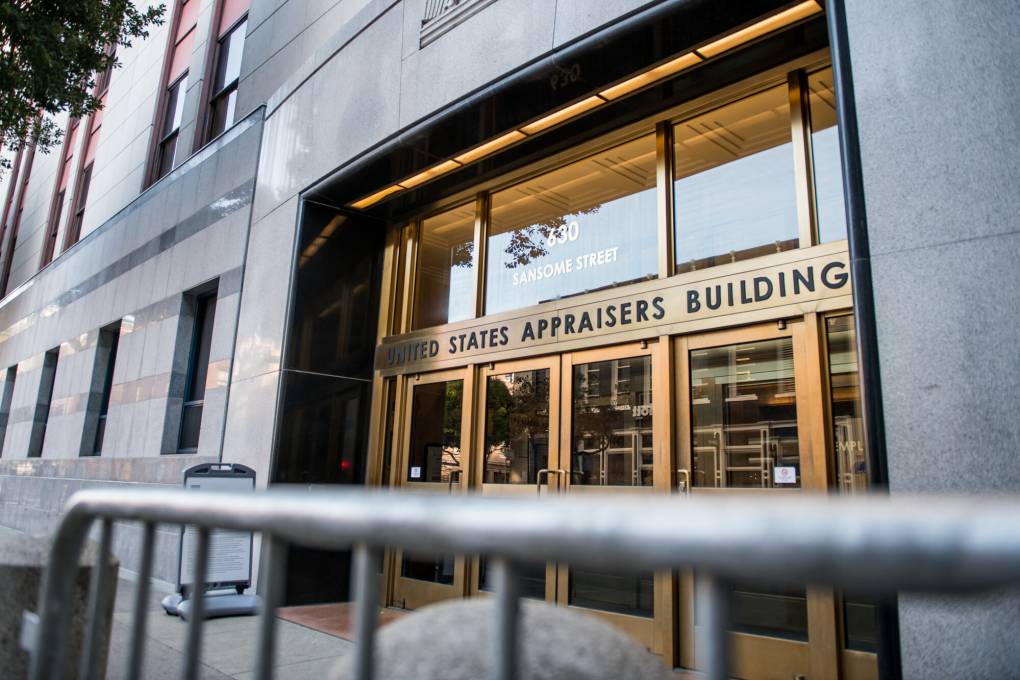
"content": "\u003cp>\u003cem>Updated 4:41 p.m. Wednesday\u003c/em>\u003c/p>\n\u003cp>At least one protester was detained, and two people, including a journalist, were hit with pepper spray by federal\u003ca href=\"https://www.kqed.org/news/tag/immigration\"> immigration\u003c/a> officers Wednesday morning after a standoff outside the agency’s San Francisco office became violent.\u003c/p>\n\u003cp>Protesters first faced off with Immigration and Customs Enforcement officers outside the nearby immigration courthouse at 100 Montgomery St. after officers arrested a man inside.\u003c/p>\n\u003cp>“Why are you disappearing our community?” one protester yelled as officers guided the man into a waiting van and began to drive away.\u003c/p>\n\u003cp>[ad fullwidth]\u003c/p>\n\u003cp>The protest escalated, spreading to the Financial District ICE field office, which is often used as a holding facility for immigrants detained across the Bay Area.\u003c/p>\n\u003cp>One protester outside ICE’s Sansome Street office was tackled, zip-tied and taken inside shortly after about a dozen people, who followed officers on foot the half-mile from the immigration court, arrived.\u003c/p>\n\u003cp>Minutes earlier, as the group walked toward the office, an officer pepper-sprayed both a protester and a journalist.\u003c/p>\n\u003cp>\u003cimg loading=\"lazy\" decoding=\"async\" class=\"aligncenter size-full wp-image-12053041\" src=\"https://cdn.kqed.org/wp-content/uploads/sites/10/2025/08/250820-ICE-ACTIVITY-JCL-01-KQED.jpg\" alt=\"\" width=\"2000\" height=\"1334\" srcset=\"https://cdn.kqed.org/wp-content/uploads/sites/10/2025/08/250820-ICE-ACTIVITY-JCL-01-KQED.jpg 2000w, https://cdn.kqed.org/wp-content/uploads/sites/10/2025/08/250820-ICE-ACTIVITY-JCL-01-KQED-160x107.jpg 160w, https://cdn.kqed.org/wp-content/uploads/sites/10/2025/08/250820-ICE-ACTIVITY-JCL-01-KQED-1536x1025.jpg 1536w\" sizes=\"auto, (max-width: 2000px) 100vw, 2000px\">\u003c/p>\n\u003cp>About two blocks north of the immigration court, Gazetteer reporter Eddie Kim told KQED he was sprayed in the eyes while trying to record an altercation between an ICE officer and a protester. He said a person rolling a bicycle alongside the group was walking calmly when an ICE officer reached out and grabbed hold of the bike’s handle.\u003c/p>\n\u003cp>The officer then sprayed the protester and Kim with a pepper spray gel.\u003c/p>\n\u003cp>“It wasn’t provoked,” Kim told KQED. “It’s not like the bike was being moved to hit the agent or get in their way. It was just a person just walking with the group … There were no aggressive movements other than me approaching the scene.”\u003c/p>\n\u003cp>Altercations between ICE and protesters\u003ca href=\"https://www.kqed.org/news/12047397/ice-officers-drive-through-protesters-trying-to-stop-arrest-at-sf-immigration-court\"> outside the downtown court\u003c/a> and field office have grown \u003ca href=\"https://www.kqed.org/news/12043596/protesters-swarm-sf-immigration-court-after-more-ice-arrests\">increasingly common\u003c/a> since federal agents began arresting asylum seekers reporting to the buildings for mandatory status hearings and check-in appointments — a tactic that was\u003ca href=\"https://www.kqed.org/news/12041473/unprecedented-ice-officers-operating-inside-bay-area-immigration-courts-lawyers-say\"> unheard of until earlier this year\u003c/a>.[aside postID=news_12052815 hero='https://cdn.kqed.org/wp-content/uploads/sites/10/2019/01/gettyimages-91547950_slide-4d6100270cc91128d1beb27eca778a6dcd952acd-1020x680.jpg']In recent weeks, officers have also detained multiple protesters as tensions have escalated. Last Friday, two people were pinned to the ground and handcuffed before being walked into the Financial District ICE office.\u003c/p>\n\u003cp>“It’s also very clear that when people mobilize, it affects ICE in a major way,” Kim said. “They’re clearly affected by the presence of protesters to the point where they’re willing to deploy force against people who are not even an active threat.”\u003c/p>\n\u003cp>After hearing reports around 8:30 a.m., Wednesday, that a man had been arrested inside the immigration court building, protesters first gathered outside on Montgomery Street, standing in the way of the building’s lower-profile side door in an attempt to block ICE officers’ path to a line of waiting vans.\u003c/p>\n\u003cp>One protester who refused to stand back from the door was shoved to the ground, while another was pushed away toward the street.\u003c/p>\n\u003cp>Masked officers exited the building with the detained man, who was dressed in a suit and had his hands secured behind his back. They escorted him to the vehicle as protesters yelled for them to stop.\u003c/p>\n\u003cfigure id=\"attachment_12053042\" class=\"wp-caption aligncenter\" style=\"max-width: 2000px\">\u003cimg loading=\"lazy\" decoding=\"async\" class=\"wp-image-12053042 size-full\" src=\"https://cdn.kqed.org/wp-content/uploads/sites/10/2025/08/250820-ICE-ACTIVITY-JCL-02-KQED.jpg\" alt=\"\" width=\"2000\" height=\"1333\" srcset=\"https://cdn.kqed.org/wp-content/uploads/sites/10/2025/08/250820-ICE-ACTIVITY-JCL-02-KQED.jpg 2000w, https://cdn.kqed.org/wp-content/uploads/sites/10/2025/08/250820-ICE-ACTIVITY-JCL-02-KQED-160x107.jpg 160w, https://cdn.kqed.org/wp-content/uploads/sites/10/2025/08/250820-ICE-ACTIVITY-JCL-02-KQED-1536x1024.jpg 1536w\" sizes=\"auto, (max-width: 2000px) 100vw, 2000px\">\u003cfigcaption class=\"wp-caption-text\">A group of protesters and federal officers clashed on Wednesday, Aug. 20, 2025, outside the nearby immigration courthouse at 100 Montgomery St. in San Francisco. \u003ccite>(Juan Carlos Lara/KQED)\u003c/cite>\u003c/figcaption>\u003c/figure>\n\u003cp>Protesters popped a front tire of the van before it took off south down Montgomery Street, along with two other vehicles. One officer yelled that a protester who ran down the street had a knife, and the officer reached for his gun but did not unholster it.\u003c/p>\n\u003cp>At least 20 protesters moved into the streets and crosswalks surrounding the court building, attempting to block the vans’ path. Some held bicycles and others stood in front of cars, trying to keep them in place.\u003c/p>\n\u003cp>An ICE officer shot a weapon, producing a white powder into the leg of a protester jostling with others over a bike.\u003c/p>\n\u003cp>At the same time, the dozen or so people who migrated to Sansome Street began to head north, some running in the street.\u003c/p>\n\u003cp>Following the protester’s detention at the field office, many of the protesters who had traveled to Sansome Street dispersed. Others remained at the courthouse on Montgomery Street midmorning.\u003c/p>\n\u003cp>\u003c/p>\n",
"blocks": [],
"excerpt": "Protesters first faced off with federal officers after an arrest at immigration court before moving to the downtown ICE field office.\r\n",
"status": "publish",
"parent": 0,
"modified": 1755733524,
"stats": {
"hasAudio": false,
"hasVideo": false,
"hasChartOrMap": false,
"iframeSrcs": [],
"hasGoogleForm": false,
"hasGallery": false,
"hasHearkenModule": false,
"hasPolis": false,
"paragraphCount": 23,
"wordCount": 755
},
"headData": {
"title": "Feds Detain Protester and Pepper Spray Journalist After Clash Outside SF ICE Office | KQED",
"description": "Protesters first faced off with federal officers after an arrest at immigration court before moving to the downtown ICE field office.\r\n",
"ogTitle": "",
"ogDescription": "",
"ogImgId": "",
"twTitle": "",
"twDescription": "",
"twImgId": "",
"schema": {
"@context": "https://schema.org",
"@type": "NewsArticle",
"headline": "Feds Detain Protester and Pepper Spray Journalist After Clash Outside SF ICE Office",
"datePublished": "2025-08-20T12:01:07-07:00",
"dateModified": "2025-08-20T16:45:24-07:00",
"image": "https://cdn.kqed.org/wp-content/uploads/2020/02/KQED-OG-Image@1x.png",
"isAccessibleForFree": "True",
"publisher": {
"@type": "NewsMediaOrganization",
"@id": "https://www.kqed.org/#organization",
"name": "KQED",
"logo": "https://cdn.kqed.org/wp-content/uploads/2020/02/KQED-OG-Image@1x.png",
"url": "https://www.kqed.org",
"sameAs": [
"https://www.facebook.com/KQED",
"https://twitter.com/KQED",
"https://www.instagram.com/kqed/",
"https://www.tiktok.com/@kqedofficial",
"https://www.linkedin.com/company/kqed",
"https://www.youtube.com/channel/UCeC0IOo7i1P_61zVUWbJ4nw"
]
}
}
},
"primaryCategory": {
"termId": 8,
"slug": "news",
"name": "News"
},
"sticky": false,
"nprStoryId": "kqed-12052975",
"templateType": "standard",
"featuredImageType": "standard",
"excludeFromSiteSearch": "Include",
"articleAge": "0",
"path": "/news/12052975/federal-officers-detain-protester-after-clash-outside-san-francisco-ice-office",
"audioTrackLength": null,
"parsedContent": [
{
"type": "contentString",
"content": "\u003cdiv class=\"post-body\">\u003cp>\u003cp>\u003cem>Updated 4:41 p.m. Wednesday\u003c/em>\u003c/p>\n\u003cp>At least one protester was detained, and two people, including a journalist, were hit with pepper spray by federal\u003ca href=\"https://www.kqed.org/news/tag/immigration\"> immigration\u003c/a> officers Wednesday morning after a standoff outside the agency’s San Francisco office became violent.\u003c/p>\n\u003cp>Protesters first faced off with Immigration and Customs Enforcement officers outside the nearby immigration courthouse at 100 Montgomery St. after officers arrested a man inside.\u003c/p>\n\u003cp>“Why are you disappearing our community?” one protester yelled as officers guided the man into a waiting van and began to drive away.\u003c/p>\n\u003cp>\u003c/p>\u003c/div>",
"attributes": {
"named": {},
"numeric": []
}
},
{
"type": "component",
"content": "",
"name": "ad",
"attributes": {
"named": {
"label": "fullwidth"
},
"numeric": [
"fullwidth"
]
}
},
{
"type": "contentString",
"content": "\u003cdiv class=\"post-body\">\u003cp>\u003c/p>\n\u003cp>The protest escalated, spreading to the Financial District ICE field office, which is often used as a holding facility for immigrants detained across the Bay Area.\u003c/p>\n\u003cp>One protester outside ICE’s Sansome Street office was tackled, zip-tied and taken inside shortly after about a dozen people, who followed officers on foot the half-mile from the immigration court, arrived.\u003c/p>\n\u003cp>Minutes earlier, as the group walked toward the office, an officer pepper-sprayed both a protester and a journalist.\u003c/p>\n\u003cp>\u003cimg loading=\"lazy\" decoding=\"async\" class=\"aligncenter size-full wp-image-12053041\" src=\"https://cdn.kqed.org/wp-content/uploads/sites/10/2025/08/250820-ICE-ACTIVITY-JCL-01-KQED.jpg\" alt=\"\" width=\"2000\" height=\"1334\" srcset=\"https://cdn.kqed.org/wp-content/uploads/sites/10/2025/08/250820-ICE-ACTIVITY-JCL-01-KQED.jpg 2000w, https://cdn.kqed.org/wp-content/uploads/sites/10/2025/08/250820-ICE-ACTIVITY-JCL-01-KQED-160x107.jpg 160w, https://cdn.kqed.org/wp-content/uploads/sites/10/2025/08/250820-ICE-ACTIVITY-JCL-01-KQED-1536x1025.jpg 1536w\" sizes=\"auto, (max-width: 2000px) 100vw, 2000px\">\u003c/p>\n\u003cp>About two blocks north of the immigration court, Gazetteer reporter Eddie Kim told KQED he was sprayed in the eyes while trying to record an altercation between an ICE officer and a protester. He said a person rolling a bicycle alongside the group was walking calmly when an ICE officer reached out and grabbed hold of the bike’s handle.\u003c/p>\n\u003cp>The officer then sprayed the protester and Kim with a pepper spray gel.\u003c/p>\n\u003cp>“It wasn’t provoked,” Kim told KQED. “It’s not like the bike was being moved to hit the agent or get in their way. It was just a person just walking with the group … There were no aggressive movements other than me approaching the scene.”\u003c/p>\n\u003cp>Altercations between ICE and protesters\u003ca href=\"https://www.kqed.org/news/12047397/ice-officers-drive-through-protesters-trying-to-stop-arrest-at-sf-immigration-court\"> outside the downtown court\u003c/a> and field office have grown \u003ca href=\"https://www.kqed.org/news/12043596/protesters-swarm-sf-immigration-court-after-more-ice-arrests\">increasingly common\u003c/a> since federal agents began arresting asylum seekers reporting to the buildings for mandatory status hearings and check-in appointments — a tactic that was\u003ca href=\"https://www.kqed.org/news/12041473/unprecedented-ice-officers-operating-inside-bay-area-immigration-courts-lawyers-say\"> unheard of until earlier this year\u003c/a>.\u003c/p>\u003c/div>",
"attributes": {
"named": {},
"numeric": []
}
},
{
"type": "component",
"content": "",
"name": "aside",
"attributes": {
"named": {
"postid": "news_12052815",
"hero": "https://cdn.kqed.org/wp-content/uploads/sites/10/2019/01/gettyimages-91547950_slide-4d6100270cc91128d1beb27eca778a6dcd952acd-1020x680.jpg",
"label": ""
},
"numeric": []
}
},
{
"type": "contentString",
"content": "\u003cdiv class=\"post-body\">\u003cp>In recent weeks, officers have also detained multiple protesters as tensions have escalated. Last Friday, two people were pinned to the ground and handcuffed before being walked into the Financial District ICE office.\u003c/p>\n\u003cp>“It’s also very clear that when people mobilize, it affects ICE in a major way,” Kim said. “They’re clearly affected by the presence of protesters to the point where they’re willing to deploy force against people who are not even an active threat.”\u003c/p>\n\u003cp>After hearing reports around 8:30 a.m., Wednesday, that a man had been arrested inside the immigration court building, protesters first gathered outside on Montgomery Street, standing in the way of the building’s lower-profile side door in an attempt to block ICE officers’ path to a line of waiting vans.\u003c/p>\n\u003cp>One protester who refused to stand back from the door was shoved to the ground, while another was pushed away toward the street.\u003c/p>\n\u003cp>Masked officers exited the building with the detained man, who was dressed in a suit and had his hands secured behind his back. They escorted him to the vehicle as protesters yelled for them to stop.\u003c/p>\n\u003cfigure id=\"attachment_12053042\" class=\"wp-caption aligncenter\" style=\"max-width: 2000px\">\u003cimg loading=\"lazy\" decoding=\"async\" class=\"wp-image-12053042 size-full\" src=\"https://cdn.kqed.org/wp-content/uploads/sites/10/2025/08/250820-ICE-ACTIVITY-JCL-02-KQED.jpg\" alt=\"\" width=\"2000\" height=\"1333\" srcset=\"https://cdn.kqed.org/wp-content/uploads/sites/10/2025/08/250820-ICE-ACTIVITY-JCL-02-KQED.jpg 2000w, https://cdn.kqed.org/wp-content/uploads/sites/10/2025/08/250820-ICE-ACTIVITY-JCL-02-KQED-160x107.jpg 160w, https://cdn.kqed.org/wp-content/uploads/sites/10/2025/08/250820-ICE-ACTIVITY-JCL-02-KQED-1536x1024.jpg 1536w\" sizes=\"auto, (max-width: 2000px) 100vw, 2000px\">\u003cfigcaption class=\"wp-caption-text\">A group of protesters and federal officers clashed on Wednesday, Aug. 20, 2025, outside the nearby immigration courthouse at 100 Montgomery St. in San Francisco. \u003ccite>(Juan Carlos Lara/KQED)\u003c/cite>\u003c/figcaption>\u003c/figure>\n\u003cp>Protesters popped a front tire of the van before it took off south down Montgomery Street, along with two other vehicles. One officer yelled that a protester who ran down the street had a knife, and the officer reached for his gun but did not unholster it.\u003c/p>\n\u003cp>At least 20 protesters moved into the streets and crosswalks surrounding the court building, attempting to block the vans’ path. Some held bicycles and others stood in front of cars, trying to keep them in place.\u003c/p>\n\u003cp>An ICE officer shot a weapon, producing a white powder into the leg of a protester jostling with others over a bike.\u003c/p>\n\u003cp>At the same time, the dozen or so people who migrated to Sansome Street began to head north, some running in the street.\u003c/p>\n\u003cp>Following the protester’s detention at the field office, many of the protesters who had traveled to Sansome Street dispersed. Others remained at the courthouse on Montgomery Street midmorning.\u003c/p>\n\u003cp>\u003c/p>\n\u003c/div>\u003c/p>",
"attributes": {
"named": {},
"numeric": []
}
}
],
"link": "/news/12052975/federal-officers-detain-protester-after-clash-outside-san-francisco-ice-office",
"authors": [
"11913",
"11761"
],
"categories": [
"news_1169",
"news_28250",
"news_8",
"news_13"
],
"tags": [
"news_1386",
"news_1323",
"news_27626",
"news_35606",
"news_20202",
"news_38",
"news_20529"
],
"featImg": "news_12053045",
"label": "news"
},
"news_12052802": {
"type": "posts",
"id": "news_12052802",
"meta": {
"index": "posts_1716263798",
"site": "news",
"id": "12052802",
"score": null,
"sort": [
1755684033000
]
},
"guestAuthors": [],
"slug": "12052802",
"title": "California Democrats Release Plan to Redraw Congressional Maps",
"publishDate": 1755684033,
"format": "audio",
"headTitle": "California Democrats Release Plan to Redraw Congressional Maps | KQED",
"labelTerm": {},
"content": "\u003cp class=\"e-91036-text encore-text-body-medium\" data-encore-id=\"text\" data-slate-node=\"element\">\u003cspan data-slate-node=\"text\">\u003cspan class=\"sc-kAyceB grEoze\" data-slate-leaf=\"true\">After pressure from President Donald Trump, Texas Republicans unveiled a new map redrawing the state’s congressional districts 5 years early, in order to win more GOP seats in next year’s midterm elections. \u003c/span>\u003c/span>\u003c/p>\n\u003cp class=\"e-91036-text encore-text-body-medium\" data-encore-id=\"text\" data-slate-node=\"element\" data-slate-fragment=\"JTVCJTdCJTIydHlwZSUyMiUzQSUyMnBhcmFncmFwaCUyMiUyQyUyMmNoaWxkcmVuJTIyJTNBJTVCJTdCJTIydGV4dCUyMiUzQSUyMkFmdGVyJTIwcHJlc3N1cmUlMjBmcm9tJTIwUHJlc2lkZW50JTIwRG9uYWxkJTIwVHJ1bXAlMkMlMjBUZXhhcyUyMFJlcHVibGljYW5zJTIwdW52ZWlsZWQlMjBhJTIwbmV3JTIwbWFwJTIwcmVkcmF3aW5nJTIwdGhlJTIwc3RhdGUlRTIlODAlOTlzJTIwY29uZ3Jlc3Npb25hbCUyMGRpc3RyaWN0cyUyMDUlMjB5ZWFycyUyMGVhcmx5JTJDJTIwaW4lMjBvcmRlciUyMHRvJTIwd2luJTIwbW9yZSUyMEdPUCUyMHNlYXRzJTIwaW4lMjBuZXh0JTIweWVhciVFMiU4MCU5OXMlMjBtaWR0ZXJtJTIwZWxlY3Rpb25zLiUyMCUyMiU3RCU1RCU3RCUyQyU3QiUyMnR5cGUlMjIlM0ElMjJwYXJhZ3JhcGglMjIlMkMlMjJjaGlsZHJlbiUyMiUzQSU1QiU3QiUyMnRleHQlMjIlM0ElMjJXZSUyMHRhbGslMjB3aXRoJTIwS1FFRCdzJTIwR3V5JTIwTWFyem9yYXRpJTIwYWJvdXQlMjBob3clMjBDYWxpZm9ybmlhJTIwRGVtb2NyYXRzJTIwYXJlJTIwY2xhcHBpbmclMjBiYWNrJTIwd2l0aCUyMHRoZWlyJTIwb3duJTIwcmVkcmF3biUyMG1hcHMuJTIwSWYlMjB0aGUlMjBzdGF0ZSUyMGxlZ2lzbGF0dXJlJTIwYXBwcm92ZXMlMjB0aGlzJTIwbmV3JTIwbWFwJTJDJTIwdm90ZXJzJTIwd2lsbCUyMGhhdmUlMjB0aGUlMjBmaW5hbCUyMHNheSUyMGluJTIwYSUyMHNwZWNpYWwlMjBlbGVjdGlvbiUyMHRoaXMlMjBOb3ZlbWJlci4lMjIlN0QlNUQlN0QlNUQ=\">\u003cspan data-slate-node=\"text\">\u003cspan class=\"sc-kAyceB grEoze\" data-slate-leaf=\"true\">We talk with KQED’s Guy Marzorati about how California Democrats are clapping back with their own redrawn maps. If the state legislature approves this new map, voters will have the final say in a special election this November.\u003c/span>\u003c/span>\u003c/p>\n\u003cp data-encore-id=\"text\" data-slate-node=\"element\" data-slate-fragment=\"JTVCJTdCJTIydHlwZSUyMiUzQSUyMnBhcmFncmFwaCUyMiUyQyUyMmNoaWxkcmVuJTIyJTNBJTVCJTdCJTIydGV4dCUyMiUzQSUyMkFmdGVyJTIwcHJlc3N1cmUlMjBmcm9tJTIwUHJlc2lkZW50JTIwRG9uYWxkJTIwVHJ1bXAlMkMlMjBUZXhhcyUyMFJlcHVibGljYW5zJTIwdW52ZWlsZWQlMjBhJTIwbmV3JTIwbWFwJTIwcmVkcmF3aW5nJTIwdGhlJTIwc3RhdGUlRTIlODAlOTlzJTIwY29uZ3Jlc3Npb25hbCUyMGRpc3RyaWN0cyUyMDUlMjB5ZWFycyUyMGVhcmx5JTJDJTIwaW4lMjBvcmRlciUyMHRvJTIwd2luJTIwbW9yZSUyMEdPUCUyMHNlYXRzJTIwaW4lMjBuZXh0JTIweWVhciVFMiU4MCU5OXMlMjBtaWR0ZXJtJTIwZWxlY3Rpb25zLiUyMCUyMiU3RCU1RCU3RCUyQyU3QiUyMnR5cGUlMjIlM0ElMjJwYXJhZ3JhcGglMjIlMkMlMjJjaGlsZHJlbiUyMiUzQSU1QiU3QiUyMnRleHQlMjIlM0ElMjJXZSUyMHRhbGslMjB3aXRoJTIwS1FFRCdzJTIwR3V5JTIwTWFyem9yYXRpJTIwYWJvdXQlMjBob3clMjBDYWxpZm9ybmlhJTIwRGVtb2NyYXRzJTIwYXJlJTIwY2xhcHBpbmclMjBiYWNrJTIwd2l0aCUyMHRoZWlyJTIwb3duJTIwcmVkcmF3biUyMG1hcHMuJTIwSWYlMjB0aGUlMjBzdGF0ZSUyMGxlZ2lzbGF0dXJlJTIwYXBwcm92ZXMlMjB0aGlzJTIwbmV3JTIwbWFwJTJDJTIwdm90ZXJzJTIwd2lsbCUyMGhhdmUlMjB0aGUlMjBmaW5hbCUyMHNheSUyMGluJTIwYSUyMHNwZWNpYWwlMjBlbGVjdGlvbiUyMHRoaXMlMjBOb3ZlbWJlci4lMjIlN0QlNUQlN0QlNUQ=\">\u003cstrong>Links:\u003c/strong>\u003c/p>\n\u003cul>\n\u003cli data-encore-id=\"text\" data-slate-node=\"element\" data-slate-fragment=\"JTVCJTdCJTIydHlwZSUyMiUzQSUyMnBhcmFncmFwaCUyMiUyQyUyMmNoaWxkcmVuJTIyJTNBJTVCJTdCJTIydGV4dCUyMiUzQSUyMkFmdGVyJTIwcHJlc3N1cmUlMjBmcm9tJTIwUHJlc2lkZW50JTIwRG9uYWxkJTIwVHJ1bXAlMkMlMjBUZXhhcyUyMFJlcHVibGljYW5zJTIwdW52ZWlsZWQlMjBhJTIwbmV3JTIwbWFwJTIwcmVkcmF3aW5nJTIwdGhlJTIwc3RhdGUlRTIlODAlOTlzJTIwY29uZ3Jlc3Npb25hbCUyMGRpc3RyaWN0cyUyMDUlMjB5ZWFycyUyMGVhcmx5JTJDJTIwaW4lMjBvcmRlciUyMHRvJTIwd2luJTIwbW9yZSUyMEdPUCUyMHNlYXRzJTIwaW4lMjBuZXh0JTIweWVhciVFMiU4MCU5OXMlMjBtaWR0ZXJtJTIwZWxlY3Rpb25zLiUyMCUyMiU3RCU1RCU3RCUyQyU3QiUyMnR5cGUlMjIlM0ElMjJwYXJhZ3JhcGglMjIlMkMlMjJjaGlsZHJlbiUyMiUzQSU1QiU3QiUyMnRleHQlMjIlM0ElMjJXZSUyMHRhbGslMjB3aXRoJTIwS1FFRCdzJTIwR3V5JTIwTWFyem9yYXRpJTIwYWJvdXQlMjBob3clMjBDYWxpZm9ybmlhJTIwRGVtb2NyYXRzJTIwYXJlJTIwY2xhcHBpbmclMjBiYWNrJTIwd2l0aCUyMHRoZWlyJTIwb3duJTIwcmVkcmF3biUyMG1hcHMuJTIwSWYlMjB0aGUlMjBzdGF0ZSUyMGxlZ2lzbGF0dXJlJTIwYXBwcm92ZXMlMjB0aGlzJTIwbmV3JTIwbWFwJTJDJTIwdm90ZXJzJTIwd2lsbCUyMGhhdmUlMjB0aGUlMjBmaW5hbCUyMHNheSUyMGluJTIwYSUyMHNwZWNpYWwlMjBlbGVjdGlvbiUyMHRoaXMlMjBOb3ZlbWJlci4lMjIlN0QlNUQlN0QlNUQ=\">\u003ca href=\"https://www.kqed.org/news/12052702/california-redistricting-plan-may-swing-on-this-sonoma-county-shakeup\">California Redistricting Plan May Swing on This Sonoma County Shakeup\u003c/a>\u003c/li>\n\u003cli data-encore-id=\"text\" data-slate-node=\"element\" data-slate-fragment=\"JTVCJTdCJTIydHlwZSUyMiUzQSUyMnBhcmFncmFwaCUyMiUyQyUyMmNoaWxkcmVuJTIyJTNBJTVCJTdCJTIydGV4dCUyMiUzQSUyMkFmdGVyJTIwcHJlc3N1cmUlMjBmcm9tJTIwUHJlc2lkZW50JTIwRG9uYWxkJTIwVHJ1bXAlMkMlMjBUZXhhcyUyMFJlcHVibGljYW5zJTIwdW52ZWlsZWQlMjBhJTIwbmV3JTIwbWFwJTIwcmVkcmF3aW5nJTIwdGhlJTIwc3RhdGUlRTIlODAlOTlzJTIwY29uZ3Jlc3Npb25hbCUyMGRpc3RyaWN0cyUyMDUlMjB5ZWFycyUyMGVhcmx5JTJDJTIwaW4lMjBvcmRlciUyMHRvJTIwd2luJTIwbW9yZSUyMEdPUCUyMHNlYXRzJTIwaW4lMjBuZXh0JTIweWVhciVFMiU4MCU5OXMlMjBtaWR0ZXJtJTIwZWxlY3Rpb25zLiUyMCUyMiU3RCU1RCU3RCUyQyU3QiUyMnR5cGUlMjIlM0ElMjJwYXJhZ3JhcGglMjIlMkMlMjJjaGlsZHJlbiUyMiUzQSU1QiU3QiUyMnRleHQlMjIlM0ElMjJXZSUyMHRhbGslMjB3aXRoJTIwS1FFRCdzJTIwR3V5JTIwTWFyem9yYXRpJTIwYWJvdXQlMjBob3clMjBDYWxpZm9ybmlhJTIwRGVtb2NyYXRzJTIwYXJlJTIwY2xhcHBpbmclMjBiYWNrJTIwd2l0aCUyMHRoZWlyJTIwb3duJTIwcmVkcmF3biUyMG1hcHMuJTIwSWYlMjB0aGUlMjBzdGF0ZSUyMGxlZ2lzbGF0dXJlJTIwYXBwcm92ZXMlMjB0aGlzJTIwbmV3JTIwbWFwJTJDJTIwdm90ZXJzJTIwd2lsbCUyMGhhdmUlMjB0aGUlMjBmaW5hbCUyMHNheSUyMGluJTIwYSUyMHNwZWNpYWwlMjBlbGVjdGlvbiUyMHRoaXMlMjBOb3ZlbWJlci4lMjIlN0QlNUQlN0QlNUQ=\">\u003ca href=\"https://calmatters.org/politics/2025/08/find-out-if-your-vote-could-be-affected-by-newsoms-redistricting-plans/\">Find out if your vote could be affected by Newsom’s redistricting plans\u003c/a>\u003c/li>\n\u003c/ul>\n\u003cp>\u003cem>\u003ci>Some members of the KQED podcast team are represented by The Screen Actors Guild, American Federation of Television and Radio Artists. San Francisco Northern California Local.\u003c/i>\u003c/em>\u003c/p>\n\u003cp>\u003c!-- iframe plugin v.4.3 wordpress.org/plugins/iframe/ -->\u003cbr>\n\u003ciframe loading=\"lazy\" frameborder=\"0\" height=\"200\" scrolling=\"no\" src=\"https://playlist.megaphone.fm?e=KQINC5439632163&light=true\" width=\"100%\" class=\"iframe-class\">\u003c/iframe>\u003c/p>\n\u003cp>[ad fullwidth]\u003c/p>\n\u003cp>\u003cem>This is a computer-generated transcript. While our team has reviewed it, there may be errors.\u003c/em>\u003c/p>\n\u003cp>\u003cstrong>Ericka Cruz Guevarra \u003c/strong>[00:00:00] Late last week, Governor Gavin Newsom stood at a podium inside the Japanese American National Museum in Los Angeles, gearing up for another fight against the Trump administration. On the podium were the words, election rigging response.\u003c/p>\n\u003cp>\u003cstrong>Gov. Gavin Newsom \u003c/strong>[00:00:26] Donald Trump, you have poked the bear, and we will punch back.\u003c/p>\n\u003cp>\u003cstrong>Ericka Cruz Guevarra \u003c/strong>[00:00:34] After pressure from President Trump, Republicans in Texas are trying to redraw the state’s congressional districts five years early in order to win more Republican seats during the 2026 midterm elections. Now, California voters will likely be asked to weigh in in November on whether to redrew our own congressional maps. To counteract what’s happening in states like Texas.\u003c/p>\n\u003cp>\u003cstrong>Gov. Gavin Newsom \u003c/strong>[00:01:05] Here’s the good thing about California, folks, we’re the size of 21 state populations combined. We’re the fourth-largest economy in the world. We are not a small, isolated state. I know they say, don’t mess with Texas. Well, don’t mess with the great Golden State.\u003c/p>\n\u003cp>\u003cstrong>Ericka Cruz Guevarra \u003c/strong>[00:01:25] Today, what California’s new proposed congressional maps look like, and what it means for all of us.\u003c/p>\n\u003cp>\u003cstrong>Guy Marzorati \u003c/strong>[00:01:41] The message that we’ve heard from Newsom both at this rally and kind of for weeks has been California did not start this fight. This is parties, you know, politicians stepping in saying, we expressly want to redraw these lines to help our party. And it started in Texas where President Trump went to Governor Greg Abbott in Texas and state legislative leaders and said, I want you to redraw the state’s congressional lines to add five seats for Republicans.\u003c/p>\n\u003cp>\u003cstrong>Gov. Gavin Newsom \u003c/strong>[00:02:20] We can’t stand back and watch this democracy disappear district by district all across this country, not just in Texas. We need to stand up, not just California. Other blue states need to stand up. We need to be firm in our resolve.\u003c/p>\n\u003cp>\u003cstrong>Guy Marzorati \u003c/strong>[00:02:37] The message that we’ve heard from Newsom both at this rally and kind of for weeks has been that when you have states like Texas, most notably that has pursued a gerrymander, a redraw of their districts to help Republicans, that there needed to be some response from Democrats here in California to redraw our maps to help the Democratic Party in next year’s midterms.\u003c/p>\n\u003cp>\u003cstrong>Gov. Gavin Newsom \u003c/strong>[00:03:00] It’s not good enough to just hold hands, have a candlelight vigil, and talk about the way the world should be. We have got to recognize the cards that have been dealt. And we have got meet fire with fire. And we’ve got to be held to a higher level of accountability. So that’s what this is about.\u003c/p>\n\u003cp>\u003cstrong>Ericka Cruz Guevarra \u003c/strong>[00:03:24] Explain, Guy, the mechanics here. How is this different from how California currently draws its maps?\u003c/p>\n\u003cp>\u003cstrong>Guy Marzorati \u003c/strong>[00:03:34] Usually the redistricting in California and other states happens after the census comes out. It’s rare that you have new lines being drawn in the middle of the decade without a new census. So currently in California we have an independent citizens redistricting commission. This body was created by the voters back in 2008 and this was really a response to the previous practice in California where the lines were drawn by politicians. Voters had enough of that and you saw this campaign led by former governor Arnold Schwarzenegger to take the power away from elected officials drawing the lines and give it towards this independent commission. And the commission does not look at who is gonna benefit politically from the lines. In fact, they don’t even look at voter registration. They don’t really look at any political indicator. They’re looking at California and these districts through the lens of what’s the most fair way to draw lines. Let’s figure out how to make sure we’re not splitting up cities. Where they’re places of worship, where the big business corridors in the state, and let’s try to group those together in these maps. This would be a big change from that. This would go to the voters and say, can we give the power to draw these congressional districts back to the state legislature up until 2030? And the state Legislature is going to approve a map before the election so voters will know going into the polls, okay, if we give power back to legislature for this map, this is what they have in mind.\u003c/p>\n\u003cp>\u003cstrong>Ericka Cruz Guevarra \u003c/strong>[00:05:02] And of course, the big news most recently is what exactly those maps are gonna look like. So what did we learn about what these new districts would look like and can you tick through some of the biggest changes there?\u003c/p>\n\u003cp>\u003cstrong>Guy Marzorati \u003c/strong>[00:05:19] Here’s kind of from South to North, how the map makers thought about these lines to help Democrats. Perhaps the biggest change was the 41st Congressional District, which is in the Inland Empire. It’s currently represented by Republican Ken Calvert. That district was basically just lifted up into the air and dropped into LA County, which is as blue as you can get, very democratic. You know, that right away is going to make it difficult for Ken Calvert to win re-election in the district he, you know, currently nominally represents. The kind of fallout from that was you had another district currently held by Republican Darrell Issa near San Diego move up towards Palm Springs. Now that becomes more of a Democratic district. You had changes in the Central Valley where districts were pulled north. Both to help incumbent Democrats like Adam Gray, his district around Merced was moved up towards Stockton. That helps it become more democratic and changes to the Bakersfield district helped by Republican David Valadao, making it more of a Democratic district. And then in Northern California, you had two major changes to the lines here. The first is around Sacramento, where Republican Kevin Kiley represents this district that starts kind of in the suburbs east of Sacramento and then runs down the spine of the state. His district now shifts more towards the city of Sacramento, again, towards a more liberal democratic area. And then the last big change starts at the very Northern part of the State. This is the first congressional district. Right now, it covers a lot of conservative areas in the far north of the state, up to the Oregon border. And when this district was redrawn, it actually is pulled down into Sonoma County, all the way down to including the city of Santa Rosa. So suddenly, the biggest share of this district is now Sonoma county. Now we know Sonoma country, part of the Bay, very heavily democratic. This will make the first congressional district very difficult for a Republican. Like the one who currently holds it, Doug LaMalfa, to actually win re-election.\u003c/p>\n\u003cp>\u003cstrong>Ericka Cruz Guevarra \u003c/strong>[00:07:40] So if I’m counting that right, that’s five districts where there are currently sitting Republicans, now potentially under these new maps and under these districts in peril.\u003c/p>\n\u003cp>\u003cstrong>Guy Marzorati \u003c/strong>[00:07:54] Right, and that was the goal all along, right? Because Texas, their lines move five districts towards the Republican column. The goal here was to kind of counter that with five districts in California move towards Democrats. Now we should say, these are just statistics on paper where you now have these five districts that Democrats could win. We still have to have the election.\u003c/p>\n\u003cp>\u003cstrong>Ericka Cruz Guevarra \u003c/strong>[00:08:16] Well, let’s zoom in on Sonoma County real quick. What has the reaction been like since these new proposed maps have been released?\u003c/p>\n\u003cp>\u003cstrong>Guy Marzorati \u003c/strong>[00:08:29] Yeah, I mean, I’ll say just at the outset, this whole, you know, map making and line drawing is a very insider game, right? If you just walk the streets of Santa Rosa today, there’s probably not going to be many people giving, you know, thoughts on how this line redraw works. But for the folks who are really kind of involved in Democratic Party politics in the North Bay, this is a huge deal.\u003c/p>\n\u003cp>\u003cstrong>Pat Sabo \u003c/strong>[00:08:52] The Republicans have pushed us into a stand that we have to take. And if we don’t, then we have no rights standing up and saying that democracy matters.\u003c/p>\n\u003cp>\u003cstrong>Guy Marzorati \u003c/strong>[00:09:04] Pat Sabo is the party chair of the Sonoma County Democrats. What you hear from Pat is what we’ve heard a lot from kind of the rank and file Democrats in California and across the country, which is the desire to really be more confrontational in their politics.\u003c/p>\n\u003cp>\u003cstrong>Pat Sabo \u003c/strong>[00:09:22] People have felt absolutely helpless in what they can do. There’s now something concrete that they can do to fight back against this blatant takeover of democracy.\u003c/p>\n\u003cp>\u003cstrong>Guy Marzorati \u003c/strong>[00:09:36] This is what is at the heart of this plan, I think for Newsom and other Democrats. It’s like, let’s kind of go on the offensive. Let’s make this move that, yeah, it goes against norms. It goes against, you know, kind of good governance principles, but let’s have more of a partisan fight at the ballot box.\u003c/p>\n\u003cp>\u003cstrong>Pat Sabo \u003c/strong>[00:09:55] We know that we have to work hard to get this done in a very short period of time. And that is to do boots on the ground, to get out, to reach out to our communities, and to educate as many as quickly as we can.\u003c/p>\n\u003cp>\u003cstrong>Guy Marzorati \u003c/strong>[00:10:09] What we’ve heard from Pat and other kind of party activists is a real excitement for getting out there and talking to voters about this plan.\u003c/p>\n\u003cp>\u003cstrong>Ericka Cruz Guevarra \u003c/strong>[00:10:22] We’ll have more with KQED politics and government correspondent Guy Marzorotti after the break. Stay with us. Guy, are all Democrats super pumped about this? Or have you heard more mixed feelings from people?\u003c/p>\n\u003cp>\u003cstrong>Guy Marzorati \u003c/strong>[00:10:44] Yeah, no, I think there’s definitely going to be some mixed feelings about this. There was a poll done by Politico and some groups at Berkeley last week that asked, like, would you be in favor of keeping the independent redistricting commission or handing it over these line drawing powers over to the legislature? And over 60% of Democrats said, no, we want to keep the commission. Now, part of that is like how you frame the question, right? When it becomes more about Trump and fighting Republicans, I would expect to those numbers change.\u003c/p>\n\u003cp>\u003cstrong>Beth Hadley \u003c/strong>[00:11:23] I’m afraid that people will distrust government more. You know, they’ll just see it as another ploy by the politicians.\u003c/p>\n\u003cp>\u003cstrong>Guy Marzorati \u003c/strong>[00:11:30] A good example of this is Beth Hadley, who’s the president of the Sonoma Valley Democrats. And she said, yeah, you know, like she has some reservations about this idea that if you go ahead and you give redistricting powers back to elected officials, it could make people more distrustful of government.\u003c/p>\n\u003cp>\u003cstrong>Beth Hadley \u003c/strong>[00:11:46] They’ll feel like Democrats are sinking to the level of Republicans. I mean, there, there are a lot of cons.\u003c/p>\n\u003cp>\u003cstrong>Guy Marzorati \u003c/strong>[00:11:53] But at the end of the day, Beth falls where I think a lot of Democrats could potentially fall with this, is that if you start viewing it through more of a partisan lens and the desire to take on Trump and take on Republicans, then the idea of redrawing these lines becomes a more attractive proposition.\u003c/p>\n\u003cp>\u003cstrong>Beth Hadley \u003c/strong>[00:12:11] We need to take back the house. We need some guardrails and whatever that takes. As much as I dislike the idea of gerrymandering, I think we have to support this.\u003c/p>\n\u003cp>\u003cstrong>Ericka Cruz Guevarra \u003c/strong>[00:12:22] What about the other side of that coin? I imagine Republicans in California are not very happy about these proposed maps.\u003c/p>\n\u003cp>\u003cstrong>Guy Marzorati \u003c/strong>[00:12:33] Yeah, I mean, Republicans have come out really strongly opposed to these redistricting plans. Obviously, there’s a kernel of self-preservation in here, right, like this congressional map would hurt Republicans, would likely lead some of them to lose their seats. And Republicans have really turned this back to the idea that voters in the first place in California were the ones who approved this independent commission and saying that it’s a betrayal. Of the voters to now go ahead and hand these line drawing powers back to the state legislature for congressional lines.\u003c/p>\n\u003cp>\u003cstrong>Rep. Kevin Kiley \u003c/strong>[00:13:06] California voters overwhelmingly voted in 2010 to say that we should have voters choosing our representatives, we shouldn’t have representatives choosing their voters.\u003c/p>\n\u003cp>\u003cstrong>Guy Marzorati \u003c/strong>[00:13:16] So Kevin Kiley is a Republican Congress member who represents the area around Sacramento and actually much of Eastern California. And he’s come out as a strong opponent of this redistricting plan.\u003c/p>\n\u003cp>\u003cstrong>Rep. Kevin Kiley \u003c/strong>[00:13:29] When you degrade the electoral process in a way that we’re seeing right now, especially in California, then everyone suffers as a result of that.\u003c/p>\n\u003cp>\u003cstrong>Guy Marzorati \u003c/strong>[00:13:40] In fact, he’s gone so far as to even introduce legislation in the House of Representatives to ban all mid-decade redistricting. So basically, stop what California’s doing, stop what Texas is doing. And Kylie has called on the Speaker of the House Of Representatives, Mike Johnson, and said, you know, he wants to see the Speaker come out and say, let’s just stop all of this.\u003c/p>\n\u003cp>\u003cstrong>Rep. Kevin Kiley \u003c/strong>[00:13:59] I’m willing to use any and all means, legislative means necessary to get the bill passed, but even before that, the speaker and leader Jeffries could show some leadership and say, enough is enough. This is not the sort of thing that Americans want. Let’s just call a truce on all of this and get back to the issues that really matter to the country.\u003c/p>\n\u003cp>\u003cstrong>Ericka Cruz Guevarra \u003c/strong>[00:14:20] Well that’s that guy, I mean a lot needs to happen before these maps become the blueprint, right? So what exactly is the timeline here?\u003c/p>\n\u003cp>\u003cstrong>Guy Marzorati \u003c/strong>[00:14:31] We’re just this week kind of watching this move through the legislative process in Sacramento. They’re gonna go through the motions this week and kind of take the votes needed to get this on the ballot in November. And they do need to do that.\u003c/p>\n\u003cp>\u003cstrong>Ericka Cruz Guevarra \u003c/strong>[00:14:46] If ultimately everything goes how Democrats want it to with these new districts, how much of an impact could these new district actually have on Trump’s ability to do what he wants in his last two years of his term on things like immigration, the environment, all these issues that Californians really care about.\u003c/p>\n\u003cp>\u003cstrong>Guy Marzorati \u003c/strong>[00:15:12] I’m looking at this redistricting battle as kind of one piece in what will ultimately decide the House elections in 2026. This is kind of like setting the roadmap for where these elections will take place. There’s still all the other things that actually decide an election. What are the issues of the day? Most notably in a midterm, it’s often a reflection and a referendum on the president. So how are voters perceptions of the economy? How are voter perceptions of the job? That Trump is doing as president, who are the candidates that ultimately end up running in these seats. Those will all go a long way in determining who actually controls the house and whether or not Republicans will continue to have unified control of government. I will say that the line drawing matters perhaps more in this election just because we have seen to some extent kind of a partisan gridlock in the house map. There are fewer and fewer congressional districts and seats that are really actually up for grabs. Both parties are battling for fewer and fewer truly competitive seats. And so I think that’s why you’re seeing so much emphasis and so much attention on these line drawing battles.\u003c/p>\n\u003cp>\u003cstrong>Ericka Cruz Guevarra \u003c/strong>[00:16:33] Well, Guy, thank you so much for breaking this all down for me. Um, I didn’t think it would be an election year, but here we are.\u003c/p>\n\u003cp>\u003cstrong>Guy Marzorati \u003c/strong>[00:16:41] Here we are. Yep, thanks for having me.\u003c/p>\n\u003cp>[ad floatright]\u003c/p>\n\u003cp>\u003cstrong>Ericka Cruz Guevarra \u003c/strong>[00:16:54] So I’m walking away from this conversation with Guy like, okay, the real headline here are these five districts that could change from red to blue. I don’t live in any of those districts and neither do most people in the Bay Area actually. But your district could still change. Actually under this proposed new map, the eighth district where I live and actually the most diverse. Congressional district in California would look really different. It’s pretty much doubled in size and some of the cities that used to be grouped together would instead be split off into other districts in order to help Democrats. So while the conversation that we just had here is really about this larger fight against Trump, I’m also thinking about how this will look on the ground for me. And how even if my district isn’t necessarily flipping from red to blue, it’s still changing. And that when you redraw congressional districts based on party lines, the very specific and very local needs of the places that we live, take a back seat.\u003c/p>\n\n",
"blocks": [],
"excerpt": "If the legislature approves these maps, voters will have the final say in a special election this November.",
"status": "publish",
"parent": 0,
"modified": 1759426309,
"stats": {
"hasAudio": true,
"hasVideo": false,
"hasChartOrMap": false,
"iframeSrcs": [],
"hasGoogleForm": false,
"hasGallery": false,
"hasHearkenModule": false,
"hasPolis": false,
"paragraphCount": 49,
"wordCount": 3233
},
"headData": {
"title": "California Democrats Release Plan to Redraw Congressional Maps | KQED",
"description": "If the legislature approves these maps, voters will have the final say in a special election this November.",
"ogTitle": "",
"ogDescription": "",
"ogImgId": "",
"twTitle": "",
"twDescription": "",
"twImgId": "",
"schema": {
"@context": "https://schema.org",
"@type": "NewsArticle",
"headline": "California Democrats Release Plan to Redraw Congressional Maps",
"datePublished": "2025-08-20T03:00:33-07:00",
"dateModified": "2025-10-02T10:31:49-07:00",
"image": "https://cdn.kqed.org/wp-content/uploads/2020/02/KQED-OG-Image@1x.png",
"isAccessibleForFree": "True",
"publisher": {
"@type": "NewsMediaOrganization",
"@id": "https://www.kqed.org/#organization",
"name": "KQED",
"logo": "https://cdn.kqed.org/wp-content/uploads/2020/02/KQED-OG-Image@1x.png",
"url": "https://www.kqed.org",
"sameAs": [
"https://www.facebook.com/KQED",
"https://twitter.com/KQED",
"https://www.instagram.com/kqed/",
"https://www.tiktok.com/@kqedofficial",
"https://www.linkedin.com/company/kqed",
"https://www.youtube.com/channel/UCeC0IOo7i1P_61zVUWbJ4nw"
]
}
}
},
"primaryCategory": {
"termId": 8,
"slug": "news",
"name": "News"
},
"source": "The Bay",
"sourceUrl": "https://www.kqed.org/podcasts/thebay",
"audioUrl": "https://www.podtrac.com/pts/redirect.mp3/chrt.fm/track/G6C7C3/traffic.megaphone.fm/KQINC5439632163.mp3",
"sticky": false,
"nprStoryId": "kqed-12052802",
"templateType": "standard",
"featuredImageType": "standard",
"excludeFromSiteSearch": "Include",
"articleAge": "0",
"path": "/news/12052802/12052802",
"audioTrackLength": null,
"parsedContent": [
{
"type": "contentString",
"content": "\u003cdiv class=\"post-body\">\u003cp>\u003cp class=\"e-91036-text encore-text-body-medium\" data-encore-id=\"text\" data-slate-node=\"element\">\u003cspan data-slate-node=\"text\">\u003cspan class=\"sc-kAyceB grEoze\" data-slate-leaf=\"true\">After pressure from President Donald Trump, Texas Republicans unveiled a new map redrawing the state’s congressional districts 5 years early, in order to win more GOP seats in next year’s midterm elections. \u003c/span>\u003c/span>\u003c/p>\n\u003cp class=\"e-91036-text encore-text-body-medium\" data-encore-id=\"text\" data-slate-node=\"element\" data-slate-fragment=\"JTVCJTdCJTIydHlwZSUyMiUzQSUyMnBhcmFncmFwaCUyMiUyQyUyMmNoaWxkcmVuJTIyJTNBJTVCJTdCJTIydGV4dCUyMiUzQSUyMkFmdGVyJTIwcHJlc3N1cmUlMjBmcm9tJTIwUHJlc2lkZW50JTIwRG9uYWxkJTIwVHJ1bXAlMkMlMjBUZXhhcyUyMFJlcHVibGljYW5zJTIwdW52ZWlsZWQlMjBhJTIwbmV3JTIwbWFwJTIwcmVkcmF3aW5nJTIwdGhlJTIwc3RhdGUlRTIlODAlOTlzJTIwY29uZ3Jlc3Npb25hbCUyMGRpc3RyaWN0cyUyMDUlMjB5ZWFycyUyMGVhcmx5JTJDJTIwaW4lMjBvcmRlciUyMHRvJTIwd2luJTIwbW9yZSUyMEdPUCUyMHNlYXRzJTIwaW4lMjBuZXh0JTIweWVhciVFMiU4MCU5OXMlMjBtaWR0ZXJtJTIwZWxlY3Rpb25zLiUyMCUyMiU3RCU1RCU3RCUyQyU3QiUyMnR5cGUlMjIlM0ElMjJwYXJhZ3JhcGglMjIlMkMlMjJjaGlsZHJlbiUyMiUzQSU1QiU3QiUyMnRleHQlMjIlM0ElMjJXZSUyMHRhbGslMjB3aXRoJTIwS1FFRCdzJTIwR3V5JTIwTWFyem9yYXRpJTIwYWJvdXQlMjBob3clMjBDYWxpZm9ybmlhJTIwRGVtb2NyYXRzJTIwYXJlJTIwY2xhcHBpbmclMjBiYWNrJTIwd2l0aCUyMHRoZWlyJTIwb3duJTIwcmVkcmF3biUyMG1hcHMuJTIwSWYlMjB0aGUlMjBzdGF0ZSUyMGxlZ2lzbGF0dXJlJTIwYXBwcm92ZXMlMjB0aGlzJTIwbmV3JTIwbWFwJTJDJTIwdm90ZXJzJTIwd2lsbCUyMGhhdmUlMjB0aGUlMjBmaW5hbCUyMHNheSUyMGluJTIwYSUyMHNwZWNpYWwlMjBlbGVjdGlvbiUyMHRoaXMlMjBOb3ZlbWJlci4lMjIlN0QlNUQlN0QlNUQ=\">\u003cspan data-slate-node=\"text\">\u003cspan class=\"sc-kAyceB grEoze\" data-slate-leaf=\"true\">We talk with KQED’s Guy Marzorati about how California Democrats are clapping back with their own redrawn maps. If the state legislature approves this new map, voters will have the final say in a special election this November.\u003c/span>\u003c/span>\u003c/p>\n\u003cp data-encore-id=\"text\" data-slate-node=\"element\" data-slate-fragment=\"JTVCJTdCJTIydHlwZSUyMiUzQSUyMnBhcmFncmFwaCUyMiUyQyUyMmNoaWxkcmVuJTIyJTNBJTVCJTdCJTIydGV4dCUyMiUzQSUyMkFmdGVyJTIwcHJlc3N1cmUlMjBmcm9tJTIwUHJlc2lkZW50JTIwRG9uYWxkJTIwVHJ1bXAlMkMlMjBUZXhhcyUyMFJlcHVibGljYW5zJTIwdW52ZWlsZWQlMjBhJTIwbmV3JTIwbWFwJTIwcmVkcmF3aW5nJTIwdGhlJTIwc3RhdGUlRTIlODAlOTlzJTIwY29uZ3Jlc3Npb25hbCUyMGRpc3RyaWN0cyUyMDUlMjB5ZWFycyUyMGVhcmx5JTJDJTIwaW4lMjBvcmRlciUyMHRvJTIwd2luJTIwbW9yZSUyMEdPUCUyMHNlYXRzJTIwaW4lMjBuZXh0JTIweWVhciVFMiU4MCU5OXMlMjBtaWR0ZXJtJTIwZWxlY3Rpb25zLiUyMCUyMiU3RCU1RCU3RCUyQyU3QiUyMnR5cGUlMjIlM0ElMjJwYXJhZ3JhcGglMjIlMkMlMjJjaGlsZHJlbiUyMiUzQSU1QiU3QiUyMnRleHQlMjIlM0ElMjJXZSUyMHRhbGslMjB3aXRoJTIwS1FFRCdzJTIwR3V5JTIwTWFyem9yYXRpJTIwYWJvdXQlMjBob3clMjBDYWxpZm9ybmlhJTIwRGVtb2NyYXRzJTIwYXJlJTIwY2xhcHBpbmclMjBiYWNrJTIwd2l0aCUyMHRoZWlyJTIwb3duJTIwcmVkcmF3biUyMG1hcHMuJTIwSWYlMjB0aGUlMjBzdGF0ZSUyMGxlZ2lzbGF0dXJlJTIwYXBwcm92ZXMlMjB0aGlzJTIwbmV3JTIwbWFwJTJDJTIwdm90ZXJzJTIwd2lsbCUyMGhhdmUlMjB0aGUlMjBmaW5hbCUyMHNheSUyMGluJTIwYSUyMHNwZWNpYWwlMjBlbGVjdGlvbiUyMHRoaXMlMjBOb3ZlbWJlci4lMjIlN0QlNUQlN0QlNUQ=\">\u003cstrong>Links:\u003c/strong>\u003c/p>\n\u003cul>\n\u003cli data-encore-id=\"text\" data-slate-node=\"element\" data-slate-fragment=\"JTVCJTdCJTIydHlwZSUyMiUzQSUyMnBhcmFncmFwaCUyMiUyQyUyMmNoaWxkcmVuJTIyJTNBJTVCJTdCJTIydGV4dCUyMiUzQSUyMkFmdGVyJTIwcHJlc3N1cmUlMjBmcm9tJTIwUHJlc2lkZW50JTIwRG9uYWxkJTIwVHJ1bXAlMkMlMjBUZXhhcyUyMFJlcHVibGljYW5zJTIwdW52ZWlsZWQlMjBhJTIwbmV3JTIwbWFwJTIwcmVkcmF3aW5nJTIwdGhlJTIwc3RhdGUlRTIlODAlOTlzJTIwY29uZ3Jlc3Npb25hbCUyMGRpc3RyaWN0cyUyMDUlMjB5ZWFycyUyMGVhcmx5JTJDJTIwaW4lMjBvcmRlciUyMHRvJTIwd2luJTIwbW9yZSUyMEdPUCUyMHNlYXRzJTIwaW4lMjBuZXh0JTIweWVhciVFMiU4MCU5OXMlMjBtaWR0ZXJtJTIwZWxlY3Rpb25zLiUyMCUyMiU3RCU1RCU3RCUyQyU3QiUyMnR5cGUlMjIlM0ElMjJwYXJhZ3JhcGglMjIlMkMlMjJjaGlsZHJlbiUyMiUzQSU1QiU3QiUyMnRleHQlMjIlM0ElMjJXZSUyMHRhbGslMjB3aXRoJTIwS1FFRCdzJTIwR3V5JTIwTWFyem9yYXRpJTIwYWJvdXQlMjBob3clMjBDYWxpZm9ybmlhJTIwRGVtb2NyYXRzJTIwYXJlJTIwY2xhcHBpbmclMjBiYWNrJTIwd2l0aCUyMHRoZWlyJTIwb3duJTIwcmVkcmF3biUyMG1hcHMuJTIwSWYlMjB0aGUlMjBzdGF0ZSUyMGxlZ2lzbGF0dXJlJTIwYXBwcm92ZXMlMjB0aGlzJTIwbmV3JTIwbWFwJTJDJTIwdm90ZXJzJTIwd2lsbCUyMGhhdmUlMjB0aGUlMjBmaW5hbCUyMHNheSUyMGluJTIwYSUyMHNwZWNpYWwlMjBlbGVjdGlvbiUyMHRoaXMlMjBOb3ZlbWJlci4lMjIlN0QlNUQlN0QlNUQ=\">\u003ca href=\"https://www.kqed.org/news/12052702/california-redistricting-plan-may-swing-on-this-sonoma-county-shakeup\">California Redistricting Plan May Swing on This Sonoma County Shakeup\u003c/a>\u003c/li>\n\u003cli data-encore-id=\"text\" data-slate-node=\"element\" data-slate-fragment=\"JTVCJTdCJTIydHlwZSUyMiUzQSUyMnBhcmFncmFwaCUyMiUyQyUyMmNoaWxkcmVuJTIyJTNBJTVCJTdCJTIydGV4dCUyMiUzQSUyMkFmdGVyJTIwcHJlc3N1cmUlMjBmcm9tJTIwUHJlc2lkZW50JTIwRG9uYWxkJTIwVHJ1bXAlMkMlMjBUZXhhcyUyMFJlcHVibGljYW5zJTIwdW52ZWlsZWQlMjBhJTIwbmV3JTIwbWFwJTIwcmVkcmF3aW5nJTIwdGhlJTIwc3RhdGUlRTIlODAlOTlzJTIwY29uZ3Jlc3Npb25hbCUyMGRpc3RyaWN0cyUyMDUlMjB5ZWFycyUyMGVhcmx5JTJDJTIwaW4lMjBvcmRlciUyMHRvJTIwd2luJTIwbW9yZSUyMEdPUCUyMHNlYXRzJTIwaW4lMjBuZXh0JTIweWVhciVFMiU4MCU5OXMlMjBtaWR0ZXJtJTIwZWxlY3Rpb25zLiUyMCUyMiU3RCU1RCU3RCUyQyU3QiUyMnR5cGUlMjIlM0ElMjJwYXJhZ3JhcGglMjIlMkMlMjJjaGlsZHJlbiUyMiUzQSU1QiU3QiUyMnRleHQlMjIlM0ElMjJXZSUyMHRhbGslMjB3aXRoJTIwS1FFRCdzJTIwR3V5JTIwTWFyem9yYXRpJTIwYWJvdXQlMjBob3clMjBDYWxpZm9ybmlhJTIwRGVtb2NyYXRzJTIwYXJlJTIwY2xhcHBpbmclMjBiYWNrJTIwd2l0aCUyMHRoZWlyJTIwb3duJTIwcmVkcmF3biUyMG1hcHMuJTIwSWYlMjB0aGUlMjBzdGF0ZSUyMGxlZ2lzbGF0dXJlJTIwYXBwcm92ZXMlMjB0aGlzJTIwbmV3JTIwbWFwJTJDJTIwdm90ZXJzJTIwd2lsbCUyMGhhdmUlMjB0aGUlMjBmaW5hbCUyMHNheSUyMGluJTIwYSUyMHNwZWNpYWwlMjBlbGVjdGlvbiUyMHRoaXMlMjBOb3ZlbWJlci4lMjIlN0QlNUQlN0QlNUQ=\">\u003ca href=\"https://calmatters.org/politics/2025/08/find-out-if-your-vote-could-be-affected-by-newsoms-redistricting-plans/\">Find out if your vote could be affected by Newsom’s redistricting plans\u003c/a>\u003c/li>\n\u003c/ul>\n\u003cp>\u003cem>\u003ci>Some members of the KQED podcast team are represented by The Screen Actors Guild, American Federation of Television and Radio Artists. San Francisco Northern California Local.\u003c/i>\u003c/em>\u003c/p>\n\u003cp>\u003c!-- iframe plugin v.4.3 wordpress.org/plugins/iframe/ -->\u003cbr>\n\u003ciframe loading=\"lazy\" frameborder=\"0\" height=\"200\" scrolling=\"no\" src=\"https://playlist.megaphone.fm?e=KQINC5439632163&light=true\" width=\"100%\" class=\"iframe-class\">\u003c/iframe>\u003c/p>\n\u003cp>\u003c/p>\u003c/div>",
"attributes": {
"named": {},
"numeric": []
}
},
{
"type": "component",
"content": "",
"name": "ad",
"attributes": {
"named": {
"label": "fullwidth"
},
"numeric": [
"fullwidth"
]
}
},
{
"type": "contentString",
"content": "\u003cdiv class=\"post-body\">\u003cp>\u003c/p>\n\u003cp>\u003cem>This is a computer-generated transcript. While our team has reviewed it, there may be errors.\u003c/em>\u003c/p>\n\u003cp>\u003cstrong>Ericka Cruz Guevarra \u003c/strong>[00:00:00] Late last week, Governor Gavin Newsom stood at a podium inside the Japanese American National Museum in Los Angeles, gearing up for another fight against the Trump administration. On the podium were the words, election rigging response.\u003c/p>\n\u003cp>\u003cstrong>Gov. Gavin Newsom \u003c/strong>[00:00:26] Donald Trump, you have poked the bear, and we will punch back.\u003c/p>\n\u003cp>\u003cstrong>Ericka Cruz Guevarra \u003c/strong>[00:00:34] After pressure from President Trump, Republicans in Texas are trying to redraw the state’s congressional districts five years early in order to win more Republican seats during the 2026 midterm elections. Now, California voters will likely be asked to weigh in in November on whether to redrew our own congressional maps. To counteract what’s happening in states like Texas.\u003c/p>\n\u003cp>\u003cstrong>Gov. Gavin Newsom \u003c/strong>[00:01:05] Here’s the good thing about California, folks, we’re the size of 21 state populations combined. We’re the fourth-largest economy in the world. We are not a small, isolated state. I know they say, don’t mess with Texas. Well, don’t mess with the great Golden State.\u003c/p>\n\u003cp>\u003cstrong>Ericka Cruz Guevarra \u003c/strong>[00:01:25] Today, what California’s new proposed congressional maps look like, and what it means for all of us.\u003c/p>\n\u003cp>\u003cstrong>Guy Marzorati \u003c/strong>[00:01:41] The message that we’ve heard from Newsom both at this rally and kind of for weeks has been California did not start this fight. This is parties, you know, politicians stepping in saying, we expressly want to redraw these lines to help our party. And it started in Texas where President Trump went to Governor Greg Abbott in Texas and state legislative leaders and said, I want you to redraw the state’s congressional lines to add five seats for Republicans.\u003c/p>\n\u003cp>\u003cstrong>Gov. Gavin Newsom \u003c/strong>[00:02:20] We can’t stand back and watch this democracy disappear district by district all across this country, not just in Texas. We need to stand up, not just California. Other blue states need to stand up. We need to be firm in our resolve.\u003c/p>\n\u003cp>\u003cstrong>Guy Marzorati \u003c/strong>[00:02:37] The message that we’ve heard from Newsom both at this rally and kind of for weeks has been that when you have states like Texas, most notably that has pursued a gerrymander, a redraw of their districts to help Republicans, that there needed to be some response from Democrats here in California to redraw our maps to help the Democratic Party in next year’s midterms.\u003c/p>\n\u003cp>\u003cstrong>Gov. Gavin Newsom \u003c/strong>[00:03:00] It’s not good enough to just hold hands, have a candlelight vigil, and talk about the way the world should be. We have got to recognize the cards that have been dealt. And we have got meet fire with fire. And we’ve got to be held to a higher level of accountability. So that’s what this is about.\u003c/p>\n\u003cp>\u003cstrong>Ericka Cruz Guevarra \u003c/strong>[00:03:24] Explain, Guy, the mechanics here. How is this different from how California currently draws its maps?\u003c/p>\n\u003cp>\u003cstrong>Guy Marzorati \u003c/strong>[00:03:34] Usually the redistricting in California and other states happens after the census comes out. It’s rare that you have new lines being drawn in the middle of the decade without a new census. So currently in California we have an independent citizens redistricting commission. This body was created by the voters back in 2008 and this was really a response to the previous practice in California where the lines were drawn by politicians. Voters had enough of that and you saw this campaign led by former governor Arnold Schwarzenegger to take the power away from elected officials drawing the lines and give it towards this independent commission. And the commission does not look at who is gonna benefit politically from the lines. In fact, they don’t even look at voter registration. They don’t really look at any political indicator. They’re looking at California and these districts through the lens of what’s the most fair way to draw lines. Let’s figure out how to make sure we’re not splitting up cities. Where they’re places of worship, where the big business corridors in the state, and let’s try to group those together in these maps. This would be a big change from that. This would go to the voters and say, can we give the power to draw these congressional districts back to the state legislature up until 2030? And the state Legislature is going to approve a map before the election so voters will know going into the polls, okay, if we give power back to legislature for this map, this is what they have in mind.\u003c/p>\n\u003cp>\u003cstrong>Ericka Cruz Guevarra \u003c/strong>[00:05:02] And of course, the big news most recently is what exactly those maps are gonna look like. So what did we learn about what these new districts would look like and can you tick through some of the biggest changes there?\u003c/p>\n\u003cp>\u003cstrong>Guy Marzorati \u003c/strong>[00:05:19] Here’s kind of from South to North, how the map makers thought about these lines to help Democrats. Perhaps the biggest change was the 41st Congressional District, which is in the Inland Empire. It’s currently represented by Republican Ken Calvert. That district was basically just lifted up into the air and dropped into LA County, which is as blue as you can get, very democratic. You know, that right away is going to make it difficult for Ken Calvert to win re-election in the district he, you know, currently nominally represents. The kind of fallout from that was you had another district currently held by Republican Darrell Issa near San Diego move up towards Palm Springs. Now that becomes more of a Democratic district. You had changes in the Central Valley where districts were pulled north. Both to help incumbent Democrats like Adam Gray, his district around Merced was moved up towards Stockton. That helps it become more democratic and changes to the Bakersfield district helped by Republican David Valadao, making it more of a Democratic district. And then in Northern California, you had two major changes to the lines here. The first is around Sacramento, where Republican Kevin Kiley represents this district that starts kind of in the suburbs east of Sacramento and then runs down the spine of the state. His district now shifts more towards the city of Sacramento, again, towards a more liberal democratic area. And then the last big change starts at the very Northern part of the State. This is the first congressional district. Right now, it covers a lot of conservative areas in the far north of the state, up to the Oregon border. And when this district was redrawn, it actually is pulled down into Sonoma County, all the way down to including the city of Santa Rosa. So suddenly, the biggest share of this district is now Sonoma county. Now we know Sonoma country, part of the Bay, very heavily democratic. This will make the first congressional district very difficult for a Republican. Like the one who currently holds it, Doug LaMalfa, to actually win re-election.\u003c/p>\n\u003cp>\u003cstrong>Ericka Cruz Guevarra \u003c/strong>[00:07:40] So if I’m counting that right, that’s five districts where there are currently sitting Republicans, now potentially under these new maps and under these districts in peril.\u003c/p>\n\u003cp>\u003cstrong>Guy Marzorati \u003c/strong>[00:07:54] Right, and that was the goal all along, right? Because Texas, their lines move five districts towards the Republican column. The goal here was to kind of counter that with five districts in California move towards Democrats. Now we should say, these are just statistics on paper where you now have these five districts that Democrats could win. We still have to have the election.\u003c/p>\n\u003cp>\u003cstrong>Ericka Cruz Guevarra \u003c/strong>[00:08:16] Well, let’s zoom in on Sonoma County real quick. What has the reaction been like since these new proposed maps have been released?\u003c/p>\n\u003cp>\u003cstrong>Guy Marzorati \u003c/strong>[00:08:29] Yeah, I mean, I’ll say just at the outset, this whole, you know, map making and line drawing is a very insider game, right? If you just walk the streets of Santa Rosa today, there’s probably not going to be many people giving, you know, thoughts on how this line redraw works. But for the folks who are really kind of involved in Democratic Party politics in the North Bay, this is a huge deal.\u003c/p>\n\u003cp>\u003cstrong>Pat Sabo \u003c/strong>[00:08:52] The Republicans have pushed us into a stand that we have to take. And if we don’t, then we have no rights standing up and saying that democracy matters.\u003c/p>\n\u003cp>\u003cstrong>Guy Marzorati \u003c/strong>[00:09:04] Pat Sabo is the party chair of the Sonoma County Democrats. What you hear from Pat is what we’ve heard a lot from kind of the rank and file Democrats in California and across the country, which is the desire to really be more confrontational in their politics.\u003c/p>\n\u003cp>\u003cstrong>Pat Sabo \u003c/strong>[00:09:22] People have felt absolutely helpless in what they can do. There’s now something concrete that they can do to fight back against this blatant takeover of democracy.\u003c/p>\n\u003cp>\u003cstrong>Guy Marzorati \u003c/strong>[00:09:36] This is what is at the heart of this plan, I think for Newsom and other Democrats. It’s like, let’s kind of go on the offensive. Let’s make this move that, yeah, it goes against norms. It goes against, you know, kind of good governance principles, but let’s have more of a partisan fight at the ballot box.\u003c/p>\n\u003cp>\u003cstrong>Pat Sabo \u003c/strong>[00:09:55] We know that we have to work hard to get this done in a very short period of time. And that is to do boots on the ground, to get out, to reach out to our communities, and to educate as many as quickly as we can.\u003c/p>\n\u003cp>\u003cstrong>Guy Marzorati \u003c/strong>[00:10:09] What we’ve heard from Pat and other kind of party activists is a real excitement for getting out there and talking to voters about this plan.\u003c/p>\n\u003cp>\u003cstrong>Ericka Cruz Guevarra \u003c/strong>[00:10:22] We’ll have more with KQED politics and government correspondent Guy Marzorotti after the break. Stay with us. Guy, are all Democrats super pumped about this? Or have you heard more mixed feelings from people?\u003c/p>\n\u003cp>\u003cstrong>Guy Marzorati \u003c/strong>[00:10:44] Yeah, no, I think there’s definitely going to be some mixed feelings about this. There was a poll done by Politico and some groups at Berkeley last week that asked, like, would you be in favor of keeping the independent redistricting commission or handing it over these line drawing powers over to the legislature? And over 60% of Democrats said, no, we want to keep the commission. Now, part of that is like how you frame the question, right? When it becomes more about Trump and fighting Republicans, I would expect to those numbers change.\u003c/p>\n\u003cp>\u003cstrong>Beth Hadley \u003c/strong>[00:11:23] I’m afraid that people will distrust government more. You know, they’ll just see it as another ploy by the politicians.\u003c/p>\n\u003cp>\u003cstrong>Guy Marzorati \u003c/strong>[00:11:30] A good example of this is Beth Hadley, who’s the president of the Sonoma Valley Democrats. And she said, yeah, you know, like she has some reservations about this idea that if you go ahead and you give redistricting powers back to elected officials, it could make people more distrustful of government.\u003c/p>\n\u003cp>\u003cstrong>Beth Hadley \u003c/strong>[00:11:46] They’ll feel like Democrats are sinking to the level of Republicans. I mean, there, there are a lot of cons.\u003c/p>\n\u003cp>\u003cstrong>Guy Marzorati \u003c/strong>[00:11:53] But at the end of the day, Beth falls where I think a lot of Democrats could potentially fall with this, is that if you start viewing it through more of a partisan lens and the desire to take on Trump and take on Republicans, then the idea of redrawing these lines becomes a more attractive proposition.\u003c/p>\n\u003cp>\u003cstrong>Beth Hadley \u003c/strong>[00:12:11] We need to take back the house. We need some guardrails and whatever that takes. As much as I dislike the idea of gerrymandering, I think we have to support this.\u003c/p>\n\u003cp>\u003cstrong>Ericka Cruz Guevarra \u003c/strong>[00:12:22] What about the other side of that coin? I imagine Republicans in California are not very happy about these proposed maps.\u003c/p>\n\u003cp>\u003cstrong>Guy Marzorati \u003c/strong>[00:12:33] Yeah, I mean, Republicans have come out really strongly opposed to these redistricting plans. Obviously, there’s a kernel of self-preservation in here, right, like this congressional map would hurt Republicans, would likely lead some of them to lose their seats. And Republicans have really turned this back to the idea that voters in the first place in California were the ones who approved this independent commission and saying that it’s a betrayal. Of the voters to now go ahead and hand these line drawing powers back to the state legislature for congressional lines.\u003c/p>\n\u003cp>\u003cstrong>Rep. Kevin Kiley \u003c/strong>[00:13:06] California voters overwhelmingly voted in 2010 to say that we should have voters choosing our representatives, we shouldn’t have representatives choosing their voters.\u003c/p>\n\u003cp>\u003cstrong>Guy Marzorati \u003c/strong>[00:13:16] So Kevin Kiley is a Republican Congress member who represents the area around Sacramento and actually much of Eastern California. And he’s come out as a strong opponent of this redistricting plan.\u003c/p>\n\u003cp>\u003cstrong>Rep. Kevin Kiley \u003c/strong>[00:13:29] When you degrade the electoral process in a way that we’re seeing right now, especially in California, then everyone suffers as a result of that.\u003c/p>\n\u003cp>\u003cstrong>Guy Marzorati \u003c/strong>[00:13:40] In fact, he’s gone so far as to even introduce legislation in the House of Representatives to ban all mid-decade redistricting. So basically, stop what California’s doing, stop what Texas is doing. And Kylie has called on the Speaker of the House Of Representatives, Mike Johnson, and said, you know, he wants to see the Speaker come out and say, let’s just stop all of this.\u003c/p>\n\u003cp>\u003cstrong>Rep. Kevin Kiley \u003c/strong>[00:13:59] I’m willing to use any and all means, legislative means necessary to get the bill passed, but even before that, the speaker and leader Jeffries could show some leadership and say, enough is enough. This is not the sort of thing that Americans want. Let’s just call a truce on all of this and get back to the issues that really matter to the country.\u003c/p>\n\u003cp>\u003cstrong>Ericka Cruz Guevarra \u003c/strong>[00:14:20] Well that’s that guy, I mean a lot needs to happen before these maps become the blueprint, right? So what exactly is the timeline here?\u003c/p>\n\u003cp>\u003cstrong>Guy Marzorati \u003c/strong>[00:14:31] We’re just this week kind of watching this move through the legislative process in Sacramento. They’re gonna go through the motions this week and kind of take the votes needed to get this on the ballot in November. And they do need to do that.\u003c/p>\n\u003cp>\u003cstrong>Ericka Cruz Guevarra \u003c/strong>[00:14:46] If ultimately everything goes how Democrats want it to with these new districts, how much of an impact could these new district actually have on Trump’s ability to do what he wants in his last two years of his term on things like immigration, the environment, all these issues that Californians really care about.\u003c/p>\n\u003cp>\u003cstrong>Guy Marzorati \u003c/strong>[00:15:12] I’m looking at this redistricting battle as kind of one piece in what will ultimately decide the House elections in 2026. This is kind of like setting the roadmap for where these elections will take place. There’s still all the other things that actually decide an election. What are the issues of the day? Most notably in a midterm, it’s often a reflection and a referendum on the president. So how are voters perceptions of the economy? How are voter perceptions of the job? That Trump is doing as president, who are the candidates that ultimately end up running in these seats. Those will all go a long way in determining who actually controls the house and whether or not Republicans will continue to have unified control of government. I will say that the line drawing matters perhaps more in this election just because we have seen to some extent kind of a partisan gridlock in the house map. There are fewer and fewer congressional districts and seats that are really actually up for grabs. Both parties are battling for fewer and fewer truly competitive seats. And so I think that’s why you’re seeing so much emphasis and so much attention on these line drawing battles.\u003c/p>\n\u003cp>\u003cstrong>Ericka Cruz Guevarra \u003c/strong>[00:16:33] Well, Guy, thank you so much for breaking this all down for me. Um, I didn’t think it would be an election year, but here we are.\u003c/p>\n\u003cp>\u003cstrong>Guy Marzorati \u003c/strong>[00:16:41] Here we are. Yep, thanks for having me.\u003c/p>\n\u003cp>\u003c/p>\u003c/div>",
"attributes": {
"named": {},
"numeric": []
}
},
{
"type": "component",
"content": "",
"name": "ad",
"attributes": {
"named": {
"label": "floatright"
},
"numeric": [
"floatright"
]
}
},
{
"type": "contentString",
"content": "\u003cdiv class=\"post-body\">\u003cp>\u003c/p>\n\u003cp>\u003cstrong>Ericka Cruz Guevarra \u003c/strong>[00:16:54] So I’m walking away from this conversation with Guy like, okay, the real headline here are these five districts that could change from red to blue. I don’t live in any of those districts and neither do most people in the Bay Area actually. But your district could still change. Actually under this proposed new map, the eighth district where I live and actually the most diverse. Congressional district in California would look really different. It’s pretty much doubled in size and some of the cities that used to be grouped together would instead be split off into other districts in order to help Democrats. So while the conversation that we just had here is really about this larger fight against Trump, I’m also thinking about how this will look on the ground for me. And how even if my district isn’t necessarily flipping from red to blue, it’s still changing. And that when you redraw congressional districts based on party lines, the very specific and very local needs of the places that we live, take a back seat.\u003c/p>\n\n\u003c/div>\u003c/p>",
"attributes": {
"named": {},
"numeric": []
}
}
],
"link": "/news/12052802/12052802",
"authors": [
"8654",
"227",
"11649",
"11831"
],
"categories": [
"news_8"
],
"tags": [
"news_29954",
"news_1323",
"news_35929",
"news_23394",
"news_2582",
"news_34474",
"news_33812",
"news_24474",
"news_23969",
"news_17968",
"news_35928",
"news_22598"
],
"featImg": "news_12052400",
"label": "source_news_12052802"
},
"news_12052839": {
"type": "posts",
"id": "news_12052839",
"meta": {
"index": "posts_1716263798",
"site": "news",
"id": "12052839",
"score": null,
"sort": [
1755638206000
]
},
"guestAuthors": [],
"slug": "california-sues-trump-over-new-conditions-on-funding-for-crime-victims",
"title": "California Sues Trump Over New Conditions on Funding for Crime Victims",
"publishDate": 1755638206,
"format": "standard",
"headTitle": "California Sues Trump Over New Conditions on Funding for Crime Victims | KQED",
"labelTerm": {},
"content": "\u003cp>\u003cem>This story was originally published by \u003ca href=\"https://calmatters.org/\">CalMatters\u003c/a>. \u003ca href=\"https://calmatters.org/subscribe-to-calmatters/\">Sign up\u003c/a> for their newsletters.\u003c/em>\u003c/p>\n\u003cp>Attorney General Rob Bonta on Monday filed California’s \u003ca href=\"https://calmatters.org/politics/2025/01/california-trump-lawsuits/\">39th lawsuit against the Trump administration\u003c/a>, challenging new immigration enforcement requirements it placed \u003ca href=\"https://storage.courtlistener.com/recap/gov.uscourts.rid.60243/gov.uscourts.rid.60243.1.0_1.pdf\">on federal funding for crime victims\u003c/a>.\u003c/p>\n\u003cp>States were set to receive more than $1.2 billion in federal crime victim funding this year, with California expected to claim $165 million. But last month, the U.S. Justice Department’s Office of Victims for Crime announced that states must agree to support and assist the Department of Homeland Security with federal immigration enforcement in order to access those funds.\u003c/p>\n\u003cp>Some states view that condition as unworkable and the potential loss of funding could be the second significant hit this year from the Trump administration to California programs that support crime victims. Earlier this year, the U.S. Justice Department \u003ca href=\"https://calmatters.org/justice/2025/04/crime-prevention-grants-trump/\">slashed grants\u003c/a> for violence prevention and victim service programs that were initially valued at $811 million. In California alone, the department cut just over $80 million.\u003c/p>\n\u003cp>[ad fullwidth]\u003c/p>\n\u003cp>“Congress has never put civil immigration enforcement conditions on this funding because it has nothing to do with immigration. This is a brazen abuse of the president’s power,” Bonta said at a Monday press conference about the latest lawsuit.\u003c/p>\n\u003cp>California and 20 other states are suing the Trump administration over the potential cut in the U.S. District Court for Rhode Island. The states want the courts to prevent the Department of Justice from implementing the new rules.\u003c/p>\n\u003cp>The contested funding for crime victims supports expenses such as emergency shelter, sexual assault medical support, compensation for lost wages and funeral expenses.\u003c/p>\n\u003cp>The lawsuit says the Trump administration is violating the U.S. Constitution by \u003ca href=\"https://storage.courtlistener.com/recap/gov.uscourts.rid.60243/gov.uscourts.rid.60243.1.0_1.pdf#page=42\">going around Congress\u003c/a> on how a program it created should be funded. The lawsuit also alleges that the Trump administration violated the Administrative Procedure Act, a law that is the subject of most of the lawsuits California has filed against the White House. The act says that a federal agency needs to follow procedures and explain its rationale for changing a policy.[aside postID=news_12048504 hero='https://cdn.kqed.org/wp-content/uploads/sites/10/2025/07/250717-BontaForum-04-BL_qed.jpg']The states allege that the Department of Justice “arbitrarily relied on immigration-related factors that Congress did not authorize it to rely on in allocating federal grant monies to support victims.”\u003c/p>\n\u003cp>Rhode Island’s attorney general, Peter Neronha, said during the press conference that the Department of Justice’s new rules go against his values. He gave the example of a child who’s the victim of sexual assault being interviewed at a child advocacy center. “One question that should not be asked is whether that child is in this country lawfully or unlawfully,” he said.\u003c/p>\n\u003cp>The crime act fund was signed by President Ronald Reagan \u003ca href=\"https://ovc.ojp.gov/celebrating-40-years-of-voca/overview\">in 1984\u003c/a>. The law emerged after a report from Reagan’s 1982 Task Force on Victims of Crime said that the “neglect of crime victims is a national disgrace,” according to Monday’s lawsuit. Among the report’s recommendations was to “enact legislation to provide federal funding to assist state crime victim compensation programs.”\u003c/p>\n\u003cp>In May, California filed \u003ca href=\"https://oag.ca.gov/news/press-releases/attorney-general-bonta-sues-us-departments-transportation-and-homeland-security\">two other lawsuits\u003c/a> \u003ca href=\"https://oag.ca.gov/news/press-releases/attorney-general-bonta-sues-us-departments-transportation-and-homeland-security\">against the Trump administration\u003c/a> for tying immigration enforcement to transportation and counter-terrorism funding, affecting billions of dollars in federal support.\u003c/p>\n\u003cp>\u003cem>Cayla Mihalovich is a California Local News fellow. \u003c/em>\u003c/p>\n\u003cp>\u003cem>This article was \u003ca href=\"https://calmatters.org/justice/2025/08/trump-lawsuit-crime-victim-funding/\">originally published on CalMatters\u003c/a> and was republished under the \u003ca href=\"https://creativecommons.org/licenses/by-nc-nd/4.0/\">Creative Commons Attribution-NonCommercial-NoDerivatives\u003c/a> license.\u003c/em>\u003c/p>\n\u003cp>\u003c/p>\n",
"blocks": [],
"excerpt": "California and 20 other states are suing the Trump administration over new, immigration-related conditions on grants for crime victims.",
"status": "publish",
"parent": 0,
"modified": 1755638206,
"stats": {
"hasAudio": false,
"hasVideo": false,
"hasChartOrMap": false,
"iframeSrcs": [],
"hasGoogleForm": false,
"hasGallery": false,
"hasHearkenModule": false,
"hasPolis": false,
"paragraphCount": 15,
"wordCount": 600
},
"headData": {
"title": "California Sues Trump Over New Conditions on Funding for Crime Victims | KQED",
"description": "California and 20 other states are suing the Trump administration over new, immigration-related conditions on grants for crime victims.",
"ogTitle": "",
"ogDescription": "",
"ogImgId": "",
"twTitle": "",
"twDescription": "",
"twImgId": "",
"schema": {
"@context": "https://schema.org",
"@type": "NewsArticle",
"headline": "California Sues Trump Over New Conditions on Funding for Crime Victims",
"datePublished": "2025-08-19T14:16:46-07:00",
"dateModified": "2025-08-19T14:16:46-07:00",
"image": "https://cdn.kqed.org/wp-content/uploads/2020/02/KQED-OG-Image@1x.png",
"isAccessibleForFree": "True",
"publisher": {
"@type": "NewsMediaOrganization",
"@id": "https://www.kqed.org/#organization",
"name": "KQED",
"logo": "https://cdn.kqed.org/wp-content/uploads/2020/02/KQED-OG-Image@1x.png",
"url": "https://www.kqed.org",
"sameAs": [
"https://www.facebook.com/KQED",
"https://twitter.com/KQED",
"https://www.instagram.com/kqed/",
"https://www.tiktok.com/@kqedofficial",
"https://www.linkedin.com/company/kqed",
"https://www.youtube.com/channel/UCeC0IOo7i1P_61zVUWbJ4nw"
]
}
}
},
"primaryCategory": {
"termId": 8,
"slug": "news",
"name": "News"
},
"source": "CalMatters",
"sourceUrl": "https://calmatters.org/",
"sticky": false,
"nprByline": "Mikhail Zinshteyn and Cayla Mihalovich, CalMatters",
"templateType": "standard",
"featuredImageType": "standard",
"excludeFromSiteSearch": "Include",
"showOnAuthorArchivePages": "No",
"articleAge": "0",
"path": "/news/12052839/california-sues-trump-over-new-conditions-on-funding-for-crime-victims",
"audioTrackLength": null,
"parsedContent": [
{
"type": "contentString",
"content": "\u003cdiv class=\"post-body\">\u003cp>\u003cp>\u003cem>This story was originally published by \u003ca href=\"https://calmatters.org/\">CalMatters\u003c/a>. \u003ca href=\"https://calmatters.org/subscribe-to-calmatters/\">Sign up\u003c/a> for their newsletters.\u003c/em>\u003c/p>\n\u003cp>Attorney General Rob Bonta on Monday filed California’s \u003ca href=\"https://calmatters.org/politics/2025/01/california-trump-lawsuits/\">39th lawsuit against the Trump administration\u003c/a>, challenging new immigration enforcement requirements it placed \u003ca href=\"https://storage.courtlistener.com/recap/gov.uscourts.rid.60243/gov.uscourts.rid.60243.1.0_1.pdf\">on federal funding for crime victims\u003c/a>.\u003c/p>\n\u003cp>States were set to receive more than $1.2 billion in federal crime victim funding this year, with California expected to claim $165 million. But last month, the U.S. Justice Department’s Office of Victims for Crime announced that states must agree to support and assist the Department of Homeland Security with federal immigration enforcement in order to access those funds.\u003c/p>\n\u003cp>Some states view that condition as unworkable and the potential loss of funding could be the second significant hit this year from the Trump administration to California programs that support crime victims. Earlier this year, the U.S. Justice Department \u003ca href=\"https://calmatters.org/justice/2025/04/crime-prevention-grants-trump/\">slashed grants\u003c/a> for violence prevention and victim service programs that were initially valued at $811 million. In California alone, the department cut just over $80 million.\u003c/p>\n\u003cp>\u003c/p>\u003c/div>",
"attributes": {
"named": {},
"numeric": []
}
},
{
"type": "component",
"content": "",
"name": "ad",
"attributes": {
"named": {
"label": "fullwidth"
},
"numeric": [
"fullwidth"
]
}
},
{
"type": "contentString",
"content": "\u003cdiv class=\"post-body\">\u003cp>\u003c/p>\n\u003cp>“Congress has never put civil immigration enforcement conditions on this funding because it has nothing to do with immigration. This is a brazen abuse of the president’s power,” Bonta said at a Monday press conference about the latest lawsuit.\u003c/p>\n\u003cp>California and 20 other states are suing the Trump administration over the potential cut in the U.S. District Court for Rhode Island. The states want the courts to prevent the Department of Justice from implementing the new rules.\u003c/p>\n\u003cp>The contested funding for crime victims supports expenses such as emergency shelter, sexual assault medical support, compensation for lost wages and funeral expenses.\u003c/p>\n\u003cp>The lawsuit says the Trump administration is violating the U.S. Constitution by \u003ca href=\"https://storage.courtlistener.com/recap/gov.uscourts.rid.60243/gov.uscourts.rid.60243.1.0_1.pdf#page=42\">going around Congress\u003c/a> on how a program it created should be funded. The lawsuit also alleges that the Trump administration violated the Administrative Procedure Act, a law that is the subject of most of the lawsuits California has filed against the White House. The act says that a federal agency needs to follow procedures and explain its rationale for changing a policy.\u003c/p>\u003c/div>",
"attributes": {
"named": {},
"numeric": []
}
},
{
"type": "component",
"content": "",
"name": "aside",
"attributes": {
"named": {
"postid": "news_12048504",
"hero": "https://cdn.kqed.org/wp-content/uploads/sites/10/2025/07/250717-BontaForum-04-BL_qed.jpg",
"label": ""
},
"numeric": []
}
},
{
"type": "contentString",
"content": "\u003cdiv class=\"post-body\">\u003cp>The states allege that the Department of Justice “arbitrarily relied on immigration-related factors that Congress did not authorize it to rely on in allocating federal grant monies to support victims.”\u003c/p>\n\u003cp>Rhode Island’s attorney general, Peter Neronha, said during the press conference that the Department of Justice’s new rules go against his values. He gave the example of a child who’s the victim of sexual assault being interviewed at a child advocacy center. “One question that should not be asked is whether that child is in this country lawfully or unlawfully,” he said.\u003c/p>\n\u003cp>The crime act fund was signed by President Ronald Reagan \u003ca href=\"https://ovc.ojp.gov/celebrating-40-years-of-voca/overview\">in 1984\u003c/a>. The law emerged after a report from Reagan’s 1982 Task Force on Victims of Crime said that the “neglect of crime victims is a national disgrace,” according to Monday’s lawsuit. Among the report’s recommendations was to “enact legislation to provide federal funding to assist state crime victim compensation programs.”\u003c/p>\n\u003cp>In May, California filed \u003ca href=\"https://oag.ca.gov/news/press-releases/attorney-general-bonta-sues-us-departments-transportation-and-homeland-security\">two other lawsuits\u003c/a> \u003ca href=\"https://oag.ca.gov/news/press-releases/attorney-general-bonta-sues-us-departments-transportation-and-homeland-security\">against the Trump administration\u003c/a> for tying immigration enforcement to transportation and counter-terrorism funding, affecting billions of dollars in federal support.\u003c/p>\n\u003cp>\u003cem>Cayla Mihalovich is a California Local News fellow. \u003c/em>\u003c/p>\n\u003cp>\u003cem>This article was \u003ca href=\"https://calmatters.org/justice/2025/08/trump-lawsuit-crime-victim-funding/\">originally published on CalMatters\u003c/a> and was republished under the \u003ca href=\"https://creativecommons.org/licenses/by-nc-nd/4.0/\">Creative Commons Attribution-NonCommercial-NoDerivatives\u003c/a> license.\u003c/em>\u003c/p>\n\u003cp>\u003c/p>\n\u003c/div>\u003c/p>",
"attributes": {
"named": {},
"numeric": []
}
}
],
"link": "/news/12052839/california-sues-trump-over-new-conditions-on-funding-for-crime-victims",
"authors": [
"byline_news_12052839"
],
"categories": [
"news_31795",
"news_1169",
"news_6188",
"news_8",
"news_13"
],
"tags": [
"news_18538",
"news_1323",
"news_20202",
"news_21891",
"news_17968",
"news_3674",
"news_35256"
],
"affiliates": [
"news_18481"
],
"featImg": "news_12052849",
"label": "source_news_12052839"
},
"news_12052702": {
"type": "posts",
"id": "news_12052702",
"meta": {
"index": "posts_1716263798",
"site": "news",
"id": "12052702",
"score": null,
"sort": [
1755626129000
]
},
"guestAuthors": [],
"slug": "california-redistricting-plan-may-swing-on-this-sonoma-county-shakeup",
"title": "California Redistricting Plan May Swing on This Sonoma County Shakeup",
"publishDate": 1755626129,
"format": "standard",
"headTitle": "California Redistricting Plan May Swing on This Sonoma County Shakeup | KQED",
"labelTerm": {
"site": "news"
},
"content": "\u003cp>On Sunday, more than 300 \u003ca href=\"https://www.kqed.org/news/tag/sonoma-county\">Sonoma County\u003c/a> Democrats gathered at Sally Tomatoes in Rohnert Park for a “Summer BBQ & Bluau.” Guests watched a Polynesian dance troupe and tossed beanbags at cornholes adorned with the faces of Republican politicians — a game dubbed “DOGE-ball.”\u003c/p>\n\u003cp>In between bites of teriyaki chicken and pineapple rice, local officials and party activists buzzed about the \u003ca href=\"https://www.kqed.org/news/12052376/here-is-how-democrats-plan-to-redraw-californias-congressional-map\">just-released plan\u003c/a> to redraw California’s congressional map — and the proposal for a new seat in the heart of Sonoma County that could be a key puzzle piece for Democrats as they hope to win the House.\u003c/p>\n\u003cp>“The mood was buoyant, uplifting and fired up,” said Pat Sabo, chair of the Sonoma County Democratic Party. “People have felt absolutely helpless in what they can do. There’s now something concrete that they can do to fight back against this blatant takeover of democracy.”\u003c/p>\n\u003cp>[ad fullwidth]\u003c/p>\n\u003cp>Gov. Gavin Newsom and Democrats in the Legislature are \u003ca href=\"https://www.kqed.org/news/12052064/newsom-calls-for-special-election-to-redraw-californias-congressional-maps\">pushing\u003c/a> the new political lines to help Democrats win back the House of Representatives in 2026, as Republicans in Texas and other red states work to redraw their maps to help the GOP. If the Legislature approves the redistricting plan in a vote set for Thursday, it will appear on the ballot as Proposition 50 in a Nov. 4 special election.\u003c/p>\n\u003cp>Under the plan, much of Sonoma County would be added to the 1st Congressional District, transforming a seat where voters favored Donald Trump over Kamala Harris by 25 points into a Harris +12 district. The district would likely add a win to the Democratic column in the midterms, and possibly create a political lifeline for the outgoing Senate president pro tem, North Bay Democrat Mike McGuire.\u003c/p>\n\u003cfigure id=\"attachment_12052716\" class=\"wp-caption aligncenter\" style=\"max-width: 1553px\">\u003cimg loading=\"lazy\" decoding=\"async\" class=\"size-full wp-image-12052716\" src=\"https://cdn.kqed.org/wp-content/uploads/sites/10/2025/08/CaliforniaRedistrictingMap2025.jpg\" alt=\"\" width=\"1553\" height=\"1206\" srcset=\"https://cdn.kqed.org/wp-content/uploads/sites/10/2025/08/CaliforniaRedistrictingMap2025.jpg 1553w, https://cdn.kqed.org/wp-content/uploads/sites/10/2025/08/CaliforniaRedistrictingMap2025-160x124.jpg 160w, https://cdn.kqed.org/wp-content/uploads/sites/10/2025/08/CaliforniaRedistrictingMap2025-1536x1193.jpg 1536w\" sizes=\"auto, (max-width: 1553px) 100vw, 1553px\">\u003cfigcaption class=\"wp-caption-text\">California Democrats released a first draft of a proposal to redraw California’s congressional districts. \u003ccite>(Courtesy of the California State Assembly)\u003c/cite>\u003c/figcaption>\u003c/figure>\n\u003cp>The creation of a new district anchored in Sonoma would typically draw interest from droves of Democratic politicians — especially a congressional seat with no term limits. Last year, the race for an open Assembly seat in the North Bay drew half a dozen Democratic hopefuls.\u003c/p>\n\u003cp>But Sonoma State political science professor David McCuan said one Democrat could clear the field in the newly drawn 1st Congressional District.\u003c/p>\n\u003cp>“By including all of Santa Rosa, it is tailor-made for the pro tem, the darling of the North Coast — and that’s state Sen. Mike McGuire,” McCuan said.[aside postID=news_12052376 hero='https://cdn.kqed.org/wp-content/uploads/sites/10/2025/08/GavinNewsomSpeechGetty.jpg']McGuire, who is termed out of office next year, currently represents nearly all of Lake, Mendocino and Sonoma counties in the state Senate. McGuire has launched a campaign for insurance commissioner in 2026, but McCuan said the prospect of a congressional run could add another layer of drama to the fall campaign.\u003c/p>\n\u003cp>“A termed-out pro tem, someone who’s been kind of under the radar … is able to park himself in a position that has a district that’s very favorable,” McCuan said. “That’s a fascinating development out of this big ticket, big kahuna race that’s going to dominate national politics for the next 80 days.”\u003c/p>\n\u003cp>In a statement, McGuire’s office said the pro tem is focused on his work in the Legislature, and that any speculation about future House campaigns “is wildly premature and inappropriate.”\u003c/p>\n\u003cp>“Let’s be clear — we’re here at this flashpoint because Donald Trump and Republican leaders are trying to rig the election,” the statement said. “These maps, submitted by the Democratic Congressional Campaign Committee, aren’t about any single legislator or Congressional seat, they’re about the future of our state, our country, and our democracy — and Trump’s attempt to steal the election.”\u003c/p>\n\u003cp>If California voters approve the new map, the immediate loser from the redraw of the 1st Congressional District would be incumbent Republican Rep. Doug LaMalfa, who has held the seat since 2013.\u003c/p>\n\u003cfigure id=\"attachment_12051827\" class=\"wp-caption aligncenter\" style=\"max-width: 1760px\">\u003cimg loading=\"lazy\" decoding=\"async\" class=\"size-full wp-image-12051827\" src=\"https://cdn.kqed.org/wp-content/uploads/sites/10/2025/08/lamalfa-689b60ba5fe06.jpg\" alt=\"\" width=\"1760\" height=\"1320\" srcset=\"https://cdn.kqed.org/wp-content/uploads/sites/10/2025/08/lamalfa-689b60ba5fe06.jpg 1760w, https://cdn.kqed.org/wp-content/uploads/sites/10/2025/08/lamalfa-689b60ba5fe06-160x120.jpg 160w, https://cdn.kqed.org/wp-content/uploads/sites/10/2025/08/lamalfa-689b60ba5fe06-1536x1152.jpg 1536w\" sizes=\"auto, (max-width: 1760px) 100vw, 1760px\">\u003cfigcaption class=\"wp-caption-text\">U.S. Rep. Doug LaMalfa speaking at a town hall on Aug. 11, 2025, in Chico, California. \u003ccite>(Angel Huracha/NSPR)\u003c/cite>\u003c/figcaption>\u003c/figure>\n\u003cp>Conservative communities in Shasta and Modoc counties would be removed from LaMalfa’s seat and added to a coastal district running from Marin to Crescent City.\u003c/p>\n\u003cp>LaMalfa did not respond to an interview request but \u003ca href=\"https://x.com/RepLaMalfa/status/1956503937886069081\">asked on social media platform X\u003c/a>: “How on earth does Modoc County on the Nevada and Oregon Border have any common interest with Marin County and the Golden Gate Bridge?”\u003c/p>\n\u003cp>The opportunity to play a leading role in taking back the House has helped some Wine Country Democrats overcome their concerns about a partisan redistricting scheme. The ballot measure would set aside California’s current congressional lines, which are drawn by a nonpartisan independent redistricting commission, for the 2026, 2028 and 2030 congressional elections.\u003c/p>\n\u003cp>“I was going, ‘Oh, no, gerrymandering — isn’t that illegal? We don’t want to do that,’” said Beth Hadley, president of the Sonoma Valley Democrats. “But when I heard more about it, I feel like we have to, because I feel like our country is being destroyed right now, and we have to get some guardrails on this administration.”\u003c/p>\n\u003cp>The 1st District would stretch east to west — then veer down Highway 101 through the liberal towns of Mendocino County toward Santa Rosa. State Assemblymember Chris Rogers, a Democrat from Santa Rosa, said the map unites communities with different politics but common issues.\u003c/p>\n\u003cfigure id=\"attachment_12052718\" class=\"wp-caption aligncenter\" style=\"max-width: 1584px\">\u003cimg loading=\"lazy\" decoding=\"async\" class=\"size-full wp-image-12052718\" src=\"https://cdn.kqed.org/wp-content/uploads/sites/10/2025/08/CARedistrictingMapDist1.jpg\" alt=\"\" width=\"1584\" height=\"1226\" srcset=\"https://cdn.kqed.org/wp-content/uploads/sites/10/2025/08/CARedistrictingMapDist1.jpg 1584w, https://cdn.kqed.org/wp-content/uploads/sites/10/2025/08/CARedistrictingMapDist1-160x124.jpg 160w, https://cdn.kqed.org/wp-content/uploads/sites/10/2025/08/CARedistrictingMapDist1-1536x1189.jpg 1536w\" sizes=\"auto, (max-width: 1584px) 100vw, 1584px\">\u003cfigcaption class=\"wp-caption-text\">The redrawn 1st Congressional District, currently held by Republican Rep. Doug LaMalfa, would include parts of Sonoma County, including Santa Rosa. The proposed map would shift the district from comfortably Republican to a safe Democratic seat. \u003ccite>(Courtesy of the California State Assembly)\u003c/cite>\u003c/figcaption>\u003c/figure>\n\u003cp>“Especially when you think about the fire history and the shared struggle that survivors have gone through in Paradise and Chico and Santa Rosa and Windsor and Healdsburg,” Rogers said. “This next map that’s being proposed is just as legitimate as anything that has been drawn prior.”\u003c/p>\n\u003cp>Sabo said she also likes that the new map keeps Santa Rosa intact, rather than splitting it between the 2nd and 4th congressional districts as it currently does.\u003c/p>\n\u003cp>“Oftentimes, people get a little bit confused as to who is representing them,” she said. “If you know that you’re Santa Rosa, that you have a singular congressman … you know who to go to. You can form a stronger bond with that elected.”\u003c/p>\n\u003cp>Now Sabo is focused on getting out the vote for the Nov. 4 special election. She is forming plans to knock on doors, distribute leaflets, and host house parties where voters can ask questions about the redistricting process.\u003c/p>\n\u003cp>“We know that we have to work hard to get this done in a very short period of time,” Sabo said. “But we are not afraid of hard work.”\u003c/p>\n\u003cp>[ad floatright]\u003c/p>\n",
"blocks": [],
"excerpt": "A district anchored in Santa Rosa could help Democrats flip the House — and provide a \"tailor-made\" landing spot for state Senate President Pro Tem Mike McGuire.",
"status": "publish",
"parent": 0,
"modified": 1759426243,
"stats": {
"hasAudio": false,
"hasVideo": false,
"hasChartOrMap": false,
"iframeSrcs": [],
"hasGoogleForm": false,
"hasGallery": false,
"hasHearkenModule": false,
"hasPolis": false,
"paragraphCount": 24,
"wordCount": 1196
},
"headData": {
"title": "California Redistricting Plan May Swing on This Sonoma County Shakeup | KQED",
"description": "A district anchored in Santa Rosa could help Democrats flip the House — and provide a "tailor-made" landing spot for state Senate President Pro Tem Mike McGuire.",
"ogTitle": "",
"ogDescription": "",
"ogImgId": "",
"twTitle": "",
"twDescription": "",
"twImgId": "",
"schema": {
"@context": "https://schema.org",
"@type": "NewsArticle",
"headline": "California Redistricting Plan May Swing on This Sonoma County Shakeup",
"datePublished": "2025-08-19T10:55:29-07:00",
"dateModified": "2025-10-02T10:30:43-07:00",
"image": "https://cdn.kqed.org/wp-content/uploads/2020/02/KQED-OG-Image@1x.png",
"isAccessibleForFree": "True",
"publisher": {
"@type": "NewsMediaOrganization",
"@id": "https://www.kqed.org/#organization",
"name": "KQED",
"logo": "https://cdn.kqed.org/wp-content/uploads/2020/02/KQED-OG-Image@1x.png",
"url": "https://www.kqed.org",
"sameAs": [
"https://www.facebook.com/KQED",
"https://twitter.com/KQED",
"https://www.instagram.com/kqed/",
"https://www.tiktok.com/@kqedofficial",
"https://www.linkedin.com/company/kqed",
"https://www.youtube.com/channel/UCeC0IOo7i1P_61zVUWbJ4nw"
]
}
}
},
"primaryCategory": {
"termId": 8,
"slug": "news",
"name": "News"
},
"audioUrl": "https://traffic.omny.fm/d/clips/0af137ef-751e-4b19-a055-aaef00d2d578/ffca7e9f-6831-4[…]f-aaef00f5a073/0cf1e937-3f07-40c6-878a-b33e011a3bd1/audio.mp3",
"sticky": false,
"nprStoryId": "kqed-12052702",
"templateType": "standard",
"featuredImageType": "standard",
"excludeFromSiteSearch": "Include",
"articleAge": "0",
"path": "/news/12052702/california-redistricting-plan-may-swing-on-this-sonoma-county-shakeup",
"audioTrackLength": null,
"parsedContent": [
{
"type": "contentString",
"content": "\u003cdiv class=\"post-body\">\u003cp>\u003cp>On Sunday, more than 300 \u003ca href=\"https://www.kqed.org/news/tag/sonoma-county\">Sonoma County\u003c/a> Democrats gathered at Sally Tomatoes in Rohnert Park for a “Summer BBQ & Bluau.” Guests watched a Polynesian dance troupe and tossed beanbags at cornholes adorned with the faces of Republican politicians — a game dubbed “DOGE-ball.”\u003c/p>\n\u003cp>In between bites of teriyaki chicken and pineapple rice, local officials and party activists buzzed about the \u003ca href=\"https://www.kqed.org/news/12052376/here-is-how-democrats-plan-to-redraw-californias-congressional-map\">just-released plan\u003c/a> to redraw California’s congressional map — and the proposal for a new seat in the heart of Sonoma County that could be a key puzzle piece for Democrats as they hope to win the House.\u003c/p>\n\u003cp>“The mood was buoyant, uplifting and fired up,” said Pat Sabo, chair of the Sonoma County Democratic Party. “People have felt absolutely helpless in what they can do. There’s now something concrete that they can do to fight back against this blatant takeover of democracy.”\u003c/p>\n\u003cp>\u003c/p>\u003c/div>",
"attributes": {
"named": {},
"numeric": []
}
},
{
"type": "component",
"content": "",
"name": "ad",
"attributes": {
"named": {
"label": "fullwidth"
},
"numeric": [
"fullwidth"
]
}
},
{
"type": "contentString",
"content": "\u003cdiv class=\"post-body\">\u003cp>\u003c/p>\n\u003cp>Gov. Gavin Newsom and Democrats in the Legislature are \u003ca href=\"https://www.kqed.org/news/12052064/newsom-calls-for-special-election-to-redraw-californias-congressional-maps\">pushing\u003c/a> the new political lines to help Democrats win back the House of Representatives in 2026, as Republicans in Texas and other red states work to redraw their maps to help the GOP. If the Legislature approves the redistricting plan in a vote set for Thursday, it will appear on the ballot as Proposition 50 in a Nov. 4 special election.\u003c/p>\n\u003cp>Under the plan, much of Sonoma County would be added to the 1st Congressional District, transforming a seat where voters favored Donald Trump over Kamala Harris by 25 points into a Harris +12 district. The district would likely add a win to the Democratic column in the midterms, and possibly create a political lifeline for the outgoing Senate president pro tem, North Bay Democrat Mike McGuire.\u003c/p>\n\u003cfigure id=\"attachment_12052716\" class=\"wp-caption aligncenter\" style=\"max-width: 1553px\">\u003cimg loading=\"lazy\" decoding=\"async\" class=\"size-full wp-image-12052716\" src=\"https://cdn.kqed.org/wp-content/uploads/sites/10/2025/08/CaliforniaRedistrictingMap2025.jpg\" alt=\"\" width=\"1553\" height=\"1206\" srcset=\"https://cdn.kqed.org/wp-content/uploads/sites/10/2025/08/CaliforniaRedistrictingMap2025.jpg 1553w, https://cdn.kqed.org/wp-content/uploads/sites/10/2025/08/CaliforniaRedistrictingMap2025-160x124.jpg 160w, https://cdn.kqed.org/wp-content/uploads/sites/10/2025/08/CaliforniaRedistrictingMap2025-1536x1193.jpg 1536w\" sizes=\"auto, (max-width: 1553px) 100vw, 1553px\">\u003cfigcaption class=\"wp-caption-text\">California Democrats released a first draft of a proposal to redraw California’s congressional districts. \u003ccite>(Courtesy of the California State Assembly)\u003c/cite>\u003c/figcaption>\u003c/figure>\n\u003cp>The creation of a new district anchored in Sonoma would typically draw interest from droves of Democratic politicians — especially a congressional seat with no term limits. Last year, the race for an open Assembly seat in the North Bay drew half a dozen Democratic hopefuls.\u003c/p>\n\u003cp>But Sonoma State political science professor David McCuan said one Democrat could clear the field in the newly drawn 1st Congressional District.\u003c/p>\n\u003cp>“By including all of Santa Rosa, it is tailor-made for the pro tem, the darling of the North Coast — and that’s state Sen. Mike McGuire,” McCuan said.\u003c/p>\u003c/div>",
"attributes": {
"named": {},
"numeric": []
}
},
{
"type": "component",
"content": "",
"name": "aside",
"attributes": {
"named": {
"postid": "news_12052376",
"hero": "https://cdn.kqed.org/wp-content/uploads/sites/10/2025/08/GavinNewsomSpeechGetty.jpg",
"label": ""
},
"numeric": []
}
},
{
"type": "contentString",
"content": "\u003cdiv class=\"post-body\">\u003cp>McGuire, who is termed out of office next year, currently represents nearly all of Lake, Mendocino and Sonoma counties in the state Senate. McGuire has launched a campaign for insurance commissioner in 2026, but McCuan said the prospect of a congressional run could add another layer of drama to the fall campaign.\u003c/p>\n\u003cp>“A termed-out pro tem, someone who’s been kind of under the radar … is able to park himself in a position that has a district that’s very favorable,” McCuan said. “That’s a fascinating development out of this big ticket, big kahuna race that’s going to dominate national politics for the next 80 days.”\u003c/p>\n\u003cp>In a statement, McGuire’s office said the pro tem is focused on his work in the Legislature, and that any speculation about future House campaigns “is wildly premature and inappropriate.”\u003c/p>\n\u003cp>“Let’s be clear — we’re here at this flashpoint because Donald Trump and Republican leaders are trying to rig the election,” the statement said. “These maps, submitted by the Democratic Congressional Campaign Committee, aren’t about any single legislator or Congressional seat, they’re about the future of our state, our country, and our democracy — and Trump’s attempt to steal the election.”\u003c/p>\n\u003cp>If California voters approve the new map, the immediate loser from the redraw of the 1st Congressional District would be incumbent Republican Rep. Doug LaMalfa, who has held the seat since 2013.\u003c/p>\n\u003cfigure id=\"attachment_12051827\" class=\"wp-caption aligncenter\" style=\"max-width: 1760px\">\u003cimg loading=\"lazy\" decoding=\"async\" class=\"size-full wp-image-12051827\" src=\"https://cdn.kqed.org/wp-content/uploads/sites/10/2025/08/lamalfa-689b60ba5fe06.jpg\" alt=\"\" width=\"1760\" height=\"1320\" srcset=\"https://cdn.kqed.org/wp-content/uploads/sites/10/2025/08/lamalfa-689b60ba5fe06.jpg 1760w, https://cdn.kqed.org/wp-content/uploads/sites/10/2025/08/lamalfa-689b60ba5fe06-160x120.jpg 160w, https://cdn.kqed.org/wp-content/uploads/sites/10/2025/08/lamalfa-689b60ba5fe06-1536x1152.jpg 1536w\" sizes=\"auto, (max-width: 1760px) 100vw, 1760px\">\u003cfigcaption class=\"wp-caption-text\">U.S. Rep. Doug LaMalfa speaking at a town hall on Aug. 11, 2025, in Chico, California. \u003ccite>(Angel Huracha/NSPR)\u003c/cite>\u003c/figcaption>\u003c/figure>\n\u003cp>Conservative communities in Shasta and Modoc counties would be removed from LaMalfa’s seat and added to a coastal district running from Marin to Crescent City.\u003c/p>\n\u003cp>LaMalfa did not respond to an interview request but \u003ca href=\"https://x.com/RepLaMalfa/status/1956503937886069081\">asked on social media platform X\u003c/a>: “How on earth does Modoc County on the Nevada and Oregon Border have any common interest with Marin County and the Golden Gate Bridge?”\u003c/p>\n\u003cp>The opportunity to play a leading role in taking back the House has helped some Wine Country Democrats overcome their concerns about a partisan redistricting scheme. The ballot measure would set aside California’s current congressional lines, which are drawn by a nonpartisan independent redistricting commission, for the 2026, 2028 and 2030 congressional elections.\u003c/p>\n\u003cp>“I was going, ‘Oh, no, gerrymandering — isn’t that illegal? We don’t want to do that,’” said Beth Hadley, president of the Sonoma Valley Democrats. “But when I heard more about it, I feel like we have to, because I feel like our country is being destroyed right now, and we have to get some guardrails on this administration.”\u003c/p>\n\u003cp>The 1st District would stretch east to west — then veer down Highway 101 through the liberal towns of Mendocino County toward Santa Rosa. State Assemblymember Chris Rogers, a Democrat from Santa Rosa, said the map unites communities with different politics but common issues.\u003c/p>\n\u003cfigure id=\"attachment_12052718\" class=\"wp-caption aligncenter\" style=\"max-width: 1584px\">\u003cimg loading=\"lazy\" decoding=\"async\" class=\"size-full wp-image-12052718\" src=\"https://cdn.kqed.org/wp-content/uploads/sites/10/2025/08/CARedistrictingMapDist1.jpg\" alt=\"\" width=\"1584\" height=\"1226\" srcset=\"https://cdn.kqed.org/wp-content/uploads/sites/10/2025/08/CARedistrictingMapDist1.jpg 1584w, https://cdn.kqed.org/wp-content/uploads/sites/10/2025/08/CARedistrictingMapDist1-160x124.jpg 160w, https://cdn.kqed.org/wp-content/uploads/sites/10/2025/08/CARedistrictingMapDist1-1536x1189.jpg 1536w\" sizes=\"auto, (max-width: 1584px) 100vw, 1584px\">\u003cfigcaption class=\"wp-caption-text\">The redrawn 1st Congressional District, currently held by Republican Rep. Doug LaMalfa, would include parts of Sonoma County, including Santa Rosa. The proposed map would shift the district from comfortably Republican to a safe Democratic seat. \u003ccite>(Courtesy of the California State Assembly)\u003c/cite>\u003c/figcaption>\u003c/figure>\n\u003cp>“Especially when you think about the fire history and the shared struggle that survivors have gone through in Paradise and Chico and Santa Rosa and Windsor and Healdsburg,” Rogers said. “This next map that’s being proposed is just as legitimate as anything that has been drawn prior.”\u003c/p>\n\u003cp>Sabo said she also likes that the new map keeps Santa Rosa intact, rather than splitting it between the 2nd and 4th congressional districts as it currently does.\u003c/p>\n\u003cp>“Oftentimes, people get a little bit confused as to who is representing them,” she said. “If you know that you’re Santa Rosa, that you have a singular congressman … you know who to go to. You can form a stronger bond with that elected.”\u003c/p>\n\u003cp>Now Sabo is focused on getting out the vote for the Nov. 4 special election. She is forming plans to knock on doors, distribute leaflets, and host house parties where voters can ask questions about the redistricting process.\u003c/p>\n\u003cp>“We know that we have to work hard to get this done in a very short period of time,” Sabo said. “But we are not afraid of hard work.”\u003c/p>\n\u003cp>\u003c/p>\u003c/div>",
"attributes": {
"named": {},
"numeric": []
}
},
{
"type": "component",
"content": "",
"name": "ad",
"attributes": {
"named": {
"label": "floatright"
},
"numeric": [
"floatright"
]
}
},
{
"type": "contentString",
"content": "\u003cdiv class=\"post-body\">\u003cp>\u003c/p>\n\u003c/div>\u003c/p>",
"attributes": {
"named": {},
"numeric": []
}
}
],
"link": "/news/12052702/california-redistricting-plan-may-swing-on-this-sonoma-county-shakeup",
"authors": [
"227",
"11805"
],
"categories": [
"news_31795",
"news_8",
"news_13"
],
"tags": [
"news_18538",
"news_20251",
"news_1323",
"news_35929",
"news_16",
"news_17968",
"news_35928",
"news_282",
"news_21766",
"news_4981"
],
"featImg": "news_12052779",
"label": "news"
},
"news_12052642": {
"type": "posts",
"id": "news_12052642",
"meta": {
"index": "posts_1716263798",
"site": "news",
"id": "12052642",
"score": null,
"sort": [
1755555794000
]
},
"guestAuthors": [],
"slug": "us-halts-humanitarian-medical-visas-used-to-bring-injured-kids-from-gaza-to-sf",
"title": "US Halts Humanitarian Medical Visas Used to Bring Injured Kids From Gaza to SF",
"publishDate": 1755555794,
"format": "standard",
"headTitle": "US Halts Humanitarian Medical Visas Used to Bring Injured Kids From Gaza to SF | KQED",
"labelTerm": {
"site": "news"
},
"content": "\u003cp>Nearly two weeks ago, \u003ca href=\"https://www.kqed.org/news/12050908/injured-palestinian-children-from-gaza-arrive-in-san-francisco-for-treatment\">three injured Palestinian children from Gaza\u003c/a> arrived in San Francisco for medical treatment.\u003c/p>\n\u003cp>Now, the program that brought them here is in jeopardy, after the U.S. State Department suspended visitor visas for people from Gaza.\u003c/p>\n\u003cp>The department said Saturday on the social media platform X that it would stop all visitor visas from Gaza to conduct “a full and thorough review of the process and procedures” used to issue temporary medical-humanitarian visas.\u003c/p>\n\u003cp>[ad fullwidth]\u003c/p>\n\u003cp>The decision has drawn condemnation from Bay Area advocates and officials, who say countless children awaiting lifesaving care are now stuck in limbo.\u003c/p>\n\u003cp>“It is outlandish beyond belief that in the Trump administration’s ongoing Israel-first policies and targeting of immigrants that they would then turn their attention to the most vulnerable children in the world,” Zahra Billoo, executive director of the Council on American-Islamic Relations, San Francisco Bay Area office, told KQED. “The only place left for these children to seek assistance is outside of Gaza.”\u003c/p>\n\u003cfigure id=\"attachment_12050066\" class=\"wp-caption aligncenter\" style=\"max-width: 2000px\">\u003cimg loading=\"lazy\" decoding=\"async\" class=\"size-full wp-image-12050066\" src=\"https://cdn.kqed.org/wp-content/uploads/sites/10/2025/07/GazaHumanitarianCrisisJuly2025Getty.jpg\" alt=\"\" width=\"2000\" height=\"1333\" srcset=\"https://cdn.kqed.org/wp-content/uploads/sites/10/2025/07/GazaHumanitarianCrisisJuly2025Getty.jpg 2000w, https://cdn.kqed.org/wp-content/uploads/sites/10/2025/07/GazaHumanitarianCrisisJuly2025Getty-160x107.jpg 160w, https://cdn.kqed.org/wp-content/uploads/sites/10/2025/07/GazaHumanitarianCrisisJuly2025Getty-1536x1024.jpg 1536w\" sizes=\"auto, (max-width: 2000px) 100vw, 2000px\">\u003cfigcaption class=\"wp-caption-text\">Thousands of Palestinians struggling with hunger in Gaza flock to the Zakim area in the north of the region to receive aid on July 22, 2025. \u003ccite>(Hamza Z. H. Qraiqea/Anadolu via Getty Images)\u003c/cite>\u003c/figcaption>\u003c/figure>\n\u003cp>The Ohio-based nonprofit Heal Palestine helped 11 injured children evacuate this month as part of the mission, the nonprofit said. Layan, 14, Ghazal, 6, and Anas, 8, flew into San Francisco International Airport at the beginning of the month with loved ones. The children were injured in three separate bombings, according to Heal Palestine.\u003c/p>\n\u003cp>Billoo said children and caregivers who leave Gaza already undergo a “rigorous vetting process,” which includes approval from both the Israeli and U.S. government.\u003c/p>\n\u003cp>“How many specifically are waiting to travel to the United States is unclear, but the number of children in need is in the tens of thousands,” Billoo said.\u003c/p>\n\u003cp>The department’s decision came less than a day after far-right activist and conspiracy theorist Laura Loomer falsely claimed on X that the children’s arrival — which is considered the largest single medical evacuation of injured children from Gaza to the country by organizers — that Heal Palestine was “mass importing GAZANS into the US.”\u003c/p>\n\u003cp>More than 62,000 Palestinians have been killed during the war between Israel and Hamas in Gaza, the region’s health ministry \u003ca href=\"https://www.pbs.org/newshour/world/more-than-62000-people-have-been-killed-in-gaza-war-says-palestinian-health-ministry\">said on Monday\u003c/a>. According to the United Nations Children’s Fund, more than 18,000 children have been killed in Gaza in the last 22 months.[aside postID=news_12051743 hero='https://cdn.kqed.org/wp-content/uploads/sites/10/2025/08/250811-ISRAELICONSULATE_00956_TV-KQED.jpg']In her post, Loomer accused one of the leaders of Heal Palestine of “propping up Palestinian NGOS that have been accused of having Islamic terror ties.”\u003c/p>\n\u003cp>Heal Palestine said it was “distressed” by the State Department’s decision.\u003c/p>\n\u003cp>“HEAL Palestine is an American humanitarian nonprofit organization delivering urgent aid and medical care to children in Palestine, including sponsoring and bringing severely injured children to the U.S. on temporary visas for essential medical treatment not available at home,” the nonprofit said in a statement. “This is a medical treatment program, not a refugee resettlement program.”\u003c/p>\n\u003cp>Dr. Mohammad Subeh, a Palestinian American emergency doctor based in the Bay Area who aided in the evacuation and volunteers with Heal Palestine, told KQED that he was bewildered by the department’s decision because of how much vetting happens before children are brought over.\u003c/p>\n\u003cp>“It made it seem that the State Department had no clue as to the current processes in place to actually approve or disapprove the visa issuance for these children and their guardians. It’s just not in line with reality,” Subeh said. “The most troubling thing is allowing the incitement of fear and hatred to control how we view these children in very dehumanizing terms.”\u003c/p>\n\u003cp>Subeh said that five children he treated in Gaza have since been evacuated, including some of the children who flew into SFO, but that more than 5,000 are still waiting for a higher level of care.\u003c/p>\n\u003cp>“The pause of the last 48 hours just halts any and all cases in the pipeline to potentially be evacuated,” Subeh continued. “It’s not an easy task to come here for this type of treatment. So, for all of those hundreds, if not thousands, who are already in the process of being vetted, all of those cases have come to a complete halt.”\u003c/p>\n\u003cp>Rep. Sam Liccardo, D-San José, said on X that each day “we halt visas for children in dire need of medical assistance is unconscionable and cruel.”\u003c/p>\n\u003cp>Loomer gave herself credit for the State Department’s announcement, celebrating her post as the reason the visas were halted.\u003c/p>\n\u003cp>“This is fantastic news,” Loomer wrote on X. “Hopefully, all GAZANS will be added to Trump’s travel ban.”\u003c/p>\n\u003cp>\u003cem>KQED’s María Fernanda Bernal contributed to this report. \u003c/em>\u003c/p>\n\u003cp>\u003c/p>\n",
"blocks": [],
"excerpt": "Advocates condemned the decision, which would prevent future medical evacuations of Palestinian children to the United States.",
"status": "publish",
"parent": 0,
"modified": 1755557146,
"stats": {
"hasAudio": false,
"hasVideo": false,
"hasChartOrMap": false,
"iframeSrcs": [],
"hasGoogleForm": false,
"hasGallery": false,
"hasHearkenModule": false,
"hasPolis": false,
"paragraphCount": 22,
"wordCount": 866
},
"headData": {
"title": "US Halts Humanitarian Medical Visas Used to Bring Injured Kids From Gaza to SF | KQED",
"description": "Advocates condemned the decision, which would prevent future medical evacuations of Palestinian children to the United States.",
"ogTitle": "",
"ogDescription": "",
"ogImgId": "",
"twTitle": "",
"twDescription": "",
"twImgId": "",
"schema": {
"@context": "https://schema.org",
"@type": "NewsArticle",
"headline": "US Halts Humanitarian Medical Visas Used to Bring Injured Kids From Gaza to SF",
"datePublished": "2025-08-18T15:23:14-07:00",
"dateModified": "2025-08-18T15:45:46-07:00",
"image": "https://cdn.kqed.org/wp-content/uploads/2020/02/KQED-OG-Image@1x.png",
"isAccessibleForFree": "True",
"publisher": {
"@type": "NewsMediaOrganization",
"@id": "https://www.kqed.org/#organization",
"name": "KQED",
"logo": "https://cdn.kqed.org/wp-content/uploads/2020/02/KQED-OG-Image@1x.png",
"url": "https://www.kqed.org",
"sameAs": [
"https://www.facebook.com/KQED",
"https://twitter.com/KQED",
"https://www.instagram.com/kqed/",
"https://www.tiktok.com/@kqedofficial",
"https://www.linkedin.com/company/kqed",
"https://www.youtube.com/channel/UCeC0IOo7i1P_61zVUWbJ4nw"
]
}
}
},
"primaryCategory": {
"termId": 8,
"slug": "news",
"name": "News"
},
"sticky": false,
"nprStoryId": "kqed-12052642",
"templateType": "standard",
"featuredImageType": "standard",
"excludeFromSiteSearch": "Include",
"articleAge": "0",
"path": "/news/12052642/us-halts-humanitarian-medical-visas-used-to-bring-injured-kids-from-gaza-to-sf",
"audioTrackLength": null,
"parsedContent": [
{
"type": "contentString",
"content": "\u003cdiv class=\"post-body\">\u003cp>\u003cp>Nearly two weeks ago, \u003ca href=\"https://www.kqed.org/news/12050908/injured-palestinian-children-from-gaza-arrive-in-san-francisco-for-treatment\">three injured Palestinian children from Gaza\u003c/a> arrived in San Francisco for medical treatment.\u003c/p>\n\u003cp>Now, the program that brought them here is in jeopardy, after the U.S. State Department suspended visitor visas for people from Gaza.\u003c/p>\n\u003cp>The department said Saturday on the social media platform X that it would stop all visitor visas from Gaza to conduct “a full and thorough review of the process and procedures” used to issue temporary medical-humanitarian visas.\u003c/p>\n\u003cp>\u003c/p>\u003c/div>",
"attributes": {
"named": {},
"numeric": []
}
},
{
"type": "component",
"content": "",
"name": "ad",
"attributes": {
"named": {
"label": "fullwidth"
},
"numeric": [
"fullwidth"
]
}
},
{
"type": "contentString",
"content": "\u003cdiv class=\"post-body\">\u003cp>\u003c/p>\n\u003cp>The decision has drawn condemnation from Bay Area advocates and officials, who say countless children awaiting lifesaving care are now stuck in limbo.\u003c/p>\n\u003cp>“It is outlandish beyond belief that in the Trump administration’s ongoing Israel-first policies and targeting of immigrants that they would then turn their attention to the most vulnerable children in the world,” Zahra Billoo, executive director of the Council on American-Islamic Relations, San Francisco Bay Area office, told KQED. “The only place left for these children to seek assistance is outside of Gaza.”\u003c/p>\n\u003cfigure id=\"attachment_12050066\" class=\"wp-caption aligncenter\" style=\"max-width: 2000px\">\u003cimg loading=\"lazy\" decoding=\"async\" class=\"size-full wp-image-12050066\" src=\"https://cdn.kqed.org/wp-content/uploads/sites/10/2025/07/GazaHumanitarianCrisisJuly2025Getty.jpg\" alt=\"\" width=\"2000\" height=\"1333\" srcset=\"https://cdn.kqed.org/wp-content/uploads/sites/10/2025/07/GazaHumanitarianCrisisJuly2025Getty.jpg 2000w, https://cdn.kqed.org/wp-content/uploads/sites/10/2025/07/GazaHumanitarianCrisisJuly2025Getty-160x107.jpg 160w, https://cdn.kqed.org/wp-content/uploads/sites/10/2025/07/GazaHumanitarianCrisisJuly2025Getty-1536x1024.jpg 1536w\" sizes=\"auto, (max-width: 2000px) 100vw, 2000px\">\u003cfigcaption class=\"wp-caption-text\">Thousands of Palestinians struggling with hunger in Gaza flock to the Zakim area in the north of the region to receive aid on July 22, 2025. \u003ccite>(Hamza Z. H. Qraiqea/Anadolu via Getty Images)\u003c/cite>\u003c/figcaption>\u003c/figure>\n\u003cp>The Ohio-based nonprofit Heal Palestine helped 11 injured children evacuate this month as part of the mission, the nonprofit said. Layan, 14, Ghazal, 6, and Anas, 8, flew into San Francisco International Airport at the beginning of the month with loved ones. The children were injured in three separate bombings, according to Heal Palestine.\u003c/p>\n\u003cp>Billoo said children and caregivers who leave Gaza already undergo a “rigorous vetting process,” which includes approval from both the Israeli and U.S. government.\u003c/p>\n\u003cp>“How many specifically are waiting to travel to the United States is unclear, but the number of children in need is in the tens of thousands,” Billoo said.\u003c/p>\n\u003cp>The department’s decision came less than a day after far-right activist and conspiracy theorist Laura Loomer falsely claimed on X that the children’s arrival — which is considered the largest single medical evacuation of injured children from Gaza to the country by organizers — that Heal Palestine was “mass importing GAZANS into the US.”\u003c/p>\n\u003cp>More than 62,000 Palestinians have been killed during the war between Israel and Hamas in Gaza, the region’s health ministry \u003ca href=\"https://www.pbs.org/newshour/world/more-than-62000-people-have-been-killed-in-gaza-war-says-palestinian-health-ministry\">said on Monday\u003c/a>. According to the United Nations Children’s Fund, more than 18,000 children have been killed in Gaza in the last 22 months.\u003c/p>\u003c/div>",
"attributes": {
"named": {},
"numeric": []
}
},
{
"type": "component",
"content": "",
"name": "aside",
"attributes": {
"named": {
"postid": "news_12051743",
"hero": "https://cdn.kqed.org/wp-content/uploads/sites/10/2025/08/250811-ISRAELICONSULATE_00956_TV-KQED.jpg",
"label": ""
},
"numeric": []
}
},
{
"type": "contentString",
"content": "\u003cdiv class=\"post-body\">\u003cp>In her post, Loomer accused one of the leaders of Heal Palestine of “propping up Palestinian NGOS that have been accused of having Islamic terror ties.”\u003c/p>\n\u003cp>Heal Palestine said it was “distressed” by the State Department’s decision.\u003c/p>\n\u003cp>“HEAL Palestine is an American humanitarian nonprofit organization delivering urgent aid and medical care to children in Palestine, including sponsoring and bringing severely injured children to the U.S. on temporary visas for essential medical treatment not available at home,” the nonprofit said in a statement. “This is a medical treatment program, not a refugee resettlement program.”\u003c/p>\n\u003cp>Dr. Mohammad Subeh, a Palestinian American emergency doctor based in the Bay Area who aided in the evacuation and volunteers with Heal Palestine, told KQED that he was bewildered by the department’s decision because of how much vetting happens before children are brought over.\u003c/p>\n\u003cp>“It made it seem that the State Department had no clue as to the current processes in place to actually approve or disapprove the visa issuance for these children and their guardians. It’s just not in line with reality,” Subeh said. “The most troubling thing is allowing the incitement of fear and hatred to control how we view these children in very dehumanizing terms.”\u003c/p>\n\u003cp>Subeh said that five children he treated in Gaza have since been evacuated, including some of the children who flew into SFO, but that more than 5,000 are still waiting for a higher level of care.\u003c/p>\n\u003cp>“The pause of the last 48 hours just halts any and all cases in the pipeline to potentially be evacuated,” Subeh continued. “It’s not an easy task to come here for this type of treatment. So, for all of those hundreds, if not thousands, who are already in the process of being vetted, all of those cases have come to a complete halt.”\u003c/p>\n\u003cp>Rep. Sam Liccardo, D-San José, said on X that each day “we halt visas for children in dire need of medical assistance is unconscionable and cruel.”\u003c/p>\n\u003cp>Loomer gave herself credit for the State Department’s announcement, celebrating her post as the reason the visas were halted.\u003c/p>\n\u003cp>“This is fantastic news,” Loomer wrote on X. “Hopefully, all GAZANS will be added to Trump’s travel ban.”\u003c/p>\n\u003cp>\u003cem>KQED’s María Fernanda Bernal contributed to this report. \u003c/em>\u003c/p>\n\u003cp>\u003c/p>\n\u003c/div>\u003c/p>",
"attributes": {
"named": {},
"numeric": []
}
}
],
"link": "/news/12052642/us-halts-humanitarian-medical-visas-used-to-bring-injured-kids-from-gaza-to-sf",
"authors": [
"11935"
],
"categories": [
"news_457",
"news_8",
"news_13"
],
"tags": [
"news_1323",
"news_34377",
"news_6631",
"news_18543",
"news_33333",
"news_29475",
"news_33338",
"news_33440",
"news_17968",
"news_38"
],
"featImg": "news_12052687",
"label": "news"
},
"news_12052452": {
"type": "posts",
"id": "news_12052452",
"meta": {
"index": "posts_1716263798",
"site": "news",
"id": "12052452",
"score": null,
"sort": [
1755352853000
]
},
"guestAuthors": [],
"slug": "you-cant-trust-anyone-in-oakland-fear-of-ice-raids-grips-day-laborers",
"title": "‘You Can’t Trust Anyone’: In Oakland, Fear of ICE Raids Grips Day Laborers",
"publishDate": 1755352853,
"format": "standard",
"headTitle": "‘You Can’t Trust Anyone’: In Oakland, Fear of ICE Raids Grips Day Laborers | KQED",
"labelTerm": {
"site": "news"
},
"content": "\u003cp>Weekdays at the Walgreens parking lot in \u003ca href=\"https://www.kqed.org/news/tag/fruitvale\">Fruitvale\u003c/a> have grown eerily quiet.\u003c/p>\n\u003cp>On a typical morning months ago, upwards of 60 men in work boots and dark hoodies would have been gathered around light poles and pop-up food stands in the large lot, chatting and drinking coffee out of paper cups. But on a recent gloomy Friday, only about a dozen day laborers milled about, hoping to find work.\u003c/p>\n\u003cp>“I think people are starting to feel it. I’m scared,” a man in a black hooded sweatshirt, leaning against the Oakland drugstore building, said in Spanish. “It’s not like last year. Right now, I’m just scared. You can’t trust anyone anymore.”\u003c/p>\n\u003cp>[ad fullwidth]\u003c/p>\n\u003cp>He and other workers who spoke with KQED anonymously, fearing identification by immigration officials, said the number of day laborers gathering there has dwindled in recent months as the immigration raids sweeping through Southern and Central California stoke a foreboding feeling that they’ll hit the Bay Area next.\u003c/p>\n\u003cp>Since President Donald Trump took office with a campaign pledge to carry out mass deportations of undocumented immigrants, Immigration and Customs Enforcement’s daily arrest targets have swelled as its operations pick up significantly across California. And there’s little sign of a slowdown — in July, Congress granted ICE \u003ca href=\"https://www.kqed.org/forum/2010101910650/ices-budget-just-tripled-whats-next\">an additional $75 billion\u003c/a> over the next four years to hire more officers and expand detention capacity, making it the largest law enforcement agency in the country.\u003c/p>\n\u003cfigure id=\"attachment_12049999\" class=\"wp-caption aligncenter\" style=\"max-width: 2000px\">\u003cimg loading=\"lazy\" decoding=\"async\" class=\"size-full wp-image-12049999\" src=\"https://cdn.kqed.org/wp-content/uploads/sites/10/2025/07/20250725_OAKLANDDAYLABORERS_GC-4-KQED.jpg\" alt=\"\" width=\"2000\" height=\"1333\" srcset=\"https://cdn.kqed.org/wp-content/uploads/sites/10/2025/07/20250725_OAKLANDDAYLABORERS_GC-4-KQED.jpg 2000w, https://cdn.kqed.org/wp-content/uploads/sites/10/2025/07/20250725_OAKLANDDAYLABORERS_GC-4-KQED-160x107.jpg 160w, https://cdn.kqed.org/wp-content/uploads/sites/10/2025/07/20250725_OAKLANDDAYLABORERS_GC-4-KQED-1536x1024.jpg 1536w\" sizes=\"auto, (max-width: 2000px) 100vw, 2000px\">\u003cfigcaption class=\"wp-caption-text\">A day laborer waits for work at a Walgreens in Oakland on July 25, 2025. \u003ccite>(Gina Castro for KQED)\u003c/cite>\u003c/figcaption>\u003c/figure>\n\u003cp>Raids have shaken gas stations, farms and hardware stores across the state, and ICE officers have taken to arresting people outside immigration courts and local immigration offices where they’re summoned for check-ins on their asylum cases — a tactic \u003ca href=\"https://www.kqed.org/news/12041473/unprecedented-ice-officers-operating-inside-bay-area-immigration-courts-lawyers-say\">previously unheard of\u003c/a> by immigrant advocates.\u003c/p>\n\u003cp>On Tuesday, officials detained six people, including a teenager and a young adult with Down syndrome, after \u003ca href=\"https://www.kqed.org/news/12052198/teen-arrested-in-ice-raid-at-an-oakland-home-detained-out-of-state-attorney-says\">raiding a house in East Oakland\u003c/a>.[aside postID=news_12052198 hero='https://cdn.kqed.org/wp-content/uploads/sites/10/2025/07/GettyImages-2220045842-2000x1334.jpg']Outside the Walgreens in Oakland, the man in the black hoodie said he’s been watching this unfold on the news. Though he is increasingly wary of the risk it puts him in, he still comes here most days because he needs the work.\u003c/p>\n\u003cp>Now, he said, he stays more alert and regularly checks his phone for any warning of ICE activity.\u003c/p>\n\u003cp>He recounted what he’s been told to do if ICE officers appear: “They say, ‘Don’t talk, don’t say anything. If they stop you, if they detain you, you’re never going to say anything. If they take you to the immigration, never say if you have papers. You will never speak and that’s it.’”\u003c/p>\n\u003cp>The man said he knows his rights and carries a red wallet-sized card that says in both English and Spanish that he does not want to answer questions, speak with immigration officials or hand over any documentation. But he also relies on faith to keep him safe.\u003c/p>\n\u003cp>“I know that I have faith in God and I ask God and I am sure that if God tells me that it is my time, then it is my time, my destiny,” he said.\u003c/p>\n\u003ch2>‘A chilling effect’\u003c/h2>\n\u003cp>That morning, a team of outreach workers with Street Level Health Project, an Oakland nonprofit that serves undocumented immigrants and is part of Alameda County’s Rapid Response Network, also headed out of their Fruitvale office onto deserted roads.\u003c/p>\n\u003cp>The team regularly checks in with day laborers at the Walgreens store on Foothill Boulevard. While walking there, executive director Gabriela Galicia told KQED that Street Level has had fewer clients coming in over the past few weeks, and she’s seeing fewer people on the streets and in stores in the neighborhood.\u003c/p>\n\u003cfigure id=\"attachment_12050003\" class=\"wp-caption aligncenter\" style=\"max-width: 2000px\">\u003cimg loading=\"lazy\" decoding=\"async\" class=\"wp-image-12050003 size-full\" src=\"https://cdn.kqed.org/wp-content/uploads/sites/10/2025/07/20250725_OAKLANDDAYLABORERS_GC-15-KQED.jpg\" alt=\"\" width=\"2000\" height=\"1366\" srcset=\"https://cdn.kqed.org/wp-content/uploads/sites/10/2025/07/20250725_OAKLANDDAYLABORERS_GC-15-KQED.jpg 2000w, https://cdn.kqed.org/wp-content/uploads/sites/10/2025/07/20250725_OAKLANDDAYLABORERS_GC-15-KQED-160x109.jpg 160w, https://cdn.kqed.org/wp-content/uploads/sites/10/2025/07/20250725_OAKLANDDAYLABORERS_GC-15-KQED-1536x1049.jpg 1536w\" sizes=\"auto, (max-width: 2000px) 100vw, 2000px\">\u003cfigcaption class=\"wp-caption-text\">Gabriela Galicia, executive director of Street Level Health Project, poses for a photo in Oakland on July 25, 2025. \u003ccite>(Gina Castro for KQED)\u003c/cite>\u003c/figcaption>\u003c/figure>\n\u003cp>“It’s definitely apparent that there is a chilling effect,” she said.\u003c/p>\n\u003cp>Although Galicia said Street Level saw an increase in weekly clients during the first few months of the Trump administration, she believes some are now worried the office itself could be a target for immigration officers.[aside postID=news_12052249 hero='https://cdn.kqed.org/wp-content/uploads/sites/10/2025/08/250814-OAKLANDPUSHBACK-08-KQED.jpg']“We’ve received community members that have stated very upfront that they are scared to sometimes leave the house, go to work, do their normal activities in the neighborhood or take their kids to summer programming,” she said.\u003c/p>\n\u003cp>One laborer outside Walgreens told KQED he’s drastically reduced how much time he spends out of the house, leaving virtually only to work at this point.\u003c/p>\n\u003cp>“I don’t think there’s a way to protect yourself,” he said. “What you can do is avoid going out a lot, and only go out to the [day laborer] stops out of necessity.”\u003c/p>\n\u003cp>He’s also altered his work routine. On days he might have once stood around on Foothill through the afternoon, he now waits just a few hours in the morning to see if a truck rolls into the lot with a job.\u003c/p>\n\u003cp>“You only come out here for a bit because there’s no other way, and after that, you get exhausted,” he said. “Before, with more confidence, people stayed longer. You felt more free.”\u003c/p>\n\u003ch2>Struggling to find work\u003c/h2>\n\u003cp>Laborers said even as their numbers drop, work is becoming harder to find.\u003c/p>\n\u003cp>Potential employers “don’t come” any longer, one told KQED in Spanish. “Some say they are afraid. They are afraid of coming to hire people.”\u003c/p>\n\u003cp>Workers said there have been weeks when they’ve found work for only a few days. Other weeks, there’s been none at all.\u003c/p>\n\u003cfigure id=\"attachment_12050000\" class=\"wp-caption aligncenter\" style=\"max-width: 2000px\">\u003cimg loading=\"lazy\" decoding=\"async\" class=\"size-full wp-image-12050000\" src=\"https://cdn.kqed.org/wp-content/uploads/sites/10/2025/07/20250725_OAKLANDDAYLABORERS_GC-6-KQED.jpg\" alt=\"\" width=\"2000\" height=\"1333\" srcset=\"https://cdn.kqed.org/wp-content/uploads/sites/10/2025/07/20250725_OAKLANDDAYLABORERS_GC-6-KQED.jpg 2000w, https://cdn.kqed.org/wp-content/uploads/sites/10/2025/07/20250725_OAKLANDDAYLABORERS_GC-6-KQED-160x107.jpg 160w, https://cdn.kqed.org/wp-content/uploads/sites/10/2025/07/20250725_OAKLANDDAYLABORERS_GC-6-KQED-1536x1024.jpg 1536w\" sizes=\"auto, (max-width: 2000px) 100vw, 2000px\">\u003cfigcaption class=\"wp-caption-text\">Steve Robles, left, and Norma Calvo, right, both of Street Level Health Project, speak to and offer services to a day laborer waiting for work at a Walgreens in Oakland on July 25, 2025. \u003ccite>(Gina Castro for KQED)\u003c/cite>\u003c/figcaption>\u003c/figure>\n\u003cp>Multiple day laborers told KQED that they used to work for companies but were recently let go or had their hours cut short. One works for an electrical company where he’s promised 25 hours of work a week.\u003c/p>\n\u003cp>But he said he’s only been getting about five hours consistently, and he has had to supplement his income by picking up more one-off jobs.\u003c/p>\n\u003cp>“The company also went down and has less staff and is letting people go,” he said. “We don’t know the motive.”\u003c/p>\n\u003cfigure id=\"attachment_12050001\" class=\"wp-caption aligncenter\" style=\"max-width: 2000px\">\u003cimg loading=\"lazy\" decoding=\"async\" class=\"size-full wp-image-12050001\" src=\"https://cdn.kqed.org/wp-content/uploads/sites/10/2025/07/20250725_OAKLANDDAYLABORERS_GC-11-KQED.jpg\" alt=\"\" width=\"2000\" height=\"1333\" srcset=\"https://cdn.kqed.org/wp-content/uploads/sites/10/2025/07/20250725_OAKLANDDAYLABORERS_GC-11-KQED.jpg 2000w, https://cdn.kqed.org/wp-content/uploads/sites/10/2025/07/20250725_OAKLANDDAYLABORERS_GC-11-KQED-160x107.jpg 160w, https://cdn.kqed.org/wp-content/uploads/sites/10/2025/07/20250725_OAKLANDDAYLABORERS_GC-11-KQED-1536x1024.jpg 1536w\" sizes=\"auto, (max-width: 2000px) 100vw, 2000px\">\u003cfigcaption class=\"wp-caption-text\">Steve Robles holds a red card, listing people’s rights and protections if they are approached by ICE agents, in Oakland on July 25, 2025. \u003ccite>(Gina Castro for KQED)\u003c/cite>\u003c/figcaption>\u003c/figure>\n\u003cp>\u003ca href=\"https://www.congress.gov/bill/99th-congress/senate-bill/1200\">Federal immigration law\u003c/a> bars employers from hiring people who are not authorized to work in the U.S. Historically, the government has rarely targeted companies or people who do hire these workers, but it’s possible that they could face prosecution, fines and even jail time.\u003c/p>\n\u003cp>Although some employees at Street Level believe the labor downturn could be a regular summer slump, the nonprofit’s employment advocate, Steve Robles Ramirez, doesn’t anticipate work picking back up in the fall. If it does, he said, Street Level will be focused on trying to help protect immigrant laborers from the new reality they face under the Trump administration.\u003c/p>\n\u003cp>“We’ve heard from a lot of day laborers that they fear that a lot of bosses now can freely be comfortable with their bigotry and their racism,” he told KQED. “I think this has become normalized, unfortunately. The people who are employing our day laborers already have that power over them, which could just lead to a lot of exploitation.\u003c/p>\n\u003cp>“While this isn’t new … I think it’s been amplified to another level, to where it’s a real crisis,” he said.\u003c/p>\n\u003cp>\u003cem>KQED’s \u003c/em>\u003ca href=\"https://www.kqed.org/author/gcastro\">\u003cem>Gina Castro\u003c/em>\u003c/a>\u003cem> contributed to this report. \u003c/em>\u003c/p>\n\u003cp>[ad floatright]\u003c/p>\n",
"blocks": [],
"excerpt": "At one popular day laborer spot in Fruitvale, far fewer men are looking for work amid the Trump administration’s immigration crackdown. Those who remain are on edge.",
"status": "publish",
"parent": 0,
"modified": 1755364110,
"stats": {
"hasAudio": false,
"hasVideo": false,
"hasChartOrMap": false,
"iframeSrcs": [],
"hasGoogleForm": false,
"hasGallery": false,
"hasHearkenModule": false,
"hasPolis": false,
"paragraphCount": 32,
"wordCount": 1414
},
"headData": {
"title": "‘You Can’t Trust Anyone’: In Oakland, Fear of ICE Raids Grips Day Laborers | KQED",
"description": "At one popular day laborer spot in Fruitvale, far fewer men are looking for work amid the Trump administration’s immigration crackdown. Those who remain are on edge.",
"ogTitle": "",
"ogDescription": "",
"ogImgId": "",
"twTitle": "",
"twDescription": "",
"twImgId": "",
"schema": {
"@context": "https://schema.org",
"@type": "NewsArticle",
"headline": "‘You Can’t Trust Anyone’: In Oakland, Fear of ICE Raids Grips Day Laborers",
"datePublished": "2025-08-16T07:00:53-07:00",
"dateModified": "2025-08-16T10:08:30-07:00",
"image": "https://cdn.kqed.org/wp-content/uploads/2020/02/KQED-OG-Image@1x.png",
"isAccessibleForFree": "True",
"publisher": {
"@type": "NewsMediaOrganization",
"@id": "https://www.kqed.org/#organization",
"name": "KQED",
"logo": "https://cdn.kqed.org/wp-content/uploads/2020/02/KQED-OG-Image@1x.png",
"url": "https://www.kqed.org",
"sameAs": [
"https://www.facebook.com/KQED",
"https://twitter.com/KQED",
"https://www.instagram.com/kqed/",
"https://www.tiktok.com/@kqedofficial",
"https://www.linkedin.com/company/kqed",
"https://www.youtube.com/channel/UCeC0IOo7i1P_61zVUWbJ4nw"
]
}
}
},
"primaryCategory": {
"termId": 8,
"slug": "news",
"name": "News"
},
"sticky": false,
"nprStoryId": "kqed-12052452",
"templateType": "standard",
"featuredImageType": "standard",
"excludeFromSiteSearch": "Include",
"articleAge": "0",
"path": "/news/12052452/you-cant-trust-anyone-in-oakland-fear-of-ice-raids-grips-day-laborers",
"audioTrackLength": null,
"parsedContent": [
{
"type": "contentString",
"content": "\u003cdiv class=\"post-body\">\u003cp>\u003cp>Weekdays at the Walgreens parking lot in \u003ca href=\"https://www.kqed.org/news/tag/fruitvale\">Fruitvale\u003c/a> have grown eerily quiet.\u003c/p>\n\u003cp>On a typical morning months ago, upwards of 60 men in work boots and dark hoodies would have been gathered around light poles and pop-up food stands in the large lot, chatting and drinking coffee out of paper cups. But on a recent gloomy Friday, only about a dozen day laborers milled about, hoping to find work.\u003c/p>\n\u003cp>“I think people are starting to feel it. I’m scared,” a man in a black hooded sweatshirt, leaning against the Oakland drugstore building, said in Spanish. “It’s not like last year. Right now, I’m just scared. You can’t trust anyone anymore.”\u003c/p>\n\u003cp>\u003c/p>\u003c/div>",
"attributes": {
"named": {},
"numeric": []
}
},
{
"type": "component",
"content": "",
"name": "ad",
"attributes": {
"named": {
"label": "fullwidth"
},
"numeric": [
"fullwidth"
]
}
},
{
"type": "contentString",
"content": "\u003cdiv class=\"post-body\">\u003cp>\u003c/p>\n\u003cp>He and other workers who spoke with KQED anonymously, fearing identification by immigration officials, said the number of day laborers gathering there has dwindled in recent months as the immigration raids sweeping through Southern and Central California stoke a foreboding feeling that they’ll hit the Bay Area next.\u003c/p>\n\u003cp>Since President Donald Trump took office with a campaign pledge to carry out mass deportations of undocumented immigrants, Immigration and Customs Enforcement’s daily arrest targets have swelled as its operations pick up significantly across California. And there’s little sign of a slowdown — in July, Congress granted ICE \u003ca href=\"https://www.kqed.org/forum/2010101910650/ices-budget-just-tripled-whats-next\">an additional $75 billion\u003c/a> over the next four years to hire more officers and expand detention capacity, making it the largest law enforcement agency in the country.\u003c/p>\n\u003cfigure id=\"attachment_12049999\" class=\"wp-caption aligncenter\" style=\"max-width: 2000px\">\u003cimg loading=\"lazy\" decoding=\"async\" class=\"size-full wp-image-12049999\" src=\"https://cdn.kqed.org/wp-content/uploads/sites/10/2025/07/20250725_OAKLANDDAYLABORERS_GC-4-KQED.jpg\" alt=\"\" width=\"2000\" height=\"1333\" srcset=\"https://cdn.kqed.org/wp-content/uploads/sites/10/2025/07/20250725_OAKLANDDAYLABORERS_GC-4-KQED.jpg 2000w, https://cdn.kqed.org/wp-content/uploads/sites/10/2025/07/20250725_OAKLANDDAYLABORERS_GC-4-KQED-160x107.jpg 160w, https://cdn.kqed.org/wp-content/uploads/sites/10/2025/07/20250725_OAKLANDDAYLABORERS_GC-4-KQED-1536x1024.jpg 1536w\" sizes=\"auto, (max-width: 2000px) 100vw, 2000px\">\u003cfigcaption class=\"wp-caption-text\">A day laborer waits for work at a Walgreens in Oakland on July 25, 2025. \u003ccite>(Gina Castro for KQED)\u003c/cite>\u003c/figcaption>\u003c/figure>\n\u003cp>Raids have shaken gas stations, farms and hardware stores across the state, and ICE officers have taken to arresting people outside immigration courts and local immigration offices where they’re summoned for check-ins on their asylum cases — a tactic \u003ca href=\"https://www.kqed.org/news/12041473/unprecedented-ice-officers-operating-inside-bay-area-immigration-courts-lawyers-say\">previously unheard of\u003c/a> by immigrant advocates.\u003c/p>\n\u003cp>On Tuesday, officials detained six people, including a teenager and a young adult with Down syndrome, after \u003ca href=\"https://www.kqed.org/news/12052198/teen-arrested-in-ice-raid-at-an-oakland-home-detained-out-of-state-attorney-says\">raiding a house in East Oakland\u003c/a>.\u003c/p>\u003c/div>",
"attributes": {
"named": {},
"numeric": []
}
},
{
"type": "component",
"content": "",
"name": "aside",
"attributes": {
"named": {
"postid": "news_12052198",
"hero": "https://cdn.kqed.org/wp-content/uploads/sites/10/2025/07/GettyImages-2220045842-2000x1334.jpg",
"label": ""
},
"numeric": []
}
},
{
"type": "contentString",
"content": "\u003cdiv class=\"post-body\">\u003cp>Outside the Walgreens in Oakland, the man in the black hoodie said he’s been watching this unfold on the news. Though he is increasingly wary of the risk it puts him in, he still comes here most days because he needs the work.\u003c/p>\n\u003cp>Now, he said, he stays more alert and regularly checks his phone for any warning of ICE activity.\u003c/p>\n\u003cp>He recounted what he’s been told to do if ICE officers appear: “They say, ‘Don’t talk, don’t say anything. If they stop you, if they detain you, you’re never going to say anything. If they take you to the immigration, never say if you have papers. You will never speak and that’s it.’”\u003c/p>\n\u003cp>The man said he knows his rights and carries a red wallet-sized card that says in both English and Spanish that he does not want to answer questions, speak with immigration officials or hand over any documentation. But he also relies on faith to keep him safe.\u003c/p>\n\u003cp>“I know that I have faith in God and I ask God and I am sure that if God tells me that it is my time, then it is my time, my destiny,” he said.\u003c/p>\n\u003ch2>‘A chilling effect’\u003c/h2>\n\u003cp>That morning, a team of outreach workers with Street Level Health Project, an Oakland nonprofit that serves undocumented immigrants and is part of Alameda County’s Rapid Response Network, also headed out of their Fruitvale office onto deserted roads.\u003c/p>\n\u003cp>The team regularly checks in with day laborers at the Walgreens store on Foothill Boulevard. While walking there, executive director Gabriela Galicia told KQED that Street Level has had fewer clients coming in over the past few weeks, and she’s seeing fewer people on the streets and in stores in the neighborhood.\u003c/p>\n\u003cfigure id=\"attachment_12050003\" class=\"wp-caption aligncenter\" style=\"max-width: 2000px\">\u003cimg loading=\"lazy\" decoding=\"async\" class=\"wp-image-12050003 size-full\" src=\"https://cdn.kqed.org/wp-content/uploads/sites/10/2025/07/20250725_OAKLANDDAYLABORERS_GC-15-KQED.jpg\" alt=\"\" width=\"2000\" height=\"1366\" srcset=\"https://cdn.kqed.org/wp-content/uploads/sites/10/2025/07/20250725_OAKLANDDAYLABORERS_GC-15-KQED.jpg 2000w, https://cdn.kqed.org/wp-content/uploads/sites/10/2025/07/20250725_OAKLANDDAYLABORERS_GC-15-KQED-160x109.jpg 160w, https://cdn.kqed.org/wp-content/uploads/sites/10/2025/07/20250725_OAKLANDDAYLABORERS_GC-15-KQED-1536x1049.jpg 1536w\" sizes=\"auto, (max-width: 2000px) 100vw, 2000px\">\u003cfigcaption class=\"wp-caption-text\">Gabriela Galicia, executive director of Street Level Health Project, poses for a photo in Oakland on July 25, 2025. \u003ccite>(Gina Castro for KQED)\u003c/cite>\u003c/figcaption>\u003c/figure>\n\u003cp>“It’s definitely apparent that there is a chilling effect,” she said.\u003c/p>\n\u003cp>Although Galicia said Street Level saw an increase in weekly clients during the first few months of the Trump administration, she believes some are now worried the office itself could be a target for immigration officers.\u003c/p>\u003c/div>",
"attributes": {
"named": {},
"numeric": []
}
},
{
"type": "component",
"content": "",
"name": "aside",
"attributes": {
"named": {
"postid": "news_12052249",
"hero": "https://cdn.kqed.org/wp-content/uploads/sites/10/2025/08/250814-OAKLANDPUSHBACK-08-KQED.jpg",
"label": ""
},
"numeric": []
}
},
{
"type": "contentString",
"content": "\u003cdiv class=\"post-body\">\u003cp>“We’ve received community members that have stated very upfront that they are scared to sometimes leave the house, go to work, do their normal activities in the neighborhood or take their kids to summer programming,” she said.\u003c/p>\n\u003cp>One laborer outside Walgreens told KQED he’s drastically reduced how much time he spends out of the house, leaving virtually only to work at this point.\u003c/p>\n\u003cp>“I don’t think there’s a way to protect yourself,” he said. “What you can do is avoid going out a lot, and only go out to the [day laborer] stops out of necessity.”\u003c/p>\n\u003cp>He’s also altered his work routine. On days he might have once stood around on Foothill through the afternoon, he now waits just a few hours in the morning to see if a truck rolls into the lot with a job.\u003c/p>\n\u003cp>“You only come out here for a bit because there’s no other way, and after that, you get exhausted,” he said. “Before, with more confidence, people stayed longer. You felt more free.”\u003c/p>\n\u003ch2>Struggling to find work\u003c/h2>\n\u003cp>Laborers said even as their numbers drop, work is becoming harder to find.\u003c/p>\n\u003cp>Potential employers “don’t come” any longer, one told KQED in Spanish. “Some say they are afraid. They are afraid of coming to hire people.”\u003c/p>\n\u003cp>Workers said there have been weeks when they’ve found work for only a few days. Other weeks, there’s been none at all.\u003c/p>\n\u003cfigure id=\"attachment_12050000\" class=\"wp-caption aligncenter\" style=\"max-width: 2000px\">\u003cimg loading=\"lazy\" decoding=\"async\" class=\"size-full wp-image-12050000\" src=\"https://cdn.kqed.org/wp-content/uploads/sites/10/2025/07/20250725_OAKLANDDAYLABORERS_GC-6-KQED.jpg\" alt=\"\" width=\"2000\" height=\"1333\" srcset=\"https://cdn.kqed.org/wp-content/uploads/sites/10/2025/07/20250725_OAKLANDDAYLABORERS_GC-6-KQED.jpg 2000w, https://cdn.kqed.org/wp-content/uploads/sites/10/2025/07/20250725_OAKLANDDAYLABORERS_GC-6-KQED-160x107.jpg 160w, https://cdn.kqed.org/wp-content/uploads/sites/10/2025/07/20250725_OAKLANDDAYLABORERS_GC-6-KQED-1536x1024.jpg 1536w\" sizes=\"auto, (max-width: 2000px) 100vw, 2000px\">\u003cfigcaption class=\"wp-caption-text\">Steve Robles, left, and Norma Calvo, right, both of Street Level Health Project, speak to and offer services to a day laborer waiting for work at a Walgreens in Oakland on July 25, 2025. \u003ccite>(Gina Castro for KQED)\u003c/cite>\u003c/figcaption>\u003c/figure>\n\u003cp>Multiple day laborers told KQED that they used to work for companies but were recently let go or had their hours cut short. One works for an electrical company where he’s promised 25 hours of work a week.\u003c/p>\n\u003cp>But he said he’s only been getting about five hours consistently, and he has had to supplement his income by picking up more one-off jobs.\u003c/p>\n\u003cp>“The company also went down and has less staff and is letting people go,” he said. “We don’t know the motive.”\u003c/p>\n\u003cfigure id=\"attachment_12050001\" class=\"wp-caption aligncenter\" style=\"max-width: 2000px\">\u003cimg loading=\"lazy\" decoding=\"async\" class=\"size-full wp-image-12050001\" src=\"https://cdn.kqed.org/wp-content/uploads/sites/10/2025/07/20250725_OAKLANDDAYLABORERS_GC-11-KQED.jpg\" alt=\"\" width=\"2000\" height=\"1333\" srcset=\"https://cdn.kqed.org/wp-content/uploads/sites/10/2025/07/20250725_OAKLANDDAYLABORERS_GC-11-KQED.jpg 2000w, https://cdn.kqed.org/wp-content/uploads/sites/10/2025/07/20250725_OAKLANDDAYLABORERS_GC-11-KQED-160x107.jpg 160w, https://cdn.kqed.org/wp-content/uploads/sites/10/2025/07/20250725_OAKLANDDAYLABORERS_GC-11-KQED-1536x1024.jpg 1536w\" sizes=\"auto, (max-width: 2000px) 100vw, 2000px\">\u003cfigcaption class=\"wp-caption-text\">Steve Robles holds a red card, listing people’s rights and protections if they are approached by ICE agents, in Oakland on July 25, 2025. \u003ccite>(Gina Castro for KQED)\u003c/cite>\u003c/figcaption>\u003c/figure>\n\u003cp>\u003ca href=\"https://www.congress.gov/bill/99th-congress/senate-bill/1200\">Federal immigration law\u003c/a> bars employers from hiring people who are not authorized to work in the U.S. Historically, the government has rarely targeted companies or people who do hire these workers, but it’s possible that they could face prosecution, fines and even jail time.\u003c/p>\n\u003cp>Although some employees at Street Level believe the labor downturn could be a regular summer slump, the nonprofit’s employment advocate, Steve Robles Ramirez, doesn’t anticipate work picking back up in the fall. If it does, he said, Street Level will be focused on trying to help protect immigrant laborers from the new reality they face under the Trump administration.\u003c/p>\n\u003cp>“We’ve heard from a lot of day laborers that they fear that a lot of bosses now can freely be comfortable with their bigotry and their racism,” he told KQED. “I think this has become normalized, unfortunately. The people who are employing our day laborers already have that power over them, which could just lead to a lot of exploitation.\u003c/p>\n\u003cp>“While this isn’t new … I think it’s been amplified to another level, to where it’s a real crisis,” he said.\u003c/p>\n\u003cp>\u003cem>KQED’s \u003c/em>\u003ca href=\"https://www.kqed.org/author/gcastro\">\u003cem>Gina Castro\u003c/em>\u003c/a>\u003cem> contributed to this report. \u003c/em>\u003c/p>\n\u003cp>\u003c/p>\u003c/div>",
"attributes": {
"named": {},
"numeric": []
}
},
{
"type": "component",
"content": "",
"name": "ad",
"attributes": {
"named": {
"label": "floatright"
},
"numeric": [
"floatright"
]
}
},
{
"type": "contentString",
"content": "\u003cdiv class=\"post-body\">\u003cp>\u003c/p>\n\u003c/div>\u003c/p>",
"attributes": {
"named": {},
"numeric": []
}
}
],
"link": "/news/12052452/you-cant-trust-anyone-in-oakland-fear-of-ice-raids-grips-day-laborers",
"authors": [
"11913"
],
"categories": [
"news_31795",
"news_1169",
"news_34551",
"news_28250",
"news_8",
"news_13"
],
"tags": [
"news_1386",
"news_18538",
"news_35134",
"news_1323",
"news_18352",
"news_27626",
"news_34377",
"news_85",
"news_17708",
"news_20202",
"news_19904",
"news_34054",
"news_17968",
"news_244",
"news_32380",
"news_2211"
],
"featImg": "news_12049998",
"label": "news"
},
"news_12052376": {
"type": "posts",
"id": "news_12052376",
"meta": {
"index": "posts_1716263798",
"site": "news",
"id": "12052376",
"score": null,
"sort": [
1755305608000
]
},
"guestAuthors": [],
"slug": "here-is-how-democrats-plan-to-redraw-californias-congressional-map",
"title": "Here Is How Democrats Plan to Redraw California’s Congressional Map",
"publishDate": 1755305608,
"format": "standard",
"headTitle": "Here Is How Democrats Plan to Redraw California’s Congressional Map | KQED",
"labelTerm": {
"site": "news"
},
"content": "\u003cp>California Democrats released \u003ca href=\"https://www.kqed.org/news/12052064/newsom-calls-for-special-election-to-redraw-californias-congressional-maps\">their plans\u003c/a> to transform the state’s congressional map Friday, with the goal of boosting the party’s chances of winning control of the House of Representatives in the 2026 midterms.\u003c/p>\n\u003cp>The \u003ca href=\"https://selc.senate.ca.gov/system/files/2025-08/ca_congressional_draft_map.pdf\">redrawn lines\u003c/a> would put five incumbent Republican congressmembers in jeopardy, transforming their districts to favor Democrats in next year’s election — part of a \u003ca href=\"https://www.npr.org/2025/08/14/nx-s1-5501537/texas-california-gerrymandering-redistricting\">nationwide fight\u003c/a> over political maps.\u003c/p>\n\u003cp>[ad fullwidth]\u003c/p>\n\u003cp>The map will need to be approved by the state Legislature, and then by California voters in a special election set to be held on Nov. 4.\u003c/p>\n\u003cp>Here are key takeaways from the proposed House map:\u003c/p>\n\u003ch2>Northern California\u003c/h2>\n\u003cp>The new lines instantly imperil two incumbent Republicans in the northern part of the state.\u003c/p>\n\u003cp>Rep. Kevin Kiley, who represents the 3rd Congressional District, could be forced to run for reelection in a district that runs further into blue Sacramento County and loses the conservative communities along California’s eastern border.\u003c/p>\n\u003cp>The 1st Congressional District, held by Rep. Doug LaMalfa since 2013, currently follows Interstate 5 north through the rural counties of Glenn, Tehama, and Shasta to the Oregon border. Under the new map, the district dips south into liberal Sonoma County — stretching all the way to Santa Rosa.\u003c/p>\n\u003cp>LaMalfa criticized the proposed changes in \u003ca href=\"https://x.com/RepLaMalfa/status/1956503937886069081\">a post on X\u003c/a> Friday, calling it “naked politics at its worst.”\u003c/p>\n\u003cp>“How on earth does Modoc County on the Nevada and Oregon Border have any common interest with Marin County and the Golden Gate Bridge?” LaMalfa wrote. “Voters took this power from Sacramento for just this reason.”\u003c/p>\n\u003ch2>Central Valley\u003c/h2>\n\u003cp>Paul Mitchell, a redistricting expert who worked on the redistricting plan, said drawing seats in the Central Valley was “a little bit tougher” than in Northern California.\u003c/p>\n\u003cp>In the Valley, multiple competitive districts sit in close proximity. The region’s large Latino population brings additional requirements under the Voting Rights Act — that districts not be drawn in a way that dilutes Latino voting strength.\u003c/p>\n\u003cp>Voter registration doesn’t always determine House elections here. In 2024, for example, Republican Rep. David Valadao won reelection in a Bakersfield seat where 40% of voters are Democrats and just 28% are Republicans.\u003c/p>\n\u003cp>The proposed changes in the Central Valley are centered on what Mitchell called “the Stockton finger,” where the competitive 13th district — currently held by Democratic Rep. Adam Gray — now juts into the city of Stockton, picking up Democratic voters and likely protecting Gray from a tough reelection fight.\u003c/p>\n\u003cp>Pulling Gray’s district toward Stockton has a domino effect: the 22nd district held by Valadao is also stretched north, toward Fresno, adding Democratic voters to the seat.\u003c/p>\n\u003cp>“That finger up into Stockton is a key feature of making all the puzzle pieces fall in place in the Central Valley,” Mitchell said.\u003c/p>\n\u003ch2>Southern California\u003c/h2>\n\u003cp>Perhaps the most dramatic transformation is the remaking of the 41st Congressional District, currently held by Republican Rep. Ken Calvert.\u003c/p>\n\u003cp>Calvert has represented parts of the Inland Empire since 1993. Democrats have made competitive challenges in the last two elections, particularly after the liberal city of Palm Springs was added to his district in 2022.[aside postID=news_12052064 hero='https://cdn.kqed.org/wp-content/uploads/sites/10/2025/08/GavinNewsomRedistrictingCAGetty.jpg']Under the proposed lines, Calvert has virtually no chance of winning reelection in the 41st district.\u003c/p>\n\u003cp>“We did that by literally picking Ken Calvert’s district up off the map and putting it in LA,” Mitchell said. “So, going from a seat that Democrats are wasting a lot of money on trying to win to one that is 100% Democratic in terms of performance.”\u003c/p>\n\u003cp>The proposed map essentially recreates the Los Angeles-area district formerly held by Democrat Lucille Roybal-Allard. When California lost a congressional seat after the 2020 Census, the state’s independent redistricting commission eliminated the district and Roybal-Allard retired.\u003c/p>\n\u003cp>The new map creates a vacant seat in the heart of Los Angeles, Mitchell said — a plum position for Democrats in the state’s largest city.\u003c/p>\n\u003cp>To fill the hole left by Calvert’s seat, the 48th district, currently held by Republican Rep. Darrell Issa, is stretched north over the San Jacinto Mountains and into Palm Springs — giving Democrats a prime opportunity to unseat Issa.\u003c/p>\n\u003ch2>The path ahead\u003c/h2>\n\u003cp>The state Legislature returns from summer recess Monday and will hold a hearing on the new map on Tuesday morning, in the Senate Elections and Constitutional Amendments Committee.\u003c/p>\n\u003cp>Lawmakers are expected to vote on the new map and a constitutional amendment that shifts line-drawing powers away from the state’s independent redistricting commission — a change that will need approval from California voters in an election that Democrats hope to schedule for Nov. 4.\u003c/p>\n\u003cp>Additional legislation will set aside money for counties to administer the election, and enact a trigger clause to nullify the map changes should Republican-led states such as Texas drop their redistricting plans.\u003c/p>\n\u003cp>\u003c/p>\n",
"blocks": [],
"excerpt": "Here are some early takeaways from the House map proposed by Gov. Gavin Newsom and California Democrats in hopes of helping Democrats’ chances in the 2026 midterms. ",
"status": "publish",
"parent": 0,
"modified": 1759426096,
"stats": {
"hasAudio": false,
"hasVideo": false,
"hasChartOrMap": false,
"iframeSrcs": [],
"hasGoogleForm": false,
"hasGallery": false,
"hasHearkenModule": false,
"hasPolis": false,
"paragraphCount": 26,
"wordCount": 846
},
"headData": {
"title": "Here Is How Democrats Plan to Redraw California’s Congressional Map | KQED",
"description": "Here are some early takeaways from the House map proposed by Gov. Gavin Newsom and California Democrats in hopes of helping Democrats’ chances in the 2026 midterms. ",
"ogTitle": "",
"ogDescription": "",
"ogImgId": "",
"twTitle": "",
"twDescription": "",
"twImgId": "",
"schema": {
"@context": "https://schema.org",
"@type": "NewsArticle",
"headline": "Here Is How Democrats Plan to Redraw California’s Congressional Map",
"datePublished": "2025-08-15T17:53:28-07:00",
"dateModified": "2025-10-02T10:28:16-07:00",
"image": "https://cdn.kqed.org/wp-content/uploads/2020/02/KQED-OG-Image@1x.png",
"isAccessibleForFree": "True",
"publisher": {
"@type": "NewsMediaOrganization",
"@id": "https://www.kqed.org/#organization",
"name": "KQED",
"logo": "https://cdn.kqed.org/wp-content/uploads/2020/02/KQED-OG-Image@1x.png",
"url": "https://www.kqed.org",
"sameAs": [
"https://www.facebook.com/KQED",
"https://twitter.com/KQED",
"https://www.instagram.com/kqed/",
"https://www.tiktok.com/@kqedofficial",
"https://www.linkedin.com/company/kqed",
"https://www.youtube.com/channel/UCeC0IOo7i1P_61zVUWbJ4nw"
]
}
}
},
"primaryCategory": {
"termId": 8,
"slug": "news",
"name": "News"
},
"sticky": false,
"nprStoryId": "kqed-12052376",
"templateType": "standard",
"featuredImageType": "standard",
"excludeFromSiteSearch": "Include",
"articleAge": "0",
"path": "/news/12052376/here-is-how-democrats-plan-to-redraw-californias-congressional-map",
"audioTrackLength": null,
"parsedContent": [
{
"type": "contentString",
"content": "\u003cdiv class=\"post-body\">\u003cp>\u003cp>California Democrats released \u003ca href=\"https://www.kqed.org/news/12052064/newsom-calls-for-special-election-to-redraw-californias-congressional-maps\">their plans\u003c/a> to transform the state’s congressional map Friday, with the goal of boosting the party’s chances of winning control of the House of Representatives in the 2026 midterms.\u003c/p>\n\u003cp>The \u003ca href=\"https://selc.senate.ca.gov/system/files/2025-08/ca_congressional_draft_map.pdf\">redrawn lines\u003c/a> would put five incumbent Republican congressmembers in jeopardy, transforming their districts to favor Democrats in next year’s election — part of a \u003ca href=\"https://www.npr.org/2025/08/14/nx-s1-5501537/texas-california-gerrymandering-redistricting\">nationwide fight\u003c/a> over political maps.\u003c/p>\n\u003cp>\u003c/p>\u003c/div>",
"attributes": {
"named": {},
"numeric": []
}
},
{
"type": "component",
"content": "",
"name": "ad",
"attributes": {
"named": {
"label": "fullwidth"
},
"numeric": [
"fullwidth"
]
}
},
{
"type": "contentString",
"content": "\u003cdiv class=\"post-body\">\u003cp>\u003c/p>\n\u003cp>The map will need to be approved by the state Legislature, and then by California voters in a special election set to be held on Nov. 4.\u003c/p>\n\u003cp>Here are key takeaways from the proposed House map:\u003c/p>\n\u003ch2>Northern California\u003c/h2>\n\u003cp>The new lines instantly imperil two incumbent Republicans in the northern part of the state.\u003c/p>\n\u003cp>Rep. Kevin Kiley, who represents the 3rd Congressional District, could be forced to run for reelection in a district that runs further into blue Sacramento County and loses the conservative communities along California’s eastern border.\u003c/p>\n\u003cp>The 1st Congressional District, held by Rep. Doug LaMalfa since 2013, currently follows Interstate 5 north through the rural counties of Glenn, Tehama, and Shasta to the Oregon border. Under the new map, the district dips south into liberal Sonoma County — stretching all the way to Santa Rosa.\u003c/p>\n\u003cp>LaMalfa criticized the proposed changes in \u003ca href=\"https://x.com/RepLaMalfa/status/1956503937886069081\">a post on X\u003c/a> Friday, calling it “naked politics at its worst.”\u003c/p>\n\u003cp>“How on earth does Modoc County on the Nevada and Oregon Border have any common interest with Marin County and the Golden Gate Bridge?” LaMalfa wrote. “Voters took this power from Sacramento for just this reason.”\u003c/p>\n\u003ch2>Central Valley\u003c/h2>\n\u003cp>Paul Mitchell, a redistricting expert who worked on the redistricting plan, said drawing seats in the Central Valley was “a little bit tougher” than in Northern California.\u003c/p>\n\u003cp>In the Valley, multiple competitive districts sit in close proximity. The region’s large Latino population brings additional requirements under the Voting Rights Act — that districts not be drawn in a way that dilutes Latino voting strength.\u003c/p>\n\u003cp>Voter registration doesn’t always determine House elections here. In 2024, for example, Republican Rep. David Valadao won reelection in a Bakersfield seat where 40% of voters are Democrats and just 28% are Republicans.\u003c/p>\n\u003cp>The proposed changes in the Central Valley are centered on what Mitchell called “the Stockton finger,” where the competitive 13th district — currently held by Democratic Rep. Adam Gray — now juts into the city of Stockton, picking up Democratic voters and likely protecting Gray from a tough reelection fight.\u003c/p>\n\u003cp>Pulling Gray’s district toward Stockton has a domino effect: the 22nd district held by Valadao is also stretched north, toward Fresno, adding Democratic voters to the seat.\u003c/p>\n\u003cp>“That finger up into Stockton is a key feature of making all the puzzle pieces fall in place in the Central Valley,” Mitchell said.\u003c/p>\n\u003ch2>Southern California\u003c/h2>\n\u003cp>Perhaps the most dramatic transformation is the remaking of the 41st Congressional District, currently held by Republican Rep. Ken Calvert.\u003c/p>\n\u003cp>Calvert has represented parts of the Inland Empire since 1993. Democrats have made competitive challenges in the last two elections, particularly after the liberal city of Palm Springs was added to his district in 2022.\u003c/p>\u003c/div>",
"attributes": {
"named": {},
"numeric": []
}
},
{
"type": "component",
"content": "",
"name": "aside",
"attributes": {
"named": {
"postid": "news_12052064",
"hero": "https://cdn.kqed.org/wp-content/uploads/sites/10/2025/08/GavinNewsomRedistrictingCAGetty.jpg",
"label": ""
},
"numeric": []
}
},
{
"type": "contentString",
"content": "\u003cdiv class=\"post-body\">\u003cp>Under the proposed lines, Calvert has virtually no chance of winning reelection in the 41st district.\u003c/p>\n\u003cp>“We did that by literally picking Ken Calvert’s district up off the map and putting it in LA,” Mitchell said. “So, going from a seat that Democrats are wasting a lot of money on trying to win to one that is 100% Democratic in terms of performance.”\u003c/p>\n\u003cp>The proposed map essentially recreates the Los Angeles-area district formerly held by Democrat Lucille Roybal-Allard. When California lost a congressional seat after the 2020 Census, the state’s independent redistricting commission eliminated the district and Roybal-Allard retired.\u003c/p>\n\u003cp>The new map creates a vacant seat in the heart of Los Angeles, Mitchell said — a plum position for Democrats in the state’s largest city.\u003c/p>\n\u003cp>To fill the hole left by Calvert’s seat, the 48th district, currently held by Republican Rep. Darrell Issa, is stretched north over the San Jacinto Mountains and into Palm Springs — giving Democrats a prime opportunity to unseat Issa.\u003c/p>\n\u003ch2>The path ahead\u003c/h2>\n\u003cp>The state Legislature returns from summer recess Monday and will hold a hearing on the new map on Tuesday morning, in the Senate Elections and Constitutional Amendments Committee.\u003c/p>\n\u003cp>Lawmakers are expected to vote on the new map and a constitutional amendment that shifts line-drawing powers away from the state’s independent redistricting commission — a change that will need approval from California voters in an election that Democrats hope to schedule for Nov. 4.\u003c/p>\n\u003cp>Additional legislation will set aside money for counties to administer the election, and enact a trigger clause to nullify the map changes should Republican-led states such as Texas drop their redistricting plans.\u003c/p>\n\u003cp>\u003c/p>\n\u003c/div>\u003c/p>",
"attributes": {
"named": {},
"numeric": []
}
}
],
"link": "/news/12052376/here-is-how-democrats-plan-to-redraw-californias-congressional-map",
"authors": [
"227"
],
"categories": [
"news_31795",
"news_8",
"news_13"
],
"tags": [
"news_18538",
"news_20251",
"news_3976",
"news_1323",
"news_35929",
"news_16",
"news_24474",
"news_23969",
"news_17968",
"news_35928",
"news_282",
"news_21540",
"news_35732"
],
"featImg": "news_12052449",
"label": "news"
},
"news_12052249": {
"type": "posts",
"id": "news_12052249",
"meta": {
"index": "posts_1716263798",
"site": "news",
"id": "12052249",
"score": null,
"sort": [
1755262846000
]
},
"guestAuthors": [],
"slug": "amid-trumps-dc-takeover-oakland-and-other-very-bad-cities-push-back-on-threats",
"title": "Amid Trump’s DC Takeover, Oakland and Other ‘Very Bad’ Cities Push Back on Threats",
"publishDate": 1755262846,
"format": "standard",
"headTitle": "Amid Trump’s DC Takeover, Oakland and Other ‘Very Bad’ Cities Push Back on Threats | KQED",
"labelTerm": {
"site": "news"
},
"content": "\u003cp>\u003ca href=\"https://www.kqed.org/news/tag/oakland\">Oakland\u003c/a> is on a “very bad” list. The Bay Area city this week joined New York, Baltimore, Chicago and Los Angeles as one of the Democrat-led jurisdictions President Donald Trump signaled could be next for a federal takeover.\u003c/p>\n\u003cp>Trump’s comments on Monday came as he \u003ca href=\"https://www.kqed.org/news/12051916\">sent National Guard troops\u003c/a> into Washington, D.C., and said the federal government would take control of local police to help make what he has called an “incredibly dangerous” city safe again. Washington, however, saw its lowest incidence of violent crime last year in decades, \u003ca href=\"https://www.justice.gov/usao-dc/pr/violent-crime-dc-hits-30-year-low\">according to\u003c/a> U.S. Department of Justice officials.\u003c/p>\n\u003cp>“We have other cities also that are bad, very bad,” Trump \u003ca href=\"https://www.rev.com/transcripts/trump-details-crime-crackdown-for-d-c\">said Monday\u003c/a>. “You look at Chicago, how bad it is. You look at Los Angeles, how bad it is. We have other cities that are very bad. New York has a problem. And then you have, of course, Baltimore and Oakland.\u003c/p>\n\u003cp>“We don’t even mention that anymore; they’re so far gone,” he said. “We’re not going to let it happen. We’re not going to lose our cities over this, and this will go further.”\u003c/p>\n\u003cp>[ad fullwidth]\u003c/p>\n\u003cp>Oakland Mayor Barbara Lee, who joined other city leaders on Thursday to push back against Trump’s remarks, said the president’s list intentionally targets Black and brown-led communities. And she’s “not going to back down.”\u003c/p>\n\u003cp>“These are cities that happen to be led by Black mayors — what is this about? His motives are fear-mongering and diversionary,” Lee said. “When Donald Trump threatens our communities, we stand up.”\u003c/p>\n\u003cfigure id=\"attachment_12052245\" class=\"wp-caption aligncenter\" style=\"max-width: 2000px\">\u003cimg loading=\"lazy\" decoding=\"async\" class=\"size-full wp-image-12052245\" src=\"https://cdn.kqed.org/wp-content/uploads/sites/10/2025/08/250814-OAKLANDPUSHBACK-17-KQED.jpg\" alt=\"\" width=\"2000\" height=\"1333\" srcset=\"https://cdn.kqed.org/wp-content/uploads/sites/10/2025/08/250814-OAKLANDPUSHBACK-17-KQED.jpg 2000w, https://cdn.kqed.org/wp-content/uploads/sites/10/2025/08/250814-OAKLANDPUSHBACK-17-KQED-160x107.jpg 160w, https://cdn.kqed.org/wp-content/uploads/sites/10/2025/08/250814-OAKLANDPUSHBACK-17-KQED-1536x1024.jpg 1536w\" sizes=\"auto, (max-width: 2000px) 100vw, 2000px\">\u003cfigcaption class=\"wp-caption-text\">Councilmember Carroll Fife speaks during a press conference at Oakland City Hall in Oakland on Aug. 14, 2025, condemning President Trump’s recent remarks about Oakland. \u003ccite>(Beth LaBerge/KQED)\u003c/cite>\u003c/figcaption>\u003c/figure>\n\u003cp>Oakland leaders said they wanted to “set the record straight” on false claims Trump made about their city, citing his comments about large amounts of crime in the Democrat-led cities.\u003c/p>\n\u003cp>Crime in the city has dropped by 29% between Jan. 1 and June 30 compared to that same period last year, according to data from the Oakland Police Department released last week. The data also showed a 21% decrease in homicides and a 24% decrease in rapes.\u003c/p>\n\u003cp>Trump’s warning came as the federal government moved to take more control over D.C., whose local government is Democrat-led but has only a limited form of self-governance granted by Congress. The president controls D.C.’s National Guard and has the power to federalize its police in an emergency — setting it apart from the other cities he called out this week.\u003c/p>\n\u003cp>Still, Trump’s remarks also come months after he deployed more than 4,000 National Guard troops to Los Angeles following protests in response to the administration’s increased immigration enforcement.\u003c/p>\n\u003cfigure id=\"attachment_12052243\" class=\"wp-caption aligncenter\" style=\"max-width: 2000px\">\u003cimg loading=\"lazy\" decoding=\"async\" class=\"size-full wp-image-12052243\" src=\"https://cdn.kqed.org/wp-content/uploads/sites/10/2025/08/250814-OAKLANDPUSHBACK-02-KQED.jpg\" alt=\"\" width=\"2000\" height=\"1333\" srcset=\"https://cdn.kqed.org/wp-content/uploads/sites/10/2025/08/250814-OAKLANDPUSHBACK-02-KQED.jpg 2000w, https://cdn.kqed.org/wp-content/uploads/sites/10/2025/08/250814-OAKLANDPUSHBACK-02-KQED-160x107.jpg 160w, https://cdn.kqed.org/wp-content/uploads/sites/10/2025/08/250814-OAKLANDPUSHBACK-02-KQED-1536x1024.jpg 1536w\" sizes=\"auto, (max-width: 2000px) 100vw, 2000px\">\u003cfigcaption class=\"wp-caption-text\">A crowd fills the room during a press conference at Oakland City Hall in Oakland on Aug. 14, 2025, condemning President Trump’s recent remarks about Oakland. \u003ccite>(Beth LaBerge/KQED)\u003c/cite>\u003c/figcaption>\u003c/figure>\n\u003cp>Civil rights attorney Adanté Pointer echoed Lee’s comments on Trump calling out Oakland and the other Democrat-led cities.\u003c/p>\n\u003cp>“This is a signal that he has been sending out throughout his campaign — and now his administration as the president — which is that Black communities are open season,” Pointer told KQED. “But in the process of doing that, what he’s saying to his base is, ‘Hey, these are problem places, and you know what, I’m going to come in there and clean up shop.’”[aside postID=news_12052198 hero='https://cdn.kqed.org/wp-content/uploads/sites/10/2025/07/GettyImages-2220045842-2000x1334.jpg']Even with Oakland’s decline in crime, Pointer said that Trump “feels comfortable misrepresenting the data” because it’s accepted that “you can humiliate Black people and their community.”\u003c/p>\n\u003cp>Pointer said that while the decline in crime in Oakland is noticeable, that doesn’t mean all crime was stamped out. And the cities that Trump is targeting where crime has decreased have something else in common, he said.\u003c/p>\n\u003cp>“What you see are there are mayors and administrations there — and governors even — who are using a more comprehensive approach to deal with crime,” Pointer said. “So it’s not just lock people up and being completely punitive that’s been driving the crime numbers down. Instead, it’s been trying to raise everyone’s boats.”\u003c/p>\n\u003cp>The Oakland Police Department this month \u003ca href=\"https://www.oaklandca.gov/News-Releases/Police/OPD-Shares-Crime-Statistics-for-First-Half-of-2025\">credited partnerships\u003c/a> with the community — including those with community-based organizations and city departments — for helping to reduce crime.\u003c/p>\n\u003cp>“Let’s be clear: This is not about public safety, this is about power,” City Councilmember Rowena Brown said Thursday. “We’ll continue moving forward with determination, despite those who seek to underestimate the strength and resiliency of our city that we love so much.”\u003c/p>\n\u003cp>\u003c/p>\n",
"blocks": [],
"excerpt": "Oakland Mayor Barbara Lee said the city is “not going to back down” after President Trump called it out among a list of other cities led by Black Democrats.\r\n",
"status": "publish",
"parent": 0,
"modified": 1755281092,
"stats": {
"hasAudio": false,
"hasVideo": false,
"hasChartOrMap": false,
"iframeSrcs": [],
"hasGoogleForm": false,
"hasGallery": false,
"hasHearkenModule": false,
"hasPolis": false,
"paragraphCount": 18,
"wordCount": 866
},
"headData": {
"title": "Amid Trump’s DC Takeover, Oakland and Other ‘Very Bad’ Cities Push Back on Threats | KQED",
"description": "Oakland Mayor Barbara Lee said the city is “not going to back down” after President Trump called it out among a list of other cities led by Black Democrats.\r\n",
"ogTitle": "",
"ogDescription": "",
"ogImgId": "",
"twTitle": "",
"twDescription": "",
"twImgId": "",
"schema": {
"@context": "https://schema.org",
"@type": "NewsArticle",
"headline": "Amid Trump’s DC Takeover, Oakland and Other ‘Very Bad’ Cities Push Back on Threats",
"datePublished": "2025-08-15T06:00:46-07:00",
"dateModified": "2025-08-15T11:04:52-07:00",
"image": "https://cdn.kqed.org/wp-content/uploads/2020/02/KQED-OG-Image@1x.png",
"isAccessibleForFree": "True",
"publisher": {
"@type": "NewsMediaOrganization",
"@id": "https://www.kqed.org/#organization",
"name": "KQED",
"logo": "https://cdn.kqed.org/wp-content/uploads/2020/02/KQED-OG-Image@1x.png",
"url": "https://www.kqed.org",
"sameAs": [
"https://www.facebook.com/KQED",
"https://twitter.com/KQED",
"https://www.instagram.com/kqed/",
"https://www.tiktok.com/@kqedofficial",
"https://www.linkedin.com/company/kqed",
"https://www.youtube.com/channel/UCeC0IOo7i1P_61zVUWbJ4nw"
]
}
}
},
"primaryCategory": {
"termId": 8,
"slug": "news",
"name": "News"
},
"audioUrl": "https://traffic.omny.fm/d/clips/0af137ef-751e-4b19-a055-aaef00d2d578/ffca7e9f-6831-41c5-bcaf-aaef00f5a073/a1caf640-35fe-4f5f-a155-b33a010d8d22/audio.mp3",
"sticky": false,
"nprStoryId": "kqed-12052249",
"templateType": "standard",
"featuredImageType": "standard",
"excludeFromSiteSearch": "Include",
"articleAge": "0",
"path": "/news/12052249/amid-trumps-dc-takeover-oakland-and-other-very-bad-cities-push-back-on-threats",
"audioTrackLength": null,
"parsedContent": [
{
"type": "contentString",
"content": "\u003cdiv class=\"post-body\">\u003cp>\u003cp>\u003ca href=\"https://www.kqed.org/news/tag/oakland\">Oakland\u003c/a> is on a “very bad” list. The Bay Area city this week joined New York, Baltimore, Chicago and Los Angeles as one of the Democrat-led jurisdictions President Donald Trump signaled could be next for a federal takeover.\u003c/p>\n\u003cp>Trump’s comments on Monday came as he \u003ca href=\"https://www.kqed.org/news/12051916\">sent National Guard troops\u003c/a> into Washington, D.C., and said the federal government would take control of local police to help make what he has called an “incredibly dangerous” city safe again. Washington, however, saw its lowest incidence of violent crime last year in decades, \u003ca href=\"https://www.justice.gov/usao-dc/pr/violent-crime-dc-hits-30-year-low\">according to\u003c/a> U.S. Department of Justice officials.\u003c/p>\n\u003cp>“We have other cities also that are bad, very bad,” Trump \u003ca href=\"https://www.rev.com/transcripts/trump-details-crime-crackdown-for-d-c\">said Monday\u003c/a>. “You look at Chicago, how bad it is. You look at Los Angeles, how bad it is. We have other cities that are very bad. New York has a problem. And then you have, of course, Baltimore and Oakland.\u003c/p>\n\u003cp>“We don’t even mention that anymore; they’re so far gone,” he said. “We’re not going to let it happen. We’re not going to lose our cities over this, and this will go further.”\u003c/p>\n\u003cp>\u003c/p>\u003c/div>",
"attributes": {
"named": {},
"numeric": []
}
},
{
"type": "component",
"content": "",
"name": "ad",
"attributes": {
"named": {
"label": "fullwidth"
},
"numeric": [
"fullwidth"
]
}
},
{
"type": "contentString",
"content": "\u003cdiv class=\"post-body\">\u003cp>\u003c/p>\n\u003cp>Oakland Mayor Barbara Lee, who joined other city leaders on Thursday to push back against Trump’s remarks, said the president’s list intentionally targets Black and brown-led communities. And she’s “not going to back down.”\u003c/p>\n\u003cp>“These are cities that happen to be led by Black mayors — what is this about? His motives are fear-mongering and diversionary,” Lee said. “When Donald Trump threatens our communities, we stand up.”\u003c/p>\n\u003cfigure id=\"attachment_12052245\" class=\"wp-caption aligncenter\" style=\"max-width: 2000px\">\u003cimg loading=\"lazy\" decoding=\"async\" class=\"size-full wp-image-12052245\" src=\"https://cdn.kqed.org/wp-content/uploads/sites/10/2025/08/250814-OAKLANDPUSHBACK-17-KQED.jpg\" alt=\"\" width=\"2000\" height=\"1333\" srcset=\"https://cdn.kqed.org/wp-content/uploads/sites/10/2025/08/250814-OAKLANDPUSHBACK-17-KQED.jpg 2000w, https://cdn.kqed.org/wp-content/uploads/sites/10/2025/08/250814-OAKLANDPUSHBACK-17-KQED-160x107.jpg 160w, https://cdn.kqed.org/wp-content/uploads/sites/10/2025/08/250814-OAKLANDPUSHBACK-17-KQED-1536x1024.jpg 1536w\" sizes=\"auto, (max-width: 2000px) 100vw, 2000px\">\u003cfigcaption class=\"wp-caption-text\">Councilmember Carroll Fife speaks during a press conference at Oakland City Hall in Oakland on Aug. 14, 2025, condemning President Trump’s recent remarks about Oakland. \u003ccite>(Beth LaBerge/KQED)\u003c/cite>\u003c/figcaption>\u003c/figure>\n\u003cp>Oakland leaders said they wanted to “set the record straight” on false claims Trump made about their city, citing his comments about large amounts of crime in the Democrat-led cities.\u003c/p>\n\u003cp>Crime in the city has dropped by 29% between Jan. 1 and June 30 compared to that same period last year, according to data from the Oakland Police Department released last week. The data also showed a 21% decrease in homicides and a 24% decrease in rapes.\u003c/p>\n\u003cp>Trump’s warning came as the federal government moved to take more control over D.C., whose local government is Democrat-led but has only a limited form of self-governance granted by Congress. The president controls D.C.’s National Guard and has the power to federalize its police in an emergency — setting it apart from the other cities he called out this week.\u003c/p>\n\u003cp>Still, Trump’s remarks also come months after he deployed more than 4,000 National Guard troops to Los Angeles following protests in response to the administration’s increased immigration enforcement.\u003c/p>\n\u003cfigure id=\"attachment_12052243\" class=\"wp-caption aligncenter\" style=\"max-width: 2000px\">\u003cimg loading=\"lazy\" decoding=\"async\" class=\"size-full wp-image-12052243\" src=\"https://cdn.kqed.org/wp-content/uploads/sites/10/2025/08/250814-OAKLANDPUSHBACK-02-KQED.jpg\" alt=\"\" width=\"2000\" height=\"1333\" srcset=\"https://cdn.kqed.org/wp-content/uploads/sites/10/2025/08/250814-OAKLANDPUSHBACK-02-KQED.jpg 2000w, https://cdn.kqed.org/wp-content/uploads/sites/10/2025/08/250814-OAKLANDPUSHBACK-02-KQED-160x107.jpg 160w, https://cdn.kqed.org/wp-content/uploads/sites/10/2025/08/250814-OAKLANDPUSHBACK-02-KQED-1536x1024.jpg 1536w\" sizes=\"auto, (max-width: 2000px) 100vw, 2000px\">\u003cfigcaption class=\"wp-caption-text\">A crowd fills the room during a press conference at Oakland City Hall in Oakland on Aug. 14, 2025, condemning President Trump’s recent remarks about Oakland. \u003ccite>(Beth LaBerge/KQED)\u003c/cite>\u003c/figcaption>\u003c/figure>\n\u003cp>Civil rights attorney Adanté Pointer echoed Lee’s comments on Trump calling out Oakland and the other Democrat-led cities.\u003c/p>\n\u003cp>“This is a signal that he has been sending out throughout his campaign — and now his administration as the president — which is that Black communities are open season,” Pointer told KQED. “But in the process of doing that, what he’s saying to his base is, ‘Hey, these are problem places, and you know what, I’m going to come in there and clean up shop.’”\u003c/p>\u003c/div>",
"attributes": {
"named": {},
"numeric": []
}
},
{
"type": "component",
"content": "",
"name": "aside",
"attributes": {
"named": {
"postid": "news_12052198",
"hero": "https://cdn.kqed.org/wp-content/uploads/sites/10/2025/07/GettyImages-2220045842-2000x1334.jpg",
"label": ""
},
"numeric": []
}
},
{
"type": "contentString",
"content": "\u003cdiv class=\"post-body\">\u003cp>Even with Oakland’s decline in crime, Pointer said that Trump “feels comfortable misrepresenting the data” because it’s accepted that “you can humiliate Black people and their community.”\u003c/p>\n\u003cp>Pointer said that while the decline in crime in Oakland is noticeable, that doesn’t mean all crime was stamped out. And the cities that Trump is targeting where crime has decreased have something else in common, he said.\u003c/p>\n\u003cp>“What you see are there are mayors and administrations there — and governors even — who are using a more comprehensive approach to deal with crime,” Pointer said. “So it’s not just lock people up and being completely punitive that’s been driving the crime numbers down. Instead, it’s been trying to raise everyone’s boats.”\u003c/p>\n\u003cp>The Oakland Police Department this month \u003ca href=\"https://www.oaklandca.gov/News-Releases/Police/OPD-Shares-Crime-Statistics-for-First-Half-of-2025\">credited partnerships\u003c/a> with the community — including those with community-based organizations and city departments — for helping to reduce crime.\u003c/p>\n\u003cp>“Let’s be clear: This is not about public safety, this is about power,” City Councilmember Rowena Brown said Thursday. “We’ll continue moving forward with determination, despite those who seek to underestimate the strength and resiliency of our city that we love so much.”\u003c/p>\n\u003cp>\u003c/p>\n\u003c/div>\u003c/p>",
"attributes": {
"named": {},
"numeric": []
}
}
],
"link": "/news/12052249/amid-trumps-dc-takeover-oakland-and-other-very-bad-cities-push-back-on-threats",
"authors": [
"11935"
],
"categories": [
"news_31795",
"news_1169",
"news_28250",
"news_8",
"news_13"
],
"tags": [
"news_22185",
"news_20098",
"news_1323",
"news_18352",
"news_34377",
"news_35606",
"news_20202",
"news_79",
"news_34054",
"news_17968"
],
"featImg": "news_12052244",
"label": "news"
},
"news_12052217": {
"type": "posts",
"id": "news_12052217",
"meta": {
"index": "posts_1716263798",
"site": "news",
"id": "12052217",
"score": null,
"sort": [
1755255616000
]
},
"guestAuthors": [],
"slug": "immigration-lawyers-bay-area-common-scams-notario-fraud",
"title": "Looking for an Immigration Lawyer? Don’t Fall for These Scams",
"publishDate": 1755255616,
"format": "standard",
"headTitle": "Looking for an Immigration Lawyer? Don’t Fall for These Scams | KQED",
"labelTerm": {
"site": "news"
},
"content": "\u003cp>\u003cem>\u003ca href=\"https://www.kqed.org/news/12052932/busca-abogado-inmigracion-cuidado-estafas\">\u003cstrong>Leer en español\u003c/strong>\u003c/a>\u003c/em>\u003c/p>\n\u003cp>It’s been 24 years since a woman now residing in \u003ca href=\"https://www.kqed.org/news/tag/san-francisco\">San Francisco\u003c/a> last saw her eldest children in Guatemala.\u003c/p>\n\u003cp>“I’ve given everything trying to find a way to visit my children there,” said the woman, who works cleaning houses. She now has a young son here in California, and because she is undocumented, she risks being unable to reenter the U.S. if she ever travels back to Guatemala. (KQED is not using the woman’s name because she fears being detained or deported if publicly identified due to her immigration status.)\u003c/p>\n\u003cp>“All this time here, I’ve never found a way to figure out my situation,” she said. “When you’re trying to see the people you love once more, you’re willing to do anything.”\u003c/p>\n\u003cp>[ad fullwidth]\u003c/p>\n\u003cp>And unfortunately, her desperation made her a target for fraud, she said.\u003c/p>\n\u003ch2>‘Fear and uncertainty’\u003c/h2>\n\u003cp>While scrolling Facebook in 2023, she saw a post from a man claiming to be a successful immigration lawyer — with experience handling complicated cases like hers. After she messaged him, “he promised that he could make me a permanent resident within three months,” she said.\u003c/p>\n\u003cp>In exchange, she sent over her personal documents and $500 via money order. But when she tried contacting the California law firm where the man claimed to work, this office told her he wasn’t employed there.[aside postID=news_12013522 hero='https://cdn.kqed.org/wp-content/uploads/sites/10/2024/11/GettyImages-1171173643-1020x765.jpg']\u003c/p>\n\u003cp>When a family friend suggested that they ask the man for his law license. “That’s when he got very defensive, and just kept asking why I would want that,” she said. “After that call, he blocked me.”\u003c/p>\n\u003cp>That’s when she realized: “He pretended to be a lawyer and he scammed me.”\u003c/p>\n\u003cp>This woman’s experience is not unique. Every year, \u003ca href=\"https://www.kvpr.org/government-politics/2021-05-27/fresno-city-council-approves-measure-targeting-immigration-fraud\">immigrant families across California\u003c/a> fall prey to individuals claiming to be immigration lawyers, and President Donald Trump’s \u003ca href=\"https://www.npr.org/2025/07/03/nx-s1-5454891/sharpest-growth-in-ice-detention-population-people-with-no-criminal-convictions\">aggressive deportation policy\u003c/a> has made many in the undocumented community desperate to find any type of legal help.\u003c/p>\n\u003cp>State officials are now asking people to be on high alert for potential fraud amid this tense environment.\u003c/p>\n\u003cfigure id=\"attachment_11959336\" class=\"wp-caption aligncenter\" style=\"max-width: 2000px\">\u003cimg loading=\"lazy\" decoding=\"async\" class=\"size-full wp-image-11959336\" src=\"https://cdn.kqed.org/wp-content/uploads/sites/10/2023/08/230828-ROB-BONTA-AP-MJS-KQED.jpg\" alt=\"A man wearing a navy blue suit, white shirt and blue foulard tie speaks into a microphone.\" width=\"2000\" height=\"1333\" srcset=\"https://cdn.kqed.org/wp-content/uploads/sites/10/2023/08/230828-ROB-BONTA-AP-MJS-KQED.jpg 2000w, https://cdn.kqed.org/wp-content/uploads/sites/10/2023/08/230828-ROB-BONTA-AP-MJS-KQED-800x533.jpg 800w, https://cdn.kqed.org/wp-content/uploads/sites/10/2023/08/230828-ROB-BONTA-AP-MJS-KQED-1020x680.jpg 1020w, https://cdn.kqed.org/wp-content/uploads/sites/10/2023/08/230828-ROB-BONTA-AP-MJS-KQED-160x107.jpg 160w, https://cdn.kqed.org/wp-content/uploads/sites/10/2023/08/230828-ROB-BONTA-AP-MJS-KQED-1536x1024.jpg 1536w, https://cdn.kqed.org/wp-content/uploads/sites/10/2023/08/230828-ROB-BONTA-AP-MJS-KQED-1920x1280.jpg 1920w\" sizes=\"auto, (max-width: 2000px) 100vw, 2000px\">\u003cfigcaption class=\"wp-caption-text\">California Attorney General Rob Bonta fields questions during a press conference on Monday, Aug. 28, 2023, in Los Angeles. \u003ccite>(Marcio Jose Sanchez/AP Photo)\u003c/cite>\u003c/figcaption>\u003c/figure>\n\u003cp>“Families across the country are experiencing fear and uncertainty as a result of President Trump’s inhumane immigration agenda — and scammers are paying attention,” Attorney General Rob Bonta said in a statement \u003ca href=\"https://oag.ca.gov/news/press-releases/attorney-general-bonta-issues-consumer-alert-notario-fraud-obtaining-immigration\">released on July 27\u003c/a>.\u003c/p>\n\u003cp>Keep reading for what to know about immigration fraud and how to spot a potential scam.\u003c/p>\n\u003ch2>The types of immigration fraud to watch for\u003c/h2>\n\u003cp>When seeking legal help for an immigration case, fraud can happen in different ways and can be perpetrated by different kinds of people:\u003c/p>\n\u003cp>\u003cstrong>Notario fraud\u003c/strong>\u003c/p>\n\u003cp>\u003cem>When a U.S.-based notary public insists to prospective clients that they are qualified to give legal advice, despite this being untrue. \u003c/em>\u003c/p>\n\u003cp>In many Latin American countries — including Mexico, Colombia and Argentina — notaries, or notario públicos, are trained as lawyers. This means that in these countries, they can prepare important legal documents like wills and contracts.\u003c/p>\n\u003cp>Victims incorrectly believe that this is also true in the U.S. legal system, even though notaries and lawyers are two completely different professions in the U.S. \u003ca href=\"#Jumpstraighttomoreinformationaboutnotariofraud\">Jump straight to more information about notario fraud.\u003c/a>\u003c/p>\n\u003cp>\u003cstrong>Invalid legal license\u003c/strong>\u003c/p>\n\u003cp>\u003cem>When someone who previously worked as a lawyer in their country of origin claims they can offer legal services in the United States.\u003c/em>[aside postID=news_12052198 hero='https://cdn.kqed.org/wp-content/uploads/sites/10/2025/07/GettyImages-2220045842-2000x1334.jpg']In most legal proceedings, the lawyer who represents you must be licensed in the state where you are, but for immigration law, your lawyer \u003ca href=\"https://www.uscis.gov/sites/default/files/document/outreach-engagements/USCIS_Institute_of_Museum_and_Library_Services_Webinar-The_Unauthorized_Practice_of_Immigration_Law.pdf\">\u003cem>can \u003c/em>be licensed in any U.S. state or territory\u003c/a>. However, \u003ca href=\"#theymustbecertifiedtopracticelawintheUSnotanothercountry\">they must be certified to practice law in the U.S., not another country.\u003c/a>\u003c/p>\n\u003cp>\u003cstrong>Identity fraud\u003c/strong>\u003c/p>\n\u003cp>\u003cem>When an individual claims to be a licensed attorney when they have no professional legal background whatsoever, or impersonates the identity of a real-life lawyer.\u003c/em>\u003c/p>\n\u003cp>“Immigration services is not something that just anyone can do,” said Hugo Meza, Santa Clara County deputy district attorney. For years, Santa Clara County officials have worked \u003ca href=\"https://sheriff.santaclaracounty.gov/news/press-releases/immigration-fraud-investigation\">to identify and stop individuals\u003c/a> falsely claiming to be immigration attorneys.\u003c/p>\n\u003cp>“These bad actors will sometimes take all the money and never render any services,” he said. But what could be even \u003cem>worse\u003c/em>, said Meza, is when a fraudster actually does provide a legal service, “and then they provide it in a wrong way.”\u003c/p>\n\u003cp>This, Meza said, “can really ruin someone’s chances in a complex legal process.”\u003c/p>\n\u003ch2>Who can actually offer legal services for an immigration case?\u003c/h2>\n\u003cp>In the U.S., only an attorney licensed by a state bar can represent someone in court, that is, someone accredited by the professional association that sets quality standards for legal services in your state.\u003c/p>\n\u003cp>However, immigration law is federal, and any person licensed in any U.S. state or territory can practice it. This means you can be represented by a lawyer licensed in a state different from where you live.\u003c/p>\n\u003cp>“Attorneys can handle all aspects of a case; they can represent someone before an immigration office and even give legal advice,” Meza said. “But in order to have that authority, you must overcome a lot of layers of scrutiny.”\u003c/p>\n\u003cp>For someone to work as an attorney in California, they must:[aside postID=news_12047018 hero='https://cdn.kqed.org/wp-content/uploads/sites/10/2025/07/IMG_1067-2000x1500.jpg']\u003c/p>\n\u003cul>\n\u003cli>Graduate from law school (a law degree is different from an undergraduate degree) or successfully complete an apprenticeship with the \u003ca href=\"http://calbar.ca.gov/Admissions/Requirements/Education/Legal-Education/Law-Office-or-Judges-Chamber\">Law Office Study Program\u003c/a>;\u003c/li>\n\u003cli>Pass the \u003ca href=\"https://www.calbar.ca.gov/Admissions/Examinations/California-Bar-Examination\">state Bar Examination\u003c/a>, the test all attorneys must pass if they want to practice law in California; and\u003c/li>\n\u003cli>Maintain their certification and stay in good standing with the state Bar Association, which investigates cases of attorney misconduct.\u003c/li>\n\u003c/ul>\n\u003cp>When looking for an immigration attorney, you may also see ads for “immigration consultants.” These are professionals who can translate important documents, help you complete certain applications or provide general background information on the American immigration system.\u003c/p>\n\u003cp>“But not anyone can decide to be an immigration consultant,” Meza said, and these people have to conform to certain regulations, too. California requires that \u003ca href=\"https://www.sos.ca.gov/business-programs/special-filings/immigration-consultant-checklist\">every person offering services as an immigration consultant\u003c/a> must:\u003c/p>\n\u003cul>\n\u003cli>Pass a background check with state officials;\u003c/li>\n\u003cli>Be registered with the Secretary of State’s office; and\u003c/li>\n\u003cli>\u003ca href=\"https://www.sos.ca.gov/business-programs/special-filings/immigration-consultant-qualifications\">Secure a $100,000 bond from an insurer or surety company\u003c/a> to establish trust with clients.\u003c/li>\n\u003c/ul>\n\u003cfigure id=\"attachment_11949809\" class=\"wp-caption alignnone\" style=\"max-width: 2560px\">\u003cimg loading=\"lazy\" decoding=\"async\" class=\"wp-image-11949809 size-full\" src=\"https://cdn.kqed.org/wp-content/uploads/sites/10/2023/05/GettyImages-867421140-scaled.jpg\" alt=\"Young businesswoman looks at a computer screen thoughtfully.\" width=\"2560\" height=\"1707\" srcset=\"https://cdn.kqed.org/wp-content/uploads/sites/10/2023/05/GettyImages-867421140-scaled.jpg 2560w, https://cdn.kqed.org/wp-content/uploads/sites/10/2023/05/GettyImages-867421140-800x533.jpg 800w, https://cdn.kqed.org/wp-content/uploads/sites/10/2023/05/GettyImages-867421140-1020x680.jpg 1020w, https://cdn.kqed.org/wp-content/uploads/sites/10/2023/05/GettyImages-867421140-160x107.jpg 160w, https://cdn.kqed.org/wp-content/uploads/sites/10/2023/05/GettyImages-867421140-1536x1024.jpg 1536w, https://cdn.kqed.org/wp-content/uploads/sites/10/2023/05/GettyImages-867421140-2048x1365.jpg 2048w, https://cdn.kqed.org/wp-content/uploads/sites/10/2023/05/GettyImages-867421140-1920x1280.jpg 1920w\" sizes=\"auto, (max-width: 2560px) 100vw, 2560px\">\u003cfigcaption class=\"wp-caption-text\">What should you know about choosing a trustworthy immigration lawyer? \u003ccite>(Luis Alvarez/Getty Images)\u003c/cite>\u003c/figcaption>\u003c/figure>\n\u003ch2>\u003ca id=\"Jumpstraighttomoreinformationaboutnotariofraud\">\u003c/a>Why can’t a notary help me in my immigration case?\u003c/h2>\n\u003cp>“Notaries here typically don’t have any special qualification to do any kind of immigration law,” said Ronald Lee, San Francisco deputy city attorney. But some notary publics incorrectly promote themselves to suggest they offer immigration services, he said. “By saying that they are notarios, they are causing confusion for a lot of people in terms of their actual qualifications.”\u003c/p>\n\u003cp>In the U.S., the role of notaries is to “notarize” important documents, like a contract or copies of personal documents, like a passport.\u003c/p>\n\u003cp>This means they confirm that the person presenting the document is who they say they are, and if the document involved is a contract, that the parties signing it are willingly entering into this agreement.\u003c/p>\n\u003cp>“In no way, shape or form do they have the same responsibilities as a lawyer,” Meza said.\u003c/p>\n\u003ch2>What are some red flags to spot a potential immigration scam?\u003c/h2>\n\u003cp>When someone has worked for years and had to pass through multiple levels of accreditation, they should be willing to talk about this, Meza said. “If you ask people about their background in this field and they don’t want to talk about it?” he said. ”That’s a red flag.”\u003c/p>\n\u003cp>The most important question you can ask to confirm that this person is actually licensed to practice law is: “What is your attorney bar number?”\u003c/p>\n\u003cp>Why: Licensed attorneys must have received a number specific to them from the state bar. \u003ca href=\"https://apps.calbar.ca.gov/attorney/LicenseeSearch/QuickSearch\">You can then look this number up online in the State Bar of California’s attorney search tool\u003c/a> to make sure who you’re speaking to is telling the truth about who they are.[aside postID=news_12050993 hero='https://cdn.kqed.org/wp-content/uploads/sites/10/2025/07/250718-RIDEALONGRAPIDRESPONSE-10-BL-KQED.jpg']If this attorney shares that they are licensed in another state, they can still represent you — but it’s a good idea to nonetheless look them up in their home state’s bar. Most states have \u003ca href=\"https://www.americanbar.org/groups/legal_services/flh-home/flh-bar-directories-and-lawyer-finders/\">an attorney search tool available online\u003c/a>. Experts recommend you confirm an attorney’s bar number \u003cem>before \u003c/em>making any payments — or sharing your personal documents with them.\u003c/p>\n\u003cp>Some questions you can also ask to make sure that this person can provide you with the legal services you are looking for:\u003c/p>\n\u003cul>\n\u003cli>“Have you worked on cases similar to mine?”\u003c/li>\n\u003cli>“Are you a member of any professional groups or organizations related to immigration law?”\u003c/li>\n\u003cli>“Where can I find more information about you online?”\u003c/li>\n\u003c/ul>\n\u003cp>Other red flags to watch for when it comes to verifying your immigration lawyer:\u003c/p>\n\u003cp>\u003cstrong>Blank documents:\u003c/strong> If you are asked to sign a blank form and told that everything else will be taken care of, be wary. A blank document can later be altered, and you may find yourself in a contract you did not actually agree to. “Always ask for copies of everything. Get everything explained to you,” Meza said.\u003c/p>\n\u003cp>\u003cstrong>Cash only:\u003c/strong> Stay alert if you are told that only cash payments are accepted. “Fraudsters want to do stuff under the table. They don’t want a lot of paper trail,” Meza said.\u003c/p>\n\u003cp>\u003cstrong>Costs keep increasing:\u003c/strong> “They’re always saying that a hiccup came up and they’re asking for more and more money,” Meza said. “That’s a big red flag.” Before you sign anything, make sure you and your attorney have clearly established how much you will pay for their services.\u003c/p>\n\u003cp>\u003cstrong>Overly optimistic promises:\u003c/strong> Immigration law is extremely complicated, and many immigration benefits can take many months, if not years. Be wary of people promising you very quick, positive results.\u003c/p>\n\u003cp>“In the legal field, you never know what might come out in a trial or how a judge might decide a case,” Meza said. “If anyone’s promising you a specific permit or immigration status, that’s also someone who I would probably turn away [from] and look for someone else.”\u003c/p>\n\u003cfigure id=\"attachment_11756647\" class=\"wp-caption alignnone\" style=\"max-width: 1920px\">\u003cimg loading=\"lazy\" decoding=\"async\" class=\"wp-image-11756647 size-full\" src=\"https://cdn.kqed.org/wp-content/uploads/sites/10/2019/06/iStock-1155523595-e1561227391685.jpg\" alt=\"Judge Gavel hammer wood\" width=\"1920\" height=\"1280\">\u003cfigcaption class=\"wp-caption-text\">What should you know about choosing a trustworthy immigration lawyer? \u003ccite>(iStock)\u003c/cite>\u003c/figcaption>\u003c/figure>\n\u003ch2>\u003ca id=\"theymustbecertifiedtopracticelawintheUSnotanothercountry\">\u003c/a>Can someone who is only licensed to practice law in another country help me?\u003c/h2>\n\u003cp>San José immigrant organizers recently told KQED they’re aware of individuals offering immigration legal services when they are only certified to practice law in their home country, but not in the U.S.\u003c/p>\n\u003cp>According to \u003ca href=\"https://www.uscis.gov/scams-fraud-and-misconduct/avoid-scams/find-legal-services#:~:text=An%20attorney%20who%20is:,Recognized%20Organizations%20and%20Accredited%20Representatives.\">U.S. Citizenship and Immigration Services\u003c/a>, any attorney who offers legal representation \u003cem>must \u003c/em>be eligible to practice law in a U.S. state or territory or the District of Columbia. They must also be in compliance with the professional standards set by their state’s bar.\u003c/p>\n\u003cp>If someone claims to be an attorney in another country but they are not licensed anywhere within the U.S., they cannot offer you legal services as a lawyer in the U.S.\u003c/p>\n\u003cp>If they are a lawyer but licensed in another state — Texas, for example — they \u003cem>can\u003c/em> offer immigration legal services to someone living in California. This is because \u003ca href=\"https://www.uscis.gov/sites/default/files/document/outreach-engagements/USCIS_Institute_of_Museum_and_Library_Services_Webinar-The_Unauthorized_Practice_of_Immigration_Law.pdf\">immigration law is federal\u003c/a>, and a person licensed in any U.S. state or territory can practice it.\u003c/p>\n\u003cp>If you connect with an immigration attorney in another state, experts still recommend that you verify that they have a valid license.\u003c/p>\n\u003cp>[ad floatright]\u003c/p>\n",
"blocks": [],
"excerpt": "What to know about the different types of immigration fraud — plus how to spot a potential scam.",
"status": "publish",
"parent": 0,
"modified": 1755897132,
"stats": {
"hasAudio": false,
"hasVideo": false,
"hasChartOrMap": false,
"iframeSrcs": [],
"hasGoogleForm": false,
"hasGallery": false,
"hasHearkenModule": false,
"hasPolis": false,
"paragraphCount": 52,
"wordCount": 2091
},
"headData": {
"title": "Looking for an Immigration Lawyer? Don’t Fall for These Scams | KQED",
"description": "What to know about the different types of immigration fraud — plus how to spot a potential scam.",
"ogTitle": "",
"ogDescription": "",
"ogImgId": "",
"twTitle": "",
"twDescription": "",
"twImgId": "",
"translatedArticles": [
{
"path": "/news/12052217/immigration-lawyers-bay-area-common-scams-notario-fraud",
"lang": "en"
},
{
"path": "/news/12052932/busca-abogado-inmigracion-cuidado-estafas",
"lang": "es"
}
],
"schema": {
"@context": "https://schema.org",
"@type": "NewsArticle",
"headline": "Looking for an Immigration Lawyer? Don’t Fall for These Scams",
"datePublished": "2025-08-15T04:00:16-07:00",
"dateModified": "2025-08-22T14:12:12-07:00",
"image": "https://cdn.kqed.org/wp-content/uploads/2020/02/KQED-OG-Image@1x.png",
"isAccessibleForFree": "True",
"publisher": {
"@type": "NewsMediaOrganization",
"@id": "https://www.kqed.org/#organization",
"name": "KQED",
"logo": "https://cdn.kqed.org/wp-content/uploads/2020/02/KQED-OG-Image@1x.png",
"url": "https://www.kqed.org",
"sameAs": [
"https://www.facebook.com/KQED",
"https://twitter.com/KQED",
"https://www.instagram.com/kqed/",
"https://www.tiktok.com/@kqedofficial",
"https://www.linkedin.com/company/kqed",
"https://www.youtube.com/channel/UCeC0IOo7i1P_61zVUWbJ4nw"
]
}
}
},
"primaryCategory": {
"termId": 8,
"slug": "news",
"name": "News"
},
"sticky": false,
"nprStoryId": "kqed-12052217",
"templateType": "standard",
"featuredImageType": "standard",
"excludeFromSiteSearch": "Include",
"articleAge": "0",
"path": "/news/12052217/immigration-lawyers-bay-area-common-scams-notario-fraud",
"audioTrackLength": null,
"parsedContent": [
{
"type": "contentString",
"content": "\u003cdiv class=\"post-body\">\u003cp>\u003cp>\u003cem>\u003ca href=\"https://www.kqed.org/news/12052932/busca-abogado-inmigracion-cuidado-estafas\">\u003cstrong>Leer en español\u003c/strong>\u003c/a>\u003c/em>\u003c/p>\n\u003cp>It’s been 24 years since a woman now residing in \u003ca href=\"https://www.kqed.org/news/tag/san-francisco\">San Francisco\u003c/a> last saw her eldest children in Guatemala.\u003c/p>\n\u003cp>“I’ve given everything trying to find a way to visit my children there,” said the woman, who works cleaning houses. She now has a young son here in California, and because she is undocumented, she risks being unable to reenter the U.S. if she ever travels back to Guatemala. (KQED is not using the woman’s name because she fears being detained or deported if publicly identified due to her immigration status.)\u003c/p>\n\u003cp>“All this time here, I’ve never found a way to figure out my situation,” she said. “When you’re trying to see the people you love once more, you’re willing to do anything.”\u003c/p>\n\u003cp>\u003c/p>\u003c/div>",
"attributes": {
"named": {},
"numeric": []
}
},
{
"type": "component",
"content": "",
"name": "ad",
"attributes": {
"named": {
"label": "fullwidth"
},
"numeric": [
"fullwidth"
]
}
},
{
"type": "contentString",
"content": "\u003cdiv class=\"post-body\">\u003cp>\u003c/p>\n\u003cp>And unfortunately, her desperation made her a target for fraud, she said.\u003c/p>\n\u003ch2>‘Fear and uncertainty’\u003c/h2>\n\u003cp>While scrolling Facebook in 2023, she saw a post from a man claiming to be a successful immigration lawyer — with experience handling complicated cases like hers. After she messaged him, “he promised that he could make me a permanent resident within three months,” she said.\u003c/p>\n\u003cp>In exchange, she sent over her personal documents and $500 via money order. But when she tried contacting the California law firm where the man claimed to work, this office told her he wasn’t employed there.\u003c/p>\u003c/div>",
"attributes": {
"named": {},
"numeric": []
}
},
{
"type": "component",
"content": "",
"name": "aside",
"attributes": {
"named": {
"postid": "news_12013522",
"hero": "https://cdn.kqed.org/wp-content/uploads/sites/10/2024/11/GettyImages-1171173643-1020x765.jpg",
"label": ""
},
"numeric": []
}
},
{
"type": "contentString",
"content": "\u003cdiv class=\"post-body\">\u003cp>\u003c/p>\n\u003cp>When a family friend suggested that they ask the man for his law license. “That’s when he got very defensive, and just kept asking why I would want that,” she said. “After that call, he blocked me.”\u003c/p>\n\u003cp>That’s when she realized: “He pretended to be a lawyer and he scammed me.”\u003c/p>\n\u003cp>This woman’s experience is not unique. Every year, \u003ca href=\"https://www.kvpr.org/government-politics/2021-05-27/fresno-city-council-approves-measure-targeting-immigration-fraud\">immigrant families across California\u003c/a> fall prey to individuals claiming to be immigration lawyers, and President Donald Trump’s \u003ca href=\"https://www.npr.org/2025/07/03/nx-s1-5454891/sharpest-growth-in-ice-detention-population-people-with-no-criminal-convictions\">aggressive deportation policy\u003c/a> has made many in the undocumented community desperate to find any type of legal help.\u003c/p>\n\u003cp>State officials are now asking people to be on high alert for potential fraud amid this tense environment.\u003c/p>\n\u003cfigure id=\"attachment_11959336\" class=\"wp-caption aligncenter\" style=\"max-width: 2000px\">\u003cimg loading=\"lazy\" decoding=\"async\" class=\"size-full wp-image-11959336\" src=\"https://cdn.kqed.org/wp-content/uploads/sites/10/2023/08/230828-ROB-BONTA-AP-MJS-KQED.jpg\" alt=\"A man wearing a navy blue suit, white shirt and blue foulard tie speaks into a microphone.\" width=\"2000\" height=\"1333\" srcset=\"https://cdn.kqed.org/wp-content/uploads/sites/10/2023/08/230828-ROB-BONTA-AP-MJS-KQED.jpg 2000w, https://cdn.kqed.org/wp-content/uploads/sites/10/2023/08/230828-ROB-BONTA-AP-MJS-KQED-800x533.jpg 800w, https://cdn.kqed.org/wp-content/uploads/sites/10/2023/08/230828-ROB-BONTA-AP-MJS-KQED-1020x680.jpg 1020w, https://cdn.kqed.org/wp-content/uploads/sites/10/2023/08/230828-ROB-BONTA-AP-MJS-KQED-160x107.jpg 160w, https://cdn.kqed.org/wp-content/uploads/sites/10/2023/08/230828-ROB-BONTA-AP-MJS-KQED-1536x1024.jpg 1536w, https://cdn.kqed.org/wp-content/uploads/sites/10/2023/08/230828-ROB-BONTA-AP-MJS-KQED-1920x1280.jpg 1920w\" sizes=\"auto, (max-width: 2000px) 100vw, 2000px\">\u003cfigcaption class=\"wp-caption-text\">California Attorney General Rob Bonta fields questions during a press conference on Monday, Aug. 28, 2023, in Los Angeles. \u003ccite>(Marcio Jose Sanchez/AP Photo)\u003c/cite>\u003c/figcaption>\u003c/figure>\n\u003cp>“Families across the country are experiencing fear and uncertainty as a result of President Trump’s inhumane immigration agenda — and scammers are paying attention,” Attorney General Rob Bonta said in a statement \u003ca href=\"https://oag.ca.gov/news/press-releases/attorney-general-bonta-issues-consumer-alert-notario-fraud-obtaining-immigration\">released on July 27\u003c/a>.\u003c/p>\n\u003cp>Keep reading for what to know about immigration fraud and how to spot a potential scam.\u003c/p>\n\u003ch2>The types of immigration fraud to watch for\u003c/h2>\n\u003cp>When seeking legal help for an immigration case, fraud can happen in different ways and can be perpetrated by different kinds of people:\u003c/p>\n\u003cp>\u003cstrong>Notario fraud\u003c/strong>\u003c/p>\n\u003cp>\u003cem>When a U.S.-based notary public insists to prospective clients that they are qualified to give legal advice, despite this being untrue. \u003c/em>\u003c/p>\n\u003cp>In many Latin American countries — including Mexico, Colombia and Argentina — notaries, or notario públicos, are trained as lawyers. This means that in these countries, they can prepare important legal documents like wills and contracts.\u003c/p>\n\u003cp>Victims incorrectly believe that this is also true in the U.S. legal system, even though notaries and lawyers are two completely different professions in the U.S. \u003ca href=\"#Jumpstraighttomoreinformationaboutnotariofraud\">Jump straight to more information about notario fraud.\u003c/a>\u003c/p>\n\u003cp>\u003cstrong>Invalid legal license\u003c/strong>\u003c/p>\n\u003cp>\u003cem>When someone who previously worked as a lawyer in their country of origin claims they can offer legal services in the United States.\u003c/em>\u003c/p>\u003c/div>",
"attributes": {
"named": {},
"numeric": []
}
},
{
"type": "component",
"content": "",
"name": "aside",
"attributes": {
"named": {
"postid": "news_12052198",
"hero": "https://cdn.kqed.org/wp-content/uploads/sites/10/2025/07/GettyImages-2220045842-2000x1334.jpg",
"label": ""
},
"numeric": []
}
},
{
"type": "contentString",
"content": "\u003cdiv class=\"post-body\">\u003cp>In most legal proceedings, the lawyer who represents you must be licensed in the state where you are, but for immigration law, your lawyer \u003ca href=\"https://www.uscis.gov/sites/default/files/document/outreach-engagements/USCIS_Institute_of_Museum_and_Library_Services_Webinar-The_Unauthorized_Practice_of_Immigration_Law.pdf\">\u003cem>can \u003c/em>be licensed in any U.S. state or territory\u003c/a>. However, \u003ca href=\"#theymustbecertifiedtopracticelawintheUSnotanothercountry\">they must be certified to practice law in the U.S., not another country.\u003c/a>\u003c/p>\n\u003cp>\u003cstrong>Identity fraud\u003c/strong>\u003c/p>\n\u003cp>\u003cem>When an individual claims to be a licensed attorney when they have no professional legal background whatsoever, or impersonates the identity of a real-life lawyer.\u003c/em>\u003c/p>\n\u003cp>“Immigration services is not something that just anyone can do,” said Hugo Meza, Santa Clara County deputy district attorney. For years, Santa Clara County officials have worked \u003ca href=\"https://sheriff.santaclaracounty.gov/news/press-releases/immigration-fraud-investigation\">to identify and stop individuals\u003c/a> falsely claiming to be immigration attorneys.\u003c/p>\n\u003cp>“These bad actors will sometimes take all the money and never render any services,” he said. But what could be even \u003cem>worse\u003c/em>, said Meza, is when a fraudster actually does provide a legal service, “and then they provide it in a wrong way.”\u003c/p>\n\u003cp>This, Meza said, “can really ruin someone’s chances in a complex legal process.”\u003c/p>\n\u003ch2>Who can actually offer legal services for an immigration case?\u003c/h2>\n\u003cp>In the U.S., only an attorney licensed by a state bar can represent someone in court, that is, someone accredited by the professional association that sets quality standards for legal services in your state.\u003c/p>\n\u003cp>However, immigration law is federal, and any person licensed in any U.S. state or territory can practice it. This means you can be represented by a lawyer licensed in a state different from where you live.\u003c/p>\n\u003cp>“Attorneys can handle all aspects of a case; they can represent someone before an immigration office and even give legal advice,” Meza said. “But in order to have that authority, you must overcome a lot of layers of scrutiny.”\u003c/p>\n\u003cp>For someone to work as an attorney in California, they must:\u003c/p>\u003c/div>",
"attributes": {
"named": {},
"numeric": []
}
},
{
"type": "component",
"content": "",
"name": "aside",
"attributes": {
"named": {
"postid": "news_12047018",
"hero": "https://cdn.kqed.org/wp-content/uploads/sites/10/2025/07/IMG_1067-2000x1500.jpg",
"label": ""
},
"numeric": []
}
},
{
"type": "contentString",
"content": "\u003cdiv class=\"post-body\">\u003cp>\u003c/p>\n\u003cul>\n\u003cli>Graduate from law school (a law degree is different from an undergraduate degree) or successfully complete an apprenticeship with the \u003ca href=\"http://calbar.ca.gov/Admissions/Requirements/Education/Legal-Education/Law-Office-or-Judges-Chamber\">Law Office Study Program\u003c/a>;\u003c/li>\n\u003cli>Pass the \u003ca href=\"https://www.calbar.ca.gov/Admissions/Examinations/California-Bar-Examination\">state Bar Examination\u003c/a>, the test all attorneys must pass if they want to practice law in California; and\u003c/li>\n\u003cli>Maintain their certification and stay in good standing with the state Bar Association, which investigates cases of attorney misconduct.\u003c/li>\n\u003c/ul>\n\u003cp>When looking for an immigration attorney, you may also see ads for “immigration consultants.” These are professionals who can translate important documents, help you complete certain applications or provide general background information on the American immigration system.\u003c/p>\n\u003cp>“But not anyone can decide to be an immigration consultant,” Meza said, and these people have to conform to certain regulations, too. California requires that \u003ca href=\"https://www.sos.ca.gov/business-programs/special-filings/immigration-consultant-checklist\">every person offering services as an immigration consultant\u003c/a> must:\u003c/p>\n\u003cul>\n\u003cli>Pass a background check with state officials;\u003c/li>\n\u003cli>Be registered with the Secretary of State’s office; and\u003c/li>\n\u003cli>\u003ca href=\"https://www.sos.ca.gov/business-programs/special-filings/immigration-consultant-qualifications\">Secure a $100,000 bond from an insurer or surety company\u003c/a> to establish trust with clients.\u003c/li>\n\u003c/ul>\n\u003cfigure id=\"attachment_11949809\" class=\"wp-caption alignnone\" style=\"max-width: 2560px\">\u003cimg loading=\"lazy\" decoding=\"async\" class=\"wp-image-11949809 size-full\" src=\"https://cdn.kqed.org/wp-content/uploads/sites/10/2023/05/GettyImages-867421140-scaled.jpg\" alt=\"Young businesswoman looks at a computer screen thoughtfully.\" width=\"2560\" height=\"1707\" srcset=\"https://cdn.kqed.org/wp-content/uploads/sites/10/2023/05/GettyImages-867421140-scaled.jpg 2560w, https://cdn.kqed.org/wp-content/uploads/sites/10/2023/05/GettyImages-867421140-800x533.jpg 800w, https://cdn.kqed.org/wp-content/uploads/sites/10/2023/05/GettyImages-867421140-1020x680.jpg 1020w, https://cdn.kqed.org/wp-content/uploads/sites/10/2023/05/GettyImages-867421140-160x107.jpg 160w, https://cdn.kqed.org/wp-content/uploads/sites/10/2023/05/GettyImages-867421140-1536x1024.jpg 1536w, https://cdn.kqed.org/wp-content/uploads/sites/10/2023/05/GettyImages-867421140-2048x1365.jpg 2048w, https://cdn.kqed.org/wp-content/uploads/sites/10/2023/05/GettyImages-867421140-1920x1280.jpg 1920w\" sizes=\"auto, (max-width: 2560px) 100vw, 2560px\">\u003cfigcaption class=\"wp-caption-text\">What should you know about choosing a trustworthy immigration lawyer? \u003ccite>(Luis Alvarez/Getty Images)\u003c/cite>\u003c/figcaption>\u003c/figure>\n\u003ch2>\u003ca id=\"Jumpstraighttomoreinformationaboutnotariofraud\">\u003c/a>Why can’t a notary help me in my immigration case?\u003c/h2>\n\u003cp>“Notaries here typically don’t have any special qualification to do any kind of immigration law,” said Ronald Lee, San Francisco deputy city attorney. But some notary publics incorrectly promote themselves to suggest they offer immigration services, he said. “By saying that they are notarios, they are causing confusion for a lot of people in terms of their actual qualifications.”\u003c/p>\n\u003cp>In the U.S., the role of notaries is to “notarize” important documents, like a contract or copies of personal documents, like a passport.\u003c/p>\n\u003cp>This means they confirm that the person presenting the document is who they say they are, and if the document involved is a contract, that the parties signing it are willingly entering into this agreement.\u003c/p>\n\u003cp>“In no way, shape or form do they have the same responsibilities as a lawyer,” Meza said.\u003c/p>\n\u003ch2>What are some red flags to spot a potential immigration scam?\u003c/h2>\n\u003cp>When someone has worked for years and had to pass through multiple levels of accreditation, they should be willing to talk about this, Meza said. “If you ask people about their background in this field and they don’t want to talk about it?” he said. ”That’s a red flag.”\u003c/p>\n\u003cp>The most important question you can ask to confirm that this person is actually licensed to practice law is: “What is your attorney bar number?”\u003c/p>\n\u003cp>Why: Licensed attorneys must have received a number specific to them from the state bar. \u003ca href=\"https://apps.calbar.ca.gov/attorney/LicenseeSearch/QuickSearch\">You can then look this number up online in the State Bar of California’s attorney search tool\u003c/a> to make sure who you’re speaking to is telling the truth about who they are.\u003c/p>\u003c/div>",
"attributes": {
"named": {},
"numeric": []
}
},
{
"type": "component",
"content": "",
"name": "aside",
"attributes": {
"named": {
"postid": "news_12050993",
"hero": "https://cdn.kqed.org/wp-content/uploads/sites/10/2025/07/250718-RIDEALONGRAPIDRESPONSE-10-BL-KQED.jpg",
"label": ""
},
"numeric": []
}
},
{
"type": "contentString",
"content": "\u003cdiv class=\"post-body\">\u003cp>If this attorney shares that they are licensed in another state, they can still represent you — but it’s a good idea to nonetheless look them up in their home state’s bar. Most states have \u003ca href=\"https://www.americanbar.org/groups/legal_services/flh-home/flh-bar-directories-and-lawyer-finders/\">an attorney search tool available online\u003c/a>. Experts recommend you confirm an attorney’s bar number \u003cem>before \u003c/em>making any payments — or sharing your personal documents with them.\u003c/p>\n\u003cp>Some questions you can also ask to make sure that this person can provide you with the legal services you are looking for:\u003c/p>\n\u003cul>\n\u003cli>“Have you worked on cases similar to mine?”\u003c/li>\n\u003cli>“Are you a member of any professional groups or organizations related to immigration law?”\u003c/li>\n\u003cli>“Where can I find more information about you online?”\u003c/li>\n\u003c/ul>\n\u003cp>Other red flags to watch for when it comes to verifying your immigration lawyer:\u003c/p>\n\u003cp>\u003cstrong>Blank documents:\u003c/strong> If you are asked to sign a blank form and told that everything else will be taken care of, be wary. A blank document can later be altered, and you may find yourself in a contract you did not actually agree to. “Always ask for copies of everything. Get everything explained to you,” Meza said.\u003c/p>\n\u003cp>\u003cstrong>Cash only:\u003c/strong> Stay alert if you are told that only cash payments are accepted. “Fraudsters want to do stuff under the table. They don’t want a lot of paper trail,” Meza said.\u003c/p>\n\u003cp>\u003cstrong>Costs keep increasing:\u003c/strong> “They’re always saying that a hiccup came up and they’re asking for more and more money,” Meza said. “That’s a big red flag.” Before you sign anything, make sure you and your attorney have clearly established how much you will pay for their services.\u003c/p>\n\u003cp>\u003cstrong>Overly optimistic promises:\u003c/strong> Immigration law is extremely complicated, and many immigration benefits can take many months, if not years. Be wary of people promising you very quick, positive results.\u003c/p>\n\u003cp>“In the legal field, you never know what might come out in a trial or how a judge might decide a case,” Meza said. “If anyone’s promising you a specific permit or immigration status, that’s also someone who I would probably turn away [from] and look for someone else.”\u003c/p>\n\u003cfigure id=\"attachment_11756647\" class=\"wp-caption alignnone\" style=\"max-width: 1920px\">\u003cimg loading=\"lazy\" decoding=\"async\" class=\"wp-image-11756647 size-full\" src=\"https://cdn.kqed.org/wp-content/uploads/sites/10/2019/06/iStock-1155523595-e1561227391685.jpg\" alt=\"Judge Gavel hammer wood\" width=\"1920\" height=\"1280\">\u003cfigcaption class=\"wp-caption-text\">What should you know about choosing a trustworthy immigration lawyer? \u003ccite>(iStock)\u003c/cite>\u003c/figcaption>\u003c/figure>\n\u003ch2>\u003ca id=\"theymustbecertifiedtopracticelawintheUSnotanothercountry\">\u003c/a>Can someone who is only licensed to practice law in another country help me?\u003c/h2>\n\u003cp>San José immigrant organizers recently told KQED they’re aware of individuals offering immigration legal services when they are only certified to practice law in their home country, but not in the U.S.\u003c/p>\n\u003cp>According to \u003ca href=\"https://www.uscis.gov/scams-fraud-and-misconduct/avoid-scams/find-legal-services#:~:text=An%20attorney%20who%20is:,Recognized%20Organizations%20and%20Accredited%20Representatives.\">U.S. Citizenship and Immigration Services\u003c/a>, any attorney who offers legal representation \u003cem>must \u003c/em>be eligible to practice law in a U.S. state or territory or the District of Columbia. They must also be in compliance with the professional standards set by their state’s bar.\u003c/p>\n\u003cp>If someone claims to be an attorney in another country but they are not licensed anywhere within the U.S., they cannot offer you legal services as a lawyer in the U.S.\u003c/p>\n\u003cp>If they are a lawyer but licensed in another state — Texas, for example — they \u003cem>can\u003c/em> offer immigration legal services to someone living in California. This is because \u003ca href=\"https://www.uscis.gov/sites/default/files/document/outreach-engagements/USCIS_Institute_of_Museum_and_Library_Services_Webinar-The_Unauthorized_Practice_of_Immigration_Law.pdf\">immigration law is federal\u003c/a>, and a person licensed in any U.S. state or territory can practice it.\u003c/p>\n\u003cp>If you connect with an immigration attorney in another state, experts still recommend that you verify that they have a valid license.\u003c/p>\n\u003cp>\u003c/p>\u003c/div>",
"attributes": {
"named": {},
"numeric": []
}
},
{
"type": "component",
"content": "",
"name": "ad",
"attributes": {
"named": {
"label": "floatright"
},
"numeric": [
"floatright"
]
}
},
{
"type": "contentString",
"content": "\u003cdiv class=\"post-body\">\u003cp>\u003c/p>\n\u003c/div>\u003c/p>",
"attributes": {
"named": {},
"numeric": []
}
}
],
"link": "/news/12052217/immigration-lawyers-bay-area-common-scams-notario-fraud",
"authors": [
"11708"
],
"categories": [
"news_31795",
"news_34168",
"news_1169",
"news_28250",
"news_8",
"news_13"
],
"tags": [
"news_32707",
"news_18538",
"news_4750",
"news_1323",
"news_27626",
"news_35606",
"news_20579",
"news_17708",
"news_20202",
"news_35278",
"news_17968",
"news_4308",
"news_20529",
"news_244"
],
"featImg": "news_12052259",
"label": "news"
},
"news_12052198": {
"type": "posts",
"id": "news_12052198",
"meta": {
"index": "posts_1716263798",
"site": "news",
"id": "12052198",
"score": null,
"sort": [
1755200388000
]
},
"guestAuthors": [],
"slug": "teen-arrested-in-ice-raid-at-an-oakland-home-detained-out-of-state-attorney-says",
"title": "Teen Arrested in ICE Raid at an Oakland Home Detained Out of State, Attorney Says",
"publishDate": 1755200388,
"format": "standard",
"headTitle": "Teen Arrested in ICE Raid at an Oakland Home Detained Out of State, Attorney Says | KQED",
"labelTerm": {
"site": "news"
},
"content": "\u003cp>\u003cem>Updated 1:40 p.m. Thursday\u003c/em>\u003c/p>\n\u003cp>A teenager and a 21-year-old with a developmental disability arrested by immigration officials in \u003ca href=\"https://www.kqed.org/news/tag/oakland\">Oakland\u003c/a> this week have been sent to detention centers outside of the state, according to an \u003ca href=\"https://www.kqed.org/news/tag/alameda-county\">Alameda County\u003c/a> immigration nonprofit.\u003c/p>\n\u003cp>The two young people, who are now being held in New York and Washington, were among six detained after Immigration and Customs Enforcement agents raided an East Oakland home on Tuesday, according to Abby Sullivan Engen, the immigration director at Centro Legal de La Raza in Oakland.\u003c/p>\n\u003cp>“We understand that an individual or a group of people was being investigated in some way, but … all of these other people got swept up by ICE. They, in their discretion, decided to arrest not only law-abiding adults, [but] a 17-year-old child and an adult with Down syndrome,” she said.\u003c/p>\n\u003cp>[ad fullwidth]\u003c/p>\n\u003cp>On Thursday morning, Centro Legal learned that the minor had been transferred to New York, where he is presumably being held at a youth detention center operated by the Department of Health and Human Services. The 21-year-old with Down syndrome was taken to a detention center in Tacoma, Washington. At least some of the other adults were also transferred to Washington, though Engen said Centro Legal does not know all of their statuses.\u003c/p>\n\u003cp>The six people, some of whom advocates believe are related, were detained at their home near 79th Street and Hillside Road in East Oakland.\u003c/p>\n\u003cp>Shortly after the raid, the county’s rapid response hotline received a call from a detained individual’s family member.\u003c/p>\n\u003cp>While Engen said she hadn’t seen any proof of a warrant to search the house, she said that in most instances where ICE detains people at private residences, it happens when someone inside allows ICE access. Although people have the right not to open their doors, it often feels like they cannot in the moment, she said.\u003c/p>\n\u003cp>After the arrests, all of the individuals were first taken to ICE’s field office in San Francisco.\u003c/p>\n\u003cp>At a press conference Thursday, Nikolas De Bremaeker, one of Centro Legal’s attorneys who has been in communication with the detained individuals, said the minor, a 17-year-old boy, was forced to remain in a cement-floored holding cell for hours with just a piece of plastic to use as a blanket.\u003c/p>\n\u003cp>“He was terrified. He was in tears,” De Bremaeker said. “When I had to explain that his family members had been transferred, he burrowed down in tears, just feeling left behind.”\u003c/p>\n\u003cp>In the evening, he was taken to sleep at a hotel before being returned to custody at the office on Wednesday morning. While it is illegal under federal law for ICE to detain a minor for more than 24 hours in facilities that don’t meet specific standards in most cases, Engen said a hotel stay does not constitute release.\u003c/p>\n\u003cp>“He wasn’t released to a hotel where he had freedom of movement,” she said. “He was brought to a hotel where he was then being guarded by ICE overnight.”[aside postID=news_12051954 hero='https://cdn.kqed.org/wp-content/uploads/sites/10/2025/08/NationalGuardTrumpAP.jpg']Engen added that the others were forced to stay in the immigration office overnight, which isn’t set up to house people. ICE’s policy says detainees should not be kept in holding facilities for more than 12 hours, “absent exceptional circumstances.”\u003c/p>\n\u003cp>“We’ve heard reports of people being held there overnight, sleeping on the floor with no mattress, no blankets, inadequate food, inadequate water,” she said. “We haven’t been able to get detailed reports of the conditions of these specific people, [but] with many others in similar circumstances, we’ve gotten confirmation that they’re held in very inhumane conditions.”\u003c/p>\n\u003cp>One of Centro Legal’s attorneys, Nikolas De Bremaeker, has been advocating for the minor and the young adult with Down syndrome to be released, but was given very little contact with the detainees before their transfers out of state on Thursday, Engen told KQED.\u003c/p>\n\u003cp>“They operate in the shadows. They do everything possible to prevent attorneys from having access to their clients,” she said, adding that the young people have also been prohibited from communicating with their families. “Other than very, very minimal contact last night, [both] have been prohibited from having any contact with family members, which is blatantly illegal given their inability to — the minor being underage and the adult being disabled — to consent to things, sign documents themselves.”\u003c/p>\n\u003cp>ICE did not respond to KQED’s request for comment by the time of publication.\u003c/p>\n\u003cp>Engen said the incident should be a reminder that people have the right to decline ICE officials’ entrance to their homes and can revoke permission at any time.\u003c/p>\n\u003cp>“This wasn’t an instance of ICE roaming the streets or roaming a neighborhood looking for people; it’s just an example to highlight the importance of knowing what your rights are,” she said. “Once they are allowed into your home, [ICE] can pick up anybody they see, and that appears to be exactly what happened here.”\u003c/p>\n\u003cp>KQED’s \u003ca href=\"https://www.kqed.org/author/ahall\">Alex Hall \u003c/a>contributed to this report.\u003c/p>\n\u003cp>\u003c/p>\n",
"blocks": [],
"excerpt": "ICE officers raided an East Oakland home on Tuesday, detaining six people — including a minor and an adult with Down syndrome. ",
"status": "publish",
"parent": 0,
"modified": 1755279552,
"stats": {
"hasAudio": false,
"hasVideo": false,
"hasChartOrMap": false,
"iframeSrcs": [],
"hasGoogleForm": false,
"hasGallery": false,
"hasHearkenModule": false,
"hasPolis": false,
"paragraphCount": 22,
"wordCount": 909
},
"headData": {
"title": "Teen Arrested in ICE Raid at an Oakland Home Detained Out of State, Attorney Says | KQED",
"description": "ICE officers raided an East Oakland home on Tuesday, detaining six people — including a minor and an adult with Down syndrome. ",
"ogTitle": "",
"ogDescription": "",
"ogImgId": "",
"twTitle": "",
"twDescription": "",
"twImgId": "",
"schema": {
"@context": "https://schema.org",
"@type": "NewsArticle",
"headline": "Teen Arrested in ICE Raid at an Oakland Home Detained Out of State, Attorney Says",
"datePublished": "2025-08-14T12:39:48-07:00",
"dateModified": "2025-08-15T10:39:12-07:00",
"image": "https://cdn.kqed.org/wp-content/uploads/2020/02/KQED-OG-Image@1x.png",
"isAccessibleForFree": "True",
"publisher": {
"@type": "NewsMediaOrganization",
"@id": "https://www.kqed.org/#organization",
"name": "KQED",
"logo": "https://cdn.kqed.org/wp-content/uploads/2020/02/KQED-OG-Image@1x.png",
"url": "https://www.kqed.org",
"sameAs": [
"https://www.facebook.com/KQED",
"https://twitter.com/KQED",
"https://www.instagram.com/kqed/",
"https://www.tiktok.com/@kqedofficial",
"https://www.linkedin.com/company/kqed",
"https://www.youtube.com/channel/UCeC0IOo7i1P_61zVUWbJ4nw"
]
}
}
},
"primaryCategory": {
"termId": 8,
"slug": "news",
"name": "News"
},
"sticky": false,
"nprStoryId": "kqed-12052198",
"templateType": "standard",
"featuredImageType": "standard",
"excludeFromSiteSearch": "Include",
"articleAge": "0",
"path": "/news/12052198/teen-arrested-in-ice-raid-at-an-oakland-home-detained-out-of-state-attorney-says",
"audioTrackLength": null,
"parsedContent": [
{
"type": "contentString",
"content": "\u003cdiv class=\"post-body\">\u003cp>\u003cp>\u003cem>Updated 1:40 p.m. Thursday\u003c/em>\u003c/p>\n\u003cp>A teenager and a 21-year-old with a developmental disability arrested by immigration officials in \u003ca href=\"https://www.kqed.org/news/tag/oakland\">Oakland\u003c/a> this week have been sent to detention centers outside of the state, according to an \u003ca href=\"https://www.kqed.org/news/tag/alameda-county\">Alameda County\u003c/a> immigration nonprofit.\u003c/p>\n\u003cp>The two young people, who are now being held in New York and Washington, were among six detained after Immigration and Customs Enforcement agents raided an East Oakland home on Tuesday, according to Abby Sullivan Engen, the immigration director at Centro Legal de La Raza in Oakland.\u003c/p>\n\u003cp>“We understand that an individual or a group of people was being investigated in some way, but … all of these other people got swept up by ICE. They, in their discretion, decided to arrest not only law-abiding adults, [but] a 17-year-old child and an adult with Down syndrome,” she said.\u003c/p>\n\u003cp>\u003c/p>\u003c/div>",
"attributes": {
"named": {},
"numeric": []
}
},
{
"type": "component",
"content": "",
"name": "ad",
"attributes": {
"named": {
"label": "fullwidth"
},
"numeric": [
"fullwidth"
]
}
},
{
"type": "contentString",
"content": "\u003cdiv class=\"post-body\">\u003cp>\u003c/p>\n\u003cp>On Thursday morning, Centro Legal learned that the minor had been transferred to New York, where he is presumably being held at a youth detention center operated by the Department of Health and Human Services. The 21-year-old with Down syndrome was taken to a detention center in Tacoma, Washington. At least some of the other adults were also transferred to Washington, though Engen said Centro Legal does not know all of their statuses.\u003c/p>\n\u003cp>The six people, some of whom advocates believe are related, were detained at their home near 79th Street and Hillside Road in East Oakland.\u003c/p>\n\u003cp>Shortly after the raid, the county’s rapid response hotline received a call from a detained individual’s family member.\u003c/p>\n\u003cp>While Engen said she hadn’t seen any proof of a warrant to search the house, she said that in most instances where ICE detains people at private residences, it happens when someone inside allows ICE access. Although people have the right not to open their doors, it often feels like they cannot in the moment, she said.\u003c/p>\n\u003cp>After the arrests, all of the individuals were first taken to ICE’s field office in San Francisco.\u003c/p>\n\u003cp>At a press conference Thursday, Nikolas De Bremaeker, one of Centro Legal’s attorneys who has been in communication with the detained individuals, said the minor, a 17-year-old boy, was forced to remain in a cement-floored holding cell for hours with just a piece of plastic to use as a blanket.\u003c/p>\n\u003cp>“He was terrified. He was in tears,” De Bremaeker said. “When I had to explain that his family members had been transferred, he burrowed down in tears, just feeling left behind.”\u003c/p>\n\u003cp>In the evening, he was taken to sleep at a hotel before being returned to custody at the office on Wednesday morning. While it is illegal under federal law for ICE to detain a minor for more than 24 hours in facilities that don’t meet specific standards in most cases, Engen said a hotel stay does not constitute release.\u003c/p>\n\u003cp>“He wasn’t released to a hotel where he had freedom of movement,” she said. “He was brought to a hotel where he was then being guarded by ICE overnight.”\u003c/p>\u003c/div>",
"attributes": {
"named": {},
"numeric": []
}
},
{
"type": "component",
"content": "",
"name": "aside",
"attributes": {
"named": {
"postid": "news_12051954",
"hero": "https://cdn.kqed.org/wp-content/uploads/sites/10/2025/08/NationalGuardTrumpAP.jpg",
"label": ""
},
"numeric": []
}
},
{
"type": "contentString",
"content": "\u003cdiv class=\"post-body\">\u003cp>Engen added that the others were forced to stay in the immigration office overnight, which isn’t set up to house people. ICE’s policy says detainees should not be kept in holding facilities for more than 12 hours, “absent exceptional circumstances.”\u003c/p>\n\u003cp>“We’ve heard reports of people being held there overnight, sleeping on the floor with no mattress, no blankets, inadequate food, inadequate water,” she said. “We haven’t been able to get detailed reports of the conditions of these specific people, [but] with many others in similar circumstances, we’ve gotten confirmation that they’re held in very inhumane conditions.”\u003c/p>\n\u003cp>One of Centro Legal’s attorneys, Nikolas De Bremaeker, has been advocating for the minor and the young adult with Down syndrome to be released, but was given very little contact with the detainees before their transfers out of state on Thursday, Engen told KQED.\u003c/p>\n\u003cp>“They operate in the shadows. They do everything possible to prevent attorneys from having access to their clients,” she said, adding that the young people have also been prohibited from communicating with their families. “Other than very, very minimal contact last night, [both] have been prohibited from having any contact with family members, which is blatantly illegal given their inability to — the minor being underage and the adult being disabled — to consent to things, sign documents themselves.”\u003c/p>\n\u003cp>ICE did not respond to KQED’s request for comment by the time of publication.\u003c/p>\n\u003cp>Engen said the incident should be a reminder that people have the right to decline ICE officials’ entrance to their homes and can revoke permission at any time.\u003c/p>\n\u003cp>“This wasn’t an instance of ICE roaming the streets or roaming a neighborhood looking for people; it’s just an example to highlight the importance of knowing what your rights are,” she said. “Once they are allowed into your home, [ICE] can pick up anybody they see, and that appears to be exactly what happened here.”\u003c/p>\n\u003cp>KQED’s \u003ca href=\"https://www.kqed.org/author/ahall\">Alex Hall \u003c/a>contributed to this report.\u003c/p>\n\u003cp>\u003c/p>\n\u003c/div>\u003c/p>",
"attributes": {
"named": {},
"numeric": []
}
}
],
"link": "/news/12052198/teen-arrested-in-ice-raid-at-an-oakland-home-detained-out-of-state-attorney-says",
"authors": [
"11913"
],
"categories": [
"news_31795",
"news_1169",
"news_28250",
"news_8",
"news_13"
],
"tags": [
"news_22185",
"news_18538",
"news_4750",
"news_1323",
"news_18352",
"news_27626",
"news_16",
"news_35606",
"news_17708",
"news_20202",
"news_34054",
"news_22456",
"news_6501",
"news_20529",
"news_244"
],
"featImg": "news_12048135",
"label": "news"
},
"news_12052104": {
"type": "posts",
"id": "news_12052104",
"meta": {
"index": "posts_1716263798",
"site": "news",
"id": "12052104",
"score": null,
"sort": [
1755180043000
]
},
"guestAuthors": [],
"slug": "after-harris-passes-who-wants-to-be-californias-next-governor",
"title": "After Harris Passes, Who Wants to be California’s Next Governor?",
"publishDate": 1755180043,
"format": "standard",
"headTitle": "After Harris Passes, Who Wants to be California’s Next Governor? | KQED",
"labelTerm": {},
"content": "\u003cp>\u003cem>\u003cstrong>[This column was reported for Political Breakdown, a bimonthly newsletter offering analysis and context on Bay Area and California political news. \u003ca href=\"https://www.kqed.org/newsletters/political-breakdown\">Click here to subscribe\u003c/a>.]\u003c/strong>\u003c/em>\u003c/p>\n\u003cp>Between \u003ca href=\"https://www.kqed.org/news/12051521/extortion-newsom-threatens-to-sue-after-trump-fines-ucla-1-billion\">threats to the state\u003c/a> from President Donald Trump, redistricting battles and the focus on congressional seats, Californians can be forgiven if the 2026 governor’s race isn’t exactly top of mind.\u003c/p>\n\u003cp>Last month, former Vice President Kamala Harris announced she would take a pass on running for governor, a decision that seemed to signal the official start of the race to succeed Gavin Newsom. The biggest beneficiary appeared to be Lt. Gov. Eleni Kounalakis, who had said she would run for another statewide office if her old friend Harris jumped in. Not to mention, she had just secured what appeared to be an endorsement from Speaker Emerita Nancy Pelosi.\u003c/p>\n\u003cp>But then Kounalakis announced she too would skip the race, and run for state treasurer instead, which elicited a collective yawn since polls showed she was largely unknown to most voters.\u003c/p>\n\u003cp>[ad fullwidth]\u003c/p>\n\u003cp>So what is the state of a race where more than a half-dozen Democrats and a couple of Republicans have said they’re running?\u003c/p>\n\u003cp>“It’s actually more of a low-profile, almost snoozer of a race than we have seen in quite a long time in California,” said veteran Democratic consultant Brian Brokaw, who worked on several Harris campaigns.\u003c/p>\n\u003cp>“Most Democratic voters haven’t even given a moment’s thought to the fact that we are going to be electing a new governor next year,” Brokaw said. Part of the reason? The governor is acting like anything but a lame duck.\u003c/p>\n\u003cfigure id=\"attachment_12026794\" class=\"wp-caption aligncenter\" style=\"max-width: 2000px\">\u003cimg loading=\"lazy\" decoding=\"async\" class=\"size-full wp-image-12026794\" src=\"https://cdn.kqed.org/wp-content/uploads/sites/10/2025/02/250212-KOUNALAKIS-ON-PB-MD-03-KQED-11.jpg\" alt=\"\" width=\"2000\" height=\"1333\" srcset=\"https://cdn.kqed.org/wp-content/uploads/sites/10/2025/02/250212-KOUNALAKIS-ON-PB-MD-03-KQED-11.jpg 2000w, https://cdn.kqed.org/wp-content/uploads/sites/10/2025/02/250212-KOUNALAKIS-ON-PB-MD-03-KQED-11-800x533.jpg 800w, https://cdn.kqed.org/wp-content/uploads/sites/10/2025/02/250212-KOUNALAKIS-ON-PB-MD-03-KQED-11-1020x680.jpg 1020w, https://cdn.kqed.org/wp-content/uploads/sites/10/2025/02/250212-KOUNALAKIS-ON-PB-MD-03-KQED-11-160x107.jpg 160w, https://cdn.kqed.org/wp-content/uploads/sites/10/2025/02/250212-KOUNALAKIS-ON-PB-MD-03-KQED-11-1536x1024.jpg 1536w, https://cdn.kqed.org/wp-content/uploads/sites/10/2025/02/250212-KOUNALAKIS-ON-PB-MD-03-KQED-11-1920x1280.jpg 1920w\" sizes=\"auto, (max-width: 2000px) 100vw, 2000px\">\u003cfigcaption class=\"wp-caption-text\">California Lt. Gov. Eleni Kounalakis on Political Breakdown on Feb. 12, 2025. \u003ccite>(Martin do Nascimento/KQED)\u003c/cite>\u003c/figcaption>\u003c/figure>\n\u003cp>After mixed results flirting with MAGA conservatives on his podcast, This is Gavin Newsom, the governor has found his footing as a national foil to Trump, more recently by pushing back against red states trying to redraw political districts to help Republicans. It’s fueling an uptick in Newsom’s approval rating, plus attracting national media attention for his all-but-certain 2028 presidential bid.\u003c/p>\n\u003cp>It’s also having something of a deep-freeze effect on the governor’s race, sucking up precious political oxygen at a time when few voters are focused on elections.\u003c/p>\n\u003cp>Wade Randlett, a prominent Democratic fundraiser in Silicon Valley, said the slow start to the gubernatorial race means potential donors can hold back to assess the current crop of candidates, waiting to see if anyone else interesting jumps in and focus on the fight for control of Congress.[aside postID=news_12051494 hero='https://cdn.kqed.org/wp-content/uploads/sites/10/2025/08/AP25221029877312-scaled.jpg']“I think we’re looking at months and months of kicking the tires,” Randlett said, adding “right now, the time urgency of the potential big check for redistricting is ahead of the time urgency of who you’re gonna support for governor.”\u003c/p>\n\u003cp>With Harris and Kounalakis both out, the Democratic field still includes former Orange County Rep. Katie Porter, former state Senate President Toni Atkins, former Los Angeles Mayor Antonio Villaraigosa, former U.S. Health and Human Services Secretary Xavier Becerra and others. Republicans include Riverside County Sheriff Chad Bianco, a Trump delegate at the 2024 Republican National Convention, along with former Fox News host Steve Hilton.\u003c/p>\n\u003cp>Brokaw said the low profile and lack of a clear frontrunner “makes it more and more likely that names currently who aren’t even in the mix are going to give the race a look or perhaps a second look.”\u003c/p>\n\u003cp>One possibility: developer Rick Caruso, a former Republican turned Democrat who spent more than $100 million on his unsuccessful 2022 run for L.A. mayor before losing to Karen Bass. Caruso has a strong base in Southern California but is relatively unknown elsewhere. With Kounalakis out, there’s a lane for a pro-business Democrat with executive experience.\u003c/p>\n\u003cp>Californians will eventually weigh what kind of candidate they want at a time of extraordinary challenge. Do they want a fighter to take on Trump? A manager focused on the nuts and bolts of running the state? How important is electing a woman or person of color for the first time?\u003c/p>\n\u003cfigure id=\"attachment_11975299\" class=\"wp-caption aligncenter\" style=\"max-width: 2000px\">\u003cimg loading=\"lazy\" decoding=\"async\" class=\"size-full wp-image-11975299\" src=\"https://cdn.kqed.org/wp-content/uploads/sites/10/2024/02/GettyImages-1494102649-scaled-e1741714023199.jpg\" alt=\"\" width=\"2000\" height=\"1334\">\u003cfigcaption class=\"wp-caption-text\">Rep. Katie Porter now sits in the frontrunner’s seat in the race to replace Gov. Gavin Newsom. \u003ccite>(Jerod Harris/Getty Images for Demand Justice)\u003c/cite>\u003c/figcaption>\u003c/figure>\n\u003cp>California’s top-two primary system lets the top two finishers, regardless of party affiliation, advance to the November general election. With so many Democrats running, left-leaning voters could split their votes enough to allow a Republican to finish first or second, like Steve Garvey did against Adam Schiff in last year’s U.S. Senate race.\u003c/p>\n\u003cp>Republican consultant Hector Barajas, who is working for Hilton, said Harris’s decision not to run was a disappointment to Republicans, who had been eager to run against her.[aside postID=forum_2010101910873 hero='https://cdn.kqed.org/wp-content/uploads/sites/10/2025/05/250506-SACRAMENTOFILE-02-BL-KQED.jpg']“Had Harris remained in the race, it would have really nationalized this election for governor,” Barajas said. “You would have seen a lot more, quite a bit of interest coming in from D.C. You would see more interest coming from people across the country.”\u003c/p>\n\u003cp>Now, national attention will likely focus on congressional races and a possible November special election to redraw the district lines.\u003c/p>\n\u003cp>“With the lieutenant governor out of the race, I think it’s still going to kind of take another month to try to sort out all the different candidates,” Barajas said. “Once Labor Day hits, it is gonna be an absolute sprint from then over to the election.”\u003c/p>\n\u003cp>If there’s a frontrunner, it’s probably Porter, who has some statewide name recognition from her 2024 U.S. Senate run, where she finished third behind Schiff and Garvey. In that race, the cryptocurrency industry’s Fairshake PAC spent $10 million attacking Porter. This time around, the industry is taking a friendlier view of Porter, who has attracted tens of thousands of dollars in tech industry donations.\u003c/p>\n\u003cp>The next few months will show whether any of these candidates have the political stamina to break through the noise — and attract donors — or if California voters are content to let this one stay on the back burner a little longer.\u003c/p>\n\u003cp>[ad floatright]\u003c/p>\n",
"blocks": [],
"excerpt": "With Kamala Harris and Eleni Kounalakis out, California’s 2026 governor’s race remains wide open, with Katie Porter, Toni Atkins, Antonio Villaraigosa, Xavier Becerra and others vying to succeed Gavin Newsom in a contest still struggling to capture voters’ attention.",
"status": "publish",
"parent": 0,
"modified": 1755184785,
"stats": {
"hasAudio": false,
"hasVideo": false,
"hasChartOrMap": false,
"iframeSrcs": [],
"hasGoogleForm": false,
"hasGallery": false,
"hasHearkenModule": false,
"hasPolis": false,
"paragraphCount": 22,
"wordCount": 1104
},
"headData": {
"title": "After Harris Passes, Who Wants to be California’s Next Governor? | KQED",
"description": "With Kamala Harris and Eleni Kounalakis out, California’s 2026 governor’s race remains wide open, with Katie Porter, Toni Atkins, Antonio Villaraigosa, Xavier Becerra and others vying to succeed Gavin Newsom in a contest still struggling to capture voters’ attention.",
"ogTitle": "",
"ogDescription": "",
"ogImgId": "",
"twTitle": "",
"twDescription": "",
"twImgId": "",
"schema": {
"@context": "https://schema.org",
"@type": "NewsArticle",
"headline": "After Harris Passes, Who Wants to be California’s Next Governor?",
"datePublished": "2025-08-14T07:00:43-07:00",
"dateModified": "2025-08-14T08:19:45-07:00",
"image": "https://cdn.kqed.org/wp-content/uploads/2020/02/KQED-OG-Image@1x.png",
"isAccessibleForFree": "True",
"publisher": {
"@type": "NewsMediaOrganization",
"@id": "https://www.kqed.org/#organization",
"name": "KQED",
"logo": "https://cdn.kqed.org/wp-content/uploads/2020/02/KQED-OG-Image@1x.png",
"url": "https://www.kqed.org",
"sameAs": [
"https://www.facebook.com/KQED",
"https://twitter.com/KQED",
"https://www.instagram.com/kqed/",
"https://www.tiktok.com/@kqedofficial",
"https://www.linkedin.com/company/kqed",
"https://www.youtube.com/channel/UCeC0IOo7i1P_61zVUWbJ4nw"
]
}
}
},
"primaryCategory": {
"termId": 8,
"slug": "news",
"name": "News"
},
"source": "COMMENTARY",
"sticky": false,
"nprStoryId": "kqed-12052104",
"templateType": "standard",
"featuredImageType": "standard",
"excludeFromSiteSearch": "Include",
"articleAge": "0",
"path": "/news/12052104/after-harris-passes-who-wants-to-be-californias-next-governor",
"audioTrackLength": null,
"parsedContent": [
{
"type": "contentString",
"content": "\u003cdiv class=\"post-body\">\u003cp>\u003cp>\u003cem>\u003cstrong>[This column was reported for Political Breakdown, a bimonthly newsletter offering analysis and context on Bay Area and California political news. \u003ca href=\"https://www.kqed.org/newsletters/political-breakdown\">Click here to subscribe\u003c/a>.]\u003c/strong>\u003c/em>\u003c/p>\n\u003cp>Between \u003ca href=\"https://www.kqed.org/news/12051521/extortion-newsom-threatens-to-sue-after-trump-fines-ucla-1-billion\">threats to the state\u003c/a> from President Donald Trump, redistricting battles and the focus on congressional seats, Californians can be forgiven if the 2026 governor’s race isn’t exactly top of mind.\u003c/p>\n\u003cp>Last month, former Vice President Kamala Harris announced she would take a pass on running for governor, a decision that seemed to signal the official start of the race to succeed Gavin Newsom. The biggest beneficiary appeared to be Lt. Gov. Eleni Kounalakis, who had said she would run for another statewide office if her old friend Harris jumped in. Not to mention, she had just secured what appeared to be an endorsement from Speaker Emerita Nancy Pelosi.\u003c/p>\n\u003cp>But then Kounalakis announced she too would skip the race, and run for state treasurer instead, which elicited a collective yawn since polls showed she was largely unknown to most voters.\u003c/p>\n\u003cp>\u003c/p>\u003c/div>",
"attributes": {
"named": {},
"numeric": []
}
},
{
"type": "component",
"content": "",
"name": "ad",
"attributes": {
"named": {
"label": "fullwidth"
},
"numeric": [
"fullwidth"
]
}
},
{
"type": "contentString",
"content": "\u003cdiv class=\"post-body\">\u003cp>\u003c/p>\n\u003cp>So what is the state of a race where more than a half-dozen Democrats and a couple of Republicans have said they’re running?\u003c/p>\n\u003cp>“It’s actually more of a low-profile, almost snoozer of a race than we have seen in quite a long time in California,” said veteran Democratic consultant Brian Brokaw, who worked on several Harris campaigns.\u003c/p>\n\u003cp>“Most Democratic voters haven’t even given a moment’s thought to the fact that we are going to be electing a new governor next year,” Brokaw said. Part of the reason? The governor is acting like anything but a lame duck.\u003c/p>\n\u003cfigure id=\"attachment_12026794\" class=\"wp-caption aligncenter\" style=\"max-width: 2000px\">\u003cimg loading=\"lazy\" decoding=\"async\" class=\"size-full wp-image-12026794\" src=\"https://cdn.kqed.org/wp-content/uploads/sites/10/2025/02/250212-KOUNALAKIS-ON-PB-MD-03-KQED-11.jpg\" alt=\"\" width=\"2000\" height=\"1333\" srcset=\"https://cdn.kqed.org/wp-content/uploads/sites/10/2025/02/250212-KOUNALAKIS-ON-PB-MD-03-KQED-11.jpg 2000w, https://cdn.kqed.org/wp-content/uploads/sites/10/2025/02/250212-KOUNALAKIS-ON-PB-MD-03-KQED-11-800x533.jpg 800w, https://cdn.kqed.org/wp-content/uploads/sites/10/2025/02/250212-KOUNALAKIS-ON-PB-MD-03-KQED-11-1020x680.jpg 1020w, https://cdn.kqed.org/wp-content/uploads/sites/10/2025/02/250212-KOUNALAKIS-ON-PB-MD-03-KQED-11-160x107.jpg 160w, https://cdn.kqed.org/wp-content/uploads/sites/10/2025/02/250212-KOUNALAKIS-ON-PB-MD-03-KQED-11-1536x1024.jpg 1536w, https://cdn.kqed.org/wp-content/uploads/sites/10/2025/02/250212-KOUNALAKIS-ON-PB-MD-03-KQED-11-1920x1280.jpg 1920w\" sizes=\"auto, (max-width: 2000px) 100vw, 2000px\">\u003cfigcaption class=\"wp-caption-text\">California Lt. Gov. Eleni Kounalakis on Political Breakdown on Feb. 12, 2025. \u003ccite>(Martin do Nascimento/KQED)\u003c/cite>\u003c/figcaption>\u003c/figure>\n\u003cp>After mixed results flirting with MAGA conservatives on his podcast, This is Gavin Newsom, the governor has found his footing as a national foil to Trump, more recently by pushing back against red states trying to redraw political districts to help Republicans. It’s fueling an uptick in Newsom’s approval rating, plus attracting national media attention for his all-but-certain 2028 presidential bid.\u003c/p>\n\u003cp>It’s also having something of a deep-freeze effect on the governor’s race, sucking up precious political oxygen at a time when few voters are focused on elections.\u003c/p>\n\u003cp>Wade Randlett, a prominent Democratic fundraiser in Silicon Valley, said the slow start to the gubernatorial race means potential donors can hold back to assess the current crop of candidates, waiting to see if anyone else interesting jumps in and focus on the fight for control of Congress.\u003c/p>\u003c/div>",
"attributes": {
"named": {},
"numeric": []
}
},
{
"type": "component",
"content": "",
"name": "aside",
"attributes": {
"named": {
"postid": "news_12051494",
"hero": "https://cdn.kqed.org/wp-content/uploads/sites/10/2025/08/AP25221029877312-scaled.jpg",
"label": ""
},
"numeric": []
}
},
{
"type": "contentString",
"content": "\u003cdiv class=\"post-body\">\u003cp>“I think we’re looking at months and months of kicking the tires,” Randlett said, adding “right now, the time urgency of the potential big check for redistricting is ahead of the time urgency of who you’re gonna support for governor.”\u003c/p>\n\u003cp>With Harris and Kounalakis both out, the Democratic field still includes former Orange County Rep. Katie Porter, former state Senate President Toni Atkins, former Los Angeles Mayor Antonio Villaraigosa, former U.S. Health and Human Services Secretary Xavier Becerra and others. Republicans include Riverside County Sheriff Chad Bianco, a Trump delegate at the 2024 Republican National Convention, along with former Fox News host Steve Hilton.\u003c/p>\n\u003cp>Brokaw said the low profile and lack of a clear frontrunner “makes it more and more likely that names currently who aren’t even in the mix are going to give the race a look or perhaps a second look.”\u003c/p>\n\u003cp>One possibility: developer Rick Caruso, a former Republican turned Democrat who spent more than $100 million on his unsuccessful 2022 run for L.A. mayor before losing to Karen Bass. Caruso has a strong base in Southern California but is relatively unknown elsewhere. With Kounalakis out, there’s a lane for a pro-business Democrat with executive experience.\u003c/p>\n\u003cp>Californians will eventually weigh what kind of candidate they want at a time of extraordinary challenge. Do they want a fighter to take on Trump? A manager focused on the nuts and bolts of running the state? How important is electing a woman or person of color for the first time?\u003c/p>\n\u003cfigure id=\"attachment_11975299\" class=\"wp-caption aligncenter\" style=\"max-width: 2000px\">\u003cimg loading=\"lazy\" decoding=\"async\" class=\"size-full wp-image-11975299\" src=\"https://cdn.kqed.org/wp-content/uploads/sites/10/2024/02/GettyImages-1494102649-scaled-e1741714023199.jpg\" alt=\"\" width=\"2000\" height=\"1334\">\u003cfigcaption class=\"wp-caption-text\">Rep. Katie Porter now sits in the frontrunner’s seat in the race to replace Gov. Gavin Newsom. \u003ccite>(Jerod Harris/Getty Images for Demand Justice)\u003c/cite>\u003c/figcaption>\u003c/figure>\n\u003cp>California’s top-two primary system lets the top two finishers, regardless of party affiliation, advance to the November general election. With so many Democrats running, left-leaning voters could split their votes enough to allow a Republican to finish first or second, like Steve Garvey did against Adam Schiff in last year’s U.S. Senate race.\u003c/p>\n\u003cp>Republican consultant Hector Barajas, who is working for Hilton, said Harris’s decision not to run was a disappointment to Republicans, who had been eager to run against her.\u003c/p>\u003c/div>",
"attributes": {
"named": {},
"numeric": []
}
},
{
"type": "component",
"content": "",
"name": "aside",
"attributes": {
"named": {
"postid": "forum_2010101910873",
"hero": "https://cdn.kqed.org/wp-content/uploads/sites/10/2025/05/250506-SACRAMENTOFILE-02-BL-KQED.jpg",
"label": ""
},
"numeric": []
}
},
{
"type": "contentString",
"content": "\u003cdiv class=\"post-body\">\u003cp>“Had Harris remained in the race, it would have really nationalized this election for governor,” Barajas said. “You would have seen a lot more, quite a bit of interest coming in from D.C. You would see more interest coming from people across the country.”\u003c/p>\n\u003cp>Now, national attention will likely focus on congressional races and a possible November special election to redraw the district lines.\u003c/p>\n\u003cp>“With the lieutenant governor out of the race, I think it’s still going to kind of take another month to try to sort out all the different candidates,” Barajas said. “Once Labor Day hits, it is gonna be an absolute sprint from then over to the election.”\u003c/p>\n\u003cp>If there’s a frontrunner, it’s probably Porter, who has some statewide name recognition from her 2024 U.S. Senate run, where she finished third behind Schiff and Garvey. In that race, the cryptocurrency industry’s Fairshake PAC spent $10 million attacking Porter. This time around, the industry is taking a friendlier view of Porter, who has attracted tens of thousands of dollars in tech industry donations.\u003c/p>\n\u003cp>The next few months will show whether any of these candidates have the political stamina to break through the noise — and attract donors — or if California voters are content to let this one stay on the back burner a little longer.\u003c/p>\n\u003cp>\u003c/p>\u003c/div>",
"attributes": {
"named": {},
"numeric": []
}
},
{
"type": "component",
"content": "",
"name": "ad",
"attributes": {
"named": {
"label": "floatright"
},
"numeric": [
"floatright"
]
}
},
{
"type": "contentString",
"content": "\u003cdiv class=\"post-body\">\u003cp>\u003c/p>\n\u003c/div>\u003c/p>",
"attributes": {
"named": {},
"numeric": []
}
}
],
"link": "/news/12052104/after-harris-passes-who-wants-to-be-californias-next-governor",
"authors": [
"255"
],
"categories": [
"news_31795",
"news_8",
"news_13"
],
"tags": [
"news_1323",
"news_34377",
"news_16",
"news_61",
"news_282"
],
"featImg": "news_12038382",
"label": "source_news_12052104"
},
"news_12051954": {
"type": "posts",
"id": "news_12051954",
"meta": {
"index": "posts_1716263798",
"site": "news",
"id": "12051954",
"score": null,
"sort": [
1755176450000
]
},
"guestAuthors": [],
"slug": "judge-to-rule-whether-trumps-use-of-troops-in-la-violated-federal-law",
"title": "Judge to Rule Whether Trump’s Use of Troops in LA Violated Federal Law",
"publishDate": 1755176450,
"format": "standard",
"headTitle": "Judge to Rule Whether Trump’s Use of Troops in LA Violated Federal Law | KQED",
"labelTerm": {
"site": "news"
},
"content": "\u003cp>Attorneys for the state and federal governments gave their final arguments on Wednesday over the legality of President Donald Trump’s \u003ca href=\"https://www.kqed.org/news/12051797/california-argues-trumps-use-of-troops-in-l-a-violated-federal-law\">ongoing deployment of the National Guard\u003c/a> in Southern California.\u003c/p>\n\u003cp>The three-day court hearing wrapped up the day after Trump announced he could send National Guard troops to other U.S. cities, such as Washington, D.C., and Oakland, to address local crime rates.\u003c/p>\n\u003cp>Earlier this year, California Attorney General Rob Bonta sued the Trump Administration over the mobilization of around 4,000 California National Guard members and 700 Marines to Los Angeles to clamp down on protests against immigration enforcement raids.\u003c/p>\n\u003cp>[ad fullwidth]\u003c/p>\n\u003cp>Closing arguments hinged on whether the president violated a federal law restricting the use of the U.S. military for domestic law enforcement purposes, the Posse Comitatus Act.\u003c/p>\n\u003cp>“It’s a president who, over the wishes of the local officials, is deciding to send in the National Guard, saying things are terrible on the ground,” said Jessica Levinson, professor at Loyola Law School, on KQED’s Political Breakdown. “For California, what they’re arguing in this case is essentially, do you have the power to send in the troops? And once the troops are here, did they violate the Posse Comitatus Act?”\u003c/p>\n\u003cfigure id=\"attachment_12046313\" class=\"wp-caption aligncenter\" style=\"max-width: 2000px\">\u003cimg loading=\"lazy\" decoding=\"async\" class=\"size-full wp-image-12046313\" src=\"https://cdn.kqed.org/wp-content/uploads/sites/10/2025/06/GavinNewsomGetty2.jpg\" alt=\"\" width=\"2000\" height=\"1333\" srcset=\"https://cdn.kqed.org/wp-content/uploads/sites/10/2025/06/GavinNewsomGetty2.jpg 2000w, https://cdn.kqed.org/wp-content/uploads/sites/10/2025/06/GavinNewsomGetty2-160x107.jpg 160w, https://cdn.kqed.org/wp-content/uploads/sites/10/2025/06/GavinNewsomGetty2-1536x1024.jpg 1536w\" sizes=\"auto, (max-width: 2000px) 100vw, 2000px\">\u003cfigcaption class=\"wp-caption-text\">Gov. Gavin Newsom speaks after U.S. District Judge Charles Breyer granted an emergency temporary restraining order to stop President Trump’s deployment of the California National Guard, on Thursday, June 12, 2025, at the California State Supreme Court building in San Francisco. \u003ccite>(Santiago Mejia/San Francisco Chronicle via Getty Images)\u003c/cite>\u003c/figcaption>\u003c/figure>\n\u003cp>Senior District Judge Charles R. Breyer is expected to decide in the coming weeks.\u003c/p>\n\u003cp>“The judge will do some line drawing to say, ‘I understand the line between what is acceptable for the federal government to do with the Marines and National Guard and what’s not acceptable,’ and then will say there is evidence of if they did or did not cross that line,” said David Levine, professor of law at UC Law San Francisco.\u003c/p>\n\u003cp>U.S. attorneys argued that Trump adhered to federal law that prohibits presidents from ordering the military to enforce law domestically, with few exceptions, by limiting military actions to protecting federal officers.\u003c/p>\n\u003cp>Deputy Assistant Attorney General Eric Hamilton described protests in Los Angeles as a “rebellion” and deemed them a risk.[aside postID=news_12051699 hero='https://cdn.kqed.org/wp-content/uploads/sites/10/2025/08/AP25221029877312-2000x1333.jpg']Breyer said the reasoning behind the order was vague, and asked attorneys to define legal limits on the president sending the military in to enforce federal law.\u003c/p>\n\u003cp>“We’re going to see federal officers everywhere if the president determines there’s risk,” Breyer said. “There’s a big difference between a violation of the law and the inability to address the violation of the law by (local) law enforcement.\u003c/p>\n\u003cp>“That’s what police officers do every day. They walk the streets, they see violations of the law, and they take appropriate actions that they can take. Is there any evidence that local law enforcement, the SWAT teams or any local law enforcement were unable to enforce the law?”\u003c/p>\n\u003cp>Around 300 troops are still stationed in California, down from more than 4,000 earlier this spring. California argued the deployment violated state police power and is asking Judge Breyer to order the Trump administration to return control of the remaining troops to Gov. Gavin Newsom. The governor is the commander-in-chief of each state’s National Guard.\u003c/p>\n\u003cp>While there are rare instances where the president has taken state resources and federalized them, “most of the time it’s with [the state in] cooperation during an emergency,” Levine said, pointing to incidents like Hurricane Katrina.\u003c/p>\n\u003cp>California Deputy Attorney General Meghan Strong argued that recent incidents, such as when National Guard soldiers in Humvees arrived at Los Angeles’s MacArthur Park this July, lacked a clear cause.\u003c/p>\n\u003cfigure id=\"attachment_11903923\" class=\"wp-caption aligncenter\" style=\"max-width: 1920px\">\u003cimg loading=\"lazy\" decoding=\"async\" class=\"size-full wp-image-11903923\" src=\"https://cdn.kqed.org/wp-content/uploads/sites/10/2022/02/Crosswalk2-scaled-e1643926956960.jpg\" alt=\"A lone person crossing a broad street, with the sun rising behind her.\" width=\"1920\" height=\"1439\">\u003cfigcaption class=\"wp-caption-text\">A woman crosses a large boulevard in Los Angeles’ MacArthur Park neighborhood. \u003ccite>(Saul Gonzalez/KQED)\u003c/cite>\u003c/figcaption>\u003c/figure>\n\u003cp>The action “harms quasi-sovereign interest in the health and wellbeing of residents … Shows of force like that in MacArthur Park are designed to strike fear in civilians so they will obey and comply with law enforcement and military commands alike,” Strong said. “The operations that the federal government and the military were engaging in escalated tensions and caused further harm to the state and its civilians.”\u003c/p>\n\u003cp>Experts following the case closely say this is a unique case that has not been tested before in court.\u003c/p>\n\u003cp>The U.S. Constitution limits presidential and military power on domestic soil in the Third Amendment. But, “besides the Third Amendment, the president has huge amounts of power over the military,” Levine said.\u003c/p>\n\u003cp>The Posse Comitatus Act is a relic of the Reconstruction period, passed after several southern states sought to prohibit the federal government from using the military to protect recently freed slaves after the Emancipation Proclamation.\u003c/p>\n\u003cp>On Wednesday, both parties argued whether a federal judge has the authority to rein in the president’s use of the military domestically. The defendants argued that the state has no standing to base their case on Posse Comitatus because it falls under federal criminal law.\u003c/p>\n\u003cp>Strong said on Tuesday that the military could assist federal law enforcement at any time danger may be present and can protect federal buildings.\u003c/p>\n\u003cp>The outcome of California’s lawsuit against Trump for deploying troops in Los Angeles, however, may not necessarily establish precedent in other jurisdictions.\u003c/p>\n\u003cp>“Whatever Breyer rules, it’s only binding on these parties, and could be persuasive in other legal cases, but not binding,” Levine said. “The president hasn’t yet moved into Republican controlled states. If he moves into Houston, he’ll have an eager conversation with Gov. Abbot. Until we get to another blue state, we might not face this problem.”\u003c/p>\n\u003cp>\u003cem>KQED reporter \u003ca href=\"https://www.kqed.org/author/bkrans\">Brian Krans\u003c/a> and \u003ca href=\"https://www.kqed.org/author/jsmall\">Julie Small\u003c/a> contributed to this report. \u003c/em>\u003c/p>\n\u003cp>\u003c/p>\n",
"blocks": [],
"excerpt": "Attorneys for the State of California argued that President Trump bulldozed a federal law restricting the use of the U.S. military for domestic law enforcement purposes.",
"status": "publish",
"parent": 0,
"modified": 1755189110,
"stats": {
"hasAudio": false,
"hasVideo": false,
"hasChartOrMap": false,
"iframeSrcs": [],
"hasGoogleForm": false,
"hasGallery": false,
"hasHearkenModule": false,
"hasPolis": false,
"paragraphCount": 25,
"wordCount": 1029
},
"headData": {
"title": "Judge to Rule Whether Trump’s Use of Troops in LA Violated Federal Law | KQED",
"description": "Attorneys for the State of California argued that President Trump bulldozed a federal law restricting the use of the U.S. military for domestic law enforcement purposes.",
"ogTitle": "",
"ogDescription": "",
"ogImgId": "",
"twTitle": "",
"twDescription": "",
"twImgId": "",
"schema": {
"@context": "https://schema.org",
"@type": "NewsArticle",
"headline": "Judge to Rule Whether Trump’s Use of Troops in LA Violated Federal Law",
"datePublished": "2025-08-14T06:00:50-07:00",
"dateModified": "2025-08-14T09:31:50-07:00",
"image": "https://cdn.kqed.org/wp-content/uploads/2020/02/KQED-OG-Image@1x.png",
"isAccessibleForFree": "True",
"publisher": {
"@type": "NewsMediaOrganization",
"@id": "https://www.kqed.org/#organization",
"name": "KQED",
"logo": "https://cdn.kqed.org/wp-content/uploads/2020/02/KQED-OG-Image@1x.png",
"url": "https://www.kqed.org",
"sameAs": [
"https://www.facebook.com/KQED",
"https://twitter.com/KQED",
"https://www.instagram.com/kqed/",
"https://www.tiktok.com/@kqedofficial",
"https://www.linkedin.com/company/kqed",
"https://www.youtube.com/channel/UCeC0IOo7i1P_61zVUWbJ4nw"
]
}
}
},
"primaryCategory": {
"termId": 8,
"slug": "news",
"name": "News"
},
"sticky": false,
"nprStoryId": "kqed-12051954",
"templateType": "standard",
"featuredImageType": "standard",
"excludeFromSiteSearch": "Include",
"articleAge": "0",
"path": "/news/12051954/judge-to-rule-whether-trumps-use-of-troops-in-la-violated-federal-law",
"audioTrackLength": null,
"parsedContent": [
{
"type": "contentString",
"content": "\u003cdiv class=\"post-body\">\u003cp>\u003cp>Attorneys for the state and federal governments gave their final arguments on Wednesday over the legality of President Donald Trump’s \u003ca href=\"https://www.kqed.org/news/12051797/california-argues-trumps-use-of-troops-in-l-a-violated-federal-law\">ongoing deployment of the National Guard\u003c/a> in Southern California.\u003c/p>\n\u003cp>The three-day court hearing wrapped up the day after Trump announced he could send National Guard troops to other U.S. cities, such as Washington, D.C., and Oakland, to address local crime rates.\u003c/p>\n\u003cp>Earlier this year, California Attorney General Rob Bonta sued the Trump Administration over the mobilization of around 4,000 California National Guard members and 700 Marines to Los Angeles to clamp down on protests against immigration enforcement raids.\u003c/p>\n\u003cp>\u003c/p>\u003c/div>",
"attributes": {
"named": {},
"numeric": []
}
},
{
"type": "component",
"content": "",
"name": "ad",
"attributes": {
"named": {
"label": "fullwidth"
},
"numeric": [
"fullwidth"
]
}
},
{
"type": "contentString",
"content": "\u003cdiv class=\"post-body\">\u003cp>\u003c/p>\n\u003cp>Closing arguments hinged on whether the president violated a federal law restricting the use of the U.S. military for domestic law enforcement purposes, the Posse Comitatus Act.\u003c/p>\n\u003cp>“It’s a president who, over the wishes of the local officials, is deciding to send in the National Guard, saying things are terrible on the ground,” said Jessica Levinson, professor at Loyola Law School, on KQED’s Political Breakdown. “For California, what they’re arguing in this case is essentially, do you have the power to send in the troops? And once the troops are here, did they violate the Posse Comitatus Act?”\u003c/p>\n\u003cfigure id=\"attachment_12046313\" class=\"wp-caption aligncenter\" style=\"max-width: 2000px\">\u003cimg loading=\"lazy\" decoding=\"async\" class=\"size-full wp-image-12046313\" src=\"https://cdn.kqed.org/wp-content/uploads/sites/10/2025/06/GavinNewsomGetty2.jpg\" alt=\"\" width=\"2000\" height=\"1333\" srcset=\"https://cdn.kqed.org/wp-content/uploads/sites/10/2025/06/GavinNewsomGetty2.jpg 2000w, https://cdn.kqed.org/wp-content/uploads/sites/10/2025/06/GavinNewsomGetty2-160x107.jpg 160w, https://cdn.kqed.org/wp-content/uploads/sites/10/2025/06/GavinNewsomGetty2-1536x1024.jpg 1536w\" sizes=\"auto, (max-width: 2000px) 100vw, 2000px\">\u003cfigcaption class=\"wp-caption-text\">Gov. Gavin Newsom speaks after U.S. District Judge Charles Breyer granted an emergency temporary restraining order to stop President Trump’s deployment of the California National Guard, on Thursday, June 12, 2025, at the California State Supreme Court building in San Francisco. \u003ccite>(Santiago Mejia/San Francisco Chronicle via Getty Images)\u003c/cite>\u003c/figcaption>\u003c/figure>\n\u003cp>Senior District Judge Charles R. Breyer is expected to decide in the coming weeks.\u003c/p>\n\u003cp>“The judge will do some line drawing to say, ‘I understand the line between what is acceptable for the federal government to do with the Marines and National Guard and what’s not acceptable,’ and then will say there is evidence of if they did or did not cross that line,” said David Levine, professor of law at UC Law San Francisco.\u003c/p>\n\u003cp>U.S. attorneys argued that Trump adhered to federal law that prohibits presidents from ordering the military to enforce law domestically, with few exceptions, by limiting military actions to protecting federal officers.\u003c/p>\n\u003cp>Deputy Assistant Attorney General Eric Hamilton described protests in Los Angeles as a “rebellion” and deemed them a risk.\u003c/p>\u003c/div>",
"attributes": {
"named": {},
"numeric": []
}
},
{
"type": "component",
"content": "",
"name": "aside",
"attributes": {
"named": {
"postid": "news_12051699",
"hero": "https://cdn.kqed.org/wp-content/uploads/sites/10/2025/08/AP25221029877312-2000x1333.jpg",
"label": ""
},
"numeric": []
}
},
{
"type": "contentString",
"content": "\u003cdiv class=\"post-body\">\u003cp>Breyer said the reasoning behind the order was vague, and asked attorneys to define legal limits on the president sending the military in to enforce federal law.\u003c/p>\n\u003cp>“We’re going to see federal officers everywhere if the president determines there’s risk,” Breyer said. “There’s a big difference between a violation of the law and the inability to address the violation of the law by (local) law enforcement.\u003c/p>\n\u003cp>“That’s what police officers do every day. They walk the streets, they see violations of the law, and they take appropriate actions that they can take. Is there any evidence that local law enforcement, the SWAT teams or any local law enforcement were unable to enforce the law?”\u003c/p>\n\u003cp>Around 300 troops are still stationed in California, down from more than 4,000 earlier this spring. California argued the deployment violated state police power and is asking Judge Breyer to order the Trump administration to return control of the remaining troops to Gov. Gavin Newsom. The governor is the commander-in-chief of each state’s National Guard.\u003c/p>\n\u003cp>While there are rare instances where the president has taken state resources and federalized them, “most of the time it’s with [the state in] cooperation during an emergency,” Levine said, pointing to incidents like Hurricane Katrina.\u003c/p>\n\u003cp>California Deputy Attorney General Meghan Strong argued that recent incidents, such as when National Guard soldiers in Humvees arrived at Los Angeles’s MacArthur Park this July, lacked a clear cause.\u003c/p>\n\u003cfigure id=\"attachment_11903923\" class=\"wp-caption aligncenter\" style=\"max-width: 1920px\">\u003cimg loading=\"lazy\" decoding=\"async\" class=\"size-full wp-image-11903923\" src=\"https://cdn.kqed.org/wp-content/uploads/sites/10/2022/02/Crosswalk2-scaled-e1643926956960.jpg\" alt=\"A lone person crossing a broad street, with the sun rising behind her.\" width=\"1920\" height=\"1439\">\u003cfigcaption class=\"wp-caption-text\">A woman crosses a large boulevard in Los Angeles’ MacArthur Park neighborhood. \u003ccite>(Saul Gonzalez/KQED)\u003c/cite>\u003c/figcaption>\u003c/figure>\n\u003cp>The action “harms quasi-sovereign interest in the health and wellbeing of residents … Shows of force like that in MacArthur Park are designed to strike fear in civilians so they will obey and comply with law enforcement and military commands alike,” Strong said. “The operations that the federal government and the military were engaging in escalated tensions and caused further harm to the state and its civilians.”\u003c/p>\n\u003cp>Experts following the case closely say this is a unique case that has not been tested before in court.\u003c/p>\n\u003cp>The U.S. Constitution limits presidential and military power on domestic soil in the Third Amendment. But, “besides the Third Amendment, the president has huge amounts of power over the military,” Levine said.\u003c/p>\n\u003cp>The Posse Comitatus Act is a relic of the Reconstruction period, passed after several southern states sought to prohibit the federal government from using the military to protect recently freed slaves after the Emancipation Proclamation.\u003c/p>\n\u003cp>On Wednesday, both parties argued whether a federal judge has the authority to rein in the president’s use of the military domestically. The defendants argued that the state has no standing to base their case on Posse Comitatus because it falls under federal criminal law.\u003c/p>\n\u003cp>Strong said on Tuesday that the military could assist federal law enforcement at any time danger may be present and can protect federal buildings.\u003c/p>\n\u003cp>The outcome of California’s lawsuit against Trump for deploying troops in Los Angeles, however, may not necessarily establish precedent in other jurisdictions.\u003c/p>\n\u003cp>“Whatever Breyer rules, it’s only binding on these parties, and could be persuasive in other legal cases, but not binding,” Levine said. “The president hasn’t yet moved into Republican controlled states. If he moves into Houston, he’ll have an eager conversation with Gov. Abbot. Until we get to another blue state, we might not face this problem.”\u003c/p>\n\u003cp>\u003cem>KQED reporter \u003ca href=\"https://www.kqed.org/author/bkrans\">Brian Krans\u003c/a> and \u003ca href=\"https://www.kqed.org/author/jsmall\">Julie Small\u003c/a> contributed to this report. \u003c/em>\u003c/p>\n\u003cp>\u003c/p>\n\u003c/div>\u003c/p>",
"attributes": {
"named": {},
"numeric": []
}
}
],
"link": "/news/12051954/judge-to-rule-whether-trumps-use-of-troops-in-la-violated-federal-law",
"authors": [
"11840"
],
"categories": [
"news_31795",
"news_8",
"news_13"
],
"tags": [
"news_18538",
"news_20098",
"news_17626",
"news_17725",
"news_1323",
"news_34377",
"news_16",
"news_35606",
"news_20202",
"news_19954",
"news_4",
"news_35532",
"news_79",
"news_17968",
"news_38"
],
"featImg": "news_12051970",
"label": "news"
}
},
"podcastsReducer": {
"isFetching": false,
"fetchFailed": false,
"hasFetched": false,
"podcasts": {}
},
"radioProgramsReducer": {
"isFetching": false,
"fetchFailed": false,
"hasFetched": false,
"radioPrograms": {}
},
"programsReducer": {
"all-things-considered": {
"id": "all-things-considered",
"title": "All Things Considered",
"info": "Every weekday, \u003cem>All Things Considered\u003c/em> hosts Robert Siegel, Audie Cornish, Ari Shapiro, and Kelly McEvers present the program's trademark mix of news, interviews, commentaries, reviews, and offbeat features. Michel Martin hosts on the weekends.",
"airtime": "MON-FRI 1pm-2pm, 4:30pm-6:30pm\u003cbr />SAT-SUN 5pm-6pm",
"imageSrc": "https://cdn.kqed.org/wp-content/uploads/2024/04/All-Things-Considered-Podcast-Tile-360x360-1.jpg",
"officialWebsiteLink": "https://www.npr.org/programs/all-things-considered/",
"meta": {
"site": "news",
"source": "npr"
},
"link": "/radio/program/all-things-considered"
},
"american-suburb-podcast": {
"id": "american-suburb-podcast",
"title": "American Suburb: The Podcast",
"tagline": "The flip side of gentrification, told through one town",
"info": "Gentrification is changing cities across America, forcing people from neighborhoods they have long called home. Call them the displaced. Now those priced out of the Bay Area are looking for a better life in an unlikely place. American Suburb follows this migration to one California town along the Delta, 45 miles from San Francisco. But is this once sleepy suburb ready for them?",
"imageSrc": "https://cdn.kqed.org/wp-content/uploads/2024/04/American-Suburb-Podcast-Tile-703x703-1.jpg",
"officialWebsiteLink": "/news/series/american-suburb-podcast",
"meta": {
"site": "news",
"source": "kqed",
"order": 19
},
"link": "/news/series/american-suburb-podcast/",
"subscribe": {
"npr": "https://rpb3r.app.goo.gl/RBrW",
"apple": "https://itunes.apple.com/WebObjects/MZStore.woa/wa/viewPodcast?mt=2&id=1287748328",
"tuneIn": "https://tunein.com/radio/American-Suburb-p1086805/",
"rss": "https://ww2.kqed.org/news/series/american-suburb-podcast/feed/podcast",
"google": "https://podcasts.google.com/feed/aHR0cHM6Ly9mZWVkcy5tZWdhcGhvbmUuZm0vS1FJTkMzMDExODgxNjA5"
}
},
"baycurious": {
"id": "baycurious",
"title": "Bay Curious",
"tagline": "Exploring the Bay Area, one question at a time",
"info": "KQED’s new podcast, Bay Curious, gets to the bottom of the mysteries — both profound and peculiar — that give the Bay Area its unique identity. And we’ll do it with your help! You ask the questions. You decide what Bay Curious investigates. And you join us on the journey to find the answers.",
"imageSrc": "https://cdn.kqed.org/wp-content/uploads/2024/04/Bay-Curious-Podcast-Tile-703x703-1.jpg",
"imageAlt": "KQED Bay Curious",
"officialWebsiteLink": "/news/series/baycurious",
"meta": {
"site": "news",
"source": "kqed",
"order": 3
},
"link": "/podcasts/baycurious",
"subscribe": {
"apple": "https://podcasts.apple.com/us/podcast/bay-curious/id1172473406",
"npr": "https://www.npr.org/podcasts/500557090/bay-curious",
"rss": "https://ww2.kqed.org/news/category/bay-curious-podcast/feed/podcast",
"amazon": "https://music.amazon.com/podcasts/9a90d476-aa04-455d-9a4c-0871ed6216d4/bay-curious",
"stitcher": "https://www.stitcher.com/podcast/kqed/bay-curious",
"spotify": "https://open.spotify.com/show/6O76IdmhixfijmhTZLIJ8k"
}
},
"bbc-world-service": {
"id": "bbc-world-service",
"title": "BBC World Service",
"info": "The day's top stories from BBC News compiled twice daily in the week, once at weekends.",
"airtime": "MON-FRI 9pm-10pm, TUE-FRI 1am-2am",
"imageSrc": "https://cdn.kqed.org/wp-content/uploads/2024/04/BBC-World-Service-Podcast-Tile-360x360-1.jpg",
"officialWebsiteLink": "https://www.bbc.co.uk/sounds/play/live:bbc_world_service",
"meta": {
"site": "news",
"source": "BBC World Service"
},
"link": "/radio/program/bbc-world-service",
"subscribe": {
"apple": "https://itunes.apple.com/us/podcast/global-news-podcast/id135067274?mt=2",
"tuneIn": "https://tunein.com/radio/BBC-World-Service-p455581/",
"rss": "https://podcasts.files.bbci.co.uk/p02nq0gn.rss"
}
},
"californiareport": {
"id": "californiareport",
"title": "The California Report",
"tagline": "California, day by day",
"info": "KQED’s statewide radio news program providing daily coverage of issues, trends and public policy decisions.",
"imageSrc": "https://cdn.kqed.org/wp-content/uploads/2024/04/The-California-Report-Podcast-Tile-703x703-1.jpg",
"imageAlt": "KQED The California Report",
"officialWebsiteLink": "/californiareport",
"meta": {
"site": "news",
"source": "kqed",
"order": 8
},
"link": "/californiareport",
"subscribe": {
"apple": "https://podcasts.apple.com/us/podcast/kqeds-the-california-report/id79681292",
"amazon": "https://music.amazon.com/podcasts/26099305-72af-4542-9dde-ac1807fe36d5/kqed-s-the-california-report",
"npr": "https://www.npr.org/podcasts/432285393/the-california-report",
"stitcher": "https://www.stitcher.com/podcast/kqedfm-kqeds-the-california-report-podcast-8838",
"rss": "https://ww2.kqed.org/news/tag/tcram/feed/podcast"
}
},
"californiareportmagazine": {
"id": "californiareportmagazine",
"title": "The California Report Magazine",
"tagline": "Your state, your stories",
"info": "Every week, The California Report Magazine takes you on a road trip for the ears: to visit the places and meet the people who make California unique. The in-depth storytelling podcast from the California Report.",
"airtime": "FRI 4:30pm-5pm, 6:30pm-7pm, 11pm-11:30pm",
"imageSrc": "https://cdn.kqed.org/wp-content/uploads/2024/04/The-California-Report-Magazine-Podcast-Tile-703x703-1.jpg",
"imageAlt": "KQED The California Report Magazine",
"officialWebsiteLink": "/californiareportmagazine",
"meta": {
"site": "news",
"source": "kqed",
"order": 10
},
"link": "/californiareportmagazine",
"subscribe": {
"apple": "https://podcasts.apple.com/us/podcast/the-california-report-magazine/id1314750545",
"google": "https://podcasts.google.com/feed/aHR0cHM6Ly9mZWVkcy5tZWdhcGhvbmUuZm0vS1FJTkM3NjkwNjk1OTAz",
"npr": "https://www.npr.org/podcasts/564733126/the-california-report-magazine",
"stitcher": "https://www.stitcher.com/podcast/kqed/the-california-report-magazine",
"rss": "https://ww2.kqed.org/news/tag/tcrmag/feed/podcast"
}
},
"city-arts": {
"id": "city-arts",
"title": "City Arts & Lectures",
"info": "A one-hour radio program to hear celebrated writers, artists and thinkers address contemporary ideas and values, often discussing the creative process. Please note: tapes or transcripts are not available",
"imageSrc": "https://ww2.kqed.org/radio/wp-content/uploads/sites/50/2018/05/cityartsandlecture-300x300.jpg",
"officialWebsiteLink": "https://www.cityarts.net/",
"airtime": "SUN 1pm-2pm, TUE 10pm, WED 1am",
"meta": {
"site": "news",
"source": "City Arts & Lectures"
},
"link": "https://www.cityarts.net",
"subscribe": {
"tuneIn": "https://tunein.com/radio/City-Arts-and-Lectures-p692/",
"rss": "https://www.cityarts.net/feed/"
}
},
"closealltabs": {
"id": "closealltabs",
"title": "Close All Tabs",
"tagline": "Your irreverent guide to the trends redefining our world",
"info": "Close All Tabs breaks down how digital culture shapes our world through thoughtful insights and irreverent humor.",
"imageSrc": "https://cdn.kqed.org/wp-content/uploads/2025/02/CAT_2_Tile-scaled.jpg",
"imageAlt": "KQED Close All Tabs",
"officialWebsiteLink": "/podcasts/closealltabs",
"meta": {
"site": "news",
"source": "kqed",
"order": 1
},
"link": "/podcasts/closealltabs",
"subscribe": {
"apple": "https://podcasts.apple.com/us/podcast/close-all-tabs/id214663465",
"rss": "https://feeds.megaphone.fm/KQINC6993880386",
"amazon": "https://music.amazon.com/podcasts/92d9d4ac-67a3-4eed-b10a-fb45d45b1ef2/close-all-tabs",
"spotify": "https://open.spotify.com/show/6LAJFHnGK1pYXYzv6SIol6?si=deb0cae19813417c"
}
},
"code-switch-life-kit": {
"id": "code-switch-life-kit",
"title": "Code Switch / Life Kit",
"info": "\u003cem>Code Switch\u003c/em>, which listeners will hear in the first part of the hour, has fearless and much-needed conversations about race. Hosted by journalists of color, the show tackles the subject of race head-on, exploring how it impacts every part of society — from politics and pop culture to history, sports and more.\u003cbr />\u003cbr />\u003cem>Life Kit\u003c/em>, which will be in the second part of the hour, guides you through spaces and feelings no one prepares you for — from finances to mental health, from workplace microaggressions to imposter syndrome, from relationships to parenting. The show features experts with real world experience and shares their knowledge. Because everyone needs a little help being human.\u003cbr />\u003cbr />\u003ca href=\"https://www.npr.org/podcasts/510312/codeswitch\">\u003cem>Code Switch\u003c/em> offical site and podcast\u003c/a>\u003cbr />\u003ca href=\"https://www.npr.org/lifekit\">\u003cem>Life Kit\u003c/em> offical site and podcast\u003c/a>\u003cbr />",
"airtime": "SUN 9pm-10pm",
"imageSrc": "https://cdn.kqed.org/wp-content/uploads/2024/04/Code-Switch-Life-Kit-Podcast-Tile-360x360-1.jpg",
"meta": {
"site": "radio",
"source": "npr"
},
"link": "/radio/program/code-switch-life-kit",
"subscribe": {
"apple": "https://podcasts.apple.com/podcast/1112190608?mt=2&at=11l79Y&ct=nprdirectory",
"google": "https://podcasts.google.com/feed/aHR0cHM6Ly93d3cubnByLm9yZy9yc3MvcG9kY2FzdC5waHA_aWQ9NTEwMzEy",
"spotify": "https://open.spotify.com/show/3bExJ9JQpkwNhoHvaIIuyV",
"rss": "https://feeds.npr.org/510312/podcast.xml"
}
},
"commonwealth-club": {
"id": "commonwealth-club",
"title": "Commonwealth Club of California Podcast",
"info": "The Commonwealth Club of California is the nation's oldest and largest public affairs forum. As a non-partisan forum, The Club brings to the public airwaves diverse viewpoints on important topics. The Club's weekly radio broadcast - the oldest in the U.S., dating back to 1924 - is carried across the nation on public radio stations and is now podcasting. Our website archive features audio of our recent programs, as well as selected speeches from our long and distinguished history. This podcast feed is usually updated twice a week and is always un-edited.",
"airtime": "THU 10pm, FRI 1am",
"imageSrc": "https://cdn.kqed.org/wp-content/uploads/2024/04/Commonwealth-Club-Podcast-Tile-360x360-1.jpg",
"officialWebsiteLink": "https://www.commonwealthclub.org/podcasts",
"meta": {
"site": "news",
"source": "Commonwealth Club of California"
},
"link": "/radio/program/commonwealth-club",
"subscribe": {
"apple": "https://itunes.apple.com/us/podcast/commonwealth-club-of-california-podcast/id976334034?mt=2",
"google": "https://podcasts.google.com/feed/aHR0cDovL3d3dy5jb21tb253ZWFsdGhjbHViLm9yZy9hdWRpby9wb2RjYXN0L3dlZWtseS54bWw",
"tuneIn": "https://tunein.com/radio/Commonwealth-Club-of-California-p1060/"
}
},
"forum": {
"id": "forum",
"title": "Forum",
"tagline": "The conversation starts here",
"info": "KQED’s live call-in program discussing local, state, national and international issues, as well as in-depth interviews.",
"airtime": "MON-FRI 9am-11am, 10pm-11pm",
"imageSrc": "https://cdn.kqed.org/wp-content/uploads/2024/04/Forum-Podcast-Tile-703x703-1.jpg",
"imageAlt": "KQED Forum with Mina Kim and Alexis Madrigal",
"officialWebsiteLink": "/forum",
"meta": {
"site": "news",
"source": "kqed",
"order": 9
},
"link": "/forum",
"subscribe": {
"apple": "https://podcasts.apple.com/us/podcast/kqeds-forum/id73329719",
"google": "https://podcasts.google.com/feed/aHR0cHM6Ly9mZWVkcy5tZWdhcGhvbmUuZm0vS1FJTkM5NTU3MzgxNjMz",
"npr": "https://www.npr.org/podcasts/432307980/forum",
"stitcher": "https://www.stitcher.com/podcast/kqedfm-kqeds-forum-podcast",
"rss": "https://feeds.megaphone.fm/KQINC9557381633"
}
},
"freakonomics-radio": {
"id": "freakonomics-radio",
"title": "Freakonomics Radio",
"info": "Freakonomics Radio is a one-hour award-winning podcast and public-radio project hosted by Stephen Dubner, with co-author Steve Levitt as a regular guest. It is produced in partnership with WNYC.",
"imageSrc": "https://ww2.kqed.org/news/wp-content/uploads/sites/10/2018/05/freakonomicsRadio.png",
"officialWebsiteLink": "http://freakonomics.com/",
"airtime": "SUN 1am-2am, SAT 3pm-4pm",
"meta": {
"site": "radio",
"source": "WNYC"
},
"link": "/radio/program/freakonomics-radio",
"subscribe": {
"npr": "https://rpb3r.app.goo.gl/4s8b",
"apple": "https://itunes.apple.com/us/podcast/freakonomics-radio/id354668519",
"tuneIn": "https://tunein.com/podcasts/WNYC-Podcasts/Freakonomics-Radio-p272293/",
"rss": "https://feeds.feedburner.com/freakonomicsradio"
}
},
"fresh-air": {
"id": "fresh-air",
"title": "Fresh Air",
"info": "Hosted by Terry Gross, \u003cem>Fresh Air from WHYY\u003c/em> is the Peabody Award-winning weekday magazine of contemporary arts and issues. One of public radio's most popular programs, Fresh Air features intimate conversations with today's biggest luminaries.",
"airtime": "MON-FRI 7pm-8pm",
"imageSrc": "https://cdn.kqed.org/wp-content/uploads/2024/04/Fresh-Air-Podcast-Tile-360x360-1.jpg",
"officialWebsiteLink": "https://www.npr.org/programs/fresh-air/",
"meta": {
"site": "radio",
"source": "npr"
},
"link": "/radio/program/fresh-air",
"subscribe": {
"npr": "https://rpb3r.app.goo.gl/4s8b",
"apple": "https://itunes.apple.com/WebObjects/MZStore.woa/wa/viewPodcast?s=143441&mt=2&id=214089682&at=11l79Y&ct=nprdirectory",
"tuneIn": "https://tunein.com/radio/Fresh-Air-p17/",
"rss": "https://feeds.npr.org/381444908/podcast.xml"
}
},
"here-and-now": {
"id": "here-and-now",
"title": "Here & Now",
"info": "A live production of NPR and WBUR Boston, in collaboration with stations across the country, Here & Now reflects the fluid world of news as it's happening in the middle of the day, with timely, in-depth news, interviews and conversation. Hosted by Robin Young, Jeremy Hobson and Tonya Mosley.",
"airtime": "MON-THU 11am-12pm",
"imageSrc": "https://cdn.kqed.org/wp-content/uploads/2024/04/Here-And-Now-Podcast-Tile-360x360-1.jpg",
"officialWebsiteLink": "http://www.wbur.org/hereandnow",
"meta": {
"site": "news",
"source": "npr"
},
"link": "/radio/program/here-and-now",
"subsdcribe": {
"apple": "https://itunes.apple.com/WebObjects/MZStore.woa/wa/viewPodcast?mt=2&id=426698661",
"tuneIn": "https://tunein.com/radio/Here--Now-p211/",
"rss": "https://feeds.npr.org/510051/podcast.xml"
}
},
"hidden-brain": {
"id": "hidden-brain",
"title": "Hidden Brain",
"info": "Shankar Vedantam uses science and storytelling to reveal the unconscious patterns that drive human behavior, shape our choices and direct our relationships.",
"imageSrc": "https://ww2.kqed.org/radio/wp-content/uploads/sites/50/2018/05/hiddenbrain.jpg",
"officialWebsiteLink": "https://www.npr.org/series/423302056/hidden-brain",
"airtime": "SUN 7pm-8pm",
"meta": {
"site": "news",
"source": "NPR"
},
"link": "/radio/program/hidden-brain",
"subscribe": {
"apple": "https://itunes.apple.com/us/podcast/hidden-brain/id1028908750?mt=2",
"tuneIn": "https://tunein.com/podcasts/Science-Podcasts/Hidden-Brain-p787503/",
"rss": "https://feeds.npr.org/510308/podcast.xml"
}
},
"how-i-built-this": {
"id": "how-i-built-this",
"title": "How I Built This with Guy Raz",
"info": "Guy Raz dives into the stories behind some of the world's best known companies. How I Built This weaves a narrative journey about innovators, entrepreneurs and idealists—and the movements they built.",
"imageSrc": "https://ww2.kqed.org/news/wp-content/uploads/sites/10/2018/05/howIBuiltThis.png",
"officialWebsiteLink": "https://www.npr.org/podcasts/510313/how-i-built-this",
"airtime": "SUN 7:30pm-8pm",
"meta": {
"site": "news",
"source": "npr"
},
"link": "/radio/program/how-i-built-this",
"subscribe": {
"npr": "https://rpb3r.app.goo.gl/3zxy",
"apple": "https://itunes.apple.com/us/podcast/how-i-built-this-with-guy-raz/id1150510297?mt=2",
"tuneIn": "https://tunein.com/podcasts/Arts--Culture-Podcasts/How-I-Built-This-p910896/",
"rss": "https://feeds.npr.org/510313/podcast.xml"
}
},
"hyphenacion": {
"id": "hyphenacion",
"title": "Hyphenación",
"tagline": "Where conversation and cultura meet",
"info": "What kind of no sabo word is Hyphenación? For us, it’s about living within a hyphenation. Like being a third-gen Mexican-American from the Texas border now living that Bay Area Chicano life. Like Xorje! Each week we bring together a couple of hyphenated Latinos to talk all about personal life choices: family, careers, relationships, belonging … everything is on the table. ",
"imageSrc": "https://cdn.kqed.org/wp-content/uploads/2025/03/Hyphenacion_FinalAssets_PodcastTile.png",
"imageAlt": "KQED Hyphenación",
"officialWebsiteLink": "/podcasts/hyphenacion",
"meta": {
"site": "news",
"source": "kqed",
"order": 15
},
"link": "/podcasts/hyphenacion",
"subscribe": {
"apple": "https://podcasts.apple.com/us/podcast/hyphenaci%C3%B3n/id1191591838",
"spotify": "https://open.spotify.com/show/2p3Fifq96nw9BPcmFdIq0o?si=39209f7b25774f38",
"youtube": "https://www.youtube.com/c/kqedarts",
"amazon": "https://music.amazon.com/podcasts/6c3dd23c-93fb-4aab-97ba-1725fa6315f1/hyphenaci%C3%B3n",
"rss": "https://feeds.megaphone.fm/KQINC2275451163"
}
},
"jerrybrown": {
"id": "jerrybrown",
"title": "The Political Mind of Jerry Brown",
"tagline": "Lessons from a lifetime in politics",
"info": "The Political Mind of Jerry Brown brings listeners the wisdom of the former Governor, Mayor, and presidential candidate. Scott Shafer interviewed Brown for more than 40 hours, covering the former governor's life and half-century in the political game and Brown has some lessons he'd like to share. ",
"imageSrc": "https://cdn.kqed.org/wp-content/uploads/2024/04/The-Political-Mind-of-Jerry-Brown-Podcast-Tile-703x703-1.jpg",
"imageAlt": "KQED The Political Mind of Jerry Brown",
"officialWebsiteLink": "/podcasts/jerrybrown",
"meta": {
"site": "news",
"source": "kqed",
"order": 18
},
"link": "/podcasts/jerrybrown",
"subscribe": {
"npr": "https://www.npr.org/podcasts/790253322/the-political-mind-of-jerry-brown",
"apple": "https://itunes.apple.com/us/podcast/id1492194549",
"rss": "https://ww2.kqed.org/news/series/jerrybrown/feed/podcast/",
"tuneIn": "http://tun.in/pjGcK",
"stitcher": "https://www.stitcher.com/podcast/kqed/the-political-mind-of-jerry-brown",
"spotify": "https://open.spotify.com/show/54C1dmuyFyKMFttY6X2j6r?si=K8SgRCoISNK6ZbjpXrX5-w",
"amazon": "https://music.amazon.com/podcasts/44420f75-3b0e-4301-ab3b-16da6b09e543/the-political-mind-of-jerry-brown"
}
},
"latino-usa": {
"id": "latino-usa",
"title": "Latino USA",
"airtime": "MON 1am-2am, SUN 6pm-7pm",
"info": "Latino USA, the radio journal of news and culture, is the only national, English-language radio program produced from a Latino perspective.",
"imageSrc": "https://ww2.kqed.org/radio/wp-content/uploads/sites/50/2018/04/latinoUsa.jpg",
"officialWebsiteLink": "http://latinousa.org/",
"meta": {
"site": "news",
"source": "npr"
},
"link": "/radio/program/latino-usa",
"subscribe": {
"npr": "https://rpb3r.app.goo.gl/xtTd",
"apple": "https://itunes.apple.com/WebObjects/MZStore.woa/wa/viewPodcast?s=143441&mt=2&id=79681317&at=11l79Y&ct=nprdirectory",
"tuneIn": "https://tunein.com/radio/Latino-USA-p621/",
"rss": "https://feeds.npr.org/510016/podcast.xml"
}
},
"marketplace": {
"id": "marketplace",
"title": "Marketplace",
"info": "Our flagship program, helmed by Kai Ryssdal, examines what the day in money delivered, through stories, conversations, newsworthy numbers and more. Updated Monday through Friday at about 3:30 p.m. PT.",
"airtime": "MON-FRI 4pm-4:30pm, MON-WED 6:30pm-7pm",
"imageSrc": "https://cdn.kqed.org/wp-content/uploads/2024/04/Marketplace-Podcast-Tile-360x360-1.jpg",
"officialWebsiteLink": "https://www.marketplace.org/",
"meta": {
"site": "news",
"source": "American Public Media"
},
"link": "/radio/program/marketplace",
"subscribe": {
"apple": "https://itunes.apple.com/WebObjects/MZStore.woa/wa/viewPodcast?s=143441&mt=2&id=201853034&at=11l79Y&ct=nprdirectory",
"tuneIn": "https://tunein.com/radio/APM-Marketplace-p88/",
"rss": "https://feeds.publicradio.org/public_feeds/marketplace-pm/rss/rss"
}
},
"masters-of-scale": {
"id": "masters-of-scale",
"title": "Masters of Scale",
"info": "Masters of Scale is an original podcast in which LinkedIn co-founder and Greylock Partner Reid Hoffman sets out to describe and prove theories that explain how great entrepreneurs take their companies from zero to a gazillion in ingenious fashion.",
"airtime": "Every other Wednesday June 12 through October 16 at 8pm (repeats Thursdays at 2am)",
"imageSrc": "https://cdn.kqed.org/wp-content/uploads/2024/04/Masters-of-Scale-Podcast-Tile-360x360-1.jpg",
"officialWebsiteLink": "https://mastersofscale.com/",
"meta": {
"site": "radio",
"source": "WaitWhat"
},
"link": "/radio/program/masters-of-scale",
"subscribe": {
"apple": "http://mastersofscale.app.link/",
"rss": "https://rss.art19.com/masters-of-scale"
}
},
"mindshift": {
"id": "mindshift",
"title": "MindShift",
"tagline": "A podcast about the future of learning and how we raise our kids",
"info": "The MindShift podcast explores the innovations in education that are shaping how kids learn. Hosts Ki Sung and Katrina Schwartz introduce listeners to educators, researchers, parents and students who are developing effective ways to improve how kids learn. We cover topics like how fed-up administrators are developing surprising tactics to deal with classroom disruptions; how listening to podcasts are helping kids develop reading skills; the consequences of overparenting; and why interdisciplinary learning can engage students on all ends of the traditional achievement spectrum. This podcast is part of the MindShift education site, a division of KQED News. KQED is an NPR/PBS member station based in San Francisco. You can also visit the MindShift website for episodes and supplemental blog posts or tweet us \u003ca href=\"https://twitter.com/MindShiftKQED\">@MindShiftKQED\u003c/a> or visit us at \u003ca href=\"/mindshift\">MindShift.KQED.org\u003c/a>",
"imageSrc": "https://cdn.kqed.org/wp-content/uploads/2024/04/Mindshift-Podcast-Tile-703x703-1.jpg",
"imageAlt": "KQED MindShift: How We Will Learn",
"officialWebsiteLink": "/mindshift/",
"meta": {
"site": "news",
"source": "kqed",
"order": 12
},
"link": "/podcasts/mindshift",
"subscribe": {
"apple": "https://podcasts.apple.com/us/podcast/mindshift-podcast/id1078765985",
"google": "https://podcasts.google.com/feed/aHR0cHM6Ly9mZWVkcy5tZWdhcGhvbmUuZm0vS1FJTkM1NzY0NjAwNDI5",
"npr": "https://www.npr.org/podcasts/464615685/mind-shift-podcast",
"stitcher": "https://www.stitcher.com/podcast/kqed/stories-teachers-share",
"spotify": "https://open.spotify.com/show/0MxSpNYZKNprFLCl7eEtyx"
}
},
"morning-edition": {
"id": "morning-edition",
"title": "Morning Edition",
"info": "\u003cem>Morning Edition\u003c/em> takes listeners around the country and the world with multi-faceted stories and commentaries every weekday. Hosts Steve Inskeep, David Greene and Rachel Martin bring you the latest breaking news and features to prepare you for the day.",
"airtime": "MON-FRI 3am-9am",
"imageSrc": "https://cdn.kqed.org/wp-content/uploads/2024/04/Morning-Edition-Podcast-Tile-360x360-1.jpg",
"officialWebsiteLink": "https://www.npr.org/programs/morning-edition/",
"meta": {
"site": "news",
"source": "npr"
},
"link": "/radio/program/morning-edition"
},
"onourwatch": {
"id": "onourwatch",
"title": "On Our Watch",
"tagline": "Deeply-reported investigative journalism",
"info": "For decades, the process for how police police themselves has been inconsistent – if not opaque. In some states, like California, these proceedings were completely hidden. After a new police transparency law unsealed scores of internal affairs files, our reporters set out to examine these cases and the shadow world of police discipline. On Our Watch brings listeners into the rooms where officers are questioned and witnesses are interrogated to find out who this system is really protecting. Is it the officers, or the public they've sworn to serve?",
"imageSrc": "https://cdn.kqed.org/wp-content/uploads/2024/04/On-Our-Watch-Podcast-Tile-703x703-1.jpg",
"imageAlt": "On Our Watch from NPR and KQED",
"officialWebsiteLink": "/podcasts/onourwatch",
"meta": {
"site": "news",
"source": "kqed",
"order": 11
},
"link": "/podcasts/onourwatch",
"subscribe": {
"apple": "https://podcasts.apple.com/podcast/id1567098962",
"google": "https://podcasts.google.com/feed/aHR0cHM6Ly9mZWVkcy5ucHIub3JnLzUxMDM2MC9wb2RjYXN0LnhtbD9zYz1nb29nbGVwb2RjYXN0cw",
"npr": "https://rpb3r.app.goo.gl/onourwatch",
"spotify": "https://open.spotify.com/show/0OLWoyizopu6tY1XiuX70x",
"tuneIn": "https://tunein.com/radio/On-Our-Watch-p1436229/",
"stitcher": "https://www.stitcher.com/show/on-our-watch",
"rss": "https://feeds.npr.org/510360/podcast.xml"
}
},
"on-the-media": {
"id": "on-the-media",
"title": "On The Media",
"info": "Our weekly podcast explores how the media 'sausage' is made, casts an incisive eye on fluctuations in the marketplace of ideas, and examines threats to the freedom of information and expression in America and abroad. For one hour a week, the show tries to lift the veil from the process of \"making media,\" especially news media, because it's through that lens that we see the world and the world sees us",
"airtime": "SUN 2pm-3pm, MON 12am-1am",
"imageSrc": "https://ww2.kqed.org/radio/wp-content/uploads/sites/50/2018/04/onTheMedia.png",
"officialWebsiteLink": "https://www.wnycstudios.org/shows/otm",
"meta": {
"site": "news",
"source": "wnyc"
},
"link": "/radio/program/on-the-media",
"subscribe": {
"apple": "https://itunes.apple.com/us/podcast/on-the-media/id73330715?mt=2",
"tuneIn": "https://tunein.com/radio/On-the-Media-p69/",
"rss": "http://feeds.wnyc.org/onthemedia"
}
},
"pbs-newshour": {
"id": "pbs-newshour",
"title": "PBS NewsHour",
"info": "Analysis, background reports and updates from the PBS NewsHour putting today's news in context.",
"airtime": "MON-FRI 3pm-4pm",
"imageSrc": "https://cdn.kqed.org/wp-content/uploads/2024/04/PBS-News-Hour-Podcast-Tile-360x360-1.jpg",
"officialWebsiteLink": "https://www.pbs.org/newshour/",
"meta": {
"site": "news",
"source": "pbs"
},
"link": "/radio/program/pbs-newshour",
"subscribe": {
"apple": "https://itunes.apple.com/us/podcast/pbs-newshour-full-show/id394432287?mt=2",
"tuneIn": "https://tunein.com/radio/PBS-NewsHour---Full-Show-p425698/",
"rss": "https://www.pbs.org/newshour/feeds/rss/podcasts/show"
}
},
"perspectives": {
"id": "perspectives",
"title": "Perspectives",
"tagline": "KQED's series of daily listener commentaries since 1991",
"info": "KQED's series of daily listener commentaries since 1991.",
"imageSrc": "https://cdn.kqed.org/wp-content/uploads/2025/01/Perspectives_Tile_Final.jpg",
"imageAlt": "KQED Perspectives",
"officialWebsiteLink": "/perspectives/",
"meta": {
"site": "radio",
"source": "kqed",
"order": 14
},
"link": "/perspectives",
"subscribe": {
"apple": "https://podcasts.apple.com/us/podcast/id73801135",
"npr": "https://www.npr.org/podcasts/432309616/perspectives",
"rss": "https://ww2.kqed.org/perspectives/category/perspectives/feed/",
"google": "https://podcasts.google.com/feed/aHR0cHM6Ly93dzIua3FlZC5vcmcvcGVyc3BlY3RpdmVzL2NhdGVnb3J5L3BlcnNwZWN0aXZlcy9mZWVkLw"
}
},
"planet-money": {
"id": "planet-money",
"title": "Planet Money",
"info": "The economy explained. Imagine you could call up a friend and say, Meet me at the bar and tell me what's going on with the economy. Now imagine that's actually a fun evening.",
"airtime": "SUN 3pm-4pm",
"imageSrc": "https://ww2.kqed.org/radio/wp-content/uploads/sites/50/2018/04/planetmoney.jpg",
"officialWebsiteLink": "https://www.npr.org/sections/money/",
"meta": {
"site": "news",
"source": "npr"
},
"link": "/radio/program/planet-money",
"subscribe": {
"npr": "https://rpb3r.app.goo.gl/M4f5",
"apple": "https://itunes.apple.com/us/podcast/planet-money/id290783428?mt=2",
"tuneIn": "https://tunein.com/podcasts/Business--Economics-Podcasts/Planet-Money-p164680/",
"rss": "https://feeds.npr.org/510289/podcast.xml"
}
},
"politicalbreakdown": {
"id": "politicalbreakdown",
"title": "Political Breakdown",
"tagline": "Politics from a personal perspective",
"info": "Political Breakdown is a new series that explores the political intersection of California and the nation. Each week hosts Scott Shafer and Marisa Lagos are joined with a new special guest to unpack politics -- with personality — and offer an insider’s glimpse at how politics happens.",
"airtime": "THU 6:30pm-7pm",
"imageSrc": "https://cdn.kqed.org/wp-content/uploads/2024/04/Political-Breakdown-2024-Podcast-Tile-703x703-1.jpg",
"imageAlt": "KQED Political Breakdown",
"officialWebsiteLink": "/podcasts/politicalbreakdown",
"meta": {
"site": "radio",
"source": "kqed",
"order": 5
},
"link": "/podcasts/politicalbreakdown",
"subscribe": {
"apple": "https://podcasts.apple.com/us/podcast/political-breakdown/id1327641087",
"amazon": "https://music.amazon.com/podcasts/e0c2d153-ad36-4c8d-901d-f1da6a724824/political-breakdown",
"npr": "https://www.npr.org/podcasts/572155894/political-breakdown",
"stitcher": "https://www.stitcher.com/podcast/kqed/political-breakdown",
"spotify": "https://open.spotify.com/show/07RVyIjIdk2WDuVehvBMoN",
"rss": "https://ww2.kqed.org/news/tag/political-breakdown/feed/podcast"
}
},
"possible": {
"id": "possible",
"title": "Possible",
"info": "Possible is hosted by entrepreneur Reid Hoffman and writer Aria Finger. Together in Possible, Hoffman and Finger lead enlightening discussions about building a brighter collective future. The show features interviews with visionary guests like Trevor Noah, Sam Altman and Janette Sadik-Khan. Possible paints an optimistic portrait of the world we can create through science, policy, business, art and our shared humanity. It asks: What if everything goes right for once? How can we get there? Each episode also includes a short fiction story generated by advanced AI GPT-4, serving as a thought-provoking springboard to speculate how humanity could leverage technology for good.",
"airtime": "SUN 2pm",
"imageSrc": "https://cdn.kqed.org/wp-content/uploads/2024/04/Possible-Podcast-Tile-360x360-1.jpg",
"officialWebsiteLink": "https://www.possible.fm/",
"meta": {
"site": "news",
"source": "Possible"
},
"link": "/radio/program/possible",
"subscribe": {
"apple": "https://podcasts.apple.com/us/podcast/possible/id1677184070",
"spotify": "https://open.spotify.com/show/730YpdUSNlMyPQwNnyjp4k"
}
},
"pri-the-world": {
"id": "pri-the-world",
"title": "PRI's The World: Latest Edition",
"info": "Each weekday, host Marco Werman and his team of producers bring you the world's most interesting stories in an hour of radio that reminds us just how small our planet really is.",
"airtime": "MON-FRI 2pm-3pm",
"imageSrc": "https://cdn.kqed.org/wp-content/uploads/2024/04/The-World-Podcast-Tile-360x360-1.jpg",
"officialWebsiteLink": "https://www.pri.org/programs/the-world",
"meta": {
"site": "news",
"source": "PRI"
},
"link": "/radio/program/pri-the-world",
"subscribe": {
"apple": "https://itunes.apple.com/us/podcast/pris-the-world-latest-edition/id278196007?mt=2",
"tuneIn": "https://tunein.com/podcasts/News--Politics-Podcasts/PRIs-The-World-p24/",
"rss": "http://feeds.feedburner.com/pri/theworld"
}
},
"radiolab": {
"id": "radiolab",
"title": "Radiolab",
"info": "A two-time Peabody Award-winner, Radiolab is an investigation told through sounds and stories, and centered around one big idea. In the Radiolab world, information sounds like music and science and culture collide. Hosted by Jad Abumrad and Robert Krulwich, the show is designed for listeners who demand skepticism, but appreciate wonder. WNYC Studios is the producer of other leading podcasts including Freakonomics Radio, Death, Sex & Money, On the Media and many more.",
"airtime": "SUN 12am-1am, SAT 2pm-3pm",
"imageSrc": "https://ww2.kqed.org/radio/wp-content/uploads/sites/50/2018/04/radiolab1400.png",
"officialWebsiteLink": "https://www.wnycstudios.org/shows/radiolab/",
"meta": {
"site": "science",
"source": "WNYC"
},
"link": "/radio/program/radiolab",
"subscribe": {
"apple": "https://itunes.apple.com/us/podcast/radiolab/id152249110?mt=2",
"tuneIn": "https://tunein.com/radio/RadioLab-p68032/",
"rss": "https://feeds.wnyc.org/radiolab"
}
},
"reveal": {
"id": "reveal",
"title": "Reveal",
"info": "Created by The Center for Investigative Reporting and PRX, Reveal is public radios first one-hour weekly radio show and podcast dedicated to investigative reporting. Credible, fact based and without a partisan agenda, Reveal combines the power and artistry of driveway moment storytelling with data-rich reporting on critically important issues. The result is stories that inform and inspire, arming our listeners with information to right injustices, hold the powerful accountable and improve lives.Reveal is hosted by Al Letson and showcases the award-winning work of CIR and newsrooms large and small across the nation. In a radio and podcast market crowded with choices, Reveal focuses on important and often surprising stories that illuminate the world for our listeners.",
"airtime": "SAT 4pm-5pm",
"imageSrc": "https://ww2.kqed.org/radio/wp-content/uploads/sites/50/2018/04/reveal300px.png",
"officialWebsiteLink": "https://www.revealnews.org/episodes/",
"meta": {
"site": "news",
"source": "npr"
},
"link": "/radio/program/reveal",
"subscribe": {
"apple": "https://itunes.apple.com/us/podcast/reveal/id886009669",
"tuneIn": "https://tunein.com/radio/Reveal-p679597/",
"rss": "http://feeds.revealradio.org/revealpodcast"
}
},
"rightnowish": {
"id": "rightnowish",
"title": "Rightnowish",
"tagline": "Art is where you find it",
"info": "Rightnowish digs into life in the Bay Area right now… ish. Journalist Pendarvis Harshaw takes us to galleries painted on the sides of liquor stores in West Oakland. We'll dance in warehouses in the Bayview, make smoothies with kids in South Berkeley, and listen to classical music in a 1984 Cutlass Supreme in Richmond. Every week, Pen talks to movers and shakers about how the Bay Area shapes what they create, and how they shape the place we call home.",
"imageSrc": "https://cdn.kqed.org/wp-content/uploads/2024/04/Rightnowish-Podcast-Tile-500x500-1.jpg",
"imageAlt": "KQED Rightnowish with Pendarvis Harshaw",
"officialWebsiteLink": "/podcasts/rightnowish",
"meta": {
"site": "arts",
"source": "kqed",
"order": 16
},
"link": "/podcasts/rightnowish",
"subscribe": {
"npr": "https://www.npr.org/podcasts/721590300/rightnowish",
"rss": "https://ww2.kqed.org/arts/programs/rightnowish/feed/podcast",
"apple": "https://podcasts.apple.com/us/podcast/rightnowish/id1482187648",
"stitcher": "https://www.stitcher.com/podcast/kqed/rightnowish",
"google": "https://podcasts.google.com/feed/aHR0cHM6Ly9mZWVkcy5tZWdhcGhvbmUuZm0vS1FJTkMxMjU5MTY3NDc4",
"spotify": "https://open.spotify.com/show/7kEJuafTzTVan7B78ttz1I"
}
},
"science-friday": {
"id": "science-friday",
"title": "Science Friday",
"info": "Science Friday is a weekly science talk show, broadcast live over public radio stations nationwide. Each week, the show focuses on science topics that are in the news and tries to bring an educated, balanced discussion to bear on the scientific issues at hand. Panels of expert guests join host Ira Flatow, a veteran science journalist, to discuss science and to take questions from listeners during the call-in portion of the program.",
"airtime": "FRI 11am-1pm",
"imageSrc": "https://cdn.kqed.org/wp-content/uploads/2024/04/Science-Friday-Podcast-Tile-360x360-1.jpg",
"officialWebsiteLink": "https://www.wnycstudios.org/shows/science-friday",
"meta": {
"site": "news",
"source": "npr"
},
"link": "/radio/program/science-friday",
"subscribe": {
"apple": "https://itunes.apple.com/WebObjects/MZStore.woa/wa/viewPodcast?s=143441&mt=2&id=73329284&at=11l79Y&ct=nprdirectory",
"tuneIn": "https://tunein.com/radio/Science-Friday-p394/",
"rss": "http://feeds.wnyc.org/science-friday"
}
},
"snap-judgment": {
"id": "snap-judgment",
"title": "Snap Judgment",
"tagline": "Real stories with killer beats",
"info": "The Snap Judgment radio show and podcast mixes real stories with killer beats to produce cinematic, dramatic radio. Snap's musical brand of storytelling dares listeners to see the world through the eyes of another. This is storytelling... with a BEAT!! Snap first aired on public radio stations nationwide in July 2010. Today, Snap Judgment airs on over 450 public radio stations and is brought to the airwaves by KQED & PRX.",
"airtime": "SAT 1pm-2pm, 9pm-10pm",
"imageSrc": "https://cdn.kqed.org/wp-content/uploads/2024/05/Snap-Judgment-Podcast-Tile-703x703-1.jpg",
"imageAlt": "KQED Snap Judgment",
"officialWebsiteLink": "https://snapjudgment.org",
"meta": {
"site": "arts",
"source": "kqed",
"order": 4
},
"link": "https://snapjudgment.org",
"subscribe": {
"apple": "https://podcasts.apple.com/us/podcast/snap-judgment/id283657561",
"npr": "https://www.npr.org/podcasts/449018144/snap-judgment",
"stitcher": "https://www.pandora.com/podcast/snap-judgment/PC:241?source=stitcher-sunset",
"spotify": "https://open.spotify.com/show/3Cct7ZWmxHNAtLgBTqjC5v",
"rss": "https://snap.feed.snapjudgment.org/"
}
},
"soldout": {
"id": "soldout",
"title": "SOLD OUT: Rethinking Housing in America",
"tagline": "A new future for housing",
"info": "Sold Out: Rethinking Housing in America",
"imageSrc": "https://cdn.kqed.org/wp-content/uploads/2024/04/Sold-Out-Podcast-Tile-703x703-1.jpg",
"imageAlt": "KQED Sold Out: Rethinking Housing in America",
"officialWebsiteLink": "/podcasts/soldout",
"meta": {
"site": "news",
"source": "kqed",
"order": 13
},
"link": "/podcasts/soldout",
"subscribe": {
"npr": "https://www.npr.org/podcasts/911586047/s-o-l-d-o-u-t-a-new-future-for-housing",
"apple": "https://podcasts.apple.com/us/podcast/introducing-sold-out-rethinking-housing-in-america/id1531354937",
"rss": "https://feeds.megaphone.fm/soldout",
"spotify": "https://open.spotify.com/show/38dTBSk2ISFoPiyYNoKn1X",
"stitcher": "https://www.stitcher.com/podcast/kqed/sold-out-rethinking-housing-in-america",
"tunein": "https://tunein.com/radio/SOLD-OUT-Rethinking-Housing-in-America-p1365871/"
}
},
"spooked": {
"id": "spooked",
"title": "Spooked",
"tagline": "True-life supernatural stories",
"info": "",
"imageSrc": "https://cdn.kqed.org/wp-content/uploads/2024/10/Spooked-Podcast-Tile-703x703-1.jpg",
"imageAlt": "KQED Spooked",
"officialWebsiteLink": "https://spookedpodcast.org/",
"meta": {
"site": "news",
"source": "kqed",
"order": 7
},
"link": "https://spookedpodcast.org/",
"subscribe": {
"apple": "https://podcasts.apple.com/us/podcast/spooked/id1279361017",
"npr": "https://www.npr.org/podcasts/549547848/snap-judgment-presents-spooked",
"spotify": "https://open.spotify.com/show/76571Rfl3m7PLJQZKQIGCT",
"rss": "https://feeds.simplecast.com/TBotaapn"
}
},
"tech-nation": {
"id": "tech-nation",
"title": "Tech Nation Radio Podcast",
"info": "Tech Nation is a weekly public radio program, hosted by Dr. Moira Gunn. Founded in 1993, it has grown from a simple interview show to a multi-faceted production, featuring conversations with noted technology and science leaders, and a weekly science and technology-related commentary.",
"airtime": "FRI 10pm",
"imageSrc": "https://cdn.kqed.org/wp-content/uploads/2024/04/Tech-Nation-Radio-Podcast-Tile-360x360-1.jpg",
"officialWebsiteLink": "http://technation.podomatic.com/",
"meta": {
"site": "science",
"source": "Tech Nation Media"
},
"link": "/radio/program/tech-nation",
"subscribe": {
"rss": "https://technation.podomatic.com/rss2.xml"
}
},
"ted-radio-hour": {
"id": "ted-radio-hour",
"title": "TED Radio Hour",
"info": "The TED Radio Hour is a journey through fascinating ideas, astonishing inventions, fresh approaches to old problems, and new ways to think and create.",
"airtime": "SUN 3pm-4pm, SAT 10pm-11pm",
"imageSrc": "https://ww2.kqed.org/radio/wp-content/uploads/sites/50/2018/04/tedRadioHour.jpg",
"officialWebsiteLink": "https://www.npr.org/programs/ted-radio-hour/?showDate=2018-06-22",
"meta": {
"site": "news",
"source": "npr"
},
"link": "/radio/program/ted-radio-hour",
"subscribe": {
"npr": "https://rpb3r.app.goo.gl/8vsS",
"apple": "https://itunes.apple.com/WebObjects/MZStore.woa/wa/viewPodcast?s=143441&mt=2&id=523121474&at=11l79Y&ct=nprdirectory",
"tuneIn": "https://tunein.com/radio/TED-Radio-Hour-p418021/",
"rss": "https://feeds.npr.org/510298/podcast.xml"
}
},
"thebay": {
"id": "thebay",
"title": "The Bay",
"tagline": "Local news to keep you rooted",
"info": "Host Devin Katayama walks you through the biggest story of the day with reporters and newsmakers.",
"imageSrc": "https://cdn.kqed.org/wp-content/uploads/2024/04/The-Bay-Podcast-Tile-703x703-1.jpg",
"imageAlt": "KQED The Bay",
"officialWebsiteLink": "/podcasts/thebay",
"meta": {
"site": "radio",
"source": "kqed",
"order": 2
},
"link": "/podcasts/thebay",
"subscribe": {
"apple": "https://podcasts.apple.com/us/podcast/the-bay/id1350043452",
"amazon": "https://music.amazon.com/podcasts/d800ea4c-7a2c-42f2-b861-edaf78a5db0b/the-bay",
"npr": "https://www.npr.org/podcasts/586725995/the-bay",
"stitcher": "https://www.stitcher.com/podcast/kqed/the-bay",
"spotify": "https://open.spotify.com/show/4BIKBKIujizLHlIlBNaAqQ",
"rss": "https://feeds.megaphone.fm/KQINC8259786327"
}
},
"thelatest": {
"id": "thelatest",
"title": "The Latest",
"tagline": "Trusted local news in real time",
"info": "",
"imageSrc": "https://cdn.kqed.org/wp-content/uploads/2025/05/The-Latest-2025-Podcast-Tile-703x703-1.jpg",
"imageAlt": "KQED The Latest",
"officialWebsiteLink": "/thelatest",
"meta": {
"site": "news",
"source": "kqed",
"order": 6
},
"link": "/thelatest",
"subscribe": {
"apple": "https://podcasts.apple.com/us/podcast/the-latest-from-kqed/id1197721799",
"npr": "https://www.npr.org/podcasts/1257949365/the-latest-from-k-q-e-d",
"spotify": "https://open.spotify.com/show/5KIIXMgM9GTi5AepwOYvIZ?si=bd3053fec7244dba",
"rss": "https://feeds.megaphone.fm/KQINC9137121918"
}
},
"theleap": {
"id": "theleap",
"title": "The Leap",
"tagline": "What if you closed your eyes, and jumped?",
"info": "Stories about people making dramatic, risky changes, told by award-winning public radio reporter Judy Campbell.",
"imageSrc": "https://cdn.kqed.org/wp-content/uploads/2024/04/The-Leap-Podcast-Tile-703x703-1.jpg",
"imageAlt": "KQED The Leap",
"officialWebsiteLink": "/podcasts/theleap",
"meta": {
"site": "news",
"source": "kqed",
"order": 17
},
"link": "/podcasts/theleap",
"subscribe": {
"apple": "https://podcasts.apple.com/us/podcast/the-leap/id1046668171",
"npr": "https://www.npr.org/podcasts/447248267/the-leap",
"stitcher": "https://www.stitcher.com/podcast/kqed/the-leap",
"spotify": "https://open.spotify.com/show/3sSlVHHzU0ytLwuGs1SD1U",
"rss": "https://ww2.kqed.org/news/programs/the-leap/feed/podcast"
}
},
"the-moth-radio-hour": {
"id": "the-moth-radio-hour",
"title": "The Moth Radio Hour",
"info": "Since its launch in 1997, The Moth has presented thousands of true stories, told live and without notes, to standing-room-only crowds worldwide. Moth storytellers stand alone, under a spotlight, with only a microphone and a roomful of strangers. The storyteller and the audience embark on a high-wire act of shared experience which is both terrifying and exhilarating. Since 2008, The Moth podcast has featured many of our favorite stories told live on Moth stages around the country. For information on all of our programs and live events, visit themoth.org.",
"airtime": "SAT 8pm-9pm and SUN 11am-12pm",
"imageSrc": "https://ww2.kqed.org/radio/wp-content/uploads/sites/50/2018/04/theMoth.jpg",
"officialWebsiteLink": "https://themoth.org/",
"meta": {
"site": "arts",
"source": "prx"
},
"link": "/radio/program/the-moth-radio-hour",
"subscribe": {
"apple": "https://itunes.apple.com/us/podcast/the-moth-podcast/id275699983?mt=2",
"tuneIn": "https://tunein.com/radio/The-Moth-p273888/",
"rss": "http://feeds.themoth.org/themothpodcast"
}
},
"the-new-yorker-radio-hour": {
"id": "the-new-yorker-radio-hour",
"title": "The New Yorker Radio Hour",
"info": "The New Yorker Radio Hour is a weekly program presented by the magazine's editor, David Remnick, and produced by WNYC Studios and The New Yorker. Each episode features a diverse mix of interviews, profiles, storytelling, and an occasional burst of humor inspired by the magazine, and shaped by its writers, artists, and editors. This isn't a radio version of a magazine, but something all its own, reflecting the rich possibilities of audio storytelling and conversation. Theme music for the show was composed and performed by Merrill Garbus of tUnE-YArDs.",
"airtime": "SAT 10am-11am",
"imageSrc": "https://cdn.kqed.org/wp-content/uploads/2024/04/The-New-Yorker-Podcast-Tile-360x360-1.jpg",
"officialWebsiteLink": "https://www.wnycstudios.org/shows/tnyradiohour",
"meta": {
"site": "arts",
"source": "WNYC"
},
"link": "/radio/program/the-new-yorker-radio-hour",
"subscribe": {
"apple": "https://itunes.apple.com/us/podcast/id1050430296",
"tuneIn": "https://tunein.com/podcasts/WNYC-Podcasts/New-Yorker-Radio-Hour-p803804/",
"rss": "https://feeds.feedburner.com/newyorkerradiohour"
}
},
"the-sam-sanders-show": {
"id": "the-sam-sanders-show",
"title": "The Sam Sanders Show",
"info": "One of public radio's most dynamic voices, Sam Sanders helped launch The NPR Politics Podcast and hosted NPR's hit show It's Been A Minute. Now, the award-winning host returns with something brand new, The Sam Sanders Show. Every week, Sam Sanders and friends dig into the culture that shapes our lives: what's driving the biggest trends, how artists really think, and even the memes you can't stop scrolling past. Sam is beloved for his way of unpacking the world and bringing you up close to fresh currents and engaging conversations. The Sam Sanders Show is smart, funny and always a good time.",
"airtime": "FRI 12-1pm AND SAT 11am-12pm",
"imageSrc": "https://cdn.kqed.org/wp-content/uploads/2025/11/The-Sam-Sanders-Show-Podcast-Tile-400x400-1.jpg",
"officialWebsiteLink": "https://www.kcrw.com/shows/the-sam-sanders-show/latest",
"meta": {
"site": "arts",
"source": "KCRW"
},
"link": "https://www.kcrw.com/shows/the-sam-sanders-show/latest",
"subscribe": {
"rss": "https://feed.cdnstream1.com/zjb/feed/download/ac/28/59/ac28594c-e1d0-4231-8728-61865cdc80e8.xml"
}
},
"the-splendid-table": {
"id": "the-splendid-table",
"title": "The Splendid Table",
"info": "\u003cem>The Splendid Table\u003c/em> hosts our nation's conversations about cooking, sustainability and food culture.",
"imageSrc": "https://cdn.kqed.org/wp-content/uploads/2024/04/The-Splendid-Table-Podcast-Tile-360x360-1.jpg",
"officialWebsiteLink": "https://www.splendidtable.org/",
"airtime": "SUN 10-11 pm",
"meta": {
"site": "radio",
"source": "npr"
},
"link": "/radio/program/the-splendid-table"
},
"this-american-life": {
"id": "this-american-life",
"title": "This American Life",
"info": "This American Life is a weekly public radio show, heard by 2.2 million people on more than 500 stations. Another 2.5 million people download the weekly podcast. It is hosted by Ira Glass, produced in collaboration with Chicago Public Media, delivered to stations by PRX The Public Radio Exchange, and has won all of the major broadcasting awards.",
"airtime": "SAT 12pm-1pm, 7pm-8pm",
"imageSrc": "https://ww2.kqed.org/radio/wp-content/uploads/sites/50/2018/04/thisAmericanLife.png",
"officialWebsiteLink": "https://www.thisamericanlife.org/",
"meta": {
"site": "news",
"source": "wbez"
},
"link": "/radio/program/this-american-life",
"subscribe": {
"apple": "https://itunes.apple.com/WebObjects/MZStore.woa/wa/viewPodcast?s=143441&mt=2&id=201671138&at=11l79Y&ct=nprdirectory",
"rss": "https://www.thisamericanlife.org/podcast/rss.xml"
}
},
"tinydeskradio": {
"id": "tinydeskradio",
"title": "Tiny Desk Radio",
"info": "We're bringing the best of Tiny Desk to the airwaves, only on public radio.",
"airtime": "SUN 8pm and SAT 9pm",
"imageSrc": "https://cdn.kqed.org/wp-content/uploads/2025/04/300x300-For-Member-Station-Logo-Tiny-Desk-Radio-@2x.png",
"officialWebsiteLink": "https://www.npr.org/series/g-s1-52030/tiny-desk-radio",
"meta": {
"site": "news",
"source": "npr"
},
"link": "/radio/program/tinydeskradio",
"subscribe": {
"rss": "https://feeds.npr.org/g-s1-52030/rss.xml"
}
},
"wait-wait-dont-tell-me": {
"id": "wait-wait-dont-tell-me",
"title": "Wait Wait... Don't Tell Me!",
"info": "Peter Sagal and Bill Kurtis host the weekly NPR News quiz show alongside some of the best and brightest news and entertainment personalities.",
"airtime": "SUN 10am-11am, SAT 11am-12pm, SAT 6pm-7pm",
"imageSrc": "https://cdn.kqed.org/wp-content/uploads/2024/04/Wait-Wait-Podcast-Tile-300x300-1.jpg",
"officialWebsiteLink": "https://www.npr.org/programs/wait-wait-dont-tell-me/",
"meta": {
"site": "news",
"source": "npr"
},
"link": "/radio/program/wait-wait-dont-tell-me",
"subscribe": {
"npr": "https://rpb3r.app.goo.gl/Xogv",
"apple": "https://itunes.apple.com/WebObjects/MZStore.woa/wa/viewPodcast?s=143441&mt=2&id=121493804&at=11l79Y&ct=nprdirectory",
"tuneIn": "https://tunein.com/radio/Wait-Wait-Dont-Tell-Me-p46/",
"rss": "https://feeds.npr.org/344098539/podcast.xml"
}
},
"weekend-edition-saturday": {
"id": "weekend-edition-saturday",
"title": "Weekend Edition Saturday",
"info": "Weekend Edition Saturday wraps up the week's news and offers a mix of analysis and features on a wide range of topics, including arts, sports, entertainment, and human interest stories. The two-hour program is hosted by NPR's Peabody Award-winning Scott Simon.",
"airtime": "SAT 5am-10am",
"imageSrc": "https://cdn.kqed.org/wp-content/uploads/2024/04/Weekend-Edition-Podcast-Tile-360x360-1.jpg",
"officialWebsiteLink": "https://www.npr.org/programs/weekend-edition-saturday/",
"meta": {
"site": "news",
"source": "npr"
},
"link": "/radio/program/weekend-edition-saturday"
},
"weekend-edition-sunday": {
"id": "weekend-edition-sunday",
"title": "Weekend Edition Sunday",
"info": "Weekend Edition Sunday features interviews with newsmakers, artists, scientists, politicians, musicians, writers, theologians and historians. The program has covered news events from Nelson Mandela's 1990 release from a South African prison to the capture of Saddam Hussein.",
"airtime": "SUN 5am-10am",
"imageSrc": "https://cdn.kqed.org/wp-content/uploads/2024/04/Weekend-Edition-Podcast-Tile-360x360-1.jpg",
"officialWebsiteLink": "https://www.npr.org/programs/weekend-edition-sunday/",
"meta": {
"site": "news",
"source": "npr"
},
"link": "/radio/program/weekend-edition-sunday"
}
},
"racesReducer": {},
"racesGenElectionReducer": {},
"racesGenElection2026Reducer": {},
"radioSchedulesReducer": {},
"listsReducer": {
"posts/news?tag=donald-trump": {
"isFetching": false,
"latestQuery": {
"from": 276,
"size": 12
},
"vitalsOnly": false,
"totalRequested": 12,
"isLoading": false,
"isLoadingMore": true,
"total": {
"value": 2272,
"relation": "eq"
},
"items": [
"news_12052975",
"news_12052802",
"news_12052839",
"news_12052702",
"news_12052642",
"news_12052452",
"news_12052376",
"news_12052249",
"news_12052217",
"news_12052198",
"news_12052104",
"news_12051954"
],
"complete": true
}
},
"recallGuideReducer": {
"intros": {},
"policy": {},
"candidates": {}
},
"savedArticleReducer": {
"articles": [],
"status": {}
},
"newslettersReducer": {
"isFetching": false,
"fetchFailed": false,
"hasFetched": false,
"newsletters": {},
"isSubscribing": false,
"isUnsubscribing": false,
"subscribedNewsletters": {}
},
"termsReducer": {
"about": {
"name": "About",
"type": "terms",
"id": "about",
"slug": "about",
"link": "/about",
"taxonomy": "site"
},
"arts": {
"name": "Arts & Culture",
"grouping": [
"arts",
"pop",
"trulyca"
],
"description": "KQED Arts provides daily in-depth coverage of the Bay Area's music, art, film, performing arts, literature and arts news, as well as cultural commentary and criticism.",
"type": "terms",
"id": "arts",
"slug": "arts",
"link": "/arts",
"taxonomy": "site"
},
"artschool": {
"name": "Art School",
"parent": "arts",
"type": "terms",
"id": "artschool",
"slug": "artschool",
"link": "/artschool",
"taxonomy": "site"
},
"bayareabites": {
"name": "KQED food",
"grouping": [
"food",
"bayareabites",
"checkplease"
],
"parent": "food",
"type": "terms",
"id": "bayareabites",
"slug": "bayareabites",
"link": "/food",
"taxonomy": "site"
},
"bayareahiphop": {
"name": "Bay Area Hiphop",
"type": "terms",
"id": "bayareahiphop",
"slug": "bayareahiphop",
"link": "/bayareahiphop",
"taxonomy": "site"
},
"campaign21": {
"name": "Campaign 21",
"type": "terms",
"id": "campaign21",
"slug": "campaign21",
"link": "/campaign21",
"taxonomy": "site"
},
"careers": {
"name": "Careers",
"type": "terms",
"id": "careers",
"slug": "careers",
"link": "/careers",
"taxonomy": "site"
},
"checkplease": {
"name": "KQED food",
"grouping": [
"food",
"bayareabites",
"checkplease"
],
"parent": "food",
"type": "terms",
"id": "checkplease",
"slug": "checkplease",
"link": "/food",
"taxonomy": "site"
},
"education": {
"name": "Education",
"grouping": [
"education"
],
"type": "terms",
"id": "education",
"slug": "education",
"link": "/education",
"taxonomy": "site"
},
"elections": {
"name": "Elections",
"type": "terms",
"id": "elections",
"slug": "elections",
"link": "/elections",
"taxonomy": "site"
},
"events": {
"name": "Events",
"type": "terms",
"id": "events",
"slug": "events",
"link": "/events",
"taxonomy": "site"
},
"event": {
"name": "Event",
"alias": "events",
"type": "terms",
"id": "event",
"slug": "event",
"link": "/event",
"taxonomy": "site"
},
"filmschoolshorts": {
"name": "Film School Shorts",
"type": "terms",
"id": "filmschoolshorts",
"slug": "filmschoolshorts",
"link": "/filmschoolshorts",
"taxonomy": "site"
},
"food": {
"name": "KQED food",
"grouping": [
"food",
"bayareabites",
"checkplease"
],
"type": "terms",
"id": "food",
"slug": "food",
"link": "/food",
"taxonomy": "site"
},
"forum": {
"name": "Forum",
"relatedContentQuery": "posts/forum?",
"parent": "news",
"type": "terms",
"id": "forum",
"slug": "forum",
"link": "/forum",
"taxonomy": "site"
},
"futureofyou": {
"name": "Future of You",
"grouping": [
"science",
"futureofyou"
],
"parent": "science",
"type": "terms",
"id": "futureofyou",
"slug": "futureofyou",
"link": "/futureofyou",
"taxonomy": "site"
},
"jpepinheart": {
"name": "KQED food",
"relatedContentQuery": "posts/food,bayareabites,checkplease",
"parent": "food",
"type": "terms",
"id": "jpepinheart",
"slug": "jpepinheart",
"link": "/food",
"taxonomy": "site"
},
"liveblog": {
"name": "Live Blog",
"type": "terms",
"id": "liveblog",
"slug": "liveblog",
"link": "/liveblog",
"taxonomy": "site"
},
"livetv": {
"name": "Live TV",
"parent": "tv",
"type": "terms",
"id": "livetv",
"slug": "livetv",
"link": "/livetv",
"taxonomy": "site"
},
"lowdown": {
"name": "The Lowdown",
"relatedContentQuery": "posts/lowdown?",
"parent": "news",
"type": "terms",
"id": "lowdown",
"slug": "lowdown",
"link": "/lowdown",
"taxonomy": "site"
},
"mindshift": {
"name": "Mindshift",
"parent": "news",
"description": "MindShift explores the future of education by highlighting the innovative – and sometimes counterintuitive – ways educators and parents are helping all children succeed.",
"type": "terms",
"id": "mindshift",
"slug": "mindshift",
"link": "/mindshift",
"taxonomy": "site"
},
"news": {
"name": "News",
"grouping": [
"news",
"forum"
],
"type": "terms",
"id": "news",
"slug": "news",
"link": "/news",
"taxonomy": "site"
},
"newsletters": {
"name": "newsletters",
"type": "terms",
"id": "newsletters",
"slug": "newsletters",
"link": "/newsletters",
"taxonomy": "site"
},
"perspectives": {
"name": "Perspectives",
"parent": "radio",
"type": "terms",
"id": "perspectives",
"slug": "perspectives",
"link": "/perspectives",
"taxonomy": "site"
},
"podcasts": {
"name": "Podcasts",
"type": "terms",
"id": "podcasts",
"slug": "podcasts",
"link": "/podcasts",
"taxonomy": "site"
},
"pop": {
"name": "Pop",
"parent": "arts",
"type": "terms",
"id": "pop",
"slug": "pop",
"link": "/pop",
"taxonomy": "site"
},
"pressroom": {
"name": "Pressroom",
"type": "terms",
"id": "pressroom",
"slug": "pressroom",
"link": "/pressroom",
"taxonomy": "site"
},
"quest": {
"name": "Quest",
"parent": "science",
"type": "terms",
"id": "quest",
"slug": "quest",
"link": "/quest",
"taxonomy": "site"
},
"radio": {
"name": "Radio",
"grouping": [
"forum",
"perspectives"
],
"description": "Listen to KQED Public Radio – home of Forum and The California Report – on 88.5 FM in San Francisco, 89.3 FM in Sacramento, 88.3 FM in Santa Rosa and 88.1 FM in Martinez.",
"type": "terms",
"id": "radio",
"slug": "radio",
"link": "/radio",
"taxonomy": "site"
},
"root": {
"name": "KQED",
"image": "https://ww2.kqed.org/app/uploads/2020/02/KQED-OG-Image@1x.png",
"imageWidth": 1200,
"imageHeight": 630,
"headData": {
"title": "KQED | News, Radio, Podcasts, TV | Public Media for Northern California",
"description": "KQED provides public radio, television, and independent reporting on issues that matter to the Bay Area. We’re the NPR and PBS member station for Northern California."
},
"type": "terms",
"id": "root",
"slug": "root",
"link": "/root",
"taxonomy": "site"
},
"science": {
"name": "Science",
"grouping": [
"science",
"futureofyou"
],
"description": "KQED Science brings you award-winning science and environment coverage from the Bay Area and beyond.",
"type": "terms",
"id": "science",
"slug": "science",
"link": "/science",
"taxonomy": "site"
},
"stateofhealth": {
"name": "State of Health",
"parent": "science",
"type": "terms",
"id": "stateofhealth",
"slug": "stateofhealth",
"link": "/stateofhealth",
"taxonomy": "site"
},
"support": {
"name": "Support",
"type": "terms",
"id": "support",
"slug": "support",
"link": "/support",
"taxonomy": "site"
},
"thedolist": {
"name": "The Do List",
"parent": "arts",
"type": "terms",
"id": "thedolist",
"slug": "thedolist",
"link": "/thedolist",
"taxonomy": "site"
},
"trulyca": {
"name": "Truly CA",
"grouping": [
"arts",
"pop",
"trulyca"
],
"parent": "arts",
"type": "terms",
"id": "trulyca",
"slug": "trulyca",
"link": "/trulyca",
"taxonomy": "site"
},
"tv": {
"name": "TV",
"type": "terms",
"id": "tv",
"slug": "tv",
"link": "/tv",
"taxonomy": "site"
},
"voterguide": {
"name": "Voter Guide",
"parent": "elections",
"alias": "elections",
"type": "terms",
"id": "voterguide",
"slug": "voterguide",
"link": "/voterguide",
"taxonomy": "site"
},
"guiaelectoral": {
"name": "Guia Electoral",
"parent": "elections",
"alias": "elections",
"type": "terms",
"id": "guiaelectoral",
"slug": "guiaelectoral",
"link": "/guiaelectoral",
"taxonomy": "site"
},
"news_tag_donald-trump": {
"isLoading": true
},
"news_1323": {
"type": "terms",
"id": "news_1323",
"meta": {
"index": "terms_1716263798",
"site": "news",
"id": "1323",
"found": true
},
"relationships": {},
"featImg": null,
"name": "Donald Trump",
"description": null,
"taxonomy": "tag",
"headData": {
"twImgId": null,
"twTitle": null,
"ogTitle": null,
"ogImgId": null,
"twDescription": null,
"description": null,
"title": "Donald Trump Archives | KQED News",
"ogDescription": null
},
"ttid": 1335,
"slug": "donald-trump",
"isLoading": false,
"link": "/news/tag/donald-trump"
},
"source_news_12052802": {
"type": "terms",
"id": "source_news_12052802",
"meta": {
"override": true
},
"name": "The Bay",
"link": "https://www.kqed.org/podcasts/thebay",
"isLoading": false
},
"source_news_12052839": {
"type": "terms",
"id": "source_news_12052839",
"meta": {
"override": true
},
"name": "CalMatters",
"link": "https://calmatters.org/",
"isLoading": false
},
"source_news_12052104": {
"type": "terms",
"id": "source_news_12052104",
"meta": {
"override": true
},
"name": "COMMENTARY",
"isLoading": false
},
"news_1169": {
"type": "terms",
"id": "news_1169",
"meta": {
"index": "terms_1716263798",
"site": "news",
"id": "1169",
"found": true
},
"relationships": {},
"featImg": null,
"name": "Immigration",
"description": null,
"taxonomy": "category",
"headData": {
"twImgId": null,
"twTitle": null,
"ogTitle": null,
"ogImgId": null,
"twDescription": null,
"description": null,
"title": "Immigration Archives | KQED News",
"ogDescription": null
},
"ttid": 1180,
"slug": "immigration",
"isLoading": false,
"link": "/news/category/immigration"
},
"news_28250": {
"type": "terms",
"id": "news_28250",
"meta": {
"index": "terms_1716263798",
"site": "news",
"id": "28250",
"found": true
},
"relationships": {},
"featImg": null,
"name": "Local",
"description": null,
"taxonomy": "category",
"headData": {
"twImgId": null,
"twTitle": null,
"ogTitle": null,
"ogImgId": null,
"twDescription": null,
"description": null,
"title": "Local Archives | KQED News",
"ogDescription": null
},
"ttid": 28267,
"slug": "local",
"isLoading": false,
"link": "/news/category/local"
},
"news_8": {
"type": "terms",
"id": "news_8",
"meta": {
"index": "terms_1716263798",
"site": "news",
"id": "8",
"found": true
},
"relationships": {},
"featImg": null,
"name": "News",
"description": null,
"taxonomy": "category",
"headData": {
"twImgId": null,
"twTitle": null,
"ogTitle": null,
"ogImgId": null,
"twDescription": null,
"description": null,
"title": "News Archives | KQED News",
"ogDescription": null
},
"ttid": 8,
"slug": "news",
"isLoading": false,
"link": "/news/category/news"
},
"news_13": {
"type": "terms",
"id": "news_13",
"meta": {
"index": "terms_1716263798",
"site": "news",
"id": "13",
"found": true
},
"relationships": {},
"name": "Politics",
"slug": "politics",
"taxonomy": "category",
"description": null,
"featImg": null,
"headData": {
"title": "Politics | KQED News",
"description": null,
"ogTitle": null,
"ogDescription": null,
"ogImgId": null,
"twTitle": null,
"twDescription": null,
"twImgId": null
},
"ttid": 13,
"isLoading": false,
"link": "/news/category/politics"
},
"news_1386": {
"type": "terms",
"id": "news_1386",
"meta": {
"index": "terms_1716263798",
"site": "news",
"id": "1386",
"found": true
},
"relationships": {},
"featImg": null,
"name": "Bay Area",
"description": null,
"taxonomy": "tag",
"headData": {
"twImgId": null,
"twTitle": null,
"ogTitle": null,
"ogImgId": null,
"twDescription": null,
"description": null,
"title": "Bay Area Archives | KQED News",
"ogDescription": null
},
"ttid": 1398,
"slug": "bay-area",
"isLoading": false,
"link": "/news/tag/bay-area"
},
"news_27626": {
"type": "terms",
"id": "news_27626",
"meta": {
"index": "terms_1716263798",
"site": "news",
"id": "27626",
"found": true
},
"relationships": {},
"featImg": null,
"name": "featured-news",
"description": null,
"taxonomy": "tag",
"headData": {
"twImgId": null,
"twTitle": null,
"ogTitle": null,
"ogImgId": null,
"twDescription": null,
"description": null,
"title": "featured-news Archives | KQED News",
"ogDescription": null
},
"ttid": 27643,
"slug": "featured-news",
"isLoading": false,
"link": "/news/tag/featured-news"
},
"news_35606": {
"type": "terms",
"id": "news_35606",
"meta": {
"index": "terms_1716263798",
"site": "news",
"id": "35606",
"found": true
},
"relationships": {},
"name": "ICE raids",
"slug": "ice-raids",
"taxonomy": "tag",
"description": null,
"featImg": null,
"headData": {
"title": "ICE raids | KQED News",
"description": null,
"ogTitle": null,
"ogDescription": null,
"ogImgId": null,
"twTitle": null,
"twDescription": null,
"twImgId": null
},
"ttid": 35623,
"isLoading": false,
"link": "/news/tag/ice-raids"
},
"news_20202": {
"type": "terms",
"id": "news_20202",
"meta": {
"index": "terms_1716263798",
"site": "news",
"id": "20202",
"found": true
},
"relationships": {},
"featImg": null,
"name": "immigration",
"description": null,
"taxonomy": "tag",
"headData": {
"twImgId": null,
"twTitle": null,
"ogTitle": null,
"ogImgId": null,
"twDescription": null,
"description": null,
"title": "immigration Archives | KQED News",
"ogDescription": null
},
"ttid": 20219,
"slug": "immigration",
"isLoading": false,
"link": "/news/tag/immigration"
},
"news_38": {
"type": "terms",
"id": "news_38",
"meta": {
"index": "terms_1716263798",
"site": "news",
"id": "38",
"found": true
},
"relationships": {},
"featImg": null,
"name": "San Francisco",
"description": null,
"taxonomy": "tag",
"headData": {
"twImgId": null,
"twTitle": null,
"ogTitle": null,
"ogImgId": null,
"twDescription": null,
"description": null,
"title": "San Francisco Archives | KQED News",
"ogDescription": null
},
"ttid": 58,
"slug": "san-francisco",
"isLoading": false,
"link": "/news/tag/san-francisco"
},
"news_20529": {
"type": "terms",
"id": "news_20529",
"meta": {
"index": "terms_1716263798",
"site": "news",
"id": "20529",
"found": true
},
"relationships": {},
"featImg": null,
"name": "U.S. Immigration and Customs Enforcement",
"description": null,
"taxonomy": "tag",
"headData": {
"twImgId": null,
"twTitle": null,
"ogTitle": null,
"ogImgId": null,
"twDescription": null,
"description": null,
"title": "U.S. Immigration and Customs Enforcement Archives | KQED News",
"ogDescription": null
},
"ttid": 20546,
"slug": "u-s-immigration-and-customs-enforcement",
"isLoading": false,
"link": "/news/tag/u-s-immigration-and-customs-enforcement"
},
"news_33748": {
"type": "terms",
"id": "news_33748",
"meta": {
"index": "terms_1716263798",
"site": "news",
"id": "33748",
"found": true
},
"relationships": {},
"featImg": null,
"name": "Immigration",
"description": null,
"taxonomy": "interest",
"headData": {
"twImgId": null,
"twTitle": null,
"ogTitle": null,
"ogImgId": null,
"twDescription": null,
"description": null,
"title": "Immigration Archives | KQED News",
"ogDescription": null
},
"ttid": 33765,
"slug": "immigration",
"isLoading": false,
"link": "/news/interest/immigration"
},
"news_33733": {
"type": "terms",
"id": "news_33733",
"meta": {
"index": "terms_1716263798",
"site": "news",
"id": "33733",
"found": true
},
"relationships": {},
"featImg": null,
"name": "News",
"description": null,
"taxonomy": "interest",
"headData": {
"twImgId": null,
"twTitle": null,
"ogTitle": null,
"ogImgId": null,
"twDescription": null,
"description": null,
"title": "News Archives | KQED News",
"ogDescription": null
},
"ttid": 33750,
"slug": "news",
"isLoading": false,
"link": "/news/interest/news"
},
"news_33729": {
"type": "terms",
"id": "news_33729",
"meta": {
"index": "terms_1716263798",
"site": "news",
"id": "33729",
"found": true
},
"relationships": {},
"featImg": null,
"name": "San Francisco",
"description": null,
"taxonomy": "interest",
"headData": {
"twImgId": null,
"twTitle": null,
"ogTitle": null,
"ogImgId": null,
"twDescription": null,
"description": null,
"title": "San Francisco Archives | KQED News",
"ogDescription": null
},
"ttid": 33746,
"slug": "san-francisco",
"isLoading": false,
"link": "/news/interest/san-francisco"
},
"news_29954": {
"type": "terms",
"id": "news_29954",
"meta": {
"index": "terms_1716263798",
"site": "news",
"id": "29954",
"found": true
},
"relationships": {},
"featImg": null,
"name": "California Citizens Redistricting Commission",
"description": null,
"taxonomy": "tag",
"headData": {
"twImgId": null,
"twTitle": null,
"ogTitle": null,
"ogImgId": null,
"twDescription": null,
"description": null,
"title": "California Citizens Redistricting Commission Archives | KQED News",
"ogDescription": null
},
"ttid": 29971,
"slug": "california-citizens-redistricting-commission",
"isLoading": false,
"link": "/news/tag/california-citizens-redistricting-commission"
},
"news_35929": {
"type": "terms",
"id": "news_35929",
"meta": {
"index": "terms_1716263798",
"site": "news",
"id": "35929",
"found": true
},
"relationships": {},
"name": "Election 2025",
"slug": "election-2025",
"taxonomy": "tag",
"description": null,
"featImg": null,
"headData": {
"title": "Election 2025 | KQED News",
"description": null,
"ogTitle": null,
"ogDescription": null,
"ogImgId": null,
"twTitle": null,
"twDescription": null,
"twImgId": null
},
"ttid": 35946,
"isLoading": false,
"link": "/news/tag/election-2025"
},
"news_23394": {
"type": "terms",
"id": "news_23394",
"meta": {
"index": "terms_1716263798",
"site": "news",
"id": "23394",
"found": true
},
"relationships": {},
"featImg": null,
"name": "elections",
"description": null,
"taxonomy": "tag",
"headData": {
"twImgId": null,
"twTitle": null,
"ogTitle": null,
"ogImgId": null,
"twDescription": null,
"description": null,
"title": "elections Archives | KQED News",
"ogDescription": null
},
"ttid": 23411,
"slug": "elections",
"isLoading": false,
"link": "/news/tag/elections"
},
"news_2582": {
"type": "terms",
"id": "news_2582",
"meta": {
"index": "terms_1716263798",
"site": "news",
"id": "2582",
"found": true
},
"relationships": {},
"featImg": null,
"name": "government",
"description": null,
"taxonomy": "tag",
"headData": {
"twImgId": null,
"twTitle": null,
"ogTitle": null,
"ogImgId": null,
"twDescription": null,
"description": null,
"title": "government Archives | KQED News",
"ogDescription": null
},
"ttid": 2598,
"slug": "government-2",
"isLoading": false,
"link": "/news/tag/government-2"
},
"news_34474": {
"type": "terms",
"id": "news_34474",
"meta": {
"index": "terms_1716263798",
"site": "news",
"id": "34474",
"found": true
},
"relationships": {},
"name": "Governor Newsom",
"slug": "governor-newsom",
"taxonomy": "tag",
"description": null,
"featImg": null,
"headData": {
"title": "Governor Newsom | KQED News",
"description": null,
"ogTitle": null,
"ogDescription": null,
"ogImgId": null,
"twTitle": null,
"twDescription": null,
"twImgId": null
},
"ttid": 34491,
"isLoading": false,
"link": "/news/tag/governor-newsom"
},
"news_33812": {
"type": "terms",
"id": "news_33812",
"meta": {
"index": "terms_1716263798",
"site": "news",
"id": "33812",
"found": true
},
"relationships": {},
"featImg": null,
"name": "Interests",
"description": null,
"taxonomy": "tag",
"headData": {
"twImgId": null,
"twTitle": null,
"ogTitle": null,
"ogImgId": null,
"twDescription": null,
"description": null,
"title": "Interests Archives | KQED News",
"ogDescription": null
},
"ttid": 33829,
"slug": "interests",
"isLoading": false,
"link": "/news/tag/interests"
},
"news_24474": {
"type": "terms",
"id": "news_24474",
"meta": {
"index": "terms_1716263798",
"site": "news",
"id": "24474",
"found": true
},
"relationships": {},
"featImg": null,
"name": "midterm election",
"description": null,
"taxonomy": "tag",
"headData": {
"twImgId": null,
"twTitle": null,
"ogTitle": null,
"ogImgId": null,
"twDescription": null,
"description": null,
"title": "midterm election Archives | KQED News",
"ogDescription": null
},
"ttid": 24491,
"slug": "midterm-election",
"isLoading": false,
"link": "/news/tag/midterm-election"
},
"news_23969": {
"type": "terms",
"id": "news_23969",
"meta": {
"index": "terms_1716263798",
"site": "news",
"id": "23969",
"found": true
},
"relationships": {},
"featImg": null,
"name": "midterms",
"description": null,
"taxonomy": "tag",
"headData": {
"twImgId": null,
"twTitle": null,
"ogTitle": null,
"ogImgId": null,
"twDescription": null,
"description": null,
"title": "midterms Archives | KQED News",
"ogDescription": null
},
"ttid": 23986,
"slug": "midterms",
"isLoading": false,
"link": "/news/tag/midterms"
},
"news_17968": {
"type": "terms",
"id": "news_17968",
"meta": {
"index": "terms_1716263798",
"site": "news",
"id": "17968",
"found": true
},
"relationships": {},
"name": "Politics",
"slug": "politics",
"taxonomy": "tag",
"description": null,
"featImg": null,
"headData": {
"title": "Politics | KQED News",
"description": null,
"ogTitle": null,
"ogDescription": null,
"ogImgId": null,
"twTitle": null,
"twDescription": null,
"twImgId": null
},
"ttid": 18002,
"isLoading": false,
"link": "/news/tag/politics"
},
"news_35928": {
"type": "terms",
"id": "news_35928",
"meta": {
"index": "terms_1716263798",
"site": "news",
"id": "35928",
"found": true
},
"relationships": {},
"name": "Proposition 50",
"slug": "proposition-50",
"taxonomy": "tag",
"description": null,
"featImg": null,
"headData": {
"title": "Proposition 50 | KQED News",
"description": null,
"ogTitle": null,
"ogDescription": null,
"ogImgId": null,
"twTitle": null,
"twDescription": null,
"twImgId": null
},
"ttid": 35945,
"isLoading": false,
"link": "/news/tag/proposition-50"
},
"news_22598": {
"type": "terms",
"id": "news_22598",
"meta": {
"index": "terms_1716263798",
"site": "news",
"id": "22598",
"found": true
},
"relationships": {},
"featImg": null,
"name": "The Bay",
"description": "\u003cimg class=\"alignnone size-medium wp-image-11638190\" src=\"https://ww2.kqed.org/news/wp-content/uploads/sites/10/2018/02/TheBay_1200x6301.png\" alt=\"\" />\r\n\u003cbr/>\r\n\r\nEvery good story starts local. So that’s where we start. \u003ci>The Bay\u003c/i> is storytelling for daily news. KQED host Devin Katayama talks with reporters to help us make sense of what’s happening in the Bay Area. One story. One conversation. One idea.\r\n\r\n\u003cstrong>Subscribe to The Bay:\u003c/strong>\r\n\r\n\u003ca href=\"https://itunes.apple.com/us/podcast/the-bay/id1350043452?mt=2\">\u003cimg src=\"https://ww2.kqed.org/news/wp-content/uploads/sites/10/2018/01/Listen_on_Apple_Podcasts_sRGB_US-e1515635079510.png\" />\u003c/a>",
"taxonomy": "tag",
"headData": {
"twImgId": null,
"twTitle": null,
"ogTitle": null,
"ogImgId": null,
"twDescription": null,
"description": "Every good story starts local. So that’s where we start. The Bay is storytelling for daily news. KQED host Devin Katayama talks with reporters to help us make sense of what’s happening in the Bay Area. One story. One conversation. One idea. Subscribe to The Bay:",
"title": "The Bay Archives | KQED News",
"ogDescription": null
},
"ttid": 22615,
"slug": "the-bay",
"isLoading": false,
"link": "/news/tag/the-bay"
},
"news_31795": {
"type": "terms",
"id": "news_31795",
"meta": {
"index": "terms_1716263798",
"site": "news",
"id": "31795",
"found": true
},
"relationships": {},
"featImg": null,
"name": "California",
"description": null,
"taxonomy": "category",
"headData": {
"twImgId": null,
"twTitle": null,
"ogTitle": null,
"ogImgId": null,
"twDescription": null,
"description": null,
"title": "California Archives | KQED News",
"ogDescription": null
},
"ttid": 31812,
"slug": "california",
"isLoading": false,
"link": "/news/category/california"
},
"news_6188": {
"type": "terms",
"id": "news_6188",
"meta": {
"index": "terms_1716263798",
"site": "news",
"id": "6188",
"found": true
},
"relationships": {},
"featImg": null,
"name": "Law and Justice",
"description": null,
"taxonomy": "category",
"headData": {
"twImgId": null,
"twTitle": null,
"ogTitle": null,
"ogImgId": null,
"twDescription": null,
"description": null,
"title": "Law and Justice Archives | KQED News",
"ogDescription": null
},
"ttid": 6212,
"slug": "law-and-justice",
"isLoading": false,
"link": "/news/category/law-and-justice"
},
"news_18538": {
"type": "terms",
"id": "news_18538",
"meta": {
"index": "terms_1716263798",
"site": "news",
"id": "18538",
"found": true
},
"relationships": {},
"featImg": null,
"name": "California",
"description": null,
"taxonomy": "tag",
"headData": {
"twImgId": null,
"twTitle": null,
"ogTitle": null,
"ogImgId": null,
"twDescription": null,
"description": null,
"title": "California Archives | KQED News",
"ogDescription": null
},
"ttid": 31,
"slug": "california",
"isLoading": false,
"link": "/news/tag/california"
},
"news_21891": {
"type": "terms",
"id": "news_21891",
"meta": {
"index": "terms_1716263798",
"site": "news",
"id": "21891",
"found": true
},
"relationships": {},
"featImg": null,
"name": "lawsuits",
"description": null,
"taxonomy": "tag",
"headData": {
"twImgId": null,
"twTitle": null,
"ogTitle": null,
"ogImgId": null,
"twDescription": null,
"description": null,
"title": "lawsuits Archives | KQED News",
"ogDescription": null
},
"ttid": 21908,
"slug": "lawsuits",
"isLoading": false,
"link": "/news/tag/lawsuits"
},
"news_3674": {
"type": "terms",
"id": "news_3674",
"meta": {
"index": "terms_1716263798",
"site": "news",
"id": "3674",
"found": true
},
"relationships": {},
"featImg": null,
"name": "Rob Bonta",
"description": null,
"taxonomy": "tag",
"headData": {
"twImgId": null,
"twTitle": null,
"ogTitle": null,
"ogImgId": null,
"twDescription": null,
"description": null,
"title": "Rob Bonta Archives | KQED News",
"ogDescription": null
},
"ttid": 3692,
"slug": "rob-bonta",
"isLoading": false,
"link": "/news/tag/rob-bonta"
},
"news_35256": {
"type": "terms",
"id": "news_35256",
"meta": {
"index": "terms_1716263798",
"site": "news",
"id": "35256",
"found": true
},
"relationships": {},
"name": "Trump Administration",
"slug": "trump-administration",
"taxonomy": "tag",
"description": null,
"featImg": null,
"headData": {
"title": "Trump Administration | KQED News",
"description": null,
"ogTitle": null,
"ogDescription": null,
"ogImgId": null,
"twTitle": null,
"twDescription": null,
"twImgId": null
},
"ttid": 35273,
"isLoading": false,
"link": "/news/tag/trump-administration"
},
"news_18481": {
"type": "terms",
"id": "news_18481",
"meta": {
"index": "terms_1716263798",
"site": "news",
"id": "18481",
"found": true
},
"relationships": {},
"featImg": null,
"name": "CALmatters",
"description": null,
"taxonomy": "affiliate",
"headData": {
"twImgId": null,
"twTitle": null,
"ogTitle": null,
"ogImgId": null,
"twDescription": null,
"description": null,
"title": "CALmatters Archives | KQED Arts",
"ogDescription": null
},
"ttid": 18515,
"slug": "calmatters",
"isLoading": false,
"link": "/news/affiliate/calmatters"
},
"news_33738": {
"type": "terms",
"id": "news_33738",
"meta": {
"index": "terms_1716263798",
"site": "news",
"id": "33738",
"found": true
},
"relationships": {},
"featImg": null,
"name": "California",
"description": null,
"taxonomy": "interest",
"headData": {
"twImgId": null,
"twTitle": null,
"ogTitle": null,
"ogImgId": null,
"twDescription": null,
"description": null,
"title": "California Archives | KQED News",
"ogDescription": null
},
"ttid": 33755,
"slug": "california",
"isLoading": false,
"link": "/news/interest/california"
},
"news_20251": {
"type": "terms",
"id": "news_20251",
"meta": {
"index": "terms_1716263798",
"site": "news",
"id": "20251",
"found": true
},
"relationships": {},
"featImg": null,
"name": "California Democrats",
"description": null,
"taxonomy": "tag",
"headData": {
"twImgId": null,
"twTitle": null,
"ogTitle": null,
"ogImgId": null,
"twDescription": null,
"description": null,
"title": "California Democrats Archives | KQED News",
"ogDescription": null
},
"ttid": 20268,
"slug": "california-democrats",
"isLoading": false,
"link": "/news/tag/california-democrats"
},
"news_16": {
"type": "terms",
"id": "news_16",
"meta": {
"index": "terms_1716263798",
"site": "news",
"id": "16",
"found": true
},
"relationships": {},
"featImg": null,
"name": "Gavin Newsom",
"description": null,
"taxonomy": "tag",
"headData": {
"twImgId": null,
"twTitle": null,
"ogTitle": null,
"ogImgId": null,
"twDescription": null,
"description": null,
"title": "Gavin Newsom Archives | KQED News",
"ogDescription": null
},
"ttid": 16,
"slug": "gavin-newsom",
"isLoading": false,
"link": "/news/tag/gavin-newsom"
},
"news_282": {
"type": "terms",
"id": "news_282",
"meta": {
"index": "terms_1716263798",
"site": "news",
"id": "282",
"found": true
},
"relationships": {},
"featImg": null,
"name": "redistricting",
"description": null,
"taxonomy": "tag",
"headData": {
"twImgId": null,
"twTitle": null,
"ogTitle": null,
"ogImgId": null,
"twDescription": null,
"description": null,
"title": "redistricting Archives | KQED News",
"ogDescription": null
},
"ttid": 290,
"slug": "redistricting",
"isLoading": false,
"link": "/news/tag/redistricting"
},
"news_21766": {
"type": "terms",
"id": "news_21766",
"meta": {
"index": "terms_1716263798",
"site": "news",
"id": "21766",
"found": true
},
"relationships": {},
"featImg": null,
"name": "Sonoma",
"description": null,
"taxonomy": "tag",
"headData": {
"twImgId": null,
"twTitle": null,
"ogTitle": null,
"ogImgId": null,
"twDescription": null,
"description": null,
"title": "Sonoma Archives | KQED News",
"ogDescription": null
},
"ttid": 21783,
"slug": "sonoma",
"isLoading": false,
"link": "/news/tag/sonoma"
},
"news_4981": {
"type": "terms",
"id": "news_4981",
"meta": {
"index": "terms_1716263798",
"site": "news",
"id": "4981",
"found": true
},
"relationships": {},
"featImg": null,
"name": "Sonoma County",
"description": null,
"taxonomy": "tag",
"headData": {
"twImgId": null,
"twTitle": null,
"ogTitle": null,
"ogImgId": null,
"twDescription": null,
"description": null,
"title": "Sonoma County Archives | KQED News",
"ogDescription": null
},
"ttid": 5000,
"slug": "sonoma-county",
"isLoading": false,
"link": "/news/tag/sonoma-county"
},
"news_33734": {
"type": "terms",
"id": "news_33734",
"meta": {
"index": "terms_1716263798",
"site": "news",
"id": "33734",
"found": true
},
"relationships": {},
"featImg": null,
"name": "Local Politics",
"description": null,
"taxonomy": "interest",
"headData": {
"twImgId": null,
"twTitle": null,
"ogTitle": null,
"ogImgId": null,
"twDescription": null,
"description": null,
"title": "Local Politics Archives | KQED News",
"ogDescription": null
},
"ttid": 33751,
"slug": "local-politics",
"isLoading": false,
"link": "/news/interest/local-politics"
},
"news_457": {
"type": "terms",
"id": "news_457",
"meta": {
"index": "terms_1716263798",
"site": "news",
"id": "457",
"found": true
},
"relationships": {},
"featImg": null,
"name": "Health",
"description": null,
"taxonomy": "category",
"headData": {
"twImgId": null,
"twTitle": null,
"ogTitle": null,
"ogImgId": null,
"twDescription": null,
"description": null,
"title": "Health Archives | KQED News",
"ogDescription": null
},
"ttid": 16998,
"slug": "health",
"isLoading": false,
"link": "/news/category/health"
},
"news_34377": {
"type": "terms",
"id": "news_34377",
"meta": {
"index": "terms_1716263798",
"site": "news",
"id": "34377",
"found": true
},
"relationships": {},
"name": "featured-politics",
"slug": "featured-politics",
"taxonomy": "tag",
"description": null,
"featImg": null,
"headData": {
"title": "featured-politics Archives | KQED News",
"description": null,
"ogTitle": null,
"ogDescription": null,
"ogImgId": null,
"twTitle": null,
"twDescription": null,
"twImgId": null
},
"ttid": 34394,
"isLoading": false,
"link": "/news/tag/featured-politics"
},
"news_6631": {
"type": "terms",
"id": "news_6631",
"meta": {
"index": "terms_1716263798",
"site": "news",
"id": "6631",
"found": true
},
"relationships": {},
"featImg": null,
"name": "Gaza",
"description": null,
"taxonomy": "tag",
"headData": {
"twImgId": null,
"twTitle": null,
"ogTitle": null,
"ogImgId": null,
"twDescription": null,
"description": null,
"title": "Gaza Archives | KQED News",
"ogDescription": null
},
"ttid": 6655,
"slug": "gaza",
"isLoading": false,
"link": "/news/tag/gaza"
},
"news_18543": {
"type": "terms",
"id": "news_18543",
"meta": {
"index": "terms_1716263798",
"site": "news",
"id": "18543",
"found": true
},
"relationships": {},
"featImg": null,
"name": "Health",
"description": null,
"taxonomy": "tag",
"headData": {
"twImgId": null,
"twTitle": null,
"ogTitle": null,
"ogImgId": null,
"twDescription": null,
"description": null,
"title": "Health Archives | KQED News",
"ogDescription": null
},
"ttid": 466,
"slug": "health",
"isLoading": false,
"link": "/news/tag/health"
},
"news_33333": {
"type": "terms",
"id": "news_33333",
"meta": {
"index": "terms_1716263798",
"site": "news",
"id": "33333",
"found": true
},
"relationships": {},
"featImg": null,
"name": "Israel-Hamas War",
"description": null,
"taxonomy": "tag",
"headData": {
"twImgId": null,
"twTitle": null,
"ogTitle": null,
"ogImgId": null,
"twDescription": null,
"description": null,
"title": "Israel-Hamas War Archives | KQED News",
"ogDescription": null
},
"ttid": 33350,
"slug": "israel-hamas-war",
"isLoading": false,
"link": "/news/tag/israel-hamas-war"
},
"news_29475": {
"type": "terms",
"id": "news_29475",
"meta": {
"index": "terms_1716263798",
"site": "news",
"id": "29475",
"found": true
},
"relationships": {},
"featImg": null,
"name": "palestine",
"description": null,
"taxonomy": "tag",
"headData": {
"twImgId": null,
"twTitle": null,
"ogTitle": null,
"ogImgId": null,
"twDescription": null,
"description": null,
"title": "palestine Archives | KQED News",
"ogDescription": null
},
"ttid": 29492,
"slug": "palestine",
"isLoading": false,
"link": "/news/tag/palestine"
},
"news_33338": {
"type": "terms",
"id": "news_33338",
"meta": {
"index": "terms_1716263798",
"site": "news",
"id": "33338",
"found": true
},
"relationships": {},
"featImg": null,
"name": "Palestinian",
"description": null,
"taxonomy": "tag",
"headData": {
"twImgId": null,
"twTitle": null,
"ogTitle": null,
"ogImgId": null,
"twDescription": null,
"description": null,
"title": "Palestinian Archives | KQED News",
"ogDescription": null
},
"ttid": 33355,
"slug": "palestinian",
"isLoading": false,
"link": "/news/tag/palestinian"
},
"news_33440": {
"type": "terms",
"id": "news_33440",
"meta": {
"index": "terms_1716263798",
"site": "news",
"id": "33440",
"found": true
},
"relationships": {},
"featImg": null,
"name": "Palestinians",
"description": null,
"taxonomy": "tag",
"headData": {
"twImgId": null,
"twTitle": null,
"ogTitle": null,
"ogImgId": null,
"twDescription": null,
"description": null,
"title": "Palestinians Archives | KQED News",
"ogDescription": null
},
"ttid": 33457,
"slug": "palestinians",
"isLoading": false,
"link": "/news/tag/palestinians"
},
"news_33747": {
"type": "terms",
"id": "news_33747",
"meta": {
"index": "terms_1716263798",
"site": "news",
"id": "33747",
"found": true
},
"relationships": {},
"featImg": null,
"name": "Health",
"description": null,
"taxonomy": "interest",
"headData": {
"twImgId": null,
"twTitle": null,
"ogTitle": null,
"ogImgId": null,
"twDescription": null,
"description": null,
"title": "Health Archives | KQED News",
"ogDescription": null
},
"ttid": 33764,
"slug": "health",
"isLoading": false,
"link": "/news/interest/health"
},
"news_34551": {
"type": "terms",
"id": "news_34551",
"meta": {
"index": "terms_1716263798",
"site": "news",
"id": "34551",
"found": true
},
"relationships": {},
"name": "Labor",
"slug": "labor",
"taxonomy": "category",
"description": "We examine worker safety, workplace regulation, employment trends and union organizing.",
"featImg": null,
"headData": {
"title": "Labor | KQED News",
"description": "We examine worker safety, workplace regulation, employment trends and union organizing.",
"ogTitle": null,
"ogDescription": null,
"ogImgId": null,
"twTitle": null,
"twDescription": null,
"twImgId": null
},
"ttid": 34568,
"isLoading": false,
"link": "/news/category/labor"
},
"news_35134": {
"type": "terms",
"id": "news_35134",
"meta": {
"index": "terms_1716263798",
"site": "news",
"id": "35134",
"found": true
},
"relationships": {},
"name": "day laborers",
"slug": "day-laborers",
"taxonomy": "tag",
"description": null,
"featImg": null,
"headData": {
"title": "day laborers | KQED News",
"description": null,
"ogTitle": null,
"ogDescription": null,
"ogImgId": null,
"twTitle": null,
"twDescription": null,
"twImgId": null
},
"ttid": 35151,
"isLoading": false,
"link": "/news/tag/day-laborers"
},
"news_18352": {
"type": "terms",
"id": "news_18352",
"meta": {
"index": "terms_1716263798",
"site": "news",
"id": "18352",
"found": true
},
"relationships": {},
"featImg": null,
"name": "East Bay",
"description": null,
"taxonomy": "tag",
"headData": {
"twImgId": null,
"twTitle": null,
"ogTitle": null,
"ogImgId": null,
"twDescription": null,
"description": null,
"title": "East Bay Archives | KQED News",
"ogDescription": null
},
"ttid": 18386,
"slug": "east-bay",
"isLoading": false,
"link": "/news/tag/east-bay"
},
"news_85": {
"type": "terms",
"id": "news_85",
"meta": {
"index": "terms_1716263798",
"site": "news",
"id": "85",
"found": true
},
"relationships": {},
"featImg": null,
"name": "Fruitvale",
"description": null,
"taxonomy": "tag",
"headData": {
"twImgId": null,
"twTitle": null,
"ogTitle": null,
"ogImgId": null,
"twDescription": null,
"description": null,
"title": "Fruitvale Archives | KQED News",
"ogDescription": null
},
"ttid": 87,
"slug": "fruitvale",
"isLoading": false,
"link": "/news/tag/fruitvale"
},
"news_17708": {
"type": "terms",
"id": "news_17708",
"meta": {
"index": "terms_1716263798",
"site": "news",
"id": "17708",
"found": true
},
"relationships": {},
"featImg": null,
"name": "immigrants",
"description": null,
"taxonomy": "tag",
"headData": {
"twImgId": null,
"twTitle": null,
"ogTitle": null,
"ogImgId": null,
"twDescription": null,
"description": null,
"title": "immigrants Archives | KQED News",
"ogDescription": null
},
"ttid": 17742,
"slug": "immigrants",
"isLoading": false,
"link": "/news/tag/immigrants"
},
"news_19904": {
"type": "terms",
"id": "news_19904",
"meta": {
"index": "terms_1716263798",
"site": "news",
"id": "19904",
"found": true
},
"relationships": {},
"name": "Labor",
"slug": "labor",
"taxonomy": "tag",
"description": null,
"featImg": null,
"headData": {
"title": "Labor | KQED News",
"description": null,
"ogTitle": null,
"ogDescription": null,
"ogImgId": null,
"twTitle": null,
"twDescription": null,
"twImgId": null
},
"ttid": 19921,
"isLoading": false,
"link": "/news/tag/labor"
},
"news_34054": {
"type": "terms",
"id": "news_34054",
"meta": {
"index": "terms_1716263798",
"site": "news",
"id": "34054",
"found": true
},
"relationships": {},
"featImg": null,
"name": "oakland",
"description": null,
"taxonomy": "tag",
"headData": {
"twImgId": null,
"twTitle": null,
"ogTitle": null,
"ogImgId": null,
"twDescription": null,
"description": null,
"title": "oakland Archives | KQED News",
"ogDescription": null
},
"ttid": 34071,
"slug": "oakland",
"isLoading": false,
"link": "/news/tag/oakland"
},
"news_244": {
"type": "terms",
"id": "news_244",
"meta": {
"index": "terms_1716263798",
"site": "news",
"id": "244",
"found": true
},
"relationships": {},
"featImg": null,
"name": "undocumented immigrants",
"description": null,
"taxonomy": "tag",
"headData": {
"twImgId": null,
"twTitle": null,
"ogTitle": null,
"ogImgId": null,
"twDescription": null,
"description": null,
"title": "undocumented immigrants Archives | KQED News",
"ogDescription": null
},
"ttid": 252,
"slug": "undocumented-immigrants",
"isLoading": false,
"link": "/news/tag/undocumented-immigrants"
},
"news_32380": {
"type": "terms",
"id": "news_32380",
"meta": {
"index": "terms_1716263798",
"site": "news",
"id": "32380",
"found": true
},
"relationships": {},
"featImg": null,
"name": "undocumented workers",
"description": null,
"taxonomy": "tag",
"headData": {
"twImgId": null,
"twTitle": null,
"ogTitle": null,
"ogImgId": null,
"twDescription": null,
"description": null,
"title": "undocumented workers Archives | KQED News",
"ogDescription": null
},
"ttid": 32397,
"slug": "undocumented-workers",
"isLoading": false,
"link": "/news/tag/undocumented-workers"
},
"news_2211": {
"type": "terms",
"id": "news_2211",
"meta": {
"index": "terms_1716263798",
"site": "news",
"id": "2211",
"found": true
},
"relationships": {},
"featImg": null,
"name": "Walgreens",
"description": null,
"taxonomy": "tag",
"headData": {
"twImgId": null,
"twTitle": null,
"ogTitle": null,
"ogImgId": null,
"twDescription": null,
"description": null,
"title": "Walgreens Archives | KQED News",
"ogDescription": null
},
"ttid": 2226,
"slug": "walgreens",
"isLoading": false,
"link": "/news/tag/walgreens"
},
"news_33730": {
"type": "terms",
"id": "news_33730",
"meta": {
"index": "terms_1716263798",
"site": "news",
"id": "33730",
"found": true
},
"relationships": {},
"featImg": null,
"name": "Oakland",
"description": null,
"taxonomy": "interest",
"headData": {
"twImgId": null,
"twTitle": null,
"ogTitle": null,
"ogImgId": null,
"twDescription": null,
"description": null,
"title": "Oakland Archives | KQED News",
"ogDescription": null
},
"ttid": 33747,
"slug": "oakland",
"isLoading": false,
"link": "/news/interest/oakland"
},
"news_3976": {
"type": "terms",
"id": "news_3976",
"meta": {
"index": "terms_1716263798",
"site": "news",
"id": "3976",
"found": true
},
"relationships": {},
"featImg": null,
"name": "California Republicans",
"description": null,
"taxonomy": "tag",
"headData": {
"twImgId": null,
"twTitle": null,
"ogTitle": null,
"ogImgId": null,
"twDescription": null,
"description": null,
"title": "California Republicans Archives | KQED News",
"ogDescription": null
},
"ttid": 3995,
"slug": "california-republicans",
"isLoading": false,
"link": "/news/tag/california-republicans"
},
"news_21540": {
"type": "terms",
"id": "news_21540",
"meta": {
"index": "terms_1716263798",
"site": "news",
"id": "21540",
"found": true
},
"relationships": {},
"featImg": null,
"name": "Texas",
"description": null,
"taxonomy": "tag",
"headData": {
"twImgId": null,
"twTitle": null,
"ogTitle": null,
"ogImgId": null,
"twDescription": null,
"description": null,
"title": "Texas Archives | KQED News",
"ogDescription": null
},
"ttid": 21557,
"slug": "texas",
"isLoading": false,
"link": "/news/tag/texas"
},
"news_35732": {
"type": "terms",
"id": "news_35732",
"meta": {
"index": "terms_1716263798",
"site": "news",
"id": "35732",
"found": true
},
"relationships": {},
"name": "texas redistricting",
"slug": "texas-redistricting",
"taxonomy": "tag",
"description": null,
"featImg": null,
"headData": {
"title": "texas redistricting | KQED News",
"description": null,
"ogTitle": null,
"ogDescription": null,
"ogImgId": null,
"twTitle": null,
"twDescription": null,
"twImgId": null
},
"ttid": 35749,
"isLoading": false,
"link": "/news/tag/texas-redistricting"
},
"news_22185": {
"type": "terms",
"id": "news_22185",
"meta": {
"index": "terms_1716263798",
"site": "news",
"id": "22185",
"found": true
},
"relationships": {},
"featImg": null,
"name": "Barbara Lee",
"description": null,
"taxonomy": "tag",
"headData": {
"twImgId": null,
"twTitle": null,
"ogTitle": null,
"ogImgId": null,
"twDescription": null,
"description": null,
"title": "Barbara Lee Archives | KQED News",
"ogDescription": null
},
"ttid": 22202,
"slug": "barbara-lee",
"isLoading": false,
"link": "/news/tag/barbara-lee"
},
"news_20098": {
"type": "terms",
"id": "news_20098",
"meta": {
"index": "terms_1716263798",
"site": "news",
"id": "20098",
"found": true
},
"relationships": {},
"featImg": null,
"name": "California National Guard",
"description": null,
"taxonomy": "tag",
"headData": {
"twImgId": null,
"twTitle": null,
"ogTitle": null,
"ogImgId": null,
"twDescription": null,
"description": null,
"title": "California National Guard Archives | KQED News",
"ogDescription": null
},
"ttid": 20115,
"slug": "california-national-guard",
"isLoading": false,
"link": "/news/tag/california-national-guard"
},
"news_79": {
"type": "terms",
"id": "news_79",
"meta": {
"index": "terms_1716263798",
"site": "news",
"id": "79",
"found": true
},
"relationships": {},
"featImg": null,
"name": "National Guard",
"description": null,
"taxonomy": "tag",
"headData": {
"twImgId": null,
"twTitle": null,
"ogTitle": null,
"ogImgId": null,
"twDescription": null,
"description": null,
"title": "National Guard Archives | KQED News",
"ogDescription": null
},
"ttid": 80,
"slug": "national-guard",
"isLoading": false,
"link": "/news/tag/national-guard"
},
"news_34168": {
"type": "terms",
"id": "news_34168",
"meta": {
"index": "terms_1716263798",
"site": "news",
"id": "34168",
"found": true
},
"relationships": {},
"name": "Guides and Explainers",
"slug": "guides-and-explainers",
"taxonomy": "category",
"description": null,
"featImg": null,
"headData": {
"title": "Guides and Explainers Archives | KQED News",
"description": null,
"ogTitle": null,
"ogDescription": null,
"ogImgId": null,
"twTitle": null,
"twDescription": null,
"twImgId": null
},
"ttid": 34185,
"isLoading": false,
"link": "/news/category/guides-and-explainers"
},
"news_32707": {
"type": "terms",
"id": "news_32707",
"meta": {
"index": "terms_1716263798",
"site": "news",
"id": "32707",
"found": true
},
"relationships": {},
"featImg": null,
"name": "audience-news",
"description": null,
"taxonomy": "tag",
"headData": {
"twImgId": null,
"twTitle": null,
"ogTitle": null,
"ogImgId": null,
"twDescription": null,
"description": null,
"title": "audience-news Archives | KQED News",
"ogDescription": null
},
"ttid": 32724,
"slug": "audience-news",
"isLoading": false,
"link": "/news/tag/audience-news"
},
"news_4750": {
"type": "terms",
"id": "news_4750",
"meta": {
"index": "terms_1716263798",
"site": "news",
"id": "4750",
"found": true
},
"relationships": {},
"featImg": null,
"name": "civil rights",
"description": null,
"taxonomy": "tag",
"headData": {
"twImgId": null,
"twTitle": null,
"ogTitle": null,
"ogImgId": null,
"twDescription": null,
"description": null,
"title": "civil rights Archives | KQED News",
"ogDescription": null
},
"ttid": 4769,
"slug": "civil-rights",
"isLoading": false,
"link": "/news/tag/civil-rights"
},
"news_20579": {
"type": "terms",
"id": "news_20579",
"meta": {
"index": "terms_1716263798",
"site": "news",
"id": "20579",
"found": true
},
"relationships": {},
"featImg": null,
"name": "immigrant rights",
"description": null,
"taxonomy": "tag",
"headData": {
"twImgId": null,
"twTitle": null,
"ogTitle": null,
"ogImgId": null,
"twDescription": null,
"description": null,
"title": "immigrant rights Archives | KQED News",
"ogDescription": null
},
"ttid": 20596,
"slug": "immigrant-rights",
"isLoading": false,
"link": "/news/tag/immigrant-rights"
},
"news_35278": {
"type": "terms",
"id": "news_35278",
"meta": {
"index": "terms_1716263798",
"site": "news",
"id": "35278",
"found": true
},
"relationships": {},
"name": "Immigration Raids",
"slug": "immigration-raids",
"taxonomy": "tag",
"description": null,
"featImg": null,
"headData": {
"title": "Immigration Raids | KQED News",
"description": null,
"ogTitle": null,
"ogDescription": null,
"ogImgId": null,
"twTitle": null,
"twDescription": null,
"twImgId": null
},
"ttid": 35295,
"isLoading": false,
"link": "/news/tag/immigration-raids"
},
"news_4308": {
"type": "terms",
"id": "news_4308",
"meta": {
"index": "terms_1716263798",
"site": "news",
"id": "4308",
"found": true
},
"relationships": {},
"featImg": null,
"name": "scam",
"description": null,
"taxonomy": "tag",
"headData": {
"twImgId": null,
"twTitle": null,
"ogTitle": null,
"ogImgId": null,
"twDescription": null,
"description": null,
"title": "scam Archives | KQED News",
"ogDescription": null
},
"ttid": 4327,
"slug": "scam",
"isLoading": false,
"link": "/news/tag/scam"
},
"news_22456": {
"type": "terms",
"id": "news_22456",
"meta": {
"index": "terms_1716263798",
"site": "news",
"id": "22456",
"found": true
},
"relationships": {},
"featImg": null,
"name": "public safety",
"description": null,
"taxonomy": "tag",
"headData": {
"twImgId": null,
"twTitle": null,
"ogTitle": null,
"ogImgId": null,
"twDescription": null,
"description": null,
"title": "public safety Archives | KQED News",
"ogDescription": null
},
"ttid": 22473,
"slug": "public-safety",
"isLoading": false,
"link": "/news/tag/public-safety"
},
"news_6501": {
"type": "terms",
"id": "news_6501",
"meta": {
"index": "terms_1716263798",
"site": "news",
"id": "6501",
"found": true
},
"relationships": {},
"featImg": null,
"name": "racial profiling",
"description": null,
"taxonomy": "tag",
"headData": {
"twImgId": null,
"twTitle": null,
"ogTitle": null,
"ogImgId": null,
"twDescription": null,
"description": null,
"title": "racial profiling Archives | KQED News",
"ogDescription": null
},
"ttid": 6525,
"slug": "racial-profiling",
"isLoading": false,
"link": "/news/tag/racial-profiling"
},
"news_61": {
"type": "terms",
"id": "news_61",
"meta": {
"index": "terms_1716263798",
"site": "news",
"id": "61",
"found": true
},
"relationships": {},
"name": "Kamala Harris",
"slug": "kamala-harris",
"taxonomy": "tag",
"description": "Browse all our stories on Vice President Kamala Harris, including archive coverage of her accomplishments — and controversies — during her time in Bay Area and California politics before 2020.\r\n\r\nThe Oakland-born, Berkeley-raised Harris was San Francisco district attorney from 2004–10, California attorney general from 2011–17 and United States senator for California from 2017–21. In 2020, she became the first woman, the first Black woman and the first South Asian woman to be elected to vice president.",
"featImg": null,
"headData": {
"title": "Kamala Harris Archives | KQED News",
"description": "Browse all our stories on Vice President Kamala Harris, including archive coverage of her accomplishments — and controversies — during her time in Bay Area and California politics before 2020. The Oakland-born, Berkeley-raised Harris was San Francisco district attorney from 2004–10, California attorney general from 2011–17 and United States senator for California from 2017–21. In 2020, she became the first woman, the first Black woman and the first South Asian woman to be elected to vice president.",
"ogTitle": null,
"ogDescription": null,
"ogImgId": null,
"twTitle": null,
"twDescription": null,
"twImgId": null
},
"ttid": 62,
"isLoading": false,
"link": "/news/tag/kamala-harris"
},
"news_17626": {
"type": "terms",
"id": "news_17626",
"meta": {
"index": "terms_1716263798",
"site": "news",
"id": "17626",
"found": true
},
"relationships": {},
"featImg": null,
"name": "crime",
"description": null,
"taxonomy": "tag",
"headData": {
"twImgId": null,
"twTitle": null,
"ogTitle": null,
"ogImgId": null,
"twDescription": null,
"description": null,
"title": "crime Archives | KQED News",
"ogDescription": null
},
"ttid": 17660,
"slug": "crime",
"isLoading": false,
"link": "/news/tag/crime"
},
"news_17725": {
"type": "terms",
"id": "news_17725",
"meta": {
"index": "terms_1716263798",
"site": "news",
"id": "17725",
"found": true
},
"relationships": {},
"featImg": null,
"name": "criminal justice",
"description": null,
"taxonomy": "tag",
"headData": {
"twImgId": null,
"twTitle": null,
"ogTitle": null,
"ogImgId": null,
"twDescription": null,
"description": null,
"title": "criminal justice Archives | KQED News",
"ogDescription": null
},
"ttid": 17759,
"slug": "criminal-justice",
"isLoading": false,
"link": "/news/tag/criminal-justice"
},
"news_19954": {
"type": "terms",
"id": "news_19954",
"meta": {
"index": "terms_1716263798",
"site": "news",
"id": "19954",
"found": true
},
"relationships": {},
"featImg": null,
"name": "Law and Justice",
"description": null,
"taxonomy": "tag",
"headData": {
"twImgId": null,
"twTitle": null,
"ogTitle": null,
"ogImgId": null,
"twDescription": null,
"description": null,
"title": "Law and Justice Archives | KQED News",
"ogDescription": null
},
"ttid": 19971,
"slug": "law-and-justice",
"isLoading": false,
"link": "/news/tag/law-and-justice"
},
"news_4": {
"type": "terms",
"id": "news_4",
"meta": {
"index": "terms_1716263798",
"site": "news",
"id": "4",
"found": true
},
"relationships": {},
"featImg": null,
"name": "los angeles",
"description": null,
"taxonomy": "tag",
"headData": {
"twImgId": null,
"twTitle": null,
"ogTitle": null,
"ogImgId": null,
"twDescription": null,
"description": null,
"title": "los angeles Archives | KQED News",
"ogDescription": null
},
"ttid": 4,
"slug": "los-angeles",
"isLoading": false,
"link": "/news/tag/los-angeles"
},
"news_35532": {
"type": "terms",
"id": "news_35532",
"meta": {
"index": "terms_1716263798",
"site": "news",
"id": "35532",
"found": true
},
"relationships": {},
"name": "los angeles protests",
"slug": "los-angeles-protests",
"taxonomy": "tag",
"description": null,
"featImg": null,
"headData": {
"title": "los angeles protests | KQED News",
"description": null,
"ogTitle": null,
"ogDescription": null,
"ogImgId": null,
"twTitle": null,
"twDescription": null,
"twImgId": null
},
"ttid": 35549,
"isLoading": false,
"link": "/news/tag/los-angeles-protests"
}
},
"userPermissionsReducer": {
"wpLoggedIn": false
},
"eventsReducer": {},
"fssReducer": {},
"tvDailyScheduleReducer": {},
"tvWeeklyScheduleReducer": {},
"tvPrimetimeScheduleReducer": {},
"tvMonthlyScheduleReducer": {},
"userAccountReducer": {
"user": {
"email": null,
"emailStatus": "EMAIL_UNVALIDATED",
"loggedStatus": "LOGGED_OUT",
"loggingChecked": false,
"articles": [],
"firstName": null,
"lastName": null,
"phoneNumber": null,
"fetchingMembership": false,
"membershipError": false,
"memberships": [
{
"id": null,
"startDate": null,
"firstName": null,
"lastName": null,
"familyNumber": null,
"memberNumber": null,
"memberSince": null,
"expirationDate": null,
"pfsEligible": false,
"isSustaining": false,
"membershipLevel": "Prospect",
"membershipStatus": "Non Member",
"lastGiftDate": null,
"renewalDate": null,
"lastDonationAmount": null
}
]
},
"authModal": {
"isOpen": false,
"view": "LANDING_VIEW"
},
"error": null
},
"youthMediaReducer": {},
"checkPleaseReducer": {
"filterData": {
"region": {
"key": "Restaurant Region",
"filters": [
"Any Region"
]
},
"cuisine": {
"key": "Restaurant Cuisine",
"filters": [
"Any Cuisine"
]
}
},
"restaurantDataById": {},
"restaurantIdsSorted": [],
"error": null
},
"userAgentReducer": {
"userAgent": "Mozilla/5.0 AppleWebKit/537.36 (KHTML, like Gecko; compatible; ClaudeBot/1.0; +claudebot@anthropic.com)",
"isBot": true
}
}