window.__IS_SSR__=true
window.__INITIAL_STATE__={
"attachmentsReducer": {
"audio_0": {
"type": "attachments",
"id": "audio_0",
"imgSizes": {
"kqedFullSize": {
"file": "https://ww2.kqed.org/news/wp-content/themes/KQED-unified/img/audio_bgs/background0.jpg"
}
}
},
"audio_1": {
"type": "attachments",
"id": "audio_1",
"imgSizes": {
"kqedFullSize": {
"file": "https://ww2.kqed.org/news/wp-content/themes/KQED-unified/img/audio_bgs/background1.jpg"
}
}
},
"audio_2": {
"type": "attachments",
"id": "audio_2",
"imgSizes": {
"kqedFullSize": {
"file": "https://ww2.kqed.org/news/wp-content/themes/KQED-unified/img/audio_bgs/background2.jpg"
}
}
},
"audio_3": {
"type": "attachments",
"id": "audio_3",
"imgSizes": {
"kqedFullSize": {
"file": "https://ww2.kqed.org/news/wp-content/themes/KQED-unified/img/audio_bgs/background3.jpg"
}
}
},
"audio_4": {
"type": "attachments",
"id": "audio_4",
"imgSizes": {
"kqedFullSize": {
"file": "https://ww2.kqed.org/news/wp-content/themes/KQED-unified/img/audio_bgs/background4.jpg"
}
}
},
"placeholder": {
"type": "attachments",
"id": "placeholder",
"imgSizes": {
"thumbnail": {
"file": "https://cdn.kqed.org/wp-content/uploads/2024/12/KQED-Default-Image-816638274-2000x1333-1-160x107.jpg",
"width": 160,
"height": 107,
"mimeType": "image/jpeg"
},
"medium": {
"file": "https://cdn.kqed.org/wp-content/uploads/2024/12/KQED-Default-Image-816638274-2000x1333-1-800x533.jpg",
"width": 800,
"height": 533,
"mimeType": "image/jpeg"
},
"medium_large": {
"file": "https://cdn.kqed.org/wp-content/uploads/2024/12/KQED-Default-Image-816638274-2000x1333-1-768x512.jpg",
"width": 768,
"height": 512,
"mimeType": "image/jpeg"
},
"large": {
"file": "https://cdn.kqed.org/wp-content/uploads/2024/12/KQED-Default-Image-816638274-2000x1333-1-1020x680.jpg",
"width": 1020,
"height": 680,
"mimeType": "image/jpeg"
},
"1536x1536": {
"file": "https://cdn.kqed.org/wp-content/uploads/2024/12/KQED-Default-Image-816638274-2000x1333-1-1536x1024.jpg",
"width": 1536,
"height": 1024,
"mimeType": "image/jpeg"
},
"fd-lrg": {
"file": "https://cdn.kqed.org/wp-content/uploads/2024/12/KQED-Default-Image-816638274-2000x1333-1-1536x1024.jpg",
"width": 1536,
"height": 1024,
"mimeType": "image/jpeg"
},
"fd-med": {
"file": "https://cdn.kqed.org/wp-content/uploads/2024/12/KQED-Default-Image-816638274-2000x1333-1-1020x680.jpg",
"width": 1020,
"height": 680,
"mimeType": "image/jpeg"
},
"fd-sm": {
"file": "https://cdn.kqed.org/wp-content/uploads/2024/12/KQED-Default-Image-816638274-2000x1333-1-800x533.jpg",
"width": 800,
"height": 533,
"mimeType": "image/jpeg"
},
"post-thumbnail": {
"file": "https://cdn.kqed.org/wp-content/uploads/2024/12/KQED-Default-Image-816638274-2000x1333-1-672x372.jpg",
"width": 672,
"height": 372,
"mimeType": "image/jpeg"
},
"twentyfourteen-full-width": {
"file": "https://cdn.kqed.org/wp-content/uploads/2024/12/KQED-Default-Image-816638274-2000x1333-1-1038x576.jpg",
"width": 1038,
"height": 576,
"mimeType": "image/jpeg"
},
"xxsmall": {
"file": "https://cdn.kqed.org/wp-content/uploads/2024/12/KQED-Default-Image-816638274-2000x1333-1-160x107.jpg",
"width": 160,
"height": 107,
"mimeType": "image/jpeg"
},
"xsmall": {
"file": "https://cdn.kqed.org/wp-content/uploads/2024/12/KQED-Default-Image-816638274-2000x1333-1-672x372.jpg",
"width": 672,
"height": 372,
"mimeType": "image/jpeg"
},
"small": {
"file": "https://cdn.kqed.org/wp-content/uploads/2024/12/KQED-Default-Image-816638274-2000x1333-1-672x372.jpg",
"width": 672,
"height": 372,
"mimeType": "image/jpeg"
},
"xlarge": {
"file": "https://cdn.kqed.org/wp-content/uploads/2024/12/KQED-Default-Image-816638274-2000x1333-1-1020x680.jpg",
"width": 1020,
"height": 680,
"mimeType": "image/jpeg"
},
"full-width": {
"file": "https://cdn.kqed.org/wp-content/uploads/2024/12/KQED-Default-Image-816638274-2000x1333-1-1920x1280.jpg",
"width": 1920,
"height": 1280,
"mimeType": "image/jpeg"
},
"guest-author-32": {
"file": "https://cdn.kqed.org/wp-content/uploads/2025/01/KQED-Default-Image-816638274-1333x1333-1-160x160.jpg",
"width": 32,
"height": 32,
"mimeType": "image/jpeg"
},
"guest-author-50": {
"file": "https://cdn.kqed.org/wp-content/uploads/2025/01/KQED-Default-Image-816638274-1333x1333-1-160x160.jpg",
"width": 50,
"height": 50,
"mimeType": "image/jpeg"
},
"guest-author-64": {
"file": "https://cdn.kqed.org/wp-content/uploads/2025/01/KQED-Default-Image-816638274-1333x1333-1-160x160.jpg",
"width": 64,
"height": 64,
"mimeType": "image/jpeg"
},
"guest-author-96": {
"file": "https://cdn.kqed.org/wp-content/uploads/2025/01/KQED-Default-Image-816638274-1333x1333-1-160x160.jpg",
"width": 96,
"height": 96,
"mimeType": "image/jpeg"
},
"guest-author-128": {
"file": "https://cdn.kqed.org/wp-content/uploads/2025/01/KQED-Default-Image-816638274-1333x1333-1-160x160.jpg",
"width": 128,
"height": 128,
"mimeType": "image/jpeg"
},
"detail": {
"file": "https://cdn.kqed.org/wp-content/uploads/2025/01/KQED-Default-Image-816638274-1333x1333-1-160x160.jpg",
"width": 160,
"height": 160,
"mimeType": "image/jpeg"
},
"kqedFullSize": {
"file": "https://cdn.kqed.org/wp-content/uploads/2024/12/KQED-Default-Image-816638274-2000x1333-1.jpg",
"width": 2000,
"height": 1333
}
}
},
"news_11281882": {
"type": "attachments",
"id": "news_11281882",
"meta": {
"index": "attachments_1716263798",
"site": "news",
"id": "11281882",
"found": true
},
"parent": 11281825,
"imgSizes": {
"small": {
"file": "https://ww2.kqed.org/app/uploads/sites/10/2017/01/comparison-withtime-1024x576-520x293.jpg",
"width": 520,
"mimeType": "image/jpeg",
"height": 293
},
"twentyfourteen-full-width": {
"file": "https://ww2.kqed.org/app/uploads/sites/10/2017/01/comparison-withtime-1024x576-1024x576.jpg",
"width": 1024,
"mimeType": "image/jpeg",
"height": 576
},
"thumbnail": {
"file": "https://ww2.kqed.org/app/uploads/sites/10/2017/01/comparison-withtime-1024x576-160x90.jpg",
"width": 160,
"mimeType": "image/jpeg",
"height": 90
},
"fd-sm": {
"file": "https://ww2.kqed.org/app/uploads/sites/10/2017/01/comparison-withtime-1024x576-960x540.jpg",
"width": 960,
"mimeType": "image/jpeg",
"height": 540
},
"post-thumbnail": {
"file": "https://ww2.kqed.org/app/uploads/sites/10/2017/01/comparison-withtime-1024x576-672x372.jpg",
"width": 672,
"mimeType": "image/jpeg",
"height": 372
},
"xsmall": {
"file": "https://ww2.kqed.org/app/uploads/sites/10/2017/01/comparison-withtime-1024x576-375x211.jpg",
"width": 375,
"mimeType": "image/jpeg",
"height": 211
},
"kqedFullSize": {
"file": "https://ww2.kqed.org/app/uploads/sites/10/2017/01/comparison-withtime-1024x576.jpg",
"width": 1024,
"height": 576
},
"large": {
"file": "https://ww2.kqed.org/app/uploads/sites/10/2017/01/comparison-withtime-1024x576-1020x574.jpg",
"width": 1020,
"mimeType": "image/jpeg",
"height": 574
},
"guest-author-50": {
"file": "https://ww2.kqed.org/app/uploads/sites/10/2017/01/comparison-withtime-1024x576-50x50.jpg",
"width": 50,
"mimeType": "image/jpeg",
"height": 50
},
"guest-author-96": {
"file": "https://ww2.kqed.org/app/uploads/sites/10/2017/01/comparison-withtime-1024x576-96x96.jpg",
"width": 96,
"mimeType": "image/jpeg",
"height": 96
},
"medium": {
"file": "https://ww2.kqed.org/app/uploads/sites/10/2017/01/comparison-withtime-1024x576-800x450.jpg",
"width": 800,
"mimeType": "image/jpeg",
"height": 450
},
"guest-author-64": {
"file": "https://ww2.kqed.org/app/uploads/sites/10/2017/01/comparison-withtime-1024x576-64x64.jpg",
"width": 64,
"mimeType": "image/jpeg",
"height": 64
},
"guest-author-32": {
"file": "https://ww2.kqed.org/app/uploads/sites/10/2017/01/comparison-withtime-1024x576-32x32.jpg",
"width": 32,
"mimeType": "image/jpeg",
"height": 32
},
"jmtc-small-thumb": {
"file": "https://ww2.kqed.org/app/uploads/sites/10/2017/01/comparison-withtime-1024x576-280x150.jpg",
"width": 280,
"mimeType": "image/jpeg",
"height": 150
},
"detail": {
"file": "https://ww2.kqed.org/app/uploads/sites/10/2017/01/comparison-withtime-1024x576-150x150.jpg",
"width": 150,
"mimeType": "image/jpeg",
"height": 150
},
"guest-author-128": {
"file": "https://ww2.kqed.org/app/uploads/sites/10/2017/01/comparison-withtime-1024x576-128x128.jpg",
"width": 128,
"mimeType": "image/jpeg",
"height": 128
},
"xxsmall": {
"file": "https://ww2.kqed.org/app/uploads/sites/10/2017/01/comparison-withtime-1024x576-240x135.jpg",
"width": 240,
"mimeType": "image/jpeg",
"height": 135
}
},
"publishDate": 1485114121,
"modified": 1485216769,
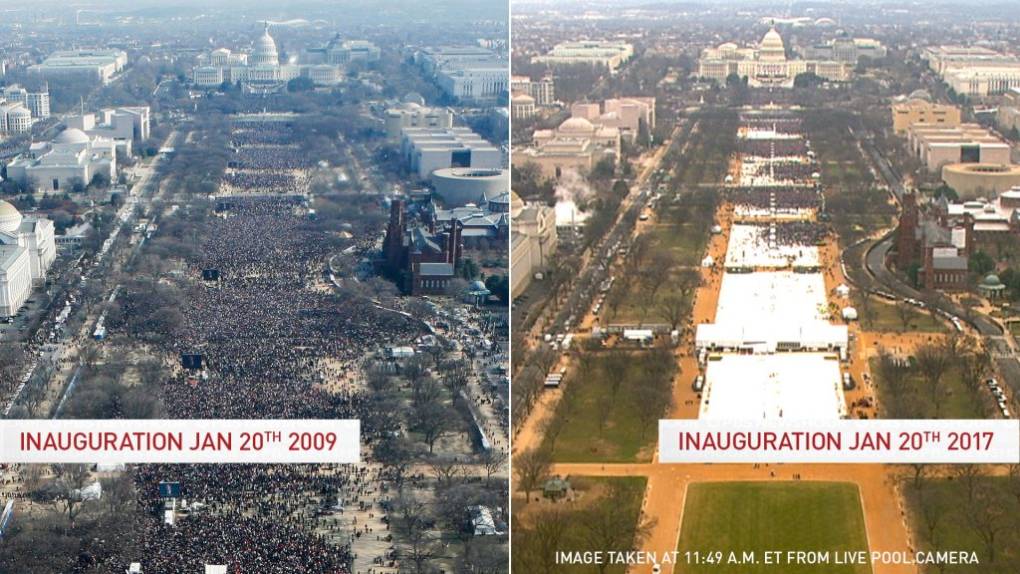
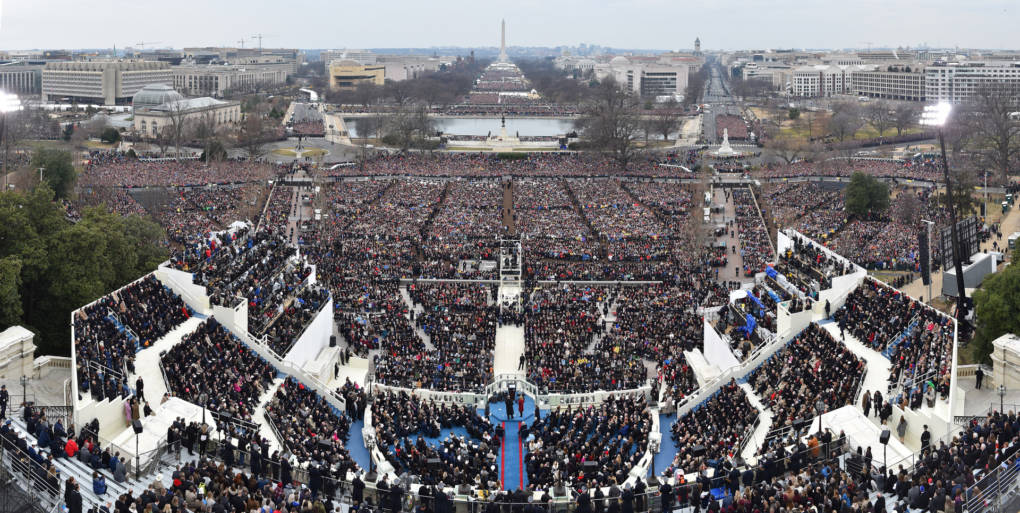
"caption": "Via \"PBS NewsHour\": A view of the National Mall during Barack Obama’s first inauguration in 2009 and for Donald Trump’s inauguration in 2017. Photos by Reuters and Pool Camera. Image has been updated to include time taken.",
"description": null,
"title": "Obama-Trump Inaugurations",
"credit": "PBS NewsHour",
"status": "inherit",
"isLoading": false,
"fetchFailed": false
},
"news_11279237": {
"type": "attachments",
"id": "news_11279237",
"meta": {
"index": "attachments_1716263798",
"site": "news",
"id": "11279237",
"found": true
},
"parent": 11279050,
"imgSizes": {
"small": {
"file": "https://ww2.kqed.org/app/uploads/sites/10/2017/01/RS23722_Fresno-Vigil-qut-520x412.jpg",
"width": 520,
"mimeType": "image/jpeg",
"height": 412
},
"twentyfourteen-full-width": {
"file": "https://ww2.kqed.org/app/uploads/sites/10/2017/01/RS23722_Fresno-Vigil-qut-1038x576.jpg",
"width": 1038,
"mimeType": "image/jpeg",
"height": 576
},
"thumbnail": {
"file": "https://ww2.kqed.org/app/uploads/sites/10/2017/01/RS23722_Fresno-Vigil-qut-160x127.jpg",
"width": 160,
"mimeType": "image/jpeg",
"height": 127
},
"fd-sm": {
"file": "https://ww2.kqed.org/app/uploads/sites/10/2017/01/RS23722_Fresno-Vigil-qut-960x760.jpg",
"width": 960,
"mimeType": "image/jpeg",
"height": 760
},
"post-thumbnail": {
"file": "https://ww2.kqed.org/app/uploads/sites/10/2017/01/RS23722_Fresno-Vigil-qut-672x372.jpg",
"width": 672,
"mimeType": "image/jpeg",
"height": 372
},
"xsmall": {
"file": "https://ww2.kqed.org/app/uploads/sites/10/2017/01/RS23722_Fresno-Vigil-qut-375x297.jpg",
"width": 375,
"mimeType": "image/jpeg",
"height": 297
},
"kqedFullSize": {
"file": "https://ww2.kqed.org/app/uploads/sites/10/2017/01/RS23722_Fresno-Vigil-qut.jpg",
"width": 1431,
"height": 1133
},
"large": {
"file": "https://ww2.kqed.org/app/uploads/sites/10/2017/01/RS23722_Fresno-Vigil-qut-1020x808.jpg",
"width": 1020,
"mimeType": "image/jpeg",
"height": 808
},
"xlarge": {
"file": "https://ww2.kqed.org/app/uploads/sites/10/2017/01/RS23722_Fresno-Vigil-qut-1180x934.jpg",
"width": 1180,
"mimeType": "image/jpeg",
"height": 934
},
"guest-author-50": {
"file": "https://ww2.kqed.org/app/uploads/sites/10/2017/01/RS23722_Fresno-Vigil-qut-50x50.jpg",
"width": 50,
"mimeType": "image/jpeg",
"height": 50
},
"guest-author-96": {
"file": "https://ww2.kqed.org/app/uploads/sites/10/2017/01/RS23722_Fresno-Vigil-qut-96x96.jpg",
"width": 96,
"mimeType": "image/jpeg",
"height": 96
},
"medium": {
"file": "https://ww2.kqed.org/app/uploads/sites/10/2017/01/RS23722_Fresno-Vigil-qut-800x633.jpg",
"width": 800,
"mimeType": "image/jpeg",
"height": 633
},
"guest-author-64": {
"file": "https://ww2.kqed.org/app/uploads/sites/10/2017/01/RS23722_Fresno-Vigil-qut-64x64.jpg",
"width": 64,
"mimeType": "image/jpeg",
"height": 64
},
"guest-author-32": {
"file": "https://ww2.kqed.org/app/uploads/sites/10/2017/01/RS23722_Fresno-Vigil-qut-32x32.jpg",
"width": 32,
"mimeType": "image/jpeg",
"height": 32
},
"jmtc-small-thumb": {
"file": "https://ww2.kqed.org/app/uploads/sites/10/2017/01/RS23722_Fresno-Vigil-qut-280x150.jpg",
"width": 280,
"mimeType": "image/jpeg",
"height": 150
},
"fd-med": {
"file": "https://ww2.kqed.org/app/uploads/sites/10/2017/01/RS23722_Fresno-Vigil-qut-1180x934.jpg",
"width": 1180,
"mimeType": "image/jpeg",
"height": 934
},
"detail": {
"file": "https://ww2.kqed.org/app/uploads/sites/10/2017/01/RS23722_Fresno-Vigil-qut-150x150.jpg",
"width": 150,
"mimeType": "image/jpeg",
"height": 150
},
"guest-author-128": {
"file": "https://ww2.kqed.org/app/uploads/sites/10/2017/01/RS23722_Fresno-Vigil-qut-128x128.jpg",
"width": 128,
"mimeType": "image/jpeg",
"height": 128
},
"xxsmall": {
"file": "https://ww2.kqed.org/app/uploads/sites/10/2017/01/RS23722_Fresno-Vigil-qut-240x190.jpg",
"width": 240,
"mimeType": "image/jpeg",
"height": 190
}
},
"publishDate": 1484957995,
"modified": 1484958030,
"caption": "Reza Nekumanesh, director of the Islamic Cultural Center of Fresno tells the audience that peace can only be rooted in justice. ",
"description": null,
"title": "RS23722_Fresno Vigil-qut",
"credit": "Alice Daniel/KQED",
"status": "inherit",
"isLoading": false,
"fetchFailed": false
},
"news_11280304": {
"type": "attachments",
"id": "news_11280304",
"meta": {
"index": "attachments_1716263798",
"site": "news",
"id": "11280304",
"found": true
},
"parent": 11280302,
"imgSizes": {
"small": {
"file": "https://ww2.kqed.org/app/uploads/sites/10/2017/01/gettyimages-632287522_slide-dd0cdc47115cc7c17152c8d4bffd893dfc7f7260-1-520x347.jpg",
"width": 520,
"mimeType": "image/jpeg",
"height": 347
},
"twentyfourteen-full-width": {
"file": "https://ww2.kqed.org/app/uploads/sites/10/2017/01/gettyimages-632287522_slide-dd0cdc47115cc7c17152c8d4bffd893dfc7f7260-1-1038x576.jpg",
"width": 1038,
"mimeType": "image/jpeg",
"height": 576
},
"thumbnail": {
"file": "https://ww2.kqed.org/app/uploads/sites/10/2017/01/gettyimages-632287522_slide-dd0cdc47115cc7c17152c8d4bffd893dfc7f7260-1-160x107.jpg",
"width": 160,
"mimeType": "image/jpeg",
"height": 107
},
"fd-sm": {
"file": "https://ww2.kqed.org/app/uploads/sites/10/2017/01/gettyimages-632287522_slide-dd0cdc47115cc7c17152c8d4bffd893dfc7f7260-1-960x640.jpg",
"width": 960,
"mimeType": "image/jpeg",
"height": 640
},
"post-thumbnail": {
"file": "https://ww2.kqed.org/app/uploads/sites/10/2017/01/gettyimages-632287522_slide-dd0cdc47115cc7c17152c8d4bffd893dfc7f7260-1-672x372.jpg",
"width": 672,
"mimeType": "image/jpeg",
"height": 372
},
"xsmall": {
"file": "https://ww2.kqed.org/app/uploads/sites/10/2017/01/gettyimages-632287522_slide-dd0cdc47115cc7c17152c8d4bffd893dfc7f7260-1-375x250.jpg",
"width": 375,
"mimeType": "image/jpeg",
"height": 250
},
"kqedFullSize": {
"file": "https://ww2.kqed.org/app/uploads/sites/10/2017/01/gettyimages-632287522_slide-dd0cdc47115cc7c17152c8d4bffd893dfc7f7260-1.jpg",
"width": 1543,
"height": 1029
},
"large": {
"file": "https://ww2.kqed.org/app/uploads/sites/10/2017/01/gettyimages-632287522_slide-dd0cdc47115cc7c17152c8d4bffd893dfc7f7260-1-1020x680.jpg",
"width": 1020,
"mimeType": "image/jpeg",
"height": 680
},
"xlarge": {
"file": "https://ww2.kqed.org/app/uploads/sites/10/2017/01/gettyimages-632287522_slide-dd0cdc47115cc7c17152c8d4bffd893dfc7f7260-1-1180x787.jpg",
"width": 1180,
"mimeType": "image/jpeg",
"height": 787
},
"guest-author-50": {
"file": "https://ww2.kqed.org/app/uploads/sites/10/2017/01/gettyimages-632287522_slide-dd0cdc47115cc7c17152c8d4bffd893dfc7f7260-1-50x50.jpg",
"width": 50,
"mimeType": "image/jpeg",
"height": 50
},
"guest-author-96": {
"file": "https://ww2.kqed.org/app/uploads/sites/10/2017/01/gettyimages-632287522_slide-dd0cdc47115cc7c17152c8d4bffd893dfc7f7260-1-96x96.jpg",
"width": 96,
"mimeType": "image/jpeg",
"height": 96
},
"medium": {
"file": "https://ww2.kqed.org/app/uploads/sites/10/2017/01/gettyimages-632287522_slide-dd0cdc47115cc7c17152c8d4bffd893dfc7f7260-1-800x534.jpg",
"width": 800,
"mimeType": "image/jpeg",
"height": 534
},
"guest-author-64": {
"file": "https://ww2.kqed.org/app/uploads/sites/10/2017/01/gettyimages-632287522_slide-dd0cdc47115cc7c17152c8d4bffd893dfc7f7260-1-64x64.jpg",
"width": 64,
"mimeType": "image/jpeg",
"height": 64
},
"guest-author-32": {
"file": "https://ww2.kqed.org/app/uploads/sites/10/2017/01/gettyimages-632287522_slide-dd0cdc47115cc7c17152c8d4bffd893dfc7f7260-1-32x32.jpg",
"width": 32,
"mimeType": "image/jpeg",
"height": 32
},
"jmtc-small-thumb": {
"file": "https://ww2.kqed.org/app/uploads/sites/10/2017/01/gettyimages-632287522_slide-dd0cdc47115cc7c17152c8d4bffd893dfc7f7260-1-280x150.jpg",
"width": 280,
"mimeType": "image/jpeg",
"height": 150
},
"fd-med": {
"file": "https://ww2.kqed.org/app/uploads/sites/10/2017/01/gettyimages-632287522_slide-dd0cdc47115cc7c17152c8d4bffd893dfc7f7260-1-1180x787.jpg",
"width": 1180,
"mimeType": "image/jpeg",
"height": 787
},
"detail": {
"file": "https://ww2.kqed.org/app/uploads/sites/10/2017/01/gettyimages-632287522_slide-dd0cdc47115cc7c17152c8d4bffd893dfc7f7260-1-150x150.jpg",
"width": 150,
"mimeType": "image/jpeg",
"height": 150
},
"guest-author-128": {
"file": "https://ww2.kqed.org/app/uploads/sites/10/2017/01/gettyimages-632287522_slide-dd0cdc47115cc7c17152c8d4bffd893dfc7f7260-1-128x128.jpg",
"width": 128,
"mimeType": "image/jpeg",
"height": 128
},
"xxsmall": {
"file": "https://ww2.kqed.org/app/uploads/sites/10/2017/01/gettyimages-632287522_slide-dd0cdc47115cc7c17152c8d4bffd893dfc7f7260-1-240x160.jpg",
"width": 240,
"mimeType": "image/jpeg",
"height": 160
}
},
"publishDate": 1485019170,
"modified": 1485019515,
"caption": "Demonstrators protest on the National Mall in Washington, D.C., for the Women's March on Washington.",
"description": null,
"title": "Demonstrators protest on the National Mall in Washington, DC, for the Women's March on Washington.",
"credit": "Andrew Caballero-Reynolds/AFP/Getty Images",
"status": "inherit",
"isLoading": false,
"fetchFailed": false
},
"news_11280714": {
"type": "attachments",
"id": "news_11280714",
"meta": {
"index": "attachments_1716263798",
"site": "news",
"id": "11280714",
"found": true
},
"parent": 11280592,
"imgSizes": {
"small": {
"file": "https://ww2.kqed.org/app/uploads/sites/10/2017/01/GettyImages-632315856-520x346.jpg",
"width": 520,
"mimeType": "image/jpeg",
"height": 346
},
"twentyfourteen-full-width": {
"file": "https://ww2.kqed.org/app/uploads/sites/10/2017/01/GettyImages-632315856-1038x576.jpg",
"width": 1038,
"mimeType": "image/jpeg",
"height": 576
},
"thumbnail": {
"file": "https://ww2.kqed.org/app/uploads/sites/10/2017/01/GettyImages-632315856-160x106.jpg",
"width": 160,
"mimeType": "image/jpeg",
"height": 106
},
"fd-sm": {
"file": "https://ww2.kqed.org/app/uploads/sites/10/2017/01/GettyImages-632315856-960x639.jpg",
"width": 960,
"mimeType": "image/jpeg",
"height": 639
},
"post-thumbnail": {
"file": "https://ww2.kqed.org/app/uploads/sites/10/2017/01/GettyImages-632315856-672x372.jpg",
"width": 672,
"mimeType": "image/jpeg",
"height": 372
},
"xsmall": {
"file": "https://ww2.kqed.org/app/uploads/sites/10/2017/01/GettyImages-632315856-375x250.jpg",
"width": 375,
"mimeType": "image/jpeg",
"height": 250
},
"kqedFullSize": {
"file": "https://ww2.kqed.org/app/uploads/sites/10/2017/01/GettyImages-632315856-e1485041527459.jpg",
"width": 1920,
"height": 1278
},
"large": {
"file": "https://ww2.kqed.org/app/uploads/sites/10/2017/01/GettyImages-632315856-1020x679.jpg",
"width": 1020,
"mimeType": "image/jpeg",
"height": 679
},
"xlarge": {
"file": "https://ww2.kqed.org/app/uploads/sites/10/2017/01/GettyImages-632315856-1180x785.jpg",
"width": 1180,
"mimeType": "image/jpeg",
"height": 785
},
"guest-author-50": {
"file": "https://ww2.kqed.org/app/uploads/sites/10/2017/01/GettyImages-632315856-50x50.jpg",
"width": 50,
"mimeType": "image/jpeg",
"height": 50
},
"guest-author-96": {
"file": "https://ww2.kqed.org/app/uploads/sites/10/2017/01/GettyImages-632315856-96x96.jpg",
"width": 96,
"mimeType": "image/jpeg",
"height": 96
},
"medium": {
"file": "https://ww2.kqed.org/app/uploads/sites/10/2017/01/GettyImages-632315856-800x532.jpg",
"width": 800,
"mimeType": "image/jpeg",
"height": 532
},
"guest-author-64": {
"file": "https://ww2.kqed.org/app/uploads/sites/10/2017/01/GettyImages-632315856-64x64.jpg",
"width": 64,
"mimeType": "image/jpeg",
"height": 64
},
"guest-author-32": {
"file": "https://ww2.kqed.org/app/uploads/sites/10/2017/01/GettyImages-632315856-32x32.jpg",
"width": 32,
"mimeType": "image/jpeg",
"height": 32
},
"jmtc-small-thumb": {
"file": "https://ww2.kqed.org/app/uploads/sites/10/2017/01/GettyImages-632315856-280x150.jpg",
"width": 280,
"mimeType": "image/jpeg",
"height": 150
},
"fd-lrg": {
"file": "https://ww2.kqed.org/app/uploads/sites/10/2017/01/GettyImages-632315856-1920x1278.jpg",
"width": 1920,
"mimeType": "image/jpeg",
"height": 1278
},
"fd-med": {
"file": "https://ww2.kqed.org/app/uploads/sites/10/2017/01/GettyImages-632315856-1180x785.jpg",
"width": 1180,
"mimeType": "image/jpeg",
"height": 785
},
"full-width": {
"file": "https://ww2.kqed.org/app/uploads/sites/10/2017/01/GettyImages-632315856-1920x1278.jpg",
"width": 1920,
"mimeType": "image/jpeg",
"height": 1278
},
"detail": {
"file": "https://ww2.kqed.org/app/uploads/sites/10/2017/01/GettyImages-632315856-150x150.jpg",
"width": 150,
"mimeType": "image/jpeg",
"height": 150
},
"guest-author-128": {
"file": "https://ww2.kqed.org/app/uploads/sites/10/2017/01/GettyImages-632315856-128x128.jpg",
"width": 128,
"mimeType": "image/jpeg",
"height": 128
},
"xxsmall": {
"file": "https://ww2.kqed.org/app/uploads/sites/10/2017/01/GettyImages-632315856-240x160.jpg",
"width": 240,
"mimeType": "image/jpeg",
"height": 160
}
},
"publishDate": 1485041457,
"modified": 1485041612,
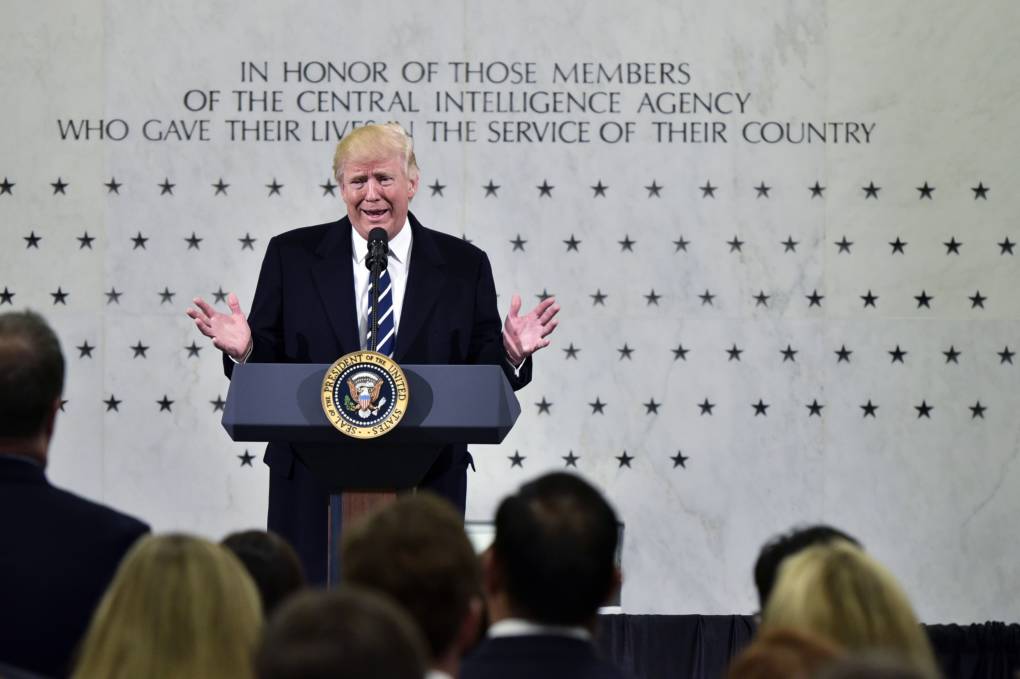
"caption": "President Trump during at visit to CIA headquarters on Saturday during which he called for eradication of 'radical Islamic extremism' and accused the media of lying about the size of his inaugural crowd.",
"description": null,
"title": "Donald Trump-CIA",
"credit": "Mandel Ngan/AFP-Getty Images",
"status": "inherit",
"isLoading": false,
"fetchFailed": false
},
"news_11280901": {
"type": "attachments",
"id": "news_11280901",
"meta": {
"index": "attachments_1716263798",
"site": "news",
"id": "11280901",
"found": true
},
"parent": 11280454,
"imgSizes": {
"small": {
"file": "https://ww2.kqed.org/app/uploads/sites/10/2017/01/RS23777_170121_SFWomensMarch_bhs02-qut1-520x347.jpg",
"width": 520,
"mimeType": "image/jpeg",
"height": 347
},
"twentyfourteen-full-width": {
"file": "https://ww2.kqed.org/app/uploads/sites/10/2017/01/RS23777_170121_SFWomensMarch_bhs02-qut1-1038x576.jpg",
"width": 1038,
"mimeType": "image/jpeg",
"height": 576
},
"thumbnail": {
"file": "https://ww2.kqed.org/app/uploads/sites/10/2017/01/RS23777_170121_SFWomensMarch_bhs02-qut1-160x107.jpg",
"width": 160,
"mimeType": "image/jpeg",
"height": 107
},
"fd-sm": {
"file": "https://ww2.kqed.org/app/uploads/sites/10/2017/01/RS23777_170121_SFWomensMarch_bhs02-qut1-960x640.jpg",
"width": 960,
"mimeType": "image/jpeg",
"height": 640
},
"post-thumbnail": {
"file": "https://ww2.kqed.org/app/uploads/sites/10/2017/01/RS23777_170121_SFWomensMarch_bhs02-qut1-672x372.jpg",
"width": 672,
"mimeType": "image/jpeg",
"height": 372
},
"xsmall": {
"file": "https://ww2.kqed.org/app/uploads/sites/10/2017/01/RS23777_170121_SFWomensMarch_bhs02-qut1-375x250.jpg",
"width": 375,
"mimeType": "image/jpeg",
"height": 250
},
"kqedFullSize": {
"file": "https://ww2.kqed.org/app/uploads/sites/10/2017/01/RS23777_170121_SFWomensMarch_bhs02-qut1.jpg",
"width": 1920,
"height": 1280
},
"large": {
"file": "https://ww2.kqed.org/app/uploads/sites/10/2017/01/RS23777_170121_SFWomensMarch_bhs02-qut1-1020x680.jpg",
"width": 1020,
"mimeType": "image/jpeg",
"height": 680
},
"xlarge": {
"file": "https://ww2.kqed.org/app/uploads/sites/10/2017/01/RS23777_170121_SFWomensMarch_bhs02-qut1-1180x787.jpg",
"width": 1180,
"mimeType": "image/jpeg",
"height": 787
},
"guest-author-50": {
"file": "https://ww2.kqed.org/app/uploads/sites/10/2017/01/RS23777_170121_SFWomensMarch_bhs02-qut1-50x50.jpg",
"width": 50,
"mimeType": "image/jpeg",
"height": 50
},
"guest-author-96": {
"file": "https://ww2.kqed.org/app/uploads/sites/10/2017/01/RS23777_170121_SFWomensMarch_bhs02-qut1-96x96.jpg",
"width": 96,
"mimeType": "image/jpeg",
"height": 96
},
"medium": {
"file": "https://ww2.kqed.org/app/uploads/sites/10/2017/01/RS23777_170121_SFWomensMarch_bhs02-qut1-800x533.jpg",
"width": 800,
"mimeType": "image/jpeg",
"height": 533
},
"guest-author-64": {
"file": "https://ww2.kqed.org/app/uploads/sites/10/2017/01/RS23777_170121_SFWomensMarch_bhs02-qut1-64x64.jpg",
"width": 64,
"mimeType": "image/jpeg",
"height": 64
},
"guest-author-32": {
"file": "https://ww2.kqed.org/app/uploads/sites/10/2017/01/RS23777_170121_SFWomensMarch_bhs02-qut1-32x32.jpg",
"width": 32,
"mimeType": "image/jpeg",
"height": 32
},
"jmtc-small-thumb": {
"file": "https://ww2.kqed.org/app/uploads/sites/10/2017/01/RS23777_170121_SFWomensMarch_bhs02-qut1-280x150.jpg",
"width": 280,
"mimeType": "image/jpeg",
"height": 150
},
"fd-lrg": {
"file": "https://ww2.kqed.org/app/uploads/sites/10/2017/01/RS23777_170121_SFWomensMarch_bhs02-qut1-1920x1280.jpg",
"width": 1920,
"mimeType": "image/jpeg",
"height": 1280
},
"fd-med": {
"file": "https://ww2.kqed.org/app/uploads/sites/10/2017/01/RS23777_170121_SFWomensMarch_bhs02-qut1-1180x787.jpg",
"width": 1180,
"mimeType": "image/jpeg",
"height": 787
},
"full-width": {
"file": "https://ww2.kqed.org/app/uploads/sites/10/2017/01/RS23777_170121_SFWomensMarch_bhs02-qut1-1920x1280.jpg",
"width": 1920,
"mimeType": "image/jpeg",
"height": 1280
},
"detail": {
"file": "https://ww2.kqed.org/app/uploads/sites/10/2017/01/RS23777_170121_SFWomensMarch_bhs02-qut1-150x150.jpg",
"width": 150,
"mimeType": "image/jpeg",
"height": 150
},
"guest-author-128": {
"file": "https://ww2.kqed.org/app/uploads/sites/10/2017/01/RS23777_170121_SFWomensMarch_bhs02-qut1-128x128.jpg",
"width": 128,
"mimeType": "image/jpeg",
"height": 128
},
"xxsmall": {
"file": "https://ww2.kqed.org/app/uploads/sites/10/2017/01/RS23777_170121_SFWomensMarch_bhs02-qut1-240x160.jpg",
"width": 240,
"mimeType": "image/jpeg",
"height": 160
}
},
"publishDate": 1485051603,
"modified": 1485051771,
"caption": "San Francisco’s Women’s March began at the Civic Center Plaza in San Francisco on Jan. 21, 2017. Even with looming clouds and rain thousands joined in the march down Market St.",
"description": null,
"title": "RS23777_170121_SFWomensMarch_bhs02-qut(1)",
"credit": "Brittany Hosea-Small/KQED",
"status": "inherit",
"isLoading": false,
"fetchFailed": false
},
"news_11280377": {
"type": "attachments",
"id": "news_11280377",
"meta": {
"index": "attachments_1716263798",
"site": "news",
"id": "11280377",
"found": true
},
"parent": 11280293,
"imgSizes": {
"small": {
"file": "https://ww2.kqed.org/app/uploads/sites/10/2017/01/Image-uploaded-from-iOS-1-520x390.jpg",
"width": 520,
"mimeType": "image/jpeg",
"height": 390
},
"twentyfourteen-full-width": {
"file": "https://ww2.kqed.org/app/uploads/sites/10/2017/01/Image-uploaded-from-iOS-1-1038x576.jpg",
"width": 1038,
"mimeType": "image/jpeg",
"height": 576
},
"thumbnail": {
"file": "https://ww2.kqed.org/app/uploads/sites/10/2017/01/Image-uploaded-from-iOS-1-160x120.jpg",
"width": 160,
"mimeType": "image/jpeg",
"height": 120
},
"fd-sm": {
"file": "https://ww2.kqed.org/app/uploads/sites/10/2017/01/Image-uploaded-from-iOS-1-960x720.jpg",
"width": 960,
"mimeType": "image/jpeg",
"height": 720
},
"post-thumbnail": {
"file": "https://ww2.kqed.org/app/uploads/sites/10/2017/01/Image-uploaded-from-iOS-1-672x372.jpg",
"width": 672,
"mimeType": "image/jpeg",
"height": 372
},
"xsmall": {
"file": "https://ww2.kqed.org/app/uploads/sites/10/2017/01/Image-uploaded-from-iOS-1-375x281.jpg",
"width": 375,
"mimeType": "image/jpeg",
"height": 281
},
"kqedFullSize": {
"file": "https://ww2.kqed.org/app/uploads/sites/10/2017/01/Image-uploaded-from-iOS-1-e1485025642317.jpg",
"width": 1920,
"height": 1440
},
"large": {
"file": "https://ww2.kqed.org/app/uploads/sites/10/2017/01/Image-uploaded-from-iOS-1-1020x765.jpg",
"width": 1020,
"mimeType": "image/jpeg",
"height": 765
},
"xlarge": {
"file": "https://ww2.kqed.org/app/uploads/sites/10/2017/01/Image-uploaded-from-iOS-1-1180x885.jpg",
"width": 1180,
"mimeType": "image/jpeg",
"height": 885
},
"guest-author-50": {
"file": "https://ww2.kqed.org/app/uploads/sites/10/2017/01/Image-uploaded-from-iOS-1-50x50.jpg",
"width": 50,
"mimeType": "image/jpeg",
"height": 50
},
"guest-author-96": {
"file": "https://ww2.kqed.org/app/uploads/sites/10/2017/01/Image-uploaded-from-iOS-1-96x96.jpg",
"width": 96,
"mimeType": "image/jpeg",
"height": 96
},
"medium": {
"file": "https://ww2.kqed.org/app/uploads/sites/10/2017/01/Image-uploaded-from-iOS-1-800x600.jpg",
"width": 800,
"mimeType": "image/jpeg",
"height": 600
},
"guest-author-64": {
"file": "https://ww2.kqed.org/app/uploads/sites/10/2017/01/Image-uploaded-from-iOS-1-64x64.jpg",
"width": 64,
"mimeType": "image/jpeg",
"height": 64
},
"guest-author-32": {
"file": "https://ww2.kqed.org/app/uploads/sites/10/2017/01/Image-uploaded-from-iOS-1-32x32.jpg",
"width": 32,
"mimeType": "image/jpeg",
"height": 32
},
"jmtc-small-thumb": {
"file": "https://ww2.kqed.org/app/uploads/sites/10/2017/01/Image-uploaded-from-iOS-1-280x150.jpg",
"width": 280,
"mimeType": "image/jpeg",
"height": 150
},
"fd-lrg": {
"file": "https://ww2.kqed.org/app/uploads/sites/10/2017/01/Image-uploaded-from-iOS-1-1920x1440.jpg",
"width": 1920,
"mimeType": "image/jpeg",
"height": 1440
},
"fd-med": {
"file": "https://ww2.kqed.org/app/uploads/sites/10/2017/01/Image-uploaded-from-iOS-1-1180x885.jpg",
"width": 1180,
"mimeType": "image/jpeg",
"height": 885
},
"full-width": {
"file": "https://ww2.kqed.org/app/uploads/sites/10/2017/01/Image-uploaded-from-iOS-1-1920x1440.jpg",
"width": 1920,
"mimeType": "image/jpeg",
"height": 1440
},
"detail": {
"file": "https://ww2.kqed.org/app/uploads/sites/10/2017/01/Image-uploaded-from-iOS-1-150x150.jpg",
"width": 150,
"mimeType": "image/jpeg",
"height": 150
},
"guest-author-128": {
"file": "https://ww2.kqed.org/app/uploads/sites/10/2017/01/Image-uploaded-from-iOS-1-128x128.jpg",
"width": 128,
"mimeType": "image/jpeg",
"height": 128
},
"xxsmall": {
"file": "https://ww2.kqed.org/app/uploads/sites/10/2017/01/Image-uploaded-from-iOS-1-240x180.jpg",
"width": 240,
"mimeType": "image/jpeg",
"height": 180
}
},
"publishDate": 1485023352,
"modified": 1485025636,
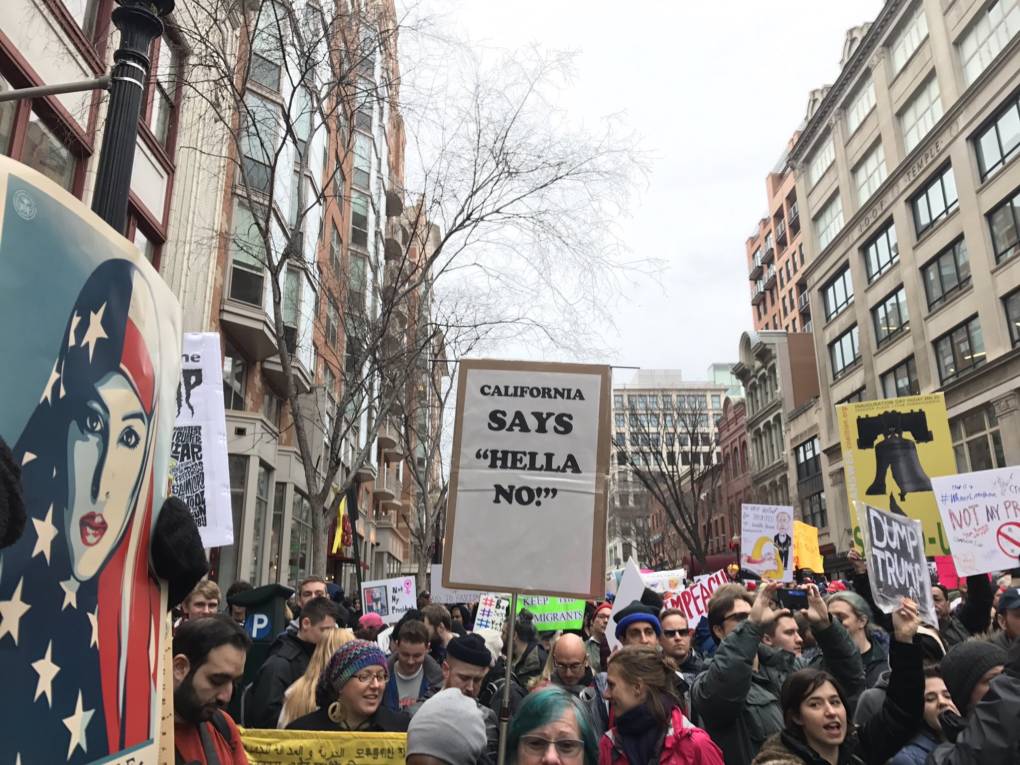
"caption": "'Hella' spotted on a sign in Washington, D.C. on Jan. 20, 2017. ",
"description": null,
"title": "Image uploaded from iOS (1)",
"credit": "Miranda Leitsinger/KQED",
"status": "inherit",
"isLoading": false,
"fetchFailed": false
},
"news_11279020": {
"type": "attachments",
"id": "news_11279020",
"meta": {
"index": "attachments_1716263798",
"site": "news",
"id": "11279020",
"found": true
},
"parent": 11278722,
"imgSizes": {
"small": {
"file": "https://ww2.kqed.org/app/uploads/sites/10/2017/01/RS23701_13-qut-520x347.jpg",
"width": 520,
"mimeType": "image/jpeg",
"height": 347
},
"twentyfourteen-full-width": {
"file": "https://ww2.kqed.org/app/uploads/sites/10/2017/01/RS23701_13-qut-1038x576.jpg",
"width": 1038,
"mimeType": "image/jpeg",
"height": 576
},
"thumbnail": {
"file": "https://ww2.kqed.org/app/uploads/sites/10/2017/01/RS23701_13-qut-160x107.jpg",
"width": 160,
"mimeType": "image/jpeg",
"height": 107
},
"fd-sm": {
"file": "https://ww2.kqed.org/app/uploads/sites/10/2017/01/RS23701_13-qut-960x640.jpg",
"width": 960,
"mimeType": "image/jpeg",
"height": 640
},
"post-thumbnail": {
"file": "https://ww2.kqed.org/app/uploads/sites/10/2017/01/RS23701_13-qut-672x372.jpg",
"width": 672,
"mimeType": "image/jpeg",
"height": 372
},
"xsmall": {
"file": "https://ww2.kqed.org/app/uploads/sites/10/2017/01/RS23701_13-qut-375x250.jpg",
"width": 375,
"mimeType": "image/jpeg",
"height": 250
},
"kqedFullSize": {
"file": "https://ww2.kqed.org/app/uploads/sites/10/2017/01/RS23701_13-qut.jpg",
"width": 1920,
"height": 1280
},
"large": {
"file": "https://ww2.kqed.org/app/uploads/sites/10/2017/01/RS23701_13-qut-1020x680.jpg",
"width": 1020,
"mimeType": "image/jpeg",
"height": 680
},
"xlarge": {
"file": "https://ww2.kqed.org/app/uploads/sites/10/2017/01/RS23701_13-qut-1180x787.jpg",
"width": 1180,
"mimeType": "image/jpeg",
"height": 787
},
"guest-author-50": {
"file": "https://ww2.kqed.org/app/uploads/sites/10/2017/01/RS23701_13-qut-50x50.jpg",
"width": 50,
"mimeType": "image/jpeg",
"height": 50
},
"guest-author-96": {
"file": "https://ww2.kqed.org/app/uploads/sites/10/2017/01/RS23701_13-qut-96x96.jpg",
"width": 96,
"mimeType": "image/jpeg",
"height": 96
},
"medium": {
"file": "https://ww2.kqed.org/app/uploads/sites/10/2017/01/RS23701_13-qut-800x533.jpg",
"width": 800,
"mimeType": "image/jpeg",
"height": 533
},
"guest-author-64": {
"file": "https://ww2.kqed.org/app/uploads/sites/10/2017/01/RS23701_13-qut-64x64.jpg",
"width": 64,
"mimeType": "image/jpeg",
"height": 64
},
"guest-author-32": {
"file": "https://ww2.kqed.org/app/uploads/sites/10/2017/01/RS23701_13-qut-32x32.jpg",
"width": 32,
"mimeType": "image/jpeg",
"height": 32
},
"jmtc-small-thumb": {
"file": "https://ww2.kqed.org/app/uploads/sites/10/2017/01/RS23701_13-qut-280x150.jpg",
"width": 280,
"mimeType": "image/jpeg",
"height": 150
},
"fd-lrg": {
"file": "https://ww2.kqed.org/app/uploads/sites/10/2017/01/RS23701_13-qut-1920x1280.jpg",
"width": 1920,
"mimeType": "image/jpeg",
"height": 1280
},
"fd-med": {
"file": "https://ww2.kqed.org/app/uploads/sites/10/2017/01/RS23701_13-qut-1180x787.jpg",
"width": 1180,
"mimeType": "image/jpeg",
"height": 787
},
"full-width": {
"file": "https://ww2.kqed.org/app/uploads/sites/10/2017/01/RS23701_13-qut-1920x1280.jpg",
"width": 1920,
"mimeType": "image/jpeg",
"height": 1280
},
"detail": {
"file": "https://ww2.kqed.org/app/uploads/sites/10/2017/01/RS23701_13-qut-150x150.jpg",
"width": 150,
"mimeType": "image/jpeg",
"height": 150
},
"guest-author-128": {
"file": "https://ww2.kqed.org/app/uploads/sites/10/2017/01/RS23701_13-qut-128x128.jpg",
"width": 128,
"mimeType": "image/jpeg",
"height": 128
},
"xxsmall": {
"file": "https://ww2.kqed.org/app/uploads/sites/10/2017/01/RS23701_13-qut-240x160.jpg",
"width": 240,
"mimeType": "image/jpeg",
"height": 160
}
},
"publishDate": 1484949391,
"modified": 1484951710,
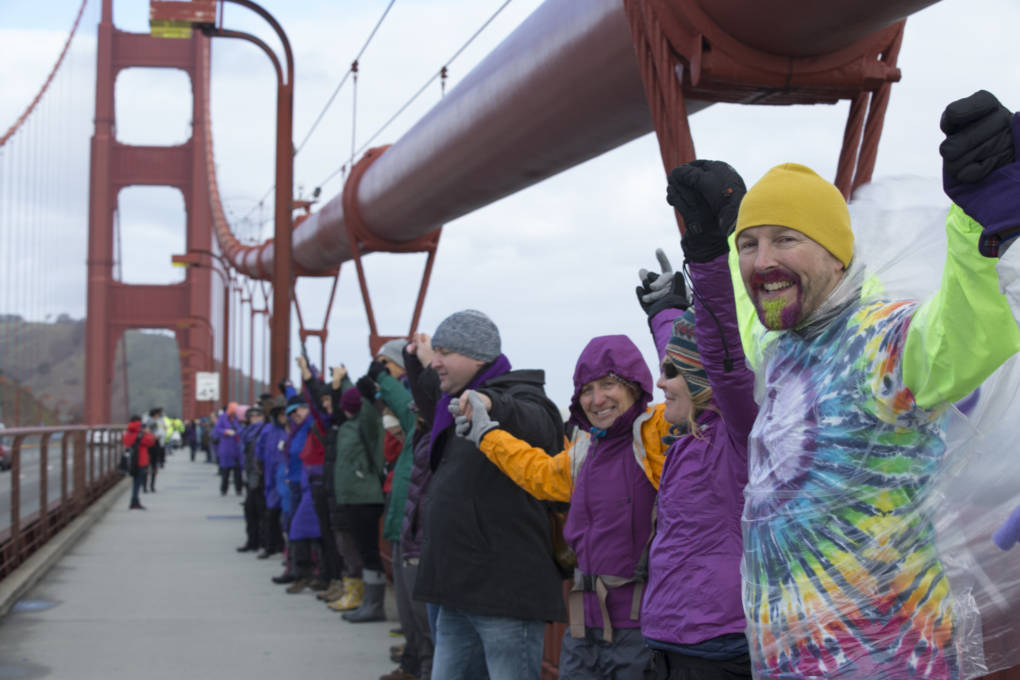
"caption": "Protestors gathered on the Golden Gate Bridge at about 10 a.m. on Jan. 20, 2017. The participants linked hands while cheering and wearing purple. Their demonstration acted as a message against President Donald Trump.",
"description": null,
"title": "RS23701_13-qut",
"credit": "Erasmo Martinez/KQED",
"status": "inherit",
"isLoading": false,
"fetchFailed": false
},
"news_11279418": {
"type": "attachments",
"id": "news_11279418",
"meta": {
"index": "attachments_1716263798",
"site": "news",
"id": "11279418",
"found": true
},
"title": "Donald Trump Inauguration",
"publishDate": 1484966628,
"status": "inherit",
"parent": 11279336,
"modified": 1738716112,
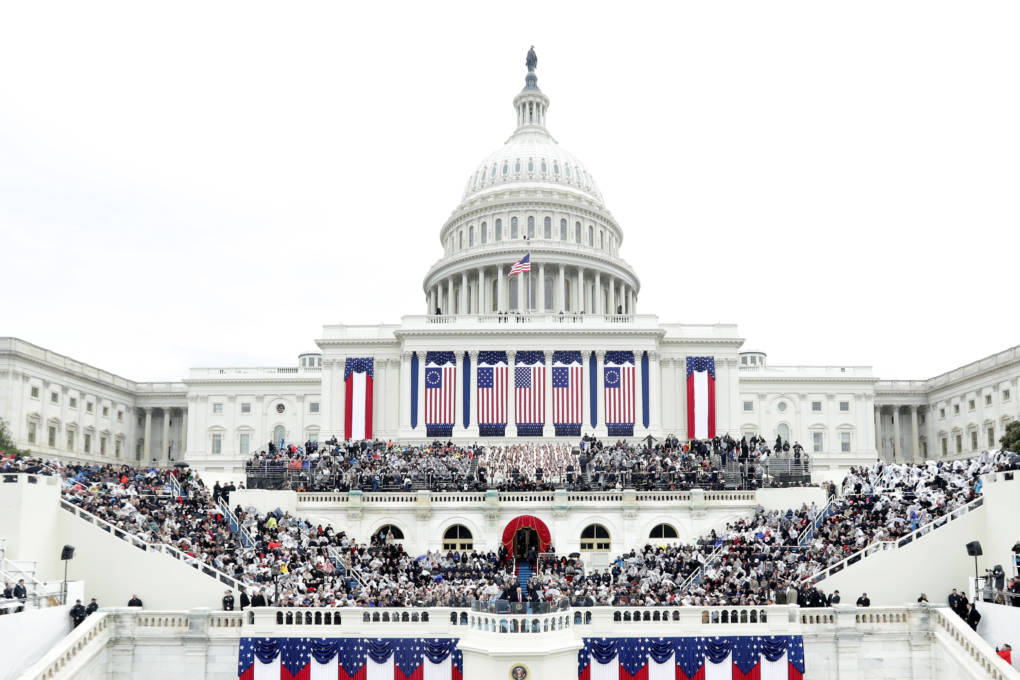
"caption": "The U.S. Capitol as President Trump gave his inaugural address Friday, Jan. 20, 2017.",
"credit": "Alex Wong/Getty Images",
"altTag": null,
"description": null,
"imgSizes": {
"thumbnail": {
"file": "https://cdn.kqed.org/wp-content/uploads/sites/10/2017/01/GettyImages-632202066-160x107.jpg",
"width": 160,
"height": 107,
"mimeType": "image/jpeg"
},
"medium": {
"file": "https://cdn.kqed.org/wp-content/uploads/sites/10/2017/01/GettyImages-632202066-800x533.jpg",
"width": 800,
"height": 533,
"mimeType": "image/jpeg"
},
"large": {
"file": "https://cdn.kqed.org/wp-content/uploads/sites/10/2017/01/GettyImages-632202066-1020x680.jpg",
"width": 1020,
"height": 680,
"mimeType": "image/jpeg"
},
"fd-lrg": {
"file": "https://cdn.kqed.org/wp-content/uploads/sites/10/2017/01/GettyImages-632202066-1920x1279.jpg",
"width": 1920,
"height": 1279,
"mimeType": "image/jpeg"
},
"fd-med": {
"file": "https://cdn.kqed.org/wp-content/uploads/sites/10/2017/01/GettyImages-632202066-1180x786.jpg",
"width": 1180,
"height": 786,
"mimeType": "image/jpeg"
},
"fd-sm": {
"file": "https://cdn.kqed.org/wp-content/uploads/sites/10/2017/01/GettyImages-632202066-960x640.jpg",
"width": 960,
"height": 640,
"mimeType": "image/jpeg"
},
"post-thumbnail": {
"file": "https://cdn.kqed.org/wp-content/uploads/sites/10/2017/01/GettyImages-632202066-672x372.jpg",
"width": 672,
"height": 372,
"mimeType": "image/jpeg"
},
"twentyfourteen-full-width": {
"file": "https://cdn.kqed.org/wp-content/uploads/sites/10/2017/01/GettyImages-632202066-1038x576.jpg",
"width": 1038,
"height": 576,
"mimeType": "image/jpeg"
},
"xxsmall": {
"file": "https://cdn.kqed.org/wp-content/uploads/sites/10/2017/01/GettyImages-632202066-240x160.jpg",
"width": 240,
"height": 160,
"mimeType": "image/jpeg"
},
"xsmall": {
"file": "https://cdn.kqed.org/wp-content/uploads/sites/10/2017/01/GettyImages-632202066-375x250.jpg",
"width": 375,
"height": 250,
"mimeType": "image/jpeg"
},
"small": {
"file": "https://cdn.kqed.org/wp-content/uploads/sites/10/2017/01/GettyImages-632202066-520x346.jpg",
"width": 520,
"height": 346,
"mimeType": "image/jpeg"
},
"xlarge": {
"file": "https://cdn.kqed.org/wp-content/uploads/sites/10/2017/01/GettyImages-632202066-1180x786.jpg",
"width": 1180,
"height": 786,
"mimeType": "image/jpeg"
},
"full-width": {
"file": "https://cdn.kqed.org/wp-content/uploads/sites/10/2017/01/GettyImages-632202066-1920x1279.jpg",
"width": 1920,
"height": 1279,
"mimeType": "image/jpeg"
},
"guest-author-32": {
"file": "https://cdn.kqed.org/wp-content/uploads/sites/10/2017/01/GettyImages-632202066-32x32.jpg",
"width": 32,
"height": 32,
"mimeType": "image/jpeg"
},
"guest-author-50": {
"file": "https://cdn.kqed.org/wp-content/uploads/sites/10/2017/01/GettyImages-632202066-50x50.jpg",
"width": 50,
"height": 50,
"mimeType": "image/jpeg"
},
"guest-author-64": {
"file": "https://cdn.kqed.org/wp-content/uploads/sites/10/2017/01/GettyImages-632202066-64x64.jpg",
"width": 64,
"height": 64,
"mimeType": "image/jpeg"
},
"guest-author-96": {
"file": "https://cdn.kqed.org/wp-content/uploads/sites/10/2017/01/GettyImages-632202066-96x96.jpg",
"width": 96,
"height": 96,
"mimeType": "image/jpeg"
},
"guest-author-128": {
"file": "https://cdn.kqed.org/wp-content/uploads/sites/10/2017/01/GettyImages-632202066-128x128.jpg",
"width": 128,
"height": 128,
"mimeType": "image/jpeg"
},
"detail": {
"file": "https://cdn.kqed.org/wp-content/uploads/sites/10/2017/01/GettyImages-632202066-150x150.jpg",
"width": 150,
"height": 150,
"mimeType": "image/jpeg"
},
"jmtc-small-thumb": {
"file": "https://cdn.kqed.org/wp-content/uploads/sites/10/2017/01/GettyImages-632202066-280x150.jpg",
"width": 280,
"height": 150,
"mimeType": "image/jpeg"
},
"kqedFullSize": {
"file": "https://cdn.kqed.org/wp-content/uploads/sites/10/2017/01/GettyImages-632202066-e1484966703442.jpg",
"width": 1920,
"height": 1279
}
},
"isLoading": false,
"fetchFailed": false
},
"news_11279402": {
"type": "attachments",
"id": "news_11279402",
"meta": {
"index": "attachments_1716263798",
"site": "news",
"id": "11279402",
"found": true
},
"parent": 11278813,
"imgSizes": {
"small": {
"file": "https://ww2.kqed.org/app/uploads/sites/10/2017/01/RS23732_GettyImages-632218426-qut-520x261.jpg",
"width": 520,
"mimeType": "image/jpeg",
"height": 261
},
"twentyfourteen-full-width": {
"file": "https://ww2.kqed.org/app/uploads/sites/10/2017/01/RS23732_GettyImages-632218426-qut-1038x576.jpg",
"width": 1038,
"mimeType": "image/jpeg",
"height": 576
},
"thumbnail": {
"file": "https://ww2.kqed.org/app/uploads/sites/10/2017/01/RS23732_GettyImages-632218426-qut-160x80.jpg",
"width": 160,
"mimeType": "image/jpeg",
"height": 80
},
"fd-sm": {
"file": "https://ww2.kqed.org/app/uploads/sites/10/2017/01/RS23732_GettyImages-632218426-qut-960x483.jpg",
"width": 960,
"mimeType": "image/jpeg",
"height": 483
},
"post-thumbnail": {
"file": "https://ww2.kqed.org/app/uploads/sites/10/2017/01/RS23732_GettyImages-632218426-qut-672x372.jpg",
"width": 672,
"mimeType": "image/jpeg",
"height": 372
},
"xsmall": {
"file": "https://ww2.kqed.org/app/uploads/sites/10/2017/01/RS23732_GettyImages-632218426-qut-375x188.jpg",
"width": 375,
"mimeType": "image/jpeg",
"height": 188
},
"kqedFullSize": {
"file": "https://ww2.kqed.org/app/uploads/sites/10/2017/01/RS23732_GettyImages-632218426-qut.jpg",
"width": 1920,
"height": 965
},
"large": {
"file": "https://ww2.kqed.org/app/uploads/sites/10/2017/01/RS23732_GettyImages-632218426-qut-1020x513.jpg",
"width": 1020,
"mimeType": "image/jpeg",
"height": 513
},
"xlarge": {
"file": "https://ww2.kqed.org/app/uploads/sites/10/2017/01/RS23732_GettyImages-632218426-qut-1180x593.jpg",
"width": 1180,
"mimeType": "image/jpeg",
"height": 593
},
"guest-author-50": {
"file": "https://ww2.kqed.org/app/uploads/sites/10/2017/01/RS23732_GettyImages-632218426-qut-50x50.jpg",
"width": 50,
"mimeType": "image/jpeg",
"height": 50
},
"guest-author-96": {
"file": "https://ww2.kqed.org/app/uploads/sites/10/2017/01/RS23732_GettyImages-632218426-qut-96x96.jpg",
"width": 96,
"mimeType": "image/jpeg",
"height": 96
},
"medium": {
"file": "https://ww2.kqed.org/app/uploads/sites/10/2017/01/RS23732_GettyImages-632218426-qut-800x402.jpg",
"width": 800,
"mimeType": "image/jpeg",
"height": 402
},
"guest-author-64": {
"file": "https://ww2.kqed.org/app/uploads/sites/10/2017/01/RS23732_GettyImages-632218426-qut-64x64.jpg",
"width": 64,
"mimeType": "image/jpeg",
"height": 64
},
"guest-author-32": {
"file": "https://ww2.kqed.org/app/uploads/sites/10/2017/01/RS23732_GettyImages-632218426-qut-32x32.jpg",
"width": 32,
"mimeType": "image/jpeg",
"height": 32
},
"jmtc-small-thumb": {
"file": "https://ww2.kqed.org/app/uploads/sites/10/2017/01/RS23732_GettyImages-632218426-qut-280x150.jpg",
"width": 280,
"mimeType": "image/jpeg",
"height": 150
},
"fd-lrg": {
"file": "https://ww2.kqed.org/app/uploads/sites/10/2017/01/RS23732_GettyImages-632218426-qut-1920x965.jpg",
"width": 1920,
"mimeType": "image/jpeg",
"height": 965
},
"fd-med": {
"file": "https://ww2.kqed.org/app/uploads/sites/10/2017/01/RS23732_GettyImages-632218426-qut-1180x593.jpg",
"width": 1180,
"mimeType": "image/jpeg",
"height": 593
},
"full-width": {
"file": "https://ww2.kqed.org/app/uploads/sites/10/2017/01/RS23732_GettyImages-632218426-qut-1920x965.jpg",
"width": 1920,
"mimeType": "image/jpeg",
"height": 965
},
"detail": {
"file": "https://ww2.kqed.org/app/uploads/sites/10/2017/01/RS23732_GettyImages-632218426-qut-150x150.jpg",
"width": 150,
"mimeType": "image/jpeg",
"height": 150
},
"guest-author-128": {
"file": "https://ww2.kqed.org/app/uploads/sites/10/2017/01/RS23732_GettyImages-632218426-qut-128x128.jpg",
"width": 128,
"mimeType": "image/jpeg",
"height": 128
},
"xxsmall": {
"file": "https://ww2.kqed.org/app/uploads/sites/10/2017/01/RS23732_GettyImages-632218426-qut-240x121.jpg",
"width": 240,
"mimeType": "image/jpeg",
"height": 121
}
},
"publishDate": 1484964688,
"modified": 1484964714,
"caption": "WASHINGTON, DC - JANUARY 20: People look on during the Inauguration of President Donald Trump on January 20, 2017 at the U.S. Capitol in Washington, D.C. In today's inauguration ceremony Donald J. Trump becomes the 45th president of the United States.",
"description": null,
"title": "RS23732_GettyImages-632218426-qut",
"credit": "Ricky Carioti - Pool/Getty Images",
"status": "inherit",
"isLoading": false,
"fetchFailed": false
},
"news_11279259": {
"type": "attachments",
"id": "news_11279259",
"meta": {
"index": "attachments_1716263798",
"site": "news",
"id": "11279259",
"found": true
},
"parent": 11279164,
"imgSizes": {
"small": {
"file": "https://ww2.kqed.org/app/uploads/sites/10/2017/01/RS23727_Amanda_Capitol-qut-520x693.jpg",
"width": 520,
"mimeType": "image/jpeg",
"height": 693
},
"twentyfourteen-full-width": {
"file": "https://ww2.kqed.org/app/uploads/sites/10/2017/01/RS23727_Amanda_Capitol-qut-900x576.jpg",
"width": 900,
"mimeType": "image/jpeg",
"height": 576
},
"thumbnail": {
"file": "https://ww2.kqed.org/app/uploads/sites/10/2017/01/RS23727_Amanda_Capitol-qut-160x213.jpg",
"width": 160,
"mimeType": "image/jpeg",
"height": 213
},
"post-thumbnail": {
"file": "https://ww2.kqed.org/app/uploads/sites/10/2017/01/RS23727_Amanda_Capitol-qut-672x372.jpg",
"width": 672,
"mimeType": "image/jpeg",
"height": 372
},
"xsmall": {
"file": "https://ww2.kqed.org/app/uploads/sites/10/2017/01/RS23727_Amanda_Capitol-qut-375x500.jpg",
"width": 375,
"mimeType": "image/jpeg",
"height": 500
},
"kqedFullSize": {
"file": "https://ww2.kqed.org/app/uploads/sites/10/2017/01/RS23727_Amanda_Capitol-qut.jpg",
"width": 900,
"height": 1200
},
"guest-author-50": {
"file": "https://ww2.kqed.org/app/uploads/sites/10/2017/01/RS23727_Amanda_Capitol-qut-50x50.jpg",
"width": 50,
"mimeType": "image/jpeg",
"height": 50
},
"guest-author-96": {
"file": "https://ww2.kqed.org/app/uploads/sites/10/2017/01/RS23727_Amanda_Capitol-qut-96x96.jpg",
"width": 96,
"mimeType": "image/jpeg",
"height": 96
},
"medium": {
"file": "https://ww2.kqed.org/app/uploads/sites/10/2017/01/RS23727_Amanda_Capitol-qut-800x1067.jpg",
"width": 800,
"mimeType": "image/jpeg",
"height": 1067
},
"guest-author-64": {
"file": "https://ww2.kqed.org/app/uploads/sites/10/2017/01/RS23727_Amanda_Capitol-qut-64x64.jpg",
"width": 64,
"mimeType": "image/jpeg",
"height": 64
},
"guest-author-32": {
"file": "https://ww2.kqed.org/app/uploads/sites/10/2017/01/RS23727_Amanda_Capitol-qut-32x32.jpg",
"width": 32,
"mimeType": "image/jpeg",
"height": 32
},
"jmtc-small-thumb": {
"file": "https://ww2.kqed.org/app/uploads/sites/10/2017/01/RS23727_Amanda_Capitol-qut-280x150.jpg",
"width": 280,
"mimeType": "image/jpeg",
"height": 150
},
"detail": {
"file": "https://ww2.kqed.org/app/uploads/sites/10/2017/01/RS23727_Amanda_Capitol-qut-150x150.jpg",
"width": 150,
"mimeType": "image/jpeg",
"height": 150
},
"guest-author-128": {
"file": "https://ww2.kqed.org/app/uploads/sites/10/2017/01/RS23727_Amanda_Capitol-qut-128x128.jpg",
"width": 128,
"mimeType": "image/jpeg",
"height": 128
},
"xxsmall": {
"file": "https://ww2.kqed.org/app/uploads/sites/10/2017/01/RS23727_Amanda_Capitol-qut-240x320.jpg",
"width": 240,
"mimeType": "image/jpeg",
"height": 320
}
},
"publishDate": 1484959859,
"modified": 1484959893,
"caption": "Amanda Weissman, 13, of Pacifica, at the U.S. Capitol on Friday, Jan. 20. She came to D.C. with her mom to attend the Women's March - a first protest for both of them.",
"description": null,
"title": "RS23727_Amanda_Capitol-qut",
"credit": "Courtesy of Amanda Weissman",
"status": "inherit",
"isLoading": false,
"fetchFailed": false
},
"science_1338618": {
"type": "attachments",
"id": "science_1338618",
"meta": {
"index": "attachments_1716263798",
"site": "science",
"id": "1338618",
"found": true
},
"parent": 1338482,
"imgSizes": {
"small": {
"file": "https://ww2.kqed.org/app/uploads/sites/35/2017/01/Screen-Shot-2017-01-20-at-12.55.05-PM-520x254.png",
"width": 520,
"mimeType": "image/png",
"height": 254
},
"thumbnail": {
"file": "https://ww2.kqed.org/app/uploads/sites/35/2017/01/Screen-Shot-2017-01-20-at-12.55.05-PM-160x78.png",
"width": 160,
"mimeType": "image/png",
"height": 78
},
"xsmall": {
"file": "https://ww2.kqed.org/app/uploads/sites/35/2017/01/Screen-Shot-2017-01-20-at-12.55.05-PM-375x183.png",
"width": 375,
"mimeType": "image/png",
"height": 183
},
"kqedFullSize": {
"file": "https://ww2.kqed.org/app/uploads/sites/35/2017/01/Screen-Shot-2017-01-20-at-12.55.05-PM.png",
"width": 648,
"height": 317
},
"guest-author-50": {
"file": "https://ww2.kqed.org/app/uploads/sites/35/2017/01/Screen-Shot-2017-01-20-at-12.55.05-PM-50x50.png",
"width": 50,
"mimeType": "image/png",
"height": 50
},
"guest-author-96": {
"file": "https://ww2.kqed.org/app/uploads/sites/35/2017/01/Screen-Shot-2017-01-20-at-12.55.05-PM-96x96.png",
"width": 96,
"mimeType": "image/png",
"height": 96
},
"guest-author-64": {
"file": "https://ww2.kqed.org/app/uploads/sites/35/2017/01/Screen-Shot-2017-01-20-at-12.55.05-PM-64x64.png",
"width": 64,
"mimeType": "image/png",
"height": 64
},
"detail": {
"file": "https://ww2.kqed.org/app/uploads/sites/35/2017/01/Screen-Shot-2017-01-20-at-12.55.05-PM-150x150.png",
"width": 150,
"mimeType": "image/png",
"height": 150
},
"guest-author-32": {
"file": "https://ww2.kqed.org/app/uploads/sites/35/2017/01/Screen-Shot-2017-01-20-at-12.55.05-PM-32x32.png",
"width": 32,
"mimeType": "image/png",
"height": 32
},
"guest-author-128": {
"file": "https://ww2.kqed.org/app/uploads/sites/35/2017/01/Screen-Shot-2017-01-20-at-12.55.05-PM-128x128.png",
"width": 128,
"mimeType": "image/png",
"height": 128
},
"xxsmall": {
"file": "https://ww2.kqed.org/app/uploads/sites/35/2017/01/Screen-Shot-2017-01-20-at-12.55.05-PM-240x117.png",
"width": 240,
"mimeType": "image/png",
"height": 117
}
},
"publishDate": 1484945736,
"modified": 1484945750,
"caption": "Website accessed at 12:40 p.m. PST, Jan. 20, 2017.",
"description": null,
"title": "Screen Shot 2017-01-20 at 12.55.05 PM",
"credit": null,
"status": "inherit",
"isLoading": false,
"fetchFailed": false
},
"news_11278906": {
"type": "attachments",
"id": "news_11278906",
"meta": {
"index": "attachments_1716263798",
"site": "news",
"id": "11278906",
"found": true
},
"parent": 11278904,
"imgSizes": {
"small": {
"file": "https://ww2.kqed.org/app/uploads/sites/10/2017/01/gettyimages-632202494-1-1ce225bca6a9f6dd704b109196e51a11b91102e7-520x390.jpg",
"width": 520,
"mimeType": "image/jpeg",
"height": 390
},
"twentyfourteen-full-width": {
"file": "https://ww2.kqed.org/app/uploads/sites/10/2017/01/gettyimages-632202494-1-1ce225bca6a9f6dd704b109196e51a11b91102e7-1038x576.jpg",
"width": 1038,
"mimeType": "image/jpeg",
"height": 576
},
"thumbnail": {
"file": "https://ww2.kqed.org/app/uploads/sites/10/2017/01/gettyimages-632202494-1-1ce225bca6a9f6dd704b109196e51a11b91102e7-160x120.jpg",
"width": 160,
"mimeType": "image/jpeg",
"height": 120
},
"fd-sm": {
"file": "https://ww2.kqed.org/app/uploads/sites/10/2017/01/gettyimages-632202494-1-1ce225bca6a9f6dd704b109196e51a11b91102e7-960x720.jpg",
"width": 960,
"mimeType": "image/jpeg",
"height": 720
},
"post-thumbnail": {
"file": "https://ww2.kqed.org/app/uploads/sites/10/2017/01/gettyimages-632202494-1-1ce225bca6a9f6dd704b109196e51a11b91102e7-672x372.jpg",
"width": 672,
"mimeType": "image/jpeg",
"height": 372
},
"xsmall": {
"file": "https://ww2.kqed.org/app/uploads/sites/10/2017/01/gettyimages-632202494-1-1ce225bca6a9f6dd704b109196e51a11b91102e7-375x281.jpg",
"width": 375,
"mimeType": "image/jpeg",
"height": 281
},
"kqedFullSize": {
"file": "https://ww2.kqed.org/app/uploads/sites/10/2017/01/gettyimages-632202494-1-1ce225bca6a9f6dd704b109196e51a11b91102e7.jpg",
"width": 5308,
"height": 3981
},
"large": {
"file": "https://ww2.kqed.org/app/uploads/sites/10/2017/01/gettyimages-632202494-1-1ce225bca6a9f6dd704b109196e51a11b91102e7-1020x765.jpg",
"width": 1020,
"mimeType": "image/jpeg",
"height": 765
},
"xlarge": {
"file": "https://ww2.kqed.org/app/uploads/sites/10/2017/01/gettyimages-632202494-1-1ce225bca6a9f6dd704b109196e51a11b91102e7-1180x885.jpg",
"width": 1180,
"mimeType": "image/jpeg",
"height": 885
},
"guest-author-50": {
"file": "https://ww2.kqed.org/app/uploads/sites/10/2017/01/gettyimages-632202494-1-1ce225bca6a9f6dd704b109196e51a11b91102e7-50x50.jpg",
"width": 50,
"mimeType": "image/jpeg",
"height": 50
},
"guest-author-96": {
"file": "https://ww2.kqed.org/app/uploads/sites/10/2017/01/gettyimages-632202494-1-1ce225bca6a9f6dd704b109196e51a11b91102e7-96x96.jpg",
"width": 96,
"mimeType": "image/jpeg",
"height": 96
},
"medium": {
"file": "https://ww2.kqed.org/app/uploads/sites/10/2017/01/gettyimages-632202494-1-1ce225bca6a9f6dd704b109196e51a11b91102e7-800x600.jpg",
"width": 800,
"mimeType": "image/jpeg",
"height": 600
},
"guest-author-64": {
"file": "https://ww2.kqed.org/app/uploads/sites/10/2017/01/gettyimages-632202494-1-1ce225bca6a9f6dd704b109196e51a11b91102e7-64x64.jpg",
"width": 64,
"mimeType": "image/jpeg",
"height": 64
},
"guest-author-32": {
"file": "https://ww2.kqed.org/app/uploads/sites/10/2017/01/gettyimages-632202494-1-1ce225bca6a9f6dd704b109196e51a11b91102e7-32x32.jpg",
"width": 32,
"mimeType": "image/jpeg",
"height": 32
},
"jmtc-small-thumb": {
"file": "https://ww2.kqed.org/app/uploads/sites/10/2017/01/gettyimages-632202494-1-1ce225bca6a9f6dd704b109196e51a11b91102e7-280x150.jpg",
"width": 280,
"mimeType": "image/jpeg",
"height": 150
},
"fd-lrg": {
"file": "https://ww2.kqed.org/app/uploads/sites/10/2017/01/gettyimages-632202494-1-1ce225bca6a9f6dd704b109196e51a11b91102e7-1920x1440.jpg",
"width": 1920,
"mimeType": "image/jpeg",
"height": 1440
},
"fd-med": {
"file": "https://ww2.kqed.org/app/uploads/sites/10/2017/01/gettyimages-632202494-1-1ce225bca6a9f6dd704b109196e51a11b91102e7-1180x885.jpg",
"width": 1180,
"mimeType": "image/jpeg",
"height": 885
},
"full-width": {
"file": "https://ww2.kqed.org/app/uploads/sites/10/2017/01/gettyimages-632202494-1-1ce225bca6a9f6dd704b109196e51a11b91102e7-1920x1440.jpg",
"width": 1920,
"mimeType": "image/jpeg",
"height": 1440
},
"detail": {
"file": "https://ww2.kqed.org/app/uploads/sites/10/2017/01/gettyimages-632202494-1-1ce225bca6a9f6dd704b109196e51a11b91102e7-150x150.jpg",
"width": 150,
"mimeType": "image/jpeg",
"height": 150
},
"guest-author-128": {
"file": "https://ww2.kqed.org/app/uploads/sites/10/2017/01/gettyimages-632202494-1-1ce225bca6a9f6dd704b109196e51a11b91102e7-128x128.jpg",
"width": 128,
"mimeType": "image/jpeg",
"height": 128
},
"xxsmall": {
"file": "https://ww2.kqed.org/app/uploads/sites/10/2017/01/gettyimages-632202494-1-1ce225bca6a9f6dd704b109196e51a11b91102e7-240x180.jpg",
"width": 240,
"mimeType": "image/jpeg",
"height": 180
}
},
"publishDate": 1484945577,
"modified": 1484950628,
"caption": "Police officers push a group of demonstrators back in northwest Washington, D.C., on Friday. Violence broke out in the area among a crowd of several hundred, but the city's interim police chief says protests across the city have been largely peaceful.",
"description": "Police officers push a group of demonstrators back in northwest Washington, DC., on Friday. Violence broke out in the area among a crowd of several hundred, but the city's interim police chief says protests across the city have been largely peaceful",
"title": "Police officers push a group of demonstrators back in northwest Washington, DC., on Friday. Violence broke out in the area among a crowd of several hundred, but the city's interim police chief says protests across the city have been largely peaceful.",
"credit": "Zach Gibson/AFP/Getty Images",
"status": "inherit",
"isLoading": false,
"fetchFailed": false
}
},
"audioPlayerReducer": {
"postId": "stream_live",
"isPaused": true,
"isPlaying": false,
"pfsActive": false,
"pledgeModalIsOpen": true,
"playerDrawerIsOpen": false,
"liveAudioPlayStartedAt": 0,
"liveAudioPlayContext": ""
},
"authorsReducer": {
"byline_news_11281825": {
"type": "authors",
"id": "byline_news_11281825",
"meta": {
"override": true
},
"slug": "byline_news_11281825",
"name": "\u003cstrong>Jonathan Lemire and Jill Colvin\u003cbr />Associated Press\u003c/strong>",
"isLoading": false
},
"byline_news_11280302": {
"type": "authors",
"id": "byline_news_11280302",
"meta": {
"override": true
},
"slug": "byline_news_11280302",
"name": "Colin Dwyer",
"isLoading": false
},
"byline_news_11279164": {
"type": "authors",
"id": "byline_news_11279164",
"meta": {
"override": true
},
"slug": "byline_news_11279164",
"name": "\u003cstrong>Amanda Weissman\u003c/strong>",
"isLoading": false
},
"byline_news_11278904": {
"type": "authors",
"id": "byline_news_11278904",
"meta": {
"override": true
},
"slug": "byline_news_11278904",
"name": "Camila Domonoske",
"isLoading": false
},
"dclyde": {
"type": "authors",
"id": "104",
"meta": {
"index": "authors_1716337520",
"id": "104",
"found": true
},
"name": "Don Clyde",
"firstName": "Don",
"lastName": "Clyde",
"slug": "dclyde",
"email": "dclyde@kqed.org",
"display_author_email": false,
"staff_mastheads": [],
"title": "KQED Contributor",
"bio": "Don Clyde is an online producer, reporter and copy editor for KQED News. Before venturing into journalism, he worked as a medical device engineer and scientist for nearly a decade after earning a degree in physics from UC Berkeley. He loves travel, reading, living in Oakland, and most importantly, a good walk. Email him at dclyde@kqed.org or follow him @clydedon.",
"avatar": "https://secure.gravatar.com/avatar/decd3e640c3eedbd0a574275aebb2d19?s=600&d=blank&r=g",
"twitter": "clydedon",
"facebook": null,
"instagram": null,
"linkedin": null,
"sites": [
{
"site": "artschool",
"roles": [
"editor"
]
},
{
"site": "news",
"roles": [
"administrator"
]
},
{
"site": "futureofyou",
"roles": [
"editor"
]
},
{
"site": "about",
"roles": [
"editor"
]
},
{
"site": "mindshift",
"roles": [
"contributor"
]
},
{
"site": "bayareabites",
"roles": [
"contributor"
]
},
{
"site": "lowdown",
"roles": [
"editor"
]
},
{
"site": "stateofhealth",
"roles": [
"administrator"
]
},
{
"site": "spark",
"roles": [
"administrator"
]
},
{
"site": "trulyca",
"roles": [
"administrator"
]
},
{
"site": "imagemakers",
"roles": [
"administrator"
]
},
{
"site": "science",
"roles": []
},
{
"site": "education",
"roles": [
"editor"
]
},
{
"site": "quest",
"roles": [
"subscriber"
]
},
{
"site": "checkplease",
"roles": [
"subscriber"
]
},
{
"site": "forum",
"roles": [
"editor"
]
},
{
"site": "perspectives",
"roles": [
"editor"
]
}
],
"headData": {
"title": "Don Clyde | KQED",
"description": "KQED Contributor",
"ogImgSrc": "https://secure.gravatar.com/avatar/decd3e640c3eedbd0a574275aebb2d19?s=600&d=blank&r=g",
"twImgSrc": "https://secure.gravatar.com/avatar/decd3e640c3eedbd0a574275aebb2d19?s=600&d=blank&r=g"
},
"isLoading": false,
"link": "/author/dclyde"
},
"lisapickoffwhite-2": {
"type": "authors",
"id": "199",
"meta": {
"index": "authors_1716337520",
"id": "199",
"found": true
},
"name": "Lisa Pickoff-White",
"firstName": "Lisa",
"lastName": "Pickoff-White",
"slug": "lisapickoffwhite-2",
"email": "lpickoffwhite@kqed.org",
"display_author_email": false,
"staff_mastheads": [
"news"
],
"title": "Data Journalist, Senior Producer",
"bio": "Lisa Pickoff-White is KQED's data reporter. Lisa specializes in simplifying complex topics and bringing them to life through compelling visuals, including photography and data visualizations. She previously has worked at the Center for Investigative Reporting and other national outlets. Her work has been honored with awards from the Online News Association, Investigative Reporters and Editors, the Society of Professional Journalists and SXSW Interactive. \u003cstrong> \u003c/strong>",
"avatar": "https://secure.gravatar.com/avatar/5513c5f3967df792aa65bee2501e84d6?s=600&d=blank&r=g",
"twitter": "pickoffwhite",
"facebook": null,
"instagram": null,
"linkedin": null,
"sites": [
{
"site": "",
"roles": [
"editor"
]
},
{
"site": "arts",
"roles": []
},
{
"site": "news",
"roles": [
"administrator"
]
},
{
"site": "about",
"roles": [
"editor"
]
},
{
"site": "stateofhealth",
"roles": [
"administrator"
]
},
{
"site": "science",
"roles": [
"editor"
]
},
{
"site": "quest",
"roles": [
"editor"
]
},
{
"site": "forum",
"roles": [
"editor"
]
}
],
"headData": {
"title": "Lisa Pickoff-White | KQED",
"description": "Data Journalist, Senior Producer",
"ogImgSrc": "https://secure.gravatar.com/avatar/5513c5f3967df792aa65bee2501e84d6?s=600&d=blank&r=g",
"twImgSrc": "https://secure.gravatar.com/avatar/5513c5f3967df792aa65bee2501e84d6?s=600&d=blank&r=g"
},
"isLoading": false,
"link": "/author/lisapickoffwhite-2"
},
"aliceldaniel": {
"type": "authors",
"id": "208",
"meta": {
"index": "authors_1716337520",
"id": "208",
"found": true
},
"name": "Alice Daniel",
"firstName": "Alice",
"lastName": "Daniel",
"slug": "aliceldaniel",
"email": "adaniel@kqed.org",
"display_author_email": false,
"staff_mastheads": [],
"title": null,
"bio": "Alice Daniel loves the listening aspect of reporting because she gets to briefly walk in other people’s shoes. She has rappelled down into caves and gone up in helicopters for KQED’s The California Report but her favorite place to pursue a story is the High Sierra or any family-run bakery, of course. Alice has a masters in journalism from Columbia University and teaches at Fresno State. She is a California Healthline Regional Correspondent and a frequent contributor to Success magazine. In her free time, she skis and hikes, throws pottery, practices piano and looks out the window.",
"avatar": "https://secure.gravatar.com/avatar/e611aa06593b114a67f9f123a8e875ad?s=600&d=blank&r=g",
"twitter": null,
"facebook": null,
"instagram": null,
"linkedin": null,
"sites": [
{
"site": "news",
"roles": [
"author"
]
},
{
"site": "stateofhealth",
"roles": [
"author"
]
}
],
"headData": {
"title": "Alice Daniel | KQED",
"description": null,
"ogImgSrc": "https://secure.gravatar.com/avatar/e611aa06593b114a67f9f123a8e875ad?s=600&d=blank&r=g",
"twImgSrc": "https://secure.gravatar.com/avatar/e611aa06593b114a67f9f123a8e875ad?s=600&d=blank&r=g"
},
"isLoading": false,
"link": "/author/aliceldaniel"
},
"danbrekke": {
"type": "authors",
"id": "222",
"meta": {
"index": "authors_1716337520",
"id": "222",
"found": true
},
"name": "Dan Brekke",
"firstName": "Dan",
"lastName": "Brekke",
"slug": "danbrekke",
"email": "dbrekke@kqed.org",
"display_author_email": true,
"staff_mastheads": [
"news",
"science"
],
"title": "KQED Editor and Reporter",
"bio": "Dan Brekke is a reporter and editor for KQED News, responsible for coverage of topics ranging from California water issues to the Bay Area's transportation challenges. In a newsroom career that began in Chicago in 1972, Dan has worked for \u003cem>The San Francisco Examiner,\u003c/em> Wired and TechTV and has been published in The New York Times, The New York Times Magazine, Business 2.0, Salon and elsewhere.\r\n\r\nSince joining KQED in 2007, Dan has reported, edited and produced both radio and online features and breaking news pieces. He has shared as both editor and reporter in four Society of Professional Journalists Norcal Excellence in Journalism awards and one Edward R. Murrow regional award. He was chosen for a spring 2017 residency at the Mesa Refuge to advance his research on California salmon.\r\n\r\nEmail Dan at: \u003ca href=\"mailto:dbrekke@kqed.org\">dbrekke@kqed.org\u003c/a>\r\n\r\n\u003cstrong>Twitter:\u003c/strong> \u003ca href=\"https://twitter.com/danbrekke\" rel=\"noopener noreferrer\">twitter.com/danbrekke\u003c/a>\r\n\u003cstrong>Facebook:\u003c/strong> \u003ca href=\"https://www.facebook.com/danbrekke\" rel=\"noopener noreferrer\">www.facebook.com/danbrekke\u003c/a>\r\n\u003cstrong>LinkedIn:\u003c/strong> \u003ca href=\"https://www.linkedin.com/in/danbrekke\" rel=\"noopener noreferrer\">www.linkedin.com/in/danbrekke\u003c/a>",
"avatar": "https://secure.gravatar.com/avatar/c8126230345efca3f7aa89b1a402be45?s=600&d=mm&r=g",
"twitter": "danbrekke",
"facebook": null,
"instagram": "https://www.instagram.com/dan.brekke/",
"linkedin": "https://www.linkedin.com/in/danbrekke/",
"sites": [
{
"site": "news",
"roles": [
"administrator",
"create_posts"
]
},
{
"site": "stateofhealth",
"roles": [
"editor"
]
},
{
"site": "science",
"roles": [
"editor"
]
},
{
"site": "quest",
"roles": [
"contributor"
]
},
{
"site": "food",
"roles": [
"contributor"
]
},
{
"site": "forum",
"roles": [
"contributor"
]
},
{
"site": "liveblog",
"roles": [
"editor"
]
}
],
"headData": {
"title": "Dan Brekke | KQED",
"description": "KQED Editor and Reporter",
"ogImgSrc": "https://secure.gravatar.com/avatar/c8126230345efca3f7aa89b1a402be45?s=600&d=mm&r=g",
"twImgSrc": "https://secure.gravatar.com/avatar/c8126230345efca3f7aa89b1a402be45?s=600&d=mm&r=g"
},
"isLoading": false,
"link": "/author/danbrekke"
},
"gmarzorati": {
"type": "authors",
"id": "227",
"meta": {
"index": "authors_1716337520",
"id": "227",
"found": true
},
"name": "Guy Marzorati",
"firstName": "Guy",
"lastName": "Marzorati",
"slug": "gmarzorati",
"email": "gmarzorati@KQED.org",
"display_author_email": true,
"staff_mastheads": [
"news"
],
"title": "Correspondent",
"bio": "Guy Marzorati is a correspondent on KQED's California Politics and Government Desk, based in San Jose. A graduate of Santa Clara University, Guy joined KQED in 2013. He reports on state and local politics and produces KQED's digital voter guide.",
"avatar": "https://secure.gravatar.com/avatar/e7038b8dbfd55b104369b76b1cd0b9de?s=600&d=blank&r=g",
"twitter": "guymarzorati",
"facebook": null,
"instagram": null,
"linkedin": null,
"sites": [
{
"site": "",
"roles": [
"editor"
]
},
{
"site": "news",
"roles": [
"editor"
]
},
{
"site": "science",
"roles": [
"editor"
]
},
{
"site": "forum",
"roles": [
"editor"
]
},
{
"site": "elections",
"roles": [
"editor"
]
},
{
"site": "liveblog",
"roles": [
"editor"
]
}
],
"headData": {
"title": "Guy Marzorati | KQED",
"description": "Correspondent",
"ogImgSrc": "https://secure.gravatar.com/avatar/e7038b8dbfd55b104369b76b1cd0b9de?s=600&d=blank&r=g",
"twImgSrc": "https://secure.gravatar.com/avatar/e7038b8dbfd55b104369b76b1cd0b9de?s=600&d=blank&r=g"
},
"isLoading": false,
"link": "/author/gmarzorati"
},
"kqed": {
"type": "authors",
"id": "236",
"meta": {
"index": "authors_1716337520",
"id": "236",
"found": true
},
"name": "KQED News Staff",
"firstName": "KQED News Staff",
"lastName": null,
"slug": "kqed",
"email": "faq@kqed.org",
"display_author_email": false,
"staff_mastheads": [],
"title": null,
"bio": null,
"avatar": "https://secure.gravatar.com/avatar/ef0e801a68c4c54afa9180db14084167?s=600&d=blank&r=g",
"twitter": null,
"facebook": null,
"instagram": null,
"linkedin": null,
"sites": [
{
"site": "arts",
"roles": [
"contributor"
]
},
{
"site": "news",
"roles": [
"editor"
]
},
{
"site": "futureofyou",
"roles": [
"author"
]
}
],
"headData": {
"title": "KQED News Staff | KQED",
"description": null,
"ogImgSrc": "https://secure.gravatar.com/avatar/ef0e801a68c4c54afa9180db14084167?s=600&d=blank&r=g",
"twImgSrc": "https://secure.gravatar.com/avatar/ef0e801a68c4c54afa9180db14084167?s=600&d=blank&r=g"
},
"isLoading": false,
"link": "/author/kqed"
},
"scottshafer": {
"type": "authors",
"id": "255",
"meta": {
"index": "authors_1716337520",
"id": "255",
"found": true
},
"name": "Scott Shafer",
"firstName": "Scott",
"lastName": "Shafer",
"slug": "scottshafer",
"email": "sshafer@kqed.org",
"display_author_email": false,
"staff_mastheads": [
"news"
],
"title": "KQED Contributor",
"bio": "Scott Shafer is a senior editor with the KQED Politics and Government desk. He is co-host of Political Breakdown, the award-winning radio show and podcast with a personal take on the world of politics. Scott came to KQED in 1998 to host the statewide\u003cem> California Report\u003c/em>. Prior to that he had extended stints in politics and government\u003cem>.\u003c/em> He uses that inside experience at KQED in his, reporting, hosting and analysis for the politics desk. Scott collaborated \u003cem>Political Breakdown a\u003c/em>nd on \u003cem>The Political Mind of Jerry Brown, \u003c/em>an eight-part series about the life and extraordinary political career of the former governor. For fun, he plays water polo with the San Francisco Tsunami.",
"avatar": "https://secure.gravatar.com/avatar/a62ebae45b79d7aed1a39a0e3bf68104?s=600&d=blank&r=g",
"twitter": "scottshafer",
"bluesky": null,
"facebook": null,
"instagram": null,
"linkedin": null,
"sites": [
{
"site": "news",
"roles": [
"editor"
]
},
{
"site": "stateofhealth",
"roles": [
"author"
]
},
{
"site": "science",
"roles": [
"author"
]
},
{
"site": "forum",
"roles": [
"subscriber"
]
},
{
"site": "liveblog",
"roles": [
"author"
]
}
],
"headData": {
"title": "Scott Shafer | KQED",
"description": "KQED Contributor",
"ogImgSrc": "https://secure.gravatar.com/avatar/a62ebae45b79d7aed1a39a0e3bf68104?s=600&d=blank&r=g",
"twImgSrc": "https://secure.gravatar.com/avatar/a62ebae45b79d7aed1a39a0e3bf68104?s=600&d=blank&r=g"
},
"isLoading": false,
"link": "/author/scottshafer"
},
"lindseyhoshaw": {
"type": "authors",
"id": "5432",
"meta": {
"index": "authors_1716337520",
"id": "5432",
"found": true
},
"name": "Lindsey Hoshaw",
"firstName": "Lindsey",
"lastName": "Hoshaw",
"slug": "lindseyhoshaw",
"email": "lhoshaw@kqed.org",
"display_author_email": false,
"staff_mastheads": [],
"title": "KQED Contributor",
"bio": "Lindsey Hoshaw is a former interactive producer for KQED Science. Before joining KQED, Lindsey was a science correspondent for The New York Times, The Boston Globe, Forbes and Scientific American. On Twitter @lindseyhoshaw",
"avatar": "https://secure.gravatar.com/avatar/274b07694c998eaa8f26cfabaa941186?s=600&d=mm&r=g",
"twitter": "lindseyhoshaw",
"facebook": "lindsey.hoshaw.9",
"instagram": null,
"linkedin": null,
"sites": [
{
"site": "arts",
"roles": [
"author"
]
},
{
"site": "news",
"roles": [
"subscriber"
]
},
{
"site": "futureofyou",
"roles": [
"editor"
]
},
{
"site": "bayareabites",
"roles": [
"contributor"
]
},
{
"site": "stateofhealth",
"roles": [
"author"
]
},
{
"site": "science",
"roles": [
"edit_theme_options",
"subscriber"
]
},
{
"site": "quest",
"roles": [
"edit_post_subscriptions",
"edit_usergroups",
"unfiltered_html",
"unfiltered_upload",
"leadcoordinator",
"editor"
]
},
{
"site": "food",
"roles": []
}
],
"headData": {
"title": "Lindsey Hoshaw | KQED",
"description": "KQED Contributor",
"ogImgSrc": "https://secure.gravatar.com/avatar/274b07694c998eaa8f26cfabaa941186?s=600&d=mm&r=g",
"twImgSrc": "https://secure.gravatar.com/avatar/274b07694c998eaa8f26cfabaa941186?s=600&d=mm&r=g"
},
"isLoading": false,
"link": "/author/lindseyhoshaw"
},
"mleitsinger": {
"type": "authors",
"id": "11310",
"meta": {
"index": "authors_1716337520",
"id": "11310",
"found": true
},
"name": "Miranda Leitsinger",
"firstName": "Miranda",
"lastName": "Leitsinger",
"slug": "mleitsinger",
"email": "mleitsinger@KQED.org",
"display_author_email": false,
"staff_mastheads": [
"news"
],
"title": "KQED Contributor",
"bio": "Miranda Leitsinger has worked in journalism as a reporter and editor since 2000, including seven years at The Associated Press in locales such as Cambodia and Puerto Rico, four years at NBC News Digital in New York and 2.5 years at CNN.com International in Hong Kong. Major stories she has covered included sexual abuse in the yoga community, the rise of women in local politics post-2016 election, the struggle over LGBTQ inclusion in the Boy Scouts, aftermath of the 2004 and 2011 tsunamis, the Aurora movie theater attack, the Newtown school shooting, Superstorm Sandy and the Boston Marathon bombing.",
"avatar": "https://secure.gravatar.com/avatar/cdd00de7be92aab3b7fd3d915e02033d?s=600&d=blank&r=g",
"twitter": "mimileitsinger",
"facebook": null,
"instagram": null,
"linkedin": null,
"sites": [
{
"site": "arts",
"roles": [
"author"
]
},
{
"site": "news",
"roles": [
"subscriber"
]
},
{
"site": "futureofyou",
"roles": [
"editor"
]
},
{
"site": "stateofhealth",
"roles": [
"editor"
]
}
],
"headData": {
"title": "Miranda Leitsinger | KQED",
"description": "KQED Contributor",
"ogImgSrc": "https://secure.gravatar.com/avatar/cdd00de7be92aab3b7fd3d915e02033d?s=600&d=blank&r=g",
"twImgSrc": "https://secure.gravatar.com/avatar/cdd00de7be92aab3b7fd3d915e02033d?s=600&d=blank&r=g"
},
"isLoading": false,
"link": "/author/mleitsinger"
}
},
"pagesReducer": {
"news_tag_donald-trump": {
"type": "terms",
"id": "news_1323",
"meta": {
"index": "terms_1716263798",
"site": "news",
"id": "1323",
"score": 8.557382
},
"featImg": null,
"name": "Donald Trump",
"description": null,
"taxonomy": "tag",
"headData": {
"twImgId": null,
"twTitle": null,
"ogTitle": null,
"ogImgId": null,
"twDescription": null,
"description": null,
"title": "Donald Trump Archives | KQED News",
"ogDescription": null
},
"ttid": 1335,
"slug": "donald-trump",
"isLoading": false,
"title": "Donald Trump",
"pageMeta": {
"site": "news",
"WpPageTemplate": "page-topic-editorial",
"currentPage": 178
},
"blocks": [
{
"blockName": "kqed/post-list",
"attrs": {
"layout": "cardArticle2",
"query": "posts/news?tag=donald-trump",
"seeMore": false,
"paginated": true,
"page": 178
}
},
{
"blockName": "kqed/ad"
}
]
}
},
"pfsSessionReducer": {},
"postsReducer": {
"stream_live": {
"type": "live",
"id": "stream_live",
"audioUrl": "https://streams.kqed.org/kqedradio",
"title": "Live Stream",
"excerpt": "Live Stream information currently unavailable.",
"link": "/radio",
"featImg": "",
"label": {
"name": "KQED Live",
"link": "/"
}
},
"stream_kqedNewscast": {
"type": "posts",
"id": "stream_kqedNewscast",
"audioUrl": "https://www.kqed.org/.stream/anon/radio/RDnews/newscast.mp3?_=1",
"title": "KQED Newscast",
"featImg": "",
"label": {
"name": "88.5 FM",
"link": "/"
}
},
"news_11281825": {
"type": "posts",
"id": "news_11281825",
"meta": {
"index": "posts_1716263798",
"site": "news",
"id": "11281825",
"score": null,
"sort": [
1485116869000
]
},
"parent": 0,
"labelTerm": {
"site": "news",
"term": 72
},
"blocks": [],
"publishDate": 1485116869,
"format": "standard",
"disqusTitle": "AP Fact-Check: Trump Uses Bogus Claim to Knock Media on Crowd Reports",
"title": "AP Fact-Check: Trump Uses Bogus Claim to Knock Media on Crowd Reports",
"headTitle": "The California Report | KQED News",
"content": "\u003cp>WASHINGTON — President Trump's talk on Saturday at the headquarters of the Central Intelligence Agency turned into the latest battle in what he calls his \"running war with the media.\"\u003c/p>\n\u003caside class=\"alignright\">\n\u003ch4>More Inaugural Fact-Checks and Reaction\u003c/h4>\n\u003cul>\n\u003cli>\u003cstrong>Washington Post:\u003c/strong> \u003ca href=\"https://www.washingtonpost.com/news/fact-checker/wp/2017/01/22/spicer-earns-four-pinocchios-for-a-series-of-false-claims-on-inauguration-crowd-size/?hpid=hp_hp-top-table-main_fc-spicer-1203pm%3Ahomepage%2Fstory&utm_term=.058834ec5e1c\" target=\"_blank\">Four Pinocchios for false inauguration claims\u003c/a>\u003c/li>\n\u003cli>\u003cstrong>MSNBC:\u003c/strong> \u003ca href=\"http://www.msnbc.com/brian-williams/watch/fact-checking-sean-spicer-s-inauguration-numbers-860150851632\" target=\"_blank\">Fact-checking Sean Spicer's inauguration claims\u003c/a>\u003c/li>\n\u003cli>\u003cstrong>New York Times:\u003c/strong> \u003ca href=\"https://www.nytimes.com/2017/01/21/us/politics/trump-white-house-briefing-inauguration-crowd-size.html\" target=\"_blank\">With False Claims, Trump Hits Media on Crowd Size and Intelligence Rift\u003c/a>\u003c/li>\n\u003cli>\u003cstrong>Slate:\u003c/strong> \u003ca href=\"http://www.slate.com/blogs/the_slatest/2017/01/22/kellyanne_conway_trump_spokesman_didn_t_lie_he_gave_alternative_facts.html\" target=\"_blank\">Kellyanne Conway: Spicer Didn't Lie, He Gave 'Alternative Facts'\u003c/a>\u003c/li>\n\u003cli>\u003cstrong>Breitbart:\u003c/strong> \u003ca href=\"http://www.breitbart.com/big-government/2017/01/22/fake-news-three-big-media-lies-trumps-first-day-office/\" target=\"_blank\">Three Mainstream Media Lies on Trump's First Day\u003c/a>\u003c/li>\n\u003c/ul>\n\u003c/aside>\n\u003cp>He had two central complaints Saturday: that the media misrepresented the size of the crowd at his inauguration and that it was incorrectly reported a bust of Martin Luther King Jr. was removed from the Oval Office.\u003c/p>\n\u003cp>A look at those assertions:\u003c/p>\n\u003cp>\u003cstrong>TRUMP:\u003c/strong> \"I made a speech. I looked out. The field was — it looked like a million, a million and a half people.\"\u003c/p>\n\u003cp>The president went on to say that one network \"said we drew 250,000 people. Now that's not bad. But it's a lie.\" He then claimed that were 250,000 right by the stage and the \"rest of the, you know, 20-block area, all the way back to the Washington Monument was packed.\"\u003c/p>\n\u003cp>[ad fullwidth]\u003c/p>\n\u003cp>\"So we caught them,\" Trump said of the media. \"And we caught them in a beauty. And I think they're going to pay a big price.\"\u003c/p>\n\u003cp>\u003cstrong>THE FACTS:\u003c/strong> Trump is wrong. Photos of the National Mall from his inauguration make clear that the crowd did not extend to the Washington Monument. Large swaths of empty space are visible on the Mall.\u003c/p>\n\u003cp>Thin crowds and partially empty bleachers also dotted the inaugural parade route. Hotels across the District of Columbia reported vacancies, a rarity for an event as large as a presidential inauguration.\u003c/p>\n\u003cp>And ridership on the Washington's Metro system didn't match that of recent inaugurations.\u003c/p>\n\u003cp>As of 11 a.m. that day, there were 193,000 trips taken, according to the transit service's Twitter account. At the same hour eight years ago, there had been 513,000 trips. Four years later, there were 317,000 for Obama's second inauguration. There were 197,000 at 11 a.m. in 2005 for President George W. Bush's second inauguration.\u003c/p>\n\u003cp>White House press secretary Sean Spicer later added to the misstatements.\u003c/p>\n\u003cp>Spicer claimed that it was the first time white \"floor coverings\" were used to protect the grass on the National Mall and that it drew attention to any empty space. But the same tarp was used four years ago.\u003c/p>\n\u003cp>Spicer also said it was \"the first time that fencing and magnetometers went as far back on the Mall, preventing hundreds of thousands of people from being able to access the Mall as quickly as they had in inaugurations past.\"\u003c/p>\n\u003cp>The Secret Service says that this was the first time security fencing was installed around the National Mall for an inauguration. To get onto the Mall, people were required to go through one of seven checkpoints where their bags were checked, but there were no magnetometers used at those checkpoints.\u003c/p>\n\u003cp>A law enforcement official not authorized to publicly discuss the inauguration says officials were \"not aware of any issues with flow rate in and around the National Mall.\"\u003c/p>\n\u003cp>Spicer then said, \"This was the largest audience to ever witness an inauguration — period — both in person and around the globe.\"\u003c/p>\n\u003cp>He offered no evidence and there is no immediate way to confirm such a claim.\u003c/p>\n\u003cp>But photo taken during Barack Obama's 2009 inauguration showed substantially more people on the Mall. It is not known how many people watched the ceremony on television around the globe. In the U.S., Nielsen estimates 31 million viewers watched TV coverage, but that's less than Barack Obama's and Ronald Reagan's first inaugurations.\u003c/p>\n\u003cp>The exact size of the crowd Friday may never be known. The National Park Service stopped providing estimates in the 1990s.\u003c/p>\n\u003cp>\u003cstrong>The 'Missing' MLK Bust\u003c/strong>\u003c/p>\n\u003cp>\u003cstrong>TRUMP:\u003c/strong> The president also went after a reporter who incorrectly wrote that the president had removed a bust of Martin Luther King Jr. from the Oval Office. The reporter later acknowledged the error, saying a Secret Service agent and a door had obstructed his view of the bust when reporters were allowed into the room briefly after Trump's swearing in.\u003c/p>\n\u003cp>\"But this is how dishonest the media is,\" Trump said.\u003c/p>\n\u003cp>\"Now, big story, the retraction was like, where?\" he asked. \"Was it a line or do they even bother running it?\"\u003c/p>\n\u003cp>\u003cstrong>THE FACTS:\u003c/strong> Trump is right. The reporter for Time magazine made an error. The White House said Trump never removed the King bust from the Oval Office.\u003c/p>\n\u003cp>The error about the bust was first transmitted in a pool report distributed among reporters. The White House often uses a pool system when not all reporters who want to attend an event can be accommodated in a space.\u003c/p>\n\u003cp>At 7:30 p.m., reporter Zeke Miller wrote a pool report saying, \"The MLK bust was no longer on display.\"\u003c/p>\n\u003cp>Once Miller realized his error, an update was sent to the pool. \"The MLK bust remains in the Oval Office, in addition to the Churchill bust, per a WH aide. It was apparently obscured by a door and an agent during the spray. Your pool offers sincerest apologies.\"\u003c/p>\n\u003cp>Miller also corrected the error on Twitter, and Time magazine corrected its story based on his report.\u003c/p>\n\u003cp>\"Correction: An earlier version of the story said that a bust of Martin Luther King had been moved. It is still in the Oval Office,\" it reads.\u003c/p>\n\u003cp>\u003c/p>\n\u003cp>\u003cem>Associated Press writer Jessica Gresko contributed to this report.\u003c/em>\u003c/p>\n\n",
"disqusIdentifier": "11281825 https://ww2.kqed.org/news/?p=11281825",
"disqusUrl": "https://ww2.kqed.org/news/2017/01/22/ap-fact-check-trump-uses-bogus-claim-to-knock-media-on-crowd-reports/",
"stats": {
"hasVideo": false,
"hasChartOrMap": false,
"hasAudio": false,
"hasPolis": false,
"wordCount": 952,
"hasGoogleForm": false,
"hasGallery": false,
"hasHearkenModule": false,
"iframeSrcs": [],
"paragraphCount": 32
},
"modified": 1485216867,
"excerpt": "President and his press secretary offer spurious assertions on size of inaugural audience. ",
"headData": {
"twImgId": "",
"twTitle": "",
"ogTitle": "",
"ogImgId": "",
"twDescription": "",
"description": "President and his press secretary offer spurious assertions on size of inaugural audience. ",
"title": "AP Fact-Check: Trump Uses Bogus Claim to Knock Media on Crowd Reports | KQED",
"ogDescription": "",
"schema": {
"@context": "https://schema.org",
"@type": "NewsArticle",
"headline": "AP Fact-Check: Trump Uses Bogus Claim to Knock Media on Crowd Reports",
"datePublished": "2017-01-22T12:27:49-08:00",
"dateModified": "2017-01-23T16:14:27-08:00",
"image": "https://cdn.kqed.org/wp-content/uploads/2020/02/KQED-OG-Image@1x.png",
"isAccessibleForFree": "True",
"publisher": {
"@type": "NewsMediaOrganization",
"@id": "https://www.kqed.org/#organization",
"name": "KQED",
"logo": "https://cdn.kqed.org/wp-content/uploads/2020/02/KQED-OG-Image@1x.png",
"url": "https://www.kqed.org",
"sameAs": [
"https://www.facebook.com/KQED",
"https://twitter.com/KQED",
"https://www.instagram.com/kqed/",
"https://www.tiktok.com/@kqedofficial",
"https://www.linkedin.com/company/kqed",
"https://www.youtube.com/channel/UCeC0IOo7i1P_61zVUWbJ4nw"
]
}
}
},
"guestAuthors": [],
"slug": "ap-fact-check-trump-uses-bogus-claim-to-knock-media-on-crowd-reports",
"status": "publish",
"nprByline": "\u003cstrong>Jonathan Lemire and Jill Colvin\u003cbr />Associated Press\u003c/strong>",
"path": "/news/11281825/ap-fact-check-trump-uses-bogus-claim-to-knock-media-on-crowd-reports",
"audioTrackLength": null,
"parsedContent": [
{
"type": "contentString",
"content": "\u003cdiv class=\"post-body\">\u003cp>\u003cp>WASHINGTON — President Trump's talk on Saturday at the headquarters of the Central Intelligence Agency turned into the latest battle in what he calls his \"running war with the media.\"\u003c/p>\n\u003caside class=\"alignright\">\n\u003ch4>More Inaugural Fact-Checks and Reaction\u003c/h4>\n\u003cul>\n\u003cli>\u003cstrong>Washington Post:\u003c/strong> \u003ca href=\"https://www.washingtonpost.com/news/fact-checker/wp/2017/01/22/spicer-earns-four-pinocchios-for-a-series-of-false-claims-on-inauguration-crowd-size/?hpid=hp_hp-top-table-main_fc-spicer-1203pm%3Ahomepage%2Fstory&utm_term=.058834ec5e1c\" target=\"_blank\">Four Pinocchios for false inauguration claims\u003c/a>\u003c/li>\n\u003cli>\u003cstrong>MSNBC:\u003c/strong> \u003ca href=\"http://www.msnbc.com/brian-williams/watch/fact-checking-sean-spicer-s-inauguration-numbers-860150851632\" target=\"_blank\">Fact-checking Sean Spicer's inauguration claims\u003c/a>\u003c/li>\n\u003cli>\u003cstrong>New York Times:\u003c/strong> \u003ca href=\"https://www.nytimes.com/2017/01/21/us/politics/trump-white-house-briefing-inauguration-crowd-size.html\" target=\"_blank\">With False Claims, Trump Hits Media on Crowd Size and Intelligence Rift\u003c/a>\u003c/li>\n\u003cli>\u003cstrong>Slate:\u003c/strong> \u003ca href=\"http://www.slate.com/blogs/the_slatest/2017/01/22/kellyanne_conway_trump_spokesman_didn_t_lie_he_gave_alternative_facts.html\" target=\"_blank\">Kellyanne Conway: Spicer Didn't Lie, He Gave 'Alternative Facts'\u003c/a>\u003c/li>\n\u003cli>\u003cstrong>Breitbart:\u003c/strong> \u003ca href=\"http://www.breitbart.com/big-government/2017/01/22/fake-news-three-big-media-lies-trumps-first-day-office/\" target=\"_blank\">Three Mainstream Media Lies on Trump's First Day\u003c/a>\u003c/li>\n\u003c/ul>\n\u003c/aside>\n\u003cp>He had two central complaints Saturday: that the media misrepresented the size of the crowd at his inauguration and that it was incorrectly reported a bust of Martin Luther King Jr. was removed from the Oval Office.\u003c/p>\n\u003cp>A look at those assertions:\u003c/p>\n\u003cp>\u003cstrong>TRUMP:\u003c/strong> \"I made a speech. I looked out. The field was — it looked like a million, a million and a half people.\"\u003c/p>\n\u003cp>The president went on to say that one network \"said we drew 250,000 people. Now that's not bad. But it's a lie.\" He then claimed that were 250,000 right by the stage and the \"rest of the, you know, 20-block area, all the way back to the Washington Monument was packed.\"\u003c/p>\n\u003cp>\u003c/p>\u003c/div>",
"attributes": {
"named": {},
"numeric": []
}
},
{
"type": "component",
"content": "",
"name": "ad",
"attributes": {
"named": {
"label": "fullwidth"
},
"numeric": [
"fullwidth"
]
}
},
{
"type": "contentString",
"content": "\u003cdiv class=\"post-body\">\u003cp>\u003c/p>\n\u003cp>\"So we caught them,\" Trump said of the media. \"And we caught them in a beauty. And I think they're going to pay a big price.\"\u003c/p>\n\u003cp>\u003cstrong>THE FACTS:\u003c/strong> Trump is wrong. Photos of the National Mall from his inauguration make clear that the crowd did not extend to the Washington Monument. Large swaths of empty space are visible on the Mall.\u003c/p>\n\u003cp>Thin crowds and partially empty bleachers also dotted the inaugural parade route. Hotels across the District of Columbia reported vacancies, a rarity for an event as large as a presidential inauguration.\u003c/p>\n\u003cp>And ridership on the Washington's Metro system didn't match that of recent inaugurations.\u003c/p>\n\u003cp>As of 11 a.m. that day, there were 193,000 trips taken, according to the transit service's Twitter account. At the same hour eight years ago, there had been 513,000 trips. Four years later, there were 317,000 for Obama's second inauguration. There were 197,000 at 11 a.m. in 2005 for President George W. Bush's second inauguration.\u003c/p>\n\u003cp>White House press secretary Sean Spicer later added to the misstatements.\u003c/p>\n\u003cp>Spicer claimed that it was the first time white \"floor coverings\" were used to protect the grass on the National Mall and that it drew attention to any empty space. But the same tarp was used four years ago.\u003c/p>\n\u003cp>Spicer also said it was \"the first time that fencing and magnetometers went as far back on the Mall, preventing hundreds of thousands of people from being able to access the Mall as quickly as they had in inaugurations past.\"\u003c/p>\n\u003cp>The Secret Service says that this was the first time security fencing was installed around the National Mall for an inauguration. To get onto the Mall, people were required to go through one of seven checkpoints where their bags were checked, but there were no magnetometers used at those checkpoints.\u003c/p>\n\u003cp>A law enforcement official not authorized to publicly discuss the inauguration says officials were \"not aware of any issues with flow rate in and around the National Mall.\"\u003c/p>\n\u003cp>Spicer then said, \"This was the largest audience to ever witness an inauguration — period — both in person and around the globe.\"\u003c/p>\n\u003cp>He offered no evidence and there is no immediate way to confirm such a claim.\u003c/p>\n\u003cp>But photo taken during Barack Obama's 2009 inauguration showed substantially more people on the Mall. It is not known how many people watched the ceremony on television around the globe. In the U.S., Nielsen estimates 31 million viewers watched TV coverage, but that's less than Barack Obama's and Ronald Reagan's first inaugurations.\u003c/p>\n\u003cp>The exact size of the crowd Friday may never be known. The National Park Service stopped providing estimates in the 1990s.\u003c/p>\n\u003cp>\u003cstrong>The 'Missing' MLK Bust\u003c/strong>\u003c/p>\n\u003cp>\u003cstrong>TRUMP:\u003c/strong> The president also went after a reporter who incorrectly wrote that the president had removed a bust of Martin Luther King Jr. from the Oval Office. The reporter later acknowledged the error, saying a Secret Service agent and a door had obstructed his view of the bust when reporters were allowed into the room briefly after Trump's swearing in.\u003c/p>\n\u003cp>\"But this is how dishonest the media is,\" Trump said.\u003c/p>\n\u003cp>\"Now, big story, the retraction was like, where?\" he asked. \"Was it a line or do they even bother running it?\"\u003c/p>\n\u003cp>\u003cstrong>THE FACTS:\u003c/strong> Trump is right. The reporter for Time magazine made an error. The White House said Trump never removed the King bust from the Oval Office.\u003c/p>\n\u003cp>The error about the bust was first transmitted in a pool report distributed among reporters. The White House often uses a pool system when not all reporters who want to attend an event can be accommodated in a space.\u003c/p>\n\u003cp>At 7:30 p.m., reporter Zeke Miller wrote a pool report saying, \"The MLK bust was no longer on display.\"\u003c/p>\n\u003cp>Once Miller realized his error, an update was sent to the pool. \"The MLK bust remains in the Oval Office, in addition to the Churchill bust, per a WH aide. It was apparently obscured by a door and an agent during the spray. Your pool offers sincerest apologies.\"\u003c/p>\n\u003cp>Miller also corrected the error on Twitter, and Time magazine corrected its story based on his report.\u003c/p>\n\u003cp>\"Correction: An earlier version of the story said that a bust of Martin Luther King had been moved. It is still in the Oval Office,\" it reads.\u003c/p>\n\u003cp>\u003c/p>\n\u003cp>\u003cem>Associated Press writer Jessica Gresko contributed to this report.\u003c/em>\u003c/p>\n\n\u003c/div>\u003c/p>",
"attributes": {
"named": {},
"numeric": []
}
}
],
"link": "/news/11281825/ap-fact-check-trump-uses-bogus-claim-to-knock-media-on-crowd-reports",
"authors": [
"byline_news_11281825"
],
"programs": [
"news_6944",
"news_72"
],
"categories": [
"news_13"
],
"tags": [
"news_1323",
"news_19542",
"news_20222",
"news_205"
],
"featImg": "news_11281882",
"label": "news_72"
},
"news_11279050": {
"type": "posts",
"id": "news_11279050",
"meta": {
"index": "posts_1716263798",
"site": "news",
"id": "11279050",
"score": null,
"sort": [
1485073824000
]
},
"guestAuthors": [],
"slug": "interfaith-vigil-provides-some-comfort-in-fresno",
"title": "Interfaith Vigil Provides a Safe Space in Fresno",
"publishDate": 1485073824,
"format": "standard",
"headTitle": "Interfaith Vigil Provides a Safe Space in Fresno | KQED",
"labelTerm": {
"term": 72,
"site": "news"
},
"content": "\u003cp>\u003cspan style=\"font-weight: 400\">On the eve of the 45th presidential inauguration, Muslims, Christians, Jews and Sikhs sit side by side in the front pews of Fresno’s First Congregational Church. Religious leaders as well as congregants take turns at the podium offering prayers and pleas.\u003c/span>\u003c/p>\n\u003cp>“We stand here to unite in prayer and solidarity with each other and for each and every group that is marginalized in our community. We pray for peace that is rooted in justice,” says Reza Nekumanesh, director of the Islamic Cultural Center of Fresno. “Without justice, peace is nothing but a seductive illusion.”\u003c/p>\n\u003cp>Justice is the thread that weaves this crowd together. It’s an interfaith vigil, sponsored by \u003ca href=\"http://faithinthevalley.org/\">Faith in the Valley\u003c/a> and \u003ca href=\"http://faithinfresno.org/fic/about.php\">Faith in Fresno\u003c/a>, to unite people who feel threatened by President Trump’s stance on Obamacare, religious freedom and immigration.\u003c/p>\n\u003cp>[soundcloud url=”https://api.soundcloud.com/tracks/303762071″ params=”color=ff5500&auto_play=false&hide_related=false&show_comments=true&show_user=true&show_reposts=false” width=”100%” height=”166″ iframe=”true” /]\u003c/p>\n\u003cp>Reverend Akiko Miyake-Stoner of the United Japanese Christian Church tells a story of another divisive time in America’s history, when Japanese Americans were put in internment camps during World War II. She says a Methodist Pastor in Fresno, \u003ca href=\"http://www.latimes.com/local/obituaries/la-me-melvin-wheatley15-2009mar15-story.html\">Melvin E. Wheatley\u003c/a>, moved into the empty home of one family to protect it from vandals and looting.\u003c/p>\n\u003cp>[ad fullwidth]\u003c/p>\n\u003cp>\u003cspan style=\"font-weight: 400\">“He tells this story of being home at night and hearing gunshots outside of his house and receiving death threats,” she says.\u003c/span>\u003c/p>\n\u003cp>Miyake-Stoner says she will follow in Wheatley’s footsteps and ask her Japanese-American congregation to stand in solidarity with another group that currently feels threatened: Muslims.\u003c/p>\n\u003cp>It’s fitting, she says, that “Japanese-Americans stand with our Muslim American brothers and sisters who have received so much hate and pain.”\u003c/p>\n\u003cfigure id=\"attachment_11279405\" class=\"wp-caption aligncenter\" style=\"max-width: 800px\">\u003cimg loading=\"lazy\" decoding=\"async\" src=\"https://ww2.kqed.org/news/wp-content/uploads/sites/10/2017/01/InterfaithPews-800x814.jpg\" alt=\"An interfaith peace vigil was held in Fresno on the eve of President Trump’s inauguration. \" width=\"800\" height=\"814\" class=\"size-medium wp-image-11279405\" srcset=\"https://cdn.kqed.org/wp-content/uploads/sites/10/2017/01/InterfaithPews-800x814.jpg 800w, https://cdn.kqed.org/wp-content/uploads/sites/10/2017/01/InterfaithPews-160x163.jpg 160w, https://cdn.kqed.org/wp-content/uploads/sites/10/2017/01/InterfaithPews-1020x1038.jpg 1020w, https://cdn.kqed.org/wp-content/uploads/sites/10/2017/01/InterfaithPews.jpg 1920w, https://cdn.kqed.org/wp-content/uploads/sites/10/2017/01/InterfaithPews-1180x1201.jpg 1180w, https://cdn.kqed.org/wp-content/uploads/sites/10/2017/01/InterfaithPews-960x977.jpg 960w, https://cdn.kqed.org/wp-content/uploads/sites/10/2017/01/InterfaithPews-240x244.jpg 240w, https://cdn.kqed.org/wp-content/uploads/sites/10/2017/01/InterfaithPews-375x382.jpg 375w, https://cdn.kqed.org/wp-content/uploads/sites/10/2017/01/InterfaithPews-520x529.jpg 520w, https://cdn.kqed.org/wp-content/uploads/sites/10/2017/01/InterfaithPews-32x32.jpg 32w, https://cdn.kqed.org/wp-content/uploads/sites/10/2017/01/InterfaithPews-50x50.jpg 50w, https://cdn.kqed.org/wp-content/uploads/sites/10/2017/01/InterfaithPews-64x64.jpg 64w\" sizes=\"(max-width: 800px) 100vw, 800px\">\u003cfigcaption class=\"wp-caption-text\">An interfaith peace vigil was held in Fresno on the eve of President Trump’s inauguration. \u003ccite>(Alice Daniel/KQED)\u003c/cite>\u003c/figcaption>\u003c/figure>\n\u003cp>Rabbi Rick Winer of Temple Beth Israel asks the audience, “what can we do as individuals, as people?” He suggests they turn to each other and explain how they will fight injustice.\u003c/p>\n\u003cp>\u003cspan style=\"font-weight: 400\">Jess Fitzpatrick and his husband Jordan turn around to face two Sikhs.\u003c/span>\u003c/p>\n\u003cp>\u003cspan style=\"font-weight: 400\">Fitzpatrick says he’s seen his share of bullying and won’t tolerate it. “If I ever see somebody being verbally or physically assaulted, I will be willing and ready to step in and put myself between the person being hurt and the attacker,” he says. \u003c/span>\u003c/p>\n\u003cp>\u003cspan style=\"font-weight: 400\">Fitzpatrick, a member of the First Congregational Church, says he wants to learn more about other religions. Amrik Singh Virk, of the \u003ca href=\"http://www.sikhcouncilcentralca.com/\">Sikh Council of Central California\u003c/a>, says he is always welcome at a Sikh temple. Sikhs have an open kitchen, he says. They’ll feed anyone who is hungry. They believe any human encounter is a chance to help.\u003c/span>\u003c/p>\n\u003cp>\u003cspan style=\"font-weight: 400\">“Even if a person is stuck on the road, it is my duty that I stop and check with him,” says Virk. “This is a basic human instinct that we must fulfill our duty towards other people of helping.”\u003c/span>\u003c/p>\n\u003cp>\u003cspan style=\"font-weight: 400\">Estefania Torres served as the host for the event and introduced all of the speakers. She is a Fresno State student, and the only one of her siblings who is undocumented. She says she’s terrified she will be deported and wonders how her younger brothers and sisters would manage.\u003c/span>\u003c/p>\n\u003cp>\u003cspan style=\"font-weight: 400\">“Just because we’re so close,” she says. “So if something were to happen to me, I know it would really hurt them and my parents as well.”\u003c/span>\u003c/p>\n\u003cp>\u003cspan style=\"font-weight: 400\">It’s why she’s here tonight, she says, to speak out.\u003c/span>\u003c/p>\n\u003cp>\u003c/p>\n\u003cp>”Knowing that the community is all here to support each other, I’ve decided I would raise my voice as well,” she says. \u003cspan style=\"font-weight: 400\">“I wanna support others and let other people know they’re not alone. I kind of wanted that reassurance for myself tonight. So not only did I do it for the other people but for myself.”\u003c/span>\u003c/p>\n\n",
"blocks": [],
"excerpt": "The Central Valley holds a large share California’s Trump supporters, but there are also many here who feel marginalized.",
"status": "publish",
"parent": 0,
"modified": 1721109600,
"stats": {
"hasAudio": false,
"hasVideo": false,
"hasChartOrMap": false,
"iframeSrcs": [],
"hasGoogleForm": false,
"hasGallery": false,
"hasHearkenModule": false,
"hasPolis": false,
"paragraphCount": 19,
"wordCount": 714
},
"headData": {
"title": "Interfaith Vigil Provides a Safe Space in Fresno | KQED",
"description": "The Central Valley holds a large share California’s Trump supporters, but there are also many here who feel marginalized.",
"ogTitle": "",
"ogDescription": "",
"ogImgId": "",
"twTitle": "",
"twDescription": "",
"twImgId": "",
"schema": {
"@context": "https://schema.org",
"@type": "NewsArticle",
"headline": "Interfaith Vigil Provides a Safe Space in Fresno",
"datePublished": "2017-01-22T00:30:24-08:00",
"dateModified": "2024-07-15T23:00:00-07:00",
"image": "https://cdn.kqed.org/wp-content/uploads/2020/02/KQED-OG-Image@1x.png",
"isAccessibleForFree": "True",
"publisher": {
"@type": "NewsMediaOrganization",
"@id": "https://www.kqed.org/#organization",
"name": "KQED",
"logo": "https://cdn.kqed.org/wp-content/uploads/2020/02/KQED-OG-Image@1x.png",
"url": "https://www.kqed.org",
"sameAs": [
"https://www.facebook.com/KQED",
"https://twitter.com/KQED",
"https://www.instagram.com/kqed/",
"https://www.tiktok.com/@kqedofficial",
"https://www.linkedin.com/company/kqed",
"https://www.youtube.com/channel/UCeC0IOo7i1P_61zVUWbJ4nw"
]
}
}
},
"sticky": false,
"path": "/news/11279050/interfaith-vigil-provides-some-comfort-in-fresno",
"audioTrackLength": null,
"parsedContent": [
{
"type": "contentString",
"content": "\u003cdiv class=\"post-body\">\u003cp>\u003cp>\u003cspan style=\"font-weight: 400\">On the eve of the 45th presidential inauguration, Muslims, Christians, Jews and Sikhs sit side by side in the front pews of Fresno’s First Congregational Church. Religious leaders as well as congregants take turns at the podium offering prayers and pleas.\u003c/span>\u003c/p>\n\u003cp>“We stand here to unite in prayer and solidarity with each other and for each and every group that is marginalized in our community. We pray for peace that is rooted in justice,” says Reza Nekumanesh, director of the Islamic Cultural Center of Fresno. “Without justice, peace is nothing but a seductive illusion.”\u003c/p>\n\u003cp>Justice is the thread that weaves this crowd together. It’s an interfaith vigil, sponsored by \u003ca href=\"http://faithinthevalley.org/\">Faith in the Valley\u003c/a> and \u003ca href=\"http://faithinfresno.org/fic/about.php\">Faith in Fresno\u003c/a>, to unite people who feel threatened by President Trump’s stance on Obamacare, religious freedom and immigration.\u003c/p>\n\u003cp>\u003c/p>\u003cp>\u003cdiv class='utils-parseShortcode-shortcodes-__shortcodes__shortcodeWrapper'>\n \u003ciframe width='”100%”' height='”166″'\n scrolling='no' frameborder='no'\n src='https://w.soundcloud.com/player/?url=”https://api.soundcloud.com/tracks/303762071″&visual=true&”color=ff5500&auto_play=false&hide_related=false&show_comments=true&show_user=true&show_reposts=false”'\n title='”https://api.soundcloud.com/tracks/303762071″'>\n \u003c/iframe>\n \u003c/div>\u003c/p>\u003cp>\u003c/p>\n\u003cp>Reverend Akiko Miyake-Stoner of the United Japanese Christian Church tells a story of another divisive time in America’s history, when Japanese Americans were put in internment camps during World War II. She says a Methodist Pastor in Fresno, \u003ca href=\"http://www.latimes.com/local/obituaries/la-me-melvin-wheatley15-2009mar15-story.html\">Melvin E. Wheatley\u003c/a>, moved into the empty home of one family to protect it from vandals and looting.\u003c/p>\n\u003cp>\u003c/p>\u003c/div>",
"attributes": {
"named": {},
"numeric": []
}
},
{
"type": "component",
"content": "",
"name": "ad",
"attributes": {
"named": {
"label": "fullwidth"
},
"numeric": [
"fullwidth"
]
}
},
{
"type": "contentString",
"content": "\u003cdiv class=\"post-body\">\u003cp>\u003c/p>\n\u003cp>\u003cspan style=\"font-weight: 400\">“He tells this story of being home at night and hearing gunshots outside of his house and receiving death threats,” she says.\u003c/span>\u003c/p>\n\u003cp>Miyake-Stoner says she will follow in Wheatley’s footsteps and ask her Japanese-American congregation to stand in solidarity with another group that currently feels threatened: Muslims.\u003c/p>\n\u003cp>It’s fitting, she says, that “Japanese-Americans stand with our Muslim American brothers and sisters who have received so much hate and pain.”\u003c/p>\n\u003cfigure id=\"attachment_11279405\" class=\"wp-caption aligncenter\" style=\"max-width: 800px\">\u003cimg loading=\"lazy\" decoding=\"async\" src=\"https://ww2.kqed.org/news/wp-content/uploads/sites/10/2017/01/InterfaithPews-800x814.jpg\" alt=\"An interfaith peace vigil was held in Fresno on the eve of President Trump’s inauguration. \" width=\"800\" height=\"814\" class=\"size-medium wp-image-11279405\" srcset=\"https://cdn.kqed.org/wp-content/uploads/sites/10/2017/01/InterfaithPews-800x814.jpg 800w, https://cdn.kqed.org/wp-content/uploads/sites/10/2017/01/InterfaithPews-160x163.jpg 160w, https://cdn.kqed.org/wp-content/uploads/sites/10/2017/01/InterfaithPews-1020x1038.jpg 1020w, https://cdn.kqed.org/wp-content/uploads/sites/10/2017/01/InterfaithPews.jpg 1920w, https://cdn.kqed.org/wp-content/uploads/sites/10/2017/01/InterfaithPews-1180x1201.jpg 1180w, https://cdn.kqed.org/wp-content/uploads/sites/10/2017/01/InterfaithPews-960x977.jpg 960w, https://cdn.kqed.org/wp-content/uploads/sites/10/2017/01/InterfaithPews-240x244.jpg 240w, https://cdn.kqed.org/wp-content/uploads/sites/10/2017/01/InterfaithPews-375x382.jpg 375w, https://cdn.kqed.org/wp-content/uploads/sites/10/2017/01/InterfaithPews-520x529.jpg 520w, https://cdn.kqed.org/wp-content/uploads/sites/10/2017/01/InterfaithPews-32x32.jpg 32w, https://cdn.kqed.org/wp-content/uploads/sites/10/2017/01/InterfaithPews-50x50.jpg 50w, https://cdn.kqed.org/wp-content/uploads/sites/10/2017/01/InterfaithPews-64x64.jpg 64w\" sizes=\"(max-width: 800px) 100vw, 800px\">\u003cfigcaption class=\"wp-caption-text\">An interfaith peace vigil was held in Fresno on the eve of President Trump’s inauguration. \u003ccite>(Alice Daniel/KQED)\u003c/cite>\u003c/figcaption>\u003c/figure>\n\u003cp>Rabbi Rick Winer of Temple Beth Israel asks the audience, “what can we do as individuals, as people?” He suggests they turn to each other and explain how they will fight injustice.\u003c/p>\n\u003cp>\u003cspan style=\"font-weight: 400\">Jess Fitzpatrick and his husband Jordan turn around to face two Sikhs.\u003c/span>\u003c/p>\n\u003cp>\u003cspan style=\"font-weight: 400\">Fitzpatrick says he’s seen his share of bullying and won’t tolerate it. “If I ever see somebody being verbally or physically assaulted, I will be willing and ready to step in and put myself between the person being hurt and the attacker,” he says. \u003c/span>\u003c/p>\n\u003cp>\u003cspan style=\"font-weight: 400\">Fitzpatrick, a member of the First Congregational Church, says he wants to learn more about other religions. Amrik Singh Virk, of the \u003ca href=\"http://www.sikhcouncilcentralca.com/\">Sikh Council of Central California\u003c/a>, says he is always welcome at a Sikh temple. Sikhs have an open kitchen, he says. They’ll feed anyone who is hungry. They believe any human encounter is a chance to help.\u003c/span>\u003c/p>\n\u003cp>\u003cspan style=\"font-weight: 400\">“Even if a person is stuck on the road, it is my duty that I stop and check with him,” says Virk. “This is a basic human instinct that we must fulfill our duty towards other people of helping.”\u003c/span>\u003c/p>\n\u003cp>\u003cspan style=\"font-weight: 400\">Estefania Torres served as the host for the event and introduced all of the speakers. She is a Fresno State student, and the only one of her siblings who is undocumented. She says she’s terrified she will be deported and wonders how her younger brothers and sisters would manage.\u003c/span>\u003c/p>\n\u003cp>\u003cspan style=\"font-weight: 400\">“Just because we’re so close,” she says. “So if something were to happen to me, I know it would really hurt them and my parents as well.”\u003c/span>\u003c/p>\n\u003cp>\u003cspan style=\"font-weight: 400\">It’s why she’s here tonight, she says, to speak out.\u003c/span>\u003c/p>\n\u003cp>\u003c/p>\n\u003cp>”Knowing that the community is all here to support each other, I’ve decided I would raise my voice as well,” she says. \u003cspan style=\"font-weight: 400\">“I wanna support others and let other people know they’re not alone. I kind of wanted that reassurance for myself tonight. So not only did I do it for the other people but for myself.”\u003c/span>\u003c/p>\n\n\u003c/div>\u003c/p>",
"attributes": {
"named": {},
"numeric": []
}
}
],
"link": "/news/11279050/interfaith-vigil-provides-some-comfort-in-fresno",
"authors": [
"208"
],
"programs": [
"news_72"
],
"categories": [
"news_457",
"news_1169",
"news_6188",
"news_8",
"news_13"
],
"tags": [
"news_1323",
"news_37",
"news_17896",
"news_856",
"news_17286",
"news_17041"
],
"featImg": "news_11279237",
"label": "news_72"
},
"news_11280302": {
"type": "posts",
"id": "news_11280302",
"meta": {
"index": "posts_1716263798",
"site": "news",
"id": "11280302",
"score": null,
"sort": [
1485058542000
]
},
"parent": 0,
"labelTerm": {},
"blocks": [],
"publishDate": 1485058542,
"format": "standard",
"disqusTitle": "Women's March Floods Washington, Sparking Rallies Worldwide",
"title": "Women's March Floods Washington, Sparking Rallies Worldwide",
"headTitle": "The California Report | KQED News",
"content": "\u003cp>\u003cstrong>Updated at 4 p.m. ET\u003c/strong>\u003c/p>\n\u003cp>The National Mall has flooded with pink, as demonstrators descend on the nation's capital Saturday for the Women's March on Washington. Just one day after President Trump's inauguration, marchers from across the country have gathered in the city to protest his agenda and support for women's rights.\u003c/p>\n\u003cp>The event opened with a rally, to be followed by the march proper -- which had a path laid out from a starting position near the U.S. Capitol to its endpoint near the Washington Monument.\u003c/p>\n\u003cp>The \u003ca href=\"https://twitter.com/wmata/status/822841417475223552\" target=\"_blank\">city's metro system reported\u003c/a> 275,000 rides as of 11 a.m. According to metro officials that's eight times more than a normal Saturday. Reuters adds that the number is also \"82,000 more than the 193,000 rides reported at the same point on Friday,\" the day of Trump's inauguration.\u003c/p>\n\u003cp>In fact, the number of marchers swelled to the point of prompting \u003ca href=\"https://twitter.com/AP/status/822877240790749184\" target=\"_blank\">reports there would be no space\u003c/a> for a formal procession -- a claim rebutted by organizers Saturday afternoon in a statement.\u003c/p>\n\u003cp>[ad fullwidth]\u003c/p>\n\u003cp>\"We are marching,\" reads the statement. \"We are marching straight ahead toward the Washington Monument to the ellipse of the White House.\"\u003c/p>\n\u003cp>The event grew from humble origins -- a \u003ca href=\"http://www.reuters.com/article/us-usa-trump-women-idUSKBN13U0GW\" target=\"_blank\">simple Facebook invitation\u003c/a> after Election Day — to the much more massive demonstration seen Saturday. By the time marchers hit the streets, the Women's March on Washington developed a \u003ca href=\"https://www.womensmarch.com/principles/\" target=\"_blank\">broad platform\u003c/a> of progressive political positions, a slate of celebrity performers and a series of sister marches planned across the world -- on \u003ca href=\"http://www.npr.org/templates/story/story.php?storyId=510940708&live=1\" target=\"_blank\">all seven continents.\u003c/a>\u003c/p>\n\u003cfigure id=\"attachment_11281045\" class=\"wp-caption aligncenter\" style=\"max-width: 800px\">\u003cimg class=\"size-medium wp-image-11281045\" src=\"https://ww2.kqed.org/news/wp-content/uploads/sites/10/2017/01/kelly-triptych_custom-4f4cc861e8e7851ba3584f1667126fcfedd8f5a2-s1100-c85-800x786.jpeg\" alt=\" Many protesters wore pink or other feminist iconography at the Women's March on Washington.\" width=\"800\" height=\"786\" srcset=\"https://ww2.kqed.org/app/uploads/sites/10/2017/01/kelly-triptych_custom-4f4cc861e8e7851ba3584f1667126fcfedd8f5a2-s1100-c85-800x786.jpeg 800w, https://ww2.kqed.org/app/uploads/sites/10/2017/01/kelly-triptych_custom-4f4cc861e8e7851ba3584f1667126fcfedd8f5a2-s1100-c85-160x157.jpeg 160w, https://ww2.kqed.org/app/uploads/sites/10/2017/01/kelly-triptych_custom-4f4cc861e8e7851ba3584f1667126fcfedd8f5a2-s1100-c85-1020x1002.jpeg 1020w, https://ww2.kqed.org/app/uploads/sites/10/2017/01/kelly-triptych_custom-4f4cc861e8e7851ba3584f1667126fcfedd8f5a2-s1100-c85-960x943.jpeg 960w, https://ww2.kqed.org/app/uploads/sites/10/2017/01/kelly-triptych_custom-4f4cc861e8e7851ba3584f1667126fcfedd8f5a2-s1100-c85-240x236.jpeg 240w, https://ww2.kqed.org/app/uploads/sites/10/2017/01/kelly-triptych_custom-4f4cc861e8e7851ba3584f1667126fcfedd8f5a2-s1100-c85-375x369.jpeg 375w, https://ww2.kqed.org/app/uploads/sites/10/2017/01/kelly-triptych_custom-4f4cc861e8e7851ba3584f1667126fcfedd8f5a2-s1100-c85-520x511.jpeg 520w, https://ww2.kqed.org/app/uploads/sites/10/2017/01/kelly-triptych_custom-4f4cc861e8e7851ba3584f1667126fcfedd8f5a2-s1100-c85-32x32.jpeg 32w, https://ww2.kqed.org/app/uploads/sites/10/2017/01/kelly-triptych_custom-4f4cc861e8e7851ba3584f1667126fcfedd8f5a2-s1100-c85-50x50.jpeg 50w, https://ww2.kqed.org/app/uploads/sites/10/2017/01/kelly-triptych_custom-4f4cc861e8e7851ba3584f1667126fcfedd8f5a2-s1100-c85-64x64.jpeg 64w, https://ww2.kqed.org/app/uploads/sites/10/2017/01/kelly-triptych_custom-4f4cc861e8e7851ba3584f1667126fcfedd8f5a2-s1100-c85.jpeg 1100w\" sizes=\"(max-width: 800px) 100vw, 800px\">\u003cfigcaption class=\"wp-caption-text\">Many protesters wore pink or other feminist iconography at the Women's March on Washington. \u003ccite>( Meg Kelly/NPR )\u003c/cite>\u003c/figcaption>\u003c/figure>\n\u003cp>For protester Amy Jackson, though, the matter was simple: She just wanted to \"make her voice heard,\" she tells NPR's Marisa Penaloza. Jackson, who traveled to D.C. from Chocowinity, North Carolina, to be part of the march, said, \"It was very important to be here today.\"\u003c/p>\n\u003ch3>The Scene On The Ground\u003c/h3>\n\u003cp>Among the crowd that gathered for the rally outside the National Museum of the American Indian, NPR's Sarah McCammon reported signs supporting a wide array of causes -- from women's rights and LGBTQ rights, to Black Lives Matter and excoriations of xenophobia.\u003c/p>\n\u003cp>One thing seemed to be almost universal, though: The pink knitted caps known as \u003ca href=\"https://www.pussyhatproject.com/our-story/\" target=\"_blank\">\"pussyhats\"\u003c/a> among the marchers, in protest of Trump's past comments about women.\u003c/p>\n\u003cfigure id=\"attachment_11281049\" class=\"wp-caption aligncenter\" style=\"max-width: 800px\">\u003cimg class=\"size-medium wp-image-11281049\" src=\"https://ww2.kqed.org/news/wp-content/uploads/sites/10/2017/01/harlan_2017_01_21_womensmarch20170121_0113edit_custom-e9c19cc9fb4559484a0a9daa96ae41cedda99c64-s1100-c85-800x533.jpeg\" alt=\"(Left to right) Melissa Breen, Laura Jamison, Sandy Cuza and Kathryn Wehrmann chat while sporting matching pink hats in support of the march.\" width=\"800\" height=\"533\" srcset=\"https://ww2.kqed.org/app/uploads/sites/10/2017/01/harlan_2017_01_21_womensmarch20170121_0113edit_custom-e9c19cc9fb4559484a0a9daa96ae41cedda99c64-s1100-c85-800x533.jpeg 800w, https://ww2.kqed.org/app/uploads/sites/10/2017/01/harlan_2017_01_21_womensmarch20170121_0113edit_custom-e9c19cc9fb4559484a0a9daa96ae41cedda99c64-s1100-c85-160x107.jpeg 160w, https://ww2.kqed.org/app/uploads/sites/10/2017/01/harlan_2017_01_21_womensmarch20170121_0113edit_custom-e9c19cc9fb4559484a0a9daa96ae41cedda99c64-s1100-c85-1020x680.jpeg 1020w, https://ww2.kqed.org/app/uploads/sites/10/2017/01/harlan_2017_01_21_womensmarch20170121_0113edit_custom-e9c19cc9fb4559484a0a9daa96ae41cedda99c64-s1100-c85-960x640.jpeg 960w, https://ww2.kqed.org/app/uploads/sites/10/2017/01/harlan_2017_01_21_womensmarch20170121_0113edit_custom-e9c19cc9fb4559484a0a9daa96ae41cedda99c64-s1100-c85-240x160.jpeg 240w, https://ww2.kqed.org/app/uploads/sites/10/2017/01/harlan_2017_01_21_womensmarch20170121_0113edit_custom-e9c19cc9fb4559484a0a9daa96ae41cedda99c64-s1100-c85-375x250.jpeg 375w, https://ww2.kqed.org/app/uploads/sites/10/2017/01/harlan_2017_01_21_womensmarch20170121_0113edit_custom-e9c19cc9fb4559484a0a9daa96ae41cedda99c64-s1100-c85-520x347.jpeg 520w, https://ww2.kqed.org/app/uploads/sites/10/2017/01/harlan_2017_01_21_womensmarch20170121_0113edit_custom-e9c19cc9fb4559484a0a9daa96ae41cedda99c64-s1100-c85.jpeg 1100w\" sizes=\"(max-width: 800px) 100vw, 800px\">\u003cfigcaption class=\"wp-caption-text\">(Left to right) Melissa Breen, Laura Jamison, Sandy Cuza and Kathryn Wehrmann chat while sporting matching pink hats in support of the march. \u003ccite>( Becky Harlan/NPR )\u003c/cite>\u003c/figcaption>\u003c/figure>\n\u003cp>Popular as they may have been, the pussyhats were not the only costume worn by marchers. Others wore their causes on their sleeves, dressing in attire to call attention to issues like Native rights and environmental fears.\u003c/p>\n\u003cp>In video Sarah recorded a block or two from the main rally, it appears there were marchers in a menagerie of outfits.\u003c/p>\n\u003cp>Meanwhile, at a nearby metro station, NPR's Pam Fessler reported the mood among the demonstrators has been more festive than protests Friday. Most of the demonstrators are women, Pam says, but some men have joined the march, as well -- including one man carrying a sign reading: \"This is what a feminist looks like.\"\u003c/p>\n\u003cp>From the main rally stage, musicians and speakers addressed the crowd in an event that lasted some five hours -- more than two hours longer than anticipated. The reason for that overflow was partly its smattering of surprise guests. Beyond the planned performances and speeches from figures like Janelle Monáe and Gloria Steinem, others including Madonna and Alicia Keys took the stage.\u003c/p>\n\u003cp>\"It was woman that gave you Dr Martin Luther King Jr. It was woman who gave you Malcolm X. And according to the bible, it was a woman who gave you Jesus,\" Monáe told the crowd, \u003ca href=\"https://www.theguardian.com/lifeandstyle/live/2017/jan/21/womens-march-on-washington-and-other-anti-trump-protests-around-the-world-live-coverage?page=with:block-5883affae4b01065cf59952c#block-5883affae4b01065cf59952c\" target=\"_blank\">according to The Guardian\u003c/a>.\u003c/p>\n\u003ch3>The Road To The March\u003c/h3>\n\u003cp>What began simply as opposition to Trump has developed a wide-ranging list of demands, which organizers \u003ca href=\"https://static1.squarespace.com/static/584086c7be6594762f5ec56e/t/587ffb31d2b857e5d49dcd4f/1484782386354/WMW+Guiding+Vision+%26+Definition+of+Principles.pdf\" target=\"_blank\">published as a platform\u003c/a> prior to the march.\u003c/p>\n\u003cfigure id=\"attachment_11281046\" class=\"wp-caption aligncenter\" style=\"max-width: 800px\">\u003cimg class=\"size-medium wp-image-11281046\" src=\"https://ww2.kqed.org/news/wp-content/uploads/sites/10/2017/01/harlan_2017_01_21_womensmarch20170121_0228edit_custom-3c844124bf614df6a9c2b45f5874b418308ebe3c-s1100-c85-800x533.jpeg\" alt=\" Protestors march near the U.S. Department of the Treasury.\" width=\"800\" height=\"533\" srcset=\"https://ww2.kqed.org/app/uploads/sites/10/2017/01/harlan_2017_01_21_womensmarch20170121_0228edit_custom-3c844124bf614df6a9c2b45f5874b418308ebe3c-s1100-c85-800x533.jpeg 800w, https://ww2.kqed.org/app/uploads/sites/10/2017/01/harlan_2017_01_21_womensmarch20170121_0228edit_custom-3c844124bf614df6a9c2b45f5874b418308ebe3c-s1100-c85-160x107.jpeg 160w, https://ww2.kqed.org/app/uploads/sites/10/2017/01/harlan_2017_01_21_womensmarch20170121_0228edit_custom-3c844124bf614df6a9c2b45f5874b418308ebe3c-s1100-c85-1020x680.jpeg 1020w, https://ww2.kqed.org/app/uploads/sites/10/2017/01/harlan_2017_01_21_womensmarch20170121_0228edit_custom-3c844124bf614df6a9c2b45f5874b418308ebe3c-s1100-c85-960x640.jpeg 960w, https://ww2.kqed.org/app/uploads/sites/10/2017/01/harlan_2017_01_21_womensmarch20170121_0228edit_custom-3c844124bf614df6a9c2b45f5874b418308ebe3c-s1100-c85-240x160.jpeg 240w, https://ww2.kqed.org/app/uploads/sites/10/2017/01/harlan_2017_01_21_womensmarch20170121_0228edit_custom-3c844124bf614df6a9c2b45f5874b418308ebe3c-s1100-c85-375x250.jpeg 375w, https://ww2.kqed.org/app/uploads/sites/10/2017/01/harlan_2017_01_21_womensmarch20170121_0228edit_custom-3c844124bf614df6a9c2b45f5874b418308ebe3c-s1100-c85-520x347.jpeg 520w, https://ww2.kqed.org/app/uploads/sites/10/2017/01/harlan_2017_01_21_womensmarch20170121_0228edit_custom-3c844124bf614df6a9c2b45f5874b418308ebe3c-s1100-c85.jpeg 1100w\" sizes=\"(max-width: 800px) 100vw, 800px\">\u003cfigcaption class=\"wp-caption-text\">Protestors march near the U.S. Department of the Treasury. \u003ccite>( Becky Harlan/NPR )\u003c/cite>\u003c/figcaption>\u003c/figure>\n\u003cp>But above all, organizers say, is the principle that \"Women's Rights are Human Rights and Human Rights are Women's Rights.\" That statement is pulled directly from a speech \u003ca href=\"http://www.npr.org/sections/itsallpolitics/2015/09/05/437875484/20-years-after-historic-speech-hillary-clinton-makes-appeal-to-female-voters\" target=\"_blank\">Hillary Clinton delivered\u003c/a> more than two decades ago in Beijing.\u003c/p>\n\u003cp>Clinton tweeted her support for the march Saturday, expressing thanks \"for standing, speaking & marching for our values.\"\u003c/p>\n\u003cp>https://twitter.com/HillaryClinton/status/822822900239581184\u003c/p>\n\u003cp>Arriving at that platform was not always a smooth process, though. NPR's Hansi Lo Wang reports there has been disagreement between organizers about how to treat issues of race.\u003c/p>\n\u003cp>\"This march was initially put together by white women, and a lot of women of color felt they weren't part of the conversation,\" Carmen Perez, one of the march's national organizers, \u003ca href=\"http://www.npr.org/sections/thetwo-way/2017/01/20/510706246/protesters-prepare-for-womens-march-after-trumps-inauguration\">told NPR's Hansi Lo Wang\u003c/a>. \"We can't continue to work in isolation. We can't continue to be one-dimensional. We have to make sure that we look up, that we begin to really coordinate our efforts.\"\u003c/p>\n\u003cp>Ultimately, more than 200 organizations -- ranging from Planned Parenthood and the NAACP, to Amnesty International and the AFL-CIO -- partnered with the Women's March on Washington.\u003c/p>\n\u003cp>For Darcy Sawatzki, a demonstrator attending the march with her daughter, Delia, what matters most is showing up.\u003c/p>\n\u003cp>\"I think showing up and paying attention is sort of one of the bare minimums of citizenship,\" Sawatzki told NPR's Brakkton Booker. It's not her first march; she has also participated in Black Lives Matter protests.\u003c/p>\n\u003cfigure id=\"attachment_11281047\" class=\"wp-caption aligncenter\" style=\"max-width: 700px\">\u003cimg class=\"size-full wp-image-11281047\" src=\"https://ww2.kqed.org/news/wp-content/uploads/sites/10/2017/01/march-1-_wide-3c7768f26c3d50bdeffa1b575cd32fcf87bd3e25-s700-c85.jpeg\" alt=\"Sarah and her mom Tamara traveled from Detroit to be at the Women's March on Washington.\" width=\"700\" height=\"393\" srcset=\"https://ww2.kqed.org/app/uploads/sites/10/2017/01/march-1-_wide-3c7768f26c3d50bdeffa1b575cd32fcf87bd3e25-s700-c85.jpeg 700w, https://ww2.kqed.org/app/uploads/sites/10/2017/01/march-1-_wide-3c7768f26c3d50bdeffa1b575cd32fcf87bd3e25-s700-c85-160x90.jpeg 160w, https://ww2.kqed.org/app/uploads/sites/10/2017/01/march-1-_wide-3c7768f26c3d50bdeffa1b575cd32fcf87bd3e25-s700-c85-240x135.jpeg 240w, https://ww2.kqed.org/app/uploads/sites/10/2017/01/march-1-_wide-3c7768f26c3d50bdeffa1b575cd32fcf87bd3e25-s700-c85-375x211.jpeg 375w, https://ww2.kqed.org/app/uploads/sites/10/2017/01/march-1-_wide-3c7768f26c3d50bdeffa1b575cd32fcf87bd3e25-s700-c85-520x292.jpeg 520w\" sizes=\"(max-width: 700px) 100vw, 700px\">\u003cfigcaption class=\"wp-caption-text\">Sarah and her mom Tamara traveled from Detroit to be at the Women's March on Washington. \u003ccite>(Meg Kelly/NPR )\u003c/cite>\u003c/figcaption>\u003c/figure>\n\u003cp>She said it's not unease with the new president that inspired her to march.\u003c/p>\n\u003cp>\"I'm not here out of anger or fear, I'm out here for determination, for participation and hope that together we can make a difference.\"\u003c/p>\n\u003cp>\u003c/p>\n\u003cp>Copyright 2017 NPR. To see more, visit http://www.npr.org/.\u003c/p>\n\n",
"disqusIdentifier": "11280302 https://ww2.kqed.org/news/?p=11280302",
"disqusUrl": "https://ww2.kqed.org/news/2017/01/21/washington-flooded-with-pink-as-womens-march-descends-on-d-c/",
"stats": {
"hasVideo": false,
"hasChartOrMap": false,
"hasAudio": false,
"hasPolis": false,
"wordCount": 1014,
"hasGoogleForm": false,
"hasGallery": false,
"hasHearkenModule": false,
"iframeSrcs": [],
"paragraphCount": 28
},
"modified": 1485058835,
"excerpt": "Less than a day after President Trump's inauguration, protesters are taking to the streets to oppose his policies. Between a rally and a march, they aim to call attention to a broad list of demands.",
"headData": {
"twImgId": "",
"twTitle": "",
"ogTitle": "",
"ogImgId": "",
"twDescription": "",
"description": "Less than a day after President Trump's inauguration, protesters are taking to the streets to oppose his policies. Between a rally and a march, they aim to call attention to a broad list of demands.",
"title": "Women's March Floods Washington, Sparking Rallies Worldwide | KQED",
"ogDescription": "",
"schema": {
"@context": "https://schema.org",
"@type": "NewsArticle",
"headline": "Women's March Floods Washington, Sparking Rallies Worldwide",
"datePublished": "2017-01-21T20:15:42-08:00",
"dateModified": "2017-01-21T20:20:35-08:00",
"image": "https://cdn.kqed.org/wp-content/uploads/2020/02/KQED-OG-Image@1x.png",
"isAccessibleForFree": "True",
"publisher": {
"@type": "NewsMediaOrganization",
"@id": "https://www.kqed.org/#organization",
"name": "KQED",
"logo": "https://cdn.kqed.org/wp-content/uploads/2020/02/KQED-OG-Image@1x.png",
"url": "https://www.kqed.org",
"sameAs": [
"https://www.facebook.com/KQED",
"https://twitter.com/KQED",
"https://www.instagram.com/kqed/",
"https://www.tiktok.com/@kqedofficial",
"https://www.linkedin.com/company/kqed",
"https://www.youtube.com/channel/UCeC0IOo7i1P_61zVUWbJ4nw"
]
}
}
},
"guestAuthors": [],
"slug": "washington-flooded-with-pink-as-womens-march-descends-on-d-c",
"status": "publish",
"sourceUrl": "http://www.npr.org/",
"nprApiLink": "http://api.npr.org/query?id=510932265&apiKey=MDAxOTAwOTE4MDEyMTkxMDAzNjczZDljZA004",
"nprByline": "Colin Dwyer",
"nprStoryDate": "Sat, 21 Jan 2017 09:30:00 -0500",
"nprLastModifiedDate": "Sat, 21 Jan 2017 19:42:16 -0500",
"nprHtmlLink": "http://www.npr.org/sections/thetwo-way/2017/01/21/510932265/demonstrators-gather-early-to-kick-off-womens-march-on-washington?ft=nprml&f=510932265",
"nprImageAgency": "AP",
"nprImageCredit": "Jose Luis Magana",
"source": "NPR",
"nprStoryId": "510932265",
"nprRetrievedStory": "1",
"nprPubDate": "Sat, 21 Jan 2017 19:42:00 -0500",
"path": "/news/11280302/washington-flooded-with-pink-as-womens-march-descends-on-d-c",
"audioTrackLength": null,
"parsedContent": [
{
"type": "contentString",
"content": "\u003cdiv class=\"post-body\">\u003cp>\u003cp>\u003cstrong>Updated at 4 p.m. ET\u003c/strong>\u003c/p>\n\u003cp>The National Mall has flooded with pink, as demonstrators descend on the nation's capital Saturday for the Women's March on Washington. Just one day after President Trump's inauguration, marchers from across the country have gathered in the city to protest his agenda and support for women's rights.\u003c/p>\n\u003cp>The event opened with a rally, to be followed by the march proper -- which had a path laid out from a starting position near the U.S. Capitol to its endpoint near the Washington Monument.\u003c/p>\n\u003cp>The \u003ca href=\"https://twitter.com/wmata/status/822841417475223552\" target=\"_blank\">city's metro system reported\u003c/a> 275,000 rides as of 11 a.m. According to metro officials that's eight times more than a normal Saturday. Reuters adds that the number is also \"82,000 more than the 193,000 rides reported at the same point on Friday,\" the day of Trump's inauguration.\u003c/p>\n\u003cp>In fact, the number of marchers swelled to the point of prompting \u003ca href=\"https://twitter.com/AP/status/822877240790749184\" target=\"_blank\">reports there would be no space\u003c/a> for a formal procession -- a claim rebutted by organizers Saturday afternoon in a statement.\u003c/p>\n\u003cp>\u003c/p>\u003c/div>",
"attributes": {
"named": {},
"numeric": []
}
},
{
"type": "component",
"content": "",
"name": "ad",
"attributes": {
"named": {
"label": "fullwidth"
},
"numeric": [
"fullwidth"
]
}
},
{
"type": "contentString",
"content": "\u003cdiv class=\"post-body\">\u003cp>\u003c/p>\n\u003cp>\"We are marching,\" reads the statement. \"We are marching straight ahead toward the Washington Monument to the ellipse of the White House.\"\u003c/p>\n\u003cp>The event grew from humble origins -- a \u003ca href=\"http://www.reuters.com/article/us-usa-trump-women-idUSKBN13U0GW\" target=\"_blank\">simple Facebook invitation\u003c/a> after Election Day — to the much more massive demonstration seen Saturday. By the time marchers hit the streets, the Women's March on Washington developed a \u003ca href=\"https://www.womensmarch.com/principles/\" target=\"_blank\">broad platform\u003c/a> of progressive political positions, a slate of celebrity performers and a series of sister marches planned across the world -- on \u003ca href=\"http://www.npr.org/templates/story/story.php?storyId=510940708&live=1\" target=\"_blank\">all seven continents.\u003c/a>\u003c/p>\n\u003cfigure id=\"attachment_11281045\" class=\"wp-caption aligncenter\" style=\"max-width: 800px\">\u003cimg class=\"size-medium wp-image-11281045\" src=\"https://ww2.kqed.org/news/wp-content/uploads/sites/10/2017/01/kelly-triptych_custom-4f4cc861e8e7851ba3584f1667126fcfedd8f5a2-s1100-c85-800x786.jpeg\" alt=\" Many protesters wore pink or other feminist iconography at the Women's March on Washington.\" width=\"800\" height=\"786\" srcset=\"https://ww2.kqed.org/app/uploads/sites/10/2017/01/kelly-triptych_custom-4f4cc861e8e7851ba3584f1667126fcfedd8f5a2-s1100-c85-800x786.jpeg 800w, https://ww2.kqed.org/app/uploads/sites/10/2017/01/kelly-triptych_custom-4f4cc861e8e7851ba3584f1667126fcfedd8f5a2-s1100-c85-160x157.jpeg 160w, https://ww2.kqed.org/app/uploads/sites/10/2017/01/kelly-triptych_custom-4f4cc861e8e7851ba3584f1667126fcfedd8f5a2-s1100-c85-1020x1002.jpeg 1020w, https://ww2.kqed.org/app/uploads/sites/10/2017/01/kelly-triptych_custom-4f4cc861e8e7851ba3584f1667126fcfedd8f5a2-s1100-c85-960x943.jpeg 960w, https://ww2.kqed.org/app/uploads/sites/10/2017/01/kelly-triptych_custom-4f4cc861e8e7851ba3584f1667126fcfedd8f5a2-s1100-c85-240x236.jpeg 240w, https://ww2.kqed.org/app/uploads/sites/10/2017/01/kelly-triptych_custom-4f4cc861e8e7851ba3584f1667126fcfedd8f5a2-s1100-c85-375x369.jpeg 375w, https://ww2.kqed.org/app/uploads/sites/10/2017/01/kelly-triptych_custom-4f4cc861e8e7851ba3584f1667126fcfedd8f5a2-s1100-c85-520x511.jpeg 520w, https://ww2.kqed.org/app/uploads/sites/10/2017/01/kelly-triptych_custom-4f4cc861e8e7851ba3584f1667126fcfedd8f5a2-s1100-c85-32x32.jpeg 32w, https://ww2.kqed.org/app/uploads/sites/10/2017/01/kelly-triptych_custom-4f4cc861e8e7851ba3584f1667126fcfedd8f5a2-s1100-c85-50x50.jpeg 50w, https://ww2.kqed.org/app/uploads/sites/10/2017/01/kelly-triptych_custom-4f4cc861e8e7851ba3584f1667126fcfedd8f5a2-s1100-c85-64x64.jpeg 64w, https://ww2.kqed.org/app/uploads/sites/10/2017/01/kelly-triptych_custom-4f4cc861e8e7851ba3584f1667126fcfedd8f5a2-s1100-c85.jpeg 1100w\" sizes=\"(max-width: 800px) 100vw, 800px\">\u003cfigcaption class=\"wp-caption-text\">Many protesters wore pink or other feminist iconography at the Women's March on Washington. \u003ccite>( Meg Kelly/NPR )\u003c/cite>\u003c/figcaption>\u003c/figure>\n\u003cp>For protester Amy Jackson, though, the matter was simple: She just wanted to \"make her voice heard,\" she tells NPR's Marisa Penaloza. Jackson, who traveled to D.C. from Chocowinity, North Carolina, to be part of the march, said, \"It was very important to be here today.\"\u003c/p>\n\u003ch3>The Scene On The Ground\u003c/h3>\n\u003cp>Among the crowd that gathered for the rally outside the National Museum of the American Indian, NPR's Sarah McCammon reported signs supporting a wide array of causes -- from women's rights and LGBTQ rights, to Black Lives Matter and excoriations of xenophobia.\u003c/p>\n\u003cp>One thing seemed to be almost universal, though: The pink knitted caps known as \u003ca href=\"https://www.pussyhatproject.com/our-story/\" target=\"_blank\">\"pussyhats\"\u003c/a> among the marchers, in protest of Trump's past comments about women.\u003c/p>\n\u003cfigure id=\"attachment_11281049\" class=\"wp-caption aligncenter\" style=\"max-width: 800px\">\u003cimg class=\"size-medium wp-image-11281049\" src=\"https://ww2.kqed.org/news/wp-content/uploads/sites/10/2017/01/harlan_2017_01_21_womensmarch20170121_0113edit_custom-e9c19cc9fb4559484a0a9daa96ae41cedda99c64-s1100-c85-800x533.jpeg\" alt=\"(Left to right) Melissa Breen, Laura Jamison, Sandy Cuza and Kathryn Wehrmann chat while sporting matching pink hats in support of the march.\" width=\"800\" height=\"533\" srcset=\"https://ww2.kqed.org/app/uploads/sites/10/2017/01/harlan_2017_01_21_womensmarch20170121_0113edit_custom-e9c19cc9fb4559484a0a9daa96ae41cedda99c64-s1100-c85-800x533.jpeg 800w, https://ww2.kqed.org/app/uploads/sites/10/2017/01/harlan_2017_01_21_womensmarch20170121_0113edit_custom-e9c19cc9fb4559484a0a9daa96ae41cedda99c64-s1100-c85-160x107.jpeg 160w, https://ww2.kqed.org/app/uploads/sites/10/2017/01/harlan_2017_01_21_womensmarch20170121_0113edit_custom-e9c19cc9fb4559484a0a9daa96ae41cedda99c64-s1100-c85-1020x680.jpeg 1020w, https://ww2.kqed.org/app/uploads/sites/10/2017/01/harlan_2017_01_21_womensmarch20170121_0113edit_custom-e9c19cc9fb4559484a0a9daa96ae41cedda99c64-s1100-c85-960x640.jpeg 960w, https://ww2.kqed.org/app/uploads/sites/10/2017/01/harlan_2017_01_21_womensmarch20170121_0113edit_custom-e9c19cc9fb4559484a0a9daa96ae41cedda99c64-s1100-c85-240x160.jpeg 240w, https://ww2.kqed.org/app/uploads/sites/10/2017/01/harlan_2017_01_21_womensmarch20170121_0113edit_custom-e9c19cc9fb4559484a0a9daa96ae41cedda99c64-s1100-c85-375x250.jpeg 375w, https://ww2.kqed.org/app/uploads/sites/10/2017/01/harlan_2017_01_21_womensmarch20170121_0113edit_custom-e9c19cc9fb4559484a0a9daa96ae41cedda99c64-s1100-c85-520x347.jpeg 520w, https://ww2.kqed.org/app/uploads/sites/10/2017/01/harlan_2017_01_21_womensmarch20170121_0113edit_custom-e9c19cc9fb4559484a0a9daa96ae41cedda99c64-s1100-c85.jpeg 1100w\" sizes=\"(max-width: 800px) 100vw, 800px\">\u003cfigcaption class=\"wp-caption-text\">(Left to right) Melissa Breen, Laura Jamison, Sandy Cuza and Kathryn Wehrmann chat while sporting matching pink hats in support of the march. \u003ccite>( Becky Harlan/NPR )\u003c/cite>\u003c/figcaption>\u003c/figure>\n\u003cp>Popular as they may have been, the pussyhats were not the only costume worn by marchers. Others wore their causes on their sleeves, dressing in attire to call attention to issues like Native rights and environmental fears.\u003c/p>\n\u003cp>In video Sarah recorded a block or two from the main rally, it appears there were marchers in a menagerie of outfits.\u003c/p>\n\u003cp>Meanwhile, at a nearby metro station, NPR's Pam Fessler reported the mood among the demonstrators has been more festive than protests Friday. Most of the demonstrators are women, Pam says, but some men have joined the march, as well -- including one man carrying a sign reading: \"This is what a feminist looks like.\"\u003c/p>\n\u003cp>From the main rally stage, musicians and speakers addressed the crowd in an event that lasted some five hours -- more than two hours longer than anticipated. The reason for that overflow was partly its smattering of surprise guests. Beyond the planned performances and speeches from figures like Janelle Monáe and Gloria Steinem, others including Madonna and Alicia Keys took the stage.\u003c/p>\n\u003cp>\"It was woman that gave you Dr Martin Luther King Jr. It was woman who gave you Malcolm X. And according to the bible, it was a woman who gave you Jesus,\" Monáe told the crowd, \u003ca href=\"https://www.theguardian.com/lifeandstyle/live/2017/jan/21/womens-march-on-washington-and-other-anti-trump-protests-around-the-world-live-coverage?page=with:block-5883affae4b01065cf59952c#block-5883affae4b01065cf59952c\" target=\"_blank\">according to The Guardian\u003c/a>.\u003c/p>\n\u003ch3>The Road To The March\u003c/h3>\n\u003cp>What began simply as opposition to Trump has developed a wide-ranging list of demands, which organizers \u003ca href=\"https://static1.squarespace.com/static/584086c7be6594762f5ec56e/t/587ffb31d2b857e5d49dcd4f/1484782386354/WMW+Guiding+Vision+%26+Definition+of+Principles.pdf\" target=\"_blank\">published as a platform\u003c/a> prior to the march.\u003c/p>\n\u003cfigure id=\"attachment_11281046\" class=\"wp-caption aligncenter\" style=\"max-width: 800px\">\u003cimg class=\"size-medium wp-image-11281046\" src=\"https://ww2.kqed.org/news/wp-content/uploads/sites/10/2017/01/harlan_2017_01_21_womensmarch20170121_0228edit_custom-3c844124bf614df6a9c2b45f5874b418308ebe3c-s1100-c85-800x533.jpeg\" alt=\" Protestors march near the U.S. Department of the Treasury.\" width=\"800\" height=\"533\" srcset=\"https://ww2.kqed.org/app/uploads/sites/10/2017/01/harlan_2017_01_21_womensmarch20170121_0228edit_custom-3c844124bf614df6a9c2b45f5874b418308ebe3c-s1100-c85-800x533.jpeg 800w, https://ww2.kqed.org/app/uploads/sites/10/2017/01/harlan_2017_01_21_womensmarch20170121_0228edit_custom-3c844124bf614df6a9c2b45f5874b418308ebe3c-s1100-c85-160x107.jpeg 160w, https://ww2.kqed.org/app/uploads/sites/10/2017/01/harlan_2017_01_21_womensmarch20170121_0228edit_custom-3c844124bf614df6a9c2b45f5874b418308ebe3c-s1100-c85-1020x680.jpeg 1020w, https://ww2.kqed.org/app/uploads/sites/10/2017/01/harlan_2017_01_21_womensmarch20170121_0228edit_custom-3c844124bf614df6a9c2b45f5874b418308ebe3c-s1100-c85-960x640.jpeg 960w, https://ww2.kqed.org/app/uploads/sites/10/2017/01/harlan_2017_01_21_womensmarch20170121_0228edit_custom-3c844124bf614df6a9c2b45f5874b418308ebe3c-s1100-c85-240x160.jpeg 240w, https://ww2.kqed.org/app/uploads/sites/10/2017/01/harlan_2017_01_21_womensmarch20170121_0228edit_custom-3c844124bf614df6a9c2b45f5874b418308ebe3c-s1100-c85-375x250.jpeg 375w, https://ww2.kqed.org/app/uploads/sites/10/2017/01/harlan_2017_01_21_womensmarch20170121_0228edit_custom-3c844124bf614df6a9c2b45f5874b418308ebe3c-s1100-c85-520x347.jpeg 520w, https://ww2.kqed.org/app/uploads/sites/10/2017/01/harlan_2017_01_21_womensmarch20170121_0228edit_custom-3c844124bf614df6a9c2b45f5874b418308ebe3c-s1100-c85.jpeg 1100w\" sizes=\"(max-width: 800px) 100vw, 800px\">\u003cfigcaption class=\"wp-caption-text\">Protestors march near the U.S. Department of the Treasury. \u003ccite>( Becky Harlan/NPR )\u003c/cite>\u003c/figcaption>\u003c/figure>\n\u003cp>But above all, organizers say, is the principle that \"Women's Rights are Human Rights and Human Rights are Women's Rights.\" That statement is pulled directly from a speech \u003ca href=\"http://www.npr.org/sections/itsallpolitics/2015/09/05/437875484/20-years-after-historic-speech-hillary-clinton-makes-appeal-to-female-voters\" target=\"_blank\">Hillary Clinton delivered\u003c/a> more than two decades ago in Beijing.\u003c/p>\n\u003cp>Clinton tweeted her support for the march Saturday, expressing thanks \"for standing, speaking & marching for our values.\"\u003c/p>\u003c/p>\u003c/div>",
"attributes": {
"named": {},
"numeric": []
}
},
{
"type": "component",
"content": "",
"name": "singleTwitterStatus",
"attributes": {
"named": {
"id": "822822900239581184"
},
"numeric": []
}
},
{
"type": "contentString",
"content": "\u003cdiv class=\"post-body\">\u003cp>\n\u003cp>Arriving at that platform was not always a smooth process, though. NPR's Hansi Lo Wang reports there has been disagreement between organizers about how to treat issues of race.\u003c/p>\n\u003cp>\"This march was initially put together by white women, and a lot of women of color felt they weren't part of the conversation,\" Carmen Perez, one of the march's national organizers, \u003ca href=\"http://www.npr.org/sections/thetwo-way/2017/01/20/510706246/protesters-prepare-for-womens-march-after-trumps-inauguration\">told NPR's Hansi Lo Wang\u003c/a>. \"We can't continue to work in isolation. We can't continue to be one-dimensional. We have to make sure that we look up, that we begin to really coordinate our efforts.\"\u003c/p>\n\u003cp>Ultimately, more than 200 organizations -- ranging from Planned Parenthood and the NAACP, to Amnesty International and the AFL-CIO -- partnered with the Women's March on Washington.\u003c/p>\n\u003cp>For Darcy Sawatzki, a demonstrator attending the march with her daughter, Delia, what matters most is showing up.\u003c/p>\n\u003cp>\"I think showing up and paying attention is sort of one of the bare minimums of citizenship,\" Sawatzki told NPR's Brakkton Booker. It's not her first march; she has also participated in Black Lives Matter protests.\u003c/p>\n\u003cfigure id=\"attachment_11281047\" class=\"wp-caption aligncenter\" style=\"max-width: 700px\">\u003cimg class=\"size-full wp-image-11281047\" src=\"https://ww2.kqed.org/news/wp-content/uploads/sites/10/2017/01/march-1-_wide-3c7768f26c3d50bdeffa1b575cd32fcf87bd3e25-s700-c85.jpeg\" alt=\"Sarah and her mom Tamara traveled from Detroit to be at the Women's March on Washington.\" width=\"700\" height=\"393\" srcset=\"https://ww2.kqed.org/app/uploads/sites/10/2017/01/march-1-_wide-3c7768f26c3d50bdeffa1b575cd32fcf87bd3e25-s700-c85.jpeg 700w, https://ww2.kqed.org/app/uploads/sites/10/2017/01/march-1-_wide-3c7768f26c3d50bdeffa1b575cd32fcf87bd3e25-s700-c85-160x90.jpeg 160w, https://ww2.kqed.org/app/uploads/sites/10/2017/01/march-1-_wide-3c7768f26c3d50bdeffa1b575cd32fcf87bd3e25-s700-c85-240x135.jpeg 240w, https://ww2.kqed.org/app/uploads/sites/10/2017/01/march-1-_wide-3c7768f26c3d50bdeffa1b575cd32fcf87bd3e25-s700-c85-375x211.jpeg 375w, https://ww2.kqed.org/app/uploads/sites/10/2017/01/march-1-_wide-3c7768f26c3d50bdeffa1b575cd32fcf87bd3e25-s700-c85-520x292.jpeg 520w\" sizes=\"(max-width: 700px) 100vw, 700px\">\u003cfigcaption class=\"wp-caption-text\">Sarah and her mom Tamara traveled from Detroit to be at the Women's March on Washington. \u003ccite>(Meg Kelly/NPR )\u003c/cite>\u003c/figcaption>\u003c/figure>\n\u003cp>She said it's not unease with the new president that inspired her to march.\u003c/p>\n\u003cp>\"I'm not here out of anger or fear, I'm out here for determination, for participation and hope that together we can make a difference.\"\u003c/p>\n\u003cp>\u003c/p>\n\u003cp>Copyright 2017 NPR. To see more, visit http://www.npr.org/.\u003c/p>\n\n\u003c/div>\u003c/p>",
"attributes": {
"named": {},
"numeric": []
}
}
],
"link": "/news/11280302/washington-flooded-with-pink-as-womens-march-descends-on-d-c",
"authors": [
"byline_news_11280302"
],
"programs": [
"news_6944",
"news_72"
],
"categories": [
"news_8"
],
"tags": [
"news_1323",
"news_19542",
"news_20357"
],
"affiliates": [
"news_253"
],
"featImg": "news_11280304",
"label": "source_news_11280302"
},
"news_11280592": {
"type": "posts",
"id": "news_11280592",
"meta": {
"index": "posts_1716263798",
"site": "news",
"id": "11280592",
"score": null,
"sort": [
1485042325000
]
},
"parent": 0,
"labelTerm": {
"site": "news",
"term": 72
},
"blocks": [],
"publishDate": 1485042325,
"format": "aside",
"disqusTitle": "Trump: Media Lied About the Size of Inaugural Crowd",
"title": "Trump: Media Lied About the Size of Inaugural Crowd",
"headTitle": "The California Report | KQED News",
"content": "\u003cp>\u003c!-- iframe plugin v.4.3 wordpress.org/plugins/iframe/ -->\u003cbr>\n\u003ciframe title=\"New York Times Video - Embed Player\" width=\"480\" height=\"321\" frameborder=\"0\" scrolling=\"no\" allowfullscreen=\"true\" marginheight=\"0\" marginwidth=\"0\" id=\"nyt_video_player\" src=\"https://static01.nyt.com/video/players/offsite/index.html?videoId=100000004886212\" class=\"iframe-class\">\u003c/iframe>\u003c/p>\n\u003cp>President Trump says news organizations lied about how many people attended his swearing-in on Friday and predicted the media will \"pay a big price\" for not reporting the crowd's true size. \u003c/p>\n\u003cp>Trump press secretary Sean Spicer declared during \u003ca href=\"https://youtu.be/8llFHHAkGcw\" target=\"_blank\">his first briefing Saturday\u003c/a> the crowd Friday was the \"largest audience to ever witness an inauguration, period.\" He called reports that minimized the crowd size \"deliberately false reporting.\"\u003c/p>\n\u003caside class=\"alignright\">\n\u003ch4>Inaugural Fact-Checks and Reaction\u003c/h4>\n\u003cul>\n\u003cli>\u003cstrong>AP Fact-Check:\u003c/strong> \u003ca href=\"https://ww2.kqed.org/news/2017/01/22/ap-fact-check-trump-uses-bogus-claim-to-knock-media-on-crowd-reports/\" target=\"_blank\">Trump Uses Bogus Claim to Knock Media on Crowd Reports\u003c/a>\u003c/li>\n\u003cli>\u003cstrong>Washington Post:\u003c/strong> \u003ca href=\"https://www.washingtonpost.com/news/fact-checker/wp/2017/01/22/spicer-earns-four-pinocchios-for-a-series-of-false-claims-on-inauguration-crowd-size/?hpid=hp_hp-top-table-main_fc-spicer-1203pm%3Ahomepage%2Fstory&utm_term=.058834ec5e1c\" target=\"_blank\">Four Pinnochios for false inauguration claims\u003c/a>\n\u003c/li>\n\u003cli>\u003cstrong>MSNBC:\u003c/strong> \u003ca href=\"http://www.msnbc.com/brian-williams/watch/fact-checking-sean-spicer-s-inauguration-numbers-860150851632\" target=\"_blank\">Fact-checking Sean Spicer's inauguration claims\u003c/a>\u003c/li>\n\u003cli>\u003cstrong>New York Times:\u003c/strong> \u003ca href=\"https://www.nytimes.com/2017/01/21/us/politics/trump-white-house-briefing-inauguration-crowd-size.html\" target=\"_blank\">With False Claims, Trump Hits Media on Crowd Size and Intelligence Rift\u003c/a>\u003c/li>\n\u003cli>\n\u003cstrong>Slate:\u003c/strong> \u003ca href=\"http://www.slate.com/blogs/the_slatest/2017/01/22/kellyanne_conway_trump_spokesman_didn_t_lie_he_gave_alternative_facts.html\" target=\"_blank\">Kellyanne Conway: Spicer Didn't Lie, He Gave 'Alternative Facts'\u003c/a>\u003c/li>\n\u003cli>\n\u003cstrong>Breitbart:\u003c/strong> \u003ca href=\"http://www.breitbart.com/big-government/2017/01/22/fake-news-three-big-media-lies-trumps-first-day-office/\" target=\"_blank\">Three Mainstream Media Lies on Trump's First Day\u003c/a>\u003c/li>\n\u003c/ul>\n\u003c/aside>\n\u003cp>Trump made his remarks during a visit to Central Intelligence Agency headquarters in Langley, Virginia, on Saturday. He told a group of employees that he had made the CIA his first official stop to dispel the notion that he is at odds with the nation's intelligence community. That's a notion arose largely from Trump's earlier dismissal of \u003ca href=\"https://www.theatlantic.com/politics/archive/2017/01/odni-report-on-russian-hacking/512465/\">intelligence reports\u003c/a> that concluded the Russian government tried to interfere in the U.S. presidential elections to help Trump defeat Hillary Clinton. \u003c/p>\n\u003cp>Repeating his Friday inaugural address, Trump told his CIA audience that \"radical Islamic terrorism ... has to be eradicated off the face of the Earth.\"\u003c/p>\n\u003cp>[ad fullwidth]\u003c/p>\n\u003cp>About 10 minutes into his remarks, Trump made a detour to take a swipe at media reporting The CIA employees laughed and applauded when he called journalists \"among the most dishonest human beings on Earth.\" \u003c/p>\n\u003cp>He went on to say that he felt the media had misrepresented the size of Friday's inaugural crowd. Some widely circulated but hard-to-verify estimates have pegged the Trump crowd at 250,000 and compared it to the throng of about 1.8 million said to have attended President Barack Obama's first inaugural.\u003c/p>\n\u003cp>\"I get up this morning and I turn on one of the networks, and they show an empty field,\" Trump said. \"I say, 'Wait a minute, I made a speech. I looked out, it looked like a million, a million and a half people.' They showed a field where there was practically no one standing there. And they said, 'Donald Trump did not draw well.'\"\u003c/p>\n\u003cp>Trump insisted, twice, that the crowd extended all the way to the Washington Monument, about 1.3 miles to the west of the U.S. Capitol, where Friday's ceremony was held. \u003c/p>\n\u003cp>The report of 250,000 people in attendance is \"not bad, but it's a lie,\" Trump said. \"We had 250,000 people literally around, you know, in the little bowl we constructed, that was 250,000 people. The rest of the, you know, 20-block area all the way to the Washington Monument was packed. So we caught them, and we caught them in a beauty, and I think they're going to pay a big price.\"\u003c/p>\n\u003cp>Several media organizations showed comparative views of the Obama and Trump crowds. For instance, from the PBS NewsHour: \u003c/p>\n\u003cp>https://twitter.com/NewsHour/status/822495293996486661\u003c/p>\n\u003cp>\u003ca href=\"http://www.cnn.com/2017/01/20/politics/donald-trump-barack-obama-inauguration-crowd-size/\" target=\"_blank\">CNN\u003c/a>, \u003ca href=\"https://www.nytimes.com/interactive/2017/01/20/us/politics/trump-inauguration-crowd.html\" target=\"_blank\">The New York Times\u003c/a> and \u003ca href=\"https://www.washingtonpost.com/news/the-fix/wp/2017/01/20/donald-trumps-inaugural-crowds-dont-quite-measure-up-to-barack-obamas/?utm_term=.c6ddc542e658\" target=\"_blank\">the Washington Post\u003c/a> also analyzed the Obama-Trump crowds, and all concluded that Trump's was significantly smaller. \u003c/p>\n\u003cp>Spicer, the White House press secretary, said the media \"was engaged in deliberately false reporting.\"\u003c/p>\n\u003cp>\"Photographs of the inauguration proceeding were intentionally framed in a way, in one particular tweet, to minimize enormous support that had gathered on the mall,” Spicer said. \u003c/p>\n\u003cp>He added that the use of white coverings on the mall, which he said were in place for the first time, tended to emphasize areas where people were not standing. He said fencing and metal detectors places along the entrances to the mall area prevented \"hundreds of thousands people from being able to access the mall as quickly as they had in inaugurations past.\"\u003c/p>\n\u003cp>In \u003ca href=\"https://www.nytimes.com/2017/01/21/us/politics/trump-white-house-briefing-inauguration-crowd-size.html?hp&action=click&pgtype=Homepage&clickSource=story-heading&module=a-lede-package-region®ion=top-news&WT.nav=top-news\">reporting Spicer's remarks\u003c/a>, the Times pointed out that some of his claims -- about the use of the lawn coverings and the level of transit ridership, used as an indicator of attendance -- were untrue. \u003c/p>\n\u003cp>During his CIA visit, Trump did not mention another major gathering in Washington: Saturday's Women's March. That gathering, too, is believed to have drawn more people than Trump's inaugural.\u003c/p>\n\u003cp>https://twitter.com/voxdotcom/status/822890281355935746\u003c/p>\n\u003cp>[ad floatright]\u003c/p>\n\u003cp>Below: A transcript of Trump's remarks at the CIA. They occur just after the 10:00 mark of The New York Times' video above.\u003c/p>\n\u003cblockquote>\u003cp>As you know, I have a running war with the media. They are among the most dishonest human beings on Earth, and they sort of made it sound like I had a feud with the intelligence community. And I just wanted to let you know -- the reason you're the No. 1 stop -- it is exactly the opposite, exactly, and they understand that, too. \u003c/p>\n\u003cp>I was explaining about the numbers -- we did a thing yesterday, the speech -- did everyone like the speech? You had to like it. So I've been given [unintelligible]. But we had a massive field of people, you saw that -- packed. \u003c/p>\n\u003cp>I get up this morning and I turn on one of the networks, and they show an empty field. I say, 'Wait a minute, I made a speech. I looked out, it looked like a million, a million and a half people.' They showed a field where there was practically no one standing there. And they said, 'Donald Trump did not draw well.' I said, 'It was almost raining.' The rain should have scared them away, but God looked down and said, 'We're not going to let it rain on your speech.' ... We have something that's amazing. We had -- it looked, honestly, it looked like a million and a half people. Whatever it was, it was. But it went all the way back to the Washington Monument. And I turn on the thing, and by mistake I get this network, and it showed an empty field, and it said we drew 250,000 people. \u003c/p>\n\u003cp>Now, that's not bad, but it's a lie. We had 250,000 people literally around, you know, in the little bowl we constructed, that was 250,000 people. The rest of the, you know, 20-block area all the way to the Washington Monument was packed. So we caught them, and we caught them in a beauty, and I think they're going to pay a big price.\"\n\u003c/p>\u003c/blockquote>\n\n",
"disqusIdentifier": "11280592 https://ww2.kqed.org/news/?p=11280592",
"disqusUrl": "https://ww2.kqed.org/news/2017/01/21/trump-media-lied-about-the-size-of-inaugural-crowd/",
"stats": {
"hasVideo": false,
"hasChartOrMap": false,
"hasAudio": false,
"hasPolis": false,
"wordCount": 1098,
"hasGoogleForm": false,
"hasGallery": false,
"hasHearkenModule": false,
"iframeSrcs": [],
"paragraphCount": 24
},
"modified": 1485121690,
"excerpt": "President insists throng was much bigger than reported and says media will 'pay a big price' for not stating its true size. ",
"headData": {
"twImgId": "",
"twTitle": "",
"ogTitle": "",
"ogImgId": "",
"twDescription": "",
"description": "President insists throng was much bigger than reported and says media will 'pay a big price' for not stating its true size. ",
"title": "Trump: Media Lied About the Size of Inaugural Crowd | KQED",
"ogDescription": "",
"schema": {
"@context": "https://schema.org",
"@type": "NewsArticle",
"headline": "Trump: Media Lied About the Size of Inaugural Crowd",
"datePublished": "2017-01-21T15:45:25-08:00",
"dateModified": "2017-01-22T13:48:10-08:00",
"image": "https://cdn.kqed.org/wp-content/uploads/2020/02/KQED-OG-Image@1x.png",
"isAccessibleForFree": "True",
"publisher": {
"@type": "NewsMediaOrganization",
"@id": "https://www.kqed.org/#organization",
"name": "KQED",
"logo": "https://cdn.kqed.org/wp-content/uploads/2020/02/KQED-OG-Image@1x.png",
"url": "https://www.kqed.org",
"sameAs": [
"https://www.facebook.com/KQED",
"https://twitter.com/KQED",
"https://www.instagram.com/kqed/",
"https://www.tiktok.com/@kqedofficial",
"https://www.linkedin.com/company/kqed",
"https://www.youtube.com/channel/UCeC0IOo7i1P_61zVUWbJ4nw"
]
}
}
},
"guestAuthors": [],
"slug": "trump-media-lied-about-the-size-of-inaugural-crowd",
"status": "publish",
"path": "/news/11280592/trump-media-lied-about-the-size-of-inaugural-crowd",
"audioTrackLength": null,
"parsedContent": [
{
"type": "contentString",
"content": "\u003cdiv class=\"post-body\">\u003cp>\u003cp>\u003c!-- iframe plugin v.4.3 wordpress.org/plugins/iframe/ -->\u003cbr>\n\u003ciframe title=\"New York Times Video - Embed Player\" width=\"480\" height=\"321\" frameborder=\"0\" scrolling=\"no\" allowfullscreen=\"true\" marginheight=\"0\" marginwidth=\"0\" id=\"nyt_video_player\" src=\"https://static01.nyt.com/video/players/offsite/index.html?videoId=100000004886212\" class=\"iframe-class\">\u003c/iframe>\u003c/p>\n\u003cp>President Trump says news organizations lied about how many people attended his swearing-in on Friday and predicted the media will \"pay a big price\" for not reporting the crowd's true size. \u003c/p>\n\u003cp>Trump press secretary Sean Spicer declared during \u003ca href=\"https://youtu.be/8llFHHAkGcw\" target=\"_blank\">his first briefing Saturday\u003c/a> the crowd Friday was the \"largest audience to ever witness an inauguration, period.\" He called reports that minimized the crowd size \"deliberately false reporting.\"\u003c/p>\n\u003caside class=\"alignright\">\n\u003ch4>Inaugural Fact-Checks and Reaction\u003c/h4>\n\u003cul>\n\u003cli>\u003cstrong>AP Fact-Check:\u003c/strong> \u003ca href=\"https://ww2.kqed.org/news/2017/01/22/ap-fact-check-trump-uses-bogus-claim-to-knock-media-on-crowd-reports/\" target=\"_blank\">Trump Uses Bogus Claim to Knock Media on Crowd Reports\u003c/a>\u003c/li>\n\u003cli>\u003cstrong>Washington Post:\u003c/strong> \u003ca href=\"https://www.washingtonpost.com/news/fact-checker/wp/2017/01/22/spicer-earns-four-pinocchios-for-a-series-of-false-claims-on-inauguration-crowd-size/?hpid=hp_hp-top-table-main_fc-spicer-1203pm%3Ahomepage%2Fstory&utm_term=.058834ec5e1c\" target=\"_blank\">Four Pinnochios for false inauguration claims\u003c/a>\n\u003c/li>\n\u003cli>\u003cstrong>MSNBC:\u003c/strong> \u003ca href=\"http://www.msnbc.com/brian-williams/watch/fact-checking-sean-spicer-s-inauguration-numbers-860150851632\" target=\"_blank\">Fact-checking Sean Spicer's inauguration claims\u003c/a>\u003c/li>\n\u003cli>\u003cstrong>New York Times:\u003c/strong> \u003ca href=\"https://www.nytimes.com/2017/01/21/us/politics/trump-white-house-briefing-inauguration-crowd-size.html\" target=\"_blank\">With False Claims, Trump Hits Media on Crowd Size and Intelligence Rift\u003c/a>\u003c/li>\n\u003cli>\n\u003cstrong>Slate:\u003c/strong> \u003ca href=\"http://www.slate.com/blogs/the_slatest/2017/01/22/kellyanne_conway_trump_spokesman_didn_t_lie_he_gave_alternative_facts.html\" target=\"_blank\">Kellyanne Conway: Spicer Didn't Lie, He Gave 'Alternative Facts'\u003c/a>\u003c/li>\n\u003cli>\n\u003cstrong>Breitbart:\u003c/strong> \u003ca href=\"http://www.breitbart.com/big-government/2017/01/22/fake-news-three-big-media-lies-trumps-first-day-office/\" target=\"_blank\">Three Mainstream Media Lies on Trump's First Day\u003c/a>\u003c/li>\n\u003c/ul>\n\u003c/aside>\n\u003cp>Trump made his remarks during a visit to Central Intelligence Agency headquarters in Langley, Virginia, on Saturday. He told a group of employees that he had made the CIA his first official stop to dispel the notion that he is at odds with the nation's intelligence community. That's a notion arose largely from Trump's earlier dismissal of \u003ca href=\"https://www.theatlantic.com/politics/archive/2017/01/odni-report-on-russian-hacking/512465/\">intelligence reports\u003c/a> that concluded the Russian government tried to interfere in the U.S. presidential elections to help Trump defeat Hillary Clinton. \u003c/p>\n\u003cp>Repeating his Friday inaugural address, Trump told his CIA audience that \"radical Islamic terrorism ... has to be eradicated off the face of the Earth.\"\u003c/p>\n\u003cp>\u003c/p>\u003c/div>",
"attributes": {
"named": {},
"numeric": []
}
},
{
"type": "component",
"content": "",
"name": "ad",
"attributes": {
"named": {
"label": "fullwidth"
},
"numeric": [
"fullwidth"
]
}
},
{
"type": "contentString",
"content": "\u003cdiv class=\"post-body\">\u003cp>\u003c/p>\n\u003cp>About 10 minutes into his remarks, Trump made a detour to take a swipe at media reporting The CIA employees laughed and applauded when he called journalists \"among the most dishonest human beings on Earth.\" \u003c/p>\n\u003cp>He went on to say that he felt the media had misrepresented the size of Friday's inaugural crowd. Some widely circulated but hard-to-verify estimates have pegged the Trump crowd at 250,000 and compared it to the throng of about 1.8 million said to have attended President Barack Obama's first inaugural.\u003c/p>\n\u003cp>\"I get up this morning and I turn on one of the networks, and they show an empty field,\" Trump said. \"I say, 'Wait a minute, I made a speech. I looked out, it looked like a million, a million and a half people.' They showed a field where there was practically no one standing there. And they said, 'Donald Trump did not draw well.'\"\u003c/p>\n\u003cp>Trump insisted, twice, that the crowd extended all the way to the Washington Monument, about 1.3 miles to the west of the U.S. Capitol, where Friday's ceremony was held. \u003c/p>\n\u003cp>The report of 250,000 people in attendance is \"not bad, but it's a lie,\" Trump said. \"We had 250,000 people literally around, you know, in the little bowl we constructed, that was 250,000 people. The rest of the, you know, 20-block area all the way to the Washington Monument was packed. So we caught them, and we caught them in a beauty, and I think they're going to pay a big price.\"\u003c/p>\n\u003cp>Several media organizations showed comparative views of the Obama and Trump crowds. For instance, from the PBS NewsHour: \u003c/p>\u003c/p>\u003c/div>",
"attributes": {
"named": {},
"numeric": []
}
},
{
"type": "component",
"content": "",
"name": "singleTwitterStatus",
"attributes": {
"named": {
"id": "822495293996486661"
},
"numeric": []
}
},
{
"type": "contentString",
"content": "\u003cdiv class=\"post-body\">\u003cp>\n\u003cp>\u003ca href=\"http://www.cnn.com/2017/01/20/politics/donald-trump-barack-obama-inauguration-crowd-size/\" target=\"_blank\">CNN\u003c/a>, \u003ca href=\"https://www.nytimes.com/interactive/2017/01/20/us/politics/trump-inauguration-crowd.html\" target=\"_blank\">The New York Times\u003c/a> and \u003ca href=\"https://www.washingtonpost.com/news/the-fix/wp/2017/01/20/donald-trumps-inaugural-crowds-dont-quite-measure-up-to-barack-obamas/?utm_term=.c6ddc542e658\" target=\"_blank\">the Washington Post\u003c/a> also analyzed the Obama-Trump crowds, and all concluded that Trump's was significantly smaller. \u003c/p>\n\u003cp>Spicer, the White House press secretary, said the media \"was engaged in deliberately false reporting.\"\u003c/p>\n\u003cp>\"Photographs of the inauguration proceeding were intentionally framed in a way, in one particular tweet, to minimize enormous support that had gathered on the mall,” Spicer said. \u003c/p>\n\u003cp>He added that the use of white coverings on the mall, which he said were in place for the first time, tended to emphasize areas where people were not standing. He said fencing and metal detectors places along the entrances to the mall area prevented \"hundreds of thousands people from being able to access the mall as quickly as they had in inaugurations past.\"\u003c/p>\n\u003cp>In \u003ca href=\"https://www.nytimes.com/2017/01/21/us/politics/trump-white-house-briefing-inauguration-crowd-size.html?hp&action=click&pgtype=Homepage&clickSource=story-heading&module=a-lede-package-region®ion=top-news&WT.nav=top-news\">reporting Spicer's remarks\u003c/a>, the Times pointed out that some of his claims -- about the use of the lawn coverings and the level of transit ridership, used as an indicator of attendance -- were untrue. \u003c/p>\n\u003cp>During his CIA visit, Trump did not mention another major gathering in Washington: Saturday's Women's March. That gathering, too, is believed to have drawn more people than Trump's inaugural.\u003c/p>\u003c/p>\u003c/div>",
"attributes": {
"named": {},
"numeric": []
}
},
{
"type": "component",
"content": "",
"name": "singleTwitterStatus",
"attributes": {
"named": {
"id": "822890281355935746"
},
"numeric": []
}
},
{
"type": "contentString",
"content": "\u003cdiv class=\"post-body\">\u003cp>\n\u003cp>\u003c/p>\u003c/div>",
"attributes": {
"named": {},
"numeric": []
}
},
{
"type": "component",
"content": "",
"name": "ad",
"attributes": {
"named": {
"label": "floatright"
},
"numeric": [
"floatright"
]
}
},
{
"type": "contentString",
"content": "\u003cdiv class=\"post-body\">\u003cp>\u003c/p>\n\u003cp>Below: A transcript of Trump's remarks at the CIA. They occur just after the 10:00 mark of The New York Times' video above.\u003c/p>\n\u003cblockquote>\u003cp>As you know, I have a running war with the media. They are among the most dishonest human beings on Earth, and they sort of made it sound like I had a feud with the intelligence community. And I just wanted to let you know -- the reason you're the No. 1 stop -- it is exactly the opposite, exactly, and they understand that, too. \u003c/p>\n\u003cp>I was explaining about the numbers -- we did a thing yesterday, the speech -- did everyone like the speech? You had to like it. So I've been given [unintelligible]. But we had a massive field of people, you saw that -- packed. \u003c/p>\n\u003cp>I get up this morning and I turn on one of the networks, and they show an empty field. I say, 'Wait a minute, I made a speech. I looked out, it looked like a million, a million and a half people.' They showed a field where there was practically no one standing there. And they said, 'Donald Trump did not draw well.' I said, 'It was almost raining.' The rain should have scared them away, but God looked down and said, 'We're not going to let it rain on your speech.' ... We have something that's amazing. We had -- it looked, honestly, it looked like a million and a half people. Whatever it was, it was. But it went all the way back to the Washington Monument. And I turn on the thing, and by mistake I get this network, and it showed an empty field, and it said we drew 250,000 people. \u003c/p>\n\u003cp>Now, that's not bad, but it's a lie. We had 250,000 people literally around, you know, in the little bowl we constructed, that was 250,000 people. The rest of the, you know, 20-block area all the way to the Washington Monument was packed. So we caught them, and we caught them in a beauty, and I think they're going to pay a big price.\"\n\u003c/p>\u003c/blockquote>\n\n\u003c/div>\u003c/p>",
"attributes": {
"named": {},
"numeric": []
}
}
],
"link": "/news/11280592/trump-media-lied-about-the-size-of-inaugural-crowd",
"authors": [
"222"
],
"programs": [
"news_6944",
"news_72"
],
"categories": [
"news_8",
"news_13"
],
"tags": [
"news_3670",
"news_1323",
"news_205"
],
"featImg": "news_11280714",
"label": "news_72"
},
"news_11280454": {
"type": "posts",
"id": "news_11280454",
"meta": {
"index": "posts_1716263798",
"site": "news",
"id": "11280454",
"score": null,
"sort": [
1485035936000
]
},
"parent": 0,
"labelTerm": {
"site": "news",
"term": 72
},
"blocks": [],
"publishDate": 1485035936,
"format": "image",
"disqusTitle": "Protesters Gather Across Bay Area and Sacramento for Women's Marches Against Trump",
"title": "Protesters Gather Across Bay Area and Sacramento for Women's Marches Against Trump",
"headTitle": "The California Report | KQED News",
"content": "\u003cp>\u003cem>We will update this post as more information is available.\u003c/em>\u003c/p>\n\u003cp>\u003cstrong>Updated at 7:20 p.m.\u003c/strong>\u003c/p>\n\u003cp>Huge crowds protested at Women's March demonstrations in Oakland, San Jose, Sacramento and San Francisco Saturday for a second day of actions against President Donald Trump and his administration.\u003c/p>\n\u003cp>The demonstrations paralleled the large nationwide protests and the massive \u003ca href=\"https://ww2.kqed.org/news/2017/01/21/washington-flooded-with-pink-as-womens-march-descends-on-d-c/\" target=\"_blank\">Women's March on Washington\u003c/a>, which drew an estimated 500,000 people to rally against the Trump administration's agenda, particularly on issues of women's rights.\u003c/p>\n\u003cp>[soundcloud url=\"https://api.soundcloud.com/tracks/303889139\" params=\"color=ff5500&auto_play=false&hide_related=false&show_comments=true&show_user=true&show_reposts=false\" width=\"100%\" height=\"166\" iframe=\"true\" /]\u003c/p>\n\u003cp>Today's Women's Marches follow Friday protests across the nation and in the \u003ca href=\"https://ww2.kqed.org/news/2017/01/20/trump-inauguration-protests-sweep-across-bay-area/\" target=\"_blank\">Bay Area\u003c/a> after Trump's inauguration.\u003c/p>\n\u003cfigure id=\"attachment_11280902\" class=\"wp-caption alignright\" style=\"max-width: 800px\">\u003cimg src=\"https://ww2.kqed.org/news/wp-content/uploads/sites/10/2017/01/sf-civic-center-800x600.jpg\" alt=\"Thousands of people poured into Civic Center Plaza for the San Francisco Women's March.\" width=\"800\" height=\"600\" class=\"size-medium wp-image-11280902\" srcset=\"https://ww2.kqed.org/app/uploads/sites/10/2017/01/sf-civic-center-800x600.jpg 800w, https://ww2.kqed.org/app/uploads/sites/10/2017/01/sf-civic-center-160x120.jpg 160w, https://ww2.kqed.org/app/uploads/sites/10/2017/01/sf-civic-center-1020x765.jpg 1020w, https://ww2.kqed.org/app/uploads/sites/10/2017/01/sf-civic-center-1180x885.jpg 1180w, https://ww2.kqed.org/app/uploads/sites/10/2017/01/sf-civic-center-960x720.jpg 960w, https://ww2.kqed.org/app/uploads/sites/10/2017/01/sf-civic-center-240x180.jpg 240w, https://ww2.kqed.org/app/uploads/sites/10/2017/01/sf-civic-center-375x281.jpg 375w, https://ww2.kqed.org/app/uploads/sites/10/2017/01/sf-civic-center-520x390.jpg 520w, https://ww2.kqed.org/app/uploads/sites/10/2017/01/sf-civic-center.jpg 1632w\" sizes=\"(max-width: 800px) 100vw, 800px\">\u003cfigcaption class=\"wp-caption-text\">Thousands of people poured into Civic Center Plaza for the San Francisco Women's March. \u003ccite>(Lisa Pickoff-White)\u003c/cite>\u003c/figcaption>\u003c/figure>\n\u003cp>The Women's March in San Francisco drew tens of thousands of demonstrators to Civic Center Plaza in the afternoon, followed by a march on Market Street through rain and wind that began after 4:30 p.m. The march was still going strong as of 7 p.m.\u003c/p>\n\u003cp>[ad fullwidth]\u003c/p>\n\u003cp>Protesters chanted, \"Racist, sexist, anti-gay. Donald Trump go away,\" \"Hear our voice\" and \"My body, my choice.\"\u003c/p>\n\u003cp>Isabel Martinez, a ninth grader at Gateway High School in San Francisco, watched the march from the sidewalk. After talking about social movements in school, Martinez chose to come out to the march and participate. \u003c/p>\n\u003cp>“I don’t think Donald Trump has a lot of respect for women, coming out here gives me a chance to share what I have to say,” Martinez said.\u003c/p>\n\u003cp>Nicole Barnes chanted with other protesters as she carried a candle during the march.\u003c/p>\n\u003cp>“We are not invisible and nobody is going to speak for us,” Barnes said. “We have a voice, we’ve had it the whole time.”\u003c/p>\n\u003cp>https://twitter.com/BrittanyKirstin/status/822977051007168512\u003c/p>\n\u003cp>A separate demonstration against abortion took place at Civic Center shortly after 12 p.m. followed by a march. The \u003ca href=\"http://www.sfgate.com/news/article/Anti-abortion-protesters-march-in-San-Francisco-10874385.php\" target=\"_blank\">San Francisco Chronicle reported\u003c/a> that thousands turned out at City Hall for the 13th annual Walk for Life West Coast. It was a protest that was scheduled well before the presidential election was decided. \u003c/p>\n\u003cfigure id=\"attachment_11280900\" class=\"wp-caption aligncenter\" style=\"max-width: 800px\">\u003cimg src=\"https://ww2.kqed.org/news/wp-content/uploads/sites/10/2017/01/oakland1-800x533.jpg\" alt=\"Thousands of people crowd Frank Ogawa Plaza in Oakland during the Women’s March rally on Jan.21, 2017.\" width=\"800\" height=\"533\" class=\"size-medium wp-image-11280900\" srcset=\"https://ww2.kqed.org/app/uploads/sites/10/2017/01/oakland1-800x533.jpg 800w, https://ww2.kqed.org/app/uploads/sites/10/2017/01/oakland1-160x107.jpg 160w, https://ww2.kqed.org/app/uploads/sites/10/2017/01/oakland1-1020x680.jpg 1020w, https://ww2.kqed.org/app/uploads/sites/10/2017/01/oakland1.jpg 1920w, https://ww2.kqed.org/app/uploads/sites/10/2017/01/oakland1-1180x787.jpg 1180w, https://ww2.kqed.org/app/uploads/sites/10/2017/01/oakland1-960x640.jpg 960w, https://ww2.kqed.org/app/uploads/sites/10/2017/01/oakland1-240x160.jpg 240w, https://ww2.kqed.org/app/uploads/sites/10/2017/01/oakland1-375x250.jpg 375w, https://ww2.kqed.org/app/uploads/sites/10/2017/01/oakland1-520x347.jpg 520w\" sizes=\"(max-width: 800px) 100vw, 800px\">\u003cfigcaption class=\"wp-caption-text\">Thousands of people crowd Frank Ogawa Plaza in Oakland during the Women’s March rally on Jan.21, 2017. \u003ccite>(Brittany Hosea-Small)\u003c/cite>\u003c/figcaption>\u003c/figure>\n\u003cp>In Oakland, thousands gathered at Madison Park at 11 a.m. for a march to City Hall in downtown, according to KQED's Devin Katayama.\u003c/p>\n\u003cp>Protesters carried signs reading, \"Girls can fight\" and \"Nasty woman,\" a reference to comments Donald Trump made about Democratic candidate Hillary Clinton during the presidential campaign.\u003c/p>\n\u003cp>About 60,000 people packed into Frank Ogawa Plaza downtown, which was at near capacity at about 1:30 p.m., according to Oakland officials.\u003c/p>\n\u003cp>“It’s really important to feel a sense of security and safety, and I think by a bunch of people coming out here should to do that,\" said Hayward resident Kelsey Shiell at the Oakland march. \"It really creates that community.\"\u003c/p>\n\u003cp>https://twitter.com/RadioDevin/status/822911199461314560\u003c/p>\n\u003cp>\"A lot of my friends, especially my friends that are girls, feel like he’s sending the wrong message to girls of a young age like us,\" 12-year-old Mila Matos of Berkeley said.\u003c/p>\n\u003cp>https://twitter.com/KQEDSashaKhokha/status/822908474409435136\u003c/p>\n\u003cp>The mood in Oakland was described as happy, and demonstrators said the march was a sign of unity designed to send a political message, Katayama said.\u003c/p>\n\u003cp>https://twitter.com/ClydeDon/status/822975348425928704\u003c/p>\n\u003cp>The Oakland Police Department said the protest and march was peaceful and that there were no arrests. Demonstrators left protest signs inside the 19th Street BART station after the march. One read, \"Nasty women get shit done and bow to no one.\" Another read, \"Please don't go back to sleep.\"\u003c/p>\n\u003cfigure id=\"attachment_11280899\" class=\"wp-caption aligncenter\" style=\"max-width: 800px\">\u003cimg src=\"https://ww2.kqed.org/news/wp-content/uploads/sites/10/2017/01/Sacramento2-800x533.jpg\" alt=\"Thousands of demonstrators marched down the Capitol Mall during the Sacramento Women's March on Saturday, Jan. 21, 2017. The march culminated with a rally on the steps of the Capitol Building, with speakers, musicians and poetry performances.\" width=\"800\" height=\"533\" class=\"size-medium wp-image-11280899\" srcset=\"https://ww2.kqed.org/app/uploads/sites/10/2017/01/Sacramento2-800x533.jpg 800w, https://ww2.kqed.org/app/uploads/sites/10/2017/01/Sacramento2-160x107.jpg 160w, https://ww2.kqed.org/app/uploads/sites/10/2017/01/Sacramento2-1020x680.jpg 1020w, https://ww2.kqed.org/app/uploads/sites/10/2017/01/Sacramento2.jpg 1920w, https://ww2.kqed.org/app/uploads/sites/10/2017/01/Sacramento2-1180x787.jpg 1180w, https://ww2.kqed.org/app/uploads/sites/10/2017/01/Sacramento2-960x640.jpg 960w, https://ww2.kqed.org/app/uploads/sites/10/2017/01/Sacramento2-240x160.jpg 240w, https://ww2.kqed.org/app/uploads/sites/10/2017/01/Sacramento2-375x250.jpg 375w, https://ww2.kqed.org/app/uploads/sites/10/2017/01/Sacramento2-520x347.jpg 520w\" sizes=\"(max-width: 800px) 100vw, 800px\">\u003cfigcaption class=\"wp-caption-text\">Thousands of demonstrators marched down the Capitol Mall during the Sacramento Women's March on Saturday, Jan. 21, 2017. The march culminated with a rally on the steps of the Capitol Building, with speakers, musicians and poetry performances. \u003ccite>(Bert Johnson/KQED)\u003c/cite>\u003c/figcaption>\u003c/figure>\n\u003cp>In Sacramento, thousands began marching shortly after 11 a.m. from Southside Park to the state Capitol building where there will be speakers and a rally, according to KQED's Katie Orr.\u003c/p>\n\u003cp>Protesters carried signs reading, \"I'm with her\" with arrows pointing toward other women in the crowd. Another sign read, \"Let's talk about the elephant in my uterus,\" referring to the Republican party.\u003c/p>\n\u003cp>The Sacramento protest was peaceful, upbeat and communal as demonstrators marched shoulder to shoulder, according to KQED's Bert Johnson, who tweeted from the scene.\u003c/p>\n\u003cp>Sacramento resident Linda Hsu marched with fellow members of the group Active Sacramento Lesbians. \"Lesbians are the best feminists,\" she said, and shouted, \"We love you all!\" to other marchers.\u003c/p>\n\u003cp>https://twitter.com/bertjohnsonfoto/status/822891153544474624\u003c/p>\n\u003cp>In San Jose, thousands gathered at City Hall for a march to Cesar Chavez Plaza. A San Jose Police Department spokesman estimated the march at about 25,000 people.\u003c/p>\n\u003cp>Pragna Tantravahi, 20, is a De Anza College student and Fremont resident. She said the San Jose Women's March is the first protest she's attended.\u003c/p>\n\u003cp>\"Equal pay and women's maternity leave is still a huge problem that we're still fighting for, and I think under a Trump presidency, that's going to be much harder to fight for,\" Tantravahi said.\u003c/p>\n\u003cp>https://twitter.com/rachaelmyrow/status/822899779038388224\u003c/p>\n\u003cp>\u003c/p>\n\u003cp>\u003cem>Bert Johnson, Devin Katayama, Queena Kim, and Tara Siler contributed to this report.\u003c/em>\u003c/p>\n\n",
"disqusIdentifier": "11280454 https://ww2.kqed.org/news/?p=11280454",
"disqusUrl": "https://ww2.kqed.org/news/2017/01/21/protesters-gather-across-bay-area-and-sacramento-for-womens-marches-against-trump/",
"stats": {
"hasVideo": false,
"hasChartOrMap": false,
"hasAudio": false,
"hasPolis": false,
"wordCount": 947,
"hasGoogleForm": false,
"hasGallery": false,
"hasHearkenModule": false,
"iframeSrcs": [],
"paragraphCount": 30
},
"modified": 1485208715,
"excerpt": "Massive protests against President Trump are expected across the Bay Area throughout the day and into the night.",
"headData": {
"twImgId": "",
"twTitle": "",
"ogTitle": "",
"ogImgId": "",
"twDescription": "",
"description": "Massive protests against President Trump are expected across the Bay Area throughout the day and into the night.",
"title": "Protesters Gather Across Bay Area and Sacramento for Women's Marches Against Trump | KQED",
"ogDescription": "",
"schema": {
"@context": "https://schema.org",
"@type": "NewsArticle",
"headline": "Protesters Gather Across Bay Area and Sacramento for Women's Marches Against Trump",
"datePublished": "2017-01-21T13:58:56-08:00",
"dateModified": "2017-01-23T13:58:35-08:00",
"image": "https://cdn.kqed.org/wp-content/uploads/2020/02/KQED-OG-Image@1x.png",
"isAccessibleForFree": "True",
"publisher": {
"@type": "NewsMediaOrganization",
"@id": "https://www.kqed.org/#organization",
"name": "KQED",
"logo": "https://cdn.kqed.org/wp-content/uploads/2020/02/KQED-OG-Image@1x.png",
"url": "https://www.kqed.org",
"sameAs": [
"https://www.facebook.com/KQED",
"https://twitter.com/KQED",
"https://www.instagram.com/kqed/",
"https://www.tiktok.com/@kqedofficial",
"https://www.linkedin.com/company/kqed",
"https://www.youtube.com/channel/UCeC0IOo7i1P_61zVUWbJ4nw"
]
}
}
},
"guestAuthors": [],
"slug": "protesters-gather-across-bay-area-and-sacramento-for-womens-marches-against-trump",
"status": "publish",
"path": "/news/11280454/protesters-gather-across-bay-area-and-sacramento-for-womens-marches-against-trump",
"audioTrackLength": null,
"parsedContent": [
{
"type": "contentString",
"content": "\u003cdiv class=\"post-body\">\u003cp>\u003cp>\u003cem>We will update this post as more information is available.\u003c/em>\u003c/p>\n\u003cp>\u003cstrong>Updated at 7:20 p.m.\u003c/strong>\u003c/p>\n\u003cp>Huge crowds protested at Women's March demonstrations in Oakland, San Jose, Sacramento and San Francisco Saturday for a second day of actions against President Donald Trump and his administration.\u003c/p>\n\u003cp>The demonstrations paralleled the large nationwide protests and the massive \u003ca href=\"https://ww2.kqed.org/news/2017/01/21/washington-flooded-with-pink-as-womens-march-descends-on-d-c/\" target=\"_blank\">Women's March on Washington\u003c/a>, which drew an estimated 500,000 people to rally against the Trump administration's agenda, particularly on issues of women's rights.\u003c/p>\n\u003cp>\u003c/p>\u003cp>\u003cdiv class='utils-parseShortcode-shortcodes-__shortcodes__shortcodeWrapper'>\n \u003ciframe width='100%' height='166'\n scrolling='no' frameborder='no'\n src='https://w.soundcloud.com/player/?url=https://api.soundcloud.com/tracks/303889139&visual=true&color=ff5500&auto_play=false&hide_related=false&show_comments=true&show_user=true&show_reposts=false'\n title='https://api.soundcloud.com/tracks/303889139'>\n \u003c/iframe>\n \u003c/div>\u003c/p>\u003cp>\u003c/p>\n\u003cp>Today's Women's Marches follow Friday protests across the nation and in the \u003ca href=\"https://ww2.kqed.org/news/2017/01/20/trump-inauguration-protests-sweep-across-bay-area/\" target=\"_blank\">Bay Area\u003c/a> after Trump's inauguration.\u003c/p>\n\u003cfigure id=\"attachment_11280902\" class=\"wp-caption alignright\" style=\"max-width: 800px\">\u003cimg src=\"https://ww2.kqed.org/news/wp-content/uploads/sites/10/2017/01/sf-civic-center-800x600.jpg\" alt=\"Thousands of people poured into Civic Center Plaza for the San Francisco Women's March.\" width=\"800\" height=\"600\" class=\"size-medium wp-image-11280902\" srcset=\"https://ww2.kqed.org/app/uploads/sites/10/2017/01/sf-civic-center-800x600.jpg 800w, https://ww2.kqed.org/app/uploads/sites/10/2017/01/sf-civic-center-160x120.jpg 160w, https://ww2.kqed.org/app/uploads/sites/10/2017/01/sf-civic-center-1020x765.jpg 1020w, https://ww2.kqed.org/app/uploads/sites/10/2017/01/sf-civic-center-1180x885.jpg 1180w, https://ww2.kqed.org/app/uploads/sites/10/2017/01/sf-civic-center-960x720.jpg 960w, https://ww2.kqed.org/app/uploads/sites/10/2017/01/sf-civic-center-240x180.jpg 240w, https://ww2.kqed.org/app/uploads/sites/10/2017/01/sf-civic-center-375x281.jpg 375w, https://ww2.kqed.org/app/uploads/sites/10/2017/01/sf-civic-center-520x390.jpg 520w, https://ww2.kqed.org/app/uploads/sites/10/2017/01/sf-civic-center.jpg 1632w\" sizes=\"(max-width: 800px) 100vw, 800px\">\u003cfigcaption class=\"wp-caption-text\">Thousands of people poured into Civic Center Plaza for the San Francisco Women's March. \u003ccite>(Lisa Pickoff-White)\u003c/cite>\u003c/figcaption>\u003c/figure>\n\u003cp>The Women's March in San Francisco drew tens of thousands of demonstrators to Civic Center Plaza in the afternoon, followed by a march on Market Street through rain and wind that began after 4:30 p.m. The march was still going strong as of 7 p.m.\u003c/p>\n\u003cp>\u003c/p>\u003c/div>",
"attributes": {
"named": {},
"numeric": []
}
},
{
"type": "component",
"content": "",
"name": "ad",
"attributes": {
"named": {
"label": "fullwidth"
},
"numeric": [
"fullwidth"
]
}
},
{
"type": "contentString",
"content": "\u003cdiv class=\"post-body\">\u003cp>\u003c/p>\n\u003cp>Protesters chanted, \"Racist, sexist, anti-gay. Donald Trump go away,\" \"Hear our voice\" and \"My body, my choice.\"\u003c/p>\n\u003cp>Isabel Martinez, a ninth grader at Gateway High School in San Francisco, watched the march from the sidewalk. After talking about social movements in school, Martinez chose to come out to the march and participate. \u003c/p>\n\u003cp>“I don’t think Donald Trump has a lot of respect for women, coming out here gives me a chance to share what I have to say,” Martinez said.\u003c/p>\n\u003cp>Nicole Barnes chanted with other protesters as she carried a candle during the march.\u003c/p>\n\u003cp>“We are not invisible and nobody is going to speak for us,” Barnes said. “We have a voice, we’ve had it the whole time.”\u003c/p>\u003c/p>\u003c/div>",
"attributes": {
"named": {},
"numeric": []
}
},
{
"type": "component",
"content": "",
"name": "singleTwitterStatus",
"attributes": {
"named": {
"id": "822977051007168512"
},
"numeric": []
}
},
{
"type": "contentString",
"content": "\u003cdiv class=\"post-body\">\u003cp>\n\u003cp>A separate demonstration against abortion took place at Civic Center shortly after 12 p.m. followed by a march. The \u003ca href=\"http://www.sfgate.com/news/article/Anti-abortion-protesters-march-in-San-Francisco-10874385.php\" target=\"_blank\">San Francisco Chronicle reported\u003c/a> that thousands turned out at City Hall for the 13th annual Walk for Life West Coast. It was a protest that was scheduled well before the presidential election was decided. \u003c/p>\n\u003cfigure id=\"attachment_11280900\" class=\"wp-caption aligncenter\" style=\"max-width: 800px\">\u003cimg src=\"https://ww2.kqed.org/news/wp-content/uploads/sites/10/2017/01/oakland1-800x533.jpg\" alt=\"Thousands of people crowd Frank Ogawa Plaza in Oakland during the Women’s March rally on Jan.21, 2017.\" width=\"800\" height=\"533\" class=\"size-medium wp-image-11280900\" srcset=\"https://ww2.kqed.org/app/uploads/sites/10/2017/01/oakland1-800x533.jpg 800w, https://ww2.kqed.org/app/uploads/sites/10/2017/01/oakland1-160x107.jpg 160w, https://ww2.kqed.org/app/uploads/sites/10/2017/01/oakland1-1020x680.jpg 1020w, https://ww2.kqed.org/app/uploads/sites/10/2017/01/oakland1.jpg 1920w, https://ww2.kqed.org/app/uploads/sites/10/2017/01/oakland1-1180x787.jpg 1180w, https://ww2.kqed.org/app/uploads/sites/10/2017/01/oakland1-960x640.jpg 960w, https://ww2.kqed.org/app/uploads/sites/10/2017/01/oakland1-240x160.jpg 240w, https://ww2.kqed.org/app/uploads/sites/10/2017/01/oakland1-375x250.jpg 375w, https://ww2.kqed.org/app/uploads/sites/10/2017/01/oakland1-520x347.jpg 520w\" sizes=\"(max-width: 800px) 100vw, 800px\">\u003cfigcaption class=\"wp-caption-text\">Thousands of people crowd Frank Ogawa Plaza in Oakland during the Women’s March rally on Jan.21, 2017. \u003ccite>(Brittany Hosea-Small)\u003c/cite>\u003c/figcaption>\u003c/figure>\n\u003cp>In Oakland, thousands gathered at Madison Park at 11 a.m. for a march to City Hall in downtown, according to KQED's Devin Katayama.\u003c/p>\n\u003cp>Protesters carried signs reading, \"Girls can fight\" and \"Nasty woman,\" a reference to comments Donald Trump made about Democratic candidate Hillary Clinton during the presidential campaign.\u003c/p>\n\u003cp>About 60,000 people packed into Frank Ogawa Plaza downtown, which was at near capacity at about 1:30 p.m., according to Oakland officials.\u003c/p>\n\u003cp>“It’s really important to feel a sense of security and safety, and I think by a bunch of people coming out here should to do that,\" said Hayward resident Kelsey Shiell at the Oakland march. \"It really creates that community.\"\u003c/p>\u003c/p>\u003c/div>",
"attributes": {
"named": {},
"numeric": []
}
},
{
"type": "component",
"content": "",
"name": "singleTwitterStatus",
"attributes": {
"named": {
"id": "822911199461314560"
},
"numeric": []
}
},
{
"type": "contentString",
"content": "\u003cdiv class=\"post-body\">\u003cp>\n\u003cp>\"A lot of my friends, especially my friends that are girls, feel like he’s sending the wrong message to girls of a young age like us,\" 12-year-old Mila Matos of Berkeley said.\u003c/p>\u003c/p>\u003c/div>",
"attributes": {
"named": {},
"numeric": []
}
},
{
"type": "component",
"content": "",
"name": "singleTwitterStatus",
"attributes": {
"named": {
"id": "822908474409435136"
},
"numeric": []
}
},
{
"type": "contentString",
"content": "\u003cdiv class=\"post-body\">\u003cp>\n\u003cp>The mood in Oakland was described as happy, and demonstrators said the march was a sign of unity designed to send a political message, Katayama said.\u003c/p>\u003c/p>\u003c/div>",
"attributes": {
"named": {},
"numeric": []
}
},
{
"type": "component",
"content": "",
"name": "singleTwitterStatus",
"attributes": {
"named": {
"id": "822975348425928704"
},
"numeric": []
}
},
{
"type": "contentString",
"content": "\u003cdiv class=\"post-body\">\u003cp>\n\u003cp>The Oakland Police Department said the protest and march was peaceful and that there were no arrests. Demonstrators left protest signs inside the 19th Street BART station after the march. One read, \"Nasty women get shit done and bow to no one.\" Another read, \"Please don't go back to sleep.\"\u003c/p>\n\u003cfigure id=\"attachment_11280899\" class=\"wp-caption aligncenter\" style=\"max-width: 800px\">\u003cimg src=\"https://ww2.kqed.org/news/wp-content/uploads/sites/10/2017/01/Sacramento2-800x533.jpg\" alt=\"Thousands of demonstrators marched down the Capitol Mall during the Sacramento Women's March on Saturday, Jan. 21, 2017. The march culminated with a rally on the steps of the Capitol Building, with speakers, musicians and poetry performances.\" width=\"800\" height=\"533\" class=\"size-medium wp-image-11280899\" srcset=\"https://ww2.kqed.org/app/uploads/sites/10/2017/01/Sacramento2-800x533.jpg 800w, https://ww2.kqed.org/app/uploads/sites/10/2017/01/Sacramento2-160x107.jpg 160w, https://ww2.kqed.org/app/uploads/sites/10/2017/01/Sacramento2-1020x680.jpg 1020w, https://ww2.kqed.org/app/uploads/sites/10/2017/01/Sacramento2.jpg 1920w, https://ww2.kqed.org/app/uploads/sites/10/2017/01/Sacramento2-1180x787.jpg 1180w, https://ww2.kqed.org/app/uploads/sites/10/2017/01/Sacramento2-960x640.jpg 960w, https://ww2.kqed.org/app/uploads/sites/10/2017/01/Sacramento2-240x160.jpg 240w, https://ww2.kqed.org/app/uploads/sites/10/2017/01/Sacramento2-375x250.jpg 375w, https://ww2.kqed.org/app/uploads/sites/10/2017/01/Sacramento2-520x347.jpg 520w\" sizes=\"(max-width: 800px) 100vw, 800px\">\u003cfigcaption class=\"wp-caption-text\">Thousands of demonstrators marched down the Capitol Mall during the Sacramento Women's March on Saturday, Jan. 21, 2017. The march culminated with a rally on the steps of the Capitol Building, with speakers, musicians and poetry performances. \u003ccite>(Bert Johnson/KQED)\u003c/cite>\u003c/figcaption>\u003c/figure>\n\u003cp>In Sacramento, thousands began marching shortly after 11 a.m. from Southside Park to the state Capitol building where there will be speakers and a rally, according to KQED's Katie Orr.\u003c/p>\n\u003cp>Protesters carried signs reading, \"I'm with her\" with arrows pointing toward other women in the crowd. Another sign read, \"Let's talk about the elephant in my uterus,\" referring to the Republican party.\u003c/p>\n\u003cp>The Sacramento protest was peaceful, upbeat and communal as demonstrators marched shoulder to shoulder, according to KQED's Bert Johnson, who tweeted from the scene.\u003c/p>\n\u003cp>Sacramento resident Linda Hsu marched with fellow members of the group Active Sacramento Lesbians. \"Lesbians are the best feminists,\" she said, and shouted, \"We love you all!\" to other marchers.\u003c/p>\u003c/p>\u003c/div>",
"attributes": {
"named": {},
"numeric": []
}
},
{
"type": "component",
"content": "",
"name": "singleTwitterStatus",
"attributes": {
"named": {
"id": "822891153544474624"
},
"numeric": []
}
},
{
"type": "contentString",
"content": "\u003cdiv class=\"post-body\">\u003cp>\n\u003cp>In San Jose, thousands gathered at City Hall for a march to Cesar Chavez Plaza. A San Jose Police Department spokesman estimated the march at about 25,000 people.\u003c/p>\n\u003cp>Pragna Tantravahi, 20, is a De Anza College student and Fremont resident. She said the San Jose Women's March is the first protest she's attended.\u003c/p>\n\u003cp>\"Equal pay and women's maternity leave is still a huge problem that we're still fighting for, and I think under a Trump presidency, that's going to be much harder to fight for,\" Tantravahi said.\u003c/p>\u003c/p>\u003c/div>",
"attributes": {
"named": {},
"numeric": []
}
},
{
"type": "component",
"content": "",
"name": "singleTwitterStatus",
"attributes": {
"named": {
"id": "822899779038388224"
},
"numeric": []
}
},
{
"type": "contentString",
"content": "\u003cdiv class=\"post-body\">\u003cp>\n\u003cp>\u003c/p>\n\u003cp>\u003cem>Bert Johnson, Devin Katayama, Queena Kim, and Tara Siler contributed to this report.\u003c/em>\u003c/p>\n\n\u003c/div>\u003c/p>",
"attributes": {
"named": {},
"numeric": []
}
}
],
"link": "/news/11280454/protesters-gather-across-bay-area-and-sacramento-for-womens-marches-against-trump",
"authors": [
"104"
],
"programs": [
"news_6944",
"news_72"
],
"categories": [
"news_223",
"news_8"
],
"tags": [
"news_1323",
"news_18",
"news_95",
"news_38",
"news_18541",
"news_20357"
],
"featImg": "news_11280901",
"label": "news_72"
},
"news_11280293": {
"type": "posts",
"id": "news_11280293",
"meta": {
"index": "posts_1716263798",
"site": "news",
"id": "11280293",
"score": null,
"sort": [
1485025742000
]
},
"parent": 0,
"labelTerm": {
"site": "news",
"term": 6944
},
"blocks": [],
"publishDate": 1485025742,
"format": "standard",
"disqusTitle": "Reporter's Notebook: Showcasing California Voices in D.C.",
"title": "Reporter's Notebook: Showcasing California Voices in D.C.",
"headTitle": "News Fix | KQED News",
"content": "\u003cp>[InaugurationStorify]\u003c/p>\n\u003cp>[ad fullwidth]\u003c/p>\u003cp>\u003c/p>\n",
"disqusIdentifier": "11280293 https://ww2.kqed.org/news/?p=11280293",
"disqusUrl": "https://ww2.kqed.org/news/2017/01/21/reporters-notebook-showcasing-california-voices-in-d-c/",
"stats": {
"hasVideo": false,
"hasChartOrMap": false,
"hasAudio": false,
"hasPolis": false,
"wordCount": 3,
"hasGoogleForm": false,
"hasGallery": false,
"hasHearkenModule": false,
"iframeSrcs": [],
"paragraphCount": 3
},
"modified": 1485025742,
"excerpt": "Our reporters are sorting through the crowds to find the voices of Californians making the cross-country trip to Washington, D.C.",
"headData": {
"twImgId": "",
"twTitle": "",
"ogTitle": "",
"ogImgId": "",
"twDescription": "",
"description": "Our reporters are sorting through the crowds to find the voices of Californians making the cross-country trip to Washington, D.C.",
"title": "Reporter's Notebook: Showcasing California Voices in D.C. | KQED",
"ogDescription": "",
"schema": {
"@context": "https://schema.org",
"@type": "NewsArticle",
"headline": "Reporter's Notebook: Showcasing California Voices in D.C.",
"datePublished": "2017-01-21T11:09:02-08:00",
"dateModified": "2017-01-21T11:09:02-08:00",
"image": "https://cdn.kqed.org/wp-content/uploads/2020/02/KQED-OG-Image@1x.png",
"isAccessibleForFree": "True",
"publisher": {
"@type": "NewsMediaOrganization",
"@id": "https://www.kqed.org/#organization",
"name": "KQED",
"logo": "https://cdn.kqed.org/wp-content/uploads/2020/02/KQED-OG-Image@1x.png",
"url": "https://www.kqed.org",
"sameAs": [
"https://www.facebook.com/KQED",
"https://twitter.com/KQED",
"https://www.instagram.com/kqed/",
"https://www.tiktok.com/@kqedofficial",
"https://www.linkedin.com/company/kqed",
"https://www.youtube.com/channel/UCeC0IOo7i1P_61zVUWbJ4nw"
]
}
}
},
"guestAuthors": [],
"slug": "reporters-notebook-showcasing-california-voices-in-d-c",
"status": "publish",
"path": "/news/11280293/reporters-notebook-showcasing-california-voices-in-d-c",
"audioTrackLength": null,
"parsedContent": [
{
"type": "contentString",
"content": "\u003cdiv class=\"post-body\">\u003cp>\u003cp>[InaugurationStorify]\u003c/p>\n\u003cp>\u003c/p>\u003c/div>",
"attributes": {
"named": {},
"numeric": []
}
},
{
"type": "component",
"content": "",
"name": "ad",
"attributes": {
"named": {
"label": "fullwidth"
},
"numeric": [
"fullwidth"
]
}
},
{
"type": "contentString",
"content": "\u003cdiv class=\"post-body\">\u003cp>\u003c/p>\u003cp>\u003c/p>\n\u003c/div>\u003c/p>",
"attributes": {
"named": {},
"numeric": []
}
}
],
"link": "/news/11280293/reporters-notebook-showcasing-california-voices-in-d-c",
"authors": [
"236"
],
"programs": [
"news_6944"
],
"categories": [
"news_8",
"news_13"
],
"tags": [
"news_1323",
"news_20222",
"news_745"
],
"featImg": "news_11280377",
"label": "news_6944"
},
"news_11278722": {
"type": "posts",
"id": "news_11278722",
"meta": {
"index": "posts_1716263798",
"site": "news",
"id": "11278722",
"score": null,
"sort": [
1484985591000
]
},
"guestAuthors": [],
"slug": "trump-inauguration-protests-sweep-across-bay-area",
"title": "Trump Inauguration Protests Sweep Across Bay Area",
"publishDate": 1484985591,
"format": "standard",
"headTitle": "Trump Inauguration Protests Sweep Across Bay Area | KQED",
"labelTerm": {
"term": 72,
"site": "news"
},
"content": "\u003cp>\u003cstrong>Post updated at 11:45 p.m.\u003c/strong>\u003c/p>\n\u003cp>Thousands of protesters, many wearing purple rain slickers and pink \u003ca href=\"https://ww2.kqed.org/news/2017/01/17/l-a-s-pussyhat-project-crafts-a-political-statement/\" target=\"_blank\">pussyhats\u003c/a>, formed a human chain across the Golden Gate Bridge on Friday to demonstrate against the inauguration of Donald J. Trump.\u003c/p>\n\u003cp>The \u003ca href=\"http://bridge.beyondtherectangle.org/\" target=\"_blank\">Bridge Together Golden Gate\u003c/a> event was described as “a collaborative, grassroots, community-based demonstration, and performance art piece,” according to the organizer’s website. The color purple was chosen because it represents anti-bullying.\u003c/p>\n\u003cp>San Francisco resident Terry Hong attended the bridge protest and said he wasn’t “politically active by nature” but was thinking about the next four years and how he could resist some Trump administration policies locally and across the state.\u003c/p>\n\u003cp>“As the son of immigrants, I am very concerned about how there’s been a lot of rhetoric that is xenophobic, misogynistic,” Hong said. “I wouldn’t tolerate that kind of rhetoric from my neighbor, co-worker, my boss and certainly not my president.”\u003c/p>\n\u003cfigure id=\"attachment_11279080\" class=\"wp-caption aligncenter\" style=\"max-width: 800px\">\u003cimg loading=\"lazy\" decoding=\"async\" class=\"size-medium wp-image-11279080\" src=\"https://ww2.kqed.org/news/wp-content/uploads/sites/10/2017/01/RS23697_18-qut-800x533.jpg\" alt=\"Protestors gathered across the Golden Gate Bridge at about 10 a.m. on Jan. 20, 2017. The participants linked hands while cheering and wearing purple. Their demonstration acted as a message against President Donald Trump.\" width=\"800\" height=\"533\" srcset=\"https://cdn.kqed.org/wp-content/uploads/sites/10/2017/01/RS23697_18-qut-800x533.jpg 800w, https://cdn.kqed.org/wp-content/uploads/sites/10/2017/01/RS23697_18-qut-160x107.jpg 160w, https://cdn.kqed.org/wp-content/uploads/sites/10/2017/01/RS23697_18-qut-1020x680.jpg 1020w, https://cdn.kqed.org/wp-content/uploads/sites/10/2017/01/RS23697_18-qut.jpg 1920w, https://cdn.kqed.org/wp-content/uploads/sites/10/2017/01/RS23697_18-qut-1180x787.jpg 1180w, https://cdn.kqed.org/wp-content/uploads/sites/10/2017/01/RS23697_18-qut-960x640.jpg 960w, https://cdn.kqed.org/wp-content/uploads/sites/10/2017/01/RS23697_18-qut-240x160.jpg 240w, https://cdn.kqed.org/wp-content/uploads/sites/10/2017/01/RS23697_18-qut-375x250.jpg 375w, https://cdn.kqed.org/wp-content/uploads/sites/10/2017/01/RS23697_18-qut-520x347.jpg 520w\" sizes=\"auto, (max-width: 800px) 100vw, 800px\">\u003cfigcaption class=\"wp-caption-text\">Protesters gathered across the Golden Gate Bridge at about 10 a.m. on Jan. 20, 2017. The participants linked hands while cheering and wearing purple. Their demonstration acted as a message against President Donald Trump. \u003ccite>(Erasmo Martinez/KQED)\u003c/cite>\u003c/figcaption>\u003c/figure>\n\u003cp>It was just one among many planned protests as thousands of demonstrators fanned out across the Bay Area in response to Trump’s inauguration. Protests are expected throughout the day and massive Women’s Marches are planned for Saturday.\u003c/p>\n\u003cp>[ad fullwidth]\u003c/p>\n\u003cp>https://twitter.com/SilerTara/status/822515387476549633\u003c/p>\n\u003cp>In San Francisco, hundreds of protesters gathered at Justin Herman Plaza at the foot of Market Street on Friday morning and marched through downtown chanting “Not my president!” and “What do we do? Stand up, fight back!” Others carried signs that read “Black Lives Matter” and “Stop Trump, Evictor in Chief. Sanctuary City for all!”\u003c/p>\n\u003cp>Activists stopped to protest outside the San Francisco Immigration and Customs Enforcement office, Wells Fargo and the Israel Consulate, chanting “No more walls.”\u003c/p>\n\u003cp>Alondra Aragon, who works at Poder, an economic and environmental justice nonprofit in the Mission District, protested in downtown San Francisco. She’s expecting her first child.\u003c/p>\n\u003cp>“Once I found out Trump got elected I was like, oh my God, how am I going to raise a son, especially a person of color, in this world, especially in this society,” Aragon said. “So I was kind of nervous … but now that I’m in my third trimester, and I’m about to have him, I’m ready, and I’m excited because I’m going to raise a warrior. Just like they say, it takes a village to raise a child. This is my village in San Francisco, and yes, we’re being gentrified, but we’re still here. And this is why I’m here.”\u003c/p>\n\u003cp>A San Francisco Police Department spokeswoman said 17 people had been arrested outside Uber headquarters in San Francisco. Bay City News reported that eight people had chained themselves to the front doors of the building on Market Street between 11th Street and Van Ness Avenue to protest Uber CEO Travis Kalanick, who served as an adviser to Trump.\u003c/p>\n\u003cblockquote class=\"twitter-tweet\" data-width=\"550\" data-dnt=\"true\">\n\u003cp lang=\"en\" dir=\"ltr\">Pretty much the sentiment of this 1,000+ crowd marching in \u003ca href=\"https://twitter.com/hashtag/SF?src=hash&ref_src=twsrc%5Etfw\">#SF\u003c/a> right now, currently at Valencia/Market heading East. \u003ca href=\"https://t.co/pYEyZRh0LR\">pic.twitter.com/pYEyZRh0LR\u003c/a>\u003c/p>\n\u003cp>— Alex Emslie (@SFNewsReporter) \u003ca href=\"https://twitter.com/SFNewsReporter/status/822657974535684097?ref_src=twsrc%5Etfw\">January 21, 2017\u003c/a>\u003c/p>\u003c/blockquote>\n\u003cp>\u003cscript async src=\"https://platform.twitter.com/widgets.js\" charset=\"utf-8\">\u003c/script>\u003c/p>\n\u003cp>Shortly after 8:30 a.m., protesters in San Francisco blocked Caltrain tracks at 16th Street, stopping trains and causing major service delays. A Caltrain spokeswoman said a dispersal order was issued at 10:30 a.m. Transit police, with the assistance of SFPD officers, arrested 12 protesters at the site. Trains started moving through the area again at 11:30 a.m.\u003c/p>\n\u003cp>Demonstrations continued into the evening, with more than 1,000 people gathering at San Francisco’s U.N. Plaza.\u003c/p>\n\u003cp>The crowd marched peacefully to the Mission District and back to City Hall.\u003c/p>\n\u003cblockquote class=\"twitter-tweet\" data-width=\"550\" data-dnt=\"true\">\n\u003cp lang=\"en\" dir=\"ltr\">\u003ca href=\"https://twitter.com/hashtag/SF?src=hash&ref_src=twsrc%5Etfw\">#SF\u003c/a> \u003ca href=\"https://twitter.com/hashtag/J20?src=hash&ref_src=twsrc%5Etfw\">#J20\u003c/a> \u003ca href=\"https://twitter.com/hashtag/Inauguration?src=hash&ref_src=twsrc%5Etfw\">#Inauguration\u003c/a> protest dissipating, but smaller group of a few hundred gathering in front of City Hall. \u003ca href=\"https://t.co/HLHVxa0sa6\">pic.twitter.com/HLHVxa0sa6\u003c/a>\u003c/p>\n\u003cp>— Alex Emslie (@SFNewsReporter) \u003ca href=\"https://twitter.com/SFNewsReporter/status/822665837819531265?ref_src=twsrc%5Etfw\">January 21, 2017\u003c/a>\u003c/p>\u003c/blockquote>\n\u003cp>\u003cscript async src=\"https://platform.twitter.com/widgets.js\" charset=\"utf-8\">\u003c/script>\u003c/p>\n\u003cp>Erwin Kelly, an 85-year-old resident of the Castro, said he’s more concerned about Donald Trump than any other president in his lifetime.\u003c/p>\n\u003cp>“It was never as serious as this,” he said, adding that he plans to push his city to protects immigrants from deportation. “They can’t take our immigrants away from us. … I’m willing as an 85-year-old man to stand in any doorway where we have to stand to keep them from taking a family apart.”\u003c/p>\n\u003cp>In Oakland, protesters began gathering in the morning outside the city’s Federal Building for a day of demonstrations.\u003c/p>\n\u003cp>“I think it’s important that the voice of the people is heard and that the majority of us in this country don’t think what’s happening with this election is normal and it’s not what we support,” Oakland resident Leah Ricci said.\u003c/p>\n\u003cp>“I think it’s good that we now know the face of this institutionalized racism,” Oakland resident Meg Allen said. “I think once you bring it out in the open, you can address it.”\u003c/p>\n\u003cp>By nearly 6 p.m., about 300 demonstrators had gathered at Frank Ogawa Plaza in downtown Oakland and began a march south on Broadway into Chinatown flanked on both side by a heavy police presence, most officers on foot and some on motorcycles and bicycles.\u003c/p>\n\u003cp>Protesters chanted, “Racist, sexist, anti-gay. Donald Trump go away” and “No more presidents.”\u003c/p>\n\u003cp>UC Berkeley student Anisha Chemmachel carried a sign with the James Baldwin quote, “If I love you I must make you conscious of things you do not see.” She explained why she was at the demonstration before the march began.\u003c/p>\n\u003cp>“I guess the simplest answer would be to vocalize my dissent and to vocalize my solidarity with the marginalized groups that are specifically targeted by this Trump administration …” Chemmachel said. “Groups like immigrants, groups like Muslim individuals in this country, like laborers, like my queer peers. Folks who have been either directly or indirectly targeted or will be affected by upcoming legislation.”\u003c/p>\n\u003cp>A large constant Oakland police presence flanked marchers, preventing them from largely shifting away from a path that was being set by law enforcement.\u003c/p>\n\u003cp>https://twitter.com/ClydeDon/status/822631880319176704\u003c/p>\n\u003cp>Protesters eventually wound up back at Frank Ogawa Plaza by 8 p.m., and the crowd’s numbers thinned quickly. The protest was peaceful, but an Oakland police officer told KQED one protester had been arrested.\u003c/p>\n\u003cp>Bay City News reported on protests from the South Bay:\u003c/p>\n\u003cblockquote>\u003cp>Protesters braved heavy rain in the South Bay to march in San Jose.\u003c/p>\n\u003cp>The protesters started gathering in Plaza de Cesar Chavez before the planned rally at 11 a.m. The march left the plaza on its way to the federal building and City Hall just before noon.\u003c/p>\n\u003cp>Protesters are carrying signs reading “Stop the unending war,” “No mass deportations,” “Donald ¡vete! Kleptocrat — sexual predator,” and “Not my president.”\u003c/p>\n\u003cp>Activists focused on the environment, justice, labor and faith communities are protesting together.\u003c/p>\n\u003cp>“Instead of working separately, we’re working together against the platform of fear and hate that the new administration brings in,” Rise Up spokeswoman Shaunn Cartwright said. “By uniting, we will rise above this and we will resist the fear and hate.”\u003c/p>\n\u003cp>Brett Bymaster, a pastor at The River church community in San Jose, said he lives in the predominantly Latino Washington community in downtown San Jose.\u003c/p>\n\u003cp>“I am an evangelical Christian, and I definitely did not vote for Donald Trump,” Bymaster said. “We’re big supporters of undocumented immigrants and really want to fight for people’s rights.”\u003c/p>\n\u003cp>“We cannot tolerate the mass deportation, trying to portray Latinos as criminals and rapists,” San Jose resident Omar Vasquez, a 37-year-old bus driver and Peruvian immigrant, said. “He’s doing the same thing with Muslims, right? Telling them that they are terrorists.”\u003c/p>\u003c/blockquote>\n\u003cp>\u003cem>KQED’s Devin Katayama, Ted Goldberg, Erasmo Martinez, Tara Siler, Eli Wirtschafter and Alex Emslie contributed to this report.\u003c/em>\u003c/p>\n\u003cp>[ad floatright]\u003c/p>\n\u003cp>This post contains reporting from Bay City News.\u003c/p>\n\n",
"blocks": [],
"excerpt": "Protests are expected throughout the day and over the weekend. At least 29 protesters had been arrested in San Francisco as of 12:30 p.m.",
"status": "publish",
"parent": 0,
"modified": 1738096161,
"stats": {
"hasAudio": false,
"hasVideo": false,
"hasChartOrMap": false,
"iframeSrcs": [],
"hasGoogleForm": false,
"hasGallery": false,
"hasHearkenModule": false,
"hasPolis": false,
"paragraphCount": 42,
"wordCount": 1439
},
"headData": {
"title": "Trump Inauguration Protests Sweep Across Bay Area | KQED",
"description": "Protests are expected throughout the day and over the weekend. At least 29 protesters had been arrested in San Francisco as of 12:30 p.m.",
"ogTitle": "",
"ogDescription": "",
"ogImgId": "",
"twTitle": "",
"twDescription": "",
"twImgId": "",
"schema": {
"@context": "https://schema.org",
"@type": "NewsArticle",
"headline": "Trump Inauguration Protests Sweep Across Bay Area",
"datePublished": "2017-01-20T23:59:51-08:00",
"dateModified": "2025-01-28T12:29:21-08:00",
"image": "https://cdn.kqed.org/wp-content/uploads/2020/02/KQED-OG-Image@1x.png",
"isAccessibleForFree": "True",
"publisher": {
"@type": "NewsMediaOrganization",
"@id": "https://www.kqed.org/#organization",
"name": "KQED",
"logo": "https://cdn.kqed.org/wp-content/uploads/2020/02/KQED-OG-Image@1x.png",
"url": "https://www.kqed.org",
"sameAs": [
"https://www.facebook.com/KQED",
"https://twitter.com/KQED",
"https://www.instagram.com/kqed/",
"https://www.tiktok.com/@kqedofficial",
"https://www.linkedin.com/company/kqed",
"https://www.youtube.com/channel/UCeC0IOo7i1P_61zVUWbJ4nw"
]
}
}
},
"sticky": false,
"path": "/news/11278722/trump-inauguration-protests-sweep-across-bay-area",
"audioTrackLength": null,
"parsedContent": [
{
"type": "contentString",
"content": "\u003cdiv class=\"post-body\">\u003cp>\u003cp>\u003cstrong>Post updated at 11:45 p.m.\u003c/strong>\u003c/p>\n\u003cp>Thousands of protesters, many wearing purple rain slickers and pink \u003ca href=\"https://ww2.kqed.org/news/2017/01/17/l-a-s-pussyhat-project-crafts-a-political-statement/\" target=\"_blank\">pussyhats\u003c/a>, formed a human chain across the Golden Gate Bridge on Friday to demonstrate against the inauguration of Donald J. Trump.\u003c/p>\n\u003cp>The \u003ca href=\"http://bridge.beyondtherectangle.org/\" target=\"_blank\">Bridge Together Golden Gate\u003c/a> event was described as “a collaborative, grassroots, community-based demonstration, and performance art piece,” according to the organizer’s website. The color purple was chosen because it represents anti-bullying.\u003c/p>\n\u003cp>San Francisco resident Terry Hong attended the bridge protest and said he wasn’t “politically active by nature” but was thinking about the next four years and how he could resist some Trump administration policies locally and across the state.\u003c/p>\n\u003cp>“As the son of immigrants, I am very concerned about how there’s been a lot of rhetoric that is xenophobic, misogynistic,” Hong said. “I wouldn’t tolerate that kind of rhetoric from my neighbor, co-worker, my boss and certainly not my president.”\u003c/p>\n\u003cfigure id=\"attachment_11279080\" class=\"wp-caption aligncenter\" style=\"max-width: 800px\">\u003cimg loading=\"lazy\" decoding=\"async\" class=\"size-medium wp-image-11279080\" src=\"https://ww2.kqed.org/news/wp-content/uploads/sites/10/2017/01/RS23697_18-qut-800x533.jpg\" alt=\"Protestors gathered across the Golden Gate Bridge at about 10 a.m. on Jan. 20, 2017. The participants linked hands while cheering and wearing purple. Their demonstration acted as a message against President Donald Trump.\" width=\"800\" height=\"533\" srcset=\"https://cdn.kqed.org/wp-content/uploads/sites/10/2017/01/RS23697_18-qut-800x533.jpg 800w, https://cdn.kqed.org/wp-content/uploads/sites/10/2017/01/RS23697_18-qut-160x107.jpg 160w, https://cdn.kqed.org/wp-content/uploads/sites/10/2017/01/RS23697_18-qut-1020x680.jpg 1020w, https://cdn.kqed.org/wp-content/uploads/sites/10/2017/01/RS23697_18-qut.jpg 1920w, https://cdn.kqed.org/wp-content/uploads/sites/10/2017/01/RS23697_18-qut-1180x787.jpg 1180w, https://cdn.kqed.org/wp-content/uploads/sites/10/2017/01/RS23697_18-qut-960x640.jpg 960w, https://cdn.kqed.org/wp-content/uploads/sites/10/2017/01/RS23697_18-qut-240x160.jpg 240w, https://cdn.kqed.org/wp-content/uploads/sites/10/2017/01/RS23697_18-qut-375x250.jpg 375w, https://cdn.kqed.org/wp-content/uploads/sites/10/2017/01/RS23697_18-qut-520x347.jpg 520w\" sizes=\"auto, (max-width: 800px) 100vw, 800px\">\u003cfigcaption class=\"wp-caption-text\">Protesters gathered across the Golden Gate Bridge at about 10 a.m. on Jan. 20, 2017. The participants linked hands while cheering and wearing purple. Their demonstration acted as a message against President Donald Trump. \u003ccite>(Erasmo Martinez/KQED)\u003c/cite>\u003c/figcaption>\u003c/figure>\n\u003cp>It was just one among many planned protests as thousands of demonstrators fanned out across the Bay Area in response to Trump’s inauguration. Protests are expected throughout the day and massive Women’s Marches are planned for Saturday.\u003c/p>\n\u003cp>\u003c/p>\u003c/div>",
"attributes": {
"named": {},
"numeric": []
}
},
{
"type": "component",
"content": "",
"name": "ad",
"attributes": {
"named": {
"label": "fullwidth"
},
"numeric": [
"fullwidth"
]
}
},
{
"type": "contentString",
"content": "\u003cdiv class=\"post-body\">\u003cp>\u003c/p>\u003c/p>\u003c/div>",
"attributes": {
"named": {},
"numeric": []
}
},
{
"type": "component",
"content": "",
"name": "singleTwitterStatus",
"attributes": {
"named": {
"id": "822515387476549633"
},
"numeric": []
}
},
{
"type": "contentString",
"content": "\u003cdiv class=\"post-body\">\u003cp>\n\u003cp>In San Francisco, hundreds of protesters gathered at Justin Herman Plaza at the foot of Market Street on Friday morning and marched through downtown chanting “Not my president!” and “What do we do? Stand up, fight back!” Others carried signs that read “Black Lives Matter” and “Stop Trump, Evictor in Chief. Sanctuary City for all!”\u003c/p>\n\u003cp>Activists stopped to protest outside the San Francisco Immigration and Customs Enforcement office, Wells Fargo and the Israel Consulate, chanting “No more walls.”\u003c/p>\n\u003cp>Alondra Aragon, who works at Poder, an economic and environmental justice nonprofit in the Mission District, protested in downtown San Francisco. She’s expecting her first child.\u003c/p>\n\u003cp>“Once I found out Trump got elected I was like, oh my God, how am I going to raise a son, especially a person of color, in this world, especially in this society,” Aragon said. “So I was kind of nervous … but now that I’m in my third trimester, and I’m about to have him, I’m ready, and I’m excited because I’m going to raise a warrior. Just like they say, it takes a village to raise a child. This is my village in San Francisco, and yes, we’re being gentrified, but we’re still here. And this is why I’m here.”\u003c/p>\n\u003cp>A San Francisco Police Department spokeswoman said 17 people had been arrested outside Uber headquarters in San Francisco. Bay City News reported that eight people had chained themselves to the front doors of the building on Market Street between 11th Street and Van Ness Avenue to protest Uber CEO Travis Kalanick, who served as an adviser to Trump.\u003c/p>\n\u003cblockquote class=\"twitter-tweet\" data-width=\"550\" data-dnt=\"true\">\n\u003cp lang=\"en\" dir=\"ltr\">Pretty much the sentiment of this 1,000+ crowd marching in \u003ca href=\"https://twitter.com/hashtag/SF?src=hash&ref_src=twsrc%5Etfw\">#SF\u003c/a> right now, currently at Valencia/Market heading East. \u003ca href=\"https://t.co/pYEyZRh0LR\">pic.twitter.com/pYEyZRh0LR\u003c/a>\u003c/p>\n\u003cp>— Alex Emslie (@SFNewsReporter) \u003ca href=\"https://twitter.com/SFNewsReporter/status/822657974535684097?ref_src=twsrc%5Etfw\">January 21, 2017\u003c/a>\u003c/p>\u003c/blockquote>\n\u003cp>\u003cscript async src=\"https://platform.twitter.com/widgets.js\" charset=\"utf-8\">\u003c/script>\u003c/p>\n\u003cp>Shortly after 8:30 a.m., protesters in San Francisco blocked Caltrain tracks at 16th Street, stopping trains and causing major service delays. A Caltrain spokeswoman said a dispersal order was issued at 10:30 a.m. Transit police, with the assistance of SFPD officers, arrested 12 protesters at the site. Trains started moving through the area again at 11:30 a.m.\u003c/p>\n\u003cp>Demonstrations continued into the evening, with more than 1,000 people gathering at San Francisco’s U.N. Plaza.\u003c/p>\n\u003cp>The crowd marched peacefully to the Mission District and back to City Hall.\u003c/p>\n\u003cblockquote class=\"twitter-tweet\" data-width=\"550\" data-dnt=\"true\">\n\u003cp lang=\"en\" dir=\"ltr\">\u003ca href=\"https://twitter.com/hashtag/SF?src=hash&ref_src=twsrc%5Etfw\">#SF\u003c/a> \u003ca href=\"https://twitter.com/hashtag/J20?src=hash&ref_src=twsrc%5Etfw\">#J20\u003c/a> \u003ca href=\"https://twitter.com/hashtag/Inauguration?src=hash&ref_src=twsrc%5Etfw\">#Inauguration\u003c/a> protest dissipating, but smaller group of a few hundred gathering in front of City Hall. \u003ca href=\"https://t.co/HLHVxa0sa6\">pic.twitter.com/HLHVxa0sa6\u003c/a>\u003c/p>\n\u003cp>— Alex Emslie (@SFNewsReporter) \u003ca href=\"https://twitter.com/SFNewsReporter/status/822665837819531265?ref_src=twsrc%5Etfw\">January 21, 2017\u003c/a>\u003c/p>\u003c/blockquote>\n\u003cp>\u003cscript async src=\"https://platform.twitter.com/widgets.js\" charset=\"utf-8\">\u003c/script>\u003c/p>\n\u003cp>Erwin Kelly, an 85-year-old resident of the Castro, said he’s more concerned about Donald Trump than any other president in his lifetime.\u003c/p>\n\u003cp>“It was never as serious as this,” he said, adding that he plans to push his city to protects immigrants from deportation. “They can’t take our immigrants away from us. … I’m willing as an 85-year-old man to stand in any doorway where we have to stand to keep them from taking a family apart.”\u003c/p>\n\u003cp>In Oakland, protesters began gathering in the morning outside the city’s Federal Building for a day of demonstrations.\u003c/p>\n\u003cp>“I think it’s important that the voice of the people is heard and that the majority of us in this country don’t think what’s happening with this election is normal and it’s not what we support,” Oakland resident Leah Ricci said.\u003c/p>\n\u003cp>“I think it’s good that we now know the face of this institutionalized racism,” Oakland resident Meg Allen said. “I think once you bring it out in the open, you can address it.”\u003c/p>\n\u003cp>By nearly 6 p.m., about 300 demonstrators had gathered at Frank Ogawa Plaza in downtown Oakland and began a march south on Broadway into Chinatown flanked on both side by a heavy police presence, most officers on foot and some on motorcycles and bicycles.\u003c/p>\n\u003cp>Protesters chanted, “Racist, sexist, anti-gay. Donald Trump go away” and “No more presidents.”\u003c/p>\n\u003cp>UC Berkeley student Anisha Chemmachel carried a sign with the James Baldwin quote, “If I love you I must make you conscious of things you do not see.” She explained why she was at the demonstration before the march began.\u003c/p>\n\u003cp>“I guess the simplest answer would be to vocalize my dissent and to vocalize my solidarity with the marginalized groups that are specifically targeted by this Trump administration …” Chemmachel said. “Groups like immigrants, groups like Muslim individuals in this country, like laborers, like my queer peers. Folks who have been either directly or indirectly targeted or will be affected by upcoming legislation.”\u003c/p>\n\u003cp>A large constant Oakland police presence flanked marchers, preventing them from largely shifting away from a path that was being set by law enforcement.\u003c/p>\u003c/p>\u003c/div>",
"attributes": {
"named": {},
"numeric": []
}
},
{
"type": "component",
"content": "",
"name": "singleTwitterStatus",
"attributes": {
"named": {
"id": "822631880319176704"
},
"numeric": []
}
},
{
"type": "contentString",
"content": "\u003cdiv class=\"post-body\">\u003cp>\n\u003cp>Protesters eventually wound up back at Frank Ogawa Plaza by 8 p.m., and the crowd’s numbers thinned quickly. The protest was peaceful, but an Oakland police officer told KQED one protester had been arrested.\u003c/p>\n\u003cp>Bay City News reported on protests from the South Bay:\u003c/p>\n\u003cblockquote>\u003cp>Protesters braved heavy rain in the South Bay to march in San Jose.\u003c/p>\n\u003cp>The protesters started gathering in Plaza de Cesar Chavez before the planned rally at 11 a.m. The march left the plaza on its way to the federal building and City Hall just before noon.\u003c/p>\n\u003cp>Protesters are carrying signs reading “Stop the unending war,” “No mass deportations,” “Donald ¡vete! Kleptocrat — sexual predator,” and “Not my president.”\u003c/p>\n\u003cp>Activists focused on the environment, justice, labor and faith communities are protesting together.\u003c/p>\n\u003cp>“Instead of working separately, we’re working together against the platform of fear and hate that the new administration brings in,” Rise Up spokeswoman Shaunn Cartwright said. “By uniting, we will rise above this and we will resist the fear and hate.”\u003c/p>\n\u003cp>Brett Bymaster, a pastor at The River church community in San Jose, said he lives in the predominantly Latino Washington community in downtown San Jose.\u003c/p>\n\u003cp>“I am an evangelical Christian, and I definitely did not vote for Donald Trump,” Bymaster said. “We’re big supporters of undocumented immigrants and really want to fight for people’s rights.”\u003c/p>\n\u003cp>“We cannot tolerate the mass deportation, trying to portray Latinos as criminals and rapists,” San Jose resident Omar Vasquez, a 37-year-old bus driver and Peruvian immigrant, said. “He’s doing the same thing with Muslims, right? Telling them that they are terrorists.”\u003c/p>\u003c/blockquote>\n\u003cp>\u003cem>KQED’s Devin Katayama, Ted Goldberg, Erasmo Martinez, Tara Siler, Eli Wirtschafter and Alex Emslie contributed to this report.\u003c/em>\u003c/p>\n\u003cp>\u003c/p>\u003c/div>",
"attributes": {
"named": {},
"numeric": []
}
},
{
"type": "component",
"content": "",
"name": "ad",
"attributes": {
"named": {
"label": "floatright"
},
"numeric": [
"floatright"
]
}
},
{
"type": "contentString",
"content": "\u003cdiv class=\"post-body\">\u003cp>\u003c/p>\n\u003cp>This post contains reporting from Bay City News.\u003c/p>\n\n\u003c/div>\u003c/p>",
"attributes": {
"named": {},
"numeric": []
}
}
],
"link": "/news/11278722/trump-inauguration-protests-sweep-across-bay-area",
"authors": [
"104"
],
"programs": [
"news_6944",
"news_72"
],
"categories": [
"news_223",
"news_33520",
"news_13"
],
"tags": [
"news_1323",
"news_19542",
"news_745",
"news_18743"
],
"featImg": "news_11279020",
"label": "news_72"
},
"news_11279336": {
"type": "posts",
"id": "news_11279336",
"meta": {
"index": "posts_1716263798",
"site": "news",
"id": "11279336",
"score": null,
"sort": [
1484979933000
]
},
"parent": 0,
"labelTerm": {
"site": "news",
"term": 72
},
"blocks": [],
"publishDate": 1484979933,
"format": "standard",
"disqusTitle": "Another President, Another 'Peaceful Transition of Power'",
"title": "Another President, Another 'Peaceful Transition of Power'",
"headTitle": "The California Report | KQED News",
"content": "\u003cp>[dropcap]W[/dropcap]e've all been reminded \u003ca href=\"http://www.slate.com/blogs/the_slatest/2017/01/20/the_peaceful_transition_of_power_it_s_happening_we_get_it.html\" target=\"_blank\">over and over and over again\u003c/a> in recent days about our political system's unique and special \"peaceful transition of power.\" \u003c/p>\n\u003cp>Most of those noting this \u003ca href=\"http://blog.constitutioncenter.org/2016/10/nothing-less-than-a-miracle-the-constitution-and-the-peaceful-transition-of-power/\" target=\"_blank\">miracle of democracy\u003c/a> don't mention that the man sworn in Friday had called the very concept of an orderly transition into question by \u003ca href=\"https://www.nytimes.com/2016/10/20/us/politics/presidential-debate.html\" target=\"_blank\">suggesting during the campaign\u003c/a> he might refuse to accept the result of the election if he wasn't happy with it. \u003c/p>\n\u003cp>This celebration of moving from one administration to the next without resorting to a military coup, burning down the Executive Mansion or descending to other overt shenanigans seems a little empty, a little strained. We seem to insist on congratulating ourselves that our system, or some part of it, still works. We're looking on with solemn awe that the people we've elected to high office are actually obeying the Constitution and laws they've sworn to uphold. \u003c/p>\n\u003cp>Of course, we don't take that for granted, and shouldn't. But to act amazed by and grateful for the successful completion of the most rudimentary requirements of American Government 101? Sad! \u003c/p>\n\u003cp>The ritual of self-praise for accomplishing \u003ca href=\"https://www.theatlantic.com/entertainment/archive/2017/01/what-to-expect-when-youre-expecting-a-peaceful-transition-of-power/513554/\" target=\"_blank\">a peaceful transfer of power\u003c/a> appears to be a relatively recent one. \u003c/p>\n\u003cp>[ad fullwidth]\u003c/p>\n\u003cp>Yes, you can find a George Washington quote out there on the internet in which he uses the exact phrase that's so common today: \u003c/p>\n\u003cblockquote>\u003cp>\"What is most important of this grand experiment, the United States? Not the election of the first president but the election of its second president. The peaceful transition of power is what will separate this country from every other country in the world.\"\u003c/p>\u003c/blockquote>\n\u003cp>But \u003ca href=\"http://www.mountvernon.org/digital-encyclopedia/article/spurious-quotations/\" target=\"_blank\">that quote is a fake\u003c/a>. \u003c/p>\n\u003cp>A quick search through some readily available historical sources -- The New York Times archive going back to 1851, Newspapers.com, Google news and book searches -- suggests that our focus on the inauguration of a new administration as a \"peaceful transition of power\" is the product of the last few decades.\u003c/p>\n\u003cp>Earlier news accounts most often applied that phrase and similar formulations to nations where our idea of democracy had a tenuous hold -- far-off places in Asia, Africa and elsewhere in the Americas where changes in regime frequently involved bloodshed. \u003c/p>\n\u003cp>The day when our own transition became an object of wonder appears to be Jan. 20, 1981. At the outset of his first inaugural address, President Ronald Reagan started with this observation:\u003c/p>\n\u003cblockquote>\u003cp>\"To a few of us here today this is a solemn and most momentous occasion, and yet in the history of our nation it is a commonplace occurrence. The orderly transfer of authority as called for in the Constitution routinely takes place, as it has for almost two centuries, and few of us stop to think how unique we really are. In the eyes of many in the world, this every-four-year ceremony we accept as normal is nothing less than a miracle.\"\u003c/p>\u003c/blockquote>\n\u003cp>I can't claim my review of news sources is either exhaustive or entirely authoritative. But one thing is pretty easy to see. Mentions that associated U.S. presidential inaugurations -- or U.S. politics in general -- with the notion of a peaceful (or orderly) transition (or transfer) of power have been relatively infrequent, even after Reagan's mythologizing.\u003c/p>\n\u003cp>But that changed this past year. With Donald Trump's frequent insistence during the campaign that the vote would be rigged against him, with his refusal to pledge he'd accept the election result, discussions of the transition -- and whether it would be peaceful or something else -- became a frequent topic of discussion in news columns. \u003c/p>\n\u003cp>In the end, as we all know, Trump squeaked out a narrow Electoral College victory despite getting nearly 3 million fewer votes than his opponent. He was more than pleased to accept the result, and we got our peaceful transition of power once again. \u003c/p>\n\u003cp>Near the conclusion of the Constitutional Convention in 1787, Benjamin Franklin was asked what sort of government the conclave had devised -- a monarchy or a republic.\u003c/p>\n\u003cp>Franklin's famous response: \"A republic, if you can keep it.\" \u003c/p>\n\u003cp>Meaning the work of American democracy, with all its imperfections, was just starting. Meaning that the Constitution itself, the system of government it creates and the society it animates would survive only with constant attention and care. \u003c/p>\n\u003cp>\u003c/p>\n\u003cp>And meaning, finally, that the work, the attention and the care need to go much further than observing a quadrennial transition ritual. \u003c/p>\n\n",
"disqusIdentifier": "11279336 https://ww2.kqed.org/news/?p=11279336",
"disqusUrl": "https://ww2.kqed.org/news/2017/01/20/another-president-another-peaceful-transition-of-power/",
"stats": {
"hasVideo": false,
"hasChartOrMap": false,
"hasAudio": false,
"hasPolis": false,
"wordCount": 746,
"hasGoogleForm": false,
"hasGallery": false,
"hasHearkenModule": false,
"iframeSrcs": [],
"paragraphCount": 21
},
"modified": 1484979933,
"excerpt": "Should we be celebrating the mere fact we changed presidents without burning down the Executive Mansion?",
"headData": {
"twImgId": "",
"twTitle": "",
"ogTitle": "",
"ogImgId": "",
"twDescription": "",
"description": "Should we be celebrating the mere fact we changed presidents without burning down the Executive Mansion?",
"title": "Another President, Another 'Peaceful Transition of Power' | KQED",
"ogDescription": "",
"schema": {
"@context": "https://schema.org",
"@type": "NewsArticle",
"headline": "Another President, Another 'Peaceful Transition of Power'",
"datePublished": "2017-01-20T22:25:33-08:00",
"dateModified": "2017-01-20T22:25:33-08:00",
"image": "https://cdn.kqed.org/wp-content/uploads/2020/02/KQED-OG-Image@1x.png",
"isAccessibleForFree": "True",
"publisher": {
"@type": "NewsMediaOrganization",
"@id": "https://www.kqed.org/#organization",
"name": "KQED",
"logo": "https://cdn.kqed.org/wp-content/uploads/2020/02/KQED-OG-Image@1x.png",
"url": "https://www.kqed.org",
"sameAs": [
"https://www.facebook.com/KQED",
"https://twitter.com/KQED",
"https://www.instagram.com/kqed/",
"https://www.tiktok.com/@kqedofficial",
"https://www.linkedin.com/company/kqed",
"https://www.youtube.com/channel/UCeC0IOo7i1P_61zVUWbJ4nw"
]
}
}
},
"guestAuthors": [],
"slug": "another-president-another-peaceful-transition-of-power",
"status": "publish",
"customPermalink": "2017/01/20/american-presidency-peaceful-transition-of-power/",
"path": "/news/11279336/another-president-another-peaceful-transition-of-power",
"audioTrackLength": null,
"parsedContent": [
{
"type": "contentString",
"content": "\u003cdiv class=\"post-body\">\u003cp>\u003cp>\u003c/p>\u003cp>\u003cspan class=\"utils-parseShortcode-shortcodes-__dropcapShortcode__dropcap\">W\u003c/span>\u003c/p>\u003cp>e've all been reminded \u003ca href=\"http://www.slate.com/blogs/the_slatest/2017/01/20/the_peaceful_transition_of_power_it_s_happening_we_get_it.html\" target=\"_blank\">over and over and over again\u003c/a> in recent days about our political system's unique and special \"peaceful transition of power.\" \u003c/p>\n\u003cp>Most of those noting this \u003ca href=\"http://blog.constitutioncenter.org/2016/10/nothing-less-than-a-miracle-the-constitution-and-the-peaceful-transition-of-power/\" target=\"_blank\">miracle of democracy\u003c/a> don't mention that the man sworn in Friday had called the very concept of an orderly transition into question by \u003ca href=\"https://www.nytimes.com/2016/10/20/us/politics/presidential-debate.html\" target=\"_blank\">suggesting during the campaign\u003c/a> he might refuse to accept the result of the election if he wasn't happy with it. \u003c/p>\n\u003cp>This celebration of moving from one administration to the next without resorting to a military coup, burning down the Executive Mansion or descending to other overt shenanigans seems a little empty, a little strained. We seem to insist on congratulating ourselves that our system, or some part of it, still works. We're looking on with solemn awe that the people we've elected to high office are actually obeying the Constitution and laws they've sworn to uphold. \u003c/p>\n\u003cp>Of course, we don't take that for granted, and shouldn't. But to act amazed by and grateful for the successful completion of the most rudimentary requirements of American Government 101? Sad! \u003c/p>\n\u003cp>The ritual of self-praise for accomplishing \u003ca href=\"https://www.theatlantic.com/entertainment/archive/2017/01/what-to-expect-when-youre-expecting-a-peaceful-transition-of-power/513554/\" target=\"_blank\">a peaceful transfer of power\u003c/a> appears to be a relatively recent one. \u003c/p>\n\u003cp>\u003c/p>\u003c/div>",
"attributes": {
"named": {},
"numeric": []
}
},
{
"type": "component",
"content": "",
"name": "ad",
"attributes": {
"named": {
"label": "fullwidth"
},
"numeric": [
"fullwidth"
]
}
},
{
"type": "contentString",
"content": "\u003cdiv class=\"post-body\">\u003cp>\u003c/p>\n\u003cp>Yes, you can find a George Washington quote out there on the internet in which he uses the exact phrase that's so common today: \u003c/p>\n\u003cblockquote>\u003cp>\"What is most important of this grand experiment, the United States? Not the election of the first president but the election of its second president. The peaceful transition of power is what will separate this country from every other country in the world.\"\u003c/p>\u003c/blockquote>\n\u003cp>But \u003ca href=\"http://www.mountvernon.org/digital-encyclopedia/article/spurious-quotations/\" target=\"_blank\">that quote is a fake\u003c/a>. \u003c/p>\n\u003cp>A quick search through some readily available historical sources -- The New York Times archive going back to 1851, Newspapers.com, Google news and book searches -- suggests that our focus on the inauguration of a new administration as a \"peaceful transition of power\" is the product of the last few decades.\u003c/p>\n\u003cp>Earlier news accounts most often applied that phrase and similar formulations to nations where our idea of democracy had a tenuous hold -- far-off places in Asia, Africa and elsewhere in the Americas where changes in regime frequently involved bloodshed. \u003c/p>\n\u003cp>The day when our own transition became an object of wonder appears to be Jan. 20, 1981. At the outset of his first inaugural address, President Ronald Reagan started with this observation:\u003c/p>\n\u003cblockquote>\u003cp>\"To a few of us here today this is a solemn and most momentous occasion, and yet in the history of our nation it is a commonplace occurrence. The orderly transfer of authority as called for in the Constitution routinely takes place, as it has for almost two centuries, and few of us stop to think how unique we really are. In the eyes of many in the world, this every-four-year ceremony we accept as normal is nothing less than a miracle.\"\u003c/p>\u003c/blockquote>\n\u003cp>I can't claim my review of news sources is either exhaustive or entirely authoritative. But one thing is pretty easy to see. Mentions that associated U.S. presidential inaugurations -- or U.S. politics in general -- with the notion of a peaceful (or orderly) transition (or transfer) of power have been relatively infrequent, even after Reagan's mythologizing.\u003c/p>\n\u003cp>But that changed this past year. With Donald Trump's frequent insistence during the campaign that the vote would be rigged against him, with his refusal to pledge he'd accept the election result, discussions of the transition -- and whether it would be peaceful or something else -- became a frequent topic of discussion in news columns. \u003c/p>\n\u003cp>In the end, as we all know, Trump squeaked out a narrow Electoral College victory despite getting nearly 3 million fewer votes than his opponent. He was more than pleased to accept the result, and we got our peaceful transition of power once again. \u003c/p>\n\u003cp>Near the conclusion of the Constitutional Convention in 1787, Benjamin Franklin was asked what sort of government the conclave had devised -- a monarchy or a republic.\u003c/p>\n\u003cp>Franklin's famous response: \"A republic, if you can keep it.\" \u003c/p>\n\u003cp>Meaning the work of American democracy, with all its imperfections, was just starting. Meaning that the Constitution itself, the system of government it creates and the society it animates would survive only with constant attention and care. \u003c/p>\n\u003cp>\u003c/p>\n\u003cp>And meaning, finally, that the work, the attention and the care need to go much further than observing a quadrennial transition ritual. \u003c/p>\n\n\u003c/div>\u003c/p>",
"attributes": {
"named": {},
"numeric": []
}
}
],
"link": "/news/11279336/another-president-another-peaceful-transition-of-power",
"authors": [
"222"
],
"programs": [
"news_6944",
"news_72"
],
"categories": [
"news_8",
"news_13"
],
"tags": [
"news_1323"
],
"featImg": "news_11279418",
"label": "news_72"
},
"news_11278813": {
"type": "posts",
"id": "news_11278813",
"meta": {
"index": "posts_1716263798",
"site": "news",
"id": "11278813",
"score": null,
"sort": [
1484965158000
]
},
"parent": 0,
"labelTerm": {
"site": "news",
"term": 72
},
"blocks": [],
"publishDate": 1484965158,
"format": "standard",
"disqusTitle": "Californians Shed Tears of Joy -- and Sadness -- at Trump Inauguration",
"title": "Californians Shed Tears of Joy -- and Sadness -- at Trump Inauguration",
"headTitle": "The California Report | KQED News",
"content": "\u003cp>Among the sea of red hats at President Donald Trump's inauguration were a number of loyal supporters who traveled from California for the festivities.\u003c/p>\n\u003cp>Though Trump's speech relied heavily on familiar campaign themes, his statements on uniting the country seemed to stand out to the Californians in the crowd.\u003c/p>\n\u003cp>\"We need to remember to have mutual respect for one another,\" said Maura Jacobs, of Santa Rosa. \"We all want the same thing: security, jobs and a strong economy.\"\u003c/p>\n\u003cp>[soundcloud url=\"https://api.soundcloud.com/tracks/303762839\" params=\"color=ff5500&auto_play=false&hide_related=false&show_comments=true&show_user=true&show_reposts=false\" width=\"100%\" height=\"166\" iframe=\"true\" /]\u003c/p>\n\u003cp>Mike Donato and Edward Cardenas, childhood friends from Vacaville, came to the inauguration in matching sweaters. What did they say? The front read: \"California Latino's 4 Trump.\" The back? \"Unpopular Disliked California Latino Conservative.\" Both men appreciated Trump's call for inclusiveness.\u003c/p>\n\u003cp>[ad fullwidth]\u003c/p>\n\u003cp>\"He really touched my heart and he confirmed with us that he is following through, regardless of any obstacles that he encounters,\" said Cardenas, who believes Trump's new administration will be \"unstoppable.\"\u003c/p>\n\u003cfigure id=\"attachment_11279407\" class=\"wp-caption aligncenter\" style=\"max-width: 800px\">\u003cimg class=\"size-medium wp-image-11279407\" src=\"https://ww2.kqed.org/news/wp-content/uploads/sites/10/2017/01/RS23733_Guy-qut-800x450.jpg\" alt=\"Mike Donato and Edward Cardenas, childhood friends from Vacaville, came to the inauguration in matching sweaters.\" width=\"800\" height=\"450\" srcset=\"https://ww2.kqed.org/app/uploads/sites/10/2017/01/RS23733_Guy-qut-800x450.jpg 800w, https://ww2.kqed.org/app/uploads/sites/10/2017/01/RS23733_Guy-qut-160x90.jpg 160w, https://ww2.kqed.org/app/uploads/sites/10/2017/01/RS23733_Guy-qut-1020x574.jpg 1020w, https://ww2.kqed.org/app/uploads/sites/10/2017/01/RS23733_Guy-qut.jpg 1920w, https://ww2.kqed.org/app/uploads/sites/10/2017/01/RS23733_Guy-qut-1180x664.jpg 1180w, https://ww2.kqed.org/app/uploads/sites/10/2017/01/RS23733_Guy-qut-960x540.jpg 960w, https://ww2.kqed.org/app/uploads/sites/10/2017/01/RS23733_Guy-qut-240x135.jpg 240w, https://ww2.kqed.org/app/uploads/sites/10/2017/01/RS23733_Guy-qut-375x211.jpg 375w, https://ww2.kqed.org/app/uploads/sites/10/2017/01/RS23733_Guy-qut-520x293.jpg 520w\" sizes=\"(max-width: 800px) 100vw, 800px\">\u003cfigcaption class=\"wp-caption-text\">Mike Donato and Edward Cardenas, childhood friends from Vacaville, came to the inauguration in matching sweaters. \u003ccite>(Guy Marzorati/KQED)\u003c/cite>\u003c/figcaption>\u003c/figure>\n\u003cp>Eunice Lam, of Pittsburg, who calls herself a \"closet Trump supporter,\" attended the very public inauguration to be with like-minded people.\u003c/p>\n\u003cp>\"I never posted anything on Facebook or anything like that,\" Lam said. \"To be honest, there's a little bit of a stigma being a conservative in California.\"\u003c/p>\n\u003cp>Lam called it \"a miracle\" that Trump won and said she is excited to have a president who is \"pro-life on abortion.\"\u003c/p>\n\u003cfigure id=\"attachment_11279400\" class=\"wp-caption aligncenter\" style=\"max-width: 800px\">\u003cimg class=\"size-medium wp-image-11279400\" src=\"https://ww2.kqed.org/news/wp-content/uploads/sites/10/2017/01/RS23730_GeorgeYang_Inaug-qut-800x600.jpg\" alt='George Yang, of Menlo Park, on Jan. 20 at the Trump inauguration. He wants to hear \"unity\" from the new president and see Trump prioritize reworking trade deals.' width=\"800\" height=\"600\" srcset=\"https://ww2.kqed.org/app/uploads/sites/10/2017/01/RS23730_GeorgeYang_Inaug-qut-800x600.jpg 800w, https://ww2.kqed.org/app/uploads/sites/10/2017/01/RS23730_GeorgeYang_Inaug-qut-160x120.jpg 160w, https://ww2.kqed.org/app/uploads/sites/10/2017/01/RS23730_GeorgeYang_Inaug-qut-1020x765.jpg 1020w, https://ww2.kqed.org/app/uploads/sites/10/2017/01/RS23730_GeorgeYang_Inaug-qut-1180x885.jpg 1180w, https://ww2.kqed.org/app/uploads/sites/10/2017/01/RS23730_GeorgeYang_Inaug-qut-960x720.jpg 960w, https://ww2.kqed.org/app/uploads/sites/10/2017/01/RS23730_GeorgeYang_Inaug-qut-240x180.jpg 240w, https://ww2.kqed.org/app/uploads/sites/10/2017/01/RS23730_GeorgeYang_Inaug-qut-375x281.jpg 375w, https://ww2.kqed.org/app/uploads/sites/10/2017/01/RS23730_GeorgeYang_Inaug-qut-520x390.jpg 520w, https://ww2.kqed.org/app/uploads/sites/10/2017/01/RS23730_GeorgeYang_Inaug-qut.jpg 1200w\" sizes=\"(max-width: 800px) 100vw, 800px\">\u003cfigcaption class=\"wp-caption-text\">George Yang, of Menlo Park, on Jan. 20 at the Trump inauguration. He wants to hear \"unity\" from the new president and see Trump prioritize reworking trade deals. \u003ccite>(Guy Marzorati/KQED)\u003c/cite>\u003c/figcaption>\u003c/figure>\n\u003cp>\u003cstrong>Opponents of New President Fight Back Tears, Remain Steadfast\u003c/strong>\u003c/p>\n\u003cp>The crowd — at least close to the Capitol — was considerably whiter than the past two inaugurations. A few Asian-Americans, Latinos and African-Americans were on hand to cheer Trump, but overwhelmingly they reflected his base, as did Barack Obama's at his swearing-in ceremony.\u003c/p>\n\u003cp>Before Trump was sworn in, several in the crowd said they hoped the new president's speech would be \"calm,\" a reference to his early-morning Twitter storms and campaign rhetoric. Afterward, four young women from Utah, all wearing pink pussyhats, stood silently, crying.\u003c/p>\n\u003cp>One of them, Mikenna Clokey, said she had \"mixed reactions,\" including \"a lot of sadness,\" as she fought back tears.\u003c/p>\n\u003cp>\"It was important for us to come and look this in the face and try to be proactive and present,\" she said. \"Even if it's for someone we don't support, it's important to be involved and be really vigilant. So, here we are.\"\u003c/p>\n\u003cp>[contextly_sidebar id=\"wlKQLaCwv9hVFnSiLduEB7OfdOWxkXfF\"]\u003c/p>\n\u003cp>\u003cstrong>California Protesters: 'Not My President'\u003cbr>\n\u003c/strong>\u003cbr>\nNot far from the Capitol, many protesters stood alongside a few Trump supporters, waiting hours to get into a part of The Mall where people without tickets could gather.\u003c/p>\n\u003cp>Many demonstrators toted posters with a variety of slogans, such as \"California Says 'Hella' No\" and \"Yes We Still Can.\" Trump supporters wore the red ball cap bearing Trump's \"Make America Great Again\" slogan.\u003c/p>\n\u003cp>“It’s the first time I’ve ever protested in my life,\" said Carole Simpson, of San Francisco. \"I’m an old lady and I’ve had it because we’re going backwards rather than forwards.\"\u003c/p>\n\u003cfigure id=\"attachment_11279399\" class=\"wp-caption aligncenter\" style=\"max-width: 800px\">\u003cimg class=\"size-medium wp-image-11279399\" src=\"https://ww2.kqed.org/news/wp-content/uploads/sites/10/2017/01/RS23729_IMG_2620-qut-800x600.jpg\" alt=\"Carole Simpson, of San Francisco, waits to enter The Mall on Jan. 20 in Washington, D.C., for Trump's inauguration.\" width=\"800\" height=\"600\" srcset=\"https://ww2.kqed.org/app/uploads/sites/10/2017/01/RS23729_IMG_2620-qut-800x600.jpg 800w, https://ww2.kqed.org/app/uploads/sites/10/2017/01/RS23729_IMG_2620-qut-160x120.jpg 160w, https://ww2.kqed.org/app/uploads/sites/10/2017/01/RS23729_IMG_2620-qut-1020x765.jpg 1020w, https://ww2.kqed.org/app/uploads/sites/10/2017/01/RS23729_IMG_2620-qut.jpg 1920w, https://ww2.kqed.org/app/uploads/sites/10/2017/01/RS23729_IMG_2620-qut-1180x885.jpg 1180w, https://ww2.kqed.org/app/uploads/sites/10/2017/01/RS23729_IMG_2620-qut-960x720.jpg 960w, https://ww2.kqed.org/app/uploads/sites/10/2017/01/RS23729_IMG_2620-qut-240x180.jpg 240w, https://ww2.kqed.org/app/uploads/sites/10/2017/01/RS23729_IMG_2620-qut-375x281.jpg 375w, https://ww2.kqed.org/app/uploads/sites/10/2017/01/RS23729_IMG_2620-qut-520x390.jpg 520w\" sizes=\"(max-width: 800px) 100vw, 800px\">\u003cfigcaption class=\"wp-caption-text\">Carole Simpson, of San Francisco, waits to enter The Mall on Jan. 20 in Washington, D.C., for Trump's inauguration. \u003ccite>(Miranda Leitsinger)\u003c/cite>\u003c/figcaption>\u003c/figure>\n\u003cp>Chants rang through the group of protesters, sometimes accompanied by drums: \"Say it loud, say it clear, refugees are welcome here\" and \"Let us in\" and \"Whose streets our streets,\" while Trump supporters chanted \"God bless Trump.\"\u003c/p>\n\u003cp>Many of the California protesters said it was their first demonstration ever and they felt compelled to come.\u003c/p>\n\u003cp>\"I was very depressed about the results of the election and I wanted to do something,\" said Jim Di Stefano, of San Rafael.\u003c/p>\n\u003cp>“It’s our therapy,\" his friend, Michael Gillotti, of Sebastopol, chimed in. \"We had to do it so we wouldn’t get lost in depression and powerlessness.”\u003c/p>\n\u003cp>Being in D.C. also \"makes a statement that we’re not accepting this as a normal transition of power. This is not right. There is something very wrong about this,\" he added. \"It’s a tainted election at the very least.”\u003c/p>\n\u003cfigure id=\"attachment_11279398\" class=\"wp-caption aligncenter\" style=\"max-width: 800px\">\u003cimg class=\"size-medium wp-image-11279398\" src=\"https://ww2.kqed.org/news/wp-content/uploads/sites/10/2017/01/RS23731_IMG_2686-qut-800x600.jpg\" alt=\"Michael Gillotti, left, of Sebastopol, and Jim Di Stefano, of San Rafael, traveled cross-country to protest.\" width=\"800\" height=\"600\" srcset=\"https://ww2.kqed.org/app/uploads/sites/10/2017/01/RS23731_IMG_2686-qut-800x600.jpg 800w, https://ww2.kqed.org/app/uploads/sites/10/2017/01/RS23731_IMG_2686-qut-160x120.jpg 160w, https://ww2.kqed.org/app/uploads/sites/10/2017/01/RS23731_IMG_2686-qut-1020x765.jpg 1020w, https://ww2.kqed.org/app/uploads/sites/10/2017/01/RS23731_IMG_2686-qut.jpg 1920w, https://ww2.kqed.org/app/uploads/sites/10/2017/01/RS23731_IMG_2686-qut-1180x885.jpg 1180w, https://ww2.kqed.org/app/uploads/sites/10/2017/01/RS23731_IMG_2686-qut-960x720.jpg 960w, https://ww2.kqed.org/app/uploads/sites/10/2017/01/RS23731_IMG_2686-qut-240x180.jpg 240w, https://ww2.kqed.org/app/uploads/sites/10/2017/01/RS23731_IMG_2686-qut-375x281.jpg 375w, https://ww2.kqed.org/app/uploads/sites/10/2017/01/RS23731_IMG_2686-qut-520x390.jpg 520w\" sizes=\"(max-width: 800px) 100vw, 800px\">\u003cfigcaption class=\"wp-caption-text\">Michael Gillotti, left, of Sebastopol, and Jim Di Stefano, of San Rafael, traveled cross-country to protest. \u003ccite>(Miranda Leitsinger/KQED)\u003c/cite>\u003c/figcaption>\u003c/figure>\n\u003cp>When Trump officially took office at noon, the chanting erupted into \"Not my president.\" Protesters said they wouldn't despair but would use the energy and motivation gained from the weekend of protest and the Women's March to spur them into newfound activism.\u003c/p>\n\u003cp>\u003c/p>\n\u003cp>“I needed to have my voice heard,\" said Kate Flanagan, of Mystic, Connecticut. \"I needed to let people, my children, the people around me here today, the world know, that this is America. Donald Trump isn’t America. I am America. I, Kate Flanagan from Mystic, Connecticut, I am America.”\u003c/p>\n\n",
"disqusIdentifier": "11278813 https://ww2.kqed.org/news/?p=11278813",
"disqusUrl": "https://ww2.kqed.org/news/2017/01/20/californians-shed-tears-of-joy-and-sadness-at-trump-inauguration/",
"stats": {
"hasVideo": false,
"hasChartOrMap": false,
"hasAudio": false,
"hasPolis": false,
"wordCount": 897,
"hasGoogleForm": false,
"hasGallery": false,
"hasHearkenModule": false,
"iframeSrcs": [],
"paragraphCount": 27
},
"modified": 1484970040,
"excerpt": "There were loyal supporters of Trump - and opponents - in D.C. at the inauguration.",
"headData": {
"twImgId": "",
"twTitle": "",
"ogTitle": "",
"ogImgId": "",
"twDescription": "",
"description": "There were loyal supporters of Trump - and opponents - in D.C. at the inauguration.",
"title": "Californians Shed Tears of Joy -- and Sadness -- at Trump Inauguration | KQED",
"ogDescription": "",
"schema": {
"@context": "https://schema.org",
"@type": "NewsArticle",
"headline": "Californians Shed Tears of Joy -- and Sadness -- at Trump Inauguration",
"datePublished": "2017-01-20T18:19:18-08:00",
"dateModified": "2017-01-20T19:40:40-08:00",
"image": "https://cdn.kqed.org/wp-content/uploads/2020/02/KQED-OG-Image@1x.png",
"isAccessibleForFree": "True",
"publisher": {
"@type": "NewsMediaOrganization",
"@id": "https://www.kqed.org/#organization",
"name": "KQED",
"logo": "https://cdn.kqed.org/wp-content/uploads/2020/02/KQED-OG-Image@1x.png",
"url": "https://www.kqed.org",
"sameAs": [
"https://www.facebook.com/KQED",
"https://twitter.com/KQED",
"https://www.instagram.com/kqed/",
"https://www.tiktok.com/@kqedofficial",
"https://www.linkedin.com/company/kqed",
"https://www.youtube.com/channel/UCeC0IOo7i1P_61zVUWbJ4nw"
]
}
}
},
"guestAuthors": [],
"slug": "californians-shed-tears-of-joy-and-sadness-at-trump-inauguration",
"status": "publish",
"path": "/news/11278813/californians-shed-tears-of-joy-and-sadness-at-trump-inauguration",
"audioTrackLength": null,
"parsedContent": [
{
"type": "contentString",
"content": "\u003cdiv class=\"post-body\">\u003cp>\u003cp>Among the sea of red hats at President Donald Trump's inauguration were a number of loyal supporters who traveled from California for the festivities.\u003c/p>\n\u003cp>Though Trump's speech relied heavily on familiar campaign themes, his statements on uniting the country seemed to stand out to the Californians in the crowd.\u003c/p>\n\u003cp>\"We need to remember to have mutual respect for one another,\" said Maura Jacobs, of Santa Rosa. \"We all want the same thing: security, jobs and a strong economy.\"\u003c/p>\n\u003cp>\u003c/p>\u003cp>\u003cdiv class='utils-parseShortcode-shortcodes-__shortcodes__shortcodeWrapper'>\n \u003ciframe width='100%' height='166'\n scrolling='no' frameborder='no'\n src='https://w.soundcloud.com/player/?url=https://api.soundcloud.com/tracks/303762839&visual=true&color=ff5500&auto_play=false&hide_related=false&show_comments=true&show_user=true&show_reposts=false'\n title='https://api.soundcloud.com/tracks/303762839'>\n \u003c/iframe>\n \u003c/div>\u003c/p>\u003cp>\u003c/p>\n\u003cp>Mike Donato and Edward Cardenas, childhood friends from Vacaville, came to the inauguration in matching sweaters. What did they say? The front read: \"California Latino's 4 Trump.\" The back? \"Unpopular Disliked California Latino Conservative.\" Both men appreciated Trump's call for inclusiveness.\u003c/p>\n\u003cp>\u003c/p>\u003c/div>",
"attributes": {
"named": {},
"numeric": []
}
},
{
"type": "component",
"content": "",
"name": "ad",
"attributes": {
"named": {
"label": "fullwidth"
},
"numeric": [
"fullwidth"
]
}
},
{
"type": "contentString",
"content": "\u003cdiv class=\"post-body\">\u003cp>\u003c/p>\n\u003cp>\"He really touched my heart and he confirmed with us that he is following through, regardless of any obstacles that he encounters,\" said Cardenas, who believes Trump's new administration will be \"unstoppable.\"\u003c/p>\n\u003cfigure id=\"attachment_11279407\" class=\"wp-caption aligncenter\" style=\"max-width: 800px\">\u003cimg class=\"size-medium wp-image-11279407\" src=\"https://ww2.kqed.org/news/wp-content/uploads/sites/10/2017/01/RS23733_Guy-qut-800x450.jpg\" alt=\"Mike Donato and Edward Cardenas, childhood friends from Vacaville, came to the inauguration in matching sweaters.\" width=\"800\" height=\"450\" srcset=\"https://ww2.kqed.org/app/uploads/sites/10/2017/01/RS23733_Guy-qut-800x450.jpg 800w, https://ww2.kqed.org/app/uploads/sites/10/2017/01/RS23733_Guy-qut-160x90.jpg 160w, https://ww2.kqed.org/app/uploads/sites/10/2017/01/RS23733_Guy-qut-1020x574.jpg 1020w, https://ww2.kqed.org/app/uploads/sites/10/2017/01/RS23733_Guy-qut.jpg 1920w, https://ww2.kqed.org/app/uploads/sites/10/2017/01/RS23733_Guy-qut-1180x664.jpg 1180w, https://ww2.kqed.org/app/uploads/sites/10/2017/01/RS23733_Guy-qut-960x540.jpg 960w, https://ww2.kqed.org/app/uploads/sites/10/2017/01/RS23733_Guy-qut-240x135.jpg 240w, https://ww2.kqed.org/app/uploads/sites/10/2017/01/RS23733_Guy-qut-375x211.jpg 375w, https://ww2.kqed.org/app/uploads/sites/10/2017/01/RS23733_Guy-qut-520x293.jpg 520w\" sizes=\"(max-width: 800px) 100vw, 800px\">\u003cfigcaption class=\"wp-caption-text\">Mike Donato and Edward Cardenas, childhood friends from Vacaville, came to the inauguration in matching sweaters. \u003ccite>(Guy Marzorati/KQED)\u003c/cite>\u003c/figcaption>\u003c/figure>\n\u003cp>Eunice Lam, of Pittsburg, who calls herself a \"closet Trump supporter,\" attended the very public inauguration to be with like-minded people.\u003c/p>\n\u003cp>\"I never posted anything on Facebook or anything like that,\" Lam said. \"To be honest, there's a little bit of a stigma being a conservative in California.\"\u003c/p>\n\u003cp>Lam called it \"a miracle\" that Trump won and said she is excited to have a president who is \"pro-life on abortion.\"\u003c/p>\n\u003cfigure id=\"attachment_11279400\" class=\"wp-caption aligncenter\" style=\"max-width: 800px\">\u003cimg class=\"size-medium wp-image-11279400\" src=\"https://ww2.kqed.org/news/wp-content/uploads/sites/10/2017/01/RS23730_GeorgeYang_Inaug-qut-800x600.jpg\" alt='George Yang, of Menlo Park, on Jan. 20 at the Trump inauguration. He wants to hear \"unity\" from the new president and see Trump prioritize reworking trade deals.' width=\"800\" height=\"600\" srcset=\"https://ww2.kqed.org/app/uploads/sites/10/2017/01/RS23730_GeorgeYang_Inaug-qut-800x600.jpg 800w, https://ww2.kqed.org/app/uploads/sites/10/2017/01/RS23730_GeorgeYang_Inaug-qut-160x120.jpg 160w, https://ww2.kqed.org/app/uploads/sites/10/2017/01/RS23730_GeorgeYang_Inaug-qut-1020x765.jpg 1020w, https://ww2.kqed.org/app/uploads/sites/10/2017/01/RS23730_GeorgeYang_Inaug-qut-1180x885.jpg 1180w, https://ww2.kqed.org/app/uploads/sites/10/2017/01/RS23730_GeorgeYang_Inaug-qut-960x720.jpg 960w, https://ww2.kqed.org/app/uploads/sites/10/2017/01/RS23730_GeorgeYang_Inaug-qut-240x180.jpg 240w, https://ww2.kqed.org/app/uploads/sites/10/2017/01/RS23730_GeorgeYang_Inaug-qut-375x281.jpg 375w, https://ww2.kqed.org/app/uploads/sites/10/2017/01/RS23730_GeorgeYang_Inaug-qut-520x390.jpg 520w, https://ww2.kqed.org/app/uploads/sites/10/2017/01/RS23730_GeorgeYang_Inaug-qut.jpg 1200w\" sizes=\"(max-width: 800px) 100vw, 800px\">\u003cfigcaption class=\"wp-caption-text\">George Yang, of Menlo Park, on Jan. 20 at the Trump inauguration. He wants to hear \"unity\" from the new president and see Trump prioritize reworking trade deals. \u003ccite>(Guy Marzorati/KQED)\u003c/cite>\u003c/figcaption>\u003c/figure>\n\u003cp>\u003cstrong>Opponents of New President Fight Back Tears, Remain Steadfast\u003c/strong>\u003c/p>\n\u003cp>The crowd — at least close to the Capitol — was considerably whiter than the past two inaugurations. A few Asian-Americans, Latinos and African-Americans were on hand to cheer Trump, but overwhelmingly they reflected his base, as did Barack Obama's at his swearing-in ceremony.\u003c/p>\n\u003cp>Before Trump was sworn in, several in the crowd said they hoped the new president's speech would be \"calm,\" a reference to his early-morning Twitter storms and campaign rhetoric. Afterward, four young women from Utah, all wearing pink pussyhats, stood silently, crying.\u003c/p>\n\u003cp>One of them, Mikenna Clokey, said she had \"mixed reactions,\" including \"a lot of sadness,\" as she fought back tears.\u003c/p>\n\u003cp>\"It was important for us to come and look this in the face and try to be proactive and present,\" she said. \"Even if it's for someone we don't support, it's important to be involved and be really vigilant. So, here we are.\"\u003c/p>\n\u003cp>\u003c/p>\u003cp>\u003c/p>\u003cp>\u003c/p>\n\u003cp>\u003cstrong>California Protesters: 'Not My President'\u003cbr>\n\u003c/strong>\u003cbr>\nNot far from the Capitol, many protesters stood alongside a few Trump supporters, waiting hours to get into a part of The Mall where people without tickets could gather.\u003c/p>\n\u003cp>Many demonstrators toted posters with a variety of slogans, such as \"California Says 'Hella' No\" and \"Yes We Still Can.\" Trump supporters wore the red ball cap bearing Trump's \"Make America Great Again\" slogan.\u003c/p>\n\u003cp>“It’s the first time I’ve ever protested in my life,\" said Carole Simpson, of San Francisco. \"I’m an old lady and I’ve had it because we’re going backwards rather than forwards.\"\u003c/p>\n\u003cfigure id=\"attachment_11279399\" class=\"wp-caption aligncenter\" style=\"max-width: 800px\">\u003cimg class=\"size-medium wp-image-11279399\" src=\"https://ww2.kqed.org/news/wp-content/uploads/sites/10/2017/01/RS23729_IMG_2620-qut-800x600.jpg\" alt=\"Carole Simpson, of San Francisco, waits to enter The Mall on Jan. 20 in Washington, D.C., for Trump's inauguration.\" width=\"800\" height=\"600\" srcset=\"https://ww2.kqed.org/app/uploads/sites/10/2017/01/RS23729_IMG_2620-qut-800x600.jpg 800w, https://ww2.kqed.org/app/uploads/sites/10/2017/01/RS23729_IMG_2620-qut-160x120.jpg 160w, https://ww2.kqed.org/app/uploads/sites/10/2017/01/RS23729_IMG_2620-qut-1020x765.jpg 1020w, https://ww2.kqed.org/app/uploads/sites/10/2017/01/RS23729_IMG_2620-qut.jpg 1920w, https://ww2.kqed.org/app/uploads/sites/10/2017/01/RS23729_IMG_2620-qut-1180x885.jpg 1180w, https://ww2.kqed.org/app/uploads/sites/10/2017/01/RS23729_IMG_2620-qut-960x720.jpg 960w, https://ww2.kqed.org/app/uploads/sites/10/2017/01/RS23729_IMG_2620-qut-240x180.jpg 240w, https://ww2.kqed.org/app/uploads/sites/10/2017/01/RS23729_IMG_2620-qut-375x281.jpg 375w, https://ww2.kqed.org/app/uploads/sites/10/2017/01/RS23729_IMG_2620-qut-520x390.jpg 520w\" sizes=\"(max-width: 800px) 100vw, 800px\">\u003cfigcaption class=\"wp-caption-text\">Carole Simpson, of San Francisco, waits to enter The Mall on Jan. 20 in Washington, D.C., for Trump's inauguration. \u003ccite>(Miranda Leitsinger)\u003c/cite>\u003c/figcaption>\u003c/figure>\n\u003cp>Chants rang through the group of protesters, sometimes accompanied by drums: \"Say it loud, say it clear, refugees are welcome here\" and \"Let us in\" and \"Whose streets our streets,\" while Trump supporters chanted \"God bless Trump.\"\u003c/p>\n\u003cp>Many of the California protesters said it was their first demonstration ever and they felt compelled to come.\u003c/p>\n\u003cp>\"I was very depressed about the results of the election and I wanted to do something,\" said Jim Di Stefano, of San Rafael.\u003c/p>\n\u003cp>“It’s our therapy,\" his friend, Michael Gillotti, of Sebastopol, chimed in. \"We had to do it so we wouldn’t get lost in depression and powerlessness.”\u003c/p>\n\u003cp>Being in D.C. also \"makes a statement that we’re not accepting this as a normal transition of power. This is not right. There is something very wrong about this,\" he added. \"It’s a tainted election at the very least.”\u003c/p>\n\u003cfigure id=\"attachment_11279398\" class=\"wp-caption aligncenter\" style=\"max-width: 800px\">\u003cimg class=\"size-medium wp-image-11279398\" src=\"https://ww2.kqed.org/news/wp-content/uploads/sites/10/2017/01/RS23731_IMG_2686-qut-800x600.jpg\" alt=\"Michael Gillotti, left, of Sebastopol, and Jim Di Stefano, of San Rafael, traveled cross-country to protest.\" width=\"800\" height=\"600\" srcset=\"https://ww2.kqed.org/app/uploads/sites/10/2017/01/RS23731_IMG_2686-qut-800x600.jpg 800w, https://ww2.kqed.org/app/uploads/sites/10/2017/01/RS23731_IMG_2686-qut-160x120.jpg 160w, https://ww2.kqed.org/app/uploads/sites/10/2017/01/RS23731_IMG_2686-qut-1020x765.jpg 1020w, https://ww2.kqed.org/app/uploads/sites/10/2017/01/RS23731_IMG_2686-qut.jpg 1920w, https://ww2.kqed.org/app/uploads/sites/10/2017/01/RS23731_IMG_2686-qut-1180x885.jpg 1180w, https://ww2.kqed.org/app/uploads/sites/10/2017/01/RS23731_IMG_2686-qut-960x720.jpg 960w, https://ww2.kqed.org/app/uploads/sites/10/2017/01/RS23731_IMG_2686-qut-240x180.jpg 240w, https://ww2.kqed.org/app/uploads/sites/10/2017/01/RS23731_IMG_2686-qut-375x281.jpg 375w, https://ww2.kqed.org/app/uploads/sites/10/2017/01/RS23731_IMG_2686-qut-520x390.jpg 520w\" sizes=\"(max-width: 800px) 100vw, 800px\">\u003cfigcaption class=\"wp-caption-text\">Michael Gillotti, left, of Sebastopol, and Jim Di Stefano, of San Rafael, traveled cross-country to protest. \u003ccite>(Miranda Leitsinger/KQED)\u003c/cite>\u003c/figcaption>\u003c/figure>\n\u003cp>When Trump officially took office at noon, the chanting erupted into \"Not my president.\" Protesters said they wouldn't despair but would use the energy and motivation gained from the weekend of protest and the Women's March to spur them into newfound activism.\u003c/p>\n\u003cp>\u003c/p>\n\u003cp>“I needed to have my voice heard,\" said Kate Flanagan, of Mystic, Connecticut. \"I needed to let people, my children, the people around me here today, the world know, that this is America. Donald Trump isn’t America. I am America. I, Kate Flanagan from Mystic, Connecticut, I am America.”\u003c/p>\n\n\u003c/div>\u003c/p>",
"attributes": {
"named": {},
"numeric": []
}
}
],
"link": "/news/11278813/californians-shed-tears-of-joy-and-sadness-at-trump-inauguration",
"authors": [
"227",
"11310",
"255"
],
"programs": [
"news_72"
],
"categories": [
"news_8",
"news_13"
],
"tags": [
"news_18538",
"news_1323",
"news_20222",
"news_386",
"news_17041",
"news_20357"
],
"featImg": "news_11279402",
"label": "news_72"
},
"news_11279164": {
"type": "posts",
"id": "news_11279164",
"meta": {
"index": "posts_1716263798",
"site": "news",
"id": "11279164",
"score": null,
"sort": [
1484960191000
]
},
"parent": 0,
"labelTerm": {
"site": "news",
"term": 72
},
"blocks": [],
"publishDate": 1484960191,
"format": "standard",
"disqusTitle": "13 Years Old and Taking Part in the Women's March",
"title": "13 Years Old and Taking Part in the Women's March",
"headTitle": "The California Report | KQED News",
"content": "\u003cp>\u003cem>Amanda Weissman of Pacifica will be writing blogs for KQED about her inauguration 2017 experience and tweeting from her \u003ca href=\"https://twitter.com/Robbins2\">mom's account\u003c/a>. \u003ca href=\"https://ww2.kqed.org/news/2017/01/19/my-first-protest-at-13-at-an-inauguration/\" target=\"_blank\">Read her first blog post\u003c/a>.\u003c/em>\u003c/p>\n\u003cp>We’re living in a time when it’s vitally important that mothers and daughters connect.\u003c/p>\n\u003cp>Although I’m only 13, as soon as my mother suggested we go to the Women’s March on Washington, I said yes -- not only because this march will be historic but because of who she is for me. My mother is my best friend. She has always modeled independence, courage and strength. She inspires me, persuades me to do stuff I’ve been afraid of, and still continues to teach me the difference between right and wrong. So far, the greatest lesson I have learned from her is that the negative things people say don’t define who I am.\u003c/p>\n\u003cfigure id=\"attachment_11279173\" class=\"wp-caption alignright\" style=\"max-width: 800px\">\u003ca href=\"https://ww2.kqed.org/news/wp-content/uploads/sites/10/2017/01/RS23624_Robbins_RR.jpg\">\u003cimg class=\"wp-image-11279173 size-medium\" src=\"https://ww2.kqed.org/news/wp-content/uploads/sites/10/2017/01/RS23624_Robbins_RR-800x1067.jpg\" alt=\"Amanda and her mom. (Photo: \" width=\"800\" height=\"1067\" srcset=\"https://ww2.kqed.org/app/uploads/sites/10/2017/01/RS23624_Robbins_RR-800x1067.jpg 800w, https://ww2.kqed.org/app/uploads/sites/10/2017/01/RS23624_Robbins_RR-160x213.jpg 160w, https://ww2.kqed.org/app/uploads/sites/10/2017/01/RS23624_Robbins_RR.jpg 960w, https://ww2.kqed.org/app/uploads/sites/10/2017/01/RS23624_Robbins_RR-240x320.jpg 240w, https://ww2.kqed.org/app/uploads/sites/10/2017/01/RS23624_Robbins_RR-375x500.jpg 375w, https://ww2.kqed.org/app/uploads/sites/10/2017/01/RS23624_Robbins_RR-520x693.jpg 520w\" sizes=\"(max-width: 800px) 100vw, 800px\">\u003c/a>\u003cfigcaption class=\"wp-caption-text\">Amanda Weissman and her mother, Margaret Robbins. (Photo: \u003ccite>(Courtesy of Margaret Robbins)\u003c/cite>\u003c/figcaption>\u003c/figure>\n\u003cp>I’m about to become part of American history. I’m so extremely excited to go out and march. I’m going to get to meet new independent women and hear their opinions and ideas about what’s going on in the world.\u003c/p>\n\u003cp>I’m also terribly thrilled because this will be my first rally and it’s going to be enormous. It’ll probably be the most vast crowd of people I’ll ever see in my lifetime (about 200,000 women are coming), and I simply cannot wait.\u003c/p>\n\u003cp>[ad fullwidth]\u003c/p>\n\u003cp>I’m a bit nervous, too. I come from the bubble of safety called San Francisco, so this will also be the first time I might witness strong negativity. My mother and I have made a promise that we won’t confront anyone protesting the march. We’re going to enjoy ourselves, make our statement, and not bother with anyone who wants to put us down.\u003c/p>\n\u003cp>I’ve come to this march to support my friends, myself and the people who unfortunately cannot come. I’m also here for the experience, the history and the strength that won’t only be coming from us but from hundreds of thousands of other women as well.\u003c/p>\n\u003cp>I believe it’s important to march because we can’t sit around expecting other people to act for us. If everyone did that there would be no march, no historic event and no big step for our country.\u003c/p>\n\u003cp>If the women in 1920 who fought to vote decided not to go through the effort, it would’ve taken America much longer to enfranchise women. If they hadn’t rallied and protested, I don’t think we’d be where we are today.\u003c/p>\n\u003cp>I have a feeling this march will probably be the most empowering moment I’ve ever experienced in my entire life. From this event, I’m really hoping to have new ideas and become more open-minded.\u003c/p>\n\u003cp>I’ve seen online that people are calling the women participating in the rally sore losers and pathetic. The purpose of the march is to represent women as a whole and demonstrate how we demand and deserve to be treated. We will show people that it’s going to be men and women in partnership who are going to create our future, not just one gender or one group.\u003c/p>\n\u003cp>It’s also very important for Millennials (ages 22-37), Generation Zs (ages 7-21) and Gen Alphas (ages 1-6) to march, because one day the country will fall into our hands and we need to teach our children the rights we all deserve. It’s especially important for these three generations to march, because we’re going to have to inspire the ones coming afterwards.\u003c/p>\n\u003cp>This country will continue to have daughters, and it’s our mission to create a society where women of all ages would be proud to live.\u003c/p>\n\u003cp>\u003c/p>\n\u003cp>A century from now, they’ll be teaching kids my age about the women who rallied in Washington, D.C.,and inspired people to do the same all around the country. Your children and friends will have daughters who will also have daughters. With aching fingers I ask you this: Do you want \u003cem>your\u003c/em> daughters to grow up with the same problems that have hindered women since this country’s birth?\u003c/p>\n\n",
"disqusIdentifier": "11279164 https://ww2.kqed.org/news/?p=11279164",
"disqusUrl": "https://ww2.kqed.org/news/2017/01/20/13-years-old-and-taking-part-in-the-womens-march/",
"stats": {
"hasVideo": false,
"hasChartOrMap": false,
"hasAudio": false,
"hasPolis": false,
"wordCount": 752,
"hasGoogleForm": false,
"hasGallery": false,
"hasHearkenModule": false,
"iframeSrcs": [],
"paragraphCount": 16
},
"modified": 1484960191,
"excerpt": "'I believe it’s important to march because we can’t sit around expecting other people to act for us.'",
"headData": {
"twImgId": "",
"twTitle": "",
"ogTitle": "",
"ogImgId": "",
"twDescription": "",
"description": "'I believe it’s important to march because we can’t sit around expecting other people to act for us.'",
"title": "13 Years Old and Taking Part in the Women's March | KQED",
"ogDescription": "",
"schema": {
"@context": "https://schema.org",
"@type": "NewsArticle",
"headline": "13 Years Old and Taking Part in the Women's March",
"datePublished": "2017-01-20T16:56:31-08:00",
"dateModified": "2017-01-20T16:56:31-08:00",
"image": "https://cdn.kqed.org/wp-content/uploads/2020/02/KQED-OG-Image@1x.png",
"isAccessibleForFree": "True",
"publisher": {
"@type": "NewsMediaOrganization",
"@id": "https://www.kqed.org/#organization",
"name": "KQED",
"logo": "https://cdn.kqed.org/wp-content/uploads/2020/02/KQED-OG-Image@1x.png",
"url": "https://www.kqed.org",
"sameAs": [
"https://www.facebook.com/KQED",
"https://twitter.com/KQED",
"https://www.instagram.com/kqed/",
"https://www.tiktok.com/@kqedofficial",
"https://www.linkedin.com/company/kqed",
"https://www.youtube.com/channel/UCeC0IOo7i1P_61zVUWbJ4nw"
]
}
}
},
"guestAuthors": [],
"slug": "13-years-old-and-taking-part-in-the-womens-march",
"status": "publish",
"nprByline": "\u003cstrong>Amanda Weissman\u003c/strong>",
"path": "/news/11279164/13-years-old-and-taking-part-in-the-womens-march",
"audioTrackLength": null,
"parsedContent": [
{
"type": "contentString",
"content": "\u003cdiv class=\"post-body\">\u003cp>\u003cp>\u003cem>Amanda Weissman of Pacifica will be writing blogs for KQED about her inauguration 2017 experience and tweeting from her \u003ca href=\"https://twitter.com/Robbins2\">mom's account\u003c/a>. \u003ca href=\"https://ww2.kqed.org/news/2017/01/19/my-first-protest-at-13-at-an-inauguration/\" target=\"_blank\">Read her first blog post\u003c/a>.\u003c/em>\u003c/p>\n\u003cp>We’re living in a time when it’s vitally important that mothers and daughters connect.\u003c/p>\n\u003cp>Although I’m only 13, as soon as my mother suggested we go to the Women’s March on Washington, I said yes -- not only because this march will be historic but because of who she is for me. My mother is my best friend. She has always modeled independence, courage and strength. She inspires me, persuades me to do stuff I’ve been afraid of, and still continues to teach me the difference between right and wrong. So far, the greatest lesson I have learned from her is that the negative things people say don’t define who I am.\u003c/p>\n\u003cfigure id=\"attachment_11279173\" class=\"wp-caption alignright\" style=\"max-width: 800px\">\u003ca href=\"https://ww2.kqed.org/news/wp-content/uploads/sites/10/2017/01/RS23624_Robbins_RR.jpg\">\u003cimg class=\"wp-image-11279173 size-medium\" src=\"https://ww2.kqed.org/news/wp-content/uploads/sites/10/2017/01/RS23624_Robbins_RR-800x1067.jpg\" alt=\"Amanda and her mom. (Photo: \" width=\"800\" height=\"1067\" srcset=\"https://ww2.kqed.org/app/uploads/sites/10/2017/01/RS23624_Robbins_RR-800x1067.jpg 800w, https://ww2.kqed.org/app/uploads/sites/10/2017/01/RS23624_Robbins_RR-160x213.jpg 160w, https://ww2.kqed.org/app/uploads/sites/10/2017/01/RS23624_Robbins_RR.jpg 960w, https://ww2.kqed.org/app/uploads/sites/10/2017/01/RS23624_Robbins_RR-240x320.jpg 240w, https://ww2.kqed.org/app/uploads/sites/10/2017/01/RS23624_Robbins_RR-375x500.jpg 375w, https://ww2.kqed.org/app/uploads/sites/10/2017/01/RS23624_Robbins_RR-520x693.jpg 520w\" sizes=\"(max-width: 800px) 100vw, 800px\">\u003c/a>\u003cfigcaption class=\"wp-caption-text\">Amanda Weissman and her mother, Margaret Robbins. (Photo: \u003ccite>(Courtesy of Margaret Robbins)\u003c/cite>\u003c/figcaption>\u003c/figure>\n\u003cp>I’m about to become part of American history. I’m so extremely excited to go out and march. I’m going to get to meet new independent women and hear their opinions and ideas about what’s going on in the world.\u003c/p>\n\u003cp>I’m also terribly thrilled because this will be my first rally and it’s going to be enormous. It’ll probably be the most vast crowd of people I’ll ever see in my lifetime (about 200,000 women are coming), and I simply cannot wait.\u003c/p>\n\u003cp>\u003c/p>\u003c/div>",
"attributes": {
"named": {},
"numeric": []
}
},
{
"type": "component",
"content": "",
"name": "ad",
"attributes": {
"named": {
"label": "fullwidth"
},
"numeric": [
"fullwidth"
]
}
},
{
"type": "contentString",
"content": "\u003cdiv class=\"post-body\">\u003cp>\u003c/p>\n\u003cp>I’m a bit nervous, too. I come from the bubble of safety called San Francisco, so this will also be the first time I might witness strong negativity. My mother and I have made a promise that we won’t confront anyone protesting the march. We’re going to enjoy ourselves, make our statement, and not bother with anyone who wants to put us down.\u003c/p>\n\u003cp>I’ve come to this march to support my friends, myself and the people who unfortunately cannot come. I’m also here for the experience, the history and the strength that won’t only be coming from us but from hundreds of thousands of other women as well.\u003c/p>\n\u003cp>I believe it’s important to march because we can’t sit around expecting other people to act for us. If everyone did that there would be no march, no historic event and no big step for our country.\u003c/p>\n\u003cp>If the women in 1920 who fought to vote decided not to go through the effort, it would’ve taken America much longer to enfranchise women. If they hadn’t rallied and protested, I don’t think we’d be where we are today.\u003c/p>\n\u003cp>I have a feeling this march will probably be the most empowering moment I’ve ever experienced in my entire life. From this event, I’m really hoping to have new ideas and become more open-minded.\u003c/p>\n\u003cp>I’ve seen online that people are calling the women participating in the rally sore losers and pathetic. The purpose of the march is to represent women as a whole and demonstrate how we demand and deserve to be treated. We will show people that it’s going to be men and women in partnership who are going to create our future, not just one gender or one group.\u003c/p>\n\u003cp>It’s also very important for Millennials (ages 22-37), Generation Zs (ages 7-21) and Gen Alphas (ages 1-6) to march, because one day the country will fall into our hands and we need to teach our children the rights we all deserve. It’s especially important for these three generations to march, because we’re going to have to inspire the ones coming afterwards.\u003c/p>\n\u003cp>This country will continue to have daughters, and it’s our mission to create a society where women of all ages would be proud to live.\u003c/p>\n\u003cp>\u003c/p>\n\u003cp>A century from now, they’ll be teaching kids my age about the women who rallied in Washington, D.C.,and inspired people to do the same all around the country. Your children and friends will have daughters who will also have daughters. With aching fingers I ask you this: Do you want \u003cem>your\u003c/em> daughters to grow up with the same problems that have hindered women since this country’s birth?\u003c/p>\n\n\u003c/div>\u003c/p>",
"attributes": {
"named": {},
"numeric": []
}
}
],
"link": "/news/11279164/13-years-old-and-taking-part-in-the-womens-march",
"authors": [
"byline_news_11279164"
],
"programs": [
"news_6944",
"news_72"
],
"categories": [
"news_6188",
"news_8",
"news_13"
],
"tags": [
"news_18538",
"news_1323",
"news_1866",
"news_20222",
"news_17286",
"news_20357"
],
"featImg": "news_11279259",
"label": "news_72"
},
"science_1338482": {
"type": "posts",
"id": "science_1338482",
"meta": {
"index": "posts_1716263798",
"site": "science",
"id": "1338482",
"score": null,
"sort": [
1484947644000
]
},
"parent": 0,
"labelTerm": {
"site": "science"
},
"blocks": [],
"publishDate": 1484947644,
"format": "standard",
"title": "White House Removes Climate Change Webpage After Trump's Inauguration",
"headTitle": "White House Removes Climate Change Webpage After Trump’s Inauguration | KQED",
"content": "\u003cp>Well, that didn’t take long.\u003c/p>\n\u003cp>The morning of President Trump’s inauguration, several \u003ca href=\"https://www.whitehouse.gov/\">webpages outlining official policy and priorities on the White House website \u003c/a>were removed or replaced with new text. Those pages include information about LGBT rights, civil rights, law enforcement and climate change.\u003c/p>\n\u003cp>It’s not unusual for an incoming administration to change material on the whitehouse.gov site. But it’s also a window into the new president’s priorities and how he might frame various solutions to the nation’s problems.\u003c/p>\n\u003cp>According to a javascript program run by KQED, the climate change page on the White House website kicked the bucket at 11:52 a.m. EST.\u003c/p>\n\u003cfigure id=\"attachment_1338617\" class=\"wp-caption aligncenter\" style=\"max-width: 800px\">\u003ca href=\"https://ww2.kqed.org/science/wp-content/uploads/sites/35/2017/01/whitehousechange.jpg\">\u003cimg loading=\"lazy\" decoding=\"async\" class=\"size-medium wp-image-1338617\" src=\"https://ww2.kqed.org/science/wp-content/uploads/sites/35/2017/01/whitehousechange-800x608.jpg\" alt=\"Websites accessed at 12:40 p.m. PST, Jan. 20, 2017.\" width=\"800\" height=\"608\" srcset=\"https://cdn.kqed.org/wp-content/uploads/sites/35/2017/01/whitehousechange.jpg 800w, https://cdn.kqed.org/wp-content/uploads/sites/35/2017/01/whitehousechange-160x122.jpg 160w, https://cdn.kqed.org/wp-content/uploads/sites/35/2017/01/whitehousechange-768x584.jpg 768w, https://cdn.kqed.org/wp-content/uploads/sites/35/2017/01/whitehousechange-240x182.jpg 240w, https://cdn.kqed.org/wp-content/uploads/sites/35/2017/01/whitehousechange-375x285.jpg 375w, https://cdn.kqed.org/wp-content/uploads/sites/35/2017/01/whitehousechange-520x395.jpg 520w\" sizes=\"(max-width: 800px) 100vw, 800px\">\u003c/a>\u003cfigcaption class=\"wp-caption-text\">Websites accessed at 12:40 p.m. PST, Jan. 20, 2017.\u003c/figcaption>\u003c/figure>\n\u003cp>Following the page’s removal, a new energy website appeared with the title “\u003ca href=\"https://www.whitehouse.gov/america-first-energy\" target=\"_blank\" rel=\"noopener\">An America First Energy Plan\u003c/a>.” It outlines the administration’s goals to exploit oil and gas reserves and to revive the coal industry.\u003c/p>\n\u003cp>[ad fullwidth]\u003c/p>\n\u003cp>Ironically — or not — the page change comes during the same week \u003ca href=\"https://www.nasa.gov/\" target=\"_blank\" rel=\"noopener\">NASA\u003c/a> and \u003ca href=\"http://www.noaa.gov/\" target=\"_blank\" rel=\"noopener\">NOAA\u003c/a> reported that global warming contributed to 2016 being \u003ca href=\"https://ww2.kqed.org/science/2017/01/18/global-warming-drives-record-heat-for-third-straight-year/\" target=\"_blank\" rel=\"noopener\">the hottest year since modern record keeping began\u003c/a> in 1880. (The main contributor to global warming is the burning of fossil fuels.) Scientists have been fearful that the Trump administration would destroy climate change data, and have begun \u003ca href=\"http://www.npr.org/2016/12/14/505592206/scientists-race-to-preserve-climate-change-data-before-trump-takes-office\" target=\"_blank\" rel=\"noopener\">archiving and saving historical climate records\u003c/a>.\u003c/p>\n\u003cp>On Twitter many reacted to removal of the White House climate change site. The Wall Street Journal’s energy policy reporter, Amy Harder, for instance eulogized:\u003c/p>\n\u003cp>https://twitter.com/AmyAHarder/status/822495092367884290\u003c/p>\n\u003cp>You can find the old Obama administration\u003ca href=\"https://obamawhitehouse.archives.gov/\"> whitehouse.gov page here. \u003c/a>\u003c/p>\n\u003cp>\u003cstrong>Trump administration website accessed at 12:40 p.m.:\u003c/strong>\u003cbr>\n\u003ca href=\"https://ww2.kqed.org/science/wp-content/uploads/sites/35/2017/01/Screen-Shot-2017-01-20-at-12.42.15-PM.png\">\u003cimg loading=\"lazy\" decoding=\"async\" class=\"aligncenter size-medium wp-image-1338616\" src=\"https://ww2.kqed.org/science/wp-content/uploads/sites/35/2017/01/Screen-Shot-2017-01-20-at-12.42.15-PM-800x1106.png\" alt=\"Screen Shot 2017-01-20 at 12.42.15 PM\" width=\"800\" height=\"1106\" srcset=\"https://cdn.kqed.org/wp-content/uploads/sites/35/2017/01/Screen-Shot-2017-01-20-at-12.42.15-PM-800x1106.png 800w, https://cdn.kqed.org/wp-content/uploads/sites/35/2017/01/Screen-Shot-2017-01-20-at-12.42.15-PM-160x221.png 160w, https://cdn.kqed.org/wp-content/uploads/sites/35/2017/01/Screen-Shot-2017-01-20-at-12.42.15-PM-768x1062.png 768w, https://cdn.kqed.org/wp-content/uploads/sites/35/2017/01/Screen-Shot-2017-01-20-at-12.42.15-PM-240x332.png 240w, https://cdn.kqed.org/wp-content/uploads/sites/35/2017/01/Screen-Shot-2017-01-20-at-12.42.15-PM-375x518.png 375w, https://cdn.kqed.org/wp-content/uploads/sites/35/2017/01/Screen-Shot-2017-01-20-at-12.42.15-PM-520x719.png 520w, https://cdn.kqed.org/wp-content/uploads/sites/35/2017/01/Screen-Shot-2017-01-20-at-12.42.15-PM.png 847w\" sizes=\"(max-width: 800px) 100vw, 800px\">\u003c/a>\u003c/p>\n\u003cp>\u003c/p>\n\u003cp>\u003cstrong>Obama administration website accessed at 12:40 p.m.:\u003c/strong>\u003cbr>\n\u003ca href=\"https://ww2.kqed.org/science/wp-content/uploads/sites/35/2017/01/Screen-Shot-2017-01-20-at-12.41.47-PM.png\">\u003cimg loading=\"lazy\" decoding=\"async\" class=\"aligncenter size-medium wp-image-1338615\" src=\"https://ww2.kqed.org/science/wp-content/uploads/sites/35/2017/01/Screen-Shot-2017-01-20-at-12.41.47-PM-800x1156.png\" alt=\"Screen Shot 2017-01-20 at 12.41.47 PM\" width=\"800\" height=\"1156\" srcset=\"https://cdn.kqed.org/wp-content/uploads/sites/35/2017/01/Screen-Shot-2017-01-20-at-12.41.47-PM-800x1156.png 800w, https://cdn.kqed.org/wp-content/uploads/sites/35/2017/01/Screen-Shot-2017-01-20-at-12.41.47-PM-160x231.png 160w, https://cdn.kqed.org/wp-content/uploads/sites/35/2017/01/Screen-Shot-2017-01-20-at-12.41.47-PM-768x1109.png 768w, https://cdn.kqed.org/wp-content/uploads/sites/35/2017/01/Screen-Shot-2017-01-20-at-12.41.47-PM-240x347.png 240w, https://cdn.kqed.org/wp-content/uploads/sites/35/2017/01/Screen-Shot-2017-01-20-at-12.41.47-PM-375x542.png 375w, https://cdn.kqed.org/wp-content/uploads/sites/35/2017/01/Screen-Shot-2017-01-20-at-12.41.47-PM-520x751.png 520w, https://cdn.kqed.org/wp-content/uploads/sites/35/2017/01/Screen-Shot-2017-01-20-at-12.41.47-PM.png 846w\" sizes=\"(max-width: 800px) 100vw, 800px\">\u003c/a>\u003c/p>\n\n",
"stats": {
"hasVideo": false,
"hasChartOrMap": false,
"hasAudio": false,
"hasPolis": false,
"wordCount": 314,
"hasGoogleForm": false,
"hasGallery": false,
"hasHearkenModule": false,
"iframeSrcs": [],
"paragraphCount": 12
},
"modified": 1704929169,
"excerpt": "The government's climate change page, like the Obama administration, is gone. ",
"headData": {
"twImgId": "",
"twTitle": "",
"ogTitle": "",
"ogImgId": "",
"twDescription": "",
"description": "The government's climate change page, like the Obama administration, is gone. ",
"title": "White House Removes Climate Change Webpage After Trump's Inauguration | KQED",
"ogDescription": "",
"schema": {
"@context": "https://schema.org",
"@type": "Article",
"headline": "White House Removes Climate Change Webpage After Trump's Inauguration",
"datePublished": "2017-01-20T13:27:24-08:00",
"dateModified": "2024-01-10T15:26:09-08:00",
"image": "https://cdn.kqed.org/wp-content/uploads/2020/02/KQED-OG-Image@1x.png"
}
},
"guestAuthors": [],
"slug": "white-house-removes-climate-change-webpage-after-trumps-inauguration",
"status": "publish",
"sticky": false,
"path": "/science/1338482/white-house-removes-climate-change-webpage-after-trumps-inauguration",
"audioTrackLength": null,
"parsedContent": [
{
"type": "contentString",
"content": "\u003cdiv class=\"post-body\">\u003cp>\u003cp>Well, that didn’t take long.\u003c/p>\n\u003cp>The morning of President Trump’s inauguration, several \u003ca href=\"https://www.whitehouse.gov/\">webpages outlining official policy and priorities on the White House website \u003c/a>were removed or replaced with new text. Those pages include information about LGBT rights, civil rights, law enforcement and climate change.\u003c/p>\n\u003cp>It’s not unusual for an incoming administration to change material on the whitehouse.gov site. But it’s also a window into the new president’s priorities and how he might frame various solutions to the nation’s problems.\u003c/p>\n\u003cp>According to a javascript program run by KQED, the climate change page on the White House website kicked the bucket at 11:52 a.m. EST.\u003c/p>\n\u003cfigure id=\"attachment_1338617\" class=\"wp-caption aligncenter\" style=\"max-width: 800px\">\u003ca href=\"https://ww2.kqed.org/science/wp-content/uploads/sites/35/2017/01/whitehousechange.jpg\">\u003cimg loading=\"lazy\" decoding=\"async\" class=\"size-medium wp-image-1338617\" src=\"https://ww2.kqed.org/science/wp-content/uploads/sites/35/2017/01/whitehousechange-800x608.jpg\" alt=\"Websites accessed at 12:40 p.m. PST, Jan. 20, 2017.\" width=\"800\" height=\"608\" srcset=\"https://cdn.kqed.org/wp-content/uploads/sites/35/2017/01/whitehousechange.jpg 800w, https://cdn.kqed.org/wp-content/uploads/sites/35/2017/01/whitehousechange-160x122.jpg 160w, https://cdn.kqed.org/wp-content/uploads/sites/35/2017/01/whitehousechange-768x584.jpg 768w, https://cdn.kqed.org/wp-content/uploads/sites/35/2017/01/whitehousechange-240x182.jpg 240w, https://cdn.kqed.org/wp-content/uploads/sites/35/2017/01/whitehousechange-375x285.jpg 375w, https://cdn.kqed.org/wp-content/uploads/sites/35/2017/01/whitehousechange-520x395.jpg 520w\" sizes=\"(max-width: 800px) 100vw, 800px\">\u003c/a>\u003cfigcaption class=\"wp-caption-text\">Websites accessed at 12:40 p.m. PST, Jan. 20, 2017.\u003c/figcaption>\u003c/figure>\n\u003cp>Following the page’s removal, a new energy website appeared with the title “\u003ca href=\"https://www.whitehouse.gov/america-first-energy\" target=\"_blank\" rel=\"noopener\">An America First Energy Plan\u003c/a>.” It outlines the administration’s goals to exploit oil and gas reserves and to revive the coal industry.\u003c/p>\n\u003cp>\u003c/p>\u003c/div>",
"attributes": {
"named": {},
"numeric": []
}
},
{
"type": "component",
"content": "",
"name": "ad",
"attributes": {
"named": {
"label": "fullwidth"
},
"numeric": [
"fullwidth"
]
}
},
{
"type": "contentString",
"content": "\u003cdiv class=\"post-body\">\u003cp>\u003c/p>\n\u003cp>Ironically — or not — the page change comes during the same week \u003ca href=\"https://www.nasa.gov/\" target=\"_blank\" rel=\"noopener\">NASA\u003c/a> and \u003ca href=\"http://www.noaa.gov/\" target=\"_blank\" rel=\"noopener\">NOAA\u003c/a> reported that global warming contributed to 2016 being \u003ca href=\"https://ww2.kqed.org/science/2017/01/18/global-warming-drives-record-heat-for-third-straight-year/\" target=\"_blank\" rel=\"noopener\">the hottest year since modern record keeping began\u003c/a> in 1880. (The main contributor to global warming is the burning of fossil fuels.) Scientists have been fearful that the Trump administration would destroy climate change data, and have begun \u003ca href=\"http://www.npr.org/2016/12/14/505592206/scientists-race-to-preserve-climate-change-data-before-trump-takes-office\" target=\"_blank\" rel=\"noopener\">archiving and saving historical climate records\u003c/a>.\u003c/p>\n\u003cp>On Twitter many reacted to removal of the White House climate change site. The Wall Street Journal’s energy policy reporter, Amy Harder, for instance eulogized:\u003c/p>\u003c/p>\u003c/div>",
"attributes": {
"named": {},
"numeric": []
}
},
{
"type": "component",
"content": "",
"name": "singleTwitterStatus",
"attributes": {
"named": {
"id": "822495092367884290"
},
"numeric": []
}
},
{
"type": "contentString",
"content": "\u003cdiv class=\"post-body\">\u003cp>\n\u003cp>You can find the old Obama administration\u003ca href=\"https://obamawhitehouse.archives.gov/\"> whitehouse.gov page here. \u003c/a>\u003c/p>\n\u003cp>\u003cstrong>Trump administration website accessed at 12:40 p.m.:\u003c/strong>\u003cbr>\n\u003ca href=\"https://ww2.kqed.org/science/wp-content/uploads/sites/35/2017/01/Screen-Shot-2017-01-20-at-12.42.15-PM.png\">\u003cimg loading=\"lazy\" decoding=\"async\" class=\"aligncenter size-medium wp-image-1338616\" src=\"https://ww2.kqed.org/science/wp-content/uploads/sites/35/2017/01/Screen-Shot-2017-01-20-at-12.42.15-PM-800x1106.png\" alt=\"Screen Shot 2017-01-20 at 12.42.15 PM\" width=\"800\" height=\"1106\" srcset=\"https://cdn.kqed.org/wp-content/uploads/sites/35/2017/01/Screen-Shot-2017-01-20-at-12.42.15-PM-800x1106.png 800w, https://cdn.kqed.org/wp-content/uploads/sites/35/2017/01/Screen-Shot-2017-01-20-at-12.42.15-PM-160x221.png 160w, https://cdn.kqed.org/wp-content/uploads/sites/35/2017/01/Screen-Shot-2017-01-20-at-12.42.15-PM-768x1062.png 768w, https://cdn.kqed.org/wp-content/uploads/sites/35/2017/01/Screen-Shot-2017-01-20-at-12.42.15-PM-240x332.png 240w, https://cdn.kqed.org/wp-content/uploads/sites/35/2017/01/Screen-Shot-2017-01-20-at-12.42.15-PM-375x518.png 375w, https://cdn.kqed.org/wp-content/uploads/sites/35/2017/01/Screen-Shot-2017-01-20-at-12.42.15-PM-520x719.png 520w, https://cdn.kqed.org/wp-content/uploads/sites/35/2017/01/Screen-Shot-2017-01-20-at-12.42.15-PM.png 847w\" sizes=\"(max-width: 800px) 100vw, 800px\">\u003c/a>\u003c/p>\n\u003cp>\u003c/p>\n\u003cp>\u003cstrong>Obama administration website accessed at 12:40 p.m.:\u003c/strong>\u003cbr>\n\u003ca href=\"https://ww2.kqed.org/science/wp-content/uploads/sites/35/2017/01/Screen-Shot-2017-01-20-at-12.41.47-PM.png\">\u003cimg loading=\"lazy\" decoding=\"async\" class=\"aligncenter size-medium wp-image-1338615\" src=\"https://ww2.kqed.org/science/wp-content/uploads/sites/35/2017/01/Screen-Shot-2017-01-20-at-12.41.47-PM-800x1156.png\" alt=\"Screen Shot 2017-01-20 at 12.41.47 PM\" width=\"800\" height=\"1156\" srcset=\"https://cdn.kqed.org/wp-content/uploads/sites/35/2017/01/Screen-Shot-2017-01-20-at-12.41.47-PM-800x1156.png 800w, https://cdn.kqed.org/wp-content/uploads/sites/35/2017/01/Screen-Shot-2017-01-20-at-12.41.47-PM-160x231.png 160w, https://cdn.kqed.org/wp-content/uploads/sites/35/2017/01/Screen-Shot-2017-01-20-at-12.41.47-PM-768x1109.png 768w, https://cdn.kqed.org/wp-content/uploads/sites/35/2017/01/Screen-Shot-2017-01-20-at-12.41.47-PM-240x347.png 240w, https://cdn.kqed.org/wp-content/uploads/sites/35/2017/01/Screen-Shot-2017-01-20-at-12.41.47-PM-375x542.png 375w, https://cdn.kqed.org/wp-content/uploads/sites/35/2017/01/Screen-Shot-2017-01-20-at-12.41.47-PM-520x751.png 520w, https://cdn.kqed.org/wp-content/uploads/sites/35/2017/01/Screen-Shot-2017-01-20-at-12.41.47-PM.png 846w\" sizes=\"(max-width: 800px) 100vw, 800px\">\u003c/a>\u003c/p>\n\n\u003c/div>\u003c/p>",
"attributes": {
"named": {},
"numeric": []
}
}
],
"link": "/science/1338482/white-house-removes-climate-change-webpage-after-trumps-inauguration",
"authors": [
"5432",
"199"
],
"categories": [
"science_31",
"science_40"
],
"featImg": "science_1338618",
"label": "science"
},
"news_11278904": {
"type": "posts",
"id": "news_11278904",
"meta": {
"index": "posts_1716263798",
"site": "news",
"id": "11278904",
"score": null,
"sort": [
1484946060000
]
},
"parent": 0,
"labelTerm": {},
"blocks": [],
"publishDate": 1484946060,
"format": "standard",
"disqusTitle": "In D.C., Group of Protesters Breaks Windows; Police Use Pepper Spray",
"title": "In D.C., Group of Protesters Breaks Windows; Police Use Pepper Spray",
"headTitle": "The California Report | KQED News",
"content": "\u003cp>\u003cem>Updated at 3:44 p.m. ET\u003c/em>\u003c/p>\n\u003cp>An inauguration protest in Washington, D.C., turned confrontational on Friday, as several hundred black-clad protesters broke windows and police responded with pepper spray and a concussive device.\u003c/p>\n\u003cp>Ninety-five people have been arrested across the city, according to the Metropolitan Police Department. The city's interim chief of police, Peter Newsham, told CNN that the violent group comprised a small proportion of the overall protests, distinguishing between that group and others protesting peacefully elsewhere.\u003c/p>\n\u003cp>Much of the violence broke out in Northwest D.C., not directly along the parade route. During clashes between police and protesters there, officers have used pepper spray in attempts to contain the protests, reports Patrick Madden of member station WAMU.\u003c/p>\n\u003cp>Patrick says that earlier in the day, protesters were running through streets, breaking windows with hammers and knocking over trashcans.\u003c/p>\n\u003cp>[ad fullwidth]\u003c/p>\n\u003cp>https://twitter.com/Patrick_Madden/status/822516521373224961\u003c/p>\n\u003cp>He says police, some wearing riot gear, chased the protesters on motorcycles and used the pepper spray and an unidentified concussive device to subdue the demonstration.\u003c/p>\n\u003cp>At one point, a group of protesters charged and broke the police line, Madden reports.\u003c/p>\n\u003cp>\u003ca href=\"https://www.periscope.tv/w/1nAJEMdXpPAJL\">Video from the area\u003c/a>, posted by veteran protest live-streamer Tim Pool, showed police tightly surrounding a group of people coughing from the pepper spray.\u003c/p>\n\u003cp>Several people on the video identified themselves as lawyers who were observing the protest, and said they were not participating in the protest when they were caught in the group of people being hemmed in by police.\u003c/p>\n\u003cp>https://twitter.com/Patrick_Madden/status/822486778137444353\u003c/p>\n\u003cp>The self-identified lawyers in the group were particularly vocal that their detainment was unjustified.\u003c/p>\n\u003cp>Meanwhile, at checkpoints along the parade route and sites around downtown D.C., supporters of President-elect Donald Trump gathered to celebrate the inauguration, while other anti-Trump protests continued peacefully.\u003c/p>\n\u003cp>Protests at the Navy Memorial — closer to the middle of the parade route — are loud but peaceful, according to NPR's Pam Fessler. She reports that protesters are lined up along the route, across the street from Trump supporters, to ensure their \"voices are heard\" when Trump passes by.\u003c/p>\n\u003cp>NPR's Jessica Taylor described some of the other protests on NPR's \u003ca href=\"http://www.npr.org/2017/01/20/509703637/live-coverage-donald-trumps-presidential-inauguration?post=protesters-ready-for-inauguration-too--6\">live coverage of the inauguration\u003c/a>:\u003c/p>\n\u003cblockquote>\u003cp>\"NPR's Hansi Lo Wang reports that there were dozens of protesters chanting 'No Trump! No KKK! No fascist USA!' and 'We are united!' in Spanish just outside the security checkpoint at 12th and E streets NW, a block away from the Trump International Hotel. 'They're next to people waiting to be screened to enter the parade viewing area. One Trump supporter yelled back in response, \"Go Trump!\" ' Wang reports. ...\u003c/p>\n\u003cp>Black Lives Matter protesters have positioned themselves outside D.C. police headquarters, according to NPR's Joe Shapiro. Janaya Khan, pictured below, led a group of about 80 people in a chant saying, \"That is not my president.' \"\u003c/p>\u003c/blockquote>\n\u003cp>At around 11:30 a.m. ET, a Secret Service spokesperson said all demonstrations are \"under police control,\" NPR's Brian Naylor reports.\u003c/p>\n\u003cp>\u003c/p>\n\u003cp>Copyright 2017 NPR. To see more, visit \u003ca href=\"http://www.npr.org/\" target=\"_blank\">NPR.org\u003c/a>.\u003c/p>\n\n",
"disqusIdentifier": "11278904 https://ww2.kqed.org/news/?p=11278904",
"disqusUrl": "https://ww2.kqed.org/news/2017/01/20/in-d-c-group-of-protesters-breaks-windows-police-use-pepper-spray/",
"stats": {
"hasVideo": false,
"hasChartOrMap": false,
"hasAudio": false,
"hasPolis": false,
"wordCount": 517,
"hasGoogleForm": false,
"hasGallery": false,
"hasHearkenModule": false,
"iframeSrcs": [],
"paragraphCount": 19
},
"modified": 1484950787,
"excerpt": "One inauguration protest erupted into conflict; officers in riot gear sent a concussive device into the crowd of several hundred. The city's police chief says protests elsewhere have been peaceful.",
"headData": {
"twImgId": "",
"twTitle": "",
"ogTitle": "",
"ogImgId": "",
"twDescription": "",
"description": "One inauguration protest erupted into conflict; officers in riot gear sent a concussive device into the crowd of several hundred. The city's police chief says protests elsewhere have been peaceful.",
"title": "In D.C., Group of Protesters Breaks Windows; Police Use Pepper Spray | KQED",
"ogDescription": "",
"schema": {
"@context": "https://schema.org",
"@type": "NewsArticle",
"headline": "In D.C., Group of Protesters Breaks Windows; Police Use Pepper Spray",
"datePublished": "2017-01-20T13:01:00-08:00",
"dateModified": "2017-01-20T14:19:47-08:00",
"image": "https://cdn.kqed.org/wp-content/uploads/2020/02/KQED-OG-Image@1x.png",
"isAccessibleForFree": "True",
"publisher": {
"@type": "NewsMediaOrganization",
"@id": "https://www.kqed.org/#organization",
"name": "KQED",
"logo": "https://cdn.kqed.org/wp-content/uploads/2020/02/KQED-OG-Image@1x.png",
"url": "https://www.kqed.org",
"sameAs": [
"https://www.facebook.com/KQED",
"https://twitter.com/KQED",
"https://www.instagram.com/kqed/",
"https://www.tiktok.com/@kqedofficial",
"https://www.linkedin.com/company/kqed",
"https://www.youtube.com/channel/UCeC0IOo7i1P_61zVUWbJ4nw"
]
}
}
},
"guestAuthors": [],
"slug": "in-d-c-group-of-protesters-breaks-windows-police-use-pepper-spray",
"status": "publish",
"sourceUrl": "http://www.npr.org/",
"nprApiLink": "http://api.npr.org/query?id=510770716&apiKey=MDAxOTAwOTE4MDEyMTkxMDAzNjczZDljZA004",
"nprByline": "Camila Domonoske",
"nprStoryDate": "Fri, 20 Jan 2017 11:38:00 -0500",
"nprLastModifiedDate": "Fri, 20 Jan 2017 15:42:44 -0500",
"nprHtmlLink": "http://www.npr.org/sections/thetwo-way/2017/01/20/510770716/in-d-c-group-of-protesters-breaks-windows-police-use-pepper-spray?ft=nprml&f=510770716",
"nprImageAgency": "AFP/Getty Images",
"nprImageCredit": "Zach Gibson",
"source": "NPR",
"nprStoryId": "510770716",
"nprRetrievedStory": "1",
"nprPubDate": "Fri, 20 Jan 2017 15:42:00 -0500",
"path": "/news/11278904/in-d-c-group-of-protesters-breaks-windows-police-use-pepper-spray",
"audioTrackLength": null,
"parsedContent": [
{
"type": "contentString",
"content": "\u003cdiv class=\"post-body\">\u003cp>\u003cp>\u003cem>Updated at 3:44 p.m. ET\u003c/em>\u003c/p>\n\u003cp>An inauguration protest in Washington, D.C., turned confrontational on Friday, as several hundred black-clad protesters broke windows and police responded with pepper spray and a concussive device.\u003c/p>\n\u003cp>Ninety-five people have been arrested across the city, according to the Metropolitan Police Department. The city's interim chief of police, Peter Newsham, told CNN that the violent group comprised a small proportion of the overall protests, distinguishing between that group and others protesting peacefully elsewhere.\u003c/p>\n\u003cp>Much of the violence broke out in Northwest D.C., not directly along the parade route. During clashes between police and protesters there, officers have used pepper spray in attempts to contain the protests, reports Patrick Madden of member station WAMU.\u003c/p>\n\u003cp>Patrick says that earlier in the day, protesters were running through streets, breaking windows with hammers and knocking over trashcans.\u003c/p>\n\u003cp>\u003c/p>\u003c/div>",
"attributes": {
"named": {},
"numeric": []
}
},
{
"type": "component",
"content": "",
"name": "ad",
"attributes": {
"named": {
"label": "fullwidth"
},
"numeric": [
"fullwidth"
]
}
},
{
"type": "contentString",
"content": "\u003cdiv class=\"post-body\">\u003cp>\u003c/p>\u003c/p>\u003c/div>",
"attributes": {
"named": {},
"numeric": []
}
},
{
"type": "component",
"content": "",
"name": "singleTwitterStatus",
"attributes": {
"named": {
"id": "822516521373224961"
},
"numeric": []
}
},
{
"type": "contentString",
"content": "\u003cdiv class=\"post-body\">\u003cp>\n\u003cp>He says police, some wearing riot gear, chased the protesters on motorcycles and used the pepper spray and an unidentified concussive device to subdue the demonstration.\u003c/p>\n\u003cp>At one point, a group of protesters charged and broke the police line, Madden reports.\u003c/p>\n\u003cp>\u003ca href=\"https://www.periscope.tv/w/1nAJEMdXpPAJL\">Video from the area\u003c/a>, posted by veteran protest live-streamer Tim Pool, showed police tightly surrounding a group of people coughing from the pepper spray.\u003c/p>\n\u003cp>Several people on the video identified themselves as lawyers who were observing the protest, and said they were not participating in the protest when they were caught in the group of people being hemmed in by police.\u003c/p>\u003c/p>\u003c/div>",
"attributes": {
"named": {},
"numeric": []
}
},
{
"type": "component",
"content": "",
"name": "singleTwitterStatus",
"attributes": {
"named": {
"id": "822486778137444353"
},
"numeric": []
}
},
{
"type": "contentString",
"content": "\u003cdiv class=\"post-body\">\u003cp>\n\u003cp>The self-identified lawyers in the group were particularly vocal that their detainment was unjustified.\u003c/p>\n\u003cp>Meanwhile, at checkpoints along the parade route and sites around downtown D.C., supporters of President-elect Donald Trump gathered to celebrate the inauguration, while other anti-Trump protests continued peacefully.\u003c/p>\n\u003cp>Protests at the Navy Memorial — closer to the middle of the parade route — are loud but peaceful, according to NPR's Pam Fessler. She reports that protesters are lined up along the route, across the street from Trump supporters, to ensure their \"voices are heard\" when Trump passes by.\u003c/p>\n\u003cp>NPR's Jessica Taylor described some of the other protests on NPR's \u003ca href=\"http://www.npr.org/2017/01/20/509703637/live-coverage-donald-trumps-presidential-inauguration?post=protesters-ready-for-inauguration-too--6\">live coverage of the inauguration\u003c/a>:\u003c/p>\n\u003cblockquote>\u003cp>\"NPR's Hansi Lo Wang reports that there were dozens of protesters chanting 'No Trump! No KKK! No fascist USA!' and 'We are united!' in Spanish just outside the security checkpoint at 12th and E streets NW, a block away from the Trump International Hotel. 'They're next to people waiting to be screened to enter the parade viewing area. One Trump supporter yelled back in response, \"Go Trump!\" ' Wang reports. ...\u003c/p>\n\u003cp>Black Lives Matter protesters have positioned themselves outside D.C. police headquarters, according to NPR's Joe Shapiro. Janaya Khan, pictured below, led a group of about 80 people in a chant saying, \"That is not my president.' \"\u003c/p>\u003c/blockquote>\n\u003cp>At around 11:30 a.m. ET, a Secret Service spokesperson said all demonstrations are \"under police control,\" NPR's Brian Naylor reports.\u003c/p>\n\u003cp>\u003c/p>\n\u003cp>Copyright 2017 NPR. To see more, visit \u003ca href=\"http://www.npr.org/\" target=\"_blank\">NPR.org\u003c/a>.\u003c/p>\n\n\u003c/div>\u003c/p>",
"attributes": {
"named": {},
"numeric": []
}
}
],
"link": "/news/11278904/in-d-c-group-of-protesters-breaks-windows-police-use-pepper-spray",
"authors": [
"byline_news_11278904"
],
"programs": [
"news_6944",
"news_72"
],
"categories": [
"news_6188",
"news_8",
"news_13"
],
"tags": [
"news_1323",
"news_20222",
"news_17286"
],
"affiliates": [
"news_253"
],
"featImg": "news_11278906",
"label": "source_news_11278904"
}
},
"podcastsReducer": {
"isFetching": false,
"fetchFailed": false,
"hasFetched": false,
"podcasts": {}
},
"radioProgramsReducer": {
"isFetching": false,
"fetchFailed": false,
"hasFetched": false,
"radioPrograms": {}
},
"radioSearchSegmentsReducer": {},
"programsReducer": {
"all-things-considered": {
"id": "all-things-considered",
"title": "All Things Considered",
"info": "Every weekday, \u003cem>All Things Considered\u003c/em> hosts Robert Siegel, Audie Cornish, Ari Shapiro, and Kelly McEvers present the program's trademark mix of news, interviews, commentaries, reviews, and offbeat features. Michel Martin hosts on the weekends.",
"airtime": "MON-FRI 1pm-2pm, 4:30pm-6:30pm\u003cbr />SAT-SUN 5pm-6pm",
"imageSrc": "https://cdn.kqed.org/wp-content/uploads/2024/04/All-Things-Considered-Podcast-Tile-360x360-1.jpg",
"officialWebsiteLink": "https://www.npr.org/programs/all-things-considered/",
"meta": {
"site": "news",
"source": "npr"
},
"link": "/radio/program/all-things-considered"
},
"american-suburb-podcast": {
"id": "american-suburb-podcast",
"title": "American Suburb: The Podcast",
"tagline": "The flip side of gentrification, told through one town",
"info": "Gentrification is changing cities across America, forcing people from neighborhoods they have long called home. Call them the displaced. Now those priced out of the Bay Area are looking for a better life in an unlikely place. American Suburb follows this migration to one California town along the Delta, 45 miles from San Francisco. But is this once sleepy suburb ready for them?",
"imageSrc": "https://cdn.kqed.org/wp-content/uploads/2024/04/American-Suburb-Podcast-Tile-703x703-1.jpg",
"officialWebsiteLink": "/news/series/american-suburb-podcast",
"meta": {
"site": "news",
"source": "kqed",
"order": 19
},
"link": "/news/series/american-suburb-podcast/",
"subscribe": {
"npr": "https://rpb3r.app.goo.gl/RBrW",
"apple": "https://itunes.apple.com/WebObjects/MZStore.woa/wa/viewPodcast?mt=2&id=1287748328",
"tuneIn": "https://tunein.com/radio/American-Suburb-p1086805/",
"rss": "https://ww2.kqed.org/news/series/american-suburb-podcast/feed/podcast",
"google": "https://podcasts.google.com/feed/aHR0cHM6Ly9mZWVkcy5tZWdhcGhvbmUuZm0vS1FJTkMzMDExODgxNjA5"
}
},
"baycurious": {
"id": "baycurious",
"title": "Bay Curious",
"tagline": "Exploring the Bay Area, one question at a time",
"info": "KQED’s new podcast, Bay Curious, gets to the bottom of the mysteries — both profound and peculiar — that give the Bay Area its unique identity. And we’ll do it with your help! You ask the questions. You decide what Bay Curious investigates. And you join us on the journey to find the answers.",
"imageSrc": "https://cdn.kqed.org/wp-content/uploads/2024/04/Bay-Curious-Podcast-Tile-703x703-1.jpg",
"imageAlt": "KQED Bay Curious",
"officialWebsiteLink": "/news/series/baycurious",
"meta": {
"site": "news",
"source": "kqed",
"order": 3
},
"link": "/podcasts/baycurious",
"subscribe": {
"apple": "https://podcasts.apple.com/us/podcast/bay-curious/id1172473406",
"npr": "https://www.npr.org/podcasts/500557090/bay-curious",
"rss": "https://ww2.kqed.org/news/category/bay-curious-podcast/feed/podcast",
"amazon": "https://music.amazon.com/podcasts/9a90d476-aa04-455d-9a4c-0871ed6216d4/bay-curious",
"stitcher": "https://www.stitcher.com/podcast/kqed/bay-curious",
"spotify": "https://open.spotify.com/show/6O76IdmhixfijmhTZLIJ8k"
}
},
"bbc-world-service": {
"id": "bbc-world-service",
"title": "BBC World Service",
"info": "The day's top stories from BBC News compiled twice daily in the week, once at weekends.",
"airtime": "MON-FRI 9pm-10pm, TUE-FRI 1am-2am",
"imageSrc": "https://cdn.kqed.org/wp-content/uploads/2024/04/BBC-World-Service-Podcast-Tile-360x360-1.jpg",
"officialWebsiteLink": "https://www.bbc.co.uk/sounds/play/live:bbc_world_service",
"meta": {
"site": "news",
"source": "BBC World Service"
},
"link": "/radio/program/bbc-world-service",
"subscribe": {
"apple": "https://itunes.apple.com/us/podcast/global-news-podcast/id135067274?mt=2",
"tuneIn": "https://tunein.com/radio/BBC-World-Service-p455581/",
"rss": "https://podcasts.files.bbci.co.uk/p02nq0gn.rss"
}
},
"californiareport": {
"id": "californiareport",
"title": "The California Report",
"tagline": "California, day by day",
"info": "KQED’s statewide radio news program providing daily coverage of issues, trends and public policy decisions.",
"imageSrc": "https://cdn.kqed.org/wp-content/uploads/2024/04/The-California-Report-Podcast-Tile-703x703-1.jpg",
"imageAlt": "KQED The California Report",
"officialWebsiteLink": "/californiareport",
"meta": {
"site": "news",
"source": "kqed",
"order": 8
},
"link": "/californiareport",
"subscribe": {
"apple": "https://podcasts.apple.com/us/podcast/kqeds-the-california-report/id79681292",
"amazon": "https://music.amazon.com/podcasts/26099305-72af-4542-9dde-ac1807fe36d5/kqed-s-the-california-report",
"npr": "https://www.npr.org/podcasts/432285393/the-california-report",
"stitcher": "https://www.stitcher.com/podcast/kqedfm-kqeds-the-california-report-podcast-8838",
"rss": "https://ww2.kqed.org/news/tag/tcram/feed/podcast"
}
},
"californiareportmagazine": {
"id": "californiareportmagazine",
"title": "The California Report Magazine",
"tagline": "Your state, your stories",
"info": "Every week, The California Report Magazine takes you on a road trip for the ears: to visit the places and meet the people who make California unique. The in-depth storytelling podcast from the California Report.",
"airtime": "FRI 4:30pm-5pm, 6:30pm-7pm, 11pm-11:30pm",
"imageSrc": "https://cdn.kqed.org/wp-content/uploads/2024/04/The-California-Report-Magazine-Podcast-Tile-703x703-1.jpg",
"imageAlt": "KQED The California Report Magazine",
"officialWebsiteLink": "/californiareportmagazine",
"meta": {
"site": "news",
"source": "kqed",
"order": 10
},
"link": "/californiareportmagazine",
"subscribe": {
"apple": "https://podcasts.apple.com/us/podcast/the-california-report-magazine/id1314750545",
"google": "https://podcasts.google.com/feed/aHR0cHM6Ly9mZWVkcy5tZWdhcGhvbmUuZm0vS1FJTkM3NjkwNjk1OTAz",
"npr": "https://www.npr.org/podcasts/564733126/the-california-report-magazine",
"stitcher": "https://www.stitcher.com/podcast/kqed/the-california-report-magazine",
"rss": "https://ww2.kqed.org/news/tag/tcrmag/feed/podcast"
}
},
"city-arts": {
"id": "city-arts",
"title": "City Arts & Lectures",
"info": "A one-hour radio program to hear celebrated writers, artists and thinkers address contemporary ideas and values, often discussing the creative process. Please note: tapes or transcripts are not available",
"imageSrc": "https://ww2.kqed.org/radio/wp-content/uploads/sites/50/2018/05/cityartsandlecture-300x300.jpg",
"officialWebsiteLink": "https://www.cityarts.net/",
"airtime": "SUN 1pm-2pm, TUE 10pm, WED 1am",
"meta": {
"site": "news",
"source": "City Arts & Lectures"
},
"link": "https://www.cityarts.net",
"subscribe": {
"tuneIn": "https://tunein.com/radio/City-Arts-and-Lectures-p692/",
"rss": "https://www.cityarts.net/feed/"
}
},
"closealltabs": {
"id": "closealltabs",
"title": "Close All Tabs",
"tagline": "Your irreverent guide to the trends redefining our world",
"info": "Close All Tabs breaks down how digital culture shapes our world through thoughtful insights and irreverent humor.",
"imageSrc": "https://cdn.kqed.org/wp-content/uploads/2025/02/CAT_2_Tile-scaled.jpg",
"imageAlt": "KQED Close All Tabs",
"officialWebsiteLink": "/podcasts/closealltabs",
"meta": {
"site": "news",
"source": "kqed",
"order": 1
},
"link": "/podcasts/closealltabs",
"subscribe": {
"apple": "https://podcasts.apple.com/us/podcast/close-all-tabs/id214663465",
"rss": "https://feeds.megaphone.fm/KQINC6993880386",
"amazon": "https://music.amazon.com/podcasts/92d9d4ac-67a3-4eed-b10a-fb45d45b1ef2/close-all-tabs",
"spotify": "https://open.spotify.com/show/6LAJFHnGK1pYXYzv6SIol6?si=deb0cae19813417c"
}
},
"code-switch-life-kit": {
"id": "code-switch-life-kit",
"title": "Code Switch / Life Kit",
"info": "\u003cem>Code Switch\u003c/em>, which listeners will hear in the first part of the hour, has fearless and much-needed conversations about race. Hosted by journalists of color, the show tackles the subject of race head-on, exploring how it impacts every part of society — from politics and pop culture to history, sports and more.\u003cbr />\u003cbr />\u003cem>Life Kit\u003c/em>, which will be in the second part of the hour, guides you through spaces and feelings no one prepares you for — from finances to mental health, from workplace microaggressions to imposter syndrome, from relationships to parenting. The show features experts with real world experience and shares their knowledge. Because everyone needs a little help being human.\u003cbr />\u003cbr />\u003ca href=\"https://www.npr.org/podcasts/510312/codeswitch\">\u003cem>Code Switch\u003c/em> offical site and podcast\u003c/a>\u003cbr />\u003ca href=\"https://www.npr.org/lifekit\">\u003cem>Life Kit\u003c/em> offical site and podcast\u003c/a>\u003cbr />",
"airtime": "SUN 9pm-10pm",
"imageSrc": "https://cdn.kqed.org/wp-content/uploads/2024/04/Code-Switch-Life-Kit-Podcast-Tile-360x360-1.jpg",
"meta": {
"site": "radio",
"source": "npr"
},
"link": "/radio/program/code-switch-life-kit",
"subscribe": {
"apple": "https://podcasts.apple.com/podcast/1112190608?mt=2&at=11l79Y&ct=nprdirectory",
"google": "https://podcasts.google.com/feed/aHR0cHM6Ly93d3cubnByLm9yZy9yc3MvcG9kY2FzdC5waHA_aWQ9NTEwMzEy",
"spotify": "https://open.spotify.com/show/3bExJ9JQpkwNhoHvaIIuyV",
"rss": "https://feeds.npr.org/510312/podcast.xml"
}
},
"commonwealth-club": {
"id": "commonwealth-club",
"title": "Commonwealth Club of California Podcast",
"info": "The Commonwealth Club of California is the nation's oldest and largest public affairs forum. As a non-partisan forum, The Club brings to the public airwaves diverse viewpoints on important topics. The Club's weekly radio broadcast - the oldest in the U.S., dating back to 1924 - is carried across the nation on public radio stations and is now podcasting. Our website archive features audio of our recent programs, as well as selected speeches from our long and distinguished history. This podcast feed is usually updated twice a week and is always un-edited.",
"airtime": "THU 10pm, FRI 1am",
"imageSrc": "https://cdn.kqed.org/wp-content/uploads/2024/04/Commonwealth-Club-Podcast-Tile-360x360-1.jpg",
"officialWebsiteLink": "https://www.commonwealthclub.org/podcasts",
"meta": {
"site": "news",
"source": "Commonwealth Club of California"
},
"link": "/radio/program/commonwealth-club",
"subscribe": {
"apple": "https://itunes.apple.com/us/podcast/commonwealth-club-of-california-podcast/id976334034?mt=2",
"google": "https://podcasts.google.com/feed/aHR0cDovL3d3dy5jb21tb253ZWFsdGhjbHViLm9yZy9hdWRpby9wb2RjYXN0L3dlZWtseS54bWw",
"tuneIn": "https://tunein.com/radio/Commonwealth-Club-of-California-p1060/"
}
},
"forum": {
"id": "forum",
"title": "Forum",
"tagline": "The conversation starts here",
"info": "KQED’s live call-in program discussing local, state, national and international issues, as well as in-depth interviews.",
"airtime": "MON-FRI 9am-11am, 10pm-11pm",
"imageSrc": "https://cdn.kqed.org/wp-content/uploads/2024/04/Forum-Podcast-Tile-703x703-1.jpg",
"imageAlt": "KQED Forum with Mina Kim and Alexis Madrigal",
"officialWebsiteLink": "/forum",
"meta": {
"site": "news",
"source": "kqed",
"order": 9
},
"link": "/forum",
"subscribe": {
"apple": "https://podcasts.apple.com/us/podcast/kqeds-forum/id73329719",
"google": "https://podcasts.google.com/feed/aHR0cHM6Ly9mZWVkcy5tZWdhcGhvbmUuZm0vS1FJTkM5NTU3MzgxNjMz",
"npr": "https://www.npr.org/podcasts/432307980/forum",
"stitcher": "https://www.stitcher.com/podcast/kqedfm-kqeds-forum-podcast",
"rss": "https://feeds.megaphone.fm/KQINC9557381633"
}
},
"freakonomics-radio": {
"id": "freakonomics-radio",
"title": "Freakonomics Radio",
"info": "Freakonomics Radio is a one-hour award-winning podcast and public-radio project hosted by Stephen Dubner, with co-author Steve Levitt as a regular guest. It is produced in partnership with WNYC.",
"imageSrc": "https://ww2.kqed.org/news/wp-content/uploads/sites/10/2018/05/freakonomicsRadio.png",
"officialWebsiteLink": "http://freakonomics.com/",
"airtime": "SUN 1am-2am, SAT 3pm-4pm",
"meta": {
"site": "radio",
"source": "WNYC"
},
"link": "/radio/program/freakonomics-radio",
"subscribe": {
"npr": "https://rpb3r.app.goo.gl/4s8b",
"apple": "https://itunes.apple.com/us/podcast/freakonomics-radio/id354668519",
"tuneIn": "https://tunein.com/podcasts/WNYC-Podcasts/Freakonomics-Radio-p272293/",
"rss": "https://feeds.feedburner.com/freakonomicsradio"
}
},
"fresh-air": {
"id": "fresh-air",
"title": "Fresh Air",
"info": "Hosted by Terry Gross, \u003cem>Fresh Air from WHYY\u003c/em> is the Peabody Award-winning weekday magazine of contemporary arts and issues. One of public radio's most popular programs, Fresh Air features intimate conversations with today's biggest luminaries.",
"airtime": "MON-FRI 7pm-8pm",
"imageSrc": "https://cdn.kqed.org/wp-content/uploads/2024/04/Fresh-Air-Podcast-Tile-360x360-1.jpg",
"officialWebsiteLink": "https://www.npr.org/programs/fresh-air/",
"meta": {
"site": "radio",
"source": "npr"
},
"link": "/radio/program/fresh-air",
"subscribe": {
"npr": "https://rpb3r.app.goo.gl/4s8b",
"apple": "https://itunes.apple.com/WebObjects/MZStore.woa/wa/viewPodcast?s=143441&mt=2&id=214089682&at=11l79Y&ct=nprdirectory",
"tuneIn": "https://tunein.com/radio/Fresh-Air-p17/",
"rss": "https://feeds.npr.org/381444908/podcast.xml"
}
},
"here-and-now": {
"id": "here-and-now",
"title": "Here & Now",
"info": "A live production of NPR and WBUR Boston, in collaboration with stations across the country, Here & Now reflects the fluid world of news as it's happening in the middle of the day, with timely, in-depth news, interviews and conversation. Hosted by Robin Young, Jeremy Hobson and Tonya Mosley.",
"airtime": "MON-THU 11am-12pm",
"imageSrc": "https://cdn.kqed.org/wp-content/uploads/2024/04/Here-And-Now-Podcast-Tile-360x360-1.jpg",
"officialWebsiteLink": "http://www.wbur.org/hereandnow",
"meta": {
"site": "news",
"source": "npr"
},
"link": "/radio/program/here-and-now",
"subsdcribe": {
"apple": "https://itunes.apple.com/WebObjects/MZStore.woa/wa/viewPodcast?mt=2&id=426698661",
"tuneIn": "https://tunein.com/radio/Here--Now-p211/",
"rss": "https://feeds.npr.org/510051/podcast.xml"
}
},
"hidden-brain": {
"id": "hidden-brain",
"title": "Hidden Brain",
"info": "Shankar Vedantam uses science and storytelling to reveal the unconscious patterns that drive human behavior, shape our choices and direct our relationships.",
"imageSrc": "https://ww2.kqed.org/radio/wp-content/uploads/sites/50/2018/05/hiddenbrain.jpg",
"officialWebsiteLink": "https://www.npr.org/series/423302056/hidden-brain",
"airtime": "SUN 7pm-8pm",
"meta": {
"site": "news",
"source": "NPR"
},
"link": "/radio/program/hidden-brain",
"subscribe": {
"apple": "https://itunes.apple.com/us/podcast/hidden-brain/id1028908750?mt=2",
"tuneIn": "https://tunein.com/podcasts/Science-Podcasts/Hidden-Brain-p787503/",
"rss": "https://feeds.npr.org/510308/podcast.xml"
}
},
"how-i-built-this": {
"id": "how-i-built-this",
"title": "How I Built This with Guy Raz",
"info": "Guy Raz dives into the stories behind some of the world's best known companies. How I Built This weaves a narrative journey about innovators, entrepreneurs and idealists—and the movements they built.",
"imageSrc": "https://ww2.kqed.org/news/wp-content/uploads/sites/10/2018/05/howIBuiltThis.png",
"officialWebsiteLink": "https://www.npr.org/podcasts/510313/how-i-built-this",
"airtime": "SUN 7:30pm-8pm",
"meta": {
"site": "news",
"source": "npr"
},
"link": "/radio/program/how-i-built-this",
"subscribe": {
"npr": "https://rpb3r.app.goo.gl/3zxy",
"apple": "https://itunes.apple.com/us/podcast/how-i-built-this-with-guy-raz/id1150510297?mt=2",
"tuneIn": "https://tunein.com/podcasts/Arts--Culture-Podcasts/How-I-Built-This-p910896/",
"rss": "https://feeds.npr.org/510313/podcast.xml"
}
},
"hyphenacion": {
"id": "hyphenacion",
"title": "Hyphenación",
"tagline": "Where conversation and cultura meet",
"info": "What kind of no sabo word is Hyphenación? For us, it’s about living within a hyphenation. Like being a third-gen Mexican-American from the Texas border now living that Bay Area Chicano life. Like Xorje! Each week we bring together a couple of hyphenated Latinos to talk all about personal life choices: family, careers, relationships, belonging … everything is on the table. ",
"imageSrc": "https://cdn.kqed.org/wp-content/uploads/2025/03/Hyphenacion_FinalAssets_PodcastTile.png",
"imageAlt": "KQED Hyphenación",
"officialWebsiteLink": "/podcasts/hyphenacion",
"meta": {
"site": "news",
"source": "kqed",
"order": 15
},
"link": "/podcasts/hyphenacion",
"subscribe": {
"apple": "https://podcasts.apple.com/us/podcast/hyphenaci%C3%B3n/id1191591838",
"spotify": "https://open.spotify.com/show/2p3Fifq96nw9BPcmFdIq0o?si=39209f7b25774f38",
"youtube": "https://www.youtube.com/c/kqedarts",
"amazon": "https://music.amazon.com/podcasts/6c3dd23c-93fb-4aab-97ba-1725fa6315f1/hyphenaci%C3%B3n",
"rss": "https://feeds.megaphone.fm/KQINC2275451163"
}
},
"jerrybrown": {
"id": "jerrybrown",
"title": "The Political Mind of Jerry Brown",
"tagline": "Lessons from a lifetime in politics",
"info": "The Political Mind of Jerry Brown brings listeners the wisdom of the former Governor, Mayor, and presidential candidate. Scott Shafer interviewed Brown for more than 40 hours, covering the former governor's life and half-century in the political game – and Brown has some lessons he'd like to share. ",
"imageSrc": "https://cdn.kqed.org/wp-content/uploads/2024/04/The-Political-Mind-of-Jerry-Brown-Podcast-Tile-703x703-1.jpg",
"imageAlt": "KQED The Political Mind of Jerry Brown",
"officialWebsiteLink": "/podcasts/jerrybrown",
"meta": {
"site": "news",
"source": "kqed",
"order": 18
},
"link": "/podcasts/jerrybrown",
"subscribe": {
"npr": "https://www.npr.org/podcasts/790253322/the-political-mind-of-jerry-brown",
"apple": "https://itunes.apple.com/us/podcast/id1492194549",
"rss": "https://ww2.kqed.org/news/series/jerrybrown/feed/podcast/",
"tuneIn": "http://tun.in/pjGcK",
"stitcher": "https://www.stitcher.com/podcast/kqed/the-political-mind-of-jerry-brown",
"spotify": "https://open.spotify.com/show/54C1dmuyFyKMFttY6X2j6r?si=K8SgRCoISNK6ZbjpXrX5-w",
"amazon": "https://music.amazon.com/podcasts/44420f75-3b0e-4301-ab3b-16da6b09e543/the-political-mind-of-jerry-brown"
}
},
"latino-usa": {
"id": "latino-usa",
"title": "Latino USA",
"airtime": "MON 1am-2am, SUN 6pm-7pm",
"info": "Latino USA, the radio journal of news and culture, is the only national, English-language radio program produced from a Latino perspective.",
"imageSrc": "https://ww2.kqed.org/radio/wp-content/uploads/sites/50/2018/04/latinoUsa.jpg",
"officialWebsiteLink": "http://latinousa.org/",
"meta": {
"site": "news",
"source": "npr"
},
"link": "/radio/program/latino-usa",
"subscribe": {
"npr": "https://rpb3r.app.goo.gl/xtTd",
"apple": "https://itunes.apple.com/WebObjects/MZStore.woa/wa/viewPodcast?s=143441&mt=2&id=79681317&at=11l79Y&ct=nprdirectory",
"tuneIn": "https://tunein.com/radio/Latino-USA-p621/",
"rss": "https://feeds.npr.org/510016/podcast.xml"
}
},
"marketplace": {
"id": "marketplace",
"title": "Marketplace",
"info": "Our flagship program, helmed by Kai Ryssdal, examines what the day in money delivered, through stories, conversations, newsworthy numbers and more. Updated Monday through Friday at about 3:30 p.m. PT.",
"airtime": "MON-FRI 4pm-4:30pm, MON-WED 6:30pm-7pm",
"imageSrc": "https://cdn.kqed.org/wp-content/uploads/2024/04/Marketplace-Podcast-Tile-360x360-1.jpg",
"officialWebsiteLink": "https://www.marketplace.org/",
"meta": {
"site": "news",
"source": "American Public Media"
},
"link": "/radio/program/marketplace",
"subscribe": {
"apple": "https://itunes.apple.com/WebObjects/MZStore.woa/wa/viewPodcast?s=143441&mt=2&id=201853034&at=11l79Y&ct=nprdirectory",
"tuneIn": "https://tunein.com/radio/APM-Marketplace-p88/",
"rss": "https://feeds.publicradio.org/public_feeds/marketplace-pm/rss/rss"
}
},
"masters-of-scale": {
"id": "masters-of-scale",
"title": "Masters of Scale",
"info": "Masters of Scale is an original podcast in which LinkedIn co-founder and Greylock Partner Reid Hoffman sets out to describe and prove theories that explain how great entrepreneurs take their companies from zero to a gazillion in ingenious fashion.",
"airtime": "Every other Wednesday June 12 through October 16 at 8pm (repeats Thursdays at 2am)",
"imageSrc": "https://cdn.kqed.org/wp-content/uploads/2024/04/Masters-of-Scale-Podcast-Tile-360x360-1.jpg",
"officialWebsiteLink": "https://mastersofscale.com/",
"meta": {
"site": "radio",
"source": "WaitWhat"
},
"link": "/radio/program/masters-of-scale",
"subscribe": {
"apple": "http://mastersofscale.app.link/",
"rss": "https://rss.art19.com/masters-of-scale"
}
},
"mindshift": {
"id": "mindshift",
"title": "MindShift",
"tagline": "A podcast about the future of learning and how we raise our kids",
"info": "The MindShift podcast explores the innovations in education that are shaping how kids learn. Hosts Ki Sung and Katrina Schwartz introduce listeners to educators, researchers, parents and students who are developing effective ways to improve how kids learn. We cover topics like how fed-up administrators are developing surprising tactics to deal with classroom disruptions; how listening to podcasts are helping kids develop reading skills; the consequences of overparenting; and why interdisciplinary learning can engage students on all ends of the traditional achievement spectrum. This podcast is part of the MindShift education site, a division of KQED News. KQED is an NPR/PBS member station based in San Francisco. You can also visit the MindShift website for episodes and supplemental blog posts or tweet us \u003ca href=\"https://twitter.com/MindShiftKQED\">@MindShiftKQED\u003c/a> or visit us at \u003ca href=\"/mindshift\">MindShift.KQED.org\u003c/a>",
"imageSrc": "https://cdn.kqed.org/wp-content/uploads/2024/04/Mindshift-Podcast-Tile-703x703-1.jpg",
"imageAlt": "KQED MindShift: How We Will Learn",
"officialWebsiteLink": "/mindshift/",
"meta": {
"site": "news",
"source": "kqed",
"order": 12
},
"link": "/podcasts/mindshift",
"subscribe": {
"apple": "https://podcasts.apple.com/us/podcast/mindshift-podcast/id1078765985",
"google": "https://podcasts.google.com/feed/aHR0cHM6Ly9mZWVkcy5tZWdhcGhvbmUuZm0vS1FJTkM1NzY0NjAwNDI5",
"npr": "https://www.npr.org/podcasts/464615685/mind-shift-podcast",
"stitcher": "https://www.stitcher.com/podcast/kqed/stories-teachers-share",
"spotify": "https://open.spotify.com/show/0MxSpNYZKNprFLCl7eEtyx"
}
},
"morning-edition": {
"id": "morning-edition",
"title": "Morning Edition",
"info": "\u003cem>Morning Edition\u003c/em> takes listeners around the country and the world with multi-faceted stories and commentaries every weekday. Hosts Steve Inskeep, David Greene and Rachel Martin bring you the latest breaking news and features to prepare you for the day.",
"airtime": "MON-FRI 3am-9am",
"imageSrc": "https://cdn.kqed.org/wp-content/uploads/2024/04/Morning-Edition-Podcast-Tile-360x360-1.jpg",
"officialWebsiteLink": "https://www.npr.org/programs/morning-edition/",
"meta": {
"site": "news",
"source": "npr"
},
"link": "/radio/program/morning-edition"
},
"onourwatch": {
"id": "onourwatch",
"title": "On Our Watch",
"tagline": "Deeply-reported investigative journalism",
"info": "For decades, the process for how police police themselves has been inconsistent – if not opaque. In some states, like California, these proceedings were completely hidden. After a new police transparency law unsealed scores of internal affairs files, our reporters set out to examine these cases and the shadow world of police discipline. On Our Watch brings listeners into the rooms where officers are questioned and witnesses are interrogated to find out who this system is really protecting. Is it the officers, or the public they've sworn to serve?",
"imageSrc": "https://cdn.kqed.org/wp-content/uploads/2024/04/On-Our-Watch-Podcast-Tile-703x703-1.jpg",
"imageAlt": "On Our Watch from NPR and KQED",
"officialWebsiteLink": "/podcasts/onourwatch",
"meta": {
"site": "news",
"source": "kqed",
"order": 11
},
"link": "/podcasts/onourwatch",
"subscribe": {
"apple": "https://podcasts.apple.com/podcast/id1567098962",
"google": "https://podcasts.google.com/feed/aHR0cHM6Ly9mZWVkcy5ucHIub3JnLzUxMDM2MC9wb2RjYXN0LnhtbD9zYz1nb29nbGVwb2RjYXN0cw",
"npr": "https://rpb3r.app.goo.gl/onourwatch",
"spotify": "https://open.spotify.com/show/0OLWoyizopu6tY1XiuX70x",
"tuneIn": "https://tunein.com/radio/On-Our-Watch-p1436229/",
"stitcher": "https://www.stitcher.com/show/on-our-watch",
"rss": "https://feeds.npr.org/510360/podcast.xml"
}
},
"on-the-media": {
"id": "on-the-media",
"title": "On The Media",
"info": "Our weekly podcast explores how the media 'sausage' is made, casts an incisive eye on fluctuations in the marketplace of ideas, and examines threats to the freedom of information and expression in America and abroad. For one hour a week, the show tries to lift the veil from the process of \"making media,\" especially news media, because it's through that lens that we see the world and the world sees us",
"airtime": "SUN 2pm-3pm, MON 12am-1am",
"imageSrc": "https://ww2.kqed.org/radio/wp-content/uploads/sites/50/2018/04/onTheMedia.png",
"officialWebsiteLink": "https://www.wnycstudios.org/shows/otm",
"meta": {
"site": "news",
"source": "wnyc"
},
"link": "/radio/program/on-the-media",
"subscribe": {
"apple": "https://itunes.apple.com/us/podcast/on-the-media/id73330715?mt=2",
"tuneIn": "https://tunein.com/radio/On-the-Media-p69/",
"rss": "http://feeds.wnyc.org/onthemedia"
}
},
"pbs-newshour": {
"id": "pbs-newshour",
"title": "PBS NewsHour",
"info": "Analysis, background reports and updates from the PBS NewsHour putting today's news in context.",
"airtime": "MON-FRI 3pm-4pm",
"imageSrc": "https://cdn.kqed.org/wp-content/uploads/2024/04/PBS-News-Hour-Podcast-Tile-360x360-1.jpg",
"officialWebsiteLink": "https://www.pbs.org/newshour/",
"meta": {
"site": "news",
"source": "pbs"
},
"link": "/radio/program/pbs-newshour",
"subscribe": {
"apple": "https://itunes.apple.com/us/podcast/pbs-newshour-full-show/id394432287?mt=2",
"tuneIn": "https://tunein.com/radio/PBS-NewsHour---Full-Show-p425698/",
"rss": "https://www.pbs.org/newshour/feeds/rss/podcasts/show"
}
},
"perspectives": {
"id": "perspectives",
"title": "Perspectives",
"tagline": "KQED's series of daily listener commentaries since 1991",
"info": "KQED's series of daily listener commentaries since 1991.",
"imageSrc": "https://cdn.kqed.org/wp-content/uploads/2025/01/Perspectives_Tile_Final.jpg",
"imageAlt": "KQED Perspectives",
"officialWebsiteLink": "/perspectives/",
"meta": {
"site": "radio",
"source": "kqed",
"order": 14
},
"link": "/perspectives",
"subscribe": {
"apple": "https://podcasts.apple.com/us/podcast/id73801135",
"npr": "https://www.npr.org/podcasts/432309616/perspectives",
"rss": "https://ww2.kqed.org/perspectives/category/perspectives/feed/",
"google": "https://podcasts.google.com/feed/aHR0cHM6Ly93dzIua3FlZC5vcmcvcGVyc3BlY3RpdmVzL2NhdGVnb3J5L3BlcnNwZWN0aXZlcy9mZWVkLw"
}
},
"planet-money": {
"id": "planet-money",
"title": "Planet Money",
"info": "The economy explained. Imagine you could call up a friend and say, Meet me at the bar and tell me what's going on with the economy. Now imagine that's actually a fun evening.",
"airtime": "SUN 3pm-4pm",
"imageSrc": "https://ww2.kqed.org/radio/wp-content/uploads/sites/50/2018/04/planetmoney.jpg",
"officialWebsiteLink": "https://www.npr.org/sections/money/",
"meta": {
"site": "news",
"source": "npr"
},
"link": "/radio/program/planet-money",
"subscribe": {
"npr": "https://rpb3r.app.goo.gl/M4f5",
"apple": "https://itunes.apple.com/us/podcast/planet-money/id290783428?mt=2",
"tuneIn": "https://tunein.com/podcasts/Business--Economics-Podcasts/Planet-Money-p164680/",
"rss": "https://feeds.npr.org/510289/podcast.xml"
}
},
"politicalbreakdown": {
"id": "politicalbreakdown",
"title": "Political Breakdown",
"tagline": "Politics from a personal perspective",
"info": "Political Breakdown is a new series that explores the political intersection of California and the nation. Each week hosts Scott Shafer and Marisa Lagos are joined with a new special guest to unpack politics -- with personality — and offer an insider’s glimpse at how politics happens.",
"airtime": "THU 6:30pm-7pm",
"imageSrc": "https://cdn.kqed.org/wp-content/uploads/2024/04/Political-Breakdown-2024-Podcast-Tile-703x703-1.jpg",
"imageAlt": "KQED Political Breakdown",
"officialWebsiteLink": "/podcasts/politicalbreakdown",
"meta": {
"site": "radio",
"source": "kqed",
"order": 5
},
"link": "/podcasts/politicalbreakdown",
"subscribe": {
"apple": "https://podcasts.apple.com/us/podcast/political-breakdown/id1327641087",
"amazon": "https://music.amazon.com/podcasts/e0c2d153-ad36-4c8d-901d-f1da6a724824/political-breakdown",
"npr": "https://www.npr.org/podcasts/572155894/political-breakdown",
"stitcher": "https://www.stitcher.com/podcast/kqed/political-breakdown",
"spotify": "https://open.spotify.com/show/07RVyIjIdk2WDuVehvBMoN",
"rss": "https://ww2.kqed.org/news/tag/political-breakdown/feed/podcast"
}
},
"possible": {
"id": "possible",
"title": "Possible",
"info": "Possible is hosted by entrepreneur Reid Hoffman and writer Aria Finger. Together in Possible, Hoffman and Finger lead enlightening discussions about building a brighter collective future. The show features interviews with visionary guests like Trevor Noah, Sam Altman and Janette Sadik-Khan. Possible paints an optimistic portrait of the world we can create through science, policy, business, art and our shared humanity. It asks: What if everything goes right for once? How can we get there? Each episode also includes a short fiction story generated by advanced AI GPT-4, serving as a thought-provoking springboard to speculate how humanity could leverage technology for good.",
"airtime": "SUN 2pm",
"imageSrc": "https://cdn.kqed.org/wp-content/uploads/2024/04/Possible-Podcast-Tile-360x360-1.jpg",
"officialWebsiteLink": "https://www.possible.fm/",
"meta": {
"site": "news",
"source": "Possible"
},
"link": "/radio/program/possible",
"subscribe": {
"apple": "https://podcasts.apple.com/us/podcast/possible/id1677184070",
"spotify": "https://open.spotify.com/show/730YpdUSNlMyPQwNnyjp4k"
}
},
"pri-the-world": {
"id": "pri-the-world",
"title": "PRI's The World: Latest Edition",
"info": "Each weekday, host Marco Werman and his team of producers bring you the world's most interesting stories in an hour of radio that reminds us just how small our planet really is.",
"airtime": "MON-FRI 2pm-3pm",
"imageSrc": "https://cdn.kqed.org/wp-content/uploads/2024/04/The-World-Podcast-Tile-360x360-1.jpg",
"officialWebsiteLink": "https://www.pri.org/programs/the-world",
"meta": {
"site": "news",
"source": "PRI"
},
"link": "/radio/program/pri-the-world",
"subscribe": {
"apple": "https://itunes.apple.com/us/podcast/pris-the-world-latest-edition/id278196007?mt=2",
"tuneIn": "https://tunein.com/podcasts/News--Politics-Podcasts/PRIs-The-World-p24/",
"rss": "http://feeds.feedburner.com/pri/theworld"
}
},
"radiolab": {
"id": "radiolab",
"title": "Radiolab",
"info": "A two-time Peabody Award-winner, Radiolab is an investigation told through sounds and stories, and centered around one big idea. In the Radiolab world, information sounds like music and science and culture collide. Hosted by Jad Abumrad and Robert Krulwich, the show is designed for listeners who demand skepticism, but appreciate wonder. WNYC Studios is the producer of other leading podcasts including Freakonomics Radio, Death, Sex & Money, On the Media and many more.",
"airtime": "SUN 12am-1am, SAT 2pm-3pm",
"imageSrc": "https://ww2.kqed.org/radio/wp-content/uploads/sites/50/2018/04/radiolab1400.png",
"officialWebsiteLink": "https://www.wnycstudios.org/shows/radiolab/",
"meta": {
"site": "science",
"source": "WNYC"
},
"link": "/radio/program/radiolab",
"subscribe": {
"apple": "https://itunes.apple.com/us/podcast/radiolab/id152249110?mt=2",
"tuneIn": "https://tunein.com/radio/RadioLab-p68032/",
"rss": "https://feeds.wnyc.org/radiolab"
}
},
"reveal": {
"id": "reveal",
"title": "Reveal",
"info": "Created by The Center for Investigative Reporting and PRX, Reveal is public radios first one-hour weekly radio show and podcast dedicated to investigative reporting. Credible, fact based and without a partisan agenda, Reveal combines the power and artistry of driveway moment storytelling with data-rich reporting on critically important issues. The result is stories that inform and inspire, arming our listeners with information to right injustices, hold the powerful accountable and improve lives.Reveal is hosted by Al Letson and showcases the award-winning work of CIR and newsrooms large and small across the nation. In a radio and podcast market crowded with choices, Reveal focuses on important and often surprising stories that illuminate the world for our listeners.",
"airtime": "SAT 4pm-5pm",
"imageSrc": "https://ww2.kqed.org/radio/wp-content/uploads/sites/50/2018/04/reveal300px.png",
"officialWebsiteLink": "https://www.revealnews.org/episodes/",
"meta": {
"site": "news",
"source": "npr"
},
"link": "/radio/program/reveal",
"subscribe": {
"apple": "https://itunes.apple.com/us/podcast/reveal/id886009669",
"tuneIn": "https://tunein.com/radio/Reveal-p679597/",
"rss": "http://feeds.revealradio.org/revealpodcast"
}
},
"rightnowish": {
"id": "rightnowish",
"title": "Rightnowish",
"tagline": "Art is where you find it",
"info": "Rightnowish digs into life in the Bay Area right now… ish. Journalist Pendarvis Harshaw takes us to galleries painted on the sides of liquor stores in West Oakland. We'll dance in warehouses in the Bayview, make smoothies with kids in South Berkeley, and listen to classical music in a 1984 Cutlass Supreme in Richmond. Every week, Pen talks to movers and shakers about how the Bay Area shapes what they create, and how they shape the place we call home.",
"imageSrc": "https://cdn.kqed.org/wp-content/uploads/2024/04/Rightnowish-Podcast-Tile-500x500-1.jpg",
"imageAlt": "KQED Rightnowish with Pendarvis Harshaw",
"officialWebsiteLink": "/podcasts/rightnowish",
"meta": {
"site": "arts",
"source": "kqed",
"order": 16
},
"link": "/podcasts/rightnowish",
"subscribe": {
"npr": "https://www.npr.org/podcasts/721590300/rightnowish",
"rss": "https://ww2.kqed.org/arts/programs/rightnowish/feed/podcast",
"apple": "https://podcasts.apple.com/us/podcast/rightnowish/id1482187648",
"stitcher": "https://www.stitcher.com/podcast/kqed/rightnowish",
"google": "https://podcasts.google.com/feed/aHR0cHM6Ly9mZWVkcy5tZWdhcGhvbmUuZm0vS1FJTkMxMjU5MTY3NDc4",
"spotify": "https://open.spotify.com/show/7kEJuafTzTVan7B78ttz1I"
}
},
"science-friday": {
"id": "science-friday",
"title": "Science Friday",
"info": "Science Friday is a weekly science talk show, broadcast live over public radio stations nationwide. Each week, the show focuses on science topics that are in the news and tries to bring an educated, balanced discussion to bear on the scientific issues at hand. Panels of expert guests join host Ira Flatow, a veteran science journalist, to discuss science and to take questions from listeners during the call-in portion of the program.",
"airtime": "FRI 11am-1pm",
"imageSrc": "https://cdn.kqed.org/wp-content/uploads/2024/04/Science-Friday-Podcast-Tile-360x360-1.jpg",
"officialWebsiteLink": "https://www.wnycstudios.org/shows/science-friday",
"meta": {
"site": "news",
"source": "npr"
},
"link": "/radio/program/science-friday",
"subscribe": {
"apple": "https://itunes.apple.com/WebObjects/MZStore.woa/wa/viewPodcast?s=143441&mt=2&id=73329284&at=11l79Y&ct=nprdirectory",
"tuneIn": "https://tunein.com/radio/Science-Friday-p394/",
"rss": "http://feeds.wnyc.org/science-friday"
}
},
"snap-judgment": {
"id": "snap-judgment",
"title": "Snap Judgment",
"tagline": "Real stories with killer beats",
"info": "The Snap Judgment radio show and podcast mixes real stories with killer beats to produce cinematic, dramatic radio. Snap's musical brand of storytelling dares listeners to see the world through the eyes of another. This is storytelling... with a BEAT!! Snap first aired on public radio stations nationwide in July 2010. Today, Snap Judgment airs on over 450 public radio stations and is brought to the airwaves by KQED & PRX.",
"airtime": "SAT 1pm-2pm, 9pm-10pm",
"imageSrc": "https://cdn.kqed.org/wp-content/uploads/2024/05/Snap-Judgment-Podcast-Tile-703x703-1.jpg",
"imageAlt": "KQED Snap Judgment",
"officialWebsiteLink": "https://snapjudgment.org",
"meta": {
"site": "arts",
"source": "kqed",
"order": 4
},
"link": "https://snapjudgment.org",
"subscribe": {
"apple": "https://podcasts.apple.com/us/podcast/snap-judgment/id283657561",
"npr": "https://www.npr.org/podcasts/449018144/snap-judgment",
"stitcher": "https://www.pandora.com/podcast/snap-judgment/PC:241?source=stitcher-sunset",
"spotify": "https://open.spotify.com/show/3Cct7ZWmxHNAtLgBTqjC5v",
"rss": "https://snap.feed.snapjudgment.org/"
}
},
"soldout": {
"id": "soldout",
"title": "SOLD OUT: Rethinking Housing in America",
"tagline": "A new future for housing",
"info": "Sold Out: Rethinking Housing in America",
"imageSrc": "https://cdn.kqed.org/wp-content/uploads/2024/04/Sold-Out-Podcast-Tile-703x703-1.jpg",
"imageAlt": "KQED Sold Out: Rethinking Housing in America",
"officialWebsiteLink": "/podcasts/soldout",
"meta": {
"site": "news",
"source": "kqed",
"order": 13
},
"link": "/podcasts/soldout",
"subscribe": {
"npr": "https://www.npr.org/podcasts/911586047/s-o-l-d-o-u-t-a-new-future-for-housing",
"apple": "https://podcasts.apple.com/us/podcast/introducing-sold-out-rethinking-housing-in-america/id1531354937",
"rss": "https://feeds.megaphone.fm/soldout",
"spotify": "https://open.spotify.com/show/38dTBSk2ISFoPiyYNoKn1X",
"stitcher": "https://www.stitcher.com/podcast/kqed/sold-out-rethinking-housing-in-america",
"tunein": "https://tunein.com/radio/SOLD-OUT-Rethinking-Housing-in-America-p1365871/"
}
},
"spooked": {
"id": "spooked",
"title": "Spooked",
"tagline": "True-life supernatural stories",
"info": "",
"imageSrc": "https://cdn.kqed.org/wp-content/uploads/2024/10/Spooked-Podcast-Tile-703x703-1.jpg",
"imageAlt": "KQED Spooked",
"officialWebsiteLink": "https://spookedpodcast.org/",
"meta": {
"site": "news",
"source": "kqed",
"order": 7
},
"link": "https://spookedpodcast.org/",
"subscribe": {
"apple": "https://podcasts.apple.com/us/podcast/spooked/id1279361017",
"npr": "https://www.npr.org/podcasts/549547848/snap-judgment-presents-spooked",
"spotify": "https://open.spotify.com/show/76571Rfl3m7PLJQZKQIGCT",
"rss": "https://feeds.simplecast.com/TBotaapn"
}
},
"tech-nation": {
"id": "tech-nation",
"title": "Tech Nation Radio Podcast",
"info": "Tech Nation is a weekly public radio program, hosted by Dr. Moira Gunn. Founded in 1993, it has grown from a simple interview show to a multi-faceted production, featuring conversations with noted technology and science leaders, and a weekly science and technology-related commentary.",
"airtime": "FRI 10pm",
"imageSrc": "https://cdn.kqed.org/wp-content/uploads/2024/04/Tech-Nation-Radio-Podcast-Tile-360x360-1.jpg",
"officialWebsiteLink": "http://technation.podomatic.com/",
"meta": {
"site": "science",
"source": "Tech Nation Media"
},
"link": "/radio/program/tech-nation",
"subscribe": {
"rss": "https://technation.podomatic.com/rss2.xml"
}
},
"ted-radio-hour": {
"id": "ted-radio-hour",
"title": "TED Radio Hour",
"info": "The TED Radio Hour is a journey through fascinating ideas, astonishing inventions, fresh approaches to old problems, and new ways to think and create.",
"airtime": "SUN 3pm-4pm, SAT 10pm-11pm",
"imageSrc": "https://ww2.kqed.org/radio/wp-content/uploads/sites/50/2018/04/tedRadioHour.jpg",
"officialWebsiteLink": "https://www.npr.org/programs/ted-radio-hour/?showDate=2018-06-22",
"meta": {
"site": "news",
"source": "npr"
},
"link": "/radio/program/ted-radio-hour",
"subscribe": {
"npr": "https://rpb3r.app.goo.gl/8vsS",
"apple": "https://itunes.apple.com/WebObjects/MZStore.woa/wa/viewPodcast?s=143441&mt=2&id=523121474&at=11l79Y&ct=nprdirectory",
"tuneIn": "https://tunein.com/radio/TED-Radio-Hour-p418021/",
"rss": "https://feeds.npr.org/510298/podcast.xml"
}
},
"thebay": {
"id": "thebay",
"title": "The Bay",
"tagline": "Local news to keep you rooted",
"info": "Host Devin Katayama walks you through the biggest story of the day with reporters and newsmakers.",
"imageSrc": "https://cdn.kqed.org/wp-content/uploads/2024/04/The-Bay-Podcast-Tile-703x703-1.jpg",
"imageAlt": "KQED The Bay",
"officialWebsiteLink": "/podcasts/thebay",
"meta": {
"site": "radio",
"source": "kqed",
"order": 2
},
"link": "/podcasts/thebay",
"subscribe": {
"apple": "https://podcasts.apple.com/us/podcast/the-bay/id1350043452",
"amazon": "https://music.amazon.com/podcasts/d800ea4c-7a2c-42f2-b861-edaf78a5db0b/the-bay",
"npr": "https://www.npr.org/podcasts/586725995/the-bay",
"stitcher": "https://www.stitcher.com/podcast/kqed/the-bay",
"spotify": "https://open.spotify.com/show/4BIKBKIujizLHlIlBNaAqQ",
"rss": "https://feeds.megaphone.fm/KQINC8259786327"
}
},
"thelatest": {
"id": "thelatest",
"title": "The Latest",
"tagline": "Trusted local news in real time",
"info": "",
"imageSrc": "https://cdn.kqed.org/wp-content/uploads/2025/05/The-Latest-2025-Podcast-Tile-703x703-1.jpg",
"imageAlt": "KQED The Latest",
"officialWebsiteLink": "/thelatest",
"meta": {
"site": "news",
"source": "kqed",
"order": 6
},
"link": "/thelatest",
"subscribe": {
"apple": "https://podcasts.apple.com/us/podcast/the-latest-from-kqed/id1197721799",
"npr": "https://www.npr.org/podcasts/1257949365/the-latest-from-k-q-e-d",
"spotify": "https://open.spotify.com/show/5KIIXMgM9GTi5AepwOYvIZ?si=bd3053fec7244dba",
"rss": "https://feeds.megaphone.fm/KQINC9137121918"
}
},
"theleap": {
"id": "theleap",
"title": "The Leap",
"tagline": "What if you closed your eyes, and jumped?",
"info": "Stories about people making dramatic, risky changes, told by award-winning public radio reporter Judy Campbell.",
"imageSrc": "https://cdn.kqed.org/wp-content/uploads/2024/04/The-Leap-Podcast-Tile-703x703-1.jpg",
"imageAlt": "KQED The Leap",
"officialWebsiteLink": "/podcasts/theleap",
"meta": {
"site": "news",
"source": "kqed",
"order": 17
},
"link": "/podcasts/theleap",
"subscribe": {
"apple": "https://podcasts.apple.com/us/podcast/the-leap/id1046668171",
"npr": "https://www.npr.org/podcasts/447248267/the-leap",
"stitcher": "https://www.stitcher.com/podcast/kqed/the-leap",
"spotify": "https://open.spotify.com/show/3sSlVHHzU0ytLwuGs1SD1U",
"rss": "https://ww2.kqed.org/news/programs/the-leap/feed/podcast"
}
},
"the-moth-radio-hour": {
"id": "the-moth-radio-hour",
"title": "The Moth Radio Hour",
"info": "Since its launch in 1997, The Moth has presented thousands of true stories, told live and without notes, to standing-room-only crowds worldwide. Moth storytellers stand alone, under a spotlight, with only a microphone and a roomful of strangers. The storyteller and the audience embark on a high-wire act of shared experience which is both terrifying and exhilarating. Since 2008, The Moth podcast has featured many of our favorite stories told live on Moth stages around the country. For information on all of our programs and live events, visit themoth.org.",
"airtime": "SAT 8pm-9pm and SUN 11am-12pm",
"imageSrc": "https://ww2.kqed.org/radio/wp-content/uploads/sites/50/2018/04/theMoth.jpg",
"officialWebsiteLink": "https://themoth.org/",
"meta": {
"site": "arts",
"source": "prx"
},
"link": "/radio/program/the-moth-radio-hour",
"subscribe": {
"apple": "https://itunes.apple.com/us/podcast/the-moth-podcast/id275699983?mt=2",
"tuneIn": "https://tunein.com/radio/The-Moth-p273888/",
"rss": "http://feeds.themoth.org/themothpodcast"
}
},
"the-new-yorker-radio-hour": {
"id": "the-new-yorker-radio-hour",
"title": "The New Yorker Radio Hour",
"info": "The New Yorker Radio Hour is a weekly program presented by the magazine's editor, David Remnick, and produced by WNYC Studios and The New Yorker. Each episode features a diverse mix of interviews, profiles, storytelling, and an occasional burst of humor inspired by the magazine, and shaped by its writers, artists, and editors. This isn't a radio version of a magazine, but something all its own, reflecting the rich possibilities of audio storytelling and conversation. Theme music for the show was composed and performed by Merrill Garbus of tUnE-YArDs.",
"airtime": "SAT 10am-11am",
"imageSrc": "https://cdn.kqed.org/wp-content/uploads/2024/04/The-New-Yorker-Podcast-Tile-360x360-1.jpg",
"officialWebsiteLink": "https://www.wnycstudios.org/shows/tnyradiohour",
"meta": {
"site": "arts",
"source": "WNYC"
},
"link": "/radio/program/the-new-yorker-radio-hour",
"subscribe": {
"apple": "https://itunes.apple.com/us/podcast/id1050430296",
"tuneIn": "https://tunein.com/podcasts/WNYC-Podcasts/New-Yorker-Radio-Hour-p803804/",
"rss": "https://feeds.feedburner.com/newyorkerradiohour"
}
},
"the-sam-sanders-show": {
"id": "the-sam-sanders-show",
"title": "The Sam Sanders Show",
"info": "One of public radio's most dynamic voices, Sam Sanders helped launch The NPR Politics Podcast and hosted NPR's hit show It's Been A Minute. Now, the award-winning host returns with something brand new, The Sam Sanders Show. Every week, Sam Sanders and friends dig into the culture that shapes our lives: what's driving the biggest trends, how artists really think, and even the memes you can't stop scrolling past. Sam is beloved for his way of unpacking the world and bringing you up close to fresh currents and engaging conversations. The Sam Sanders Show is smart, funny and always a good time.",
"airtime": "FRI 12-1pm AND SAT 11am-12pm",
"imageSrc": "https://cdn.kqed.org/wp-content/uploads/2025/11/The-Sam-Sanders-Show-Podcast-Tile-400x400-1.jpg",
"officialWebsiteLink": "https://www.kcrw.com/shows/the-sam-sanders-show/latest",
"meta": {
"site": "arts",
"source": "KCRW"
},
"link": "https://www.kcrw.com/shows/the-sam-sanders-show/latest",
"subscribe": {
"rss": "https://feed.cdnstream1.com/zjb/feed/download/ac/28/59/ac28594c-e1d0-4231-8728-61865cdc80e8.xml"
}
},
"the-splendid-table": {
"id": "the-splendid-table",
"title": "The Splendid Table",
"info": "\u003cem>The Splendid Table\u003c/em> hosts our nation's conversations about cooking, sustainability and food culture.",
"imageSrc": "https://cdn.kqed.org/wp-content/uploads/2024/04/The-Splendid-Table-Podcast-Tile-360x360-1.jpg",
"officialWebsiteLink": "https://www.splendidtable.org/",
"airtime": "SUN 10-11 pm",
"meta": {
"site": "radio",
"source": "npr"
},
"link": "/radio/program/the-splendid-table"
},
"this-american-life": {
"id": "this-american-life",
"title": "This American Life",
"info": "This American Life is a weekly public radio show, heard by 2.2 million people on more than 500 stations. Another 2.5 million people download the weekly podcast. It is hosted by Ira Glass, produced in collaboration with Chicago Public Media, delivered to stations by PRX The Public Radio Exchange, and has won all of the major broadcasting awards.",
"airtime": "SAT 12pm-1pm, 7pm-8pm",
"imageSrc": "https://ww2.kqed.org/radio/wp-content/uploads/sites/50/2018/04/thisAmericanLife.png",
"officialWebsiteLink": "https://www.thisamericanlife.org/",
"meta": {
"site": "news",
"source": "wbez"
},
"link": "/radio/program/this-american-life",
"subscribe": {
"apple": "https://itunes.apple.com/WebObjects/MZStore.woa/wa/viewPodcast?s=143441&mt=2&id=201671138&at=11l79Y&ct=nprdirectory",
"rss": "https://www.thisamericanlife.org/podcast/rss.xml"
}
},
"tinydeskradio": {
"id": "tinydeskradio",
"title": "Tiny Desk Radio",
"info": "We're bringing the best of Tiny Desk to the airwaves, only on public radio.",
"airtime": "SUN 8pm and SAT 9pm",
"imageSrc": "https://cdn.kqed.org/wp-content/uploads/2025/04/300x300-For-Member-Station-Logo-Tiny-Desk-Radio-@2x.png",
"officialWebsiteLink": "https://www.npr.org/series/g-s1-52030/tiny-desk-radio",
"meta": {
"site": "news",
"source": "npr"
},
"link": "/radio/program/tinydeskradio",
"subscribe": {
"rss": "https://feeds.npr.org/g-s1-52030/rss.xml"
}
},
"wait-wait-dont-tell-me": {
"id": "wait-wait-dont-tell-me",
"title": "Wait Wait... Don't Tell Me!",
"info": "Peter Sagal and Bill Kurtis host the weekly NPR News quiz show alongside some of the best and brightest news and entertainment personalities.",
"airtime": "SUN 10am-11am, SAT 11am-12pm, SAT 6pm-7pm",
"imageSrc": "https://cdn.kqed.org/wp-content/uploads/2024/04/Wait-Wait-Podcast-Tile-300x300-1.jpg",
"officialWebsiteLink": "https://www.npr.org/programs/wait-wait-dont-tell-me/",
"meta": {
"site": "news",
"source": "npr"
},
"link": "/radio/program/wait-wait-dont-tell-me",
"subscribe": {
"npr": "https://rpb3r.app.goo.gl/Xogv",
"apple": "https://itunes.apple.com/WebObjects/MZStore.woa/wa/viewPodcast?s=143441&mt=2&id=121493804&at=11l79Y&ct=nprdirectory",
"tuneIn": "https://tunein.com/radio/Wait-Wait-Dont-Tell-Me-p46/",
"rss": "https://feeds.npr.org/344098539/podcast.xml"
}
},
"weekend-edition-saturday": {
"id": "weekend-edition-saturday",
"title": "Weekend Edition Saturday",
"info": "Weekend Edition Saturday wraps up the week's news and offers a mix of analysis and features on a wide range of topics, including arts, sports, entertainment, and human interest stories. The two-hour program is hosted by NPR's Peabody Award-winning Scott Simon.",
"airtime": "SAT 5am-10am",
"imageSrc": "https://cdn.kqed.org/wp-content/uploads/2024/04/Weekend-Edition-Podcast-Tile-360x360-1.jpg",
"officialWebsiteLink": "https://www.npr.org/programs/weekend-edition-saturday/",
"meta": {
"site": "news",
"source": "npr"
},
"link": "/radio/program/weekend-edition-saturday"
},
"weekend-edition-sunday": {
"id": "weekend-edition-sunday",
"title": "Weekend Edition Sunday",
"info": "Weekend Edition Sunday features interviews with newsmakers, artists, scientists, politicians, musicians, writers, theologians and historians. The program has covered news events from Nelson Mandela's 1990 release from a South African prison to the capture of Saddam Hussein.",
"airtime": "SUN 5am-10am",
"imageSrc": "https://cdn.kqed.org/wp-content/uploads/2024/04/Weekend-Edition-Podcast-Tile-360x360-1.jpg",
"officialWebsiteLink": "https://www.npr.org/programs/weekend-edition-sunday/",
"meta": {
"site": "news",
"source": "npr"
},
"link": "/radio/program/weekend-edition-sunday"
}
},
"racesReducer": {},
"racesGenElectionReducer": {},
"racesGenElection2026Reducer": {},
"radioSchedulesReducer": {},
"listsReducer": {
"posts/news?tag=donald-trump": {
"isFetching": false,
"latestQuery": {
"from": 2124,
"size": 12
},
"vitalsOnly": false,
"totalRequested": 12,
"isLoading": false,
"isLoadingMore": true,
"total": {
"value": 2293,
"relation": "eq"
},
"items": [
"news_11281825",
"news_11279050",
"news_11280302",
"news_11280592",
"news_11280454",
"news_11280293",
"news_11278722",
"news_11279336",
"news_11278813",
"news_11279164",
"science_1338482",
"news_11278904"
],
"complete": true
}
},
"recallGuideReducer": {
"intros": {},
"policy": {},
"candidates": {}
},
"savedArticleReducer": {
"articles": [],
"status": {}
},
"newslettersReducer": {
"isFetching": false,
"fetchFailed": false,
"hasFetched": false,
"newsletters": {},
"isSubscribing": false,
"isUnsubscribing": false,
"subscribedNewsletters": {}
},
"termsReducer": {
"about": {
"name": "About",
"type": "terms",
"id": "about",
"slug": "about",
"link": "/about",
"taxonomy": "site"
},
"arts": {
"name": "Arts & Culture",
"grouping": [
"arts",
"pop",
"trulyca"
],
"description": "KQED Arts provides daily in-depth coverage of the Bay Area's music, art, film, performing arts, literature and arts news, as well as cultural commentary and criticism.",
"type": "terms",
"id": "arts",
"slug": "arts",
"link": "/arts",
"taxonomy": "site"
},
"artschool": {
"name": "Art School",
"parent": "arts",
"type": "terms",
"id": "artschool",
"slug": "artschool",
"link": "/artschool",
"taxonomy": "site"
},
"bayareabites": {
"name": "KQED food",
"grouping": [
"food",
"bayareabites",
"checkplease"
],
"parent": "food",
"type": "terms",
"id": "bayareabites",
"slug": "bayareabites",
"link": "/food",
"taxonomy": "site"
},
"bayareahiphop": {
"name": "Bay Area Hiphop",
"type": "terms",
"id": "bayareahiphop",
"slug": "bayareahiphop",
"link": "/bayareahiphop",
"taxonomy": "site"
},
"campaign21": {
"name": "Campaign 21",
"type": "terms",
"id": "campaign21",
"slug": "campaign21",
"link": "/campaign21",
"taxonomy": "site"
},
"careers": {
"name": "Careers",
"type": "terms",
"id": "careers",
"slug": "careers",
"link": "/careers",
"taxonomy": "site"
},
"checkplease": {
"name": "KQED food",
"grouping": [
"food",
"bayareabites",
"checkplease"
],
"parent": "food",
"type": "terms",
"id": "checkplease",
"slug": "checkplease",
"link": "/food",
"taxonomy": "site"
},
"education": {
"name": "Education",
"grouping": [
"education"
],
"type": "terms",
"id": "education",
"slug": "education",
"link": "/education",
"taxonomy": "site"
},
"elections": {
"name": "Elections",
"type": "terms",
"id": "elections",
"slug": "elections",
"link": "/elections",
"taxonomy": "site"
},
"events": {
"name": "Events",
"type": "terms",
"id": "events",
"slug": "events",
"link": "/events",
"taxonomy": "site"
},
"event": {
"name": "Event",
"alias": "events",
"type": "terms",
"id": "event",
"slug": "event",
"link": "/event",
"taxonomy": "site"
},
"filmschoolshorts": {
"name": "Film School Shorts",
"type": "terms",
"id": "filmschoolshorts",
"slug": "filmschoolshorts",
"link": "/filmschoolshorts",
"taxonomy": "site"
},
"food": {
"name": "KQED food",
"grouping": [
"food",
"bayareabites",
"checkplease"
],
"type": "terms",
"id": "food",
"slug": "food",
"link": "/food",
"taxonomy": "site"
},
"forum": {
"name": "Forum",
"relatedContentQuery": "posts/forum?",
"parent": "news",
"type": "terms",
"id": "forum",
"slug": "forum",
"link": "/forum",
"taxonomy": "site"
},
"futureofyou": {
"name": "Future of You",
"grouping": [
"science",
"futureofyou"
],
"parent": "science",
"type": "terms",
"id": "futureofyou",
"slug": "futureofyou",
"link": "/futureofyou",
"taxonomy": "site"
},
"jpepinheart": {
"name": "KQED food",
"relatedContentQuery": "posts/food,bayareabites,checkplease",
"parent": "food",
"type": "terms",
"id": "jpepinheart",
"slug": "jpepinheart",
"link": "/food",
"taxonomy": "site"
},
"liveblog": {
"name": "Live Blog",
"type": "terms",
"id": "liveblog",
"slug": "liveblog",
"link": "/liveblog",
"taxonomy": "site"
},
"livetv": {
"name": "Live TV",
"parent": "tv",
"type": "terms",
"id": "livetv",
"slug": "livetv",
"link": "/livetv",
"taxonomy": "site"
},
"lowdown": {
"name": "The Lowdown",
"relatedContentQuery": "posts/lowdown?",
"parent": "news",
"type": "terms",
"id": "lowdown",
"slug": "lowdown",
"link": "/lowdown",
"taxonomy": "site"
},
"mindshift": {
"name": "Mindshift",
"parent": "news",
"description": "MindShift explores the future of education by highlighting the innovative – and sometimes counterintuitive – ways educators and parents are helping all children succeed.",
"type": "terms",
"id": "mindshift",
"slug": "mindshift",
"link": "/mindshift",
"taxonomy": "site"
},
"news": {
"name": "News",
"grouping": [
"news",
"forum"
],
"type": "terms",
"id": "news",
"slug": "news",
"link": "/news",
"taxonomy": "site"
},
"newsletters": {
"name": "newsletters",
"type": "terms",
"id": "newsletters",
"slug": "newsletters",
"link": "/newsletters",
"taxonomy": "site"
},
"perspectives": {
"name": "Perspectives",
"parent": "radio",
"type": "terms",
"id": "perspectives",
"slug": "perspectives",
"link": "/perspectives",
"taxonomy": "site"
},
"podcasts": {
"name": "Podcasts",
"type": "terms",
"id": "podcasts",
"slug": "podcasts",
"link": "/podcasts",
"taxonomy": "site"
},
"pop": {
"name": "Pop",
"parent": "arts",
"type": "terms",
"id": "pop",
"slug": "pop",
"link": "/pop",
"taxonomy": "site"
},
"pressroom": {
"name": "Pressroom",
"type": "terms",
"id": "pressroom",
"slug": "pressroom",
"link": "/pressroom",
"taxonomy": "site"
},
"quest": {
"name": "Quest",
"parent": "science",
"type": "terms",
"id": "quest",
"slug": "quest",
"link": "/quest",
"taxonomy": "site"
},
"radio": {
"name": "Radio",
"grouping": [
"forum",
"perspectives"
],
"description": "Listen to KQED Public Radio – home of Forum and The California Report – on 88.5 FM in San Francisco, 89.3 FM in Sacramento, 88.3 FM in Santa Rosa and 88.1 FM in Martinez.",
"type": "terms",
"id": "radio",
"slug": "radio",
"link": "/radio",
"taxonomy": "site"
},
"root": {
"name": "KQED",
"image": "https://ww2.kqed.org/app/uploads/2020/02/KQED-OG-Image@1x.png",
"imageWidth": 1200,
"imageHeight": 630,
"headData": {
"title": "KQED | News, Radio, Podcasts, TV | Public Media for Northern California",
"description": "KQED provides public radio, television, and independent reporting on issues that matter to the Bay Area. We’re the NPR and PBS member station for Northern California."
},
"type": "terms",
"id": "root",
"slug": "root",
"link": "/root",
"taxonomy": "site"
},
"science": {
"name": "Science",
"grouping": [
"science",
"futureofyou"
],
"description": "KQED Science brings you award-winning science and environment coverage from the Bay Area and beyond.",
"type": "terms",
"id": "science",
"slug": "science",
"link": "/science",
"taxonomy": "site"
},
"stateofhealth": {
"name": "State of Health",
"parent": "science",
"type": "terms",
"id": "stateofhealth",
"slug": "stateofhealth",
"link": "/stateofhealth",
"taxonomy": "site"
},
"support": {
"name": "Support",
"type": "terms",
"id": "support",
"slug": "support",
"link": "/support",
"taxonomy": "site"
},
"thedolist": {
"name": "The Do List",
"parent": "arts",
"type": "terms",
"id": "thedolist",
"slug": "thedolist",
"link": "/thedolist",
"taxonomy": "site"
},
"trulyca": {
"name": "Truly CA",
"grouping": [
"arts",
"pop",
"trulyca"
],
"parent": "arts",
"type": "terms",
"id": "trulyca",
"slug": "trulyca",
"link": "/trulyca",
"taxonomy": "site"
},
"tv": {
"name": "TV",
"type": "terms",
"id": "tv",
"slug": "tv",
"link": "/tv",
"taxonomy": "site"
},
"voterguide": {
"name": "Voter Guide",
"parent": "elections",
"alias": "elections",
"type": "terms",
"id": "voterguide",
"slug": "voterguide",
"link": "/voterguide",
"taxonomy": "site"
},
"guiaelectoral": {
"name": "Guia Electoral",
"parent": "elections",
"alias": "elections",
"type": "terms",
"id": "guiaelectoral",
"slug": "guiaelectoral",
"link": "/guiaelectoral",
"taxonomy": "site"
},
"news_tag_donald-trump": {
"isLoading": true
},
"news_1323": {
"type": "terms",
"id": "news_1323",
"meta": {
"index": "terms_1716263798",
"site": "news",
"id": "1323",
"found": true
},
"relationships": {},
"featImg": null,
"name": "Donald Trump",
"description": null,
"taxonomy": "tag",
"headData": {
"twImgId": null,
"twTitle": null,
"ogTitle": null,
"ogImgId": null,
"twDescription": null,
"description": null,
"title": "Donald Trump Archives | KQED News",
"ogDescription": null
},
"ttid": 1335,
"slug": "donald-trump",
"isLoading": false,
"link": "/news/tag/donald-trump"
},
"source_news_11280302": {
"type": "terms",
"id": "source_news_11280302",
"meta": {
"override": true
},
"name": "NPR",
"link": "http://www.npr.org/",
"isLoading": false
},
"source_news_11278904": {
"type": "terms",
"id": "source_news_11278904",
"meta": {
"override": true
},
"name": "NPR",
"link": "http://www.npr.org/",
"isLoading": false
},
"news_6944": {
"type": "terms",
"id": "news_6944",
"meta": {
"index": "terms_1716263798",
"site": "news",
"id": "6944",
"found": true
},
"relationships": {},
"featImg": "https://ww2.kqed.org/app/uploads/sites/10/2014/10/News-Fix-Logo-Web-Banners-04.png",
"name": "News Fix",
"description": null,
"taxonomy": "program",
"headData": {
"twImgId": null,
"twTitle": null,
"ogTitle": null,
"ogImgId": null,
"twDescription": null,
"description": "The News Fix is a daily news podcast from KQED that breaks down the latest headlines and provides in-depth analysis of the stories that matter to the Bay Area.",
"title": "News Fix - Daily Dose of Bay Area News | KQED",
"ogDescription": null
},
"ttid": 6968,
"slug": "news-fix",
"isLoading": false,
"link": "/news/program/news-fix"
},
"news_72": {
"type": "terms",
"id": "news_72",
"meta": {
"index": "terms_1716263798",
"site": "news",
"id": "72",
"found": true
},
"relationships": {},
"featImg": "https://ww2.kqed.org/app/uploads/sites/10/2014/10/TCR-2-Logo-Web-Banners-03.png",
"name": "The California Report",
"description": null,
"taxonomy": "program",
"headData": {
"twImgId": null,
"twTitle": null,
"ogTitle": null,
"ogImgId": null,
"twDescription": null,
"description": null,
"title": "The California Report Archives | KQED News",
"ogDescription": null
},
"ttid": 6969,
"slug": "the-california-report",
"isLoading": false,
"link": "/news/program/the-california-report"
},
"news_13": {
"type": "terms",
"id": "news_13",
"meta": {
"index": "terms_1716263798",
"site": "news",
"id": "13",
"found": true
},
"relationships": {},
"name": "Politics",
"slug": "politics",
"taxonomy": "category",
"description": null,
"featImg": null,
"headData": {
"title": "Politics | KQED News",
"description": null,
"ogTitle": null,
"ogDescription": null,
"ogImgId": null,
"twTitle": null,
"twDescription": null,
"twImgId": null
},
"ttid": 13,
"isLoading": false,
"link": "/news/category/politics"
},
"news_19542": {
"type": "terms",
"id": "news_19542",
"meta": {
"index": "terms_1716263798",
"site": "news",
"id": "19542",
"found": true
},
"relationships": {},
"featImg": null,
"name": "featured",
"description": null,
"taxonomy": "tag",
"headData": {
"twImgId": null,
"twTitle": null,
"ogTitle": null,
"ogImgId": null,
"twDescription": null,
"description": null,
"title": "featured Archives | KQED News",
"ogDescription": null
},
"ttid": 19559,
"slug": "featured",
"isLoading": false,
"link": "/news/tag/featured"
},
"news_20222": {
"type": "terms",
"id": "news_20222",
"meta": {
"index": "terms_1716263798",
"site": "news",
"id": "20222",
"found": true
},
"relationships": {},
"featImg": null,
"name": "inauguration",
"description": null,
"taxonomy": "tag",
"headData": {
"twImgId": null,
"twTitle": null,
"ogTitle": null,
"ogImgId": null,
"twDescription": null,
"description": null,
"title": "inauguration Archives | KQED News",
"ogDescription": null
},
"ttid": 20239,
"slug": "inauguration",
"isLoading": false,
"link": "/news/tag/inauguration"
},
"news_205": {
"type": "terms",
"id": "news_205",
"meta": {
"index": "terms_1716263798",
"site": "news",
"id": "205",
"found": true
},
"relationships": {},
"featImg": null,
"name": "Media",
"description": null,
"taxonomy": "tag",
"headData": {
"twImgId": null,
"twTitle": null,
"ogTitle": null,
"ogImgId": null,
"twDescription": null,
"description": null,
"title": "Media Archives | KQED News",
"ogDescription": null
},
"ttid": 213,
"slug": "media",
"isLoading": false,
"link": "/news/tag/media"
},
"news_457": {
"type": "terms",
"id": "news_457",
"meta": {
"index": "terms_1716263798",
"site": "news",
"id": "457",
"found": true
},
"relationships": {},
"featImg": null,
"name": "Health",
"description": null,
"taxonomy": "category",
"headData": {
"twImgId": null,
"twTitle": null,
"ogTitle": null,
"ogImgId": null,
"twDescription": null,
"description": null,
"title": "Health Archives | KQED News",
"ogDescription": null
},
"ttid": 16998,
"slug": "health",
"isLoading": false,
"link": "/news/category/health"
},
"news_1169": {
"type": "terms",
"id": "news_1169",
"meta": {
"index": "terms_1716263798",
"site": "news",
"id": "1169",
"found": true
},
"relationships": {},
"featImg": null,
"name": "Immigration",
"description": null,
"taxonomy": "category",
"headData": {
"twImgId": null,
"twTitle": null,
"ogTitle": null,
"ogImgId": null,
"twDescription": null,
"description": null,
"title": "Immigration Archives | KQED News",
"ogDescription": null
},
"ttid": 1180,
"slug": "immigration",
"isLoading": false,
"link": "/news/category/immigration"
},
"news_6188": {
"type": "terms",
"id": "news_6188",
"meta": {
"index": "terms_1716263798",
"site": "news",
"id": "6188",
"found": true
},
"relationships": {},
"featImg": null,
"name": "Law and Justice",
"description": null,
"taxonomy": "category",
"headData": {
"twImgId": null,
"twTitle": null,
"ogTitle": null,
"ogImgId": null,
"twDescription": null,
"description": null,
"title": "Law and Justice Archives | KQED News",
"ogDescription": null
},
"ttid": 6212,
"slug": "law-and-justice",
"isLoading": false,
"link": "/news/category/law-and-justice"
},
"news_8": {
"type": "terms",
"id": "news_8",
"meta": {
"index": "terms_1716263798",
"site": "news",
"id": "8",
"found": true
},
"relationships": {},
"featImg": null,
"name": "News",
"description": null,
"taxonomy": "category",
"headData": {
"twImgId": null,
"twTitle": null,
"ogTitle": null,
"ogImgId": null,
"twDescription": null,
"description": null,
"title": "News Archives | KQED News",
"ogDescription": null
},
"ttid": 8,
"slug": "news",
"isLoading": false,
"link": "/news/category/news"
},
"news_37": {
"type": "terms",
"id": "news_37",
"meta": {
"index": "terms_1716263798",
"site": "news",
"id": "37",
"found": true
},
"relationships": {},
"featImg": null,
"name": "Fresno",
"description": null,
"taxonomy": "tag",
"headData": {
"twImgId": null,
"twTitle": null,
"ogTitle": null,
"ogImgId": null,
"twDescription": null,
"description": null,
"title": "Fresno Archives | KQED News",
"ogDescription": null
},
"ttid": 37,
"slug": "fresno",
"isLoading": false,
"link": "/news/tag/fresno"
},
"news_17896": {
"type": "terms",
"id": "news_17896",
"meta": {
"index": "terms_1716263798",
"site": "news",
"id": "17896",
"found": true
},
"relationships": {},
"featImg": null,
"name": "LGBT rights",
"description": null,
"taxonomy": "tag",
"headData": {
"twImgId": null,
"twTitle": null,
"ogTitle": null,
"ogImgId": null,
"twDescription": null,
"description": null,
"title": "LGBT rights Archives | KQED News",
"ogDescription": null
},
"ttid": 17930,
"slug": "lgbt-rights",
"isLoading": false,
"link": "/news/tag/lgbt-rights"
},
"news_856": {
"type": "terms",
"id": "news_856",
"meta": {
"index": "terms_1716263798",
"site": "news",
"id": "856",
"found": true
},
"relationships": {},
"featImg": null,
"name": "Religion",
"description": null,
"taxonomy": "tag",
"headData": {
"twImgId": null,
"twTitle": null,
"ogTitle": null,
"ogImgId": null,
"twDescription": null,
"description": null,
"title": "Religion Archives | KQED News",
"ogDescription": null
},
"ttid": 866,
"slug": "religion",
"isLoading": false,
"link": "/news/tag/religion"
},
"news_17286": {
"type": "terms",
"id": "news_17286",
"meta": {
"index": "terms_1716263798",
"site": "news",
"id": "17286",
"found": true
},
"relationships": {},
"featImg": null,
"name": "tcr",
"description": null,
"taxonomy": "tag",
"headData": {
"twImgId": null,
"twTitle": null,
"ogTitle": null,
"ogImgId": null,
"twDescription": null,
"description": null,
"title": "tcr Archives | KQED News",
"ogDescription": null
},
"ttid": 17318,
"slug": "tcr",
"isLoading": false,
"link": "/news/tag/tcr"
},
"news_17041": {
"type": "terms",
"id": "news_17041",
"meta": {
"index": "terms_1716263798",
"site": "news",
"id": "17041",
"found": true
},
"relationships": {},
"featImg": null,
"name": "the-california-report-featured",
"description": null,
"taxonomy": "tag",
"headData": {
"twImgId": null,
"twTitle": null,
"ogTitle": null,
"ogImgId": null,
"twDescription": null,
"description": null,
"title": "the-california-report-featured Archives | KQED News",
"ogDescription": null
},
"ttid": 17067,
"slug": "the-california-report-featured",
"isLoading": false,
"link": "/news/tag/the-california-report-featured"
},
"news_20357": {
"type": "terms",
"id": "news_20357",
"meta": {
"index": "terms_1716263798",
"site": "news",
"id": "20357",
"found": true
},
"relationships": {},
"featImg": null,
"name": "women's march",
"description": null,
"taxonomy": "tag",
"headData": {
"twImgId": null,
"twTitle": null,
"ogTitle": null,
"ogImgId": null,
"twDescription": null,
"description": null,
"title": "women's march Archives | KQED News",
"ogDescription": null
},
"ttid": 20374,
"slug": "womens-march",
"isLoading": false,
"link": "/news/tag/womens-march"
},
"news_253": {
"type": "terms",
"id": "news_253",
"meta": {
"index": "terms_1716263798",
"site": "news",
"id": "253",
"found": true
},
"relationships": {},
"featImg": null,
"name": "NPR",
"description": null,
"taxonomy": "affiliate",
"headData": {
"twImgId": null,
"twTitle": null,
"ogTitle": null,
"ogImgId": null,
"twDescription": null,
"description": "KQED is the NPR station for the Bay Area, providing award-winning news, programming, and community engagement.",
"title": "NPR Archives - Get the Latest News and Reports from California | KQED",
"ogDescription": null
},
"ttid": 7083,
"slug": "npr",
"isLoading": false,
"link": "/news/affiliate/npr"
},
"news_3670": {
"type": "terms",
"id": "news_3670",
"meta": {
"index": "terms_1716263798",
"site": "news",
"id": "3670",
"found": true
},
"relationships": {},
"featImg": null,
"name": "CIA",
"description": null,
"taxonomy": "tag",
"headData": {
"twImgId": null,
"twTitle": null,
"ogTitle": null,
"ogImgId": null,
"twDescription": null,
"description": null,
"title": "CIA Archives | KQED News",
"ogDescription": null
},
"ttid": 3688,
"slug": "cia",
"isLoading": false,
"link": "/news/tag/cia"
},
"news_223": {
"type": "terms",
"id": "news_223",
"meta": {
"index": "terms_1716263798",
"site": "news",
"id": "223",
"found": true
},
"relationships": {},
"featImg": null,
"name": "Arts and Culture",
"description": null,
"taxonomy": "category",
"headData": {
"twImgId": null,
"twTitle": null,
"ogTitle": null,
"ogImgId": null,
"twDescription": null,
"description": null,
"title": "Arts and Culture Archives | KQED News",
"ogDescription": null
},
"ttid": 231,
"slug": "arts-and-culture",
"isLoading": false,
"link": "/news/category/arts-and-culture"
},
"news_95": {
"type": "terms",
"id": "news_95",
"meta": {
"index": "terms_1716263798",
"site": "news",
"id": "95",
"found": true
},
"relationships": {},
"featImg": null,
"name": "Sacramento",
"description": null,
"taxonomy": "tag",
"headData": {
"twImgId": null,
"twTitle": null,
"ogTitle": null,
"ogImgId": null,
"twDescription": null,
"description": null,
"title": "Sacramento Archives | KQED News",
"ogDescription": null
},
"ttid": 411,
"slug": "sacramento",
"isLoading": false,
"link": "/news/tag/sacramento"
},
"news_38": {
"type": "terms",
"id": "news_38",
"meta": {
"index": "terms_1716263798",
"site": "news",
"id": "38",
"found": true
},
"relationships": {},
"featImg": null,
"name": "San Francisco",
"description": null,
"taxonomy": "tag",
"headData": {
"twImgId": null,
"twTitle": null,
"ogTitle": null,
"ogImgId": null,
"twDescription": null,
"description": null,
"title": "San Francisco Archives | KQED News",
"ogDescription": null
},
"ttid": 58,
"slug": "san-francisco",
"isLoading": false,
"link": "/news/tag/san-francisco"
},
"news_18541": {
"type": "terms",
"id": "news_18541",
"meta": {
"index": "terms_1716263798",
"site": "news",
"id": "18541",
"found": true
},
"relationships": {},
"featImg": null,
"name": "San Jose",
"description": null,
"taxonomy": "tag",
"headData": {
"twImgId": null,
"twTitle": null,
"ogTitle": null,
"ogImgId": null,
"twDescription": null,
"description": null,
"title": "San Jose Archives | KQED News",
"ogDescription": null
},
"ttid": 91,
"slug": "san-jose",
"isLoading": false,
"link": "/news/tag/san-jose"
},
"news_745": {
"type": "terms",
"id": "news_745",
"meta": {
"index": "terms_1716263798",
"site": "news",
"id": "745",
"found": true
},
"relationships": {},
"featImg": null,
"name": "protests",
"description": null,
"taxonomy": "tag",
"headData": {
"twImgId": null,
"twTitle": null,
"ogTitle": null,
"ogImgId": null,
"twDescription": null,
"description": null,
"title": "protests Archives | KQED News",
"ogDescription": null
},
"ttid": 754,
"slug": "protests",
"isLoading": false,
"link": "/news/tag/protests"
},
"news_33520": {
"type": "terms",
"id": "news_33520",
"meta": {
"index": "terms_1716263798",
"site": "news",
"id": "33520",
"found": true
},
"relationships": {},
"featImg": null,
"name": "Podcast",
"description": null,
"taxonomy": "category",
"headData": {
"twImgId": null,
"twTitle": null,
"ogTitle": null,
"ogImgId": null,
"twDescription": null,
"description": null,
"title": "Podcast Archives | KQED News",
"ogDescription": null
},
"ttid": 33537,
"slug": "podcast",
"isLoading": false,
"link": "/news/category/podcast"
},
"news_18743": {
"type": "terms",
"id": "news_18743",
"meta": {
"index": "terms_1716263798",
"site": "news",
"id": "18743",
"found": true
},
"relationships": {},
"featImg": null,
"name": "Stories Shared on Instagram",
"description": null,
"taxonomy": "tag",
"headData": {
"twImgId": null,
"twTitle": null,
"ogTitle": null,
"ogImgId": null,
"twDescription": null,
"description": null,
"title": "Stories Shared on Instagram Archives | KQED News",
"ogDescription": null
},
"ttid": 18760,
"slug": "insta",
"isLoading": false,
"link": "/news/tag/insta"
},
"news_18538": {
"type": "terms",
"id": "news_18538",
"meta": {
"index": "terms_1716263798",
"site": "news",
"id": "18538",
"found": true
},
"relationships": {},
"featImg": null,
"name": "California",
"description": null,
"taxonomy": "tag",
"headData": {
"twImgId": null,
"twTitle": null,
"ogTitle": null,
"ogImgId": null,
"twDescription": null,
"description": null,
"title": "California Archives | KQED News",
"ogDescription": null
},
"ttid": 31,
"slug": "california",
"isLoading": false,
"link": "/news/tag/california"
},
"news_386": {
"type": "terms",
"id": "news_386",
"meta": {
"index": "terms_1716263798",
"site": "news",
"id": "386",
"found": true
},
"relationships": {},
"featImg": null,
"name": "Republicans",
"description": null,
"taxonomy": "tag",
"headData": {
"twImgId": null,
"twTitle": null,
"ogTitle": null,
"ogImgId": null,
"twDescription": null,
"description": null,
"title": "Republicans Archives | KQED News",
"ogDescription": null
},
"ttid": 394,
"slug": "republicans",
"isLoading": false,
"link": "/news/tag/republicans"
},
"news_1866": {
"type": "terms",
"id": "news_1866",
"meta": {
"index": "terms_1716263798",
"site": "news",
"id": "1866",
"found": true
},
"relationships": {},
"featImg": null,
"name": "Hillary Clinton",
"description": null,
"taxonomy": "tag",
"headData": {
"twImgId": null,
"twTitle": null,
"ogTitle": null,
"ogImgId": null,
"twDescription": null,
"description": null,
"title": "Hillary Clinton Archives | KQED News",
"ogDescription": null
},
"ttid": 1881,
"slug": "hillary-clinton",
"isLoading": false,
"link": "/news/tag/hillary-clinton"
},
"science_31": {
"type": "terms",
"id": "science_31",
"meta": {
"index": "terms_1716263798",
"site": "science",
"id": "31",
"found": true
},
"relationships": {},
"featImg": null,
"name": "Climate",
"description": null,
"taxonomy": "category",
"headData": {
"twImgId": null,
"twTitle": null,
"ogTitle": null,
"ogImgId": null,
"twDescription": null,
"description": null,
"title": "Climate Archives | KQED Science",
"ogDescription": null
},
"ttid": 33,
"slug": "climate",
"isLoading": false,
"link": "/science/category/climate"
},
"science_40": {
"type": "terms",
"id": "science_40",
"meta": {
"index": "terms_1716263798",
"site": "science",
"id": "40",
"found": true
},
"relationships": {},
"featImg": null,
"name": "News",
"description": null,
"taxonomy": "category",
"headData": {
"twImgId": null,
"twTitle": null,
"ogTitle": null,
"ogImgId": null,
"twDescription": null,
"description": null,
"title": "News Archives | KQED Science",
"ogDescription": null
},
"ttid": 42,
"slug": "news",
"isLoading": false,
"link": "/science/category/news"
}
},
"userPermissionsReducer": {
"wpLoggedIn": false
},
"eventsReducer": {},
"fssReducer": {},
"tvDailyScheduleReducer": {},
"tvWeeklyScheduleReducer": {},
"tvPrimetimeScheduleReducer": {},
"tvMonthlyScheduleReducer": {},
"userAccountReducer": {
"user": {
"email": null,
"emailStatus": "EMAIL_UNVALIDATED",
"loggedStatus": "LOGGED_OUT",
"loggingChecked": false,
"articles": [],
"firstName": null,
"lastName": null,
"phoneNumber": null,
"fetchingMembership": false,
"membershipError": false,
"memberships": [
{
"id": null,
"startDate": null,
"firstName": null,
"lastName": null,
"familyNumber": null,
"memberNumber": null,
"memberSince": null,
"expirationDate": null,
"pfsEligible": false,
"isSustaining": false,
"membershipLevel": "Prospect",
"membershipStatus": "Non Member",
"lastGiftDate": null,
"renewalDate": null,
"lastDonationAmount": null
}
]
},
"authModal": {
"isOpen": false,
"view": "LANDING_VIEW"
},
"error": null
},
"youthMediaReducer": {},
"checkPleaseReducer": {
"filterData": {
"region": {
"key": "Restaurant Region",
"filters": [
"Any Region"
]
},
"cuisine": {
"key": "Restaurant Cuisine",
"filters": [
"Any Cuisine"
]
}
},
"restaurantDataById": {},
"restaurantIdsSorted": [],
"error": null
},
"userAgentReducer": {
"userAgent": "Mozilla/5.0 AppleWebKit/537.36 (KHTML, like Gecko; compatible; ClaudeBot/1.0; +claudebot@anthropic.com)",
"isBot": true
},
"requestOutcomesReducer": {
"notFound": []
}
}