window.__IS_SSR__=true
window.__INITIAL_STATE__={
"attachmentsReducer": {
"audio_0": {
"type": "attachments",
"id": "audio_0",
"imgSizes": {
"kqedFullSize": {
"file": "https://ww2.kqed.org/news/wp-content/themes/KQED-unified/img/audio_bgs/background0.jpg"
}
}
},
"audio_1": {
"type": "attachments",
"id": "audio_1",
"imgSizes": {
"kqedFullSize": {
"file": "https://ww2.kqed.org/news/wp-content/themes/KQED-unified/img/audio_bgs/background1.jpg"
}
}
},
"audio_2": {
"type": "attachments",
"id": "audio_2",
"imgSizes": {
"kqedFullSize": {
"file": "https://ww2.kqed.org/news/wp-content/themes/KQED-unified/img/audio_bgs/background2.jpg"
}
}
},
"audio_3": {
"type": "attachments",
"id": "audio_3",
"imgSizes": {
"kqedFullSize": {
"file": "https://ww2.kqed.org/news/wp-content/themes/KQED-unified/img/audio_bgs/background3.jpg"
}
}
},
"audio_4": {
"type": "attachments",
"id": "audio_4",
"imgSizes": {
"kqedFullSize": {
"file": "https://ww2.kqed.org/news/wp-content/themes/KQED-unified/img/audio_bgs/background4.jpg"
}
}
},
"placeholder": {
"type": "attachments",
"id": "placeholder",
"imgSizes": {
"thumbnail": {
"file": "https://cdn.kqed.org/wp-content/uploads/2024/12/KQED-Default-Image-816638274-2000x1333-1-160x107.jpg",
"width": 160,
"height": 107,
"mimeType": "image/jpeg"
},
"medium": {
"file": "https://cdn.kqed.org/wp-content/uploads/2024/12/KQED-Default-Image-816638274-2000x1333-1-800x533.jpg",
"width": 800,
"height": 533,
"mimeType": "image/jpeg"
},
"medium_large": {
"file": "https://cdn.kqed.org/wp-content/uploads/2024/12/KQED-Default-Image-816638274-2000x1333-1-768x512.jpg",
"width": 768,
"height": 512,
"mimeType": "image/jpeg"
},
"large": {
"file": "https://cdn.kqed.org/wp-content/uploads/2024/12/KQED-Default-Image-816638274-2000x1333-1-1020x680.jpg",
"width": 1020,
"height": 680,
"mimeType": "image/jpeg"
},
"1536x1536": {
"file": "https://cdn.kqed.org/wp-content/uploads/2024/12/KQED-Default-Image-816638274-2000x1333-1-1536x1024.jpg",
"width": 1536,
"height": 1024,
"mimeType": "image/jpeg"
},
"fd-lrg": {
"file": "https://cdn.kqed.org/wp-content/uploads/2024/12/KQED-Default-Image-816638274-2000x1333-1-1536x1024.jpg",
"width": 1536,
"height": 1024,
"mimeType": "image/jpeg"
},
"fd-med": {
"file": "https://cdn.kqed.org/wp-content/uploads/2024/12/KQED-Default-Image-816638274-2000x1333-1-1020x680.jpg",
"width": 1020,
"height": 680,
"mimeType": "image/jpeg"
},
"fd-sm": {
"file": "https://cdn.kqed.org/wp-content/uploads/2024/12/KQED-Default-Image-816638274-2000x1333-1-800x533.jpg",
"width": 800,
"height": 533,
"mimeType": "image/jpeg"
},
"post-thumbnail": {
"file": "https://cdn.kqed.org/wp-content/uploads/2024/12/KQED-Default-Image-816638274-2000x1333-1-672x372.jpg",
"width": 672,
"height": 372,
"mimeType": "image/jpeg"
},
"twentyfourteen-full-width": {
"file": "https://cdn.kqed.org/wp-content/uploads/2024/12/KQED-Default-Image-816638274-2000x1333-1-1038x576.jpg",
"width": 1038,
"height": 576,
"mimeType": "image/jpeg"
},
"xxsmall": {
"file": "https://cdn.kqed.org/wp-content/uploads/2024/12/KQED-Default-Image-816638274-2000x1333-1-160x107.jpg",
"width": 160,
"height": 107,
"mimeType": "image/jpeg"
},
"xsmall": {
"file": "https://cdn.kqed.org/wp-content/uploads/2024/12/KQED-Default-Image-816638274-2000x1333-1-672x372.jpg",
"width": 672,
"height": 372,
"mimeType": "image/jpeg"
},
"small": {
"file": "https://cdn.kqed.org/wp-content/uploads/2024/12/KQED-Default-Image-816638274-2000x1333-1-672x372.jpg",
"width": 672,
"height": 372,
"mimeType": "image/jpeg"
},
"xlarge": {
"file": "https://cdn.kqed.org/wp-content/uploads/2024/12/KQED-Default-Image-816638274-2000x1333-1-1020x680.jpg",
"width": 1020,
"height": 680,
"mimeType": "image/jpeg"
},
"full-width": {
"file": "https://cdn.kqed.org/wp-content/uploads/2024/12/KQED-Default-Image-816638274-2000x1333-1-1920x1280.jpg",
"width": 1920,
"height": 1280,
"mimeType": "image/jpeg"
},
"guest-author-32": {
"file": "https://cdn.kqed.org/wp-content/uploads/2025/01/KQED-Default-Image-816638274-1333x1333-1-160x160.jpg",
"width": 32,
"height": 32,
"mimeType": "image/jpeg"
},
"guest-author-50": {
"file": "https://cdn.kqed.org/wp-content/uploads/2025/01/KQED-Default-Image-816638274-1333x1333-1-160x160.jpg",
"width": 50,
"height": 50,
"mimeType": "image/jpeg"
},
"guest-author-64": {
"file": "https://cdn.kqed.org/wp-content/uploads/2025/01/KQED-Default-Image-816638274-1333x1333-1-160x160.jpg",
"width": 64,
"height": 64,
"mimeType": "image/jpeg"
},
"guest-author-96": {
"file": "https://cdn.kqed.org/wp-content/uploads/2025/01/KQED-Default-Image-816638274-1333x1333-1-160x160.jpg",
"width": 96,
"height": 96,
"mimeType": "image/jpeg"
},
"guest-author-128": {
"file": "https://cdn.kqed.org/wp-content/uploads/2025/01/KQED-Default-Image-816638274-1333x1333-1-160x160.jpg",
"width": 128,
"height": 128,
"mimeType": "image/jpeg"
},
"detail": {
"file": "https://cdn.kqed.org/wp-content/uploads/2025/01/KQED-Default-Image-816638274-1333x1333-1-160x160.jpg",
"width": 160,
"height": 160,
"mimeType": "image/jpeg"
},
"kqedFullSize": {
"file": "https://cdn.kqed.org/wp-content/uploads/2024/12/KQED-Default-Image-816638274-2000x1333-1.jpg",
"width": 2000,
"height": 1333
}
}
},
"news_12055636": {
"type": "attachments",
"id": "news_12055636",
"meta": {
"index": "attachments_1716263798",
"site": "news",
"id": "12055636",
"found": true
},
"title": "ICE Protest",
"publishDate": 1757617766,
"status": "inherit",
"parent": 12055606,
"modified": 1757617873,
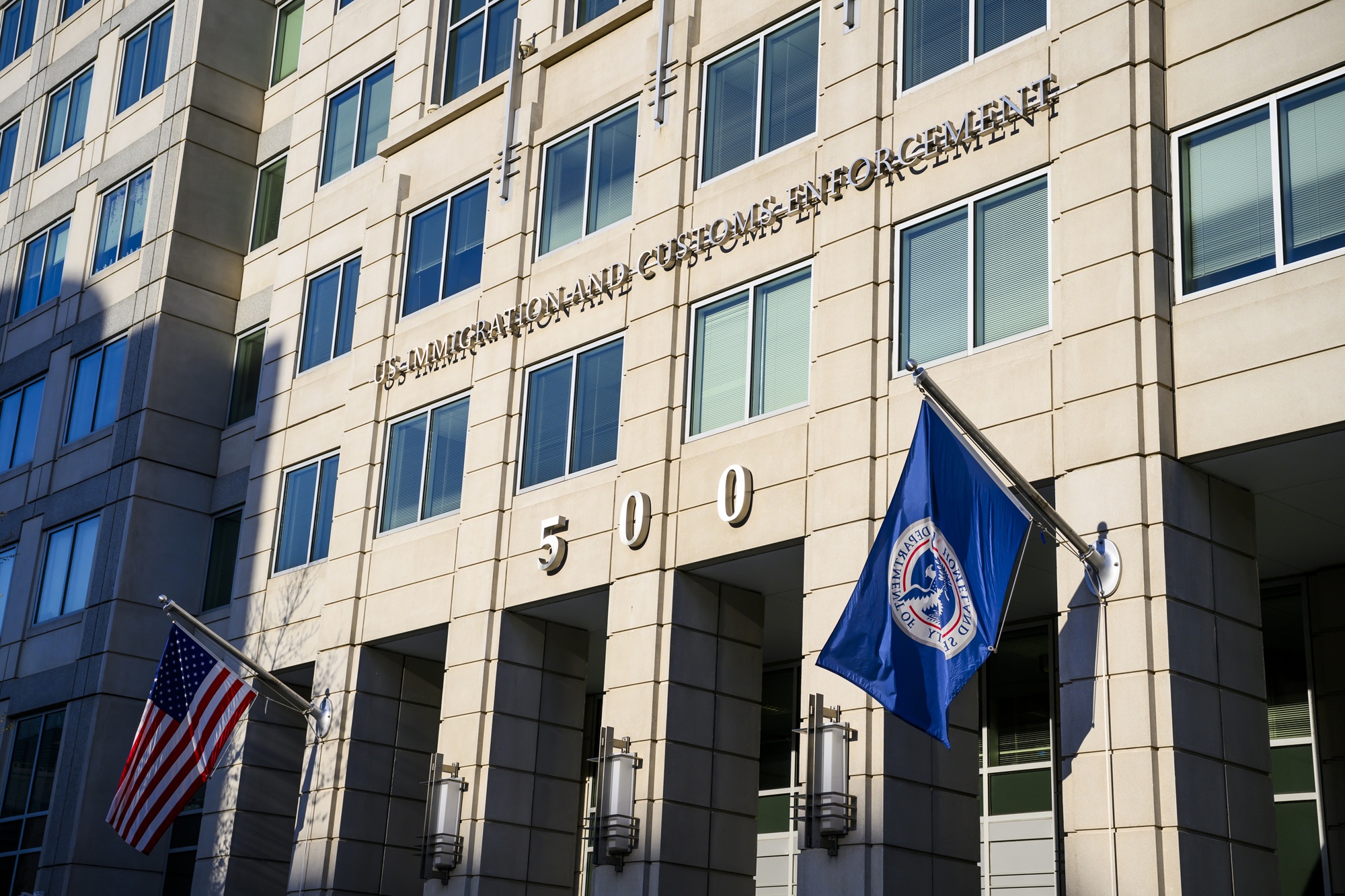
"caption": "The U.S. Immigration and Customs Enforcement (ICE) headquarters on April 14, 2025, in Washington, D.C. County Supervisor Nikki Fortunato Bas said she also hopes the county can learn from Los Angeles and other cities with significant ICE presence over the past year. \r\n",
"credit": "Pete Kiehart/The Washington Post via Getty Images",
"altTag": null,
"description": null,
"imgSizes": {
"thumbnail": {
"file": "https://cdn.kqed.org/wp-content/uploads/sites/10/2025/09/USImmigrationCustomsEnforcementHQGetty-160x107.jpg",
"width": 160,
"height": 107,
"mimeType": "image/jpeg"
},
"1536x1536": {
"file": "https://cdn.kqed.org/wp-content/uploads/sites/10/2025/09/USImmigrationCustomsEnforcementHQGetty-1536x1024.jpg",
"width": 1536,
"height": 1024,
"mimeType": "image/jpeg"
},
"post-thumbnail": {
"file": "https://cdn.kqed.org/wp-content/uploads/sites/10/2025/09/USImmigrationCustomsEnforcementHQGetty-672x372.jpg",
"width": 672,
"height": 372,
"mimeType": "image/jpeg"
},
"twentyfourteen-full-width": {
"file": "https://cdn.kqed.org/wp-content/uploads/sites/10/2025/09/USImmigrationCustomsEnforcementHQGetty-1038x576.jpg",
"width": 1038,
"height": 576,
"mimeType": "image/jpeg"
},
"kqedFullSize": {
"file": "https://cdn.kqed.org/wp-content/uploads/sites/10/2025/09/USImmigrationCustomsEnforcementHQGetty.jpg",
"width": 2000,
"height": 1333
}
},
"isLoading": false,
"fetchFailed": false
},
"news_12069823": {
"type": "attachments",
"id": "news_12069823",
"meta": {
"index": "attachments_1716263798",
"site": "news",
"id": "12069823",
"found": true
},
"title": "011426_SF VA CUTS _GH_013-KQED",
"publishDate": 1768429983,
"status": "inherit",
"parent": 0,
"modified": 1768430812,
"caption": "Veterans and union members rally in opposition to proposed staffing cuts at the San Francisco VA Medical Center in San Francisco on Jan. 14, 2026.",
"credit": "Gustavo Hernandez/KQED",
"altTag": null,
"description": null,
"imgSizes": {
"thumbnail": {
"file": "https://cdn.kqed.org/wp-content/uploads/sites/10/2026/01/011426_SF-VA-CUTS-_GH_013-KQED-160x107.jpg",
"width": 160,
"height": 107,
"mimeType": "image/jpeg"
},
"1536x1536": {
"file": "https://cdn.kqed.org/wp-content/uploads/sites/10/2026/01/011426_SF-VA-CUTS-_GH_013-KQED-1536x1024.jpg",
"width": 1536,
"height": 1024,
"mimeType": "image/jpeg"
},
"post-thumbnail": {
"file": "https://cdn.kqed.org/wp-content/uploads/sites/10/2026/01/011426_SF-VA-CUTS-_GH_013-KQED-672x372.jpg",
"width": 672,
"height": 372,
"mimeType": "image/jpeg"
},
"twentyfourteen-full-width": {
"file": "https://cdn.kqed.org/wp-content/uploads/sites/10/2026/01/011426_SF-VA-CUTS-_GH_013-KQED-1038x576.jpg",
"width": 1038,
"height": 576,
"mimeType": "image/jpeg"
},
"npr-cds-wide": {
"file": "https://cdn.kqed.org/wp-content/uploads/sites/10/2026/01/011426_SF-VA-CUTS-_GH_013-KQED-1200x675.jpg",
"width": 1200,
"height": 675,
"mimeType": "image/jpeg"
},
"kqedFullSize": {
"file": "https://cdn.kqed.org/wp-content/uploads/sites/10/2026/01/011426_SF-VA-CUTS-_GH_013-KQED.jpg",
"width": 2000,
"height": 1333
}
},
"isLoading": false,
"fetchFailed": false
},
"news_12037387": {
"type": "attachments",
"id": "news_12037387",
"meta": {
"index": "attachments_1716263798",
"site": "news",
"id": "12037387",
"found": true
},
"title": "May Day Protests",
"publishDate": 1745447079,
"status": "inherit",
"parent": 12037376,
"modified": 1765486756,
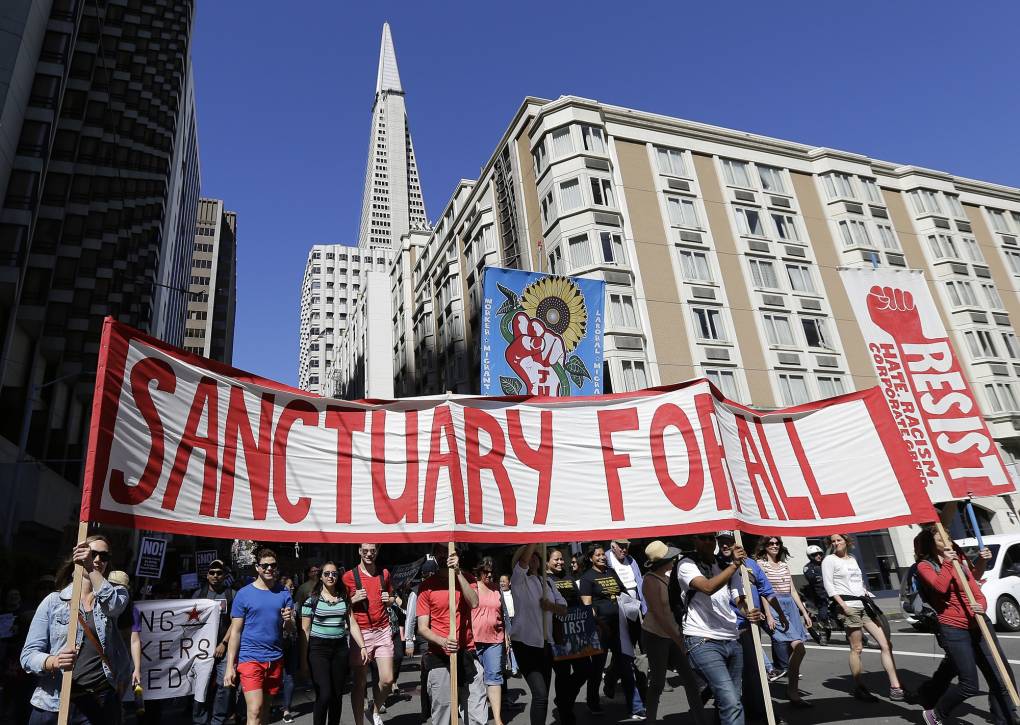
"caption": "Protesters walk during a march in San Francisco on May 1, 2017. ",
"credit": "Jeff Chiu/AP Photo",
"altTag": null,
"description": "Protesters walk during a march in San Francisco on May 1, 2017. Immigrant groups and their allies have joined forces to carry out marches, rallies and protests in cities nationwide to mark May Day, saying there's renewed momentum to fight back against Trump administration policies. ",
"imgSizes": {
"medium": {
"file": "https://cdn.kqed.org/wp-content/uploads/sites/10/2025/04/SanctuaryCitySFTrumpAP-800x569.jpg",
"width": 800,
"height": 569,
"mimeType": "image/jpeg"
},
"large": {
"file": "https://cdn.kqed.org/wp-content/uploads/sites/10/2025/04/SanctuaryCitySFTrumpAP-1020x725.jpg",
"width": 1020,
"height": 725,
"mimeType": "image/jpeg"
},
"thumbnail": {
"file": "https://cdn.kqed.org/wp-content/uploads/sites/10/2025/04/SanctuaryCitySFTrumpAP-160x114.jpg",
"width": 160,
"height": 114,
"mimeType": "image/jpeg"
},
"1536x1536": {
"file": "https://cdn.kqed.org/wp-content/uploads/sites/10/2025/04/SanctuaryCitySFTrumpAP-1536x1092.jpg",
"width": 1536,
"height": 1092,
"mimeType": "image/jpeg"
},
"post-thumbnail": {
"file": "https://cdn.kqed.org/wp-content/uploads/sites/10/2025/04/SanctuaryCitySFTrumpAP-672x372.jpg",
"width": 672,
"height": 372,
"mimeType": "image/jpeg"
},
"twentyfourteen-full-width": {
"file": "https://cdn.kqed.org/wp-content/uploads/sites/10/2025/04/SanctuaryCitySFTrumpAP-1038x576.jpg",
"width": 1038,
"height": 576,
"mimeType": "image/jpeg"
},
"full-width": {
"file": "https://cdn.kqed.org/wp-content/uploads/sites/10/2025/04/SanctuaryCitySFTrumpAP-1920x1365.jpg",
"width": 1920,
"height": 1365,
"mimeType": "image/jpeg"
},
"kqedFullSize": {
"file": "https://cdn.kqed.org/wp-content/uploads/sites/10/2025/04/SanctuaryCitySFTrumpAP.jpg",
"width": 2000,
"height": 1422
}
},
"isLoading": false,
"fetchFailed": false
},
"news_12062992": {
"type": "attachments",
"id": "news_12062992",
"meta": {
"index": "attachments_1716263798",
"site": "news",
"id": "12062992",
"found": true
},
"title": "California Gov. Newsom Attends A \"Yes On Prop 50\" Volunteer Event In L.A.",
"publishDate": 1762321556,
"status": "inherit",
"parent": 12062781,
"modified": 1768434483,
"caption": "California Gov. Gavin Newsom speaks at a \"Yes On Prop 50\" volunteer event at the LA Convention Center on Nov. 1, 2025, in Los Angeles, California. California's Proposition 50 is on the ballot to either authorize or deny temporary changes to congressional district maps. Election Day is Nov. 4 ",
"credit": "Jill Connelly/Getty Images",
"altTag": null,
"description": null,
"imgSizes": {
"thumbnail": {
"file": "https://cdn.kqed.org/wp-content/uploads/sites/10/2025/11/GettyImages-2244069197_qed-160x107.jpg",
"width": 160,
"height": 107,
"mimeType": "image/jpeg"
},
"1536x1536": {
"file": "https://cdn.kqed.org/wp-content/uploads/sites/10/2025/11/GettyImages-2244069197_qed-1536x1024.jpg",
"width": 1536,
"height": 1024,
"mimeType": "image/jpeg"
},
"post-thumbnail": {
"file": "https://cdn.kqed.org/wp-content/uploads/sites/10/2025/11/GettyImages-2244069197_qed-672x372.jpg",
"width": 672,
"height": 372,
"mimeType": "image/jpeg"
},
"twentyfourteen-full-width": {
"file": "https://cdn.kqed.org/wp-content/uploads/sites/10/2025/11/GettyImages-2244069197_qed-1038x576.jpg",
"width": 1038,
"height": 576,
"mimeType": "image/jpeg"
},
"npr-cds-wide": {
"file": "https://cdn.kqed.org/wp-content/uploads/sites/10/2025/11/GettyImages-2244069197_qed-1200x675.jpg",
"width": 1200,
"height": 675,
"mimeType": "image/jpeg"
},
"kqedFullSize": {
"file": "https://cdn.kqed.org/wp-content/uploads/sites/10/2025/11/GettyImages-2244069197_qed.jpg",
"width": 1999,
"height": 1333
}
},
"isLoading": false,
"fetchFailed": false
},
"news_12069642": {
"type": "attachments",
"id": "news_12069642",
"meta": {
"index": "attachments_1716263798",
"site": "news",
"id": "12069642",
"found": true
},
"title": "2023 LA Pride Parade",
"publishDate": 1768349551,
"status": "inherit",
"parent": 12069566,
"modified": 1768349573,
"caption": "The Trevor Project at the 2023 LA Pride Parade on June 11, 2023 in Hollywood, California. ",
"credit": "Rodin Eckenroth/Getty Images",
"altTag": null,
"description": null,
"imgSizes": {
"thumbnail": {
"file": "https://cdn.kqed.org/wp-content/uploads/sites/10/2026/01/GettyImages-1497747995-160x107.jpg",
"width": 160,
"height": 107,
"mimeType": "image/jpeg"
},
"1536x1536": {
"file": "https://cdn.kqed.org/wp-content/uploads/sites/10/2026/01/GettyImages-1497747995-1536x1024.jpg",
"width": 1536,
"height": 1024,
"mimeType": "image/jpeg"
},
"post-thumbnail": {
"file": "https://cdn.kqed.org/wp-content/uploads/sites/10/2026/01/GettyImages-1497747995-672x372.jpg",
"width": 672,
"height": 372,
"mimeType": "image/jpeg"
},
"twentyfourteen-full-width": {
"file": "https://cdn.kqed.org/wp-content/uploads/sites/10/2026/01/GettyImages-1497747995-1038x576.jpg",
"width": 1038,
"height": 576,
"mimeType": "image/jpeg"
},
"npr-cds-wide": {
"file": "https://cdn.kqed.org/wp-content/uploads/sites/10/2026/01/GettyImages-1497747995-1200x675.jpg",
"width": 1200,
"height": 675,
"mimeType": "image/jpeg"
},
"kqedFullSize": {
"file": "https://cdn.kqed.org/wp-content/uploads/sites/10/2026/01/GettyImages-1497747995.jpg",
"width": 1950,
"height": 1300
}
},
"isLoading": false,
"fetchFailed": false
},
"news_12068661": {
"type": "attachments",
"id": "news_12068661",
"meta": {
"index": "attachments_1716263798",
"site": "news",
"id": "12068661",
"found": true
},
"title": "Nicolas Maduro Transported To Court Hearing",
"publishDate": 1767645947,
"status": "inherit",
"parent": 12068657,
"modified": 1780338615,
"caption": "Nicolas Maduro and his wife, Cilia Flores, are seen in handcuffs after landing at a Manhattan helipad, escorted by heavily armed Federal agents as they make their way into an armored car en route to a Federal courthouse in Manhattan on Jan. 5, 2026, in New York City. ",
"credit": "XNY/Star Max via GC Images",
"altTag": null,
"description": null,
"imgSizes": {
"thumbnail": {
"file": "https://cdn.kqed.org/wp-content/uploads/sites/10/2026/01/NicolasMaduroGetty-160x119.jpg",
"width": 160,
"height": 119,
"mimeType": "image/jpeg"
},
"1536x1536": {
"file": "https://cdn.kqed.org/wp-content/uploads/sites/10/2026/01/NicolasMaduroGetty-1536x1140.jpg",
"width": 1536,
"height": 1140,
"mimeType": "image/jpeg"
},
"post-thumbnail": {
"file": "https://cdn.kqed.org/wp-content/uploads/sites/10/2026/01/NicolasMaduroGetty-672x372.jpg",
"width": 672,
"height": 372,
"mimeType": "image/jpeg"
},
"twentyfourteen-full-width": {
"file": "https://cdn.kqed.org/wp-content/uploads/sites/10/2026/01/NicolasMaduroGetty-1038x576.jpg",
"width": 1038,
"height": 576,
"mimeType": "image/jpeg"
},
"npr-cds-wide": {
"file": "https://cdn.kqed.org/wp-content/uploads/sites/10/2026/01/NicolasMaduroGetty-1200x675.jpg",
"width": 1200,
"height": 675,
"mimeType": "image/jpeg"
},
"kqedFullSize": {
"file": "https://cdn.kqed.org/wp-content/uploads/sites/10/2026/01/NicolasMaduroGetty.jpg",
"width": 2000,
"height": 1485
}
},
"isLoading": false,
"fetchFailed": false
},
"news_12054567": {
"type": "attachments",
"id": "news_12054567",
"meta": {
"index": "attachments_1716263798",
"site": "news",
"id": "12054567",
"found": true
},
"title": "US-POLITICS-IMMIGRATION",
"publishDate": 1756941444,
"status": "inherit",
"parent": 12054544,
"modified": 1769006278,
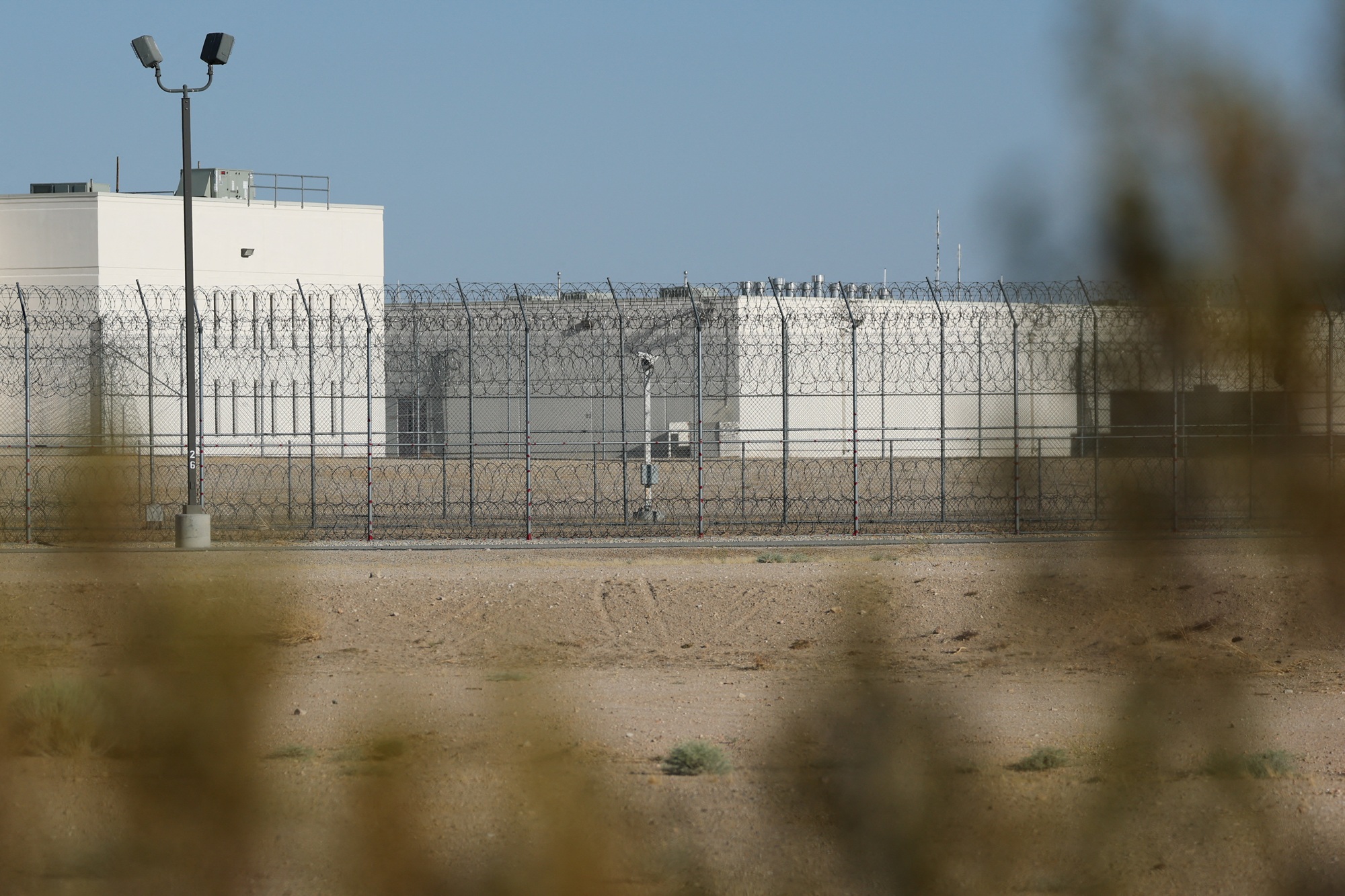
"caption": "The CoreCivic, Inc. California City Immigration Processing Center stands in the Kern County desert on July 10, 2025.",
"credit": "Patrick T. Fallon/AFP via Getty Images",
"altTag": null,
"description": null,
"imgSizes": {
"thumbnail": {
"file": "https://cdn.kqed.org/wp-content/uploads/sites/10/2025/09/KernCountyICEDetentionGetty-160x107.jpg",
"width": 160,
"height": 107,
"mimeType": "image/jpeg"
},
"1536x1536": {
"file": "https://cdn.kqed.org/wp-content/uploads/sites/10/2025/09/KernCountyICEDetentionGetty-1536x1024.jpg",
"width": 1536,
"height": 1024,
"mimeType": "image/jpeg"
},
"post-thumbnail": {
"file": "https://cdn.kqed.org/wp-content/uploads/sites/10/2025/09/KernCountyICEDetentionGetty-672x372.jpg",
"width": 672,
"height": 372,
"mimeType": "image/jpeg"
},
"twentyfourteen-full-width": {
"file": "https://cdn.kqed.org/wp-content/uploads/sites/10/2025/09/KernCountyICEDetentionGetty-1038x576.jpg",
"width": 1038,
"height": 576,
"mimeType": "image/jpeg"
},
"kqedFullSize": {
"file": "https://cdn.kqed.org/wp-content/uploads/sites/10/2025/09/KernCountyICEDetentionGetty.jpg",
"width": 2000,
"height": 1333
}
},
"isLoading": false,
"fetchFailed": false
},
"news_12069351": {
"type": "attachments",
"id": "news_12069351",
"meta": {
"index": "attachments_1716263798",
"site": "news",
"id": "12069351",
"found": true
},
"title": "021_SanLeandro_KidConnectPreschool_10222021_qed",
"publishDate": 1768008471,
"status": "inherit",
"parent": 12069350,
"modified": 1768008675,
"caption": "A teacher works with students on an art project at Kids Connect Infant Care and Preschool in San Leandro on Oct. 22, 2021. ",
"credit": null,
"altTag": null,
"description": null,
"imgSizes": {
"thumbnail": {
"file": "https://cdn.kqed.org/wp-content/uploads/sites/10/2026/01/021_SanLeandro_KidConnectPreschool_10222021_qed-160x107.jpg",
"width": 160,
"height": 107,
"mimeType": "image/jpeg"
},
"1536x1536": {
"file": "https://cdn.kqed.org/wp-content/uploads/sites/10/2026/01/021_SanLeandro_KidConnectPreschool_10222021_qed-1536x1024.jpg",
"width": 1536,
"height": 1024,
"mimeType": "image/jpeg"
},
"post-thumbnail": {
"file": "https://cdn.kqed.org/wp-content/uploads/sites/10/2026/01/021_SanLeandro_KidConnectPreschool_10222021_qed-672x372.jpg",
"width": 672,
"height": 372,
"mimeType": "image/jpeg"
},
"twentyfourteen-full-width": {
"file": "https://cdn.kqed.org/wp-content/uploads/sites/10/2026/01/021_SanLeandro_KidConnectPreschool_10222021_qed-1038x576.jpg",
"width": 1038,
"height": 576,
"mimeType": "image/jpeg"
},
"npr-cds-wide": {
"file": "https://cdn.kqed.org/wp-content/uploads/sites/10/2026/01/021_SanLeandro_KidConnectPreschool_10222021_qed-1200x675.jpg",
"width": 1200,
"height": 675,
"mimeType": "image/jpeg"
},
"kqedFullSize": {
"file": "https://cdn.kqed.org/wp-content/uploads/sites/10/2026/01/021_SanLeandro_KidConnectPreschool_10222021_qed.jpg",
"width": 2000,
"height": 1333
}
},
"isLoading": false,
"fetchFailed": false
},
"news_12069121": {
"type": "attachments",
"id": "news_12069121",
"meta": {
"index": "attachments_1716263798",
"site": "news",
"id": "12069121",
"found": true
},
"title": "Renee Nicole Good Killing Protest",
"publishDate": 1767905302,
"status": "inherit",
"parent": 12069104,
"modified": 1768001664,
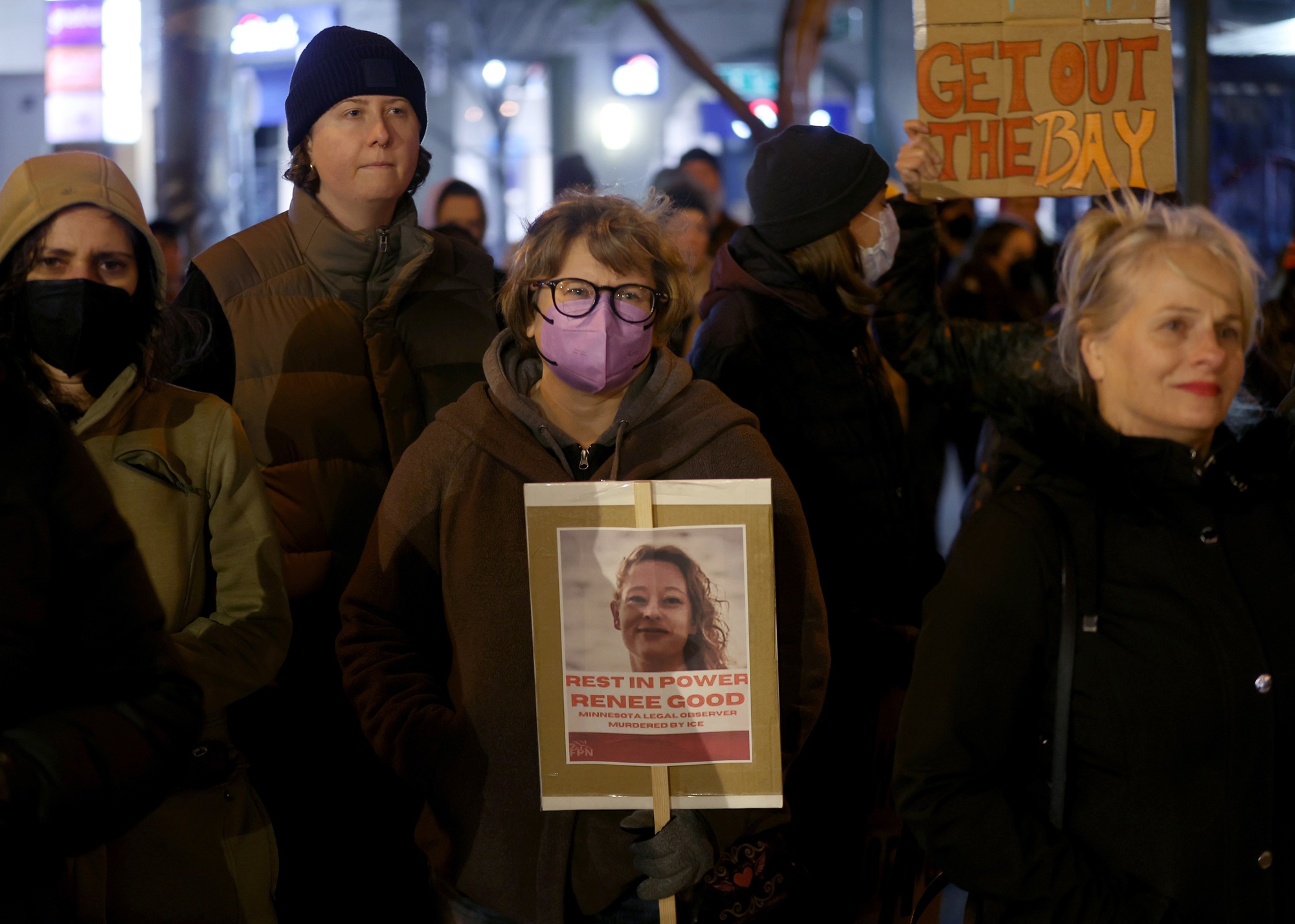
"caption": "Protesters take part in a vigil for Renee Nicole Good at Fruitvale Plaza Park in Oakland, California, on Wednesday, Jan. 7, 2025. Good, a legal observer, was fatally shot by an ICE agent in Minneapolis on Wednesday. ",
"credit": "Jane Tyska/Digital First Media/East Bay Times via Getty Images",
"altTag": null,
"description": null,
"imgSizes": {
"thumbnail": {
"file": "https://cdn.kqed.org/wp-content/uploads/sites/10/2026/01/ReneeGoodProtestOaklandGetty-160x114.jpg",
"width": 160,
"height": 114,
"mimeType": "image/jpeg"
},
"1536x1536": {
"file": "https://cdn.kqed.org/wp-content/uploads/sites/10/2026/01/ReneeGoodProtestOaklandGetty-1536x1096.jpg",
"width": 1536,
"height": 1096,
"mimeType": "image/jpeg"
},
"post-thumbnail": {
"file": "https://cdn.kqed.org/wp-content/uploads/sites/10/2026/01/ReneeGoodProtestOaklandGetty-672x372.jpg",
"width": 672,
"height": 372,
"mimeType": "image/jpeg"
},
"twentyfourteen-full-width": {
"file": "https://cdn.kqed.org/wp-content/uploads/sites/10/2026/01/ReneeGoodProtestOaklandGetty-1038x576.jpg",
"width": 1038,
"height": 576,
"mimeType": "image/jpeg"
},
"npr-cds-wide": {
"file": "https://cdn.kqed.org/wp-content/uploads/sites/10/2026/01/ReneeGoodProtestOaklandGetty-1200x675.jpg",
"width": 1200,
"height": 675,
"mimeType": "image/jpeg"
},
"kqedFullSize": {
"file": "https://cdn.kqed.org/wp-content/uploads/sites/10/2026/01/ReneeGoodProtestOaklandGetty.jpg",
"width": 2000,
"height": 1427
}
},
"isLoading": false,
"fetchFailed": false
},
"news_12069241": {
"type": "attachments",
"id": "news_12069241",
"meta": {
"index": "attachments_1716263798",
"site": "news",
"id": "12069241",
"found": true
},
"title": "Extreme Weather California",
"publishDate": 1767983520,
"status": "inherit",
"parent": 12069236,
"modified": 1767983555,
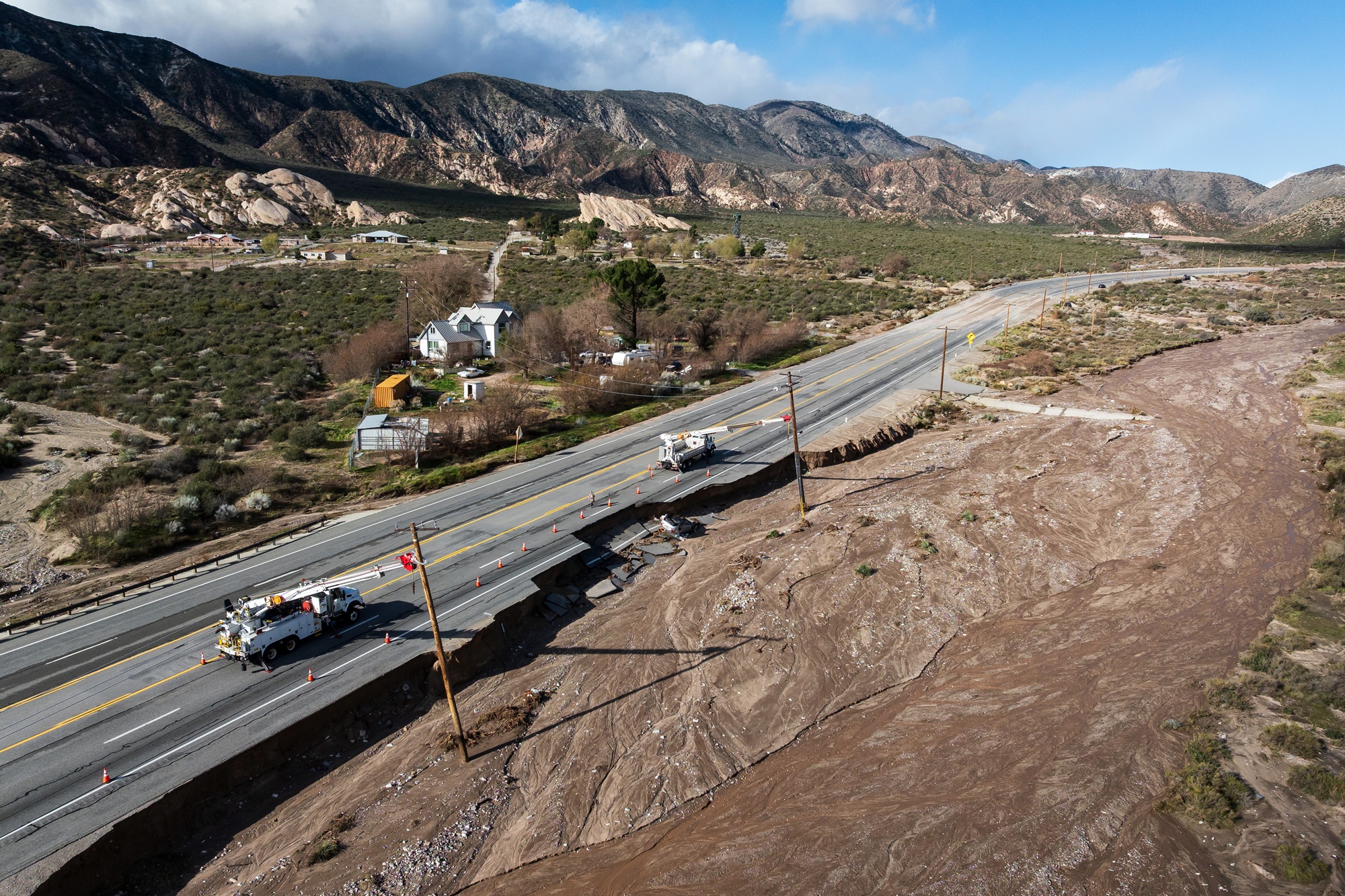
"caption": "Southern California Edison vehicles sit along damaged roads and power lines on Highway 138 after a series of storms on Thursday, Dec. 25, 2025, near Phelan, California.",
"credit": "William Liang/AP Photo",
"altTag": null,
"description": null,
"imgSizes": {
"thumbnail": {
"file": "https://cdn.kqed.org/wp-content/uploads/sites/10/2026/01/SoCalHwyAP-160x107.jpg",
"width": 160,
"height": 107,
"mimeType": "image/jpeg"
},
"1536x1536": {
"file": "https://cdn.kqed.org/wp-content/uploads/sites/10/2026/01/SoCalHwyAP-1536x1024.jpg",
"width": 1536,
"height": 1024,
"mimeType": "image/jpeg"
},
"post-thumbnail": {
"file": "https://cdn.kqed.org/wp-content/uploads/sites/10/2026/01/SoCalHwyAP-672x372.jpg",
"width": 672,
"height": 372,
"mimeType": "image/jpeg"
},
"twentyfourteen-full-width": {
"file": "https://cdn.kqed.org/wp-content/uploads/sites/10/2026/01/SoCalHwyAP-1038x576.jpg",
"width": 1038,
"height": 576,
"mimeType": "image/jpeg"
},
"npr-cds-wide": {
"file": "https://cdn.kqed.org/wp-content/uploads/sites/10/2026/01/SoCalHwyAP-1200x675.jpg",
"width": 1200,
"height": 675,
"mimeType": "image/jpeg"
},
"kqedFullSize": {
"file": "https://cdn.kqed.org/wp-content/uploads/sites/10/2026/01/SoCalHwyAP.jpg",
"width": 2000,
"height": 1333
}
},
"isLoading": false,
"fetchFailed": false
},
"news_12069108": {
"type": "attachments",
"id": "news_12069108",
"meta": {
"index": "attachments_1716263798",
"site": "news",
"id": "12069108",
"found": true
},
"title": "California Governor State Of The State",
"publishDate": 1767901592,
"status": "inherit",
"parent": 12069094,
"modified": 1775846525,
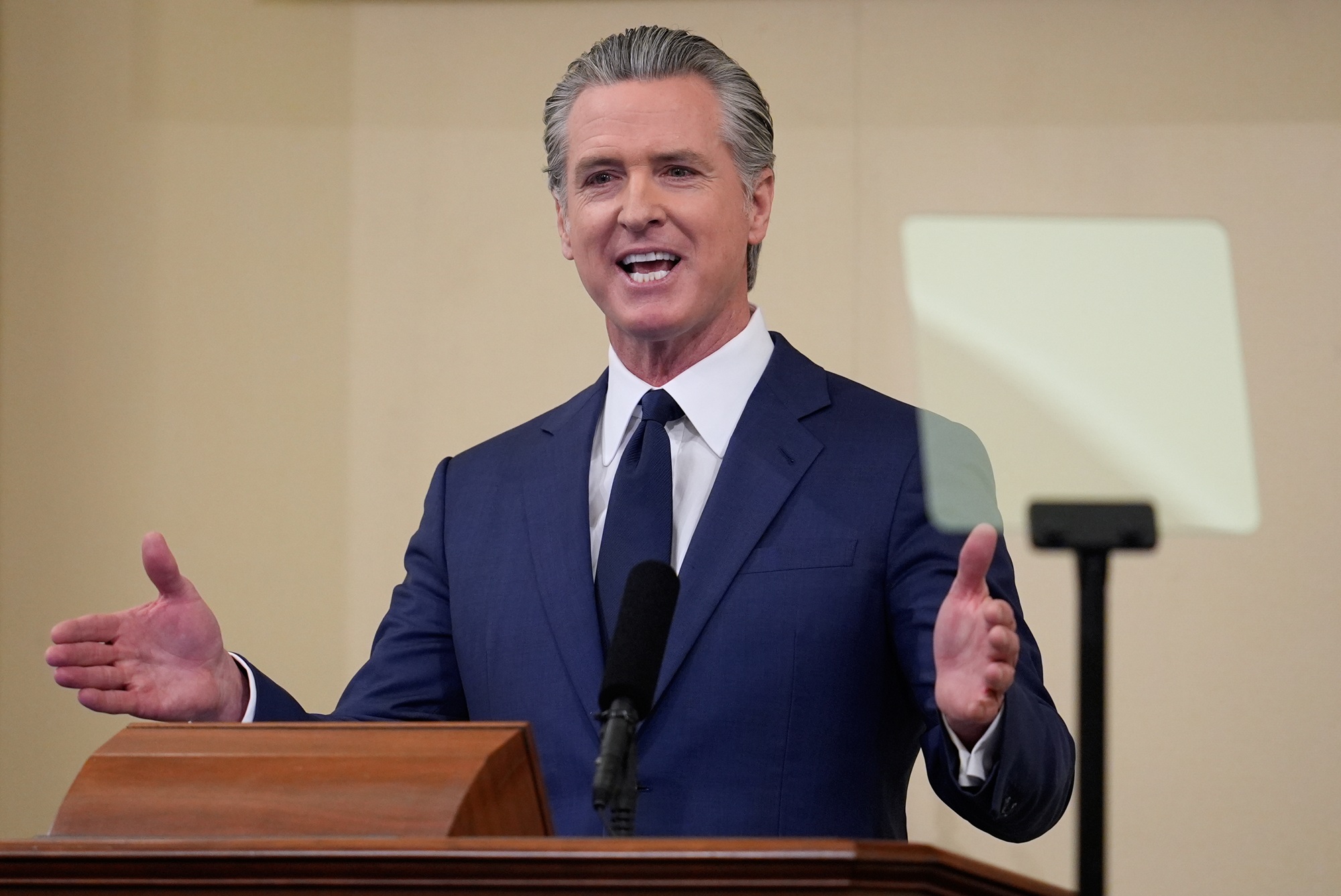
"caption": "California Gov. Gavin Newsom speaks during his State of the State address on Jan. 8, 2026, in Sacramento, California.",
"credit": "Godofredo A. Vásquez/AP Photo",
"altTag": null,
"description": null,
"imgSizes": {
"thumbnail": {
"file": "https://cdn.kqed.org/wp-content/uploads/sites/10/2026/01/GavinNewsomStateoftheState2026AP-160x107.jpg",
"width": 160,
"height": 107,
"mimeType": "image/jpeg"
},
"1536x1536": {
"file": "https://cdn.kqed.org/wp-content/uploads/sites/10/2026/01/GavinNewsomStateoftheState2026AP-1536x1027.jpg",
"width": 1536,
"height": 1027,
"mimeType": "image/jpeg"
},
"post-thumbnail": {
"file": "https://cdn.kqed.org/wp-content/uploads/sites/10/2026/01/GavinNewsomStateoftheState2026AP-672x372.jpg",
"width": 672,
"height": 372,
"mimeType": "image/jpeg"
},
"twentyfourteen-full-width": {
"file": "https://cdn.kqed.org/wp-content/uploads/sites/10/2026/01/GavinNewsomStateoftheState2026AP-1038x576.jpg",
"width": 1038,
"height": 576,
"mimeType": "image/jpeg"
},
"npr-cds-wide": {
"file": "https://cdn.kqed.org/wp-content/uploads/sites/10/2026/01/GavinNewsomStateoftheState2026AP-1200x675.jpg",
"width": 1200,
"height": 675,
"mimeType": "image/jpeg"
},
"kqedFullSize": {
"file": "https://cdn.kqed.org/wp-content/uploads/sites/10/2026/01/GavinNewsomStateoftheState2026AP.jpg",
"width": 2000,
"height": 1337
}
},
"isLoading": false,
"fetchFailed": false
},
"news_12069028": {
"type": "attachments",
"id": "news_12069028",
"meta": {
"index": "attachments_1716263798",
"site": "news",
"id": "12069028",
"found": true
},
"title": "230913-ChildCareCenterEviction-007-BL_qed",
"publishDate": 1767832352,
"status": "inherit",
"parent": 12068953,
"modified": 1767835422,
"caption": "Director Heidi Tomsky works with children on an art project at the Fairfax-San Anselmo Children's Center on Sept. 13, 2023. On Tuesday, the Trump administration said it was freezing more than $10 billion in federal funds for child care programs in California and four other blue states.",
"credit": "Beth LaBerge/KQED",
"altTag": null,
"description": null,
"imgSizes": {
"thumbnail": {
"file": "https://cdn.kqed.org/wp-content/uploads/sites/10/2026/01/230913-ChildCareCenterEviction-007-BL_qed-160x107.jpg",
"width": 160,
"height": 107,
"mimeType": "image/jpeg"
},
"1536x1536": {
"file": "https://cdn.kqed.org/wp-content/uploads/sites/10/2026/01/230913-ChildCareCenterEviction-007-BL_qed-1536x1024.jpg",
"width": 1536,
"height": 1024,
"mimeType": "image/jpeg"
},
"post-thumbnail": {
"file": "https://cdn.kqed.org/wp-content/uploads/sites/10/2026/01/230913-ChildCareCenterEviction-007-BL_qed-672x372.jpg",
"width": 672,
"height": 372,
"mimeType": "image/jpeg"
},
"twentyfourteen-full-width": {
"file": "https://cdn.kqed.org/wp-content/uploads/sites/10/2026/01/230913-ChildCareCenterEviction-007-BL_qed-1038x576.jpg",
"width": 1038,
"height": 576,
"mimeType": "image/jpeg"
},
"npr-cds-wide": {
"file": "https://cdn.kqed.org/wp-content/uploads/sites/10/2026/01/230913-ChildCareCenterEviction-007-BL_qed-1200x675.jpg",
"width": 1200,
"height": 675,
"mimeType": "image/jpeg"
},
"kqedFullSize": {
"file": "https://cdn.kqed.org/wp-content/uploads/sites/10/2026/01/230913-ChildCareCenterEviction-007-BL_qed.jpg",
"width": 2000,
"height": 1333
}
},
"isLoading": false,
"fetchFailed": false
}
},
"audioPlayerReducer": {
"postId": "stream_live",
"isPaused": true,
"isPlaying": false,
"pfsActive": false,
"pledgeModalIsOpen": true,
"playerDrawerIsOpen": false,
"liveAudioPlayStartedAt": 0,
"liveAudioPlayContext": ""
},
"authorsReducer": {
"gmarzorati": {
"type": "authors",
"id": "227",
"meta": {
"index": "authors_1716337520",
"id": "227",
"found": true
},
"name": "Guy Marzorati",
"firstName": "Guy",
"lastName": "Marzorati",
"slug": "gmarzorati",
"email": "gmarzorati@KQED.org",
"display_author_email": true,
"staff_mastheads": [
"news"
],
"title": "Correspondent",
"bio": "Guy Marzorati is a correspondent on KQED's California Politics and Government Desk, based in San Jose. A graduate of Santa Clara University, Guy joined KQED in 2013. He reports on state and local politics and produces KQED's digital voter guide.",
"avatar": "https://secure.gravatar.com/avatar/e7038b8dbfd55b104369b76b1cd0b9de?s=600&d=blank&r=g",
"twitter": "guymarzorati",
"facebook": null,
"instagram": null,
"linkedin": null,
"sites": [
{
"site": "",
"roles": [
"editor"
]
},
{
"site": "news",
"roles": [
"editor"
]
},
{
"site": "science",
"roles": [
"editor"
]
},
{
"site": "forum",
"roles": [
"editor"
]
},
{
"site": "elections",
"roles": [
"editor"
]
},
{
"site": "liveblog",
"roles": [
"editor"
]
}
],
"headData": {
"title": "Guy Marzorati | KQED",
"description": "Correspondent",
"ogImgSrc": "https://secure.gravatar.com/avatar/e7038b8dbfd55b104369b76b1cd0b9de?s=600&d=blank&r=g",
"twImgSrc": "https://secure.gravatar.com/avatar/e7038b8dbfd55b104369b76b1cd0b9de?s=600&d=blank&r=g"
},
"isLoading": false,
"link": "/author/gmarzorati"
},
"tychehendricks": {
"type": "authors",
"id": "259",
"meta": {
"index": "authors_1716337520",
"id": "259",
"found": true
},
"name": "Tyche Hendricks",
"firstName": "Tyche",
"lastName": "Hendricks",
"slug": "tychehendricks",
"email": "thendricks@kqed.org",
"display_author_email": true,
"staff_mastheads": [
"news"
],
"title": "KQED Senior Editor, Immigration",
"bio": "\u003cspan style=\"font-weight: 400;\">Tyche Hendricks is KQED’s senior editor for immigration, leading coverage of the policy and politics that affect California’s immigrant communities. Her work for KQED’s radio and online audiences is also carried on NPR and other national outlets. She has been recognized with awards from the Radio and Television News Directors Association, the Society for Professional Journalists; the Education Writers Association; the Best of the West and the National Federation of Community Broadcasters. Before joining KQED in 2010, Tyche spent more than a dozen years as a newspaper reporter, notably at the \u003c/span>\u003ci>\u003cspan style=\"font-weight: 400;\">San Francisco Chronicle\u003c/span>\u003c/i>\u003cspan style=\"font-weight: 400;\">. At different times she has covered criminal justice, government and politics and urban planning. Tyche has taught in the MFA Creative Writing program at the University of San Francisco and at UC Berkeley’s Graduate School of Journalism, where she was co-director of a national immigration symposium for professional journalists. She is the author of \u003c/span>\u003ci>\u003cspan style=\"font-weight: 400;\">The Wind Doesn't Need a Passport: Stories from the U.S.-Mexico Borderlands\u003c/span>\u003c/i>\u003cspan style=\"font-weight: 400;\"> (University of California Press). \u003c/span>",
"avatar": "https://secure.gravatar.com/avatar/b8ee458e2731c2d43df86882ce17267e?s=600&d=blank&r=g",
"twitter": "tychehendricks",
"facebook": null,
"instagram": null,
"linkedin": null,
"sites": [
{
"site": "news",
"roles": [
"editor"
]
},
{
"site": "stateofhealth",
"roles": [
"editor"
]
}
],
"headData": {
"title": "Tyche Hendricks | KQED",
"description": "KQED Senior Editor, Immigration",
"ogImgSrc": "https://secure.gravatar.com/avatar/b8ee458e2731c2d43df86882ce17267e?s=600&d=blank&r=g",
"twImgSrc": "https://secure.gravatar.com/avatar/b8ee458e2731c2d43df86882ce17267e?s=600&d=blank&r=g"
},
"isLoading": false,
"link": "/author/tychehendricks"
},
"mlagos": {
"type": "authors",
"id": "3239",
"meta": {
"index": "authors_1716337520",
"id": "3239",
"found": true
},
"name": "Marisa Lagos",
"firstName": "Marisa",
"lastName": "Lagos",
"slug": "mlagos",
"email": "mlagos@kqed.org",
"display_author_email": false,
"staff_mastheads": [
"news"
],
"title": "KQED Contributor",
"bio": "Marisa Lagos is a correspondent for KQED’s California Politics and Government Desk and co-hosts the award-winning show and podcast, Political Breakdown. At KQED, Lagos also conducts reporting, analysis and investigations into state, local and national politics for radio, TV, online and onstage. In 2022, she and co-host, Scott Shafer, moderated the only gubernatorial debate in California. In 2020, the \u003ci>Washington Post\u003c/i> named her one of the top political journalists in California; she was nominated for a Peabody and won several other awards for her work investigating the 2017 California wildfires. She has worked at the \u003ci>San Francisco Chronicle\u003c/i>, \u003ci>San Francisco Examiner\u003c/i> and \u003ci>Los Angeles Times\u003c/i>. A UC Santa Barbara graduate, she lives in San Francisco with her two sons and husband.",
"avatar": "https://secure.gravatar.com/avatar/a261a0d3696fc066871ef96b85b5e7d2?s=600&d=blank&r=g",
"twitter": "@mlagos",
"facebook": null,
"instagram": null,
"linkedin": null,
"sites": [
{
"site": "arts",
"roles": [
"author"
]
},
{
"site": "news",
"roles": [
"editor"
]
},
{
"site": "science",
"roles": [
"editor"
]
},
{
"site": "forum",
"roles": [
"author"
]
},
{
"site": "liveblog",
"roles": [
"author"
]
}
],
"headData": {
"title": "Marisa Lagos | KQED",
"description": "KQED Contributor",
"ogImgSrc": "https://secure.gravatar.com/avatar/a261a0d3696fc066871ef96b85b5e7d2?s=600&d=blank&r=g",
"twImgSrc": "https://secure.gravatar.com/avatar/a261a0d3696fc066871ef96b85b5e7d2?s=600&d=blank&r=g"
},
"isLoading": false,
"link": "/author/mlagos"
},
"fjhabvala": {
"type": "authors",
"id": "8659",
"meta": {
"index": "authors_1716337520",
"id": "8659",
"found": true
},
"name": "Farida Jhabvala Romero",
"firstName": "Farida",
"lastName": "Jhabvala Romero",
"slug": "fjhabvala",
"email": "fjhabvala@kqed.org",
"display_author_email": true,
"staff_mastheads": [
"news"
],
"title": "KQED Contributor",
"bio": "Farida Jhabvala Romero is a Labor Correspondent for KQED. She previously covered immigration. Farida was \u003ca href=\"https://www.ccnma.org/2022-most-influential-latina-journalists\">named\u003c/a> one of the 10 Most Influential Latina Journalists in California in 2022 by the California Chicano News Media Association. Her work has won awards from the Society of Professional Journalists (Northern California), as well as a national and regional Edward M. Murrow Award for the collaborative reporting projects “Dangerous Air” and “Graying California.” Before joining KQED, Farida worked as a producer at Radio Bilingüe, a national public radio network. Farida earned her master’s degree in journalism from Stanford University.",
"avatar": "https://secure.gravatar.com/avatar/f9f022d4e2609741874222a1e9d41f48fea74011aa7c615eef91d9a50c944ebe?s=600&d=blank&r=g",
"twitter": "FaridaJhabvala",
"bluesky": null,
"facebook": null,
"instagram": null,
"linkedin": "https://www.linkedin.com/in/faridajhabvala/",
"sites": [
{
"site": "news",
"roles": [
"editor"
]
},
{
"site": "stateofhealth",
"roles": [
"author"
]
},
{
"site": "liveblog",
"roles": [
"author"
]
}
],
"headData": {
"title": "Farida Jhabvala Romero | KQED",
"description": "KQED Contributor",
"ogImgSrc": "https://secure.gravatar.com/avatar/f9f022d4e2609741874222a1e9d41f48fea74011aa7c615eef91d9a50c944ebe?s=600&d=blank&r=g",
"twImgSrc": "https://secure.gravatar.com/avatar/f9f022d4e2609741874222a1e9d41f48fea74011aa7c615eef91d9a50c944ebe?s=600&d=blank&r=g"
},
"isLoading": false,
"link": "/author/fjhabvala"
},
"btorres": {
"type": "authors",
"id": "11666",
"meta": {
"index": "authors_1716337520",
"id": "11666",
"found": true
},
"name": "Blanca Torres",
"firstName": "Blanca",
"lastName": "Torres",
"slug": "btorres",
"email": "btorres@kqed.org",
"display_author_email": true,
"staff_mastheads": [
"news"
],
"title": "Producer, Forum",
"bio": "Blanca Torres brings sharp news judgement and keen sense of lively conversation to her work as producer for Forum. She loves producing shows that leave listeners feeling like they heard distinctive voices, learned something new and gained a fresh perspective.\r\n\r\nShe joined KQED in January of 2020 after 16 years of working as a newspaper reporter most recently at the \u003cem>San Francisco Business Times,\u003c/em> where she wrote about real estate and economic development. Before that, she covered a variety of beats including crime, education, retail, workplace, the economy, consumer issues, and small business for the \u003cem>Contra Costa Times, Baltimore Sun\u003c/em> and\u003cem> The Seattle Times\u003c/em>. In addition to reporting, she worked as an editorial writer and columnist for the \u003cem>Seattle Times\u003c/em>. From 2017 to 2020, Blanca won a total of ten awards from the National Association of Real Estate Editors and won first place for land use reporting from the California News Publishers Association two years in a row. She is also a member and former board member for the National Association of Hispanic Journalists.\r\n\r\nA native of the Pacific Northwest, Blanca earned her bachelor's degree from Vanderbilt University in Nashville and a master's in fine arts in creative writing at Mills College. She lives in the East Bay with her family.",
"avatar": "https://secure.gravatar.com/avatar/50b49d19b14a1eed34f26ebf4681152cdd81574ed21851100871ccd29e578cdc?s=600&d=blank&r=g",
"twitter": "@blancawrites",
"bluesky": null,
"facebook": null,
"instagram": null,
"linkedin": null,
"sites": [
{
"site": "arts",
"roles": [
"editor"
]
},
{
"site": "news",
"roles": [
"editor"
]
},
{
"site": "forum",
"roles": [
"editor"
]
}
],
"headData": {
"title": "Blanca Torres | KQED",
"description": "Producer, Forum",
"ogImgSrc": "https://secure.gravatar.com/avatar/50b49d19b14a1eed34f26ebf4681152cdd81574ed21851100871ccd29e578cdc?s=600&d=blank&r=g",
"twImgSrc": "https://secure.gravatar.com/avatar/50b49d19b14a1eed34f26ebf4681152cdd81574ed21851100871ccd29e578cdc?s=600&d=blank&r=g"
},
"isLoading": false,
"link": "/author/btorres"
},
"jlara": {
"type": "authors",
"id": "11761",
"meta": {
"index": "authors_1716337520",
"id": "11761",
"found": true
},
"name": "Juan Carlos Lara",
"firstName": "Juan Carlos",
"lastName": "Lara",
"slug": "jlara",
"email": "jlara@kqed.org",
"display_author_email": false,
"staff_mastheads": [],
"title": "KQED Contributor",
"bio": null,
"avatar": "https://secure.gravatar.com/avatar/19e2052b9b05657c5ff2af2121846e9c?s=600&d=blank&r=g",
"twitter": null,
"facebook": null,
"instagram": null,
"linkedin": null,
"sites": [
{
"site": "arts",
"roles": [
"editor"
]
},
{
"site": "news",
"roles": [
"editor"
]
},
{
"site": "forum",
"roles": [
"editor"
]
},
{
"site": "liveblog",
"roles": [
"contributor"
]
}
],
"headData": {
"title": "Juan Carlos Lara | KQED",
"description": "KQED Contributor",
"ogImgSrc": "https://secure.gravatar.com/avatar/19e2052b9b05657c5ff2af2121846e9c?s=600&d=blank&r=g",
"twImgSrc": "https://secure.gravatar.com/avatar/19e2052b9b05657c5ff2af2121846e9c?s=600&d=blank&r=g"
},
"isLoading": false,
"link": "/author/jlara"
},
"daisynguyen": {
"type": "authors",
"id": "11829",
"meta": {
"index": "authors_1716337520",
"id": "11829",
"found": true
},
"name": "Daisy Nguyen",
"firstName": "Daisy",
"lastName": "Nguyen",
"slug": "daisynguyen",
"email": "daisynguyen@kqed.org",
"display_author_email": true,
"staff_mastheads": [
"news"
],
"title": "KQED Contributor",
"bio": "I have covered early childhood education and child care for KQED since 2022. I focus on policies aimed at increasing access to early care and education and how they shape individual lives. I've been a journalist for more than two decades, with most of that time devoted to covering breaking news throughout California for The Associated Press. I grew up in San Francisco and studied at UC Davis and Columbia University's Graduate School of Journalism. I live in Oakland with my husband and two kids.",
"avatar": "https://secure.gravatar.com/avatar/2da2127c27f7143b53ebd419800fd55f?s=600&d=blank&r=g",
"twitter": null,
"facebook": null,
"instagram": null,
"linkedin": "https://www.linkedin.com/in/daisynguyen/",
"sites": [
{
"site": "news",
"roles": [
"author"
]
},
{
"site": "liveblog",
"roles": [
"author"
]
}
],
"headData": {
"title": "Daisy Nguyen | KQED",
"description": "KQED Contributor",
"ogImgSrc": "https://secure.gravatar.com/avatar/2da2127c27f7143b53ebd419800fd55f?s=600&d=blank&r=g",
"twImgSrc": "https://secure.gravatar.com/avatar/2da2127c27f7143b53ebd419800fd55f?s=600&d=blank&r=g"
},
"isLoading": false,
"link": "/author/daisynguyen"
},
"kdebenedetti": {
"type": "authors",
"id": "11913",
"meta": {
"index": "authors_1716337520",
"id": "11913",
"found": true
},
"name": "Katie DeBenedetti",
"firstName": "Katie",
"lastName": "DeBenedetti",
"slug": "kdebenedetti",
"email": "kdebenedetti@kqed.org",
"display_author_email": false,
"staff_mastheads": [
"news",
"science"
],
"title": "KQED Contributor",
"bio": "Katie DeBenedetti is a digital reporter covering daily news for the Express Desk. Prior to joining KQED as a culture reporting intern in January 2024, she covered education and city government for the Napa Valley Register.",
"avatar": "https://secure.gravatar.com/avatar/6e31073cb8f7e4214ab03f42771d0f45?s=600&d=blank&r=g",
"twitter": null,
"facebook": null,
"instagram": null,
"linkedin": null,
"sites": [
{
"site": "news",
"roles": [
"author"
]
},
{
"site": "science",
"roles": [
"author"
]
},
{
"site": "liveblog",
"roles": [
"author"
]
}
],
"headData": {
"title": "Katie DeBenedetti | KQED",
"description": "KQED Contributor",
"ogImgSrc": "https://secure.gravatar.com/avatar/6e31073cb8f7e4214ab03f42771d0f45?s=600&d=blank&r=g",
"twImgSrc": "https://secure.gravatar.com/avatar/6e31073cb8f7e4214ab03f42771d0f45?s=600&d=blank&r=g"
},
"isLoading": false,
"link": "/author/kdebenedetti"
},
"aaliahmad": {
"type": "authors",
"id": "11986",
"meta": {
"index": "authors_1716337520",
"id": "11986",
"found": true
},
"name": "Ayah Ali-Ahmad",
"firstName": "Ayah",
"lastName": "Ali-Ahmad",
"slug": "aaliahmad",
"email": "aaliahmad@KQED.org",
"display_author_email": false,
"staff_mastheads": [],
"title": "KQED Contributor",
"bio": null,
"avatar": "https://secure.gravatar.com/avatar/1cf54f187a5e1064b2cfef3f3d2f1e4f93e453395d56912aca6382a6071ec3ed?s=600&d=blank&r=g",
"twitter": "ayahaliahmad",
"bluesky": null,
"facebook": null,
"instagram": null,
"linkedin": null,
"sites": [
{
"site": "news",
"roles": [
"subscriber"
]
}
],
"headData": {
"title": "Ayah Ali-Ahmad | KQED",
"description": "KQED Contributor",
"ogImgSrc": "https://secure.gravatar.com/avatar/1cf54f187a5e1064b2cfef3f3d2f1e4f93e453395d56912aca6382a6071ec3ed?s=600&d=blank&r=g",
"twImgSrc": "https://secure.gravatar.com/avatar/1cf54f187a5e1064b2cfef3f3d2f1e4f93e453395d56912aca6382a6071ec3ed?s=600&d=blank&r=g"
},
"isLoading": false,
"link": "/author/aaliahmad"
},
"epeppel": {
"type": "authors",
"id": "11989",
"meta": {
"index": "authors_1716337520",
"id": "11989",
"found": true
},
"name": "Eliza Peppel",
"firstName": "Eliza",
"lastName": "Peppel",
"slug": "epeppel",
"email": "epeppel@kqed.org",
"display_author_email": false,
"staff_mastheads": [],
"title": null,
"bio": "Eliza is an award-winning journalist living in Oakland. She was previously a reporting fellow at KALW, where she reported daily news and long-form radio features. Eliza studied journalism at Fordham University in The Bronx during the COVID-19 pandemic. She grew up mainly in California and spent a few childhood years in Aix en Provence, France.",
"avatar": "https://secure.gravatar.com/avatar/20d9e17a06ee787c11052e6096319dd583b6376233d02383dab5eaeb874d5f56?s=600&d=blank&r=g",
"twitter": null,
"bluesky": null,
"facebook": null,
"instagram": null,
"linkedin": null,
"sites": [
{
"site": "news",
"roles": [
"subscriber"
]
},
{
"site": "science",
"roles": [
"subscriber"
]
}
],
"headData": {
"title": "Eliza Peppel | KQED",
"description": null,
"ogImgSrc": "https://secure.gravatar.com/avatar/20d9e17a06ee787c11052e6096319dd583b6376233d02383dab5eaeb874d5f56?s=600&d=blank&r=g",
"twImgSrc": "https://secure.gravatar.com/avatar/20d9e17a06ee787c11052e6096319dd583b6376233d02383dab5eaeb874d5f56?s=600&d=blank&r=g"
},
"isLoading": false,
"link": "/author/epeppel"
}
},
"pagesReducer": {
"news_tag_donald-trump": {
"type": "terms",
"id": "news_1323",
"meta": {
"index": "terms_1716263798",
"site": "news",
"id": "1323",
"score": 8.557341
},
"featImg": null,
"name": "Donald Trump",
"description": null,
"taxonomy": "tag",
"headData": {
"twImgId": null,
"twTitle": null,
"ogTitle": null,
"ogImgId": null,
"twDescription": null,
"description": null,
"title": "Donald Trump Archives | KQED News",
"ogDescription": null
},
"ttid": 1335,
"slug": "donald-trump",
"isLoading": false,
"title": "Donald Trump",
"pageMeta": {
"site": "news",
"WpPageTemplate": "page-topic-editorial",
"currentPage": 11
},
"blocks": [
{
"blockName": "kqed/post-list",
"attrs": {
"layout": "cardArticle2",
"query": "posts/news?tag=donald-trump",
"seeMore": false,
"paginated": true,
"page": 11
}
},
{
"blockName": "kqed/ad"
}
]
}
},
"pfsSessionReducer": {},
"postsReducer": {
"stream_live": {
"type": "live",
"id": "stream_live",
"audioUrl": "https://streams.kqed.org/kqedradio",
"title": "Live Stream",
"excerpt": "Live Stream information currently unavailable.",
"link": "/radio",
"featImg": "",
"label": {
"name": "KQED Live",
"link": "/"
}
},
"stream_kqedNewscast": {
"type": "posts",
"id": "stream_kqedNewscast",
"audioUrl": "https://www.kqed.org/.stream/anon/radio/RDnews/newscast.mp3?_=1",
"title": "KQED Newscast",
"featImg": "",
"label": {
"name": "88.5 FM",
"link": "/"
}
},
"news_12069782": {
"type": "posts",
"id": "news_12069782",
"meta": {
"index": "posts_1716263798",
"site": "news",
"id": "12069782",
"score": null,
"sort": [
1768485606000
]
},
"guestAuthors": [],
"slug": "alameda-county-considers-ice-free-zones-amid-trump-immigration-crackdown",
"title": "Alameda County Considers ICE-Free Zones Amid Trump Immigration Crackdown",
"publishDate": 1768485606,
"format": "standard",
"headTitle": "Alameda County Considers ICE-Free Zones Amid Trump Immigration Crackdown | KQED",
"labelTerm": {
"site": "news"
},
"content": "\u003cp>\u003ca href=\"https://www.kqed.org/news/tag/alameda-county\">Alameda County\u003c/a> leaders are set to discuss two proposals on Thursday meant to bolster the county against federal enforcement activity amid the Trump administration’s ongoing immigration crackdown in Minneapolis.\u003c/p>\n\u003cp>The proposals outline steps that county officials can take to prepare employees, residents, nonprofit partners and properties for a possible surge in the area.\u003c/p>\n\u003cp>One of the resolutions, which would establish county-owned or county-operated properties as “ICE-free zones,” was inspired by similar moves in\u003ca href=\"https://www.kqed.org/news/12060893/south-bay-leaders-aim-to-create-ice-free-zones\"> Santa Clara County\u003c/a> and in Chicago, according to County Supervisor Nikki Fortunato Bas, the proposal’s author.\u003c/p>\n\u003cp>[ad fullwidth]\u003c/p>\n\u003cp>Fortunato Bas said she also hopes the county can learn from the experiences of cities like Chicago, along with Portland, Los Angeles and now Minneapolis, that have seen significant influxes of U.S Immigration and Customs Enforcement agents and other federal officers over the last year.\u003c/p>\n\u003cp>“We’re really trying to take those lessons and look at what’s happening on the ground with the incredible work of our community partners and do our best to ensure we’re as prepared as possible,” Fortunato Bas said.\u003c/p>\n\u003cfigure id=\"attachment_12023545\" class=\"wp-caption aligncenter\" style=\"max-width: 2000px\">\u003cimg loading=\"lazy\" decoding=\"async\" class=\"size-full wp-image-12023545\" src=\"https://cdn.kqed.org/wp-content/uploads/sites/10/2025/01/250122-OaklandImmigrants-28-BL.jpg\" alt=\"\" width=\"2000\" height=\"1333\" srcset=\"https://cdn.kqed.org/wp-content/uploads/sites/10/2025/01/250122-OaklandImmigrants-28-BL.jpg 2000w, https://cdn.kqed.org/wp-content/uploads/sites/10/2025/01/250122-OaklandImmigrants-28-BL-800x533.jpg 800w, https://cdn.kqed.org/wp-content/uploads/sites/10/2025/01/250122-OaklandImmigrants-28-BL-1020x680.jpg 1020w, https://cdn.kqed.org/wp-content/uploads/sites/10/2025/01/250122-OaklandImmigrants-28-BL-160x107.jpg 160w, https://cdn.kqed.org/wp-content/uploads/sites/10/2025/01/250122-OaklandImmigrants-28-BL-1536x1024.jpg 1536w, https://cdn.kqed.org/wp-content/uploads/sites/10/2025/01/250122-OaklandImmigrants-28-BL-1920x1280.jpg 1920w\" sizes=\"auto, (max-width: 2000px) 100vw, 2000px\">\u003cfigcaption class=\"wp-caption-text\">Alameda County Supervisor Nikki Fortunato Bas speaks during a press conference with leaders from community groups throughout Alameda County in the Fruitvale neighborhood of Oakland on Jan. 22, 2025, to discuss support for immigrant families in the Bay Area after President Donald Trump promised mass deportations. \u003ccite>(Beth LaBerge/KQED)\u003c/cite>\u003c/figcaption>\u003c/figure>\n\u003cp>Fortunato Bas said the county had a trial run in October, after President Donald Trump announced that federal officers were \u003ca href=\"https://www.kqed.org/news/12061080/federal-border-agents-to-arrive-in-bay-area-as-cities-brace-for-enforcement-surge\">coming to the Bay Area\u003c/a>, prompting \u003ca href=\"https://www.kqed.org/news/12061191/activists-federal-agents-clash-at-coast-guard-base-during-immigration-crackdown\">protests outside of the Coast Guard Base\u003c/a> in Alameda, where the Customs and Border Patrol agents were reportedly going to be stationed. The president ultimately called off the operation.\u003c/p>\n\u003cp>The resolution to designate ICE-free zones would involve identifying all properties that could potentially be used for immigration enforcement staging, processing or surveillance, then installing signage announcing that the property is restricted from that use.\u003c/p>\n\u003cp>The county would also use locked gates and other physical barriers where possible, and would create a procedure requiring county staff to report any attempts by federal officers to use the property for those purposes.\u003c/p>\n\u003cp>The push mirrors similar policies enacted this week in\u003ca href=\"https://www.latimes.com/california/story/2026-01-13/la-county-ice-free-zones-immigration-enforcement-violence\"> Los Angeles County\u003c/a> and \u003ca href=\"https://www.mercurynews.com/2026/01/14/with-tensions-high-san-jose-enacts-ice-free-zones-on-city-owned-property/\">San José\u003c/a> and comes amid\u003ca href=\"https://thehill.com/policy/national-security/5687621-quinnipiac-poll-ice-enforcement/\"> heightened opposition\u003c/a> to the presence of immigration enforcement officials in American cities, particularly after an ICE officer fatally shot Renee Good in Minneapolis.[aside postID=news_12069688 hero='https://cdn.kqed.org/wp-content/uploads/sites/10/2025/09/KernCountyICEDetentionGetty.jpg']“We’re making it very clear that our government resources are really about providing services and protection to the community, not about causing fear or havoc and what we are seeing some of these ICE operations do in other places,” Fortunato Bas said.\u003c/p>\n\u003cp>Fortunato Bas added that officials are exploring authorizing county lawyers to sue the federal government if officers violate the policy, though that provision was not included in the proposal that the committee voted on.\u003c/p>\n\u003cp>A second, more sweeping proposal also set to be discussed during Thursday’s meeting would call for the development of a coordinated county-wide response plan in the event of a large-scale federal incursion.\u003c/p>\n\u003cp>Under the policy, county employees would be trained in proactive measures like learning about their rights, installing signage declaring certain areas as restricted and ensuring they conduct client business in private areas.\u003c/p>\n\u003cp>If enforcement actions ever take place in county workplaces, employees would also be encouraged to document encounters with federal agents, including video recording where possible — and workers would be directed to report the incidents to the county’s rapid response network.\u003c/p>\n\u003cp>Agencies that provide crucial county services would also be directed to find alternative ways to deliver those services that minimize risk to community members.\u003c/p>\n\u003cfigure id=\"attachment_12064446\" class=\"wp-caption aligncenter\" style=\"max-width: 2000px\">\u003cimg loading=\"lazy\" decoding=\"async\" class=\"size-full wp-image-12064446\" src=\"https://cdn.kqed.org/wp-content/uploads/sites/10/2025/11/251113-SNAPDELAYSFEATURE00936_TV-KQED.jpg\" alt=\"\" width=\"2000\" height=\"1333\" srcset=\"https://cdn.kqed.org/wp-content/uploads/sites/10/2025/11/251113-SNAPDELAYSFEATURE00936_TV-KQED.jpg 2000w, https://cdn.kqed.org/wp-content/uploads/sites/10/2025/11/251113-SNAPDELAYSFEATURE00936_TV-KQED-160x107.jpg 160w, https://cdn.kqed.org/wp-content/uploads/sites/10/2025/11/251113-SNAPDELAYSFEATURE00936_TV-KQED-1536x1024.jpg 1536w\" sizes=\"auto, (max-width: 2000px) 100vw, 2000px\">\u003cfigcaption class=\"wp-caption-text\">Shopping carts are parked around the Alameda Food Bank on Nov. 14, 2025. \u003ccite>(Tâm Vũ/KQED)\u003c/cite>\u003c/figcaption>\u003c/figure>\n\u003cp>“Around October, there was a higher level of fear about going to food distribution sites and so we were able — not only with our social services agency but also with our community partners and the food bank — to ramp up very quickly more home delivery,” Fortunato Bas said.\u003c/p>\n\u003cp>Alameda County Public Defender Brendon Woods, whose immigration unit represents residents facing removal proceedings, said his office is also preparing.\u003c/p>\n\u003cp>“If there is a surge, our office has been on the front lines and will continue to be on the front line of representing people who are being, in so many ways, unfairly persecuted by this administration,” Woods said.\u003c/p>\n\u003cp>If passed during Thursday’s meeting, the proposals would then move to the full board of supervisors, who could enact them as soon as later this month.\u003c/p>\n\u003cp>\u003c/p>\n",
"blocks": [],
"excerpt": "County Supervisor Nikki Fortunato Bas said she also hopes the county can learn from Los Angeles and other cities with significant ICE presence over the past year. ",
"status": "publish",
"parent": 0,
"modified": 1768678688,
"stats": {
"hasAudio": false,
"hasVideo": false,
"hasChartOrMap": false,
"iframeSrcs": [],
"hasGoogleForm": false,
"hasGallery": false,
"hasHearkenModule": false,
"hasPolis": false,
"paragraphCount": 20,
"wordCount": 802
},
"headData": {
"title": "Alameda County Considers ICE-Free Zones Amid Trump Immigration Crackdown | KQED",
"description": "County Supervisor Nikki Fortunato Bas said she also hopes the county can learn from Los Angeles and other cities with significant ICE presence over the past year. ",
"ogTitle": "",
"ogDescription": "",
"ogImgId": "",
"twTitle": "",
"twDescription": "",
"twImgId": "",
"schema": {
"@context": "https://schema.org",
"@type": "NewsArticle",
"headline": "Alameda County Considers ICE-Free Zones Amid Trump Immigration Crackdown",
"datePublished": "2026-01-15T06:00:06-08:00",
"dateModified": "2026-01-17T11:38:08-08:00",
"image": "https://cdn.kqed.org/wp-content/uploads/2020/02/KQED-OG-Image@1x.png",
"isAccessibleForFree": "True",
"publisher": {
"@type": "NewsMediaOrganization",
"@id": "https://www.kqed.org/#organization",
"name": "KQED",
"logo": "https://cdn.kqed.org/wp-content/uploads/2020/02/KQED-OG-Image@1x.png",
"url": "https://www.kqed.org",
"sameAs": [
"https://www.facebook.com/KQED",
"https://twitter.com/KQED",
"https://www.instagram.com/kqed/",
"https://www.tiktok.com/@kqedofficial",
"https://www.linkedin.com/company/kqed",
"https://www.youtube.com/channel/UCeC0IOo7i1P_61zVUWbJ4nw"
]
}
}
},
"primaryCategory": {
"termId": 1169,
"slug": "immigration",
"name": "Immigration"
},
"sticky": false,
"nprStoryId": "kqed-12069782",
"templateType": "standard",
"featuredImageType": "standard",
"excludeFromSiteSearch": "Include",
"articleAge": "0",
"path": "/news/12069782/alameda-county-considers-ice-free-zones-amid-trump-immigration-crackdown",
"audioTrackLength": null,
"parsedContent": [
{
"type": "contentString",
"content": "\u003cdiv class=\"post-body\">\u003cp>\u003cp>\u003ca href=\"https://www.kqed.org/news/tag/alameda-county\">Alameda County\u003c/a> leaders are set to discuss two proposals on Thursday meant to bolster the county against federal enforcement activity amid the Trump administration’s ongoing immigration crackdown in Minneapolis.\u003c/p>\n\u003cp>The proposals outline steps that county officials can take to prepare employees, residents, nonprofit partners and properties for a possible surge in the area.\u003c/p>\n\u003cp>One of the resolutions, which would establish county-owned or county-operated properties as “ICE-free zones,” was inspired by similar moves in\u003ca href=\"https://www.kqed.org/news/12060893/south-bay-leaders-aim-to-create-ice-free-zones\"> Santa Clara County\u003c/a> and in Chicago, according to County Supervisor Nikki Fortunato Bas, the proposal’s author.\u003c/p>\n\u003cp>\u003c/p>\u003c/div>",
"attributes": {
"named": {},
"numeric": []
}
},
{
"type": "component",
"content": "",
"name": "ad",
"attributes": {
"named": {
"label": "fullwidth"
},
"numeric": [
"fullwidth"
]
}
},
{
"type": "contentString",
"content": "\u003cdiv class=\"post-body\">\u003cp>\u003c/p>\n\u003cp>Fortunato Bas said she also hopes the county can learn from the experiences of cities like Chicago, along with Portland, Los Angeles and now Minneapolis, that have seen significant influxes of U.S Immigration and Customs Enforcement agents and other federal officers over the last year.\u003c/p>\n\u003cp>“We’re really trying to take those lessons and look at what’s happening on the ground with the incredible work of our community partners and do our best to ensure we’re as prepared as possible,” Fortunato Bas said.\u003c/p>\n\u003cfigure id=\"attachment_12023545\" class=\"wp-caption aligncenter\" style=\"max-width: 2000px\">\u003cimg loading=\"lazy\" decoding=\"async\" class=\"size-full wp-image-12023545\" src=\"https://cdn.kqed.org/wp-content/uploads/sites/10/2025/01/250122-OaklandImmigrants-28-BL.jpg\" alt=\"\" width=\"2000\" height=\"1333\" srcset=\"https://cdn.kqed.org/wp-content/uploads/sites/10/2025/01/250122-OaklandImmigrants-28-BL.jpg 2000w, https://cdn.kqed.org/wp-content/uploads/sites/10/2025/01/250122-OaklandImmigrants-28-BL-800x533.jpg 800w, https://cdn.kqed.org/wp-content/uploads/sites/10/2025/01/250122-OaklandImmigrants-28-BL-1020x680.jpg 1020w, https://cdn.kqed.org/wp-content/uploads/sites/10/2025/01/250122-OaklandImmigrants-28-BL-160x107.jpg 160w, https://cdn.kqed.org/wp-content/uploads/sites/10/2025/01/250122-OaklandImmigrants-28-BL-1536x1024.jpg 1536w, https://cdn.kqed.org/wp-content/uploads/sites/10/2025/01/250122-OaklandImmigrants-28-BL-1920x1280.jpg 1920w\" sizes=\"auto, (max-width: 2000px) 100vw, 2000px\">\u003cfigcaption class=\"wp-caption-text\">Alameda County Supervisor Nikki Fortunato Bas speaks during a press conference with leaders from community groups throughout Alameda County in the Fruitvale neighborhood of Oakland on Jan. 22, 2025, to discuss support for immigrant families in the Bay Area after President Donald Trump promised mass deportations. \u003ccite>(Beth LaBerge/KQED)\u003c/cite>\u003c/figcaption>\u003c/figure>\n\u003cp>Fortunato Bas said the county had a trial run in October, after President Donald Trump announced that federal officers were \u003ca href=\"https://www.kqed.org/news/12061080/federal-border-agents-to-arrive-in-bay-area-as-cities-brace-for-enforcement-surge\">coming to the Bay Area\u003c/a>, prompting \u003ca href=\"https://www.kqed.org/news/12061191/activists-federal-agents-clash-at-coast-guard-base-during-immigration-crackdown\">protests outside of the Coast Guard Base\u003c/a> in Alameda, where the Customs and Border Patrol agents were reportedly going to be stationed. The president ultimately called off the operation.\u003c/p>\n\u003cp>The resolution to designate ICE-free zones would involve identifying all properties that could potentially be used for immigration enforcement staging, processing or surveillance, then installing signage announcing that the property is restricted from that use.\u003c/p>\n\u003cp>The county would also use locked gates and other physical barriers where possible, and would create a procedure requiring county staff to report any attempts by federal officers to use the property for those purposes.\u003c/p>\n\u003cp>The push mirrors similar policies enacted this week in\u003ca href=\"https://www.latimes.com/california/story/2026-01-13/la-county-ice-free-zones-immigration-enforcement-violence\"> Los Angeles County\u003c/a> and \u003ca href=\"https://www.mercurynews.com/2026/01/14/with-tensions-high-san-jose-enacts-ice-free-zones-on-city-owned-property/\">San José\u003c/a> and comes amid\u003ca href=\"https://thehill.com/policy/national-security/5687621-quinnipiac-poll-ice-enforcement/\"> heightened opposition\u003c/a> to the presence of immigration enforcement officials in American cities, particularly after an ICE officer fatally shot Renee Good in Minneapolis.\u003c/p>\u003c/div>",
"attributes": {
"named": {},
"numeric": []
}
},
{
"type": "component",
"content": "",
"name": "aside",
"attributes": {
"named": {
"postid": "news_12069688",
"hero": "https://cdn.kqed.org/wp-content/uploads/sites/10/2025/09/KernCountyICEDetentionGetty.jpg",
"label": ""
},
"numeric": []
}
},
{
"type": "contentString",
"content": "\u003cdiv class=\"post-body\">\u003cp>“We’re making it very clear that our government resources are really about providing services and protection to the community, not about causing fear or havoc and what we are seeing some of these ICE operations do in other places,” Fortunato Bas said.\u003c/p>\n\u003cp>Fortunato Bas added that officials are exploring authorizing county lawyers to sue the federal government if officers violate the policy, though that provision was not included in the proposal that the committee voted on.\u003c/p>\n\u003cp>A second, more sweeping proposal also set to be discussed during Thursday’s meeting would call for the development of a coordinated county-wide response plan in the event of a large-scale federal incursion.\u003c/p>\n\u003cp>Under the policy, county employees would be trained in proactive measures like learning about their rights, installing signage declaring certain areas as restricted and ensuring they conduct client business in private areas.\u003c/p>\n\u003cp>If enforcement actions ever take place in county workplaces, employees would also be encouraged to document encounters with federal agents, including video recording where possible — and workers would be directed to report the incidents to the county’s rapid response network.\u003c/p>\n\u003cp>Agencies that provide crucial county services would also be directed to find alternative ways to deliver those services that minimize risk to community members.\u003c/p>\n\u003cfigure id=\"attachment_12064446\" class=\"wp-caption aligncenter\" style=\"max-width: 2000px\">\u003cimg loading=\"lazy\" decoding=\"async\" class=\"size-full wp-image-12064446\" src=\"https://cdn.kqed.org/wp-content/uploads/sites/10/2025/11/251113-SNAPDELAYSFEATURE00936_TV-KQED.jpg\" alt=\"\" width=\"2000\" height=\"1333\" srcset=\"https://cdn.kqed.org/wp-content/uploads/sites/10/2025/11/251113-SNAPDELAYSFEATURE00936_TV-KQED.jpg 2000w, https://cdn.kqed.org/wp-content/uploads/sites/10/2025/11/251113-SNAPDELAYSFEATURE00936_TV-KQED-160x107.jpg 160w, https://cdn.kqed.org/wp-content/uploads/sites/10/2025/11/251113-SNAPDELAYSFEATURE00936_TV-KQED-1536x1024.jpg 1536w\" sizes=\"auto, (max-width: 2000px) 100vw, 2000px\">\u003cfigcaption class=\"wp-caption-text\">Shopping carts are parked around the Alameda Food Bank on Nov. 14, 2025. \u003ccite>(Tâm Vũ/KQED)\u003c/cite>\u003c/figcaption>\u003c/figure>\n\u003cp>“Around October, there was a higher level of fear about going to food distribution sites and so we were able — not only with our social services agency but also with our community partners and the food bank — to ramp up very quickly more home delivery,” Fortunato Bas said.\u003c/p>\n\u003cp>Alameda County Public Defender Brendon Woods, whose immigration unit represents residents facing removal proceedings, said his office is also preparing.\u003c/p>\n\u003cp>“If there is a surge, our office has been on the front lines and will continue to be on the front line of representing people who are being, in so many ways, unfairly persecuted by this administration,” Woods said.\u003c/p>\n\u003cp>If passed during Thursday’s meeting, the proposals would then move to the full board of supervisors, who could enact them as soon as later this month.\u003c/p>\n\u003cp>\u003c/p>\n\u003c/div>\u003c/p>",
"attributes": {
"named": {},
"numeric": []
}
}
],
"link": "/news/12069782/alameda-county-considers-ice-free-zones-amid-trump-immigration-crackdown",
"authors": [
"11761"
],
"categories": [
"news_1169",
"news_6188",
"news_28250",
"news_8"
],
"tags": [
"news_260",
"news_34150",
"news_1323",
"news_20202",
"news_20857",
"news_17996",
"news_20529"
],
"featImg": "news_12055636",
"label": "news"
},
"news_12069772": {
"type": "posts",
"id": "news_12069772",
"meta": {
"index": "posts_1716263798",
"site": "news",
"id": "12069772",
"score": null,
"sort": [
1768437814000
]
},
"guestAuthors": [],
"slug": "trump-eliminates-157-jobs-at-the-san-francisco-veterans-affairs-medical-center",
"title": "Trump Eliminates 157 Jobs at the San Francisco Veterans Affairs Medical Center",
"publishDate": 1768437814,
"format": "standard",
"headTitle": "Trump Eliminates 157 Jobs at the San Francisco Veterans Affairs Medical Center | KQED",
"labelTerm": {
"site": "news"
},
"content": "\u003cp>The \u003ca href=\"https://www.kqed.org/news/tag/donald-trump\">Trump\u003c/a> administration has cut over 157 open roles at the \u003ca href=\"https://www.kqed.org/news/tag/san-francisco\">San Francisco\u003c/a> Veterans Affairs Medical Center and outpatient clinics across the Bay Area.\u003c/p>\n\u003cp>That’s according to the Federal Unionists Network, an association of federal workers, who say these jobs are critical. The SFVAMC employs physicians, nurses, social workers, psychologists and other healthcare professionals.\u003c/p>\n\u003cp>Frontline VA workers, veterans and union representatives from the National Federation of Federal Employees held a rally outside the Medical Center at 4150 Clement St. in San Francisco on Wednesday afternoon to protest the cuts.\u003c/p>\n\u003cp>[ad fullwidth]\u003c/p>\n\u003cp>They warned that cuts will weaken the VA health care system by translating into higher strain on the medical center in the form of “longer wait times, heavier patient loads, reduced services and increased safety risks for the veterans who rely on the VA for care”.\u003c/p>\n\u003cp>Mark Smith, an occupational therapist and the NFFE Local 1 Union president, said the positions lost include peer support specialists — veterans hired to support fellow veterans’ access to mental health treatment — as well as psychologists, therapists and nurses.\u003c/p>\n\u003cfigure id=\"attachment_12069822\" class=\"wp-caption aligncenter\" style=\"max-width: 2000px\">\u003cimg loading=\"lazy\" decoding=\"async\" class=\"size-full wp-image-12069822\" src=\"https://cdn.kqed.org/wp-content/uploads/sites/10/2026/01/011426_SF-VA-CUTS-_GH_003-KQED.jpg\" alt=\"\" width=\"2000\" height=\"1333\" srcset=\"https://cdn.kqed.org/wp-content/uploads/sites/10/2026/01/011426_SF-VA-CUTS-_GH_003-KQED.jpg 2000w, https://cdn.kqed.org/wp-content/uploads/sites/10/2026/01/011426_SF-VA-CUTS-_GH_003-KQED-160x107.jpg 160w, https://cdn.kqed.org/wp-content/uploads/sites/10/2026/01/011426_SF-VA-CUTS-_GH_003-KQED-1536x1024.jpg 1536w\" sizes=\"auto, (max-width: 2000px) 100vw, 2000px\">\u003cfigcaption class=\"wp-caption-text\">Suzanne Gordon, an award-winning journalist and co-founder of the Veterans Healthcare Policy Institute, speaks during a rally opposing proposed staffing cuts at the San Francisco VA Medical Center on Jan. 14, 2026, in San Francisco. \u003ccite>(Gustavo Hernandez/KQED)\u003c/cite>\u003c/figcaption>\u003c/figure>\n\u003cp>That includes the SFVAMC’s singular emergency room social worker position.\u003c/p>\n\u003cp>“I think that one is just ludicrous frankly … They help ensure veterans get the resources that they need when they’re in a crisis. This is absolutely going to have an impact on Bay Area veterans.”\u003c/p>\n\u003cp>This month, the U.S. Department of Veterans Affairs has begun the process of cutting up to 37,000 vacant positions nationwide in what government officials have called a \u003ca href=\"https://news.va.gov/press-room/va-launches-veterans-health-administration-reorganization/\">“reorganization”\u003c/a> of the VA health care system.\u003c/p>\n\u003cp>“Since March, we’ve been conducting a holistic review of the department centered on reducing bureaucracy and improving services to Veterans,” VA Secretary Doug Collins said in a \u003ca href=\"https://news.va.gov/press-room/va-to-reduce-staff-by-nearly-30k-by-end-of-fy2025/\">statement\u003c/a> in July. “As a result of our efforts, VA is headed in the right direction — both in terms of staff levels and customer service. A department-wide [Reduction in Force] is off the table, but that doesn’t mean we’re done improving VA. Our review has resulted in a host of new ideas for better serving Veterans that we will continue to pursue.”[aside postID=news_12068953 hero='https://cdn.kqed.org/wp-content/uploads/sites/10/2026/01/230913-ChildCareCenterEviction-007-BL_qed.jpg']Collins is expected to \u003ca href=\"https://www.veterans.senate.gov/2026/1/chairman-moran-announces-committee-hearing-with-secretary-collins-on-reorganization-of-va-healthcare-system\">testify\u003c/a> before the Senate Committee on Veterans Affairs on the details surrounding proposed changes on Jan. 28.\u003c/p>\n\u003cp>The nationwide cuts were announced in December, targeting positions that have been vacant for at least a year. The VA has argued that the dissolution of these positions will not negatively affect care.\u003c/p>\n\u003cp>“No VA employees are being removed, and this will have zero impact on veteran care,” VA Press Secretary Pete Kasperowicz said. He called the positions “mostly COVID-era roles that are no longer necessary.”\u003c/p>\n\u003cp>“That’s sort of like saying that, you know, you could throw out your fire extinguisher because your house hasn’t caught fire lately, and you have a sink and a bucket,” Smith said.\u003c/p>\n\u003cp>The sunny afternoon rally in San Francisco’s Land End drew honks and cheers from passing cars. Suzanne Gordon, co-founder of the Veterans Healthcare Policy Institute, told the crowd that the administration’s decision will strangle the system and kill patients.\u003c/p>\n\u003cp>“It’ll end up depriving them of healthcare because of staff cuts and capping cuts … Every healthcare system has vacant positions, but a healthy healthcare system fills them quickly.”\u003c/p>\n\u003cp>The San Francisco rally followed one in New York City \u003ca href=\"https://www.nationalnursesunited.org/press/nurses-and-veterans-to-rally-against-trump-plan-to-eliminate-hundreds-of-va-jobs-in-nyc\">last week\u003c/a>. Nurses and Veterans rallied in the Bronx against the Trump administration’s cuts, after the VA eliminated at least 383 veterans-related health care positions across the five boroughs.\u003c/p>\n\u003cp>\u003c/p>\n",
"blocks": [],
"excerpt": "The reductions eliminate the medical center’s only emergency room social worker position, among others.",
"status": "publish",
"parent": 0,
"modified": 1768601198,
"stats": {
"hasAudio": false,
"hasVideo": false,
"hasChartOrMap": false,
"iframeSrcs": [],
"hasGoogleForm": false,
"hasGallery": false,
"hasHearkenModule": false,
"hasPolis": false,
"paragraphCount": 17,
"wordCount": 682
},
"headData": {
"title": "Trump Eliminates 157 Jobs at the San Francisco Veterans Affairs Medical Center | KQED",
"description": "The reductions eliminate the medical center’s only emergency room social worker position, among others.",
"ogTitle": "",
"ogDescription": "",
"ogImgId": "",
"twTitle": "",
"twDescription": "",
"twImgId": "",
"schema": {
"@context": "https://schema.org",
"@type": "NewsArticle",
"headline": "Trump Eliminates 157 Jobs at the San Francisco Veterans Affairs Medical Center",
"datePublished": "2026-01-14T16:43:34-08:00",
"dateModified": "2026-01-16T14:06:38-08:00",
"image": "https://cdn.kqed.org/wp-content/uploads/2020/02/KQED-OG-Image@1x.png",
"isAccessibleForFree": "True",
"publisher": {
"@type": "NewsMediaOrganization",
"@id": "https://www.kqed.org/#organization",
"name": "KQED",
"logo": "https://cdn.kqed.org/wp-content/uploads/2020/02/KQED-OG-Image@1x.png",
"url": "https://www.kqed.org",
"sameAs": [
"https://www.facebook.com/KQED",
"https://twitter.com/KQED",
"https://www.instagram.com/kqed/",
"https://www.tiktok.com/@kqedofficial",
"https://www.linkedin.com/company/kqed",
"https://www.youtube.com/channel/UCeC0IOo7i1P_61zVUWbJ4nw"
]
}
}
},
"primaryCategory": {
"termId": 13,
"slug": "politics",
"name": "Politics"
},
"sticky": false,
"nprStoryId": "kqed-12069772",
"templateType": "standard",
"featuredImageType": "standard",
"excludeFromSiteSearch": "Include",
"showOnAuthorArchivePages": "No",
"articleAge": "0",
"path": "/news/12069772/trump-eliminates-157-jobs-at-the-san-francisco-veterans-affairs-medical-center",
"audioTrackLength": null,
"parsedContent": [
{
"type": "contentString",
"content": "\u003cdiv class=\"post-body\">\u003cp>\u003cp>The \u003ca href=\"https://www.kqed.org/news/tag/donald-trump\">Trump\u003c/a> administration has cut over 157 open roles at the \u003ca href=\"https://www.kqed.org/news/tag/san-francisco\">San Francisco\u003c/a> Veterans Affairs Medical Center and outpatient clinics across the Bay Area.\u003c/p>\n\u003cp>That’s according to the Federal Unionists Network, an association of federal workers, who say these jobs are critical. The SFVAMC employs physicians, nurses, social workers, psychologists and other healthcare professionals.\u003c/p>\n\u003cp>Frontline VA workers, veterans and union representatives from the National Federation of Federal Employees held a rally outside the Medical Center at 4150 Clement St. in San Francisco on Wednesday afternoon to protest the cuts.\u003c/p>\n\u003cp>\u003c/p>\u003c/div>",
"attributes": {
"named": {},
"numeric": []
}
},
{
"type": "component",
"content": "",
"name": "ad",
"attributes": {
"named": {
"label": "fullwidth"
},
"numeric": [
"fullwidth"
]
}
},
{
"type": "contentString",
"content": "\u003cdiv class=\"post-body\">\u003cp>\u003c/p>\n\u003cp>They warned that cuts will weaken the VA health care system by translating into higher strain on the medical center in the form of “longer wait times, heavier patient loads, reduced services and increased safety risks for the veterans who rely on the VA for care”.\u003c/p>\n\u003cp>Mark Smith, an occupational therapist and the NFFE Local 1 Union president, said the positions lost include peer support specialists — veterans hired to support fellow veterans’ access to mental health treatment — as well as psychologists, therapists and nurses.\u003c/p>\n\u003cfigure id=\"attachment_12069822\" class=\"wp-caption aligncenter\" style=\"max-width: 2000px\">\u003cimg loading=\"lazy\" decoding=\"async\" class=\"size-full wp-image-12069822\" src=\"https://cdn.kqed.org/wp-content/uploads/sites/10/2026/01/011426_SF-VA-CUTS-_GH_003-KQED.jpg\" alt=\"\" width=\"2000\" height=\"1333\" srcset=\"https://cdn.kqed.org/wp-content/uploads/sites/10/2026/01/011426_SF-VA-CUTS-_GH_003-KQED.jpg 2000w, https://cdn.kqed.org/wp-content/uploads/sites/10/2026/01/011426_SF-VA-CUTS-_GH_003-KQED-160x107.jpg 160w, https://cdn.kqed.org/wp-content/uploads/sites/10/2026/01/011426_SF-VA-CUTS-_GH_003-KQED-1536x1024.jpg 1536w\" sizes=\"auto, (max-width: 2000px) 100vw, 2000px\">\u003cfigcaption class=\"wp-caption-text\">Suzanne Gordon, an award-winning journalist and co-founder of the Veterans Healthcare Policy Institute, speaks during a rally opposing proposed staffing cuts at the San Francisco VA Medical Center on Jan. 14, 2026, in San Francisco. \u003ccite>(Gustavo Hernandez/KQED)\u003c/cite>\u003c/figcaption>\u003c/figure>\n\u003cp>That includes the SFVAMC’s singular emergency room social worker position.\u003c/p>\n\u003cp>“I think that one is just ludicrous frankly … They help ensure veterans get the resources that they need when they’re in a crisis. This is absolutely going to have an impact on Bay Area veterans.”\u003c/p>\n\u003cp>This month, the U.S. Department of Veterans Affairs has begun the process of cutting up to 37,000 vacant positions nationwide in what government officials have called a \u003ca href=\"https://news.va.gov/press-room/va-launches-veterans-health-administration-reorganization/\">“reorganization”\u003c/a> of the VA health care system.\u003c/p>\n\u003cp>“Since March, we’ve been conducting a holistic review of the department centered on reducing bureaucracy and improving services to Veterans,” VA Secretary Doug Collins said in a \u003ca href=\"https://news.va.gov/press-room/va-to-reduce-staff-by-nearly-30k-by-end-of-fy2025/\">statement\u003c/a> in July. “As a result of our efforts, VA is headed in the right direction — both in terms of staff levels and customer service. A department-wide [Reduction in Force] is off the table, but that doesn’t mean we’re done improving VA. Our review has resulted in a host of new ideas for better serving Veterans that we will continue to pursue.”\u003c/p>\u003c/div>",
"attributes": {
"named": {},
"numeric": []
}
},
{
"type": "component",
"content": "",
"name": "aside",
"attributes": {
"named": {
"postid": "news_12068953",
"hero": "https://cdn.kqed.org/wp-content/uploads/sites/10/2026/01/230913-ChildCareCenterEviction-007-BL_qed.jpg",
"label": ""
},
"numeric": []
}
},
{
"type": "contentString",
"content": "\u003cdiv class=\"post-body\">\u003cp>Collins is expected to \u003ca href=\"https://www.veterans.senate.gov/2026/1/chairman-moran-announces-committee-hearing-with-secretary-collins-on-reorganization-of-va-healthcare-system\">testify\u003c/a> before the Senate Committee on Veterans Affairs on the details surrounding proposed changes on Jan. 28.\u003c/p>\n\u003cp>The nationwide cuts were announced in December, targeting positions that have been vacant for at least a year. The VA has argued that the dissolution of these positions will not negatively affect care.\u003c/p>\n\u003cp>“No VA employees are being removed, and this will have zero impact on veteran care,” VA Press Secretary Pete Kasperowicz said. He called the positions “mostly COVID-era roles that are no longer necessary.”\u003c/p>\n\u003cp>“That’s sort of like saying that, you know, you could throw out your fire extinguisher because your house hasn’t caught fire lately, and you have a sink and a bucket,” Smith said.\u003c/p>\n\u003cp>The sunny afternoon rally in San Francisco’s Land End drew honks and cheers from passing cars. Suzanne Gordon, co-founder of the Veterans Healthcare Policy Institute, told the crowd that the administration’s decision will strangle the system and kill patients.\u003c/p>\n\u003cp>“It’ll end up depriving them of healthcare because of staff cuts and capping cuts … Every healthcare system has vacant positions, but a healthy healthcare system fills them quickly.”\u003c/p>\n\u003cp>The San Francisco rally followed one in New York City \u003ca href=\"https://www.nationalnursesunited.org/press/nurses-and-veterans-to-rally-against-trump-plan-to-eliminate-hundreds-of-va-jobs-in-nyc\">last week\u003c/a>. Nurses and Veterans rallied in the Bronx against the Trump administration’s cuts, after the VA eliminated at least 383 veterans-related health care positions across the five boroughs.\u003c/p>\n\u003cp>\u003c/p>\n\u003c/div>\u003c/p>",
"attributes": {
"named": {},
"numeric": []
}
}
],
"link": "/news/12069772/trump-eliminates-157-jobs-at-the-san-francisco-veterans-affairs-medical-center",
"authors": [
"11989"
],
"categories": [
"news_31795",
"news_457",
"news_8",
"news_13"
],
"tags": [
"news_18538",
"news_1416",
"news_1323",
"news_35760",
"news_18543",
"news_35118",
"news_24939",
"news_17996",
"news_17968",
"news_38",
"news_237",
"news_827"
],
"featImg": "news_12069823",
"label": "news"
},
"news_12069724": {
"type": "posts",
"id": "news_12069724",
"meta": {
"index": "posts_1716263798",
"site": "news",
"id": "12069724",
"score": null,
"sort": [
1768433334000
]
},
"guestAuthors": [],
"slug": "attorney-general-rob-bonta-says-if-trump-ends-sanctuary-city-funding-he-will-lose",
"title": "Attorney General Rob Bonta Says if Trump Ends Sanctuary City Funding, He Will Lose",
"publishDate": 1768433334,
"format": "standard",
"headTitle": "Attorney General Rob Bonta Says if Trump Ends Sanctuary City Funding, He Will Lose | KQED",
"labelTerm": {
"site": "news"
},
"content": "\u003cp>After \u003ca href=\"https://www.kqed.org/news/tag/donald-trump\">President Donald Trump\u003c/a> announced this week that he plans to withhold funding from cities and states that have “sanctuary” immigration policies beginning next month, Attorney General \u003ca href=\"https://www.kqed.org/news/tag/rob-bonta\">Rob Bonta\u003c/a> and Bay Area cities are promising to take legal action should payments stop.\u003c/p>\n\u003cp>Bonta and Bay Area prosecutors said Wednesday that California has repeatedly won legal battles to block similar threats by the president during both of his administrations, and would do so again.\u003c/p>\n\u003cp>“This is a lawless repeat offender president who has lost on this issue multiple times already and will lose again,” he told KQED.\u003c/p>\n\u003cp>[ad fullwidth]\u003c/p>\n\u003cp>Trump made the threat on Tuesday amid escalating immigration crackdowns in Democrat-led cities, where three people have been shot by federal officials this month. In an address to the Detroit Economic Club, he said that beginning Feb. 1, his administration would withhold all payments to sanctuary cities and their states, which he said “protect criminals.”\u003c/p>\n\u003cp>“No more payments will be made by the federal government to states for their corrupt criminal protection centers known as sanctuary cities,” he reiterated in a post on social media on Wednesday. “All they do is breed crime and violence.”\u003c/p>\n\u003cfigure id=\"attachment_12045683\" class=\"wp-caption aligncenter\" style=\"max-width: 2560px\">\u003cimg loading=\"lazy\" decoding=\"async\" class=\"size-full wp-image-12045683\" src=\"https://cdn.kqed.org/wp-content/uploads/sites/10/2025/06/GettyImages-2220642625-scaled.jpg\" alt=\"\" width=\"2560\" height=\"1707\" srcset=\"https://cdn.kqed.org/wp-content/uploads/sites/10/2025/06/GettyImages-2220642625-scaled.jpg 2560w, https://cdn.kqed.org/wp-content/uploads/sites/10/2025/06/GettyImages-2220642625-2000x1333.jpg 2000w, https://cdn.kqed.org/wp-content/uploads/sites/10/2025/06/GettyImages-2220642625-160x107.jpg 160w, https://cdn.kqed.org/wp-content/uploads/sites/10/2025/06/GettyImages-2220642625-1536x1024.jpg 1536w, https://cdn.kqed.org/wp-content/uploads/sites/10/2025/06/GettyImages-2220642625-2048x1365.jpg 2048w\" sizes=\"auto, (max-width: 2560px) 100vw, 2560px\">\u003cfigcaption class=\"wp-caption-text\">President Donald Trump addresses the nation, alongside Vice President JD Vance (left), Secretary of State Marco Rubio (second, right) and Secretary of Defense Pete Hegseth (right), from the White House in Washington, D.C. on June 21, 2025. \u003ccite>(Carlos Barria/Pool/AFP via Getty Images )\u003c/cite>\u003c/figcaption>\u003c/figure>\n\u003cp>The announcement echoes a pair of executive orders from last January, which said that the administration would take action to ensure that jurisdictions with sanctuary policies do not receive federal funding. A memorandum by Attorney General Pam Bondi in February reiterated that sentiment.\u003c/p>\n\u003cp>A San Francisco federal judge in April \u003ca href=\"https://www.kqed.org/news/12037376/sf-santa-clara-counties-ask-us-court-halt-trumps-sanctuary-city-funding-freeze\">granted a preliminary injunction \u003c/a>halting those orders, which was \u003ca href=\"https://www.kqed.org/news/12053486/judge-blocks-trump-from-cutting-money-to-la-chicago-and-bay-area-cities-over-sanctuary-policies\">extended in August\u003c/a> and expanded to more than 30 cities and counties.\u003c/p>\n\u003cp>The same judge in 2017 ruled that a similar Trump executive order was “\u003ca href=\"https://www.npr.org/sections/thetwo-way/2017/11/21/565678707/enter-title#:~:text=Sullivan/Getty%20Images-,Protesters%20stand%20arm%2Din%2Darm%20as%20they%20block%20an%20entrance,cooperate%20with%20federal%20immigration%20authorities.&text=The%20Trump%20administration%20cannot%20withhold,the%20previous%20ones%2C%20is%20permanent.\">unduly coercive\u003c/a>” and violated the separation of powers, and permanently blocked him from withholding funds over cities’ sanctuary policies.[aside postID=news_12069540 hero='https://cdn.kqed.org/wp-content/uploads/sites/10/2026/01/260113-BROOKE-JENKINS-ON-PB-MD-04-KQED-1.jpg']“Federal courts have held a number of times that our sanctuary policies are lawful,” said San Francisco City Attorney David Chiu, whose office is party to the suit filed earlier this year. “This administration has repeatedly tried to withhold funding or impose illegal funding conditions on our city and many others. We’ve already taken legal action to protect our federal funding, and we’re going to continue to do so.”\u003c/p>\n\u003cp>Chiu said the move feels like an attempt by the president to distract from “horrific actions” in Minneapolis, where 37-year-old Renee Good was shot and killed by an ICE agent earlier this month while acting as a \u003ca href=\"https://www.kqed.org/news/12069104/bay-area-immigrant-defense-groups-report-surge-in-support-after-minneapolis-ice-killing\">legal observer for immigrants\u003c/a> in the city, according to Minnesota’s Attorney General.\u003c/p>\n\u003cp>Attorney General Kristi Noem, meanwhile, has said Good was carrying out actions that amounted to an “act of domestic terrorism” before she was shot, and Trump has made false claims about the events that led up to the incident.\u003c/p>\n\u003cp>Two others were shot by Border Patrol agents in Portland, Oregon, the following day, on Jan. 8, during an attempt to pull over their vehicle.\u003c/p>\n\u003cfigure id=\"attachment_12024429\" class=\"wp-caption aligncenter\" style=\"max-width: 2000px\">\u003cimg loading=\"lazy\" decoding=\"async\" class=\"size-full wp-image-12024429\" src=\"https://cdn.kqed.org/wp-content/uploads/sites/10/2025/01/250128-SFImmigration-05-BL.jpg\" alt=\"\" width=\"2000\" height=\"1333\" srcset=\"https://cdn.kqed.org/wp-content/uploads/sites/10/2025/01/250128-SFImmigration-05-BL.jpg 2000w, https://cdn.kqed.org/wp-content/uploads/sites/10/2025/01/250128-SFImmigration-05-BL-800x533.jpg 800w, https://cdn.kqed.org/wp-content/uploads/sites/10/2025/01/250128-SFImmigration-05-BL-1020x680.jpg 1020w, https://cdn.kqed.org/wp-content/uploads/sites/10/2025/01/250128-SFImmigration-05-BL-160x107.jpg 160w, https://cdn.kqed.org/wp-content/uploads/sites/10/2025/01/250128-SFImmigration-05-BL-1536x1024.jpg 1536w, https://cdn.kqed.org/wp-content/uploads/sites/10/2025/01/250128-SFImmigration-05-BL-1920x1280.jpg 1920w\" sizes=\"auto, (max-width: 2000px) 100vw, 2000px\">\u003cfigcaption class=\"wp-caption-text\">San Francisco City Attorney David Chiu speaks during a press conference with elected and public safety officials and labor leaders in front of City Hall in San Francisco on Jan. 28, 2025, to reaffirm San Francisco’s commitment to being a Sanctuary City. \u003ccite>(Beth LaBerge/KQED)\u003c/cite>\u003c/figcaption>\u003c/figure>\n\u003cp>Chiu and Tony LoPresti, county counsel for Santa Clara County, both said that whether the cities launch further legal action will depend on whether Trump follows through on this week’s threats, and in what form.\u003c/p>\n\u003cp>While Santa Clara County doesn’t use “sanctuary” language specifically, it also has policies that assert its right not to use local resources to aid federal immigration enforcement.\u003c/p>\n\u003cp>“We are certainly going to ensure that we’re enforcing the injunctions that we have in place, and that we will continue as a county … to litigate our constitutional rights not to cooperate with the federal government and their immigration enforcement campaign,” LoPresti said.\u003c/p>\n\u003cp>Oakland Mayor Barbara Lee called Trump’s announcement an attempt to “bully” sanctuary cities, and said that threats from Washington would not be effective.\u003c/p>\n\u003cp>Should the Trump administration begin withholding funds next month, Bonta said, the state is prepared to take legal action “within minutes.”\u003c/p>\n\u003cp>“We’ve got the arguments, we have the briefs, we have a legal strategy,” he said. “We just need to see how his general statements manifest into a specific action — what funding to what city for what issue.”\u003c/p>\n\u003cp>“Maybe it’ll be nothing, but we’re not counting on that. We believe he’s gonna do something, and whatever it is, we’ll be ready,” he continued.\u003c/p>\n\u003cp>\u003cem>KQED’s \u003c/em>\u003ca href=\"https://www.kqed.org/author/tychehendricks\">\u003cem>Tyche Hendricks\u003c/em>\u003c/a>\u003cem> contributed to this report. \u003c/em>\u003c/p>\n\u003cp>\u003c/p>\n",
"blocks": [],
"excerpt": "California has repeatedly won legal battles to block similar threats by the president, Bay Area prosecutors added, and the state would win again.",
"status": "publish",
"parent": 0,
"modified": 1768437024,
"stats": {
"hasAudio": false,
"hasVideo": false,
"hasChartOrMap": false,
"iframeSrcs": [],
"hasGoogleForm": false,
"hasGallery": false,
"hasHearkenModule": false,
"hasPolis": false,
"paragraphCount": 21,
"wordCount": 880
},
"headData": {
"title": "Attorney General Rob Bonta Says if Trump Ends Sanctuary City Funding, He Will Lose | KQED",
"description": "California has repeatedly won legal battles to block similar threats by the president, Bay Area prosecutors added, and the state would win again.",
"ogTitle": "",
"ogDescription": "",
"ogImgId": "",
"twTitle": "",
"twDescription": "",
"twImgId": "",
"schema": {
"@context": "https://schema.org",
"@type": "NewsArticle",
"headline": "Attorney General Rob Bonta Says if Trump Ends Sanctuary City Funding, He Will Lose",
"datePublished": "2026-01-14T15:28:54-08:00",
"dateModified": "2026-01-14T16:30:24-08:00",
"image": "https://cdn.kqed.org/wp-content/uploads/2020/02/KQED-OG-Image@1x.png",
"isAccessibleForFree": "True",
"publisher": {
"@type": "NewsMediaOrganization",
"@id": "https://www.kqed.org/#organization",
"name": "KQED",
"logo": "https://cdn.kqed.org/wp-content/uploads/2020/02/KQED-OG-Image@1x.png",
"url": "https://www.kqed.org",
"sameAs": [
"https://www.facebook.com/KQED",
"https://twitter.com/KQED",
"https://www.instagram.com/kqed/",
"https://www.tiktok.com/@kqedofficial",
"https://www.linkedin.com/company/kqed",
"https://www.youtube.com/channel/UCeC0IOo7i1P_61zVUWbJ4nw"
]
}
}
},
"primaryCategory": {
"termId": 13,
"slug": "politics",
"name": "Politics"
},
"sticky": false,
"nprStoryId": "kqed-12069724",
"templateType": "standard",
"featuredImageType": "standard",
"excludeFromSiteSearch": "Include",
"articleAge": "0",
"path": "/news/12069724/attorney-general-rob-bonta-says-if-trump-ends-sanctuary-city-funding-he-will-lose",
"audioTrackLength": null,
"parsedContent": [
{
"type": "contentString",
"content": "\u003cdiv class=\"post-body\">\u003cp>\u003cp>After \u003ca href=\"https://www.kqed.org/news/tag/donald-trump\">President Donald Trump\u003c/a> announced this week that he plans to withhold funding from cities and states that have “sanctuary” immigration policies beginning next month, Attorney General \u003ca href=\"https://www.kqed.org/news/tag/rob-bonta\">Rob Bonta\u003c/a> and Bay Area cities are promising to take legal action should payments stop.\u003c/p>\n\u003cp>Bonta and Bay Area prosecutors said Wednesday that California has repeatedly won legal battles to block similar threats by the president during both of his administrations, and would do so again.\u003c/p>\n\u003cp>“This is a lawless repeat offender president who has lost on this issue multiple times already and will lose again,” he told KQED.\u003c/p>\n\u003cp>\u003c/p>\u003c/div>",
"attributes": {
"named": {},
"numeric": []
}
},
{
"type": "component",
"content": "",
"name": "ad",
"attributes": {
"named": {
"label": "fullwidth"
},
"numeric": [
"fullwidth"
]
}
},
{
"type": "contentString",
"content": "\u003cdiv class=\"post-body\">\u003cp>\u003c/p>\n\u003cp>Trump made the threat on Tuesday amid escalating immigration crackdowns in Democrat-led cities, where three people have been shot by federal officials this month. In an address to the Detroit Economic Club, he said that beginning Feb. 1, his administration would withhold all payments to sanctuary cities and their states, which he said “protect criminals.”\u003c/p>\n\u003cp>“No more payments will be made by the federal government to states for their corrupt criminal protection centers known as sanctuary cities,” he reiterated in a post on social media on Wednesday. “All they do is breed crime and violence.”\u003c/p>\n\u003cfigure id=\"attachment_12045683\" class=\"wp-caption aligncenter\" style=\"max-width: 2560px\">\u003cimg loading=\"lazy\" decoding=\"async\" class=\"size-full wp-image-12045683\" src=\"https://cdn.kqed.org/wp-content/uploads/sites/10/2025/06/GettyImages-2220642625-scaled.jpg\" alt=\"\" width=\"2560\" height=\"1707\" srcset=\"https://cdn.kqed.org/wp-content/uploads/sites/10/2025/06/GettyImages-2220642625-scaled.jpg 2560w, https://cdn.kqed.org/wp-content/uploads/sites/10/2025/06/GettyImages-2220642625-2000x1333.jpg 2000w, https://cdn.kqed.org/wp-content/uploads/sites/10/2025/06/GettyImages-2220642625-160x107.jpg 160w, https://cdn.kqed.org/wp-content/uploads/sites/10/2025/06/GettyImages-2220642625-1536x1024.jpg 1536w, https://cdn.kqed.org/wp-content/uploads/sites/10/2025/06/GettyImages-2220642625-2048x1365.jpg 2048w\" sizes=\"auto, (max-width: 2560px) 100vw, 2560px\">\u003cfigcaption class=\"wp-caption-text\">President Donald Trump addresses the nation, alongside Vice President JD Vance (left), Secretary of State Marco Rubio (second, right) and Secretary of Defense Pete Hegseth (right), from the White House in Washington, D.C. on June 21, 2025. \u003ccite>(Carlos Barria/Pool/AFP via Getty Images )\u003c/cite>\u003c/figcaption>\u003c/figure>\n\u003cp>The announcement echoes a pair of executive orders from last January, which said that the administration would take action to ensure that jurisdictions with sanctuary policies do not receive federal funding. A memorandum by Attorney General Pam Bondi in February reiterated that sentiment.\u003c/p>\n\u003cp>A San Francisco federal judge in April \u003ca href=\"https://www.kqed.org/news/12037376/sf-santa-clara-counties-ask-us-court-halt-trumps-sanctuary-city-funding-freeze\">granted a preliminary injunction \u003c/a>halting those orders, which was \u003ca href=\"https://www.kqed.org/news/12053486/judge-blocks-trump-from-cutting-money-to-la-chicago-and-bay-area-cities-over-sanctuary-policies\">extended in August\u003c/a> and expanded to more than 30 cities and counties.\u003c/p>\n\u003cp>The same judge in 2017 ruled that a similar Trump executive order was “\u003ca href=\"https://www.npr.org/sections/thetwo-way/2017/11/21/565678707/enter-title#:~:text=Sullivan/Getty%20Images-,Protesters%20stand%20arm%2Din%2Darm%20as%20they%20block%20an%20entrance,cooperate%20with%20federal%20immigration%20authorities.&text=The%20Trump%20administration%20cannot%20withhold,the%20previous%20ones%2C%20is%20permanent.\">unduly coercive\u003c/a>” and violated the separation of powers, and permanently blocked him from withholding funds over cities’ sanctuary policies.\u003c/p>\u003c/div>",
"attributes": {
"named": {},
"numeric": []
}
},
{
"type": "component",
"content": "",
"name": "aside",
"attributes": {
"named": {
"postid": "news_12069540",
"hero": "https://cdn.kqed.org/wp-content/uploads/sites/10/2026/01/260113-BROOKE-JENKINS-ON-PB-MD-04-KQED-1.jpg",
"label": ""
},
"numeric": []
}
},
{
"type": "contentString",
"content": "\u003cdiv class=\"post-body\">\u003cp>“Federal courts have held a number of times that our sanctuary policies are lawful,” said San Francisco City Attorney David Chiu, whose office is party to the suit filed earlier this year. “This administration has repeatedly tried to withhold funding or impose illegal funding conditions on our city and many others. We’ve already taken legal action to protect our federal funding, and we’re going to continue to do so.”\u003c/p>\n\u003cp>Chiu said the move feels like an attempt by the president to distract from “horrific actions” in Minneapolis, where 37-year-old Renee Good was shot and killed by an ICE agent earlier this month while acting as a \u003ca href=\"https://www.kqed.org/news/12069104/bay-area-immigrant-defense-groups-report-surge-in-support-after-minneapolis-ice-killing\">legal observer for immigrants\u003c/a> in the city, according to Minnesota’s Attorney General.\u003c/p>\n\u003cp>Attorney General Kristi Noem, meanwhile, has said Good was carrying out actions that amounted to an “act of domestic terrorism” before she was shot, and Trump has made false claims about the events that led up to the incident.\u003c/p>\n\u003cp>Two others were shot by Border Patrol agents in Portland, Oregon, the following day, on Jan. 8, during an attempt to pull over their vehicle.\u003c/p>\n\u003cfigure id=\"attachment_12024429\" class=\"wp-caption aligncenter\" style=\"max-width: 2000px\">\u003cimg loading=\"lazy\" decoding=\"async\" class=\"size-full wp-image-12024429\" src=\"https://cdn.kqed.org/wp-content/uploads/sites/10/2025/01/250128-SFImmigration-05-BL.jpg\" alt=\"\" width=\"2000\" height=\"1333\" srcset=\"https://cdn.kqed.org/wp-content/uploads/sites/10/2025/01/250128-SFImmigration-05-BL.jpg 2000w, https://cdn.kqed.org/wp-content/uploads/sites/10/2025/01/250128-SFImmigration-05-BL-800x533.jpg 800w, https://cdn.kqed.org/wp-content/uploads/sites/10/2025/01/250128-SFImmigration-05-BL-1020x680.jpg 1020w, https://cdn.kqed.org/wp-content/uploads/sites/10/2025/01/250128-SFImmigration-05-BL-160x107.jpg 160w, https://cdn.kqed.org/wp-content/uploads/sites/10/2025/01/250128-SFImmigration-05-BL-1536x1024.jpg 1536w, https://cdn.kqed.org/wp-content/uploads/sites/10/2025/01/250128-SFImmigration-05-BL-1920x1280.jpg 1920w\" sizes=\"auto, (max-width: 2000px) 100vw, 2000px\">\u003cfigcaption class=\"wp-caption-text\">San Francisco City Attorney David Chiu speaks during a press conference with elected and public safety officials and labor leaders in front of City Hall in San Francisco on Jan. 28, 2025, to reaffirm San Francisco’s commitment to being a Sanctuary City. \u003ccite>(Beth LaBerge/KQED)\u003c/cite>\u003c/figcaption>\u003c/figure>\n\u003cp>Chiu and Tony LoPresti, county counsel for Santa Clara County, both said that whether the cities launch further legal action will depend on whether Trump follows through on this week’s threats, and in what form.\u003c/p>\n\u003cp>While Santa Clara County doesn’t use “sanctuary” language specifically, it also has policies that assert its right not to use local resources to aid federal immigration enforcement.\u003c/p>\n\u003cp>“We are certainly going to ensure that we’re enforcing the injunctions that we have in place, and that we will continue as a county … to litigate our constitutional rights not to cooperate with the federal government and their immigration enforcement campaign,” LoPresti said.\u003c/p>\n\u003cp>Oakland Mayor Barbara Lee called Trump’s announcement an attempt to “bully” sanctuary cities, and said that threats from Washington would not be effective.\u003c/p>\n\u003cp>Should the Trump administration begin withholding funds next month, Bonta said, the state is prepared to take legal action “within minutes.”\u003c/p>\n\u003cp>“We’ve got the arguments, we have the briefs, we have a legal strategy,” he said. “We just need to see how his general statements manifest into a specific action — what funding to what city for what issue.”\u003c/p>\n\u003cp>“Maybe it’ll be nothing, but we’re not counting on that. We believe he’s gonna do something, and whatever it is, we’ll be ready,” he continued.\u003c/p>\n\u003cp>\u003cem>KQED’s \u003c/em>\u003ca href=\"https://www.kqed.org/author/tychehendricks\">\u003cem>Tyche Hendricks\u003c/em>\u003c/a>\u003cem> contributed to this report. \u003c/em>\u003c/p>\n\u003cp>\u003c/p>\n\u003c/div>\u003c/p>",
"attributes": {
"named": {},
"numeric": []
}
}
],
"link": "/news/12069724/attorney-general-rob-bonta-says-if-trump-ends-sanctuary-city-funding-he-will-lose",
"authors": [
"11913"
],
"categories": [
"news_31795",
"news_1169",
"news_28250",
"news_8",
"news_13"
],
"tags": [
"news_1386",
"news_129",
"news_18538",
"news_1323",
"news_34377",
"news_35063",
"news_34927",
"news_16",
"news_21891",
"news_17968",
"news_3674",
"news_38",
"news_20445",
"news_18775"
],
"featImg": "news_12037387",
"label": "news"
},
"news_12069825": {
"type": "posts",
"id": "news_12069825",
"meta": {
"index": "posts_1716263798",
"site": "news",
"id": "12069825",
"score": null,
"sort": [
1768432172000
]
},
"guestAuthors": [],
"slug": "federal-judges-uphold-californias-new-congressional-maps-favoring-democrats",
"title": "Federal Judges Uphold California’s New Congressional Maps Favoring Democrats",
"publishDate": 1768432172,
"format": "standard",
"headTitle": "Federal Judges Uphold California’s New Congressional Maps Favoring Democrats | KQED",
"labelTerm": {
"site": "news"
},
"content": "\u003cp>A three-judge panel ruled Wednesday that the new congressional maps \u003ca href=\"https://www.kqed.org/news/12062781/proposition-50-passes-in-california-boosting-democrats-in-fight-for-us-house-control\">created by California voters\u003c/a> in the fall are legal and should remain in place, handing a win to state Democrats who hope the new districts will swing five congressional seats for their party next year.\u003c/p>\n\u003cp>The ruling denies a request by California Republicans and the Trump administration for the federal court in Los Angeles to issue a preliminary injunction blocking the maps \u003ca href=\"https://www.kqed.org/news/12064834/how-prop-50-just-rewrote-californias-2026-congressional-map\">created by Proposition 50\u003c/a>.\u003c/p>\n\u003cp>In the 117-page \u003ca href=\"https://storage.courtlistener.com/recap/gov.uscourts.cacd.994285/gov.uscourts.cacd.994285.216.0.pdf\">ruling\u003c/a>, the federal judges rejected GOP arguments that the new maps amounted to racial gerrymandering, which has been prohibited by the U.S. Supreme Court. The panel ruled 2-1, with the two Democratic appointees ruling for California and Judge Kenneth K. Lee, who was appointed by President Trump, dissenting.\u003c/p>\n\u003cp>[ad fullwidth]\u003c/p>\n\u003cp>In the opinion, Judge Josephine Staton wrote that the panel’s conclusion “probably seems obvious to anyone who followed the news” about Proposition 50 last year. She noted that during the campaign, no one ever described the new maps as racially motivated — including the Republican plaintiffs.\u003c/p>\n\u003cp>“No one on either side of that debate characterized the map as a racial gerrymander,” the opinion states, noting that the California Republican Party called it a “political power grab to help Democrats retake Congress and impeach Trump,” and Attorney General Pamela J. Bondi deemed it a “redistricting power grab” for political gain.”\u003c/p>\n\u003cp>The judges also rejected Republican arguments that the voters’ intent did not matter. The majority wrote that voters clearly were endorsing the argument that both sides were making: that this was a partisan power grab, aimed at giving Democrats a leg up in the midterm elections and counteracting what GOP-led states were doing with their own districts.[aside postID=news_12069094 hero='https://cdn.kqed.org/wp-content/uploads/sites/10/2026/01/GavinNewsomStateoftheState2026AP.jpg']Democrats celebrated the ruling.\u003c/p>\n\u003cp>“Republicans’ weak attempt to silence voters failed. California voters overwhelmingly supported Prop 50 — to respond to Trump’s rigging in Texas — and that is exactly what this court concluded,” Gov. Gavin Newsom said in a statement.\u003c/p>\n\u003cp>The California Republican Party said they will appeal the decision and ask the U.S. Supreme Court for an emergency injunction blocking the maps. The question must be decided soon: Congressional candidates have until March 6 to file papers to run for office in the June primary.\u003c/p>\n\u003cp>“Although the majority of the three-judge panel did not side with our challenge to the Prop 50 map, we appreciate the thoughtful and timely work of all three judges,” said state party chair Corrin Rankin. “The well reasoned dissenting opinion better reflects our interpretation of the law and the facts, which we will reassert to the Supreme Court….We look forward to continuing this fight in the courts.”\u003c/p>\n\u003cp>Newsom pushed lawmakers to put Proposition 50 on \u003ca href=\"https://www.kqed.org/news/12052064/newsom-calls-for-special-election-to-redraw-californias-congressional-maps\">a special statewide ballot\u003c/a> after Trump set off a mid-decade redistricting scramble by demanding Texas redraw its maps to benefit Republicans.\u003c/p>\n\u003cp>In his dissenting opinion, Lee wrote that race “likely played a predominant role in drawing at least one district because the smoking gun is in the hands of Paul Mitchell,” referring to a Democratic consultant who helped draw the new lines.\u003c/p>\n\u003cp>Lee argued that Mitchell publicly “boasted” about boosting Latino voting power in the 13th Congressional District in the Central Valley, and that voter intent should not be the only basis for the court’s decision.\u003c/p>\n\u003cp>“To be sure, California’s main goal was to add more Democratic congressional seats. But that larger political gerrymandering plan does not allow California to smuggle in racially gerrymandered seats,” said Lee, who wrote that Democrats likely wanted to create a Latino majority district “as part of a racial spoils system to award a key constituency that may be drifting away from the Democratic party.”\u003c/p>\n\u003cp>\u003c/p>\n",
"blocks": [],
"excerpt": "A three-judge panel in Los Angeles ruled that the districts redrawn by Proposition 50 are legal, denying a challenge by California Republicans and the Trump administration.",
"status": "publish",
"parent": 0,
"modified": 1768437631,
"stats": {
"hasAudio": false,
"hasVideo": false,
"hasChartOrMap": false,
"iframeSrcs": [],
"hasGoogleForm": false,
"hasGallery": false,
"hasHearkenModule": false,
"hasPolis": false,
"paragraphCount": 15,
"wordCount": 669
},
"headData": {
"title": "Federal Judges Uphold California’s New Congressional Maps Favoring Democrats | KQED",
"description": "A three-judge panel in Los Angeles ruled that the districts redrawn by Proposition 50 are legal, denying a challenge by California Republicans and the Trump administration.",
"ogTitle": "",
"ogDescription": "",
"ogImgId": "",
"twTitle": "",
"twDescription": "",
"twImgId": "",
"schema": {
"@context": "https://schema.org",
"@type": "NewsArticle",
"headline": "Federal Judges Uphold California’s New Congressional Maps Favoring Democrats",
"datePublished": "2026-01-14T15:09:32-08:00",
"dateModified": "2026-01-14T16:40:31-08:00",
"image": "https://cdn.kqed.org/wp-content/uploads/2020/02/KQED-OG-Image@1x.png",
"isAccessibleForFree": "True",
"publisher": {
"@type": "NewsMediaOrganization",
"@id": "https://www.kqed.org/#organization",
"name": "KQED",
"logo": "https://cdn.kqed.org/wp-content/uploads/2020/02/KQED-OG-Image@1x.png",
"url": "https://www.kqed.org",
"sameAs": [
"https://www.facebook.com/KQED",
"https://twitter.com/KQED",
"https://www.instagram.com/kqed/",
"https://www.tiktok.com/@kqedofficial",
"https://www.linkedin.com/company/kqed",
"https://www.youtube.com/channel/UCeC0IOo7i1P_61zVUWbJ4nw"
]
}
}
},
"primaryCategory": {
"termId": 13,
"slug": "politics",
"name": "Politics"
},
"sticky": false,
"nprStoryId": "kqed-12069825",
"templateType": "standard",
"featuredImageType": "standard",
"excludeFromSiteSearch": "Include",
"articleAge": "0",
"path": "/news/12069825/federal-judges-uphold-californias-new-congressional-maps-favoring-democrats",
"audioTrackLength": null,
"parsedContent": [
{
"type": "contentString",
"content": "\u003cdiv class=\"post-body\">\u003cp>\u003cp>A three-judge panel ruled Wednesday that the new congressional maps \u003ca href=\"https://www.kqed.org/news/12062781/proposition-50-passes-in-california-boosting-democrats-in-fight-for-us-house-control\">created by California voters\u003c/a> in the fall are legal and should remain in place, handing a win to state Democrats who hope the new districts will swing five congressional seats for their party next year.\u003c/p>\n\u003cp>The ruling denies a request by California Republicans and the Trump administration for the federal court in Los Angeles to issue a preliminary injunction blocking the maps \u003ca href=\"https://www.kqed.org/news/12064834/how-prop-50-just-rewrote-californias-2026-congressional-map\">created by Proposition 50\u003c/a>.\u003c/p>\n\u003cp>In the 117-page \u003ca href=\"https://storage.courtlistener.com/recap/gov.uscourts.cacd.994285/gov.uscourts.cacd.994285.216.0.pdf\">ruling\u003c/a>, the federal judges rejected GOP arguments that the new maps amounted to racial gerrymandering, which has been prohibited by the U.S. Supreme Court. The panel ruled 2-1, with the two Democratic appointees ruling for California and Judge Kenneth K. Lee, who was appointed by President Trump, dissenting.\u003c/p>\n\u003cp>\u003c/p>\u003c/div>",
"attributes": {
"named": {},
"numeric": []
}
},
{
"type": "component",
"content": "",
"name": "ad",
"attributes": {
"named": {
"label": "fullwidth"
},
"numeric": [
"fullwidth"
]
}
},
{
"type": "contentString",
"content": "\u003cdiv class=\"post-body\">\u003cp>\u003c/p>\n\u003cp>In the opinion, Judge Josephine Staton wrote that the panel’s conclusion “probably seems obvious to anyone who followed the news” about Proposition 50 last year. She noted that during the campaign, no one ever described the new maps as racially motivated — including the Republican plaintiffs.\u003c/p>\n\u003cp>“No one on either side of that debate characterized the map as a racial gerrymander,” the opinion states, noting that the California Republican Party called it a “political power grab to help Democrats retake Congress and impeach Trump,” and Attorney General Pamela J. Bondi deemed it a “redistricting power grab” for political gain.”\u003c/p>\n\u003cp>The judges also rejected Republican arguments that the voters’ intent did not matter. The majority wrote that voters clearly were endorsing the argument that both sides were making: that this was a partisan power grab, aimed at giving Democrats a leg up in the midterm elections and counteracting what GOP-led states were doing with their own districts.\u003c/p>\u003c/div>",
"attributes": {
"named": {},
"numeric": []
}
},
{
"type": "component",
"content": "",
"name": "aside",
"attributes": {
"named": {
"postid": "news_12069094",
"hero": "https://cdn.kqed.org/wp-content/uploads/sites/10/2026/01/GavinNewsomStateoftheState2026AP.jpg",
"label": ""
},
"numeric": []
}
},
{
"type": "contentString",
"content": "\u003cdiv class=\"post-body\">\u003cp>Democrats celebrated the ruling.\u003c/p>\n\u003cp>“Republicans’ weak attempt to silence voters failed. California voters overwhelmingly supported Prop 50 — to respond to Trump’s rigging in Texas — and that is exactly what this court concluded,” Gov. Gavin Newsom said in a statement.\u003c/p>\n\u003cp>The California Republican Party said they will appeal the decision and ask the U.S. Supreme Court for an emergency injunction blocking the maps. The question must be decided soon: Congressional candidates have until March 6 to file papers to run for office in the June primary.\u003c/p>\n\u003cp>“Although the majority of the three-judge panel did not side with our challenge to the Prop 50 map, we appreciate the thoughtful and timely work of all three judges,” said state party chair Corrin Rankin. “The well reasoned dissenting opinion better reflects our interpretation of the law and the facts, which we will reassert to the Supreme Court….We look forward to continuing this fight in the courts.”\u003c/p>\n\u003cp>Newsom pushed lawmakers to put Proposition 50 on \u003ca href=\"https://www.kqed.org/news/12052064/newsom-calls-for-special-election-to-redraw-californias-congressional-maps\">a special statewide ballot\u003c/a> after Trump set off a mid-decade redistricting scramble by demanding Texas redraw its maps to benefit Republicans.\u003c/p>\n\u003cp>In his dissenting opinion, Lee wrote that race “likely played a predominant role in drawing at least one district because the smoking gun is in the hands of Paul Mitchell,” referring to a Democratic consultant who helped draw the new lines.\u003c/p>\n\u003cp>Lee argued that Mitchell publicly “boasted” about boosting Latino voting power in the 13th Congressional District in the Central Valley, and that voter intent should not be the only basis for the court’s decision.\u003c/p>\n\u003cp>“To be sure, California’s main goal was to add more Democratic congressional seats. But that larger political gerrymandering plan does not allow California to smuggle in racially gerrymandered seats,” said Lee, who wrote that Democrats likely wanted to create a Latino majority district “as part of a racial spoils system to award a key constituency that may be drifting away from the Democratic party.”\u003c/p>\n\u003cp>\u003c/p>\n\u003c/div>\u003c/p>",
"attributes": {
"named": {},
"numeric": []
}
}
],
"link": "/news/12069825/federal-judges-uphold-californias-new-congressional-maps-favoring-democrats",
"authors": [
"3239"
],
"categories": [
"news_31795",
"news_6188",
"news_8",
"news_13"
],
"tags": [
"news_18538",
"news_20156",
"news_20251",
"news_1871",
"news_1323",
"news_16",
"news_35733",
"news_17996",
"news_17968",
"news_35928",
"news_282"
],
"featImg": "news_12062992",
"label": "news"
},
"news_12069566": {
"type": "posts",
"id": "news_12069566",
"meta": {
"index": "posts_1716263798",
"site": "news",
"id": "12069566",
"score": null,
"sort": [
1768349887000
]
},
"guestAuthors": [],
"slug": "mackenzie-scott-donates-45-million-to-the-trevor-project-amid-trump-funding-cuts",
"title": "MacKenzie Scott Donates $45 Million to The Trevor Project, Amid Trump Funding Cuts",
"publishDate": 1768349887,
"format": "standard",
"headTitle": "MacKenzie Scott Donates $45 Million to The Trevor Project, Amid Trump Funding Cuts | KQED",
"labelTerm": {
"site": "news"
},
"content": "\u003cp>The Trevor Project, a nonprofit best known for its suicide prevention for \u003ca href=\"https://www.kqed.org/news/tag/lgbtq\">LGBTQ\u003c/a>+ youth, announced Monday it has received a $45 million gift from billionaire philanthropist MacKenzie Scott — the largest one-time donation in the organization’s 27-year history.\u003c/p>\n\u003cp>The contribution, made in late 2025, is intended to support the organization’s long-term sustainability and arrives \u003ca href=\"https://www.kqed.org/news/12029864/will-i-be-safe-transgender-california-youth-feel-threatened-by-trumps-executive-orders\">at a critical juncture\u003c/a>, said Janson Wu, senior vice president of philanthropy at The Trevor Project.\u003c/p>\n\u003cp>Last year, the federal government cut $25 million in funding that the organization had relied on to operate its crisis services, including the 988 lifeline that connects youths to counselors.\u003c/p>\n\u003cp>[ad fullwidth]\u003c/p>\n\u003cp>“This gift from MacKenzie Scott could not have come at a more critical and crucial time,” Wu said. “What this transformational investment will do is allow us to ensure that when young people reach out to us, there will be a compassionate, caring person on the other end to take their calls.”\u003c/p>\n\u003cp>Scott’s fortune largely comes from her ex-husband, Amazon founder Jeff Bezos.\u003c/p>\n\u003cp>In 2020, Scott donated $6 million to the group. Phil Buchanan, president of the Center for Effective Philanthropy, said this second, much larger gift is an order of magnitude bigger than a typical grant and serves as a powerful signal to the broader philanthropic community.\u003c/p>\n\u003cp>“It shores them up. It’s a huge signal to their other funders that they’re going to be okay, that they’re going to be well-funded and stable,” Buchanan said.\u003c/p>\n\u003cfigure id=\"attachment_11980110\" class=\"wp-caption aligncenter\" style=\"max-width: 1376px\">\u003cimg loading=\"lazy\" decoding=\"async\" class=\"size-full wp-image-11980110\" src=\"https://cdn.kqed.org/wp-content/uploads/sites/10/2024/03/MScott.jpg\" alt=\"A white woman with long brown hair smiles at the camera.\" width=\"1376\" height=\"953\" srcset=\"https://cdn.kqed.org/wp-content/uploads/sites/10/2024/03/MScott.jpg 1376w, https://cdn.kqed.org/wp-content/uploads/sites/10/2024/03/MScott-800x554.jpg 800w, https://cdn.kqed.org/wp-content/uploads/sites/10/2024/03/MScott-1020x706.jpg 1020w, https://cdn.kqed.org/wp-content/uploads/sites/10/2024/03/MScott-160x111.jpg 160w\" sizes=\"auto, (max-width: 1376px) 100vw, 1376px\">\u003cfigcaption class=\"wp-caption-text\">MacKenzie Scott at the 2018 Vanity Fair Oscar Party in Beverly Hills. \u003ccite>(Taylor Hill/FilmMagic)\u003c/cite>\u003c/figcaption>\u003c/figure>\n\u003cp>“It provides a sort of space to be innovative. If you’re on the hamster wheel running from grant to grant, never quite sure you can make it work, it’s very difficult to dream up new ideas.”\u003c/p>\n\u003cp>The Trevor Project operates on an annual budget of approximately $49 million, which must be raised every year. While Scott’s contribution is a one-time gift, Wu said the organization learned a “valuable lesson” when federal funding was severed.\u003c/p>\n\u003cp>He noted the group is now focused on diversifying its revenue to ensure the organization remains sustainable for generations to come.\u003c/p>\n\u003cp>The funding reaches the organization at a time when its latest research indicates that mental health challenges for queer youth are intensifying. According to the nonprofit, an estimated 1.8 million LGBTQ+ young people in the United States seriously consider \u003ca href=\"https://www.kqed.org/news/12006633/more-trans-teens-attempted-suicide-after-states-passed-anti-trans-laws-study-shows\">suicide each year\u003c/a>.[aside postID=news_12061805 hero='https://cdn.kqed.org/wp-content/uploads/sites/10/2025/10/1.png']Experts like Buchanan note that as federal support for equity-focused organizations becomes increasingly tied to political shifts, private philanthropy is being forced to fill the gaps. Buchanan said that while private donors cannot fill every hole left by government cuts, bold action like Scott’s encourages other wealthy individuals to act.\u003c/p>\n\u003cp>In addition to research and advocacy, the nonprofit operates 24/7 crisis services in the U.S. and Mexico, including phone, text and chat lifelines. Wu said the organization will spend the next several months roadmapping a plan to ensure the gift strengthens the organization’s infrastructure while maintaining its reliance on a broad community of supporters.\u003c/p>\n\u003cp>“We are committed to growing our community of support and philanthropy, so that we can sustain our life-saving services year after year, while also making really responsible decisions on how we invest this one-time investment from MacKenzie Scott,” Wu said.\u003c/p>\n\u003cp>The Trevor Project is also \u003ca href=\"https://www.thetrevorproject.org/blog/the-trevor-project-urges-supreme-court-to-reject-anti-transgender-sports-bans/\">urging\u003c/a> the U.S. Supreme Court to reject state-level sports bans targeting transgender athletes, arguing that anti-trans policies contribute to the worsening mental health crisis.\u003c/p>\n\u003cp>\u003c/p>\n",
"blocks": [],
"excerpt": "The nonprofit operates suicide prevention hotlines for LGBTQ+ youth in the U.S. and Mexico. ",
"status": "publish",
"parent": 0,
"modified": 1768350747,
"stats": {
"hasAudio": false,
"hasVideo": false,
"hasChartOrMap": false,
"iframeSrcs": [],
"hasGoogleForm": false,
"hasGallery": false,
"hasHearkenModule": false,
"hasPolis": false,
"paragraphCount": 16,
"wordCount": 629
},
"headData": {
"title": "MacKenzie Scott Donates $45 Million to The Trevor Project, Amid Trump Funding Cuts | KQED",
"description": "The nonprofit operates suicide prevention hotlines for LGBTQ+ youth in the U.S. and Mexico. ",
"ogTitle": "",
"ogDescription": "",
"ogImgId": "",
"twTitle": "",
"twDescription": "",
"twImgId": "",
"schema": {
"@context": "https://schema.org",
"@type": "NewsArticle",
"headline": "MacKenzie Scott Donates $45 Million to The Trevor Project, Amid Trump Funding Cuts",
"datePublished": "2026-01-13T16:18:07-08:00",
"dateModified": "2026-01-13T16:32:27-08:00",
"image": "https://cdn.kqed.org/wp-content/uploads/2020/02/KQED-OG-Image@1x.png",
"isAccessibleForFree": "True",
"publisher": {
"@type": "NewsMediaOrganization",
"@id": "https://www.kqed.org/#organization",
"name": "KQED",
"logo": "https://cdn.kqed.org/wp-content/uploads/2020/02/KQED-OG-Image@1x.png",
"url": "https://www.kqed.org",
"sameAs": [
"https://www.facebook.com/KQED",
"https://twitter.com/KQED",
"https://www.instagram.com/kqed/",
"https://www.tiktok.com/@kqedofficial",
"https://www.linkedin.com/company/kqed",
"https://www.youtube.com/channel/UCeC0IOo7i1P_61zVUWbJ4nw"
]
}
}
},
"primaryCategory": {
"termId": 8,
"slug": "news",
"name": "News"
},
"sticky": false,
"nprStoryId": "kqed-12069566",
"templateType": "standard",
"featuredImageType": "standard",
"excludeFromSiteSearch": "Include",
"articleAge": "0",
"path": "/news/12069566/mackenzie-scott-donates-45-million-to-the-trevor-project-amid-trump-funding-cuts",
"audioTrackLength": null,
"parsedContent": [
{
"type": "contentString",
"content": "\u003cdiv class=\"post-body\">\u003cp>\u003cp>The Trevor Project, a nonprofit best known for its suicide prevention for \u003ca href=\"https://www.kqed.org/news/tag/lgbtq\">LGBTQ\u003c/a>+ youth, announced Monday it has received a $45 million gift from billionaire philanthropist MacKenzie Scott — the largest one-time donation in the organization’s 27-year history.\u003c/p>\n\u003cp>The contribution, made in late 2025, is intended to support the organization’s long-term sustainability and arrives \u003ca href=\"https://www.kqed.org/news/12029864/will-i-be-safe-transgender-california-youth-feel-threatened-by-trumps-executive-orders\">at a critical juncture\u003c/a>, said Janson Wu, senior vice president of philanthropy at The Trevor Project.\u003c/p>\n\u003cp>Last year, the federal government cut $25 million in funding that the organization had relied on to operate its crisis services, including the 988 lifeline that connects youths to counselors.\u003c/p>\n\u003cp>\u003c/p>\u003c/div>",
"attributes": {
"named": {},
"numeric": []
}
},
{
"type": "component",
"content": "",
"name": "ad",
"attributes": {
"named": {
"label": "fullwidth"
},
"numeric": [
"fullwidth"
]
}
},
{
"type": "contentString",
"content": "\u003cdiv class=\"post-body\">\u003cp>\u003c/p>\n\u003cp>“This gift from MacKenzie Scott could not have come at a more critical and crucial time,” Wu said. “What this transformational investment will do is allow us to ensure that when young people reach out to us, there will be a compassionate, caring person on the other end to take their calls.”\u003c/p>\n\u003cp>Scott’s fortune largely comes from her ex-husband, Amazon founder Jeff Bezos.\u003c/p>\n\u003cp>In 2020, Scott donated $6 million to the group. Phil Buchanan, president of the Center for Effective Philanthropy, said this second, much larger gift is an order of magnitude bigger than a typical grant and serves as a powerful signal to the broader philanthropic community.\u003c/p>\n\u003cp>“It shores them up. It’s a huge signal to their other funders that they’re going to be okay, that they’re going to be well-funded and stable,” Buchanan said.\u003c/p>\n\u003cfigure id=\"attachment_11980110\" class=\"wp-caption aligncenter\" style=\"max-width: 1376px\">\u003cimg loading=\"lazy\" decoding=\"async\" class=\"size-full wp-image-11980110\" src=\"https://cdn.kqed.org/wp-content/uploads/sites/10/2024/03/MScott.jpg\" alt=\"A white woman with long brown hair smiles at the camera.\" width=\"1376\" height=\"953\" srcset=\"https://cdn.kqed.org/wp-content/uploads/sites/10/2024/03/MScott.jpg 1376w, https://cdn.kqed.org/wp-content/uploads/sites/10/2024/03/MScott-800x554.jpg 800w, https://cdn.kqed.org/wp-content/uploads/sites/10/2024/03/MScott-1020x706.jpg 1020w, https://cdn.kqed.org/wp-content/uploads/sites/10/2024/03/MScott-160x111.jpg 160w\" sizes=\"auto, (max-width: 1376px) 100vw, 1376px\">\u003cfigcaption class=\"wp-caption-text\">MacKenzie Scott at the 2018 Vanity Fair Oscar Party in Beverly Hills. \u003ccite>(Taylor Hill/FilmMagic)\u003c/cite>\u003c/figcaption>\u003c/figure>\n\u003cp>“It provides a sort of space to be innovative. If you’re on the hamster wheel running from grant to grant, never quite sure you can make it work, it’s very difficult to dream up new ideas.”\u003c/p>\n\u003cp>The Trevor Project operates on an annual budget of approximately $49 million, which must be raised every year. While Scott’s contribution is a one-time gift, Wu said the organization learned a “valuable lesson” when federal funding was severed.\u003c/p>\n\u003cp>He noted the group is now focused on diversifying its revenue to ensure the organization remains sustainable for generations to come.\u003c/p>\n\u003cp>The funding reaches the organization at a time when its latest research indicates that mental health challenges for queer youth are intensifying. According to the nonprofit, an estimated 1.8 million LGBTQ+ young people in the United States seriously consider \u003ca href=\"https://www.kqed.org/news/12006633/more-trans-teens-attempted-suicide-after-states-passed-anti-trans-laws-study-shows\">suicide each year\u003c/a>.\u003c/p>\u003c/div>",
"attributes": {
"named": {},
"numeric": []
}
},
{
"type": "component",
"content": "",
"name": "aside",
"attributes": {
"named": {
"postid": "news_12061805",
"hero": "https://cdn.kqed.org/wp-content/uploads/sites/10/2025/10/1.png",
"label": ""
},
"numeric": []
}
},
{
"type": "contentString",
"content": "\u003cdiv class=\"post-body\">\u003cp>Experts like Buchanan note that as federal support for equity-focused organizations becomes increasingly tied to political shifts, private philanthropy is being forced to fill the gaps. Buchanan said that while private donors cannot fill every hole left by government cuts, bold action like Scott’s encourages other wealthy individuals to act.\u003c/p>\n\u003cp>In addition to research and advocacy, the nonprofit operates 24/7 crisis services in the U.S. and Mexico, including phone, text and chat lifelines. Wu said the organization will spend the next several months roadmapping a plan to ensure the gift strengthens the organization’s infrastructure while maintaining its reliance on a broad community of supporters.\u003c/p>\n\u003cp>“We are committed to growing our community of support and philanthropy, so that we can sustain our life-saving services year after year, while also making really responsible decisions on how we invest this one-time investment from MacKenzie Scott,” Wu said.\u003c/p>\n\u003cp>The Trevor Project is also \u003ca href=\"https://www.thetrevorproject.org/blog/the-trevor-project-urges-supreme-court-to-reject-anti-transgender-sports-bans/\">urging\u003c/a> the U.S. Supreme Court to reject state-level sports bans targeting transgender athletes, arguing that anti-trans policies contribute to the worsening mental health crisis.\u003c/p>\n\u003cp>\u003c/p>\n\u003c/div>\u003c/p>",
"attributes": {
"named": {},
"numeric": []
}
}
],
"link": "/news/12069566/mackenzie-scott-donates-45-million-to-the-trevor-project-amid-trump-funding-cuts",
"authors": [
"11986"
],
"categories": [
"news_31795",
"news_457",
"news_8"
],
"tags": [
"news_1323",
"news_35760",
"news_32549",
"news_2109",
"news_17996",
"news_2173",
"news_38"
],
"featImg": "news_12069642",
"label": "news"
},
"news_12069211": {
"type": "posts",
"id": "news_12069211",
"meta": {
"index": "posts_1716263798",
"site": "news",
"id": "12069211",
"score": null,
"sort": [
1768312803000
]
},
"guestAuthors": [],
"slug": "after-maduros-capture-venezuela-faces-old-u-s-shadows-and-uncertain-future",
"title": "After Maduro’s Capture, Venezuela Faces Old US Shadows and Uncertain Future",
"publishDate": 1768312803,
"format": "standard",
"headTitle": "After Maduro’s Capture, Venezuela Faces Old US Shadows and Uncertain Future | KQED",
"labelTerm": {},
"content": "\u003cp>\u003cstrong>\u003cem>This story was reported for K Onda KQED, a monthly newsletter focused on the Bay Area’s Latinx community. \u003ca href=\"https://www.kqed.org/newsletters/k-onda\">Click here to subscribe\u003c/a>.\u003c/em>\u003c/strong>\u003c/p>\n\u003cp>When Stanford professor Alberto Díaz-Cayeros heard about the Jan. 3 capture of Venezuelan leader Nicolás Maduro, he knew it would \u003ca href=\"https://www.kqed.org/news/12068663/a-really-confusing-moment-bay-area-venezuelans-struggle-to-make-sense-of-us-attack\">strike a deep chord\u003c/a> in the Latin American psyche.\u003c/p>\n\u003cp>That chord, he said, is rooted in recognition of the United States’ long history of intervening in Latin America, often destabilizing the governments and economies and leaving millions impoverished, exploited and desperate.\u003c/p>\n\u003cp>I spoke with Díaz-Cayeros, a political scientist and former director of Stanford’s Center for Latin American Studies, on Jan. 7 after he \u003ca href=\"https://cddrl.fsi.stanford.edu/events/venezuela-after-maduro-democracy-authoritarian-rebalancing-or-chaos\">moderated a panel\u003c/a> titled, “Venezuela After Maduro: Democracy, Authoritarian Rebalancing, or Chaos.”\u003c/p>\n\u003cp>“What really struck me, at least about what happened on the night of [the Maduro raid], is less that something radical changed in Venezuela. It’s not obvious what will happen,” Díaz-Cayeros said. “But it’s more that the U.S. displayed this force and was able to say, ‘I can make things go one way or another if I so wish.’”\u003c/p>\n\u003cp>[ad fullwidth]\u003c/p>\n\u003cp>I heard the news about Maduro’s capture on KQED when I was driving to the gym. My first thought was: Have the Venezuelan people not suffered enough?\u003c/p>\n\u003cp>Then I thought about bananas — specifically those imported by the United Fruit Company, the storied American corporation that, over the course of several decades and across multiple countries, extracted resources, oppressed workers and helped remove democratically elected leaders from office. As many scholars have documented, the result has been a pattern in which U.S. interests in Latin America have prioritized profits over people.\u003c/p>\n\u003cp>Díaz-Cayeros said it may seem like a stretch to compare current to those of a century ago, but it’s not. President Donald Trump invoked the Monroe Doctrine, an early 19th-century foreign policy, to justify U.S. actions in Venezuela.\u003c/p>\n\u003cp>“U.S. exploits in the Western Hemisphere have routinely caused devastating economic displacement, and that has, in turn, led to the northward migration of mostly poor, often Indigenous or mestizo (racially mixed) people from Latin America.,” wrote Laura E. Gomez, a legal scholar and author of \u003cem>Inventing Latinos: A New Story of American Racism\u003c/em>, in a LinkedIn post. “In other words, we are here because the U.S. was there.”[aside postID=forum_2010101912502 hero='https://cdn.kqed.org/wp-content/uploads/sites/10/2025/05/NicolasMaduroAP.jpg']For a deeper history of the United Fruit and similar interventions, check out Gomez’s book, as well as \u003cem>\u003ca href=\"https://bookshop.org/p/books/harvest-of-empire-a-history-of-latinos-in-america-second-revised-and-updated-edition-juan-gonzalez/6159d8f69124dfb2?ean=9780143137436&next=t\">Harvest of Empire\u003c/a>\u003c/em> by Juan Gonzalez.\u003c/p>\n\u003cp>Gomez lays bare a dynamic U.S. officials often avoid acknowledging: When the United States asserts dominance in Latin America, the consequences reverberate at home. Yet instead of reckoning with that reality, we have built an immigration enforcement apparatus that dehumanizes migrants and routinely violates basic rights — including those of people who defend them.\u003c/p>\n\u003cp>What is notably different now is that in the past, U.S. companies and investors often led the push into Latin America and then lobbied Washington to intervene. Under the Trump administration, those roles appear reversed. The administration is using military force to secure American interests, said Miguel Tinker Salas, professor emeritus of Latin American History at Pomona College and author of \u003cem>Venezuela: What Everyone Needs to Know and The Enduring Legacy: Oil, Culture and Society in Venezuela\u003c/em>.\u003c/p>\n\u003cp>Rebuilding Venezuela’s oil infrastructure could take years, even a decade. The United States now produces more oil than it consumes and is a net exporter.\u003c/p>\n\u003cp>“This is about power, this is about regime change, this is about access to oil, this about reestablishing U.S. hegemony in the Caribbean and Central America,” Tinker Salas told me.\u003c/p>\n\u003cfigure id=\"attachment_12069390\" class=\"wp-caption aligncenter\" style=\"max-width: 1024px\">\u003cimg loading=\"lazy\" decoding=\"async\" class=\"size-full wp-image-12069390\" src=\"https://cdn.kqed.org/wp-content/uploads/sites/10/2026/01/GettyImages-2254673550.jpg\" alt=\"\" width=\"1024\" height=\"683\" srcset=\"https://cdn.kqed.org/wp-content/uploads/sites/10/2026/01/GettyImages-2254673550.jpg 1024w, https://cdn.kqed.org/wp-content/uploads/sites/10/2026/01/GettyImages-2254673550-160x107.jpg 160w\" sizes=\"auto, (max-width: 1024px) 100vw, 1024px\">\u003cfigcaption class=\"wp-caption-text\">Government supporters wave a Venezuelan flag during a demonstration on Jan. 8 in Caracas, Venezuela, five days after the United States had launched a large-scale military operation in Venezuela that resulted in the capture of President Nicolás Maduro and his wife, Cilia Flores. \u003ccite>((Carlos Becerra/Getty Images))\u003c/cite>\u003c/figcaption>\u003c/figure>\n\u003cp>It can be easy to dismiss what is happening in Latin America as something happening in a distant place with little personal relevance, especially for Americans without family ties there. But the connections are real — and consequential.\u003c/p>\n\u003cp>The question is not whether the U.S. will see an influx of Venezuelan migrants. Roughly one in four Venezuelans — about 8 million people — have left the country over the past decade, most settling in other Latin American countries, primarily Colombia.\u003c/p>\n\u003cp>About 770,000 Venezuelan immigrants lived in the United States in 2023, making up less than 2% of the nation’s 47.8 million immigrants, \u003ca href=\"https://www.migrationpolicy.org/article/venezuelan-immigrants-united-states\">according to the Migration Policy Institute\u003c/a>. An estimated 3% of Venezuelan immigrants lived in California. Trump had called for \u003ca href=\"https://www.axios.com/2026/01/06/venezuelan-immigrants-tps-maduro-deportations\">deporting 600,000 Venezuelans\u003c/a> who lived in the U.S. under Temporary Protected Status.\u003c/p>\n\u003cp>The larger question is whether U.S. involvement will help create conditions that allow Venezuelans to return home to stability, prosperity and economic growth — or whether the country’s vast wealth will primarily benefit American corporations.\u003c/p>\n\u003cp>Venezuela’s economy has been so severely damaged that even modest foreign investment could generate growth, making it attractive to investors, Díaz-Cayeros said.\u003c/p>\n\u003cp>“It’s not just about the oil. It’s about all the business opportunities that open up,” he said.\u003c/p>\n\u003cp>During the Stanford panel, Hector Fuentes, a visiting scholar at Stanford’s Center on Democracy, Development and the Rule of Law, said that Venezuela is not profiting off its oil reserves, raising the question of what the country stands to lose if the United States takes its oil, as Trump has promised.\u003c/p>\n\u003cp>So far, the Trump administration has framed its actions as benefiting the U.S., with little emphasis on ensuring Venezuela becomes a stable, prosperous democracy. The outcome appears more like a hoped-for byproduct than a central goal.\u003c/p>\n\u003cp>“People are celebrating because there’s a sense of relief. They think the page has been turned, but the page has not been turned,” Tinker Salas said. “I’m Venezuelan-American. I don’t see huge numbers of Venezuelans returning to Venezuela in the short run.”\u003c/p>\n\u003cp>Many hope Maduro’s exit marks a turning point that bucks history. It’s possible, but we won’t know for years or decades.\u003c/p>\n\u003cp>In the meantime, I suggest reading up on U.S. political and economic interventions in Latin America. It’s a history that has shaped many of our lives and one that all Americans should understand.\u003c/p>\n\u003cp>[ad floatright]\u003c/p>\n",
"blocks": [],
"excerpt": "After Nicolás Maduro’s capture, scholars warn U.S. intervention in Venezuela could repeat historic patterns of regime change, oil exploitation and economic instability shaping migration across Latin America.",
"status": "publish",
"parent": 0,
"modified": 1768323848,
"stats": {
"hasAudio": false,
"hasVideo": false,
"hasChartOrMap": false,
"iframeSrcs": [],
"hasGoogleForm": false,
"hasGallery": false,
"hasHearkenModule": false,
"hasPolis": false,
"paragraphCount": 26,
"wordCount": 1143
},
"headData": {
"title": "After Maduro’s Capture, Venezuela Faces Old US Shadows and Uncertain Future | KQED",
"description": "After Nicolás Maduro’s capture, scholars warn U.S. intervention in Venezuela could repeat historic patterns of regime change, oil exploitation and economic instability shaping migration across Latin America.",
"ogTitle": "",
"ogDescription": "",
"ogImgId": "",
"twTitle": "",
"twDescription": "",
"twImgId": "",
"schema": {
"@context": "https://schema.org",
"@type": "NewsArticle",
"headline": "After Maduro’s Capture, Venezuela Faces Old US Shadows and Uncertain Future",
"datePublished": "2026-01-13T06:00:03-08:00",
"dateModified": "2026-01-13T09:04:08-08:00",
"image": "https://cdn.kqed.org/wp-content/uploads/2020/02/KQED-OG-Image@1x.png",
"isAccessibleForFree": "True",
"publisher": {
"@type": "NewsMediaOrganization",
"@id": "https://www.kqed.org/#organization",
"name": "KQED",
"logo": "https://cdn.kqed.org/wp-content/uploads/2020/02/KQED-OG-Image@1x.png",
"url": "https://www.kqed.org",
"sameAs": [
"https://www.facebook.com/KQED",
"https://twitter.com/KQED",
"https://www.instagram.com/kqed/",
"https://www.tiktok.com/@kqedofficial",
"https://www.linkedin.com/company/kqed",
"https://www.youtube.com/channel/UCeC0IOo7i1P_61zVUWbJ4nw"
]
}
}
},
"primaryCategory": {
"termId": 13,
"slug": "politics",
"name": "Politics"
},
"source": "COMMENTARY",
"sticky": false,
"nprStoryId": "kqed-12069211",
"templateType": "standard",
"featuredImageType": "standard",
"excludeFromSiteSearch": "Include",
"articleAge": "0",
"path": "/news/12069211/after-maduros-capture-venezuela-faces-old-u-s-shadows-and-uncertain-future",
"audioTrackLength": null,
"parsedContent": [
{
"type": "contentString",
"content": "\u003cdiv class=\"post-body\">\u003cp>\u003cp>\u003cstrong>\u003cem>This story was reported for K Onda KQED, a monthly newsletter focused on the Bay Area’s Latinx community. \u003ca href=\"https://www.kqed.org/newsletters/k-onda\">Click here to subscribe\u003c/a>.\u003c/em>\u003c/strong>\u003c/p>\n\u003cp>When Stanford professor Alberto Díaz-Cayeros heard about the Jan. 3 capture of Venezuelan leader Nicolás Maduro, he knew it would \u003ca href=\"https://www.kqed.org/news/12068663/a-really-confusing-moment-bay-area-venezuelans-struggle-to-make-sense-of-us-attack\">strike a deep chord\u003c/a> in the Latin American psyche.\u003c/p>\n\u003cp>That chord, he said, is rooted in recognition of the United States’ long history of intervening in Latin America, often destabilizing the governments and economies and leaving millions impoverished, exploited and desperate.\u003c/p>\n\u003cp>I spoke with Díaz-Cayeros, a political scientist and former director of Stanford’s Center for Latin American Studies, on Jan. 7 after he \u003ca href=\"https://cddrl.fsi.stanford.edu/events/venezuela-after-maduro-democracy-authoritarian-rebalancing-or-chaos\">moderated a panel\u003c/a> titled, “Venezuela After Maduro: Democracy, Authoritarian Rebalancing, or Chaos.”\u003c/p>\n\u003cp>“What really struck me, at least about what happened on the night of [the Maduro raid], is less that something radical changed in Venezuela. It’s not obvious what will happen,” Díaz-Cayeros said. “But it’s more that the U.S. displayed this force and was able to say, ‘I can make things go one way or another if I so wish.’”\u003c/p>\n\u003cp>\u003c/p>\u003c/div>",
"attributes": {
"named": {},
"numeric": []
}
},
{
"type": "component",
"content": "",
"name": "ad",
"attributes": {
"named": {
"label": "fullwidth"
},
"numeric": [
"fullwidth"
]
}
},
{
"type": "contentString",
"content": "\u003cdiv class=\"post-body\">\u003cp>\u003c/p>\n\u003cp>I heard the news about Maduro’s capture on KQED when I was driving to the gym. My first thought was: Have the Venezuelan people not suffered enough?\u003c/p>\n\u003cp>Then I thought about bananas — specifically those imported by the United Fruit Company, the storied American corporation that, over the course of several decades and across multiple countries, extracted resources, oppressed workers and helped remove democratically elected leaders from office. As many scholars have documented, the result has been a pattern in which U.S. interests in Latin America have prioritized profits over people.\u003c/p>\n\u003cp>Díaz-Cayeros said it may seem like a stretch to compare current to those of a century ago, but it’s not. President Donald Trump invoked the Monroe Doctrine, an early 19th-century foreign policy, to justify U.S. actions in Venezuela.\u003c/p>\n\u003cp>“U.S. exploits in the Western Hemisphere have routinely caused devastating economic displacement, and that has, in turn, led to the northward migration of mostly poor, often Indigenous or mestizo (racially mixed) people from Latin America.,” wrote Laura E. Gomez, a legal scholar and author of \u003cem>Inventing Latinos: A New Story of American Racism\u003c/em>, in a LinkedIn post. “In other words, we are here because the U.S. was there.”\u003c/p>\u003c/div>",
"attributes": {
"named": {},
"numeric": []
}
},
{
"type": "component",
"content": "",
"name": "aside",
"attributes": {
"named": {
"postid": "forum_2010101912502",
"hero": "https://cdn.kqed.org/wp-content/uploads/sites/10/2025/05/NicolasMaduroAP.jpg",
"label": ""
},
"numeric": []
}
},
{
"type": "contentString",
"content": "\u003cdiv class=\"post-body\">\u003cp>For a deeper history of the United Fruit and similar interventions, check out Gomez’s book, as well as \u003cem>\u003ca href=\"https://bookshop.org/p/books/harvest-of-empire-a-history-of-latinos-in-america-second-revised-and-updated-edition-juan-gonzalez/6159d8f69124dfb2?ean=9780143137436&next=t\">Harvest of Empire\u003c/a>\u003c/em> by Juan Gonzalez.\u003c/p>\n\u003cp>Gomez lays bare a dynamic U.S. officials often avoid acknowledging: When the United States asserts dominance in Latin America, the consequences reverberate at home. Yet instead of reckoning with that reality, we have built an immigration enforcement apparatus that dehumanizes migrants and routinely violates basic rights — including those of people who defend them.\u003c/p>\n\u003cp>What is notably different now is that in the past, U.S. companies and investors often led the push into Latin America and then lobbied Washington to intervene. Under the Trump administration, those roles appear reversed. The administration is using military force to secure American interests, said Miguel Tinker Salas, professor emeritus of Latin American History at Pomona College and author of \u003cem>Venezuela: What Everyone Needs to Know and The Enduring Legacy: Oil, Culture and Society in Venezuela\u003c/em>.\u003c/p>\n\u003cp>Rebuilding Venezuela’s oil infrastructure could take years, even a decade. The United States now produces more oil than it consumes and is a net exporter.\u003c/p>\n\u003cp>“This is about power, this is about regime change, this is about access to oil, this about reestablishing U.S. hegemony in the Caribbean and Central America,” Tinker Salas told me.\u003c/p>\n\u003cfigure id=\"attachment_12069390\" class=\"wp-caption aligncenter\" style=\"max-width: 1024px\">\u003cimg loading=\"lazy\" decoding=\"async\" class=\"size-full wp-image-12069390\" src=\"https://cdn.kqed.org/wp-content/uploads/sites/10/2026/01/GettyImages-2254673550.jpg\" alt=\"\" width=\"1024\" height=\"683\" srcset=\"https://cdn.kqed.org/wp-content/uploads/sites/10/2026/01/GettyImages-2254673550.jpg 1024w, https://cdn.kqed.org/wp-content/uploads/sites/10/2026/01/GettyImages-2254673550-160x107.jpg 160w\" sizes=\"auto, (max-width: 1024px) 100vw, 1024px\">\u003cfigcaption class=\"wp-caption-text\">Government supporters wave a Venezuelan flag during a demonstration on Jan. 8 in Caracas, Venezuela, five days after the United States had launched a large-scale military operation in Venezuela that resulted in the capture of President Nicolás Maduro and his wife, Cilia Flores. \u003ccite>((Carlos Becerra/Getty Images))\u003c/cite>\u003c/figcaption>\u003c/figure>\n\u003cp>It can be easy to dismiss what is happening in Latin America as something happening in a distant place with little personal relevance, especially for Americans without family ties there. But the connections are real — and consequential.\u003c/p>\n\u003cp>The question is not whether the U.S. will see an influx of Venezuelan migrants. Roughly one in four Venezuelans — about 8 million people — have left the country over the past decade, most settling in other Latin American countries, primarily Colombia.\u003c/p>\n\u003cp>About 770,000 Venezuelan immigrants lived in the United States in 2023, making up less than 2% of the nation’s 47.8 million immigrants, \u003ca href=\"https://www.migrationpolicy.org/article/venezuelan-immigrants-united-states\">according to the Migration Policy Institute\u003c/a>. An estimated 3% of Venezuelan immigrants lived in California. Trump had called for \u003ca href=\"https://www.axios.com/2026/01/06/venezuelan-immigrants-tps-maduro-deportations\">deporting 600,000 Venezuelans\u003c/a> who lived in the U.S. under Temporary Protected Status.\u003c/p>\n\u003cp>The larger question is whether U.S. involvement will help create conditions that allow Venezuelans to return home to stability, prosperity and economic growth — or whether the country’s vast wealth will primarily benefit American corporations.\u003c/p>\n\u003cp>Venezuela’s economy has been so severely damaged that even modest foreign investment could generate growth, making it attractive to investors, Díaz-Cayeros said.\u003c/p>\n\u003cp>“It’s not just about the oil. It’s about all the business opportunities that open up,” he said.\u003c/p>\n\u003cp>During the Stanford panel, Hector Fuentes, a visiting scholar at Stanford’s Center on Democracy, Development and the Rule of Law, said that Venezuela is not profiting off its oil reserves, raising the question of what the country stands to lose if the United States takes its oil, as Trump has promised.\u003c/p>\n\u003cp>So far, the Trump administration has framed its actions as benefiting the U.S., with little emphasis on ensuring Venezuela becomes a stable, prosperous democracy. The outcome appears more like a hoped-for byproduct than a central goal.\u003c/p>\n\u003cp>“People are celebrating because there’s a sense of relief. They think the page has been turned, but the page has not been turned,” Tinker Salas said. “I’m Venezuelan-American. I don’t see huge numbers of Venezuelans returning to Venezuela in the short run.”\u003c/p>\n\u003cp>Many hope Maduro’s exit marks a turning point that bucks history. It’s possible, but we won’t know for years or decades.\u003c/p>\n\u003cp>In the meantime, I suggest reading up on U.S. political and economic interventions in Latin America. It’s a history that has shaped many of our lives and one that all Americans should understand.\u003c/p>\n\u003cp>\u003c/p>\u003c/div>",
"attributes": {
"named": {},
"numeric": []
}
},
{
"type": "component",
"content": "",
"name": "ad",
"attributes": {
"named": {
"label": "floatright"
},
"numeric": [
"floatright"
]
}
},
{
"type": "contentString",
"content": "\u003cdiv class=\"post-body\">\u003cp>\u003c/p>\n\u003c/div>\u003c/p>",
"attributes": {
"named": {},
"numeric": []
}
}
],
"link": "/news/12069211/after-maduros-capture-venezuela-faces-old-u-s-shadows-and-uncertain-future",
"authors": [
"11666"
],
"categories": [
"news_31795",
"news_1169",
"news_8",
"news_13"
],
"tags": [
"news_1323",
"news_20202",
"news_20605",
"news_36321"
],
"featImg": "news_12068661",
"label": "source_news_12069211"
},
"news_12069220": {
"type": "posts",
"id": "news_12069220",
"meta": {
"index": "posts_1716263798",
"site": "news",
"id": "12069220",
"score": null,
"sort": [
1768046454000
]
},
"guestAuthors": [],
"slug": "south-bay-rep-ro-khanna-horrified-after-visit-to-california-city-ice-detention-center",
"title": "South Bay Rep. Ro Khanna ‘Horrified’ After Visit to California City ICE Detention Center",
"publishDate": 1768046454,
"format": "standard",
"headTitle": "South Bay Rep. Ro Khanna ‘Horrified’ After Visit to California City ICE Detention Center | KQED",
"labelTerm": {
"site": "news"
},
"content": "\u003cp>A Bay Area lawmaker said conditions at the \u003ca href=\"https://www.kqed.org/news/12054544/californias-newest-immigration-facility-is-also-its-biggest-is-it-operating-legally\">newest immigration jail\u003c/a> in California amounted to “a violation of human rights” after an oversight visit this week.\u003c/p>\n\u003cp>South Bay Rep. Ro Khanna described what he called the “systemic neglect” of more than 900 people currently held at the California City Detention Facility, a private prison in the Mojave Desert, which opened in late August under a contract with U.S. Immigration and Customs Enforcement.\u003c/p>\n\u003cp>“We’re treating these people like animals, not like human beings … It’s an embarrassment for the country,” he told KQED. “Whatever you think about the consequences for people who are undocumented, we should all agree that you treat people with dignity.”\u003c/p>\n\u003cp>[ad fullwidth]\u003c/p>\n\u003cp>Khanna’s visit comes at a time when ICE is locking up more people than ever in its history — roughly 69,000 as of late December — as the Trump administration continues its massive ramp-up in immigration enforcement as part of an aggressive campaign to deport millions of non-citizens.\u003c/p>\n\u003cp>Advocates have raised alarms over poor conditions in ICE detention as the number of in-custody deaths\u003ca href=\"https://www.theguardian.com/us-news/ng-interactive/2026/jan/04/ice-2025-deaths-timeline\"> surged\u003c/a> to its highest level in more than 20 years, with 32 people dying in 2025.\u003c/p>\n\u003cp>Congress has a legal right to inspect immigration detention centers, even unannounced. But over the past year, ICE has repeatedly denied access to politicians who have tried to exercise their power of oversight. Last July, several House \u003ca href=\"https://www.texasobserver.org/dems-congress-ice-detention-oversight-lawsuit/\">Democrats sued\u003c/a> the Trump administration after ICE issued a policy requiring seven days advance notice to schedule a visit. Last month, a federal judge \u003ca href=\"https://www.politico.com/news/2025/12/17/ice-lawmaker-visits-policy-ruling-00695801\">blocked \u003c/a>that policy while the case unfolded.\u003c/p>\n\u003cfigure id=\"attachment_12069262\" class=\"wp-caption aligncenter\" style=\"max-width: 1500px\">\u003cimg loading=\"lazy\" decoding=\"async\" class=\"size-full wp-image-12069262\" src=\"https://cdn.kqed.org/wp-content/uploads/sites/10/2026/01/G9_jv3KW0AMIDK3_a.jpg\" alt=\"\" width=\"1500\" height=\"1000\" srcset=\"https://cdn.kqed.org/wp-content/uploads/sites/10/2026/01/G9_jv3KW0AMIDK3_a.jpg 1500w, https://cdn.kqed.org/wp-content/uploads/sites/10/2026/01/G9_jv3KW0AMIDK3_a-160x107.jpg 160w\" sizes=\"auto, (max-width: 1500px) 100vw, 1500px\">\u003cfigcaption class=\"wp-caption-text\">South Bay Democrat Rep. Ro Khanna and his staff member, Yvonne Inciarte, stand outside of the ICE California City Detention Center on Jan. 5, 2025. \u003ccite>(Courtesy Ro Khanna's office)\u003c/cite>\u003c/figcaption>\u003c/figure>\n\u003cp>Khanna’s visit to the California City facility was pre-arranged. His office first reached out to ICE on Dec. 4 to set up the visit, which took place Jan. 5, a staff member said.\u003c/p>\n\u003cp>Khanna said he and an aide spent about three hours there, and took an official tour of the facility — which is set to become ICE’s largest in the state, with capacity for nearly 2,600 detainees. Khanna was reportedly told there were 1,428 detainees, including 215 women. The most recently available ICE data available, from Dec. 26, shows 922 detainees — although that number could have increased over the past two weeks.\u003c/p>\n\u003cp>The lawmaker said he also had two group sessions where he was able to talk with 47 detained people who had signed up to meet him. No prison staff was present in the meetings, he said.\u003c/p>\n\u003cp>“During the tour, [the warden and other prison officials] were showing us they were going by the book, and they took standards really seriously,” he said. “Then when we met the detainees, I was just floored.”[aside postID=news_12068663 hero='https://cdn.kqed.org/wp-content/uploads/sites/10/2026/01/260105-VenezuelaCalifornia-06-BL_qed.jpg']Khanna said he spoke with a man who said he had blood in his urine and was still waiting for medical care after seven days. He said people described rocks in their food, undrinkable water, punishing lockdowns four times a day and no-contact visits with family members.\u003c/p>\n\u003cp>“It was really dehumanizing, and many of them were in tears,” he said. “Some of them had been in this country for over a decade, paying taxes, and they’re just shocked that they had been sent to this facility.”\u003c/p>\n\u003cp>Khanna said he was particularly alarmed by the lack of medical care. On the day he visited, he said, he saw only one doctor handling a clinic waiting room filled with roughly 40 patients.\u003c/p>\n\u003cp>CoreCivic, the company that owns and operates the facility, said the safety and health of people in its custody is its top priority.\u003c/p>\n\u003cp>The facility employs licensed health care providers, who “[take] seriously their role and responsibility to provide high-quality healthcare, available 24/7, to the individuals in our care,” said CoreCivic public affairs director Ryan Gustin, in a statement emailed to KQED. “Our health services teams follow both CoreCivic’s standards for medical care and the standards set forth by our government partners. All individuals have daily access to sign up for medical care, including mental health services.”\u003c/p>\n\u003cp>Gustin added that the company’s immigration facilities are closely monitored by ICE and required to undergo regular reviews and audits “to ensure an appropriate standard of living and care for all detainees.”\u003c/p>\n\u003cfigure id=\"attachment_12054617\" class=\"wp-caption aligncenter\" style=\"max-width: 2000px\">\u003cimg loading=\"lazy\" decoding=\"async\" class=\"size-full wp-image-12054617\" src=\"https://cdn.kqed.org/wp-content/uploads/sites/10/2025/09/CoreCivicKQED3.jpg\" alt=\"\" width=\"2000\" height=\"1125\" srcset=\"https://cdn.kqed.org/wp-content/uploads/sites/10/2025/09/CoreCivicKQED3.jpg 2000w, https://cdn.kqed.org/wp-content/uploads/sites/10/2025/09/CoreCivicKQED3-160x90.jpg 160w, https://cdn.kqed.org/wp-content/uploads/sites/10/2025/09/CoreCivicKQED3-1536x864.jpg 1536w\" sizes=\"auto, (max-width: 2000px) 100vw, 2000px\">\u003cfigcaption class=\"wp-caption-text\">The CoreCivic Inc. California City Immigration Processing Center in California City, California, in June 2025. \u003ccite>(Saul Gonzalez/KQED)\u003c/cite>\u003c/figcaption>\u003c/figure>\n\u003cp>ICE did not respond to repeated requests for comment. But information the agency is legally required to make public indicates that, as of Dec. 26, 2025, the most recent inspection of the California City facility took place “pre-occupancy,” with another inspection due at an unspecified date in 2026.\u003c/p>\n\u003cp>A state-authorized \u003ca href=\"https://www.kqed.org/news/12062774/conditions-at-massive-new-california-immigration-facility-are-alarming-report-finds\">inspection was conducted\u003c/a> in September by Disability Rights California, a nonprofit watchdog organization with \u003ca href=\"https://www.disabilityrightsca.org/publications/summary-of-disability-rights-californias-authority-under-state-and-federal-law\">investigative powers\u003c/a> under state and federal law to protect the rights of people with physical, developmental and psychiatric disabilities. The group found that conditions at the detention center were dangerous for disabled people and that health care access was broadly lacking.\u003c/p>\n\u003cp>In October, immigrant rights organizations filed a lawsuit alleging that CoreCivic began operating the ICE facility without first obtaining state and local permits. Then, in November, detainees at the facility\u003ca href=\"https://calmatters.org/justice/2025/11/ice-california-city-detainee-lawsuit/\"> sued\u003c/a>, alleging the place is polluted by sewage leaks and insect infestations, and that detainees can’t get proper medical attention for life-threatening conditions.[aside postID=news_12069104 hero='https://cdn.kqed.org/wp-content/uploads/sites/10/2026/01/ReneeGoodProtestOaklandGetty.jpg']Last month, the California Attorney General’s office sent out its own inspection team, as mandated under state law, and then \u003ca href=\"https://oag.ca.gov/news/press-releases/attorney-general-bonta-warns-dangerous-conditions-california-city-detention\">issued \u003c/a>a sharply worded letter to Homeland Security Secretary Kristi Noem, calling out “dangerous and inadequate living conditions.”\u003c/p>\n\u003cp>Attorney General Rob Bonta said the facility had “opened prematurely and was not prepared to handle the needs of the incoming population.”\u003c/p>\n\u003cp>ICE’s $130 million two-year contract with CoreCivic for the California City facility — formerly used as a state prison but vacant since 2023 — was enabled by Congress’s passage last summer of a budget bill that included $170 billion for President Donald Trump’s immigration enforcement priorities — including $45 billion specifically for detention facilities. Analysts estimate the money could allow for as many as 116,000 detention beds. By comparison, ICE held about 39,000 people in the final days of the Biden administration.\u003c/p>\n\u003cp>Khanna said he decided to see the inside of the facility for himself after residents in his Santa Clara County district expressed concern for loved ones who were held there. The lawmaker said he wants more of Congress to visit detention centers and hold ICE accountable.\u003c/p>\n\u003cp>“I think more members need to go in,” he said. “Get access to these facilities and talk to the detainees. And then we need to tell their stories. That’s our job in oversight. I did it because my constituents faced it, and I’m really glad I did and horrified to see what I discovered.”\u003c/p>\n\u003cp>[ad floatright]\u003c/p>\n",
"blocks": [],
"excerpt": "The Trump administration is holding a record number of people in immigration jails — 69,000 as of December 2025.",
"status": "publish",
"parent": 0,
"modified": 1768868659,
"stats": {
"hasAudio": false,
"hasVideo": false,
"hasChartOrMap": false,
"iframeSrcs": [],
"hasGoogleForm": false,
"hasGallery": false,
"hasHearkenModule": false,
"hasPolis": false,
"paragraphCount": 24,
"wordCount": 1255
},
"headData": {
"title": "South Bay Rep. Ro Khanna ‘Horrified’ After Visit to California City ICE Detention Center | KQED",
"description": "The Trump administration is holding a record number of people in immigration jails — 69,000 as of December 2025.",
"ogTitle": "",
"ogDescription": "",
"ogImgId": "",
"twTitle": "",
"twDescription": "",
"twImgId": "",
"schema": {
"@context": "https://schema.org",
"@type": "NewsArticle",
"headline": "South Bay Rep. Ro Khanna ‘Horrified’ After Visit to California City ICE Detention Center",
"datePublished": "2026-01-10T04:00:54-08:00",
"dateModified": "2026-01-19T16:24:19-08:00",
"image": "https://cdn.kqed.org/wp-content/uploads/2020/02/KQED-OG-Image@1x.png",
"isAccessibleForFree": "True",
"publisher": {
"@type": "NewsMediaOrganization",
"@id": "https://www.kqed.org/#organization",
"name": "KQED",
"logo": "https://cdn.kqed.org/wp-content/uploads/2020/02/KQED-OG-Image@1x.png",
"url": "https://www.kqed.org",
"sameAs": [
"https://www.facebook.com/KQED",
"https://twitter.com/KQED",
"https://www.instagram.com/kqed/",
"https://www.tiktok.com/@kqedofficial",
"https://www.linkedin.com/company/kqed",
"https://www.youtube.com/channel/UCeC0IOo7i1P_61zVUWbJ4nw"
]
}
}
},
"primaryCategory": {
"termId": 1169,
"slug": "immigration",
"name": "Immigration"
},
"audioUrl": "https://traffic.omny.fm/d/clips/0af137ef-751e-4b19-a055-aaef00d2d578/ffca7e9f-6831-41c5-bcaf-aaef00f5a073/ff7b4c58-eed4-4c19-8c43-b3d2011f73b4/audio.mp3",
"sticky": false,
"nprStoryId": "kqed-12069220",
"templateType": "standard",
"featuredImageType": "standard",
"excludeFromSiteSearch": "Include",
"articleAge": "0",
"path": "/news/12069220/south-bay-rep-ro-khanna-horrified-after-visit-to-california-city-ice-detention-center",
"audioTrackLength": null,
"parsedContent": [
{
"type": "contentString",
"content": "\u003cdiv class=\"post-body\">\u003cp>\u003cp>A Bay Area lawmaker said conditions at the \u003ca href=\"https://www.kqed.org/news/12054544/californias-newest-immigration-facility-is-also-its-biggest-is-it-operating-legally\">newest immigration jail\u003c/a> in California amounted to “a violation of human rights” after an oversight visit this week.\u003c/p>\n\u003cp>South Bay Rep. Ro Khanna described what he called the “systemic neglect” of more than 900 people currently held at the California City Detention Facility, a private prison in the Mojave Desert, which opened in late August under a contract with U.S. Immigration and Customs Enforcement.\u003c/p>\n\u003cp>“We’re treating these people like animals, not like human beings … It’s an embarrassment for the country,” he told KQED. “Whatever you think about the consequences for people who are undocumented, we should all agree that you treat people with dignity.”\u003c/p>\n\u003cp>\u003c/p>\u003c/div>",
"attributes": {
"named": {},
"numeric": []
}
},
{
"type": "component",
"content": "",
"name": "ad",
"attributes": {
"named": {
"label": "fullwidth"
},
"numeric": [
"fullwidth"
]
}
},
{
"type": "contentString",
"content": "\u003cdiv class=\"post-body\">\u003cp>\u003c/p>\n\u003cp>Khanna’s visit comes at a time when ICE is locking up more people than ever in its history — roughly 69,000 as of late December — as the Trump administration continues its massive ramp-up in immigration enforcement as part of an aggressive campaign to deport millions of non-citizens.\u003c/p>\n\u003cp>Advocates have raised alarms over poor conditions in ICE detention as the number of in-custody deaths\u003ca href=\"https://www.theguardian.com/us-news/ng-interactive/2026/jan/04/ice-2025-deaths-timeline\"> surged\u003c/a> to its highest level in more than 20 years, with 32 people dying in 2025.\u003c/p>\n\u003cp>Congress has a legal right to inspect immigration detention centers, even unannounced. But over the past year, ICE has repeatedly denied access to politicians who have tried to exercise their power of oversight. Last July, several House \u003ca href=\"https://www.texasobserver.org/dems-congress-ice-detention-oversight-lawsuit/\">Democrats sued\u003c/a> the Trump administration after ICE issued a policy requiring seven days advance notice to schedule a visit. Last month, a federal judge \u003ca href=\"https://www.politico.com/news/2025/12/17/ice-lawmaker-visits-policy-ruling-00695801\">blocked \u003c/a>that policy while the case unfolded.\u003c/p>\n\u003cfigure id=\"attachment_12069262\" class=\"wp-caption aligncenter\" style=\"max-width: 1500px\">\u003cimg loading=\"lazy\" decoding=\"async\" class=\"size-full wp-image-12069262\" src=\"https://cdn.kqed.org/wp-content/uploads/sites/10/2026/01/G9_jv3KW0AMIDK3_a.jpg\" alt=\"\" width=\"1500\" height=\"1000\" srcset=\"https://cdn.kqed.org/wp-content/uploads/sites/10/2026/01/G9_jv3KW0AMIDK3_a.jpg 1500w, https://cdn.kqed.org/wp-content/uploads/sites/10/2026/01/G9_jv3KW0AMIDK3_a-160x107.jpg 160w\" sizes=\"auto, (max-width: 1500px) 100vw, 1500px\">\u003cfigcaption class=\"wp-caption-text\">South Bay Democrat Rep. Ro Khanna and his staff member, Yvonne Inciarte, stand outside of the ICE California City Detention Center on Jan. 5, 2025. \u003ccite>(Courtesy Ro Khanna's office)\u003c/cite>\u003c/figcaption>\u003c/figure>\n\u003cp>Khanna’s visit to the California City facility was pre-arranged. His office first reached out to ICE on Dec. 4 to set up the visit, which took place Jan. 5, a staff member said.\u003c/p>\n\u003cp>Khanna said he and an aide spent about three hours there, and took an official tour of the facility — which is set to become ICE’s largest in the state, with capacity for nearly 2,600 detainees. Khanna was reportedly told there were 1,428 detainees, including 215 women. The most recently available ICE data available, from Dec. 26, shows 922 detainees — although that number could have increased over the past two weeks.\u003c/p>\n\u003cp>The lawmaker said he also had two group sessions where he was able to talk with 47 detained people who had signed up to meet him. No prison staff was present in the meetings, he said.\u003c/p>\n\u003cp>“During the tour, [the warden and other prison officials] were showing us they were going by the book, and they took standards really seriously,” he said. “Then when we met the detainees, I was just floored.”\u003c/p>\u003c/div>",
"attributes": {
"named": {},
"numeric": []
}
},
{
"type": "component",
"content": "",
"name": "aside",
"attributes": {
"named": {
"postid": "news_12068663",
"hero": "https://cdn.kqed.org/wp-content/uploads/sites/10/2026/01/260105-VenezuelaCalifornia-06-BL_qed.jpg",
"label": ""
},
"numeric": []
}
},
{
"type": "contentString",
"content": "\u003cdiv class=\"post-body\">\u003cp>Khanna said he spoke with a man who said he had blood in his urine and was still waiting for medical care after seven days. He said people described rocks in their food, undrinkable water, punishing lockdowns four times a day and no-contact visits with family members.\u003c/p>\n\u003cp>“It was really dehumanizing, and many of them were in tears,” he said. “Some of them had been in this country for over a decade, paying taxes, and they’re just shocked that they had been sent to this facility.”\u003c/p>\n\u003cp>Khanna said he was particularly alarmed by the lack of medical care. On the day he visited, he said, he saw only one doctor handling a clinic waiting room filled with roughly 40 patients.\u003c/p>\n\u003cp>CoreCivic, the company that owns and operates the facility, said the safety and health of people in its custody is its top priority.\u003c/p>\n\u003cp>The facility employs licensed health care providers, who “[take] seriously their role and responsibility to provide high-quality healthcare, available 24/7, to the individuals in our care,” said CoreCivic public affairs director Ryan Gustin, in a statement emailed to KQED. “Our health services teams follow both CoreCivic’s standards for medical care and the standards set forth by our government partners. All individuals have daily access to sign up for medical care, including mental health services.”\u003c/p>\n\u003cp>Gustin added that the company’s immigration facilities are closely monitored by ICE and required to undergo regular reviews and audits “to ensure an appropriate standard of living and care for all detainees.”\u003c/p>\n\u003cfigure id=\"attachment_12054617\" class=\"wp-caption aligncenter\" style=\"max-width: 2000px\">\u003cimg loading=\"lazy\" decoding=\"async\" class=\"size-full wp-image-12054617\" src=\"https://cdn.kqed.org/wp-content/uploads/sites/10/2025/09/CoreCivicKQED3.jpg\" alt=\"\" width=\"2000\" height=\"1125\" srcset=\"https://cdn.kqed.org/wp-content/uploads/sites/10/2025/09/CoreCivicKQED3.jpg 2000w, https://cdn.kqed.org/wp-content/uploads/sites/10/2025/09/CoreCivicKQED3-160x90.jpg 160w, https://cdn.kqed.org/wp-content/uploads/sites/10/2025/09/CoreCivicKQED3-1536x864.jpg 1536w\" sizes=\"auto, (max-width: 2000px) 100vw, 2000px\">\u003cfigcaption class=\"wp-caption-text\">The CoreCivic Inc. California City Immigration Processing Center in California City, California, in June 2025. \u003ccite>(Saul Gonzalez/KQED)\u003c/cite>\u003c/figcaption>\u003c/figure>\n\u003cp>ICE did not respond to repeated requests for comment. But information the agency is legally required to make public indicates that, as of Dec. 26, 2025, the most recent inspection of the California City facility took place “pre-occupancy,” with another inspection due at an unspecified date in 2026.\u003c/p>\n\u003cp>A state-authorized \u003ca href=\"https://www.kqed.org/news/12062774/conditions-at-massive-new-california-immigration-facility-are-alarming-report-finds\">inspection was conducted\u003c/a> in September by Disability Rights California, a nonprofit watchdog organization with \u003ca href=\"https://www.disabilityrightsca.org/publications/summary-of-disability-rights-californias-authority-under-state-and-federal-law\">investigative powers\u003c/a> under state and federal law to protect the rights of people with physical, developmental and psychiatric disabilities. The group found that conditions at the detention center were dangerous for disabled people and that health care access was broadly lacking.\u003c/p>\n\u003cp>In October, immigrant rights organizations filed a lawsuit alleging that CoreCivic began operating the ICE facility without first obtaining state and local permits. Then, in November, detainees at the facility\u003ca href=\"https://calmatters.org/justice/2025/11/ice-california-city-detainee-lawsuit/\"> sued\u003c/a>, alleging the place is polluted by sewage leaks and insect infestations, and that detainees can’t get proper medical attention for life-threatening conditions.\u003c/p>\u003c/div>",
"attributes": {
"named": {},
"numeric": []
}
},
{
"type": "component",
"content": "",
"name": "aside",
"attributes": {
"named": {
"postid": "news_12069104",
"hero": "https://cdn.kqed.org/wp-content/uploads/sites/10/2026/01/ReneeGoodProtestOaklandGetty.jpg",
"label": ""
},
"numeric": []
}
},
{
"type": "contentString",
"content": "\u003cdiv class=\"post-body\">\u003cp>Last month, the California Attorney General’s office sent out its own inspection team, as mandated under state law, and then \u003ca href=\"https://oag.ca.gov/news/press-releases/attorney-general-bonta-warns-dangerous-conditions-california-city-detention\">issued \u003c/a>a sharply worded letter to Homeland Security Secretary Kristi Noem, calling out “dangerous and inadequate living conditions.”\u003c/p>\n\u003cp>Attorney General Rob Bonta said the facility had “opened prematurely and was not prepared to handle the needs of the incoming population.”\u003c/p>\n\u003cp>ICE’s $130 million two-year contract with CoreCivic for the California City facility — formerly used as a state prison but vacant since 2023 — was enabled by Congress’s passage last summer of a budget bill that included $170 billion for President Donald Trump’s immigration enforcement priorities — including $45 billion specifically for detention facilities. Analysts estimate the money could allow for as many as 116,000 detention beds. By comparison, ICE held about 39,000 people in the final days of the Biden administration.\u003c/p>\n\u003cp>Khanna said he decided to see the inside of the facility for himself after residents in his Santa Clara County district expressed concern for loved ones who were held there. The lawmaker said he wants more of Congress to visit detention centers and hold ICE accountable.\u003c/p>\n\u003cp>“I think more members need to go in,” he said. “Get access to these facilities and talk to the detainees. And then we need to tell their stories. That’s our job in oversight. I did it because my constituents faced it, and I’m really glad I did and horrified to see what I discovered.”\u003c/p>\n\u003cp>\u003c/p>\u003c/div>",
"attributes": {
"named": {},
"numeric": []
}
},
{
"type": "component",
"content": "",
"name": "ad",
"attributes": {
"named": {
"label": "floatright"
},
"numeric": [
"floatright"
]
}
},
{
"type": "contentString",
"content": "\u003cdiv class=\"post-body\">\u003cp>\u003c/p>\n\u003c/div>\u003c/p>",
"attributes": {
"named": {},
"numeric": []
}
}
],
"link": "/news/12069220/south-bay-rep-ro-khanna-horrified-after-visit-to-california-city-ice-detention-center",
"authors": [
"259"
],
"categories": [
"news_1169",
"news_6188",
"news_28250",
"news_8"
],
"tags": [
"news_18538",
"news_35600",
"news_27240",
"news_1323",
"news_27626",
"news_21027",
"news_20606",
"news_22215",
"news_20579",
"news_20202",
"news_17996",
"news_6238",
"news_38",
"news_23744",
"news_20529"
],
"featImg": "news_12054567",
"label": "news"
},
"news_12069350": {
"type": "posts",
"id": "news_12069350",
"meta": {
"index": "posts_1716263798",
"site": "news",
"id": "12069350",
"score": null,
"sort": [
1768008970000
]
},
"guestAuthors": [],
"slug": "judge-temporarily-blocks-trumps-5b-child-care-funding-freeze-to-california",
"title": "Judge Temporarily Blocks Trump’s $5B Child Care Funding Freeze to California",
"publishDate": 1768008970,
"format": "standard",
"headTitle": "Judge Temporarily Blocks Trump’s $5B Child Care Funding Freeze to California | KQED",
"labelTerm": {
"site": "news"
},
"content": "\u003cp>\u003cspan style=\"font-weight: 400;\">A judge on Friday temporarily blocked the Trump administration from \u003c/span>\u003ca href=\"https://www.kqed.org/news/12068953/trump-pauses-funding-to-child-care-calworks-in-california-over-alleged-fraud\">\u003cspan style=\"font-weight: 400;\">freezing more than $10 billion\u003c/span>\u003c/a>\u003cspan style=\"font-weight: 400;\"> in child care and welfare funding for California and four other states led by Democratic governors.\u003c/span>\u003c/p>\n\u003cp>\u003cspan style=\"font-weight: 400;\">The decision came a day after the states sued to stop the administration’s decision to \u003ca href=\"https://www.hhs.gov/press-room/hhs-freezes-child-care-family-assistance-grants-five-states-fraud-concerns.html\">freeze three funds\u003c/a> — \u003c/span>\u003cspan style=\"font-weight: 400;\">the Child Care and Development Fund, Temporary Assistance for Needy Families and the Social Services Block Grant \u003c/span>\u003cspan style=\"font-weight: 400;\">—\u003c/span>\u003cspan style=\"font-weight: 400;\"> which provide cash assistance, child care subsidies and other social services to lower-income households. About $5 billion of those funds go to California.\u003c/span>\u003c/p>\n\u003cp>\u003cspan style=\"font-weight: 400;\">Attorney General Rob Bonta, along with the top lawyers for New York, Minnesota, Illinois and Colorado argued that freezing the money would jeopardize some of their states’ most critical anti-poverty programs and that they were already experiencing delays in accessing it.\u003c/span>\u003c/p>\n\u003cp>[ad fullwidth]\u003c/p>\n\u003cp>\u003cspan style=\"font-weight: 400;\">The federal Administration for Children and Families told the states on Tuesday it would restrict access to these funds because it “has reason to believe” the money was fraudulently going to noncitizens. The department gave the states two weeks to submit documentation, like attendance records at child care programs, to justify their spending before they can access the money. \u003c/span>\u003c/p>\n\u003cp>\u003cspan style=\"font-weight: 400;\">The funding freeze stems from a \u003c/span>\u003ca href=\"https://www.npr.org/2026/01/01/nx-s1-5661705/trump-administration-freezes-child-care-funds-in-minnesota-after-claims-of-fraud\">\u003cspan style=\"font-weight: 400;\">video from a conservative influencer \u003c/span>\u003c/a>\u003cspan style=\"font-weight: 400;\">claiming without evidence that child care centers operated by Somali residents in Minnesota committed fraud. The allegation prompted the ACF to suggest \u003c/span>\u003ca href=\"https://acf.gov/media/press/2026/hhs-close-biden-era-loophole-child-care\">\u003cspan style=\"font-weight: 400;\">tightening rules around how federal child care funds get distributed\u003c/span>\u003c/a>\u003cspan style=\"font-weight: 400;\">, like paying child care programs based on attendance instead of enrollment. \u003c/span>\u003c/p>\n\u003cp>\u003cspan style=\"font-weight: 400;\">“This is about nothing more than a president seeking to punish democratic-led states that have taken a stand against his bluster, his bullying, and his blatant and brazen lawlessness,” Bonta said Friday. “This is about a president and administration crying fraud without even attempting to provide any proof to back up the claims.”\u003c/span>\u003c/p>\n\u003cp>\u003cspan style=\"font-weight: 400;\">The temporary restraining order also blocks the Trump administration’s request for documents. \u003c/span>\u003c/p>\n\u003cp>\u003cspan style=\"font-weight: 400;\">California uses the funds to provide temporary cash assistance to families in need, and to support foster care and child welfare services. The state also uses the Child Care and Development fund to provide subsidized child care for lower-income families.\u003c/span>\u003c/p>\n\u003cp>\u003c/p>\n",
"blocks": [],
"excerpt": "In a lawsuit, California and four other states argued that freezing the money would jeopardize critical anti-poverty programs and said they were already experiencing delays in accessing it.",
"status": "publish",
"parent": 0,
"modified": 1768237532,
"stats": {
"hasAudio": false,
"hasVideo": false,
"hasChartOrMap": false,
"iframeSrcs": [],
"hasGoogleForm": false,
"hasGallery": false,
"hasHearkenModule": false,
"hasPolis": false,
"paragraphCount": 10,
"wordCount": 375
},
"headData": {
"title": "Judge Temporarily Blocks Trump’s $5B Child Care Funding Freeze to California | KQED",
"description": "In a lawsuit, California and four other states argued that freezing the money would jeopardize critical anti-poverty programs and said they were already experiencing delays in accessing it.",
"ogTitle": "",
"ogDescription": "",
"ogImgId": "",
"twTitle": "",
"twDescription": "",
"twImgId": "",
"schema": {
"@context": "https://schema.org",
"@type": "NewsArticle",
"headline": "Judge Temporarily Blocks Trump’s $5B Child Care Funding Freeze to California",
"datePublished": "2026-01-09T17:36:10-08:00",
"dateModified": "2026-01-12T09:05:32-08:00",
"image": "https://cdn.kqed.org/wp-content/uploads/2020/02/KQED-OG-Image@1x.png",
"isAccessibleForFree": "True",
"publisher": {
"@type": "NewsMediaOrganization",
"@id": "https://www.kqed.org/#organization",
"name": "KQED",
"logo": "https://cdn.kqed.org/wp-content/uploads/2020/02/KQED-OG-Image@1x.png",
"url": "https://www.kqed.org",
"sameAs": [
"https://www.facebook.com/KQED",
"https://twitter.com/KQED",
"https://www.instagram.com/kqed/",
"https://www.tiktok.com/@kqedofficial",
"https://www.linkedin.com/company/kqed",
"https://www.youtube.com/channel/UCeC0IOo7i1P_61zVUWbJ4nw"
]
}
}
},
"primaryCategory": {
"termId": 31795,
"slug": "california",
"name": "California"
},
"audioUrl": "https://traffic.omny.fm/d/clips/0af137ef-751e-4b19-a055-aaef00d2d578/ffca7e9f-6831-41c5-bcaf-aaef00f5a073/6ec35d9f-7abe-4831-83b3-b3cd011c371c/audio.mp3",
"sticky": false,
"nprStoryId": "kqed-12069350",
"templateType": "standard",
"featuredImageType": "standard",
"excludeFromSiteSearch": "Include",
"articleAge": "0",
"path": "/news/12069350/judge-temporarily-blocks-trumps-5b-child-care-funding-freeze-to-california",
"audioTrackLength": null,
"parsedContent": [
{
"type": "contentString",
"content": "\u003cdiv class=\"post-body\">\u003cp>\u003cp>\u003cspan style=\"font-weight: 400;\">A judge on Friday temporarily blocked the Trump administration from \u003c/span>\u003ca href=\"https://www.kqed.org/news/12068953/trump-pauses-funding-to-child-care-calworks-in-california-over-alleged-fraud\">\u003cspan style=\"font-weight: 400;\">freezing more than $10 billion\u003c/span>\u003c/a>\u003cspan style=\"font-weight: 400;\"> in child care and welfare funding for California and four other states led by Democratic governors.\u003c/span>\u003c/p>\n\u003cp>\u003cspan style=\"font-weight: 400;\">The decision came a day after the states sued to stop the administration’s decision to \u003ca href=\"https://www.hhs.gov/press-room/hhs-freezes-child-care-family-assistance-grants-five-states-fraud-concerns.html\">freeze three funds\u003c/a> — \u003c/span>\u003cspan style=\"font-weight: 400;\">the Child Care and Development Fund, Temporary Assistance for Needy Families and the Social Services Block Grant \u003c/span>\u003cspan style=\"font-weight: 400;\">—\u003c/span>\u003cspan style=\"font-weight: 400;\"> which provide cash assistance, child care subsidies and other social services to lower-income households. About $5 billion of those funds go to California.\u003c/span>\u003c/p>\n\u003cp>\u003cspan style=\"font-weight: 400;\">Attorney General Rob Bonta, along with the top lawyers for New York, Minnesota, Illinois and Colorado argued that freezing the money would jeopardize some of their states’ most critical anti-poverty programs and that they were already experiencing delays in accessing it.\u003c/span>\u003c/p>\n\u003cp>\u003c/p>\u003c/div>",
"attributes": {
"named": {},
"numeric": []
}
},
{
"type": "component",
"content": "",
"name": "ad",
"attributes": {
"named": {
"label": "fullwidth"
},
"numeric": [
"fullwidth"
]
}
},
{
"type": "contentString",
"content": "\u003cdiv class=\"post-body\">\u003cp>\u003c/p>\n\u003cp>\u003cspan style=\"font-weight: 400;\">The federal Administration for Children and Families told the states on Tuesday it would restrict access to these funds because it “has reason to believe” the money was fraudulently going to noncitizens. The department gave the states two weeks to submit documentation, like attendance records at child care programs, to justify their spending before they can access the money. \u003c/span>\u003c/p>\n\u003cp>\u003cspan style=\"font-weight: 400;\">The funding freeze stems from a \u003c/span>\u003ca href=\"https://www.npr.org/2026/01/01/nx-s1-5661705/trump-administration-freezes-child-care-funds-in-minnesota-after-claims-of-fraud\">\u003cspan style=\"font-weight: 400;\">video from a conservative influencer \u003c/span>\u003c/a>\u003cspan style=\"font-weight: 400;\">claiming without evidence that child care centers operated by Somali residents in Minnesota committed fraud. The allegation prompted the ACF to suggest \u003c/span>\u003ca href=\"https://acf.gov/media/press/2026/hhs-close-biden-era-loophole-child-care\">\u003cspan style=\"font-weight: 400;\">tightening rules around how federal child care funds get distributed\u003c/span>\u003c/a>\u003cspan style=\"font-weight: 400;\">, like paying child care programs based on attendance instead of enrollment. \u003c/span>\u003c/p>\n\u003cp>\u003cspan style=\"font-weight: 400;\">“This is about nothing more than a president seeking to punish democratic-led states that have taken a stand against his bluster, his bullying, and his blatant and brazen lawlessness,” Bonta said Friday. “This is about a president and administration crying fraud without even attempting to provide any proof to back up the claims.”\u003c/span>\u003c/p>\n\u003cp>\u003cspan style=\"font-weight: 400;\">The temporary restraining order also blocks the Trump administration’s request for documents. \u003c/span>\u003c/p>\n\u003cp>\u003cspan style=\"font-weight: 400;\">California uses the funds to provide temporary cash assistance to families in need, and to support foster care and child welfare services. The state also uses the Child Care and Development fund to provide subsidized child care for lower-income families.\u003c/span>\u003c/p>\n\u003cp>\u003c/p>\n\u003c/div>\u003c/p>",
"attributes": {
"named": {},
"numeric": []
}
}
],
"link": "/news/12069350/judge-temporarily-blocks-trumps-5b-child-care-funding-freeze-to-california",
"authors": [
"11829"
],
"categories": [
"news_31795",
"news_18540",
"news_28250",
"news_8",
"news_13"
],
"tags": [
"news_25647",
"news_18538",
"news_20754",
"news_32768",
"news_1323",
"news_32102",
"news_32928",
"news_20013",
"news_35063",
"news_17968"
],
"featImg": "news_12069351",
"label": "news"
},
"news_12069104": {
"type": "posts",
"id": "news_12069104",
"meta": {
"index": "posts_1716263798",
"site": "news",
"id": "12069104",
"score": null,
"sort": [
1768001364000
]
},
"guestAuthors": [],
"slug": "bay-area-immigrant-defense-groups-report-surge-in-support-after-minneapolis-ice-killing",
"title": "Bay Area Immigrant Defense Groups Report Surge in Support After Minneapolis ICE Killing",
"publishDate": 1768001364,
"format": "standard",
"headTitle": "Bay Area Immigrant Defense Groups Report Surge in Support After Minneapolis ICE Killing | KQED",
"labelTerm": {
"site": "news"
},
"content": "\u003cp>Local rapid response networks are reporting an increased interest in volunteer training after an \u003ca href=\"https://www.kqed.org/news/tag/immigration\">Immigration\u003c/a> and Customs Enforcement officer fatally shot a Minneapolis woman on Wednesday.\u003c/p>\n\u003cp>Within 48 hours of the shooting of Renee Nicole Good, 37, officials with the North Bay Rapid Response Network said 30 individuals reached out to request legal observer training — the biggest surge they’ve seen since the last presidential election.\u003c/p>\n\u003cp>Local and Minnesota state leaders said Good was on the scene as a legal observer or a volunteer who monitors law enforcement operations during intensifying protests against ICE enforcement in Minneapolis.\u003c/p>\n\u003cp>[ad fullwidth]\u003c/p>\n\u003cp>Angel Ibarra, a co-director of the Alameda County Immigration Legal and Education Partnership, which serves as Alameda’s rapid response network, said the East Bay organization has similarly received a flood of messages expressing interest in volunteer training. The networks provide resources for immigrant communities, including confirming immigration enforcement activity in real time.\u003c/p>\n\u003cp>“That just speaks to the resilience of our communities and how willing they are to put themselves out there to support and be allies,” Ibarra said. “We are already updating our trainings to include stronger guidance on situational awareness, legal observation, de-escalation and how volunteers can protect one another when they’re out in the community.”\u003c/p>\n\u003cp>Engels Garcia, a steering committee member for the Rapid Response Network in Santa Clara, said the network is also updating its training and procedures, adding that the group is committed to continuing its work.\u003c/p>\n\u003cfigure id=\"attachment_12069305\" class=\"wp-caption aligncenter\" style=\"max-width: 2000px\">\u003cimg loading=\"lazy\" decoding=\"async\" class=\"size-full wp-image-12069305\" src=\"https://cdn.kqed.org/wp-content/uploads/sites/10/2026/01/ReneeGoodProtestOaklandGetty2.jpg\" alt=\"\" width=\"2000\" height=\"1433\" srcset=\"https://cdn.kqed.org/wp-content/uploads/sites/10/2026/01/ReneeGoodProtestOaklandGetty2.jpg 2000w, https://cdn.kqed.org/wp-content/uploads/sites/10/2026/01/ReneeGoodProtestOaklandGetty2-160x115.jpg 160w, https://cdn.kqed.org/wp-content/uploads/sites/10/2026/01/ReneeGoodProtestOaklandGetty2-1536x1101.jpg 1536w\" sizes=\"auto, (max-width: 2000px) 100vw, 2000px\">\u003cfigcaption class=\"wp-caption-text\">Protesters take part in a vigil for Renee Nicole Good at Fruitvale Plaza in Oakland, California, on Wednesday, Jan. 7, 2026. \u003ccite>(Jane Tyska/Digital First Media/East Bay Times via Getty Images)\u003c/cite>\u003c/figcaption>\u003c/figure>\n\u003cp>“We know that this is intimidation not only to our legal observers and to the Rapid Response Network, but to the community in general, and we’re not going to be intimidated,” Garcia said. “Regardless of what transpired, no one should lose their life from recording ICE activity in our communities.”\u003c/p>\n\u003cp>Ibarra said Alameda’s rapid response network is also hearing from current volunteers in response to the shooting.\u003c/p>\n\u003cp>“This is what we do, this is our bread and butter,” Ibarra said. “The fact that now, you need to take this extra level of precaution to make sure that folks are being not just effective but safe in the face of federal law enforcement is something that, you know, we didn’t expect originally, but we are in that sad reality now.”\u003c/p>\n\u003cp>Within 36 hours of the high-profile killing, local advocates held a handful of marches and vigils across the Bay Area — and organizers said more are coming this weekend.[aside postID=news_11821950 hero='https://ww2.kqed.org/app/uploads/sites/10/2023/04/RS64575_022_KQED_AntiochPoliceRacistTextProtest_04182023-qut-1020x680.jpg']Demonstrations are already planned for Saturday in several cities, including Dublin, Livermore, Concord and San Francisco.\u003c/p>\n\u003cp>The night of the shooting, a group gathered outside of ICE offices in San Francisco.\u003c/p>\n\u003cp>“We saw what was happening in Minneapolis, and we said we couldn’t wait another day to actually get our voices out there and the community’s voices out there,” Adam Sheehan, an event producer with Indivisible SF, a group behind last year’s \u003ca href=\"https://www.kqed.org/news/12060511/massive-no-kings-crowds-return-to-bay-area-streets-rebuking-trump\">No Kings protest\u003c/a>, told KQED.\u003c/p>\n\u003cp>Indivisible SF is also organizing a protest on Saturday, with other Bay Area \u003ca href=\"https://www.mobilize.us/?tag_ids=29132\">chapters\u003c/a> holding their own demonstrations and vigils.\u003c/p>\n\u003cp>Sheehan criticized the federal response to the shooting, citing comments made by Homeland Security Secretary Kristi Noem, who initially described Good’s actions in the moments leading up to her death as domestic terrorism. Noem also accused Good of attempting to weaponize her vehicle against agents on the scene.\u003c/p>\n\u003cp>“[Noem] came out in the cowboy hat and said it was domestic terrorism, trying to run over an officer, and then the footage came out and didn’t speak to that at all,” Sheehan said.\u003c/p>\n\u003cp>At a press conference on Wednesday after the shooting, Noem said immigration officers were “carrying out lawful operations” in Minneapolis, and protesters gathered around an ICE vehicle that was stuck in the snow that morning.\u003c/p>\n\u003cfigure id=\"attachment_12069309\" class=\"wp-caption aligncenter\" style=\"max-width: 2000px\">\u003cimg loading=\"lazy\" decoding=\"async\" class=\"wp-image-12069309 size-full\" src=\"https://cdn.kqed.org/wp-content/uploads/sites/10/2026/01/KristiNoemGetty.jpg\" alt=\"\" width=\"2000\" height=\"1333\" srcset=\"https://cdn.kqed.org/wp-content/uploads/sites/10/2026/01/KristiNoemGetty.jpg 2000w, https://cdn.kqed.org/wp-content/uploads/sites/10/2026/01/KristiNoemGetty-160x107.jpg 160w, https://cdn.kqed.org/wp-content/uploads/sites/10/2026/01/KristiNoemGetty-1536x1024.jpg 1536w\" sizes=\"auto, (max-width: 2000px) 100vw, 2000px\">\u003cfigcaption class=\"wp-caption-text\">Secretary of Homeland Security Kristi Noem speaks at a news conference on Jan. 7, 2026, in Brownsville, Texas. Secretary Noem announced that the federal government would be deploying 500 miles of water barriers in the Rio Grande River. \u003ccite>(Michael Gonzalez/Getty Images)\u003c/cite>\u003c/figcaption>\u003c/figure>\n\u003cp>“Law enforcement were attempting to push out this vehicle … when a mob of agitators that were harassing them all day began blocking them in, shouting and impeding law enforcement operations,” Noem said, referring to Good’s vehicle.\u003c/p>\n\u003cp>\u003ca href=\"https://www.nytimes.com/video/us/100000010631041/minneapolis-ice-shooting-video.html\">Footage\u003c/a> from multiple angles sourced by the \u003cem>New York Times\u003c/em> shows Good in a car nearby as officers begin advancing towards her maroon SUV. Good, the driver, appeared to try to turn right to leave the scene, but can first be seen appearing to wave the cars by, indicating for them to pass in front of her.\u003c/p>\n\u003cp>That’s when she was approached by immigration officers and ordered to exit the vehicle. Footage shows Good back the car up, then turn as if to evade the officers. As she began to pull forward, one officer fired three shots into the vehicle, shooting Good in the head. The FBI is currently investigating the shooting.\u003c/p>\n\u003cp>A day later, Customs and Border Patrol agents also \u003ca href=\"https://www.kgou.org/2026-01-09/border-patrol-shooting-in-portland-raises-questions-about-law-enforcement-training\">shot and wounded two people\u003c/a> in Portland.\u003c/p>\n\u003cp>“It was a completely unconscionable and lawless act — the murder of an innocent woman who was doing nothing illegal, simply legally observing ICE actions in Minneapolis,” Sanika Mahajan, an organizer with the Party for Socialism and Liberation, one of the groups behind another San Francisco demonstration the night of Good’s death, said.\u003c/p>\n\u003cp>Rev. Deborah Lee is the co-executive director of the Interfaith Movement for Human Integrity, a group that has organized recent protests against ICE actions and holds vigils outside of San Francisco ICE offices multiple times per week. Lee said the news of Good’s death was devastating and noted that it’s not the first time ICE has employed violence against people observing or protesting immigration enforcement activity.\u003c/p>\n\u003cfigure id=\"attachment_12069308\" class=\"wp-caption aligncenter\" style=\"max-width: 2000px\">\u003cimg loading=\"lazy\" decoding=\"async\" class=\"size-full wp-image-12069308\" src=\"https://cdn.kqed.org/wp-content/uploads/sites/10/2026/01/ReneeGoodProtestOaklandGetty3.jpg\" alt=\"\" width=\"2000\" height=\"1341\" srcset=\"https://cdn.kqed.org/wp-content/uploads/sites/10/2026/01/ReneeGoodProtestOaklandGetty3.jpg 2000w, https://cdn.kqed.org/wp-content/uploads/sites/10/2026/01/ReneeGoodProtestOaklandGetty3-160x107.jpg 160w, https://cdn.kqed.org/wp-content/uploads/sites/10/2026/01/ReneeGoodProtestOaklandGetty3-1536x1030.jpg 1536w\" sizes=\"auto, (max-width: 2000px) 100vw, 2000px\">\u003cfigcaption class=\"wp-caption-text\">Protesters take part in a vigil for Renee Nicole Good at Fruitvale Plaza Park in Oakland, California, on Wednesday, Jan. 7, 2026. \u003ccite>(Jane Tyska/Digital First Media/East Bay Times via Getty Images)\u003c/cite>\u003c/figcaption>\u003c/figure>\n\u003cp>“Even here in Oakland, right? They shot a pepper ball right into the face of one of our faith colleagues,” Lee said, referring to an October protest against \u003ca href=\"https://www.kqed.org/news/12061545/bay-area-spared-from-federal-immigration-enforcement-surge-officials-say\">potential ICE-enforcement escalation\u003c/a> in the Bay Area, where a federal agent shot \u003ca href=\"https://www.kqed.org/news/12061191/activists-federal-agents-clash-at-coast-guard-base-during-immigration-crackdown\">San Mateo pastor Jorge Bautista\u003c/a> in the face with some kind of pepper powder \u003ca href=\"https://oaklandside.org/2025/10/23/live-report-cbp-staging-area-coast-guard-island-oakland-alameda/\">at point-blank range.\u003c/a>\u003c/p>\n\u003cp>Lee said this moment is also an opportunity to remember other deaths resulting from ICE actions, like Jaime Alanís, a farmworker in Ventura who \u003ca href=\"https://www.kqed.org/news/12047860/california-farmworker-dies-after-falling-from-greenhouse-roof-during-ice-raid\">fell off a greenhouse roof \u003c/a>during an ICE raid in July and died of his injuries a day later.\u003c/p>\n\u003cp>2025 was also the \u003ca href=\"https://www.npr.org/2025/10/23/nx-s1-5538090/ice-detention-custody-immigration-arrest-enforcement-dhs-trump\">deadliest\u003c/a> year for people in ICE custody in more than 20 years. A total of \u003ca href=\"https://www.theguardian.com/us-news/ng-interactive/2026/jan/04/ice-2025-deaths-timeline\">32 people\u003c/a> died in ICE custody last year.\u003c/p>\n\u003cp>Limei Chen, an activist with the interfaith movement, regularly participates in those vigils. Last month, Chen, Lee and dozens of others were handcuffed and cited after they chained themselves to the doors of those offices to demand an end to ICE detentions of people showing up for court hearings or mandated check-ins.\u003c/p>\n\u003cp>“Our main goal is to let the folks there who are there for their ICE check-ins know that they are not alone. We are there. We are witnessing, and we are supporting them,” Chen said.\u003c/p>\n\u003cp>Chen said they were still processing the news of Good’s death and what it means for people like them who regularly encounter federal immigration enforcement.\u003c/p>\n\u003cp>“I was having this conversation with my mom about the action that we did a few weeks back, and she said to me, ‘I don’t want you to die.’ And I was thinking, well, that wouldn’t happen in the U.S.,” Chen said. “I’m sitting with my mom’s words. I’m sitting with the recent news. And I’m not quite sure how that might change my calculus.”\u003c/p>\n\u003cp>[ad floatright]\u003c/p>\n",
"blocks": [],
"excerpt": "Within 36 hours of Wednesday’s shooting, local advocates held marches and vigils — with more planned across the Bay Area this weekend.",
"status": "publish",
"parent": 0,
"modified": 1768004961,
"stats": {
"hasAudio": false,
"hasVideo": false,
"hasChartOrMap": false,
"iframeSrcs": [],
"hasGoogleForm": false,
"hasGallery": false,
"hasHearkenModule": false,
"hasPolis": false,
"paragraphCount": 31,
"wordCount": 1416
},
"headData": {
"title": "Bay Area Immigrant Defense Groups Report Surge in Support After Minneapolis ICE Killing | KQED",
"description": "Within 36 hours of Wednesday’s shooting, local advocates held marches and vigils — with more planned across the Bay Area this weekend.",
"ogTitle": "",
"ogDescription": "",
"ogImgId": "",
"twTitle": "",
"twDescription": "",
"twImgId": "",
"schema": {
"@context": "https://schema.org",
"@type": "NewsArticle",
"headline": "Bay Area Immigrant Defense Groups Report Surge in Support After Minneapolis ICE Killing",
"datePublished": "2026-01-09T15:29:24-08:00",
"dateModified": "2026-01-09T16:29:21-08:00",
"image": "https://cdn.kqed.org/wp-content/uploads/2020/02/KQED-OG-Image@1x.png",
"isAccessibleForFree": "True",
"publisher": {
"@type": "NewsMediaOrganization",
"@id": "https://www.kqed.org/#organization",
"name": "KQED",
"logo": "https://cdn.kqed.org/wp-content/uploads/2020/02/KQED-OG-Image@1x.png",
"url": "https://www.kqed.org",
"sameAs": [
"https://www.facebook.com/KQED",
"https://twitter.com/KQED",
"https://www.instagram.com/kqed/",
"https://www.tiktok.com/@kqedofficial",
"https://www.linkedin.com/company/kqed",
"https://www.youtube.com/channel/UCeC0IOo7i1P_61zVUWbJ4nw"
]
}
}
},
"primaryCategory": {
"termId": 13,
"slug": "politics",
"name": "Politics"
},
"sticky": false,
"nprStoryId": "kqed-12069104",
"templateType": "standard",
"featuredImageType": "standard",
"excludeFromSiteSearch": "Include",
"articleAge": "0",
"path": "/news/12069104/bay-area-immigrant-defense-groups-report-surge-in-support-after-minneapolis-ice-killing",
"audioTrackLength": null,
"parsedContent": [
{
"type": "contentString",
"content": "\u003cdiv class=\"post-body\">\u003cp>\u003cp>Local rapid response networks are reporting an increased interest in volunteer training after an \u003ca href=\"https://www.kqed.org/news/tag/immigration\">Immigration\u003c/a> and Customs Enforcement officer fatally shot a Minneapolis woman on Wednesday.\u003c/p>\n\u003cp>Within 48 hours of the shooting of Renee Nicole Good, 37, officials with the North Bay Rapid Response Network said 30 individuals reached out to request legal observer training — the biggest surge they’ve seen since the last presidential election.\u003c/p>\n\u003cp>Local and Minnesota state leaders said Good was on the scene as a legal observer or a volunteer who monitors law enforcement operations during intensifying protests against ICE enforcement in Minneapolis.\u003c/p>\n\u003cp>\u003c/p>\u003c/div>",
"attributes": {
"named": {},
"numeric": []
}
},
{
"type": "component",
"content": "",
"name": "ad",
"attributes": {
"named": {
"label": "fullwidth"
},
"numeric": [
"fullwidth"
]
}
},
{
"type": "contentString",
"content": "\u003cdiv class=\"post-body\">\u003cp>\u003c/p>\n\u003cp>Angel Ibarra, a co-director of the Alameda County Immigration Legal and Education Partnership, which serves as Alameda’s rapid response network, said the East Bay organization has similarly received a flood of messages expressing interest in volunteer training. The networks provide resources for immigrant communities, including confirming immigration enforcement activity in real time.\u003c/p>\n\u003cp>“That just speaks to the resilience of our communities and how willing they are to put themselves out there to support and be allies,” Ibarra said. “We are already updating our trainings to include stronger guidance on situational awareness, legal observation, de-escalation and how volunteers can protect one another when they’re out in the community.”\u003c/p>\n\u003cp>Engels Garcia, a steering committee member for the Rapid Response Network in Santa Clara, said the network is also updating its training and procedures, adding that the group is committed to continuing its work.\u003c/p>\n\u003cfigure id=\"attachment_12069305\" class=\"wp-caption aligncenter\" style=\"max-width: 2000px\">\u003cimg loading=\"lazy\" decoding=\"async\" class=\"size-full wp-image-12069305\" src=\"https://cdn.kqed.org/wp-content/uploads/sites/10/2026/01/ReneeGoodProtestOaklandGetty2.jpg\" alt=\"\" width=\"2000\" height=\"1433\" srcset=\"https://cdn.kqed.org/wp-content/uploads/sites/10/2026/01/ReneeGoodProtestOaklandGetty2.jpg 2000w, https://cdn.kqed.org/wp-content/uploads/sites/10/2026/01/ReneeGoodProtestOaklandGetty2-160x115.jpg 160w, https://cdn.kqed.org/wp-content/uploads/sites/10/2026/01/ReneeGoodProtestOaklandGetty2-1536x1101.jpg 1536w\" sizes=\"auto, (max-width: 2000px) 100vw, 2000px\">\u003cfigcaption class=\"wp-caption-text\">Protesters take part in a vigil for Renee Nicole Good at Fruitvale Plaza in Oakland, California, on Wednesday, Jan. 7, 2026. \u003ccite>(Jane Tyska/Digital First Media/East Bay Times via Getty Images)\u003c/cite>\u003c/figcaption>\u003c/figure>\n\u003cp>“We know that this is intimidation not only to our legal observers and to the Rapid Response Network, but to the community in general, and we’re not going to be intimidated,” Garcia said. “Regardless of what transpired, no one should lose their life from recording ICE activity in our communities.”\u003c/p>\n\u003cp>Ibarra said Alameda’s rapid response network is also hearing from current volunteers in response to the shooting.\u003c/p>\n\u003cp>“This is what we do, this is our bread and butter,” Ibarra said. “The fact that now, you need to take this extra level of precaution to make sure that folks are being not just effective but safe in the face of federal law enforcement is something that, you know, we didn’t expect originally, but we are in that sad reality now.”\u003c/p>\n\u003cp>Within 36 hours of the high-profile killing, local advocates held a handful of marches and vigils across the Bay Area — and organizers said more are coming this weekend.\u003c/p>\u003c/div>",
"attributes": {
"named": {},
"numeric": []
}
},
{
"type": "component",
"content": "",
"name": "aside",
"attributes": {
"named": {
"postid": "news_11821950",
"hero": "https://ww2.kqed.org/app/uploads/sites/10/2023/04/RS64575_022_KQED_AntiochPoliceRacistTextProtest_04182023-qut-1020x680.jpg",
"label": ""
},
"numeric": []
}
},
{
"type": "contentString",
"content": "\u003cdiv class=\"post-body\">\u003cp>Demonstrations are already planned for Saturday in several cities, including Dublin, Livermore, Concord and San Francisco.\u003c/p>\n\u003cp>The night of the shooting, a group gathered outside of ICE offices in San Francisco.\u003c/p>\n\u003cp>“We saw what was happening in Minneapolis, and we said we couldn’t wait another day to actually get our voices out there and the community’s voices out there,” Adam Sheehan, an event producer with Indivisible SF, a group behind last year’s \u003ca href=\"https://www.kqed.org/news/12060511/massive-no-kings-crowds-return-to-bay-area-streets-rebuking-trump\">No Kings protest\u003c/a>, told KQED.\u003c/p>\n\u003cp>Indivisible SF is also organizing a protest on Saturday, with other Bay Area \u003ca href=\"https://www.mobilize.us/?tag_ids=29132\">chapters\u003c/a> holding their own demonstrations and vigils.\u003c/p>\n\u003cp>Sheehan criticized the federal response to the shooting, citing comments made by Homeland Security Secretary Kristi Noem, who initially described Good’s actions in the moments leading up to her death as domestic terrorism. Noem also accused Good of attempting to weaponize her vehicle against agents on the scene.\u003c/p>\n\u003cp>“[Noem] came out in the cowboy hat and said it was domestic terrorism, trying to run over an officer, and then the footage came out and didn’t speak to that at all,” Sheehan said.\u003c/p>\n\u003cp>At a press conference on Wednesday after the shooting, Noem said immigration officers were “carrying out lawful operations” in Minneapolis, and protesters gathered around an ICE vehicle that was stuck in the snow that morning.\u003c/p>\n\u003cfigure id=\"attachment_12069309\" class=\"wp-caption aligncenter\" style=\"max-width: 2000px\">\u003cimg loading=\"lazy\" decoding=\"async\" class=\"wp-image-12069309 size-full\" src=\"https://cdn.kqed.org/wp-content/uploads/sites/10/2026/01/KristiNoemGetty.jpg\" alt=\"\" width=\"2000\" height=\"1333\" srcset=\"https://cdn.kqed.org/wp-content/uploads/sites/10/2026/01/KristiNoemGetty.jpg 2000w, https://cdn.kqed.org/wp-content/uploads/sites/10/2026/01/KristiNoemGetty-160x107.jpg 160w, https://cdn.kqed.org/wp-content/uploads/sites/10/2026/01/KristiNoemGetty-1536x1024.jpg 1536w\" sizes=\"auto, (max-width: 2000px) 100vw, 2000px\">\u003cfigcaption class=\"wp-caption-text\">Secretary of Homeland Security Kristi Noem speaks at a news conference on Jan. 7, 2026, in Brownsville, Texas. Secretary Noem announced that the federal government would be deploying 500 miles of water barriers in the Rio Grande River. \u003ccite>(Michael Gonzalez/Getty Images)\u003c/cite>\u003c/figcaption>\u003c/figure>\n\u003cp>“Law enforcement were attempting to push out this vehicle … when a mob of agitators that were harassing them all day began blocking them in, shouting and impeding law enforcement operations,” Noem said, referring to Good’s vehicle.\u003c/p>\n\u003cp>\u003ca href=\"https://www.nytimes.com/video/us/100000010631041/minneapolis-ice-shooting-video.html\">Footage\u003c/a> from multiple angles sourced by the \u003cem>New York Times\u003c/em> shows Good in a car nearby as officers begin advancing towards her maroon SUV. Good, the driver, appeared to try to turn right to leave the scene, but can first be seen appearing to wave the cars by, indicating for them to pass in front of her.\u003c/p>\n\u003cp>That’s when she was approached by immigration officers and ordered to exit the vehicle. Footage shows Good back the car up, then turn as if to evade the officers. As she began to pull forward, one officer fired three shots into the vehicle, shooting Good in the head. The FBI is currently investigating the shooting.\u003c/p>\n\u003cp>A day later, Customs and Border Patrol agents also \u003ca href=\"https://www.kgou.org/2026-01-09/border-patrol-shooting-in-portland-raises-questions-about-law-enforcement-training\">shot and wounded two people\u003c/a> in Portland.\u003c/p>\n\u003cp>“It was a completely unconscionable and lawless act — the murder of an innocent woman who was doing nothing illegal, simply legally observing ICE actions in Minneapolis,” Sanika Mahajan, an organizer with the Party for Socialism and Liberation, one of the groups behind another San Francisco demonstration the night of Good’s death, said.\u003c/p>\n\u003cp>Rev. Deborah Lee is the co-executive director of the Interfaith Movement for Human Integrity, a group that has organized recent protests against ICE actions and holds vigils outside of San Francisco ICE offices multiple times per week. Lee said the news of Good’s death was devastating and noted that it’s not the first time ICE has employed violence against people observing or protesting immigration enforcement activity.\u003c/p>\n\u003cfigure id=\"attachment_12069308\" class=\"wp-caption aligncenter\" style=\"max-width: 2000px\">\u003cimg loading=\"lazy\" decoding=\"async\" class=\"size-full wp-image-12069308\" src=\"https://cdn.kqed.org/wp-content/uploads/sites/10/2026/01/ReneeGoodProtestOaklandGetty3.jpg\" alt=\"\" width=\"2000\" height=\"1341\" srcset=\"https://cdn.kqed.org/wp-content/uploads/sites/10/2026/01/ReneeGoodProtestOaklandGetty3.jpg 2000w, https://cdn.kqed.org/wp-content/uploads/sites/10/2026/01/ReneeGoodProtestOaklandGetty3-160x107.jpg 160w, https://cdn.kqed.org/wp-content/uploads/sites/10/2026/01/ReneeGoodProtestOaklandGetty3-1536x1030.jpg 1536w\" sizes=\"auto, (max-width: 2000px) 100vw, 2000px\">\u003cfigcaption class=\"wp-caption-text\">Protesters take part in a vigil for Renee Nicole Good at Fruitvale Plaza Park in Oakland, California, on Wednesday, Jan. 7, 2026. \u003ccite>(Jane Tyska/Digital First Media/East Bay Times via Getty Images)\u003c/cite>\u003c/figcaption>\u003c/figure>\n\u003cp>“Even here in Oakland, right? They shot a pepper ball right into the face of one of our faith colleagues,” Lee said, referring to an October protest against \u003ca href=\"https://www.kqed.org/news/12061545/bay-area-spared-from-federal-immigration-enforcement-surge-officials-say\">potential ICE-enforcement escalation\u003c/a> in the Bay Area, where a federal agent shot \u003ca href=\"https://www.kqed.org/news/12061191/activists-federal-agents-clash-at-coast-guard-base-during-immigration-crackdown\">San Mateo pastor Jorge Bautista\u003c/a> in the face with some kind of pepper powder \u003ca href=\"https://oaklandside.org/2025/10/23/live-report-cbp-staging-area-coast-guard-island-oakland-alameda/\">at point-blank range.\u003c/a>\u003c/p>\n\u003cp>Lee said this moment is also an opportunity to remember other deaths resulting from ICE actions, like Jaime Alanís, a farmworker in Ventura who \u003ca href=\"https://www.kqed.org/news/12047860/california-farmworker-dies-after-falling-from-greenhouse-roof-during-ice-raid\">fell off a greenhouse roof \u003c/a>during an ICE raid in July and died of his injuries a day later.\u003c/p>\n\u003cp>2025 was also the \u003ca href=\"https://www.npr.org/2025/10/23/nx-s1-5538090/ice-detention-custody-immigration-arrest-enforcement-dhs-trump\">deadliest\u003c/a> year for people in ICE custody in more than 20 years. A total of \u003ca href=\"https://www.theguardian.com/us-news/ng-interactive/2026/jan/04/ice-2025-deaths-timeline\">32 people\u003c/a> died in ICE custody last year.\u003c/p>\n\u003cp>Limei Chen, an activist with the interfaith movement, regularly participates in those vigils. Last month, Chen, Lee and dozens of others were handcuffed and cited after they chained themselves to the doors of those offices to demand an end to ICE detentions of people showing up for court hearings or mandated check-ins.\u003c/p>\n\u003cp>“Our main goal is to let the folks there who are there for their ICE check-ins know that they are not alone. We are there. We are witnessing, and we are supporting them,” Chen said.\u003c/p>\n\u003cp>Chen said they were still processing the news of Good’s death and what it means for people like them who regularly encounter federal immigration enforcement.\u003c/p>\n\u003cp>“I was having this conversation with my mom about the action that we did a few weeks back, and she said to me, ‘I don’t want you to die.’ And I was thinking, well, that wouldn’t happen in the U.S.,” Chen said. “I’m sitting with my mom’s words. I’m sitting with the recent news. And I’m not quite sure how that might change my calculus.”\u003c/p>\n\u003cp>\u003c/p>\u003c/div>",
"attributes": {
"named": {},
"numeric": []
}
},
{
"type": "component",
"content": "",
"name": "ad",
"attributes": {
"named": {
"label": "floatright"
},
"numeric": [
"floatright"
]
}
},
{
"type": "contentString",
"content": "\u003cdiv class=\"post-body\">\u003cp>\u003c/p>\n\u003c/div>\u003c/p>",
"attributes": {
"named": {},
"numeric": []
}
}
],
"link": "/news/12069104/bay-area-immigrant-defense-groups-report-surge-in-support-after-minneapolis-ice-killing",
"authors": [
"11761"
],
"categories": [
"news_31795",
"news_1169",
"news_28250",
"news_8",
"news_13"
],
"tags": [
"news_1386",
"news_1323",
"news_27626",
"news_20202",
"news_34380",
"news_17968",
"news_745",
"news_38",
"news_20529"
],
"featImg": "news_12069121",
"label": "news"
},
"news_12069236": {
"type": "posts",
"id": "news_12069236",
"meta": {
"index": "posts_1716263798",
"site": "news",
"id": "12069236",
"score": null,
"sort": [
1767987966000
]
},
"guestAuthors": [],
"slug": "retribution-bay-area-lawmakers-slam-160-million-loss-in-federal-highway-funds",
"title": "‘Retribution’: Bay Area Lawmakers Slam $160 Million Loss in Federal Highway Funds",
"publishDate": 1767987966,
"format": "standard",
"headTitle": "‘Retribution’: Bay Area Lawmakers Slam $160 Million Loss in Federal Highway Funds | KQED",
"labelTerm": {
"site": "news"
},
"content": "\u003cp>\u003ca href=\"https://www.kqed.org/news/tag/bay-area\">Bay Area \u003c/a>members of the U.S. House Transportation Committee decried the Trump administration’s decision to withhold about $160 million for California highway safety as political retribution, and said the state must push back.\u003c/p>\n\u003cp>The U.S. Department of Transportation \u003ca href=\"https://www.transportation.gov/briefing-room/trumps-transportation-secretary-sean-p-duffy-gavin-newsom-illegal-trucking-licenses\">announced\u003c/a> Wednesday it is denying the funds after a months-long dispute involving a clerical error in roughly \u003ca href=\"https://www.kqed.org/news/12068027/california-delays-plan-to-reissue-commercial-licenses-drivers-mired-in-uncertainty\">20,000 commercial driver’s licenses\u003c/a> California issued to immigrants. The move represents the Trump administration’s latest financial penalty against the state.\u003c/p>\n\u003cp>On Thursday, the attorneys general of California and four other Democratic states \u003ca href=\"https://oag.ca.gov/news/press-releases/attorney-general-bonta-sues-trump-administration-block-unlawful-freeze-10\">sued\u003c/a> to block another agency, the U.S. Department of Health and Human Services, from \u003ca href=\"https://www.kqed.org/news/12068953/trump-pauses-funding-to-child-care-calworks-in-california-over-alleged-fraud\">freezing billions of dollars\u003c/a> for childcare and family assistance programs. HHS said the action was justified due to serious concerns of widespread fraud and misuse of taxpayer dollars, but the states countered that the agency has not provided enough evidence to support those claims.\u003c/p>\n\u003cp>[ad fullwidth]\u003c/p>\n\u003cp>“The Trump administration is using its power to harm states that stand up and say ‘No, we don’t like your policies,’” said Rep. John Garamendi, whose district represents parts of Contra Costa and Solano counties. “Clearly, it’s retribution — clearly, it’s political.”\u003c/p>\n\u003cp>States issue “non-domiciled” commercial licenses to noncitizens who are authorized to work but lack permanent residency. Applicants must also pass knowledge and skills tests to operate large vehicles such as semi-trailers and city buses. The Federal Motor Carrier Safety Administration regularly reviews the state-administered program.\u003c/p>\n\u003cfigure id=\"attachment_11804662\" class=\"wp-caption aligncenter\" style=\"max-width: 1920px\">\u003cimg loading=\"lazy\" decoding=\"async\" class=\"size-full wp-image-11804662\" src=\"https://cdn.kqed.org/wp-content/uploads/sites/10/2020/03/John-Garamendi.jpg\" alt=\"North Bay Rep. John Garamendi (right), pictured in 2011. Garamendi and two other California congressmen want clarity from federal health officials in the wake of a whistleblower complaint.\" width=\"1920\" height=\"1128\" srcset=\"https://cdn.kqed.org/wp-content/uploads/sites/10/2020/03/John-Garamendi.jpg 1920w, https://cdn.kqed.org/wp-content/uploads/sites/10/2020/03/John-Garamendi-160x94.jpg 160w, https://cdn.kqed.org/wp-content/uploads/sites/10/2020/03/John-Garamendi-800x470.jpg 800w, https://cdn.kqed.org/wp-content/uploads/sites/10/2020/03/John-Garamendi-1020x599.jpg 1020w\" sizes=\"auto, (max-width: 1920px) 100vw, 1920px\">\u003cfigcaption class=\"wp-caption-text\">North Bay Rep. John Garamendi (right), pictured in 2011. \u003ccite>(Chip Somodevilla/Getty Images)\u003c/cite>\u003c/figcaption>\u003c/figure>\n\u003cp>California Department of Motor Vehicles officials said they’ve been working with the FMCSA to correct the clerical error, which \u003ca href=\"https://www.kqed.org/news/12067557/california-plans-to-reissue-contested-drivers-licenses-to-thousands-of-immigrants\">produced licenses that expire\u003c/a> at a different date than the driver’s work authorization records. The issue was first flagged by the federal agency last year.\u003c/p>\n\u003cp>But U.S. Transportation Secretary Sean Duffy said the highway safety funds are being pulled because California delayed revoking the disputed licenses at a previously agreed-upon date, while working on a fix.\u003c/p>\n\u003cp>The state had planned to cancel about 17,000 non-domiciled licenses on Jan. 5 under federal pressure, and an additional 2,700 in mid-February, without offering recourse for drivers to reapply. After truckers who faced losing their livelihoods\u003ca href=\"https://www.asianlawcaucus.org/news-resources/news/cdl-class-action-ca-dmv-cancellation-2\"> sued\u003c/a> the DMV last month, it announced a 60-day extension.\u003c/p>\n\u003cp>“Our demands were simple: follow the rules, revoke the unlawfully-issued licenses to dangerous foreign drivers, and fix the system so this never happens again,” Duffy said in a statement. “Gavin Newsom has failed to do so — putting the needs of illegal immigrants over the safety of the American people.”[aside postID=news_12068981 hero='https://cdn.kqed.org/wp-content/uploads/sites/10/2026/01/Hwy116Getty.jpg']Transportation experts doubt there is reliable evidence linking safety behind the wheel to immigration status. Commercial drivers with California licenses are involved in fatal crashes at a much lower rate than the national average, according to the DMV.\u003c/p>\n\u003cp>The expiration date errors involve around 3% of the approximately 700,000 total commercial driver’s licenses in the state.\u003c/p>\n\u003cp>“We strongly disagree with the federal government’s decision to withhold vital transportation funding from California,” Eva Spiegel, a DMV spokesperson, said in a statement. “Their action jeopardizes public safety because these funds are critical for maintaining and improving the roadways we all rely on every day.”\u003c/p>\n\u003cp>Duffy’s transportation department has sought to exclude an estimated 200,000 asylum seekers, refugees and other noncitizens working as commercial drivers nationwide from holding these licenses, arguing it would improve safety on the roads after high-profile truck crashes involving immigrant drivers. A court put that interim emergency rule on hold.\u003c/p>\n\u003cp>Many of the impacted drivers in California are Punjabi Sikh truckers, asylum seekers from India, who said they have valid work permits and clean driving records. The back and forth between the federal government and the state has left drivers and their families anxious and confused.\u003c/p>\n\u003cp>“The Sikh community should be outraged over being used as pawns in this petty score-settling exercise,” Rep. Jared Huffman, a North Bay Democrat, said in a statement. “California was fixing the clerical error, and the administration is using bogus legal authority to justify taking the whole state hostage.”\u003c/p>\n\u003cfigure id=\"attachment_12035708\" class=\"wp-caption aligncenter\" style=\"max-width: 2000px\">\u003cimg loading=\"lazy\" decoding=\"async\" class=\"size-full wp-image-12035708\" src=\"https://cdn.kqed.org/wp-content/uploads/sites/10/2025/04/20240426_DeptofLaborAnnouncement-11_qed.jpg\" alt=\"\" width=\"2000\" height=\"1333\" srcset=\"https://cdn.kqed.org/wp-content/uploads/sites/10/2025/04/20240426_DeptofLaborAnnouncement-11_qed.jpg 2000w, https://cdn.kqed.org/wp-content/uploads/sites/10/2025/04/20240426_DeptofLaborAnnouncement-11_qed-800x533.jpg 800w, https://cdn.kqed.org/wp-content/uploads/sites/10/2025/04/20240426_DeptofLaborAnnouncement-11_qed-1020x680.jpg 1020w, https://cdn.kqed.org/wp-content/uploads/sites/10/2025/04/20240426_DeptofLaborAnnouncement-11_qed-160x107.jpg 160w, https://cdn.kqed.org/wp-content/uploads/sites/10/2025/04/20240426_DeptofLaborAnnouncement-11_qed-1536x1024.jpg 1536w, https://cdn.kqed.org/wp-content/uploads/sites/10/2025/04/20240426_DeptofLaborAnnouncement-11_qed-1920x1280.jpg 1920w\" sizes=\"auto, (max-width: 2000px) 100vw, 2000px\">\u003cfigcaption class=\"wp-caption-text\">U.S. Congressman Jared Huffman speaks during a press conference in Santa Rosa on April 26, 2024. \u003ccite>(Gina Castro/KQED)\u003c/cite>\u003c/figcaption>\u003c/figure>\n\u003cp>Last month, the DMV tried to start reissuing the contested licenses to eligible drivers, saying it had met all conditions to fix earlier problems, but paused after the plan was halted by the FMCSA, the state agency said. According to the DMV, federal officials agreed during a Dec. 18 meeting that it was reasonable to allow for more time to resolve their concerns.\u003c/p>\n\u003cp>Rep. Mark DeSaulnier, an East Bay Democrat, believes the latest rescission of federal transportation dollars is unlawful, partly because Congress had approved those grants. California is already behind in highway maintenance, he said, and losing safety funds could lead to more accidents and hurt the state’s economy.\u003c/p>\n\u003cp>“You can’t just remove a block grant that’s gone through a statutory process arbitrarily and without cause,” DeSaulnier said, adding that the state would fight the clawback, potentially in court. “But it’s such a waste of energy, and it hurts people.”\u003c/p>\n\u003cp>Other California members of the U.S. House Committee on Transportation & Infrastructure, such as Republican Reps. Vince Fong, of Bakersfield, and Kevin Kiley, whose district stretches along the California-Nevada border, declined to comment or did not immediately respond to a request for comment.\u003c/p>\n\u003cp>\u003c/p>\n",
"blocks": [],
"excerpt": "The Trump administration says it’s withholding money intended for California highway safety after a months-long dispute over commercial driver’s licenses issued to immigrants. ",
"status": "publish",
"parent": 0,
"modified": 1767990917,
"stats": {
"hasAudio": false,
"hasVideo": false,
"hasChartOrMap": false,
"iframeSrcs": [],
"hasGoogleForm": false,
"hasGallery": false,
"hasHearkenModule": false,
"hasPolis": false,
"paragraphCount": 20,
"wordCount": 970
},
"headData": {
"title": "‘Retribution’: Bay Area Lawmakers Slam $160 Million Loss in Federal Highway Funds | KQED",
"description": "The Trump administration says it’s withholding money intended for California highway safety after a months-long dispute over commercial driver’s licenses issued to immigrants. ",
"ogTitle": "",
"ogDescription": "",
"ogImgId": "",
"twTitle": "",
"twDescription": "",
"twImgId": "",
"schema": {
"@context": "https://schema.org",
"@type": "NewsArticle",
"headline": "‘Retribution’: Bay Area Lawmakers Slam $160 Million Loss in Federal Highway Funds",
"datePublished": "2026-01-09T11:46:06-08:00",
"dateModified": "2026-01-09T12:35:17-08:00",
"image": "https://cdn.kqed.org/wp-content/uploads/2020/02/KQED-OG-Image@1x.png",
"isAccessibleForFree": "True",
"publisher": {
"@type": "NewsMediaOrganization",
"@id": "https://www.kqed.org/#organization",
"name": "KQED",
"logo": "https://cdn.kqed.org/wp-content/uploads/2020/02/KQED-OG-Image@1x.png",
"url": "https://www.kqed.org",
"sameAs": [
"https://www.facebook.com/KQED",
"https://twitter.com/KQED",
"https://www.instagram.com/kqed/",
"https://www.tiktok.com/@kqedofficial",
"https://www.linkedin.com/company/kqed",
"https://www.youtube.com/channel/UCeC0IOo7i1P_61zVUWbJ4nw"
]
}
}
},
"primaryCategory": {
"termId": 31795,
"slug": "california",
"name": "California"
},
"audioUrl": "https://traffic.omny.fm/d/clips/0af137ef-751e-4b19-a055-aaef00d2d578/ffca7e9f-6831-41c5-bcaf-aaef00f5a073/4f570c8d-b74c-44e1-859d-b3cd011e91ec/audio.mp3",
"sticky": false,
"nprStoryId": "kqed-12069236",
"templateType": "standard",
"featuredImageType": "standard",
"excludeFromSiteSearch": "Include",
"articleAge": "0",
"path": "/news/12069236/retribution-bay-area-lawmakers-slam-160-million-loss-in-federal-highway-funds",
"audioTrackLength": null,
"parsedContent": [
{
"type": "contentString",
"content": "\u003cdiv class=\"post-body\">\u003cp>\u003cp>\u003ca href=\"https://www.kqed.org/news/tag/bay-area\">Bay Area \u003c/a>members of the U.S. House Transportation Committee decried the Trump administration’s decision to withhold about $160 million for California highway safety as political retribution, and said the state must push back.\u003c/p>\n\u003cp>The U.S. Department of Transportation \u003ca href=\"https://www.transportation.gov/briefing-room/trumps-transportation-secretary-sean-p-duffy-gavin-newsom-illegal-trucking-licenses\">announced\u003c/a> Wednesday it is denying the funds after a months-long dispute involving a clerical error in roughly \u003ca href=\"https://www.kqed.org/news/12068027/california-delays-plan-to-reissue-commercial-licenses-drivers-mired-in-uncertainty\">20,000 commercial driver’s licenses\u003c/a> California issued to immigrants. The move represents the Trump administration’s latest financial penalty against the state.\u003c/p>\n\u003cp>On Thursday, the attorneys general of California and four other Democratic states \u003ca href=\"https://oag.ca.gov/news/press-releases/attorney-general-bonta-sues-trump-administration-block-unlawful-freeze-10\">sued\u003c/a> to block another agency, the U.S. Department of Health and Human Services, from \u003ca href=\"https://www.kqed.org/news/12068953/trump-pauses-funding-to-child-care-calworks-in-california-over-alleged-fraud\">freezing billions of dollars\u003c/a> for childcare and family assistance programs. HHS said the action was justified due to serious concerns of widespread fraud and misuse of taxpayer dollars, but the states countered that the agency has not provided enough evidence to support those claims.\u003c/p>\n\u003cp>\u003c/p>\u003c/div>",
"attributes": {
"named": {},
"numeric": []
}
},
{
"type": "component",
"content": "",
"name": "ad",
"attributes": {
"named": {
"label": "fullwidth"
},
"numeric": [
"fullwidth"
]
}
},
{
"type": "contentString",
"content": "\u003cdiv class=\"post-body\">\u003cp>\u003c/p>\n\u003cp>“The Trump administration is using its power to harm states that stand up and say ‘No, we don’t like your policies,’” said Rep. John Garamendi, whose district represents parts of Contra Costa and Solano counties. “Clearly, it’s retribution — clearly, it’s political.”\u003c/p>\n\u003cp>States issue “non-domiciled” commercial licenses to noncitizens who are authorized to work but lack permanent residency. Applicants must also pass knowledge and skills tests to operate large vehicles such as semi-trailers and city buses. The Federal Motor Carrier Safety Administration regularly reviews the state-administered program.\u003c/p>\n\u003cfigure id=\"attachment_11804662\" class=\"wp-caption aligncenter\" style=\"max-width: 1920px\">\u003cimg loading=\"lazy\" decoding=\"async\" class=\"size-full wp-image-11804662\" src=\"https://cdn.kqed.org/wp-content/uploads/sites/10/2020/03/John-Garamendi.jpg\" alt=\"North Bay Rep. John Garamendi (right), pictured in 2011. Garamendi and two other California congressmen want clarity from federal health officials in the wake of a whistleblower complaint.\" width=\"1920\" height=\"1128\" srcset=\"https://cdn.kqed.org/wp-content/uploads/sites/10/2020/03/John-Garamendi.jpg 1920w, https://cdn.kqed.org/wp-content/uploads/sites/10/2020/03/John-Garamendi-160x94.jpg 160w, https://cdn.kqed.org/wp-content/uploads/sites/10/2020/03/John-Garamendi-800x470.jpg 800w, https://cdn.kqed.org/wp-content/uploads/sites/10/2020/03/John-Garamendi-1020x599.jpg 1020w\" sizes=\"auto, (max-width: 1920px) 100vw, 1920px\">\u003cfigcaption class=\"wp-caption-text\">North Bay Rep. John Garamendi (right), pictured in 2011. \u003ccite>(Chip Somodevilla/Getty Images)\u003c/cite>\u003c/figcaption>\u003c/figure>\n\u003cp>California Department of Motor Vehicles officials said they’ve been working with the FMCSA to correct the clerical error, which \u003ca href=\"https://www.kqed.org/news/12067557/california-plans-to-reissue-contested-drivers-licenses-to-thousands-of-immigrants\">produced licenses that expire\u003c/a> at a different date than the driver’s work authorization records. The issue was first flagged by the federal agency last year.\u003c/p>\n\u003cp>But U.S. Transportation Secretary Sean Duffy said the highway safety funds are being pulled because California delayed revoking the disputed licenses at a previously agreed-upon date, while working on a fix.\u003c/p>\n\u003cp>The state had planned to cancel about 17,000 non-domiciled licenses on Jan. 5 under federal pressure, and an additional 2,700 in mid-February, without offering recourse for drivers to reapply. After truckers who faced losing their livelihoods\u003ca href=\"https://www.asianlawcaucus.org/news-resources/news/cdl-class-action-ca-dmv-cancellation-2\"> sued\u003c/a> the DMV last month, it announced a 60-day extension.\u003c/p>\n\u003cp>“Our demands were simple: follow the rules, revoke the unlawfully-issued licenses to dangerous foreign drivers, and fix the system so this never happens again,” Duffy said in a statement. “Gavin Newsom has failed to do so — putting the needs of illegal immigrants over the safety of the American people.”\u003c/p>\u003c/div>",
"attributes": {
"named": {},
"numeric": []
}
},
{
"type": "component",
"content": "",
"name": "aside",
"attributes": {
"named": {
"postid": "news_12068981",
"hero": "https://cdn.kqed.org/wp-content/uploads/sites/10/2026/01/Hwy116Getty.jpg",
"label": ""
},
"numeric": []
}
},
{
"type": "contentString",
"content": "\u003cdiv class=\"post-body\">\u003cp>Transportation experts doubt there is reliable evidence linking safety behind the wheel to immigration status. Commercial drivers with California licenses are involved in fatal crashes at a much lower rate than the national average, according to the DMV.\u003c/p>\n\u003cp>The expiration date errors involve around 3% of the approximately 700,000 total commercial driver’s licenses in the state.\u003c/p>\n\u003cp>“We strongly disagree with the federal government’s decision to withhold vital transportation funding from California,” Eva Spiegel, a DMV spokesperson, said in a statement. “Their action jeopardizes public safety because these funds are critical for maintaining and improving the roadways we all rely on every day.”\u003c/p>\n\u003cp>Duffy’s transportation department has sought to exclude an estimated 200,000 asylum seekers, refugees and other noncitizens working as commercial drivers nationwide from holding these licenses, arguing it would improve safety on the roads after high-profile truck crashes involving immigrant drivers. A court put that interim emergency rule on hold.\u003c/p>\n\u003cp>Many of the impacted drivers in California are Punjabi Sikh truckers, asylum seekers from India, who said they have valid work permits and clean driving records. The back and forth between the federal government and the state has left drivers and their families anxious and confused.\u003c/p>\n\u003cp>“The Sikh community should be outraged over being used as pawns in this petty score-settling exercise,” Rep. Jared Huffman, a North Bay Democrat, said in a statement. “California was fixing the clerical error, and the administration is using bogus legal authority to justify taking the whole state hostage.”\u003c/p>\n\u003cfigure id=\"attachment_12035708\" class=\"wp-caption aligncenter\" style=\"max-width: 2000px\">\u003cimg loading=\"lazy\" decoding=\"async\" class=\"size-full wp-image-12035708\" src=\"https://cdn.kqed.org/wp-content/uploads/sites/10/2025/04/20240426_DeptofLaborAnnouncement-11_qed.jpg\" alt=\"\" width=\"2000\" height=\"1333\" srcset=\"https://cdn.kqed.org/wp-content/uploads/sites/10/2025/04/20240426_DeptofLaborAnnouncement-11_qed.jpg 2000w, https://cdn.kqed.org/wp-content/uploads/sites/10/2025/04/20240426_DeptofLaborAnnouncement-11_qed-800x533.jpg 800w, https://cdn.kqed.org/wp-content/uploads/sites/10/2025/04/20240426_DeptofLaborAnnouncement-11_qed-1020x680.jpg 1020w, https://cdn.kqed.org/wp-content/uploads/sites/10/2025/04/20240426_DeptofLaborAnnouncement-11_qed-160x107.jpg 160w, https://cdn.kqed.org/wp-content/uploads/sites/10/2025/04/20240426_DeptofLaborAnnouncement-11_qed-1536x1024.jpg 1536w, https://cdn.kqed.org/wp-content/uploads/sites/10/2025/04/20240426_DeptofLaborAnnouncement-11_qed-1920x1280.jpg 1920w\" sizes=\"auto, (max-width: 2000px) 100vw, 2000px\">\u003cfigcaption class=\"wp-caption-text\">U.S. Congressman Jared Huffman speaks during a press conference in Santa Rosa on April 26, 2024. \u003ccite>(Gina Castro/KQED)\u003c/cite>\u003c/figcaption>\u003c/figure>\n\u003cp>Last month, the DMV tried to start reissuing the contested licenses to eligible drivers, saying it had met all conditions to fix earlier problems, but paused after the plan was halted by the FMCSA, the state agency said. According to the DMV, federal officials agreed during a Dec. 18 meeting that it was reasonable to allow for more time to resolve their concerns.\u003c/p>\n\u003cp>Rep. Mark DeSaulnier, an East Bay Democrat, believes the latest rescission of federal transportation dollars is unlawful, partly because Congress had approved those grants. California is already behind in highway maintenance, he said, and losing safety funds could lead to more accidents and hurt the state’s economy.\u003c/p>\n\u003cp>“You can’t just remove a block grant that’s gone through a statutory process arbitrarily and without cause,” DeSaulnier said, adding that the state would fight the clawback, potentially in court. “But it’s such a waste of energy, and it hurts people.”\u003c/p>\n\u003cp>Other California members of the U.S. House Committee on Transportation & Infrastructure, such as Republican Reps. Vince Fong, of Bakersfield, and Kevin Kiley, whose district stretches along the California-Nevada border, declined to comment or did not immediately respond to a request for comment.\u003c/p>\n\u003cp>\u003c/p>\n\u003c/div>\u003c/p>",
"attributes": {
"named": {},
"numeric": []
}
}
],
"link": "/news/12069236/retribution-bay-area-lawmakers-slam-160-million-loss-in-federal-highway-funds",
"authors": [
"8659"
],
"categories": [
"news_31795",
"news_8",
"news_13",
"news_1397"
],
"tags": [
"news_18538",
"news_1323",
"news_35063",
"news_34927",
"news_1537",
"news_17968",
"news_22456",
"news_20517"
],
"featImg": "news_12069241",
"label": "news"
},
"news_12069094": {
"type": "posts",
"id": "news_12069094",
"meta": {
"index": "posts_1716263798",
"site": "news",
"id": "12069094",
"score": null,
"sort": [
1767902363000
]
},
"guestAuthors": [],
"slug": "in-final-state-of-state-speech-gov-newsom-says-california-offers-model-for-the-nation",
"title": "In Final State of State Speech, Gov. Newsom Says California Offers Model for the Nation",
"publishDate": 1767902363,
"format": "standard",
"headTitle": "In Final State of State Speech, Gov. Newsom Says California Offers Model for the Nation | KQED",
"labelTerm": {
"site": "news"
},
"content": "\u003cp>Touting California as a “marvel of invention and reinvention,” Gov. \u003ca href=\"https://www.kqed.org/news/tag/gavin-newsom\">Gavin Newsom\u003c/a> used \u003ca href=\"https://www.kqed.org/news/12068929/in-final-year-gov-gavin-newsom-looks-to-finish-what-he-started\">his final State of the State speech\u003c/a> on Thursday to deliver a full-throated defense of the state and his tenure in office — arguing that California can offer an affirmative alternative vision for the future.\u003c/p>\n\u003cp>Newsom mounted a defense of his record on homelessness and climate leadership, while advancing proposals to crack down on corporate homeownership and reform how the state’s education system is governed. He cited a huge growth in revenues — more than $40 billion higher than forecast last year — and touted California’s progressive tax system, which relies far more on top earners than many other states.\u003c/p>\n\u003cp>Among his specific proposals, Newsom called for new laws to make it harder for private equity firms and other large investors to snap up huge numbers of properties, saying it is driving up housing prices and moving homeownership out of reach. And, he said the state should implement long-talked-about reforms to its education system, moving the Department of Education into the executive branch.\u003c/p>\n\u003cp>[ad fullwidth]\u003c/p>\n\u003cp>Ahead of an expected run for president in 2028, Newsom continued his sharp criticism of President Donald Trump, calling the federal government “unrecognizable” and corrupt.\u003c/p>\n\u003cp>“For 175 years, California has been a marvel of invention and reinvention, disaster and recovery, grit and ingenuity. We have found a way to build the future, over and over,” Newsom said in a fiery opening to his speech. “But today, that spirit is being tested. We face an assault on our values unlike anything I have seen in my lifetime.”\u003c/p>\n\u003cp>Quoting Martin Luther King Jr., Newsom said the greatest tragedy in a moment like this one is the silence of good people — and he argued California is providing “a policy blueprint for others to follow.”\u003c/p>\n\u003cfigure id=\"attachment_12069110\" class=\"wp-caption aligncenter\" style=\"max-width: 2000px\">\u003cimg loading=\"lazy\" decoding=\"async\" class=\"size-full wp-image-12069110\" src=\"https://cdn.kqed.org/wp-content/uploads/sites/10/2026/01/GavinNewsomStateoftheState2026AP2.jpg\" alt=\"\" width=\"2000\" height=\"1333\" srcset=\"https://cdn.kqed.org/wp-content/uploads/sites/10/2026/01/GavinNewsomStateoftheState2026AP2.jpg 2000w, https://cdn.kqed.org/wp-content/uploads/sites/10/2026/01/GavinNewsomStateoftheState2026AP2-160x107.jpg 160w, https://cdn.kqed.org/wp-content/uploads/sites/10/2026/01/GavinNewsomStateoftheState2026AP2-1536x1024.jpg 1536w\" sizes=\"auto, (max-width: 2000px) 100vw, 2000px\">\u003cfigcaption class=\"wp-caption-text\">California Gov. Gavin Newsom, above right, speaks during his State of the State address on Thursday, Jan. 8, 2026, in Sacramento, California. \u003ccite>(Godofredo A. Vásquez/AP Photo)\u003c/cite>\u003c/figcaption>\u003c/figure>\n\u003cp>“In California, we are not silent, we are not hunkering down, we are not retreating,” Newsom said. “We are a beacon. This state is providing a different narrative.”\u003c/p>\n\u003cp>Newsom is fresh off a year of political highs, as \u003ca href=\"https://www.kqed.org/news/12054630/in-picking-a-fight-with-trump-newsom-gambles-on-his-own-political-future\">he gained national acclaim\u003c/a> among Democrats for his political, legal and rhetorical combat with the White House. California has sued the Trump administration over 50 times, and Newsom spearheaded \u003ca href=\"https://www.kqed.org/news/12062781/proposition-50-passes-in-california-boosting-democrats-in-fight-for-us-house-control\">the passage of Proposition 50\u003c/a>, a redistricting plan to help elect more Democrats to Congress.\u003c/p>\n\u003cp>Throughout his tenure, Newsom has portrayed California as a progressive economic engine, despite stubborn challenges of homelessness and affordability. On Thursday, he acknowledged that the state must not only oppose Trump, but also show what it stands for.\u003c/p>\n\u003cp>“Every year, the declinists, the pundits and critics suffering from California Derangement Syndrome look at this state and try to tear down all our progress,” Newsom said. “But we know the truth. California’s success is not by chance — it’s by design.”[aside postID=news_12068929 hero='https://cdn.kqed.org/wp-content/uploads/sites/10/2026/01/GavinNewsomAP.jpg']But Republican lawmakers, who spent much of the speech sitting silently, said Newsom is glossing over the hard realities many Californians face.\u003c/p>\n\u003cp>“The governor gave a very polished speech today, full of half-truths, and ultimately really lacking results, which is what California is asking for,” said Republican Sen. Suzette Valladares, who represents parts of Los Angeles and San Bernardino counties. “Right now, costs are up, we have the highest gas prices in the nation, housing is out of reach, families are struggling, and that is a real state of the state in California.”\u003c/p>\n\u003cp>The governor’s speech in the state Assembly chambers marked a return to tradition. His last State of the State in the Capitol was in early 2020. Since then, Newsom has taken the address on the road — including at Dodger Stadium in 2021 and in a series of statewide speeches in 2023 — or delivered it virtually.\u003c/p>\n\u003cp>Newsom’s speech will be followed on Friday by the release of his state budget proposal. The Legislative Analyst’s Office \u003ca href=\"https://lao.ca.gov/Publications/Report/5091\">pegs the state budget shortfall\u003c/a> at $17.7 billion — despite tax revenue that continues to exceed expectations, driven by a soaring stock market.\u003c/p>\n\u003cp>But rising state costs for healthcare and retirement benefits, combined with federal cuts to Medi-Cal and other state programs, continue to weigh down the state’s finances.\u003c/p>\n\u003cp>Progressives have rallied behind a proposal to tax Californians with assets valued at over $1 billion — a “wealth tax” that could appear on the ballot this November. Newsom has made clear he opposes the tax.\u003c/p>\n\u003cp>In Thursday’s speech, the governor claimed significant progress on homelessness, an issue that has plagued California leaders for years and which he centered more aggressively than many of his predecessors. He touted new data showing a 9 percent decrease in unsheltered homelessness and put pressure squarely on local officials.\u003c/p>\n\u003cp>“No more excuses — it’s time to bring people off the streets, out of encampments into housing, into treatment,” he said, citing the 2024 passage of \u003ca href=\"https://www.kqed.org/news/11980415/newsom-celebrates-proposition-1-victory-after-sleepless-weeks\">Proposition 1\u003c/a>, a $6.4 billion bond measure for housing, mental health and substance abuse treatment — as well as the creation of new \u003ca href=\"https://www.kqed.org/news/12007175/care-court-was-supposed-to-help-those-hardest-to-treat-heres-how-its-going\">mental health courts\u003c/a>. “Counties need to do their jobs.”\u003c/p>\n\u003cfigure id=\"attachment_11961523\" class=\"wp-caption aligncenter\" style=\"max-width: 2000px\">\u003cimg loading=\"lazy\" decoding=\"async\" class=\"size-full wp-image-11961523\" src=\"https://cdn.kqed.org/wp-content/uploads/sites/10/2023/09/GettyImages-186653928-e1737496719981.jpg\" alt=\"The California state flag with the Capitol cupola in Sacramento behind it.\" width=\"2000\" height=\"1333\">\u003cfigcaption class=\"wp-caption-text\">The California State Capitol in Sacramento. \u003ccite>(iStock/Getty Images Plus)\u003c/cite>\u003c/figcaption>\u003c/figure>\n\u003cp>The corporate housing proposal echoed a similar call by Trump this week and aims to prevent spikes in rent prices and ease competition for home purchases. A bill to \u003ca href=\"https://leginfo.legislature.ca.gov/faces/billTextClient.xhtml?bill_id=202520260AB1240\">ban large firms\u003c/a> from buying and renting out additional properties in California stalled in the state Senate last year.\u003c/p>\n\u003cp>But it may have an easier path this year: Newsom’s assertion that private equity firms in Manhattan should not be some of California’s biggest landlords garnered rare applause from GOP lawmakers in the chamber, and support from progressive lawmakers who are frustrated over the governor’s opposition to the billionaire tax.\u003c/p>\n\u003cp>Assemblymember Alex Lee, a progressive Democrat from San Jose, wrote last year’s unsuccessful bill. Lee said he looks forward to working with the governor on the proposal.\u003c/p>\n\u003cp>“I’m very excited to hear that the governor wants to take on institutional buyers buying up whole neighborhoods full of houses,” Lee said after the speech. “It’s a real affordability crisis for people who want to buy a home and get the California dream.”\u003c/p>\n\u003cp>Newsom spent a portion of the speech also touting policies he said are lowering costs for Californians — including tax credits for low-income families, families with young kids and foster youth. He cited laws he’s signed to increase paid sick and family leave in the state — and said last year’s extension of the state’s \u003ca href=\"https://www.kqed.org/science/1998536/newsom-signs-climate-energy-bills-charting-state-course-through-perilous-mid-transition\">cap-and-trade climate program\u003c/a> will result in significant rebates on energy bills.[aside postID=news_12068858 hero='https://cdn.kqed.org/wp-content/uploads/sites/10/2024/09/US-and-California-Flags-Getty-1020x680.jpg']The governor also laid out plans to revamp the governance of California schools, which traditionally command the largest share of state spending.\u003c/p>\n\u003cp>Newsom proposed shifting more authority to the executive branch by moving the Department of Education, tasked with overseeing education law, underneath the State Board of Education, a policy-making body appointed by the governor.\u003c/p>\n\u003cp>That would strip power over the department from the state superintendent of public instruction, who is directly elected by California voters. The current superintendent, Democrat Tony Thurmond, is running to succeed Newsom as governor next year, and said later that he has not seen details of the proposal but is skeptical.\u003c/p>\n\u003cp>“I do think it would weaken the state superintendent position, but here’s the real thing. I don’t see what it would do to benefit students in California,” he said. “People have said that there’s fragmentation in the system, and if that is true, I don’t know how this lessens the fragmentation.”\u003c/p>\n\u003cp>Newsom, who has overseen the creation of a new school grade, \u003ca href=\"https://www.kqed.org/news/12052609/as-transitional-kindergarten-opens-to-all-4-year-olds-sf-parents-compete-for-seats\">transitional kindergarten\u003c/a>, over the past five years, also said this year’s budget will fund universal after-school care at elementary schools statewide. If implemented by the Legislature, that proposal would save many parents thousands of dollars in childcare costs each year.\u003c/p>\n\u003cp>But some of the biggest applause came when Newsom spoke about the state’s progressive tax system, contrasting the state’s high minimum wage and its tax rates for middle- and low-income earners, with what people make and pay in Republican-led states.\u003c/p>\n\u003cp>“It comes down to a simple question: Who do you stand for? The rich and the powerful, the most well-connected?” Newsom asked. “Or the bus driver, the janitor, the special education teacher, working overtime to support their families? Who do you stand for?”\u003c/p>\n\u003cp>The line prompted Democratic members to stand and cheer.\u003c/p>\n\u003cp>[ad floatright]\u003c/p>\n",
"blocks": [],
"excerpt": "Gov. Gavin Newsom used his final State of the State speech on Thursday to position California as a “beacon” against what he called President Donald Trump’s assault on democratic values.",
"status": "publish",
"parent": 0,
"modified": 1767979501,
"stats": {
"hasAudio": false,
"hasVideo": false,
"hasChartOrMap": false,
"iframeSrcs": [],
"hasGoogleForm": false,
"hasGallery": false,
"hasHearkenModule": false,
"hasPolis": false,
"paragraphCount": 31,
"wordCount": 1545
},
"headData": {
"title": "In Final State of State Speech, Gov. Newsom Says California Offers Model for the Nation | KQED",
"description": "Gov. Gavin Newsom used his final State of the State speech on Thursday to position California as a “beacon” against what he called President Donald Trump’s assault on democratic values.",
"ogTitle": "",
"ogDescription": "",
"ogImgId": "",
"twTitle": "",
"twDescription": "",
"twImgId": "",
"schema": {
"@context": "https://schema.org",
"@type": "NewsArticle",
"headline": "In Final State of State Speech, Gov. Newsom Says California Offers Model for the Nation",
"datePublished": "2026-01-08T11:59:23-08:00",
"dateModified": "2026-01-09T09:25:01-08:00",
"image": "https://cdn.kqed.org/wp-content/uploads/2020/02/KQED-OG-Image@1x.png",
"isAccessibleForFree": "True",
"publisher": {
"@type": "NewsMediaOrganization",
"@id": "https://www.kqed.org/#organization",
"name": "KQED",
"logo": "https://cdn.kqed.org/wp-content/uploads/2020/02/KQED-OG-Image@1x.png",
"url": "https://www.kqed.org",
"sameAs": [
"https://www.facebook.com/KQED",
"https://twitter.com/KQED",
"https://www.instagram.com/kqed/",
"https://www.tiktok.com/@kqedofficial",
"https://www.linkedin.com/company/kqed",
"https://www.youtube.com/channel/UCeC0IOo7i1P_61zVUWbJ4nw"
]
}
}
},
"primaryCategory": {
"termId": 13,
"slug": "politics",
"name": "Politics"
},
"sticky": false,
"nprStoryId": "kqed-12069094",
"templateType": "standard",
"featuredImageType": "standard",
"excludeFromSiteSearch": "Include",
"articleAge": "0",
"path": "/news/12069094/in-final-state-of-state-speech-gov-newsom-says-california-offers-model-for-the-nation",
"audioTrackLength": null,
"parsedContent": [
{
"type": "contentString",
"content": "\u003cdiv class=\"post-body\">\u003cp>\u003cp>Touting California as a “marvel of invention and reinvention,” Gov. \u003ca href=\"https://www.kqed.org/news/tag/gavin-newsom\">Gavin Newsom\u003c/a> used \u003ca href=\"https://www.kqed.org/news/12068929/in-final-year-gov-gavin-newsom-looks-to-finish-what-he-started\">his final State of the State speech\u003c/a> on Thursday to deliver a full-throated defense of the state and his tenure in office — arguing that California can offer an affirmative alternative vision for the future.\u003c/p>\n\u003cp>Newsom mounted a defense of his record on homelessness and climate leadership, while advancing proposals to crack down on corporate homeownership and reform how the state’s education system is governed. He cited a huge growth in revenues — more than $40 billion higher than forecast last year — and touted California’s progressive tax system, which relies far more on top earners than many other states.\u003c/p>\n\u003cp>Among his specific proposals, Newsom called for new laws to make it harder for private equity firms and other large investors to snap up huge numbers of properties, saying it is driving up housing prices and moving homeownership out of reach. And, he said the state should implement long-talked-about reforms to its education system, moving the Department of Education into the executive branch.\u003c/p>\n\u003cp>\u003c/p>\u003c/div>",
"attributes": {
"named": {},
"numeric": []
}
},
{
"type": "component",
"content": "",
"name": "ad",
"attributes": {
"named": {
"label": "fullwidth"
},
"numeric": [
"fullwidth"
]
}
},
{
"type": "contentString",
"content": "\u003cdiv class=\"post-body\">\u003cp>\u003c/p>\n\u003cp>Ahead of an expected run for president in 2028, Newsom continued his sharp criticism of President Donald Trump, calling the federal government “unrecognizable” and corrupt.\u003c/p>\n\u003cp>“For 175 years, California has been a marvel of invention and reinvention, disaster and recovery, grit and ingenuity. We have found a way to build the future, over and over,” Newsom said in a fiery opening to his speech. “But today, that spirit is being tested. We face an assault on our values unlike anything I have seen in my lifetime.”\u003c/p>\n\u003cp>Quoting Martin Luther King Jr., Newsom said the greatest tragedy in a moment like this one is the silence of good people — and he argued California is providing “a policy blueprint for others to follow.”\u003c/p>\n\u003cfigure id=\"attachment_12069110\" class=\"wp-caption aligncenter\" style=\"max-width: 2000px\">\u003cimg loading=\"lazy\" decoding=\"async\" class=\"size-full wp-image-12069110\" src=\"https://cdn.kqed.org/wp-content/uploads/sites/10/2026/01/GavinNewsomStateoftheState2026AP2.jpg\" alt=\"\" width=\"2000\" height=\"1333\" srcset=\"https://cdn.kqed.org/wp-content/uploads/sites/10/2026/01/GavinNewsomStateoftheState2026AP2.jpg 2000w, https://cdn.kqed.org/wp-content/uploads/sites/10/2026/01/GavinNewsomStateoftheState2026AP2-160x107.jpg 160w, https://cdn.kqed.org/wp-content/uploads/sites/10/2026/01/GavinNewsomStateoftheState2026AP2-1536x1024.jpg 1536w\" sizes=\"auto, (max-width: 2000px) 100vw, 2000px\">\u003cfigcaption class=\"wp-caption-text\">California Gov. Gavin Newsom, above right, speaks during his State of the State address on Thursday, Jan. 8, 2026, in Sacramento, California. \u003ccite>(Godofredo A. Vásquez/AP Photo)\u003c/cite>\u003c/figcaption>\u003c/figure>\n\u003cp>“In California, we are not silent, we are not hunkering down, we are not retreating,” Newsom said. “We are a beacon. This state is providing a different narrative.”\u003c/p>\n\u003cp>Newsom is fresh off a year of political highs, as \u003ca href=\"https://www.kqed.org/news/12054630/in-picking-a-fight-with-trump-newsom-gambles-on-his-own-political-future\">he gained national acclaim\u003c/a> among Democrats for his political, legal and rhetorical combat with the White House. California has sued the Trump administration over 50 times, and Newsom spearheaded \u003ca href=\"https://www.kqed.org/news/12062781/proposition-50-passes-in-california-boosting-democrats-in-fight-for-us-house-control\">the passage of Proposition 50\u003c/a>, a redistricting plan to help elect more Democrats to Congress.\u003c/p>\n\u003cp>Throughout his tenure, Newsom has portrayed California as a progressive economic engine, despite stubborn challenges of homelessness and affordability. On Thursday, he acknowledged that the state must not only oppose Trump, but also show what it stands for.\u003c/p>\n\u003cp>“Every year, the declinists, the pundits and critics suffering from California Derangement Syndrome look at this state and try to tear down all our progress,” Newsom said. “But we know the truth. California’s success is not by chance — it’s by design.”\u003c/p>\u003c/div>",
"attributes": {
"named": {},
"numeric": []
}
},
{
"type": "component",
"content": "",
"name": "aside",
"attributes": {
"named": {
"postid": "news_12068929",
"hero": "https://cdn.kqed.org/wp-content/uploads/sites/10/2026/01/GavinNewsomAP.jpg",
"label": ""
},
"numeric": []
}
},
{
"type": "contentString",
"content": "\u003cdiv class=\"post-body\">\u003cp>But Republican lawmakers, who spent much of the speech sitting silently, said Newsom is glossing over the hard realities many Californians face.\u003c/p>\n\u003cp>“The governor gave a very polished speech today, full of half-truths, and ultimately really lacking results, which is what California is asking for,” said Republican Sen. Suzette Valladares, who represents parts of Los Angeles and San Bernardino counties. “Right now, costs are up, we have the highest gas prices in the nation, housing is out of reach, families are struggling, and that is a real state of the state in California.”\u003c/p>\n\u003cp>The governor’s speech in the state Assembly chambers marked a return to tradition. His last State of the State in the Capitol was in early 2020. Since then, Newsom has taken the address on the road — including at Dodger Stadium in 2021 and in a series of statewide speeches in 2023 — or delivered it virtually.\u003c/p>\n\u003cp>Newsom’s speech will be followed on Friday by the release of his state budget proposal. The Legislative Analyst’s Office \u003ca href=\"https://lao.ca.gov/Publications/Report/5091\">pegs the state budget shortfall\u003c/a> at $17.7 billion — despite tax revenue that continues to exceed expectations, driven by a soaring stock market.\u003c/p>\n\u003cp>But rising state costs for healthcare and retirement benefits, combined with federal cuts to Medi-Cal and other state programs, continue to weigh down the state’s finances.\u003c/p>\n\u003cp>Progressives have rallied behind a proposal to tax Californians with assets valued at over $1 billion — a “wealth tax” that could appear on the ballot this November. Newsom has made clear he opposes the tax.\u003c/p>\n\u003cp>In Thursday’s speech, the governor claimed significant progress on homelessness, an issue that has plagued California leaders for years and which he centered more aggressively than many of his predecessors. He touted new data showing a 9 percent decrease in unsheltered homelessness and put pressure squarely on local officials.\u003c/p>\n\u003cp>“No more excuses — it’s time to bring people off the streets, out of encampments into housing, into treatment,” he said, citing the 2024 passage of \u003ca href=\"https://www.kqed.org/news/11980415/newsom-celebrates-proposition-1-victory-after-sleepless-weeks\">Proposition 1\u003c/a>, a $6.4 billion bond measure for housing, mental health and substance abuse treatment — as well as the creation of new \u003ca href=\"https://www.kqed.org/news/12007175/care-court-was-supposed-to-help-those-hardest-to-treat-heres-how-its-going\">mental health courts\u003c/a>. “Counties need to do their jobs.”\u003c/p>\n\u003cfigure id=\"attachment_11961523\" class=\"wp-caption aligncenter\" style=\"max-width: 2000px\">\u003cimg loading=\"lazy\" decoding=\"async\" class=\"size-full wp-image-11961523\" src=\"https://cdn.kqed.org/wp-content/uploads/sites/10/2023/09/GettyImages-186653928-e1737496719981.jpg\" alt=\"The California state flag with the Capitol cupola in Sacramento behind it.\" width=\"2000\" height=\"1333\">\u003cfigcaption class=\"wp-caption-text\">The California State Capitol in Sacramento. \u003ccite>(iStock/Getty Images Plus)\u003c/cite>\u003c/figcaption>\u003c/figure>\n\u003cp>The corporate housing proposal echoed a similar call by Trump this week and aims to prevent spikes in rent prices and ease competition for home purchases. A bill to \u003ca href=\"https://leginfo.legislature.ca.gov/faces/billTextClient.xhtml?bill_id=202520260AB1240\">ban large firms\u003c/a> from buying and renting out additional properties in California stalled in the state Senate last year.\u003c/p>\n\u003cp>But it may have an easier path this year: Newsom’s assertion that private equity firms in Manhattan should not be some of California’s biggest landlords garnered rare applause from GOP lawmakers in the chamber, and support from progressive lawmakers who are frustrated over the governor’s opposition to the billionaire tax.\u003c/p>\n\u003cp>Assemblymember Alex Lee, a progressive Democrat from San Jose, wrote last year’s unsuccessful bill. Lee said he looks forward to working with the governor on the proposal.\u003c/p>\n\u003cp>“I’m very excited to hear that the governor wants to take on institutional buyers buying up whole neighborhoods full of houses,” Lee said after the speech. “It’s a real affordability crisis for people who want to buy a home and get the California dream.”\u003c/p>\n\u003cp>Newsom spent a portion of the speech also touting policies he said are lowering costs for Californians — including tax credits for low-income families, families with young kids and foster youth. He cited laws he’s signed to increase paid sick and family leave in the state — and said last year’s extension of the state’s \u003ca href=\"https://www.kqed.org/science/1998536/newsom-signs-climate-energy-bills-charting-state-course-through-perilous-mid-transition\">cap-and-trade climate program\u003c/a> will result in significant rebates on energy bills.\u003c/p>\u003c/div>",
"attributes": {
"named": {},
"numeric": []
}
},
{
"type": "component",
"content": "",
"name": "aside",
"attributes": {
"named": {
"postid": "news_12068858",
"hero": "https://cdn.kqed.org/wp-content/uploads/sites/10/2024/09/US-and-California-Flags-Getty-1020x680.jpg",
"label": ""
},
"numeric": []
}
},
{
"type": "contentString",
"content": "\u003cdiv class=\"post-body\">\u003cp>The governor also laid out plans to revamp the governance of California schools, which traditionally command the largest share of state spending.\u003c/p>\n\u003cp>Newsom proposed shifting more authority to the executive branch by moving the Department of Education, tasked with overseeing education law, underneath the State Board of Education, a policy-making body appointed by the governor.\u003c/p>\n\u003cp>That would strip power over the department from the state superintendent of public instruction, who is directly elected by California voters. The current superintendent, Democrat Tony Thurmond, is running to succeed Newsom as governor next year, and said later that he has not seen details of the proposal but is skeptical.\u003c/p>\n\u003cp>“I do think it would weaken the state superintendent position, but here’s the real thing. I don’t see what it would do to benefit students in California,” he said. “People have said that there’s fragmentation in the system, and if that is true, I don’t know how this lessens the fragmentation.”\u003c/p>\n\u003cp>Newsom, who has overseen the creation of a new school grade, \u003ca href=\"https://www.kqed.org/news/12052609/as-transitional-kindergarten-opens-to-all-4-year-olds-sf-parents-compete-for-seats\">transitional kindergarten\u003c/a>, over the past five years, also said this year’s budget will fund universal after-school care at elementary schools statewide. If implemented by the Legislature, that proposal would save many parents thousands of dollars in childcare costs each year.\u003c/p>\n\u003cp>But some of the biggest applause came when Newsom spoke about the state’s progressive tax system, contrasting the state’s high minimum wage and its tax rates for middle- and low-income earners, with what people make and pay in Republican-led states.\u003c/p>\n\u003cp>“It comes down to a simple question: Who do you stand for? The rich and the powerful, the most well-connected?” Newsom asked. “Or the bus driver, the janitor, the special education teacher, working overtime to support their families? Who do you stand for?”\u003c/p>\n\u003cp>The line prompted Democratic members to stand and cheer.\u003c/p>\n\u003cp>\u003c/p>\u003c/div>",
"attributes": {
"named": {},
"numeric": []
}
},
{
"type": "component",
"content": "",
"name": "ad",
"attributes": {
"named": {
"label": "floatright"
},
"numeric": [
"floatright"
]
}
},
{
"type": "contentString",
"content": "\u003cdiv class=\"post-body\">\u003cp>\u003c/p>\n\u003c/div>\u003c/p>",
"attributes": {
"named": {},
"numeric": []
}
}
],
"link": "/news/12069094/in-final-state-of-state-speech-gov-newsom-says-california-offers-model-for-the-nation",
"authors": [
"227",
"3239"
],
"categories": [
"news_31795",
"news_8",
"news_13"
],
"tags": [
"news_18538",
"news_756",
"news_1323",
"news_27626",
"news_34377",
"news_16",
"news_17968",
"news_720",
"news_4463"
],
"featImg": "news_12069108",
"label": "news"
},
"news_12068953": {
"type": "posts",
"id": "news_12068953",
"meta": {
"index": "posts_1716263798",
"site": "news",
"id": "12068953",
"score": null,
"sort": [
1767832874000
]
},
"guestAuthors": [],
"slug": "trump-pauses-funding-to-child-care-calworks-in-california-over-alleged-fraud",
"title": "Trump Pauses Funding to Child Care, CalWORKS in California Over Alleged Fraud",
"publishDate": 1767832874,
"format": "standard",
"headTitle": "Trump Pauses Funding to Child Care, CalWORKS in California Over Alleged Fraud | KQED",
"labelTerm": {
"site": "news"
},
"content": "\u003cp>The Trump administration said \u003ca href=\"https://www.hhs.gov/press-room/hhs-freezes-child-care-family-assistance-grants-five-states-fraud-concerns.html\">it’s freezing more than $10 billion in federal funds\u003c/a> for child care subsidies, social services and cash aid for low-income families in California and four other blue states until tighter restrictions are met.\u003c/p>\n\u003cp>In letters sent late Tuesday to Gov. Gavin Newsom and the leaders of Minnesota, New York, Illinois and Colorado, officials from the Administration for Children and Families said the department would restrict access to three funds — including one that helps pay for CalWORKs, California’s welfare program for families — because it “has reason to believe” the benefits were fraudulently going to noncitizens. The letters did not outline evidence of fraud.\u003c/p>\n\u003cp>The administration demanded that the states submit documentation, like attendance records at child care programs, and justify their spending before they could access the funds.\u003c/p>\n\u003cp>[ad fullwidth]\u003c/p>\n\u003cp>It may take some time to see any potential impact because the funds are rolled out incrementally, and California outmatches federal dollars to pay for its child care programs. In the current state budget, $2.2 billion in federal dollars go towards California’s $7.3-billion spending on child care, according to H.D. Palmer, a spokesperson for the state’s Department of Finance.\u003c/p>\n\u003cp>Nonetheless, representatives from the California Department of Social Services said the funds are critical lifelines to low-income parents to help them afford safe, reliable child care so they can go to work.\u003c/p>\n\u003cp>“The state of California aggressively investigates and prosecutes fraud,” department spokesman Jason Montiel said. “Using unsupported allegations to withhold child care funding only from states that didn’t vote for the president doesn’t stop fraud — it harms struggling moms and dads, President Trump claims to be fighting for.”\u003c/p>\n\u003cfigure id=\"attachment_12069031\" class=\"wp-caption aligncenter\" style=\"max-width: 1999px\">\u003cimg loading=\"lazy\" decoding=\"async\" class=\"size-full wp-image-12069031\" src=\"https://cdn.kqed.org/wp-content/uploads/sites/10/2026/01/020_SanFrancisco_AlexPadillaMissionKids_06012021_qed.jpg\" alt=\"\" width=\"1999\" height=\"1333\" srcset=\"https://cdn.kqed.org/wp-content/uploads/sites/10/2026/01/020_SanFrancisco_AlexPadillaMissionKids_06012021_qed.jpg 1999w, https://cdn.kqed.org/wp-content/uploads/sites/10/2026/01/020_SanFrancisco_AlexPadillaMissionKids_06012021_qed-160x107.jpg 160w, https://cdn.kqed.org/wp-content/uploads/sites/10/2026/01/020_SanFrancisco_AlexPadillaMissionKids_06012021_qed-1536x1024.jpg 1536w\" sizes=\"auto, (max-width: 1999px) 100vw, 1999px\">\u003cfigcaption class=\"wp-caption-text\">Children at Mission Kids Preschool in San Francisco raise their hands to ask Senator Alex Padilla a question on June 1, 2021. \u003ccite>(Beth LaBerge/KQED)\u003c/cite>\u003c/figcaption>\u003c/figure>\n\u003cp>Max Arias, leader of a union representing some 70,000 in-home child care providers in California, said he feared any loss of funding could hobble an already unstable child care system.\u003c/p>\n\u003cp>“Sudden changes to child care access caused by freezes have the potential to ravage our economy and force employers to face unpredictable workforce shortages,” Arias, chairperson of Child Care Providers United, said in a statement.\u003c/p>\n\u003cp>The funding freeze stems from a \u003ca href=\"https://www.npr.org/2026/01/01/nx-s1-5661705/trump-administration-freezes-child-care-funds-in-minnesota-after-claims-of-fraud\">video from a conservative influencer \u003c/a>claiming without evidence that child care centers operated by Somali residents in Minnesota committed fraud. The allegation prompted the ACF to suggest \u003ca href=\"https://acf.gov/media/press/2026/hhs-close-biden-era-loophole-child-care\">tightening rules around how federal child care funds get distributed\u003c/a>, like paying child care programs based on attendance instead of enrollment.\u003c/p>\n\u003cp>Last year, \u003ca href=\"https://www.kqed.org/news/12027906/local-head-start-program-scrambles-to-keep-supporting-kids-amid-trumps-funding-freezes\">a similar funding freeze to Head Start grantees\u003c/a> caused payment delays to dozens of local programs.[aside postID=news_12065196 hero='https://cdn.kqed.org/wp-content/uploads/sites/10/2025/11/251120-FAMILIESFINANCIALINSECURITY-23-BL-KQED.jpg']Advocates said they were alarmed that the federal administration would pause funding to programs that assist children and families over an unsubstantiated video.\u003c/p>\n\u003cp>“We do not believe this is a responsible way to govern, and we expect California leaders to stand up for our kids, families and providers,” said Stacy Lee, a child care policy expert at Children Now.\u003c/p>\n\u003cp>Meanwhile, the leader of a Bay Area nonprofit that provides subsidized child care to about 4,000 low-income families in the Bay Area said he won’t let the funding freeze disrupt services.\u003c/p>\n\u003cp>“Our families can rely on us, our staff can rely on us to be there,” Scott Moore, CEO of Kidango, told KQED in a phone interview on Tuesday. He mentioned that state workers were just in his office to audit enrollment files as part of their routine inspections.\u003c/p>\n\u003cp>“This is one way that the state ensures that we’re following all the regulations,” he said, adding that Kidango has a staff dedicated to meeting enrollment and attendance standards.\u003c/p>\n\u003cp>“While we always put children first, we also ensure that the public money that goes to supporting low-income, working families is well spent and it’s protected,” Moore said.\u003c/p>\n\u003cp>\u003cem>Editor’s Note: This story was updated on Thursday, Jan. 8, 2026, to reflect additional information provided by California’s Department of Finance.\u003c/em>\u003c/p>\n\u003cp>\u003c/p>\n",
"blocks": [],
"excerpt": "The administration said it “has reason to believe” the benefits were fraudulently going to noncitizens, though it did not provide any evidence for the claims. ",
"status": "publish",
"parent": 0,
"modified": 1767906726,
"stats": {
"hasAudio": false,
"hasVideo": false,
"hasChartOrMap": false,
"iframeSrcs": [],
"hasGoogleForm": false,
"hasGallery": false,
"hasHearkenModule": false,
"hasPolis": false,
"paragraphCount": 18,
"wordCount": 722
},
"headData": {
"title": "Trump Pauses Funding to Child Care, CalWORKS in California Over Alleged Fraud | KQED",
"description": "The administration said it “has reason to believe” the benefits were fraudulently going to noncitizens, though it did not provide any evidence for the claims. ",
"ogTitle": "",
"ogDescription": "",
"ogImgId": "",
"twTitle": "",
"twDescription": "",
"twImgId": "",
"schema": {
"@context": "https://schema.org",
"@type": "NewsArticle",
"headline": "Trump Pauses Funding to Child Care, CalWORKS in California Over Alleged Fraud",
"datePublished": "2026-01-07T16:41:14-08:00",
"dateModified": "2026-01-08T13:12:06-08:00",
"image": "https://cdn.kqed.org/wp-content/uploads/2020/02/KQED-OG-Image@1x.png",
"isAccessibleForFree": "True",
"publisher": {
"@type": "NewsMediaOrganization",
"@id": "https://www.kqed.org/#organization",
"name": "KQED",
"logo": "https://cdn.kqed.org/wp-content/uploads/2020/02/KQED-OG-Image@1x.png",
"url": "https://www.kqed.org",
"sameAs": [
"https://www.facebook.com/KQED",
"https://twitter.com/KQED",
"https://www.instagram.com/kqed/",
"https://www.tiktok.com/@kqedofficial",
"https://www.linkedin.com/company/kqed",
"https://www.youtube.com/channel/UCeC0IOo7i1P_61zVUWbJ4nw"
]
}
}
},
"primaryCategory": {
"termId": 31795,
"slug": "california",
"name": "California"
},
"sticky": false,
"nprStoryId": "kqed-12068953",
"templateType": "standard",
"featuredImageType": "standard",
"excludeFromSiteSearch": "Include",
"articleAge": "0",
"path": "/news/12068953/trump-pauses-funding-to-child-care-calworks-in-california-over-alleged-fraud",
"audioTrackLength": null,
"parsedContent": [
{
"type": "contentString",
"content": "\u003cdiv class=\"post-body\">\u003cp>\u003cp>The Trump administration said \u003ca href=\"https://www.hhs.gov/press-room/hhs-freezes-child-care-family-assistance-grants-five-states-fraud-concerns.html\">it’s freezing more than $10 billion in federal funds\u003c/a> for child care subsidies, social services and cash aid for low-income families in California and four other blue states until tighter restrictions are met.\u003c/p>\n\u003cp>In letters sent late Tuesday to Gov. Gavin Newsom and the leaders of Minnesota, New York, Illinois and Colorado, officials from the Administration for Children and Families said the department would restrict access to three funds — including one that helps pay for CalWORKs, California’s welfare program for families — because it “has reason to believe” the benefits were fraudulently going to noncitizens. The letters did not outline evidence of fraud.\u003c/p>\n\u003cp>The administration demanded that the states submit documentation, like attendance records at child care programs, and justify their spending before they could access the funds.\u003c/p>\n\u003cp>\u003c/p>\u003c/div>",
"attributes": {
"named": {},
"numeric": []
}
},
{
"type": "component",
"content": "",
"name": "ad",
"attributes": {
"named": {
"label": "fullwidth"
},
"numeric": [
"fullwidth"
]
}
},
{
"type": "contentString",
"content": "\u003cdiv class=\"post-body\">\u003cp>\u003c/p>\n\u003cp>It may take some time to see any potential impact because the funds are rolled out incrementally, and California outmatches federal dollars to pay for its child care programs. In the current state budget, $2.2 billion in federal dollars go towards California’s $7.3-billion spending on child care, according to H.D. Palmer, a spokesperson for the state’s Department of Finance.\u003c/p>\n\u003cp>Nonetheless, representatives from the California Department of Social Services said the funds are critical lifelines to low-income parents to help them afford safe, reliable child care so they can go to work.\u003c/p>\n\u003cp>“The state of California aggressively investigates and prosecutes fraud,” department spokesman Jason Montiel said. “Using unsupported allegations to withhold child care funding only from states that didn’t vote for the president doesn’t stop fraud — it harms struggling moms and dads, President Trump claims to be fighting for.”\u003c/p>\n\u003cfigure id=\"attachment_12069031\" class=\"wp-caption aligncenter\" style=\"max-width: 1999px\">\u003cimg loading=\"lazy\" decoding=\"async\" class=\"size-full wp-image-12069031\" src=\"https://cdn.kqed.org/wp-content/uploads/sites/10/2026/01/020_SanFrancisco_AlexPadillaMissionKids_06012021_qed.jpg\" alt=\"\" width=\"1999\" height=\"1333\" srcset=\"https://cdn.kqed.org/wp-content/uploads/sites/10/2026/01/020_SanFrancisco_AlexPadillaMissionKids_06012021_qed.jpg 1999w, https://cdn.kqed.org/wp-content/uploads/sites/10/2026/01/020_SanFrancisco_AlexPadillaMissionKids_06012021_qed-160x107.jpg 160w, https://cdn.kqed.org/wp-content/uploads/sites/10/2026/01/020_SanFrancisco_AlexPadillaMissionKids_06012021_qed-1536x1024.jpg 1536w\" sizes=\"auto, (max-width: 1999px) 100vw, 1999px\">\u003cfigcaption class=\"wp-caption-text\">Children at Mission Kids Preschool in San Francisco raise their hands to ask Senator Alex Padilla a question on June 1, 2021. \u003ccite>(Beth LaBerge/KQED)\u003c/cite>\u003c/figcaption>\u003c/figure>\n\u003cp>Max Arias, leader of a union representing some 70,000 in-home child care providers in California, said he feared any loss of funding could hobble an already unstable child care system.\u003c/p>\n\u003cp>“Sudden changes to child care access caused by freezes have the potential to ravage our economy and force employers to face unpredictable workforce shortages,” Arias, chairperson of Child Care Providers United, said in a statement.\u003c/p>\n\u003cp>The funding freeze stems from a \u003ca href=\"https://www.npr.org/2026/01/01/nx-s1-5661705/trump-administration-freezes-child-care-funds-in-minnesota-after-claims-of-fraud\">video from a conservative influencer \u003c/a>claiming without evidence that child care centers operated by Somali residents in Minnesota committed fraud. The allegation prompted the ACF to suggest \u003ca href=\"https://acf.gov/media/press/2026/hhs-close-biden-era-loophole-child-care\">tightening rules around how federal child care funds get distributed\u003c/a>, like paying child care programs based on attendance instead of enrollment.\u003c/p>\n\u003cp>Last year, \u003ca href=\"https://www.kqed.org/news/12027906/local-head-start-program-scrambles-to-keep-supporting-kids-amid-trumps-funding-freezes\">a similar funding freeze to Head Start grantees\u003c/a> caused payment delays to dozens of local programs.\u003c/p>\u003c/div>",
"attributes": {
"named": {},
"numeric": []
}
},
{
"type": "component",
"content": "",
"name": "aside",
"attributes": {
"named": {
"postid": "news_12065196",
"hero": "https://cdn.kqed.org/wp-content/uploads/sites/10/2025/11/251120-FAMILIESFINANCIALINSECURITY-23-BL-KQED.jpg",
"label": ""
},
"numeric": []
}
},
{
"type": "contentString",
"content": "\u003cdiv class=\"post-body\">\u003cp>Advocates said they were alarmed that the federal administration would pause funding to programs that assist children and families over an unsubstantiated video.\u003c/p>\n\u003cp>“We do not believe this is a responsible way to govern, and we expect California leaders to stand up for our kids, families and providers,” said Stacy Lee, a child care policy expert at Children Now.\u003c/p>\n\u003cp>Meanwhile, the leader of a Bay Area nonprofit that provides subsidized child care to about 4,000 low-income families in the Bay Area said he won’t let the funding freeze disrupt services.\u003c/p>\n\u003cp>“Our families can rely on us, our staff can rely on us to be there,” Scott Moore, CEO of Kidango, told KQED in a phone interview on Tuesday. He mentioned that state workers were just in his office to audit enrollment files as part of their routine inspections.\u003c/p>\n\u003cp>“This is one way that the state ensures that we’re following all the regulations,” he said, adding that Kidango has a staff dedicated to meeting enrollment and attendance standards.\u003c/p>\n\u003cp>“While we always put children first, we also ensure that the public money that goes to supporting low-income, working families is well spent and it’s protected,” Moore said.\u003c/p>\n\u003cp>\u003cem>Editor’s Note: This story was updated on Thursday, Jan. 8, 2026, to reflect additional information provided by California’s Department of Finance.\u003c/em>\u003c/p>\n\u003cp>\u003c/p>\n\u003c/div>\u003c/p>",
"attributes": {
"named": {},
"numeric": []
}
}
],
"link": "/news/12068953/trump-pauses-funding-to-child-care-calworks-in-california-over-alleged-fraud",
"authors": [
"11829"
],
"categories": [
"news_31795",
"news_18540",
"news_28250",
"news_8",
"news_13"
],
"tags": [
"news_25647",
"news_18538",
"news_20754",
"news_32768",
"news_1323",
"news_32102",
"news_32928",
"news_20013",
"news_35063",
"news_17968"
],
"featImg": "news_12069028",
"label": "news"
}
},
"podcastsReducer": {
"isFetching": false,
"fetchFailed": false,
"hasFetched": false,
"podcasts": {}
},
"radioProgramsReducer": {
"isFetching": false,
"fetchFailed": false,
"hasFetched": false,
"radioPrograms": {}
},
"radioSearchSegmentsReducer": {},
"programsReducer": {
"all-things-considered": {
"id": "all-things-considered",
"title": "All Things Considered",
"info": "Every weekday, \u003cem>All Things Considered\u003c/em> hosts Robert Siegel, Audie Cornish, Ari Shapiro, and Kelly McEvers present the program's trademark mix of news, interviews, commentaries, reviews, and offbeat features. Michel Martin hosts on the weekends.",
"airtime": "MON-FRI 1pm-2pm, 4:30pm-6:30pm\u003cbr />SAT-SUN 5pm-6pm",
"imageSrc": "https://cdn.kqed.org/wp-content/uploads/2024/04/All-Things-Considered-Podcast-Tile-360x360-1.jpg",
"officialWebsiteLink": "https://www.npr.org/programs/all-things-considered/",
"meta": {
"site": "news",
"source": "npr"
},
"link": "/radio/program/all-things-considered"
},
"american-suburb-podcast": {
"id": "american-suburb-podcast",
"title": "American Suburb: The Podcast",
"tagline": "The flip side of gentrification, told through one town",
"info": "Gentrification is changing cities across America, forcing people from neighborhoods they have long called home. Call them the displaced. Now those priced out of the Bay Area are looking for a better life in an unlikely place. American Suburb follows this migration to one California town along the Delta, 45 miles from San Francisco. But is this once sleepy suburb ready for them?",
"imageSrc": "https://cdn.kqed.org/wp-content/uploads/2024/04/American-Suburb-Podcast-Tile-703x703-1.jpg",
"officialWebsiteLink": "/news/series/american-suburb-podcast",
"meta": {
"site": "news",
"source": "kqed",
"order": 19
},
"link": "/news/series/american-suburb-podcast/",
"subscribe": {
"npr": "https://rpb3r.app.goo.gl/RBrW",
"apple": "https://itunes.apple.com/WebObjects/MZStore.woa/wa/viewPodcast?mt=2&id=1287748328",
"tuneIn": "https://tunein.com/radio/American-Suburb-p1086805/",
"rss": "https://ww2.kqed.org/news/series/american-suburb-podcast/feed/podcast",
"google": "https://podcasts.google.com/feed/aHR0cHM6Ly9mZWVkcy5tZWdhcGhvbmUuZm0vS1FJTkMzMDExODgxNjA5"
}
},
"baycurious": {
"id": "baycurious",
"title": "Bay Curious",
"tagline": "Exploring the Bay Area, one question at a time",
"info": "KQED’s new podcast, Bay Curious, gets to the bottom of the mysteries — both profound and peculiar — that give the Bay Area its unique identity. And we’ll do it with your help! You ask the questions. You decide what Bay Curious investigates. And you join us on the journey to find the answers.",
"imageSrc": "https://cdn.kqed.org/wp-content/uploads/2024/04/Bay-Curious-Podcast-Tile-703x703-1.jpg",
"imageAlt": "KQED Bay Curious",
"officialWebsiteLink": "/news/series/baycurious",
"meta": {
"site": "news",
"source": "kqed",
"order": 3
},
"link": "/podcasts/baycurious",
"subscribe": {
"apple": "https://podcasts.apple.com/us/podcast/bay-curious/id1172473406",
"npr": "https://www.npr.org/podcasts/500557090/bay-curious",
"rss": "https://ww2.kqed.org/news/category/bay-curious-podcast/feed/podcast",
"amazon": "https://music.amazon.com/podcasts/9a90d476-aa04-455d-9a4c-0871ed6216d4/bay-curious",
"stitcher": "https://www.stitcher.com/podcast/kqed/bay-curious",
"spotify": "https://open.spotify.com/show/6O76IdmhixfijmhTZLIJ8k"
}
},
"bbc-world-service": {
"id": "bbc-world-service",
"title": "BBC World Service",
"info": "The day's top stories from BBC News compiled twice daily in the week, once at weekends.",
"airtime": "MON-FRI 9pm-10pm, TUE-FRI 1am-2am",
"imageSrc": "https://cdn.kqed.org/wp-content/uploads/2024/04/BBC-World-Service-Podcast-Tile-360x360-1.jpg",
"officialWebsiteLink": "https://www.bbc.co.uk/sounds/play/live:bbc_world_service",
"meta": {
"site": "news",
"source": "BBC World Service"
},
"link": "/radio/program/bbc-world-service",
"subscribe": {
"apple": "https://itunes.apple.com/us/podcast/global-news-podcast/id135067274?mt=2",
"tuneIn": "https://tunein.com/radio/BBC-World-Service-p455581/",
"rss": "https://podcasts.files.bbci.co.uk/p02nq0gn.rss"
}
},
"californiareport": {
"id": "californiareport",
"title": "The California Report",
"tagline": "California, day by day",
"info": "KQED’s statewide radio news program providing daily coverage of issues, trends and public policy decisions.",
"imageSrc": "https://cdn.kqed.org/wp-content/uploads/2024/04/The-California-Report-Podcast-Tile-703x703-1.jpg",
"imageAlt": "KQED The California Report",
"officialWebsiteLink": "/californiareport",
"meta": {
"site": "news",
"source": "kqed",
"order": 8
},
"link": "/californiareport",
"subscribe": {
"apple": "https://podcasts.apple.com/us/podcast/kqeds-the-california-report/id79681292",
"amazon": "https://music.amazon.com/podcasts/26099305-72af-4542-9dde-ac1807fe36d5/kqed-s-the-california-report",
"npr": "https://www.npr.org/podcasts/432285393/the-california-report",
"stitcher": "https://www.stitcher.com/podcast/kqedfm-kqeds-the-california-report-podcast-8838",
"rss": "https://ww2.kqed.org/news/tag/tcram/feed/podcast"
}
},
"californiareportmagazine": {
"id": "californiareportmagazine",
"title": "The California Report Magazine",
"tagline": "Your state, your stories",
"info": "Every week, The California Report Magazine takes you on a road trip for the ears: to visit the places and meet the people who make California unique. The in-depth storytelling podcast from the California Report.",
"airtime": "FRI 4:30pm-5pm, 6:30pm-7pm, 11pm-11:30pm",
"imageSrc": "https://cdn.kqed.org/wp-content/uploads/2024/04/The-California-Report-Magazine-Podcast-Tile-703x703-1.jpg",
"imageAlt": "KQED The California Report Magazine",
"officialWebsiteLink": "/californiareportmagazine",
"meta": {
"site": "news",
"source": "kqed",
"order": 10
},
"link": "/californiareportmagazine",
"subscribe": {
"apple": "https://podcasts.apple.com/us/podcast/the-california-report-magazine/id1314750545",
"google": "https://podcasts.google.com/feed/aHR0cHM6Ly9mZWVkcy5tZWdhcGhvbmUuZm0vS1FJTkM3NjkwNjk1OTAz",
"npr": "https://www.npr.org/podcasts/564733126/the-california-report-magazine",
"stitcher": "https://www.stitcher.com/podcast/kqed/the-california-report-magazine",
"rss": "https://ww2.kqed.org/news/tag/tcrmag/feed/podcast"
}
},
"city-arts": {
"id": "city-arts",
"title": "City Arts & Lectures",
"info": "A one-hour radio program to hear celebrated writers, artists and thinkers address contemporary ideas and values, often discussing the creative process. Please note: tapes or transcripts are not available",
"imageSrc": "https://ww2.kqed.org/radio/wp-content/uploads/sites/50/2018/05/cityartsandlecture-300x300.jpg",
"officialWebsiteLink": "https://www.cityarts.net/",
"airtime": "SUN 1pm-2pm, TUE 10pm, WED 1am",
"meta": {
"site": "news",
"source": "City Arts & Lectures"
},
"link": "https://www.cityarts.net",
"subscribe": {
"tuneIn": "https://tunein.com/radio/City-Arts-and-Lectures-p692/",
"rss": "https://www.cityarts.net/feed/"
}
},
"closealltabs": {
"id": "closealltabs",
"title": "Close All Tabs",
"tagline": "Your irreverent guide to the trends redefining our world",
"info": "Close All Tabs breaks down how digital culture shapes our world through thoughtful insights and irreverent humor.",
"imageSrc": "https://cdn.kqed.org/wp-content/uploads/2025/02/CAT_2_Tile-scaled.jpg",
"imageAlt": "KQED Close All Tabs",
"officialWebsiteLink": "/podcasts/closealltabs",
"meta": {
"site": "news",
"source": "kqed",
"order": 1
},
"link": "/podcasts/closealltabs",
"subscribe": {
"apple": "https://podcasts.apple.com/us/podcast/close-all-tabs/id214663465",
"rss": "https://feeds.megaphone.fm/KQINC6993880386",
"amazon": "https://music.amazon.com/podcasts/92d9d4ac-67a3-4eed-b10a-fb45d45b1ef2/close-all-tabs",
"spotify": "https://open.spotify.com/show/6LAJFHnGK1pYXYzv6SIol6?si=deb0cae19813417c"
}
},
"code-switch-life-kit": {
"id": "code-switch-life-kit",
"title": "Code Switch / Life Kit",
"info": "\u003cem>Code Switch\u003c/em>, which listeners will hear in the first part of the hour, has fearless and much-needed conversations about race. Hosted by journalists of color, the show tackles the subject of race head-on, exploring how it impacts every part of society — from politics and pop culture to history, sports and more.\u003cbr />\u003cbr />\u003cem>Life Kit\u003c/em>, which will be in the second part of the hour, guides you through spaces and feelings no one prepares you for — from finances to mental health, from workplace microaggressions to imposter syndrome, from relationships to parenting. The show features experts with real world experience and shares their knowledge. Because everyone needs a little help being human.\u003cbr />\u003cbr />\u003ca href=\"https://www.npr.org/podcasts/510312/codeswitch\">\u003cem>Code Switch\u003c/em> offical site and podcast\u003c/a>\u003cbr />\u003ca href=\"https://www.npr.org/lifekit\">\u003cem>Life Kit\u003c/em> offical site and podcast\u003c/a>\u003cbr />",
"airtime": "SUN 9pm-10pm",
"imageSrc": "https://cdn.kqed.org/wp-content/uploads/2024/04/Code-Switch-Life-Kit-Podcast-Tile-360x360-1.jpg",
"meta": {
"site": "radio",
"source": "npr"
},
"link": "/radio/program/code-switch-life-kit",
"subscribe": {
"apple": "https://podcasts.apple.com/podcast/1112190608?mt=2&at=11l79Y&ct=nprdirectory",
"google": "https://podcasts.google.com/feed/aHR0cHM6Ly93d3cubnByLm9yZy9yc3MvcG9kY2FzdC5waHA_aWQ9NTEwMzEy",
"spotify": "https://open.spotify.com/show/3bExJ9JQpkwNhoHvaIIuyV",
"rss": "https://feeds.npr.org/510312/podcast.xml"
}
},
"commonwealth-club": {
"id": "commonwealth-club",
"title": "Commonwealth Club of California Podcast",
"info": "The Commonwealth Club of California is the nation's oldest and largest public affairs forum. As a non-partisan forum, The Club brings to the public airwaves diverse viewpoints on important topics. The Club's weekly radio broadcast - the oldest in the U.S., dating back to 1924 - is carried across the nation on public radio stations and is now podcasting. Our website archive features audio of our recent programs, as well as selected speeches from our long and distinguished history. This podcast feed is usually updated twice a week and is always un-edited.",
"airtime": "THU 10pm, FRI 1am",
"imageSrc": "https://cdn.kqed.org/wp-content/uploads/2024/04/Commonwealth-Club-Podcast-Tile-360x360-1.jpg",
"officialWebsiteLink": "https://www.commonwealthclub.org/podcasts",
"meta": {
"site": "news",
"source": "Commonwealth Club of California"
},
"link": "/radio/program/commonwealth-club",
"subscribe": {
"apple": "https://itunes.apple.com/us/podcast/commonwealth-club-of-california-podcast/id976334034?mt=2",
"google": "https://podcasts.google.com/feed/aHR0cDovL3d3dy5jb21tb253ZWFsdGhjbHViLm9yZy9hdWRpby9wb2RjYXN0L3dlZWtseS54bWw",
"tuneIn": "https://tunein.com/radio/Commonwealth-Club-of-California-p1060/"
}
},
"forum": {
"id": "forum",
"title": "Forum",
"tagline": "The conversation starts here",
"info": "KQED’s live call-in program discussing local, state, national and international issues, as well as in-depth interviews.",
"airtime": "MON-FRI 9am-11am, 10pm-11pm",
"imageSrc": "https://cdn.kqed.org/wp-content/uploads/2024/04/Forum-Podcast-Tile-703x703-1.jpg",
"imageAlt": "KQED Forum with Mina Kim and Alexis Madrigal",
"officialWebsiteLink": "/forum",
"meta": {
"site": "news",
"source": "kqed",
"order": 9
},
"link": "/forum",
"subscribe": {
"apple": "https://podcasts.apple.com/us/podcast/kqeds-forum/id73329719",
"google": "https://podcasts.google.com/feed/aHR0cHM6Ly9mZWVkcy5tZWdhcGhvbmUuZm0vS1FJTkM5NTU3MzgxNjMz",
"npr": "https://www.npr.org/podcasts/432307980/forum",
"stitcher": "https://www.stitcher.com/podcast/kqedfm-kqeds-forum-podcast",
"rss": "https://feeds.megaphone.fm/KQINC9557381633"
}
},
"freakonomics-radio": {
"id": "freakonomics-radio",
"title": "Freakonomics Radio",
"info": "Freakonomics Radio is a one-hour award-winning podcast and public-radio project hosted by Stephen Dubner, with co-author Steve Levitt as a regular guest. It is produced in partnership with WNYC.",
"imageSrc": "https://ww2.kqed.org/news/wp-content/uploads/sites/10/2018/05/freakonomicsRadio.png",
"officialWebsiteLink": "http://freakonomics.com/",
"airtime": "SUN 1am-2am, SAT 3pm-4pm",
"meta": {
"site": "radio",
"source": "WNYC"
},
"link": "/radio/program/freakonomics-radio",
"subscribe": {
"npr": "https://rpb3r.app.goo.gl/4s8b",
"apple": "https://itunes.apple.com/us/podcast/freakonomics-radio/id354668519",
"tuneIn": "https://tunein.com/podcasts/WNYC-Podcasts/Freakonomics-Radio-p272293/",
"rss": "https://feeds.feedburner.com/freakonomicsradio"
}
},
"fresh-air": {
"id": "fresh-air",
"title": "Fresh Air",
"info": "Hosted by Terry Gross, \u003cem>Fresh Air from WHYY\u003c/em> is the Peabody Award-winning weekday magazine of contemporary arts and issues. One of public radio's most popular programs, Fresh Air features intimate conversations with today's biggest luminaries.",
"airtime": "MON-FRI 7pm-8pm",
"imageSrc": "https://cdn.kqed.org/wp-content/uploads/2024/04/Fresh-Air-Podcast-Tile-360x360-1.jpg",
"officialWebsiteLink": "https://www.npr.org/programs/fresh-air/",
"meta": {
"site": "radio",
"source": "npr"
},
"link": "/radio/program/fresh-air",
"subscribe": {
"npr": "https://rpb3r.app.goo.gl/4s8b",
"apple": "https://itunes.apple.com/WebObjects/MZStore.woa/wa/viewPodcast?s=143441&mt=2&id=214089682&at=11l79Y&ct=nprdirectory",
"tuneIn": "https://tunein.com/radio/Fresh-Air-p17/",
"rss": "https://feeds.npr.org/381444908/podcast.xml"
}
},
"here-and-now": {
"id": "here-and-now",
"title": "Here & Now",
"info": "A live production of NPR and WBUR Boston, in collaboration with stations across the country, Here & Now reflects the fluid world of news as it's happening in the middle of the day, with timely, in-depth news, interviews and conversation. Hosted by Robin Young, Jeremy Hobson and Tonya Mosley.",
"airtime": "MON-THU 11am-12pm",
"imageSrc": "https://cdn.kqed.org/wp-content/uploads/2024/04/Here-And-Now-Podcast-Tile-360x360-1.jpg",
"officialWebsiteLink": "http://www.wbur.org/hereandnow",
"meta": {
"site": "news",
"source": "npr"
},
"link": "/radio/program/here-and-now",
"subsdcribe": {
"apple": "https://itunes.apple.com/WebObjects/MZStore.woa/wa/viewPodcast?mt=2&id=426698661",
"tuneIn": "https://tunein.com/radio/Here--Now-p211/",
"rss": "https://feeds.npr.org/510051/podcast.xml"
}
},
"hidden-brain": {
"id": "hidden-brain",
"title": "Hidden Brain",
"info": "Shankar Vedantam uses science and storytelling to reveal the unconscious patterns that drive human behavior, shape our choices and direct our relationships.",
"imageSrc": "https://ww2.kqed.org/radio/wp-content/uploads/sites/50/2018/05/hiddenbrain.jpg",
"officialWebsiteLink": "https://www.npr.org/series/423302056/hidden-brain",
"airtime": "SUN 7pm-8pm",
"meta": {
"site": "news",
"source": "NPR"
},
"link": "/radio/program/hidden-brain",
"subscribe": {
"apple": "https://itunes.apple.com/us/podcast/hidden-brain/id1028908750?mt=2",
"tuneIn": "https://tunein.com/podcasts/Science-Podcasts/Hidden-Brain-p787503/",
"rss": "https://feeds.npr.org/510308/podcast.xml"
}
},
"how-i-built-this": {
"id": "how-i-built-this",
"title": "How I Built This with Guy Raz",
"info": "Guy Raz dives into the stories behind some of the world's best known companies. How I Built This weaves a narrative journey about innovators, entrepreneurs and idealists—and the movements they built.",
"imageSrc": "https://ww2.kqed.org/news/wp-content/uploads/sites/10/2018/05/howIBuiltThis.png",
"officialWebsiteLink": "https://www.npr.org/podcasts/510313/how-i-built-this",
"airtime": "SUN 7:30pm-8pm",
"meta": {
"site": "news",
"source": "npr"
},
"link": "/radio/program/how-i-built-this",
"subscribe": {
"npr": "https://rpb3r.app.goo.gl/3zxy",
"apple": "https://itunes.apple.com/us/podcast/how-i-built-this-with-guy-raz/id1150510297?mt=2",
"tuneIn": "https://tunein.com/podcasts/Arts--Culture-Podcasts/How-I-Built-This-p910896/",
"rss": "https://feeds.npr.org/510313/podcast.xml"
}
},
"hyphenacion": {
"id": "hyphenacion",
"title": "Hyphenación",
"tagline": "Where conversation and cultura meet",
"info": "What kind of no sabo word is Hyphenación? For us, it’s about living within a hyphenation. Like being a third-gen Mexican-American from the Texas border now living that Bay Area Chicano life. Like Xorje! Each week we bring together a couple of hyphenated Latinos to talk all about personal life choices: family, careers, relationships, belonging … everything is on the table. ",
"imageSrc": "https://cdn.kqed.org/wp-content/uploads/2025/03/Hyphenacion_FinalAssets_PodcastTile.png",
"imageAlt": "KQED Hyphenación",
"officialWebsiteLink": "/podcasts/hyphenacion",
"meta": {
"site": "news",
"source": "kqed",
"order": 15
},
"link": "/podcasts/hyphenacion",
"subscribe": {
"apple": "https://podcasts.apple.com/us/podcast/hyphenaci%C3%B3n/id1191591838",
"spotify": "https://open.spotify.com/show/2p3Fifq96nw9BPcmFdIq0o?si=39209f7b25774f38",
"youtube": "https://www.youtube.com/c/kqedarts",
"amazon": "https://music.amazon.com/podcasts/6c3dd23c-93fb-4aab-97ba-1725fa6315f1/hyphenaci%C3%B3n",
"rss": "https://feeds.megaphone.fm/KQINC2275451163"
}
},
"jerrybrown": {
"id": "jerrybrown",
"title": "The Political Mind of Jerry Brown",
"tagline": "Lessons from a lifetime in politics",
"info": "The Political Mind of Jerry Brown brings listeners the wisdom of the former Governor, Mayor, and presidential candidate. Scott Shafer interviewed Brown for more than 40 hours, covering the former governor's life and half-century in the political game – and Brown has some lessons he'd like to share. ",
"imageSrc": "https://cdn.kqed.org/wp-content/uploads/2024/04/The-Political-Mind-of-Jerry-Brown-Podcast-Tile-703x703-1.jpg",
"imageAlt": "KQED The Political Mind of Jerry Brown",
"officialWebsiteLink": "/podcasts/jerrybrown",
"meta": {
"site": "news",
"source": "kqed",
"order": 18
},
"link": "/podcasts/jerrybrown",
"subscribe": {
"npr": "https://www.npr.org/podcasts/790253322/the-political-mind-of-jerry-brown",
"apple": "https://itunes.apple.com/us/podcast/id1492194549",
"rss": "https://ww2.kqed.org/news/series/jerrybrown/feed/podcast/",
"tuneIn": "http://tun.in/pjGcK",
"stitcher": "https://www.stitcher.com/podcast/kqed/the-political-mind-of-jerry-brown",
"spotify": "https://open.spotify.com/show/54C1dmuyFyKMFttY6X2j6r?si=K8SgRCoISNK6ZbjpXrX5-w",
"amazon": "https://music.amazon.com/podcasts/44420f75-3b0e-4301-ab3b-16da6b09e543/the-political-mind-of-jerry-brown"
}
},
"latino-usa": {
"id": "latino-usa",
"title": "Latino USA",
"airtime": "MON 1am-2am, SUN 6pm-7pm",
"info": "Latino USA, the radio journal of news and culture, is the only national, English-language radio program produced from a Latino perspective.",
"imageSrc": "https://ww2.kqed.org/radio/wp-content/uploads/sites/50/2018/04/latinoUsa.jpg",
"officialWebsiteLink": "http://latinousa.org/",
"meta": {
"site": "news",
"source": "npr"
},
"link": "/radio/program/latino-usa",
"subscribe": {
"npr": "https://rpb3r.app.goo.gl/xtTd",
"apple": "https://itunes.apple.com/WebObjects/MZStore.woa/wa/viewPodcast?s=143441&mt=2&id=79681317&at=11l79Y&ct=nprdirectory",
"tuneIn": "https://tunein.com/radio/Latino-USA-p621/",
"rss": "https://feeds.npr.org/510016/podcast.xml"
}
},
"marketplace": {
"id": "marketplace",
"title": "Marketplace",
"info": "Our flagship program, helmed by Kai Ryssdal, examines what the day in money delivered, through stories, conversations, newsworthy numbers and more. Updated Monday through Friday at about 3:30 p.m. PT.",
"airtime": "MON-FRI 4pm-4:30pm, MON-WED 6:30pm-7pm",
"imageSrc": "https://cdn.kqed.org/wp-content/uploads/2024/04/Marketplace-Podcast-Tile-360x360-1.jpg",
"officialWebsiteLink": "https://www.marketplace.org/",
"meta": {
"site": "news",
"source": "American Public Media"
},
"link": "/radio/program/marketplace",
"subscribe": {
"apple": "https://itunes.apple.com/WebObjects/MZStore.woa/wa/viewPodcast?s=143441&mt=2&id=201853034&at=11l79Y&ct=nprdirectory",
"tuneIn": "https://tunein.com/radio/APM-Marketplace-p88/",
"rss": "https://feeds.publicradio.org/public_feeds/marketplace-pm/rss/rss"
}
},
"masters-of-scale": {
"id": "masters-of-scale",
"title": "Masters of Scale",
"info": "Masters of Scale is an original podcast in which LinkedIn co-founder and Greylock Partner Reid Hoffman sets out to describe and prove theories that explain how great entrepreneurs take their companies from zero to a gazillion in ingenious fashion.",
"airtime": "Every other Wednesday June 12 through October 16 at 8pm (repeats Thursdays at 2am)",
"imageSrc": "https://cdn.kqed.org/wp-content/uploads/2024/04/Masters-of-Scale-Podcast-Tile-360x360-1.jpg",
"officialWebsiteLink": "https://mastersofscale.com/",
"meta": {
"site": "radio",
"source": "WaitWhat"
},
"link": "/radio/program/masters-of-scale",
"subscribe": {
"apple": "http://mastersofscale.app.link/",
"rss": "https://rss.art19.com/masters-of-scale"
}
},
"mindshift": {
"id": "mindshift",
"title": "MindShift",
"tagline": "A podcast about the future of learning and how we raise our kids",
"info": "The MindShift podcast explores the innovations in education that are shaping how kids learn. Hosts Ki Sung and Katrina Schwartz introduce listeners to educators, researchers, parents and students who are developing effective ways to improve how kids learn. We cover topics like how fed-up administrators are developing surprising tactics to deal with classroom disruptions; how listening to podcasts are helping kids develop reading skills; the consequences of overparenting; and why interdisciplinary learning can engage students on all ends of the traditional achievement spectrum. This podcast is part of the MindShift education site, a division of KQED News. KQED is an NPR/PBS member station based in San Francisco. You can also visit the MindShift website for episodes and supplemental blog posts or tweet us \u003ca href=\"https://twitter.com/MindShiftKQED\">@MindShiftKQED\u003c/a> or visit us at \u003ca href=\"/mindshift\">MindShift.KQED.org\u003c/a>",
"imageSrc": "https://cdn.kqed.org/wp-content/uploads/2024/04/Mindshift-Podcast-Tile-703x703-1.jpg",
"imageAlt": "KQED MindShift: How We Will Learn",
"officialWebsiteLink": "/mindshift/",
"meta": {
"site": "news",
"source": "kqed",
"order": 12
},
"link": "/podcasts/mindshift",
"subscribe": {
"apple": "https://podcasts.apple.com/us/podcast/mindshift-podcast/id1078765985",
"google": "https://podcasts.google.com/feed/aHR0cHM6Ly9mZWVkcy5tZWdhcGhvbmUuZm0vS1FJTkM1NzY0NjAwNDI5",
"npr": "https://www.npr.org/podcasts/464615685/mind-shift-podcast",
"stitcher": "https://www.stitcher.com/podcast/kqed/stories-teachers-share",
"spotify": "https://open.spotify.com/show/0MxSpNYZKNprFLCl7eEtyx"
}
},
"morning-edition": {
"id": "morning-edition",
"title": "Morning Edition",
"info": "\u003cem>Morning Edition\u003c/em> takes listeners around the country and the world with multi-faceted stories and commentaries every weekday. Hosts Steve Inskeep, David Greene and Rachel Martin bring you the latest breaking news and features to prepare you for the day.",
"airtime": "MON-FRI 3am-9am",
"imageSrc": "https://cdn.kqed.org/wp-content/uploads/2024/04/Morning-Edition-Podcast-Tile-360x360-1.jpg",
"officialWebsiteLink": "https://www.npr.org/programs/morning-edition/",
"meta": {
"site": "news",
"source": "npr"
},
"link": "/radio/program/morning-edition"
},
"onourwatch": {
"id": "onourwatch",
"title": "On Our Watch",
"tagline": "Deeply-reported investigative journalism",
"info": "For decades, the process for how police police themselves has been inconsistent – if not opaque. In some states, like California, these proceedings were completely hidden. After a new police transparency law unsealed scores of internal affairs files, our reporters set out to examine these cases and the shadow world of police discipline. On Our Watch brings listeners into the rooms where officers are questioned and witnesses are interrogated to find out who this system is really protecting. Is it the officers, or the public they've sworn to serve?",
"imageSrc": "https://cdn.kqed.org/wp-content/uploads/2024/04/On-Our-Watch-Podcast-Tile-703x703-1.jpg",
"imageAlt": "On Our Watch from NPR and KQED",
"officialWebsiteLink": "/podcasts/onourwatch",
"meta": {
"site": "news",
"source": "kqed",
"order": 11
},
"link": "/podcasts/onourwatch",
"subscribe": {
"apple": "https://podcasts.apple.com/podcast/id1567098962",
"google": "https://podcasts.google.com/feed/aHR0cHM6Ly9mZWVkcy5ucHIub3JnLzUxMDM2MC9wb2RjYXN0LnhtbD9zYz1nb29nbGVwb2RjYXN0cw",
"npr": "https://rpb3r.app.goo.gl/onourwatch",
"spotify": "https://open.spotify.com/show/0OLWoyizopu6tY1XiuX70x",
"tuneIn": "https://tunein.com/radio/On-Our-Watch-p1436229/",
"stitcher": "https://www.stitcher.com/show/on-our-watch",
"rss": "https://feeds.npr.org/510360/podcast.xml"
}
},
"on-the-media": {
"id": "on-the-media",
"title": "On The Media",
"info": "Our weekly podcast explores how the media 'sausage' is made, casts an incisive eye on fluctuations in the marketplace of ideas, and examines threats to the freedom of information and expression in America and abroad. For one hour a week, the show tries to lift the veil from the process of \"making media,\" especially news media, because it's through that lens that we see the world and the world sees us",
"airtime": "SUN 2pm-3pm, MON 12am-1am",
"imageSrc": "https://ww2.kqed.org/radio/wp-content/uploads/sites/50/2018/04/onTheMedia.png",
"officialWebsiteLink": "https://www.wnycstudios.org/shows/otm",
"meta": {
"site": "news",
"source": "wnyc"
},
"link": "/radio/program/on-the-media",
"subscribe": {
"apple": "https://itunes.apple.com/us/podcast/on-the-media/id73330715?mt=2",
"tuneIn": "https://tunein.com/radio/On-the-Media-p69/",
"rss": "http://feeds.wnyc.org/onthemedia"
}
},
"pbs-newshour": {
"id": "pbs-newshour",
"title": "PBS NewsHour",
"info": "Analysis, background reports and updates from the PBS NewsHour putting today's news in context.",
"airtime": "MON-FRI 3pm-4pm",
"imageSrc": "https://cdn.kqed.org/wp-content/uploads/2024/04/PBS-News-Hour-Podcast-Tile-360x360-1.jpg",
"officialWebsiteLink": "https://www.pbs.org/newshour/",
"meta": {
"site": "news",
"source": "pbs"
},
"link": "/radio/program/pbs-newshour",
"subscribe": {
"apple": "https://itunes.apple.com/us/podcast/pbs-newshour-full-show/id394432287?mt=2",
"tuneIn": "https://tunein.com/radio/PBS-NewsHour---Full-Show-p425698/",
"rss": "https://www.pbs.org/newshour/feeds/rss/podcasts/show"
}
},
"perspectives": {
"id": "perspectives",
"title": "Perspectives",
"tagline": "KQED's series of daily listener commentaries since 1991",
"info": "KQED's series of daily listener commentaries since 1991.",
"imageSrc": "https://cdn.kqed.org/wp-content/uploads/2025/01/Perspectives_Tile_Final.jpg",
"imageAlt": "KQED Perspectives",
"officialWebsiteLink": "/perspectives/",
"meta": {
"site": "radio",
"source": "kqed",
"order": 14
},
"link": "/perspectives",
"subscribe": {
"apple": "https://podcasts.apple.com/us/podcast/id73801135",
"npr": "https://www.npr.org/podcasts/432309616/perspectives",
"rss": "https://ww2.kqed.org/perspectives/category/perspectives/feed/",
"google": "https://podcasts.google.com/feed/aHR0cHM6Ly93dzIua3FlZC5vcmcvcGVyc3BlY3RpdmVzL2NhdGVnb3J5L3BlcnNwZWN0aXZlcy9mZWVkLw"
}
},
"planet-money": {
"id": "planet-money",
"title": "Planet Money",
"info": "The economy explained. Imagine you could call up a friend and say, Meet me at the bar and tell me what's going on with the economy. Now imagine that's actually a fun evening.",
"airtime": "SUN 3pm-4pm",
"imageSrc": "https://ww2.kqed.org/radio/wp-content/uploads/sites/50/2018/04/planetmoney.jpg",
"officialWebsiteLink": "https://www.npr.org/sections/money/",
"meta": {
"site": "news",
"source": "npr"
},
"link": "/radio/program/planet-money",
"subscribe": {
"npr": "https://rpb3r.app.goo.gl/M4f5",
"apple": "https://itunes.apple.com/us/podcast/planet-money/id290783428?mt=2",
"tuneIn": "https://tunein.com/podcasts/Business--Economics-Podcasts/Planet-Money-p164680/",
"rss": "https://feeds.npr.org/510289/podcast.xml"
}
},
"politicalbreakdown": {
"id": "politicalbreakdown",
"title": "Political Breakdown",
"tagline": "Politics from a personal perspective",
"info": "Political Breakdown is a new series that explores the political intersection of California and the nation. Each week hosts Scott Shafer and Marisa Lagos are joined with a new special guest to unpack politics -- with personality — and offer an insider’s glimpse at how politics happens.",
"airtime": "THU 6:30pm-7pm",
"imageSrc": "https://cdn.kqed.org/wp-content/uploads/2024/04/Political-Breakdown-2024-Podcast-Tile-703x703-1.jpg",
"imageAlt": "KQED Political Breakdown",
"officialWebsiteLink": "/podcasts/politicalbreakdown",
"meta": {
"site": "radio",
"source": "kqed",
"order": 5
},
"link": "/podcasts/politicalbreakdown",
"subscribe": {
"apple": "https://podcasts.apple.com/us/podcast/political-breakdown/id1327641087",
"amazon": "https://music.amazon.com/podcasts/e0c2d153-ad36-4c8d-901d-f1da6a724824/political-breakdown",
"npr": "https://www.npr.org/podcasts/572155894/political-breakdown",
"stitcher": "https://www.stitcher.com/podcast/kqed/political-breakdown",
"spotify": "https://open.spotify.com/show/07RVyIjIdk2WDuVehvBMoN",
"rss": "https://ww2.kqed.org/news/tag/political-breakdown/feed/podcast"
}
},
"possible": {
"id": "possible",
"title": "Possible",
"info": "Possible is hosted by entrepreneur Reid Hoffman and writer Aria Finger. Together in Possible, Hoffman and Finger lead enlightening discussions about building a brighter collective future. The show features interviews with visionary guests like Trevor Noah, Sam Altman and Janette Sadik-Khan. Possible paints an optimistic portrait of the world we can create through science, policy, business, art and our shared humanity. It asks: What if everything goes right for once? How can we get there? Each episode also includes a short fiction story generated by advanced AI GPT-4, serving as a thought-provoking springboard to speculate how humanity could leverage technology for good.",
"airtime": "SUN 2pm",
"imageSrc": "https://cdn.kqed.org/wp-content/uploads/2024/04/Possible-Podcast-Tile-360x360-1.jpg",
"officialWebsiteLink": "https://www.possible.fm/",
"meta": {
"site": "news",
"source": "Possible"
},
"link": "/radio/program/possible",
"subscribe": {
"apple": "https://podcasts.apple.com/us/podcast/possible/id1677184070",
"spotify": "https://open.spotify.com/show/730YpdUSNlMyPQwNnyjp4k"
}
},
"pri-the-world": {
"id": "pri-the-world",
"title": "PRI's The World: Latest Edition",
"info": "Each weekday, host Marco Werman and his team of producers bring you the world's most interesting stories in an hour of radio that reminds us just how small our planet really is.",
"airtime": "MON-FRI 2pm-3pm",
"imageSrc": "https://cdn.kqed.org/wp-content/uploads/2024/04/The-World-Podcast-Tile-360x360-1.jpg",
"officialWebsiteLink": "https://www.pri.org/programs/the-world",
"meta": {
"site": "news",
"source": "PRI"
},
"link": "/radio/program/pri-the-world",
"subscribe": {
"apple": "https://itunes.apple.com/us/podcast/pris-the-world-latest-edition/id278196007?mt=2",
"tuneIn": "https://tunein.com/podcasts/News--Politics-Podcasts/PRIs-The-World-p24/",
"rss": "http://feeds.feedburner.com/pri/theworld"
}
},
"radiolab": {
"id": "radiolab",
"title": "Radiolab",
"info": "A two-time Peabody Award-winner, Radiolab is an investigation told through sounds and stories, and centered around one big idea. In the Radiolab world, information sounds like music and science and culture collide. Hosted by Jad Abumrad and Robert Krulwich, the show is designed for listeners who demand skepticism, but appreciate wonder. WNYC Studios is the producer of other leading podcasts including Freakonomics Radio, Death, Sex & Money, On the Media and many more.",
"airtime": "SUN 12am-1am, SAT 2pm-3pm",
"imageSrc": "https://ww2.kqed.org/radio/wp-content/uploads/sites/50/2018/04/radiolab1400.png",
"officialWebsiteLink": "https://www.wnycstudios.org/shows/radiolab/",
"meta": {
"site": "science",
"source": "WNYC"
},
"link": "/radio/program/radiolab",
"subscribe": {
"apple": "https://itunes.apple.com/us/podcast/radiolab/id152249110?mt=2",
"tuneIn": "https://tunein.com/radio/RadioLab-p68032/",
"rss": "https://feeds.wnyc.org/radiolab"
}
},
"reveal": {
"id": "reveal",
"title": "Reveal",
"info": "Created by The Center for Investigative Reporting and PRX, Reveal is public radios first one-hour weekly radio show and podcast dedicated to investigative reporting. Credible, fact based and without a partisan agenda, Reveal combines the power and artistry of driveway moment storytelling with data-rich reporting on critically important issues. The result is stories that inform and inspire, arming our listeners with information to right injustices, hold the powerful accountable and improve lives.Reveal is hosted by Al Letson and showcases the award-winning work of CIR and newsrooms large and small across the nation. In a radio and podcast market crowded with choices, Reveal focuses on important and often surprising stories that illuminate the world for our listeners.",
"airtime": "SAT 4pm-5pm",
"imageSrc": "https://ww2.kqed.org/radio/wp-content/uploads/sites/50/2018/04/reveal300px.png",
"officialWebsiteLink": "https://www.revealnews.org/episodes/",
"meta": {
"site": "news",
"source": "npr"
},
"link": "/radio/program/reveal",
"subscribe": {
"apple": "https://itunes.apple.com/us/podcast/reveal/id886009669",
"tuneIn": "https://tunein.com/radio/Reveal-p679597/",
"rss": "http://feeds.revealradio.org/revealpodcast"
}
},
"rightnowish": {
"id": "rightnowish",
"title": "Rightnowish",
"tagline": "Art is where you find it",
"info": "Rightnowish digs into life in the Bay Area right now… ish. Journalist Pendarvis Harshaw takes us to galleries painted on the sides of liquor stores in West Oakland. We'll dance in warehouses in the Bayview, make smoothies with kids in South Berkeley, and listen to classical music in a 1984 Cutlass Supreme in Richmond. Every week, Pen talks to movers and shakers about how the Bay Area shapes what they create, and how they shape the place we call home.",
"imageSrc": "https://cdn.kqed.org/wp-content/uploads/2024/04/Rightnowish-Podcast-Tile-500x500-1.jpg",
"imageAlt": "KQED Rightnowish with Pendarvis Harshaw",
"officialWebsiteLink": "/podcasts/rightnowish",
"meta": {
"site": "arts",
"source": "kqed",
"order": 16
},
"link": "/podcasts/rightnowish",
"subscribe": {
"npr": "https://www.npr.org/podcasts/721590300/rightnowish",
"rss": "https://ww2.kqed.org/arts/programs/rightnowish/feed/podcast",
"apple": "https://podcasts.apple.com/us/podcast/rightnowish/id1482187648",
"stitcher": "https://www.stitcher.com/podcast/kqed/rightnowish",
"google": "https://podcasts.google.com/feed/aHR0cHM6Ly9mZWVkcy5tZWdhcGhvbmUuZm0vS1FJTkMxMjU5MTY3NDc4",
"spotify": "https://open.spotify.com/show/7kEJuafTzTVan7B78ttz1I"
}
},
"science-friday": {
"id": "science-friday",
"title": "Science Friday",
"info": "Science Friday is a weekly science talk show, broadcast live over public radio stations nationwide. Each week, the show focuses on science topics that are in the news and tries to bring an educated, balanced discussion to bear on the scientific issues at hand. Panels of expert guests join host Ira Flatow, a veteran science journalist, to discuss science and to take questions from listeners during the call-in portion of the program.",
"airtime": "FRI 11am-1pm",
"imageSrc": "https://cdn.kqed.org/wp-content/uploads/2024/04/Science-Friday-Podcast-Tile-360x360-1.jpg",
"officialWebsiteLink": "https://www.wnycstudios.org/shows/science-friday",
"meta": {
"site": "news",
"source": "npr"
},
"link": "/radio/program/science-friday",
"subscribe": {
"apple": "https://itunes.apple.com/WebObjects/MZStore.woa/wa/viewPodcast?s=143441&mt=2&id=73329284&at=11l79Y&ct=nprdirectory",
"tuneIn": "https://tunein.com/radio/Science-Friday-p394/",
"rss": "http://feeds.wnyc.org/science-friday"
}
},
"snap-judgment": {
"id": "snap-judgment",
"title": "Snap Judgment",
"tagline": "Real stories with killer beats",
"info": "The Snap Judgment radio show and podcast mixes real stories with killer beats to produce cinematic, dramatic radio. Snap's musical brand of storytelling dares listeners to see the world through the eyes of another. This is storytelling... with a BEAT!! Snap first aired on public radio stations nationwide in July 2010. Today, Snap Judgment airs on over 450 public radio stations and is brought to the airwaves by KQED & PRX.",
"airtime": "SAT 1pm-2pm, 9pm-10pm",
"imageSrc": "https://cdn.kqed.org/wp-content/uploads/2024/05/Snap-Judgment-Podcast-Tile-703x703-1.jpg",
"imageAlt": "KQED Snap Judgment",
"officialWebsiteLink": "https://snapjudgment.org",
"meta": {
"site": "arts",
"source": "kqed",
"order": 4
},
"link": "https://snapjudgment.org",
"subscribe": {
"apple": "https://podcasts.apple.com/us/podcast/snap-judgment/id283657561",
"npr": "https://www.npr.org/podcasts/449018144/snap-judgment",
"stitcher": "https://www.pandora.com/podcast/snap-judgment/PC:241?source=stitcher-sunset",
"spotify": "https://open.spotify.com/show/3Cct7ZWmxHNAtLgBTqjC5v",
"rss": "https://snap.feed.snapjudgment.org/"
}
},
"soldout": {
"id": "soldout",
"title": "SOLD OUT: Rethinking Housing in America",
"tagline": "A new future for housing",
"info": "Sold Out: Rethinking Housing in America",
"imageSrc": "https://cdn.kqed.org/wp-content/uploads/2024/04/Sold-Out-Podcast-Tile-703x703-1.jpg",
"imageAlt": "KQED Sold Out: Rethinking Housing in America",
"officialWebsiteLink": "/podcasts/soldout",
"meta": {
"site": "news",
"source": "kqed",
"order": 13
},
"link": "/podcasts/soldout",
"subscribe": {
"npr": "https://www.npr.org/podcasts/911586047/s-o-l-d-o-u-t-a-new-future-for-housing",
"apple": "https://podcasts.apple.com/us/podcast/introducing-sold-out-rethinking-housing-in-america/id1531354937",
"rss": "https://feeds.megaphone.fm/soldout",
"spotify": "https://open.spotify.com/show/38dTBSk2ISFoPiyYNoKn1X",
"stitcher": "https://www.stitcher.com/podcast/kqed/sold-out-rethinking-housing-in-america",
"tunein": "https://tunein.com/radio/SOLD-OUT-Rethinking-Housing-in-America-p1365871/"
}
},
"spooked": {
"id": "spooked",
"title": "Spooked",
"tagline": "True-life supernatural stories",
"info": "",
"imageSrc": "https://cdn.kqed.org/wp-content/uploads/2024/10/Spooked-Podcast-Tile-703x703-1.jpg",
"imageAlt": "KQED Spooked",
"officialWebsiteLink": "https://spookedpodcast.org/",
"meta": {
"site": "news",
"source": "kqed",
"order": 7
},
"link": "https://spookedpodcast.org/",
"subscribe": {
"apple": "https://podcasts.apple.com/us/podcast/spooked/id1279361017",
"npr": "https://www.npr.org/podcasts/549547848/snap-judgment-presents-spooked",
"spotify": "https://open.spotify.com/show/76571Rfl3m7PLJQZKQIGCT",
"rss": "https://feeds.simplecast.com/TBotaapn"
}
},
"tech-nation": {
"id": "tech-nation",
"title": "Tech Nation Radio Podcast",
"info": "Tech Nation is a weekly public radio program, hosted by Dr. Moira Gunn. Founded in 1993, it has grown from a simple interview show to a multi-faceted production, featuring conversations with noted technology and science leaders, and a weekly science and technology-related commentary.",
"airtime": "FRI 10pm",
"imageSrc": "https://cdn.kqed.org/wp-content/uploads/2024/04/Tech-Nation-Radio-Podcast-Tile-360x360-1.jpg",
"officialWebsiteLink": "http://technation.podomatic.com/",
"meta": {
"site": "science",
"source": "Tech Nation Media"
},
"link": "/radio/program/tech-nation",
"subscribe": {
"rss": "https://technation.podomatic.com/rss2.xml"
}
},
"ted-radio-hour": {
"id": "ted-radio-hour",
"title": "TED Radio Hour",
"info": "The TED Radio Hour is a journey through fascinating ideas, astonishing inventions, fresh approaches to old problems, and new ways to think and create.",
"airtime": "SUN 3pm-4pm, SAT 10pm-11pm",
"imageSrc": "https://ww2.kqed.org/radio/wp-content/uploads/sites/50/2018/04/tedRadioHour.jpg",
"officialWebsiteLink": "https://www.npr.org/programs/ted-radio-hour/?showDate=2018-06-22",
"meta": {
"site": "news",
"source": "npr"
},
"link": "/radio/program/ted-radio-hour",
"subscribe": {
"npr": "https://rpb3r.app.goo.gl/8vsS",
"apple": "https://itunes.apple.com/WebObjects/MZStore.woa/wa/viewPodcast?s=143441&mt=2&id=523121474&at=11l79Y&ct=nprdirectory",
"tuneIn": "https://tunein.com/radio/TED-Radio-Hour-p418021/",
"rss": "https://feeds.npr.org/510298/podcast.xml"
}
},
"thebay": {
"id": "thebay",
"title": "The Bay",
"tagline": "Local news to keep you rooted",
"info": "Host Devin Katayama walks you through the biggest story of the day with reporters and newsmakers.",
"imageSrc": "https://cdn.kqed.org/wp-content/uploads/2024/04/The-Bay-Podcast-Tile-703x703-1.jpg",
"imageAlt": "KQED The Bay",
"officialWebsiteLink": "/podcasts/thebay",
"meta": {
"site": "radio",
"source": "kqed",
"order": 2
},
"link": "/podcasts/thebay",
"subscribe": {
"apple": "https://podcasts.apple.com/us/podcast/the-bay/id1350043452",
"amazon": "https://music.amazon.com/podcasts/d800ea4c-7a2c-42f2-b861-edaf78a5db0b/the-bay",
"npr": "https://www.npr.org/podcasts/586725995/the-bay",
"stitcher": "https://www.stitcher.com/podcast/kqed/the-bay",
"spotify": "https://open.spotify.com/show/4BIKBKIujizLHlIlBNaAqQ",
"rss": "https://feeds.megaphone.fm/KQINC8259786327"
}
},
"thelatest": {
"id": "thelatest",
"title": "The Latest",
"tagline": "Trusted local news in real time",
"info": "",
"imageSrc": "https://cdn.kqed.org/wp-content/uploads/2025/05/The-Latest-2025-Podcast-Tile-703x703-1.jpg",
"imageAlt": "KQED The Latest",
"officialWebsiteLink": "/thelatest",
"meta": {
"site": "news",
"source": "kqed",
"order": 6
},
"link": "/thelatest",
"subscribe": {
"apple": "https://podcasts.apple.com/us/podcast/the-latest-from-kqed/id1197721799",
"npr": "https://www.npr.org/podcasts/1257949365/the-latest-from-k-q-e-d",
"spotify": "https://open.spotify.com/show/5KIIXMgM9GTi5AepwOYvIZ?si=bd3053fec7244dba",
"rss": "https://feeds.megaphone.fm/KQINC9137121918"
}
},
"theleap": {
"id": "theleap",
"title": "The Leap",
"tagline": "What if you closed your eyes, and jumped?",
"info": "Stories about people making dramatic, risky changes, told by award-winning public radio reporter Judy Campbell.",
"imageSrc": "https://cdn.kqed.org/wp-content/uploads/2024/04/The-Leap-Podcast-Tile-703x703-1.jpg",
"imageAlt": "KQED The Leap",
"officialWebsiteLink": "/podcasts/theleap",
"meta": {
"site": "news",
"source": "kqed",
"order": 17
},
"link": "/podcasts/theleap",
"subscribe": {
"apple": "https://podcasts.apple.com/us/podcast/the-leap/id1046668171",
"npr": "https://www.npr.org/podcasts/447248267/the-leap",
"stitcher": "https://www.stitcher.com/podcast/kqed/the-leap",
"spotify": "https://open.spotify.com/show/3sSlVHHzU0ytLwuGs1SD1U",
"rss": "https://ww2.kqed.org/news/programs/the-leap/feed/podcast"
}
},
"the-moth-radio-hour": {
"id": "the-moth-radio-hour",
"title": "The Moth Radio Hour",
"info": "Since its launch in 1997, The Moth has presented thousands of true stories, told live and without notes, to standing-room-only crowds worldwide. Moth storytellers stand alone, under a spotlight, with only a microphone and a roomful of strangers. The storyteller and the audience embark on a high-wire act of shared experience which is both terrifying and exhilarating. Since 2008, The Moth podcast has featured many of our favorite stories told live on Moth stages around the country. For information on all of our programs and live events, visit themoth.org.",
"airtime": "SAT 8pm-9pm and SUN 11am-12pm",
"imageSrc": "https://ww2.kqed.org/radio/wp-content/uploads/sites/50/2018/04/theMoth.jpg",
"officialWebsiteLink": "https://themoth.org/",
"meta": {
"site": "arts",
"source": "prx"
},
"link": "/radio/program/the-moth-radio-hour",
"subscribe": {
"apple": "https://itunes.apple.com/us/podcast/the-moth-podcast/id275699983?mt=2",
"tuneIn": "https://tunein.com/radio/The-Moth-p273888/",
"rss": "http://feeds.themoth.org/themothpodcast"
}
},
"the-new-yorker-radio-hour": {
"id": "the-new-yorker-radio-hour",
"title": "The New Yorker Radio Hour",
"info": "The New Yorker Radio Hour is a weekly program presented by the magazine's editor, David Remnick, and produced by WNYC Studios and The New Yorker. Each episode features a diverse mix of interviews, profiles, storytelling, and an occasional burst of humor inspired by the magazine, and shaped by its writers, artists, and editors. This isn't a radio version of a magazine, but something all its own, reflecting the rich possibilities of audio storytelling and conversation. Theme music for the show was composed and performed by Merrill Garbus of tUnE-YArDs.",
"airtime": "SAT 10am-11am",
"imageSrc": "https://cdn.kqed.org/wp-content/uploads/2024/04/The-New-Yorker-Podcast-Tile-360x360-1.jpg",
"officialWebsiteLink": "https://www.wnycstudios.org/shows/tnyradiohour",
"meta": {
"site": "arts",
"source": "WNYC"
},
"link": "/radio/program/the-new-yorker-radio-hour",
"subscribe": {
"apple": "https://itunes.apple.com/us/podcast/id1050430296",
"tuneIn": "https://tunein.com/podcasts/WNYC-Podcasts/New-Yorker-Radio-Hour-p803804/",
"rss": "https://feeds.feedburner.com/newyorkerradiohour"
}
},
"the-sam-sanders-show": {
"id": "the-sam-sanders-show",
"title": "The Sam Sanders Show",
"info": "One of public radio's most dynamic voices, Sam Sanders helped launch The NPR Politics Podcast and hosted NPR's hit show It's Been A Minute. Now, the award-winning host returns with something brand new, The Sam Sanders Show. Every week, Sam Sanders and friends dig into the culture that shapes our lives: what's driving the biggest trends, how artists really think, and even the memes you can't stop scrolling past. Sam is beloved for his way of unpacking the world and bringing you up close to fresh currents and engaging conversations. The Sam Sanders Show is smart, funny and always a good time.",
"airtime": "FRI 12-1pm AND SAT 11am-12pm",
"imageSrc": "https://cdn.kqed.org/wp-content/uploads/2025/11/The-Sam-Sanders-Show-Podcast-Tile-400x400-1.jpg",
"officialWebsiteLink": "https://www.kcrw.com/shows/the-sam-sanders-show/latest",
"meta": {
"site": "arts",
"source": "KCRW"
},
"link": "https://www.kcrw.com/shows/the-sam-sanders-show/latest",
"subscribe": {
"rss": "https://feed.cdnstream1.com/zjb/feed/download/ac/28/59/ac28594c-e1d0-4231-8728-61865cdc80e8.xml"
}
},
"the-splendid-table": {
"id": "the-splendid-table",
"title": "The Splendid Table",
"info": "\u003cem>The Splendid Table\u003c/em> hosts our nation's conversations about cooking, sustainability and food culture.",
"imageSrc": "https://cdn.kqed.org/wp-content/uploads/2024/04/The-Splendid-Table-Podcast-Tile-360x360-1.jpg",
"officialWebsiteLink": "https://www.splendidtable.org/",
"airtime": "SUN 10-11 pm",
"meta": {
"site": "radio",
"source": "npr"
},
"link": "/radio/program/the-splendid-table"
},
"this-american-life": {
"id": "this-american-life",
"title": "This American Life",
"info": "This American Life is a weekly public radio show, heard by 2.2 million people on more than 500 stations. Another 2.5 million people download the weekly podcast. It is hosted by Ira Glass, produced in collaboration with Chicago Public Media, delivered to stations by PRX The Public Radio Exchange, and has won all of the major broadcasting awards.",
"airtime": "SAT 12pm-1pm, 7pm-8pm",
"imageSrc": "https://ww2.kqed.org/radio/wp-content/uploads/sites/50/2018/04/thisAmericanLife.png",
"officialWebsiteLink": "https://www.thisamericanlife.org/",
"meta": {
"site": "news",
"source": "wbez"
},
"link": "/radio/program/this-american-life",
"subscribe": {
"apple": "https://itunes.apple.com/WebObjects/MZStore.woa/wa/viewPodcast?s=143441&mt=2&id=201671138&at=11l79Y&ct=nprdirectory",
"rss": "https://www.thisamericanlife.org/podcast/rss.xml"
}
},
"tinydeskradio": {
"id": "tinydeskradio",
"title": "Tiny Desk Radio",
"info": "We're bringing the best of Tiny Desk to the airwaves, only on public radio.",
"airtime": "SUN 8pm and SAT 9pm",
"imageSrc": "https://cdn.kqed.org/wp-content/uploads/2025/04/300x300-For-Member-Station-Logo-Tiny-Desk-Radio-@2x.png",
"officialWebsiteLink": "https://www.npr.org/series/g-s1-52030/tiny-desk-radio",
"meta": {
"site": "news",
"source": "npr"
},
"link": "/radio/program/tinydeskradio",
"subscribe": {
"rss": "https://feeds.npr.org/g-s1-52030/rss.xml"
}
},
"wait-wait-dont-tell-me": {
"id": "wait-wait-dont-tell-me",
"title": "Wait Wait... Don't Tell Me!",
"info": "Peter Sagal and Bill Kurtis host the weekly NPR News quiz show alongside some of the best and brightest news and entertainment personalities.",
"airtime": "SUN 10am-11am, SAT 11am-12pm, SAT 6pm-7pm",
"imageSrc": "https://cdn.kqed.org/wp-content/uploads/2024/04/Wait-Wait-Podcast-Tile-300x300-1.jpg",
"officialWebsiteLink": "https://www.npr.org/programs/wait-wait-dont-tell-me/",
"meta": {
"site": "news",
"source": "npr"
},
"link": "/radio/program/wait-wait-dont-tell-me",
"subscribe": {
"npr": "https://rpb3r.app.goo.gl/Xogv",
"apple": "https://itunes.apple.com/WebObjects/MZStore.woa/wa/viewPodcast?s=143441&mt=2&id=121493804&at=11l79Y&ct=nprdirectory",
"tuneIn": "https://tunein.com/radio/Wait-Wait-Dont-Tell-Me-p46/",
"rss": "https://feeds.npr.org/344098539/podcast.xml"
}
},
"weekend-edition-saturday": {
"id": "weekend-edition-saturday",
"title": "Weekend Edition Saturday",
"info": "Weekend Edition Saturday wraps up the week's news and offers a mix of analysis and features on a wide range of topics, including arts, sports, entertainment, and human interest stories. The two-hour program is hosted by NPR's Peabody Award-winning Scott Simon.",
"airtime": "SAT 5am-10am",
"imageSrc": "https://cdn.kqed.org/wp-content/uploads/2024/04/Weekend-Edition-Podcast-Tile-360x360-1.jpg",
"officialWebsiteLink": "https://www.npr.org/programs/weekend-edition-saturday/",
"meta": {
"site": "news",
"source": "npr"
},
"link": "/radio/program/weekend-edition-saturday"
},
"weekend-edition-sunday": {
"id": "weekend-edition-sunday",
"title": "Weekend Edition Sunday",
"info": "Weekend Edition Sunday features interviews with newsmakers, artists, scientists, politicians, musicians, writers, theologians and historians. The program has covered news events from Nelson Mandela's 1990 release from a South African prison to the capture of Saddam Hussein.",
"airtime": "SUN 5am-10am",
"imageSrc": "https://cdn.kqed.org/wp-content/uploads/2024/04/Weekend-Edition-Podcast-Tile-360x360-1.jpg",
"officialWebsiteLink": "https://www.npr.org/programs/weekend-edition-sunday/",
"meta": {
"site": "news",
"source": "npr"
},
"link": "/radio/program/weekend-edition-sunday"
}
},
"racesReducer": {},
"racesGenElectionReducer": {},
"racesGenElection2026Reducer": {},
"radioSchedulesReducer": {},
"listsReducer": {
"posts/news?tag=donald-trump": {
"isFetching": false,
"latestQuery": {
"from": 120,
"size": 12
},
"vitalsOnly": false,
"totalRequested": 12,
"isLoading": false,
"isLoadingMore": true,
"total": {
"value": 2292,
"relation": "eq"
},
"items": [
"news_12069782",
"news_12069772",
"news_12069724",
"news_12069825",
"news_12069566",
"news_12069211",
"news_12069220",
"news_12069350",
"news_12069104",
"news_12069236",
"news_12069094",
"news_12068953"
],
"complete": true
}
},
"recallGuideReducer": {
"intros": {},
"policy": {},
"candidates": {}
},
"savedArticleReducer": {
"articles": [],
"status": {}
},
"newslettersReducer": {
"isFetching": false,
"fetchFailed": false,
"hasFetched": false,
"newsletters": {},
"isSubscribing": false,
"isUnsubscribing": false,
"subscribedNewsletters": {}
},
"termsReducer": {
"about": {
"name": "About",
"type": "terms",
"id": "about",
"slug": "about",
"link": "/about",
"taxonomy": "site"
},
"arts": {
"name": "Arts & Culture",
"grouping": [
"arts",
"pop",
"trulyca"
],
"description": "KQED Arts provides daily in-depth coverage of the Bay Area's music, art, film, performing arts, literature and arts news, as well as cultural commentary and criticism.",
"type": "terms",
"id": "arts",
"slug": "arts",
"link": "/arts",
"taxonomy": "site"
},
"artschool": {
"name": "Art School",
"parent": "arts",
"type": "terms",
"id": "artschool",
"slug": "artschool",
"link": "/artschool",
"taxonomy": "site"
},
"bayareabites": {
"name": "KQED food",
"grouping": [
"food",
"bayareabites",
"checkplease"
],
"parent": "food",
"type": "terms",
"id": "bayareabites",
"slug": "bayareabites",
"link": "/food",
"taxonomy": "site"
},
"bayareahiphop": {
"name": "Bay Area Hiphop",
"type": "terms",
"id": "bayareahiphop",
"slug": "bayareahiphop",
"link": "/bayareahiphop",
"taxonomy": "site"
},
"campaign21": {
"name": "Campaign 21",
"type": "terms",
"id": "campaign21",
"slug": "campaign21",
"link": "/campaign21",
"taxonomy": "site"
},
"careers": {
"name": "Careers",
"type": "terms",
"id": "careers",
"slug": "careers",
"link": "/careers",
"taxonomy": "site"
},
"checkplease": {
"name": "KQED food",
"grouping": [
"food",
"bayareabites",
"checkplease"
],
"parent": "food",
"type": "terms",
"id": "checkplease",
"slug": "checkplease",
"link": "/food",
"taxonomy": "site"
},
"education": {
"name": "Education",
"grouping": [
"education"
],
"type": "terms",
"id": "education",
"slug": "education",
"link": "/education",
"taxonomy": "site"
},
"elections": {
"name": "Elections",
"type": "terms",
"id": "elections",
"slug": "elections",
"link": "/elections",
"taxonomy": "site"
},
"events": {
"name": "Events",
"type": "terms",
"id": "events",
"slug": "events",
"link": "/events",
"taxonomy": "site"
},
"event": {
"name": "Event",
"alias": "events",
"type": "terms",
"id": "event",
"slug": "event",
"link": "/event",
"taxonomy": "site"
},
"filmschoolshorts": {
"name": "Film School Shorts",
"type": "terms",
"id": "filmschoolshorts",
"slug": "filmschoolshorts",
"link": "/filmschoolshorts",
"taxonomy": "site"
},
"food": {
"name": "KQED food",
"grouping": [
"food",
"bayareabites",
"checkplease"
],
"type": "terms",
"id": "food",
"slug": "food",
"link": "/food",
"taxonomy": "site"
},
"forum": {
"name": "Forum",
"relatedContentQuery": "posts/forum?",
"parent": "news",
"type": "terms",
"id": "forum",
"slug": "forum",
"link": "/forum",
"taxonomy": "site"
},
"futureofyou": {
"name": "Future of You",
"grouping": [
"science",
"futureofyou"
],
"parent": "science",
"type": "terms",
"id": "futureofyou",
"slug": "futureofyou",
"link": "/futureofyou",
"taxonomy": "site"
},
"jpepinheart": {
"name": "KQED food",
"relatedContentQuery": "posts/food,bayareabites,checkplease",
"parent": "food",
"type": "terms",
"id": "jpepinheart",
"slug": "jpepinheart",
"link": "/food",
"taxonomy": "site"
},
"liveblog": {
"name": "Live Blog",
"type": "terms",
"id": "liveblog",
"slug": "liveblog",
"link": "/liveblog",
"taxonomy": "site"
},
"livetv": {
"name": "Live TV",
"parent": "tv",
"type": "terms",
"id": "livetv",
"slug": "livetv",
"link": "/livetv",
"taxonomy": "site"
},
"lowdown": {
"name": "The Lowdown",
"relatedContentQuery": "posts/lowdown?",
"parent": "news",
"type": "terms",
"id": "lowdown",
"slug": "lowdown",
"link": "/lowdown",
"taxonomy": "site"
},
"mindshift": {
"name": "Mindshift",
"parent": "news",
"description": "MindShift explores the future of education by highlighting the innovative – and sometimes counterintuitive – ways educators and parents are helping all children succeed.",
"type": "terms",
"id": "mindshift",
"slug": "mindshift",
"link": "/mindshift",
"taxonomy": "site"
},
"news": {
"name": "News",
"grouping": [
"news",
"forum"
],
"type": "terms",
"id": "news",
"slug": "news",
"link": "/news",
"taxonomy": "site"
},
"newsletters": {
"name": "newsletters",
"type": "terms",
"id": "newsletters",
"slug": "newsletters",
"link": "/newsletters",
"taxonomy": "site"
},
"perspectives": {
"name": "Perspectives",
"parent": "radio",
"type": "terms",
"id": "perspectives",
"slug": "perspectives",
"link": "/perspectives",
"taxonomy": "site"
},
"podcasts": {
"name": "Podcasts",
"type": "terms",
"id": "podcasts",
"slug": "podcasts",
"link": "/podcasts",
"taxonomy": "site"
},
"pop": {
"name": "Pop",
"parent": "arts",
"type": "terms",
"id": "pop",
"slug": "pop",
"link": "/pop",
"taxonomy": "site"
},
"pressroom": {
"name": "Pressroom",
"type": "terms",
"id": "pressroom",
"slug": "pressroom",
"link": "/pressroom",
"taxonomy": "site"
},
"quest": {
"name": "Quest",
"parent": "science",
"type": "terms",
"id": "quest",
"slug": "quest",
"link": "/quest",
"taxonomy": "site"
},
"radio": {
"name": "Radio",
"grouping": [
"forum",
"perspectives"
],
"description": "Listen to KQED Public Radio – home of Forum and The California Report – on 88.5 FM in San Francisco, 89.3 FM in Sacramento, 88.3 FM in Santa Rosa and 88.1 FM in Martinez.",
"type": "terms",
"id": "radio",
"slug": "radio",
"link": "/radio",
"taxonomy": "site"
},
"root": {
"name": "KQED",
"image": "https://ww2.kqed.org/app/uploads/2020/02/KQED-OG-Image@1x.png",
"imageWidth": 1200,
"imageHeight": 630,
"headData": {
"title": "KQED | News, Radio, Podcasts, TV | Public Media for Northern California",
"description": "KQED provides public radio, television, and independent reporting on issues that matter to the Bay Area. We’re the NPR and PBS member station for Northern California."
},
"type": "terms",
"id": "root",
"slug": "root",
"link": "/root",
"taxonomy": "site"
},
"science": {
"name": "Science",
"grouping": [
"science",
"futureofyou"
],
"description": "KQED Science brings you award-winning science and environment coverage from the Bay Area and beyond.",
"type": "terms",
"id": "science",
"slug": "science",
"link": "/science",
"taxonomy": "site"
},
"stateofhealth": {
"name": "State of Health",
"parent": "science",
"type": "terms",
"id": "stateofhealth",
"slug": "stateofhealth",
"link": "/stateofhealth",
"taxonomy": "site"
},
"support": {
"name": "Support",
"type": "terms",
"id": "support",
"slug": "support",
"link": "/support",
"taxonomy": "site"
},
"thedolist": {
"name": "The Do List",
"parent": "arts",
"type": "terms",
"id": "thedolist",
"slug": "thedolist",
"link": "/thedolist",
"taxonomy": "site"
},
"trulyca": {
"name": "Truly CA",
"grouping": [
"arts",
"pop",
"trulyca"
],
"parent": "arts",
"type": "terms",
"id": "trulyca",
"slug": "trulyca",
"link": "/trulyca",
"taxonomy": "site"
},
"tv": {
"name": "TV",
"type": "terms",
"id": "tv",
"slug": "tv",
"link": "/tv",
"taxonomy": "site"
},
"voterguide": {
"name": "Voter Guide",
"parent": "elections",
"alias": "elections",
"type": "terms",
"id": "voterguide",
"slug": "voterguide",
"link": "/voterguide",
"taxonomy": "site"
},
"guiaelectoral": {
"name": "Guia Electoral",
"parent": "elections",
"alias": "elections",
"type": "terms",
"id": "guiaelectoral",
"slug": "guiaelectoral",
"link": "/guiaelectoral",
"taxonomy": "site"
},
"news_tag_donald-trump": {
"isLoading": true
},
"news_1323": {
"type": "terms",
"id": "news_1323",
"meta": {
"index": "terms_1716263798",
"site": "news",
"id": "1323",
"found": true
},
"relationships": {},
"featImg": null,
"name": "Donald Trump",
"description": null,
"taxonomy": "tag",
"headData": {
"twImgId": null,
"twTitle": null,
"ogTitle": null,
"ogImgId": null,
"twDescription": null,
"description": null,
"title": "Donald Trump Archives | KQED News",
"ogDescription": null
},
"ttid": 1335,
"slug": "donald-trump",
"isLoading": false,
"link": "/news/tag/donald-trump"
},
"source_news_12069211": {
"type": "terms",
"id": "source_news_12069211",
"meta": {
"override": true
},
"name": "COMMENTARY",
"isLoading": false
},
"news_1169": {
"type": "terms",
"id": "news_1169",
"meta": {
"index": "terms_1716263798",
"site": "news",
"id": "1169",
"found": true
},
"relationships": {},
"featImg": null,
"name": "Immigration",
"description": null,
"taxonomy": "category",
"headData": {
"twImgId": null,
"twTitle": null,
"ogTitle": null,
"ogImgId": null,
"twDescription": null,
"description": null,
"title": "Immigration Archives | KQED News",
"ogDescription": null
},
"ttid": 1180,
"slug": "immigration",
"isLoading": false,
"link": "/news/category/immigration"
},
"news_6188": {
"type": "terms",
"id": "news_6188",
"meta": {
"index": "terms_1716263798",
"site": "news",
"id": "6188",
"found": true
},
"relationships": {},
"featImg": null,
"name": "Law and Justice",
"description": null,
"taxonomy": "category",
"headData": {
"twImgId": null,
"twTitle": null,
"ogTitle": null,
"ogImgId": null,
"twDescription": null,
"description": null,
"title": "Law and Justice Archives | KQED News",
"ogDescription": null
},
"ttid": 6212,
"slug": "law-and-justice",
"isLoading": false,
"link": "/news/category/law-and-justice"
},
"news_28250": {
"type": "terms",
"id": "news_28250",
"meta": {
"index": "terms_1716263798",
"site": "news",
"id": "28250",
"found": true
},
"relationships": {},
"featImg": null,
"name": "Local",
"description": null,
"taxonomy": "category",
"headData": {
"twImgId": null,
"twTitle": null,
"ogTitle": null,
"ogImgId": null,
"twDescription": null,
"description": null,
"title": "Local Archives | KQED News",
"ogDescription": null
},
"ttid": 28267,
"slug": "local",
"isLoading": false,
"link": "/news/category/local"
},
"news_8": {
"type": "terms",
"id": "news_8",
"meta": {
"index": "terms_1716263798",
"site": "news",
"id": "8",
"found": true
},
"relationships": {},
"featImg": null,
"name": "News",
"description": null,
"taxonomy": "category",
"headData": {
"twImgId": null,
"twTitle": null,
"ogTitle": null,
"ogImgId": null,
"twDescription": null,
"description": null,
"title": "News Archives | KQED News",
"ogDescription": null
},
"ttid": 8,
"slug": "news",
"isLoading": false,
"link": "/news/category/news"
},
"news_260": {
"type": "terms",
"id": "news_260",
"meta": {
"index": "terms_1716263798",
"site": "news",
"id": "260",
"found": true
},
"relationships": {},
"featImg": null,
"name": "Alameda County",
"description": null,
"taxonomy": "tag",
"headData": {
"twImgId": null,
"twTitle": null,
"ogTitle": null,
"ogImgId": null,
"twDescription": null,
"description": null,
"title": "Alameda County Archives | KQED News",
"ogDescription": null
},
"ttid": 268,
"slug": "alameda-county",
"isLoading": false,
"link": "/news/tag/alameda-county"
},
"news_34150": {
"type": "terms",
"id": "news_34150",
"meta": {
"index": "terms_1716263798",
"site": "news",
"id": "34150",
"found": true
},
"relationships": {},
"name": "Alameda County Supervisors",
"slug": "alameda-county-supervisors",
"taxonomy": "tag",
"description": null,
"featImg": null,
"headData": {
"title": "Alameda County Supervisors | KQED News",
"description": null,
"ogTitle": null,
"ogDescription": null,
"ogImgId": null,
"twTitle": null,
"twDescription": null,
"twImgId": null,
"metaRobotsNoIndex": "noindex"
},
"ttid": 34167,
"isLoading": false,
"link": "/news/tag/alameda-county-supervisors"
},
"news_20202": {
"type": "terms",
"id": "news_20202",
"meta": {
"index": "terms_1716263798",
"site": "news",
"id": "20202",
"found": true
},
"relationships": {},
"featImg": null,
"name": "immigration",
"description": null,
"taxonomy": "tag",
"headData": {
"twImgId": null,
"twTitle": null,
"ogTitle": null,
"ogImgId": null,
"twDescription": null,
"description": null,
"title": "immigration Archives | KQED News",
"ogDescription": null
},
"ttid": 20219,
"slug": "immigration",
"isLoading": false,
"link": "/news/tag/immigration"
},
"news_20857": {
"type": "terms",
"id": "news_20857",
"meta": {
"index": "terms_1716263798",
"site": "news",
"id": "20857",
"found": true
},
"relationships": {},
"featImg": null,
"name": "Immigration Customs and Enforcement",
"description": null,
"taxonomy": "tag",
"headData": {
"twImgId": null,
"twTitle": null,
"ogTitle": null,
"ogImgId": null,
"twDescription": null,
"description": null,
"title": "Immigration Customs and Enforcement Archives | KQED News",
"ogDescription": null
},
"ttid": 20874,
"slug": "immigration-customs-and-enforcement",
"isLoading": false,
"link": "/news/tag/immigration-customs-and-enforcement"
},
"news_17996": {
"type": "terms",
"id": "news_17996",
"meta": {
"index": "terms_1716263798",
"site": "news",
"id": "17996",
"found": true
},
"relationships": {},
"featImg": null,
"name": "News",
"description": null,
"taxonomy": "tag",
"headData": {
"twImgId": null,
"twTitle": null,
"ogTitle": null,
"ogImgId": null,
"twDescription": null,
"description": null,
"title": "News Archives | KQED News",
"ogDescription": null
},
"ttid": 18030,
"slug": "news",
"isLoading": false,
"link": "/news/tag/news"
},
"news_20529": {
"type": "terms",
"id": "news_20529",
"meta": {
"index": "terms_1716263798",
"site": "news",
"id": "20529",
"found": true
},
"relationships": {},
"featImg": null,
"name": "U.S. Immigration and Customs Enforcement",
"description": null,
"taxonomy": "tag",
"headData": {
"twImgId": null,
"twTitle": null,
"ogTitle": null,
"ogImgId": null,
"twDescription": null,
"description": null,
"title": "U.S. Immigration and Customs Enforcement Archives | KQED News",
"ogDescription": null
},
"ttid": 20546,
"slug": "u-s-immigration-and-customs-enforcement",
"isLoading": false,
"link": "/news/tag/u-s-immigration-and-customs-enforcement"
},
"news_33741": {
"type": "terms",
"id": "news_33741",
"meta": {
"index": "terms_1716263798",
"site": "news",
"id": "33741",
"found": true
},
"relationships": {},
"featImg": null,
"name": "East Bay",
"description": null,
"taxonomy": "interest",
"headData": {
"twImgId": null,
"twTitle": null,
"ogTitle": null,
"ogImgId": null,
"twDescription": null,
"description": null,
"title": "East Bay Archives | KQED News",
"ogDescription": null
},
"ttid": 33758,
"slug": "east-bay",
"isLoading": false,
"link": "/news/interest/east-bay"
},
"news_33748": {
"type": "terms",
"id": "news_33748",
"meta": {
"index": "terms_1716263798",
"site": "news",
"id": "33748",
"found": true
},
"relationships": {},
"featImg": null,
"name": "Immigration",
"description": null,
"taxonomy": "interest",
"headData": {
"twImgId": null,
"twTitle": null,
"ogTitle": null,
"ogImgId": null,
"twDescription": null,
"description": null,
"title": "Immigration Archives | KQED News",
"ogDescription": null
},
"ttid": 33765,
"slug": "immigration",
"isLoading": false,
"link": "/news/interest/immigration"
},
"news_33733": {
"type": "terms",
"id": "news_33733",
"meta": {
"index": "terms_1716263798",
"site": "news",
"id": "33733",
"found": true
},
"relationships": {},
"featImg": null,
"name": "News",
"description": null,
"taxonomy": "interest",
"headData": {
"twImgId": null,
"twTitle": null,
"ogTitle": null,
"ogImgId": null,
"twDescription": null,
"description": null,
"title": "News Archives | KQED News",
"ogDescription": null
},
"ttid": 33750,
"slug": "news",
"isLoading": false,
"link": "/news/interest/news"
},
"news_31795": {
"type": "terms",
"id": "news_31795",
"meta": {
"index": "terms_1716263798",
"site": "news",
"id": "31795",
"found": true
},
"relationships": {},
"featImg": null,
"name": "California",
"description": null,
"taxonomy": "category",
"headData": {
"twImgId": null,
"twTitle": null,
"ogTitle": null,
"ogImgId": null,
"twDescription": null,
"description": null,
"title": "California Archives | KQED News",
"ogDescription": null
},
"ttid": 31812,
"slug": "california",
"isLoading": false,
"link": "/news/category/california"
},
"news_457": {
"type": "terms",
"id": "news_457",
"meta": {
"index": "terms_1716263798",
"site": "news",
"id": "457",
"found": true
},
"relationships": {},
"featImg": null,
"name": "Health",
"description": null,
"taxonomy": "category",
"headData": {
"twImgId": null,
"twTitle": null,
"ogTitle": null,
"ogImgId": null,
"twDescription": null,
"description": null,
"title": "Health Archives | KQED News",
"ogDescription": null
},
"ttid": 16998,
"slug": "health",
"isLoading": false,
"link": "/news/category/health"
},
"news_13": {
"type": "terms",
"id": "news_13",
"meta": {
"index": "terms_1716263798",
"site": "news",
"id": "13",
"found": true
},
"relationships": {},
"name": "Politics",
"slug": "politics",
"taxonomy": "category",
"description": null,
"featImg": null,
"headData": {
"title": "Politics | KQED News",
"description": null,
"ogTitle": null,
"ogDescription": null,
"ogImgId": null,
"twTitle": null,
"twDescription": null,
"twImgId": null
},
"ttid": 13,
"isLoading": false,
"link": "/news/category/politics"
},
"news_18538": {
"type": "terms",
"id": "news_18538",
"meta": {
"index": "terms_1716263798",
"site": "news",
"id": "18538",
"found": true
},
"relationships": {},
"featImg": null,
"name": "California",
"description": null,
"taxonomy": "tag",
"headData": {
"twImgId": null,
"twTitle": null,
"ogTitle": null,
"ogImgId": null,
"twDescription": null,
"description": null,
"title": "California Archives | KQED News",
"ogDescription": null
},
"ttid": 31,
"slug": "california",
"isLoading": false,
"link": "/news/tag/california"
},
"news_1416": {
"type": "terms",
"id": "news_1416",
"meta": {
"index": "terms_1716263798",
"site": "news",
"id": "1416",
"found": true
},
"relationships": {},
"featImg": null,
"name": "Department of Veterans Affairs",
"description": null,
"taxonomy": "tag",
"headData": {
"twImgId": null,
"twTitle": null,
"ogTitle": null,
"ogImgId": null,
"twDescription": null,
"description": null,
"title": "Department of Veterans Affairs Archives | KQED News",
"ogDescription": null
},
"ttid": 1428,
"slug": "department-of-veterans-affairs",
"isLoading": false,
"link": "/news/tag/department-of-veterans-affairs"
},
"news_35760": {
"type": "terms",
"id": "news_35760",
"meta": {
"index": "terms_1716263798",
"site": "news",
"id": "35760",
"found": true
},
"relationships": {},
"name": "funding cuts",
"slug": "funding-cuts",
"taxonomy": "tag",
"description": null,
"featImg": null,
"headData": {
"title": "funding cuts | KQED News",
"description": null,
"ogTitle": null,
"ogDescription": null,
"ogImgId": null,
"twTitle": null,
"twDescription": null,
"twImgId": null
},
"ttid": 35777,
"isLoading": false,
"link": "/news/tag/funding-cuts"
},
"news_18543": {
"type": "terms",
"id": "news_18543",
"meta": {
"index": "terms_1716263798",
"site": "news",
"id": "18543",
"found": true
},
"relationships": {},
"featImg": null,
"name": "Health",
"description": null,
"taxonomy": "tag",
"headData": {
"twImgId": null,
"twTitle": null,
"ogTitle": null,
"ogImgId": null,
"twDescription": null,
"description": null,
"title": "Health Archives | KQED News",
"ogDescription": null
},
"ttid": 466,
"slug": "health",
"isLoading": false,
"link": "/news/tag/health"
},
"news_35118": {
"type": "terms",
"id": "news_35118",
"meta": {
"index": "terms_1716263798",
"site": "news",
"id": "35118",
"found": true
},
"relationships": {},
"name": "health care",
"slug": "health-care",
"taxonomy": "tag",
"description": null,
"featImg": null,
"headData": {
"title": "health care | KQED News",
"description": null,
"ogTitle": null,
"ogDescription": null,
"ogImgId": null,
"twTitle": null,
"twDescription": null,
"twImgId": null
},
"ttid": 35135,
"isLoading": false,
"link": "/news/tag/health-care"
},
"news_24939": {
"type": "terms",
"id": "news_24939",
"meta": {
"index": "terms_1716263798",
"site": "news",
"id": "24939",
"found": true
},
"relationships": {},
"featImg": null,
"name": "health care workers",
"description": null,
"taxonomy": "tag",
"headData": {
"twImgId": null,
"twTitle": null,
"ogTitle": null,
"ogImgId": null,
"twDescription": null,
"description": null,
"title": "health care workers Archives | KQED News",
"ogDescription": null
},
"ttid": 24956,
"slug": "health-care-workers",
"isLoading": false,
"link": "/news/tag/health-care-workers"
},
"news_17968": {
"type": "terms",
"id": "news_17968",
"meta": {
"index": "terms_1716263798",
"site": "news",
"id": "17968",
"found": true
},
"relationships": {},
"name": "Politics",
"slug": "politics",
"taxonomy": "tag",
"description": null,
"featImg": null,
"headData": {
"title": "Politics | KQED News",
"description": null,
"ogTitle": null,
"ogDescription": null,
"ogImgId": null,
"twTitle": null,
"twDescription": null,
"twImgId": null
},
"ttid": 18002,
"isLoading": false,
"link": "/news/tag/politics"
},
"news_38": {
"type": "terms",
"id": "news_38",
"meta": {
"index": "terms_1716263798",
"site": "news",
"id": "38",
"found": true
},
"relationships": {},
"featImg": null,
"name": "San Francisco",
"description": null,
"taxonomy": "tag",
"headData": {
"twImgId": null,
"twTitle": null,
"ogTitle": null,
"ogImgId": null,
"twDescription": null,
"description": null,
"title": "San Francisco Archives | KQED News",
"ogDescription": null
},
"ttid": 58,
"slug": "san-francisco",
"isLoading": false,
"link": "/news/tag/san-francisco"
},
"news_237": {
"type": "terms",
"id": "news_237",
"meta": {
"index": "terms_1716263798",
"site": "news",
"id": "237",
"found": true
},
"relationships": {},
"featImg": null,
"name": "veterans",
"description": null,
"taxonomy": "tag",
"headData": {
"twImgId": null,
"twTitle": null,
"ogTitle": null,
"ogImgId": null,
"twDescription": null,
"description": null,
"title": "veterans Archives | KQED News",
"ogDescription": null
},
"ttid": 245,
"slug": "veterans",
"isLoading": false,
"link": "/news/tag/veterans"
},
"news_827": {
"type": "terms",
"id": "news_827",
"meta": {
"index": "terms_1716263798",
"site": "news",
"id": "827",
"found": true
},
"relationships": {},
"featImg": null,
"name": "veterans affairs",
"description": null,
"taxonomy": "tag",
"headData": {
"twImgId": null,
"twTitle": null,
"ogTitle": null,
"ogImgId": null,
"twDescription": null,
"description": null,
"title": "veterans affairs Archives | KQED News",
"ogDescription": null
},
"ttid": 837,
"slug": "veterans-affairs",
"isLoading": false,
"link": "/news/tag/veterans-affairs"
},
"news_33747": {
"type": "terms",
"id": "news_33747",
"meta": {
"index": "terms_1716263798",
"site": "news",
"id": "33747",
"found": true
},
"relationships": {},
"featImg": null,
"name": "Health",
"description": null,
"taxonomy": "interest",
"headData": {
"twImgId": null,
"twTitle": null,
"ogTitle": null,
"ogImgId": null,
"twDescription": null,
"description": null,
"title": "Health Archives | KQED News",
"ogDescription": null
},
"ttid": 33764,
"slug": "health",
"isLoading": false,
"link": "/news/interest/health"
},
"news_33729": {
"type": "terms",
"id": "news_33729",
"meta": {
"index": "terms_1716263798",
"site": "news",
"id": "33729",
"found": true
},
"relationships": {},
"featImg": null,
"name": "San Francisco",
"description": null,
"taxonomy": "interest",
"headData": {
"twImgId": null,
"twTitle": null,
"ogTitle": null,
"ogImgId": null,
"twDescription": null,
"description": null,
"title": "San Francisco Archives | KQED News",
"ogDescription": null
},
"ttid": 33746,
"slug": "san-francisco",
"isLoading": false,
"link": "/news/interest/san-francisco"
},
"news_1386": {
"type": "terms",
"id": "news_1386",
"meta": {
"index": "terms_1716263798",
"site": "news",
"id": "1386",
"found": true
},
"relationships": {},
"featImg": null,
"name": "Bay Area",
"description": null,
"taxonomy": "tag",
"headData": {
"twImgId": null,
"twTitle": null,
"ogTitle": null,
"ogImgId": null,
"twDescription": null,
"description": null,
"title": "Bay Area Archives | KQED News",
"ogDescription": null
},
"ttid": 1398,
"slug": "bay-area",
"isLoading": false,
"link": "/news/tag/bay-area"
},
"news_129": {
"type": "terms",
"id": "news_129",
"meta": {
"index": "terms_1716263798",
"site": "news",
"id": "129",
"found": true
},
"relationships": {},
"featImg": null,
"name": "Berkeley",
"description": null,
"taxonomy": "tag",
"headData": {
"twImgId": null,
"twTitle": null,
"ogTitle": null,
"ogImgId": null,
"twDescription": null,
"description": null,
"title": "Berkeley Archives | KQED News",
"ogDescription": null
},
"ttid": 133,
"slug": "berkeley",
"isLoading": false,
"link": "/news/tag/berkeley"
},
"news_34377": {
"type": "terms",
"id": "news_34377",
"meta": {
"index": "terms_1716263798",
"site": "news",
"id": "34377",
"found": true
},
"relationships": {},
"name": "featured-politics",
"slug": "featured-politics",
"taxonomy": "tag",
"description": null,
"featImg": null,
"headData": {
"title": "featured-politics Archives | KQED News",
"description": null,
"ogTitle": null,
"ogDescription": null,
"ogImgId": null,
"twTitle": null,
"twDescription": null,
"twImgId": null
},
"ttid": 34394,
"isLoading": false,
"link": "/news/tag/featured-politics"
},
"news_35063": {
"type": "terms",
"id": "news_35063",
"meta": {
"index": "terms_1716263798",
"site": "news",
"id": "35063",
"found": true
},
"relationships": {},
"name": "federal funding",
"slug": "federal-funding",
"taxonomy": "tag",
"description": null,
"featImg": null,
"headData": {
"title": "federal funding | KQED News",
"description": null,
"ogTitle": null,
"ogDescription": null,
"ogImgId": null,
"twTitle": null,
"twDescription": null,
"twImgId": null
},
"ttid": 35080,
"isLoading": false,
"link": "/news/tag/federal-funding"
},
"news_34927": {
"type": "terms",
"id": "news_34927",
"meta": {
"index": "terms_1716263798",
"site": "news",
"id": "34927",
"found": true
},
"relationships": {},
"name": "federal funds",
"slug": "federal-funds",
"taxonomy": "tag",
"description": null,
"featImg": null,
"headData": {
"title": "federal funds | KQED News",
"description": null,
"ogTitle": null,
"ogDescription": null,
"ogImgId": null,
"twTitle": null,
"twDescription": null,
"twImgId": null
},
"ttid": 34944,
"isLoading": false,
"link": "/news/tag/federal-funds"
},
"news_16": {
"type": "terms",
"id": "news_16",
"meta": {
"index": "terms_1716263798",
"site": "news",
"id": "16",
"found": true
},
"relationships": {},
"featImg": null,
"name": "Gavin Newsom",
"description": null,
"taxonomy": "tag",
"headData": {
"twImgId": null,
"twTitle": null,
"ogTitle": null,
"ogImgId": null,
"twDescription": null,
"description": null,
"title": "Gavin Newsom Archives | KQED News",
"ogDescription": null
},
"ttid": 16,
"slug": "gavin-newsom",
"isLoading": false,
"link": "/news/tag/gavin-newsom"
},
"news_21891": {
"type": "terms",
"id": "news_21891",
"meta": {
"index": "terms_1716263798",
"site": "news",
"id": "21891",
"found": true
},
"relationships": {},
"featImg": null,
"name": "lawsuits",
"description": null,
"taxonomy": "tag",
"headData": {
"twImgId": null,
"twTitle": null,
"ogTitle": null,
"ogImgId": null,
"twDescription": null,
"description": null,
"title": "lawsuits Archives | KQED News",
"ogDescription": null
},
"ttid": 21908,
"slug": "lawsuits",
"isLoading": false,
"link": "/news/tag/lawsuits"
},
"news_3674": {
"type": "terms",
"id": "news_3674",
"meta": {
"index": "terms_1716263798",
"site": "news",
"id": "3674",
"found": true
},
"relationships": {},
"featImg": null,
"name": "Rob Bonta",
"description": null,
"taxonomy": "tag",
"headData": {
"twImgId": null,
"twTitle": null,
"ogTitle": null,
"ogImgId": null,
"twDescription": null,
"description": null,
"title": "Rob Bonta Archives | KQED News",
"ogDescription": null
},
"ttid": 3692,
"slug": "rob-bonta",
"isLoading": false,
"link": "/news/tag/rob-bonta"
},
"news_20445": {
"type": "terms",
"id": "news_20445",
"meta": {
"index": "terms_1716263798",
"site": "news",
"id": "20445",
"found": true
},
"relationships": {},
"featImg": null,
"name": "Sanctuary Cities",
"description": null,
"taxonomy": "tag",
"headData": {
"twImgId": null,
"twTitle": null,
"ogTitle": null,
"ogImgId": null,
"twDescription": null,
"description": null,
"title": "Sanctuary Cities Archives | KQED News",
"ogDescription": null
},
"ttid": 20462,
"slug": "sanctuary-cities",
"isLoading": false,
"link": "/news/tag/sanctuary-cities"
},
"news_18775": {
"type": "terms",
"id": "news_18775",
"meta": {
"index": "terms_1716263798",
"site": "news",
"id": "18775",
"found": true
},
"relationships": {},
"featImg": null,
"name": "sanctuary city",
"description": null,
"taxonomy": "tag",
"headData": {
"twImgId": null,
"twTitle": null,
"ogTitle": null,
"ogImgId": null,
"twDescription": null,
"description": null,
"title": "sanctuary city Archives | KQED News",
"ogDescription": null
},
"ttid": 18792,
"slug": "sanctuary-city",
"isLoading": false,
"link": "/news/tag/sanctuary-city"
},
"news_33738": {
"type": "terms",
"id": "news_33738",
"meta": {
"index": "terms_1716263798",
"site": "news",
"id": "33738",
"found": true
},
"relationships": {},
"featImg": null,
"name": "California",
"description": null,
"taxonomy": "interest",
"headData": {
"twImgId": null,
"twTitle": null,
"ogTitle": null,
"ogImgId": null,
"twDescription": null,
"description": null,
"title": "California Archives | KQED News",
"ogDescription": null
},
"ttid": 33755,
"slug": "california",
"isLoading": false,
"link": "/news/interest/california"
},
"news_33734": {
"type": "terms",
"id": "news_33734",
"meta": {
"index": "terms_1716263798",
"site": "news",
"id": "33734",
"found": true
},
"relationships": {},
"featImg": null,
"name": "Local Politics",
"description": null,
"taxonomy": "interest",
"headData": {
"twImgId": null,
"twTitle": null,
"ogTitle": null,
"ogImgId": null,
"twDescription": null,
"description": null,
"title": "Local Politics Archives | KQED News",
"ogDescription": null
},
"ttid": 33751,
"slug": "local-politics",
"isLoading": false,
"link": "/news/interest/local-politics"
},
"news_20156": {
"type": "terms",
"id": "news_20156",
"meta": {
"index": "terms_1716263798",
"site": "news",
"id": "20156",
"found": true
},
"relationships": {},
"featImg": null,
"name": "California Democratic Party",
"description": null,
"taxonomy": "tag",
"headData": {
"twImgId": null,
"twTitle": null,
"ogTitle": null,
"ogImgId": null,
"twDescription": null,
"description": null,
"title": "California Democratic Party Archives | KQED News",
"ogDescription": null
},
"ttid": 20173,
"slug": "california-democratic-party",
"isLoading": false,
"link": "/news/tag/california-democratic-party"
},
"news_20251": {
"type": "terms",
"id": "news_20251",
"meta": {
"index": "terms_1716263798",
"site": "news",
"id": "20251",
"found": true
},
"relationships": {},
"featImg": null,
"name": "California Democrats",
"description": null,
"taxonomy": "tag",
"headData": {
"twImgId": null,
"twTitle": null,
"ogTitle": null,
"ogImgId": null,
"twDescription": null,
"description": null,
"title": "California Democrats Archives | KQED News",
"ogDescription": null
},
"ttid": 20268,
"slug": "california-democrats",
"isLoading": false,
"link": "/news/tag/california-democrats"
},
"news_1871": {
"type": "terms",
"id": "news_1871",
"meta": {
"index": "terms_1716263798",
"site": "news",
"id": "1871",
"found": true
},
"relationships": {},
"featImg": null,
"name": "California GOP",
"description": null,
"taxonomy": "tag",
"headData": {
"twImgId": null,
"twTitle": null,
"ogTitle": null,
"ogImgId": null,
"twDescription": null,
"description": null,
"title": "California GOP Archives | KQED News",
"ogDescription": null
},
"ttid": 1886,
"slug": "california-gop",
"isLoading": false,
"link": "/news/tag/california-gop"
},
"news_35733": {
"type": "terms",
"id": "news_35733",
"meta": {
"index": "terms_1716263798",
"site": "news",
"id": "35733",
"found": true
},
"relationships": {},
"name": "gerrymandering",
"slug": "gerrymandering",
"taxonomy": "tag",
"description": null,
"featImg": null,
"headData": {
"title": "gerrymandering | KQED News",
"description": null,
"ogTitle": null,
"ogDescription": null,
"ogImgId": null,
"twTitle": null,
"twDescription": null,
"twImgId": null
},
"ttid": 35750,
"isLoading": false,
"link": "/news/tag/gerrymandering"
},
"news_35928": {
"type": "terms",
"id": "news_35928",
"meta": {
"index": "terms_1716263798",
"site": "news",
"id": "35928",
"found": true
},
"relationships": {},
"name": "Proposition 50",
"slug": "proposition-50",
"taxonomy": "tag",
"description": null,
"featImg": null,
"headData": {
"title": "Proposition 50 | KQED News",
"description": null,
"ogTitle": null,
"ogDescription": null,
"ogImgId": null,
"twTitle": null,
"twDescription": null,
"twImgId": null
},
"ttid": 35945,
"isLoading": false,
"link": "/news/tag/proposition-50"
},
"news_282": {
"type": "terms",
"id": "news_282",
"meta": {
"index": "terms_1716263798",
"site": "news",
"id": "282",
"found": true
},
"relationships": {},
"featImg": null,
"name": "redistricting",
"description": null,
"taxonomy": "tag",
"headData": {
"twImgId": null,
"twTitle": null,
"ogTitle": null,
"ogImgId": null,
"twDescription": null,
"description": null,
"title": "redistricting Archives | KQED News",
"ogDescription": null
},
"ttid": 290,
"slug": "redistricting",
"isLoading": false,
"link": "/news/tag/redistricting"
},
"news_32549": {
"type": "terms",
"id": "news_32549",
"meta": {
"index": "terms_1716263798",
"site": "news",
"id": "32549",
"found": true
},
"relationships": {},
"featImg": null,
"name": "LGBTQ youth",
"description": null,
"taxonomy": "tag",
"headData": {
"twImgId": null,
"twTitle": null,
"ogTitle": null,
"ogImgId": null,
"twDescription": null,
"description": null,
"title": "LGBTQ youth Archives | KQED News",
"ogDescription": null
},
"ttid": 32566,
"slug": "lgbtq-youth",
"isLoading": false,
"link": "/news/tag/lgbtq-youth"
},
"news_2109": {
"type": "terms",
"id": "news_2109",
"meta": {
"index": "terms_1716263798",
"site": "news",
"id": "2109",
"found": true
},
"relationships": {},
"featImg": null,
"name": "mental health",
"description": null,
"taxonomy": "tag",
"headData": {
"twImgId": null,
"twTitle": null,
"ogTitle": null,
"ogImgId": null,
"twDescription": null,
"description": null,
"title": "mental health Archives | KQED News",
"ogDescription": null
},
"ttid": 2124,
"slug": "mental-health",
"isLoading": false,
"link": "/news/tag/mental-health"
},
"news_2173": {
"type": "terms",
"id": "news_2173",
"meta": {
"index": "terms_1716263798",
"site": "news",
"id": "2173",
"found": true
},
"relationships": {},
"featImg": null,
"name": "Philanthropy",
"description": null,
"taxonomy": "tag",
"headData": {
"twImgId": null,
"twTitle": null,
"ogTitle": null,
"ogImgId": null,
"twDescription": null,
"description": null,
"title": "Philanthropy Archives | KQED News",
"ogDescription": null
},
"ttid": 2188,
"slug": "philanthropy",
"isLoading": false,
"link": "/news/tag/philanthropy"
},
"news_20605": {
"type": "terms",
"id": "news_20605",
"meta": {
"index": "terms_1716263798",
"site": "news",
"id": "20605",
"found": true
},
"relationships": {},
"featImg": null,
"name": "Latino",
"description": null,
"taxonomy": "tag",
"headData": {
"twImgId": null,
"twTitle": null,
"ogTitle": null,
"ogImgId": null,
"twDescription": null,
"description": null,
"title": "Latino Archives | KQED News",
"ogDescription": null
},
"ttid": 20622,
"slug": "latino",
"isLoading": false,
"link": "/news/tag/latino"
},
"news_36321": {
"type": "terms",
"id": "news_36321",
"meta": {
"index": "terms_1716263798",
"site": "news",
"id": "36321",
"found": true
},
"relationships": {},
"name": "venezuela",
"slug": "venezuela",
"taxonomy": "tag",
"description": null,
"featImg": null,
"headData": {
"title": "venezuela | KQED News",
"description": null,
"ogTitle": null,
"ogDescription": null,
"ogImgId": null,
"twTitle": null,
"twDescription": null,
"twImgId": null
},
"ttid": 36338,
"isLoading": false,
"link": "/news/tag/venezuela"
},
"news_35600": {
"type": "terms",
"id": "news_35600",
"meta": {
"index": "terms_1716263798",
"site": "news",
"id": "35600",
"found": true
},
"relationships": {},
"name": "California City",
"slug": "california-city",
"taxonomy": "tag",
"description": null,
"featImg": null,
"headData": {
"title": "California City | KQED News",
"description": null,
"ogTitle": null,
"ogDescription": null,
"ogImgId": null,
"twTitle": null,
"twDescription": null,
"twImgId": null
},
"ttid": 35617,
"isLoading": false,
"link": "/news/tag/california-city"
},
"news_27240": {
"type": "terms",
"id": "news_27240",
"meta": {
"index": "terms_1716263798",
"site": "news",
"id": "27240",
"found": true
},
"relationships": {},
"featImg": null,
"name": "detention centers",
"description": null,
"taxonomy": "tag",
"headData": {
"twImgId": null,
"twTitle": null,
"ogTitle": null,
"ogImgId": null,
"twDescription": null,
"description": null,
"title": "detention centers Archives | KQED News",
"ogDescription": null
},
"ttid": 27257,
"slug": "detention-centers",
"isLoading": false,
"link": "/news/tag/detention-centers"
},
"news_27626": {
"type": "terms",
"id": "news_27626",
"meta": {
"index": "terms_1716263798",
"site": "news",
"id": "27626",
"found": true
},
"relationships": {},
"featImg": null,
"name": "featured-news",
"description": null,
"taxonomy": "tag",
"headData": {
"twImgId": null,
"twTitle": null,
"ogTitle": null,
"ogImgId": null,
"twDescription": null,
"description": null,
"title": "featured-news Archives | KQED News",
"ogDescription": null
},
"ttid": 27643,
"slug": "featured-news",
"isLoading": false,
"link": "/news/tag/featured-news"
},
"news_21027": {
"type": "terms",
"id": "news_21027",
"meta": {
"index": "terms_1716263798",
"site": "news",
"id": "21027",
"found": true
},
"relationships": {},
"featImg": null,
"name": "ICE",
"description": null,
"taxonomy": "tag",
"headData": {
"twImgId": null,
"twTitle": null,
"ogTitle": null,
"ogImgId": null,
"twDescription": null,
"description": null,
"title": "ICE Archives | KQED News",
"ogDescription": null
},
"ttid": 21044,
"slug": "ice",
"isLoading": false,
"link": "/news/tag/ice"
},
"news_20606": {
"type": "terms",
"id": "news_20606",
"meta": {
"index": "terms_1716263798",
"site": "news",
"id": "20606",
"found": true
},
"relationships": {},
"featImg": null,
"name": "immigrant detainees",
"description": null,
"taxonomy": "tag",
"headData": {
"twImgId": null,
"twTitle": null,
"ogTitle": null,
"ogImgId": null,
"twDescription": null,
"description": null,
"title": "immigrant detainees Archives | KQED News",
"ogDescription": null
},
"ttid": 20623,
"slug": "immigrant-detainees",
"isLoading": false,
"link": "/news/tag/immigrant-detainees"
},
"news_22215": {
"type": "terms",
"id": "news_22215",
"meta": {
"index": "terms_1716263798",
"site": "news",
"id": "22215",
"found": true
},
"relationships": {},
"featImg": null,
"name": "immigrant detention centers",
"description": null,
"taxonomy": "tag",
"headData": {
"twImgId": null,
"twTitle": null,
"ogTitle": null,
"ogImgId": null,
"twDescription": null,
"description": null,
"title": "immigrant detention centers Archives | KQED News",
"ogDescription": null
},
"ttid": 22232,
"slug": "immigrant-detention-centers",
"isLoading": false,
"link": "/news/tag/immigrant-detention-centers"
},
"news_20579": {
"type": "terms",
"id": "news_20579",
"meta": {
"index": "terms_1716263798",
"site": "news",
"id": "20579",
"found": true
},
"relationships": {},
"featImg": null,
"name": "immigrant rights",
"description": null,
"taxonomy": "tag",
"headData": {
"twImgId": null,
"twTitle": null,
"ogTitle": null,
"ogImgId": null,
"twDescription": null,
"description": null,
"title": "immigrant rights Archives | KQED News",
"ogDescription": null
},
"ttid": 20596,
"slug": "immigrant-rights",
"isLoading": false,
"link": "/news/tag/immigrant-rights"
},
"news_6238": {
"type": "terms",
"id": "news_6238",
"meta": {
"index": "terms_1716263798",
"site": "news",
"id": "6238",
"found": true
},
"relationships": {},
"featImg": null,
"name": "Ro Khanna",
"description": null,
"taxonomy": "tag",
"headData": {
"twImgId": null,
"twTitle": null,
"ogTitle": null,
"ogImgId": null,
"twDescription": null,
"description": null,
"title": "Ro Khanna Archives | KQED News",
"ogDescription": null
},
"ttid": 6262,
"slug": "ro-khanna",
"isLoading": false,
"link": "/news/tag/ro-khanna"
},
"news_23744": {
"type": "terms",
"id": "news_23744",
"meta": {
"index": "terms_1716263798",
"site": "news",
"id": "23744",
"found": true
},
"relationships": {},
"featImg": null,
"name": "U.S. Customs and Border Enforcement",
"description": null,
"taxonomy": "tag",
"headData": {
"twImgId": null,
"twTitle": null,
"ogTitle": null,
"ogImgId": null,
"twDescription": null,
"description": null,
"title": "U.S. Customs and Border Enforcement Archives | KQED News",
"ogDescription": null
},
"ttid": 23761,
"slug": "u-s-customs-and-border-enforcement",
"isLoading": false,
"link": "/news/tag/u-s-customs-and-border-enforcement"
},
"news_18540": {
"type": "terms",
"id": "news_18540",
"meta": {
"index": "terms_1716263798",
"site": "news",
"id": "18540",
"found": true
},
"relationships": {},
"featImg": null,
"name": "Education",
"description": null,
"taxonomy": "category",
"headData": {
"twImgId": null,
"twTitle": null,
"ogTitle": null,
"ogImgId": null,
"twDescription": null,
"description": null,
"title": "Education Archives | KQED News",
"ogDescription": null
},
"ttid": 2595,
"slug": "education",
"isLoading": false,
"link": "/news/category/education"
},
"news_25647": {
"type": "terms",
"id": "news_25647",
"meta": {
"index": "terms_1716263798",
"site": "news",
"id": "25647",
"found": true
},
"relationships": {},
"name": "affordable child care",
"slug": "affordable-child-care",
"taxonomy": "tag",
"description": null,
"featImg": null,
"headData": {
"title": "affordable child care | KQED News",
"description": null,
"ogTitle": null,
"ogDescription": null,
"ogImgId": null,
"twTitle": null,
"twDescription": null,
"twImgId": null,
"metaRobotsNoIndex": "noindex"
},
"ttid": 25664,
"isLoading": false,
"link": "/news/tag/affordable-child-care"
},
"news_20754": {
"type": "terms",
"id": "news_20754",
"meta": {
"index": "terms_1716263798",
"site": "news",
"id": "20754",
"found": true
},
"relationships": {},
"featImg": null,
"name": "child care",
"description": null,
"taxonomy": "tag",
"headData": {
"twImgId": null,
"twTitle": null,
"ogTitle": null,
"ogImgId": null,
"twDescription": null,
"description": null,
"title": "child care Archives | KQED News",
"ogDescription": null
},
"ttid": 20771,
"slug": "child-care",
"isLoading": false,
"link": "/news/tag/child-care"
},
"news_32768": {
"type": "terms",
"id": "news_32768",
"meta": {
"index": "terms_1716263798",
"site": "news",
"id": "32768",
"found": true
},
"relationships": {},
"featImg": null,
"name": "child care centers",
"description": null,
"taxonomy": "tag",
"headData": {
"twImgId": null,
"twTitle": null,
"ogTitle": null,
"ogImgId": null,
"twDescription": null,
"description": null,
"title": "child care centers Archives | KQED News",
"ogDescription": null
},
"ttid": 32785,
"slug": "child-care-centers",
"isLoading": false,
"link": "/news/tag/child-care-centers"
},
"news_32102": {
"type": "terms",
"id": "news_32102",
"meta": {
"index": "terms_1716263798",
"site": "news",
"id": "32102",
"found": true
},
"relationships": {},
"featImg": null,
"name": "early childhood education and care",
"description": null,
"taxonomy": "tag",
"headData": {
"twImgId": null,
"twTitle": null,
"ogTitle": null,
"ogImgId": null,
"twDescription": null,
"description": null,
"title": "early childhood education and care Archives | KQED News",
"ogDescription": null
},
"ttid": 32119,
"slug": "early-childhood-education-and-care",
"isLoading": false,
"link": "/news/tag/early-childhood-education-and-care"
},
"news_32928": {
"type": "terms",
"id": "news_32928",
"meta": {
"index": "terms_1716263798",
"site": "news",
"id": "32928",
"found": true
},
"relationships": {},
"featImg": null,
"name": "early childhood services",
"description": null,
"taxonomy": "tag",
"headData": {
"twImgId": null,
"twTitle": null,
"ogTitle": null,
"ogImgId": null,
"twDescription": null,
"description": null,
"title": "early childhood services Archives | KQED News",
"ogDescription": null
},
"ttid": 32945,
"slug": "early-childhood-services",
"isLoading": false,
"link": "/news/tag/early-childhood-services"
},
"news_20013": {
"type": "terms",
"id": "news_20013",
"meta": {
"index": "terms_1716263798",
"site": "news",
"id": "20013",
"found": true
},
"relationships": {},
"featImg": null,
"name": "education",
"description": null,
"taxonomy": "tag",
"headData": {
"twImgId": null,
"twTitle": null,
"ogTitle": null,
"ogImgId": null,
"twDescription": null,
"description": null,
"title": "education Archives | KQED News",
"ogDescription": null
},
"ttid": 20030,
"slug": "education",
"isLoading": false,
"link": "/news/tag/education"
},
"news_34380": {
"type": "terms",
"id": "news_34380",
"meta": {
"index": "terms_1716263798",
"site": "news",
"id": "34380",
"found": true
},
"relationships": {},
"name": "minnesota",
"slug": "minnesota",
"taxonomy": "tag",
"description": null,
"featImg": null,
"headData": {
"title": "minnesota | KQED News",
"description": null,
"ogTitle": null,
"ogDescription": null,
"ogImgId": null,
"twTitle": null,
"twDescription": null,
"twImgId": null,
"metaRobotsNoIndex": "noindex"
},
"ttid": 34397,
"isLoading": false,
"link": "/news/tag/minnesota"
},
"news_745": {
"type": "terms",
"id": "news_745",
"meta": {
"index": "terms_1716263798",
"site": "news",
"id": "745",
"found": true
},
"relationships": {},
"featImg": null,
"name": "protests",
"description": null,
"taxonomy": "tag",
"headData": {
"twImgId": null,
"twTitle": null,
"ogTitle": null,
"ogImgId": null,
"twDescription": null,
"description": null,
"title": "protests Archives | KQED News",
"ogDescription": null
},
"ttid": 754,
"slug": "protests",
"isLoading": false,
"link": "/news/tag/protests"
},
"news_1397": {
"type": "terms",
"id": "news_1397",
"meta": {
"index": "terms_1716263798",
"site": "news",
"id": "1397",
"found": true
},
"relationships": {},
"featImg": null,
"name": "Transportation",
"description": null,
"taxonomy": "category",
"headData": {
"twImgId": null,
"twTitle": null,
"ogTitle": null,
"ogImgId": null,
"twDescription": null,
"description": null,
"title": "Transportation Archives | KQED News",
"ogDescription": null
},
"ttid": 1409,
"slug": "transportation",
"isLoading": false,
"link": "/news/category/transportation"
},
"news_1537": {
"type": "terms",
"id": "news_1537",
"meta": {
"index": "terms_1716263798",
"site": "news",
"id": "1537",
"found": true
},
"relationships": {},
"featImg": null,
"name": "John Garamendi",
"description": null,
"taxonomy": "tag",
"headData": {
"twImgId": null,
"twTitle": null,
"ogTitle": null,
"ogImgId": null,
"twDescription": null,
"description": null,
"title": "John Garamendi Archives | KQED News",
"ogDescription": null
},
"ttid": 1549,
"slug": "john-garamendi",
"isLoading": false,
"link": "/news/tag/john-garamendi"
},
"news_22456": {
"type": "terms",
"id": "news_22456",
"meta": {
"index": "terms_1716263798",
"site": "news",
"id": "22456",
"found": true
},
"relationships": {},
"featImg": null,
"name": "public safety",
"description": null,
"taxonomy": "tag",
"headData": {
"twImgId": null,
"twTitle": null,
"ogTitle": null,
"ogImgId": null,
"twDescription": null,
"description": null,
"title": "public safety Archives | KQED News",
"ogDescription": null
},
"ttid": 22473,
"slug": "public-safety",
"isLoading": false,
"link": "/news/tag/public-safety"
},
"news_20517": {
"type": "terms",
"id": "news_20517",
"meta": {
"index": "terms_1716263798",
"site": "news",
"id": "20517",
"found": true
},
"relationships": {},
"featImg": null,
"name": "transportation",
"description": null,
"taxonomy": "tag",
"headData": {
"twImgId": null,
"twTitle": null,
"ogTitle": null,
"ogImgId": null,
"twDescription": null,
"description": null,
"title": "transportation Archives | KQED News",
"ogDescription": null
},
"ttid": 20534,
"slug": "transportation",
"isLoading": false,
"link": "/news/tag/transportation"
},
"news_756": {
"type": "terms",
"id": "news_756",
"meta": {
"index": "terms_1716263798",
"site": "news",
"id": "756",
"found": true
},
"relationships": {},
"featImg": null,
"name": "California State of the State",
"description": null,
"taxonomy": "tag",
"headData": {
"twImgId": null,
"twTitle": null,
"ogTitle": null,
"ogImgId": null,
"twDescription": null,
"description": null,
"title": "California State of the State Archives | KQED News",
"ogDescription": null
},
"ttid": 765,
"slug": "california-state-of-the-state",
"isLoading": false,
"link": "/news/tag/california-state-of-the-state"
},
"news_720": {
"type": "terms",
"id": "news_720",
"meta": {
"index": "terms_1716263798",
"site": "news",
"id": "720",
"found": true
},
"relationships": {},
"featImg": null,
"name": "State of the State",
"description": null,
"taxonomy": "tag",
"headData": {
"twImgId": null,
"twTitle": null,
"ogTitle": null,
"ogImgId": null,
"twDescription": null,
"description": null,
"title": "State of the State Archives | KQED News",
"ogDescription": null
},
"ttid": 729,
"slug": "state-of-the-state",
"isLoading": false,
"link": "/news/tag/state-of-the-state"
},
"news_4463": {
"type": "terms",
"id": "news_4463",
"meta": {
"index": "terms_1716263798",
"site": "news",
"id": "4463",
"found": true
},
"relationships": {},
"featImg": null,
"name": "wildfires",
"description": null,
"taxonomy": "tag",
"headData": {
"twImgId": null,
"twTitle": null,
"ogTitle": null,
"ogImgId": null,
"twDescription": null,
"description": null,
"title": "wildfires Archives | KQED News",
"ogDescription": null
},
"ttid": 4482,
"slug": "wildfires",
"isLoading": false,
"link": "/news/tag/wildfires"
}
},
"userPermissionsReducer": {
"wpLoggedIn": false
},
"eventsReducer": {},
"fssReducer": {},
"tvDailyScheduleReducer": {},
"tvWeeklyScheduleReducer": {},
"tvPrimetimeScheduleReducer": {},
"tvMonthlyScheduleReducer": {},
"userAccountReducer": {
"user": {
"email": null,
"emailStatus": "EMAIL_UNVALIDATED",
"loggedStatus": "LOGGED_OUT",
"loggingChecked": false,
"articles": [],
"firstName": null,
"lastName": null,
"phoneNumber": null,
"fetchingMembership": false,
"membershipError": false,
"memberships": [
{
"id": null,
"startDate": null,
"firstName": null,
"lastName": null,
"familyNumber": null,
"memberNumber": null,
"memberSince": null,
"expirationDate": null,
"pfsEligible": false,
"isSustaining": false,
"membershipLevel": "Prospect",
"membershipStatus": "Non Member",
"lastGiftDate": null,
"renewalDate": null,
"lastDonationAmount": null
}
]
},
"authModal": {
"isOpen": false,
"view": "LANDING_VIEW"
},
"error": null
},
"youthMediaReducer": {},
"checkPleaseReducer": {
"filterData": {
"region": {
"key": "Restaurant Region",
"filters": [
"Any Region"
]
},
"cuisine": {
"key": "Restaurant Cuisine",
"filters": [
"Any Cuisine"
]
}
},
"restaurantDataById": {},
"restaurantIdsSorted": [],
"error": null
},
"userAgentReducer": {
"userAgent": "Mozilla/5.0 AppleWebKit/537.36 (KHTML, like Gecko; compatible; ClaudeBot/1.0; +claudebot@anthropic.com)",
"isBot": true
},
"requestOutcomesReducer": {
"notFound": []
}
}