window.__IS_SSR__=true
window.__INITIAL_STATE__={
"attachmentsReducer": {
"audio_0": {
"type": "attachments",
"id": "audio_0",
"imgSizes": {
"kqedFullSize": {
"file": "https://ww2.kqed.org/news/wp-content/themes/KQED-unified/img/audio_bgs/background0.jpg"
}
}
},
"audio_1": {
"type": "attachments",
"id": "audio_1",
"imgSizes": {
"kqedFullSize": {
"file": "https://ww2.kqed.org/news/wp-content/themes/KQED-unified/img/audio_bgs/background1.jpg"
}
}
},
"audio_2": {
"type": "attachments",
"id": "audio_2",
"imgSizes": {
"kqedFullSize": {
"file": "https://ww2.kqed.org/news/wp-content/themes/KQED-unified/img/audio_bgs/background2.jpg"
}
}
},
"audio_3": {
"type": "attachments",
"id": "audio_3",
"imgSizes": {
"kqedFullSize": {
"file": "https://ww2.kqed.org/news/wp-content/themes/KQED-unified/img/audio_bgs/background3.jpg"
}
}
},
"audio_4": {
"type": "attachments",
"id": "audio_4",
"imgSizes": {
"kqedFullSize": {
"file": "https://ww2.kqed.org/news/wp-content/themes/KQED-unified/img/audio_bgs/background4.jpg"
}
}
},
"placeholder": {
"type": "attachments",
"id": "placeholder",
"imgSizes": {
"thumbnail": {
"file": "https://cdn.kqed.org/wp-content/uploads/2024/12/KQED-Default-Image-816638274-2000x1333-1-160x107.jpg",
"width": 160,
"height": 107,
"mimeType": "image/jpeg"
},
"medium": {
"file": "https://cdn.kqed.org/wp-content/uploads/2024/12/KQED-Default-Image-816638274-2000x1333-1-800x533.jpg",
"width": 800,
"height": 533,
"mimeType": "image/jpeg"
},
"medium_large": {
"file": "https://cdn.kqed.org/wp-content/uploads/2024/12/KQED-Default-Image-816638274-2000x1333-1-768x512.jpg",
"width": 768,
"height": 512,
"mimeType": "image/jpeg"
},
"large": {
"file": "https://cdn.kqed.org/wp-content/uploads/2024/12/KQED-Default-Image-816638274-2000x1333-1-1020x680.jpg",
"width": 1020,
"height": 680,
"mimeType": "image/jpeg"
},
"1536x1536": {
"file": "https://cdn.kqed.org/wp-content/uploads/2024/12/KQED-Default-Image-816638274-2000x1333-1-1536x1024.jpg",
"width": 1536,
"height": 1024,
"mimeType": "image/jpeg"
},
"fd-lrg": {
"file": "https://cdn.kqed.org/wp-content/uploads/2024/12/KQED-Default-Image-816638274-2000x1333-1-1536x1024.jpg",
"width": 1536,
"height": 1024,
"mimeType": "image/jpeg"
},
"fd-med": {
"file": "https://cdn.kqed.org/wp-content/uploads/2024/12/KQED-Default-Image-816638274-2000x1333-1-1020x680.jpg",
"width": 1020,
"height": 680,
"mimeType": "image/jpeg"
},
"fd-sm": {
"file": "https://cdn.kqed.org/wp-content/uploads/2024/12/KQED-Default-Image-816638274-2000x1333-1-800x533.jpg",
"width": 800,
"height": 533,
"mimeType": "image/jpeg"
},
"post-thumbnail": {
"file": "https://cdn.kqed.org/wp-content/uploads/2024/12/KQED-Default-Image-816638274-2000x1333-1-672x372.jpg",
"width": 672,
"height": 372,
"mimeType": "image/jpeg"
},
"twentyfourteen-full-width": {
"file": "https://cdn.kqed.org/wp-content/uploads/2024/12/KQED-Default-Image-816638274-2000x1333-1-1038x576.jpg",
"width": 1038,
"height": 576,
"mimeType": "image/jpeg"
},
"xxsmall": {
"file": "https://cdn.kqed.org/wp-content/uploads/2024/12/KQED-Default-Image-816638274-2000x1333-1-160x107.jpg",
"width": 160,
"height": 107,
"mimeType": "image/jpeg"
},
"xsmall": {
"file": "https://cdn.kqed.org/wp-content/uploads/2024/12/KQED-Default-Image-816638274-2000x1333-1-672x372.jpg",
"width": 672,
"height": 372,
"mimeType": "image/jpeg"
},
"small": {
"file": "https://cdn.kqed.org/wp-content/uploads/2024/12/KQED-Default-Image-816638274-2000x1333-1-672x372.jpg",
"width": 672,
"height": 372,
"mimeType": "image/jpeg"
},
"xlarge": {
"file": "https://cdn.kqed.org/wp-content/uploads/2024/12/KQED-Default-Image-816638274-2000x1333-1-1020x680.jpg",
"width": 1020,
"height": 680,
"mimeType": "image/jpeg"
},
"full-width": {
"file": "https://cdn.kqed.org/wp-content/uploads/2024/12/KQED-Default-Image-816638274-2000x1333-1-1920x1280.jpg",
"width": 1920,
"height": 1280,
"mimeType": "image/jpeg"
},
"guest-author-32": {
"file": "https://cdn.kqed.org/wp-content/uploads/2025/01/KQED-Default-Image-816638274-1333x1333-1-160x160.jpg",
"width": 32,
"height": 32,
"mimeType": "image/jpeg"
},
"guest-author-50": {
"file": "https://cdn.kqed.org/wp-content/uploads/2025/01/KQED-Default-Image-816638274-1333x1333-1-160x160.jpg",
"width": 50,
"height": 50,
"mimeType": "image/jpeg"
},
"guest-author-64": {
"file": "https://cdn.kqed.org/wp-content/uploads/2025/01/KQED-Default-Image-816638274-1333x1333-1-160x160.jpg",
"width": 64,
"height": 64,
"mimeType": "image/jpeg"
},
"guest-author-96": {
"file": "https://cdn.kqed.org/wp-content/uploads/2025/01/KQED-Default-Image-816638274-1333x1333-1-160x160.jpg",
"width": 96,
"height": 96,
"mimeType": "image/jpeg"
},
"guest-author-128": {
"file": "https://cdn.kqed.org/wp-content/uploads/2025/01/KQED-Default-Image-816638274-1333x1333-1-160x160.jpg",
"width": 128,
"height": 128,
"mimeType": "image/jpeg"
},
"detail": {
"file": "https://cdn.kqed.org/wp-content/uploads/2025/01/KQED-Default-Image-816638274-1333x1333-1-160x160.jpg",
"width": 160,
"height": 160,
"mimeType": "image/jpeg"
},
"kqedFullSize": {
"file": "https://cdn.kqed.org/wp-content/uploads/2024/12/KQED-Default-Image-816638274-2000x1333-1.jpg",
"width": 2000,
"height": 1333
}
}
},
"news_12021876": {
"type": "attachments",
"id": "news_12021876",
"meta": {
"index": "attachments_1716263798",
"site": "news",
"id": "12021876",
"found": true
},
"title": "California Wildfires-Cause",
"publishDate": 1736799451,
"status": "inherit",
"parent": 12021874,
"modified": 1736799501,
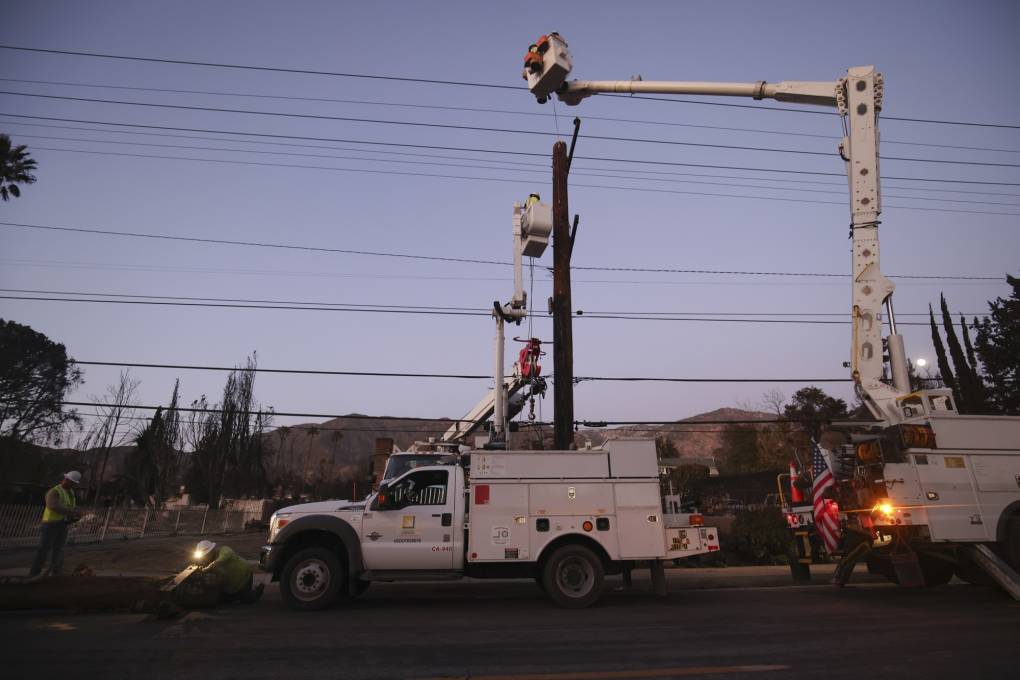
"caption": "Southern California Edison workers service a utility pole in the aftermath of the Eaton Fire on Jan. 12, 2025, in Altadena, California.",
"credit": "Ethan Swope/AP Photo",
"altTag": null,
"description": null,
"imgSizes": {
"medium": {
"file": "https://cdn.kqed.org/wp-content/uploads/sites/10/2025/01/SCELawsuitAP-800x533.jpg",
"width": 800,
"height": 533,
"mimeType": "image/jpeg"
},
"large": {
"file": "https://cdn.kqed.org/wp-content/uploads/sites/10/2025/01/SCELawsuitAP-1020x680.jpg",
"width": 1020,
"height": 680,
"mimeType": "image/jpeg"
},
"thumbnail": {
"file": "https://cdn.kqed.org/wp-content/uploads/sites/10/2025/01/SCELawsuitAP-160x107.jpg",
"width": 160,
"height": 107,
"mimeType": "image/jpeg"
},
"1536x1536": {
"file": "https://cdn.kqed.org/wp-content/uploads/sites/10/2025/01/SCELawsuitAP-1536x1024.jpg",
"width": 1536,
"height": 1024,
"mimeType": "image/jpeg"
},
"post-thumbnail": {
"file": "https://cdn.kqed.org/wp-content/uploads/sites/10/2025/01/SCELawsuitAP-672x372.jpg",
"width": 672,
"height": 372,
"mimeType": "image/jpeg"
},
"twentyfourteen-full-width": {
"file": "https://cdn.kqed.org/wp-content/uploads/sites/10/2025/01/SCELawsuitAP-1038x576.jpg",
"width": 1038,
"height": 576,
"mimeType": "image/jpeg"
},
"full-width": {
"file": "https://cdn.kqed.org/wp-content/uploads/sites/10/2025/01/SCELawsuitAP-1920x1280.jpg",
"width": 1920,
"height": 1280,
"mimeType": "image/jpeg"
},
"kqedFullSize": {
"file": "https://cdn.kqed.org/wp-content/uploads/sites/10/2025/01/SCELawsuitAP.jpg",
"width": 2000,
"height": 1333
}
},
"isLoading": false,
"fetchFailed": false
},
"news_12021263": {
"type": "attachments",
"id": "news_12021263",
"meta": {
"index": "attachments_1716263798",
"site": "news",
"id": "12021263",
"found": true
},
"title": "240109-CAWindStorm-043",
"publishDate": 1736462228,
"status": "inherit",
"parent": 12022146,
"modified": 1737075351,
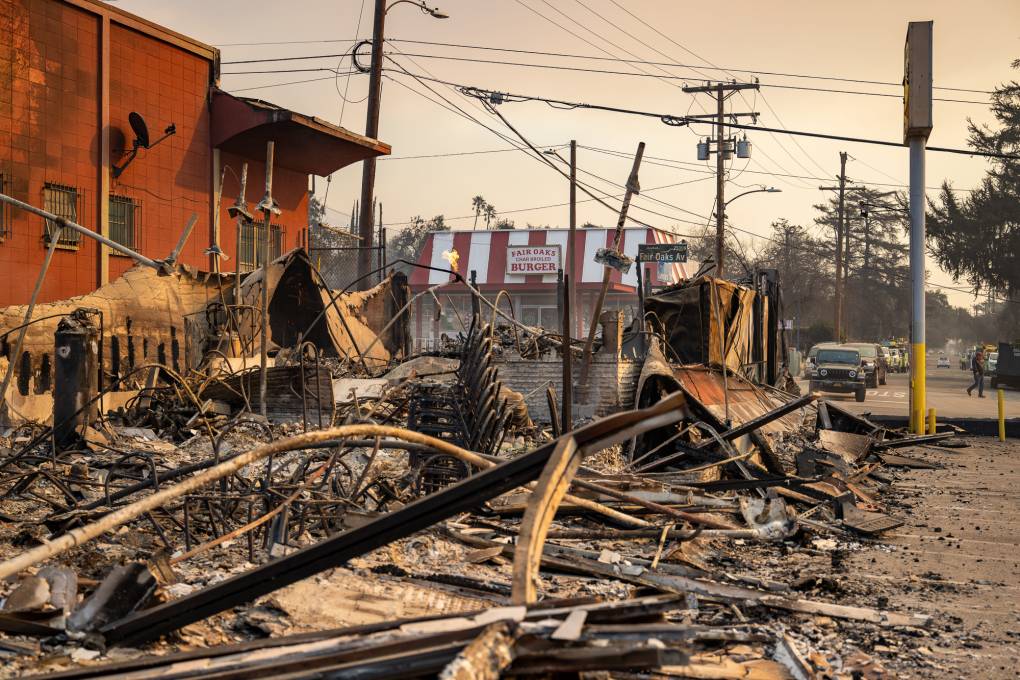
"caption": "Buildings are destroyed along Fair Oaks Avenue in Altadena, California, after the Eaton Fire swept through the area northeast of Los Angeles, California, on Thursday, Jan. 9, 2025.",
"credit": "Beth LaBerge/KQED",
"altTag": null,
"description": null,
"imgSizes": {
"medium": {
"file": "https://cdn.kqed.org/wp-content/uploads/sites/10/2025/01/240109-CAWindStorm-043-800x533.jpg",
"width": 800,
"height": 533,
"mimeType": "image/jpeg"
},
"large": {
"file": "https://cdn.kqed.org/wp-content/uploads/sites/10/2025/01/240109-CAWindStorm-043-1020x680.jpg",
"width": 1020,
"height": 680,
"mimeType": "image/jpeg"
},
"thumbnail": {
"file": "https://cdn.kqed.org/wp-content/uploads/sites/10/2025/01/240109-CAWindStorm-043-160x107.jpg",
"width": 160,
"height": 107,
"mimeType": "image/jpeg"
},
"1536x1536": {
"file": "https://cdn.kqed.org/wp-content/uploads/sites/10/2025/01/240109-CAWindStorm-043-1536x1024.jpg",
"width": 1536,
"height": 1024,
"mimeType": "image/jpeg"
},
"post-thumbnail": {
"file": "https://cdn.kqed.org/wp-content/uploads/sites/10/2025/01/240109-CAWindStorm-043-672x372.jpg",
"width": 672,
"height": 372,
"mimeType": "image/jpeg"
},
"twentyfourteen-full-width": {
"file": "https://cdn.kqed.org/wp-content/uploads/sites/10/2025/01/240109-CAWindStorm-043-1038x576.jpg",
"width": 1038,
"height": 576,
"mimeType": "image/jpeg"
},
"full-width": {
"file": "https://cdn.kqed.org/wp-content/uploads/sites/10/2025/01/240109-CAWindStorm-043-1920x1280.jpg",
"width": 1920,
"height": 1280,
"mimeType": "image/jpeg"
},
"kqedFullSize": {
"file": "https://cdn.kqed.org/wp-content/uploads/sites/10/2025/01/240109-CAWindStorm-043.jpg",
"width": 2000,
"height": 1333
}
},
"isLoading": false,
"fetchFailed": false
},
"news_12021809": {
"type": "attachments",
"id": "news_12021809",
"meta": {
"index": "attachments_1716263798",
"site": "news",
"id": "12021809",
"found": true
},
"title": "how-to-donate-la-fires",
"publishDate": 1736724327,
"status": "inherit",
"parent": 12021777,
"modified": 1736797890,
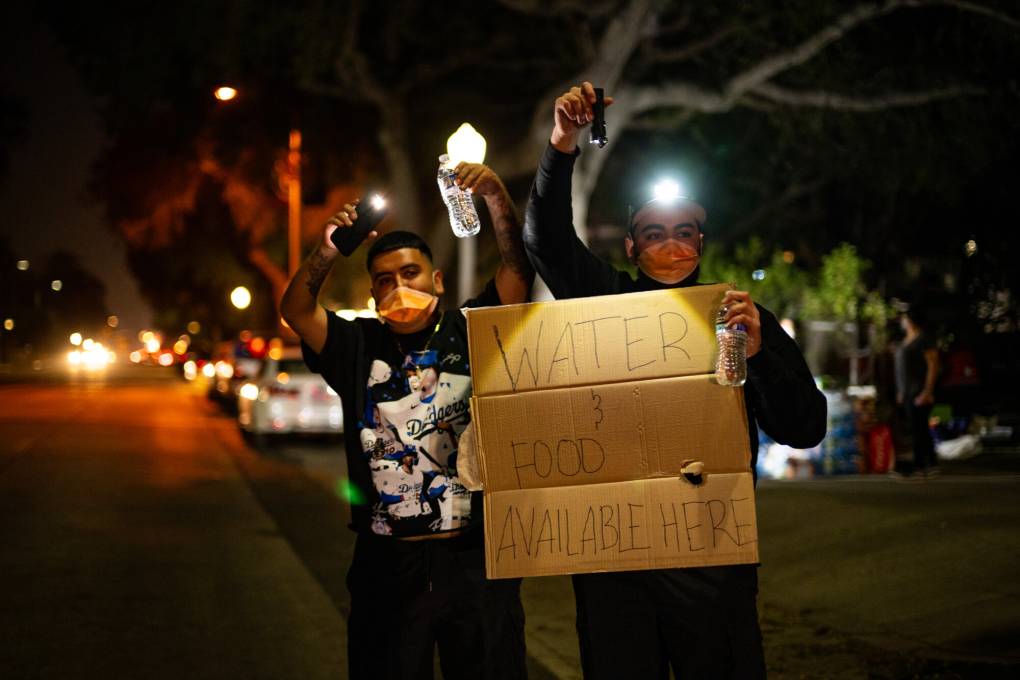
"caption": "Alex Lopez (left), an Altadena resident, and his friend Frank Alcaraz flag down drivers to stop for free water and supplies in Pasadena, California, on Jan. 9, 2025, after the Eaton Fire swept through the area days earlier. Lopez’s house survived the fire, but he said many of his neighbors' homes did not.",
"credit": "Beth LaBerge/KQED",
"altTag": null,
"description": null,
"imgSizes": {
"medium": {
"file": "https://cdn.kqed.org/wp-content/uploads/sites/10/2025/01/240109-CAWindStorm-082_qed-800x533.jpg",
"width": 800,
"height": 533,
"mimeType": "image/jpeg"
},
"large": {
"file": "https://cdn.kqed.org/wp-content/uploads/sites/10/2025/01/240109-CAWindStorm-082_qed-1020x680.jpg",
"width": 1020,
"height": 680,
"mimeType": "image/jpeg"
},
"thumbnail": {
"file": "https://cdn.kqed.org/wp-content/uploads/sites/10/2025/01/240109-CAWindStorm-082_qed-160x107.jpg",
"width": 160,
"height": 107,
"mimeType": "image/jpeg"
},
"1536x1536": {
"file": "https://cdn.kqed.org/wp-content/uploads/sites/10/2025/01/240109-CAWindStorm-082_qed-1536x1024.jpg",
"width": 1536,
"height": 1024,
"mimeType": "image/jpeg"
},
"post-thumbnail": {
"file": "https://cdn.kqed.org/wp-content/uploads/sites/10/2025/01/240109-CAWindStorm-082_qed-672x372.jpg",
"width": 672,
"height": 372,
"mimeType": "image/jpeg"
},
"twentyfourteen-full-width": {
"file": "https://cdn.kqed.org/wp-content/uploads/sites/10/2025/01/240109-CAWindStorm-082_qed-1038x576.jpg",
"width": 1038,
"height": 576,
"mimeType": "image/jpeg"
},
"full-width": {
"file": "https://cdn.kqed.org/wp-content/uploads/sites/10/2025/01/240109-CAWindStorm-082_qed-1920x1280.jpg",
"width": 1920,
"height": 1280,
"mimeType": "image/jpeg"
},
"kqedFullSize": {
"file": "https://cdn.kqed.org/wp-content/uploads/sites/10/2025/01/240109-CAWindStorm-082_qed.jpg",
"width": 2000,
"height": 1333
}
},
"isLoading": false,
"fetchFailed": false
},
"news_12021844": {
"type": "attachments",
"id": "news_12021844",
"meta": {
"index": "attachments_1716263798",
"site": "news",
"id": "12021844",
"found": true
},
"title": "240110-CAWindStorm-046",
"publishDate": 1736793286,
"status": "inherit",
"parent": 0,
"modified": 1736793343,
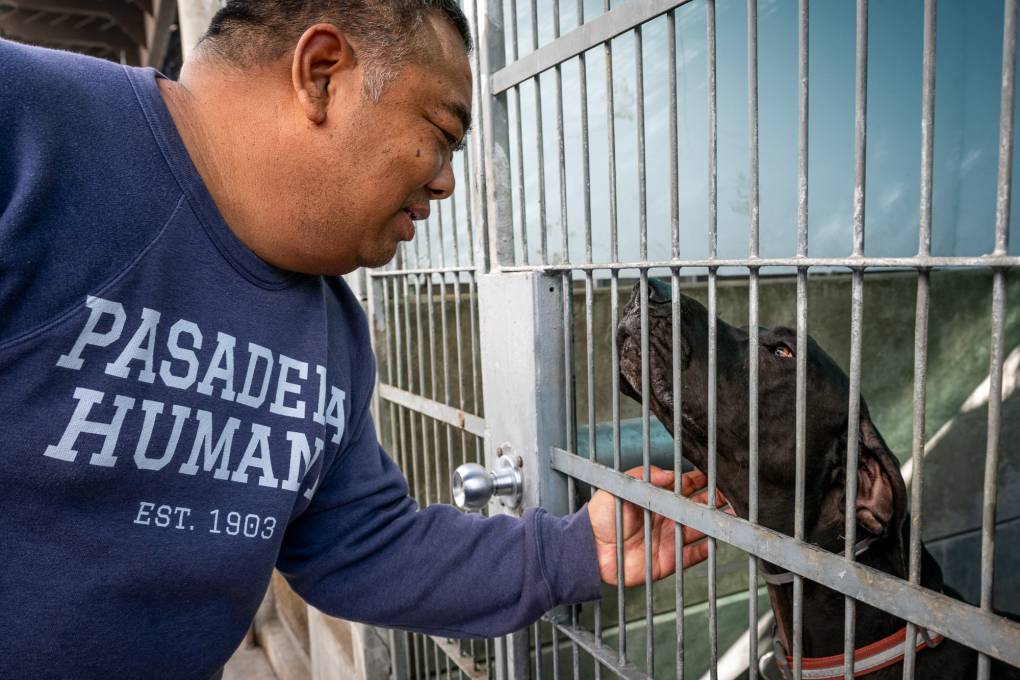
"caption": "Tom Ratanavaraha, a volunteer for the past 15 years, gives a treat to a dog named Prince at Pasadena Humane, an animal shelter in Pasadena, California, on Jan. 10, 2025. Ratanavaraha remembered when Prince was adopted a year ago and recognized him when his owners dropped off the dog for a temporary stay after losing their home in the Eaton Fire.",
"credit": "Beth LaBerge/KQED",
"altTag": null,
"description": null,
"imgSizes": {
"medium": {
"file": "https://cdn.kqed.org/wp-content/uploads/sites/10/2025/01/240110-CAWindStorm-046-800x533.jpg",
"width": 800,
"height": 533,
"mimeType": "image/jpeg"
},
"large": {
"file": "https://cdn.kqed.org/wp-content/uploads/sites/10/2025/01/240110-CAWindStorm-046-1020x680.jpg",
"width": 1020,
"height": 680,
"mimeType": "image/jpeg"
},
"thumbnail": {
"file": "https://cdn.kqed.org/wp-content/uploads/sites/10/2025/01/240110-CAWindStorm-046-160x107.jpg",
"width": 160,
"height": 107,
"mimeType": "image/jpeg"
},
"1536x1536": {
"file": "https://cdn.kqed.org/wp-content/uploads/sites/10/2025/01/240110-CAWindStorm-046-1536x1024.jpg",
"width": 1536,
"height": 1024,
"mimeType": "image/jpeg"
},
"post-thumbnail": {
"file": "https://cdn.kqed.org/wp-content/uploads/sites/10/2025/01/240110-CAWindStorm-046-672x372.jpg",
"width": 672,
"height": 372,
"mimeType": "image/jpeg"
},
"twentyfourteen-full-width": {
"file": "https://cdn.kqed.org/wp-content/uploads/sites/10/2025/01/240110-CAWindStorm-046-1038x576.jpg",
"width": 1038,
"height": 576,
"mimeType": "image/jpeg"
},
"full-width": {
"file": "https://cdn.kqed.org/wp-content/uploads/sites/10/2025/01/240110-CAWindStorm-046-1920x1280.jpg",
"width": 1920,
"height": 1280,
"mimeType": "image/jpeg"
},
"kqedFullSize": {
"file": "https://cdn.kqed.org/wp-content/uploads/sites/10/2025/01/240110-CAWindStorm-046.jpg",
"width": 2000,
"height": 1333
}
},
"isLoading": false,
"fetchFailed": false
},
"news_12021326": {
"type": "attachments",
"id": "news_12021326",
"meta": {
"index": "attachments_1716263798",
"site": "news",
"id": "12021326",
"found": true
},
"title": "240109-CAWindStorm-062",
"publishDate": 1736468000,
"status": "inherit",
"parent": 0,
"modified": 1736818490,
"caption": "Smoke fills the sky over Pasadena due to several wildfires burning in the Los Angeles, California, area on Thursday, Jan. 9, 2025.",
"credit": "Beth LaBerge/KQED",
"altTag": null,
"description": null,
"imgSizes": {
"medium": {
"file": "https://cdn.kqed.org/wp-content/uploads/sites/10/2025/01/240109-CAWindStorm-062-800x533.jpg",
"width": 800,
"height": 533,
"mimeType": "image/jpeg"
},
"large": {
"file": "https://cdn.kqed.org/wp-content/uploads/sites/10/2025/01/240109-CAWindStorm-062-1020x680.jpg",
"width": 1020,
"height": 680,
"mimeType": "image/jpeg"
},
"thumbnail": {
"file": "https://cdn.kqed.org/wp-content/uploads/sites/10/2025/01/240109-CAWindStorm-062-160x107.jpg",
"width": 160,
"height": 107,
"mimeType": "image/jpeg"
},
"1536x1536": {
"file": "https://cdn.kqed.org/wp-content/uploads/sites/10/2025/01/240109-CAWindStorm-062-1536x1024.jpg",
"width": 1536,
"height": 1024,
"mimeType": "image/jpeg"
},
"post-thumbnail": {
"file": "https://cdn.kqed.org/wp-content/uploads/sites/10/2025/01/240109-CAWindStorm-062-672x372.jpg",
"width": 672,
"height": 372,
"mimeType": "image/jpeg"
},
"twentyfourteen-full-width": {
"file": "https://cdn.kqed.org/wp-content/uploads/sites/10/2025/01/240109-CAWindStorm-062-1038x576.jpg",
"width": 1038,
"height": 576,
"mimeType": "image/jpeg"
},
"full-width": {
"file": "https://cdn.kqed.org/wp-content/uploads/sites/10/2025/01/240109-CAWindStorm-062-1920x1280.jpg",
"width": 1920,
"height": 1280,
"mimeType": "image/jpeg"
},
"kqedFullSize": {
"file": "https://cdn.kqed.org/wp-content/uploads/sites/10/2025/01/240109-CAWindStorm-062.jpg",
"width": 2000,
"height": 1333
}
},
"isLoading": false,
"fetchFailed": false
},
"news_12021545": {
"type": "attachments",
"id": "news_12021545",
"meta": {
"index": "attachments_1716263798",
"site": "news",
"id": "12021545",
"found": true
},
"title": "California Wildfires",
"publishDate": 1736546516,
"status": "inherit",
"parent": 12021536,
"modified": 1736546561,
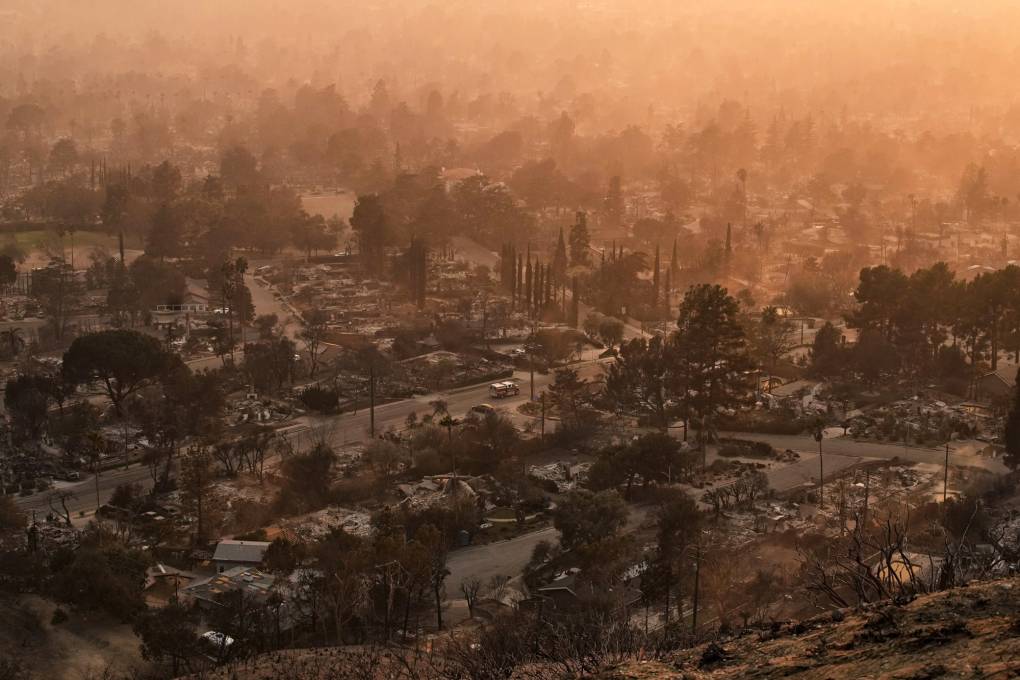
"caption": "Smoke lingers over a neighborhood devastated by the Eaton Fire, Thursday, Jan. 9, 2025, in Altadena, California.",
"credit": "John Locher/AP Photo",
"altTag": null,
"description": null,
"imgSizes": {
"medium": {
"file": "https://cdn.kqed.org/wp-content/uploads/sites/10/2025/01/CAWildfireLACountyAP-800x533.jpg",
"width": 800,
"height": 533,
"mimeType": "image/jpeg"
},
"large": {
"file": "https://cdn.kqed.org/wp-content/uploads/sites/10/2025/01/CAWildfireLACountyAP-1020x680.jpg",
"width": 1020,
"height": 680,
"mimeType": "image/jpeg"
},
"thumbnail": {
"file": "https://cdn.kqed.org/wp-content/uploads/sites/10/2025/01/CAWildfireLACountyAP-160x107.jpg",
"width": 160,
"height": 107,
"mimeType": "image/jpeg"
},
"1536x1536": {
"file": "https://cdn.kqed.org/wp-content/uploads/sites/10/2025/01/CAWildfireLACountyAP-1536x1024.jpg",
"width": 1536,
"height": 1024,
"mimeType": "image/jpeg"
},
"post-thumbnail": {
"file": "https://cdn.kqed.org/wp-content/uploads/sites/10/2025/01/CAWildfireLACountyAP-672x372.jpg",
"width": 672,
"height": 372,
"mimeType": "image/jpeg"
},
"twentyfourteen-full-width": {
"file": "https://cdn.kqed.org/wp-content/uploads/sites/10/2025/01/CAWildfireLACountyAP-1038x576.jpg",
"width": 1038,
"height": 576,
"mimeType": "image/jpeg"
},
"full-width": {
"file": "https://cdn.kqed.org/wp-content/uploads/sites/10/2025/01/CAWildfireLACountyAP-1920x1280.jpg",
"width": 1920,
"height": 1280,
"mimeType": "image/jpeg"
},
"kqedFullSize": {
"file": "https://cdn.kqed.org/wp-content/uploads/sites/10/2025/01/CAWildfireLACountyAP.jpg",
"width": 2000,
"height": 1333
}
},
"isLoading": false,
"fetchFailed": false
},
"news_12021175": {
"type": "attachments",
"id": "news_12021175",
"meta": {
"index": "attachments_1716263798",
"site": "news",
"id": "12021175",
"found": true
},
"title": "Bliss Hill",
"publishDate": 1736452132,
"status": "inherit",
"parent": 12021147,
"modified": 1736543918,
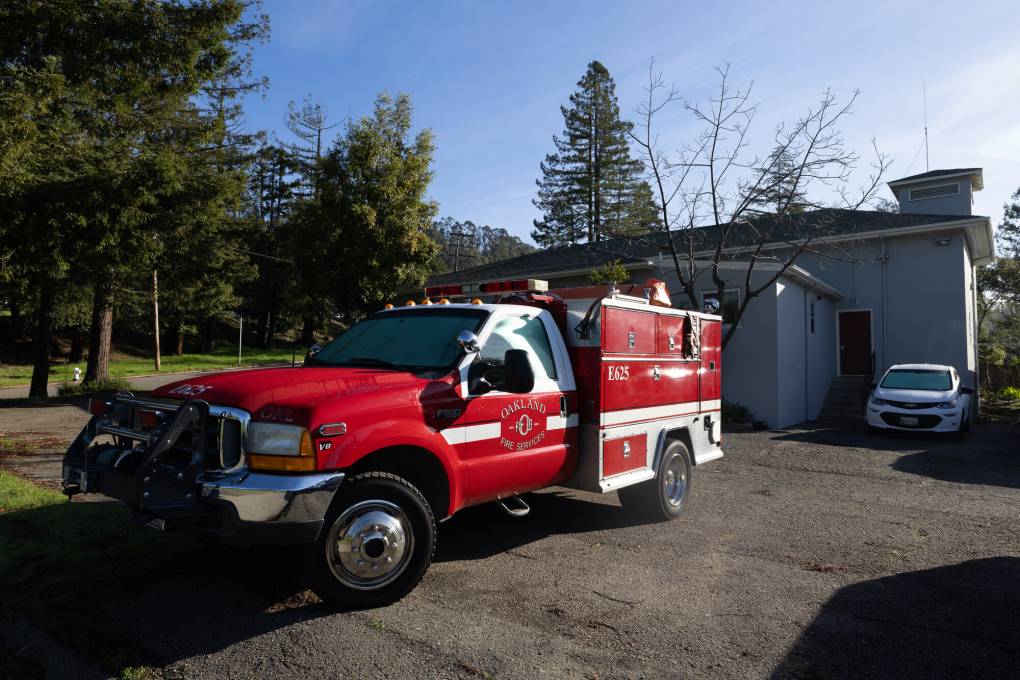
"caption": "Oakland Fire Department Station No. 25 on Jan. 5, 2025, located on Butters Drive in the East Oakland Hills. It's one of two stations scheduled to close until June. The closure is part of the city’s effort to confront its $129 million budget deficit. In 2023, Fire Station 25 responded to 834 calls.",
"credit": "David M. Barreda/KQED",
"altTag": null,
"description": null,
"imgSizes": {
"medium": {
"file": "https://cdn.kqed.org/wp-content/uploads/sites/10/2025/01/20250105_OakFireClose_DMB_00056_qed-800x533.jpg",
"width": 800,
"height": 533,
"mimeType": "image/jpeg"
},
"large": {
"file": "https://cdn.kqed.org/wp-content/uploads/sites/10/2025/01/20250105_OakFireClose_DMB_00056_qed-1020x680.jpg",
"width": 1020,
"height": 680,
"mimeType": "image/jpeg"
},
"thumbnail": {
"file": "https://cdn.kqed.org/wp-content/uploads/sites/10/2025/01/20250105_OakFireClose_DMB_00056_qed-160x107.jpg",
"width": 160,
"height": 107,
"mimeType": "image/jpeg"
},
"1536x1536": {
"file": "https://cdn.kqed.org/wp-content/uploads/sites/10/2025/01/20250105_OakFireClose_DMB_00056_qed-1536x1024.jpg",
"width": 1536,
"height": 1024,
"mimeType": "image/jpeg"
},
"post-thumbnail": {
"file": "https://cdn.kqed.org/wp-content/uploads/sites/10/2025/01/20250105_OakFireClose_DMB_00056_qed-672x372.jpg",
"width": 672,
"height": 372,
"mimeType": "image/jpeg"
},
"twentyfourteen-full-width": {
"file": "https://cdn.kqed.org/wp-content/uploads/sites/10/2025/01/20250105_OakFireClose_DMB_00056_qed-1038x576.jpg",
"width": 1038,
"height": 576,
"mimeType": "image/jpeg"
},
"full-width": {
"file": "https://cdn.kqed.org/wp-content/uploads/sites/10/2025/01/20250105_OakFireClose_DMB_00056_qed-1920x1280.jpg",
"width": 1920,
"height": 1280,
"mimeType": "image/jpeg"
},
"kqedFullSize": {
"file": "https://cdn.kqed.org/wp-content/uploads/sites/10/2025/01/20250105_OakFireClose_DMB_00056_qed.jpg",
"width": 2000,
"height": 1333
}
},
"isLoading": false,
"fetchFailed": false
},
"news_12021240": {
"type": "attachments",
"id": "news_12021240",
"meta": {
"index": "attachments_1716263798",
"site": "news",
"id": "12021240",
"found": true
},
"title": "Gavin Newsom, Donald Trump",
"publishDate": 1736460214,
"status": "inherit",
"parent": 12021128,
"modified": 1736460270,
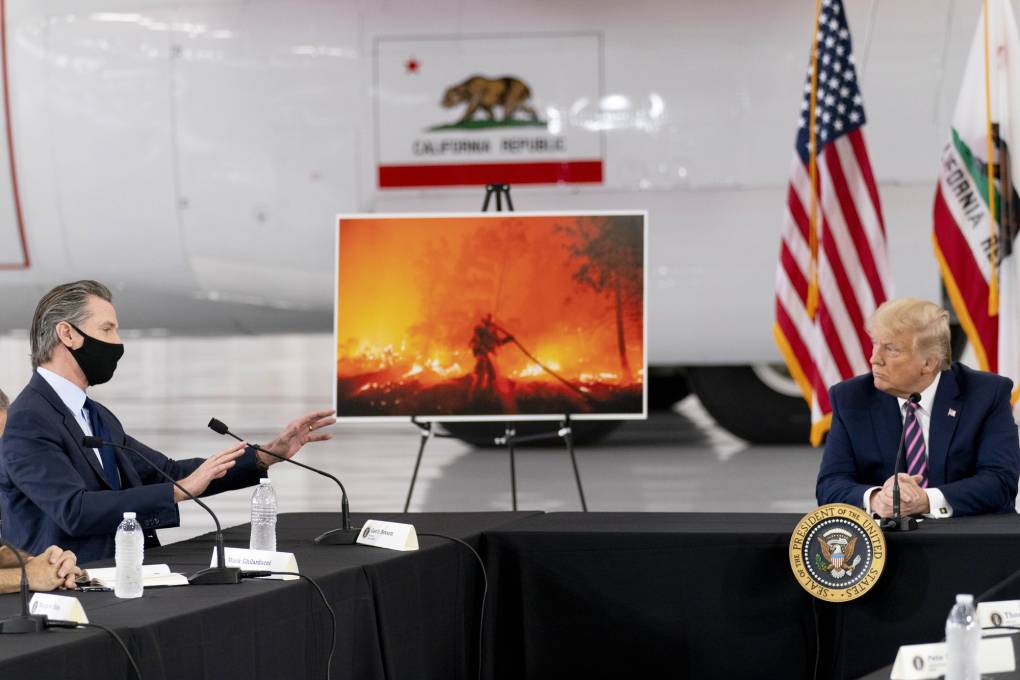
"caption": "President Donald Trump participates in a briefing on wildfires with Gov. Gavin Newsom, left, at Sacramento McClellan Airport, in McClellan Park, California, on Sept. 14, 2020. ",
"credit": "Andrew Harnik/AP Photo",
"altTag": null,
"description": null,
"imgSizes": {
"medium": {
"file": "https://cdn.kqed.org/wp-content/uploads/sites/10/2025/01/CAWildfireNewsomTrumpAP-800x533.jpg",
"width": 800,
"height": 533,
"mimeType": "image/jpeg"
},
"large": {
"file": "https://cdn.kqed.org/wp-content/uploads/sites/10/2025/01/CAWildfireNewsomTrumpAP-1020x680.jpg",
"width": 1020,
"height": 680,
"mimeType": "image/jpeg"
},
"thumbnail": {
"file": "https://cdn.kqed.org/wp-content/uploads/sites/10/2025/01/CAWildfireNewsomTrumpAP-160x107.jpg",
"width": 160,
"height": 107,
"mimeType": "image/jpeg"
},
"1536x1536": {
"file": "https://cdn.kqed.org/wp-content/uploads/sites/10/2025/01/CAWildfireNewsomTrumpAP-1536x1024.jpg",
"width": 1536,
"height": 1024,
"mimeType": "image/jpeg"
},
"post-thumbnail": {
"file": "https://cdn.kqed.org/wp-content/uploads/sites/10/2025/01/CAWildfireNewsomTrumpAP-672x372.jpg",
"width": 672,
"height": 372,
"mimeType": "image/jpeg"
},
"twentyfourteen-full-width": {
"file": "https://cdn.kqed.org/wp-content/uploads/sites/10/2025/01/CAWildfireNewsomTrumpAP-1038x576.jpg",
"width": 1038,
"height": 576,
"mimeType": "image/jpeg"
},
"full-width": {
"file": "https://cdn.kqed.org/wp-content/uploads/sites/10/2025/01/CAWildfireNewsomTrumpAP-1920x1280.jpg",
"width": 1920,
"height": 1280,
"mimeType": "image/jpeg"
},
"kqedFullSize": {
"file": "https://cdn.kqed.org/wp-content/uploads/sites/10/2025/01/CAWildfireNewsomTrumpAP.jpg",
"width": 2000,
"height": 1333
}
},
"isLoading": false,
"fetchFailed": false
},
"news_12021103": {
"type": "attachments",
"id": "news_12021103",
"meta": {
"index": "attachments_1716263798",
"site": "news",
"id": "12021103",
"found": true
},
"title": "240109-CAWindStorm-019",
"publishDate": 1736442741,
"status": "inherit",
"parent": 0,
"modified": 1736667831,
"caption": "The Palisades Fire burns in the hillside above the Pacific Palisades neighborhood of Los Angeles, California, on Thursday, Jan. 9, 2025.",
"credit": "Beth LaBerge/KQED",
"altTag": null,
"description": null,
"imgSizes": {
"medium": {
"file": "https://cdn.kqed.org/wp-content/uploads/sites/10/2025/01/240109-CAWindStorm-019-800x533.jpg",
"width": 800,
"height": 533,
"mimeType": "image/jpeg"
},
"large": {
"file": "https://cdn.kqed.org/wp-content/uploads/sites/10/2025/01/240109-CAWindStorm-019-1020x680.jpg",
"width": 1020,
"height": 680,
"mimeType": "image/jpeg"
},
"thumbnail": {
"file": "https://cdn.kqed.org/wp-content/uploads/sites/10/2025/01/240109-CAWindStorm-019-160x107.jpg",
"width": 160,
"height": 107,
"mimeType": "image/jpeg"
},
"1536x1536": {
"file": "https://cdn.kqed.org/wp-content/uploads/sites/10/2025/01/240109-CAWindStorm-019-1536x1024.jpg",
"width": 1536,
"height": 1024,
"mimeType": "image/jpeg"
},
"post-thumbnail": {
"file": "https://cdn.kqed.org/wp-content/uploads/sites/10/2025/01/240109-CAWindStorm-019-672x372.jpg",
"width": 672,
"height": 372,
"mimeType": "image/jpeg"
},
"twentyfourteen-full-width": {
"file": "https://cdn.kqed.org/wp-content/uploads/sites/10/2025/01/240109-CAWindStorm-019-1038x576.jpg",
"width": 1038,
"height": 576,
"mimeType": "image/jpeg"
},
"full-width": {
"file": "https://cdn.kqed.org/wp-content/uploads/sites/10/2025/01/240109-CAWindStorm-019-1920x1280.jpg",
"width": 1920,
"height": 1280,
"mimeType": "image/jpeg"
},
"kqedFullSize": {
"file": "https://cdn.kqed.org/wp-content/uploads/sites/10/2025/01/240109-CAWindStorm-019.jpg",
"width": 2000,
"height": 1333
}
},
"isLoading": false,
"fetchFailed": false
},
"news_12021028": {
"type": "attachments",
"id": "news_12021028",
"meta": {
"index": "attachments_1716263798",
"site": "news",
"id": "12021028",
"found": true
},
"title": "APTOPIX California Wildfires",
"publishDate": 1736384165,
"status": "inherit",
"parent": 12021019,
"modified": 1736384206,
"caption": "A person tries to hose down embers from the Palisades Fire in the Pacific Palisades neighborhood of Los Angeles on Tuesday, Jan. 7, 2025.",
"credit": "Etienne Laurent/AP Photo",
"altTag": null,
"description": null,
"imgSizes": {
"medium": {
"file": "https://cdn.kqed.org/wp-content/uploads/sites/10/2025/01/CAWildfireSoCal4AP-800x533.jpg",
"width": 800,
"height": 533,
"mimeType": "image/jpeg"
},
"large": {
"file": "https://cdn.kqed.org/wp-content/uploads/sites/10/2025/01/CAWildfireSoCal4AP-1020x680.jpg",
"width": 1020,
"height": 680,
"mimeType": "image/jpeg"
},
"thumbnail": {
"file": "https://cdn.kqed.org/wp-content/uploads/sites/10/2025/01/CAWildfireSoCal4AP-160x107.jpg",
"width": 160,
"height": 107,
"mimeType": "image/jpeg"
},
"1536x1536": {
"file": "https://cdn.kqed.org/wp-content/uploads/sites/10/2025/01/CAWildfireSoCal4AP-1536x1024.jpg",
"width": 1536,
"height": 1024,
"mimeType": "image/jpeg"
},
"post-thumbnail": {
"file": "https://cdn.kqed.org/wp-content/uploads/sites/10/2025/01/CAWildfireSoCal4AP-672x372.jpg",
"width": 672,
"height": 372,
"mimeType": "image/jpeg"
},
"twentyfourteen-full-width": {
"file": "https://cdn.kqed.org/wp-content/uploads/sites/10/2025/01/CAWildfireSoCal4AP-1038x576.jpg",
"width": 1038,
"height": 576,
"mimeType": "image/jpeg"
},
"full-width": {
"file": "https://cdn.kqed.org/wp-content/uploads/sites/10/2025/01/CAWildfireSoCal4AP-1920x1280.jpg",
"width": 1920,
"height": 1280,
"mimeType": "image/jpeg"
},
"kqedFullSize": {
"file": "https://cdn.kqed.org/wp-content/uploads/sites/10/2025/01/CAWildfireSoCal4AP.jpg",
"width": 2000,
"height": 1333
}
},
"isLoading": false,
"fetchFailed": false
},
"news_12020821": {
"type": "attachments",
"id": "news_12020821",
"meta": {
"index": "attachments_1716263798",
"site": "news",
"id": "12020821",
"found": true
},
"title": "California Wildfires",
"publishDate": 1736363609,
"status": "inherit",
"parent": 12020808,
"modified": 1736363710,
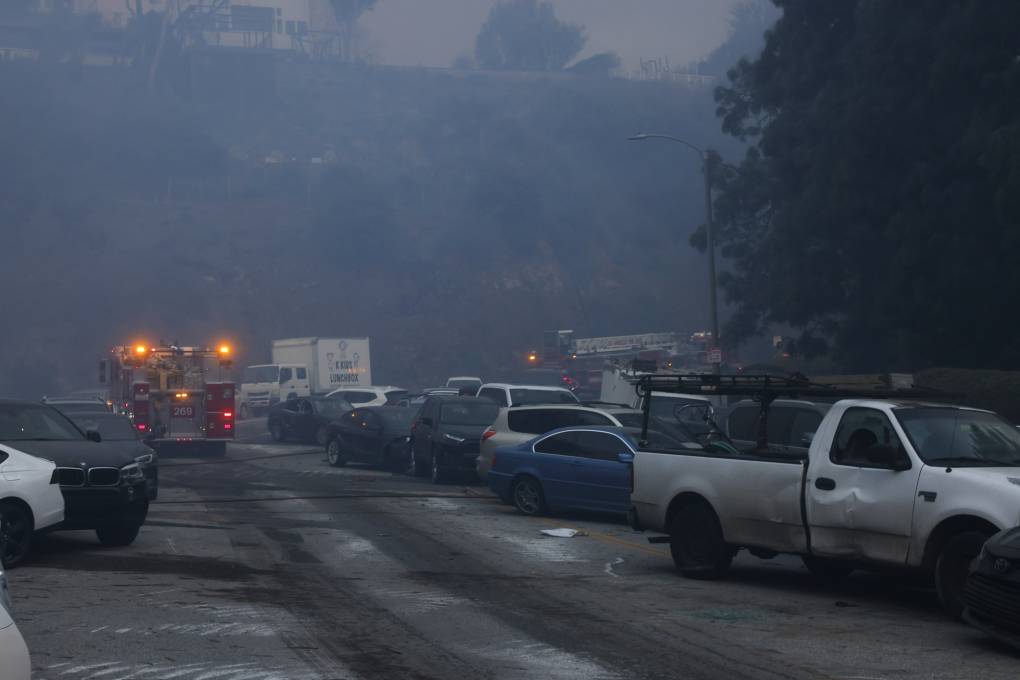
"caption": "Vehicles are left stranded off the side of the road after residents tried to flee from the Palisades Fire in the Pacific Palisades neighborhood of Los Angeles on Tuesday, Jan. 7, 2025. ",
"credit": "Etienne Laurent/AP Photo",
"altTag": null,
"description": null,
"imgSizes": {
"medium": {
"file": "https://cdn.kqed.org/wp-content/uploads/sites/10/2025/01/CAWildfireSoCal1AP-800x533.jpg",
"width": 800,
"height": 533,
"mimeType": "image/jpeg"
},
"large": {
"file": "https://cdn.kqed.org/wp-content/uploads/sites/10/2025/01/CAWildfireSoCal1AP-1020x680.jpg",
"width": 1020,
"height": 680,
"mimeType": "image/jpeg"
},
"thumbnail": {
"file": "https://cdn.kqed.org/wp-content/uploads/sites/10/2025/01/CAWildfireSoCal1AP-160x107.jpg",
"width": 160,
"height": 107,
"mimeType": "image/jpeg"
},
"1536x1536": {
"file": "https://cdn.kqed.org/wp-content/uploads/sites/10/2025/01/CAWildfireSoCal1AP-1536x1024.jpg",
"width": 1536,
"height": 1024,
"mimeType": "image/jpeg"
},
"post-thumbnail": {
"file": "https://cdn.kqed.org/wp-content/uploads/sites/10/2025/01/CAWildfireSoCal1AP-672x372.jpg",
"width": 672,
"height": 372,
"mimeType": "image/jpeg"
},
"twentyfourteen-full-width": {
"file": "https://cdn.kqed.org/wp-content/uploads/sites/10/2025/01/CAWildfireSoCal1AP-1038x576.jpg",
"width": 1038,
"height": 576,
"mimeType": "image/jpeg"
},
"full-width": {
"file": "https://cdn.kqed.org/wp-content/uploads/sites/10/2025/01/CAWildfireSoCal1AP-1920x1280.jpg",
"width": 1920,
"height": 1280,
"mimeType": "image/jpeg"
},
"kqedFullSize": {
"file": "https://cdn.kqed.org/wp-content/uploads/sites/10/2025/01/CAWildfireSoCal1AP.jpg",
"width": 2000,
"height": 1333
}
},
"isLoading": false,
"fetchFailed": false
},
"news_12021030": {
"type": "attachments",
"id": "news_12021030",
"meta": {
"index": "attachments_1716263798",
"site": "news",
"id": "12021030",
"found": true
},
"title": "npr.brightspotcdn copy",
"publishDate": 1736384480,
"status": "inherit",
"parent": 12021029,
"modified": 1736386192,
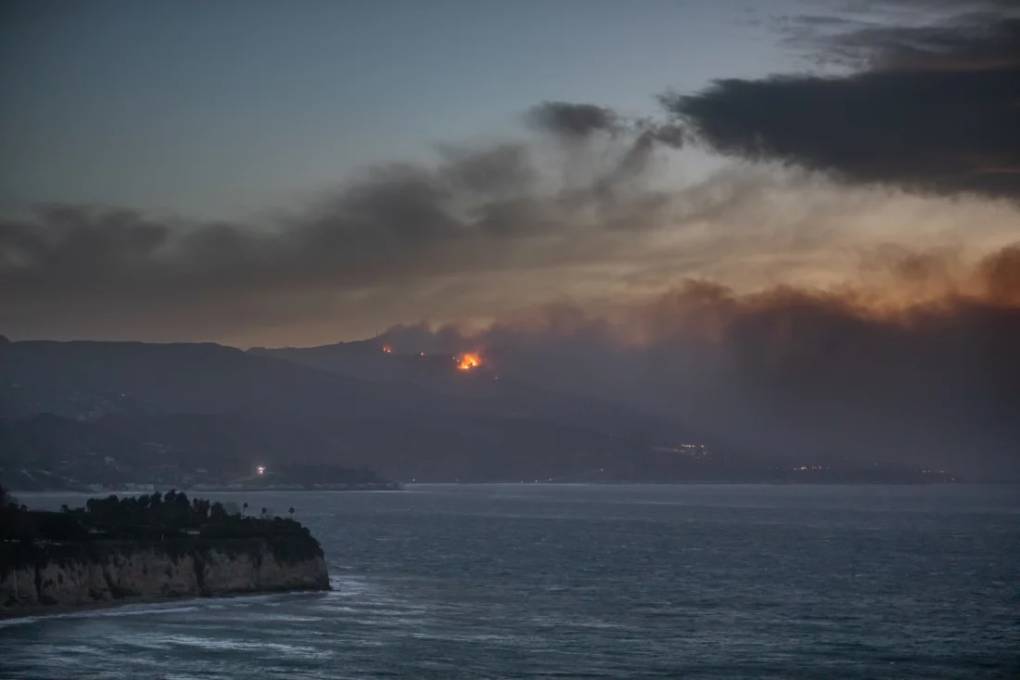
"caption": "Smoke from the Palisades Fire is seen from Point Dume while it burns homes along the Pacific Coast Highway amid a powerful windstorm on Wednesday in Malibu, California. Fueled by intense Santa Ana winds, the Palisades Fire has burned through thousands of acres, while a second major fire continues to burn near Eaton Canyon in Altadena.",
"credit": "Apu Gomes/Getty Images North America",
"altTag": "Fire and flame with smoke rising on a distant wooded mountain with the sea in the foreground.",
"description": null,
"imgSizes": {
"medium": {
"file": "https://cdn.kqed.org/wp-content/uploads/sites/10/2025/01/npr.brightspotcdn-copy-24-800x533.jpg",
"width": 800,
"height": 533,
"mimeType": "image/jpeg"
},
"large": {
"file": "https://cdn.kqed.org/wp-content/uploads/sites/10/2025/01/npr.brightspotcdn-copy-24-1020x680.jpg",
"width": 1020,
"height": 680,
"mimeType": "image/jpeg"
},
"thumbnail": {
"file": "https://cdn.kqed.org/wp-content/uploads/sites/10/2025/01/npr.brightspotcdn-copy-24-160x107.jpg",
"width": 160,
"height": 107,
"mimeType": "image/jpeg"
},
"post-thumbnail": {
"file": "https://cdn.kqed.org/wp-content/uploads/sites/10/2025/01/npr.brightspotcdn-copy-24-672x372.jpg",
"width": 672,
"height": 372,
"mimeType": "image/jpeg"
},
"twentyfourteen-full-width": {
"file": "https://cdn.kqed.org/wp-content/uploads/sites/10/2025/01/npr.brightspotcdn-copy-24-1038x576.jpg",
"width": 1038,
"height": 576,
"mimeType": "image/jpeg"
},
"kqedFullSize": {
"file": "https://cdn.kqed.org/wp-content/uploads/sites/10/2025/01/npr.brightspotcdn-copy-24.jpg",
"width": 1100,
"height": 733
}
},
"isLoading": false,
"fetchFailed": false
}
},
"audioPlayerReducer": {
"postId": "stream_live",
"isPaused": true,
"isPlaying": false,
"pfsActive": false,
"pledgeModalIsOpen": true,
"playerDrawerIsOpen": false,
"liveAudioPlayStartedAt": 0,
"liveAudioPlayContext": ""
},
"authorsReducer": {
"byline_news_12021029": {
"type": "authors",
"id": "byline_news_12021029",
"meta": {
"override": true
},
"slug": "byline_news_12021029",
"name": "\u003ca href=\"https://www.npr.org/people/131724812/scott-neuman\">Scott Neuman\u003c/a>, NPR",
"isLoading": false
},
"danbrekke": {
"type": "authors",
"id": "222",
"meta": {
"index": "authors_1716337520",
"id": "222",
"found": true
},
"name": "Dan Brekke",
"firstName": "Dan",
"lastName": "Brekke",
"slug": "danbrekke",
"email": "dbrekke@kqed.org",
"display_author_email": true,
"staff_mastheads": [
"news",
"science"
],
"title": "KQED Editor and Reporter",
"bio": "Dan Brekke is a reporter and editor for KQED News, responsible for coverage of topics ranging from California water issues to the Bay Area's transportation challenges. In a newsroom career that began in Chicago in 1972, Dan has worked for \u003cem>The San Francisco Examiner,\u003c/em> Wired and TechTV and has been published in The New York Times, The New York Times Magazine, Business 2.0, Salon and elsewhere.\r\n\r\nSince joining KQED in 2007, Dan has reported, edited and produced both radio and online features and breaking news pieces. He has shared as both editor and reporter in four Society of Professional Journalists Norcal Excellence in Journalism awards and one Edward R. Murrow regional award. He was chosen for a spring 2017 residency at the Mesa Refuge to advance his research on California salmon.\r\n\r\nEmail Dan at: \u003ca href=\"mailto:dbrekke@kqed.org\">dbrekke@kqed.org\u003c/a>\r\n\r\n\u003cstrong>Twitter:\u003c/strong> \u003ca href=\"https://twitter.com/danbrekke\" rel=\"noopener noreferrer\">twitter.com/danbrekke\u003c/a>\r\n\u003cstrong>Facebook:\u003c/strong> \u003ca href=\"https://www.facebook.com/danbrekke\" rel=\"noopener noreferrer\">www.facebook.com/danbrekke\u003c/a>\r\n\u003cstrong>LinkedIn:\u003c/strong> \u003ca href=\"https://www.linkedin.com/in/danbrekke\" rel=\"noopener noreferrer\">www.linkedin.com/in/danbrekke\u003c/a>",
"avatar": "https://secure.gravatar.com/avatar/c8126230345efca3f7aa89b1a402be45?s=600&d=mm&r=g",
"twitter": "danbrekke",
"facebook": null,
"instagram": "https://www.instagram.com/dan.brekke/",
"linkedin": "https://www.linkedin.com/in/danbrekke/",
"sites": [
{
"site": "news",
"roles": [
"administrator",
"create_posts"
]
},
{
"site": "stateofhealth",
"roles": [
"editor"
]
},
{
"site": "science",
"roles": [
"editor"
]
},
{
"site": "quest",
"roles": [
"contributor"
]
},
{
"site": "food",
"roles": [
"contributor"
]
},
{
"site": "forum",
"roles": [
"contributor"
]
},
{
"site": "liveblog",
"roles": [
"editor"
]
}
],
"headData": {
"title": "Dan Brekke | KQED",
"description": "KQED Editor and Reporter",
"ogImgSrc": "https://secure.gravatar.com/avatar/c8126230345efca3f7aa89b1a402be45?s=600&d=mm&r=g",
"twImgSrc": "https://secure.gravatar.com/avatar/c8126230345efca3f7aa89b1a402be45?s=600&d=mm&r=g"
},
"isLoading": false,
"link": "/author/danbrekke"
},
"rachael-myrow": {
"type": "authors",
"id": "251",
"meta": {
"index": "authors_1716337520",
"id": "251",
"found": true
},
"name": "Rachael Myrow",
"firstName": "Rachael",
"lastName": "Myrow",
"slug": "rachael-myrow",
"email": "rmyrow@kqed.org",
"display_author_email": true,
"staff_mastheads": [
"news"
],
"title": "Senior Editor of KQED's Silicon Valley News Desk",
"bio": "• I write and edit stories about how Silicon Valley power and policies shape everyday life in California. I’m also passionate about making Bay Area history and culture more accessible to a broad public. • I’ve been a journalist for most of my life, starting in high school with The Franklin Press in Los Angeles, where I grew up. While earning my first degree in English at UC Berkeley, I got my start in public radio at KALX-FM. After completing a second degree in journalism at Cal, I landed my first professional job at Marketplace, then moved on to KPCC (now LAist), and then KQED, where I hosted The California Report for more than seven years. • My reporting has appeared on NPR, The World, WBUR’s \u003ci>Here & Now\u003c/i>, and the BBC. I also guest host for KQED’s \u003ci>Forum\u003c/i>, as well as the Commonwealth Club in San Francisco. • I speak periodically on media, democracy and technology issues, and do voiceover work for documentaries and educational video projects. • Outside of the studio, you'll find me hiking Bay Area trails and whipping up Insta-ready meals in my kitchen. • I do not accept gifts, money, or favors from anyone connected to my reporting, I don't pay people for information, and I do not support or donate to political causes. • I strive to treat the people I report on with fairness, honesty, and respect. I also recognize there are often multiple sides to a story and work to verify information through multiple sources and documentation. If I get something wrong, I correct it.",
"avatar": "https://secure.gravatar.com/avatar/3ed8a3c5f26025e4a805ba634cda8cd764906b97438a6d9ce216b044e340da4e?s=600&d=blank&r=g",
"twitter": "rachaelmyrow",
"bluesky": null,
"facebook": null,
"instagram": null,
"linkedin": "https://www.linkedin.com/in/rachaelmyrow/",
"sites": [
{
"site": "arts",
"roles": [
"administrator"
]
},
{
"site": "news",
"roles": [
"edit_others_posts",
"editor"
]
},
{
"site": "futureofyou",
"roles": [
"editor"
]
},
{
"site": "bayareabites",
"roles": [
"editor"
]
},
{
"site": "stateofhealth",
"roles": [
"editor"
]
},
{
"site": "science",
"roles": [
"editor"
]
},
{
"site": "food",
"roles": [
"editor"
]
},
{
"site": "forum",
"roles": [
"editor"
]
},
{
"site": "liveblog",
"roles": [
"author"
]
}
],
"headData": {
"title": "Rachael Myrow | KQED",
"description": "Senior Editor of KQED's Silicon Valley News Desk",
"ogImgSrc": "https://secure.gravatar.com/avatar/3ed8a3c5f26025e4a805ba634cda8cd764906b97438a6d9ce216b044e340da4e?s=600&d=blank&r=g",
"twImgSrc": "https://secure.gravatar.com/avatar/3ed8a3c5f26025e4a805ba634cda8cd764906b97438a6d9ce216b044e340da4e?s=600&d=blank&r=g"
},
"isLoading": false,
"link": "/author/rachael-myrow"
},
"lklivans": {
"type": "authors",
"id": "8648",
"meta": {
"index": "authors_1716337520",
"id": "8648",
"found": true
},
"name": "Laura Klivans",
"firstName": "Laura",
"lastName": "Klivans",
"slug": "lklivans",
"email": "lklivans@kqed.org",
"display_author_email": true,
"staff_mastheads": [
"news",
"science"
],
"title": "Reporter",
"bio": "Laura Klivans is an award-winning science reporter for KQED News, where she covers climate change with an eye on both groundbreaking progress and gaps in action. She is the former host of KQED's blockbuster video series about tiny, amazing animals, \u003cem>Deep Look\u003c/em>. Her work reaches national audiences through NPR, \u003cem>Here & Now, \u003c/em>PRI, and other major outlets. \r\n\r\nLaura’s won five Northern California Area Emmy Awards for Deep Look and First Place in the Greater Bay Area Journalism Awards for a podcast exploring how one Oakland neighborhood teamed up to reduce planet-heating pollution.\r\n\r\nBeyond her reporting, she hosts and moderates events. In the past, she taught audio storytelling at the UC Berkeley Graduate School of Journalism, led international education programs, worked with immigrants and refugees along the Thai-Burmese border, taught high schoolers sex ed, and was an actress. \r\n\r\nShe's a former UC Berkeley Human Rights Fellow, USC Center for Health Journalism's California Fellow and Coro Fellow in Public Affairs. Laura has a master’s in journalism from UC Berkeley, a master’s in education from Harvard, and an undergraduate degree from Northwestern University.\r\n\r\nShe loves trying to riddle the meaning out of vanity license plates.",
"avatar": "https://secure.gravatar.com/avatar/2d2ecd1550a494cc10ad4a503406965585902124739e775a9b3817eebf1d88be?s=600&d=blank&r=g",
"twitter": "lauraklivans",
"bluesky": null,
"facebook": null,
"instagram": null,
"linkedin": null,
"sites": [
{
"site": "news",
"roles": [
"editor"
]
},
{
"site": "stateofhealth",
"roles": [
"contributor",
"editor"
]
},
{
"site": "science",
"roles": [
"editor"
]
},
{
"site": "forum",
"roles": [
"editor"
]
}
],
"headData": {
"title": "Laura Klivans | KQED",
"description": "Reporter",
"ogImgSrc": "https://secure.gravatar.com/avatar/2d2ecd1550a494cc10ad4a503406965585902124739e775a9b3817eebf1d88be?s=600&d=blank&r=g",
"twImgSrc": "https://secure.gravatar.com/avatar/2d2ecd1550a494cc10ad4a503406965585902124739e775a9b3817eebf1d88be?s=600&d=blank&r=g"
},
"isLoading": false,
"link": "/author/lklivans"
},
"dventon": {
"type": "authors",
"id": "11088",
"meta": {
"index": "authors_1716337520",
"id": "11088",
"found": true
},
"name": "Danielle Venton",
"firstName": "Danielle",
"lastName": "Venton",
"slug": "dventon",
"email": "dventon@kqed.org",
"display_author_email": true,
"staff_mastheads": [
"science"
],
"title": "Science reporter",
"bio": "Danielle Venton is a reporter for KQED Science. She covers wildfires, space and oceans (though she is prone to sea sickness).\r\n\r\nBefore joining KQED in 2015, Danielle was a staff reporter at KRCB in Sonoma County and a freelancer. She studied science communication at UC Santa Cruz and formerly worked at CERN in Geneva, Switzerland where she wrote about computing. She lives in Sonoma County and enjoys backpacking.",
"avatar": "https://secure.gravatar.com/avatar/37b292b5c40c8d93959c4f48d73b5286f41b7abd8588277e941905a3ed4c801c?s=600&d=blank&r=g",
"twitter": "DanielleVenton",
"bluesky": null,
"facebook": null,
"instagram": null,
"linkedin": null,
"sites": [
{
"site": "arts",
"roles": [
"contributor"
]
},
{
"site": "news",
"roles": [
"editor"
]
},
{
"site": "futureofyou",
"roles": [
"editor"
]
},
{
"site": "science",
"roles": [
"editor"
]
},
{
"site": "liveblog",
"roles": [
"contributor"
]
}
],
"headData": {
"title": "Danielle Venton | KQED",
"description": "Science reporter",
"ogImgSrc": "https://secure.gravatar.com/avatar/37b292b5c40c8d93959c4f48d73b5286f41b7abd8588277e941905a3ed4c801c?s=600&d=blank&r=g",
"twImgSrc": "https://secure.gravatar.com/avatar/37b292b5c40c8d93959c4f48d73b5286f41b7abd8588277e941905a3ed4c801c?s=600&d=blank&r=g"
},
"isLoading": false,
"link": "/author/dventon"
},
"nkhan": {
"type": "authors",
"id": "11867",
"meta": {
"index": "authors_1716337520",
"id": "11867",
"found": true
},
"name": "Nisa Khan",
"firstName": "Nisa",
"lastName": "Khan",
"slug": "nkhan",
"email": "nkhan@kqed.org",
"display_author_email": false,
"staff_mastheads": [],
"title": "KQED Contributor",
"bio": "Nisa Khan is a reporter for KQED's Audience News Desk. She was formerly a data reporter at Michigan Radio. She earned a Bachelor of Science in Information from the University of Michigan and a Master of Arts in Communication from Stanford University.",
"avatar": "https://secure.gravatar.com/avatar/8720459eef081ff64582b3506b124d58523e80e120704a0cbd9892533c914991?s=600&d=blank&r=g",
"twitter": "mnisakhan",
"bluesky": null,
"facebook": null,
"instagram": null,
"linkedin": null,
"sites": [
{
"site": "arts",
"roles": [
"editor"
]
},
{
"site": "news",
"roles": [
"editor"
]
},
{
"site": "science",
"roles": [
"editor",
"author"
]
},
{
"site": "forum",
"roles": [
"editor"
]
},
{
"site": "liveblog",
"roles": [
"contributor"
]
}
],
"headData": {
"title": "Nisa Khan | KQED",
"description": "KQED Contributor",
"ogImgSrc": "https://secure.gravatar.com/avatar/8720459eef081ff64582b3506b124d58523e80e120704a0cbd9892533c914991?s=600&d=blank&r=g",
"twImgSrc": "https://secure.gravatar.com/avatar/8720459eef081ff64582b3506b124d58523e80e120704a0cbd9892533c914991?s=600&d=blank&r=g"
},
"isLoading": false,
"link": "/author/nkhan"
},
"jservantez": {
"type": "authors",
"id": "11909",
"meta": {
"index": "authors_1716337520",
"id": "11909",
"found": true
},
"name": "Jared Servantez",
"firstName": "Jared",
"lastName": "Servantez",
"slug": "jservantez",
"email": "jservantez@kqed.org",
"display_author_email": true,
"staff_mastheads": [
"news"
],
"title": "KQED Contributor",
"bio": "Jared Servantez is the editor of KQED's Express Desk, leading the newsroom's online breaking news operation. He most recently worked for the Los Angeles Times, where he served as a breaking news editor, the Metro Desk's night editor, and a copy editor. Jared is a graduate of the USC Annenberg School for Communication and Journalism.",
"avatar": "https://secure.gravatar.com/avatar/f0e317c67bb498c3f077f033d1cc79e62f3bc1303fa20a14e8880d31fbe7e01e?s=600&d=blank&r=g",
"twitter": "jservantez",
"bluesky": null,
"facebook": null,
"instagram": null,
"linkedin": null,
"sites": [
{
"site": "news",
"roles": [
"editor"
]
},
{
"site": "science",
"roles": [
"editor",
"author"
]
},
{
"site": "liveblog",
"roles": [
"editor"
]
}
],
"headData": {
"title": "Jared Servantez | KQED",
"description": "KQED Contributor",
"ogImgSrc": "https://secure.gravatar.com/avatar/f0e317c67bb498c3f077f033d1cc79e62f3bc1303fa20a14e8880d31fbe7e01e?s=600&d=blank&r=g",
"twImgSrc": "https://secure.gravatar.com/avatar/f0e317c67bb498c3f077f033d1cc79e62f3bc1303fa20a14e8880d31fbe7e01e?s=600&d=blank&r=g"
},
"isLoading": false,
"link": "/author/jservantez"
},
"kdebenedetti": {
"type": "authors",
"id": "11913",
"meta": {
"index": "authors_1716337520",
"id": "11913",
"found": true
},
"name": "Katie DeBenedetti",
"firstName": "Katie",
"lastName": "DeBenedetti",
"slug": "kdebenedetti",
"email": "kdebenedetti@kqed.org",
"display_author_email": false,
"staff_mastheads": [
"news",
"science"
],
"title": "KQED Contributor",
"bio": "Katie DeBenedetti is a digital reporter covering daily news for the Express Desk. Prior to joining KQED as a culture reporting intern in January 2024, she covered education and city government for the Napa Valley Register.",
"avatar": "https://secure.gravatar.com/avatar/6e31073cb8f7e4214ab03f42771d0f45?s=600&d=blank&r=g",
"twitter": null,
"facebook": null,
"instagram": null,
"linkedin": null,
"sites": [
{
"site": "news",
"roles": [
"author"
]
},
{
"site": "science",
"roles": [
"author"
]
},
{
"site": "liveblog",
"roles": [
"author"
]
}
],
"headData": {
"title": "Katie DeBenedetti | KQED",
"description": "KQED Contributor",
"ogImgSrc": "https://secure.gravatar.com/avatar/6e31073cb8f7e4214ab03f42771d0f45?s=600&d=blank&r=g",
"twImgSrc": "https://secure.gravatar.com/avatar/6e31073cb8f7e4214ab03f42771d0f45?s=600&d=blank&r=g"
},
"isLoading": false,
"link": "/author/kdebenedetti"
},
"slim": {
"type": "authors",
"id": "11920",
"meta": {
"index": "authors_1716337520",
"id": "11920",
"found": true
},
"name": "Samantha Lim",
"firstName": "Samantha",
"lastName": "Lim",
"slug": "slim",
"email": "slim@KQED.org",
"display_author_email": false,
"staff_mastheads": [],
"title": "KQED Contributor",
"bio": null,
"avatar": "https://secure.gravatar.com/avatar/82e592e6c15fe1a04d385e8ad0fb0b4e?s=600&d=blank&r=g",
"twitter": null,
"facebook": null,
"instagram": null,
"linkedin": null,
"sites": [
{
"site": "news",
"roles": []
}
],
"headData": {
"title": "Samantha Lim | KQED",
"description": "KQED Contributor",
"ogImgSrc": "https://secure.gravatar.com/avatar/82e592e6c15fe1a04d385e8ad0fb0b4e?s=600&d=blank&r=g",
"twImgSrc": "https://secure.gravatar.com/avatar/82e592e6c15fe1a04d385e8ad0fb0b4e?s=600&d=blank&r=g"
},
"isLoading": false,
"link": "/author/slim"
},
"emanoukian": {
"type": "authors",
"id": "11925",
"meta": {
"index": "authors_1716337520",
"id": "11925",
"found": true
},
"name": "Elize Manoukian",
"firstName": "Elize",
"lastName": "Manoukian",
"slug": "emanoukian",
"email": "emanoukian@KQED.org",
"display_author_email": false,
"staff_mastheads": [
"news"
],
"title": "Digital News Editor",
"bio": "Elize Manoukian is an award-winning audio producer and Senior Editor on the Express Desk, KQED's digital news platform. Her work has appeared on KPFA, Interlochen Public Radio, Oregon Public Broadcast, the New York Daily News, LA Times and the San Diego Union-Tribune.",
"avatar": "https://secure.gravatar.com/avatar/4525f1a8e46ccb30933b32653d9772064cfefe3fa655eb45b3b3a80341f6bdad?s=600&d=blank&r=g",
"twitter": null,
"bluesky": null,
"facebook": null,
"instagram": null,
"linkedin": null,
"sites": [
{
"site": "arts",
"roles": [
"editor"
]
},
{
"site": "news",
"roles": [
"editor"
]
},
{
"site": "science",
"roles": [
"editor"
]
}
],
"headData": {
"title": "Elize Manoukian | KQED",
"description": "Digital News Editor",
"ogImgSrc": "https://secure.gravatar.com/avatar/4525f1a8e46ccb30933b32653d9772064cfefe3fa655eb45b3b3a80341f6bdad?s=600&d=blank&r=g",
"twImgSrc": "https://secure.gravatar.com/avatar/4525f1a8e46ccb30933b32653d9772064cfefe3fa655eb45b3b3a80341f6bdad?s=600&d=blank&r=g"
},
"isLoading": false,
"link": "/author/emanoukian"
}
},
"pagesReducer": {
"news_tag_climate": {
"type": "terms",
"id": "news_19204",
"meta": {
"index": "terms_1716263798",
"site": "news",
"id": "19204",
"score": 7.059354
},
"featImg": null,
"name": "climate",
"description": null,
"taxonomy": "tag",
"headData": {
"twImgId": null,
"twTitle": null,
"ogTitle": null,
"ogImgId": null,
"twDescription": null,
"description": null,
"title": "climate Archives | KQED News",
"ogDescription": null
},
"ttid": 19221,
"slug": "climate",
"isLoading": false,
"title": "climate",
"pageMeta": {
"site": "news",
"WpPageTemplate": "page-topic-editorial",
"currentPage": 19
},
"blocks": [
{
"blockName": "kqed/post-list",
"attrs": {
"layout": "cardArticle2",
"query": "posts/news?tag=climate",
"seeMore": false,
"paginated": true,
"page": 19
}
},
{
"blockName": "kqed/ad"
}
]
}
},
"pfsSessionReducer": {},
"postsReducer": {
"stream_live": {
"type": "live",
"id": "stream_live",
"audioUrl": "https://streams.kqed.org/kqedradio",
"title": "Live Stream",
"excerpt": "Live Stream information currently unavailable.",
"link": "/radio",
"featImg": "",
"label": {
"name": "KQED Live",
"link": "/"
}
},
"stream_kqedNewscast": {
"type": "posts",
"id": "stream_kqedNewscast",
"audioUrl": "https://www.kqed.org/.stream/anon/radio/RDnews/newscast.mp3?_=1",
"title": "KQED Newscast",
"featImg": "",
"label": {
"name": "88.5 FM",
"link": "/"
}
},
"news_12021874": {
"type": "posts",
"id": "news_12021874",
"meta": {
"index": "posts_1716263798",
"site": "news",
"id": "12021874",
"score": null,
"sort": [
1736818483000
]
},
"guestAuthors": [],
"slug": "eaton-fire-victims-sue-southern-california-edison-alleging-equipment-sparked-blaze",
"title": "Eaton Fire Victims Sue Southern California Edison, Alleging Equipment Sparked Blaze",
"publishDate": 1736818483,
"format": "standard",
"headTitle": "Eaton Fire Victims Sue Southern California Edison, Alleging Equipment Sparked Blaze | KQED",
"labelTerm": {
"site": "news"
},
"content": "\u003cp>Attorneys representing \u003ca href=\"https://www.kqed.org/news/tag/wildfire\">Eaton Fire victims\u003c/a> filed a lawsuit on Monday in Los Angeles Superior Court, alleging the wildfire was started by Southern California Edison equipment.\u003c/p>\n\u003cp>The \u003ca href=\"https://www.bridgfordlaw.com/wp-content/uploads/2025/01/Eaton-Fire-Complaint-FINAL-STAMPED1-13-25.pdf\">complaint\u003c/a> alleges the explosive fire, which destroyed thousands of structures and killed at least 11 people, started when Southern California Edison failed to de-energize its overhead wires despite a red flag wind warning.\u003c/p>\n\u003cp>Utilities may cut off power to certain areas when there are high winds combined with dry conditions.\u003c/p>\n\u003cp>“Based on our review of the videos and photos and eyewitness testimony, all the evidence is pointing to two transmission towers and a distribution pole in this area in Eaton Canyon,” said Brian Sutter, an attorney with Bridgford, Gleason & Artinian, the firm that filed the lawsuit. “That’s where we believe the fire started.”\u003c/p>\n\u003cp>[ad fullwidth]\u003c/p>\n\u003cp>The complaint references videos, \u003ca href=\"https://www.instagram.com/reel/DEsUm1wP91S/?igsh=NTc4MTIwNjQ2YQ%3D%3D\">like one posted to Instagram\u003c/a> by Altadena resident Jeffrey Ku, that appear to show fire beneath transmission towers in Eaton Canyon, as well as news articles featuring residents who witnessed fire beneath SCE’s towers. Four total lawsuits were filed Monday, according to \u003ca href=\"https://www.latimes.com/california/story/2025-01-13/lawsuits-filed-against-southern-california-edison-over-eaton-fire\">reporting\u003c/a> in the \u003cem>Los Angeles Times\u003c/em>.\u003c/p>\n\u003cp>“Our hearts remain with our communities during the devastating fires in Southern California, and we remain committed to supporting them through this difficult time,” said Gabriela Ornelas, a Southern California Edison spokesperson.[aside postID=news_12021872 hero='https://cdn.kqed.org/wp-content/uploads/sites/10/2025/01/GettyImages-2192365794-scaled.jpg']\u003c/p>\n\u003cp>“SCE understands that a lawsuit related to the Eaton fire has been filed but has not yet been served with a complaint. SCE will review the complaint when it is received,” Ornelas continued. “The cause of the fire continues to be under investigation.”\u003c/p>\n\u003cp>The utility submitted a \u003ca href=\"https://www.cpuc.ca.gov/-/media/cpuc-website/divisions/safety-and-enforcement-division/electric-safety-incidents-reported-by-ious/2025-incidents/2025-1-9--eir.pdf\">report\u003c/a> to the California Public Utilities Commission on Jan. 9, saying it had no evidence that its equipment started the massive blaze. SCE wrote that it issued the report “out of an abundance of caution” due to significant media attention, major property damage and notices from insurance companies that seek to preserve evidence about the fire’s possible origin.\u003c/p>\n\u003cp>Officials are investigating whether SCE’s equipment started a different Los Angeles fire, the company said in a \u003ca href=\"https://www.cpuc.ca.gov/-/media/cpuc-website/divisions/safety-and-enforcement-division/electric-safety-incidents-reported-by-ious/2025-incidents/2025-1-10-eir.pdf\">separate report\u003c/a> submitted to state regulators. The utility said it detected an issue in its systems around the time the Hurst Fire, in the northern part of the San Fernando Valley, broke out.\u003c/p>\n\u003cp>SCE discovered a downed power line in the area but is not sure whether that damage “occurred before or after the start of the fire.”\u003c/p>\n\u003cp>The utility said it is cooperating with fire agencies in the ongoing investigation. The Hurst Fire, at just under 800 acres, is one of the smaller fires burning in Los Angeles County and is nearing full containment.\u003c/p>\n\u003cp>\u003c/p>\n",
"blocks": [],
"excerpt": "Though the origin of the catastrophic Eaton Fire has not yet been determined, the lawsuit faults the electric utility for failing to de-energize wires despite a red flag wind warning.",
"status": "publish",
"parent": 0,
"modified": 1736824598,
"stats": {
"hasAudio": false,
"hasVideo": false,
"hasChartOrMap": false,
"iframeSrcs": [],
"hasGoogleForm": false,
"hasGallery": false,
"hasHearkenModule": false,
"hasPolis": false,
"paragraphCount": 13,
"wordCount": 475
},
"headData": {
"title": "Eaton Fire Victims Sue Southern California Edison, Alleging Equipment Sparked Blaze | KQED",
"description": "Though the origin of the catastrophic Eaton Fire has not yet been determined, the lawsuit faults the electric utility for failing to de-energize wires despite a red flag wind warning.",
"ogTitle": "",
"ogDescription": "",
"ogImgId": "",
"twTitle": "",
"twDescription": "",
"twImgId": "",
"schema": {
"@context": "https://schema.org",
"@type": "NewsArticle",
"headline": "Eaton Fire Victims Sue Southern California Edison, Alleging Equipment Sparked Blaze",
"datePublished": "2025-01-13T17:34:43-08:00",
"dateModified": "2025-01-13T19:16:38-08:00",
"image": "https://cdn.kqed.org/wp-content/uploads/2020/02/KQED-OG-Image@1x.png",
"isAccessibleForFree": "True",
"publisher": {
"@type": "NewsMediaOrganization",
"@id": "https://www.kqed.org/#organization",
"name": "KQED",
"logo": "https://cdn.kqed.org/wp-content/uploads/2020/02/KQED-OG-Image@1x.png",
"url": "https://www.kqed.org",
"sameAs": [
"https://www.facebook.com/KQED",
"https://twitter.com/KQED",
"https://www.instagram.com/kqed/",
"https://www.tiktok.com/@kqedofficial",
"https://www.linkedin.com/company/kqed",
"https://www.youtube.com/channel/UCeC0IOo7i1P_61zVUWbJ4nw"
]
}
}
},
"sticky": false,
"nprStoryId": "kqed-12021874",
"excludeFromSiteSearch": "Include",
"articleAge": "0",
"path": "/news/12021874/eaton-fire-victims-sue-southern-california-edison-alleging-equipment-sparked-blaze",
"audioTrackLength": null,
"parsedContent": [
{
"type": "contentString",
"content": "\u003cdiv class=\"post-body\">\u003cp>\u003cp>Attorneys representing \u003ca href=\"https://www.kqed.org/news/tag/wildfire\">Eaton Fire victims\u003c/a> filed a lawsuit on Monday in Los Angeles Superior Court, alleging the wildfire was started by Southern California Edison equipment.\u003c/p>\n\u003cp>The \u003ca href=\"https://www.bridgfordlaw.com/wp-content/uploads/2025/01/Eaton-Fire-Complaint-FINAL-STAMPED1-13-25.pdf\">complaint\u003c/a> alleges the explosive fire, which destroyed thousands of structures and killed at least 11 people, started when Southern California Edison failed to de-energize its overhead wires despite a red flag wind warning.\u003c/p>\n\u003cp>Utilities may cut off power to certain areas when there are high winds combined with dry conditions.\u003c/p>\n\u003cp>“Based on our review of the videos and photos and eyewitness testimony, all the evidence is pointing to two transmission towers and a distribution pole in this area in Eaton Canyon,” said Brian Sutter, an attorney with Bridgford, Gleason & Artinian, the firm that filed the lawsuit. “That’s where we believe the fire started.”\u003c/p>\n\u003cp>\u003c/p>\u003c/div>",
"attributes": {
"named": {},
"numeric": []
}
},
{
"type": "component",
"content": "",
"name": "ad",
"attributes": {
"named": {
"label": "fullwidth"
},
"numeric": [
"fullwidth"
]
}
},
{
"type": "contentString",
"content": "\u003cdiv class=\"post-body\">\u003cp>\u003c/p>\n\u003cp>The complaint references videos, \u003ca href=\"https://www.instagram.com/reel/DEsUm1wP91S/?igsh=NTc4MTIwNjQ2YQ%3D%3D\">like one posted to Instagram\u003c/a> by Altadena resident Jeffrey Ku, that appear to show fire beneath transmission towers in Eaton Canyon, as well as news articles featuring residents who witnessed fire beneath SCE’s towers. Four total lawsuits were filed Monday, according to \u003ca href=\"https://www.latimes.com/california/story/2025-01-13/lawsuits-filed-against-southern-california-edison-over-eaton-fire\">reporting\u003c/a> in the \u003cem>Los Angeles Times\u003c/em>.\u003c/p>\n\u003cp>“Our hearts remain with our communities during the devastating fires in Southern California, and we remain committed to supporting them through this difficult time,” said Gabriela Ornelas, a Southern California Edison spokesperson.\u003c/p>\u003c/div>",
"attributes": {
"named": {},
"numeric": []
}
},
{
"type": "component",
"content": "",
"name": "aside",
"attributes": {
"named": {
"postid": "news_12021872",
"hero": "https://cdn.kqed.org/wp-content/uploads/sites/10/2025/01/GettyImages-2192365794-scaled.jpg",
"label": ""
},
"numeric": []
}
},
{
"type": "contentString",
"content": "\u003cdiv class=\"post-body\">\u003cp>\u003c/p>\n\u003cp>“SCE understands that a lawsuit related to the Eaton fire has been filed but has not yet been served with a complaint. SCE will review the complaint when it is received,” Ornelas continued. “The cause of the fire continues to be under investigation.”\u003c/p>\n\u003cp>The utility submitted a \u003ca href=\"https://www.cpuc.ca.gov/-/media/cpuc-website/divisions/safety-and-enforcement-division/electric-safety-incidents-reported-by-ious/2025-incidents/2025-1-9--eir.pdf\">report\u003c/a> to the California Public Utilities Commission on Jan. 9, saying it had no evidence that its equipment started the massive blaze. SCE wrote that it issued the report “out of an abundance of caution” due to significant media attention, major property damage and notices from insurance companies that seek to preserve evidence about the fire’s possible origin.\u003c/p>\n\u003cp>Officials are investigating whether SCE’s equipment started a different Los Angeles fire, the company said in a \u003ca href=\"https://www.cpuc.ca.gov/-/media/cpuc-website/divisions/safety-and-enforcement-division/electric-safety-incidents-reported-by-ious/2025-incidents/2025-1-10-eir.pdf\">separate report\u003c/a> submitted to state regulators. The utility said it detected an issue in its systems around the time the Hurst Fire, in the northern part of the San Fernando Valley, broke out.\u003c/p>\n\u003cp>SCE discovered a downed power line in the area but is not sure whether that damage “occurred before or after the start of the fire.”\u003c/p>\n\u003cp>The utility said it is cooperating with fire agencies in the ongoing investigation. The Hurst Fire, at just under 800 acres, is one of the smaller fires burning in Los Angeles County and is nearing full containment.\u003c/p>\n\u003cp>\u003c/p>\n\u003c/div>\u003c/p>",
"attributes": {
"named": {},
"numeric": []
}
}
],
"link": "/news/12021874/eaton-fire-victims-sue-southern-california-edison-alleging-equipment-sparked-blaze",
"authors": [
"8648"
],
"categories": [
"news_31795",
"news_34165",
"news_8"
],
"tags": [
"news_18538",
"news_19204",
"news_28199",
"news_20199",
"news_4463"
],
"featImg": "news_12021876",
"label": "news"
},
"news_12021872": {
"type": "posts",
"id": "news_12021872",
"meta": {
"index": "posts_1716263798",
"site": "news",
"id": "12021872",
"score": null,
"sort": [
1736809782000
]
},
"guestAuthors": [],
"slug": "santa-ana-winds-turned-la-fires-into-monsters-theyre-back-prompting-dire-warnings",
"title": "Santa Ana Winds Turned LA Fires Into Monsters. They’re Back, Prompting Dire Warnings",
"publishDate": 1736809782,
"format": "standard",
"headTitle": "Santa Ana Winds Turned LA Fires Into Monsters. They’re Back, Prompting Dire Warnings | KQED",
"labelTerm": {
"site": "news"
},
"content": "\u003cp>The strong Santa Ana winds that whipped flames into \u003ca href=\"https://www.kqed.org/news/12021834/la-fire-death-toll-reaches-24-as-high-winds-forecasted-to-return\">deadly and destructive wildfires\u003c/a> last week are expected to again blow through Los Angeles this week, prompting dire warnings from forecasters and fire officials.\u003c/p>\n\u003cp>With no rain on the horizon, fuels will remain dry and firefighters \u003ca href=\"https://www.kqed.org/news/12021777/reporters-notebook\">battling the ongoing blazes\u003c/a> will get little reprieve.\u003c/p>\n\u003cp>The National Weather Service issued its most serious red flag warning from early Tuesday through midday Wednesday across large areas of Los Angeles and Ventura counties, an advisory reserved for the “extreme of the extreme fire weather scenarios.”\u003c/p>\n\u003cp>The agency has issued three other “particularly dangerous situation” warnings in the last three months. Each of them precipitated a significant wildfire, Gov. Gavin Newsom \u003ca href=\"https://x.com/GavinNewsom/status/1878648755374973145\">warned Sunday\u003c/a>, saying that fire crews will be pre-positioned around Southern California and emergency responders will be prepared.\u003c/p>\n\u003cp>“This setup is about as bad as it gets,” the National Weather Service \u003ca href=\"https://x.com/NWSLosAngeles/status/1878882840492044401\">posted on X\u003c/a>.\u003c/p>\n\u003cp>[ad fullwidth]\u003c/p>\n\u003cp>The PDS warning covers the western Santa Monica Mountains and Malibu, where the Palisades Fire has spread, along with the northern San Fernando Valley, parts of Ventura County, including the cities of Ventura and Simi Valley, and Interstate 5’s Grapevine corridor in the mountains between Los Angeles and Kern counties. A broader red flag warning is in place in much of both Los Angeles and Ventura counties and extends as far north as San Luis Obispo. Within all of the red flag zone, high fire risk persists through Wednesday night.\u003c/p>\n\u003cp>“Areas in the Red Flag Warning, especially during the [Particularly Dangerous Situation] time frame, will have a high risk for large fires with very rapid fire spread, extreme fire behavior, and long-range spotting,” according to the National Weather Service’s \u003ca href=\"https://forecast.weather.gov/product.php?site=lox&issuedby=LOX&product=AFD\">forecast discussion\u003c/a> on Monday morning.\u003c/p>\n\u003cp>Despite slightly lower wind speeds than last week, the wind event is expected to be long-lasting, according to UCLA climate scientist Daniel Swain.[aside postID=news_12021702 hero='https://cdn.kqed.org/wp-content/uploads/sites/10/2025/01/GettyImages-2192687291.jpg']\u003c/p>\n\u003cp>The “reduction in peak intensity will be partially offset by the long duration and also the cumulative fuel drying that has occurred over this now dayslong period of very low humidity and strong winds in many areas,” he wrote on his \u003ca href=\"https://weatherwest.com/\">Weather West blog\u003c/a> on Sunday.\u003c/p>\n\u003cp>The second bout of offshore winds moving through California from the Pacific Ocean is also especially dangerous because gusts could feed fire areas that have been extinguished and are gasping for air. If heat and embers from a fire remain, high winds could \u003ca href=\"https://apxdata.com/reflash-rekindle-understanding-the-phenomenon-in-firefighting/\">reflash\u003c/a> — or reignite — the blazes, especially if there isn’t water to cool the surrounding area or good ventilation to clear smoke.\u003c/p>\n\u003cp>Higher altitudes are at greater risk of winds matching last week’s speeds, while lower valley areas shouldn’t see any gusts near 100 mph like those that spurred the Eaton Fire into Altadena.\u003c/p>\n\u003cp>Much-hoped-for rain is not in the forecast for at least the next 10 days, and Swain said dry conditions could persist longer, pushing Southern California further into a record-dry year. The dry spell is also affecting Northern California, which was \u003ca href=\"https://www.kqed.org/news/12020521/winds-raise-extreme-fire-risk-in-southern-california-but-bay-area-is-spared-by-rain\">largely safe from the current wind events\u003c/a> because of a rainy November and December. However, dry conditions this month could begin to dry out portions of the region where humidity is persistently low.\u003c/p>\n\u003cp>\u003c/p>\n\u003cp>Over the next few days, the NWS is urging residents not to take any action that could start a fire, make sure they have multiple ways to receive emergency information and be prepared to evacuate.\u003c/p>\n\n",
"blocks": [],
"excerpt": "The National Weather Service issued its most serious red flag warning for parts of Los Angeles and Ventura counties this week as the fires still burn.",
"status": "publish",
"parent": 0,
"modified": 1736811260,
"stats": {
"hasAudio": false,
"hasVideo": false,
"hasChartOrMap": false,
"iframeSrcs": [],
"hasGoogleForm": false,
"hasGallery": false,
"hasHearkenModule": false,
"hasPolis": false,
"paragraphCount": 15,
"wordCount": 605
},
"headData": {
"title": "Santa Ana Winds Turned LA Fires Into Monsters. They’re Back, Prompting Dire Warnings | KQED",
"description": "The National Weather Service issued its most serious red flag warning for parts of Los Angeles and Ventura counties this week as the fires still burn.",
"ogTitle": "",
"ogDescription": "",
"ogImgId": "",
"twTitle": "",
"twDescription": "",
"twImgId": "",
"schema": {
"@context": "https://schema.org",
"@type": "NewsArticle",
"headline": "Santa Ana Winds Turned LA Fires Into Monsters. They’re Back, Prompting Dire Warnings",
"datePublished": "2025-01-13T15:09:42-08:00",
"dateModified": "2025-01-13T15:34:20-08:00",
"image": "https://cdn.kqed.org/wp-content/uploads/2020/02/KQED-OG-Image@1x.png",
"isAccessibleForFree": "True",
"publisher": {
"@type": "NewsMediaOrganization",
"@id": "https://www.kqed.org/#organization",
"name": "KQED",
"logo": "https://cdn.kqed.org/wp-content/uploads/2020/02/KQED-OG-Image@1x.png",
"url": "https://www.kqed.org",
"sameAs": [
"https://www.facebook.com/KQED",
"https://twitter.com/KQED",
"https://www.instagram.com/kqed/",
"https://www.tiktok.com/@kqedofficial",
"https://www.linkedin.com/company/kqed",
"https://www.youtube.com/channel/UCeC0IOo7i1P_61zVUWbJ4nw"
]
}
}
},
"sticky": false,
"nprStoryId": "kqed-12021872",
"excludeFromSiteSearch": "Include",
"articleAge": "0",
"path": "/news/12021872/santa-ana-winds-turned-la-fires-into-monsters-theyre-back-prompting-dire-warnings",
"audioTrackLength": null,
"parsedContent": [
{
"type": "contentString",
"content": "\u003cdiv class=\"post-body\">\u003cp>\u003cp>The strong Santa Ana winds that whipped flames into \u003ca href=\"https://www.kqed.org/news/12021834/la-fire-death-toll-reaches-24-as-high-winds-forecasted-to-return\">deadly and destructive wildfires\u003c/a> last week are expected to again blow through Los Angeles this week, prompting dire warnings from forecasters and fire officials.\u003c/p>\n\u003cp>With no rain on the horizon, fuels will remain dry and firefighters \u003ca href=\"https://www.kqed.org/news/12021777/reporters-notebook\">battling the ongoing blazes\u003c/a> will get little reprieve.\u003c/p>\n\u003cp>The National Weather Service issued its most serious red flag warning from early Tuesday through midday Wednesday across large areas of Los Angeles and Ventura counties, an advisory reserved for the “extreme of the extreme fire weather scenarios.”\u003c/p>\n\u003cp>The agency has issued three other “particularly dangerous situation” warnings in the last three months. Each of them precipitated a significant wildfire, Gov. Gavin Newsom \u003ca href=\"https://x.com/GavinNewsom/status/1878648755374973145\">warned Sunday\u003c/a>, saying that fire crews will be pre-positioned around Southern California and emergency responders will be prepared.\u003c/p>\n\u003cp>“This setup is about as bad as it gets,” the National Weather Service \u003ca href=\"https://x.com/NWSLosAngeles/status/1878882840492044401\">posted on X\u003c/a>.\u003c/p>\n\u003cp>\u003c/p>\u003c/div>",
"attributes": {
"named": {},
"numeric": []
}
},
{
"type": "component",
"content": "",
"name": "ad",
"attributes": {
"named": {
"label": "fullwidth"
},
"numeric": [
"fullwidth"
]
}
},
{
"type": "contentString",
"content": "\u003cdiv class=\"post-body\">\u003cp>\u003c/p>\n\u003cp>The PDS warning covers the western Santa Monica Mountains and Malibu, where the Palisades Fire has spread, along with the northern San Fernando Valley, parts of Ventura County, including the cities of Ventura and Simi Valley, and Interstate 5’s Grapevine corridor in the mountains between Los Angeles and Kern counties. A broader red flag warning is in place in much of both Los Angeles and Ventura counties and extends as far north as San Luis Obispo. Within all of the red flag zone, high fire risk persists through Wednesday night.\u003c/p>\n\u003cp>“Areas in the Red Flag Warning, especially during the [Particularly Dangerous Situation] time frame, will have a high risk for large fires with very rapid fire spread, extreme fire behavior, and long-range spotting,” according to the National Weather Service’s \u003ca href=\"https://forecast.weather.gov/product.php?site=lox&issuedby=LOX&product=AFD\">forecast discussion\u003c/a> on Monday morning.\u003c/p>\n\u003cp>Despite slightly lower wind speeds than last week, the wind event is expected to be long-lasting, according to UCLA climate scientist Daniel Swain.\u003c/p>\u003c/div>",
"attributes": {
"named": {},
"numeric": []
}
},
{
"type": "component",
"content": "",
"name": "aside",
"attributes": {
"named": {
"postid": "news_12021702",
"hero": "https://cdn.kqed.org/wp-content/uploads/sites/10/2025/01/GettyImages-2192687291.jpg",
"label": ""
},
"numeric": []
}
},
{
"type": "contentString",
"content": "\u003cdiv class=\"post-body\">\u003cp>\u003c/p>\n\u003cp>The “reduction in peak intensity will be partially offset by the long duration and also the cumulative fuel drying that has occurred over this now dayslong period of very low humidity and strong winds in many areas,” he wrote on his \u003ca href=\"https://weatherwest.com/\">Weather West blog\u003c/a> on Sunday.\u003c/p>\n\u003cp>The second bout of offshore winds moving through California from the Pacific Ocean is also especially dangerous because gusts could feed fire areas that have been extinguished and are gasping for air. If heat and embers from a fire remain, high winds could \u003ca href=\"https://apxdata.com/reflash-rekindle-understanding-the-phenomenon-in-firefighting/\">reflash\u003c/a> — or reignite — the blazes, especially if there isn’t water to cool the surrounding area or good ventilation to clear smoke.\u003c/p>\n\u003cp>Higher altitudes are at greater risk of winds matching last week’s speeds, while lower valley areas shouldn’t see any gusts near 100 mph like those that spurred the Eaton Fire into Altadena.\u003c/p>\n\u003cp>Much-hoped-for rain is not in the forecast for at least the next 10 days, and Swain said dry conditions could persist longer, pushing Southern California further into a record-dry year. The dry spell is also affecting Northern California, which was \u003ca href=\"https://www.kqed.org/news/12020521/winds-raise-extreme-fire-risk-in-southern-california-but-bay-area-is-spared-by-rain\">largely safe from the current wind events\u003c/a> because of a rainy November and December. However, dry conditions this month could begin to dry out portions of the region where humidity is persistently low.\u003c/p>\n\u003cp>\u003c/p>\n\u003cp>Over the next few days, the NWS is urging residents not to take any action that could start a fire, make sure they have multiple ways to receive emergency information and be prepared to evacuate.\u003c/p>\n\n\u003c/div>\u003c/p>",
"attributes": {
"named": {},
"numeric": []
}
}
],
"link": "/news/12021872/santa-ana-winds-turned-la-fires-into-monsters-theyre-back-prompting-dire-warnings",
"authors": [
"11913"
],
"categories": [
"news_31795",
"news_34165",
"news_8"
],
"tags": [
"news_18538",
"news_23064",
"news_19204",
"news_255",
"news_4",
"news_21238",
"news_461",
"news_881",
"news_18355",
"news_4463"
],
"featImg": "news_12021263",
"label": "news"
},
"news_12021150": {
"type": "posts",
"id": "news_12021150",
"meta": {
"index": "posts_1716263798",
"site": "news",
"id": "12021150",
"score": null,
"sort": [
1736797842000
]
},
"guestAuthors": [],
"slug": "where-to-donate-help-los-angeles-wildfire-eaton-fire-palisades-pasadena",
"title": "How to Help People Affected by the LA Fires",
"publishDate": 1736797842,
"format": "standard",
"headTitle": "How to Help People Affected by the LA Fires | KQED",
"labelTerm": {
"site": "news"
},
"content": "\u003cp>\u003cem>Updated 3 p.m. Thursday\u003c/em>\u003c/p>\n\u003cp>Los Angeles has been devastated by \u003ca href=\"https://www.kqed.org/news/12022028/about-as-bad-as-it-gets-fire-danger-heightens-as-strong-winds-bear-down-on-la\">the most destructive wildfire event in the region’s history,\u003c/a> with the combined fires claiming at least 25 lives and \u003ca href=\"https://www.fire.ca.gov/incidents\">destroying over 12,300 homes, buildings and landmarks\u003c/a> according to CalFire.\u003c/p>\n\u003cp>It’s also on track to become \u003ca href=\"https://apnews.com/article/california-wildfires-natural-disasters-losses-insurance-recovery-d2f24e44d75503118643151eaee947fb\">the most expensive wildfire\u003c/a> in U.S. history.\u003c/p>\n\u003cp>\u003cstrong>Jump straight to:\u003c/strong>\u003c/p>\n\u003cul>\n\u003cli>\u003cstrong>\u003ca href=\"#los-angeles-fires-where-donate\">Where to donate to support L.A. fire victims\u003c/a>\u003c/strong>\u003c/li>\n\u003cli>\u003cstrong>\u003ca href=\"#go-fund-me-fema\">Starting a GoFundMe? What to know about FEMA rules\u003c/a>\u003c/strong>\u003c/li>\n\u003cli>\u003cstrong>\u003ca href=\"#wildfire-help-for-family\">Resources for L.A. friends and family\u003c/a>\u003c/strong>\u003c/li>\n\u003cli>\u003cstrong>\u003ca href=\"#fundraising-scams-la-fires\">How to spot a fundraising scam\u003c/a>\u003c/strong>\u003c/li>\n\u003c/ul>\n\u003cp>Many Bay Area residents have \u003ca href=\"https://www.kqed.org/arts/13970214/supply-drives-mutual-aid-los-angeles-eaton-palisades-wildfires\">strong ties to the L.A. area\u003c/a> and may be fearing for the safety of their loved ones. If you’re looking to help, local organizations, activists and community members in L.A. are organizing fundraising and mutual efforts, which you can donate to or otherwise support.\u003c/p>\n\u003cp>Keep reading to find out how you can help those in the L.A. area impacted by wildfire. Bear in mind: The situation in Southern California is still evolving, and this list of resources or organizations asking for assistance is not exhaustive — but we’ll keep updating it as we learn more.\u003c/p>\n\u003cfigure id=\"attachment_12021158\" class=\"wp-caption aligncenter\" style=\"max-width: 1024px\">\u003cimg loading=\"lazy\" decoding=\"async\" class=\"size-full wp-image-12021158\" src=\"https://cdn.kqed.org/wp-content/uploads/sites/10/2025/01/GettyImages-2192340854.jpg\" alt=\"\" width=\"1024\" height=\"688\" srcset=\"https://cdn.kqed.org/wp-content/uploads/sites/10/2025/01/GettyImages-2192340854.jpg 1024w, https://cdn.kqed.org/wp-content/uploads/sites/10/2025/01/GettyImages-2192340854-800x538.jpg 800w, https://cdn.kqed.org/wp-content/uploads/sites/10/2025/01/GettyImages-2192340854-1020x685.jpg 1020w, https://cdn.kqed.org/wp-content/uploads/sites/10/2025/01/GettyImages-2192340854-160x108.jpg 160w\" sizes=\"auto, (max-width: 1024px) 100vw, 1024px\">\u003cfigcaption class=\"wp-caption-text\">Velma Wright, age 102, is evacuated from a care facility as embers and flames approach during the Eaton fire in Pasadena on Jan. 7, 2025. \u003ccite>(Josh Edelson/AFP via Getty Images)\u003c/cite>\u003c/figcaption>\u003c/figure>\n\u003ch2>\u003ca id=\"los-angeles-fires-where-donate\">\u003c/a>L.A. fire help: I want to send donations to support an organization\u003c/h2>\n\u003cp>If you want to send money — or items like clothes — to the areas affected by the L.A. wildfires, organizations asking for help include:\u003c/p>\n\u003cp>\u003cstrong>General support for wildfire assistance and firefighters\u003c/strong>\u003c/p>\n\u003cul>\n\u003cli>The Los Angeles Fire Department, which has \u003ca href=\"https://supportlafd.kindful.com/?campaign=1040812\">a wildfire emergency fund\u003c/a>.\u003c/li>\n\u003cli>The \u003ca href=\"https://cpf.salsalabs.org/disasterrelief/index.html\">California Fire Foundation.\u003c/a>\u003c/li>\n\u003cli>California Community Foundation’s \u003ca href=\"https://www.calfund.org/funds/wildfire-recovery-fund/\">Wildfire Recovery Fund\u003c/a>.\u003c/li>\n\u003cli>The \u003ca href=\"https://pasadena.fcsuite.com/erp/donate/create/fund?funit_id=6192\">Eaton Canyon Fire Relief and Recovery Fund.\u003c/a>\u003c/li>\n\u003cli>\u003ca href=\"https://antirecidivism.org/\">Anti-Recidivism Coalition\u003c/a>, to support \u003ca href=\"https://www.kqed.org/news/12021720/californias-reliance-on-incarcerated-firefighters-sparks-debate-over-low-pay-and-dangerous-work\">incarcerated firefighters.\u003c/a> (Be sure to write “firefighter fund” in your donation.)\u003c/li>\n\u003c/ul>\n\u003cp>\u003cstrong>Supporting children and schools \u003c/strong>\u003c/p>\n\u003cul>\n\u003cli>The California Department of Education, which is asking for \u003ca href=\"https://supplybank.org/disaster-relief-fund/\">donations through SupplyBank.\u003c/a>\u003c/li>\n\u003cli>Baby2Baby, which is \u003ca href=\"https://www.instagram.com/baby2baby/p/DEk4PjlydJz/\">providing assistance\u003c/a> to help with diapers and formulas for young children and families.\u003c/li>\n\u003cli>\u003ca href=\"https://projectcamp.co/2025-1-lafires\">Project Camp\u003c/a>, which provides “trauma-informed childcare for displaced families in the aftermath of disasters.”\u003c/li>\n\u003cli>\u003ca href=\"https://donate.onecause.com/emergency-relief-fund/donate\">Boys & Girls Club of Malibu\u003c/a>\u003c/li>\n\u003cli>\u003ca href=\"https://breastfeedla.networkforgood.com/projects/244427-wildfire-relief-2025\">BreastfeedLA\u003c/a>\u003c/li>\n\u003c/ul>\n\u003cp>\u003cstrong>Food banks and meals\u003c/strong>\u003c/p>\n\u003cul>\n\u003cli>\u003ca href=\"https://secure.lafoodbank.org/site/Donation2?df_id=5221&mfc_pref=T&5221.donation=form1&_ga=2.210957523.771371771.1736464189-547050206.1736464189\">Los Angeles Regional Food Bank,\u003c/a> which is also \u003ca href=\"https://www.lafoodbank.org/fire/\">accepting food and non-food items.\u003c/a>\u003c/li>\n\u003cli>\u003ca href=\"https://donate.wck.org/give/654000/#!/donation/checkout\">World Central Kitchen\u003c/a>\u003c/li>\n\u003cli>\u003ca href=\"https://www.noresgourmet.org/la-fires\">No Res Gourmet \u003c/a>\u003c/li>\n\u003c/ul>\n\u003cp>\u003cstrong>Community organizing \u003c/strong>\u003c/p>\n\u003cul>\n\u003cli>\u003ca href=\"https://x.com/LillyLuWrites/status/1876936303117287520\">Mask Bloc LA\u003c/a>, which provides respirators and masks.\u003c/li>\n\u003cli>\u003ca href=\"https://secure.actblue.com/donate/lafires2025\">National Day Laborer Organizing Network\u003c/a>, which is specifically fundraising for immigrant workers impacted by the fires.\u003c/li>\n\u003cli>\u003ca href=\"https://www.instagram.com/waterdropla/\">Water Drop LA\u003c/a>\u003c/li>\n\u003cli>\u003ca href=\"https://www.instagram.com/ktownforall/\">KTown for All\u003c/a>\u003c/li>\n\u003cli>\u003ca href=\"https://hofoco.org/\">Hollywood Food Coalition\u003c/a>\u003c/li>\n\u003cli>\u003ca href=\"https://donate.directrelief.org/give/406660/#!/donation/checkout\">Direct Relief\u003c/a>\u003c/li>\n\u003cli>\u003ca href=\"https://www.gofundme.com/f/socal-fire-climber-relief-fund\">Climber Relief Fund\u003c/a>\u003c/li>\n\u003cli>\u003ca href=\"https://mutualaidla.org/\">Mutual Aid LA\u003c/a> has\u003ca href=\"https://malan.softr.app/groups\"> a list of mutual aid organizations\u003c/a> in the region.\u003c/li>\n\u003cli>\u003ca href=\"https://enla.org/donate\">Emergency Network Los Angeles\u003c/a>\u003c/li>\n\u003cli>\u003ca href=\"https://connect.clickandpledge.com/w/Form/8c91f700-aef4-4f1b-bbe8-9eec2929cbf0\">Latino Community Foundation\u003c/a>\u003c/li>\n\u003cli>\u003ca href=\"https://www.instagram.com/p/DEndXUyy9f8/?img_index=1\">LA-based healthcare apparel company FIGS\u003c/a> has support for healthcare workers.\u003c/li>\n\u003c/ul>\n\u003cp>\u003cstrong>Support for animals\u003c/strong>\u003c/p>\n\u003cul>\n\u003cli>\u003ca href=\"https://give.pasadenahumane.org/give/654134/#!/donation/checkout\">Pasadena Humane Society\u003c/a>\u003c/li>\n\u003c/ul>\n\u003cp>\u003cstrong>General response organizations\u003c/strong>\u003c/p>\n\u003cul>\n\u003cli>\u003ca href=\"https://www.redcross.org/local/california/los-angeles.html?srsltid=AfmBOopHUG1eE7muN18oaFB9qhjLZzew3CpifQUrPZX_1pOaNrkPZEcJ\">The American Red Cross\u003c/a>\u003c/li>\n\u003cli>\u003ca href=\"https://give-sc.salvationarmy.org/give/654073/#!/donation/checkout\">Salvation Army\u003c/a>\u003c/li>\n\u003cli>\u003ca href=\"https://www.coreresponse.org/southern-california-wildfires/\">Core Response\u003c/a>\u003c/li>\n\u003cli>\u003ca href=\"https://secure.projecthope.org/site/SPageNavigator/FY25_01_LA_Fire_Restricted_Media_LO_12859.html\">Project HOPE\u003c/a>\u003c/li>\n\u003cli>\u003ca href=\"https://www.globalempowermentmission.org/donate/mission/la-county-wildfires/\">Global Empowerment Mission\u003c/a>\u003c/li>\n\u003cli>\u003ca href=\"https://donate.teamrubiconusa.org/Donation/tr-25-web-popup/\">Team Rubicon\u003c/a>\u003c/li>\n\u003cli>\u003ca href=\"https://www.samaritanspurse.org/our-ministry/nam/\">Samaritan’s Purse\u003c/a>\u003c/li>\n\u003c/ul>\n\u003cp>\u003cstrong>GoFundMe pages and other individual fundraisers\u003c/strong>\u003c/p>\n\u003cp>\u003ca href=\"https://www.gofundme.com/c/act/wildfire-relief/california\">GoFundMe has a list of verified fundraiser\u003c/a>s for those impacted by the fires, including one that \u003ca href=\"https://www.gofundme.com/f/wildfire-relief-fund-2025\">the website is running itself\u003c/a>.\u003c/p>\n\u003cp>Residents are also updating spreadsheets and \u003ca href=\"https://www.fireaid.info/\">websites like Fireaid.info\u003c/a> with links to fundraisers and Venmo accounts, including:\u003c/p>\n\u003cul>\n\u003cli>A \u003ca href=\"https://docs.google.com/spreadsheets/d/1km3lEvdVY70P3875guzujp5xtoIFMr6jVZVxfpN3MeA/htmlview\">mutual aid directory of Latine families\u003c/a> displaced by the fires\u003c/li>\n\u003cli>A \u003ca href=\"https://docs.google.com/spreadsheets/u/0/d/1pK5omSsD4KGhjEHCVgcVw-rd4FZP9haoijEx1mSAm5c/htmlview?pli=1\">list of fundraisers for Black families\u003c/a>\u003c/li>\n\u003cli>A \u003ca href=\"https://docs.google.com/spreadsheets/d/1jRNRu0wtSmZWBG7wvZewr7Sz9zRhRva13oPc1rE_tpc/htmlview#gid=0\">crowdsourced list of Hollywood crew members\u003c/a>\u003c/li>\n\u003cli>\u003ca href=\"https://docs.google.com/spreadsheets/d/1vKz-UTzE6gbd4PdxJnVEslD6kq4r0kJMIRaebdQBzzU/edit?gid=0#gid=0\">Renters that have lost housing.\u003c/a>\u003c/li>\n\u003c/ul>\n\u003cp>But it’s worth highlighting: the organizers of these crowdsourced lists has not been able to verify each fundraiser, and\u003ca href=\"https://abc7.com/post/california-wildfires-officials-warn-price-gouging-scams-palisades-eaton-fire-victims-seek-help/15795455/\"> officials are warning of potential scams\u003c/a> (as well as \u003ca href=\"https://www.kqed.org/news/12021308/wildfire-los-angeles-price-gouging-palisades-eaton-hurst-lidia-sunset-fires\">price gouging\u003c/a>) amid the L.A. fires. This all means that it’s important to make sure a fundraiser is legitimate before sending any money.\u003c/p>\n\u003cp>\u003ca href=\"https://support.gofundme.com/hc/en-us/articles/115015913668-Determining-if-a-fundraiser-is-trustworthy\">GoFundMe has a guide on verifying a fundraiser\u003c/a>, and the company encourages donors to see if:\u003c/p>\n\u003cul>\n\u003cli>Family and friends are making donations and commenting words of support on the page\u003c/li>\n\u003cli>The pages clearly details if intended recipient in control of the withdrawals. If not, is there a clear path for the funds to reach the victims?\u003c/li>\n\u003cli>Does it seem like the GoFundMe is copying someone else’s story? (For example, you can check this by looking up the description on Google, and seeing if the exact sentences where used in another fundraiser.)\u003c/li>\n\u003c/ul>\n\u003cp>See below for \u003ca href=\"#fundraising-scams-la-fires\">how to spot other signs of a fundraising scam.\u003c/a> And if you’re checking up on an organization’s fundraiser to make sure it’s legitimate, you can use a tool like \u003ca href=\"https://rct.doj.ca.gov/Verification/Web/Search.aspx?facility=Y\">the Department of Justice’s search portal.\u003c/a>\u003c/p>\n\u003cfigure id=\"attachment_12021154\" class=\"wp-caption aligncenter\" style=\"max-width: 1024px\">\u003cimg loading=\"lazy\" decoding=\"async\" class=\"size-full wp-image-12021154\" src=\"https://cdn.kqed.org/wp-content/uploads/sites/10/2025/01/GettyImages-2192407566.jpg\" alt=\"\" width=\"1024\" height=\"683\" srcset=\"https://cdn.kqed.org/wp-content/uploads/sites/10/2025/01/GettyImages-2192407566.jpg 1024w, https://cdn.kqed.org/wp-content/uploads/sites/10/2025/01/GettyImages-2192407566-800x534.jpg 800w, https://cdn.kqed.org/wp-content/uploads/sites/10/2025/01/GettyImages-2192407566-1020x680.jpg 1020w, https://cdn.kqed.org/wp-content/uploads/sites/10/2025/01/GettyImages-2192407566-160x107.jpg 160w\" sizes=\"auto, (max-width: 1024px) 100vw, 1024px\">\u003cfigcaption class=\"wp-caption-text\">Evacuees from the Palisades fire are seen at an evacuation and shelter center at Westwood Recreation Center in Los Angeles on Jan. 8, 2025. \u003ccite>(Agustin Paullier/AFP via Getty Images)\u003c/cite>\u003c/figcaption>\u003c/figure>\n\u003ch2>\u003ca id=\"go-fund-me-fema\">\u003c/a>What to know when setting up a GoFundMe\u003c/h2>\n\u003cp>If someone you know in Los Angeles is thinking of starting a GoFundMe page for themselves or someone else, there’s something they need to know: If they are seeking\u003ca href=\"https://www.fema.gov/press-release/20250109/fema-assistance-available-individuals-affected-wildfires-california\"> financial assistance from the Federal Emergency Management Agency (FEMA)\u003c/a> as well, the agency says it \u003ca href=\"https://www.fema.gov/node/if-i-receive-donations-gofundme-page-or-something-similar-fema-will-not-help-me\">“cannot duplicate benefits you receive from another source.”\u003c/a>\u003c/p>\n\u003cp>What this means: FEMA assistance — which is\u003ca href=\"https://www.fema.gov/fact-sheet/myths-vs-facts\"> not dependent on household income\u003c/a> — can help disaster survivors with a wide range of needs,\u003ca href=\"https://www.fema.gov/assistance/individual/housing\"> from rental assistance to childcare to accessibility requirements\u003c/a>. (KQED has\u003ca href=\"https://www.kqed.org/news/11835318/fema-disaster-assistance-in-california-how-fire-survivors-can-apply\"> a 2020 guide on how fire survivors can apply for FEMA aid\u003c/a>.)\u003c/p>\n\u003cp>But according to \u003ca href=\"https://www.fema.gov/node/if-i-receive-donations-gofundme-page-or-something-similar-fema-will-not-help-me\">FEMA’s rules\u003c/a>, if a person’s GoFundMe details that they’ll be using any money raised for “a specific disaster-related expense” – which the agency defines as including home repairs, funeral expenses or other emergency needs – they cannot receive funds from FEMA for the same specific purpose.\u003c/p>\n\u003cp>\u003ca href=\"https://www.kqed.org/news/12022404/gofundme-apply-fema-disaster-aid-los-angeles-wildfires-palisades-eaton-fire\">Read our full guide to balancing FEMA’s rules with a GoFundMe effort.\u003c/a>\u003c/p>\n\u003cp>https://twitter.com/FEMARegion9/status/1879285609149370567\u003c/p>\n\u003ch2>\u003ca id=\"wildfire-help-for-family\">\u003c/a>L.A. fire help: I am trying to find someone in the L.A. area who I’m worried about\u003c/h2>\n\u003cp>If you are unable to get a hold of someone who lives in the region after multiple attempts, cities will often suggest you call \u003ca href=\"https://x.com/pasadenagov/status/1877050749273698604?s=46&t=7BBzFwo6eYLzJIVfAlumEQ\">their non-emergency hotline\u003c/a>. For example, Pasadena’s line is 626-744-4241.\u003c/p>\n\u003cp>LA County also recommends that if you’re looking for someone, or want to let your family know you’re safe, \u003ca href=\"https://lacounty.gov/emergency/\">you can contact the Red Cross at (800) 675-5799.\u003c/a>\u003c/p>\n\u003ch2>\u003cstrong>L.A. fire help: I want to support friends and family in the area \u003c/strong>\u003c/h2>\n\u003cp>Take a look at KQED’s \u003ca href=\"https://www.kqed.org/news/12020872/la-fires-eaton-fire-palisades-pasadena-wildfire-resources-air-quality\">guide to many relevant wildfire resources\u003c/a>, which you can send to loved ones in the Los Angeles region – using our past experiences in Northern California as an example. These links have key details for people actively living through a wildfire disaster, including what to pack in an emergency go-bag and how an evacuation order works. Make sure the ones you love are truly ready and prepared to evacuate.\u003c/p>\n\u003cp>Tell your L.A. networks to download \u003ca href=\"https://app.watchduty.org/\">the free Watch Duty app\u003c/a>, which provides \u003ca href=\"https://www.kqed.org/news/12020980/what-is-watch-duty-and-how-does-the-app-track-wildfires\">alerts around evacuation notices\u003c/a>. They should also \u003ca href=\"https://laist.com/news/climate-environment/evacuation-orders-warnings-what-they-mean-emergency-wildfire-earthquake\">sign up for their county’s own emergency alert systems\u003c/a>, by finding their region in \u003ca href=\"https://laist.com/news/climate-environment/evacuation-orders-warnings-what-they-mean-emergency-wildfire-earthquake\">\u003cem>LAist\u003c/em>’s list\u003c/a>.\u003c/p>\n\u003cp>[ad fullwidth]\u003c/p>\n\u003cp>Here are some L.A.-specific resources you can forward to loved ones in the area.\u003c/p>\n\u003cul>\n\u003cli>\u003ca href=\"https://www.fema.gov/press-release/20250109/fema-assistance-available-individuals-affected-wildfires-california\">Federal Emergency Management Agency (FEMA) assistance\u003c/a> for Southern California residents\u003c/li>\n\u003cli>L.A. County’s list of \u003ca href=\"https://www.instagram.com/p/DEjgkdMtEuF/?igsh=NTc4MTIwNjQ2YQ%3D%3D&img_index=1\">evacuation shelters.\u003c/a>\u003c/li>\n\u003cli>\u003ca href=\"https://211la.org/LA-Wildfires\">211 LA’s resource page.\u003c/a>\u003c/li>\n\u003cli>Airbnb is \u003ca href=\"https://care.211cs.org/public-survey/86c5adf88e2a29c103df24ba5f48cd3f6cf9a9171207a15954dbb8b9649429f0\">providing temporary shelter\u003c/a> for those impacted by the fires.\u003c/li>\n\u003cli>\u003ca href=\"https://www.instagram.com/p/DEjhEgiRE9y/?igsh=NTc4MTIwNjQ2YQ%3D%3D\">Mutual Aid LA’s\u003c/a> \u003ca href=\"https://docs.google.com/spreadsheets/d/1KMk34XY5dsvVJjAoD2mQUVHYU_Ib6COz6jcGH5uJWDY/htmlview?usp=sharing&fbclid=PAY2xjawHrnGFleHRuA2FlbQIxMQABpst3amFRSOgC7Air4xObHifASKSvzuX8nX9ygQqoi2SOBKSRMqM8yeSmkw_aem_oB_9sdLelaf8MSik6jnFAg\">updating spreadsheet of resources.\u003c/a>\u003c/li>\n\u003cli>A \u003ca href=\"https://docs.google.com/document/u/1/d/1rT8CJfwy5PjEMJsLP_IUQO39RJmcD2xnUMuUB2l-SBE/mobilebasic?fbclid=PAY2xjawHrwL5leHRuA2FlbQIxMQABpp6kmWqU2grHnGEluWz9_cBV8y6lMfZcTiWWSPMhxGkzMJFgbZTCpxmpgw_aem_LMf-AWpouJE0_8ujvw_BCw\">crowdsourced list\u003c/a> by L.A. resident and journalist Nicholas Slayton.\u003c/li>\n\u003cli>A \u003ca href=\"https://docs.google.com/spreadsheets/d/1itHRf_K30jebqz1vYMjhjMsu7OV549gV-_G58hXPOYs/edit?gid=0#gid=0\">crowdsourced list \u003c/a>by a local climbing club to connect people to fire victims who need supplies like sleeping bags.\u003c/li>\n\u003cli>\u003ca href=\"https://envirovoters.org/southern-california-is-in-crisis/?utm_source=muckrack&utm_medium=pressrelease&utm_campaign=Rapid_Response25&utm_content=LA_Fires0108\">California Environmental Voters\u003c/a> has a list of evacuation centers.\u003c/li>\n\u003cli>Rep. Judy Chu’s \u003ca href=\"https://chu.house.gov/EatonFire\">resource list\u003c/a> for those impacted by the Eaton Fire.\u003c/li>\n\u003cli>The \u003ca href=\"https://x.com/laymagdalene333/status/1876892527095091327?s=46&t=7BBzFwo6eYLzJIVfAlumEQ\">Disability and Disaster Hotline\u003c/a>: 800-626-4959.\u003c/li>\n\u003cli>\u003ca href=\"https://www.lausd.org/schoolupdates\">Los Angeles Unified Schools\u003c/a> is providing mental health support for students and their families at 213-241-3840. Employees can access support at 800-882-1341.\u003c/li>\n\u003cli>\u003ca href=\"https://docs.google.com/spreadsheets/u/0/d/1MxHHQh774ARyH1xM1wCIrrW3VjWyelN8dk5qw9LDOb8/htmlview\">Free mental health services being offered around L.A.\u003c/a>\u003c/li>\n\u003c/ul>\n\u003cp>Should the worst happen, the \u003cem>L.A. Times\u003c/em> also has a step-by-step guide on \u003ca href=\"https://www.latimes.com/business/story/2025-01-08/insurance-explainer\">what to do after losing your home or business in a fire\u003c/a>. KQED also \u003ca href=\"https://www.kqed.org/news/12021661/3-things-that-folks-facing-los-angeles-fires-can-do-from-a-fellow-california-wildfire-survivor\">a guide to coping in the aftermath of a wildfire from a survivor of the 2017 Tubbs Fire\u003c/a>.\u003c/p>\n\u003cfigure id=\"attachment_12021159\" class=\"wp-caption aligncenter\" style=\"max-width: 1024px\">\u003cimg loading=\"lazy\" decoding=\"async\" class=\"size-full wp-image-12021159\" src=\"https://cdn.kqed.org/wp-content/uploads/sites/10/2025/01/GettyImages-2192410265.jpg\" alt=\"\" width=\"1024\" height=\"683\" srcset=\"https://cdn.kqed.org/wp-content/uploads/sites/10/2025/01/GettyImages-2192410265.jpg 1024w, https://cdn.kqed.org/wp-content/uploads/sites/10/2025/01/GettyImages-2192410265-800x534.jpg 800w, https://cdn.kqed.org/wp-content/uploads/sites/10/2025/01/GettyImages-2192410265-1020x680.jpg 1020w, https://cdn.kqed.org/wp-content/uploads/sites/10/2025/01/GettyImages-2192410265-160x107.jpg 160w\" sizes=\"auto, (max-width: 1024px) 100vw, 1024px\">\u003cfigcaption class=\"wp-caption-text\">Evacuees from the Palisades fire are seen at an evacuation and shelter center at Westwood Recreation Center in Los Angeles on Jan. 8, 2025. \u003ccite>(Agustin Paullier/AFP via Getty Images)\u003c/cite>\u003c/figcaption>\u003c/figure>\n\u003ch2>\u003ca id=\"fundraising-scams-la-fires\">\u003c/a>What are some signs of a fundraising scam?\u003c/h2>\n\u003cp>Sadly, it is common to see scams pop up during times of distress.\u003c/p>\n\u003cp>Addressing anyone who intended to use the L.A. fires as an opportunity to steal, LA District Attorney Nathan Hochman said that “if you want to engage in these internet scams where you’re going to take advantage of people who are going to be seeking insurance and government benefits, \u003ca href=\"https://www.npr.org/2025/01/09/nx-s1-5253785/los-angeles-pasadena-california-fires\">you will be arrested, you will be prosecuted and you will be punished to the full extent of the law.”\u003c/a>\u003c/p>\n\u003cp>During \u003ca href=\"https://www.kqed.org/news/11957996/how-to-help-the-people-of-lahaina-on-maui-after-devastating-wildfires\">the wildfires that devastated Mau\u003c/a>i in 2023, Hawai’i Attorney General Anne Lopez \u003ca href=\"https://governor.hawaii.gov/newsroom/2023-35-attorney-general-lopez-cautions-those-seeking-to-donate-to-victims-of-the-maui-wildfires-to-avoid-scams/\">cautioned people\u003c/a> to be careful who they send their donations to. “In moments of crisis, we all must be extra vigilant against bad actors who try to take advantage of people’s goodwill,” she warned.\u003c/p>\n\u003cp>You can look up to see if a charity is valid through \u003ca href=\"https://rct.doj.ca.gov/Verification/Web/Search.aspx?facility=Y\">the California Attorney General website\u003c/a>.\u003c/p>\n\u003cp>Mutual aid funds independent of official organizations are also common during times of crisis — and sometimes \u003ca href=\"https://www.pbs.org/newshour/nation/mutual-aid-groups-ponder-future-of-community-based-help\">even preferred by those impacted\u003c/a> so they can directly receive the money. Families may also \u003ca href=\"https://www.gofundme.com/f/support-the-navarro-family-after-devastating-loss?attribution_id=sl:3dbdc133-f7f1-495b-81b9-382d9fda81e4&utm_campaign=man_sharesheet_dash&utm_medium=customer&utm_source=copy_link\">set up their own fundraising\u003c/a> through websites like GoFundMe. Remember that \u003ca href=\"https://www.gofundme.com/c/act/wildfire-relief/california\">GoFundMe has a list of verified fundraiser\u003c/a>s for those impacted by the fires, including one that \u003ca href=\"https://www.gofundme.com/f/wildfire-relief-fund-2025\">the website is running itself\u003c/a>.\u003c/p>\n\u003cp>If you would want to give online, in 2023, the Hawai’i Attorney General highlighted what the office considered to be suspicious behavior they’d seen around Maui fundraising, including:\u003c/p>\n\u003cul>\n\u003cli>Pressuring or hurrying you to make a donation.\u003c/li>\n\u003cli>Asking for a donation through cash or a gift card.\u003c/li>\n\u003cli>Using a name that sounds like the name of a real charity.\u003c/li>\n\u003cli>Making “lots of vague and sentimental claims but give no specifics about how your donation will be used.”\u003c/li>\n\u003c/ul>\n\u003cfigure id=\"attachment_12021160\" class=\"wp-caption aligncenter\" style=\"max-width: 1024px\">\u003cimg loading=\"lazy\" decoding=\"async\" class=\"size-full wp-image-12021160\" src=\"https://cdn.kqed.org/wp-content/uploads/sites/10/2025/01/GettyImages-2192390985.jpg\" alt=\"\" width=\"1024\" height=\"683\" srcset=\"https://cdn.kqed.org/wp-content/uploads/sites/10/2025/01/GettyImages-2192390985.jpg 1024w, https://cdn.kqed.org/wp-content/uploads/sites/10/2025/01/GettyImages-2192390985-800x534.jpg 800w, https://cdn.kqed.org/wp-content/uploads/sites/10/2025/01/GettyImages-2192390985-1020x680.jpg 1020w, https://cdn.kqed.org/wp-content/uploads/sites/10/2025/01/GettyImages-2192390985-160x107.jpg 160w\" sizes=\"auto, (max-width: 1024px) 100vw, 1024px\">\u003cfigcaption class=\"wp-caption-text\">Pacific Palisades residents seen walking through a shopping plaza after escaping the Palisades Fire in Pacific Palisades on Jan. 8, 2025. \u003ccite>(Jon Putman/Anadolu via Getty Images)\u003c/cite>\u003c/figcaption>\u003c/figure>\n\u003ch2>\u003cstrong>What should I tell people in L.A. about wildfire smoke?\u003c/strong>\u003c/h2>\n\u003cp>KQED has \u003ca href=\"https://www.kqed.org/science/1926793/protecting-your-health-from-toxic-wildfire-smoke\">a guide on protecting yourself from harms posed by wildfire smoke\u003c/a>, as there are some measures people can take to help protect their lungs from smoke pollution. Children are especially sensitive to smoke pollution, as they breathe in more air per body pound than adults.\u003c/p>\n\u003cp>Tips in the guide include washing your nose out and gargling with clean water five times a day until the smoke subsides. Cloth masks — like the one you likely wore to prevent getting COVID-19 in the early years of the pandemic — will not protect your lungs from the particles found in wildfire smoke.\u003c/p>\n\u003cp>You can monitor air quality on sites like \u003ca href=\"https://experience.arcgis.com/experience/6a6a058a177440fdac6be881d41d4c2c/\">this map from L.A. County\u003c/a> or \u003ca href=\"https://www.kqed.org/science/1930023/map-heres-your-daily-air-quality-report-for-the-bay-area\">use KQED’s air quality map\u003c/a> by zooming out from the Bay Area and into the L.A. region.\u003c/p>\n\u003cp>[ad floatright]\u003c/p>\n",
"blocks": [],
"excerpt": "Want to donate to help victims of the devastating fires raging in Southern California? We have links to fundraisers, mutual aid organizations and verified GoFundMes.",
"status": "publish",
"parent": 0,
"modified": 1736982489,
"stats": {
"hasAudio": false,
"hasVideo": false,
"hasChartOrMap": false,
"iframeSrcs": [],
"hasGoogleForm": false,
"hasGallery": false,
"hasHearkenModule": false,
"hasPolis": false,
"paragraphCount": 40,
"wordCount": 1949
},
"headData": {
"title": "How to Help People Affected by the LA Fires | KQED",
"description": "Want to donate to help victims of the devastating fires raging in Southern California? We have links to fundraisers, mutual aid organizations and verified GoFundMes.",
"ogTitle": "",
"ogDescription": "",
"ogImgId": "",
"twTitle": "",
"twDescription": "",
"twImgId": "",
"schema": {
"@context": "https://schema.org",
"@type": "NewsArticle",
"headline": "How to Help People Affected by the LA Fires",
"datePublished": "2025-01-13T11:50:42-08:00",
"dateModified": "2025-01-15T15:08:09-08:00",
"image": "https://cdn.kqed.org/wp-content/uploads/2020/02/KQED-OG-Image@1x.png",
"isAccessibleForFree": "True",
"publisher": {
"@type": "NewsMediaOrganization",
"@id": "https://www.kqed.org/#organization",
"name": "KQED",
"logo": "https://cdn.kqed.org/wp-content/uploads/2020/02/KQED-OG-Image@1x.png",
"url": "https://www.kqed.org",
"sameAs": [
"https://www.facebook.com/KQED",
"https://twitter.com/KQED",
"https://www.instagram.com/kqed/",
"https://www.tiktok.com/@kqedofficial",
"https://www.linkedin.com/company/kqed",
"https://www.youtube.com/channel/UCeC0IOo7i1P_61zVUWbJ4nw"
]
}
}
},
"sticky": false,
"nprStoryId": "kqed-12021150",
"excludeFromSiteSearch": "Include",
"articleAge": "0",
"path": "/news/12021150/where-to-donate-help-los-angeles-wildfire-eaton-fire-palisades-pasadena",
"audioTrackLength": null,
"parsedContent": [
{
"type": "contentString",
"content": "\u003cdiv class=\"post-body\">\u003cp>\u003cp>\u003cem>Updated 3 p.m. Thursday\u003c/em>\u003c/p>\n\u003cp>Los Angeles has been devastated by \u003ca href=\"https://www.kqed.org/news/12022028/about-as-bad-as-it-gets-fire-danger-heightens-as-strong-winds-bear-down-on-la\">the most destructive wildfire event in the region’s history,\u003c/a> with the combined fires claiming at least 25 lives and \u003ca href=\"https://www.fire.ca.gov/incidents\">destroying over 12,300 homes, buildings and landmarks\u003c/a> according to CalFire.\u003c/p>\n\u003cp>It’s also on track to become \u003ca href=\"https://apnews.com/article/california-wildfires-natural-disasters-losses-insurance-recovery-d2f24e44d75503118643151eaee947fb\">the most expensive wildfire\u003c/a> in U.S. history.\u003c/p>\n\u003cp>\u003cstrong>Jump straight to:\u003c/strong>\u003c/p>\n\u003cul>\n\u003cli>\u003cstrong>\u003ca href=\"#los-angeles-fires-where-donate\">Where to donate to support L.A. fire victims\u003c/a>\u003c/strong>\u003c/li>\n\u003cli>\u003cstrong>\u003ca href=\"#go-fund-me-fema\">Starting a GoFundMe? What to know about FEMA rules\u003c/a>\u003c/strong>\u003c/li>\n\u003cli>\u003cstrong>\u003ca href=\"#wildfire-help-for-family\">Resources for L.A. friends and family\u003c/a>\u003c/strong>\u003c/li>\n\u003cli>\u003cstrong>\u003ca href=\"#fundraising-scams-la-fires\">How to spot a fundraising scam\u003c/a>\u003c/strong>\u003c/li>\n\u003c/ul>\n\u003cp>Many Bay Area residents have \u003ca href=\"https://www.kqed.org/arts/13970214/supply-drives-mutual-aid-los-angeles-eaton-palisades-wildfires\">strong ties to the L.A. area\u003c/a> and may be fearing for the safety of their loved ones. If you’re looking to help, local organizations, activists and community members in L.A. are organizing fundraising and mutual efforts, which you can donate to or otherwise support.\u003c/p>\n\u003cp>Keep reading to find out how you can help those in the L.A. area impacted by wildfire. Bear in mind: The situation in Southern California is still evolving, and this list of resources or organizations asking for assistance is not exhaustive — but we’ll keep updating it as we learn more.\u003c/p>\n\u003cfigure id=\"attachment_12021158\" class=\"wp-caption aligncenter\" style=\"max-width: 1024px\">\u003cimg loading=\"lazy\" decoding=\"async\" class=\"size-full wp-image-12021158\" src=\"https://cdn.kqed.org/wp-content/uploads/sites/10/2025/01/GettyImages-2192340854.jpg\" alt=\"\" width=\"1024\" height=\"688\" srcset=\"https://cdn.kqed.org/wp-content/uploads/sites/10/2025/01/GettyImages-2192340854.jpg 1024w, https://cdn.kqed.org/wp-content/uploads/sites/10/2025/01/GettyImages-2192340854-800x538.jpg 800w, https://cdn.kqed.org/wp-content/uploads/sites/10/2025/01/GettyImages-2192340854-1020x685.jpg 1020w, https://cdn.kqed.org/wp-content/uploads/sites/10/2025/01/GettyImages-2192340854-160x108.jpg 160w\" sizes=\"auto, (max-width: 1024px) 100vw, 1024px\">\u003cfigcaption class=\"wp-caption-text\">Velma Wright, age 102, is evacuated from a care facility as embers and flames approach during the Eaton fire in Pasadena on Jan. 7, 2025. \u003ccite>(Josh Edelson/AFP via Getty Images)\u003c/cite>\u003c/figcaption>\u003c/figure>\n\u003ch2>\u003ca id=\"los-angeles-fires-where-donate\">\u003c/a>L.A. fire help: I want to send donations to support an organization\u003c/h2>\n\u003cp>If you want to send money — or items like clothes — to the areas affected by the L.A. wildfires, organizations asking for help include:\u003c/p>\n\u003cp>\u003cstrong>General support for wildfire assistance and firefighters\u003c/strong>\u003c/p>\n\u003cul>\n\u003cli>The Los Angeles Fire Department, which has \u003ca href=\"https://supportlafd.kindful.com/?campaign=1040812\">a wildfire emergency fund\u003c/a>.\u003c/li>\n\u003cli>The \u003ca href=\"https://cpf.salsalabs.org/disasterrelief/index.html\">California Fire Foundation.\u003c/a>\u003c/li>\n\u003cli>California Community Foundation’s \u003ca href=\"https://www.calfund.org/funds/wildfire-recovery-fund/\">Wildfire Recovery Fund\u003c/a>.\u003c/li>\n\u003cli>The \u003ca href=\"https://pasadena.fcsuite.com/erp/donate/create/fund?funit_id=6192\">Eaton Canyon Fire Relief and Recovery Fund.\u003c/a>\u003c/li>\n\u003cli>\u003ca href=\"https://antirecidivism.org/\">Anti-Recidivism Coalition\u003c/a>, to support \u003ca href=\"https://www.kqed.org/news/12021720/californias-reliance-on-incarcerated-firefighters-sparks-debate-over-low-pay-and-dangerous-work\">incarcerated firefighters.\u003c/a> (Be sure to write “firefighter fund” in your donation.)\u003c/li>\n\u003c/ul>\n\u003cp>\u003cstrong>Supporting children and schools \u003c/strong>\u003c/p>\n\u003cul>\n\u003cli>The California Department of Education, which is asking for \u003ca href=\"https://supplybank.org/disaster-relief-fund/\">donations through SupplyBank.\u003c/a>\u003c/li>\n\u003cli>Baby2Baby, which is \u003ca href=\"https://www.instagram.com/baby2baby/p/DEk4PjlydJz/\">providing assistance\u003c/a> to help with diapers and formulas for young children and families.\u003c/li>\n\u003cli>\u003ca href=\"https://projectcamp.co/2025-1-lafires\">Project Camp\u003c/a>, which provides “trauma-informed childcare for displaced families in the aftermath of disasters.”\u003c/li>\n\u003cli>\u003ca href=\"https://donate.onecause.com/emergency-relief-fund/donate\">Boys & Girls Club of Malibu\u003c/a>\u003c/li>\n\u003cli>\u003ca href=\"https://breastfeedla.networkforgood.com/projects/244427-wildfire-relief-2025\">BreastfeedLA\u003c/a>\u003c/li>\n\u003c/ul>\n\u003cp>\u003cstrong>Food banks and meals\u003c/strong>\u003c/p>\n\u003cul>\n\u003cli>\u003ca href=\"https://secure.lafoodbank.org/site/Donation2?df_id=5221&mfc_pref=T&5221.donation=form1&_ga=2.210957523.771371771.1736464189-547050206.1736464189\">Los Angeles Regional Food Bank,\u003c/a> which is also \u003ca href=\"https://www.lafoodbank.org/fire/\">accepting food and non-food items.\u003c/a>\u003c/li>\n\u003cli>\u003ca href=\"https://donate.wck.org/give/654000/#!/donation/checkout\">World Central Kitchen\u003c/a>\u003c/li>\n\u003cli>\u003ca href=\"https://www.noresgourmet.org/la-fires\">No Res Gourmet \u003c/a>\u003c/li>\n\u003c/ul>\n\u003cp>\u003cstrong>Community organizing \u003c/strong>\u003c/p>\n\u003cul>\n\u003cli>\u003ca href=\"https://x.com/LillyLuWrites/status/1876936303117287520\">Mask Bloc LA\u003c/a>, which provides respirators and masks.\u003c/li>\n\u003cli>\u003ca href=\"https://secure.actblue.com/donate/lafires2025\">National Day Laborer Organizing Network\u003c/a>, which is specifically fundraising for immigrant workers impacted by the fires.\u003c/li>\n\u003cli>\u003ca href=\"https://www.instagram.com/waterdropla/\">Water Drop LA\u003c/a>\u003c/li>\n\u003cli>\u003ca href=\"https://www.instagram.com/ktownforall/\">KTown for All\u003c/a>\u003c/li>\n\u003cli>\u003ca href=\"https://hofoco.org/\">Hollywood Food Coalition\u003c/a>\u003c/li>\n\u003cli>\u003ca href=\"https://donate.directrelief.org/give/406660/#!/donation/checkout\">Direct Relief\u003c/a>\u003c/li>\n\u003cli>\u003ca href=\"https://www.gofundme.com/f/socal-fire-climber-relief-fund\">Climber Relief Fund\u003c/a>\u003c/li>\n\u003cli>\u003ca href=\"https://mutualaidla.org/\">Mutual Aid LA\u003c/a> has\u003ca href=\"https://malan.softr.app/groups\"> a list of mutual aid organizations\u003c/a> in the region.\u003c/li>\n\u003cli>\u003ca href=\"https://enla.org/donate\">Emergency Network Los Angeles\u003c/a>\u003c/li>\n\u003cli>\u003ca href=\"https://connect.clickandpledge.com/w/Form/8c91f700-aef4-4f1b-bbe8-9eec2929cbf0\">Latino Community Foundation\u003c/a>\u003c/li>\n\u003cli>\u003ca href=\"https://www.instagram.com/p/DEndXUyy9f8/?img_index=1\">LA-based healthcare apparel company FIGS\u003c/a> has support for healthcare workers.\u003c/li>\n\u003c/ul>\n\u003cp>\u003cstrong>Support for animals\u003c/strong>\u003c/p>\n\u003cul>\n\u003cli>\u003ca href=\"https://give.pasadenahumane.org/give/654134/#!/donation/checkout\">Pasadena Humane Society\u003c/a>\u003c/li>\n\u003c/ul>\n\u003cp>\u003cstrong>General response organizations\u003c/strong>\u003c/p>\n\u003cul>\n\u003cli>\u003ca href=\"https://www.redcross.org/local/california/los-angeles.html?srsltid=AfmBOopHUG1eE7muN18oaFB9qhjLZzew3CpifQUrPZX_1pOaNrkPZEcJ\">The American Red Cross\u003c/a>\u003c/li>\n\u003cli>\u003ca href=\"https://give-sc.salvationarmy.org/give/654073/#!/donation/checkout\">Salvation Army\u003c/a>\u003c/li>\n\u003cli>\u003ca href=\"https://www.coreresponse.org/southern-california-wildfires/\">Core Response\u003c/a>\u003c/li>\n\u003cli>\u003ca href=\"https://secure.projecthope.org/site/SPageNavigator/FY25_01_LA_Fire_Restricted_Media_LO_12859.html\">Project HOPE\u003c/a>\u003c/li>\n\u003cli>\u003ca href=\"https://www.globalempowermentmission.org/donate/mission/la-county-wildfires/\">Global Empowerment Mission\u003c/a>\u003c/li>\n\u003cli>\u003ca href=\"https://donate.teamrubiconusa.org/Donation/tr-25-web-popup/\">Team Rubicon\u003c/a>\u003c/li>\n\u003cli>\u003ca href=\"https://www.samaritanspurse.org/our-ministry/nam/\">Samaritan’s Purse\u003c/a>\u003c/li>\n\u003c/ul>\n\u003cp>\u003cstrong>GoFundMe pages and other individual fundraisers\u003c/strong>\u003c/p>\n\u003cp>\u003ca href=\"https://www.gofundme.com/c/act/wildfire-relief/california\">GoFundMe has a list of verified fundraiser\u003c/a>s for those impacted by the fires, including one that \u003ca href=\"https://www.gofundme.com/f/wildfire-relief-fund-2025\">the website is running itself\u003c/a>.\u003c/p>\n\u003cp>Residents are also updating spreadsheets and \u003ca href=\"https://www.fireaid.info/\">websites like Fireaid.info\u003c/a> with links to fundraisers and Venmo accounts, including:\u003c/p>\n\u003cul>\n\u003cli>A \u003ca href=\"https://docs.google.com/spreadsheets/d/1km3lEvdVY70P3875guzujp5xtoIFMr6jVZVxfpN3MeA/htmlview\">mutual aid directory of Latine families\u003c/a> displaced by the fires\u003c/li>\n\u003cli>A \u003ca href=\"https://docs.google.com/spreadsheets/u/0/d/1pK5omSsD4KGhjEHCVgcVw-rd4FZP9haoijEx1mSAm5c/htmlview?pli=1\">list of fundraisers for Black families\u003c/a>\u003c/li>\n\u003cli>A \u003ca href=\"https://docs.google.com/spreadsheets/d/1jRNRu0wtSmZWBG7wvZewr7Sz9zRhRva13oPc1rE_tpc/htmlview#gid=0\">crowdsourced list of Hollywood crew members\u003c/a>\u003c/li>\n\u003cli>\u003ca href=\"https://docs.google.com/spreadsheets/d/1vKz-UTzE6gbd4PdxJnVEslD6kq4r0kJMIRaebdQBzzU/edit?gid=0#gid=0\">Renters that have lost housing.\u003c/a>\u003c/li>\n\u003c/ul>\n\u003cp>But it’s worth highlighting: the organizers of these crowdsourced lists has not been able to verify each fundraiser, and\u003ca href=\"https://abc7.com/post/california-wildfires-officials-warn-price-gouging-scams-palisades-eaton-fire-victims-seek-help/15795455/\"> officials are warning of potential scams\u003c/a> (as well as \u003ca href=\"https://www.kqed.org/news/12021308/wildfire-los-angeles-price-gouging-palisades-eaton-hurst-lidia-sunset-fires\">price gouging\u003c/a>) amid the L.A. fires. This all means that it’s important to make sure a fundraiser is legitimate before sending any money.\u003c/p>\n\u003cp>\u003ca href=\"https://support.gofundme.com/hc/en-us/articles/115015913668-Determining-if-a-fundraiser-is-trustworthy\">GoFundMe has a guide on verifying a fundraiser\u003c/a>, and the company encourages donors to see if:\u003c/p>\n\u003cul>\n\u003cli>Family and friends are making donations and commenting words of support on the page\u003c/li>\n\u003cli>The pages clearly details if intended recipient in control of the withdrawals. If not, is there a clear path for the funds to reach the victims?\u003c/li>\n\u003cli>Does it seem like the GoFundMe is copying someone else’s story? (For example, you can check this by looking up the description on Google, and seeing if the exact sentences where used in another fundraiser.)\u003c/li>\n\u003c/ul>\n\u003cp>See below for \u003ca href=\"#fundraising-scams-la-fires\">how to spot other signs of a fundraising scam.\u003c/a> And if you’re checking up on an organization’s fundraiser to make sure it’s legitimate, you can use a tool like \u003ca href=\"https://rct.doj.ca.gov/Verification/Web/Search.aspx?facility=Y\">the Department of Justice’s search portal.\u003c/a>\u003c/p>\n\u003cfigure id=\"attachment_12021154\" class=\"wp-caption aligncenter\" style=\"max-width: 1024px\">\u003cimg loading=\"lazy\" decoding=\"async\" class=\"size-full wp-image-12021154\" src=\"https://cdn.kqed.org/wp-content/uploads/sites/10/2025/01/GettyImages-2192407566.jpg\" alt=\"\" width=\"1024\" height=\"683\" srcset=\"https://cdn.kqed.org/wp-content/uploads/sites/10/2025/01/GettyImages-2192407566.jpg 1024w, https://cdn.kqed.org/wp-content/uploads/sites/10/2025/01/GettyImages-2192407566-800x534.jpg 800w, https://cdn.kqed.org/wp-content/uploads/sites/10/2025/01/GettyImages-2192407566-1020x680.jpg 1020w, https://cdn.kqed.org/wp-content/uploads/sites/10/2025/01/GettyImages-2192407566-160x107.jpg 160w\" sizes=\"auto, (max-width: 1024px) 100vw, 1024px\">\u003cfigcaption class=\"wp-caption-text\">Evacuees from the Palisades fire are seen at an evacuation and shelter center at Westwood Recreation Center in Los Angeles on Jan. 8, 2025. \u003ccite>(Agustin Paullier/AFP via Getty Images)\u003c/cite>\u003c/figcaption>\u003c/figure>\n\u003ch2>\u003ca id=\"go-fund-me-fema\">\u003c/a>What to know when setting up a GoFundMe\u003c/h2>\n\u003cp>If someone you know in Los Angeles is thinking of starting a GoFundMe page for themselves or someone else, there’s something they need to know: If they are seeking\u003ca href=\"https://www.fema.gov/press-release/20250109/fema-assistance-available-individuals-affected-wildfires-california\"> financial assistance from the Federal Emergency Management Agency (FEMA)\u003c/a> as well, the agency says it \u003ca href=\"https://www.fema.gov/node/if-i-receive-donations-gofundme-page-or-something-similar-fema-will-not-help-me\">“cannot duplicate benefits you receive from another source.”\u003c/a>\u003c/p>\n\u003cp>What this means: FEMA assistance — which is\u003ca href=\"https://www.fema.gov/fact-sheet/myths-vs-facts\"> not dependent on household income\u003c/a> — can help disaster survivors with a wide range of needs,\u003ca href=\"https://www.fema.gov/assistance/individual/housing\"> from rental assistance to childcare to accessibility requirements\u003c/a>. (KQED has\u003ca href=\"https://www.kqed.org/news/11835318/fema-disaster-assistance-in-california-how-fire-survivors-can-apply\"> a 2020 guide on how fire survivors can apply for FEMA aid\u003c/a>.)\u003c/p>\n\u003cp>But according to \u003ca href=\"https://www.fema.gov/node/if-i-receive-donations-gofundme-page-or-something-similar-fema-will-not-help-me\">FEMA’s rules\u003c/a>, if a person’s GoFundMe details that they’ll be using any money raised for “a specific disaster-related expense” – which the agency defines as including home repairs, funeral expenses or other emergency needs – they cannot receive funds from FEMA for the same specific purpose.\u003c/p>\n\u003cp>\u003ca href=\"https://www.kqed.org/news/12022404/gofundme-apply-fema-disaster-aid-los-angeles-wildfires-palisades-eaton-fire\">Read our full guide to balancing FEMA’s rules with a GoFundMe effort.\u003c/a>\u003c/p>\u003c/p>\u003c/div>",
"attributes": {
"named": {},
"numeric": []
}
},
{
"type": "component",
"content": "",
"name": "singleTwitterStatus",
"attributes": {
"named": {
"id": "1879285609149370567"
},
"numeric": []
}
},
{
"type": "contentString",
"content": "\u003cdiv class=\"post-body\">\u003cp>\n\u003ch2>\u003ca id=\"wildfire-help-for-family\">\u003c/a>L.A. fire help: I am trying to find someone in the L.A. area who I’m worried about\u003c/h2>\n\u003cp>If you are unable to get a hold of someone who lives in the region after multiple attempts, cities will often suggest you call \u003ca href=\"https://x.com/pasadenagov/status/1877050749273698604?s=46&t=7BBzFwo6eYLzJIVfAlumEQ\">their non-emergency hotline\u003c/a>. For example, Pasadena’s line is 626-744-4241.\u003c/p>\n\u003cp>LA County also recommends that if you’re looking for someone, or want to let your family know you’re safe, \u003ca href=\"https://lacounty.gov/emergency/\">you can contact the Red Cross at (800) 675-5799.\u003c/a>\u003c/p>\n\u003ch2>\u003cstrong>L.A. fire help: I want to support friends and family in the area \u003c/strong>\u003c/h2>\n\u003cp>Take a look at KQED’s \u003ca href=\"https://www.kqed.org/news/12020872/la-fires-eaton-fire-palisades-pasadena-wildfire-resources-air-quality\">guide to many relevant wildfire resources\u003c/a>, which you can send to loved ones in the Los Angeles region – using our past experiences in Northern California as an example. These links have key details for people actively living through a wildfire disaster, including what to pack in an emergency go-bag and how an evacuation order works. Make sure the ones you love are truly ready and prepared to evacuate.\u003c/p>\n\u003cp>Tell your L.A. networks to download \u003ca href=\"https://app.watchduty.org/\">the free Watch Duty app\u003c/a>, which provides \u003ca href=\"https://www.kqed.org/news/12020980/what-is-watch-duty-and-how-does-the-app-track-wildfires\">alerts around evacuation notices\u003c/a>. They should also \u003ca href=\"https://laist.com/news/climate-environment/evacuation-orders-warnings-what-they-mean-emergency-wildfire-earthquake\">sign up for their county’s own emergency alert systems\u003c/a>, by finding their region in \u003ca href=\"https://laist.com/news/climate-environment/evacuation-orders-warnings-what-they-mean-emergency-wildfire-earthquake\">\u003cem>LAist\u003c/em>’s list\u003c/a>.\u003c/p>\n\u003cp>\u003c/p>\u003c/div>",
"attributes": {
"named": {},
"numeric": []
}
},
{
"type": "component",
"content": "",
"name": "ad",
"attributes": {
"named": {
"label": "fullwidth"
},
"numeric": [
"fullwidth"
]
}
},
{
"type": "contentString",
"content": "\u003cdiv class=\"post-body\">\u003cp>\u003c/p>\n\u003cp>Here are some L.A.-specific resources you can forward to loved ones in the area.\u003c/p>\n\u003cul>\n\u003cli>\u003ca href=\"https://www.fema.gov/press-release/20250109/fema-assistance-available-individuals-affected-wildfires-california\">Federal Emergency Management Agency (FEMA) assistance\u003c/a> for Southern California residents\u003c/li>\n\u003cli>L.A. County’s list of \u003ca href=\"https://www.instagram.com/p/DEjgkdMtEuF/?igsh=NTc4MTIwNjQ2YQ%3D%3D&img_index=1\">evacuation shelters.\u003c/a>\u003c/li>\n\u003cli>\u003ca href=\"https://211la.org/LA-Wildfires\">211 LA’s resource page.\u003c/a>\u003c/li>\n\u003cli>Airbnb is \u003ca href=\"https://care.211cs.org/public-survey/86c5adf88e2a29c103df24ba5f48cd3f6cf9a9171207a15954dbb8b9649429f0\">providing temporary shelter\u003c/a> for those impacted by the fires.\u003c/li>\n\u003cli>\u003ca href=\"https://www.instagram.com/p/DEjhEgiRE9y/?igsh=NTc4MTIwNjQ2YQ%3D%3D\">Mutual Aid LA’s\u003c/a> \u003ca href=\"https://docs.google.com/spreadsheets/d/1KMk34XY5dsvVJjAoD2mQUVHYU_Ib6COz6jcGH5uJWDY/htmlview?usp=sharing&fbclid=PAY2xjawHrnGFleHRuA2FlbQIxMQABpst3amFRSOgC7Air4xObHifASKSvzuX8nX9ygQqoi2SOBKSRMqM8yeSmkw_aem_oB_9sdLelaf8MSik6jnFAg\">updating spreadsheet of resources.\u003c/a>\u003c/li>\n\u003cli>A \u003ca href=\"https://docs.google.com/document/u/1/d/1rT8CJfwy5PjEMJsLP_IUQO39RJmcD2xnUMuUB2l-SBE/mobilebasic?fbclid=PAY2xjawHrwL5leHRuA2FlbQIxMQABpp6kmWqU2grHnGEluWz9_cBV8y6lMfZcTiWWSPMhxGkzMJFgbZTCpxmpgw_aem_LMf-AWpouJE0_8ujvw_BCw\">crowdsourced list\u003c/a> by L.A. resident and journalist Nicholas Slayton.\u003c/li>\n\u003cli>A \u003ca href=\"https://docs.google.com/spreadsheets/d/1itHRf_K30jebqz1vYMjhjMsu7OV549gV-_G58hXPOYs/edit?gid=0#gid=0\">crowdsourced list \u003c/a>by a local climbing club to connect people to fire victims who need supplies like sleeping bags.\u003c/li>\n\u003cli>\u003ca href=\"https://envirovoters.org/southern-california-is-in-crisis/?utm_source=muckrack&utm_medium=pressrelease&utm_campaign=Rapid_Response25&utm_content=LA_Fires0108\">California Environmental Voters\u003c/a> has a list of evacuation centers.\u003c/li>\n\u003cli>Rep. Judy Chu’s \u003ca href=\"https://chu.house.gov/EatonFire\">resource list\u003c/a> for those impacted by the Eaton Fire.\u003c/li>\n\u003cli>The \u003ca href=\"https://x.com/laymagdalene333/status/1876892527095091327?s=46&t=7BBzFwo6eYLzJIVfAlumEQ\">Disability and Disaster Hotline\u003c/a>: 800-626-4959.\u003c/li>\n\u003cli>\u003ca href=\"https://www.lausd.org/schoolupdates\">Los Angeles Unified Schools\u003c/a> is providing mental health support for students and their families at 213-241-3840. Employees can access support at 800-882-1341.\u003c/li>\n\u003cli>\u003ca href=\"https://docs.google.com/spreadsheets/u/0/d/1MxHHQh774ARyH1xM1wCIrrW3VjWyelN8dk5qw9LDOb8/htmlview\">Free mental health services being offered around L.A.\u003c/a>\u003c/li>\n\u003c/ul>\n\u003cp>Should the worst happen, the \u003cem>L.A. Times\u003c/em> also has a step-by-step guide on \u003ca href=\"https://www.latimes.com/business/story/2025-01-08/insurance-explainer\">what to do after losing your home or business in a fire\u003c/a>. KQED also \u003ca href=\"https://www.kqed.org/news/12021661/3-things-that-folks-facing-los-angeles-fires-can-do-from-a-fellow-california-wildfire-survivor\">a guide to coping in the aftermath of a wildfire from a survivor of the 2017 Tubbs Fire\u003c/a>.\u003c/p>\n\u003cfigure id=\"attachment_12021159\" class=\"wp-caption aligncenter\" style=\"max-width: 1024px\">\u003cimg loading=\"lazy\" decoding=\"async\" class=\"size-full wp-image-12021159\" src=\"https://cdn.kqed.org/wp-content/uploads/sites/10/2025/01/GettyImages-2192410265.jpg\" alt=\"\" width=\"1024\" height=\"683\" srcset=\"https://cdn.kqed.org/wp-content/uploads/sites/10/2025/01/GettyImages-2192410265.jpg 1024w, https://cdn.kqed.org/wp-content/uploads/sites/10/2025/01/GettyImages-2192410265-800x534.jpg 800w, https://cdn.kqed.org/wp-content/uploads/sites/10/2025/01/GettyImages-2192410265-1020x680.jpg 1020w, https://cdn.kqed.org/wp-content/uploads/sites/10/2025/01/GettyImages-2192410265-160x107.jpg 160w\" sizes=\"auto, (max-width: 1024px) 100vw, 1024px\">\u003cfigcaption class=\"wp-caption-text\">Evacuees from the Palisades fire are seen at an evacuation and shelter center at Westwood Recreation Center in Los Angeles on Jan. 8, 2025. \u003ccite>(Agustin Paullier/AFP via Getty Images)\u003c/cite>\u003c/figcaption>\u003c/figure>\n\u003ch2>\u003ca id=\"fundraising-scams-la-fires\">\u003c/a>What are some signs of a fundraising scam?\u003c/h2>\n\u003cp>Sadly, it is common to see scams pop up during times of distress.\u003c/p>\n\u003cp>Addressing anyone who intended to use the L.A. fires as an opportunity to steal, LA District Attorney Nathan Hochman said that “if you want to engage in these internet scams where you’re going to take advantage of people who are going to be seeking insurance and government benefits, \u003ca href=\"https://www.npr.org/2025/01/09/nx-s1-5253785/los-angeles-pasadena-california-fires\">you will be arrested, you will be prosecuted and you will be punished to the full extent of the law.”\u003c/a>\u003c/p>\n\u003cp>During \u003ca href=\"https://www.kqed.org/news/11957996/how-to-help-the-people-of-lahaina-on-maui-after-devastating-wildfires\">the wildfires that devastated Mau\u003c/a>i in 2023, Hawai’i Attorney General Anne Lopez \u003ca href=\"https://governor.hawaii.gov/newsroom/2023-35-attorney-general-lopez-cautions-those-seeking-to-donate-to-victims-of-the-maui-wildfires-to-avoid-scams/\">cautioned people\u003c/a> to be careful who they send their donations to. “In moments of crisis, we all must be extra vigilant against bad actors who try to take advantage of people’s goodwill,” she warned.\u003c/p>\n\u003cp>You can look up to see if a charity is valid through \u003ca href=\"https://rct.doj.ca.gov/Verification/Web/Search.aspx?facility=Y\">the California Attorney General website\u003c/a>.\u003c/p>\n\u003cp>Mutual aid funds independent of official organizations are also common during times of crisis — and sometimes \u003ca href=\"https://www.pbs.org/newshour/nation/mutual-aid-groups-ponder-future-of-community-based-help\">even preferred by those impacted\u003c/a> so they can directly receive the money. Families may also \u003ca href=\"https://www.gofundme.com/f/support-the-navarro-family-after-devastating-loss?attribution_id=sl:3dbdc133-f7f1-495b-81b9-382d9fda81e4&utm_campaign=man_sharesheet_dash&utm_medium=customer&utm_source=copy_link\">set up their own fundraising\u003c/a> through websites like GoFundMe. Remember that \u003ca href=\"https://www.gofundme.com/c/act/wildfire-relief/california\">GoFundMe has a list of verified fundraiser\u003c/a>s for those impacted by the fires, including one that \u003ca href=\"https://www.gofundme.com/f/wildfire-relief-fund-2025\">the website is running itself\u003c/a>.\u003c/p>\n\u003cp>If you would want to give online, in 2023, the Hawai’i Attorney General highlighted what the office considered to be suspicious behavior they’d seen around Maui fundraising, including:\u003c/p>\n\u003cul>\n\u003cli>Pressuring or hurrying you to make a donation.\u003c/li>\n\u003cli>Asking for a donation through cash or a gift card.\u003c/li>\n\u003cli>Using a name that sounds like the name of a real charity.\u003c/li>\n\u003cli>Making “lots of vague and sentimental claims but give no specifics about how your donation will be used.”\u003c/li>\n\u003c/ul>\n\u003cfigure id=\"attachment_12021160\" class=\"wp-caption aligncenter\" style=\"max-width: 1024px\">\u003cimg loading=\"lazy\" decoding=\"async\" class=\"size-full wp-image-12021160\" src=\"https://cdn.kqed.org/wp-content/uploads/sites/10/2025/01/GettyImages-2192390985.jpg\" alt=\"\" width=\"1024\" height=\"683\" srcset=\"https://cdn.kqed.org/wp-content/uploads/sites/10/2025/01/GettyImages-2192390985.jpg 1024w, https://cdn.kqed.org/wp-content/uploads/sites/10/2025/01/GettyImages-2192390985-800x534.jpg 800w, https://cdn.kqed.org/wp-content/uploads/sites/10/2025/01/GettyImages-2192390985-1020x680.jpg 1020w, https://cdn.kqed.org/wp-content/uploads/sites/10/2025/01/GettyImages-2192390985-160x107.jpg 160w\" sizes=\"auto, (max-width: 1024px) 100vw, 1024px\">\u003cfigcaption class=\"wp-caption-text\">Pacific Palisades residents seen walking through a shopping plaza after escaping the Palisades Fire in Pacific Palisades on Jan. 8, 2025. \u003ccite>(Jon Putman/Anadolu via Getty Images)\u003c/cite>\u003c/figcaption>\u003c/figure>\n\u003ch2>\u003cstrong>What should I tell people in L.A. about wildfire smoke?\u003c/strong>\u003c/h2>\n\u003cp>KQED has \u003ca href=\"https://www.kqed.org/science/1926793/protecting-your-health-from-toxic-wildfire-smoke\">a guide on protecting yourself from harms posed by wildfire smoke\u003c/a>, as there are some measures people can take to help protect their lungs from smoke pollution. Children are especially sensitive to smoke pollution, as they breathe in more air per body pound than adults.\u003c/p>\n\u003cp>Tips in the guide include washing your nose out and gargling with clean water five times a day until the smoke subsides. Cloth masks — like the one you likely wore to prevent getting COVID-19 in the early years of the pandemic — will not protect your lungs from the particles found in wildfire smoke.\u003c/p>\n\u003cp>You can monitor air quality on sites like \u003ca href=\"https://experience.arcgis.com/experience/6a6a058a177440fdac6be881d41d4c2c/\">this map from L.A. County\u003c/a> or \u003ca href=\"https://www.kqed.org/science/1930023/map-heres-your-daily-air-quality-report-for-the-bay-area\">use KQED’s air quality map\u003c/a> by zooming out from the Bay Area and into the L.A. region.\u003c/p>\n\u003cp>\u003c/p>\u003c/div>",
"attributes": {
"named": {},
"numeric": []
}
},
{
"type": "component",
"content": "",
"name": "ad",
"attributes": {
"named": {
"label": "floatright"
},
"numeric": [
"floatright"
]
}
},
{
"type": "contentString",
"content": "\u003cdiv class=\"post-body\">\u003cp>\u003c/p>\n\u003c/div>\u003c/p>",
"attributes": {
"named": {},
"numeric": []
}
}
],
"link": "/news/12021150/where-to-donate-help-los-angeles-wildfire-eaton-fire-palisades-pasadena",
"authors": [
"11867"
],
"categories": [
"news_34165",
"news_8"
],
"tags": [
"news_32707",
"news_19204",
"news_4",
"news_21238",
"news_4463"
],
"featImg": "news_12021809",
"label": "news"
},
"news_12021824": {
"type": "posts",
"id": "news_12021824",
"meta": {
"index": "posts_1716263798",
"site": "news",
"id": "12021824",
"score": null,
"sort": [
1736794876000
]
},
"guestAuthors": [],
"slug": "how-pasadena-humane-mobilized-take-in-pets-wildlife-escaping-eaton-fire",
"title": "How Pasadena Humane Mobilized to Take in Pets and Wildlife Escaping the Eaton Fire",
"publishDate": 1736794876,
"format": "standard",
"headTitle": "How Pasadena Humane Mobilized to Take in Pets and Wildlife Escaping the Eaton Fire | KQED",
"labelTerm": {
"site": "news"
},
"content": "\u003cp>\u003cstrong>Pasadena, Los Angeles County —\u003c/strong> In the days since the Eaton Fire first began, Pasadena Humane has taken in more than 400 animals, including the kinds this nonprofit usually cares for — like dogs, cats, and bunnies — but also a number of unusual kinds.\u003c/p>\n\u003cp>“We had eight cockatoos come in. We’ve had goats come in. We had one family in Altadena that had a pony, and they walked the pony down from Altadena to our shelter,” said Dia DuVernet, president and CEO of \u003ca href=\"https://pasadenahumane.org\">Pasadena Humane\u003c/a>, an animal care center safely located miles south of the destruction.\u003c/p>\n\u003cp>[ad fullwidth]\u003c/p>\n\u003cp>DuVernet said the initial surge of evacuees’ pets needing immediate, short-term shelter gave way in the following days to animals brought in by animal search and rescue teams. Some of the animals have the same kinds of injuries humans have when a \u003ca href=\"https://www.kqed.org/wildfires\">wildfire\u003c/a> tears through.\u003c/p>\n\u003cp>“We’re seeing burns,” she said. “We’re seeing singed paws. We’re seeing singed whiskers. We’re seeing smoke inhalation problems. We had one dog come in that appeared to be a dark gray dog, and after we gave it a bath, we realized the dog was a white dog.”\u003c/p>\n\u003cfigure id=\"attachment_12021822\" class=\"wp-caption aligncenter\" style=\"max-width: 2000px\">\u003cimg loading=\"lazy\" decoding=\"async\" class=\"size-full wp-image-12021822\" src=\"https://cdn.kqed.org/wp-content/uploads/sites/10/2025/01/IMG_6374-scaled-e1736794158484.jpg\" alt=\"\" width=\"2000\" height=\"1500\">\u003cfigcaption class=\"wp-caption-text\">Roxie, the originally white dog, recuperates from injuries sustained during the Eaton Fire on Jan. 10, 2025. \u003ccite>(Rachael Myrow/KQED)\u003c/cite>\u003c/figcaption>\u003c/figure>\n\u003cp>Roxie, the white dog-turned-gray, recuperated in the intensive care unit but did not lift her head to greet human visitors. She lay on her bedding, exhausted and numb, her belly an angry pink from burns.\u003c/p>\n\u003cp>The search and rescue teams go out every day now, collecting injured wildlife but also pets left behind when the Eaton fire began, and people fled in a panicked rush.\u003c/p>\n\u003cp>“We think there will be some animals that miraculously survived,” DuVernet said. “Especially cats.”\u003c/p>\n\u003cfigure id=\"attachment_12021846\" class=\"wp-caption aligncenter\" style=\"max-width: 2000px\">\u003cimg loading=\"lazy\" decoding=\"async\" class=\"size-full wp-image-12021846\" src=\"https://cdn.kqed.org/wp-content/uploads/sites/10/2025/01/240110-CAWindStorm-058.jpg\" alt=\"\" width=\"2000\" height=\"1333\" srcset=\"https://cdn.kqed.org/wp-content/uploads/sites/10/2025/01/240110-CAWindStorm-058.jpg 2000w, https://cdn.kqed.org/wp-content/uploads/sites/10/2025/01/240110-CAWindStorm-058-800x533.jpg 800w, https://cdn.kqed.org/wp-content/uploads/sites/10/2025/01/240110-CAWindStorm-058-1020x680.jpg 1020w, https://cdn.kqed.org/wp-content/uploads/sites/10/2025/01/240110-CAWindStorm-058-160x107.jpg 160w, https://cdn.kqed.org/wp-content/uploads/sites/10/2025/01/240110-CAWindStorm-058-1536x1024.jpg 1536w, https://cdn.kqed.org/wp-content/uploads/sites/10/2025/01/240110-CAWindStorm-058-1920x1280.jpg 1920w\" sizes=\"auto, (max-width: 2000px) 100vw, 2000px\">\u003cfigcaption class=\"wp-caption-text\">A kitten, found with its mother and siblings after the wildfire, drinks water at Pasadena Humane in Pasadena, California, on Jan. 10, 2025. \u003ccite>(Beth LaBerge/KQED)\u003c/cite>\u003c/figcaption>\u003c/figure>\n\u003cp>Every animal, dead or alive, is scanned for microchips containing contact information for the owners. Pasadena Humane’s chief veterinarian, Dr. Maria Pyrdek, said microchipping is among the short list of “musts” for pet owners who want their animals to survive any type of natural disaster.\u003c/p>\n\u003cp>“Make sure you have ID. Make sure your pet is vaccinated so that when they’re coming into large, stressful situations, they also will not be at risk of getting diseased as well,” Dr. Pyrdek said.\u003c/p>\n\u003cp>[aside postID=news_12021720 hero='https://cdn.kqed.org/wp-content/uploads/sites/10/2025/01/GettyImages-2192478140-1020x680.jpg']\u003c/p>\n\u003cp>Pasadena Humane has 150 employees, including five full-time veterinarians, working around the clock. Since the Eaton fire began, scores of volunteers have also turned up to help.\u003c/p>\n\u003cp>Volunteers greeted people pulling up in their vehicles to donate food, bowls, blankets, carriers, and so on and then sorted through the items as they piled up in the courtyard.\u003c/p>\n\u003cp>“I just felt that I need to help in some way,” said Connor McPherson of Pasadena, who has a chihuahua terrier mix of his own at home.\u003c/p>\n\u003cp>Over the course of the next few weeks, some evacuees will come back to claim their pets. Others will have to rely on Pasadena Humane to hold on to their loved ones until things are sorted out. Still, other animals will need new homes.\u003c/p>\n\u003cp>If you’re reading this and thinking about donating kibble or other items, consider sending money instead. Right now, animal rescuers say, the immediate need is for medicines and unusual food supplies.\u003c/p>\n\u003cp>\u003c/p>\n",
"blocks": [],
"excerpt": "Pasadena Humane has mobilized to rescue and care for over 400 animals displaced by the Eaton Fire, including dogs, cats, bunnies, goats and even a pony. ",
"status": "publish",
"parent": 0,
"modified": 1740181168,
"stats": {
"hasAudio": false,
"hasVideo": false,
"hasChartOrMap": false,
"iframeSrcs": [],
"hasGoogleForm": false,
"hasGallery": false,
"hasHearkenModule": false,
"hasPolis": false,
"paragraphCount": 17,
"wordCount": 611
},
"headData": {
"title": "How Pasadena Humane Mobilized to Take in Pets and Wildlife Escaping the Eaton Fire | KQED",
"description": "Pasadena Humane has mobilized to rescue and care for over 400 animals displaced by the Eaton Fire, including dogs, cats, bunnies, goats and even a pony. ",
"ogTitle": "",
"ogDescription": "",
"ogImgId": "",
"twTitle": "",
"twDescription": "",
"twImgId": "",
"schema": {
"@context": "https://schema.org",
"@type": "NewsArticle",
"headline": "How Pasadena Humane Mobilized to Take in Pets and Wildlife Escaping the Eaton Fire",
"datePublished": "2025-01-13T11:01:16-08:00",
"dateModified": "2025-02-21T15:39:28-08:00",
"image": "https://cdn.kqed.org/wp-content/uploads/2020/02/KQED-OG-Image@1x.png",
"isAccessibleForFree": "True",
"publisher": {
"@type": "NewsMediaOrganization",
"@id": "https://www.kqed.org/#organization",
"name": "KQED",
"logo": "https://cdn.kqed.org/wp-content/uploads/2020/02/KQED-OG-Image@1x.png",
"url": "https://www.kqed.org",
"sameAs": [
"https://www.facebook.com/KQED",
"https://twitter.com/KQED",
"https://www.instagram.com/kqed/",
"https://www.tiktok.com/@kqedofficial",
"https://www.linkedin.com/company/kqed",
"https://www.youtube.com/channel/UCeC0IOo7i1P_61zVUWbJ4nw"
]
}
}
},
"audioUrl": "https://traffic.omny.fm/d/clips/0af137ef-751e-4b19-a055-aaef00d2d578/ffca7e9f-6831-41c5-bcaf-aaef00f5a073/13d7754c-a8e4-48c0-90f2-b264010c2884/audio.mp3",
"sticky": false,
"nprStoryId": "kqed-12021824",
"excludeFromSiteSearch": "Include",
"articleAge": "0",
"path": "/news/12021824/how-pasadena-humane-mobilized-take-in-pets-wildlife-escaping-eaton-fire",
"audioTrackLength": null,
"parsedContent": [
{
"type": "contentString",
"content": "\u003cdiv class=\"post-body\">\u003cp>\u003cp>\u003cstrong>Pasadena, Los Angeles County —\u003c/strong> In the days since the Eaton Fire first began, Pasadena Humane has taken in more than 400 animals, including the kinds this nonprofit usually cares for — like dogs, cats, and bunnies — but also a number of unusual kinds.\u003c/p>\n\u003cp>“We had eight cockatoos come in. We’ve had goats come in. We had one family in Altadena that had a pony, and they walked the pony down from Altadena to our shelter,” said Dia DuVernet, president and CEO of \u003ca href=\"https://pasadenahumane.org\">Pasadena Humane\u003c/a>, an animal care center safely located miles south of the destruction.\u003c/p>\n\u003cp>\u003c/p>\u003c/div>",
"attributes": {
"named": {},
"numeric": []
}
},
{
"type": "component",
"content": "",
"name": "ad",
"attributes": {
"named": {
"label": "fullwidth"
},
"numeric": [
"fullwidth"
]
}
},
{
"type": "contentString",
"content": "\u003cdiv class=\"post-body\">\u003cp>\u003c/p>\n\u003cp>DuVernet said the initial surge of evacuees’ pets needing immediate, short-term shelter gave way in the following days to animals brought in by animal search and rescue teams. Some of the animals have the same kinds of injuries humans have when a \u003ca href=\"https://www.kqed.org/wildfires\">wildfire\u003c/a> tears through.\u003c/p>\n\u003cp>“We’re seeing burns,” she said. “We’re seeing singed paws. We’re seeing singed whiskers. We’re seeing smoke inhalation problems. We had one dog come in that appeared to be a dark gray dog, and after we gave it a bath, we realized the dog was a white dog.”\u003c/p>\n\u003cfigure id=\"attachment_12021822\" class=\"wp-caption aligncenter\" style=\"max-width: 2000px\">\u003cimg loading=\"lazy\" decoding=\"async\" class=\"size-full wp-image-12021822\" src=\"https://cdn.kqed.org/wp-content/uploads/sites/10/2025/01/IMG_6374-scaled-e1736794158484.jpg\" alt=\"\" width=\"2000\" height=\"1500\">\u003cfigcaption class=\"wp-caption-text\">Roxie, the originally white dog, recuperates from injuries sustained during the Eaton Fire on Jan. 10, 2025. \u003ccite>(Rachael Myrow/KQED)\u003c/cite>\u003c/figcaption>\u003c/figure>\n\u003cp>Roxie, the white dog-turned-gray, recuperated in the intensive care unit but did not lift her head to greet human visitors. She lay on her bedding, exhausted and numb, her belly an angry pink from burns.\u003c/p>\n\u003cp>The search and rescue teams go out every day now, collecting injured wildlife but also pets left behind when the Eaton fire began, and people fled in a panicked rush.\u003c/p>\n\u003cp>“We think there will be some animals that miraculously survived,” DuVernet said. “Especially cats.”\u003c/p>\n\u003cfigure id=\"attachment_12021846\" class=\"wp-caption aligncenter\" style=\"max-width: 2000px\">\u003cimg loading=\"lazy\" decoding=\"async\" class=\"size-full wp-image-12021846\" src=\"https://cdn.kqed.org/wp-content/uploads/sites/10/2025/01/240110-CAWindStorm-058.jpg\" alt=\"\" width=\"2000\" height=\"1333\" srcset=\"https://cdn.kqed.org/wp-content/uploads/sites/10/2025/01/240110-CAWindStorm-058.jpg 2000w, https://cdn.kqed.org/wp-content/uploads/sites/10/2025/01/240110-CAWindStorm-058-800x533.jpg 800w, https://cdn.kqed.org/wp-content/uploads/sites/10/2025/01/240110-CAWindStorm-058-1020x680.jpg 1020w, https://cdn.kqed.org/wp-content/uploads/sites/10/2025/01/240110-CAWindStorm-058-160x107.jpg 160w, https://cdn.kqed.org/wp-content/uploads/sites/10/2025/01/240110-CAWindStorm-058-1536x1024.jpg 1536w, https://cdn.kqed.org/wp-content/uploads/sites/10/2025/01/240110-CAWindStorm-058-1920x1280.jpg 1920w\" sizes=\"auto, (max-width: 2000px) 100vw, 2000px\">\u003cfigcaption class=\"wp-caption-text\">A kitten, found with its mother and siblings after the wildfire, drinks water at Pasadena Humane in Pasadena, California, on Jan. 10, 2025. \u003ccite>(Beth LaBerge/KQED)\u003c/cite>\u003c/figcaption>\u003c/figure>\n\u003cp>Every animal, dead or alive, is scanned for microchips containing contact information for the owners. Pasadena Humane’s chief veterinarian, Dr. Maria Pyrdek, said microchipping is among the short list of “musts” for pet owners who want their animals to survive any type of natural disaster.\u003c/p>\n\u003cp>“Make sure you have ID. Make sure your pet is vaccinated so that when they’re coming into large, stressful situations, they also will not be at risk of getting diseased as well,” Dr. Pyrdek said.\u003c/p>\n\u003cp>\u003c/p>\u003c/div>",
"attributes": {
"named": {},
"numeric": []
}
},
{
"type": "component",
"content": "",
"name": "aside",
"attributes": {
"named": {
"postid": "news_12021720",
"hero": "https://cdn.kqed.org/wp-content/uploads/sites/10/2025/01/GettyImages-2192478140-1020x680.jpg",
"label": ""
},
"numeric": []
}
},
{
"type": "contentString",
"content": "\u003cdiv class=\"post-body\">\u003cp>\u003c/p>\n\u003cp>Pasadena Humane has 150 employees, including five full-time veterinarians, working around the clock. Since the Eaton fire began, scores of volunteers have also turned up to help.\u003c/p>\n\u003cp>Volunteers greeted people pulling up in their vehicles to donate food, bowls, blankets, carriers, and so on and then sorted through the items as they piled up in the courtyard.\u003c/p>\n\u003cp>“I just felt that I need to help in some way,” said Connor McPherson of Pasadena, who has a chihuahua terrier mix of his own at home.\u003c/p>\n\u003cp>Over the course of the next few weeks, some evacuees will come back to claim their pets. Others will have to rely on Pasadena Humane to hold on to their loved ones until things are sorted out. Still, other animals will need new homes.\u003c/p>\n\u003cp>If you’re reading this and thinking about donating kibble or other items, consider sending money instead. Right now, animal rescuers say, the immediate need is for medicines and unusual food supplies.\u003c/p>\n\u003cp>\u003c/p>\n\u003c/div>\u003c/p>",
"attributes": {
"named": {},
"numeric": []
}
}
],
"link": "/news/12021824/how-pasadena-humane-mobilized-take-in-pets-wildlife-escaping-eaton-fire",
"authors": [
"251"
],
"categories": [
"news_31795",
"news_34165",
"news_8"
],
"tags": [
"news_18132",
"news_18538",
"news_19204",
"news_27626",
"news_18668",
"news_34586",
"news_4463"
],
"featImg": "news_12021844",
"label": "news"
},
"news_12021242": {
"type": "posts",
"id": "news_12021242",
"meta": {
"index": "posts_1716263798",
"site": "news",
"id": "12021242",
"score": null,
"sort": [
1736551302000
]
},
"guestAuthors": [],
"slug": "how-unusual-is-an-explosive-wildfire-in-january-and-can-it-happen-in-the-bay-area",
"title": "How Unusual Is an Explosive Wildfire in January? And Can It Happen in the Bay Area?",
"publishDate": 1736551302,
"format": "standard",
"headTitle": "How Unusual Is an Explosive Wildfire in January? And Can It Happen in the Bay Area? | KQED",
"labelTerm": {
"site": "news"
},
"content": "\u003cp>Wildfires in California are common. Destructive ones are increasingly common now, too. But how common is \u003ca href=\"https://www.kqed.org/news/12021440/firefighters-catch-needed-break-as-winds-fueling-devastating-la-blazes-die-down\">a serious wildfire in Southern California\u003c/a> in January?\u003c/p>\n\u003cp>Historically, the area’s wildfire season ran from May to October, according to the Western Fire Chiefs Association. But that season has grown longer as human-caused \u003ca href=\"https://www.kqed.org/science/1995420/climate-scientists-warn-of-growing-whiplash-effect-on-weather-patterns\">climate change is making landscapes hotter and drier\u003c/a>, and \u003ca href=\"https://www.kqed.org/news/11924234/why-suppressing-wildfires-may-be-making-the-western-fire-crisis-worse\">a century’s worth of fire suppression\u003c/a> has built up fuel and primed forests to burn.\u003c/p>\n\u003cp>Still, enormous wildfires like those wreaking havoc in Southern California are far from the norm.\u003c/p>\n\u003cp>[ad fullwidth]\u003c/p>\n\u003cp>“Large fires in January are exceedingly rare because the region nearly always receives a fire-season-ending rainfall event by the end of the year,” said Crystal Kolden, a fire scientist at UC Merced. “This is a very novel event.”\u003c/p>\n\u003cp>Several factors \u003ca href=\"https://www.kqed.org/news/12020835/southern-california-fires-could-be-most-expensive-us-history\">set the stage for the deadly wildfires\u003c/a> in Southern California: massive vegetation growth from past wet winters that dried out in the blazing summer, a winter where the rains have yet to come, and extreme Santa Ana winds reaching 100 mph in some places.\u003c/p>\n\u003cfigure id=\"attachment_12021265\" class=\"wp-caption aligncenter\" style=\"max-width: 2000px\">\u003cimg loading=\"lazy\" decoding=\"async\" class=\"size-full wp-image-12021265\" src=\"https://cdn.kqed.org/wp-content/uploads/sites/10/2025/01/240109-CAWindStorm-051.jpg\" alt=\"\" width=\"2000\" height=\"1333\" srcset=\"https://cdn.kqed.org/wp-content/uploads/sites/10/2025/01/240109-CAWindStorm-051.jpg 2000w, https://cdn.kqed.org/wp-content/uploads/sites/10/2025/01/240109-CAWindStorm-051-800x533.jpg 800w, https://cdn.kqed.org/wp-content/uploads/sites/10/2025/01/240109-CAWindStorm-051-1020x680.jpg 1020w, https://cdn.kqed.org/wp-content/uploads/sites/10/2025/01/240109-CAWindStorm-051-160x107.jpg 160w, https://cdn.kqed.org/wp-content/uploads/sites/10/2025/01/240109-CAWindStorm-051-1536x1024.jpg 1536w, https://cdn.kqed.org/wp-content/uploads/sites/10/2025/01/240109-CAWindStorm-051-1920x1280.jpg 1920w\" sizes=\"auto, (max-width: 2000px) 100vw, 2000px\">\u003cfigcaption class=\"wp-caption-text\">A sign from the Lincoln Avenue Water Company reminds all to conserve water in downtown Altadena after the Eaton Fire swept through the area northeast of Los Angeles, California, on Thursday, Jan. 9, 2025. \u003ccite>(Beth LaBerge/KQED)\u003c/cite>\u003c/figcaption>\u003c/figure>\n\u003cp>“Unfortunately, people don’t tend to think of winter as fire season, but in California, fire season is any time it is dry enough, and there is fuel,” Kolden said. “The Santa Ana event just provided the blowtorch that makes the fires uncontrollable, and unfortunately, we will not see containment until after the winds die down later this week.”\u003c/p>\n\u003cp>Fires in densely populated areas like those burning in Los Angeles can and have occurred in the Bay Area. The \u003ca href=\"https://www.kqed.org/news/11893199/the-oakland-hills-fire-transformed-firefighting-along-a-citys-edge-in-california\">1991 Tunnel Fire\u003c/a> in the Oakland and Berkeley hills killed 25 people and destroyed nearly 3,500 structures, and the 2017 Tubbs Fire in Santa Rosa left 22 dead and obliterated almost 6,000 structures. Both of those fires ignited in October, though.\u003c/p>\n\u003cp>“California is naturally adapted to fire, and it’s a part of our natural ecosystem,” said Michael Gollner, a researcher and fire expert at UC Berkeley.\u003c/p>\n\u003cp>[aside postID=news_12021536 hero='https://cdn.kqed.org/wp-content/uploads/sites/10/2025/01/CAWildfireLACountyAP-1020x680.jpg']\u003c/p>\n\u003cp>While the conditions fueling Southern California fires are a perfect storm of dry fuels, warm weather and high winds, Gollner said all of those factors are a part of Northern California’s climatology, too, and they “can and will line up someday up here again.”\u003c/p>\n\u003cp>John Abatzoglou, a climatology professor at UC Merced, said it’s likely more common for those conditions to come together in Southern California than in the northern part of the state, however.\u003c/p>\n\u003cp>“In the Bay Area, \u003ca href=\"https://www.kqed.org/news/12020521/winds-raise-extreme-fire-risk-in-southern-california-but-bay-area-is-spared-by-rain\">the rainy season\u003c/a> typically starts quite a bit earlier than in Southern California. And Southern California then has just that many more opportunities for dry conditions to collide with Santa Ana winds and arid ignitions,” he said. For the Bay Area, “the risk is there, but it’s certainly less.”\u003c/p>\n\u003cp>Kaitlyn Trudeau, a researcher at the nonprofit Climate Central, said there is no longer a fire season, and people need to adjust accordingly.\u003c/p>\n\u003cp>“What’s important is that people understand that these risks exist at all times of year,” she said. “There’s not a particular span of months where you don’t need to worry about it.”\u003c/p>\n\u003cp>Trudeau spoke with KQED just minutes after seeing an image of her grandfather’s charred-out home for the first time. It burned in the Eaton Fire this week, but her grandfather was safe.\u003c/p>\n\u003cp>“It’s going to become increasingly difficult to prepare for the future by looking at the past,” said Trudeau, “because we really haven’t seen what we’re going to be seeing in the future with increasing carbon pollution.”\u003c/p>\n\u003cp>\u003c/p>\n",
"blocks": [],
"excerpt": "Massive fires in January are a rarity. However, as climate change elongates wildfire season, we can expect more fires in atypical times, both in southern and northern California.",
"status": "publish",
"parent": 0,
"modified": 1736554392,
"stats": {
"hasAudio": false,
"hasVideo": false,
"hasChartOrMap": false,
"iframeSrcs": [],
"hasGoogleForm": false,
"hasGallery": false,
"hasHearkenModule": false,
"hasPolis": false,
"paragraphCount": 18,
"wordCount": 682
},
"headData": {
"title": "How Unusual Is an Explosive Wildfire in January? And Can It Happen in the Bay Area? | KQED",
"description": "Massive fires in January are a rarity. However, as climate change elongates wildfire season, we can expect more fires in atypical times, both in southern and northern California.",
"ogTitle": "",
"ogDescription": "",
"ogImgId": "",
"twTitle": "",
"twDescription": "",
"twImgId": "",
"schema": {
"@context": "https://schema.org",
"@type": "NewsArticle",
"headline": "How Unusual Is an Explosive Wildfire in January? And Can It Happen in the Bay Area?",
"datePublished": "2025-01-10T15:21:42-08:00",
"dateModified": "2025-01-10T16:13:12-08:00",
"image": "https://cdn.kqed.org/wp-content/uploads/2020/02/KQED-OG-Image@1x.png",
"isAccessibleForFree": "True",
"publisher": {
"@type": "NewsMediaOrganization",
"@id": "https://www.kqed.org/#organization",
"name": "KQED",
"logo": "https://cdn.kqed.org/wp-content/uploads/2020/02/KQED-OG-Image@1x.png",
"url": "https://www.kqed.org",
"sameAs": [
"https://www.facebook.com/KQED",
"https://twitter.com/KQED",
"https://www.instagram.com/kqed/",
"https://www.tiktok.com/@kqedofficial",
"https://www.linkedin.com/company/kqed",
"https://www.youtube.com/channel/UCeC0IOo7i1P_61zVUWbJ4nw"
]
}
}
},
"sticky": false,
"nprStoryId": "kqed-12021242",
"excludeFromSiteSearch": "Include",
"articleAge": "0",
"path": "/news/12021242/how-unusual-is-an-explosive-wildfire-in-january-and-can-it-happen-in-the-bay-area",
"audioTrackLength": null,
"parsedContent": [
{
"type": "contentString",
"content": "\u003cdiv class=\"post-body\">\u003cp>\u003cp>Wildfires in California are common. Destructive ones are increasingly common now, too. But how common is \u003ca href=\"https://www.kqed.org/news/12021440/firefighters-catch-needed-break-as-winds-fueling-devastating-la-blazes-die-down\">a serious wildfire in Southern California\u003c/a> in January?\u003c/p>\n\u003cp>Historically, the area’s wildfire season ran from May to October, according to the Western Fire Chiefs Association. But that season has grown longer as human-caused \u003ca href=\"https://www.kqed.org/science/1995420/climate-scientists-warn-of-growing-whiplash-effect-on-weather-patterns\">climate change is making landscapes hotter and drier\u003c/a>, and \u003ca href=\"https://www.kqed.org/news/11924234/why-suppressing-wildfires-may-be-making-the-western-fire-crisis-worse\">a century’s worth of fire suppression\u003c/a> has built up fuel and primed forests to burn.\u003c/p>\n\u003cp>Still, enormous wildfires like those wreaking havoc in Southern California are far from the norm.\u003c/p>\n\u003cp>\u003c/p>\u003c/div>",
"attributes": {
"named": {},
"numeric": []
}
},
{
"type": "component",
"content": "",
"name": "ad",
"attributes": {
"named": {
"label": "fullwidth"
},
"numeric": [
"fullwidth"
]
}
},
{
"type": "contentString",
"content": "\u003cdiv class=\"post-body\">\u003cp>\u003c/p>\n\u003cp>“Large fires in January are exceedingly rare because the region nearly always receives a fire-season-ending rainfall event by the end of the year,” said Crystal Kolden, a fire scientist at UC Merced. “This is a very novel event.”\u003c/p>\n\u003cp>Several factors \u003ca href=\"https://www.kqed.org/news/12020835/southern-california-fires-could-be-most-expensive-us-history\">set the stage for the deadly wildfires\u003c/a> in Southern California: massive vegetation growth from past wet winters that dried out in the blazing summer, a winter where the rains have yet to come, and extreme Santa Ana winds reaching 100 mph in some places.\u003c/p>\n\u003cfigure id=\"attachment_12021265\" class=\"wp-caption aligncenter\" style=\"max-width: 2000px\">\u003cimg loading=\"lazy\" decoding=\"async\" class=\"size-full wp-image-12021265\" src=\"https://cdn.kqed.org/wp-content/uploads/sites/10/2025/01/240109-CAWindStorm-051.jpg\" alt=\"\" width=\"2000\" height=\"1333\" srcset=\"https://cdn.kqed.org/wp-content/uploads/sites/10/2025/01/240109-CAWindStorm-051.jpg 2000w, https://cdn.kqed.org/wp-content/uploads/sites/10/2025/01/240109-CAWindStorm-051-800x533.jpg 800w, https://cdn.kqed.org/wp-content/uploads/sites/10/2025/01/240109-CAWindStorm-051-1020x680.jpg 1020w, https://cdn.kqed.org/wp-content/uploads/sites/10/2025/01/240109-CAWindStorm-051-160x107.jpg 160w, https://cdn.kqed.org/wp-content/uploads/sites/10/2025/01/240109-CAWindStorm-051-1536x1024.jpg 1536w, https://cdn.kqed.org/wp-content/uploads/sites/10/2025/01/240109-CAWindStorm-051-1920x1280.jpg 1920w\" sizes=\"auto, (max-width: 2000px) 100vw, 2000px\">\u003cfigcaption class=\"wp-caption-text\">A sign from the Lincoln Avenue Water Company reminds all to conserve water in downtown Altadena after the Eaton Fire swept through the area northeast of Los Angeles, California, on Thursday, Jan. 9, 2025. \u003ccite>(Beth LaBerge/KQED)\u003c/cite>\u003c/figcaption>\u003c/figure>\n\u003cp>“Unfortunately, people don’t tend to think of winter as fire season, but in California, fire season is any time it is dry enough, and there is fuel,” Kolden said. “The Santa Ana event just provided the blowtorch that makes the fires uncontrollable, and unfortunately, we will not see containment until after the winds die down later this week.”\u003c/p>\n\u003cp>Fires in densely populated areas like those burning in Los Angeles can and have occurred in the Bay Area. The \u003ca href=\"https://www.kqed.org/news/11893199/the-oakland-hills-fire-transformed-firefighting-along-a-citys-edge-in-california\">1991 Tunnel Fire\u003c/a> in the Oakland and Berkeley hills killed 25 people and destroyed nearly 3,500 structures, and the 2017 Tubbs Fire in Santa Rosa left 22 dead and obliterated almost 6,000 structures. Both of those fires ignited in October, though.\u003c/p>\n\u003cp>“California is naturally adapted to fire, and it’s a part of our natural ecosystem,” said Michael Gollner, a researcher and fire expert at UC Berkeley.\u003c/p>\n\u003cp>\u003c/p>\u003c/div>",
"attributes": {
"named": {},
"numeric": []
}
},
{
"type": "component",
"content": "",
"name": "aside",
"attributes": {
"named": {
"postid": "news_12021536",
"hero": "https://cdn.kqed.org/wp-content/uploads/sites/10/2025/01/CAWildfireLACountyAP-1020x680.jpg",
"label": ""
},
"numeric": []
}
},
{
"type": "contentString",
"content": "\u003cdiv class=\"post-body\">\u003cp>\u003c/p>\n\u003cp>While the conditions fueling Southern California fires are a perfect storm of dry fuels, warm weather and high winds, Gollner said all of those factors are a part of Northern California’s climatology, too, and they “can and will line up someday up here again.”\u003c/p>\n\u003cp>John Abatzoglou, a climatology professor at UC Merced, said it’s likely more common for those conditions to come together in Southern California than in the northern part of the state, however.\u003c/p>\n\u003cp>“In the Bay Area, \u003ca href=\"https://www.kqed.org/news/12020521/winds-raise-extreme-fire-risk-in-southern-california-but-bay-area-is-spared-by-rain\">the rainy season\u003c/a> typically starts quite a bit earlier than in Southern California. And Southern California then has just that many more opportunities for dry conditions to collide with Santa Ana winds and arid ignitions,” he said. For the Bay Area, “the risk is there, but it’s certainly less.”\u003c/p>\n\u003cp>Kaitlyn Trudeau, a researcher at the nonprofit Climate Central, said there is no longer a fire season, and people need to adjust accordingly.\u003c/p>\n\u003cp>“What’s important is that people understand that these risks exist at all times of year,” she said. “There’s not a particular span of months where you don’t need to worry about it.”\u003c/p>\n\u003cp>Trudeau spoke with KQED just minutes after seeing an image of her grandfather’s charred-out home for the first time. It burned in the Eaton Fire this week, but her grandfather was safe.\u003c/p>\n\u003cp>“It’s going to become increasingly difficult to prepare for the future by looking at the past,” said Trudeau, “because we really haven’t seen what we’re going to be seeing in the future with increasing carbon pollution.”\u003c/p>\n\u003cp>\u003c/p>\n\u003c/div>\u003c/p>",
"attributes": {
"named": {},
"numeric": []
}
}
],
"link": "/news/12021242/how-unusual-is-an-explosive-wildfire-in-january-and-can-it-happen-in-the-bay-area",
"authors": [
"8648"
],
"categories": [
"news_31795",
"news_34165",
"news_8"
],
"tags": [
"news_18538",
"news_23064",
"news_19204",
"news_255",
"news_27626",
"news_28199",
"news_4",
"news_21238",
"news_18355",
"news_4463"
],
"featImg": "news_12021326",
"label": "news"
},
"news_12021536": {
"type": "posts",
"id": "news_12021536",
"meta": {
"index": "posts_1716263798",
"site": "news",
"id": "12021536",
"score": null,
"sort": [
1736546625000
]
},
"guestAuthors": [],
"slug": "no-evidence-southern-california-edison-equipment-sparked-eaton-fire-utility-says",
"title": "No Evidence Southern California Edison Equipment Sparked Eaton Fire, Utility Says",
"publishDate": 1736546625,
"format": "standard",
"headTitle": "No Evidence Southern California Edison Equipment Sparked Eaton Fire, Utility Says | KQED",
"labelTerm": {
"site": "news"
},
"content": "\u003cp>One of California’s largest investor-owned utilities said in a report to regulators on Thursday that there’s no evidence its equipment started the massive \u003ca href=\"https://www.kqed.org/news/12021440/firefighters-catch-needed-break-as-winds-fueling-devastating-la-blazes-die-down\">Eaton Fire northeast of Los Angeles\u003c/a>, which has killed at least five people and destroyed roughly 5,000 structures.\u003c/p>\n\u003cp>Southern California Edison said it submitted \u003ca href=\"https://www.cpuc.ca.gov/-/media/cpuc-website/divisions/safety-and-enforcement-division/electric-safety-incidents-reported-by-ious/2025-incidents/2025-1-9--eir.pdf\">the report\u003c/a> to the California Public Utilities Commission “out of an abundance of caution” due to significant media attention, major property damage and notices from insurance companies that seek to preserve evidence about the fire’s possible origin.\u003c/p>\n\u003cp>[ad fullwidth]\u003c/p>\n\u003cp>Some \u003ca href=\"https://www.washingtonpost.com/weather/2025/01/10/eaton-fire-southern-california-edison/?pwapi_token=eyJ0eXAiOiJKV1QiLCJhbGciOiJIUzI1NiJ9.eyJyZWFzb24iOiJnaWZ0IiwibmJmIjoxNzM2NDg1MjAwLCJpc3MiOiJzdWJzY3JpcHRpb25zIiwiZXhwIjoxNzM3ODY3NTk5LCJpYXQiOjE3MzY0ODUyMDAsImp0aSI6ImY3YjAzZjA1LWY4ZGQtNDUyNS05OWMzLWMzNzMyMmE2MDI2YSIsInVybCI6Imh0dHBzOi8vd3d3Lndhc2hpbmd0b25wb3N0LmNvbS93ZWF0aGVyLzIwMjUvMDEvMTAvZWF0b24tZmlyZS1zb3V0aGVybi1jYWxpZm9ybmlhLWVkaXNvbi8ifQ.PGMFQdlTCpv0VlcQf4YCA3W58sUrP16hW3gSUDNH-VQ\">articles\u003c/a> have questioned whether SCE equipment sparked the blaze. The utility’s electrical incident report noted, however, that “to date, no fire agency has suggested that SCE’s electric facilities were involved in the ignition or requested the removal and retention of any SCE equipment” as evidence.\u003c/p>\n\u003cp>The company also said a preliminary analysis of data for a high-voltage transmission line in the area showed “no interruptions or electrical anomalies” until more than an hour after the Eaton fire started Tuesday evening.\u003c/p>\n\u003cp>[aside postID=news_12021147 hero='https://cdn.kqed.org/wp-content/uploads/sites/10/2025/01/20250105_OakFireClose_DMB_00056_qed-1020x680.jpg']\u003c/p>\n\u003cp>The CPUC requires power utilities to file incident reports when their equipment causes more than $50,000 of damage or, in cases like the Eaton Fire, when there is widespread media interest in a blaze that power lines may have caused.\u003c/p>\n\u003cp>The electrical incident reports are often the first sign that a utility’s equipment may have been involved in starting a fire. That was the case when \u003ca href=\"https://www.kqed.org/news/11705306/pge-transmission-line-may-be-tied-to-disastrous-butte-county-fire\">PG&E reported in November 2018\u003c/a> that a transmission line in the Feather River was under investigation for starting the Camp Fire — California’s deadliest and most destructive wildfire to date.\u003c/p>\n\u003cp>The incident reports, which may be issued days after an incident occurs, usually summarize fire investigators’ interest in a utility’s equipment.\u003c/p>\n\u003cp>When a PG&E equipment failure was implicated in starting the 2021 Dixie Fire — the single largest wildland fire in the state’s history — \u003ca href=\"https://s1.q4cdn.com/880135780/files/doc_downloads/wildfire_updates/2021/07/071821.pdf\">the company’s incident report\u003c/a> stated that Cal Fire investigators had visited the ignition site to collect sections of the involved power line and other equipment as well as a section of a burned tree.\u003c/p>\n\u003cp>\u003c/p>\n",
"blocks": [],
"excerpt": "Despite questions around electrical equipment, the utility wrote to California regulators that no fire agency nor its own analysis suggests that it started the fire near Los Angeles.",
"status": "publish",
"parent": 0,
"modified": 1736549355,
"stats": {
"hasAudio": false,
"hasVideo": false,
"hasChartOrMap": false,
"iframeSrcs": [],
"hasGoogleForm": false,
"hasGallery": false,
"hasHearkenModule": false,
"hasPolis": false,
"paragraphCount": 11,
"wordCount": 395
},
"headData": {
"title": "No Evidence Southern California Edison Equipment Sparked Eaton Fire, Utility Says | KQED",
"description": "Despite questions around electrical equipment, the utility wrote to California regulators that no fire agency nor its own analysis suggests that it started the fire near Los Angeles.",
"ogTitle": "",
"ogDescription": "",
"ogImgId": "",
"twTitle": "",
"twDescription": "",
"twImgId": "",
"schema": {
"@context": "https://schema.org",
"@type": "NewsArticle",
"headline": "No Evidence Southern California Edison Equipment Sparked Eaton Fire, Utility Says",
"datePublished": "2025-01-10T14:03:45-08:00",
"dateModified": "2025-01-10T14:49:15-08:00",
"image": "https://cdn.kqed.org/wp-content/uploads/2020/02/KQED-OG-Image@1x.png",
"isAccessibleForFree": "True",
"publisher": {
"@type": "NewsMediaOrganization",
"@id": "https://www.kqed.org/#organization",
"name": "KQED",
"logo": "https://cdn.kqed.org/wp-content/uploads/2020/02/KQED-OG-Image@1x.png",
"url": "https://www.kqed.org",
"sameAs": [
"https://www.facebook.com/KQED",
"https://twitter.com/KQED",
"https://www.instagram.com/kqed/",
"https://www.tiktok.com/@kqedofficial",
"https://www.linkedin.com/company/kqed",
"https://www.youtube.com/channel/UCeC0IOo7i1P_61zVUWbJ4nw"
]
}
}
},
"sticky": false,
"nprStoryId": "kqed-12021536",
"excludeFromSiteSearch": "Include",
"articleAge": "0",
"path": "/news/12021536/no-evidence-southern-california-edison-equipment-sparked-eaton-fire-utility-says",
"audioTrackLength": null,
"parsedContent": [
{
"type": "contentString",
"content": "\u003cdiv class=\"post-body\">\u003cp>\u003cp>One of California’s largest investor-owned utilities said in a report to regulators on Thursday that there’s no evidence its equipment started the massive \u003ca href=\"https://www.kqed.org/news/12021440/firefighters-catch-needed-break-as-winds-fueling-devastating-la-blazes-die-down\">Eaton Fire northeast of Los Angeles\u003c/a>, which has killed at least five people and destroyed roughly 5,000 structures.\u003c/p>\n\u003cp>Southern California Edison said it submitted \u003ca href=\"https://www.cpuc.ca.gov/-/media/cpuc-website/divisions/safety-and-enforcement-division/electric-safety-incidents-reported-by-ious/2025-incidents/2025-1-9--eir.pdf\">the report\u003c/a> to the California Public Utilities Commission “out of an abundance of caution” due to significant media attention, major property damage and notices from insurance companies that seek to preserve evidence about the fire’s possible origin.\u003c/p>\n\u003cp>\u003c/p>\u003c/div>",
"attributes": {
"named": {},
"numeric": []
}
},
{
"type": "component",
"content": "",
"name": "ad",
"attributes": {
"named": {
"label": "fullwidth"
},
"numeric": [
"fullwidth"
]
}
},
{
"type": "contentString",
"content": "\u003cdiv class=\"post-body\">\u003cp>\u003c/p>\n\u003cp>Some \u003ca href=\"https://www.washingtonpost.com/weather/2025/01/10/eaton-fire-southern-california-edison/?pwapi_token=eyJ0eXAiOiJKV1QiLCJhbGciOiJIUzI1NiJ9.eyJyZWFzb24iOiJnaWZ0IiwibmJmIjoxNzM2NDg1MjAwLCJpc3MiOiJzdWJzY3JpcHRpb25zIiwiZXhwIjoxNzM3ODY3NTk5LCJpYXQiOjE3MzY0ODUyMDAsImp0aSI6ImY3YjAzZjA1LWY4ZGQtNDUyNS05OWMzLWMzNzMyMmE2MDI2YSIsInVybCI6Imh0dHBzOi8vd3d3Lndhc2hpbmd0b25wb3N0LmNvbS93ZWF0aGVyLzIwMjUvMDEvMTAvZWF0b24tZmlyZS1zb3V0aGVybi1jYWxpZm9ybmlhLWVkaXNvbi8ifQ.PGMFQdlTCpv0VlcQf4YCA3W58sUrP16hW3gSUDNH-VQ\">articles\u003c/a> have questioned whether SCE equipment sparked the blaze. The utility’s electrical incident report noted, however, that “to date, no fire agency has suggested that SCE’s electric facilities were involved in the ignition or requested the removal and retention of any SCE equipment” as evidence.\u003c/p>\n\u003cp>The company also said a preliminary analysis of data for a high-voltage transmission line in the area showed “no interruptions or electrical anomalies” until more than an hour after the Eaton fire started Tuesday evening.\u003c/p>\n\u003cp>\u003c/p>\u003c/div>",
"attributes": {
"named": {},
"numeric": []
}
},
{
"type": "component",
"content": "",
"name": "aside",
"attributes": {
"named": {
"postid": "news_12021147",
"hero": "https://cdn.kqed.org/wp-content/uploads/sites/10/2025/01/20250105_OakFireClose_DMB_00056_qed-1020x680.jpg",
"label": ""
},
"numeric": []
}
},
{
"type": "contentString",
"content": "\u003cdiv class=\"post-body\">\u003cp>\u003c/p>\n\u003cp>The CPUC requires power utilities to file incident reports when their equipment causes more than $50,000 of damage or, in cases like the Eaton Fire, when there is widespread media interest in a blaze that power lines may have caused.\u003c/p>\n\u003cp>The electrical incident reports are often the first sign that a utility’s equipment may have been involved in starting a fire. That was the case when \u003ca href=\"https://www.kqed.org/news/11705306/pge-transmission-line-may-be-tied-to-disastrous-butte-county-fire\">PG&E reported in November 2018\u003c/a> that a transmission line in the Feather River was under investigation for starting the Camp Fire — California’s deadliest and most destructive wildfire to date.\u003c/p>\n\u003cp>The incident reports, which may be issued days after an incident occurs, usually summarize fire investigators’ interest in a utility’s equipment.\u003c/p>\n\u003cp>When a PG&E equipment failure was implicated in starting the 2021 Dixie Fire — the single largest wildland fire in the state’s history — \u003ca href=\"https://s1.q4cdn.com/880135780/files/doc_downloads/wildfire_updates/2021/07/071821.pdf\">the company’s incident report\u003c/a> stated that Cal Fire investigators had visited the ignition site to collect sections of the involved power line and other equipment as well as a section of a burned tree.\u003c/p>\n\u003cp>\u003c/p>\n\u003c/div>\u003c/p>",
"attributes": {
"named": {},
"numeric": []
}
}
],
"link": "/news/12021536/no-evidence-southern-california-edison-equipment-sparked-eaton-fire-utility-says",
"authors": [
"8648",
"222"
],
"categories": [
"news_31795",
"news_34165",
"news_8"
],
"tags": [
"news_18538",
"news_19204",
"news_27626",
"news_28199",
"news_4463"
],
"featImg": "news_12021545",
"label": "news"
},
"news_12021147": {
"type": "posts",
"id": "news_12021147",
"meta": {
"index": "posts_1716263798",
"site": "news",
"id": "12021147",
"score": null,
"sort": [
1736541936000
]
},
"guestAuthors": [],
"slug": "la-fire-chief-warned-budget-cuts-would-hurt-in-a-disaster-oakland-has-heard-similar",
"title": "LA Fire Chief Warned Budget Cuts Would Hurt in a Disaster. Oakland Has Heard Similar",
"publishDate": 1736541936,
"format": "standard",
"headTitle": "LA Fire Chief Warned Budget Cuts Would Hurt in a Disaster. Oakland Has Heard Similar | KQED",
"labelTerm": {
"site": "news"
},
"content": "\u003cp>Weeks before the devastating fires \u003ca href=\"https://www.kqed.org/news/12021203/widespread-scope-southern-california-fires-shown-satellite-images\">ravaging Los Angeles\u003c/a>, the city’s fire chief warned that funding cuts would hurt the department’s wildfire response. It’s a message that echoes in Oakland, where the Fire Department is facing massive budget reductions — and some city leaders are hoping the disaster in L.A. will be a wake-up call.\u003c/p>\n\u003cp>After the Palisades and Eaton fires erupted Tuesday, overwhelming firefighters and \u003ca href=\"https://www.kqed.org/news/12020808/as-la-fires-rage-harrowing-evacuations-play-out-on-traffic-choked-roads\">burning thousands of homes\u003c/a>, reports of fire budget cuts flooded online discourse.\u003c/p>\n\u003cp>In July, Los Angeles cut $17.6 million from the Fire Department, according to records from the city controller’s office. Mayor Karen Bass referred to the elimination of some vacant positions as a “reset” and said she didn’t believe it affected the Fire Department’s response this week, and L.A. Councilmember Bob Blumenfield’s office noted that a union contract passed in November belatedly boosted the budget, going to wage increases.\u003c/p>\n\u003cp>[ad fullwidth]\u003c/p>\n\u003cp>However, as recently as December, Los Angeles Fire Chief Kristin Crowley warned in a memo to the board of fire commissioners that the cuts would “limit the Department’s capacity to prepare for, train for, and respond to large-scale emergencies, including wildfires.” The reductions included $7 million for overtime training hours, she said, and funding for 61 civilian positions.\u003c/p>\n\u003cp>In Oakland, where many are familiar with the devastation that fire can wreak in densely populated hills, severe budget cuts forced \u003ca href=\"https://www.kqed.org/news/12020393/2-oakland-fire-stations-close-amid-budget-crisis-more-could-follow\">the closure of two fire stations\u003c/a> this week, in addition to one already closed for repairs. Four more could shutter next month.\u003c/p>\n\u003cfigure id=\"attachment_12020360\" class=\"wp-caption aligncenter\" style=\"max-width: 2000px\">\u003cimg loading=\"lazy\" decoding=\"async\" class=\"size-full wp-image-12020360\" src=\"https://cdn.kqed.org/wp-content/uploads/sites/10/2025/01/20250105_OakFireClose_DMB_00097.jpg\" alt=\"\" width=\"2000\" height=\"1333\" srcset=\"https://cdn.kqed.org/wp-content/uploads/sites/10/2025/01/20250105_OakFireClose_DMB_00097.jpg 2000w, https://cdn.kqed.org/wp-content/uploads/sites/10/2025/01/20250105_OakFireClose_DMB_00097-800x533.jpg 800w, https://cdn.kqed.org/wp-content/uploads/sites/10/2025/01/20250105_OakFireClose_DMB_00097-1020x680.jpg 1020w, https://cdn.kqed.org/wp-content/uploads/sites/10/2025/01/20250105_OakFireClose_DMB_00097-160x107.jpg 160w, https://cdn.kqed.org/wp-content/uploads/sites/10/2025/01/20250105_OakFireClose_DMB_00097-1536x1024.jpg 1536w, https://cdn.kqed.org/wp-content/uploads/sites/10/2025/01/20250105_OakFireClose_DMB_00097-1920x1280.jpg 1920w\" sizes=\"auto, (max-width: 2000px) 100vw, 2000px\">\u003cfigcaption class=\"wp-caption-text\">Oakland Fire Department Station 28 on Jan. 5, 2025, is one of two stations scheduled to close until June. \u003ccite>(David M. Barreda/KQED)\u003c/cite>\u003c/figcaption>\u003c/figure>\n\u003cp>Fire officials in the city say the cuts would decimate Oakland’s ability to protect itself from future blazes.\u003c/p>\n\u003cp>“Closing four more firehouses would be the end of fire protection as we know it in Oakland,” said Councilmember Zac Unger, who worked as a city firefighter until retiring from the role 10 days ago to take his council seat. “There is no way to close seven firehouses and not have devastating impacts on both the citizens and on firefighter safety.”\u003c/p>\n\u003cp>Unger, along with Councilmember Rebecca Kaplan, said the City Council was working to restore fire services. Councilmember Janani Ramachandran, whose district includes one of the shuttered fire stations, said officials hoped to keep the closures “as brief as possible.”\u003c/p>\n\u003cp>[aside postID=news_12021125 hero='https://cdn.kqed.org/wp-content/uploads/sites/10/2023/10/IMG_7960-1020x764.jpg']\u003c/p>\n\u003cp>Still, the final decision isn’t the council’s to make. When it approved then-Mayor Sheng Thao’s budget in July, the council gave budget administrator Bradley Johnson permission to select from a menu of cuts under \u003ca href=\"https://www.kqed.org/news/12018688/oakland-broad-cuts-public-safety-city-agencies-amid-massive-deficit\">a contingency plan triggered in December\u003c/a> by the stalled sale of Oakland’s stake in the Coliseum. Johnson moved forward with $5.5 million in fire cuts. The second phase, expected to save $7 million more, could begin in February, and station closures could last the remainder of the fiscal year, which ends in June.\u003c/p>\n\u003cp>The stations shuttered Monday are two of the closest to the hills, where many residents are still terrified by memories of the \u003ca href=\"https://www.kqed.org/news/11893199/the-oakland-hills-fire-transformed-firefighting-along-a-citys-edge-in-california\">1991 Oakland Hills firestorm\u003c/a>. The Tunnel Fire, as it was officially known, was one of the \u003ca href=\"https://www.ebparks.org/about-us/stories/oakland-hills-firestorm-forward\">most destructive\u003c/a> in California’s history. After a small fire broke out on private land, 70 mph winds caused flames to rip through the hills, burning houses and cars. More than 4,500 firefighters from across Northern California responded to the fire, which destroyed nearly 3,500 homes and killed 25 people.\u003c/p>\n\u003cp>Seth Olyer, president of the Oakland firefighters union, had a dire message this week for residents around shuttered Fire Stations 25 and 28, near Joaquin Miller Park and the Lake Chabot golf course.\u003c/p>\n\u003cp>“Chabot Park, Sequoia, Noland Park, Joaquin Miller, Oakmoor, Skyline, Grass Valley, Woodminster, Lincoln Highlands and Crestmont — hear this clearly: if you live in any of those neighborhoods, be aware that you’ll be waiting a very long time for help,” Olyer said Monday on the steps of City Hall.\u003c/p>\n\u003cp>“You will not quickly have firefighter paramedics to help you or your family, and what could have been a small blaze or a small fire near your house will become a conflagration, leaving tragedy in its wake,” he continued.\u003c/p>\n\u003cp>Olyer said that if all of the cuts go through, closing nearly 30% of the city’s 28 stations, firefighters wouldn’t be able to respond to a fire like October’s \u003ca href=\"https://www.kqed.org/news/12010151/oakland-fire-spreads-to-nearby-homes-amid-dry-windy-conditions\">Keller Fire\u003c/a> as effectively as they did.\u003c/p>\n\u003cfigure id=\"attachment_12020359\" class=\"wp-caption aligncenter\" style=\"max-width: 2000px\">\u003cimg loading=\"lazy\" decoding=\"async\" class=\"size-full wp-image-12020359\" src=\"https://cdn.kqed.org/wp-content/uploads/sites/10/2025/01/20250105_OakFireClose_DMB_00091.jpg\" alt=\"\" width=\"2000\" height=\"1333\" srcset=\"https://cdn.kqed.org/wp-content/uploads/sites/10/2025/01/20250105_OakFireClose_DMB_00091.jpg 2000w, https://cdn.kqed.org/wp-content/uploads/sites/10/2025/01/20250105_OakFireClose_DMB_00091-800x533.jpg 800w, https://cdn.kqed.org/wp-content/uploads/sites/10/2025/01/20250105_OakFireClose_DMB_00091-1020x680.jpg 1020w, https://cdn.kqed.org/wp-content/uploads/sites/10/2025/01/20250105_OakFireClose_DMB_00091-160x107.jpg 160w, https://cdn.kqed.org/wp-content/uploads/sites/10/2025/01/20250105_OakFireClose_DMB_00091-1536x1024.jpg 1536w, https://cdn.kqed.org/wp-content/uploads/sites/10/2025/01/20250105_OakFireClose_DMB_00091-1920x1280.jpg 1920w\" sizes=\"auto, (max-width: 2000px) 100vw, 2000px\">\u003cfigcaption class=\"wp-caption-text\">Oakland Fire Department Station 28 on Jan. 5, 2025, located on Grass Valley Road in the East Oakland Hills. In 2023, Fire Station 28 responded to 405 calls. \u003ccite>(David M. Barreda/KQED)\u003c/cite>\u003c/figcaption>\u003c/figure>\n\u003cp>“Engines 25 and 28 were amongst the first engines on scene on the Keller Fire,” he told KQED. “The boots on the ground right away made the difference between houses on Campus Drive becoming foundations only, kind of like all this stuff happening down in L.A. The sooner you get resources there, the better the outcome is across the board.”\u003c/p>\n\u003cp>Some of the calls that engines from Station 28 answer are almost to the end of the county. If farther stations have to respond to emergencies in its zone, response times could climb, Olyer said — from the usual four minutes up to 15 in some cases.\u003c/p>\n\u003cp>Fire crews also have expertise in the topography in their districts, an important factor when navigating the windy, narrow roads of the Oakland Hills. Some of the stations closest to the Oakland Hills also have slightly shorter fire trucks to move through the neighborhood more easily.\u003c/p>\n\u003cp>“Now you have an engine that’s made for driving around on International Boulevard or Telegraph or something trying to wind its way up these hill areas,” Olyer said. “It’s very difficult to maneuver just on a good day, even the smaller engines.”\u003c/p>\n\u003cp>\u003c/p>\n",
"blocks": [],
"excerpt": "In Oakland, which has temporarily closed some fire stations and could shutter more, firefighters have sounded the alarm over budget cuts’ effect on emergency response.",
"status": "publish",
"parent": 0,
"modified": 1736628805,
"stats": {
"hasAudio": false,
"hasVideo": false,
"hasChartOrMap": false,
"iframeSrcs": [],
"hasGoogleForm": false,
"hasGallery": false,
"hasHearkenModule": false,
"hasPolis": false,
"paragraphCount": 21,
"wordCount": 1037
},
"headData": {
"title": "LA Fire Chief Warned Budget Cuts Would Hurt in a Disaster. Oakland Has Heard Similar | KQED",
"description": "In Oakland, which has temporarily closed some fire stations and could shutter more, firefighters have sounded the alarm over budget cuts’ effect on emergency response.",
"ogTitle": "",
"ogDescription": "",
"ogImgId": "",
"twTitle": "",
"twDescription": "",
"twImgId": "",
"schema": {
"@context": "https://schema.org",
"@type": "NewsArticle",
"headline": "LA Fire Chief Warned Budget Cuts Would Hurt in a Disaster. Oakland Has Heard Similar",
"datePublished": "2025-01-10T12:45:36-08:00",
"dateModified": "2025-01-11T12:53:25-08:00",
"image": "https://cdn.kqed.org/wp-content/uploads/2020/02/KQED-OG-Image@1x.png",
"isAccessibleForFree": "True",
"publisher": {
"@type": "NewsMediaOrganization",
"@id": "https://www.kqed.org/#organization",
"name": "KQED",
"logo": "https://cdn.kqed.org/wp-content/uploads/2020/02/KQED-OG-Image@1x.png",
"url": "https://www.kqed.org",
"sameAs": [
"https://www.facebook.com/KQED",
"https://twitter.com/KQED",
"https://www.instagram.com/kqed/",
"https://www.tiktok.com/@kqedofficial",
"https://www.linkedin.com/company/kqed",
"https://www.youtube.com/channel/UCeC0IOo7i1P_61zVUWbJ4nw"
]
}
}
},
"sticky": false,
"nprStoryId": "kqed-12021147",
"excludeFromSiteSearch": "Include",
"articleAge": "0",
"path": "/news/12021147/la-fire-chief-warned-budget-cuts-would-hurt-in-a-disaster-oakland-has-heard-similar",
"audioTrackLength": null,
"parsedContent": [
{
"type": "contentString",
"content": "\u003cdiv class=\"post-body\">\u003cp>\u003cp>Weeks before the devastating fires \u003ca href=\"https://www.kqed.org/news/12021203/widespread-scope-southern-california-fires-shown-satellite-images\">ravaging Los Angeles\u003c/a>, the city’s fire chief warned that funding cuts would hurt the department’s wildfire response. It’s a message that echoes in Oakland, where the Fire Department is facing massive budget reductions — and some city leaders are hoping the disaster in L.A. will be a wake-up call.\u003c/p>\n\u003cp>After the Palisades and Eaton fires erupted Tuesday, overwhelming firefighters and \u003ca href=\"https://www.kqed.org/news/12020808/as-la-fires-rage-harrowing-evacuations-play-out-on-traffic-choked-roads\">burning thousands of homes\u003c/a>, reports of fire budget cuts flooded online discourse.\u003c/p>\n\u003cp>In July, Los Angeles cut $17.6 million from the Fire Department, according to records from the city controller’s office. Mayor Karen Bass referred to the elimination of some vacant positions as a “reset” and said she didn’t believe it affected the Fire Department’s response this week, and L.A. Councilmember Bob Blumenfield’s office noted that a union contract passed in November belatedly boosted the budget, going to wage increases.\u003c/p>\n\u003cp>\u003c/p>\u003c/div>",
"attributes": {
"named": {},
"numeric": []
}
},
{
"type": "component",
"content": "",
"name": "ad",
"attributes": {
"named": {
"label": "fullwidth"
},
"numeric": [
"fullwidth"
]
}
},
{
"type": "contentString",
"content": "\u003cdiv class=\"post-body\">\u003cp>\u003c/p>\n\u003cp>However, as recently as December, Los Angeles Fire Chief Kristin Crowley warned in a memo to the board of fire commissioners that the cuts would “limit the Department’s capacity to prepare for, train for, and respond to large-scale emergencies, including wildfires.” The reductions included $7 million for overtime training hours, she said, and funding for 61 civilian positions.\u003c/p>\n\u003cp>In Oakland, where many are familiar with the devastation that fire can wreak in densely populated hills, severe budget cuts forced \u003ca href=\"https://www.kqed.org/news/12020393/2-oakland-fire-stations-close-amid-budget-crisis-more-could-follow\">the closure of two fire stations\u003c/a> this week, in addition to one already closed for repairs. Four more could shutter next month.\u003c/p>\n\u003cfigure id=\"attachment_12020360\" class=\"wp-caption aligncenter\" style=\"max-width: 2000px\">\u003cimg loading=\"lazy\" decoding=\"async\" class=\"size-full wp-image-12020360\" src=\"https://cdn.kqed.org/wp-content/uploads/sites/10/2025/01/20250105_OakFireClose_DMB_00097.jpg\" alt=\"\" width=\"2000\" height=\"1333\" srcset=\"https://cdn.kqed.org/wp-content/uploads/sites/10/2025/01/20250105_OakFireClose_DMB_00097.jpg 2000w, https://cdn.kqed.org/wp-content/uploads/sites/10/2025/01/20250105_OakFireClose_DMB_00097-800x533.jpg 800w, https://cdn.kqed.org/wp-content/uploads/sites/10/2025/01/20250105_OakFireClose_DMB_00097-1020x680.jpg 1020w, https://cdn.kqed.org/wp-content/uploads/sites/10/2025/01/20250105_OakFireClose_DMB_00097-160x107.jpg 160w, https://cdn.kqed.org/wp-content/uploads/sites/10/2025/01/20250105_OakFireClose_DMB_00097-1536x1024.jpg 1536w, https://cdn.kqed.org/wp-content/uploads/sites/10/2025/01/20250105_OakFireClose_DMB_00097-1920x1280.jpg 1920w\" sizes=\"auto, (max-width: 2000px) 100vw, 2000px\">\u003cfigcaption class=\"wp-caption-text\">Oakland Fire Department Station 28 on Jan. 5, 2025, is one of two stations scheduled to close until June. \u003ccite>(David M. Barreda/KQED)\u003c/cite>\u003c/figcaption>\u003c/figure>\n\u003cp>Fire officials in the city say the cuts would decimate Oakland’s ability to protect itself from future blazes.\u003c/p>\n\u003cp>“Closing four more firehouses would be the end of fire protection as we know it in Oakland,” said Councilmember Zac Unger, who worked as a city firefighter until retiring from the role 10 days ago to take his council seat. “There is no way to close seven firehouses and not have devastating impacts on both the citizens and on firefighter safety.”\u003c/p>\n\u003cp>Unger, along with Councilmember Rebecca Kaplan, said the City Council was working to restore fire services. Councilmember Janani Ramachandran, whose district includes one of the shuttered fire stations, said officials hoped to keep the closures “as brief as possible.”\u003c/p>\n\u003cp>\u003c/p>\u003c/div>",
"attributes": {
"named": {},
"numeric": []
}
},
{
"type": "component",
"content": "",
"name": "aside",
"attributes": {
"named": {
"postid": "news_12021125",
"hero": "https://cdn.kqed.org/wp-content/uploads/sites/10/2023/10/IMG_7960-1020x764.jpg",
"label": ""
},
"numeric": []
}
},
{
"type": "contentString",
"content": "\u003cdiv class=\"post-body\">\u003cp>\u003c/p>\n\u003cp>Still, the final decision isn’t the council’s to make. When it approved then-Mayor Sheng Thao’s budget in July, the council gave budget administrator Bradley Johnson permission to select from a menu of cuts under \u003ca href=\"https://www.kqed.org/news/12018688/oakland-broad-cuts-public-safety-city-agencies-amid-massive-deficit\">a contingency plan triggered in December\u003c/a> by the stalled sale of Oakland’s stake in the Coliseum. Johnson moved forward with $5.5 million in fire cuts. The second phase, expected to save $7 million more, could begin in February, and station closures could last the remainder of the fiscal year, which ends in June.\u003c/p>\n\u003cp>The stations shuttered Monday are two of the closest to the hills, where many residents are still terrified by memories of the \u003ca href=\"https://www.kqed.org/news/11893199/the-oakland-hills-fire-transformed-firefighting-along-a-citys-edge-in-california\">1991 Oakland Hills firestorm\u003c/a>. The Tunnel Fire, as it was officially known, was one of the \u003ca href=\"https://www.ebparks.org/about-us/stories/oakland-hills-firestorm-forward\">most destructive\u003c/a> in California’s history. After a small fire broke out on private land, 70 mph winds caused flames to rip through the hills, burning houses and cars. More than 4,500 firefighters from across Northern California responded to the fire, which destroyed nearly 3,500 homes and killed 25 people.\u003c/p>\n\u003cp>Seth Olyer, president of the Oakland firefighters union, had a dire message this week for residents around shuttered Fire Stations 25 and 28, near Joaquin Miller Park and the Lake Chabot golf course.\u003c/p>\n\u003cp>“Chabot Park, Sequoia, Noland Park, Joaquin Miller, Oakmoor, Skyline, Grass Valley, Woodminster, Lincoln Highlands and Crestmont — hear this clearly: if you live in any of those neighborhoods, be aware that you’ll be waiting a very long time for help,” Olyer said Monday on the steps of City Hall.\u003c/p>\n\u003cp>“You will not quickly have firefighter paramedics to help you or your family, and what could have been a small blaze or a small fire near your house will become a conflagration, leaving tragedy in its wake,” he continued.\u003c/p>\n\u003cp>Olyer said that if all of the cuts go through, closing nearly 30% of the city’s 28 stations, firefighters wouldn’t be able to respond to a fire like October’s \u003ca href=\"https://www.kqed.org/news/12010151/oakland-fire-spreads-to-nearby-homes-amid-dry-windy-conditions\">Keller Fire\u003c/a> as effectively as they did.\u003c/p>\n\u003cfigure id=\"attachment_12020359\" class=\"wp-caption aligncenter\" style=\"max-width: 2000px\">\u003cimg loading=\"lazy\" decoding=\"async\" class=\"size-full wp-image-12020359\" src=\"https://cdn.kqed.org/wp-content/uploads/sites/10/2025/01/20250105_OakFireClose_DMB_00091.jpg\" alt=\"\" width=\"2000\" height=\"1333\" srcset=\"https://cdn.kqed.org/wp-content/uploads/sites/10/2025/01/20250105_OakFireClose_DMB_00091.jpg 2000w, https://cdn.kqed.org/wp-content/uploads/sites/10/2025/01/20250105_OakFireClose_DMB_00091-800x533.jpg 800w, https://cdn.kqed.org/wp-content/uploads/sites/10/2025/01/20250105_OakFireClose_DMB_00091-1020x680.jpg 1020w, https://cdn.kqed.org/wp-content/uploads/sites/10/2025/01/20250105_OakFireClose_DMB_00091-160x107.jpg 160w, https://cdn.kqed.org/wp-content/uploads/sites/10/2025/01/20250105_OakFireClose_DMB_00091-1536x1024.jpg 1536w, https://cdn.kqed.org/wp-content/uploads/sites/10/2025/01/20250105_OakFireClose_DMB_00091-1920x1280.jpg 1920w\" sizes=\"auto, (max-width: 2000px) 100vw, 2000px\">\u003cfigcaption class=\"wp-caption-text\">Oakland Fire Department Station 28 on Jan. 5, 2025, located on Grass Valley Road in the East Oakland Hills. In 2023, Fire Station 28 responded to 405 calls. \u003ccite>(David M. Barreda/KQED)\u003c/cite>\u003c/figcaption>\u003c/figure>\n\u003cp>“Engines 25 and 28 were amongst the first engines on scene on the Keller Fire,” he told KQED. “The boots on the ground right away made the difference between houses on Campus Drive becoming foundations only, kind of like all this stuff happening down in L.A. The sooner you get resources there, the better the outcome is across the board.”\u003c/p>\n\u003cp>Some of the calls that engines from Station 28 answer are almost to the end of the county. If farther stations have to respond to emergencies in its zone, response times could climb, Olyer said — from the usual four minutes up to 15 in some cases.\u003c/p>\n\u003cp>Fire crews also have expertise in the topography in their districts, an important factor when navigating the windy, narrow roads of the Oakland Hills. Some of the stations closest to the Oakland Hills also have slightly shorter fire trucks to move through the neighborhood more easily.\u003c/p>\n\u003cp>“Now you have an engine that’s made for driving around on International Boulevard or Telegraph or something trying to wind its way up these hill areas,” Olyer said. “It’s very difficult to maneuver just on a good day, even the smaller engines.”\u003c/p>\n\u003cp>\u003c/p>\n\u003c/div>\u003c/p>",
"attributes": {
"named": {},
"numeric": []
}
}
],
"link": "/news/12021147/la-fire-chief-warned-budget-cuts-would-hurt-in-a-disaster-oakland-has-heard-similar",
"authors": [
"11913"
],
"categories": [
"news_31795",
"news_34165",
"news_8"
],
"tags": [
"news_18538",
"news_19204",
"news_255",
"news_18352",
"news_27017",
"news_28199",
"news_21238",
"news_34054",
"news_1994",
"news_3",
"news_4463"
],
"featImg": "news_12021175",
"label": "news"
},
"news_12021128": {
"type": "posts",
"id": "news_12021128",
"meta": {
"index": "posts_1716263798",
"site": "news",
"id": "12021128",
"score": null,
"sort": [
1736469163000
]
},
"guestAuthors": [],
"slug": "california-quick-federal-aid-la-fires-soon-trump-will-make-calls",
"title": "California Is Quick to Get Federal Aid for LA Fires. But Soon, Trump Will Make Such Calls",
"publishDate": 1736469163,
"format": "standard",
"headTitle": "California Is Quick to Get Federal Aid for LA Fires. But Soon, Trump Will Make Such Calls | KQED",
"labelTerm": {
"site": "news"
},
"content": "\u003cp>As devastating fires continue to burn in \u003ca href=\"https://www.kqed.org/news/tag/los-angeles-county\">Los Angeles County\u003c/a>, state lawmakers have moved quickly to secure federal aid — help that some fear could be delayed or cut off in a future disaster under the Trump administration.\u003c/p>\n\u003cp>The Palisades and Eaton fires, which began Tuesday and spread rapidly during strong winds, have destroyed thousands of homes and forced over 100,000 residents to evacuate.\u003c/p>\n\u003cp>President Joe Biden approved a major disaster declaration on Wednesday after several California representatives and Gov. Gavin Newsom urged the president to swiftly respond to the crisis.\u003c/p>\n\u003cp>[ad fullwidth]\u003c/p>\n\u003cp>“It didn’t take more than a text message to get [Fire Management Assistance Grants] approved, which means we’re reimbursed for the vast majority of these costs. No politics, no hand wringing, no kissing of the feet,” Newsom said during a press conference on Tuesday. “Emergency proclamations are being drafted as we speak, and I just want to thank the president because that’s something I don’t take for granted.”\u003c/p>\n\u003cp>On Thursday, Biden pledged that the \u003ca href=\"https://www.latimes.com/california/story/2025-01-09/biden-to-address-the-nation-about-la-fires\">federal government\u003c/a> would cover 100% of the costs associated with the wildfires. He also noted that all possible resources are being sent to California to help with firefighting and rescue efforts.\u003c/p>\n\u003cfigure id=\"attachment_12021339\" class=\"wp-caption aligncenter\" style=\"max-width: 2000px\">\u003cimg loading=\"lazy\" decoding=\"async\" class=\"wp-image-12021339 size-full\" src=\"https://cdn.kqed.org/wp-content/uploads/sites/10/2025/01/CAWildfiresJoeBidenAP.jpg\" alt=\"\" width=\"2000\" height=\"1333\" srcset=\"https://cdn.kqed.org/wp-content/uploads/sites/10/2025/01/CAWildfiresJoeBidenAP.jpg 2000w, https://cdn.kqed.org/wp-content/uploads/sites/10/2025/01/CAWildfiresJoeBidenAP-800x533.jpg 800w, https://cdn.kqed.org/wp-content/uploads/sites/10/2025/01/CAWildfiresJoeBidenAP-1020x680.jpg 1020w, https://cdn.kqed.org/wp-content/uploads/sites/10/2025/01/CAWildfiresJoeBidenAP-160x107.jpg 160w, https://cdn.kqed.org/wp-content/uploads/sites/10/2025/01/CAWildfiresJoeBidenAP-1536x1024.jpg 1536w, https://cdn.kqed.org/wp-content/uploads/sites/10/2025/01/CAWildfiresJoeBidenAP-1920x1280.jpg 1920w\" sizes=\"auto, (max-width: 2000px) 100vw, 2000px\">\u003cfigcaption class=\"wp-caption-text\">President Joe Biden delivers remarks regarding the ongoing wildfires impacting Southern California alongside Gov. Gavin Newsom at Santa Monica Fire Department Station 5 in Santa Monica, California, on Wednesday, Jan. 8, 2025. \u003ccite>(Stephanie Scarbrough/AP Photo)\u003c/cite>\u003c/figcaption>\u003c/figure>\n\u003cp>Rep. Zoe Lofgren (D–San José), who signed the letter to Biden, said his quick response “will accelerate the assistance that is so desperately needed.” But she also acknowledged that Biden only has a few more days left in office. Once his term ends this month, it will be President-elect Donald Trump who is in charge of approving emergency aid distribution on the federal level.\u003c/p>\n\u003cp>During his first term as president and throughout his most recent campaign, Trump frequently \u003ca href=\"https://www.kqed.org/news/12014403/can-trump-really-withhold-fire-relief-from-california-hes-tried-it-before\">threatened\u003c/a> to limit and even cut the amount of financial aid going to California for disaster recovery, decisions that would be well within his authority as president.\u003c/p>\n\u003cp>When a natural disaster occurs, states can seek federal assistance through the \u003ca href=\"https://www.fema.gov/pdf/emergency/nrf/nrf-stafford.pdf\">Stafford Disaster Relief and Emergency Assistance Act\u003c/a>, a law that designed the process by which states can request financial aid in times of emergency.\u003c/p>\n\u003cp>First, state officials proclaim a state of emergency. Then, the governor can look to the Federal Emergency Management Agency for a disaster declaration.\u003c/p>\n\u003cp>Upon determining that a declaration is warranted, FEMA’s recommendation is brought to the Secretary of Homeland Security, who then brings it to the president for final approval.\u003c/p>\n\u003cfigure id=\"attachment_12021323\" class=\"wp-caption aligncenter\" style=\"max-width: 2000px\">\u003cimg loading=\"lazy\" decoding=\"async\" class=\"size-full wp-image-12021323\" src=\"https://cdn.kqed.org/wp-content/uploads/sites/10/2025/01/240109-CAWindStorm-056.jpg\" alt=\"\" width=\"2000\" height=\"1333\" srcset=\"https://cdn.kqed.org/wp-content/uploads/sites/10/2025/01/240109-CAWindStorm-056.jpg 2000w, https://cdn.kqed.org/wp-content/uploads/sites/10/2025/01/240109-CAWindStorm-056-800x533.jpg 800w, https://cdn.kqed.org/wp-content/uploads/sites/10/2025/01/240109-CAWindStorm-056-1020x680.jpg 1020w, https://cdn.kqed.org/wp-content/uploads/sites/10/2025/01/240109-CAWindStorm-056-160x107.jpg 160w, https://cdn.kqed.org/wp-content/uploads/sites/10/2025/01/240109-CAWindStorm-056-1536x1024.jpg 1536w, https://cdn.kqed.org/wp-content/uploads/sites/10/2025/01/240109-CAWindStorm-056-1920x1280.jpg 1920w\" sizes=\"auto, (max-width: 2000px) 100vw, 2000px\">\u003cfigcaption class=\"wp-caption-text\">The remains of a house in Altadena, California, after the Eaton Fire swept through the area northeast of Los Angeles, California, on Thursday, Jan. 9, 2025. \u003ccite>(Beth LaBerge/KQED)\u003c/cite>\u003c/figcaption>\u003c/figure>\n\u003cp>Federal aid can help with cash assistance for people who have been evacuated or lost their homes, as well as expedite the process of debris removal and other assistive measures.\u003c/p>\n\u003cp>After the catastrophic \u003ca href=\"https://www.kqed.org/news/tag/camp-fire\">Camp Fire\u003c/a> in 2018 and the major wildfires in 2020, Trump resisted providing aid before eventually capitulating. When eastern Washington also experienced a massive wildfire in 2020, Trump refused to approve any federal assistance, allegedly due to his conflicts with Washington Gov. Jay Inslee, according to an \u003ca href=\"https://www.npr.org/2021/05/18/997690599/a-destroyed-town-denied-aid-by-trump-braces-for-more-wildfires\">NPR report\u003c/a>.\u003c/p>\n\u003cp>Biden also faced criticism in 2021 for his denial of individual assistance to those affected by the Caldor Fire in Northern California after FEMA found that enough victims were covered by insurance.\u003c/p>\n\u003cp>Stephen Collier, a professor of regional and city planning at UC Berkeley, said the issue goes beyond just the president.\u003c/p>\n\u003cfigure id=\"attachment_12021263\" class=\"wp-caption aligncenter\" style=\"max-width: 2000px\">\u003cimg loading=\"lazy\" decoding=\"async\" class=\"size-full wp-image-12021263\" src=\"https://cdn.kqed.org/wp-content/uploads/sites/10/2025/01/240109-CAWindStorm-043.jpg\" alt=\"\" width=\"2000\" height=\"1333\" srcset=\"https://cdn.kqed.org/wp-content/uploads/sites/10/2025/01/240109-CAWindStorm-043.jpg 2000w, https://cdn.kqed.org/wp-content/uploads/sites/10/2025/01/240109-CAWindStorm-043-800x533.jpg 800w, https://cdn.kqed.org/wp-content/uploads/sites/10/2025/01/240109-CAWindStorm-043-1020x680.jpg 1020w, https://cdn.kqed.org/wp-content/uploads/sites/10/2025/01/240109-CAWindStorm-043-160x107.jpg 160w, https://cdn.kqed.org/wp-content/uploads/sites/10/2025/01/240109-CAWindStorm-043-1536x1024.jpg 1536w, https://cdn.kqed.org/wp-content/uploads/sites/10/2025/01/240109-CAWindStorm-043-1920x1280.jpg 1920w\" sizes=\"auto, (max-width: 2000px) 100vw, 2000px\">\u003cfigcaption class=\"wp-caption-text\">Buildings are destroyed along Fair Oaks Avenue in Altadena, California, after the Eaton Fire swept through the area northeast of Los Angeles, California, on Thursday, Jan. 9, 2025. \u003ccite>(Beth LaBerge/KQED)\u003c/cite>\u003c/figcaption>\u003c/figure>\n\u003cp>“It’s complicated how this stuff is going to exactly play out,” Collier said. “There are moments when the Republicans in Congress have resisted more federal aid, but the moment there are disasters in their own states, which happens every year, they ultimately get on board.”\u003c/p>\n\u003cp>Several Republicans, including Trump, have already vocalized their criticisms of Democratic politicians and policies since the fires began, according to a report by \u003ca href=\"https://www.politico.com/news/2025/01/08/trump-musk-california-democrats-wildfires-00197080\">\u003cem>Politico\u003c/em>\u003c/a>\u003cem>.\u003c/em>\u003c/p>\n\u003cp>The president-elect criticized Newsom in a Truth Social post on Wednesday, calling the fires “virtually apocalyptic” and blaming the governor for not signing a water restoration declaration that he said would have prevented the disaster.\u003c/p>\n\u003cp>[aside postID=news_12021203 hero='https://cdn.kqed.org/wp-content/uploads/sites/10/2025/01/240109-CAWindStorm-019-1020x680.jpg']\u003c/p>\n\u003cp>As Trump’s second term approaches, some lawmakers and experts are concerned about how his attitudes toward California may affect future federal response to such disasters.\u003c/p>\n\u003cp>Matt Sedlar, a climate analyst at the Center for Economic and Policy Research, said the distribution of federal emergency aid can sometimes become a matter of politics.\u003c/p>\n\u003cp>“One of the very few positive things you can get out of what’s happening right now in Southern California is that Biden is still technically president. The White House did declare a disaster yesterday and they’re starting the process of determining whether funding can go to specific areas,” Sedlar said.\u003c/p>\n\u003cp>He continued: “If this was happening in February, we would be having a very different conversation because there’s a lot of unpredictability around Trump. But because Biden is still in office, California is likely to get that federal aid.”\u003c/p>\n\u003cp>Sedlar and Collier urged state officials and residents to begin thinking about mitigation and risk management when it comes to addressing natural disasters and wildfires.\u003c/p>\n\u003cp>“We’re playing defense, and we need to start playing offense. We need to start building better homes. We need to start building better communities,” Sedlar said. “More money needs to go into mitigating these disasters rather than thinking of this after the fact.”\u003c/p>\n\u003cp>\u003cem>KQED’s \u003c/em>\u003ca href=\"https://www.kqed.org/author/jlara\">\u003cem>Juan Carlos Lara\u003c/em>\u003c/a>\u003cem> and \u003c/em>\u003ca href=\"https://www.kqed.org/author/mlagos\">\u003cem>Marisa Lagos\u003c/em>\u003c/a>\u003cem> contributed to this report.\u003c/em>\u003c/p>\n\u003cp>\u003c/p>\n",
"blocks": [],
"excerpt": "President Joe Biden approved a disaster declaration and said the federal government would cover 100% of costs, but President-elect Trump has floated withholding aid from California.",
"status": "publish",
"parent": 0,
"modified": 1736470297,
"stats": {
"hasAudio": false,
"hasVideo": false,
"hasChartOrMap": false,
"iframeSrcs": [],
"hasGoogleForm": false,
"hasGallery": false,
"hasHearkenModule": false,
"hasPolis": false,
"paragraphCount": 27,
"wordCount": 1013
},
"headData": {
"title": "California Is Quick to Get Federal Aid for LA Fires. But Soon, Trump Will Make Such Calls | KQED",
"description": "President Joe Biden approved a disaster declaration and said the federal government would cover 100% of costs, but President-elect Trump has floated withholding aid from California.",
"ogTitle": "",
"ogDescription": "",
"ogImgId": "",
"twTitle": "",
"twDescription": "",
"twImgId": "",
"schema": {
"@context": "https://schema.org",
"@type": "NewsArticle",
"headline": "California Is Quick to Get Federal Aid for LA Fires. But Soon, Trump Will Make Such Calls",
"datePublished": "2025-01-09T16:32:43-08:00",
"dateModified": "2025-01-09T16:51:37-08:00",
"image": "https://cdn.kqed.org/wp-content/uploads/2020/02/KQED-OG-Image@1x.png",
"isAccessibleForFree": "True",
"publisher": {
"@type": "NewsMediaOrganization",
"@id": "https://www.kqed.org/#organization",
"name": "KQED",
"logo": "https://cdn.kqed.org/wp-content/uploads/2020/02/KQED-OG-Image@1x.png",
"url": "https://www.kqed.org",
"sameAs": [
"https://www.facebook.com/KQED",
"https://twitter.com/KQED",
"https://www.instagram.com/kqed/",
"https://www.tiktok.com/@kqedofficial",
"https://www.linkedin.com/company/kqed",
"https://www.youtube.com/channel/UCeC0IOo7i1P_61zVUWbJ4nw"
]
}
}
},
"sticky": false,
"nprStoryId": "kqed-12021128",
"excludeFromSiteSearch": "Include",
"articleAge": "0",
"path": "/news/12021128/california-quick-federal-aid-la-fires-soon-trump-will-make-calls",
"audioTrackLength": null,
"parsedContent": [
{
"type": "contentString",
"content": "\u003cdiv class=\"post-body\">\u003cp>\u003cp>As devastating fires continue to burn in \u003ca href=\"https://www.kqed.org/news/tag/los-angeles-county\">Los Angeles County\u003c/a>, state lawmakers have moved quickly to secure federal aid — help that some fear could be delayed or cut off in a future disaster under the Trump administration.\u003c/p>\n\u003cp>The Palisades and Eaton fires, which began Tuesday and spread rapidly during strong winds, have destroyed thousands of homes and forced over 100,000 residents to evacuate.\u003c/p>\n\u003cp>President Joe Biden approved a major disaster declaration on Wednesday after several California representatives and Gov. Gavin Newsom urged the president to swiftly respond to the crisis.\u003c/p>\n\u003cp>\u003c/p>\u003c/div>",
"attributes": {
"named": {},
"numeric": []
}
},
{
"type": "component",
"content": "",
"name": "ad",
"attributes": {
"named": {
"label": "fullwidth"
},
"numeric": [
"fullwidth"
]
}
},
{
"type": "contentString",
"content": "\u003cdiv class=\"post-body\">\u003cp>\u003c/p>\n\u003cp>“It didn’t take more than a text message to get [Fire Management Assistance Grants] approved, which means we’re reimbursed for the vast majority of these costs. No politics, no hand wringing, no kissing of the feet,” Newsom said during a press conference on Tuesday. “Emergency proclamations are being drafted as we speak, and I just want to thank the president because that’s something I don’t take for granted.”\u003c/p>\n\u003cp>On Thursday, Biden pledged that the \u003ca href=\"https://www.latimes.com/california/story/2025-01-09/biden-to-address-the-nation-about-la-fires\">federal government\u003c/a> would cover 100% of the costs associated with the wildfires. He also noted that all possible resources are being sent to California to help with firefighting and rescue efforts.\u003c/p>\n\u003cfigure id=\"attachment_12021339\" class=\"wp-caption aligncenter\" style=\"max-width: 2000px\">\u003cimg loading=\"lazy\" decoding=\"async\" class=\"wp-image-12021339 size-full\" src=\"https://cdn.kqed.org/wp-content/uploads/sites/10/2025/01/CAWildfiresJoeBidenAP.jpg\" alt=\"\" width=\"2000\" height=\"1333\" srcset=\"https://cdn.kqed.org/wp-content/uploads/sites/10/2025/01/CAWildfiresJoeBidenAP.jpg 2000w, https://cdn.kqed.org/wp-content/uploads/sites/10/2025/01/CAWildfiresJoeBidenAP-800x533.jpg 800w, https://cdn.kqed.org/wp-content/uploads/sites/10/2025/01/CAWildfiresJoeBidenAP-1020x680.jpg 1020w, https://cdn.kqed.org/wp-content/uploads/sites/10/2025/01/CAWildfiresJoeBidenAP-160x107.jpg 160w, https://cdn.kqed.org/wp-content/uploads/sites/10/2025/01/CAWildfiresJoeBidenAP-1536x1024.jpg 1536w, https://cdn.kqed.org/wp-content/uploads/sites/10/2025/01/CAWildfiresJoeBidenAP-1920x1280.jpg 1920w\" sizes=\"auto, (max-width: 2000px) 100vw, 2000px\">\u003cfigcaption class=\"wp-caption-text\">President Joe Biden delivers remarks regarding the ongoing wildfires impacting Southern California alongside Gov. Gavin Newsom at Santa Monica Fire Department Station 5 in Santa Monica, California, on Wednesday, Jan. 8, 2025. \u003ccite>(Stephanie Scarbrough/AP Photo)\u003c/cite>\u003c/figcaption>\u003c/figure>\n\u003cp>Rep. Zoe Lofgren (D–San José), who signed the letter to Biden, said his quick response “will accelerate the assistance that is so desperately needed.” But she also acknowledged that Biden only has a few more days left in office. Once his term ends this month, it will be President-elect Donald Trump who is in charge of approving emergency aid distribution on the federal level.\u003c/p>\n\u003cp>During his first term as president and throughout his most recent campaign, Trump frequently \u003ca href=\"https://www.kqed.org/news/12014403/can-trump-really-withhold-fire-relief-from-california-hes-tried-it-before\">threatened\u003c/a> to limit and even cut the amount of financial aid going to California for disaster recovery, decisions that would be well within his authority as president.\u003c/p>\n\u003cp>When a natural disaster occurs, states can seek federal assistance through the \u003ca href=\"https://www.fema.gov/pdf/emergency/nrf/nrf-stafford.pdf\">Stafford Disaster Relief and Emergency Assistance Act\u003c/a>, a law that designed the process by which states can request financial aid in times of emergency.\u003c/p>\n\u003cp>First, state officials proclaim a state of emergency. Then, the governor can look to the Federal Emergency Management Agency for a disaster declaration.\u003c/p>\n\u003cp>Upon determining that a declaration is warranted, FEMA’s recommendation is brought to the Secretary of Homeland Security, who then brings it to the president for final approval.\u003c/p>\n\u003cfigure id=\"attachment_12021323\" class=\"wp-caption aligncenter\" style=\"max-width: 2000px\">\u003cimg loading=\"lazy\" decoding=\"async\" class=\"size-full wp-image-12021323\" src=\"https://cdn.kqed.org/wp-content/uploads/sites/10/2025/01/240109-CAWindStorm-056.jpg\" alt=\"\" width=\"2000\" height=\"1333\" srcset=\"https://cdn.kqed.org/wp-content/uploads/sites/10/2025/01/240109-CAWindStorm-056.jpg 2000w, https://cdn.kqed.org/wp-content/uploads/sites/10/2025/01/240109-CAWindStorm-056-800x533.jpg 800w, https://cdn.kqed.org/wp-content/uploads/sites/10/2025/01/240109-CAWindStorm-056-1020x680.jpg 1020w, https://cdn.kqed.org/wp-content/uploads/sites/10/2025/01/240109-CAWindStorm-056-160x107.jpg 160w, https://cdn.kqed.org/wp-content/uploads/sites/10/2025/01/240109-CAWindStorm-056-1536x1024.jpg 1536w, https://cdn.kqed.org/wp-content/uploads/sites/10/2025/01/240109-CAWindStorm-056-1920x1280.jpg 1920w\" sizes=\"auto, (max-width: 2000px) 100vw, 2000px\">\u003cfigcaption class=\"wp-caption-text\">The remains of a house in Altadena, California, after the Eaton Fire swept through the area northeast of Los Angeles, California, on Thursday, Jan. 9, 2025. \u003ccite>(Beth LaBerge/KQED)\u003c/cite>\u003c/figcaption>\u003c/figure>\n\u003cp>Federal aid can help with cash assistance for people who have been evacuated or lost their homes, as well as expedite the process of debris removal and other assistive measures.\u003c/p>\n\u003cp>After the catastrophic \u003ca href=\"https://www.kqed.org/news/tag/camp-fire\">Camp Fire\u003c/a> in 2018 and the major wildfires in 2020, Trump resisted providing aid before eventually capitulating. When eastern Washington also experienced a massive wildfire in 2020, Trump refused to approve any federal assistance, allegedly due to his conflicts with Washington Gov. Jay Inslee, according to an \u003ca href=\"https://www.npr.org/2021/05/18/997690599/a-destroyed-town-denied-aid-by-trump-braces-for-more-wildfires\">NPR report\u003c/a>.\u003c/p>\n\u003cp>Biden also faced criticism in 2021 for his denial of individual assistance to those affected by the Caldor Fire in Northern California after FEMA found that enough victims were covered by insurance.\u003c/p>\n\u003cp>Stephen Collier, a professor of regional and city planning at UC Berkeley, said the issue goes beyond just the president.\u003c/p>\n\u003cfigure id=\"attachment_12021263\" class=\"wp-caption aligncenter\" style=\"max-width: 2000px\">\u003cimg loading=\"lazy\" decoding=\"async\" class=\"size-full wp-image-12021263\" src=\"https://cdn.kqed.org/wp-content/uploads/sites/10/2025/01/240109-CAWindStorm-043.jpg\" alt=\"\" width=\"2000\" height=\"1333\" srcset=\"https://cdn.kqed.org/wp-content/uploads/sites/10/2025/01/240109-CAWindStorm-043.jpg 2000w, https://cdn.kqed.org/wp-content/uploads/sites/10/2025/01/240109-CAWindStorm-043-800x533.jpg 800w, https://cdn.kqed.org/wp-content/uploads/sites/10/2025/01/240109-CAWindStorm-043-1020x680.jpg 1020w, https://cdn.kqed.org/wp-content/uploads/sites/10/2025/01/240109-CAWindStorm-043-160x107.jpg 160w, https://cdn.kqed.org/wp-content/uploads/sites/10/2025/01/240109-CAWindStorm-043-1536x1024.jpg 1536w, https://cdn.kqed.org/wp-content/uploads/sites/10/2025/01/240109-CAWindStorm-043-1920x1280.jpg 1920w\" sizes=\"auto, (max-width: 2000px) 100vw, 2000px\">\u003cfigcaption class=\"wp-caption-text\">Buildings are destroyed along Fair Oaks Avenue in Altadena, California, after the Eaton Fire swept through the area northeast of Los Angeles, California, on Thursday, Jan. 9, 2025. \u003ccite>(Beth LaBerge/KQED)\u003c/cite>\u003c/figcaption>\u003c/figure>\n\u003cp>“It’s complicated how this stuff is going to exactly play out,” Collier said. “There are moments when the Republicans in Congress have resisted more federal aid, but the moment there are disasters in their own states, which happens every year, they ultimately get on board.”\u003c/p>\n\u003cp>Several Republicans, including Trump, have already vocalized their criticisms of Democratic politicians and policies since the fires began, according to a report by \u003ca href=\"https://www.politico.com/news/2025/01/08/trump-musk-california-democrats-wildfires-00197080\">\u003cem>Politico\u003c/em>\u003c/a>\u003cem>.\u003c/em>\u003c/p>\n\u003cp>The president-elect criticized Newsom in a Truth Social post on Wednesday, calling the fires “virtually apocalyptic” and blaming the governor for not signing a water restoration declaration that he said would have prevented the disaster.\u003c/p>\n\u003cp>\u003c/p>\u003c/div>",
"attributes": {
"named": {},
"numeric": []
}
},
{
"type": "component",
"content": "",
"name": "aside",
"attributes": {
"named": {
"postid": "news_12021203",
"hero": "https://cdn.kqed.org/wp-content/uploads/sites/10/2025/01/240109-CAWindStorm-019-1020x680.jpg",
"label": ""
},
"numeric": []
}
},
{
"type": "contentString",
"content": "\u003cdiv class=\"post-body\">\u003cp>\u003c/p>\n\u003cp>As Trump’s second term approaches, some lawmakers and experts are concerned about how his attitudes toward California may affect future federal response to such disasters.\u003c/p>\n\u003cp>Matt Sedlar, a climate analyst at the Center for Economic and Policy Research, said the distribution of federal emergency aid can sometimes become a matter of politics.\u003c/p>\n\u003cp>“One of the very few positive things you can get out of what’s happening right now in Southern California is that Biden is still technically president. The White House did declare a disaster yesterday and they’re starting the process of determining whether funding can go to specific areas,” Sedlar said.\u003c/p>\n\u003cp>He continued: “If this was happening in February, we would be having a very different conversation because there’s a lot of unpredictability around Trump. But because Biden is still in office, California is likely to get that federal aid.”\u003c/p>\n\u003cp>Sedlar and Collier urged state officials and residents to begin thinking about mitigation and risk management when it comes to addressing natural disasters and wildfires.\u003c/p>\n\u003cp>“We’re playing defense, and we need to start playing offense. We need to start building better homes. We need to start building better communities,” Sedlar said. “More money needs to go into mitigating these disasters rather than thinking of this after the fact.”\u003c/p>\n\u003cp>\u003cem>KQED’s \u003c/em>\u003ca href=\"https://www.kqed.org/author/jlara\">\u003cem>Juan Carlos Lara\u003c/em>\u003c/a>\u003cem> and \u003c/em>\u003ca href=\"https://www.kqed.org/author/mlagos\">\u003cem>Marisa Lagos\u003c/em>\u003c/a>\u003cem> contributed to this report.\u003c/em>\u003c/p>\n\u003cp>\u003c/p>\n\u003c/div>\u003c/p>",
"attributes": {
"named": {},
"numeric": []
}
}
],
"link": "/news/12021128/california-quick-federal-aid-la-fires-soon-trump-will-make-calls",
"authors": [
"11920"
],
"categories": [
"news_31795",
"news_34165",
"news_8"
],
"tags": [
"news_18538",
"news_20447",
"news_23064",
"news_19204",
"news_255",
"news_1323",
"news_28199",
"news_16",
"news_717",
"news_18355",
"news_3",
"news_4463"
],
"featImg": "news_12021240",
"label": "news"
},
"news_12021203": {
"type": "posts",
"id": "news_12021203",
"meta": {
"index": "posts_1716263798",
"site": "news",
"id": "12021203",
"score": null,
"sort": [
1736465831000
]
},
"guestAuthors": [],
"slug": "widespread-scope-southern-california-fires-shown-satellite-images",
"title": "Widespread Scope of Southern California Fires Is Shown in Satellite Images",
"publishDate": 1736465831,
"format": "standard",
"headTitle": "Widespread Scope of Southern California Fires Is Shown in Satellite Images | KQED",
"labelTerm": {
"site": "news"
},
"content": "\u003cp>The deadly fires ravaging Los Angeles this week have destroyed thousands of homes from the Pacific Coast to the foothills of the San Gabriel Mountains, and by the time the firestorm finally subsides, it is likely to be the \u003ca href=\"https://www.kqed.org/news/12020835/southern-california-fires-could-be-most-expensive-us-history\">costliest wildfire disaster in U.S. history\u003c/a>.\u003c/p>\n\u003cp>The two largest blazes — the Palisades Fire and the Eaton Fire — have burned more than 27,000 acres combined and remain completely uncontained.\u003c/p>\n\u003cp>Although that’s far from the scale of the largest wildfires in California history, the flames barreled \u003ca href=\"https://www.kqed.org/news/12020808/as-la-fires-rage-harrowing-evacuations-play-out-on-traffic-choked-roads\">directly into populated areas\u003c/a> on the fringes of a sprawling metropolis, fueled by hurricane-force winds and drought-parched brush.\u003c/p>\n\u003cp>[ad fullwidth]\u003c/p>\n\u003cp>It will be days, if not weeks, before the extent of the damage is clear. But satellite imagery from San Francisco-based Planet Labs provides a glimpse at how much has burned already.\u003c/p>\n\u003cp>These photos may look strange. That’s because they are what’s known as \u003ca href=\"https://earthobservatory.nasa.gov/features/FalseColor\">false-color images\u003c/a>.\u003c/p>\n\u003cfigure id=\"attachment_12021214\" class=\"wp-caption aligncenter\" style=\"max-width: 1430px\">\u003cimg loading=\"lazy\" decoding=\"async\" class=\"wp-image-12021214 size-full\" src=\"https://cdn.kqed.org/wp-content/uploads/sites/10/2025/01/Fire-Satellite-Images1.jpg\" alt=\"\" width=\"1430\" height=\"1920\" srcset=\"https://cdn.kqed.org/wp-content/uploads/sites/10/2025/01/Fire-Satellite-Images1.jpg 1430w, https://cdn.kqed.org/wp-content/uploads/sites/10/2025/01/Fire-Satellite-Images1-800x1074.jpg 800w, https://cdn.kqed.org/wp-content/uploads/sites/10/2025/01/Fire-Satellite-Images1-1020x1370.jpg 1020w, https://cdn.kqed.org/wp-content/uploads/sites/10/2025/01/Fire-Satellite-Images1-160x215.jpg 160w, https://cdn.kqed.org/wp-content/uploads/sites/10/2025/01/Fire-Satellite-Images1-1144x1536.jpg 1144w\" sizes=\"auto, (max-width: 1430px) 100vw, 1430px\">\u003cfigcaption class=\"wp-caption-text\">A false-color satellite image taken on Jan. 8, 2025, by Planet Labs, which displays healthy vegetation in red, shows where the Palisades Fire burned through the Santa Monica Mountains and the neighborhood of Pacific Palisades, stretching to the ocean. \u003ccite>(Courtesy Planet Labs PBC)\u003c/cite>\u003c/figcaption>\u003c/figure>\n\u003cp>The NRG false-color images here display near-infrared light — which is invisible to the human eye — in red. Because plants reflect infrared light strongly, land that is covered in vegetation shows up as deep red. Denser plant growth appears darker red, making such images helpful for showing the health of vegetation — or where it has been wiped out completely by wildfire.\u003c/p>\n\u003cp>The photo above, taken Wednesday, shows where the Palisades Fire burned through the Santa Monica Mountains and the coastal Los Angeles neighborhood of Pacific Palisades.\u003c/p>\n\u003cp>Remember, healthy vegetation shows up as red, so all the land that isn’t red — partially obscured by a thick plume of smoke in the center of the image — is burned.\u003c/p>\n\u003cfigure id=\"attachment_12021215\" class=\"wp-caption aligncenter\" style=\"max-width: 1536px\">\u003cimg loading=\"lazy\" decoding=\"async\" class=\"wp-image-12021215 size-full\" src=\"https://cdn.kqed.org/wp-content/uploads/sites/10/2025/01/Fire-Satellite-Images2.jpg\" alt=\"\" width=\"1536\" height=\"1920\" srcset=\"https://cdn.kqed.org/wp-content/uploads/sites/10/2025/01/Fire-Satellite-Images2.jpg 1536w, https://cdn.kqed.org/wp-content/uploads/sites/10/2025/01/Fire-Satellite-Images2-800x1000.jpg 800w, https://cdn.kqed.org/wp-content/uploads/sites/10/2025/01/Fire-Satellite-Images2-1020x1275.jpg 1020w, https://cdn.kqed.org/wp-content/uploads/sites/10/2025/01/Fire-Satellite-Images2-160x200.jpg 160w, https://cdn.kqed.org/wp-content/uploads/sites/10/2025/01/Fire-Satellite-Images2-1229x1536.jpg 1229w\" sizes=\"auto, (max-width: 1536px) 100vw, 1536px\">\u003cfigcaption class=\"wp-caption-text\">A zoomed-in detail of Planet Labs’ false-color satellite image from Jan. 8, 2025, shows where the Palisades Fire burned through the heart of Pacific Palisades. The glow of flames can be seen near Palisades Charter High School in the center-left of the image. \u003ccite>(Courtesy Planet Labs PBC)\u003c/cite>\u003c/figcaption>\u003c/figure>\n\u003cp>Here, a zoomed-in detail of the image shows more closely the fire’s path through the heart of Pacific Palisades, stretching all the way to Will Rogers State Beach at the bottom of the image.\u003c/p>\n\u003cp>The glow of flames can be seen near Palisades Charter High School, which was reportedly all but destroyed, in the center-left of the image.\u003c/p>\n\u003cp>Another detailed section of the Palisades Fire satellite image shows where the blaze burned through a Santa Monica Mountains community known as the Summit at Palisades Highlands.\u003c/p>\n\u003cfigure id=\"attachment_12021216\" class=\"wp-caption aligncenter\" style=\"max-width: 1920px\">\u003cimg loading=\"lazy\" decoding=\"async\" class=\"size-full wp-image-12021216\" src=\"https://cdn.kqed.org/wp-content/uploads/sites/10/2025/01/Fire-Satellite-Images3.jpg\" alt=\"\" width=\"1920\" height=\"1440\" srcset=\"https://cdn.kqed.org/wp-content/uploads/sites/10/2025/01/Fire-Satellite-Images3.jpg 1920w, https://cdn.kqed.org/wp-content/uploads/sites/10/2025/01/Fire-Satellite-Images3-800x600.jpg 800w, https://cdn.kqed.org/wp-content/uploads/sites/10/2025/01/Fire-Satellite-Images3-1020x765.jpg 1020w, https://cdn.kqed.org/wp-content/uploads/sites/10/2025/01/Fire-Satellite-Images3-160x120.jpg 160w, https://cdn.kqed.org/wp-content/uploads/sites/10/2025/01/Fire-Satellite-Images3-1536x1152.jpg 1536w\" sizes=\"auto, (max-width: 1920px) 100vw, 1920px\">\u003cfigcaption class=\"wp-caption-text\">A zoomed-in detail of Planet Labs’ false-color satellite image from Jan. 8, 2025, shows where the Palisades Fire burned through a community known as the Summit at Palisades Highlands in the Santa Monica Mountains. \u003ccite>(Courtesy Planet Labs PBC)\u003c/cite>\u003c/figcaption>\u003c/figure>\n\u003cp>Preliminary reports suggest that the Palisades Fire alone has damaged or destroyed thousands of structures, officials said in a news conference on Thursday.\u003c/p>\n\u003cp>“It is safe to say that the Palisades Fire is one of the most destructive natural disasters in the history of Los Angeles,” L.A. Fire Department Chief Kristin Crowley said.\u003c/p>\n\u003cp>Nearly 30 miles inland, northeast of the city of Los Angeles, the Eaton Fire has torn through neighborhoods in the foothills of the San Gabriel Mountains.\u003c/p>\n\u003cp>The interactive slider below overlays two false-color satellite images from Planet Labs. On the left is an image taken Monday, the day before the fires broke out, and on the right is an image taken Wednesday.\u003c/p>\n\u003cp>\u003c!-- iframe plugin v.4.3 wordpress.org/plugins/iframe/ -->\u003cbr>\n\u003ciframe loading=\"lazy\" src=\"https://flo.uri.sh/visualisation/21102556/embed\" title=\"Interactive or visual content\" class=\"flourish-embed-iframe\" frameborder=\"0\" scrolling=\"no\" style=\"width:100%;height:500px;\" sandbox=\"allow-same-origin allow-forms allow-scripts allow-downloads allow-popups allow-popups-to-escape-sandbox allow-top-navigation-by-user-activation\" width=\"100%\" height=\"500\">\u003c/iframe>\u003c/p>\n\u003cp>It shows a wide swath of the San Gabriels along with foothill communities below. NASA’s Jet Propulsion Laboratory is on the left edge of the images, and the city of Sierra Madre is on the right.\u003c/p>\n\u003cp>Just north of Pasadena, the fire destroyed entire blocks in the unincorporated community of Altadena.\u003c/p>\n\u003cp>The image below shows a zoomed-in section of Wednesday’s satellite photo from the interactive slider. All of the non-red land in the center is burned vegetation in the foothills of the San Gabriels, and at the bottom is Altadena, obscured by smoke.\u003c/p>\n\u003cfigure id=\"attachment_12021218\" class=\"wp-caption aligncenter\" style=\"max-width: 1920px\">\u003cimg loading=\"lazy\" decoding=\"async\" class=\"size-full wp-image-12021218\" src=\"https://cdn.kqed.org/wp-content/uploads/sites/10/2025/01/Fire-Satellite-Images4.jpg\" alt=\"\" width=\"1920\" height=\"1440\" srcset=\"https://cdn.kqed.org/wp-content/uploads/sites/10/2025/01/Fire-Satellite-Images4.jpg 1920w, https://cdn.kqed.org/wp-content/uploads/sites/10/2025/01/Fire-Satellite-Images4-800x600.jpg 800w, https://cdn.kqed.org/wp-content/uploads/sites/10/2025/01/Fire-Satellite-Images4-1020x765.jpg 1020w, https://cdn.kqed.org/wp-content/uploads/sites/10/2025/01/Fire-Satellite-Images4-160x120.jpg 160w, https://cdn.kqed.org/wp-content/uploads/sites/10/2025/01/Fire-Satellite-Images4-1536x1152.jpg 1536w\" sizes=\"auto, (max-width: 1920px) 100vw, 1920px\">\u003cfigcaption class=\"wp-caption-text\">A zoomed-in detail of a satellite image taken on Jan. 8, 2025, by Planet Labs, which displays healthy vegetation in red, shows where the Eaton Fire burned through the foothills of the San Gabriel Mountains and into the community of Altadena, seen at the bottom of the image obscured by smoke. \u003ccite>(Courtesy Planet Labs PBC)\u003c/cite>\u003c/figcaption>\u003c/figure>\n\u003cp>For information on how to support people affected by the L.A. County firestorm and resources for fire victims, visit \u003ca href=\"https://www.kqed.org/news/12021150/where-to-donate-help-los-angeles-wildfire-eaton-fire-palisades-pasadena\">this guide by KQED’s Nisa Khan\u003c/a>.\u003c/p>\n\u003cp>Firefighters are continuing to battle the fires and had \u003ca href=\"https://www.kqed.org/news/12021107/firefighters-begin-to-slow-spread-of-ferocious-blazes-ravaging-los-angeles\">begun to slow their spread\u003c/a> on Thursday, but wind gusts are expected to strengthen again Thursday evening into Friday morning.\u003c/p>\n\u003cp>The interactive map below shows the latest on the fires.\u003c/p>\n\u003cp>\u003c!-- iframe plugin v.4.3 wordpress.org/plugins/iframe/ -->\u003cbr>\n\u003ciframe loading=\"lazy\" src=\"https://kqedsf.maps.arcgis.com/apps/instant/basic/index.html?appid=c7285ba9ce524bbba6c689e96d013112\" width=\"1200\" height=\"700\" scrolling=\"yes\" class=\"iframe-class\" frameborder=\"0\">\u003c/iframe>\u003cbr>\n\u003cspan style=\"font-size: 14px\">\u003ci>Map by Matthew Green/KQED\u003c/i>\u003c/span>\u003c/p>\n\u003cp>\u003cem>Wildfire locations are sourced from \u003c/em>\u003ca href=\"https://www.fire.ca.gov/\">\u003cem>Cal Fire\u003c/em>\u003c/a>\u003cem> and perimeters from the \u003c/em>\u003ca href=\"https://data-nifc.opendata.arcgis.com/\">\u003cem>National Interagency Fire Center (NIFC)\u003c/em>\u003c/a>\u003cem>. Click on each fire icon for more incident-specific details.\u003c/em>\u003c/p>\n\u003cp>\u003c/p>\n",
"blocks": [],
"excerpt": "The deadly fires ravaging Los Angeles this week have destroyed thousands of homes. Satellite imagery from San Francisco-based Planet Labs shows how much has burned already.",
"status": "publish",
"parent": 0,
"modified": 1736544708,
"stats": {
"hasAudio": false,
"hasVideo": false,
"hasChartOrMap": true,
"iframeSrcs": [
"https://flo.uri.sh/visualisation/21102556/embed",
"https://kqedsf.maps.arcgis.com/apps/instant/basic/index.html"
],
"hasGoogleForm": false,
"hasGallery": false,
"hasHearkenModule": false,
"hasPolis": false,
"paragraphCount": 26,
"wordCount": 884
},
"headData": {
"title": "Widespread Scope of Southern California Fires Is Shown in Satellite Images | KQED",
"description": "The deadly fires ravaging Los Angeles this week have destroyed thousands of homes. Satellite imagery from San Francisco-based Planet Labs shows how much has burned already.",
"ogTitle": "",
"ogDescription": "",
"ogImgId": "",
"twTitle": "",
"twDescription": "",
"twImgId": "",
"schema": {
"@context": "https://schema.org",
"@type": "NewsArticle",
"headline": "Widespread Scope of Southern California Fires Is Shown in Satellite Images",
"datePublished": "2025-01-09T15:37:11-08:00",
"dateModified": "2025-01-10T13:31:48-08:00",
"image": "https://cdn.kqed.org/wp-content/uploads/2020/02/KQED-OG-Image@1x.png",
"isAccessibleForFree": "True",
"publisher": {
"@type": "NewsMediaOrganization",
"@id": "https://www.kqed.org/#organization",
"name": "KQED",
"logo": "https://cdn.kqed.org/wp-content/uploads/2020/02/KQED-OG-Image@1x.png",
"url": "https://www.kqed.org",
"sameAs": [
"https://www.facebook.com/KQED",
"https://twitter.com/KQED",
"https://www.instagram.com/kqed/",
"https://www.tiktok.com/@kqedofficial",
"https://www.linkedin.com/company/kqed",
"https://www.youtube.com/channel/UCeC0IOo7i1P_61zVUWbJ4nw"
]
}
}
},
"sticky": false,
"nprStoryId": "kqed-12021203",
"excludeFromSiteSearch": "Include",
"articleAge": "0",
"path": "/news/12021203/widespread-scope-southern-california-fires-shown-satellite-images",
"audioTrackLength": null,
"parsedContent": [
{
"type": "contentString",
"content": "\u003cdiv class=\"post-body\">\u003cp>\u003cp>The deadly fires ravaging Los Angeles this week have destroyed thousands of homes from the Pacific Coast to the foothills of the San Gabriel Mountains, and by the time the firestorm finally subsides, it is likely to be the \u003ca href=\"https://www.kqed.org/news/12020835/southern-california-fires-could-be-most-expensive-us-history\">costliest wildfire disaster in U.S. history\u003c/a>.\u003c/p>\n\u003cp>The two largest blazes — the Palisades Fire and the Eaton Fire — have burned more than 27,000 acres combined and remain completely uncontained.\u003c/p>\n\u003cp>Although that’s far from the scale of the largest wildfires in California history, the flames barreled \u003ca href=\"https://www.kqed.org/news/12020808/as-la-fires-rage-harrowing-evacuations-play-out-on-traffic-choked-roads\">directly into populated areas\u003c/a> on the fringes of a sprawling metropolis, fueled by hurricane-force winds and drought-parched brush.\u003c/p>\n\u003cp>\u003c/p>\u003c/div>",
"attributes": {
"named": {},
"numeric": []
}
},
{
"type": "component",
"content": "",
"name": "ad",
"attributes": {
"named": {
"label": "fullwidth"
},
"numeric": [
"fullwidth"
]
}
},
{
"type": "contentString",
"content": "\u003cdiv class=\"post-body\">\u003cp>\u003c/p>\n\u003cp>It will be days, if not weeks, before the extent of the damage is clear. But satellite imagery from San Francisco-based Planet Labs provides a glimpse at how much has burned already.\u003c/p>\n\u003cp>These photos may look strange. That’s because they are what’s known as \u003ca href=\"https://earthobservatory.nasa.gov/features/FalseColor\">false-color images\u003c/a>.\u003c/p>\n\u003cfigure id=\"attachment_12021214\" class=\"wp-caption aligncenter\" style=\"max-width: 1430px\">\u003cimg loading=\"lazy\" decoding=\"async\" class=\"wp-image-12021214 size-full\" src=\"https://cdn.kqed.org/wp-content/uploads/sites/10/2025/01/Fire-Satellite-Images1.jpg\" alt=\"\" width=\"1430\" height=\"1920\" srcset=\"https://cdn.kqed.org/wp-content/uploads/sites/10/2025/01/Fire-Satellite-Images1.jpg 1430w, https://cdn.kqed.org/wp-content/uploads/sites/10/2025/01/Fire-Satellite-Images1-800x1074.jpg 800w, https://cdn.kqed.org/wp-content/uploads/sites/10/2025/01/Fire-Satellite-Images1-1020x1370.jpg 1020w, https://cdn.kqed.org/wp-content/uploads/sites/10/2025/01/Fire-Satellite-Images1-160x215.jpg 160w, https://cdn.kqed.org/wp-content/uploads/sites/10/2025/01/Fire-Satellite-Images1-1144x1536.jpg 1144w\" sizes=\"auto, (max-width: 1430px) 100vw, 1430px\">\u003cfigcaption class=\"wp-caption-text\">A false-color satellite image taken on Jan. 8, 2025, by Planet Labs, which displays healthy vegetation in red, shows where the Palisades Fire burned through the Santa Monica Mountains and the neighborhood of Pacific Palisades, stretching to the ocean. \u003ccite>(Courtesy Planet Labs PBC)\u003c/cite>\u003c/figcaption>\u003c/figure>\n\u003cp>The NRG false-color images here display near-infrared light — which is invisible to the human eye — in red. Because plants reflect infrared light strongly, land that is covered in vegetation shows up as deep red. Denser plant growth appears darker red, making such images helpful for showing the health of vegetation — or where it has been wiped out completely by wildfire.\u003c/p>\n\u003cp>The photo above, taken Wednesday, shows where the Palisades Fire burned through the Santa Monica Mountains and the coastal Los Angeles neighborhood of Pacific Palisades.\u003c/p>\n\u003cp>Remember, healthy vegetation shows up as red, so all the land that isn’t red — partially obscured by a thick plume of smoke in the center of the image — is burned.\u003c/p>\n\u003cfigure id=\"attachment_12021215\" class=\"wp-caption aligncenter\" style=\"max-width: 1536px\">\u003cimg loading=\"lazy\" decoding=\"async\" class=\"wp-image-12021215 size-full\" src=\"https://cdn.kqed.org/wp-content/uploads/sites/10/2025/01/Fire-Satellite-Images2.jpg\" alt=\"\" width=\"1536\" height=\"1920\" srcset=\"https://cdn.kqed.org/wp-content/uploads/sites/10/2025/01/Fire-Satellite-Images2.jpg 1536w, https://cdn.kqed.org/wp-content/uploads/sites/10/2025/01/Fire-Satellite-Images2-800x1000.jpg 800w, https://cdn.kqed.org/wp-content/uploads/sites/10/2025/01/Fire-Satellite-Images2-1020x1275.jpg 1020w, https://cdn.kqed.org/wp-content/uploads/sites/10/2025/01/Fire-Satellite-Images2-160x200.jpg 160w, https://cdn.kqed.org/wp-content/uploads/sites/10/2025/01/Fire-Satellite-Images2-1229x1536.jpg 1229w\" sizes=\"auto, (max-width: 1536px) 100vw, 1536px\">\u003cfigcaption class=\"wp-caption-text\">A zoomed-in detail of Planet Labs’ false-color satellite image from Jan. 8, 2025, shows where the Palisades Fire burned through the heart of Pacific Palisades. The glow of flames can be seen near Palisades Charter High School in the center-left of the image. \u003ccite>(Courtesy Planet Labs PBC)\u003c/cite>\u003c/figcaption>\u003c/figure>\n\u003cp>Here, a zoomed-in detail of the image shows more closely the fire’s path through the heart of Pacific Palisades, stretching all the way to Will Rogers State Beach at the bottom of the image.\u003c/p>\n\u003cp>The glow of flames can be seen near Palisades Charter High School, which was reportedly all but destroyed, in the center-left of the image.\u003c/p>\n\u003cp>Another detailed section of the Palisades Fire satellite image shows where the blaze burned through a Santa Monica Mountains community known as the Summit at Palisades Highlands.\u003c/p>\n\u003cfigure id=\"attachment_12021216\" class=\"wp-caption aligncenter\" style=\"max-width: 1920px\">\u003cimg loading=\"lazy\" decoding=\"async\" class=\"size-full wp-image-12021216\" src=\"https://cdn.kqed.org/wp-content/uploads/sites/10/2025/01/Fire-Satellite-Images3.jpg\" alt=\"\" width=\"1920\" height=\"1440\" srcset=\"https://cdn.kqed.org/wp-content/uploads/sites/10/2025/01/Fire-Satellite-Images3.jpg 1920w, https://cdn.kqed.org/wp-content/uploads/sites/10/2025/01/Fire-Satellite-Images3-800x600.jpg 800w, https://cdn.kqed.org/wp-content/uploads/sites/10/2025/01/Fire-Satellite-Images3-1020x765.jpg 1020w, https://cdn.kqed.org/wp-content/uploads/sites/10/2025/01/Fire-Satellite-Images3-160x120.jpg 160w, https://cdn.kqed.org/wp-content/uploads/sites/10/2025/01/Fire-Satellite-Images3-1536x1152.jpg 1536w\" sizes=\"auto, (max-width: 1920px) 100vw, 1920px\">\u003cfigcaption class=\"wp-caption-text\">A zoomed-in detail of Planet Labs’ false-color satellite image from Jan. 8, 2025, shows where the Palisades Fire burned through a community known as the Summit at Palisades Highlands in the Santa Monica Mountains. \u003ccite>(Courtesy Planet Labs PBC)\u003c/cite>\u003c/figcaption>\u003c/figure>\n\u003cp>Preliminary reports suggest that the Palisades Fire alone has damaged or destroyed thousands of structures, officials said in a news conference on Thursday.\u003c/p>\n\u003cp>“It is safe to say that the Palisades Fire is one of the most destructive natural disasters in the history of Los Angeles,” L.A. Fire Department Chief Kristin Crowley said.\u003c/p>\n\u003cp>Nearly 30 miles inland, northeast of the city of Los Angeles, the Eaton Fire has torn through neighborhoods in the foothills of the San Gabriel Mountains.\u003c/p>\n\u003cp>The interactive slider below overlays two false-color satellite images from Planet Labs. On the left is an image taken Monday, the day before the fires broke out, and on the right is an image taken Wednesday.\u003c/p>\n\u003cp>\u003c!-- iframe plugin v.4.3 wordpress.org/plugins/iframe/ -->\u003cbr>\n\u003ciframe loading=\"lazy\" src=\"https://flo.uri.sh/visualisation/21102556/embed\" title=\"Interactive or visual content\" class=\"flourish-embed-iframe\" frameborder=\"0\" scrolling=\"no\" style=\"width:100%;height:500px;\" sandbox=\"allow-same-origin allow-forms allow-scripts allow-downloads allow-popups allow-popups-to-escape-sandbox allow-top-navigation-by-user-activation\" width=\"100%\" height=\"500\">\u003c/iframe>\u003c/p>\n\u003cp>It shows a wide swath of the San Gabriels along with foothill communities below. NASA’s Jet Propulsion Laboratory is on the left edge of the images, and the city of Sierra Madre is on the right.\u003c/p>\n\u003cp>Just north of Pasadena, the fire destroyed entire blocks in the unincorporated community of Altadena.\u003c/p>\n\u003cp>The image below shows a zoomed-in section of Wednesday’s satellite photo from the interactive slider. All of the non-red land in the center is burned vegetation in the foothills of the San Gabriels, and at the bottom is Altadena, obscured by smoke.\u003c/p>\n\u003cfigure id=\"attachment_12021218\" class=\"wp-caption aligncenter\" style=\"max-width: 1920px\">\u003cimg loading=\"lazy\" decoding=\"async\" class=\"size-full wp-image-12021218\" src=\"https://cdn.kqed.org/wp-content/uploads/sites/10/2025/01/Fire-Satellite-Images4.jpg\" alt=\"\" width=\"1920\" height=\"1440\" srcset=\"https://cdn.kqed.org/wp-content/uploads/sites/10/2025/01/Fire-Satellite-Images4.jpg 1920w, https://cdn.kqed.org/wp-content/uploads/sites/10/2025/01/Fire-Satellite-Images4-800x600.jpg 800w, https://cdn.kqed.org/wp-content/uploads/sites/10/2025/01/Fire-Satellite-Images4-1020x765.jpg 1020w, https://cdn.kqed.org/wp-content/uploads/sites/10/2025/01/Fire-Satellite-Images4-160x120.jpg 160w, https://cdn.kqed.org/wp-content/uploads/sites/10/2025/01/Fire-Satellite-Images4-1536x1152.jpg 1536w\" sizes=\"auto, (max-width: 1920px) 100vw, 1920px\">\u003cfigcaption class=\"wp-caption-text\">A zoomed-in detail of a satellite image taken on Jan. 8, 2025, by Planet Labs, which displays healthy vegetation in red, shows where the Eaton Fire burned through the foothills of the San Gabriel Mountains and into the community of Altadena, seen at the bottom of the image obscured by smoke. \u003ccite>(Courtesy Planet Labs PBC)\u003c/cite>\u003c/figcaption>\u003c/figure>\n\u003cp>For information on how to support people affected by the L.A. County firestorm and resources for fire victims, visit \u003ca href=\"https://www.kqed.org/news/12021150/where-to-donate-help-los-angeles-wildfire-eaton-fire-palisades-pasadena\">this guide by KQED’s Nisa Khan\u003c/a>.\u003c/p>\n\u003cp>Firefighters are continuing to battle the fires and had \u003ca href=\"https://www.kqed.org/news/12021107/firefighters-begin-to-slow-spread-of-ferocious-blazes-ravaging-los-angeles\">begun to slow their spread\u003c/a> on Thursday, but wind gusts are expected to strengthen again Thursday evening into Friday morning.\u003c/p>\n\u003cp>The interactive map below shows the latest on the fires.\u003c/p>\n\u003cp>\u003c!-- iframe plugin v.4.3 wordpress.org/plugins/iframe/ -->\u003cbr>\n\u003ciframe loading=\"lazy\" src=\"https://kqedsf.maps.arcgis.com/apps/instant/basic/index.html?appid=c7285ba9ce524bbba6c689e96d013112\" width=\"1200\" height=\"700\" scrolling=\"yes\" class=\"iframe-class\" frameborder=\"0\">\u003c/iframe>\u003cbr>\n\u003cspan style=\"font-size: 14px\">\u003ci>Map by Matthew Green/KQED\u003c/i>\u003c/span>\u003c/p>\n\u003cp>\u003cem>Wildfire locations are sourced from \u003c/em>\u003ca href=\"https://www.fire.ca.gov/\">\u003cem>Cal Fire\u003c/em>\u003c/a>\u003cem> and perimeters from the \u003c/em>\u003ca href=\"https://data-nifc.opendata.arcgis.com/\">\u003cem>National Interagency Fire Center (NIFC)\u003c/em>\u003c/a>\u003cem>. Click on each fire icon for more incident-specific details.\u003c/em>\u003c/p>\n\u003cp>\u003c/p>\n\u003c/div>\u003c/p>",
"attributes": {
"named": {},
"numeric": []
}
}
],
"link": "/news/12021203/widespread-scope-southern-california-fires-shown-satellite-images",
"authors": [
"11909"
],
"categories": [
"news_31795",
"news_34165",
"news_8",
"news_356"
],
"tags": [
"news_18538",
"news_19204",
"news_27626",
"news_28199",
"news_3",
"news_4463"
],
"featImg": "news_12021103",
"label": "news"
},
"news_12021019": {
"type": "posts",
"id": "news_12021019",
"meta": {
"index": "posts_1716263798",
"site": "news",
"id": "12021019",
"score": null,
"sort": [
1736424020000
]
},
"guestAuthors": [],
"slug": "la-fires-threaten-california-insurance-market-stability-housing-costs",
"title": "LA Fires Threaten California Insurance Market Stability, Housing Costs",
"publishDate": 1736424020,
"format": "standard",
"headTitle": "LA Fires Threaten California Insurance Market Stability, Housing Costs | KQED",
"labelTerm": {
"site": "news"
},
"content": "\u003cp>\u003cem>\u003cstrong>Read our story on the harrowing evacuations in Pacific Palisades \u003c/strong>\u003c/em>\u003ca href=\"https://www.kqed.org/news/12020808/as-la-fires-rage-harrowing-evacuations-play-out-on-traffic-choked-roads\">\u003cem>\u003cstrong>here\u003c/strong>\u003c/em>\u003c/a>.\u003c/p>\n\u003cp>The Los Angeles County firestorm continues to rage, taking at least five lives, causing injuries and destroying thousands of buildings. Many homes in some of the most affected areas are covered by the California FAIR plan, the state’s \u003ca href=\"https://www.kqed.org/science/1992401/homeowners-insurance-market-stretched-even-thinner-as-2-more-companies-leave-california\">insurer of last resort\u003c/a>.\u003c/p>\n\u003cp>The fires could further destabilize an already \u003ca href=\"https://www.kqed.org/science/1985175/insurance-in-california-is-changing-heres-how-it-may-affect-you\">rickety insurance market\u003c/a>.\u003c/p>\n\u003cp>The timing of the disaster threatens to undermine the fledgling progress state officials have made in attracting insurance companies back to the California market. In the past year, officials have \u003ca href=\"https://www.kqed.org/forum/2010101906641/california-regulators-roll-out-plan-to-stabilize-home-insurance-market\">overhauled insurance regulations\u003c/a>, working to increase coverage availability to consumers in high-risk areas while responding to long-standing industry requests.\u003c/p>\n\u003cp>“We’re just going to be in a challenging situation. I think it’s not clear yet how challenging it will be,” said Michael Wara, energy and climate expert at Stanford University.\u003c/p>\n\u003cp>[ad fullwidth]\u003c/p>\n\u003cp>It’s too early to assess the extent of the destruction, but the fires are likely to be one of the most damaging events in state history. JP Morgan issued a \u003ca href=\"https://www.investors.com/news/top-california-property-insurer-earns-double-upgrade-from-goldman/\">preliminary estimate of $10 billion\u003c/a>.\u003c/p>\n\u003cp>Whatever the final tally, the fires are sure to be a major hit to large insurers like State Farm, Allstate and Farmers, and to the California FAIR Plan.\u003c/p>\n\u003cp>“The fires have hit one of the highest value areas,” said Ben Collier, professor of risk management and insurance at Temple University.\u003c/p>\n\u003cp>The FAIR Plan lists Pacific Palisades as one of the areas where it is \u003ca href=\"https://www.cfpnet.com/key-statistics-data/\">most financially exposed\u003c/a>, responsible for up to $5.9 billion. Last year, Victoria Roach, the FAIR Plan president, said the plan has about $200 million in surplus and $2.5 billion in reinsurance.\u003c/p>\n\u003cp>The state recently \u003ca href=\"https://www.insurance.ca.gov/0250-insurers/0300-insurers/0200-bulletins/bulletin-notices-commiss-opinion/upload/BULLETIN_2024-8__RE_INSURER_RECOUPMENT_PROCEDURES_IN_THE_HIGHLY_UNLIKELY_EVENT_OF_ASSESSMENT_BY_THE_FAIR_PLAN.pdf\">clarified\u003c/a> what would happen if the FAIR Plan does not have enough money to pay out claims. Other insurance companies will have to pick up the bill — and will be allowed to pass some of the costs onto customers.\u003c/p>\n\u003cfigure id=\"attachment_12020929\" class=\"wp-caption aligncenter\" style=\"max-width: 2560px\">\u003cimg loading=\"lazy\" decoding=\"async\" class=\"size-full wp-image-12020929\" src=\"https://cdn.kqed.org/wp-content/uploads/sites/10/2025/01/npr.brightspotcdn-copy-7-scaled.jpg\" alt=\"People fleeing among cars with a tree and orange smoky haze and flames in the background.\" width=\"2560\" height=\"1706\" srcset=\"https://cdn.kqed.org/wp-content/uploads/sites/10/2025/01/npr.brightspotcdn-copy-7-scaled.jpg 2560w, https://cdn.kqed.org/wp-content/uploads/sites/10/2025/01/npr.brightspotcdn-copy-7-800x533.jpg 800w, https://cdn.kqed.org/wp-content/uploads/sites/10/2025/01/npr.brightspotcdn-copy-7-1020x680.jpg 1020w, https://cdn.kqed.org/wp-content/uploads/sites/10/2025/01/npr.brightspotcdn-copy-7-160x107.jpg 160w, https://cdn.kqed.org/wp-content/uploads/sites/10/2025/01/npr.brightspotcdn-copy-7-1536x1024.jpg 1536w, https://cdn.kqed.org/wp-content/uploads/sites/10/2025/01/npr.brightspotcdn-copy-7-2048x1365.jpg 2048w, https://cdn.kqed.org/wp-content/uploads/sites/10/2025/01/npr.brightspotcdn-copy-7-1920x1280.jpg 1920w\" sizes=\"auto, (max-width: 2560px) 100vw, 2560px\">\u003cfigcaption class=\"wp-caption-text\">People flee from the advancing Palisades Fire, by car and on foot, in the Pacific Palisades neighborhood of Los Angeles on Tuesday, Jan. 7, 2025. \u003ccite>(Etienne Laurent/AP Photo)\u003c/cite>\u003c/figcaption>\u003c/figure>\n\u003cp>The state protects consumers from any changes to their insurance policy for one year following a disaster.\u003c/p>\n\u003cp>Insurance Commissioner Ricardo Lara said in a statement that his department is committed to ensuring consumers “receive the services you contracted for with your insurance company,” adding that companies are pledging their commitment to the state.\u003c/p>\n\u003cp>“We will hold them accountable for the promises they have made,” Lara said.\u003c/p>\n\u003cp>While it’s too early to tell if the fires will eclipse the available FAIR Plan funds, if they did, “then the next round of claims would be paid by a combination of insurance companies and from other policyholders of private insurance companies,” Collier said.\u003c/p>\n\u003cp>It can already be hard to get insurance in the state, he said, “and this is likely to make the situation notably worse.”\u003c/p>\n\u003cp>Within hours of these fires breaking out, internet rumors began to circulate that these fires would bankrupt insurance companies, including the FAIR Plan. That is unlikely to happen, experts said, because insurance carriers have planned for this contingency.[aside postID=news_12020835 hero='https://cdn.kqed.org/wp-content/uploads/sites/10/2025/01/CAWildfireSoCal3AP.jpg']\u003c/p>\n\u003cp>In a statement emailed to KQED, a FAIR Plan spokesperson said they are aware of what they called “misinformation being posted online” but added that it is “too early to provide loss estimates as claims are just beginning to be submitted and processed.”\u003c/p>\n\u003cp>“The FAIR Plan has payment mechanisms in place, including reinsurance, to ensure all covered claims are paid,” the statement said. “The FAIR Plan remains vigilant in working with its customers in these challenging times.”\u003c/p>\n\u003cp>State’s insurance regulators have been implementing a massive overhaul of insurance rules designed to ease the crisis in the insurance markets and to allow companies to charge what they think aligns with the risk exposure. In response, \u003ca href=\"https://www.kqed.org/news/12017886/farmers-insurance-to-step-up-coverage-in-california-a-sign-tide-is-turning\">some companies are loosening up\u003c/a>, offering more coverage to attract customers. The fires could backtrack that progress.\u003c/p>\n\u003cp>The past year has been accompanied by eye-popping rate increases, particularly in areas with wildfire risk. But Wara said the worst is likely ahead of us.\u003c/p>\n\u003cp>“The rate increases we’ve had, which have been extreme, especially for the people in the high-risk areas, such as the Sierra or Pacific Palisades, but that is a preview at this point of what is to come,” Wara said.\u003c/p>\n\u003cp>Customers and insurance companies are likely to feel the pain. Companies often use reinsurance — insurance for insurers — to guarantee they’ll have enough money to pay out claims.\u003c/p>\n\u003cp>“Insurance companies in a catastrophe are like a bank during a bank run,” Wara said. “And as long as you have enough money in the vault to survive the bank run, you’re OK. But reinsurance means you can keep less money in your own vault because someone else’s vault is available to you.”\u003c/p>\n\u003cfigure id=\"attachment_12020947\" class=\"wp-caption aligncenter\" style=\"max-width: 2560px\">\u003cimg loading=\"lazy\" decoding=\"async\" class=\"size-full wp-image-12020947\" src=\"https://cdn.kqed.org/wp-content/uploads/sites/10/2025/01/npr.brightspotcdn-copy-14-scaled.jpg\" alt=\"A firefighter jumps over a low wall and toward a burning house.\" width=\"2560\" height=\"1707\" srcset=\"https://cdn.kqed.org/wp-content/uploads/sites/10/2025/01/npr.brightspotcdn-copy-14-scaled.jpg 2560w, https://cdn.kqed.org/wp-content/uploads/sites/10/2025/01/npr.brightspotcdn-copy-14-800x534.jpg 800w, https://cdn.kqed.org/wp-content/uploads/sites/10/2025/01/npr.brightspotcdn-copy-14-1020x680.jpg 1020w, https://cdn.kqed.org/wp-content/uploads/sites/10/2025/01/npr.brightspotcdn-copy-14-160x107.jpg 160w, https://cdn.kqed.org/wp-content/uploads/sites/10/2025/01/npr.brightspotcdn-copy-14-1536x1024.jpg 1536w, https://cdn.kqed.org/wp-content/uploads/sites/10/2025/01/npr.brightspotcdn-copy-14-2048x1366.jpg 2048w, https://cdn.kqed.org/wp-content/uploads/sites/10/2025/01/npr.brightspotcdn-copy-14-1920x1280.jpg 1920w\" sizes=\"auto, (max-width: 2560px) 100vw, 2560px\">\u003cfigcaption class=\"wp-caption-text\">A firefighter jumps over a fence while fighting the Palisades Fire in the Pacific Palisades neighborhood of Los Angeles on Jan. 8, 2025. \u003ccite>(Ethan Swope/AP)\u003c/cite>\u003c/figcaption>\u003c/figure>\n\u003cp>However, seeing this destruction could prompt reinsurance companies to pull back further from California, meaning insurance companies either have to raise that capital themselves or further reduce their exposure in the state.\u003c/p>\n\u003cp>While the state regulates insurance companies, it does not get to exert the same level of control over reinsurers. Nor does the federal government.\u003c/p>\n\u003cp>Insurance is already pricey in California. Make it much worse, and it could become too expensive for many people to own a home here.\u003c/p>\n\u003cp>“There are places in Florida where insurance costs $50,000 a year,” Wara said. “If that were to happen in California in the wildland-urban interface, we would be in a very different kind of challenge.”\u003c/p>\n\u003cp>What has been, until now, an insurance problem could balloon into a homeownership problem, where middle- and working-class people can’t own homes because mortgage, insurance and property taxes simply become too much.\u003c/p>\n\u003cp>“And [then] you have to sell your house,” Wara said. “And you find that your home value has gone down a lot because the cost of owning your home, including taxes and insurance, is a lot higher than it used to be. And that’s where we might be heading. I hope not.”\u003c/p>\n\u003cp>But the chances that we are moving in that direction went up as soon as the fires broke out.\u003c/p>\n\u003cp>[ad floatright]\u003c/p>\n",
"blocks": [],
"excerpt": "The fires are on track to become one of the most costly disasters in California history. How will they affect the price of owning a home in years to come? ",
"status": "publish",
"parent": 0,
"modified": 1736544869,
"stats": {
"hasAudio": false,
"hasVideo": false,
"hasChartOrMap": false,
"iframeSrcs": [],
"hasGoogleForm": false,
"hasGallery": false,
"hasHearkenModule": false,
"hasPolis": false,
"paragraphCount": 32,
"wordCount": 1124
},
"headData": {
"title": "LA Fires Threaten California Insurance Market Stability, Housing Costs | KQED",
"description": "The fires are on track to become one of the most costly disasters in California history. How will they affect the price of owning a home in years to come? ",
"ogTitle": "",
"ogDescription": "",
"ogImgId": "",
"twTitle": "",
"twDescription": "",
"twImgId": "",
"schema": {
"@context": "https://schema.org",
"@type": "NewsArticle",
"headline": "LA Fires Threaten California Insurance Market Stability, Housing Costs",
"datePublished": "2025-01-09T04:00:20-08:00",
"dateModified": "2025-01-10T13:34:29-08:00",
"image": "https://cdn.kqed.org/wp-content/uploads/2020/02/KQED-OG-Image@1x.png",
"isAccessibleForFree": "True",
"publisher": {
"@type": "NewsMediaOrganization",
"@id": "https://www.kqed.org/#organization",
"name": "KQED",
"logo": "https://cdn.kqed.org/wp-content/uploads/2020/02/KQED-OG-Image@1x.png",
"url": "https://www.kqed.org",
"sameAs": [
"https://www.facebook.com/KQED",
"https://twitter.com/KQED",
"https://www.instagram.com/kqed/",
"https://www.tiktok.com/@kqedofficial",
"https://www.linkedin.com/company/kqed",
"https://www.youtube.com/channel/UCeC0IOo7i1P_61zVUWbJ4nw"
]
}
}
},
"sticky": false,
"nprStoryId": "kqed-12021019",
"excludeFromSiteSearch": "Include",
"articleAge": "0",
"path": "/news/12021019/la-fires-threaten-california-insurance-market-stability-housing-costs",
"audioTrackLength": null,
"parsedContent": [
{
"type": "contentString",
"content": "\u003cdiv class=\"post-body\">\u003cp>\u003cp>\u003cem>\u003cstrong>Read our story on the harrowing evacuations in Pacific Palisades \u003c/strong>\u003c/em>\u003ca href=\"https://www.kqed.org/news/12020808/as-la-fires-rage-harrowing-evacuations-play-out-on-traffic-choked-roads\">\u003cem>\u003cstrong>here\u003c/strong>\u003c/em>\u003c/a>.\u003c/p>\n\u003cp>The Los Angeles County firestorm continues to rage, taking at least five lives, causing injuries and destroying thousands of buildings. Many homes in some of the most affected areas are covered by the California FAIR plan, the state’s \u003ca href=\"https://www.kqed.org/science/1992401/homeowners-insurance-market-stretched-even-thinner-as-2-more-companies-leave-california\">insurer of last resort\u003c/a>.\u003c/p>\n\u003cp>The fires could further destabilize an already \u003ca href=\"https://www.kqed.org/science/1985175/insurance-in-california-is-changing-heres-how-it-may-affect-you\">rickety insurance market\u003c/a>.\u003c/p>\n\u003cp>The timing of the disaster threatens to undermine the fledgling progress state officials have made in attracting insurance companies back to the California market. In the past year, officials have \u003ca href=\"https://www.kqed.org/forum/2010101906641/california-regulators-roll-out-plan-to-stabilize-home-insurance-market\">overhauled insurance regulations\u003c/a>, working to increase coverage availability to consumers in high-risk areas while responding to long-standing industry requests.\u003c/p>\n\u003cp>“We’re just going to be in a challenging situation. I think it’s not clear yet how challenging it will be,” said Michael Wara, energy and climate expert at Stanford University.\u003c/p>\n\u003cp>\u003c/p>\u003c/div>",
"attributes": {
"named": {},
"numeric": []
}
},
{
"type": "component",
"content": "",
"name": "ad",
"attributes": {
"named": {
"label": "fullwidth"
},
"numeric": [
"fullwidth"
]
}
},
{
"type": "contentString",
"content": "\u003cdiv class=\"post-body\">\u003cp>\u003c/p>\n\u003cp>It’s too early to assess the extent of the destruction, but the fires are likely to be one of the most damaging events in state history. JP Morgan issued a \u003ca href=\"https://www.investors.com/news/top-california-property-insurer-earns-double-upgrade-from-goldman/\">preliminary estimate of $10 billion\u003c/a>.\u003c/p>\n\u003cp>Whatever the final tally, the fires are sure to be a major hit to large insurers like State Farm, Allstate and Farmers, and to the California FAIR Plan.\u003c/p>\n\u003cp>“The fires have hit one of the highest value areas,” said Ben Collier, professor of risk management and insurance at Temple University.\u003c/p>\n\u003cp>The FAIR Plan lists Pacific Palisades as one of the areas where it is \u003ca href=\"https://www.cfpnet.com/key-statistics-data/\">most financially exposed\u003c/a>, responsible for up to $5.9 billion. Last year, Victoria Roach, the FAIR Plan president, said the plan has about $200 million in surplus and $2.5 billion in reinsurance.\u003c/p>\n\u003cp>The state recently \u003ca href=\"https://www.insurance.ca.gov/0250-insurers/0300-insurers/0200-bulletins/bulletin-notices-commiss-opinion/upload/BULLETIN_2024-8__RE_INSURER_RECOUPMENT_PROCEDURES_IN_THE_HIGHLY_UNLIKELY_EVENT_OF_ASSESSMENT_BY_THE_FAIR_PLAN.pdf\">clarified\u003c/a> what would happen if the FAIR Plan does not have enough money to pay out claims. Other insurance companies will have to pick up the bill — and will be allowed to pass some of the costs onto customers.\u003c/p>\n\u003cfigure id=\"attachment_12020929\" class=\"wp-caption aligncenter\" style=\"max-width: 2560px\">\u003cimg loading=\"lazy\" decoding=\"async\" class=\"size-full wp-image-12020929\" src=\"https://cdn.kqed.org/wp-content/uploads/sites/10/2025/01/npr.brightspotcdn-copy-7-scaled.jpg\" alt=\"People fleeing among cars with a tree and orange smoky haze and flames in the background.\" width=\"2560\" height=\"1706\" srcset=\"https://cdn.kqed.org/wp-content/uploads/sites/10/2025/01/npr.brightspotcdn-copy-7-scaled.jpg 2560w, https://cdn.kqed.org/wp-content/uploads/sites/10/2025/01/npr.brightspotcdn-copy-7-800x533.jpg 800w, https://cdn.kqed.org/wp-content/uploads/sites/10/2025/01/npr.brightspotcdn-copy-7-1020x680.jpg 1020w, https://cdn.kqed.org/wp-content/uploads/sites/10/2025/01/npr.brightspotcdn-copy-7-160x107.jpg 160w, https://cdn.kqed.org/wp-content/uploads/sites/10/2025/01/npr.brightspotcdn-copy-7-1536x1024.jpg 1536w, https://cdn.kqed.org/wp-content/uploads/sites/10/2025/01/npr.brightspotcdn-copy-7-2048x1365.jpg 2048w, https://cdn.kqed.org/wp-content/uploads/sites/10/2025/01/npr.brightspotcdn-copy-7-1920x1280.jpg 1920w\" sizes=\"auto, (max-width: 2560px) 100vw, 2560px\">\u003cfigcaption class=\"wp-caption-text\">People flee from the advancing Palisades Fire, by car and on foot, in the Pacific Palisades neighborhood of Los Angeles on Tuesday, Jan. 7, 2025. \u003ccite>(Etienne Laurent/AP Photo)\u003c/cite>\u003c/figcaption>\u003c/figure>\n\u003cp>The state protects consumers from any changes to their insurance policy for one year following a disaster.\u003c/p>\n\u003cp>Insurance Commissioner Ricardo Lara said in a statement that his department is committed to ensuring consumers “receive the services you contracted for with your insurance company,” adding that companies are pledging their commitment to the state.\u003c/p>\n\u003cp>“We will hold them accountable for the promises they have made,” Lara said.\u003c/p>\n\u003cp>While it’s too early to tell if the fires will eclipse the available FAIR Plan funds, if they did, “then the next round of claims would be paid by a combination of insurance companies and from other policyholders of private insurance companies,” Collier said.\u003c/p>\n\u003cp>It can already be hard to get insurance in the state, he said, “and this is likely to make the situation notably worse.”\u003c/p>\n\u003cp>Within hours of these fires breaking out, internet rumors began to circulate that these fires would bankrupt insurance companies, including the FAIR Plan. That is unlikely to happen, experts said, because insurance carriers have planned for this contingency.\u003c/p>\u003c/div>",
"attributes": {
"named": {},
"numeric": []
}
},
{
"type": "component",
"content": "",
"name": "aside",
"attributes": {
"named": {
"postid": "news_12020835",
"hero": "https://cdn.kqed.org/wp-content/uploads/sites/10/2025/01/CAWildfireSoCal3AP.jpg",
"label": ""
},
"numeric": []
}
},
{
"type": "contentString",
"content": "\u003cdiv class=\"post-body\">\u003cp>\u003c/p>\n\u003cp>In a statement emailed to KQED, a FAIR Plan spokesperson said they are aware of what they called “misinformation being posted online” but added that it is “too early to provide loss estimates as claims are just beginning to be submitted and processed.”\u003c/p>\n\u003cp>“The FAIR Plan has payment mechanisms in place, including reinsurance, to ensure all covered claims are paid,” the statement said. “The FAIR Plan remains vigilant in working with its customers in these challenging times.”\u003c/p>\n\u003cp>State’s insurance regulators have been implementing a massive overhaul of insurance rules designed to ease the crisis in the insurance markets and to allow companies to charge what they think aligns with the risk exposure. In response, \u003ca href=\"https://www.kqed.org/news/12017886/farmers-insurance-to-step-up-coverage-in-california-a-sign-tide-is-turning\">some companies are loosening up\u003c/a>, offering more coverage to attract customers. The fires could backtrack that progress.\u003c/p>\n\u003cp>The past year has been accompanied by eye-popping rate increases, particularly in areas with wildfire risk. But Wara said the worst is likely ahead of us.\u003c/p>\n\u003cp>“The rate increases we’ve had, which have been extreme, especially for the people in the high-risk areas, such as the Sierra or Pacific Palisades, but that is a preview at this point of what is to come,” Wara said.\u003c/p>\n\u003cp>Customers and insurance companies are likely to feel the pain. Companies often use reinsurance — insurance for insurers — to guarantee they’ll have enough money to pay out claims.\u003c/p>\n\u003cp>“Insurance companies in a catastrophe are like a bank during a bank run,” Wara said. “And as long as you have enough money in the vault to survive the bank run, you’re OK. But reinsurance means you can keep less money in your own vault because someone else’s vault is available to you.”\u003c/p>\n\u003cfigure id=\"attachment_12020947\" class=\"wp-caption aligncenter\" style=\"max-width: 2560px\">\u003cimg loading=\"lazy\" decoding=\"async\" class=\"size-full wp-image-12020947\" src=\"https://cdn.kqed.org/wp-content/uploads/sites/10/2025/01/npr.brightspotcdn-copy-14-scaled.jpg\" alt=\"A firefighter jumps over a low wall and toward a burning house.\" width=\"2560\" height=\"1707\" srcset=\"https://cdn.kqed.org/wp-content/uploads/sites/10/2025/01/npr.brightspotcdn-copy-14-scaled.jpg 2560w, https://cdn.kqed.org/wp-content/uploads/sites/10/2025/01/npr.brightspotcdn-copy-14-800x534.jpg 800w, https://cdn.kqed.org/wp-content/uploads/sites/10/2025/01/npr.brightspotcdn-copy-14-1020x680.jpg 1020w, https://cdn.kqed.org/wp-content/uploads/sites/10/2025/01/npr.brightspotcdn-copy-14-160x107.jpg 160w, https://cdn.kqed.org/wp-content/uploads/sites/10/2025/01/npr.brightspotcdn-copy-14-1536x1024.jpg 1536w, https://cdn.kqed.org/wp-content/uploads/sites/10/2025/01/npr.brightspotcdn-copy-14-2048x1366.jpg 2048w, https://cdn.kqed.org/wp-content/uploads/sites/10/2025/01/npr.brightspotcdn-copy-14-1920x1280.jpg 1920w\" sizes=\"auto, (max-width: 2560px) 100vw, 2560px\">\u003cfigcaption class=\"wp-caption-text\">A firefighter jumps over a fence while fighting the Palisades Fire in the Pacific Palisades neighborhood of Los Angeles on Jan. 8, 2025. \u003ccite>(Ethan Swope/AP)\u003c/cite>\u003c/figcaption>\u003c/figure>\n\u003cp>However, seeing this destruction could prompt reinsurance companies to pull back further from California, meaning insurance companies either have to raise that capital themselves or further reduce their exposure in the state.\u003c/p>\n\u003cp>While the state regulates insurance companies, it does not get to exert the same level of control over reinsurers. Nor does the federal government.\u003c/p>\n\u003cp>Insurance is already pricey in California. Make it much worse, and it could become too expensive for many people to own a home here.\u003c/p>\n\u003cp>“There are places in Florida where insurance costs $50,000 a year,” Wara said. “If that were to happen in California in the wildland-urban interface, we would be in a very different kind of challenge.”\u003c/p>\n\u003cp>What has been, until now, an insurance problem could balloon into a homeownership problem, where middle- and working-class people can’t own homes because mortgage, insurance and property taxes simply become too much.\u003c/p>\n\u003cp>“And [then] you have to sell your house,” Wara said. “And you find that your home value has gone down a lot because the cost of owning your home, including taxes and insurance, is a lot higher than it used to be. And that’s where we might be heading. I hope not.”\u003c/p>\n\u003cp>But the chances that we are moving in that direction went up as soon as the fires broke out.\u003c/p>\n\u003cp>\u003c/p>\u003c/div>",
"attributes": {
"named": {},
"numeric": []
}
},
{
"type": "component",
"content": "",
"name": "ad",
"attributes": {
"named": {
"label": "floatright"
},
"numeric": [
"floatright"
]
}
},
{
"type": "contentString",
"content": "\u003cdiv class=\"post-body\">\u003cp>\u003c/p>\n\u003c/div>\u003c/p>",
"attributes": {
"named": {},
"numeric": []
}
}
],
"link": "/news/12021019/la-fires-threaten-california-insurance-market-stability-housing-costs",
"authors": [
"11088"
],
"categories": [
"news_31795",
"news_34165",
"news_8",
"news_356"
],
"tags": [
"news_18538",
"news_19204",
"news_255",
"news_27626",
"news_28199",
"news_34178",
"news_1775",
"news_4463"
],
"featImg": "news_12021028",
"label": "news"
},
"news_12020808": {
"type": "posts",
"id": "news_12020808",
"meta": {
"index": "posts_1716263798",
"site": "news",
"id": "12020808",
"score": null,
"sort": [
1736387286000
]
},
"guestAuthors": [],
"slug": "as-la-fires-rage-harrowing-evacuations-play-out-on-traffic-choked-roads",
"title": "As LA Fires Rage, Harrowing Evacuations Play Out on Traffic-Choked Roads",
"publishDate": 1736387286,
"format": "standard",
"headTitle": "As LA Fires Rage, Harrowing Evacuations Play Out on Traffic-Choked Roads | KQED",
"labelTerm": {
"site": "news"
},
"content": "\u003cp>\u003cstrong>\u003cem>Californians pay hefty fees for electricity in large part because of wildfires. Read KQED’s coverage \u003ca href=\"https://www.kqed.org/news/12020600/californians-pay-hefty-fee-electricity-rates-likely-keep-increasing\">here\u003c/a>\u003c/em>\u003c/strong>.\u003c/p>\n\u003cp>On Tuesday morning, Vidda Brough heard a large crash outside of her home. Hurricane-force winds swept through her street in Pacific Palisades, an affluent residential neighborhood with sweeping views of Los Angeles. Spanish tiles flew off of Brough’s roof, crashing to the driveway below.\u003c/p>\n\u003cp>When she stepped outside to investigate, she smelled smoke. When she went back inside, she looked out a window facing the hillside behind her house.\u003c/p>\n\u003cp>Orange flames roared in her backyard.\u003c/p>\n\u003cp>Brough built her dream home, one that she and her husband had designed together, more than 40 years ago. During the Old Topanga Fire in 1993, her husband stayed behind to protect the property with a garden hose. Brough, a retired public school teacher, had never seen anything like the blaze that threatened her home.\u003c/p>\n\u003cp>“I realized I needed to get out,” she told KQED.\u003c/p>\n\u003cp>[ad fullwidth]\u003c/p>\n\u003cp>More than \u003ca href=\"https://www.kqed.org/news/12020750/wildfires-ravage-los-angeles-thousands-evacuated\">80,000 residents of Los Angeles County\u003c/a> were under orders to evacuate as of Wednesday afternoon, including 30,000 Pacific Palisades residents, after a destructive series of fires broke out Tuesday and exploded in intensity Wednesday morning.\u003c/p>\n\u003cp>So far, at least five people have been killed, and more than 1,000 homes, businesses and other buildings have been scorched, making this one of the most destructive firestorms in recent history.\u003c/p>\n\u003cp>Brough said she was shaking as she got in her car. She managed to drive down a winding road to scenic Sunset Boulevard. As she drove, she stayed on the phone with her son, Branden, whose presence helped keep her calm, she said.\u003c/p>\n\u003cp>Police officers routed her west, towards the Pacific Palisades Highlands neighborhood. But after about a half mile, she said first responders rerouted her east. Eventually, she made it to her brother’s house in South Pasadena, where she reunited with her husband. The trip took eight hours.\u003c/p>\n\u003cfigure id=\"attachment_12020979\" class=\"wp-caption aligncenter\" style=\"max-width: 2560px\">\u003cimg loading=\"lazy\" decoding=\"async\" class=\"size-full wp-image-12020979\" src=\"https://cdn.kqed.org/wp-content/uploads/sites/10/2025/01/AP25008811327495-scaled.jpg\" alt=\"\" width=\"2560\" height=\"1708\" srcset=\"https://cdn.kqed.org/wp-content/uploads/sites/10/2025/01/AP25008811327495-scaled.jpg 2560w, https://cdn.kqed.org/wp-content/uploads/sites/10/2025/01/AP25008811327495-800x534.jpg 800w, https://cdn.kqed.org/wp-content/uploads/sites/10/2025/01/AP25008811327495-1020x680.jpg 1020w, https://cdn.kqed.org/wp-content/uploads/sites/10/2025/01/AP25008811327495-160x107.jpg 160w, https://cdn.kqed.org/wp-content/uploads/sites/10/2025/01/AP25008811327495-1536x1025.jpg 1536w, https://cdn.kqed.org/wp-content/uploads/sites/10/2025/01/AP25008811327495-2048x1366.jpg 2048w, https://cdn.kqed.org/wp-content/uploads/sites/10/2025/01/AP25008811327495-1920x1281.jpg 1920w\" sizes=\"auto, (max-width: 2560px) 100vw, 2560px\">\u003cfigcaption class=\"wp-caption-text\">The Eaton Fire burns a vehicle Wednesday, Jan. 8, 2025, in Altadena, Calif. \u003ccite>(Ethan Swope/AP Photo)\u003c/cite>\u003c/figcaption>\u003c/figure>\n\u003cp>In the foothills northeast of Los Angeles, the deadly Eaton Fire has grown to more than 10,000 acres, burning through Altadena and Pasadena, according to the Los Angeles Fire Department. Evacuation orders expanded to include communities in eastern Glendale, La Cañada Flintridge and northern Monrovia. In the San Fernando Valley, the Hurst Fire has burned nearly 1,000 acres near the suburban community of Sylmar.\u003c/p>\n\u003cp>And in the Pacific Palisades, the Palisades fire has consumed over 11,000 acres, moving westward along the Pacific Coast Highway to Malibu.\u003c/p>\n\u003cp>Dozens of cars were abandoned along Palisades Drive and Sunset Boulevard as people fled on foot because of the traffic jam. Responders with the Los Angeles County Fire Department were seen pushing cars aside with a bulldozer in order to create a path for emergency vehicles.\u003c/p>\n\u003cp>Kenichi Haskett, a section chief of L.A. County Fire in Palisades, described navigating the Palisades as similar to some of the hillier neighborhoods in San Francisco.\u003c/p>\n\u003cp>“It’s a foothills community where we had to evacuate 25,000 people who all jammed into the road together and created a bottleneck,” Haskett said. “Many left their cars and ran or walked away, which is not a bad idea, but it left a traffic jam and was difficult for our firefighters to get out.”[aside postID=news_12020835 hero='https://cdn.kqed.org/wp-content/uploads/sites/10/2025/01/npr.brightspotcdn-copy-20-scaled.jpg']\u003c/p>\n\u003cp>Unfortunately, encountering \u003ca href=\"https://www.kqed.org/news/11743347/california-towns-at-risk-from-fires-often-have-few-ways-out\">gridlocked roads\u003c/a> is not uncommon during emergency evacuations in California, especially in cities with \u003ca href=\"https://www.kqed.org/science/1946668/data-pinpoints-14-california-communities-with-most-limited-emergency-escape-routes\">limited evacuation points\u003c/a>. During the catastrophic Camp Fire in 2019, over 25,000 Paradise residents attempted to evacuate the area only to get caught in a massive traffic jam.\u003c/p>\n\u003cp>According to wildfire evacuations expert Tom Cova, many towns only have one or two evacuation routes that residents can use to leave during an emergency. The problem occurs when thousands of people attempt to evacuate at the same time, leading to road congestion.\u003c/p>\n\u003cp>“It’s like being at a concert, the density of these communities, and if you leave early, you just stand up and walk out,” Cova, a professor of geography at the University of Utah, said. “But if you delay your departure, if you’re spending a lot of time gathering things and maybe hesitating whether or not you’re at risk, then you’ll find yourself in the midst of the main travel pull.”\u003c/p>\n\u003cp>Cova said many of the cities and towns being impacted by these fires grow organically with little consideration for how roads would need to operate during emergencies.\u003c/p>\n\u003cp>“Unfortunately, gridlock is not new to Los Angeles,” said Paul Friedman, chief technical officer of Streetlight Data, a San Francisco-based traffic analytics company. “Due to urban sprawl, poor urban planning, poor zoning laws, houses are very spread out and people need more road capacity per person.”\u003c/p>\n\u003cp>He continued: “If you just have one hour to get everybody out, you’re going to have problems. These roads are not designed to empty a community in one hour.”\u003c/p>\n\u003cp>A \u003ca href=\"https://www.kqed.org/science/1946668/data-pinpoints-14-california-communities-with-most-limited-emergency-escape-routes\">2019 study published\u003c/a> by Streetlight Data identified 100 communities in the country that have the fewest evacuation routes, and California had 14.\u003c/p>\n\u003cp>There are only a few things city officials can do to avoid issues of gridlock and congestion during emergencies, Friedman said. The first would be to issue evacuation and emergency warnings earlier in order to give residents more time to leave. The second would be to transition more two-way roads into one-way roads. The California Highway Patrol did a similar thing in Santa Cruz after the CZU Lightning Complex fires in 2020, Friedman said.\u003c/p>\n\u003cp>Evacuation might be the gravest danger associated with wildfires, according to Scott Stephens, a professor of fire science at UC Berkeley. Stephens said that while evacuating an area may sometimes be necessary, doing so can leave people exposed to smoke and fire.\u003c/p>\n\u003cp>“All it takes is one accident, a smoky road or maybe a power line down, and essentially, you’ve just blocked that evacuation route,” Stephens said.\u003c/p>\n\u003cfigure id=\"attachment_12020989\" class=\"wp-caption aligncenter\" style=\"max-width: 2560px\">\u003cimg loading=\"lazy\" decoding=\"async\" class=\"size-full wp-image-12020989\" src=\"https://cdn.kqed.org/wp-content/uploads/sites/10/2025/01/AP25008788861309-scaled.jpg\" alt=\"\" width=\"2560\" height=\"1708\" srcset=\"https://cdn.kqed.org/wp-content/uploads/sites/10/2025/01/AP25008788861309-scaled.jpg 2560w, https://cdn.kqed.org/wp-content/uploads/sites/10/2025/01/AP25008788861309-800x534.jpg 800w, https://cdn.kqed.org/wp-content/uploads/sites/10/2025/01/AP25008788861309-1020x680.jpg 1020w, https://cdn.kqed.org/wp-content/uploads/sites/10/2025/01/AP25008788861309-160x107.jpg 160w, https://cdn.kqed.org/wp-content/uploads/sites/10/2025/01/AP25008788861309-1536x1025.jpg 1536w, https://cdn.kqed.org/wp-content/uploads/sites/10/2025/01/AP25008788861309-2048x1366.jpg 2048w, https://cdn.kqed.org/wp-content/uploads/sites/10/2025/01/AP25008788861309-1920x1281.jpg 1920w\" sizes=\"auto, (max-width: 2560px) 100vw, 2560px\">\u003cfigcaption class=\"wp-caption-text\">Megan Mantia, left, and her boyfriend Thomas, who only gave his first, return to Mantia’s fire-damaged home after the Eaton Fire swept through on Wednesday, Jan. 8, 2025, in Altadena, Calif. \u003ccite>(Ethan Swope/AP Photo)\u003c/cite>\u003c/figcaption>\u003c/figure>\n\u003cp>However, for people in L.A. County who are currently facing evacuation notices and imminent fire warnings, the experts interviewed by KQED urged residents to listen to law enforcement and city officials and to follow all warnings and instructions.\u003c/p>\n\u003cp>“If you’re in a warning area, you need to be ready to go. An order means you need to go,” Haskett said. “We want people to heed the evacuation orders and be ready to go once that evacuation order has been issued.”\u003c/p>\n\u003cp>Brough is waiting to see whether she will have to evacuate again — and when she will be able to return home. Although she always has a bag packed for emergencies, when she fled, she left without her purse and her wedding rings.\u003c/p>\n\u003cp>Her son went online to find evidence of whether or not the home his parents built was still intact. \u003ca href=\"https://www.instagram.com/carterevans/?hl=en\">Carter Evans\u003c/a>, a CBS journalist who lives in their neighborhood, went live on Instagram in a video where first responders handed him a garden hose to help fight flames. In the video, Brough’s son could see his parents’ home still standing.\u003c/p>\n\u003cp>Not everyone has been so lucky. Ed Stark, who lives less than a mile from Brough, received a fateful email on Wednesday afternoon from his neighbor: Stark’s house had burned to ashes.\u003c/p>\n\u003cp>“There were no fire trucks around,” Stark, 75, told KQED. “We were unable to get back and remove anything. We have nothing from the house but the clothes on our backs.”\u003c/p>\n\u003cp>Stark, a trial attorney and an adjunct law professor, said he and his wife had just started fixing up their house. He had 25 years of articles and course materials saved on his laptop and iPad that were incinerated.\u003c/p>\n\u003cp>“We are grateful that we are alive and that our children are alive. And God forbid, had we lost a loved one, it would be much worse,” Stark said. “But it’s like getting hit in the head with a hammer. It’s just a shock to the entire system.”\u003c/p>\n\u003cp>[ad floatright]\u003c/p>\n",
"blocks": [],
"excerpt": "More than 80,000 residents of Los Angeles County are under evacuation orders as a deadly, destructive firestorm scorches homes and businesses. ",
"status": "publish",
"parent": 0,
"modified": 1736447133,
"stats": {
"hasAudio": false,
"hasVideo": false,
"hasChartOrMap": false,
"iframeSrcs": [],
"hasGoogleForm": false,
"hasGallery": false,
"hasHearkenModule": false,
"hasPolis": false,
"paragraphCount": 35,
"wordCount": 1439
},
"headData": {
"title": "As LA Fires Rage, Harrowing Evacuations Play Out on Traffic-Choked Roads | KQED",
"description": "More than 80,000 residents of Los Angeles County are under evacuation orders as a deadly, destructive firestorm scorches homes and businesses. ",
"ogTitle": "",
"ogDescription": "",
"ogImgId": "",
"twTitle": "",
"twDescription": "",
"twImgId": "",
"schema": {
"@context": "https://schema.org",
"@type": "NewsArticle",
"headline": "As LA Fires Rage, Harrowing Evacuations Play Out on Traffic-Choked Roads",
"datePublished": "2025-01-08T17:48:06-08:00",
"dateModified": "2025-01-09T10:25:33-08:00",
"image": "https://cdn.kqed.org/wp-content/uploads/2020/02/KQED-OG-Image@1x.png",
"isAccessibleForFree": "True",
"publisher": {
"@type": "NewsMediaOrganization",
"@id": "https://www.kqed.org/#organization",
"name": "KQED",
"logo": "https://cdn.kqed.org/wp-content/uploads/2020/02/KQED-OG-Image@1x.png",
"url": "https://www.kqed.org",
"sameAs": [
"https://www.facebook.com/KQED",
"https://twitter.com/KQED",
"https://www.instagram.com/kqed/",
"https://www.tiktok.com/@kqedofficial",
"https://www.linkedin.com/company/kqed",
"https://www.youtube.com/channel/UCeC0IOo7i1P_61zVUWbJ4nw"
]
}
}
},
"sticky": false,
"nprStoryId": "kqed-12020808",
"excludeFromSiteSearch": "Include",
"articleAge": "0",
"path": "/news/12020808/as-la-fires-rage-harrowing-evacuations-play-out-on-traffic-choked-roads",
"audioTrackLength": null,
"parsedContent": [
{
"type": "contentString",
"content": "\u003cdiv class=\"post-body\">\u003cp>\u003cp>\u003cstrong>\u003cem>Californians pay hefty fees for electricity in large part because of wildfires. Read KQED’s coverage \u003ca href=\"https://www.kqed.org/news/12020600/californians-pay-hefty-fee-electricity-rates-likely-keep-increasing\">here\u003c/a>\u003c/em>\u003c/strong>.\u003c/p>\n\u003cp>On Tuesday morning, Vidda Brough heard a large crash outside of her home. Hurricane-force winds swept through her street in Pacific Palisades, an affluent residential neighborhood with sweeping views of Los Angeles. Spanish tiles flew off of Brough’s roof, crashing to the driveway below.\u003c/p>\n\u003cp>When she stepped outside to investigate, she smelled smoke. When she went back inside, she looked out a window facing the hillside behind her house.\u003c/p>\n\u003cp>Orange flames roared in her backyard.\u003c/p>\n\u003cp>Brough built her dream home, one that she and her husband had designed together, more than 40 years ago. During the Old Topanga Fire in 1993, her husband stayed behind to protect the property with a garden hose. Brough, a retired public school teacher, had never seen anything like the blaze that threatened her home.\u003c/p>\n\u003cp>“I realized I needed to get out,” she told KQED.\u003c/p>\n\u003cp>\u003c/p>\u003c/div>",
"attributes": {
"named": {},
"numeric": []
}
},
{
"type": "component",
"content": "",
"name": "ad",
"attributes": {
"named": {
"label": "fullwidth"
},
"numeric": [
"fullwidth"
]
}
},
{
"type": "contentString",
"content": "\u003cdiv class=\"post-body\">\u003cp>\u003c/p>\n\u003cp>More than \u003ca href=\"https://www.kqed.org/news/12020750/wildfires-ravage-los-angeles-thousands-evacuated\">80,000 residents of Los Angeles County\u003c/a> were under orders to evacuate as of Wednesday afternoon, including 30,000 Pacific Palisades residents, after a destructive series of fires broke out Tuesday and exploded in intensity Wednesday morning.\u003c/p>\n\u003cp>So far, at least five people have been killed, and more than 1,000 homes, businesses and other buildings have been scorched, making this one of the most destructive firestorms in recent history.\u003c/p>\n\u003cp>Brough said she was shaking as she got in her car. She managed to drive down a winding road to scenic Sunset Boulevard. As she drove, she stayed on the phone with her son, Branden, whose presence helped keep her calm, she said.\u003c/p>\n\u003cp>Police officers routed her west, towards the Pacific Palisades Highlands neighborhood. But after about a half mile, she said first responders rerouted her east. Eventually, she made it to her brother’s house in South Pasadena, where she reunited with her husband. The trip took eight hours.\u003c/p>\n\u003cfigure id=\"attachment_12020979\" class=\"wp-caption aligncenter\" style=\"max-width: 2560px\">\u003cimg loading=\"lazy\" decoding=\"async\" class=\"size-full wp-image-12020979\" src=\"https://cdn.kqed.org/wp-content/uploads/sites/10/2025/01/AP25008811327495-scaled.jpg\" alt=\"\" width=\"2560\" height=\"1708\" srcset=\"https://cdn.kqed.org/wp-content/uploads/sites/10/2025/01/AP25008811327495-scaled.jpg 2560w, https://cdn.kqed.org/wp-content/uploads/sites/10/2025/01/AP25008811327495-800x534.jpg 800w, https://cdn.kqed.org/wp-content/uploads/sites/10/2025/01/AP25008811327495-1020x680.jpg 1020w, https://cdn.kqed.org/wp-content/uploads/sites/10/2025/01/AP25008811327495-160x107.jpg 160w, https://cdn.kqed.org/wp-content/uploads/sites/10/2025/01/AP25008811327495-1536x1025.jpg 1536w, https://cdn.kqed.org/wp-content/uploads/sites/10/2025/01/AP25008811327495-2048x1366.jpg 2048w, https://cdn.kqed.org/wp-content/uploads/sites/10/2025/01/AP25008811327495-1920x1281.jpg 1920w\" sizes=\"auto, (max-width: 2560px) 100vw, 2560px\">\u003cfigcaption class=\"wp-caption-text\">The Eaton Fire burns a vehicle Wednesday, Jan. 8, 2025, in Altadena, Calif. \u003ccite>(Ethan Swope/AP Photo)\u003c/cite>\u003c/figcaption>\u003c/figure>\n\u003cp>In the foothills northeast of Los Angeles, the deadly Eaton Fire has grown to more than 10,000 acres, burning through Altadena and Pasadena, according to the Los Angeles Fire Department. Evacuation orders expanded to include communities in eastern Glendale, La Cañada Flintridge and northern Monrovia. In the San Fernando Valley, the Hurst Fire has burned nearly 1,000 acres near the suburban community of Sylmar.\u003c/p>\n\u003cp>And in the Pacific Palisades, the Palisades fire has consumed over 11,000 acres, moving westward along the Pacific Coast Highway to Malibu.\u003c/p>\n\u003cp>Dozens of cars were abandoned along Palisades Drive and Sunset Boulevard as people fled on foot because of the traffic jam. Responders with the Los Angeles County Fire Department were seen pushing cars aside with a bulldozer in order to create a path for emergency vehicles.\u003c/p>\n\u003cp>Kenichi Haskett, a section chief of L.A. County Fire in Palisades, described navigating the Palisades as similar to some of the hillier neighborhoods in San Francisco.\u003c/p>\n\u003cp>“It’s a foothills community where we had to evacuate 25,000 people who all jammed into the road together and created a bottleneck,” Haskett said. “Many left their cars and ran or walked away, which is not a bad idea, but it left a traffic jam and was difficult for our firefighters to get out.”\u003c/p>\u003c/div>",
"attributes": {
"named": {},
"numeric": []
}
},
{
"type": "component",
"content": "",
"name": "aside",
"attributes": {
"named": {
"postid": "news_12020835",
"hero": "https://cdn.kqed.org/wp-content/uploads/sites/10/2025/01/npr.brightspotcdn-copy-20-scaled.jpg",
"label": ""
},
"numeric": []
}
},
{
"type": "contentString",
"content": "\u003cdiv class=\"post-body\">\u003cp>\u003c/p>\n\u003cp>Unfortunately, encountering \u003ca href=\"https://www.kqed.org/news/11743347/california-towns-at-risk-from-fires-often-have-few-ways-out\">gridlocked roads\u003c/a> is not uncommon during emergency evacuations in California, especially in cities with \u003ca href=\"https://www.kqed.org/science/1946668/data-pinpoints-14-california-communities-with-most-limited-emergency-escape-routes\">limited evacuation points\u003c/a>. During the catastrophic Camp Fire in 2019, over 25,000 Paradise residents attempted to evacuate the area only to get caught in a massive traffic jam.\u003c/p>\n\u003cp>According to wildfire evacuations expert Tom Cova, many towns only have one or two evacuation routes that residents can use to leave during an emergency. The problem occurs when thousands of people attempt to evacuate at the same time, leading to road congestion.\u003c/p>\n\u003cp>“It’s like being at a concert, the density of these communities, and if you leave early, you just stand up and walk out,” Cova, a professor of geography at the University of Utah, said. “But if you delay your departure, if you’re spending a lot of time gathering things and maybe hesitating whether or not you’re at risk, then you’ll find yourself in the midst of the main travel pull.”\u003c/p>\n\u003cp>Cova said many of the cities and towns being impacted by these fires grow organically with little consideration for how roads would need to operate during emergencies.\u003c/p>\n\u003cp>“Unfortunately, gridlock is not new to Los Angeles,” said Paul Friedman, chief technical officer of Streetlight Data, a San Francisco-based traffic analytics company. “Due to urban sprawl, poor urban planning, poor zoning laws, houses are very spread out and people need more road capacity per person.”\u003c/p>\n\u003cp>He continued: “If you just have one hour to get everybody out, you’re going to have problems. These roads are not designed to empty a community in one hour.”\u003c/p>\n\u003cp>A \u003ca href=\"https://www.kqed.org/science/1946668/data-pinpoints-14-california-communities-with-most-limited-emergency-escape-routes\">2019 study published\u003c/a> by Streetlight Data identified 100 communities in the country that have the fewest evacuation routes, and California had 14.\u003c/p>\n\u003cp>There are only a few things city officials can do to avoid issues of gridlock and congestion during emergencies, Friedman said. The first would be to issue evacuation and emergency warnings earlier in order to give residents more time to leave. The second would be to transition more two-way roads into one-way roads. The California Highway Patrol did a similar thing in Santa Cruz after the CZU Lightning Complex fires in 2020, Friedman said.\u003c/p>\n\u003cp>Evacuation might be the gravest danger associated with wildfires, according to Scott Stephens, a professor of fire science at UC Berkeley. Stephens said that while evacuating an area may sometimes be necessary, doing so can leave people exposed to smoke and fire.\u003c/p>\n\u003cp>“All it takes is one accident, a smoky road or maybe a power line down, and essentially, you’ve just blocked that evacuation route,” Stephens said.\u003c/p>\n\u003cfigure id=\"attachment_12020989\" class=\"wp-caption aligncenter\" style=\"max-width: 2560px\">\u003cimg loading=\"lazy\" decoding=\"async\" class=\"size-full wp-image-12020989\" src=\"https://cdn.kqed.org/wp-content/uploads/sites/10/2025/01/AP25008788861309-scaled.jpg\" alt=\"\" width=\"2560\" height=\"1708\" srcset=\"https://cdn.kqed.org/wp-content/uploads/sites/10/2025/01/AP25008788861309-scaled.jpg 2560w, https://cdn.kqed.org/wp-content/uploads/sites/10/2025/01/AP25008788861309-800x534.jpg 800w, https://cdn.kqed.org/wp-content/uploads/sites/10/2025/01/AP25008788861309-1020x680.jpg 1020w, https://cdn.kqed.org/wp-content/uploads/sites/10/2025/01/AP25008788861309-160x107.jpg 160w, https://cdn.kqed.org/wp-content/uploads/sites/10/2025/01/AP25008788861309-1536x1025.jpg 1536w, https://cdn.kqed.org/wp-content/uploads/sites/10/2025/01/AP25008788861309-2048x1366.jpg 2048w, https://cdn.kqed.org/wp-content/uploads/sites/10/2025/01/AP25008788861309-1920x1281.jpg 1920w\" sizes=\"auto, (max-width: 2560px) 100vw, 2560px\">\u003cfigcaption class=\"wp-caption-text\">Megan Mantia, left, and her boyfriend Thomas, who only gave his first, return to Mantia’s fire-damaged home after the Eaton Fire swept through on Wednesday, Jan. 8, 2025, in Altadena, Calif. \u003ccite>(Ethan Swope/AP Photo)\u003c/cite>\u003c/figcaption>\u003c/figure>\n\u003cp>However, for people in L.A. County who are currently facing evacuation notices and imminent fire warnings, the experts interviewed by KQED urged residents to listen to law enforcement and city officials and to follow all warnings and instructions.\u003c/p>\n\u003cp>“If you’re in a warning area, you need to be ready to go. An order means you need to go,” Haskett said. “We want people to heed the evacuation orders and be ready to go once that evacuation order has been issued.”\u003c/p>\n\u003cp>Brough is waiting to see whether she will have to evacuate again — and when she will be able to return home. Although she always has a bag packed for emergencies, when she fled, she left without her purse and her wedding rings.\u003c/p>\n\u003cp>Her son went online to find evidence of whether or not the home his parents built was still intact. \u003ca href=\"https://www.instagram.com/carterevans/?hl=en\">Carter Evans\u003c/a>, a CBS journalist who lives in their neighborhood, went live on Instagram in a video where first responders handed him a garden hose to help fight flames. In the video, Brough’s son could see his parents’ home still standing.\u003c/p>\n\u003cp>Not everyone has been so lucky. Ed Stark, who lives less than a mile from Brough, received a fateful email on Wednesday afternoon from his neighbor: Stark’s house had burned to ashes.\u003c/p>\n\u003cp>“There were no fire trucks around,” Stark, 75, told KQED. “We were unable to get back and remove anything. We have nothing from the house but the clothes on our backs.”\u003c/p>\n\u003cp>Stark, a trial attorney and an adjunct law professor, said he and his wife had just started fixing up their house. He had 25 years of articles and course materials saved on his laptop and iPad that were incinerated.\u003c/p>\n\u003cp>“We are grateful that we are alive and that our children are alive. And God forbid, had we lost a loved one, it would be much worse,” Stark said. “But it’s like getting hit in the head with a hammer. It’s just a shock to the entire system.”\u003c/p>\n\u003cp>\u003c/p>\u003c/div>",
"attributes": {
"named": {},
"numeric": []
}
},
{
"type": "component",
"content": "",
"name": "ad",
"attributes": {
"named": {
"label": "floatright"
},
"numeric": [
"floatright"
]
}
},
{
"type": "contentString",
"content": "\u003cdiv class=\"post-body\">\u003cp>\u003c/p>\n\u003c/div>\u003c/p>",
"attributes": {
"named": {},
"numeric": []
}
}
],
"link": "/news/12020808/as-la-fires-rage-harrowing-evacuations-play-out-on-traffic-choked-roads",
"authors": [
"11925",
"11920"
],
"categories": [
"news_31795",
"news_34165",
"news_8"
],
"tags": [
"news_18538",
"news_19204",
"news_255",
"news_27626",
"news_28199",
"news_461",
"news_5930",
"news_18355",
"news_25347",
"news_4463"
],
"featImg": "news_12020821",
"label": "news"
},
"news_12021029": {
"type": "posts",
"id": "news_12021029",
"meta": {
"index": "posts_1716263798",
"site": "news",
"id": "12021029",
"score": null,
"sort": [
1736384978000
]
},
"guestAuthors": [],
"slug": "what-are-the-santa-ana-winds-fueling-las-ferocious-wildfires",
"title": "What Are the Santa Ana Winds Fueling LA's Ferocious Wildfires?",
"publishDate": 1736384978,
"format": "standard",
"headTitle": "What Are the Santa Ana Winds Fueling LA’s Ferocious Wildfires? | KQED",
"labelTerm": {
"term": 253,
"site": "news"
},
"content": "\u003cp>The intense and fast-moving fires that have cut a path of destruction through the suburbs of Los Angeles, killing at least two people, are being driven by \u003ca href=\"https://laist.com/shows/take-two/the-santa-ana-winds-a-cultural-and-destructive-force-in-southern-california\">the region’s powerful Santa Ana winds\u003c/a>, with gusts that in some cases surpass hurricane-strength.\u003c/p>\n\u003cp>The two largest blazes — \u003ca href=\"https://laist.com/news/climate-environment/fires-southern-california-gusty-winds\">the Palisades \u003c/a>and \u003ca href=\"https://laist.com/news/climate-environment/eaton-fire-altadena\">Eaton Fires\u003c/a> — have consumed more than 10,000 acres each and prompted mandatory evacuations for almost 70,000 people as of Wednesday. Another 58,000 people have been warned to be prepared to leave at a moment’s notice.\u003c/p>\n\u003cp>Although the Santa Anas are \u003ca href=\"https://laist.com/shows/take-two/the-santa-ana-winds-a-cultural-and-destructive-force-in-southern-california\">a routine part of life\u003c/a> for people living in southern California, the winds are particularly violent and destructive this time around, experts say.\u003c/p>\n\u003cp>Ferocious winds are likely to make it difficult or impossible for firefighters to contain the blazes until conditions improve. For now, however, the National Weather Service is warning of sustained winds up to 40 mph in the region, with gusts up to 80 mph in the area of the wildfires.\u003c/p>\n\u003cp>[ad fullwidth]\u003c/p>\n\u003cp>Mike Wofford, a lead forecaster at the National Weather Service’s office in Oxnard, Calif., says \u003ca href=\"https://laist.com/news/climate-environment/santa-ana-winds-come-back-bringing-the-potential-of-more-fire-weather-this-week\">the Santa Ana winds are most common during the cooler months\u003c/a> from September through May. They are caused by high pressure over the desert of the southwestern U.S. that pushes through the mountain passages in Southern California toward an area of lower pressure off the Pacific coast.\u003c/p>\n\u003cp>“The high pressure that develops over that region, coupled with lower pressure down over southern California, creates this strong flow of air that comes out of Nevada and hits our coastal mountain range, the San Gabriel Mountains, and out to the Inland Empire area,” Wofford says.\u003c/p>\n\u003cp>The key characteristic is that the winds are what’s known as \u003ca href=\"https://www.usgs.gov/news/earthword-katabatic-winds\">katabatic\u003c/a>, meaning they flow downhill, says Mingfang Ting, a professor at Columbia University’s Climate School.\u003c/p>\n\u003cp>As the air mass drops in altitude, it compresses and heats up — by about 10 degrees Celsius per kilometer (18 degrees Fahrenheit per 0.6 of a mile). It’s a “very effective way of warming up the air,” she says.\u003c/p>\n\u003cp>“As the air warms up, it also decreases its humidity,” she says. Funneling through narrow mountain passes, it also speeds up in much the same way that air moving through a tunnel or the wind between buildings is stronger.\u003c/p>\n\u003cp>Normally, that makes for warm, dry Santa Anas that can be reach 40–60 mph, with gusts exceeding 70 mph.\u003c/p>\n\u003cp>But “this one is not typical,” Wofford says. This time, the Santa Anas are coupled with “very strong winds in the upper atmosphere. In addition to funneling through the mountains, they went up and over the mountains and then they descended down into the basin area,” he says.\u003c/p>\n\u003cp>The result is wind gusts as high as 100 mph in some places, he says, adding that the current dry conditions mean, “everything is just primed and ready to go” for wildfires.[aside label=\"Related Stories\" postID=\"news_12020988,news_12020835,news_12020918\"]“Obviously, we’ve got a zillion cars in the area. If one breaks down, overheats, and someone pulls over next to an area where there’s some dry brush, that can kick it off,” he says.\u003c/p>\n\u003cp>Park Williams, a professor of geography who heads the HyFiVeS Research Group (Hydroclimate, Fire, Vegetation, and Society) at UCLA describes the current scenario as a “highly improbable sequence of extreme climate and weather events over the past two years.”\u003c/p>\n\u003cp>It’s not just the dry weather this year, he says, but “from winter 2023 through spring 2024, the Los Angeles area experienced an exceptionally wet climate and this led to the growth of an extraordinary amount of new vegetation biomass in the hills and mountains surrounding the city.”\u003c/p>\n\u003cp>What role might climate change play? As \u003ca href=\"https://www.npr.org/2023/08/30/1196637141/climate-change-makes-wildfires-in-california-more-explosive\">NPR has reported previously\u003c/a>, a hotter atmosphere due to climate change can lead to the rapid spread of wildfires.\u003c/p>\n\u003cp>As for having an impact on the frequency and intensity of Santa Ana winds, Ting is circumspect. “I’m not sure,” she says. “I think more importantly in this case, if you wanted to say anything about the role [that] global climate change plays, is the dryness in the region.”\u003c/p>\n\u003cp>\u003cem>The California Newsroom is following the extreme weather from across the region. Click through to \u003c/em>\u003ca href=\"https://laist.com/\">\u003cem>LAist’s coverage\u003c/em>\u003c/a>\u003cem> for the latest.\u003c/em>\u003c/p>\n\u003cp>\u003c/p>\n",
"blocks": [],
"excerpt": "Although the Santa Anas are a routine part of life for people living in Southern California, the winds are particularly violent and destructive this time around, experts say.",
"status": "publish",
"parent": 0,
"modified": 1736386702,
"stats": {
"hasAudio": false,
"hasVideo": false,
"hasChartOrMap": false,
"iframeSrcs": [],
"hasGoogleForm": false,
"hasGallery": false,
"hasHearkenModule": false,
"hasPolis": false,
"paragraphCount": 19,
"wordCount": 765
},
"headData": {
"title": "What Are the Santa Ana Winds Fueling LA's Ferocious Wildfires? | KQED",
"description": "Although the Santa Anas are a routine part of life for people living in Southern California, the winds are particularly violent and destructive this time around, experts say.",
"ogTitle": "",
"ogDescription": "",
"ogImgId": "",
"twTitle": "",
"twDescription": "",
"twImgId": "",
"schema": {
"@context": "https://schema.org",
"@type": "NewsArticle",
"headline": "What Are the Santa Ana Winds Fueling LA's Ferocious Wildfires?",
"datePublished": "2025-01-08T17:09:38-08:00",
"dateModified": "2025-01-08T17:38:22-08:00",
"image": "https://cdn.kqed.org/wp-content/uploads/2020/02/KQED-OG-Image@1x.png",
"isAccessibleForFree": "True",
"publisher": {
"@type": "NewsMediaOrganization",
"@id": "https://www.kqed.org/#organization",
"name": "KQED",
"logo": "https://cdn.kqed.org/wp-content/uploads/2020/02/KQED-OG-Image@1x.png",
"url": "https://www.kqed.org",
"sameAs": [
"https://www.facebook.com/KQED",
"https://twitter.com/KQED",
"https://www.instagram.com/kqed/",
"https://www.tiktok.com/@kqedofficial",
"https://www.linkedin.com/company/kqed",
"https://www.youtube.com/channel/UCeC0IOo7i1P_61zVUWbJ4nw"
]
}
}
},
"sticky": false,
"nprByline": "\u003ca href=\"https://www.npr.org/people/131724812/scott-neuman\">Scott Neuman\u003c/a>, NPR",
"nprStoryId": "kqed-12021029",
"excludeFromSiteSearch": "Include",
"showOnAuthorArchivePages": "No",
"articleAge": "0",
"path": "/news/12021029/what-are-the-santa-ana-winds-fueling-las-ferocious-wildfires",
"audioTrackLength": null,
"parsedContent": [
{
"type": "contentString",
"content": "\u003cdiv class=\"post-body\">\u003cp>\u003cp>The intense and fast-moving fires that have cut a path of destruction through the suburbs of Los Angeles, killing at least two people, are being driven by \u003ca href=\"https://laist.com/shows/take-two/the-santa-ana-winds-a-cultural-and-destructive-force-in-southern-california\">the region’s powerful Santa Ana winds\u003c/a>, with gusts that in some cases surpass hurricane-strength.\u003c/p>\n\u003cp>The two largest blazes — \u003ca href=\"https://laist.com/news/climate-environment/fires-southern-california-gusty-winds\">the Palisades \u003c/a>and \u003ca href=\"https://laist.com/news/climate-environment/eaton-fire-altadena\">Eaton Fires\u003c/a> — have consumed more than 10,000 acres each and prompted mandatory evacuations for almost 70,000 people as of Wednesday. Another 58,000 people have been warned to be prepared to leave at a moment’s notice.\u003c/p>\n\u003cp>Although the Santa Anas are \u003ca href=\"https://laist.com/shows/take-two/the-santa-ana-winds-a-cultural-and-destructive-force-in-southern-california\">a routine part of life\u003c/a> for people living in southern California, the winds are particularly violent and destructive this time around, experts say.\u003c/p>\n\u003cp>Ferocious winds are likely to make it difficult or impossible for firefighters to contain the blazes until conditions improve. For now, however, the National Weather Service is warning of sustained winds up to 40 mph in the region, with gusts up to 80 mph in the area of the wildfires.\u003c/p>\n\u003cp>\u003c/p>\u003c/div>",
"attributes": {
"named": {},
"numeric": []
}
},
{
"type": "component",
"content": "",
"name": "ad",
"attributes": {
"named": {
"label": "fullwidth"
},
"numeric": [
"fullwidth"
]
}
},
{
"type": "contentString",
"content": "\u003cdiv class=\"post-body\">\u003cp>\u003c/p>\n\u003cp>Mike Wofford, a lead forecaster at the National Weather Service’s office in Oxnard, Calif., says \u003ca href=\"https://laist.com/news/climate-environment/santa-ana-winds-come-back-bringing-the-potential-of-more-fire-weather-this-week\">the Santa Ana winds are most common during the cooler months\u003c/a> from September through May. They are caused by high pressure over the desert of the southwestern U.S. that pushes through the mountain passages in Southern California toward an area of lower pressure off the Pacific coast.\u003c/p>\n\u003cp>“The high pressure that develops over that region, coupled with lower pressure down over southern California, creates this strong flow of air that comes out of Nevada and hits our coastal mountain range, the San Gabriel Mountains, and out to the Inland Empire area,” Wofford says.\u003c/p>\n\u003cp>The key characteristic is that the winds are what’s known as \u003ca href=\"https://www.usgs.gov/news/earthword-katabatic-winds\">katabatic\u003c/a>, meaning they flow downhill, says Mingfang Ting, a professor at Columbia University’s Climate School.\u003c/p>\n\u003cp>As the air mass drops in altitude, it compresses and heats up — by about 10 degrees Celsius per kilometer (18 degrees Fahrenheit per 0.6 of a mile). It’s a “very effective way of warming up the air,” she says.\u003c/p>\n\u003cp>“As the air warms up, it also decreases its humidity,” she says. Funneling through narrow mountain passes, it also speeds up in much the same way that air moving through a tunnel or the wind between buildings is stronger.\u003c/p>\n\u003cp>Normally, that makes for warm, dry Santa Anas that can be reach 40–60 mph, with gusts exceeding 70 mph.\u003c/p>\n\u003cp>But “this one is not typical,” Wofford says. This time, the Santa Anas are coupled with “very strong winds in the upper atmosphere. In addition to funneling through the mountains, they went up and over the mountains and then they descended down into the basin area,” he says.\u003c/p>\n\u003cp>The result is wind gusts as high as 100 mph in some places, he says, adding that the current dry conditions mean, “everything is just primed and ready to go” for wildfires.\u003c/p>\u003c/div>",
"attributes": {
"named": {},
"numeric": []
}
},
{
"type": "component",
"content": "",
"name": "aside",
"attributes": {
"named": {
"label": "Related Stories ",
"postid": "news_12020988,news_12020835,news_12020918"
},
"numeric": []
}
},
{
"type": "contentString",
"content": "\u003cdiv class=\"post-body\">\u003cp>“Obviously, we’ve got a zillion cars in the area. If one breaks down, overheats, and someone pulls over next to an area where there’s some dry brush, that can kick it off,” he says.\u003c/p>\n\u003cp>Park Williams, a professor of geography who heads the HyFiVeS Research Group (Hydroclimate, Fire, Vegetation, and Society) at UCLA describes the current scenario as a “highly improbable sequence of extreme climate and weather events over the past two years.”\u003c/p>\n\u003cp>It’s not just the dry weather this year, he says, but “from winter 2023 through spring 2024, the Los Angeles area experienced an exceptionally wet climate and this led to the growth of an extraordinary amount of new vegetation biomass in the hills and mountains surrounding the city.”\u003c/p>\n\u003cp>What role might climate change play? As \u003ca href=\"https://www.npr.org/2023/08/30/1196637141/climate-change-makes-wildfires-in-california-more-explosive\">NPR has reported previously\u003c/a>, a hotter atmosphere due to climate change can lead to the rapid spread of wildfires.\u003c/p>\n\u003cp>As for having an impact on the frequency and intensity of Santa Ana winds, Ting is circumspect. “I’m not sure,” she says. “I think more importantly in this case, if you wanted to say anything about the role [that] global climate change plays, is the dryness in the region.”\u003c/p>\n\u003cp>\u003cem>The California Newsroom is following the extreme weather from across the region. Click through to \u003c/em>\u003ca href=\"https://laist.com/\">\u003cem>LAist’s coverage\u003c/em>\u003c/a>\u003cem> for the latest.\u003c/em>\u003c/p>\n\u003cp>\u003c/p>\n\u003c/div>\u003c/p>",
"attributes": {
"named": {},
"numeric": []
}
}
],
"link": "/news/12021029/what-are-the-santa-ana-winds-fueling-las-ferocious-wildfires",
"authors": [
"byline_news_12021029"
],
"categories": [
"news_31795",
"news_34165",
"news_19906",
"news_8",
"news_356"
],
"tags": [
"news_19204",
"news_4",
"news_21238",
"news_20583",
"news_4463"
],
"affiliates": [
"news_253"
],
"featImg": "news_12021030",
"label": "news_253"
}
},
"podcastsReducer": {
"isFetching": false,
"fetchFailed": false,
"hasFetched": false,
"podcasts": {}
},
"radioProgramsReducer": {
"isFetching": false,
"fetchFailed": false,
"hasFetched": false,
"radioPrograms": {}
},
"radioSearchSegmentsReducer": {},
"programsReducer": {
"all-things-considered": {
"id": "all-things-considered",
"title": "All Things Considered",
"info": "Every weekday, \u003cem>All Things Considered\u003c/em> hosts Robert Siegel, Audie Cornish, Ari Shapiro, and Kelly McEvers present the program's trademark mix of news, interviews, commentaries, reviews, and offbeat features. Michel Martin hosts on the weekends.",
"airtime": "MON-FRI 1pm-2pm, 4:30pm-6:30pm\u003cbr />SAT-SUN 5pm-6pm",
"imageSrc": "https://cdn.kqed.org/wp-content/uploads/2024/04/All-Things-Considered-Podcast-Tile-360x360-1.jpg",
"officialWebsiteLink": "https://www.npr.org/programs/all-things-considered/",
"meta": {
"site": "news",
"source": "npr"
},
"link": "/radio/program/all-things-considered"
},
"american-suburb-podcast": {
"id": "american-suburb-podcast",
"title": "American Suburb: The Podcast",
"tagline": "The flip side of gentrification, told through one town",
"info": "Gentrification is changing cities across America, forcing people from neighborhoods they have long called home. Call them the displaced. Now those priced out of the Bay Area are looking for a better life in an unlikely place. American Suburb follows this migration to one California town along the Delta, 45 miles from San Francisco. But is this once sleepy suburb ready for them?",
"imageSrc": "https://cdn.kqed.org/wp-content/uploads/2024/04/American-Suburb-Podcast-Tile-703x703-1.jpg",
"officialWebsiteLink": "/news/series/american-suburb-podcast",
"meta": {
"site": "news",
"source": "kqed",
"order": 19
},
"link": "/news/series/american-suburb-podcast/",
"subscribe": {
"npr": "https://rpb3r.app.goo.gl/RBrW",
"apple": "https://itunes.apple.com/WebObjects/MZStore.woa/wa/viewPodcast?mt=2&id=1287748328",
"tuneIn": "https://tunein.com/radio/American-Suburb-p1086805/",
"rss": "https://ww2.kqed.org/news/series/american-suburb-podcast/feed/podcast",
"google": "https://podcasts.google.com/feed/aHR0cHM6Ly9mZWVkcy5tZWdhcGhvbmUuZm0vS1FJTkMzMDExODgxNjA5"
}
},
"baycurious": {
"id": "baycurious",
"title": "Bay Curious",
"tagline": "Exploring the Bay Area, one question at a time",
"info": "KQED’s new podcast, Bay Curious, gets to the bottom of the mysteries — both profound and peculiar — that give the Bay Area its unique identity. And we’ll do it with your help! You ask the questions. You decide what Bay Curious investigates. And you join us on the journey to find the answers.",
"imageSrc": "https://cdn.kqed.org/wp-content/uploads/2024/04/Bay-Curious-Podcast-Tile-703x703-1.jpg",
"imageAlt": "KQED Bay Curious",
"officialWebsiteLink": "/news/series/baycurious",
"meta": {
"site": "news",
"source": "kqed",
"order": 3
},
"link": "/podcasts/baycurious",
"subscribe": {
"apple": "https://podcasts.apple.com/us/podcast/bay-curious/id1172473406",
"npr": "https://www.npr.org/podcasts/500557090/bay-curious",
"rss": "https://ww2.kqed.org/news/category/bay-curious-podcast/feed/podcast",
"amazon": "https://music.amazon.com/podcasts/9a90d476-aa04-455d-9a4c-0871ed6216d4/bay-curious",
"stitcher": "https://www.stitcher.com/podcast/kqed/bay-curious",
"spotify": "https://open.spotify.com/show/6O76IdmhixfijmhTZLIJ8k"
}
},
"bbc-world-service": {
"id": "bbc-world-service",
"title": "BBC World Service",
"info": "The day's top stories from BBC News compiled twice daily in the week, once at weekends.",
"airtime": "MON-FRI 9pm-10pm, TUE-FRI 1am-2am",
"imageSrc": "https://cdn.kqed.org/wp-content/uploads/2024/04/BBC-World-Service-Podcast-Tile-360x360-1.jpg",
"officialWebsiteLink": "https://www.bbc.co.uk/sounds/play/live:bbc_world_service",
"meta": {
"site": "news",
"source": "BBC World Service"
},
"link": "/radio/program/bbc-world-service",
"subscribe": {
"apple": "https://itunes.apple.com/us/podcast/global-news-podcast/id135067274?mt=2",
"tuneIn": "https://tunein.com/radio/BBC-World-Service-p455581/",
"rss": "https://podcasts.files.bbci.co.uk/p02nq0gn.rss"
}
},
"californiareport": {
"id": "californiareport",
"title": "The California Report",
"tagline": "California, day by day",
"info": "KQED’s statewide radio news program providing daily coverage of issues, trends and public policy decisions.",
"imageSrc": "https://cdn.kqed.org/wp-content/uploads/2024/04/The-California-Report-Podcast-Tile-703x703-1.jpg",
"imageAlt": "KQED The California Report",
"officialWebsiteLink": "/californiareport",
"meta": {
"site": "news",
"source": "kqed",
"order": 8
},
"link": "/californiareport",
"subscribe": {
"apple": "https://podcasts.apple.com/us/podcast/kqeds-the-california-report/id79681292",
"amazon": "https://music.amazon.com/podcasts/26099305-72af-4542-9dde-ac1807fe36d5/kqed-s-the-california-report",
"npr": "https://www.npr.org/podcasts/432285393/the-california-report",
"stitcher": "https://www.stitcher.com/podcast/kqedfm-kqeds-the-california-report-podcast-8838",
"rss": "https://ww2.kqed.org/news/tag/tcram/feed/podcast"
}
},
"californiareportmagazine": {
"id": "californiareportmagazine",
"title": "The California Report Magazine",
"tagline": "Your state, your stories",
"info": "Every week, The California Report Magazine takes you on a road trip for the ears: to visit the places and meet the people who make California unique. The in-depth storytelling podcast from the California Report.",
"airtime": "FRI 4:30pm-5pm, 6:30pm-7pm, 11pm-11:30pm",
"imageSrc": "https://cdn.kqed.org/wp-content/uploads/2024/04/The-California-Report-Magazine-Podcast-Tile-703x703-1.jpg",
"imageAlt": "KQED The California Report Magazine",
"officialWebsiteLink": "/californiareportmagazine",
"meta": {
"site": "news",
"source": "kqed",
"order": 10
},
"link": "/californiareportmagazine",
"subscribe": {
"apple": "https://podcasts.apple.com/us/podcast/the-california-report-magazine/id1314750545",
"google": "https://podcasts.google.com/feed/aHR0cHM6Ly9mZWVkcy5tZWdhcGhvbmUuZm0vS1FJTkM3NjkwNjk1OTAz",
"npr": "https://www.npr.org/podcasts/564733126/the-california-report-magazine",
"stitcher": "https://www.stitcher.com/podcast/kqed/the-california-report-magazine",
"rss": "https://ww2.kqed.org/news/tag/tcrmag/feed/podcast"
}
},
"city-arts": {
"id": "city-arts",
"title": "City Arts & Lectures",
"info": "A one-hour radio program to hear celebrated writers, artists and thinkers address contemporary ideas and values, often discussing the creative process. Please note: tapes or transcripts are not available",
"imageSrc": "https://ww2.kqed.org/radio/wp-content/uploads/sites/50/2018/05/cityartsandlecture-300x300.jpg",
"officialWebsiteLink": "https://www.cityarts.net/",
"airtime": "SUN 1pm-2pm, TUE 10pm, WED 1am",
"meta": {
"site": "news",
"source": "City Arts & Lectures"
},
"link": "https://www.cityarts.net",
"subscribe": {
"tuneIn": "https://tunein.com/radio/City-Arts-and-Lectures-p692/",
"rss": "https://www.cityarts.net/feed/"
}
},
"closealltabs": {
"id": "closealltabs",
"title": "Close All Tabs",
"tagline": "Your irreverent guide to the trends redefining our world",
"info": "Close All Tabs breaks down how digital culture shapes our world through thoughtful insights and irreverent humor.",
"imageSrc": "https://cdn.kqed.org/wp-content/uploads/2025/02/CAT_2_Tile-scaled.jpg",
"imageAlt": "KQED Close All Tabs",
"officialWebsiteLink": "/podcasts/closealltabs",
"meta": {
"site": "news",
"source": "kqed",
"order": 1
},
"link": "/podcasts/closealltabs",
"subscribe": {
"apple": "https://podcasts.apple.com/us/podcast/close-all-tabs/id214663465",
"rss": "https://feeds.megaphone.fm/KQINC6993880386",
"amazon": "https://music.amazon.com/podcasts/92d9d4ac-67a3-4eed-b10a-fb45d45b1ef2/close-all-tabs",
"spotify": "https://open.spotify.com/show/6LAJFHnGK1pYXYzv6SIol6?si=deb0cae19813417c"
}
},
"code-switch-life-kit": {
"id": "code-switch-life-kit",
"title": "Code Switch / Life Kit",
"info": "\u003cem>Code Switch\u003c/em>, which listeners will hear in the first part of the hour, has fearless and much-needed conversations about race. Hosted by journalists of color, the show tackles the subject of race head-on, exploring how it impacts every part of society — from politics and pop culture to history, sports and more.\u003cbr />\u003cbr />\u003cem>Life Kit\u003c/em>, which will be in the second part of the hour, guides you through spaces and feelings no one prepares you for — from finances to mental health, from workplace microaggressions to imposter syndrome, from relationships to parenting. The show features experts with real world experience and shares their knowledge. Because everyone needs a little help being human.\u003cbr />\u003cbr />\u003ca href=\"https://www.npr.org/podcasts/510312/codeswitch\">\u003cem>Code Switch\u003c/em> offical site and podcast\u003c/a>\u003cbr />\u003ca href=\"https://www.npr.org/lifekit\">\u003cem>Life Kit\u003c/em> offical site and podcast\u003c/a>\u003cbr />",
"airtime": "SUN 9pm-10pm",
"imageSrc": "https://cdn.kqed.org/wp-content/uploads/2024/04/Code-Switch-Life-Kit-Podcast-Tile-360x360-1.jpg",
"meta": {
"site": "radio",
"source": "npr"
},
"link": "/radio/program/code-switch-life-kit",
"subscribe": {
"apple": "https://podcasts.apple.com/podcast/1112190608?mt=2&at=11l79Y&ct=nprdirectory",
"google": "https://podcasts.google.com/feed/aHR0cHM6Ly93d3cubnByLm9yZy9yc3MvcG9kY2FzdC5waHA_aWQ9NTEwMzEy",
"spotify": "https://open.spotify.com/show/3bExJ9JQpkwNhoHvaIIuyV",
"rss": "https://feeds.npr.org/510312/podcast.xml"
}
},
"commonwealth-club": {
"id": "commonwealth-club",
"title": "Commonwealth Club of California Podcast",
"info": "The Commonwealth Club of California is the nation's oldest and largest public affairs forum. As a non-partisan forum, The Club brings to the public airwaves diverse viewpoints on important topics. The Club's weekly radio broadcast - the oldest in the U.S., dating back to 1924 - is carried across the nation on public radio stations and is now podcasting. Our website archive features audio of our recent programs, as well as selected speeches from our long and distinguished history. This podcast feed is usually updated twice a week and is always un-edited.",
"airtime": "THU 10pm, FRI 1am",
"imageSrc": "https://cdn.kqed.org/wp-content/uploads/2024/04/Commonwealth-Club-Podcast-Tile-360x360-1.jpg",
"officialWebsiteLink": "https://www.commonwealthclub.org/podcasts",
"meta": {
"site": "news",
"source": "Commonwealth Club of California"
},
"link": "/radio/program/commonwealth-club",
"subscribe": {
"apple": "https://itunes.apple.com/us/podcast/commonwealth-club-of-california-podcast/id976334034?mt=2",
"google": "https://podcasts.google.com/feed/aHR0cDovL3d3dy5jb21tb253ZWFsdGhjbHViLm9yZy9hdWRpby9wb2RjYXN0L3dlZWtseS54bWw",
"tuneIn": "https://tunein.com/radio/Commonwealth-Club-of-California-p1060/"
}
},
"forum": {
"id": "forum",
"title": "Forum",
"tagline": "The conversation starts here",
"info": "KQED’s live call-in program discussing local, state, national and international issues, as well as in-depth interviews.",
"airtime": "MON-FRI 9am-11am, 10pm-11pm",
"imageSrc": "https://cdn.kqed.org/wp-content/uploads/2024/04/Forum-Podcast-Tile-703x703-1.jpg",
"imageAlt": "KQED Forum with Mina Kim and Alexis Madrigal",
"officialWebsiteLink": "/forum",
"meta": {
"site": "news",
"source": "kqed",
"order": 9
},
"link": "/forum",
"subscribe": {
"apple": "https://podcasts.apple.com/us/podcast/kqeds-forum/id73329719",
"google": "https://podcasts.google.com/feed/aHR0cHM6Ly9mZWVkcy5tZWdhcGhvbmUuZm0vS1FJTkM5NTU3MzgxNjMz",
"npr": "https://www.npr.org/podcasts/432307980/forum",
"stitcher": "https://www.stitcher.com/podcast/kqedfm-kqeds-forum-podcast",
"rss": "https://feeds.megaphone.fm/KQINC9557381633"
}
},
"freakonomics-radio": {
"id": "freakonomics-radio",
"title": "Freakonomics Radio",
"info": "Freakonomics Radio is a one-hour award-winning podcast and public-radio project hosted by Stephen Dubner, with co-author Steve Levitt as a regular guest. It is produced in partnership with WNYC.",
"imageSrc": "https://ww2.kqed.org/news/wp-content/uploads/sites/10/2018/05/freakonomicsRadio.png",
"officialWebsiteLink": "http://freakonomics.com/",
"airtime": "SUN 1am-2am, SAT 3pm-4pm",
"meta": {
"site": "radio",
"source": "WNYC"
},
"link": "/radio/program/freakonomics-radio",
"subscribe": {
"npr": "https://rpb3r.app.goo.gl/4s8b",
"apple": "https://itunes.apple.com/us/podcast/freakonomics-radio/id354668519",
"tuneIn": "https://tunein.com/podcasts/WNYC-Podcasts/Freakonomics-Radio-p272293/",
"rss": "https://feeds.feedburner.com/freakonomicsradio"
}
},
"fresh-air": {
"id": "fresh-air",
"title": "Fresh Air",
"info": "Hosted by Terry Gross, \u003cem>Fresh Air from WHYY\u003c/em> is the Peabody Award-winning weekday magazine of contemporary arts and issues. One of public radio's most popular programs, Fresh Air features intimate conversations with today's biggest luminaries.",
"airtime": "MON-FRI 7pm-8pm",
"imageSrc": "https://cdn.kqed.org/wp-content/uploads/2024/04/Fresh-Air-Podcast-Tile-360x360-1.jpg",
"officialWebsiteLink": "https://www.npr.org/programs/fresh-air/",
"meta": {
"site": "radio",
"source": "npr"
},
"link": "/radio/program/fresh-air",
"subscribe": {
"npr": "https://rpb3r.app.goo.gl/4s8b",
"apple": "https://itunes.apple.com/WebObjects/MZStore.woa/wa/viewPodcast?s=143441&mt=2&id=214089682&at=11l79Y&ct=nprdirectory",
"tuneIn": "https://tunein.com/radio/Fresh-Air-p17/",
"rss": "https://feeds.npr.org/381444908/podcast.xml"
}
},
"here-and-now": {
"id": "here-and-now",
"title": "Here & Now",
"info": "A live production of NPR and WBUR Boston, in collaboration with stations across the country, Here & Now reflects the fluid world of news as it's happening in the middle of the day, with timely, in-depth news, interviews and conversation. Hosted by Robin Young, Jeremy Hobson and Tonya Mosley.",
"airtime": "MON-THU 11am-12pm",
"imageSrc": "https://cdn.kqed.org/wp-content/uploads/2024/04/Here-And-Now-Podcast-Tile-360x360-1.jpg",
"officialWebsiteLink": "http://www.wbur.org/hereandnow",
"meta": {
"site": "news",
"source": "npr"
},
"link": "/radio/program/here-and-now",
"subsdcribe": {
"apple": "https://itunes.apple.com/WebObjects/MZStore.woa/wa/viewPodcast?mt=2&id=426698661",
"tuneIn": "https://tunein.com/radio/Here--Now-p211/",
"rss": "https://feeds.npr.org/510051/podcast.xml"
}
},
"hidden-brain": {
"id": "hidden-brain",
"title": "Hidden Brain",
"info": "Shankar Vedantam uses science and storytelling to reveal the unconscious patterns that drive human behavior, shape our choices and direct our relationships.",
"imageSrc": "https://ww2.kqed.org/radio/wp-content/uploads/sites/50/2018/05/hiddenbrain.jpg",
"officialWebsiteLink": "https://www.npr.org/series/423302056/hidden-brain",
"airtime": "SUN 7pm-8pm",
"meta": {
"site": "news",
"source": "NPR"
},
"link": "/radio/program/hidden-brain",
"subscribe": {
"apple": "https://itunes.apple.com/us/podcast/hidden-brain/id1028908750?mt=2",
"tuneIn": "https://tunein.com/podcasts/Science-Podcasts/Hidden-Brain-p787503/",
"rss": "https://feeds.npr.org/510308/podcast.xml"
}
},
"how-i-built-this": {
"id": "how-i-built-this",
"title": "How I Built This with Guy Raz",
"info": "Guy Raz dives into the stories behind some of the world's best known companies. How I Built This weaves a narrative journey about innovators, entrepreneurs and idealists—and the movements they built.",
"imageSrc": "https://ww2.kqed.org/news/wp-content/uploads/sites/10/2018/05/howIBuiltThis.png",
"officialWebsiteLink": "https://www.npr.org/podcasts/510313/how-i-built-this",
"airtime": "SUN 7:30pm-8pm",
"meta": {
"site": "news",
"source": "npr"
},
"link": "/radio/program/how-i-built-this",
"subscribe": {
"npr": "https://rpb3r.app.goo.gl/3zxy",
"apple": "https://itunes.apple.com/us/podcast/how-i-built-this-with-guy-raz/id1150510297?mt=2",
"tuneIn": "https://tunein.com/podcasts/Arts--Culture-Podcasts/How-I-Built-This-p910896/",
"rss": "https://feeds.npr.org/510313/podcast.xml"
}
},
"hyphenacion": {
"id": "hyphenacion",
"title": "Hyphenación",
"tagline": "Where conversation and cultura meet",
"info": "What kind of no sabo word is Hyphenación? For us, it’s about living within a hyphenation. Like being a third-gen Mexican-American from the Texas border now living that Bay Area Chicano life. Like Xorje! Each week we bring together a couple of hyphenated Latinos to talk all about personal life choices: family, careers, relationships, belonging … everything is on the table. ",
"imageSrc": "https://cdn.kqed.org/wp-content/uploads/2025/03/Hyphenacion_FinalAssets_PodcastTile.png",
"imageAlt": "KQED Hyphenación",
"officialWebsiteLink": "/podcasts/hyphenacion",
"meta": {
"site": "news",
"source": "kqed",
"order": 15
},
"link": "/podcasts/hyphenacion",
"subscribe": {
"apple": "https://podcasts.apple.com/us/podcast/hyphenaci%C3%B3n/id1191591838",
"spotify": "https://open.spotify.com/show/2p3Fifq96nw9BPcmFdIq0o?si=39209f7b25774f38",
"youtube": "https://www.youtube.com/c/kqedarts",
"amazon": "https://music.amazon.com/podcasts/6c3dd23c-93fb-4aab-97ba-1725fa6315f1/hyphenaci%C3%B3n",
"rss": "https://feeds.megaphone.fm/KQINC2275451163"
}
},
"jerrybrown": {
"id": "jerrybrown",
"title": "The Political Mind of Jerry Brown",
"tagline": "Lessons from a lifetime in politics",
"info": "The Political Mind of Jerry Brown brings listeners the wisdom of the former Governor, Mayor, and presidential candidate. Scott Shafer interviewed Brown for more than 40 hours, covering the former governor's life and half-century in the political game – and Brown has some lessons he'd like to share. ",
"imageSrc": "https://cdn.kqed.org/wp-content/uploads/2024/04/The-Political-Mind-of-Jerry-Brown-Podcast-Tile-703x703-1.jpg",
"imageAlt": "KQED The Political Mind of Jerry Brown",
"officialWebsiteLink": "/podcasts/jerrybrown",
"meta": {
"site": "news",
"source": "kqed",
"order": 18
},
"link": "/podcasts/jerrybrown",
"subscribe": {
"npr": "https://www.npr.org/podcasts/790253322/the-political-mind-of-jerry-brown",
"apple": "https://itunes.apple.com/us/podcast/id1492194549",
"rss": "https://ww2.kqed.org/news/series/jerrybrown/feed/podcast/",
"tuneIn": "http://tun.in/pjGcK",
"stitcher": "https://www.stitcher.com/podcast/kqed/the-political-mind-of-jerry-brown",
"spotify": "https://open.spotify.com/show/54C1dmuyFyKMFttY6X2j6r?si=K8SgRCoISNK6ZbjpXrX5-w",
"amazon": "https://music.amazon.com/podcasts/44420f75-3b0e-4301-ab3b-16da6b09e543/the-political-mind-of-jerry-brown"
}
},
"latino-usa": {
"id": "latino-usa",
"title": "Latino USA",
"airtime": "MON 1am-2am, SUN 6pm-7pm",
"info": "Latino USA, the radio journal of news and culture, is the only national, English-language radio program produced from a Latino perspective.",
"imageSrc": "https://ww2.kqed.org/radio/wp-content/uploads/sites/50/2018/04/latinoUsa.jpg",
"officialWebsiteLink": "http://latinousa.org/",
"meta": {
"site": "news",
"source": "npr"
},
"link": "/radio/program/latino-usa",
"subscribe": {
"npr": "https://rpb3r.app.goo.gl/xtTd",
"apple": "https://itunes.apple.com/WebObjects/MZStore.woa/wa/viewPodcast?s=143441&mt=2&id=79681317&at=11l79Y&ct=nprdirectory",
"tuneIn": "https://tunein.com/radio/Latino-USA-p621/",
"rss": "https://feeds.npr.org/510016/podcast.xml"
}
},
"marketplace": {
"id": "marketplace",
"title": "Marketplace",
"info": "Our flagship program, helmed by Kai Ryssdal, examines what the day in money delivered, through stories, conversations, newsworthy numbers and more. Updated Monday through Friday at about 3:30 p.m. PT.",
"airtime": "MON-FRI 4pm-4:30pm, MON-WED 6:30pm-7pm",
"imageSrc": "https://cdn.kqed.org/wp-content/uploads/2024/04/Marketplace-Podcast-Tile-360x360-1.jpg",
"officialWebsiteLink": "https://www.marketplace.org/",
"meta": {
"site": "news",
"source": "American Public Media"
},
"link": "/radio/program/marketplace",
"subscribe": {
"apple": "https://itunes.apple.com/WebObjects/MZStore.woa/wa/viewPodcast?s=143441&mt=2&id=201853034&at=11l79Y&ct=nprdirectory",
"tuneIn": "https://tunein.com/radio/APM-Marketplace-p88/",
"rss": "https://feeds.publicradio.org/public_feeds/marketplace-pm/rss/rss"
}
},
"masters-of-scale": {
"id": "masters-of-scale",
"title": "Masters of Scale",
"info": "Masters of Scale is an original podcast in which LinkedIn co-founder and Greylock Partner Reid Hoffman sets out to describe and prove theories that explain how great entrepreneurs take their companies from zero to a gazillion in ingenious fashion.",
"airtime": "Every other Wednesday June 12 through October 16 at 8pm (repeats Thursdays at 2am)",
"imageSrc": "https://cdn.kqed.org/wp-content/uploads/2024/04/Masters-of-Scale-Podcast-Tile-360x360-1.jpg",
"officialWebsiteLink": "https://mastersofscale.com/",
"meta": {
"site": "radio",
"source": "WaitWhat"
},
"link": "/radio/program/masters-of-scale",
"subscribe": {
"apple": "http://mastersofscale.app.link/",
"rss": "https://rss.art19.com/masters-of-scale"
}
},
"mindshift": {
"id": "mindshift",
"title": "MindShift",
"tagline": "A podcast about the future of learning and how we raise our kids",
"info": "The MindShift podcast explores the innovations in education that are shaping how kids learn. Hosts Ki Sung and Katrina Schwartz introduce listeners to educators, researchers, parents and students who are developing effective ways to improve how kids learn. We cover topics like how fed-up administrators are developing surprising tactics to deal with classroom disruptions; how listening to podcasts are helping kids develop reading skills; the consequences of overparenting; and why interdisciplinary learning can engage students on all ends of the traditional achievement spectrum. This podcast is part of the MindShift education site, a division of KQED News. KQED is an NPR/PBS member station based in San Francisco. You can also visit the MindShift website for episodes and supplemental blog posts or tweet us \u003ca href=\"https://twitter.com/MindShiftKQED\">@MindShiftKQED\u003c/a> or visit us at \u003ca href=\"/mindshift\">MindShift.KQED.org\u003c/a>",
"imageSrc": "https://cdn.kqed.org/wp-content/uploads/2024/04/Mindshift-Podcast-Tile-703x703-1.jpg",
"imageAlt": "KQED MindShift: How We Will Learn",
"officialWebsiteLink": "/mindshift/",
"meta": {
"site": "news",
"source": "kqed",
"order": 12
},
"link": "/podcasts/mindshift",
"subscribe": {
"apple": "https://podcasts.apple.com/us/podcast/mindshift-podcast/id1078765985",
"google": "https://podcasts.google.com/feed/aHR0cHM6Ly9mZWVkcy5tZWdhcGhvbmUuZm0vS1FJTkM1NzY0NjAwNDI5",
"npr": "https://www.npr.org/podcasts/464615685/mind-shift-podcast",
"stitcher": "https://www.stitcher.com/podcast/kqed/stories-teachers-share",
"spotify": "https://open.spotify.com/show/0MxSpNYZKNprFLCl7eEtyx"
}
},
"morning-edition": {
"id": "morning-edition",
"title": "Morning Edition",
"info": "\u003cem>Morning Edition\u003c/em> takes listeners around the country and the world with multi-faceted stories and commentaries every weekday. Hosts Steve Inskeep, David Greene and Rachel Martin bring you the latest breaking news and features to prepare you for the day.",
"airtime": "MON-FRI 3am-9am",
"imageSrc": "https://cdn.kqed.org/wp-content/uploads/2024/04/Morning-Edition-Podcast-Tile-360x360-1.jpg",
"officialWebsiteLink": "https://www.npr.org/programs/morning-edition/",
"meta": {
"site": "news",
"source": "npr"
},
"link": "/radio/program/morning-edition"
},
"onourwatch": {
"id": "onourwatch",
"title": "On Our Watch",
"tagline": "Deeply-reported investigative journalism",
"info": "For decades, the process for how police police themselves has been inconsistent – if not opaque. In some states, like California, these proceedings were completely hidden. After a new police transparency law unsealed scores of internal affairs files, our reporters set out to examine these cases and the shadow world of police discipline. On Our Watch brings listeners into the rooms where officers are questioned and witnesses are interrogated to find out who this system is really protecting. Is it the officers, or the public they've sworn to serve?",
"imageSrc": "https://cdn.kqed.org/wp-content/uploads/2024/04/On-Our-Watch-Podcast-Tile-703x703-1.jpg",
"imageAlt": "On Our Watch from NPR and KQED",
"officialWebsiteLink": "/podcasts/onourwatch",
"meta": {
"site": "news",
"source": "kqed",
"order": 11
},
"link": "/podcasts/onourwatch",
"subscribe": {
"apple": "https://podcasts.apple.com/podcast/id1567098962",
"google": "https://podcasts.google.com/feed/aHR0cHM6Ly9mZWVkcy5ucHIub3JnLzUxMDM2MC9wb2RjYXN0LnhtbD9zYz1nb29nbGVwb2RjYXN0cw",
"npr": "https://rpb3r.app.goo.gl/onourwatch",
"spotify": "https://open.spotify.com/show/0OLWoyizopu6tY1XiuX70x",
"tuneIn": "https://tunein.com/radio/On-Our-Watch-p1436229/",
"stitcher": "https://www.stitcher.com/show/on-our-watch",
"rss": "https://feeds.npr.org/510360/podcast.xml"
}
},
"on-the-media": {
"id": "on-the-media",
"title": "On The Media",
"info": "Our weekly podcast explores how the media 'sausage' is made, casts an incisive eye on fluctuations in the marketplace of ideas, and examines threats to the freedom of information and expression in America and abroad. For one hour a week, the show tries to lift the veil from the process of \"making media,\" especially news media, because it's through that lens that we see the world and the world sees us",
"airtime": "SUN 2pm-3pm, MON 12am-1am",
"imageSrc": "https://ww2.kqed.org/radio/wp-content/uploads/sites/50/2018/04/onTheMedia.png",
"officialWebsiteLink": "https://www.wnycstudios.org/shows/otm",
"meta": {
"site": "news",
"source": "wnyc"
},
"link": "/radio/program/on-the-media",
"subscribe": {
"apple": "https://itunes.apple.com/us/podcast/on-the-media/id73330715?mt=2",
"tuneIn": "https://tunein.com/radio/On-the-Media-p69/",
"rss": "http://feeds.wnyc.org/onthemedia"
}
},
"pbs-newshour": {
"id": "pbs-newshour",
"title": "PBS NewsHour",
"info": "Analysis, background reports and updates from the PBS NewsHour putting today's news in context.",
"airtime": "MON-FRI 3pm-4pm",
"imageSrc": "https://cdn.kqed.org/wp-content/uploads/2024/04/PBS-News-Hour-Podcast-Tile-360x360-1.jpg",
"officialWebsiteLink": "https://www.pbs.org/newshour/",
"meta": {
"site": "news",
"source": "pbs"
},
"link": "/radio/program/pbs-newshour",
"subscribe": {
"apple": "https://itunes.apple.com/us/podcast/pbs-newshour-full-show/id394432287?mt=2",
"tuneIn": "https://tunein.com/radio/PBS-NewsHour---Full-Show-p425698/",
"rss": "https://www.pbs.org/newshour/feeds/rss/podcasts/show"
}
},
"perspectives": {
"id": "perspectives",
"title": "Perspectives",
"tagline": "KQED's series of daily listener commentaries since 1991",
"info": "KQED's series of daily listener commentaries since 1991.",
"imageSrc": "https://cdn.kqed.org/wp-content/uploads/2025/01/Perspectives_Tile_Final.jpg",
"imageAlt": "KQED Perspectives",
"officialWebsiteLink": "/perspectives/",
"meta": {
"site": "radio",
"source": "kqed",
"order": 14
},
"link": "/perspectives",
"subscribe": {
"apple": "https://podcasts.apple.com/us/podcast/id73801135",
"npr": "https://www.npr.org/podcasts/432309616/perspectives",
"rss": "https://ww2.kqed.org/perspectives/category/perspectives/feed/",
"google": "https://podcasts.google.com/feed/aHR0cHM6Ly93dzIua3FlZC5vcmcvcGVyc3BlY3RpdmVzL2NhdGVnb3J5L3BlcnNwZWN0aXZlcy9mZWVkLw"
}
},
"planet-money": {
"id": "planet-money",
"title": "Planet Money",
"info": "The economy explained. Imagine you could call up a friend and say, Meet me at the bar and tell me what's going on with the economy. Now imagine that's actually a fun evening.",
"airtime": "SUN 3pm-4pm",
"imageSrc": "https://ww2.kqed.org/radio/wp-content/uploads/sites/50/2018/04/planetmoney.jpg",
"officialWebsiteLink": "https://www.npr.org/sections/money/",
"meta": {
"site": "news",
"source": "npr"
},
"link": "/radio/program/planet-money",
"subscribe": {
"npr": "https://rpb3r.app.goo.gl/M4f5",
"apple": "https://itunes.apple.com/us/podcast/planet-money/id290783428?mt=2",
"tuneIn": "https://tunein.com/podcasts/Business--Economics-Podcasts/Planet-Money-p164680/",
"rss": "https://feeds.npr.org/510289/podcast.xml"
}
},
"politicalbreakdown": {
"id": "politicalbreakdown",
"title": "Political Breakdown",
"tagline": "Politics from a personal perspective",
"info": "Political Breakdown is a new series that explores the political intersection of California and the nation. Each week hosts Scott Shafer and Marisa Lagos are joined with a new special guest to unpack politics -- with personality — and offer an insider’s glimpse at how politics happens.",
"airtime": "THU 6:30pm-7pm",
"imageSrc": "https://cdn.kqed.org/wp-content/uploads/2024/04/Political-Breakdown-2024-Podcast-Tile-703x703-1.jpg",
"imageAlt": "KQED Political Breakdown",
"officialWebsiteLink": "/podcasts/politicalbreakdown",
"meta": {
"site": "radio",
"source": "kqed",
"order": 5
},
"link": "/podcasts/politicalbreakdown",
"subscribe": {
"apple": "https://podcasts.apple.com/us/podcast/political-breakdown/id1327641087",
"amazon": "https://music.amazon.com/podcasts/e0c2d153-ad36-4c8d-901d-f1da6a724824/political-breakdown",
"npr": "https://www.npr.org/podcasts/572155894/political-breakdown",
"stitcher": "https://www.stitcher.com/podcast/kqed/political-breakdown",
"spotify": "https://open.spotify.com/show/07RVyIjIdk2WDuVehvBMoN",
"rss": "https://ww2.kqed.org/news/tag/political-breakdown/feed/podcast"
}
},
"possible": {
"id": "possible",
"title": "Possible",
"info": "Possible is hosted by entrepreneur Reid Hoffman and writer Aria Finger. Together in Possible, Hoffman and Finger lead enlightening discussions about building a brighter collective future. The show features interviews with visionary guests like Trevor Noah, Sam Altman and Janette Sadik-Khan. Possible paints an optimistic portrait of the world we can create through science, policy, business, art and our shared humanity. It asks: What if everything goes right for once? How can we get there? Each episode also includes a short fiction story generated by advanced AI GPT-4, serving as a thought-provoking springboard to speculate how humanity could leverage technology for good.",
"airtime": "SUN 2pm",
"imageSrc": "https://cdn.kqed.org/wp-content/uploads/2024/04/Possible-Podcast-Tile-360x360-1.jpg",
"officialWebsiteLink": "https://www.possible.fm/",
"meta": {
"site": "news",
"source": "Possible"
},
"link": "/radio/program/possible",
"subscribe": {
"apple": "https://podcasts.apple.com/us/podcast/possible/id1677184070",
"spotify": "https://open.spotify.com/show/730YpdUSNlMyPQwNnyjp4k"
}
},
"pri-the-world": {
"id": "pri-the-world",
"title": "PRI's The World: Latest Edition",
"info": "Each weekday, host Marco Werman and his team of producers bring you the world's most interesting stories in an hour of radio that reminds us just how small our planet really is.",
"airtime": "MON-FRI 2pm-3pm",
"imageSrc": "https://cdn.kqed.org/wp-content/uploads/2024/04/The-World-Podcast-Tile-360x360-1.jpg",
"officialWebsiteLink": "https://www.pri.org/programs/the-world",
"meta": {
"site": "news",
"source": "PRI"
},
"link": "/radio/program/pri-the-world",
"subscribe": {
"apple": "https://itunes.apple.com/us/podcast/pris-the-world-latest-edition/id278196007?mt=2",
"tuneIn": "https://tunein.com/podcasts/News--Politics-Podcasts/PRIs-The-World-p24/",
"rss": "http://feeds.feedburner.com/pri/theworld"
}
},
"radiolab": {
"id": "radiolab",
"title": "Radiolab",
"info": "A two-time Peabody Award-winner, Radiolab is an investigation told through sounds and stories, and centered around one big idea. In the Radiolab world, information sounds like music and science and culture collide. Hosted by Jad Abumrad and Robert Krulwich, the show is designed for listeners who demand skepticism, but appreciate wonder. WNYC Studios is the producer of other leading podcasts including Freakonomics Radio, Death, Sex & Money, On the Media and many more.",
"airtime": "SUN 12am-1am, SAT 2pm-3pm",
"imageSrc": "https://ww2.kqed.org/radio/wp-content/uploads/sites/50/2018/04/radiolab1400.png",
"officialWebsiteLink": "https://www.wnycstudios.org/shows/radiolab/",
"meta": {
"site": "science",
"source": "WNYC"
},
"link": "/radio/program/radiolab",
"subscribe": {
"apple": "https://itunes.apple.com/us/podcast/radiolab/id152249110?mt=2",
"tuneIn": "https://tunein.com/radio/RadioLab-p68032/",
"rss": "https://feeds.wnyc.org/radiolab"
}
},
"reveal": {
"id": "reveal",
"title": "Reveal",
"info": "Created by The Center for Investigative Reporting and PRX, Reveal is public radios first one-hour weekly radio show and podcast dedicated to investigative reporting. Credible, fact based and without a partisan agenda, Reveal combines the power and artistry of driveway moment storytelling with data-rich reporting on critically important issues. The result is stories that inform and inspire, arming our listeners with information to right injustices, hold the powerful accountable and improve lives.Reveal is hosted by Al Letson and showcases the award-winning work of CIR and newsrooms large and small across the nation. In a radio and podcast market crowded with choices, Reveal focuses on important and often surprising stories that illuminate the world for our listeners.",
"airtime": "SAT 4pm-5pm",
"imageSrc": "https://ww2.kqed.org/radio/wp-content/uploads/sites/50/2018/04/reveal300px.png",
"officialWebsiteLink": "https://www.revealnews.org/episodes/",
"meta": {
"site": "news",
"source": "npr"
},
"link": "/radio/program/reveal",
"subscribe": {
"apple": "https://itunes.apple.com/us/podcast/reveal/id886009669",
"tuneIn": "https://tunein.com/radio/Reveal-p679597/",
"rss": "http://feeds.revealradio.org/revealpodcast"
}
},
"rightnowish": {
"id": "rightnowish",
"title": "Rightnowish",
"tagline": "Art is where you find it",
"info": "Rightnowish digs into life in the Bay Area right now… ish. Journalist Pendarvis Harshaw takes us to galleries painted on the sides of liquor stores in West Oakland. We'll dance in warehouses in the Bayview, make smoothies with kids in South Berkeley, and listen to classical music in a 1984 Cutlass Supreme in Richmond. Every week, Pen talks to movers and shakers about how the Bay Area shapes what they create, and how they shape the place we call home.",
"imageSrc": "https://cdn.kqed.org/wp-content/uploads/2024/04/Rightnowish-Podcast-Tile-500x500-1.jpg",
"imageAlt": "KQED Rightnowish with Pendarvis Harshaw",
"officialWebsiteLink": "/podcasts/rightnowish",
"meta": {
"site": "arts",
"source": "kqed",
"order": 16
},
"link": "/podcasts/rightnowish",
"subscribe": {
"npr": "https://www.npr.org/podcasts/721590300/rightnowish",
"rss": "https://ww2.kqed.org/arts/programs/rightnowish/feed/podcast",
"apple": "https://podcasts.apple.com/us/podcast/rightnowish/id1482187648",
"stitcher": "https://www.stitcher.com/podcast/kqed/rightnowish",
"google": "https://podcasts.google.com/feed/aHR0cHM6Ly9mZWVkcy5tZWdhcGhvbmUuZm0vS1FJTkMxMjU5MTY3NDc4",
"spotify": "https://open.spotify.com/show/7kEJuafTzTVan7B78ttz1I"
}
},
"science-friday": {
"id": "science-friday",
"title": "Science Friday",
"info": "Science Friday is a weekly science talk show, broadcast live over public radio stations nationwide. Each week, the show focuses on science topics that are in the news and tries to bring an educated, balanced discussion to bear on the scientific issues at hand. Panels of expert guests join host Ira Flatow, a veteran science journalist, to discuss science and to take questions from listeners during the call-in portion of the program.",
"airtime": "FRI 11am-1pm",
"imageSrc": "https://cdn.kqed.org/wp-content/uploads/2024/04/Science-Friday-Podcast-Tile-360x360-1.jpg",
"officialWebsiteLink": "https://www.wnycstudios.org/shows/science-friday",
"meta": {
"site": "news",
"source": "npr"
},
"link": "/radio/program/science-friday",
"subscribe": {
"apple": "https://itunes.apple.com/WebObjects/MZStore.woa/wa/viewPodcast?s=143441&mt=2&id=73329284&at=11l79Y&ct=nprdirectory",
"tuneIn": "https://tunein.com/radio/Science-Friday-p394/",
"rss": "http://feeds.wnyc.org/science-friday"
}
},
"snap-judgment": {
"id": "snap-judgment",
"title": "Snap Judgment",
"tagline": "Real stories with killer beats",
"info": "The Snap Judgment radio show and podcast mixes real stories with killer beats to produce cinematic, dramatic radio. Snap's musical brand of storytelling dares listeners to see the world through the eyes of another. This is storytelling... with a BEAT!! Snap first aired on public radio stations nationwide in July 2010. Today, Snap Judgment airs on over 450 public radio stations and is brought to the airwaves by KQED & PRX.",
"airtime": "SAT 1pm-2pm, 9pm-10pm",
"imageSrc": "https://cdn.kqed.org/wp-content/uploads/2024/05/Snap-Judgment-Podcast-Tile-703x703-1.jpg",
"imageAlt": "KQED Snap Judgment",
"officialWebsiteLink": "https://snapjudgment.org",
"meta": {
"site": "arts",
"source": "kqed",
"order": 4
},
"link": "https://snapjudgment.org",
"subscribe": {
"apple": "https://podcasts.apple.com/us/podcast/snap-judgment/id283657561",
"npr": "https://www.npr.org/podcasts/449018144/snap-judgment",
"stitcher": "https://www.pandora.com/podcast/snap-judgment/PC:241?source=stitcher-sunset",
"spotify": "https://open.spotify.com/show/3Cct7ZWmxHNAtLgBTqjC5v",
"rss": "https://snap.feed.snapjudgment.org/"
}
},
"soldout": {
"id": "soldout",
"title": "SOLD OUT: Rethinking Housing in America",
"tagline": "A new future for housing",
"info": "Sold Out: Rethinking Housing in America",
"imageSrc": "https://cdn.kqed.org/wp-content/uploads/2024/04/Sold-Out-Podcast-Tile-703x703-1.jpg",
"imageAlt": "KQED Sold Out: Rethinking Housing in America",
"officialWebsiteLink": "/podcasts/soldout",
"meta": {
"site": "news",
"source": "kqed",
"order": 13
},
"link": "/podcasts/soldout",
"subscribe": {
"npr": "https://www.npr.org/podcasts/911586047/s-o-l-d-o-u-t-a-new-future-for-housing",
"apple": "https://podcasts.apple.com/us/podcast/introducing-sold-out-rethinking-housing-in-america/id1531354937",
"rss": "https://feeds.megaphone.fm/soldout",
"spotify": "https://open.spotify.com/show/38dTBSk2ISFoPiyYNoKn1X",
"stitcher": "https://www.stitcher.com/podcast/kqed/sold-out-rethinking-housing-in-america",
"tunein": "https://tunein.com/radio/SOLD-OUT-Rethinking-Housing-in-America-p1365871/"
}
},
"spooked": {
"id": "spooked",
"title": "Spooked",
"tagline": "True-life supernatural stories",
"info": "",
"imageSrc": "https://cdn.kqed.org/wp-content/uploads/2024/10/Spooked-Podcast-Tile-703x703-1.jpg",
"imageAlt": "KQED Spooked",
"officialWebsiteLink": "https://spookedpodcast.org/",
"meta": {
"site": "news",
"source": "kqed",
"order": 7
},
"link": "https://spookedpodcast.org/",
"subscribe": {
"apple": "https://podcasts.apple.com/us/podcast/spooked/id1279361017",
"npr": "https://www.npr.org/podcasts/549547848/snap-judgment-presents-spooked",
"spotify": "https://open.spotify.com/show/76571Rfl3m7PLJQZKQIGCT",
"rss": "https://feeds.simplecast.com/TBotaapn"
}
},
"tech-nation": {
"id": "tech-nation",
"title": "Tech Nation Radio Podcast",
"info": "Tech Nation is a weekly public radio program, hosted by Dr. Moira Gunn. Founded in 1993, it has grown from a simple interview show to a multi-faceted production, featuring conversations with noted technology and science leaders, and a weekly science and technology-related commentary.",
"airtime": "FRI 10pm",
"imageSrc": "https://cdn.kqed.org/wp-content/uploads/2024/04/Tech-Nation-Radio-Podcast-Tile-360x360-1.jpg",
"officialWebsiteLink": "http://technation.podomatic.com/",
"meta": {
"site": "science",
"source": "Tech Nation Media"
},
"link": "/radio/program/tech-nation",
"subscribe": {
"rss": "https://technation.podomatic.com/rss2.xml"
}
},
"ted-radio-hour": {
"id": "ted-radio-hour",
"title": "TED Radio Hour",
"info": "The TED Radio Hour is a journey through fascinating ideas, astonishing inventions, fresh approaches to old problems, and new ways to think and create.",
"airtime": "SUN 3pm-4pm, SAT 10pm-11pm",
"imageSrc": "https://ww2.kqed.org/radio/wp-content/uploads/sites/50/2018/04/tedRadioHour.jpg",
"officialWebsiteLink": "https://www.npr.org/programs/ted-radio-hour/?showDate=2018-06-22",
"meta": {
"site": "news",
"source": "npr"
},
"link": "/radio/program/ted-radio-hour",
"subscribe": {
"npr": "https://rpb3r.app.goo.gl/8vsS",
"apple": "https://itunes.apple.com/WebObjects/MZStore.woa/wa/viewPodcast?s=143441&mt=2&id=523121474&at=11l79Y&ct=nprdirectory",
"tuneIn": "https://tunein.com/radio/TED-Radio-Hour-p418021/",
"rss": "https://feeds.npr.org/510298/podcast.xml"
}
},
"thebay": {
"id": "thebay",
"title": "The Bay",
"tagline": "Local news to keep you rooted",
"info": "Host Devin Katayama walks you through the biggest story of the day with reporters and newsmakers.",
"imageSrc": "https://cdn.kqed.org/wp-content/uploads/2024/04/The-Bay-Podcast-Tile-703x703-1.jpg",
"imageAlt": "KQED The Bay",
"officialWebsiteLink": "/podcasts/thebay",
"meta": {
"site": "radio",
"source": "kqed",
"order": 2
},
"link": "/podcasts/thebay",
"subscribe": {
"apple": "https://podcasts.apple.com/us/podcast/the-bay/id1350043452",
"amazon": "https://music.amazon.com/podcasts/d800ea4c-7a2c-42f2-b861-edaf78a5db0b/the-bay",
"npr": "https://www.npr.org/podcasts/586725995/the-bay",
"stitcher": "https://www.stitcher.com/podcast/kqed/the-bay",
"spotify": "https://open.spotify.com/show/4BIKBKIujizLHlIlBNaAqQ",
"rss": "https://feeds.megaphone.fm/KQINC8259786327"
}
},
"thelatest": {
"id": "thelatest",
"title": "The Latest",
"tagline": "Trusted local news in real time",
"info": "",
"imageSrc": "https://cdn.kqed.org/wp-content/uploads/2025/05/The-Latest-2025-Podcast-Tile-703x703-1.jpg",
"imageAlt": "KQED The Latest",
"officialWebsiteLink": "/thelatest",
"meta": {
"site": "news",
"source": "kqed",
"order": 6
},
"link": "/thelatest",
"subscribe": {
"apple": "https://podcasts.apple.com/us/podcast/the-latest-from-kqed/id1197721799",
"npr": "https://www.npr.org/podcasts/1257949365/the-latest-from-k-q-e-d",
"spotify": "https://open.spotify.com/show/5KIIXMgM9GTi5AepwOYvIZ?si=bd3053fec7244dba",
"rss": "https://feeds.megaphone.fm/KQINC9137121918"
}
},
"theleap": {
"id": "theleap",
"title": "The Leap",
"tagline": "What if you closed your eyes, and jumped?",
"info": "Stories about people making dramatic, risky changes, told by award-winning public radio reporter Judy Campbell.",
"imageSrc": "https://cdn.kqed.org/wp-content/uploads/2024/04/The-Leap-Podcast-Tile-703x703-1.jpg",
"imageAlt": "KQED The Leap",
"officialWebsiteLink": "/podcasts/theleap",
"meta": {
"site": "news",
"source": "kqed",
"order": 17
},
"link": "/podcasts/theleap",
"subscribe": {
"apple": "https://podcasts.apple.com/us/podcast/the-leap/id1046668171",
"npr": "https://www.npr.org/podcasts/447248267/the-leap",
"stitcher": "https://www.stitcher.com/podcast/kqed/the-leap",
"spotify": "https://open.spotify.com/show/3sSlVHHzU0ytLwuGs1SD1U",
"rss": "https://ww2.kqed.org/news/programs/the-leap/feed/podcast"
}
},
"the-moth-radio-hour": {
"id": "the-moth-radio-hour",
"title": "The Moth Radio Hour",
"info": "Since its launch in 1997, The Moth has presented thousands of true stories, told live and without notes, to standing-room-only crowds worldwide. Moth storytellers stand alone, under a spotlight, with only a microphone and a roomful of strangers. The storyteller and the audience embark on a high-wire act of shared experience which is both terrifying and exhilarating. Since 2008, The Moth podcast has featured many of our favorite stories told live on Moth stages around the country. For information on all of our programs and live events, visit themoth.org.",
"airtime": "SAT 8pm-9pm and SUN 11am-12pm",
"imageSrc": "https://ww2.kqed.org/radio/wp-content/uploads/sites/50/2018/04/theMoth.jpg",
"officialWebsiteLink": "https://themoth.org/",
"meta": {
"site": "arts",
"source": "prx"
},
"link": "/radio/program/the-moth-radio-hour",
"subscribe": {
"apple": "https://itunes.apple.com/us/podcast/the-moth-podcast/id275699983?mt=2",
"tuneIn": "https://tunein.com/radio/The-Moth-p273888/",
"rss": "http://feeds.themoth.org/themothpodcast"
}
},
"the-new-yorker-radio-hour": {
"id": "the-new-yorker-radio-hour",
"title": "The New Yorker Radio Hour",
"info": "The New Yorker Radio Hour is a weekly program presented by the magazine's editor, David Remnick, and produced by WNYC Studios and The New Yorker. Each episode features a diverse mix of interviews, profiles, storytelling, and an occasional burst of humor inspired by the magazine, and shaped by its writers, artists, and editors. This isn't a radio version of a magazine, but something all its own, reflecting the rich possibilities of audio storytelling and conversation. Theme music for the show was composed and performed by Merrill Garbus of tUnE-YArDs.",
"airtime": "SAT 10am-11am",
"imageSrc": "https://cdn.kqed.org/wp-content/uploads/2024/04/The-New-Yorker-Podcast-Tile-360x360-1.jpg",
"officialWebsiteLink": "https://www.wnycstudios.org/shows/tnyradiohour",
"meta": {
"site": "arts",
"source": "WNYC"
},
"link": "/radio/program/the-new-yorker-radio-hour",
"subscribe": {
"apple": "https://itunes.apple.com/us/podcast/id1050430296",
"tuneIn": "https://tunein.com/podcasts/WNYC-Podcasts/New-Yorker-Radio-Hour-p803804/",
"rss": "https://feeds.feedburner.com/newyorkerradiohour"
}
},
"the-sam-sanders-show": {
"id": "the-sam-sanders-show",
"title": "The Sam Sanders Show",
"info": "One of public radio's most dynamic voices, Sam Sanders helped launch The NPR Politics Podcast and hosted NPR's hit show It's Been A Minute. Now, the award-winning host returns with something brand new, The Sam Sanders Show. Every week, Sam Sanders and friends dig into the culture that shapes our lives: what's driving the biggest trends, how artists really think, and even the memes you can't stop scrolling past. Sam is beloved for his way of unpacking the world and bringing you up close to fresh currents and engaging conversations. The Sam Sanders Show is smart, funny and always a good time.",
"airtime": "FRI 12-1pm AND SAT 11am-12pm",
"imageSrc": "https://cdn.kqed.org/wp-content/uploads/2025/11/The-Sam-Sanders-Show-Podcast-Tile-400x400-1.jpg",
"officialWebsiteLink": "https://www.kcrw.com/shows/the-sam-sanders-show/latest",
"meta": {
"site": "arts",
"source": "KCRW"
},
"link": "https://www.kcrw.com/shows/the-sam-sanders-show/latest",
"subscribe": {
"rss": "https://feed.cdnstream1.com/zjb/feed/download/ac/28/59/ac28594c-e1d0-4231-8728-61865cdc80e8.xml"
}
},
"the-splendid-table": {
"id": "the-splendid-table",
"title": "The Splendid Table",
"info": "\u003cem>The Splendid Table\u003c/em> hosts our nation's conversations about cooking, sustainability and food culture.",
"imageSrc": "https://cdn.kqed.org/wp-content/uploads/2024/04/The-Splendid-Table-Podcast-Tile-360x360-1.jpg",
"officialWebsiteLink": "https://www.splendidtable.org/",
"airtime": "SUN 10-11 pm",
"meta": {
"site": "radio",
"source": "npr"
},
"link": "/radio/program/the-splendid-table"
},
"this-american-life": {
"id": "this-american-life",
"title": "This American Life",
"info": "This American Life is a weekly public radio show, heard by 2.2 million people on more than 500 stations. Another 2.5 million people download the weekly podcast. It is hosted by Ira Glass, produced in collaboration with Chicago Public Media, delivered to stations by PRX The Public Radio Exchange, and has won all of the major broadcasting awards.",
"airtime": "SAT 12pm-1pm, 7pm-8pm",
"imageSrc": "https://ww2.kqed.org/radio/wp-content/uploads/sites/50/2018/04/thisAmericanLife.png",
"officialWebsiteLink": "https://www.thisamericanlife.org/",
"meta": {
"site": "news",
"source": "wbez"
},
"link": "/radio/program/this-american-life",
"subscribe": {
"apple": "https://itunes.apple.com/WebObjects/MZStore.woa/wa/viewPodcast?s=143441&mt=2&id=201671138&at=11l79Y&ct=nprdirectory",
"rss": "https://www.thisamericanlife.org/podcast/rss.xml"
}
},
"tinydeskradio": {
"id": "tinydeskradio",
"title": "Tiny Desk Radio",
"info": "We're bringing the best of Tiny Desk to the airwaves, only on public radio.",
"airtime": "SUN 8pm and SAT 9pm",
"imageSrc": "https://cdn.kqed.org/wp-content/uploads/2025/04/300x300-For-Member-Station-Logo-Tiny-Desk-Radio-@2x.png",
"officialWebsiteLink": "https://www.npr.org/series/g-s1-52030/tiny-desk-radio",
"meta": {
"site": "news",
"source": "npr"
},
"link": "/radio/program/tinydeskradio",
"subscribe": {
"rss": "https://feeds.npr.org/g-s1-52030/rss.xml"
}
},
"wait-wait-dont-tell-me": {
"id": "wait-wait-dont-tell-me",
"title": "Wait Wait... Don't Tell Me!",
"info": "Peter Sagal and Bill Kurtis host the weekly NPR News quiz show alongside some of the best and brightest news and entertainment personalities.",
"airtime": "SUN 10am-11am, SAT 11am-12pm, SAT 6pm-7pm",
"imageSrc": "https://cdn.kqed.org/wp-content/uploads/2024/04/Wait-Wait-Podcast-Tile-300x300-1.jpg",
"officialWebsiteLink": "https://www.npr.org/programs/wait-wait-dont-tell-me/",
"meta": {
"site": "news",
"source": "npr"
},
"link": "/radio/program/wait-wait-dont-tell-me",
"subscribe": {
"npr": "https://rpb3r.app.goo.gl/Xogv",
"apple": "https://itunes.apple.com/WebObjects/MZStore.woa/wa/viewPodcast?s=143441&mt=2&id=121493804&at=11l79Y&ct=nprdirectory",
"tuneIn": "https://tunein.com/radio/Wait-Wait-Dont-Tell-Me-p46/",
"rss": "https://feeds.npr.org/344098539/podcast.xml"
}
},
"weekend-edition-saturday": {
"id": "weekend-edition-saturday",
"title": "Weekend Edition Saturday",
"info": "Weekend Edition Saturday wraps up the week's news and offers a mix of analysis and features on a wide range of topics, including arts, sports, entertainment, and human interest stories. The two-hour program is hosted by NPR's Peabody Award-winning Scott Simon.",
"airtime": "SAT 5am-10am",
"imageSrc": "https://cdn.kqed.org/wp-content/uploads/2024/04/Weekend-Edition-Podcast-Tile-360x360-1.jpg",
"officialWebsiteLink": "https://www.npr.org/programs/weekend-edition-saturday/",
"meta": {
"site": "news",
"source": "npr"
},
"link": "/radio/program/weekend-edition-saturday"
},
"weekend-edition-sunday": {
"id": "weekend-edition-sunday",
"title": "Weekend Edition Sunday",
"info": "Weekend Edition Sunday features interviews with newsmakers, artists, scientists, politicians, musicians, writers, theologians and historians. The program has covered news events from Nelson Mandela's 1990 release from a South African prison to the capture of Saddam Hussein.",
"airtime": "SUN 5am-10am",
"imageSrc": "https://cdn.kqed.org/wp-content/uploads/2024/04/Weekend-Edition-Podcast-Tile-360x360-1.jpg",
"officialWebsiteLink": "https://www.npr.org/programs/weekend-edition-sunday/",
"meta": {
"site": "news",
"source": "npr"
},
"link": "/radio/program/weekend-edition-sunday"
}
},
"racesReducer": {},
"racesGenElectionReducer": {},
"racesGenElection2026Reducer": {},
"radioSchedulesReducer": {},
"listsReducer": {
"posts/news?tag=climate": {
"isFetching": false,
"latestQuery": {
"from": 216,
"size": 12
},
"vitalsOnly": false,
"totalRequested": 12,
"isLoading": false,
"isLoadingMore": true,
"total": {
"value": 362,
"relation": "eq"
},
"items": [
"news_12021874",
"news_12021872",
"news_12021150",
"news_12021824",
"news_12021242",
"news_12021536",
"news_12021147",
"news_12021128",
"news_12021203",
"news_12021019",
"news_12020808",
"news_12021029"
],
"complete": true
}
},
"recallGuideReducer": {
"intros": {},
"policy": {},
"candidates": {}
},
"savedArticleReducer": {
"articles": [],
"status": {}
},
"newslettersReducer": {
"isFetching": false,
"fetchFailed": false,
"hasFetched": false,
"newsletters": {},
"isSubscribing": false,
"isUnsubscribing": false,
"subscribedNewsletters": {}
},
"termsReducer": {
"about": {
"name": "About",
"type": "terms",
"id": "about",
"slug": "about",
"link": "/about",
"taxonomy": "site"
},
"arts": {
"name": "Arts & Culture",
"grouping": [
"arts",
"pop",
"trulyca"
],
"description": "KQED Arts provides daily in-depth coverage of the Bay Area's music, art, film, performing arts, literature and arts news, as well as cultural commentary and criticism.",
"type": "terms",
"id": "arts",
"slug": "arts",
"link": "/arts",
"taxonomy": "site"
},
"artschool": {
"name": "Art School",
"parent": "arts",
"type": "terms",
"id": "artschool",
"slug": "artschool",
"link": "/artschool",
"taxonomy": "site"
},
"bayareabites": {
"name": "KQED food",
"grouping": [
"food",
"bayareabites",
"checkplease"
],
"parent": "food",
"type": "terms",
"id": "bayareabites",
"slug": "bayareabites",
"link": "/food",
"taxonomy": "site"
},
"bayareahiphop": {
"name": "Bay Area Hiphop",
"type": "terms",
"id": "bayareahiphop",
"slug": "bayareahiphop",
"link": "/bayareahiphop",
"taxonomy": "site"
},
"campaign21": {
"name": "Campaign 21",
"type": "terms",
"id": "campaign21",
"slug": "campaign21",
"link": "/campaign21",
"taxonomy": "site"
},
"careers": {
"name": "Careers",
"type": "terms",
"id": "careers",
"slug": "careers",
"link": "/careers",
"taxonomy": "site"
},
"checkplease": {
"name": "KQED food",
"grouping": [
"food",
"bayareabites",
"checkplease"
],
"parent": "food",
"type": "terms",
"id": "checkplease",
"slug": "checkplease",
"link": "/food",
"taxonomy": "site"
},
"education": {
"name": "Education",
"grouping": [
"education"
],
"type": "terms",
"id": "education",
"slug": "education",
"link": "/education",
"taxonomy": "site"
},
"elections": {
"name": "Elections",
"type": "terms",
"id": "elections",
"slug": "elections",
"link": "/elections",
"taxonomy": "site"
},
"events": {
"name": "Events",
"type": "terms",
"id": "events",
"slug": "events",
"link": "/events",
"taxonomy": "site"
},
"event": {
"name": "Event",
"alias": "events",
"type": "terms",
"id": "event",
"slug": "event",
"link": "/event",
"taxonomy": "site"
},
"filmschoolshorts": {
"name": "Film School Shorts",
"type": "terms",
"id": "filmschoolshorts",
"slug": "filmschoolshorts",
"link": "/filmschoolshorts",
"taxonomy": "site"
},
"food": {
"name": "KQED food",
"grouping": [
"food",
"bayareabites",
"checkplease"
],
"type": "terms",
"id": "food",
"slug": "food",
"link": "/food",
"taxonomy": "site"
},
"forum": {
"name": "Forum",
"relatedContentQuery": "posts/forum?",
"parent": "news",
"type": "terms",
"id": "forum",
"slug": "forum",
"link": "/forum",
"taxonomy": "site"
},
"futureofyou": {
"name": "Future of You",
"grouping": [
"science",
"futureofyou"
],
"parent": "science",
"type": "terms",
"id": "futureofyou",
"slug": "futureofyou",
"link": "/futureofyou",
"taxonomy": "site"
},
"jpepinheart": {
"name": "KQED food",
"relatedContentQuery": "posts/food,bayareabites,checkplease",
"parent": "food",
"type": "terms",
"id": "jpepinheart",
"slug": "jpepinheart",
"link": "/food",
"taxonomy": "site"
},
"liveblog": {
"name": "Live Blog",
"type": "terms",
"id": "liveblog",
"slug": "liveblog",
"link": "/liveblog",
"taxonomy": "site"
},
"livetv": {
"name": "Live TV",
"parent": "tv",
"type": "terms",
"id": "livetv",
"slug": "livetv",
"link": "/livetv",
"taxonomy": "site"
},
"lowdown": {
"name": "The Lowdown",
"relatedContentQuery": "posts/lowdown?",
"parent": "news",
"type": "terms",
"id": "lowdown",
"slug": "lowdown",
"link": "/lowdown",
"taxonomy": "site"
},
"mindshift": {
"name": "Mindshift",
"parent": "news",
"description": "MindShift explores the future of education by highlighting the innovative – and sometimes counterintuitive – ways educators and parents are helping all children succeed.",
"type": "terms",
"id": "mindshift",
"slug": "mindshift",
"link": "/mindshift",
"taxonomy": "site"
},
"news": {
"name": "News",
"grouping": [
"news",
"forum"
],
"type": "terms",
"id": "news",
"slug": "news",
"link": "/news",
"taxonomy": "site"
},
"newsletters": {
"name": "newsletters",
"type": "terms",
"id": "newsletters",
"slug": "newsletters",
"link": "/newsletters",
"taxonomy": "site"
},
"perspectives": {
"name": "Perspectives",
"parent": "radio",
"type": "terms",
"id": "perspectives",
"slug": "perspectives",
"link": "/perspectives",
"taxonomy": "site"
},
"podcasts": {
"name": "Podcasts",
"type": "terms",
"id": "podcasts",
"slug": "podcasts",
"link": "/podcasts",
"taxonomy": "site"
},
"pop": {
"name": "Pop",
"parent": "arts",
"type": "terms",
"id": "pop",
"slug": "pop",
"link": "/pop",
"taxonomy": "site"
},
"pressroom": {
"name": "Pressroom",
"type": "terms",
"id": "pressroom",
"slug": "pressroom",
"link": "/pressroom",
"taxonomy": "site"
},
"quest": {
"name": "Quest",
"parent": "science",
"type": "terms",
"id": "quest",
"slug": "quest",
"link": "/quest",
"taxonomy": "site"
},
"radio": {
"name": "Radio",
"grouping": [
"forum",
"perspectives"
],
"description": "Listen to KQED Public Radio – home of Forum and The California Report – on 88.5 FM in San Francisco, 89.3 FM in Sacramento, 88.3 FM in Santa Rosa and 88.1 FM in Martinez.",
"type": "terms",
"id": "radio",
"slug": "radio",
"link": "/radio",
"taxonomy": "site"
},
"root": {
"name": "KQED",
"image": "https://ww2.kqed.org/app/uploads/2020/02/KQED-OG-Image@1x.png",
"imageWidth": 1200,
"imageHeight": 630,
"headData": {
"title": "KQED | News, Radio, Podcasts, TV | Public Media for Northern California",
"description": "KQED provides public radio, television, and independent reporting on issues that matter to the Bay Area. We’re the NPR and PBS member station for Northern California."
},
"type": "terms",
"id": "root",
"slug": "root",
"link": "/root",
"taxonomy": "site"
},
"science": {
"name": "Science",
"grouping": [
"science",
"futureofyou"
],
"description": "KQED Science brings you award-winning science and environment coverage from the Bay Area and beyond.",
"type": "terms",
"id": "science",
"slug": "science",
"link": "/science",
"taxonomy": "site"
},
"stateofhealth": {
"name": "State of Health",
"parent": "science",
"type": "terms",
"id": "stateofhealth",
"slug": "stateofhealth",
"link": "/stateofhealth",
"taxonomy": "site"
},
"support": {
"name": "Support",
"type": "terms",
"id": "support",
"slug": "support",
"link": "/support",
"taxonomy": "site"
},
"thedolist": {
"name": "The Do List",
"parent": "arts",
"type": "terms",
"id": "thedolist",
"slug": "thedolist",
"link": "/thedolist",
"taxonomy": "site"
},
"trulyca": {
"name": "Truly CA",
"grouping": [
"arts",
"pop",
"trulyca"
],
"parent": "arts",
"type": "terms",
"id": "trulyca",
"slug": "trulyca",
"link": "/trulyca",
"taxonomy": "site"
},
"tv": {
"name": "TV",
"type": "terms",
"id": "tv",
"slug": "tv",
"link": "/tv",
"taxonomy": "site"
},
"voterguide": {
"name": "Voter Guide",
"parent": "elections",
"alias": "elections",
"type": "terms",
"id": "voterguide",
"slug": "voterguide",
"link": "/voterguide",
"taxonomy": "site"
},
"guiaelectoral": {
"name": "Guia Electoral",
"parent": "elections",
"alias": "elections",
"type": "terms",
"id": "guiaelectoral",
"slug": "guiaelectoral",
"link": "/guiaelectoral",
"taxonomy": "site"
},
"news_tag_climate": {
"isLoading": true
},
"news_19204": {
"type": "terms",
"id": "news_19204",
"meta": {
"index": "terms_1716263798",
"site": "news",
"id": "19204",
"found": true
},
"relationships": {},
"featImg": null,
"name": "climate",
"description": null,
"taxonomy": "tag",
"headData": {
"twImgId": null,
"twTitle": null,
"ogTitle": null,
"ogImgId": null,
"twDescription": null,
"description": null,
"title": "climate Archives | KQED News",
"ogDescription": null
},
"ttid": 19221,
"slug": "climate",
"isLoading": false,
"link": "/news/tag/climate"
},
"news_31795": {
"type": "terms",
"id": "news_31795",
"meta": {
"index": "terms_1716263798",
"site": "news",
"id": "31795",
"found": true
},
"relationships": {},
"featImg": null,
"name": "California",
"description": null,
"taxonomy": "category",
"headData": {
"twImgId": null,
"twTitle": null,
"ogTitle": null,
"ogImgId": null,
"twDescription": null,
"description": null,
"title": "California Archives | KQED News",
"ogDescription": null
},
"ttid": 31812,
"slug": "california",
"isLoading": false,
"link": "/news/category/california"
},
"news_34165": {
"type": "terms",
"id": "news_34165",
"meta": {
"index": "terms_1716263798",
"site": "news",
"id": "34165",
"found": true
},
"relationships": {},
"name": "Climate",
"slug": "climate",
"taxonomy": "category",
"description": null,
"featImg": null,
"headData": {
"title": "Climate Archives | KQED News",
"description": null,
"ogTitle": null,
"ogDescription": null,
"ogImgId": null,
"twTitle": null,
"twDescription": null,
"twImgId": null
},
"ttid": 34182,
"isLoading": false,
"link": "/news/category/climate"
},
"news_8": {
"type": "terms",
"id": "news_8",
"meta": {
"index": "terms_1716263798",
"site": "news",
"id": "8",
"found": true
},
"relationships": {},
"featImg": null,
"name": "News",
"description": null,
"taxonomy": "category",
"headData": {
"twImgId": null,
"twTitle": null,
"ogTitle": null,
"ogImgId": null,
"twDescription": null,
"description": null,
"title": "News Archives | KQED News",
"ogDescription": null
},
"ttid": 8,
"slug": "news",
"isLoading": false,
"link": "/news/category/news"
},
"news_18538": {
"type": "terms",
"id": "news_18538",
"meta": {
"index": "terms_1716263798",
"site": "news",
"id": "18538",
"found": true
},
"relationships": {},
"featImg": null,
"name": "California",
"description": null,
"taxonomy": "tag",
"headData": {
"twImgId": null,
"twTitle": null,
"ogTitle": null,
"ogImgId": null,
"twDescription": null,
"description": null,
"title": "California Archives | KQED News",
"ogDescription": null
},
"ttid": 31,
"slug": "california",
"isLoading": false,
"link": "/news/tag/california"
},
"news_28199": {
"type": "terms",
"id": "news_28199",
"meta": {
"index": "terms_1716263798",
"site": "news",
"id": "28199",
"found": true
},
"relationships": {},
"featImg": null,
"name": "featured-science",
"description": null,
"taxonomy": "tag",
"headData": {
"twImgId": null,
"twTitle": null,
"ogTitle": null,
"ogImgId": null,
"twDescription": null,
"description": null,
"title": "featured-science Archives | KQED News",
"ogDescription": null
},
"ttid": 28216,
"slug": "featured-science",
"isLoading": false,
"link": "/news/tag/featured-science"
},
"news_20199": {
"type": "terms",
"id": "news_20199",
"meta": {
"index": "terms_1716263798",
"site": "news",
"id": "20199",
"found": true
},
"relationships": {},
"featImg": null,
"name": "lawsuit",
"description": null,
"taxonomy": "tag",
"headData": {
"twImgId": null,
"twTitle": null,
"ogTitle": null,
"ogImgId": null,
"twDescription": null,
"description": null,
"title": "lawsuit Archives | KQED News",
"ogDescription": null
},
"ttid": 20216,
"slug": "lawsuit",
"isLoading": false,
"link": "/news/tag/lawsuit"
},
"news_4463": {
"type": "terms",
"id": "news_4463",
"meta": {
"index": "terms_1716263798",
"site": "news",
"id": "4463",
"found": true
},
"relationships": {},
"featImg": null,
"name": "wildfires",
"description": null,
"taxonomy": "tag",
"headData": {
"twImgId": null,
"twTitle": null,
"ogTitle": null,
"ogImgId": null,
"twDescription": null,
"description": null,
"title": "wildfires Archives | KQED News",
"ogDescription": null
},
"ttid": 4482,
"slug": "wildfires",
"isLoading": false,
"link": "/news/tag/wildfires"
},
"news_33738": {
"type": "terms",
"id": "news_33738",
"meta": {
"index": "terms_1716263798",
"site": "news",
"id": "33738",
"found": true
},
"relationships": {},
"featImg": null,
"name": "California",
"description": null,
"taxonomy": "interest",
"headData": {
"twImgId": null,
"twTitle": null,
"ogTitle": null,
"ogImgId": null,
"twDescription": null,
"description": null,
"title": "California Archives | KQED News",
"ogDescription": null
},
"ttid": 33755,
"slug": "california",
"isLoading": false,
"link": "/news/interest/california"
},
"news_33750": {
"type": "terms",
"id": "news_33750",
"meta": {
"index": "terms_1716263798",
"site": "news",
"id": "33750",
"found": true
},
"relationships": {},
"featImg": null,
"name": "Climate",
"description": null,
"taxonomy": "interest",
"headData": {
"twImgId": null,
"twTitle": null,
"ogTitle": null,
"ogImgId": null,
"twDescription": null,
"description": null,
"title": "Climate Archives | KQED News",
"ogDescription": null
},
"ttid": 33767,
"slug": "climate",
"isLoading": false,
"link": "/news/interest/climate"
},
"news_33733": {
"type": "terms",
"id": "news_33733",
"meta": {
"index": "terms_1716263798",
"site": "news",
"id": "33733",
"found": true
},
"relationships": {},
"featImg": null,
"name": "News",
"description": null,
"taxonomy": "interest",
"headData": {
"twImgId": null,
"twTitle": null,
"ogTitle": null,
"ogImgId": null,
"twDescription": null,
"description": null,
"title": "News Archives | KQED News",
"ogDescription": null
},
"ttid": 33750,
"slug": "news",
"isLoading": false,
"link": "/news/interest/news"
},
"news_23064": {
"type": "terms",
"id": "news_23064",
"meta": {
"index": "terms_1716263798",
"site": "news",
"id": "23064",
"found": true
},
"relationships": {},
"featImg": null,
"name": "California weather",
"description": null,
"taxonomy": "tag",
"headData": {
"twImgId": null,
"twTitle": null,
"ogTitle": null,
"ogImgId": null,
"twDescription": null,
"description": null,
"title": "California weather Archives | KQED News",
"ogDescription": null
},
"ttid": 23081,
"slug": "california-weather",
"isLoading": false,
"link": "/news/tag/california-weather"
},
"news_255": {
"type": "terms",
"id": "news_255",
"meta": {
"index": "terms_1716263798",
"site": "news",
"id": "255",
"found": true
},
"relationships": {},
"featImg": null,
"name": "climate change",
"description": null,
"taxonomy": "tag",
"headData": {
"twImgId": null,
"twTitle": null,
"ogTitle": null,
"ogImgId": null,
"twDescription": null,
"description": null,
"title": "climate change Archives | KQED News",
"ogDescription": null
},
"ttid": 263,
"slug": "climate-change",
"isLoading": false,
"link": "/news/tag/climate-change"
},
"news_4": {
"type": "terms",
"id": "news_4",
"meta": {
"index": "terms_1716263798",
"site": "news",
"id": "4",
"found": true
},
"relationships": {},
"featImg": null,
"name": "los angeles",
"description": null,
"taxonomy": "tag",
"headData": {
"twImgId": null,
"twTitle": null,
"ogTitle": null,
"ogImgId": null,
"twDescription": null,
"description": null,
"title": "los angeles Archives | KQED News",
"ogDescription": null
},
"ttid": 4,
"slug": "los-angeles",
"isLoading": false,
"link": "/news/tag/los-angeles"
},
"news_21238": {
"type": "terms",
"id": "news_21238",
"meta": {
"index": "terms_1716263798",
"site": "news",
"id": "21238",
"found": true
},
"relationships": {},
"featImg": null,
"name": "Los Angeles County",
"description": null,
"taxonomy": "tag",
"headData": {
"twImgId": null,
"twTitle": null,
"ogTitle": null,
"ogImgId": null,
"twDescription": null,
"description": null,
"title": "Los Angeles County Archives | KQED News",
"ogDescription": null
},
"ttid": 21255,
"slug": "los-angeles-county",
"isLoading": false,
"link": "/news/tag/los-angeles-county"
},
"news_461": {
"type": "terms",
"id": "news_461",
"meta": {
"index": "terms_1716263798",
"site": "news",
"id": "461",
"found": true
},
"relationships": {},
"featImg": null,
"name": "National Weather Service",
"description": null,
"taxonomy": "tag",
"headData": {
"twImgId": null,
"twTitle": null,
"ogTitle": null,
"ogImgId": null,
"twDescription": null,
"description": null,
"title": "National Weather Service Archives | KQED News",
"ogDescription": null
},
"ttid": 470,
"slug": "national-weather-service",
"isLoading": false,
"link": "/news/tag/national-weather-service"
},
"news_881": {
"type": "terms",
"id": "news_881",
"meta": {
"index": "terms_1716263798",
"site": "news",
"id": "881",
"found": true
},
"relationships": {},
"featImg": null,
"name": "Natural Disasters",
"description": null,
"taxonomy": "tag",
"headData": {
"twImgId": null,
"twTitle": null,
"ogTitle": null,
"ogImgId": null,
"twDescription": null,
"description": null,
"title": "Natural Disasters Archives | KQED News",
"ogDescription": null
},
"ttid": 891,
"slug": "natural-disasters",
"isLoading": false,
"link": "/news/tag/natural-disasters"
},
"news_18355": {
"type": "terms",
"id": "news_18355",
"meta": {
"index": "terms_1716263798",
"site": "news",
"id": "18355",
"found": true
},
"relationships": {},
"featImg": null,
"name": "Southern California",
"description": null,
"taxonomy": "tag",
"headData": {
"twImgId": null,
"twTitle": null,
"ogTitle": null,
"ogImgId": null,
"twDescription": null,
"description": null,
"title": "Southern California Archives | KQED News",
"ogDescription": null
},
"ttid": 18389,
"slug": "southern-california",
"isLoading": false,
"link": "/news/tag/southern-california"
},
"news_32707": {
"type": "terms",
"id": "news_32707",
"meta": {
"index": "terms_1716263798",
"site": "news",
"id": "32707",
"found": true
},
"relationships": {},
"featImg": null,
"name": "audience-news",
"description": null,
"taxonomy": "tag",
"headData": {
"twImgId": null,
"twTitle": null,
"ogTitle": null,
"ogImgId": null,
"twDescription": null,
"description": null,
"title": "audience-news Archives | KQED News",
"ogDescription": null
},
"ttid": 32724,
"slug": "audience-news",
"isLoading": false,
"link": "/news/tag/audience-news"
},
"news_18132": {
"type": "terms",
"id": "news_18132",
"meta": {
"index": "terms_1716263798",
"site": "news",
"id": "18132",
"found": true
},
"relationships": {},
"featImg": null,
"name": "animals",
"description": null,
"taxonomy": "tag",
"headData": {
"twImgId": null,
"twTitle": null,
"ogTitle": null,
"ogImgId": null,
"twDescription": null,
"description": null,
"title": "animals Archives | KQED News",
"ogDescription": null
},
"ttid": 18166,
"slug": "animals",
"isLoading": false,
"link": "/news/tag/animals"
},
"news_27626": {
"type": "terms",
"id": "news_27626",
"meta": {
"index": "terms_1716263798",
"site": "news",
"id": "27626",
"found": true
},
"relationships": {},
"featImg": null,
"name": "featured-news",
"description": null,
"taxonomy": "tag",
"headData": {
"twImgId": null,
"twTitle": null,
"ogTitle": null,
"ogImgId": null,
"twDescription": null,
"description": null,
"title": "featured-news Archives | KQED News",
"ogDescription": null
},
"ttid": 27643,
"slug": "featured-news",
"isLoading": false,
"link": "/news/tag/featured-news"
},
"news_18668": {
"type": "terms",
"id": "news_18668",
"meta": {
"index": "terms_1716263798",
"site": "news",
"id": "18668",
"found": true
},
"relationships": {},
"featImg": null,
"name": "pasadena",
"description": null,
"taxonomy": "tag",
"headData": {
"twImgId": null,
"twTitle": null,
"ogTitle": null,
"ogImgId": null,
"twDescription": null,
"description": null,
"title": "pasadena Archives | KQED News",
"ogDescription": null
},
"ttid": 18685,
"slug": "pasadena",
"isLoading": false,
"link": "/news/tag/pasadena"
},
"news_34586": {
"type": "terms",
"id": "news_34586",
"meta": {
"index": "terms_1716263798",
"site": "news",
"id": "34586",
"found": true
},
"relationships": {},
"name": "Silicon Valley",
"slug": "silicon-valley",
"taxonomy": "tag",
"description": null,
"featImg": null,
"headData": {
"title": "Silicon Valley | KQED News",
"description": null,
"ogTitle": null,
"ogDescription": null,
"ogImgId": null,
"twTitle": null,
"twDescription": null,
"twImgId": null
},
"ttid": 34603,
"isLoading": false,
"link": "/news/tag/silicon-valley"
},
"news_18352": {
"type": "terms",
"id": "news_18352",
"meta": {
"index": "terms_1716263798",
"site": "news",
"id": "18352",
"found": true
},
"relationships": {},
"featImg": null,
"name": "East Bay",
"description": null,
"taxonomy": "tag",
"headData": {
"twImgId": null,
"twTitle": null,
"ogTitle": null,
"ogImgId": null,
"twDescription": null,
"description": null,
"title": "East Bay Archives | KQED News",
"ogDescription": null
},
"ttid": 18386,
"slug": "east-bay",
"isLoading": false,
"link": "/news/tag/east-bay"
},
"news_27017": {
"type": "terms",
"id": "news_27017",
"meta": {
"index": "terms_1716263798",
"site": "news",
"id": "27017",
"found": true
},
"relationships": {},
"featImg": null,
"name": "emergency preparedness",
"description": null,
"taxonomy": "tag",
"headData": {
"twImgId": null,
"twTitle": null,
"ogTitle": null,
"ogImgId": null,
"twDescription": null,
"description": null,
"title": "emergency preparedness Archives | KQED News",
"ogDescription": null
},
"ttid": 27034,
"slug": "emergency-preparedness",
"isLoading": false,
"link": "/news/tag/emergency-preparedness"
},
"news_34054": {
"type": "terms",
"id": "news_34054",
"meta": {
"index": "terms_1716263798",
"site": "news",
"id": "34054",
"found": true
},
"relationships": {},
"featImg": null,
"name": "oakland",
"description": null,
"taxonomy": "tag",
"headData": {
"twImgId": null,
"twTitle": null,
"ogTitle": null,
"ogImgId": null,
"twDescription": null,
"description": null,
"title": "oakland Archives | KQED News",
"ogDescription": null
},
"ttid": 34071,
"slug": "oakland",
"isLoading": false,
"link": "/news/tag/oakland"
},
"news_1994": {
"type": "terms",
"id": "news_1994",
"meta": {
"index": "terms_1716263798",
"site": "news",
"id": "1994",
"found": true
},
"relationships": {},
"featImg": null,
"name": "Oakland Fire Department",
"description": null,
"taxonomy": "tag",
"headData": {
"twImgId": null,
"twTitle": null,
"ogTitle": null,
"ogImgId": null,
"twDescription": null,
"description": null,
"title": "Oakland Fire Department Archives | KQED News",
"ogDescription": null
},
"ttid": 2009,
"slug": "oakland-fire-department",
"isLoading": false,
"link": "/news/tag/oakland-fire-department"
},
"news_3": {
"type": "terms",
"id": "news_3",
"meta": {
"index": "terms_1716263798",
"site": "news",
"id": "3",
"found": true
},
"relationships": {},
"featImg": null,
"name": "weather",
"description": null,
"taxonomy": "tag",
"headData": {
"twImgId": null,
"twTitle": null,
"ogTitle": null,
"ogImgId": null,
"twDescription": null,
"description": null,
"title": "weather Archives | KQED News",
"ogDescription": null
},
"ttid": 3,
"slug": "weather",
"isLoading": false,
"link": "/news/tag/weather"
},
"news_33730": {
"type": "terms",
"id": "news_33730",
"meta": {
"index": "terms_1716263798",
"site": "news",
"id": "33730",
"found": true
},
"relationships": {},
"featImg": null,
"name": "Oakland",
"description": null,
"taxonomy": "interest",
"headData": {
"twImgId": null,
"twTitle": null,
"ogTitle": null,
"ogImgId": null,
"twDescription": null,
"description": null,
"title": "Oakland Archives | KQED News",
"ogDescription": null
},
"ttid": 33747,
"slug": "oakland",
"isLoading": false,
"link": "/news/interest/oakland"
},
"news_20447": {
"type": "terms",
"id": "news_20447",
"meta": {
"index": "terms_1716263798",
"site": "news",
"id": "20447",
"found": true
},
"relationships": {},
"featImg": null,
"name": "California water",
"description": null,
"taxonomy": "tag",
"headData": {
"twImgId": null,
"twTitle": null,
"ogTitle": null,
"ogImgId": null,
"twDescription": null,
"description": null,
"title": "California water Archives | KQED News",
"ogDescription": null
},
"ttid": 20464,
"slug": "california-water",
"isLoading": false,
"link": "/news/tag/california-water"
},
"news_1323": {
"type": "terms",
"id": "news_1323",
"meta": {
"index": "terms_1716263798",
"site": "news",
"id": "1323",
"found": true
},
"relationships": {},
"featImg": null,
"name": "Donald Trump",
"description": null,
"taxonomy": "tag",
"headData": {
"twImgId": null,
"twTitle": null,
"ogTitle": null,
"ogImgId": null,
"twDescription": null,
"description": null,
"title": "Donald Trump Archives | KQED News",
"ogDescription": null
},
"ttid": 1335,
"slug": "donald-trump",
"isLoading": false,
"link": "/news/tag/donald-trump"
},
"news_16": {
"type": "terms",
"id": "news_16",
"meta": {
"index": "terms_1716263798",
"site": "news",
"id": "16",
"found": true
},
"relationships": {},
"featImg": null,
"name": "Gavin Newsom",
"description": null,
"taxonomy": "tag",
"headData": {
"twImgId": null,
"twTitle": null,
"ogTitle": null,
"ogImgId": null,
"twDescription": null,
"description": null,
"title": "Gavin Newsom Archives | KQED News",
"ogDescription": null
},
"ttid": 16,
"slug": "gavin-newsom",
"isLoading": false,
"link": "/news/tag/gavin-newsom"
},
"news_717": {
"type": "terms",
"id": "news_717",
"meta": {
"index": "terms_1716263798",
"site": "news",
"id": "717",
"found": true
},
"relationships": {},
"featImg": null,
"name": "Joe Biden",
"description": null,
"taxonomy": "tag",
"headData": {
"twImgId": null,
"twTitle": null,
"ogTitle": null,
"ogImgId": null,
"twDescription": null,
"description": null,
"title": "Joe Biden Archives | KQED News",
"ogDescription": null
},
"ttid": 726,
"slug": "joe-biden",
"isLoading": false,
"link": "/news/tag/joe-biden"
},
"news_356": {
"type": "terms",
"id": "news_356",
"meta": {
"index": "terms_1716263798",
"site": "news",
"id": "356",
"found": true
},
"relationships": {},
"featImg": null,
"name": "Science",
"description": null,
"taxonomy": "category",
"headData": {
"twImgId": null,
"twTitle": null,
"ogTitle": null,
"ogImgId": null,
"twDescription": null,
"description": null,
"title": "Science Archives | KQED News",
"ogDescription": null
},
"ttid": 364,
"slug": "science",
"isLoading": false,
"link": "/news/category/science"
},
"news_34178": {
"type": "terms",
"id": "news_34178",
"meta": {
"index": "terms_1716263798",
"site": "news",
"id": "34178",
"found": true
},
"relationships": {},
"name": "home insurance",
"slug": "home-insurance",
"taxonomy": "tag",
"description": null,
"featImg": null,
"headData": {
"title": "home insurance Archives | KQED News",
"description": null,
"ogTitle": null,
"ogDescription": null,
"ogImgId": null,
"twTitle": null,
"twDescription": null,
"twImgId": null
},
"ttid": 34195,
"isLoading": false,
"link": "/news/tag/home-insurance"
},
"news_1775": {
"type": "terms",
"id": "news_1775",
"meta": {
"index": "terms_1716263798",
"site": "news",
"id": "1775",
"found": true
},
"relationships": {},
"featImg": null,
"name": "housing",
"description": null,
"taxonomy": "tag",
"headData": {
"twImgId": null,
"twTitle": null,
"ogTitle": null,
"ogImgId": null,
"twDescription": null,
"description": null,
"title": "housing Archives | KQED News",
"ogDescription": null
},
"ttid": 1790,
"slug": "housing",
"isLoading": false,
"link": "/news/tag/housing"
},
"news_33737": {
"type": "terms",
"id": "news_33737",
"meta": {
"index": "terms_1716263798",
"site": "news",
"id": "33737",
"found": true
},
"relationships": {},
"featImg": null,
"name": "Science",
"description": null,
"taxonomy": "interest",
"headData": {
"twImgId": null,
"twTitle": null,
"ogTitle": null,
"ogImgId": null,
"twDescription": null,
"description": null,
"title": "Science Archives | KQED News",
"ogDescription": null
},
"ttid": 33754,
"slug": "science",
"isLoading": false,
"link": "/news/interest/science"
},
"news_5930": {
"type": "terms",
"id": "news_5930",
"meta": {
"index": "terms_1716263798",
"site": "news",
"id": "5930",
"found": true
},
"relationships": {},
"featImg": null,
"name": "Northern California",
"description": null,
"taxonomy": "tag",
"headData": {
"twImgId": null,
"twTitle": null,
"ogTitle": null,
"ogImgId": null,
"twDescription": null,
"description": null,
"title": "Northern California Archives | KQED News",
"ogDescription": null
},
"ttid": 5954,
"slug": "northern-california",
"isLoading": false,
"link": "/news/tag/northern-california"
},
"news_25347": {
"type": "terms",
"id": "news_25347",
"meta": {
"index": "terms_1716263798",
"site": "news",
"id": "25347",
"found": true
},
"relationships": {},
"featImg": null,
"name": "wildfire evacuation",
"description": null,
"taxonomy": "tag",
"headData": {
"twImgId": null,
"twTitle": null,
"ogTitle": null,
"ogImgId": null,
"twDescription": null,
"description": null,
"title": "wildfire evacuation Archives | KQED News",
"ogDescription": null
},
"ttid": 25364,
"slug": "wildfire-evacuation",
"isLoading": false,
"link": "/news/tag/wildfire-evacuation"
},
"news_19906": {
"type": "terms",
"id": "news_19906",
"meta": {
"index": "terms_1716263798",
"site": "news",
"id": "19906",
"found": true
},
"relationships": {},
"featImg": null,
"name": "Environment",
"description": null,
"taxonomy": "category",
"headData": {
"twImgId": null,
"twTitle": null,
"ogTitle": null,
"ogImgId": null,
"twDescription": null,
"description": null,
"title": "Environment Archives | KQED News",
"ogDescription": null
},
"ttid": 19923,
"slug": "environment",
"isLoading": false,
"link": "/news/category/environment"
},
"news_20583": {
"type": "terms",
"id": "news_20583",
"meta": {
"index": "terms_1716263798",
"site": "news",
"id": "20583",
"found": true
},
"relationships": {},
"featImg": null,
"name": "Santa Ana",
"description": null,
"taxonomy": "tag",
"headData": {
"twImgId": null,
"twTitle": null,
"ogTitle": null,
"ogImgId": null,
"twDescription": null,
"description": null,
"title": "Santa Ana Archives | KQED News",
"ogDescription": null
},
"ttid": 20600,
"slug": "santa-ana",
"isLoading": false,
"link": "/news/tag/santa-ana"
},
"news_253": {
"type": "terms",
"id": "news_253",
"meta": {
"index": "terms_1716263798",
"site": "news",
"id": "253",
"found": true
},
"relationships": {},
"featImg": null,
"name": "NPR",
"description": null,
"taxonomy": "affiliate",
"headData": {
"twImgId": null,
"twTitle": null,
"ogTitle": null,
"ogImgId": null,
"twDescription": null,
"description": "KQED is the NPR station for the Bay Area, providing award-winning news, programming, and community engagement.",
"title": "NPR Archives - Get the Latest News and Reports from California | KQED",
"ogDescription": null
},
"ttid": 7083,
"slug": "npr",
"isLoading": false,
"link": "/news/affiliate/npr"
}
},
"userPermissionsReducer": {
"wpLoggedIn": false
},
"eventsReducer": {},
"fssReducer": {},
"tvDailyScheduleReducer": {},
"tvWeeklyScheduleReducer": {},
"tvPrimetimeScheduleReducer": {},
"tvMonthlyScheduleReducer": {},
"userAccountReducer": {
"user": {
"email": null,
"emailStatus": "EMAIL_UNVALIDATED",
"loggedStatus": "LOGGED_OUT",
"loggingChecked": false,
"articles": [],
"firstName": null,
"lastName": null,
"phoneNumber": null,
"fetchingMembership": false,
"membershipError": false,
"memberships": [
{
"id": null,
"startDate": null,
"firstName": null,
"lastName": null,
"familyNumber": null,
"memberNumber": null,
"memberSince": null,
"expirationDate": null,
"pfsEligible": false,
"isSustaining": false,
"membershipLevel": "Prospect",
"membershipStatus": "Non Member",
"lastGiftDate": null,
"renewalDate": null,
"lastDonationAmount": null
}
]
},
"authModal": {
"isOpen": false,
"view": "LANDING_VIEW"
},
"error": null
},
"youthMediaReducer": {},
"checkPleaseReducer": {
"filterData": {
"region": {
"key": "Restaurant Region",
"filters": [
"Any Region"
]
},
"cuisine": {
"key": "Restaurant Cuisine",
"filters": [
"Any Cuisine"
]
}
},
"restaurantDataById": {},
"restaurantIdsSorted": [],
"error": null
},
"userAgentReducer": {
"userAgent": "Mozilla/5.0 AppleWebKit/537.36 (KHTML, like Gecko; compatible; ClaudeBot/1.0; +claudebot@anthropic.com)",
"isBot": true
},
"requestOutcomesReducer": {
"notFound": []
}
}